
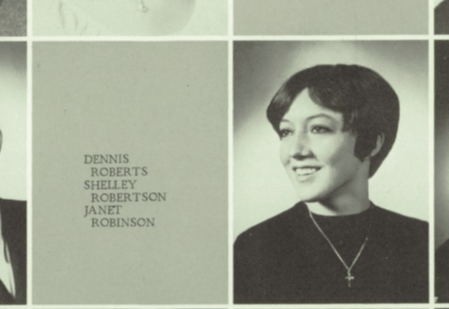
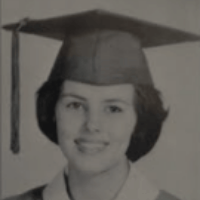
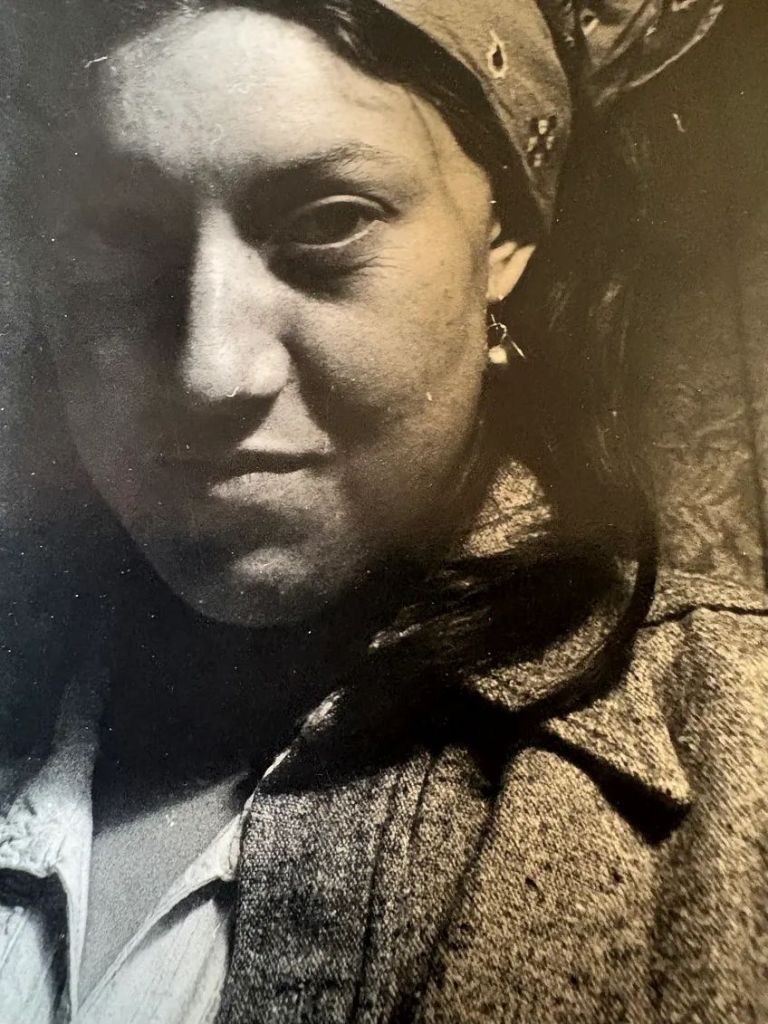
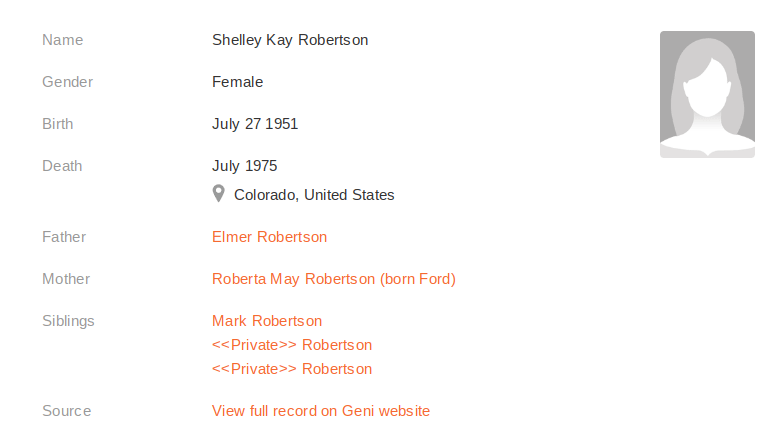
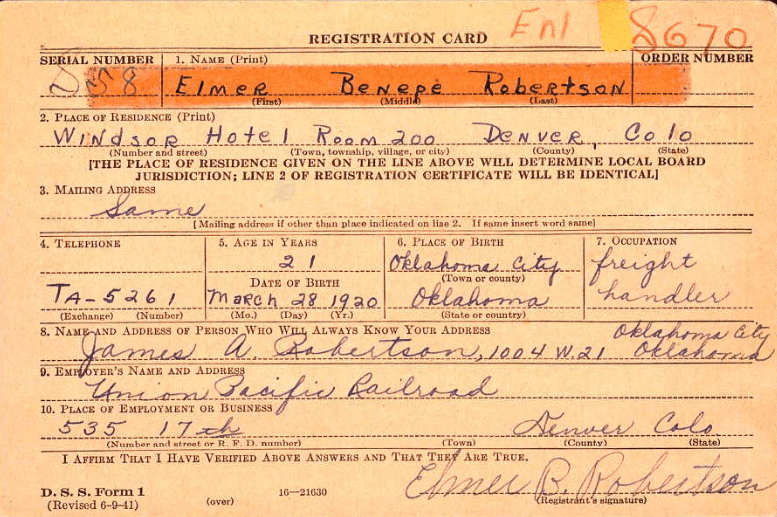
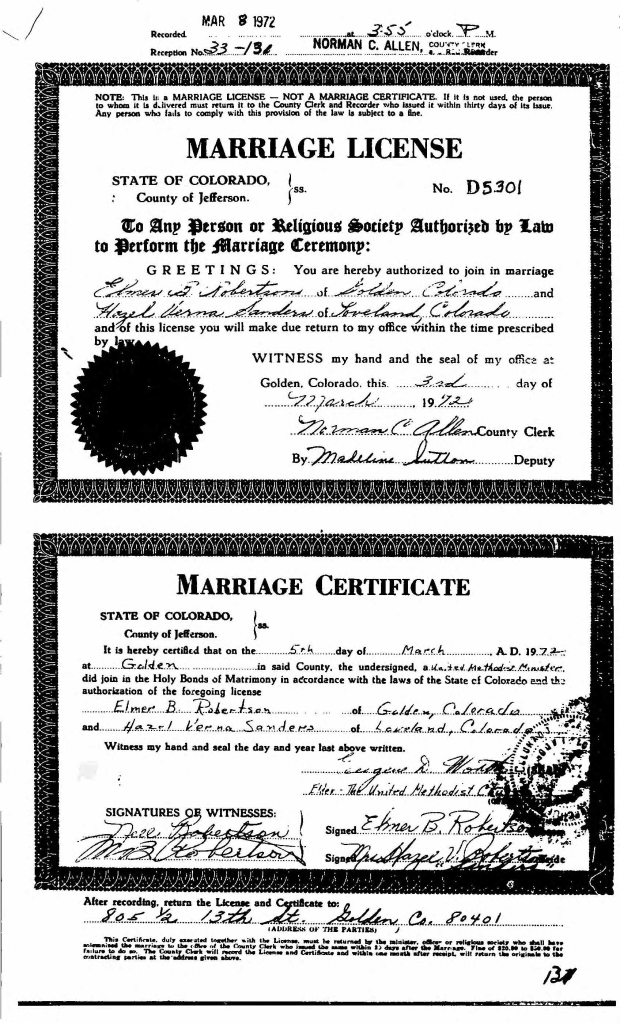
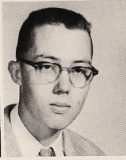
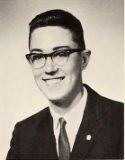
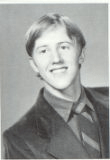
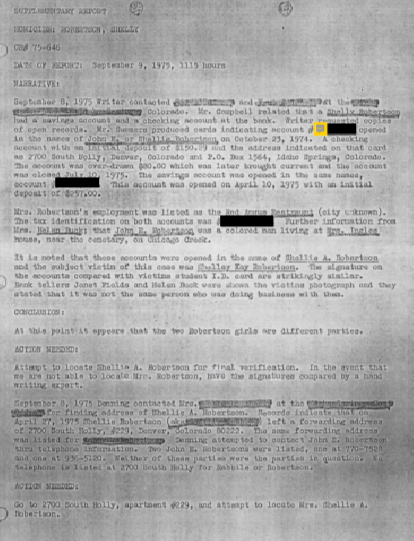
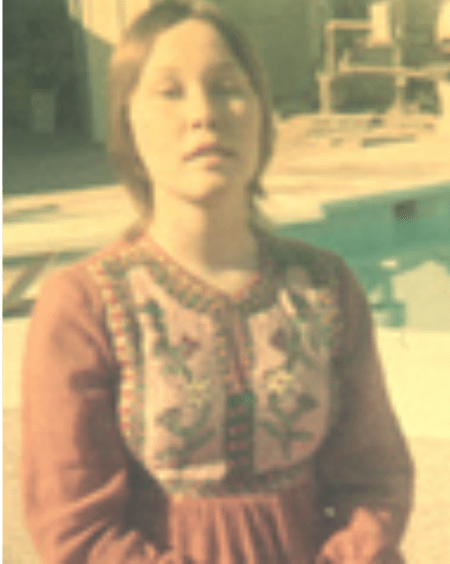
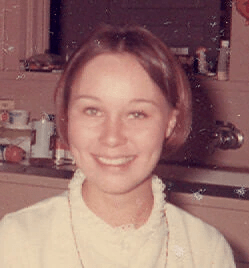
Shelley Kay Robertson was born on July 24, 1951 to Elmer and Roberta Robertson of Arvada, Colorado. The couple had four children: three boys (Mark, Gary, and Rick) and Shelley; they divorced at some point and Mr. Robertson remarried. Elmer was the owner of Silver State Printers and it seemed to be a bit of a family affair: per Steve Winn’s book, ‘Ted Bundy: The Killer Next Door,’ both Shelley and her brother Gary helped out with the business (she was a bookkeeper and binder). Shelley attended Arvada High School, and after graduating in 1969 she spent a year on a missionary trip in Biloxi, Mississippi run through the United Church of Christ. Her faith was important to her and she was an active member of the Church of Christ. Roberta encouraged her only daughter to travel and experience the world, often telling her that ‘you can always come back to your hometown.’ After returning from Biloxi, Shelley enrolled in Red Rocks Community College as a Spanish major; she even went to Barra de Navidad (a fishing village in Mexico) for a semester with her class (after the school trip she returned once to visit on her own). At one point in her short life she spent a year in Alaska with a friend (Susan), where they processed fish in Clam Gulch. Mrs. Robertson said that growing up, Shelley dreamed that one day a white horse would come into her life and she would name him Brownie. It was a story she knew well, and one day her daughters dream somehow came true (although it was a neighbor’s horse). This sweet encounter hinted at the future that she would eventually get her own horse: a sweet little gray mare named Bonnie she rode around bareback. Shelley was 5’8” tall, weighed 150 pounds, and had brown eyes with long brown hair she wore parted down the middle. At the time of her disappearance she was attending a Transactional Analysis group.
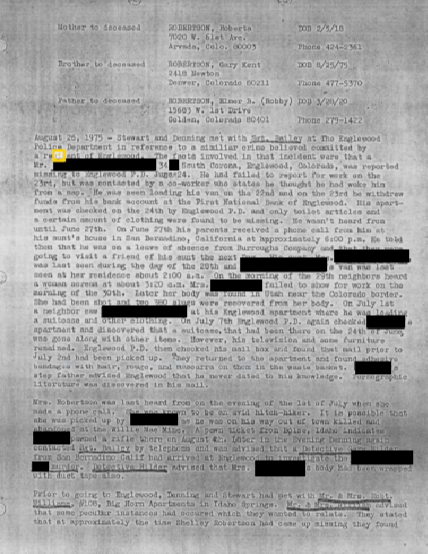
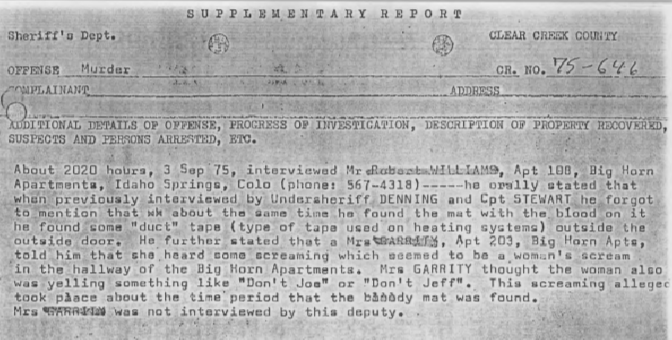
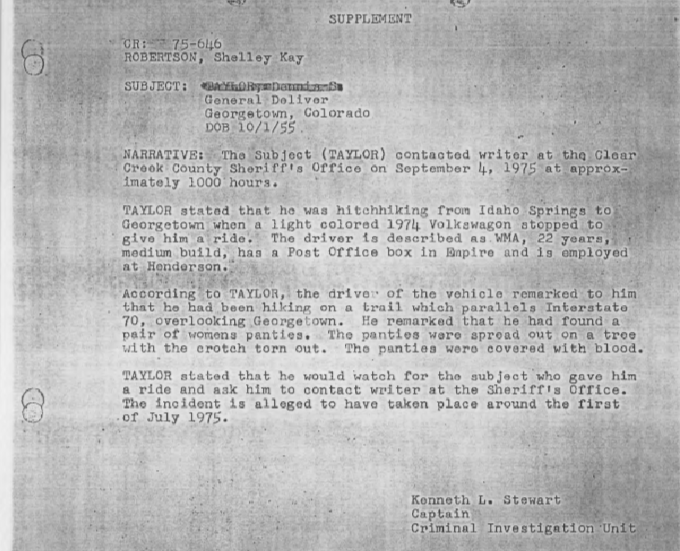
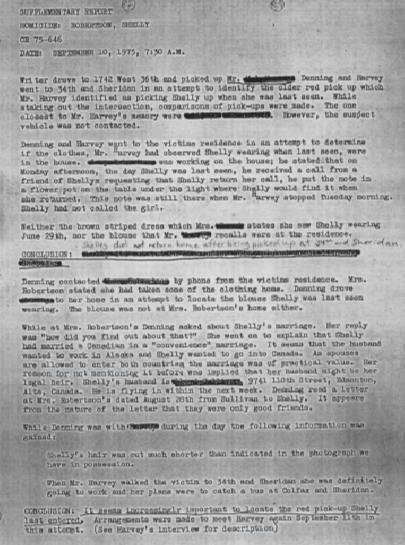
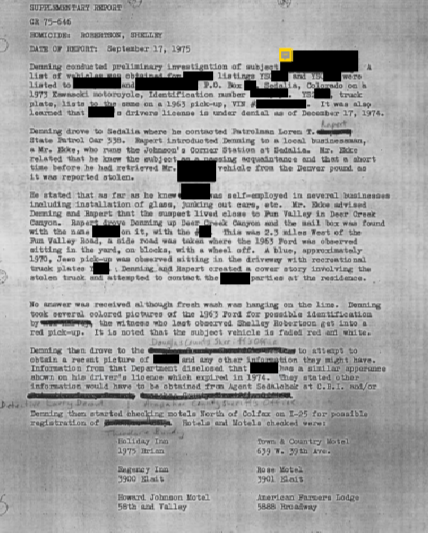
Shelley had an apartment in Denver and a boyfriend named Ron, who seemed to have been in the process of going to California right before she disappeared (I couldn’t find the reason or the length of his visit), which upset her (one of her brothers said she was crying and upset at one point right before she disappeared). It’s speculated that the day before she vanished Shelley had gotten into a fight with him where she got out of his red Karman Gia and thumbed a ride home. Robertson was a frequent hitchhiker and thought nothing of catching a ride states away ‘for fun.’ Shelley was last seen dressed in bell-bottom jeans, a T-shirt with the name of a rock band on the front (most likely either Yes or ‘Emerson, Lake & Palmer’) and hiking boots by friends near a local watering hole called ‘Tony’s Bar’ on June 29th. Per a document provided by the Pitkin County Sheriff’s, Shelley was last seen at 34th and Sheridan Streets in Denver hitchhiking to work. Additionally, according to her brother Gary, missing from her wardrobe were a pair of blue denim cutoffs, a blouse, a brown and white striped dress, and ‘Earth” sandals. On Tuesday, July 1, 1975 Robertson never showed up for work at Mr. Robertson’s printing press in Golden. The same day, she was seen by a policeman that noticed her at a service station with a bushy haired bearded man in a beat up old red Chevrolet pick up truck (from around 1952-57). It was the last time she was seen alive but it’s reported she made a phone call later that night.
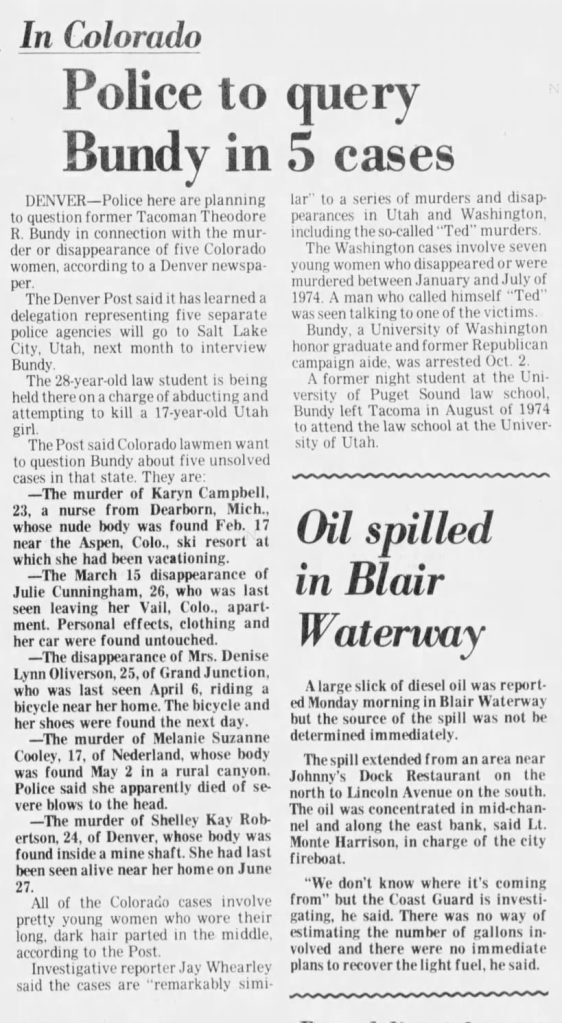
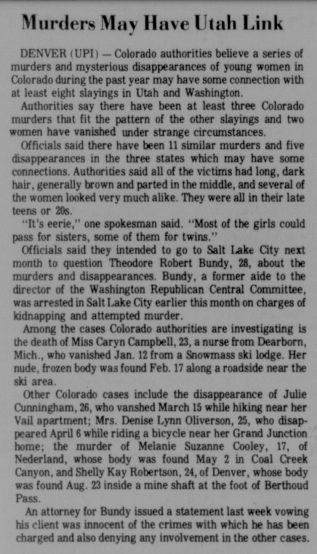
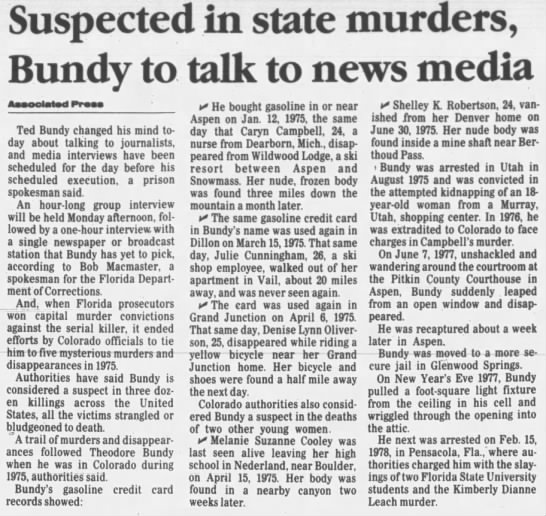
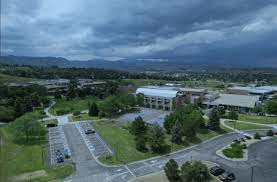
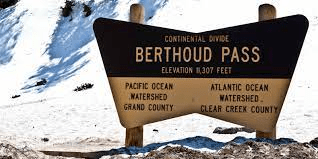
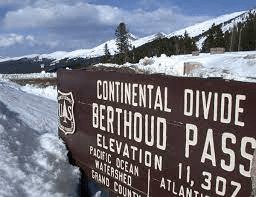
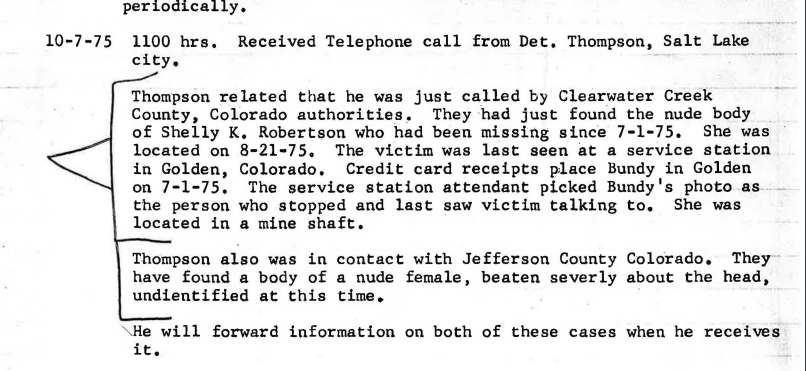
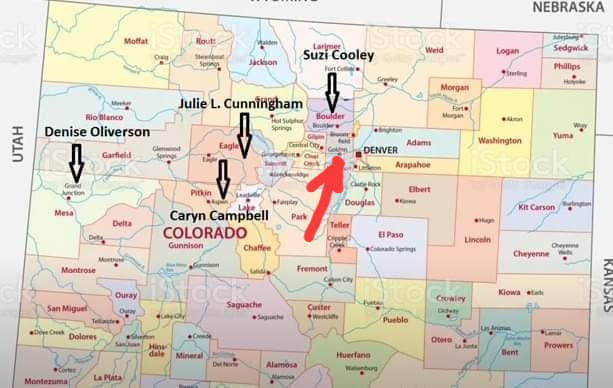
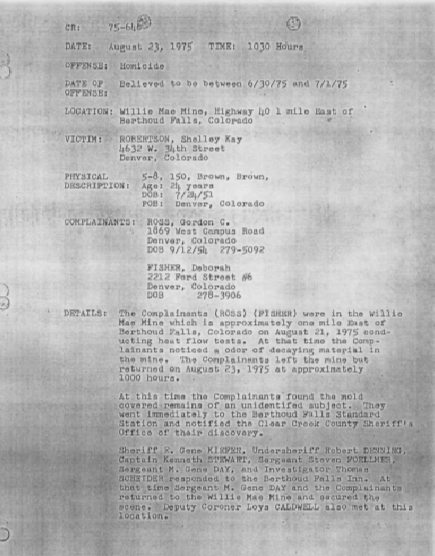
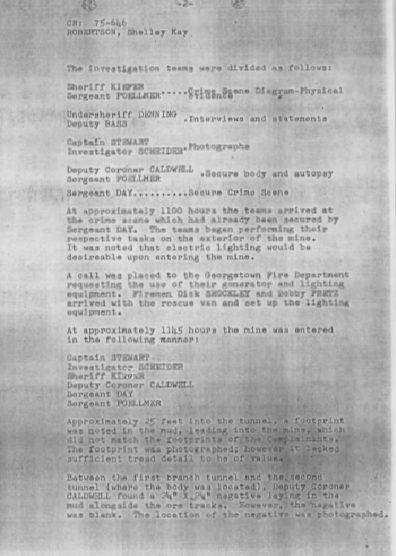
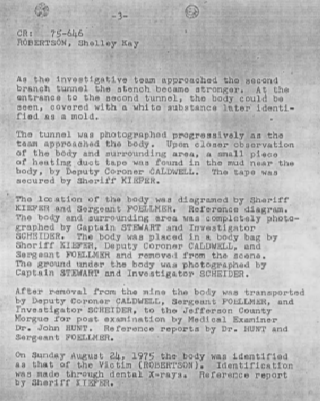
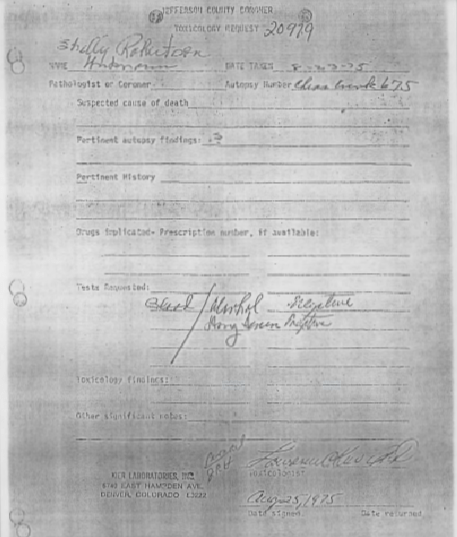
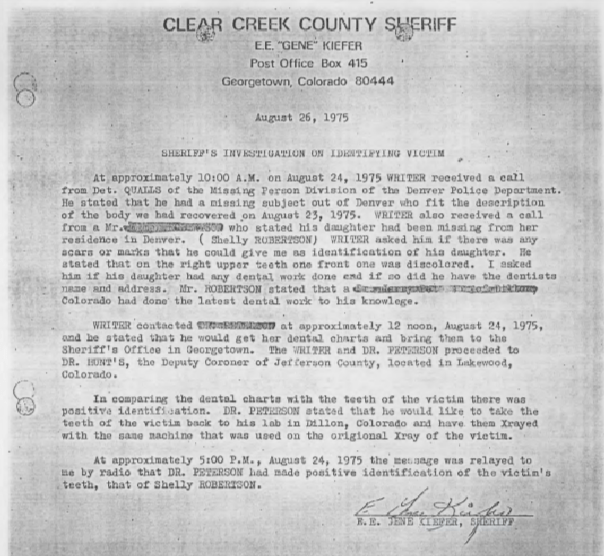
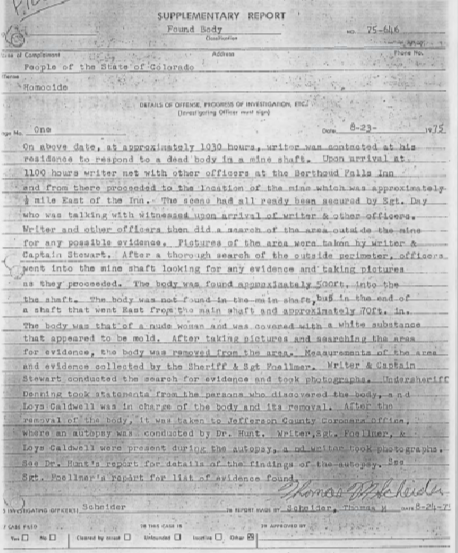
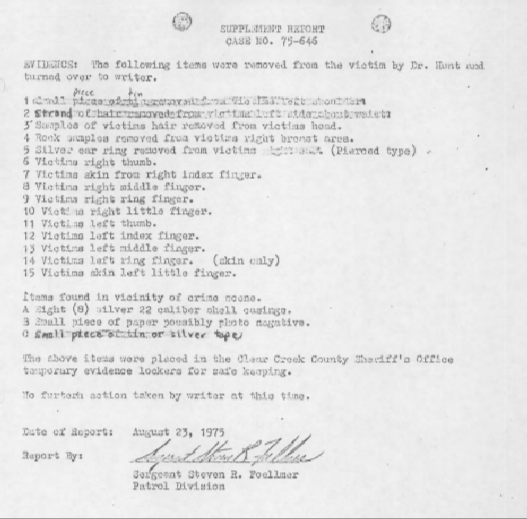
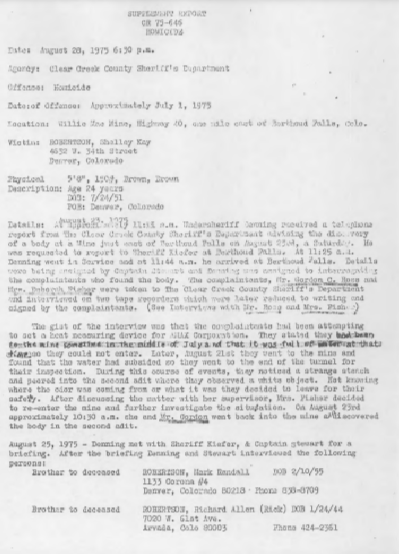
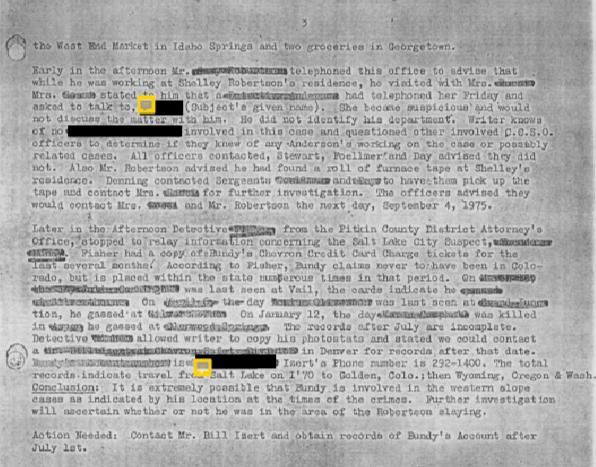
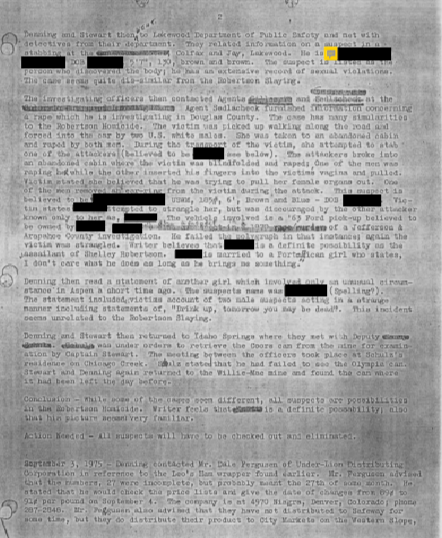
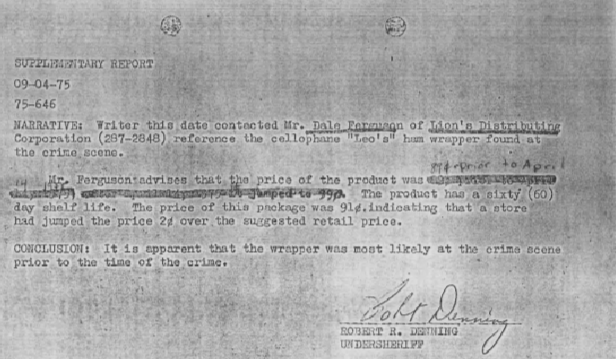
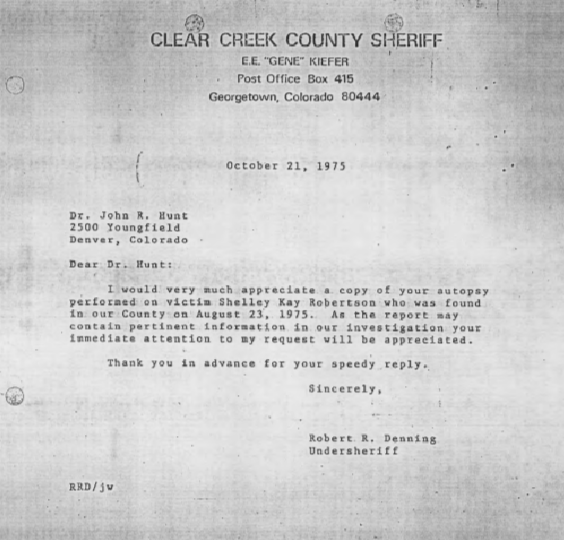
Days then weeks passed with no word from Shelley. On August 21, 1975 two students conducting Amex testing for gas content from the ‘Colorado School of Mines’ came across the body of Shelley Robertson in a mine in Berthoud Pass, Colorado near the Winter Park Resort. About 500 feet in they smelled something unusual: human decomposition. Using their flashlights, they strained to see what was down the narrow tunnel, seeing something large and white. Upon further inspection they realized they were looking at a foot and “bare buttocks” and that “we’ve got body, lets get out of here.” They notified law enforcement and the Clear Creek County Sheriff’s returned on August 23 to find the naked, decomposing remains of Shelley Robertson discarded in the mine. Her body was ‘badly molded’ and bound with duct tape. Although it was determined she had been struck on the front side of the head, the top rear of the head, and the right side of her chest too much time had passed and because of the advanced levels of decomp forensic experts were unable to pinpoint the exact cause of death. Found at the scene were two torn pieces of furnace tape (one on the body and one discarded nearby) as well as discarded beer can and a plastic wrapper from a package of ham. Leads quickly ran dry.
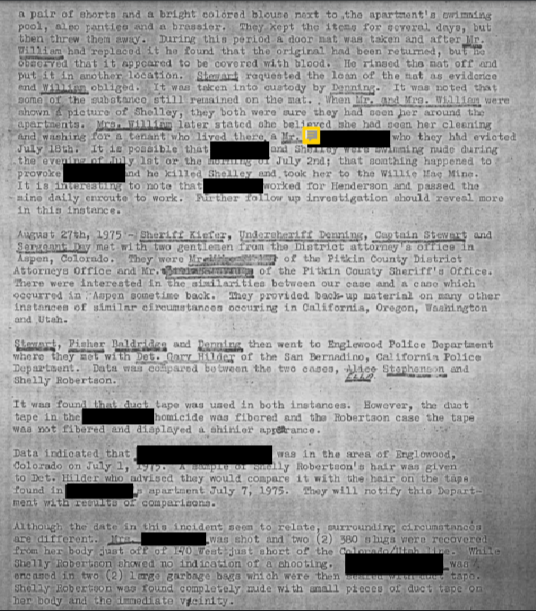
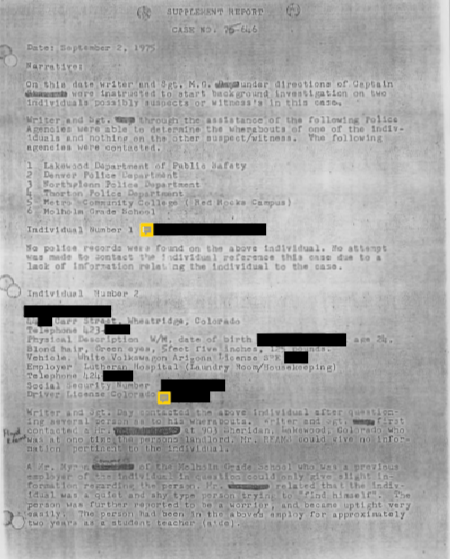
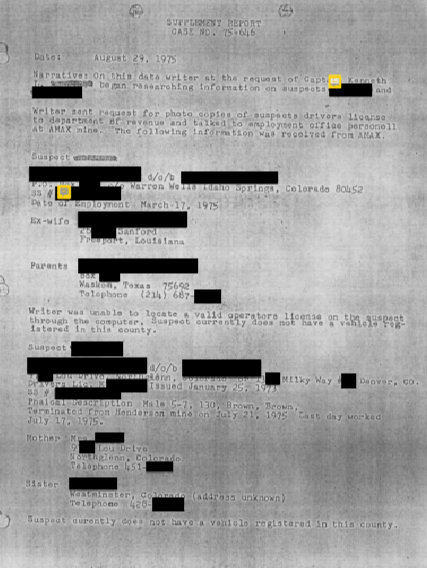
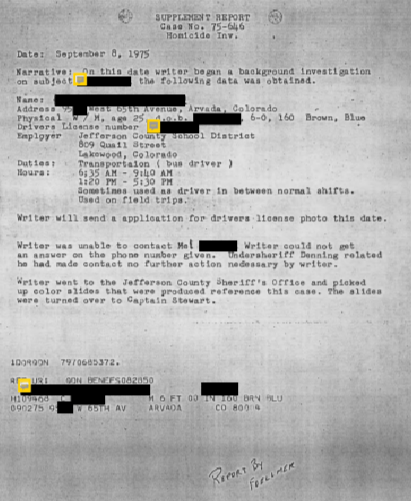
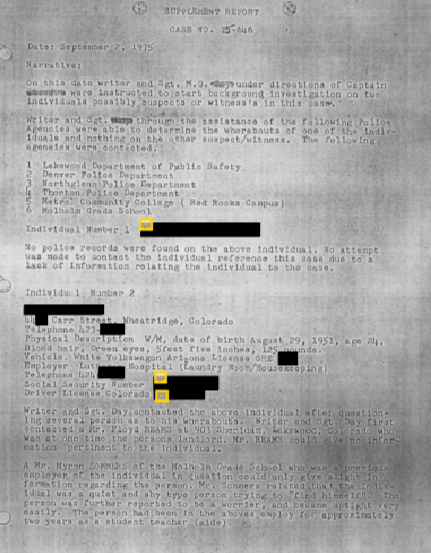
Law enforcement looked into multiple suspects aside from Bundy, including Warren Leslie Forrest, Ottis Toole, “a chronic sex offender that lived nearby,” a man in Shelley’s Transactional Analysis group that claimed he was alive during the Civil War, a “quiet friend” of hers that oddly enough drove a VW Bug, and a mystery man named Jake Teppler. Forrest and Toole were both quickly ruled out as Forrest was already in jail at that point (he was incarcerated since 1974) and the latter was placed in Jacksonville, FL at the time (after drifting and hitchhiking throughout the Southern part of the US). According to Steve Winn, Teppler was a graduate of Tufts University and a resident of the nearby Snowmass Village in CO as well as a former employee of a “condominium complex.’ According to a former part time coworker (who worked a 9-5 job as a music therapist), Teppler was ‘very sick, the kind of person who would go in the corner and jack off.” He seemed to be a bit of a nomad, and wandered the area going through jobs quickly as he was unable to keep them (remind you of anyone?). Looking into Teppler I couldn’t find anything related to a criminal record.
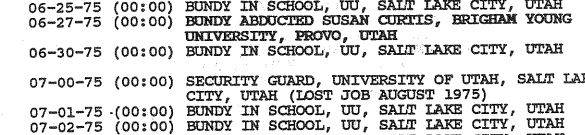
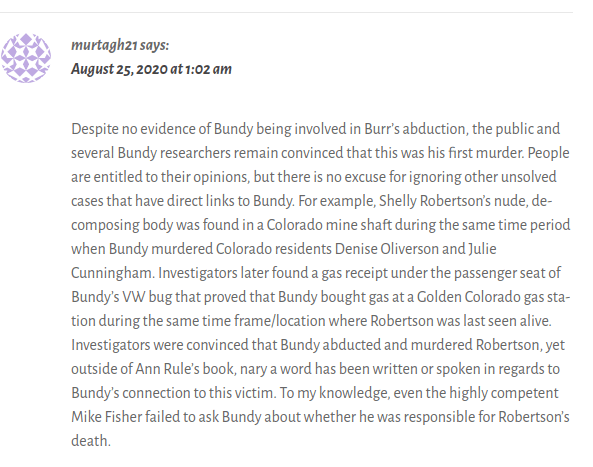
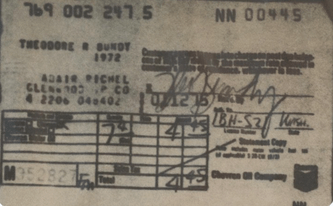
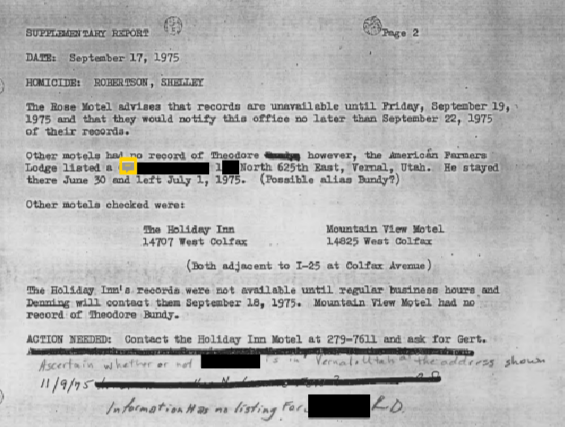
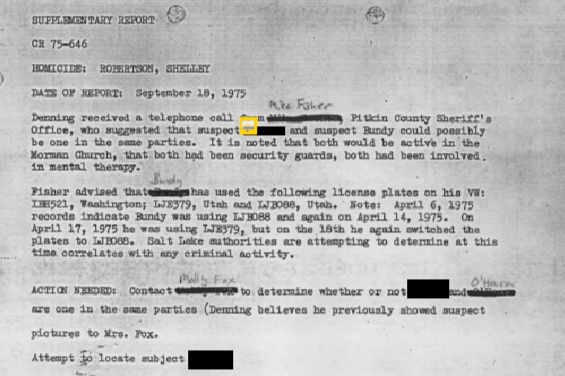
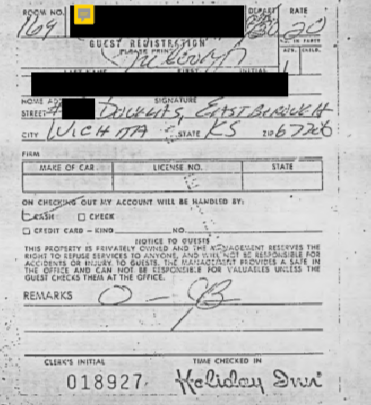
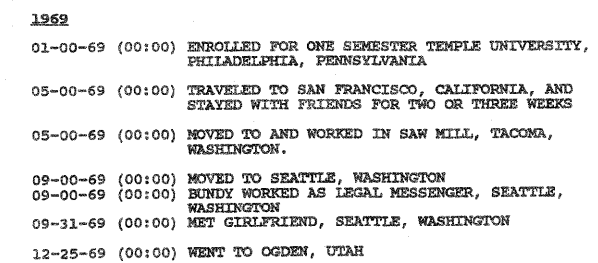
At the time Shelley was murdered Bundy was attending law school at the ‘University of Utah’ and was living at 565 1st Avenue North in Salt Lake City. Per my ‘handy dandy TB job chart,’ in June and July 1975 Ted was employed as the night manager in charge of Bailiff Hall at the University (he was terminated after showing up for work drunk). It also said that Bundy worked as a PT security guard for the school in July and August but due to budget cuts he lost that position as well. When researching this piece I kept seeing in multiple sources that ‘crumpled up credit card receipts found in his VW’ placed Bundy in Golden either a few days before Shelley disappeared or the day of (sources have reported both), but the ‘TB Multiagency Report 1992’ puts him in Salt Lake City during that time frame. I scoured the internet for the receipts but couldn’t find them. I do want to point out that Bundy did own an old pickup truck until about November/December 1975 (he bought it to help transport his belongings to Utah when he started law school).
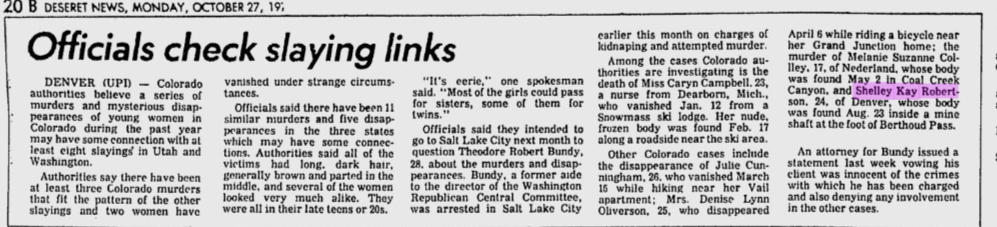
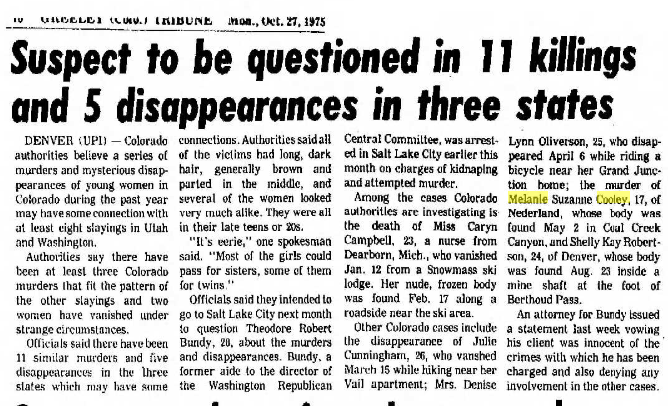
On June 27, 1975 (just a few days before Shelley was last seen), Bundy abducted and murdered Susan Curtis while she attended a youth conference at Brigham Young University in Salt Lake City. Four days after Robertson was last seen on July 4, 1975, Nancy Perry-Baird was abducted from the gas station where she worked in East Layton, UT and was never seen or heard from again. We know Bundy was quickly approaching the end of his reign of terror: he was pulled over by Utah State Trooper Bob Haywood on August 21, 1975 and was arrested for the possession of burglary tools, which eventually resulted in his arrest for the attempted kidnapping of Carol DaRonch.
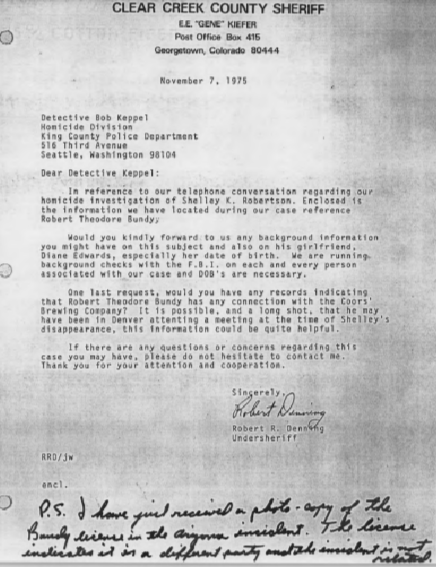
At some point when Bundy was incarcerated in Utah (he was transferred to Aspen, Colorado on January 28, 1977 to face charges for the murder of Caryn Campbell), former Cold Creek County Undersheriff Bob Denning traveled to Salt Lake City to interview him about the murder of Shelley Robertson. When the law enforcement officer asked him about her Ted is reported to have answered, ‘I don’t want to talk about that.’ Denning has commented that he is ‘99% sure that Shelley’s killer is Ted Bundy.’ Additionally, I read in multiple sources that Bundy confessed to Shelley’s murder before he was put to death however I can’t find it anywhere in the transcripts of his death row interviews.
A really interesting source I came across was an article by Shelley’s brothers one-time girlfriend, Kristen Iversen. Kristen is a writer as well (at a much more professional level) and in a piece she wrote for ‘The American Scholar” titled ‘When Death Came to Golden,’ she talks about the disappearance of Shelley and shares an intimate account of how the Robertson family adapted to life after she was taken from them. In response to Mrs. Robertson pulling her close after they met and whispering in her ear, ‘you can save this family,’ Kristen commented that: ‘I couldn’t save Mark’s family. I know this now. I couldn’t save Shelley, whose brief life had already been forgotten and erased by the town, by the media, by the nation. I couldn’t save Mark’s father, a blue-collar man who worked hard all his life and had to bear sorrows no man should have to bear. I couldn’t save Mark’s mother, who for years left Shelley’s bedroom untouched.’ That’s why I write about these girls, because they’ve largely been forgotten about. There’s not much out there on these victims; I seem to find the same little pieces of information over and over.
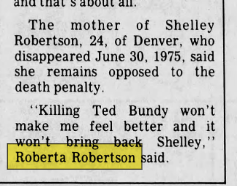
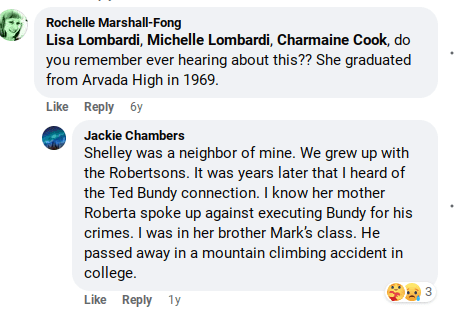
When Bundy was executed in January 1989 Roberta Robertson traveled from Colorado (she lived in the same house she raised her family in) to Florida and stood in a crowd of candle-holders outside the prison, waiting for word that he was officially dead. She told a journalist, “killing Ted Bundy won’t make me feel better and it won’t bring back Shelley. A lot of people seem to want it out of a vengeance. But it gives people a false sense of security. And it’s terribly expensive.” Mrs. Robinson passed away on September 23, 2009 in Lakewood, CO. Almost as tragic as Shelley’s murder, her brother Mark passed away at the age of 24 in a rock-climbing accident in 1979.
Kristen Iversen’s essay about Shelley will be included in an anthology published later this year. Her website is http://www.kristeniversen.com. When it’s released I’ll post a link to my FB page.
Works Cited:
David Merrill & Steven Winn. “Ted Bundy: The Killer Next Door.” 1979.
Kristen Iversen. The American Scholar: “When Death Came to Golden.” March 5, 2018.















































 Another Bundy Blog.