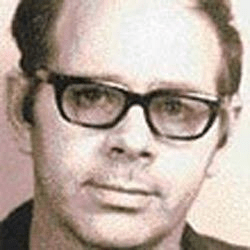
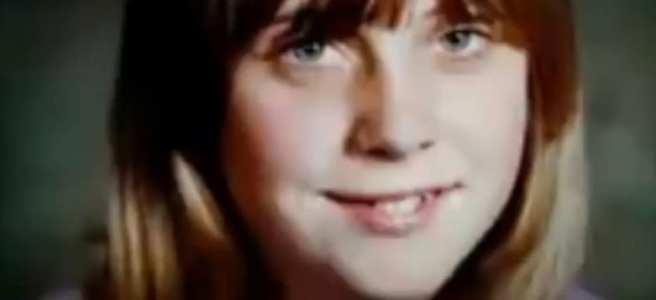
Warren Leslie Forrest.

Preface: I don’t normally have to do this, as I don’t normally write about people that are still alive, but every member of Warren Leslie Forrest’s nuclear family is not only still with us, but (most of them) are going by their original surname. Because of this, I do feel the need to say that finding the information I did was just a quick Google search away, and it took me all of about three minutes to find most of it… I didn’t hire anyone to track them down or figure out their identities: it was all right there.

Introduction: Warren Leslie Forrest was born on June 29, 1949 to Harold and Dolores Forrest in Vancouver, WA. Harold Fred Forrest was born on November 24, 1917 in Moscow, Idaho and Dolores Beatrice Harju was born on June 20, 1925 in Eveleth, Minnesota. At the age of twenty-seven on September 16, 1940, Harold was inducted into active military service with the US Army in pursuant to the Presidential order of August 31, 1940 (also known as the Burke-Wadsworth Act), which required all men between twenty-one and thirty-six years of age to register with their local draft boards (when the US entered World War II, all men from eighteen to forty-five were subject to military service, and all males from eighteen to sixty-five were required to register with their local draft boards).

Mr. Forrest and Dolores were wed on July 3, 1944 in Vancouver, and he was honorably discharged from the military on January 27, 1945; they went on to have three boys together: James (b. 1946), Marvin (b. 1948), and their youngest, Warren. Growing up, his father worked at the Veterans Administration during the day and at night he was employed at a cold storage plant; his mother was employed at a cannery then later in retail. During an interview with a psychiatrist (after his arrest), Warren described his father as ‘stern’ and his mother as ‘overbearing and controlling,’ and claimed that she used to tease him about a piece of wood she used referred to as ‘one of his good friends’ (it was a 4×4 post that he talked to when he was a small child).

Background: As a child, Warren Forrest was a dedicated boy scout and worked his way all the way up to Eagle Scout. When he attended Fort Vancouver High School in the mid-1960’s he excelled at academics and was an exceptional athlete (even though he claimed he was a slow learner and had difficulty with spelling, reading, and writing): he played baseball, ran cross-country, and earned his role as the captain of the track and field team and was offered a track scholarship at Washington State University (he turned it down). Forrest later told one of his psychiatrists that he joined the military after high school because he didn’t think he was smart enough to do well in college, and in October 1967 he enlisted in the US Army (along with his brother, Marvin), and served as a missile crew service gunner and fire control crewman for the 15th Field Artillery Regiment in Homestead, Florida, reaching the rank of Specialist 5; later on when he relocated to Fort Bliss, TX he served in the 7th Battalion of the 60th Airborne Artillery, where he was a ‘senior gunner.’

It appears for the most part that the Forrest brothers all had completely normal childhoods, aside from one glaring thing: two of the three boys hit people with their cars when they were teenagers. On January 16, 1966 a six-year-old ran around a city bus and directly into the path of Marvin Forrest. The child was taken to Vancouver Memorial Hospital and thankfully only suffered some minor bruising and lacerations. Later that same year on May 26th Rebecca Peterson was driving a car with her friend Marilyn Sutcliffe when they were hit by a vehicle driven by a then sixteen-year-old Warren L. Forrest. The impact of the collision caused Peterson (who had been pregnant at the time) to lose control of her vehicle, which subsequently jumped the curb and struck two young female pedestrians. The accident resulted in both vehicles being deemed ‘total economic losses,’ and afterwards Forrest was brought up on charges in juvenile court for passing a stop sign, failure to yield the right of way, and for having defective breaks. In September of the following year, he was taken to court by one of the two girls he hit, named Robin DeVilliers, who had suffered injuries to both of her legs, heels, thighs and back as a result of the accident. I was unable to find the ‘official’ resolution of the court case, but Forrest’s parents hired an attorney for their son, who advised him to enlist in the Army, and that it would ‘be in his best interest’ if he left town, and ‘the sooner the better.’

Forrest served a total of two years in the Army (including two and a half months overseas in Vietnam), and upon returning home to Vancouver he married his high school sweetheart, Sharon Ann Hart on August 16, 1969, and the couple had two children together: Leslie (b. 1971) and Lane (b. 1974). After they were married, the couple relocated to Fort Bliss, and according to her: ‘he got back, I met him. He said, I want to get married now because I’m going to Fort Bliss. And I said, but that’s like three weeks from now. So we got married in the small chapel and we packed up the car and drove to Fort Bliss, Texas.’ Sharon was born on January 27, 1949 in Omaha, Nebraska, however as her daughter Leslie pointed out in a semi-recent Facebook post, in every newspaper article about her and Warren’s engagement/marriage, her last name is Hart, but according to her high school yearbook, her full maiden name was ‘Sharon Ann Wilson.’ According to the 1967 Ft. Vancouver High School yearbook (she graduated in the same class as Warren), she performed in the yearly Christmas play and was a member of the marching band, Big Sister/Little Sister, the Future Homemakers of America Club, Pep Band, and the Health Careers Club.

In a December 2017 interview Sharon that did with Detective Lindsey Arnold and retired prosecutor Denny Hunter (both with the Clark County Sheriff’s Office Cold case task force): ‘Warren and I met when we were sophomores in high school, so we were fourteen. And, you know, I was a part of that family and I came from a very dysfunctional family. So, their family seemed like ‘Leave it to Beaver,’ you know, I didn’t know. But now looking back, she was very controlling. She ran the show. Now I think, I wonder how much did that play in Warren’s perception of Women.’

Forrest was honorably discharged from the US Army in September of 1971 right after his first child was born. After they left Fort Bliss they relocated to Newport Beach, CA, where Warren enrolled in classes at the North American School of Conservation and Ecology; he quickly lost interest in academics and dropped out at the end of his first semester. In late 1970, Warren and Sharon moved once again, this time back to Washington state, where they lived in the basement of his childhood home with their near infant child, who was a month old at the time. He quickly found employment with the Clark County Parks Department as a general maintenance worker (he officially began his employment on January 12, 1971), and for a while, everything appeared to be picture perfect for the seemingly happy young family… until suddenly it wasn’t.

According to Sharon, her mother-in-law was domineering and wanted to have a say in how to raise her grandchild: ‘and I go, please talk to your mom. He goes, it won’t do any good. I said, this is not working. We gotta get out of here.’ She said she later found out that her in-laws lived roughly a mile from the farmhouse in Minnehaha where Jamie Grissom and her sister Star lived, and that Warren was in town just two months prior to Jamie’s disappearance. By 1974, the couple had a second child and had managed to buy a house of their own. In her 2017 interview with Sherriff’s, Sharon said that at various points during their marriage, her husband was ‘often gone,’ but when she asked him where he went, he always had a good excuse to be missing.

According to Sharon, she said, ‘where were you? He said, I hit a female dog. I gotta go bury it. I gotta get a shovel. And I went, oh, I mean, that’s just the kind of guy that he was. He wouldn’t even go hunting because he didn’t want to kill animals. Sweet as gentlest man.’ She also said that he was a ‘loving and attentive father: He always changed diapers and took care of the kids. And he was a good father, a really good father, A good husband. Made meals. He cleaned the kitchen.’

Due to HIPAA laws, most of Warren Forest’s medical records are unavailable to the public, but some of them were recently released and in March of 1974, he allegedly suffered what would be described as some kind of nervous breakdown. After he was discharged from the Army, he signed up for the reserves on the weekends, and according to a court document, the supposed breakdown happened after drinking at the NCO club at the Vancouver barracks. After Warren’s incarceration, he told a psychiatrist that he left the club and began walking back to his in-laws house (who lived nearby), and during this walk, he began thinking about a painful war memory where he allegedly ‘killed a little girl with his M79 grenade launcher,’ and it was something that followed him throughout his entire life. Forrest told the psychiatrist that when he arrived at his in-laws he had a nervous breakdown.

Sharon’s family later told investigators that when he arrived he looked ‘wild,’ and he had been ‘combative:’ they called the police and he was taken to the VA Hospital, where he was admitted for a couple of days; he later claimed to have no memory of that night. After Forrest’s honorable discharge from the military he told friends and family about an event that he said took place when he was in Vietnam, where he was carrying a grenade launcher in a convoy and ‘somebody told him to shoot,’ so he spun around and did exactly that, and as a result killed a small Vietnamese child.

On October 1, 1974 Warren Forrest kidnapped twenty-year-old Daria Wightman after he saw her standing on a street corner in downtown Portland and pulled over to talk to her: he told her that he was employed at Seattle University and had been working on a thesis project for class and offered her money to pose for pictures for him. She accepted his offer and climbed into his van and accompanied him to the Washington Park area of Portland, and it was at that point that he pulled out a knife and threatened her, and bound her with tape. He then drove roughly 25 miles to Lacamas Park, a heavily wooded and sparsely populated area of Clark County, where he sexually assaulted her; when he was finished, he shot her in the chest with a hand honed dart (which refers to the process of sharpening or refining an edge manually using either a whetstone or steel) from a .177 caliber dart pistol then led her 100 feet down a path by a rope around her neck.

Once they reached his intended destination, he sat the young woman on a log and choked her to the point of unconscientious. From there, he stabbed her five times in the chest then laid her naked body next to a log and covered it with brush and leaves (at some point during the encounter her attacker had removed all of her clothes and taken them with him)… But by some miracle, she was not dead, and after struggling for about two hours finally made her way to a roadway, where she was able to get the attention of a passing motorist, who took her to a nearby hospital. Once she was stabilized, the woman was able to give detectives a description of her assailant along with the details of the very distinctive vehicle that he drove (a blue 1973 Ford van). She also told them that as he was driving through the park he slowed down on several occasions and exchanged greetings with several people, and investigators quickly deduced that their guy was an employee of the department.

After Forrest was finished attacking Daria, he drove home, cleaned out his van, stashed her belongings in his garage, then tossed a football around with his next door neighbor; when they were done, he went inside his residence, ate a TV dinner on the couch with his wife and young children (who at the time were one and three), then went to bed.

A look at employee records showed that Forrest owned a 1973 blue Ford van that closely matched the one the perpetrator drove, and that he had taken off from work on the day of the attack to ‘go to a doctor’s appointment in Portland.’ Detectives quickly got a search warrant for his home and vehicle, and while searching his residence found jewelry and clothing that belonged to the victim. In a footlocker discovered in his van, detectives found a gun, tape, and baling twine that was similar to what was used on one of his other victims. Also inside Forrest’s van, forensic experts found feather darts and the same Marksman repeater air pistol that Daria Wightman said her attacker used to shoot darts into her chest; forensic experts also vacuumed his van for evidence and collected pieces of twine as well as a Clark County Parks and Rec master key.  When the young woman was shown a picture of the young Park’s Department employee, she was able to make a positive ID, and was also able to identify the suspect in a lineup.

On the morning of October 2, 1974, Forrest was arrested on charges of kidnapping, rape, and attempted murder, and was held in lieu of $60,000 bond. When the moment finally came to arrest him, investigators came in, ‘guns a-blazing’ and  ‘woke the babies,’ and went ‘through everything;’ as he was handcuffed and placed in the back of a squad car, he didn’t say a word to  anyone, including his wife.

After he was brough to the police station, detectives returned to the Forrest family residence, where they performed a second search. A short time after Warren’s arrest, Sharon visited her husband in jail, which was the first time the couple had spoken after he was arrested: according to her, ‘I remember asking him. It was at the old jail, the courthouse, in Vanda’s cage, where the inmates could go. This was like when he was first arrested. And I said, things, you do it. He looked at me and he goes, ‘I don’t know.’’ When they found the girls possessions in the garage, Sharon said she heard a detective say, ‘we found the girl’s possession. Yeah. It was one of those moments. And did. And, you know, I just. I don’t remember anything after that.’ On October 5, 1974 he was arraigned on charges of rape, assault with the intent to kill, and armed robbery (after he assaulted Wightman, he also took her watch and bracelets), and he entered a plea of not guilty by reason of insanity.

At the time of his arrest, Warren Leslie Forrest was twenty-five-years old and weighed 155 pounds; he stood at 5’9” tall, wore his light brown hair at his shoulders, and had what was described as a ‘bushy mustache.’ Shortly after his arrest was made public, detectives were also able to link him to the kidnapping, rape, and assault of fifteen-year-old Norma Countryman, who had been attempting to hitchhike out of Ridgefield on July 17, 1974 when she got in Warren’s van after he pulled over and offered her a lift. From there, he raped and beat her, and when they reached the slopes of Tukes Mountain, he gagged her with her own bra then hogtied her to a tree and told her he would ‘return’ to her later… but, the petite young woman had a fierce will to live, and chewed her way through her restraints and hide in some nearby bushes until the sun came up, when she was able to flag down a Parks employee for some help. The suspect returned to the scene of the crime the following night and picked up what he had used to bind her to the tree as well as the bra he used to gag her. Despite Countryman’s powerful testimony in court, Forrest was solely charged with the kidnapping and attempted murder of the Daria Wightman.

Warren Forrest pled not guilty due to reason of insanity, and his legal team filed a motion for him to undergo a psychiatric evaluation; thanks to examinations by three local psychiatrists (that the state paid for), it was determined that he was criminally insane at the time of his atrocities against Daria Wightman. It’s also worth mentioning that the prosecution didn’t attempt to bring in their own experts to contest that these evaluations of mental insanity had any truth to them, and there were no state experts brought in at all: Forrest had an uncontested insanity acquittal. On January 23, 1975, a hearing was held and he was found not guilty of all charges against Wightman by reason of insanity, and a week later on January 31st he was committed to the Western State Mental Hospital in Steilacoom, WA. According to investigators who visited the facility in the 1970’s, they described a place where the inmates seemed to be running the asylum, not the administrators, and it was hard to tell the staff from the patients. 

According to a court document, the term of Forrest’s commitment could be for ‘any period up to and including natural life,’ but he would be eligible to petition the court for a conditional discharge if staff at Western signed off that he was no longer a danger to society. It’s important to note that, according to an article published in ‘The Columbian’ on January 30, 1979, evidence was lost in early 1975 when Sharon was allowed to go through a box of her husband’s things after the Clark County prosecutor and sheriff’s department deemed the entire case to be ‘disposed of.’ Amongst the items that were taken were a master key to the Clark County Parks Department, twine, a knife, adhesive tape, a victims clothing, and the ‘forensic vacuum sweepings’ that were taken from Forrest’s 1973 Ford van shortly after his arrest. About the incident, Clark County Detective Frank Kanekoa said that ‘Sharon Forrest was allowed to rummage through a box of evidence and take what she wanted sometime in early 1975 because Warren had already pleaded not guilty by reason of insanity.’ In addition to what Sharon took, after Warren’s acquittal all evidence related to the case was either released or thrown away, aside for some pictures and the marksman repeater air pistol… all of which may have played a major role in Forrest’s later trial in January 1979 for the murder of Krista Kay Blake.

Upon arrival at Western State Hospital, Forrest was assigned to the ‘Omega’ group, which consisted of similar patients that had been committed to the facility for criminal insanity; it contained a variety of individuals that had been charged with a wide range of charges, ranging from minor offenses all the way up to serious ones. Clinical psychologist Dr. Brent Trowbridge was the director of the program, and described the group as follows: ‘a therapist who generally had a master’s degree in the field of social sciences, would lead the omega group. Omega was designed as a confrontational group therapy, which meant that the patients in the group were supposed to help each other with their treatment.’

While at Western State Hospital, WLF was able to keep a car in the parking lot that he was also allowed to ‘work on.’ Shortly after her husband was committed to the facility, Sharon sold their home and moved her and their children closer to the prison: ‘we used to go on Wednesdays to visit him, and then we used to go on weekends and spend, like, the whole day with him and, you know, pack the kids up. And I used to bake meals and take to him and get things that he wanted from the store and stuff. We had birthday parties, you know, for the kids there at the hospital and for him. I remember we celebrated one of our anniversaries there.’ Sharon planned on standing by her man and was going to wait for her husband to be released… until December of 1977, when she found out he was having an affair, and: ‘and I noticed that there was just a change in him. Something was different. One night I was there, and the phone rang, and it was for him, it was a payphone. And he was back whispering on the phone and just acted different. So when he got off the phone, I said, who is that? He goes, none of your business. I said, what’s going on? Nothing. It’s time for you to leave now. So me and the kids left. I was like, wow. Well, come to find out, he was seeing somebody at Western State.’

According to her, it was most likely a hospital employee, and that one time his therapist called her for a meeting between the three of them, who in the beginning prompted her husband: ’Warren, is something going on that you need to tell Sharon? You seeing someone?’ He goes, ‘yeah.’ The therapist said to him, he goes, you’re an asshole. And Warren goes, ‘yep, I am.’ And so I stood up and I said, I’m done. I’m not coming back. I moved here to be close to you, to try to keep our family, and you’re being able to see your kids, and this is how I get remained. And I walked out, and I didn’t go back.’ When police later interviewed a friend of his, he confirmed that Forrest had told him he was seeing an employee at the hospital named ‘Nancy.’

In an interview with forensic psychiatrist Dr. Sidney Pollack in 1978, Forrest described how he worked eight hours a day ‘all over the hospital:’ in the ceramic and sewing rooms, kitchen, greenhouse, and at one point he even worked as a janitor inside the facility and around the hospital grounds. Dr. Pollock questioned Forrest about the loose security protocols which would have ‘made it easy for him to escape:’ he replied with, ‘yeah, I had the opportunity. That’s what I was saying. I had the opportunity and the thoughts.’ At one point during his time there he also got hired to paint a staff member’s house.

A year and a half went by after Warren Forrest was sent to Western State Hospital. On July 16, 1976 two foragers were out picking mushrooms and wildflowers on some Clark County Parks Department property in Tukes Mountain near Battle Ground when they noticed a small brown shoe sticking out of some bushes: when they gently tugged on it, they realized it was attached to a human foot and immediately notified LE, who discovered the half-skeletonized body of a young woman that had been (poorly) buried in a shallow grave. Forensic examination of the victims mandible led the ME to determine that the remains belonged to Krista Kay Blake, a hitchhiker that vanished without a trace from the area of 29th and ‘K’ Street of Vancouver on July 11, 1974. 

Krista had been partially unclothed and had been missing her bra; her hands and feet were ‘hogtied’ behind her back with baling twine (which was discovered around 100 feet from her gravesite), and because her clothes and skeleton showed no signs of stab wounds or bullet holes, the ME concluded that she had most likely been strangled. Nineteen-year-old Blake was known to hitchhike, and at the time she was killed was living on NE 119th Street in Vancouver. After she disappeared two eyewitnesses came forward and told detectives that they observed her and the suspect that had been ‘driving the blue van’ together around the Lewisville Park area sometime prior to the day that she disappeared; other people came forward and reported they had seen the same van driving around Tukes Mountain on or around the date that Blake was last seen alive. It’s worth noting that Norma Countryman’s assault took place one week after the disappearance of Krista Kay Blake.

Because Warren Leslie Forrest owned the same van as the suspect and worked at the park where the victim had been found, he immediately became a person of interest in her death. Because of advanced age of the body a great deal of physical evidence had been lost, however a closer look at the clothing that the young woman had been wearing led to the discovery of incredibly small puncture marks in her T-shirt that forensic experts determined were made by a dart gun that was similar to the one that Forrest had used on Daria Wightman. 

Not long into the murder investigation, detectives realized that on the day Blake had disappeared, Forrest wasn’t at work because reportedly ‘had a doctor’s appointment,’ this was on top of the fact that he had no alibi: his mother said that he had spent part of the day at her house, but had ‘left early in the evening’ and did not return until the following morning. He was charged on this basis with Krista’s murder in October 1978, and despite already being detained inside of an institution, his attorney Don Greig filed a petition for a new psychiatric evaluation, claiming his mental state had greatly improved in recent years… he even wanted to represent himself at trial (a request that had been granted). In the initial stages, the four judges that had participated in WLF’s earlier trials were removed from consideration due to concerns about possible bias, however this decision was later overturned, and Justice Robert McMullen was ultimately chosen to preside over the case.

Warren Forrest’s trial for the murder of Krista Blake began in early 1979, however it wasn’t long before the judge declared a mistrial after his attorney erroneously allowed a second dart gun that had been unrelated to the case to be submitted into evidence. After that incident, his defense team filed a motion for a change of venue from Clark County to Cowlitz County, arguing that the media attention surrounding the case would prejudice the jurors against their client; the motion was granted and the trial resumed in April 1979 in Cowlitz County. In the beginning of the proceedings, Forrest pled not guilty and claimed he had been on vacation with his family in Long Beach at the time of Blake’s murder; this had been backed up by his mother, who said in open court (while under oath) that her son had been at her residence (with her) at the time investigators supposed Krista had gotten into the blue van. However, prosecutors said her testimony was unreliable, pointing out that she had originally told detectives that her son had left her residence in the early evening and didn’t come back until the following morning. In addition to Dolores, Sharon Forrest also testified on Warren’s behalf, although she told the court their relationship had been ‘rocky’ and her husband had at times ‘suffered from blackouts;’ she also insisted that he had been with her the entire time Blake was being abducted and killed, and that he never showed any signs of being violent towards women.

Multiple eyewitnesses testified against Forrest, and claimed he was a known acquaintance of Krista Blake’s and that the two had been seen together at multiple times before her murder; however, some of their claims were scrutinized by his defense team, as two of them had given a description of the suspects van that did not perfectly match the one that he owned. One day during the trial, he admitted guilt to the kidnapping and attempted murder of Daria Wightman, claiming he attacked her due to ‘untreated PTSD’ from serving in the military. However, when confronted, he absolutely refused to admit guilt for the murder of Krista Ann Blake and the kidnapping and assault of Norma Countryman, and because of this the prosecutor’s office insisted that he was guilty of all charges (as each crime matched his MO). Warren Forrest was ultimately found guilty and was sentenced to life imprisonment with a chance of parole, and was sent to Washington State Penitentiary in Walla Walla; because he was convicted before mandatory sentencing laws he was eligible for parole for the first time in 2014. Sharon Forrest filed for divorce from Warren in June of 1980.

Multiple eyewitnesses testified against Forrest, and claimed he was a known acquaintance of Blake’s and that the two had been seen together at multiple times before her murder; however, some of their claims were scrutinized by his defense team, as two of them had given a description of the suspects van that did not perfectly match the one that he owned. One day during the trial, he admitted guilt to the kidnapping and attempted murder of Daria Wightman, claiming he attacked her due to untreated PTSD from serving in the military. However, when confronted, he absolutely refused to admit guilt for the murder of Krista Ann Blake and the kidnapping and assault of Norma Countryman, and because of this the prosecutor’s office insisted that he was guilty of all charges (as each crime matched his MO). Warren Forrest was ultimately found guilty and was sentenced to life imprisonment with a chance of parole and was sent to Washington State Penitentiary in Walla Walla; he was convicted before mandatory sentencing laws and was eligible for parole for the first time in 2014. Sharon Forrest filed for divorce from Warren in June of 1980.

Forrest filed an appeal in early 1982, which was denied later that October; since then, he has filed numerous parole applications over the years (confirmed ones in April 2011, April 2014, July 2017, and May 2022), all of which have been denied due to the fact he is a suspect in many other heinous and violent crimes against women. It’s worth mentioning that during one of his parole hearings, both of his surviving victims took the stand and identified him as their assailant.

The Confession of Krista Blake/2017: Since his initial convictions, Warren Leslie Forrest has remained a suspect in multiple kidnappings, disappearances, and murders around Clark County that took place in the early to middle 1970’s… however, he has largely refused to help multiple policing agencies with their investigations. At a parole hearing in 2017, he finally confessed to killing Krista Blake, stating she had been severely depressed and stressed out at the time of her murder, and he ‘did not intend’ to kill her at first but was forced to after she attempted to get away from him. During that same hearing he also casually confessed to sixteen additional crimes against women that took place between 1971 and 1974, ranging from voyeurism to murder, and claimed he was ‘remorseful for his actions.’ Despite these ‘confessions,’ Forrest’s application for parole was denied and he was prohibited from filing another appeal until March 2022, as the board stated he ‘continued to pose a danger to society and made minimal progress in ameliorating his behavior.’ In an audio recording from one of his parole hearings, he recalled details of the horrific crimes he committed, and reiterated that he was ‘a different person’ now than he was forty years prior, and admitted he: ‘abducted a 19-year-old female stranger under the ruse of giving her a ride…forcing the victim to undress and during a struggle I choked the victim to death.’

In June 2017, Clark County investigators met with Warren Forrest and told him they were working to prove he killed five additional young women across Washington and Oregon: Jamie Rochelle Grisim (1971), Barbara Ann Derry (1972), Carol Louise Platt-Valenzuela (1974), Martha Morrison (1974), and Gloria Nadine Knutson (1974). During one of his hearings, when the parole board asked him about the other possible victims, the only thing he would say was that he ‘felt sorrow for those families,’ and that talk of other crimes was ‘not factually’ accurate; he also said that he only committed the crimes that he did because he was ‘stressed out’ from working two jobs, going to school, and being a husband and father, and: ‘the only option I had was to distract myself, and I chose to live out those violent fantasies.’

Martha Morrison: In December 2019, Warren Forrest was charged with the murder of seventeen-year-old Martha Morrison, who went missing from Portland, OR in September 1974; her skeletal remains were discovered on October 12, 1974 in Clark County close to those of Carol Valenzuela, only eight miles from Tukes Mountain (where Krista Blake’s body was recovered). Both victims were uncovered either behind or between logs and were fully skeletonized; additionally, neither one was wearing clothes and had any identification on them. At the time of the discoveries in 1974, Forest wasn’t considered a suspect in either murder even though the victims were discovered in a heavily wooded area that was ‘slightly upslope’ from a secluded side road that was close to Rock Creek Bridge. Unfortunately, authorities were unable to positively identify Morrison’s remains at the time she was recovered, and she was known simply as a ‘Jane Doe’ for many years. In 2010, Martha’s half-brother Michael submitted a DNA sample to police in Eugene, OR, and in 2014 investigators began re-examining physical evidence from Forrest’s criminal cases to determine if anything from them could be used to solve any unsolved crimes.

Forensic experts from the Washington State Police Crime Lab were able to isolate a partial DNA profile from some dried blood that had been left behind on Forrest’s dart gun, and cross-referenced it with Michael Morrison’s DNA, which lead to the positive identification of Morrison’s remains. In January 2020, WLF was extradited back to Clark County to await charges in Morrison’s murder, and on February 7, 2020 he pleaded not guilty. His trial was scheduled to begin later that year on April 6, 2020 but was delayed on several occasions thanks to the Covid pandemic; it eventually resumed in early 2023, and on February 1, 2023 a jury of his peers found Warren Leslie Forrest guilty of the murder of Martha Morrison. Only sixteen days later, he received another life sentence. He remains the prime suspect in the disappearances and murders of at least five more teenagers and young women, and in each case, the perpetrator exhibited a similar modus operandi to Forrest:

Possible VictimsOn December 7, 1971 sixteen-year-old Jamie Rochelle Grisim was last seen walking home from Fort Vancouver High School; she was reported as missing by her foster mother the following day. During one of the searches for her shortly after she disappeared, detectives came across some of her personal belongings in nearby Dole Valley, including her purse and an ID cardIt was initially believed that she ran away from her foster home and had left the state, but that theory was quickly disregarded. Since Martha Morrison and Carol Valenzuela were later recovered not far from where her belongings were found, local LE have reassessed their conclusions and now feel that Jamie was abducted and killed by Warren Forrest.

Eighteen-year-old Clark College freshman Barbara Ann Derry went missing on February 11, 1972, and was last seen on a Vancouver highway trying to hitchhike along State Highway 14 East and had been trying to make her way home to Goldendale. Tiny in stature, Derry was only 5’1” tall and weighed a mere 115 pounds, and at the time of her murder had been living on ‘W’ Street in Vancouver. Her remains were discovered by a woman searching for antique bottles the following month on March 29, 1972: she was at the bottom of a silo inside the Cedar Creek Grist Mill and she had been covered with boards and debris in a poor attempt to cover her up. The ME determined that she died from a single stab wound to the chest that had been inflicted by a ‘narrow-bladed instrument;’ she had been partially undressed and had been missing her braA positive identification was made thanks to dental records, and it was said (by LE) that she had ‘many male friends,’ and was known to hitchhike frequently. Oddly enough, Barbara’s body was found near the area where a large manhunt had been underway for ‘DB Cooper,’ an unidentified skyjacker that jumped out of a plane asking for a $200,000 ransom (his fate remains unknown to this day despite extensive investigations).

Either Forrest has some incredible self-restraint, or he has some victims that are unaccounted for (I suspect the latter): well over two years went by between the murder of Barbara Derry and the disappearance of his next unconfirmed victim, fourteen-year-old Diane Gilchrist. A ninth grader at Shumway Junior High School in Vancouver, Gilcrist went missing on May 29, 1974 and prior to her disappearance had never shown any problematic behavior: her parents said she had left their home in downtown Vancouver through her second-story bedroom window and vanished into the night, never to be seen or heard from again. As of February 2026, she has never been found, and her fate remains unclear.

Just days away from graduating from high school, nineteen-year-old Gloria Nadine Knutson was last seen by several acquaintances at a Vancouver nightclub called ‘The Red Caboose’ on May 31, 1974, after she turned down an invitation to attend a housewarming party. One eyewitness told investigators that the Hudson Bay High School senior had come to his residence and sought out his help that in those early morning hours, and that she had been claiming somebody had been tried to rape her, and that person was now stalking her; the acquaintance also reported that Knudson had asked him to drive her home, but he couldn’t because his car had been out of gas. Distraught and out of options, Gloria was forced to walk home; her skeletal remains were found by a fisherman in a forested area near Lacamas Lake on May 9, 1978.

On August 4, 1974 married mother of infant twins Carol Louise Platt-Valenzuela went missing while attempting to hitchhike from Camas to Vancouver; the twenty-year-old was not known to be involved in prostitution and had no criminal record. On October 12, 1974, her skeletal remains were discovered by a hunter in Dole Valley just outside of Vancouver, very close to those of Martha Morrison; because of this, detectives strongly suspect Forrest is responsible for the murders of both young women.

Lesser Discussed Possible Victims of WLF: In the first few weeks while he was at Western State Hospital in February 1975 Forrest resided at the same facility where a young woman had been murdered: twenty-five-year-old Karen Louise Wiles suffered from some form of diminished mental capacity and had voluntarily committed herself to the hospital three weeks prior to her death; because she wasn’t court mandated to be there she could come and go as she pleased. Wiles remains were found on February 21. 1975 in the flatlands in Tacoma, roughly eight miles away from the facility; she had been sexually assaulted and had been strangled, and had twine wrapped around her neck. The hospital staff greatly hindered the original investigation and refused to answer questions and help LE in any way.

There are a few additional possible victims of Warren Leslie Forrest that aren’t frequently discussed that do fall in his 1973 gap of inactivity: Rita Lorraine Jolly disappeared out of her West Linn, OR neighborhood while out on a routine nightly walk on June 29, 1973; her remains have never been recovered. It’s worth noting that West Linn is only a fifty-minute drive from Battle Ground, WA (where Forrest had been living at the time with his family).

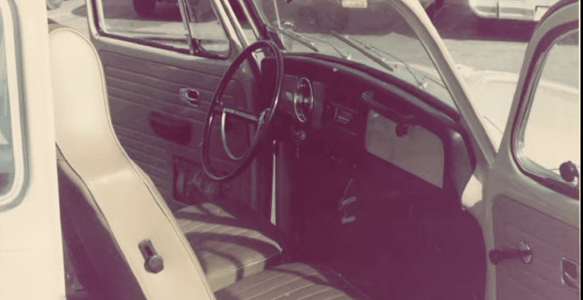
On August 20, 1973 twenty-three-year-old seamstress Vicki Lynn Hollar was walking out of The Bon Marche in Eugene, which was her new POE (she has only been there for about two weeks, and was a transplant from Flossmoor, IL); she was last seen alive by her supervisor, when the two walked out to their respective vehicles together (Vicki drove a black 1965 VW Bug with the running boards removed). Hollar was supposed to show up at her residence to meet up with a friend, and the two were going to go to a party together, but she never arrived. Neither Vicki nor her vehicle have ever been recovered. It is slightly over a two-hour drive from Battle Ground to the Macy’s that Hollar worked at in Eugene, Oregon.

On November 5, 1973 Suzanne Seay-Justis was last heard from when she called her mother from a pay phone outside of The Memorial Coliseum in Portland; she told her she would be home the following day so she could pick up her young son from school, and despite having her own car Justis hitchhiked to Portland. It’s worth mentioning that the Memorial Coliseum is only a half hour drive from the Forrest family home on SW 18th Street in Battle Ground.

Washington state detectives have never stopped looking into Forrest in regard to the murders that he stands accused of committing, and in December 2025 they were able to locate a long-lost witness in relation to the murder of Jamie Grisim. Additionally, they’re working with the ‘Washington State Search Team and Rescue’ as well as ‘Clark County Search and Rescue,’ and have plans for another coordinated search in the Dole Valley area, this time using dogs that are highly trained in locating human remains that could be decades old and buried deep underground.

Conclusion: Warren’s brother James Allen Forrest died at the age of thirty-four on November 24, 1980 after succumbing to ‘a lengthy illness.’ According to his obituary, he was unmarried at the time of his death and was ‘formerly a member of the Junior Odd Fellows;’ he was also the Past Chief Ruler of the Independent Order of Odd Fellows No. 3 at St. John’s Road. Warren’s father died of leukemia at the age of seventy-three on October 13, 1991 in Portland, and per his obituary, before he retired Harold was the foreman of the labor force at the Vancouver Veterans Hospital for thirty-five years and was a member of the Washington Gateway Good Sam Travel Club (as he was an avid traveler). Dolores Beatrice Forrest died at the age of seventy-seven on Christmas day in 2002 in Walla Walla.

Marvin Forrest married Diane Steigleman at the age of forty-eight on July 23, 1996, and sadly not even four months later on November 23, 1996 he was killed in a plane crash above the Pacific Ocean roughly forty miles outside of the Northern California coast; his body has never been recovered. According to his obituary, he worked at the Portland Air Base as a civilian mechanic, and was a proud member of the Air Force Reserve; he was also a member of the First Church of God. Marvin and Diane both liked old cars and were looking forward to retiring in 2002 and traveling together. He had a son and a daughter, and his widow is now happily retired and living in Lake Havasu City, AZ.

Warren’s younger child Lane has been married to his wife, Monica for almost twenty years and the couple have three children together; he works at Boeing Commercial Airplanes in Seattle as a mill operator. Forrest’s daughter Leslie is fifty-four and currently resides in Bullhead, AZ; sadly she is suffering from a plethora of health concerns, including three inoperable brain tumors.

As of February 2026, Warren Leslie Forrest is seventy-six years old and is housed at Airway Heights Corrections Center in Spokane County, WA. He is still married to his second wife Hilda Ruchert, a nurse that he met while incarcerated and wed on June 20, 1983 that is fifteen years his senior. One of the only facts I was able to find out about the second Mrs. Warren Leslie Forrest is that she was born on September 12, 1934 and (according to an article published in 2017 on ‘koin.com’), she is in her 80’s and still residing in Walla Walla; I could find no record of her death. Sharon Ann Wilson/Hart-Forrest got remarried to a man named Jim Lochner on November 11, 2011, and the couple currently reside in Vancouver, WA; she is retired after a long career of working in the administrative part of a doctor’s office.

Works Cited:
‘Cold Case Team Analyzing Evidence that May Link More Women to Serial Killer Warren Forrest.’ (December 11, 2024). Taken January 6, 2026 from forensicmag.com
Fox 12 Staff. ‘Clark County renews search for missing Teen Tied to 1970’s Serial Killer.’ (December 5, 2025).
Iacobazzi, Ariel & Plante, Aimee. ‘Cold Case Team Revisits Death Linked to Warren Forrest Plante.’ (December 9, 2024). Taken January 6, 2026 from koin.com
Morgan, Branden. Pie in the Sky Media: ‘The Forgotten Serial Killer.’ Taken February 17, 2026 from kslpodcasts.com
Nakamura, Beth. Warren Leslie Forrest Clark County murder trial begins. Taken January 6, 2026 from oregonlive.com
Osorio, Carolyn. (September 9, 2025). Stolen Voices of Dole Valley, Episode 5: The Good-Looking Stranger. Taken February 12, 2026 from https://pod.wave.co/
Varma, Tanvi. ‘Authorities believe multiple cold cases are linked to suspected Clark County serial killer.’ (December 10, 2024). Taken January 6, 2026 from katu.com
‘Warren Forrest.’ Taken January 6, 2026 from grokipedia.com/page/Warren_Forrest

Warren Leslie Forrest in a group photo for track taken from the 1965 Fort Vancouver High School yearbook.
Warren Leslie Forrest from the 1965 Fort Vancouver High School yearbook.
Warren Leslie Forrest posing as captain of the track team from the 1967 Fort Vancouver High School yearbook.
Warren Leslie Forrest from the 1966 Fort Vancouver High School yearbook.
Warren Leslie Forrest in a group photo for cross country from the 1966 Fort Vancouver High School yearbook.
Warren Leslie Forrest (middle row, right) in a group photo for cross country from the 1966 Fort Vancouver High School yearbook.
Warren Leslie Forrest’s senior year picture from the 1967 Ft. Vancouver High School yearbook.
Warren Leslie Forrest’s senior year activities listed in the 1967 Ft. Vancouver High School yearbook.
Warren Leslie Forrest (bottom row, far left) in a group picture for track from the 1967 Fort Vancouver High School yearbook.
Warren Leslie Forrest (top row, far right) in a group picture for track from the 1967 Fort Vancouver High School yearbook.
Warren and Sharon on their wedding day.
The best screenshot I was able to get of this particular picture of Warren and Sharon.
A picture of Warren with one of his children, photo courtesy of Leslie Forrest.
Warren Forrest with his wife and kids taken at the Western State Penitentiary at Christmas 1975, photo courtesy of Leslie Forrest.
One of Forrest’s mug shots.
Another one of Forrest’s mug shots.
A line up with Warren Forrest (he is the third from the left). Photo courtesy of the Clark County Sheriff’s Department/KSL Podcasts.
Forrest sitting in court with one of his attorneys.
Warren Leslie Forrest.
Some details about Forrest along with another picture of him.
An older WLF.
Warren Leslie Forrest.
Warren Forrest.
Warren Leslie Forrest on a Zoom call during his trial for Martha Morrison.
Warren Leslie Forrest’s military record, courtesy of Starr Grisim.
The residence of WLF. Photo courtesy of the Clark County Sheriff’s Department/KSL Podcasts.
Forrest’s blue 1973 Ford van. Photo courtesy of the Clark County Sheriff’s Department/KSL Podcasts.
Some evidence from Warren Leslie Forrest’s van in vacuum sealed bags. Photo courtesy of the Clark County Sheriff’s Department/KSL Podcasts.
Investigators identify a blood stain on the handle of Warren Forrest’s dart gun. Photo courtesy of the Clark County Sheriff’s Department/KSL Podcasts.
An older model .177 caliber dart pistol.
The Forrest family from the 1950 census.
Warren Leslie Forrest and Sharon Ann Hart’s affidavit of applicant for a marriage license that was filed on August 11, 1969.
Warren Leslie Forrest and Sharon Hart’s marriage certificate that was filed on August 20, 1969.
Warren Leslie Forrest’s confirmed and suspected victims.
Jamie Grisim.
Barbara Ann Derry.
The Grist Mill where the body of a young woman was found. Photo courtesy of the Clark County Sheriff’s Department/KSL Podcasts.
The inside of the Grist Mill, where Barbara Derry was found. Photo courtesy of the Clark County Sheriff’s Department/KSL Podcasts.
Barbara Derry’s obituary.
Diane Sue Gilcrist.
Gloria Nadine Knutson.
Norma Jean Countryman, one of Forrest’s surviving victims.
Norma, after her assault.
Norma in the weeks after her attack. Photo courtesy of the Clark County Sheriff’s Department/KSL Podcasts.
An artists depiction of Norma Countryman hogtied by Warren Forrest, drawing courtesy of the Clark County Sheriff’s Office.
Krista Kay Blake (left) and her sister.
Police evidence negative of Krista Blake skeletal remains. Photo courtesy of the Clark County Sheriff’s Department/KSL Podcasts.
Where Krista Kay Blake was last seen compared to where Warren Leslie Forrest lived at the time he killed her; I also included where Lewisville Regional Park was as well, which is where some eyewitnesses said they saw Blake and Forrest together before she was murdered.
Carol Valenzuela.
Martha Morrison.
A section of forest in Dole Valley where the bodies of Carol Valenzuela and Martha Morrison were discovered. Photo courtesy of the Clark County Sheriff’s Department/KSL Podcasts.
The skull of Martha Morrison. Photo courtesy of the Clark County Sheriff’s Department/KSL Podcasts.
An article about the trial of Warren Forrest that mentions his other surviving victim, Daria Wightman that was published in The Columbian on April 13, 1979.
A comment a man named Paul Wightman made on a YouTube video about Jamie; ** looking into his sister Daria Wightman, she was the twenty-year-old victim that is still largely anonymous around the internet.
Some human remains discovered in the vicinity of Western State Mental Hospital. Photo courtesy of the Clark County Sheriff’s Department/KSL Podcasts.
Karen Wiles.
Rita Jolly, who vanished out of her West Linn neighborhood on June 29, 1973.
Vicki Lynn Hollar, who disappeared on August 20, 1973 after leaving work at The Bon Marche in Eugene, OR.
Sue Seay-Justis, who disappeared in Portland on November 5, 1973.
Warren Forrest and Sharon Hart’s ‘Certificate of Dissolution or Declaration of Invalidity of Marriage’ dated July 23, 1980.
A newspaper clipping announcing that Warren Leslie Forrest won a ‘wolf badge’ that was published in The Columbian on January 30, 1958.
Warren Leslie Forrest is mentioned in an article about advancing in the boy scouts that was published in The Columbian on December 16, 1960.
An article about two new youth groups being formed in Vancouver, WA that mentions Warren Leslie Forrest that was published in The Columbian on January 4, 1963.
An article about two new youth groups being formed in Vancouver that mentions Warren Leslie Forrest that was published in The Columbian on January 14, 1964.
A list of students with high GPA’s that includes Warren Leslie Forrest that was published in The Columbian on April 22, 1965.
An article about athletes at Fort Vancouver High School that mentions Warren Leslie Forrest that was published in The Columbian on April 20, 1966.
Warren Leslie Forrest’s name mentioned in an article about cross country at Fort Vancouver High School that was published in The Columbian on May 5, 1966.
A newspaper clipping about a car accident Warren Leslie Forrest got into during his adolescence that was published in The Columbian on May 27, 1966.
Forrest is mentioned as the captain of the baseball team from Fort Vancouver High School published in The Columbian on June 3, 1966.
Warren Forrest in a list of top athletes at Fort Vancouver High School that was published in The Columbian on March 24, 1967.
Forrest is mentioned in a list of graduates from Fort Vancouver High School published in The Columbian on June 2, 1967.
A newspaper article about the car accident Warren Leslie Forrest got into in May 1966 that was published in The Columbian on September 21, 1967.
Warren Leslie Forrest’s name is listed amongst those that enlisted in the US Army in October 1967 that was published in The Columbian on October 18, 1967.
A newspaper article about Warren Leslie Forrest being assigned to the Homestead Air Force Base in Florida during his time in the US Army that was published in The Columbian on March 20, 1968.
A newspaper article about the upcoming nuptials of Warren Leslie Forrest and Sharon Ann Hart that was published in The Columbian on December 26, 1968.
Warren Leslie Forrest and Sharon Ann Hart are included in a list of people that applied for marriage licenses that was published in The Columbian on August 13, 1969.
A newspaper clipping about Warren Leslie Forrest and his new bride Sharon relocating to Texas published in The Columbian on August 27, 1969.
Warren Leslie Forrest is included in a list of military related accomplishments (he successfully completed Airborne Jump School at Fort Benning, GA) published in The Columbian on July 7, 1970.
The birth announcement of Warren and Sharon’s first child that was published in The Columbian on September 8, 1971.
The birth announcement of Warren and Sharon’s second child that was published in The Columbian on April 26, 1974.
An article about Warren Leslie Forrest being arrested for a stabbing that was published in The Columbian on October 2, 1974.
A quick blurb mentioning Warren Leslie Forrest being arrested by the Clark County Sheriff’s Department that was published in The Columbian on October 3, 1974.
An article about a rape arraignment of Warren Leslie Forrest in Clark County, WA that was published in The Columbian on October 3, 1974.
An article about a rape arraignment of Warren Leslie Forrest in Clark County, WA that was published in The Columbian on October 4, 1974.
WLF listed in court cases being held in Clark County Superior Court that was published in The Columbian on October 10, 1974.
A newspaper article about Warren Forrest entering a not-guilty plea that was published in The Columbian on October 10, 1974.
An article about Warren Leslie Forrest asking for a conditional release from custody at Western State Hospital that was published in The Columbian on July 25, 1978.
An article about Warren Leslie Forrest being charged in a four year old murder case that was published in The Columbian on October 20, 1978.
An article about Warren Leslie Forrest being charged for the murder of Krista Kay Blake that was published in The Oregonian on October 21, 1978.
The initial blurb in a newspaper about an article about Warren L. Forrest published in The Columbian on October 25, 1978.
An article about four judges being disqualified from presiding over the trial of Warren Leslie Forrest that was published in The Columbian on October 25, 1978.
An article about Warren Leslie Forrest using an insanity plea during his second trial that was published in The Oregonian on October 25, 1978.
An article about pre-trial hearings for Warren Leslie Forrest in relation to the murder of Krista Blake that was published in The Oregon Journal on November 15, 1978.
An article about a ruling in documents related to the trial of Warren Leslie Forrest for the murder of Krista Blake that was published in The Oregonian on November 17, 1978.
An article about the trial of Warren Leslie Forrest that was published in The Columbian on November 17, 1978.
A newspaper article about a ruling in the Warren Forrest trial that was published in The Columbian on December 3, 1978.
A newspaper article about a ruling in the Warren Forrest trial that was published in The Columbian on December 5, 1978.
A newspaper article the trial of Warren Forrest trial that was published in he Oregonian on December 6, 1978.
A newspaper article about the trial of Warren Leslie Forrest that was published in The Columbian on December 21, 1978. 
A newspaper article about the trial of Warren Leslie Forrest that was published in The Columbian on December 22, 1978.
A newspaper article about potential jurors for the trial of Warren Leslie Forrest that was published in The Columbian on January 16, 1979.
An article about evidence being lost in the Warren Leslie Forrest trial published in The Columbian on January 30, 1979.
An article about evidence being lost in the Warren Leslie Forrest trial published in The Columbian on February 2, 1979.
An article about the trial of Warren Leslie Forrest published in The Columbian on February 7, 1979.
An article about the trial of Warren Leslie Forrest for the murder of Krista Kay Blake that was published in The Columbian on April 6, 1979.
An article about the trial of Warren Leslie Forrest published in The Columbian on April 13, 1979.
Forrest is mentioned in the front page of The Columbian on April 19, 1979.
An article about Warren Leslie Forrest’s mother giving him an alibi that was published in The Columbian on April 19, 1979.
An article announcing Warren Leslie Forrest got life in prison for the murder of Krista Kay Blake that was published in The Columbian on April 26, 1979.
Warren Forrest mentioned in ‘year in review (of 1979)’ that was published in The Columbian on January 1, 1980.
Part one of a newspaper article about the disappearance of Jamie Grisim that mentions Warren Leslie Forest that was published in The Sunday Oregonian on June 16, 2002.
Part two of a newspaper article about the disappearance of Jamie Grisim that mentions Warren Leslie Forest that was published in The Sunday Oregonian on June 16, 2002.
Part one of a newspaper article about the disappearance of Jamie Grisim that mentions Warren Leslie Forest that was published in The Columbian on February 11, 2006.
Part two of a newspaper article about the disappearance of Jamie Grisim that mentions Warren Leslie Forest that was published in The Columbian on February 11, 2006.
A newspaper article about the possible skull of Jamie Grisim that mentions Warren Leslie Forest that was published in The Columbian on February 11, 2006.
What was on the front of the newspaper that mentioned Warren Leslie Forrest that was published in The Columbian on April 12, 2011.
Part one of a newspaper article about Warren Leslie Forrest being up for parole that was published in The Columbian on April 12, 2011.
Part two of a newspaper article about Warren Leslie Forrest being up for parole that was published in The Columbian on April 12, 2011.
A newspaper article about Warren Leslie Forrest being up for parole that was published in The Columbian on April 13, 2011.
Warren Leslie Forrest is mentioned in a ‘Cheers and Jeers’ part of The Columbian that was published on April 16, 2011.
A newspaper article about parole being denied for Warren Leslie Forest that was published in The Columbian on April 27, 2011.
A newspaper article about a vigil for one of Warren Leslie Forests victims (Jamie Grisim) that was published in The Columbian on November 26, 2011.
An article about DNA evidence linking Warren Leslie Forrest to two additional murders that was published in The Kitsap Sun on August 25, 2017.
An article about Warren Leslie Forrest and the murder of Martha Morrison that was published in The Daily Herald on January 2, 2020.
An article about Warren Leslie Forrest and the murder of Martha Morrison that was published in The Spokesman-Review on January 2, 2020.
An article about Warren Forrest appearing in court for the murder of Martha Morrison that was published in The Longview Daily News on January 7, 2020.
An article about Warren Forrest pleading not guilty for the murder of Martha Morrison that was published in The Spokesman-Review on February 8, 2020.
Part one of an article about Warren Forrest being found guilty for the murder of Martha Morrison that was published in The Oregonian on February 2, 2023.
Part two of an article about Warren Forrest being found guilty for the murder of Martha Morrison that was published in The Oregonian on February 2, 2023.
An article about Warren Forrest being found guilty for the murder of Martha Morrison that was published in The Daily Herald on February 3, 2023.
An article about some of the murders that Warren Leslie Forrest’s was never charged for that was published in The Longview Daily News on December 10, 2024.
A Reddit comment made on a post about Warren Leslie Forrest.
Sharon as a baby.
A young Sharon Ann Hart.
Sharon sitting with her younger sister.
Sharon (far left) with some friends.
Sharon Hart.
Sharon Ann Wilson’s junior year picture from the 1966 Ft. Vancouver High School yearbook.
Even though it was listed in multiple places that Sharon ‘Hart’ went to Ft Vancouver High School and graduated along with Warren in 1967, I could find no evidence of it… until I saw on Leslie’s FB page she went by a different maiden name than the one typically given (Hart). I went person by person until I found her: Sharon Ann Wilson.
Sharon Ann Wilson’s senior year activities listed in the 1967 Ft. Vancouver High School yearbook.
Sharon Ann Wilson in a group picture for the Future Homemakers of America from the 1967 Ft. Vancouver High School yearbook.
Sharon Hart.
Sharon in what is (I’m guessing) is her former husband’s Army hat; photo courtesy of her very PUBLIC Facebook page (I don’t want anyone thinking I somehow have connections to inappropriate pictures of WLF’s ex-wife).
Sharon.
Sharon.
Sharon holding her and Warrens first child, Lane.
Sharon with her two children and their family dog.
Sharon and Leslie.
Sharon Lochner.
Sharon standing outside a trailer.
Sharon and her second husband, Jim.
An opinion piece on Sharon Forrest in relation to her husbands atrocities published in The Columbia on February 14, 1979. 
A picture of Warren Forrest’s second wife Hilda Ruchert published in The Walla Walla Union Bulletin on May 27, 1977.
Warren Forrest’s second wife Hilda in a list of people who filed for bankruptcy published in The Spokesman-Review on May 8, 1981.
An advertisement for the ‘Whitman Grill’ that mentions Warren Forrest’s second wife working as a bartender that was published in The Walla Walla Union Bulletin on July 19, 1968.
The only Facebook picture of Hilda Forrest that was posted on her Facebook page, on April 5, 2020.
Harold Forrest’s WWII draft card.
Harold Forrest’s military card.
A newspaper clipping that mentions Harold Forrest published in The Columbian on September 17, 1946.
Warren Leslie Forrest and his second wife Hilda Ruchert’s marriage certificate dated June 28, 1983.
Warren Leslie Forrest and Hilda Ruchert listed in the marriage index from June 1983.
Harold Forrest and Dolores Harju’s marriage affidavit and application to wed dated June 30, 1944.
Harold and Dolores Forrest’s Marriage Statistics dated June 30, 1944.
Harold Forrest and Dolores Harju’s marriage certificate dated July 3, 1944.
An article about Marvin Forrest hitting a little boy with his car published in The Oregon Daily Journal on January 17, 1966.
James Allen Forrest.
Marvin Harold Forrest.
d
An article about Dolores Forrest wining a bowling contest published in The Columbian on November 21, 1967.
The announcement of the wedding of Marvin Forrest and Darlene Kuzniar published in The Republic on January 31, 1970.
A newspaper clipping about the estate of WLF’s grandfather that mentions his mother that was published in The Columbian on February 2, 1979.
A picture of Dolores Forrest posing with a painting of her son and daughter-in-law that was published in The Columbian on April 19, 1979.
James Forrest’s obituary published in The Columbian on November 26, 1980.
James Forrest’s death certificate from November 24, 1980 (dated December 2, 1980).
The announcement of the upcoming marriage of Marvin Forrest and Viki-Jo Westling published in The Columbian on August 31, 1984.
A newspaper article announcing the death of Warren Forrest’s dad, Harold published in The Columbian on October 15, 1991.
Harold Forrest’s grave site.
Harold Forrest listed in the state of Oregon Death Index.
A newspaper clipping that mentions Marvin Forrest’s son Todd returning from a six-month deployment to the western Pacific and Persian Gulf that was published in The Columbian on June 10, 1993.
The announcement of the upcoming marriage of Marvin Forrest and Diane M. Steigleman published in The Columbian on June 27, 1996 .
On July 4, 1996 Marvin Forrest married Darlene Steigleman in Clark County, Washington. He was a staff sergeant in the Air Force, and worked as a jet mechanic. Only four months later Marvin was tragically killed after a plane he was in crashed into the Pacific Ocean roughly forty miles off the Northern California Coast
The announcement of the upcoming marriage of Marvin Forrest and Diane M. Steigleman published in The Columbian on June 27, 1996.
Marvin Forrest and Diane Steigleman’s certificate of marriage dated July 23, 1996.
Part one of an article about the death of Marvin Forrest published in The Columbian on November 25, 1996.
Part two of an article about the death of Marvin Forrest published in The Columbian on November 25, 1996.
Marvin Forrest’s obituary published in The Columbian on November 28, 1996.
A picture of Marvin Forrest that was published in The Columbian December 8, 1996.
A newspaper article about an accident that caused the death of Marvin Forrest published by The Columbian on April 28, 1997.
Sharon Hart’s application for marriage from her second marriage to Jim Lochner from November 2011.
Sharon Hart’s marriage certificate from her second marriage to Jim Lochner dated November 25, 2011.
Leslie Forrest, who was a runner like her father.
A picture of Leslie Forrest (right) running in a race.
Lane and Monica Forrest.
Leslie Forrest.
Marvin Forrest married Diane Steigleman on July 23, 1996, and not even four months later on
Another (public) Facebook post made by Leslie Forrest about her mother, Sharon Ann Forrest-Lochner.
A restraining order I found that on Leslie Forrests (very public) Instagram page taken out against her by her mother.
The second page of a restraining order I found that on Leslie Forrests (very public) Instagram page taken out against her by her mother.
An Instagram post made by Leslie Forrest saying she was trying to have her mother prosecuted because she was somehow involved in her husbands atrocities.
A (public) Facebook post made by Leslie Forrest about her mother, Sharon Ann Forrest-Lochner.
Aella Blu is a pseudonym that Leslie Forrest uses on Facebook
A Facebook post made by Leslie Forrest. To be fair, in an article published in The Columbian on January 30, 1979, it was reported that evidence that could have been ‘crucial’ to the prosecution of Warren Leslie Forrest was lost in early 1975 due to the Clark County prosecutor and sheriff’s offices deeming the entire case ‘disposed of.’ Amongst the items that disappeared were keys, twine, a knife, adhesive tape, a victims clothing, and ‘vacuum sweepings’ that has been taken from Forrest’s 1973 Ford van.
A birthday card from Warren to his daughter, Leslie.
The inside of the birthday card Warren sent his daughter, Leslie.

Pamela Lorraine Darlington.

Background: Pamela Lorraine Darlington was born on October 21, 1954 to Frank and Rosella Shirley (nee Hilleren) Darlington in British Columbia, Canada. Frank Thomas Darlington was born on July 4, 1926 in Vancouver, and Rosella was born on June 11, 1928 in Calder, Saskatchewan. The couple were wed on November 8, 1952 at St. Michael’s Church in Vancouver, and had three children together: Pamela, Joseph, and Tara. Sadly, Mrs. Darlington passed away at the age of thirty-three on June 14, 1961; Frank remarried a woman named Arlene Ilvi Moisio and the couple had a son together named Thomas. At the time of her murder, Pamela wore her blonde hair at her shoulders and according to an article published in a British Columbia based newspaper, she weighed 120 pounds and stood at 5’5″ tall; she had been employed as an operator at BC Telephone for roughly one year.

According to an (unidentified) newspaper article published in November 1973, Ms. Darlington was last seen hitchhiking towards Kamloops on Tranquille Road in front of the Village Hotel at around 10:30 PM on Tuesday, November 6, 1973. While investigating, I learned that there is a bit of uncertainty surrounding her final few hours of life: according to her sister Laurel, when she realized her car wouldn’t start she decided to hitchhike into town to meet up with some friends, as it was common back thing to do at that time and everyone did it. However, in an interview with true crime blogger ‘Eve Lazarus,’ Pam’s cousin Sharon said that friends told the Darlington family that she was at The David Thompson Pub sometime in the evening in the company of an attractive (but unknown) gentleman with ‘shaggy hair.’ She added that hercousin Joe (Pam’s brother) always thought it was someone who Pam knew, who was infatuated with her, who committed suicide a year after she died.’

Murder: at roughly 3:30 in the afternoon on Wednesday, November 7th, 1973 Darlington’s remains were discovered in shallow water on the south bank of the Thompson River by seventeen-year-old Frank Almond, who had been out walking with his dog at a nearby park when the animal veered off towards the river that flowed nearby: ‘The dog kinda ran up to something and it looked like a body, so I kinda got a little nervous.’ Almond immediately returned home and told his father what he had seen, and together they went back to where the young woman was lying face down in the riverbed: ‘he came back, he was kinda white as a ghost and he said, ‘Yup that’s a body.’ So we went back and called the police.’ Investigators said that the young woman had been brutally beaten and had been sexually assaulted, and according to an article published in The Times on October 15, 1974, she had been hit in the head with rocks but ultimately died of drowning, and was found with bite marks on her breasts.

About her cousin, Sharon Darlington said that she was an outgoing person that loved her friends and family and was always laughing: ‘it was many years ago, but I remember it like yesterday.’ … ‘When we were little, I was shy and reserved. Pam wasn’t scared of anything,’ In the initial years following the murder Ms. Darlington said that her family were told by the Royal Canadian Mounted Police that they suspected that none other than Ted Bundy had murdered Pamela, and they were ‘relieved when he was put to death;’ it wasn’t until years later that they learned her case was a small part of an investigation being conducted by the RCMP’ E-Pana Task Force that was set up to look into the eighteen murders and disappearances of female victims along the ‘Highway of Tears,’ a stretch of highway in BC that is notorious for disappearances and murders of women (particularly Indigenous ones) beginning in 1969. Darlington met all three of the task force’s criteria for a victim: she was hitchhiking (which they considered to be ‘high risk activity’), was found near Highway 16/97/5, and was most likely killed by a stranger.

Retired RCMP Constable David Sabean said that Pam’s case remains a priority among unsolved cases, and that ‘there was a big list of suspects, never anyone who came out of it, though.’ At approximately 4:30 AM on the morning that her remains were found a late 1950’s, off-white, four-door sedan in poor working condition was seen leaving the boat launch area near to where her remains were discovered; the male driver was described as having long brown or blond hair and he may have been passengers with him. The vehicle nor its driver have ever been identified and as of April 2025 remain of interest.

Gale Ann Weys: Less than three weeks before Pam Darlington’s murder, on October 19, 1973 the body of nineteen-year-old Gale Weys was recovered after she disappeared while hitchhiking to her parents’ house in Kamloops from her residence in Clearwater after she finished her shift as an attendant at a local gas station; her remains were discovered six months later in a ditch along Highway 5.

On the evening Weys disappeared a local banker named Ron Hagerman told investigators that he ate a meal at The Thompson Hotel where she worked, and she shared with him her plans to hitchhike the more than 75 miles to her parents house in Kamloops. He also reported that he observed she had been asking around the bar if anyone would have been able to give her a ride: ‘I know that night she was asking around for someone to drive her to Kamloops because her parents lived there. No one was going to Kamloops, and so she just walked outside and stuck out her thumb.’ It is strongly speculated that she may have instead went north of Quesnel after some reports claimed that she had been trying to hook up with the staffing agency ‘Canada Manpower Centre,’ but nothing ever came of this. Her remains were discovered in a water-filled ditch on April 6, 1974 off Highway 5, roughly seventy-eight miles north of Kamloops; according to law enforcement, her clothing was never recovered.

The second of nine brothers and sisters, Gale’s siblings recall her as being an independent, funny, and protective big sister that spent her time spare time working as a lifeguard and Girl Guide leader. She had recently moved to Clearwater and was working two jobs at the time of her murder to help save for college, and volunteered at a local school helping care for special-needs children. According to her mother Rowena, she was also a swimming instructor and often took trips with the scout group that she helped lead, and at the time of her death was saving for a vacation to Mexico. Mrs. Weys recalled that her daughter was a wonderful and upbeat young woman, and her Uncle Ted said that she was kindhearted, and: ‘was a hell of a nice girl, very outgoing and friendly.’ He also commented that his niece and Colleen MacMillen looked so similar that they could have been mistaken for sisters (more on Colleen in a bit).

Both the Weys’ family as well as the Darlington’s felt that their daughters’ murders were not ‘personal,’ and were more ‘crimes of opportunities’ versus passion; they also felt that there could have been some connection in the murders due to some striking similarities in the girls’ appearance as well as the circumstances surrounding their deaths. Shortly after Pam’s death Frank Darlington said he strongly believed they were more than just murders in a city by a lone psychopath, and ‘for all we know, this could be a Manson-type murder,’ and that the slayings were most likely committed by ‘a psychopath.’

Colleen MacMillen: On September 4, 1974 the remains of sixteen year old Colleen Rae MacMillen were discovered roughly thirteen miles south of 100 Mile House, a district municipality located in the South Cariboo region of central British Columbia. MacMillen was born on April 11, 1958 in Kamloops, BC and had left home on August 9 with plan to hitchhike to a friend’s house a few miles away; she was reported missing by a member of her family two days later when they realized she never made it to her destination. Although newspapers said MacMillen was going to see a girlfriend, ‘The 100 Mile Press’ reported that she was on her way to meet up with her boyfriend when she disappeared.

MacMillen’s clothes were discovered at Mile 102 on Highway 97 on August 25, 1974 by a tourist even though her nude body wasn’t discovered until early September (she was completely naked except for her socks). One of seven brothers and sisters, her father knew that she would never run away because she ‘wasn’t that type of girl:’ ‘She was a quiet sort of girl, not what you would call a bubbly effervescent type of girl but very friendly.’ Retired Staff Sergeant Fred Bodnaruk with the North Vancouver RCMP said that hair samples were taken from a suspicious 1966 Meteor Montcalm that was found abandoned near 100 Mile that did not match MacMillen’s, and the vehicle had a crumpled right fender that may have been the result of an accident that took place after it was stolen. Although no cause of death could be determined, (retired) RCMP Constable Mel Weisgerber said that there was blood in MacMillen’s inner ear which is ‘indicative of a drowning victim.’ 

At the time of her death, MacMillen had a twenty-one year old boyfriend named Ron Musfelt, who came out in recent years and said that he ‘lived under a cloud of suspicion for many years:’ ‘I was going out with Colleen, and one night I phoned her, and I was talking to her, and she said ‘meet me down Lac Le Hache.’ So I went down the highway to wait by K&D General Store. I went back up to the house, and phoned her house and they said she had already left. And I waited and waited and waited and waited, and she never showed up.’ For years after Colleen’s death Musfelt was a key suspect in her murder, and he ‘was taken into town and they interrogated me, and they did everything to me. Lie detector tests, everything like you wouldn’t believe, and to this day it’s always bothered me, never knowing who did it. I remember back then there were probably people who thought I had something to do with it.’ … ‘The thing that really bothers me is knowing I was standing on the highway, waiting for her to come through town, and she probably came past me in this vehicle, with this guy, wanting to get out of his vehicle.’

About the death of his sister, Shawn MacMillen said that Colleen was ‘a lovely, sweet, innocent sixteen-year-old kid and there are no words to express how terribly she was wronged.’ Regarding Colleen, Pam, and Gale’s death, Frank Darlington said he believed that it was more than just a murder in a city by a lone psychopath, and that ‘for all we know, this could be a Manson-type murder,’ and he feels sure the killings were done by a psychopath. On September 25, 2012, it was announced by the RCMP that DNA taken from MacMillen’s clothes matched with a man named Bobby Jack Fowler, who managed to fly under the radar until his arrest in 1995.

Barbara Joan Statt: A name that only came up once during my research is Barbara Joan Statt, who was only seventeen when she was last seen hitchhiking in Vancouver on July 26, 1973. Her remains were discovered three days later on the side of a mountain in Northern Vancouver; she had been sexually assaulted and had been hit on the head with a rock (that was found nearby). Friends told law enforcement that right before she was killed, Statt told them that she’d met a new male friend, but they referred to him as the ‘creepy man that lives in a car.’

Statt’s homicide was investigated in relation to the three others (Darlington/Weys/MacMillen) that took place along Highway 5 in BC in 1973/74. Sergeant Bodnaruk described the killer as a ‘murdering psychopath that would hit and run,’ and in the beginning stages of the investigation it made sense that she was included with the other victims: like two of the three others, Barbara was sexually assaulted and was of similar height and build, however I quickly learned that there was a good reason why she wasn’t included more frequently: it was quickly determined that a Toronto resident named Paul Cecil Gillis was responsible for her death, who was apprehended for her murder in 1974. He was also convicted of killing fifteen-year-old Robin Gates of Coquitlam, and thirty-three-year-old Lavern Johnson.

Gloria Moody: Another name I came across is Gloria Moody, who was only twenty-seven when she was killed during a weekend away with her family on October 25, 1969. A member of the Bella Coola Indian Reserve with the Nuxalk Nation in British Columbia, Moody’s body was found a day after she disappeared by hunters on a cattle trail roughly six miles west of Williams Lake. Her autopsy report said that she bled to death after being beaten and was sexually assaulted, and she is the oldest unsolved murder in Project E-Pana.

The ’Trail of Tears:’ Pamela Darlington, Gale Weys, and Colleen MacMillen are just three of (at least) eighteen missing and murdered women that are being investigated by the Royal Canadian Mounted Police ‘E-Pana Task Force’ that focused on the infamous ‘Highway of Tears,’ a 447-mile stretch of Highway 16 between Prince George and Prince Rupert in British Columbia beginning in 1969. On that list is a disproportionately high number of Indigenous women, hence its association with the ‘Missing and Murdered Indigenous Women Movement.’ The exact number of missing and murdered women varies depending on the source: according to RCMP’s E-Pana task force, the count is around eighteen, where Aboriginal organizations estimate the number to be over forty. Wikipedia lists seventy-nine victims, including a family of four so technically that would be eighty-two.

Proposed explanations for the years-long span of disappearances and homicides (along with the limited progress in the case) include poor economic conditions, substance abuse, domestic violence, the foster care system, and Canadian Indian residential school system. Thanks to the high rate of poverty in the area many people were unable to buy a car, and as a result hitchhiking was a common way to travel large distances. There was also a lack of public transportation at one time, and it didn’t help that the area is remote and largely uninhabited; also, it wasn’t until December 2024 that much of the roadway didn’t have cellular telephone signal. Along the highway, soft soil in many areas made discarding a body incredibly easy, and local wildlife only helped.

Bobby Jack Fowler: Convicted serial killer and rapist Bobby Fowler was born on June 12, 1939 to Selva ‘Mutt’ and Oma Lee (nee Hathaway) Fowler, and was active in the US and Canada between 1973 to 1995. On March 6, 1959, he married Theresa Patton and they had five children together: Johnny, Janey, Pam, Loretta and Randell. After he was arrested twice in 1969, Theresa decided that she had enough of his shenanigans and the couple divorced on May 17, 1971, shortly before he moved to British Columbia.

For the most part Fowler was a transient, and worked menial construction jobs all over North America and Canada, and it is confirmed he spent time in Florida, British Columbia, Iowa, Texas, Washington, South Carolina, Arizona, Tennessee Louisiana, and Oregon. An addict in many regards (he was known to abuse a variety of substances, including alcohol, amphetamines, and methamphetamines), Fowler had a criminal record a mile long that included a firearms offense, sexual assault, and attempted murder.

In 1969, Fowler was charged with killing a couple in Texas but was only convicted of ‘discharging a firearm within city limits.’ He did spend some time in a prison in Tennessee for sexual assault and attempted murder because (in the words of the investigating attorney), ‘he tied a woman up, beat the hell out of her with her own belt, covered her with brush and left her to die.’

Bobby was known to drive long distances and enjoyed traveling in ‘beat-up old cars,’ and often picked up transients and hitchhikers along the way. He also spent a lot of time in seedy bars and motels and believed that the young women that he picked up wanted to be hurt, and were somehow asking for it. According to Deputy Commissioner Craig Callens, ‘he believed that the vast majority of women he came in contact with… Women that hitchhike and went to taverns and bars, desired to be sexually assaulted and violently sexually assaulted.’

In addition to Darlington, MacMillen, and Weys, The Royal Canadian Mounted Police also believe that Fowler is either suspected or is considered a ‘person of interest’ in (at least) an additional ten murders (possibly upwards of twenty) between British Columbia and Oregon going as far back as 1969. It’s important to keep in mind that quite a few of the ‘Trail of Tears’ murders took place after he was incarcerated in 1996, and geographic profiler Kim Rossmo said that (in his educated opinion) Fowler is not responsible for any of the deaths along Highway 16 that took place between 1989 and his arrest in 1995. Additionally, it’s worth mentioning that the only thing linking the killer to the area is the fact that he worked for a local roofing company in 1974, called ‘Happy’s Roofing.’

Fowler was arrested on June 28, 1995 after an incident in Newport, Oregon involving a woman jumping out of a second floor window at the Tides Inn Motel with a rope tied to her ankle. Luckily she survived and reported the incident to the local police, and he was arrested and charged. On January 8, 1996 Bobbly Fowler was convicted of kidnapping in the first degree, attempted rape in the first degree, sexual abuse in the first degree, coercion, assault in the fourth degree, and menacing; he was sentenced to 195 months in prison with the possibility of parole.

On September 25, 2012, the Royal Canadian Mounted Police along with Lincoln County DA Rob Bovett named Bobby Jack Fowler as a suspect in the murders of Pam Darlington, Colleen MacMillen, and Gale Weys after it was determined that his DNA was found on MacMillens’ remains. Unfortunately, in May 2006 Fowler died from lung cancer at the age of 66 in Oregon State Penitentiary before he was able to be held accountable for his actions. Colleen’s brother Shawn commented that his family was ‘comforted by the fact he was in prison when he died, and he can’t hurt anyone else.’

In the mid-1970s, newspapers reported that Pams clothes were never found, however Sharon remembers that her dad told her they were discovered folded up near her body. If that’s true, then they are most likely long gone, which is tragic because DNA evidence found on the fabric could have confirmed that Fowler murdered her (or that he didn’t). Despite what the RCMP called ‘similar fact evidence,’ there wasn’t enough direct evidence to conclusively link the killer to the murders of Pam Darlington and Gale Weys, a fact that’s heartbreaking for both families because the cases will most likely remain forever unsolved.

Ted Bundy: In November 1973 when Pam Darlington was killed Theodore Robert Bundy was living in Ernst and Frieda Roger’s rooming house on 12th Avenue NE in Seattle and was in a long-term relationship with Elizabeth Kloepfer. At the time he was in between jobs, and in September he had been the Assistant to the Washington State Republican Chairperson and remained unemployed until May 3 of the following year when he started a position with the Department of Emergency Services in Olympia (he was only there until August 28, most likely because he left for law school in SLC a few days later). At the time he was attending the University of Puget Sounds law school, and according to the ‘TB FBI Multiagency Report 1992′ on November 7 he visited the unemployment office in Seattle.

In her 1981 book ‘The Phantom Prince’ Liz Kloepfer wrote that Vancouver was a ‘favorite playground’ for her one-time beau, and when the two went there in October 1969 he ‘showed her all of his favorite places,’ specifically the saloon ‘Oil Can Harry’s,’ and after spending the night at the former ‘Devonshire Hotel’ they walked through Chinatown as well as a German neighborhood before returning home to Seattle. According to retired RCMP Inspector Bruce Terkelsen, ‘one of the significant pieces of evidence with Darlington was the bite marks on her breasts and other parts of the body.’ As we know, Bundy was known to bite some of his victims, and Terkelsensaid ‘it was a loose piece of evidence at the time. But when we were well into the Highway Murders, the name Ted Bundy came up. It became clear that he was in the habit of crossing the border and coming to Vancouver on numerous occasions.’ He also said that the killer had ‘long ago’ been a suspect in the murders but ‘it became clear that he was in the habit of crossing the border and coming to Vancouver on numerous occasions.’ … ‘At this time Bundy was not a hot suspect, but it was troublesome to us. We spent considerable time trying to track his movements in Canada.‘ Sergeant Bodnaruk also said that King County police placed Ted at several gas stations in the area, which proved he had traveled through Kamloops ‘either a week to ten days before or after Darlington disappeared.’

Living incredibly close to the Canadian border in Buffalo, I immediately wondered about the logistics of Bundy sneaking in and out of Canada to murder young women: I know how strict and regulated things are today (and that’s not even factoring all of this Trump nonsense into the equation), but how hard was it to leave the US in the early 1970’s and go into British Columbia (and return)? After some simple internet sleuthing (and asking my Dad, who was alive and dating my mother in 1973), in the early 1970’s crossing the US-Canada border in Washington state (particularly on the American side going into Canada) was considered relatively easy and straightforward, and there were few (if any) requirements to get over (my dad said he remembers showing them his Erie County Sheriff’s card). Obviously, security has gotten significantly tighter since the days of Ted Bundy, with the introduction of passports/enhanced drivers licenses/real ID’s, enhanced screenings, and stricter identification requirements. 

Clifford Robert Olson Jr.: Another serial killer that was investigated for the murder of Pamela Darlington is Clifford Olson, who operated out of Canada in the early 1980’s and confessed to killing eleven children between the ages of nine and eighteen. He was arrested on August 12, 1981 on suspicion of attempting to kidnap two girls, and was later charged with the murder of Judy Kozma, a fourteen-year-old from New Westminster that he raped then strangled to death. Olson eventually came to an unusual and controversial deal with the RCMP: he agreed to confess to the eleven murders and give investigators the location of his victims that were not yet found, and in return for each one that he confessed to they would put $10,000 into a trust for his (then) wife, Joan Hale (who he was with from 1981 to 1985) and their infant child. As a result, Hale and her child received $100,000, as he gave them the eleventh victim as a ‘freebie.’

In January 1982, Clifford Olson pleaded guilty to eleven counts of murder, and was given as many concurrent life sentences to be served out in the Special Handling Unit of the ‘Regional Reception Centre’ in Sainte-Anne-des-Plaines, Quebec. According to forensic psychiatrist Stanley Semrau, who interviewed the killer at great length in prison, Olsen scored a 38/40 on the Psychopathy Checklist; he died from terminal cancer at the age of seventy-one on September 30, 2011.

Miscellaneous Suspects: Another suspect that was investigated for the murder of Pam Darlington is Jerry Baker, who had a history of sex crimes (including rape) and subsequently spent time in prison. On September 19, 1990 it was reported that he had eight convictions for various sexual assault and weapons offenses, as well as a rape conviction in 1970 (for which he received five years) and two separate convictions in 1990 for assault (which drew suspended sentences). His record also notes that he violated his parole conditions in June 1972. 

After he was released, Baker returned to the Williams Lake area around the same time that Colleen MacMillen was killed. In late June 1989 seventeen-year-old Norma Tashoots had been visiting family in 100 Mile House, British Columbia and shared with them her plans of hitchhiking her way back to Vancouver. She was last seen by relatives on June 25, 1989 and her body was found in a wooded area near 100 Mile House on July 10; she had been shot in the head. 

In October of 1989 an anonymous resident of 100 Mile House came forward and suggested that Baker be investigated for Tashoots’ murder, and law enforcement quickly learned that he had reported his .44 caliber Ruger handgun as stolen the day after she was last seen alive. On February 1, 2002, he was arrested and charged with the first-degree murder of Norma Tashoots, and later that May police recovered the ‘lost’ handgun from 1989 in a sewage lagoon near Forest Grove: it was in excellent condition and was registered to Jerry Baker. On March 2, 2018, a jury in Williams Lake found him guilty of first-degree murder and he was sentenced to life in prison with no chance of parole.

Additionally, In an article published by ‘The Daily News’ on December 19, 2009, it was disclosed that a man named Edwin Henry Foster confessed to detectives that he was responsible for the murder of Pam Darlington while he was serving an eight year prison sentence for a gas station robbery, however this wound up being bogus and he hung himself in a Washington state prison in 1976.

Sharon Darlington is now retired from Canada’s Border Services Agency, and during her long career she worked closely with various law enforcement agencies, and ‘tried hard to find out why Pam’s case remained open, even after they identified Bobby Fowler as her ‘probable murderer.’ I have never understood why DNA would not solve the case. I pursued this for many years, only to hear that the case had many problems with preservation of evidence and I am convinced that evidence was not properly maintained or even kept.’ About her cousin, Sharon said, ‘we were very close. We had plans to move out, get an apartment and start our young lives together. Everyone truly wanted to know the truth about Pam, but my uncle, aunt, father and mother are now all dead.’

Frank Darlington died at the age of seventy-five on May 20, 2002 in Victoria, BC, and Arlene died at the age of 79 on June 17, 2013 in Victoria. Laurel Darlington-Feal still lives in Kamloops with her husband, Gregory. As of March 2025 the RCMP considers Bobby Jack Fowler a ‘strong suspect’ in the murders of Pamela Darlington and Gale Weys despite there being no DNA evidence linking him to their remains, and as a result both homicides are considered unsolved.

Works Cited:
Blackburn, Mark. (September 25, 2012). ‘US serial killer Bobby Jack Fowler linked to 3 Highway of Tears murders.’ Taken April 1, 2025 from aptnnews.ca
Bujold, Dani. ‘Two Cold Cases And A Solved Homicide: Gale Weys, Pamela Darlington and Colleen MacMillen (1973–1974).’ Taken March 20, 2025 from medium.com
Lazarus, Eve. ‘The Pamela Darlington Murder.’ (November 6, 2022). Taken March 20, 2025 from evelazarus.com
LaRosa, Paul. (May 27, 2016). Crime Mystery of missing, murdered women along Highway of Tears.’ Taken April 1, 2025 from cbsnews.com
Martell, Allison. (September 25, 2012). ‘Canadian Mounties solve 1974 murder of 16-year-old girl.’ Retrieved February 17, 2024, from reuters.com

Pam Darlington.
A picture of Pam Darlington, courtesy of Sharon Darlington/Eve Lazarus.
A picture of Darlington’s grave site, photo courtesy of FindAGrave user ‘renegade13.’
A map of where Pamela’s body was in comparison to Gale Weys and Colleen MacMillen, photo courtesy of ‘Eve Lazarus.’
Pictures of Colleen MacMillen, Pam Darlington, and Gale Ann Weys on display during a Royal Canadian Mounted Police news conference that took place in Surrey, BC on September 25, 2012. Photo courtesy of Andy Clark & Reuters.
A memo to the King County Sheriff’s Department from the RCMP, courtesy of the King County Sheriff’s Department.
A statement in relation to the murder of Pamela Darlington, courtesy of the King County Sheriff’s Department.
A continuation of the statement in relation to the murder of Pamela Darlington, courtesy of the King County Sheriff’s Department.
Some hand-written notes in relation to the murder of Pamela Darlington, courtesy of the King County Sheriff’s Department.
Some fingerprints in relation to the murder of Pamela Darlington, courtesy of the King County Sheriff’s Department.
A police circulation in relation to the murder of Pamela Darlington, courtesy of the King County Sheriff’s Department.
Police notes in relation to the murder of Pamela Darlington, courtesy of the King County Sheriff’s Department.
Some case notes in relation to the murder of Gale Weys and Pamela Darlington, courtesy of the King County Sheriff’s Department.
Some more case notes in relation to the murder of Pamela Darlington, courtesy of the King County Sheriff’s Department.
A newspaper clipping of a joke by Pamela Darlington published by The Vancouver Sun on June 4, 1963.
An article about the discovery of the remains of Pam Darlington published in The Province on November 9, 1973 .
The obituary of Pam Darlington published in The Vancouver Sun on November 9, 1973.
An article about a reward for any information leading to the arrest of the killer of Pam Darlington published in The Vancouver Sun on November 15, 1973.
An article about some of the murder of Barbara Joan Statt that mentions Pam Darlington published in The Vancouver Sun on November 21, 1973.
An article about similarities between Barbara Statt and Pam Darlington’s murders published in The Times on November 23, 1973.
An article about the discovery of the remains of Pamela Darlington published in The Alberni Valley Times on April 8, 1974.
An article about the murder of Gale Weys that mentions Pam Darlington published in The Quesnel Cariboo Observer on April 17, 1974.
An article about the murder of Barbara Joan Statt that mentions Pam Darlington titled ‘Mounties look for Sadist’ published in The Montreal Gazette on June 28, 1974.
An article about the killer of young women in British Columbia in the early 1970’s that mentions Pam Darlington published in The Star-Phoenix on June 29, 1974.
An article about the discovery of another body that mentions Pam Darlington published in The Leader-Post on June 29, 1974.
An article about the murder of Gale Weys that mentions Pam Darlington published by The Leader-Post on June 29, 1974.
Part one of an article about the murders of Pam Darlington and Gale Weys published in The Edmonton Journal on July 2, 1974.
Part two of an article about the murders of Pam Darlington and Gale Weys published in The Edmonton Journal on July 2, 1974.
An article about the murders in BC in that took place 1973/74 published in The Province on July 11, 1974.
An article about the recent murder of Robin Gates that mentions Pam Darlington published in The Vancouver Sun on July 22, 1974.
An article about the murder of Robin Gates that mentions Pam Darlington published in The Vancouver on July 22, 1974.
An article about the murders on the ‘trail of tears’ that mentions Pam Darlington published in The Quesnel Cariboo Observer on July 24, 1974.
An article about Pamela Darlington published by The Province on September 21, 1974.
An article about the murders on the ‘trail of tears’ that mentions Pam Darlington published in The Montreal Gazette on October 16, 1974.
An article about the murders on the ‘trail of tears’ that mentions Pam Darlington published in The Sault Star on October 23, 1974.
An article about the murder of twelve year old Carolyn Lee that mentioned both Pam Darlington and Barbara Statt published by The Times Colonist on May 2, 1977.
An article mentioning Pam Darlington published by The Edmonton Journal on July 18, 1981.
An article about a conference for British Columbian and Alberta LE surrounding the thirty unsolved murders between the two provinces that mentions Pam Darlington published in The Phoenix on November 20, 1981.
An article about the murders of Clifford Olsen that mentions Pam Darlington published in The Leader-Post on February 19, 1982.
Part one of an article about murders Ted Bundy may have committed in Canada published in The Providence on February 2, 1989.
Part two of an article about murders Ted Bundy may have committed in Canada published in The Providence on February 2, 1989.
According to an article published in 'The Vancouver Sun'
An article published after Ted Bundy’s execution that discusses the fact that he was investigated for the murder of Pam Darlington (along with others) published in The Spokesman-Review on February 3, 1989.
An article about the possibility that Bundy may have killed women in Canada that mentions Pamela Darlington published in The Spokesman-Review on February 3, 1989.
An article about Bobby Fowler that mentions Pam Darlington published in The West Coast News on September 26, 2012.
A comment made by Pam’s sister Laurel on the article written about her sister on the blog ‘Eve Lazarus.’ Taken from EveLazarus.com
A young Bobby Fowler.
Bobby Jack Fowler.
A Websleuth’s comment about Bobby Jack Fowler, made by user ‘hkristen’ on January 21, 2020.
Bundy’s whereabouts in November 1973 taken from the ‘1992 FBI Bundy Multiagency Team Report.’
One possible route that Bundy could have taken to Pams parents house in Kamloops, BC.
Clifford Robert Olson, who is nicknamed ‘The Beast of British Columbia.’
An article about the suicide of Edwin Henry Foster published in The Olympian on February 20, 1976.
Gale Weys.
An article about the murder of Gale Weys published in The Quesnel Cariboo Observer on December 27, 1973.
A newspaper article about the murder of Gale Weys published in The Vancouver Sun on April 8, 1974.
Colleen MacMillen.
Colleen MacMillen.
An article about the murder of Colleen MacMillen published in The Province on September 11, 1974.
The Highway of Tears corridor, including some paved offshoots of outlying communities near Highway 16. Photo courtesy of Wikipedia.
Part one of an article about the ‘trail of tears’ that mentions Pam Darlington published in The Vancouver Sun on October 13, 2007.
Part two of an article about the ‘trail of tears’ that mentions Pam Darlington published in The Vancouver Sun on October 13, 2007.
An article about the engagement of Pam’s parents published in The Vancouver Sun on November 3, 1952.
A newspaper clipping announcing the wedding of Pam’s parents published in The Vancouver Sun on November 13, 1952.
A newspaper clipping about the wedding of Pamela’s parents published in The Vancouver Sun on November 14, 1952.
An obituary for Pam’s Mother published in The Nanaimo Daily News on June 15, 1961.
Pamela’s mothers grave site, photo courtesy of FindAGrave user ‘renegade13.’
Arlene Ilvi Moisio-Darlington, Pam’s stepmother.
Thomas Darlington’s obituary published in The Times Colonist on May 24, 2002.
An article that mentions the fact that Pam’s Dad Thomas Darlington contracted Hepatitis-C in 1979 after coming into contact with tainted blood, published The Times Colonist on July 26, 2006.
Pam’s stepmother’s obituary, published in The Times Colonist on June 27, 2013.
A marriage announcement for Pam’s sister Laurel published in The Times Colonist on April 23, 1983.
Pam’s sister Laurel, photo courtesy of Ancestry.

The Santa Rosa Hitchhiker Murders.

Introduction: ‘The Santa Rosa Hitchhiker Murders’ is a moniker for a group of unsolved homicides that took place in 1972 and 1973 in the general Santa Rosa area, located specifically in Sonoma County in the North Bay region of California. The perpetrator is responsible for at the murders least seven young female hitchhikers, who were all found completely naked in rural areas. Californian detectives strongly suspect that the killer spoke with and was familiar with some of his victims before he killed them. 

Confirmed Victims: At roughly 9 PM on February 4, 1972 twelve-year-old Maureen Louise Sterling and thirteen-year-old Yvonne Lisa Weber disappeared after being dropped off at the Redwood Empire Ice Arena at around 7:30 PM. Weber was born in Carson City, Nevada on January 29, 1959 and Sterling was native to Santa Rose and was born on February 18, 1959. Maureen’s father Larry tragically died in a skiing accident in August of 1958 just months before her birth at the age of 23, leaving Arleen to raise both her and her older sister, Theresa alone during a time where that was easier said than done).The girls, who were both studentsat Herbert Slater Middle School, had no intention of staying at the skating rink that evening, and had plans to go somewhere else, most likely a nearby park with four older boys (who later took lie detector tests, which ruled them out as suspects). They were last seen getting into a car on Guerneville Road, northwest of Santa Rosa. 

Sterling was last seen wearing blue jeans, a purple shirt, a red zip up hoodie and brown suede shoes, and Weber was also wearing jeans, a lavender and white tweed shirt, a black velvet coat, and brown suede shoes. Law enforcement only released that two pieces of evidence in relation to the case that were found with the victims: a single filigree type drop earring with orange beads and a basket weave mixed metal cross attached to a gold chain necklace. Neither item belonged to either one of the girls.

When one of the girls parents came to pick them up from the skating rink at 11pm, they were nowhere to be found, and in the early stages of the investigation LE had felt that they were runaways. Their heavily decomposed bodies were found on December 28, 1972 by 17-year-old Glen Frost and 18-year-old David Brooner, who were hiking through the area known as ‘The Devil’s Kitchen’ and down a steep embankment roughly 66 feet off the east side of the roadway. A single earring, orange beads and a 14-carat gold necklace with a cross were found at the scene, and the victims cause of death could not be determined, due to the advanced state of the remains. By that time Santa Rosa was in a panic, and a county wide program dubbed ‘The Secret Witness Program’ offered a $20,000 reward for any tip that would lead to the apprehension of the girls killer(s).

In 2019 an acquaintance of Weber and Sterling came forward and told detectives that she had spoken with them earlier on the evening they were last seen alive, and that the girls told her that a tall, slim man had asked them to smoke marijuana in the lobby of the ice arena (she declined to go with them), and that he strongly resembled Ted Bundy. However, that same friend was interviewed for the 2024 HBO Max documentary, ‘The Truth About Jim,’ and THAT time she said that Jim Mordecai (the subject of the documentary) was the man that was talking to her friends that evening.

There were also rumors that the girls had been looking for a ride to a nearby bowling alley so they could meet up with some friends, where other sources claim they were in contact with a gentleman who lived along the Russian River; detectives could confirm neither report. Schoolmates were questioned about the missing young women the week after they vanished, but nothing useful came of it.

Kim Wendy Allen was born on July 22, 1952 to Kimball and Roberta Allen, and had a sister named Annilee and a brother named Robert. Of her daughter, Mrs. Allen told The Press Democrat that: ‘she was never a speck of trouble to anyone from the day she came on this earth. She trusted everyone, believed that people were good.’ Kim graduated from the private, all-girls Ursuline High School in Santa Rosa, and despite being her senior class’s spirit leader she was an incredibly private person and usually kept her thoughts and opinions to herself, even with the people that knew her best. Allen lived in the 2200 block of Guerneville Road with two roommates and worked part-time at a natural health food store in Larkspur, located roughly forty miles south of Santa Rosa. 

Kim was last seen on Saturday, March 4th, 1972, and in the morning she had been visiting with friends in San Francisco and hitchhiked her way to work in Larkspur shortly before her shift at Larkspur Natural Foods was due to start at noon. She worked for approximately five hours then began making her way back to Santa Rosa, and the second-year art student at Santa Rosa Junior College was picked up by two men outside of her POE. They dropped her off on San Rafael’s Belle Avenue, leaving her with nearly forty miles left to her destination. The men told investigators that they last saw her at roughly 5:20 PM trying to hitchhike near the Bell Avenue entrance to Highway 101, and was carrying an orange, aluminum-frame backpack and a large wooden sauce barrel with red Chinese characters on it. Like Sterling and Webster, she also frequently used hitchhiking as a means to get around despite multiple warnings from her mother and a professor about how dangerous it was.

Allen’s remains were found the following day at the bottom of an embankment in a creek bed roughly twenty feet off Enterprise Road in Santa Rosa. She had been bound at her wrists and ankles and had been strangled with a cord. She had been brutally sexually assaulted, and semen was found on her remains; a single gold hoop earring was found near the body. Detectives found skid marks at the top of the embankment and wondered if her assailant may have slipped or lost their footing while throwing or transporting the body. The two men that gave Allen the first ride (one which had passed a polygraph test) were both ruled out as suspects. Her checkbook was found in a drive-up mailbox across from the Kentfield (CA) Post Office sometime in the morning on March 24, 1972. 

On November 11, 1972 thirteen year old Lori Lee Kursa was reported missing by her mother after disappearing while they shopped at a U-Save, and she was last seen on either November 20/21 in Santa Rosa while visiting friends. Someone reported possibly seeing her hitchhiking on November 30, however that was never positively confirmed by investigators. Kursa had a troubled home life, and she was a known hitchhiker and frequent runaway, and on December 14, 1972 her frozen remains were found in a ravine roughly fifty-feet off Calistoga Road, northeast of Rincon Valley in Santa Rosa. Lori’s murderer had thrown her body at least 30 feet over an embankment, and she was found wearing a single wire loop earring in each earlobe.

On her death certificate, Allens cause of death is listed as a broken neck with compression and hemorrhage of the spinal cord, and she most likely died one to two weeks before her remains were found; she not been raped. Two people later called in tips to LE about possible sightings of Kursa: one shared that they saw two men with a girl fitting her description on Calistoga Road. A second said they saw a young woman with a white male with ‘bushy hair’ driving a pickup truck that had been parked near where her remains were later found. Nothing ever came of either report.

A possible witness to Kursa’s abduction eventually came forward and told investigators that on an evening sometime in between December 3 and 9, 1972 he saw two men with a young woman fitting her description run across Parkhurst Drive then push her into the back of a van that had been parked on the side of the road. They said that the woman seemed to be physically impaired in some way and that the men were holding her up in between them. The driver was a Caucasian man with an afro-type hairstyle and after the three got in the van it quickly drove north on Calistoga Road. 

At around 7 AM on February 6, 1973 fifteen year old Carolyn Nadine left her family residence in Shasta County and spent the next five months traveling. She was last seen wearing a brown leather jacket with a fur collar and faded jeans, and before leaving the Anderson Union High School student left a note for her mom and stepdad that read: ‘Dear Mom. Don’t worry too much about me, the only thing I’m gonna be doing is keeping myself alive. Love, Carolyn.’ In 2022 her older sister Judy Wilson told an interviewer that after she ran away Carolyn had stayed with her for a period in her apartment in Garberville, and that she had been an eyewitness to a double murder and was ‘afraid for her life.’

Wilson said that Carolyn was getting increasingly paranoid that she might be discovered by someone that that knew about the murders, and she left her duplex and hitchhiked to Illinois. Davis returned to Garberville in the summer of 1973 because her sister was going to have a baby, and she stayed with her grandmother for two weeks that July before returning to her boyfriend in Illinois. According to multiple reports, her grandma drove her to downtown Garberville on July 15,1973 and shared with her plans to hitchhike to Modesto, California, with plans of staying with friends. She parked in front of the post office located two city blocks away from Highway 101, and Carolyn was last seen hitchhiking in Garberville that afternoon near the Highway 101 ramp going southbound. Her remains were discovered in Santa Rosa on July 31, 1973, just three feet away from where the bodies of Maureen Sterling and Yvonne Weber had been found seven months before. 

Carolyn’s naked body had been discovered face-down roughly twenty feet down the embankment, and the fact that the vegetation growing around the body was not disturbed told investigators that her remains had been thrown from the road and she rolled for a few feet after landing. The way detectives discovered her body told them that ‘either a very large, strong man had heaved the dead girl’s body off the roadside, or he had help.’

Davis’s cause of death is listed as strychnine poisoning, administered ten to fourteen days before her remains were found, however the ME could not determine whether the drug had been administered by needle or by pill. Strychnine is sometimes mixed with other poisons, however an autopsy showed no trace of either heroin or amphetamines in her system. Having heard of the unidentified young woman, Carolyn’s sister sent detectives her dental records, and two weeks after her body was discovered, Jane Doe finally had a name: Carolyn Nadine Davis.

The ME determined that Carolyn’s probable date of death was July 20, 1973, five days after her grandmother had last seen her. It could not be determined if she had been raped, and her autopsy reported that she had an injury to her right earlobe that seemed to be an attempted ear piercing; her left earlobe had not been pierced. Detectives strongly felt that her killer had thrown her body from the road, as the brush on the hillside seemed to be undisturbed, and one investigator said that a witchcraft symbol that meant ‘carrier of spirits’ was found close to her body. In 1975 LE shared that it was ‘a rectangle connected to a square, with bars running alongside’ made up of twigs and sticks, and was identified as an occult symbol going back to medieval England, and possibly hinted at a connection to the Zodiac Killer.

In the winter of 1973 twenty-three-year-old Theresa Diane Smith Walsh left home and hitchhiked across California, making her way to Los Angeles and often traveled using Highway 101. Back home in Miranda, her two-year-old son was in the care of her mother, and she was separated from her husband. In late 1973 Walsh was in Malibu but made plans to go to Garberville for Christmas. She tried to arrange a ride home and even reached out to a group known as ‘Hitchhiker’s Anonymous’ for help but had no luck. At around 9 AM on December 22, 1973 Walsh said goodbye to her friends, who dropped her off near Zuma Beach; she was last seen wearing bell bottoms, a lavender blouse, a faux-fur brown coat, brown hiking boots, and an olive-green Boy Scout knapsack. Her remains were discovered partially submerged underwater six days later by kayakers in Mark West Creek; she had been hogtied with rope, raped, and strangled to death. It was later determined that she had been dead for roughly one week before she had been found, and a combination of high water and heavy rains suggest that she may have floated several miles down the river from where her attacker initially left her.

On July 2, 1979 the skeletal remains of a young woman were found in a ravine off Calistoga Road, roughly 100 yards away from where the remains of Lori Kursa were found seven years prior. Due to the advanced level of decomp, at first forensic experts believed that the victim may have been Jeannette Kamahele until dental records later proved this to be false. The young woman had been hogtied, and her arm had been fractured during the struggle at the time of her death; her body had been stuffed into a bag of some sort (maybe a duffel bag) before it was dumped in the ravine. Sonoma County Sheriff’s deputy Rick Oliver said that several pieces of evidence were found near the scene, but didn’t elaborate further.

It was determined that the young woman was between sixteen and twenty-one-years-old, wore hard contact lenses (that she kept in a metal container with cherries on it), had red/auburn/brown hair, was about 5’3”, and had broken a rib at one point in her life. Her weight and eye color could not be determined and no clothes were found at the crime scene. One medical expert hired by the sheriff’s department determined that at the time of her death the victim was roughly nineteen years old and was most likely killed sometime between 1972 and 1973. It’s also worth noting that hard contacts weren’t typically sold in the US and Canada after the mid-1970’s as soft contact lenses had become available.

* I have seen the next young woman listed as both a confirmed and unconfirmed Santa Rosa Hitchhiker victim: Twenty-year-old Santa Rosa Junior College student Jeannette Kamahele was last seen by her roommate on April 25, 1972 at around 9:30 PM, and had plans to hitchhike near the Cotati on-ramp of Highway 101. A friend may have (possibly) seen her abduction, and told investigators that she had seen Kamahele get into a faded brown Chevy pickup that had been fitted with a homemade wooden camper in the back and was being driven by a twenty to thirty-year-old white man with an afro-styles hairdo. Jeannette stood at 5’5” tall and weighed 120 pounds; she was of Pacific Island descent and had black hair, brown eyes, and had a large birthmark directly underneath her right breast. She was last seen wearing a dark brown short, Levi’s jeans, and gold-post style earrings.

Born on February 10th, 1952 Jeannette Kamahele spent her formative years in Japan thanks to her dads naval career, and attended Yokohama American High School, which was designated for American children of military service members stationed overseas. After she graduated from high school, Jeannette decided to move stateside, and decided to enroll at Santa Rosa Junior College and moved to Cotati, where she lived along the 900 block of Sierra Avenue with her roommate, Nora Morales. Because she didn’t have  a car of her own Jeannette often hitchhiked to get around, and would often catch a ride to class by walking along the nearby Highway 101 on-ramp. No trace of Kamahele has ever been recovered.

Unconfirmed Victims: Seventeen year old Lisa Michele Smith was last seen hitchhiking just a short distance away from her foster home, located along Hearn Avenue in Santa Rosa. Her foster parents reported her as missing from Petaluma, California on March 16, 1971 and shortly after a young woman with the name of ‘Lisa Smith’ went into Novato General Hospital after an incident she had while hitchhiking on March 26, 1971. Smith told investigators that she was picked up by a man that pulled a gun on her and threatened to rape her but she was able to escape by jumping out of the pickup, which was going 55 miles per hour at the time. The young victim was treated for a skull fracture as well as multiple cuts and bruises by physicians, and a nurse at the facility said that she looked to be about twenty-one-years-old. At the time, she was wearing a white blouse with ruffles, a dark pea coat, green bell-bottom jeans, and cowboy boots.

In an article published in The Santa Rosa Press Democrat on April 1, 1971, the ‘Lisa Smith’ that was treated at Novato General Hospital was the same person as the missing 17-year-old Lisa Smith. The young woman that is believed to have been Smith left the hospital before detectives could speak with her, and she reportedly hitchhiked her way back to San Francisco. Her biological parents eventually caught up with her and took her back to their residence in Livermore, California.

In 2011 The Press Democrat reported that the two Lisa Smiths were not the same, and she was not actually found. As of March 2025 it’s still not certain if the two Lisa Smiths were the same person or two separate individuals, and all of the police reports and medical records pertaining to the case were deemed to be missing by 2011.

Fifteen-year-old Kerry Ann Graham and fourteen-year-old Francine Marie Trimble of Forestville, California both disappeared on December 16, 1978 after leaving their respective homes to visit a shopping mall in Santa Rosa. Their remains were found wrapped in duct-taped garbage bags that were buried in an embankment of a heavily overgrown wooded area beside a remote part of Highway 20 the following July, roughly 80 miles north of their hometown. Because of the advanced level of decomp, their exact cause of death has never been determined. At first Graham’s remains were mistakenly ID’d as a male, until genetic testing proved otherwise. Both victims remained unknown until November 2015, when their identities were confirmed thanks to DNA profiling.

In 1975, the FBI issued a report stating that fourteen unsolved homicides that took place between 1972 and 1974 were committed by the same perpetrator, which consisted of six of the known SRHM victims as well as the following young women:

Twenty-year-old Rosa Vasquez was last seen May 26, 1973, and her body was found three days later on May 29 near the Arguello Boulevard entrance at Golden Gate Park in San Francisco; she had been strangled and her remains had been thrown seven feet off the road into some shrubbery. On June 10, 1973 fifteen-year-old Yvonne Quilantang was found strangled in a vacant Bayview district lot; she had been seven months pregnant and was out and about in the community buying groceries.

Angela Thomas was found July 2, 1973, smothered to death on the playground of Benjamin Franklin Junior High School in Daly City. The sixteen-year-old was a resident of Belton, Texas and was last seen at 9:00 PM the previous evening walking away from the Presidio in San Francisco; a locket was discovered near the crime scene. Nancy Patricia Gidley was last seen at a Rodeway Inn motel on July 12, 1973, and her remains were found three days later behind the George Washington High School gymnasium. The  24-year-old radiographer had been strangled and was completely nude, except for a single fish-shaped gold earring. It was eventually determined that she died within the previous 24 hours. Gidley had served in the US Air Force for four years prior to her murder, and told friends and family members that she had plans of becoming a freelance writer for the San Francisco Chronicle and was going to San Francisco to be the maid of honour at the wedding of a friend from Hamilton Air Force Base. After some investigating, this was all proved to be false.

Twenty-three-year-old* separated mother of five Nancy Feusi disappeared after going dancing at a club called The Plumbers Hall in the eastern part of Sacramento, and her nearly naked remains were recovered fifteen miles away by a fisherman at 6:30 AM on July 22, 1973, alongside Pleasant Grove Road and Steelhead Creek in Redding; her clothes were recovered nearby, and she had been stabbed twenty-nine times, mostly in the stomach, chest, and arm. She was last seen alive roughly two miles away from the night club, only three and a half hours before her remains were discovered. Detectives found shoe prints and tire tracks close to where Nancy’s remains were found, which opened up the possibility she was possibly killed in another location and was brought to the scene where she was found. 

In 2011, one of her daughters, Angela Darlene Feusi-McAnulty was accused of torturing, beating, and starving to death her 15-year-old daughter Jeanette Marie Maples. After she was convicted, McAnulty officially became the second woman in history to be sentenced to death in the state of Oregon, the first since the 1984 reinstatement of the death penalty. *Some sources say that Nancy was twenty-two.

Twenty-one-year old Laura Albright O’Dell was reported missing on November 4, 1973; her remains were discovered three days later in some shrubbery behind the Stow Lake boathouse in Golden Gate Park. Her hands had been tied behind her back, and her cause of death appeared to be from head injuries and/or strangulation. On February 1, 1974 nineteen year old Brenda Kaye Merchant was found dead at her apartment in Marysville; she had been stabbed over 30 times with a long bladed knife and had asphyxiated on her own blood. Her assailant left a bloody handprint behind on the screen door of the residence, and it is believed that she was attacked between 6 PM (when she was last seen) and midnight, when neighbors happened to overhear a loud argument. Donna Maria Braun was only fourteen when her strangled remains were discovered by a crop dusting pilot at 7 PM on September 29, 1974 in the Salinas River near Monterey.

Over the years, California investigators have strongly considered the possibility that the perpetrator of the Santa Rosa hitchhiker murders was also active in Oregon, Washington, Utah, and Colorado, and additionally have looked into the possibility that there was a link to the Flat Tire Murders, which took place in Miami-Dade County in the southern part of Florida between February 1975 and January 1976. Also, in 1986 author Robert Graysmith published a list of forty-nine confirmed and possible Zodiac Killer victims, which included the Santa Rosa victims as well as some additional murders with some striking similarities, including:

Seventeen-year-old Elaine Louise Davis disappeared from family’s home in Walnut Creek, California on December 1, 1969, when she was left to watch her younger sister while her mother went to nearby Concord to pick her husband up from work. When Mr. and Mrs. David arrived home shortly after 11 PM, they found their three year old daughter alone in the residence with no trace of Elaine. At the scene there was no sign of a struggle, however investigators were immediately suspicious of foul play due to the fact that her purse and glasses were left behind. After they arrived home, her little sister told her parents, ‘they took her away, she didn’t want to go,’ and ‘there was a Volkswagen,’ the latter part was corroborated by neighbors. The young woman’s coat was found two days later on the side of the road along Highway 17 near Santa Cruz.

On December 19, 1969 the remains of Elaine Davis were discovered floating near Lighthouse Point near Santa Cruz, however a positive ID was not made until 2001. An initial examination determined that the victim was in her early twenties, which led investigators to dismiss her as a potential match. Her cause of death is undetermined, however medical experts leaned towards strangulation because of some damaged cartilage found in her neck. In 2000, the investigation was reopened as part of a routine review of cold cases and the following year a new examination of the remains were conducted, and the victims dental records proved that the body did belong to Elaine Davis.

Sixteen-year-old Leona LaRell Roberts had been kidnapped from her boyfriend’s home on December 10, 1969; eighteen days later her nude body was found on the beach at Bolinas Lagoon in Marin County, and although the official cause of death was listed as ‘exposure,’ her case was treated as a homicide. Twenty-three-year-old Marie Antoinette Anste was kidnapped in Vallejo after experiencing a blow to the head, and her body was recovered in rural Lake County on March 21; an autopsy revealed that she had drowned and had traces of mescaline in her bloodstream.

Seventeen-year-old Eva Lucienne Blau was found dumped in a roadside gully near Santa Rosa during the equinox on March 20, 1970, and the medical examiner determined that she had been hit in the head and discovered drugs in her system. Blau was last seen leaving Jack London Hall on March 12 after telling friends that she was going to go home. On the evening of December 3, 1969, twenty-one-year-old Sonoma State College student Kathy Sosic accepted a ride from a stranger outside her school’s library, and at some point during the drive the man pulled out a handgun and tried to assault her. Sosic managed to escape by jumping out of the moving vehicle, and thankfully she was not seriously injured.

Suspects: Over the years there have been quite a few men that have been investigated for the Santa Rosa Hitchhiker Murders, and the first I’m going to talk about is Ted Bundy. When these murders took place in 1972 and 1973 Ted was in an active relationship with Elizabeth Kendall (and was seeing multiple other women as well) and he graduated from the University of Washington in the spring of 1972, and began law school at the University of Puget Sound in the fall of 1973. He had quite a few jobs during this time period, and from September 1971 to May 1972 he worked one night a week at the Seattle Crisis Clinic (with Ann Rule), and between June and September 1972 he had an internship as a counselor at Harborview Mental Health Center in Seattle. From September to November 1972 he worked for Governor Dan Evans’ re-election campaign, and between November of ‘72 and April 1973 he worked at the Seattle Crime Prevention Advisory Commission, and helped draft Washington’s new hitchhiking law, and even wrote a rape‐prevention pamphlet for women. From September 1972 to January 1973 he worked with the Law & Justice Planning in Seattle, and between February to the end of April 1973 he worked for the King County Program Planning, Additionally, in September 1973 he held the title of the Assistant to the Washington State Republican chairman.

s we all know, Ted didn’t ‘officially’ become active until January 1974, when he brutally attacked and left for dead University of Washington student Karen Sparks, but it’s widely speculated that he began killing much earlier than that. Some people even believe he may have begun killing as early as fourteen with the murder of Ann Marie Burr, who was stolen out of her Tacoma residence in  late August of 1961. Additionally, it’s thought Bundy killed two young stewardesses in the Queen Anne district of Seattle in 1966, as well as two young friends vacationing in the Jersey Shore in May of 1969. More realistically, he may have started killing in 1973, with the murder of a young hitchhiker in Tumwater, WA.

After Ted was captured for similar crimes in Washington/Colorado/Utah/Idaho he was suspected in the Santa Rosa hitchhiker murders as well, however according to Sonoma County law enforcement he was ruled out as a suspect in the late-1970s then again in 1989 (as his credit card receipts reveal that he was in Washington on the dates of some of the disappearances). I mean, let’s be real: he was known to drive hundreds of miles to commit a murder, and he confessed to having killed in the Golden State before (the ‘1992 TB FBI Multi agency Report’ credits him with one kill in the state). Another reason investigators feel that Ted isn’t responsible for the SRHM is that they believe that the perpetrator most likely lived in the Santa Rosa area, and may have even worked a local job, like as a mail carrier or a public utility worker that would have been familiar with the remote, rural areas where the young women were left. 

In an interview with The San Francisco Gate in 2011, retired Seattle Detective Dr. Robert Keppel said of Ted: ‘one of the last times I talked to Bundy, I mentioned California, and he looked at me like, ‘I can’t talk about that right now.’ I think he believed his execution would be stayed so he could talk for years about his crimes, but the governor had other ideas… Bundy is definitely a good suspect. The killings in Santa Rosa would fit his methods, he spent time in the area, and I’m sure he started killing well before 1974… it was an open market for Bundy.’

Some similarities between the cases and Ted’s victims sticks out to members of law enforcement, as the SRHM victim profile is nearly identical to his and were all young women between fifteen and twenty-five-years-old that wore their hair long and parted down the middle. Additionally, he also made sure to dispose of remains in out-of-the-way, rural locations completely nude, and the way the assailant subdued his victims was incredibly similar to Bundy’s, as they were strangled to death, either by hand or with a household item.

Bundy also matched the description of a young, ‘bushy haired’ man that was seen near the scene of at least two of the SRHM. The first is in relation to the disappearance of Jeannette Kamahele, who was last seen getting into the truck of a man with an afro which is a type of style that Bundy wore in 1972. Additionally, it’s worth noting that Ted did own a truck in the mid 70’s, as he bought an inexpensive one to help with his move from Seattle to SLC (I believe he gave it to his brother Glenn, or he at the very least drove it). Then there’s the abduction of Lori Kursa in November of 1972, where a similarly-described man with an ‘afro-styled hairstyle’ was seen waiting in the getaway van that Kursa was shoved into (although in this situation the driver would have been only one part of a three-man operation; whereas Bundy acted alone). 

After his first arrest while investigators were looking into his background, they learned that Ted had been in California on several occasions in the late 1960’s/early 1970s, proving that he did have some ties to the area: in 1968 he attended Stanford University and in 1973 he visited Sonoma County while working on a political campaign for the Republican party. He had also driven through the region on numerous occasions between 1968 and 1974 while visiting with his one-time love Diane Edwards, who had lived in Palo Alto and San Francisco.

However, despite his (weak) ties to California, Bundy was not linked to any of the victims from the Santa Rosa Hitchhiker Murders, and investigators would later find evidence that placed him in Washington either right before or after several of the murders. In a January 1976 issue of ‘The Vallejo Times Herald,’ Sonoma County Sergeant Butch Carlstedt said: ‘I tried to tie Bundy to our cases but we found credit card receipts that put him in Seattle at the time of the murders here… He’s definitely cleared as far as we’re concerned.’ However, years later detectives in Sonoma County learned that this was anything but true, as on a few occasions there were two-day periods in between many of his gas receipts that supposedly placed him in Washington, which allowed Bundy upwards of two days to make the drive to California then back home to Seattle.

In 2011, authorities uploaded a sample of Bundy’s DNA into the FBI’s Combined DNA Index System (CODIS) in the hopes of matching to any victims that haven’t been tied to him yet. When speaking to ‘The San Francisco Gate’ in 2011, Sonoma County Lieutenant Steve Brown commented that: ‘the feeling was that one person committed the killings, and Bundy was looked at. But I always thought it must have been a utility worker or a postal worker, someone familiar with the area.’

Another suspect of the SRHM is The Zodiac, thanks to the timing of the murders as well as the general location of where they took place. Additionally, the killer was known to correspond in code using symbols and ciphers, and located on Kim Allen’s missing soy sauce barrel was some chinese characters. Also, there was a crudely constructed symbol made out of twigs close to Carolyn Davis’ remains that looked like it could have been constructed by the Zodiac. Investigators reportedly ruled out the killer as a suspect because the SRHM seem to have a sexual component to them, where the Zodiac murders did not and the killer progressing from homicides involving a knife/gun to brutal slayings involving rape would be a huge shift.

Zodiac suspect Arthur Leigh Allen of Vallejo owned a mobile home at Sunset Trailer Park in Santa Rosa at the time of the murders. In 1968 he had been let go from his job at The Valley Springs Elementary School for suspected child molestation, and in 1972-73 he was a full-time student at Sonoma State University. Allen was arrested by the Sonoma County Sheriff’s Office on September 27, 1974, and was charged with child molestation in an unrelated case involving a young boy. He pleaded guilty on March 14, 1975 and was imprisoned at Atascadero State Hospital until late 1977. In his book ‘Zodiac Unmasked’ true crime writer Robert Graysmith said that a Sonoma County sheriff said that chipmunk hairs were found on all of the Santa Rosa Hitchhiker victims, and that Allen had been collecting and studying the same species of the animal.

Forty-one year old US Army veteran Fredric Manalli was a writing instructor at Santa Rosa Junior College and San Quentin Prison, and after he was killed in a head-on collision after his van veered into oncoming traffic on Highway 12 on August 24, 1976 he was a suspect in the SAHM; at the time of the accident he had no illicit drugs or alcohol in his system, but was taking medication for epileptic seizures. After his death police found sadomasochistic drawings in his van, and amongst his artwork were pieces showcasing Kim Allen, who was one of his former students as well as additional works involving two other young women and himself in a sexual manner. It’s also heavily speculated that he had one of Allen’s backpacks in his possession.

According to Robert Graysmith, ‘when the teacher’s widow was cataloging his property, she came across drawings of people being whipped. The sketches suggested the husband had been involved in S&M. The instructor had drawn himself as a woman and labeled it with the female version of his own name. Chief Wayne Dunham felt the deceased man might have something to do with Kim Wendy Allen’s death.’ In Graysmith’s book ‘Zodiac UnMasked,’ Sergeant Steve Brown said ‘I’ve actually got a photocopy of two of the drawings that they found. He drew Kim and he drew himself as ‘Freda.’ He drew the other girl and those two girls had classes with him. They tested it, but it wasn’t Kim. He probably taught Kim, and when she shows up dead, he became really obsessed with her. A weird dude.’

In 2024 HBO Max created a documentary titled, ‘The Truth About Jim,’ which explored the idea that a high school vocational agriculture teacher and part-time landscape designer named Jim Mordecai might have been responsible for the SRHM. Mordecai was born August 27, 1941 in Santa Rosa, and as early as 1953 his name started appearing in local papers thanks to his skill in basketball and football. He died of cancer in 2008 and his family had an isolated ranch in Sonoma County near Santa Rosa, where he spent a lot of time in the early-1970’s. He had no known criminal record and after his death family members found a box of mismatched jewelry among his belongings, which belonged to no one in the family. One item, a hoop earring with orange beads attached, matched the description of a piece of jewelry that was worn by one of the SRHM victims…but his family threw out the evidence and didn’t hold onto anything. A DNA profile of Mordecai was turned over to the Sonoma County Sheriff’s Department in August 2022. 

Philip Joseph Hughes Jr. resided in Pleasanton, CA and was convicted of three murders in Contra Costa County in the early-to-mid 1970’s: in November 1972 he stabbed nineteen-year-old Maureen Field to death after she disappeared after her shift at KMart was over. Two days after she was last seen, her family got a phone call from an unidentified male caller, who said: ‘I’m calling about your daughter. She is dead. I killed her,’ then hung up. Her badly decomposed remains were discovered on February 15, 1973 on Morgan Territory Road. Just over a year after her death on January 26, 1974 fifteen-year old Skyline High School sophomore Lisa Berry disappeared while hitchhiking. It was later determined that Hughes (along with his wife and accomplice Suzanne Perrin) kidnapped Berry at knife point after picking her up near her home then took her to a basement in Oakland, where they sexually assaulted her then stabbed her to death. They then wrapped her remains in a bed sheet then dumped her in a shallow grave in a desolate area in Contra Costa County; she was found five years later in Moraga.

On March 19, 1975, Hughes and Perrin abducted then strangled, raped, and beat (with a hammer) twenty-five-year-old Letitia Fagot. Her nude remains were discovered in her Walnut Creek home after coworkers called on a welfare check when she never showed up for her shift; she had experienced blunt force trauma to the head. Hughes managed to fly under the radar until July 1979 when a friend of his then wife went to police and confessed on her behalf (this supposedly was due to Perrin’s intense fear of her husband). The day after the call to law enforcement was made, Suzanne met up with a Contra County Sergeant at a local restaurant and gave him information about her husband and the murder of Lisa Beery, and on July 13, 1979, detectives got a search warrant for their home. Because Hughes victims were stabbed it’s a deterrent to him being responsible for the SRHM and he is currently serving life imprisonment at California Correctional Institution.

Another serial killer Joseph Naso was investigated for the SRHM: known as ‘The Double Initial Killer,’ Naso was born on January 7, 1934 in Rochester, NY and after serving in the US Air Force in the 1950’s he met his first wife, who he lived with in San Francisco. Together for eighteen years when they separated, Naso continued visiting her and the two had a child together that eventually developed schizophrenia, and he spent a good part of his life caring for him. Nicknamed ‘Crazy Joe’ for his unusual behavior, Naso took classes in a few different colleges in the general San Francisco area in the 1970’s, and in the 80’s resided in the Mission District of San Francisco, then in Piedmont and Sacramento; in 2004 he relocated to Reno, Nevada and worked as a freelance photographer. He also had a long history of lower-level crimes, like shoplifting, which he committed up to his arrest in his mid-seventies.

Nevada law enforcement arrested Naso in April 2010, and while searching his residence discovered a diary where he listed ten unnamed women along with some correlating geographical locations. The journal proved that he stalked and sexually assaulted his victims then photographed them in suggestive poses next to mannequin parts. He was charged with the murders of four sex workers on April 11, 2011 and was later charged with the murders of two additional victims. On August 20, 2013, Naso was given a guilty verdict by a Marin County jury and on November 22, 2013, a judge sentenced him to death.

Another name that came up in my research a few times in relation to the SRHM was Robert Kibbe, or the I-5 Strangler, who was known to target young, vulnerable hitchhikers in the later part of the 1970’s. Kibbe was first arrested for assault and battery in 1987, after he tried to handcuff a sex worker named Debra Ann Guffie, who managed to fight him off and flag down a nearby police officer for help. With her testimony, Kibbe was arrested and sentenced to eight months in country lock-up, and it was at this time that LE began to piece together their case against him. He was arrested in 1988 for the murder of Darcie Frackenpohl that took place the year prior, and was convicted of first degree murder and was sentenced to 25 years to life in prison. The SRHM’s fall a bit outside of when Kibbe was active, as he didn’t begin killing until September 10, 1977 when he met twenty-one-year-old Lou Ellen Burleigh for an interview; the two met again the following morning and she was never seen again. He was also known to cut off the hair of most of his victims in order to remove the duct tape before he would abandon them, and this was never seen in the SRHM murders.

Kenneth Bianchi and his cousin Angelo Anthony Buono Jr. were also briefly investigated for the SRHM but they were both ruled out as suspects, as they weren’t active until October 1977. Known as the Hillside Stranglers, they were convicted of killing ten young women in Los Angeles between October 1977 and February 1978 (Bianchi killed two women in Washington by himself). Buono died on September 21, 2002 and Kenneth Bianchi is currently serving a life sentence in Washington State Penitentiary.

Joaquin Cordova is another possible perpetrator in the SRHM: at the time of the murders in 1972/73, Cordova was a twenty-two-year old bartender that was arrested for the rape and assault of a twenty-nine year old woman in his home. During the assault he told his victim that she was ‘different from the other girls,’ hinting at him doing this multiple times prior. He was ruled out by investigators (as he was in jail during the murders).

I would like to give credit to the ‘unresolved’ true crime website, who said the following about a man named ‘Campo de Santos: ‘outside of these big name, serial offenders, there are a couple of other small-time criminals that I discovered during my research into this case. One is a man named Campo de Santos, who operated under the alias, ‘Deyo.’ By 1975 ‘Deyo’ was spending time on New Mexico’s death row, having been convicted for a crime that was almost identical to the hitchhiking crimes. He was believed to have been in Sonoma County when at least some of the crimes were carried out, but it’s unknown what kind of connection there may be if any. Speaking to The Press Democrat, Sonoma County Sheriff’s captain Jim Caufield would state the following about the suspect: ‘he could be out man in some of these, but he won’t talk to us. It’s essentially possible they’ll send him to the gas chamber and we’ll never know if he’s the man, in fact, it’s possible out killer is dead or locked up somewhere else on other charges.’

True crime writer Gray George strongly suspected that serial killer Jackie Ray Hovarter was responsible for the Santa Rosa Hitchhiker Murders. Hovarter was a long-haul trucker that routinely drove throughout the northern part of California, and he was convicted of kidnapping, raping, and killing 16-year-old Diana Walsh from Willits, CA in August of 1984. He raped a second girl from Fortuna a few months later in December and tried to kill her by shooting her in the head, but she survived; she testified at his trial and helped put him behind bars. George feels that he could be a strong suspect in the murders of Francine Trimble and Kerry Graham.

Another name I came across in my research was an individual named Byron Avion, who was described as ‘an odd, portly man that was admittedly obsessed with the Zodiac Killer.’ He had other eccentricities as well, not the least of which was his ‘large collection of cardboard boxes, carefully stacked and tied shut with white nylon rope.’ However, the only place I came across a possible link was one source: a book titled ‘Suspect Zero,’ published on May 15, 2003 and written by Michael D Kelleher. I didn’t read the book so I didn’t learn much about this individual.

Works Cited:
Best, Joseph. ‘Jim Mordecai and the Santa Rosa Hitchhiker Murders.’ (Fenruary 29, 2024). Taken on March 8, 2025 from Medium.com
Fagan, Kevin. ‘Ted Bundy a suspect in Sonoma County cold cases.’ (July 7, 2011). Taken March 8, 2025 from sfgate.com
Hamilton, Francis. ‘Sonoma County Missing and Murdered.’ (September 11, 2019). Taken March 8, 2025 from sonomacountymissingandmurdered.wordpress.com
March, Lisa. ‘Adventurous Shasta County Teen Last Seen in Garberville: An Unsolved Cold Case.’ (May 16, 2022). Taken March 8, 2025 from kymkemp.com
Romano, Tricia. ‘The Case of the Double Initial Murders: An Odd History.’ Taken March 13, 2025 from crimelibrary.com
‘Serial Killer Database: HUGHES, Philip Joseph Jr.’ Taken March 13, 2025 from skdb.fandom.com
The Santa Rosa Hitchhiker Murders. (March 21, 2020). Taken March 8, 2025 from killerqueenspodcast.com/the-santa-rosa-hitchhiker-murders/
Unresolved. ‘The Santa Rosa Hitchhiker Murders.’ Taken March 8, 2025 from https://unresolved.me

Yvonne Weber, who went missing on February 4th, 1972 with her friend Maureen Sterling and was last seen getting into a car in front of the Redwood Empire Ice Arena. Her body was found on December 26th, 1973 at the bottom of an embankment on the west side of Franz Valley Road roughly 2.7 miles from the intersection with Porter Creek Road.
Yvonne’s obituary published in The Press Democrat on January 4, 1973.
Maureen Sterling, who went missing with Yvonne Weber on February 4, 1972.
Sterling’s obituary published in The Press Democrat on January 5, 1973.
The only two pieces of evidence that LE released in relation to the murders of Sterling and Weber: a single filigree type drop earring w beads and a basket weave mixed metal cross attached to a gold chain necklace. Photo courtesy of ‘Sonoma County: Missing and Murdered WordPress’ page.
Part one of an article about the murder of Sterling and Weber published in The Press Democrat on January 3, 1973.
Part two of an article about the murder of Sterling and Weber published in The Press Democrat on January 3, 1973.
Part one of an article about the funerals of Maureen Sterling and Yvonne Weber published in The Press Democrat on January 3, 1973.
Part two of an article about the funerals of Maureen Sterling and Yvonne Weber published in The Press Democrat on January 3, 1973.
Kim Allen, who went missing on March 4th, 1972 hitchhiking from her job in Larkspur in Marin County to her home in Santa Rosa. Her remains were found on March 5th, 1972 at the bottom of an embankment on the north side of Enterprise Road. She had been strangled.
An obituary for Lori Lee Kursa published in The Press Democrat on December 19, 1972.
An article about the murder of Kori Kursa published in The Press Democrat on December 27, 1972.
An article about Lori Kursa clipped from The Press Democrat on February 6, 1973. Kursa was last seen on November 20th, 1972 with her mother at U-Save Market ; her remains were found on December 14th, 1972 roughly 20′-30′ down an embankment on the western side of Calistoga Road. She died due to extreme trauma, and her first and second cervical vertebra were dislocated and her spinal cord had been compressed.
Carolyn Davis, who went missing on July 15th, 1973 and was last seen hitchhiking on the on ramp of Highway 101 in Garberville, California. Her remains were recovered on July 31st, 1973 less than ten feet away from where Maureen Sterling and Yvonne Weber were found; she died from strychnine poisoning.
An article about the murder of Carolyn Davis published by The Press Democrat on August 16, 1973.
The Sonoma West Times and News on August 23, 1973.
The following symbol was left in sticks next to Santa Rosa Serial Killer victim, Carolyn Davis. Some think it was left by the Zodiac Killer.
Theresa Walsh, who has been missing since December 22nd, 1973 when she was last seen hitchhiking north on Highway 101 to Maranda, California. Her body was recovered a few days later on December 28 found submerged under a log in Mark West Creek .I have seen her name also spelled ‘Terese,’ however ‘Theresa’ is what is on her death certificate.
An article about the murder of Theresa Walsh published in The Times Standard on January 9, 1974.
An article about the Santa Rosa Jane Doe, who as of March 2025 still remains unidentified.
An article about the thwarted abduction of Lisa Smith published in The Novato Advance on March 31, 1971.
Jeannette Kamahele, who was last seen on April 25th, 1972 hitchhiking north on Highway 101 and was going from her residence to Santa Rosa Junior College. Her remains have never been recovered.
Jeannette Kamahele.
Jeannette Kamahele.
An article about the disappearance of Jeanette Kamahele published in The Rohnert Park Cotati Clarion on May 2, 1972.
An article about the disappearance of Jeanette published in The Press Democrat on April 28, 1972.
Kerry Ann Graham.
Francine Trimble.
An article about Francine Trimble and Kerry Ann Graham published in The Sacramento Bee on February 4, 2016.
An article about Francine Trimble and Kerry Ann Graham published in The Fresno Bee on February 4, 2016.
Rosa Vasquez.
An article about the murder of Rosa Vasquez published by The Oakland Tribune on June 1, 1973.
An article about the murder of Yvonne Quilantang published by The Oakland Tribune on June 15, 1973.
An article about the murder of Yvonne Quilantang published by The San Francisco Examiner on June 24, 1973.
An article about the murder of Angela Thomas published by The Oakland Tribune on July 5, 1973.
An article about the murder of Angela Thomas published by The San Francisco Examiner on July 6, 1973.
Angela Thomas’s obituary published in The Austin American on July 7, 1973.
A picture of Nancy Gidley taken from The Idaho Statesman published on July 18, 1973.
An article about the murder of Nancy Patricia Gidley published by The Idaho Statesman on July 18, 1973.
An article about the murder of Nancy Gidley published by The Martinez News-Gazette on July 19, 1973.
An article about the murder of Nancy Feusi published by The Sacramento Bee on August 9, 1973.
An article about Nancy Feusi’s daughter being charged with the torture of her daughter published by The Corvallis Gazette-Times on February 11, 2011.
An article about the murder of Laura O’Dell published by The San Francisco Examiner on November 7, 1973.
An article about the murder of Brenda Merchant published by The Sacramento Bee on February 2, 1974.
An article about the murder of Brenda Kaye Merchant published by The Colusa Sun-Herald on February 4, 1974.
An article about the murder of Donna Marie Braun published by The Californian on October 1, 1974.
An article about the murder of Kathy Sosic The Press Democrat on December 4, 1969.
An article about the murder of Elaine Davis published by The Martinez News-Gazette on December 5, 1969.
An article about the murder of Leona LaRell Roberts published by The Sacramento Bee on December 12, 1969.
An article about the murder of Marie Antoinette Anstey published by The Berkeley Gazette on April 1, 1970.
An article about the murder of Cosette Ellison published by The Concord Transcript on March 25, 1970.
A general article about the Santa Rosa Hitchhiker Murders published in The Press Democrat on January 10, 1973.
An article mentioning a man from Camarillo being arrested for the rape of a seventeen year old that is possibly related to the Santa Rosa Hitchhiker Murders published in The Press Democrat on May 11, 1973.
A general article about the Santa Rosa Hitchhiker Murders published by The Ventura County Star on July 17, 1973.
A general article about the Santa Rosa Hitchhiker Murders published by The Morning Union on July 17, 1973.
A general article about the Santa Rosa Hitchhiker Murders published in The Press Democrat on September 13, 1973.
A general article about the Santa Rosa Hitchhiker Murders published by The San Francisco Examiner on April 25, 1975.
Bundy’s whereabouts in the early part of 1972 according to the ‘Ted Bundy Multiagency Investigative Team Report 1992.’
Bundy’s whereabouts in 1972 according to the ‘Ted Bundy Multiagency Investigative Team Report 1992.’
Bundy’s whereabouts in the early part of 1973 according to the ‘Ted Bundy Multiagency Investigative Team Report 1992.’
Bundy’s whereabouts in 1973 according to the ‘Ted Bundy Multiagency Investigative Team Report 1992.’
Arthur Leigh Allen.
Fred Manalli.
Jim Mordecai.
Philip Joseph Hughes Jr.
Naso
Robert Kibbe.
Kenneth Bianchi.
Angelo Buono.
Joaquin Cordova.
Jackie Rae Hovarter.
A book about Byron Avion titled ‘Suspect Zero,’ written by Michael D. Kelleher

Virginia ‘Ginny’ Mae Ackley-Erickson.

Virginia Mae Erickson was born on April 26, 1941 to Joseph and Virgie (nee Lee) in Mazama, WA. Mr. Ackley was born on February 1, 1910 in Montesano, and Virgie was born on a houseboat on June 12, 1912 in Empire, OR. The couple were wed on March 18, 1928 in Buxton, Oregon and had eight children together: Virginia, Lawrence, Maxine, Joseph, Charles, Jean, David, and a daughter named Joyce that died in childbirth.

On October 18, 1958 seventeen year old Virginia married twenty-one year old David Erickson in Montesano, WA; Erickson was born on May 31, 1937 in Tigerton, Wisconsin. After relocating to Sweet Home, OR the couple had six children together: two boys and four girls. Ginny was a petite woman, and only stood at 5’1” tall and weighed 125 pounds; she had green eyes and curly chestnut hair she wore at her shoulders. She was a devout fundamentalist Christian and dedicated stay at home mother, and played the piano during church service every Sunday morning while her daughters would sing in the choir; on occasion, David would join her and play the guitar (when he attended). Virginia was also very close to her parents who lived in Washington, and she spoke with them frequently and would usually visit every six weeks or so (give or take). Ginny’s younger sister Maxine said she ‘could not go for more than six weeks without going to see her folks and she always had the kids with her. She would not have gone that long without seeing her kids or seeing her mother.’

Virginia was last seen alive by her children in their home on 48th Avenue in Sweet Home on the morning of October 21, 1973: David woke up their oldest child Rachel and told her they’d be going to church without them that Sunday because he was taking their mother out hunting. This immediately struck her as being incredibly unusual and out of character for her mother, but she got up anyways and helped get her brothers and sisters (who ranged in age from six to thirteen years old) ready for service. Ginny and David’s sixteen year old nephew Jimmy picked the kids up that morning and took them to Sunday School, and their son David (who goes by Michael) said of the memory: ‘I just remember momma staying home, and she was crying when she was cooking something on the stove, and she gave us hugs goodbye, and she just told me she was sick. My cousin Jimmy picked all of us kids up and took us to church, and my mom never showed up at the church to play the piano, and I thought that was kind of weird, and it was my Uncle Jim and Aunt Shirley’s little church.’

Before leaving for church, Virginia pulled Rachel aside and said to her, ‘if I’m not here when you get home, you feed the kids and take care of them.’ The (then) 13 year old said that she remembers her mother was dressed in a bathrobe but the parts of her that were visible were covered in bruises and that it was almost as if she was trying to hide what was underneath; she also said that her breathing appeared to be labored and almost strained. Rachel said that she remembered her mom being afraid of her dad and that lots of other people were as well, but she also said that he was a sweet talker that could be very charming and manipulative.

When they arrived at church Rachel found her Aunt Shirley and told her about what happened at home; Shirley immediately got in her car and drove towards the Erickson residence, which was just down the street, and where she cannot say for 100% certainty Rachel strongly speculates she drove to her family’s house to see what was going on between her parents. According to a comment made by Amber Erickson on the website for the ‘Vanished’ podcast about her grandmother, when Shirley went to the Erickson home that Sunday morning David met her at the door with a gun, and threatened not only her but her children as well. When the service was over Jimmy took them home and the kids came back to an empty house, and when their father came home at around 2/2:30 PM he was by himself without Virginia.

Rachel and one of her sisters immediately asked David where their mother was, and he told them that she had simply ‘ran away.’ She was aware that her father had multiple guns, including hunting rifles and high powered pistols, and knew that day he took his .22 with him when he left the house. Later that same day Rachel was able to go back to the church to confront her aunt, and when she cornered her in the nursery Shirley slapped her across the face and said, ‘your mothers dead, don’t ever speak of her again.

Assuming David was telling them at the very least some partial truths, the children began looking through their mothers personal belongings to see if anything was missing, but everything was left behind, even her shoes. According to Michael, ‘I remember helping Rachel look for missing stuff because I remember Mom and Dads bedspread was gone, and Rachel was screaming that ‘mom would never leave without her glasses. And why are her rings still here? Why are her clothes all still here? She didn’t even wear her shoes.’’

Almost immediately after Virginia disappeared David gave away all of her personal possessions, including her clothes, books, and jewelry, and Michael even saw her set of green and cream colored encyclopedias at his Aunt Shirley’s house (she denied they belonged to his mother). According to him, ‘a whole bunch of church people came into our house the next day, or really soon after mom left that I came home from school and a lot of church people were there taking everything. They took the washing machine, all of her books were gone, a lot of the cooking stuff was gone. Me and Eric were sleeping on the floor, the front room furniture was gone. The TV was gone. So I always thought that was kind of weird.’

According to Rachel, the day before her mother disappeared her parents were arguing about Denise, one of her twelve year old twin sisters, who the day prior had told Virginia that she was no longer menstruating. She remembers hearing her say to their father, ‘I’m bringing Denise to the doctor on Monday and everyone will know now, for sure, what kind of man you are and what you’ve done.’ In response to this, David (who was a golden glove boxer in Wisconsin) screamed at her that she ‘wouldn’t live until Monday’ if she told anybody, then slammed her against the wall and began ‘hitting and punching’ her. This wasn’t out of the ordinary for her father, and Rachel said that on multiple occasions her mother tried telling people about the abuse he inflicted upon his family, but no one had believed her. According to Michael, the Erickson home wasn’t the only place that the children were exposed to sexual abuse, and at their uncle’s church (called The Pentecostal Church of God) a Sunday School teacher named Dale also preyed on the boys; it was later found out that he was caught and served six years in prison for the sexual abuse of a minor.

Eventually the girls told family members (specifically their dads brother Albert, a Pentecostal preacher) about Denise’s pregnancy and the sexual abuse, and the police were eventually notified. Even though everyone in the Erickson family knew that Virginia was missing nobody did anything about it, and the children were gaslite and told their mom ‘ran away.’ Rachel and her brothers and sisters knew she would never run away on her own, and she certainly wouldn’t cheat on her husband and leave her children behind. According to an article published in The Albany Democrat-Herald on May 9, 1997, the sheriff’s department received an anonymous postcard on April 29, 1974 suggesting that they look into Erickson’s disappearance (Rachel later said that it was her grandfather that sent the correspondence). Former Sheriff Dave Burright said in an April 1996 interview that ‘we highly suspect she’s been killed and the husband has been a strong suspect from the very beginning.

In one of the very few newspaper articles I found about Virginia’s disappearance that was written in May 1996, The Albany Democrat-Herald interviewed Denise, who said the family briefly relocated to California after her mother disappeared. In the same interview she also admitted that she had been pregnant with her fathers baby at the time and that the child was stillborn in February 1974; in the months that followed, the family returned to Oregon.

According to The Albany Democrat-Herald, the sheriff’s department received an anonymous postcard on April 29, 1974 suggesting that they look into Erickson’s disappearance (Rachel later said that it was her grandfather that sent the correspondence). Even though he was aware that his father was a bad man, it was still scary for Michael when police came to his house to arrest him: ‘the only thing I remember is the policeman, they came and took Penny out, and she was sitting in the police car in the backseat and when we were walking past the dining room table they had dad bent over that with handcuffs on him with all three of his guns laid out, and some knives on the table. When we walked by, and they were trying to make it so that we couldn’t look, putting their hands by our faces. And then I remember going into the police car, which I thought was kind of strange because me and Eric went in one and Penny went by herself in another. I could see her crying , but we couldn’t get out to help or do anything. We all ended up at the police station, the three youngest kids were together and they were giving us snacks and talking to us and making sure we had something to do. It was terrifying trying to figure out what I was in trouble for, but they wouldn’t say nothing.’

By this time over seven months had passed since Virginia was last seen alive, and David Erickson was arrested September 1974 on three counts of first degree rape for three of his daughters (specifically ‘two thirteen year olds and a 14 year old,’ even though Rachel was only 13). After their fathers arrest the four Erickson daughters were completely removed from the area so that he couldn’t track them down before he was sentenced, an event that took place on Rachel’s fifteenth birthday: January 6, 1975. On February 8, 1975 he began his ten year sentence at The Oregon State Penitentiary; he was paroled after less than six years on November 28, 1980. According to Virginia’s granddaughter Trinity, before David went away he had a baby with a local woman that had a crush on him, but it didn’t take long before she left him. After David was sent away most of the six children were shuffled off to different foster homes (although they attempted to keep the two brothers together), although Rachel was sent to live with her maternal grandparents in Washington.

The abuse in the foster homes was so horrific that Michael ran away to his Aunt Shirley’s house, who he lived with for a period of time before becoming legally emancipated. Unfortunately his aunt was incredibly abusive to her sons, and even though she didn’t do much to him beyond yelling at him on occasion he still had a hard time accepting the kind of person she was inside of church versus inside of her home. Most of the Erickson children (and grandchildren) strongly believe that she knew what happened to Virginia, and they always hoped that some form of the truth would ‘slip out’ when they spent time together.

About his Aunt Shirley, Michael Erickson said ‘I know she was abusive. She was loud. She would scream, and she wouldn’t think twice to start swinging at anybody, or anything. But at the same time it was ‘thank you Jesus, thank you Jesus…’ It’s like I said, that she went to church and that kinda stuff, but Shirley ran us out when we were 16. She ran all of us kids out of her house because she had a lot of, not adopted  but but adopted kids going through the house all the time. But I never got her to say anything about mom but she did tell her son Jimmy just a few months ago that God has forgiven her for what she’s done. So, we have no idea what else she’s talking about.’

In October 1973 when his wife disappeared David Erickson worked as a contractor with the federal government cutting logging roads in Linn County, and according to Rachel, ‘he was the guy that made all those back roads up there, up into the mountains by Sweet Home. So he had a full forest that he could have stuck her in.’ She also said she has a good feeling as to where he may have left her mother but due to the vastness of the area she would need a place to start, and was looking for ‘a place that he liked to go to.’

In April 2023 Michael’s daughter Trinity reached out to ‘The Vanishing’ podcasters Marissa Jones and Amanda Coleman and expressed interest in having her grandmother featured on the show. She said that she suspects her grandfather took Virginia to Green Peter Lake and one of two things most likely happened: he either put her body under a tree then filled in the area around it, or he cut her up with his chainsaw and then threw the pieces into the water.

At the time Virginia disappeared, Rachel was thirteen years old, followed by ten year old twins Tammy and Denise then came Michael, Eric, and Penny. She along with Michael remembers their mother as being a warm and loving person and a doting wife that adored her family and loved being a mom. According to Rachel, ‘she loved God, she loved going to church all the time. She played piano at the church, she was a very loving mom. I did have a mom that loved me and that I was so close to. I’d sit with her at the piano all the time,  and I wanted her to teach me how to play the piano and right before she disappeared she was teaching me the chorus but I couldn’t really put my hands together yet. I would sit for hours with her at the piano, then after she disappeared (this may sound kind of weird to most people) but the Sunday after she disappeared, that night after I got home from Church I sat there and I cried and I said, ‘Jesus, if you’ve taken my momma away to be with you, then please put her hands in my hands so that I can play the piano.’ And ever since that day, I’ve been able to play with my hands together and play anything by ear.’

Another person that may have witnessed quite possibly Virginia’s last moments on earth was her nephew Jimmy, and although he has never spoken publicly about what happened that morning in October 1973 ‘The Vanishing’ podcasters were able to obtain some correspondence between him and another family member that helps shed some light into what he may have seen. In more recent years Jimmy said that he has gone out in the woods surrounding Sweet Home and looked in the places that he felt that David could have left his aunt, but with no success, and that he ‘has ideas, but no facts.’ He also brought up John Arthur Ackroyd, who was born and raised in Sweet Home, but looking into him he didn’t start killing until 1977 and Virginia doesn’t fit into his MO.

At the end of the email Jimmy said he had ‘given suggestions to investigators as possible locations, but because of the generalizations that I had I’m sure that nothing was ever found. I have went to look in those places too, poking around in places that my intuition sent me. But I’m not a searcher. Not even a little. I haven’t hunted in years. I used to go looking, even drew a circle around how far he could have carried her and made it back in that time frame that he was gone. It’s possibilities are a huge circle. Looked at possible gravesites where he could have put her body under another body to be buried on the following Monday. Still nothing. And there were a few in the circle.’

One theory that has recently been floated around the Erickson family is that David had the help of a neighbor and close friend of disposing of Virginia’s body, and according to Rachel in October 2023: ‘the recent thing that I heard about was this was weeks just before Covid hit, I had heard from my cousin that he heard from a friend that there was a guy, he lived right across the street from us. He was my dads friend and from what I heard from this guy that just recently told my cousin that he helped my dad get rid of my moms body, and wrapped her body around an engine block with a chain and threw it in the Green Peter Dam, in one of the deepest areas. And I’d always known something about Green Peter Dam, and the detective said that it would need to be scheduled to get approved because it was a dam. Then he said he would try to get them to go and look and stuff and then Covid hit and it shut everything completely down. And I haven’t heard anything.’

About the neighbor, Mike said ‘he was crazy, he was drinking all the time and beating his kids all the time. And I was over there one time and he had seen an elk on TV, and he shot the TV. He was in and out of prison all the time, and then dad and him were in prison at the same time. So they were pretty close.’ The Erickson children have been unable to track down the origin of the story and don’t know where it came from. 

The Ericksons remember their mom trying to leave their father multiple times over the years, but she always came back. This makes sense, as it was the 1970’s and there weren’t a lot of resources available for a stay at home mom of six with no money and limited education. Mike also believed that his mother didn’t have a strong support system to fall back on, as her own father would tell her to go back to her husband after an argument and ‘figure things out.’ Most of the people in Virginia’s life felt the issues between her and David were ‘husband and wife business,’ and when a fight would occur he would say that she wanted to ‘run off with another man’ and they believed him, so when she disappeared it made it all the more easy to believe that she left willingly. 

When his father was released from prison Michael decided he deserved another chance, and reached out to him in an attempt to re-establish a relationship with him, a decision he deeply regrets and that still haunts him to this day. After getting out of prison Erickson wasn’t rehabilitated, and he went on to molest multiple granddaughters and other members of the family: ‘he tried to put things back together, when dad was down at the penitentiary. I thought I could make a go at it with my dad, and then he ended up molesting my daughter Trinity. It made me feel like I failed.’ Michael always said he suspected his father was responsible for his mothers disappearance, and that he ‘asked my dad several times if he’d killed my mom, and he always said no. So I don’t know if he made her shoot herself, like the Russian roulette stuff or if he did kill her… you know, one cop told me it was a nobody homicide, that’s kind of what it went under,’ … ‘ he said they were going hunting, and they got in an argument and he let her out of the Foster store, the little store down the road in between Sweet Home and Foster, which they’re all one, so he let her out then he went hunting  is what he told me. But at the same time,  my dad was pretty strong but to try to deadlift her… I think he could have done it, I always thought he put her in an old pick up that he had , and drove her into Green Peter Lake up above Foster Lake. I’ve always had that feeling, but I’ve never been able to get anyone to go out there and dive and stuff like that for her. But then all of the sudden he had his brand new Land Cruiser and that pick-up was gone. It’s not like he traded it in or anything like that. But it was just gone.’ … ‘He did tell his brother Albert Erickson, ‘this time she’s not coming back.’ 

There are two large bodies of water in the Sweet Home area: Green Peter Lake and Foster Lake. Rachel figured out that her father could have traveled roughly forty-five miles on the morning Virginia disappeared before he would have had to turn around and be back by 2/2:30 after church, and both lakes fit into these parameters.

The day he got out of prison, Linn County Detectives questioned Erickson about Virginia’s disappearance on the first of several occasions, and just like he did with his children, he changed his story multiple times, and none of his reasoning fully explained what may have happened to her or where her body could be. On one occasion, he said his wife changed her mind about going hunting because she had a headache and he went without her, and she was gone when he returned. Another time, he claimed they had left the house together but after only making it one block away Virginia asked to go to a store to buy candy, and while inside she used the pay phone to call her boyfriend, then walked back to the house to meet him. A third story involves Ginny leaving him and their family to be with a truck driver from Madras, OR. Erickson also volunteered that he’d seen her a few months after her disappearance and she was ‘fine,’ a sighting that has never been confirmed by investigators.

Someone reported to police that they saw Virginia in Bend, OR and gave them the vehicle’s license plate. Sheriff Burright said that they ‘ran that one down and one of the people looked like her. We’re sure it was a case of mistaken identity.’ According to Burright, three things seemed to be consistent in the case: ‘that Erickson vanished on a Sunday, that she was a devout Christian and would never miss church, and she was very close with her mom and dad.

In the years before his death Denise hounded her father, asking him over and over again what happened to her mother and what he did to her, and on one occasion after telling him that she thought he was responsible for her disappearance he responded, ‘well, I don’t know what to say about that.’ David Erickson died of congestive heart failure and lung cancer at the age of 67 in Lebanon, OR on April 20, 2005, taking all of his secrets to the grave. According to his obituary, he had one more child named Angie and he loved hunting and fishing. The brief write-up also mentioned that he ‘loves his grandchildren,’ and knowing what we do know now about this disgusting creature, it just makes me sick. In 2005 when David died members of the Erickson family were so thankful that they went to his funeral just to make sure he was really gone, an event they were kicked out of. According to Rachel, there’s a few people out there that she feels may know what happened to her mother but refuse to come forward and talk.

Before her grandfathers death Trinity remembers an incident that made her lean towards him being responsible for Virginia’s disappearance: ‘I am 100% sure that he killed her. When I was around 18, I heard him talking, and I thought he was talking to someone. And I heard him.. And he was just sitting there going, ‘I had to kill her, that whore, she would have ruined my life. I had to kill her. I had to put her out. She would have ruined my life.’ And I was like, ‘what?’ and was on the other side of the wall. So I got up and I came out of my room to go to the bathroom and he was in there by himself. He had just been talking to himself.’ 

Virginia’s daughter Penny declined to do an interview with The Vanishing podcasters, but she did send the girls an email: ‘things I remember: I remember believing they (dad and mom) went hunting. Dad came home without mom. I know we went to church before they left. My dad has told me many different stories on why she didn’t come home. 1) He dropped her off at the end of our street. 2) he dropped her off at Glenns Market. 3) She wanted a candy bar and he dropped her off at the hilltop store. 4) She ran off with a boyfriend. Later cops confirmed she did not. 5) She left us. Those are the ones I remember. I remember one time he was abusing me, sexually, and he said he thought he heard my mom so he made me jump up and get my clothes on and go check to see if she came back. It wasn’t her, and when I came back into his bedroom he noticed in my haste that I had put my clothes on inside out and he told me that I needed to be more careful. I now just realized how cruel that was. I know he knew she was dead. He also told me once that when you bury someone without embalming them the ground does something weird, for the life of me, I can’t remember what he said though. Sorry. My earliest memories are of him manipulating me to play with him. He was mentally and sexually abusive to me. He was all those things and physically abusive to my sisters. My dad on the outside of our house was funny and loving. He would give anyone his last few dollars if they wanted it. He was a habitual liar. Oh, and also I remember one day he said we were going to go find our mom. He started to walk us up a hill near our house then suddenly changed his mind. I don’t know why he ended with that action, but either way it was cruel. I always wondered if he was going to attempt to kill us all or if he was just playing some sort of twisted mind game. I also remember him taking off all he could on the Jeep and washing it. I was the only kid home because all my siblings were in school, I think. I don’t know. Maybe they were in the house, or I wasn’t paying attention. I don’t know if they remember that or not.’

Michael Erickson also shared some horrifying stories about growing up with his father: ‘the worst thing that dad made me do with my momma was, he would tie her to the kitchen chair and then make me play Russian roulette with her. So I’d be crying and everything and he’d hold his hand up underneath my hand and point the gun at her face, and move it down to her chest, then move it down to her belly and stuff like that. But every time I pulled the trigger it would never go off. Sometimes we had to sit there for so long and it wouldn’t go off and I remember one time he put two bullets in it, this was about when I was seven, and I still wouldn’t go off, and it was a .22 revolver, and he was really mad and he grabbed my arm and told me to get outside and my momma, she was just crying for mercy, not wanting to get killed. But thank God the gun wouldn’t fire on her. Then I’d see her with a few bruises and stuff after. But I remember her standing at the sink and crying a lot. When she was at the sink cleaning dishes, I’d give her hugs on her legs.’

Rachel remembers the Russian roulette incidents and other atrocities that her father had inflicted upon her and her brothers and sisters when they were small. She said that one time ‘he wanted to have sex with me one day and I didn’t want to and I was trying to fight him and I went running outside and he kicked me through a barbed wire fence and I have a big ol’ gash on the back of my back from it. He didn’t stop just with us, he molested some of my nieces, and it was like he didnt care what age they were.’

Rachel said that her mothers disappearance split the family generationally, and most of her extended family told her to leave it in the past and to let it go. These are the same people that called David a ‘good Christian man’ that could do no wrong despite the fact that he was convicted of raping his three young daughters. She also said there are two detectives from the Linn County Sheriff’s Department that are currently working on the case, Caleb Riley and Randy Voight.

When the creators of ‘The Vanishing’ podcast asked the Linn County Sheriff’s Department for Virginia Erickson’s case file their request was denied, citing an ‘open investigation,’ and sadly this doesn’t surprise me. The Thurston County Sheriff’s Department in Washington refused to even give me the name of a victim they’re still investigating, and the murder took place in the mid-1970’s.

Despite multiple requests over the years Shirley refused to tell her nieces and nephews what she knew about the disappearance of their mother, and she took what she knew with her to the grave, as she died on December 17, 2023. But one thing is for sure: to this day the extended Erickson clan remains devoted to David, not Virginia, and smears her name every time she is brought up in favor of his. When asked why he still remains so high in the family’s favor, Michael said that he could ‘smooth talk anybody and that he helped a lot of people and things like that. He was always telling jokes, and pulling practical jokes.’

Rachel went on to lead a very successful life: she spent twenty-eight years working as a MWR Program Chief for the US Coast Guard before retiring, and is happily married with two daughters; after living in Kodiak, Alaska for many years she relocated to Woodstock, Georgia. Michael went onto get married and have two beautiful daughters of his own, Trinity and her sister.

Virginia’s father Joseph Ackley died on February 15, 1978 in Bend, and Virgie passed away at the age of 76 on February 9, 1989 in Hoquiam, WA. Her brother Charles died on September 9, 1993 in Montesano, WA, and her other brother Richard died on March 10, 2008 at the age of 80 in Casa Grande, AZ. Her twin daughters Tammy and Denise have both passed away as well after struggling with substance abuse.

As of February 2024 Virginia is considered missing under suspicious circumstances and would be 83 years old. Her children strongly believe that their father murdered her, and detectives investigating the case also suspect he was involved in her disappearance but were never able to gather enough evidence to charge him.

Works Cited:
Amanda Coleman and Marissa Jones, The Vanished Podcast, Episode 411: Virginia Erickson
Taken January 26, 2025 from thevanishedpodcast.com/episodes/2023/10/2/episode-411-virginia-erickson
Chappell, Sky. ‘Virginia Erickson, The Forgotten Sweet Home Woman.’ (October 25, 2023). Taken January 26, 2025 from sweethomenews.com/virginia-erickson-the-forgotten-sweet-home-woman/
The Charley Project: VIrginia Erickson. Taken January 26, 2025 from charleyproject.org/case/virginia-ackley-erickson

Virginia at sixteen. Photo courtesy of The Democrat Albany Herald.
Virginia Erickson.
A picture of Virginia and her brothers and sisters (the only one missing is Maxine). She is the woman on the far left.
Virginia standing on horses. Photo courtesy of Rachel Dyer.
A picture of Virginia from 1994 using age-progressive technology to make her look fifty-three.
Virginia and her family listed in the 1950 census.
David and Virginia Erickson’s marriage certificate.
David and Virginia listed in the Portland, Oregon City Directory in 1960.
A newspaper clipping mentioning the birth of David and Virginia’s first child published in The Eugene Guard on January 8, 1960.
An article that mentions Virginia published by The Albany Democrat-Herald on May 3, 1996.
An article about Virginia published by The Albany Democrat-Herald on May 9, 1996.
Part one of an article that mentions Virginia Erickson published in The Albany Democrat-Herald on August 8, 1996.
Part two of an article that mentions Virginia Erickson published in The Albany Democrat-Herald on August 8, 1996.
An article mentioning Virginia published by The Corvallis Gazette-Times on August 9, 1996.
David Erickson.
A newspaper clipping about Denise Erickson giving birth published in The Albany Democrat-Herald on February 5, 1974.
A newspaper blurb mentioning David being charged for three counts of first degree rape published in The Albany Democrat-Herald on September 25, 1974.
A newspaper blurb mentioning Erickson pleading not guilty on two charges of rape published in The Statesman Journal on December 4, 1974.
A newspaper blurb mentioning Erickson pleading not guilty on two charges of rape published in The Statesman Journal on January 15, 1975.
A blurb mentioning David being found guilty of rape published by The Capital Journal on January 16, 1975.
A blurb mentioning David being found guilty of rape published in The Statesman Journal on February 12, 1975.
A newspaper clipping about David Erickson being sentenced to ten years in prison for rape published in The Statesman Journal on February 15, 1975.
A blurb mentioning charges being dropped in relation to a complaint he filed while in prison published by The  Statesman Journal on September 15, 1976.
David Erickson listed in the Oregon state death index.
Erickson mentioned in the death notices section of The Albany Democrat-Herald on April 22, 2005.
David Erickson’s obituary published in The Albany Democrat-Herald on April 23, 2005.
Virginia’s father, Joseph Richard Ackley.
Virginia’s fathers WWII draft card.
Virginia’s fathers obituary publishe Bulletin on February 16, 1978.
Virgie Ackley.
A picture of Virgie Ackley courtesy of Ancestry user ‘oliverwharris.’
Virginia’s mother Virgie with some other family members. Photo courtesy of Ancestry user ‘oliverwharris.’
Maxine Ackley.
One of five children, Joseph, Charles, Virginia, and Lawrence.
A picture of Virginia’s daughters Penny and Denise from The Albany Democrat-Herald on May 9, 1996.
A comment that Virginia’s granddaughter Amber left on her episode of The Vanishing podcast.
A comment that Virginia’s granddaughter Shelly left on her episode of The Vanishing podcast.
A comment that Virginia Erickson’s son-in-law left on her episode of The Vanishing podcast.
Trinity commenting on a post about her grandmother on the true crime website, ‘Websleuths.’
A comment on an Instagram post about the Vanished podcast featuring Virginia Erickson.
Shirley Erickson and her husband Jim in their younger years. Photo courtesy of the public domain.
Shirley and Jim Erickson. Photo courtesy of the public domain.
Shirley Erickson’s obituary.

Ted, Liz, and Molly.

I was able to find a few pictures of Ted, Liz, and Molly these past few days and I wanted to share them here. Ted and Liz had a tumultuous relationship that began in September 1969 and eventually fizzled out after his kidnapping conviction in 1976. Both Liz and Molly are alive as of December 2024 and they reside in Seattle, Washington.

A young Elizabeth.
A young Elizabeth Kendall.
Liz at her college graduation from the University of Utah, taken in 1968.
Liz standing in front of her fireplace in her University District apartment.
A picture of Liz taken at he POE, at the University of Washington in Seattle.
Liz at work.
A young Liz.
Liz.
Liz and a young Molly.
Another shot of Liz and Molly taken outside in the sunshine.
Liz and Molly.
A picture of Liz and Molly taken at the Pacific Science enter in Seattle, 1970.
Liz and Molly at Molly’s baptism. Ted was late because the night before he abducted Brenda Ball.
Ted and Molly watching the ‘veg-o-matic man’ at the Washington State Fair in Puyallup, 1970.
Ted and Molly fishing for rainbow trout in Flaming Gorge, UT in 1970.
Molly playing with the hose with Ted in the background; picture taken in July 1970 in Green Lake, Seattle.
Molly and Ted walking out of his parents cabin in Green Lake, Seattle; picture taken in July 1970.
Ted and Molly baking cookies at Green Lake in Seattle, 1970.
Ted swinging Molly around in Flaming Gorge, UT; picture taken in 1970. The Flaming Gorge is a popular recreation area that spans Utah and Wyoming that features a reservoir, dam, and scenic landscape.
Ted and Molly driving a boat.
I couldn’t find another copy of this, I don’t know why Molly’s face is covered up and the other childs isn’t.
Ted and Molly on a carousel at the Seattle Center, 1970.
Ted spraying water on Molly and the neighborhood children.
Ted. Photo courtesy of ‘Ted Bundy: I was Trying to Think Like an Elk.’
Ted playing with Molly. Photo courtesy of ‘Ted Bundy: I was Trying to Think Like an Elk.’
Ted. Photo courtesy of ‘Ted Bundy: I was Trying to Think Like an Elk.’
Another picture of Ted. Photo courtesy of ‘Ted Bundy: I was Trying to Think Like an Elk.’
Ted, Molly, and Liz. Photo courtesy of ‘Ted Bundy: I was Trying to Think Like an Elk.’
Photo courtesy of ‘Ted Bundy: I was Trying to Think Like an Elk.’
Ted and Molly playing by the water. Photo courtesy of ‘Ted Bundy: I was Trying to Think Like an Elk.’
Ted and Molly playing outside.
Ted teaching Molly how to ride his bike, picture taken in Green Lake in 1970.
Ted teaching Molly how to ride a bike.
Another picture of Ted teaching Molly how to ride a bike.
Ted and Molly at Christmastime in Ogden in 1970.
Another shot of Ted and Molly in Ogden at Christmastime in 1970.
Ted and Molly celebrating Christmas at Green Lake in 1970.
A picture from Molly’s fifth birthday. Ted made the banner. Taken at Green Lake in Seattle, 1971.
Christmas Day in Utah, 1974.
Ted and Molly around Christmas in 1974. Picture taken at the Hardware Ranch in Utah.
Ted and Molly in their ‘hippie clothes; picture taken in Seattle’s University District in 1975.
Ted swinging Molly around in the University DIstrict in 1975.
Molly putting barrettes in Teds hair during a visit to Seattle. Taken in June 1975 at Liz’s apartment in the University District.
Ted and Molly outside of Liz’s residence in the Universtiy disctict in Seattle, 1975.
Ted and Liz on the lake, about to go waterskiiing, picture taken at Flaming Gorge, UT in 1970. Flaming Gorge is a 91-mile-long reservoir created by damming the Green River in 1958, and is known for its sapphire blue water and is a top destination for boating, fishing, and other water activities.
Ted, Liz, and Molly visiting family in Ogden, UT. Picture taken in 1970.
Ted and Liz at Hood Canal in Washington. Picture taken in 1973.
Ted carrying Liz on his back.
Liz hugging Ted from the back. Does that sweater look familiar? It was the one he wore during his first escape in 1977.
A picture of Ted and Liz; her father is on the other side of her.
Liz and Ted sunbathing.
Ted and Liz.
Ted and Liz in front of a fireplace, picture taken in Ogden, UT in December 1974.
Ted and Liz in Flaming Gorge, Utah in 1975.
Liz laying on Ted’s waterbed in his room at the Rogers Rooming House in Seattle. Photo courtesy of ‘Ted Bundy: I was Trying to Think Like an Elk.’
Liz, Ted, and Molly on a vacation visiting Liz’s family in Ogden, taken in 1970.
The trio on horses outside of the Liz’s childhood home in Ogden, UT.
Ted tickling Molly, picture taken in December 1974.
Ted and Liz on a trip to the zoo with Molly.
Ted, Liz, and Molly.
Ted and Liz sharing a kiss.
Ted and his little brother Richie on a camping trip.
Ted sitting in front of Liz’s fireplace.
Ted jumping for joy and his first camping trip with Liz; picture taken in 1970 at what would later turn out to be his Issaquah dump site.
Ted playing with his hair.
Ted waking up from a nap at Green Lake in Seattle, 1971.
Ted in 1972.
Ted at Hood Canal, WA in 1973.
A young Ted wearing a suit.
Ted waterskiing.
Ted holding a dog.
A picture of Ted taken in 1972.
Ted taking a nap on Liz’s childhood bed at Christmastime in Utah, 1974.
Ted playing Frisbee on the beach.
An action shot of Ted playing Frisbee on the beach.
Ted in Wyoming on his way to Flaming Gorge, UT.
Ted, smoking. Photo courtesy of ‘Ted Bundy: I was Trying to Think Like an Elk.’
Molly with her biological dad.
A young Molly.
A picture of Molly from high school.
Molly.
Liz Kloepfer.
Liz featured in a news special about Bundy.
Liz after her relationship with Bundy, taken in the 1980’s.
Liz.
Liz.
Liz Kloepfer.
Liz Kloepfer after her relationship with Bundy.
Elizabeth Kloepfer.
Elizabeth Kloepfer.
Liz and Molly in a promotion photo for Amazon’s, ‘Falling for a Killer.’

Ann Marie Hammer-Woodward.

Ann Marie Hammer was born on February 4, 1927 to Maxwell Algernon and Agnes Marie (nee Sutton) Hammer in Aberdeen, SD. She had an older sister named Cecelia Mae (Boyce) and a brother named Lowden William, who was born in December 1921 and sadly only lived to the age of three. Maxwell was born on April 7, 1887 in Hubbard, Iowa, and Agnes was born on August 31, 1890 in Illinois. I wasn’t able to find out very much about Ann’s background, and wasn’t even able to find the name of the high school she graduated from. According to Ancestry.com, the Hammer family lived in Aberdeen, SD in 1930 and in 1935 they moved to Rural, SD. Ann’s father was a WWII vet and was the owner and operator of the Hammer Realtor Company, and president of the Co-operative Building and Sales Company. Sadly he shot himself in the chest in November 1940 with a .410 shotgun, and according to his obituary he had been in poor health for several months prior to his death and had recently learned he had malignant cancer. In late 1940 Mrs. Hammer took her two daughters and moved to Maricopa, AZ.

Ann was married twice: she wed her first husband Clarence George Sutherland in Juárez, Mexico, and her second Leslie Harrison ‘Woody’ Woodward on November 17, 1953 in Gallup, NM (she was his third wife). Sutherland was born in June 1912 in Peoria, Illinois and died in June 1996 in San Diego. ‘Woody’ was born on March 19, 1921 in New York, and the couple had four children together: Leslie Ann, Maxwell Joseph, Suzan Edna, and Guy Thomas.

In the early morning hours between 1:40 and 2:30 AM on March 2, 1973 Woodward was killed in the bar she worked at and owned with her husband. After his wife failed to return home Leslie went into the establishment between 6:30 and 6:45 AM to look for her, and stumbled upon a gruesome sight: Ann, deceased. She was half-dressed with her shirt completely unbuttoned and bra exposed, and she had no pants on and was lying on the floor in between two pool tables, with the right leg of her white striped slacks still tied around her neck. Next to her discarded pants were eight dimes and one tissue, and Moab Detective Jeremy Drexler said there were tissues in every one of Ann’s pockets, except for the left pocket. The mother of four had been beaten, raped and strangled. Woody immediately called his friend Heck Bowman, who was the Grand County Sheriff even though the bar was outside his jurisdiction. Typically the case would have fallen into the lap of the Moab PD instead of the sheriff’s, and that ended up playing a large role in how the investigation was handled and why it was mishandled. Detective Drexler commented that based on the notes he read in Woodward’s case file, there seemed to be some bad blood between the two policing agencies, and they didn’t really get along and couldn’t really seem to work together.

In the early morning hours between 1:40 and 2:30 AM on March 2, 1973 Woodward was killed in the bar she worked at and owned with her husband. After his wife failed to return home Leslie went into the establishment between 6:30 and 6:45 AM to look for her, and stumbled upon a gruesome sight: Ann, deceased. She was half-dressed with her shirt completely unbuttoned and bra exposed; she had no pants on and was lying on the floor in between two pool tables, with the right leg of her white striped slacks still tied around her neck. Next to her discarded pants were eight dimes and a single Klenex, and Detective Drexler said there were tissues in every one of Ann’s pockets except for the left one. The mother of four had been beaten, raped and strangled. Woody immediately called his friend Heck Bowman, who was the Grand County Sheriff even though the bar was outside his jurisdiction. Typically the case would have fallen into the lap of the Moab PD instead of the sheriff’s, and this ended up playing a large role in how the investigation was handled (and why it was mishandled). Detective Drexler commented that based on the notes he read in Woodward’s case file, there seemed to be some bad blood between the two policing agencies, and they didn’t really get along or work together.

Found at the scene were two sets of bar glasses as well as some cigarette butts which helped point investigators to where Ann and her killer were most likely sitting. According to Detective Drexler, ‘they wanted to identify that person who sat next to Ann in the worst way. You can see from the original case notes that they were really hoping that fingerprints on the bar glasses would identify him.’ But, sadly that never worked out, and the glassware was sent to the FBI but came back inconclusive.

In recent years Moab police admitted that they didn’t handle the crime scene as well as they should have, and a lot of important evidence was mishandled and lost. While the (now retired) Police Chief Melvin Dalton was meticulous in his investigation, the method in which things were done 51 years ago muddied the waters, and while ‘very neatly put together and ready for our taking’ there was no records management system in place at the time. The two boxes of information related to Woodward’s murder were eventually removed from the sheriff’s office and placed in a building off campus and was eventually forgotten about. Once Drexler discovered the evidence that was lost so many years before things broke wide open: ‘it was 50 years and six months later, but we got it and I knew we had it. I called my wife and told her I had the evidence in the backseat of my truck and I got emotional. It was a treasure trove.’

The evidence related to Woodward’s murder sat collecting dust in the archives of the Grand County Sheriff’s Department until September 14, 2023, when Detective Drexler found them after taking over the investigation. According to him, ‘it was actually on a shelf back next to some Geiger counters. So the evidence was not labeled as evidence, I guess you could say. It’s just a beat-up cardboard box with dust on it.’ … ‘It was truly amazing. We found these boxes in a store room, and they were absolutely pristine. We opened one box and saw that it was Ann’s clothing. I knew right then: we’re going to get him.’ Two months later DNA related to the case was sent to the Utah State Crime Lab for analysis. In May 2024, that genetic evidence was returned and pointed to Chudomelka. Drexler said: ‘He could explain away having his DNA on the outside of her clothes, but not the inside of her pants. No way.’

Upon taking over the case, Detective Drexler initially thought Ted Bundy was his guy using the logic that he was known to be in the general area at the time Ann was killed… but this isn’t really the case, and a quick glance at the ‘1992 TB MultiAgency Investigative Team Report’ would have told him that Ted was nowhere near Utah at that time. In March 1973 Bundy worked for the King County Program Planning and he was still in a long term relationship with Liz Kloepfer (although by this time he was seeing multiple other women and wasn’t being entirely faithful to her). He wouldn’t go on to commit his first (proven) murder until the beginning of 1974, and wasn’t even active in the state until October 2 when he killed Nancy Wilcox.

In recent years former Moab Police Chief Melvin Dalton sat down with The Deseret Morning News and shared that when he arrived at the scene of the crime it was chaotic and almost like a party: ‘people were going in and out like they were going to church.’ The former police chief also said that because the sheriff’s had taken over the investigation the Moab PD didn’t have access to very much evidence, and that the case was not handled well by them despite his admission that he and his officers weren’t trained to handle a murder: ‘I wasn’t really trained in homicide, I always felt if we had a really good trained detective, we’d have been in a lot better shape.’

Shortly after the murder took place in March 1973, the Deseret News newspaper reported that Sheriff Bowman had a good lead in the case, but nothing ever came of it. Chief Dalton recalled administering polygraph tests and even came up with a few strong potential suspects, however they both got lawyers and stopped talking. The investigation quickly went cold but was reopened in October 2006 after Ann’s daughter Suzan (who was 16 when her mom was killed) sent a letter to (now retired) Moab Police Chief Mike Navarre asking him for help. The homicide remained unsolved until the summer of 2024 when forensic experts were able to determine that a man named Douglas Keith Chudomelka killed the 46 year old wife and mother.

Detective Drexler speculated that Ann’s killer was angry at her for beating him at poker, but clarified that he wasn’t 100% sure and it could also have been a crime of opportunity versus rage. He said that he does know without a doubt that night that the two played cards and Chudomelka ‘drank beer and smoked Camel cigarettes.’ Using modern scientific techniques, he was able to separate the 29 pieces of evidence (which included ashtrays, fingernails, hair, fingerprints and salt shakers) that were part of the original investigation and break them down into about 80, helping the department analyze the components more thoroughly.

Chudomelka worked at the Rio Algom Mine in the Moab area during the early to middle 1970’s and rented a trailer in the Walnut Lane Mobile Home Park for $100 a month. He was known to frequent Woody’s Tavern when he was done with work for the day and had a long paper trail of documented violence. After he killed Woodward, he went into the establishments cash register and helped himself to $75; he also took the $50 out of her left pants pocket that she won from him playing poker (some sources say it was an undetermined amount of money), and two days later he paid his rent with five $20 bills. Detective Drexler said he has no idea if he gave the landlord the stolen money but it’s definitely a possibility.

The current Moab Police Chief Lex Bell said: ‘that pair of pants is what led us to her killer,’ and Detective Drexler said that in addition to the inside of the slacks Ann was wearing, all the buttons on her shirt had Chudomelka’s DNA on them as well. Forensic testing was also done on items found at the bar as well, which confirmed his presence at the establishment on the night Woodward was murdered.

According to Moab reporter Emily Arnsten, the area was much more conservative in 1973, and the Mormon Church had a much greater influence on the community than it does today. But at the same time, there was also a large, blue-collar mining community that contained a large amount of transient workers that may not have been the most pious of people, and Woody’s was the perfect stomping grounds for these individuals. The establishment was perhaps a bit more wild than it is today as well, as they used to employ the likes of go-go dancers and there was lots of gambling that took place on the premises.

According to Ann’s granddaughter Annie Dalton, Woodward was unlike most of the other more ‘traditional’ women in the area: firstly, she was Catholic, not Mormon, and wasn’t originally from the area. She also ran a bar in a conservative area where a lot of people maybe didn’t drink and was a pretty avid card player. Dalton and Woodward family friend Tim Buckingham wonder if her grandmother’s worldly lifestyle had anything to do with the Moab police’s lack of urgency regarding this murder: ‘’I think that when something that horrific happens in a town like this, to convince yourself that it could never happen to you, to feel safe in that, you do what you can to distance yourself from the person that it happened to. That’s most of what I got, the sense of people who were trying to come up with stories that made sense.’ About her grandmother’s murder, Annie said: ‘it was this thing that my mom carried that was grief and loss, and she ended up passing away from COPD. They say that you carry grief in your lungs, and I’ve always felt like it was just grief that she never was able to process. So they were all carrying this burden in different ways and it never got resolved. It’s a tragedy that just keeps being tragic over and over.’

When questioned Chudomelka told investigators that he had not been in Woody’s on the night of the murder, but had instead spent the evening drinking at The Westerner Grill. His girlfriend, Joyce, provided him with an alibi, and told investigating officers that he came home at about 2 AM, however the bartender at The Westerner Grill told police that he was not in at all the night of March 1. Law enforcement asked Chudomelka if he was willing to take a polygraph test, to which he agreed, but in the end they were unable to administer it because when he arrived at the station he was drunk. Eventually, he stopped talking to police and asked for a lawyer and no charges ever stuck. Before he left the area Doug would later be convicted of cattle rustling (which is ‘the act of stealing livestock’) in San Juan County and served out a term of probation. Detective Drexler said he was found guilty of additional crimes in other states, including an atrocity involving a 10-year-old child in Alabama. In 1978, Chudomelka returned to Nebraska, where he managed to (mostly) fly under the radar until his death.

Chudomelka was always considered to be a prime suspect in Woodward’s murder and was one of 25-30 suspects, a number that included acquaintances, bar patrons, and members of the Moab community. Anyone that had been in the tavern on the night of the homicide or was known to be a regular at the establishment was considered a suspect… but he had more going against him than the others: the mid-1960’s Ford sedan that he owned matched the description of the car witnesses reportedly saw parked next to Woodward’s truck late in the evening on March 1, 1973. According to Detective Drexler: ‘they were looking at Doug, they just couldn’t get him. He easily could have killed her and made it home by 2 AM, but the bartender at the Westerner told police Chudomelka was not in at all the night of March 1.’ … ‘They wanted to solve it. All the evidence was there, but they just didn’t have the technology at the time to solve this case beyond a doubt.’

Douglas Keith was born to Paul and Magdalena (nee Arps) Chudomelka in rural Dodge, NE on February 7, 1937. On February 9, 1954 he joined the US Marine Corps and he was married three times: he wed Thelma Mae Scheulz on May 16, 1958 in San Diego, California and the couple had four children together. After they parted ways he met Ernestine Winnie Jolly, and the two were wed on December 3, 1976 in Galveston, TX; I don’t know any details about their divorce but he married Vickie Flowers for a third time at some point before his death. Chudomelka left the military on December 13, 1961 with the rank of sergeant after serving in Korea, then went on to get his CDL and worked as a long haul trucker for several companies across the United States. According to his obituary, at some point after Ann’s murder he moved to Fremont, Nebraska, where he became a lifetime member of the VFW Post 7419 in Nickerson. According to his obituary he had no kids (this is a complete lie) and only left behind siblings (five sisters and two brothers) and three ‘special friends…’ He died on October 18, 2002.

Just a few days after Ann’s murder on March 6, Chief Dalton received permission to pull hairs from the suspects body, and took samples from his belly button, chest, pubic area and head; cigarette butts (which were Camels, like the ones found at the scene of the crime) were also recovered from an ashtray in his residence to see if a saliva sample could be pulled. After the evidence was meticulously collected and preserved it was sent to the FBI, however in 1973 the Bureau was not yet equipped to test hair or saliva, and according to Drexler, ‘this case hinged on the hair Dalton pulled in 1973. I have no idea how he knew that we would be able to do that today. Dalton made this case very easy for us in that aspect.’ The box of evidence was returned (unopened) to the Sheriff’s department along with a letter that (essentially) read: ‘this is a great idea, but we don’t have the technology to do that.’

Douglas Keith Chudomelka was born to Paul and Magdalena (nee Arps) Chudomelka in rural Dodge, NE on February 7, 1937. On February 9, 1954 he joined the US Marine Corps and he was married three times: he wed Thelma Mae Scheulz on May 16, 1958 in San Diego, California and the couple had four children together. After they parted ways he met Ernestine Winnie Jolly, and the two were wed on December 3, 1976 in Galveston, TX; I don’t know any details about their divorce but he married Vickie Flowers for a third time at some point before his death. Chudomelka left the military on December 13, 1961 with the rank of sergeant after serving in Korea, then went on to get his CDL and worked as a long haul trucker for several companies across the United States. According to his obituary, at some point after Ann’s murder he moved to Fremont, Nebraska, where he became a lifetime member of the VFW Post 7419 in Nickerson. According to his obituary he had no kids and only left behind siblings (five sisters and two brothers) and three ‘special friends…’ He died on October 18, 2002.

After Ann died Leslie went on to remarry Jane Jaramillo on November 17, 1985, in Las Vegas (I also saw the date listed as November 11, 1984); the two stayed together until his death on Christmas day in 2015 at the age of 84 in Newton, Kansas. According to his obit, Woody served in the US Navy during WWII, where he earned 13 battle stars. He was an entrepreneur and ran several businesses across Moab, including laundromats, gas stations, and Woody’s Tavern, and in his spare time he enjoyed hunting, fishing and exploring the country while on vacation.

Ann’s sister Cecelia passed away on August 12, 2004. As of November 2024 three of her four children have passed away and the only one remaining is her older daughter Leslie Ann (Estes). According to Estes, ‘there’s no closure for me. It’s still going to go on. She’s still going to be gone tomorrow, and my grandkid, my children have never seen her and don’t ever know what a wonderful grandmother she would have been.’ Max Woodward died in early November 1999 at the age of 43, and Ann’s daughter Suzan passed away on June 1, 2019. According to her obituary, she ‘loved sewing, cross-stitching, driving across the country on adventures, playing with her grandchildren, talking to her daughters and friends, laughing and joking with Pug, going to the mountains, watching sunsets, making pots, and staying in little old hotels with character.’ Guy ‘Bugsy’ Woodward died at the age of fifty on March 13, 2009, and according to his obituary in The Times-Independent, he was a sweet, funny, and loving brother, dad, son, uncle and friend that loved the outdoors, music, yard work, fishing, hunting, making jewelry, heckling his sisters, and being a part of Narcotics Anonymous. His three daughters were the jewels in his crown and were the ‘best accomplishments of his life.’

According to Detective Drexler, ‘if he was alive today, I would be asking Grand County District Attorney Stephen Stocks for an arrest warrant for Douglas K. Chudomelka for the crime of first-degree murder for his actions on March 2, 1973.’ Stacks seemed to be in agreement with Drexlers statement, and said, ‘had he not passed, we would have filed criminal information against him. I hope today brings some closure to the family. I truly believe if this case would have been presented to the jury, he would have been found guilty beyond reasonable doubt for the murder of Ann Woodward.’ Leslie Ann said that her father was the first suspect that LE investigated, and the locals always seemed to be whispering that he was the one responsible for her death; Estes hopes that now these rumors can finally be put to rest. About her father, Leslie Ann said ‘he was larger than life, and it just, it broke our, it broke his heart, but it broke our family, like the splinter never was healed. It never really did even begin to heal.’

Chief Bell said that (as of June 2024) his department was still testing additional items found at Woody’s Tavern, and Detective Drexler commented that both the Moab PD and the Grand County Sheriff’s are ready to start digging into other cold cases. 

Works Cited:
‘Leslie “Woody” Woodward passed away Dec. 25.’ Published on December 28, 2005 in The Times-Independent. Taken on October 28, 2024 from https://www.moabtimes.com/articles/leslie-woody-woodward-passed-away-dec-25/
McMurdo, Doug. “Two raves and a Rant.” Published on July 3, 2024 in The Times-Independent. Taken October 28, 2024 from https://www.moabtimes.com/articles/two-raves-and-a-rant/
McMurdo, Doug. “MPD solves 51-year-old cold case murder.” Published on July 10, 2024 in The Times-Independent. Taken October 28, 2024 from https://www.moabtimes.com/articles/mpd-solves-51-year-old-cold-case-murder/

A young Ann Hammer.
Woodward.
Ann’s grave.
A law enforcement unit is parked outside of Woody’s Tavern on March 2, 1973. Photo courtesy of MPD
Ann’s clothes.
An article about the murder of Ann Woodward published in The Daily Herald on March 2, 1973.
An article about the murder of Ann Woodward published in The Deseret News on March 3, 1973.
An article about the murder of Ann Woodward published in The Daily Herald on March 4, 1973.
An article about the murder of Ann Woodward published in The Deseret News on March 5, 1973.
An article about the murder of Ann Woodward published in The Ogden Herald-Journal on March 6, 1973.
An article about the murder of Ann Woodward published in The Daily Herald on March 6, 1973.
An article about a memorial service being held for Ann Woodward published in The Times-Independent on March 8, 1973.
An article about the investigation of the murder of Ann Woodward published in The Times-Independent on March 8, 1973.
An article about the continuing investigation related to the homicide of Ann Woodward published in The Times-Independent on March 15, 1973.
An article about the continuing investigation related to the homicide of Ann Woodward published in The Salt Lake Tribune on March 25, 1973.
An article about the continuing investigation related to the homicide of Ann Woodward published in The Ogden Standard-Examiner on March 26, 1973.
An article about the continuing investigation related to the homicide of Ann Woodward published in The Deseret News on March 26, 1973.
An article about the continuing investigation related to the homicide of Ann Woodward published in The Daily Herald on March 27, 1973.
An article about the murder of Ann Woodward published in The Times-Independent on March 29, 1973.
An article about the murder of Ann Woodward published in The Ogden Standard-Examiner on August 19, 1973.
An article about unsolved murders in Utah that mentions Ann Woodward published in Deseret News on August 7, 1974.
Ann is mentioned in a ‘notice to creditors’ related to her estate; this was published in The Times-Independent on April 3, 1975.
A plea to the public from Ann’s daughter Suzan for anyone with information related to the murder of her mother to come forward, published in The Times-Independent on May 20, 1993; sadly she has since passed.
A press release put out by the Moab City PD in related to the murder of Ann Woodward.
Woody’s Tavern.
Woody’s in 1973. Photo courtesy of OddStops.
DNA evidence proved that Chudomelka had been sitting at the bar that night. Photo courtesy of OddStops.
The scene of the murder in March 1973. Photo courtesy of OddStops.
The victim’s body was found between a set of pool tables. Photo courtesy of OddStops.
Woody’s Tavern as it looks today, photo courtesy of OddStops. The bar is located at 221 South Main Street in Moab, Utah.
Woody’s Tavern.
The inside of Woody’s Tavern.
The bar at Woody’s Tavern.
A sign inside Woody’s Tavern. Photo courtesy of Instagram.
The bar at Woody’s. Photo courtesy of Instagram.
The inside of Woody’s Tavern. Photo courtesy of Instagram.
A show at Woody’s (this is a great shot of what looks like the entire bar). Photo courtesy of Instagram.
A show at Woody’s. Photo courtesy of Instagram.
A band onstage at Woody’s. Photo courtesy of Instagram.
Individuals that have been permanently banned from Woody’s Tavern. Photo courtesy of Instagram.
A mural on the outside of Woody’s. Photo courtesy of Instagram.
Ted’s whereabouts in early March 1973 according to the ‘TB Multiagency Investigative Team Report 1992.’
Moab Police Detective Jeremy Drexler giving Ann’s remaining living daughter Leslie Ann Estes a hug at the conclusion of the press conference announcing the case was solved. Photo courtesy of Doug McMurdo.
Doug Chudomelka.
An older Doug Chudomelka during his time incarcerated at Dodge County Correctional Facility.
Doug Chudomelka and Thelma Schultz’s marriage records from 1958.
A newspaper clipping about Chudomelka breaking his leg at the age of nine published in The Fremont Tribune on March 1, 1946.
A newspaper clipping about Chudomelka being admitted to the hospital in Camp Pendleton published in The North Bend Eagle on November 7, 1957.
Part one of an article about Chudomelka getting into a car accident published in The Fallbrook/Bonsall Enterprise on September 3, 1959.
Part two of an article about Chudomelka getting into a car accident published in The Fallbrook/Bonsall Enterprise on September 3, 1959.
A newspaper clipping about Chudomelka competing in a marksman contest for the Marines published in The Albion News on June 2, 1960.
A newspaper clipping about Chudomelka’s time in the US Marine Corps published in The North Bend Eagle on September 8, 1960.
A newspaper clipping about Chudomelka serving in the US Marines published in The Boone Companion on February 6, 1961.
A newspaper clipping about Chudomelka competing in a marksman contest published in The Boone Companion on May 8, 1961.
A newspaper article announcing the birth of Chudomelka’s daughter published in The Fremont Tribune on October 23, 1963.
A newspaper clipping about Chudomelka working as a repair shop machinist with the US Marines published in The Cedar Rapids Press on November 26, 1964.
A newspaper clipping about Chudomelka being arrested for reckless driving published in The Independent on June 6, 1965.
A newspaper clipping about Chudomelka getting into a motor vehicle accident published in The Daily Nonpareil on April 9, 1966.
A newspaper clipping about Chudomelka being sued for child support by his ex-wife published in The Daily Nonpareil on August 16, 1967 
An article about a car accident Chudomelka was in, I was unable to find the publication date.
A newspaper clipping about Chudomelka being fined after a traffic infraction published in The Fremont Tribune on July 22, 1972.
A newspaper clipping about Chudomelka being charged with check forgery published in The Fremont Tribune on January 20, 1973.
A newspaper clipping about Chudomelka being sued for child support by his ex-wife published in The Fremont Tribune on July 24, 1973.
A newspaper clipping about Chudomelka being charged with theft published in The Salt Lake Tribune on January 9, 1974.
A newspaper clipping about Chudomelka being charged with theft published in The Times-Independent on January 10, 1974 .
A newspaper clipping about Chudomelka being sentenced to two years of probation after pleading guilty to shooting a registered bull published in The Deseret News on February 9, 1974.
A newspaper clipping about Chudomelka being charged with theft published in The Daily Herald on May 6, 1974.
A newspaper clipping about Chudomelka being charged with theft published in The Manti Messenger on May 9, 1974.
A newspaper clipping about Chudomelka being charged with illegal hunting and trespassing published in The Fremont Tribune on May 15, 1985.
A newspaper clipping about Chudomelka being charged with a drunken driving charge published in The Fremont Tribune on October 14, 1992.
A newspaper clipping about Chudomelka being charged with hitting a fire hydrant with his motor vehicle published in The Fremont Tribune on February 15, 1995.
An article mentioning Chudomelka pleading guilty to a DWI published in The Fremont Tribune on April 7, 1995.
A newspaper clipping about Chudomelka being charged with hi third DWI published The Fremont Tribune on April 28, 1995.
A newspaper clipping about Chudomelka reporting a larceny published in The Fremont Tribune on October 17, 1996.
A newspaper blurb announcing that Douglas Chudomelka died published in The Fremont Tribune on October 19, 2002.
Chudomelka’s obituary published in The The Fremont Tribune on October 21, 2002.
The grave site of Douglas Keith Chudomelka.
Ann’s parents record of marriage filed on March 28, 1921.
Woody in WWII.
Leslie Woodward with his first wife.
Leslie Woodward’s WWII draft card.
Leslie Woodward and his first wife’s marriage certificate.
A letter to Gloria Woodward letting her know that her divorce from Woody was finalized.
The wedding announcement for Ann’s parents, Max Hammer and Agnes Sutton. Courtesy of Jan Even on Ancestry.
Ann’s father’s obituary, published in The Arizona Republican November 28, 1940.
A newspaper clipping regarding Max Hammers funeral, published on November 29, 1940 in Phoenix, AZ.
An application for a military headstone for Ann’s father published on September 17, 1941.
A newspaper clipping about the birth of Woody and Ann’s daughter published in The Times-Independent on September 25, 1958.
An article about a court case involving Leslie Woodward published in The Times-Independent on August 6, 1964.
Ann’s mothers obituary published on February 5, 1965.
An article about a court case involving Leslie Woodward published in The Times-Independent on June 10, 1965.
An article about a court case involving Leslie Woodward published in The Times-Independent on June 17, 1965.
Leslie Ann Woodward (r) in a picture for the FHA published in The Times-Independent on March 4, 1971.
An article about Ann’s husband Woody getting into some trouble related to a car accident, published in The Times-Independent on September 16, 1971.
A newspaper blurb regarding property taxes for Ann and Leslie published in The Times-Independent on December 27, 1973.
An article about Woody appearing before a judge for a driving while intoxicated charge, published in The Times-Independent on February 20, 1973.
A picture of Leslie Woodword from the 1972 Grand County High School yearbook.
A picture of Max Woodword from the 1973 Grand County High School yearbook.
A picture of Suzan Woodward from the 1974 Grand County High School yearbook.
A picture of Guy Woodword from the 1974 Grand County High School yearbook.
A newspaper clipping announcing Guy Woodward’s death published in The Times-Independent on November 25, 1999.
Woody.
A newspaper clipping announcing Leslie Woodward’s death published in The Wichita Eagle on December 27, 2005.
Jane N. Jaramillo, who was born on November 11, 1934 and passed on July 3, 2016.
Former Sheriff Heck Bowman.
Former Moab Police Chief Melvin Dalton, who took steps in 1973 that allowed current law enforcement officers to solve one of Moab’s most notorious cold cases.
Former Moab Police Chief Melvin Dalton.