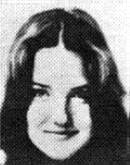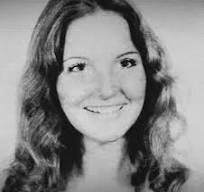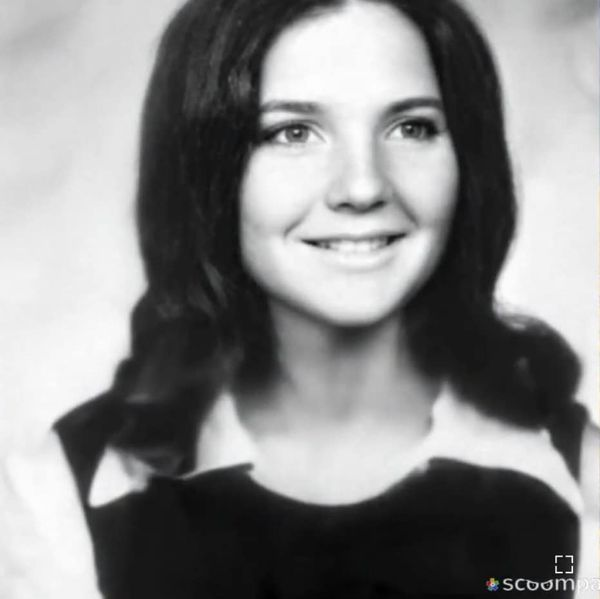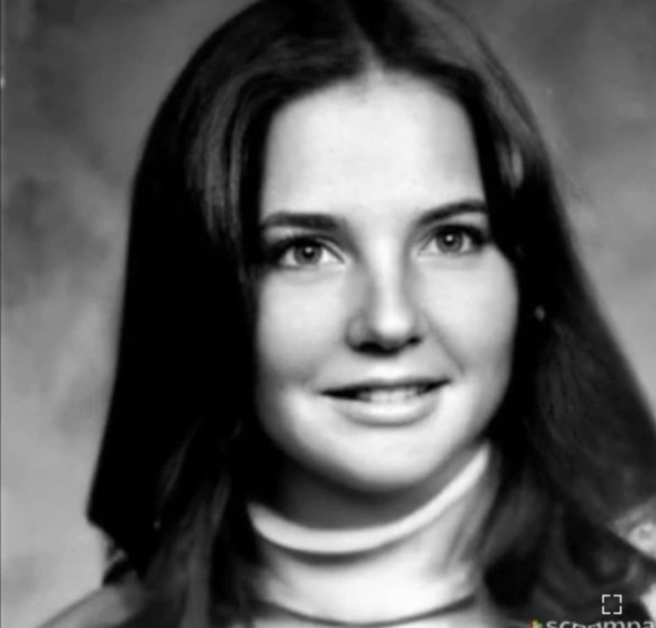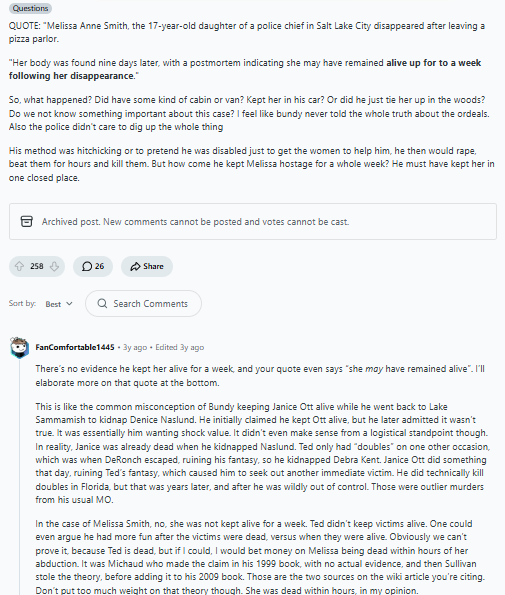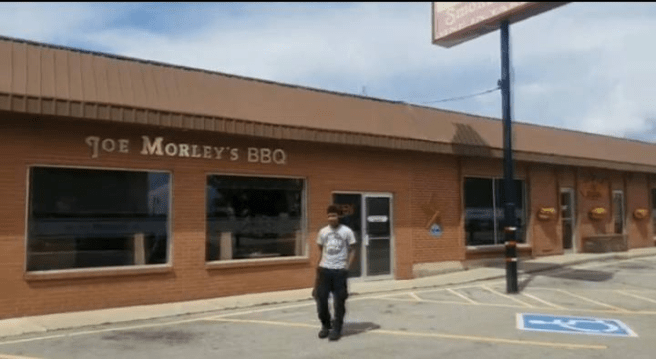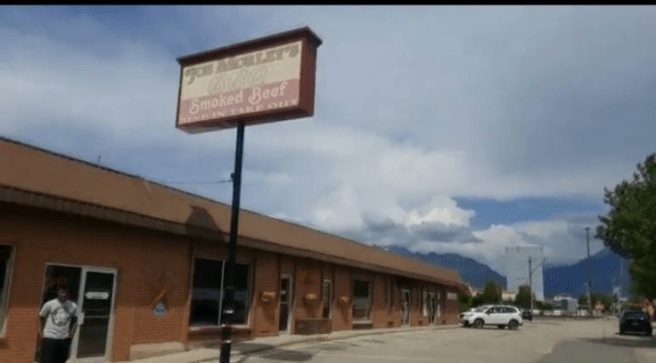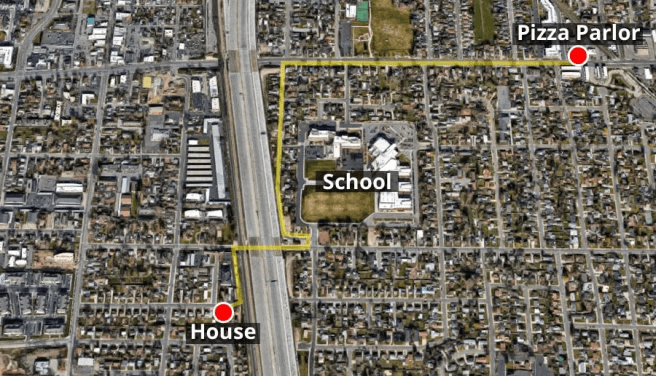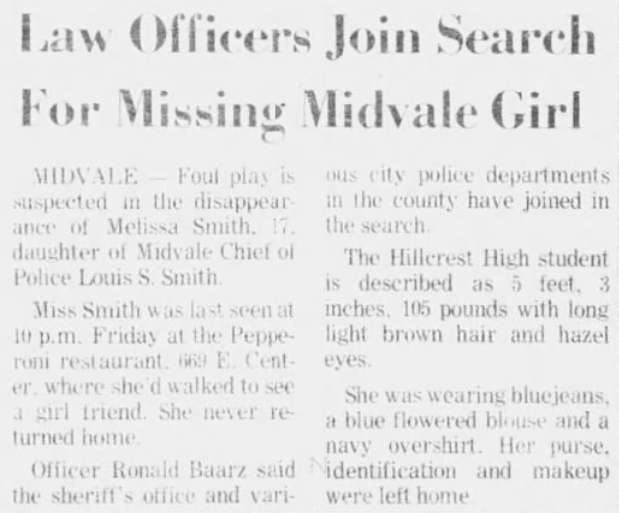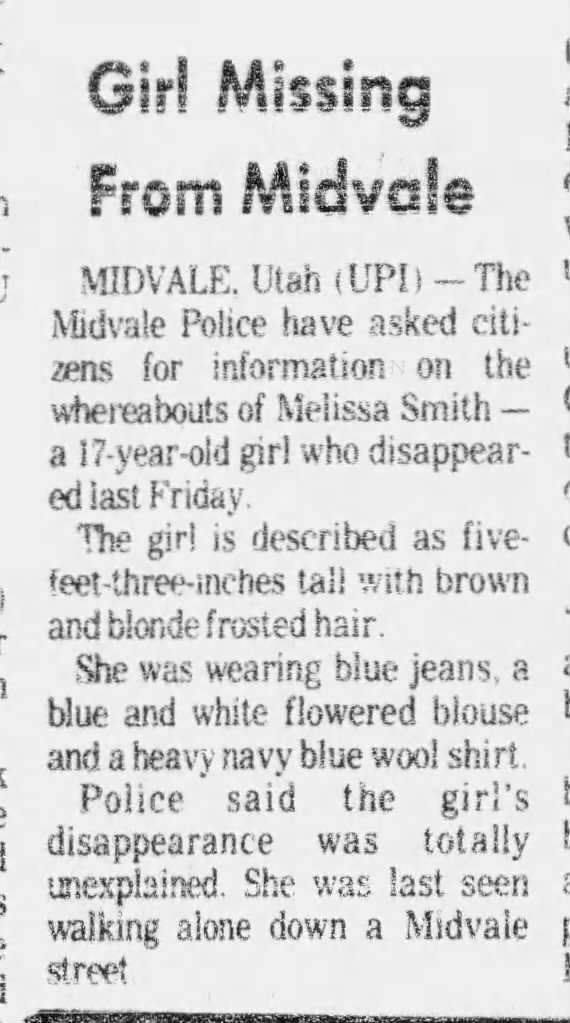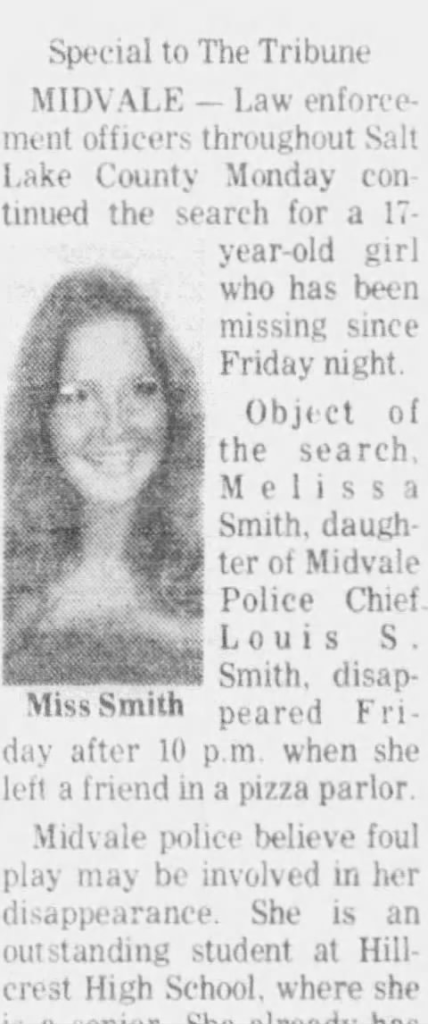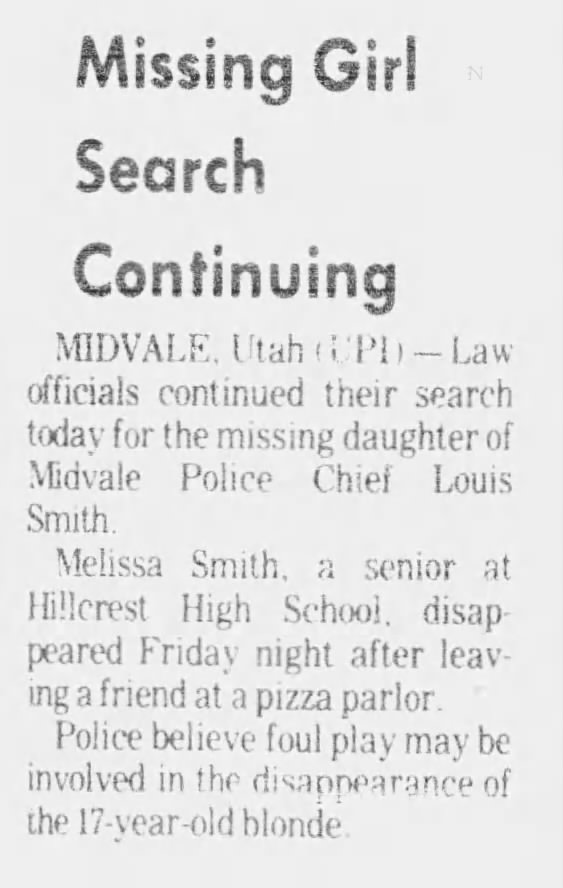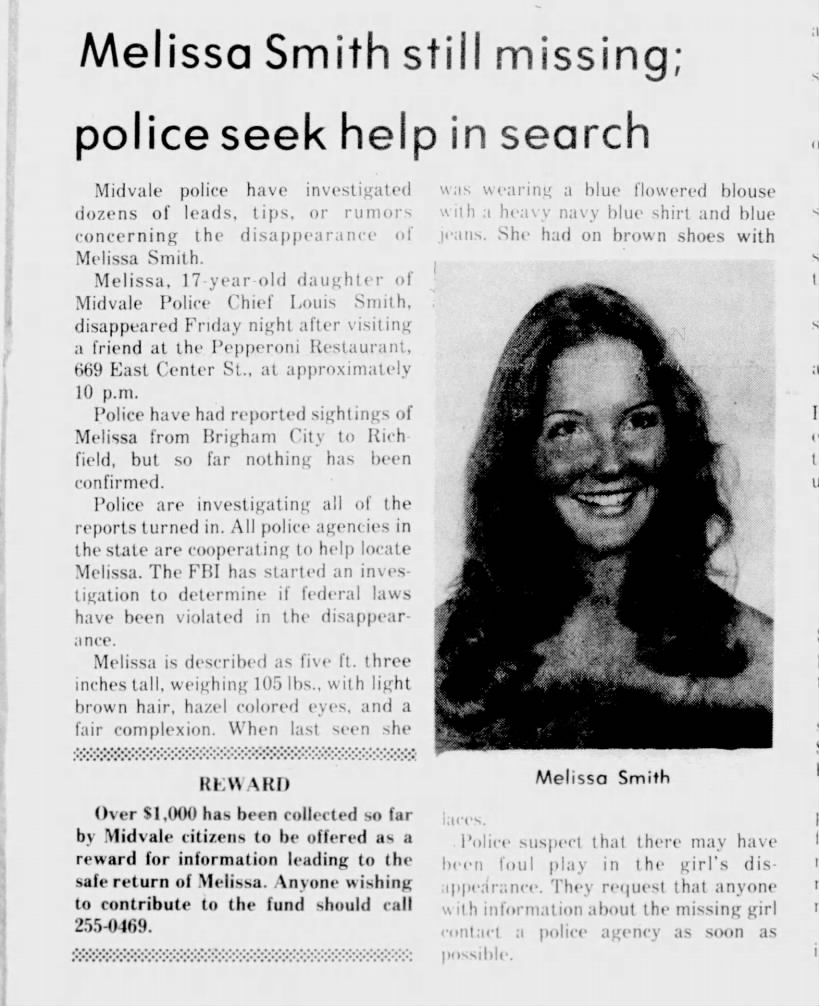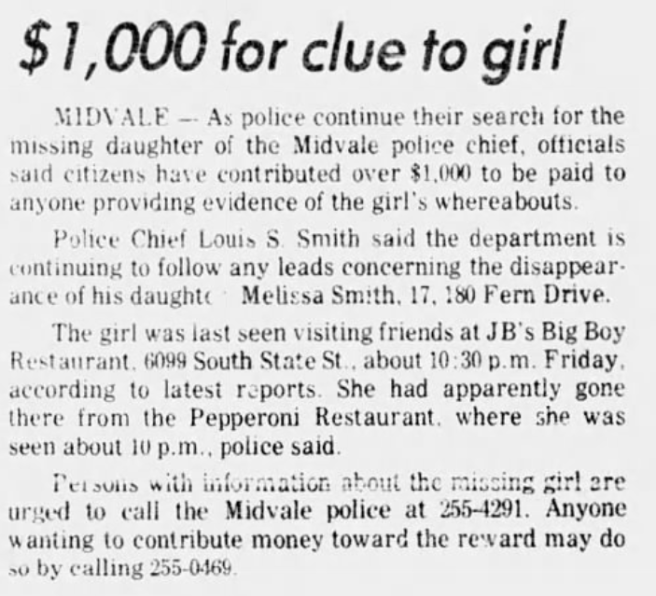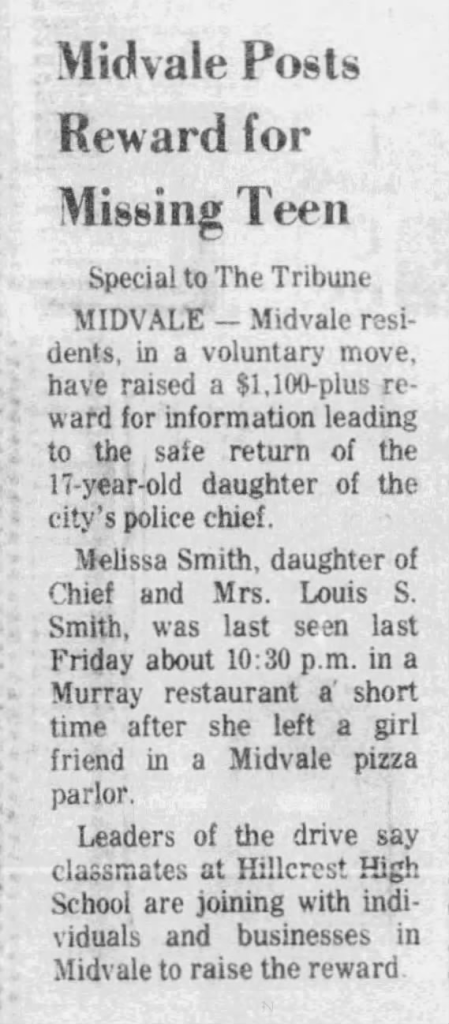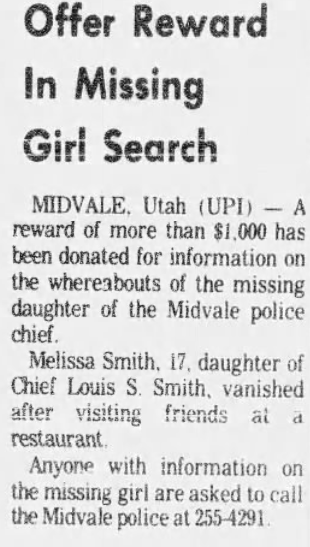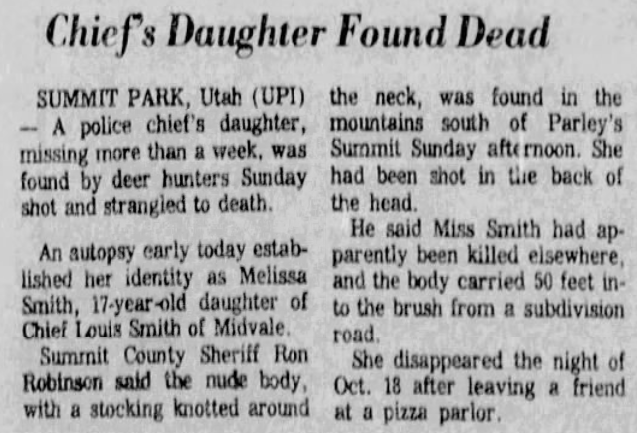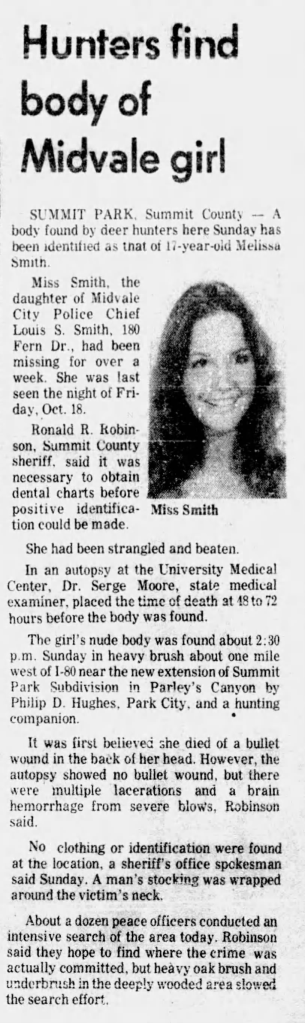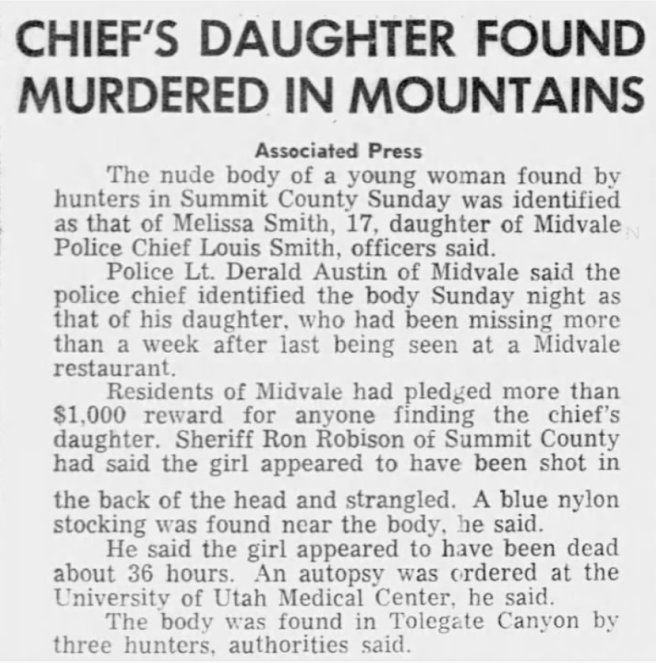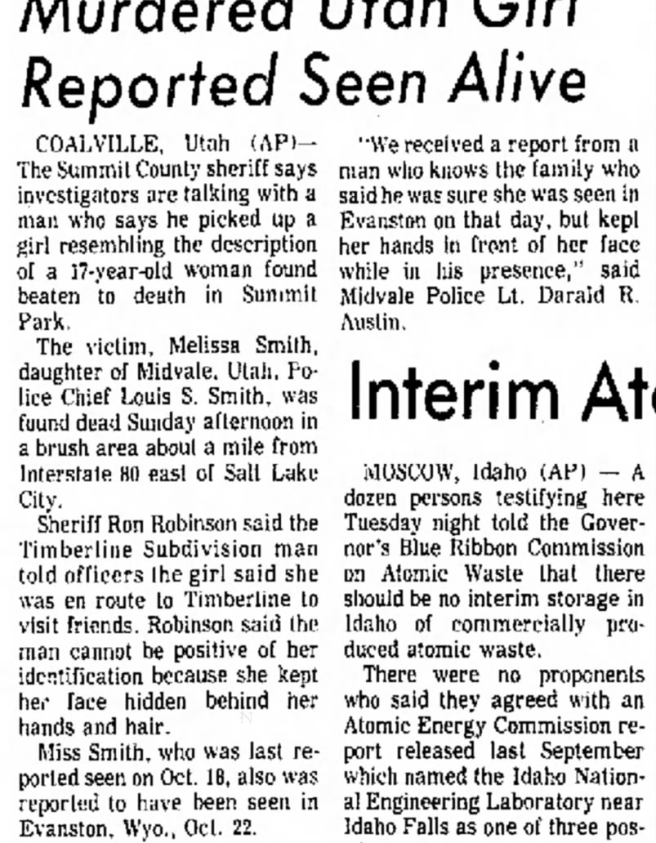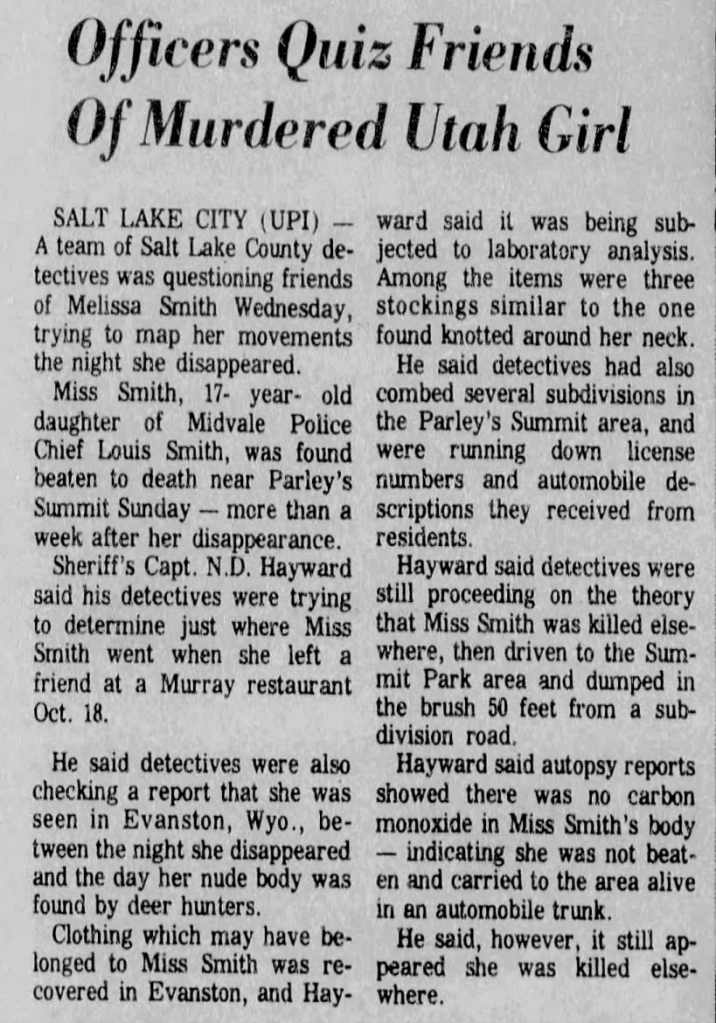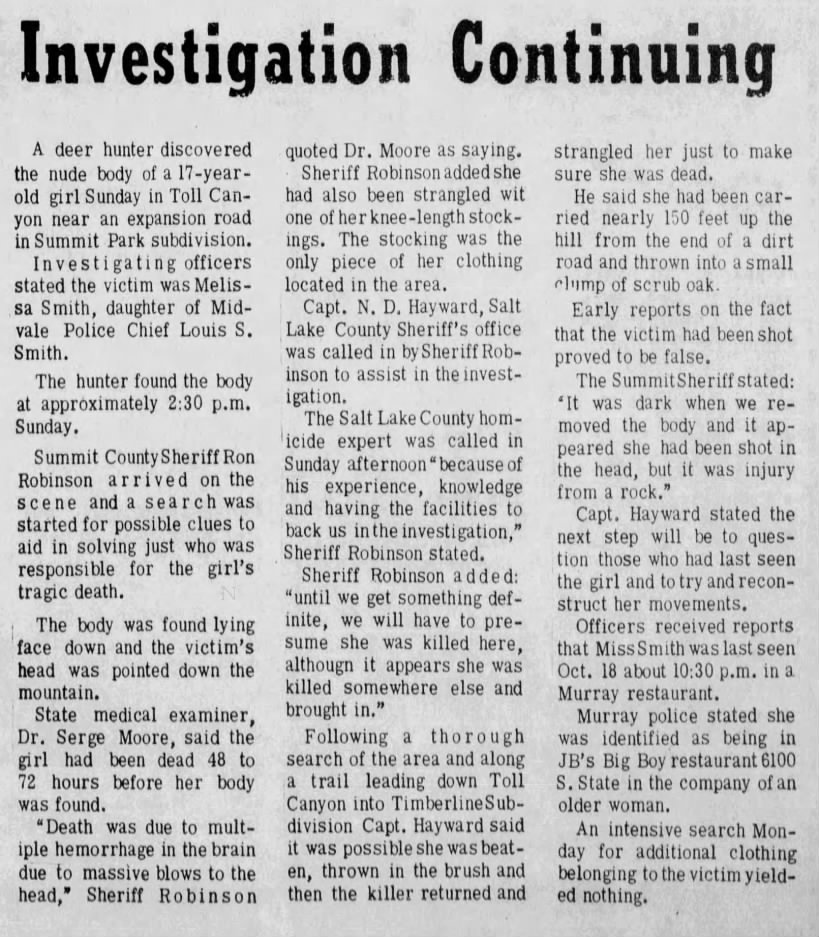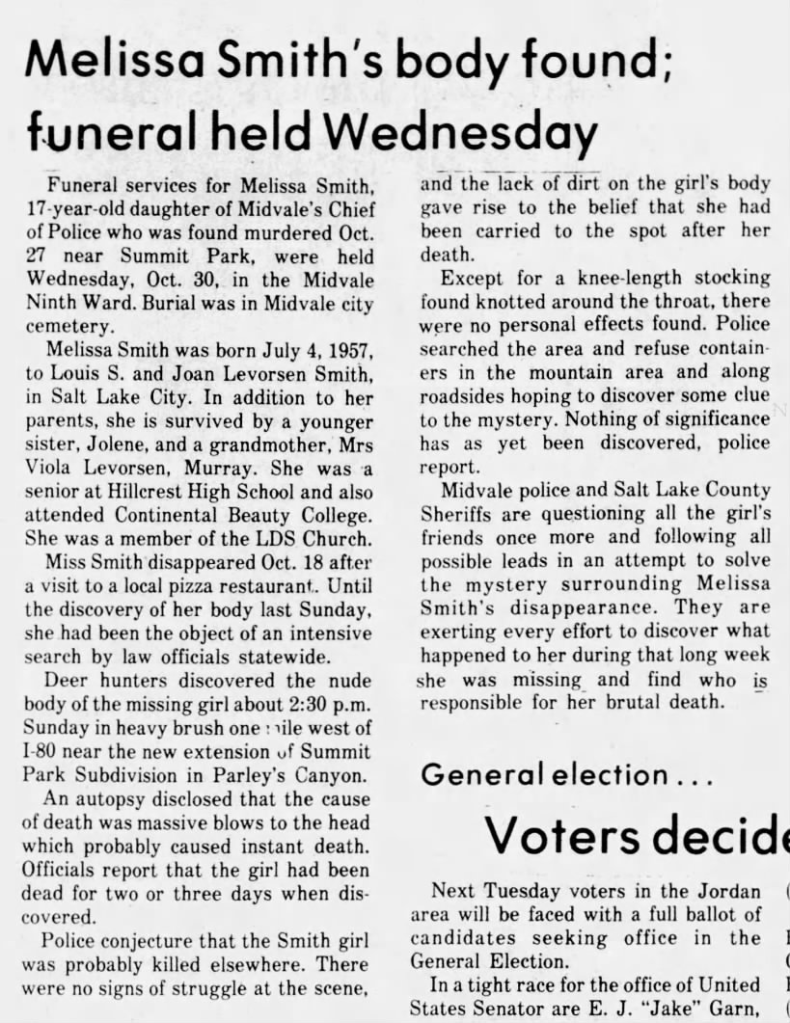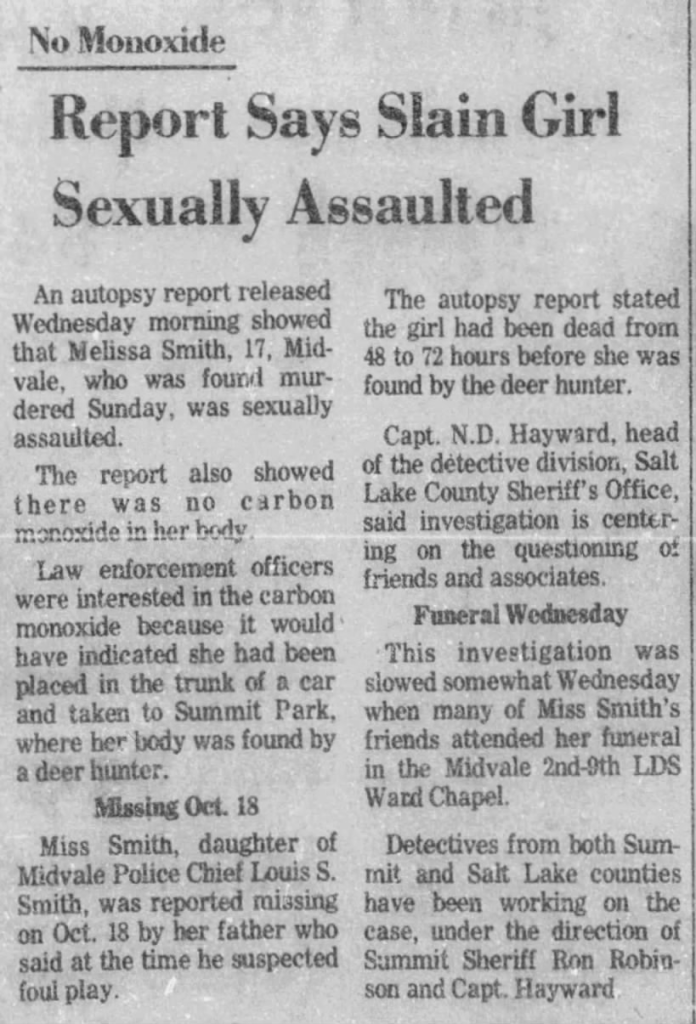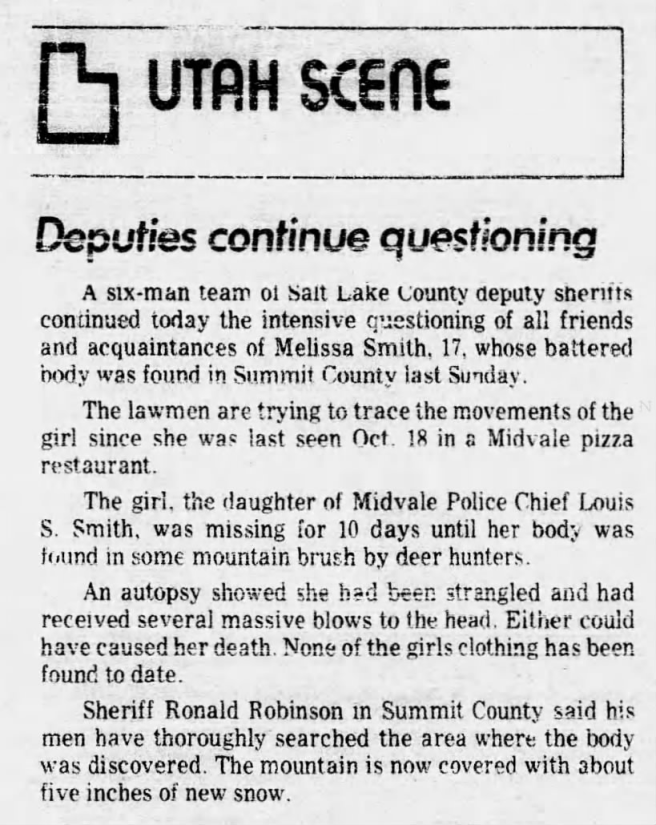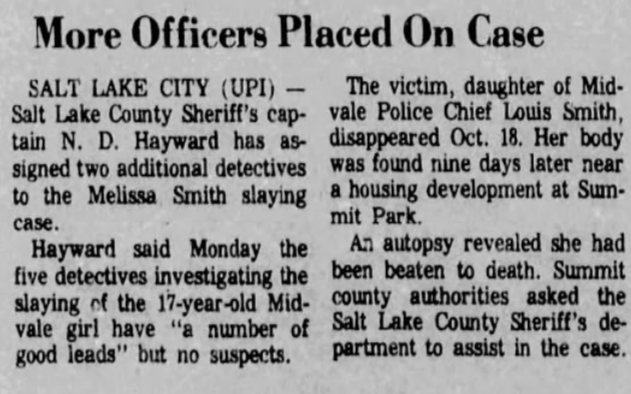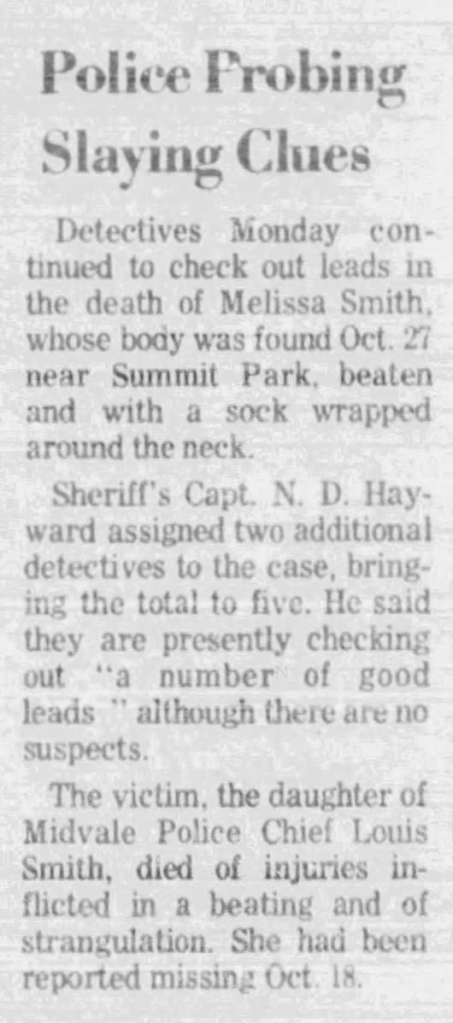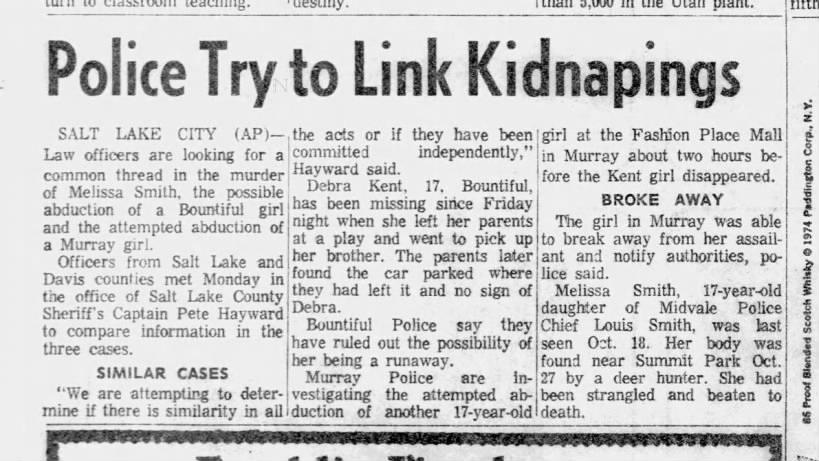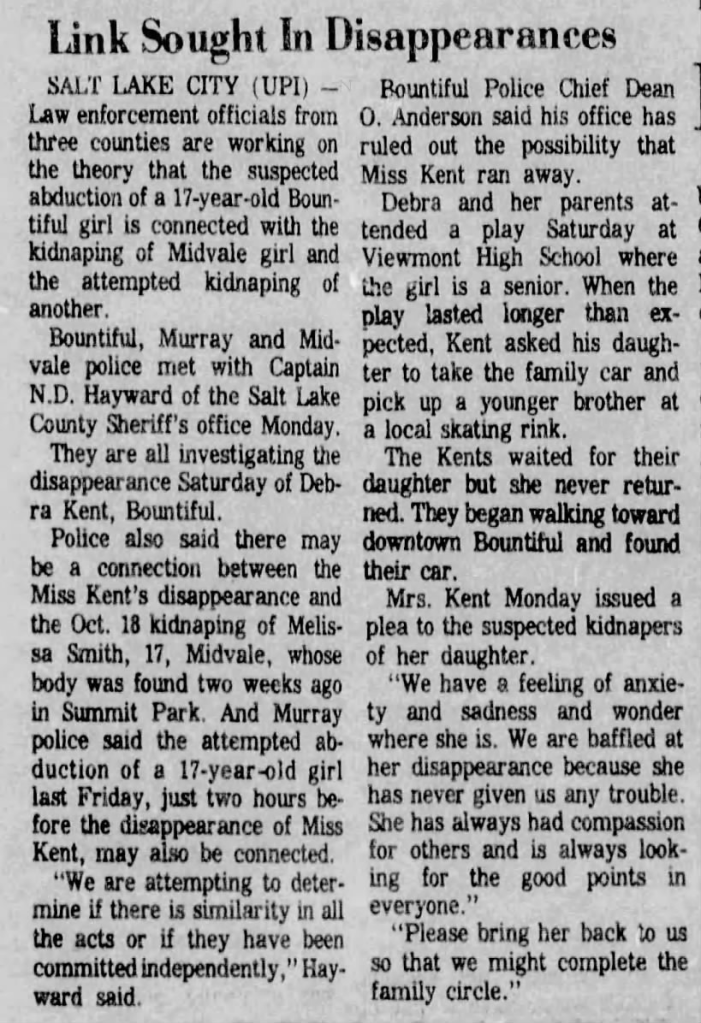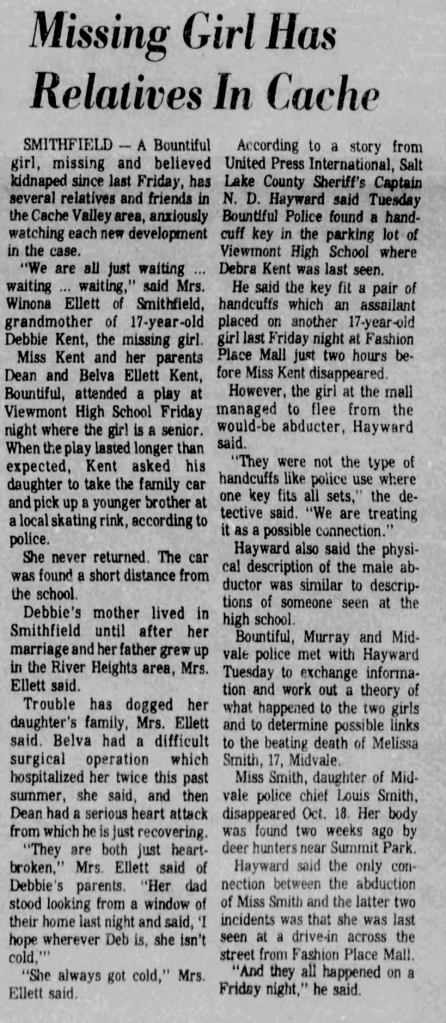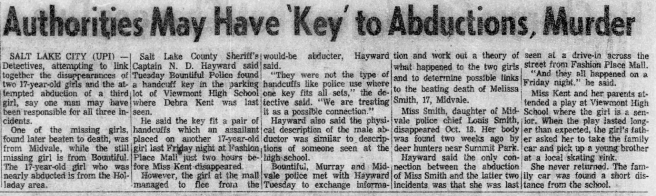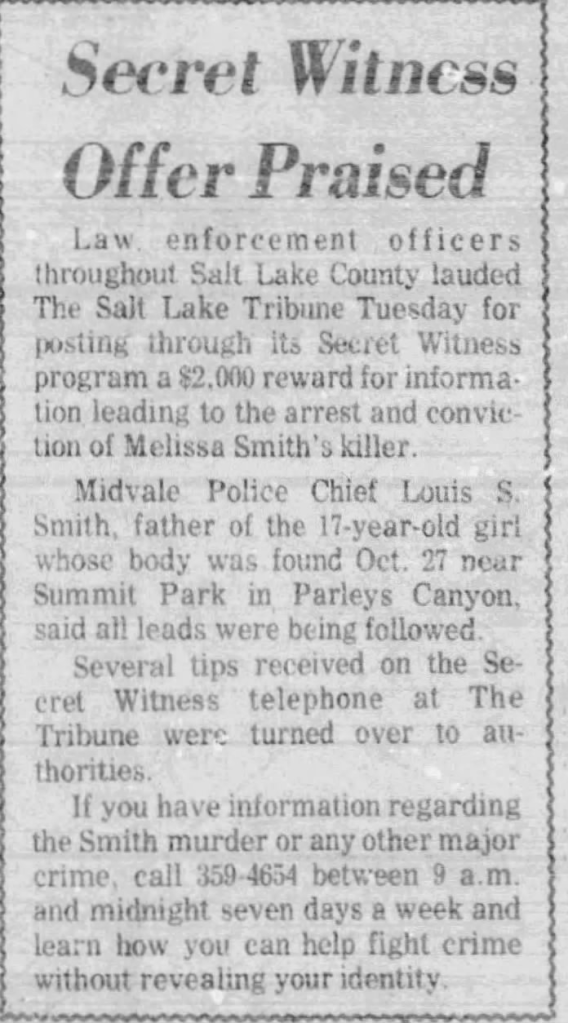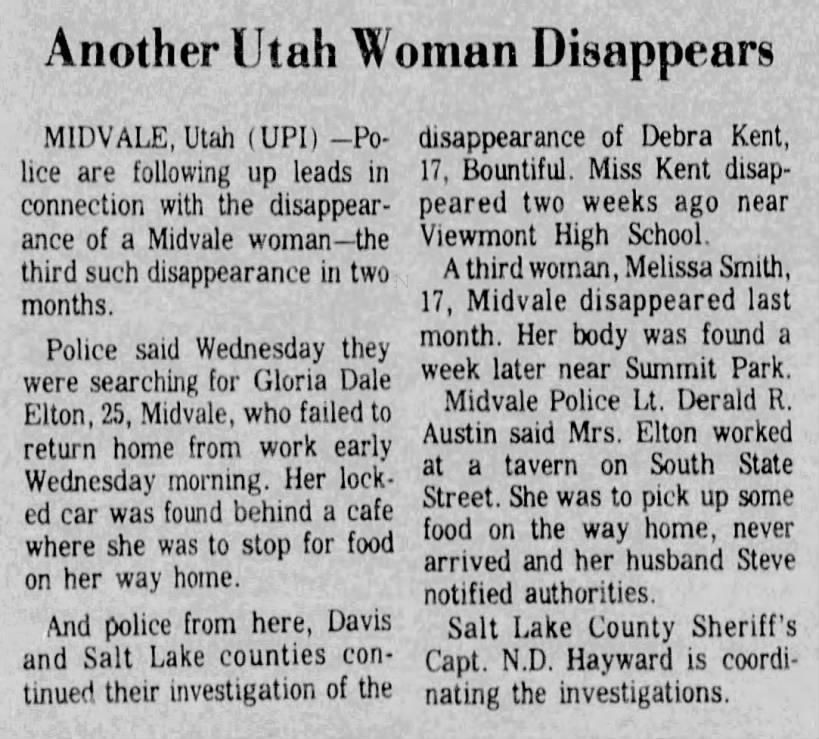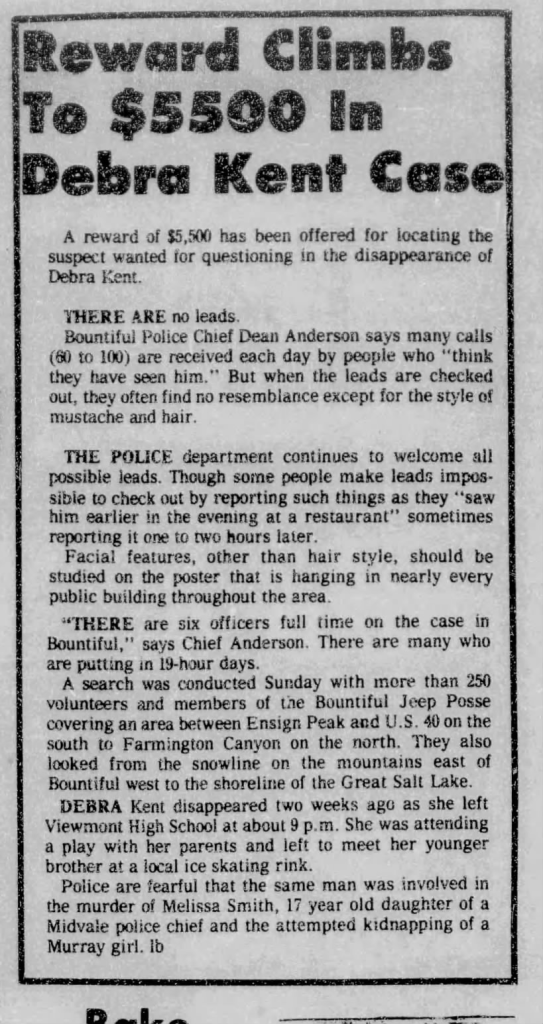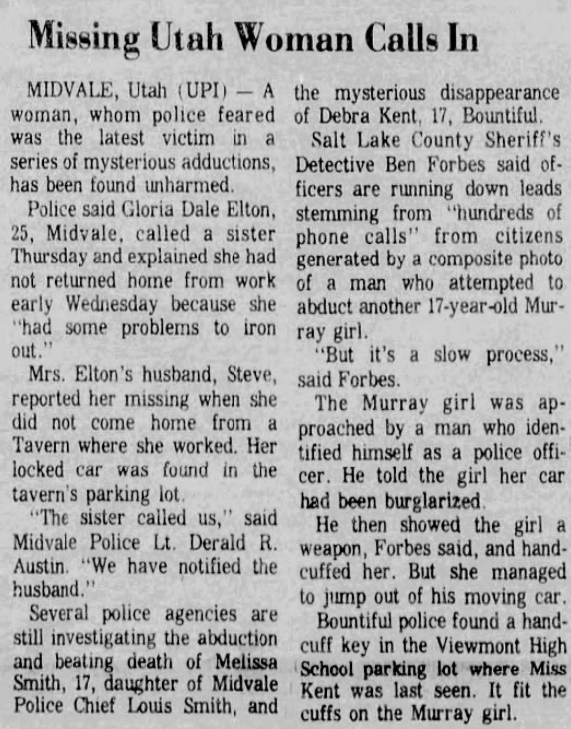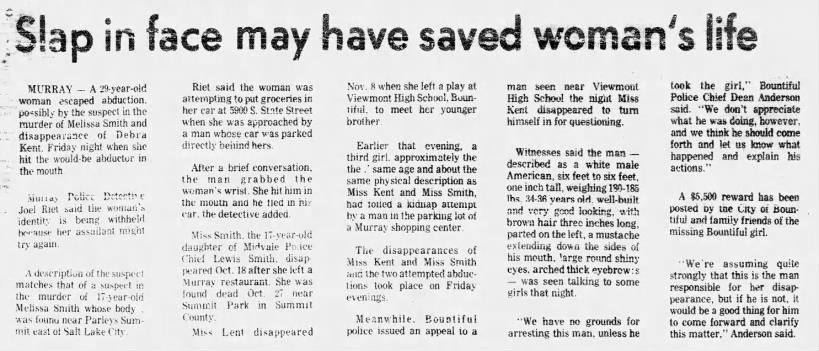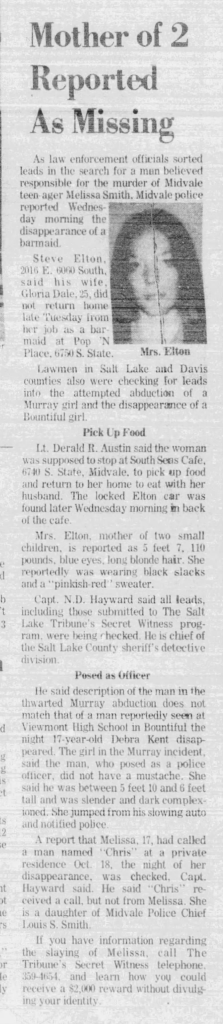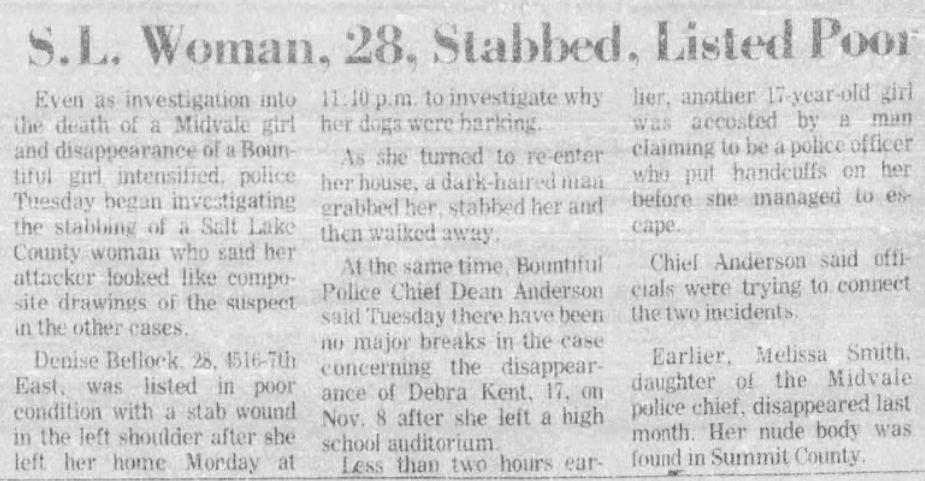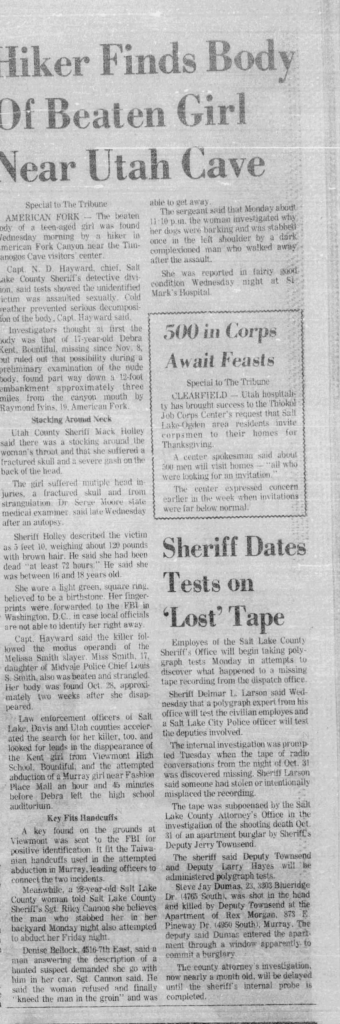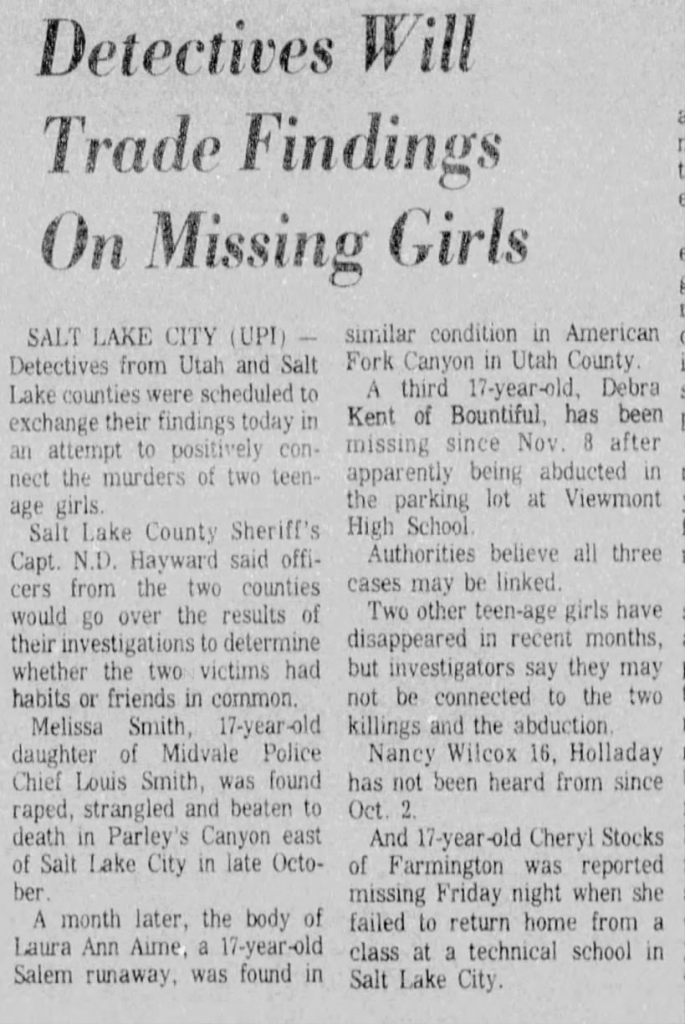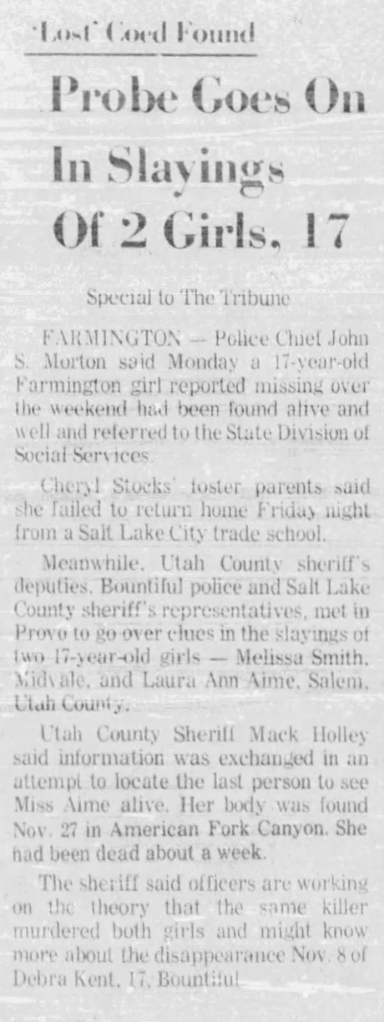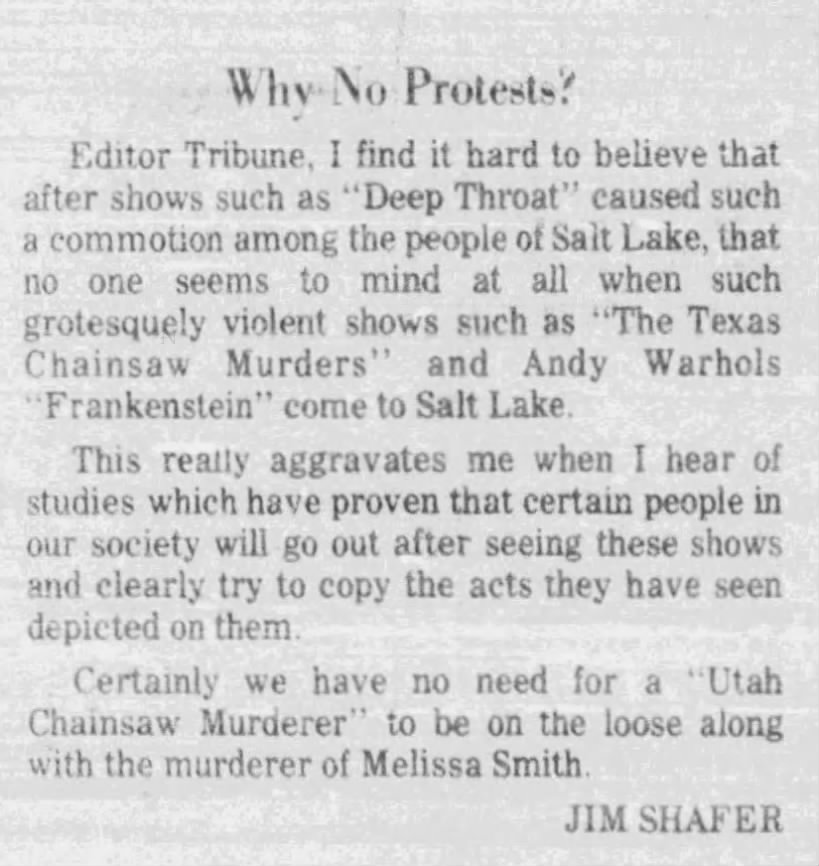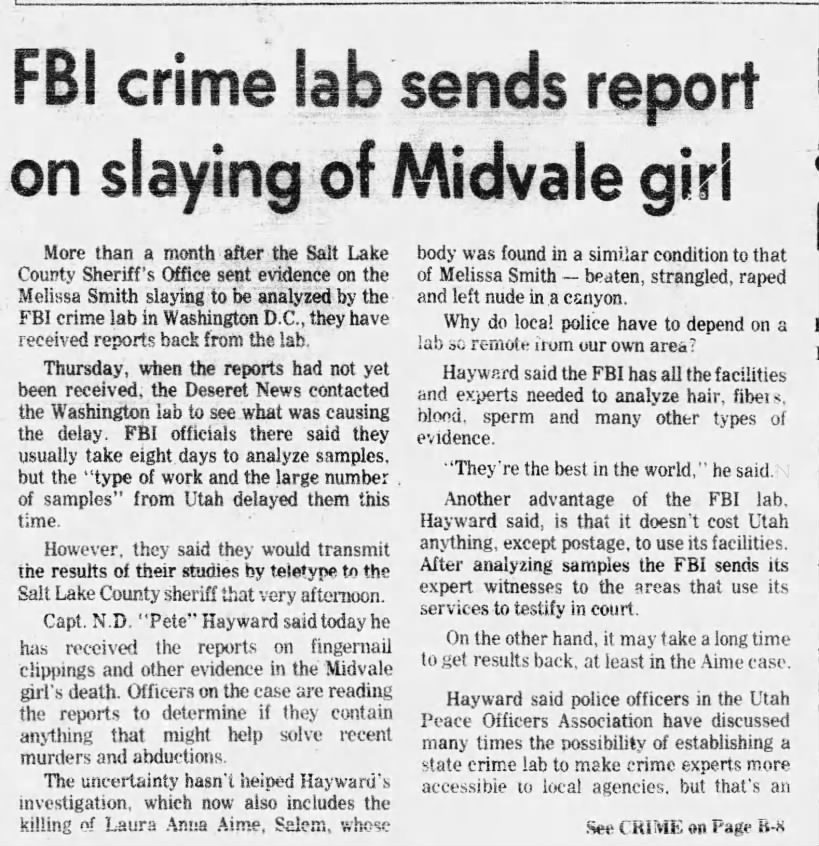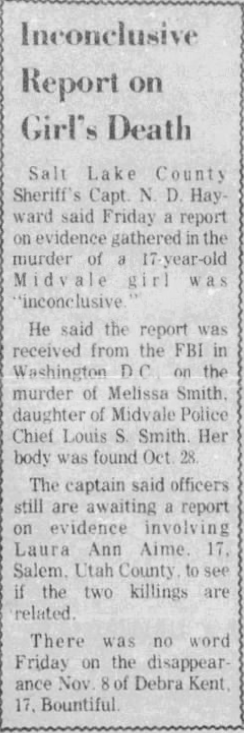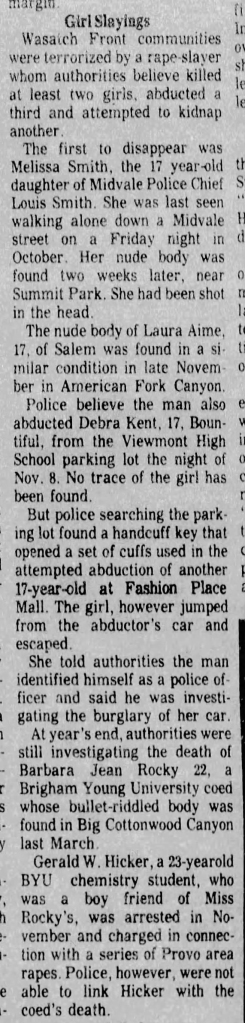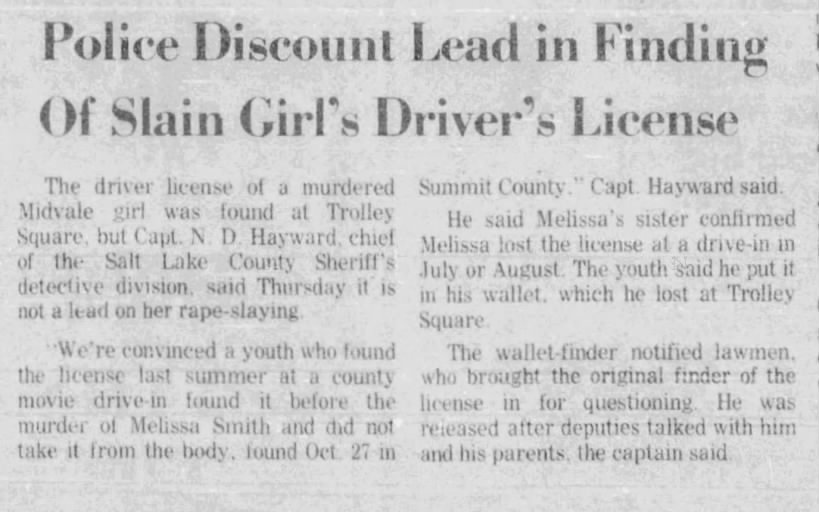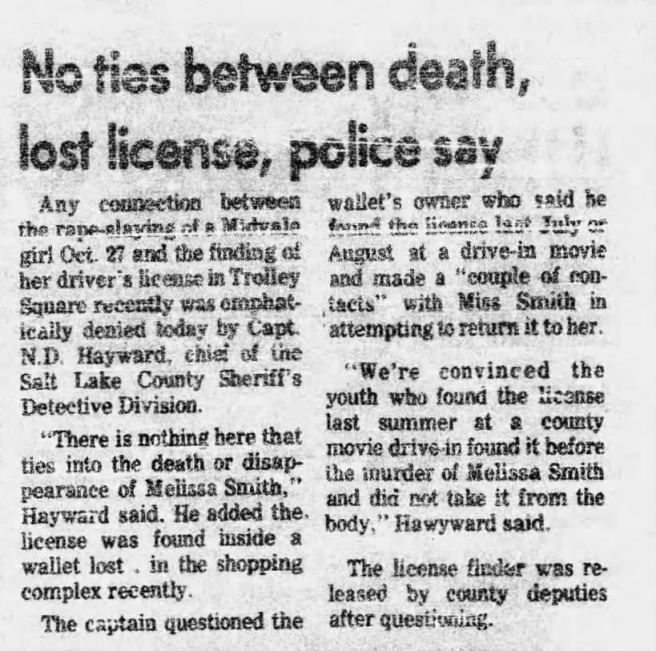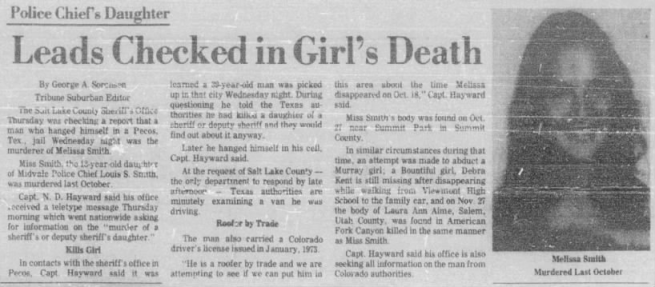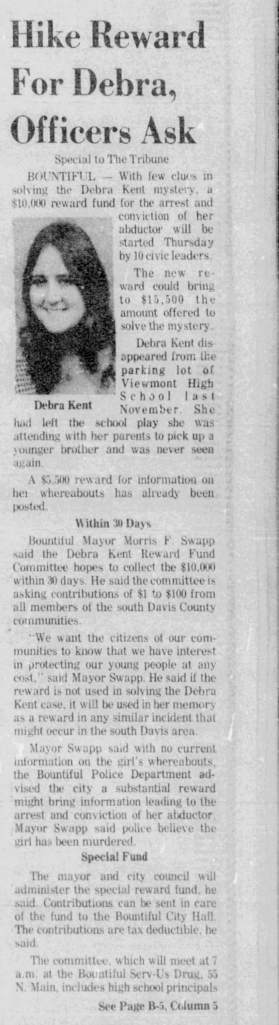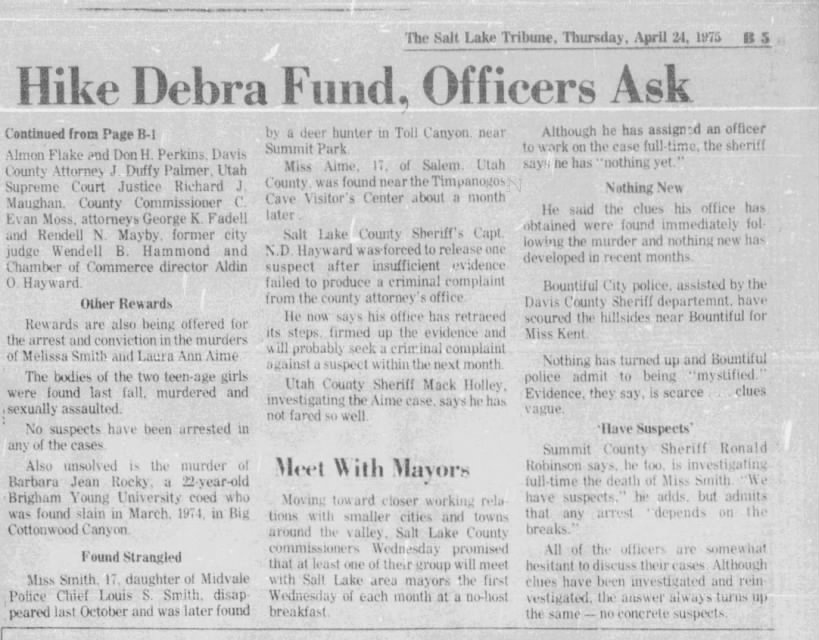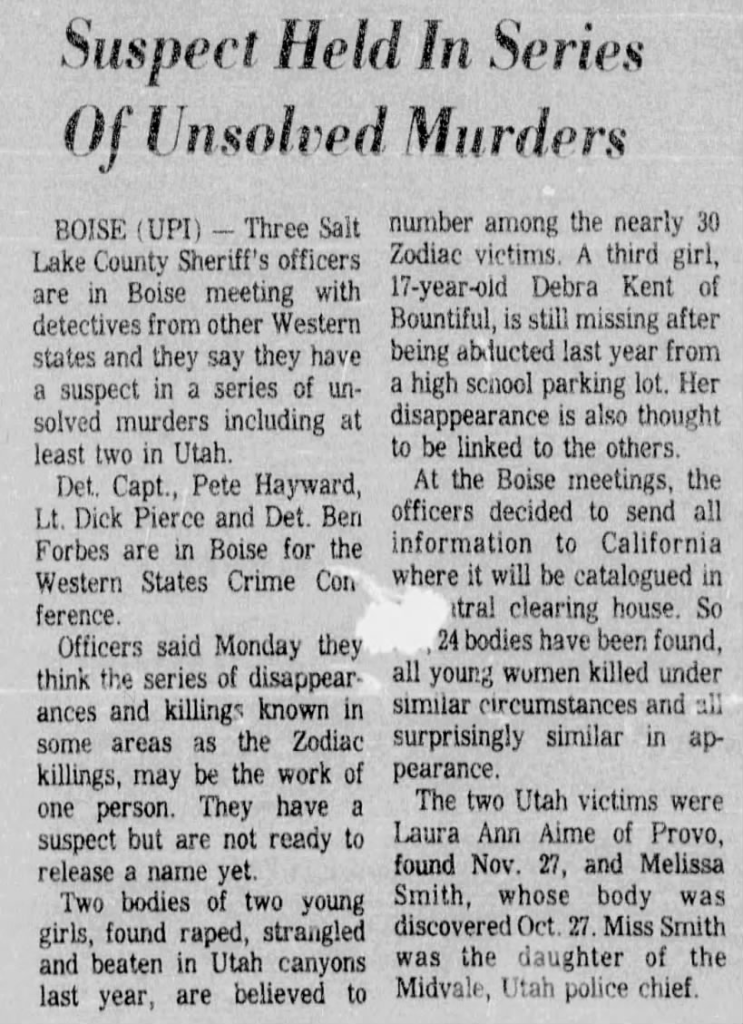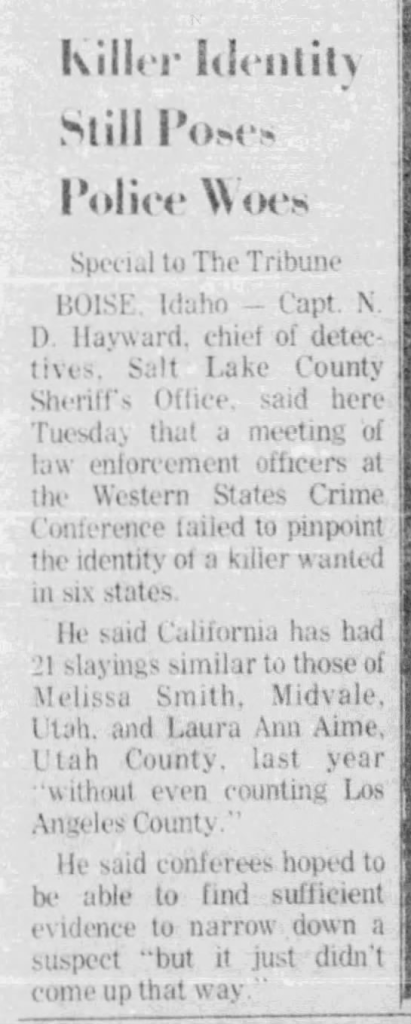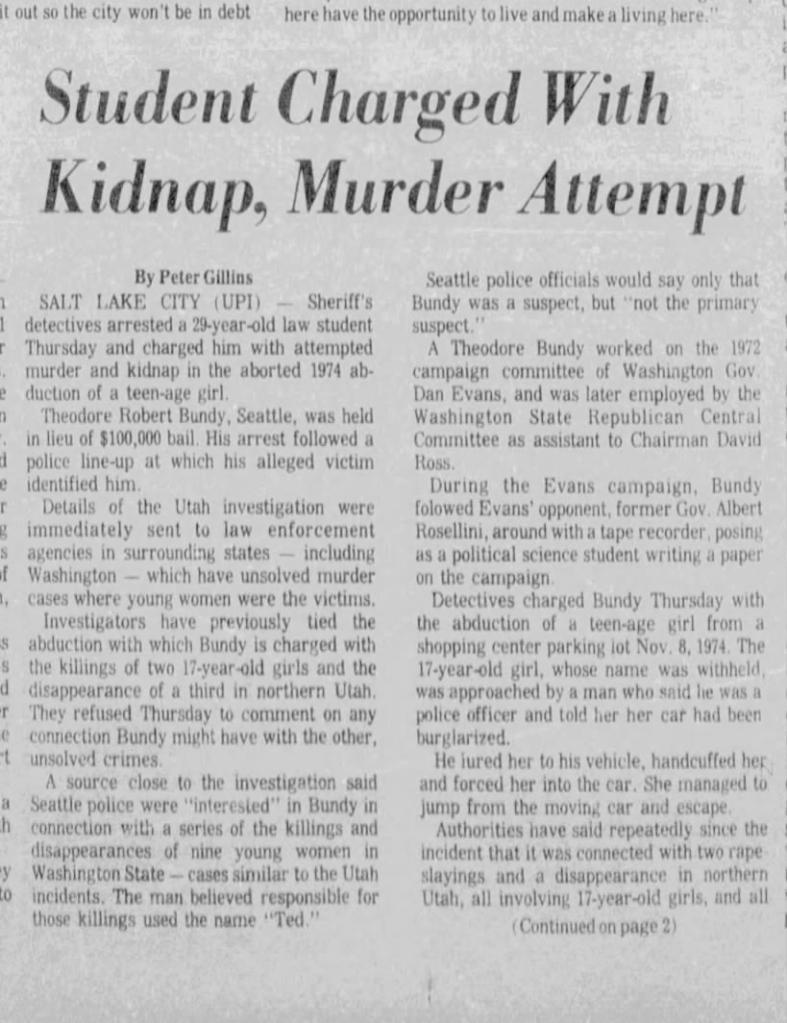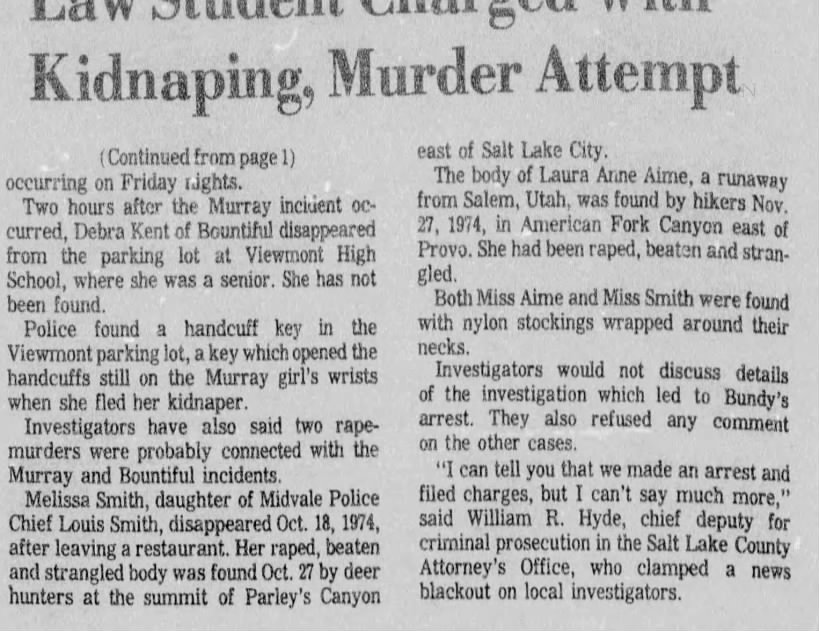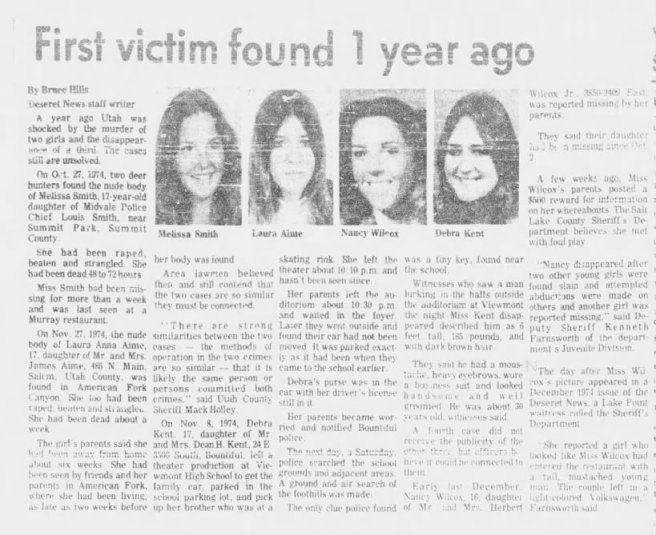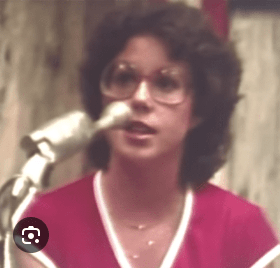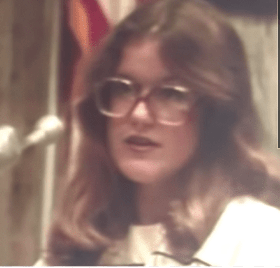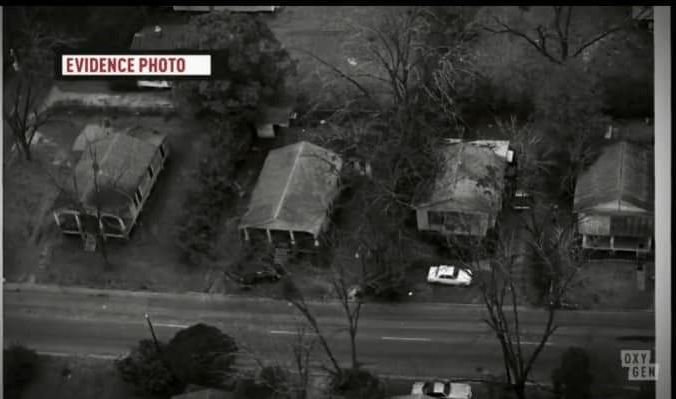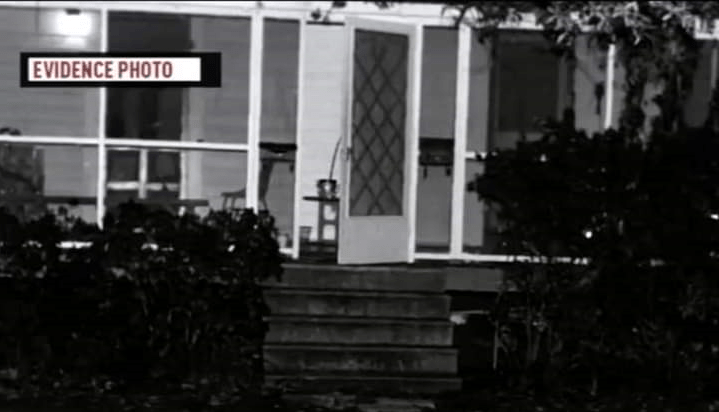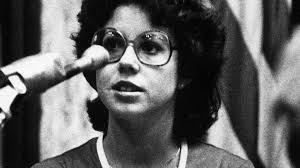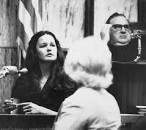
Tiffany Jean transcribed the following testimony of Carol DaRonch under direct examination by Deputy County Attorney David Yocom and is from the transcript of Case No. 28629 in the Third District Court of SLC, The State of Utah vs. Theodore Robert Bundy.
Q. Will you state your name and address, please.
A. Carol Ann DaRonch, 5456 South Seventh West.
Q. Carol, I am going to ask you to keep your voice up–the acoustics in here are not the best in the world—so the Judge and counsel can hear. Okay?
A: Okay.
Q: How old are you, Carol?
A: Nineteen.
Q: And what is your birth date?
A: June 8th, 1956.
Q: And how old were you on the 8th day of November, 1974?
A: Eighteen.
Q: And where did you reside at that time, Carol?
A: With my parents.
Q: At the same address?
A: Yes.
Q: Did you own an automobile at that time?
A: Yes.
Q: Would you describe for the Court the type of car you owned?
A: It’s a ’74 maroon Camaro.
Q: Where did you work at that time, if you did?
A: Mountain Dell.
Q: Where is that located?
A: 205 East Second South.
Q: What did you do there?
A: Typist.
Q: Have you had an opportunity, Carol, to check the record with your employer to determine what hours you worked on the 8th day of November, on Friday, 1974?
A: Yes.
Q: And when did you work?
A: I worked from 9:00 to 6:00.
Q: And where did you go after you got off work at 6:00 p.m. that day?
A: I went straight home.
Q: Do you know how long it takes you to get home from Mountain Bell?
A: About 20 minutes.
Q: Do you recall what you did at home?
A: No.
Q: Do you recall the next thing you did?
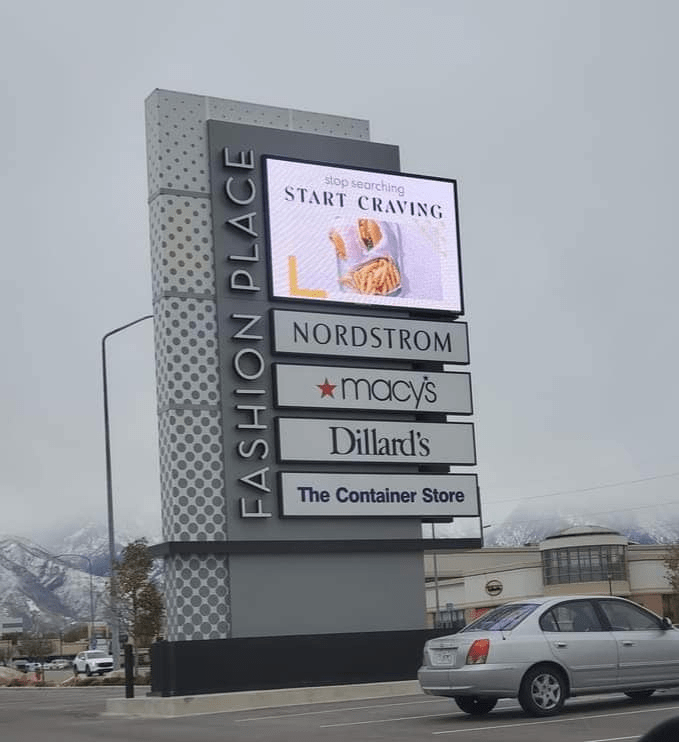
A: I went to Fashion Place Mall.
Q: And why did you go there?
A: I just went there shopping. I was looking for a birthday present.
Q: Anyone go with you?
A: No.
Q: And not long after you got home did you park at Fashion Place Mall?
A: About 15 to 20 minutes.
Q: Do you recall when, approximately, you arrived at the mall?
A: About 7:00.
Q: Where did you go after you arrived at the Mall— the parking lot, specifically?
A: I parked in Sears’ parking lot.
Q: And where is that located in relationship to the Sears store itself?
A: On the west side of Sears.
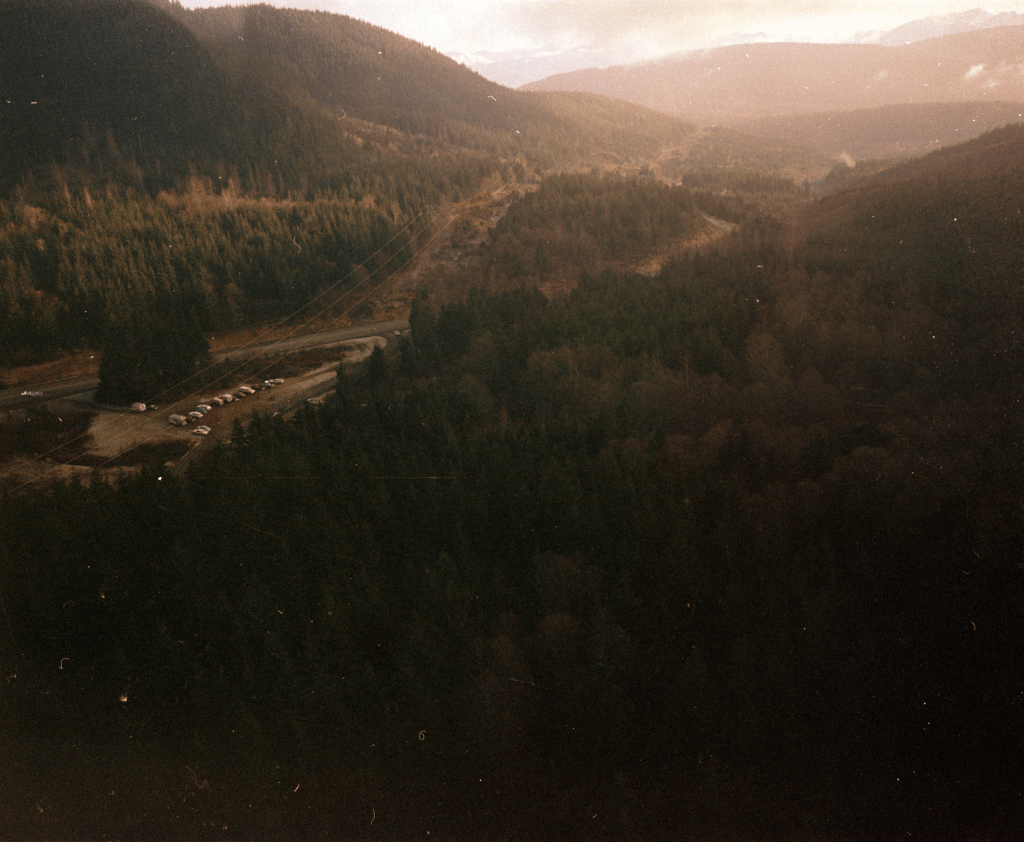
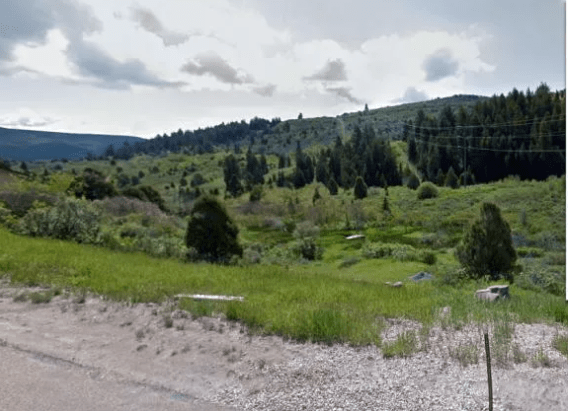
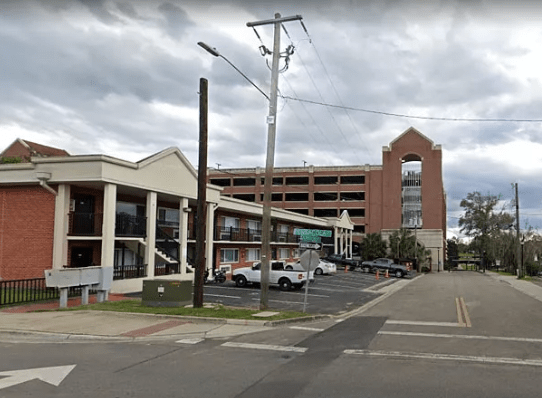
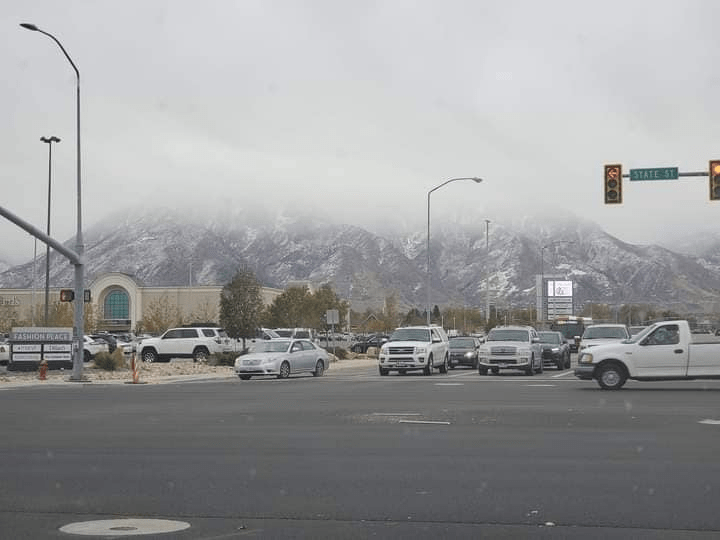
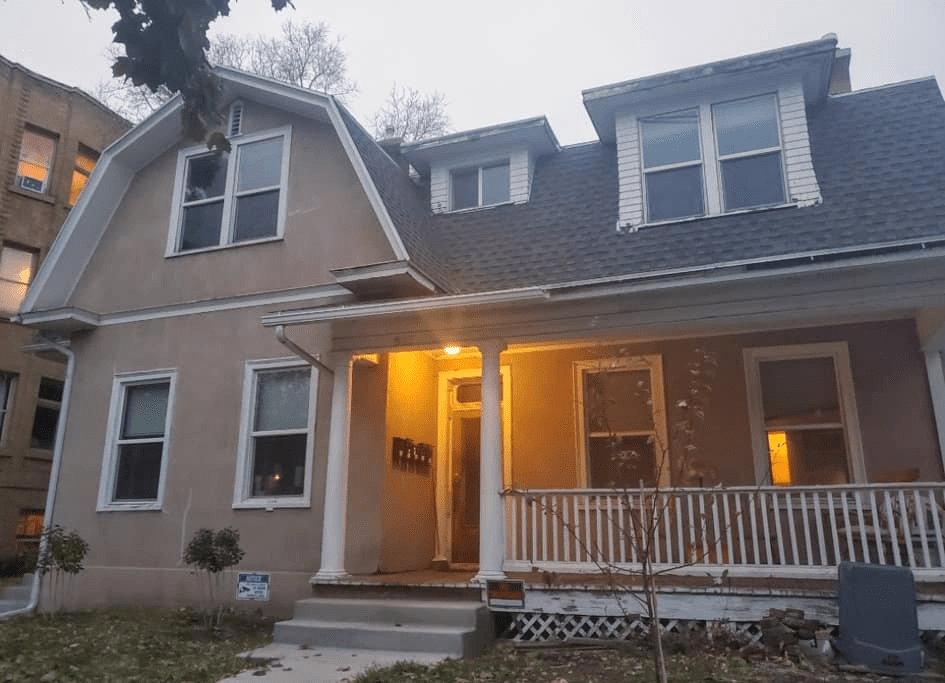
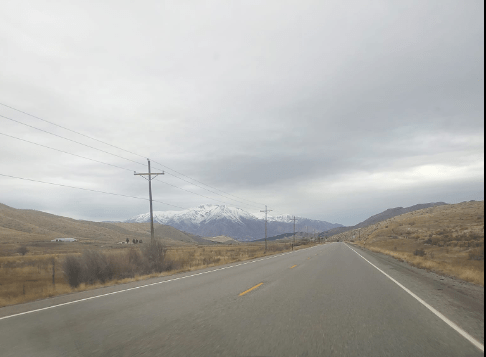
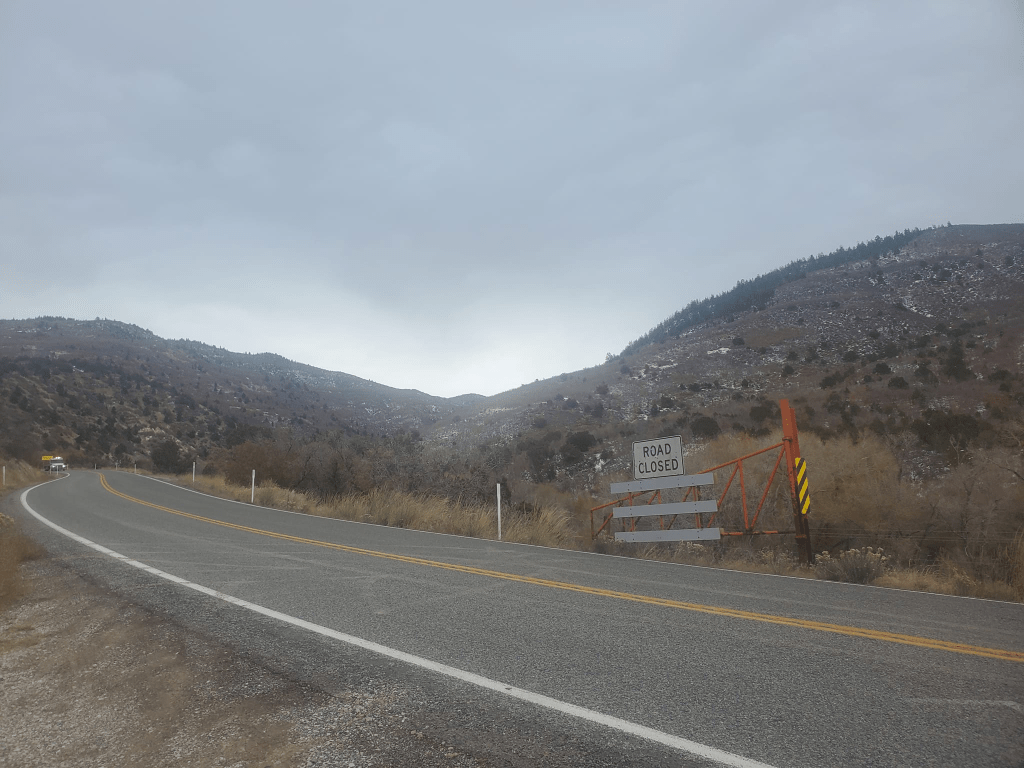
Fashion Place Mall Salt Lake City Utah Carol DaRonch Ted Bundy
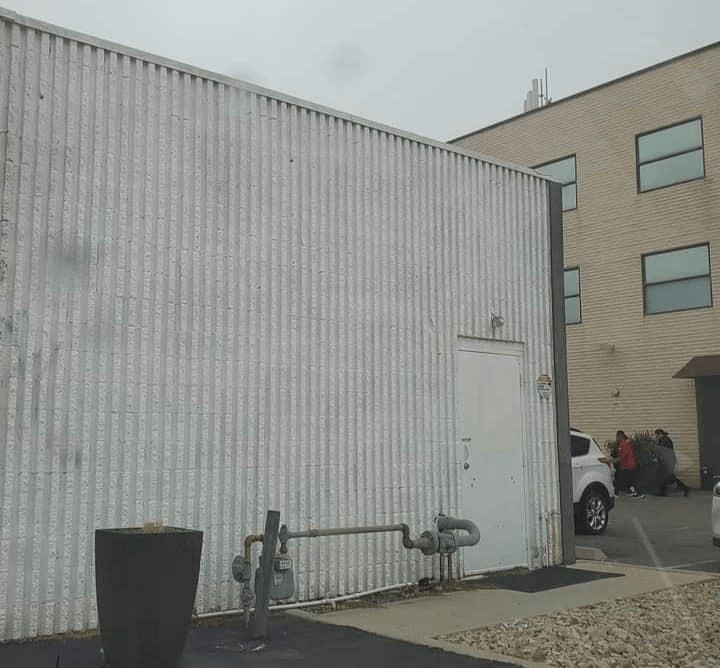
Sears west parking lot, Fashion Place Mall, 1976.
Q: What did you do after you parked your vehicle there?
A: I got out of my car, and I walked into the Sears store.
Q: Did you stay in the Sears store any length of time?
A: No. I walked through it.
Q: And where did you exit the Sears store?
A: Where it goes into the mall.
Q. You entered and exited the Sears store and proceeded along the main part of the Mall?
A: Yes.
Q: And then you went west in the Mall?
A: Yes.
Q: How far west did you go?
A: To the Castleton’s store.
Q: After you made a left-hand turn and turned down the mall, how far did you go there?
A: Almost to Auerbach’s. To Walden’s Book Store.
Q: During this period of time, did you have any period of conversation or see anyone you knew?
A: Yes.
Q: And who was that?
A: My cousin.
Q: And what is her name?
A: Joanne DaRonch.
Q: And where did that discussion take place, and conversation? About midway in the corridor?
A: Yes.
Q: Was anyone with your cousin?
A: Yes.
Q: Who was that?
A: Jolynne Turner.
Q: And how long did that conversation last?
A: Just a couple of minutes.
Q: What did you do then?
A: Walked down toward Walden’s Book Store.
Q: What did you do at Walden’s?
A: I stopped and looked in the window of the book store.
Q: Did anything happen then?
A: Yes. I turned around, and a man approached me.
Q: Approached you from which direction?
A: I’m not sure.
Q: How long had you been at the window when you first noticed this man?
A: A couple minutes. It wasn’t until I turned around that he came to me.
Q: Did you see him right in front of you, or behind you, or how?
A: Face to face.
Q: How were you dressed at that time, Carol?
A: Had Levi’s on, and a leather coat with fur around it.
Q: How long had you had that coat?
A: A couple weeks.
Q: Was it relatively new then?
A: Yes.
Q: Okay. As best you recall Carol, what were the first words spoken to you by this man?
A: He asked me if I had a car parked in the Sears parking lot.
Q: Parking lot?
A: Yes.
Q: Is that man present in court today, Carol?
Q: Yes.
A: Where is he seated?
Q: Right there (indicated).
A: Will you tell me what he is wearing?
Q: A blue-gray suit.
A: You are referring to the counsel table?
A: Yes.
MR. YOCOM: May the record show the identification of Mr. Bundy?
MR. O’CONNELL: It may.
THE COURT: It will.
MR. YOCOM: Take your time, Carol. Let’s go through it slowly, okay? Now, he asked you if you had a car parked in the Sears parking lot?
A: Yes.
Q: What did you say?
A: I told him yes, I did.
Q: What did he say?
A: He said someone was seen trying to break into it.
Q: Go on, what happened then?
A: He asked me what the license plate number was, and I told him—
Q: What did you tell him the number was?
A: KTO 32.
Q: Did he respond to that?
A: He said yes, that’s the one.
Q: What happened then?
A: Then he asked me if I wanted to go out to the car with him to see if anything was missing. So we walked out the doors between Auerbach’s and Roper’s, out to my car.
Q: Let’s go back a little bit. Did he mention any official capacity that he had? What he was doing and why he was interested in your car?
A: I don’t remember.
Q: Did he say anything about being a police officer at that time?
A: I think so.
Q: Did he say what police department or agency he worked for?
A: No.
Q: Then you say you proceeded away from Walden’s Book Store and went out in the parking lot, is that right?
A: Yes.
Q: As best you can recall, Carol, what were the lighting conditions inside the mall in front of the Walden’s Book Store?
A: It was well lit.
Q: And the area from Walden’s to the exit by Auerbach’s, how was the lighting there?
A: Very bright.
Q: Now, as you were walking to the car, was there any conversation between yourself and Mr. Bundy?
MR. O’CONNELL: Your Honor, I object to Mr. Yocom referring to this man as “Mr. Bundy.” I realize she has identified him, and I suppose if she wants to do it, that’s all right. All the way through these proceedings he, whenever he is talking to this lady, refers to the person as “Mr. Bundy,” and is reinforcing in her mind the identification. I object to it.
THE COURT: Alright, well the objection is sustained for the purposes that Mr. O’Connell has based the objection on.
MR. YOCOM: I don’t understand the Court’s ruling. She has so identified him, and he has admitted that is his name in this courtroom today. He is the Defendant and I think I’m entitled to refer to him by his name, your Honor.
THE COURT: The objection is sustained.
MR. YOCOM. Thank you.
Q: As you proceeded to the car, did you have any conversation with this man?
MR. O’CONNELL: Well, I object to that for the same reason. It’s leading, and he keeps suggesting to her, and that’s what these officers have been doing for the last six months.
MR. YOCOM: There’s no jury here, John. Let me rephrase the question.
Q: Did you have a conversation with the man?
MR. O’CONNELL: That’s why I have an objection.
THE COURT: I understand.
Q: Did you have any conversation with the man, Carol?
A: No.
Q: And do you recall who walked in front or behind, or how you walked to your car?
A: No.
Q: Where was he at this time.
A: He was walking alongside of me.
Q: Do you recall on your right or left?
A: I don’t recall.
Q: When you got to the car, what did you do?
A: I opened my side of the door and got in— I didn’t get all the way in; I just looked in to see if anything was missing.
Q: Is it a two door or a four-door automobile?
A: Two.
Q: And which door did you open?
A: The driver’s side.
Q: And was the car locked at that time?
A: Yes.
Q: Did you notice anything unusual about the car?
A: No.
Q: And when you looked in, did you notice anything unusual?
A: No.
Q: Now, where was this individual at the time you opened the door?
A: Standing by the door.
Q: Which door?
A: The driver’s side.
Q: Across from you?
A: No. He was standing next to me by the car door that I opened.
Q: What happened then?
A: Then I told him nothing was missing, and he walked around to the passenger’s side of the car, and he tried to open the door.
Q: Go on?
A: He said— He asked me if I was sure nothing was gone, and I said no, nothing was. So I shut the door.
Q: The driver’s side door?
A: Yes.
Q: Was the passenger’s side door ever opened?
A: No.
Q: Did he say anything to you about that?
A: No.
Q: What happened then?
A: And then he said they had a man inside that was seen trying to break into my car, and they were holding him inside the mall. So he came back around the side of the car, and we walked back in towards the mall between Sears and the mall, the exit that goes between there.
Q: Did he say who “they” were?
A: No.
Q: How were the lighting conditions in the parking lot at that time?
A: There were street lights that are in the parking lot.
Q: What were the weather conditions that evening? Do you remember?
A: It was a little bit rainy.
Q: When you walked back in the mall, what entrance did you go in?
A: I went in between Sears and the mall.
Q: What happened at that point, Carol?
A: He looked up towards Sears and down towards the mall, and he said they must have taken him down to the substation.
Q: Again, did he say who “they” were?
A: I don’t recall.
Q: Had he mentioned any time up til then why he was with you?
A: I believe he said he was a police officer.
Q: Do you recall at what time he said that?
A: No.
Q: Were you aware at that time whether or not there was a substation in Fashion Place Mall?
A: No.
Q: Now, after you stopped where did he go from there?
A: Walked out the exit straight across from where we just walked in.
Q: And you walked outside?
A: Yes.
Q: What happened then?
A: We walked around the building over by Castleton’s.
Q: He did or you did?
A: We both did. And he talked to me, asked me two things: He asked me how old I was, and if I was doing anything later that night, why I wouldn’t be able to come down, go over there with him and sign a complaint against the man who was trying to break into my car.
Q: And were these conversations while you were walking?
A: Yes.
Q: Was he in front of you or you to the side of him or behind him?
A: I was a little behind him.
Q: Did you have a chance to observe him as you were walking?
A: Yes.
Q: What did you observe?
A: The way he walked.
Q: Anything else?
A: His pants.
Q: What did you notice about those?
A: They were green.
Q: Anything else?
A: No.
Q: When he talked to you, was he looking forward or at you?
A: He was looking sideways at me.
Q: How close were you to him while you were walking?
A: Right next to each other.
Q: On which side?
A: I was on the left side, and he was on the right side.
Q: Is there any lighting as you walk along there that you noticed, Carol?
A: No.
Q: Could you see his facial features as you were walking?
A: Yes.
Q: After you reentered the mall, what happened then?
A: We walked back out through the other exit on the west side.
Q: Do you know what is located in that area, what stores?
A: Farnell’s and Broadway.
Q: Farnell’s Ice Cream store?
A: Yes.
Q: Did you have any conversation with him while you were inside the mall between entering and exiting again?
A: No.
Q: What sort of pace were you walking, how fast?
A: I don’t know.
Q: Did you notice anything unusual about it?
A: No.
Q: How would you describe it as far as your normal pace of walking?
A: Fast.
Q: Fairly fast?
A: Yes.
Q: After you exited the mall, where did you go then?
A: Walked down toward Skaggs.
Q: Did you stop there?
A: No.
Q: Where did you go from there?
A: To the laundromat on the other side of the street.
Q: Okay. Now, what is that street you have indicated there?
A: 6100 South.
Q: Where did you go when you got to that laundromat?
A: To a door that was on the side of the laundromat.
Q: Where did he go?
A: He walked to the door and tried to open it, and it was locked. So he walked down the alley between this building and the laundromat.
Q: Where did you remain at that time?
A: Where I was, out in front on the sidewalk.
Q: You stayed on the sidewalk?
A: Yes.
Q: How far down the alley did he go?
A: He walked about halfway down.
Q: Then what happened?
A: Then he turned around and came back.
Q: What happened then, Carol?
A: I didn’t know what he was doing, so I asked if I could see his badge or some identification.
Q: Where did that take place?
A: Right where I was standing in front of the laundromat.
Q: Why did you ask him at that time, Carol?
A: Because I didn’t know why he walked down the alley and walked back, and why the door wouldn’t be open if it was a substation.
Q: What did he do?
A: Took a wallet out and showed me a badge that was inside the wallet he had.
Q: Did you see where he got that wallet from?
A: No.
Q: Did he have any sort of jacket or coat on?
A: He had a jacket on.
Q: Do you recall the color of that jacket?
A: No.
Q: Did he say anything to you when he produced the wallet?
A: I can’t remember.
Q: Can you describe the badge that he showed you?
A: I think it was silver.
Q: Was it in the wallet itself?
A: Yes.
Q: How large was it?
A: It wasn’t really big. It was kind of oval-shaped.
Q: Did you notice any printing on the badge?
A: No.
Q: Any further conversation take place at that time?
A: He asked me if I would come down to the station with him, because they probably had him down there, and fill out a complaint against him.
Q: Did you respond to that?
A: Yes.
Q: What did you say?
A: I said, “all right.”
Q: How were the lighting conditions at this time on the sidewalk in front of the laundromat?
A: There were street lights and there were lights from the laundromat.
Q: Could you see his facial features at that time?
A: Yes.
Q: How close were you to him?
A: He was right in front of me when he was showing me the badge.
Q: At that time did you get an impression of how tall he was?
A: Yes.
Q: And what was that impression?
A: About six feet.
Q: How did you determine that, Carol?
A: By my own height.
Q: How tall are you?
A: Five seven.
Q: Do you have occasion to be around people about six foot tall very often?
A: Yes.
Q: How about his physical build, his weight, structure? Did you get an impression as to that by then?
A: Yes.
Q: How much would you say that he weighed at that time, or how was he built?
A: He was slim.
Q: An idea or an estimate of how much he weighed?
A: 160 or so— I don’t know.
Q: Anything about his facial features that you noticed at that time?
A: The way his hair was. Greased back off his forehead.
Q: Did you notice any foreign substance on the hair?
A: Oil.
Q: Anything else about his facial features?
A: No.
Q: Did you notice whether he had any facial hair?
A: Yes. A mustache.
Q: Describe that for us.
A: Whether big or bushy?
Q: Just your impression of it.
A: I don’t know, it was just an average-looking mustache?
Q: Light or dark? Heavy?
A: It was dark.
Q: How long?
A: It came about down to here.
Q: You are indicating above the corners of the mouth?
A: Yes.
Q: After your conversation with him there on the sidewalk, what happened then?
A: We walked over to his car.
Q: Where was his car parked?
A: It was parked across the street from the lobby.
Q: How far?
A: I’m not sure of that.
Q: What direction was the car headed while it was parked there?
A: East.
Q: That would be east on 6100 South?
A: Yes.
Q: And what kind of car was it, Carol?
A: It was a Volkswagen.
Q: When you got to the car, what did you do?
A: Got in the car, and he got in the car.
Q: Where did you get in, and where did he gt in?
A: He got in on the driver’s side. I got in on the passenger’s side.
Q: Now did you notice anything unusual about the vehicle at the time you got in it?
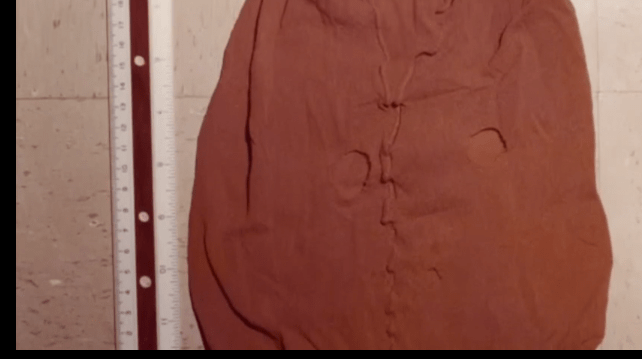
A: Yes. It had— the top of the back seat was ripped. Before I got in it, I noticed that it had rust spots on the front. It didn’t have a license plate.
Q: Anything else?
A: No.
Q: Was there any lighting in the area where you got into the vehicle?
A: No.
Q: Were there any lights coming from the Fashion Place Mall parking lot?
A: Yes, from Skaggs.
Q: What was your impression as to the color of the car at that time, Carol?
A: It was a light color. White or beige.
Q: Did you notice anything further about the interior of the car?
A: Just that it had a ripped top of the back seat.
Q: How far did that rip go, or cover, in the back seat of the car?
A: Almost all the way across it. Not quite.
Q: After you got into the car, was there any conversation that took place between you and him at that time?
A: He put on a seat belt and told me that, you know, he would like me to put on my seat belt. I told him no, I didn’t want to. He said, “okay.”
Q: Was there any particular reason why you refused to put on the seat belt?
A: I just didn’t want to.
Q: What was your attitude toward him at this time, Carol?
A: I didn’t know what to think.
Q: What do you mean? Let me ask you this, Carol: Were you frightened at that time?
MR. O’CONNELL: I object to the leading.
THE COURT: Sustained.
Q: What was going through your mind at this time, Carol?
MR. O’CONNELL: I object now. He asked her the question, she couldn’t think of the answer. Since I objected because it’s leading now he asks the question again. I think he ought to drop the matter.
THE COURT: The objection is overruled.
Q: What was going through your mind at that time, Carol?
A: I wasn’t sure about it.
Q: What do you mean by that?
A: He was a stranger.
Q: Okay. After you got into the car and you had this conversation about the seat belts, what happened then?
A: He made a U-turn. The car was facing west. He made a U-turn going east?
Q: You originally said the car was facing east. Was it facing west towards State Street?
A: Yes.
Q: And he made a U-turn in the opposite direction?
A: Yes.
Q: Which would have been east, is that correct?
A: Yes.
Q: Where did the car go then?
A: To the end of the street, then it turned left.
Q: Were there any lights inside the car?
A: I don’t remember.
Q: Could you see him at that time?
A: Yes.
Q: How close were you to him?
A: Sitting in the next seat.
Q: How far away would that be?
A: I don’t know.
Q: Have you ever been in a VW before?
A: Yes.
Q: How far away are the seats in a VW?
A: They are close. They are next to each other.
Q: Are they bucket type seats?
A: Yes.
Q: Okay. When you made the U-turn and proceeded east—
A: Yes.
Q: —where did he go from there?
A: He turned left and crossed a street and pulled over by McMillan School.
Q: Did the car stop for any reason on that trip that you have described?
A: No.
Q: For any stop signs that you noticed?
A: Yes.
Q: Where were they located?
A: Right here.
Q: You are indicating here which is the intersection of 300 East and 5900 South?
A: Yes.
Q: Did the car stop here at this corner?
A: Yes.
Q: Is there a stop sign there?
A: Yes.
Q: Was there any conversation between you and him while you were in the vehicle up until the time it stopped?
A: No.
Q: Could you describe how that stop occurred?
A: He pulled up on the curb a little bit and came back down, then stopped.
Q: What do you mean, “pulled up on the curb”?
A: Two wheels went up over the curb.
Q: Which wheels? Which side of the car?
A: On the right side.
Q: After he brought the car to a stop, what happened next?
A: I started— I asked him what he was doing, this wasn’t the police station. I just wanted to know what he was doing, why he was stopping. He didn’t say anything. He grabbed my arm and put a handcuff around it.
Q: Did you see where he got the handcuff from?
A: No.
Q: Had you noticed those handcuffs prior to this time?
A: Yes. In his jacket.
Q: Where in the course of the events did you notice it? Where were you located?
A: Back at the Sears parking lot.
Q: Where did you see it at that time on his person?
A: In his jacket.
Q: Interior or exterior pocket?
A: Interior.
Q: Breast pocket, like I am indicating here?
A: Yes.
Q: How did you happen to see them back in the Sears parking?
A: When he tried to open the door, his jacket came open.
Q: Now, if you can Carol, describe how he grabbed you when he put the handcuffs on your arm.
A: He grabbed my left arm, I think it’s with his right arm, and put the handcuffs on with his left hand.
Q: Where did he have ahold of your arm?
A: By the wrist, right here.
Q: Did he say anything at that time?
A: No.
Q: What happened then?
A: Then I put my right hand on the door to open it, and he grabbed me by the arm around the neck this way.
Q: Which arm around the neck?
A: I think it was his right arm.
Q: Around your neck?
A: Yes.
Q: What were you doing at this time, Carol?
A: I think I had the door open, and my foot was out of it.
Q: Were you saying anything?
A: I just kept screaming, asking him what he was doing, and he never said anything.
Q: What happened then?
A: And then he pulled the gun out and said he was going to blow my head off.
Q: Did you see where he got the gun?
A: No.
Q: Did you see what hand he had it in?
A: No.
Q: What did you see of the gun?
A: That it was small and black.
Q: Did you see where it was pointed?
A: At me.
Q: What part of your body?
A: I’m not sure.
Q: Did he have ahold of you at that time?
A: Yes.
Q: Where?
A: By the arm.
Q: What were you doing at this time?
A: Trying to get out of the car door.
Q: Okay. What happened then?
A: I got out of the car door, and he came out after me across the seat.
Q: Did he still have ahold of you at any time you got out?
A: I think so.
Q: How did he get out of the car?
A: Came across the passenger’s side out the same door I got out of.
Q: Were you then both outside the vehicle?
A: Yes.
Q: What’s the next thing you recall happening?
A: We were facing each other. I was fighting with him. I tried to get loose. I remember grabbing hold of his arm and his hand and feeling that he had a bar in his hand.
Q: You were fighting with him?
A: Yes.
Q: What were you doing?
A: I was screaming as loud as I could. I was turning away and pulling, scratching.
Q: You have fairly long fingernails today, Carol. Were they that length then?
A: Longer.
Q: Where were you scratching?
A: His arm.
Q: Did he at any time get his arm around you?
A: No.
Q: Behind your head?
MR. O’CONNELL: I object to that. He’s leading, and counsel just motioned to her.
THE COURT: Sustained.
Q: What arm were you scratching him?
A: I’m not sure.
Q: Now, you say you felt a bar?
A: Yes.
Q: Will you describe it for us?
A: Had four sides or six sides.
Q: And where was that?
A: In his hand.
Q: What hand?
A: His right hand.
Q: Where did you feel it?
A: In his hand, around it.
Q: Would you show me how he had that?
A: He had it in his hand, and I had my hand around it, keeping it from coming down on me.
Q: Would you show me how he had it and where you were at the time?
A: He had it up in the air, and I had my hand up like that.
Q: With one hand or two?
A: One.
Q: Did you get the impression of how large the object was?
A: No.
Q: How big around it was?
A: Yes.
Q: How big was it?
A: About this big.
MR. O’CONNELL: Indicating what, about a half inch?
THE COURT: Approximately.
MR. YOCOM: Thereabouts.
Q: Did you get an impression as to what that object was, Carol?
A: Yes.
Q: What?
A: My impression was that it was a crowbar.
Q: Why did you get that impression.
A: Because I know what they feel like.
Q: How do you know that?
A: Because my dad has one.
Q: Have you felt his crowbar before?
A: Yes.
Q: What was your impression at that time, Carol, as to what he was doing with that crowbar?
MR. O’CONNELL: I object, your Honor. In the first place, I think I should have objected when he asked about the impression and various things. I don’t know what that means. Does that mean he is asking her to guess? Now he is asking her for an opinion as to what somebody’s intent was. I think that is totally improper.
THE COURT: The objection is sustained as to that question.
Q: What was he doing with the crowbar?
A: He was trying to hit me with it.
Q: What made you believe that?
A: Because he was pushing it down on me.
Q: Did you ever have ahold of the crowbar with more than one hand?
A: No.
Q: Which hand did you have ahold of it with?
A: My left hand.
Q: What was he doing with his other hand?
A: I am not— I don’t know. I guess he just had hold of me.
Q: What happened next, Carol?
A: And then I finally broke loose and ran around the front of the car, ran out to the street.
Q: Broke loose from his hold?
A: Yes.
Q: In which direction did you run?
A: Out in front of the car.
Q: The VW?
A: Yes.
Q: Did you see anything at that point?
A: Just that a car was coming.
Q: How did you determine that?
A: I could see its lights.
Q: Did you look back at all?
A: No.
Q: What did you do?
A: I was waving and jumping up and down, and they stopped. I got in the car.
Q: Who opened the door to the car?
A: I don’t remember.
Q: What did you do when you opened the car door— when the door opened, excuse me?
A: I jumped in.
Q: Was there anyone in the car on the passenger’s side?
A: Yes.
Q: Is that the side you got into?
A: Yes.
Q: Who was that?
A: A man and a lady.
Q: What did you do after you got inside?
A: I don’t remember much.
Q: How would you describe your condition at that time?
A: I was hysterical.
Q: Where did you go in this car?
A: I remember asking them to take me to the police station.
Q: Did they?
A: Yes.
Q: What police station did they take you to?
A: Murray.
Q: Did you at any time look back for the car, the VW?
A: When we were driving off, I was in the car with the man and lady.
Q: Did you see it?
A: Yes.
Q: Where was it?
A: It was still parked in the same place, and it was— and he turned around and went back from the same direction he came, and turned left.
Q: Turned left on what street?
A: 5900 South.
Q: So it would have been a left-hand turn on 5900 South?
A: Yes.
Q: Carol, you said you had gotten in the vehicle, then you proceeded somewhere. Where did you go? Not the exact route you took. Where did you end up, I should say?
A: By McMillan School.
MR. O’CONNELL: I think she’s talking— make it clear, the police station. Go ahead, lead her.
MR. YOCOM: Thank you, Mr. O’Connell. I will make it clear.
Q: After you got into the car that stopped for you in the street, where did those people take you?
A: To the police station.
Q: Murray Police Station?
A: Yes.
Q: Do you know where that is located?
A: No, not exactly.
Q: When you arrived there, what is the first thing you recall happening?
A: They asked me what happened.
Q: Do you remember having the handcuffs removed from your arm?
A: Yes.
Q: Do you know what officer did that?
A: No.
Q: Did you give a statement to the officer at that time?
A: Yes.
Q: Do you recall how many different Murray Police officers you talked to that evening?
A: No.
Q: Do you recall the description you gave to them of this man you were with?
A: Yes.
Q: Do you remember telling them anything further about his appearance than what you have already testified to, what he was wearing?
A: No.
Q: Do you recall during any time in walking around the mall of seeing the type of shoes he was wearing?
A: Yes.
Q: Will you describe those for us?
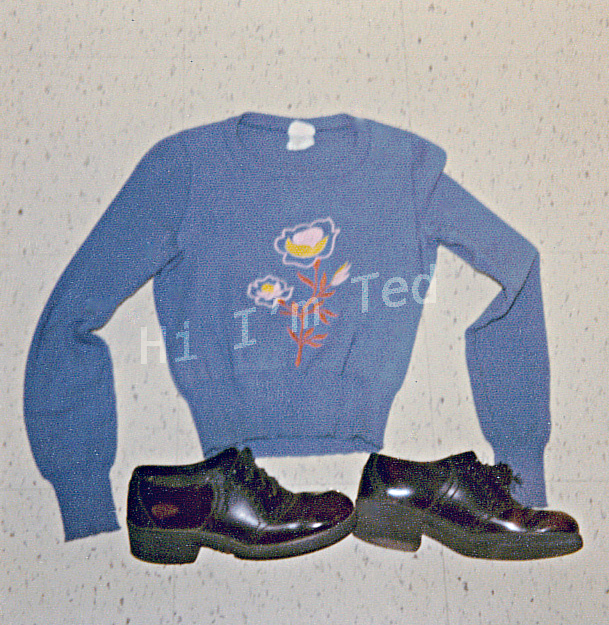
A: They were patent leather.
Q: And the color?
A: They were a dark color.
Q: Why do you remember the shoes, Carol?
A: Because I was watching him walk, and I noticed his shoes and his pants.
Q: Were you looking down?
A: Yes.
Q: While you were in the Murray police station that night, did you observe any photographs?
A: Yes.
Q: And what sort of photographs did you look at?
A: Ones in a book, I think one book, and just some pictures they had.
Q: And how many did you look at?
A: I’m not sure.
Q: Did you look at any other photographs after that time, the next few days following this incident?
A: Yes.
Q: Do you recall where you were at when you looked at them?
A: Yes.
Q: Where was that?
A: At work.
Q: And how many did you see then?
A: About eight or nine.
Q: Did you look at any other photographs after that time?
A: Yes.
Q: About how many times, separate times, did the officer show you photographs?
A: About three or four times.
Q: Do you recall seeing the photograph of a vehicle, a car?
A: Yes.
Q: Do you recall who showed you that photograph?
A: I think it was Jerry Thompson.
Q: Carol, do you recall when Officer Thompson showed you those photographs, the approximate date?
A: No.
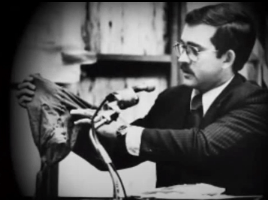
Q: I show you what’s been marked for identification purposes as State’s Proposed Exhibit 20, and ask you if you have ever seen that photograph before?
A: Yes.
Q: Is that the photograph that Officer Thompson showed you?
A: Yes.
Q: Likewise with State’s Proposed Exhibit 21, did you observe that photograph at the same time?
A: Yes.
Q: About how long ago did this occur, Carol?
A: I’m not sure.
Q: A month?
A: October, November.
Q: How does Exhibit 20 with regard to content of that photograph compare with what you observed about the Defendant’s vehicle, particularly the back seat, on November 8, 1974?
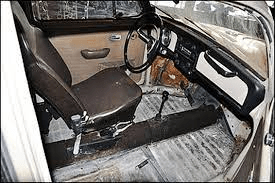
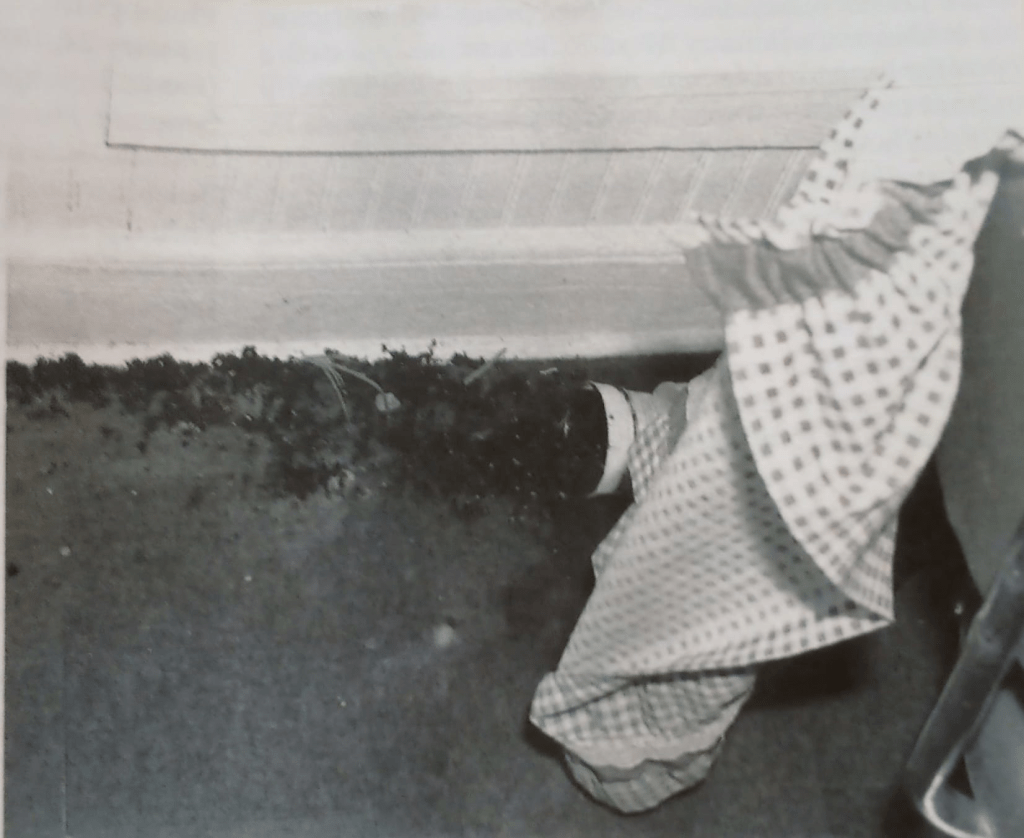
A: The way it’s ripped and the way the stuffing is coming out.
Q: How does that compare with what you saw?
A: Looks exactly like it.
Q: And with regard to Exhibit 21, showing a VW automobile, how does that compare with the vehicle that you saw on November 8, 1974.
A: The dent in the door and the side.
Q: Did you observe such a dent at that time?
A: Yes.
Q: Carol, did you have an occasion to observe any other photo displays by any other officers?
A: Yes.
Q: Do you recall when or what officers showed you photo displays?
A: Jerry Thompson showed me some. The Bountiful Police showed me some.
Q: Did you ever observe what is commonly known as “mug shots” at the Salt Lake County Sheriff’s Office on the ninth floor?
A: Yes.
Q: Would you give me a rough estimate of about how many photographs you were asked to look at during this period of time from November 8th, say, until around August 1st?
A: How many individual ones I have seen altogether?
Q: Yes, including those in the mug books.
A: I don’t know. A lot.
Q: Closer area than “a lot”?
A: No.
Q: Would it be more than a hundred?
A: Yes.
Q: Less than a thousand?
A: Yes.
Q: Prior to August of 1975, Carol, had you ever identified anyone in those photographs as being your assailant on November 8, 1974?
A: No.
Q: When was the first time that you saw a picture of the Defendant in this action, Mr. Bundy?
A: I think it was Jerry Thompson who showed me.
Q: Do you recall the date of that?
A: No.
Q: Now, speaking generally, when you were asked to look at these photographs, Carol, what would the officers tell you before they gave you photographs to look at?
A: Just that they had some photographs for me to look at, if I saw anything that looked anything like this man, to pick it out; if I didn’t, not to pick one out.
Q: Approximately how many photographs did they show you each time?
A: About eight or nine.
Q: When Jerry Thompson showed you the photographs which contained Mr. Bundy’s photograph, how many photographs did you look at then?
A: About nine.
Q: Do you recall what you told him on that occasion with regard to Mr. Bundy’s photograph?
A: No.
Q: Where were you when this took place?
A: At work.
Q: Do you recall generally how the conversation went? First of all, when he handed you the photographs, what did he say to you?
A: Just to look through them.
Q: Do you recall what you did when you got to Mr. Bundy’s photograph?
A: I think I put it aside and put it in my lap. On my knee.
Q: Then what happened?
A: What do you mean?
Q: After you put the photograph on your lap, did you go through the rest of the photographs?
A: Yes.
Q: And when you got through all of them, what did you do?
A: I handed him the one.
Q: The one back?
A: Yes.
Q: What was said then?
A: I don’t remember.
Q: Do you remember what you told him?
A: No.
Q: Had you at any time up until that time ever seen a photograph of the man sitting at counsel table here, Mr. Theodore Bundy?
A: No.
Q: Had you ever picked out what we refer to as “look-alikes”?
A: Yes.
Q: Do you remember how many times you told the officer that a particular picture looked like the man or had a similar characteristic?
A: No.
Q: Was it a lot or a few?
A: It was a few.
Q: Just a few?
A: Yes.
Q: When is the next time you remember seeing a photograph of Mr. Bundy?
A: I’m not sure.
Q: How long after you saw the photograph that Jerry Thompson had?
A: About two weeks.
Q: Do you remember who showed you that photograph?
A: I think it was the Bountiful Police.
Q: Do these photographs differ in any way from the photographs that you saw that Officer Thompson had? Were they different kinds of photographs?
A: Yes.
Q: What kind were they?
A: Driver’s license.
Q: Do you remember how many that officer showed you?
A: No.
Q: Did you see a picture of Mr. Bundy in that photograph display?
A: I don’t remember.
Q: Do you remember picking someone out?
A: I think so.
Q: Did you have an occasion on the 2nd day of October, 1975, to appear at the Metropolitan Hall of Justice at what is commonly referred to as a lineup, Carol?
A: Yes.
Q: Let me ask you this: did you see a number of participants in that lineup at that time?
A: Yes.
Q: What were you told before the lineup in regard to what was going to happen and what you were supposed to do, if anything?
A: I was supposed to watch them, what they did, not talk to anyone, if I thought— if I saw the man, if I did, to write the number down.
Q: Can you remember how the lineup was conducted, what took place?
A: They walked and they had them talk.
Q: Each one of the members of the lineup?
A: Yes.
Q: Was the Defendant in that lineup?
A: Yes.
Q: Did you have an opportunity to hear him speak at that time?
A: Yes.
Q: Did you have an opportunity to see him walk?
A: Yes.
Q: And did you pick out an individual as being the man that was— and you were in his car on November 8, 1974?
A: Yes.
Q: What number did you pick?
A: Seven.
Q: What time during the course of the lineup did you recognize that individual?
A: When he walked out.
Q: “Walked out,” what do you mean?
A: When they first walked out.
Q: Walked out onto the stage in the lineup room, you mean?
A: Yes.
Q: Were you at that time able to identify him from your recollection of him on November 8th, Carol?
A: Yes.
Q: Did you have any trouble?
A: No.
Q: Did he appear any different then than he did on November 8th?
A: Yes.
Q: In what way?
A: He looked more clean-cut. His hair was shorter. He didn’t have a mustache.
Q: Did you notice anything about his appearance that was identical to the way you observed him on November 8th?
A: The way he walked.
Q: Anything else?
A: His face.
Q: Any particular part of his face?
A: No.
Q: Do you remember any distinctive features, anything about his voice? Do you recall going back to November 8th and hearing it?
A: No.
Q: How would you describe his manner of speaking, to use that term on November 8th, Carol?
A: What do you mean?
Q: Well, was there any particular thing about his voice that stood out in your mind or the way he spoke, the words he used?
A: He was polite, sounded like he was well educated, by the way he talked.
Q: Carol, I show you now what has been marked as State’s Proposed Exhibit 23. Do you recognize that jacket?
A: Yes.
Q: And is that the jacket you were wearing on November 8, 1974?
A: Yes.
Q: After you got home that evening Carol, did you notice anything unusual about that jacket?
A: Yes.
Q: Can you explain to the Court what you noticed at that time?
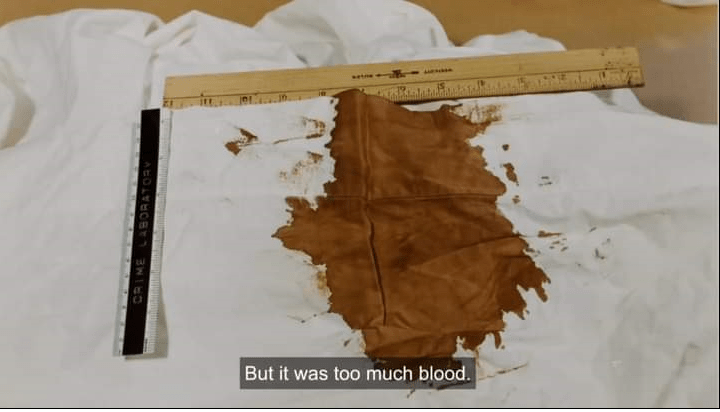
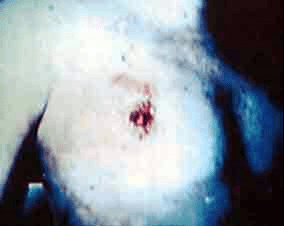
A: It had blood around one of— the fur of one of the sleeves and around the collar.
Q: Would you show us on the coat where that was located?
A: Up on here. I don’t remember what sleeve it was on, which one.
Q: You are indicating which would be to the back of the jacket?
A: Yes.
Q: On the fur collar?
A: Yes.
Q: What did you do after you noticed that? Did you tell anyone about it?
A: It wasn’t until Monday— the Monday that, when the officer Joel Riet came up to show me some pictures that I told him there was some blood on my coat, and he told me to go get it for him, and I got him the coat, and he cut the fur off some of it.
Q: Cut the fur off the coat collar and the sleeve where the blood was located?
A: Yes.
MR. YOCOM: No further questions.
Part II:
CROSS EXAMINATION BY MR. JOHN O’CONNELL:
Q: Miss DaRonch, did you tell the police on the evening of November 8th, 1974, when you talked to them, that there was anything in particular about the way the man walked?
A: No.
Q: Did you tell them there was anything about the way he talked that was unusual?
A: No.
Q: You said he was just average, didn’t you?
A: Yes.
Q: When did you decide that he sounded like he was well educated?
A: I have told them that before.
Q: When?
A: I don’t know when exactly, but I told them that before.
Q: Before September, ’75?
A: Yes.
Q: Who did you tell?
A: I think it was someone from the Bountiful Police.
Q: Did someone from the Bountiful Police talk to you about the suspect they had up in Bountiful?
A: No.
Q: Did you testify previously about looking at a sketch and saying that it didn’t look like the person because the mustache was different?
A: What sketch?
Q: Well did you look at the sketch of any individual?
A: One.
Q: Who showed it to you?
A: A security guy at Mountain Bell.
Q: Nobody from the Bountiful Police ever showed you their sketch?
A: I don’t know if he got the sketch from Bountiful.
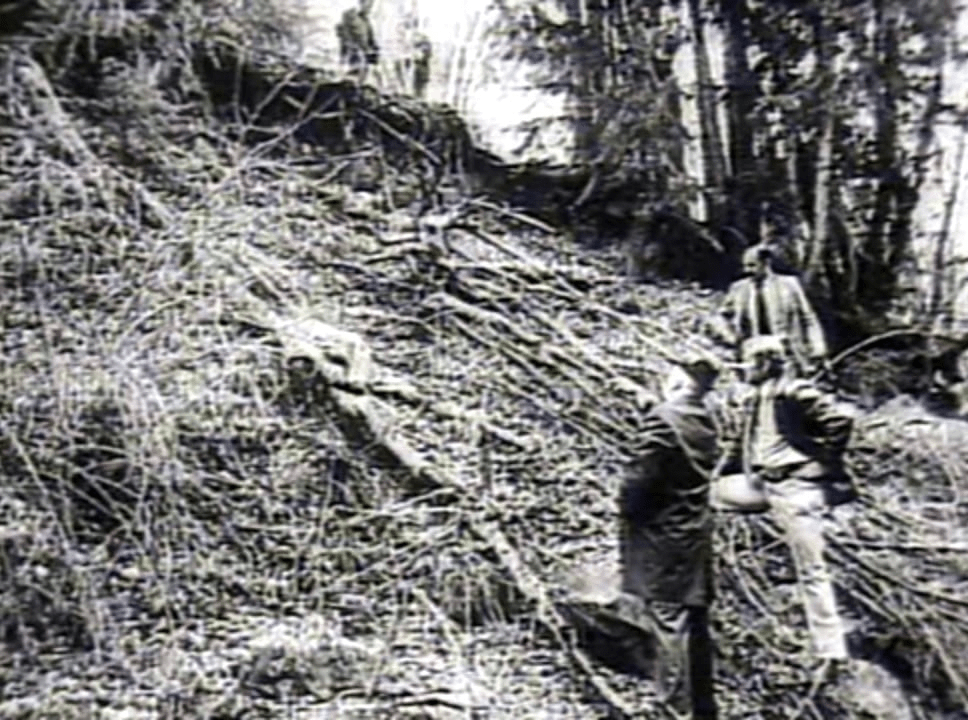
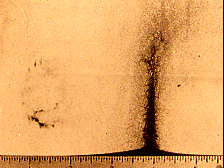
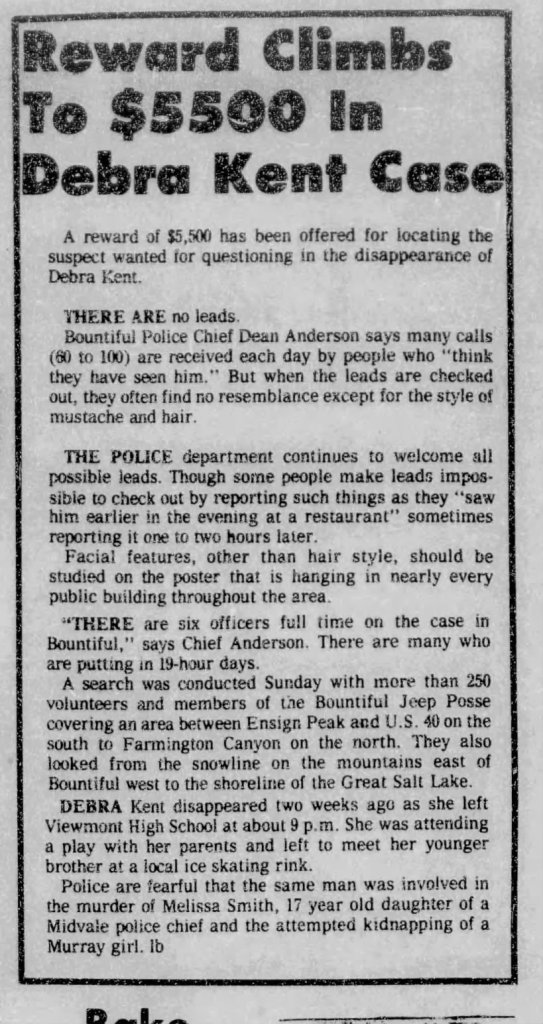
A direct scan of the original composite sketch in the Debra Kent case, 1974. Courtesy Bountiful Police Department.
Q: Showing you what has been marked as Defendant’s Proposed Exhibit 24, is that the sketch you were shown?
A: Yes.
Q: Did you see this brochure?
A: No.
Q: Just the sketch?
A: Yes.
Q: Did it have the description underneath it?
A: No.
Q: You didn’t think that was the man?
A: I didn’t think it looked like him.
Q: Now, you have testified in Court about this incident on two different occasions before this, haven’t you?
A: Yes.
Q: And those times Mr. Bundy was present, wasn’t he?
A: Yes.
Q: I was present?
A: Yes.
Q: Mr. Yocom?
A: Yes.
Q: And you described the incident both those times, didn’t you?
A: Yes.
Q: Did you cry during those times?
A: No.
Q: Is it the crowd here that is making you nervous?
A: Yes.
Q: And you noticed the blood on this coat you say, that night?
A: Yes.
Q: Now, the policemen looked at the coat that night. Didn’t they look to see if there was any blood on it?
A: No.
Q: Didn’t they discuss whether or not there was any blood on you?
A: No. They asked me if I was hurt. I said no.
Q: Do you want to describe the badge the man showed you again?
A: I said it was silver and oval shaped.
Q: Do you recall being asked that at the preliminary hearing?
A: Yes.
Q: Do you know what you said there?
A: Probably that it was silver or gold.
MR. O’CONNELL: I’d ask that her testimony in that regard, in fact, her testimony generally, be published at this time, of the preliminary hearing.
THE COURT: Any objection?
MR. YOCOM: No objection.
THE COURT: The testimony of the witness at the preliminary hearing will be published.
Q: I will just read it, then. Line 5 of page 24:
“Question: Could you describe the badge and where you got it from?”
“Answer: It was silver and blue, or else gold and blue. And it wasn’t a star. It was kind of round, kind of oval-shaped.”
Do you have any explanation for why you said it was blue and silver or blue and gold then?
A: Because it had a symbol on it or writing or something, but I couldn’t see what it was.
Q: Well, you were asked by the police officers on the night this occurred what color it was, weren’t you?
A: Yes.
Q: And that time you said it was all silver or all gold, didn’t you?
A: Did I?
Q: Well, did you?
A: I can’t—
Q: You don’t remember?
A: No.
Q: Was it blue? Did it have blue on it?
A: I think it had a little blue on it, whatever was on it, the symbol or the writing.
Q: Now, when the police officers were questioning you about this, they showed you their badge, didn’t they?
A: Yes.
Q: And you said it was different?
A: Yes.
Q: And how did you tell them it was different?
A: Their badges were bigger.
Q: And what else?
A: Theirs weren’t the same shape.
Q: And what else?
A: I don’t know.
Q: You told them that the badge the man used didn’t have any blue on it, didn’t you, that the badge that the man showed you was like theirs, only it was half as big, and the badge the kidnapper had didn’t have any blue on it like the Murray Police officers, right?
A: Theirs had a lot of blue on it.
Q: That’s right, and that’s what you were describing when you described it at the preliminary hearing, wasn’t it?
A: No.
Q: Well, do you think you told the police officers on November 8th that the badge that the man had had blue on it?
A: I don’t remember.
Q: Now, the wallet the man had the badge in was a wallet like mine, wasn’t it?
A: Similar.
Q: I mean, what I meant was it folds so that the money folds in half?
A: Yes.
Q: Rather than folding it so the money stays straight?
A: Yes.
Q: And the badge was attached to it somehow so that he flipped it open like this, and you could see the badge, right?
A: Yes.
Q: Now, going to the car that was used on the night of November 8th that you took a ride in, what color was it?
A: I said it was a light beige, white.
Q: You said it was a light beige. Could it have been blue?
A: I could have said it was.
Q: I am asking you now, could it have been blue?
A: No.
But you have described it, in fact, on November 8th you described it as a light blue car, didn’t you?
A: I might have.
Q: When did you decide that it was beige? When Jerry Thompson showed you those photos?
A: No.
Q: When?
A: I was really shook up that night. There’s a lot of things I didn’t exactly tell them.
Q: Well, they asked you what color the car was several times, didn’t they?
A: And later on I said it could have been a white or beige, too.
Q: But now you have decided it couldn’t be blue. Why is that?
A: I don’t understand.
Q: Well, on the night it happened, you said that it was light blue or white. Now you say it couldn’t have been blue. What made you come to that conclusion that it couldn’t be blue now when on November 8th you were saying it was light blue.
A: Or beige or white.
Q: All right. When did you eliminate light blue as a possibility? Do you know?
A: No.
Q: Today you testified that when you were walking with this man over to the laundromat, you were walking on his left side. Is that your testimony now?
A: Over to the laundromat?
Q: Yes.
A: No.
Q: Where were you walking?
A: I was walking on his left side outside of the mall, not over to the laundromat.
Q: Where were you walking in relation to him when you were walking over to the laundromat?
A: I don’t remember.
Q: You have testified previously that you were walking a few feet behind him?
A: Yes.
Q: Now, when you were at the laundromat, you said that you were quite suspicious of him, he was a stranger. You indicated to Mr. Yocom that—I don’t know whether you said it or he was just implying it—that you were at that point concerned. Is that true?
A: Yes.
Q: Why did you go?
A: Because he showed me a badge. I thought it was all right.
Q: I see. You also said that you didn’t have to go, right?
A: Right.
Q: It was entirely up to you?
A: Yes.
Q: And so at that point you were reassured that it really was a policeman, or you wouldn’t have gone, right?
A: Yes.
Q: I mean, you wouldn’t have gotten into some strange man’s car and driven off with him if you didn’t think he was a policeman, would you?
A: No.
Q: Did he smell of alcohol?
A: Yes.
Q: Now, you said you saw some rust spots on the car. Where did you see the rust spots?
A: On the very front of it.
Q: Anywhere else?
A: On the side, maybe.
Q: Pardon?
A: On the side.
Q: Where on the side?
A: On the door.
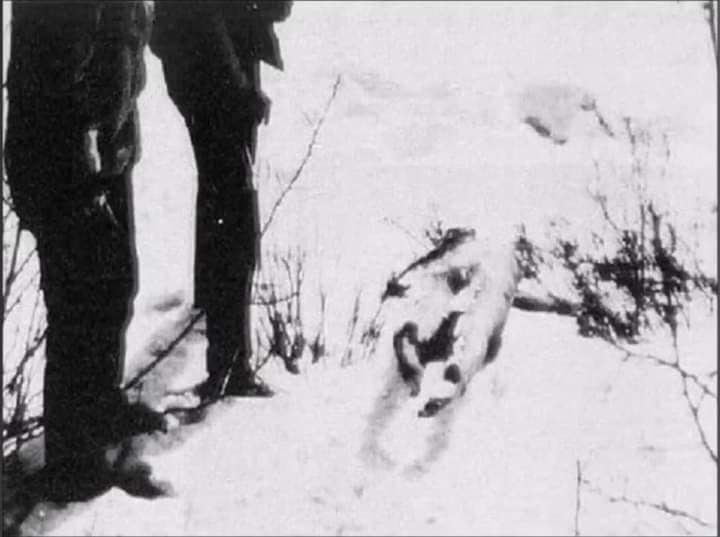
Painted over rust spots on the VW door, October 1975. Courtesy Bountiful PD.
Q: On the door? Do you remember Mr. Yocom at the preliminary hearing asking you the same questions?
Line 10, page 27:
“Question: Now, when you say there were spots on the vehicle, rust spots; where were they located on the vehicle itself, Carol?”
“Answer: On the front, on the hood that opens up.”
“Question: Any other place?”
“Answer: No.”
Do you know why you said that?
A: No.
Q: Have you been looking at these photos of Mr. Bundy’s car recently?
A: No.
Q: Other than in court, have you ever looked at them?
A: No.
Q: Did Mr. Thompson show them to you? Other than Mr. Thompson showing them to you while you were on the witness stand, have you ever looked at the photos of the car with Jerry Thompson?
A: No.
Q: Did you tell Murray Police officers on November 8th about seeing rust on a door?
A: No. I don’t remember.
Q: They questioned you quite thoroughly about that automobile, didn’t they?
A: I don’t remember.
Q: Well, they wanted to know if there was anything unusual about that car, didn’t they?
A: Yes.
Q: And you didn’t tell them about seeing any—in fact, you told them that you couldn’t remember any particular dents or rust spots, didn’t you?
A: I don’t remember.
Q: Do you have a memory, though, of that car not having a license plate on?
A: That night I told them, I was very shook up.
Q: But no license plate would have been something unusual, wouldn’t it?
A: Yes.
Q: More unusual than rust spots on the hood, isn’t it?
A: No.
Q: Don’t practically all old Volkswagens have rusty spots in the front on the hood?
A: I don’t know. Do they?
Q: Now, when did you notice this rip in the upholstery of the car? When you climbed into the car the first time?
A: When we were walking toward the car; when I climbed in the car.
Q: You saw the rip. Now, you did tell the police about that rip, didn’t you?
A: Yes.
Q: What color was the upholstery?
A: I don’t remember.
Q: Did you notice anything else about the interior other than the fact that it had seat belts and it had a rip in the back seat?
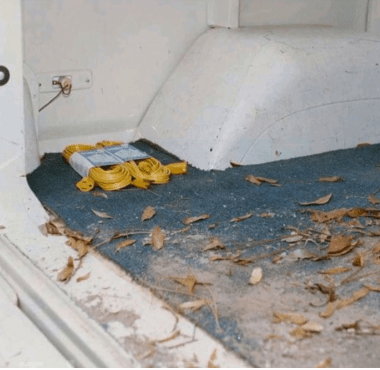
A: There was stuff on the floor of the passenger’s side.
Q: Do you have any idea how many light-colored Volkswagen bugs there are with ripped seats?
A: No.
Q: There is quite a few, aren’t there?
A: Probably.
Q: In fact, most of them have ripped seats, don’t they?
A: Most old cars, very old ones.
Q: Particularly Volkswagens?
A: Yes.
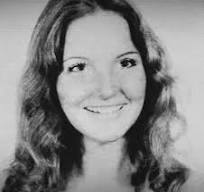
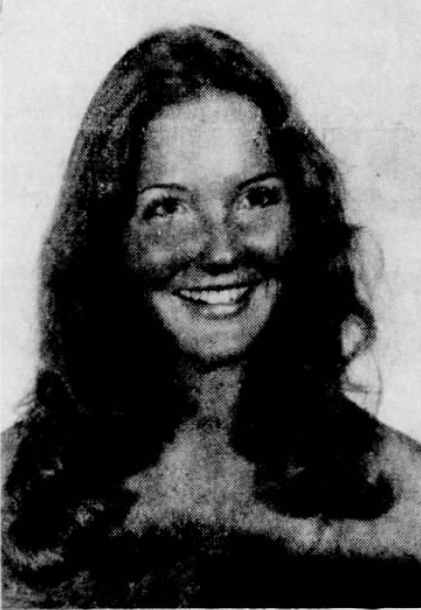
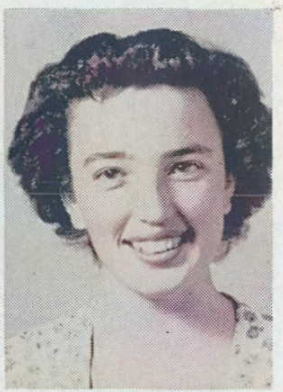
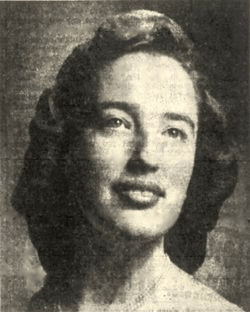
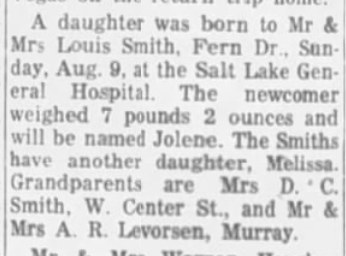
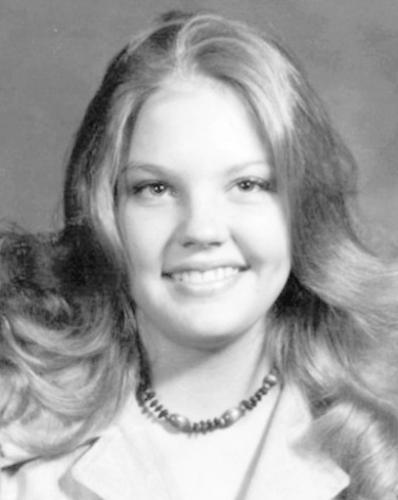
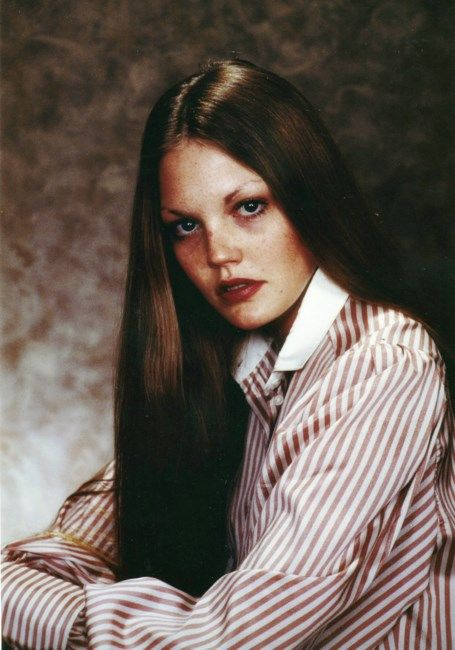
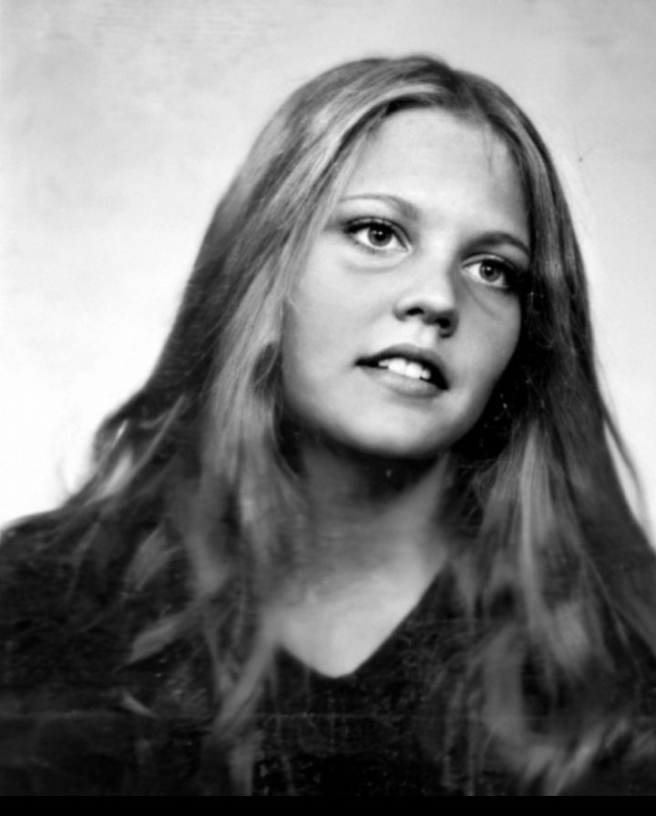
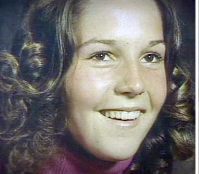
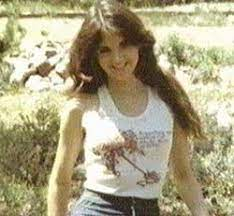
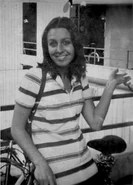
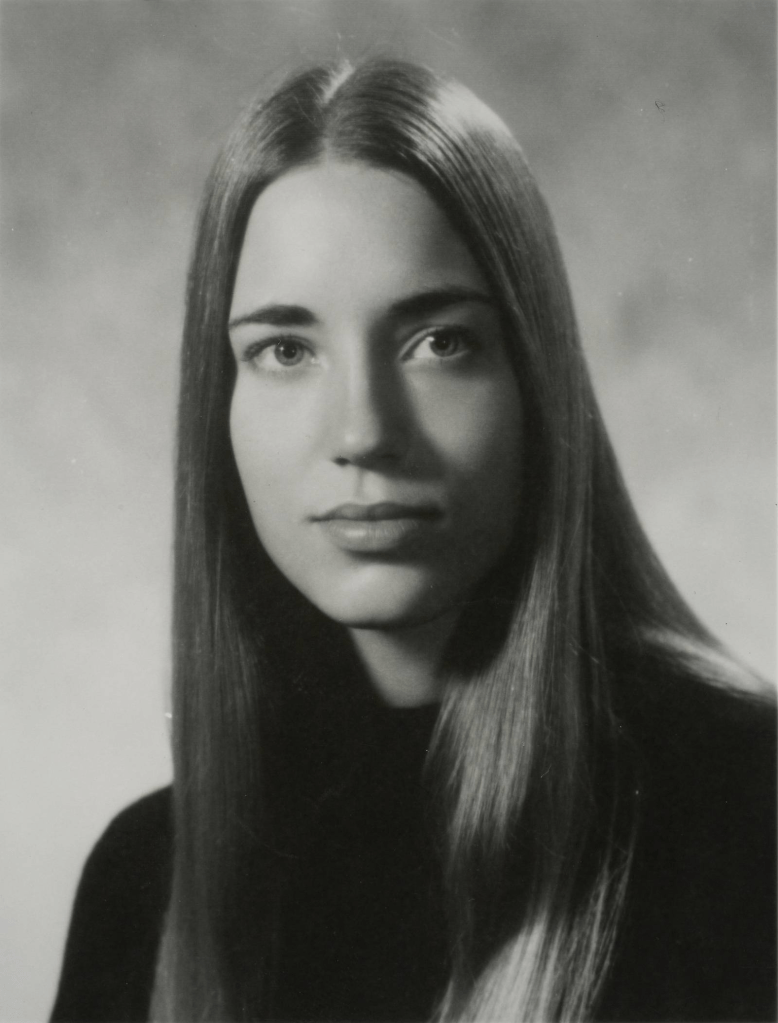
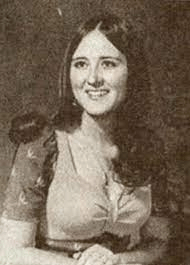
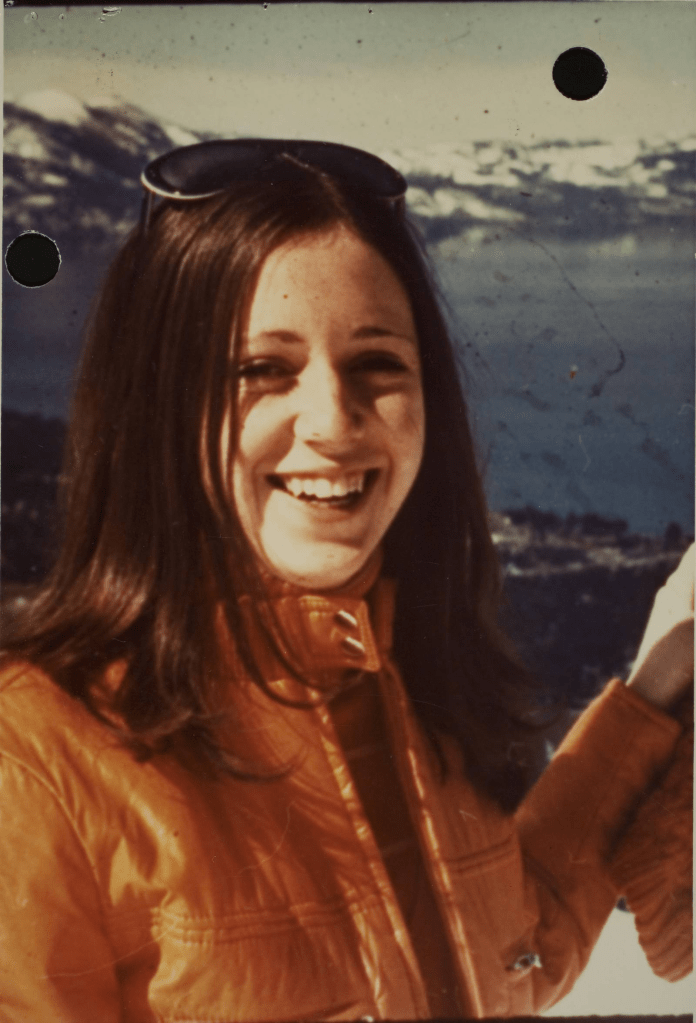
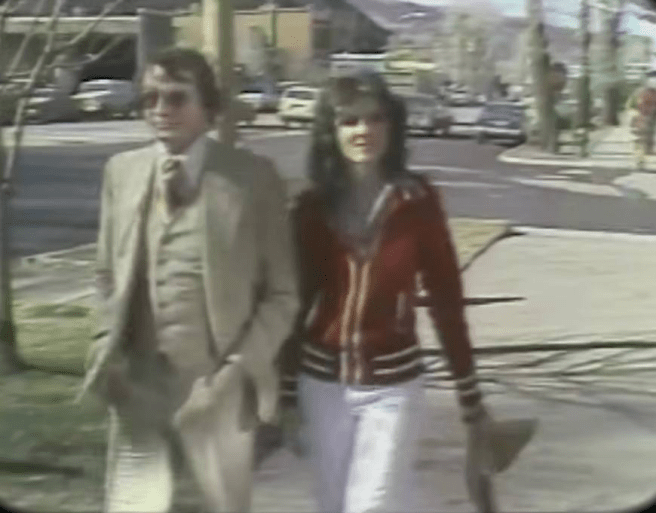
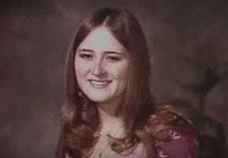
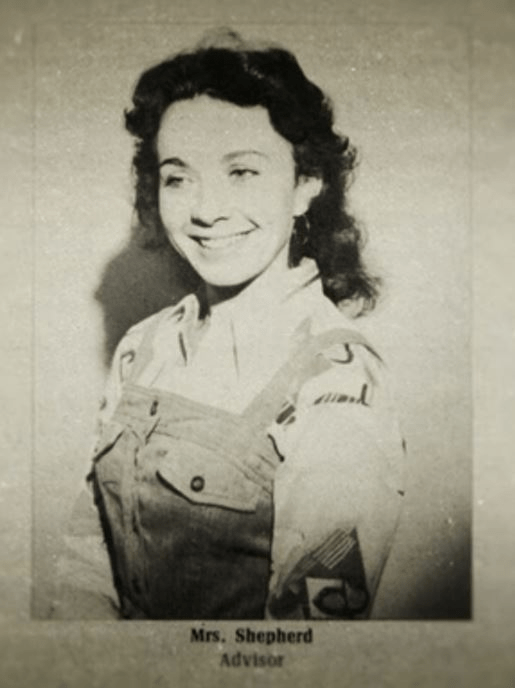
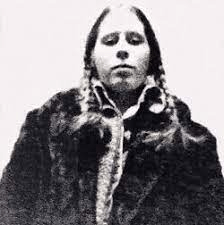
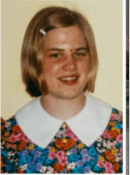
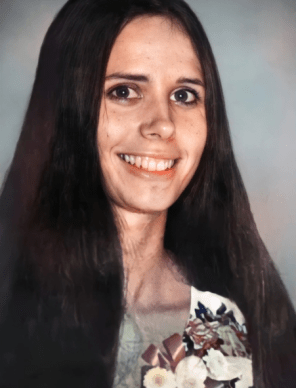
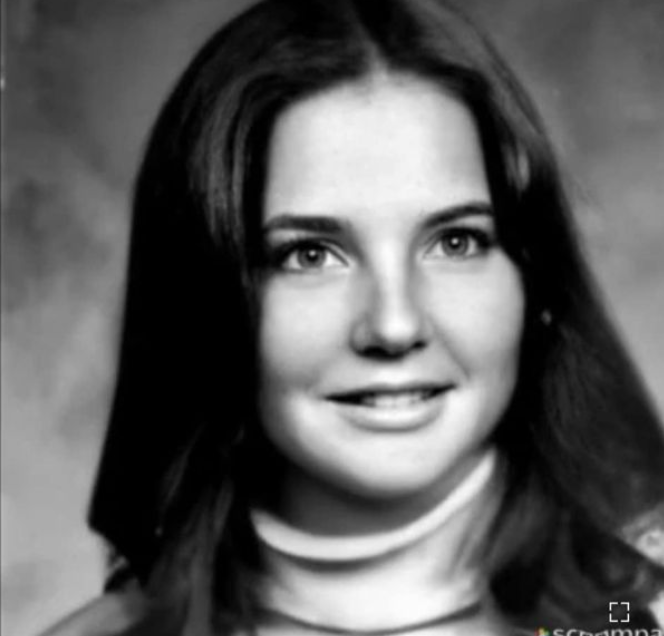
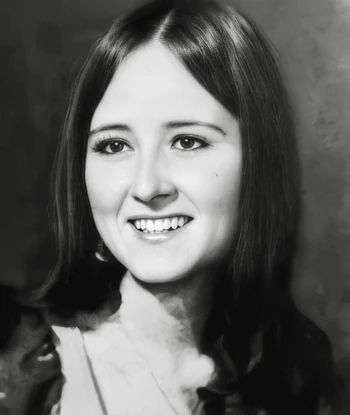
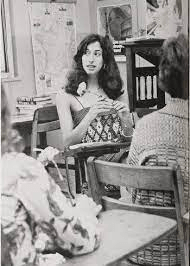
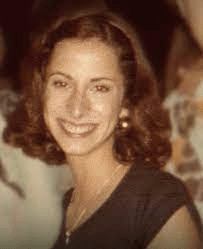
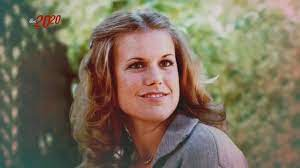
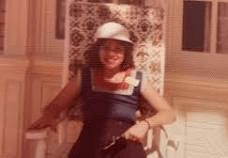
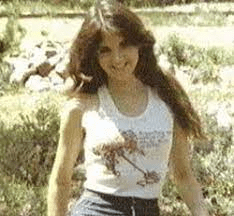
Carol DaRonch
Carol DaRonch, circa 1970s. Courtesy Carol DaRonch/Amazon Studios.
Q: You already testified you are 5’7, right?
A: Yes.
Q: How much do you weigh?
A: 108.
Q: And that was roughly your size on November 8th?
A: Yes.
Q: Do you participate in any sports?
A: No.
Q: Ever had any self-defense training?
A: Once.
Q: Was that training, or someone just telling you about it?
A: Someone just telling me about it.
Q: Do you recall how you managed to get away from that man on November 8th?
A: No.
Q: It is your testimony now he was trying to hit you with that iron bar?
A: Yes.
Q: How did you keep him from doing it?
A: I don’t know.
Q: Remember talking to the police officer, I believe it was Joel Riet, about whether or not he was really trying to hurt you on November 8th, 1974?
A: No.
Q: Didn’t you have a little discussion with him where you both decided that he probably wasn’t since he was so much bigger than you were?
A: No.
Q: How tall am I? Do you want to stand up?
A: I have heels on.
Q: What were you wearing that night?
A: Loafers.
Q: Well, can you give a guess how tall I am?
A: No.
Q: Do you have any idea how much I weigh?
A: No.
Q: It is your testimony now that you did scratch this man, is that right?
A: Because my fingernails were all broken.
Q: Going to page 38 of the preliminary hearing, do you recall Mr. Yocom asking this question of you:
“Do you recall ever scratching him with your fingernails?”
And your answer: “No.”
Do you have an explanation for that?
A: No.
Q: In fact, the officers on November 8th asked you if you remembered if you hurt the man in any way, and you told them no too, didn’t you?
A: I don’t remember.
Q: Okay. Let’s go to these green pants. Can you describe them further than that?
A: They were straight legs.
Q: They didn’t have any flare to them?
A: Right.
Q: Did they have a cuff on them?
A: I don’t remember.
Q: Did you tell the police that they did not have a cuff on?
A: Yes.
Q: What kind of jacket?
A: A dress jacket.
Q: Did you tell the police that he had a dress jacket on?
A: I don’t remember.
Q: Or did you tell them you couldn’t remember the jacket?
A: I said it was a jacket, though.
Q: You said it was a jacket. Was it Mr. Yocom who asked you if it was a suit jacket at the preliminary hearing, and you first said that it was a suit jacket, isn’t that true?
A: But it was.
Q: What color was it?
A: I don’t remember.
Q: What kind of shirt did he have on?
A: I don’t remember.
Q: Was he wearing a tie?
A: No.
Q: Now, on the night of November 8th, you couldn’t answer any of these questions, you said you didn’t remember; right?
A: Right.
Q: And you say he was wearing a mustache?
A: Yes.
Q: Shortly after the incident you told Joel Riet that you thought it over and decided the man didn’t have a mustache, didn’t you?
A: Yes.
Q: And sometime later you decided he did, right?
A: Yes.
Q: When did you make that decision?
A: Right after I decided that he didn’t have one.
Q: Did you tell Officer Riet right then that you had changed your mind again that he had a mustache?
A: I don’t remember.
Q: Taking a photo out of what was at the earlier motion Defendant’s Exhibit 13, and it’s a mug shot with the number 63660, 11-1-73, Sheriff’s Office, Salt Lake County. Wasn’t it in regard to looking at this photo that you told Mr. Riet that you didn’t think the man had a mustache?
A: I don’t remember.
Q: Didn’t you say that this looks just like the man only he wasn’t wearing a mustache?
A: I don’t remember.
Q: Do you remember seeing this photo before?
A: No.
Q: You picked out several photos at different times as looking like the man—showing you again from Defendant’s Exhibit 13, which is an envelope full of photographs—and that number, Exhibit 13, is the one from the earlier motion, your Honor, rather than this—showing you Driver’s License A 664002, you said that that looked generally like the man, didn’t you, at one time?
A: The hair.
Q: The hair looked like that?
A: Sort of.
Q: If that what you mean by “greased”? Or was it shiny like that?
A: Yes.
Q: You described on the night of November 8th the man’s hair as being dark brown and black, did you not?
A: Yes.
Q: You just don’t recall all the photos that you picked out that you said looked like the man?
A: Not looked like, just things about them, the way they had their hair cut or their mustache or—
Q: Well, there was one photo that Bountiful showed you that you made an identification of and said it looked quite a bit like the man, and got him in quite a bit of trouble, didn’t you?
A: I don’t know. Did I?
Q: Well, didn’t you say it looked like him?
A: I don’t know what picture you’re talking about.
MR. O’CONNELL: Well, the problem is, I can’t find it. It was one of the photos we used in the last hearing. It was in one of those folders, your Honor, and it’s not there now. Whether it fell out or what.
Q: Now, as far as viewing photographs went, you viewed an awful lot during the first month after this incident, and then quite a period of time went by before they showed you photos again, is that true?
A: Yes.
Q: How many times before the lineup did you see Mr. Bundy’s photo?
A: Twice.
Q: You have testified previously that you saw it three or four times?
A: I might have.
Q: Were you mistaken then?
A: Yes.
Q: And since the lineup, you have seen it some more times, haven’t you? Well, you have seen it in court, for example, haven’t you?
A: Yes.
Q: And you have been reading newspaper stories about this case, haven’t you?
A: No.
Q: You haven’t?
A: No.
Q: You’ve testified at the preliminary hearing you have been reading the Deseret News stories about this case?
A: But not recently.
Q: But you were—between the lineup and the preliminary hearing you were reading the stories in the paper, though?
A: Some.
Q: And they would have had his picture in the paper, wouldn’t they?
A: One.
Q: Just had it in once?
A: I only remember seeing it once.
Q: Now, you don’t remember when Mr. Thompson showed you his picture the first time, right?
A: No.
Q: Well, do you remember him coming to your place of employment on September 1st of 1975 with the pictures of the automobile?
A: Yes.
Q: And they were just ordinary Polaroid size photos at that time, weren’t they, or were they big ones like this?
A: I don’t know.
Q: Referring to State’s Exhibits 20 and 21?
A: I don’t remember if they were big or small.
MR. O’CONNELL: Your Honor, if I may straighten up the record, the photo which I previously identified as coming from Defendant’s Exhibit 13 at the previous hearing and as having number 663660: I said Sheriff, but that is Salt Lake City Police Department and is now Defendant’s Exhibit 25; is that correct Mr. Yocom?
MR. YOCOM: That’s correct.
MR. O’CONNELL: And that’s the photograph I believe you said that you didn’t recall much about, is that correct?
MISS DARONCH: Yes.
MR. O’CONNELL: All right. I will move—I guess she didn’t identify it, so I can’t. I will have to wait on that.
Q: Defendant’s Proposed Exhibit 26 is the photo you said looks something like the man, particularly the hair?
A: Yes.
Q: All right. And you picked that out for Officer Riet? Do you know?
A: I don’t know.
Q: Now, when Officer Thompson showed you the photos of the car—you previously identified State’s Exhibits 20 and 21—he showed you four photos at that time, didn’t he?
A: Yes.
Q: And you told him that that was the car that had been used in the kidnapping, didn’t you?
A: I said it looked a lot like it.
Q: You said, “That’s the car,” right?
A: I might have.
Q: How could you tell from looking at these photos?
A: The rip’s identical to what I saw.
Q: What else?
A: It didn’t have a license plate.
Q: Now, will you please look at Defendant’s Exhibit 29. Do you see the license plate in that photo?
A: No.
Q: Can you see it in Exhibits 28, 20, or 21?
A: No.
Q: So you didn’t recognize that car and the photos because it didn’t have a license plate on it, did you?
A: I don’t know if I said that, even.
Q: Well, you just said it two minutes ago, didn’t you?
A: No. You asked me if that’s what I said.
MR. O’CONNELL: Well, can you go back and read the record, Mrs. Price?
(The record was read)
Q: And we went through the same thing at the preliminary hearing, did we not?
A: Yes.
Q: Where you said the way you told that the car in the photos was the car that you saw November 8th was because it didn’t have a license plate? You said that at the preliminary hearing too, didn’t you? Do you recall?
A: No.
Q: All right. On page 65:
“Question: Now, so you had, I take it, then looked at the car in pictures and said ‘That’s the car’; is that right?”
“Answer: Yes.”
“Question: And how could you tell it was the car?”
“Answer: It didn’t have a license plate on the front, and it was real beat up, the back seat was ripped exactly—”
“Question: But it didn’t have a license plate on the front and because the back seat was torn?”
“Answer: Yes.”
Q: Really, what you are recalling, then, was not the photos but the car you saw up on the Avenues with Officer Collard, is that right?
Ted Bundy Volkswagen VW 1975
The Volkswagen as viewed by Carol DaRonch, September 1975. Courtesy Bountiful PD
A: No.
Q: When did you ever see a car without a license plate other than your statement that you saw it on November 8th, 1974?
A: Just on November 8th.
Q: Okay. So how did you tell that these pictures were the car on November 8th, just because of the rip?
A: Yes.
Q: And the rip only appears in State’s Exhibit 20 and Defendant’s Exhibit 28, right?
A: Right.
Q: In fact, they can be any Volkswagen, couldn’t they?
A: Yes.
Q: Are you telling us that you can look at State’s Exhibit 20 and say that that is the exact same tear that you saw when you climbed into a car on whatever that street was in Murray in November of 1974? You can say that?
A: No. I said it looks a lot like it.
Q: Now, just after you looked at these car photos for Jerry Thompson, he gave you a pack of photos and asked you to look through them, didn’t he?
A: Yes.
Q: And that was the time that you picked out a photo and put it in your lap and went through the rest of the photos, then you gave the photos back to Jerry Thompson and said “He’s not in there,” didn’t you?
A: Did I?
Q: You don’t know?
A: I don’t remember.
Q: And didn’t he say, “Well, what about that photo,” referring to Mr. Bundy’s photo that was in your lap? And it was at that time you said, “I don’t know, I guess it looks more like him—or it looks closer to him than any of the other photos”; isn’t that the way that particular selection went?
A: I don’t remember.
Q: You don’t remember. Well, you remembered at the preliminary hearing, didn’t you? That was a little closer to the incident, wasn’t it? Closer to the time he showed you the photos at the preliminary hearing, wasn’t it?
A: Yes, it was.
Q: Okay. Publishing preliminary hearing, page 79, starting, I guess, at the bottom of the page, line 24:
“BY MR. O’CONNELL:
“Question: And that was when you looked through and said—exactly what happened on that occasion? Was it that you gave them back and that you had took Mr. Bundy’s photograph out from the pack and then you gave the pack back and said there wasn’t anybody there of the person, and they asked, well, why did you take that one out, and you said, ‘Well, that one looks more like him than any other picture.’ Isn’t that how it happened?”
“Answer: Yes.”
“Question: In fact, your first statement was that the man’s picture—that the man who had done it wasn’t in there, but that Mr. Bundy was closer than other people?”
“Answer: Yes.”
I don’t know whether I’m that inarticulate or whether the reporter got it wrong.
Q: Do you remember when the next time was that you saw Mr. Bundy’s photo?
A: I think it was two weeks later.
Q: Wasn’t it on September 4th when the officers from Bountiful came up to get you to go look at a car?
A: No. I don’t think it was that same day.
Q: You don’t think it was that soon after?
A: No, that same day. I don’t remember exactly what day it was.
Q: It was sometime after Officer Thompson had shown you the first pack, right?
A: Yes.
Q: You think it was a couple weeks?
A: I think.
Q: It could have been, say, three or four days?
A: No.
Q: Well, it was on a day that they came up to take you to go see if you could see the car, right?
A: No.
Q: It wasn’t?
A: It might have been.
Q: Well, in fact, you went through the pack of pictures they showed you once, and then you went through it again, and you picked out Mr. Bundy’s photo, and you said, “I think that may be the man,” or something to that effect, didn’t you?”
A: I don’t remember.
Q: Well, let’s put it this way: You never made a positive identification of a photograph, did you?
A: Right.
Q: That’s correct. Well, do you recall the Bountiful officers coming on several occasions to try to take you to see the car itself?
A: Yes.
Q: There were a couple of attempts that weren’t successful, then on September 8th Sgt. Collard took you up and showed you a car on the Avenues, didn’t he?
A: Yes.
Q: Did that car have a license plate on it?
A: No.
Q: And that’s when you remembered, isn’t it, when you were talking about how you identified the photograph because it didn’t have a license plate?
A: I was thinking of the car that night.
Q: Well, obviously, you were thinking of the car that night, because you were trying to see if the car in the photo or the car in the street matched it. But when I asked you how you could tell on two different occasions in two different court proceedings, you said it was because the car and the picture didn’t have the license plate on it. Now, my question was: Were you just confusing the car that you saw in the pictures with the car you saw on the street? You were just wrong, is that it?
A: I don’t know.
Q: Did you tell Officer Collard that the car you saw up on the Avenues was the car you were kidnapped in?
A: I might have, because it didn’t have a license plate. But it looked completely different.
Q: Well, at the preliminary hearing you said you didn’t identify it, right?
A: (No answer).
Q: What else about it made you think it was the car, other than it didn’t have a license plate? It looked completely different, but you identified it anyway, isn’t that true?
A: Because it was supposed to be the car in the pictures.
Q: That’s right, and that’s why you identified it, because it was supposed to be the car?
A: Because it didn’t have a license plate, and I knew it had been changed.
Q: That was your testimony also at the preliminary hearing, was the reason that you identified it was because it was supposed to be the car that was in the picture, and you knew the officers weren’t taking you up to see the wrong car, right?
A: Right.
Q: You pretty well identify what the law enforcement officers want you identify, don’t you?
A: No.
Q: You did at that time, didn’t you?
A: No.
Q: Let’s go to another time. Showing you Defendant’s Exhibit 28. Now, can you identify that? Have you seen that photograph before?
A: Yes.
Q: And at the preliminary hearing, didn’t you on two occasions say—identify that as a picture of the rip in the car that you saw on November 8th, 1974?
A: Yes.
Q: And then I pointed out to you that—or asked you whether or not you had ever seen the car from the back on November 8th, 1974, right?
A: Right.
Q: So how did you identify it at that time?
A: By the flap part that was sticking down.
Q: What flap part? The sponge rubber?
A: Yes.
Q: All right. This is State’s Exhibit 20. This is the way it looked from the front?
A: I could see this part from standing on the side of the car, not directly from the back.
Q: From standing on the side? You get a better shot—this picture is taken from the side, isn’t it?
A: Yes.
Q: In fact, it’s taken from the rear quarter window, isn’t it?
A: Yes.
Q: Okay. Now, show me in this picture what you—you got a better view, more of a view to the back on November 8th than this picture shows?
A: No.
Q: In fact, you were more from the front, weren’t you?
A: Yes.
Q: All right. Now, show me in this picture what there is that you saw that you could remember at the preliminary hearing so that you could identify that rip as the one you saw?
A: Just this top portion.
Q: Well, you can’t see this part, can you, from the front, or even from the side?
A: But it is curving over here.
Q: Well, don’t all Volkswagens curve over?
A: I don’t know. Do they?
Q: Well, you identified that just because Mr. Yocom handed it to you and asked you if you could identify it, didn’t you?
A: And you were pushing it in my face.
Q: Well, let’s go back to when Mr. Yocom was pushing it in your face, young lady.
MR. YOCOM: Your Honor, I think counsel ought to be cautioned—
THE COURT: All right, no argumentation with the witness. On the other hand, I want the witness to just answer the questions.
MR. O’CONNELL: Page 116, this is Mr. Yocom:
“Question: With Exhibit B, do you recognize that photograph?”
“Answer: Yes.”
“Question: And what is that?”
“Answer: It’s the ripped part of the top of the back seat.”
“Question: And in what way, if any, does that resemble the vehicle you were in on November 8, 1974?”
“Answer: It had a rip just like this one.”
BY MR. O’CONNELL:
“Question: I’m showing you State’s Exhibit B. Looking at that, you can say that that’s the ripped seat you saw on November 8, 1974?”
“Answer: Yes.”
“Question: How can you tell?”
“Answer: It just looks like it.”
“Question: Well, do you remember any particular little dents or tears or pieces hanging out or anything like that?”
“Answer: Just the way it’s ripped.”
“Question: Did you ever look at that car on November 8th from the back?”
“Answer: No.”
Have you ever viewed any other Volkswagen automobile, other than the one with Officer Collard up on the Avenues, with a police officer to see if it was the car used on the night?
A: No.
Q: You never have?
A: No.
Q: Didn’t you view one with Officer Paul Forbes shortly after the incident?
A: Yes.
Q: You decided it wasn’t the car?
A: Yes.
Q: Why? What was different about it, do you remember?
A: The rip in the back seat wasn’t the same.
Q: Anything else?
A: I don’t remember.
Q: Remember being taken to the University of Utah to see if you could identify somebody?
A: Yes.
Q: When did you go, do you recall?
A: No.
Q: Well, roughly when, say, in relation to being shown those pictures or the lineup or anything?
A: It was before the lineup.
Q: It was the day before the lineup, wasn’t it?
A: Was it?
Q: I don’t know.
A: I don’t know.
Q: I’m asking you.
A: I don’t know, either.
Q: Do you recall where you went up there?
A: I don’t know what building it was, exactly.
Q: Was it the law school?
A: I’m not familiar with up there.
Q: Well, who all was up there with you?
A: I don’t know their names.
Q: There were a number of police officers and a number of county attorneys, weren’t there?
A: Not a whole lot.
Q: And you hung around a little while with Jerry Thompson inside the building and didn’t see anyone, right?
A: Right.
Q: And Officer Thompson told you the man wasn’t there, right?
A: Yes.
Q: What man did you think he was talking about?
A: I don’t know. He never told me his name.
Q: You knew it was the man whose pictures you had picked and whose car you picked, right?
A: I didn’t know it was the man in the pictures I picked. They never told me anything about anything.
Q: Well, I know, but you gathered it, didn’t you? Didn’t you gather that before the lineup?
A: Well, yes.
Q: All right. Before the lineup, you knew that the man you were looking to see if you could identify was a law student, and that he had a beige Volkswagen, didn’t you.
A: I didn’t know if he was a law student.
Q: Well, you testified previously that you knew that he was a law student and had a beige Volkswagen, didn’t you?
A: (No answer.)
Q: You associated the pictures of the man you had picked with the automobile, hadn’t you?
A: Yes.
Q: And you associated the trip up to the law school or up to the building at the University with the man you had picked, whose photos you had tentatively picked, hadn’t you?
A: Yes.
Q: You knew that these policemen were closing in on a hot suspect, didn’t you?
A: I guess.
Q: Well, weren’t they acting that way, coming and seeing you every couple days and driving you around town and having officers out following somebody around so that you could try to find out where he was to look at him; do you recall all that?
A: Yes.
Q: It was a pretty extensive activity there during the first—or, in fact, all through September, wasn’t it? With Bountiful and with the County Sheriffs?
A: I really don’t know what they were doing.
Q: You knew they were doing something, didn’t you?
A: Yes.
Q: In fact, you were quite frightened at the lineup, weren’t you?
A: Yes.
Q: Because you were pretty certain that the man who kidnapped you was going to go in that lineup and he might see you, weren’t you?
A: No.
Q: Now, in that lineup you could have recognized Mr. Bundy from seeing his pictures even if you hadn’t seen him before, couldn’t you?
A: Yes.
Q: I mean, nobody else in that lineup looked like his picture, did it?
A: No.
Q: Now, do you have separate images in your mind of what the man looked like on November 8, 1974, and what each of the pictures of Mr. Bundy looked like and what Mr. Bundy looked like at the lineup and what he looks like today? Can you flick through your mind and have those images come out?
A: Yes.
Q: Have you ever seen Mr. Bundy in a mustache?
A: I don’t remember.
Q: Have you ever seen his picture in a mustache or a beard?
A: I don’t remember.
Q: Showing you what has been marked Defendant’s Exhibit 27, referring to Driver’s License C 124012, have you ever seen that before?
A: Yes.
Q: Did you pick that picture out and say that that looked a lot like him–the man that abducted you—except for the hair?
A: Yes.
Q: And you said that the officer was showing you these pictures, in fact, I believe he showed you 27 and 27-A at the same time, he said, “Look through these and pick out the hair that looks the most like him,” and you picked Drivers License C 90747, didn’t you?
A: Yes.
Q: He had that kind of hair, you said?
A: Sort of.
MR. O’CONNELL: I will move the introduction of Defendant’s Exhibit 31 as being a transcript of her statement to the police officers, to Officer Joel Riet on November 8, 1974.
MR. YOCOM: No objection.
THE COURT: Exhibit 31 is received.
Q: Showing you a group of photographs 30-A through S, I will ask, you to look through there and see if any of those are photos of ripped back seats, and see if any of those are like the rip that you saw on November 8th, or for that matter, the rip you saw in Mr. Bundy’s car?
A: I really can’t see it too good in some of these pictures.
Q: Do you know if it’s in there?
A: No.
MR. O’CONNELL: That’s all.
MR. YOCOM: You mean that’s all the questions?
MR. O’CONNELL: Yes. That’s all the questions.
REDIRECT EXAMINATION BY MR. YOCOM:
Q: Carol, at any time when you observed photographs shown to you by police officers, did any of them ever—let me rephrase that—what did they tell you each time you were shown photographs?
A: Just to look through them, if I saw anyone that reminded me of the man, to pick it out and show them what reminded me about it; or if I saw the man, to pick it out, or if l didn’t see anything that I liked, I didn’t have to pick out anything.
Q: And was that all that was ever said to you at any time?
A: Yes.
Q: Did anyone ever suggest to you that the suspect’s picture, or a suspect’s picture, was contained in those photographs?
A: No.
Q: Did you know on September 1st when Officer Thompson showed you a group of photographs that there would be a suspect in those photographs?
A: No.
Q: Did you know on the 4th day of September when Officer Beal from Bountiful showed you a group of photographs whether or not the man would be in those photographs?
A: No.
Q: Did you, when you went to the lineup, know that the man that assaulted you—kidnapped you on November 8th—was going to be there?
A: No.
Q: Did anyone tell you he was going to be there?
A: No.
Q: Did you know his name?
A: No.
Q: Did you know his occupation?
A: No.
Q: Did you know anything about Theodore Bundy on October 2nd at the lineup?
A: I don’t think so.
Q: Counsel asked you on cross-examination if you could have identified Mr. Bundy at the lineup without seeing his picture.
MR. O’CONNELL: No. Excuse me. I will call for the record on that. I asked her if—she might object to this even more—I asked her if she could have identified him just from his pictures without having seen him on November 8th, 1974. She said she could have.
THE COURT: Yes. That was the testimony.
MR. YOCOM: Sorry. I must have written it down wrong.
MISS DARONCH: I thought he said the other way too.
Q: What question did you think you were asked?
A: If—what you thought. I mean, I couldn’t from the picture, is what I mean, for sure.
Q: You couldn’t tell if he was the man strictly from the pictures?
A: Yes.
Q: When you saw him in the lineup, could you tell?
A: Yes.
Q: Did you associate the lineup at all with seeing pictures?
A: No.
Q: Seeing Mr. Bundy at the lineup when he first walked into the lineup room, whatdid you associate that with, Carol?
A: When he first walked in was the way he walked on that night.
Q: What night?
A: November 8th.
Q: Did you know immediately?
A: Yes.
Q: And you are positive today?
A: Yes.
MR. YOCOM: No further questions.
RECROSS-EXAMINATION BY MR. O’CONNELL:
Q: Well as to being able to pick him out just from the pictures, we. have gone through that twice, haven’t we? Once at preliminary hearing and once this afternoon? And both times, you said that you could pi.ck him out even if you hadn’t seen him, you could pick him out—and I would follow it up with the question, “Well, nobody else in the lineup looked like his pictures?” And both times, both this afternoon and at the preliminary hearing, you agreed. Is that right?
A: I thought you said the other way around.
Q: Both times you thought—
A: I don’t remember the first time.
Q: Or did you and Mr. Yocom discuss that with regard to the preliminary hearing testimony, is maybe why you made that mistake at preliminary hearing?
A: No.
Q: Now you are saying that you didn’t think the man who kidnapped you was in the lineup, is that right? You didn’t know that he was?
A: No.
Q: You didn’t even suspect that he was, strongly?
A: Yes.
Q: That’s why you testified that you were afraid, wasn’t it? You were worried that he’d see you?
A: I don’t remember.
Q: You said that you associated the man with the car and the pictures and the going to the Law school, and you testified to that two or three times, haven’t you? Haven’t you?
A: (No answer.)
Q: Well, yes or no?
A: Will you say that again?
Q: Haven’t you on two or three times now testified that you associated the man in the lineup, prior to the lineup, going in the lineup, with the pictures, with the viewing of the car, and with the law school; that you knew that the man that you were looking for was a law student and had a tan car? Haven’t you testified that that’s true several times?
A: Yes.
Q: And it is true, isn’t it?
A: Yes.
MR. O’CONNELL: That’s all.
MR. YOCOM: No further questions.
THE COURT: All right. Miss DaRonch, you may step down.