Video taken in March 2026, posted at 2x and 4x speed. Please be kind with your comments, this (and Issaquah) are the first videos I’ve ever attempted.
A video I took of Ted Bundy’s Taylor Mountain DS in March 2026 sped up 4x.
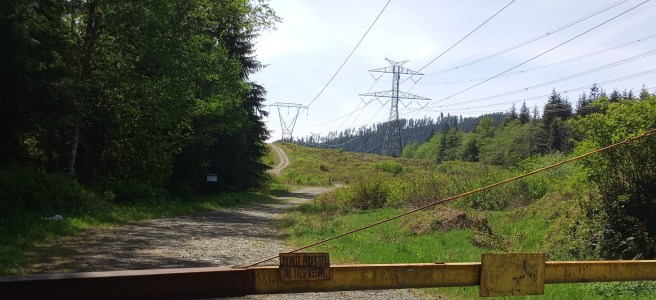
Video taken in March 2026, posted at 2x and 4x speed. Please be kind with your comments, this (and Issaquah) are the first videos I’ve ever attempted.
A video I took of Ted Bundy’s Taylor Mountain DS in March 2026 sped up 4x.
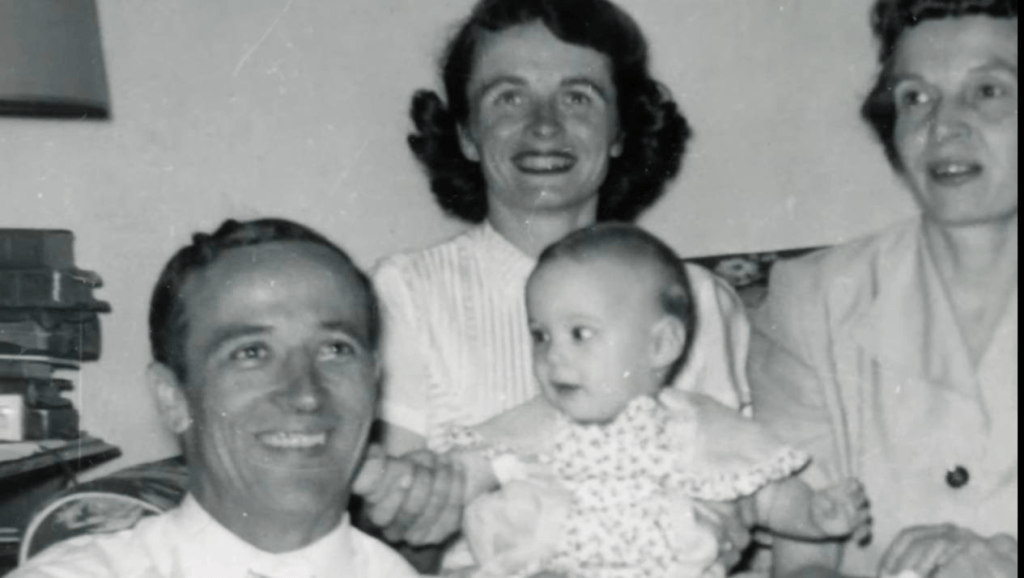
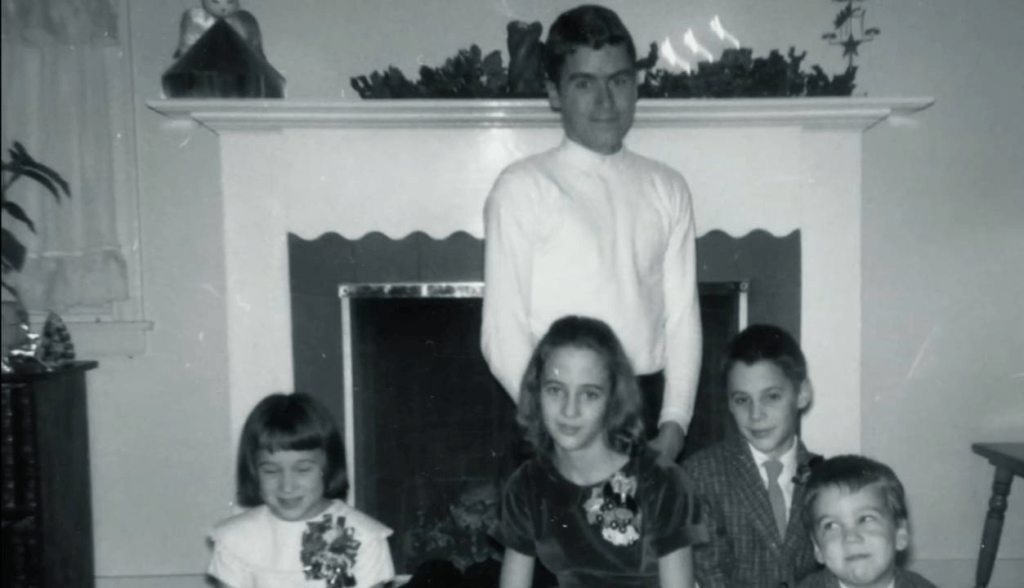
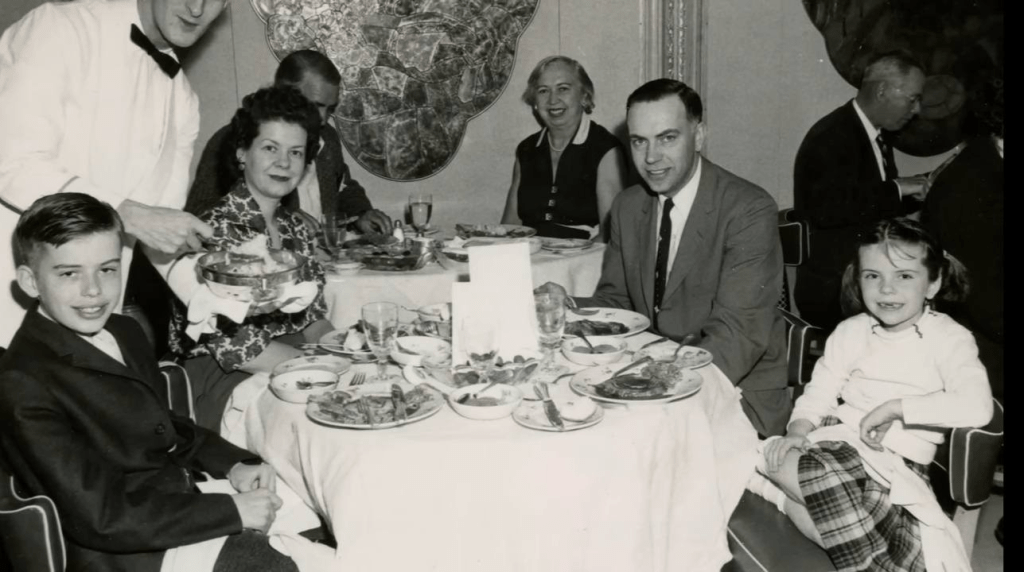
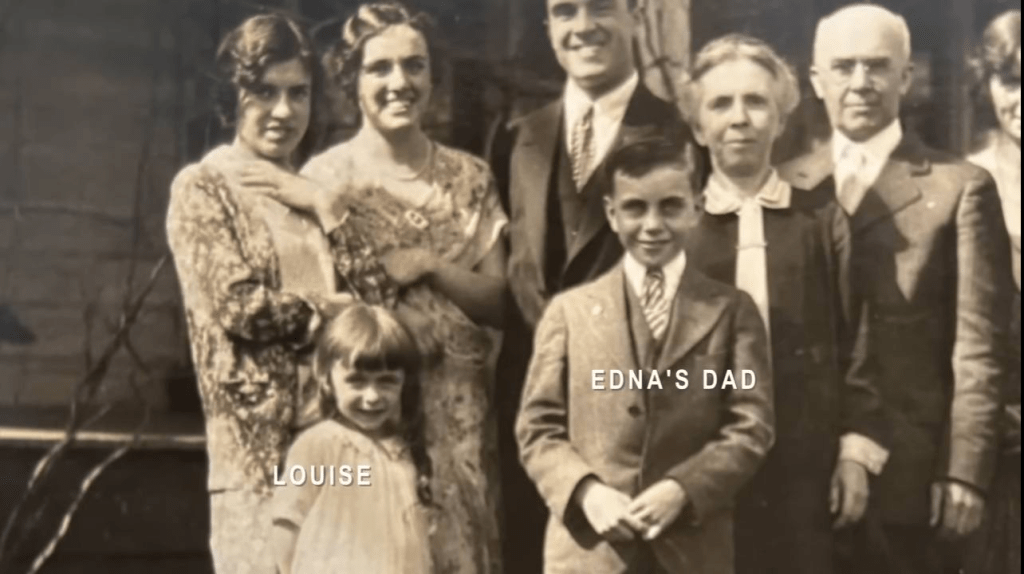

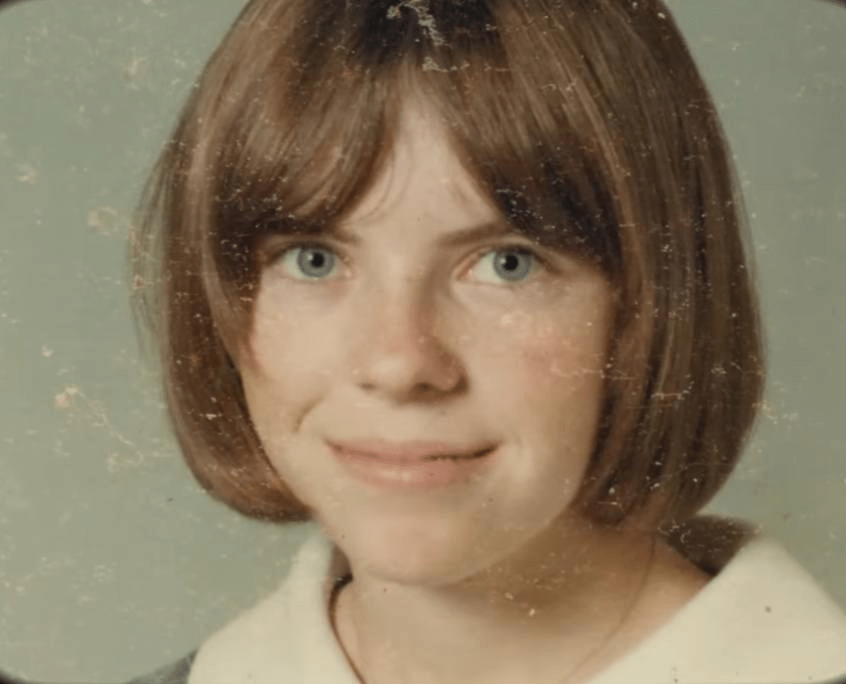
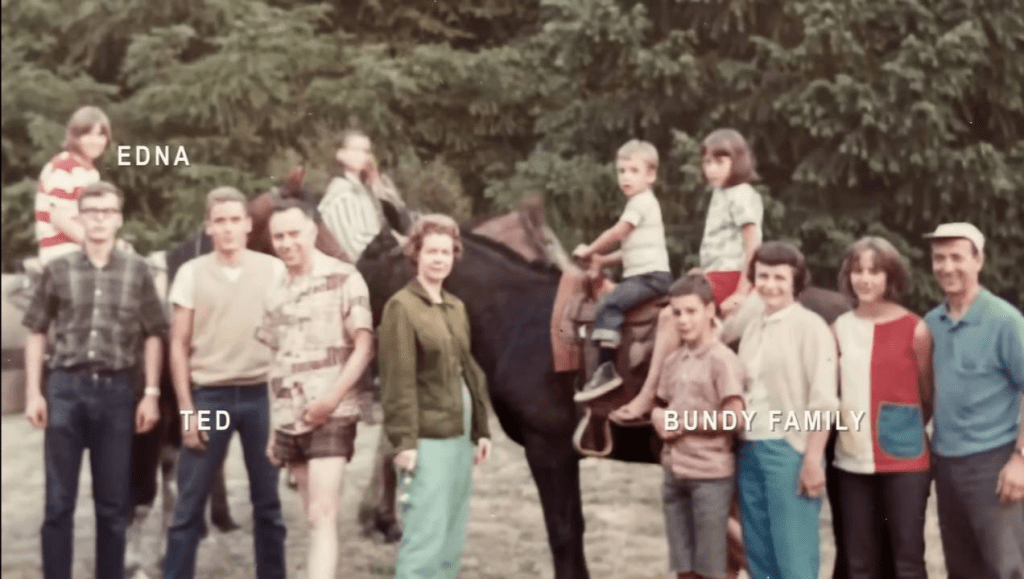
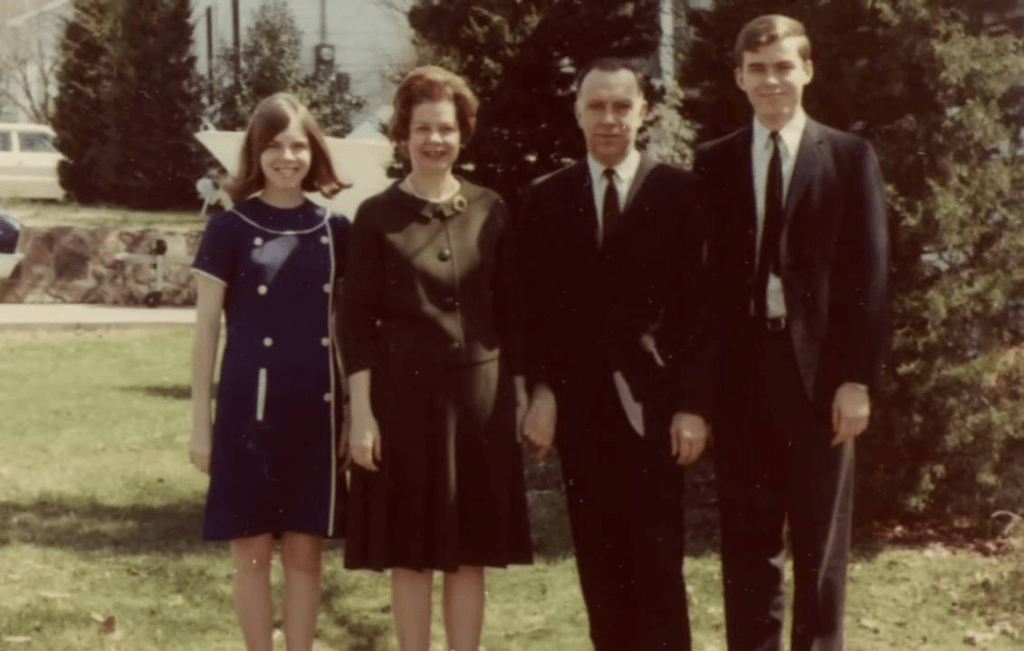
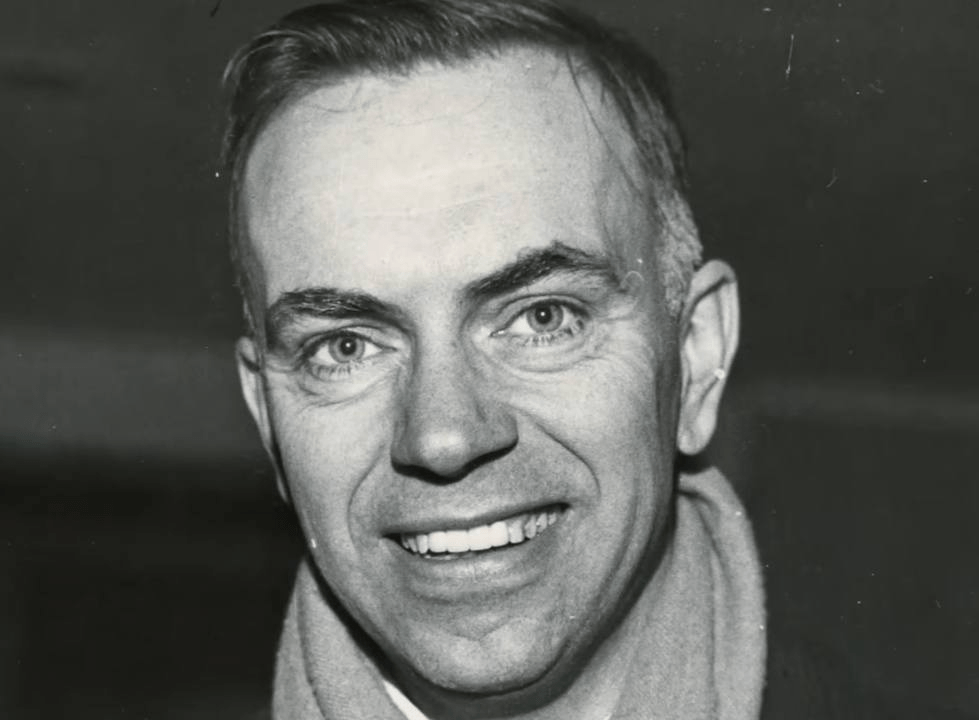
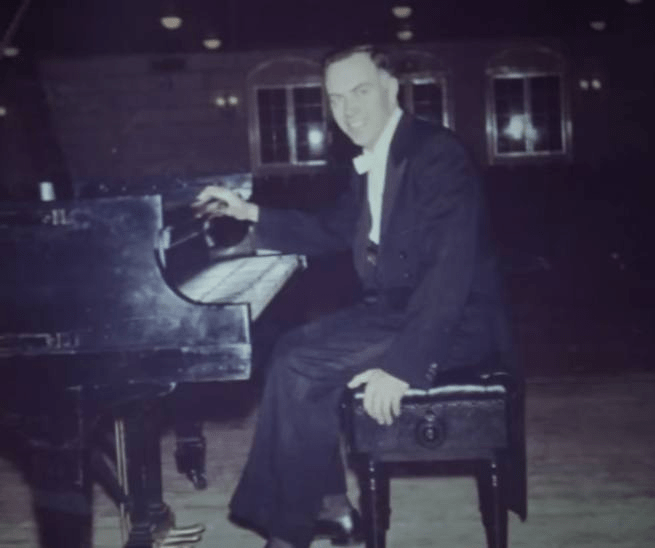
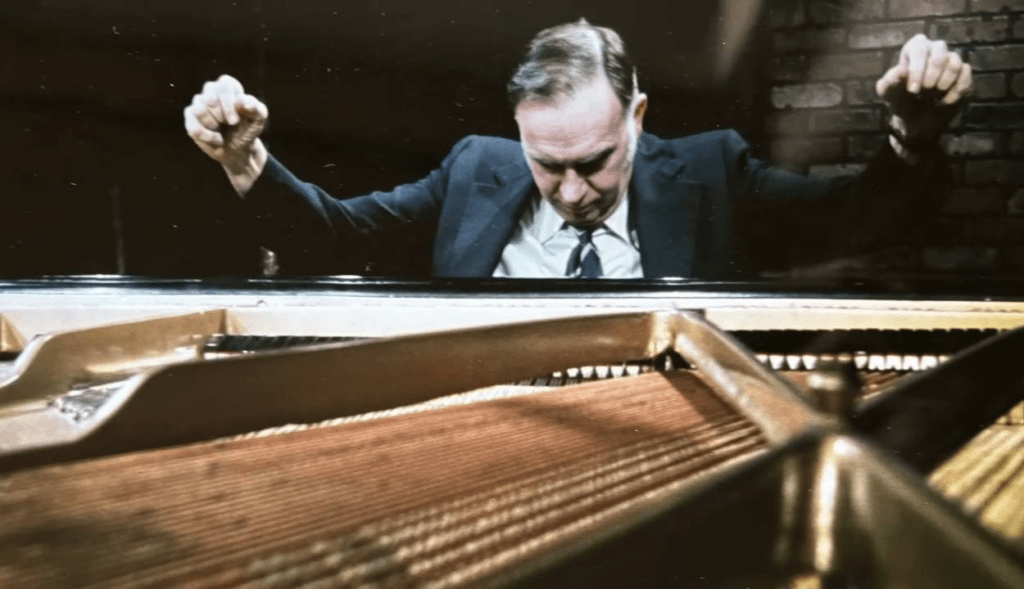
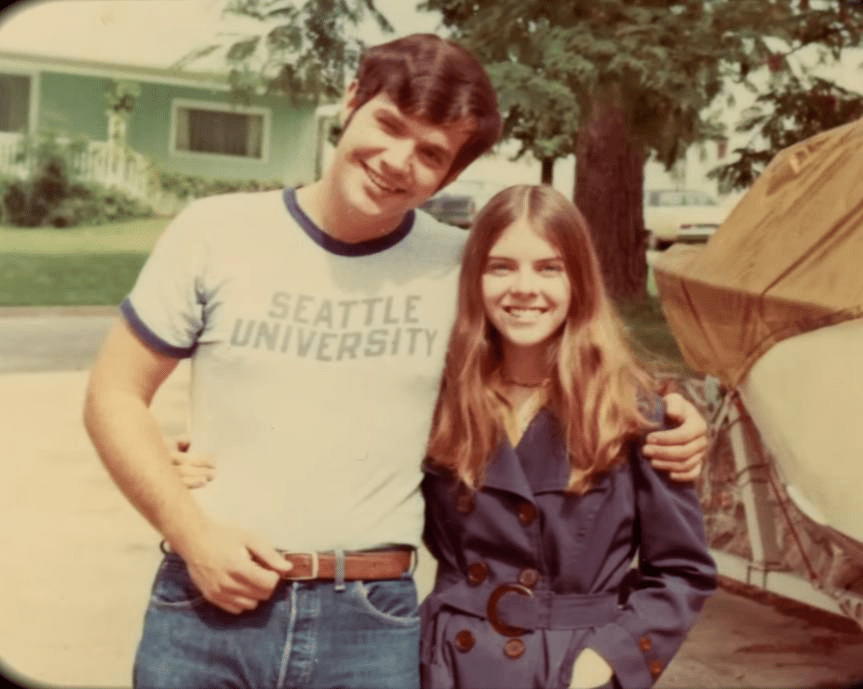
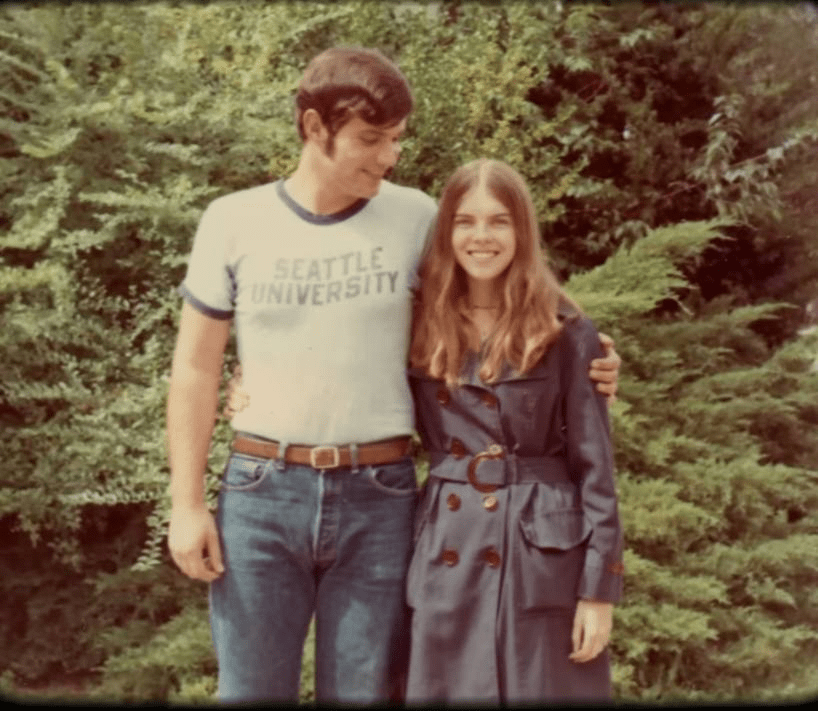
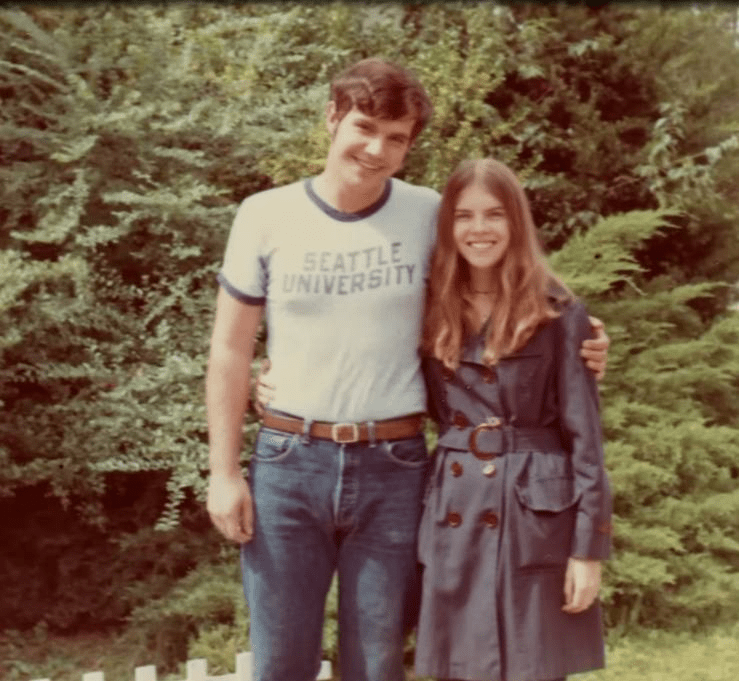
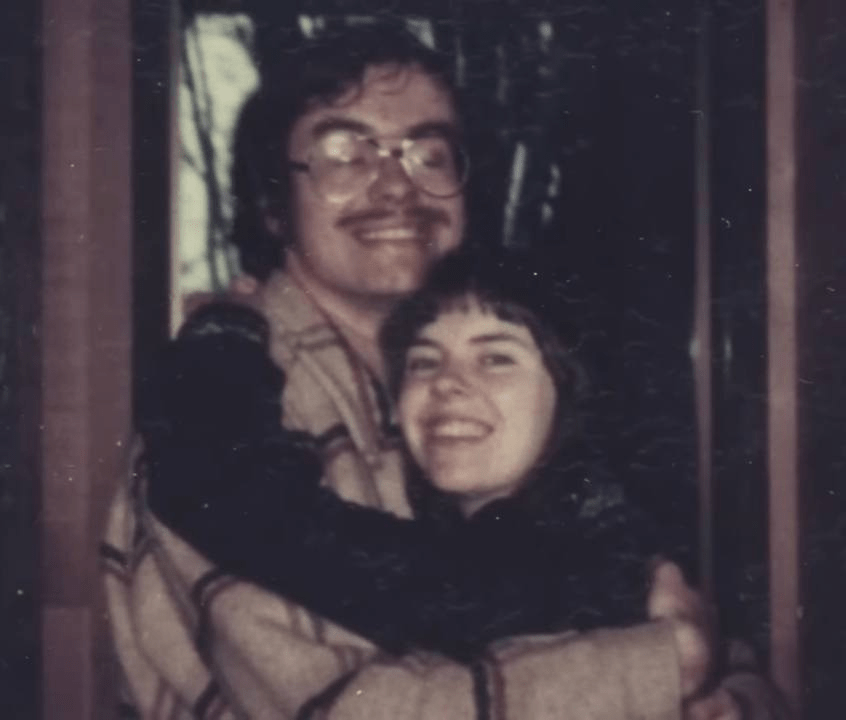

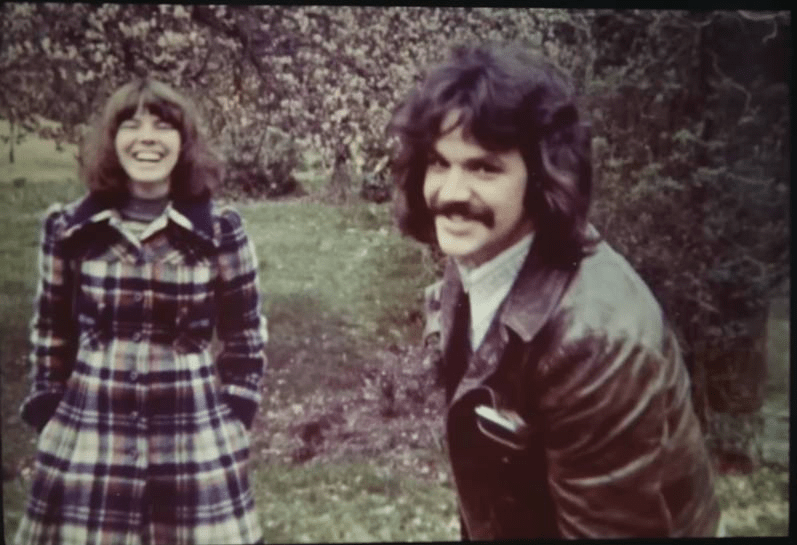
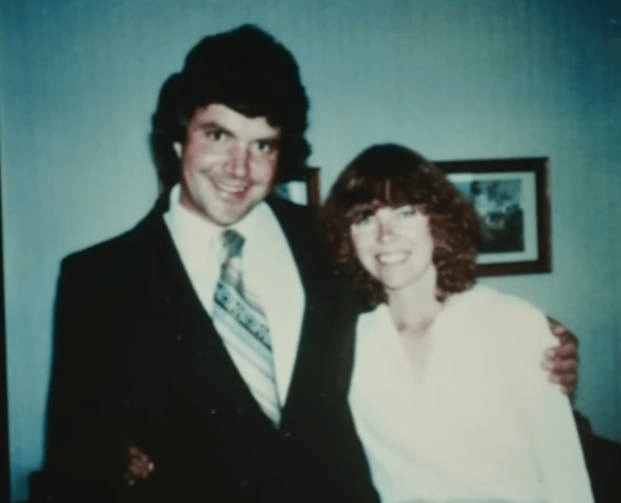
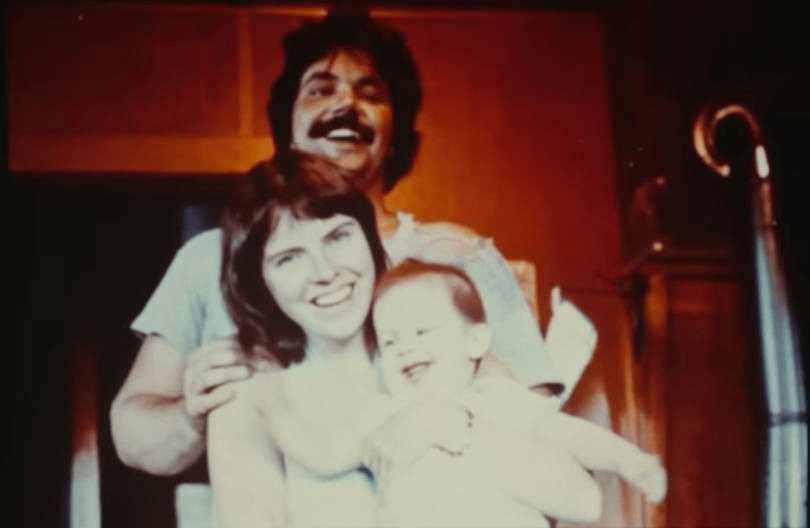
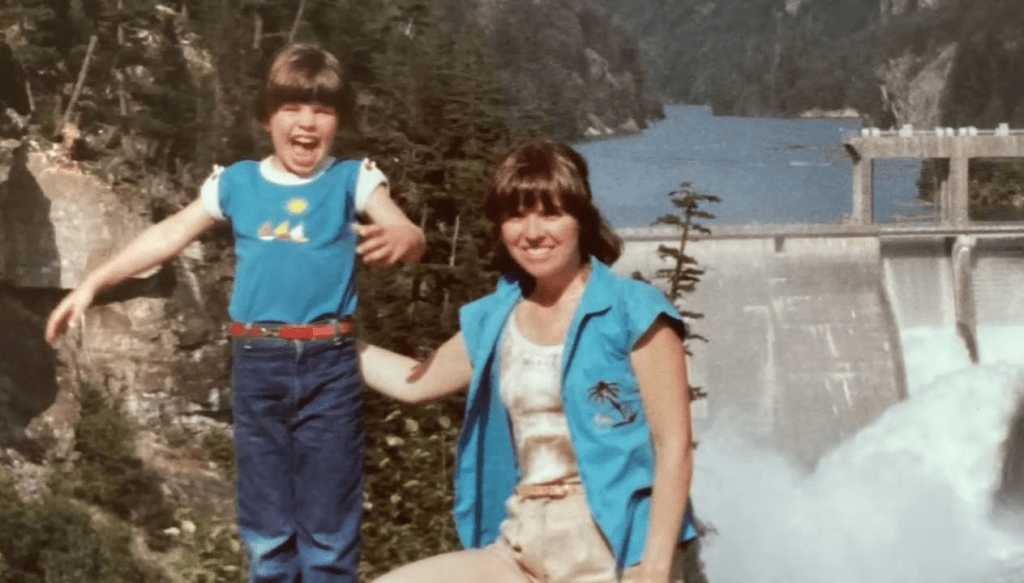
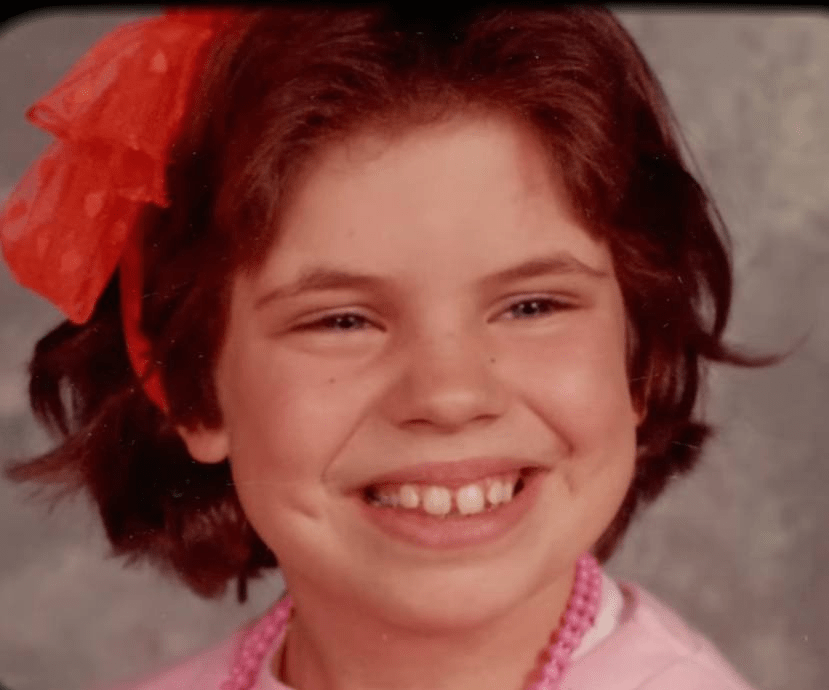
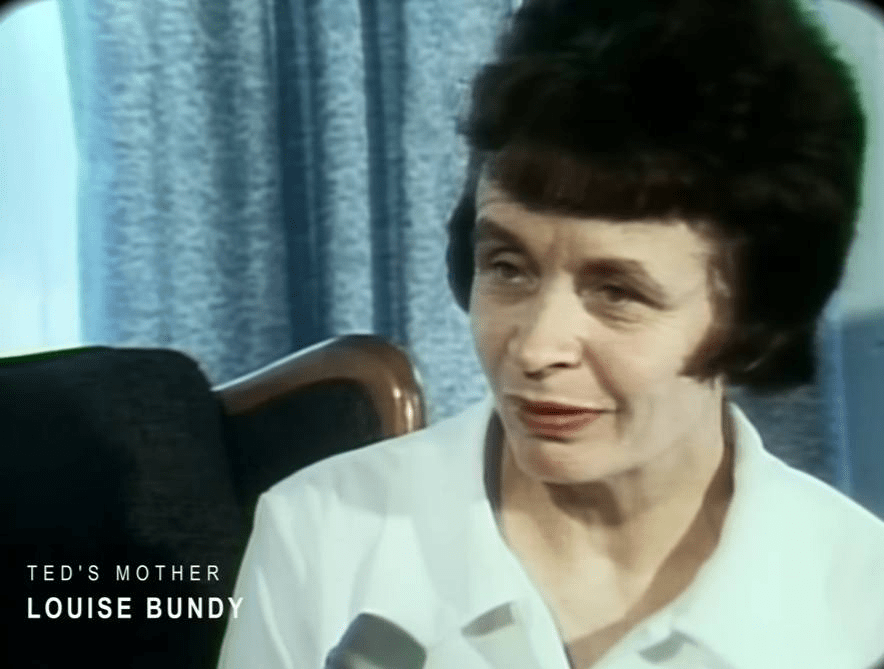
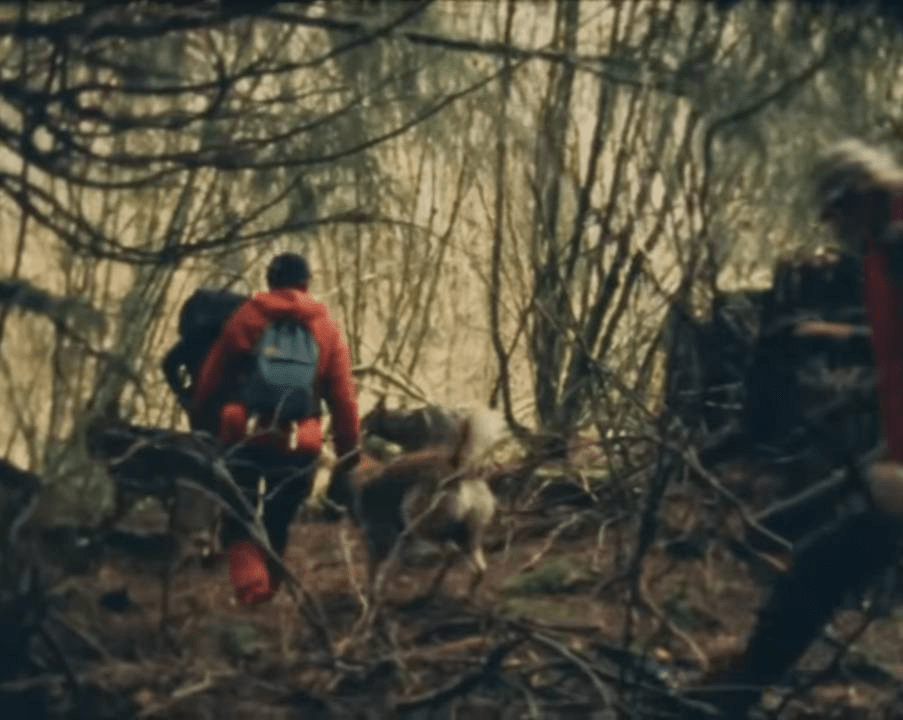
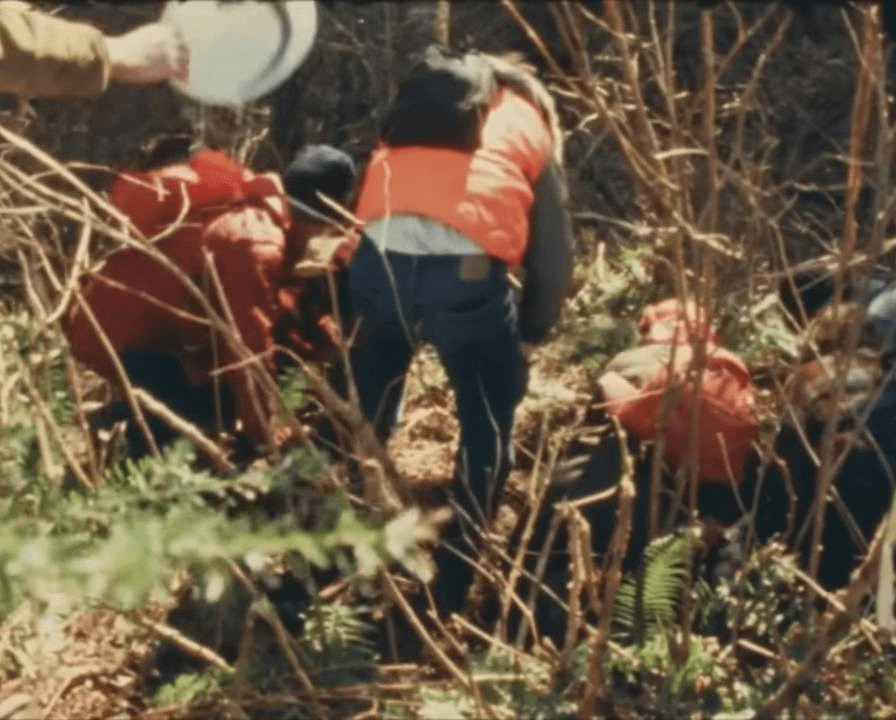
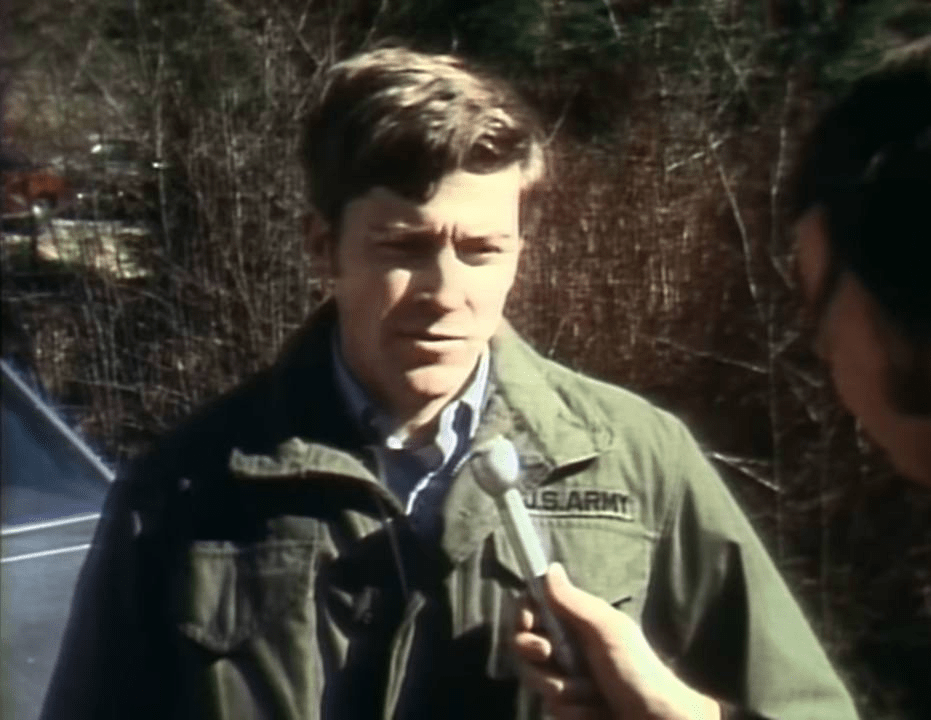
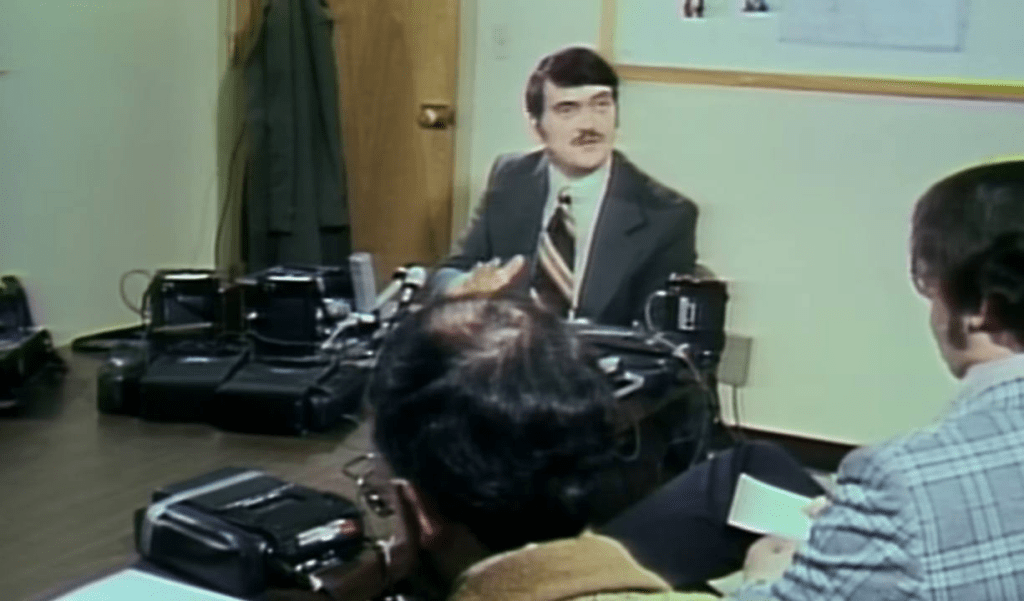
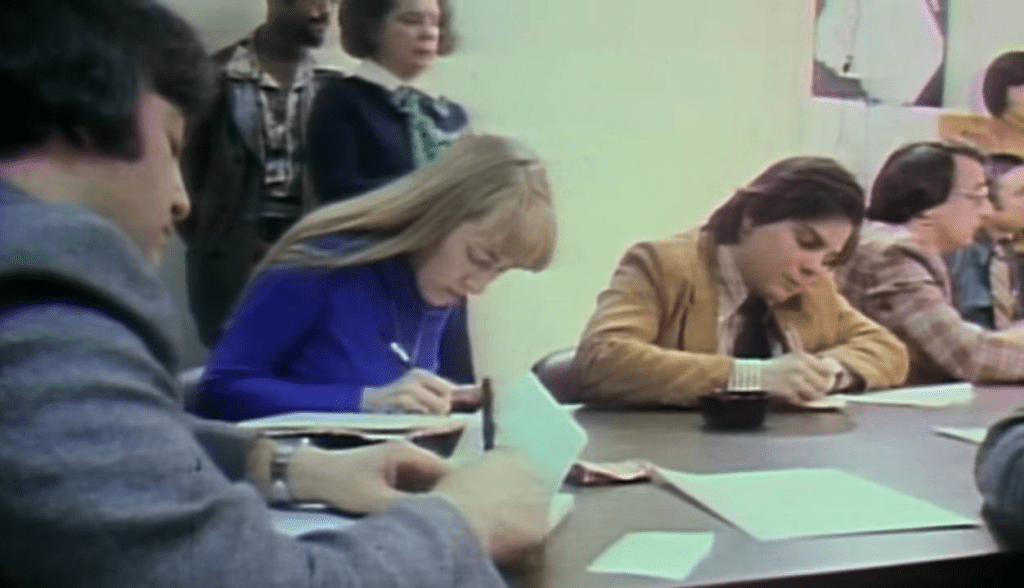
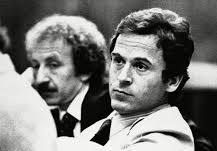
I found this while bumming around at the bar this past Saturday (we were dead and I had nothing to do). I don’t know if this is a legit article, or was written for a creative writing class… because I could find no record of Mary Soo or Janet Fair ANYWHERE, and there is no author listed. It’s interesting but I couldn’t find any truth to this, anywhere.

I’ve had Martha Feldman’s rape report in my drafts folder for over a year now, and I’m not sure why I didn’t post it yet. I started doing some digging into her background and as I was really getting into it, I realized that she didn’t ask for this to happen and this file was most likely only released due to a TB related FOIA request: she doesn’t want her personal life to be dissected fifty years after what was most likely one of the worst events of her life, so I am not going to go into her background and will strictly stick to the facts on the police report (especially since she specifies in it that she wishes to remain anonymous). I will say that she went on to lead an incredibly successful life, but I’m not going to elaborate any further. Feldman isn’t a Rhonda Stapley or Sotria Kritsonis, who ‘came forward’ years after their alleged run-in’s with Bundy looking for attention and notoriety (and in Stapley’s case, money). I mean, there’s a fair chance that Ted wasn’t Martha’s rapist.
According to the police report that Feldman filed on March 7, 1974 with the Seattle Police Department at the YWCA (located at 4224 University Way NW), she was raped by an unnamed assailant five days prior on Saturday, March 2 around 4:15 AM; she first disclosed her attack to a woman named Maria at the Seattle based organization ‘Rape Relief’ later that morning at around 7:30; from there, she sent two young women over, and they brought her into Harborview Hospital for a medical exam, which was given by a Dr. Shy at around 8:30 AM (where we know Bundy interned as a counselor from June 1972 to September 1972); the Seattle PD were notified later that evening.
Feldman told investigators that at around 1:30 AM on February 28, 1974 she heard something unusual but when she got up to investigate nothing was amiss; later in the same afternoon a friend of hers noticed that the screen had been removed from one of her windows (this reminds me of when Ted removed Cheryl Thomas’s screen from her window four years later in Florida). Martha’s assailant broke into her apartment around 4 AM and said that he didn’t ask her for money or valuables, and she even had some of her good jewelry sitting out and it remained untouched (in fact, the man didn’t appear to touch anything in the apartment). Personally, I think it makes sense that Bundy wouldn’t have stolen anything expensive, because by that point Liz already knew he was stealing and he was making a half-hearted attempt of not doing it.
Also, according to the report Feldman was moving out of her apartment and would be in touch with her new address; it does not clarify if she left because of her rape. She did not want her parents notified of her assault and said that she was ‘careless in not drawing her drapes or locking the window.’ After a few unsuccessful attempts to reach her by phone, detectives finally connected with her and on March 6th stopped by her apartment so she could sign a medical release form and speak to her more about what happened. Feldman told them that her assailant had been between twenty to twenty-four years old based off his ‘build and voice,’ and said that she never saw his face because he had a dark navy watch cap pulled over his head and down below his chin (it only had slits for the eyes that she suspected were made by him and specified that it had ‘not been a ski mask’); she said that she didn’t know his hair color but was certain he was white because she ‘saw his arms’ (she also said they had no hair on them).
Feldman said that early on the Saturday morning of her assault she went to bed around 1 AM (one other place in the police report said it was at 2 PM), and even though her shades were drawn one of the curtains were slightly agape, and she said it was easy to look in her one window and see that her extra bed was empty and that she was alone (she said that roughly ¾ of the time a friend stayed with her). It was probably 4 AM when she was suddenly awakened by something (she believes by him opening then shutting the window). Martha said that she’ had forgot to put the wooden slot in the window to lock it and although it would be difficult to see it was not there in the dark, he must have seen it as be took off the outer screen to reach the window.’ When she opened her eyes, a man she didn’t immediately recognize was standing in her doorway, and she said at first she only saw his profile and noticed there was something bright illuminating her living room and realized he had left his flashlight on the table (and that he had left it on). After her assailant came in her room he sat on her bed and assured her that he wasn’t going to hurt her and that he wouldn’t use his weapon on her as long as she didn’t scream, then proceeded to pull a hunting knife out from his back pocket, one that was dark and had a ‘carved bone handle’ with streaks on it. When she asked him how he got into her apartment he told her that it was ‘none of her business.’
Martha told the detectives that the man had been wearing a white, short-sleeved t-shirt and Levi’s, but was wearing not wearing a coat or sweater (even though it had been cold outside). She also said that his voice sounded like a Northwesterner and he seemed ‘well-educated,’ and possibly could have been a student at the nearby University of Washington. Feldman said that she didn’t recall that her assailant was wearing any jewelry or a watch and he had been drinking but was ‘not drunk’ and after about eight to ten minutes of talking he pulled out some tape out of his pocket and used it to cover her eyes.
He then turned on her bedroom light and left it on as he undressed her, unzipped his pants, then had sexual intercourse with her. When finished, he taped her hands and feet up ‘just to slow you down,’ turned off the light, covered her up with some blankets, said ‘go back to sleep,’ then left; the tape was later put into evidence. She heard him go out to the living room, open the window then run down the back alley; she listened but heard no car start up. Martha said he was very calm and sure of himself and felt that ‘he has done this before,’ although he didn’t say anything that made her think it was anything other than his first time. Feldman told detectives that she believed she could identify her assailant (even though her eyes were taped shut), and was usually home days as she had classes in the evening.
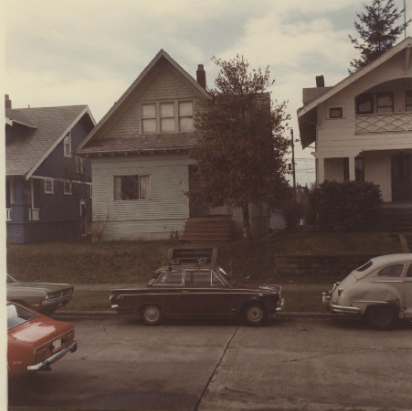
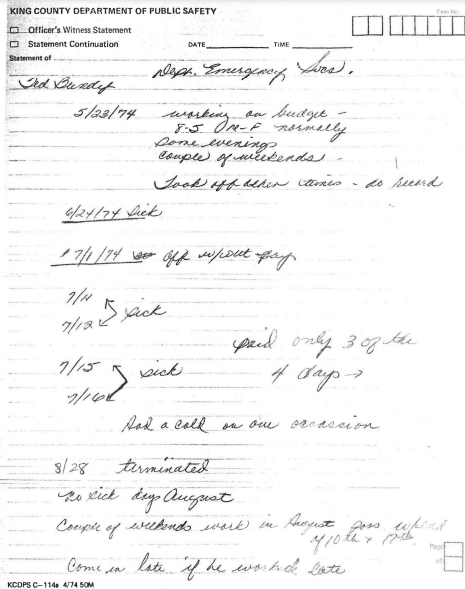
At the time of her assault Feldman lived at 4220 12th Avenue NE Unit 14, which was four houses and just a minute’s walk away for Bundy, who was living at the Rogers Rooming House just down the street at 4214 12th Ave NE (the building she lived in has since been torn down and in 2023 a new complex was built in its place). Ted’s whereabouts aren’t accounted for specifically on March 2, 1974, however he was placed in Seattle/Tacoma both the day before and after. He was in between employment at the time and had been without a job since September of 1973 (when he was the Assistant to the Washington State Republican chairman) and remained unemployed until May 3, 1974 when he got a position with the Department of Emergency Services in Olympia (he was there until August 28, 1974, which is right before he left for law school). On the last page of the eight-page document is a blank page with a scribbled note: ‘this is the case, I thought of for Bundy. Think there would be a print on the tape?’
Bundy went on to abduct then murder Donna Gail Manson from Evergreen State College in Olympia on March 12, 1974. On her website ‘CrimePiper, Erin Banks points out that on a social media post about Feldman one commenter remarked on the face that the assailant pulled out a ‘carved knife handle,’ and it just so happened to match the description of a rare knife that had been ‘stolen’ out of Bundy’s girlfriend Elizabeth Kloepfer’s VW Bug a short period later. That same person went on to say that ‘the fact that he wasn’t wearing a jacket, just a T-shirt, even though it was cold outside, seems to indicate he lived nearby too.’
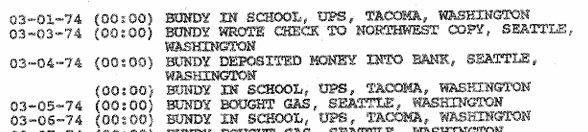


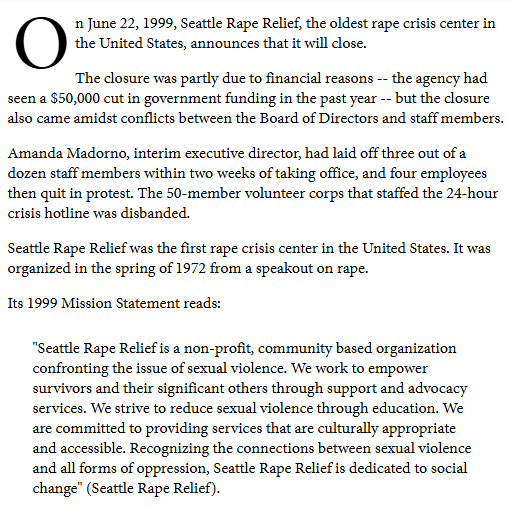
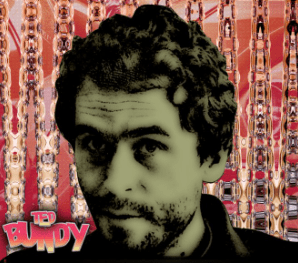
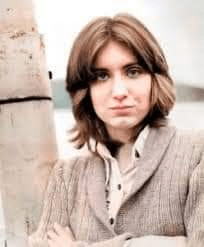
Document courtesy of the King County Sheriff’s Department. Over the years Karen has been given various pseudonyms, including ‘Joni Lenz,’ ‘Mary Adams,’ and ‘Terri Caldwell’ (in an attempt to protect her identity) and told her story for the first time in the 2020 Amazon docuseries, ‘Ted Bundy: Falling for a Killer.’
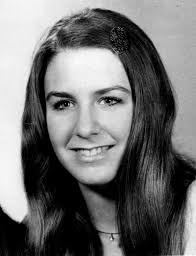
In May 2025 I reached out to King County to see if there was a chance I could visit their archives to look at their information related to the Ted Bundy investigation. Where visiting didn’t work out they were kind enough to send me a link via Dropbox that contained tens of thousands of pages of information related to the investigation. Here is everything I could find related to Lynda Healy.



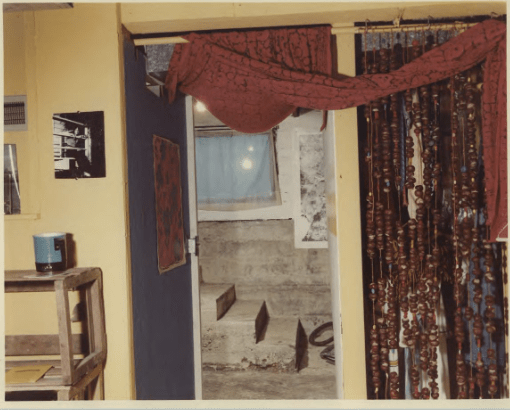
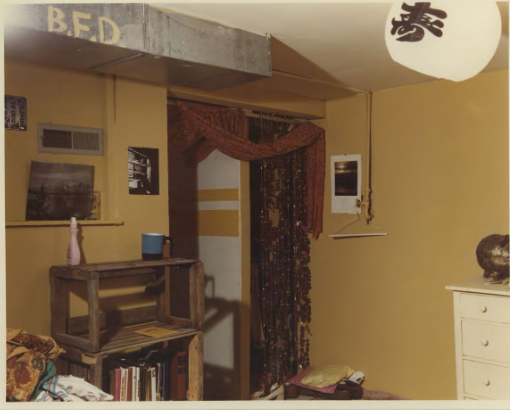


I’m going to preface this by saying I decided to split this article into two parts: the first will be about Sara A. Survivors background (whose real, legal name is Susan Lorrayne Roller) and her supposed relationship with Ted Bundy. The second piece will be a breakdown and review of her second book, ‘Reflections on Green River: The Letters of, and Conversations with Ted Bundy.‘
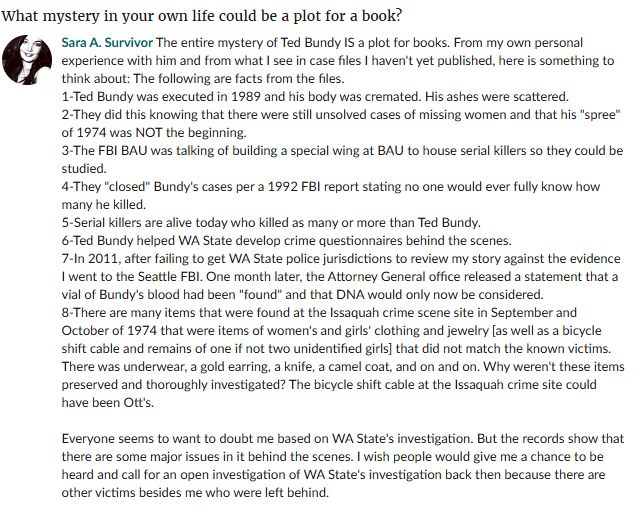
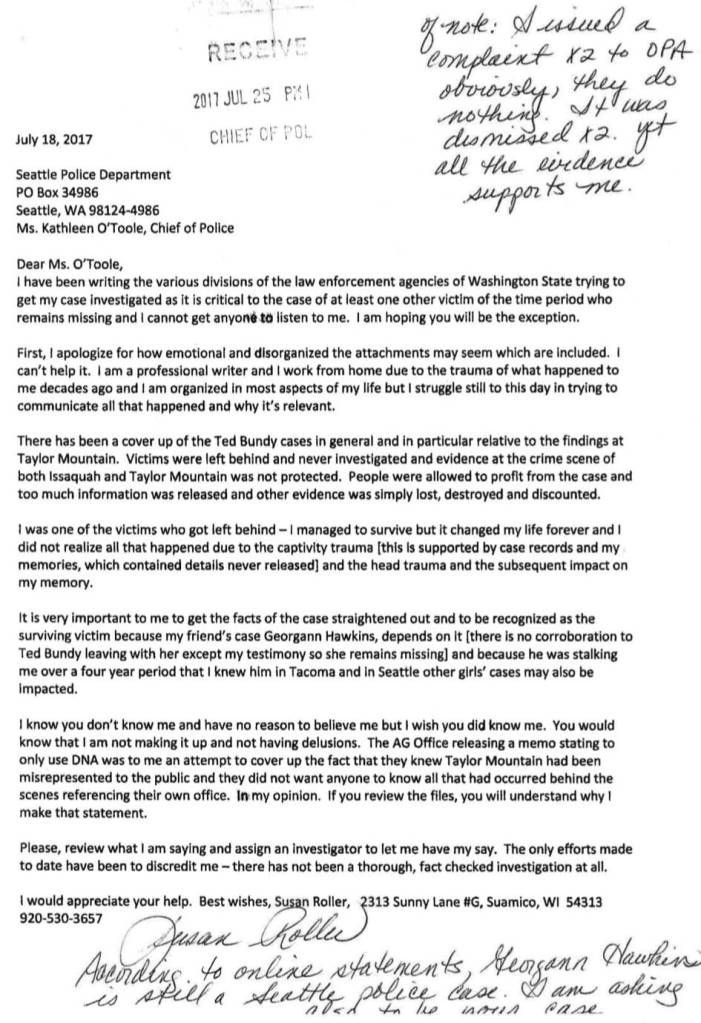
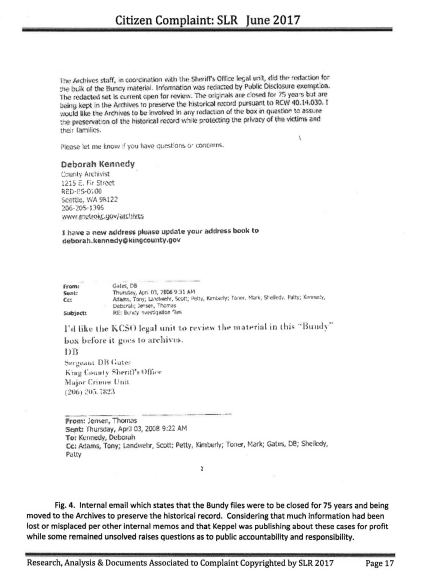
The tl;dr version of Ms. Survivors story is (whose real name is easily found in police documents so the need to publish under a pseudonym doesn’t make any sense): she is a surviving victim of Ted Bundy and over a four year period while in high school and college he repeatedly stalked, kidnapped, and sexually assaulted her. Survivor further claims that Seattle based law enforcement purposefully left out evidence in Bundy related reports (specifically related to the Taylor Mountain burial site), and even goes so far as to suggest there were additional victims that law enforcement refuses to investigate or even acknowledge. In a letter written to former Seattle Police Chief Kathleen O’Toole dated July 18, 2017, Survivor said that ‘there has been a cover up of the Ted Bundy cases in general and in particular relative to the findings at Taylor Mountain. Victims were left behind and never investigated and evidence at the crime scene of both Issaquah and Taylor Mountain are not protected. People were allowed to profit from the case and too much information was released and other evidence was simply lost, destroyed and discounted.’
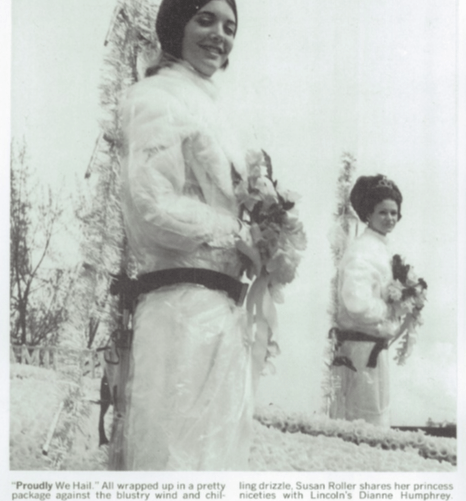
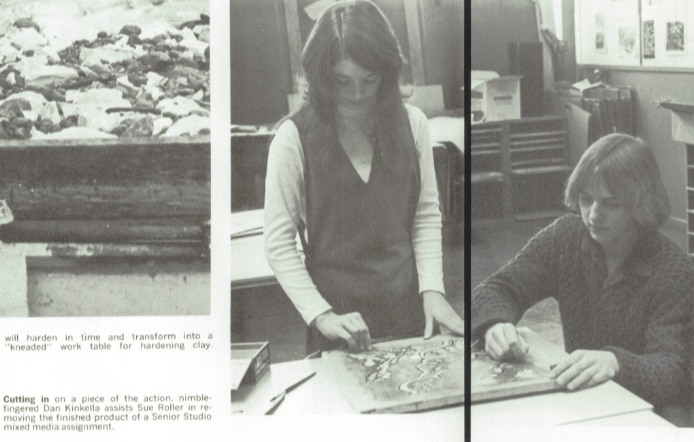
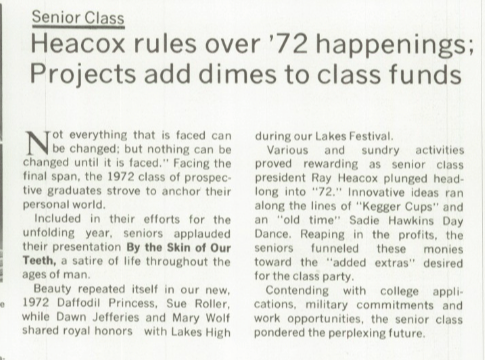
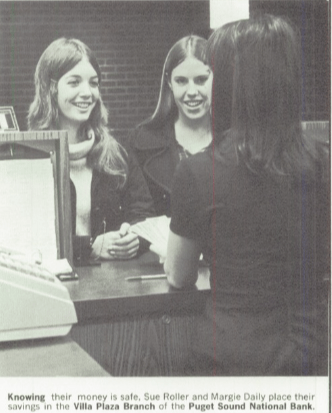
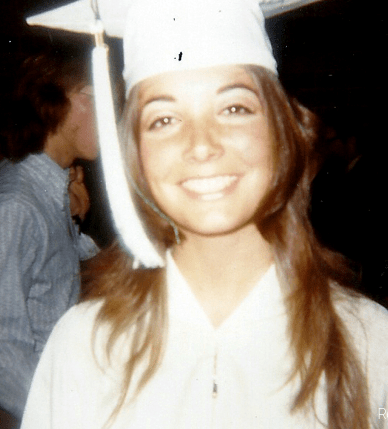
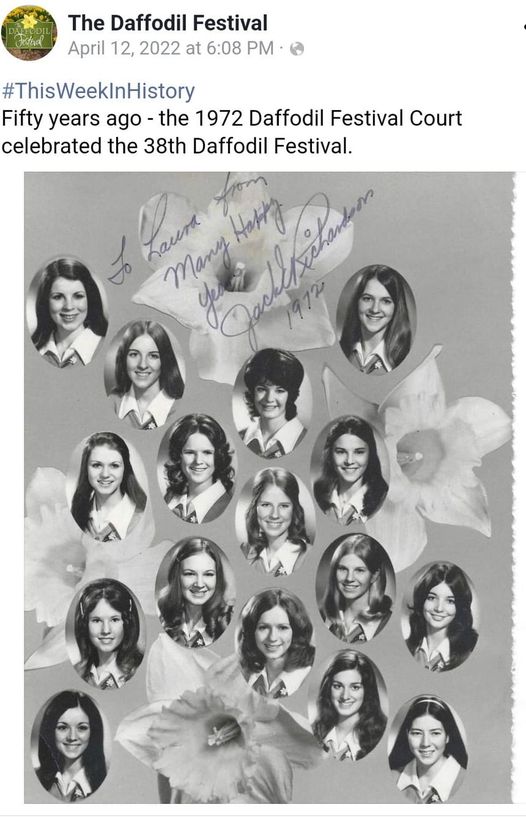
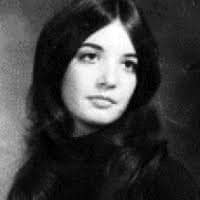
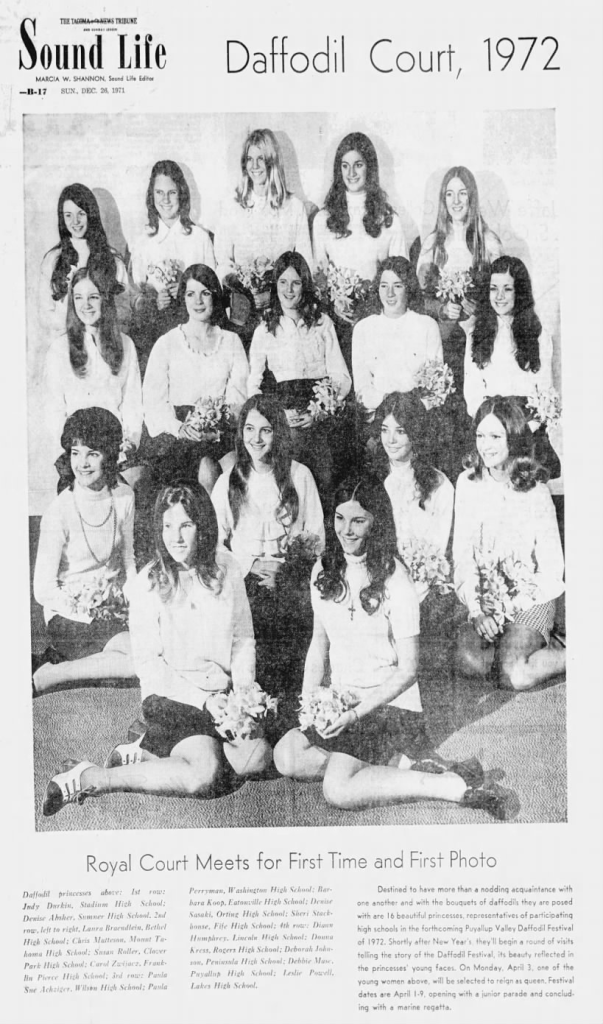
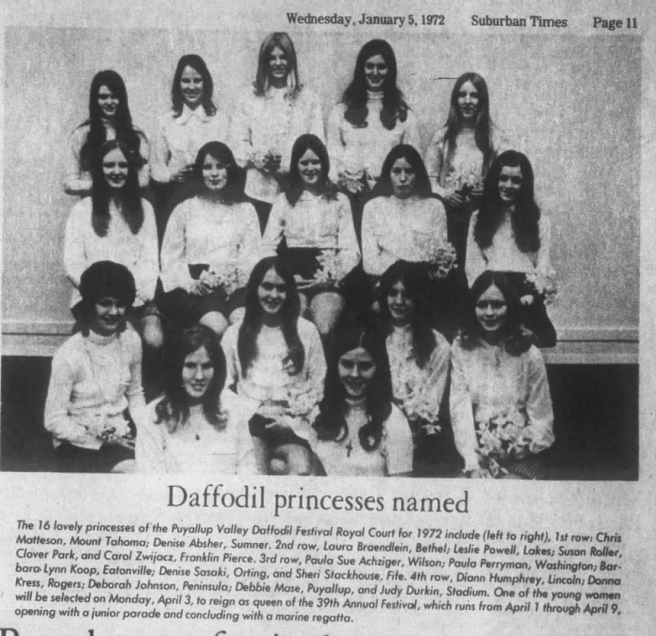
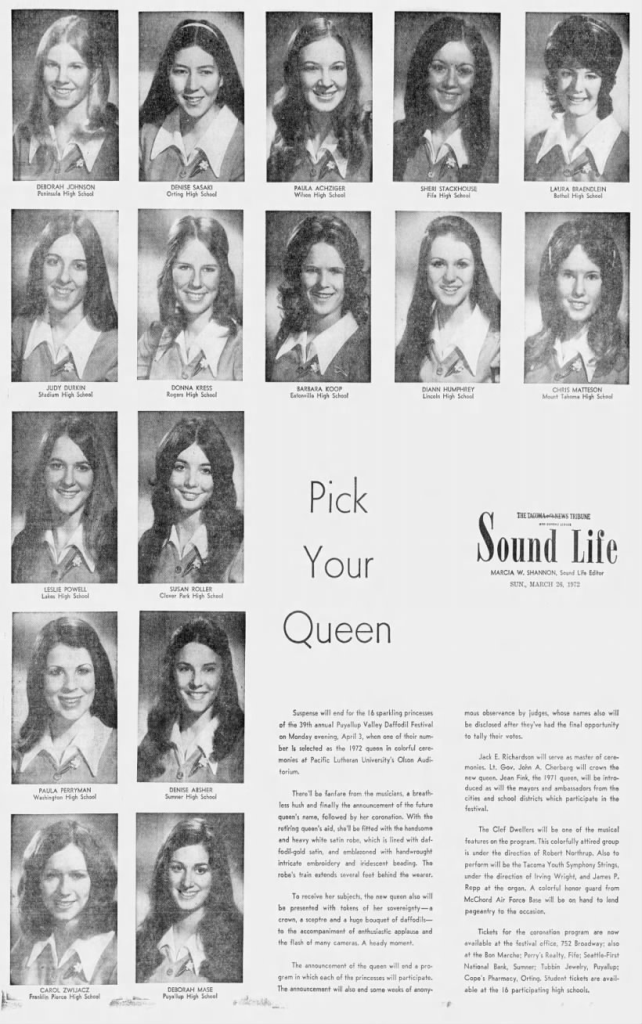
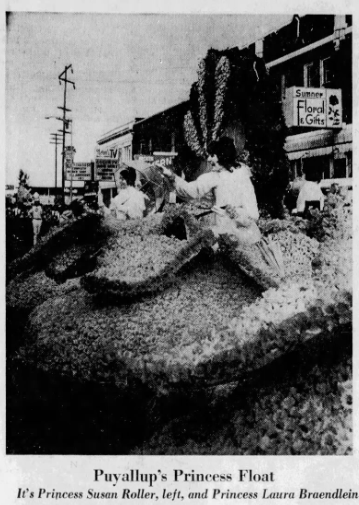
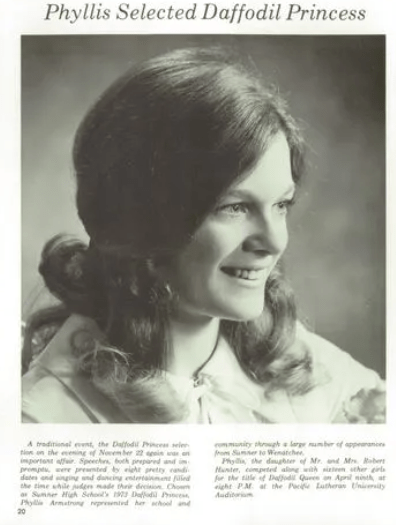
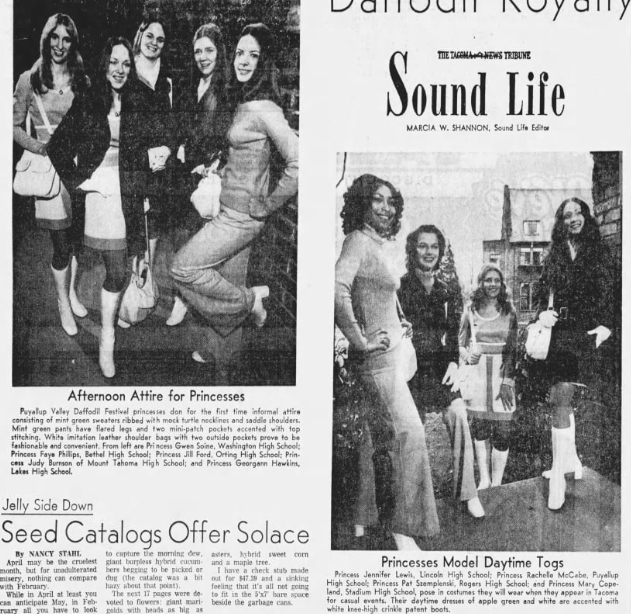
Susan Lorrayne Roller was born on September 13, 1954 to Gilbert and Lois (nee Moore) in Portsmouth, Virginia; the family eventually relocated to Lakewood, Washington. She graduated from Clover Park High School in 1972, the same year she was elected to represent her high school as Daffodil Princess in the Pierce County Daffodil Festival (an event to help support the flower bulb business). She went on to attend the University of Washington in Seattle, where she was a member of the Kappa Kappa Gamma sorority; Roller graduated with her Bachelor of Science in Medical Sciences in 1976. At first, I wasn’t able to find a great deal of information on her background (not having access to her memoir put me at a huge disadvantage), however once I discovered her real name I was able to find quite a bit more information. Well, let me clarify: I only found a handful of websites with useful information BUT this is one of those instances where quality is more important than quantity because the few sources I found were VERY helpful (I will include all links in the works cited section at the bottom)… Personally, I’d rather have 3-4 informative, high-quality resources than twenty crappy ones rehashing the same information over and over.
Beginning in 2016, a woman going by the name of ‘Sara A. Survivor’ published a trilogy of books about the Ted Bundy case. Her first release, ‘Reconstructing Sara: The Lost Victim of Ted Bundy,‘ is (for the most part) a memoir that is currently out of circulation waiting to be rewritten by a professional writer (as of May 2023). I tried my hardest to get my hands on a copy (I searched many websites, used bookstores, and even asked my sister the bookworm to check her local library but sadly she was unsuccessful). For that reason, I heavily relied on information from a variety of different sources including Erin Banks’ extremely well written book ‘Ted Bundy: Examining the Unconfirmed Survivor Stories.’ On the ‘Google Books’ page for Survivors first novel is the blurb: ‘what happened to Sara, both with Ted Bundy and with law enforcement, needs to be publicly reviewed. Bullying, cover up of materials (moving them into sealed areas during the time Sara was coming forward), and deciding who gets access to the justice system and who doesn’t are not elements of a democracy. They do not represent what the justice system of the United States was intended to be.’ Ms. Survivors second book is the one I’m reading, ‘Reflections on Green River: The Letters of, and Conversations with Ted Bundy.‘ The is composed of never before released interviews, transcripts, and information that took place between 1984 and 1988 related to Ted’s Washington state murders while he was on death row in Florida.
Last is the transcript of Bundy’s Final Prison Interview with Bob Keppel in January 1989: ‘In Defense of Denial: Ted Bundy’s Florida Confession Interview.’ Right before Ted was strapped into ‘Ol’ Sparky’ he met with Dr. Keppel in what would be his final interview with law enforcement regarding his atrocities in Washington. Nearly all of his confessions have been published in full through a variety of different mediums, however ‘Ms. Survivors’ final book is the transcript of it in full (as provided by her FOIA request originally made in June of 2015). In 2014 and 2015, she requested (and was granted) over 1,000 pages of original documents related to the Bundy case never before released to the public in their entirety as well as over 12 hours of original audio files. Upon reviewing the newly obtained files, she came to the conclusion that the case out of Washington state was ‘peppered with problems,’ and there was evidence that was purposefully misplaced. She elaborated that ‘documents couldn’t be found in some instances, and witness statements were not factored into the entire spectrum of the case in a consistent cohesive manner.’ The FOIA, or the ‘Freedom of Information Act’ was created in 1966 and states that any person has the right to request access to federal agency records. Survivor claims that the transcript is proof that information was purposefully withheld by law enforcement in relation to crimes Bundy committed before 1974 (when his ‘official’ reign of terror began with the brutal assault of Karen Sparks). On her website, ‘Sara discusses her concern that law enforcement withheld information about the Bundy case to the public (she specifically called it ‘incomplete information), elaborating that: ‘questions need to be raised as to why Bundy cases were released publicly with so much information put out when girls were still missing and not all was known. The case was never protected in the event future witnesses and victims came forward.’ The book (or more specifically, the transcribed original document) was not changed or altered in any way from how it was released to her (aside from taking out some names not directly related to the case). Perhaps I’ll read it after ‘Reflections on GRK.’
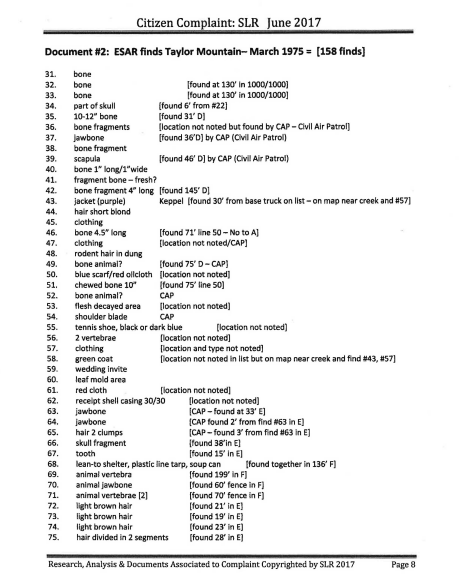
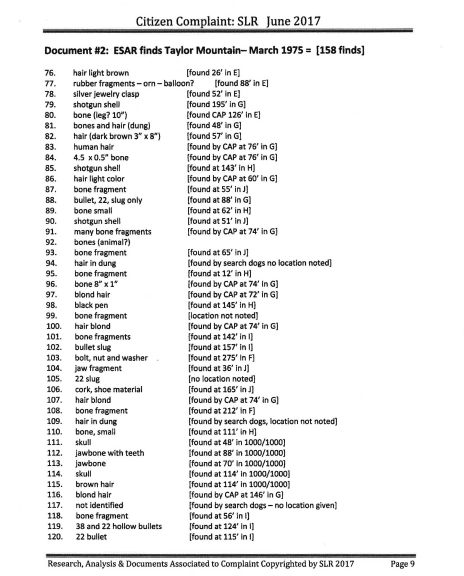
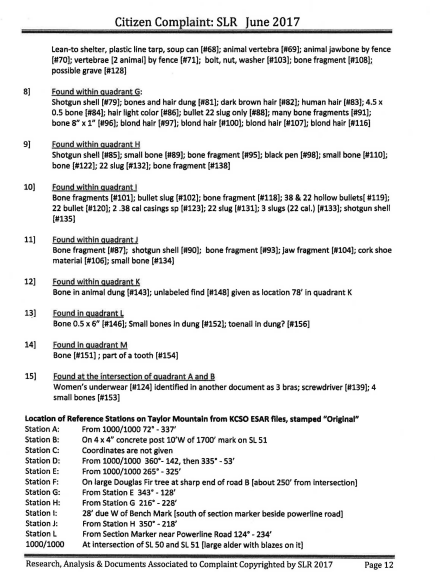
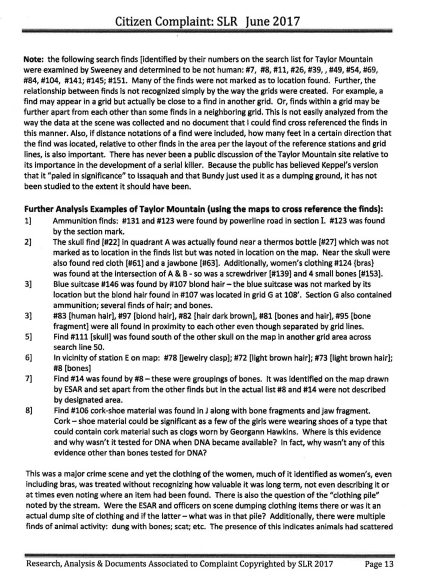
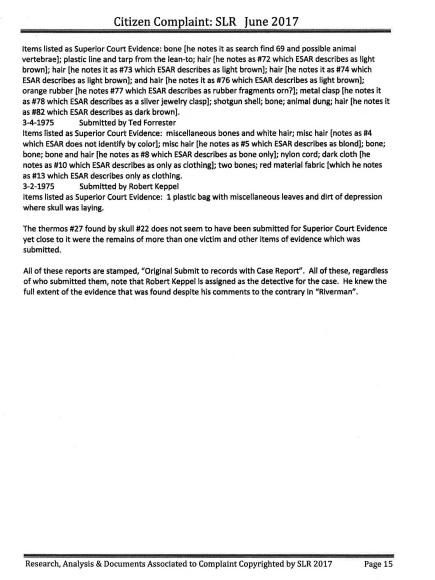
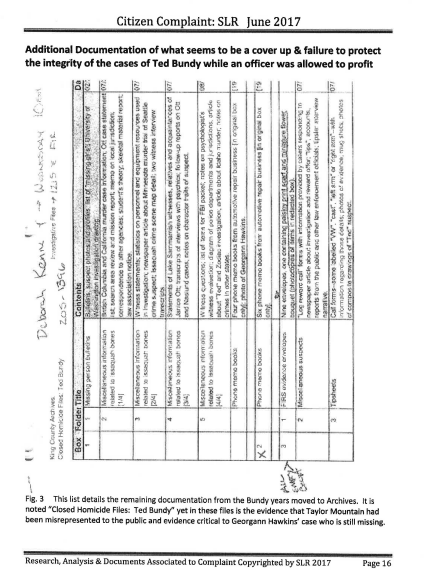
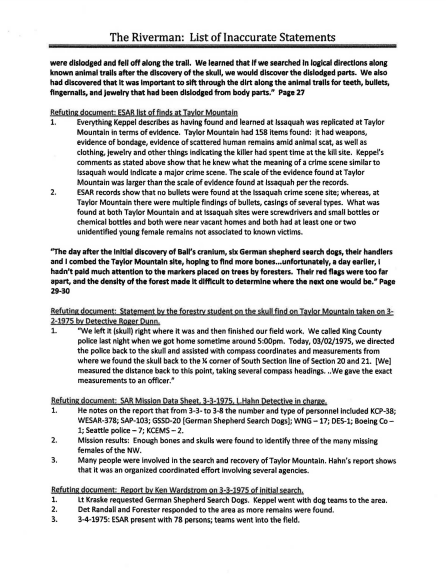
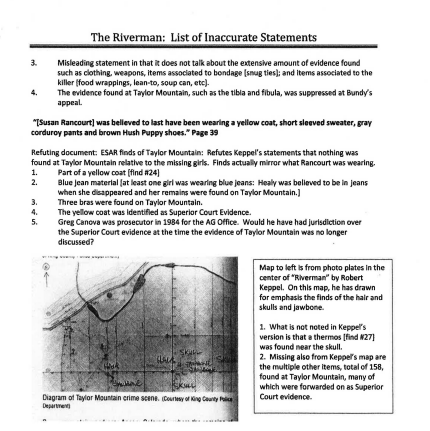
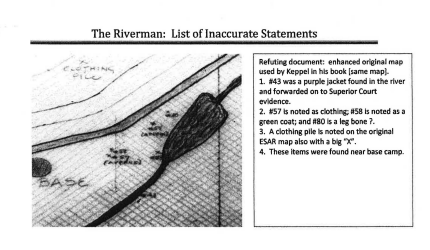
One of Sara’s more shocking revelations (for what I think are obvious reasons) is that detectives deliberately left important information out of case files, including the fact that they found ‘additional heads were found on Taylor Mountain.’ She claims the information released to her is proof that ‘158 items of evidence were found that included: skeletal remains, women’s clothing, evidence the killer spent time there; jewelry; signs of bondage and weapons (shotgun casings, gun shells, snug tie, etc) animal trails indicating animals had scattered the remains and human remains (female) who were not identified as being with the known victims there. There was also an abandoned home nearby and the ME statement states that the girls known and found there were not decapitated as has been claimed publicly. At Issaquah, there were also findings of women’s clothing, jewelry and a bicycle shift cable (labeled with a question mark). Much of this evidence was significant enough that at the time it was forwarded on to the Superior Court so why was it publicly denied? Evidence supports Sara and her contentions: her memories time and date stamped contained details which at the time the memories emerged as far back as 2001 had never been publicly released. They also contain details that are still not publicly released.’ I included the document in full below, and for this particular portion please refer to pages 12-15 of the Susan L. Roller document from cavdef.org.
In her first book, Ms. Survivor admits that she isn’t 100% certain when exactly she became acquainted with Bundy, however feels it most likely happened sometime in her junior year of high school in the winter months of 1970/71. One way that Survivor speculated she could have met him was on a ski trip to the Washington Cascade Mountains with her friend ‘Robert.‘ While there, she attracted the attention of Ted, who just happened to be there at the same time; she alleges to remember the two men fighting over her at some point. Sadly, Robert died about a year and a half after the incident in a waterskiing accident. Regarding the circumstances surrounding her friends death, Sara can’t help but wonder if somehow Ted was involved (whether it was from screwing around with his jet skis or boat), and despite having absolutely no tangible proof of this her inner voice ‘felt something was wrong back then…’ I’m sorry, but why would Bundy give one single crap about some guy he randomly met a year and a half earlier, one time? Was he so obsessed with Survivor that he jealously killed any other man that showed any sort of interest in her? Keep in mind at this time Ted was in a committed, long-term relationship with Liz (in fact this was towards the beginning of their romance, where Kloepfer reported they spent a lot of time together). He was also a student at the University of Washington as well and from June 5, 1970 to December 31, 1971 was employed as a delivery driver for Pedline Supply Company (a small, family-owned medical supply company). This is obviously a busy, vigorous schedule and his life was pretty busy at this time… so, let me get this straight: Survivor is saying Ted had all this extra time to follow her around AND was still able to go about his normal, everyday routine? Although I don’t believe Bundy had anything to do with Roberts death, in her book Ms. Banks does point out that one’s of his Seattle based attorneys John Henry Browne wrote in his book ‘The Devils Defender‘ that Ted allegedly confessed to him (and conveniently only him) that his first murder victim was a male (although it’s widely speculated Browne often embellished and wasn’t always truthful in his storytelling).
A second scenario Sara said she could have possibly become acquainted with Bundy was through her modeling job, and that he was stalking her while at shoots across various states. In her book, Ms. Banks points out that Survivor ‘repeatedly points out in her memoir how beautiful and petite she was at the time. This seems to hold particular meaning to her, as though it validated her claim that Bundy had targeted her. Bundy, she writes, came to stalk her at her tearoom, runway, and photography modeling jobs, yet she neither recognized him as the person who’d previously dated a friends sister in California nor as the man who had approached her during a prior ski trip (Banks, 81).’ Survivor claims their relationship started off innocently enough (like most do): movies, late night walks, skiing trips (you know… normal, nonthreatening dates). It didn’t take long before the date part of their meet-ups disappeared, only to turn into walks in the dark alone, which eventually led to the first time Ted sexually assaulted her. He apologized after, saying he had been drinking before their date and she forgave him. In an email to true crime writer and Bundy bff (kidding) Ann Rule, Susan said that ‘the relationship was not about fear. There were many times on many walks and nights on the phone, where we just talked in the beginning of 1974, he was asking me out skiing, to movies, to do things. I canceled a skiing date due to weather, but shortly after that he stopped asking for the traditional dating things and we wound up basically just on walks and talks. But, he had overpowered me in Tacoma when I knew him (when I was in high school) and he had raped me there, this was the violent time that hurt me physically and I never said anything because I blamed myself and he had been drinking and he was apologetic about it afterwards, to at least claimed to be that I forgave him.’ Survivor then claims that she began dating Bundy again in 1974 but couldn’t get past the sexual assault as well as his increasing possessiveness of her, to the point she suspected he was following her late at night and was slowly isolating her from her friends. Further on in the same email to Rule, Survivor said her ‘injuries were done in Tacoma and they were bad: I never went to a hospital but probably should have. I developed severe endometriosis (normally only seen in seat belt injury or violent rape) on nearly ever organ and space in the abdomen as well as on my lungs. Doctors said it was the worst case they had ever seen.’
Ms. Survivor said she remembers Bundy coming to her house at some time in late 1970/early 71 (despite the fact she didn’t know or recognize him in any capacity) to play with her pet raccoon (I want one). She further alleges he pulled up to her house driving a cream-colored VW Beetle BUT… a damning piece of evidence against her story is that Bundy drove a light blue VW Beetle at that time in the early 70’s: he didn’t purchase his yellow (or cream/tan/gold/bronze/ beige) roving death machine until sometime in the spring of 1973. Sara also claims that in 1971 Bundy started calling her family home despite not knowing her name, phone number, or where she lived. She further claims that one of the reasons he contacted her was to offer up his counseling services to her, and I mean… Why would he do that when he didn’t have his Psychology degree until 1973? Obviously Survivor took him up on the offer (I mean, who wouldn’t accept help from some stranger on the phone?) and began freely sharing all of her deepest, most personal secrets with this mystery man, such as her feelings about her parents splitting up, the fact that she was frequently left home alone, and that she was suffering from extreme loneliness as a result of the whole situation. It’s worth mentioning that Sara freely admits she was drinking quite a bit at this time, which would most likely affect her memory in some capacity.
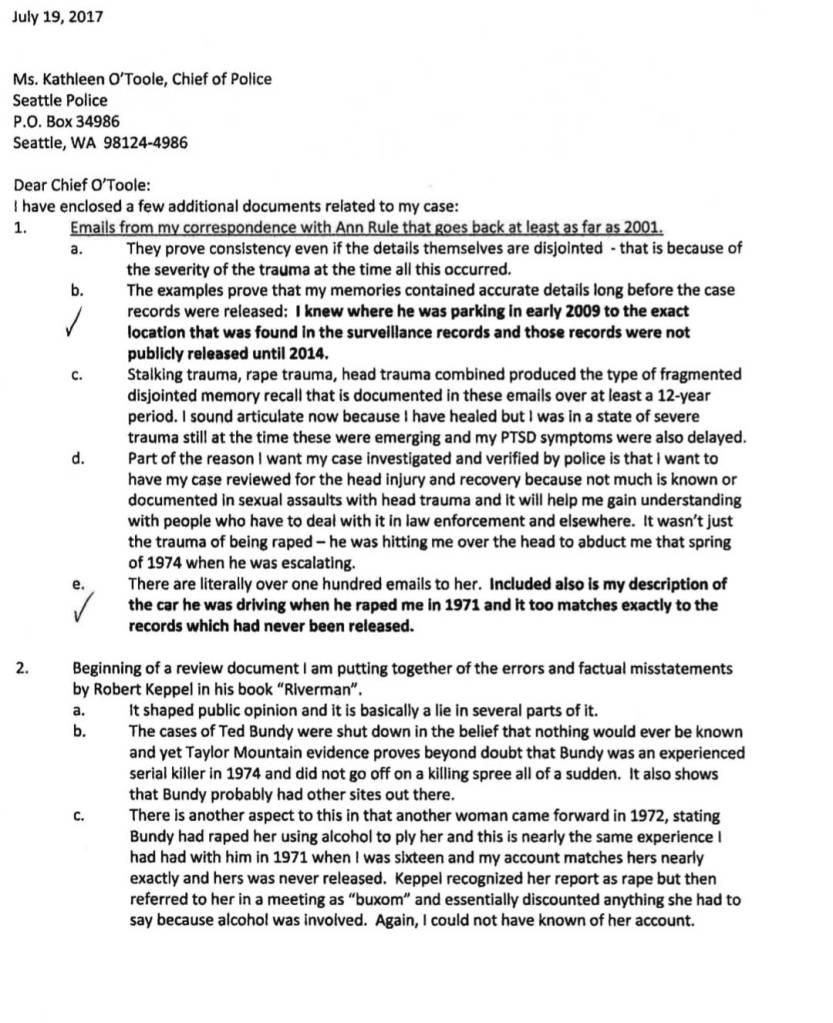
In ‘Reconstructing Sara,’ Survivor claims she was so terribly victimized by the serial killer that a Stockholm Syndrome type relationship began taking place. Stockholm Syndrome is defined as a condition where hostages develop a psychological bond with their captors and occurs when a specific set of circumstances or criteria occur. In most situations, it’s directly related to the power imbalances that take place in hostage-taking/kidnapping/abusive relationships. Survivor often referred to herself as Teds ‘secret friend’ and even made a promise to him that she wouldn’t tell anyone about their ‘relationship.’ In an email to ‘BlueZinnia9@aol.com,’ Sara said that a friend named ‘Anne’ can confirm the time frames of Survivors ‘secret friend,’ and that ‘it started slowly after we moved into the annex which she believes was in October and which I think was more than likely November, but sometime in here. She also told me that she remembered it gradually escalating from the point until becoming more intense right before we left for California.’ Ms. Survivor also claims that sometime in 1971 Bundy began aggressively stalking her, even claiming he broke into her childhood bedroom (while her entire family was home). On page 16 of the cavdev.org document, Survivor said that ‘Ted lived in Tacoma; I lived in a nearby suburb Lakewood. Ted’s parents lived less than one mile from my fathers home in Tacoma in 1974 and prior to that even closer to my fathers apartment at the time (he was separated from my mother in summer of 1971 when Ted was actively stalking me). Phone records would prove contact with him if they still exist. There are other facts as well that would prove what I am saying. I think he was using me as a blueprint for his killing, he stated to FBI he was abducting a woman and releasing her to test his skill as a ‘dry run.’ A dry run is against a target by definition.’ Additionally, Survivor is fairly certain that he followed her and some friends while they were on a walk one night into a secluded, wooded area. She said that the violence Bundy inflicted on her was so extreme that it left her with permanent psychological and structural brain damage: psychological because of the incredible amount of stress, trauma, and grief he inflicted on her and structurally because of repeated violent head injuries she sustained by him. Ms. Survivor further alleges the memory loss she experienced before Bundy came into her life was the result of being sexually abused by multiple other men during her childhood and adolescence.
Now, I could be totally off base so forgive me if I get too far off track but I’ve been studying Bundy for quite a few years now, and it wasn’t until I was in Seattle in April 2022 that I stumbled upon Ms. Survivors story (I’ve spent MANY nights in the past few years going down the Ted Bundy rabbit hole at 3 AM)… on a side note, has anyone ever really looked into ‘Bundy is innocent‘ theories or that he was somehow involved with the ‘MK Ultra’ project? I’m not saying I believe he’s innocent (he obviously wasn’t) or that I think the government had a hand in Bundy killing innocent young girls (I don’t)… I’m just saying, there is some really weeeeeeeeeeeeird shit out there. Anyways, I digress… back to Sara. There was a night I literally didn’t sleep a single wink while in Washington and while surfing the interwebs I stumbled upon Sara’s story (I didn’t do very well being away from my new husband and leaving my Wellbutrin at home really messed with my mental health). I did buy Erin’s book back when it was first published in 2021 and read it right away but to be truthful, at the time I was more interested in the confirmed victims just because I was still learning the basics (I felt like I was reading a masterclass level text while at a beginners skill level, to be truthful). When I picked it up again while researching this story (I can’t even call it a case because technically it isn’t) it was like, 11:30 at night and as I was flipping through it I sat up in bed and said ‘OH MY GOD!’ really loudly, to which my husband said ‘you’re not staying up all night reading, we’re going to bed.’ Just… I know I made a post about it already on my FB page but wow! What a wealth of information. If you haven’t read it yet you’re missing out. Anyways, I had zero knowledge of Survivors story before my trip in April 2022 and I’ve read many (many many) books on Bundy (I’ll post a picture of my collection below), but for the life of me I don’t recall ever seeing anything about this victim before (even under her ‘real name’). Maybe I’m wrong but if there is anything written about her it must be very short and concise because I can’t for the life of me remember anything. Anyways, her first book is said to be written in ‘fragmented, confused and repetitive order in which most of these events and the emotions that are associated to them still exist in her mind.’ Sara claims she blocked out all of her traumatic memories until ‘recently’ (for reference, her first book was published on September 13, 2016) and she regained only partial ones from the damaged regions of her brain: all of the memories she experienced with Bundy during that four-year period in her youth came back to her in pieces between 2001 and 2009. The book/website said that ‘her memory fragments documented in emails back and forth between Sara and law enforcement over a fourteen-year period dating back to 2001 containing specific details of the Bundy case that were never publicly released. Her physical features, locations, travels and proximity to Bundy in high school and in college also line up to the case overall.’
In a letter to Kathleen O’Toole, Survivor started out by apologizing for being so ’emotional and disorganized,’ and that she can’t help it: ‘I am a professional writer and I work from home due to the trauma of what happened to me decades ago and I am organized in most aspects of my life but I struggle still to this day in trying to communicate all that happened and why it’s relevant. There has been a cover up of the Ted Bundy cases in general and in particular relative to the findings at Taylor Mountain. Victims were left behind and never investigated and evidence at the crime scene of both Issaquah ad Taylor Mountain was not protected. People were allowed to profit from the case and too much information was released and other evidence was simply lost, destroyed and discounted.’ Common sense should tell you (plus it’s still widely discussed in the true crime community) that law enforcement is still looking to solve all unsolved Ted-related cases and put them to bed. Despite this, Survivor claims that for over 14 years they refused to investigate any of her claims (that they admitted to her anyways, remember how police were still investigating Bundy despite telling Liz they cleared him?), acknowledge her as a victim (or even talk to her), or even assign her a case number. It is worth noting that people in general have trouble remembering events that happened a long time ago (I think I’ve said that in my last few articles when discussing Bundy’s family attempting to answer questions about Teds activities as a youth). Ms. Survivor heavily implies that Ann Rule helped plant false memories into her head and that was why she gave contradictory statements and false memories (which could be why she pulled her book from publication and is rewriting parts of it); I am including some screen shots of these emails below (Banks, 80).
Something really interesting Erin touched on in her book was that Ms. Survivor claimed that after spending time in Modesto, California she realized she looked strikingly similar to many of the Santa Rosa Hitchhiking victims (which were at one time also thought to be committed by Bundy)… now, why she felt this way we’ll probably never know, as the girls had a broad range of hair colors (light/dark… black, blonde, and brunettes) and were ‘Caucasian, Polynesians, South-East Asians, Hispanic Americans, and those of mixed ethnicity (Banks, 82).’ Why did she feel she somehow looked like this very broad range of women? The SRH murders took place in 1972 and 1973 throughout both Sonoma and Santa Rosa counties in the North Bay region of California. There are seven unsolved homicides related to the case and involve female hitchhikers, all of which were discovered completely naked in rural areas close to steep embankments or creek beds close to roadways. The case remains unsolved to this day; Bundy was strongly suspected in relation to these cases after he was taken into custody for the final time in 1978 (it’s proven he had spent some time in nearby Marin County in California). Ted was eventually ruled out a suspect by Sonoma County detectives twice: once in the 1970’s then again in 1989 thanks to credit card receipts and Bundy being placed in Washington state at the times of some of the disappearances. However, in 2011 ‘The San Francisco Chronicle’ published an article looking into the logistics of Ted’s potential trips from Seattle to California and after comparing the dates and times of his credit card receipts to the where the murders took place it was determined he would have been enough time to drive to California, commit the murders, then hightail it back to Seattle in time for his alibi (it would have taken slightly over 12 hours to drive from the Rogers Rooming House on 12th Ave in Seattle to Santa Rosa County, one-way). Some law enforcement officials feel Ted was a poor suspect in the SRH murders because they strongly felt the killer was native to the Santa Rosa area… perhaps someone who worked as a rural letter carrier or utility worker that would have been familiar with the remote areas where the bodies were left. However, about his relation to the case, Bob Keppel said that ‘Bundy is definitely a good suspect. The killings in Santa Rosa would fit his methods, he spent time in the area, and I’m sure he started killing well before 1974. It was an open market for Bundy.’
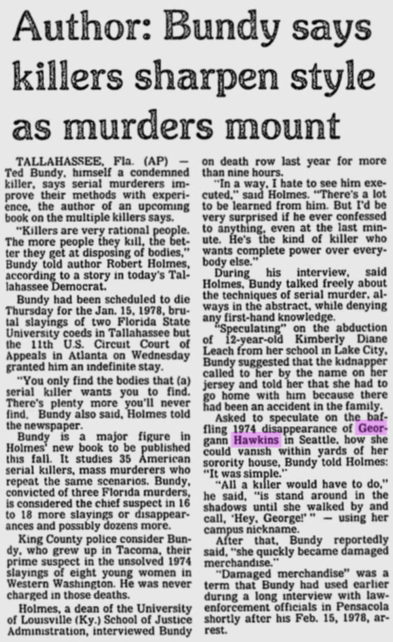
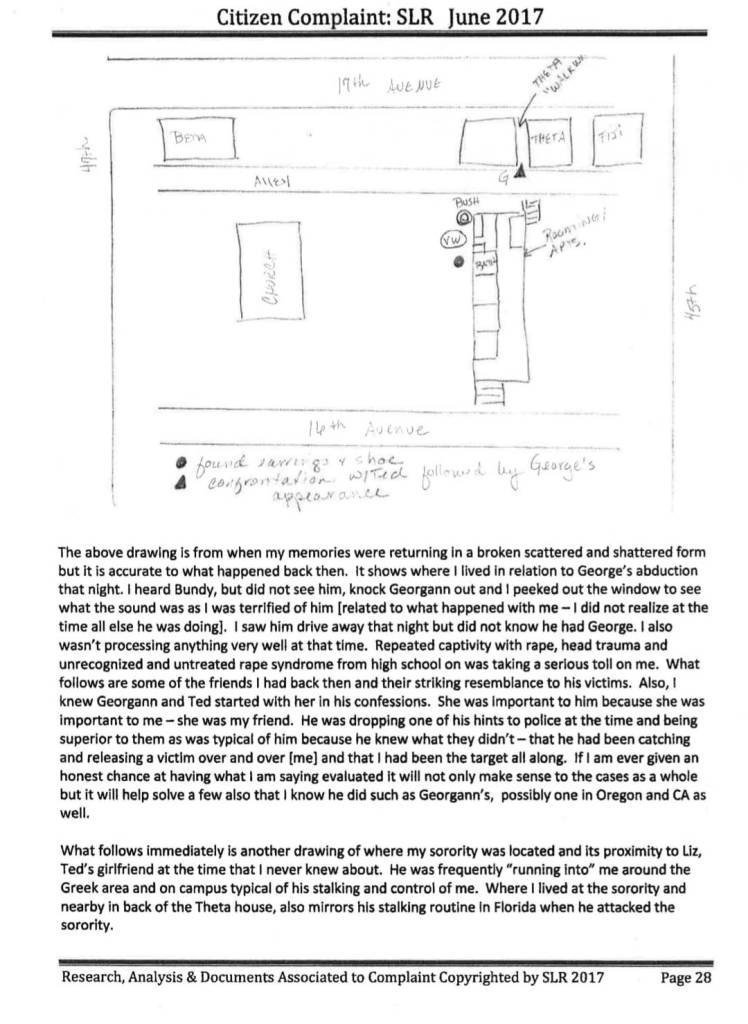
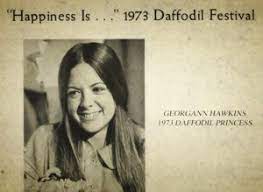
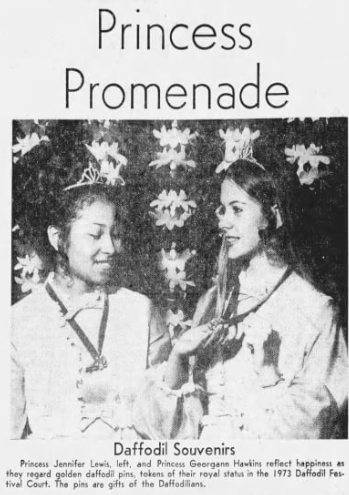
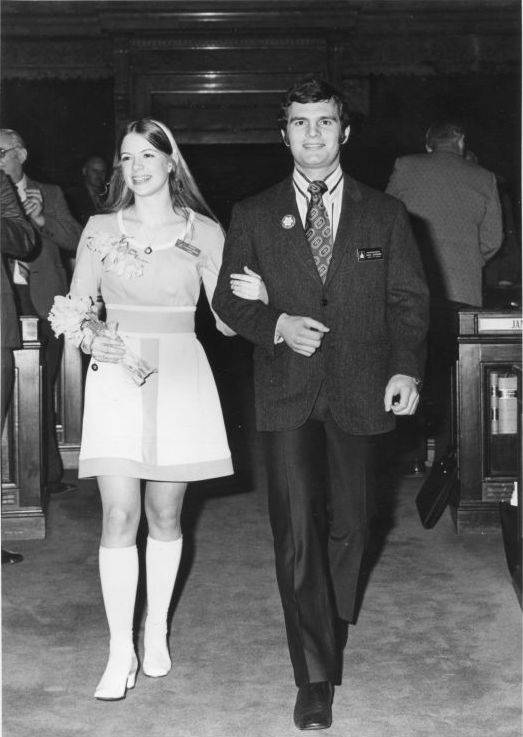
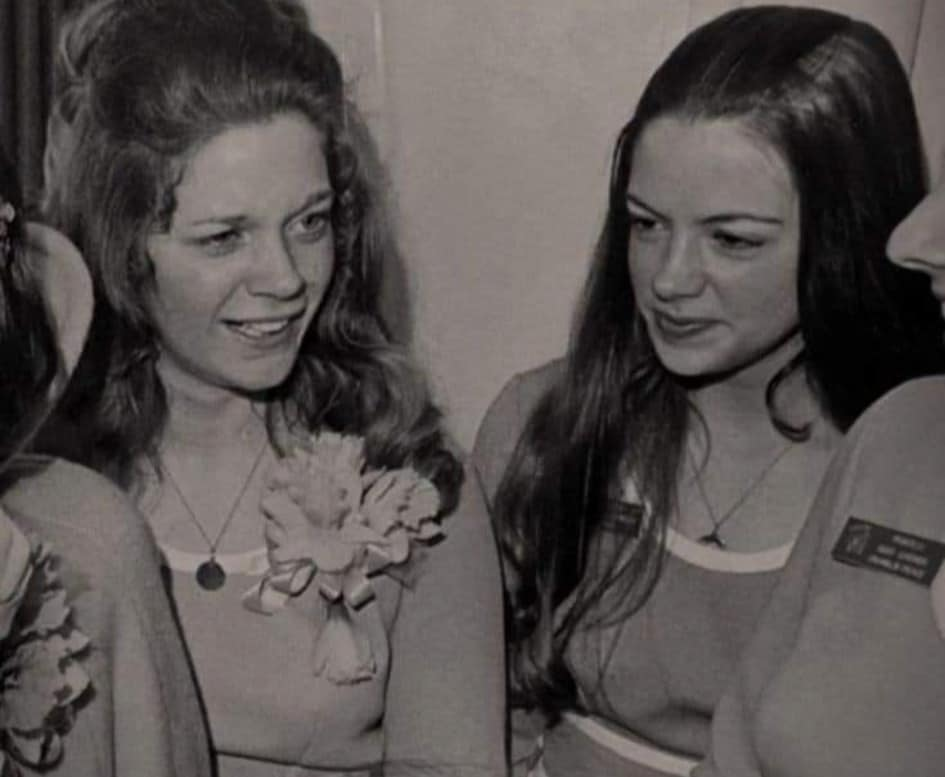
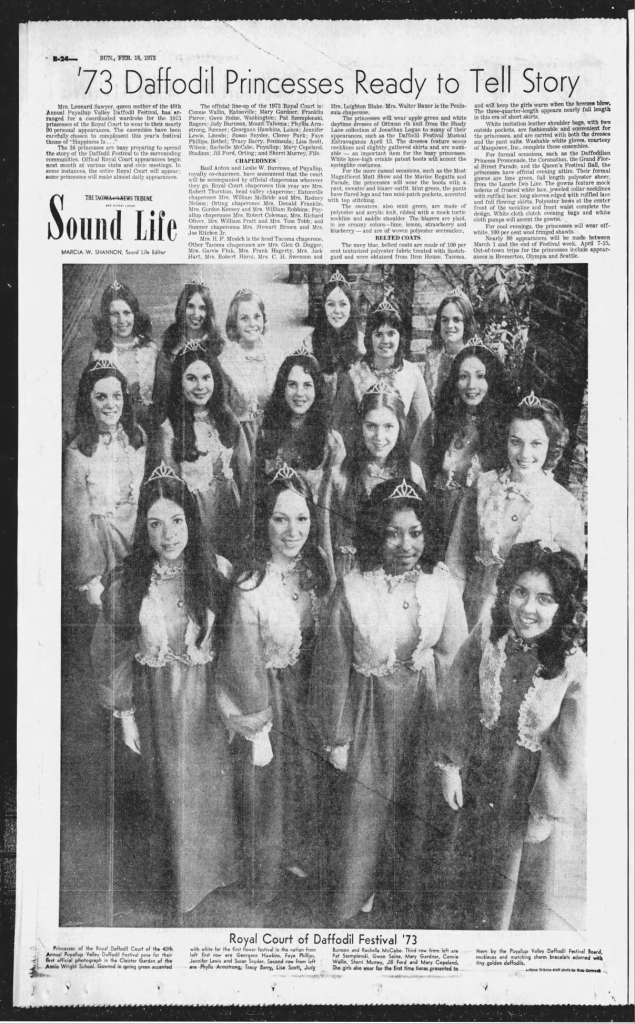
From page 28 of ‘Citizens Complaint: SLR June 2017’: ‘also, I know Georgann and Ted started with her in his confessions. She was important to him because she was important to me: she was my friend. He was dropping one of his hints to police at the time and being superior to them as was typical of him because he knew what they didn’t: that he had been catching and releasing a victim over and over (me) and that I had been the target all along.’ I mean, this just sounds like the ramblings of a person suffering from delusions: why wouldn’t he just talk about Roller? Why would he be so insistent on keeping his relationship with her a secret? If I can be completely honest, I was almost ready to completely write off Ms. Survivors claims that she knew Georgann Hawkins in any sort of capacity. And where I couldn’t find actual proof of their friendship I did discover that Sara was a Daffodil Princess in 1972… It’s fairly common knowledge in the Bundy community that Georgann was Pierce County’s Daffodil Princess the following year in 1973… now, I scoured the internet to find any pictures/videos of them together and came up with absolutely nothing. Perhaps this isn’t the groundbreaking proof I originally thought it was, however it does make me wonder if they were at the very least acquaintances through events with the flower bulb business. It definitely makes me wonder…
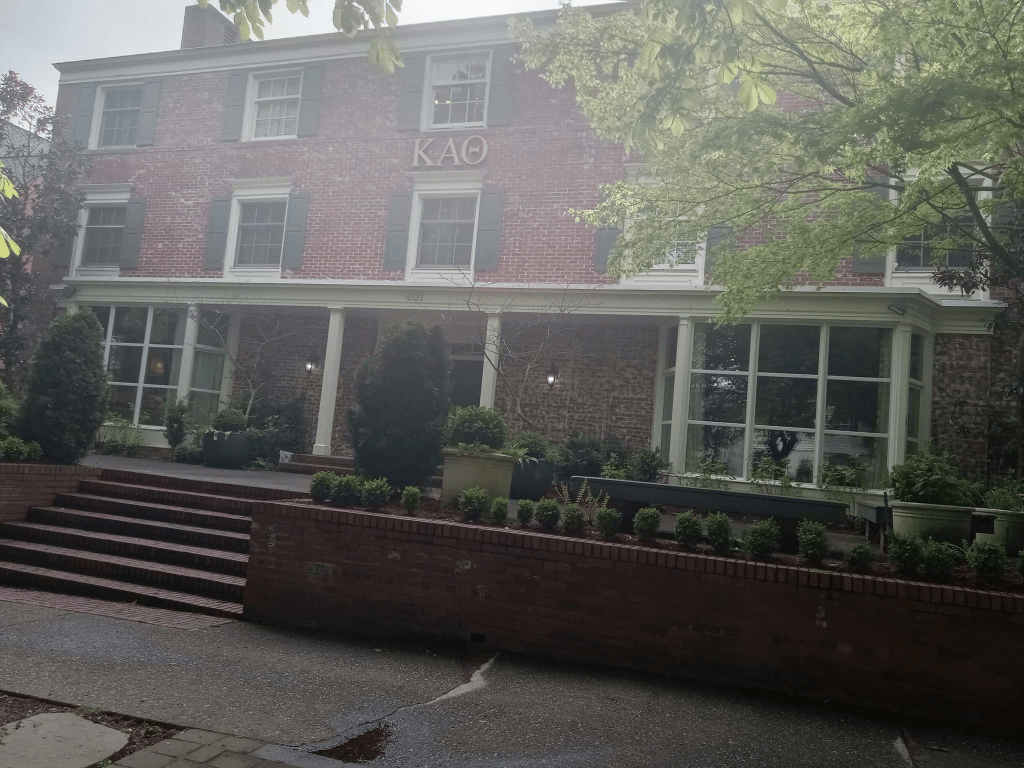
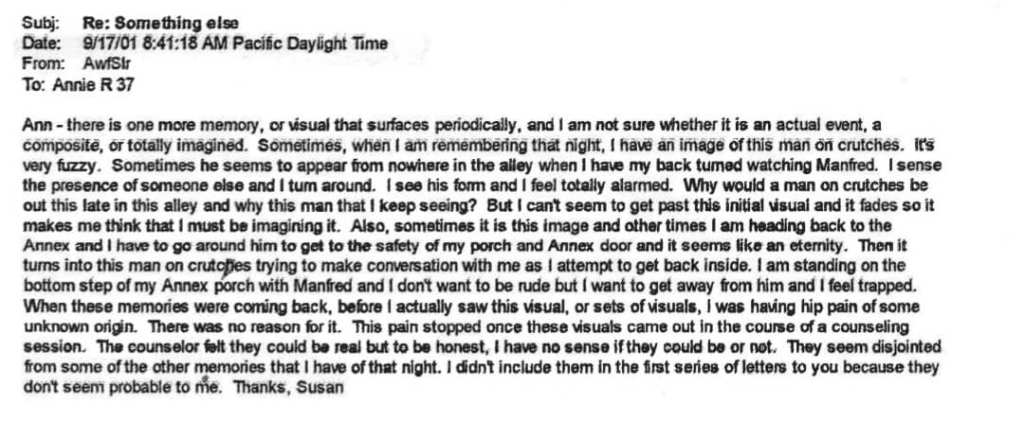
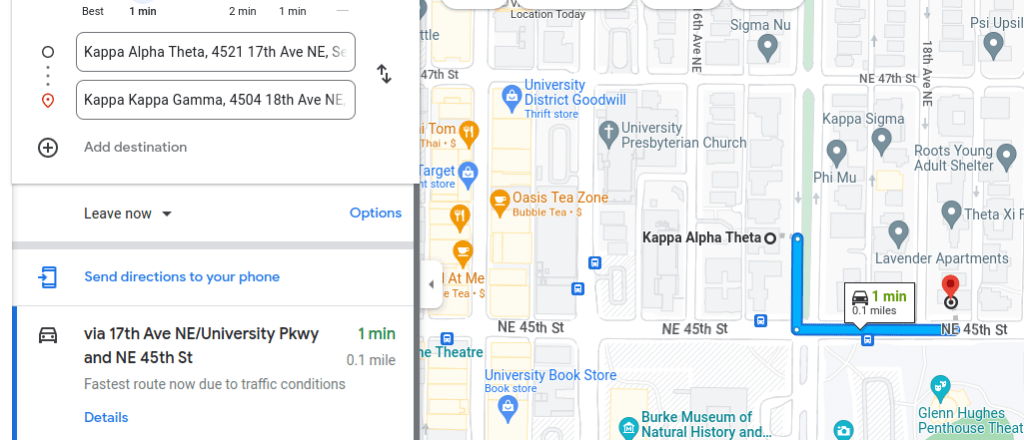
The severe PTSD and ‘fragmented memory’ Ms. Survivor claims to suffer from is due to the severe head trauma she experienced from multiple head fractures inflicted on her by Bundy and previous assailants. In her memoir she claims the only reason Bundy even abducted Georgann was because she was trying to stop him from pursuing his frequent attacks, assaults, and abductions on her. Survivor claimed that Hawkins walked through the pathway by the Theta house when she was talking to Ted: he was mad at her for avoiding him (she said it had been going on for a few weeks). During her freshman year, Hawkins joined the sorority Kappa Alpha Theta and lived in their house on campus, where Sara was a sister and resident at the Kappa Kappa Gamma house. Ted told Survivor that he ‘wanted her to carry the briefcase and go out for a drive with him to talk but Manfred (who I’m assuming is a dog) was pacing at the door to go in and I was not supposed to have him in the annex and he could get in trouble so I told him that I would go later to talk. George volunteered to help Ted, she was my friend, we were close and had been in Daffodil and she was like another little sister to me (similar to Anne) and I think she could tell that there was tension between us and she was trying to help me. They walked me to the annex door, which was only a short distance with George having to stop and wait for Ted several times as he kept trying to get me to go with him. I went in and left the light off to go to bed and put my pajamas on and shortly thereafter I heart the noise outside my window. It sounded like a body falling. I kept telling myself I was imagining things. I was also alarmed because the lot was big and rarely did anyone park outside of my window at night unless it was Ted. I was alarmed as I had not seen the lights of his car and if he was indeed parked outside of my window then he had broken his routine and not put his lights on and that frightened me. I snuck to the window and peeked out the side, lower edge of it. He did not see me. All I saw was him, standing by his VW, with the door open staring into my window. I never saw George, but just the actions and the sound terrified me. I tried to call the police as I stated, but I had nothing to go on but a noise.’ Additionally, per the ‘Citizens Complaint: SLR June 2017,’ on the evening that Georgann Hawkins was abducted Survivor said that she: ‘heard Bundy but I did not see him, knock Georgann out and I peeked out the window to see what the sound was as I was terrified of him (related to what happened with me, I did not realize at the time all else he was doing).’ … ‘I saw him drive away that night but did not know he had George. I also wasn’t processing anything very well at that time. Repeated captivity with rape, head trauma, and unrecognized and untreated rape syndrome from high school was taking a serious toll on me.’
One of the biggest parts of Survivors story that I don’t understand is why Bundy would keep her alive. I mean, this is the first time I ever heard about him leaving a victim alive like this, and a part of me feels like an asshole picking apart a possible sexual assault victims story but immediately after looking into her background Sotria Kritsonis and Rhonda Stapley came to my mind, and I’m sorry, I don’t believe either one of them. Rhonda because she’s… Rhonda and Ms. Kritsonis because of her claim that Bundy LET HER GO BECAUSE OF HER HAIR/the missing door handle lie. Just off the top of my head, Kim Leach had shorter hair at the time she was killed and I’m sorry, the long brown hair parted down the middle was simply NOT an absolute requirement when Bundy picked his victims. Quite a few of them had light hair even on the medium length side. Anyways, I digress…
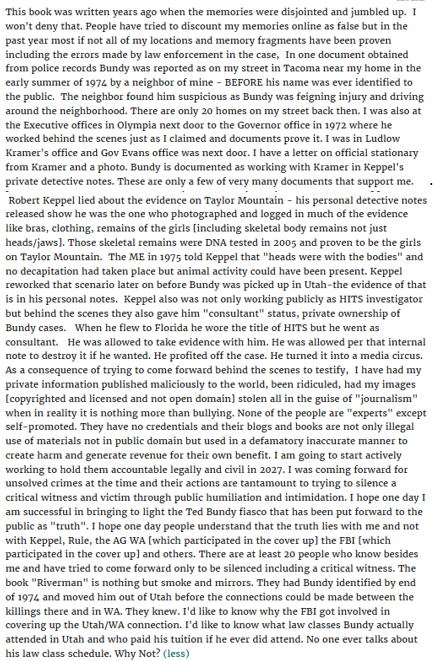
Ms. Banks points out that in Sara’s ‘memoir,’ roughly 1/3 of the text is simply a list of discovered items not properly cataloged in relation to the Bundy burial sites. Survivor claims that King County law enforcement purposefully kept this information from the community and that ‘what was put before the public for decades by Keppel and others especially early on has been incomplete, misrepresented, fabricated and blatant lies.’ This part I pulled directly from ‘Reflections on Green River’ (from the ‘table of contents’): ‘There were additional audio tapes noted in the files beyond the ones given here but they were designed ‘unplayable.’ Where are the transcripts of those tapes? What did those tapes contain in information? Why were records allowed to be held privately?’ … ‘Keppel set the tone of the case from the beginning and made sure he was the face of it but his positioning of the case was inaccurate at best and self-serving. He made every effort he could for years even after he ‘retired’ to use his connections to the justice system and to media to silence me and continue to control the case as the ‘expert’ but from what I see in the records some of his maneuverings in the case files were illegal. His statements to press were false and misleading about the case in general in WA.’ She further claims that there were many additional, never before released to the public items found at both burial sites that law enforcement never even bothered cataloging. I’m again citing Erin Banks, who very eloquently commented: ‘anyone who read Bob Keppel’s ‘The Riverman,’ knowing how meticulously the young Detective and his team combed Taylor Mountain and its surrounding area for skeletal remains and any evidence that could have been relevant to solving the case. Thousands of items were collected, thousands of items were collected thousands of callers reported their boyfriends, co-workers, family members and suspicious neighbors to the police tip line.’ Despite a massive amount of data collected from law enforcement in relation to the Bundy case that translated into a massive amount of physical documentation… Sara still claimed they (for whatever reason) purposefully left out items found at crime scenes (like skeletal human remains) in official reports. Not willing to take into account that perhaps if anything were to be missing it was more likely due to human error instead of being done purposefully. Banks also points out that ‘The Ted Task Force consisted of relatively few members. And, untoward as it may be, even investigators make mistakes, including misspelling names and losing evidence. If it looks like a duck, and quacks like a duck, it most likely is a duck.’ I’m going to have to agree with her, 100%. Sara seemed to have a particular disdain for Dr. Keppel, even going so far as to suggest or hint that he had some sort of collaborative type-relationship with Bundy, which was why certain things were left off the record.
Survivor further claims that investigators in Seattle were in communication with other states where Bundy was active (even though they said to have had no awareness of his general activities during that period in the 1970’s)… in fact, there are quite a few documents that prove law enforcement was keeping tabs on him at the time (for example, they were aware he worked for the Seattle Crime Commission studying rape, the WA state Republican Party, the Olympic Hotel, The Seattle Yacht Club, and Pedline Medical Company). In her blog, Survivor said: ‘his sites in WA had multiple bodies each (skeletal remains) and over 100 pieces of evidence at both locations including clothing that matched the description of what at least some missing girls were wearing. This evidence found on site appears per record sheets at the time to have been earmarked for Superior Court of WA. Why was it denied as existing by Keppel? Missing girls found at WA state sites of Bundy were even from out of King County jurisdiction (Rancourt and Parks) and out of WA State (Parks). Yet the public claim for decades was that this never existed. That evidence from one site was lost and per Keppel nothing existed at the other site. Interstate abduction of a young girl (Parks) and FBI was never called in when her remains were found? Multiple bodies at two major crime sites? Private ownership and profit off a multiple serial case by one cop who works the media while still under color of law to the detriment of the cases and families and victims?? There needs to be some answers and accountability. I firmly believe having seen so many of these records that Keppel attacked me publicly and behind the scenes as a ‘consensual’ survivor knowing full well that I was a victim because he didn’t want anyone in law enforcement to review the case and realize all that he had done that was not only unethical but also in my opinion appears to be illegal.’ Personally, I think that Keppel didn’t buy Survivors stories and didn’t attempt to hide it, which is why she most likely writes about him in a very negative light.
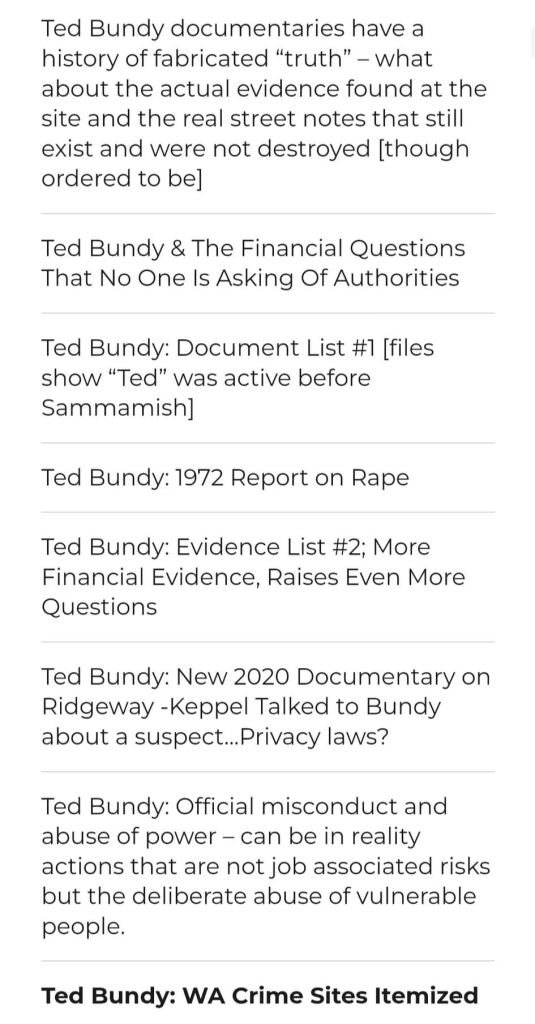
As I said earlier, I didn’t read ‘Reconstructing Sara’ (although I did notice the Amazon site said it’s available for ‘professional use only,’ but I feel I don’t quite apply) so I can’t give it any sort of review. I read through her write up in Erin Banks book multiple times when preparing for this piece, who said a good portion of what was in it could be found on her WordPress page (I included that in the works cited portion). When I first stumbled upon Sara’s story in April 2022 her website was fully operational and all of her blog posts and articles were still available (the page is also titled ‘Reconstructing Sara: The Lost Victim of Ted Bundy’). However, now (or as of May 2023) it appears that most articles have been pulled and are no longer available. When I clicked on numerous articles it took me to a page that said ‘Oops! That page can’t be found. It looks like nothing was found at this location.’ The pieces had names such as: ‘Ted Bundy Evidence Taylor Mountain: 158 items: Denied, Destroyed, Discounted for Decades,’ ‘Ted Bundy & The Public Image The Authorities Initially Created Of Him To Create Their Own ‘Super Cop’ Scenarios,’ ‘Ted Bundy & Pornography: He talked of it years before the execution,’ ‘Refuting Riverman: Doesn’t Match Original Case Files In Multiple Places,’ and ‘1989 Ted Bundy Final Confession: Was it Planned and Rehearsed?’ I wonder if this is possibly because Survivor is working on a rewrite of the book (per her Amazon page). Oddly enough, only one remains; it’s titled ‘Ted Bundy: WA Crime Sites Itemized’ and discusses how she thinks Bob Keppel purposefully tainted the Bundy investigation in Seattle and goes over the 158 items related to the Taylor Mountain evidence list. She starts it with the intro: ‘this website isn’t as much about me anymore as about justice process in the Bundy case. Keppel’s original efforts to become the face of the case suppressed important case information that should have been worked – his suppression of Bundy’s comments about Rule’s book sending it to psychiatrists instead of into evidence and suppression of Bundy’s comments about Michaud’s interview being possibly not all fact [Bundy claimed some was done by Bundy for effect] shows his willingness to protect his buddies behind the scenes and also to lessen any evidentiary probe into possible facts that were included in Bundy’s complaints [its not always just psychology – Bundy claimed Hawkins was found at Taylor Mountain with Ott and Naslund and the records appear to support that]; even the attack on me over the years as to my character was an effort to redirect any investigation away from the facts of my experiences versus what actually happened: a psychological behind the scenes gas lighting of me – no one was evaluating the correlations and facts of my experiences objectively. Keppel walked the line between ‘author’ and ‘expert’ for decades, ‘updating’ as ‘new’ what was already in evidence years earlier, using the inherent protections of both roles to cover up his original transgressions. This type of loophole in current justice system standards needs new laws.’
I had a fairly tough time getting through parts of Sara’s writing. I found it to be very wordy and almost made a point of being elegant on purpose (I hope this makes sense, in my opinion Bundy oddly wrote the same way). I found my eyes glazing over whenever I attempted to read it (on multiple occasions) and I quickly grew bored with what I was trying to process.
As I said earlier, Ms. Survivor claims that Bundy stalked and followed her while in school (both at Clover Park High School in Tacoma and the University of Washington), even going so far as to follow her when she traveled for modeling jobs throughout the western part of Washington state and beyond… she said that wherever she went, Bundy was there, waiting… but WHY? And how? I hopefully don’t need to say this took place way before the days of social media. Yes, I definitely think Bundy stalked his prey before he went in for the kill but how did he track her from states away? Logically, it makes absolutely no sense and timewise… how would he have been able to pull something that time consuming off and not have anyone notice this incredibly erratic behavior? Survivor claimed that what Bundy did to her back in the 1970’s is still being looked into by law enforcement. On page 28 of ‘Citizens Complaint: SLR June 2017, ‘if I am ever given an honest chance at having what I am saying evaluated it will not only make sense to the cases as a while but it will help solve a few also that I know he did such as Georgann’s, possibly one in Oregon and CA as well.’
Per her website, ‘what happened to me back then is being investigated and so too I hope is the behind the scenes maneuvering that favored the killer instead of the victims and for now I am going to defer to, and trust in, those who have committed their time and expense to giving what happened back then the comprehensive, objective investigation it warrants. I am grateful the investigation is being done for my own sense of closure, but in addition to that for a lot of reasons, including reviewing the maneuverings back then that allowed critical evidence to be denied, moved about without chain of custody and destroyed. The Bundy cases were never an example of good police work though some did do their jobs faithfully. In my opinion, having healed enough to process some of this it was about politics. And those politics continued into the present day and the stalking, threats, and intimidation tactics used against me to prevent any of this from coming into public awareness. It makes me sad and upset that politics back then over-rode common decency and that politics continued to influence the silencing that occurred decades later. The Bundy cases deserved a new investigation. It needed to be done.’
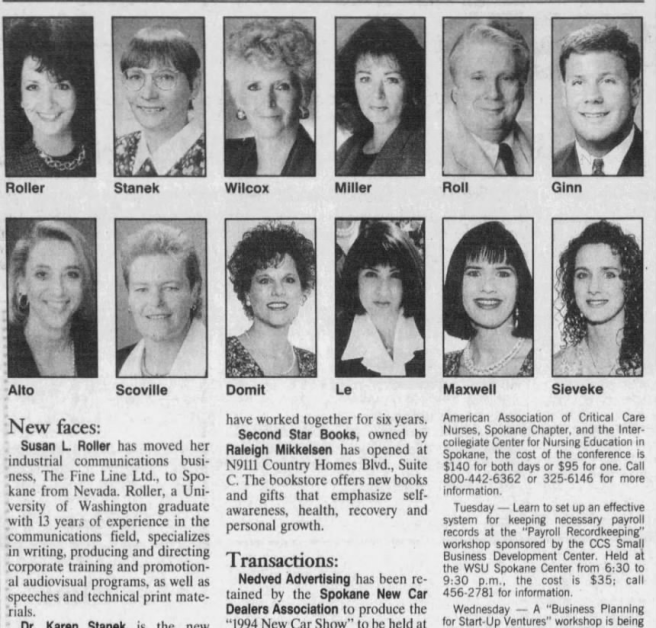
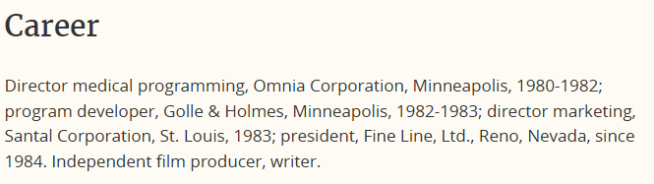
Roller currently resides in Oneida, WI. Per her ‘classmates’ page, she said: ‘I am living in the midwest now after many years in Washington. I am very happy here. I am still actively working and enjoying life. The older I become the more I appreciate the journey and the intangibles in life. The updated photo is from Christmas 2019. I have a collie now that is my constant companion at home and at work, always by my side. She is a blessing as keeps me active walking her at least 2 miles a day even when I wish I didn’t have to such as in the snow or rain. I love the Midwest storms, the approaching thunderstorms, and the hard wood forests. I grew up in the Midwest. For me, this region is like coming home.’ After completing her degree at the University of Washington, Roller got a job as the Director Medical Programming for the Omnia Corporation from 1980 to 1982. After leaving them she got a position with Golle & Holmes in Minneapolis as a program developer; she left the following year. In 1983 Susan was briefly employed as the Director of Marketing for The Santal Corporation in St. Louis. In 1984 she started a company called ‘Fine Line, Ltd.’ based out of Reno, Nevada; her position is the President. Additionally under the ‘career’ section of her website ‘independent film producer and writer’ is listed as well. Under the ‘achievements’ portion is: ‘screenwriting, cowboy poetry, skiing, art FC.’ Roller is also a member of the Reno Chamber of Commerce, is a practicing Episcopalian, and sides with the Republican party.
Works Cited:
Banks, Erin. ‘Ted Bundy: Examining The Unconfirmed Survivor Stories.’ Published March 7, 2021.
Survivor, Sara A. ‘Reflections on Green River: The Letters of, and Conversations with, Ted Bundy.’ Published on April 5, 2016.
archive.org/details/953-32-10-bundy-notes-keppel-redacted/page/n44/mode/2up (Opinion at the end of document is that of Maria Serban).
http://www.sfgate.com/news/article/Ted-Bundy-a-suspect-in-Sonoma-County-cold-cases-2355670.php
books.google.com/books/about/Reconstructing_Sara.html?id=TGhYvgAACAAJ
reconstructingsara.com







































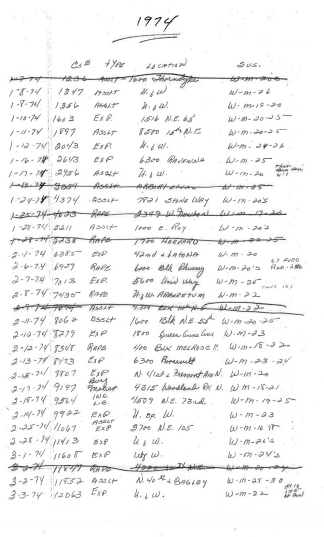
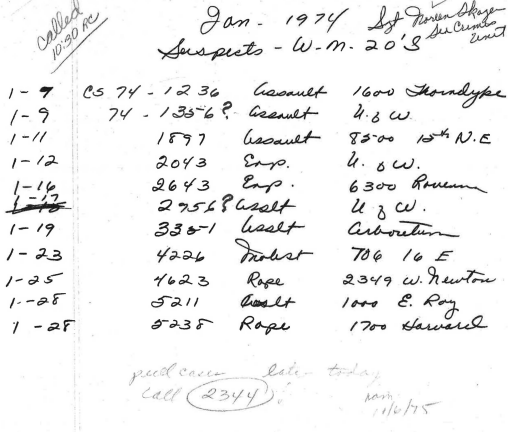


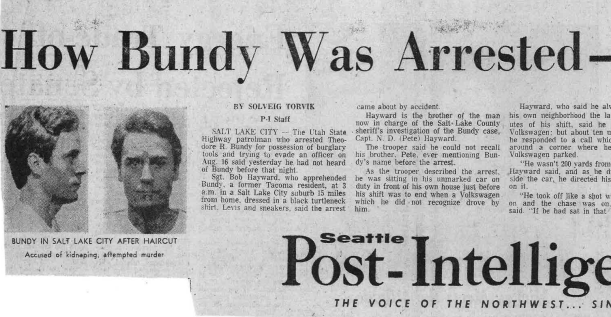
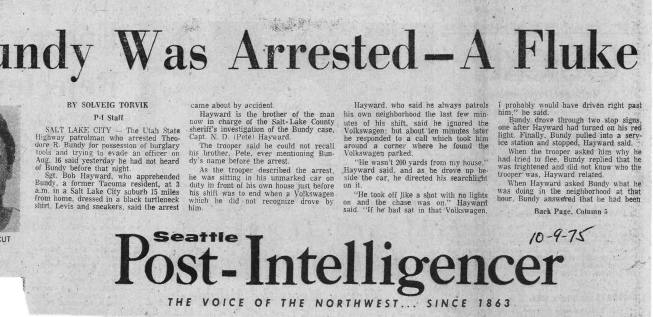





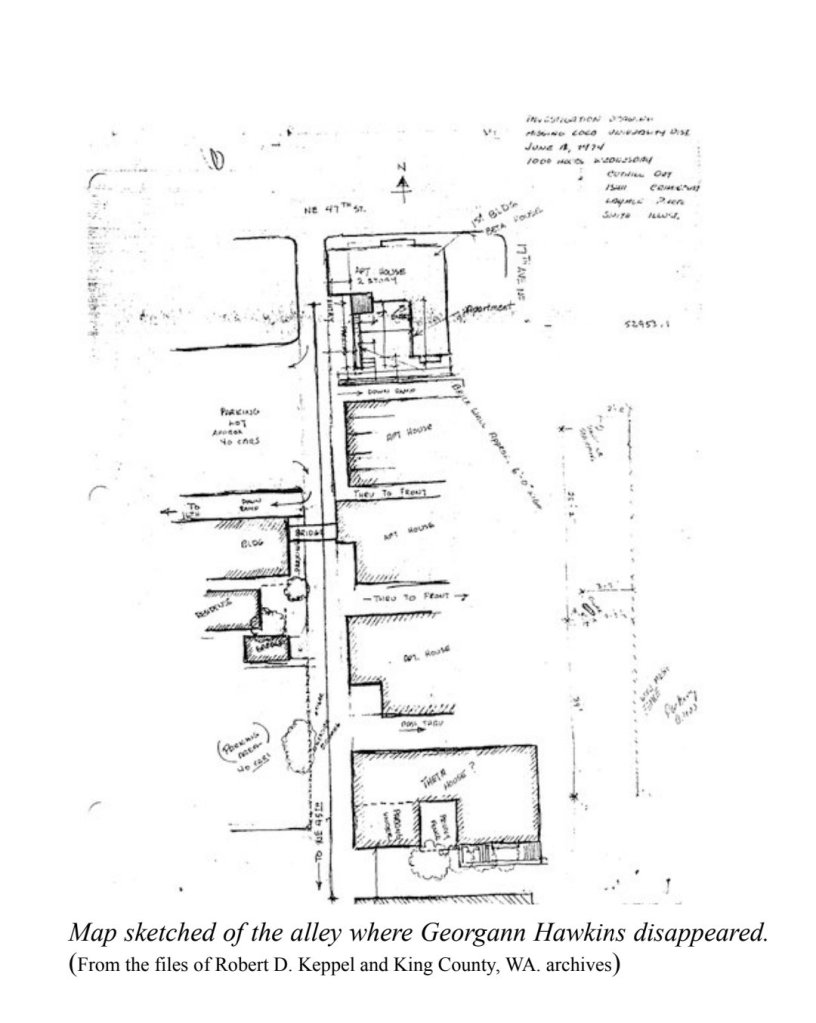

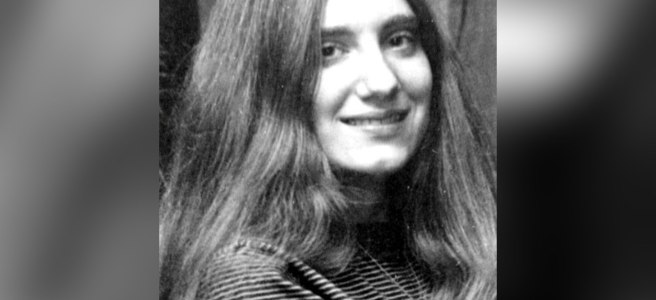
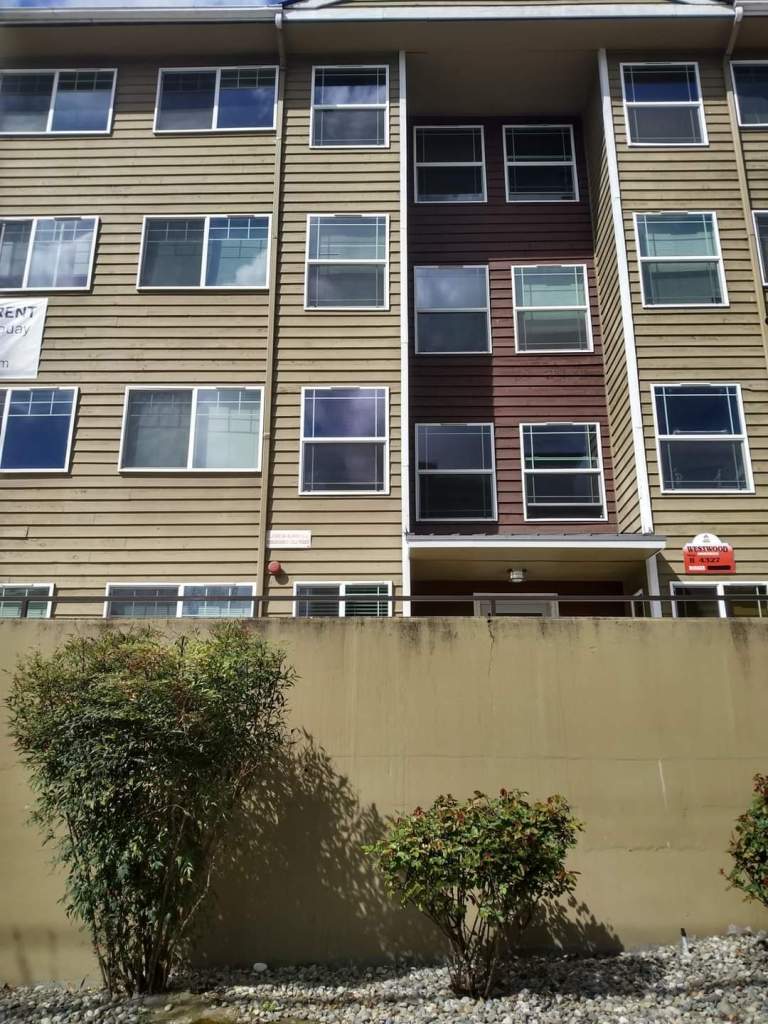
In the early morning hours of January 4th, 1974, Ted Bundy brutally assaulted college student Karen Sparks at 4325 8th Avenue NE in the University District of Seattle; she was his first known victim. Miraculously, he didn’t kill her, but he did leave her with numerous long-term injuries that she still struggles with to this day. The house she used to reside in no longer exists as it was torn down sometime in 1985 to make way for a new four-story apartment block called ‘Westwood Apartments.’




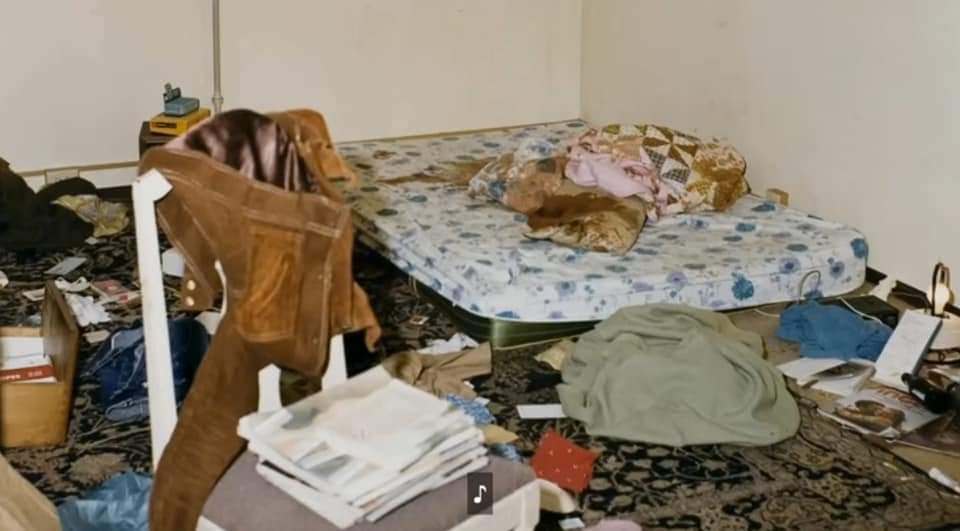




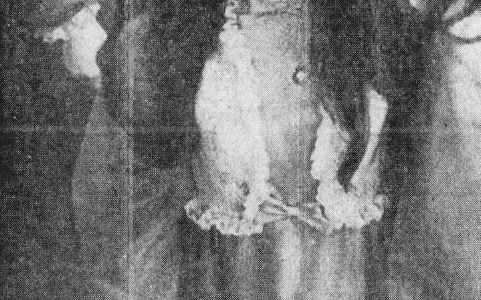
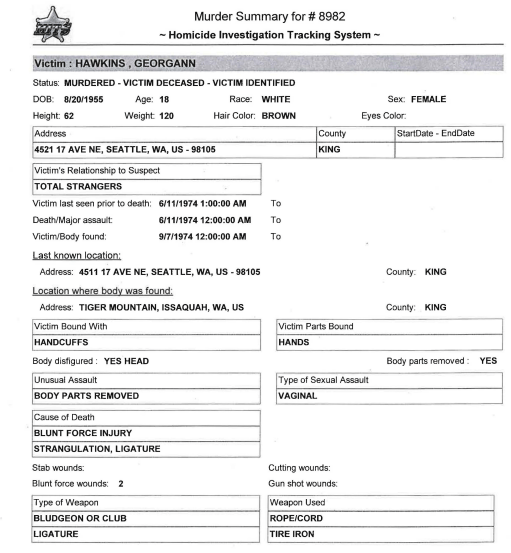
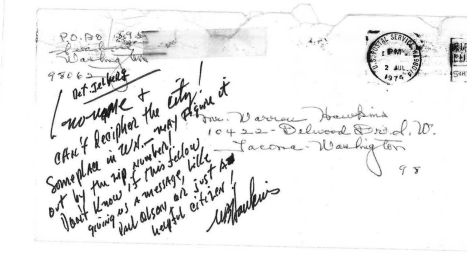
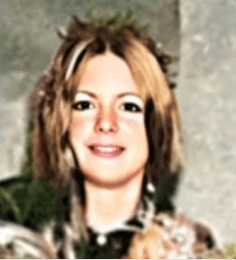
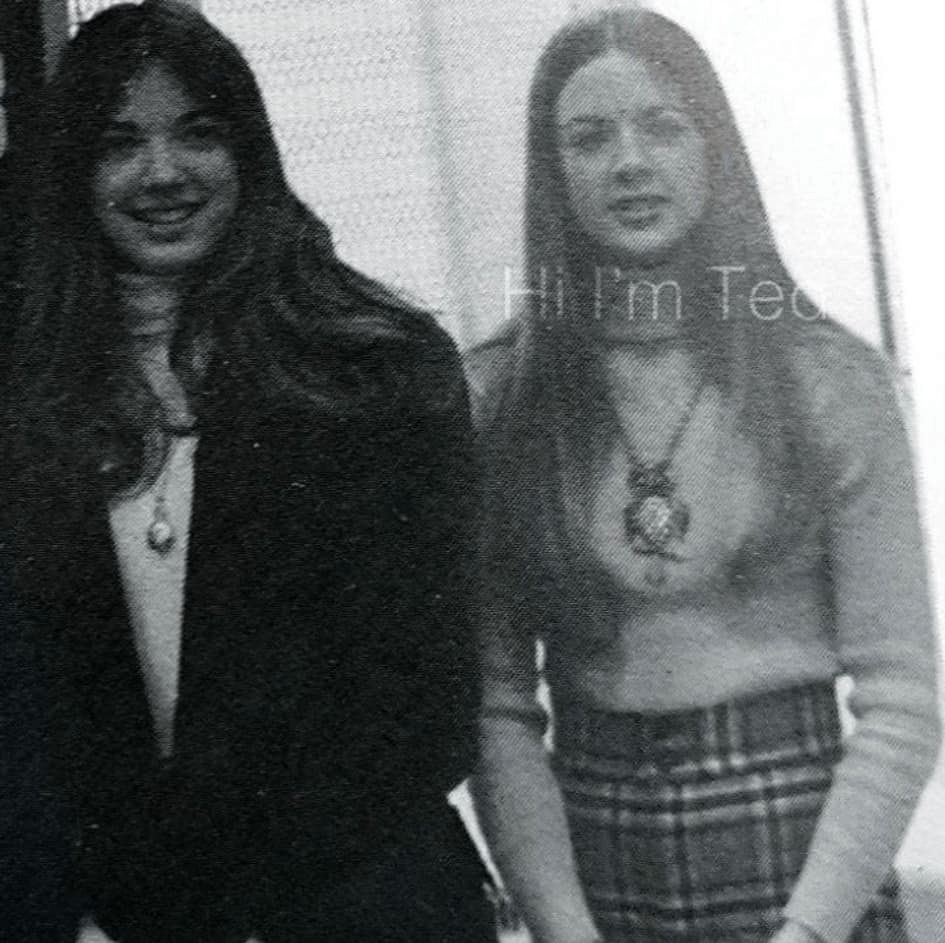
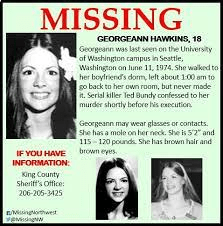
Georgann Hawkins was born on August 20, 1955 in Sumner, Washington to Warren and Edith Hawkins. She had an older sister named Patti and both girls were brought up in an upper middle class, Episcopalian household. Affectionately nicknamed ‘George’ by family and friends, Mrs. Hawkins described her daughter as a ‘wiggle worm’ because she was always full of energy and was unable to sit still. Georgann seemed to be universally adored by everyone around her, and she was always surrounded by a close-knit group of friends. At one point in her early childhood Hawkins went through a bout of Osgood-Schlatter Disease, which is described as painful inflammation found just below the knee that is made worse with physical activity and made better with lots of bed rest. One or both knees can be affected by this disease and flare-ups may occur after the initial episode has passed. Thankfully it never came back after George’s initial bout (although she was left with several small, barely noticeable bumps just below her patellae).
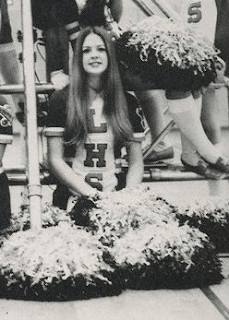
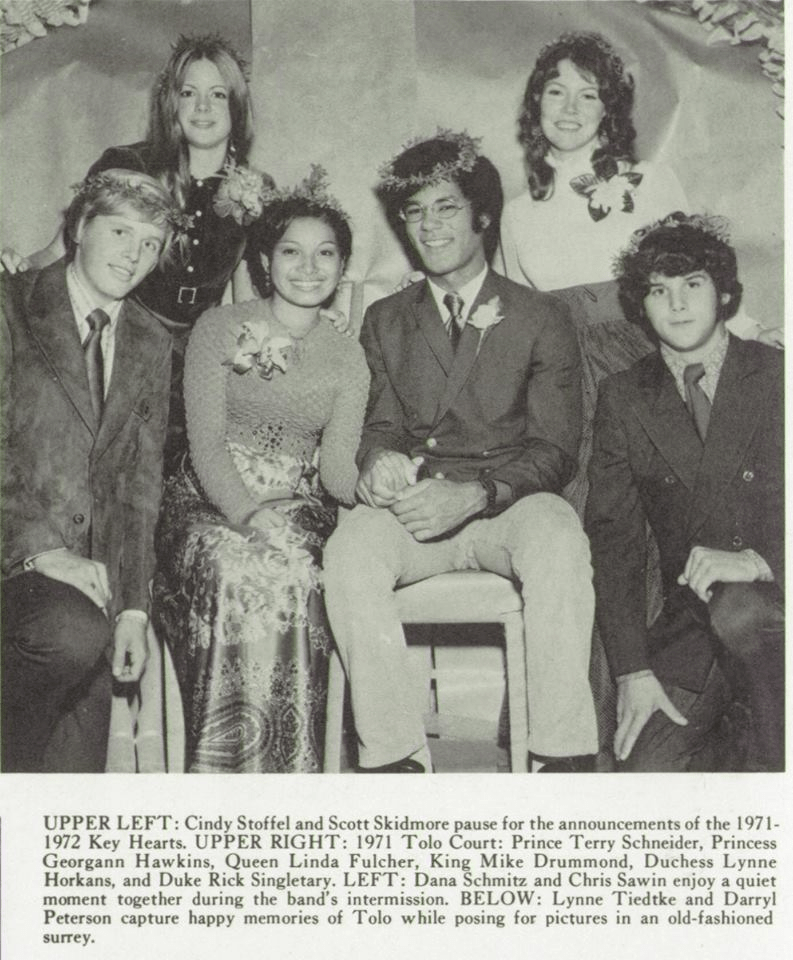
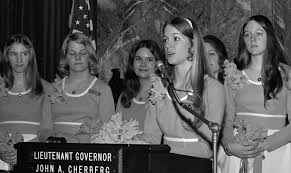
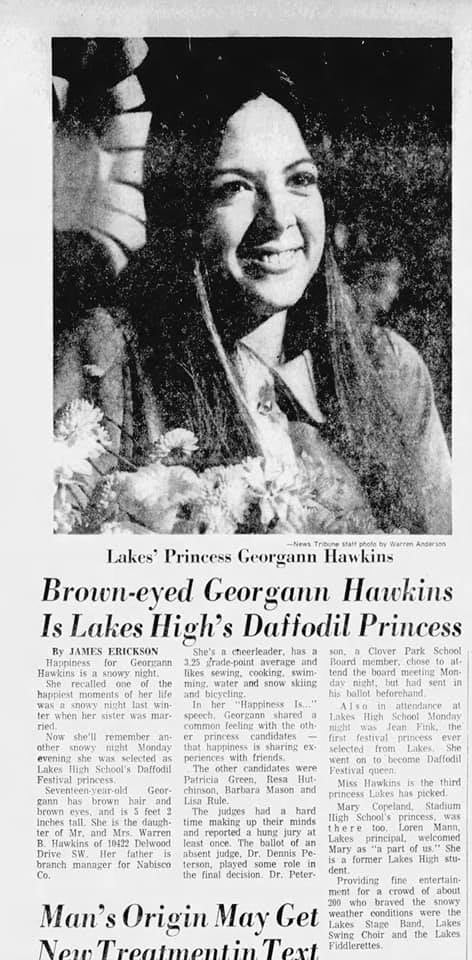
Despite her health challenges, Georgann went on to become a star athlete at Lakes High School in Lakewood, Washington: she was on the swim team in her early years but eventually gravitated towards cheerleading, winning numerous medals and competitions while on her high schools cheerleading squad (where she cheered all four years). In addition to her impressive athletic accomplishments, Hawkins was also a straight A student throughout the entirety of her academic career. During her senior year in 1973, Georgann was awarded with the title of princess to the royal court of the annual Washington Daffodil Festival. As Daffodil Princess, she traveled around Washington State with the other court members and their ‘duties’ involved being interviewed by newspapers, meeting children, riding in parades, attending concerts, and signing autographs at charity events. Georgann even gave a speech in the spring of 1973 addressing lawmakers at the Washington State Legislature.
Patti Hawkins went to Central Washington University in Ellensburg, which is the same school that Susan Rancourt attended before she was abducted by Bundy in April 1974. Georgann originally planned on following in her sisters footsteps and attending CWU as well, however her mother was strongly against it; she wanted her younger daughter to attend college at the University of Washington Seattle Campus, which was only about 30 minutes away from Sumner. Agreeing to this arrangement, Mr. and Mrs. Hawkins paid for Georgann’s tuition, books, room and board. To earn some extra spending money, she worked in Seattle throughout the summer, occasionally returning to her family home on weekends. The final time Georgann saw her parents was on Mother’s Day weekend of 1974.
Georgann’s freshman year at the University of Washington was a busy one: she joined the Kappa Alpha Theta sorority and decided to major in either broadcast journalism or reporting. Despite having some troubles with a Spanish course she maintained a straight A GPA and found love with a Beta Theta Pi fraternity brother named Marvin Gellatly. Georgann planned to return to her parents house for the summer on June 13th and had plans to start a summer job on Monday, June 17th.
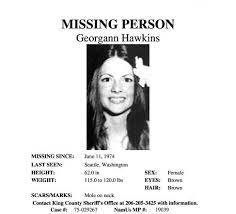
At the time of her disappearance in spring 1974, Georgann stood at a petite 5’2” and weighed a mere 115 pounds. She has long chestnut hair that went down her back and big, doe-like brown eyes. Earlier on the day on June 10th, Hawkins called her mother to tell her she was going to study as hard as she possibly could for her next days Spanish final so she wouldn’t have to retake it later. But before hitting the books she went to a party, even imbibing in a few mixed cocktails. But, because she needed to study didn’t stay long; Hawkins did mention to a sorority sister that she was planning on swinging by the Beta Theta Pi House to pick up some Spanish notes from her boyfriend. She arrived at the frat at 12:30 AM on June 11 and stayed for approximately thirty minutes. After getting the notes and saying goodnight to her beau, Georgann left the fraternity house for her sorority house, which was only about 350 feet away.
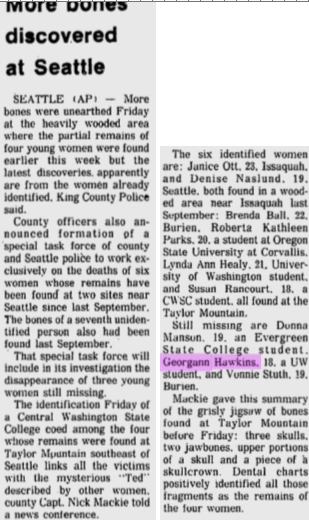
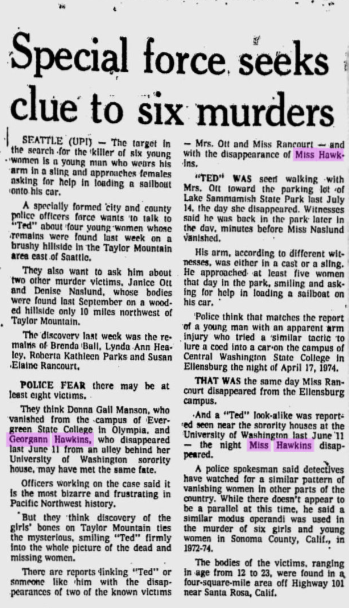
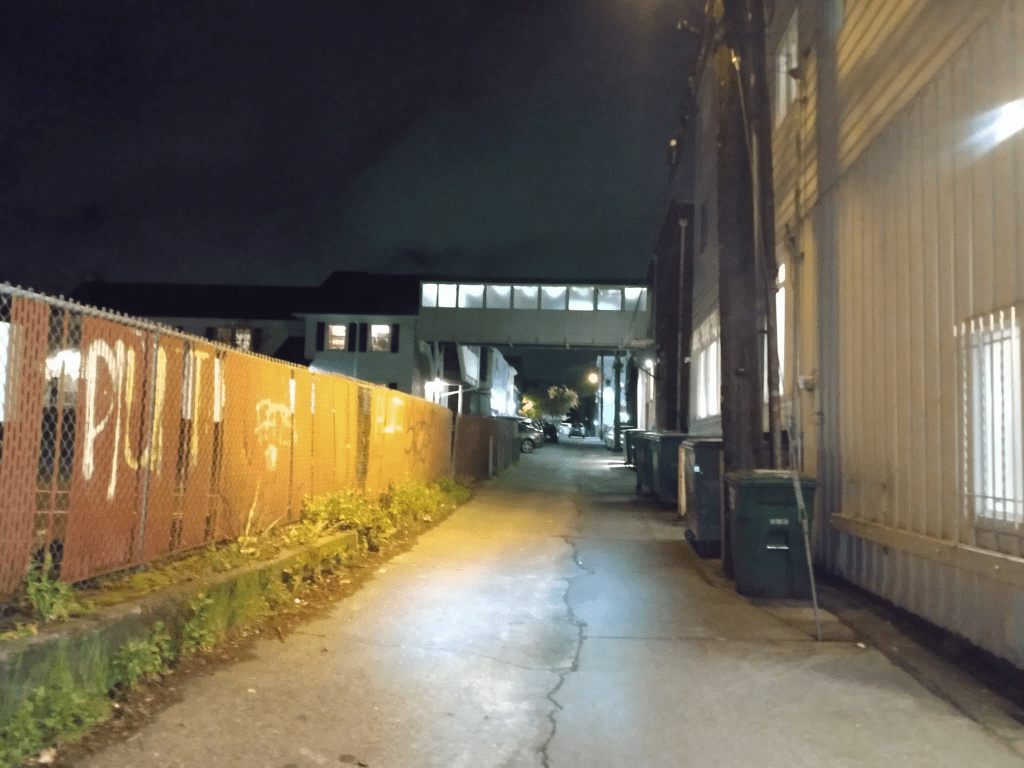
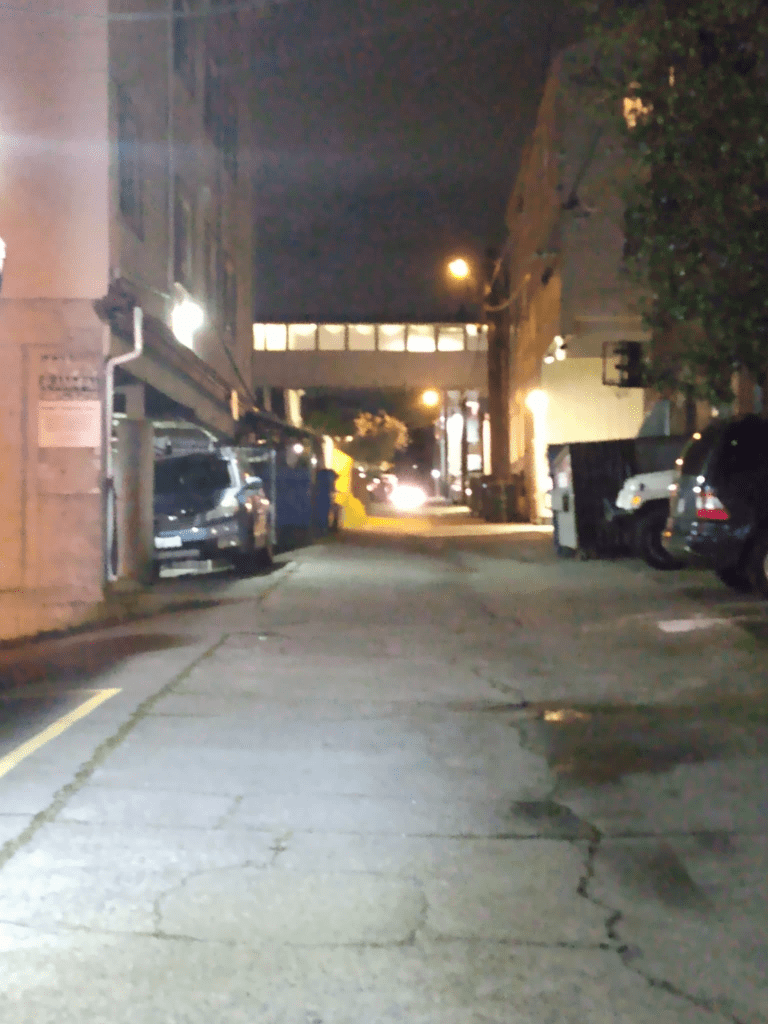
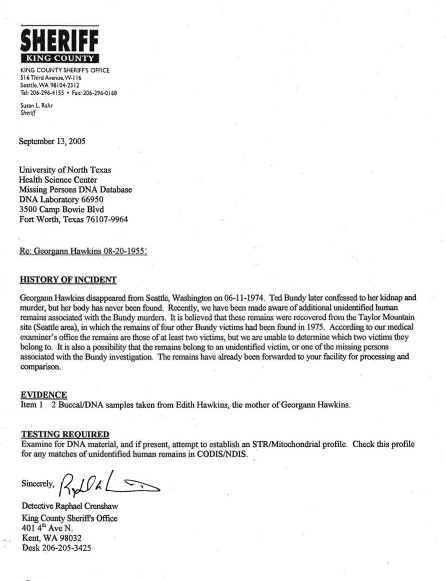
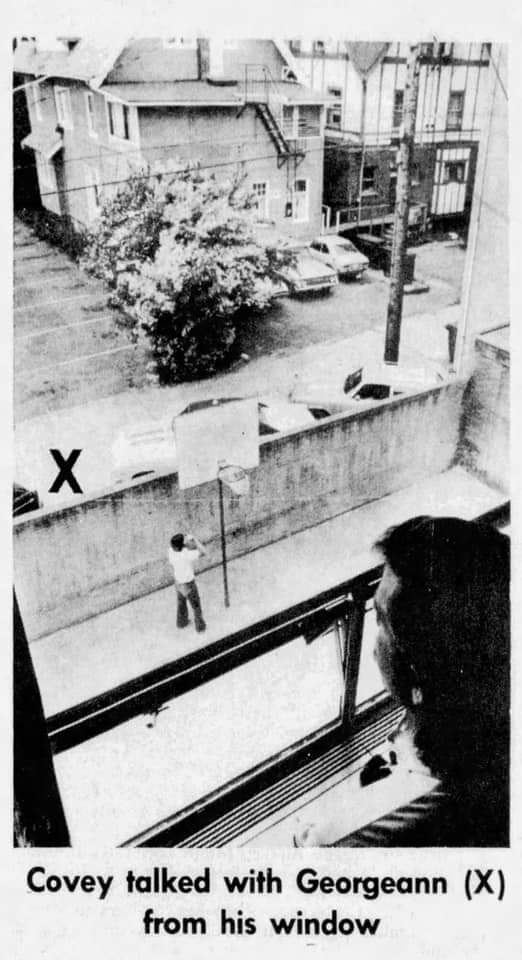
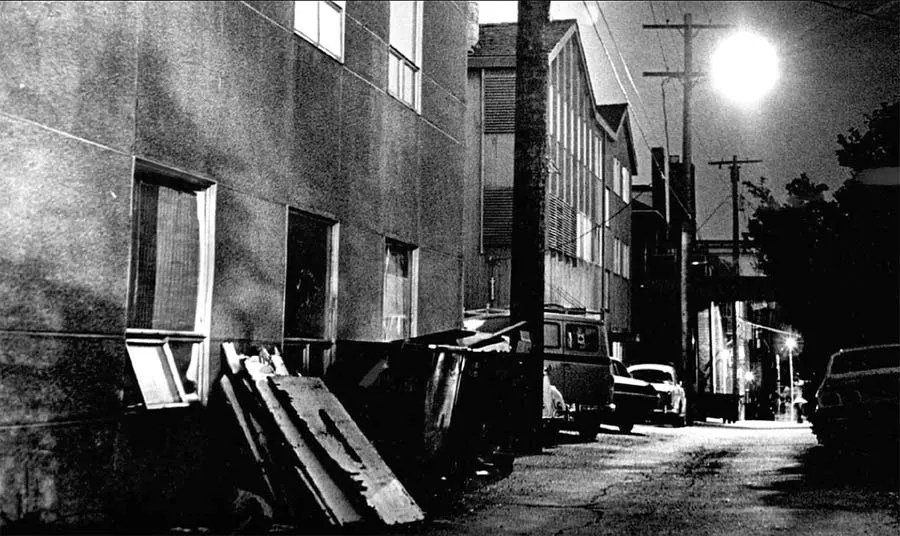
Although typically a very safe and cautious young woman, Georgann thought nothing of this short walk that she took hundreds of times before, as it was in a well lit and busy area. While on her way of what should have been just a quick jaunt home, a friend called out to her from his window and she stopped to chat for a few minutes. She said goodnight to him and continued her short walk back to her dorm. Hawkins sorority sisters knew something wasn’t right when the typically reliable George didn’t arrive home two hours later. One of them even called her boyfriend, who informed her that she left his place at around 1 AM. After hearing this, the sister woke the housemother, and together they waited up for Georgann until morning. When morning came and she still didn’t arrive home they called Seattle police, and because of the recent disappearance of fellow University of Washington student Lynda Ann Healy, they immediately sprung to action. They later were informed that one of the other housemothers had awoken that night to a high pitched scream: she thought it was some people joking around and went back to sleep. Bundy confessed to Georganns murder moments before his execution, and though he was foggy on some of the more specific details he distinctly remembered how kind and trusting she was. He went on to say that he asked her for assistance carrying his briefcase to his car (because of his prop cast), and she happily obliged. As Bundy was approaching the young coed he pretended to fumble with the briefcase he was carrying. This was a common practice Bundy used in order to gain his victims trust and get them to lower their defenses; he later switched things up a bit and used an arm sling during his Lake Sammamish abductions (most likely because he couldn’t drive with a ‘broken leg’). As she bent over to put the briefcase in his vehicle, Ted grabbed a conveniently placed crowbar and knocked her out with a single blow to the head. He then put George’s tiny body in the passengers seat of his car and drove off into the night, never to be seen again. Haewkins briefly regained consciousness and in her confused state asked Bundy if he was there to help study for her Spanish exam. He then knocked her unconscious again, pulled his VW Bug over to the side of the road near to Lake Sammamish State Park and strangled her using a piece of rope. Before his execution he claimed that part of her remains were included in those found at his Issaquah burial site.
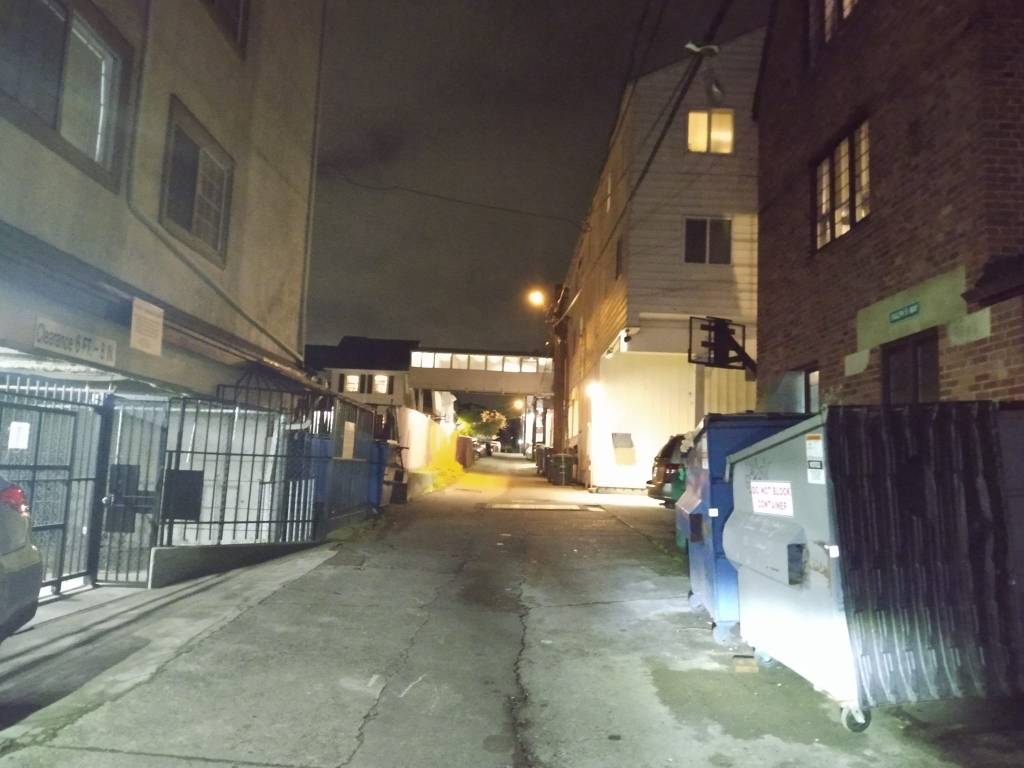
The day after her brutal murder, Bundy returned to check on Georgann’s body and discovered that one of her shoes was missing. He immediately began to worry that it had fallen off in the parking lot during the abduction and that someone might remember seeing his car parked in the area. Ted was also worried people were going to piece things together because just two weeks prior he had attempted the exact same abduction technique on a different young woman, but something spooked him and he decided against it. He was terrified that this unknown woman might come forward and mention the strange encounter if Hawkins belongings were discovered in the same parking lot. The morning after Hawkins abduction, law enforcement taped off the alley and searched it thoroughly for any evidence… but they left the parking lot where Bundy first approached her untouched. Because of this oversight, he was able to return at roughly 5 PM the next evening and retrieve the missing shoe as well as both of Georgann’s earrings that were misplaced as well.
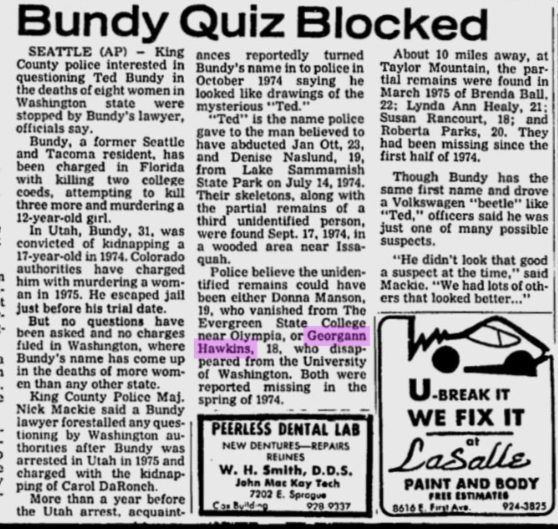
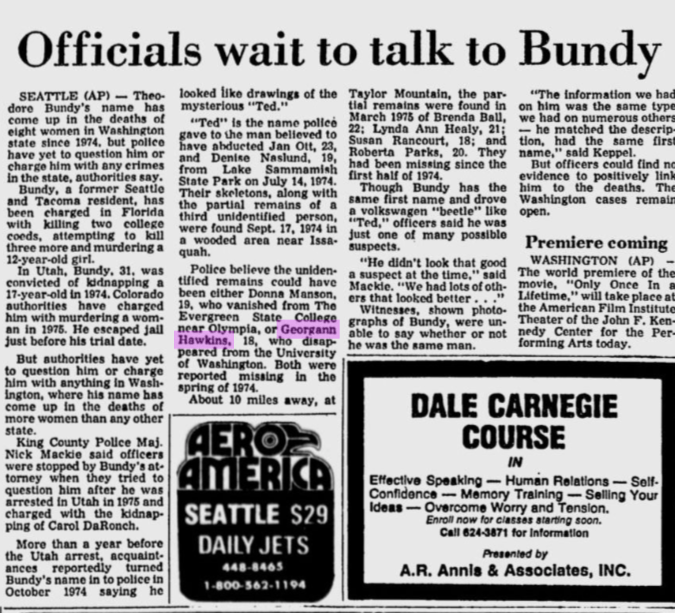
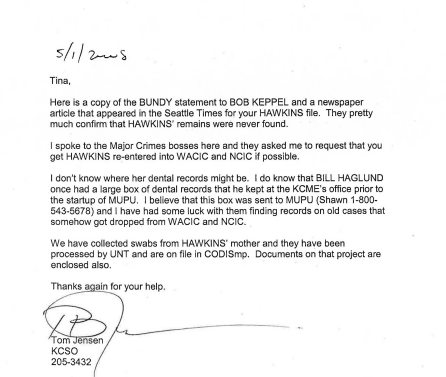
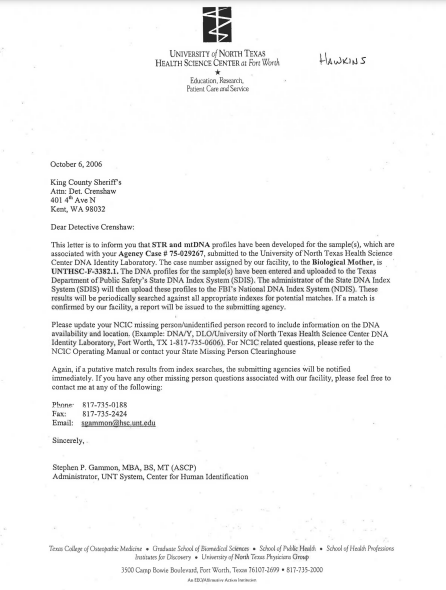
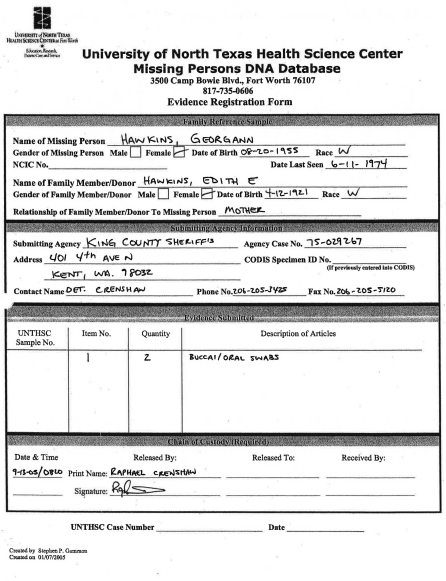
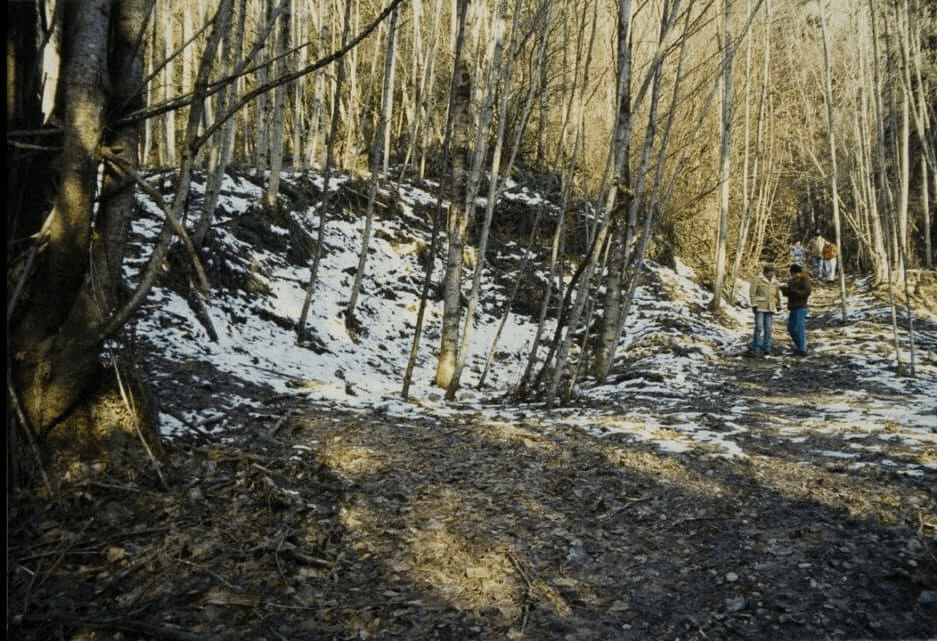
Bundy also claimed he returned to Hawkins body again on June 14th, and at that point made the decision to cut off her head. His third (and final) post-mortem visit to her remains occurred about a week or two later, when he came back to ‘see what was going on.’ During his death row confession, Ted also hinted at acts such as necrophilia, so who knows what he meant when he said he went back to ‘see what was going on’ with poor Georgann’s corpse. While going through the bones recovered from the Issaquah burial site, forensic experts found a femur they strongly thought to be Hawkins but is considered ‘impossible to identify.’ It’s also been said that Bundy himself admitted that one of her femur bones discovered at the Issaquah burial site was Georgann’s, but this statement has never been confirmed.
I’ve always wondered about Georgann Hawkins’ family and how they coped with the loss of their daughter. Many family members of other Bundy victims have been vocal with their opinions regarding Bundy’s fate and what happened to their loved ones (specifically Lynda Healy’s sister (Laura) was active in the Amazon mini-series “Falling for a Killer” as well as Susan Rancourts Mom and Sister) but it was tough for me to find anything about Mr. and Mrs. Hawkins. I did stumble across an article Georgann’s mother did with “Green Valley News” titled “Georgann Hawkins died at the hands of Ted Bundy, but that’s not how her mom wants her remembered” that was published on June 11, 2014. In it, Mrs. Hawkins fondly remembers her daughter, saying that “she was a very self-confident little girl … she wasn’t vain, she wasn’t arrogant and she wasn’t snooty. That’s why kids liked her.” She went on to say that her daughter was an avid swimmer who was active in the Brownies (however swimming eventually fell to the wayside once she discovered boys). Years after Theodore Robert Bundy was executed for his crimes against humanity by the State of Florida Georgann’s friends held a memorial for her at their alma matter: Lakes High School. Warren and Edie Hawkins did not attend. She explained, ‘my feeling at the time was, ‘What was it for,’ you know? It wasn’t going to help me any.’ She went on to elaborate that she didn’t keep in touch with anyone in her daughters life nor did she want to. Over the years many newspapers and magazines reached out to the Hawkins family for interviews about their beloved daughter but they turned them all down (aside from a single sentence Edie gave to the associated press after Bundy was executed, saying ‘I’ve never, ever, ever dwelt on how she died. I didn’t want to know how she died’). She didn’t like the idea of anyone making money off the death of her daughter.
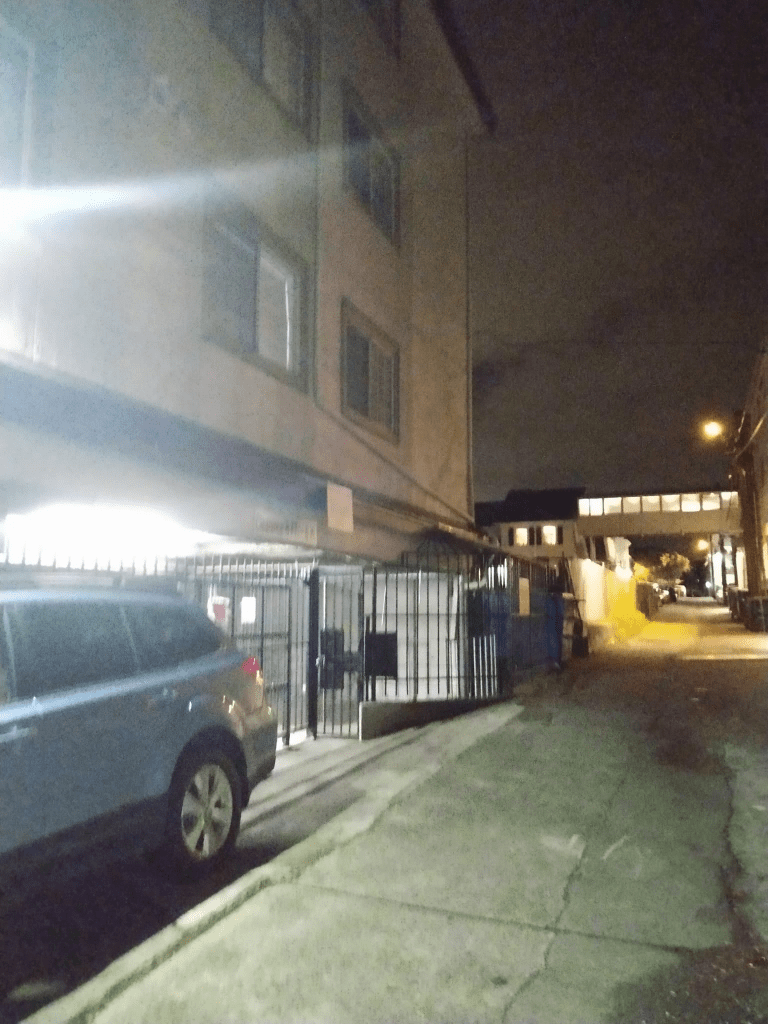
THIS was an incredibly eerie experience for me. I felt a lot of sadness and fear at this particular site. When my Google Maps alerted me when I came to the supposed exact location (figured right down to latitude and longitude) I didn’t linger long, plus there was a cop just sitting there, watching the area.
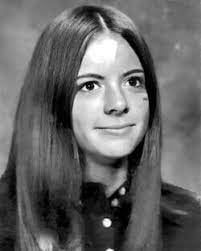


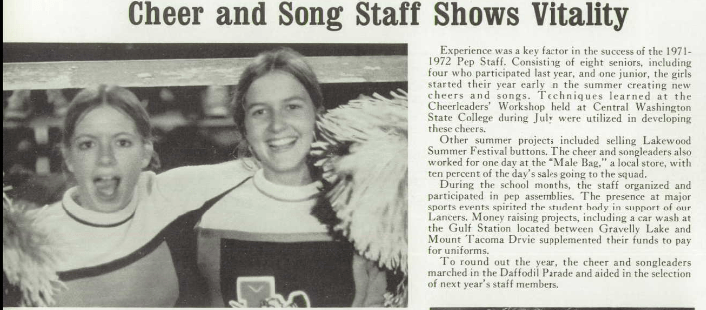

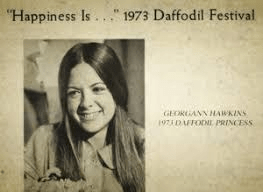






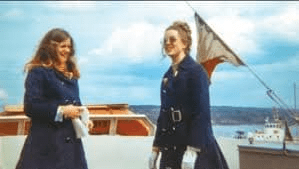

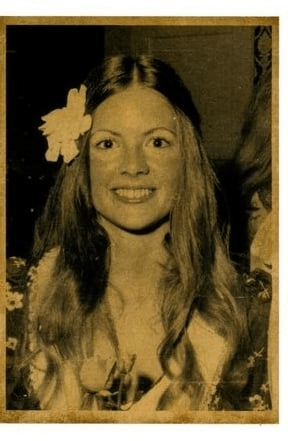
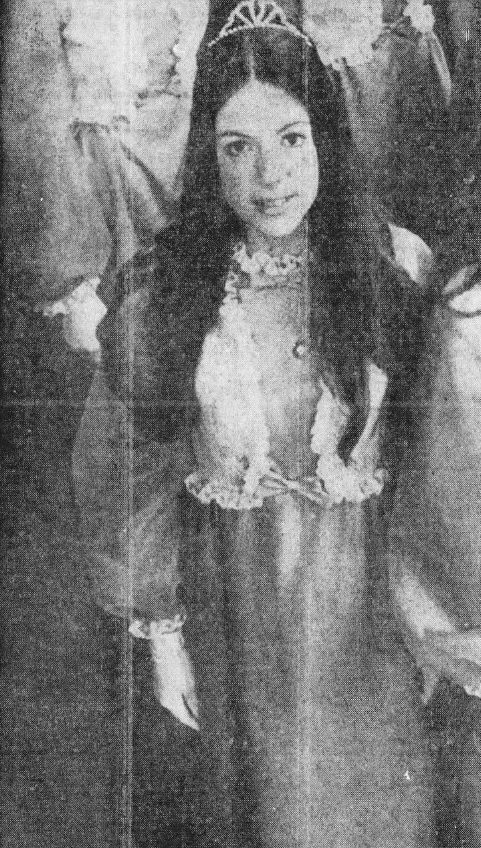


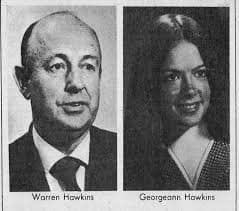
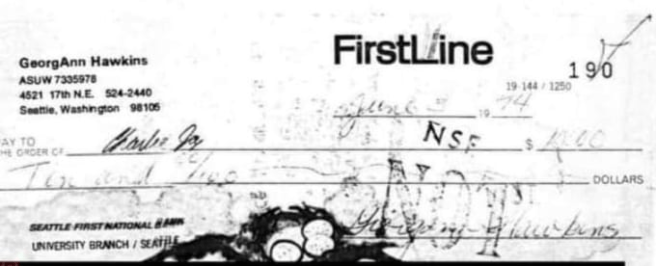
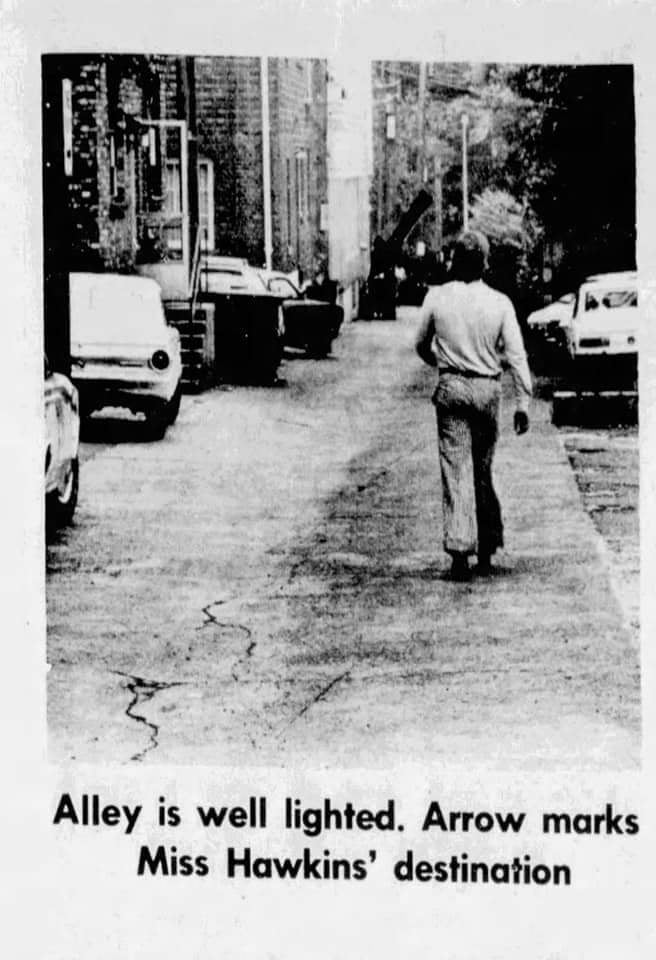


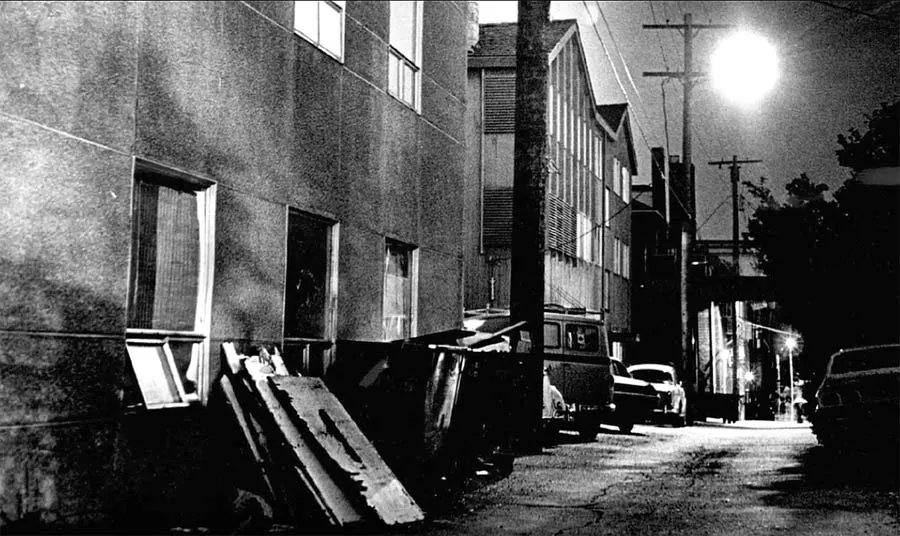


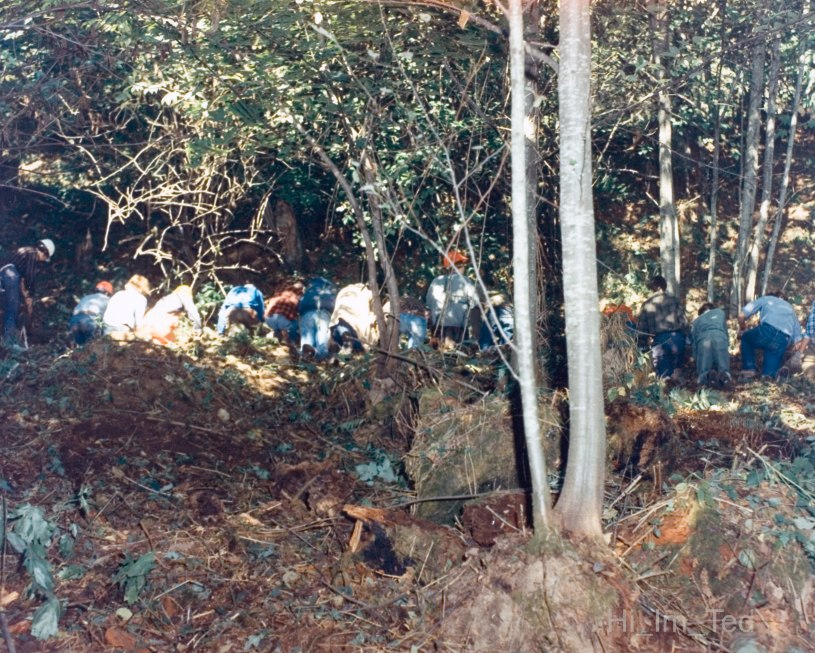

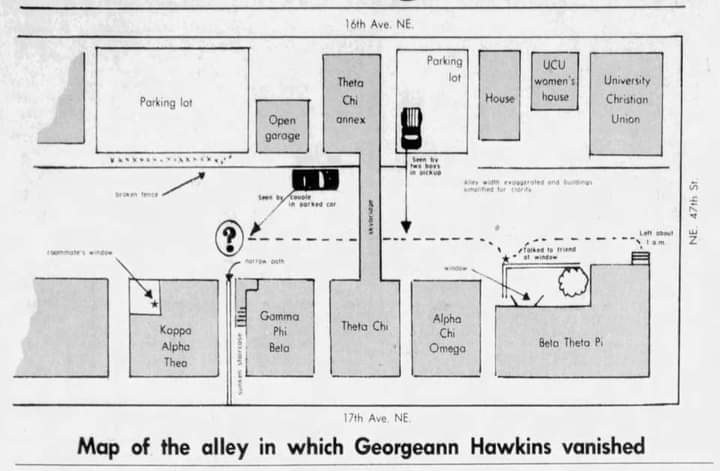


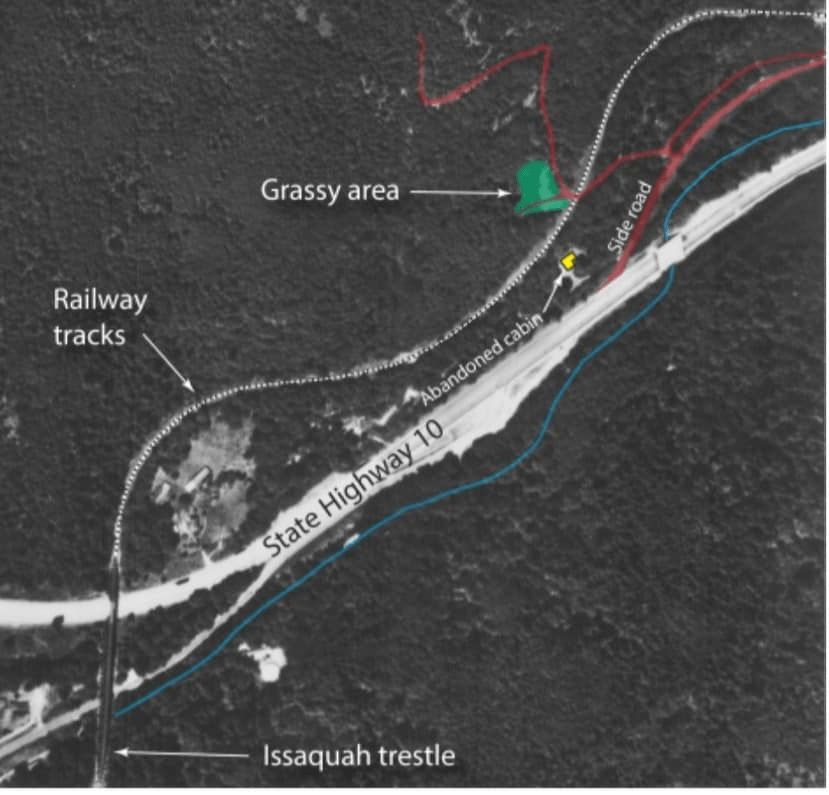
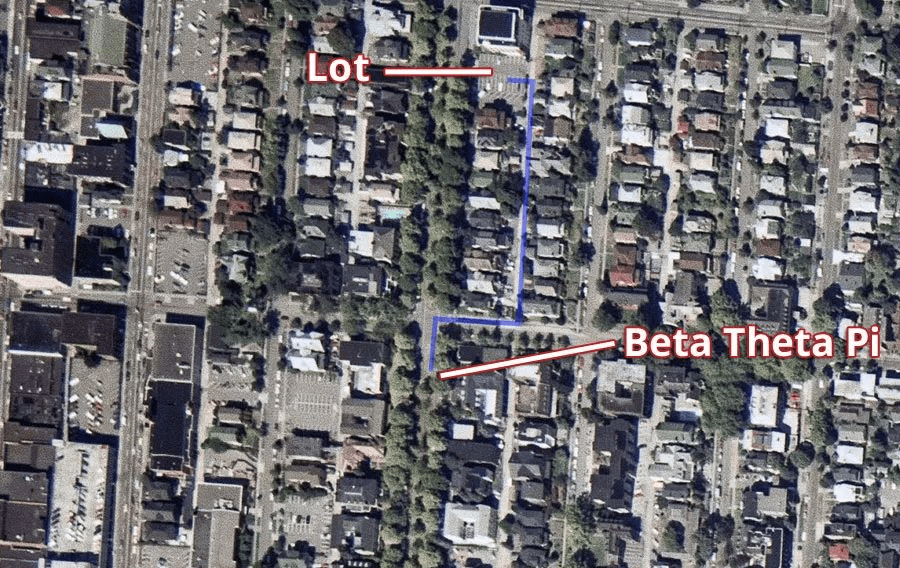




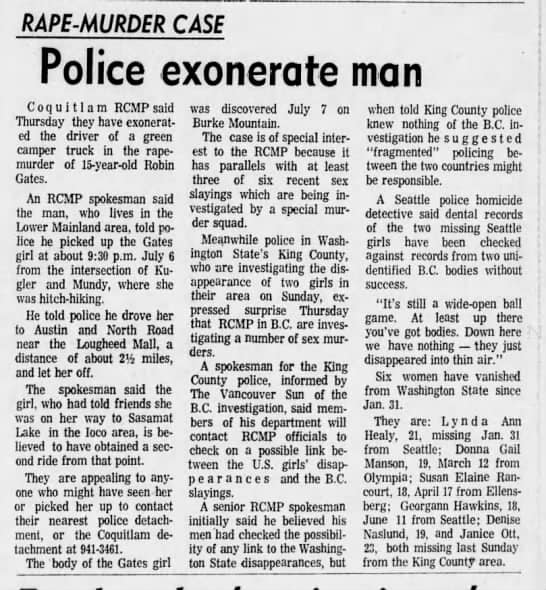
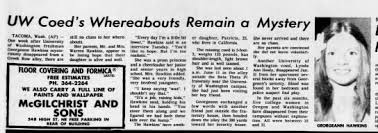
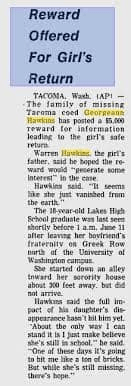
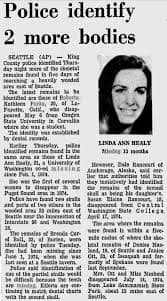
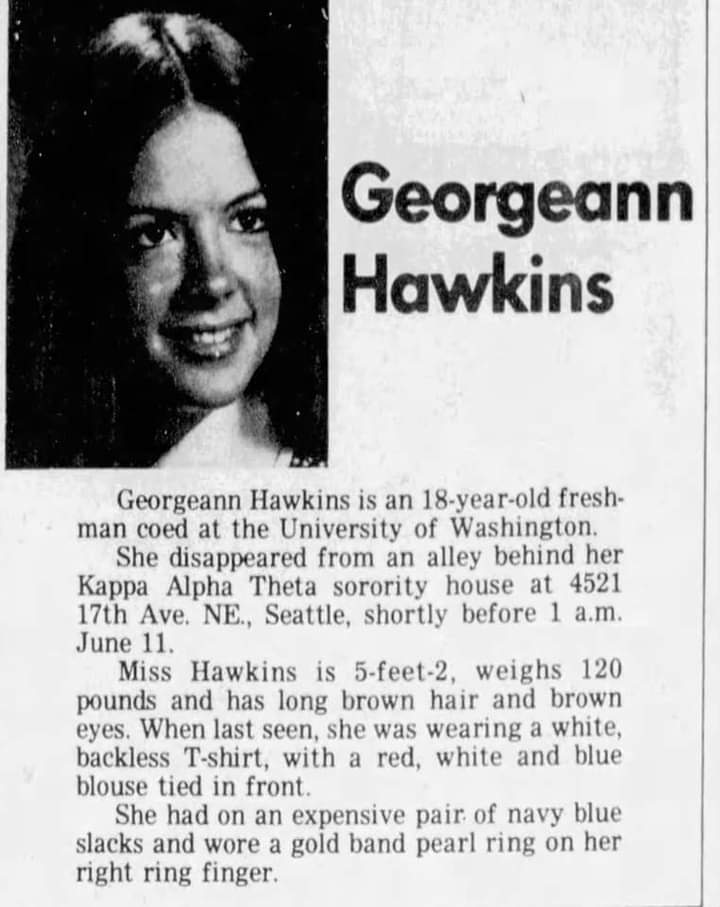


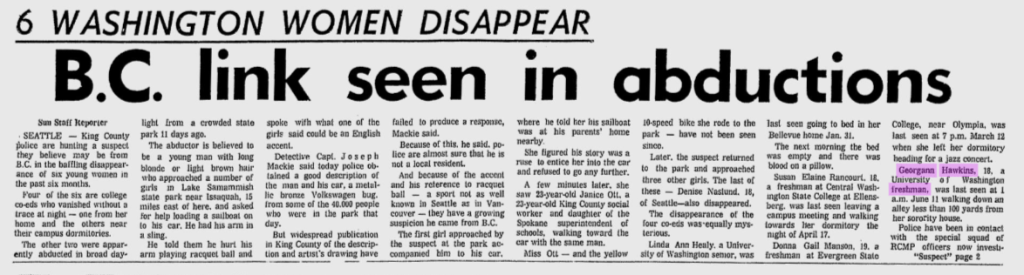
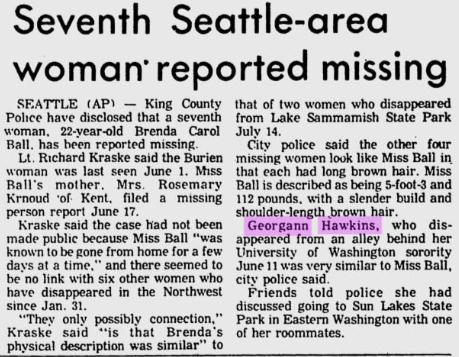


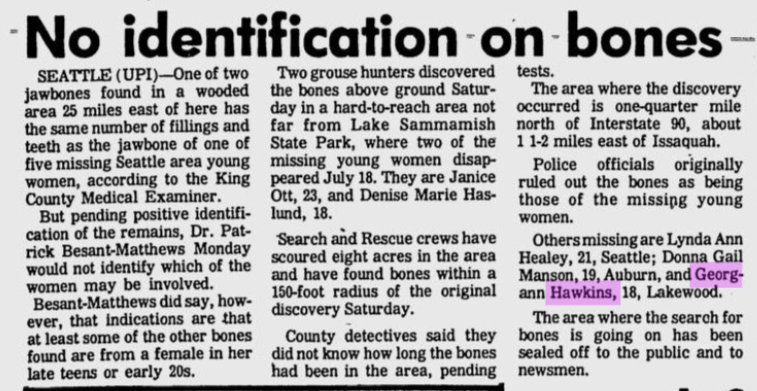
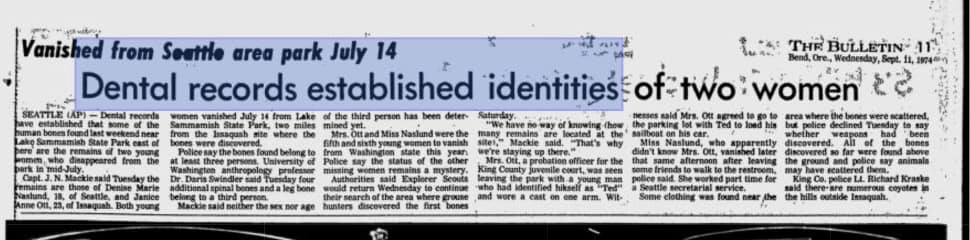
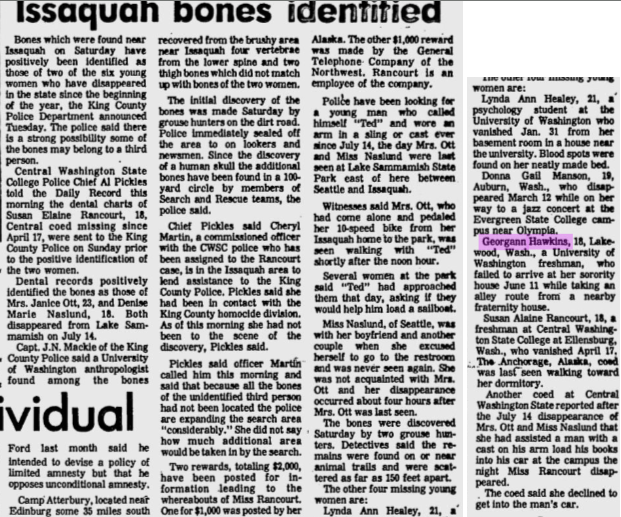
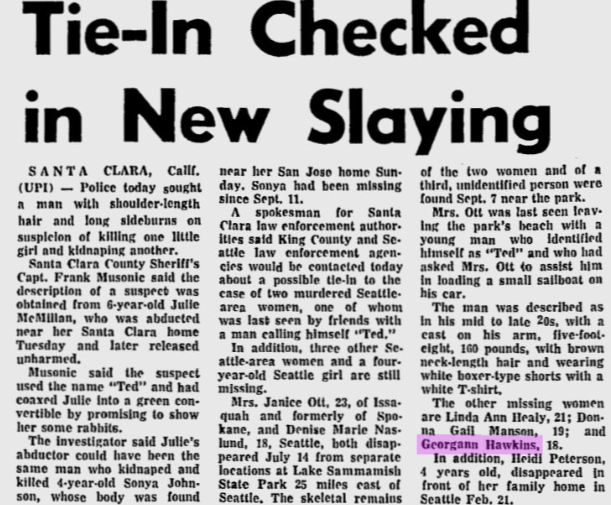
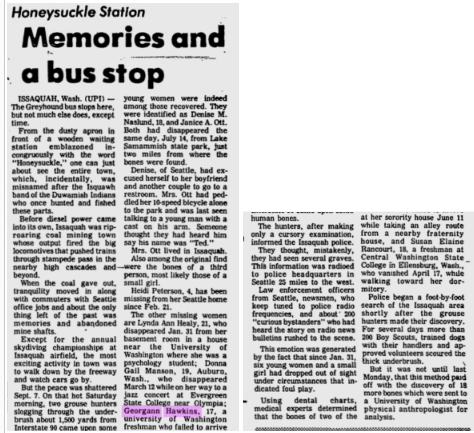
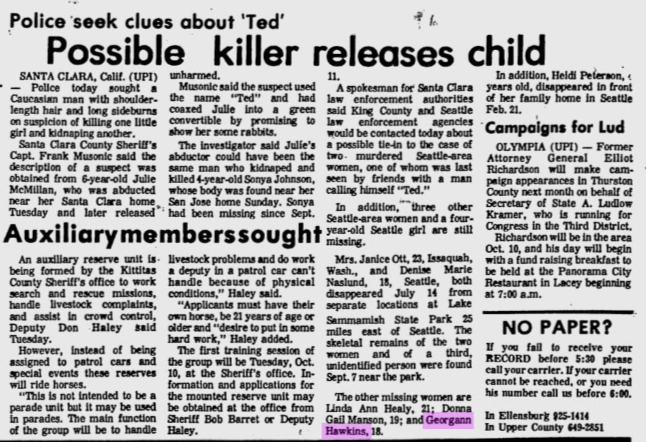


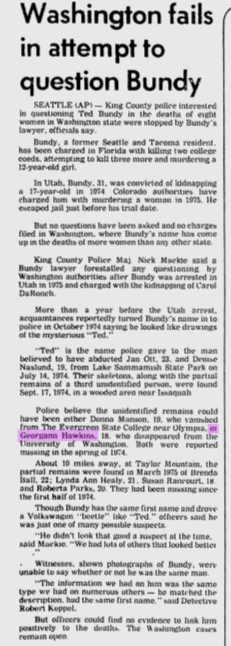
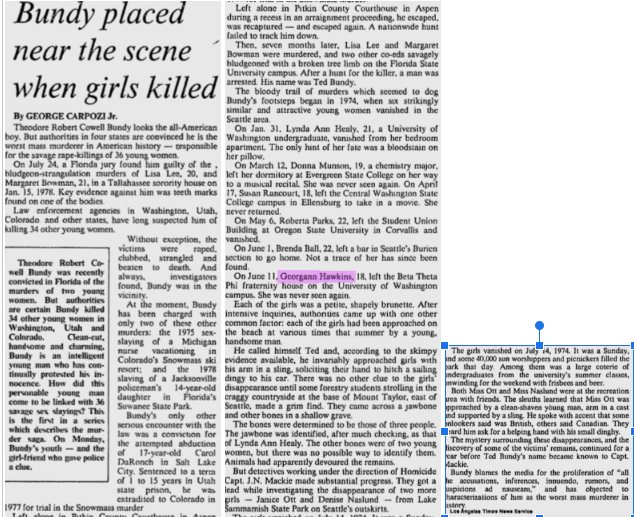
A newspaper article mentioning Georgann Hawkins published by The Spokane Chronicle on October 16, 1974.