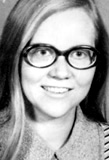
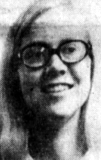
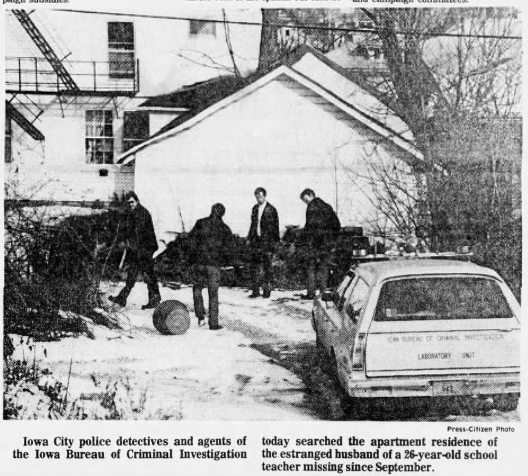
‘The Year of Fear:’ Murders in Grand Junction, Colorado in 1975.

Introduction: 1975 in Grand Junction, Colorado was marked by a sudden and shocking wave of violent crimes, which included multiple murders (and disappearances) of young women (and children), which traumatized the local community. In the beginning stages of the investigations (long before modern DNA profiling was available), local suspicion frequently fell on acquaintances or family members of the victims, and all cases have been solved in subsequent years thanks to advanced scientific methods as well as dedicated cold case investigators.

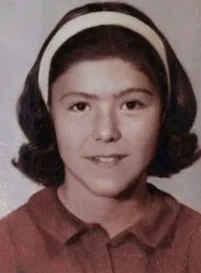
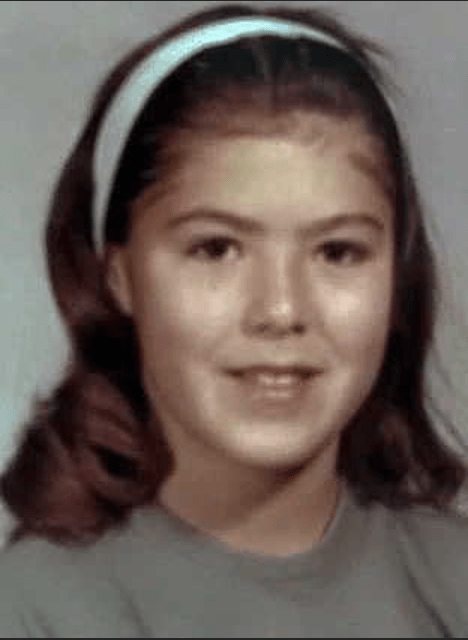
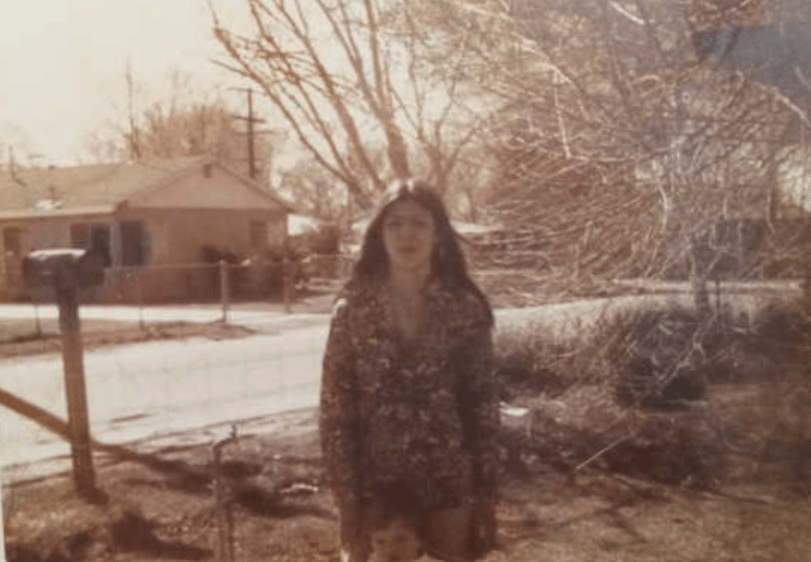
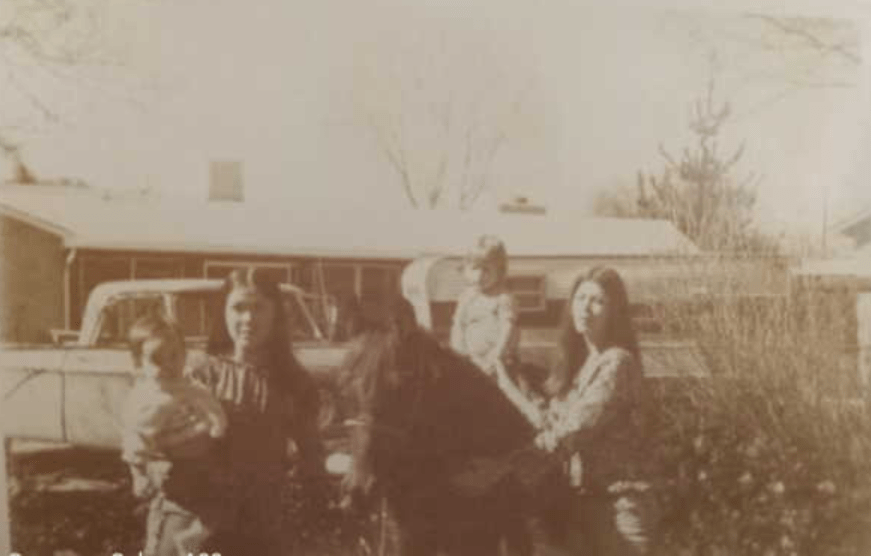
The key cases include Denise Oliverson (April 1975), mother and daughter Linda and Kelley (Ketchum) Benson (July 1975), Patricia Botham, Linda Miracle and her two young sons, five-year-old Troy and three-year-old Chad (August 1975), and nineteen-year-old college student Deborah Tomlinson (December 1975).

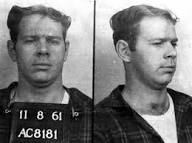
Isaac Carmickle: on January 27, 1975, thirty-year-old Virgil Carmickle shot and killed his father, fifty-five-year-old Isaac Carmicle after an argument they had in the family home,  located at 3047 F Road in Grand Junction. He was raised in Colorado but had lived in California before he returned to Rangely in March/April 1974; as a child he spent some time at Lookout Mountain School for Boys (a state run juvenile center for wayward youth) because of ‘inappropriate conduct,’ and despite having a residence in Rangely, Virgil was saying at his parents’ house at the time. Virgil’s mother Elsie called police after the shooting, who (along with his twelve-year-old sister, Mary) had witnessed the entire incident; they both were taken to St. Mary’s Hospital, where they were treated for shock. When Virgil was taken into custody, Sheriff’s Deputy Mike Martsolf also confiscated a 30-30 rifle as well as a box of ammunition from his vehicle.

In April 1975 he was found innocent by reason of insanity under the ‘irresistible impulse’ clause in the state’s mental defect statute,’ which states if a person is criminally insane if suffering ‘such an impairment of the mind by disease or defect as to destroy the willpower and render him in capable of choosing the right and refraining from doing the wrong;‘ he was committed to the Colorado Mental Health Institute in Pueblo, Colorado for ‘an indefinite period of time.’ About the plea, Mesa County District Attorney Terrance Farina said: ‘the people are not going to resist,’ and an investigation into Carmickle’s background indicated ‘a severe mental disorder.’ Since his release Virgil has had numerous run-ins with LE, the most serious being in June 2020 when he stabbed a truck driver (while highly intoxicated) who had been unloading merchandise outside of a store in Vernal, UT; he was charged with attempted murder he stabbed a truck driver unloading merchandise at a store.

Denise Lynn Oliverson: the pretty twenty-four-year-old brunette disappeared on April 6, 1975 while riding her bicycle to her parents’ house after getting into a fight with her boyfriend (it is a popular misconception that she was still married at the time of her abduction, but she was not); she never arrived at her intended destination and her ten-speed bicycle and sandals were discovered the following day under the Fifth Street Bridge near the Colorado River.

Ted Bundy: though long suspected to be a victim of Theodore Robert Bundy, Denise’s disappearance remained an official mystery for over four decades; investigators later found a gas receipt that placed the killer in Grand Junction on the same day that she disappeared, and during his January 1989 confession, he told investigators he that he abducted the young divorcee (although he did not give her name), killed her in his car near the Utah state line, then dumped her body in the Colorado River (about five miles west of the city). As of September 2026, her remains have never been recovered, but the Grand Junction PD officially closed the cold case in August 2019 after they uncovered an overlooked audio recording originally obtained by the Vail Police Department where Bundy explicitly referenced killing Denise Oliverson and discarding her body in the river.

Linda, Miles, and Knolly Clark: on June 6, 1975 twenty-four-year-old Linda Lee Clark shot her two children then turned the weapon on herself in an apparent ‘murder/suicide’: she killed four-year-old Miles, and her eight-month-old son Knolly sustained life-threatening injuries before she shot herself in the head. The three lived with Linda’s mom (Virginia Snyder) and her two younger brothers (sixteen-year-old Fred and thirteen-year-old Leonard) in her house in Whitewater. It was the older boy that made the gruesome discovery at around 6 PM when he found his sister and nephews in one of the back rooms of the house: the baby had been lying in his crib, and Miles was in his bed. Linda was lying next to Miles’s bed. A .38 caliber pistol was lying on the floor and sheriff’s deputies found three .38 caliber bullets in the vicinity of the bedroom.

None of Linda’s neighbors reported hearing gunshots, and one reported the young mother and her sons moved in about a month before the incident, and that they lived in Denver until about a year prior. She also said both Linda and Virginia were separated from their respective spouses, and both men were suspected to be living in the Denver area. The owner of the house said the last time her tenant stopped by to pay rent she seemed very ‘discouraged and down,’ and that she ‘wished she had made a harder try at marriage. Regarding the incident, Sheriff Dick Williams said there was ‘nothing to lead me to believe Mrs. Clark did not shoot her sons and then kill herself.’

Another neighbor of Clark’s said her marriage situation was ‘something ‘she didn’t talk about much,’ and marriage was a ‘part of her life she’d like to forget.’ A third neighbor named Edna Lawler babysat for her on occasion, and she said Linda ‘treated her kids perfectly,’ and had told her once, ‘if I give anything to my children, it would be their health.’ It is worth noting that, according to the user ‘marionumber1’ on the website ‘zodiackillerhoax.freeforum.net’ website, Linda’s mother disputes the fact that her daughter shot her children then herself and believes they were all murdered; additionally, Clark happened to know future victims Linda Benson and Linda Miracle.’ Knolly Clark was adopted by his biological aunt Kathy and lived in Brighton, CO until his mom and sister Rose died, when he moved back to Grand Junction. He died on September 6, 2022 at the age of forty-seven at the HopeWest Hospice Care Center.

Francis ‘Jerry’ Gerald Romisch: although the nineteen-year-old US Army soldier at Fort Carson wasn’t technically killed in Grand Junction, Jerry Romisch was born and raised in the area and was there the day prior to his death (he left GJ around 7 PM on June 16, 1975). As an adolescent he attended St. Joseph’s Immaculate Heart and Palisade High School, where he was a varsity wrestler; he was also a member of St. Ann’s Catholic Church. Romisch was shot ‘multiple times’ while in his vehicle (his autopsy report stated only that he suffered ‘multiple gunshot wounds’ and didn’t specify how many), which was a white two-door international brand pickup truck with license number NJ-379; the vehicle’s windshield had been ‘sprayed with bullets,’ and there were seventeen holes in total found scattered across it. It is believed he was shot while at a rest stop along Highway 115, south of Colorado Springs and it appears he tried to drive away afterwards only but made it a few hundred feet down the road (where his truck came to a stop against a barbed wire fence). His body was found lying on the ground outside the driver’s side door when he was discovered by a passing motorist. He had been wearing blue jeans, a brown belt, a brown shirt and green socks; the cowboy boots he had been wearing were not on his feet but were found close by. It’s also worth noting that Jerry’s brother Richard was also stationed at Fort Carson and was it rumored he had been working on a narcotics squad there. As of September 2026, the murder of Jerry Romisch remains an active and open cold case.

Linda Benson and her daughter Kelley Ketchum: on the evening of July 25, 1975, twenty-four-year-old Linda Benson and her five-year-old daughter Kelley Ketchum were found stabbed multiple times inside their residence at the Chateau Apartments in Grand Junction; they were found by Linda’s ‘common-law husband,’ Steve Benson, who had returned home from a multi-day work trip in Hayden (where he was working as a pipe fitter), and discovered their bodies inside their apartment. Linda had been nude on the floor of the master bedroom (one report said she was found at the foot of the bed), and though investigators noted the scene pointed to a sexually motivated crime, there were no clinical signs of rape; she had been stabbed multiple times. Kelley also suffered multiple stab wounds and was found in the hallway floor between two bedrooms (one source said she was specifically on the floor of a connecting bathroom).

Due to an extreme lack of evidence at the scene of the crime, the case quickly went cold, and for over three decades Linda and Kelley’s family were left desperately seeking answers. In 2007, the Grand Junction PD’s cold case unit re-examined the preserved physical evidence using modern forensic technology, and experts successfully isolated foreign DNA from underneath Linda’s fingernails as well as from blood spatter found in eight different spots across the apartment. Deputy District Attorney Jim Alvillar saw the apartment after the murders took place and described it as ‘a horrific scene.’ … ‘It was tragic. There was a young woman who had obviously fought, and then there was a dead little girl.’ According to reports, Steve Benson fled Colorado due to the judgment and rumors of possibly being involved with his wife and daughter’s death.

Jerry Louis Nemnich: there was a break in the case in April2009, when detectives entered DNA that had been collected from the crime scene into CODIS (Combined DNA Index System), which returned a perfect match for Jerry Nemnich, a convicted serial rapist with a long and violent criminal history dating back to the age of sixteen in 1960. He was convicted of first-degree sexual assault in 1977 and served a long prison sentence from 1978 until 1992. After his release he got a job as a long-haul trucker and he was arrested for the murders on April 9, 2009 at the Utah-Colorado border. At the time of his 2009 arrest, authorities were also looking into him regarding potential links to three or four additional unsolved murders in the Grand Junction area.

On October 27, 2010, a jury of his peers found Nemnich guilty of first-degree murder, and he was sentenced to two consecutive life terms without the possibility of parole. His subsequent appeals to the Colorado Court of Appeals and the Colorado Supreme Court were denied, ensuring he would spend the remainder of his life in prison. During his October 2010 trial, he took the stand in a surprise move and offered a highly improbable defense, claiming he had entered Linda’s apartment complex to buy marijuana when he was suddenly attacked by a mysterious, knife-wielding stranger, and he managed to wrestle the weapon away, and it was only then that he discover the bodies. The prosecution successfully dismantled his story as pure fiction, using advanced forensic techniques to prove that Nemnich’s blood was spattered directly onto Linda’s chest, and that his DNA under her fingernails, which proved she had fought him directly for her life.

Many Rumors Surround Linda’s Death: I took the following passage from a post about former Grand Junction Police Ben Meyers from the website ‘zodiackillerhoax1986.freeforums.net (made by user ‘marionuimber1’): ‘Linda Benson and her 5-year-old daughter Kelly Ketchum are brutally murdered in a grisly scene at her apartment. It was found that ‘a cross was carved into her sternum, between her breasts’ (l.376 of The Killing Season by Alex French), which happens to be one of the alleged markers of Hand of Death cult murders. Rumors swirled that Linda’s ex-husband Steve Benson was in the drug and gun trafficking scene (l.710 of French), and at one point Benson’s mother Barbara Himmerite offered up a suspicion to police that Steven and Ted Bundy ‘ran dope together.‘ It is clear that Benson herself was a member of that scene; a member of a local church said to police (l.710 of French): ‘I’ll tell you what, though. Linda was into the drug scene. I believe she had knowledge of the numerous heavy pushers around the Valley and that put her into considerable danger. Once she said to me, ‘If you only knew who the dealers are . . . big shots.’ So Linda Benson was in a position to have known too much, and to top it off, she was friends with future victim Linda Miracle. A bizarre side note (l.913 of French): Steve Goad, who lived in the same apartment complex as Linda, was adamant that he saw Ted Bundy (!) there on the night of her murder. But ultimately, the case was closed through an apparent DNA hit, matching to Colorado serial rapist Jerry Nemnich. That does not, needless to say, rule out others from involvement.’

Linda Miracle, her two young sons, Troy (age five) and Chad (age three), and Patricia Botham: it’s worth noting that on June 15, 1975, it was reported that somebody tried to strangle Linda Miracle, but she survived the ordeal. On the evening of August 22, 1975, twenty-four-year-old Linda Miracle and her two young sons vanished from their home under highly unusual circumstances, and she even left a meal behind, still sitting on the kitchen table; oddly enough, their neighbor across the street, twenty-five-year-old Patricia Botham, also vanished. Weeks later, on September 26, 1975 the bodies of Linda, Patricia, Troy and Chad were recovered from the Gunnison River. The coroner determined both women had been suffocated, where Troy and Chad had been shot in the head with a .22-caliber weapon; post-mortem, he weighed their bodies down with railroad iron then threw them into the river.

Unlike most of the other murders that took place in Grand Junction in 1975, the Miracle/Botham slayings were solved relatively quickly: Patricia Botham’s twenty-eight-year-old husband, Kenneth Botham Jr. (a former electronics executive) was arrested on November 8, 1975 on four counts of first-degree murder for the deaths of his wife, Linda Miracle, and her two sons (authorities believed he killed the two boys because they would have been able to identify him). In December 1976 he was found guilty of first-degree murder for his wife’s death and three counts of second-degree murder for the deaths of Linda Miracle and her children.

The prosecution’s case relied heavily on circumstantial details, including the fact that the state argued Botham wanted to avoid paying alimony due to marriage difficulties, something that established a supposed motive; additionally, investigators found a .22-caliber pistol in a crawl space under his residence months after the murders, however, forensic testing by the Colorado Bureau of Investigation could never definitively tie that specific gun to the bullets that killed the Miracle children. Botham’s defense also strongly maintained that logistically, the timeline of events prevented him from being in Grand Junction when the murders took place because he had been somewhere else at the time.

Despite the lack of direct forensic evidence or eyewitness proof, a Mesa County jury convicted Botham of first-degree murder for his wife and three counts of second-degree murder for Linda Miracle and her sons, and he was sentenced to die in the gas chamber. In 1981, the Supreme Court of Colorado completely overturned Botham’s conviction when the high court ruled that pervasive, prejudicial pretrial publicity (such as local newspapers publishing unverified headlines about the .22 pistol before the trial) had fundamentally denied him a fair trial.

In 1982 he was retried, and because Colorado changed its statutes surrounding capital punishment during that window, Botham was instead sentenced to life in prison without the possibility of parole, where he has remained ever since. He has maintained his innocence for over fifty years, and in recent decades, independent true crime researchers and his family have championed his case, most notably via true-crime websites and podcasts like ‘the investigative podcast, ‘Junction’ and kenbotham.com.

Interestingly enough, on a forum about Ben Meyers on the website ‘zodiackillerhoax1986.freeforums.net,’ the user ‘marionumbner1’ on said the following about the Miracle/Botham murders: ‘an aborted podcast on the case (soundcloud.com/junctionpodcast/welcome-to-junction) interviewed a couple who was friends with Botham and Miracle, and they said they were ‘told by Patricia that her and Linda were going to come forward with some news that was going to shock the whole town.’ What could they have been in a position to reveal? Both women were romantically involved with local law enforcement officers: Miracle was dating a Mesa County sheriff’s deputy named Truman Haley, and Botham was having an affair with Grand Junction PD officer Tom Montgomery. Also bizarrely, Haley stole several of Miracle’s diaries, one of which (per SUSPECTS: The Botham / Miracle Murders by Marti Talbott) was said to have recorded sexual liaisons that Miracle had with a large number of Grand Junction cops. Sounds like the town would have been left very shocked indeed if this information came out. The murders were ultimately pinned on Pat’s husband Ken Botham, although his sons believe he is innocent and run the aforementioned website on his case: kenbotham.com/overview.htm’ Later on in the same post about Ben Meyers, the same user points out that Linda Miracle knew Linda Miracle, and the two women had been friends since high school (drugs did play a role in their friendship).

Donald, Harlin, and Eva Sparks: on November 21, 1975 twenty-one-year-old Donald Lee Sparks shot and killed his parents Harlin and Eva (both forty-nine) while they were asleep in their beds in their home (located at 2107 Zion Road). Donald called Grand Junction PD around 12:320 AM to inform them he shot and killed both of his parents in the family residence, and upon hanging up turned the gun on himself. Upon entering the residences deputies found him dead on the living room floor from a self-inflicted gunshot wound, and his father and mother died of a gunshot wound to the head. According to Sheriff Don Williams, ‘ a .357 magnum revolver was lying underneath Don’s back near his hand; three bullets had been fired from the weapon, and there were three left.‘  and ‘at this time we feel Don apparently shot his parents called police and then shot himself. The parents were sleeping when they were shot. ‘No motive for the murders was known and there were no suicide notes left behind by any parties.

Deborah ‘Debi’ Tomlinson: nineteen-year-old Deborah Kathleen Tomlinson was a student at Mesa College that was found bound and strangled in her off-campus apartment on the 1000 block of Belford Avenue on December 27, 1975 by the apartment manager after her family reported multiple unanswered phone calls. Upon entry, she discovered Tomlinson’s bedroom window was open and her toilet was running. She had been partially clothed and was found in the bathtub. Investigators found that Deborah had been bound, sexually assaulted, and strangled; she also had a gash on her forehead, which was proof she most likely tried to fight off her attacker. Police found no evidence that a weapon was used in the murder.

Local detectives interviewed neighbors and potential suspects in 1975 and 1976 but ran out of leads by April 1976, and the case quickly went cold. For decades, Deb’s murder tore the Tomlinson family apart, because initial suspicion wrongfully swirled around her Uncle Tim, who was eventually excluded as a suspect via DNA evidence when the case was briefly revived in 2008.

Jimmie Dean Duncan: in 2019, the Grand Junction PD (along with Parabon NanoLabs), took a fresh look at the evidence in relation to the murder of Tomlinson, and the following year DNA allowed them to identify career criminal Jimmie Dean Duncan as the killer of the pretty young college student (I have also seen his first name spelled ‘Jimmy’). Duncan was twenty-six at the time of the murder, and by the time this discovery was made he was already dead, as he died of unknown causes on December 24, 1987, in Denver at the age of thirty-eight. Opinions on Reddit’s Unresolved Mysteries thread are mixed regarding the possible motives: some people feel it was related to a burglary, where others feel it was simply a crime of opportunity (given Duncan’s transient background). Jimmie Dean Duncan was born on April 24, 1949, in Monte Vista, Colorado, and before Tomlinson’s murder in 1975, he had been involved in an armed robbery and a separate shooting incident in Florida.

Donald Robert Laabs:  twenty-eight-year-old Detective Sergeant Donald Robert Laabs with the Manitou Springs Police Department was shot and killed on December 18, 1975, the same day he was promoted to detective sergeant. It’s highly suspected that Laabs (a US Army and undercover narcotics officer) was on his way home from work, as eyewitnesses saw him exit the highway in the direction of his residence. Approximately two hours after he was last seen alive, he was found deceased inside his police cruiser parked along Interstate 25 near the Arvada Street exit in Colorado Springs; he had been shot eight times with a .22 caliber handgun.

Despite intensive investigations and interviews with dozens of personal and professional associates in the months that followed the murder, authorities never established a motive or identified any viable suspects. At the time of Laabs death, he was survived by his wife and two young sons, and the investigation into his death remains an active, open case monitored by the Colorado Springs Police Department Cold Case Files

Ben Meyers in Relation to ‘The Year of Fear:’ Ben Meyers served as the Chief of Police in Grand Junction for the entirety of 1975 (he led the department from 1973 to 1976, when he was succeeded by Ed VanderTook); he had previously served as the police chief in Salem, Oregon, for eight years before he relocated to Colorado. However, his tenure at the Grand Junction Police Department was short-lived and highly controversial amidst rumors of corruption and a personal scandal following the murder of Deborah Tomlinson when he faced intense scrutiny over how his department handled the homicides in 1975, which created intense public and political pressure for a change in leadership. His administration was continually plagued by rumors of institutional misconduct, and there were additional (unproven) allegations that linked some of his officers to illicit narcotics and vice rings. The final catalyst occurred after Meyers reportedly threatened one of his subordinate officers that caught him buying drinks for his nineteen-year-old girlfriend at a local bar, which sparked an intense internal dispute, and he was forced to step down.

In addition to shady practices regarding women less than half his age, Meyers was rumored to be involved in drug trafficking operations (despite being part of a Grand Junction ‘anti-drug’ task force), where he was rubbing shoulders with dope dealers; it was discovered that he had two separate bank accounts where many large deposits were made throughout his time as police chief, but a District Attorney and a Judge blocked any release of these records.

According to George from the website CAVDEF.org, Meyers ‘possible involvement makes sense considering Campbell was the sister of a Florida police officer, so there is the chance of her death involving threats related to drugs traffickers. Perhaps Temos* was his hit man. Meyers resigned as undersheriff after Bundy’s jail break. But the department claims his resignation was not related to that, and he left over disagreements with the Sheriff on some unknown ‘law enforcement philosophy.’ Meyers was found to have several ‘extra’ bank accounts with untraceable money. Cleared bank accounts and left Grand Junction in December 1976. Went to Telluride as Chief of Police. Alleged connections to the drug/traffic/prostitution community.’ * George is referring to Hugh Joseph Michael Temos, who was an alternative suspect in the murder of Caryn Campbell before Bundy was caught.

In addition to shady practices regarding women less than half his age, Meyers was rumored to be involved in drug trafficking operations (despite being part of a Grand Junction ‘anti-drug’ task force), where he was rubbing shoulders with drug dealers; it was discovered that he had two separate bank accounts where many large deposits were made throughout his time as police chief, but a District Attorney and a Judge blocked any release of these records. Unofficial accounts and cold case files from the era suggest a broader crime spree in the area, which may have targeted individuals who knew too much about drug activities tied to corrupt law enforcement. It’s also a belief by some people that Meyers framed Pat Botham for the murder of Linda Miracle, who was rumored to have been in sexual relationships with several members of the Grand Junction police department.

Upon leaving Grand Junction, Meyers moved to Aspen and took a job as the Undersheriff of Pitkin County, and in a strange twist during a 1977 Aspen preliminary court hearing for serial killer Ted Bundy, a star eyewitness named Lizabeth Harter was asked to identify Bundy in the courtroom, and instead of pointing to the killer, she mistakenly singled out Meyers thinking he was the man she had seen near the victim. But as usual with Bundy case testimony, Harter changed her version of events from ’nothing unusual,’ to ‘two men,’ to only Bundy in the span of 3 years, however she did admit she didn’t get a good look at the man due to poor lighting before Cambell’s disappearance; this mix-up fueled conspiracy theories and rumors regarding Meyers’ background and any overlap with the 1975 Colorado crimes.

A Google Maps layout of all the primary locations related to the ‘Year of Fear:’
The first is the 5th Street Bridge, where Denise Oliverson was abducted from.
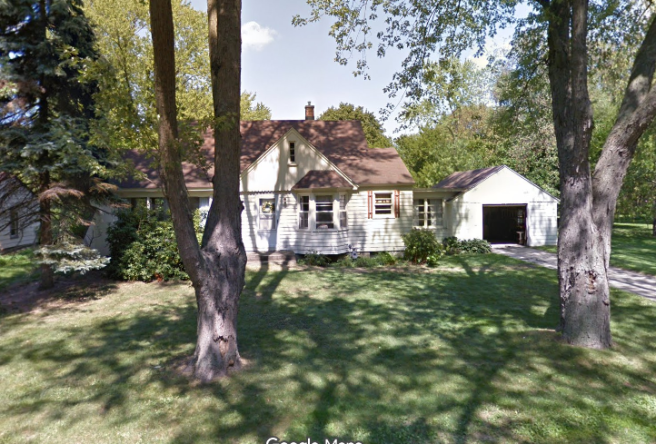
The second location is where Linda Benson and her daughter Kelley were killed.
The third is where Patricia Botham and her neighbors Linda, Chad, and Troy Miracle were abducted from.
The fourth location is the apartment complex where Deborah Kathleen Tomlinson was killed.
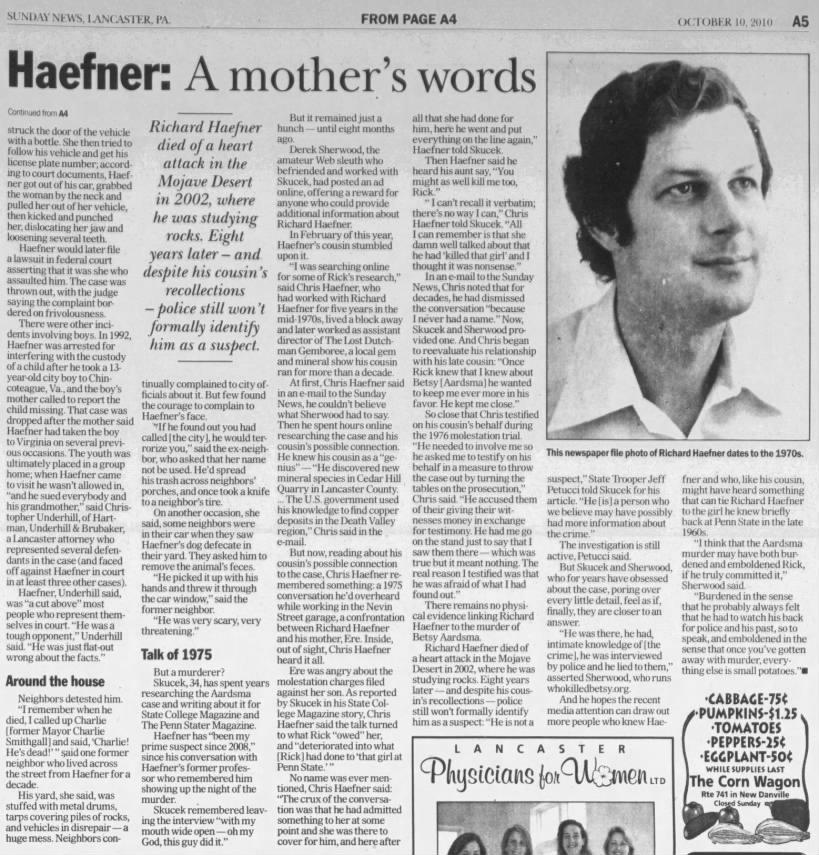
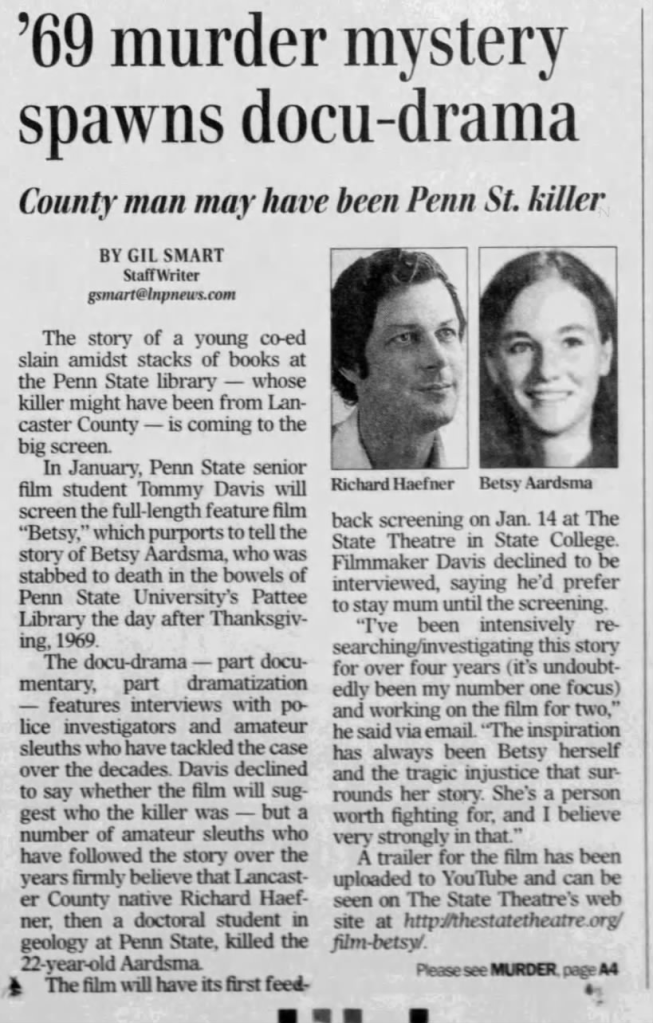
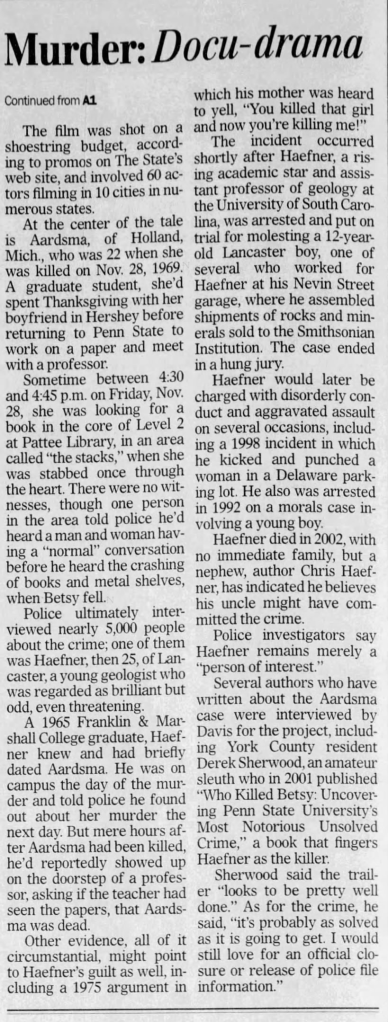
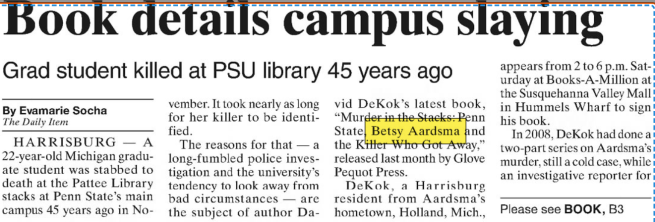
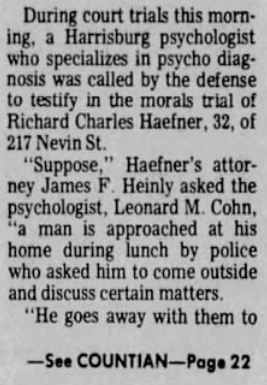
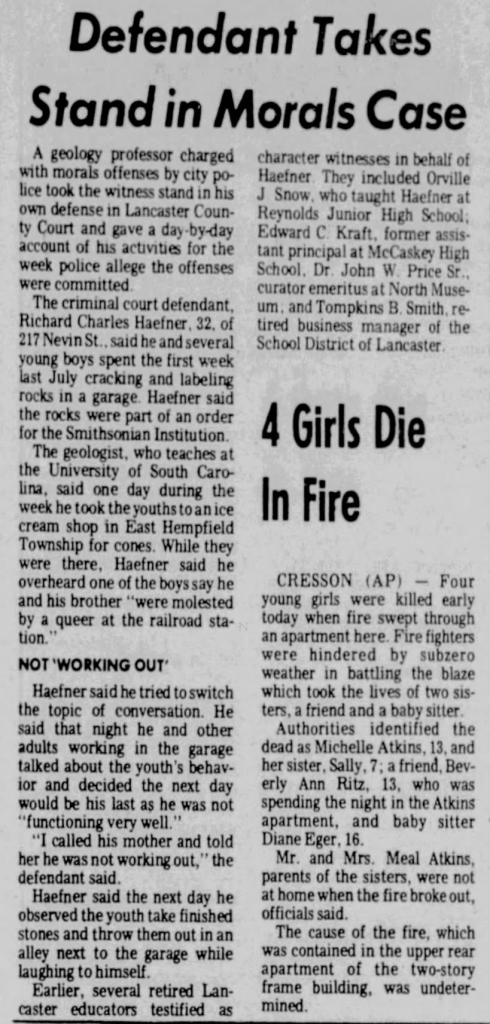
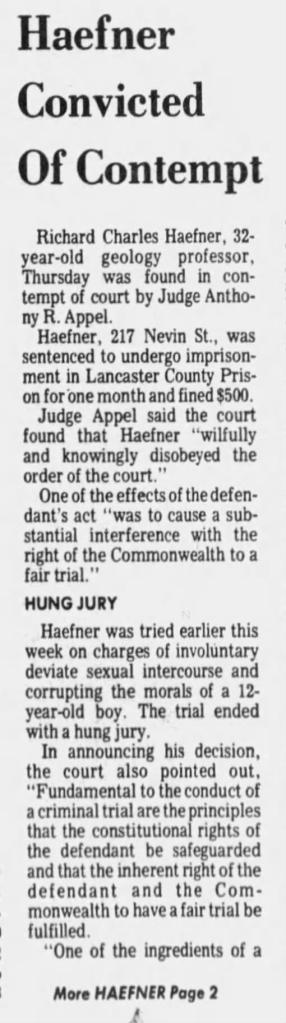
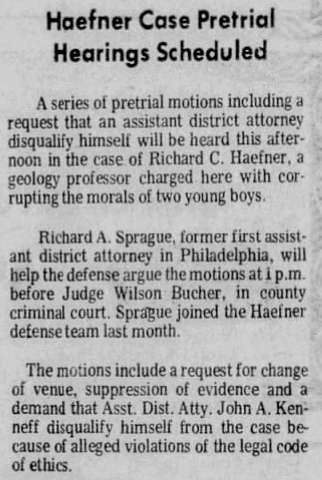
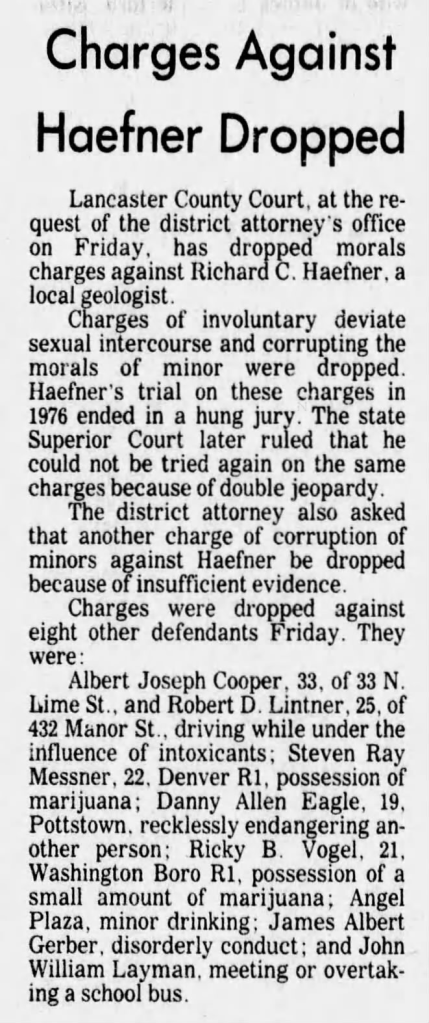
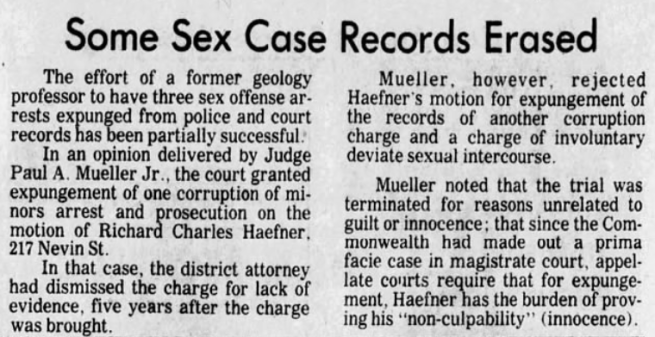
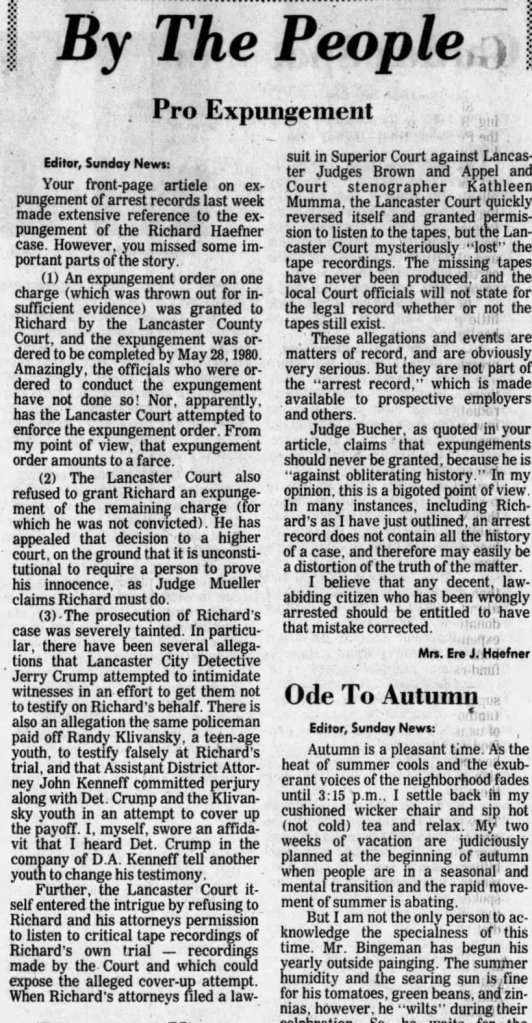
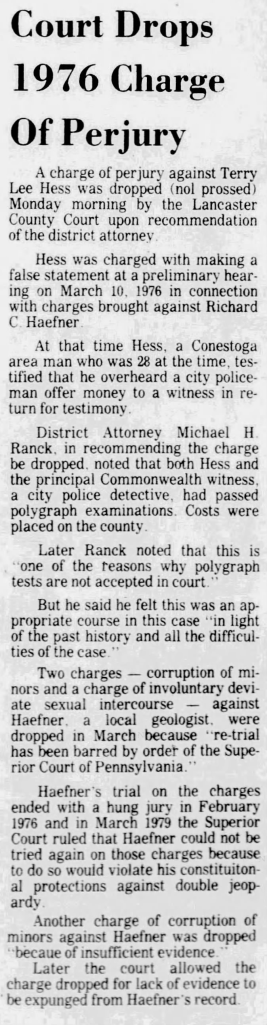
An article about the uptick of crime in the 1970’s in Grand Junction that was published in The Daily Sentinel on January 1, 1980.
An article about Bundy’s activity in Grand Junction in 1975 that was published in The Daily Sentinel on January 24, 1989.
Part one of an article about the year of fear that was published in The Daily Sentinel on April 10, 2009.
Part two of an article about the year of fear that was published in The Daily Sentinel on April 10, 2009.
Part one of an article about 1975 being dubbed ‘the year of fear’ that was published in The Daily Sentinel on April 26, 2009.
Part two of an article about 1975 being dubbed ‘the year of fear’ that was published in The Daily Sentinel on April 26, 2009.
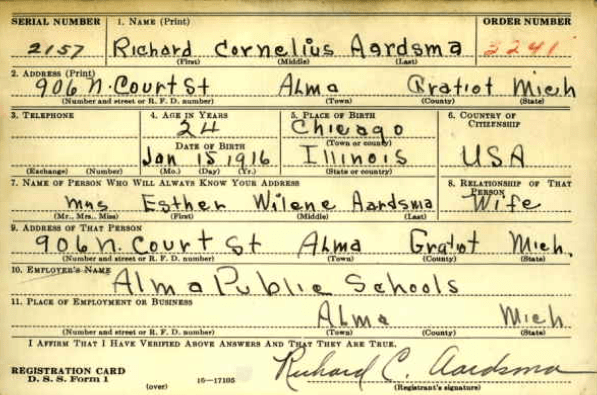
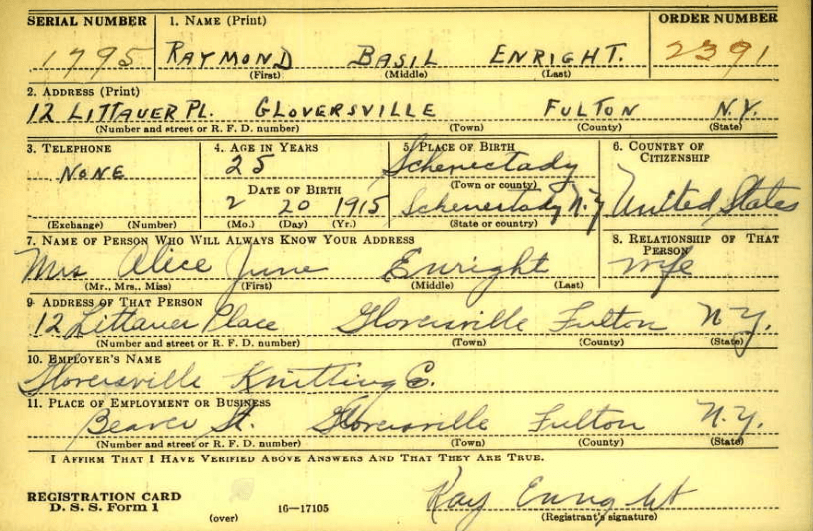
Isaac Carmickle’s WWII draft card.
An article about the murder of Isaac Carmickle that was published in The Daily Sentinel on January 25, 1975.
An article about the murder of Isaac Carmickle that was published in The Daily Sentinel on January 28, 1975.
An article about the murder of Isaac Carmickle that was published in The Daily Sentinel on Febrauary 20, 1975.
An article about Virgil Carmickle being found insane in relation to his father’s murder that was published in The Daily Sentinel on April 2, 1975.
An article about Virgil Carmickle escaping from the Colorado State Hospital that was published in The Daily Sentinel on August 23, 1976.
An article about Virgil Carmickle escaping the Colorado State Hospital that was published in The Pueblo Chieftain on November 1, 1978
An article about Virgil Carmickle getting recaptured after his escape from the Colorado State Hospital that was published in The Pueblo Chieftain on November 30, 1979.
A picture of Virgil Carmickle taken from his Facebook page, from 2019.
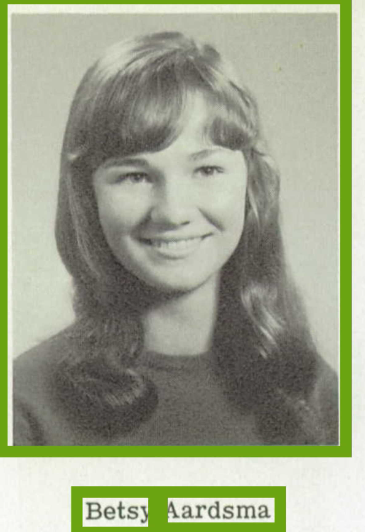
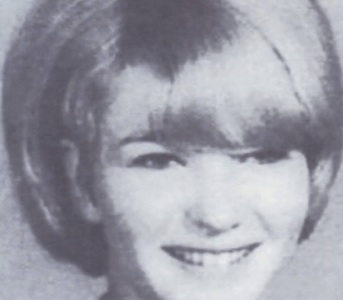
Denise Lynn Oliverson.
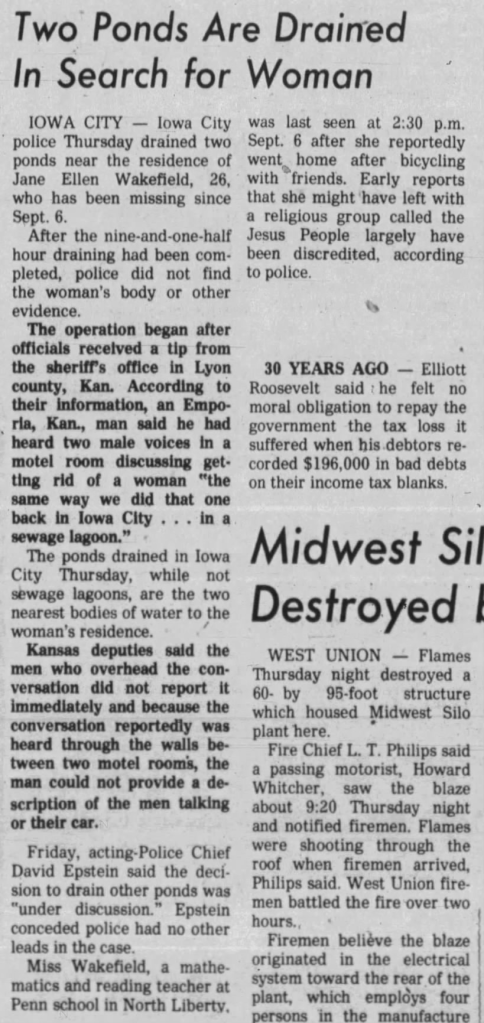
An article about divers looking for the remains of missing women around Colorado that mentions Denise Oliverson and Linda Benson published by The Daily Sentinel on October 13, 1975.
An article about Bundy being executed that mentions him murdering Denise Oliverson at the very bottom that was published by The Tribune on January 27, 1989.
Denise Oliverson’s page on the apps.colorado.gov/ website.
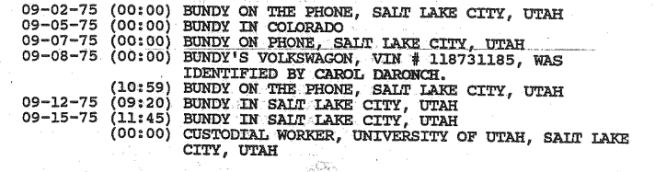
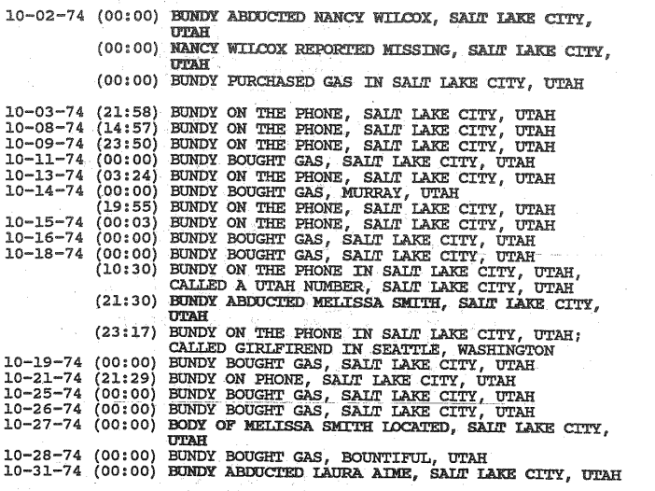
Bundy’s whereabouts on April 5, 1975 when Oliverson disappeared according to the ‘TB Multiagency Investigative Team Report 1992.’
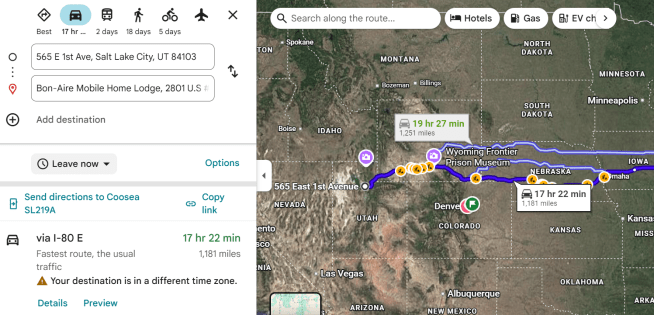
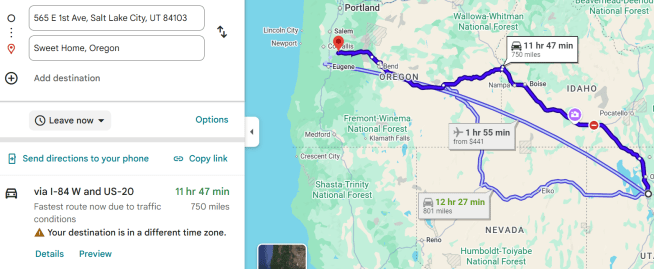
A possible route Bundy make have taken to the South 5th Street bridge in Grand Junction, Colorado.
A comment made by user ‘jaybland34141 on a post about Ben Meyers on the website ‘zodiackillerhoax1986.freeforums.net’
Knolly Clark as a baby.
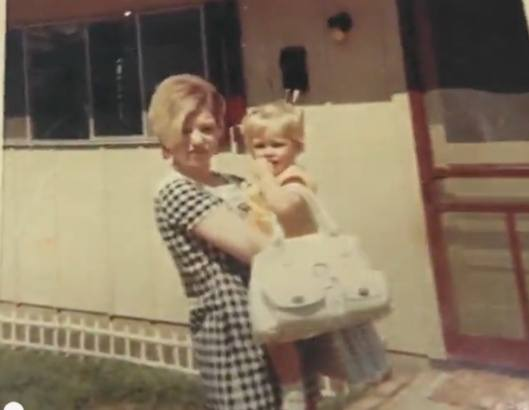
Linda (top right), Miles, and Knolly Clark.
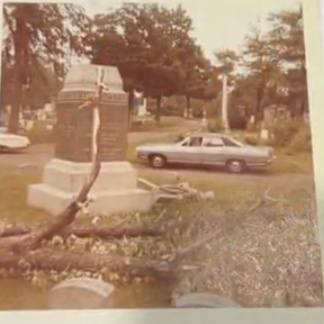
The final resting place of Linda and Miles Clark.
A picture taken at the scene of the murder/suicide of the Clark family that was published in The Daily Sentinel on June 7, 1975.
An article about the murder/suicide of Linda and Miles Clark that was published in The Daily Sentinel on June 7, 1975.
An article about the murder/suicide of Linda and Miles Clark that was published in The Greeley Daily Tribune on June 7, 1975,
The obituary for Miles Clark that was published in The Daily Sentinel on June 8, 1975.
An article abut the recovery of shooting survivor, Knolly Lee Clark that was published in The Daily Sentinel on June 9, 1975.
An article abut the recovery of shooting survivor, Knolly Lee Clark that was published in The Daily Sentinel on July 12, 1975.
An opinion piece from someone disgusted by the fact that someone stole from the money that was supposed to go to Knolly Clark that was published in The Daily Sentinel on July 21, 1975.
Knolly Lee Clark-Hetzels’s obituary that was published in The Daily Sentinel on September 11, 2022.
Francis ‘Jerry’ Gerald Romisch.
An article about the death of Jerry Romisch that was published in The Daily Sentinel on June 18, 1975.
Linda Benson and her dad in 1955.
A picture of Linda Benson taken from The Daily Sentinel on July 26, 1975.
A picture of Kelly Benson-Ketchum taken from The Daily Sentinel on July 27, 1975.
Steve Benson from his time at Grand Junction High School taken from an issue of The Daily Sentinel that was published on April 18, 2009.
The Chateau Apartments in Grand Junction, where Linda and Kelley Benson were killed.
An article about the murder of Linda and Kelley Benson that was published in The Daily Sentinel on July 26, 1975.
Part one of an article about the murder of Linda and Kelley Benson that was published in The Daily Sentinel on July 27, 1975.
Part two of an article about the murder of Linda and Kelley Benson that was published in The Daily Sentinel on July 27, 1975.
An article about the funerals of Linda and Kelley Benson that was published in The Daily Sentinel on July 28, 1975.
Funeral notices for Linda and Kelley Benson that was published in The Daily Sentinel on July 28, 1975.
An article about Steve Benson ‘pretty much’ being cleared in relation to his wife and daughters murders that was published in The Daily Sentinel on July 29, 1975.
An article about there being no developments in the investigation into the murder of Linda and Kelley Benson that was published in The Daily Sentinel on August 1, 1975.
An article about the Grand Junction PD looking into any connections between the murder of Linda Benson and the murder of Debra K. Nadeau in nearby Lakewood that was published in The Daily Sentinel on August 20, 1975.
An article about a murder task force that was set up to solve the 1975 murders in Grand Junction that was published in The Daily Sentinel on March 3, 1976.
An article about updates in relation to the unsolved 1975 murders in Grand Junction that was published in The Daily Sentinel on January 20, 1977.
Part one of an article about updates in relation to the murders of Linda and Kelley that was published in The Daily Sentinel on April 14, 2009.
Part two of an article about updates in relation to the murders of Linda and Kelley that was published in The Daily Sentinel on April 14, 2009.
Part one of an article about the arrest of Jerry Nemnich and the vindication of Steve Benson that was published in The Daily Sentinel on April 18, 2009.
Part two of an article about the arrest of Jerry Nemnich and the vindication of Steve Benson that was published in The Daily Sentinel on April 18, 2009.
The first part of an article about the conviction of Jerry Nemnich that was published in The Daily Sentinel on October 15, 2010.
The second part of an article about the conviction of Jerry Nemnich that was published in The Daily Sentinel on October 15, 2010.
The first part of an article about the conviction of Jerry Nemnich that was published in The Daily Sentinel on October 16, 2010.
The second part of an article about the conviction of Jerry Nemnich that was published in The Daily Sentinel on October 16, 2010.
The first part of an article about the conviction of Jerry Nemnich that was published in The Daily Sentinel on October 28, 2010.
The second part of an article about the conviction of Jerry Nemnich that was published in The Daily Sentinel on October 28, 2010.
The first part of an article about the conviction of Jerry Nemnich that was published in The Daily Sentinel on November 9, 2010.
The second part of an article about the conviction of Jerry Nemnich that was published in The Daily Sentinel on November 9, 2010.
A screen grab from the Colorado Department of Public Safety Cold Case Task Force Annual Report, October 1, 2011.
spl.cde.state.co.us.
An article about four prison convicts receiving honors in the American Penal Press contest for their work with ‘The Interpreters,’ (a prison magazine published entirely by prisoners) that mentions Jerry Nemnich that was published in The Pueblo Chieftain on February 9, 1970.
A picture of Jerry Nemnich taken during one of his early stints in prison that was published in The Colorado Springs Gazette-Telegraph on February 22, 1970.
An article about four prison convicts receiving honors in the American Penal Press contest for their work with ‘The Interpreters,’ (a prison magazine published entirely by prisoners) that mentions Jerry Nemnich that was published in The Pueblo Chieftain on February 26, 1971.
An article about an easter egg hunt being held inside the walls of the Colorado State Penitentiary that mentions Jerry Nemnich taken during one of his early stints in prison that was published in The Pueblo Chieftain on April 9, 1971.
An article about making a prison stay constructive that mentions Jerry Nemnich taken during one of his early stints in prison that was published in The Pueblo Chieftain on December 20, 1982.
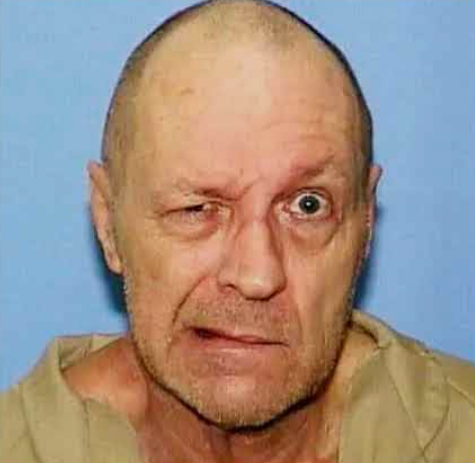
Jerry Nemnich.
Linda Miracle and her sons, Troy and Chad.
Patricia Jane Jantz-Botham, who was born on January 21, 1950 in Enid, Oklahoma.
Patricia Jantz-Botham’s birth announcement that was published in The Enid Morning News on January 24, 1950.
Patricia Jantz and Kenneth Botham in a list of people that applied for a marriage license that was published in The Daily Sentinel on June 12, 1969.
Patricia Botham’s funeral notice that was published in The Daily Sentinel on October 10, 1975.
Patricia Jane Jantz-Botham’s obituary that was published in The Daily Sentinel on October 7, 1975.
An article about the murders of Linda, Chad, and Troy Miracle that was published in The Anderson Herald on October 26, 1975.
An article about jury selection beginning for the trial of Kenneth Botham Junior that was published in The Daily Sentinel on November 15, 1976.
An article about Kenneth H. Botham’s guilty verdict that was published in The Rocky Mountain News on December 13, 1976.
An article about Kenneth Botham being hospitailized after a suicide attempt that was published in The Fort Collins Coloradoan on December 13, 1976.
An article about Kenneth Botham sitting on death row that features input from his mother that was published in The Daily Sentinel on October 24, 1978.
An article about Kenneth Borham’s second trial that was published in The Daily Sentinel on January 17, 1982.
A Reddit post made about the granddaughter of Steve Benson made by the Redditor ‘CannaLillie.’
A picture of Kenneth Botham walking into court.
A picture of Kenneth H. Botham taken from The Rocky Mountain News that was published on December 13, 1976.
A comment made by user ‘thadbotham’ on a post about Ben Meyers on the website ‘zodiackillerhoax1986.freeforums.net.’
An article about there being no foul play suspected in relation to the drowning death of Tracy Martee Freitas that was published in The Daily Sentinel on October 11, 1975.
An article about the drowning death of Tracy Martee Freitas that was published in The Daily Sentinel on October 17, 1975.
A picture of Harlin, Eva, and Donald Sparks taken from The Daily Sentinel on November 21, 1975.
Where the Sparks family lived at the time of the murder/suicide at 2107 Zion Rd in Grand Junction, CO.
Harlin and Eva Sparks in a list of people that applied for a ‘dissolution of marriage that was published in The Daily Sentinel on January 1, 1974.
An article about a funeral for the Sparks family that was published in The Daily Sentinel on November 23, 1975.
A ‘letter to the editor’ from a childhood friend of Donald Sparks saying goodbye to him that was published in The Daily Sentinel on November 28, 1975.
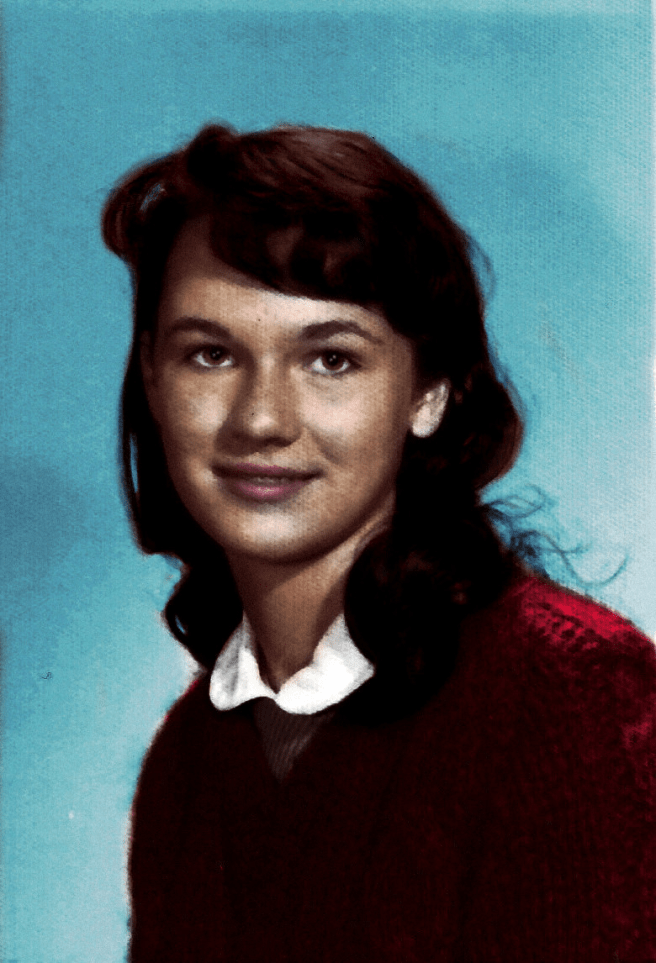
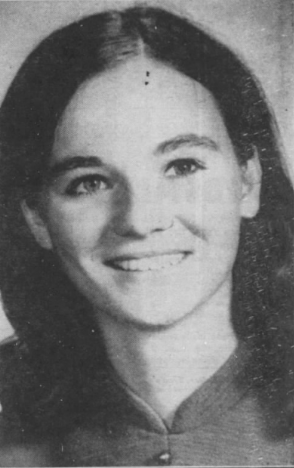
Deborah Kathleen Tomlinson.
An article about the murder of Deborah K. Tomlinson that also mentions a few additional victims from ‘the year of fear’ that was published in The Daily Sentinel on December 28, 1975.
An article about Deborah K. Tomlinson’s murder being solved that was published in The Daily Sentinel on December 3, 2020.
Part one of an article about Deborah K. Tomlinson’s murder being solved that was published in The Daily Sentinel on December 4, 2020.
Part two of an article about Deborah K. Tomlinson’s murder being solved that was published in The Daily Sentinel on December 4, 2020.
Jimmie Dean Duncan.
An article about Jimmie Dean Duncan being arrested that was published in The Pueblo Chieftain on April 7, 1972.
An article about Jimmie Dean Duncan being arrested on derug charges that was published in The Pueblo Chieftain on September 30, 1972.
An article about Jimmie Dean Duncan getting busted for drugs that was posted in The Pueblo Chieftain on August 31, 1975.
An article about Jimmie Dean Duncan getting busted for drugs that was posted in The Pueblo Chieftain on February 7, 1976.
An article that mentions Jimmie Dean Duncan getting shot during an altercation with police that was published in The Miami Herald on January 27, 1976.
Some comments made on Jimmie Dean Duncan’s ‘FindAGrave’ page.
A comment made about Jimmie Dean Duncan by user ‘marionumber1’ on a post about Ben Meyers on the website ‘zodiackillerhoax1986.freeforums.net.’
Detective Sergeant Donald Robert Laabs.
Some information about Detective Sergeant Donald Robert Laabs taken from the website ‘odmp.org/officer/7790-detective-sergeant-donald-robert-laabs.’
An article about the murder of Donald Laabs that was published in The Pueblo Chieftain on December 30, 1975.
Ben Meyers.
A question about why police chief Ben Meyeres brought in an outside hire that was also a friend to fill a position as an animal control officer that was published in The Capital Journal on September 20, 1967.
An article about some embarrassment experienced by (then) Salem police chief Ben Meyers that was published in The Capital Journal on August 25, 1972.
An article that mentions the fact that Ben Meyers was in a minor car accident at the ‘lousiest intersection in the county’ that was published in The Daily Sentinel on July 24, 1974.
An article about a memorial scholarship being established for Deborah K. Tomlinson that mentions Ben Meyers that was published in The Daily Sentinel on December 31, 1975.
Part one of an article that mentions that various murders from 1975 in Grand Junction as well as Ben Meyers that was published in The Daily Sentinel on January 1, 1976.
Part two of an article that mentions that various murders from 1975 in Grand Junction as well as Ben Meyers that was published in The Daily Sentinel on January 1, 1976.
An article about the Bundy case that mentions Ben Meyers that was published inThe Daily Sentinel on April 5, 1977.
An article about Ben Meyers leaving his Pitkin County LE position that was published in The Daily Sentinel on July 1, 1977.
Notes about Ben Meyers taken from kenbotham.com
A second part of a comment made on a post about Ben Meyers by user ‘marionumber1’ on the website ‘zodiackillerhoax1986.freeforums.net.’

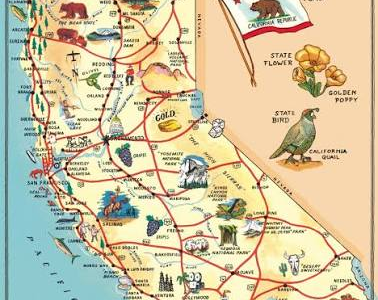
Missing/Murdered Women in California, 1965 to 1979.

I’ve been keeping a running list of girls/women that went missing/were killed in Oregon from 1969 to 1979, and I realized this morning it would be a good idea to do it with California too. I’m constantly coming across new names from the Golden State, I’m going to put them all here.

Doreen Heskett (March 25, 1963, Napa): on the afternoon of March 25, 1963, five-year-old Doreen was walking home with a friend after a playdate; when it came time for the girls to go to their respective houses they parted ways, and this was the last time Doreen was seen alive. When she failed to return home for dinner, her mother contacted the Napa Police Department and reported her as missing. I know this falls outside of the allotted time frame, but it’s suspected that Heskett was killed by a man I will be bringing up again later, Claude Ray Junior (he killed his daughters, and Doreen went to kindergarten with one of them).

Morgan Rowan (1965 & 1968): she wasn‘t killed or is missing but she is worth mentioning: Morgan Rowan survived two separate encounters with Rodney Alcala. The first one took place when she was thirteen (and Alcala was twenty-one): Rowan scratched Alcala’s arm to get his attention at a teen nightclub, and he responded by dragging her into a back alley, beating her, and knocking her unconscious before the club owners intervened. The second encounter took place when she was sixteen in 1968 and was much worse: Alcala pulled her into a bedroom at his Hollywood home during a party, then dropped a metal bar securely into brackets to lock the door: from there, he wrapped his belt around his fist, punched Rowan with extreme force directly between the eyes, then used a knife to cut a tie off her neck, which caused heavy bleeding. When Morgan got to the point where she feared she was going to die, her friends broke into the room and helped her flee. When she spoke to law enforcement, an officer dismissed the severity of the event, and she never filed a formal police report.

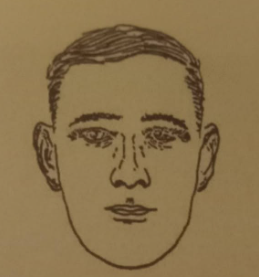
Brenda Sue Sayers (January 7, 1965, Brawley): on the day of her disappearance, the ten-year-old left home to go roller-skating at a nearby school. A witness spotted her talking to a stranger shortly before she was last seen, which prompted an LA Police Department sketch artist to draw a composite image based on the description, which was printed on the front page of every local newspaper, which quickly led to the identification of the suspect. The child’s partially dressed body was found on January 10, in a concrete water meter well near Mecca. Her killer was identified as Robert Eugene Pennington, a convicted sex offender who had recently escaped from Atascadero State Hospital.

Floy ‘Faye’ Redmon (May 6, 1965, Orange): theseventy-five-year-old widow was murdered inside her home on East Walnut Avenue: her killer had brutally bludgeoned her over the head with the heavy lid of a kitchen pressure cooker. Because Redmon lived alone and had no surviving relatives, her tragic death quickly disappeared from the media and faded away into a cold case file for nearly thirty-nine-years when Orange Police Department detectives tracked a lead to a Texas prison. Confronted with the evidence, inmate William Self officially confessed to the 1965 homicide.

Carol Frances Metzener-Norton (June 2, 1965, El Cerrito): Carol’s sister went to visit her trailer home on June 3, 1965 and found the lights on and coffee on the stove; her husband, Harvey Arnold Norton, was later arrested and charged with the $11,700 holdup of a Sandia, TX bank on July 14, 1965. He told investigators that he had left his wife in a Portland motel on June 14th after the two had gotten into an argument. and from there he went to Texas. Harvey’s car was found abandoned in downtown Corpus Christi, and inside it, detectives found bloodstained floor mats with strands of human hair and a dirty shovel; he was charged and served jail time only for the robbery. In 1971, Norton drove to an isolated trailer home in Marshall, TX, tied up the two teenage girls who lived there and stole their fathers rifle; when one of their boyfriends showed up and tried to rescue them, Norton killed him. Immediately after, he ate some vanilla wafers with peanut butter, drank a six-pack of beer, then used the same rifle to kill himself.

Diane Louise Gerrish (discovered on August 30, 1965, Albany): three soldiers discovered the remains of the nineteen-year-old cosmetologist on the grounds of the San Francisco Presidio, an army post near the southern entrance of the Golden Gate Bridge; investigators determined that she had been severely beaten and choked to death with a garrote made out of her own clothing approximately eight hours prior to her discovery; she had also been subjected to severe post-mortem sexual mutilation. Following an argument with her family regarding the use of a car, Gerrish left her home on Friday, August 27, 1965, telling her parents she was going to a movie. She was later spotted at a liquor store purchasing cigarettes and gum before getting into a late-model sedan with an unidentified person. On the morning of Monday, August 30, 1965, three soldiers discovered her body hidden in a bed of ice plant near Lincoln Boulevard, close to the southern entrance of the Golden Gate Bridge.

Jeanette Louise Ray (disappeared on October 4, 1965, Napa): Jeanette was last seen with her seven-year-old sister, Renay Ray, on the morning of Monday, October 4, 1965; their father claimed he had dropped the pair off in front of Westwood Elementary School at 8:30 AM, but they never made it to class. On October 10th, Renay’s body was found at Schooner Gulch State Beach at the bottom of a 90-foot cliff by a family looking for seaweed; her cause of death was asphyxiation. Their father, Claude Ray Junior was arrested later same day Renay’s body was found and on January 27, 1966 he was found guilty of the first-degree murder. He received a life sentence but committed suicide in 1983. Jeanette is believed to have met the same fate as her sister however her remains have yet to be recovered. Ray is also the suspect in the unsolved murder of five-year-old Doreen Heskett.

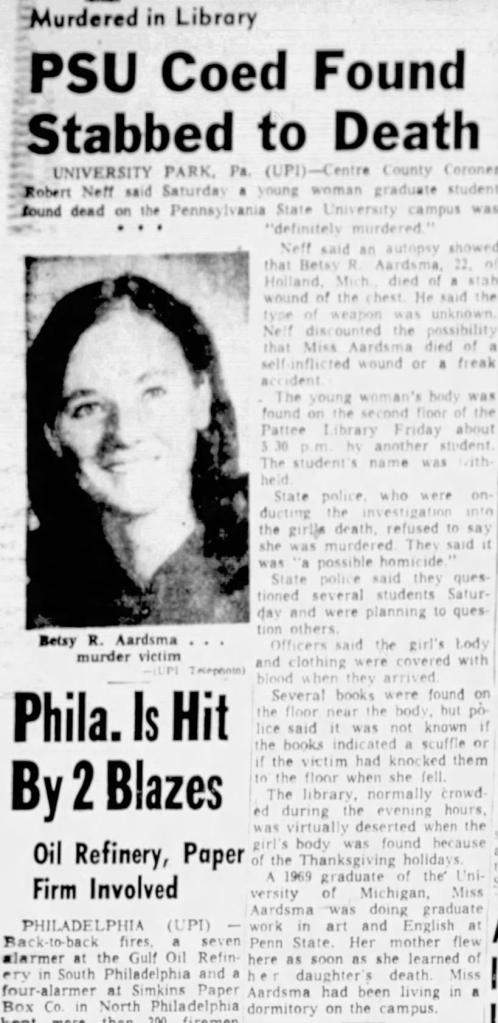
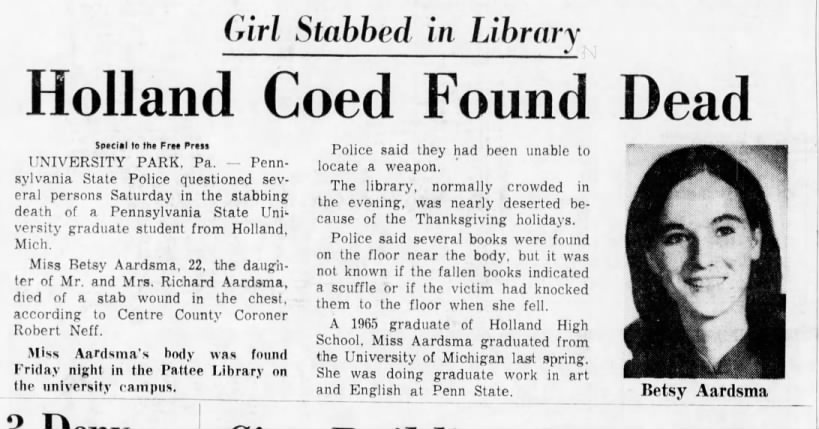
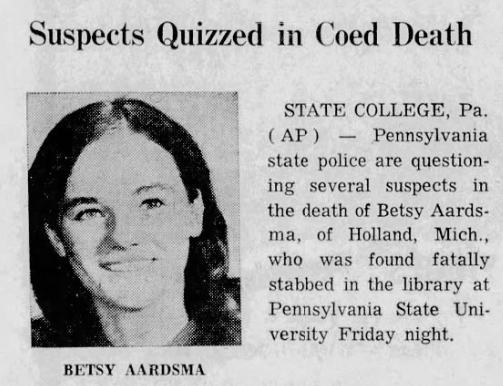
Cheri Jo Bates (October 30, 1966, Riverside): Bates was found stabbed to death on Halloween 1966 on the campus of Riverside City College after she had been studying at the library; LEO’s said her car had been disabled, and her body was discovered about 100 yards away.

Dorothy Jean William-Vaillancourt (found December 18, 1966, Tiburon): on December 18, 1966, a woman’s body was found on a cliff near the edge of Paradise Drive in Tiburon, California. A hunter made the discovery and alerted authorities. The woman could not be identified and became known as Marin County Jane Doe. It was estimated that the woman was between forty-five and sixty years old at the time of her death. She had auburn red hair, was 5’2” and weighed 105 pounds. She was wearing a red cotton dress and an off-white trench coat. The woman’s cause of death could not be determined.

Lillian Marie Cardenas (discovered on February 3, 1967, Jenner): her mummified and badly decomposed remains were found by a hiker at the base of a steep cliff north in Jenner; they went unidentified for nearly sixty years. An initial autopsy revealed that the woman suffered multiple fractures to her skull and ribs, though investigators at the time could not determine exactly how she sustained those injuries, and because early identification efforts failed, she was buried as a ‘Jane Doe; in the County of Sonoma Cemetery. In 2009, the Sonoma County Sheriff’s Office exhumed the body to perform an anthropology review, and it was confirmed that the victim was a white woman between forty and forty -six years of age. A breakthrough occurred in 2023 when the California Department of Justice partnered with forensic genetic analysis company Othram Inc and using genetic genealogy, investigators tracked down living relatives and positively identified the remains as Lillian Marie Cardenas. As of July 2026, her killer remains unknown.

Sue Alice Beaulieu (February 18, 1967, Redwood City): the nineteen-year-old mother of two was found deceased in her Redwood City apartment by her brother; investigators determined she was struck on her porch, moved inside, and killed via ligature strangulation in the bathtub. The killer also turned on all the gas jets in the kitchen before leaving, though her brother and two young children sleeping in the next room; they narrowly survived the gas accumulation. Her murder remains unsolved.

Gloria Dawn Collins (March 4, 1967, Fullerton ): Gloria Dawn Collins was found brutally murdered inside an apartment as a result of massive skull fractures and stab wounds. A primary suspect emerged in connection with the crime: twenty-five-year-old former sailor named William Blakeman was the primary suspect in the crime, but despite spending five and a half months in custody Blakeman was fully acquitted and cleared of all charges in August 1967.

Elaine Kirschke & Orville Drankhan (April 9, 1967, Long Beach): Kirschke was shot in the head along with her lover, Orville Drankhan, in her bedroom; Kirschke’s husband, Jack (a Los Angeles deputy district attorney), was convicted of their murders after a sensational, eighty-eight-day trial dubbed ‘Long Beach’s trial of the century,’ and sentenced to life in prison; he was released after less than ten years, and died in 2004.

Dominga H ‘Dee’ Montoya (April 29, 1967, Bakersfield): twenty-three-year-old Montoya was brutally murdered inside of a 24-hour laundromat in East Bakersfield; she was employed as a receptionist and secretary for California Assemblyman Kent Stacey. At the beginning of his shift, a Kern County Sheriff’s deputy noticed her car outside and went into the laundromat and he discovered her lifeless body crudely stashed in a back storeroom; her clothing had been ripped, and she had suffered severe, fatal head injuries. Because of the brutal nature of the attack and her high-profile job her death made major headlines throughout California. Despite an intensive investigation by local law enforcement, detectives were unable to identify her attacker. As of July 2026, her murder remains an unsolved cold case.’

Lynn Marjorie Bandringa (May 29, 1967, Hesperia): Bandringa was a twenty-one-year-old newlywed who had been married for only seven weeks at the time she disappeared, and lived with her husband, Philip ‘Jan’ Bandringa, in a trailer home located in the 13800 block of Main Street (which doubled as the office for their family business, ‘Bandringa Trailer Sales’). On the day she disappeared, Lynn was left alone to mind the office while her husband and FIL went to Barstow for a service call; a customer later reported seeing her at the office at approximately 5:15 to 5:30 PM. Debris and evidence at the scene indicated she may have been painting a wooden fence in front of the business. Around that same time, two separate witnesses reported seeing her cross Hesperia Road, walking away from the trailer property. A second customer arrived roughly fifteen minutes later to find the office completely empty, and when her husband came home later that evening, he found their two dogs running loose outside. Lynn had left behind her purse, identification, clothing, and all other personal belongings, and Philip reported her missing to the sheriff’s deputies at 11:50 PM.

Enedine Molina & Fermin Rodriguez (June 8, 1967, Sunol): thirty-five-year-old Enedine Molina and her companion, Fermin Rodriguez, were parked on Vallecitos Road in Alameda County, California, when they were confronted by an armed attacker. The man interrupted the couple and ordered them to exit their vehicle, and as Rodriguez stepped out of the car, the assailant shot and killed him. The attacker forced Molina into his own vehicle and drove away from the initial scene. Following reports of gunshots from a nearby resident, local authorities initiated a search and discovered Molina’s body later that evening around 11:00 PM. Due to the similarities in the method of operation, this double homicide is frequently discussed by researchers as a possible unconfirmed early crime linked to the notorious Zodiac Killer, though it has never been officially solved or definitively connected to the serial killer.

The Stanislaus County Attacks (June 19, 1967): a violent crime occurred outside Oakdalein Stanislaus County when attacker twenty-one-year-old William A. Fain ambushed three local high school students who were driving home from a high school yearbook-signing gathering at Dorado Park: he murdered seventeen-year-old Mark Ulrich with a shotgun blast then kidnapped the two teenage girls, and drove them to a remote field where he sexually assaulted them. He was apprehended the following morning and subsequently tied to multiple other local sexual assaults and attempted kidnappings committed against women in the prior ten days. He was initially convicted and sentenced to death, however following the temporary abolition of the death penalty in California in 1972, Fain’s capital sentence was commuted to life in prison.

Magdalena Barreto (reported as missing on July 11, 1965, Los Angeles): Barreto was the victim of a homicide committed by her husband, and the exact date she went missing is unknown. Her husband, Carlos Ignacio Barreto, claimed during his 1967 California appellate case (People v. Barreto) that she had died in an unwitnessed automobile accident, though police and coroner records found no evidence of any such event nor did they have a body. A jury subsequently found him guilty of voluntary manslaughter, but he appealed the conviction, which resulted in the landmark California Court of Appeal ruling People v. Barreto on November 27, 1967 (even though he lost). As of July 2026, Magdalena has never been recovered.

The Ukiah/Sonora Highway Attacks: in August 1967, a violent crime spree by eighteen-year-olds Thomas Braun and Leonard Maine left seventeen-year-old David Luce dead near Ukiah, CA while his girlfriend was raped and severely injured. Following their arrest, the perpetrators were also linked to the roadside murder of Mrs. Deanna L. Hegewald-Buse, a traveler from Washington state who they flagged down under the false pretense that something was wrong with one of her car tires; once she pulled over, the two teenagers kidnapped her at gunpoint then drove her to a wooded area near Echo Lake, where Braun forced her into the woods, ordered her to disrobe, shot her five times then stole her car and fled south. From there, Braun and Maine continued their violent spree across state lines: on August 21, 1967, they murdered fifty-seven-year-old traveling salesman Samuel Ledgerwood near Astoria, OR after he stopped to help them fix a flat tire. They burned Buse’s car, stole Ledgerwood’s vehicle, and began making their way to California. Shortly after entering the Golden State, they shot and killed seventeen-year-old Timothy Leslie Luce in a vineyard near Ukiah and kidnapped and shot his eighteen-year-old companion, Susan Diane Bartolomei five times; she miraculously survived but was left permanently injured. The two teenagers were arrested shortly after the California attacks.

Cecilia Renee & Roberta Ann Barili (August 9, 1967, Altadena): seven-year-old Cecilia Renee Barili and her six-year-old sister Roberta Ann vanished while playing near their home; following a large search, the sisters were found strangled to death. A suspect was initially convicted of the murders, but he later received a new trial and was acquitted, leaving the case officially unsolved.

Nikki Alexandra Benedict (October 10, 1967, Poway): the fourteen-year-old was walking home from a friend’s house along a dirt path near Poway Road and Carriage Road when she was attacked, suffering fatal stab wounds to her neck and chest.

Verna Smith (February 1, 1968, Matrina): Smith went missing in Feburary of 1968 under suspicious circumstances. Her children were very young at the time of her disappearance and have not heard from her since. Verna’s husband did not file a missing persons’s report.

Anita Louise Piteau (found on March 14, 1968, Huntington Beach): when the young boys playing in the oil fields of Huntington Beach found the deceased woman in March of 1968, she had been dead for only a few hours. Sometime between the night of March 13 and the early evening of March 14, 1968, Anita had been assaulted, severely beaten, and her throat had been slit.

Elizabeth Ernstein (disappeared on March 19, 1968, Mentone): the fourteen-year-old was abducted while she was on her way home from Moore Junior High School in Redland. In May 1969, human remains were discovered in a shallow grave near Wrightwood (about thirty-five to forty-five miles away from her home) but they went unidentified until 2012.

Christine Ruth Cooper (May 25, 1968, Richmond): eighteen-year-old Christine Ruth Cooper was found murdered in a remote area near standard lover’s lanes in Richmond, California. She had been strangled and assaulted.

Wanda Gail Loe (July 26, 1968, Tahoe City): Wanda Loe had been working atSunnyside Restaurant and Lodgefor six weeks as a waitress in North Lake Tahoe, when she failed to show up for work and suddenly disappeared without picking up her last paycheck. Nor had she picked up her mail for about three weeks. Her vehicle, a green 1969 Buick with a black vinyl top and Washington license plates, was found in the parking lot of the restaurant. Her mother reported her missing in August 1968. Sometime shortly before or after her disappearance, Wanda’s campsite in the Blackwood Canyon area near Homewood was dismantled and property stolen from it. In November of 1981, the Nevada County Sheriff’s Office received information that Wanda may have been murdered in Truckee. In 1991, investigators received a tip that a man confessed to a friend to murdering Wanda and burying her somewhere in the Carpenter Valley near Truckee. The suspect committed suicide soon after the confession.

Madeline Anna Babcock (June 30, 1968, Tahoe City): Madeline had a hysterectomy performed at Skyline Hospital in 1963 or 64, She was born with Hydrocephali, She had a bulge on the right side of her forehead due to her condition, This caused her to grow her hair in bangs to cover the sight of it, She has had her nose broken previously, On n a Saturday of June 1968, Madeline (or ‘Lyn’ as called by her friends) called her mother & sister. She informed them she was planning to visit them the following day and would be driven the 20 miles by a friend. She never mentioned who this friend was. This was the last that was ever seen or heard from Madeline. She failed to show up at both her jobs. She worked the assembly line at ‘Plastic Glide’ and as a barmaid in ‘Fred’s Tavern’ both in Santa Monica, California. All her things were missing from her apartment. After her separation from her husband Madeline turned to drink and became an alcoholic. Madeline loved playing the guitar and could sing with a fine voice. She was very close to her family and it was out of the ordinary for her not to have regular contact of some form. She had very few friends in Venice. Madeline was born hydrophilic which means she must have her spine drained with a lumbar puncture every seven years, the last one being when she was fourteen years. There is a possibility she may be suffering from amnesia because of her medical condition.

Dixie Lee Arensen (August 25, 1968, Granada Hills): Arensen was last seen by her husband when she left her home in Granada Hills at 7:30 AM to prepare a bulletin at the church office of Hillcrest Christian Church located at 17531 Rinaldi Street. Her glasses, without which she could not see well, were found on the floor of the small office by her husband who arrived at the church around 9:15 AM the morning of her disappearance. The electric typewriter with which she prepared the bulletin was still running. Her keys were also found in the church office and her blue automobile was parked outside. There were no signs of a struggle. Her purse was missing but a check showed no withdrawals from her personal checking account. She has not been seen nor heard from since.

Mary Lou Boston (September 1, 1968, Sacramento): Boston vanished from Sacramento and is presumed to have been murdered by her husband, Silas Duane Boston. At twenty-three-years-old, the devoted mother of three told her husband she wanted a divorce and intended to take their children. Her body has never been found, and her case remained cold for nearly fifty years.

Wendy Jo Halison (September 29, 1968, Los Angeles): the twenty-two-year-old San Fernando Valley State College (now Cal State Northridge) art student was last seen filling her green Ford Thunderbird up at a gas station (she had plans of buying a hairdryer that had been on sale at a Thrifty drug store on Wilshire Boulevard). When she failed to return home, her family launched a private search and by the following morning, they discovered her Thunderbird parked on Fairfax Avenue; inside the trunk was Wendy’s body. She had been sexually assaulted and strangled to death. In 2016, LAPD cold case detectives ran DNA testing on preserved fluid found on Wendy’s clothing, which cleared all of the known local suspects but triggered a 99% match in a national database to Edwin Dean Richardson, a violent career criminal that was on parole in California at the time of Wendy’s death. He had gone on to murder other women across the country and died in an Ohio prison in 2013.

The Lancaster Desert ‘Red Coffin Jane Doe (found on December 8, 1968, Lancaster): refers to a highly unusual and baffling cold case involving an unidentified woman found buried in the California desert. On December 8, 1968, a group of hunters discovered a shallow grave just 15 feet off a dirt road near 188th Street East and Fort Tejon Road in Lancaster, California. The grave was intentionally concealed from the roadway with rocks, dirt, and dead tree branches.

Betty Lou Jensen & David Arthur Faraday (December 20, 1968. Benicia): were the first confirmed victims of the notorious, unidentified serial killer known as the Zodiac Killer.

Marina Habe (abducted on December 30, 1968, West Hollywood): seventeen-year-old Marina was the daughter of a prominent writer and an actress, and she was abducted from her driveway on December 30, 1968; her body was found days later down a ravine in the Angeles National Forest. Due to the timing, location, and brutality of the crime, her case has frequently been theorized to have links to the Manson Family.

Mary Corrine Amos (December 31, 1968, Montclair): Mary Amos left her home on December 31, 1968, after an argument with her husband. She was staying in a motel in Bell or Bell Gardens and has not been seen since. Her daughter reported her missing in 1991 upon learning that her husband did not.

Questa Leone Burns (January 1, 1969, San Bernardino): Questa has always lived in the Los Angeles County/Riverside/San Bernardino County areas. Her family had not seen or heard from her since 1969.

Jeannetta Ruth LaBelle (January 25, 1969, Ojai): Jeannetta was swept downstream during a creek flood. In 1990, partial human remains were discovered along Highway 33 in Ventura County, California, and LEO’s initially scrutinized the remains (they referred to them as the Ventura County Jane Doe) to determine if they belonged to LaBelle. However, comprehensive forensic matching never confirmed an identity, and the connection remains unproven.

Mary Elizabeth Lozano (February 13, 1969, Venice): Mary Lozano was last seen in Venice, California on February 13, 1969. A family member had checked on the children at 2:15am. Mary had been heard yelling after this time. A neighbor reported seeing a man in the backyard of the Lozano home at 3:00am. The sliding glass door leading into the bedroom of Mary had been left unlocked. The suspect was described as twenty-years-old, wearing dark pants & a dark shirt.

Shirley Elizabeth Frew (May 4, 1969, Long Beach): Shirley Stevens was last heard from around 1970 or 1971 when she phoned her mother in Seattle to tell her she thought she had cirrhosis of the liver and needed money. It is unknown where she was at the time, but she may have been in CA, because she lived there for years. She was married twice and had five children

Michelle Kelly Pulsifer (July 1, 1969, Huntington Beach): Pulsifer was last seen in California in 1969. The exact date of her disappearance is unknown, however, she is missing under suspicious circumstances. She was living with her mom, Donna Prentice, her mom’s boyfriend and her six-year-old brother in a house on Tigerfish Circle in July 1969 when she vanished. Sometime during the next two or three days the family suddenly moved to Illinois. Michelle’s brother said he last saw his sister when he was 6 and she asked him to hide her. He hid Michelle under the bed covers, but their mother came and got her. When the family moved to Illinois, the brother was told there was not enough room in the car for Michelle. No one filed a missing-person report.

Darlene Ferrin (July 4, 1969, Vallejo): Ferrin is one of the five confirmed victims of The Zodiac Killer: around midnight between July 4 and July 5, 1969, Ferrin and her nineteen-year-old friend, Michael Renault Mageau were sitting in a parked car at the Blue Rock Springs Park parking lot in Vallejo when a second vehicle drove into the lot and parked near them; shortly after an unknown gunman exited the vehicle with a flashlight and a 9mm handgun, firing multiple rounds directly into the vehicle, heavily wounding both occupants. The gunman initially began to walk away, but upon hearing Mageau groaning returned to fire more shots into the vehicle; Mageau survived the encounter, but sadly Ferrin did not.

Murders Linked to Manson Family Cult (August 1969): I am going to touch on the murders committed by the followers of cult leader Charles Manson as a whole: on August 8–9, 1969 they committed what are known as ‘The Tate Murders:’ members Tex Watson, Susan Atkins, and Patricia Krenwinkel broke into the Beverly Hills home of film director Roman Polanski and brutally murdered his pregnant wife, actress Sharon Tate, along with four of her friends: coffee heiress Abigail Folger, celebrity hairstylist Jay Sebring, Polish writer Wojciech Frykowski, and eighteen-year-old Steven Parent. On August 8–9, 1969 they performed ‘The LaBianca Murders’ when Manson and his followers targeted the Los Feliz home of grocery executive Leno LaBianca and his wife, Rosemary; they brutally stabbed them to death. Some miscellaneous additional victims of the Manson cult were musician Gary Hinman, who was killed in July 1969 by Manson family member named Bobby Beausoleil; later in August, they also killed stuntman Donald ‘Shorty’ Shea.

Lompoc Jane Doe (found on August 3, 1969, Lompoc): an unidentified young woman found stabbed to death in a quarry near Lompoc on August 3, 1969; she remains an active cold case with the Santa Barbara County Sheriff’s Office

Cecelia Ann Shepard (September 27, 1969, Lake Berryessa): Shepard and her twenty-year-old friend, Bryan Calvin Hartnell, were relaxing on a picnic blanket at Twin Oak Ridge along the shores of Lake Berryessa in Napa County, California. While they were talking, Cecelia noticed a man watching them from a distance. The man disappeared behind a tree and emerged wearing an elaborate, terrifying disguise: a square-shaped, black executioner-style hood with clip-on sunglasses over the eye slits. On the front of the hood’s waistline bib, there was a white cross-circle symbol—the infamous signature mark of the Zodiac.

Reet Silvia Jurvetson (November 14, 1969, Los Angeles): (Estonian: Jürvetson; September 23, 1950 – c. November 14, 1969) was an Estonian-Canadian woman who was murdered in California in November 1969 at age 19. Her body remained unidentified for forty-six years, until an online mortuary photograph was recognized by her family and friends in 2015. Her body was found with over 150 stab wounds from a pen-knife to her neck and upper body, along with defensive wounds on her hands and arms. She had died one or two days before. Her body was disposed of along Mulholland Drive in Los Angeles, California. It appeared that her killer intended for her body to remain unnoticed in the canyon, but it became tangled in the brush. Police believe the murder was likely committed by someone she knew, based on the level of overkill. It is known Reet left her home in Toronto, Ontario, Canada to meet with a man named ‘Jean’ or ‘John’ in California. Weeks after her arrival, Jurvetson contacted family stating she was happy in America, and the return address on the postcard was the apartment in which he lived.

Rose Tashman (November 19, 1969, Los Angeles): the nineteen-year-old college student’s naked body was found at 6:00 PM that day in a ravine within the Hollywood Hills at Mulholland Drive; she had been strangled with wire and raped.

Ann Bernice Duncan (October 3, 1969, San Francisco): Ann Duncan was last seen October 3, 1969, at an appointment with Social Services in San Francisco, regarding placement of her then 6 week old infant son in foster care. She never showed up for her next appointment. The courts later declared the baby was abandoned by all parents, and deemed available for adoption. Routine weekly visits to her other children in foster care abruptly stopped in this same approximate time frame. Ann’s family feels she would not have abandoned her children whom she dearly loved, and although was not able at the time to care for them herself, visited weekly without fail while all were in foster care. Occasional phone calls routinely made to her mother also stopped in this time frame. From 3 different statements Ann made to 3 different people, family feels she was fearful of her well being and suspect she may have been murdered.

Mary Scott (November 20, 1969, San Diego): when the twenty-three-year-old mother of two failed to show up for her job as a cocktail waitress a friend went to her apartment in the City Heights neighborhood of San Diego and found her door kicked open. Scott had been severely beaten, raped, and strangled to death. The case remained completely cold until 2020, when forensic genealogy tied DNA preserved from the crime scene to former Navy sailor John Sipos, who had been arrested in Pennsylvania in October 2020, convicted of first-degree murder in March 2022, and sentenced to seven years to life in state prison.

Elaine Louise Davis (December 1, 1969.Walnut Creek): A seventeen-year-old from Walnut Creek who was abducted from her home. Her body was found floating near Santa Cruz later that month and was identified decades later in 2001 through DNA and dental records.

Cynthia ‘Cindy’ Lee Mellin (January 20, 1970, Ventura): nineteen-year-old Mellin mysteriously vanished from the Buenaventura Shopping Center’s parking lot in Ventura, California; she was a full-time student at Ventura College studying education and was working part-time as a sales clerk at The Broadway Department Store.

Deborah ‘Debbie’ Wharton Beeler (February 22, 1970, Berkeley): was a twenty-three-year-old teacher, graduate student, and political activist whose unresolved murder is frequently discussed due to her ties to high-profile legal figures. She was born at Lawrence Memorial Hospital in New London, Connecticut, to parents John and Elizabeth ‘Betty’ Beeler. She grew up in a prominent family from the Chestnut Hill area of Philadelphia, Pennsylvania, and her family was listed in the local Social Register.

Marie Antoinette Anstey (disappeared on March 13, 1970, Vallejo): Anstey went missing from Vallejo on March 13, 1970 and her body was recovered on March 21, 1970, in rural Lake County, CA.

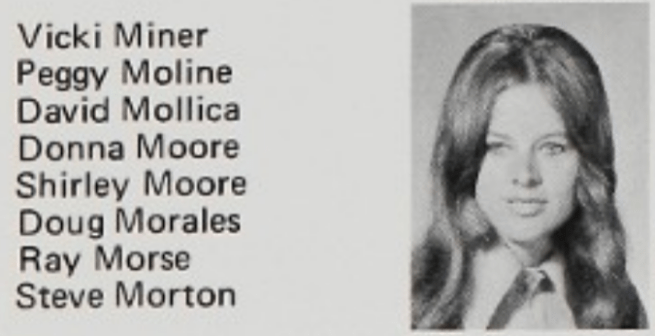
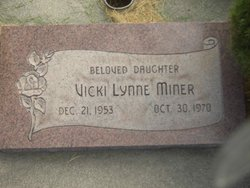
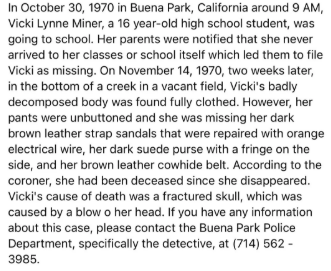
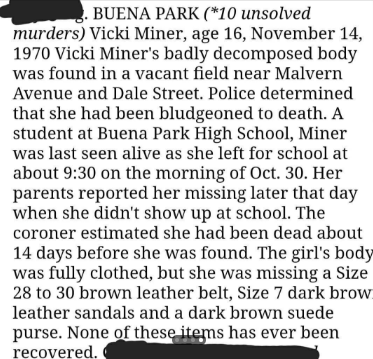
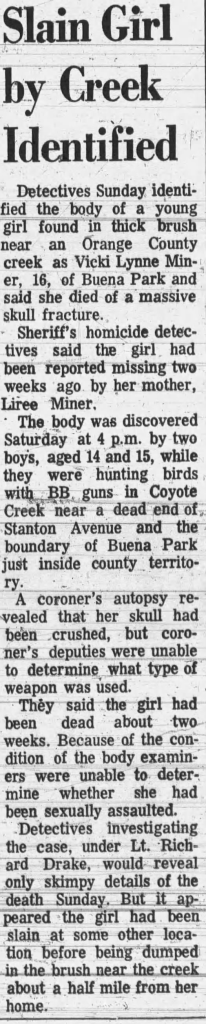
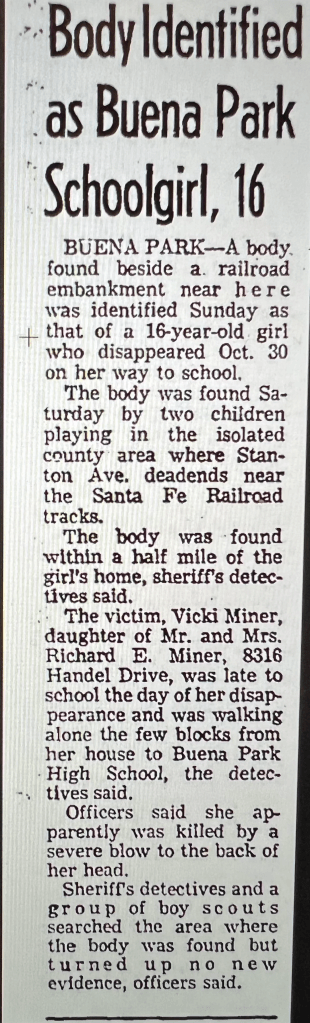
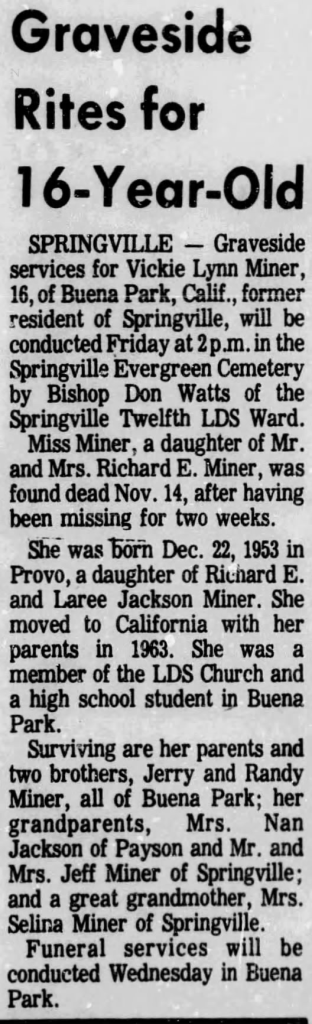
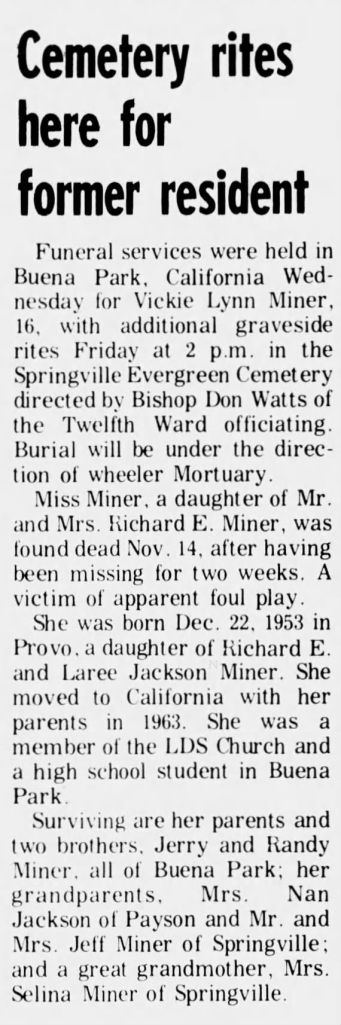
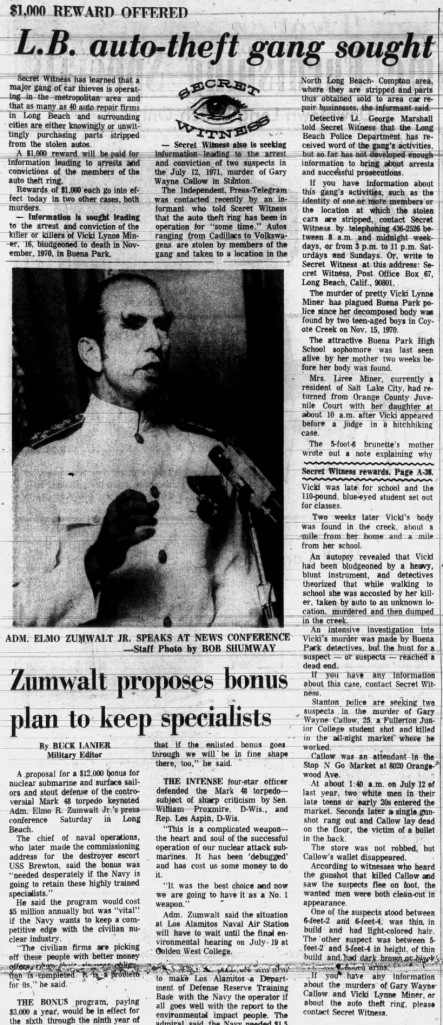
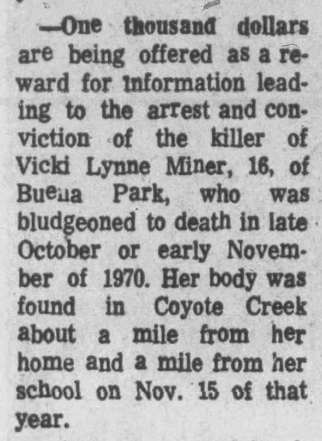
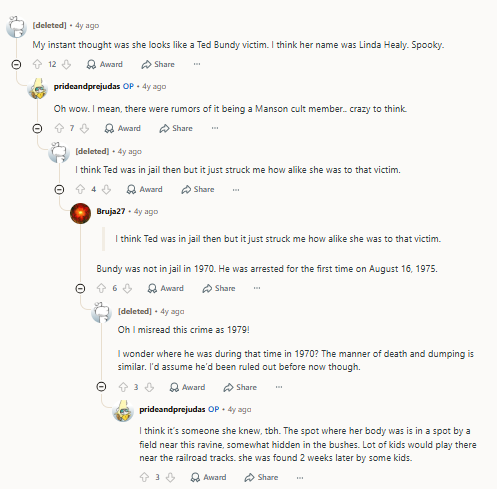
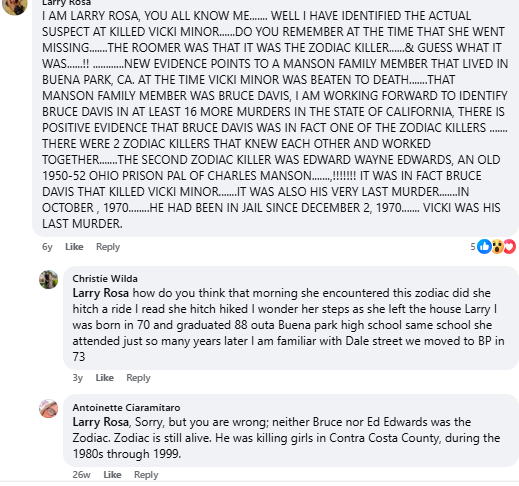
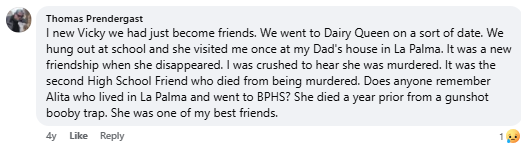
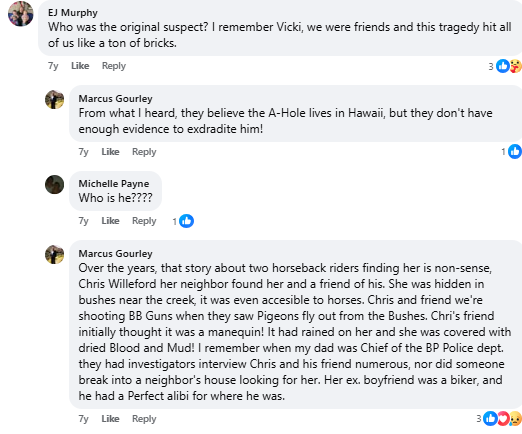
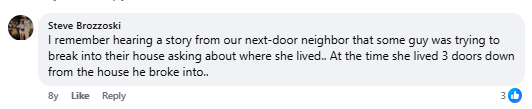
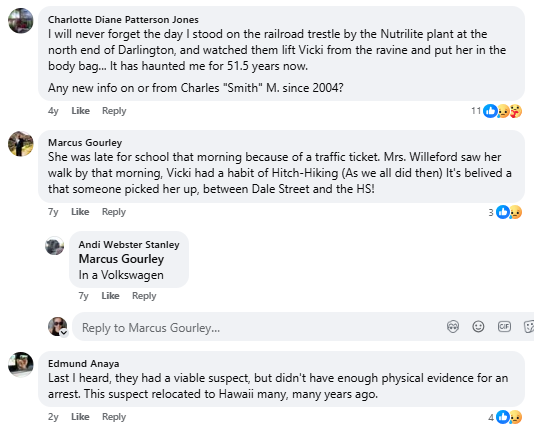
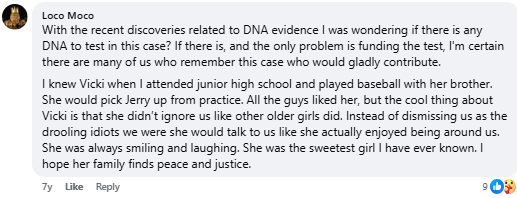
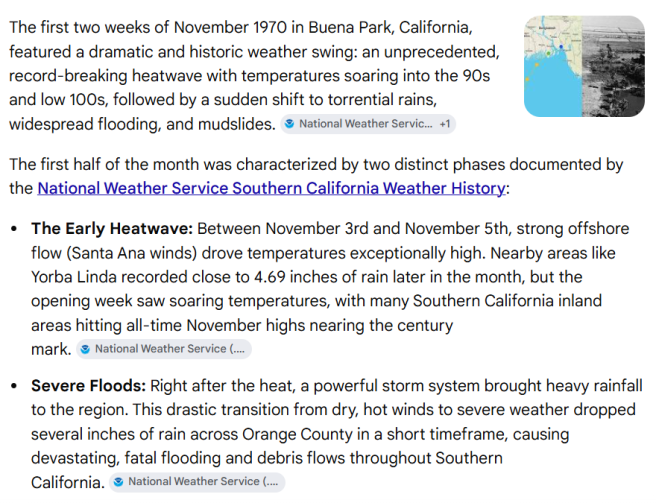
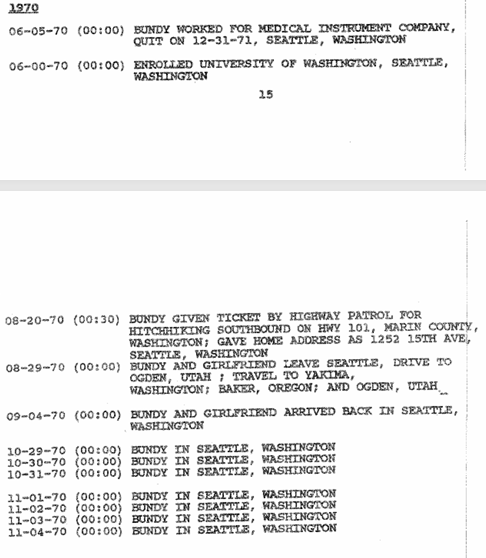
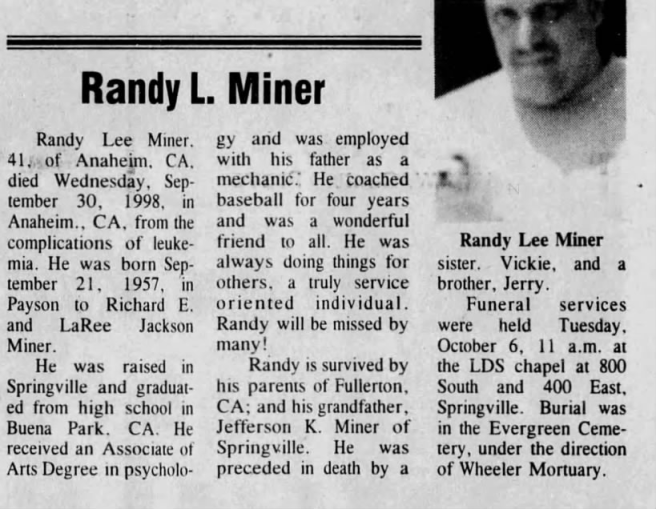
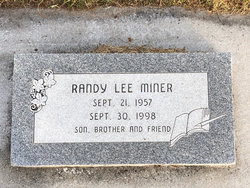
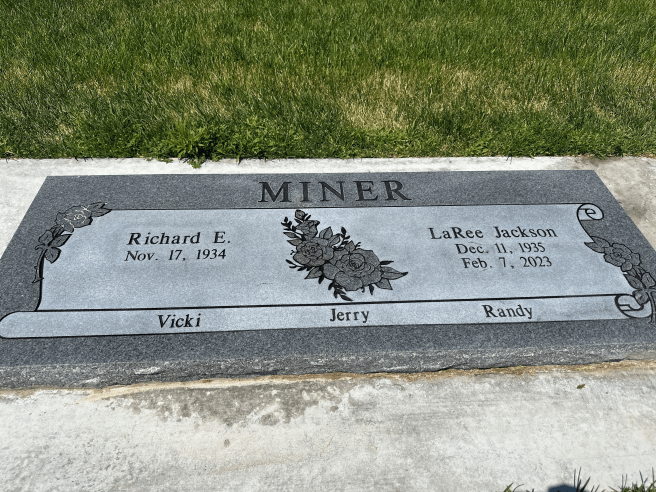
Vicki Dawn Lynee Miner (October 30, 1970, Buena Park): around 9 AM, Vicki Lynne Miner, a sixteen-year-old high school student, was going to school. Her parents were notified that she never arrived to her classes or school itself which led them to file Vicki as missing. Dec 11, 2017.

Judith Hakari (March 7, 1970, Sacramento): On the night of March 7, 1970, the twenty-three-year-old nurse finished a late shift at Sutter Memorial Hospital then drove back to her apartment complex located at Alta Arden and Markston Way, where her fiancé was waiting for her. Her car was later found parked in the complex lot with the passenger door ajar, the headlights or interior lights on, and her keys on the floorboard; Hakari was nowhere to be found. Evidence inside the vehicle (which included torn coat buttons and ravels of toweling) pointed towards a violent struggle and abduction from the parking lot. On April 25, 1970, hikers discovered the remains of Judith Hakari in a shallow grave in a remote, rural area near Weimar in Placer County, approximately forty miles away from her home; an autopsy revealed she had been sexually assaulted, beaten, and strangled.

Jacqueline Ann Gasperian (July 1, 1970, Los Angeles): Jacqueline Gasperian was staying with a friend in Los Angeles when she vanished without a trace (sometime in July 1970, not specifically the first); Gasperian was reportedly driving her friend’s vehicle when it was found abandoned on the Santa Monica freeway.

Donna Ann Lass (September 6, 1970, South Lake Tahoe): twenty-five-year-old Lass’ final entry in the casino’s nurse’s logbook (where she worked as a nurse) was recorded around 1:45 AM to 1:50 AM and she vanished without officially clocking out at the end of her shift. The following day, an unidentified man called both her landlord and her employer. The caller claimed Lass had left town abruptly due to a family emergency. Law enforcement later determined the call was a complete hoax. Her vehicle was found parked normally at her apartment complex, and all of her personal items (with the exception of her purse and the clothes she wore to work) remained untouched.

Phyliss O’Brien-Carson (October 1970, French Camp): A thirty-two-year-old mother from French Camp; On October 24, 1970, Phyllis went out with her brother and sister to the Francis Truck Stop, a popular bar and restaurant in French Camp. Late that evening, she called home to check on her children and told her family she was getting a ride home from a friend. She never arrived. Witnesses later recalled seeing her leaving the venue with an unidentified man. Nearly a month later, on November 21, 1970, two pheasant hunters discovered her badly decomposed remains in a rural field in French Camp. Due to severe decomposition, authorities could not establish an exact cause of death, but the manner of death was officially ruled a homicide.

Nancy Bennallack (October 25, 1970, Sacramento): a twenty-two-year-old court reporter who was brutally murdered in her apartment on October 25, 1970. Her case remained cold for over fifty years until investigators used investigative genetic genealogy to identify her killer as a neighbor, Richard John Davis, who died in 1997.

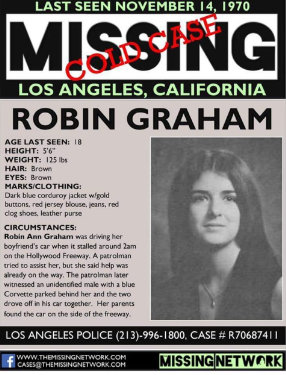
Robin Ann Graham (November 15, 1970, Los Angeles): A eighteen-year-old student who vanished on November 15, 1970, after her car broke down on a Los Angeles freeway. Highway patrol officers spoke with her while she was stranded, but she disappeared while seemingly talking to an unidentified young man. Her body was never found.

Christine ‘Christy’ Marie Eastin (January 18, 1971, Hayward): on the evening Eastin disappeared Eastin spent time shopping with a friend at a local Mervyn’s department store, where she purchased a new pair of boots using money she had saved. After dropping her friend off and returning home, she borrowed her former boyfriend’s 1969 blue Ford Maverick. She promised to wash the vehicle before picking him up from his workplace at midnight. At approximately 10:00 PM, Eastin drove to Charlie’s Car Wash, a self-service facility located at 25400 Mission Boulevard in Hayward. She was never seen again.

Lisa Michele Smith (March 16, 1971, Petaluma): was last seen hitchhiking, a short distance away from her foster home, along Hearn Avenue in Santa Rosa. She was initially reported missing from Petaluma, California, by her foster parents on March 16, 1971. Shortly afterward, a young woman named ‘Lisa Smith,’ was hitchhiking on March 26, 1971, and was picked up by a male driver. He reportedly brandished a gun and threatened to rape her. She jumped out of the pickup, which was going about 55 miles per hour south of Novato, California. She was treated at Novato General Hospital for a skull fracture and multiple, severe cuts and bruises. A nurse at the hospital thought she looked about twenty-one-years-old.

Denise Kathleen Anderson (April 13, 1971, Sacramento): Denise Anderson was last seen by her roommates at their apartment in the early morning hours of April 13, 1971. She has not been seen or heard from since. Anderson was known to wear a wig, black, short hair style. Roommate stated this item was missing from apartment.

Christine Betty Moore (May 1, 1971, McFarland): Christine was last seen by her family when she traveled to visit her mother in McFarland; her daughter (who was only a young child at the time) shared that Mother’s Day in May 1971 was the very last time she ever saw her.

Ingrid Angela Anderson (May 20, 1971, Richmond): on the day Ingrid vanished, her husband (Steven) had reportedly left her home and taken their two young sons to visit a barbershop, and when they returned a few hours later, she was gone.

Debra T. Pscholka (June 5, 1971, Corona): Pscholka was last seen June 5, 1971 in Corona, CA, after going to the movie theater with some friends. Pscholka told them she was going to the local park. The movie theater was on 6th Street but it is no longer there. Debra was last seen around 20.15. Foul play is suspected.

Elizabeth ‘Betty’ Marie Cloer (June 18, 1971, Cameron Park): was a twenty-one-year-old beautician and mother from Eugene, Oregon, who was brutally murdered in Cameron Park (northern California) on June 18, 1971. Her slaying went unsolved for over 30 years, eventually becoming the oldest cold case in California to be successfully resolved using DNA evidence. In 2002, DNA recovered from the crime scene matched Phillip Arthur Thompson, leading to his conviction in El Dorado County in April 2008.

Beatrice Susan Calderon (August 17, 1971, San Jose): Beatrice Calderon was reportedly last seen in the area of Bailey Avenue and Santa Teresa Avenue in San Jose.

Linda Susan Ferris-Dudley (August 27, 1971, San Francisco): died by homicide alongside her unborn child.

Maureen Hattem (November 21, 1971, Beaumont): eighteen-year-old Hattem and a companion were hitchhiking near Anaheim when they were picked up by an armed gunman, who forced her friend out of the vehicle then sped away with Hattem. Following an agonizing search, Riverside County sheriff’s deputies found her naked body at the bottom of a brush-covered embankment near Beaumont.

Murders Linked to Ed Kemper (1972–1973): I am going to touch on Ed Kempers murders as a whole: from 1972-73 were his ‘student murders:’ he murdered eighteen-year-old Mary Ann Pesce and nineteen-year-old Anita Luchessa from Fresno State students killed in May 1972. Kemper killed fifteen-year-old Aiko Koo (a high school student) in September 1972 and eighteen-year-old college student Cynthia Ann Schall in January 1973. He killed twenty-three-year-old Rosalind Thorpe and twenty-year-old Allison Liu in February 1973. His final murders took place in April 1973, when he took the life of his mother) Clarnell Strandberg along with her friend, Sally Hallett.

Kim Hopes (October 23, 1972, Los Angeles): Hopes attended La Mirada High School but dropped out before graduating; she gave birth to a baby girl on October 23, 1972 in Los Angeles (that she placed up for adoption) before disappearing around 1975.

Jesta Wilson (February 17, 1972, Ventura): the ninety-one-year-old was found deceased from upper body trauma in her downstairs bedroom; investigators determined an intruder entered through a kitchen window. The case is still actively maintained as open on the City of Ventura Cold Case Investigations database.

Maureen Sterling & Yvonne Weber February 4, 1972, Santa Rosa): Maureen Louise Sterling, 12, and Yvonne Lisa Weber, 13, both Herbert Slater Middle School students, disappeared around 9 PM on February 4, 1972, after visiting the Redwood Empire Ice Arena. Both girls, like other young people in that era, often hitchhiked. They were last seen hitchhiking on Guerneville Road, northwest of Santa Rosa

Kim Wendy Allen (March 4, 1972, Santa Rosa): Santa Rosa Junior College art student Kim Wendy Allen, 19, was also a frequent hitchhiker despite hearing warnings from her mother and one of her college professors about the danger of rape and/or murder for young female hitchhikers. Allen, like many other young women during that era, did not believe she was at risk. She was given a ride by two men on March 4, 1972, from her job at Larkspur Natural Foods to San Rafael. They last saw her at approximately 5:20 PM hitchhiking to school near the Bell Avenue entrance to Highway 101, northbound, carrying a large wooden soy barrel with red Chinese characters on it. Her body was found the following day down an embankment in a creek bed 20 feet off Enterprise Road in Santa Rosa. The victim had been bound at the ankles and wrists, raped and slowly strangled with a cord for an estimated thirty minutes.

Aunrayna ‘Rayna’ Cluett (March 10, 1972, San Diego): the twenty-year-old college student vanished after hitchhiking home from a friend’s house; her body was discovered weeks later in a remote area near Alpine, California. She had been strangled.

Jeannette Kamahele (April 25, 1972, Santa Rosa): a twenty-year-old Santa Rosa Junior College student of Hawaiian descent was last seen on April 25, 1972, hitchhiking near the Cotati on-ramp of Highway 101. Like other young people in the early 1970s, she often hitchhiked to get around. A friend witnessed her likely abduction and reported that she entered a faded brown Chevrolet pickup truck fitted with a homemade wooden camper and driven by a twenty to thirty-year-old Caucasian male with an Afro hairstyle. Her body has never been found.

Erma Lou Struthers (May 1, 1972, San Jose): Erma was last seen at St. James Park in San Jose, California.

Nellie Hicks (May 10, 1972, Newark): a beloved elementary school teacher and mother of six was sexually assaulted and beaten to death inside her Newark, California home while her family slept. The suspect gained entry through a rear door, and her body was later discovered by her son. Though DNA was meticulously collected during the initial 1972 autopsy, technology at the time could not process it. Decades later, the Hayward Police Department partnered with the FBI and forensic labs like Othram Inc. and Astrea Forensics. They successfully built a comprehensive DNA profile from the decades-old evidence.

Sherry Jean Pickle (May 16, 1972, Long Beach): Sherry was last seen at Coronado Avenue and Broadway in Long Beach, California on May 16, 1972. She possibly traveled to the Borrego Springs area, 150 miles southeast of Long Beach, afterward. She has never been heard from again. She may have traveled with a male companion after she went missing, or she may have tried to hitchhike to Los Angeles, California.

Katrina Iris Ashford (July 11, 1972, San Rafael): Katrina was last seen by her parents on July 11, 1972; two days later, on July 13, 1972, her abandoned vehicle was recovered in Marin County. No trace of her has ever been recovered.

Pamela Kay Masten (August 1, 1972, Sacramento): Pamela was reported missing in 2023 at a Missing & Murdered Indigenous Person conference in Humboldt County, CA, by two relatives who had never personally met her. She was reportedly last seen in the West Sacramento area in 1972 or 1973. The photo shown here is from the 1972-1973 Washington High School (West Sacramento), yearbook, meaning that she was alive until at least August or September of 1972. She would have been sixteen or seventeen years old at the time of her disappearance. She may have been planning to travel to Alaska. A legal document was filed in Sacramento County in 1976 in her name, indicating that she was still alive then, but public records searches show no details about the type of filing.

Alice Meyler (August 2, 1972., Santa Monica): (83): Murdered inside her Santa Monica security apartment in 1972. Her case went unsolved for forty-four years until LAPD cold case detectives utilized modern forensics to link the crime to a prolific burglar and killer, leading to a conviction in 2017. (Santa Monica)Alice Meyler (83): Murdered inside her Santa Monica security apartment in 1972. Her case went unsolved for forty-four years until LAPD cold case detectives utilized modern forensics to link the crime to a prolific burglar and killer, leading to a conviction in 2017.

Lori Lee Kursa (November 20/21, 1972, Santa Rosa): Thirteen a Lawrence Cook Middle School student, had been reported missing by her mother on November 11, 1972 after disappearing while they shopped at a U-Save and was last seen on November 20 or 21 in Santa Rosa while visiting friends, having deliberately run away. Someone reported possibly seeing Kursa hitchhiking on November 30. Her home life was troubled and she was a frequent hitchhiker and habitual runaway. Her frozen remains were located on December 14, 1972, in a ravine approximately 50 feet off Calistoga Road, northeast of Rincon Valley in Santa Rosa. The killer had thrown the body at least 30 feet over an embankment. The girl had a single wire loop in each earlobe, but the rest of the earrings were missing and were not found at the scene.

Terri Lynn Hollis (November 23, 1972, Torrance): The eleven-year-old disappeared on Thanksgiving 1972 in Torrance, California, and was later found dead in Ventura County. Her case was solved decades later in 2019 using genetic genealogy, identifying drifter Jake Edward Brown as the perpetrator.

Paula Ann Pope (September 3, 1972, Fresh Pond): On Labor Day weekend of 1972, she, her husband, and their friends were camping at either the Cripple Creek Campground or the Icehouse Reservoir Campground, near Fresh Pond in El Dorado County. After an argument with her husband, Paula became frustrated because she wanted to go to a rock concert in Carson City, Nevada. However, her husband couldn’t go because he was on parole and could not leave the state. Upset, Paula stormed out of the camper. Her friend followed her briefly but returned to grab Paula’s coat, as it was raining. When her friend went back outside, Paula had disappeared. Later, it was discovered that Paula had somehow made it to the concert and was given a ride by a couple from the venue. They dropped her off at an exit near Highway 50, not far from the campground. No one has seen her since. There were rumors that she might have been spotted with a group of people who appeared to be bikers after she was dropped off at the exit.

Linda Ann Miller (September 9, 1972, San Rafael): On August 18, 1972, Linda Miller and Cary Kristal left for Guadalajara, Mexico aboard a Greyhound Bus. They planned on returning to San Rafael by September 9th in order to register for fall semester at the College of Marin. In early September of 1972, Linda’s family received a letter from Linda postmarked in Guadalajara. That is the last time her family has had any contact from Linda. In early October of 1972, San Rafael police were asked to send Linda’s dental plates to Mexican authorities on the theory she may have died in a rooming house fire in Mexico City. Linda’s stepfather instead believed she and Cary were being held incommunicado in a Mexican jail. Linda’s missing persons case was reopened in 2001.

Marla Jean Hires (October 29, 1972, Stanton): on the morning the twenty-three-year-old mother of one disappeared she left her home to drive to her job at the Southern California Edison headquarters, but she was abducted from outside her residence; her 1971 Mazda sedan was found abandoned later that day at a bank drive-up window in Stanton, near a construction site where her killer had been working. The following day, her battered body was found wrapped in carpet and discarded down an embankment near the Yorba Linda Country Club; she had been raped and strangled to death. The case went cold for over 30 years (which unfairly left her husband in a cloud of suspicion) until a 2004 DNA database search matched evidence preserved from the crime scene to Edwin Dean Richardson, a convicted serial offender who was extradited to California and sentenced to life in prison.

Lois Petrie (December 26, 1972, San Pedro): forty-three-year-old Petrie was found sexually assaulted and strangled to death inside her San Pedro home; decades later, DNA extracted from a discarded coffee cup linked the crime to Adolph Theodore Laudenberg, who was subsequently dubbed the ‘Santa Claus Strangler’ and charged him with multiple area slayings.

Cheryl Lanier (January 1, 1973, San Francisco): twenty-seven-year-old Cheryl Lanier disappeared from San Francisco in 1973. For over 50 years, her whereabouts and fate remained a complete mystery to her family and the San Francisco Police Department.The Resolution: In May 2026, the SFPD officially closed the cold case. Authorities revealed that a cross-state DNA match confirmed her remains belonged to a “Jane Doe” who had been recovered in Harris County (Houston), Texas n September 30, 1976.

Anne Marie Robinson (January 3, 1973, Gardena): Anne vanished after leaving work. Her car was found parked a few blocks from her job with a flat tire. She is feared possibly kidnapped or murdered per newspaper articles.

Anna Christian Waters (January 16, 1973, Half Moon Bay): Anna Waters was last seen between 2:00 PM and 2:15 PM, playing in her family’s backyard in a rural area near Half Moon Bay in unincorporated San Mateo County on January 16, 1973. In the beginning of the investigation, it was theorized that she had fallen into Purisima Creek, located near the family’s home, and drowned. The area around the creek and the waters were searched but no trace of Anna was found. With time, investigators and her family started to suspect foul play was involved in her disappearance. Her stepbrother told his family he remembered a strange couple driving alongside Anna, trying in vain to tempt her into the vehicle.

Pamela Jean Spencer (January 26, 1973, Santa Monica): Pamela Jean Spencer was last known to be hitchhiking, on her way to a friend’s residence in Malibu, California. She was traveling with a long-hair gray and white Malamute Shepherd dog (female) which answered to the name “Layla”.

Carolyn Nadine Davis (February 6, 1973, Anderson): ran away from her home outside Anderson in Shasta County on February 6, 1973, and spent the next five months traveling. She had left her mother a note that said: “Dear Mom. Don’t worry too much about me, the only thing I’m gonna be doing is keeping myself alive. Love, Carolyn.” She posted a letter to her mother and stepfather shortly after she ran away in which she wrote that she had left voluntarily and never planned to return home. Her older sister told an interviewer in 2022 that Davis actually stayed with her in her duplex apartment in Garberville, California after she ran away. Davis claimed she had witnessed a double murder in Shasta County and that she was afraid for her life. Eventually Davis, increasingly paranoid that she might be found by someone connected with the murders, left her sister’s apartment and hitchhiked to Illinois. She returned to Garberville in the summer of 1973 because her sister was about to give birth. Davis stayed with her grandmother for about two weeks in July 1973 before she decided to leave to return to her boyfriend in Illinois. According to accounts, Davis told her grandmother that she planned to hitchhike to Modesto, California and stay there with friends. Her grandmother drove the fifteen-year-old girl to the downtown district of Garberville on July 15, 1973, and parked in front of the post office, which was located two city blocks away from Highway 101. Davis was last seen hitchhiking that afternoon near the Highway 101 ramp, southbound, in Garberville. Davis was never heard from again. Her body was discovered on July 31, 1973 in Santa Rosa, just 3 feet from where the remains of Sterling and Weber had been recovered seven months prior.

Leslie Marie Perlov (February 13, 1973, Los Altos Hills): Twenty-one-year-old Stanford graduate Leslie Marie Perlov vanished after leaving her job in Palo Alto on February 13, 1973. Her car was found parked by an old quarry later that day, and her body was discovered three days later under an oak tree. She had been strangled. In 2018, genetic genealogy linked crime scene DNA to John Arthur Getreu, who was subsequently arrested and convicted for her murder.

Kathleen Edna Rodgers (March 3, 1973, Oroville): Kathleen was last seen by her step mother Elda Stevens on March 3, 1973 at approximately 12:00 PM at their residence at the 1500 Block of Keko St in Oroville after an argument between the two of them took place. Kathleen was seen in the Oroville area after she was reported missing. Kathleen was living with and hanging out with her friends. Kathleen was associated with and possibly dating Dale William Kirk at the time. After that, Kathleen disappeared and hasn’t been seen or heard from by her family and friends. Several attempts have been made to locate Kathleen’s remains from information provided to the Butte County Sheriff’s Office in this case. Kathleen’s remains still haven’t been located. Foul play is suspected.

Rosa Vasquez (found on May 29, 1973, San Francisco): 20, last seen May 26; her body was found on May 29, 1973 near the Arguello boulevard entrance at Golden Gate Park in San Francisco. The victim had been strangled and her body thrown seven feet off the roadway into some shrubs. Vasquez had been a keypunch operator at Letterman General Hospital on the Presidio.

Tracy Lynn Davenport (April 27, 1973, San Rafael): Tracy was last seen on April 27, 1973, walking to school. She lived with her grandmother and other family members at the Bermuda Palms motel, located at 737 Francisco Blvd East (now a Motel 6). Tracy never arrived at the Bahia Vista School that day and failed to return home. She was reported missing the next day.

Yvonne Quilantang (June 10, 1973, San Francisco): 15, was found strangled in a vacant Bayview district lot on 3. She was seven months pregnant and had been out to buy groceries. Yvonne J. Quilantang was a fifteen-year-old pregnant teenager from San Francisco who became a victim of an unsolved homicide in June 1973. Her death is historically linked by law enforcement to the Santa Rosa Hitchhiker Murders, a series of unsolved killings targeting young women and girls in Northern California during the early 1970’s.

Rebecca Jean McMahan Rebecca (disappeared on June 11, 1973, Bell Gardens): the nineteen-year-old was also known as Becky McMahan or Becky Solis; her family formally reported her missing on July 3, 1973. Before vanishing, she mentioned to her family that she was planning a vacation to Palm Springs, California. On January 19, 1974, her partially buried remains were found by authorities in an open desert area near Desert Hot Springs, California. A positive ID was finally made in August 2026 using advanced genetic genealogy.

Arminda Grangela Rodrigues da Silva Ribeiro (found on June 13, 1973, San Diego): on June 13, 1973, fishermen in the San Diego Bay discovered an orange suitcase and plastic bags containing the dismembered remains of an unidentified woman. For 50 years, she was known only as a ‘Jane Doe’ and in October 2023, the San Diego Police Department utilized advanced investigative genetic genealogy to officially identify her as Arminda Grangela Rodrigues da Silva Ribeiro, a twenty-nine-year-old woman who had ties to the East Coast. Law enforcement continues to seek tips to find her killer.

Yvonne Broderick (disappeared on June 9, 1973, San Francisco): the seventeen-year-old black female went missing after telling her foster mother she was going to a local store. Her body was tragically discovered the next day, June 10, 1973, in a vacant lot in the Bay View District of San Francisco. She was 5’3″ tall, weighed 125 pounds and had long black hair, brown eyes, and pierced ears.

Rose Lena Cole (July 1, 1973, Oakland): Rose, originally from Flint, Michigan, was last seen in the summer of 1973 (missing date is an approximation). Ms. Cole ran away from a Synanon Foundation facility in Oakland, California, an institution that treated persons suffering from alcohol and drug abuse, where she was sent in 1972 by a Michigan judge when caught using drugs. She wrote to her family while she was there, and ran away sometime toward the end of 1972. She sent a letter in early February 1973 from an unknown location; that was the last time anyone heard from her. On January 4, 1974, a petition to the court of Michigan was granted to drop all charged against Ms. Cole.The Synanon Foundation (originally the Tender Loving Care club) was founded by Charles Dederich, Sr. in 1958 as a rehabilitation center for both drug and alcohol addicts. Its headquarters was originally in Santa Monica, California, but as it gained popularity and wealth over the years, it had chapters in other California counties, Detroit, and as far away as Germany and Malaysia. Over the years, Synanon became a utopian society/ cult not unlike Jim Jones’ Peoples Temple. Dederich declared Synanon a religion in 1974 and was forced to give up operations of Synanon when he pled no contest to conspiracy to commit murder in 1978.

Angela Thomas (found July 2, 1973, Daly City): Angela Thomas, 16, a resident of Belton, Texas, was found July 2, 1973, smothered on the playground of Benjamin Franklin Junior High School in Daly City. She had last been seen the previous evening at the Presidio of San Francisco walking away from the area at 9:00 PM. A locket was recovered near the body.

Linda O’Keefe (July 6, 1973, Back Bay): eleven-year-old Linda O’Keefe disappeared walking home from school on July 6, 1973. Her strangled body was found the next day in the Back Bay area. Using genetic genealogy and preserved crime scene DNA, police arrested James Alan Neal in Colorado in 2019.

Nancy Patricia Gidley (July 12, 1973, San Francisco): a twenty-four-year-old radiographer last seen at a Rodeway Inn motel , was found strangled behind the George Washington High School gymnasium three days later. The victim was unclothed except for a single fish-shaped gold earring and was determined to have died within the previous 24 hours. Gidley had served four years in the Air Force and told friends and family in Mountain Home, Idaho that she intended to become a freelance writer for the San Francisco Chronicle and was going to San Francisco to be the maid of honor at the wedding of a friend from Hamilton Air Force Base, all of which proved false.

Nancy Feusi (remains were found on July 22, 1973, Redding): 22, disappeared after going dancing at a club in the Sacramento area. Her remains were found on July 22, 1973, in Redding. She had been stabbed to death. In 2011, one of Feusi’s five children, Angela Darlene Feusi McAnulty, was convicted of torturing, beating, and starving to death her fifteen-year-old daughter Jeanette Marie Maples. McAnulty became the second woman ever sentenced to die in Oregon and the first since the 1984 reinstatement of the death penalty.

Rochelle Claudia White (July 30, 1973,San Juan Capistrano): Rochelle was last seen on July 30, 1973 at her home in San Juan Capistrano. According to her husband, Gary White, Rochelle was asleep in bed when he left for work about 6:30 AM. Rochelle worked at the Carlsbad United Parcel Service at the time, and had recently been promoted. She did not come to work that day. Her car was located the morning of July 31, in the UPS parking lot. Inside was her purse, her wallet, and driver’s license. She was in the process of divorcing her husband. They still lived together at their home. A court date was scheduled for July 31, 1973. Rochelle never showed up for court. When questioned by authorities, it was learned that White hadn’t gone into work on the day of his wife’s disappearance. Instead, he drove aimlessly around the beaches that morning, then drove to the San Juan Capistrano dump to drop a load of trash from his pickup. Detectives found nothing unusual in the house shared by Rochelle and her husband. They also spent three days sifting through debris at the dump. Foul play is suspected.

Kim Louise Mallon (September 30, 1973, Los Angeles): Mallon was last seen in Los Angeles, California on September 30, 1973. She was reported missing from a UCLA Mental Facility after her father dropped her off there. Foul play is suspected.

Corinne June Groenenberg (November 1, 1973, Modesto): Groenenberg had recently moved to Modesto from Southern California with her family, and on the afternoon of November 1, 1973, she left her family’s residence and walked toward a nearby highway; a friend later witnessed her hitchhiking and entering a blue or green truck driven by an unidentified white male, and she has never been seen or heard from since. She is around fifteen to sixteen years of age.

Laura Albright O’Dell (November 4, 1973, San Francisco): 21, missing since , was found three days later in bushes behind the boathouse at Stow Lake in Golden Gate Park. O’Dell’s hands were tied behind her back, and the cause of death appeared to be from head injuries or strangulation.

Valerie Lane & Doris Derryberry (November 12, 1973, Linda): twelve-year-old Valerie Lane and thirteen-year-old Doris Derryberry vanished on November 12, 1973, after going on a shopping trip in Linda, California. Their bodies were found shot with a shotgun near Marysville. Decades later, DNA testing matched evidence to cousins Larry Don Patterson and William Lloyd Harbour, who were sentenced to prison in 2017

Theresa Diane Smith-Walsh (December 22, 1973, Zuma Beach in Malibu): Theresa Diane Smith Walsh, 23, left her home in Miranda, in the winter of 1973 to spend time away from her husband and young son. She hitchhiked her way across California, often catching rides along Highway 101. She had never before had any difficulties or thought she was in danger while hitchhiking. In late December 1973, she was in Malibu, California but wanted to go home for Christmas to see her mother and son. She was last seen on December 22, 1973, at Zuma Beach in Malibu, intent on hitchhiking to Garberville. Her partially submerged body was found six days later by kayakers in Mark West Creek. She had been hogtied with clothesline rope, sexually assaulted, and strangled, and was determined to have been dead approximately one week. High water marks contemporaneous with heavy rains in the area suggested the body could have drifted several miles.

Lulaida Morales Sejalbo (November 25, 1973, Santa Clara): Sejalbo was last seen on November 25, 1973 in Santa Clara, CA. She disappeared on her way home from work and has not been seen nor heard from since. A month later, her car, with her purse, keys, and other personal items were found abandoned in Santa Clara, CA. Foul play is suspected.

Murders Linked to the Alphabet Killer, Joseph Naso (January 1974 – August 14, 1994): I am briefly going to touch on the murders committed by Joseph Naso as a whole, who killed multiple women in Northern California whose first and last names shared matching initials: he started with Charlotte Cook on January 4, 1974, a young mother of two from Daly City. On May 20, 1976, twenty-year-old Lynn Ruth Connes was last seen alive in Berkeley; Naso strangled her, but did not rape her, and he threw her body under a bridge in another city. Next was eighteen-year-old Roxene Roggasch-Ashby, whose strangled remains were found near Fairfax on January 10, 1977; detectives estimated she was killed less than a day before she was found. Police suspected that she had worked as a sex worker, but her family denied this. On October 9, 1977, nineteen-year-old Pamela Lambson disappeared after making a trip to Fisherman’s Wharf to meet a man who had offered to photograph her; her body has never been recovered. Twenty-two-year-old Carmen Lorraine Colon was found on August 13, 1978, along Carquinez Scenic Highway, just thirty miles from the first victim’s body. On April 1, 1979, twenty-one-year-old Rebecca Jean Dunn went missing when she traveled from Las Vegas to San Diego with a girlfriend and two men; the women planned to earn money from prostitution, and one of the men was to become their pimp. The body of fifty-six-year-old Sharileea Patton washed ashore near the Naval Net Depot in Tiburon in January 1981; at the time of her death, she was a resident of the Bay Area and had been looking for employment. Thirty-eight-year-old Sara Dylan was a Bob Dylan groupie (born Renee Shapiro, she later changed her name to that of the singer’s former wife), and had been last seen on her way to one of his concerts at the Warfield theater in San Francisco in May 1992. On September 19, 1993, the body of thirty-eight-year-old waitress Pamela Ruth Parsons was found in Yuba County; she worked near Cooper Avenue in Yuba City, where Naso lived at that time. The killers final victim was thirty-one-year-old Tracy Lynn Tafoya, whose remains were found near Marysville Cemetery in Yuba County on August 14, 1994; Naso had drugged, raped, and strangled her, and it has been estimated that a week went by before her remains were found.

Ana Daisy Guevara Valdez (January 1, 1974, Los Angeles): at the time of her disappearance, Anna was twenty-years-old, worked in Los Angeles, and had been in regular contact with her relatives until 1974 when they suddenly stopped hearing from her.

Brenda Kaye Merchant (February 1, 1974, Marysville): 19, was found stabbed to death at her home in Marysville. She had been stabbed over 30 times with a long bladed knife and had asphyxiated on her own blood from her many wounds. The killer left a bloody handprint on the screen door of the apartment, and it is believed that Merchant was attacked between when she was last seen at 6 PM to when a loud argument was heard by neighbors at around midnight.

Cynthia Lynn Sumpter (April 27, 1974, San Jose): Sumpter was last seen playing outside her apartment complex on Elm Street in San Jose, California. Her mother discovered her missing between 1:30 PM and 1:45 PM. She searched on her own for about a half hour, called her parents to see if they had her and then contacted the police. One neighbor told police that she had left her small son with Cindy while she dashed to her apartment for a baby bottle. When she returned a moment later, her son was alone. Another witness spotted Cindy from her car and reported that the outgoing little girl had stuck her head in the window to say hello. Witnesses reported they had seen her in a blue car driven by a mysterious young man with blond hair and a mustache; these sightings have not been confirmed. At first, police considered Cindy’s father a suspect, as the parents were divorced. Sumpter’s parents had had a bitter divorce a year before her disappearance and each one accused the other of hiding her. Eventually, both parents took lie-detector tests that showed they knew nothing of Cindy’s whereabouts. Police decided they were no way involved. Several people claimed to know Sumpter’s whereabouts and attempted to extort money from her parents, but none of them really knew anything about her case. Antonio Madrid was investigated for possible involvement in her disappearance. He was the stepfather of one of her friends and only lived about 100 yards from her apartment. Madrid committed suicide two days after Sumpter’s disappearance. After his death, police found a bloodstained shirt belonging to him, and blonde hairs in his car. A convicted murderer named Eugene Joseph Wesley is also a possible suspect. He took two polygraph tests about Sumpter’s case and the results indicated that he knew more than he was saying about her disappearance. Wesley was never charged in connection with her case, however, and has since died in prison.

Laura Maureen Davis (July 20, 1974, Dixon): Laura was last seen on July 20, 1974, at the Sacramento Bus Depot. Husband stated he dropped her off and was believed to be going to San Diego to visit relatives.

Hester Lee Chandler (September 13, 1974, Modesto): Hester was last seen on September 13, 1974, shortly after withdrawing almost $9,000 from her bank. Her car was found parked outside of her home. Inside the car were cardboard boxes full of Hester’s clothing. All of her credit cards and ID’s, except her driver’s license, were left inside the house. Some of the cards had been partially burned. Her house keys were found on the living room. Hester was employed at Tri-Valley Growers, prior to her disappearance. James Toliver, the main suspect in her disappearance, worked with Hester as a forklift driver. In 1980, Toliver died of a heart attack while fleeing from the murder scene of Florence Richina. Toliver is the suspect in the murder of Richina and the disappearances of his wife Patricia Toliver 4524DFCA, Mary Watson 1149DFCA, Jacqueline Cooper 4525DFCA.

Tiffany Doyle (November 8, 1974, Santa Cruz): Tiffany was last seen in Santa Cruz and may have been hitchhiking on the day she went missing. Tiffany vanished from Santa Cruz on November 8, 1974. She may have gone hitchhiking or possibly traveled by bus on the day she disappeared, and she has never been heard from again. Records indicate she may have left of her own accord, but very few details are available regarding the exact circumstances. The case features a significant administrative gap: though originally reported missing by her sister shortly after her disappearance, the original missing persons report was eventually purged by law enforcement. As a result, the case was essentially lost to official records for decades until her family reported her missing again in 2014, nearly forty years after she went missing

Mercedes Lodge (December 14, 1974, Castro Valley): Lodge had been attending AA meetings at the Hayward, California Fellowship and was last seen at her home in Castro Valley.

Patricia Suzanne Wilson (January 1, 1975, Glendora): Patricia Wilson was last known to be in Glendora, California at some point in 1975. Very few operational details surrounding her disappearance have been publicly released and she continues to be listed as an active missing person case through the California Department of Justice.

Consuella LeShaun Cash (January 3, 1975, Los Angeles): very few public details are available regarding the exact timeline or circumstances surrounding the day the seven-year-old vanished and because she disappeared under highly suspicious circumstances without a trace, investigators have long feared she was a victim of foul play. No clothing details, dental files, or DNA records were originally available to assist the initial search.

Beverly Jean Ribley (April 27, 1975, Spring Valley): Beverly Ribley was last known to be at her residence in the 2400 block of Trace Road in Spring Valley around 10:30PM on April 27, 1975. She had spoken to a friend via telephone and that was the last time anyone heard from her. There was no evidence of foul play, and friends and family say that her disappearance is out of character for her.

Marion Cornelia Hawkins (May 1, 1975, Los Angeles): In May 1975, Marion Hawkins moved from Marin City, California to live in Los Angeles. Her mother (reporting party) received a letter from Hawkins shortly thereafter but she disappeared soon after and was never heard from again.

Patty Hearst (February 4, 1974, Berkeley): Nineteen-year-old college student kidnapped from Berkeley by the Symbionese Liberation Army on February 4, 1974, in a high-profile abduction case. After being kidnapped in 1974 by the Symbionese Liberation Army (SLA) and later joining them in a bank robbery, Patty Hearst was convicted of the crime in 1976. She served nearly two years in prison before President Jimmy Carter commuted her sentence. In 2001, President Bill Clinton granted her a full pardon. Now known as Patricia Hearst-Shaw, she leads a quiet, mainstream life. She married her former bodyguard, Bernard Shaw, and resides in Connecticut.

Peggy Ann Reed (some sources state March 1, 1974 where others say March 28, 1974, Santa Rosa): fifteen-year-old Peggy was last seen on March 1, 1974 (though some records cite March 28, 1974) after she visited the area around Guerneville Road and the Coddingtown Mall in Santa Rosa. Investigating authorities believe she may have been hitchhiking at the time she vanished, and she has never been seen or heard from since. Due to the timeframe and geography of her disappearance, internet sleuths and independent researchers have frequently speculated about a potential connection to the notorious Santa Rosa Hitchhiker Murders, though no official connection has ever been conclusively proven by law enforcement.

Janet Taylor (March 25, 1974, Woodside): twenty-one-year-old Janet Ann Taylor was last seen alive hitchhiking near Junipero Serra Boulevard near the western edge of the Stanford University campus (her car had broken down) after she spent the afternoon with a childhood friend; she left around 7:00 PM to return home to feed her dogs, and her strangled body was found off Sand Hill Road in San Mateo County on March 25, 1974; her murder was eventually linked via cold case investigation to suspect John Arthur Getreu.

Long Beach Jane Doe (May 27, 1974, Long Beach): an unidentified young woman in her late teens or early 20s who was raped and strangled in May 1974. Her body was discovered on a city beach near Ocean Boulevard. In 2013, a suspect named Gary Stamp confessed to her murder before his arraignment, though the victim’s true identity remains unknown (he believed her name was ‘Anna’).

Mary Sue Kitts (July 18, 1974, Fresno): Mary was last seen leaving her parents house on July 15, 1974 with Roger Dale Allen in anel Caminosecurity vehicle owned by Allen Security. At the time of her disappearance, Mary worked at aDenny’s Restaurantin Fresno. The last day she worked was on July 18, 1974 and she never picked up her check. For three years, she was presumed to be a runaway.

Donna Maria Braun (September 29, 1974, Monterey): fourteen-year-old Brauns strangled body was found at 7 PM on September 29, 1974 in the Salinas River near Monterey by a crop dusting pilot who was flying overhead. She was an Alisal High School freshman who lived with and was eventually identified by her mother and was last seen at 6 PM. on September 27, leaving her Salinas home.

Arlis Perry (October 12, 1974, Stanford): Nineteen-year-old newlywed found murdered inside Stanford Memorial Church at Stanford University on October 12, 1974; DNA linked the crime to a security guard in 2018. Arlis walked to Stanford Memorial Church at approximately 11:00 PM to pray following a minor disagreement with her husband. Campus security guard Stephen Blake Crawford claimed he locked the doors at 11:45 PM but later reported finding her body inside at 5:45 AM on October 13. She had been sexually assaulted, strangled, and left with an ice pick lodged in the back of her head.

Linda Ross-La Palma (December 11, 1974, La Palma): A young woman who was violently murdered in her apartment in 1974 just after finalizing the sale of her plant business. The case went cold for over forty years before modern detective work and forensic reviews allowed the La Palma Police Department to identify a prime suspect.

Joyce Elizabeth Harper (January 1, 1975, Potrero): Harper was last seen on or about January 1, 1975. Her daughter reported her missing on December 15, 1995. Another of Harper’s daughters,Kimberly Cozart, disappeared in February 1977 from Julian, California, and was reported missing on the same day as Harper. It is not known whether Harper’s and Cozart’s disappearances are related.

Geraldine Thomas (February 9, 1975, Castro Valley): family and friends last saw twenty-two-year-old Geraldine on the evening of Friday, December 20, 1974 at a cookware party. Investigators established that during the party, she had been picked up by an unknown individual that had been described as a Black male, approximately forty-five-years of age, 5’3″ tall, weighing 145 pounds, with short-cut salt-and-pepper hair. On Sunday, February 9, 1975, Geraldine’s remains were discovered in a rural area of Castro Valley roughly two miles into a trail, near mile marker 1.67 on Eden Canyon Road; the Coroner’s Bureau subsequently ruled her death a homicide.

Eileen Francis Hynson (June 1, 1975, Napa): nineteen-years-old On June 1, 1975, Eileen left her family home in Napa, California. Conflicting reports suggest she was either headed to a bridal gown fitting in Benicia or traveling to attend a wedding. Critically, she left all her packed luggage behind, indicating she did not intend to vanish. Due to the geographic overlap, investigators have historically looked at potential ties to the Zodiac Killer’s earlier territory, and her file remains active with the Napa County Cold Case Unit.

Philip & Cheryl Beadles (October 17, 1975, Daly City): Philip and Cheryl Beadles were a young married couple who were found dead in the living room of their home by their young children in the early morning hours. The couple was murdered execution style with strong suggestions of a sexual motivation.

Linda Allomong (Long Beach, November 1975): She would leave her home for days on end before returning. But in November 1975, she never returned. Linda’s decomposing body was discovered in an oil field in Long Beach, California. Her clothes had been pulled up over her head, which concealed the severe blunt trauma she took to the head.

Deborah Jean Cargill (Santa Cruz, December 22, 1975): Nineteen-years-old. was kidnapped, and her body was found near. San Lorenzo River train trestle in Santa Cruz on December 22, 1975.

Sarah Rachel Tokier (January 1, 1976, Montebello): Sarah went missing sometime in 1976 or 1977. Very little is known about her disappearance. Her parents are both deceased and her siblings are searching for answers.

Karen Ann Fischer (reported missing on January 15, 1976, Arcata): from Boulder, CO Fischer was reported missing on January 15, 1976 by her boyfriend. Fisher was reportedly last seen by her boyfriend on January 14, 1976 at approximately 9:50 AM in Arcata where she was planning to hitchhike to go sightseeing in the Trinidad area.

Marie Elizabeth Spannhake (January 31, 1976, Chico): Marie Elizabeth Spannhake disappeared January 31, 1976, from Chico. She and her boyfriend went to the flea market inside theEagles Hallat 19th and Mulberry streets. They got into a fight and Marie left after asking directions home because she had moved to Chico from Cleveland, Ohio the previous month. She headed out on foot. That was the last anyone saw of her. Marie’s boyfriend filed a missing-persons report February 2. He said nothing was missing from the apartment; clothes were as they should be and toothbrush and suitcases still in place. In 1984, the wife of a convicted kidnapper told police her husband abducted and killed Marie. She said Marie was walking home when they picked her up. They allegedly drove her to their home, where she was tortured and murdered. The couple wrapped Marie’s body in blankets, put it in their car, and buried her between Redding and Lassen Park. Authorities accompanied the wife to the alleged area in an unsuccessful effort to locate Marie’s body.

Margarita MacNeill (February 7, 1976, Salinas): Margarita was last seen on February 7, 1976 in Salinas, California. She reportedly dropped her children off at a babysitter’s and stated she was going to Santa Cruz. Her vehicle, a yellow 1974 Toyota Celica was never recovered as well.

Kristina Sue Allen (February 28, 1976, Los Angeles): Kristina went to a bar with her brother in Venice Beach. She left the bar alone to walk back to her apartment and did not make it home.

Wilma Rae Vermaas (April 3, 1976, Los Angeles): Wilma was last seen April 3, 1976 in West Los Angeles. When family and friends tried to contact her, her husband simply said ‘she is not here now.’ Eventually he admitted to not knowing where she was.

Lynn Ruth Connes (May 20, 1976, Berkeley): Lynn was last seen at her home in Berkeley, California on May 20, 1976. She left her apartment to keep an appointment with a man named ‘Jeff’ at Carleton Street and Telegraph Avenue. According to police, Lynn advertised for work as a photographer’s model and received a telephone call from someone named Jeff. He made an appointment to meet her at the Bateau Ivre Restaurant, 2629 Telegraph Avenue. The restaurant is four blocks from her residence at 2817 Regent Street. An unidentified waitress said that a woman matching Lynn’s description came to the restaurant at 10:15. The restaurant was closed, but the waitress let her sit at a table while waiting for the appointment. The waitress did not see her leave and Lynn has not been seen since. Police officers found her locked bicycle near the restaurant.

Eileen Francis Hynson (June 1, 1976, Napa): left the residence she shared with her father and brother to go to a resort at Lake Berryessa on June 1, 1976. She supposedly left the resort to go to Benicia, California to attend a bridal party dress fitting. She has never been seen again. Her suitcase was reportedly left at her residence.

Sherry Elizabeth Roach (June 8, 1976, San Mateo): Sherry was last seen on June 8, 1976 when she left the halfway house she was living at to take the bus to work. She has not been seen since. Sherry was known to hitchhike often. According to Sherry’s brother, they grew up in Santa Rosa in a violent household, resulting in Sherry being placed in several foster homes and group homes. In 2020, police released a photo of Sherry with an unknown man (see above). Dated 1975 on the back, it shows a man with his arm around Sherry’s shoulder. Family members stated that they did not recognize the man, but thought Sherry might have had a boyfriend. Police are interested in speaking with the unknown man to order to learn if he has any information on Sherry’s disappearance.

Elaine Faye Lehtinen (June 14, 1976, Napa): Lehtinen was last seen on June 15, 1976 in Napa, California at her residence. Her home was searched and her vehicle and identification were at the home. There was no sign of physical force. She had her clothes laid out for the next day’s work. She was a naval officer stationed at Mare Island Naval Facility when she was reported missing.

Pepper Reed (June 15, 1976, Anaheim): Pepper’s family last saw her in Houston, Texas between December 12 and December 18, 1975. At this time, Pepper introduced her brother and mother to her new boyfriend, Terry Rasmussen. Pepper also told them she was pregnant with Terry’s child. Their child, Rea Rasmussen, was born in Orange County California on June 15 ,1976. In 2000, Rea was found deceased in Bear Brook State Park in New Hampshire. Rea’s body was recently identified by Investigators. Pepper’s boyfriend Terry was convicted of a murder in California and was a suspect in the Bear Brook Murders. Pepper’s family last spoke to her in December 1975. Pepper was last known to be alive in Orange County California on June 15, 1976.

Christine May Gregg (June 16, 1976, Sacramento): Christine was last known to be in Sacramento after the birth of a daughter on June 16, 1976. She has not been seen or heard from since.

Victoria ‘Vickie’ Lynn Schneider (June 16, 1976, Eureka): Victoria Lynn Schneider was last seen leaving her home in Eureka on June 16, 1976, to hitchhike to Samoa Beach. Schneider was located deceased, buried in a shallow grave on Samoa Beach on June 30, 1976.

Marie Judy Goudreau (August 2, 1976, Edmonton): Goudreau was last seen driving home to her family’s farm after dropping a friend off at the Edmonton International Airport. Shortly after midnight, her blue 1972 Plymouth Cricket was found abandoned less than five miles from her residence on Range Road 244 with its engine was still running; it’s headlights were on, and her money and personal belongings were untouched inside. Two days later, two children discovered her body face-down in a water-filled ditch on a rural property north of Devon, Alberta, about fifteen miles away from her car.

Dianne Jane Carlson (August 14, 1976, Petaluma): Dianne was last known to be at home in Petaluma on August 14, 1976. She is missing under suspicious circumstances.

Cynthia Hernandez (August 26, 1976, San Bernardino): On the evening of August 26, 1976, Hernandez left her home to watch a late showing of the movie The Omen at the Fox Twin Theaters in Covina. She never returned, and her family located her station wagon abandoned in the theater parking lot the next morning.

Lisa Carol Dickinson (September 5, 1976, Walnut Creek): Lisa was last seen riding her bike in Walnut Creek, California at 7:00 PM. on September 5, 1976. She was going to the BART station from her home in the area of Los Cerros. She was supposed to be home by 8:00 PM, but didn’t return to her family home and has never been heard from again. Her parents reported her missing at 9:00 PM. Lisa’s bike (a red Raleigh 10 speed) was found in a grove of walnut trees at Heather Farm Park, near the Contra Costa Canal, three hours after she was last seen. A search of the canal turned up no clues as to her whereabouts, but witnesses said they saw Lisa at the park entrance. Several witnesses reported seeing a Caucasian male driving a medium sized motorcycle on Ygnacio Valley Rd and Walnut Ave, two blocks east of Heather Farm Park, at approximately 7:30 pm. The man was not wearing a helmet and is described as being in his early 40’s, with brown curly hair, a mustache, and ‘chunky’ build. A Caucasian female wearing a white helmet, aged between eight and twelve-years-old, was riding the motorcycle with him. It hasn’t been verified that the child was Lisa, and the man’s identity has never been confirmed. Louis Richard Fresquez is the primary suspect in Lisa’s disappearance. He was born in 1942, making him thirty-four-years-old at the time of Lisa’s disappearance. He is 5’5″ and 140 pounds, with black hair and brown eyes. Fresquez was imprisoned for sex crimes between 1987 and 2002. He has never been charged in connection with Lisa’s disappearance due to a lack of evidence.

Jacqueline Lucille Cooper (November 12, 1976, Modesto): Jacqueline was last seen in Modesto, California on November 12, 1976, after withdrawing $4000 from her banking account. Jacqueline had worked at Tri-Valley Growers, prior to her disappearance. James Toliver, the main suspect in her disappearance, worked with Jacqueline as a forklift driver. In 1980, Toliver died of a heart attack while fleeing from the murder scene of Florence Richina. Toliver is the suspect in the murder of Richina and the disappearances of his wife Patricia Toliver 4524DFCA, Mary Watson 1149DFCA and Hester Chandler 4526DFCA.

Harry Flamburis & Dannette Barrett (January 4, 1977, Daly City): Harry Flamburis was president of the San Francisco Chapter of the Hell’s Angels Motorcycle Club. He and his girlfriend, Barrett, were found shot to death in their home. The house was also set on fire by the suspect(s). Their murders are believed to be motorcycle gang-related.

Kimberly Cozart (February 1, 1977, Julian): Kimberly Cozart, also known as Kimberly Harper, has been missing since February 1977. She was last known to be living on Banner Grade Road in Julian, California. Cozart’s mother,Joyce Harper, disappeared on or around January 1, 1975 from Potrero, California. It is not known whether Cozart’s and Harper’s disappearances are related. They were both reported missing, by Kimberly’s sister, to the San Diego County Sheriff’s Department on December 15, 1995.

Tiffany Claudette Wise (March 30, 1977, San Bernardino): Wise and her older sister, 322dfca Brandi Summers, were abducted from their San Bernardino, California home on March 30, 1977. Their mother, Beverly Wise, was found murdered inside the residence. The girls’ eight-month-old sister was left behind unharmed. Police issued a bulletin for Roy Summers, 30. Missing from the house were Brandi Summers, the daughter of Summers, and Tiffany Wise whose father is Claude Wise. There were unconfirmed sightings of the girls in the Boise, Idaho, area around 1979.

Brandi Jondell Summers (March 30, 1977, San Bernardino): Summers and her younger sister, 323dfca Tiffany Wise, were abducted from their San Bernardino, California home on March 30, 1977. Their mother, Beverly Wise, was found murdered inside the residence. The girls’ eight-month-old sister was left behind unharmed. Police issued a bulletin for Roy Summers, 30. Missing from the house were Brandi Summers, the daughter of Summers, and Tiffany Wise, whose father is Claude Wise. Summers was born in San Jose, California. She had a petite stature at the time of her abduction; she and Tiffany were approximately the same size, although there is a three-year age difference between them. There were unconfirmed sightings of the girls in the Boise, Idaho, area around 1979.

Murders Linked to ‘The Ventura Strangler’/Warren Luther Alexander (1977): I am going to touch on Warren Luther Alexanders murders as a whole, who is linked to four cold case strangulation murders across California (three, May to December 1977) and North Carolina (one, 1992). On May 29, 1977 he killed Kimberly Carol Fritz in Port Hueneme: the eighteen-year-old recent high school graduate had been found strangled to death in Room 18 of the Marv-Inn Motel in Port Hueneme. She had been working as a commercial sex worker under the alias ‘Carol Brown,’ and LEO’s quickly noted her murder shared distinct patterns with two other local strangulations that occurred later that same year. Thirty-one-year-old mother of three Velvet Ann Sanchez was found strangled on September 8, 1977 at the Via Motor Court in Oxnard: she was originally from Texas, and had recently worked at the US Navy Exchange, and witnesses at the time reported seeing her return to her room shortly before her death with a stocky, bearded man wearing a tan jacket and overalls. On December 27, 1977 the body of twenty-one-year-old mother of two Lorraine Ann Rodriguez was discovered on a bridge along Laguna Road in an unincorporated section of Ventura County. Lastly, on July 7, 1992 twenty-nine-year-old Nona Stamey Cobb was discovered strangled to death, alongside Interstate 77 in Surry County, North Carolina. Decades later, investigative genetic genealogy identified Alexander as the primary suspect, a seventy-three-year-old former long-haul trucker that was (miraculously) already in custody in North Carolina awaiting trial for a separate 1992 cold case strangulation murder. As of July 2026, Alexander is in custody at the Ventura County Jail in California, where he is being held without bail as he awaits trial for multiple decades-old cold-case murders.

Theresa Elizabeth Baxter (June 1, 1977, Huntington Beach): Baxter was last seen at home in Huntington Beach; little details are known about her disappearance.

Evangeline Rodriguez Silva & Rebecca Rodriguez & Kenneth John Beltram (July 16, 1977, Brentwood Park): was last seen with her boyfriend, Kenneth John Beltram and her younger sister, Becky Rodriguez. They had told others in the park that they were either going home to Oakley, or to Hogg Island then got into Beltram’s car and left. Beltram was reportedly seen by his brother the next morning, who did not see the girls, and in late July, the vehicle was reportedly seen in Concord by friends of Beltram and that an unidentified white male had been driving it; it eluded them and hasn’t been seen since.

Violet Bobbie Matory (July 20, 1977, Compton): Violet Matory was last seen on July 20, 1977, in Compton, CA, with her siblings, Ivy Matory, 878DFCA Yolanda Williams, and her friend 491DMCA Sir-Kristopher Clayton Marshall. The house burned down during the night and the children’s mother, Earlene Williams, was found deceased inside the home the following morning. There was no sign of Matory or the other children. The next day, Yolanda Williams’ father, James Williams and the children were seen at a Denny’s restaurant in Grapevine at approximately 05:30 AM. James Williams was picked up by friends in Riverside later that day, but did not have the children with him. He was tried for murder of his wife but refused to reveal the whereabouts of the children. James Williams is now deceased. Ivy’s remains were located in Corona, California in 2014. They were identified in 2019.

Kimberly Ann Stewart (May 24, 1977, Sheridan): Morgan was only 15 and still in school when she got married, in January 1972. The couple had two daughters. The couple separated frequently and Kimberly twice filed for divorce, once in 1974, and again on April 13, 1977, little more than a month prior to their final meeting at a pizza parlor in Wheatland. The husband had met with Kimberly to give her some money. Patrons at the restaurant were interviewed later and remembered that the couple had argued and departed shortly after their arrival. The husband told police he and Kimberly left the restaurant in separate vehicles and that, hours later, a member of his family had spotted her car, a 1975 gray Chevy Vega hatchback with California plates, parked on Highway 65 approximately two miles from Sheridan. When the husband went to that location with his brother, they found the car, keys still in the ignition, and her checkbook. Friends interviewed after her disappearance said Kimberly would never have left her daughters voluntarily, and sheriff’s investigators announced that she was likely a victim of foul play.

Yolanda Marie Williams (July 20, 1977, Los Angeles): Yolanda Williams was last seen on July 20, 1977, in Compton, CA, with her siblings Ivy Matory, 1274DFCA Violet Matory, and her friend 491DMCA Sir-Kristopher Clayton Marshall. The house burned down during the night and the children’s mother, Earlene Williams, was found deceased inside the home the following morning. There was no sign of Williams or the other children. The next day, Yolanda Williams’ father, James Williams, and the children were seen at a Denny’s restaurant in Grapevine at approximately 05:30 AM. James Williams was picked up by friends in Riverside later that day, but did not have the children with him. He was tried for murder of his wife but refused to reveal the whereabouts of the children. James Williams is now deceased. In May 2014, Ivy Matory’s (former case 41273DFCA) skeletal remains were found in Corona, California, about an hour’s drive east of Compton, but remained unidentified until 2019.

Julie Elizabeth Soracco (August 1, 1977, Placerville): According to family rumors, Soracco was visiting friends in El Dorado County (Placerville), she left their residence to walk to another friend’s house and never made it. The DLC is unknown and approximated.

Rachel Hanna Ziselman (September 5, 1977, Pacific Palisade): Ziselman was last seen walking home from a local supermarket in Pacific Palisade, California on September 5, 1977. There are reports that the clothing listed as being worn by Rachel, was later found in her bedroom.

Elizabeth Dorothy Funchess (September 6, 1977, San Jose): Elizabeth was last seen with her mother Diane on September 6, 1977 at the family home. The mother’s remains were located in September 1981. The child has never been found. Height and weight are approximations.

Linda Louise Durnall-LeBeau (disappeared on October 6, 1977, Tustin/Lake Elsinore): twenty-seven-year-old Linda vanished after she reportedly planned to meet her ex-husband, Phillip LeBeau to collect $300 from him at a restaurant in Tustin, California; the money was intended to cover damages after he allegedly slashed her new boyfriend’s tires and put sugar in his gas tank. Witnesses later reported seeing her arguing with a man at a nearby Texaco gas station, which was the last time she was seen alive. Days later, her 1971 Volkswagen van was found abandoned on Interstate 5 with all her personal belongings still inside. In 1986, a Caltrans survey crew working along the Ortega Highway in Lake Elsinore discovered partial skeletal remains, including a skull, down a highway embankment. While investigators determined the victim had died from a gunshot wound to the head, they were unable to identify the body or connect any suspects to the crime at the time. The breakthrough came in August 2021 when the skull found in 1986 was submitted to a Department of Justice lab and a positive identification was made through a familial DNA match in the Missing Unidentified Persons database.

Murders Linked to ‘The Hillside Strangler,’ Angelo Buono and Kenneth Bianchi (October 1977 to February 1978): I am briefly going to touch on THS murders as a whole: nineteen-year-old Yolanda Washington was discovered on October 18, 1977, on a hillside near the Ventura Freeway in Los Angeles. Fifteen-year-old Judith Miller was found on November 1, 1977 on Alta Terrace Drive in La Crescenta. Twenty-one-year-old Elissa ‘Lissa’ Kastin was discovered: November 6, 1977, near the Chevy Chase Country Club in Glendale. Eighteen-year-old Jill Barcomb was found onNovember 10, 1977, in the Verdugo Hills near Los Angeles. Twelve-year-old Dolores ‘Dolly’ Cepeda and fourteen-year-old Sonja Johnson were discovered on November 20, 1977 on a hillside off Landa Street near Stadium Way and the Golden State Freeway in Los Angeles.  Twenty-year-old Kristina Weckler was discovered on November 22, 1977, in La Crescenta.  Eighteen-year-old Lauren Wagner was found on November 29, 1977, near a sunland off-ramp of the Golden State Freeway. The remains of seventeen-year-old Kimberly Martin were found on December 13, 1977 in a vacant lot on a hillside in Sun Valley, and on February 17, 1978 twenty-year-old Cindy Lee Hudspeth was recovered inside the trunk of her car down an embankment off the Glendale Freeway.

Jane Morton Antunez (November, 18, 1977, Atascadero): Antunez’s remains were found at approximately 2:00 PM in the back seat of her car on a dirt road, off Santa Barbara Road; her throat had been cut and she had been sexually assaulted. She lived on the south side of Atascadero close to where her body was found, and she was supposed to be go to her best friend’s house the day before she was killed but never arrived. On April 17, 2019, the San Luis Obispo County Sheriff’s Office identified the man authorities believe killed them: a convicted rapist from Fresno named Arthur Rudy Martinez.

Mary Elizabeth, Fannie Fawn & Jessie Flo Stuart (December 10, 1977, Honeydew): Mary Stuart left home in Honeydew, California on Saturday, December 10, 1977, at 10 AM in a red Opel station wagon with her daughters, Fannie and Jessie. Stuart was reportedly heading for a television repair shop in Fortuna or Eureka and possibly was planning to go to an optometrist. She was supposed to return before dark. Approximately one month after they were last seen, their family station wagon was found abandoned a few miles from their home but their whereabouts remain unknown. At the time of her disappearance, Stuart, who may also be known by the name Benson, was living with her husband in Honeydew. A friend first reported her missing to the sheriff’s office the following Tuesday. Foul play is suspected in their disappearance.

Sylvia Helen Carlson (December 12, 1977, Santa Monica): Sylvia Helen Carlson was last seen in Santa Monica, California on December 12, 1977. Her vehicle, a brown 1977Ford Thunderbird with California tag 893RXB, was found on January 4, 1978, parked in front of 1922 Penmar Avenue in Venice, California. The vehicle had reportedly been at the location since mid-December.

Melinda Beardsley (disappeared on December 17, 1977, Emigrant Gap): Emigrant Gap Jane Doe was a formerly unidentified murder victim whose body was found on December 17, 1977, near the intersection of I-80 and Highway 20 in Emigrant Gap, California. Despite extensive investigation by the Placer County sheriff’s office, no identification of this decedent was made at the time. NamUs and The Doe Network announced that the woman had been identified in 2026. On 18 March 2026, the identity of the victim was released to the public as Melinda ‘Pip’ Beardsley. (30): Originally from Michigan, Beardsley was living a transient lifestyle out West and was last confirmed alive by her family in 1975/1976. In 1977, skeletal remains were discovered in the remote Emigrant Gap area of Placer County, California. For nearly fifty years, she was known only as ‘Emigrant Gap Jane Doe’ until forensic genealogy through Moxxy Forensic Investigations successfully identified her. Her case has now been officially re-opened as a homicide investigation.

Marilyn Denice Waltz (January 7, 1978, Bakersfield): Marilyn Waltz was last seen by her family in Bakersfield on January 7, 1978. She was reported missing on the same date.

Patricia Dwyer (recovered on January 11, 1978, Atascadero): at approximately 3:45 PM, Dwyer’s remains were found on the floor of her home; she had been stabbed in the chest with a knife from her kitchen drawer and had been sexually assaulted. She had told her friend the day before she was killed that she was going to the grocery store then was staying home to clean. It’s reported she would not have allowed a stranger in her home but she kept a key under her mat. Dwyer worked at the Atascadero State Hospital at the time of her murder, and frequented the Tally Ho Bar in Atascadero (which Jane Morton was also known to drink at as well). In April 2019 Dwyer’s murder was linked to Arthur Rudy Martinez, who also was responsible for the death of thirty-year-old Jane Morton Antunez; both victim’s arms were bound behind their backs by different bindings that were found at each scene.

Michelle Louise Collier (disappeared in February 1978, Fresno): on June 21, 1978, Collier remains were found by the Kern County Sheriff’s Office in a vineyard: the fifteen-year-old went missing in February 1978, and in June 1978 a tractor operator discovered her remains buried in a shallow grave in a vineyard near South Wheeler Ridge Road in Arvin; she had been deceased for several months and was wearing two distinct white metal necklaces. Due to the limitations of forensic technology at the time (which relied heavily on fingerprints and dental records) investigators were unable to identify her, and she was known for decades simply as ‘the Arvin County Jane Doe.’ In 2007 authorities discovered that original DNA samples had never been collected from the remains and her body was exhumed to order to obtain a profile, which was uploaded to the California DOJ database, but no initial matches were found. The case was finally resolved after Michelle’s family members submitted their profiles to a consumer DNA genealogy database, which flagged a match to the unidentified remains.

Essie Margarette Hiett (February 13, 1978, Oroville): Essie worked as a hostess at an Oroville card room and vanished while returning to her home sometime between 2 and 4 AM; her disabled car (a 1975 Oldsmobile Toronado) and her clothes were found, but her body was never recovered. Foul play is suspected.

Cheryl Schille Wyant (May 28, 1978, San Bernadino County): Wyant ran away from a children’s home in Corbett, Oregon about a week after her fourteenth birthday; she was reportedly injured in a traffic accident and was last seen after she walked out of an unknown hospital in San Bernardino. She was not reported missing until 1995, when the report was filed in Rohnert Park (where she has no other ties to).

Connie Gail Minchaca (June 9, 1978, Napa): Connie Gail Minchaca was last seen in the late afternoon after a family friend drove her to a western clothing store where she was supposed to meet a friend. She planned to attend a party the night she disappeared. Friends claim she never arrived to the pary. She left her personal belongings behind at the home she shared with her father. Her mother received several mysterious calls in the weeks after Connie disappeared. Sometimes the caller would be a male, sometimes a female. Each time they claimed to know what had happened to Connie, sometimes claiming she had been kidnapped and other times claiming she had been killed. Connie was dating a twenty-five-year-old man whom her family did not approve. She would often sneak out of her bedroom window to meet him. Each time her room was discovered empty, the family would call the police and officers would pick Connie up. The police have at least six reports of her running way in the months prior to her disappearance.

Cecile Francis Moch (last seen on June 14, 1978, Santa Barbara): after she disappeared, her AMC Gremlin was found abandoned in the Santa Ynez Mountains northeast of Santa Barbara. An extensive search turned up no sign of her. She had a job as a server at the Sunburst Farms Restaurant, which had ties to a cult. After she worked there for a while she began dabbling in drugs, and her family took her out of the environment and placed her in a rehab, but she left almost immediately and returned to Sunburst; The Charley Project said she was last seen in Santa Barbara, California on August 7, 1980.

Norma Louise Houghland (July 11, 1978, Sacramento): Norma and her sons 5777DMCA Thomas and 5778DMCA Richard were last seen on the evening of July 11, 1978, at a relative’s house in Sacramento, California. They left the residence around 8:00 PM and were believed to be headed to their residence (also located in Sacramento). Norma drove a 1965 light blue Pontiac Lemans (CA Plate 254SBI, VIN: 237375K134785), which is also missing and has never been recovered. Family members, unable to contact Norma in the days following, responded to the family’s residence. They found all their clothing and belongings inside and some dishes in the sink, along with the children’s bicycles, unopened mail, an uncashed welfare check, and Norma’s eyeglasses. The Houghland family has not been seen or heard from since.

Patricia Gay Toliver (August 12, 1978, Modesto): Patty was last seen by her mother, sister, and brother-in-law on August 11, 1978. Early the next morning, Patty’s family returned home to Redding after an overnight visit to Patty and her husband, James Toliver. Patty did not come out of her bedroom to say goodbye to them, which was unusual. After Patty’s family got to Redding, they made several unsuccessful attempts to to phone her before Toliver told them she was missing. Patty’s sister reported that Patty had told her she and her husband were going away on a trip. Yet, after Patty’s disappearance, the sister noticed all her makeup, luggage, and clothing were in her house along with her keys, ID, and other personal items. A year after Patty’s disappearance, Toliver asked a realtor to prepare and record a quit-claim deed showing Patty had signed over to him her community property share in their home. The deed was dated several months prior to Patty’s disappearance. Toliver failed a lie detector test when questioned about Patty’s disappearance but he was not arrested because of lack of additional evidence. In 1980, Toliver died of a heart attack while fleeing from the murder scene of Florence Richina. Toliver is the suspect in the murder of Richina, the disappearance of his wife Patty, as well as the disappearances of Jacqueline Cooper 4525DFCA, Mary Watson 1149DFCA and Hester Chandler 4526DFCA.

Wendy Susan Byron (August 18, 1978, Glendora): Wendy Byron was last seen August 26, 1978, in Glendora. Her car was found at the Ontario International Airport (Ontario, San Bernardino County, CA). Wendy’s case is classified as suspicious, and authorities have not confirmed foul play. The backyard of the home Wendy lived in with her husband at the time of her disappearance was excavated and searched with cadaver dogs in 2013, but no evidence was found.

Marilee Bruszer (disappeared on August 22, 1978, Long Beach): thirty-three-year-old Bruszer vanished from her apartment in the Belmont Shore neighborhood of Long Beach; on September 3, 1978, the unclothed remains of a woman were discovered near the Yuba Lake campground at Yuba Reservoir in rural Juab County, Utah. The state medical examiner determined that the cause of death was strangulation, but investigators were unable to identify the body at the time.  During the 1980s, convicted serial killer Henry Lee Lucas falsely confessed to her murder, a claim that was later determined to be coerced and unreliable. A major breakthrough occurred when a detective searching through an evidence room found a archived hair sample simply labeled, ‘Hair from Yuba Lake body,’ and in 2014, the Juab County Sheriff’s Office sent the hair sample to the University of North Texas Health Science Center for advanced profiling; a match was finally made in August 2015.

Peggy Joyce Jones Mandeville (September 1, 1978, Camarillo): Peggy Mandeville was admitted to Camarillo State Hospital due to chronic depression. She left the facility and phoned both her husband and mother from a pay phone, but has not been heard from or seen since. Peggy was reported as missing to the Camarillo and Oxnard Police Departments in California and Cape Girardeau Police Department, in her mother’s home state of Missouri.

Elizabeth Mary Byron (May 1, 1978, Oxnard): Byron disappeared from her home on May 1, 1978. The thirty-six-year-old was approximately 5’6″ tall, weighed around 115 pounds and had brown hair, hazel eyes, and a prominent, large scar on her right leg. Very few details are available regarding the exact circumstances under which Byron went missing.

Barbara Nantais (August 13, 1978, Lakewood): on the evening of August 12, 1978, fifteen-year-old Barbara and her seventeen-year-old boyfriend Jim Alt went to Torrey Pines State Beach with some friends; upon nightfall the young couple zipped two sleeping bags together and slept on the sand near lifeguard tower seven, and sometime during the early morning hours an unknown assailant attacked the couple: Jim was struck repeatedly in the head with a large rock and a fire pit log, which caused severe trauma to his skull; despite being left unconscious with severe brain trauma he managed to survive the assault but was left with permanent physical and psychological trauma, a metal plate in his head, and total amnesia regarding the incident. Barbara was beaten, strangled to death, sexually assaulted, and her body was intentionally posed; her killer also stuffed wet sand into her mouth and severed one of her breasts.

Lisa Rene Sprague (September 1, 1978, Venura): Lisa was last seen in Ventura in the fall of 1978, and no additional details are known. At the time, she had emancipated and married at the age of 15, and was caring for a young daughter.

Gabriele Uralli (September 28, 1978, Walnut Creek): On September 28, 1978, Gabriele Uralli went missing from her home on Walker Avenue in Walnut Creek, California after an argument with her husband. She has never been heard from again. The California Highway Patrol recovered Gabriele’s vehicle (a brown 1960’s Chevrolet station wagon) near the Golden Gate Bridge on September 30, 1978. Her purse, wallet, and ID were in the vehicle.

Anna Venerenea Amici (October 3, 1978, Palmdale): Anna disappeared under suspicious circumstances. She was last seen on October 3, 1978, at 10:00 PM, leaving her place of employment in the 37000 block of 47th Street East in Palmdale. On October 5, 1978, the missing person’s grand-daughter checked the missing person’s residence and found all the doors unlocked and the lights were left on. Anna was not at home, nor were any of her personal property missing.

Deborah Diane Owens (November 19, 1978, Oroville): Deborah Diane Owens was last seen at her home around 8:30 AM, on November 19, 1979 in Oroville by her husband, Marvin Gail Owens, who reported her missing two days later. On March 19, 2015 he pled guilty to manslaughter in her death and admitted that he strangled his wife during an argument then buried her body in a shallow grave near the Oroville Wildlife Area; as of July 2026, her remains have not been recovered.

Kerry Ann Graham & Francine Marie Trimble (December 16, 1978, Forestville): fifteen-year-old Kerry and fourteen-year-old Francine disappeared on December 16, 1978 after leaving their homes to visit a shopping mall in Santa Rosa. According to some reports, the girls had planned to attend a party in Santa Rosa, and an acquaintance saw them hitchhiking at a gas station in Forestville. Their remains were discovered in July 1979 approximately 80 miles north of Forestville, concealed within duct-taped garbage bags and buried within an embankment of a heavily overgrown woodland area located beside a remote section of Highway 20, twelve miles from the city of Willits. Due to their advanced state of decomposition, their specific cause of death has never been established, although both girls have always been considered to have been murdered. The bodies of Graham and Trimble would remain unidentified until November 2015, when their identities were confirmed via the use of DNA profiling.

Anita Anne Qvist (January 1, 1979, San Francisco): Anita’s family last saw her at a family event in San Francisco around 1979. Anita last spoke with family via the telephone around 1984. No contact has been made since.

Julia Woodward (February 1, 1979, San Rafael): the twenty-year-old waitress decided to make a new start in life and said goodbye to her mother and left her family residence in San Rafael after which a friend dropped her off at the San Francisco Airport: she was planning to fly to Lake Tahoe in order to look for a new job, but whether she ever made it to her destination is unknown: on March 25th, a set of remains would be discovered by a motorcyclist in a remote area of Hungry Valley, near Reno, Nevada. The victim had been killed by a blow to the back of the head and was later identified as Woodward; she was discovered face down, with tape around her legs, bandages over her eyes, and a scarf around her neck that appeared to have been used to gag her. An autopsy also uncovered evidence of sexual assault.

Murders Linked to the ‘ToolBox Killers’ (February to June, 1979): I am going to touch on the murders of Lawrence Bittaker and Roy Norris, who roamed Southern California in their silver 1977 GMC cargo van (nicknamed the ‘Murder Mac’) and they brutally tortured and murdered five teenage girls and young women: their first known victim was Lucinda Lynn ‘Cindy’ Schaefer, a sixteen-year-old from Torrance that had been walking back to her grandmother’s home after attending a Christian youth fellowship meeting at St. Andrew’s Presbyterian Church. Sometime along her way, Bittaker and Norris abducted her into their van then drove her into a remote area of the San Gabriel Mountains via a fire road, and after subjecting her to physical and sexual assault, they finally strangled her to death then dumped her body in a remote canyon gorge. Next is Andrea Joy Hall, who was eighteen-years-old when she became the second victim of Bittaker and Norris; she had relocated to LA from Cuyahoga Falls, Ohio in February 1978, and on July 8, 1979, she was hitchhiking along the Pacific Coast Highway in Redondo Beach with the hopes of visiting her boyfriend when she was picked up by the two. They took her into the San Gabriel Mountains, where they subjected her to horrific torture, rape, and psychological torment before eventually taking her life: Bittaker stabbed an ice pick through her ear into her brain, which failed to kill her instantly, and he ultimately strangled her to death using a wire coat hanger. On September 2, 1979, fifteen-year-old Jacqueline Doris ‘Jackie’ Gilliam and her thirteen-year-old friend, Jacqueline Leah Lamp, were hitchhiking in Redondo Beach when they were picked up by Bittaker and Norris in a customized van. Once inside, the men subdued the two girls and drove them into an isolated fire road area within the San Gabriel Mountains. Over a fifty-eight-hour long ordeal, both girls were subjected to extreme sexual assault and torture: Gilliam was ultimately murdered after being struck in the head/ear with an ice pick and strangled by Bittaker, and Lamp was killed alongside her using a sledgehammer. Their partial remains were later recovered in the mountains after Roy Norris reached a plea deal with prosecutors. Sixteen-year-old Shirley Lynette Ledford from Burbank, California was the Toolbox Killers last victim when they killed her on Halloween night in 1979; Ledford attended a party and was hitchhiking home when she accepted a ride from Bittaker and Norris, and instead of taking her to her house, they abducted her at knifepoint and drove her to a remote location in the San Gabriel Mountains. She was subjected to hours of extreme physical and sexual torture was ultimately strangled to death; Bittaker and Norris left her body on a front lawn in Sunland, where it was discovered by a jogger on the morning of November 1, 1979; because of the timing, neighbors initially mistook her remains for a discarded Halloween decoration.

Mary Louise Watkins (May 17, 1979, Modesto): Watkins was last seen on May 17, 1979 in Modesto, packing her belongings into a car. She was last seen by a friend, with who she had been living. She told her friend she was moving to San Jose to live with her daughter. Watkins never made it to her daughters home. Her vehicle was found two days later in the parking lot of what now is known as the Sutter Gould Medical Foundation building at 600 Coffee Road. None of her property was in the car. Mary had $28000 in cash with her when she left for San Jose. The money was from the sale of her Modesto home. She had told her banker she was going to use the money to invest in property together with a friend. Police contacted Mary’s daughter who said she knew nothing about her mother’s plan to move in with her, nor that she had sold her home. Several days after Mary’s car was found, her daughter received a letter from Mary saying she was eloping. Mary’s disappearance is suspicious since she gave several friends different stories as to why she was going out of town. It seemed sge was trying to keep her plans a secret. Foul play is suspected. Charles Toliver is the main suspect in Mary’s disappearance. In 1980, Toliver died of a heart attack while fleeing from the murder scene of Florence Richina. Toliver is the suspect in the murder of Richina and the disappearances of his wife Patricia Toliver 4524DFCA, Jacqueline Cooper 4525DFCA and Hester Chandler 4526DFCA.

Sonoma County Jane Doe: On July 2, 1979, the skeletal remains of a young white female were found in a ravine off Calistoga Road approximately 100 yards from where the body of Lori Lee Kursa had been recovered seven years earlier. Due to the age of the remains, authorities initially believed them to be those of Jeannette Kamahele until a comparison of dental records later proved negative. The victim had been hogtied and her arm fractured around the time of her murder, and her corpse had been stuffed into a laundry or duffel bag before being dumped in the ravine, but there was no other evidence to establish a cause of death. It was determined that the unidentified victim was approximately sixteen to twenty-one-years-old, wore hard contact lenses (kept in a metal candy tin with a picture of cherries on it), had red, auburn, or brown hair, was about 5’3″ tall and at one time had broken a rib which was healed by the time of the murder. Her weight and eye color could not be ascertained, and no clothing was found. One expert consulted by authorities determined that the victim was likely killed between 1972 and 1974 and was about nineteen years old. Hard contact lenses were not often sold in the United States and Canada after the mid-1970s when soft contact lenses became available. She had also been bound in the same manner as Walsh.

Debra Lee Vowell (January 24, 1979, San Diego): Vowell was last seen in Southern California on January 24, 1979. Debra had been married just a short time at the time of her disappearance. On that day, Debra, her husband Dennis Vowell and Gary Newton disappeared off the coast of San Diego on their 41 foot fishing boat, ‘The Armistice.’ An air/sea search by the United States Coast Guard from San Luis Obisbo to Ensenada, Mexico yielded negative results. Two years later, Debra’s grandfather, a Los Angeles Sheriff Sergeant received a collect call late at night. When he asked the operator who it was from he heard Debra shout ‘it’s Debbie I am trying to get to California.’ The phone then went dead and there has been nothing heard from her since. A background investigation into the history of The Armistice linked the boat to a large scale marijuana smuggling organization which was connected to several sunken boats and other crew members missing. On 1979, Debra’s parents reported her missing to the Coast Guard only. In 2003, a family member asked an investigator with the Los Angeles Cold Case Unit for help. At the request of this investigator, Orange County Sheriff took a courtesy report, and then the Los Angeles County Sheriff’s Department Cold Case Unit opened an investigation into Debra’s disappearance. Debra is the daughter of retired Hollywood producer David Powers. The boat and all occupants are still missing.

Cristina Parodi (February 2, 1979, Psadena): Cristina was last seen in Pasadena, California on February 2, 1979. She was original reported missing in 1979, but the Pasadena Police Department has no documentation to support it. A new missing persons report was submitted in 2014.

Tara Cossett Cossey (June 6, 1979, San Pablo): Tara Cossey was last seen in San Pablo, California on June 6, 1979. She was walking to Pirelli’s Liquor Store to purchase a bag of sugar for her mother at the time of her disappearance. Tara never returned to her family’s residence and has not been heard from again.

Robin Samsoe (June 20, 1979, Huntington Beach): the aspiring gymnast vanished while riding a bicycle to ballet class in Huntington Beach. Her skeletal remains were found two weeks later in a remote area of the Angeles National Forest. Her killer was later identified as Rodney Alcala, the notorious serial killer known as ‘The Dating Game Killer.’

Adrianne Gilliam (June 22, 1979, San Jose): Gilliam met Gary Neal Johnson while hitchhiking in San Jose, California in 1977. She was employed in a hospital and earned her GED (General Education Development) and her California Nurse’s Aide license. She and Johnson moved into an apartment together when their finances allowed it. Gilliam had been employed as a nurse’s aide for three weeks on June 22, 1979. She was sent home from work on that day when she failed to arrive in her uniform. According to Johnson, Gilliam was last seen returning to their residence and disappeared. She has never been seen again. Several of Gilliam’s family members testified that they believed Johnson was responsible for her death. He was convicted of her murder and sentenced to life in prison without the possibility of parole. Johnson maintains his innocence. Gilliam’s body has never been located.

Angela Mae Jeff (June 24, 1979, Oakland): Angela was last seen by her family during the summer of 1979. She was last known to be in the Oakland area. (According to Angela’s CA DOJ profile, she was last seen in the Sacramento area). At the time of her disappearance, Angela was in a relationship with a boyfriend. Shortly after she was reported missing by her family, Angela’s boyfriend fled to Mexico. Foul play is suspected.

Debra Lynn Kidwell (May 4, 1979, Ventura): on May 9, 1979, Debra’s husband, John Needham Kidwell, reported her and their twin sons missing, and told detectives he had dropped his wife and kids off at the LA International Airport on May 4, 1979. Because of the timeline and nature of the disappearance, Kidwell was initially treated as a suspect by law enforcement, but he later took a polygraph test (which he passed). No definitive trace of Debra or her two sons has ever been uncovered.

Lucinda Lynn Schaefer (June 24, 1979, Torrance): Schaefer was last seen in California on June 24, 1979, as she was walking back to her grandmother’s house, after a Christian youth meeting at St. Andrew’s Presbyterian Church. Lawrence Bittaker and Roy Norris confessed to her abduction and homicide. She has never been located.

Andrea Joy Hall (July 8, 1979, Redondo Beach): Hall was last seen at Redondo Beach, California on July 8, 1979, while hitchhiking. Convicted serial killers Lawrence Bittaker and Roy Norris confessed to her abduction and homicide. She has never been located. Homicide reportedly took place on a remote fire road in the San Gabriel Mountains, overlooking Glendora.

Shannon Eileen Staal (July 10, 1979, Menifee Valley): Staal was thirty-six-years-old when she was last seen at her residence in Menifee Valley; at the time she was 5’2″ tall and weighed approximately 125 pounds. She has blonde hair and blue eyes, and her official records note several distinguishing physical characteristics: a scar between her big toe and second toe on her right foot and another one on her left middle finger below the second knuckle. She also fractured her nose and right foot; her tonsils have been removed. She has previously given birth, and she wears a full denture plate. She was known to wear a gold wedding band set with a small diamond, alongside a silver ring featuring a round, star-shaped Alaska Black diamond.  Very few details surrounding the circumstances of her disappearance have ever been made public and she left behind five siblings.

Diane Genice Dye (July 30, 1979, San Jose): Dye was last seen leaving her residence in San Jose, California on July 30, 1979. She was distressed by her parents’ marital problems. She was reportedly last seen by a friend evening of July 30, 1979, when he said he found Diane on her doorstep crying outside. When he went to console her, she told him of her plans to run away. Her friend spent over an hour trying to talk her out of it, and she asked him to leave her alone, so he left. That was the last time anyone saw Diane. There was another report of her being seen in late December 1981 by a friend at a shopping mall about 50 miles north of San Jose. She told the friend she did not intend to go home and didn’t particularly want her whereabouts known.

Carolyn Maryann Bealer (August 23, 1979, Los Angeles): Bealer was last seen August 23, 1979 in Los Angeles, CA. Foul play is suspected. Larry Donald Smith was charged with Bealer’s abduction and presumed murder shortly after she vanished. Authorities believe that Smith disposed of Bealer’s remains in the Pacific Ocean. He was convicted of the charges and sentenced to life in prison without the possibility of parole in 1980, one year after Bealer disappeared. 30 witnesses were called, including family members, to testify about Bealer’s life and daily routine. The aim was to convince the jury that she never would have left on her own. One witness told of seeing Smith and a young woman arguing as they boarded a boat in Dana Point Harbor. The vessel returned later, the witness said, without Bealer or the anchor.

Teresa Lynn McKinley (September 16, 1979, Vacaville): it was reported that the twenty-seven-year-old mother had left her residence ‘to get away’ so she could clear her mind, so she went to Pena Adobe Park in Vacaville and read a book. She never returned, leaving behind her husband and two young daughters; on October 2, 1979, her green 1979 Volkswagen Dasher was found abandoned miles away at Lake Berryessa.

Judy Lynn Smithson (October 1, 1979, North Hollywood): Judy was last seen in North Hollywood by her boyfriend, however according to family accounts shared through online investigation communities, she had recently broken up with him and intended to drive back home, however she never made it; she has not been heard from since.

Edith Irene Bonham (October 8/17, 1979, Monrovia): Edith lived alone in a Monrovia trailer park following a divorce and was last seen attending a SNAP meeting on October 17, 1979 (although some reports give her missing date as October 8). On October 18, 1979, her credit card was used to buy gasoline in La Habra, California, featuring a signature investigators believe belonged to her. On November 10, 1979, her son visited her home after failing to reach her and he discovered she was gone, leaving behind uncharacteristic dirty dishes in the sink but no signs of a physical struggle. Her green 1970 Chevrolet Nova was also missing.

Betty Jean Elias (October 28, 1979, Oakland): Elias was a forty-five-year-old bartender who was raped then brutally beaten, stabbed, and strangled in her apartment on San Pablo Avenue on October 28, 1979; her case went unsolved for nearly forty years thanks to bloody fingerprint and semen samples that had been collected from the scene at the time of the murder. Due to the persistent inquiries of her daughter, Joanne Paletta (who frequently checked in with investigators) the murder was kept alive and in 2015, the preserved DNA profile was run through a federal database and a match came back to Dennis Ray Eagle (a later check verified that the fingerprint on a crime scene curtain rod also belonged to him). Eagle was eighteen-years-old at the time of the murder and had no known personal ties to Elias or the Oakland area; in May 2019, the fifty-seven-year-old was convicted of first-degree murder with a special circumstance allegation of rape, and in June 2019 he was sentenced to life in prison without the possibility of parole.

Donella ‘Jeannie’ Jean Coultas (December 18, 1979, South Pasadena): on the night she disappeared, Donella and her husband, Leonard Coultas, had gotten into a ‘violent domestic dispute:’ according to his statement to police, Donella struck him with a rock during the argument, however he did admit to striking her in the head with a vase, which shattered and caused her to bleed heavily from her nose and ears. He also claimed that she then ran out of the house angrily into the night and never returned. She left behind all of her personal items, including her purse, wallet, wedding ring, and keys, and Leonard claimed she left with only $50 and a single credit card in her possession; records show the card was never used

Patricia Evans Gomez (December 26, 1979, Belvedere): at the time of her disappearance the twenty-two-year-old had reportedly been en route to San Anselmo; Patricia was 5’6″ tall, weighed around 100 pounds, had brown hair and ‘multicolored eyes’ (one report said they were ‘blue/hazel’). According to reports, Gomez has a long, thin nose and her ears were pierced. Authorities believe Gomez jumped off the Golden Gate Bridge, but her body has never been recovered. 

Tami Lee Sussi (December 30, 1979, Los Angeles): Tami was last seen in Los Angeles (Pacoima area) on 12/30/1979. One possible destination was Medford, Oregon however her family never saw or heard from her again. few concrete details are available surrounding the night Tami vanished from Los Angeles. Investigators and regional cold case databases note that she may have subsequently traveled north to Medford, Oregon, though her ultimate fate and whereabouts remain entirely unknown

Vicki Dawn Lynee Miner.*

Introduction: Unfortunately, despite a considerable amount of time and effort, I found very little information about the background of Vicki Dawn Lynee Miner, who was born on December 21,1953 in Provo, Utah to Richard and LaRee Miner. Richard Edwin Miner was born on October 15, 1932 in Springville, Utah and Laree Jackson was born on December 11, 1935 in Vernal, UT. LaRee and Richard married on June 2. 1953 in Coalville, Utah and the couple went on to have three children together: Randy (b. September 1957), Jerry (b. August 1956), and Vicki. Richard and LaRee moved their family from Springville, Utah to California in 1962, and at the time of her death, Vicki was a junior at Buena Park High School and was an active member of The Church of Jesus Christ of Latter-Day Saints. * I’m not certain of the exact spelling of one of Vicki’s middle names, as I’ve seen it listed as Lynne and Lynee; I’ve also seen it with and without the ‘Dawn.’

According to a classmate of Miner’s going by the name ‘Loco Moco’ on Facebook: ‘all the guys liked her, but the cool thing about Vicki is that she didn’t ignore us like other older girls did. Instead of dismissing us as the drooling idiots we were she would talk to us like she actually enjoyed being around us. She was always smiling and laughing. She was the sweetest girl I have ever known. I hope her family finds peace and justice.’

DisappearanceAt around 9:30 AM on Friday, October 30, 1970, Vicki Miner was last seen after she left her family’s residence and started her short walk to school; she never made it. Her parents filed a missing person’s report later the same day. According to multiple articles (including The Anaheim Bulletin), on November 14, 1970 her remains were discovered by two fifteen-year old boys that had been out ‘shooting bb guns’ in a creek bottom near a vacant field near Malvern Avenue and Dale Street, roughly fifty feet from the Sante Fe Railway Mainline (the area had reportedly been frequented by horseback and motorcycle riders); she had suffered a massive blow to her head, which caused a skull fracture that resulted in her death. Despite being fully clothed, her pants were unbuttoned and she was missing a brown, size 28 to 30 leather cowhide belt. Additionally, Vicki was missing her size seven, dark brown leather strap sandals that had been shabbily fixed with a piece of orange coated electrical wire, and a dark brown suede finish purse; her handbag had her driver’s license, social security card, several small plastic toy animals, and a small red Bible in it. Sheriff’s detectives and a group of boy scouts searched the area where she was found but it turned up no new evidence.

However, I would like to point out that according to Marcus Gourley (whose father was the Chief of Police in Buena Park in October 1970), who commented on a Facebook post about Miner made by the local Police Department, on the morning she disappeared Vicki had been ‘late for school that morning because of a traffic ticket. Mrs. Willeford saw her walk by that morning, Vicki had a habit of Hitch-Hiking (As we all did then). It’s believed at that someone picked her up, between Dale Street and the HS.’ … ‘The night before she disappeared she gave me a ride home From BPHS. I told my dad later and her Mom by Phone that it was a very unremarkable conversation. I felt so bad when heard from my dad what happened. Her brother’s Jerry and randy also have passed away. Her parents must of gone thru hell. I truly hope they catch the bastard that did this! Vicki was a doll, so sweet and pretty, and she came from a wonderful Mormon family!’ … … ‘She was found by Chris Willeford and his friend! They we’re shooting BB Guns, No horseback riders found her!

Investigation: the young victim had a deep gash on the side of her head, and detectives quickly determined that she had been bludgeoned to death; the coroner estimated that she had been dead for roughly fourteen days before she was found. In the weeks that followed the discovery, detectives remained ‘tight lipped’ about the murder and maintained strict security around it, and Detective Patrick Black with the Buena Park Homicide Department would only comment that the ‘investigation is continuing.’

Suspects, Ted Bundy: In late October and November 1970, Ted Bundy was in the early days of his relationship with Liz Kendall (who he began seeing in September 1969) and was residing at the Rogers Rooming House in the university district of Seattle. Also at this time, he was employed at Pedline Supply company, a family-owned medical supply company, and was a full-time psychology student at the University of Washington, where he later graduated with a degree in psychology. According to the ‘1992 FBI TB Multiagency Team Report,’ on October 30, 1970, Bundy was seen in Seattle (as well as for the following five days), so it is unlikely he was involved in the murder of Vicki Lynne Miner.

Rodney Alcala: Another name that I came across while researching the murder of Vicki MIner is ‘the Dating Game Killer,’ Rodney Alcala, who was active between 1968 and 1979. His life of crime began in 1968 after he assaulted an eight-year-old girl, and his behavior quickly escalated to homicide, and he was eventually convicting of killing eight young women and girls before he was finally apprehended in July 1979 (although investigators feel he may be responsible for upwards of 130 rapes and murders across California, New York, Wyoming and Washington). There is no evidence that he had anything to do with Vicki Miner’s death.

The Zodiac: At the time Vicki was murdered, the Zodiac was in the peak of his heyday, and in fall 1970 he was in the midst of terrorizing the citizens of Northern California while heckling police as well as the news media: he sent multiple taunting communications and cryptic cards to The San Francisco Chronicle detailing his atrocities, and baited investigators. On October 5, 1970 he mailed a 13-hole-punched greeting card (known as the ‘13-hole card’) to The San Francisco Chronicle that contained the mocking message: ‘PS THERE ARE REPORTS city police pig cops are closing in on me. Fk I’m crackproof, What is the price tag now?’ Three days before Vicki was last seen alive on October 27, 1970 it was confirmed that the Zodiac sent a letter to Chronicle reporter Paul Avery (whose name had been misspelled ‘Averly’ on the envelope): in it, he claimed fourteen kills and warned that he was going to pull off something drastic, such as blowing up a school bus by shooting a tire and picking off the children as they ran out. But in my opinion, when it comes down to it, the Zodiac was a showboat and loved to take credit for his work, and he never once alluded to killing Vicki Miner.

The Manson Family?: At one point it was briefly suspected that Vicki had been involved with the Manson family, but that theory was squashed after it was quickly determined there was no truth behind it.

Bruce McGregor Davis, Manson Family Member: One commenter on BPPD’s Facebook page’s post about Vicki Miner named Larry Rosa said that perhaps Bruce McGregor Davis (a high-ranking member of the Manson Family) had killed the pretty young teenager, and went on to suggest that she was his final murder before he was finally arrested on December 2, 1970. In October 1970, Davis was a fugitive of the law and was being sought for his role in the brutal 1969 murders of musician Gary Hinman and stuntman Donald ‘Shorty’ Shea. Unlike the notorious Tate-LaBianca murders, Davis was directly convicted of playing a major part in the deaths of Hinman and Shea and would later receive a life sentence. As of July 2026, he remains incarcerated in a California prison after being repeatedly denied release.

The Golden State Killer: Joseph James DeAngelo Junior is a name that came up a few times while I was researching the murder of Vicki Lynne Miner, but it took place slightly outside of his timeline: in the fall of 1970, DeAngelo was still a student at Sierra College in Rocklin, California, and earlier that May, he became engaged to a nursing student and classmate (she eventually ended their relationship in 1971 after he began to display increasingly worrisome behavior). DeAngelo’s crimes began in 1974 in Northern California, where he committed a minimum of 120 burglaries, at least fifty-one rapes, and thirteen murders before he went dormant in 1986. He was arrested on April 24, 2018 thanks to investigative genetic genealogy.

‘Mystery Man:’ Charles M. Smith: One interesting place I found most of my information about this case was on a Facebook post made by the Buena Park Police Department, and a suspicious name came up in the comments only once: ‘Charles M. Smith.’ Apparently, law enforcement never had enough evidence to hold or arrest him, and he relocated to Hawaii ‘many, many years ago,’ shortly after the murder. If someone reading this can provide me with additional information about this mystery man, please reach out to me.

Cindy Lee Mellin: Months before Graham’s disappearance, Cindy Lee Mellin was last seen on January 20, 1970 in the parking lot of the Buenaventura Shopping Centre in Ventura, CA (roughly two and a half hours away from Buena Park). The nineteen-year-old worked there as a salesclerk at The Broadway Department Store and she left shortly after closing; she was last seen standing next to her car at 9:40 PM and had been accompanied by an unknown Caucasian male between thirty and forty years of age that appeared to be helping to replace her left rear tire. After she failed to come home that night Cindy’s father arrived at the shopping center the following morning at 7:00 AM and immediately noticed her car on the bumper jack with the flat tire still in place; on the ground nearby was the spare. Cindy was nowhere to be seen, and no one has ever seen or heard from her since.

Kathleen Johns: Roughly two months after Cindy Mellin disappeared twenty-two-year-old Kathleen Johns was driving west on Highway 132 near the I-5 in Modesto on March 22, 1970 at around 11:15 PM (along with her ten-month-old daughter) when she observed a light-colored, late-model vehicle following her. When she pulled over it did the same, and with a tire iron in his hand, a man exited his car and approached hers. He said to her, ‘your rear wheel is wobbling. I’ll tighten up the lugs.’ The young mother stayed in her car while the stranger worked on repairing the wheel, and when he was finished working, he informed her it had been mended and that she could go. Of course, as she tried to back up it the wheel fell off completely and when Johns got out to examine it, she realized there was only one bolt holding it in place. The mystery man suddenly returned and offered to take her to a nearby service station; Johns (without any other options) got into his car with her young daughter.

However instead of helping, the man instead drove around on side roads for approximately an hour and a half, and according to John’s police report, he was ’friendly and not threatening,’ but several times when she asked if he was going to stop at a gas station, he would simply ‘elude the question and start talking about something else.’ Kathleen quickly became concerned that he was going to harm her and/or her child, and as a way to escape she told him that she was going to be sick, however as he slowed down for a stop sign, she quickly opened the car door and leapt out with her daughter and hid in a neighboring field; the suspect did not stick sped off. Johns was able to flag down a passing car, and the driver took her to a nearby police station; she was inconsolable and sobbing uncontrollably when she was interviewed by detectives, and at one point had noticed a wanted poster with a composite sketch of the Zodiac Killer on the wall and exclaimed, ‘that’s the man!’ Police later found her car near Byrd Road and Highway 132, incinerated; the Zodiac Killer took credit for this incident in a letter written on July 24, 1970.

Robin Ann Graham: A little over two weeks after Vicki Miner was last seen alive, eighteen-year-old Robin Ann Graham was last seen less than an hour away on the side of a Los Angeles freeway in the early morning hours of November 15, 1970 after her car had run out of gas. She has not been seen or heard from since, nor are there any clues as to her whereabouts or subsequent fate. As of July 2026, her murder also remains unsolved. The murder of Miner and the disappearance of Graham share several striking similarities: both crimes occurred within a span of slightly over two weeks in the fall of 1970, and both victims were young, white coeds that were navigating their normal, everyday routines (Vicki was a high school student, and Robin in her first year of college).

The two young women possessed strikingly similar physical characteristics that were common amongst victims of serial offenders that were active in California at that time: both women were tall, slim and wore their brown hair long and parted down the middle. Both girls had been targeted while they were isolated and vulnerable while in transit: Vicki was walking by herself to school when she was abducted and Robin was stranded alone on the side of a busy highway after her car ran out of fuel. In both cases, distinctive elements of the victims’ footwear and personal belongings became central focus points of the investigation: in Miner’s case, her dark brown leather sandals purse, and her leather cowhide belt were missing and when Robin disappeared, she vanished along with her distinct red clog shoes and her personal leather purse. Despite the commonalities, there is nothing official linking the murder of Vicki Miner to the disappearance of Robin Ann Graham.

Conclusion: Jerry Lee Miner died at the age of twenty-one after her hung himself on July 26, 1977 in Fullerton, California (his mother had been the one to find him). Randy Lee Miner died on September 30, 1998 at the age of forty-one in Anaheim, California from complications of Leukemia.

I’m not sure when or how he died, but I do know that Vicki’s father Richard Edwin Miner is deceased. Her mother Laree Jackson-Miner died on February 7, 2023, in Fullerton, California after a long struggle with cancer. According to her obituary, she was one of seven children, and she grew up on a small farm in Utah and graduated from Payson High School in 1958. On March 25, 1972 she was sealed (along with Richard) in the Los Angeles LDS Temple, and after she retired, LaRee volunteered for the Fullerton Police Department for ten years and she ran several marathons for the Leukemia Foundation.

Vicki Dawn Lynne Miner.
Vickis Miner from the 1969 Buena Park High School yearbook.
Vickis Miner from the 1970 Buena Park High School yearbook.
The Miner family home, located at 8316 Handel Drive in Buena Park, California.
The final resting place of Vicki Dawn Lynne Miner.
A blurb taken from Reddit about the murder of Vicki Miner.
Another blurb taken from Reddit about the murder of Vicki Miner.
An article about the murder of Vicki Miner that was published in The Press-Telegram on November 16, 1970.
An article about the murder of Vicki Lynee Miner.
The Obituary for Vickie Lynn Miner that was published in The Daily Herald on November 17, 1970.
The Obituary for Vickie Lynn Miner that was published in The Springfield Herald on November 19, 1970.
Accordogn to Marcus FOurley, who'se father was the chierlf of
An article about the murder of Vicki Miner that was published in The Anaheim Bulletin on November 24, 1970.
An article about a reward for information related to the murder of Vicki Miner that was published in The Independent on July 9, 1972.
An article about a reward in relation to the murder of Vicki Miner that was published in The The Independent on November 9, 1972.
Some comments about Vicki made on a Reddit post about her murder.
Some comments about the Zodiac Killer in relation to the murder of Vicki Miner that were made on a post about her made on Facebook by the Buena Park Police Department.
Some comments from a Facebook post about Vicki that was created by the Buena Park Police Department.
Some comments about Vicki made on a Facebook post about her murder by the Buena Park Police Department.
Some comments from a Facebook post about Vicki that was created by the Buena Park Police Department.
I was unable to find information about the weather patterns on a statistical weather website, but I was able to find this information.
All of Bundy’s activities in 1970 according to the ‘1992 FBI TB Multiagency Team Report.’
The route from Bundy’s rooming house in Seattle’s University District to Vicki Miner’s house in Buena Park, CA.
A missing persons poster for Robin Ann Graham, who disappeared from nearby Los Angela’s a little over two weeks after Vicki Miner was last seem alive.
According to her obituary, Vicki was a member of the LDS Church, and was buried in the Springville Evergreen Cemetary, and her funeral service was conducted at her home Ward of the Springville Twelf LDS.
Richard Edwin Miner from the 1952 Springville High School yearbook.
A picture of Vicki’s mother, LaRee Jackson taken from the 1952 Payson High School yearbook.
LaRee Jackson from the 1953 Payson High School yearbook.
Vicki’s father is mentioned about a new LDS Ward being established in California in an article that was published in The Salt Lake Tribune on May 5, 1959.
Vicki’s father is mentioned about a new LDS Ward being established in California in an article that was published in The Deseret News on September 23, 1967.
Jerry Miner from the 1972 Richard Gahr High School yearbook.
Jerry Miner from the 1974 Buena Park High School yearbook.
Randy L. Miner’s senior year picture taken from the 1976 Buena Park High School yearbook.
The obituary of Jerry Miner that was published in The Daily Herald on July 29, 1977.
Jerry Dean Miner’s final resting place. Photo courtesy of FindAGrave user Shane Johns.
The obituary for Jerry Lee Miller that was published in The Daily Herald on October 6, 1998.
Randy Lee Miner’s obituary that was published in The Springville Herald on October 7, 1998.
Randy Lee Miner’s final resting place. Photo courtesy of FindAGrave user Shane Johns.
The final resting place of the Miner family. Photo courtesy of FindAGrave user, Darryl Warner.
Vicki’s mother. Photo courtesy of FindAGrave user Lisa M.
Vicki’s mother. Photo courtesy of FindAGrave user, Lisa M.

Elizabeth ‘Betsy’ Ruth Aardsma.

Elizabeth ‘Betsy’ Ruth Aardsma was born on July 11, 1947 in Holland, Michigan to Richard and Esther Aarsdma. Richard Cornelius Aardsma was born on January 15, 1916 in Chicago, IL and Esther Williene Van Alsburg was born on November 4, 1918 in Holland, MI.  Betsy’s father fought in WWII and the couple were married on September 28, 1940 in Holland, MI and went on to have four children together: Carol, Betsy, Kathleen, and David. They both attended Hope College in Holland, which is described as a ‘private four-year Christian liberal arts college known for its academic excellence, top-ranked undergraduate research and rich campus life.’

Betsy grew up in a devoutly religious family and was raised in a middle-class household on leafy West 37th Street in Holland, MI: her dad worked as a sales tax auditor for the state of Michigan Treasury Department (although strangely a single report said he was a psychologist for the Ottawa County Community Mental Health Department), and Mrs. Aardsma was a former teacher and stay-at-home mother. The Aardsma’s lived according to the Reformed Church tradition, a lifestyle that emphasized strong conservative values and religious observance.

In the late 1960’s, Betsy’s hometown of Holland was made up of around 25,000 residents and had strong Dutch-American roots that was reflective her family’s heritage and was founded by Calvinist religious dissidents from the Netherlands in 1847. It was known for being conservative and insular, and as the local saying went: ‘if you’re not Dutch, you’re not much,’ something that was part joke, half belief. At the time, Holland was made up of two main religious denominations: the moderate Reformed Church and the ultraconservative Christian Reformed Church, both of which believed that God’s will determines every event in life (good or bad) and that humans are ‘predestined’ at birth for heaven or hell.

As a child, Betsy displayed a flair for art and poetry, and by the time she was in her early teenage years had developed somewhat liberal ideals (at the time, anyways) and displayed a genuine concern for the underprivileged. An exceptionally strong student, she was known for her intelligence and the well-mannered way in which she presented herself: she graduated fifth in her class at Holland High School and was a member of the National Honor Society (she had a special interest in English, art, and biology); she was also the VP of her sophomore class, the East Unit Vice President of her junior class, and was in an exhibition dance group.

A friend and Holland High School classmate of Betsy’s named Judith Jahns Aycock recalled that she loved their colorful English literature teacher Olin Van Lare, who had been prone to burst into tears while reciting particularly moving passages of poetry. Verne C. Kupelian, a history teacher turned entrepreneur that later opened a teen dance club in Holland that was patronized by Aardsma and her friends, cherished a poem that his one-time student wrote for him long after her death. Dirk Bloemendaal Senior, who taught physiology (which had been an advanced senior-level biology course), remembered that Betsy was a hard worker that did well in a difficult class, one that required students to dissect cats: ‘I think I ended up giving her a straight ‘A’ in the class, and it was not an easy class. She was really the kind of person you love to have in your class.’ Aardsma largely hung out with a group of young ladies that took academics as seriously she did, and according to her best friend, Jan Sasamoto-Brandt (a Japanese-American girl whose parents had relocated to Holland from the West Coast during World War II): ‘Betsy was artistic, and I was bright also. But I was more the serious bright and she was more artistic, so I think we balanced each other pretty well.’

Upon graduating from Holland High School in 1965 Betsy was uncertain of what she wanted to do next with her life: her parents strongly encouraged her to go into medicine, but she felt more drawn to the arts and literature (she briefly entertained the idea of combining her two interests and becoming a medical illustrator), but in the end, she enrolled in the Honors Program at Hope College in the fall of 1965, majoring in pre-med (one of the schools’ stronger programs)… even though (according to Jan Sasamoto-Brandt, who spent all four years in Ann Arbor), Betsy would have preferred to start college at the University of Michigan and even discussed rooming together. But, the Aardsma’s were a Hope College family, and that’s the direction eventually Betsy went in: in addition to both of her parents, her older sister, Carole was also a graduate, and her brother would also one day go.

Aardsma’s freshman year roommate at Hope College was Linda DenBesten-Jones of South Holland, IL, who said she was friendly, accommodating to a fault, and was fascinating to talk to. And according to Tamara Lockwood-Quinn (an acquaintance of Betsy’s and fellow Voorhees Hall resident): ‘when we came to Hope College, it was really strict: lights out at 9 o’clock, chapel three times a week.’ Lockwood -Quinn even wondered if perhaps Aardsma was an early feminist, and she recalled that ‘she wanted to be a doctor. I think that’s pretty feminist. I thought it was kind of gutsy to say you were going to be a doctor. I didn’t know anybody else who was going to be a doctor. In the classes she was in, she was one of the few women in it.’ According to her friend Margo Hakken-Zeedyk, ‘she was always into really deep things and then was just so creative. She had a real good sense of humor, but at the same time, it was a little dry. Real clever.’

Betsy was a beautiful young woman: she stood five feet, eight inches tall, weighed 145 pounds, had hazel eyes, and long brown hair (that had a slight tint of red in it). Intrigued by the larger world, she wasn’t sure if a traditional life of one day becoming a wife and mother was for her, and during her years as an undergraduate student she began to explore some experiences beyond academics: she went on several dates with a few different promising young men, though none developed into serious relationships… however one encounter took a dark turn when the young suitor either threatened her with a knife or pulled one out during an argument; she immediately ended things, and no charges were filed against the young man. Friends recall that where Betsy had never been short of male admirers, she wasn’t boy-crazy and never went out with the same guy for very long.

At some time during her late high school or early college years, Aardsma spent a week on a mission trip in New Mexico teaching art to underprivileged children on a Navajo reservation in a program that had been run by the Reformed Church. Those close to Betsy also said that she also had a dark side, and at times seemed to foresee that her life would one day soon be cut short: a poem she wrote as a high school sophomore titled, ‘Why Do I Live?’ was briefly cited by her pastor at her funeral as evidence that she had ‘accepted God’s will and embraced death’: ‘I am living in preparation for death / What I live for will last. / And increase in the face of eternity.’

Betsy’s unhappiness with her choice of going to Hope College began to grow, and she began to yearn for a more dynamic environment, and in 1967 at the beginning of her junior year she made the decision to transfer to the University of Michigan. When she first moved to Ann Arbor Aardsma found herself somewhat lonely, and even though her high school best friend Jan Sasamoto-Brandt was there, by then she had joined a sorority and the two seemed to have grown apart during their two-years apart. Aardsma missed her Holland friends but kept in touch with them through the US Postal Service, and in a September 1967 letter to a high school friend named Phyllis ‘Peggy’ Wich-Vandenberg (who was a student at Marquette University in Wisconsin): ‘intellectually, this place is not as alive as it should be. I run into asses every day,’ but according to Wich-Vandenberg, she also encountered ‘a good number of acutely aware people’ and was happy that ‘no matter the type of person, U of M had a lot of them.’

During her senior year of undergrad, Betsy shared an off-campus apartment with three other girlfriends that was below a residence that was shared by four brothers of the Alpha Delta Phi fraternity; one of them was David L. Wright, the son of a prominent psychiatrist from Elmhurst, IL. David was a senior pre-med major, and even though the two had met the year prior as juniors, it was their friends that started to push them to get together during their final year. According to Wright (who is now a kidney specialist in Rockford, IL): ‘she was just a very brilliant person, extremely smart. Good sense of humor. Just a wonderful person.’ Betsy and David talked about possibly getting engaged and married in the summer of 1970 but were not ‘officially engaged’ at the time of her murder (according to reports, Wright planned to propose over the upcoming Christmas break).

As content and happy as Aardsma had been during her last spring at the U of M, she was among many young women on campus that was worried about the murders of young females that had started two years earlier… Meanwhile, David became one of sixty-four individuals that had been accepted into the third class of the Penn State College of Medicine in Hershey, which had opened in the fall of 1967. In the spring of 1969, Aardsma graduated from the University of Michigan with her bachelor’s degree (with ‘distinction and honors’) in English… but, as much as she loved and cared for her beau, she had plans of joining the Peace Corps and going to Africa for a year (she applied and had been accepted); the uncertainty of everything made for an unhappy summer in Holland.

In the beginning of the summer of 1969 Aardsma initially told Brandt that she wouldn’t be able to stand up in her wedding later that August because she was scheduled to be shipped off to Africa by then… but, this was before Wright told her that ‘he wasn’t crazy about the idea’ of his girlfriend going away for a year and ‘he wouldn’t wait for her’: ‘she asked if I would wait for her and so forth. And I sort of selfishly said, ‘I just don’t know what will happen.’’ After that, Betsy canceled her plans of going to Africa and she made the decision to follow Wright to Pennsylvania: she enrolled at Penn State in September 1969 with the intention of earning a Master of Arts in English, even though the campus that she would take up her studies the one in State College, PA, which was almost a hundred miles away from the medical school David was attending in Hershey.

Ultimately, Betsy set aside her dreams of volunteering at an international level and once again decided to focus on academics, this time with the goal of one day finding a career as a college English professor. Because of the murders of young coeds in the state of Michigan that had been taking place since 1967, the Aardsma family was relieved that she was getting out of Ann Arbor, and according to her former brother-in-law, David Wegner: ‘when she moved to Penn State, we thought, ‘oh, thank God, she’s at a place where she’s safe, not out at the University of Michigan.’’

The ‘Michigan co-ed murders’ were a series of highly publicized homicides that took place between 1967 and 1969 in the Ann Arbor/Ypsilanti area by an individual that had been given multiple nicknames, including ‘The Ypsilanti Ripper,’ ‘The Michigan Murderer, and ‘The Coed Killer.’ All of the victims were young women between the ages of thirteen and twenty-one and had been bludgeoned, abducted, and raped prior to their deaths; typically, they were murdered by stabbing or strangulation. Their remains were discovered within a fifteen-mile radius in Washtenaw County and on occasion they were mutilated post-mortem; each victim had been menstruating at the time of their death which made detectives strongly speculate had invoked an intense feeling of extreme rage into killer. The prime suspect, John Norman Chapman (who was then known as John Norman Collins) was arrested one week after the final murder; he was eventually sentenced to life imprisonment on August 19, 1970, and is currently incarcerated at Carson City Correctional Facility. Although never tried for the remaining five murders attributed to the Michigan Murderer (or the murder of a sixth girl killed in California whose death has been linked to the others), LEO’s believe Chapman was responsible for all seven murders.

When it comes to being a suspect for the murder of Betsy Aardsma, Collins was already in custody when she was killed in November 1969, as he was arrested earlier that July for unrelated murders; although some investigators feel that it is too much of a coincidence that he killed young women in the same Michigan area where Aardsma was in school, and wonder that it’s possible he may have stalked her then followed her to Penn State and murdered her there.

Going to a school so far away from home offered the twenty-two-year-old graduate student a fresh start, although her workload was incredibly demanding: one of her classes, English 501, which was co-taught by the tough but greatly respected Professor Harrison Meserole, was especially challenging (he handled the early American literature portion of the coursework). But, Betsy was diligent when it came to her studies and for the first eight weeks before her death had spent most of her time outside of class in Penn State’s Pattee Library. She maintained her relationship with David through daily letters and weekend bus trips to Hershey, but the intense academic pressures (on both of them) left little time for socializing. Long-distance telephone calls were expensive in 1969, so she wrote her long distance love a letter every day, with the last one arriving on the morning after her death.

Wright recalled that about halfway through the semester (roughly at the end of October), Betsy seemed troubled about something and told him she wanted to transfer schools and relocate to Harrisburg (which was a twenty-five minute drive versus an almost two hour one) and enroll in courses at the Penn State campus there: ‘in retrospect, when I thought about that, I wondered if she was worried about something up there. My wife’s theory is that she just wanted to move things along and be closer.’ But something seemed to be troubling Aardsma, and according to her former BIL, she had previously expressed a premonition of early death in some of her writings, and it was also around that time that she had told her mother, ‘I don’t know why I’m here. I have this weird feeling about being here.’

By Thanksgiving, Betsy Aardsma had been showing exhibited signs of stress due to the fact that she had fallen behind on an important English assignment, but instead of working on it she spent the day in Hershey in the company of her boyfriend, his roommates, and their girlfriends in the designated dormitory of the female medical students: the women cooked, and it according to David Wright it was ‘a real nice time.’ At some point during that day, Betsy called her family in Holland to wish them a Happy Thanksgiving: David and Carole were in visiting from Madison, WI, and everyone got a chance to chat briefly with her and say hello.

Wright said they briefly discussed the idea of her staying in Hershey for the weekend, but she declined, stating she simply had too much work to do and she needed to do research in the library for her English 501 paper that was due in less than two weeks. When dinner was over, he drove her to a nearby bus stop in the 400 block of Market Street in Harrisburg, and she arrived home later the same day. It was the last time he saw her alive, and according to him, ‘I always wonder if she had stayed down that weekend what would have happened,’ and that not insisting she did so was one of his ‘biggest regrets.’ Betsy and her roommate Sharon Brandt resided in room 5A in Atherton Hall (a dormitory that primarily housed graduate students), and before they went to bed the two chatted about their day and played cards. Brandt would later recall that her roommate seldom pursued ‘extracurricular activities’ outside of academics and spent much of her free time either studying or (on weekends) traveling to Penn State Hershey to be in the company of Wright.

During her short amount of time in graduate school, Aardsma managed to make some new friends at Penn State, among them Linda Marsa, another English graduate student, who said that Betsy: ‘always seemed like a young Katharine Hepburn. You know, with those kind of angular features and this curly, reddish hair that she pinned up. Lean and lanky with that same kind of sarcastic, funny, witty attitude.’ She also said that she knew Betsy loved her boyfriend and went to visit him often, ‘but she had a certain ambivalence that I think was very natural.’ Marsa, who called herself a political radical, said she and Aardsma were as one in the same when it came to their opposition to the Vietnam War, and in a 1972 news article David Wegner said that his one-time SIL had led a campus discussion group against the war on national Vietnam Moratorium Day (October 15, 1969). Additionally, a friend that has never been identified told The Associated Press that Aardsma loved black literature, especially the works of James Baldwin, and in the same news story an unidentified professor said she had ‘the deep sensitivity of an artist for others’ feelings.’`

Shortly before her death, Aardsma had started to express concerns about possibly (one day) becoming a ‘physician’s wife’ and a mother, however none of her journal entries, or the letters she regularly wrote to Wright showed any indication that she had felt any reluctance about her feelings for him. Based on these readings, Pennsylvania State Troopers also said that she did not appear to be interested in another man or had otherwise felt intimidated and/or uncomfortable during the eight weeks she had been enrolled at Penn State: according to the pages of her journal, Betsy seemed normal and devoted to David.

On the afternoon of Friday, November 28, 1969 the campus of Penn State University in State College PA was eerily quiet: most students were home for the long Thanksgiving weekend, leaving the sprawling campus in a state of almost total silence… but, deadlines loomed, and Betsy’s focus was on completing her assignments. Clad in a sleeveless red dress layered over a white turtleneck sweater with a gold watch pendant hanging around her neck, she left Atherton Hall at roughly 3:50 PM with Sharon with plans of a full day of classwork ahead of her (her primary goal that day was to gather materials for a paper in her English 501 course). According to (current) Penn State (and Betsy Aardsma case expert) English Professor Sascha Skucek, the girls made a brief stop in Burrowes Hall to talk to Professor Nicholas Joukovsky during his open office hours, who co-taught English 501 along with the lead Professor, Harrison Meserole. Their discussion revolved around a previous paper Betsy had written, as he had taken an interest in one of her sources, and she told him she would retrieve it during her visit to the library and would bring it to him.

When the girls arrived at the Pattee Library at 4 PM, they confirmed their plans to meet up again later that evening to watch either ‘Easy Rider’ or ‘Take the Money and Run’ at a movie theater near campus then parted ways (although one report says they made plans to meet at 7 PM for dinner): Brandt proceeded to the main reading room while Aardsma made her way to the central stacks (which has been referred to as ‘a labyrinthine,’ and a ‘dimly lit area housing millions of volumes in narrow, multi-tiered aisles designed for storage rather than prolonged occupancy’). Despite the Thanksgiving holiday drastically reducing the number of students on campus that Friday, the Pattee Library remained open and fully operational and recorded 3,343 exits that day (including staff); investigators would later learn that on an average Friday, upwards of 400 people would come and go from the Pattee Library between 4:30 and 5:00 PM, although on the date in question, only about ninety had done so.

A little after 4 PM, Betsy entered Penn State’s Pattee Library through its main entrance, passing the security checkpoint; she exchanged a brief greeting with two classmates from English 501 (Linda Marsa and Bob Steinberg), who were leaving the library together. Betsy then headed for Professor Harrison Meserole’s office in the basement, and according to Priscilla Letterman-Meserole (who at the time was the professor’s secretary but would later go on to be his wife): ‘we had a steady stream of students coming in the afternoon to talk about their research projects. She had on a red dress. I remember I complimented her on her dress.’ When she came up from the basement Betsy placed her purse, jacket, and a book about Africa inside a carrel assigned to her before she made her way towards one of the card catalogs, and it was around this time that she bumped into twenty-three-year-old Marilee Elaine Erdely, who dropped her pencil during the exchange. It didn’t take long for her to find the card for the book that she was looking for, with the system advising her it was in the level two core stacks.

The stacks at the Pattee Library were known for its claustrophobic layout: rows upon rows of shelves obscured everything around it, creating an environment where one’s presence was ‘acutely felt by others but rarely seen because of the height of the stacks of books;’ it’s aisles were barely wide enough for one person go get through let alone two, so visitors had to think ahead when attempting to navigate the aisles. Yet… Betsy seemed comfortable there. An undergraduate student named Carol Manning was in the same area of the stacks as Aardsma, and she had been searching for information related to a term paper. Manning later recalled that afternoon that her pen had died, and she asked Betsy if she could borrow one from her; in response, she smiled at her and handed her one and told her to keep it; by that point in the afternoon, she had already been surrounded by books and had been fully immersed in her work.

At around 4:30 PM assistant stacks supervisor Dean Brungart walked by the area and noticed Aardsma in the aisle, and that two men were lingering a few rows away on the west side of the library, talking to one another quietly. It’s around this time that eyewitness accounts started to become fragmented and inconsistent: Manning reported there had been two men near Aardsma in the level two core, and she described one of them as having ‘dark hair and darker skin,’ and said that he helped her retrieve a book from a high shelf, however Brungart told investigators that there had been ‘two white males in the vicinity.’ It’s also important to note that neither one reported seeing the other that afternoon, and as a result their accounts fueled years of speculation about a possible two-killer scenario. These sightings also pointed to possible outsiders or non-students as the mystery man, but alibis, lack of matching physical evidence, and failure to re-identify suspects led to their dismissal.

Sometime between 4:30 PM and 4:45 PM on the afternoon of November 28, 1969 a still unknown assailant stabbed Elizabeth Ruth Aardsma a single time through the left breastbone with a thin-bladed knife, between rows 50 and 51 of the second level stacks: the precision of the wound (which had gone right between her ribs and went directly into the heart) initially produced minimal external bleeding, as the blade’s narrow profile limited blood flow at the entry point. The entire incident occurred silently, as the young victim didn’t scream nor cry out for help.

At roughly 4:45 PM, a badly injured Betsy stumbled out of the level 2 stacks and into the main circulation area of the Pattee Library and collapsed near the card catalog while in full view of the library. As she slumped to the floor, she finally made some noise, as she pulled books down on herself while she fell: students and library employees watched as she fell to the floor, however they initially mistook the incident for a ‘medical emergency’ (thinking she either fainted due to the stress of finals week, or perhaps suffered a seizure/epileptic episode) largely due to the fact that her red dress hid the extent of her injuries and her lack of reaction hinted towards there not been a violent altercation. A level above, Dean Brungart heard the sound of falling books through a floor vent, but he did not go to investigate, and according to Wayne Baumgardner (one of the librarian’s on staff that day): ‘there wasn’t any kind of real security in the building because it wasn’t considered to be necessary. Once the Aardsma slaying happened, the university put in major security regulations and things and really tightened up.’ There were thought to be nine people that had been within seventy feet of Betsy Aardsma when she was stabbed, but none of them (because of the intervening shelves of books) saw what happened to her.

Just before the attack, Marilee Erdely had settled herself at a desk just outside the eastern entrance of level two stacks, approximately twenty feet from where Betsy had been working, and she had a clear view of the eastern passage leading into the core. The loud crash associated with Aardsma falling startled both Erdely and Joao Uafinda (an international student from Mozambique that had been browsing books in a different section of the library), and neither recalled seeing anyone enter the stacks during this time. Less than a minute later, Erdely said that a man rushed out of the east passage that had been approximately six feet tall, 185 pounds, with trimmed brown hair; she clarified that he wore a lightweight jacket, slacks, and a plaid button-down shirt (possibly with a tie); Uafinda’s description matched Erdely’s, though he also noted that the man kept his right hand hidden behind him. Both Erdely and Uafinda reported that he said, ‘somebody better help that girl,’ before he quickly turned around and led them toward rows 50 and 51; once there, the man fled down a nearby staircase… But something about this ‘helpful stranger’ didn’t sit right with Uafinda, and he attempted to follow him, but the man quickly shook him.

Because both Erdely and Uafinda would later struggle to identify the suspect and their descriptions varied slightly police were uncertain if there had been one man or two. Analysis of the escape by law enforcement suggested that the individual had possessed a sense of familiarity regarding the layout of the library, as he was able to make a quick getaway without alerting anyone that had been nearby. While nobody on the main floor of the library was yet aware of the homicide that had been taken place only feet away from them, the sight of a black man chasing a white one out of the stacks caught the attention of one young student library employee, who managed to catch a glimpse of the suspect’s face as he made his way to the door; it was this last eyewitness report that helped to confirm that the man attempting to flee not only wore glasses but specifically horn rimmed ones.

Meanwhile, Erdely entered the core cautiously, and what she discovered was absolute chaos, with books lay scattered all over the floor, a heavy metal bookshelf had toppled over, and at the center of it all was Betsy. She had been moving only slightly and had been lying on her stomach. Dropping to her knees, Marliee leaned close to her, panic rising with each passing second: she interpreted the fallen books and the confusion as evidence that her new friend had suffered a medical episode, andwhereshe immediately noticed a small blood spot on Betsy’s sweater, she did not see the one inch wound that laid beneath it, hidden by her clothing. She softly whispered something, but her voice was too weak and quiet to understand. Never leaving Aardsma’s side, Marliee repeatedly called out for help, her voice echoing throughout the otherwise quiet library, and over the next few minutes, at least six people walked by, but none stopped to help. She didn’t move until Patricia Bland (the circulation librarian) came over to assist, and only moments later, Murray Martin appeared, who was the assistant head of the library: he unbuttoned the collar of Betsy’s blouse and attempted to administer a mouth-to-mouth resuscitation, but his efforts were in vain. Another library employee phoned Ritenour Student Health Center at 5:01 PM, which was a few hundred yards from Pattee Library.

Shortly after the call was made a team of student paramedics arrived at the level two stacks, believing they were only responding to a fainting and/or nosebleed incident. Initially, they believed they detected a faint pulse, which offered a fleeting glimmer of hope, but as they carefully turned Betsy over to place her on the cloth gurney, another librarian named Betsy Davis, noted drops of blood falling onto the floor. The EMT’s, with the guidance of the library staff, helped carry Betsy out through the east side of the core and into the larger elevator within the stacks. Erdely, (who remained with Betsy and had been clutching her purse tightly against her chest), followed them into the ambulance and sat in its passengers seat during the short drive to Ritenour Health Centre; in the back, one of the paramedic’s desperately tried CPR.

While the EMT was performing CPR, Dr. Elmer Reed, the on-duty doctor at the time, noticed something unusual: after each compression, a small amount of blood oozed out of her chest. The paramedics once again checked for a pulse, and when they found none (this time they were certain) they cut her clothes off, which finally revealed the wound that had since then gone unnoticed: on the upper left hand side of Aardsma’s chest was a single downward angled incision which sliced all the way through to her heart and severed her pulmonary artery. Upon discovering the fatal wound, Dr. Reed pronounced Betsy Aardsma dead at 5:19 PM; shortly after, a call over the Pennsylvania State Police was made, and her murder investigation officially began (one report incorrectly listed 5:50 PM as Betsy’s TOD).

Back at the Pattee Library, the staff (completely unaware that a homicide had just taken place) began cleaning the scene: books were reshelved, papers were picked up, and a janitor was even called to mop the floor (Betsy had urinated on herself during the incident, and there had been a small amount of blood left behind as well). As a result of this ‘accidental cleaning,’ multiple crucial pieces of trace evidence were lost, including footprints, fibers, and other microscopic traces of DNA; additionally, the students and untrained medical staff that had initially found Betsy and helped move her resulted in additional contamination. The absence of the murder weapon (which investigators felt was a small knife or similar shaped implement) meant no ballistic or tool-mark analysis could be performed, and searches of the stacks yielded no trace of one.

Later, detectives found blood smears on the wall of a nearby stairwell, which suggested that the killer had either wiped the knife off there before fleeing, or he had injured himself with it and in the process of fleeing, accidentally flicked some of his own blood onto the wall. At the scene, blood splatter evidence (which included samples on the floor and displaced bookshelves), indicated that Betsy had fallen in place after she sustained the single stab wound and suggested ‘minimal post-stabbing movement confined to her fall.’ Investigators also found a series of small, freshly spilt blood droplets that matched Aardsma’s blood type in the staircase that led to the level three core stacks, which hinted that her killer fled the scene using this route, however the lack of external spatter greatly limited serological analysis.

At the time of Betsy’s murder in 1969, forensic technicians didn’t properly preserve any biological samples, which as we know would have proven invaluable in more modern times when it comes to genetic testing. DNA profiling wasn’t’ a thing’ until 1984, and in 1969 crime scene experts were unable to match a victim’s genetic material against biological samples (such as blood, hair, or other bodily fluid); despite the fact that blood typing had been around since the turn of the century, there had been an insufficient amount of it found at the scene, and the large amount of contamination had drastically reduced its value (which also led to degraded trace evidence preservation). Forensic artists were later able to come up with a couple of composite sketches of the suspicious figures that had been seen around the library the afternoon of Betsy’s murder, but they eventually proved to be unreliable thanks in part to the poor lighting in the stacks and ‘the fallibility of human memory under a large amount of stress.’

The nearest Pennsylvania State Police barracks was roughly fifteen minutes away on the campus of Rockview State Prison… but the first officer to arrive on scene didn’t come from Rockview: instead, the responding LEO was part-time student and full-time undercover narcotics officer, Investigator Mike Simmers, who reached the Pattee Library at approximately 6 PM and thankfully had the sense to order that the scene finally be secured. Because of the holiday weekend there were a limited number of troopers that were available to assist with the case, as they had assumed jurisdiction as the lead investigative agency responsible for looking into Betsy’s murder. A full search of the stacks did not occur until November 29th, when Pennsylvania State Police began canvassing the campus of Penn State in an attempt to locate possible witnesses.

In an interview, Simmers said they had a few people they believed may have been suspects, but there was never enough evidence against any of them to make an arrest. He also pointed out that the general area of the stacks where Betsy was killed had been known for being a ‘clandestine spot,’ and was often used to stash porn and was had been a popular location for ‘secret homosexual rendezvous’. Trooper Simmers worked tirelessly on the case for multiple months, leveraging his knowledge of the university’s campus to track down and bring in students for questioning.

In the beginning of the investigation, efforts were largely focused on Betsy’s personal connections, which included looking into her boyfriend, David Wright, who said he had been studying with multiple friends in Hershey (which had been verified through multiple witnesses). Broader search efforts extended to door-to-door inquiries of dormitories and buildings that were close to the library in an attempt to identify any potential witnesses that may have observed any unusual activity around 4:45-5:00 PM on the afternoon of November 27th. These initial searches (that were conducted through the end of November and throughout December 1969), aimed to reconstruct foot traffic and secure any overlooked physical trace evidence that may have previously been overlooked.

The lack of video surveillance in the Pattee Library in November 1969 reflected the common technological constraints of that time era, as there had been no closed-circuit recording system that had been installed at the scene, and as a result investigators were forced to rely instead solely on faulty memories and eyewitness testimonies. When they started looking into Aardsma’s background and personal life detectives didn’t find many helpful clues that aided in the investigation, with one of the original investigators referring to her as ‘so damn squeaky clean;’ Retired Pennsylvania State Trooper Leigh Barrows (who worked Betsy’s case from 2008 to 2014), repeated (roughly) the exact same sentiment decades later, and told A&E Crime + Investigation that ‘everybody you talk to always had something good to say about her. They missed her. They couldn’t understand how somebody could do this to her.’

Witness descriptions of ‘transient figures’ in the Pattee Library at approximately 4:30-4:45 PM on November 28, 1969 generated brief leads that resulted in no identifications: a librarian reported seeing a man with wavy blond hair that had maybe been wearing glasses (but maybe not) walk briskly from the card catalog room towards the main exit of the library. Another student named Shirley Brooks came forward and told police that afternoon at around 4:45 PM in the Pattee Library she walked down the stairs into level BA to ask Betsy if she could borrow a pen, and when she made her way back upstairs she had bumped into ‘a tanned, mustached man’ that was wearing a brown overcoat as he had been exiting the level two core stacks. Additionally, a secondhand account from Patricia Bland at the circulation desk implied that a person in a winter coat emerged directly from the southern entrance of level three core into the lobby, telling her, ‘a girl needs help;’ she couldn’t remember whether the person was male or female. Nothing ever came of these reports.

An aerospace historian named Richard Allen had been at the Pattee Library on the afternoon of November 27, 1969, and as he was using a photocopier while waiting for his son, he overheard a seemingly normal conversation between a man and a woman in the general direction of where Aardsma was. Moments later, he heard a metallic crashing noise before a young man whom he described as ‘looking like a student’ ran ‘barreling’ past him; he also described another man in ‘student dress’ leaving the area, whilst casually saying , ‘there’s a girl down there needs help.’ However, in a second interview a week later, Allen claimed a blond man in student dress (‘preppy with khakis’) had exited the level three core west passageway and said, ‘a girl in there needs help.’ The distinction is important because it means Allen may have been on the same level of the core as Betsy, rather than a floor above.

Pennsylvania State Police assigned approximately thirty-five troopers to investigate the death of Betsy Aardsma; they were assigned use of room 109 in the Boucke Building on Penn States campus as a temporary ‘command center’ as they conducted inquiries, and hundreds of students were interviewed in the weeks that followed the murder. In the days that followed the entire campus was unsuccessfully searched in an effort to locate the murder weapon, and a $25,000 reward (the equivalent of approximately $220,800 in 2026) was offered for any information that led to the arrest of the killer of Betsy Aardsma. By December 11, 1969 investigators had conducted close to 1,500 interviews, and two men that had been sought by state police came forward on the sixth and provided their accounts of the event.

Betsy Aardsma’s autopsy was performed by Centre County Coroner Doctor Thomas Magnani at Bellefonte Hospital in Bellefonte, PA; it began at 11 PM on November 28th, 1969, and concluded at 4 AM the following morning. The Pathologist determined that Betsy had been killed as the result of a single stab to the heart (an act that would have required a good amount of strength and force), a wound that severed her pulmonary artery which led to extensive hemorrhaging into her chest cavity, which would have filled her lungs with blood, essentially drowning her (this also would have made her unable to call out for help). Exsanguination had occurred quickly, and Dr. Magnani estimated Aardsma was dead within five minutes. Further examination revealed no evidence of sexual assault.

The coroner noted signs of petechial hemorrhaging on Betsy’s chest (which are tiny, pinpoint-sized red/purple/brown spots on the skin or mucous membranes that are the result of broken capillaries) as well as some minor bruising and abrasions around one of her ears, wounds that were most likely were sustained when she fell to the floor of the library. Doctor Magnani concluded that Aardsma’s killer had intentionally aimed for her heart, suggesting that the act may have been premeditated. Additionally, the angle and depth of the stab wound led him to believe the killer was a right-handed individual who had attacked her face to face.

According to Dr. Thomas Magnani, his ‘findings also suggest that the wound was inflicted with considerable force at the time of a face-to-face confrontation of the victim and the assailant, and that this weapon was held in the right hand of the assailant.’ It is worth noting that most state troopers involved in the investigation believe that the killer grabbed her from behind before he stuck the knife into her chest.

According to Betsy’s autopsy report, her killer used a hunting knife with a one-edged blade that was approximately 0.5 inches wide and 3.5 to 4 inches long; the wound measured one inch wide and three inches deep. Toxicology results indicated no presence of alcohol or drugs in her system. In the Spring of 1970, a knife was discovered underneath some bushes outside the University’s Recreation Building that matched the size and shape of the blade that killed Betsy Aardsma, but due to the length of time that had passed any physical evidence that may have been left behind had eroded away. 

After his son called him to let him know what happened to Betsy, David Wright’s father reached out to the Aardsma family by telephone to offer his condolences… unfortunately, the news hasn’t quite made its way to them yet and it was at that moment that they learned that Betsy had been killed. In the early morning hours of Saturday morning, November 29. 1969Richard and Esther Aardsma’s nephew Ron Cotts (a pilot for Delta Airlines) flew his parents (his mother was Esther’s sister) to Holland to pick up his aunt and uncle; he then flew them all to Chicago, a flight of about two hundred miles, to catch a plane to State College to talk to police and bring Betsy’s body home. According to him: ‘Esther and Dick were absolutely silent from Holland, Michigan all the way to Chicago O’Hare. Almost didn’t say a word.’

Elizabeth Ruth Aardsma was laid to rest on December 3rd, 1969 at Trinity Reformed Church in Holland, Michigan. Her casket remained open throughout the ceremony and (as I did mention earlier), the family’s pastor Reverend Gordon Van Oostenburg recited a portion of the poem she wrote in 1965 titled, ‘Why Do I Live?’ during the service. David Wright said he briefly thought about not attending the funeral because it was ‘so close to finals,’ but his family convinced him that he had to go; he sent a dozen roses to the church, one of which was placed in Betsy’s hands as she lay in the coffin, and according to him: ‘that’s pretty much the only thing I remember. I was sort of in a daze.’ Reverend Van Oostenburg told mourners that her murder had been ’God’s will,’ which (according to one of her friends that had been there) was a statement that outraged most of those in attendance that day, as those who knew Betsy did not believe this to be true and felt that her death had been an unimaginable loss. She was buried in the Aardsma family plot within Pilgrim Home Cemetery.

Following the initial intensive police investigation, Pennsylvania State Police continued actively looking into the murder throughout the 1970’s, conducting supplementary interviews and pursuing leads, including one that involved an anonymous postcard sent from Atlanta (which ultimately led to nothing). Efforts included polygraph tests and hypnosis sessions, along with the creation of multiple composite sketches, but these efforts failed to produce anything useful to help with the investigation.

Into the 1980’s and 1990’s, the probe continued despite a lack of workable suspects, with troopers revisiting prior witness statements and coordinating internally within state police units (even though inter-agency collaboration remained minimal at the time and resulted in no prosecutions). Aardsma’s case file (which was approaching 1,700 pages at this time), documented thousands of interviews and highlighted persistent obstacles detectives ran into along the course of the investigation, which included deceased/relocated POI, conflicting recollections, and limited access to university-held records. By the late 1990’s, momentum had decreased despite the case still being classified as ‘open,’ and by the 2000’s the matter was deemed to be stalled and without any recent ‘fresh breakthroughs.’

There are six main theories as to what may have happened to Betsy:

Theory One, Betsy was Killed by Someone that she knew: this hinges on the deeply personal nature of the murder as well as the circumstances surrounding it: Aardsma had been known for her casual, almost Bohemian sense of style, and it was unusual for her to have worn the clothes she did that day (a red woolen dress and white turtleneck). Her friend Linda Marsa told investigators that her choice of clothing that day had been highly unusual for her, which raises questions about whether she had dressed up with the intent of meeting someone special. When she encountered her assailant, it is highly suspected that he had approached her from the front, and they both would have been in one of the incredibly narrow rows of the stacks, and it would have been next to impossible for two people to pass through at the same time unless one (or both) of them turned sideways. Additionally, she appeared to have made no attempt to flee or scream, and why had there been no defensive wounds found on her hands? This all points towards the idea that Betsy may had known and possibly even trusted her killer. Trooper Simmers shared his own spin on things: ‘personally, I think it was one of her fellow students who knew her. This was up close and personal. I just feel it.’

Theory Two, Betsy’s boyfriend was her Killer: David L. Wright was investigated but was ultimately cleared of any wrongdoing by Pennsylvania State Police: his alibi placed him 100 miles away in Hershey studying with multiple friends at the time of the murder.

Theory Three, A Professor with a Troubled Past Killed Betsy:  One suspect to come under the PA state Police looked into in relation to the murder of Betsy Aardsma was Robert G. Durgy, an English teaching assistant at Penn State that was originally from the University of Michigan that happened to arrive in the area at around the same time as she did. The TA, who suffered from crippling depression and had an extensive history of self-harm, left State College, PA abruptly the day before the murder, citing ‘medical leave’ from the University. Three weeks after Betsy’s murder, he died at the age of twenty-seven in a car crash near Lansing, Michigan; his widow, Martha described it as most ‘likely a deliberate act.’ Investigators ultimately cleared him of any wrongdoing in relation to the murder of Betsy Aardsma when they learned he had been out of state at the time.

Durgy was a teaching assistant in English at Michigan when Aardsma was there, and it isn’t too farfetched that she may have been a student in one of his classes (sadly, failed FOIA requests prevent me from verifying this). His widow defended her husband and his reputation, claiming he had been troubled by ‘demons,’ and hinted towards his long history of depression, suicide attempts, and inpatient hospitalizations. She also confirmed that her husband was from Michigan, that he and the victim were both English scholars, and that he and his family left Penn State a day prior to the murder: ‘obviously there was curiosity about all those coincidences, those parallel lines. I certainly never heard her name. She wasn’t an important person or even a familiar person in our lives.’ Mrs. Durgy said her husband was deeply stressed over trying to finish his dissertation along with his inability to carry out his teaching responsibilities at Penn State, and he was officially cleared of suspicion after investigators confirmed he was out of state at the time.

Professor Michael Begnal recalled a moment where Durgy had confided in him that he could no longer face students in his class (although he wouldn’t elaborate as to why), and as a result he needed him to take over some of his lectures. In the aftermath of his quick departure, a rumor began to spread around Penn State that he and Aardsma had been having a scandalous affair and that they had agreed to meet in the stacks that day so that she could give him some bad news (most likely that she was either planning on marrying David or that she was simply breaking up with him). The professor, unwilling to let anyone else have her, immediately took her life on the spot in a sudden fit of jealous rage. The problem was this theory was, there was no mention of Durgy in any of Betsy’s diaries or letters to her loved ones, and her friends couldn’t recall her ever mentioning him a single time. But perhaps most importantly, he’d left Pennsylvania before Betsy was killed and was confirmed to have spent Thanksgiving with his family in MI the night before (he was also said to have been with them the morning after as well).

Theory Four, Betsy was Killed by Drug Dealers: this (farfetched) theory suggests that Aardsma may have accidentally stumbled across a drug deal in progress while she was doing research in the Pattee Library level two stacks. Phyllis Wich-Vandenberg later recalled being questioned by detectives about whether her friend would have ‘reported’ such an encounter: ‘I said no, she would have kept on a merry way and acted like she didn’t see it.’ Live and let live, that’s how things ‘rolled’ back then and it was a common motto for many college students in the 1960’s when it came to casual drug use. Betsy was a modern-day woman, after all. LEO’s also followed a lead into a drug dealer from Philadelphia, but it was eventually determined that this person was elsewhere at the time Betsy was killed. It has been further speculated that she may have possibly been targeted because she was working as an undercover agent (although this theory has been largely debunked by those that knew her); a slightly different substance-related theory that investigators briefly considered was that she had been murdered due to an unsettled drug debt. It is important to bring up that although Betsy did smoke cigarettes and very occasionally drink, friends were adamant that she was not a user of drugs.

Theory Five, Betsy stumbled upon some sort of unusual sexual encounter and was killed to ensure her silence: this theory gained attention because of what state police investigators and Penn State Chemistry Professor Mary Willard found near where Aardsma was murdered. The late professor (who had been seventy-one at the time of the investigation) frequently helped state police analyze lab work from crime scenes, and according to Troopers Simmers and Jan Hoffmaster, she went with them to the stacks armed with a black light and luminol, which revealed the presence of human bodily fluids (largely semen). According to Trooper Kent Bernier: ‘it was everywhere. I mean, there was a lot of that going on in that area.’

In a section of the core that had been used to store desks and spare shelving located only a few aisles from where Aardsma had been murdered, investigators observed a desk with a seat pulled backwards: atop it was a half-empty can of POP (not soda) and a stack of about twenty to thirty heterosexual and homosexual pornographic magazines, some of which were dated as recently as October and November 1969 (I also read that they were found stuffed among the shelves in the area where she was stabbed). Although partial fingerprints were obtained from the beverage, they did not match any within police databases and any prints that were found upon and within the magazines had been smudged and were unusable.

However, State College Borough Police investigator Roger Smith deemed this scenario improbable, citing the absence of direct corroborating witness accounts or physical links to specific individuals, saying: ‘I just can’t buy into that theory too deep, but I know that was one thing that was discussed.’

Other sex related theories included the possibility Betsy may have accidentally stumbled upon an exhibitionist, or a man engaging in masturbatory fantasies, which was given particular credence by investigator Michael Mutch, who speculated Aardsma had observed two men engaged in sexual behavior, had recognized one or both of them, and had been killed in order to prevent her divulging to others what she had seen.

Theory Six, Betsy was killed by a serial killer, possibly Ted Bundy or the Zodiac Killer: every once in a while, I see Ted’s name brought up relation to the murder of Betsy Aardsma, as it was heavily documented that he attended Temple University in Philadelphia in 1969. Theodore Robert Cowell (later Nelson, then eventually Bundy) spent the first five years of his life residing at his grandparents’ house in the Roxborough neighborhood of Philadelphia, PA; in 1950 he relocated (along with Louise) to Tacoma, and moved in with his Great Uncle Jack (I don’t think I need to go into yet another full history of TB so I’m going to skip ahead a bit). According to the ’1992 FBI TB Multiagency Team Report,‘ at the end of 1968 Ted quit his job at the Queen Anne Safeway and relocated to the East Coast, where he lived with his Aunt Julia in her apartment outside Lafayette Hill. He enrolled in classes at Temple University in January 1969 but never finished out the semester, and in May 1969 he returned to the East Coast and stayed with friends in San Francisco for ‘two or three weeks.‘ Later that month he moved back to Tacoma, where he found brief employment at a local sawmill, and in September he moved into the Rogers Rooming House in Seattle and began dating single mother Elizabeth Kloepfer.

Per Mike Simmers, people who have studied the Bundy case in depth claim he had been seen driving along Interstate-80 in PA at roughly around the same time that Aardsma was killed… but the reports didn’t exactly line up, as the dates had been several weeks before the murder. Where some investigators do feel it was possible that Ted was responsible for Betsy’s murder (especially since she perfectly matched the description of one of his victims), most point out that he typically bludgeoned his victims then strangled and raped them afterward; additionally, no records have ever placed him at Penn State.

In addition to Ted Bundy, some true crime buffs speculate that the Zodiac Killer could be responsible for the murder of Betsy Aardsma (though most experts do not agree). Although the timing of the murder coincides with his activity, they were separated by significant geographic distance, as the Zodiac murders took place in California and rarely (if ever) took place indoors; additionally, there was a total absence of his signature correspondence at or near the crime scene. Theories attempting to link Aardsma to the Zodiac largely revolve around circumstantial parallels to the 1966 Cheri Jo Bates murder in Riverside (which also took place near a university library), as well as a 1978 letter that cryptically hinted at some out-of-state murders. However, this connection has several major holes: firstly, the Zodiac Killer was infamous for craving attention, and would often demand publication of his ciphers, and was known to take credit for his atrocities. Aardsma was stabbed a single time in a public, crowded university library without her killer leaving behind any identifying letters, symbols, or taunts; there is also no verifiable evidence that the Zodiac Killer was ever in Pennsylvania at the time of the murder.

Suspects: William Spencer: one of the primary suspects that Pennsylvania State Police focused on in relation to the death of Betsy Aardsma was a forty-year-old teacher, artist, and sculptor named William Spencer, who had relocated to PA from Boston shortly before the murder. Upon looking into his background, Spencer had quite a scandalous background: in May 1960 he co-founded the Caffè Lena with his first wife in Saratoga Springs, NY, and some point after earning his degree a university had rescinded a teaching offer after he was arrested for growing marijuana. Only a few years prior to him moving to Pennsylvania he left his first marriage to chase after his (eventual) second wife Nancy, who had been an undergraduate student at Skidmore College at the time they met. In the fall of 1969, Spencer taught sculpture at a nearby local college while his wife studied for her PhD, and at some point earlier in the semester he told investigators that Aardsma had agreed to pose naked for one of his classes, a bold claim that her friends and family dismissed outright: those that knew her described her as a modest, reserved young woman, a fact that made Spencer’s claims that she offered to pose naked completely implausible. Detectives also noted that all (known) nude models who had participated in his classes traveled from The University from Philadelphia, which further discredited his claims.

Spencer was first reported to police as a potential suspect for Aardsma’s murder after allegedly confessing to having ‘killed that girl in the library’ at a Christmas 1969 faculty party; these claims culminated in his being formally questioned by investigators in early 1970, when he changed his tune slightly and said that he had only been ‘acquainted’ with Betsy and she had agreed to pose nude for his sculpting classes to earn ‘extra money.’ He also said in that same interview that he had been in the same part of the Pattee Library at the time she had been killed and had caught a glimpse of who did it (he claimed the man had been ‘wearing an overcoat’), and he even offered to construct a bust of the individual he had seen for investigators (which he later did provide to the task force). Although his confession and successive statements initially raised suspicions, investigators eventually were about to dismiss him as a suspect, as his claims lacked credibility and were unsupported by evidence or corroborating testimonies. Additionally, investigators did not feel that he would have had enough time to have gotten to know Aardsma before she was murdered (as he had moved there after her, only weeks prior).

Larry Maurer: a Penn State graduate student and classmate of Betsy in an English literature course, Larry Maurer had met Aardsma several weeks before she was killed, and he had even taken her out for coffee on at least one occasion (he followed up by asking her out for a movie, which was an offer she politely declined). No documented animosity existed between them, but investigators initially scrutinized him due to his recent acquaintance with the victim and his inconsistencies during multiple interviews that took place on the day of the murder: according to detectives, his behavior during questioning (which had been described as ‘taunting’ and ‘suggestive of guilt’) further raised suspicions, which prompted multiple repeat conversations. During his initial interview he very casually brought up that he carried a knife around with him, and when he was pressed about it, he clarified that he used it to ‘cut cheese, not stab young women.’ Speculation of a motive arose due to their limited interactions, with made some officers theorize he had unrequited affections for the pretty young victim, or she straight-up rejected him (though no concrete evidence supported such claims and police found no indication of conflict). Maurer’s involvement in Penn States’ ROTC program also drew attention to him, and shortly after Betsy’s homicide, he abruptly left Penn State and enlisted in the Army, a move that some saw as suspicious. Investigators further speculated that a military issued bayonet may have been the one that inflicted the fatal wound through Betsy’s heart.

Some reports claim that Maurer had been described as ‘an eccentric character’ by his peers, and he had been deeply fixated on Betsy even after she told him she was not interested in him romantically. He was ‘a country boy’ as well as an avid outdoorsman, and was also skilled in basic anatomy, which was a fact that made detectives wonder if he would have been able to execute the precise wound that took the life of Betsy Aardsma. So, thinking they had their man, the Pennsylvania State Troopers brought him in for a polygraph, but he passed with flying colors, which combined with the fact that he was a few inches too short and a few shades too blonde to match the description given by Joao Uafinda and Marliee Erdely, forced them to move on and seek a more appropriate suspect. Oddly enough, one presented itself in direct connection to Larry: his former roommate, Rick Haefner. Maurer went on to find employment with the National Security Agency.

Richard Charles Haefner: perhaps the most widely accepted killer of Betsy Aardsma is Dr. Richard Charles Haefner, a twenty-five-year-old geology graduate student that took her on a few dates and lived in the same dormitory as she did. Haefner first came to the attention of investigators only days after the murder, when Betsy’s roommate, Sharon Brant, suggested police interview him: per Brandt, Haefner had visited their room on more than one occasion in the weeks prior to the murder.

Richard Charles Haefner was born on December 13, 1943 in Lancaster, Pennsylvania to George and Ere Haefner. The younger of two sons (he had an older brother named George), Richard excelled at academics (he was especially strong at the natural sciences) and was described as a well-respected but socially awkward individual that was known for his eccentric behavior and bouts of explosive anger. According to his ‘FindAGrave’ page, Haefner was a ‘talented but deeply troubled Geologist who is remembered today as much if not more for his violent and unpredictable nature as he is for his work in the field of geology and petrology.’ He got his Bachelor of Science in Geology from Franklin and Marshall College in 1965, his Masters in Geology from Penn State University in 1969, and his PhD (also in Geology from Penn State) in 1972.

Haefner told police that he’d met Betsy not long after she’d moved into Atherton Hall in September 1969 and that he took an immediate liking to her; not long after that, he claimed they’d begin seeing each other as ‘more than just friends or neighbors.’ Throughout the month of October, he took Aardsma out on various dates around State College: they went out for ice cream at the Penn State creamery then drove her out to Bellefonte Lanes to go bowling, and one evening he treated her to dinner at the Nitny Lion Inn on the Northern Extreme of Campus. Towards the end of the month, he said they made plans to go on a drive together, but a ‘sudden illness’ dashed those plans, and shortly after, Betsy withdrew from their budding romance completely, citing the fact that she had a boyfriend in Hershey and was choosing to focus on him.

Haefner told investigators that because he was a geology student he would have had little reason to go to the Pattee Library (which primarily serviced the students in the schools College of the Liberal Arts), and his ‘library of choice’ was in the Deike Building, where the majority of the University’s earth science reference materials were kept. When questioned about how and when he’d learned about Betsy’s murder, he claimed to have found out later the same day: on the evening of November 28, 1969 he had been eating dinner in the hub building at the center of campus when he had first heard circulating rumors of a student having been murdered at the Pattee Library, when he found out who it had been he left the dining hall feeling sick because ‘his former girlfriend had been murdered.’ When the interview came to an end, investigators deemed he showed no sign of hostility towards Betsy.

In 1976 (after a falling out with his former student), Haefner’s mentor at Penn State Dr. Lauren Wright (no relation to David Wright) reported a suspicious encounter with his student on the evening of Betsy’s murder. An internationally renowned expert regarding the geology of Death Valley, Dr. Wright recalled Haefner arrived at his house on the evening of November 28. 1969 just as he and his wife had sat down to have dinner at roughly 6 PM in a state of panic: he exclaimed, ‘have you heard a girl I dated was murdered in the library?’, then proceeded to ask if there had been any news in the papers about Betsy Aardsma being killed in the Pattee Library. As we know, the murder had just happened less than two hours prior, making it nearly improbable that a news report had been published, and this account directly contradicted the statement that Haefner made to police about his whereabouts that night.

Had investigators bothered to look into Haefner’s past related to his hometown of Lancaster, PA they would have discovered a treasure trove of scandals, as he had quite a few skeletons buried deep in his closet: Rick first became known to police at the age of nineteen in the fall of 1962 when he was a sophomore at Franklin and Marshall College, and he committed an unsavory act with an underaged male elementary school student. At the time, he had been a counselor for the Lancaster YMCA, and where it’s unclear exactly how far things went, Haefner somehow managed to avoid arrest, and as result that single failure would have severe consequences for a number of young boys in the area, particularly the members of Boy Scout Troop 24, where he had recently taken a position as assistant scoutmaster.

Michael Whitmer would later recall to investigators that at first Haefner seemed like a really cool, smart guy who treated the boys (many of them up to a decade younger than him), as if they were his friends or younger brothers… but it was all just a ruse intended to gain their trust so that he could violate it for his own sick sense of satisfaction, something Whitmer realized for the first time when his best friend Dave broke down to him about something deeply inappropriate that Haefner had done to him while on a camping trip in the summer of 1965. Dave himself would later come forward and admit that it was not the first instance of abuse at the hands of Rick and that he had done it three or four additional times in 1963 and 1964; he said that when his parents found out, they complained to the scoutmaster, who also happened to be the parish priest of the church that hosted Boy Scout Troop 24.

Father Stephen E. Popovich brought Haefner in for a meeting which may or may not have been under the seal of confession, and where it’s unclear if he admitted to anything during that discussion, it led the priest to conclude that the accusations were legitimate and that he was ‘sick beyond help.’ After that, the troop removed Rick from his position and even took it a step further and informed the national headquarters of the Boy Scouts of America, which led to a lifetime ban from the organization… but of course, nobody had thought to contact the police.

Because the authorities were never made aware of the incident, Haefner managed to hold on to his job with the Lancaster Recreation Commission as a playground supervisor, which allowed him to gain the trust of a single mother, who in turn gave him permission to take her ten and eleven-year-old sons on five day vacation to Ocean City, Maryland in August of 1965; during the trip, he made victims of them both. Thankfully, the brothers had the sense to tell their mother upon returning home, and even though she confronted both Haefner and the chairman of the recreation commission, Philip Bomberger III, who ultimately choose to side with the abuser and against doing the right thing. In the end, Bomberger attempted to assess what had happened and tried his best to help Rick deal with his demons, which included a closed-door meeting with him on August 30, 1965 in which he had appeared very nervous and shaken after he was informed how the victim’s mother had reacted to the news; he also said that he only felt compassion for her and that if he had done anything wrong, he wasn’t aware of what it was.

During that meeting Haefner guilt tripped Bomberger by saying if he ever went to the cops and if people found out what he’d done, his only choices would be to either run away or kill himself… so, instead of turning him in, Bomberger asked the opinion of medical professionals, one of them being Dr. Charles H. Curtis (who was actually the victim’s physician), who understood why someone might be reluctant to report the crime, but did say he was leaning towards reporting it himself. It was eventually decided that if Rick was willing to start psychiatric care, then the police would not be notified of what he did in Ocean City; shortly after, Rick began seeing Dr. Curtis on September 13th, 1969, however, the therapy sessions were short lived and ceased after he moved across the state and began his graduate studies at Penn State. It never dawned on the doctor to check in with Haefner to make sure he was continuing to receive care while in State College.

Rick Haefner’s mom Ere seemed to be the type of parent that had no problem covering for her son and was also most likely the driving force behind his decision to start dating women, Mary Kelling being one of them. And while Dr. (Lauren) Wright may have been unsure of Rick’s involvement in Betsy’s death, he was certainly aware of his almost aggressive pursuit of Kelling, who had met on Thanksgiving Day in 1967 while doing field work in Death Valley, California. It was also around this time that Wright first began to wonder if there may have been something wrong with his student (at least as it pertained to his sexuality), and while it appeared that he didn’t surmise JUST how deviant he was, he eventually figured out that Haefner was not a typical heterosexual male and even commented to his other students that he wasn’t sure if he liked girls.

Rick met Mary Kelling while doing field work with Dr. Wright in Death Valley, California in 1967, (they went out to Shosonyi around the start of the fall term on October 1, 1967 along with another student named Joe Head); because they were there for the Thanksgiving holiday, Dr. Wright arranged for the three of them to have dinner with the family of his friend Bernice Sorrel, and it was that evening that Rick met Mary, who at the time had been a senior English major at Smith College in Northampton, MA. Mary was beautiful, with deep chocolate eyes and dark brown hair she wore short and styled in a bob, and where Head didn’t remember seeing the two engage in any noticeable interaction that evening, it was obvious that the young lady had made quite an impression on Rick. And it wasn’t hard to see why: she was beautiful, carried herself well, and was academically gifted… she even had dreams of one day entering the Peace Corps and going to Liberia, which is obviously something that Betsy (who looked remarkably similar to Mary) wanted to do as well. The biggest obstacle for Rick was that Kelling seemed to have absolutely no romantic interest in him whatsoever.

Rick, not knowing how to approach a woman like a normal young man, showed up at her dorm room in the spring of 1968: he had driven 400 miles from Penn State to Smith College, asked around campus as to where he could find her, then knocked on her door to tell her how he felt about her. There had been no calls, no letters… the two literally had never even spoken aside from a few polite exchanges on Thanksgiving. Mary asked him to leave then immediately phoned Bernice to tell her about the bizarre and somewhat threatening encounter; when they hung up, Ms. Sorrel then called Lauren Wright to complain about his protege’s behavior. Despite this, Dr. Wright continued to work with Haefner, and he even had him return to Shosonyi with him the following year to do more fieldwork, and didn’t even have the sense to tell him to stay away from Mary: he simply made sure to closely observe them together, and in the end, Wright seemed to have been satisfied by his young protégé’s behavior. But Dan Stevens, another Penn State graduate student that came along to help with the trip, felt perturbed by Haefner, who he found to be nerdy, annoying, and had always been ‘always looking down at him through horn rimmed glasses.’

In 1975 Rick was selected as the new head of the Los Angeles Museum of Natural History, which came with a prestigious teaching position at University of Southern California in LA… but in August of that year, two young boys that had worked in the Haefner family rock shop would separately come forward and accuse him of having touched them inappropriately, and as a result he was charged with involuntary deviant sexual intercourse and corruption of a twelve-year-old boy. Although his subsequent trial resulted in a hung jury, these accusations resulted in the recension of his job offer and did irreparable damage to his reputation.

After this, Haefner began filing a number of vindictive lawsuits against anyone that accused him of any and all wrongdoing, and where he was successful in his attempt to expunge the records pertaining to his arrest and trial in 1981, he was later convicted of assaulting a woman in 1998 after he dragged her from her car and beat her until he dislocated her jaw; he has also stood accused of harassed his neighbors and was arrested more than once for shoplifting. In 2009, one of Haefner’s nephews contacted Derek Sherwood to divulge that after his initial arrest in approximately 1975, he had overheard a heated conversation between him and his mother, who had been aware of several accusations of pederasty that had been made over the years against her son. The overall context of the conversation indicated that he had confessed to Ere (at some point in time) of killing Betsy, and she ended the exchange with the phrase: ‘you killed that girl, and now you’re killing me!;’ also during that same encounter, she had also gave Rick a hard time for coming to the attention of the police after ‘all her effort’ to protect him’ on the previous occasion.

In recent years some of the young men that Rick had ‘befriended’ came forward and said that he had taken them on ‘field trips’ to Penn State, and on one occasion he took one of them to the same library stacks where Betsy has been killed and directed him to stand in one spot. He then took a step back, and where the kid initially thought that he was going to show him something interesting, he then said (with a weird, almost satisfied expression on his face) that a girl he had known (or dated) had been murdered in the exact same spot he was standing in.

Richard Charles Haefner died at the age of fifty-eight in the bathroom of a Las Vegas hospital on March 19, 2002 after a tear in his aorta (a congenital heart defect) caused him to bleed out into his lungs (which ironically is a similar manner of death endured by Aardsma.) His grave marker is placed with his family in Lancaster, but he was in fact cremated and it is not known for certain if his ashes are buried there or not. According to Haefner’s ‘FindAGrave’ page, he was a ‘talented but deeply troubled Geologist who is remembered today as much if not more for his violent and unpredictable nature as he is for his work in the field of geology and petrology.’ Ultimately, no physical evidence has ever linked Richard Haefner to the murder of Betsy Aardsma, and as a result he was never charged, however according to Sascha Skucek; ‘he is the best suspect, but I don’t like that people act like it’s been solved. There is not a smoking gun that says he did this.’

A Stalker?: although investigators found no proof that Aardsma had been stalked during her short amount of time at Penn State, many years after her death a campus security guard would recollect to author Derek Sherwood that one evening as he performed his security rounds in the days prior to her murder, he had observed Betsy typing alone in the Pattee Library. The former officer recalled that at the end of the night he asked her if she wanted him to walk her to her dormitory, to which she said: ‘No. The guy who lives upstairs isn’t around, so I’ll be fine.’ As I said earlier, Richard Haefner lived in the same residence hall as Betsy, however there was never any clarification as to who she was referring to.

Despite the best efforts of the Pennsylvania State Police and the President of the University, Eric Walker (who had conducted his own private investigation into Aardsma’s murder), the case gradually went completely cold, and over the years things took on almost a supernatural aspect: on the twenty-fifth anniversary of Betsy’s death someone left a candle burning in exact spot in the library where she had been fatally wounded, along with an original newspaper clipping about the crime and a message that read, ‘RIP Betsy Aardsma, born July 11, 1947, died November 28, 1969. I’m back.’ A similar spectacle was discovered in a different part of the library in 1999, however investigators believe both incidents were pranks.

Conclusion: The Aardsma family endured decades of unresolved grief following Betsy’s murder, with her parents channeling their loss into supporting other families who had experienced the murder of a child. After the murder, Penn State made no attempt to keep in contact with the Aardsma’s, and it almost appeared that they tried to brush the entire thing under the rug; according to Mrs. Aardsma in an interview with Ted Anthony of The Daily Collegian in 1989: ‘when it happened the school was quite nice, but we really never met with the administration. I think they were very worried the University would get a bad name. So the victim is sort of pushed aside, I guess.’ Betsy’s brother and two sisters have maintained privacy regarding the incident and decline most interview requests, with her sister Carole saying, ‘I’ve said all I’m going to say.’ Betsy’s police file (which spans sixty-five years and consists of over 3,000 pages) remains sealed to the public as of June 2026.

Richard Cornelius Aardsma died at the age of eighty on January 4, 1997 in Holland, Michigan, and Betsy’s mother Esther died at the age of ninety-three on September 4, 2012 in the Brookcrest Nursing Home in Grandville. According to her obituary, she was a longtime volunteer at Holland Community Hospital, who had at one time recognized her service to them with a ‘4,000 hour award.’ Carole Aardsma was once a teacher before she changed career paths and became a Reformed Church minister; she currently lives in Holland, MI. Richard and his wife Marilyn reside in Holland and he is a retired graphic artist for the Kent County School system in Michigan, until he retired and now he creates (beautiful) paintings, which are featured on his website. Betsy’s younger sister Kathy found success as an art instructor in Amesbury, MA before she retired, and currently lives with her husband Art in Holland, MI.

Works Cited:
Daly, Kim (November 28, 2025). ‘The Fatal Stabbing of Penn State Student Betsy Aardsma Remains Unsolved More Than 55 Years Later.’ Taken June 12, 2026 from aetv.com
DeKok, David (2014). ‘Murder in the Stacks: Penn State, Betsy Aardsma, and the Killer Who Got Away.’
Sherwood , Derek (May 30, 2018). ‘Justice Perverted: The Molestation Mistrial of Richard Charles Haefner.’
Sherwood , Derek (December 7, 2011). ‘Who Killed Betsy? Uncovering Penn State University’s Most Notorious Unsolved Crime.’
Skucek, Sascha. (January 1, 2025). ‘Blood & Burden: The Enduring Mystery of Betsy Aardsma. Taken June 12, 2026 from statecollegemagazine.com
Smart, Gil. (October 10, 2010).’Who killed Betsy Aardsma?’ Taken June 12, 2026 from lancasteronline.com

The Aardsma family in the 1950 census.
Betsy from the 1963 Holland High School yearbook.
During her sophomore year in high school Betsy was the vice president of her class, picture from the 1963 Holland High School yearbook.
Betsy Aardsma’s junior year picture from the 1964 Holland High School yearbook.
Betsy in a group picture from the junior exhibition dance group taken from the 1964 Holland High School yearbook.
Betsy and some of the other junior class officers from the 1964 Holland High School yearbook.
Betsy’s senior year picture from the 1965 Holland High School yearbook.
Betsy Ruth Aardsma.
Betsy and her friends from their 1965 graduation from Holland High School. Photo courtesy of David DeKok.
Betsy Aardsma from the 1967 Hope College yearbook.
Betsy Aardsma from the 1969 Michigan State University yearbook.
The Aardsma Family’s home located at 117 East 37th Street in Holland, MI.
A handwritten letter from Betsy to a friend.
The route from Penn State in State College where Betsy attended school to the medical school in Hershey that her boyfriend David L. Wright attended.
A map of The Pattee Library in relation to the Aardsma murder scene, at the Penn State library. Courtesy of WebSleuths user ‘AKWilks.’
The layout of the Pattee Library Central Core, Level 2, photo courtesy of ‘The Lore Lodge.’
The layout of the Pattee Library Central Core in 1969 versus in 2026, courtesy of ‘The Lore Lodge.’
Dean Brungart, an employee of the Pattee Library at Penn State, pointing to a spot on the floor at Level 3 (which is identical to Level 2 where Betsy was found) on the afternoon of Friday November 28, 1969.
A Penn State University security officer standing near the site where Betsy Aarmsda was killed.
The aisle where Betsy Aardsma was murdered taken on the morning of November 29, 1969. In 1969, it went level one, level two, level three, in 2026 it goes level B, level B, AA, level one. So, when Betsy went down to the level two core stacks, that means she went to the level between the basement and the first floor of the library, which today would be level BA (it’s also important that this level is only accessible via the central staircases). Photo courtesy of the Pennsylvania State Police.
Betsy’s certificate of death.
Some details about Betsy’s death taken from a page of her sutopsy report.
An offer of award for information regarding the death of Betsy Aardsma, courtesy of The Collegian Archives. Published in The Centre Daily Times on March 10, 1970.
Betsy’s funeral card.
A spooky little ghost on level two of ‘the stacks’ close to where Betsy was killed, photo courtesy of Sarah Desiderio.
The sketch of the man who said, ‘someone better help that girl,’ as provided by Marliee Erdely.
A sketch of the man seen leaving the library as he was being pursued by Joao Umberto Uafinda.
The final resting place of Betsy Aardsma.
A picture from Dateline asking for more information about the murder of Betsy Aardsma.
One of the books written about the murder of Betsy Aardsma, written by Derek Sherwood.
Another book written about the murder of Betsy Aardsma, written by David DeKok.
A comment made on Betsy’s Websleuth’s page made by Derek Sherwood that mentions the website that he used to run in relation to Betsy’s murder.
A comment made on Betsy’s Websleuth’s page made by the user ‘MaryLiz.’
A comment made on Betsy’s Websleuth’s page made by Derek Sherwood.
A newspaper clipping from before Betsy’s murder that mentions her hosting a party at her house published in The Holland Sentinel on June 3, 1963.

Betsy’s name is listed amongst the name of local college graduates that was posted in The Holland Sentinel on June 17, 1969.
An article about the murder of Betsy Aardsma published in The Holland Sentinel on November 29, 1969.
An article about the murder of Betsy Aardsma published in The Grand Rapids Press on November 29, 1969.
An article about the murder of Betsy Aardsma published in The Pittsburgh Press on November 30, 1969.
An article about the murder of Betsy Aardsma published in The Daily News on November 30, 1969.
An article about the murder of Betsy Aardsma published in The Scrantonian Tribune on November 30, 1969.
An article about the murder of Betsy Aardsma published in The Kalamazoo Gazette on November 30, 1969.
An article about the murder of Betsy Aardsma published in The Detroit Free Press on November 30, 1969.
An short blurb about the murder of Betsy Aardsma published in The Bay City Times on November 30, 1969.
An article about the murder of Betsy Aardsma published in The Cleveland Press on December 1, 1969.
An article about the murder of Betsy Aardsma that was published in The Quad-City Times on December 1, 1969.
An article about the murder of Betsy Aardsma published in Philadelphia Daily News on December 1, 1969.
An article about the murder of Betsy Aardsma published in The Niles Daily Star on December 1, 1969.
An article about the murder of Betsy Aardsma that was published in The Muskegon Chronicle on December 1, 1969.
An article about the murder of Betsy Aardsma that was published in The Daily News on December 1, 1969.
An article about the murder of Betsy Aardsma that was published in The Intelligencer Journal on December 1, 1969.
An article about the murder of Betsy Aardsma that was published in The Ann Arbor News on December 1, 1969.
An article about the murder of Betsy Aardsma that was published in The Ann Arbor News on December 2, 1969.
An article about the murder of Betsy Aardsma that was published in The Jackson Citizen Patriot on December 3, 1969.
An article about Betsy I found on Ancestry, dated December 3, 1969.
An article about the murder of Betsy Aardsma that was published in The Kalamazoo Gazette on December 4, 1969.
An article about the murder of Betsy Aardsma that was published in The Kalamazoo Gazette on December 5, 1969.
An article about the murder of Betsy Aardsma that also mentions an earlier Penn State murder, that of Rachel Hutchinson Taylor in 1940 that was published in The Express on December 5, 1969.
An article about the murder of Betsy Aardsma published in The Kalamazoo Gazette on December 6, 1969.
An article about the murder of Betsy Aardsma published in The Patriot-News on December 9, 1969.
An article about the murder of Betsy Aardsma published in The Jackson Citizen Patriot on December 9, 1969.
An article about the murder of Betsy Aardsma published in The Patriot-News on December 12, 1969.
An article about the investigation into the murder of Betsy Aardsma that was published in The Flint Journal on December 14, 1969.
An article about the murder of Betsy Aardsma that was published in The Grand Rapids Press on January 8, 1970.
An article about the murder of Betsy Aardsma that was published in The Centre Daily Times on January 16, 1970.
An article about the murder of Betsy Aardsma that was published in The Centre Daily Times on January 19, 1970.
An article about the murder of Betsy Aardsma that was published in The Centre Daily Times on January 20, 1970.
An article about the murder of Betsy Aardsma that was published in The Centre Daily Times on January 21, 1970.
An article about the murder of Betsy Aardsma that was published in The Centre Daily Times on January 22, 1970.
An article about the murder of Betsy Aardsma that was published in The Centre Daily Times on January 29, 1970.
Part one of an article about the murder of Betsy Aardsma that was published in The Centre Daily Times on January 5, 1970.
Part two of an article about the murder of Betsy Aardsma that was published in The Centre Daily Times on January 5, 1970.
An article about the investigation into the murder of Betsy Aardsma that was published in The Traverse City Record-Eagle on January 8, 1970.
Part one of an article mentioning the murder of Betsy Aardsma published in The Centre Daily Times on January 9, 1970.
Part two of an article mentioning the murder of Betsy Aardsma published in The Centre Daily Times on January 9, 1970.
An article about the investigation into the murder of Betsy Aardsma that was published in The Centre Daily Times on February 2, 1970.
An article about the investigation into the murder of Betsy Aardsma that was published in The Centre Daily Times on February 9, 1970.
An article about the investigation into the murder of Betsy Aardsma that was published in The Centre Daily Times on February 12, 1970.
An article about the investigation into the murder of Betsy Aardsma that was published in The Centre Daily Times on February 18, 1970.
An article about the investigation into the murder of Betsy Aardsma that was published in The Centre Daily Times on March 5, 1970.
An article about a reward in relation to the murder of Betsy Aardsma that was published in The Centre Daily Times on March 9, 1970.
An article about a reward in relation to the murder of Betsy Aardsma that was published in The Grand Rapids Press on March 10, 1970.
An article about a reward in relation to the murder of Betsy Aardsma resulting in no good leads that was published in The Centre Daily Times on March 12, 1970.
An article about a reward in relation to the murder of Betsy Aardsma resulting in no good leads that was published in The Tyrone Daily Herald on March 13, 1970.
An article about a kidnapping case that mentions Betsy Aardsma resulting in no good leads that was published in The Progress on March 20, 1970.
An article about a reward in relation to the murder of Betsy Aardsma resulting in no good leads that was published in The Centre Daily Times on April 14, 1970.
An article about a reward in relation to the murder of Betsy Aardsma resulting in no good leads that was published in The Pittsburgh Press on April 19, 1970.
An article about a reward in relation to the murder of Betsy Aardsma resulting in no good leads that was published in The Centre Daily Times on May 1, 1970.
An article about a reward in relation to the murder of Betsy Aardsma resulting in no good leads that was published in The Centre Daily Times on May 28, 1970.
An article about a reward in relation to the murder of Betsy Aardsma resulting in no good leads that was published in The Muskegon Chronicle on June 2, 1970.
An article about no new news in relation to the murder of Betsy Aardsma that was published in The Centre Daily Times on July 3, 1970.
An article about the murder of Betsy Aardsma that was published in The Centre Daily Times on August 7, 1970.
An article about the murder of Betsy Aardsma that was published in The Centre Daily Time on November 11, 1970.
An article about Carole Aardsma seeking information in relation to the murder of her sister that was published in The Valley Independent on January 20, 1972.
An article about the murder of Betsy Aardsma that was published in The Centre Daily Times on November 28, 1979.
An article abut the murder of Betsy Aarmsda published in The Philadelphia Inquirer on July 31, 2008.
An article about the murder of Betsy Aardsma that was published in The Kalamazoo Gazette on August 3, 2008.
Part one of an article about the murder of Betsy Aardsma published in The Patriot-News on December 8, 2008.
Part two of an article about the murder of Betsy Aardsma published in The Patriot-News on December 8, 2008.
Part three of an article about the murder of Betsy Aardsma published in The Patriot-News on December 8, 2008.
Part one of an article about recent advancements in relation to the murder of Betsy Aardsma that was published in The Pittsburgh Post-Gazette on October 25, 2009.
Part two of an article about recent advancements in relation to the murder of Betsy Aardsma that was published in The Pittsburgh Post-Gazette on October 25, 2009.
Part one of an article about the murder of Betsy Aardsma published in The Grand Rapids Press on October 10, 2010.
Part two of an article about the murder of Betsy Aardsma published in The Grand Rapids Press on October 10, 2010.
The third part of an article about the murder of Betsy Aardsma published in The Sunday News on October 10, 2010.
Part one of an article bout the murder of Betsy Aardsma that was published in The Intelligencer Journal/Lancaster New Era on November 22, 2013.
Part two of an article bout the murder of Betsy Aardsma that was published in The Intelligencer Journal/Lancaster New Era on November 22, 2013.
The first part of an article about the murder of Betsy Aardsma published in The Daily Item on October 13, 2014.
The second part of an article about the murder of Betsy Aardsma published in The Daily Item on October 13, 2014.
An article about the murder of Betsy Aardsma published in The Centre Daily Times on November 30, 2014.
An article about the murder of Betsy Aardsma published in The Centre Philadelphia Inquirer on February 22, 2015.
An article about the murder of Betsy Aardsma published in The Morning Call on April 14, 2015.
A picture of Atherton Hall, where Betsy lived at the time of her murder. Picture taken in June 2026.
Burrowes Hall, where Betsy stopped with Sharon to speak to Professor Nicholas Joukovsky before she went to the library.
The entrance to Burrowes Hall.
The outside of the Pattee Library in June 2026.
The Dr. Keiko Miwa Ross Garden Terrace located on the west side of Pattee Library (outside the Collaboration Commons), picture taken in June 2026.
A close-up shot of The Dr. Keiko Miwa Ross Garden Terrace, picture taken in June 2026.
One of the entrances to the Pattee Library at Penn State, picture taken in June 2026.
One of the entrances to the Pattee Library.
The outside of the Pattee Library at Penn State, picture taken in June 2026.
The main lobby of the Pattee Library at Penn State, picture taken in June 2026.
The entrance of the Pattee Stacks. picture taken in June 2026.
The spot in the current level BA stacks (in 1969 it was the level two stacks) where Betsy Aardsma was stabbed, picture taken in June 2026.
The Mineral Sciences Building, where Rick Haefner would have done a large amount of his graduate course work, picture taken in June 2026.
A close-up shot of The Mineral Sciences Building, where Rick Haefner would have done a large amount of his graduate course work, picture taken in June 2026.
The Dieke Building on Penn State’s campus in State College where the library Rick Haefner would have spent a large amount of his time studying, picture taken in June 2026.
Marilee Elaine Erdely from the 1964 Hopewell High School yearbook.
Joao Umberto Uafinda, who died in 1996 in Mozambique, Africa.
Lauren Wright. Photo courtesy of ‘The Lore Lodge.’
Professor Harrison Meserole. Photo courtesy of ‘The Lore Lodge.’
Professor Nicholas Joukovsky; he earned his AB from Princeton University in 1961 (AB is short for Artium Baccalaureus, which is Latin for Bachelor of Arts), his MA from the University of California, Berkeley in 1963, and his Doctor of Philosophy from Oxford University in 1971.
William Spencer in 1965, photo courtesy of Derek Shurwood.
A clipping that mentions sculptor William Spencer that was published in The Boston Globe on October 1, 1967.
A picture of a young Richard Haefner with his parents at Lake Strause in Bethel Township, PA.
A picture of a teenage Richard Haefner that was published in The Lancaster New Era on July 30, 1960.
Richard Haefner in a group picture from the 1958 Franklin and Marshall College yearbook.
Richard Haefner in a group picture from the 1960 McCaskey High School yearbook.
Richard Haefner in a group picture from the 1958 Franklin and Marshall College yearbook (bottom row, middle).
Richard Haefner in a group picture from the 1960 McCaskey High School yearbook.
Richard C. Haefner’s senior year picture from the 1961 John Piersol McCaskey High School yearbook.
Richard Haefner in a group picture from the 1961 John Piersol McCaskey High School yearbook.
Another shot of Richard Haefner in a group picture from the 1961 John Piersol McCaskey High School yearbook.
Richard Haefner in a group picture from the 1964 Franklin and Marshall College yearbook.
Richard Haefner wearing a pair of horn rimmed glasses.
Richard Haefner.
Richard Haefner.
A newspaper clipping mentioning Richard Haefner that was published in The Gazette and Bulletin on January 30, 1945.
Rich Haefner’s name is listed amongst those who won a science contest in an article that was published in The Lancaster New Era on February 24, 1956.
Rich Haefner’s name is listed amongst those who won a science contest.
An article about Rick Haefner taking an eight-week Astronomy course that was published in The LNP Lancaster Online on December 28, 1958.
The article related to Haefner being picked as ‘Teen of the Week’ published in The Lancaster New Era on July 30, 1960.
A picture of Rick Haefner in a pool with some young boys, from an article that was published in The Lancaster New Era on July 25, 1963.
An article about Rick Haefner working with young boys in the summer of 1963 that was published in The Lancaster New Era on July 25, 1963.
Rick’s name in an article about filing an application to become a teacher that was published in The Standard-Speaker on March 25, 1964.
Rick Haefner’s name in a list of local graduates that was published in The Lancaster New Era on June 3, 1965.
A newspaper clipping about Rick Haefner being featured in an Earth Science Show that was published in The Lancaster New Era on February 25, 1966.
A newspaper clipping about Rick Haefner teaching ‘rural youths’ that was published in The Lancaster New Era on August 10, 1967.
An article written but the Curator of Paleontology of the North Museum of Franklin and Marshall College that mentions Richard Haefner that was published in The Intelligencer Journal on October 21, 1971.
A short write-up about Richard Haefner that was published in The Lancaster New Era on September 28, 1972.
A newspaper article about Richard Haefner facing morals charges that was published in The Lancaster New Era on August 16, 1975.
A newspaper article about Richard Haefner being in ‘who’s who’ that was published in The Lancaster New Era on September 10, 1975.
A newspaper article about the morals trial of Richard Haefner that was published in The Lancaster New Era on January 28, 1976.
A newspaper blurb about the morals trial of Richard Haefner that was published in The Lancaster New Era on January 29, 1976.
Part one of an article the morals trial of Richard Haefner that was published in The Lancaster New Era on January 30, 1976.
Part two of an article the morals trial of Richard Haefner that was published in The Lancaster New Era on January 30, 1976.
An article about Richard Haefner being convicted of contempt that was published in The Lancaster New Era on February 2, 1976.
Part one of an article about Richard Haefner being convicted of contempt that was published in The Intelligencer Journal on February 6, 1976.
Part two of an article about Richard Haefner being convicted of contempt that was published in The Intelligencer Journal on February 6, 1976.
An article about a series of pretrial motions in relation to the trial of Richard Haefner being heard that was published in The Lancaster New Era on May 19, 1976.
Part one of an article about Rich Haefner’s sodomy trial that was published in Ther Boca Raton News on May 26, 1976. ·
Part two of an article about Rich Haefner’s sodomy trial that was published in Ther Boca Raton News on May 26, 1976. ·
A newspaper article about Rich Haefner losing his second bid to block his second trial that was published in The Lancaster New Era on June 25, 1976.
One of the very few newspaper articles that I was able to find where Richard Haefner was not being some sort of aggressor that was published in The Lancaster New Era on March 19, 1976.
An article about Terry Hess being re-arrested on perjury charges in relation to the court hearing of Rich Haefner that was published in The Lancaster New Era on June 24, 1976.
An article about Rich Haefner morals trial being ordered delayed that was published in The Lancaster New Era on August 31, 1976.
An article about Rich Haefner seeking some official court tapes that was published in The Intelligencer Journal on September 9, 1977.
Part one of an article about some lawsuits filed by Rick Haefner that was published in The Intelligencer Journal on October 7, 1977.
Part two of an article about some lawsuits filed by Rick Haefner that was published in The Intelligencer Journal on October 7, 1977.
An article about how Rick Haegfner angered city council members by asking them if police were allowed to accept ‘rewar:ds’ that was published in The Intelligencer Journal on October 26, 1977.
The Lancaster New Era on December 1, 1977.
d
Part one of an article about no new trial being allowed for Richard Hefner that was published in The Lancaster New Era on March 13, 1979,
Part two of an article about no new trial being allowed for Richard Hefner that was published in The Lancaster New Era on March 13, 1979.
The Lancaster New Era on April 6, 1979.
The Lancaster New Era on December 26, 1979.
The Lancaster New Era on January 26, 1980.
The Lancaster New Era on March 8, 1980.
Lancaster New Era on March 29, 1980.
The Sunday News on October 5, 1980.
Intelligencer Journal on January 20, 1981.
LNP Lancaster Online on February 8, 1981.
Lancaster New Era on February 12, 1981.
The Lancaster New Era on January 27, 1983
The Intelligencer Journal on July 22, 1983.
The Intelligencer Journal on January 11, 1985.
The Intelligencer Journal on January 11, 1985.
Lancaster New Era on January 15, 1985.
The Intelligencer Journal on October 22, 1988.
Lancaster New Era on December 19, 1991.
Intelligencer Journal on December 20, 1991.
An article about Richard Haefner being charged in relation to a of custody case that was published in The Intelligencer Journal on May 30, 1992.
An article about Richard Heafner being cleared of custody charges that was published inThe Intelligencer Journal on July 28, 1992.
An article about Richard Heafner being cleared of custody charges that was published in The Lancaster New Era on July 30, 1992.
Part one of an article about the Haefner brothers getting into an altercation with police that was published in The Lancaster New Era on October 6, 1994.
Part two of an article about the Haefner brothers getting into an altercation with police that was published in The Lancaster New Era on October 6, 1994.
Part one of an article involving stolen money and Richard Hefner that was published in The Intelligencer Journal on June 10, 1993.
Part two of an article involving stolen money and Richard Hefner that was published in The Intelligencer Journal on June 10, 1993.
An article about Richard Haefner hosting a ‘Gemboree’ that was published in The Daily News on August 16, 1995.
Part one of an article about Richard Haefner pulling out of a geology show that was published in The Daily News on August 13, 1997.
Part two of an article about Richard Haefner pulling out of a geology show that was published in The Daily News on August 13, 1997.
The home Richard Haefner lived in his entire life located at 217 Nevin Street in Lancaster, PA.
The gravestone of Richard C. Haefner.
The cover of the book Derek Sherwood wrote about Richard Haefner titled. ‘Justice Perverted: The Molestation Mistrial of Richard Charles Haefner.’
Haefner
Ted Bundy’s whereabouts in 1969 according to the 1992 TB Multiagency FBI Team Report.
A map of the I-80 across the US.
Cheri Jo Bates, who was killed in Riverside, California on October 30, 1966.
The poem that was found at the Riverside Community College Library i relationship to the murder of Cheri Jo Bates.
 Rachel Hutchinson Taylor, who was seventeen when she was stabbed on Penn State’s campus in 1940.
A newspaper article about the Michigan Coeds Murders that was published in The Saginaw News on June 22, 1969.
A police diagram that was released to the media on June 10, 1969 that showed the locations of the first five victims that were linked to the Michigan Coed Murderer.
An old b&w picture of John Norman Chapman next to a more recent one.
David L. Wright.
Dr. David L. Wright.
Dr. David Wright.
Dr. David Wright’s information taken from the website of the medical practice that he is employed at.
Richard Aardsma’s WWII draft card.
Some information related to Richard Aardsma’s time in the military.
A picture of Ethel Aardsma from the 1938 Alma College yearbook.
Richard Aardsma’s senior picture from the 1940 Hope College yearbook.
A picture of Ethel Aardsma from the 1940 Hope College yearbook.
Ethel Van Alsburg-Aardsma.
Betsy’s parents’ marriage certificate dated September 28, 1940.
A newspaper clipping about the Reformed Church that mentions Richard Aardsma that was published in The Holland Sentinel on October 21, 1954.
A picture of Carole Jean Aardsma from the 1960 Holland High School yearbook.
Richard Aardsma’s picture from the 1965 Holland High School yearbook.
A newspaper clipping announcing the engagement of Betsy’s sister Carole published in The Holland Sentinel on May 29, 1965.
A newspaper clipping announcing the engagement of Betsy’s older sister Carole that was published in The Muskegon Chronicle on June 3, 1965.
A picture of Carole Aardsma on her wedding day that was published in The Muskegon Chronicle on August 30, 1965.
A newspaper clipping about the wedding of Carole Aardsma and David Werner that was published The Muskegon Chronicle on August 30, 1965.
Richard Aardsma from the 1967 Holland High School yearbook.
A picture of Kathy Aardsma from her time on the gymnastics team taken from the 1972 Holland High School yearbook.
A newspaper clipping about the engagement of Richard Aardsma and Marilyn Rigby that was published in The Grand Rapids Press on November 30, 1974.
A newspaper clipping about the wedding of Richard Aardsma getting married to Marilyn Rigby that was published in The Grand Rapids Press on January 11, 1975.
A newspaper clipping about Kathy Aardsma participating in a teachers program at the University of Michigan that was published in The Holland Sentinel on May 8, 1975.
A newspaper clipping about Carole Aardsma speaking at the Second Reform Church sthat was published in The Grand Rapids Press on August 7, 1987.
A newspaper clipping mentioning Carole Aardsma that was published in The Grand Rapids Press on April 27, 1991.
The final resting place of Richard C. Aardsma.
The final resting place of Esther W. Aardsma.
Mrs. Aardsma’s obituary published in The Grand Rapids Press on September 6, 2012.
Betsy’s sister, Carole.
Reverend Carole Aardsma’s picture from the website of Christ Memorial Church.
Betsy’s sister, Kathy Tessimond.
Richard Aardsma.
A painting created by Betsy’s brother, Richard Aardsma.
A write-up about Richard Aardsma’s artwork taken from the Hope College website.
The Haefner family’s information from the 1950 US Census.
Richard Haefner’s parents on their wedding day on November 6, 1934 at St. James Catholic Church in Lititz, PA.
Richard Haefner’s parents, George and Ere.
Ere Josephine Seaber-Haefner.
A wedding announcement for Era Seaber and George Haefner’s wedding that was published on November 7, 1934.
Richard’s brother, George P. Haefner Jr. taken from the 1959 Elizabethtown College yearbook.
The Obituary for George P. Haefner that was published on December 30, 1983 in Lancaster, Pennsylvania.
An article about George P. Haefner Senior’s autopsy results that was published in The Lancaster New Era on December 30, 1983.
An article about the death of George P. Haefner Senior that was published on December 30, 1983.
The obituary of Ere Haefner.

‘Ann Marie Burr: Disappearance and Suspects.’ Written by Erin Banks.

This document summarizes the case of the 1961 abduction of 8-year-old Ann Marie Burr from Tacoma, Washington. The document discusses two early suspects, Robert Bruzas and Ralph Everett Larkee. It then discusses claims that serial killer Ted Bundy may have been involved, but notes several issues with the timeline and logistics that make Bundy’s involvement unlikely. The document questions the credibility of sources that claimed Bundy knew or had contact with Ann Marie Burr. It concludes by discussing Bundy’s early criminal behavior and questioning whether he had the skill or motivation to have committed such a high-profile abduction as a teenager without leaving evidence or engaging in further crimes for over a decade.

Cornelia ‘Connie’ June Enright.

Introduction: Cornelia* June Enright was born on December 19, 1950 to Raymond and Alice Enright in Schenectady, NY. Raymond Basil Enright was born on February 20, 1915 in Schenectady, NY, and Alice Shaw was born on June 30, 1918 (also in Schenectady). The couple were married on May 16, 1936 and went on to have three children together: John (b. 1937), Robert (b. 1943), and Cornelia. Mr. Enright was drafted into WWII on April 17, 1943 (he enlisted on October 16, 1940), and in the early part of his marriage was employed at Gloversville Knitting Company. *I did see Connie’s name listed s ‘Constance’ in one source, but that is incorrect.

During her time at Linton High School in Schenectady, Connie majored in Business Education and during her sophomore year was an alternate for the student council, and during her senior year she was an intern for the guidance counselor’s office. A former classmate described her as ‘a ball of energy’ that always made a point of going out of her way to say hello, despite them only being casual acquaintances and having no classes together. Enright graduated in 1968, and a few weeks before she disappeared in April 1969 got a full-time job at the Almart’s Discount Store, which (at the time) was located on Central Avenue in Colonie. At the time she disappeared Connie was nineteen, and she wore her strawberry blonde hair short, had blue eyes, stood at 5’2″ tall and weighed 115 pounds.

April 24, 1969: Raymond and Alice last heard from Cornelia around 9:30 PM on April 24, 1969, when she left with the family car to meet up ‘a girlfriend with whom she worked with’ in nearby Rotterdam for a bite to eat. She arrived at Lum’s Restaurant at 9:30 and according to her friend, the two ate and chatted then eventually went their separate ways in the parking lot; she was last seen driving away from the establishment at 11:00 PM.

The Day After: upon realizing their daughter never returned home the prior evening, the next morning at around 8 AM Cornelia’s father called the Schenectady Police Department and filed a police report. Later that same day the Enright family vehicle was found on State Street near Friendly’s Ice Cream Shop; it was locked, and the keys were missing. Her purse was also nowhere to be found. In the days following Connie’s disappearance, her parents searched her bedroom, top to bottom, but found nothing to be missing. It’s also worth mentioning that the day she disappeared was ‘the day before payday,’ and that she only had around ten to fifteen dollars on her.

Connie’s parents felt their daughter didn’t leave ‘of her own choice,’ and her disappearance was the ‘result of foul play.‘ After very little movement on her case, in 1980 Mr. and Mrs. Enright filed paperwork to have Connie declared ‘legally dead,‘ and said in their petition that in the eleven years since she disappeared, they have unsuccessfully continued searching for her; it went on to say that their efforts included a trip to Newport, Rhode Island after they received a tip that a young woman matching her description was seen at a local store. Unfortunately, the trip was uneventful, but they left some pictures of her behind at the market (just in case). Cornelia’s parents also said she ‘had never run away before’ and that prior to her disappearing they: ‘had no fights or disagreements. To the best of our knowledge, she had no secret boyfriends and none of her friends turned up missing.’

The Enright’s said that from the ‘knowledge of our daughter,’ based on the ‘circumstances surrounding’ her disappearance, that ‘it is our opinion that our daughter is now deceased.’ The petition, which had been prepared by the couples’ attorney Cristine Ciofi of the Schenectady law firm of Higgins, Roberts, Beyerl & Coan, PC Law Firm Profile requested that Connie be declared dead and that her estate (which consisted of personal property with a value not exceeding $400) be settled.

Ray and Alice said Connie was a ‘considerate and thoughtful daughter. If she knew she would be out later than 11 PM she would called home and appraised us of the fact.’ They also said their efforts to find her also included a letter to the Social Security Administration in Baltimore as well as multiple conversations with her co-workers, friends, and acquaintances. They also added ‘we further believe that were she alive today, she would have sent us knowledge of the fact.’ The petition to have Connie declared legally deceased was based on a law which provides that a person who is absent for ‘a continuous period of five years who has not been seen or heard from after diligent search and whose absence is not satisfactory explained, shall he presumed  have died ‘five years after such unexplained absence commenced.’ Their request was approved and Raymond Enright was declared the executive of his daughter’s estate.

Ted Bundy?: at the end of 1968, Ted left Seattle behind and enrolled at Temple University in Philadelphia, PA, and it was also around this time that he was dumped by his first love, Diane Edwards; reports pointed towards him being in a ‘defeated state of mind,’ and that he was lonely and detached. In early 1969, he briefly relocated to the East Coast and slip-flopped between staying at his grandparents’ house in Roxborough and his aunt’s apartment in Lafayette Hill. He was mostly active in his studies at Temple until early March, when (typical Ted)… he stopped going to class after he got into a minor car accident and hurt his ankle.

After Ted found out about being illegitimate, he used some of his ‘leftover money’ (whatever that is) from when he sold his first VW bug in 1968 and went on a trip to New-York City (supposedly he a friend from school had lent him a car). While there he spent his time exploring ‘flesh-shops and accessing the most explicit forms of pornography’ before he returned to Philadelphia (then eventually Washington).

Also around this time Bundy frequented Ocean City, New Jersey, where his grandparents owned a home on 26th Street (he spent a good amount of time there as a child). Where he isn’t officially linked to the murders, he is heavily suspected of being responsible for the murders of Susan Davis and Elizabeth Perry, two coeds from Monticello Women’s Junior College in Godfrey, Illinois that were were brutally stabbed to death on Memorial Day weekend in 1969. Ted would hint in later interviews that he committed his first abduction and murder in Ocean City, in the ‘early summer or spring’ of 1969.

It is worth mentioning that Connie’s car keys were never located, meaning they (most likely) were at some time in the possession of her abductor; Ted’s future girlfriend Liz Kloepfer stated after his first arrest she went snooping around his room at the Rogers Boarding House and she found a bowl full of miscellaneous keys that didn’t belong to him. Cornelia also disappeared at night in a parking lot, which are similar circumstances to many of Bundy’s confirmed victims (Carol DaRonch, Georgann Hawkins, Brenda Ball, Caryn Campbell, Denise Naslund, etc…). Schenectady is also only a few hours away from both Philadelphia and NYC, which puts him fairly near to Connie at the time she disappeared, and we all know Ted had no problem driving hundreds of miles at a time to hunt for his perfect victim. Additionally, we all know that he targeted girls that fit Enright’s physical description, age, personality and socioeconomic background.

Lemuel Warren Smith: one plausible suspect for the abduction of Cornelia Enright is Lemuel Warren Smith, a convicted rapist and serial killer that operated around the general Albany area that is perhaps best known for being the first person in US history to kill an on duty female corrections officer. While serving out his life sentences at the Green Haven Correctional Facility, Smith murdered  thirty-one-year-old Donna Payant; her body was found in a landfill after it was discarded in the prison’s trash.

In April 1969, Smith was a free man living in the Capital District of New York following a 1959 conviction for kidnapping and attempted murder in Baltimore, where he served nearly ten years of a twenty-year sentence before he was paroled in May 1968. He largely stayed in the Albany area during this time until he was rearrested on May 20, 1969 when he kidnapped and sexually assaulted two women in a single day. This time Smith was sentenced to four to fifteen years but was paroled again in October 1976 (shortly before he began the murder spree for which he is best known for). He was caught for the final time on August 19, 1977 after he kidnapped and raped eighteen-year-old Marianne Maggio; thankfully when he forced her to drive towards Albany afterwards, LE stopped their vehicle and took Smith into custody (without incident). As of 2024, Smith remains incarcerated at the Wende Correctional Facility in New York, and where he confessed to his earlier murders, he has consistently maintained his innocence regarding the death of Donna Payant, claiming he was framed by other prison guards’ (a theory that Payant’s own son has called to be reinvestigated).

Robert Garrow: one individual from a Schenectady Facebook group (where I posted asking if anyone remembered Connie) suggested that I look into Robert Garrow, but when I did I got the impression he was more of a pervert and (eventually) spree-killer so I don’t think he would have anything to do with Enright’s disappearance (more importently, he was only active in 1973). In April 1969, Garrow was a free man living in the general Syracuse area and had been released from prison for ‘good behavior’ the previous year after serving only six years of a twenty-year sentence for a 1961 rape conviction. Information regarding his day-to-day activities between 1968 and 1973 is sparse, although it has been confirmed that he worked as a mechanic for a bakery in Syracuse around this time. Investigators have suspected him of being responsible for several cold cases during his five years of freedom, including the 1959 murder of Ruth Whitman, who lived close to him at the time she was killed.

Arthur Shawcross: a name that came up only once in my research is serial killer Arthur John Shawcross, who oddly enough had two separate ‘rounds’ of murders as well as two different types of victims: in 1972 he went away for killing two children under the age of ten in Watertown, NY, and after serving only a fraction of his sentence he was released early on ‘good behavior,’ where he went onto kill eleven sex workers in Rochester. In April 1969, Shawcross was involved in some ‘lower-level’ criminal activity (IE not murder), specifically an arson attack at the Knowlton Brothers Paper Mill. Following this and other incidents involving burglary and arson, he was sentenced to a five-year prison term, of which he served only twenty-two months and he was paroled in October 1971; additionally, some records indicate he was honorably discharged from the US Army around April 1969. I could find no link between him and Cornelia Enright (personally, I don’t think she fit into wither of his demographic of victims).

Frosty Austin: right as I was about to hit the ‘publish’ button, I came across one final piece of information regarding the disappearance of Connie Enright… and at the risk of being dramatic, its something that I find incredibly eerie (I actually sat up in bed and said, ‘oh my gosh, oh my gosh’ a bunch of times until my husband finally asked ‘what?’). There was a unhoused woman in Modesto, CA that (even in her ‘advanced age’) looked incredibly similar to a young Connie, and where I’m not normally someone that puts much effort into ‘solving’ missing persons cases (I will never pretend I know more than law enforcement), this made me actually stop and pay attention.

‘Frosty Austin’ is the alias of an unidentified woman that passed away in a Modesto, California nursing home on October 6, 2018, and despite exhaustive efforts by detectives and the FBI, her true identity remains a mystery. Ms. Austin lived in the Stockton, California area for over thirty years and claimed her maiden name was O’Malley. At the time of her death, she was estimated to be around sixty-seven-years old, 5’6″ tall (Connie waas only 5’2”), and approximately 214 pounds; she had strawberry blonde hair and blue eyes.

Authorities and those that were aquainted with her believe Austin may have been a ‘con-woman’ or fraudster that used multiple assumed identities and told conflicting stories about her past. Her case is listed in the National Missing and Unidentified Persons System as case #UP58456, and ‘armchair detectives’ on social media platforms like Websleuths and Reddit have attempted to link her to multiple missing womens cases (although no match has ever been confirmed).  

Conclusion: Connie’s father Raymond Basil Enright passed away at the age of eighty-two on November 5, 1997, and at the time of his death he had been married to Alice for sixty-one years. According to his obituary, he was born and educated in Schenectady and was employed with General Electric for thirty-seven years: he started his career as an electrician in the main plant and by the time he retired had worked his way up to being a ‘mechanic analyst’ at the Knolls Atomic Power Laboratory. Mr. Enright was also a member of the GE Quarter Century Club and was part of the flock at the Faith Baptist Church in Schenectady.

Alice June Enright was ninety-four when she entered into eternal rest on January 31, 2013 in Schenectady, NY. According to her obituary, Mrs. Enright was a member of the Faith Baptist Church in Rexford and was a volunteer with their food pantry for many years. She loved seeing movies at the local theater, going out to eat with her loved ones, and gardening; she was also a great cook and enjoyed hosting holidays at her home with her family and friends. Alice looked forward to traveling and visiting with her son Robert that lived in Florida.

Connie’s brother Robert died at the age of eighty-seven on July 26, 2023 in Niceville, FL. Per his obituary, he graduated from Mount Pleasant High School in 1961 and entered the Air Force  shortly after in August 1961, where he served his country for twenty-eight-years as a Weapons Mechanic; he was also involved in the Chemical Warfare unit with the Florida Fish and Wildlife Conservation Commission. Robert retired as a Senior Master Sergeant and was stationed in several location to include Plattsburgh, NY, Japan, North Carolina, Korea, Thailand (twice) Louisiana, England, Arizona, Virginia, and Florida. He took several classes at Okaloosa-Walton Junior College (which is now Northwest Florida State College) and briefly attended the Senior Non-Commissioned Officer Academy; after he retired from the military, he worked maintenance at the Rocky Bayou Baptist Church for seventeen years, where he also served as a Deacon and was involved in multiple organizations (including Faithful Men, Men’s Retreat Committee, Men’s Breakfast, Benevolence, and Choir). He also loved bowling, running, fishing in his kayak with his buddies, camping, gospel music, and Jesus. John B. Enright died at the age of eighty-six on June 14, 2024 in Schenectady, New York.

As of April 2026, no trace of Cornelia Enright has never been recovered, and in the years following her disappearance, every member of her immediate family has passed away. It could be that for whatever reason, she just decided to up and leave her existing life behind for a new one… but we’ll probably never know the full story.

Works Cited:
charleyproject.org/case/cornelia-june-enright
DeCamilla, Jane. (April 24, 2025). ’56 Years Later, Still No Answers in Disappearance of Schenectady Woman.’ Taken April 20, 2026 from cbs6albany.com
reddit.com/r/UnresolvedMysteries/comments/v8qprv/link_between_ted_bundy_cornelia_j_enright_and/
Sommers, Ashleigh. (October 10, 2025). Taken April 20, 2026 from /ashmysteries.com
troopers.ny.gov/missing-enright-cornelia-june Taken on April 20, 2026.
websleuths.com/threads/ny-cornelia-connie-enright-18-rotterdam-24-april-1969.340318/

Connie. Photo courtesy of CBS 6 Albany.
A picture of the Enright family car, which was found locked and abandoned the morning after Connie was last seen alive in a Friendly’s Ice Cream Parking Lot in Schenectady, NY. Photo courtesy of CBS 6 Albany.
A second picture of the Enright family car, this time in the New York snow. Photo courtesy of CBS 6 Albany.
A picture of Connie, courtesy of the Facebook page ‘The 518 Veil,’ and Robert Enright.
A picture of Connie that was taken from The Journal News on May 26, 1967.
Connie’s senior picture from the 1968 Linton High School yearbook.
A missing persons flyer created by the group, ‘Missing People in America.’
Connie Enright’s high school diploma.
A clipping about a Baptist Church in Schenectady that mentions Connie Enright that was published in The Schenectady Gazette on April 1, 1961.
A clipping of a ‘want-ad’ of Connie trying to sell a guitar that was published in The Journal News on May 18, 1965.
An article about vacation bible school that mentions Connie Enright that was published in The Schenectady Gazette on June 21, 1966.
A newspaper article about Cornelia’s nephew’s funeral that was published in The Schenectady Gazette on May 31, 1967.
The only newspaper article about Connie’s disappearance that I could find.
A citation related to the disappearance of Cornelia Enright that was published in The Schenectady Gazette on August 20, 1980.
Connie versus ‘Frosty Austin.’
Some additional information on Frosty Austin.
Ted’s whereabouts in 1969 according to the ‘1992 TB Multiagency Team Report.’
The route from Philadelphia to Schenectady.
The front of Lum’s restaurant in Schenectady, NY.
The black and white picture of Lum’s restaurant in Schenectady, NY.
The parking lot at the Schenectady Friendly’s where the Enright family car was found the morning after Connie was last seen alive.
A comment on a Reddit post about the interstate highway system on a post about Connie made by a user going by the name ‘setthetimer.’
A comment on a Reddit post made by a family member of Connie’s.
A comment on a Reddit post about Connie made by a user going by the name ‘SethPutnamAC.’
A comment on a Reddit post about Connie made by a user going by the name ‘Fast_Cartoonish_132.’
A comment on a Reddit post about Connie made by a user going by the name ‘welcometothecortez.’
A Facebook comment made by a family member of Connie’s.
A Facebook comment made by a Lemont Cranston on a post about Connie Enright.
A Facebook comment from a post about Connie Enright.
A comment on a Websleuth’s post about Connie Enright made my user ‘alynn05.’
A comment made by an acquaintance of Connie’s that went to high school with her.
Ted Bundy’s whereabouts in 1969 per the ‘1992 FBI Bundy Multiagency Team Report.’
A route from Philadelphia to Lum’s Restaurant in Schenectady, NY.
Lemuel Warren Smith.
Robert Garrow.
Arthur Shawcross.
Ray Enright (on the far right) in 1935.
Raymond Enright’s WWII draft card.
Robert Leroy Enright’s birth announcement published in The Schenectady Gazette on April 16, 1943.
Robert Enright from the 1961 Mount Pleasant High School yearbook.
Alice June Enright’s obituary.
Connie’s brother Robert Enright.
Robert Enright’s obituary.
John Enright.

Jane Ellen Hallberg-Wakefield.

Background: Jane Ellen Hallberg was born November 19, 1948 to Richard and Pauline Hallberg in Ludington, MI. Richard Eric Hallberg was born on June 13, 1924 in Ludington, Michigan and Pauline J. Rebman was born on April 5, 1925 in Elroy, WI. Richard only finished two years of high school and was drafted into the US Army on June 30, 1942 in Kalamazoo, Michigan; while serving in April 1944 he suffered from malaria. The couple were married on December 17, 1945 in Wisconsin and went on to have three daughters together: Jane, Susan Jean (b. 1947), and Karen (b. 1949); they went onto divorce on August 6, 1968 after twenty years of marriage in Minneapolis. After Richard’s split with Pauline, he went on to marry Alice Cardeen Jacobson on May 6, 1968 in Cass, MI, who was born on February 1, 1928. He was married for a third time to Vicki Irene Hallberg, who was born on May 9, 1928.

Academics: during her time at Bloomington High School, Jane excelled at academics and was involved with a great number of after school activities and sports as well, including National Honor Society, Spanish Club, and Swim Club. It’s worth noting that the Iowa DPS had her classified as simply ‘disabled’ with no elaboration, and no clarification was ever provided. While she was in seventh grade Wakefield met a friend named Carol, and during their senior year of high school they both realized they had plans of attending Morningside College in Sioux City, and immediately decided to room together when they started their freshman year in 1966.

Marriage: in 1966, Jane got a job at Sioux City’s Public Museum, and in the spring of 1967 she met John Wakefield through a co-worker, who was a graduate student in business administration at the University of Iowa. After she completed her freshman year in the spring 1967, she moved in with John for the summer, and the two were married on September 9, 1967 in the Trinity Lutheran Church in Minneapolis*. I’m assuming Jane had some sort of falling out with her father as he wasn’t mentioned in her wedding announcement at all and she was given way by a man named ‘George Ebans.’ For her wedding ceremony, Jane wore a ‘street-length gown’ that was fashioned of ‘off-white lace,’ and her head piece was a short illusion veil.’ At the time of their wedding John Wakefield was a PhD candidate at the University of Iowa, and the bride attended Morningside College before she transferred to the same school as John. * I would like to point out that I was contacted numerous times by family members of John, and they felt it was important to point out the wedding announcement was wrong and the couple were married in Sioux Falls, and not Minneapolis.

John Albert Wakefield was born on March 19, 1944 to George Rederich and Beth Louise (nee Carson) Wakefield in Sioux City, Iowa. Shortly after their wedding Jane transferred to The University of Iowa, where she graduated with a BS in psychology in 1970; she went on to teach in two area school districts (Prairie and WACO) before she accepted a position at Penn Elementary School in North Liberty, Iowa in August 1975.

Car Accident: around 2:30 PM on July 19, 1967, Jane was involved in a fatal accident after she pulled out of a service station at an intersection on Rocky Shore Drive during a heavy rainstorm: fifty-one-year-old Allen R. Neal died as a result of the injuries he sustained from the accident. Neal was employed at the Collins Radio Company in Cedar Rapids and had a wife (Viola) and two children (Brad and Joleen).  In October 1968 his widow sued the Wakefield’s along with Hoak Oldsmobile-Cadillac Company for $50,000, claiming her husband died from injuries he suffered from the car accident Jane caused (I couldn’t find the resolution of the case).

Divorce: Jane filed for divorce from John in March 1975 and moved out of the couple’s apartment (that was located at 923 Iowa Ave in Iowa City) and into the Bon Aire Mobile Home Park in Iowa City. Right before she vanished she had become romantically involved with another man, even though her divorce was being held up over disagreements on how she and John would divide the two businesses he owned.

September 6, 1975twenty-six-year-old Jane Wakefield wore her blonde hair short at the time she disappeared and was 5’2” tall, weighed 112 pounds, was missing her #14 tooth and wore gold wire-rimmed eyeglasses. She had just started the school year and was employed as a math and reading teacher at Penn School in North Liberty, and had been last seen on a ‘cross-country bicycle ride’ with six of her girlfriends at roughly 2:30 PM on September 6, 1975 (one report said she ‘disappeared without a trace from her Iowa City mobile home sometime between late Saturday night on September 6, 1975 and early Sunday morning, September 7, 1975). Before they parted ways, Wakefield had told her friends that she had to get home for ‘an appointment,’ and a neighbor that had briefly spoken with her later in the afternoon told investigators that said nothing seemed out of the ordinary with her. Jane loved her friends and family and was heavily relying on their support during her divorce.

The ‘Jesus People:’ early reports speculated that Wakefield may have left the area with a religious group called the ‘Jesus People’ that had been camping near Coralville Lake at the time she disappeared despite her family never believing she would have joined a cult, and they told ‘The Gazette’ that Jane was ‘too much on top of things’ to join a cult, In an attempt to investigate the rumors, one of Jane’s friends, John Morrison, traveled to Huntsville, Arkansas where the cult had relocated to about ten days after she was last seen and searched the area with a sheriff’s deputy, but they didn’t find her. According to Morrison, ‘she was not the kind of person to get involved in that. She was just a little too much on top of things.’

The Investigation: Jane’s neighbors told police that in the late-night/early morning hours of Saturday, September 6th they heard someone ‘yelling or screaming’ that came from the direction of Jane’s home, but they weren’t certain where it were coming from but assumed it came from a different neighbors party, and did not reach out to LE. When a friend of Jane’s stopped by the following day, no one answered so they left, and according to Iowa City Police Department Capt. Patrick Harney: ‘obviously, between Saturday night and Sunday morning, she disappeared.’

When Jane didn’t report to Penn Elementary School on the morning of Monday, September 8, 1975  her principal Larry Sharp tried calling her but was unsuccessful; from there, he reached out to the mobile home parks main office, and the manager contacted her boyfriend, who immediately came to meet him and together they went to her residence. According to Jeff Burnham of ‘The Gazette: ‘outside, they found her bicycle locked to the yard lamp, and her Fiat in its parking space. Inside, they found her purse and other belongings, but no sign of Jane Wakefield.’ Sharp also called the Iowa City police department and reported her as missing, who upon arrival found everything to be in order and they determined that nothing was missing or out of place; they also said evidence suggested she had recently showered before she left.

In October 1976 a thousand-dollar reward was offered by Wakefield’s parents for any information leading to the arrest of the person (or persons) that were responsible for the disappearance of Jane. According to Investigator Kidwell, ‘there was nothing in her home to indicate violence. It would appear that she had just left the trailer and was going to come back.’ About his estranged wife, John said ‘it seems to me if she decided to drop out and take a new identity, somewhere along the way she would have given me a call. She’s either decided never to resurface, or she’s dead.’ About Jane, Captain Patrick Harney said ‘you don’t have a body. You have no elements to prove there actually was a death. But it’s surrounded by circumstances all pointing to the fact that she’s dead.’

Iowa City police and the state department of Criminal Investigation officials in charge of the investigation said they approached Jane’s case as if it were a murder, not a disappearance and that although there was an unnamed suspect at one time, no one was ever charged in connection with her possible death.

Drainage: on October 2, 1975 Iowa City deputies drained two lagoons that were in close proximity to the mobile home park where Wakefield was residing at the time she vanished, and after the nine-and-a-half-hour-long process they never found any trace of her (one report said this was on September 10, 1975). The undertaking began after a man from Emporia, Kansas reported that they overheard a conversation between two male voices in a motel room discussing getting rid of a woman, ‘the same way we did that one back in Iowa City… in a sewage lagoon.’ 

A Break: four months after Jane disappeared, detectives got their first major break in the case when a Confidential Informant (who happened to be a friend of her husband, who was the main suspect) told investigators that John had killed his estranged wife, cremated her body in an industrial-scale incinerator behind the apartment building he owned (and lived in), then spread her ashes along a ditch on the Interstate-80 (one report said it was the I-40) just outside of Iowa City in the middle of the night (he actually deposited the majority of them in a rest stop garbage can). Wakefield had access to this piece of equipment thanks to one of his business endeavors, something that he and Jane were actively trying to figure out how to split up during their divorce. He had even gone so far as to shift the blame on her new boyfriend, and on September 6, 1975 had rented a car from the Cedar Rapids Airport that was a near match to the one driven by her new bf then drove to her residence late that night and choked her to death. He then put her in the trunk and drove it to his Iowa City apartment building.

According to the CI, Wakefield then placed a large amount of charcoal into an industrial sized trash incinerator, lit it, and placed Jane’s body inside; when the fire went out, he swept up its contents and placed them into a garbage can. The following night he drove out to the I-80 near Iowa City, pulled off to the side of the road then spread the bags contents along the ditch. Where Iowa detectives declined to disclose the identity of the CI, they confirmed he was friends with the suspect, and he passed a polygraph test. A series of lie detector tests narrowed the short list of suspects down to one, who refused to submit to one and questioned the ‘validity of such tests.’

At roughly 10:15 AM on the morning of January 30, 1976, Captain KL Stock of the Iowa City Police Department announced they had received ‘significant new evidence’ regarding the disappearance of Jane Wakefield. Armed with three search warrants for the apartment building the two businesses owned by John Wakefield, ‘Magoo’s Lounge’ (located at 206 North Linn Street) as well as ‘Four Cushions, Inc‘ (a billiards parlor located on Clinton Street). Captain Stock said a vacuum cleaner was taken from Wakefield’s residence and five more were seized across his two businesses; their contents were sent to ‘various labs’ for examination; additionally, forensic experts sifted through the contents of the incinerator and sent them to the state crime lab in Des Moines. Everything came back inconclusive.

From the apartment, Iowa state detectives along with agents from the Iowa Division of Criminal Investigation seized miscellaneous pieces of ‘bone debris,’ a small hunk of metal that looked to be a dental filling, along with a ‘small, white chip of bonelike material.’ They also seized five vacuum cleaners from the two businesses and the following week on February 6, 1976 roughly twenty detectives returned to the area and searched (on their hands and knees) through several miles of ditches north of Iowa City along the I-80; lab analysis of bone fragments found in the incinerator were inconclusive.

From the apartment, Iowa state detectives along with agents from the Iowa Division of Criminal Investigation seized miscellaneous pieces of ‘bone debris,’ a small hunk of gold that appeared to be a dental filling that was found in the base of the incinerator, along with a ‘small, white chip of bonelike material.’ The following week on February 6, 1976 roughly twenty detectives returned to the area and searched (on their hands and knees) through several miles of ditches north of Iowa City along the I-80.  Because of a lack of proper forensic technology, the bones were never confirmed to be Jane’s and tests on the fragments came back as inconclusive. John Wakefield was never charged with anything related to his estranged wife’s disappearance and is ‘officially’ not considered to be a suspect in this case (although her family strongly considers him to be a suspect).

According to Hank Reed, who was a friend of the couple, Jane was ‘a real nice, loving person. She liked kids a lot. That’s the reason she went into teaching.’ He also said that he believes his friend is dead but can’t elaborate further or explain why he feels that way. According to Willim Kidwell, a former Iowa state trooper turned PI, ‘ it naturally causes you to think that foul play was involved. Jane could be living happily somewhere, and no one would even know.’

I did notice a LOT of small inconsistencies that should have been caught in relation to this case:, as multiple articles have dates wrong. Iwa detectives believe Wakefield was the victim of foul play and is deceased. Looking into it, the apartment where John Wakefield was living at the time Jane disappeared was demolished after it was largely destroyed after a tornado ripped through Iowa City, so going back and searching through it isn’t a possibility.

923 Iowa Avenue: while doing my research, I learned the apartment where John Wakefield lived at the time his wife disappeared was demolished after it was mostly destroyed after a tornado ripped through Iowa City, so going back and searching through it for clues really isn’t possible.

Ted Bundy: on September 6, 1975, Ted Bundy was living in a room in a boarding house on East 1st Avenue in SLC (he was there until the following month), and by that time he had already been arrested and was under intense investigation by authorities (across multiple states). Oddly enough, it was the same day that the remains of Lake Sammamish victims Janice Ott and Denise Naslund and a third victim were discovered in Issaquah. At that time Ted was still actively working toward his law degree (despite the legal charges that were pending against him) and was still in a relationship with Elizabeth Kloepher (although their love had grown very rocky by that point). Bundy was actively trying to evade suspicion and was in the process of trying to sell his VW Big, which was later seized by LE.

Though not yet arrested for murder, police in Washington and Utah were narrowing in on Bundy and within weeks Carol DaRonch identified him in a police lineup, which lead to his first arrest in October 1975. I do want to say for the record, no part of me ever thought Ted was responsible for Jane’s disappearance: I kept coming across her story on Pinterest and I decided I had to write about her.

Robert Ben Rhoades: Ms. Wakefield is the first young woman I’ve written from Iowa, so I had to spend a fair amount of time looking into active serial killers that fit into that time frame, and one name that jumped out to me was Robert Ben Rhodes, aka ‘The Truckstop Killer.’ Rhodes is confirmed to have tortured and killed at least two couples in Illinois and Texas in 1989 and 1990, and he is suspected of torturing, raping, and killing more than fifty women between 1975 and 1990 based on data that has been collected about his driving routes and missing/murdered women that fit the profile of his preferred victims. At the time Rhoades was apprehended, he claimed to have been participating in these activities for fifteen years.

Jane’s Family: Jane’s mother Pauline remarried a man named John Burkhardt and died at the age of sixty-one on May 3, 1986 in Minneapolis. Karen Hallberg got married at the tender age of sixteen to twenty-two-year-old John McRew on August 24, 1968; the couple had three daughters together and according to his obituary they divorced in 1974. She died at the age of sixty-two on November 23, 2014.

Richard Eric Hallberg died at the age of fifty-one on October 1, 1975 in Kansas City, Missouri. According to his obituary, he attended school in Ludington, MI and was an employee of the Park Dairy while he lived there; before his death he lived in Kansas City and it’s worth noting that none of his daughters are listed by name in the write-up. His wife Vicki Irene Hallberg died at the age of forty-nine on May 10, 1977 and she is buried next to him in Fort Leavenworth National Cemetery in Kansas (even though his obituary said he was married to a woman named ‘Rosemary’ at the time of his death).

Conclusion: seven years after she was last seen alive, Jane Ellen Hallberg-Wakefield was declared legally deceased on September 5, 1982. No charges were ever filed in relation to her disappearance. As of April 2026, no sign of Jane has never been found and she would be seventy-seven-years-old. Pauline Hallberg had her daughter’s Fiat, her last paycheck from the Iowa City Community School District, and other items totaling around $15,000 in value were placed in a conservatorship. Wakefield’s case has been considered ‘inactive’ since 1976.

According to a background check done by a Redditor, John has lived all over the US since his wife mysteriously disappeared in the fall of 1975, and has resided in North Sioux City, SD, Jefferson, SD, Iowa City, IA, and Oviedo, FL. Per their father’s obituary, his brother Robert Wakefield is an ordained minister and a Reverend and resides in St. Croix, which is an island in the US Virgin Islands.

Works Cited:
charleyproject.org/case/jane-ellen-wakefield
‘JANE ELLEN WAKEFIELD: Missing from Iowa City, IA – 8 Sept 1975 – Age 26.’ Taken April 16, 2026 from crimewatchers.ne
missingpersons.iowa.gov
Quinn, Megan. (January 20, 2022). ‘Meg’s Cold Cases: Jane Wakefield.’ Taken April 16, 2026 from thelibertylivewire.com
‘Missing: Jane Wakefield.’ (April 1, 2023). Taken April 16, 2026 from uncovered.com/cases/jane-wakefield

Jane’s birth announcement that was published in The Ludington Daily News on November 20, 1948.
One of Jane’s birth announcement that was published in The Elroy Leader Tribune on November 26th, 1948.
Richard and Jane are mentioned in some hospital notes from The Ludington Daily News on November 23, 1948.
Jane Ellen Hallberg from the 1964 Kennedy High School yearbook.
Jane Hallberg from the 1965 Bloomington High School yearbook.
Jane Hallberg in a group photo from ‘the Kips’ (aka her schools swim team) taken from the 1965 Bloomington High School yearbook.
Jane Ellen Hallberg from the 1966 Kennedy High School yearbook.
Jane Ellen Hallberg in a picture from her time in National Honor Society taken from the 1966 Kennedy High School yearbook.
Jane in a group picture from Spanish club from the 1966 Kennedy High School yearbook.
Jane Ellen Wakefield.
A picture from a search of John Wakefield’s apartment that was published in The Iowa City Press-Citizen on January 30, 1976.
The Hallberg family in the 1950 US Census.
A newspaper article announcing the marriage of John A. Wakefield and Jane Ellen Hallberg that was published in The Sioux City Journal on October 9, 1967.
An article about the fatal car accident Jane Ellen Wakefield was involved in that was published in The Gazette on July 20, 1967.
An article about the fatal car accident Jane Ellen Wakefield was involved in that was published in The Quad-City Times on July 20, 1967.
An article about the legal repercussions as a result of the fatal car accident that Jane Ellen Wakefield was involved in that was published in The Gazette on October 11, 1968.
An article about two ponds being drained in an attempt to locate Jane Wakefield that was published in The Gazette on October 3, 1975.
An article about foul play being involved with the disappearance of Jane Wakefield that was published in The Iowa City Press-Citizen on January 30, 1976.
An article about John Wakefield being investigated for some shady business practices that also mentions Jane that was published in The Gazette on January 31, 1976.
An article about John Wakefield being investigated for some shady business practices that also mentions Jane that was published in The Daily Iowan on February 2, 1976.
An newspaper advertisement for a reward for any information that leads to the arrest of the person that is responsible for the disappearance of Jane Wakefield that was published in The Iowa City Press-Citizen on October 29, 1976.
An newspaper clipping advertising a reward for any information that leads to the arrest of the person that is responsible for the disappearance of Jane Wakefield that was published in The Daily Iowan on September 17, 1976.
An newspaper clipping advertising a reward for any information that leads to the arrest of the person that is responsible for the disappearance of Jane Wakefield that was published in The Iowa City Press-Citizen on September 17, 1976.
A newspaper clipping offering a reward for any information leading to the arrest for the person responsible for the disappearance of Jane Wakefield that was published in The Des Moines Register on September 19, 1976.
Part one of an article about the disappearance of Jane Wakefield that was published in The Iowa City Press-Citizen on September 9, 1985.
Part two of an article about the disappearance of Jane Wakefield that was published in The Iowa City Press-Citizen on September 9, 1985.
An article about the ten year anniversary of the disappearance of Jane Wakefield that was published in The Muscatine Journal on September 10, 1985.
An article about the ten year anniversary of the disappearance of Jane Wakefield that was published in The Gazette on September 16, 1985.
A clipping about the estate of Jane Wakefield in relation to her disappearance that was published in The Iowa City Press-Citizen on November 20, 1987.
An article about the continued search for Jane Wakefield that was published in The Iowa City Press-Citizen on January 25, 1990.
Part one of an article about the disappearance of Jane Wakefield that was published in The Gazette on March 19, 1992.
Part two of an article about the disappearance of Jane Wakefield that was published in The Gazette on March 19, 1992.
Jane was missing her number fourteen tooth.
A screenshot of some information about ‘The Jesus People’ taken from their website.
Some comments made about John Wakefield in a thread about Jane.
Some comments made about John Wakefield in a Facebook post about Jane.
A comment on a crimewatchers.net post about Jane Ellen Wakefield made by user ‘GarAndMo39.’
Another comment on a crimewatchers.net post about Jane Ellen Wakefield made by user ‘GarAndMo39.’
Part of John Wakefield’s background check from a comment on a crimewatchers.net post about Jane Ellen Wakefield made by user ‘GarAndMo39.’
A comment on a Websleuth’s post about Jane Ellen Wakefield made by user ‘GarAndTeed.’
A second comment on a Websleuth’s post about Jane Ellen Wakefield made by user ‘GarAndTeed.’
Bundy’s whereabouts according to the 1992 FBI TB Multiagency Team Report.
A possible route from Bundy’s residence on East 1st Avenue in SLC to the Bon-Aire Mobile Home Park in Iowa City, IA.
A prison photo of Robert Ben Rhoades.
John A. Wakefield’s birth certificate.
The Wakefield’s from the 1950 US Census.
John’s childhood home located at 2206 Kennedy Drive in Sioux City, IA.
John Wakefield from the 1960 Central High School yearbook.
A clipping about an accident John Wakefield was involved in as a young adult that was published in The Tribune on May 21, 1964.
A clipping about one of the businesses that John Wakefield owned that was published in The Iowa City Press-Citizen on February 5, 1972.
A clipping about a legal matter John Wakefield was involved in that was published in The Iowa City Press-Citizen on May 24, 1974.
Someone slashed two of John Wakefield’s tires, according to the ‘police report’ that was published in The Iowa City Press-Citizen on October 5, 1978.
The obituary for John’s father George R. Wakefield, who died at the age of eighty-one in 1992 that was published in The Sioux City Journal on February 3, 1992.
A picture of University of Iowa sophomore Ted Krausman taking a picture of what was left of his 3rd floor apartment located at 923 Iowa Avenue in a picture taken on April 14,2006 in Iowa City, Iowa. Krausman’s apartment lost its roof and most of its walls Thursday night when a tornado ripped through the area. Photo courtesy of Matthew Holst of The Iowa City Press-Citizen.
UI sophomore Ted Krausman takes stock of what remains of his 3rd floor apartment located at 923 Iowa Ave., Friday April 14,2006 in Iowa City, Iowa. Krausman’s apartment lost its roof and most of its walls Thursday night when a tornado ripped through the area. Photo courtesy of Matthew Holst of The Iowa City Press-Citizen.
The former ‘Magoo’s Bar’ located at 206 North Linn Street.
Two newspaper advertisements for Magoo’s courtesy of the ‘Fans of Magoo’s Bar in Iowa City’ Facebook page.
Richard Hallburg’s WWII draft card.
A newspaper clipping mentioning Richard Hallberg that was published in The Ludington Daily News on January 23, 1943.
A newspaper clipping announcing the marriage of Richard Hallberg and Pauline Rebman that was published in The Elroy Leader Tribune on December 21, 1945.
Susan Hallberg’s birth announcement that was published in The Elroy Leader Tribune on October 11, 1946.
Richard Hallberg and his family was mentioned in an blurb that was published in The Elroy Leader Tribune on April 23, 1948.
A newspaper article about Pauline’s brothers return home for an emergency furlo that was published in The Elroy Leader Tribune on May 6, 1949.
A newspaper article about Pauline’s father’s death that was published in The Elroy Leader Tribune on May 13, 1949.
A clipping that mentions Richard Hallberg paying a fine related to aa parking infraction that was published in The Ludington Daily News on December 24, 1949.
An article mentioning Pauline Hallberg that was published on May 20, 1953 in Ludington Michigan.
A clipping that mentions Richard Hallberg and his three daughters that was published in The Elroy Leader Tribune on May 29, 1953.
A clipping that mentions Richard Hallberg and his three daughters that was published in The Elroy Leader Tribune on September 18, 1953.
Richard and Pauline are mentioned in an article published on July 29, 1958 in Ludington, MI (publication title unknown).
A clipping that mentions Richard Hallberg being fined $50 for being in violation of the open bottle law that was published in The Minneapolis Star on January 5, 1961.
Richard and Pauline Wakefield were divorced in August 1965 according to a list of name published in The Star Tribune on August 6, 1965.
A newspaper article that mentions Pauline Hallberg helping out in her local Ladies Auxiliary group that was published in The Ludington Daily News on December 21, 1966.
An article about the arrest of Richard Eric Hallberg that was published in The Star Tribune on October 21, 1967.
Richard Hallberg’s second marriage certificate from his time with Alice C. Jacobson.
Richard Hallberg’s obituary that was published in The Ludington Daily News on October 2, 1975.
The final resting place of Jane’s father, Richard Hallberg.
Karen Hallberg.
Karen Hillberg-McRew.
An article mentioning Karen M. Hallberg that was published in The Star Tribune on May 16, 1963.
Karen Bryant’s obituary from The Austin American-Statesman on November 30, 2014.
The Obituary for John Thomas (Jane’s sister Karen’s husband) that was published in The Daily Inter Lake on December 25, 2016.
Susan Hallberg from the 1962 Bloomington High School yearbook.
An article about Jane’s sister Susan that was published in The Star Tribune on September 13, 1964.
Jane’s mother’s final resting place.
An article about John Wakefield’s brother giving a sermon at a local chutrch that was published in The Sioux City Journal on July 16, 1965.
An article about John Wakefield’s brother Robert being ordained that was published in The Sioux City Journal on May 9, 1967.

Marion Vinetta Nagle-McWhorter.

Introduction: Marion Vinetta Nagle was born on January 7, 1953 to Francis and Violet Nagle in Seattle, Washington. Francis Joseph Nagle was born on September 21, 1921 in Dansville, New York and Violet ‘Val’ Jackson was born on July 8, 1927 in Valdez, Alaska (she was of The Ahtna Athabascan culture, an indigenous group of people  from Alaska’s Copper River region). After serving in WWII, Francis and Val tied the knot sometime in 1945 and went on to have five children together: Marion, Richard (b. 1959), William (b. 1955), Patricia (b. 1954), and Valerie (b. 1953). Marion got married at the tender age of sixteen on November 18, 1969 in San Bernardino, California to Kenneth Michael McWhorter, who was born on November 1, 1951 in Brownwood, Texas; the couple had a daughter together named Monica Kay McWhorter (born on February 16, 1971 in San Bernardino, CA).

The Murder: the oldest of her siblings, twenty-one-year-old Marion was living an itinerant life at the time at the time she was last heard from: in late 1974, after separating from her abusive husband, she decided to hitchhike across the northern part of the US, with plans of making her way from California to Seattle then eventually ending up in Alaska. According to her sister Valerie, Marion may have been on her way to ‘The Last Frontier’ in an attempt to find work, as their grandfather lived there at the time she disappeared. In 2024 she told Oregon Live: ‘I always hoped to find her.’ According to reports, in late October 1974 McWhorter stopped in Tigard, Oregon (which is near Mountain), and on the 26th she called her aunt from a pay phone near Washington Square Mall. Valerie said her sister had hoped to stay overnight at her house that was nearby, but she said no, and claimed she had been ‘too busy’ at the time to go pick her up.

According to Valerie, Marion had actually given birth to two daughters but had given the second one up for adoption when she was sixteen and left her older one behind with her estranged husband. Nagle also made it clear that her sister didn’t just up and abandon her child, and that she was simply trying to escape from an abusive relationship: according to police reports, her husband had at one time broken her nose. After Marion disappeared Kenneth filed for divorce in July 1975; shortly after he married Deborah Kay James, who was born on August 19, 1951; the couple had three children together, two sons and Monica’s half-sister Melissa (b. 1979).

Marion’s weight was unknown at the time of her murder, but she had brown eyes and wore her brunette hair long, and she had a healed fracture on the right part of her nasal bone; she was last seen wearing a leather coat with fringe, Levi ‘s jeans (with a 29-inch inseam), and platform-style sandals with an approximately two-inch heel (one source called them a ‘clog-style shoe’) that had a single white strap with a basket weave section that was attached to the base by 5 round tacks on each side. Valerie shared with detectives that ‘their mother was an Alaskan Native from the Ahtna Athabascan people in the Copper River area in southeastern part of the state, and her oldest sister was named after their aunt who died in 1940 in an American Indian boarding school in Alaska.’

The Discovery: on the afternoon of July 24, 1976, twenty-year-old California native David Allen Shearer that had been out on the side of ‘Swamp Mountain Road’ collecting moss to sell to florist shops when he stumbled upon a skull in the woods about a mile south of US 20 in rural Sweet Home, Oregon. She had been wearing a leather coat with fringe, a leather belt adorned with a decorative phoenix made out of black and white Native American styled beadwork, two metal rings, and Levi’s jeans; a lone clog was found nearby. After their discovery the bones were transferred to the Oregon State Medical Examiner’s Office, where a pathologist and odontologist examined them.

According to Linn County District Attorney Jackson Frost, the county was ‘seeking the identity of the woman who had been described as Caucasian, between 5’5” to 5’7” tall, anywhere from 115 to 125 pounds and had medium brown hair. He further speculated that she had been dead for ‘over a year,’ had worn ‘size ten clothes,’ and was between seventeen and nineteen-years-old: ‘we’re unable to determine how long the remains have been at that place. Though foul play had not been ruled out we don’t have any specific reason to believe this person was murdered.‘ Frost went on to say his office had already received ‘numerous’ phone calls from parents of missing girls asking about their missing daughters, and about the skull said: ‘there are no teeth missing, we have that charted. The problem even in this day is that some people don’t have dental records.’

Because a limited amount of remains that were found (the skull, some teeth, and a few ‘small bones) the examinations came back undetermined: by that point a good amount of time had passed, and on top of the natural decomposition little woodland critters would have done a good job of dispersing their bones all over the area. The odontologist in charge of the dental examination noted several restorations, and per a 2010 Linn County Sheriff’s Office report, a medical examiner identified a ’wound track on her skull, which could have been caused by something similar in size to an ice pick or small caliber firearm.For almost fifty years the remains laid unidentified; she was referred to as the ‘Swamp Mountain Jane Doe.’

The Secret: for many years after her sister disappeared, Valerie said her aunt’s story about their last phone conversation remained consistent, until one day when she shared that Marion had told her that a strange man in a white pickup had offered to give her a ride. Nagle said that when she learned about this piece of the puzzle she: ‘started in earnest with more searching,’ including by checking databases with unidentified persons cases: ‘I remember spending a lot of time on those pages, just scrolling through and trying to look.’ … ‘I never forgot about her.

Valerie also said that her sister’s disappearance was something her parents didn’t often talk about, and she isn’t even positive that they filed a missing person’s report as the Nagle family wouldn’t have ‘known where to even begin looking’ for their daughter and didn’t attempt to organize any search effort. In 2024 The Oregonian newspaper reached out to Tigard law enforcement and requested copies of any missing persons reports filed for Marion; after looking into it, an agency spokesperson said they hadn’t come up with anything. At the time her big sister disappeared Valerie was only eleven and was living in New York state with her parents and one of her brothers, and according to her: ‘I mean, there were, you know, efforts to search, but it was limited. We didn’t have that much to go on.’

Efforts: over the years a NamUs profile (National Missing and Unidentified Persons System) was created for the ‘Swamp Mountain Jane Doe,’ and forensic techs put her information into CODIS (or the ‘Combined DNA Index System’), which allows federal, state, and local law enforcement laboratories to digitally compare genetic samples. Forensic artists also created multiple recreations of a possible physical renderings of the victims face based on the cranial features of her skeleton as well as a clay model that even featured different hairdos and color/shade ranges that maybe she may have worn in an attempt to create an image that people who knew her may have recognized.

Updates: in 2010, the Oregon Museum of Natural and Cultural History completed an anthropology report of the still unidentified remains of the ‘Swamp Mountain Jane Doe,’ and a biological profile gave investigators demographic information on the individual, noting she was most likely a white female under 35 years old when she died. But still, she remained unidentified; also in 2010, a bone sample from the remains were sent to the University of North Texas Center for Human Identification. An additional piece of bone was submitted for DNA extraction in 2020, which allowed for a unique genetic marker profile to be produced and in 2023, Valerie Nagle submitted a DNA sample to a genealogy website when she signed up for Ancestry.com with the hope that it would result in a clue as to what happened to her sister.

It wasn’t until April 2025 that Oregon investigators got a break in the case after Marion’s first cousin uploaded their genetic profile to the Ancestry-type website ‘Family Tree DNA,’ which allowed genealogists to delve deeper into the ‘Swamp Mountain Jane Doe’s’ family tree and eventually led them to one of Marion’s surviving family members: Valerie. In June 2025 detectives reached out to Nagle ‘out of the blue’ and asked what her thoughts were when it came to Marion possibly being the ‘Swamp Mountain Jane Doe;’ she said when they contacted her she was ‘very surprised that they called. I was really glad that they found me through DNA.’ Nagle gave detectives an oral DNA swab for comparison in June 2025 which quickly confirmed that the remains belonged to Marion.

In an interview with KOIN, Oregon State Forensic Anthropologist Hailey Collord-Stalder commented that: ‘this case was cold for 49 years. That means that family members lived and died without ever knowing what happened to their missing loved one.’ She went on to add that McWhorter most ‘likely did not go missing voluntarily. This was one of our oldest unidentified cases. And I think it just goes to show you that no matter how long somebody persists in being unidentified, we won’t give up trying to identify them.’

Suspects, Ted Bundy: in October 1974, Ted Bundy was living in a rooming house in Salt Lake City and was attempting his second round of law school at the University of Utah. This period marked a notable change in his criminal activity as he was in the process of moving his ‘playground’ from the Pacific Northwest to the Intermountain West: on October 2 he abducted and killed sixteen-year-old Nancy Wilcox from Holladay, Utah, and on October 18th seventeen-year-old Melissa Smith disappeared out of nearby Midvale; the daughter of the local police chief, Smiths remains were found nine days later. At the end of the month on Halloween night Ted abducted and killed seventeen-year-old Laura Ann Aime, who vanished after leaving a party in Lehi to buy cigarettes.

In the fall of 1974 Ted was also maintaining his long-distance relationship with Elizabeth Kloepfer in Seattle (despite also dating multiple other women) and it’s also worth mentioning that for his move from Washington to SLC he bought an old white pick-up truck at one point in time (I couldn’t find much information about that particular vehicle). I could have sworn I read somewhere that it was his brothers truck, but when I looked into it I couldn’t find much on it other than the fact that he owned it until late 1975 (this is according to the 1992 TB FBI Multiagency Report ).

John Arthur Ackroyd: a lesser discussed serial killer from the Pacific Northwest, John Arthur Ackroyd was born on October 3, 1949 in the small logging town of Sweet Home, Oregon. He was one of three kids (he had an older and younger sister), and his dad was a maintenance worker and his mother worked in the office for the Sweet Home Police Department. During his adolescence, he was considered a loner and was frequently bullied, and his high school diploma indicated that he had been in the special education program.

After Ackroyd was accused of felony theft he enlisted in the Army, where he worked overseas as a mechanic. Upon returning home in 1977, he got a job with the Oregon highway department which was located along US Route 20 and ran east to west across The Beaver State; some of his responsibilities included clearing vehicle wrecks, helping those whose cars broke down, and overall basic maintenance. Later that same year he raped twenty-nine-year-old Marlene Gabrielsen, a young mother that he allowed to live (she was the only one). In 1978, Ackroyd and an accomplice, Roger Dale Beck, he abducted and murdered thirty-five-year-old Kaye Turner, who had been out running at the time she was abducted.

At some time in the mid-1980’s he married a divorcee named Linda Pickle, who had two children from a previous relationship (Rachanda and Byron); the family moved into a house in Santiam Junction, a state highway division compound at the junction of Oregon-126, Oregon-22, and US Highway 20 (other members of the highway department lived there as well, but few of them had children). After only a year of marriage, the couple divorced but continued to live together; he was abusive to both of his former stepchildren, and Rachanda disappeared under mysterious circumstances on July 10, 1990.

By early 1992 Ackroyd had moved in with his mother in Sweet Home: because of his connection to his thirteen-year-old stepdaughter’s disappearance, most of the women and children in Santiam Junction were uncomfortable with him being there, and as a result he began to work out of Corvallis. In May 1992 nineteen-year-old Sheila Swanson and seventeen-year-old Melissa Sanders vanished while on a camping trip with Sanders’ family at Beverly Beach State Park on the central Oregon coast. They were last seen at a payphone near a grocery store on US 101, reportedly planning to hitchhike back home to Sweet Home and Lebanon. Their remains were discovered in October 1992 by hunters in a remote area off a logging road near Eddyville, and due to the advanced level of decomposition, an exact cause of death could not be determined. Ackroyd was arrested for the murder of Kaye Turner on June 12, 1992, and he was charged with Rachanda’s murder in 2013; he pleaded no contest. Lincoln County Investigators with the DA’s Office Ron Benson and Linda Snow were preparing to present evidence against Ackroyd in relation to the murders of the two young women to a grand jury when he died on December 30, 2016 at the age of sixty-seven.

Warren Leslie Forrest: logically, when I was thinking about the timing of Marion’s murder, serial rapist and murder Warren Leslie Forrest immediately popped into my head… but by late October 1974 he had already been arrested (he was taken into custody on October 2, 1974).

Richard Sean Nagle: sadly, Marion’s younger brother Richard Nagle died from suicide at the age of fourteen on March 6, 1974. He died in his home and according to his autopsy he died of ‘self-inflicted strangulation;’ per his obituary, Nagle was born in Seattle and had moved to Dansville four years prior; he was also in ninth grade at the local junior high school.

Monica & Melissa: tragically, on April 7, 2002 Marion’s daughter Monica died at the age of thirty-one along with her half-sister, twenty-two-year-old Melissa McWhorter after the vehicle they were driving was hit by a drunk driver in Moffat, Texas. Monica Kay McWhorter married Yeow B. Lim in 1996, and the couple had a son together named Jason Bravo (who fortunately survived the accident with only minor injuries). She is buried in Bell, TX.

Conclusion: the entire Nagle-McWhorter clan is steeped in absolute tragedy: Kenneth Michael McWhorter died at the age of forty-two on July 17, 1994; his widow Deborah died at the age of fifty-six on December 31, 2007. Marion’s brother William Frances Nagle died of a heroin overdose at the age of thirty-eight in Seattle on June 17, 1994. Patricia Ann Nagle-Johnson died from lung cancer at the age of forty-two on January 13, 1997 in Seattle. Marion’s father died on Christmas day in 2002 in Seattle and at the time of his death, he had been married to Violet for fifty-seven years. Violet Nagle died at the age of eighty on May 3, 2008 in Seattle from lung cancer. According to a Reddit post, in recent years Valerie was able to find the daughter that Marion gave up for adoption, but they didn’t get as close to her as they had hoped to. She currently lives in Seattle, Washington and is sixty-three years old. As of April 2026, Marion’s case remains unsolved.

Works Cited:
AP. (September 19, 2025). ‘A woman’s remains were found in Oregon in 1976. They’ve been identified 49 years later thanks to DNA.’ Taken March 4, 2026 from nbcnews.com
Martin, Saleen. (September 22, 2025). ‘She was Last Heard from 51 Years Ago. Her Remains have Finally been Identified.’ Taken March 4, 2026 USA TODAY
Wasson, Lindsey. (September 19, 2025). ‘A Woman Vanished in Oregon in 1974. Now, Remains Two Years Later have been Identified as her, through DNA.’ Taken March 5, 2026 from cbsnews.com

Marion in elementary school.
Marion.
Marion.
Monica (seated on horse) with her mother Marion and aunt before 1975.
The black and white beaded phoenix that was on Marion’s belt when her remains were discovered.
The clog-like shoe that was found near Marion’s remains.
A forensic approximation of what an older version of Marion Nagle-McWhorter might look like in more recent days.
One of the multiple recreations of the ‘Swamp Mountain Jane Doe’s’ face that was based on the cranial features of her skeleton.
A forensic drawing of the former ‘Swamp Mountain Jane Doe.’
A second forensic drawing of the former ‘Swamp Mountain Jane Doe.’
An article about the discovery of the ‘Swamp Mountain Jane Doe’ that was published in The Albany Democrat-Herald on July 26, 1976.
An article about the discovery of the ‘Swamp Mountain Jane Doe’ that was published in The Statesman Journal on July 28, 1976.
An article about the discovery of the ‘Swamp Mountain Jane Doe’ that was published in The Oregon Journal on July 28, 1976.
An article about the discovery of the ‘Swamp Mountain Jane Doe’ that was published in The Albany Democrat-Herald on July 30, 1976.
An article about the ‘Swamp Mountain Jane Doe’ that was published in The Statesman Journal on August 1, 1976.
An article about the ‘Swamp Mountain Jane Doe’ that was published in The Albany Democrat-Herald on August 2, 1976.
An article about the ‘Swamp Mountain Jane Doe’ that was published in The Capital Journal on August 6, 1976.
Part one of an article about the discovery that the ‘Swamp Mountain Jane Doe’ was really Marion McWhorter that was published in The Oregonian on September 17, 2025.
Part two of an article about the discovery that the ‘Swamp Mountain Jane Doe’ was really Marion McWhorter that was published in The Oregonian on September 17, 2025.
Part one of an article about the discovery that the ‘Swamp Mountain Jane Doe’ was really Marion McWhorter that was published in The Oregonian on September 20, 2025.
Part two of an article about the discovery that the ‘Swamp Mountain Jane Doe’ was really Marion McWhorter that was published in The Oregonian on September 20, 2025.
An article about the death of Monica’s daughter Michelle published in The Press Enterprise on October 18, 2025.
Kenneth and Marion in the California state marriage records.
Kenneth and Marion in the California state divorce records from 1975.
I love how her name isn’t spelled even remotely correctly. Published in The San Bernardino County Sun on July 30, 1975.
A comment on a Reddit post about Marion Nagle-McWhorter made by user ‘Sailboat_fuel.’
A comment on a Reddit post about Marion Nagle-McWhorter made by her sister Valerie Nagle, who went by the username ‘PNWpurplepisces.’
A second comment on a Reddit post about Marion made by her sister talking about how her niece is still alive and seems to be ‘doing well.’
Ted’s whereabouts in October 1974 according to the ‘1992 TB Multiagency Team Report.’
A possible route from Bundy’s residence on Est 1st Avenue in SLC to Sweet Home, Oregon where Marion was last seen alive.
A Reddit comment made by user ‘JudiesGarland’ about Ted Bundy possibly being responsible for Marion’s death.
John Arthur Ackroyd.
Part one of an article about the atrocities of John Arthur Ackroyd published in The Sunday Oregonian on June 14, 1992.
Part two of an article about the atrocities of John Arthur Ackroyd published in The Sunday Oregonian on June 14, 1992.
Roger Dale Beck, accomplice of John Arthur Ackroyd.
Vinetta Nagle, Jack Nagle, an unknown women and their aunt Vinetta Clara O’Hara (who Marion was named after).
Francis J. Nagle’s WWII draft card.
A newspaper article mentioning Francis Nagle published in The Evening Tribune on October 10, 1949.
The obituary for Francis J. Nagle.
Monica McWhorter from the 1987 Turlock High School yearbook.
Monica Kay McWhorter from her high school days.
Monica McWhorter, on the right.
Monica Kay McWhorter-Lim.
Monica (left) and her son, Jason Bravo; I’m not sure who the brunette is.
The final resting place of Monic R. McWhorter.
The final resting place of Melissa McWhorter.
An article about the death of Monica’s daughter Michelle published in The Austin American-Statesman on April 8, 2002.
A newspaper clipping a bout the deaths of Monica and Melissa McWhorter.
Richard Sean Nagle.
A newspaper article bout he death of Richard Nagle that was published in The Times-Union on March 7, 1974.
The final resting place of Monica’s brother, Richard Sean Nagle.
Richard Nagle’s obituary.
The final resting place of Monica’s parents and brother.
Kenneth Michael McWhorter listed in the Texas, U.S., Birth Index, 1903-1997.
Kenneth Michael McWhorter.
According to this newspaper clipping, Kenneth and Deborah McWhorter suffered from some marriage difficulties at one point in their relationship, published in The San Bernardino County Sun on October 30, 1981.
Kenneth McWhorter’s second wife, Deborah James.
Valerie Nagle in Seattle. Photo taken by Lindsey Wasson of the AP.
Valerie Nagle, photo courtesy of Facebook.