Document courtesy of the Thurston County Sheriff’s Department.
Katherine Merry Devine, Case Files: Part Sixteen.
Document courtesy of the Thurston County Sheriff’s Department.
Documents courtesy of the Thurston County Sheriff’s Department.


The document is a transcript from a court proceeding where Dennis Rader pled guilty to ten counts of first-degree murder. He was charged with killing Joseph and Julie Otero, Josephine Otero, Joseph Otero Jr., Kathryn Bright, and Shirley Vian between 1974 and 1977 in Sedgwick County, Kansas.

David Berkowitz was arraigned in the Criminal Court of New York, County of Kings on August 11, 1977 on charges of murder in the second degree, attempted murder in the second degree, assault in the first degree, and criminal possession of a weapon, and was represented by attorneys Phillip Peltz and Leon Stern; the prosecution was represented by DA Eugene Gold and Assistant DA Ronnie Aiello. Berkowitz was charged with killing Stacey Moskowitz and injuring Robert Violante with a .44 caliber revolver on July 31, 1977.

Documents related to Dennis Rader/BTK post-arrest, courtesy of Murderpedia.
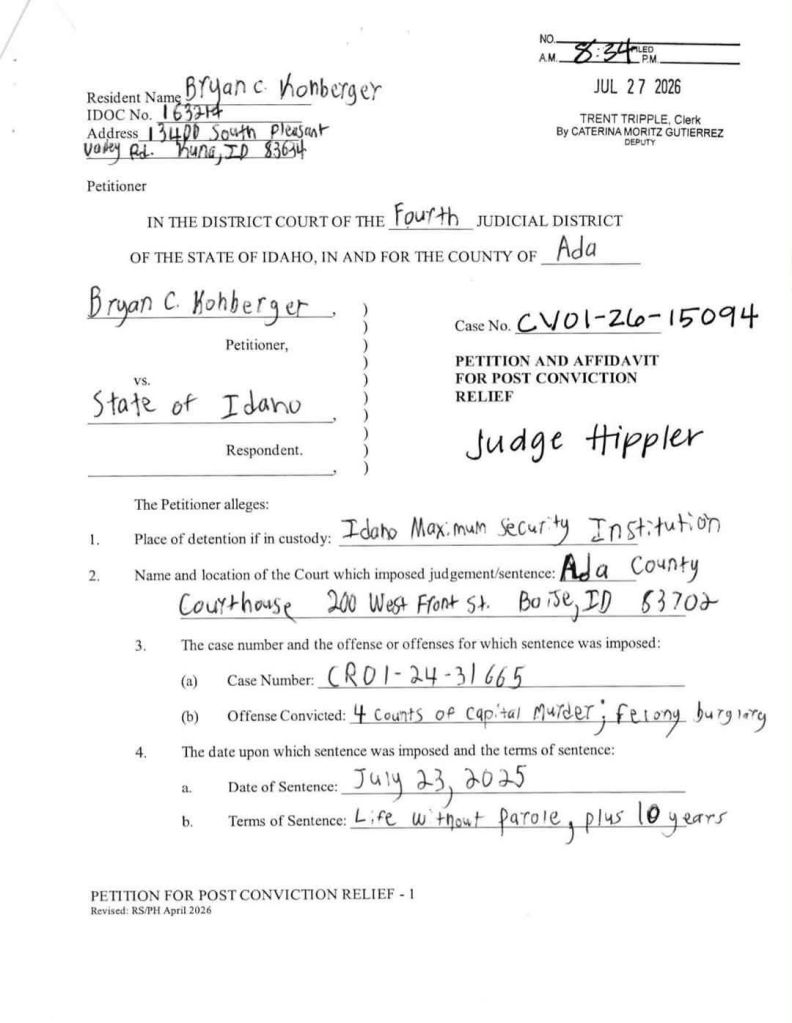
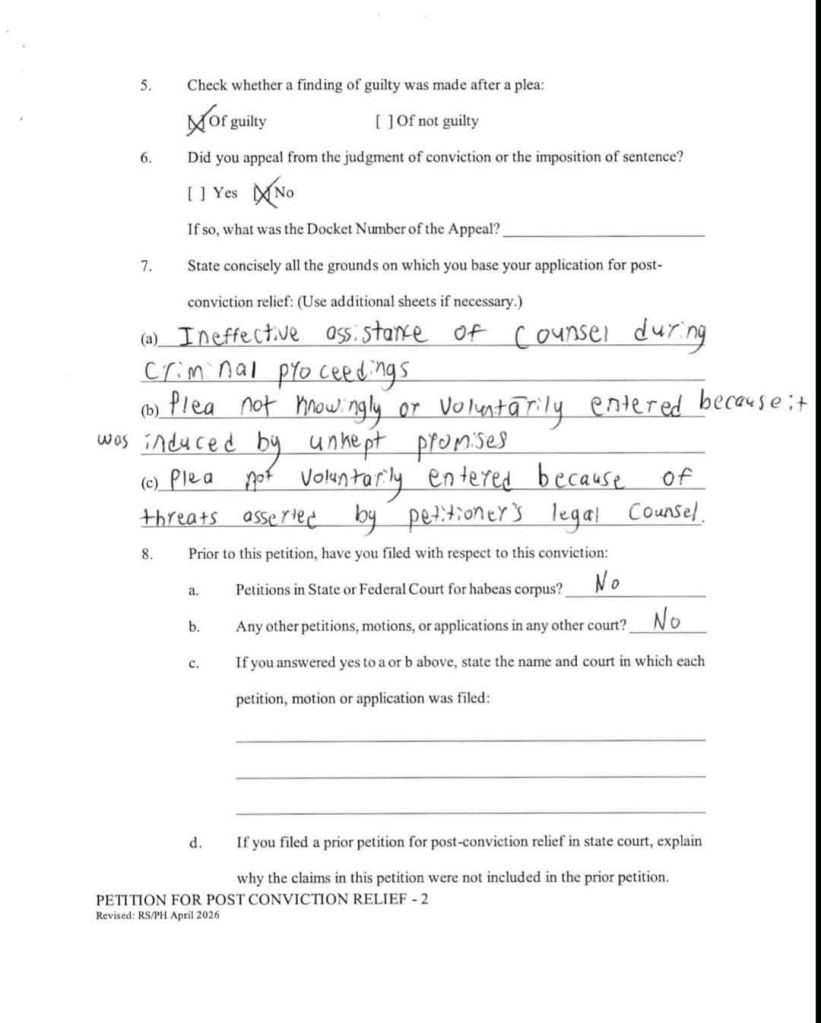
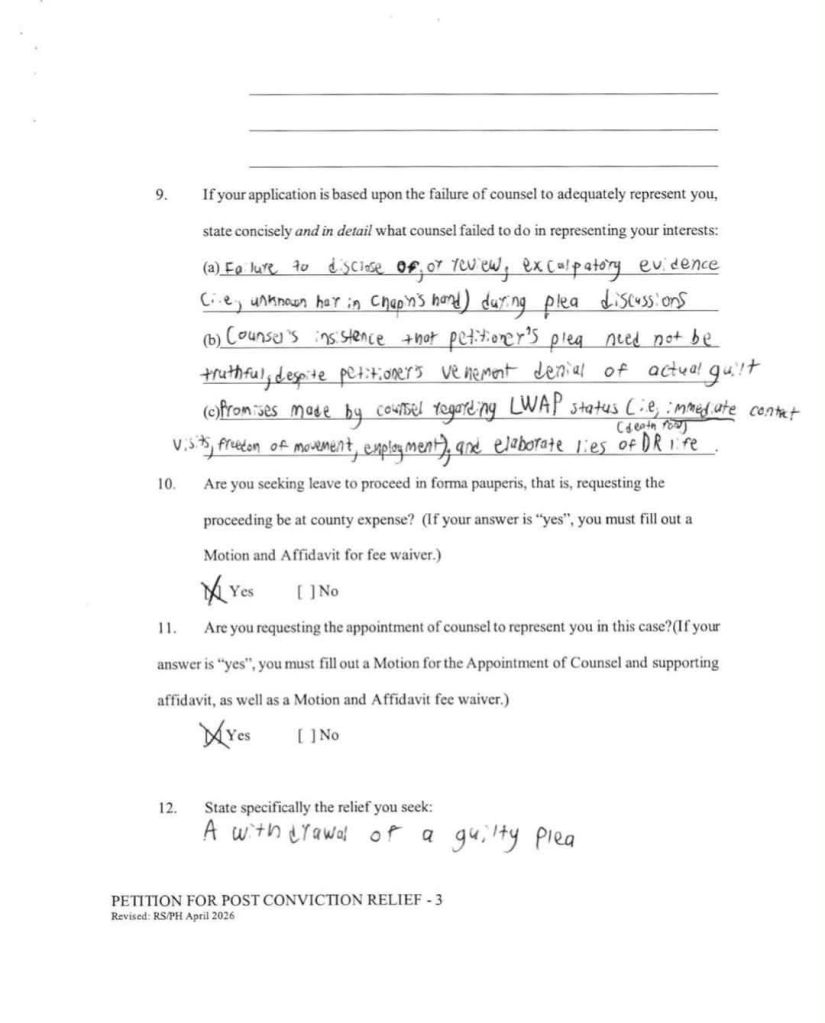



Here is a complete list of missing/murdered women from Washington state from 1965 to 1975.
Lisa Wick and Lonnie Trumbull (June 23, 1966, Seattle): Wick and Trumbull were twenty-year-old United Airlines flight attendants who were brutally attacked in their Seattle apartment in 1966: Lonnie Ree Trumbull suffered a fractured skull and severe brain hemorrhaging and tragically succumbing to her injuries, but Lisa E. Wick survived, but was left critically injured and suffered permanent memory loss regarding the incident. A third roommate, Joyce Bowe, was not home at the time of the attacks. It is a case famously suspected of being linked to Ted Bundy (who had been nineteen at the time), however he denied any involvement and there is no official evidence tying him to the case.
Ruby Agnes Schwanbeck-Lampson (reported as missing on June 6, 1967, Spokane): Lampson lived in an apartment above the Falls View Tavern (a popular local establishment with a rowdy reputation) and was known to frequent and even work at the establishment; she was last seen alive at the nearby Hi-Neighbor Tavern with an unidentified, much younger man. Four years after she vanished, on November 16, 1971, her skeletal remains were discovered in a shallow grave in the remote woods of the Seven-Mile ORV Park (a 600-acre off-road vehicle area located inside Riverside State Park near Spokane); due to the advanced decomposition of her body, medical examiners were unable to determine an exact cause of death. The suspected killer of Dorothy Fielding was Duke J. Pierson, a former detective for the Spokane County Sheriff’s Department.
Dorothy Fielding (reported as missing on August 19, 1967, Spokane): frequented the same local tavern as Ruby Lampson; found in April 1968. disappeared in August 1967 and was found in a shallow grave eight months later in April 1968 at the Seven-Mile ORV Park. She was an avid member of the tavern’s bowling team. The suspected killer of Dorothy Fielding was Duke J. Pierson, a former detective for the Spokane County Sheriff’s Department.
Susan Galvin (discovered on July 13, 1967, Seattle): the twenty-year-old records clerk for the Seattle Police Department had recently moved to the area from her childhood home in Spokane; after failing to show up for work, her body was discovered inside a parking garage elevator at the Seattle Center complex. Autopsy results revealed that she had been sexually assaulted and strangled.
Verla Helen Winter (October 21, 1968, Kent): Last seen at home after she had an argument with her estranged husband, who stayed at the residence and supposedly went to bed. When he awoke, his wife and all of her belongings had disappeared, as well as $400 in cash; she left behind two children who were raised by her parents. Prior to this, Verla was in frequent contact with her family by phone and mail.
Linda Mary Louise Garrison (November 19, 1968, Sumner): about a month before her disappearance the nineteen-year-old had been thrown from a horse and had been treated for back injuries; it’s unknown if the injuries she sustained resulted in scarring or indications of trauma to the bones. She left home after a horse ride.
Murders Linked to John Dwight Canaday (1968–1969, Renton): I am going to touch on the murders committed by John Canaday as a whole, who is a lesser-discussed serial killer from Washington state that killed three women between late 1968 and early 1969. On the evening of December 17, 1968, pregnant newlywed Sandra Darlene Bowman was stabbed to death in her home after she opened the door to her Ballard apartment and apparently let her killer in; she was later found in her bedroom, tied up, raped and stabbed repeatedly, court documents say. On the evening of January 4, 1969, twenty-one-year-old Mary Annabelle Bjornson was at her apartment preparing dinner for a friend when a man knocked on her door claiming he was experiencing car trouble to gain entry. Once inside, he threatened her with a knife, tied her wrists, and drove her to Seattle’s Seward Park, where he strangled her. Canaday’s final victim was twenty-year-old University of Washington junior (some records mention her attending Washington State University) Lynne Carol Tuski, who vanished while walking to her car in northern outside a north Seattle department store; according to her autopsy, he strangled her to death. John Dwight Canaday was apprehended by police on February 22, 1969; he confessed to the murders,saying he strangled his victims and left their remains in Snohomish County; he died on December 26, 2012, while serving his time at the Clallam Bay Corrections Center.
Laura Lee Asynithe Flink (February 21, 1969, Aberdeen): Flink was last seen driving her live-in boyfriend’s 1967 Red Ford Ranchero toward Moclips at about 4 PM on Friday, February 21, 1969 (where she was supposed to pick up some furniture and children’s clothing); she never arrived at her intended destination. Flink’s brown leather wallet was found on a Hoquiam, Washington sidewalk on February 23, 1969, and the vehicle was subsequently recovered on February 24, 1969 (also in Hoquiam). Flink’s wallet was mailed by the Hoquiam Police to her Aberdeen post office box, where it was never picked up. She never returned to her waitress job, and there has been no contact with any family or friends since; she had no alternate source of income, and she left behind a sixteen-month-old son, who she had just won full custody of through the courts.
Dorothy May Thompson (August 25, 1969, Walla Walla): Thompson was fifty-three-year-old at the time she was last seen alive and had been in the custody of Walla Walla penal authorities; upon her release, official records state she was provided with a bus ticket to travel to Vancouver along with explicit instructions to report to a designated officer immediately upon arrival. While penal authorities confirmed providing the ticket, investigators note there is no official verification or proof that she ever boarded the bus; she never checked in with the officer in Vancouver and has not been seen or heard from since.
Murders Linked to Gary Gene Grant (1969–1971, Renton): I am going to touch on the murders committed by Gary Grant as a whole, who is a lesser-known serial killer who raped and murdered four young women in the Renton area between 1969 and 1971. Often referred to as ‘Seattle’s Forgotten Serial Killer, Grant was only eighteen when he began his killing spree, targeting victims who were primarily children or young teenagers: he killed nineteen-year-old Carol Adele Erickson on December 15, 1969, while she was walking home from the Renton Municipal Library; she was stabbed and raped. Grant killed seventeen-year-old Joanne Zulauf on September 20, 1970 after she left her home to take a brief walk before dinner. When she failed to return, her family reported her missing, and her body was discovered two days later in a heavily wooded area; she had been attacked and strangled. On April 20, 1971, Grant committed his final two murders when he abducted two six-year-old boys that were in their front yard playing: he threatened Scott Andrews and Bradley Lyons with a knife and took them into the woods less than two miles away from the Bradleys’ residence; he beat them both and then stabbed Andrews then strangled Lyons. Their bodies were found two days later, and when examining the crime scene, investigators found footprints of the offender’s tennis shoes, of which plaster casts were taken. Following his arrest, Grant confessed to the four murders on April 30, 1971, however, during his trial, he denied legal guilt by claiming he was legally insane. On August 25, 1971, a jury rejected his insanity plea and convicted him of four counts of first-degree murder; he was sentenced to four consecutive life terms in prison.
Grace Foster (1970, Olympia): one-year-old Foster vanished during a family picnic in Olympia sometime in the summer of 1970. Despite the case going cold, Grace’s older brother, Daniel Foster, never gave up hope. He spent decades holding onto the belief that his little sister was still alive somewhere.
Patricia Garrison (January 5, 1970, Olympia): seventeen-year-old Patricia Garrison was found stabbed in a hospital parking lot on January 5, 1970 in Olympia; two days later she died from the over twenty stab wounds and injuries that she sustained in the attack.
Bertha Louise Burke (February 20, 1970, Port Angeles): Burke was a twenty-nine-year-old mother of three when she disappeared on a Friday night in early 1970: she had tucked her young children into bed at their East 13th Street home, and she was gone when they woke up in the morning. She left behind her purse, clothes, and all of her other personal effects.
Gladys Thelma Williams (February 20, 1970, Seattle): Williams was last seen on February 20, 1970 when she dropped her children off at her sister’s residence. Very little information is available about her disappearance.
Jeannette Rose Miller (September 16, 1970, Arlington): seventeen-year-old Miller was last seen walking on the Lincoln Bridge in Arlington, Washington.
Nancy Mae Richards-Winslow (July 26, 1970, Bellingham): twenty-three-year-old whose disappearance and murder became a noted unsolved cold case. Due to the timing, location, and nature of her disappearance, her case has frequently been studied by true-crime researchers investigating unconfirmed victims of the serial killer Ted Bundy.
Janice Marie Hannigan (March 1, 1971, Wapao): the sixteen-year-old was was discharged from a hospital on December 24, 1971. Janice was suffering from numerous bruises on her chest and head when she was admitted to a hospital three days prior. According to her hospital discharge summary, Janice was admitted to the hospital with multiple contusions around the head. It’s not known which hospital Janice was admitted to or the cause of her injuries. She was discharged in satisfactory condition. She never arrived home after her discharge and she hasn’t been seen since. At the time of her disappearance, Janice was living with her father on family land west of Harrah. Their parents were separated and the six younger children were with their mother in Buena.
Joyce Margaret LePage (July 22, 1971, Pullman): on the evening of Thursday, July 22, 1971, Joyce took a skydiving lesson with a friend, went out for a beer afterward, and was dropped off outside her off-campus apartment around 10:00 PM. This was the last time she was seen alive. She failed to show up for classes the next day and missed a planned weekend trip to visit her family in Pasco.
Marilyn Kay Pratt (October 8, 1971, Spokane): Marilyn was last seen on the evening of October 8, 1971 by her husband and friends at a local restaurant. Marilyn’s husband was working as a bartender at the race track. Marilyn was supposed to meet her husband at the track that evening, to bet on a race with him. She didn’t make it, so he placed the bet anyway and lost, which made him angry.
Jamie Grisim (December 7, 1971, Vancouver): climbing into Forrest’s light-blue van near downtown Vancouver. Her remains were found exactly two years later in a shallow grave on Clark County parks property at Tukes Mountain. Jamie Grissim has been missing since December 7, 1971, after she vanished while walking home from Fort Vancouver High School in Vancouver, Washington. Although she was initially categorized by police as a runaway, her high school identification card and purse were found months later along a rural road in the Dole Valley area, prompting authorities to treat her disappearance as a homicide. Her remains have never been found, and her disappearance stands as the oldest active missing person case in Clark County.
Ivah McDonnell (December 2, 1971, Pasco): the sixty-year-old was found dead inside her home at 5008 W. Sylvester Street; she had been brutally beaten with a blunt object, knocked unconscious, and strangled to death with her own pajama bottoms. Her wallet, a change jar, and items of lingerie were missing from the scene. DNA profiling matched Samuel Evans to the crime scene, though he died in prison for a separate murder.
Alisa ‘Lisa’ Francine Watson (January 1, 1972, Tacoma): Alisa had left the family home and may have been living at an apartment in the Seattle area. No contact with family since 1972.
Pamela Burrows (January 1, 1972, Seattle): Pamela and her boyfriend were going to visit her sister in Minnesota, but they never arrived and she was never heard from again; he later told her sister that she had been killed, but it was never confirmed and her body has not been found.
Nancy Jane Liptrap (January 12, 1972, Des Moines): Liptrap was a sixteen-year-old student at Mt. Rainier High School in Des Moines when she was abducted on her way to school and viciously attacked on January 12, 1972; her body was discovered in a field not far from her home.
Barbara Ann Derry (disappeared on February 11, 1972, Vancouver): was an 18-year-old homicide victim from Washington State who is believed to be one of the earliest victims of Southwest Washington serial killer Warren Leslie Forrest. Derry was last seen on February 11, 1972, hitchhiking along State Highway 14. She was traveling from Vancouver toward her hometown of Goldendale, Washington. On March 29, 1972, her body was discovered by a woman hunting.
Kerry Hardy-May (June 13, 1972, Seattle): in June 1972, Kerry was in a period of transition, having recently separated from her husband. After she failed to show up at her family home to help them pack for a trip, her mother reported her missing to the Seattle Police Department. Her whereabouts remained a complete mystery for nearly 40 years. On September 6, 2010, a backhoe operator digging a waterline trench near a golf course at the Suncadia Resort in Roslyn, Washington, uncovered human remains in a shallow grave. Along with the bones, investigators found a gold wedding band and remnants of blue material. In June 2011, the Kittitas County Sheriff’s Office officially identified the remains as Kerry May-Hardy. The breakthrough came after her family noticed a striking resemblance between a forensic composite sketch circulated by authorities and Kerry. The identity was conclusively confirmed via DNA testing by the University of North Texas Center for Human Remains, using a profile her mother had proactively submitted in 2004.
Althea Dayle Blankinship (March 27, 1973, Port Townsend): Althea Blankinship and her son Jeffrey, were last seen in the City of Port Townsend, WA, where they were residing at the time. They were last reported to have been dropped off at SeaTac International Airport. Althea had made plans to travel to Greece with Jeffrey to meet her parents who were already there on vacation. Family members became concerned when it was evident that Althea and Jeffrey never arrived in Greece. They have not been heard from or seen since. Foul play is suspected.
Salie Belle Maxi Signani (June 1, 1973, Renton): she was recently divorced and left home to live with another man. She failed to show up for work on a Monday in early June 1973. Investigation done at that time was apparently lost. A new case originated in 2003.
Jody Loomis (August 23, 1972, Bothell): was a 20-year-old woman from Bothell, Washington, who was sexually assaulted and murdered on August 23, 1972. Her case went unsolved for nearly five decades until it was cracked using groundbreaking forensic genetic genealogy. On the afternoon of August 23, 1972, Jody left her home on her bicycle to visit her horse, Saudi, at a local stable. She never arrived. Roughly 30 minutes after she was last seen, two people discovered her disrobed and suffering from a gunshot wound to the head in a heavily wooded area of Snohomish County (in what is now Mill Creek Road). She was still barely breathing when found but was pronounced dead on the way to the hospital.
Murders Linked to James Edward Ruzicka (1973-1974, Seattle): I am going to touch on the murders committed by James Ruzicka as a whole, who is a lesser-known murderer from Washington state; in1973, twenty-three-year-old Ruzicka was arrested and later pled guilty to second-degree assault with intent to rape after attacking a twenty-one-year-old woman at knifepoint in her Capitol Hill apartment in Seattle. Instead of receiving a standard prison sentence, Superior Court Judge David W. Soukup suspended his ten-year term, and Ruzicka was sent to Western State Hospital after being legally classified as a ‘sexual psychopath.’ In January 1974, he escaped custody from the facility and within weeks, he went on to kidnap, rape, and murder two teenage girls in West Seattle (sixteen-year-old Nancy Kinghammer and fourteen-year-old Penny Marie Haddenham) before he eventually fled to Oregon, where he was ultimately apprehended.
Teresa Kay Davis (November 1, 1973, Tacoma): Teresa was staying with her sister in Tacoma, Washington. On November 1, 1973, Teresa’s sister came home and found that Teresa was not there. The front door was left open and all of Teresa’s belongings remained in the home. Later, her sister reportedly received a letter from Teresa sent from Anchorage, Alaska, but there was no further contact.
Katherine Merry Devine (November 25, 1973, Olympia): fourteen-year-old Kathy was murdered after running away from her Seattle home and hitchhiking on November 25, 1973. Her remains were discovered on December 6, 1973, by caretakers at Camp Margaret McKenny in the Capitol State Forest near Olympia, Washington. An autopsy revealed she had been sexually assaulted and killed by a knife wound to the neck. The mystery was finally solved in 2001 when the Washington State Patrol Crime Lab utilized modern DNA technology to test physical evidence preserved from the crime scene. The DNA perfectly matched William Earl Cosden Jr., a convicted rapist who had already been serving a prison sentence since 1976.
Lynda Ann Healy (January 31, 1974, Seattle): a 21-year-old American college student who became the first widely confirmed murder victim of the notorious serial killer Ted Bundy. She was known by her peers and family as a talented musician who was full of life, self-assurance, and compassion. She attended Newport High School before enrolling at the University of Washington (UW).At the time of her disappearance, she was a senior majoring in psychology and was scheduled to graduate that year. Deeply invested in helping others, she regularly worked with mentally handicapped children. Alongside her studies, she worked part-time for Western Ski Promotions, broadcasting morning weather and ski condition reports to 20 local radio stations across Washington and Oregon.Disappearance and MurderIn early 1974, Healy lived in a pale green off-campus house on 12th Avenue Northeast in Seattle’s University District with four female roommates.On the evening of January 31, 1974, Healy went out to a local establishment with friends, returned home, spoke to her boyfriend on the phone, and went to sleep. During the early morning hours of February 1, 1974, Ted Bundy broke into her basement bedroom. He knocked her unconscious, dressed her in blue jeans and a blouse, and carried her out to his vehicle while her roommates slept undisturbed upstairs.The next morning, her roommates noticed she was missing after her radio alarm clock kept buzzing continuously and she failed to show up for her scheduled morning broadcast. When police examined her room, they found her bed neatly made, but discovered her nightgown hanging in the closet with blood stains on the collar, along with blood on her mattress and pillowcase.
Heidi Birgit Peterson (February 21, 1974, Seattle): a four-year-old girl who was tragically abducted from the front yard of her Capitol Hill home in Seattle on February 21, 1974. Heidi was playing outside with her 2.5-year-old brother when she vanished. Her disappearance sparked one of the largest and most extensive law enforcement searches in the history of the Pacific Northwest at the time. Nearly a year later, on January 24, 1975, her remains were discovered in a park just a block away from her home. Investigators believed her remains had been moved there later, as the park had been thoroughly searched initially; o this day, her killer has never been identified.
Donna Gail Manson (March 12, 1974, Olympia): Manson was last seen at 7:00 PM on campus at Evergreen State College in Olympia by a college roommate whom she told she was going to attend a jazz concert being held on the campus; she was reportedly last seen between the dorms and library on the way to the concert. Ted Bundy confessed on death row to abducting Manson from the Olympia campus but never specifically said where he left her remains. As of July 2026 they have never been recovered.
Susan Elaine ‘Sue’ Rancourt (April 17, 1974, Ellensburg): an eighteen-year-old college student who became the third known murder victim of Ted Bundy. On the evening of April 17, 1974, Sue attended a meeting for future residence hall leaders at Munson Hall. After the meeting concluded around 10:00 PM, she began walking back to her dormitory. Witnesses on campus later recalled seeing a man with his arm in a sling wandering near the parking lots (which is a common ruse Bundy liked to use).
Brenda Joy Baker (May 25, 1974, Maple Valley): the fourteen-year-old was brutally murdered in Washington state in May 1974. She has long been suspected of being an unconfirmed victim of the notorious serial killer Ted Bundy. The details surrounding her disappearance and the subsequent investigation include: Brenda lived with her family in Maple Valley, Washington, and had a history of running away from home. On May 25, 1974, she spent two days staying with friends in Sumner, Washington, who tried to convince her to go home. She refused, stating she was trying to hitchhike south toward Portland, Oregon. She was last seen alive getting into a pickup truck with two men at an on-ramp near Puyallup, Washington. Because her family immediately noticed her absence, they filed a missing person’s report the same day she vanished. On June 17, 1974, approximately three weeks after she went missing, her highly decomposed remains were discovered by chance in an isolated section of Millersylvania State Park in Thurston Count
Diane Sue Gilchrist (May 29, 1974, Vancouver): a teenager from Vancouver, Washington, who went missing on May 29, 1974, at the age of 14. Decades after her disappearance, she is heavily suspected by law enforcement to be a victim of convicted Washington serial killer Warren Leslie Forrest. She was last seen on May 27 or May 29, 1974, leaving her family’s home in the 1800 block of Franklin Street in downtown Vancouver, Washington.
Gloria Nadine Knudson (May 31, 1974, Vancouver): Gloria Nadine Knudson (which I’ve also seen spelled Knutson) was a nineteen-year-old woman that went missing on May 31, 1974 and is a suspected victim of serial killer Warren Leslie Forrest. At the time of her murder she was almost finished with her senior year at Hudson Bay High School and was last seen after visiting a friend’s house on Grant Street, where she reported that an unknown man had chased and stalked her. She left to walk home and never arrived. Her remains were later discovered in 1978 near Lacamas Lake.
Brenda Carol Ball (June 1, 1974, Burien): twenty-two-year-old Ball is the fifth official murder victim of the American serial killer Ted Bundy.( grew up in Washington and graduated from Mount Rainier High School in Des Moines, Washington. Described by friends and family as a petite, “free and fun-loving spirit,” she stood 5 feet 3 inches tall, weighed 112 pounds, and had long brown hair and brown eyes. She had taken classes at Highline Community College but decided to drop out a couple of weeks before her disappearance. At the time, she was living with roommates in an apartment in Burien, Washington. On the evening of May 31, 1974, during Memorial Day weekend, Brenda went out alone to the Flame Tavern, a neighborhood bar in Burien. She had mentioned to her roommates and friends earlier that day that she hoped to find a ride out to Sun Lakes in eastern Washington to join them at a campground later that weekend
Krista Kay Blake (disappeared on July 11, 1974, Vancouver): twenty-year-old Blake was kidnapped and murdered in Washington in July 1974 by Warren Forrest; she was last seen climbing into his light blue Ford Econoline cargo van near downtown Vancouver.
Georgann ‘George’ Hawkins (June 11, 1974, University of Washington, Seattle): Hawkins disappeared from the University of Washington campus after 1am on June 11, 1974. She was last seen in the alley outside of Beta Theta Pi fraternity. She had been to a fraternity party earlier in the evening, and visited her boyfriend, Marvin Gellatly, on the way back to her sorority house. As she left Beta Theta Pi, Georgeann spoke with another friend, Duane Covey, who spoke with her from his second-story window that faced the alley. After saying goodbye to her friend, she headed down the alley toward her sorority house, Kappa Alpha Theta. She never arrived. Ms. Hawkins is the victim of serial killer, Ted Bundy, who confessed to kidnapping and murdering her before his execution in 1989. He confessed to killing her in a remote area “across Mercer Island, east past Issaquah, up the hill, down the road, and up to the grassy area.” Bundy claimed that Georgeann’s remains were found with two of his other victims, Janice Ott and Denise Naslund, in Lake Sammamish State Park; investigators had found an extra leg bone and extra vertebrae at the site, but had been unidentified at the time and – so far – were never positively identified as Georgeann’s.
Janice Ott & Denise Naslund (July 14, 1974, Issaquah): Bundy abducted twenty-three-year-old Janice Ott and nineteen-three-year-old Denise Marie Naslund were abducted four hours apart from Lake Sammamish State Park in Issaquah; it quickly became one of the most notorious moments during the hunt for ‘Ted,’ marking the first time investigators realized the killer went by the name and approached multiple women in broad daylight on the same day That Sunday Lake Sammamish State Park was incredibly crowded, and had around 40,000 visitors, many attending an annual picnic held by Rainier Beer.
Joyce Tyer Jones (November 17, 1974, Bellingham): little is known about the final days of Joyce; she went for a walk and never returned home.
Vonnie Joyce VanDriel-Stuth (disappeared on November 27, 1974. Burien): was initially suspected to be another victim of Bundy, Vonnie was abducted and murdered by serial killer Gary Addison Taylor; the nineteen-year-old newlywed disappeared from her apartment in Burien, Washington. When her husband, Todd Stuth, returned home from work after midnight, he found the lights and television on, an unfinished Thanksgiving meal on the table, and his wife gone. Her only previous hint to family had been a mention of a neighborhood man coming to the door to offer her a dog.
Laurie Lynn Partridge (December 4, 1974, Spokane): on the day she disappeared Partridge left Ferris High School early, complaining about not feeling well walking at 37th & Havana Streets on Spokane’s South Hill. Unable to get a ride, she decided to walk the two-plus miles to the home where she lived with her parents and five younger siblings, saying the air might help her feel better. The family reported her missing after she failed to show up for work that evening at Lincoln Heights Theater. Initially, sheriff’s deputies thought she might have run away from home, given her displeasure when the family moved to Spokane from California, but by the time she vanished she had started to establish roots (she was also engaged to a twenty-year-old man). The couple planned to pick out engagement rings the day Partridge disappeared, and her fiancé was questioned extensively several times but never ruled a suspect.
Lorelee Sue Lhotka (January 1, 1975, Seattle): Lhotka was last seen on some unspecified date in 1975, when she left home to go to a doctor’s appointment; she was supposed to take the bus, but she may have hitchhiked instead, and she never arrived at the doctor’s office. She has never been seen or heard from again. In 1978, Lhotka’s wallet was found at Blewitt Pass in the Wenatchee National Forest.
Diana ‘Dinah’ Peterson (February 14, 1975, Shoreline): sixteen-year-old Dinah snuck out of her family’s home in the Innis Arden/Richmond Beach neighborhood to visit her older boyfriend (whom her parents disapproved of). Later that night, her dad discovered her body in their backyard; she had been stabbed. For decades, investigators primarily focused their attention on Peterson’s then-19-year-old boyfriend, Timothy Diener, who had been arrested shortly after the murder but was never formally convicted (investigators struggled with a lack of concrete evidence). In December 2007, King County Sheriff’s cold-case detectives arrested and charged James Eric Groth, who was also sixteen at the time of the crime and lived two houses away from the Petersons; authorities determined that Groth had been infatuated with Peterson and grew violently jealous of her dating an older guy.
Hallie Ann Seaman (April 29, 1975, Seattle): Seaman was an honor student just two terms away from finishing her master’s degree in architecture and was last seen working late at her drafting table inside the University of Washington’s architecture building. The following afternoon, a passerby discovered her body hidden in the bushes near a parking lot on Eastlake Avenue East; she had been sexually assaulted and repeatedly stabbed. Her case remained an unsolved mystery until advanced DNA testing identified her killer as Charles Rodman Campbell.
Jo Carrol Sanders (July 6, 1975, Camas): the fourteen-year-old was last seen alive near her residence, which was described as being ‘a tight-knit neighborhood where she lived with her father’ and investigators confirmed she was abducted in broad daylight by someone driving either a yellow or green van. Her body was discovered three days later in a gravel pit roughly ten miles east of Camas in Skamania County.
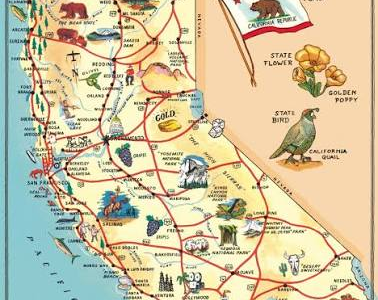
I’ve been keeping a running list of girls/women that went missing/were killed in Oregon from 1969 to 1979, and I realized this morning it would be a good idea to do it with California too. I’m constantly coming across new names from the Golden State, I’m going to put them all here.
Doreen Heskett (March 25, 1963, Napa): on the afternoon of March 25, 1963, five-year-old Doreen was walking home with a friend after a playdate; when it came time for the girls to go to their respective houses they parted ways, and this was the last time Doreen was seen alive. When she failed to return home for dinner, her mother contacted the Napa Police Department and reported her as missing. I know this falls outside of the allotted time frame, but it’s suspected that Heskett was killed by a man I will be bringing up again later, Claude Ray Junior (he killed his daughters, and Doreen went to kindergarten with one of them).
Morgan Rowan (1965 & 1968): she wasn‘t killed or is missing but she is worth mentioning: Morgan Rowan survived two separate encounters with Rodney Alcala. The first one took place when she was thirteen (and Alcala was twenty-one): Rowan scratched Alcala’s arm to get his attention at a teen nightclub, and he responded by dragging her into a back alley, beating her, and knocking her unconscious before the club owners intervened. The second encounter took place when she was sixteen in 1968 and was much worse: Alcala pulled her into a bedroom at his Hollywood home during a party, then dropped a metal bar securely into brackets to lock the door: from there, he wrapped his belt around his fist, punched Rowan with extreme force directly between the eyes, then used a knife to cut a tie off her neck, which caused heavy bleeding. When Morgan got to the point where she feared she was going to die, her friends broke into the room and helped her flee. When she spoke to law enforcement, an officer dismissed the severity of the event, and she never filed a formal police report.
Brenda Sue Sayers (January 7, 1965, Brawley): on the day of her disappearance, the ten-year-old left home to go roller-skating at a nearby school. A witness spotted her talking to a stranger shortly before she was last seen, which prompted an LA Police Department sketch artist to draw a composite image based on the description, which was printed on the front page of every local newspaper, which quickly led to the identification of the suspect. The child’s partially dressed body was found on January 10, in a concrete water meter well near Mecca. Her killer was identified as Robert Eugene Pennington, a convicted sex offender who had recently escaped from Atascadero State Hospital.
Floy ‘Faye’ Redmon (May 6, 1965, Orange): theseventy-five-year-old widow was murdered inside her home on East Walnut Avenue: her killer had brutally bludgeoned her over the head with the heavy lid of a kitchen pressure cooker. Because Redmon lived alone and had no surviving relatives, her tragic death quickly disappeared from the media and faded away into a cold case file for nearly thirty-nine-years when Orange Police Department detectives tracked a lead to a Texas prison. Confronted with the evidence, inmate William Self officially confessed to the 1965 homicide.
Carol Frances Metzener-Norton (June 2, 1965, El Cerrito): Carol’s sister went to visit her trailer home on June 3, 1965 and found the lights on and coffee on the stove; her husband, Harvey Arnold Norton, was later arrested and charged with the $11,700 holdup of a Sandia, TX bank on July 14, 1965. He told investigators that he had left his wife in a Portland motel on June 14th after the two had gotten into an argument. and from there he went to Texas. Harvey’s car was found abandoned in downtown Corpus Christi, and inside it, detectives found bloodstained floor mats with strands of human hair and a dirty shovel; he was charged and served jail time only for the robbery. In 1971, Norton drove to an isolated trailer home in Marshall, TX, tied up the two teenage girls who lived there and stole their fathers rifle; when one of their boyfriends showed up and tried to rescue them, Norton killed him. Immediately after, he ate some vanilla wafers with peanut butter, drank a six-pack of beer, then used the same rifle to kill himself.
Diane Louise Gerrish (discovered on August 30, 1965, Albany): three soldiers discovered the remains of the nineteen-year-old cosmetologist on the grounds of the San Francisco Presidio, an army post near the southern entrance of the Golden Gate Bridge; investigators determined that she had been severely beaten and choked to death with a garrote made out of her own clothing approximately eight hours prior to her discovery; she had also been subjected to severe post-mortem sexual mutilation. Following an argument with her family regarding the use of a car, Gerrish left her home on Friday, August 27, 1965, telling her parents she was going to a movie. She was later spotted at a liquor store purchasing cigarettes and gum before getting into a late-model sedan with an unidentified person. On the morning of Monday, August 30, 1965, three soldiers discovered her body hidden in a bed of ice plant near Lincoln Boulevard, close to the southern entrance of the Golden Gate Bridge.
Jeanette Louise Ray (disappeared on October 4, 1965, Napa): Jeanette was last seen with her seven-year-old sister, Renay Ray, on the morning of Monday, October 4, 1965; their father claimed he had dropped the pair off in front of Westwood Elementary School at 8:30 AM, but they never made it to class. On October 10th, Renay’s body was found at Schooner Gulch State Beach at the bottom of a 90-foot cliff by a family looking for seaweed; her cause of death was asphyxiation. Their father, Claude Ray Junior was arrested later same day Renay’s body was found and on January 27, 1966 he was found guilty of the first-degree murder. He received a life sentence but committed suicide in 1983. Jeanette is believed to have met the same fate as her sister however her remains have yet to be recovered. Ray is also the suspect in the unsolved murder of five-year-old Doreen Heskett.
Cheri Jo Bates (October 30, 1966, Riverside): Bates was found stabbed to death on Halloween 1966 on the campus of Riverside City College after she had been studying at the library; LEO’s said her car had been disabled, and her body was discovered about 100 yards away.
Dorothy Jean William-Vaillancourt (found December 18, 1966, Tiburon): on December 18, 1966, a woman’s body was found on a cliff near the edge of Paradise Drive in Tiburon, California. A hunter made the discovery and alerted authorities. The woman could not be identified and became known as Marin County Jane Doe. It was estimated that the woman was between forty-five and sixty years old at the time of her death. She had auburn red hair, was 5’2” and weighed 105 pounds. She was wearing a red cotton dress and an off-white trench coat. The woman’s cause of death could not be determined.
Lillian Marie Cardenas (discovered on February 3, 1967, Jenner): her mummified and badly decomposed remains were found by a hiker at the base of a steep cliff north in Jenner; they went unidentified for nearly sixty years. An initial autopsy revealed that the woman suffered multiple fractures to her skull and ribs, though investigators at the time could not determine exactly how she sustained those injuries, and because early identification efforts failed, she was buried as a ‘Jane Doe; in the County of Sonoma Cemetery. In 2009, the Sonoma County Sheriff’s Office exhumed the body to perform an anthropology review, and it was confirmed that the victim was a white woman between forty and forty -six years of age. A breakthrough occurred in 2023 when the California Department of Justice partnered with forensic genetic analysis company Othram Inc and using genetic genealogy, investigators tracked down living relatives and positively identified the remains as Lillian Marie Cardenas. As of July 2026, her killer remains unknown.
Sue Alice Beaulieu (February 18, 1967, Redwood City): the nineteen-year-old mother of two was found deceased in her Redwood City apartment by her brother; investigators determined she was struck on her porch, moved inside, and killed via ligature strangulation in the bathtub. The killer also turned on all the gas jets in the kitchen before leaving, though her brother and two young children sleeping in the next room; they narrowly survived the gas accumulation. Her murder remains unsolved.
Gloria Dawn Collins (March 4, 1967, Fullerton ): Gloria Dawn Collins was found brutally murdered inside an apartment as a result of massive skull fractures and stab wounds. A primary suspect emerged in connection with the crime: twenty-five-year-old former sailor named William Blakeman was the primary suspect in the crime, but despite spending five and a half months in custody Blakeman was fully acquitted and cleared of all charges in August 1967.
Elaine Kirschke & Orville Drankhan (April 9, 1967, Long Beach): Kirschke was shot in the head along with her lover, Orville Drankhan, in her bedroom; Kirschke’s husband, Jack (a Los Angeles deputy district attorney), was convicted of their murders after a sensational, eighty-eight-day trial dubbed ‘Long Beach’s trial of the century,’ and sentenced to life in prison; he was released after less than ten years, and died in 2004.
Dominga H ‘Dee’ Montoya (April 29, 1967, Bakersfield): twenty-three-year-old Montoya was brutally murdered inside of a 24-hour laundromat in East Bakersfield; she was employed as a receptionist and secretary for California Assemblyman Kent Stacey. At the beginning of his shift, a Kern County Sheriff’s deputy noticed her car outside and went into the laundromat and he discovered her lifeless body crudely stashed in a back storeroom; her clothing had been ripped, and she had suffered severe, fatal head injuries. Because of the brutal nature of the attack and her high-profile job her death made major headlines throughout California. Despite an intensive investigation by local law enforcement, detectives were unable to identify her attacker. As of July 2026, her murder remains an unsolved cold case.’
Lynn Marjorie Bandringa (May 29, 1967, Hesperia): Bandringa was a twenty-one-year-old newlywed who had been married for only seven weeks at the time she disappeared, and lived with her husband, Philip ‘Jan’ Bandringa, in a trailer home located in the 13800 block of Main Street (which doubled as the office for their family business, ‘Bandringa Trailer Sales’). On the day she disappeared, Lynn was left alone to mind the office while her husband and FIL went to Barstow for a service call; a customer later reported seeing her at the office at approximately 5:15 to 5:30 PM. Debris and evidence at the scene indicated she may have been painting a wooden fence in front of the business. Around that same time, two separate witnesses reported seeing her cross Hesperia Road, walking away from the trailer property. A second customer arrived roughly fifteen minutes later to find the office completely empty, and when her husband came home later that evening, he found their two dogs running loose outside. Lynn had left behind her purse, identification, clothing, and all other personal belongings, and Philip reported her missing to the sheriff’s deputies at 11:50 PM.
Enedine Molina & Fermin Rodriguez (June 8, 1967, Sunol): thirty-five-year-old Enedine Molina and her companion, Fermin Rodriguez, were parked on Vallecitos Road in Alameda County, California, when they were confronted by an armed attacker. The man interrupted the couple and ordered them to exit their vehicle, and as Rodriguez stepped out of the car, the assailant shot and killed him. The attacker forced Molina into his own vehicle and drove away from the initial scene. Following reports of gunshots from a nearby resident, local authorities initiated a search and discovered Molina’s body later that evening around 11:00 PM. Due to the similarities in the method of operation, this double homicide is frequently discussed by researchers as a possible unconfirmed early crime linked to the notorious Zodiac Killer, though it has never been officially solved or definitively connected to the serial killer.
The Stanislaus County Attacks (June 19, 1967): a violent crime occurred outside Oakdalein Stanislaus County when attacker twenty-one-year-old William A. Fain ambushed three local high school students who were driving home from a high school yearbook-signing gathering at Dorado Park: he murdered seventeen-year-old Mark Ulrich with a shotgun blast then kidnapped the two teenage girls, and drove them to a remote field where he sexually assaulted them. He was apprehended the following morning and subsequently tied to multiple other local sexual assaults and attempted kidnappings committed against women in the prior ten days. He was initially convicted and sentenced to death, however following the temporary abolition of the death penalty in California in 1972, Fain’s capital sentence was commuted to life in prison.
Magdalena Barreto (reported as missing on July 11, 1965, Los Angeles): Barreto was the victim of a homicide committed by her husband, and the exact date she went missing is unknown. Her husband, Carlos Ignacio Barreto, claimed during his 1967 California appellate case (People v. Barreto) that she had died in an unwitnessed automobile accident, though police and coroner records found no evidence of any such event nor did they have a body. A jury subsequently found him guilty of voluntary manslaughter, but he appealed the conviction, which resulted in the landmark California Court of Appeal ruling People v. Barreto on November 27, 1967 (even though he lost). As of July 2026, Magdalena has never been recovered.
The Ukiah/Sonora Highway Attacks: in August 1967, a violent crime spree by eighteen-year-olds Thomas Braun and Leonard Maine left seventeen-year-old David Luce dead near Ukiah, CA while his girlfriend was raped and severely injured. Following their arrest, the perpetrators were also linked to the roadside murder of Mrs. Deanna L. Hegewald-Buse, a traveler from Washington state who they flagged down under the false pretense that something was wrong with one of her car tires; once she pulled over, the two teenagers kidnapped her at gunpoint then drove her to a wooded area near Echo Lake, where Braun forced her into the woods, ordered her to disrobe, shot her five times then stole her car and fled south. From there, Braun and Maine continued their violent spree across state lines: on August 21, 1967, they murdered fifty-seven-year-old traveling salesman Samuel Ledgerwood near Astoria, OR after he stopped to help them fix a flat tire. They burned Buse’s car, stole Ledgerwood’s vehicle, and began making their way to California. Shortly after entering the Golden State, they shot and killed seventeen-year-old Timothy Leslie Luce in a vineyard near Ukiah and kidnapped and shot his eighteen-year-old companion, Susan Diane Bartolomei five times; she miraculously survived but was left permanently injured. The two teenagers were arrested shortly after the California attacks.
Cecilia Renee & Roberta Ann Barili (August 9, 1967, Altadena): seven-year-old Cecilia Renee Barili and her six-year-old sister Roberta Ann vanished while playing near their home; following a large search, the sisters were found strangled to death. A suspect was initially convicted of the murders, but he later received a new trial and was acquitted, leaving the case officially unsolved.
Nikki Alexandra Benedict (October 10, 1967, Poway): the fourteen-year-old was walking home from a friend’s house along a dirt path near Poway Road and Carriage Road when she was attacked, suffering fatal stab wounds to her neck and chest.
Verna Smith (February 1, 1968, Matrina): Smith went missing in Feburary of 1968 under suspicious circumstances. Her children were very young at the time of her disappearance and have not heard from her since. Verna’s husband did not file a missing persons’s report.
Anita Louise Piteau (found on March 14, 1968, Huntington Beach): when the young boys playing in the oil fields of Huntington Beach found the deceased woman in March of 1968, she had been dead for only a few hours. Sometime between the night of March 13 and the early evening of March 14, 1968, Anita had been assaulted, severely beaten, and her throat had been slit.
Elizabeth Ernstein (disappeared on March 19, 1968, Mentone): the fourteen-year-old was abducted while she was on her way home from Moore Junior High School in Redland. In May 1969, human remains were discovered in a shallow grave near Wrightwood (about thirty-five to forty-five miles away from her home) but they went unidentified until 2012.
Christine Ruth Cooper (May 25, 1968, Richmond): eighteen-year-old Christine Ruth Cooper was found murdered in a remote area near standard lover’s lanes in Richmond, California. She had been strangled and assaulted.
Wanda Gail Loe (July 26, 1968, Tahoe City): Wanda Loe had been working atSunnyside Restaurant and Lodgefor six weeks as a waitress in North Lake Tahoe, when she failed to show up for work and suddenly disappeared without picking up her last paycheck. Nor had she picked up her mail for about three weeks. Her vehicle, a green 1969 Buick with a black vinyl top and Washington license plates, was found in the parking lot of the restaurant. Her mother reported her missing in August 1968. Sometime shortly before or after her disappearance, Wanda’s campsite in the Blackwood Canyon area near Homewood was dismantled and property stolen from it. In November of 1981, the Nevada County Sheriff’s Office received information that Wanda may have been murdered in Truckee. In 1991, investigators received a tip that a man confessed to a friend to murdering Wanda and burying her somewhere in the Carpenter Valley near Truckee. The suspect committed suicide soon after the confession.
Madeline Anna Babcock (June 30, 1968, Tahoe City): Madeline had a hysterectomy performed at Skyline Hospital in 1963 or 64, She was born with Hydrocephali, She had a bulge on the right side of her forehead due to her condition, This caused her to grow her hair in bangs to cover the sight of it, She has had her nose broken previously, On n a Saturday of June 1968, Madeline (or ‘Lyn’ as called by her friends) called her mother & sister. She informed them she was planning to visit them the following day and would be driven the 20 miles by a friend. She never mentioned who this friend was. This was the last that was ever seen or heard from Madeline. She failed to show up at both her jobs. She worked the assembly line at ‘Plastic Glide’ and as a barmaid in ‘Fred’s Tavern’ both in Santa Monica, California. All her things were missing from her apartment. After her separation from her husband Madeline turned to drink and became an alcoholic. Madeline loved playing the guitar and could sing with a fine voice. She was very close to her family and it was out of the ordinary for her not to have regular contact of some form. She had very few friends in Venice. Madeline was born hydrophilic which means she must have her spine drained with a lumbar puncture every seven years, the last one being when she was fourteen years. There is a possibility she may be suffering from amnesia because of her medical condition.
Dixie Lee Arensen (August 25, 1968, Granada Hills): Arensen was last seen by her husband when she left her home in Granada Hills at 7:30 AM to prepare a bulletin at the church office of Hillcrest Christian Church located at 17531 Rinaldi Street. Her glasses, without which she could not see well, were found on the floor of the small office by her husband who arrived at the church around 9:15 AM the morning of her disappearance. The electric typewriter with which she prepared the bulletin was still running. Her keys were also found in the church office and her blue automobile was parked outside. There were no signs of a struggle. Her purse was missing but a check showed no withdrawals from her personal checking account. She has not been seen nor heard from since.
Mary Lou Boston (September 1, 1968, Sacramento): Boston vanished from Sacramento and is presumed to have been murdered by her husband, Silas Duane Boston. At twenty-three-years-old, the devoted mother of three told her husband she wanted a divorce and intended to take their children. Her body has never been found, and her case remained cold for nearly fifty years.
Wendy Jo Halison (September 29, 1968, Los Angeles): the twenty-two-year-old San Fernando Valley State College (now Cal State Northridge) art student was last seen filling her green Ford Thunderbird up at a gas station (she had plans of buying a hairdryer that had been on sale at a Thrifty drug store on Wilshire Boulevard). When she failed to return home, her family launched a private search and by the following morning, they discovered her Thunderbird parked on Fairfax Avenue; inside the trunk was Wendy’s body. She had been sexually assaulted and strangled to death. In 2016, LAPD cold case detectives ran DNA testing on preserved fluid found on Wendy’s clothing, which cleared all of the known local suspects but triggered a 99% match in a national database to Edwin Dean Richardson, a violent career criminal that was on parole in California at the time of Wendy’s death. He had gone on to murder other women across the country and died in an Ohio prison in 2013.
The Lancaster Desert ‘Red Coffin Jane Doe (found on December 8, 1968, Lancaster): refers to a highly unusual and baffling cold case involving an unidentified woman found buried in the California desert. On December 8, 1968, a group of hunters discovered a shallow grave just 15 feet off a dirt road near 188th Street East and Fort Tejon Road in Lancaster, California. The grave was intentionally concealed from the roadway with rocks, dirt, and dead tree branches.
Betty Lou Jensen & David Arthur Faraday (December 20, 1968. Benicia): were the first confirmed victims of the notorious, unidentified serial killer known as the Zodiac Killer.
Marina Habe (abducted on December 30, 1968, West Hollywood): seventeen-year-old Marina was the daughter of a prominent writer and an actress, and she was abducted from her driveway on December 30, 1968; her body was found days later down a ravine in the Angeles National Forest. Due to the timing, location, and brutality of the crime, her case has frequently been theorized to have links to the Manson Family.
Mary Corrine Amos (December 31, 1968, Montclair): Mary Amos left her home on December 31, 1968, after an argument with her husband. She was staying in a motel in Bell or Bell Gardens and has not been seen since. Her daughter reported her missing in 1991 upon learning that her husband did not.
Questa Leone Burns (January 1, 1969, San Bernardino): Questa has always lived in the Los Angeles County/Riverside/San Bernardino County areas. Her family had not seen or heard from her since 1969.
Jeannetta Ruth LaBelle (January 25, 1969, Ojai): Jeannetta was swept downstream during a creek flood. In 1990, partial human remains were discovered along Highway 33 in Ventura County, California, and LEO’s initially scrutinized the remains (they referred to them as the Ventura County Jane Doe) to determine if they belonged to LaBelle. However, comprehensive forensic matching never confirmed an identity, and the connection remains unproven.
Mary Elizabeth Lozano (February 13, 1969, Venice): Mary Lozano was last seen in Venice, California on February 13, 1969. A family member had checked on the children at 2:15am. Mary had been heard yelling after this time. A neighbor reported seeing a man in the backyard of the Lozano home at 3:00am. The sliding glass door leading into the bedroom of Mary had been left unlocked. The suspect was described as twenty-years-old, wearing dark pants & a dark shirt.
Shirley Elizabeth Frew (May 4, 1969, Long Beach): Shirley Stevens was last heard from around 1970 or 1971 when she phoned her mother in Seattle to tell her she thought she had cirrhosis of the liver and needed money. It is unknown where she was at the time, but she may have been in CA, because she lived there for years. She was married twice and had five children
Michelle Kelly Pulsifer (July 1, 1969, Huntington Beach): Pulsifer was last seen in California in 1969. The exact date of her disappearance is unknown, however, she is missing under suspicious circumstances. She was living with her mom, Donna Prentice, her mom’s boyfriend and her six-year-old brother in a house on Tigerfish Circle in July 1969 when she vanished. Sometime during the next two or three days the family suddenly moved to Illinois. Michelle’s brother said he last saw his sister when he was 6 and she asked him to hide her. He hid Michelle under the bed covers, but their mother came and got her. When the family moved to Illinois, the brother was told there was not enough room in the car for Michelle. No one filed a missing-person report.
Darlene Ferrin (July 4, 1969, Vallejo): Ferrin is one of the five confirmed victims of The Zodiac Killer: around midnight between July 4 and July 5, 1969, Ferrin and her nineteen-year-old friend, Michael Renault Mageau were sitting in a parked car at the Blue Rock Springs Park parking lot in Vallejo when a second vehicle drove into the lot and parked near them; shortly after an unknown gunman exited the vehicle with a flashlight and a 9mm handgun, firing multiple rounds directly into the vehicle, heavily wounding both occupants. The gunman initially began to walk away, but upon hearing Mageau groaning returned to fire more shots into the vehicle; Mageau survived the encounter, but sadly Ferrin did not.
Murders Linked to Manson Family Cult (August 1969): I am going to touch on the murders committed by the followers of cult leader Charles Manson as a whole: on August 8–9, 1969 they committed what are known as ‘The Tate Murders:’ members Tex Watson, Susan Atkins, and Patricia Krenwinkel broke into the Beverly Hills home of film director Roman Polanski and brutally murdered his pregnant wife, actress Sharon Tate, along with four of her friends: coffee heiress Abigail Folger, celebrity hairstylist Jay Sebring, Polish writer Wojciech Frykowski, and eighteen-year-old Steven Parent. On August 8–9, 1969 they performed ‘The LaBianca Murders’ when Manson and his followers targeted the Los Feliz home of grocery executive Leno LaBianca and his wife, Rosemary; they brutally stabbed them to death. Some miscellaneous additional victims of the Manson cult were musician Gary Hinman, who was killed in July 1969 by Manson family member named Bobby Beausoleil; later in August, they also killed stuntman Donald ‘Shorty’ Shea.
Lompoc Jane Doe (found on August 3, 1969, Lompoc): an unidentified young woman found stabbed to death in a quarry near Lompoc on August 3, 1969; she remains an active cold case with the Santa Barbara County Sheriff’s Office
Cecelia Ann Shepard (September 27, 1969, Lake Berryessa): Shepard and her twenty-year-old friend, Bryan Calvin Hartnell, were relaxing on a picnic blanket at Twin Oak Ridge along the shores of Lake Berryessa in Napa County, California. While they were talking, Cecelia noticed a man watching them from a distance. The man disappeared behind a tree and emerged wearing an elaborate, terrifying disguise: a square-shaped, black executioner-style hood with clip-on sunglasses over the eye slits. On the front of the hood’s waistline bib, there was a white cross-circle symbol—the infamous signature mark of the Zodiac.
Reet Silvia Jurvetson (November 14, 1969, Los Angeles): (Estonian: Jürvetson; September 23, 1950 – c. November 14, 1969) was an Estonian-Canadian woman who was murdered in California in November 1969 at age 19. Her body remained unidentified for forty-six years, until an online mortuary photograph was recognized by her family and friends in 2015. Her body was found with over 150 stab wounds from a pen-knife to her neck and upper body, along with defensive wounds on her hands and arms. She had died one or two days before. Her body was disposed of along Mulholland Drive in Los Angeles, California. It appeared that her killer intended for her body to remain unnoticed in the canyon, but it became tangled in the brush. Police believe the murder was likely committed by someone she knew, based on the level of overkill. It is known Reet left her home in Toronto, Ontario, Canada to meet with a man named ‘Jean’ or ‘John’ in California. Weeks after her arrival, Jurvetson contacted family stating she was happy in America, and the return address on the postcard was the apartment in which he lived.
Rose Tashman (November 19, 1969, Los Angeles): the nineteen-year-old college student’s naked body was found at 6:00 PM that day in a ravine within the Hollywood Hills at Mulholland Drive; she had been strangled with wire and raped.
Ann Bernice Duncan (October 3, 1969, San Francisco): Ann Duncan was last seen October 3, 1969, at an appointment with Social Services in San Francisco, regarding placement of her then 6 week old infant son in foster care. She never showed up for her next appointment. The courts later declared the baby was abandoned by all parents, and deemed available for adoption. Routine weekly visits to her other children in foster care abruptly stopped in this same approximate time frame. Ann’s family feels she would not have abandoned her children whom she dearly loved, and although was not able at the time to care for them herself, visited weekly without fail while all were in foster care. Occasional phone calls routinely made to her mother also stopped in this time frame. From 3 different statements Ann made to 3 different people, family feels she was fearful of her well being and suspect she may have been murdered.
Mary Scott (November 20, 1969, San Diego): when the twenty-three-year-old mother of two failed to show up for her job as a cocktail waitress a friend went to her apartment in the City Heights neighborhood of San Diego and found her door kicked open. Scott had been severely beaten, raped, and strangled to death. The case remained completely cold until 2020, when forensic genealogy tied DNA preserved from the crime scene to former Navy sailor John Sipos, who had been arrested in Pennsylvania in October 2020, convicted of first-degree murder in March 2022, and sentenced to seven years to life in state prison.
Elaine Louise Davis (December 1, 1969.Walnut Creek): A seventeen-year-old from Walnut Creek who was abducted from her home. Her body was found floating near Santa Cruz later that month and was identified decades later in 2001 through DNA and dental records.
Cynthia ‘Cindy’ Lee Mellin (January 20, 1970, Ventura): nineteen-year-old Mellin mysteriously vanished from the Buenaventura Shopping Center’s parking lot in Ventura, California; she was a full-time student at Ventura College studying education and was working part-time as a sales clerk at The Broadway Department Store.
Deborah ‘Debbie’ Wharton Beeler (February 22, 1970, Berkeley): was a twenty-three-year-old teacher, graduate student, and political activist whose unresolved murder is frequently discussed due to her ties to high-profile legal figures. She was born at Lawrence Memorial Hospital in New London, Connecticut, to parents John and Elizabeth ‘Betty’ Beeler. She grew up in a prominent family from the Chestnut Hill area of Philadelphia, Pennsylvania, and her family was listed in the local Social Register.
Marie Antoinette Anstey (disappeared on March 13, 1970, Vallejo): Anstey went missing from Vallejo on March 13, 1970 and her body was recovered on March 21, 1970, in rural Lake County, CA.
Vicki Dawn Lynee Miner (October 30, 1970, Buena Park): around 9 AM, Vicki Lynne Miner, a sixteen-year-old high school student, was going to school. Her parents were notified that she never arrived to her classes or school itself which led them to file Vicki as missing. Dec 11, 2017.
Judith Hakari (March 7, 1970, Sacramento): On the night of March 7, 1970, the twenty-three-year-old nurse finished a late shift at Sutter Memorial Hospital then drove back to her apartment complex located at Alta Arden and Markston Way, where her fiancé was waiting for her. Her car was later found parked in the complex lot with the passenger door ajar, the headlights or interior lights on, and her keys on the floorboard; Hakari was nowhere to be found. Evidence inside the vehicle (which included torn coat buttons and ravels of toweling) pointed towards a violent struggle and abduction from the parking lot. On April 25, 1970, hikers discovered the remains of Judith Hakari in a shallow grave in a remote, rural area near Weimar in Placer County, approximately forty miles away from her home; an autopsy revealed she had been sexually assaulted, beaten, and strangled.
Jacqueline Ann Gasperian (July 1, 1970, Los Angeles): Jacqueline Gasperian was staying with a friend in Los Angeles when she vanished without a trace (sometime in July 1970, not specifically the first); Gasperian was reportedly driving her friend’s vehicle when it was found abandoned on the Santa Monica freeway.
Donna Ann Lass (September 6, 1970, South Lake Tahoe): twenty-five-year-old Lass’ final entry in the casino’s nurse’s logbook (where she worked as a nurse) was recorded around 1:45 AM to 1:50 AM and she vanished without officially clocking out at the end of her shift. The following day, an unidentified man called both her landlord and her employer. The caller claimed Lass had left town abruptly due to a family emergency. Law enforcement later determined the call was a complete hoax. Her vehicle was found parked normally at her apartment complex, and all of her personal items (with the exception of her purse and the clothes she wore to work) remained untouched.
Phyliss O’Brien-Carson (October 1970, French Camp): A thirty-two-year-old mother from French Camp; On October 24, 1970, Phyllis went out with her brother and sister to the Francis Truck Stop, a popular bar and restaurant in French Camp. Late that evening, she called home to check on her children and told her family she was getting a ride home from a friend. She never arrived. Witnesses later recalled seeing her leaving the venue with an unidentified man. Nearly a month later, on November 21, 1970, two pheasant hunters discovered her badly decomposed remains in a rural field in French Camp. Due to severe decomposition, authorities could not establish an exact cause of death, but the manner of death was officially ruled a homicide.
Nancy Bennallack (October 25, 1970, Sacramento): a twenty-two-year-old court reporter who was brutally murdered in her apartment on October 25, 1970. Her case remained cold for over fifty years until investigators used investigative genetic genealogy to identify her killer as a neighbor, Richard John Davis, who died in 1997.
Robin Ann Graham (November 15, 1970, Los Angeles): A eighteen-year-old student who vanished on November 15, 1970, after her car broke down on a Los Angeles freeway. Highway patrol officers spoke with her while she was stranded, but she disappeared while seemingly talking to an unidentified young man. Her body was never found.
Christine ‘Christy’ Marie Eastin (January 18, 1971, Hayward): on the evening Eastin disappeared Eastin spent time shopping with a friend at a local Mervyn’s department store, where she purchased a new pair of boots using money she had saved. After dropping her friend off and returning home, she borrowed her former boyfriend’s 1969 blue Ford Maverick. She promised to wash the vehicle before picking him up from his workplace at midnight. At approximately 10:00 PM, Eastin drove to Charlie’s Car Wash, a self-service facility located at 25400 Mission Boulevard in Hayward. She was never seen again.
Lisa Michele Smith (March 16, 1971, Petaluma): was last seen hitchhiking, a short distance away from her foster home, along Hearn Avenue in Santa Rosa. She was initially reported missing from Petaluma, California, by her foster parents on March 16, 1971. Shortly afterward, a young woman named ‘Lisa Smith,’ was hitchhiking on March 26, 1971, and was picked up by a male driver. He reportedly brandished a gun and threatened to rape her. She jumped out of the pickup, which was going about 55 miles per hour south of Novato, California. She was treated at Novato General Hospital for a skull fracture and multiple, severe cuts and bruises. A nurse at the hospital thought she looked about twenty-one-years-old.
Denise Kathleen Anderson (April 13, 1971, Sacramento): Denise Anderson was last seen by her roommates at their apartment in the early morning hours of April 13, 1971. She has not been seen or heard from since. Anderson was known to wear a wig, black, short hair style. Roommate stated this item was missing from apartment.
Christine Betty Moore (May 1, 1971, McFarland): Christine was last seen by her family when she traveled to visit her mother in McFarland; her daughter (who was only a young child at the time) shared that Mother’s Day in May 1971 was the very last time she ever saw her.
Ingrid Angela Anderson (May 20, 1971, Richmond): on the day Ingrid vanished, her husband (Steven) had reportedly left her home and taken their two young sons to visit a barbershop, and when they returned a few hours later, she was gone.
Debra T. Pscholka (June 5, 1971, Corona): Pscholka was last seen June 5, 1971 in Corona, CA, after going to the movie theater with some friends. Pscholka told them she was going to the local park. The movie theater was on 6th Street but it is no longer there. Debra was last seen around 20.15. Foul play is suspected.
Elizabeth ‘Betty’ Marie Cloer (June 18, 1971, Cameron Park): was a twenty-one-year-old beautician and mother from Eugene, Oregon, who was brutally murdered in Cameron Park (northern California) on June 18, 1971. Her slaying went unsolved for over 30 years, eventually becoming the oldest cold case in California to be successfully resolved using DNA evidence. In 2002, DNA recovered from the crime scene matched Phillip Arthur Thompson, leading to his conviction in El Dorado County in April 2008.
Beatrice Susan Calderon (August 17, 1971, San Jose): Beatrice Calderon was reportedly last seen in the area of Bailey Avenue and Santa Teresa Avenue in San Jose.
Linda Susan Ferris-Dudley (August 27, 1971, San Francisco): died by homicide alongside her unborn child.
Maureen Hattem (November 21, 1971, Beaumont): eighteen-year-old Hattem and a companion were hitchhiking near Anaheim when they were picked up by an armed gunman, who forced her friend out of the vehicle then sped away with Hattem. Following an agonizing search, Riverside County sheriff’s deputies found her naked body at the bottom of a brush-covered embankment near Beaumont.
Murders Linked to Ed Kemper (1972–1973): I am going to touch on Ed Kempers murders as a whole: from 1972-73 were his ‘student murders:’ he murdered eighteen-year-old Mary Ann Pesce and nineteen-year-old Anita Luchessa from Fresno State students killed in May 1972. Kemper killed fifteen-year-old Aiko Koo (a high school student) in September 1972 and eighteen-year-old college student Cynthia Ann Schall in January 1973. He killed twenty-three-year-old Rosalind Thorpe and twenty-year-old Allison Liu in February 1973. His final murders took place in April 1973, when he took the life of his mother) Clarnell Strandberg along with her friend, Sally Hallett.
Kim Hopes (October 23, 1972, Los Angeles): Hopes attended La Mirada High School but dropped out before graduating; she gave birth to a baby girl on October 23, 1972 in Los Angeles (that she placed up for adoption) before disappearing around 1975.
Jesta Wilson (February 17, 1972, Ventura): the ninety-one-year-old was found deceased from upper body trauma in her downstairs bedroom; investigators determined an intruder entered through a kitchen window. The case is still actively maintained as open on the City of Ventura Cold Case Investigations database.
Maureen Sterling & Yvonne Weber February 4, 1972, Santa Rosa): Maureen Louise Sterling, 12, and Yvonne Lisa Weber, 13, both Herbert Slater Middle School students, disappeared around 9 PM on February 4, 1972, after visiting the Redwood Empire Ice Arena. Both girls, like other young people in that era, often hitchhiked. They were last seen hitchhiking on Guerneville Road, northwest of Santa Rosa
Kim Wendy Allen (March 4, 1972, Santa Rosa): Santa Rosa Junior College art student Kim Wendy Allen, 19, was also a frequent hitchhiker despite hearing warnings from her mother and one of her college professors about the danger of rape and/or murder for young female hitchhikers. Allen, like many other young women during that era, did not believe she was at risk. She was given a ride by two men on March 4, 1972, from her job at Larkspur Natural Foods to San Rafael. They last saw her at approximately 5:20 PM hitchhiking to school near the Bell Avenue entrance to Highway 101, northbound, carrying a large wooden soy barrel with red Chinese characters on it. Her body was found the following day down an embankment in a creek bed 20 feet off Enterprise Road in Santa Rosa. The victim had been bound at the ankles and wrists, raped and slowly strangled with a cord for an estimated thirty minutes.
Aunrayna ‘Rayna’ Cluett (March 10, 1972, San Diego): the twenty-year-old college student vanished after hitchhiking home from a friend’s house; her body was discovered weeks later in a remote area near Alpine, California. She had been strangled.
Jeannette Kamahele (April 25, 1972, Santa Rosa): a twenty-year-old Santa Rosa Junior College student of Hawaiian descent was last seen on April 25, 1972, hitchhiking near the Cotati on-ramp of Highway 101. Like other young people in the early 1970s, she often hitchhiked to get around. A friend witnessed her likely abduction and reported that she entered a faded brown Chevrolet pickup truck fitted with a homemade wooden camper and driven by a twenty to thirty-year-old Caucasian male with an Afro hairstyle. Her body has never been found.
Erma Lou Struthers (May 1, 1972, San Jose): Erma was last seen at St. James Park in San Jose, California.
Nellie Hicks (May 10, 1972, Newark): a beloved elementary school teacher and mother of six was sexually assaulted and beaten to death inside her Newark, California home while her family slept. The suspect gained entry through a rear door, and her body was later discovered by her son. Though DNA was meticulously collected during the initial 1972 autopsy, technology at the time could not process it. Decades later, the Hayward Police Department partnered with the FBI and forensic labs like Othram Inc. and Astrea Forensics. They successfully built a comprehensive DNA profile from the decades-old evidence.
Sherry Jean Pickle (May 16, 1972, Long Beach): Sherry was last seen at Coronado Avenue and Broadway in Long Beach, California on May 16, 1972. She possibly traveled to the Borrego Springs area, 150 miles southeast of Long Beach, afterward. She has never been heard from again. She may have traveled with a male companion after she went missing, or she may have tried to hitchhike to Los Angeles, California.
Katrina Iris Ashford (July 11, 1972, San Rafael): Katrina was last seen by her parents on July 11, 1972; two days later, on July 13, 1972, her abandoned vehicle was recovered in Marin County. No trace of her has ever been recovered.
Pamela Kay Masten (August 1, 1972, Sacramento): Pamela was reported missing in 2023 at a Missing & Murdered Indigenous Person conference in Humboldt County, CA, by two relatives who had never personally met her. She was reportedly last seen in the West Sacramento area in 1972 or 1973. The photo shown here is from the 1972-1973 Washington High School (West Sacramento), yearbook, meaning that she was alive until at least August or September of 1972. She would have been sixteen or seventeen years old at the time of her disappearance. She may have been planning to travel to Alaska. A legal document was filed in Sacramento County in 1976 in her name, indicating that she was still alive then, but public records searches show no details about the type of filing.
Alice Meyler (August 2, 1972., Santa Monica): (83): Murdered inside her Santa Monica security apartment in 1972. Her case went unsolved for forty-four years until LAPD cold case detectives utilized modern forensics to link the crime to a prolific burglar and killer, leading to a conviction in 2017. (Santa Monica)Alice Meyler (83): Murdered inside her Santa Monica security apartment in 1972. Her case went unsolved for forty-four years until LAPD cold case detectives utilized modern forensics to link the crime to a prolific burglar and killer, leading to a conviction in 2017.
Lori Lee Kursa (November 20/21, 1972, Santa Rosa): Thirteen a Lawrence Cook Middle School student, had been reported missing by her mother on November 11, 1972 after disappearing while they shopped at a U-Save and was last seen on November 20 or 21 in Santa Rosa while visiting friends, having deliberately run away. Someone reported possibly seeing Kursa hitchhiking on November 30. Her home life was troubled and she was a frequent hitchhiker and habitual runaway. Her frozen remains were located on December 14, 1972, in a ravine approximately 50 feet off Calistoga Road, northeast of Rincon Valley in Santa Rosa. The killer had thrown the body at least 30 feet over an embankment. The girl had a single wire loop in each earlobe, but the rest of the earrings were missing and were not found at the scene.
Terri Lynn Hollis (November 23, 1972, Torrance): The eleven-year-old disappeared on Thanksgiving 1972 in Torrance, California, and was later found dead in Ventura County. Her case was solved decades later in 2019 using genetic genealogy, identifying drifter Jake Edward Brown as the perpetrator.
Paula Ann Pope (September 3, 1972, Fresh Pond): On Labor Day weekend of 1972, she, her husband, and their friends were camping at either the Cripple Creek Campground or the Icehouse Reservoir Campground, near Fresh Pond in El Dorado County. After an argument with her husband, Paula became frustrated because she wanted to go to a rock concert in Carson City, Nevada. However, her husband couldn’t go because he was on parole and could not leave the state. Upset, Paula stormed out of the camper. Her friend followed her briefly but returned to grab Paula’s coat, as it was raining. When her friend went back outside, Paula had disappeared. Later, it was discovered that Paula had somehow made it to the concert and was given a ride by a couple from the venue. They dropped her off at an exit near Highway 50, not far from the campground. No one has seen her since. There were rumors that she might have been spotted with a group of people who appeared to be bikers after she was dropped off at the exit.
Linda Ann Miller (September 9, 1972, San Rafael): On August 18, 1972, Linda Miller and Cary Kristal left for Guadalajara, Mexico aboard a Greyhound Bus. They planned on returning to San Rafael by September 9th in order to register for fall semester at the College of Marin. In early September of 1972, Linda’s family received a letter from Linda postmarked in Guadalajara. That is the last time her family has had any contact from Linda. In early October of 1972, San Rafael police were asked to send Linda’s dental plates to Mexican authorities on the theory she may have died in a rooming house fire in Mexico City. Linda’s stepfather instead believed she and Cary were being held incommunicado in a Mexican jail. Linda’s missing persons case was reopened in 2001.
Marla Jean Hires (October 29, 1972, Stanton): on the morning the twenty-three-year-old mother of one disappeared she left her home to drive to her job at the Southern California Edison headquarters, but she was abducted from outside her residence; her 1971 Mazda sedan was found abandoned later that day at a bank drive-up window in Stanton, near a construction site where her killer had been working. The following day, her battered body was found wrapped in carpet and discarded down an embankment near the Yorba Linda Country Club; she had been raped and strangled to death. The case went cold for over 30 years (which unfairly left her husband in a cloud of suspicion) until a 2004 DNA database search matched evidence preserved from the crime scene to Edwin Dean Richardson, a convicted serial offender who was extradited to California and sentenced to life in prison.
Lois Petrie (December 26, 1972, San Pedro): forty-three-year-old Petrie was found sexually assaulted and strangled to death inside her San Pedro home; decades later, DNA extracted from a discarded coffee cup linked the crime to Adolph Theodore Laudenberg, who was subsequently dubbed the ‘Santa Claus Strangler’ and charged him with multiple area slayings.
Cheryl Lanier (January 1, 1973, San Francisco): twenty-seven-year-old Cheryl Lanier disappeared from San Francisco in 1973. For over 50 years, her whereabouts and fate remained a complete mystery to her family and the San Francisco Police Department.The Resolution: In May 2026, the SFPD officially closed the cold case. Authorities revealed that a cross-state DNA match confirmed her remains belonged to a “Jane Doe” who had been recovered in Harris County (Houston), Texas n September 30, 1976.
Anne Marie Robinson (January 3, 1973, Gardena): Anne vanished after leaving work. Her car was found parked a few blocks from her job with a flat tire. She is feared possibly kidnapped or murdered per newspaper articles.
Anna Christian Waters (January 16, 1973, Half Moon Bay): Anna Waters was last seen between 2:00 PM and 2:15 PM, playing in her family’s backyard in a rural area near Half Moon Bay in unincorporated San Mateo County on January 16, 1973. In the beginning of the investigation, it was theorized that she had fallen into Purisima Creek, located near the family’s home, and drowned. The area around the creek and the waters were searched but no trace of Anna was found. With time, investigators and her family started to suspect foul play was involved in her disappearance. Her stepbrother told his family he remembered a strange couple driving alongside Anna, trying in vain to tempt her into the vehicle.
Pamela Jean Spencer (January 26, 1973, Santa Monica): Pamela Jean Spencer was last known to be hitchhiking, on her way to a friend’s residence in Malibu, California. She was traveling with a long-hair gray and white Malamute Shepherd dog (female) which answered to the name “Layla”.
Carolyn Nadine Davis (February 6, 1973, Anderson): ran away from her home outside Anderson in Shasta County on February 6, 1973, and spent the next five months traveling. She had left her mother a note that said: “Dear Mom. Don’t worry too much about me, the only thing I’m gonna be doing is keeping myself alive. Love, Carolyn.” She posted a letter to her mother and stepfather shortly after she ran away in which she wrote that she had left voluntarily and never planned to return home. Her older sister told an interviewer in 2022 that Davis actually stayed with her in her duplex apartment in Garberville, California after she ran away. Davis claimed she had witnessed a double murder in Shasta County and that she was afraid for her life. Eventually Davis, increasingly paranoid that she might be found by someone connected with the murders, left her sister’s apartment and hitchhiked to Illinois. She returned to Garberville in the summer of 1973 because her sister was about to give birth. Davis stayed with her grandmother for about two weeks in July 1973 before she decided to leave to return to her boyfriend in Illinois. According to accounts, Davis told her grandmother that she planned to hitchhike to Modesto, California and stay there with friends. Her grandmother drove the fifteen-year-old girl to the downtown district of Garberville on July 15, 1973, and parked in front of the post office, which was located two city blocks away from Highway 101. Davis was last seen hitchhiking that afternoon near the Highway 101 ramp, southbound, in Garberville. Davis was never heard from again. Her body was discovered on July 31, 1973 in Santa Rosa, just 3 feet from where the remains of Sterling and Weber had been recovered seven months prior.
Leslie Marie Perlov (February 13, 1973, Los Altos Hills): Twenty-one-year-old Stanford graduate Leslie Marie Perlov vanished after leaving her job in Palo Alto on February 13, 1973. Her car was found parked by an old quarry later that day, and her body was discovered three days later under an oak tree. She had been strangled. In 2018, genetic genealogy linked crime scene DNA to John Arthur Getreu, who was subsequently arrested and convicted for her murder.
Kathleen Edna Rodgers (March 3, 1973, Oroville): Kathleen was last seen by her step mother Elda Stevens on March 3, 1973 at approximately 12:00 PM at their residence at the 1500 Block of Keko St in Oroville after an argument between the two of them took place. Kathleen was seen in the Oroville area after she was reported missing. Kathleen was living with and hanging out with her friends. Kathleen was associated with and possibly dating Dale William Kirk at the time. After that, Kathleen disappeared and hasn’t been seen or heard from by her family and friends. Several attempts have been made to locate Kathleen’s remains from information provided to the Butte County Sheriff’s Office in this case. Kathleen’s remains still haven’t been located. Foul play is suspected.
Rosa Vasquez (found on May 29, 1973, San Francisco): 20, last seen May 26; her body was found on May 29, 1973 near the Arguello boulevard entrance at Golden Gate Park in San Francisco. The victim had been strangled and her body thrown seven feet off the roadway into some shrubs. Vasquez had been a keypunch operator at Letterman General Hospital on the Presidio.
Tracy Lynn Davenport (April 27, 1973, San Rafael): Tracy was last seen on April 27, 1973, walking to school. She lived with her grandmother and other family members at the Bermuda Palms motel, located at 737 Francisco Blvd East (now a Motel 6). Tracy never arrived at the Bahia Vista School that day and failed to return home. She was reported missing the next day.
Yvonne Quilantang (June 10, 1973, San Francisco): 15, was found strangled in a vacant Bayview district lot on 3. She was seven months pregnant and had been out to buy groceries. Yvonne J. Quilantang was a fifteen-year-old pregnant teenager from San Francisco who became a victim of an unsolved homicide in June 1973. Her death is historically linked by law enforcement to the Santa Rosa Hitchhiker Murders, a series of unsolved killings targeting young women and girls in Northern California during the early 1970’s.
Rebecca Jean McMahan Rebecca (disappeared on June 11, 1973, Bell Gardens): the nineteen-year-old was also known as Becky McMahan or Becky Solis; her family formally reported her missing on July 3, 1973. Before vanishing, she mentioned to her family that she was planning a vacation to Palm Springs, California. On January 19, 1974, her partially buried remains were found by authorities in an open desert area near Desert Hot Springs, California. A positive ID was finally made in August 2026 using advanced genetic genealogy.
Arminda Grangela Rodrigues da Silva Ribeiro (found on June 13, 1973, San Diego): on June 13, 1973, fishermen in the San Diego Bay discovered an orange suitcase and plastic bags containing the dismembered remains of an unidentified woman. For 50 years, she was known only as a ‘Jane Doe’ and in October 2023, the San Diego Police Department utilized advanced investigative genetic genealogy to officially identify her as Arminda Grangela Rodrigues da Silva Ribeiro, a twenty-nine-year-old woman who had ties to the East Coast. Law enforcement continues to seek tips to find her killer.
Yvonne Broderick (disappeared on June 9, 1973, San Francisco): the seventeen-year-old black female went missing after telling her foster mother she was going to a local store. Her body was tragically discovered the next day, June 10, 1973, in a vacant lot in the Bay View District of San Francisco. She was 5’3″ tall, weighed 125 pounds and had long black hair, brown eyes, and pierced ears.
Rose Lena Cole (July 1, 1973, Oakland): Rose, originally from Flint, Michigan, was last seen in the summer of 1973 (missing date is an approximation). Ms. Cole ran away from a Synanon Foundation facility in Oakland, California, an institution that treated persons suffering from alcohol and drug abuse, where she was sent in 1972 by a Michigan judge when caught using drugs. She wrote to her family while she was there, and ran away sometime toward the end of 1972. She sent a letter in early February 1973 from an unknown location; that was the last time anyone heard from her. On January 4, 1974, a petition to the court of Michigan was granted to drop all charged against Ms. Cole.The Synanon Foundation (originally the Tender Loving Care club) was founded by Charles Dederich, Sr. in 1958 as a rehabilitation center for both drug and alcohol addicts. Its headquarters was originally in Santa Monica, California, but as it gained popularity and wealth over the years, it had chapters in other California counties, Detroit, and as far away as Germany and Malaysia. Over the years, Synanon became a utopian society/ cult not unlike Jim Jones’ Peoples Temple. Dederich declared Synanon a religion in 1974 and was forced to give up operations of Synanon when he pled no contest to conspiracy to commit murder in 1978.
Angela Thomas (found July 2, 1973, Daly City): Angela Thomas, 16, a resident of Belton, Texas, was found July 2, 1973, smothered on the playground of Benjamin Franklin Junior High School in Daly City. She had last been seen the previous evening at the Presidio of San Francisco walking away from the area at 9:00 PM. A locket was recovered near the body.
Linda O’Keefe (July 6, 1973, Back Bay): eleven-year-old Linda O’Keefe disappeared walking home from school on July 6, 1973. Her strangled body was found the next day in the Back Bay area. Using genetic genealogy and preserved crime scene DNA, police arrested James Alan Neal in Colorado in 2019.
Nancy Patricia Gidley (July 12, 1973, San Francisco): a twenty-four-year-old radiographer last seen at a Rodeway Inn motel , was found strangled behind the George Washington High School gymnasium three days later. The victim was unclothed except for a single fish-shaped gold earring and was determined to have died within the previous 24 hours. Gidley had served four years in the Air Force and told friends and family in Mountain Home, Idaho that she intended to become a freelance writer for the San Francisco Chronicle and was going to San Francisco to be the maid of honor at the wedding of a friend from Hamilton Air Force Base, all of which proved false.
Nancy Feusi (remains were found on July 22, 1973, Redding): 22, disappeared after going dancing at a club in the Sacramento area. Her remains were found on July 22, 1973, in Redding. She had been stabbed to death. In 2011, one of Feusi’s five children, Angela Darlene Feusi McAnulty, was convicted of torturing, beating, and starving to death her fifteen-year-old daughter Jeanette Marie Maples. McAnulty became the second woman ever sentenced to die in Oregon and the first since the 1984 reinstatement of the death penalty.
Rochelle Claudia White (July 30, 1973,San Juan Capistrano): Rochelle was last seen on July 30, 1973 at her home in San Juan Capistrano. According to her husband, Gary White, Rochelle was asleep in bed when he left for work about 6:30 AM. Rochelle worked at the Carlsbad United Parcel Service at the time, and had recently been promoted. She did not come to work that day. Her car was located the morning of July 31, in the UPS parking lot. Inside was her purse, her wallet, and driver’s license. She was in the process of divorcing her husband. They still lived together at their home. A court date was scheduled for July 31, 1973. Rochelle never showed up for court. When questioned by authorities, it was learned that White hadn’t gone into work on the day of his wife’s disappearance. Instead, he drove aimlessly around the beaches that morning, then drove to the San Juan Capistrano dump to drop a load of trash from his pickup. Detectives found nothing unusual in the house shared by Rochelle and her husband. They also spent three days sifting through debris at the dump. Foul play is suspected.
Kim Louise Mallon (September 30, 1973, Los Angeles): Mallon was last seen in Los Angeles, California on September 30, 1973. She was reported missing from a UCLA Mental Facility after her father dropped her off there. Foul play is suspected.
Corinne June Groenenberg (November 1, 1973, Modesto): Groenenberg had recently moved to Modesto from Southern California with her family, and on the afternoon of November 1, 1973, she left her family’s residence and walked toward a nearby highway; a friend later witnessed her hitchhiking and entering a blue or green truck driven by an unidentified white male, and she has never been seen or heard from since. She is around fifteen to sixteen years of age.
Laura Albright O’Dell (November 4, 1973, San Francisco): 21, missing since , was found three days later in bushes behind the boathouse at Stow Lake in Golden Gate Park. O’Dell’s hands were tied behind her back, and the cause of death appeared to be from head injuries or strangulation.
Valerie Lane & Doris Derryberry (November 12, 1973, Linda): twelve-year-old Valerie Lane and thirteen-year-old Doris Derryberry vanished on November 12, 1973, after going on a shopping trip in Linda, California. Their bodies were found shot with a shotgun near Marysville. Decades later, DNA testing matched evidence to cousins Larry Don Patterson and William Lloyd Harbour, who were sentenced to prison in 2017
Theresa Diane Smith-Walsh (December 22, 1973, Zuma Beach in Malibu): Theresa Diane Smith Walsh, 23, left her home in Miranda, in the winter of 1973 to spend time away from her husband and young son. She hitchhiked her way across California, often catching rides along Highway 101. She had never before had any difficulties or thought she was in danger while hitchhiking. In late December 1973, she was in Malibu, California but wanted to go home for Christmas to see her mother and son. She was last seen on December 22, 1973, at Zuma Beach in Malibu, intent on hitchhiking to Garberville. Her partially submerged body was found six days later by kayakers in Mark West Creek. She had been hogtied with clothesline rope, sexually assaulted, and strangled, and was determined to have been dead approximately one week. High water marks contemporaneous with heavy rains in the area suggested the body could have drifted several miles.
Lulaida Morales Sejalbo (November 25, 1973, Santa Clara): Sejalbo was last seen on November 25, 1973 in Santa Clara, CA. She disappeared on her way home from work and has not been seen nor heard from since. A month later, her car, with her purse, keys, and other personal items were found abandoned in Santa Clara, CA. Foul play is suspected.
Murders Linked to the Alphabet Killer, Joseph Naso (January 1974 – August 14, 1994): I am briefly going to touch on the murders committed by Joseph Naso as a whole, who killed multiple women in Northern California whose first and last names shared matching initials: he started with Charlotte Cook on January 4, 1974, a young mother of two from Daly City. On May 20, 1976, twenty-year-old Lynn Ruth Connes was last seen alive in Berkeley; Naso strangled her, but did not rape her, and he threw her body under a bridge in another city. Next was eighteen-year-old Roxene Roggasch-Ashby, whose strangled remains were found near Fairfax on January 10, 1977; detectives estimated she was killed less than a day before she was found. Police suspected that she had worked as a sex worker, but her family denied this. On October 9, 1977, nineteen-year-old Pamela Lambson disappeared after making a trip to Fisherman’s Wharf to meet a man who had offered to photograph her; her body has never been recovered. Twenty-two-year-old Carmen Lorraine Colon was found on August 13, 1978, along Carquinez Scenic Highway, just thirty miles from the first victim’s body. On April 1, 1979, twenty-one-year-old Rebecca Jean Dunn went missing when she traveled from Las Vegas to San Diego with a girlfriend and two men; the women planned to earn money from prostitution, and one of the men was to become their pimp. The body of fifty-six-year-old Sharileea Patton washed ashore near the Naval Net Depot in Tiburon in January 1981; at the time of her death, she was a resident of the Bay Area and had been looking for employment. Thirty-eight-year-old Sara Dylan was a Bob Dylan groupie (born Renee Shapiro, she later changed her name to that of the singer’s former wife), and had been last seen on her way to one of his concerts at the Warfield theater in San Francisco in May 1992. On September 19, 1993, the body of thirty-eight-year-old waitress Pamela Ruth Parsons was found in Yuba County; she worked near Cooper Avenue in Yuba City, where Naso lived at that time. The killers final victim was thirty-one-year-old Tracy Lynn Tafoya, whose remains were found near Marysville Cemetery in Yuba County on August 14, 1994; Naso had drugged, raped, and strangled her, and it has been estimated that a week went by before her remains were found.
Ana Daisy Guevara Valdez (January 1, 1974, Los Angeles): at the time of her disappearance, Anna was twenty-years-old, worked in Los Angeles, and had been in regular contact with her relatives until 1974 when they suddenly stopped hearing from her.
Brenda Kaye Merchant (February 1, 1974, Marysville): 19, was found stabbed to death at her home in Marysville. She had been stabbed over 30 times with a long bladed knife and had asphyxiated on her own blood from her many wounds. The killer left a bloody handprint on the screen door of the apartment, and it is believed that Merchant was attacked between when she was last seen at 6 PM to when a loud argument was heard by neighbors at around midnight.
Cynthia Lynn Sumpter (April 27, 1974, San Jose): Sumpter was last seen playing outside her apartment complex on Elm Street in San Jose, California. Her mother discovered her missing between 1:30 PM and 1:45 PM. She searched on her own for about a half hour, called her parents to see if they had her and then contacted the police. One neighbor told police that she had left her small son with Cindy while she dashed to her apartment for a baby bottle. When she returned a moment later, her son was alone. Another witness spotted Cindy from her car and reported that the outgoing little girl had stuck her head in the window to say hello. Witnesses reported they had seen her in a blue car driven by a mysterious young man with blond hair and a mustache; these sightings have not been confirmed. At first, police considered Cindy’s father a suspect, as the parents were divorced. Sumpter’s parents had had a bitter divorce a year before her disappearance and each one accused the other of hiding her. Eventually, both parents took lie-detector tests that showed they knew nothing of Cindy’s whereabouts. Police decided they were no way involved. Several people claimed to know Sumpter’s whereabouts and attempted to extort money from her parents, but none of them really knew anything about her case. Antonio Madrid was investigated for possible involvement in her disappearance. He was the stepfather of one of her friends and only lived about 100 yards from her apartment. Madrid committed suicide two days after Sumpter’s disappearance. After his death, police found a bloodstained shirt belonging to him, and blonde hairs in his car. A convicted murderer named Eugene Joseph Wesley is also a possible suspect. He took two polygraph tests about Sumpter’s case and the results indicated that he knew more than he was saying about her disappearance. Wesley was never charged in connection with her case, however, and has since died in prison.
Laura Maureen Davis (July 20, 1974, Dixon): Laura was last seen on July 20, 1974, at the Sacramento Bus Depot. Husband stated he dropped her off and was believed to be going to San Diego to visit relatives.
Hester Lee Chandler (September 13, 1974, Modesto): Hester was last seen on September 13, 1974, shortly after withdrawing almost $9,000 from her bank. Her car was found parked outside of her home. Inside the car were cardboard boxes full of Hester’s clothing. All of her credit cards and ID’s, except her driver’s license, were left inside the house. Some of the cards had been partially burned. Her house keys were found on the living room. Hester was employed at Tri-Valley Growers, prior to her disappearance. James Toliver, the main suspect in her disappearance, worked with Hester as a forklift driver. In 1980, Toliver died of a heart attack while fleeing from the murder scene of Florence Richina. Toliver is the suspect in the murder of Richina and the disappearances of his wife Patricia Toliver 4524DFCA, Mary Watson 1149DFCA, Jacqueline Cooper 4525DFCA.
Tiffany Doyle (November 8, 1974, Santa Cruz): Tiffany was last seen in Santa Cruz and may have been hitchhiking on the day she went missing. Tiffany vanished from Santa Cruz on November 8, 1974. She may have gone hitchhiking or possibly traveled by bus on the day she disappeared, and she has never been heard from again. Records indicate she may have left of her own accord, but very few details are available regarding the exact circumstances. The case features a significant administrative gap: though originally reported missing by her sister shortly after her disappearance, the original missing persons report was eventually purged by law enforcement. As a result, the case was essentially lost to official records for decades until her family reported her missing again in 2014, nearly forty years after she went missing
Mercedes Lodge (December 14, 1974, Castro Valley): Lodge had been attending AA meetings at the Hayward, California Fellowship and was last seen at her home in Castro Valley.
Patricia Suzanne Wilson (January 1, 1975, Glendora): Patricia Wilson was last known to be in Glendora, California at some point in 1975. Very few operational details surrounding her disappearance have been publicly released and she continues to be listed as an active missing person case through the California Department of Justice.
Consuella LeShaun Cash (January 3, 1975, Los Angeles): very few public details are available regarding the exact timeline or circumstances surrounding the day the seven-year-old vanished and because she disappeared under highly suspicious circumstances without a trace, investigators have long feared she was a victim of foul play. No clothing details, dental files, or DNA records were originally available to assist the initial search.
Beverly Jean Ribley (April 27, 1975, Spring Valley): Beverly Ribley was last known to be at her residence in the 2400 block of Trace Road in Spring Valley around 10:30PM on April 27, 1975. She had spoken to a friend via telephone and that was the last time anyone heard from her. There was no evidence of foul play, and friends and family say that her disappearance is out of character for her.
Marion Cornelia Hawkins (May 1, 1975, Los Angeles): In May 1975, Marion Hawkins moved from Marin City, California to live in Los Angeles. Her mother (reporting party) received a letter from Hawkins shortly thereafter but she disappeared soon after and was never heard from again.
Patty Hearst (February 4, 1974, Berkeley): Nineteen-year-old college student kidnapped from Berkeley by the Symbionese Liberation Army on February 4, 1974, in a high-profile abduction case. After being kidnapped in 1974 by the Symbionese Liberation Army (SLA) and later joining them in a bank robbery, Patty Hearst was convicted of the crime in 1976. She served nearly two years in prison before President Jimmy Carter commuted her sentence. In 2001, President Bill Clinton granted her a full pardon. Now known as Patricia Hearst-Shaw, she leads a quiet, mainstream life. She married her former bodyguard, Bernard Shaw, and resides in Connecticut.
Peggy Ann Reed (some sources state March 1, 1974 where others say March 28, 1974, Santa Rosa): fifteen-year-old Peggy was last seen on March 1, 1974 (though some records cite March 28, 1974) after she visited the area around Guerneville Road and the Coddingtown Mall in Santa Rosa. Investigating authorities believe she may have been hitchhiking at the time she vanished, and she has never been seen or heard from since. Due to the timeframe and geography of her disappearance, internet sleuths and independent researchers have frequently speculated about a potential connection to the notorious Santa Rosa Hitchhiker Murders, though no official connection has ever been conclusively proven by law enforcement.
Janet Taylor (March 25, 1974, Woodside): twenty-one-year-old Janet Ann Taylor was last seen alive hitchhiking near Junipero Serra Boulevard near the western edge of the Stanford University campus (her car had broken down) after she spent the afternoon with a childhood friend; she left around 7:00 PM to return home to feed her dogs, and her strangled body was found off Sand Hill Road in San Mateo County on March 25, 1974; her murder was eventually linked via cold case investigation to suspect John Arthur Getreu.
Long Beach Jane Doe (May 27, 1974, Long Beach): an unidentified young woman in her late teens or early 20s who was raped and strangled in May 1974. Her body was discovered on a city beach near Ocean Boulevard. In 2013, a suspect named Gary Stamp confessed to her murder before his arraignment, though the victim’s true identity remains unknown (he believed her name was ‘Anna’).
Mary Sue Kitts (July 18, 1974, Fresno): Mary was last seen leaving her parents house on July 15, 1974 with Roger Dale Allen in anel Caminosecurity vehicle owned by Allen Security. At the time of her disappearance, Mary worked at aDenny’s Restaurantin Fresno. The last day she worked was on July 18, 1974 and she never picked up her check. For three years, she was presumed to be a runaway.
Donna Maria Braun (September 29, 1974, Monterey): fourteen-year-old Brauns strangled body was found at 7 PM on September 29, 1974 in the Salinas River near Monterey by a crop dusting pilot who was flying overhead. She was an Alisal High School freshman who lived with and was eventually identified by her mother and was last seen at 6 PM. on September 27, leaving her Salinas home.
Arlis Perry (October 12, 1974, Stanford): Nineteen-year-old newlywed found murdered inside Stanford Memorial Church at Stanford University on October 12, 1974; DNA linked the crime to a security guard in 2018. Arlis walked to Stanford Memorial Church at approximately 11:00 PM to pray following a minor disagreement with her husband. Campus security guard Stephen Blake Crawford claimed he locked the doors at 11:45 PM but later reported finding her body inside at 5:45 AM on October 13. She had been sexually assaulted, strangled, and left with an ice pick lodged in the back of her head.
Linda Ross-La Palma (December 11, 1974, La Palma): A young woman who was violently murdered in her apartment in 1974 just after finalizing the sale of her plant business. The case went cold for over forty years before modern detective work and forensic reviews allowed the La Palma Police Department to identify a prime suspect.
Joyce Elizabeth Harper (January 1, 1975, Potrero): Harper was last seen on or about January 1, 1975. Her daughter reported her missing on December 15, 1995. Another of Harper’s daughters,Kimberly Cozart, disappeared in February 1977 from Julian, California, and was reported missing on the same day as Harper. It is not known whether Harper’s and Cozart’s disappearances are related.
Geraldine Thomas (February 9, 1975, Castro Valley): family and friends last saw twenty-two-year-old Geraldine on the evening of Friday, December 20, 1974 at a cookware party. Investigators established that during the party, she had been picked up by an unknown individual that had been described as a Black male, approximately forty-five-years of age, 5’3″ tall, weighing 145 pounds, with short-cut salt-and-pepper hair. On Sunday, February 9, 1975, Geraldine’s remains were discovered in a rural area of Castro Valley roughly two miles into a trail, near mile marker 1.67 on Eden Canyon Road; the Coroner’s Bureau subsequently ruled her death a homicide.
Eileen Francis Hynson (June 1, 1975, Napa): nineteen-years-old On June 1, 1975, Eileen left her family home in Napa, California. Conflicting reports suggest she was either headed to a bridal gown fitting in Benicia or traveling to attend a wedding. Critically, she left all her packed luggage behind, indicating she did not intend to vanish. Due to the geographic overlap, investigators have historically looked at potential ties to the Zodiac Killer’s earlier territory, and her file remains active with the Napa County Cold Case Unit.
Philip & Cheryl Beadles (October 17, 1975, Daly City): Philip and Cheryl Beadles were a young married couple who were found dead in the living room of their home by their young children in the early morning hours. The couple was murdered execution style with strong suggestions of a sexual motivation.
Linda Allomong (Long Beach, November 1975): She would leave her home for days on end before returning. But in November 1975, she never returned. Linda’s decomposing body was discovered in an oil field in Long Beach, California. Her clothes had been pulled up over her head, which concealed the severe blunt trauma she took to the head.
Deborah Jean Cargill (Santa Cruz, December 22, 1975): Nineteen-years-old. was kidnapped, and her body was found near. San Lorenzo River train trestle in Santa Cruz on December 22, 1975.
Sarah Rachel Tokier (January 1, 1976, Montebello): Sarah went missing sometime in 1976 or 1977. Very little is known about her disappearance. Her parents are both deceased and her siblings are searching for answers.
Karen Ann Fischer (reported missing on January 15, 1976, Arcata): from Boulder, CO Fischer was reported missing on January 15, 1976 by her boyfriend. Fisher was reportedly last seen by her boyfriend on January 14, 1976 at approximately 9:50 AM in Arcata where she was planning to hitchhike to go sightseeing in the Trinidad area.
Marie Elizabeth Spannhake (January 31, 1976, Chico): Marie Elizabeth Spannhake disappeared January 31, 1976, from Chico. She and her boyfriend went to the flea market inside theEagles Hallat 19th and Mulberry streets. They got into a fight and Marie left after asking directions home because she had moved to Chico from Cleveland, Ohio the previous month. She headed out on foot. That was the last anyone saw of her. Marie’s boyfriend filed a missing-persons report February 2. He said nothing was missing from the apartment; clothes were as they should be and toothbrush and suitcases still in place. In 1984, the wife of a convicted kidnapper told police her husband abducted and killed Marie. She said Marie was walking home when they picked her up. They allegedly drove her to their home, where she was tortured and murdered. The couple wrapped Marie’s body in blankets, put it in their car, and buried her between Redding and Lassen Park. Authorities accompanied the wife to the alleged area in an unsuccessful effort to locate Marie’s body.
Margarita MacNeill (February 7, 1976, Salinas): Margarita was last seen on February 7, 1976 in Salinas, California. She reportedly dropped her children off at a babysitter’s and stated she was going to Santa Cruz. Her vehicle, a yellow 1974 Toyota Celica was never recovered as well.
Kristina Sue Allen (February 28, 1976, Los Angeles): Kristina went to a bar with her brother in Venice Beach. She left the bar alone to walk back to her apartment and did not make it home.
Wilma Rae Vermaas (April 3, 1976, Los Angeles): Wilma was last seen April 3, 1976 in West Los Angeles. When family and friends tried to contact her, her husband simply said ‘she is not here now.’ Eventually he admitted to not knowing where she was.
Lynn Ruth Connes (May 20, 1976, Berkeley): Lynn was last seen at her home in Berkeley, California on May 20, 1976. She left her apartment to keep an appointment with a man named ‘Jeff’ at Carleton Street and Telegraph Avenue. According to police, Lynn advertised for work as a photographer’s model and received a telephone call from someone named Jeff. He made an appointment to meet her at the Bateau Ivre Restaurant, 2629 Telegraph Avenue. The restaurant is four blocks from her residence at 2817 Regent Street. An unidentified waitress said that a woman matching Lynn’s description came to the restaurant at 10:15. The restaurant was closed, but the waitress let her sit at a table while waiting for the appointment. The waitress did not see her leave and Lynn has not been seen since. Police officers found her locked bicycle near the restaurant.
Eileen Francis Hynson (June 1, 1976, Napa): left the residence she shared with her father and brother to go to a resort at Lake Berryessa on June 1, 1976. She supposedly left the resort to go to Benicia, California to attend a bridal party dress fitting. She has never been seen again. Her suitcase was reportedly left at her residence.
Sherry Elizabeth Roach (June 8, 1976, San Mateo): Sherry was last seen on June 8, 1976 when she left the halfway house she was living at to take the bus to work. She has not been seen since. Sherry was known to hitchhike often. According to Sherry’s brother, they grew up in Santa Rosa in a violent household, resulting in Sherry being placed in several foster homes and group homes. In 2020, police released a photo of Sherry with an unknown man (see above). Dated 1975 on the back, it shows a man with his arm around Sherry’s shoulder. Family members stated that they did not recognize the man, but thought Sherry might have had a boyfriend. Police are interested in speaking with the unknown man to order to learn if he has any information on Sherry’s disappearance.
Elaine Faye Lehtinen (June 14, 1976, Napa): Lehtinen was last seen on June 15, 1976 in Napa, California at her residence. Her home was searched and her vehicle and identification were at the home. There was no sign of physical force. She had her clothes laid out for the next day’s work. She was a naval officer stationed at Mare Island Naval Facility when she was reported missing.
Pepper Reed (June 15, 1976, Anaheim): Pepper’s family last saw her in Houston, Texas between December 12 and December 18, 1975. At this time, Pepper introduced her brother and mother to her new boyfriend, Terry Rasmussen. Pepper also told them she was pregnant with Terry’s child. Their child, Rea Rasmussen, was born in Orange County California on June 15 ,1976. In 2000, Rea was found deceased in Bear Brook State Park in New Hampshire. Rea’s body was recently identified by Investigators. Pepper’s boyfriend Terry was convicted of a murder in California and was a suspect in the Bear Brook Murders. Pepper’s family last spoke to her in December 1975. Pepper was last known to be alive in Orange County California on June 15, 1976.
Christine May Gregg (June 16, 1976, Sacramento): Christine was last known to be in Sacramento after the birth of a daughter on June 16, 1976. She has not been seen or heard from since.
Victoria ‘Vickie’ Lynn Schneider (June 16, 1976, Eureka): Victoria Lynn Schneider was last seen leaving her home in Eureka on June 16, 1976, to hitchhike to Samoa Beach. Schneider was located deceased, buried in a shallow grave on Samoa Beach on June 30, 1976.
Marie Judy Goudreau (August 2, 1976, Edmonton): Goudreau was last seen driving home to her family’s farm after dropping a friend off at the Edmonton International Airport. Shortly after midnight, her blue 1972 Plymouth Cricket was found abandoned less than five miles from her residence on Range Road 244 with its engine was still running; it’s headlights were on, and her money and personal belongings were untouched inside. Two days later, two children discovered her body face-down in a water-filled ditch on a rural property north of Devon, Alberta, about fifteen miles away from her car.
Dianne Jane Carlson (August 14, 1976, Petaluma): Dianne was last known to be at home in Petaluma on August 14, 1976. She is missing under suspicious circumstances.
Cynthia Hernandez (August 26, 1976, San Bernardino): On the evening of August 26, 1976, Hernandez left her home to watch a late showing of the movie The Omen at the Fox Twin Theaters in Covina. She never returned, and her family located her station wagon abandoned in the theater parking lot the next morning.
Lisa Carol Dickinson (September 5, 1976, Walnut Creek): Lisa was last seen riding her bike in Walnut Creek, California at 7:00 PM. on September 5, 1976. She was going to the BART station from her home in the area of Los Cerros. She was supposed to be home by 8:00 PM, but didn’t return to her family home and has never been heard from again. Her parents reported her missing at 9:00 PM. Lisa’s bike (a red Raleigh 10 speed) was found in a grove of walnut trees at Heather Farm Park, near the Contra Costa Canal, three hours after she was last seen. A search of the canal turned up no clues as to her whereabouts, but witnesses said they saw Lisa at the park entrance. Several witnesses reported seeing a Caucasian male driving a medium sized motorcycle on Ygnacio Valley Rd and Walnut Ave, two blocks east of Heather Farm Park, at approximately 7:30 pm. The man was not wearing a helmet and is described as being in his early 40’s, with brown curly hair, a mustache, and ‘chunky’ build. A Caucasian female wearing a white helmet, aged between eight and twelve-years-old, was riding the motorcycle with him. It hasn’t been verified that the child was Lisa, and the man’s identity has never been confirmed. Louis Richard Fresquez is the primary suspect in Lisa’s disappearance. He was born in 1942, making him thirty-four-years-old at the time of Lisa’s disappearance. He is 5’5″ and 140 pounds, with black hair and brown eyes. Fresquez was imprisoned for sex crimes between 1987 and 2002. He has never been charged in connection with Lisa’s disappearance due to a lack of evidence.
Jacqueline Lucille Cooper (November 12, 1976, Modesto): Jacqueline was last seen in Modesto, California on November 12, 1976, after withdrawing $4000 from her banking account. Jacqueline had worked at Tri-Valley Growers, prior to her disappearance. James Toliver, the main suspect in her disappearance, worked with Jacqueline as a forklift driver. In 1980, Toliver died of a heart attack while fleeing from the murder scene of Florence Richina. Toliver is the suspect in the murder of Richina and the disappearances of his wife Patricia Toliver 4524DFCA, Mary Watson 1149DFCA and Hester Chandler 4526DFCA.
Harry Flamburis & Dannette Barrett (January 4, 1977, Daly City): Harry Flamburis was president of the San Francisco Chapter of the Hell’s Angels Motorcycle Club. He and his girlfriend, Barrett, were found shot to death in their home. The house was also set on fire by the suspect(s). Their murders are believed to be motorcycle gang-related.
Kimberly Cozart (February 1, 1977, Julian): Kimberly Cozart, also known as Kimberly Harper, has been missing since February 1977. She was last known to be living on Banner Grade Road in Julian, California. Cozart’s mother,Joyce Harper, disappeared on or around January 1, 1975 from Potrero, California. It is not known whether Cozart’s and Harper’s disappearances are related. They were both reported missing, by Kimberly’s sister, to the San Diego County Sheriff’s Department on December 15, 1995.
Tiffany Claudette Wise (March 30, 1977, San Bernardino): Wise and her older sister, 322dfca Brandi Summers, were abducted from their San Bernardino, California home on March 30, 1977. Their mother, Beverly Wise, was found murdered inside the residence. The girls’ eight-month-old sister was left behind unharmed. Police issued a bulletin for Roy Summers, 30. Missing from the house were Brandi Summers, the daughter of Summers, and Tiffany Wise whose father is Claude Wise. There were unconfirmed sightings of the girls in the Boise, Idaho, area around 1979.
Brandi Jondell Summers (March 30, 1977, San Bernardino): Summers and her younger sister, 323dfca Tiffany Wise, were abducted from their San Bernardino, California home on March 30, 1977. Their mother, Beverly Wise, was found murdered inside the residence. The girls’ eight-month-old sister was left behind unharmed. Police issued a bulletin for Roy Summers, 30. Missing from the house were Brandi Summers, the daughter of Summers, and Tiffany Wise, whose father is Claude Wise. Summers was born in San Jose, California. She had a petite stature at the time of her abduction; she and Tiffany were approximately the same size, although there is a three-year age difference between them. There were unconfirmed sightings of the girls in the Boise, Idaho, area around 1979.
Murders Linked to ‘The Ventura Strangler’/Warren Luther Alexander (1977): I am going to touch on Warren Luther Alexanders murders as a whole, who is linked to four cold case strangulation murders across California (three, May to December 1977) and North Carolina (one, 1992). On May 29, 1977 he killed Kimberly Carol Fritz in Port Hueneme: the eighteen-year-old recent high school graduate had been found strangled to death in Room 18 of the Marv-Inn Motel in Port Hueneme. She had been working as a commercial sex worker under the alias ‘Carol Brown,’ and LEO’s quickly noted her murder shared distinct patterns with two other local strangulations that occurred later that same year. Thirty-one-year-old mother of three Velvet Ann Sanchez was found strangled on September 8, 1977 at the Via Motor Court in Oxnard: she was originally from Texas, and had recently worked at the US Navy Exchange, and witnesses at the time reported seeing her return to her room shortly before her death with a stocky, bearded man wearing a tan jacket and overalls. On December 27, 1977 the body of twenty-one-year-old mother of two Lorraine Ann Rodriguez was discovered on a bridge along Laguna Road in an unincorporated section of Ventura County. Lastly, on July 7, 1992 twenty-nine-year-old Nona Stamey Cobb was discovered strangled to death, alongside Interstate 77 in Surry County, North Carolina. Decades later, investigative genetic genealogy identified Alexander as the primary suspect, a seventy-three-year-old former long-haul trucker that was (miraculously) already in custody in North Carolina awaiting trial for a separate 1992 cold case strangulation murder. As of July 2026, Alexander is in custody at the Ventura County Jail in California, where he is being held without bail as he awaits trial for multiple decades-old cold-case murders.
Theresa Elizabeth Baxter (June 1, 1977, Huntington Beach): Baxter was last seen at home in Huntington Beach; little details are known about her disappearance.
Evangeline Rodriguez Silva & Rebecca Rodriguez & Kenneth John Beltram (July 16, 1977, Brentwood Park): was last seen with her boyfriend, Kenneth John Beltram and her younger sister, Becky Rodriguez. They had told others in the park that they were either going home to Oakley, or to Hogg Island then got into Beltram’s car and left. Beltram was reportedly seen by his brother the next morning, who did not see the girls, and in late July, the vehicle was reportedly seen in Concord by friends of Beltram and that an unidentified white male had been driving it; it eluded them and hasn’t been seen since.
Violet Bobbie Matory (July 20, 1977, Compton): Violet Matory was last seen on July 20, 1977, in Compton, CA, with her siblings, Ivy Matory, 878DFCA Yolanda Williams, and her friend 491DMCA Sir-Kristopher Clayton Marshall. The house burned down during the night and the children’s mother, Earlene Williams, was found deceased inside the home the following morning. There was no sign of Matory or the other children. The next day, Yolanda Williams’ father, James Williams and the children were seen at a Denny’s restaurant in Grapevine at approximately 05:30 AM. James Williams was picked up by friends in Riverside later that day, but did not have the children with him. He was tried for murder of his wife but refused to reveal the whereabouts of the children. James Williams is now deceased. Ivy’s remains were located in Corona, California in 2014. They were identified in 2019.
Kimberly Ann Stewart (May 24, 1977, Sheridan): Morgan was only 15 and still in school when she got married, in January 1972. The couple had two daughters. The couple separated frequently and Kimberly twice filed for divorce, once in 1974, and again on April 13, 1977, little more than a month prior to their final meeting at a pizza parlor in Wheatland. The husband had met with Kimberly to give her some money. Patrons at the restaurant were interviewed later and remembered that the couple had argued and departed shortly after their arrival. The husband told police he and Kimberly left the restaurant in separate vehicles and that, hours later, a member of his family had spotted her car, a 1975 gray Chevy Vega hatchback with California plates, parked on Highway 65 approximately two miles from Sheridan. When the husband went to that location with his brother, they found the car, keys still in the ignition, and her checkbook. Friends interviewed after her disappearance said Kimberly would never have left her daughters voluntarily, and sheriff’s investigators announced that she was likely a victim of foul play.
Yolanda Marie Williams (July 20, 1977, Los Angeles): Yolanda Williams was last seen on July 20, 1977, in Compton, CA, with her siblings Ivy Matory, 1274DFCA Violet Matory, and her friend 491DMCA Sir-Kristopher Clayton Marshall. The house burned down during the night and the children’s mother, Earlene Williams, was found deceased inside the home the following morning. There was no sign of Williams or the other children. The next day, Yolanda Williams’ father, James Williams, and the children were seen at a Denny’s restaurant in Grapevine at approximately 05:30 AM. James Williams was picked up by friends in Riverside later that day, but did not have the children with him. He was tried for murder of his wife but refused to reveal the whereabouts of the children. James Williams is now deceased. In May 2014, Ivy Matory’s (former case 41273DFCA) skeletal remains were found in Corona, California, about an hour’s drive east of Compton, but remained unidentified until 2019.
Julie Elizabeth Soracco (August 1, 1977, Placerville): According to family rumors, Soracco was visiting friends in El Dorado County (Placerville), she left their residence to walk to another friend’s house and never made it. The DLC is unknown and approximated.
Rachel Hanna Ziselman (September 5, 1977, Pacific Palisade): Ziselman was last seen walking home from a local supermarket in Pacific Palisade, California on September 5, 1977. There are reports that the clothing listed as being worn by Rachel, was later found in her bedroom.
Elizabeth Dorothy Funchess (September 6, 1977, San Jose): Elizabeth was last seen with her mother Diane on September 6, 1977 at the family home. The mother’s remains were located in September 1981. The child has never been found. Height and weight are approximations.
Linda Louise Durnall-LeBeau (disappeared on October 6, 1977, Tustin/Lake Elsinore): twenty-seven-year-old Linda vanished after she reportedly planned to meet her ex-husband, Phillip LeBeau to collect $300 from him at a restaurant in Tustin, California; the money was intended to cover damages after he allegedly slashed her new boyfriend’s tires and put sugar in his gas tank. Witnesses later reported seeing her arguing with a man at a nearby Texaco gas station, which was the last time she was seen alive. Days later, her 1971 Volkswagen van was found abandoned on Interstate 5 with all her personal belongings still inside. In 1986, a Caltrans survey crew working along the Ortega Highway in Lake Elsinore discovered partial skeletal remains, including a skull, down a highway embankment. While investigators determined the victim had died from a gunshot wound to the head, they were unable to identify the body or connect any suspects to the crime at the time. The breakthrough came in August 2021 when the skull found in 1986 was submitted to a Department of Justice lab and a positive identification was made through a familial DNA match in the Missing Unidentified Persons database.
Murders Linked to ‘The Hillside Strangler,’ Angelo Buono and Kenneth Bianchi (October 1977 to February 1978): I am briefly going to touch on THS murders as a whole: nineteen-year-old Yolanda Washington was discovered on October 18, 1977, on a hillside near the Ventura Freeway in Los Angeles. Fifteen-year-old Judith Miller was found on November 1, 1977 on Alta Terrace Drive in La Crescenta. Twenty-one-year-old Elissa ‘Lissa’ Kastin was discovered: November 6, 1977, near the Chevy Chase Country Club in Glendale. Eighteen-year-old Jill Barcomb was found onNovember 10, 1977, in the Verdugo Hills near Los Angeles. Twelve-year-old Dolores ‘Dolly’ Cepeda and fourteen-year-old Sonja Johnson were discovered on November 20, 1977 on a hillside off Landa Street near Stadium Way and the Golden State Freeway in Los Angeles. Twenty-year-old Kristina Weckler was discovered on November 22, 1977, in La Crescenta. Eighteen-year-old Lauren Wagner was found on November 29, 1977, near a sunland off-ramp of the Golden State Freeway. The remains of seventeen-year-old Kimberly Martin were found on December 13, 1977 in a vacant lot on a hillside in Sun Valley, and on February 17, 1978 twenty-year-old Cindy Lee Hudspeth was recovered inside the trunk of her car down an embankment off the Glendale Freeway.
Jane Morton Antunez (November, 18, 1977, Atascadero): Antunez’s remains were found at approximately 2:00 PM in the back seat of her car on a dirt road, off Santa Barbara Road; her throat had been cut and she had been sexually assaulted. She lived on the south side of Atascadero close to where her body was found, and she was supposed to be go to her best friend’s house the day before she was killed but never arrived. On April 17, 2019, the San Luis Obispo County Sheriff’s Office identified the man authorities believe killed them: a convicted rapist from Fresno named Arthur Rudy Martinez.
Mary Elizabeth, Fannie Fawn & Jessie Flo Stuart (December 10, 1977, Honeydew): Mary Stuart left home in Honeydew, California on Saturday, December 10, 1977, at 10 AM in a red Opel station wagon with her daughters, Fannie and Jessie. Stuart was reportedly heading for a television repair shop in Fortuna or Eureka and possibly was planning to go to an optometrist. She was supposed to return before dark. Approximately one month after they were last seen, their family station wagon was found abandoned a few miles from their home but their whereabouts remain unknown. At the time of her disappearance, Stuart, who may also be known by the name Benson, was living with her husband in Honeydew. A friend first reported her missing to the sheriff’s office the following Tuesday. Foul play is suspected in their disappearance.
Sylvia Helen Carlson (December 12, 1977, Santa Monica): Sylvia Helen Carlson was last seen in Santa Monica, California on December 12, 1977. Her vehicle, a brown 1977Ford Thunderbird with California tag 893RXB, was found on January 4, 1978, parked in front of 1922 Penmar Avenue in Venice, California. The vehicle had reportedly been at the location since mid-December.
Melinda Beardsley (disappeared on December 17, 1977, Emigrant Gap): Emigrant Gap Jane Doe was a formerly unidentified murder victim whose body was found on December 17, 1977, near the intersection of I-80 and Highway 20 in Emigrant Gap, California. Despite extensive investigation by the Placer County sheriff’s office, no identification of this decedent was made at the time. NamUs and The Doe Network announced that the woman had been identified in 2026. On 18 March 2026, the identity of the victim was released to the public as Melinda ‘Pip’ Beardsley. (30): Originally from Michigan, Beardsley was living a transient lifestyle out West and was last confirmed alive by her family in 1975/1976. In 1977, skeletal remains were discovered in the remote Emigrant Gap area of Placer County, California. For nearly fifty years, she was known only as ‘Emigrant Gap Jane Doe’ until forensic genealogy through Moxxy Forensic Investigations successfully identified her. Her case has now been officially re-opened as a homicide investigation.
Marilyn Denice Waltz (January 7, 1978, Bakersfield): Marilyn Waltz was last seen by her family in Bakersfield on January 7, 1978. She was reported missing on the same date.
Patricia Dwyer (recovered on January 11, 1978, Atascadero): at approximately 3:45 PM, Dwyer’s remains were found on the floor of her home; she had been stabbed in the chest with a knife from her kitchen drawer and had been sexually assaulted. She had told her friend the day before she was killed that she was going to the grocery store then was staying home to clean. It’s reported she would not have allowed a stranger in her home but she kept a key under her mat. Dwyer worked at the Atascadero State Hospital at the time of her murder, and frequented the Tally Ho Bar in Atascadero (which Jane Morton was also known to drink at as well). In April 2019 Dwyer’s murder was linked to Arthur Rudy Martinez, who also was responsible for the death of thirty-year-old Jane Morton Antunez; both victim’s arms were bound behind their backs by different bindings that were found at each scene.
Michelle Louise Collier (disappeared in February 1978, Fresno): on June 21, 1978, Collier remains were found by the Kern County Sheriff’s Office in a vineyard: the fifteen-year-old went missing in February 1978, and in June 1978 a tractor operator discovered her remains buried in a shallow grave in a vineyard near South Wheeler Ridge Road in Arvin; she had been deceased for several months and was wearing two distinct white metal necklaces. Due to the limitations of forensic technology at the time (which relied heavily on fingerprints and dental records) investigators were unable to identify her, and she was known for decades simply as ‘the Arvin County Jane Doe.’ In 2007 authorities discovered that original DNA samples had never been collected from the remains and her body was exhumed to order to obtain a profile, which was uploaded to the California DOJ database, but no initial matches were found. The case was finally resolved after Michelle’s family members submitted their profiles to a consumer DNA genealogy database, which flagged a match to the unidentified remains.
Essie Margarette Hiett (February 13, 1978, Oroville): Essie worked as a hostess at an Oroville card room and vanished while returning to her home sometime between 2 and 4 AM; her disabled car (a 1975 Oldsmobile Toronado) and her clothes were found, but her body was never recovered. Foul play is suspected.
Cheryl Schille Wyant (May 28, 1978, San Bernadino County): Wyant ran away from a children’s home in Corbett, Oregon about a week after her fourteenth birthday; she was reportedly injured in a traffic accident and was last seen after she walked out of an unknown hospital in San Bernardino. She was not reported missing until 1995, when the report was filed in Rohnert Park (where she has no other ties to).
Connie Gail Minchaca (June 9, 1978, Napa): Connie Gail Minchaca was last seen in the late afternoon after a family friend drove her to a western clothing store where she was supposed to meet a friend. She planned to attend a party the night she disappeared. Friends claim she never arrived to the pary. She left her personal belongings behind at the home she shared with her father. Her mother received several mysterious calls in the weeks after Connie disappeared. Sometimes the caller would be a male, sometimes a female. Each time they claimed to know what had happened to Connie, sometimes claiming she had been kidnapped and other times claiming she had been killed. Connie was dating a twenty-five-year-old man whom her family did not approve. She would often sneak out of her bedroom window to meet him. Each time her room was discovered empty, the family would call the police and officers would pick Connie up. The police have at least six reports of her running way in the months prior to her disappearance.
Cecile Francis Moch (last seen on June 14, 1978, Santa Barbara): after she disappeared, her AMC Gremlin was found abandoned in the Santa Ynez Mountains northeast of Santa Barbara. An extensive search turned up no sign of her. She had a job as a server at the Sunburst Farms Restaurant, which had ties to a cult. After she worked there for a while she began dabbling in drugs, and her family took her out of the environment and placed her in a rehab, but she left almost immediately and returned to Sunburst; The Charley Project said she was last seen in Santa Barbara, California on August 7, 1980.
Norma Louise Houghland (July 11, 1978, Sacramento): Norma and her sons 5777DMCA Thomas and 5778DMCA Richard were last seen on the evening of July 11, 1978, at a relative’s house in Sacramento, California. They left the residence around 8:00 PM and were believed to be headed to their residence (also located in Sacramento). Norma drove a 1965 light blue Pontiac Lemans (CA Plate 254SBI, VIN: 237375K134785), which is also missing and has never been recovered. Family members, unable to contact Norma in the days following, responded to the family’s residence. They found all their clothing and belongings inside and some dishes in the sink, along with the children’s bicycles, unopened mail, an uncashed welfare check, and Norma’s eyeglasses. The Houghland family has not been seen or heard from since.
Patricia Gay Toliver (August 12, 1978, Modesto): Patty was last seen by her mother, sister, and brother-in-law on August 11, 1978. Early the next morning, Patty’s family returned home to Redding after an overnight visit to Patty and her husband, James Toliver. Patty did not come out of her bedroom to say goodbye to them, which was unusual. After Patty’s family got to Redding, they made several unsuccessful attempts to to phone her before Toliver told them she was missing. Patty’s sister reported that Patty had told her she and her husband were going away on a trip. Yet, after Patty’s disappearance, the sister noticed all her makeup, luggage, and clothing were in her house along with her keys, ID, and other personal items. A year after Patty’s disappearance, Toliver asked a realtor to prepare and record a quit-claim deed showing Patty had signed over to him her community property share in their home. The deed was dated several months prior to Patty’s disappearance. Toliver failed a lie detector test when questioned about Patty’s disappearance but he was not arrested because of lack of additional evidence. In 1980, Toliver died of a heart attack while fleeing from the murder scene of Florence Richina. Toliver is the suspect in the murder of Richina, the disappearance of his wife Patty, as well as the disappearances of Jacqueline Cooper 4525DFCA, Mary Watson 1149DFCA and Hester Chandler 4526DFCA.
Wendy Susan Byron (August 18, 1978, Glendora): Wendy Byron was last seen August 26, 1978, in Glendora. Her car was found at the Ontario International Airport (Ontario, San Bernardino County, CA). Wendy’s case is classified as suspicious, and authorities have not confirmed foul play. The backyard of the home Wendy lived in with her husband at the time of her disappearance was excavated and searched with cadaver dogs in 2013, but no evidence was found.
Marilee Bruszer (disappeared on August 22, 1978, Long Beach): thirty-three-year-old Bruszer vanished from her apartment in the Belmont Shore neighborhood of Long Beach; on September 3, 1978, the unclothed remains of a woman were discovered near the Yuba Lake campground at Yuba Reservoir in rural Juab County, Utah. The state medical examiner determined that the cause of death was strangulation, but investigators were unable to identify the body at the time. During the 1980s, convicted serial killer Henry Lee Lucas falsely confessed to her murder, a claim that was later determined to be coerced and unreliable. A major breakthrough occurred when a detective searching through an evidence room found a archived hair sample simply labeled, ‘Hair from Yuba Lake body,’ and in 2014, the Juab County Sheriff’s Office sent the hair sample to the University of North Texas Health Science Center for advanced profiling; a match was finally made in August 2015.
Peggy Joyce Jones Mandeville (September 1, 1978, Camarillo): Peggy Mandeville was admitted to Camarillo State Hospital due to chronic depression. She left the facility and phoned both her husband and mother from a pay phone, but has not been heard from or seen since. Peggy was reported as missing to the Camarillo and Oxnard Police Departments in California and Cape Girardeau Police Department, in her mother’s home state of Missouri.
Elizabeth Mary Byron (May 1, 1978, Oxnard): Byron disappeared from her home on May 1, 1978. The thirty-six-year-old was approximately 5’6″ tall, weighed around 115 pounds and had brown hair, hazel eyes, and a prominent, large scar on her right leg. Very few details are available regarding the exact circumstances under which Byron went missing.
Barbara Nantais (August 13, 1978, Lakewood): on the evening of August 12, 1978, fifteen-year-old Barbara and her seventeen-year-old boyfriend Jim Alt went to Torrey Pines State Beach with some friends; upon nightfall the young couple zipped two sleeping bags together and slept on the sand near lifeguard tower seven, and sometime during the early morning hours an unknown assailant attacked the couple: Jim was struck repeatedly in the head with a large rock and a fire pit log, which caused severe trauma to his skull; despite being left unconscious with severe brain trauma he managed to survive the assault but was left with permanent physical and psychological trauma, a metal plate in his head, and total amnesia regarding the incident. Barbara was beaten, strangled to death, sexually assaulted, and her body was intentionally posed; her killer also stuffed wet sand into her mouth and severed one of her breasts.
Lisa Rene Sprague (September 1, 1978, Venura): Lisa was last seen in Ventura in the fall of 1978, and no additional details are known. At the time, she had emancipated and married at the age of 15, and was caring for a young daughter.
Gabriele Uralli (September 28, 1978, Walnut Creek): On September 28, 1978, Gabriele Uralli went missing from her home on Walker Avenue in Walnut Creek, California after an argument with her husband. She has never been heard from again. The California Highway Patrol recovered Gabriele’s vehicle (a brown 1960’s Chevrolet station wagon) near the Golden Gate Bridge on September 30, 1978. Her purse, wallet, and ID were in the vehicle.
Anna Venerenea Amici (October 3, 1978, Palmdale): Anna disappeared under suspicious circumstances. She was last seen on October 3, 1978, at 10:00 PM, leaving her place of employment in the 37000 block of 47th Street East in Palmdale. On October 5, 1978, the missing person’s grand-daughter checked the missing person’s residence and found all the doors unlocked and the lights were left on. Anna was not at home, nor were any of her personal property missing.
Deborah Diane Owens (November 19, 1978, Oroville): Deborah Diane Owens was last seen at her home around 8:30 AM, on November 19, 1979 in Oroville by her husband, Marvin Gail Owens, who reported her missing two days later. On March 19, 2015 he pled guilty to manslaughter in her death and admitted that he strangled his wife during an argument then buried her body in a shallow grave near the Oroville Wildlife Area; as of July 2026, her remains have not been recovered.
Kerry Ann Graham & Francine Marie Trimble (December 16, 1978, Forestville): fifteen-year-old Kerry and fourteen-year-old Francine disappeared on December 16, 1978 after leaving their homes to visit a shopping mall in Santa Rosa. According to some reports, the girls had planned to attend a party in Santa Rosa, and an acquaintance saw them hitchhiking at a gas station in Forestville. Their remains were discovered in July 1979 approximately 80 miles north of Forestville, concealed within duct-taped garbage bags and buried within an embankment of a heavily overgrown woodland area located beside a remote section of Highway 20, twelve miles from the city of Willits. Due to their advanced state of decomposition, their specific cause of death has never been established, although both girls have always been considered to have been murdered. The bodies of Graham and Trimble would remain unidentified until November 2015, when their identities were confirmed via the use of DNA profiling.
Anita Anne Qvist (January 1, 1979, San Francisco): Anita’s family last saw her at a family event in San Francisco around 1979. Anita last spoke with family via the telephone around 1984. No contact has been made since.
Julia Woodward (February 1, 1979, San Rafael): the twenty-year-old waitress decided to make a new start in life and said goodbye to her mother and left her family residence in San Rafael after which a friend dropped her off at the San Francisco Airport: she was planning to fly to Lake Tahoe in order to look for a new job, but whether she ever made it to her destination is unknown: on March 25th, a set of remains would be discovered by a motorcyclist in a remote area of Hungry Valley, near Reno, Nevada. The victim had been killed by a blow to the back of the head and was later identified as Woodward; she was discovered face down, with tape around her legs, bandages over her eyes, and a scarf around her neck that appeared to have been used to gag her. An autopsy also uncovered evidence of sexual assault.
Murders Linked to the ‘ToolBox Killers’ (February to June, 1979): I am going to touch on the murders of Lawrence Bittaker and Roy Norris, who roamed Southern California in their silver 1977 GMC cargo van (nicknamed the ‘Murder Mac’) and they brutally tortured and murdered five teenage girls and young women: their first known victim was Lucinda Lynn ‘Cindy’ Schaefer, a sixteen-year-old from Torrance that had been walking back to her grandmother’s home after attending a Christian youth fellowship meeting at St. Andrew’s Presbyterian Church. Sometime along her way, Bittaker and Norris abducted her into their van then drove her into a remote area of the San Gabriel Mountains via a fire road, and after subjecting her to physical and sexual assault, they finally strangled her to death then dumped her body in a remote canyon gorge. Next is Andrea Joy Hall, who was eighteen-years-old when she became the second victim of Bittaker and Norris; she had relocated to LA from Cuyahoga Falls, Ohio in February 1978, and on July 8, 1979, she was hitchhiking along the Pacific Coast Highway in Redondo Beach with the hopes of visiting her boyfriend when she was picked up by the two. They took her into the San Gabriel Mountains, where they subjected her to horrific torture, rape, and psychological torment before eventually taking her life: Bittaker stabbed an ice pick through her ear into her brain, which failed to kill her instantly, and he ultimately strangled her to death using a wire coat hanger. On September 2, 1979, fifteen-year-old Jacqueline Doris ‘Jackie’ Gilliam and her thirteen-year-old friend, Jacqueline Leah Lamp, were hitchhiking in Redondo Beach when they were picked up by Bittaker and Norris in a customized van. Once inside, the men subdued the two girls and drove them into an isolated fire road area within the San Gabriel Mountains. Over a fifty-eight-hour long ordeal, both girls were subjected to extreme sexual assault and torture: Gilliam was ultimately murdered after being struck in the head/ear with an ice pick and strangled by Bittaker, and Lamp was killed alongside her using a sledgehammer. Their partial remains were later recovered in the mountains after Roy Norris reached a plea deal with prosecutors. Sixteen-year-old Shirley Lynette Ledford from Burbank, California was the Toolbox Killers last victim when they killed her on Halloween night in 1979; Ledford attended a party and was hitchhiking home when she accepted a ride from Bittaker and Norris, and instead of taking her to her house, they abducted her at knifepoint and drove her to a remote location in the San Gabriel Mountains. She was subjected to hours of extreme physical and sexual torture was ultimately strangled to death; Bittaker and Norris left her body on a front lawn in Sunland, where it was discovered by a jogger on the morning of November 1, 1979; because of the timing, neighbors initially mistook her remains for a discarded Halloween decoration.
Mary Louise Watkins (May 17, 1979, Modesto): Watkins was last seen on May 17, 1979 in Modesto, packing her belongings into a car. She was last seen by a friend, with who she had been living. She told her friend she was moving to San Jose to live with her daughter. Watkins never made it to her daughters home. Her vehicle was found two days later in the parking lot of what now is known as the Sutter Gould Medical Foundation building at 600 Coffee Road. None of her property was in the car. Mary had $28000 in cash with her when she left for San Jose. The money was from the sale of her Modesto home. She had told her banker she was going to use the money to invest in property together with a friend. Police contacted Mary’s daughter who said she knew nothing about her mother’s plan to move in with her, nor that she had sold her home. Several days after Mary’s car was found, her daughter received a letter from Mary saying she was eloping. Mary’s disappearance is suspicious since she gave several friends different stories as to why she was going out of town. It seemed sge was trying to keep her plans a secret. Foul play is suspected. Charles Toliver is the main suspect in Mary’s disappearance. In 1980, Toliver died of a heart attack while fleeing from the murder scene of Florence Richina. Toliver is the suspect in the murder of Richina and the disappearances of his wife Patricia Toliver 4524DFCA, Jacqueline Cooper 4525DFCA and Hester Chandler 4526DFCA.
Sonoma County Jane Doe: On July 2, 1979, the skeletal remains of a young white female were found in a ravine off Calistoga Road approximately 100 yards from where the body of Lori Lee Kursa had been recovered seven years earlier. Due to the age of the remains, authorities initially believed them to be those of Jeannette Kamahele until a comparison of dental records later proved negative. The victim had been hogtied and her arm fractured around the time of her murder, and her corpse had been stuffed into a laundry or duffel bag before being dumped in the ravine, but there was no other evidence to establish a cause of death. It was determined that the unidentified victim was approximately sixteen to twenty-one-years-old, wore hard contact lenses (kept in a metal candy tin with a picture of cherries on it), had red, auburn, or brown hair, was about 5’3″ tall and at one time had broken a rib which was healed by the time of the murder. Her weight and eye color could not be ascertained, and no clothing was found. One expert consulted by authorities determined that the victim was likely killed between 1972 and 1974 and was about nineteen years old. Hard contact lenses were not often sold in the United States and Canada after the mid-1970s when soft contact lenses became available. She had also been bound in the same manner as Walsh.
Debra Lee Vowell (January 24, 1979, San Diego): Vowell was last seen in Southern California on January 24, 1979. Debra had been married just a short time at the time of her disappearance. On that day, Debra, her husband Dennis Vowell and Gary Newton disappeared off the coast of San Diego on their 41 foot fishing boat, ‘The Armistice.’ An air/sea search by the United States Coast Guard from San Luis Obisbo to Ensenada, Mexico yielded negative results. Two years later, Debra’s grandfather, a Los Angeles Sheriff Sergeant received a collect call late at night. When he asked the operator who it was from he heard Debra shout ‘it’s Debbie I am trying to get to California.’ The phone then went dead and there has been nothing heard from her since. A background investigation into the history of The Armistice linked the boat to a large scale marijuana smuggling organization which was connected to several sunken boats and other crew members missing. On 1979, Debra’s parents reported her missing to the Coast Guard only. In 2003, a family member asked an investigator with the Los Angeles Cold Case Unit for help. At the request of this investigator, Orange County Sheriff took a courtesy report, and then the Los Angeles County Sheriff’s Department Cold Case Unit opened an investigation into Debra’s disappearance. Debra is the daughter of retired Hollywood producer David Powers. The boat and all occupants are still missing.
Cristina Parodi (February 2, 1979, Psadena): Cristina was last seen in Pasadena, California on February 2, 1979. She was original reported missing in 1979, but the Pasadena Police Department has no documentation to support it. A new missing persons report was submitted in 2014.
Tara Cossett Cossey (June 6, 1979, San Pablo): Tara Cossey was last seen in San Pablo, California on June 6, 1979. She was walking to Pirelli’s Liquor Store to purchase a bag of sugar for her mother at the time of her disappearance. Tara never returned to her family’s residence and has not been heard from again.
Robin Samsoe (June 20, 1979, Huntington Beach): the aspiring gymnast vanished while riding a bicycle to ballet class in Huntington Beach. Her skeletal remains were found two weeks later in a remote area of the Angeles National Forest. Her killer was later identified as Rodney Alcala, the notorious serial killer known as ‘The Dating Game Killer.’
Adrianne Gilliam (June 22, 1979, San Jose): Gilliam met Gary Neal Johnson while hitchhiking in San Jose, California in 1977. She was employed in a hospital and earned her GED (General Education Development) and her California Nurse’s Aide license. She and Johnson moved into an apartment together when their finances allowed it. Gilliam had been employed as a nurse’s aide for three weeks on June 22, 1979. She was sent home from work on that day when she failed to arrive in her uniform. According to Johnson, Gilliam was last seen returning to their residence and disappeared. She has never been seen again. Several of Gilliam’s family members testified that they believed Johnson was responsible for her death. He was convicted of her murder and sentenced to life in prison without the possibility of parole. Johnson maintains his innocence. Gilliam’s body has never been located.
Angela Mae Jeff (June 24, 1979, Oakland): Angela was last seen by her family during the summer of 1979. She was last known to be in the Oakland area. (According to Angela’s CA DOJ profile, she was last seen in the Sacramento area). At the time of her disappearance, Angela was in a relationship with a boyfriend. Shortly after she was reported missing by her family, Angela’s boyfriend fled to Mexico. Foul play is suspected.
Debra Lynn Kidwell (May 4, 1979, Ventura): on May 9, 1979, Debra’s husband, John Needham Kidwell, reported her and their twin sons missing, and told detectives he had dropped his wife and kids off at the LA International Airport on May 4, 1979. Because of the timeline and nature of the disappearance, Kidwell was initially treated as a suspect by law enforcement, but he later took a polygraph test (which he passed). No definitive trace of Debra or her two sons has ever been uncovered.
Lucinda Lynn Schaefer (June 24, 1979, Torrance): Schaefer was last seen in California on June 24, 1979, as she was walking back to her grandmother’s house, after a Christian youth meeting at St. Andrew’s Presbyterian Church. Lawrence Bittaker and Roy Norris confessed to her abduction and homicide. She has never been located.
Andrea Joy Hall (July 8, 1979, Redondo Beach): Hall was last seen at Redondo Beach, California on July 8, 1979, while hitchhiking. Convicted serial killers Lawrence Bittaker and Roy Norris confessed to her abduction and homicide. She has never been located. Homicide reportedly took place on a remote fire road in the San Gabriel Mountains, overlooking Glendora.
Shannon Eileen Staal (July 10, 1979, Menifee Valley): Staal was thirty-six-years-old when she was last seen at her residence in Menifee Valley; at the time she was 5’2″ tall and weighed approximately 125 pounds. She has blonde hair and blue eyes, and her official records note several distinguishing physical characteristics: a scar between her big toe and second toe on her right foot and another one on her left middle finger below the second knuckle. She also fractured her nose and right foot; her tonsils have been removed. She has previously given birth, and she wears a full denture plate. She was known to wear a gold wedding band set with a small diamond, alongside a silver ring featuring a round, star-shaped Alaska Black diamond. Very few details surrounding the circumstances of her disappearance have ever been made public and she left behind five siblings.
Diane Genice Dye (July 30, 1979, San Jose): Dye was last seen leaving her residence in San Jose, California on July 30, 1979. She was distressed by her parents’ marital problems. She was reportedly last seen by a friend evening of July 30, 1979, when he said he found Diane on her doorstep crying outside. When he went to console her, she told him of her plans to run away. Her friend spent over an hour trying to talk her out of it, and she asked him to leave her alone, so he left. That was the last time anyone saw Diane. There was another report of her being seen in late December 1981 by a friend at a shopping mall about 50 miles north of San Jose. She told the friend she did not intend to go home and didn’t particularly want her whereabouts known.
Carolyn Maryann Bealer (August 23, 1979, Los Angeles): Bealer was last seen August 23, 1979 in Los Angeles, CA. Foul play is suspected. Larry Donald Smith was charged with Bealer’s abduction and presumed murder shortly after she vanished. Authorities believe that Smith disposed of Bealer’s remains in the Pacific Ocean. He was convicted of the charges and sentenced to life in prison without the possibility of parole in 1980, one year after Bealer disappeared. 30 witnesses were called, including family members, to testify about Bealer’s life and daily routine. The aim was to convince the jury that she never would have left on her own. One witness told of seeing Smith and a young woman arguing as they boarded a boat in Dana Point Harbor. The vessel returned later, the witness said, without Bealer or the anchor.
Teresa Lynn McKinley (September 16, 1979, Vacaville): it was reported that the twenty-seven-year-old mother had left her residence ‘to get away’ so she could clear her mind, so she went to Pena Adobe Park in Vacaville and read a book. She never returned, leaving behind her husband and two young daughters; on October 2, 1979, her green 1979 Volkswagen Dasher was found abandoned miles away at Lake Berryessa.
Judy Lynn Smithson (October 1, 1979, North Hollywood): Judy was last seen in North Hollywood by her boyfriend, however according to family accounts shared through online investigation communities, she had recently broken up with him and intended to drive back home, however she never made it; she has not been heard from since.
Edith Irene Bonham (October 8/17, 1979, Monrovia): Edith lived alone in a Monrovia trailer park following a divorce and was last seen attending a SNAP meeting on October 17, 1979 (although some reports give her missing date as October 8). On October 18, 1979, her credit card was used to buy gasoline in La Habra, California, featuring a signature investigators believe belonged to her. On November 10, 1979, her son visited her home after failing to reach her and he discovered she was gone, leaving behind uncharacteristic dirty dishes in the sink but no signs of a physical struggle. Her green 1970 Chevrolet Nova was also missing.
Betty Jean Elias (October 28, 1979, Oakland): Elias was a forty-five-year-old bartender who was raped then brutally beaten, stabbed, and strangled in her apartment on San Pablo Avenue on October 28, 1979; her case went unsolved for nearly forty years thanks to bloody fingerprint and semen samples that had been collected from the scene at the time of the murder. Due to the persistent inquiries of her daughter, Joanne Paletta (who frequently checked in with investigators) the murder was kept alive and in 2015, the preserved DNA profile was run through a federal database and a match came back to Dennis Ray Eagle (a later check verified that the fingerprint on a crime scene curtain rod also belonged to him). Eagle was eighteen-years-old at the time of the murder and had no known personal ties to Elias or the Oakland area; in May 2019, the fifty-seven-year-old was convicted of first-degree murder with a special circumstance allegation of rape, and in June 2019 he was sentenced to life in prison without the possibility of parole.
Donella ‘Jeannie’ Jean Coultas (December 18, 1979, South Pasadena): on the night she disappeared, Donella and her husband, Leonard Coultas, had gotten into a ‘violent domestic dispute:’ according to his statement to police, Donella struck him with a rock during the argument, however he did admit to striking her in the head with a vase, which shattered and caused her to bleed heavily from her nose and ears. He also claimed that she then ran out of the house angrily into the night and never returned. She left behind all of her personal items, including her purse, wallet, wedding ring, and keys, and Leonard claimed she left with only $50 and a single credit card in her possession; records show the card was never used
Patricia Evans Gomez (December 26, 1979, Belvedere): at the time of her disappearance the twenty-two-year-old had reportedly been en route to San Anselmo; Patricia was 5’6″ tall, weighed around 100 pounds, had brown hair and ‘multicolored eyes’ (one report said they were ‘blue/hazel’). According to reports, Gomez has a long, thin nose and her ears were pierced. Authorities believe Gomez jumped off the Golden Gate Bridge, but her body has never been recovered.
Tami Lee Sussi (December 30, 1979, Los Angeles): Tami was last seen in Los Angeles (Pacoima area) on 12/30/1979. One possible destination was Medford, Oregon however her family never saw or heard from her again. few concrete details are available surrounding the night Tami vanished from Los Angeles. Investigators and regional cold case databases note that she may have subsequently traveled north to Medford, Oregon, though her ultimate fate and whereabouts remain entirely unknown