Marjorie ‘Margie’ Sue Fithian.

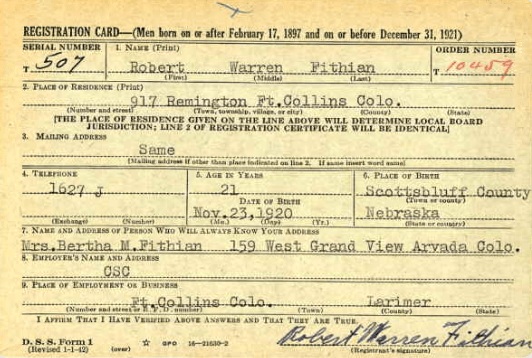
Background: Marjorie ‘Margie’ Sue Fithian was born on June 4, 1952 to Robert and Elizabeth ‘Betty’ (nee Talkington) Fithian in Greeley, Colorado. Robert Warren Fithian was born on November 23, 1920 in Bayard, Nebraska and after graduating from high school he joined the Army and served in WWII; when he returned home from the war he enrolled at Colorado State College of Agriculture and Mechanic Arts and graduated in 1946. He was employed as an ‘Assistant County Agent.’ Elizabeth May Talkington was born on May 4, 1923 in Belfield, ND, and according to her Ancestry page, after graduating from Fryberg High School in 1941 she attended North Dakota State University in Fargo, where she earned a BS with a focus in Home Economics in 1945; she went on to get a job as a home service director at a gas and electric company. The couple were married on September 19, 1948 and had four children together: Christine (b. 1949), Virginia (b. 1957), David (b. 1960), and Marjorie. They divorced on June 3, 1970 and Mr. Fithian got remarried to a woman named Erma on July 15, 1977 in Reno, NV. After separating from Robert, Betty went back to school at UNC and earned her education degree, and began her career at a local HeadStart Program; she later taught elementary school in district six in Greeley (primarily focusing on Kindergarten). 

A petite woman, Margie stood at a mere 5’0” tall and weighed only 108 pounds; she had auburn hair, green eyes, andwas described as a ‘free spirit’ and a ‘hippie chick’ by her loved ones. She was very trusting almost to a fault and no one could think of any reason why anyone would ever want to hurt her. At the time of her death in June 1975 she was enrolled at Aims Community College in Greeley, and according to the local newspaper she was employed there as well. At some point after graduating from high school Fithian married Vietnam War veteran James Patrick Reese, who was born on June 24, 1945, but the couple divorced on April 5, 1971. After separating from her husband she moved into a trailer in her hometown of Greeley with her 18-month-old son, Dylan Sage (who eventually dropped Dylan from his name), and where no source ever came right out and said that her ex-husband was his father some articles gave the child the last name of ‘Reese;’ Sage’s Dad wasn’t ‘in the picture,’ and lived outside of Colorado.

June 1975: On Friday, June 20, 1975 Marjorie and Sage, along with a single suitcase, made their way to the bus station in Greeley; the twenty-three-year-old single mom had a fun, family-oriented weekend in Denver planned with her aunt and uncle and had intentions of returning early Monday morning. Mother and son arrived safely at their destination and enjoyed some quality time with family, and when their visit was over at around 7 AM on Sunday, June 23rd*, her uncle dropped them at a bus station in Denver to return home on a bus that departed at 7:30 AM (one report specifically says they parted ways at 7:20 AM); the two never boarded. The Greyhound bus driver was later tracked down and interviewed by detectives, and he said that Marjorie and Sage had not been on his bus that morning. *I did see it incorrectly reported that Fithian was dropped off at the bus stop on June 23 but wasn’t found until the 24th, but that doesn’t seem to be accurate, as they went for a weekend and the 24th was a Tuesday (and every other report says that she was found later the same morning).

Marjorie’s cousins, who were with her the weekend before she was killed, were also interviewed by investigators, and they said that nothing unusual had occurred during their brief visit and they had no idea what could have happened to her. When he returned home after dropping the two off at the bus station, Fithian’s Uncle realized that she had dropped some change and had left it behind at his residence, so there is a chance that she may have not had enough money to have been able to purchase the tickets (remember, this is well before the time of cell phones, and a bunch of quarters was a decent amount of currency in the 1970’s). Because of this, some people wonder if maybe she had been forced to hitchhike due to lack of other options.

Discovery: At around 9 AM roughly two hours after Fithian’s uncle dropped her off at the bus stop a twenty-four-year-old ranch hand named Terry Furnish was making his way from the eastern part of ‘The Painter Ranch’ to the west side on Weld County Road 386, located between Interstate’s 76 and 35, about four miles north of Roggen. As he was making his way down the gravel road he noticed a car barreling towards him that was moving at a high rate of speed, which was unusual due to the lack of activity in the area: the driver had been in an early 1960’s model two door car (possibly a Ford or Chevrolet) that may have had a broken window and a yellowish/brown body with a black roof that was possibly ripped in one spot. As Furnish got closer to the entrance of the I-76 he came across a ghastly site: a woman lying in the middle of the road covered in blood; sitting with her was a little blond-haired boy, calmly holding her hand. Responding investigators strongly felt that Terry stumbled upon them only moments after they were left there.

Furnish moved the child out of the glass, got back in his truck and flew down the road to a company vehicle that contained a CB Radio. After sending a message out with his location and a description of what happened he raced back to Sage, where he picked up him up and tried to soothe him the best that he could before help arrived. A Colorado state Trooper was the first to arrive on the scene, and after determining that Marjorie had a faint pulse he called for a medic; unfortunately she died on the way to the hospital. According to Weld County Sheriff Don Bower, the child wasn’t harmed and that Fithian was found ‘within a matter of minutes’ after the shooting took place.

Terry’s family had managed The Painter Ranch in Roggen since 1955, and he had only been there visiting from South Dakota, where he was working as a field man (in a newspaper I also saw it called ‘The Two-Bar Ranch’). The stretch of road where Fithian was found was desolate and surrounded by empty fields ‘as far as the eye could see,’ as there were only two ranches in the area at the time and the road wasn’t heavily traveled.

Unsure of what to do with Sage, the officer put him in the back of his patrol car, and it wasn’t long before more state troopers, Weld County Sheriff’s deputies, and a handful of ranch hands that heard the announcement arrived. Looking back at what happened so long ago, Furnish said: ‘I didn’t know what to do. I didn’t know whether to put him in the pickup, but I set him just out of the glass. You just don’t know what would have happened to the little guy, and his mom, too. It’s just so unfortunate, it was so remote then, the ambulance took a long time, over an hour if I remember right.’  

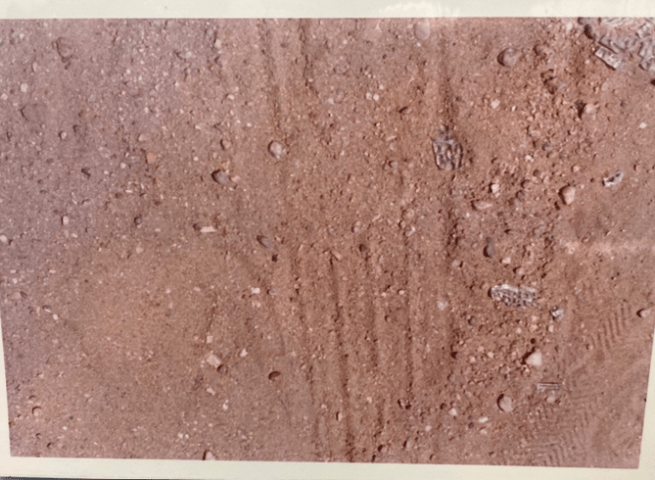
Investigation: First responders immediately secured the scene and began canvassing the area, and even though the roadway had very little traffic LE still shut it down. Tire tracks close to Marjorie and Sage showed the suspect drove their vehicle to the scene from the Interstate-76, pulled a U-turn, then went back towards the highway. As the hours ticked by the investigators had no choice but to take Sage back to the police station while they tried to find someone to claim him. Close to where her body was found, investigators found her coat and a blanket (both of which were placed over her) and up the road they found her suitcase: in it were clothes for mother and son as well as a slip of paper with a phone number scrawled on it that belonged to her Betty Fithian, her mother. This was incredibly helpful, as Marjorie was not carrying any identification with her. Jack Van Arsdale, who was the only detective with the Weld County Sheriff’s Department at the time of the murder in June 1975, said that she told him that her daughter and grandson had traveled by bus to Denver to visit with family.

Elizabeth was able to identify the young victim as her daughter, and told detectives that the young child that was with her was her grandson. Detectives told her to come to the police station to pick up Sage and upon learning the news about Marjorie’s death was ‘absolutely devastated.’ Because the body was still at the morgue being autopsied, investigators were unable to show her the remains when she arrived but decided not to wait for its findings to start investigating the case as a homicide.

Before Betty left with Sage she sat down and spoke with investigators about what may have happened to her daughter: she told them that she had known that the two had gone to Denver to visit with family and were due to return home later that morning because she had classes the next day. At the time she expressed concern regarding the fact that so much was still unknown and what happened and that she was afraid for her grandson, and wasn’t sure if he would be safe.

After speaking with Betty, investigators contacted Denver police, who immediately sent detectives to interview Marjorie’s Uncle. He said the usual things: that they had a nice visit and that nothing out of the ordinary had happened, however he did share that while in Denver his niece had gone on a date with a man that she had been casually seeing. He had taken Margie and her son to the zoo and said that it ‘seemed as if they all had a really good time.’ After learning this the Denver detectives knew they had to track this mystery date down…. But according to Ashley Flowers they had no luck, and there’s no mention that they ever found him in Fithian’s case file (more on this later). However, they did manage to track down Sage’s father, and he had an alibi and was nowhere near Colorado at the time of his ex’s murder.

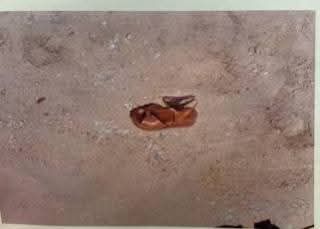
Marjorie was shot twice in the face execution style, and a spent .25 caliber casing was found near her body that investigators felt was most likely discharged from an automatic pistol. She had been wearing jeans, a blouse, and brown leather sandals, one of which had been kicked off to the side of the roadway; her auburn hair had been cut into a classic 70’s shag, and her feathered bangs were saturated in blood from what appeared to be a gunshot wound to her forehead.

Investigators took samples of the broken pieces of glass that were found at the scene and determined that it most likely came from a car headlight or window, which made them suspect that a struggle had taken place before Kithian was shot; additionally, according to her autopsy she had not been sexually assaulted. Notably missing from the scene was any sort of weapon, and as of July 2025 one was never recovered in relation to the murder. Responding officers asked Furnish if the woman had said anything in the moments before they arrived on the scene, but he told them she had been unconscious and actually had thought she had been deceased.

Clues point to the idea that Fithian had been shot elsewhere and had been brought to the dirt road where she was recovered. In an interview with ‘The Deck’ podcast creator Ashley Flowers, Detective Van Arsdale said that as he was making his way to the crime scene he passed the ambulance, and when the EMT briefly stopped he asked if he could hop in and sit with the victim just in case she woke up so he could take a statement, but the paramedic told him that she had just expired. About the incident, Van Arsdale said: ‘I proceeded on down to the crime scene, it was a pretty confusing mess. State patrol cars, a couple farmers, couple of ranchers… a couple of our guys. There was a lot of stuff going on, on the dirt road.’ Afterwards, instead of taking her to the hospital EMT’s took her to the local mortuary, which at the time was owned and operated by the Weld County Coroner’s Office.

Almost right after the murder, Weld County Sheriff’s brought Terry Furnish in for an ‘official’ sit down interview to get the specific details of what happened down in print while they were still fresh in his mind. He told them that he still couldn’t’ recall any specific details about the driver of the yellowish sedan, one thing that did stand out to him was that the cloth on the top part of the vehicle was ripped, that he was ‘100% certain of.’ After learning this, Detective Van Arsdale immediately radioed dispatch and put out a BOLO on the vehicle. Investigators used every single possible option that they had at the time to locate the oddly specific car with the very particular visual flaw, and according to Van Arsdale, ‘they did a lot of work on finding vehicles like that through the Colorado Department of Motor Vehicles. They got a long list of license plates for vehicles that matched that description and looked into who these vehicles were registered to. But ultimately it didn’t come up with any leads, but not for a lack of trying.’  

After he arrived on the scene, Detective Van Arsdale realized that if the crime had taken place shortly after they arrived then they had to act quickly, as it meant the assailant was still somewhere nearby. One of the ranch workers told investigators there were some ‘unusual tire tracks nearby,’ which they determined ‘looked fresh’ and were very close in proximity to the shooting. The Weld County Sheriff’s also reached out to the public and asked for their assistance and requested if anyone had seen anything suspicious the morning of June 23, 1975 to please reach out to them immediately. According to (current) Sheriff Steve Reams, ‘where this crime occurred, is not easily accessible off the highway. You don’t just take an exit ramp and turn, you kinda hafta go out of your way to get where they ended up at.’

On June 25, 1975 Detective Van Arsdale and the Weld County Sheriff returned to the scene of Marjorie’s murder, this time on horseback: the two law enforcement officers rode up and down Weld County Road 386 looking for more evidence that may have missed immediately after the murder… but all they found was more broken glass. Later that same day investigators also searched Marjorie’s residence in Greeley, but they didn’t find anything helpful. It’s also worth mentioning that at her residence detectives found only a small amount of marijuana residue, and there was no indication at all that pointed towards heavy substance use.

On June 26th news of Fithian’s murder hit the local newspaper, and in addition to publishing her obituary The Greeley Daily Tribune also announced the establishment of a memorial fund for Sage. A handful of locals contacted police and reported that they had seen mother and son at a nearby cafe eating breakfast earlier in the morning before she was killed; another tip claimed that several men had witnessed someone picking them up from the parking lot of ‘The Picadilly Restaurant’ in Denver. In the weeks following the murder detectives across multiple police jurisdictions in Colorado investigated hundreds of Fithians friends/family/acquaintances/and classmates, but didn’t learn much useful information. 

Police also began getting tips about some seemingly low-level criminals, specifically four men named Robert Davis, Vern Hudson, Jerry Walker, and Larry Hernandez, who were all investigated for Fithian’s murder. They were already aware of the four men after having multiple run-ins with all of them, and from the beginning didn’t think that any of them had anything to do with the case.

Around mid-July investigators were notified that two of the men, Jerry and Robbie, had been arrested in a neighboring town for burning down Vern’s garage, which made them even more suspicious in their eyes. This also hinted that there had been a sort of falling out with the members of the friend group, and wondered if it had possibly had anything to do with Fithian’s murder.

An Arrest: Just a little over two months after Fithian was murdered an arrest was finally made: on August 27, 1975 the Weld County Sheriff’s Department arrested thirty-four year old Jerry Eugene Walker on first degree murder charges based on information provided to the office from a CI. According to Greeley Police Officer Chris Clinton, a local confidential informant reached out to him and shared that Walker told him that he ‘shot the bitch in the face,’ and bragged about killing the young mother; he had also shown him one black and white photo and two color ones of a wounded Marjorie that had ‘gunshot sounds to her face’ and was ‘suffering from wounds.’ After he was taken into custody detectives went to his house armed with a search warrant with hopes of finding the murder weapon, ammo, or any photos of Fithian; they didn’t find anything.

When Walker was arrested a story ran in the local newspaper, which included a picture of him being led away by detectives in handcuffs. The day after Mrs. Fithian called the Weld County Sheriff’s Department and told them that ‘something weird had happened,’ and according to Detective Van Arsdale: ‘she called me and said that the strangest thing just happened: Sage just looked at the picture and said, ‘oh, that’s Jerry.’ It’s the only person that he’s ever identified, or said anything about.’ It was the first thing that Sage ever said about his mother’s death, and it gave the investigating officer chills, and he wondered if maybe the boy recognized Walker because she had a relationship of some kind with him. Until then, the detective had been unsure of Walkers involvement with Fithian, but that made him question things. 

Walker told investigators that he picked up Fithian and her son from the Denver bus station because she was supposed to be transporting drugs for him, but when she failed to produce the substances or money he killed her. On September 30, 1975 the murder charge against him was dismissed due to a ‘lack of evidence,’ however because he was being still being charged with the misdemeanor crimes of arson, criminal mischief, and assault he was released on $5,000 bond; the charges were ‘dismissed without prejudice’ indicating that they could be refiled again in the future if sufficient evidence was found. According to The Greeley Daily Tribune, Walker and a co-defendant were accused of the burglary and theft charges of entering the apartment, assaulting, and menacing Karen Logan and stealing money in an amount over $100 belonging to Randy Mitchell. Additionally, he is charged with causing intentional bodily harm to that of Ms. Logan and of damaging real and personal property of the woman in the amount of $100 or more.

Two weeks after his release, Walker died of an accidental drug overdose while sitting at home in a living room couch: Weld County Coroner Ross Adamson said that Walker died of an ‘unintentional overdose of barbiturates,’ and put his estimated time of death at around 6 AM on Sunday, October 12, 1975. When police and paramedics arrived on the scene they found ‘lots’ of empty pill bottles, and the coroner ultimately ruled the death as an accidental overdose. A Captain with the Greeley PD told the local newspaper that letters found in Walkers house brought up suicide, however according to those that knew him he hadn’t brought it up recently. Captain Richard McNamara of the Greeley PD said that investigators were also looking into a rumor that two of the deceased friends had recently died of unnatural causes in Colorado Springs, and another had passed in Greeley earlier in the year but nothing ever came of it. According to Ashley Flowers, some informants told police that Walkers death wasn’t accidental and was actually ‘tied to Marjorie’s death.’

The investigating detectives got word of a ‘drug party’ that some of the suspects would be attending on October 1, 1975 and they were able to secure a search warrant and raided the event; they arrested everyone present. Jack spoke to Robbie later that night, who said that he ‘was in the car with Vern and Larry when Vern shot her in the face.’ It was at this moment that investigators realized they didn’t know who was telling the truth, as they all seemed to have a problem with one another. Detective Van Arsdale said that at the end of the day he didn’t really believe any of the men’s stories, because every last detail they talked about was public knowledge and was published in the local newspaper: they didn’t give any information that only the killer would have been privy to.

After Jerry died Fithian’s case completely stalled and a year went by with little movement: Weld County didn’t have concrete evidence that linked Walker or Vern Hudson to the murder, and the men kept changing their stories and going back and forth on what happened. In early 1977 the Sheriff’s Department brought Larry Hernandez in for a lie detector test, and before talking with detectives, he allowed himself to be administered sodium pentothal (or truth serum). During the interview he told them that he had made the entire story up about Marjorie’s murder and knew nothing about her death, but he did admit that he sold her weed a few times and the two had gone to the local community college together.

As it turned out, he barely knew her: when he was initially interviewed about the murder in 1975 he was briefly left alone with her case file, and he took it upon himself to read through it and learn intimate details surrounding her murder. Hernandez also volunteered that he fabricated the entire thing because he was angry at the man he previously claimed was Fithian’s killer for ‘ratting on him.’ According to Byron Kastilahn, an investigator with the Weld County Sheriff’s Department: ‘he said he did this because he was mad at the other drug dealer who he’d named as Fithian’s killer. They had a criminal history between them and they’d been narking each other out to the police.’

After that, investigators tracked down Vern, who by that time was in prison in Wyoming state and was facing drug trafficking charges. He spoke with them, but like Hernandez he denied having anything to do with Fithians murder. They even gave him a chance to rat on his former friends, but he admitted that the entire thing had been a lie and none of them had anything to do with her death. Hudson died in 2006. In 2020, Kastilahn tracked down Hernandez, who maintained the exact same story that he told in 1977.

After talking to Hernandez, detectives were aghast at the thought that the entire year and a half they spent investigating had been for nothing, and started looking into other possibilities, including the idea that Fithian had been killed by a random person and the murder was a crime of opportunity and not one with motive. They also wondered if perhaps her killer had tried to ‘put the moves on her,’ and when she turned him down he got angry and attacked her. Additionally, they were almost certain that robbery wasn’t the reason for the homicide, as she didn’t have any money and all of her possessions were found at the scene. According to Detective Van Arsdale, ‘I think somebody picked her up… her dad said that she was a pretty friendly gal, I think somebody realized at the bus station that she didn’t have any money and offered her a ride.’

But, Sheriff Reams said that two gunshot wounds to the face execution style didn’t sound like a random crime: ‘to me, it always seemed like it was a very personal thing, I guess the circumstances surrounding Marjorie’s death. Someone knew that she was going to be traveling with her kid… now, could they have just picked them up at a bus stop? Yes, but to kill her and leave her son behind. That’s almost as if there’s a personal relationship that was formed there, with anger involved… that’s what it came across as to me. But, we just don’t know. Obviously, it doesn’t really take that many shots to kill someone, typically we would call that an overkill. It’s not necessary, and again, just taking her out to a remote location, and she trusted whoever enough to at least travel with them.’   

But if Marjorie and Sage did take a stranger up on an offer for a ride home to Greeley, how did they wind up in Roggen? After a certain amount of driving in the wrong direction wouldn’t she have said something (or maybe she did, we’ll never know)? According to Sheriff Reams, ‘she was trusting enough of someone to not even try to get out of the car at a stop sign or anything like that, which tells me that there was some kind of relationship that was probably there. And then the two shots then the dragging her out of a car and leaving her on the side of the road with her kid with her kid, then driving off. That speaks to me as a stranger killing, but I can’t rule that out.’ There is a slight chance that when Margie and Sage were left on the dirt road that she was already fatally wounded, however detectives strongly feel that it was the location where she was shot, as there is no other way to explain the glass found on the ground. According to Detective Van  Arsdale, ‘I think she was shot inside the car. He went around, he took her out, then shot her a second time on the ground.’

To Detective Van Arsdale, it all came back to timing: there was only a two-hour window in which Fithian could have been killed, and it took roughly an hour and a half to get to Denver from Greeley; from there, it was (almost) another hours drive to Roggen, which means it would have been highly unlikely that she would have called Walker (or one of the other three men) for a ride, and they wouldn’t have been able to pull it off unless they were already in the area. According to Detective Van Arsdale, ‘I don’t believe any of them. I keep coming back to: 7:30, she got on the bus, or the bus was there. And she didn’t get on it but her uncle dropped her off there at 7:30, and then at 9:30 she’s on a dirt road out in Roggen. I don’t think she could have called Jerry Walker to come and pick her up and give her a ride home, or Vern Hudson. And I don’t know if they would have been at the bus station. And I don’t think anybody knew because she was just coming home from her uncles from spending the weekend there.’ 

Drugs?: With no real leads in the investigation, theories began to swirl about what may have happened to Marjorie. One that detectives considered was that she may have been transporting drugs from Greeley to Denver, given she had what the Weld County Sheriff’s Department called a ‘history of marijuana use,’ and according to Detective Kastilahn: ‘they thought (Fithian) might have acted as a drug mule, transporting drugs from Denver somewhere else.’ Other theories included that she may have been hitchhiking or had been purposefully ‘targeted by an unknown assailant,’ which Detective Van Arsdale called ‘unlikely.’

Ottis Toole: Months then years went by with almost no movement on Marjorie’s case. In 1982 a serial killer came onto investigators radar after he admitted to committing some murders in the state of Colorado in the 1970’s: Ottis Toole. According to a 1984 article published in The Daily Sentinel (which is a newspaper based out of Grand Junction), Toole confessed to a 1974 murder in Colorado Springs, which he later recanted. Despite this, investigators were able to find evidence that helped prove that he was in fact in the state of Colorado in the summer of 1975, so they went to talk to him while he was in prison, but he wasn’t very helpful. There is no actual evidence that Fithian was killed by Ottis Toole, and as we all know he would often confess to murders that he didn’t commit. He died at the age of forty-nine while in prison.

Detective Kastilahn suspects that because Toole knew he was going to die in prison he had nothing to lose, and that is probably why he confessed to so many homicides that he had nothing to do with: ‘he claimed to have killed people in Colorado, but he was so vague in his statements that to my knowledge, he wasn’t really linked to anything in Colorado. He claimed to have been in Colorado, and claimed to have killed people in Colorado, but that wasn’t verified.’ … ‘He said, you know, he really couldn’t remember… um, the detective was trying to describe where the murder happened, north of Denver, northeast of Denver. He was just, non-committal. Like, ‘yeah, I’m not sure if I was there. I might of killed her,’ is what he basically said.’  

Ted Bundy: At the time Marjorie was killed in late June 1975 Ted Bundy was still out in the community living the good life and wasn’t arrested until later that August. He was residing in his first Utah apartment located on First Avenue in SLC and was attending law school at the University of Utah; he was towards the end of his multi-year, long-distance romance with Elizabeth Kloepfer, who he was not even remotely faithful to.

In a Reddit group called ‘r/CrimeJunkiePodcast,’ a user going by the handle ‘Awakeningosiri’  posted about Fithian’s murder and whether or not Bundy could have been responsible for it, and she brought up a lot of good points: ‘Bundy was in the right region, at the right time, with a known victim type and vehicle match. This case has more circumstantial alignment than many others tied to him. His geographic range and risk profile by 1975 make him a strong person of interest.’

Roggen is only about an hour and a half away from Vail, where Bundy abducted 26-year-old ski instructor Julie Cunningham on March 15, 1975, and as we know he was known to drive long distances when stalking his prey and often did it in public places (like a bus station). For example, he drove over 262 miles to Sackett Hall at Oregon State College to abduct Kathy Parks while he was living at the Roger’s Rooming House on 12th Avenue in Seattle. However, Fithian was killed with a gun, and where it isn’t confirmed that Ted used such a weapon Carol DaRonch said that when he tried to kidnap her on November 8, 1974 he pulled out ‘a small pistol’ (its also worth mentioning that most of his victims weren’t recovered so we’ll never really know how he killed them). Additionally, it was reported that the suspicious vehicle fleeing the scene was a 1960’s yellow/brownish car with ripped black roof, and as we all know Bundy drove a solid-colored beige 1968 VW Beetle.

This is also fairly obvious, and if you’re a seasoned reader you don’t need me to point out that Marjorie also fit very neatly into Bundy’s typical victim type: she was slim, young, and beautiful, and had light brown hair that she wore long and parted down the middle. She was also traveling alone and was in a public place, however I’ve never heard of him going after a woman that had a child with them. Like Toole, there is no evidence linking Ted to Fithian’s murder.

Recent Years: In the early 2000’s Fithian’s case was reopened, and detectives hoped that a fresh set of eyes on the investigation (as well as modern day forensic techniques) would help them, however that wasn’t exactly what happened. According to Sheriff Reams, who was a detective at the time, ‘in 1975 in Weld County the resources just probably were not as available to work a case like this. And the manpower that would have been necessary to track down those leads and find people in Denver and various other areas and it seems simple now, I wish we could go back and try again. And every year that goes by you realize it’s just that much farther from probably having that likelihood. I worry about all that stuff, and to be honest with you when I went back and looked for this case file I was able to find a certain amount of information that was stored on-site. And then once I got back from the FBI Academy I went out to a place where we used to store archives and I found another box of documents or evidence related to this case: photo and what not that were in a place where those items should have never been. And so, yeah I worry about  what steps were done and not properly documented or not or were properly retained. I hate the idea of potentially saying, ‘hey, basics steps weren’t taken, and if they were they certainly weren’t done in a way that was documented that we would have expected by today’s standards.’’

Even Detective Van Arsdale said that looking back, if he could do it all over again, he would have handled the case completely differently and would have done a much better job at documenting what happened: ‘We didn’t have our act together very well. We had not gotten our crime scene techs trained yet, they weren’t in place. So we had those patrol officers trying to do their job but they didn’t really know what they were doing.’

Sage: Marjorie’s son is now in his fifties and agreed to speak with Ashley Flowers and her team of investigators for a podcast about his mother: ‘my first name is Dylan, and I’m named after Bob Dylan. And then Sage I think after Sage Brush. So, you know, that’s definitely from that era of time, I think. She was a painter, she wrote poetry and I have a couple scrapbooks of some of her work. And we all have pictures or paintings as well.’ He went on to tell Flowers that he has some of his mom’s vinyl albums and where none of his kids got her red hair he wonders if perhaps they got some of her talents. He also said that his aunt and grandma did a good job of protecting him from the brutal details surrounding her death when he was a kid, and about it he said, ‘you know, I think about my children at that age, and to tell them… yeah, that would be difficult for them. I had a good support system around me.’ He also said that over the years he’s tried not to obsess about the investigation or why his life was spared, but he would still like to know who did it, if only for his family: ‘I don’t think you can lose a daughter or a sister or a mother and not be traumatized by it., especially when it’s the way that it happened. So, you know, kind of putting the pieces together, again, just to bring closure for everybody.’

In March 2020 Detective Kastilahn began working on Weld County cold cases full time, and he knew there was a lot of pressure to get this murder in particular solved. So, he immediately got to work reading through all the case notes and began reinterviewing everyone that was still alive from the original investigation. The following month he tracked down Robbie, who was the only one of the four original men that were investigated for Fithian’s murder: he admitted that he lied about everything and had completely made up the story about Vern shooting Fithian because he was mad at him about something at the time, and said that was why they had burned down his garage.

In the spring of 2020, Detective Kastilahn was able to track down the young man that Marjorie had gone on a date with on the day before her murder, who told him that he was in fact interviewed by police back when the crime took place in 1975 despite there being no record of it anywhere in the case file (even though he was never considered a suspect). The detective did admit that one thing stuck out to him about the man that made absolutely no sense to him: he said that he was the one that dropped Marjorie and Sage off at the bus station in Denver the morning she was killed, which completely contradicts what police thought was the truth. Fithian’s uncle has since passed away so there’s no way to confirm this, however Kastilahn suspects it’s a simple memory mix-up and that he was confused. Ashley Flowers asked the detective what kind of car he drove at the time and if it matched the sedan that was seen speeding away from the scene on the morning of the murder, but he said he has no idea.

Detective Kastilahn also tracked down the cousins that Fithian had visited with in the days prior to her death, and they all maintained that they don’t remember anything out of the ordinary about the visit: ‘It’s an unfortunate case as far as leads go. Nobody had threatened her and her family and friends didn’t know of anyone that had a problem with her.’

The last significant event in relation to the case happened in the fall of 2020 when Weld County Sheriff’s received a phone call from a woman who had a strange encounter in June 1975 around the same time that Marjorie was killed: according to Detective Kastilahn, ‘she said that she was walking north of UNC, maybe on 13th Avenue on 12th Avenue or someplace around there. Back around this time in June 1975 there was this guy in a van slowly following her, and she’s walking down the road. And she’s looking back and he’s just staring at her. And she looks super creepy. And she’s not liking this at all. So the van finally goes ahead and turns right, so she keeps walking and then as she’s walking she sees the van is parked on that cross street, like it was waiting for her. And so she starts walking up to this house, like maybe he’ll think that I live here and he’ll leave me alone. Well, the van starts up and comes over and parks in front of the house so she goes into the house and she’s freaking out now and she thinking ‘thank God the door was unlocked. So she goes into the house and closes the door. And then there’s this old couple in their sixties that were sitting in their chairs reading the newspapers going, ‘what is this lady doing?’’

‘And she locks the door and hides behind the door, and the guy comes up and starts banging on the door and he tries to open the door. Like, thank God she locked it. So, that’s a crazy story. She didn’t get a license plate or anything but she wanted to give this information to us.’ The detective said that he couldn’t help but wonder if perhaps there was a man stalking young women in June 1975 in Colorado and wishes there was some DNA to work with, but none was collected at the scene and that ‘it’s going to take either a confession or somebody to get implicated. A confession is probably the best thing that’s going to get complete closure and a conviction.’

Sheriff Reams told Flowers that he has worked some nasty cases, but never one quite like this one: ‘It’s only by the grace of God that kid is still alive, and his life was spared. I can’t imagine what went through someone’s head or how they could sleep from that day forward, knowing what they’d done. Even if we never solve it, I hope that they burn in hell for the rest of their lives for what they did.’

Conclusion: Thankfully about his mother’s murder Sage doesn’t remember anything, and only knows stories about her secondhand through her family and friends memories. He now resides outside of Colorado with his wife and children.

PFC James Reese died at the age of 71 in Phoenix, CA and according to his meager obituary, he ‘passed away on June 29, 2016 and if you have any information regarding this person, please call Legacy Funeral Home.’

Marjorie’s father died at the age of eighty-four on February 27, 2005 in Greeley and he is laid to rest at Fort Logan National Cemetery in Denver; his wife Erma passed away on November 2, 2001. Her mother passed away at the age of eighty-six on December 12, 2009 in Greeley, and according to her obituary she retired from teaching in 1987 and afterwards became a Peer Counselor for North Range Behavioral Health for five years; Betty was a life long student, reader, artist, and strong Christian woman. As of July 2025, Marjorie’s sister Virginia Lynn is 68 years old and lives in Elizabeth, Colorado, and her other sister Christine is still residing in their hometown of Greeley; David Warren Fithian also currently resides in Greeley with his wife.

About the murder, in 2002 Terry Furnish said: ‘as long as it’s been, it’s hard to say. I wish I knew more, I really do. I’ve thought about it a thousand times. Had I come up on it right when it happened and the people would have been there you wonder what you would have done then because there’s probably a good chance you would have been shot at, also. It’s a sad thing and you’d like to see closure but with it being so long ago it’s a hard thing, but they do that every once in a while.’ As of July 2025 it is unknown if Marjorie’s DNA was ever tested with modern forensic techniques, however it is known that no sample was collected at the crime scene back in June 1975.

Works Cited:
‘Cat Leigh.’ ‘Toddler Found Holding His Dying Mother’s Hand On The Side Of A Road.’ (August 5, 2023). Taken July 8, 2025 from medium.com
Ashley Flowers, The Deck Podcast: ‘Marjorie Sue Fithian – Wild Card, Colorado.’ Taken July 10, 2025 from thedeckpodcast.com
Gabel, Rachel. ‘Rural Colorado murder from 1975 sparks national attention.’ (August 19, 2022). Taken July 7, 29025 from thefencepost.com
Hudson, Edward. ‘City Detective Held As a Slayer for Hire.’ (February 15, 1976). Taken July 11, 2025 from theNewYorkTimes.com
Moylan, Joe. ‘A look at more of Weld’s most heinous crimes.’ (May 28, 2020). Taken July 10, 2025 from GreeleyTribune.com
‘Segura, Daniella. ‘Toddler found holding dead mom’s hand in 1975, CO cops say. Now, push for answers.’ (June 25, 2025).
‘TaraCalicosBike’ on Reddit, post titled: ‘In June of 1975, twenty three year old Marjorie Fithian was found dead on a desolate gravel road in Colorado. She had gunshot wound to her face, and her 18 month old son was sitting beside her, holding her hand. Who killed Marjorie?’ in the hub, ‘UnsolvedMysteries.’
Worrell, Georgia. ‘Greeley woman killed for unknown reasons.’ (April 22, 2022). Taken on July 8, 2025 from http://www.longmontleader.com
A picture of a little Marjorie published in The Greeley Daily Tribune on February 22, 1958.
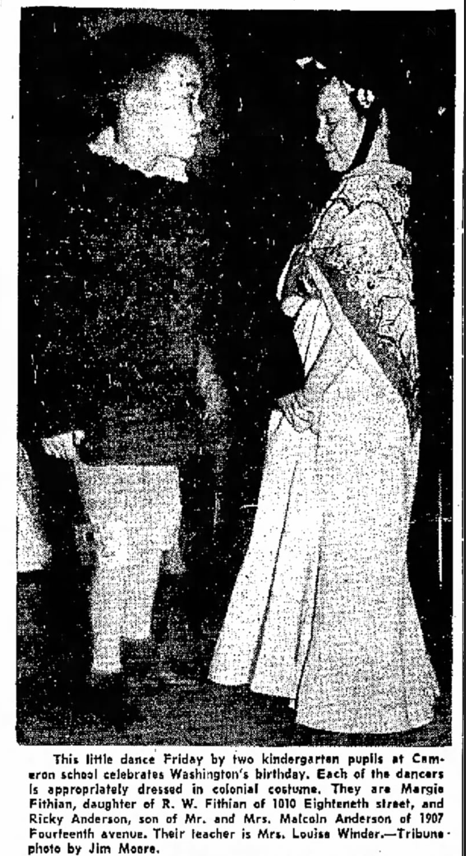
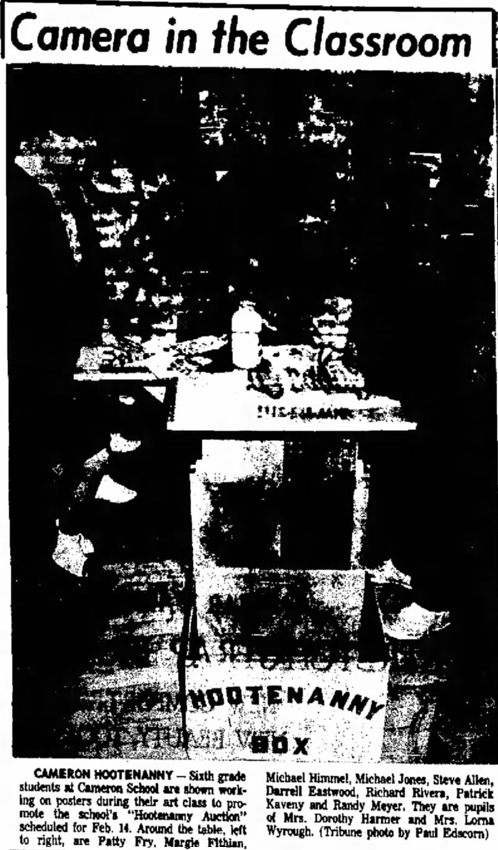
A horrible quality picture including Marjorie from her time at Cameron Elementary School published in The Greeley Daily Tribune on January 21, 1964.
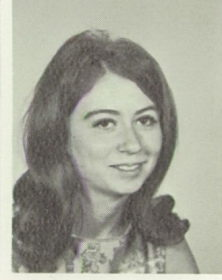
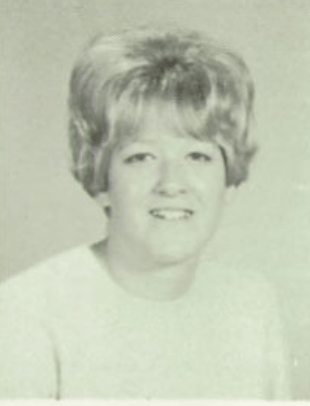
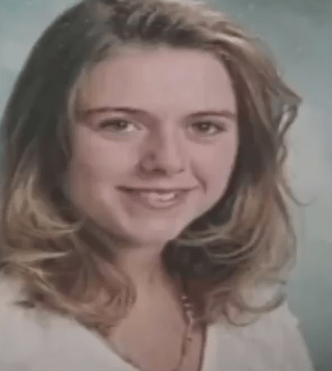
Marjorie from the 1968 Greeley Central High School yearbook.
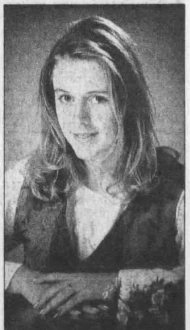
The only picture of Marjorie from the 1970 Greeley High School yearbook (she didn’t get her senior portrait done).
A picture of Marjorie after she won an art contest published in The Greeley Daily Tribune on March 26, 1970.
Marjorie’s name is listed in an article published in The Greeley Daily Tribune on March 26, 1970. It’s about an art contest that was judged by Greeley’s ‘Junior Women’s Club,’ and she won in the ‘fine arts’ category.
Marjorie’s name is listed among the graduates of Central High School published in The Greeley Daily Tribune on June 2, 1970.
Marjorie and her son.
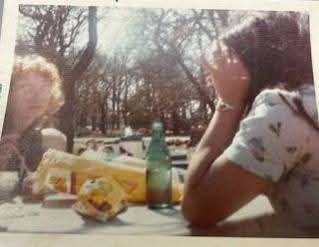
Marjorie and a friend.
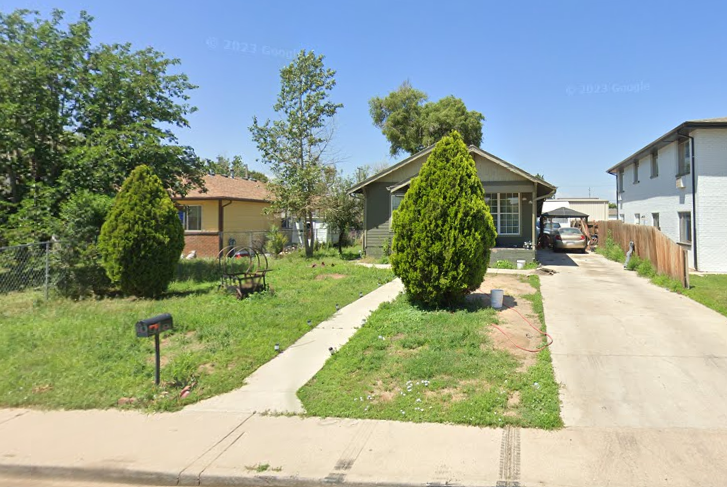
Marjorie’s residence at the time of her death located at 405 21st Street in Greeley, Colorado.
Marjorie’s final resting place.
Marjorie was found on the side of Weld County Road 386, a dirt road in Roggen, Colorado along with her eighteen-month-old son Sage in June 1975; photo courtesy of the Weld County Sheriff’s Department.
The stretch of road where Marjorie and Sage were found in June of 1975, photo courtesy of the Weld County Sheriff’s Department.
A spent .25 casing, one of Fithian’s sandals, a jacket and blanket used to cover Fithian by first responders, and a suitcase were found at the scene, photo courtesy Weld County Sheriff’s Office.
Marjorie’s sandal, which was found near her body; photo courtesy of the Weld County Sheriff’s Department.
Upon arriving on the scene, investigators from multiple police jurisdictions found a spent bullet casing near Marjorie and Sage, which was most likely from a .25 automatic pistol. Photo courtesy of the Weld County Sheriff’s Department.
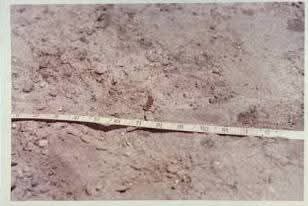
A farmer found these tire tracks close to the crime scene; photo courtesy of the Weld County Sheriff’s Department.
What the road where Marjorie and Sage were found looks like today; photo courtesy of the Weld County Sheriff’s Department.
Where Roggen, Colorado is located when compared to Denver and Greeley.
This is the picture of Jerry Walker that Sage saw and identified, photo courtesy of the Weld County Sheriff’s Department.
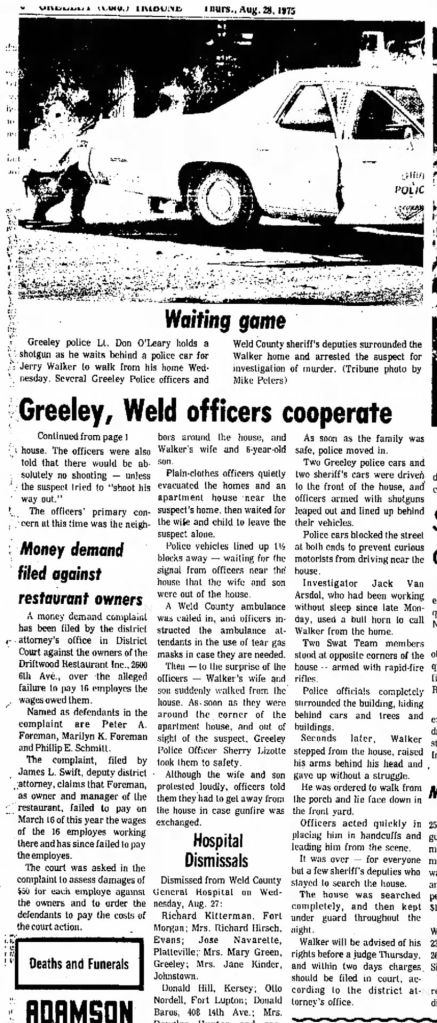
A picture of Weld County Deputies along with members of the Greeley PF arresting Jerry Walker, published in The Greeley Daily Tribune on August 28, 1975.
Where Jerry Walker was living at the time of Fithian’s murder, located at 1510 3rd Avenue in
Greeley, Colorado. Technically, it’s where he died as well.
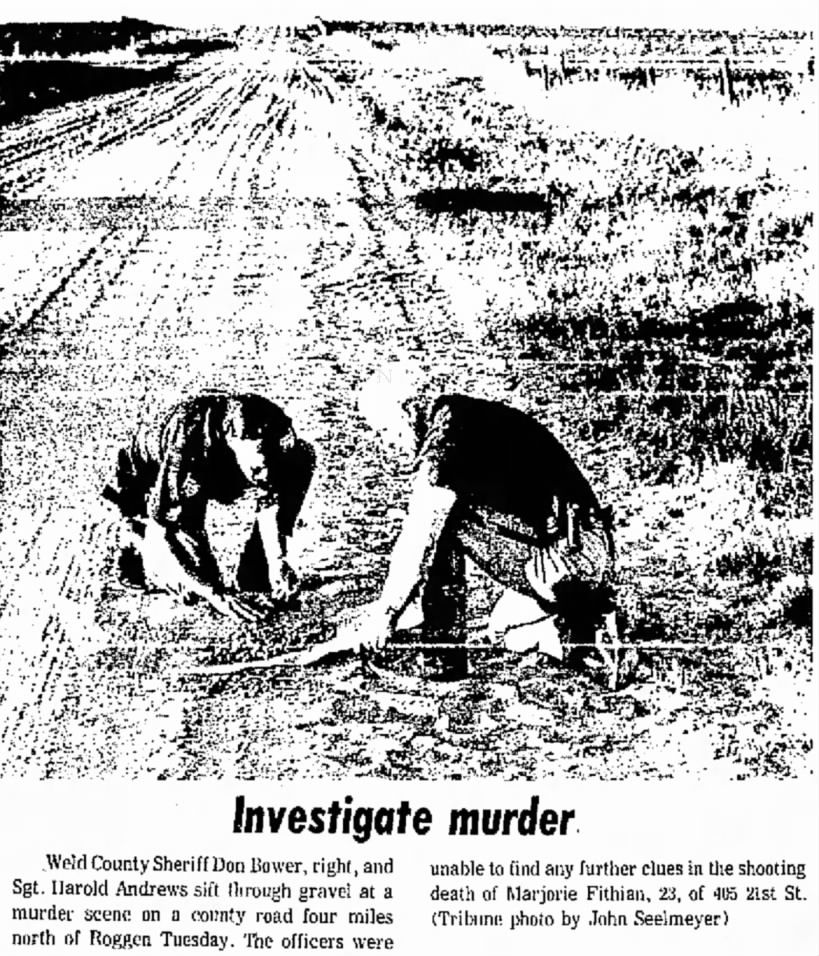
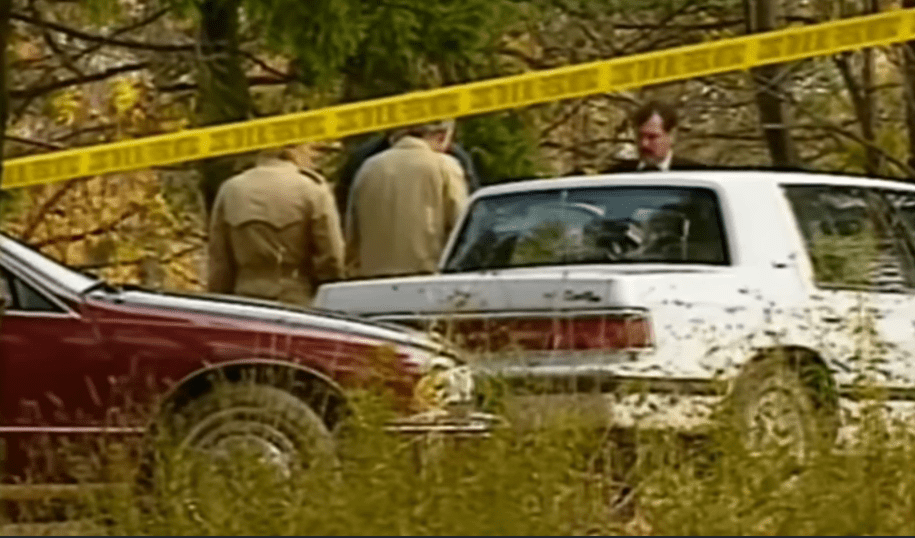
A picture of Sheriff Bower and Sergeant Harold Andrews investigating the scene of Marjorie Fithian’s murder, courtesy of The Greeley Daily Tribune on June 25 1975.
A picture of investigators at the scene of Marjorie’s murder published in The Greeley Daily Tribune on June 30, 1975.
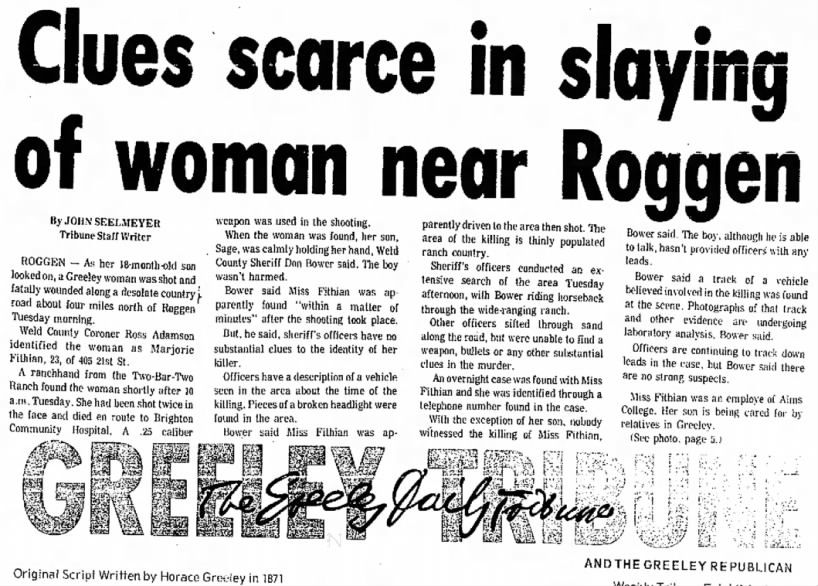
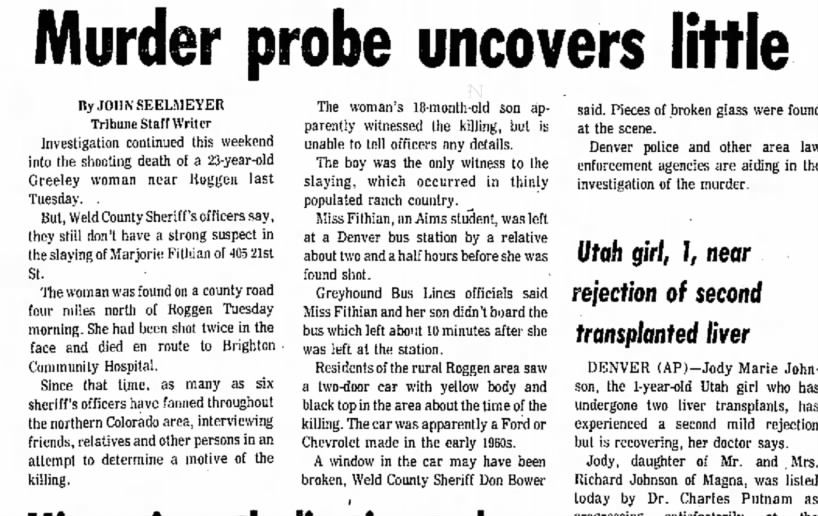
An article about the murder of Marjorie Fithian published in The Greeley Daily Tribune on June 25, 1975.
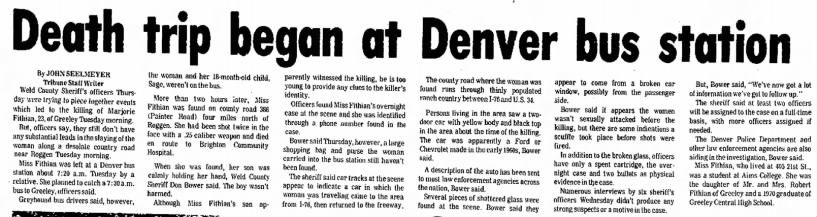
An article about the murder of Marjorie Fithian published in The Greeley Daily Tribune on June 26, 1975.
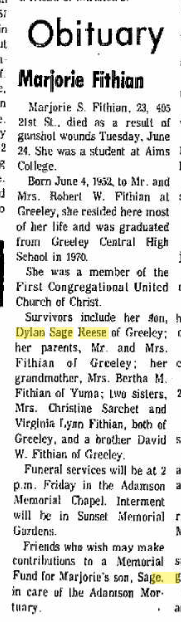
Marjorie’s obituary published in The Greeley Daily Tribune on June 26, 1975.
An article about the murder of Marjorie Fithian published in The Greeley Daily Tribune on June 30, 1975.
An article about Marjorie Fithian being honored post-humorously for some volunteer work she was involved with published in The Greeley Daily Tribune on June 30, 1975.
An article about the investigation of the murder of Marjorie Fithian published in The Greeley Daily Tribune on July 14, 1975.
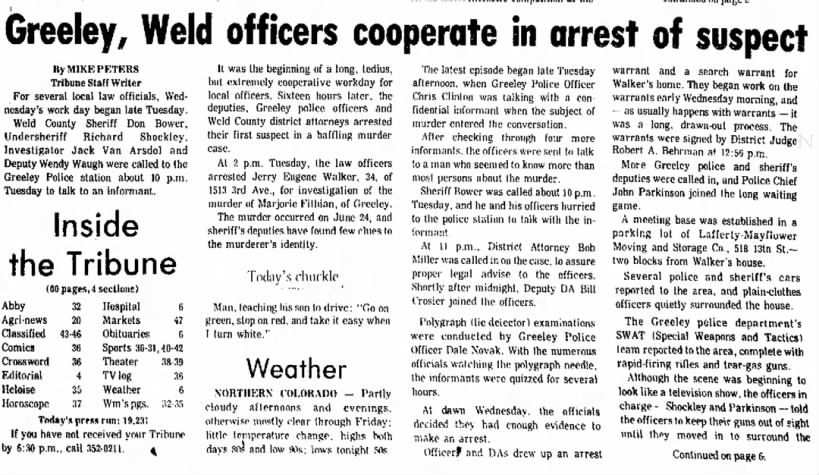
An article about the a suspect being arrested for the murder of Marjorie Fithian published in The Greeley Daily Tribune on August 27, 1975.
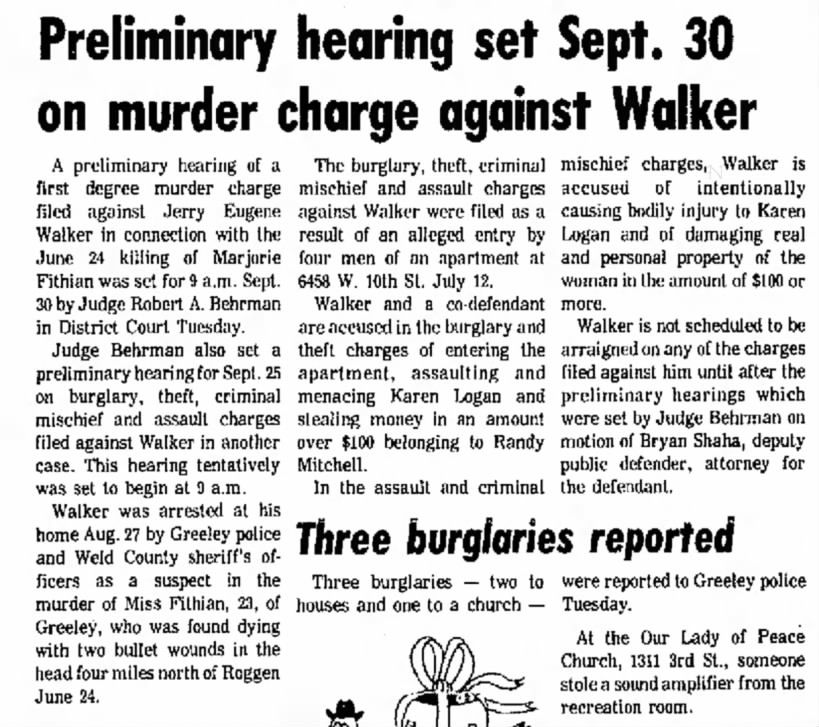
Part one of an article about the arrest of Jerry Walker for the murder of Marjorie Fithian published in The Greeley Daily on August 28, 1975.
Part two of an article about the arrest of Jerry Walker for the murder of Marjorie Fithian published in The Greeley Daily on August 28, 1975.
An article about the arrest of Jerry Walker for the murder of Marjorie Fithian published in The Greeley Daily Tribune on September 10, 1975.
An article about the arrest of Jerry Walker for the murder of Marjorie Fithian published in The Greeley Daily Tribune on September 26, 1975.
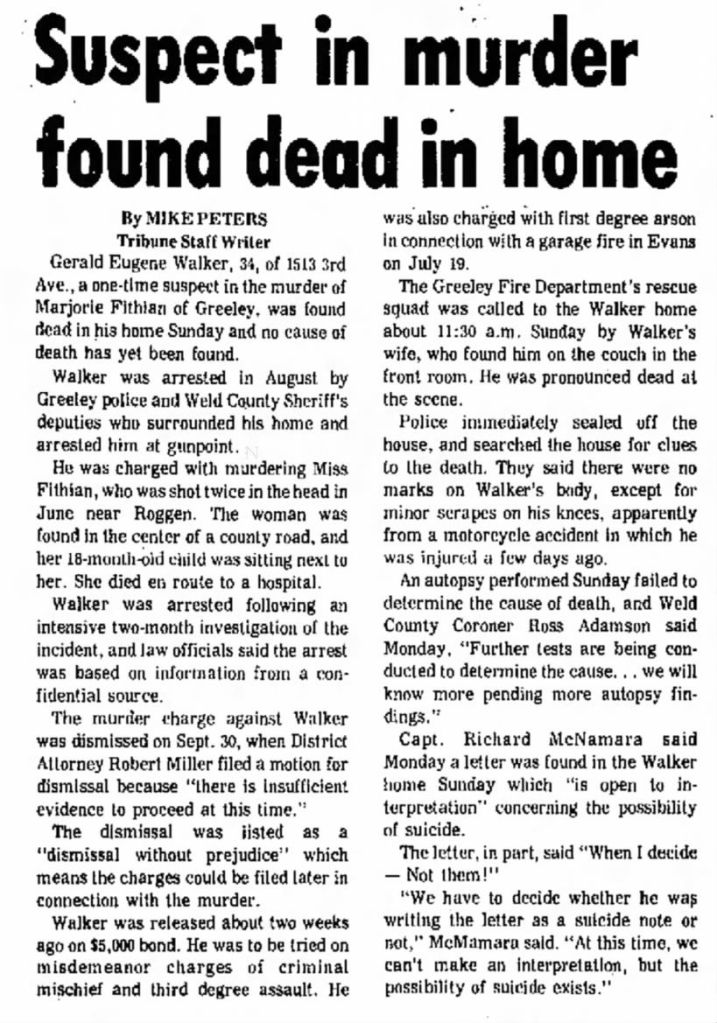
An article about charges being dismissed against Jerry Walker for the murder of Marjorie Fithian published in The Greeley Daily Tribune on September 30, 1975.
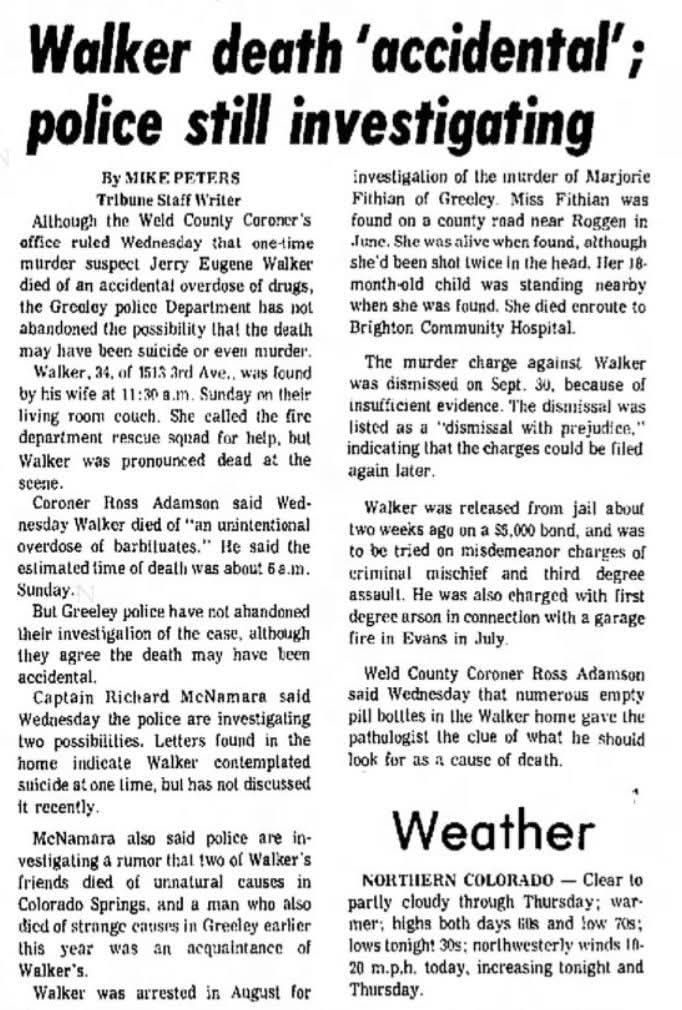
An article about the death of Jerry Walker published in The Greeley Daily Tribune on October 13, 1975.
An article about the arrest of Jerry Walker for the murder of Marjorie Fithian published in The Greeley Daily Tribune on October 15, 1975.
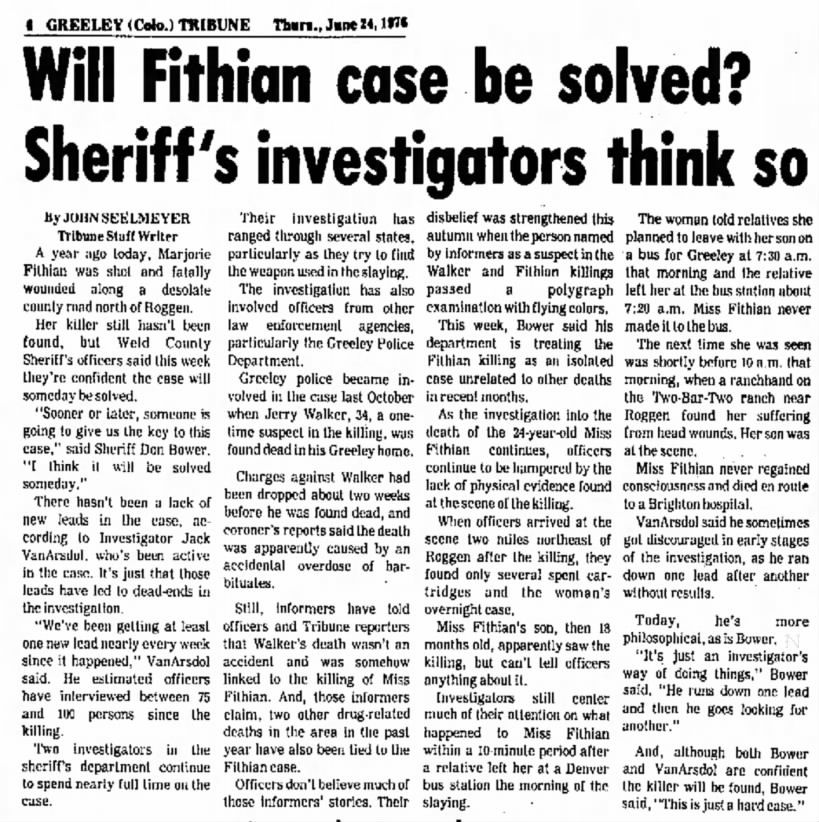
An article about the murder of Marjorie Fithian published in The Greeley Daily Tribune on June 14, 1976.
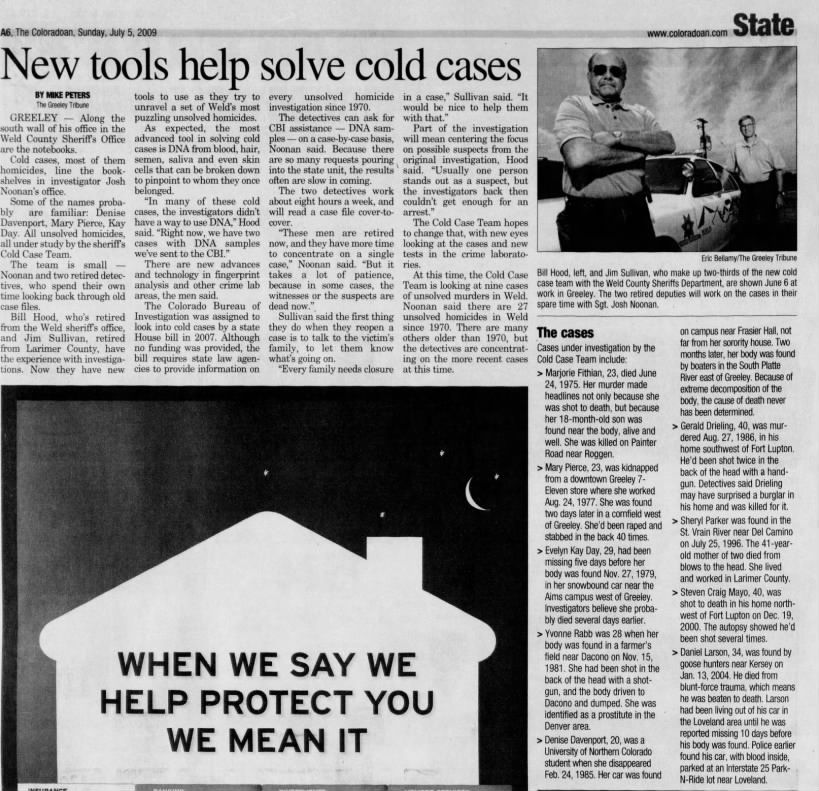
An article about new technology helping solve cold cases in Colorado that mentions Marjorie Fithian published in The Fort Collins Coloradoan on July 5, 2009.
A newspaper clipping about Marjorie’s sister petitioning for custody of her son published in The Greeley Daily Tribune on August 11, 1975.
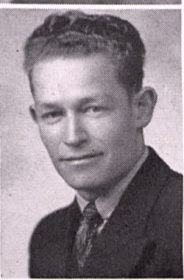
Marjorie’s father, Robert Warren Fithian.
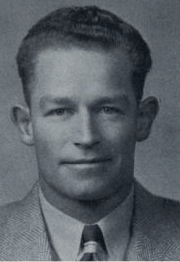
A picture of Robert Fithian from the 1946 Colorado State College of Agriculture and Mechanic Arts yearbook.
Robert Warren Fithian WWII draft card.
A clipping about Robert Fithian recommending that the public make sure to ‘cut their alfalfa crops’ so they don’t get infested with weevils, published in The Windsor Beacon on June 17, 1948.
‘Well it’s weevil season, but we were prepared.’
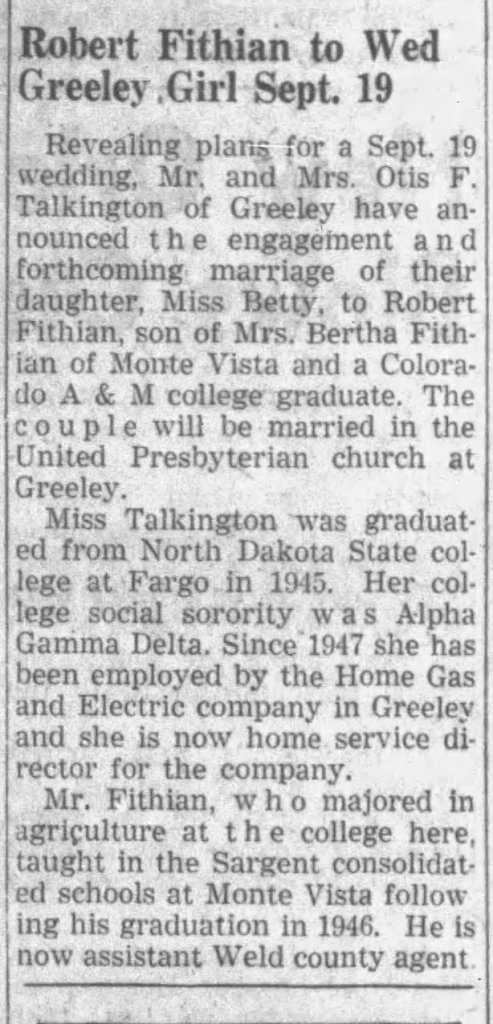
Robert and Elizabeth’s wedding announcement published in The Fort Collins Coloradoan on September 5, 1948.
The wedding announcement of Robert and Berry Fithian published in The Fort Collins Coloradoan on September 22, 1948; it’s interesting to me that the bride’s sister was also named Marjorie.
A clipping announcing the birth of Marjorie’s little sister published in The Greeley Daily Tribune on January 26, 1957.
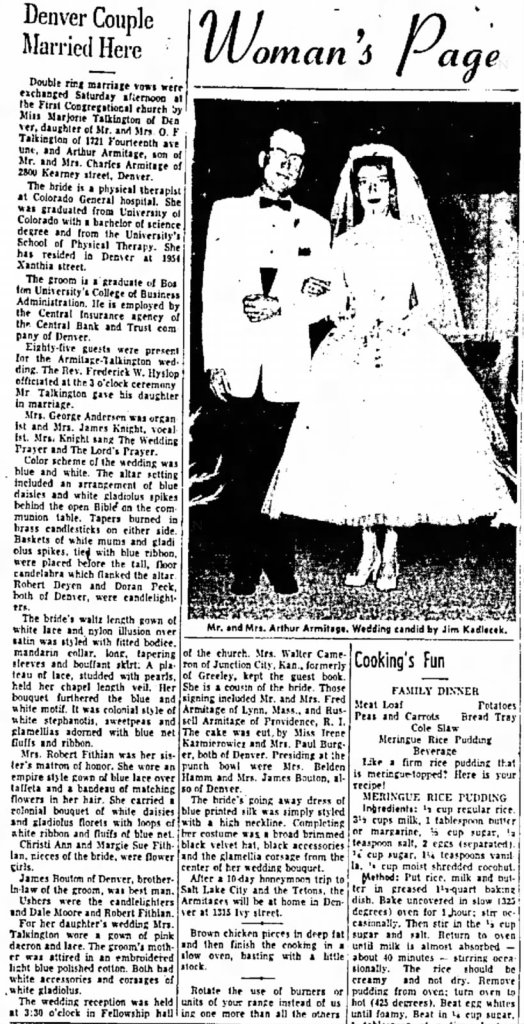
An announcement that Marjorie’s aunt got married that mentions she was a flower girl that was published in The Greeley Daily Tribune on July 22, 1957.
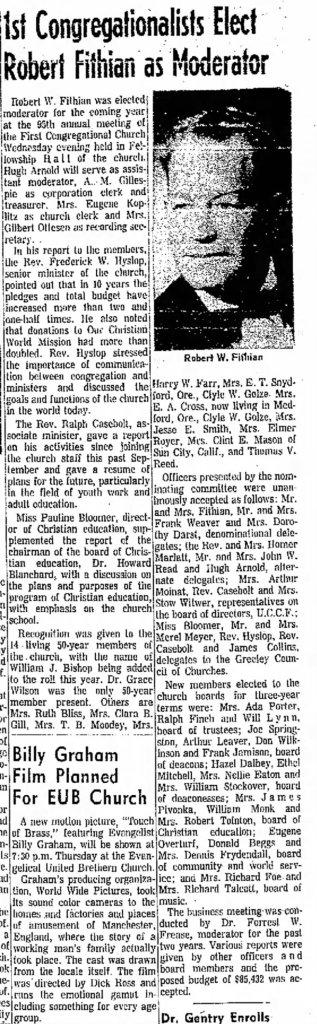
A newspaper article about Marjorie’s father published in The Greeley Daily Tribune on January 22, 1965.
Christine Fithian’s picture from the 1967 Greeley Central High School yearbook.
Christine Fithian’s wedding announcement that mentions Marjorie published in The Greeley Daily Tribune on June 9, 1970.
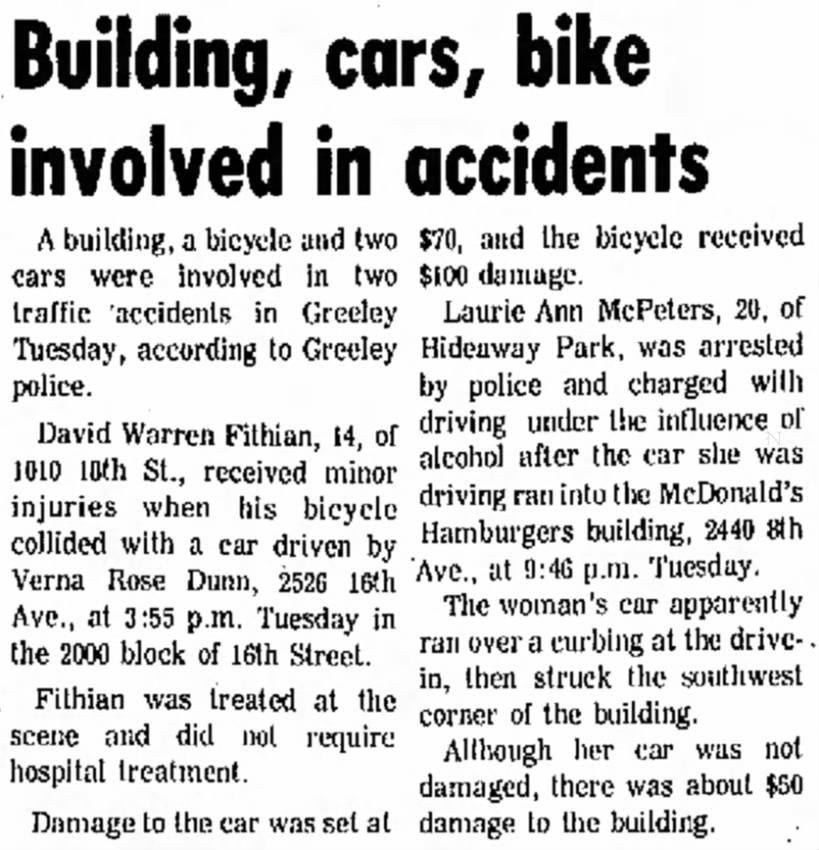
A newspaper article about Marjorie’s brother getting injured in a bicycle accident published in The Greeley Daily Tribune on May 29, 1974.
Virginia Fithian’s picture from the 1974 Greeley Central High School yearbook.
David Fithian’s picture from the 1977 Greeley Central High School yearbook.
An article mentioning Marjorie’s brother David getting into a drunk driving accident published in The Desert Dispatch on November 9, 1981.
Robert Fithian’s final resting place, located at Fort Logan National Cemetery in Denver, CO; he is located in section 15, site 139.
The picture from Marjorie’s sister Christine’s LinkedIn page. She is a graduate of University of Northern Colorado and is a sales rep at Atmos Energy.
Mrs. Betty Fithian, photo courtesy of her Legacy page.
James Reese in the 1960 Fort Collins High School yearbook.
Marjorie’s ex-husband, James Patrick Reese.
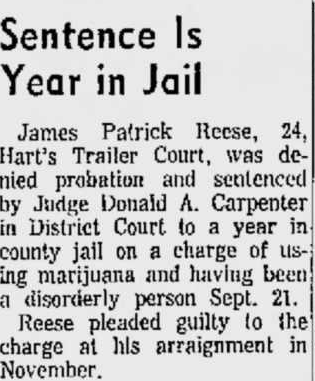
A newspaper clipping mentioning Marjorie’s ex-husband being sentenced to prison for a year published in The Greeley Daily Tribune on on January 9, 1970.
James P. Reese’s gravestone.
The very short obituary of James Reese published in The Arizona Republic on July 25, 2016.
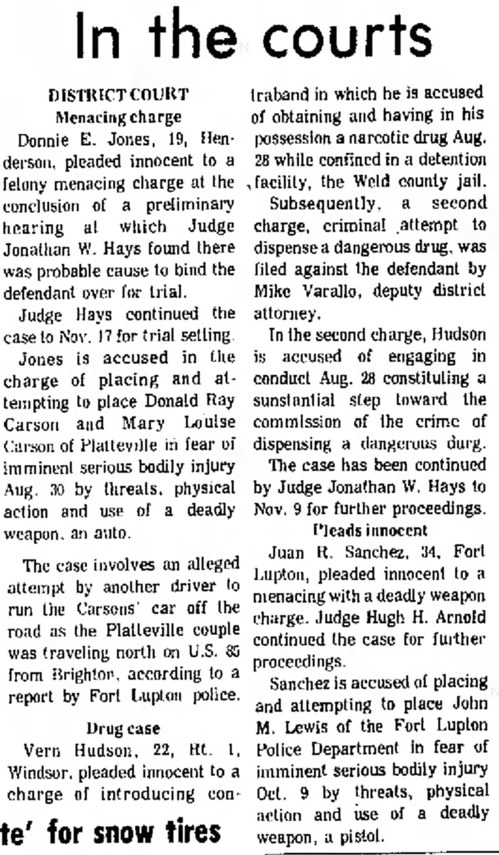
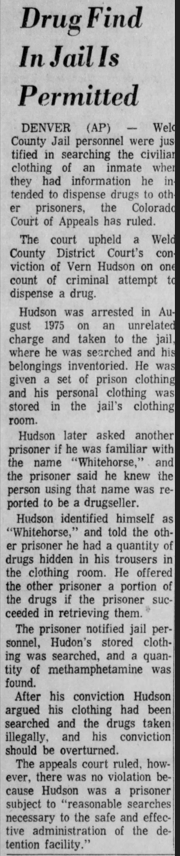
An article about Vern Hudson being charged with drug trafficking published in The Greeley Daily Tribune on October 27, 1975.
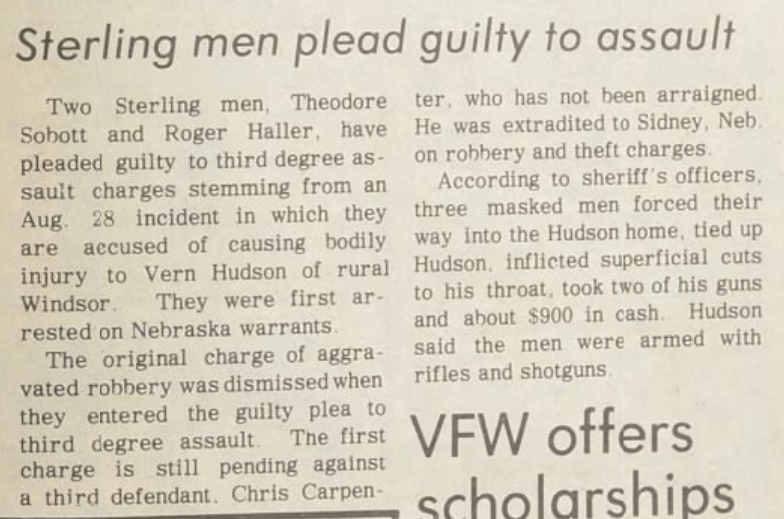
A newspaper article about two men being charged with the assault of Vern Hudson published in The Windsor Beacon on November 26, 1975.
An article about Vern Hudson being charged with drug trafficking published in The Windsor Beacon on February 19, 1976.
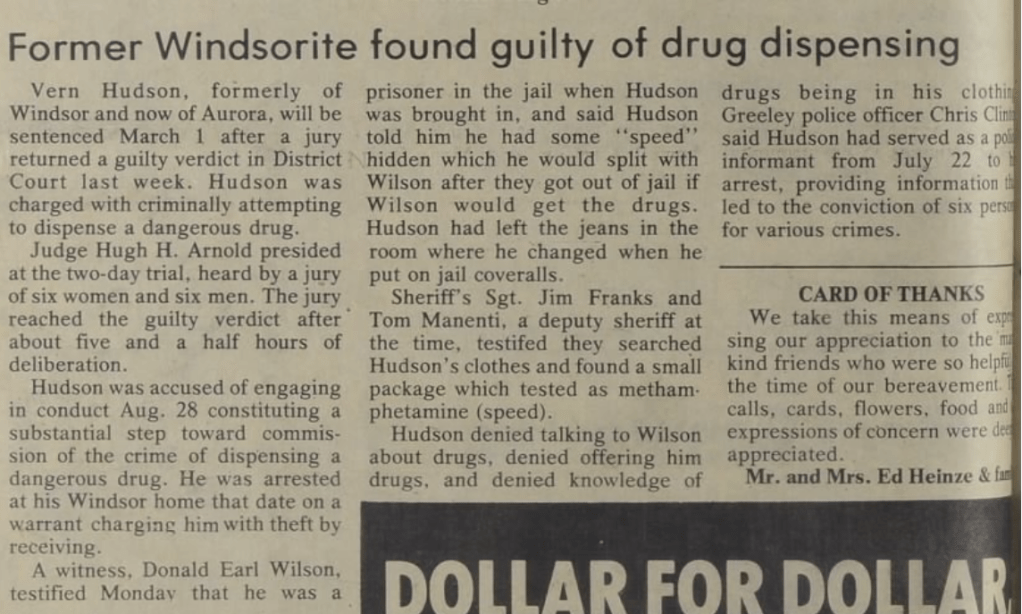
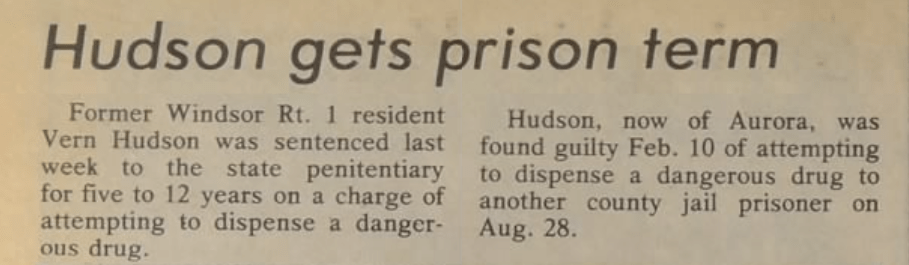
A newspaper blurb mentioning Vern Hudson being sentenced to prison published in The Windsor Beacon on March 25, 1976.
An article about Vern Hudson being charged with possession of drugs while already in prison published in The Colorado Springs Gazette-Telegraph on June 28, 1977.
A clipping about Larry Hernandez being arrested for failure to appear in court The Greeley Daily Tribune on April 12, 1974.
An article about Larry Hernandez and his wife Barbara being arrest for the possession of drugs published in The Greeley Daily Tribune on April 27, 1976.
Bundy’s whereabouts in June 1975 according to the 1992 TB FBI Multiagency Team Report.
The possible route Bundy could have taken from his residence at 565 E 1st Avenue in Salt Lake City to Weld County Road 386 north of Roggen, Colorado.
Ted’s VW; as you can see, it’s yellowish in color however the top isn’t black, and it the same color as the rest of the car.
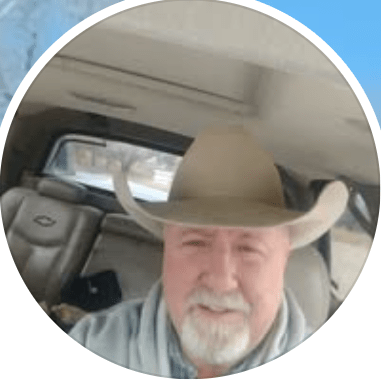
Terry Furnish, photo courtesy of Facebook.
A comment on a Reddit post about Marjorie’s murder, created by user ‘nehemiahsucks.’
A comment on a Reddit post about Marjorie’s murder, created by user ‘quant1000.’
A comment on a Reddit post about Marjorie’s murder, created by user ‘toothpasteandcocaine.’

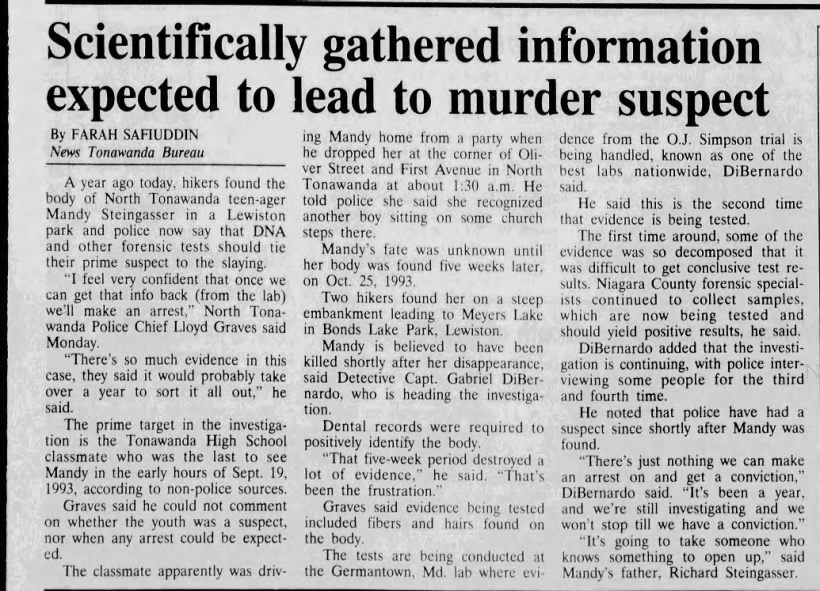
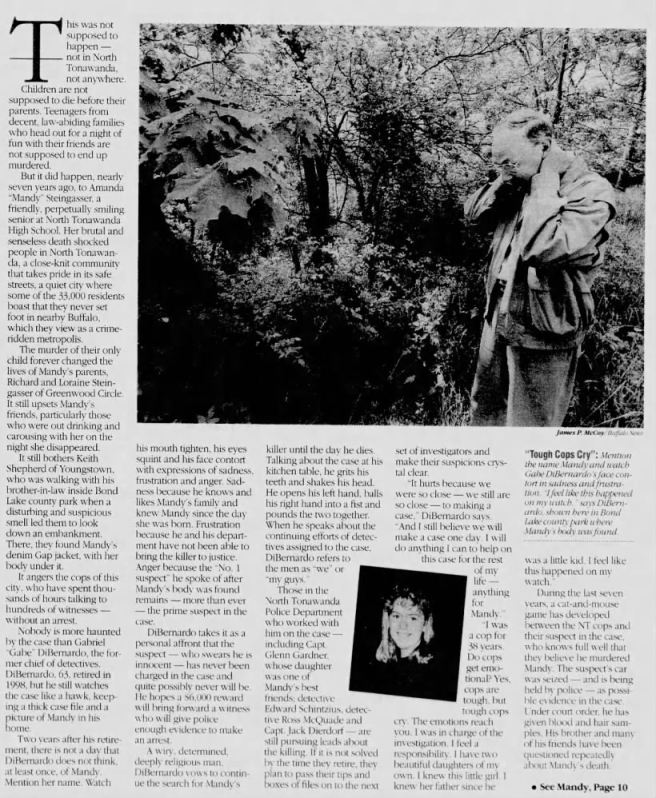
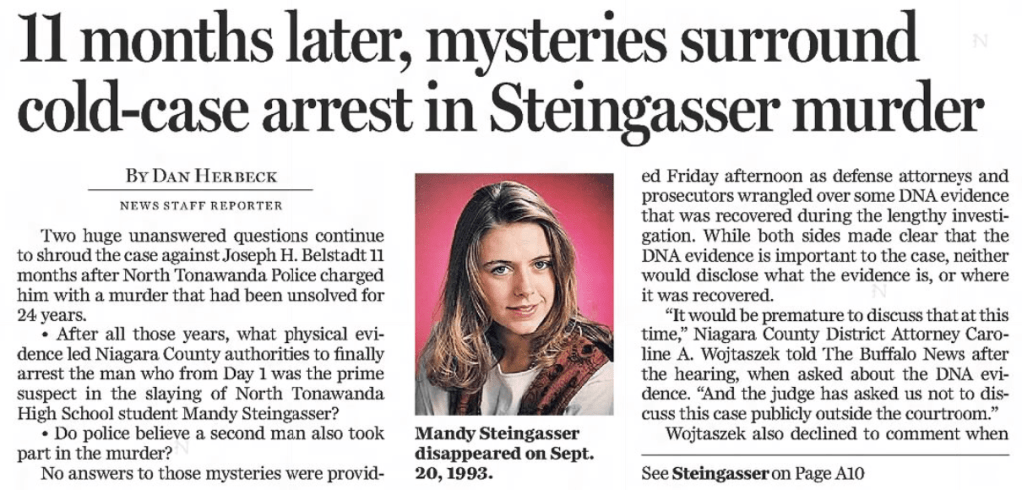
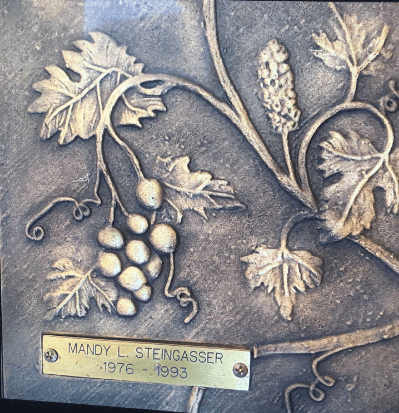
Amanda ‘Mandy’ Lyn Steingasser.

Introduction: Amanda ‘Mandy’ Lyn Steingasser was born on July 5, 1976 to Richard and Loraine (nee Huffman) in North Tonawanda, NY. Richard (who was affectionately called ‘Carp’) was born on October 11, 1944 in Buffalo, NY and was employed as a millwright for Fedders Manufacturing Company, which is known for its contributions to the heating, ventilation, and air conditioning industry. Loraine Huffman was born on November 29, 1950 and worked as a customer service representative at CCMA, LLC, a global supply chain for users of metals whose primary business is the marketing and distribution of alloying metals and ores to the iron, steel, ferro-alloys and aluminum industries.

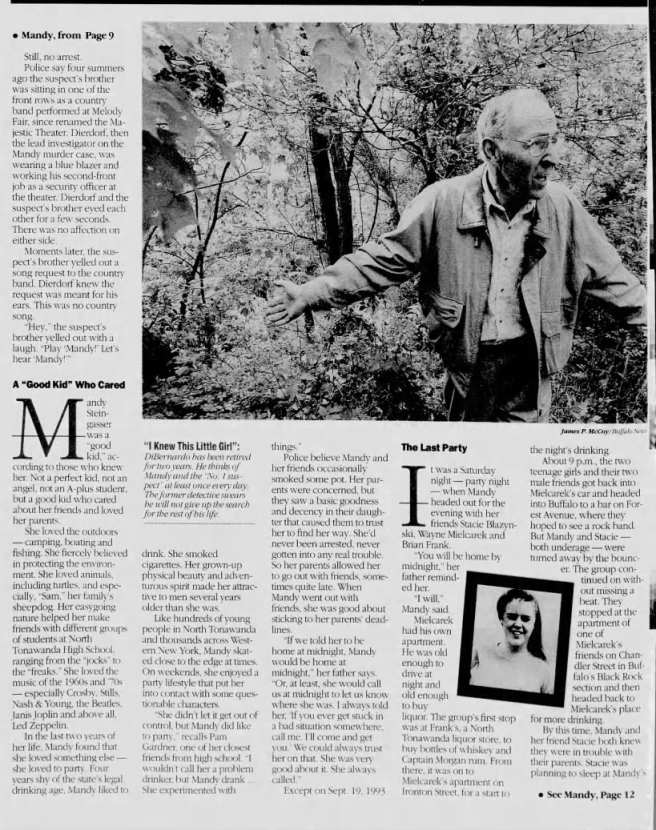
Background: In the fall of 1993 Mandy was a senior at North Tonawanda High School, and upon completion had plans of attending Niagara County Community College (but for what exactly, she was unsure). She was 5’5″ tall, weighed 135 pounds, had blue eyes, and wore her blonde hair long and midway down her back; she hung out with an eclectic group of people, and had some friends that were classified as jocks and others that were considered ‘freaks.’ A passionate environmentalist and animal enthusiast, she especially loved turtles and adored her family’s sheepdog, Sam. Like most young women her age, Mandy loved music, especially classic rock bands like Led Zeppelin, The Beatles, Janice Joplin, and Crosby, Stills, Nash & Young.

Mandy was her parents’ only child and the apple of her dad’s eye, however the Steingassers were definitely aware that their daughter wasn’t perfect: she didn’t get straight A’s, and at times didn’t always follow the rules. When she was fifteen, she had started to party and had begun dabbling with drinking and marijuana… but, for the most part she was a typical teenager and didn’t push the boundaries too much. Her parents were aware of her extracurricular activities and accepted them, knowing she wasn’t experimenting with anything ‘too hard,’ always made her curfew, and her grades didn’t slip. A middle to working class city, at the time in 1993 North Tonawanda was made up of roughly 33,000 people and their citizens prided themselves on how safe it was, especially when compared to nearby Buffalo and Niagara Falls.

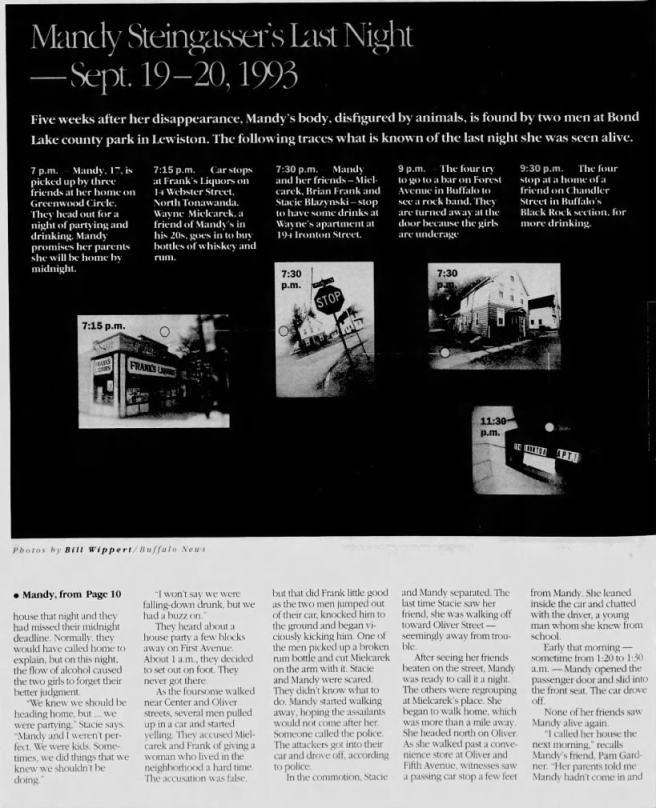
September 18, 1993: On the evening of Saturday, September 18, 1993 Mandy told her parents that she was going out with some friends, and in response to this, they told her to be home at midnight. When she left the family home she met up with some friends: her best friend, seventeen-year-old Stacie Blazynski, Brian Frank, and Wayne Mielcarek, who was over twenty-one and had his own apartment. The friends first stop was at the liquor store, where they purchased some cheap whiskey and rum, and from there they went to Mielcarek’s place and had a few drinks. At roughly 9:00 PM they got into Eric’s car and drove to a club in nearby Buffalo with hopes to see a band, but because the girls were underage they weren’t allowed in. From there they went to an unnamed friend’s apartment in Buffalo and hung out for a bit, then went back to Wayne’s apartment, where they continued to imbibe.

That evening Stacie had plans of sleeping over at the Steingasser home, but midnight came and went and the girls realized they had missed their curfew… perhaps if had they been sober and in the right frame of mind they would have thought to call Mandy’s parents to let them know they’d be late… but the Steingassers never heard from their daughter. At some point earlier in the night the friends had learned about a house party just a few doors down from Mielcarek’s apartment, and they decided to check it out. At around 1 AM they began their short walk down Ironton Street, and that’s when a car with several men pulled up beside them and accused Mielcarek and Frank of harassing a local woman in the neighborhood. The boys told them that they must have mistaken them for someone else but they were relentless, and two of them got out of the car and jumped Frank, and kicked him after pulling him onto the ground. The other man grabbed a nearby broken glass bottle and cut Wayne’s arm, and as this was happening Mandy and Blazynski were forced to helplessly stand by and watch.

At around 1:30 AM they heard sirens wailing in the distance and everyone scattered: Steingasser’s three friends headed towards Mielcarek’s apartment, but according to them she went the other way and headed toward First Avenue, where the house party was. According to Brian Frank, ‘we screamed her name five or six times, ‘Mandy, Mandy.’ We were all in shock.’ As they were parting ways Blazynski said that Steingasser told her that she didn’t want to be taken home by the police, and Frank later testified that he noticed an unknown male that happened to be walking in the same direction as she was.

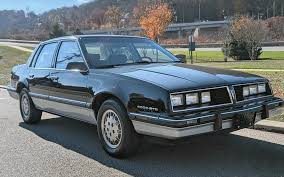
After they parted ways that night Mandy most likely began to make her way home and was roughly a mile away when a woman at a nearby payphone said that she saw her walking and that a man driving a black 1984 Pontiac 6000 that was moving in the opposite direction quickly made a U-turn at Sixth Avenue and pulled up beside her. She said that she observed Steingasser speak with him for a few minutes through the passenger’s side window then eventually got in and it drove off. It was the last time Mandy Steingasser was seen alive, and Rich and Loraine reported her missing the following day; they offered a $5,000 reward for any information that led to the return of their daughter.

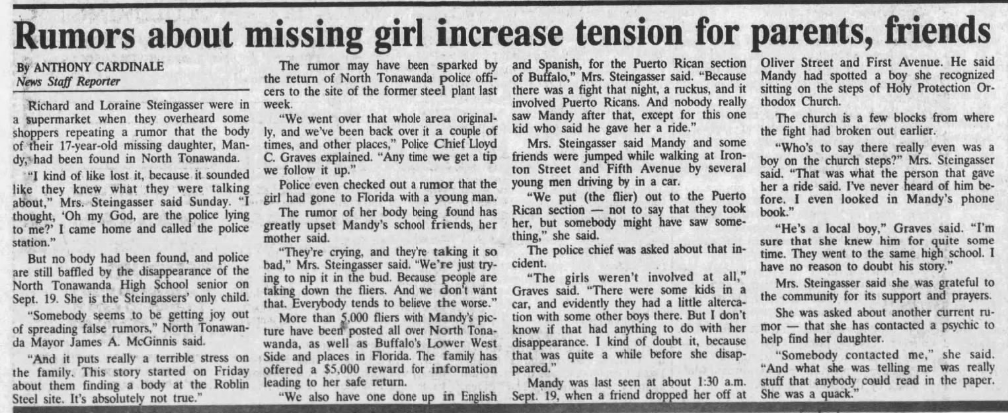
In the month after her disappearance more than 5,000 flyers with Mandy’s face on it had been passed out across the Western New York area, and according to Loraine: ‘we have one done up in English, and Spanish, or the Puerto Rican section of Buffalo. Because there was a fight that night, a ruckus , and it involved Puerto Ricans. And nobody really saw Mandy after that, except for this one kid that gave her a ride.’ … ‘ We put (in the flyer) out to the Puerto Rican section, not to say that they took her, but somebody might have seen something.’ About the street fight Mandy witnessed the last night she was seen alive, the NT retired Chief of Police Lloyd Graves said that ‘the girls weren’t’ involved at all. There were some kids in a car, and evidently, they had a little altercation with some other boys there. But I don’t know if that had anything to do with her disappearance. I kind of doubt it, because that was quite a while before she disappeared.’

The Days After: On September 19, 1993, Loraine Steingasser filed a missing persons report with the North Tonawanda police, who initially regarded Mandy as a runaway. Because of that, a few days afterwards she reached out to the Federal Bureau of Investigation: ‘I know she didn’t run away because she would have called. I wanted somebody who would take it a little more seriously.’ In the early days of Mandy’s disappearance there was some back and forth in regards to the FBI possibly getting involved, however when Mandy’s remains were later uncovered they completely backed out, which makes sense as no crime took place across state lines. Those that knew Mandy said it was completely out of character for her to disappear, and immediately knew that she hadn’t run away or left on her own free will. In their search efforts investigators used bloodhounds, helicopters, and hours upon hours of searching on foot, with absolutely no luck.

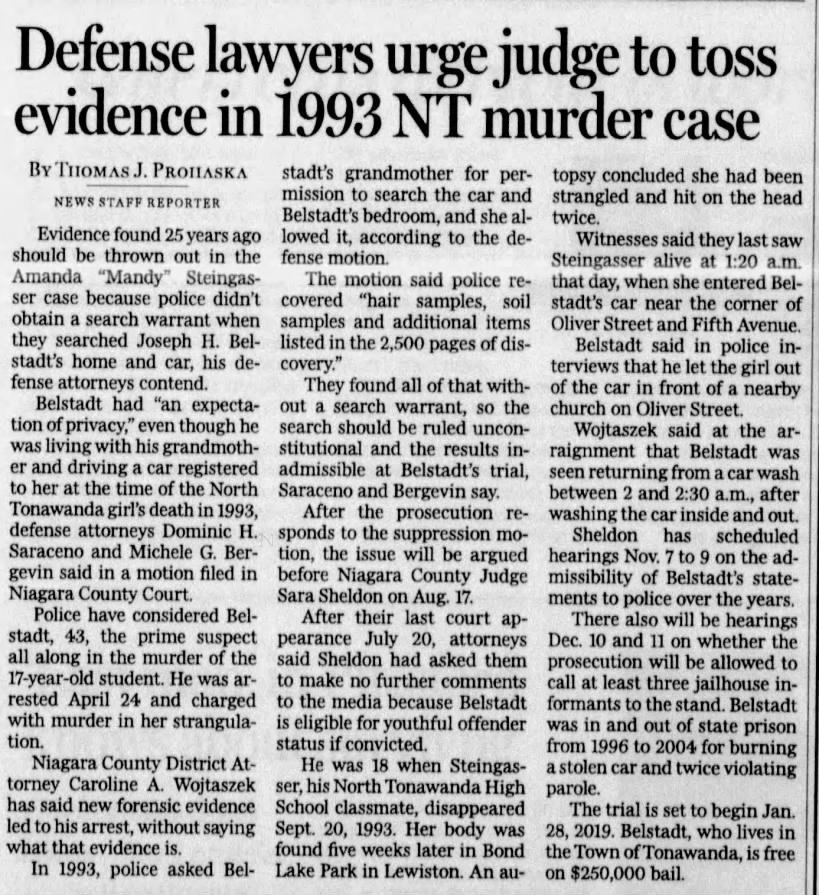
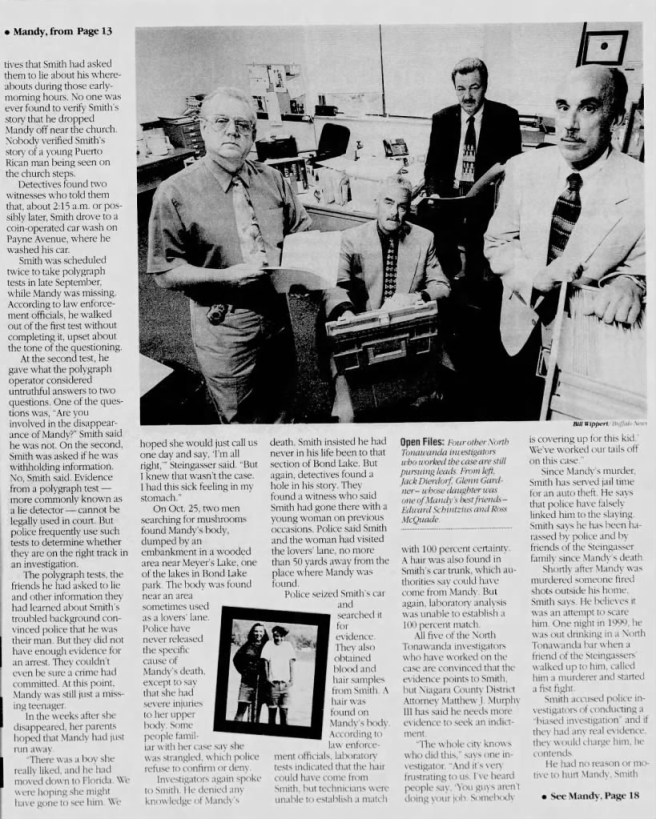
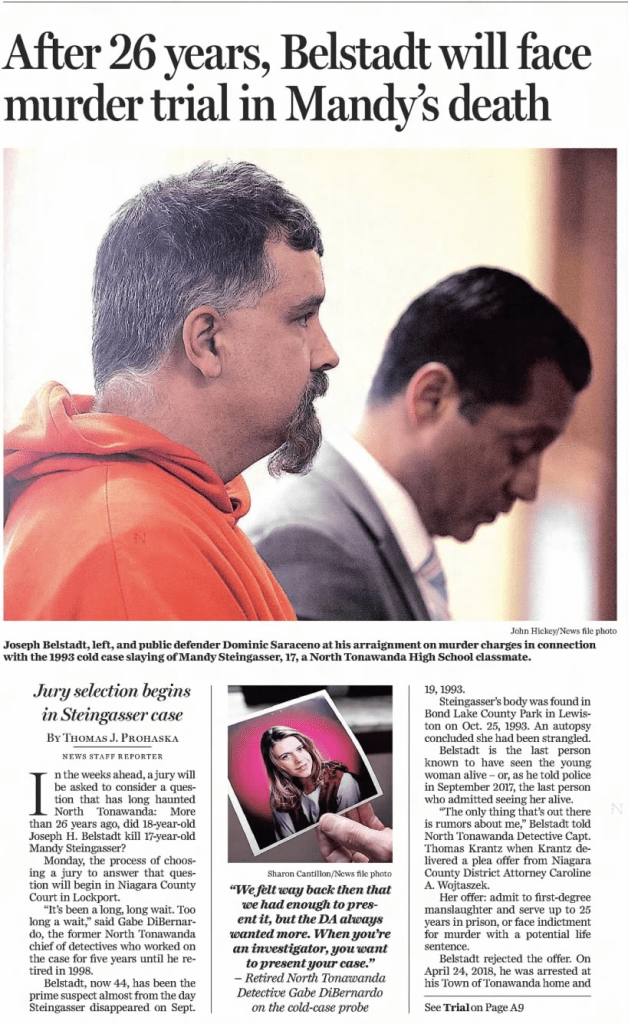
In the days following Steingassers disappearance the young man that picked her up came into the Tonawanda Police station: in a conversation with detectives on September 22, 1993, 18-year old Joseph H. Belstadt said that he knew Mandy because they went to the same high school and that he picked her up and started to drive her home. A few minutes into their drive he claimed that she changed her mind and told him to drop her off at a nearby house party instead, so he turned around and dropped her off at Holy Protection Orthodox Church at roughly 1:30 AM (which was only a few blocks away from where the street fight took place). He said that when Mandy got out she walked up to ‘a young man of Puerto Rican descent’ that was sitting on its front steps; it was the last time he saw her, and he told investigators that afterwards he went to Canada with some friends. When NT detectives later investigated his story, they immediately found that it had several holes in it: no one saw him drop Mandy off at the church close to a local mini-mart, and no one knew the identity of the young man that she met up with that night. Despite this, at the time they said they had no reason to doubt Belstadt’s story.

Some portions of Belstadt’s story were confirmed by eyewitnesses who saw Mandy get into his car: sisters Tanya and Rebecca Coughlin lived in an apartment at the intersection of Fifth Avenue and Oliver Street, and in the early morning hours of September 19, 1993 Tanya was outside of the residence and Rebecca was looking out their front window. Both young women confirmed that they saw a car drive past her then quickly make a U-turn so it could pull up beside her at the intersection; Steingasser and the driver spoke for a few minutes before she eventually got in and it drove away, turning around to drive in the direction that she had originally been walking in. The sisters both recognized Joseph Belstadt as the driver because they knew him from their old neighborhood where he had also lived, and Rebecca identified Steingasser as the young woman who got into his car because she recognized her from school.

There was, however a key part of the sister’s story that differed from Belstadt’s: after they drove away Rebecca remained in front of the window that was looking out onto the street for another five to six more minutes, which means he hadn’t ‘quickly turned his car around’ like he claimed he did to drive Mandy back to the intersection of Oliver and First, because if he did she would have seen his car drive by her apartment.

Detectives in North Tonawanda soon discovered that Belstadt had asked his friends Jerry Miller and Sherry Carrazzolo to lie about his whereabouts on the morning that Mandy was last seen alive. Miller, who was actually his best friend, told investigators that he, Joe, and three other friends were cruising around earlier that evening, and Belstadt was pulled over and given two tickets for traffic violations; afterwards, they went to the City of Tonawanda Police Department, where he unsuccessfully tried to fight the citations. Afterwards, the five friends sat in his car and thought about what they wanted to do for the rest of the night. Miller suggested a trip to Canada, but Belstadt said he didn’t want to and ‘just wanted to drive around,’ so his four friends went across the border without him.

Miller said that the friends returned home to NT later that morning, and when he drove by Belstadt’s Mother’s house a few hours later he noticed that his car wasn’t in the driveway. He also said they saw his friend two days later and that was when he asked him to lie for him, and if questioned to tell the police he should say that he went with them to Canada on September 18/19, 1993. Detectives in North Tonawanda also said that a man that knew Belstadt reported that he saw him that same morning at roughly around 2 AM and noticed that his car was wet, and when asked about it he said that he had ‘just had it washed.’ Additionally, two eyewitnesses came forward and said they saw him at a coin operated car wash at roughly 2:15 AM, which was about an hour and fifteen minutes after Steingasser was last seen alive.

Belstadt did agree to a polygraph examination, however got upset because he didn’t like the ‘tone’ of the questions he was being asked and stormed out. He eventually came in for a second exam where he was asked only two things: ‘are you involved in the disappearance of Mandy,’ and ‘are you withholding any information.’ He said ‘no’ to both questions and the administrators of the polygraph determined that Belstadt was not telling the truth, however because due to a lack of evidence nothing could be done. At the time of the examination detectives still had no idea what had happened to Mandy, and her family was still holding onto hope that she would be found. Her boyfriend Christopher Palesh had moved to Florida on September 17, 1993, which was two days before she went missing, and her parents were hoping that she had just taken off to be with him.

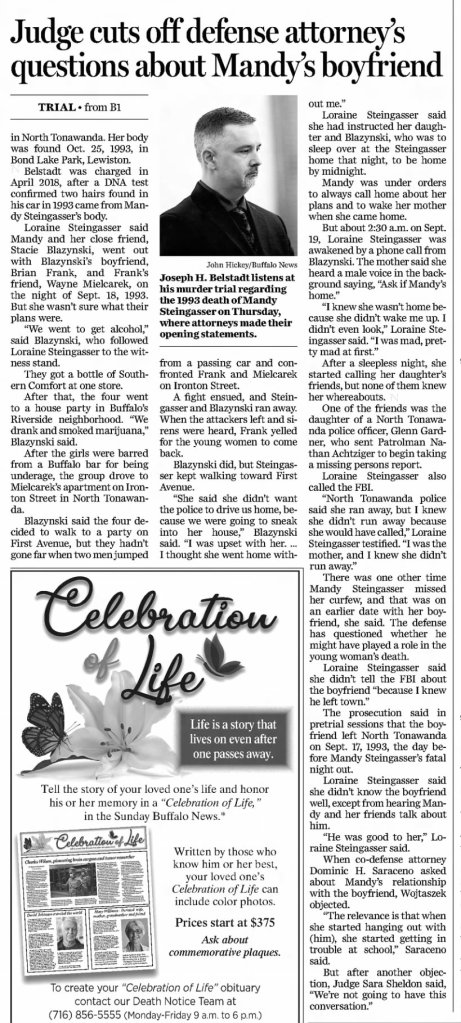
During her daughter’s murder trial in October 2021, Mrs. Steingasser testified that she told her to be home by midnight, mostly because she had spent the night with Chris about a week before; she also said that ‘anytime she went anywhere, she had to call me and when she came home, she had to wake me up.’ But it never came, and the only two telephone calls Loraine received on September 18 and 19, 1993 were a hang-up and one from an unknown male who ‘asked if Mandy was home;’ she later testified that she recognized her daughter’s friend Stacie’s voice in the background saying, ‘ask if Mandy’s home.’

In early October 1993 about two weeks after their daughter disappeared Mr. and Mrs. Steingasser were out grocery shopping when they happened to overhear one of the store’s employees talking about Mandy, and that she had been found in NT. Loraine said: ‘I kind of like, lost it, because it sounded like they knew what they were talking about. I thought, ‘oh my God,’ are the police lying to me?’ I came home and called the police station.’ The former mayor of North Tonawanda James A. McGinnis said of the incident ‘somebody seems to be getting joy out of the NY high school senior, and somebody seems to be getting joy out of spreading false rumors. And it puts a really terrible stress on the family. The story started on a Friday about them finding a body on the Roblin Steel site. It’s absolutely not true.’ According to Police Chief Lloyd C. Graves, ‘we went over the whole area originally, and we’ve been back over it a couple of times, and other places. Anytime we get a tip, we follow it up.’ It’s speculated that the rumor may have started because of the return of NY police to the Roblin Steel Plant, and it greatly upset Steingassers friend group, who according to her mother were ‘crying, and they’re taking it so bad. We’re just trying to nip it in the bud. Because people are taking down the flyers, And we don’t want that. Everybody tends to believe the worst.’

About Mandy, retired North Tonawanda detective chief Gabriel DiBernardo said that her disappearance was ‘totally out of character. We’re appealing to anyone and everyone to call us with any information.’ About her daughter’s disappearance, Mrs. Steingasser, ‘I still feel that there are people out there who saw something and haven’t come forward. Please give us the information. You don’t know what we’re going through.’ 

Discovery: On the afternoon of October 25, 1993 thirty-six days after Steingasser was last seen alive, two men were out scavenging for mushrooms near Bond Lake Park in Lewiston, and as they were walking along a trail they smelled something pungent and decaying: when they peered down into a ravine they discovered a body on a steep embankment leading to Meyers Lake. The spot is described as a ‘lovers lane,’ of sorts, and police would frequently find kids parked there, partying and ‘being intimate.’ Charles Keith Shepherd, one of the men that spotted Steingasser’s remains at the park that day, said he was walking along the crevasse with his brother-in-law when they saw denim on the edge, and when his BIL got closer he realized what they found, and immediately left to call the sheriff’s department.

When police arrived on the scene they discovered the remains of a young woman, whose pants had been pulled halfway down and her bra was wrapped around her neck; there was a pint sized liquor bottle in the pocket of her jean jacket. Because of the body’s advanced level of decomposition investigators were unable to immediately make a positive identification on the scene, however the victim had on the same clothes that Steingasser was last seen wearing. What detectives surmised had happened based on the crime scene was: her killer had taken her to a secluded, out of the way place and tried to put ‘the moves’ on her. When he started to pull her pants down she stopped him, and he got angry and he hit her on the head; he then ripped her bra off and strangled her with it. When the victim was deceased, he pushed her remains down the embankment in the park with the hope that it would roll into the lake, however some bushes stopped it.

An autopsy was performed the following day by Dr. Sung-Ook Baik, and dental records were used in making a positive identification. She had been strangled, and her blue bra was still tied around her neck; she also had a hairline skull fracture in front of her left ear. According to a MD during her trial, the skull fracture occurred while Mandy was still alive, because there was bleeding under her scalp at the left temple. Additionally, she had a brain bleed, a chip in the fingernail of her left pinky finger finger, tearing on her jeans and bra, was not wearing any shoes, and all of the hooks on her bra were broken; she had not been sexually assaulted.

Not only did investigators have a theory regarding what happened to Steingasser, they also had a prime suspect in mind: Joseph Belstadt. Their biggest hindrance was a lack of evidence proving guilt. Police obtained a search warrant and seized his car, and when it was examined they found a pubic hair in the backseat, but further testing proved it belonged to neither Steingasser or Belstadt. After her remains were found detectives questioned him again, and that was when he admitted that he had lied about going to Canada with his friends because he thought he needed an alibi or he would have looked guilty. In reality, he told them that he had just gone to a donut shop after he dropped Steingasser off at the church and knew nothing about her murder. He also said he had never been to the area where her remains were uncovered, but once again detectives learned that he had lied to them: during his trial, a woman named Stephanie Bartlett-Landes testified that Belstadt took her to the ‘park-like setting’ in Lewiston twice in the summer of 1993 when she was only 15-years-old, and they had parked a few dozen feet away from where Mandy’s body was eventually found.

A Case Gone Cold: In the first few months of the investigation detectives conducted interviews with dozens upon dozens of Steingassers friends/family/acquaintances/schoolmates, but every lead dried up and it wasn’t long before the investigation went cold. There was some renewed buzz in the case in August 2000 when The Buffalo News published an article about the murder, and in it the writer didn’t name Belstadt as the suspect due to the fact that he had not been officially identified. In the nearly seven years since the murder, five detectives that worked on the case said they all thought that he was the killer, with one even saying that the ‘whole city of Tonawanda knew who killed Mandy,’ but there was nothing they could do about it due to lack of evidence.

The public accused the police of covering up Mandy’s death and of not doing their jobs properly, and said it wasn’t right that they let Belstadt skate. The Niagara County DA on the other hand did feel that there was enough evidence to charge him, and that after DNA testing it turned out that a hair that had been found on Mandy’s body could have belonged to him, but it was not conclusive. Belstadt was interviewed for the article, and he claimed that he didn’t kill Mandy and they parted ways when he dropped her off outside of North Tonawanda church.

In the years since Mandy’s murder Joseph Belstadt served some time in jail for auto theft, and claimed that her friends and family had continuously harassed him, and as a consequence he ended up dropping out of high school about a month after her remains were discovered; additionally, he was forced to move out of state because he was ‘afraid for his life.’ He also claimed that shortly after the homicide someone fired a gun outside of his home in what he thought was an attempt to intimidate him. In 1999 while drinking at a bar one of her friends came up to him, called him a murderer then proceeded to get into a fistfight with him. He also felt that the investigation was ‘biased against him’ and he wanted the North Tonawanda police department to leave him alone, and he was certain that one day detectives were going to come out with false evidence to arrest him.

As it turned out, Belstadt’s family had at one point taunted the police in relation to Steingasser’s murder: in 1997 the lead investigator in the case was working PT as bouncer at a music venue, and one night a country band was playing and when he looked out into the crowd he made eye contact with his brother, Jamie. A few minutes after he began shouting out a song request, and immediately the detective knew he was taunting him: it wasn’t a country song, it was ‘Mandy’ by Barry Manilow.

In a test performed in 2002 by retired Erie County Central Police Services lab technician Paul Hojnacki, Belstadt’s sperm was found on a piece of material taken from his car seat, however the female DNA profile that was also found did not belong to Steingasser. He also said that none of his DNA was on any of Mandy’s clothes or on her body, and that he looked for sperm or semen but ‘didn’t find any.’ Mark Henderson, a retired forensic chemist and serologist for the Niagara County Sheriff’s Department, didn’t attend Steingassers autopsy in October 1993, but he did take over custody of the clothing and tissue samples that were taken that day. For over twenty-five years the materials were tested and retested as technology improved: ‘I swabbed anything that looked like possibly a stain,’ including the jewelry that was found on Steingasser’s remains, a pint bottle of Southern Comfort found in the pocket of her jacket, underneath her fingernails, and her underwear; Henderson clarified that he took five small pieces of cloth from the underwear she was wearing. In 2017 he said he used a small vacuum on the clothing from Steingasser’s remains after spraying them with a special solution in hopes of turning up more DNA.

In the years after their daughter’s murder the Steingassers had a tough time coping: they left her room just the way it was on the night they had last seen her. All of her clothes still hung in the closet, and the Led Zeppelin posters were still affixed on the wall. About the tragedy Mr. Steingasser said that ‘I tried not to think about it. I know we’re never gonna get her back, you gotta get on with your life. I try to keep it out of my mind, but there are twenty things that happen every day to remind me of her. The memories keep coming back.’

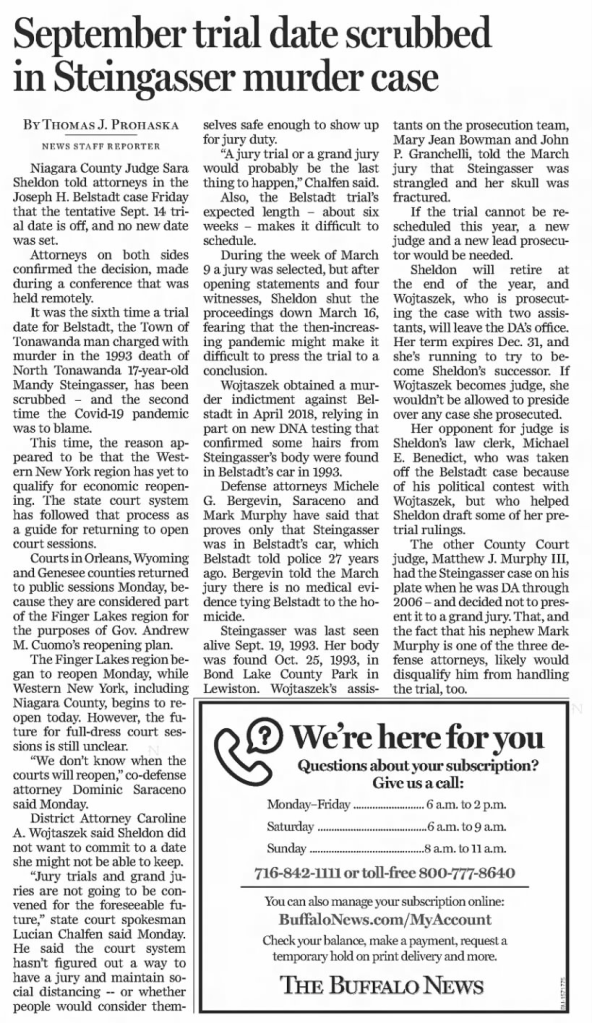
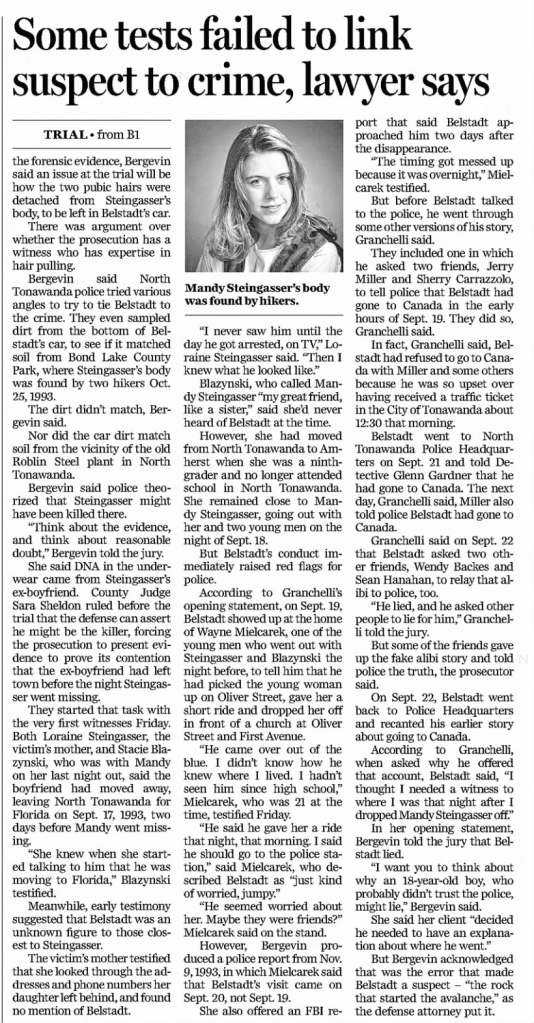
2018: The years kept ticking by. Sadly Mandy’s father passed away on March 14, 2015 without her murder being solved. Police did more testing on the pubic hair that was found in Belstadt’s back seat, and once again it came back ‘no match found.’ In 2017 the case was officially reopened, and in the twenty-four years since the murder forensic technology had greatly improved, and there was finally some progress that was made in relation to the investigation. Amongst the debris that was vacuumed up from the back seat of Belstadt’s car, forensic technicians were able to find a second pubic hair, and in early 2018 they did testing on both hairs: a forensic expert noted that on the root of one of them there was some tissue that was left behind, which suggests it came out with force. On March 10, 2018 detectives finally got the answers they had waited so long to hear: the pubic hairs found in Joseph Belstadt’s car belonged to Mandy Steingasser. They also determined that fibers that were found stuck to her body belonged to carpet from the vehicle as well.

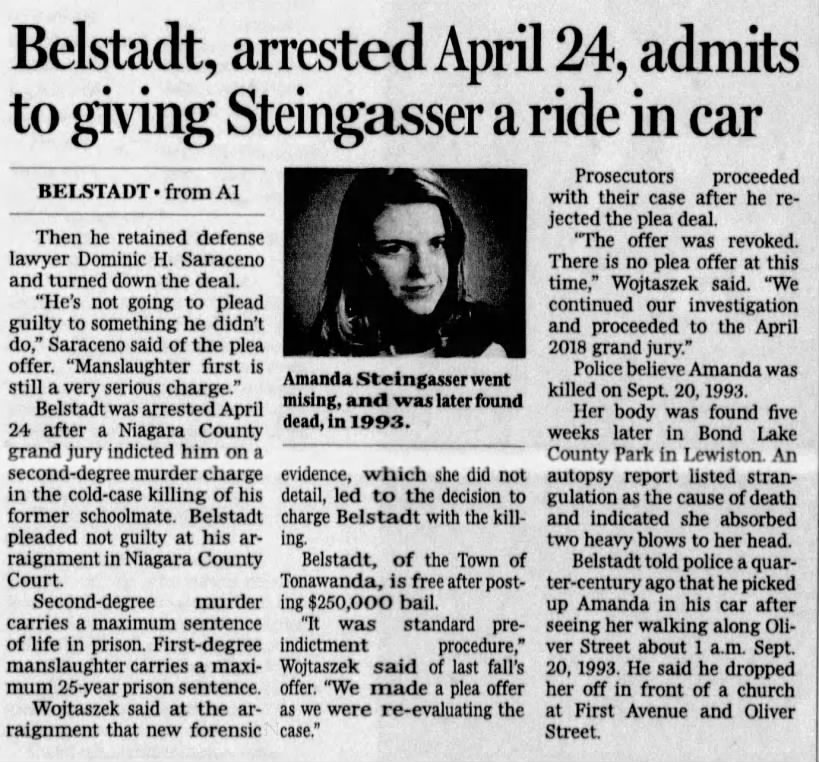
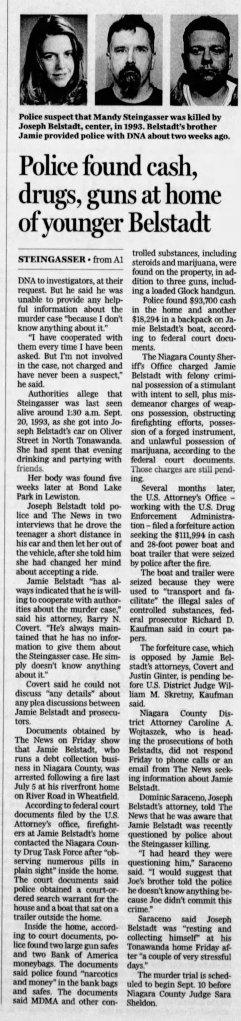
Arrest: On April 24, 2018 Joseph Belstadt was arrested for the murder of Mandy Steingasser, and he was released on $250,000 bail. After he was arrested the NT police continued to investigate and collect evidence against him, and one thing they uncovered was that male DNA that was found in Mandy’s underwear wasn’t his, and instead belonged to her boyfriend, Chris Palesh.

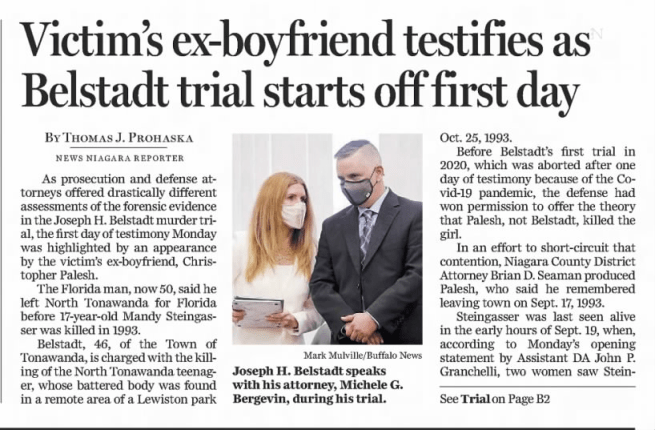
In the decades since Steingassers murder Palace had been arrested on three separate occasions for domestic violence as well as animal cruelty charges, and when the North Tonawanda PD asked him for a DNA sample he initially refused. In 2019 they went through his parents’ trash and collected two used plastic forks, and upon learning this he came forward and ‘willingly volunteered’ a sample of his DNA, which lab techs compared to the sample taken from the crime scene; it was a match. Palesh told detectives that he did have consensual sex with Steingasser roughly a week before she was last seen alive, however it is important to keep something in mind: according to Senior Forensic Criminologist Keith Paul Meyers with the Niagara County Sheriff’s Department, ‘studies have shown that DNA can survive up to three laundry cycles.’ 

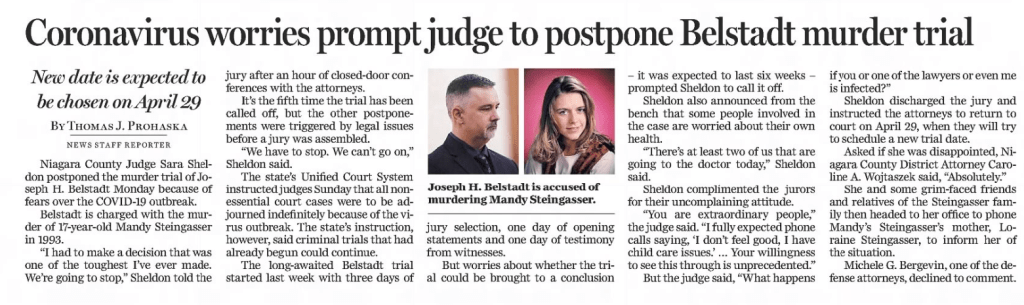
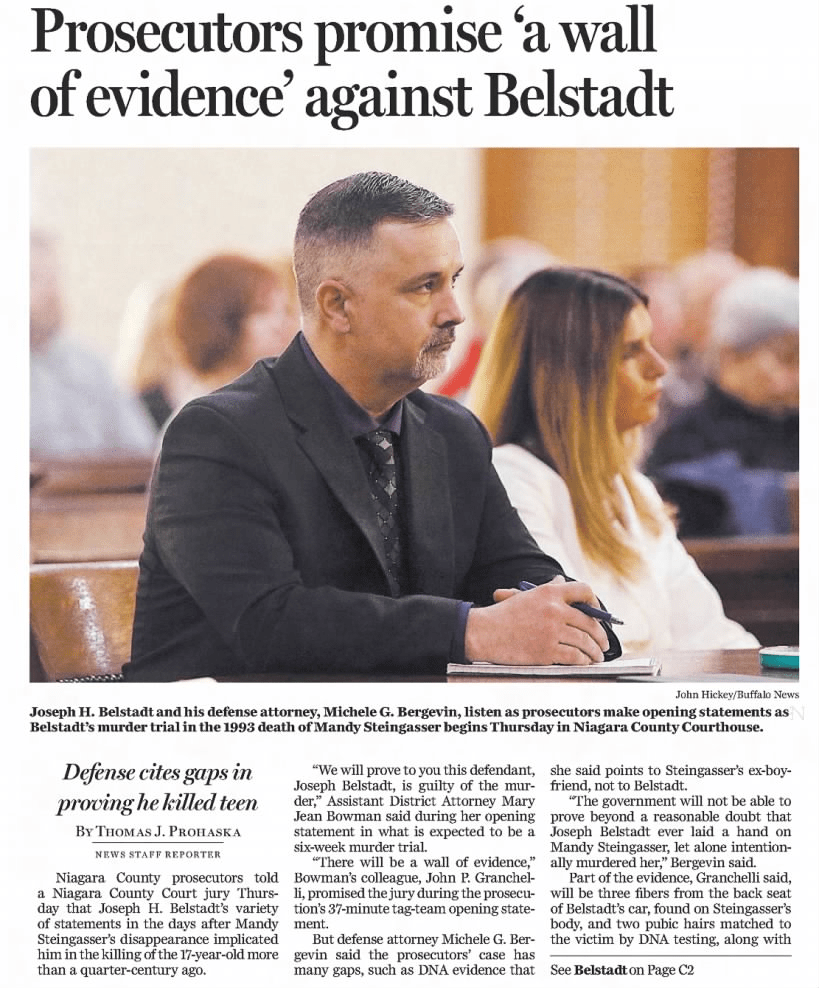
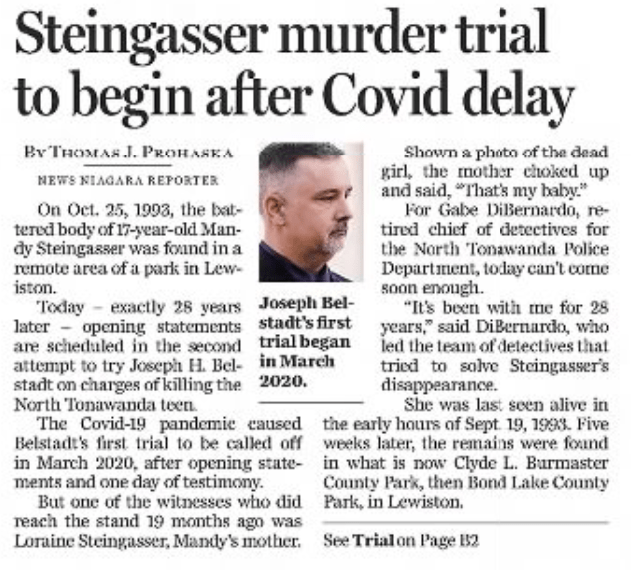
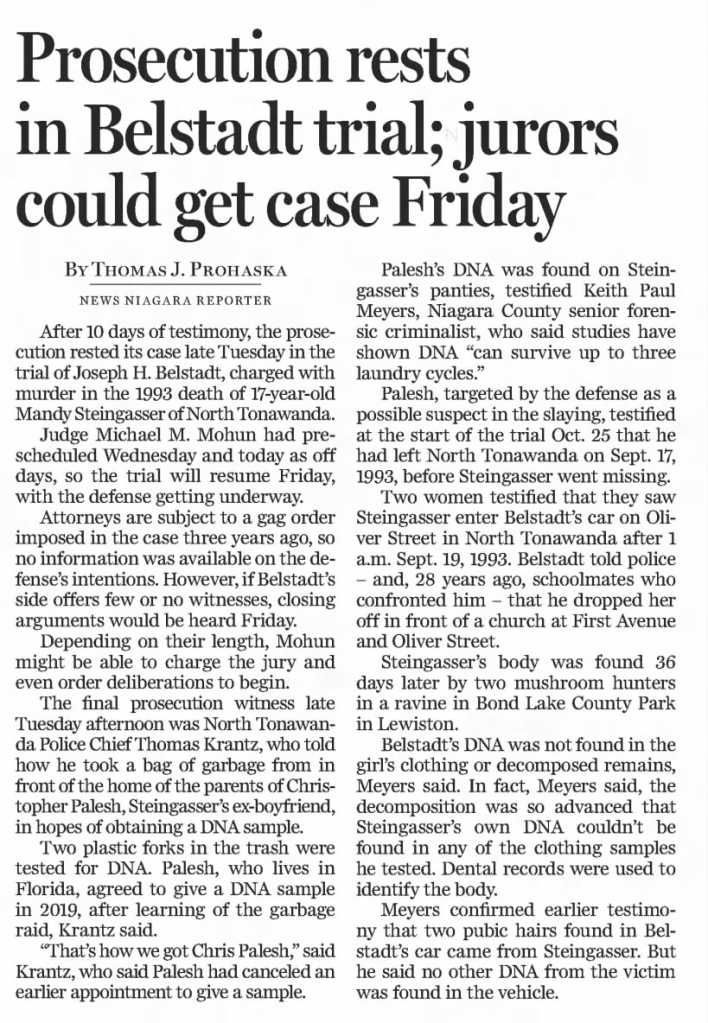
Trial: Belstadt’s trial began on October 25, 2021 at the Angelo DelSignore Civic Building in Niagara Falls, which happened to be the 28th anniversary of the day that Mandy’s body was found. The prosecution didn’t have a ‘magic bullet’ piece of evidence, and instead argued that nearly every piece of circumstantial evidence pointed to Belstadt being the killer. When shown a picture of her daughter in court, Mrs. Steingasser pointed out that in it she was: ‘wearing the same vest she was found wearing. She’s wearing the same ring she was found wearing. She called it her lucky ring. It was mine.’

The defense argued that none of the evidence that had been presented proved beyond the shadow of a doubt that Belstadt killed Mandy: the pubic hairs were the most damning thing against him, and his lawyers argued that they could have been on the outside of her clothes and had fallen off while she was in his vehicle. They said that ultimately, they only proved that Steingasser was in his car at some point before she disappeared, which is what he had maintained since the beginning.

Belstadt’s attorneys argued that after the initial stages of the investigation (remember that on night he was first questioned he lied about where he was when Mandy disappeared) their client was cooperative with investigators, and told jurors that no evidence existed that proved he made any sort of advance towards her, and that quite a few of the samples that were tested actually excluded him. The defense also said that the prosecution was relying on eyewitness testimony that was twenty-six years old, and they would not be able to prove beyond a reasonable doubt when, how, or where Steingasser was killed; according to Belstadt’s attorney Michele Bergevin: ‘most importantly, the government, after you hear all of the evidence, will not be able to prove to you beyond a reasonable doubt who, if anyone, intentionally took the life of Mandy Steingasser.’

In an article published on November 8, 2021 by The News Niagara Reporter, during the trial Mandy’s first cousin Carolyn Steingasser-Tucker testified in court that she, along with Jennifer Zuhr, confronted Belstadt in a hallway at North Tonawanda High School in October 1993, and they ‘asked him, ‘what did you do with Mandy?’ She went on to say that Zuhr did most of the talking, and at one point she grabbed him by the shirt and shoved him against a wall outside the school cafeteria in front of many witnesses: ‘the hallway was full. He said, ‘I didn’t do anything with her,’ and that he only planned on taking her to her house but when they got to the Memorial Pool on Payne Avenue she decided she didn’t want to go home; so he turned around in a Burger King parking lot and took her back to the church where he originally picked her up.’

Michele Bergevin asked Tucker if she remembered taking ‘a lynching party’ to his house, and in response she said she knew nothing about that. When Bergevin pressed her about the incident in the hallway she said she was never interviewed by police about it, and that Belstadt didn’t fight back, and he ‘cowered’ instead, like ‘the little, scrawny, pimply-faced kid he was’ (those were his attorney’s words).

In court, Mandy’s friend Stacie admitted that she made the hang-up call to the Steingasser residence that night, and that Mielcarek made the second one, however Frank said that Wayne made both calls. Mielcarek said he doesn’t remember calling anyone that night, but said that he did remember Joseph Belstadt knocking on the door to his home on the morning of September 19 to ask if he knew where Mandy was. Wayne, who barely knew Belstadt, said that ‘he said she was missing,’ he later testified, which he said was news to him: ‘I said, ‘How do you know she’s missing?’ He said he gave her a ride.’ Mielcarek said he told Belstadt to take his information to the police, and about the encounter said ‘he came over out of the blue. I didn’t know how he knew where I lived. I hadn’t seen him since high school. He said he gave her a ride that night, that morning. I said he should go to the police station.’ He also said that Belstadt seemed ‘just kind of worried, jumpy. He seemed worried about her. Maybe they were friends.’
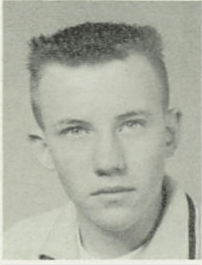
There has been a long-standing dispute regarding the exact date that Belstadt went to Mielcarek’s residence: in 1993 Wayne signed a formal statement with detectives saying it took place on September 21, and not on the morning of September 19. Michele Bergevin pointed out that if that was true then Mielcarek already knew Steingasser was missing when Belstadt had visited him.

According to a Buffalo News article published in November 2021, Christopher A. Grassi of Endicott, who served time with Belstadt at the Cayuga Correctional Facility in 2000 and 2001, testified during the trial that he confided in him that ‘he strangled a girl during a three-person sexual encounter in his car.’ He also said that the defendant went by the nickname ‘Squirrelly’ while serving time for arson after he got caught torching a stolen car; Christopher was there for hiring a man to burn down his nightclub for the insurance money. Grassi said he told him that he was driving his car while a friend of his was having sex with the female in the back seat. In response to this, Michele Bergevin called him ‘nothing but a fraudster’ and said that he didn’t even know her client in prison.

Bergevin also accused Grassi of paying another inmate on the prison buildings and grounds crew to feed him information about Belstadt so he could relay it to the North Tonawanda police, who had visited him at the prison looking for information related to Mandy’s murder: “Isn’t it true you actually paid Christopher Bennett for information about Joe Belstadt, just like you paid somebody to burn down your nightclub?’ Grassi denied it but did admit that his memory of the event wasn’t very good: ‘I don’t even remember 90% of it. Whatever is in my statement is what I remember.’

Neither side placed the statement in evidence, so the jury never will get to read it and decide for themselves what Grassi told the North Tonawanda detectives in June 2001. Bergevin said that Chris Bennett died in January 2021, which she said was, ‘lucky for you, huh?’ directed towards Grassi. The DA went on to say that Bennett ‘researched this about Joe Belstadt and this young girl that went missing, and he made up a story,’ and to this Grassi said: ‘I am not aware of that.’ 

Retired North Tonawanda detective William Carosella was one of the officers that was tasked with collecting items from Belstadt’s car a few days after Steingasser was last seen alive, and when questioned by the defense if he recalled collecting any cigarette and/or marijuana butts, he replied that he couldn’t recall from memory if either of items were recovered. He admitted to the court that where he couldn’t remember every single item collected, he did remember that they collected into evidence a tire iron, a piece of wood with a nail sticking out of it, carpet from the trunk of the vehicle, and other miscellaneous debris. Additionally, from Belstadt’s vehicle, forensic experts collected three carpet fibers from the trunk, debris from the side panels, various items that had miscellaneous hairs on them, dirt from the tire treads, and several other miscellaneous items, which were all listed individually in the search warrant inventory.

The defense suggested a different suspect completely: Christopher Palesh, and argued that his semen was found on her underwear and he had a history of violence. In response to this, the prosecution said that may have exonerated Belstadt if it had had been a rape case, but Steingasser hadn’t been sexually assaulted. Also testifying in the trial was Christopher’s mother Carol Pelesh, who said she remembered her son for Florida leaving ‘on a Friday,’ which would have been September 17, 1993. Also, Mandy’s friend Jennifer Chiaravalle testified that she remembered taking her to Palesh’s house on September 17, 1993, and it was the last time they saw each other, as he left later that day: ‘he was leaving for Florida that day and she wanted to say goodbye.’

Guilty: The trial lasted three weeks, during which sixty-five witnesses testified to the jury, which was made up of six men and six women. After both sides said their peace and the jury went back to deliberate, it only took them ten hours over two days to come to a determination: on November 17, 2021 Joseph Belstadt was found guilty of second-degree murder; he was immediately remanded into custody. According to Niagara County DA Brian Seaman, the death of Steingasser was: ‘a horrendous and violent crime. He fractured this girl’s skull and strangled her with her own bra. That kind of calls for the maximum sentence.’ … ‘For 28 years, the murder of Mandy Steingasser has been an open wound in the community of North Tonawanda and Niagara County. She has not been forgotten by her family, her friends, her loved ones. Not by the North Tonawanda police. Today, finally, twenty-eight-years later, her killer has been brought to justice. He will now suffer the consequences of his heinous actions.’

Belstadt was sentenced to twenty-five years, and has maintained his innocence this entire time; during his sentencing, he said: ‘I would like to say to Mandy’s family and friends how sorry I am for the pain they’ve gone through, but I am not the person who killed Mandy. I’ve been saying that since day one, and that’s not going to change. I did not kill Mandy Steingasser.’ To this, DA Seaman disagreed and said: ‘my response to that is we put out the evidence before a jury, that jury found this defendant guilty beyond a reasonable doubt, and the jury’s verdict stands and they found the proper verdict in this case.’ About the verdict, Loraine Steingasser said that ‘during the time Joe Belstadt has been living his life, my daughter did not.’

It Runs in the Family: According to an article published in The Buffalo News on April 28, 2018, when it comes to Joe’s brother Jamie Paul Belstadt, his attorney Barry N. Covert said that he ‘has always indicated that he is willing to cooperate with authorities about the murder case. He’s always maintained that he has no information to give them about the Steinhasser case. He simply doesn’t know anything.’ Jamie also said that he was questioned about the disappearance in mid-April 2018 and although he provided investigators with a sample of his DNA he also told them that he wouldn’t be able to provide them with any additional help because ‘I don’t know anything about it. I have cooperated with them every time I have been asked. But I’m not involved in the case, not charged and have never been a suspect.’

On April 11, 2023 the younger Belstadt brother was arrested and booked in Niagara County Jail on felony drug charges following an investigation by the Niagara County Drug Task Force. According to Sheriff Michael Filicetti, he had been charged with felony criminal possession of a stimulant with intent to sell plus misdemeanor charges of weapons possession, obstructing firefighting efforts, possession of a forged instrument, and unlawful possession of marijuana (this is according to federal court documents). When police searched his home they found a loaded Glock handgun and $93,700 in cash (with an additional $18,294 in a backpack on his boat); as of July 2025, he is in Niagara County Jail. According to his LinkedIn profile, he has owned a debt collection agency for the past seventeen years called ‘Vision Credit.’

Conclusion: At the time of his death at the age of seventy on March 14, 2015 Richard and Loraine Steingasser had been married for thirty-nine years; he now rests next to his daughter at Acacia Park Cemetery. According to his obituary, Mr, Steingasser was a member of the Renaissance Club and in his spare time he enjoyed playing euchre, going fishing, and doing carpentry work. Loraine is alive and residing in North Tonawanda with her dog, Bruno.

As of July 2025 Joseph H. Belstadt is serving out his prison sentence at Attica Correctional Facility; he will be eligible for parole in November 2046, when he is seventy-one-years old.

Works Cited:
Aradillas, Elaine. ‘NY Man Strangled High School Girl with Her Bra and Dumped Her in Ravine in 1993.’ (January 17, 2022). Taken June 17, 2025 from https://people.com/crime/ny-man-strangled-high-school-girl-with-her-bra-dumped-in-ravine-sentenced-25-years-to-life/
Elliott, Madison & Goshgarian, Mark. ‘Opening Statements Held in Niagara County Cold Case Murder Trial.’ (March 12, 2020). Taken June 20, 2025 from https://spectrumlocalnews.com/nys/buffalo/public-safety/2020/03/12/opening-statements-held-in-niagara-county-cold-case-murder-trial
Green, Kayla. ‘Jury shown photos of Mandy Steingasser’s Remains.’ November 3, 2021). Taken June 16, 2025 from https://www.wivb.com/news/local-news/jury-shown-photos-of-mandy-steingassers-remains-from-day-they-were-recovered-from-bond-lake-park/
Prohaska, Thomas J. ‘After North Tonawanda street fight, Steingasser’s Friends say she Parted Ways.’ October 26, 2021.
Prohaska, Thomas J. ‘Jailhouse informant says Belstadt told him girl died during sexual encounter.’ (November 9, 2021). The Buffalo News.
Prohaska, Thomas J. ‘’Steingasser friend, cousin confronted Belstadt: ‘What did you do with Mandy?’’ News Niagara Reporter. (November 8, 2021). Taken June 29, 2025 from https://buffalonews.com/news/local/crime-courts/article_cf3b3634-40ca-11ec-8fa4-1390d3d02d1c.html

I love this picture of Mandy, it reminds me of one of those glamour shots my mom never let me get.
Mandy Steingasser
Mandy Steingasser.
A B&W picture of Mandy Steingasser.
Mandy Steingasser.
Mandy Steingasser.
A picture of Mandy that was published in The Buffalo News on October 11, 1993.
Mandy Steingasser with her beloved pup, Sam.
Mandy’s birth announcement published in The Buffalo News on July 10, 1976.
The Steingasser family home, located at 133 Greenwood Circle in North Tonawanda, NY.
The former Holy Protection Orthodox Church; it’s permanently closed and located at 143 Main Street in the City of Tonawanda. Photo courtesy of WKBW.
A sign for Bond Lake Park, located about sixteen miles away from North Tonawanda. Picture courtesy of WKBW.
A picture from the original crime scene at Bond Lake Park in October 1993. Picture courtesy of WKBW.
A picture of the taped off crime scene at Bond Lake Park in October 1993. Picture courtesy of WKBW.
A picture of investigators at the original crime scene at Bond Lake Park in October 1993. Picture courtesy of WKBW.
A black 1984 Pontiac 6000, similar to the one Belstadt was driving the night Steingasser went missing.
Joseph Belstadt’s mug shot. He was born on April 25, 1975 in North Tonawanda, NY.
Joseph Belstadt and his wife, Jennifer.
An article about the disappearance of Mandy Steingasser published in The Buffalo News on September 25, 1993.
An article about the disappearance of Mandy Steingasser published in The Buffalo News on October 2, 1993.
An article about the disappearance of Mandy Steingasser published in The Buffalo News on October 8, 1993.
An article about the disappearance of Mandy Steingasser published in The Buffalo News on October 11, 1993.
An article about the murder of Mandy Steingasser published in The Buffalo News on October 26, 1993.
An article about the murder of Mandy Steingasser published in The Buffalo News on October 27, 1993.
An article about the murder of Mandy Steingasser published in The Buffalo News on October 28, 1993.
An article about the murder of Mandy Steingasser published in The Buffalo News on November 4, 1993.
An article about the disappearance of Mandy Steingasser published in The Buffalo News on October 25, 1994.
A newspaper clipping about a local band called ‘The Dooley’s’ releasing a CD that was dedicated to memory of Mandy Steingasser that was published in The Buffalo News on January 12, 1996.
An article about a local band called ‘The Dooley’s’ that mentions Mandy Steingasser published in The Buffalo News on March 4, 1996.
An article about the murder of Mandy Steingasser published in The Buffalo News on September 21, 1996.
Part one of an article about the murder of Mandy Steingasser published in The Buffalo News on September 20, 2013.
admits to giving steingasser a ride
Part two of an article about the murder of Mandy Steingasser published in The Buffalo News on September 20, 2013.
Part one of an article about the trial of Joseph Belstadt published in The Buffalo News
on May 5, 2018.
Part two of an article about the trial of Joseph Belstadt published in The Buffalo News
on May 5, 2018.
Part one of an article about the arrest of Joseph Belstadt published in The Buffalo News on April 28, 2018.
Part two of an article about the arrest of Joseph Belstadt published in The Buffalo News on April 28, 2018.
An article about the arrest of Joseph Belstadt published in The Buffalo News on July 31, 2018.
Part one of an article about the trial of Joseph Belstadt published in The Buffalo News on March 14, 2020.
Belstadt
Part two of an article about the trial of Joseph Belstadt published in The Buffalo News on March 14, 2020.
An article about the trial of Joseph Belatadt published in The Buffalo News on March 17. 2020.
An article about the trial of Joseph Belstadt published in The Buffalo News on May 19, 2020.
Part one of an article about the murder of Mandy Steingasser published in The Buffalo News on August 6, 2000.
Part two of an article about the murder of Mandy Steingasser published in The Buffalo News on August 6, 2000.
Part three of an article about the murder of Mandy Steingasser published in The Buffalo News on August 6, 2000.
Part four of an article about the murder of Mandy Steingasser published in The Buffalo News on August 6, 2000.
Part five of an article about the murder of Mandy Steingasser published in The Buffalo News on August 6, 2000.
Part six of an article about the murder of Mandy Steingasser published in The Buffalo News on August 6, 2000.
Part seven of an article about the murder of Mandy Steingasser published in The Buffalo News on August 6, 2000.
An article about the murder of Mandy Steingasser published in The Buffalo News on September 27, 2003.
Part one of an article about the murder of Mandy Steingasser published in The Buffalo News on September 20, 2013.
Part two of an article about the murder of Mandy Steingasser published in The Buffalo News on September 20, 2013.
Part one of an article about the murder of Mandy Steingasser published in The Buffalo News on November 6, 2016.
Part two of an article about the murder of Mandy Steingasser published in The Buffalo News on November 6, 2016.
Part one of an article about the arrest of Joseph Belstadt for the murder of Mandy Steingasser published in The Buffalo News on April 26, 2018.
Part two of an article about the arrest of Joseph Belstadt for the murder of Mandy Steingasser published in The Buffalo News on April 26, 2018.
Part one of an article about the trial of Joseph Belstadt for the murder of Mandy Steingasser published in The Buffalo News on February 26, 2019.
Part two of an article about the trial of Joseph Belstadt for the murder of Mandy Steingasser published in The Buffalo News on February 26, 2019.
Part one of an article about the trial of Joseph Belstadt for the murder of Mandy Steingasser published in The Buffalo News on April 6, 2019.
Part two of an article about the trial of Joseph Belstadt for the murder of Mandy Steingasser published in The Buffalo News on April 6, 2019.
Part one of an article about the trial of Joseph Belstadt for the murder of Mandy Steingasser published in The Buffalo News on October 29, 2019.
Part two of an article about the trial of Joseph Belstadt for the murder of Mandy Steingasser published in The Buffalo News on October 29, 2019.
Part one of an article about Belstadt being charged for Steingassers murder published in The Buffalo News on January 25, 2020.
Part two of an article about Belstadt being charged for Steingassers murder published in The Buffalo News on January 25, 2020.
An article about Belstadt being charged for Steingassers murder published in The Buffalo News on February 7, 2020.
An article about Belstadt being charged for Steingassers murder published in The Buffalo News on March 3, 2020.
Part one of an article about the trial of Joseph Belstadt for the murder of Mandy Steingasser published in The Buffalo News on March 9, 2020.
Part two of an article about the trial of Joseph Belstadt for the murder of Mandy Steingasser published in The Buffalo News on March 9, 2020.
Part one of an article about the trial of Joseph Belstadt for the murder of Mandy Steingasser published in The Buffalo News on March 13, 2020.
Part two of an article about the trial of Joseph Belstadt for the murder of Mandy Steingasser published in The Buffalo News on March 13, 2020.
Part one of an article about the trial of Joseph Belstadt for the murder of Mandy Steingasser published in The Buffalo News on March 16, 2020.
pandemic cut short first attempt to try belstadt on murder charge
Part two of an article about the trial of Joseph Belstadt for the murder of Mandy Steingasser published in The Buffalo News on March 16, 2020.
Part one of an article about the trial of Joseph Belstadt for the murder of Mandy Steingasser published in The Buffalo News on October 25, 2021.
Part two of an article about the trial of Joseph Belstadt for the murder of Mandy Steingasser published in The Buffalo News on October 25, 2021.
Part one of an article about the trial of Joseph Belstadt for the murder of Mandy Steingasser published in The Buffalo News on October 26, 2021.
Part two of an article about the trial of Joseph Belstadt for the murder of Mandy Steingasser published in The Buffalo News on October 26, 2021.
Part one of an article about the trial of Joseph Belstadt for the murder of Mandy Steingasser published in The Buffalo News on October 27, 2021.
Part two of an article about the trial of Joseph Belstadt for the murder of Mandy Steingasser published in The Buffalo News on October 27, 2021.

“”””””””””””””””””””””””””””””””””””””_

An article about the trial of Joseph Belstadt for the murder of Mandy Steingasser published in The Buffalo News on November 11, 2021.
Part one of an article about the trial of Joseph Belstadt for the murder of Mandy Steingasser published in The Buffalo News on November 13, 2021
Part two of an article about Belstadt’s conviction published in The Buffalo News on November 13, 2021.
Part one of an article about Belstadt’s conviction published in The The Buffalo News on November 17, 2021.
Part two of an article about Belstadt’s conviction published in The The Buffalo News on November 17, 2021.
A newspaper article about Belstadt’s conviction published in The Buffalo News on November 19, 2021.
Part one about the trial of Joseph Belstadt published in The Buffalo News on January 15, 2022.
Part two about the trial of Joseph Belstadt published in The Buffalo News on January 15, 2022.
Mandy Steingassers final resting place, located in Acacia Park Cemetery in Pendleton, NY.
A book about Mandy Steingasser, published by Linda Crystal on January 1, 2008. Photo courtesy of Amazon. Ms. Crystal has a BA in Forensic Psychology from SUNY Buffalo and passed the Passed NYS Private Investigation Exam. She is a forensic astrologist and specializes in missing persons profiles and astral chart and calendars.
A comment left on a YouTube video about Mandy made by user ‘Toast-by5wu,’ on a video made by creator ‘heavy casefiles’ titled ‘The Solved Case of Mandy Steingasser, Solved After Twenty-Five Years.’
A comment left on a YouTube video about Mandy made by user ‘QuivaRPG,’ on a video made by creator ‘heavy casefiles’ titled ‘The Solved Case of Mandy Steingasser, Solved After Twenty-Five Years.’
A newspaper clipping featuring Carp Steingasser published in The Tonawanda News on September 21, 1961.
A picture of Richard Steingasser from the 1964 North Tonawanda High School yearbook.
Loraine Huffman from the 1969 North Tonawanda yearbook.
A newspaper clipping announcing that Mr. Steingasser won at ‘Jingo’ published in The Buffalo News on September 9, 2012.
Richard Steingasser.
Richard Steingassers final resting place, located in Acacia Park Cemetery in Pendleton, NY.
Loraine Steingasser’s beloved puppy, Bruno.
Mr. Steingassers obituary taken from the Acacia Park Cemetery website.
A comment left on Mr. Steingassers memorial page on the Acacia Park Cemetery website.
Jamie Belstadt.
Jamie Belstadt’s arrest warrant.
Wayne A. Mielcarek, AKA ‘the Bassmaster,’ who died at the age of fifty-one on July 9, 2024 at the Erie County Medical Center. He relocated to Myrtle Beach, South Carolina, and was a avid outdoorsman, who loved to fish and was a avid sports fan who loved the Buffalo Bills and Buffalo Sabres; Wayne was survived by his wife of sixteen years, Tina, son, and stepchildren.
Brian Frank, who is a teacher at Edison Elementary School in the Ken-Ton school district.
A picture of Stacie Blazynski at her shop, ‘The Vapor Room’ that she opened with her mother Sally, published in The Buffalo News on July 4, 2016.