William Earl Cosden Jr.: Part Two, Victims.

Written by Teri Phillips-Offield.

Intro: Jessica told you about the monster behind these heinous crimes, and now, I am going to tell you about the victims. I think it is important to know about their lives and not the fact that they died, but that they lived. The victims are the ones who should be remembered.
I feel that his sisters were among his first victims along with Helen Pilkerton. They suffered abuse at his hand and also were used to lure unsuspecting victims. To my utter disbelief, there were not much information for the beautiful lost souls, and none for the hitchhikers they fell victim to him. I want them to know that I, a complete stranger, do not know who you are or where you are, did not forget you.
I also feel that if his parents would have not covered for him and turned him in, many lives would have been saved. This is my opinion but after hearing the whole story from his sisters, my opinion is that they didn’t protect them and then did not protect the poor innocent girls from this monster.
Ted Bundy was suspected of Kathy’s death, but DNA proved to be William Cosden Jr. He was in prison for attacking Beverly Pearson already hiding right under their nose. It took 28 years and DNA evidence to find the truth. Here is the havoc this man created and the grief he inflicted on the families of his victims. I will start with his earliest victims, his sisters, and then go on to victims he raped, and killed, and finally Kathy Devine, his final known victim. A story full of senseless killings that never should have happened if he would have stayed in jail where he belonged.

Early Victim, Helen Pilkerton: Cosden was sent to a mental hospital in Maryland for killing a woman in 1967 and was serving a three to four-year term at the McNeil Island Corrections Center near Tacoma for a 1976 rape and murder conviction.  Her name was Helen Patricia Pilkerton.  She was an employee of the Lexington Park Motel and was just 20 years old.  Helen Patricia Pilkerton was born on May 24th, 1945, in St. Mary’s, Maryland, her father, John was 22 and her mother Helen was 21.  She had one brother and four sisters.  She died on April 16, 1967, at the age of 21, and was buried in Hollywood, Maryland.  

Helen was found in a stream by two teenage girls and her body was badly beaten.  Cosden had just returned from active duty in Vietnam where he was discharged due to violent behavior. The family of the victim had to sue the Military because of the outrageous leniency of the sentence. To my utter disbelief, Cosden was free after 6 years to rape and kill again. Deputy Prosecutor Philip Harju said, “He is an obvious danger to society.”  Yet, he was released to rape and kill again.  The story should have ended here, better yet not allowed at all.

His sisters, Karen and Susan: They were told their brother was away at a hospital and so his sisters thought he was all better when he came home. There was no warning from their parents whatsoever. They never told them why he was away and never took steps to protect them. He would get in constant trouble at home and in school almost like he invited the punishment. He always had to be in control. His sisters wished their parents were more aware. He loved to torment his sisters and animals. He got pleasure in making his sisters cry. When Karen was 4, he started sexually abusing her. He warned her he would hurt the whole family if she told. The same thing happened to Susan in a few years. He took steps to encourage them to not be close.
When Susan was 8, her brother can downstairs all dressed up to go out. The next morning, she woke to find the sheriff at the kitchen table. They came for her brother. He had confessed to his father that he had killed a woman the night before. The sisters were beginning to see just how evil he was. He did four years in a mental hospital. Four years. His parents told the girls he had went to get well and he was well. That very night he came home, he sexually assaulted his sister.
He was also a firebug and burned down the family home. His mother suspected it was him but did nothing. Again. The cause of the fire was listed as electrical. A house down the block burned too. He seemed to get away with everything. He would also burn his truck to cover evidence.
Then one day the paper was showing about a body found. He got more and more agitated as the paper was read and screamed at them to stop reading. This turned out to be Kathy. He would go to “help” people on snow days when in fact he was looking for prey. One day after a snow day he was arrested for rape.
In 1986, Susan came across his file that showed he was going to be released, she freaked out. She went to the police department to talk about her abuse. The detective she talked to said he believed her brother killed Kathy and would not retire until he found out. Susan told her story and wanted to make sure he didn’t get out. DNA tests were done, and he was convicted. She even flipped him the bird as they were sentencing him. Her family was actually mad at her for doing this. Susan, you are a hero to me.
In 2015, he died alone of a heart attack. They had to deal with the effects of their traumatic past as adults, with one of the sisters even nearing death. Despite the difficulties, the sisters band together to discuss the harm done to them and make an effort to make things right. About a week after filming, Sisters in Silence, Karen Harris passed away following a battle with lung cancer. RIP Karen.

Hitchhikers: Restover Truck Stop in Tumwater, just off Interstate 5, focal point for hitchhikers where he worked there, and his father owned. As I pointed out, Susan says her brother Williams Cosden Jr. would use her as bait to pick up women hitchhikers. The women would feel safe getting into his truck with a little girl there. He would tell his mom he was taking Susan to get ice cream and then take her to pick up hitchhikers. Once the girls were in the truck, he would lock Susan in the back. Many hitchhikers would disappear during this time. We may never know all his victims and which ones were Bundy’s. I apologize for not finding any names of the hitchhiker victims, it makes me wonder how many girls are in unmarked graves all over because of men like Cosden. I wonder if these families ever knew what happened to their daughters. My heart goes out to these families. I hope they found some kind of closure.

Beverly Pearson: On November 30th, 1975, 24-year-old Beverly Pearson stopped to get gas. As she was filling up, she encountered Willian Cosden Jr. She recognized him, but finished getting gas and drove away. On her way home, she lost control of her truck and pulled over. She noticed that Cosden pulled over right behind her. She told him she was fine, but when she went to get back in her truck, he hit her with a rubber mallet. He then forced her into his truck and kept threatening her and she kept saying to not hit her again.
He pulled over at a wooded area and sexually assaulted her. She remembers thinking to try to get him to talk. Her step father was a police commissioner and taught her to try and get anyone who attacks you to talk. She asked him personal questions and told him if he let her go, he could come visit her at home. It worked and he took her back to her truck. She immediately called the police and Cosden was picked up Cosden was found guilty and was sentence to serve a 49-year sentence. Because of her bravery, he was off the streets.

Kathy Devine: I got most of Kathy’s story from Jessica because she wrote it better than any article I read. According to Jessica, Katherine Devine was born to Sally and William L. Devine in Seattle in King County, Washington, on December 25, 1958. She was a Christmas baby. Her family remembered how the kind-hearted teen thought she was destined to become a Minister after being born on Christmas Day. Kathy regularly brought home stray animals and homeless children living on the streets to take care of them. She had a big heart and always sought to help the less fortunate and helpless individuals.
Witnesses last saw the 14-year-old teen hitchhiking in Seattle near North 91st Street and Aurora Avenue North. Her mother stared Kathy had just broken up with her boyfriend and was headed south to visit relatives in Rockaway, Oregon. Her family had reported her to the authorities as a runaway. Little did they know that was the last time their daughter would be seen alive. On December 6, 1973, a young couple stumbled across the remains of the 14-year-old girl in Margaret McKenny Campground in Thurston County.
The victim’s throat had been slashed, and she was lying face down. An examination further revealed she had been brutally sodomized and strangled to death. According to police reports, the officers found the victim’s pants were deliberately torn. Authorities figured that since the place was deserted and it would take a local to know their way around the campground, the killer must be local. The decomposed remains were not immediately identified until Kathy’s sister Sherrie Devine, then 16, saw a television news program in Seattle of the discovery and recognized an embroidered patch on the pair of jeans the victim was reported wearing.
Witnesses saw Cosden come in the night of the murder with stains on his clothing. The witnesses called police. After leaving the truck stop, Cosden’s truck caught fire and was destroyed three miles from the truck stop. During initial interviews with police, Cosden denied ever seeing Kathy Devine.”
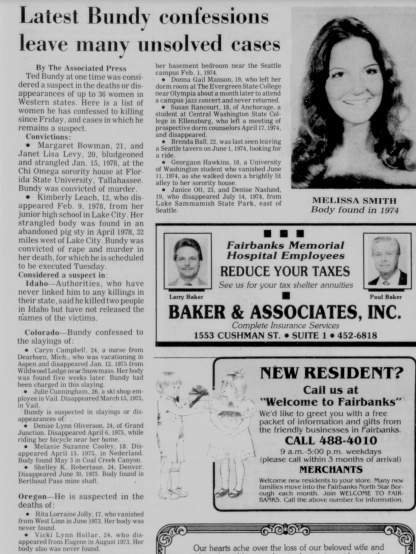
Kathy was first thought to be a victim of Ted Bundy. When Ms. Devine disappeared in 1973 Ted was attending the University of Puget Sound Law School and lived within two miles from where she was last seen. Everyone knows he drove the yellow, cream-colored Beetle for years before his arrest, but supposedly his brother owned a white pickup truck. During his death row confessions before his execution in 1989, Bundy told law enforcement that he picked up a hitchhiker in 1973, killed her then left her body close to where Kathy’s remains were found in Olympia, however he couldn’t remember the exact location. He denied having any involvement with Devine’s murder. But this makes me wonder if he did indeed kill Kathy. Cosden was surprised to be convicted and Bundy admitted to killing a hitchhiker and they only found Kathy at that site.
Kathy’s ex-boyfriend was a suspect but passed the polygraph. Another man said he saw the whole thing but was very uncooperative with police. While searching his house, a lot of newspaper articles about Kathy were found along with a blood-stained knife. When they brought him in, he denied all charges and said he could explain. He said the knife was for hunting and after testing, the knife did indeed have animal blood on it. He was cleared of the charges.
An anonymous man called detectives and suggested they investigate Cosden. The man said he looked in the back of Cosden’s truck and found a blood-soaked sleeping bag along with a single shoe. He was looking in Cosden’s truck because he claimed he was a co-worker and Cosden was stealing from him. Before the police had a chance to investigate Cosden’s truck “mysteriously” caught in fire. Remember, Kathy was found missing a shoe. The shoe found on Kathy matched what the man described but they never got the evidence since it burned.
The police went to the jail to confront Cosden and he denied it even though they have DNA proof found on Kathy. Luckily, they had enough to convince a jury and his sister, Susan helped, and he was convicted.
He lived in the area at the time of Kathy’s disappearance and murder. According to witnesses, William was seen wearing bloodstained clothes at the Truck Stop on November 26, 1973. He worked at the truck shop owned by his father and was reportedly working an early morning shift. After leaving the truck stop, Cosden’s truck caught fire and was destroyed three miles from the truck stop.
Additionally, witnesses claimed to find what appeared to be bloodstains inside William’s truck late on November 25, the very day Kathy was last seen alive.

William Cosden was already in prison for sexually assaulting Beverly Pearson when he was convicted of Kathy’s death. it was be the oldest open murder case in the state to have been solved by DNA “fingerprinting,” authorities said.
After Cosden was finally convicted of his daughter’s murder, Mr. Devine said: ‘It’s finished. There’s a justice system, and it works.″ ‘It doesn’t bring Kathy back, but it sure does help. “It was very creepy,” Sherrie Devine, the victim’s older sister, said of the court appearance. Devine’s mother, Sally, said she was nervous about seeing Cosden for the first time. “It would have been worse if we would have had to look directly at him,” I cannot help thinking that if the justice system kept this monster behind bars after his first murder and rape in 1967, Kathy would still be alive. And why weren’t his sisters protected from this monster? They were just little girls.

Conclusion: It took many years to finally catch her killer, but finally the family has answers and hopefully a little bit of peace. Such an unnecessary waste of her and of  the beautiful souls who left this world too soon. My heart goes out to everyone whose life was touched by William Cosden Jr. I want to thank Jessica for not letting these girls be forgotten and reminding us they did live and not only die. And Charlene and Sherrie, you should have never had to endure this kind of horror in your family. My heart goes out to you and much respect for coming out the other side of this tragedy. A long as Jessica and I are here, we will not let her be forgotten.

McNeil Prison.
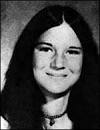
William E. Cosden Jr.
Cosden.
Kathy Devine.
Kathy Devine.
Devine.
Kathy and one of her sisters.
The remains of Kathy Devine.
The bell-bottom blue jeans with a dragon patch on the pocket that Kathy was wearing when her remains were recovered.
The mock-suede coat with fur trim that Kathy Devine was wearing when her remains were recovered.
The ‘waffle-stomper” boots Kathy was wearing when her remains were recovered.
Beverly Pearson.

Cites:

Katherine Devine Murder: Where is William Cosden Jr Today? Update (thecinemaholic.com)
Life term for man whom DNA linked to murder (seattlepi.com)
Closing ceremony, tour of McNeil Island prison (seattlepi.com)
Evil Lives Here, Sisters in Silence. Season 13, Episode 10.
Katherine Devine Murder: Where is William Cosden Jr Today? Update (thecinemaholic.com)
Katherine Merry “Kathy” Devine. | Another Bundy Blog. (wordpress.com)
Most pictures were taken from Another Bundy Blog: Kathy Devine
Facebook page Cowards ad Killers
Man sentenced to life in prison for 1973 murder | The Seattle Times
Historical Newspapers from 1700s-2000s – Newspapers.com
On the case with Paul Zahn, Season 12, Ep 4, Waving Goodbye.
Other info, Another Bundy Blog. (wordpress.com)
https://www.heraldnet.com/news/rapist-charged-in-1973-killing/

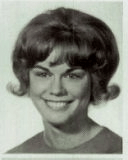
Suzanne “Sue” Rae Seay-Justis.

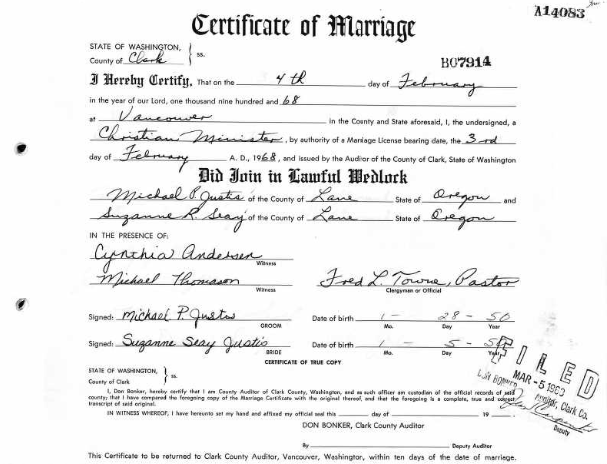
Suzanne “Sue” Rae Justis was born to John and Doris (Smeed) Seay on January 5, 1950 in Vancouver, Washington. The couple were wed on December 25, 1954 and eventually relocated to Eugene, Oregon; they had three daughters (Suzanne, Chris, and Joan) and a son (Gary). Sue attended North Eugene High School and about halfway through her senior year on February 3, 1968 she married Mike Justis (who I’m deducing was her high school sweetheart as they went to school together and were so young); the couple had a son together however they divorced in November 1971. Sue was 5’3,” weighed 110 pounds and had blue eyes; she also had a mole on the left side of her face underneath her bottom lip. Like so many of the other unconfirmed victims I write about, there isn’t a lot of information out there on her (the majority of the pictures I found were from high school).
At the time she disappeared in 1973 Justis was 23 years old and wore her brown hair long and parted down the middle. Most of what we know about the last hours of Suzanne Justis’ life is because of a conversation she had with her mother: at some point on November 5, 1973 Mrs. Seay spoke with her daughter on the phone. Sue told her that she was in the general area of what was (at the time) The Memorial Coliseum in Portland, OR and was planning on returning home the next day so she could pick her son up from school (which makes me think she didn’t have to be back until around 2 or 3 PM). Mrs. Seay (who for obvious reasons was concerned about her daughter) got her a hotel room although there are no details about what one she set it up with. Despite owning a car Suzanne was known to hitchhike frequently: according to one article, law enforcement found her vehicle in her hometown of Eugene so it’s believed that she got to Portland through ulterior means (most likely hitchhiking). Sue never used the room her Mom got for her and she never returned home, making law enforcement speculate that she tried to thumb a ride home and most likely was abducted by the individual that picked her up. As we all know, Bundy often targeted hitchhikers and would quickly subdue then incapacitate them once they were securely in his vehicle. For reasons that have never been made known, a missing persons report was never filed for Justis until 1989.

One frequent route Bundy liked to take when hunting for prey was the I-5, which is the main north-to-south Interstate Highway located on the West Coast of the US. It extends throughout California, Oregon, and goes right through Seattle, WA (where Bundy was living at the time Justis disappeared in 1973). The Memorial Coliseum is located right off the I-5, which is where Sue told her Mom she was close to on the night they last spoke. Additionally, when Vicki Lynn Hollar was abducted from the nearby college town of Eugene (the University of Oregon is located there as well, which is where Kathy Parks was abducted form) she was taken right off the I-5 as well.n As we all know, Bundy’s ‘official’ reign of terror began on January 4, 1974 when he brutally assaulted and left Karen Sparks for dead in Seattle. According to the ‘Ted Bundy Multiagency Investigative Team Report 1992,’ when Justis vanished on November 5, 1973 he purchased gas in Seattle. At the time Ted was in between jobs: in September 1973 he was briefly employed as the Assistant to the Washington State Republican Chairman and he remained unemployed until May 3, 1974, when he got a job at the Department of Emergency Services in Olympia (he was there until August 28, 1974). In September 1973 he started law school at the University of Puget Sound but quickly grew disenchanted with the schools ‘lack of prestige’ and stopped attending classes. At the time he was still in a fairly committed relationship with Elizabeth Kloepfer, his longtime girlfriend in Seattle.
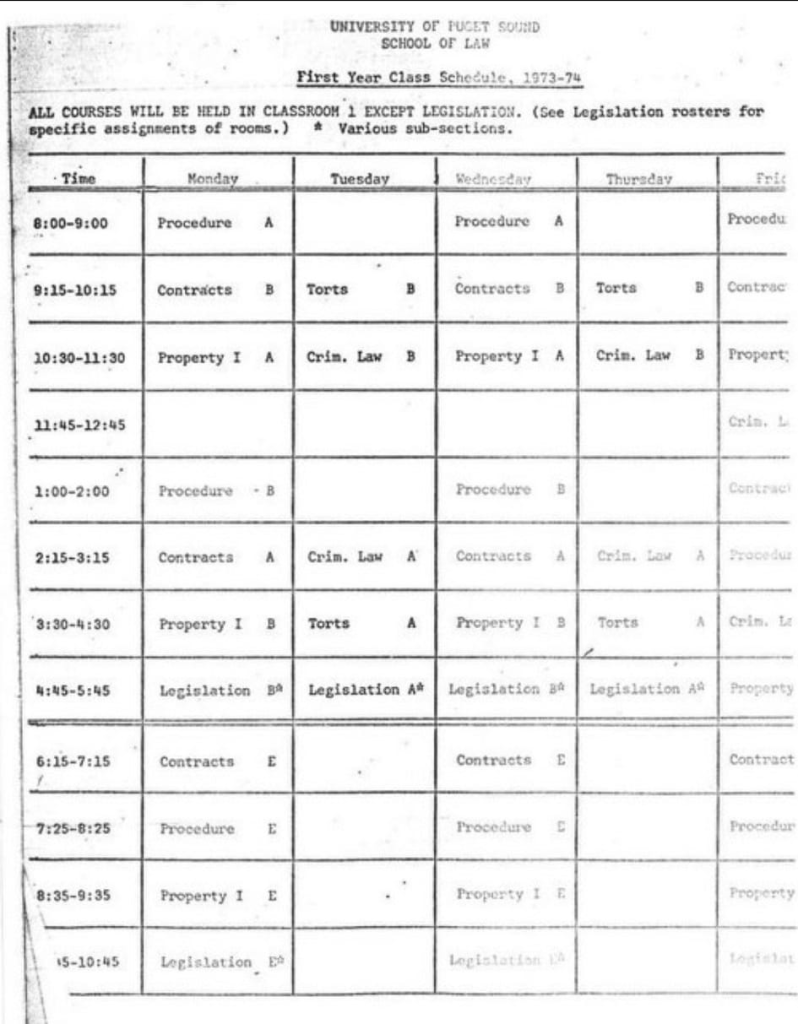
Is it really that far-fetched that Bundy would have gone out driving around aimlessly on a random Monday night, maybe after studying or seeing Liz? The trip would have been roughly three hours and nineteen minutes away (one way) from the Rogers Rooming House where he was living at the time. Did he just happen to drive past the Memorial Coliseum and stumble across Justis, thumbing a ride around Portland? We know he abducted Kathy Parks while living at the same place and she was roughly the same distance away (even though she was found in Washington state’s Taylor Mountain). I know the TB Investigative Report places him in Seattle (it doesn’t specify at what time), but the round trip would have been an easy one for Ted. I don’t know, if I can be honest, I don’t think he killed a lot of the girls I write about (maybe 70% of them)… but, I’m leaning towards him killing Suzanne Justis. I personally think that all these girls are going to be found in a dump site together: Rita Jolly. Vicki Hollar. Suzanne Justis. I speculate that when they find one, they’ll find them all. ‘Steve the Amateur Historian’ points out in his YouTube video about Justis that the week she disappeared Ted wasn’t going to class: he attended on Friday, November 2, 1973 then there’s a break until the following Friday, November 9. What was he doing in this time? Skipping class because he was hunting for a victim (who happened to be Suzanne)? I was able to track down his school schedule and on Monday nights he had night class from 6:15-10:45 PM (with a few ten-minute breaks in between). I would think if this happened more recently, I could search for the school’s Academic Calendar and check if maybe there was a weird mid-semester break for those dates, but considering the University of Puget Sounds Law School doesn’t even exist anymore I’m not wasting my time.
As far as I know, Bundy never discussed Justis in any capacity. When being questioned by Dr. Bob Keppel about the murder of WSU student Joyce LePage, the following exchange occurred between the two men:
Ted Bundy: ‘Yeah, I can tell you– I can tell you — yeah, we can do it that way if you’d like, too. And maybe in some ways that’s easier. I can tell you what, that’s, you know, what I’m not involved in. You know; if you have a list of that type in your head.’
Robert Keppel: ‘There’s a gal in 1971, Thurston County.’
TB: ‘No.’
RK: ‘Not that far back. Nothing that far back?’
TB: ‘1972.’
(…)
In this interview Bundy claims he started killing in 1972, meaning it isn’t that much of a reach that he would have abducted more girls from Oregon than he admitted to. Before he was executed Ted admitted to killing three women there in that state (including Parks). Who knows if he was being truthful with this number, but most Bundy scholars feel Rita Jolly and Vicki Hollar were these victims… but at this point we’ll probably never know. Ted was often under the influence while he was committing his atrocities (whether it was booze, weed, or a combination of the two)…. what’s to say there weren’t additional girls he either lied about killing or straight up didn’t remember?
Another possible suspect that was investigated but eventually ruled out was Warren Leslie Forrest, a serial killer who operated mostly in the Washington state area from 1972 to 1974. Forrest was 5’9,” 155 pounds, had light brown shoulder length hair, blue eyes, and a bushy mustache. He was employed with the Clark County Parks and Recreation Department in Washington from January 1, 1971 to October 2, 1974, when he was arrested; he could have anywhere from one to six victims. At the time of his arrest Warren was 25 years old and living with his wife and two kids on 18th Avenue in Battleground, WA. I’m not sure if he is a candidate for Suzanne Justis’ murder as he seemed to gravitate towards younger, more adolescent girls (in their mid to late teenage years). There was an obvious difference between a teenage girl and 23 year old Justis (in my opinion). Also, he seemed to ‘hunt’ more around the Vancouver area, as his only confirmed victim from Portland was Martha Morrison.
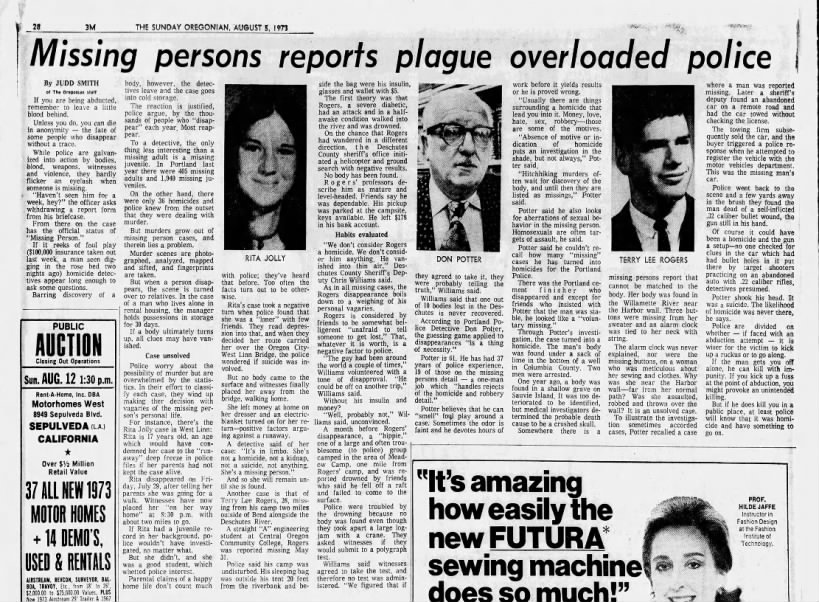
Around the same time in 1973 multiple other girls went missing from the same general area in Oregon: Fifteen year old Alison Lynn Caufman was found strangled to death in June 1973. Rita Jolly disappeared from West Linn while out on a nightly walk on June 29, 1973 and Susan Wickersham was abducted while waiting for a ride home from friends in Bend, OR on July 11, 1973. Her body was found on January 20, 1976 with a gunshot wound in the head (it’s strongly speculated Bundy didn’t have anything to do with her death as it didn’t fit his MO). Vicki Lynn Hollar disappeared after leaving her new job as a seamstress at Bon Marche in Eugene on August 20, 1973 (her black 1965 VW Beetle has also never been recovered). In 1973 Laurie Lee Canady died from massive head injuries after being shoved out of a moving vehicle at a high rate of speed in Portland (I wasn’t able to find ANYTHING else about her).
I don’t mean to immediately jump to Bundy (or any other serial killer) when I hear about any woman in the Pacific Northwest that was abducted and/or murdered in the early to mid-1970’s, but I guess I just can’t help myself. Who knows, maybe Justis met her demise at the hands of a random killer who only targeted her. Look at the recently solved case of Rita Curran, who was brutally butchered by William DeRoos. Whenever I hear about deaths like this in the 1970’s my mind automatically jumps to Bundy, but what if it was just some random nut?
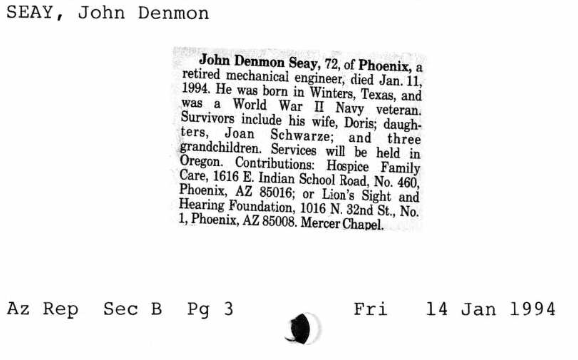
If Suzanne were alive in May 2023 she would be 73 years old. Because she had a son to care for I highly doubt she would just up and leave on her own (especially since she spoke with her mother the night she vanished and mentioned her intentions of coming home the next day). Mr. Seay passed on January 11, 1994 and Suzanne’s mom Doris died at the age of 82 on March 12, 2012.

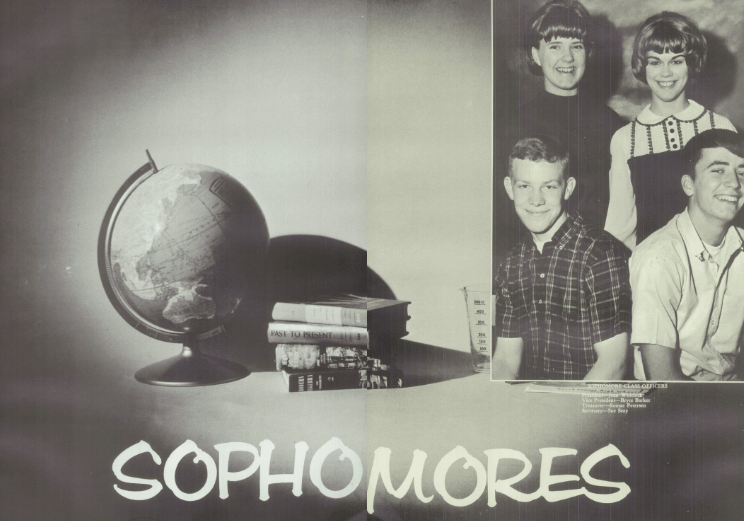
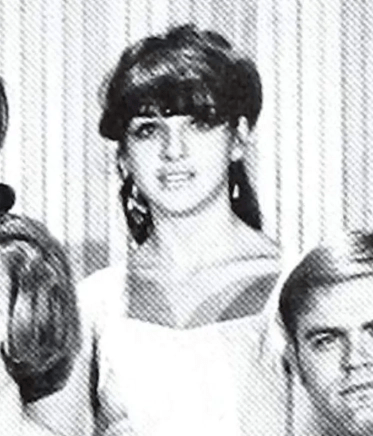
Sue’s sophomore picture from the 1966 North Eugene High School yearbook.
Sue in the sophomore class officers picture from the 1966 North Eugene High School yearbook.
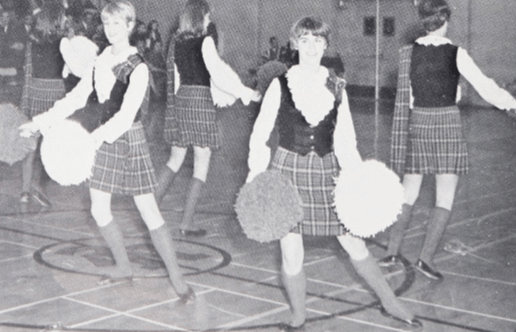
Sue posing with the cheerleading squad in 1966.
Sue with the cheerleading squad in 1966.
Suzanne’s picture in the 1967 North Eugene High School yearbook.
Sue posing with the Evaluation Committee in 1967.
Sue in a group picture from 1967.
Sue in a group picture from her 1967 yearbook.
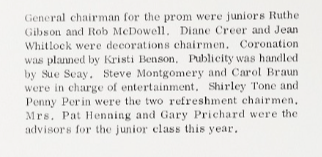
A blurb mentioning Sue in the prom committee in the 1967 yearbook.
Sue posing with the Junior Class Council in 1967.
Students practicing for the all language caroling party at Christmas time in 1967.
A blurb mentioning Sue’s position in the German Club in the 1967 North Eugene High School yearbook.
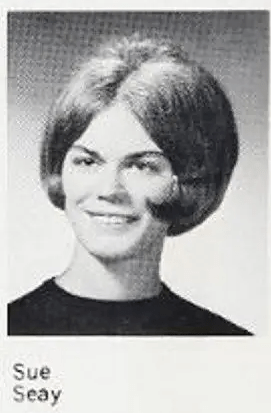
Sue’s senior picture from the 1968 North Eugene High School yearbook.
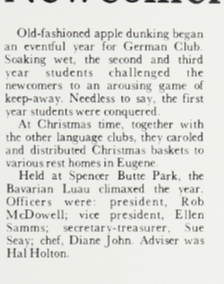
A blurb mentioning Sue’s position in the German Club in the 1968 North Eugene High School yearbook.
Sue Justis, photo courtesy of the King County Sheriffs Department.
Michael and Suzanne Justis’ marriage application.
Michael and Suzanne Justis’ marriage certificate.
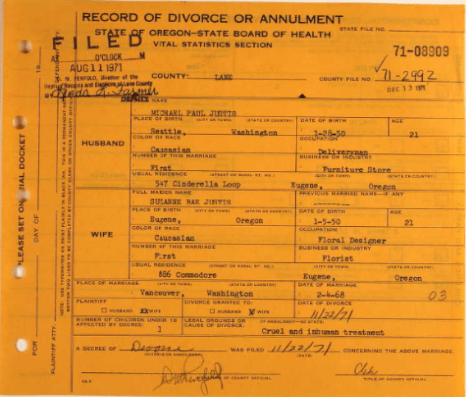
Michael and Suzanne Justis’ divorce papers filed on November 22, 1971.
Divorces granted on November 22, 1971 in Eugene, OR published by The Eugene Register-Guard on November 28, 1971.
A citation about custody of Mike and Suzanne’s son, Timothy published by The Eugene Register-Guard on April 1, 1974.
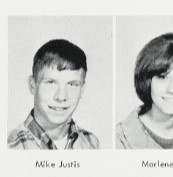
Mike Justis’ picture from the 1967 North Eugene High School yearbook.
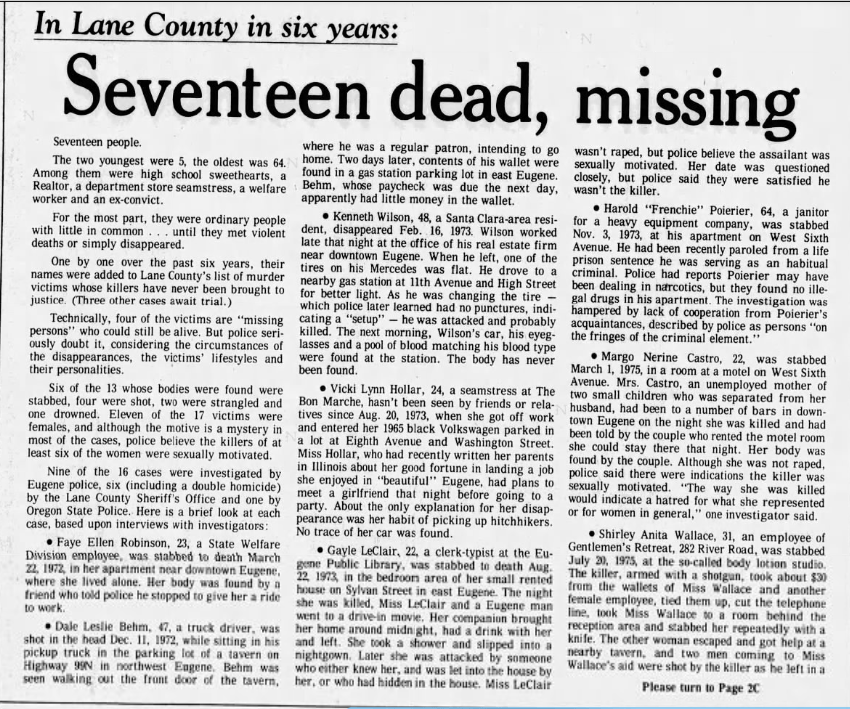
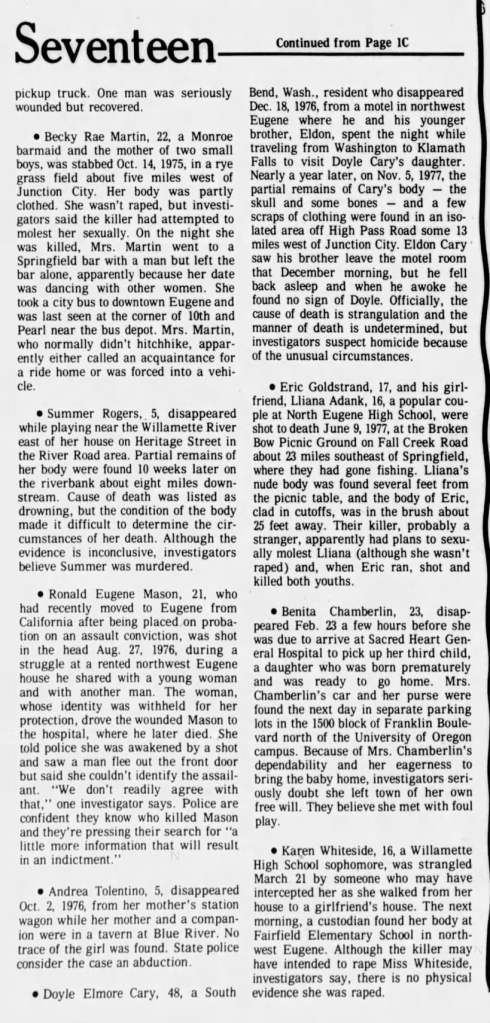
A list of the missing girls from Oregon from 1969-78.
A blurb mentioning Suzanne serving cake at her Aunts wedding.
An article mentioning Suzanne before she vanished published by The Eugene Register-Guard on November 28, 1971.
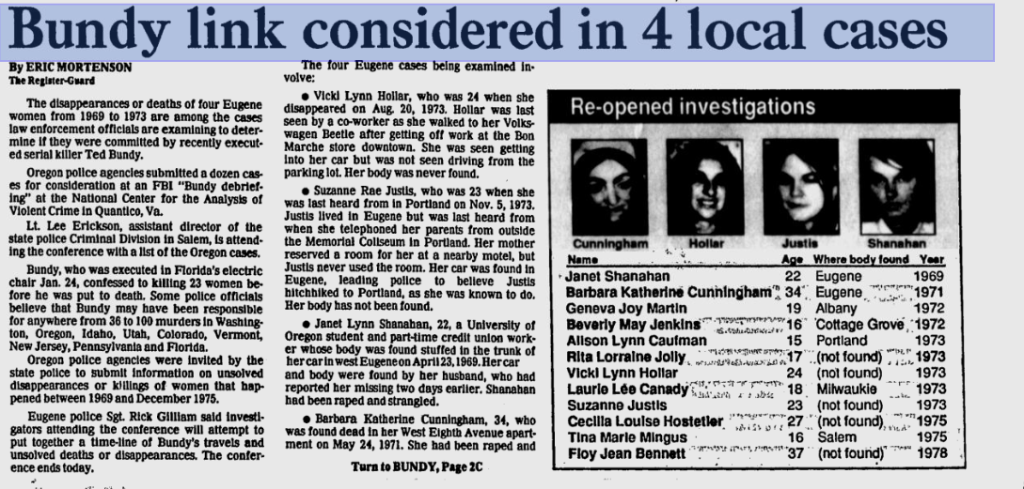
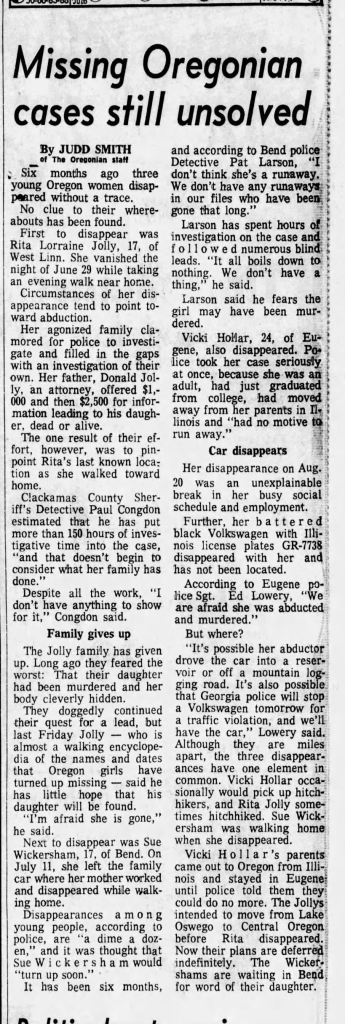
Part one of an article about the missing Oregon girls published by the Eugene Register-Guard on February 24, 1989.
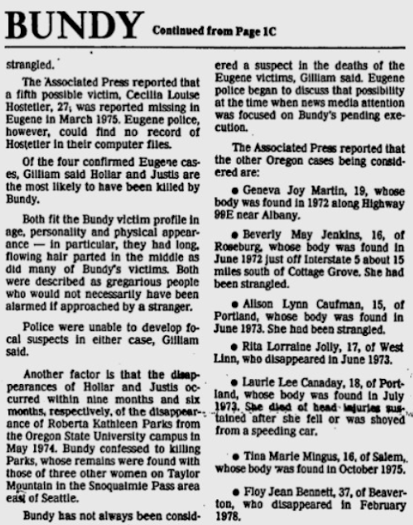
Part two of an article about the missing Oregon girls published by The Eugene Register-Guard on February 24, 1989.
The Memorial Coliseum in Portland, OR.
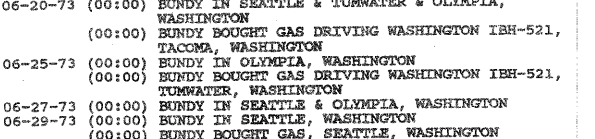
Bundy’s whereabouts on November 5, 1973 according to the ‘Ted Bundy Multiagency Investigative Team Report 1992.’
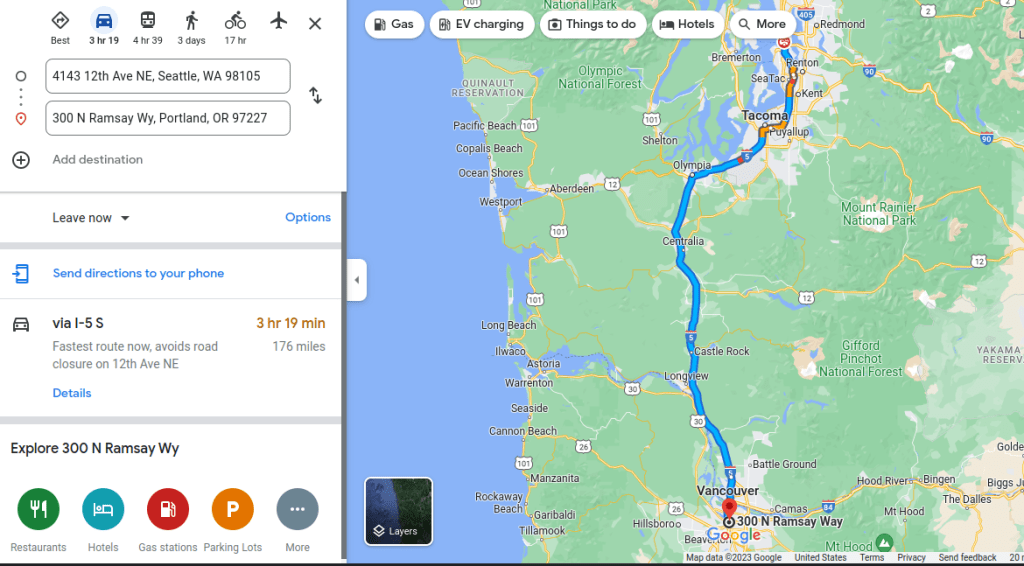
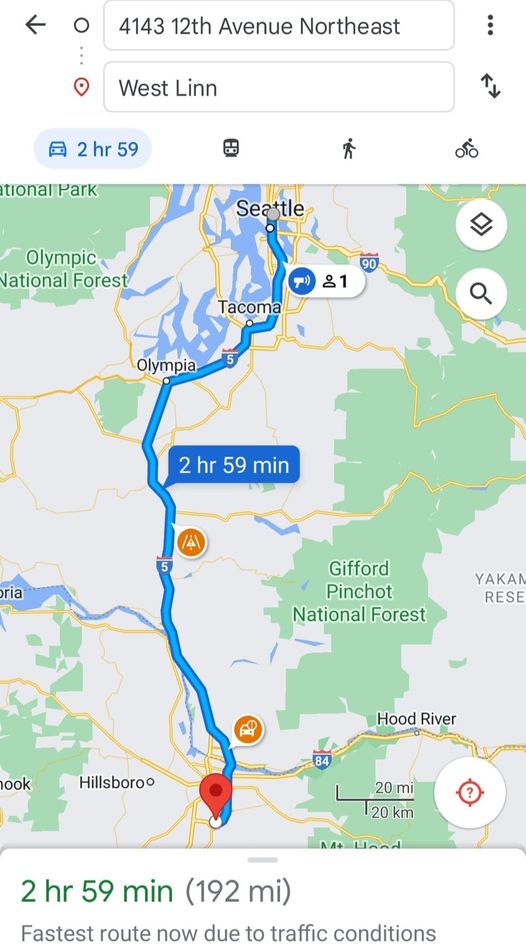
A Google Maps route from the Rogers Rooming House where Bundy was living at the time to the Memorial Coliseum in Portland, where Justis told her Mother last she was.
A poorly made map of where Bundy’s unconfirmed Oregon victims were last seen (aside from Kathy Parks, who is considered one of his confirmed casualties).
Route I-5, highlighted in red.
Bundy’s class schedule from his first semester at ‘The University of Puget Sounds Law School.’
Vicki Lynn Hollar.
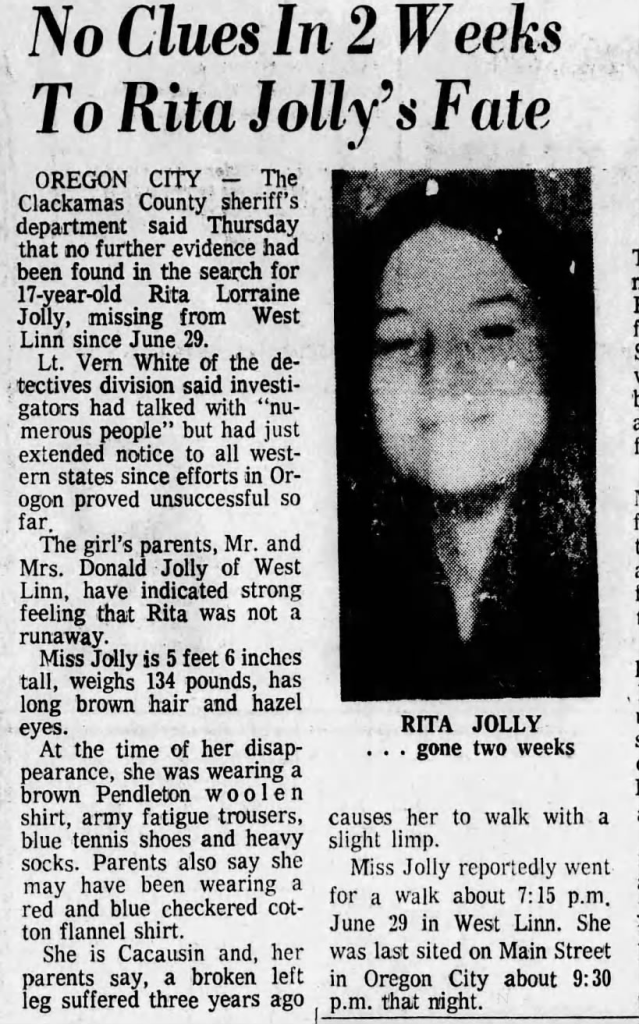
Rita Jolly.
A younger Warren Leslie Forrest.
Warren Leslie Forrest.
Martha Morrison.
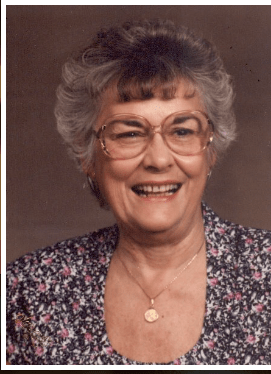
Suzanne’s mother, Doris Seay.
joan schwarze
John Seay’s obituary, published in The Arizona Republic on January 14, 1994.
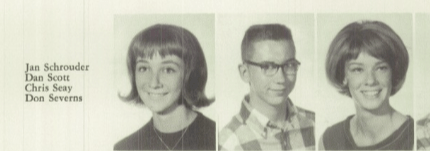
Suzanne’s sister Joan from the 1966 North Eugene High School yearbook.
Suzanne’s sister Chris from the 1966 North Eugene High School yearbook.

A Report by Ted Bundy to King County, January 26, 1973.

A Preliminary Research Proposal written by Theodore R. Bundy (consultant to Department of Budget & Program Planning) for King County, ‘Misdemeanants who Recidivate,’ dated January 26, 1973. Document courtesy of the Internet Archives, user ‘Marionumber1.’ From February to the end of April in 1973 Bundy worked for King County Program Planning.

Susan Wickersham.

Susan Ann Wickersham was born on November 21, 1955 to Roy and Sharon Wickersham of 905 SE Roosevelt Ave in Bend, Oregon. “Susie” (as she was called by family and friends) was 5’3” tall, weighed 110 pounds, and had medium length blonde hair. One of three children, at the time she disappeared Susan was 17 years old and had just completed her junior year at Bend High School. Family and friends described her as “a likable young lady with a bubbly, outgoing personality.”

In 1973, Bend, Oregon had a population of approximately 37,000* people and contained only one high school, and (for the most part) its residents were trusting and everyone residing there felt safe. At that time in the 1970’s hitchhiking was common (and legal), as people believed in the goodness of others. At roughly 11:30 PM on Wednesday July 11th, 1973, Susan dropped the family car off at the Sage Room Restaurant where her mother was employed after joyriding around town with a girlfriend (some conflicting reports say she was at a party with friends). Sharon let Susan borrow the vehicle on the condition that she return it before her shift ended. The restaurant has since closed but was located at 855 NW Wall Street in Bend, OR. Mrs. Wickersham asked her daughter if she wanted to sit and wait with her until the restaurant closed and they could drive home together, but Susan said she was going to hitch a ride with friends across the street in front of the Owl Pharmacy. When they didn’t show up she decided to trek the two miles home. Susan was last seen walking away from the drug store toward the intersection of Wall and Franklin streets wearing a ‘brown car coat,’ white slacks, white shoes and a blue and white checkered shirt; she was carrying a brown handbag.

After Susan never came home that summer night, the Wickersham family became frantic with worry and traveled all over Bend in hopes to locate their daughter. They showed anyone willing to look her picture, begging for any information they may know about what may have happened the night she disappeared. Police said that disappearances among young people at the time were a “dime a dozen” and theorized that she took off but would “turn up soon.” Mr. and Mrs. Wickersham immediately suspected foul play and told law enforcement that Susan didn’t runaway and would never leave voluntarily: she had a steady job and no problems in her personal or family life. Unfortunately they didn’t agree and suspected the teen ran away from home. In the months following Wickersham’s disappearance, police received multiple reports of possible sightings of her: former Bend Police Chief Emil Moen said they received calls that she was seen in Vancouver, Klamath Falls, Portland, and Bend. Most of these reports were from people who had seen girls that they felt looked like Susan. Two of them said she was in Klamath Falls a few days after Wickersham disappeared; another report was given by a salesman who said he recognized her as a girl he saw eating breakfast at a restaurant in Klamath Falls after he saw a story about Susan on the news. A Bend woman said that she spoke with a girl fitting Wickersham’s description at a bus stop in Klamath Falls. All reports lead to nothing. Wickershams little sister Rhonda McMurran said that “the police tried to tell them she had run away. I just don’t think they took it real seriously at the time. We knew better.” … “I just knew she was gone, but you still have to hold hope.” The family knew deep down that something bad had happened to their Susan. Because at first they weren’t taken seriously, the Wickersham family feels that law enforcement lost valuable time and evidence in the first few years after she disappeared. The police however claim that’s not true at all, and they did follow up on multiple leads and claim they made a real effort to locate her.

Denice Blake was at the Sage Room Restaurant waitressing the night Susan disappeared in 1973 and told police she remembers seeing her childhood friend briefly when she stopped in to return her mothers car. In 2015, Denice told KTVZ: “It was just a sunny ordinary day. This was Bend, Oregon in 1973, stuff like that didn’t happen here. I worked at the Sage Room Restaurant with (Susan’s) mom. She came in that day and we said ‘hi’ and exchanged greetings. A couple minutes later, I was waiting on a table and I saw her standing across the street in front of what was then the Owl Pharmacy, and the next time I happened to look out the window, she was gone.” A different eyewitness claimed to have seen Wickersham near the Tower Theater a little later on in the night.

On January 20, 1976, Susans remains were discovered about three to five miles south of Bend in the Deschutes River Woods; I read conflicting reports that said a man scouring the area for firewood stumbled upon them and others that said “a logger near a truck weigh station close to Highway 97 found her remains near a cinder pit.” With the body were some “personal items” and scraps of clothing that helped identify her. Like most other cases involving a “dump site” in a remote location, forest creatures had scattered Wickersham’s bones all over the area. Her skull had a bullet hole behind the right ear with no exit wound, and because of this police feel that she most likely met her demise from a small caliber weapon (possibly a .22 pistol). Portland Deputy State Medical Examiner Larry Lewman determined that the bones were there for “probably two years or more” and were those of an individual in their late teens/early 20’s (but had no idea if the skeleton belonged to a male or female). Because Susan’s dental records couldn’t be located (for unknown reasons), Bend law enforcement had to mail the skull to her former dentist, Dr. David Mason (who moved to Stewart, British Columbia to treat Eskimos) in hopes he could ID his former patients teeth from memory. Dr. Lewman said that “we’re depending on memory. There are some distinctive dental characteristics (residual baby teeth, impacted wisdom teeth) which he (Mason) might remember.” Thankfully Dr. Davis did remember because he was able to confirm that the skull belonged to Wickersham as he “recognized the dental work as his own.” Former Deschutes County District Attorney Mike Dugan said that “there was no doubt that she was dead, there’s no question she met death by a homicidal act, so it became a whodunit.”

Unfortunately the amount of evidence found with Susans remains was next to nothing and the case once again went cold. To this day law enforcement has an unnamed person of interest in mind but unfortunately not enough evidence to prosecute them. In 2004 (one source said it was 2005), the Deschutes County Sheriff’s Office assembled their ‘Cold Case Team,’ which consists of veteran law enforcement whose mission is to investigate cases that have long gone nowhere and still remain unsolved. According to a 2011 article published in the Bend Bulletin, “the squad consists of four retired law enforcement officials who volunteer about 20 hours each week poring over binders filled with information on unsolved crimes. And it’s Wickersham’s long-unsolved case that sparked the start of the cold case squad.” They are hoping for members of the public to come forward and help provide new information to help link the suspect to Susan’s murder. On September 12, 2006, the Cold Case Squad joined forces with a FBI crime scene processing team from Portland that included 15 volunteers from the sheriff’s office search and rescue unit. Together they searched an area near Knott and Scalehouse Roads in hopes to collect new evidence related to Wickersham’s case (however they didn’t come up with much).

In July 1973, Ted Bundy was in between jobs: from November 1972 to April 1973 he worked for the Seattle Crime Prevention Advisory Commission helping draft the state’s new hitchhiking laws (ironically he also wrote a rape-prevention pamphlet). He remained unemployed until September 1973 when he was the assistant to the Washington State Republican chairman. The ‘FBI Multi-Agency Team Report 1992‘ has no record of Teds whereabouts on 7.11.1973 (although he was in Olympia the day before and after). Bundy was in between schooling at the time as well: later on in the year he enrolled in the of University of Puget Sound’s Law School in Tacoma (that endeavor didn’t last long). He was also in a long-term relationship with Liz Kloepfer at the time as well. The drive from the Rogers Rooming House in Seattle where Ted was residing at the time to the Sage Room Restaurant in Bend was a bit over six hours, one way (or roughly 330ish miles). Receipts put him in Seattle the day before and after but in my opinion, Ted definitely could have made that trip easily with no issues. and what if he bought gas in cash (so there was no real paper trail)? Now, I know I’m not a cop or criminologist. I know that none of Bundy’s victims suffered from gunshot wounds BUT (and I’m just throwing this out there): in a 2022 interview with People magazine, Carol DaRonch said Ted “brandished a gun” when he attempted to kidnap her in 1975 in Utah. Did Bundy experiment with alternative methods aside from a crowbar and strangulation? In my article about the homicides of Susan Davis and Elizabeth Perry (also known as the New Jersey Parkway Murders), I wrote about how the two girls were vacationing at the Jersey Shore Memorial Day weekend in 1969 and were stabbed to death shortly after they departed for home. Were these early murders ones Bundy committed before he honed and “perfected” his technique? The human body contains a shockingly large amount of blood; was stabbing and shooting too “messy” for Ted, which is why he never returned to these methods again (that we know of anyways)? We do know he carried an extra set of clothes in his car with him at all times in case of emergencies. Personally, I do think this case is a bit of a stretch and poor Miss. Wickersham was most likely murdered by someone else. I don’t think she is a victim of Ted Bundy.

On April 19, 2022 a Reddit user suggested that Wickersham may be the victim of John Arthur Ackroyd. Born on October 3, 1949, Ackroyd was raised in the small logging town of Sweet Home, Oregon (a little over 2 hours away from where Susan was last seen); in 1977 he started working for the Oregon state highway department along US Route 20. That same year, he sexually assaulted Marlene Gabrielson and in 1978 he abducted and murdered Kaye Turner (with the “help” of an accomplice, Roger Dale Beck). Ackroyd’s stepdaughter Rachanda Pickle went missing in 1990 and he was officially charged with her murder in 2013 (he pleaded no contest). He is also suspected of killing Sheila Swanson and Melissa Sanders in 1992 in Lincoln County, Oregon. ‘The Oregonian’ newspaper further alleges he was involved in the murders of several additional women. Despite Ackroyd’s shady history, it was determined that he was stationed oversees in the Army between 1969 and 1976 so he couldn’t have been responsible for Susan’s death. He died on December 30, 2016.

For former Deschutes County Sheriff’s Captain Marc Mills, Susan’s case was personal. The two were classmates at Bend High School, and said that “Susan was happy, free-spirited. We would occasionally be at the same lunch table. It was sad when Susan went missing, and a shock when the town learned how she died. It was disturbing for our Class of 1974.” … “It was one of the first things I wanted to do, was pick this file up as a young detective, the youngest detective at the time. This is one of the cases I really, truly wanted to have closure.” Mills said it was upsetting for everyone in the community when Wickersham went missing, and a horrible shock when everyone learned how she died: “it was disturbing for our Class of 1974. It’s disheartening. Of course, a lot of my classmates had hope, had hope in me.” He said that detectives are “only a clue or two away from cracking the case, but the clock is ticking.” The cold case team uses the 1974 Bend High School yearbook in their interviews to help “jog memories and spark conversation” when trying to obtain new information about Susan. In 2022 former Deschutes County District Attorney Mike Dugan told KTVZ news that “it’s more of a case of a lack of concrete proof than a lack of a theory,” and that “they absolutely believed they knew who did it. The cold case unit came and tried to get us to do a prosecution. My chief deputy district attorney and I reviewed what they had and said, ‘we still don’t have enough’.”

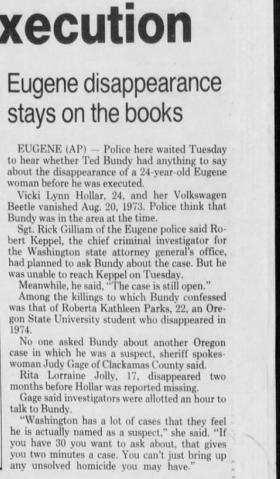
It’s speculated that Susan’s disappearance could be linked to Rita Jolly from West Linn, OR and Vicki Lynn Hollar from Eugene, OR. Jolly vanished on June 29, 1973 while out on a nightly walk and Hollar disappeared while leaving her job at Bon Marche (she was employed there as a seamstress) on August 20, 1973. Unlike Susan, both girls haven’t been recovered. As I said earlier, I don’t think Bundy killed Wickersham but I do think he murdered Jolly and Hollar.

Rhonda said that Susan is never far from her thoughts, “probably because we never had closure. I couldn’t even imagine then that it would take this long to solve.” She hopes that one day she will learn why Susan was taken from them, saying “someday, I’d like to look the guy in the eye and say, ‘Why’d you do this?’ She was just a nice person. You think of all those things that could have been, and all the people who loved her.”

Despite her case being cold for many years, Bend police as well as Susans loved ones still think they have a pretty good idea who is responsible for her murder; they hope one day they’ll come up with enough evidence to be able to make an arrest. Rhonda thinks that she has a good idea who the killer is, saying: “it’s probably going to surprise many of us, and it’s probably going to surprise how close in proximity they were to a number of us in Bend community.” In 2015, Captain Mills said he still holds onto hope that Wickersham’s killer will be caught, and has a message for anyone that knows something but is holding back: “you’re 42 years older. You’re probably near the end of your life. Put some things in motion… at least in the event of your death, so investigators at the sheriff’s office can put this case to rest, and give what family is left closure.” Sadly both of Susan’s parents died before police were able to solve their daughters murder: Mr. Wickersham passed away in 1993 and Mrs. Wickersham in 2006.

* I’ve had numerous residents of Bend reach out to tell me they feel this number is wrong. I would know nothing about that, I pulled that figure off the website ‘oregon.reaproject.org.’

Susan in her 1972 yearbook photo.
Susan Wickersham.
Susan Wickersham’s gravestone.
The Owl Pharmacy in Bend, OR where Susan was last seen; it’s no longer open.
An older shot of Bend, OR.
An article on Susan Wickersham published by The Bulletin on July 17, 1973.
An article on Susan Wickersham published by The Bend Bulletin on July 23, 1973.

An article on Susan Wickersham published by The Bulletin on September 19, 1973.

Article courtesy of ‘Ted Bundy: I was trying to Think like an Elk.
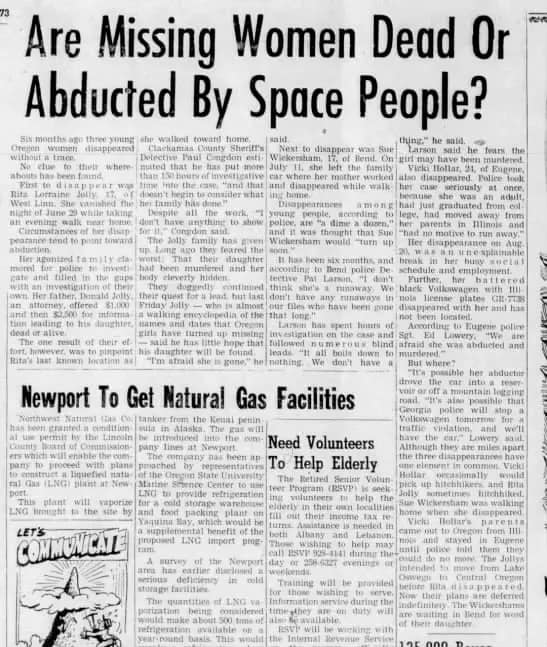
An article on the missing Oregon girls published by The Greater Oregon on December 21, 1973.
An article on Susan Wickersham published by The Bulletin on January 17, 1975.
An article on Susan Wickersham published by The Bulletin on January 21, 1976.
An article about Susan after her remains were found published in The Capital Journal. I couldn’t find the publication date.
An article on Susan Wickersham published by The Bulletin on January 26, 1976.
An article on Susan Wickersham published by The The Bulletin on January 29, 1976.

An article on Susan Wickersham published by The Eugene Register-Guard on February 11, 1976.
A newspaper piece on the Deschutes County Cold Case Squad.
Out of respect I left Susan’s SIL’s name off this Facebook post. When I see posts like this my heart drops to my feet. On occasion I need to ground myself and remember why I’m doing this: for the victims, not Ted Bundy. Monsters like him need to stop being glorified.
Another post from Susans SIL.
Ted’s whereabouts for July 11, 1973’s are unaccounted for in the ‘Ted Bundy Multiagency Investigative Team Report 1992.’
Susan Ann Wickersham listed in the Oregon US, Death Index from 1898-2008.
The house the Wickersham family was living in when Susan was murdered located at 905 Southeast Roosevelt Avenue in Bend, OR.
The most logical route from the Rogers Rooming house where Ted was living at the time to the Sage Room Restaurant in Bend, OR.
A Google Maps route of Susan Wickershams possible walk home from the Sage Room Restaurant.
A Google Maps view of where Susan Wickersham was last seen compared to where her remains were discovered at the Deschutes River Woods.
A Google Maps view of where a recent search for Susan Wickersham took place compared to where her body was found.
Susan’s sisters Rhonda’s write up for her ten year high school reunion booklet, courtesy of bendhigh1969.com/clients/869621/File/10thReunionBookletPart3.pdf.
John Arthur Ackroyd.
Vicki Lynn Hollar.
Rita Jolly around age 10-11.

Vicki Lynn Hollar.

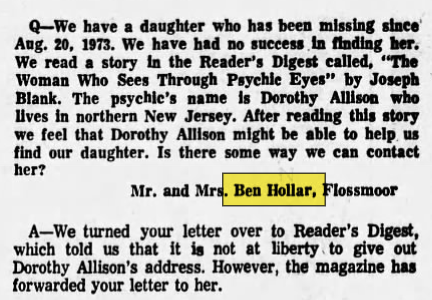
Vicki Lynn Hollar was born on March 8, 1949 to Benjamin and Aida (nee Presta) Hollar in Flossmoor, Illinois; the couple also had a son named Kenneth. Sadly Aida gave birth to a son they named Benny Gene on November 11, 1959 but he only lived for four days. An attractive, small framed girl, Ms. Hollar stood 5’1” tall, had brown hair and eyes and weighed a mere 115 pounds. She moved to Eugene from Illinois in June 1972 after graduating from Southern Illinois University and moved into an apartment with five roommates. She was employed as a seamstress at Bon Marche located at 175 West Broadway (now Macy’s) and had only worked there for two weeks. Friends and coworkers told law enforcement that Vicki was happy and was looking forward to being scheduled for full-time hours the following work week.

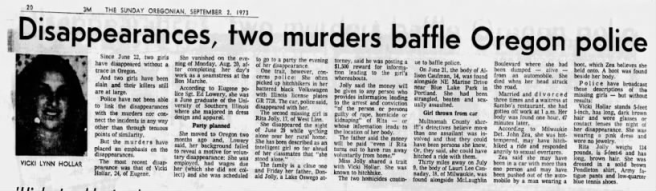
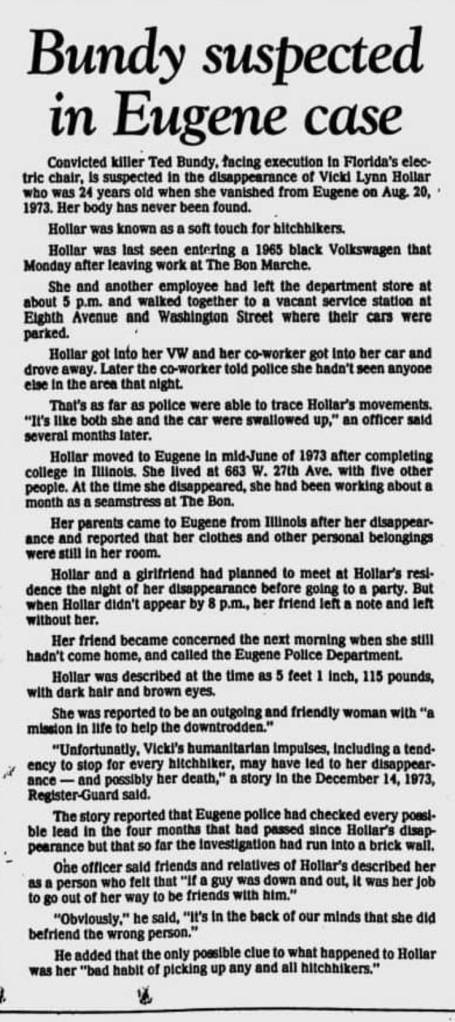
On Monday, August 20, 1973 twenty-four-year-old Vicki disappeared without a trace: she was last seen getting into her black 1965 Volkswagen Bug close to 8th Avenue and Washington Street in Eugene; her Beetle had Illinois plates (numbered GR7738) and its running boards were removed. After work at around 5:00 PM she walked with her supervisor to their cars parked in a vacant service station at 8th Avenue and Washington; she was wearing a pink dress. The coworker said that she ‘hadn’t seen anyone else in the area that night.’ That was the last time anyone saw Vicki: law enforcement said that ‘it’s like both she and the car were swallowed up.

It’s strongly theorized that after her workday Vicki was on her way to her apartment about 1.7 miles away located in the 6600 block of West 27th Avenue. She was supposed to meet a friend at her place around 8:00 PM and from there the pair were going to go to a party somewhere in the neighborhood. Unfortunately, Vicki never made it home or to the gathering, and sadly was seen or heard from again. The friend she was supposed to meet up with hung around for a little bit then when she never showed up, left a note for Vicki and went to the party by herself. The next day however, when she still didn’t hear from Ms. Hollar the friend became even more concerned, and because Vicki was a bit older than the other missing girls vanishing around the region law enforcement immediately took her disappearance seriously: she was establishing roots in Eugene and didn’t seem to have any reason to just up and leave.

After Vicki disappeared, her parents came from Illinois to talk to law enforcement and get a feel for the investigation. They told police that all of their daughter’s clothes and personal belongings were left behind at her apartment. Additionally, she never picked up her last paycheck from Bon Marche and her purse and car have never been found to this day. Eugene Police followed every single lead they received for four full months after Vicki’s disappearance but came up with nothing.

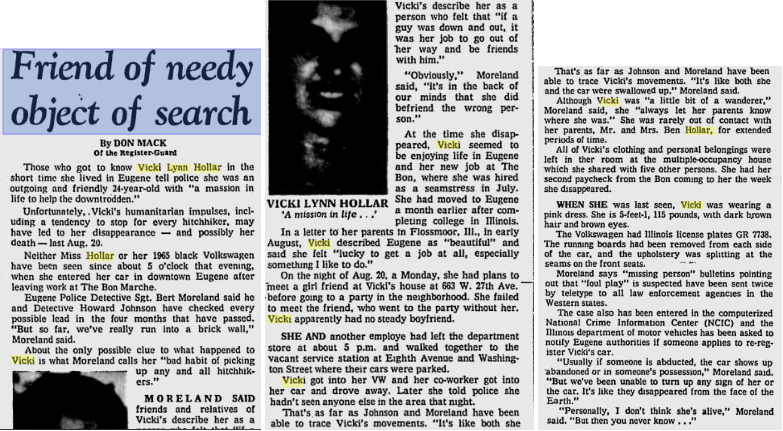
Vicki’s family stated she was incredibly content with where she was in her life and was happy with the direction it was heading: she loved her new job, had a lot of friends and didn’t seem to have any reason to just up and leave. Like so many others in the 1970’s, she did have a habit of picking up hitchhikers on occasion. Described as ‘outgoing and friendly,’ the young woman was said to ‘have a mission in life to help the downtrodden,’ and an officer that worked the case said that loved ones described Vicki as a kind-hearted person who felt that ‘if a guy was down and out, it was her job to go out of her way to be friends with him. Obviously, it’s in the back of our minds that she did befriend the wrong person. On December 14, 1973 a story that ran in the Register-Guard said ‘unfortunately, Vicki’s humanitarian impulses, including a tendency to stop for every hitchhiker, may have lead to her disappearance but that so far the investigation had run into a brick wall.

I already briefly touched on Vicki’s case when I wrote about another young girl that Bundy suspected of murdering from Oregon, Rita Jolly. Seventeen-year-old Ms. Jolly also disappeared without a trace from West Linn on June 29, 1973. At the time of Vicki’s disappearance in August 1973, Bundy seemed to be in between jobs: from February to April of that year he worked for King County Program Planning then took a break from employment until September 1973, when he was the Assistant to the Washington State Republican chairman. At this time he was still in a relationship with Liz Kloepfer and he was also enrolled in law school at the University of Puget Sound. According to the ‘Ted Bundy Multiagency Investigative Team Report 1992,’ Ted was having the clutch repaired on his VW Bug in Seattle, although it’s argued he was ‘borrowing’ a car from someone (see Websleuths screen grabs below for clarification).

In his final death row interview with Bob Keppel, Bundy confessed to starting his murder spree in 1972, years before his official reign of terror started in 1974:

RK: There’s a gal in 1971, Thurston County.
TB: No.
RK: Not that far back. Nothing that far back?
TB: 1972.

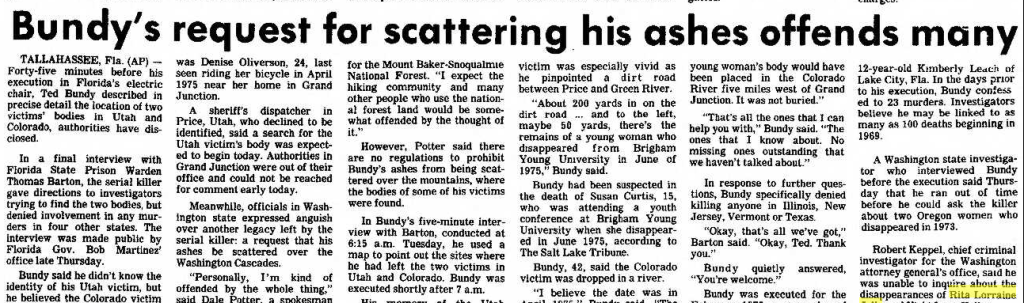
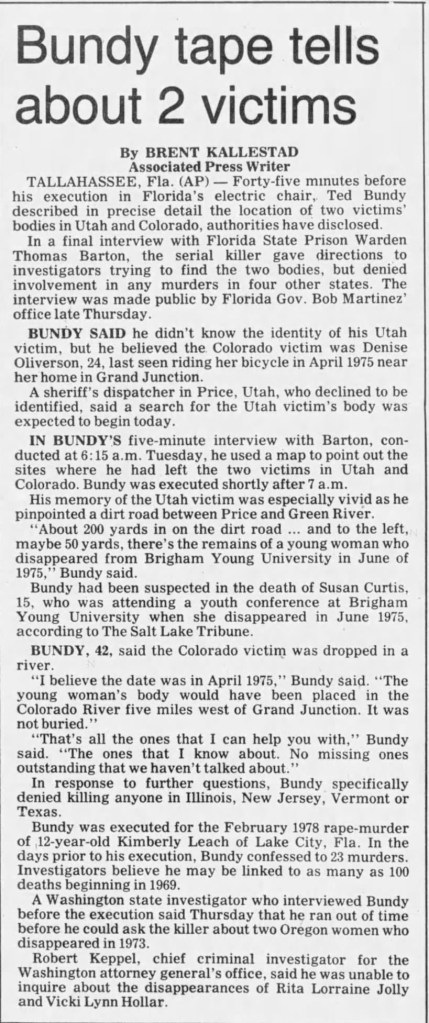
I’ve been finding most of Bundy’s ‘unconfirmed victims‘ have very weak commonalities without a lot of substance… Vicki did look like one of Teds victims: she was beautiful and slim, with brown hair and dark features. Her abduction was most likely a crime of opportunity, like so many of the others. Additionally, she fit neatly into his age range, as he killed young females anywhere from 12 years old (possibly even as young as eight if you throw Ann Marie Burr into the mix) up to 26 years old (ski instructor Julie Cunningham). But that’s about it. Bundy confessed to two homicides in Oregon but never gave any information that would identify the victims. It’s highly considered that Hollar is one of those two girls. Ted confessed to abducting Roberta Kathleen Parks from Oregon State University on May 6, 1974; he claimed to have raped and killed her at Taylor Mountain, over 250 miles away from the school and about 25 miles southeast of Seattle. Because she was found in Washington, she is not included in his Oregon victim count. In interviews with law enforcement, Ted confessed to killing two additional women in Oregon but refused to elaborate on their details; Vicki Hollar and Rita Jolly are the best candidates according to most law enforcement. Oregon detectives tried but were unable to question Ted regarding Vicki’s disappearance before his execution in 1989, eliminating the chance of closing the case in relation to Bundy. I was not able to find anything from any of Ms. Hollar’s family in regards to Bundy as her killer, however I did find a quote by Jill Jolly that was of importance: ‘as I recall, my mother told me that the local detectives managed to get a direct question about Rita through to him before his execution, and his reply was ‘No. No more in Oregon.’ Bundy withheld many secrets hoping to parlay the untold stories into yet another stay of execution. ‘There are other buried remains in Colorado’ he said, refusing to elaborate any further. Dubbed Ted’s ‘bones-for-time scheme,’ this only frustrated detectives even more. 

At this point in my writing I don’t need to point out that this attractive young woman fits the physical description of Teds other victims and he was known to have been in the general region at the time of her disappearance. At first I thought 24 was a little too old to make her one of Teds victims (as I previously stated, Julie Cunningham was 26 when she was killed)… then I remember this one time when I went back to school for my counseling degree (what a total waste of time that was): all the kids I was taking classes with were all in their very early 20’s and in between classes one day we were all sitting around talking and when I told them I was 30 they all seemed genuinely surprised that I wasn’t ‘their age’ (their words, not mine I swear). I mean, maybe they were being kind but I’ve been told my entire life I look younger than I am. Maybe not SUPER young but maybe Vicki looked younger than she was. Or maybe I’m overthinking this and 24 was a fine age for Bundy. Just my thoughts.

An interesting piece of this puzzle is Vicki’s little black bug has never been found. Now, obviously this means it’s most likely been stashed somewhere out of view (or broken down and sold for parts)… like, in a deserted barn, storage unit, or even a large body of water…My first instinct is a body of water. Websleuths user ‘Klimster’ points out that: ‘There are a LOT of bodies of water around Eugene. There’s the Willamette and McKenzie rivers and Fern Ridge, as you’ve mentioned. However, Fern Ridge has been emptied out at least one time that I know of in the ten years I’ve lived around here. There’s also a lot of lakes nearby and it doesn’t take long to get to the ocean either. The Willamette River is quite large. There are many areas where a car could have gone in unnoticed, IMO.’ According to Eugene Police Sergeant Ed Lowrey: ‘we are afraid she was abducted and murdered.’ … ‘its possible her abductor drove the car into a reservoir or off a mountain logging road. It’s also possible that Georgia police will stop a Volkswagen tomorrow for a traffic violation and we’ll have the car.’

An interesting factoid I figured out from mapping out lots of potential routes along Washington/Oregon/Utah/Idaho is that Vickie Hollar and Rita Jolly were both last seen in close vicinity of major roadways. Bundy loved to drive around late at night, just roaming the Pacific Northwest looking for prey…   that makes me think that if Ted was going to destinations south of Seattle he would just hop on the I-5 (which goes right through Eugene), or possibly go down I-205 in the Portland area. The city of Eugene has four colleges in it (New Hope Christian College, Bushnell U, University of Oregon, and Lane CC) and is home to the school Roberta Parks attended (University of Oregon). It’s well known that Bundy loved to prowl areas around college campus’s, and where better to go than a medium-sized college town with four schools? 

Looking through different true crime forums I was able to find some stories about Vicki from people that knew her: Websleuths user ‘Fal’ commented that: ‘Vicki was my grandmother’s goddaughter. My grandma tells a story of how when Vicki was coming from Illinois on her way to Oregon, she stopped in Denver to see her. My grandma told her that she should stay in Denver with her, because it was a nice place to live. Vicki said no, and that she had a job lined up for her in Oregon that she was excited to start (I’m assuming it was the seamstress job, which actually runs in my Gma’s family). That was the last time my grandma heard from her. Additionally, from the same forum user ‘Cait6’ commented that: Vicki stood up in my parents wedding just prior to leaving Illinois. She was good friends with my parents in college at SIU and at one point slept on their couch as college kids do when they are in between living situations. They had a tight knit group of friends and my dad told me stories of them all taking her beetle off roading down in Carbondale. One day off roading they accidentally knocked off one of the running boards on one side. When they got back to even it out, my dad and friends helped take off the other one which has always been a unique detail in her vehicle that remains missing. I wish I could provide you more information than that. My parents too have always wanted to know what happened to Vicki as they are now both close to their 70’s. I hope one day more information comes to light for you and her family.’

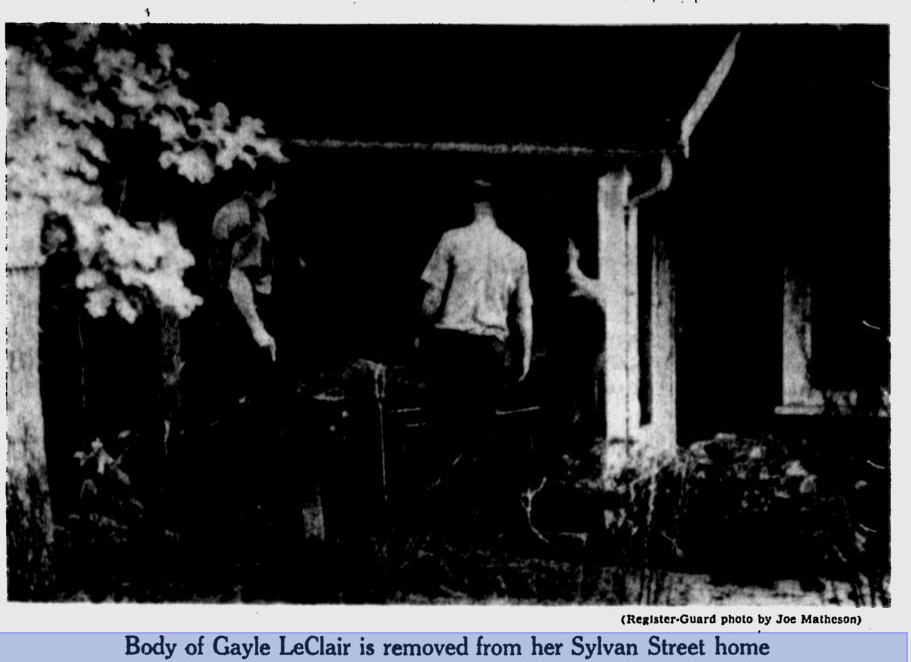
Another young woman was murdered from Eugene, OR just three days after Vicki disappeared: Gayle LeClair was just 22 years old when she was stabbed to death in her rented home. The young women who dreamed of one day becoming a teacher moved to Eugene in January 1972 and was found brutally killed in her apartment on Sylvan Street. I couldn’t find much on this case, but much like Vicki Hollar she seemed happy and very well liked by the people around her. Webslueths user ‘CherryValley’ commented that: ‘I knew Gayle in gold Beach in the 60’s. I have always wondered if they ever caught her murderer. Her murder was a shocking event in our circle of young friends. I wish someday soon this will be solved.’

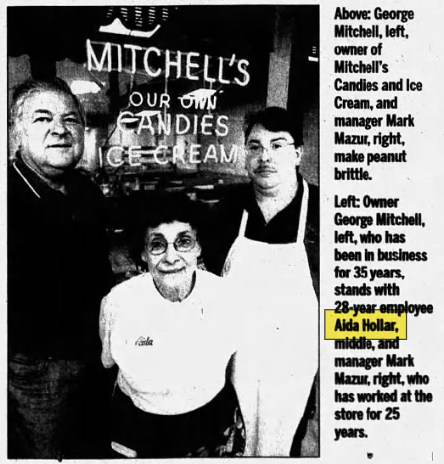
What happened to Vicki in the 1.7 miles from where her car was parked to her apartment? Did she pick up a hitchhiker who took her hostage and killed her? Did she decide to leave it all behind and start a new life somewhere? As of February 2023, Vicki Hollar is still classified as missing. She would be 73 years old. Benny Hollar passed away in December 1991 and as of September 2023 Aida Hollar is still alive.

I’ll end this with a poem about Vicki from Aimée Bakers piece, ‘The Saints of the Last Days’ called ‘Patron Saint of Seamstresses:’
‘Pray that she is the kind of woman who knows
how to pull a thread through, stitch
a hem closed with straight lines, and cut

an end loose without shifting, so you can offer
your own thimbleful of blood
to place at the feet of our maternal

heroine, the only one who will know
if the dark man watches her as he does her blood
sisters. Know that you offer for her a relic,

a way to carry her through the passageway
to the dusky vein of a car lot. Pray
that her pink-blushed dress stays neat

and clean. That the latch on her car door
always bolts tight against wanderers. That the ivory dawn
awakens her every morning until she is a grandmother.

And know that your prayers will not be enough
for her to overstep this moment, so that she can darn
this evening closed with her sleep.’

Edit: As of March 2023 I found some interesting new information from a ‘Websleuths’ user trying to solve Vicki’s case. It would be wonderful if they were successful.

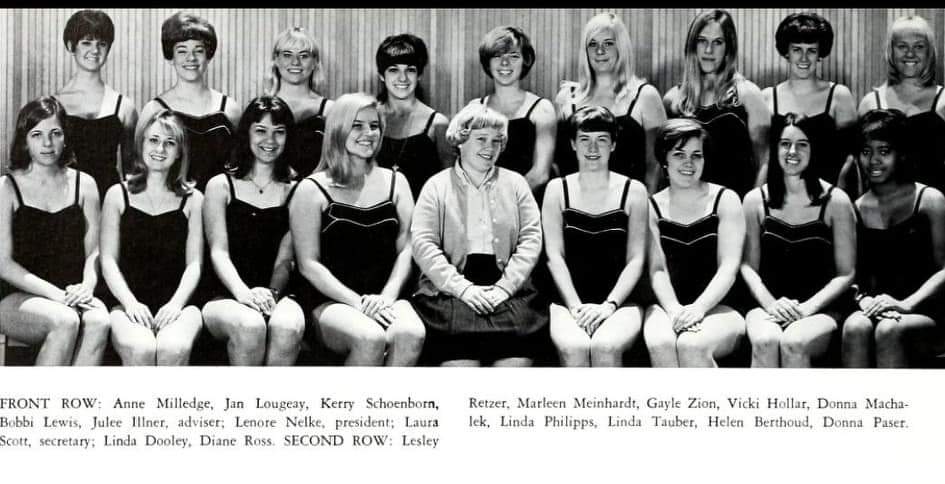
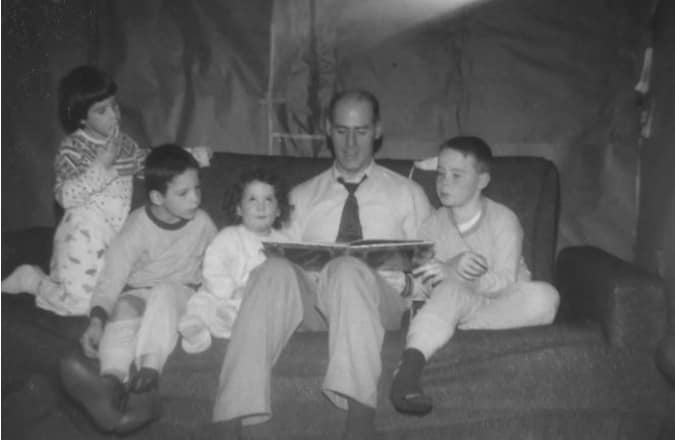
The only childhood picture I could find of Vicki, she is in the front row on the far left.
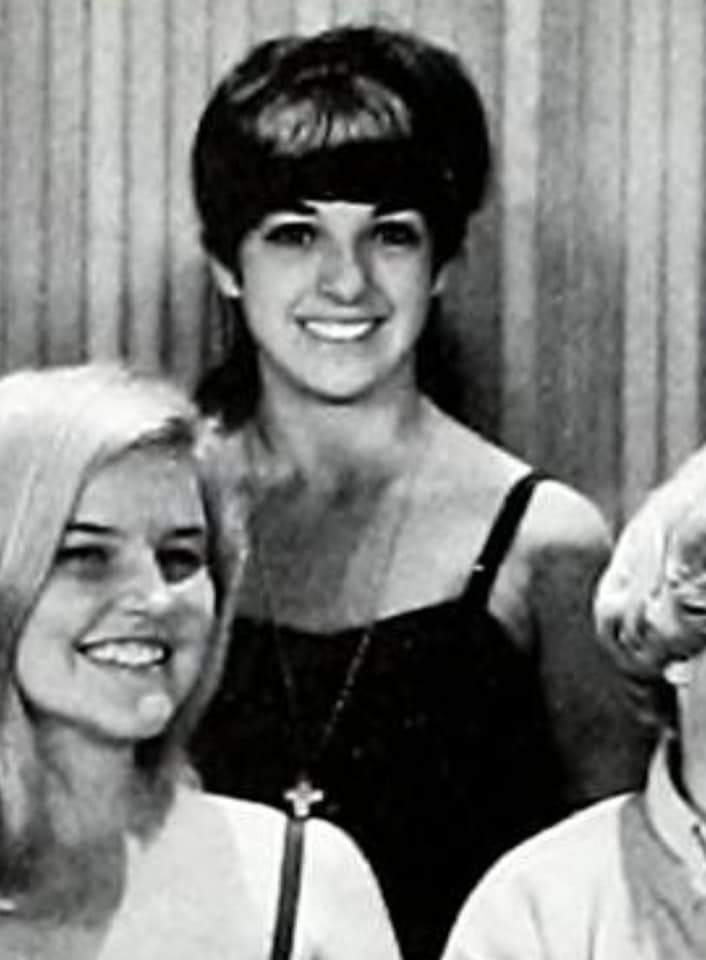
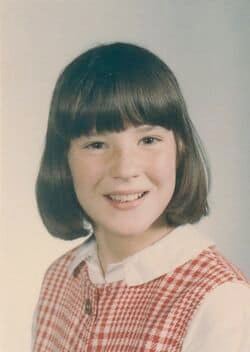
Vicki Hollar.
Vicki Lynn Hollar.
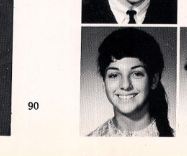
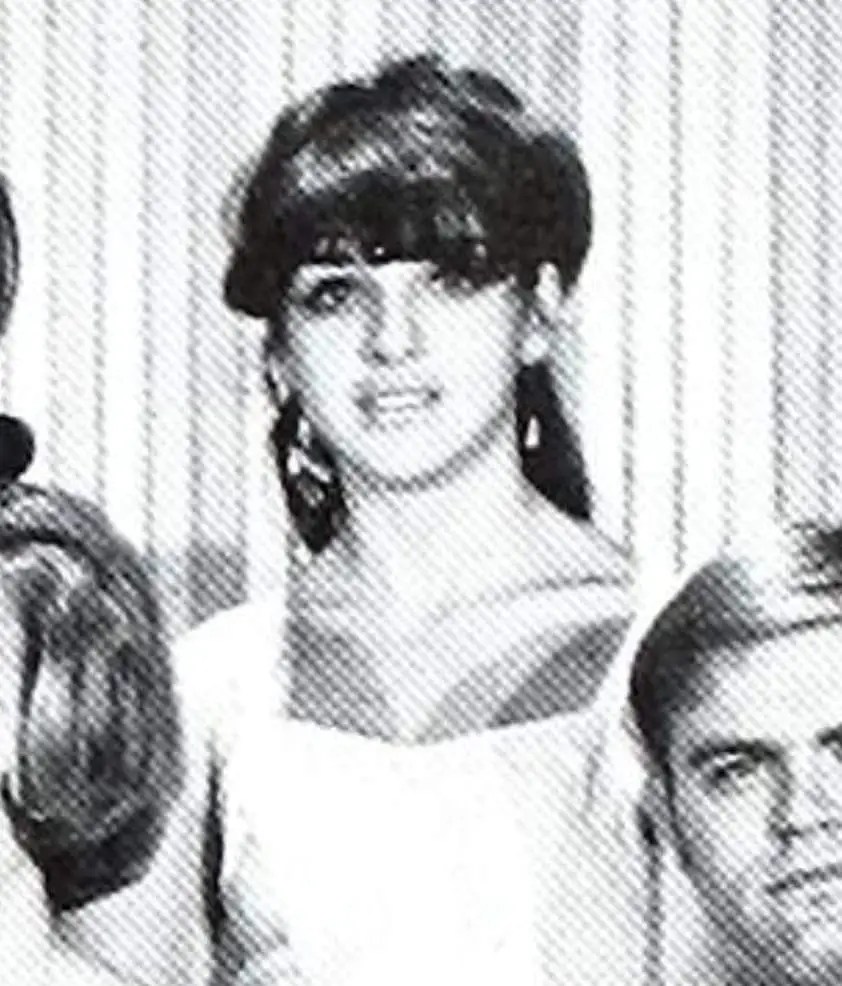
Vicki Hollars 1964 Homewood-Flossmoor High School yearbook photo.
Vicki Hollars 1965 Homewood-Flossmoor High School yearbook photo.
Sadly there isn't a lot out there on a lot of the unconfirmed victims. Strangely enough, I've learned some incredibly useful information by reading comments, whether it be a YouTube video, FB post, or whatever. A girl commented on a video done bu 'Steve the Amateur Historian' that Vicki went to Southern Illinois University with her parents, and from there I discovered she went to Homewood-Flossmoor High School. by reading comments, whether it be a YouTube video, FB post, or whatever. A girl commented on a YouTube video that Vicki went to Southern Illinois University with her parents, and from there  I discovered she went to Homewood-Flossmoor High School.
Anyways, here's some pictures I've never seen before of Vicki. could be an asshole and put my watermark on them but that's not me.
Vicki Hollars 1966 Homewood-Flossmoor High School yearbook photo.
Vicki Hollars 1967 Homewood-Flossmoor High School yearbook photo.
Vicki Hollars 1967 Homewood-Flossmoor High School senior activities.
An article mentioning Vicki published by The Daily Mail on January 30, 1967.
A photo of Vicki from her 1968 Southern Illinois University yearbook, ‘The Obelisk.’
A photo of ‘The Aquaettes’ including Vicki from the 1968 Southern Illinois University yearbook, ‘The Obelisk.’
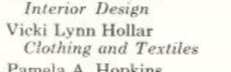
A photo of Vicki from the 1969 Southern Illinois University yearbook, ‘The Obelisk.’
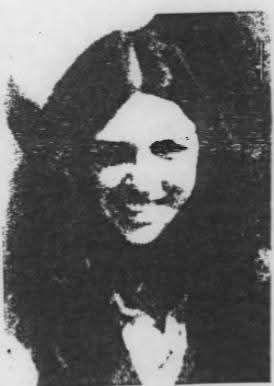
Vicki. Photo courtesy of the King County Sheriffs Department.
Some artwork of Vicki created by Christina Marie Martinez.
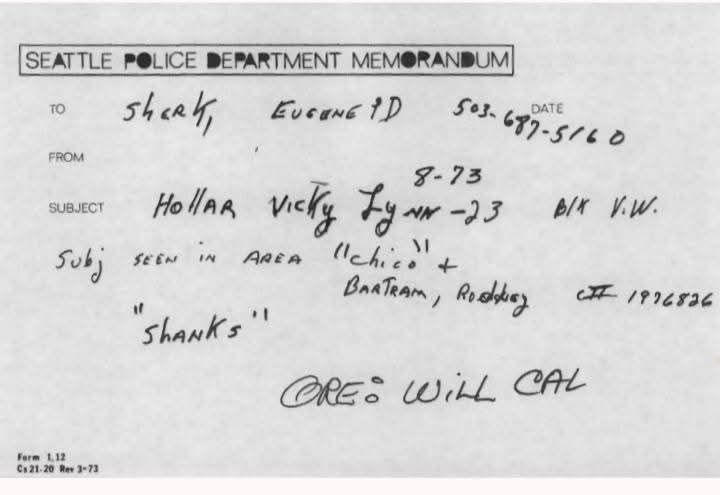
A police memorandum about Hollar, courtesy of the King County Sheriffs Department.
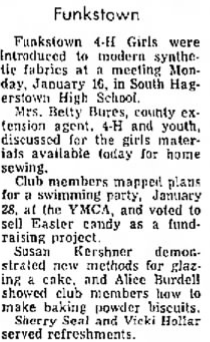
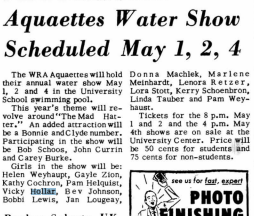
A newspaper blurb mentioning Hollar during her time as an Aquaette.
A newspaper clipping mentioning Vicki seeking a job published in The Homewood Flossmoor Star in early May 27, 1971.
Vicki is listed in the list of graduates from the commencement address at Southern Illinois University at Carbondale.
An article from a newspaper mentioning a speeding ticket Vicki got in early 1973, the same year she disappeared.
The 1950 census mentioning one-year-old Vicki.
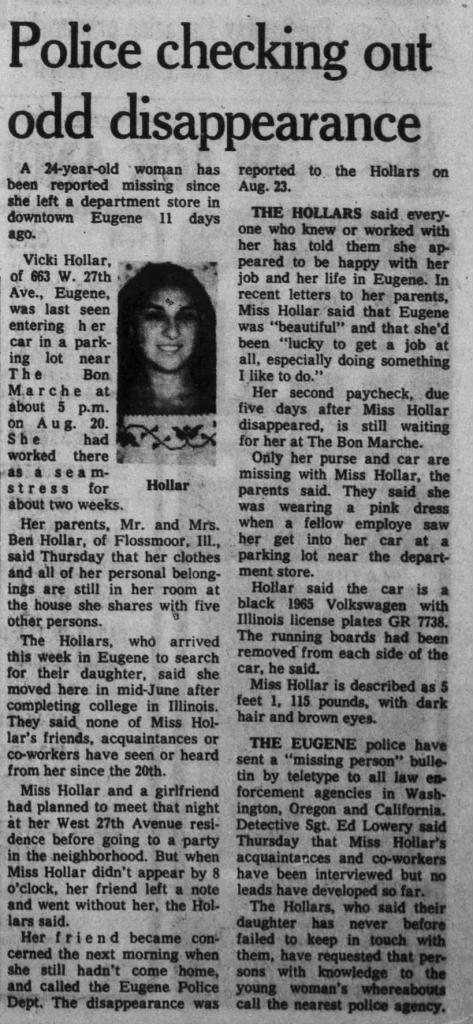
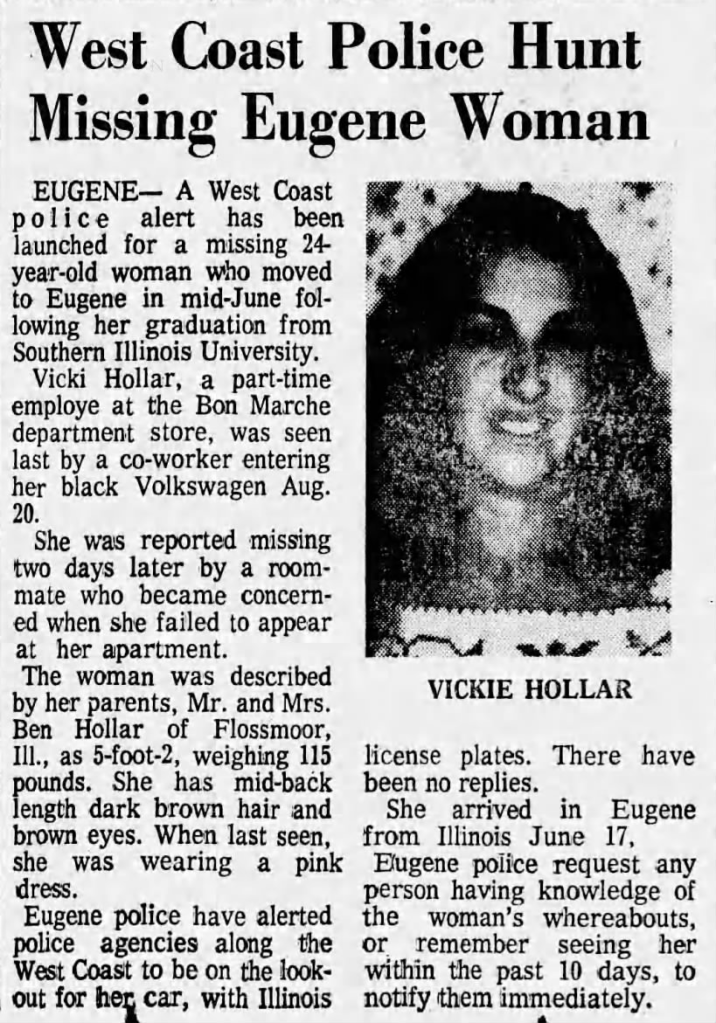
A newspaper article about the disappearance of Vicki Lynn Hollar published in The Register-Guard on August 31, 1973.
An article about the disappearance of Vicki Hollar published in The Sunday Oregon Journal on September 1, 1973.
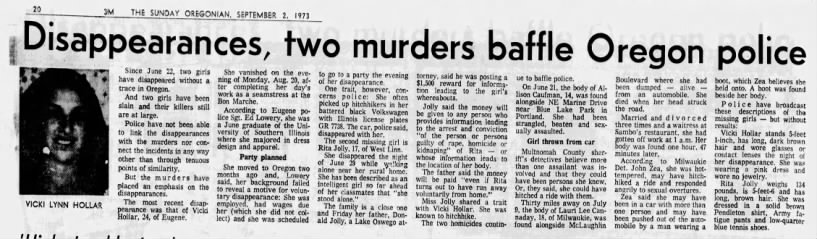
An article about the disappearance of Vicki Hollar published in The Sunday Oregonian on September 2, 1973.
An article mentioning the disappearance of Vicki Hollar published in The Sunday Oregonian on December 9, 1973.
An article about Hollar published by The Register-Guard on December 14, 1973.
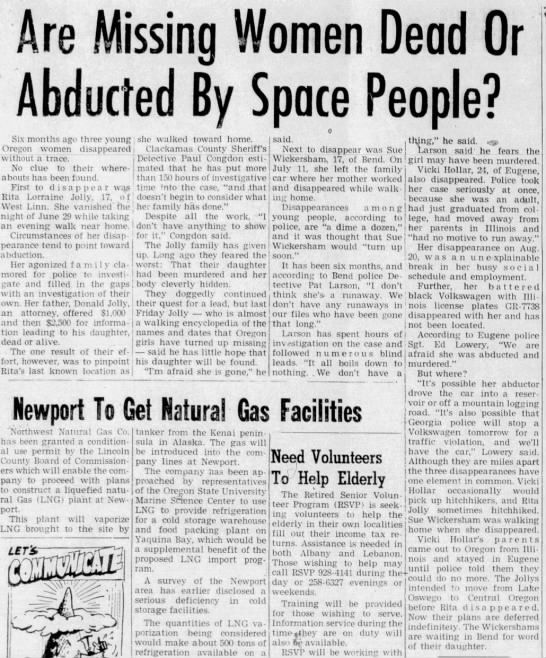
An article on the missing Oregon girls published by The Greater Oregon on December 21, 1973.
The first part of an article mentioning Vicki’s disappearance published in The Eugene Register-Guard on April 16, 1978.
The second part of an article mentioning Vicki’s disappearance published in The Eugene Register-Guard on April 16, 1978.
An article mentioning Hollar published by The Statesman Journal on January 25, 1989.
Vicki Hollar is mentioned above in an article published by The Hartford Courant on January 25, 1989.
An article about Bundy’s execution mentioning Hollar published by The Columbian on January 27, 1989.
An article mentioning Hollar published by The Statesman Journal on January 27, 1989.
An article on Vicki Hollar.
A screen shot of where Bundy was on August 20, 1973 according to the FBI’s ‘Ted Bundy Multiagency Investigative Team Report 1992.’
A picture of a 1965 black VW Beetle (although Vicki’s car had the running boards removed).
Where Vicki walked with a coworker to get her Beetle.
I couldn’t find an exact address for Ms. LeClair but I did search for the name of is in relation to Ms. Hollars residence.
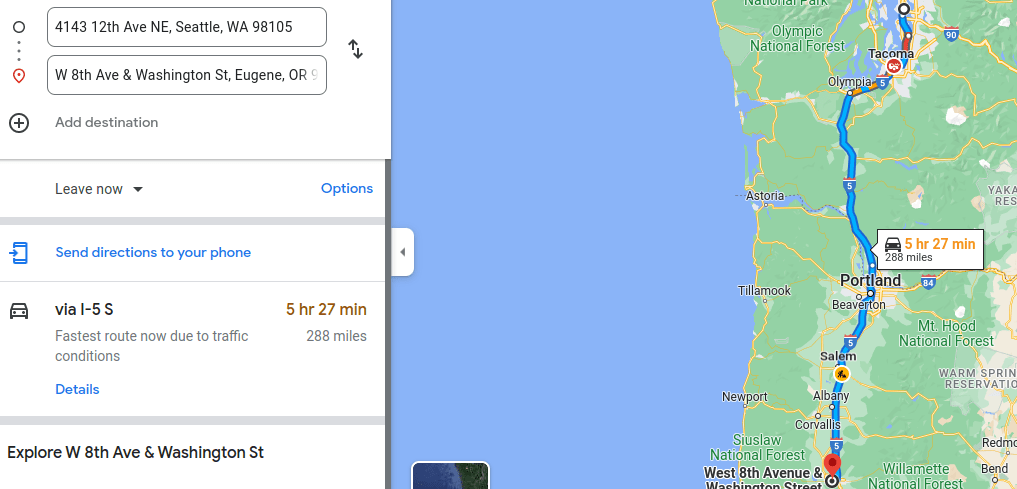
The route from the Rogers rooming house on 12th Ave to the area where Vicki was last seen getting into her Bug where it was parked at W 8th Ave in Eugene, OR.
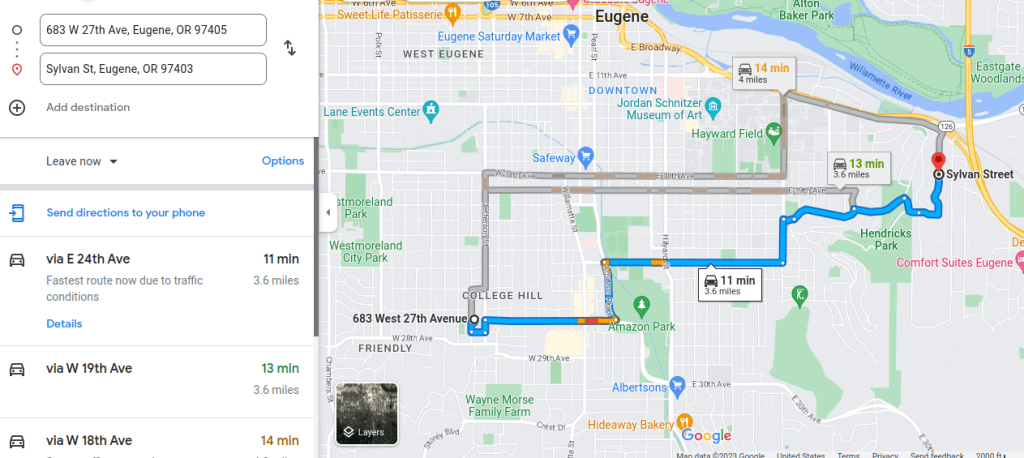
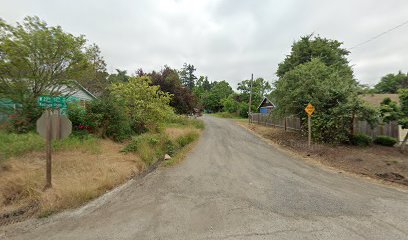
This is the image that came up when I searched Vicki’s address at the time of her murder, 683 West 27th Ave in Eugene, OR.
An interesting theory surrounding the disappearance of Vicki Hollar from ‘Websleuths” user ‘Earth.’
An interesting theory on the disappearance of Vicki Hollar from ‘Websleuths’ user ‘Fai’ written on July 21, 2019.
An interesting theory on the disappearance of Vicki Hollar from ‘Websleuths’ user ‘Cait6’ written on July 22, 2019.
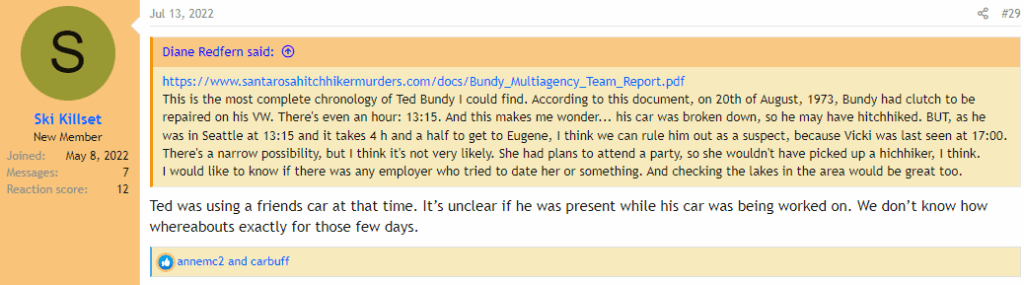
An interesting theory on the disappearance of Vicki Hollar from ‘Websleuths’ user ‘Ski Killset’ written on July 13, 2022.
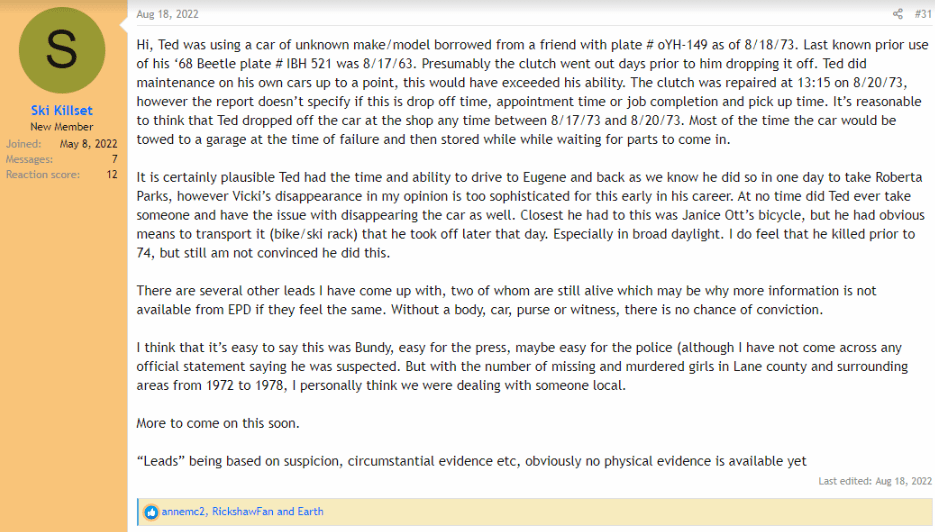
An interesting theory on the disappearance of Vicki Hollar from ‘Websleuths’ user ‘Ski Killset’ written on August 18, 2022.
An article on the murder of Gayle LeClair, published on August 30, 1973 by The Globe (Coos Bay, OR).
The obituary of Gayle LeClair, published on August 27, 1973 by The Globe (Coos Bay, OR).
A photo of the crime scene from the murder of Gayle LeClair from the Eugene Register-Guard, published on August 24, 1973.
Ben Hollar’s draft card.
A photo of Aida Hollar from the 1947 Fenger Academy yearbook.
Benny and Aida Hollars marriage license announcement in the local newspaper.
Vicki’s mother Aida.
Vicki’s parents begging for help, published The Chicago Tribune on March 10, 1979.
Vicki’s brother Kenneth from the 1969 Homewood-Flossmoor High School yearbook.

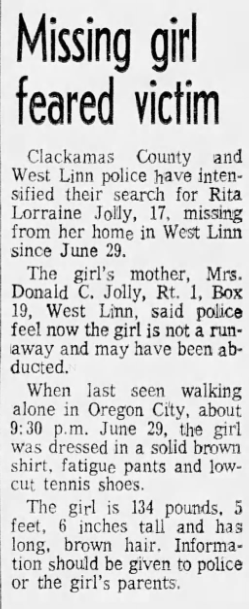
Rita Lorraine Jolly.

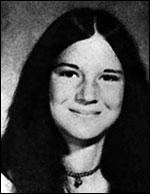
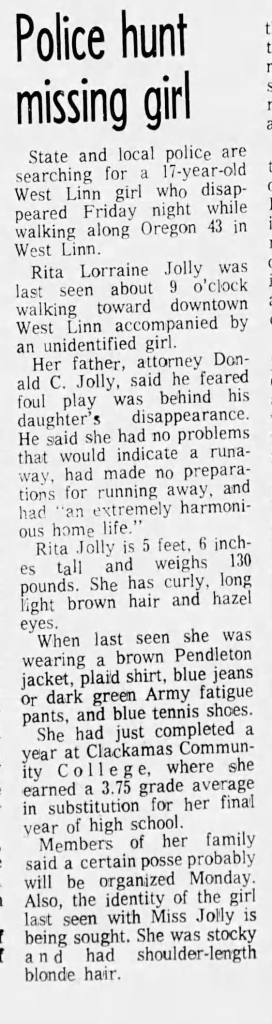
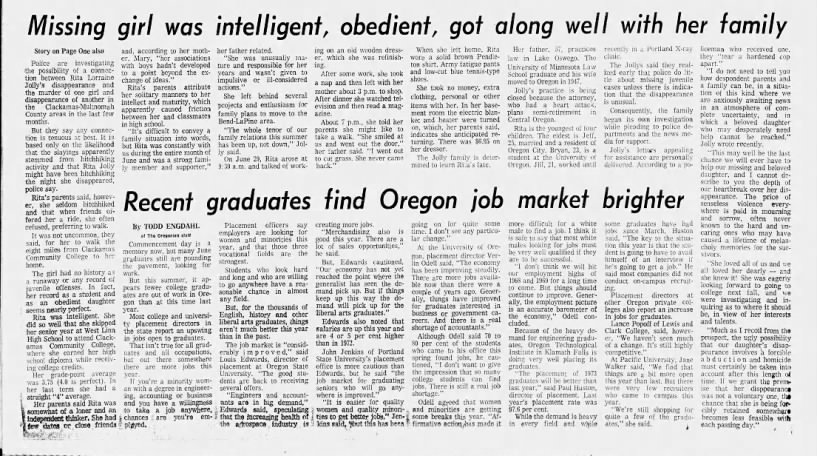
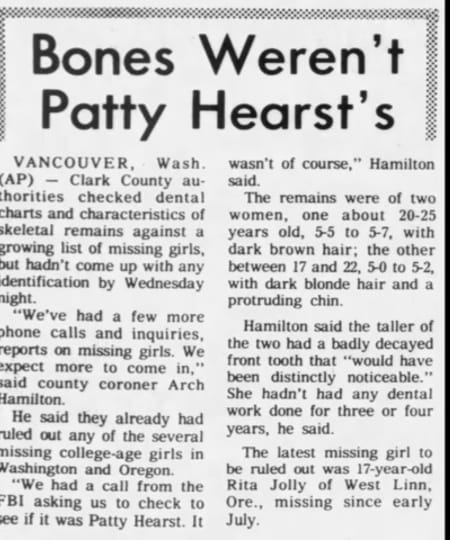
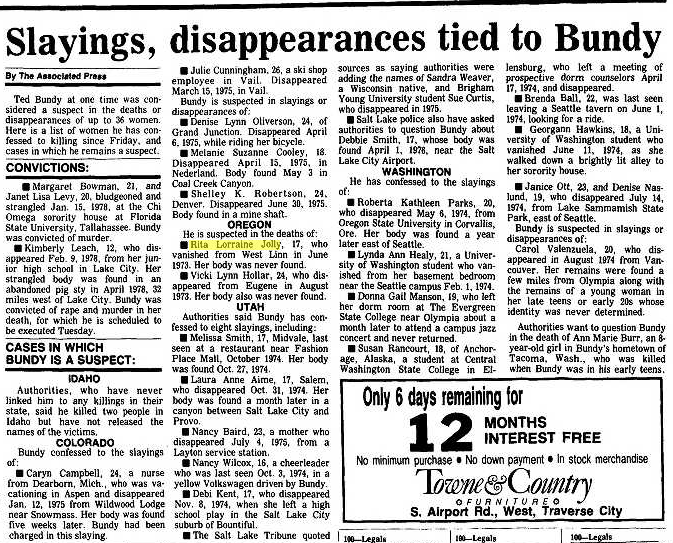
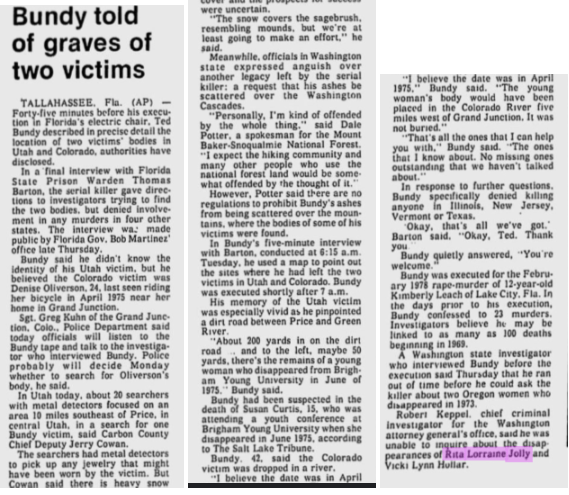
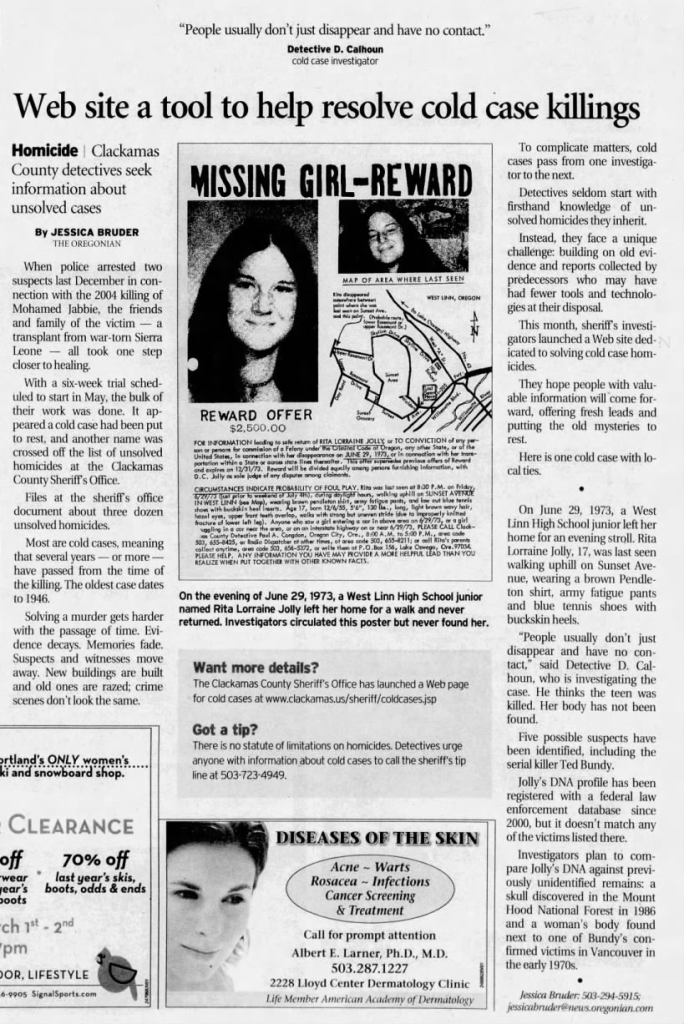
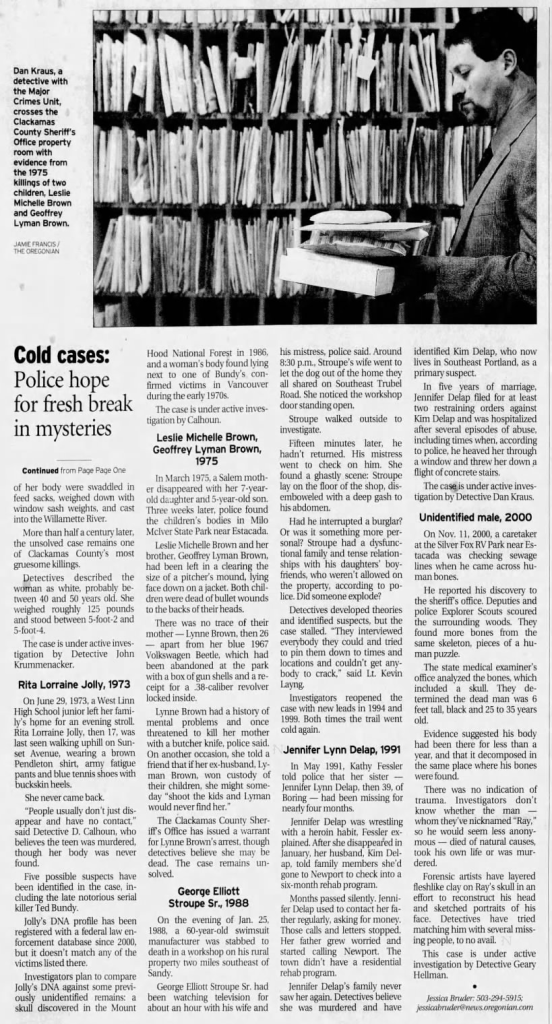
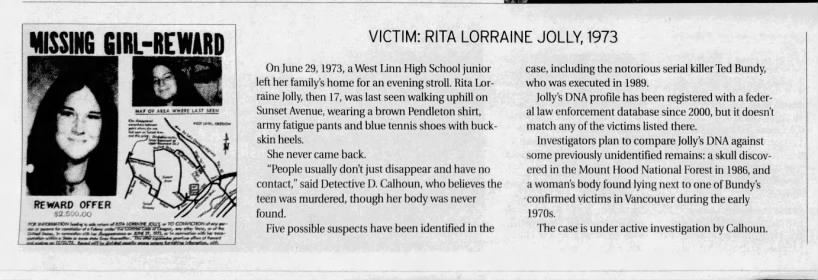
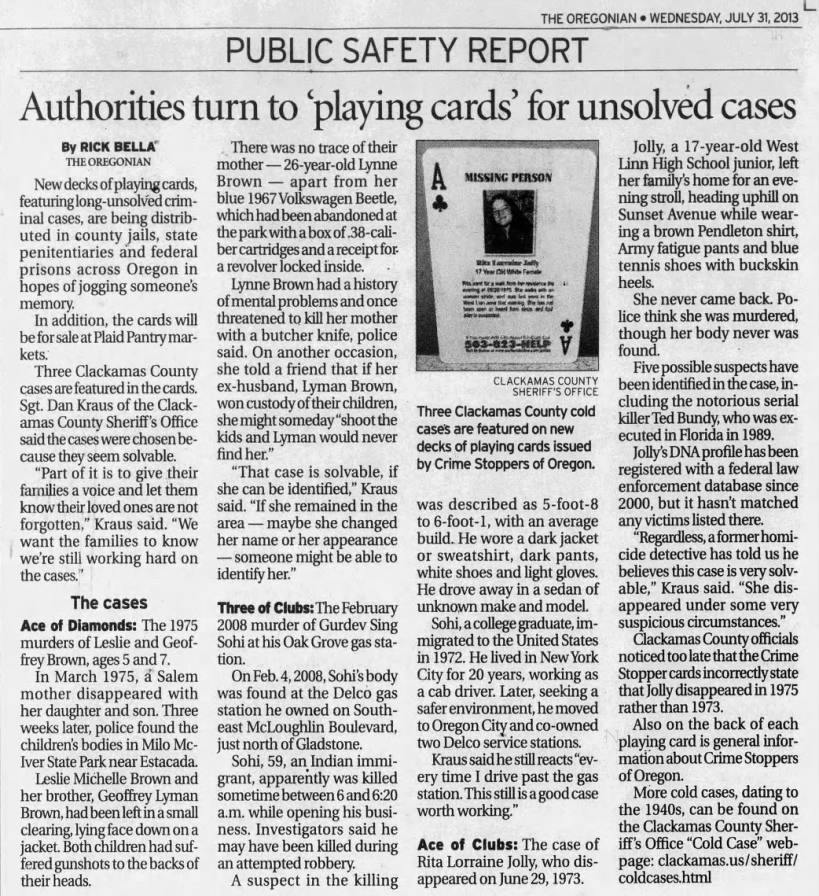
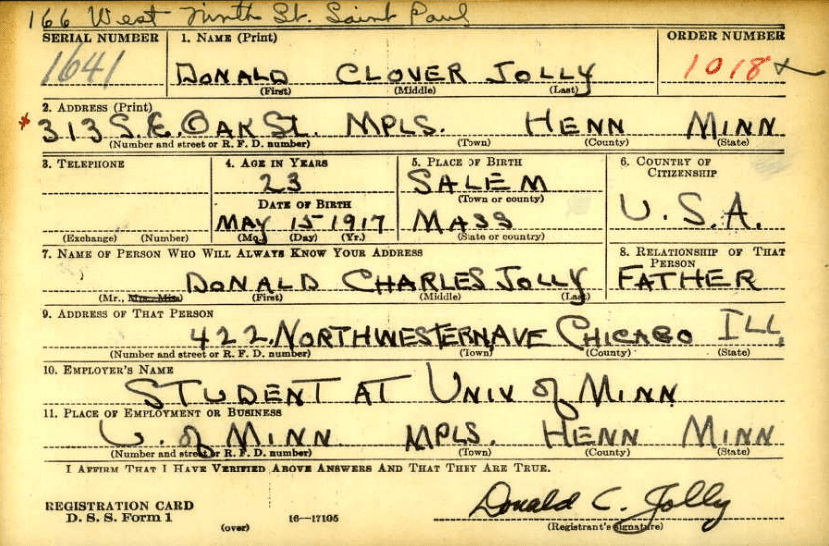
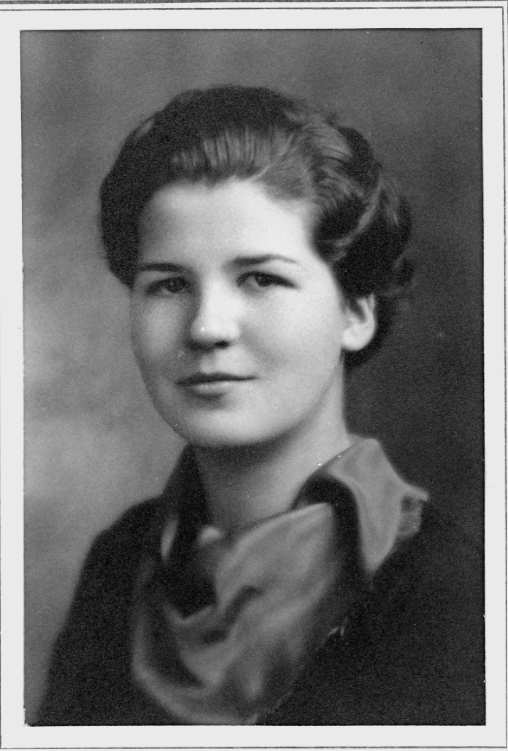
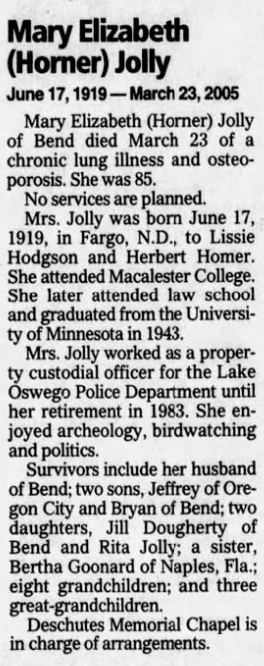
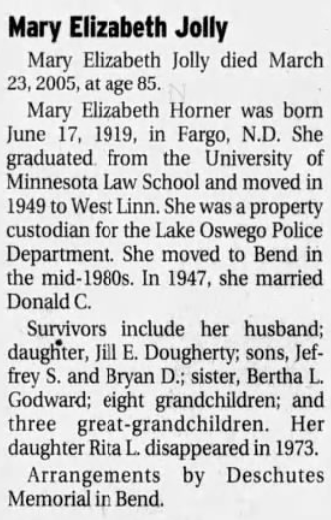
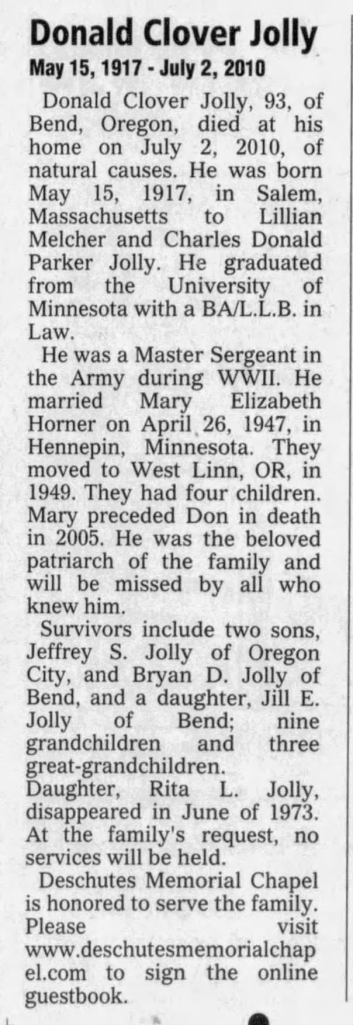
Rita Lorraine Jolly was born on December 6, 1955 to Donald Clover and Mary Jolly of West LinnOregon. Donald Clover Jolly was born on May 17, 1917 in Salem, MA and Mary Elizabeth Horner was born in Fargo, North Dakota on June 17,1919 and after graduating from high school she attended Macalester College then later went on to law school, and earned her JD from the University of Minnesota in 1943. During WWII Mr. Jolly was a Master Sergeant, and after the war he graduated from the U of M with a BA/LLB in Law. The couple met while attending law school, and were married on April 24, 1947 in Hennepin, Minnesota; they relocated to West Linn in 1949. After graduating, the couple opened a law office: Mr. Jolly worked as an attorney and Mary was his legal secretary. Rita was the youngest of four children, and Mrs. Jolly had two boys (Jeffrey and Bryan) and a two girls (Rita and Jill). Because Don and Mary were both survivors of the Great Depression, they were often considered to be ‘frugal and liberal for their time,’ and above all else, the family valued education, and pushed for their children to have strong critical thinking skills.

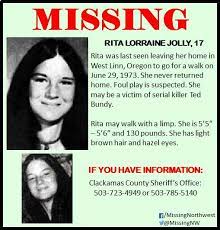
A tall girl, at the time of her disappearance, Rita stood between 5’5 and 5’6” tall, weighed around 130 pounds, had hazel eyes and medium length brown hair she wore parted down the middle. She had a small scar on her face just below her right eyebrow and her front teeth were slightly crooked and overlapped a little bit. She also had her wisdom teeth pulled and had small pit fillings in the buccal (cheek) side of her lower molars. In an interview with the website ‘Uncovered,’ Jill Jolly said that her sister enjoyed ‘nature, animals, and creativity’ and spent her time after school ‘immersed in books, writing poetry, and creating art.’ … ‘she had a real talent. I have folders filled with her writings. I am ashamed to admit that it’s very difficult for me to go through these writings. They are such intimate windows into her life, and often the anguish in them bleeds through. I feel a responsibility to preserve these writings. I have a good flatbed scanner now, and hope to be able to focus on making digital copies so that I may more easily share them.’

Per Uncovered: ‘growing up, Rita struggled with emotional regulation and sensitivity, which led her parents to seek help from a child psychologist.’ Jill said that she now believes her sister may have been on the autism spectrum, a concept not widely understood in the 1960’s and 70’s. Disillusioned by cliques and peer pressure, Rita faced bullying for being different, and in her junior year of high school was reprimanded for writing a derogatory statement on the school wall. Her parents defended her, challenging the school to ‘improve its culture.’

At around thirteen, the Jolly’s bought Rita a gelding quarter horse named Sugar that became her best friend. I read from multiple sources that she walked with an uneven stride due to an improperly knitted fracture of her lower left leg, however according to a comment Jill (username ‘JillElaine‘) left on the YouTube video ‘Mystery Murders: The 1973 Disappearance of Rita Jolly,’ (done by ‘Steve the Amateur Historian‘): ‘as for Rita’s ‘limp’, she was still in the process of healing from her broken leg (a horse she was riding fell over on a muddy trail and crushed it). But whatever limp she might have had was almost unnoticeable.’ … ‘she was healthy & strong, and a horse owner. She went for walks in the evening almost daily, often several miles in length.’ Rita’s front teeth were slightly crooked, and overlapped a little bit; she also had her wisdom teeth pulled and had small pit fillings in the buccal (cheek) side of her lower molars.

Mr. and Mrs. Jolly said their daughter was incredibly bright and mature for her age and took academics very seriously. A user going by the name of ‘Cheryl Klawitter’ commented on the ‘The Morbid Library’ article about Rita that she ‘was in a couple of classes with Rita at Clackamas Community College in Oregon City in 1973. I won’t claim we were friends, just casual acquaintances. But we talked some. She had told me she’d hitchhiked to a concert in Eugene, (sometime in the month prior to her disappearance). So the image of her being a naive high school girl, out for an evening walk is misleading. Of note: there was a full lunar eclipse Saturday the 30th, the night after she disappeared. From what I knew if her personality, that would have excited her. She could have been hitchhiking just about anywhere that Friday night (the 29th), looking to party. If she was on I-5 it is just not that unlikely she may have crossed paths with Bundy. Or for that matter some other predator. I knew the Chief of Police in West Linn at that time and he confided (later) they suspected Bundy. I assume that was after excluding people she knew.’* Per Jill Jolly, ‘As a senior, Rita attended full-time classes at Clackamas Community College through a special program for scholastically-advanced high school seniors. Excelling in Creative Writing and art programs, Rita thrived in this environment. Though she did not attend classes at West Linn High School during her senior year, she insisted on participating in the graduation ceremony in June 1973.’

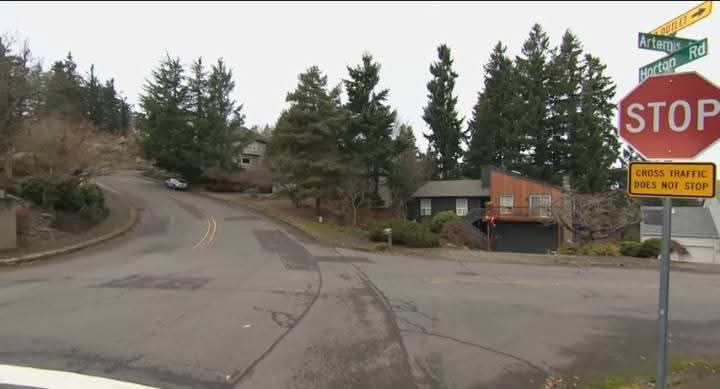
At about 7:15-7:30 PM on June 29, 1973, Jolly left her family home to take a walk, something she did almost daily according to her sister. Jill said that she ‘left with a smile on her face’ and Mr. Jolly said ‘she smiled at us and went out the door. I went out to cut the grass. She never came back.’ Rita was last seen wearing a brown wool Pendleton shirt jacket, a red and blue cotton shirt, olive colored army fatigue pants (or blue jeans depending on the source), and low-cut blue tennis shoes with buckskin heels. She seemed okay and in decent spirits; her family said she didn’t have any known problems with anyone in her life and Jill commented that she ‘struggled with angst that affects so many young people, and it’s possible she initially ran away. But her social security number has never had any activity, as far as I know.’ Ms. Jolly was ‘in the Robinwood area and/or on Sunset Ave around 8:30 to 9:00 PM’ and was seen for the last time around 9:30 PM walking uphill on Sunset Avenue near the Oregon City Arch Bridge that crosses the Willamette River into West Linn. Shortly after she vanished two young men in Portland went to law enforcement claiming they saw her the night after she disappeared, but when approached she said her name was Mary. The men that reported the alleged sighting did not leave their contact information with police so no follow-up was made and their story was never confirmed. Regarding the incident, Jill said that: ‘the following night, two young men reported to the police that they tried to pick up a girl who looked like Rita, but this young lady was not her.’ Mr. Jolly told law enforcement that all of his daughters personal belongings were left behind and there was nothing missing from her bedroom. He said she that was an ‘independent thinker with few dates or close friends.’ Detective D. Calhoun (who worked the case and immediately had a gut feeling that Rita was murdered) commented that: ‘people don’t usually just disappear and have no contact.’

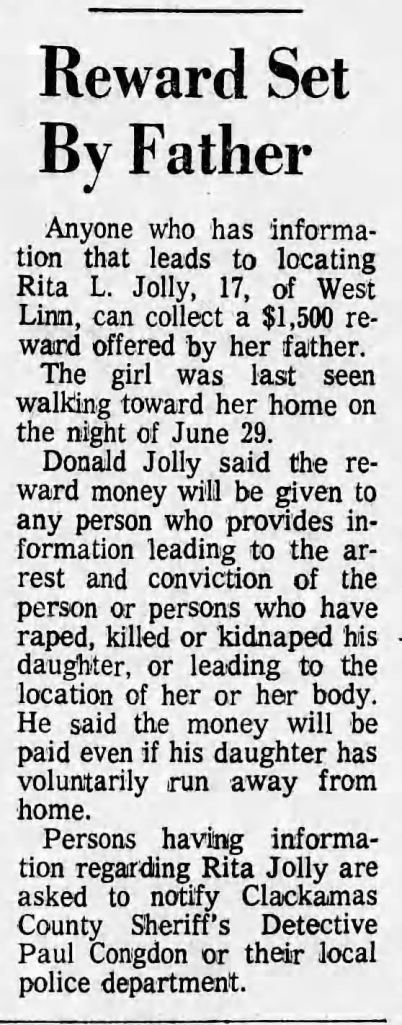
Almost from the beginning, information related to Jolly’s mysterious disappearance stopped trickling in and leads dried up almost immediately. By July 15, the idea of Rita having left home willingly had morphed into the possibility that she was most likely abducted under sinister circumstances. Mr. Jolly was crucial in keeping his daughters case in the news and relevant: not only did he hand deliver letters to local police precincts and news stations begging them to help find her, he also offered a $2,500 reward for any information leading to her whereabouts. Rita’s case was being investigated at the city, county, and state level, but despite all the help the investigation went nowhere. Apparently (per ‘The Morbid Library‘), her brother believed that the perpetrator was someone local who possibly knew her, and in an edit on their article about Ms. Jolly, author CJ Lynch said: ‘thanks to a comment on this post, we now know a bit more about Rita as a person. She is an adventurous person: at the time of her disappearance, she often hitchhiked to get where she was going, and she enjoyed concerts and parties. She is a free spirit, enjoying the freedom and independence that comes with being in college.’ (this edit was because of comments left by readers).

YouTuber ‘Whitney Dahlin‘ pointed out that a ‘hit and run is also possible. she was walking alone in the evening I feel like it’s entirely possible someone hit her and then hit her body or buried her body so they wouldn’t go to prison for it. I feel like a a lot of missing person cases where the missing person was last seen taking a walk in the evening are really hit by a car cases. Abductions are very rare compared with pedestrian car accidents.’

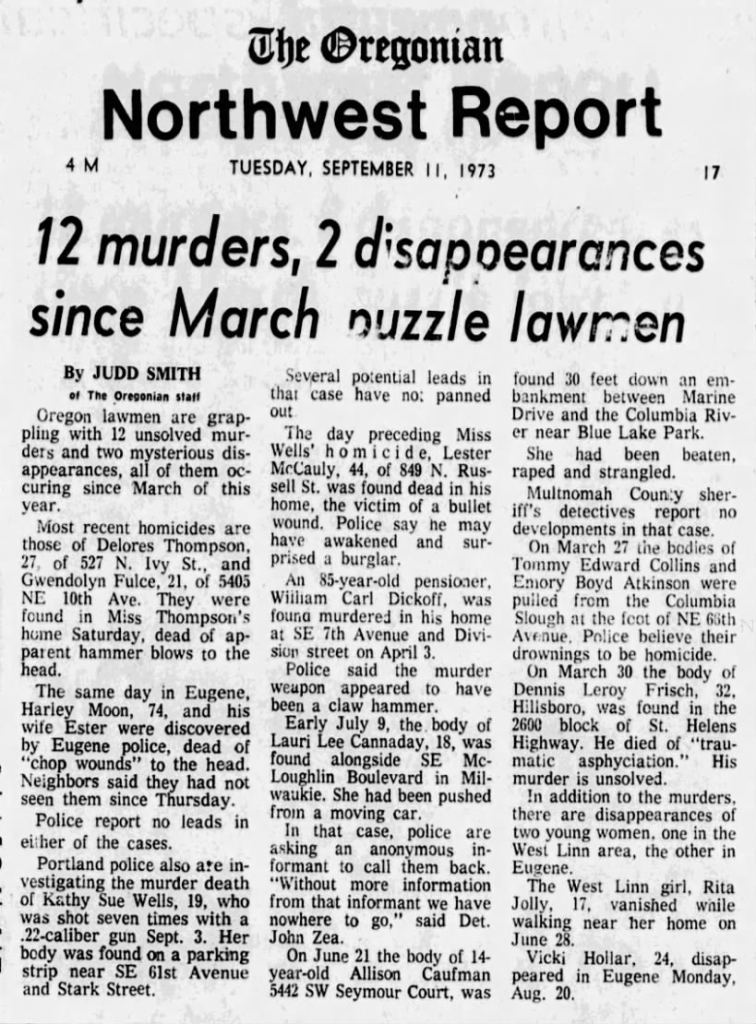
Within a six-month period in 1973 four young women went missing from the same general area in Oregon: first Rita in late June, then seventeen-year-old Susan Wickersham from Bend just two weeks later on July 11 (her body was discovered in January 1976 just five miles south of her hometown). Ms. Wickersham is sadly yet another unconfirmed Bundy victim I never heard of, although realistically he most likely didn’t kill her, as she was found with a gunshot wound in her head which wasn’t his MO… Next to disappear was twenty-four-year-old Vicki Lynn Hollar, a petite girl (only 5’1” and 115 pounds) with dark eyes and brown hair. Ms. Hollar was last seen getting in her black 1965 Volkswagen Beetle with the running boards removed (Illinois plates GR 7738) on August 20, 1973. She was leaving her place of employment at the Bon Marché (now Macy’s), where she had been employed as a seamstress for about two weeks. It’s been theorized that Vicki was headed home to her apartment at 600 West 27th Avenue in Eugene with the intention of meeting up with a friend to attend a party in her neighborhood later that evening (but she never showed up). Friends shared with police that Hollar had a habit of picking up hitchhikers; her VW and personal belongings have also never been recovered. Lastly is Suzanne Rae Justis, who disappeared on November 5, 1973. Recently divorced, Justis was from Eugene and hitchhiked to Portland, and in a phone call to her mother from outside the Memorial Coliseum that day said she would return home the next day to pick up her son from school. Sue’s mom booked a room for her for the night at a nearby hotel, but it was never used.  She never came home and has never been heard from again. For unclear reasons, a missing persons report wasn’t filed until 1989.

I’ve been finding most of the ‘unconfirmed victims‘ have very weak commonalities without a lot of substance… Rita did look like one of Ted’s victims: she was attractive and slim, with long brown hair and dark features. Her abduction was most likely a crime of opportunity (like so many of the others), meaning the perpetrator took advantage of a particular situation most likely with no prior plans to go out and commit the atrocious act. Additionally, Jolly fit neatly into his preferred age range: she was seventeen, and he typically targeted younger females anywhere from twelve years old (possibly even as young as eight if you throw Ann Marie Burr into the mix) all the way up to twenty-six (Colorado ski instructor Julie Cunningham). But that’s about it. And it’s important to keep in mind how common the ‘long hair parted down the middle’ look was during that time period: even my own mother looked like she could have been one of Bundy’s victims.

During his death row confessions Ted admitted to abducting Roberta Kathleen Parks from Oregon State University on May 6, 1974; he claimed to have raped and killed her at Taylor Mountain, over 250 miles away from her school and about 25 miles southeast of Seattle. Because Parks was found in Washington state she is typically not included in his Oregon victim count. In interviews, Bundy confessed to killing two additional women in Oregon but refused to elaborate on the details; according to most detectives, Rita Jolly and Vicki Hollar are the best candidates. Law enforcement tried but were unable to question Ted about Rita’s disappearance before his execution in 1989, eliminating the chance of possibly closing her case. Jill Jolly said of Bundy’s execution: ‘as I recall, my mother told me that the local detectives managed to get a direct question about Rita through to him before his execution, and his reply was ‘No. No more in Oregon.’’ Dubbed Ted’s ‘bones-for-time scheme,’ he withheld many secrets right up until the very end of his life in hopes to parlay the untold stories into yet another stay of execution. ‘There are other buried remains in Colorado…’ Bundy said, refusing to elaborate any further. He then took his secrets with him to the grave. Colorado Detective Matt Lindvall felt this was a direct conflict between his desire to postpone his execution by giving up information and his need to remain in ‘total possession: the only person who knew his victims’ true resting places.’

Regarding suspects, Ted is one of only two seriously considered individuals I could find that was investigated for the abduction of Rita Jolly; the other one is Warren Leslie Forest. Two additional names that are almost casually thrown around when ANY unclaimed victim is brought up from that time are Henry Lee Lucas and Ottis Toole. The pair were lovers, united in their shared childhood traumas and together they terrorized the United States throughout the 1970’s and 80’s. Lucas falsely claimed he killed upwards of 600 people (Toole said he participated in 108 of them), however it was eventually determined he was responsible for two of them and was strongly suspected of only eight more. But, investigating both men a little further, at the time Rita disappeared in mid-1973 Lucas was serving a 5-year prison stint for attempting to kidnap three schoolgirls in 1971, and Toole’s history is a little fuzzy between 1966 and 1973, but his first strongly suspected kill was the 1974 murder of Patricia Webb. Oddly enough, Toole died at the same Florida State facility that executed Ted in 1989: he entered the Raiford prison in 1983 and died in 1996 from cirrhosis of the liver. Additionally, Ed Kemper and Gary Ridgway both popped in my head as possible suspects, but Kemper was apprehended on April 24, 1973 and operated more in the California area (Rita disappeared June 29 which is obviously after he was arrested) and Ridgway didn’t start his atrocities until 1982. In her interview with Uncovered, Jill said that: ‘there are five possible suspects that have been identified.’ I’m unsure who else it could have been (I’m sure police are playing close to the vest with what information they have). If I think of any additional potential suspects I will update my article.

Warren Leslie Forrest was convicted of abducting and stabbing to death nineteen-year-old Krista Kay Blake in 1974 then burying her remains near Battle Ground on Tukes Mountain. He’s been in prison since October 2, 1974 and for decades Clark County law enforcement tried (with no success) to link him to other murders in the area. On October 12, 1974, the human remains of two women were found in Dole Valley near Vancouver, Washington. One was immediately identified as Carol Platt-Valenzuela but the other individual remained unidentified for over 40 years. But, thanks to DNA profiling and some blood left behind on the dart gun Forrest used to subdue his victims, in 2015 those remains were finally determined to be those of Martha Morrison, who disappeared from the Portland area under mysterious circumstances in September 1974. Two of his suspected victims have never been found: Diane Gilcrist (14) and Jamie Grissim (16). Before Warren was identified as the killer, Bundy was considered a person of interest in Morrison’s death (he’s still a suspect in Valenzuela’s murder). In 2020, Forrest was charged with the murder of Martha Morrison.

Historywmystery.blogspot.com‘ said about the Jolly disappearance: ‘It’s also important to remember that this was the 1970’s and there were numerous women, especially young ones, hitchhiking along I-5 back in the 1970’s and some of them met with death at the hands of someone who couldn’t have been Ted Bundy. There was an extensive article I found in a 1975 paper discussing the perils of young women who were hitchhiking in Oregon, many of whom knew the danger and yet continued to hitchhike. There was Martha Morrison, who was a frequent runaway who vanished from Portland on September 1, 1974. Her remains were discovered a little over a month later and were not identified until 2017 using DNA testing. She, for a long time, was considered a possible Ted Bundy victim until her remains were identified and it was found she had been killed by William* Forrest, a serial killer working out of the Vancouver, Washington area. Interestingly enough, Forrest was someone that I considered as a possible culprit in the Rita Jolly case, something that’s still possible but definitely something I am calling more into question now.’ *they meant Warren Forrest.

Jill Jolly gave the following quote in her interview with ‘Uncovered:’ ‘…the truth is that we really don’t know what happened to her. We all have theories. Our dad thought she had called several times, mostly just silence on the phone but once he said that he heard her voice, ‘Mom? Mom?’, then ”Dad?’, then a click on the phone hanging up. Could she have gotten involved in a cult or some other situation where it was hard to leave? I find myself wondering how folks can help with solving the mystery of what happened to Rita. After 50 years, I don’t think it’s likely that we will have answers before all of us who knew her are gone from this earth. The advent of DNA gave us so much hope! But the number of unidentified bodies and the expense & difficulty of the tests has been discouraging. It’s not a quick fix. Nonetheless, perhaps someday she will be one of the humans who are ‘given their name back’.’

2022 marks the 49th anniversary of Rita Lorraine Jolly’s mysterious disappearance. Sadly, Mr. and Mrs. Jolly both passed away before learning what happened to their daughter: she passed away after a chronic lung illness and osteoporosis on March 23, 2005 at the age of eighty-five. According to her obituary, she worked mostly as a property custodi9al officer for the Lake Oswego PD until she retired in 1983. Her hobbies included archeology, birdwatching, and politics. Mr. Jolly died at the age of ninety-three on July 2, 2010 of natural causes at home. After his daughter disappeared he always held onto hope that Rita was still alive. As of December 2022, all three of her siblings are alive and are still desperate for answers. Rita’s dental records are available and her DNA was entered into CODIS in 2000.

Bryan Jolly currently resides in Bend, OR and is the owner of ‘Bryan Jolly Construction.‘ Jeff Jolly lives in Depoe Bay, Oregon. Jill Jolly is active in her sisters disappearance, and is vocal on multiple social media platforms (like WebSleuth’s, and my own blog), and in recent years has also done interviews both in front of and behind the camera; she currently resides in Bend, OR.

* Jill Jolly researched the lunar calendar extensively and couldn’t find any record of there ever being an eclipse on the evening her sister disappeared.

I’mWorks Cited:
doenetwork.org/cases/2503dfor.html
namus.gov/MissingPersons/Case#/7780
newspapers.com/clip/38129030/rita-jolly-missing-oregon/
clackamas.us/sheriff/case/73-9833
missingin.org/reg4206/rita_lorraine_jolly.htm
salem-news.com/articles/march022008/cold_cases_3-1-08.php
newspapers.com/newspage/565976821/
historylink.org/File/2637
obits.oregonlive.com/obituaries/oregon/obituary.aspx?n=donald-clover-jolly
uncovered.com/cases/rita-jolly

The Jolly family. Photo courtesy of Jill Elaine Jolly & Uncovered.
The Jolly family with a neighbor boy. Photo courtesy of Jill Elaine Jolly & Uncovered.
Rita Jolly at age 10-11.
Rita Jolly doing yard work. Photo courtesy of Jill Elaine Jolly & Uncovered.
Rita Jolly freshman picture from the 1970 West Linn High School yearbook.
Rita Lorraine Jolly.
Rita Jolly.
Rita Jolly. Photo courtesy of KGW News.
Rita’s missing persons poster. Photo courtesy of KGW News.
A missing person’s card for Rita Jolly.
What Rita may look more recently like using age progression technology.
Rita’s artwork. Photo courtesy of Jill Elaine Jolly & Uncovered.
The Jolly family doing a TV interview after Rita disappeared. Photo courtesy of KGW News.
The Jolly family standing with a reporter during a TV interview after Rita disappeared. Photo courtesy of KGW News.
A close up shot of Mr. Jolly during an interview. Photo courtesy of KGW News.
A reporter in West Linn doing a news story about Rita. Photo courtesy of KGW News.
Rita’s West Linn neighborhood. Photo courtesy of KGW News.
An article about the disappearance of Rita Jolly published in The Oregonian on July 2, 1973.
An article about the disappearance of Rita Jolly published in The Oregonian on July 12, 1973.
An article about the disappearance of Rita Jolly published in The Oregon Journal on July 13, 1973.
An article about Rita Jolly published in The Sunday Oregonian on July 15, 1973.
An article about Ms. Jolly’s disappearance published by The Statesman Journal on July 15, 1973.
An article about the disappearance of Rita Jolly published in The Sunday Oregonian on August 5, 1973.
An article about the disappearance of Rita Jolly published in The Oregon Journal on August 9, 1973.
An article about a reward related to the disappearance of Rita Jolly published in The Oregon Journal on September 1, 1973.
An article about the disappearance of Rita Jolly published in The Sunday Oregonian on September 2, 1973.
An article mentioning the disappearance of Rita Jolly published in The Sunday Oregonian on September 11, 1973.
An article about the disappearance of Rita Jolly published in The Sunday Oregonian on December 9, 1973.
WIthin six months three Oregonwomen disappeared: After Jolly in laye July 1973
An article on the missing Oregon girls that mentions Rita Jolly published by The Greater Oregon on December 21, 1973.
An article about Patty Hearst that mentions the disappearance of Rita Jolly that was published in The Statesman Journal on October 17, 1974.
Part one of an article on the missing/murders residents of Oregon that mentions Rita Jolly published in The Register-Guard on April 16, 1978.
Part two of an article on the missing/murders residents of Oregon that mentions Rita Jolly published in The Register-Guard on April 16, 1978.
An article mentioning Rita Jolly published by the Traverse City Record Eagle on January 23, 1989.
An article mentioning Rita Jolly published by the Fairbanks Daily News Mine on January 23, 1989.
An article mentioning Rita Jolly published by the Indiana Gazette on January 23, 1989.
An article mentioning Jolly published by The Statesman Journal on January 25, 1989
Jolly is mentioned above in an article published by The Hartford Courant on January 25, 1989.
An article mentioning Rita Jolly published by the Elyria Chronicle Telegram on January 27, 1989.
An article mentioning Rita Jolly published by The Mobile Press on January 27, 1989.
An article mentioning Rita Jolly published by Paris News on January 28, 1989.
An article mentioning Rita Jolly published by The Evening News on January 29, 1989.
Part one of an article written by Don Jolly published by The Bulletin on February 28, 1994.
Part two of an article written by Don Jolly published by The Bulletin on February 28, 1994.
An article about Rita Jolly published by The Oregonian on February 28, 2008.
Part one of an article about unsolved Oregon murders that mentions Rita Jolly published in The Oregonian on February 28, 2008.
Part two of an article about unsolved Oregon murders that mentions Rita Jolly published in The Oregonian on February 28, 2008.
Some information related to the disappearance of Rita Jolly published in The Oregonian on February 28, 2008.
An article about playing cards related to Oregon cold cases that mentions Rita Jolly published in The Oregonian on July 31, 2013,
A list of the missing girls from Oregon from 1969-78.
Mr. Jolly’s WWII draft card.
Mary Elizabeth Horner-Jolly.
Donald Clover Jolly.
Jill Jolly in an interview about her sister.
Mr. Jolly.
Don Jolly’s obituary write-up.
Jeff Jolly’s senior picture from the 1966 West Linn High School yearbook.
Jill Jolly’s sophomore picture from the 1968 West Linn High School yearbook.
Bryan Jolly’s senior picture from the 1968 West Linn High School yearbook.
An opinion piece Bryan Jolly submitted to The Register-Guard on September 13, 1974.
A picture of Jeffrey Jolly in an article published in The Oregonian on September 25, 1987.
Rita’s mother’s obituary published in The Bulletin on March 30, 2005.
Rita’s mother’s obituary published in The Oregonian on Aapril 1, 2005.
Mr. Jolly’s obituary, published in The Bulletin on July 15, 2010.
Mr. Jolly’s funeral arrangements, published in The Bulletin on July 15, 2010.
A newspaper clipping regarding some legal matters regarding their fathers death published in The Bulletin on September 7, 2010.
TB’s whereabouts when Rita was last seen on June 29, 1973 according to the ‘Ted Bundy Multiagency Investigative Team Report 1992.’
Ted’s Oregon Murders.
The Google Maps route from the Rogers’ Rooming House in Seattle to the town where Rita Jolly lived in Oregon.
Warren Leslie Forrest. It’s important to keep in mind at the time he committed murder he looked like THIS, not the troll directly below.
A more recent picture of Warren Leslie Forrest.
Warren Leslie Forrest’s blue murder van. Ever since I read an article my very wonderful friend Erin Banks (of ‘CrimePiper’) wrote about the different types of vehicles serial killers drove I am now curious about how they come into play in the role (or act) of murder. Bundy had his little VW, Kemper had his gigantic boat of a Ford Galaxie 500… this is exactly the vehicle I imagined Forrest driving. A creepy van. All that’s missing is the sign for free ice cream and naps.
Henry Lee Lucas.
Ottis Toole.
Henry Lee Lucas and Otis Toole.
Gary Leon Ridgway in this 1982 King County Sheriff’s booking photo. Fifty-two year old Ridgway was arrested on November 30, 2001 on the suspicion of being the so-called Riverman/Green River Killer.
Edmund Emil Kemper III was on born December 18, 1948 and killed a total of 10 people, including his mother and her best friend. The 6’9″ giant was active from from May 1972 to April 1973 after his parole for murdering his paternal grandparents.
Susan Wickersham.
A photo of Vicki Lynn Hollar from the 1969 Southern Illinois University yearbook, ‘The Obelisk.’
Her Dad said she was an "independent thinker with few dates or close friends." When she left them the day she disappeared "she smiled at us and went out the door. I went out to cut the grass. She never came back."
Martha Morrison was a 17 year old Portland girl who was murdered in 1974. Sadly her remains went unidentified for over 40 years after they were discovered.
I’m only including this because I mentioned it in the picture above and I’m fascinated by Ed Kemper. It’s his used yellow 1969 Ford Galaxie 500.