Bundy’s Confirmed Victims: A List.

I’ve been spending a good chunk of my time writing about the unconfirmed victims so in this installment of ‘All Things Bundy,’ I’m going over his confirmed kills.

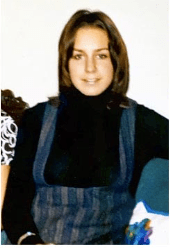
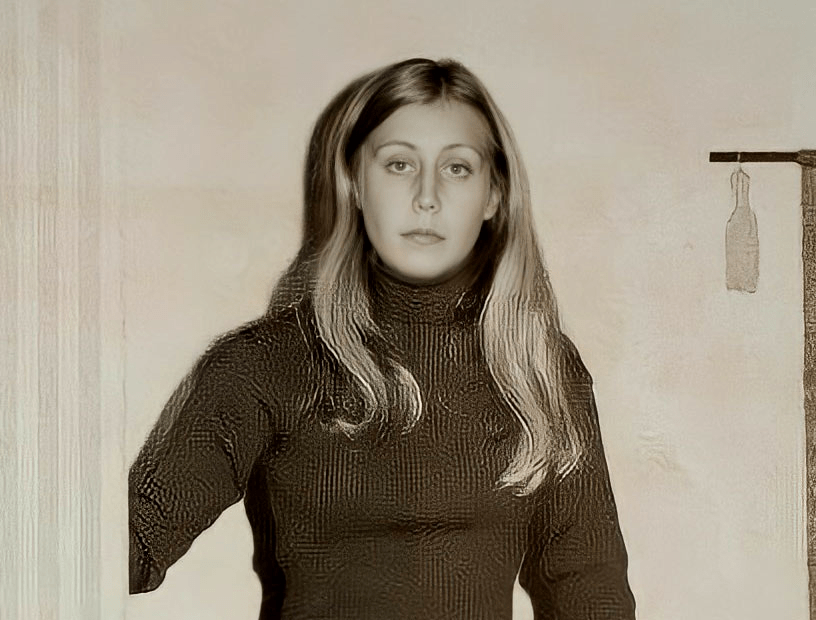
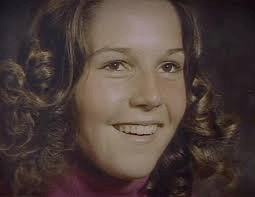
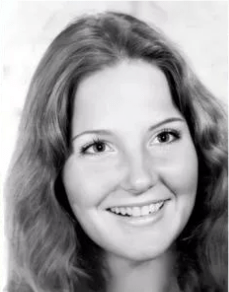
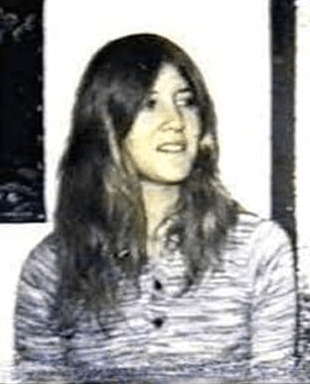
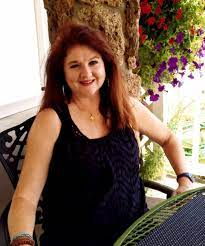
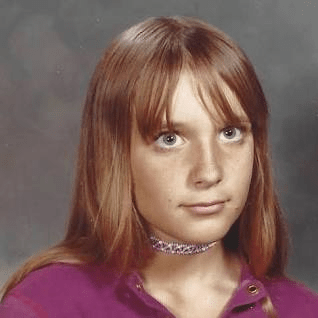
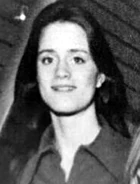
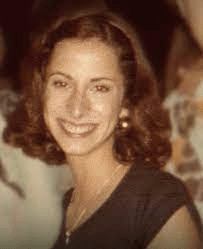
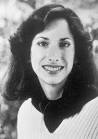
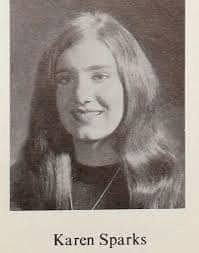
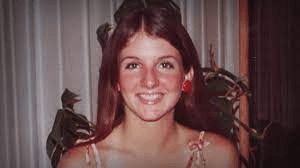
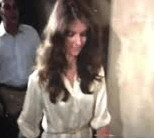
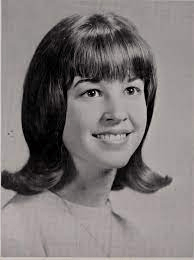
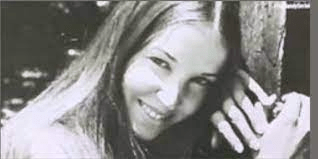
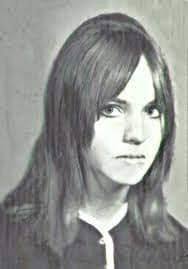
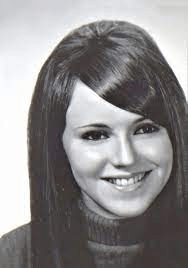
Karen Sparks-Epley (18). January 4, 1974. Survived, Seattle, WA.

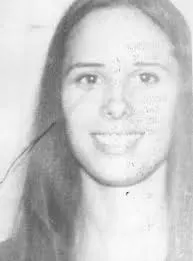
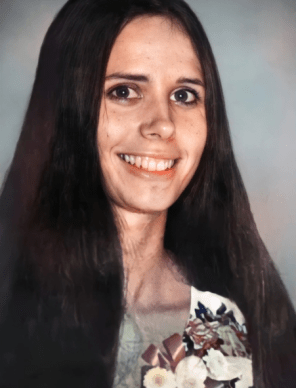
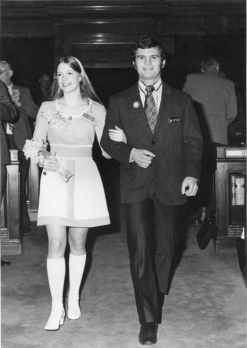
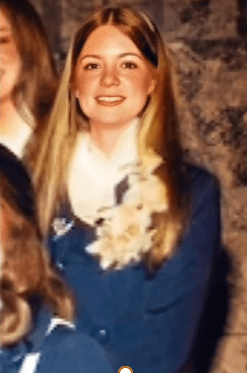
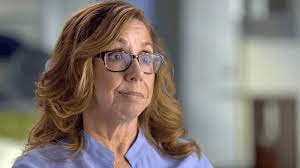
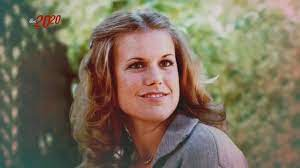
Also referred to as ‘Joni Lenz,’ Sparks was brutally assaulted by Ted Bundy while asleep in her basement apartment in the University District of Seattle. She was his first known victim. Thankfully Bundy didn’t kill her, however she was badly beaten with a metal rod, sexually assaulted, and left unconscious for hours before her roommates discovered her later that night. Ted left her with a number of serious long-term injuries she still struggles with to this day.
This image has an empty alt attribute; its file name is image-28.png
Karen Sparks.
This image has an empty alt attribute; its file name is image-29.png
Karen Sparks.
This image has an empty alt attribute; its file name is image-30.png
Karen Sparks.
This image has an empty alt attribute; its file name is image-31.png
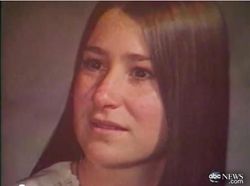
Karen Sparks in the Amazon documentary, ‘Falling for a Killer.’

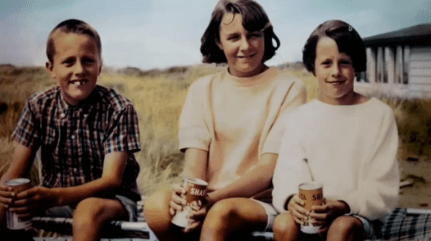
Lynda Ann Healy (21). February 1, 1974. Murdered, Seattle, WA.

On January 31st, 1974, Healy borrowed a friends car to go shopping for a family dinner she was preparing the next night and returned with her groceries at roughly 8:30 PM. Shortly after, Lynda and her roommates went drinking at a popular bar called Dante’s Tavern located at 5300 Roosevelt Way NE. The establishment was a five minute walk from her apartment but the friends didn’t stay out long because Lynda needed to be up at 5:30 AM to be at her job giving the ski report for a local radio station. A number of sources report that Bundy used to go to Dante’s often and it is hypothesized that he first saw Lynda there then followed her home. In the early morning hours of February 1, 1974, he broke into Healy’s basement room, beat her, took off her bloody nightgown (making sure to neatly hang it up in her closet), dressed her then carried her off into the night. It is theorized that Ted only took clothes to make it appear as if Lynda left on her own but obviously we’ll most likely never know the truth. Her body found in March 1975 on Taylor Mountain, near Issaquah outside of Seattle.

This image has an empty alt attribute; its file name is image-26.png
Lynda Healy, in the middle holding her little sister.
This image has an empty alt attribute; its file name is image-27.png
Lynda Ann Healy (middle) with her siblings.
This image has an empty alt attribute; its file name is image-24.png
Lynda Ann Healy.
This image has an empty alt attribute; its file name is image-25.png
Lynda Ann Healy.

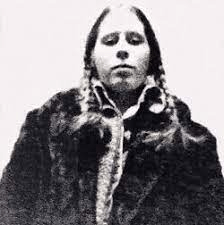
Donna Gail Manson (19). March 12, 1974. Murdered, Olympia, WA.

On the day of her abduction, Donna planned on going to a folk dancing class at the College Activities Building at Evergreen State College (where she attended). Later that same night, she made plans to go to a jazz concert at the Daniel J. Evans Library (also on campus), which was scheduled to start at 8 PM. Donna departed her dormitory just after 7 PM and set out for the dance class, which was just a two minute walk away. Despite how close the College Activities Building was to her dorm, no one recalls seeing her at either the dancing class or the jazz recital, making it highly unlikely that she ever made it that far. Manson was never seen alive again. After confessing to her murder, Bundy said he burned her skull in Liz Kendall’s fireplace.

This image has an empty alt attribute; its file name is image-36.png
Donna Gail Manson.
This image has an empty alt attribute; its file name is image-34.png
Donna Gail Manson.
This image has an empty alt attribute; its file name is image-33.png
Donna Gail Manson.
This image has an empty alt attribute; its file name is image-32.png
Donna Manson.

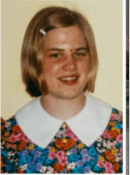
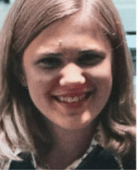
Susan Elaine Rancourt (18). April 17, 1974. Murdered, Ellensburg, WA.

Shortly before 8 PM the evening she disappeared from her college campus at Central Washington University, Susan Rancourt put some clothes in a washing machine in Barto Hall (her dorm building). She then went to a meeting about becoming a Residential Advisor at Munson Hall. When it ended at 10 PM Sue left to walk back to her dorm to switch out her laundry but was never seen alive again. She had plans later that night to watch a movie with a friend but never showed up. Rancourts skull was later found near Taylor Mountain, where Bundy placed several bodies during his reign of terror.
This image has an empty alt attribute; its file name is image-39.png
Susan Elaine Rancourt.
This image has an empty alt attribute; its file name is image-38.png
Susan Elaine Rancourt.
This image has an empty alt attribute; its file name is image-37.png
Sue Rancourt.
This image has an empty alt attribute; its file name is image-40.png
The Susan Rancourt Memorial Garden at CWU. Photo taken in April 2022.

Roberta Kathleen Parks (20). April 17, 1974. Corvallis, OR.

A student at Oregon State University in Corvallis, Parks was abducted from her college campus, which is over a four and a half hour drive for Bundy (who was living at the Rogers Rooming House on 12th Ave NE in Seattle at the time). Shortly before 11:00 PM the night she disappeared, Parks encountered Bundy in the Memorial Union Commons cafeteria at OSU. During Teds interviews with journalists Hugh Aynesworth and Stephen Michaud, he ‘confessed’ in the third-person that Kathy may have encountered her killer while in the cafeteria. Bundy then said he was able to convince her to leave with him and as soon as the opportunity presented itself he immediately overpowered her. He most likely bound and gagged Parks during the 250-mile trip back to Seattle, where then killed her and dumped her body on Taylor Mountain.

This image has an empty alt attribute; its file name is image-43.png
Roberta Parks, second from the left.
This image has an empty alt attribute; its file name is image-41.png
Roberta ‘Kathy’ Parks.
This image has an empty alt attribute; its file name is image-42.png
Kathy Parks.
This image has an empty alt attribute; its file name is image-44.png
One of the more frequently used pictures of Kathy Parks.

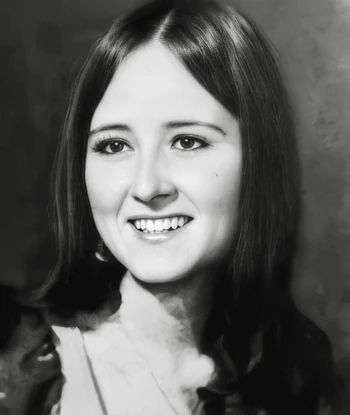
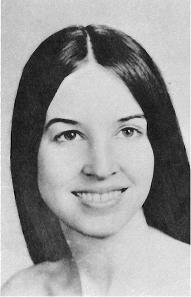
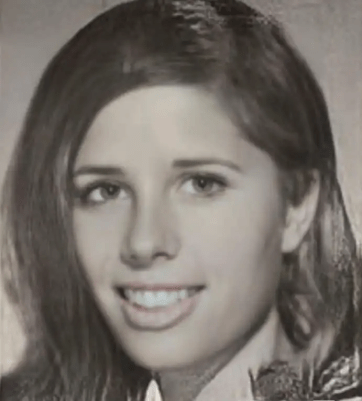
Brenda Carol Ball (22). June 1, 1974. Murdered, Burien, WA.

In the wee hours of June 1st, 1974, Brenda Ball seemingly vanished into thin air after seeing a band play at The Flame Tavern located at 12803 Ambaum Boulevard in Burien, WA. She arrived at the bar alone and stayed until closing. As the act was wrapping up their set at the end of the night Brenda asked one of the members she knew for a ride home back to her house but he was heading in the opposite direction so he couldn’t help out. There are two conflicting reports about how she could have left the bar that night: one is that she left by herself and was planning on hitchhiking home, and the other claims that she left with an unidentified man wearing an arm sling. Despite law enforcement being hesitant to officially say her disappearance was related to the other missing girls in Seattle, her skull was the first discovered on Taylor Mountain in March of 1975.
This image has an empty alt attribute; its file name is image-48.png
Brenda Ball’s senior picture from the 1970 Mount Rainier High School yearbook.
This image has an empty alt attribute; its file name is image-47.png
A barefoot Brenda Ball.
This image has an empty alt attribute; its file name is image-46.png
Brenda Carol Ball.
This image has an empty alt attribute; its file name is image-45.png
Brenda Ball.

Georgeann Hawkins (18). June 11, 1974. Murdered, Seattle, WA.

A student at the University of Washington, Georgann Hawkins disappeared from an alley behind her sorority house in June 1974. The night before she vanished, Hawkins went to a party, where she had a few mixed cocktails. Because she had a Spanish final coming up that she needed to study she didn’t stay long; she did mention to a sorority sister that she was planning on swinging by the Beta Theta Pi House to pick up some Spanish notes from her boyfriend. Hawkins arrived at the frat at approximately 12:30 AM on June 11 and stayed for approximately thirty minutes. After getting the notes and saying goodnight to her beau, Georgann left the fraternity house for her sorority house, Kappa Alpha Theta. Before he was executed, Ted told law enforcement that he approached her in an alley on her way home, feigning injury with a hurt leg (using his crutches as a ruse) while dropping his briefcase. Bundy asked Hawkins for help carrying the prop to his VW Bug, which was waiting in a parking lot roughly 160 yards north of the alley. She agreed and as she bent over to put the briefcase in his vehicle, Ted grabbed a conveniently placed crowbar and knocked her out with a single blow to the head. He then pushed George into his car and drove off into the night. Bundy claimed that while driving she regained consciousness and started to incoherently babble about her upcoming final, thinking he was her Spanish tutor. He again knocked her out with his crowbar. Once at his intended location, Ted took her unconscious body out of his car and strangled her with an old piece of rope. According to him, the parts of Georgann’s body he had not buried were recovered in Issaquah with the bodies of Janice Ott and Denise Naslund. He confessed to murdering Hawkins shortly before his 1989 execution.

This image has an empty alt attribute; its file name is image-51.png
Georgeann and her pom poms, from her time at Lakes High School, in Lakewood, WA.
This image has an empty alt attribute; its file name is image-52.png
A photo of George from the 1973 Washington State Daffodil festival.
This image has an empty alt attribute; its file name is image-50.png
A b&w photo of Georgeann Hawkins.
This image has an empty alt attribute; its file name is image-49.png
Georgann Hawkins.

Janice Ann Blackburn-Ott (23). July 14, 1974. Murdered, Issaquah, WA.

At the time she was murdered, Janice Ott worked as a probation case worker at the King County Youth Service Center in Seattle, WA. In December of 1973, she married Jim Ott, who at the time of her death was in California for graduate school. After her car was broken into while living in Seattle, she moved in with a roommate to 75 Front Street in Issaquah (she felt the smaller community would be safer). The morning she disappeared, Janice spent a few hours at doing laundry and having a cup of coffee with a friend. After her errands and chores were completed, she rewarded herself with a trip to Lake Sammamish. Ott was abducted by Bundy at around 12.30 PM, and just a mere three and a half hours later he returned to the same park and abducted Denise Naslund.

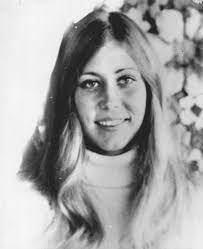
Janice Ott and her younger sister standing outside her VW Bug.
Janice Ott.
Janice and Jim Ott.
This image has an empty alt attribute; its file name is image-54.png
Janice Ott.

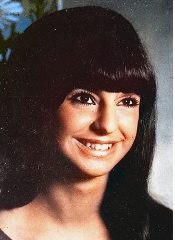
Denise Marie Naslund (18). July 14, 1974. Murdered, Issaquah, WA.

On a beautiful, picture perfect sunny day, Naslund disappeared from a very busy Lake Samammish State Park (that day was Rainier Beer’s annual picnic, there were over 40,000 people there). She was there with her boyfriend and another couple, and after telling them she was going to the restroom Denise was never seen alive again. Naslund lived with her mother in Seattle and was studying to become a computer programmer. Eleanor Rose said her daughter had the kind of helpful nature that would easily place her in danger. Denise’s remains were found on a hillside near Issaquah roughly two months later in September 1974, only two miles away from Lake Samammish. Bundy confessed to her murder shortly before his execution.

This image has an empty alt attribute; its file name is image-56.png
Denise Marie Naslund.
This image has an empty alt attribute; its file name is image-53.png
Denise Marie Naslund.
This image has an empty alt attribute; its file name is image-55.png
Denise Naslund.

Nancy Wilcox (16). October 2, 1974. Murdered, Holladay, UT.

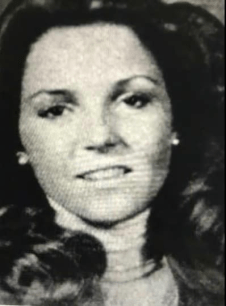
The first of Teds confirmed Utah victims, Wilcox went missing after she went on a walk to buy a pack of gum (it’s also speculated that from there she was on her way to her high school to visit her boyfriend). She left the house in a huff after getting into a fight with her Dad about her bf’s pick-up truck leaking oil on the families driveway. Both Mr. and Mrs. Wilcox said that because of this law enforcement initially considered her to be a runaway even though they knew their daughter would never voluntarily leave home and had no troubles whatsoever in her personal life. Nancy left all of her personal belongings behind including some expensive jewelry that held deep sentimental value to her. Before he was executed Bundy confessed to sexually assaulting and strangling her, then burying her body about 200 miles away near Capitol Reef National Park. Sadly her body has never been found.
This image has an empty alt attribute; its file name is image-59.png
Nancy Wilcox.
This image has an empty alt attribute; its file name is image-58.png
Nancy Wilcox.
This image has an empty alt attribute; its file name is image-57.png
Nancy Wilcox.

Melissa Smith (17). October 26, 1974. Murdered, Midvale, UT.

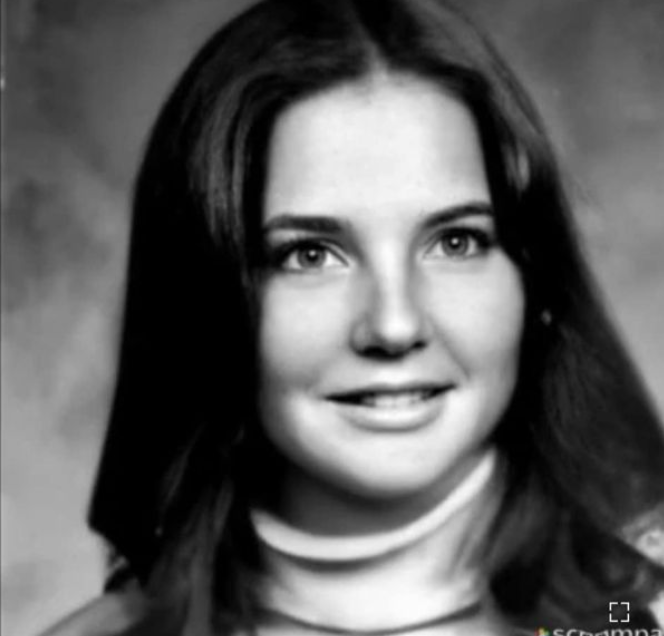
Bundy abducted Smith shortly after she left a pizza parlor on West Center Street in Midvale at around 9.30 PM on October 26, 1974. One unconfirmed report suggests that he may have been asking women in the area to help him with a car issue. Melissa was the daughter of Midvale Police Chief Louis Smith, and her murder took place just sixteen days after Nancy Wilcox vanished from the nearby city of Holladay (and five days before Laura Aime). On the night she disappeared, Smith was supposed to sleep over at a girlfriend’s house but those plans fell through after she didn’t answer the phone. After realizing she had been stood up, she decided to leave the pizzeria and walk back to her house on Fern Drive. At some point during her walk, its speculated that Bundy grabbed Melissa off the street and killed her. She never made it home.
This image has an empty alt attribute; its file name is image-65.png
Melissa Smith.
This image has an empty alt attribute; its file name is image-64.png
Melissa Smith.
This image has an empty alt attribute; its file name is image-60.png
Melissa Smith.

Laura Aime (17). October 31, 1974. Murdered, Lehi, UT.

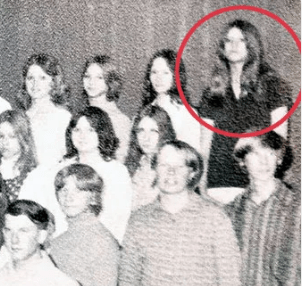
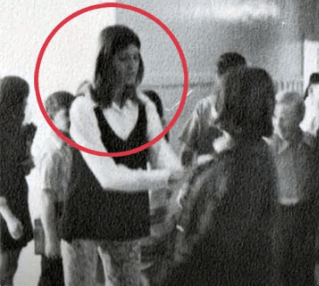
Shortly before she disappeared Aime dropped out of high school, left home (she frequently couch surfed at various friends’ homes), and worked a few menial part-time jobs. Surprisingly she still remained in contact with her family and according to her parents, they were just beginning to accept her ‘nomadic lifestyle.’ So, when she first disappeared no one really seemed overly concerned. Thanks to my newspapers.com subscription it didn’t take long for me to realize there were no news articles mentioning Laura Aime’s disappearance at first, and her name only began to appear in ink after two hikers discovered her remains in American Fork Canyon. Additionally, when her body was first discovered, law enforcement first speculated it belonged to Deborah Kent.
This image has an empty alt attribute; its file name is image-76.png
Laura Ann Aime, photo courtesy of ThisInterestsMe.
This image has an empty alt attribute; its file name is image-77.png
Laura Ann Aime, photo courtesy of ThisInterestsMe.
This image has an empty alt attribute; its file name is image-78.png
Laura Ann Aime.
This image has an empty alt attribute; its file name is image-79.png
Laura Ann Aime.

Carol DaRonch (18). November 8, 1974. Survived, Murray, UT.

The evening she was abducted Carol DaRonch parked her maroon 1974 Camaro on the southern side of The Fashion Place Mall in Murray, UT. As she was window shopping outside Walden Books, DaRonch was approached by Bundy, who was posing as a police officer. He said that her car had been broken into and asked her to drive down ‘to the station’ with him to file a report with him. However as they were on their way he attempted to subdue and handcuff her but was unsuccessful: she was able to fend him off and escape. Of the encounter, DaRonch said that she ‘thought he was kind of creepy … I thought he was a lot older than he was.’ She also commented that she could smell alcohol on his breath.
This image has an empty alt attribute; its file name is image-80.png
Carol DaRonch.
This image has an empty alt attribute; its file name is image-81.png
Carol DaRonch.
This image has an empty alt attribute; its file name is image-83.png
Carol DaRonch.
This image has an empty alt attribute; its file name is image-82.png
DaRonch as she looks today.

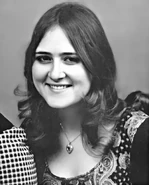
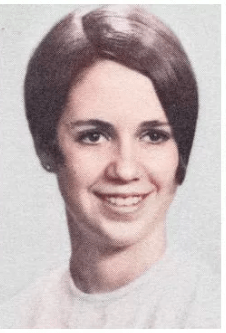
Debra Jean Kent (17). November 8, 1974. Murdered, Bountiful, UT.

After Bundy was unsuccessful in his attempts to kidnap Carol DaRonch he quickly realized he was going to need a new victim. So he made the twenty-two minute drive away to Viewmont High School, where he successfully abducted Debbie Kent. Kent was watching a play with her family but left the school at approximately 10:30 PM to pick up her brother from the nearby Rustic Roller Rink. She never made it to the rink and was most likely abducted in the parking lot. According to an eyewitnesses, there was loud screaming coming from the area at roughly the time that Debra was last seen, and another person saw a light-colored VW Beetle speeding away from the school. After the Kent’s realized their daughter hadn’t even made it out of the parking lot, they found a handcuff key on the ground by their car. Bundy confessed to killing Deb and burying her body in the same area as Nancy Wilcox.
This image has an empty alt attribute; its file name is image-86.png
Debra Kent.
This image has an empty alt attribute; its file name is image-85.png
Debra Kent.
This image has an empty alt attribute; its file name is image-84.png
Debra Kent.

Caryn Campbell (23). January 12, 1975. Murdered, Estes Park, CO.

Bundy abducted the 23-year-old nurse from the Wildwood Inn in Snowmass Village. While staying at the inn with her fiance and his children, Campbell went missing after going upstairs to her room to retrieve a magazine. Although we will never know for certain how exactly Ted managed to abduct the attractive young woman, it is highly likely he feigned an injury and asked her to help him carry something back to his vehicle. After he lured her away from the hotel to a darkened parking lot he hit her over the head then quickly snuck her into his Bug. Roughly five weeks after Campbell disappeared her body was found less than three miles away from the Wildwood Inn. Someone driving by her remains noticed a large amount of birds flying over the area. Using dental records, police determined that the remains belonged to Caryn. The postmortem examination revealed that her skull had sustained three heavy blows. Before Ted’s run in with Ol’ Sparky, he confessed to Campbells murder.

This image has an empty alt attribute; its file name is image-103.png
The day before Bundy was executed Campbell’s father Robert did an interview with the Free Press saying that ‘you never really forgive someone for something like that,’ Robert Campbell said. ‘You just try to put it behind you. … The thing I’d like to have back, I can’t have.’ … ‘I’m not a vindictive person, but certainly you can’t go around killing people. I suppose I approve of his execution reluctantly, but I don’t think executing Bundy will be a deterrent. People will keep killing.’
This image has an empty alt attribute; its file name is image-90.png
Caryn Campbell.
This image has an empty alt attribute; its file name is image-89.png
Caryn Campbell.

Julie Cunningham (26). March 15, 1975. Murdered, Vail, CO.

Cunningham disappeared early in the evening on March 15, 1975 after leaving her Apollo Park apartment in Vail to go a nearby bar to meet up with a friend. Bundy told law enforcement that he pretended to be an injured skier on crutches that needed help carrying a pair of ski boots to his car. According to Ted, the pair walked over half a mile together before they finally reached his vehicle. Once there, Bundy knocked her unconscious, put her in his car then drove to a remote area roughly eighty miles west of Vail and sexually assaulted her. When finished, he strangled her to death and dumped her remains in a shallow grave near Rifle, CO. Julie’s body has never been recovered.
This image has an empty alt attribute; its file name is image-93.png
Julie Cunningham.
This image has an empty alt attribute; its file name is image-92.png
Julie Cunningham.
This image has an empty alt attribute; its file name is image-91.png
Julie Cunningham.

Denise Oliverson (24). April 6, 1975. Murdered, Grand Junction, CO.

On April 6, 1975, Denise Oliverson set out on a bike ride to her parents house but was never seen alive again. The next day, a search party found her bicycle and shoes under the Fifth Street Bridge by some railroad tracks. Just days before he was executed in January 1989, Bundy told law enforcement he abducted Oliverson then disposed of her body in a river about five miles West of Grand Junction. Her remains have never been found.
This image has an empty alt attribute; its file name is image-95.png
Denise Oliverson.
This image has an empty alt attribute; its file name is image-97.png
Denise Oliverson.
This image has an empty alt attribute; its file name is image-96.png
Denise Oliverson on her wedding day.

Lynette Dawn Culver (12). May 6, 1975. Murdered, Pocatello, ID.

Although the details surrounding Culvers murder seem to vary between sources, it’s strongly speculated she was last seen at Alameda Junior High School. It’s worth mentioning, this was a two and a half hour drive from where Bundy was living at the time in Salt Lake City to Pocatello, Idaho. Some places say that she left campus during her lunch period, where others claim Lynette was last seen getting on a bus. When considering her healthy and happy relationship with family and friends as well as and her stellar academic performance, she most likely was taken against her will. In his death row interviews, Bundy confessed to killing Lynette then dumping her body in the Snake River. He also said he raped and drowned the 12 year old child in a hotel room after abducting her. Law enforcement didn’t fully accept his confession despite providing some convincing details.
This image has an empty alt attribute; its file name is image-102.png
Lynette Dawn Culver. 
This image has an empty alt attribute; its file name is image-101.png
Lynette Dawn Culver. 
This image has an empty alt attribute; its file name is image-99.png
Lynette Dawn Culver.
This image has an empty alt attribute; its file name is image-104.png
Lynette Dawn Culver.

Susan Curtis (15). June 27, 1975. Murdered, Provo, UT.

At the time she was murdered, Susan was a freshman at Woods Cross High School. She had a history of running away from home for days at a time but never was gone for very long. Susan was originally from Bountiful, Utah but at the time of her disappearance was attending a youth conference at Brigham Young University in Provo. A natural athlete, Curtis had ridden her bicycle 50 miles from Bountiful to Provo to attend the conference. She vanished on the first evening of the conference after a formal banquet: she left her friends to make the quarter mile walk back to her dormitory to brush her teeth but was never seen or heard from again. As Bundy walked down to the hall to be executed Curtis was his last death row confession. Since her body has not been recovered she is still regarded as a missing person.

This image has an empty alt attribute; its file name is image-108.png
Susan Curtis.
This image has an empty alt attribute; its file name is image-107.png
Susan Curtis.
This image has an empty alt attribute; its file name is image-110.png
Susan Curtis.
This image has an empty alt attribute; its file name is image-109.png
Susan Curtis.
This image has an empty alt attribute; its file name is image-106.png
Susan Curtis.

Margaret Bowman (21). January 15, 1978. Murdered, Tallahassee, FL.

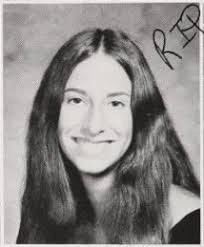
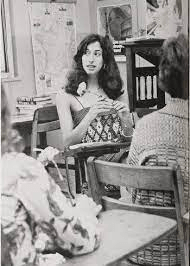
In the early morning hours of January 15, 1978, a group of young women residing at the Chi Omega house at Tallahassee’s Florida State University were asleep in their beds when evil crept in… Margaret Bowman was born in Honolulu and moved to Florida in 1973 after her father retired from the US Air Force. Bowman was one of four women Bundy attacked when he broke into the sorority house at around 3 AM on January 15, 1978. He beat her with a piece of firewood as well as a telescope and strangled her to death with her own tights. Despite the violent nature of the crime, the initial investigation failed to produce any evidence of sexual assault or struggle. The severity of the beating was so extreme that part of Bowman’s brain was visible.
This image has an empty alt attribute; its file name is image-117.png
A picture of Margaret Bowman from high school. I hate that it has ‘RIP’ on it but I couldn’t find another copy.
This image has an empty alt attribute; its file name is image-114.png
Margaret Bowman.
This image has an empty alt attribute; its file name is image-113.png
Margaret Bowman.
This image has an empty alt attribute; its file name is image-111.png
Margaret Bowman.

Lisa Janet Levy (20). January 15, 1978. Murdered, Tallahassee, FL.

Lisa was born in St Petersburg, FL and attended Dixie Hollins High School, where she played flute in the band for two years. At FSU, she majored in fashion merchandising and worked at the Colony Shop near campus. When law enforcement got to the crime scene Levy’s was the first sister that officers found dead. Medical Pathologists discovered that she had been beaten on the head with a log, sexually assaulted with a hair spray bottle then strangled. Additionally, they found bite marks on her buttocks and one of her nipples had been so savagely bitten that it was almost completely severed from the rest of her breast.

This image has an empty alt attribute; its file name is image-118.png
Levy.
This image has an empty alt attribute; its file name is image-119.png
Lisa Levy.
This image has an empty alt attribute; its file name is image-123.png
Levy.
This image has an empty alt attribute; its file name is image-121.png
Lisa Levy and her boyfriend.
This image has an empty alt attribute; its file name is image-122.png
Lisa Levy and her boyfriend.

Kathy Kleiner-Rubin (20). January 15, 1978. Survived, Tallahassee, FL.

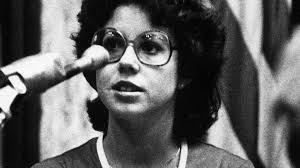
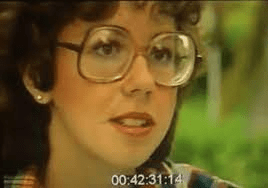
Kathy Kleiner-Rubin and Karen Chandler shared a room at the Chi Omega sorority house. That night she was attacked Kathy went to bed first, with Chandler following shortly after. After Bundy attacked and murdered Lisa Levy, he went into the room next door and brutally assaulted Kleiner-Rubin and Chandler. In an interview, Kathy said that was awoken that morning by the sound of her bedroom door opening. The assailant then tripped over a chest that was in-between the girls twin beds. Ted then assaulted her with a piece of firewood, which left her with a broken jaw, concussion, skull fracture, broken arm and finger. Miraculously, she survived her injuries and testified against Bundy in his death penalty trial.
This image has an empty alt attribute; its file name is image-115.png
Kathy Kleiner-Rubin at Bundy’s trial.
This image has an empty alt attribute; its file name is image-125.png
Kathy Kleiner-Rubin.
This image has an empty alt attribute; its file name is image-124.png
Kathy Kleiner-Rubin as she looks today.
This image has an empty alt attribute; its file name is image-116.png
Kathy Kleiner-Rubin as she looks today.

Karen Chandler (22). January 15, 1978. Survived, Tallahassee, FL.

As I said earlier, Karen Chandler was Kathy Kleiner-Rubin’s roommate in the Chi Omega house. After Bundy was done brutally assaulting Kathy he moved onto Chandler. Bundy knocked out four of her teeth and beat her so severely that he broke her jaw and right arm. Somehow Chandler survived. She took the rest of the academic quarter off, but later returned to the Chi Omega house at FSU.

This image has an empty alt attribute; its file name is image-134.png
Karen Chandler.
This image has an empty alt attribute; its file name is image-128.png
Karen Chandler.
This image has an empty alt attribute; its file name is image-127.png
Karen Chandler.
This image has an empty alt attribute; its file name is image-129.png
Karen Chandler.
This image has an empty alt attribute; its file name is image-126.png
Karen Chandler as she looks today.

Cheryl Thomas (21). January 15, 1978. Survived, Tallahassee, FL.

After Bundy was finished with his atrocities at the Chi Omega sorority house, he wandered a few blocks over and climbed into an open kitchen window in Cheryl Thomas’ apartment. He attacked her and Thomas barely escaped with her life: her jaw was broken in two places, her shoulder dislocated, and she had five skull fractures, which left her permanently deaf in her left ear. In 1978 Thomas was a student at FSU and a member of the schools dance team. The night she was attacked was alone in her apartment but thanks to some attentive neighbors who heard the assault her life was saved.

This image has an empty alt attribute; its file name is image-135.png
Cheryl Thomas.
This image has an empty alt attribute; its file name is image-133.png
Cheryl Thomas.
This image has an empty alt attribute; its file name is image-136.png
Cheryl Thomas.
This image has an empty alt attribute; its file name is image-131.png
Cheryl Thomas.
This image has an empty alt attribute; its file name is image-132.png
A more recent picture of Thomas.

Kimberly Dianne Leach (12). February 9, 1978. Murdered, Lake City, FL.

In 1978, Kim Leach was a 12-year-old seventh-grader at Lake City Junior High School, where she was a straight-A student and the runner-up Valentine Queen. Leach was one of Bundy’s youngest and his last victim. On the morning of February 9, 1978, Kimberly arrived at Lake City Junior high School on time. Just before 9 AM, she left her first period class to go and pick up her purse that she had accidentally left behind in her homeroom. After she recovered the purse she headed back towards her classroom in the pouring rain but never arrived. That afternoon, Kimberly’s parents became concerned when their daughter didn’t come home after school. They called everybody they knew, but nobody could account for Kimberly. Their concern escalated to fear when they learned she had been at her first period class but then never returned. They immediately called law enforcement to report their daughter missing. A search party quickly formed and concentrated on Suwannee River State Park for weeks. Kims remains were eventually found on April 7, 1978 in an abandoned hog pen with a small metal lead-to. She was nude other than for a pullover jumper, her clothes were piled up beside her body. She was in an advanced state of decomposition, but she was identified thanks to dental records. Leach had suffered homicidal violence about the neck region.


This image has an empty alt attribute; its file name is image-138.png
Kim Leach.
This image has an empty alt attribute; its file name is image-137.png
Kim Leach.
This image has an empty alt attribute; its file name is image-120.png
Kim Leach.

Miscellaneous:

There is no consensus as to when or where Bundy began killing. He told different people varying stories to and refused to give the specifics of his earlier crimes, even as he shared in graphic detail to dozens of later murders in the days before he was his executed. He told one of his attorneys Polly Nelson that he attempted his first kidnapping in 1969 in Ocean City, NJ, however did not kill anyone until sometime in 1971 in Seattle. He told Portland forensic psychologist Dr. Art Norman that he murdered two women in Atlantic City while visiting family in Philadelphia in 1969. Bundy hinted to former homicide detective Dr. Robert Keppel that he committed a murder in Seattle in 1972 and another murder in 1973 that involved a hitchhiker near Tumwater, but he refused to elaborate. Rule and Keppel both believed that he might have started killing as a teenager. Bundy’s earliest documented homicides were committed in 1974, when he was 27 years old. By his own admission, he had by then mastered the necessary skills to leave minimal incriminating forensic evidence at crime scenes.

On September 2, 1974, Bundy drove through Boise while moving from Seattle to Salt Lake City and during that trip, he picked up a still unknown hitchhiker and killed her. Ted returned the next day to photograph and dismember the corpse then dumped her remains in the Snake River. Reports from Gonzaga University’s student newspaper ‘The Gonzaga Bulletin’ claim that Bundy stopped by a campus dorm for a party in the 1970’s and drove a female student to Pullman. She miraculously survived.

Bundy confessed to detectives from Idaho, Utah, and Colorado that he had committed numerous additional homicides, including several that were unknown to the police. He explained that when he was in Utah he could bring his victims back to his apartment, ‘where he could reenact scenarios depicted on the covers of detective magazines.’ A new ulterior strategy quickly became apparent: he withheld many details, hoping to parlay the incomplete information into yet another stay of execution. ‘There are other buried remains in Colorado,’ he admitted, but refused to elaborate. The new strategy (which was referred to as ‘Ted’s bones-for-time scheme’) served only to deepen the resolve of authorities to see Bundy executed on schedule, and yielded little new detailed information. In cases where he did give details, nothing was found. Colorado detective Matt Lindvall interpreted this as a conflict between his desire to postpone his execution by divulging information and his need to remain in ‘total possession, and the only person who knew his victims true resting places.’

  • in Oregon, 2 (both unidentified)
  • in Idaho, 2 (1 unidentified)
  • in California, 1 (unidentified)

After being sentenced to death, Bundy spent 11 years on death row, before he was executed by electric chair on 24 January 1989.

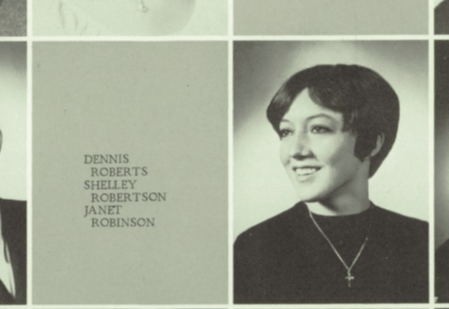
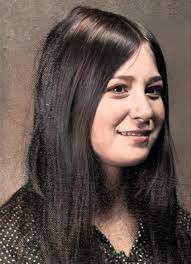
Shelley Kay Robertson.

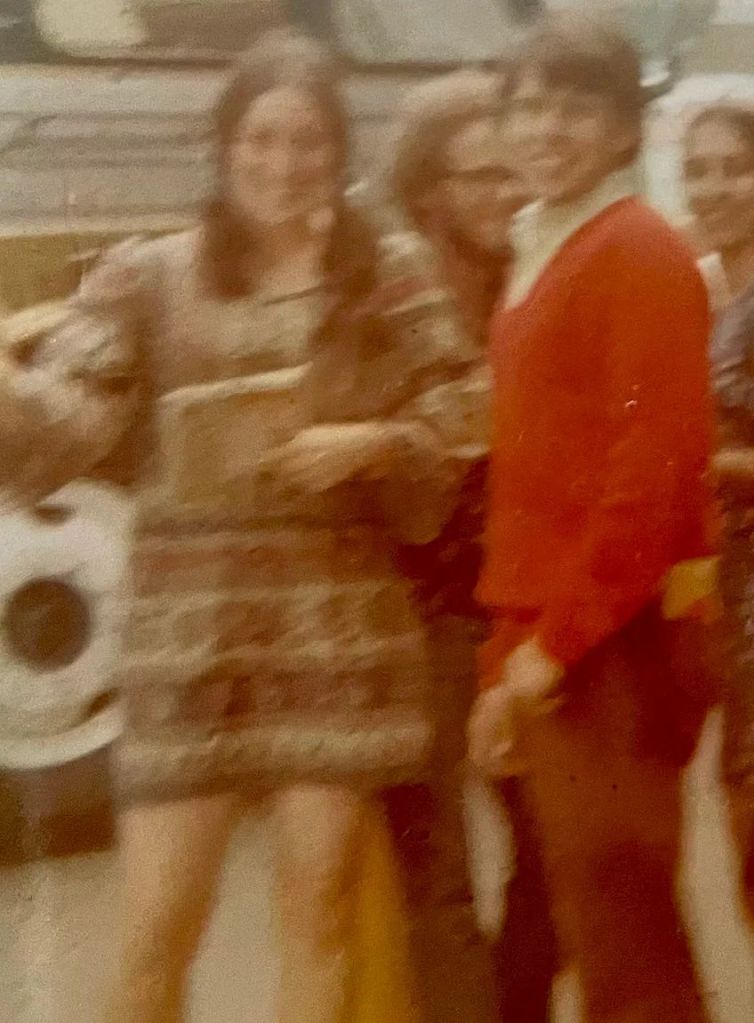
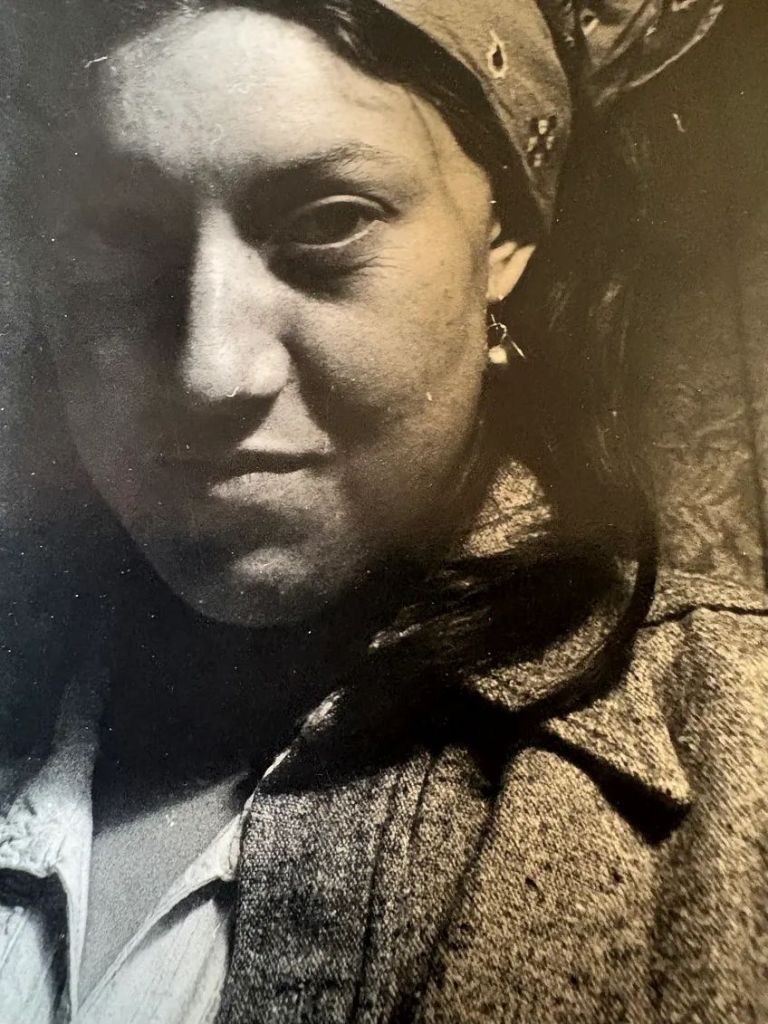
Shelley Kay Robertson was born on July 24, 1951 to Elmer and Roberta Robertson of Arvada, Colorado. The couple had four children: three boys (Mark, Gary, and Rick) and Shelley; they divorced at some point and Mr. Robertson remarried. Elmer was the owner of Silver State Printers and it seemed to be a bit of a family affair: per Steve Winn’s book, ‘Ted Bundy: The Killer Next Door,’ both Shelley and her brother Gary helped out with the business (she was a bookkeeper and binder). Shelley attended Arvada High School, and after graduating in 1969 she spent a year on a missionary trip in Biloxi, Mississippi run through the United Church of Christ. Her faith was important to her and she was an active member of the Church of Christ. Roberta encouraged her only daughter to travel and experience the world, often telling her that ‘you can always come back to your hometown.’ After returning from Biloxi, Shelley enrolled in Red Rocks Community College as a Spanish major; she even went to Barra de Navidad (a fishing village in Mexico) for a semester with her class (after the school trip she returned once to visit on her own). At one point in her short life she spent a year in Alaska with a friend (Susan), where they processed fish in Clam Gulch. Mrs. Robertson said that growing up, Shelley dreamed that one day a white horse would come into her life and she would name him Brownie. It was a story she knew well, and one day her daughters dream somehow came true (although it was a neighbor’s horse). This sweet encounter hinted at the future that she would eventually get her own horse: a sweet little gray mare named Bonnie she rode around bareback. Shelley was 5’8” tall, weighed 150 pounds, and had brown eyes with long brown hair she wore parted down the middle. At the time of her disappearance she was attending a Transactional Analysis group.

Shelley had an apartment in Denver and a boyfriend named Ron, who seemed to have been in the process of going to California right before she disappeared (I couldn’t find the reason or the length of his visit), which upset her (one of her brothers said she was crying and upset at one point right before she disappeared). It’s speculated that the day before she vanished Shelley had gotten into a fight with him where she got out of his red Karman Gia and thumbed a ride home. Robertson was a frequent hitchhiker and thought nothing of catching a ride states away ‘for fun.’ Shelley was last seen dressed in bell-bottom jeans, a T-shirt with the name of a rock band on the front (most likely either Yes or ‘Emerson, Lake & Palmer’) and hiking boots by friends near a local watering hole called ‘Tony’s Bar’ on June 29th. Per a document provided by the Pitkin County Sheriff’s, Shelley was last seen at 34th and Sheridan Streets in Denver hitchhiking to work. Additionally, according to her brother Gary, missing from her wardrobe were a pair of blue denim cutoffs, a blouse, a brown and white striped dress, and ‘Earth” sandals. On Tuesday, July 1, 1975 Robertson never showed up for work at Mr. Robertson’s printing press in Golden. The same day, she was seen by a policeman that noticed her at a service station with a bushy haired bearded man in a beat up old red Chevrolet pick up truck (from around 1952-57). It was the last time she was seen alive but it’s reported she made a phone call later that night.

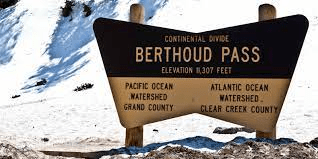
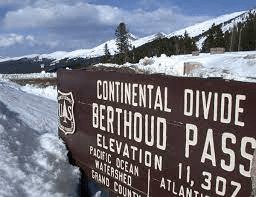
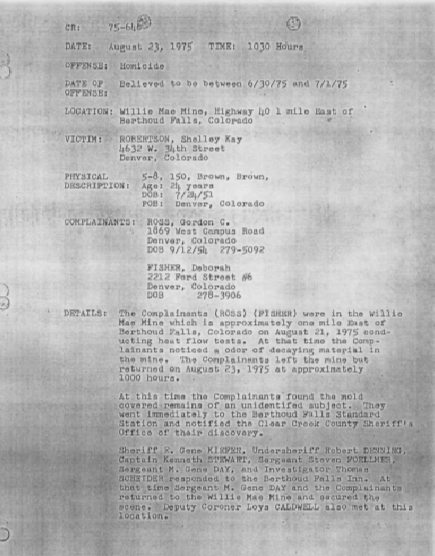
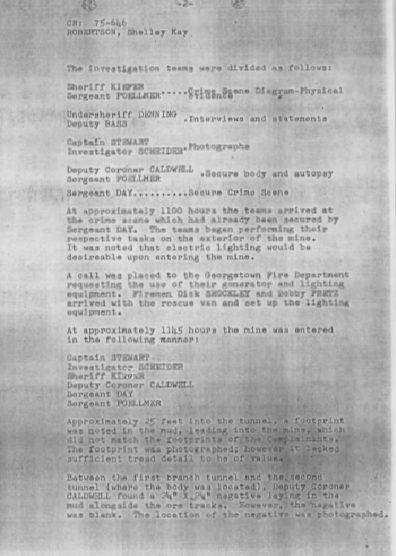
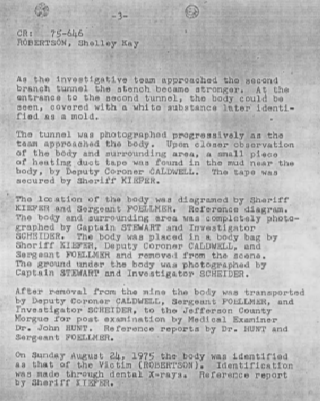
Days then weeks passed with no word from Shelley. On August 21, 1975 two students conducting Amex testing for gas content from the ‘Colorado School of Mines’ came across the body of Shelley Robertson in a mine in Berthoud Pass, Colorado near the Winter Park Resort. About 500 feet in they smelled something unusual: human decomposition. Using their flashlights, they strained to see what was down the narrow tunnel, seeing something large and white. Upon further inspection they realized they were looking at a foot and “bare buttocks” and that “we’ve got body, lets get out of here.” They notified law enforcement and the Clear Creek County Sheriff’s returned on August 23 to find the naked, decomposing remains of Shelley Robertson discarded in the mine. Her body was ‘badly molded’ and bound with duct tape. Although it was determined she had been struck on the front side of the head, the top rear of the head, and the right side of her chest too much time had passed and because of the advanced levels of decomp forensic experts were unable to pinpoint the exact cause of death. Found at the scene were two torn pieces of furnace tape (one on the body and one discarded nearby) as well as discarded beer can and a plastic wrapper from a package of ham. Leads quickly ran dry.

Law enforcement looked into multiple suspects aside from Bundy, including Warren Leslie Forrest, Ottis Toole, “a chronic sex offender that lived nearby,” a man in Shelley’s Transactional Analysis group that claimed he was alive during the Civil War, a “quiet friend” of hers that oddly enough drove a VW Bug, and a mystery man named Jake Teppler. Forrest and Toole were both quickly ruled out as Forrest was already in jail at that point (he was incarcerated since 1974) and the latter was placed in Jacksonville, FL at the time (after drifting and hitchhiking throughout the Southern part of the US). According to Steve Winn, Teppler was a graduate of Tufts University and a resident of the nearby Snowmass Village in CO as well as a former employee of a “condominium complex.’ According to a former part time coworker (who worked a 9-5 job as a music therapist), Teppler was ‘very sick, the kind of person who would go in the corner and jack off.” He seemed to be a bit of a nomad, and wandered the area going through jobs quickly as he was unable to keep them (remind you of anyone?). Looking into Teppler I couldn’t find anything related to a criminal record.

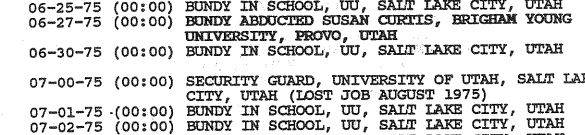
At the time Shelley was murdered Bundy was attending law school at the ‘University of Utah’ and was living at 565 1st Avenue North in Salt Lake City. Per my ‘handy dandy TB job chart,’ in June and July 1975 Ted was employed as the night manager in charge of Bailiff Hall at the University (he was terminated after showing up for work drunk). It also said that Bundy worked as a PT security guard for the school in July and August but due to budget cuts he lost that position as well. When researching this piece I kept seeing in multiple sources that ‘crumpled up credit card receipts found in his VW’ placed Bundy in Golden either a few days before Shelley disappeared or the day of (sources have reported both), but the ‘TB Multiagency Report 1992’ puts him in Salt Lake City during that time frame. I scoured the internet for the receipts but couldn’t find them. I do want to point out that Bundy did own an old pickup truck until about November/December 1975 (he bought it to help transport his belongings to Utah when he started law school).

On June 27, 1975 (just a few days before Shelley was last seen), Bundy abducted and murdered Susan Curtis while she attended a youth conference at Brigham Young University in Salt Lake City. Four days after Robertson was last seen on July 4, 1975, Nancy Perry-Baird was abducted from the gas station where she worked in East Layton, UT and was never seen or heard from again. We know Bundy was quickly approaching the end of his reign of terror: he was pulled over by Utah State Trooper Bob Haywood on August 21, 1975 and was arrested for the possession of burglary tools, which eventually resulted in his arrest for the attempted kidnapping of Carol DaRonch.

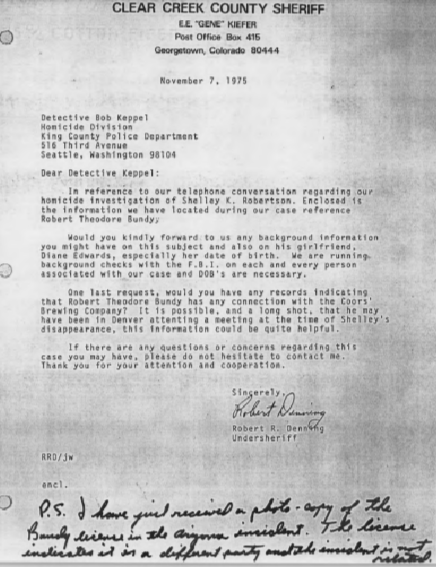
At some point when Bundy was incarcerated in Utah (he was transferred to Aspen, Colorado on January 28, 1977 to face charges for the murder of Caryn Campbell), former Cold Creek County Undersheriff Bob Denning traveled to Salt Lake City to interview him about the murder of Shelley Robertson. When the law enforcement officer asked him about her Ted is reported to have answered, ‘I don’t want to talk about that.’ Denning has commented that he is ‘99% sure that Shelley’s killer is Ted Bundy.’ Additionally, I read in multiple sources that Bundy confessed to Shelley’s murder before he was put to death however I can’t find it anywhere in the transcripts of his death row interviews.

A really interesting source I came across was an article by Shelley’s brothers one-time girlfriend, Kristen Iversen. Kristen is a writer as well (at a much more professional level) and in a piece she wrote for ‘The American Scholar” titled ‘When Death Came to Golden,’ she talks about the disappearance of Shelley and shares an intimate account of how the Robertson family adapted to life after she was taken from them. In response to Mrs. Robertson pulling her close after they met and whispering in her ear, ‘you can save this family,’ Kristen commented that: ‘I couldn’t save Mark’s family. I know this now. I couldn’t save Shelley, whose brief life had already been forgotten and erased by the town, by the media, by the nation. I couldn’t save Mark’s father, a blue-collar man who worked hard all his life and had to bear sorrows no man should have to bear. I couldn’t save Mark’s mother, who for years left Shelley’s bedroom untouched.’ That’s why I write about these girls, because they’ve largely been forgotten about. There’s not much out there on these victims; I seem to find the same little pieces of information over and over.

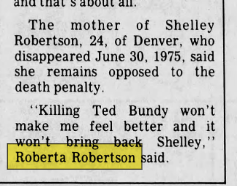
When Bundy was executed in January 1989 Roberta Robertson traveled from Colorado (she lived in the same house she raised her family in) to Florida and stood in a crowd of candle-holders outside the prison, waiting for word that he was officially dead. She told a journalist, “killing Ted Bundy won’t make me feel better and it won’t bring back Shelley. A lot of people seem to want it out of a vengeance. But it gives people a false sense of security. And it’s terribly expensive.” Mrs. Robinson passed away on September 23, 2009 in Lakewood, CO. Almost as tragic as Shelley’s murder, her brother Mark passed away at the age of 24 in a rock-climbing accident in 1979.

Kristen Iversen’s essay about Shelley will be included in an anthology published later this year. Her website is http://www.kristeniversen.com. When it’s released I’ll post a link to my FB page.

Works Cited:
David Merrill & Steven Winn. “Ted Bundy: The Killer Next Door.” 1979.
Kristen Iversen. The American Scholar: “When Death Came to Golden.” March 5, 2018.

Shelley’s photo from the Arvada High School yearbook in 1967.
Shelley’s photo from the Arvada High School yearbook in 1969.
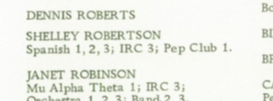
Shelley’s activities in the Arvada High School 1969 yearbook.
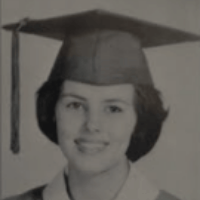
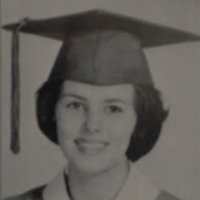
Shelley’s graduation picture.
Shelley Robertson.
Shelley and her one time love (and my wonderful friend), JD Longwell.
Shelley, photo courtesy of Gary Robertson/JD Longwell.
A picture of Shelley napping with her guitar. Photo courtesy of JD Longwell.
A picture of Shelley holding a really cute dog. Photo courtesy of JD Longwell.
Shelley Kay Robertson. Photo courtesy of JD Longwell.
A memorial plaque for Shelley and her brother, Mark. Photo courtesy of JD Longwell.
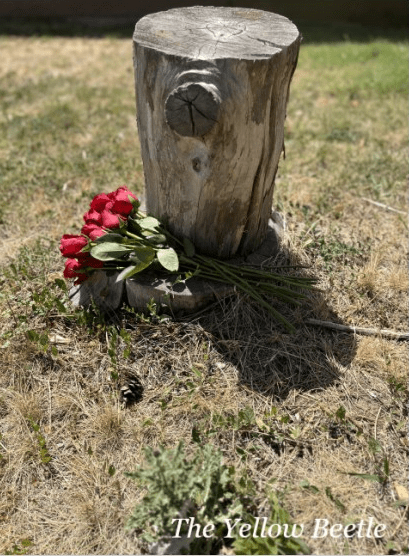
Flowers left for Shelley. Photo courtesy of JD Longwell.
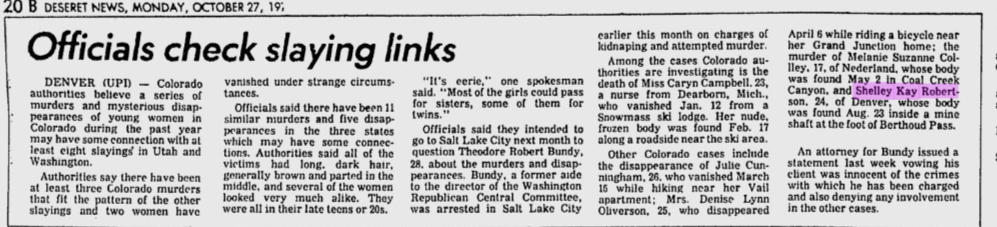
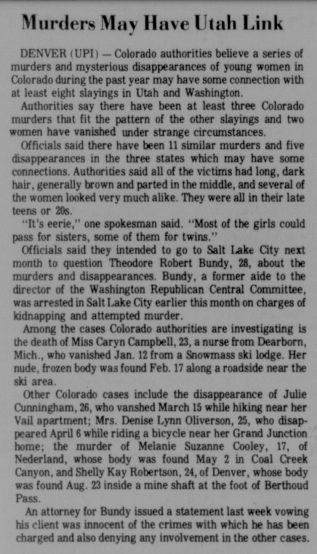
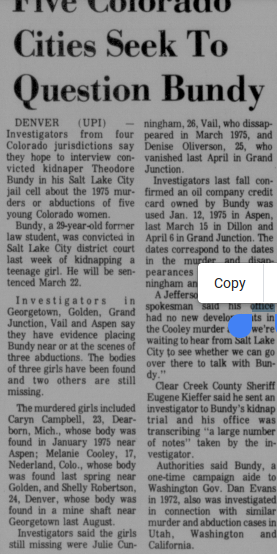
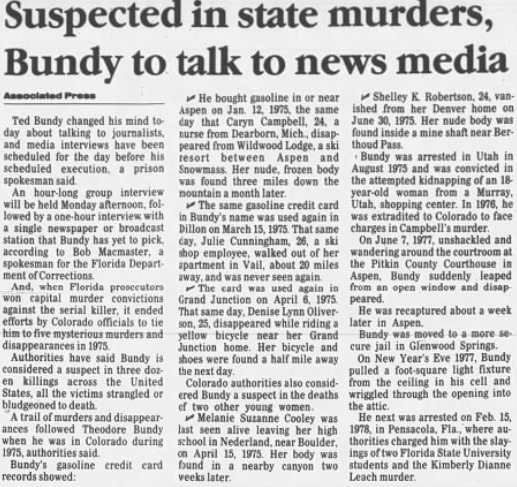
An article mentioning Shelley published in The Deseret News on October 27, 1975.
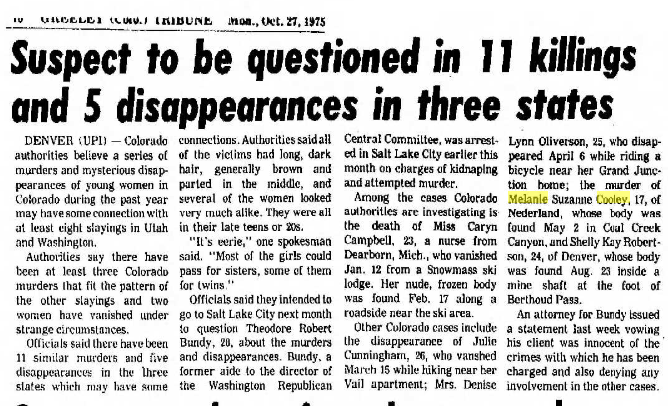
An article mentioning Robertson from the Greeley Daily Tribune published on October 27, 1975.
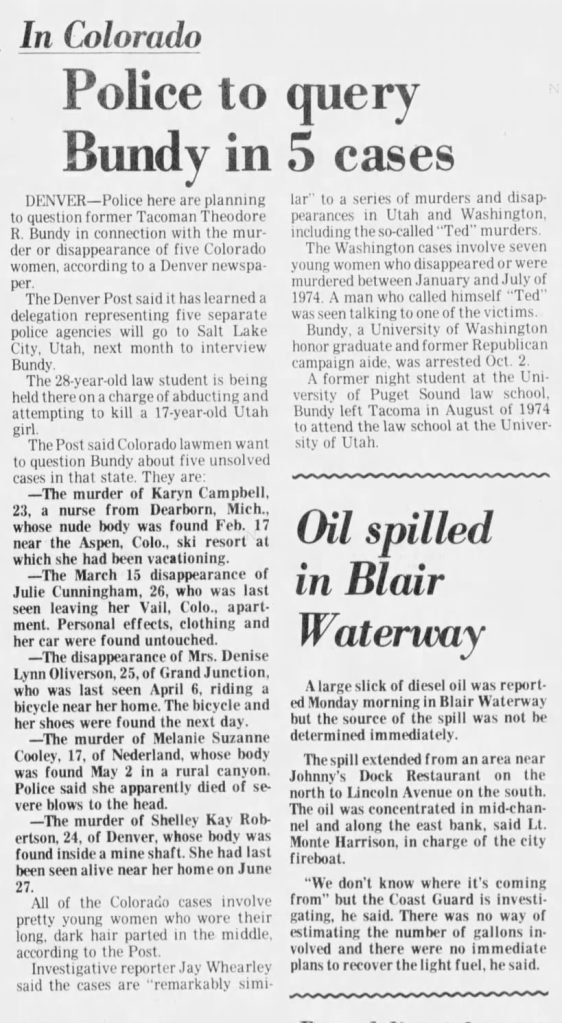
An article mentioning Robertson from The News Tribune published on October 27, 1975.
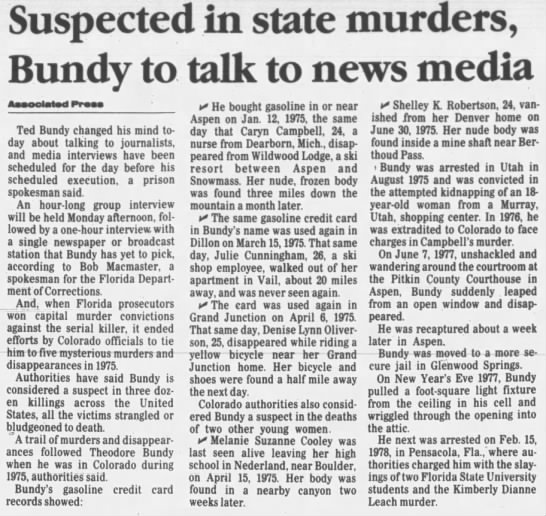
An article mentioning Robertson from the Logan Herald Journal published on October 27, 1975.
An article mentioning Robertson from the Walla Walla Union Bulletin published on November 2, 1975.
An article mentioning Robertson from the Tri-City Herald published on November 2, 1975.
An article mentioning Robertson from The Albany Democrat-Herald published on November 14, 1975.
An article mentioning Robertson from the Centralia Daily Chronicle on March 8, 1976.
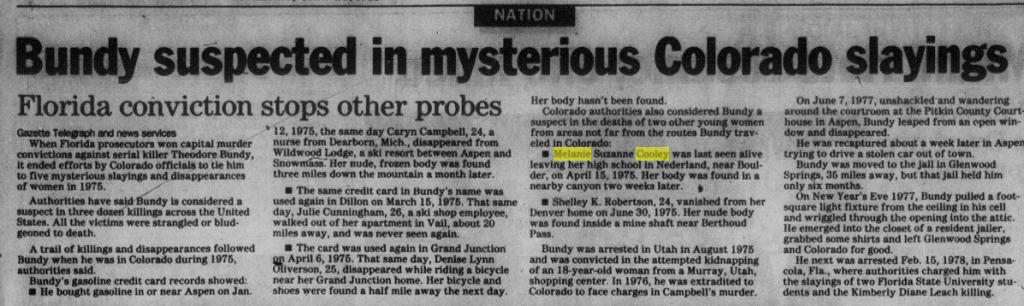
An article mentioning Shelley Robertson from the Colorado Springs Gazette Telegraph published on January 18, 1989.
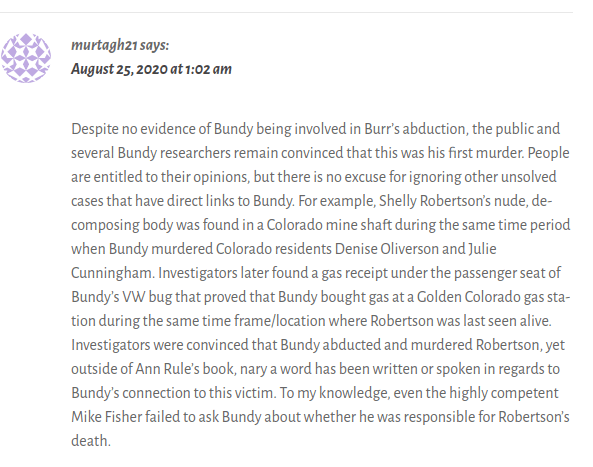
An article mentioning Robertson published by The Daily Sentinel on January 18, 1989.
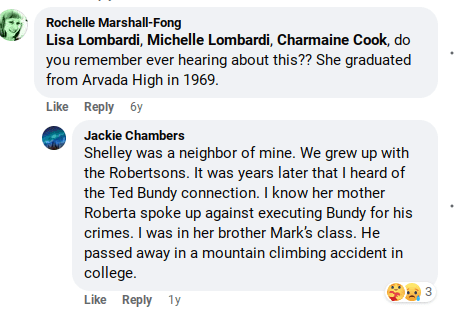
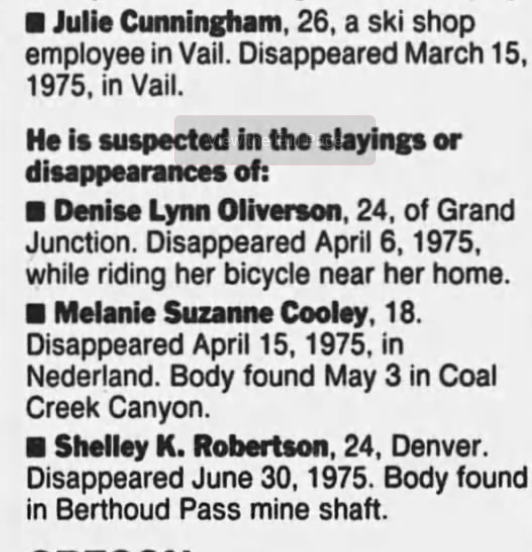
The portion of an article mentioning Mrs. Robertson published in The St. Lucie News Tribune on January 25, 1989.
An article mentioning Robertson from the Daily Kent Stater on January 26, 1989.
A short clipping mentioning Shelley from ‘The Hartford Courant’ after Bundy was executed.
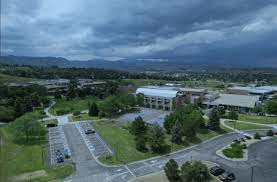
An aerial shot of Red Rocks Community College, where Shelley attended school.
Berthoud Pass in Colorado.
The logo for the Colorado School of Mines.
Ted’s whereabouts when Shelley was abducted according to the ‘Ted Bundy Multiagency Investigative Team Report 1992.’
The ‘Ted Bundy Multiagency Investigative Team Report 1992’ mentioning that Ted purchased gas in Golden, CO on April 4, 1975.
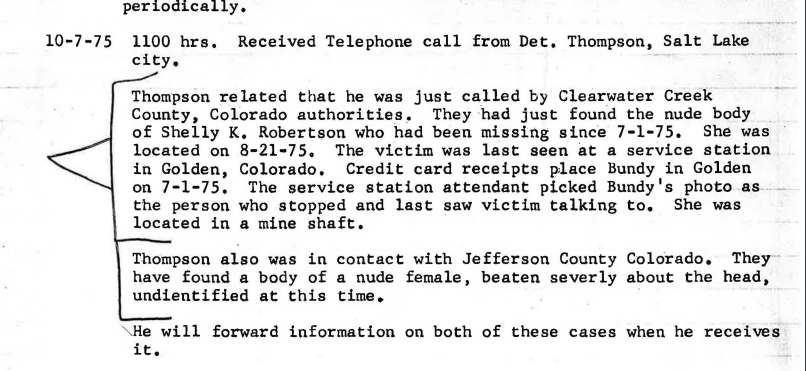
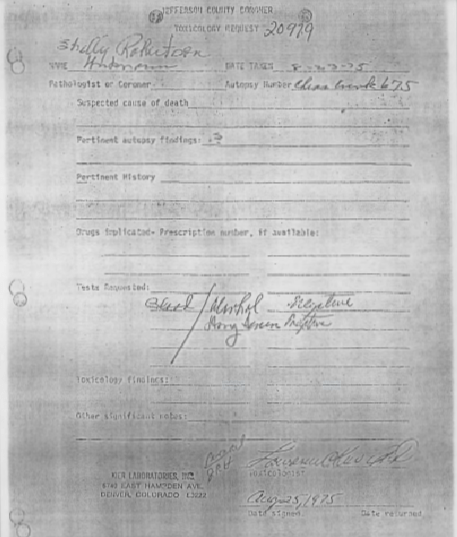
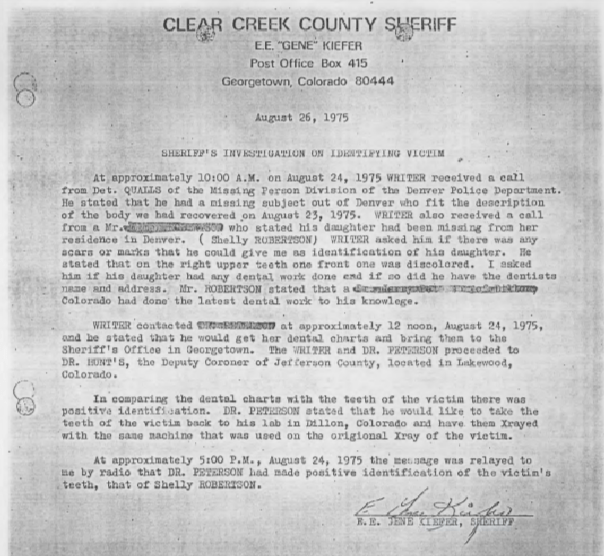
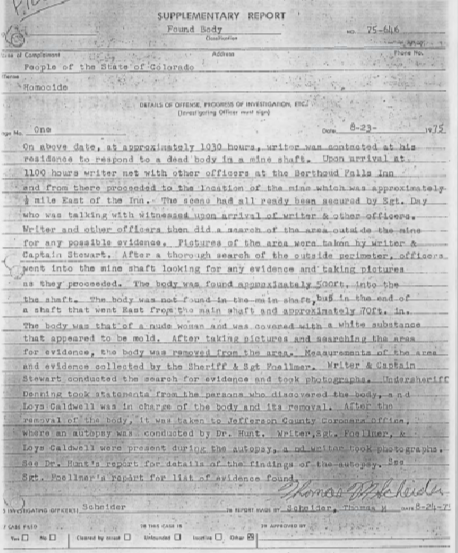
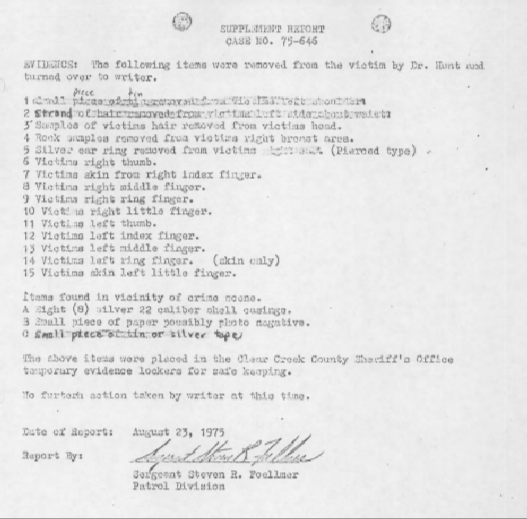
A report mentioning police finding the remains of Shelley.
Denise Oliverson went missing in Grand Junction on April 8, 1975; Cunningham was murdered On March 15th, 1975.
A Facebook comment mentioning Shelley.
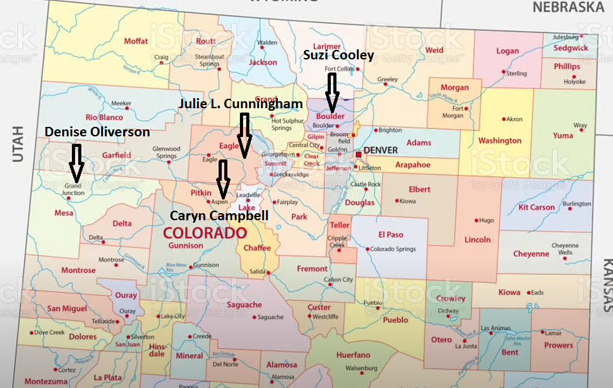
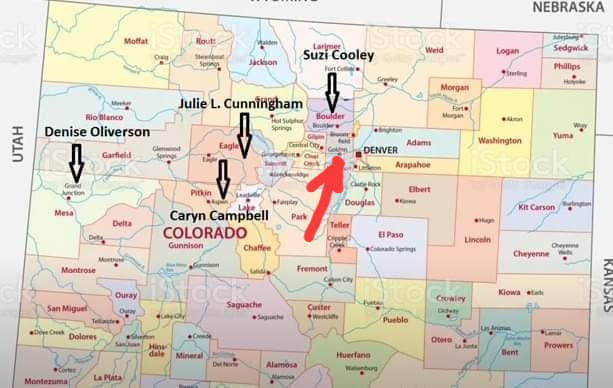
A map of Bundy’s victims in Colorado; I’m not good at artsy stuff so please excuse my sloppy red arrow. This is Golden, where Shelley was abducted from.
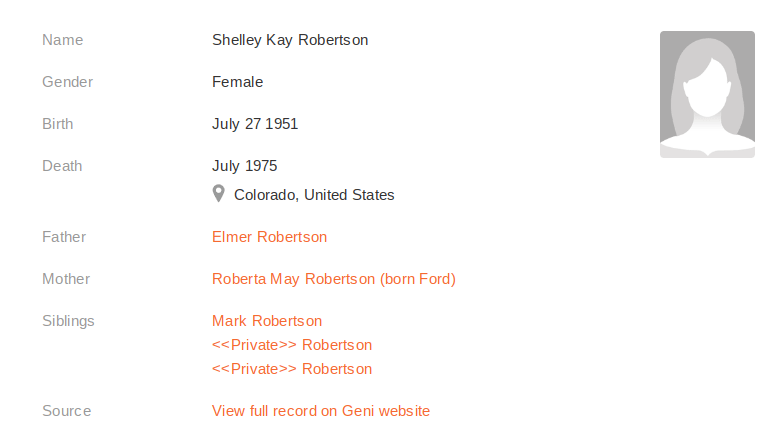
Shelley’s ‘myheritage’ page listing her family members.
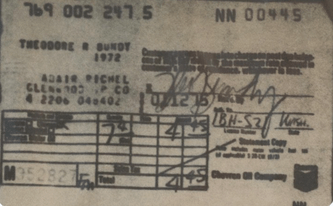
The only gas receipt I could find related to the Bundy case.
The 1950 United States Federal Census record for Elmer Robertson.
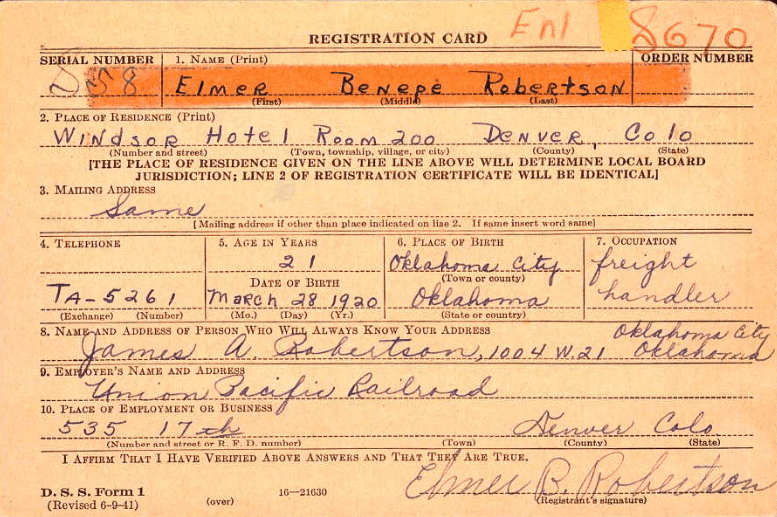
Mr. Robertson’s WW2 draft card.
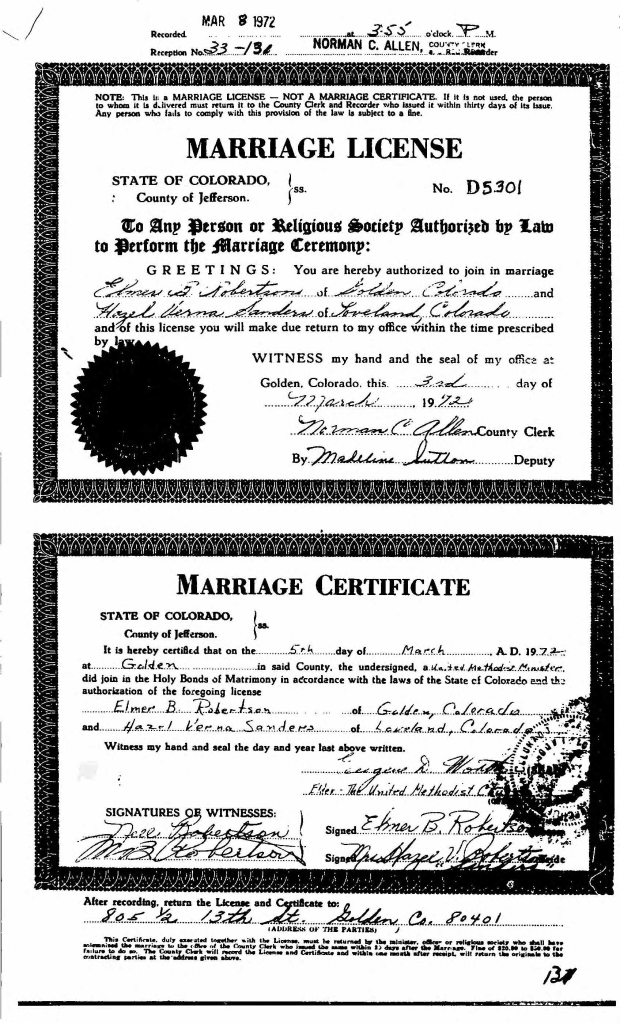
Elmer Robertson’s marriage certificate from his second marriage. His divorce from Shelley’s mom was finalized on December 6, 1971.
Shelley’s brother Rick Robertson from the 1961 Arvada High School yearbook.
Shelley’s brother Gary Robertson from the 1964 Arvada High School yearbook.
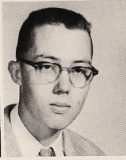
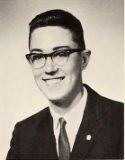
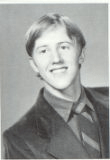
Shelley’s brother Mark Robertson from the 1973 Arvada High School yearbook.
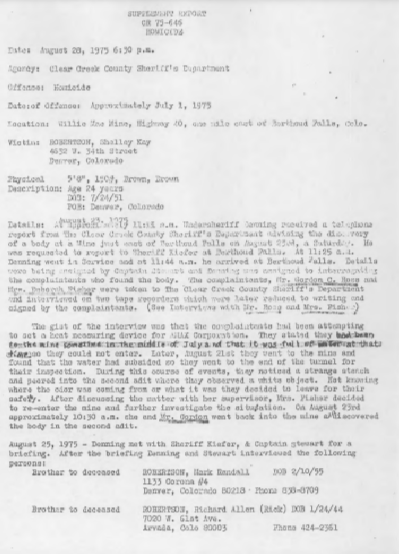
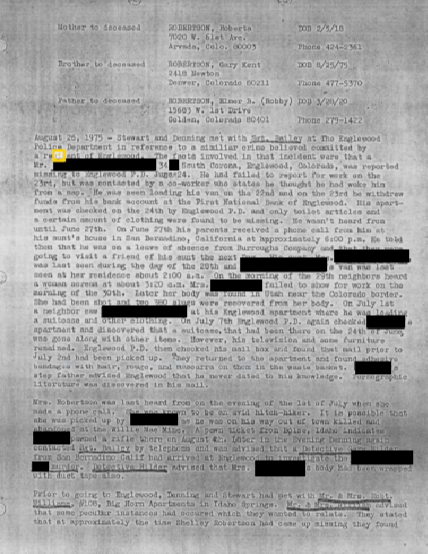
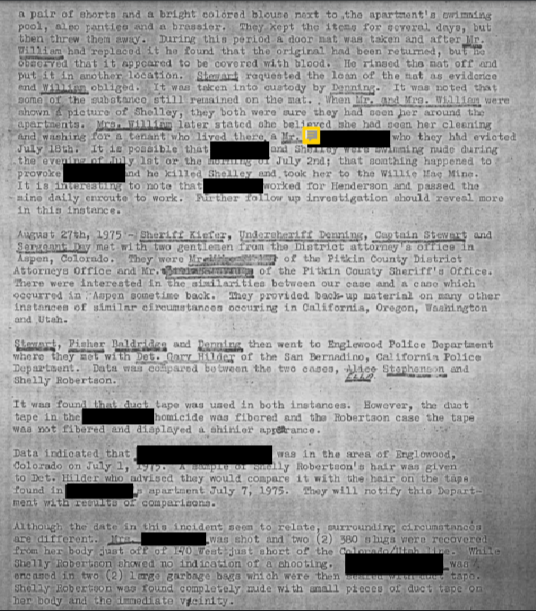
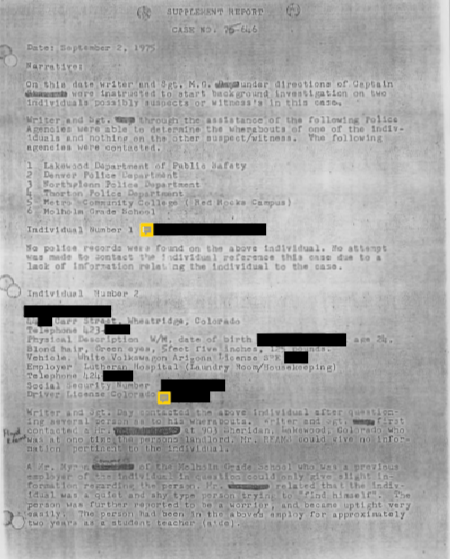
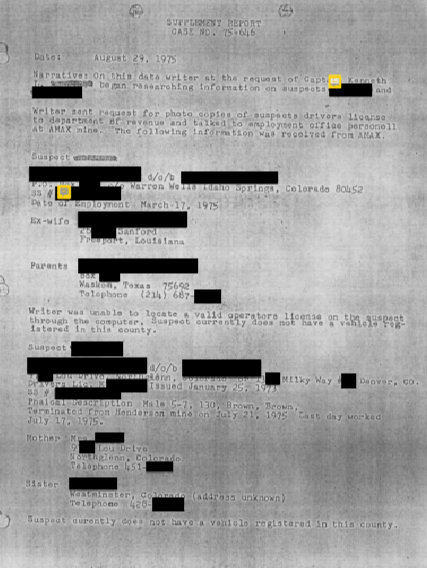
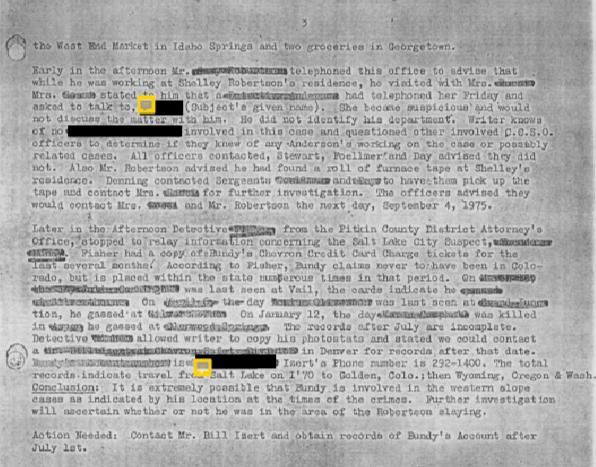
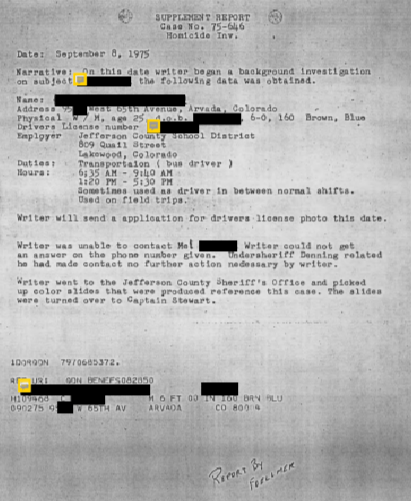
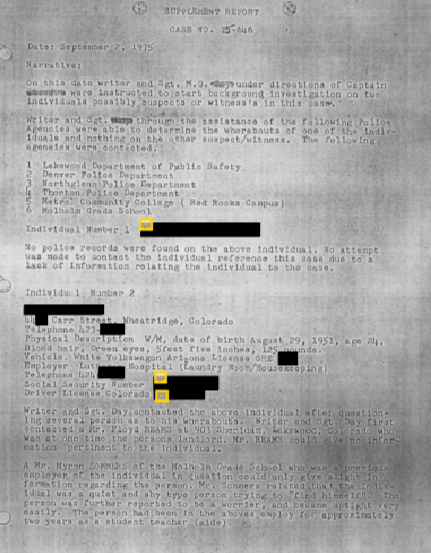
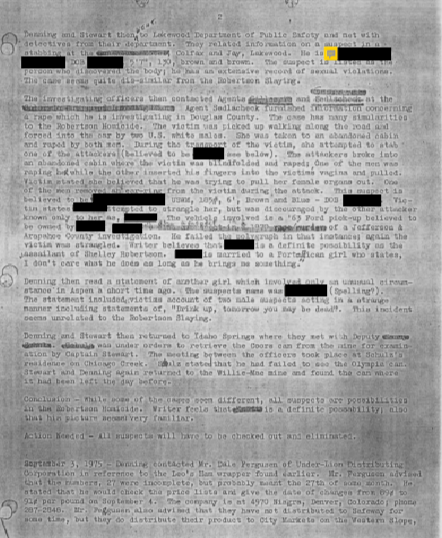
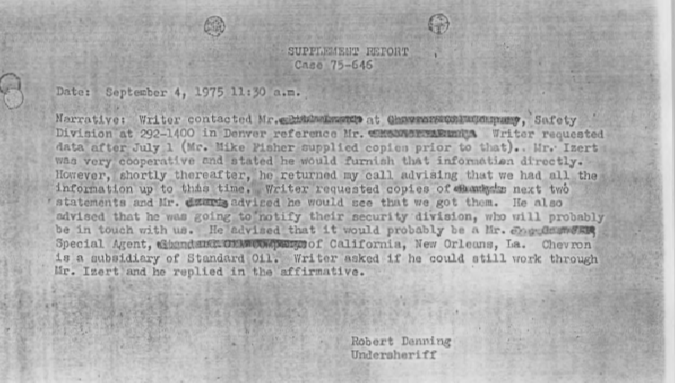
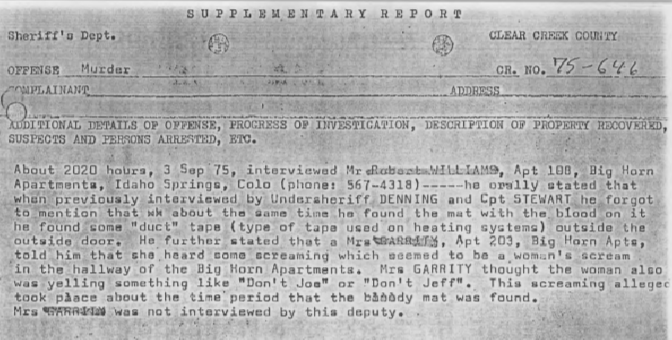
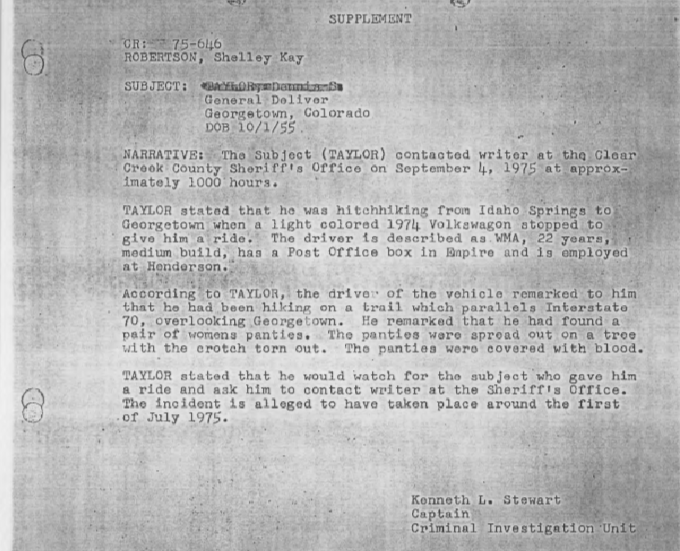
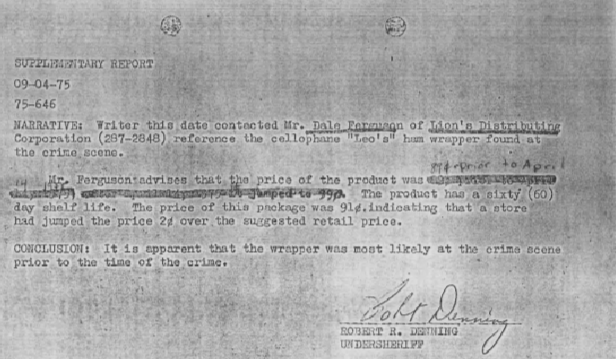
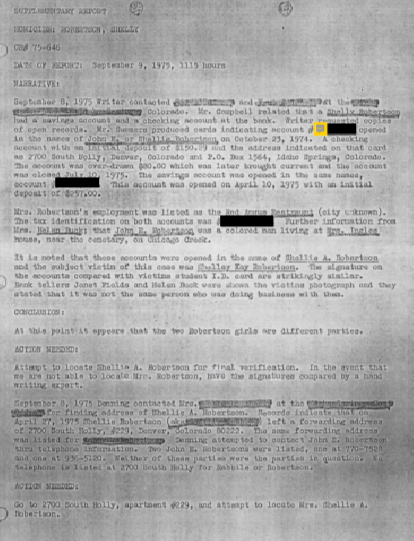
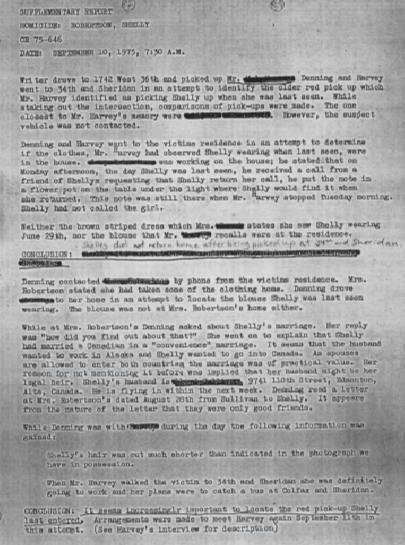
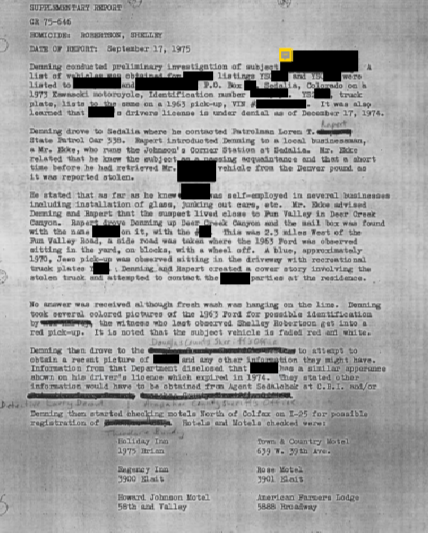
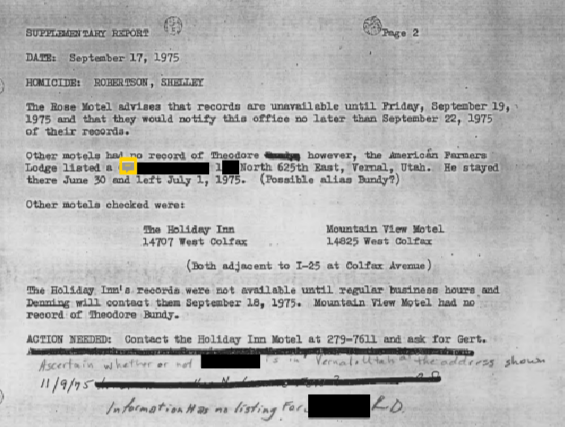
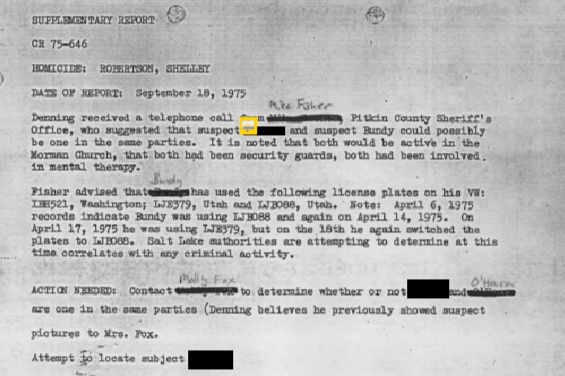
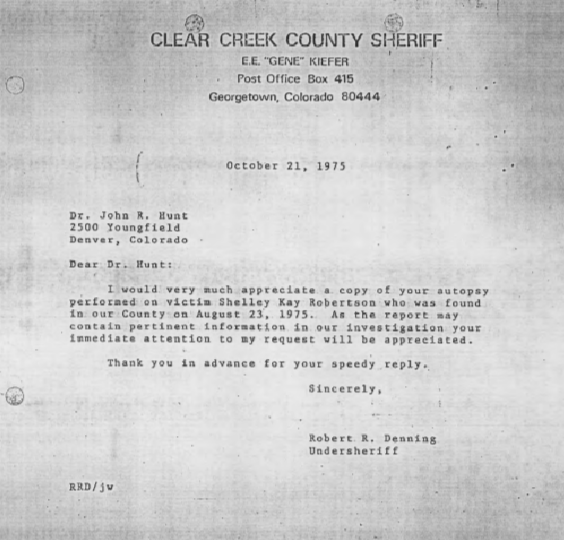
Information related to Shelley Robertson’s murder investigation, courtesy of The King County Sheriff’s Department.

Bundy’s Unconfirmed Victims: A List.

Instead of another in-depth deep dive here’s a brief summarization of each girls case along with a few pictures of Bundy’s more frequently discussed unconfirmed victims. I’ve written about multiple other “suspected” victims (like Kathy Kolodziej or Rita Curran) but those I didn’t include in this list as they are “easily debunked” (obviously Bundy didn’t kill Kolodziej as he was in Seattle at the time and she was in school in Cobleskill, NY and William DeRoos killed Rita Curran in Vermont).

Ann Marie Burr, 8, August 31, 1961 (disappeared). Tacoma, WA

Ann Marie Burr was born on December 14, 1952, in Del Morte County, California, to Donald and Beverly Ann (nee Leach) Burr. Eight year old Ann Marie Burr vanished from her bed without a trace on a stormy night in late August 1961. She lived a little over 3 miles away from Ted and contrary to popular belief, he was not her paperboy and his Uncle Jack did not give Ann Marie piano lessons.

Beverly Burr pregnant with Ann.
Ann Marie.
Ann Marie at her first communion in 1961.

Lisa Wick (20) (survived) & Lonnie Trumbull (20), June 23, 1966. Seattle, WA.

Early in the morning on June 23, 1966, roommates Lonnie Trumbull and Lisa Wick were brutally attacked as they slept in their basement apartment in the Queen Anne Hill region of Seattle. Both victims were originally from Portland, Oregon and were employed with United Airlines as flight attendants; they had only been living in the apartment for a month and (for some reason) had intentions to move into another unit in the complex later that week. Trumbull and Wick had a third roommate (Joyce Bowe), who came home around 9:30 AM to find her roommates brutally beaten. Thankfully Wick was wearing large hair curlers which helped cushion the blows of the assailant that probably saved her life. Sadly Trumbull wasn’t so lucky and she succumbed to her injuries.

Lonnie Trumbull.
Lisa Wick.
Lisa Wick. and Lonnie Trumbull.
Lisa Wick on her wedding day.

Susan Perry (19) & Elizabeth Davis (19), May 39, 1969. Ocean City, New Jersey.
On May 30, 1969, 19 year-old co-eds Susan Davis and Elizabeth Perry were stabbed to death near mile marker 31.9 of the New Jersey Parkway in Somers Point, NJ. The young women visited the Jersey Shore on vacation for Memorial Day since the Tuesday before. Susan had just completed her degree at an all-girls school in Godfrey, Illinois called Monticello Junior College and was set to graduate on May 25 with an associates of arts degree; Elizabeth started after her friend so she still had a ways to go in her studies before she graduated. Around 4:30 AM they left their boarding house to head back to Camp Hill, Pennsylvania in hopes of beating the holiday traffic, and before they hit the road stopped to grab a bite to eat at The Somers Point Diner. No one is really certain what happened after the girls left the restaurant roughly an hour later: A NJ trooper found their light blue 1966 Chevrolet convertible abandoned on the side of the Turnpike around noon that day and had it towed. On June 2 at about 1:30 PM, the bodies of the friends were discovered by a Garden State Parkway maintenance worker named Elwood “Woody” Faunce Jr. who searched the area of the parkway where the convertible was found. Their remains were found hidden under piles of leaves in dense woods roughly 200 yards away from the Parkway and about 150 yards from the abandoned Chevy. Davis was found completely naked and her clothes were found neatly folded in a pile nearby; Perry was fully clothed except her underwear was missing. There’s varying reports on whether or not the girls were sexually assaulted: some sources say that Perry was not raped but no determination could be made for Davis. Others claim that both girls remains were too decomposed to be able to tell, and still others that said there was “some evidence of sexual assault” but didn’t go any further in their explanation. Later news reports claim that neither girl had been sexually assaulted.

Elizabeth Perry and Susan Davis.
Susan Davis and Elizabeth Perry.

Kerry May-Hardy, 22, June 24, 1972. Seattle, Washington.

Kerry May-Hardy was born on April 3, 1950 in Seattle, Washington to John and Sheila (most recently Olson) Hardy. She grew up in the Capitol Hill district of Seattle, and attended Lincoln High School in Seattle before she dropped out her senior year. Kerry married James Garvey May on May 15, 1971 at Central Lutheran Church in the Capitol Hill area of Seattle but by the time she disappeared the couple were reportedly separated. The evening before Kerry disappeared in June of 1972 she spent the night at a girlfriends house in the Woodland Park area of Washington and from there (per a note she left behind) was going to a second girlfriends house roughly ten miles away on Beacon Hill. Years into the investigation Seattle cold case detective Mike Clestnski said that at some point it was reported she was last seen alive hitchhiking around the Woodland Park area on June 13, 1972 (a day after what was initially reported). Her remains were discovered at a golf course in September 2010 after her burial site was disturbed. May-Hardy physically fit Bundy’s victim profile, however he was executed in 1989 and never mentioning her name or claimed responsibility for her murder. Additionally Gary Ridgway has reportedly not commented on her case either.

Kerry May-Hardy in her high school yearbook.
Kerry May-Hardy.

Vicki Lynn Hollar, 23, August 20, 1973 (disappeared). Eugene, OR.

Vicki Lynn Hollar was born in Illinois on March 8, 1949, and after graduating from Southern Illinois University she moved to Eugene, OR in June 1973. At 5:00 PM on August 20, 1973 Hollar was last seen getting into her 1965 black Volkswagen Beetle with the running boards removed; she was leaving her job at Bon Marche (she was a seamstress) at 8th Avenue and Washington Street in Eugene, Oregon. Vicki and her supervisor walked out to their vehicles together after work and it’s suspected she may have been on her way to her apartment located in the 6600 block of West 27th Avenue. She had plans to attend a neighborhood party with a friend at 8:00 PM but she never came home. Vicki was never seen or heard from again. Her friends reported that she did have a habit of picking up hitchhikers and all of her possessions and clothes were found at her residence; she also never picked up her last paycheck. Vicki’s parents said that their daughter was a happy girl that was content with her life: she liked her new job and had no reason to just up and leave.

Vicki Hollar from her Southern Illinois University college yearbook, ‘The Obeslisk.’
Vicki Lynn Hollar.

Rita Lorraine Jolly, 17, June 29, 1973(disappeared). West Linn, OR.

Rita Lorraine Jolly was born on December 6th, 1955 to Donald and Mary Elizabeth (nee Horner) Jolly of West Linn, Oregon. Jolly left her residence on Horton Road in West Linn, Oregon at 7:15 PM on June 29, 1973 to go for a nightly walk and vanished without a trace. The 17 year-old was last seen between 8:30 and 9:00 PM walking uphill on Sunset Avenue. Like so many other Bundy victims she was slender and had long, dark brown hair and hazel eyes. Jolly walked with a slight limp after a horse she was riding fell over and crushed her leg. Rita’s front teeth may have overlapped slightly and she had a small scar above her right eye just below the eyebrow.

Rita Jolly.
Rita Jolly.

Joyce LePage, 21, July 22, 1974 (disappeared). Pullman, WA.

Joyce Margaret LePage was born to Walter and Florence Ethelyn (nee Ham) LePage on December 4, 1949 in Pullman, Washington. Described by her family as an athletic and intelligent student, after graduating from high school she decided to attend Washington State University, which wasn’t a surprise to the LePage’s as they had a history at the school and her grandfather taught there. Despite having an off campus apartment, Joyce enjoyed sneaking into Stevens Hall, a vacant dormitory on WSU’s campus (which was also under construction at the time in the summer): she hung out on the first floor and enjoyed the quiet atmosphere and would study, write letters to her long distance boyfriend, and play the baby grand piano when the stress from the vigorous, quick-paced semester became too much. At 21 years-old, she was last seen on the schools campus on July 22, 1971. Her remains were discovered nine months later in a deep ravine south of Pullman, Washington wrapped in military blankets and a piece of missing (stolen??) carpet from Stevens Hall bound with rope. Multiple suspects have never been cleared.

The LePage family.
Joyce LePage.
Joyce and friend (James Krumstick) at a school event in 1968.

Brenda Joy Baker, 14, May 25, 1974 (disappeared). Puyallup, WA.

Bespectacled Brenda Joy Baker was born on July 13, 1959, to Benjamin and Margaret (Stephens) Baker in Enumclaw, WA. Fourteen-year-old Baker was attending Tahoma Junior High School when she ran away from home on May 25, 1974; despite her young age, Baker was a frequent hitchhiker. She was last seen near Puyallup, WA on May 2, 1974 trying to thumb a ride “south” to Fort Lewis; her remains were found 31 days later on the outskirts of Millersylvania State Park not far from the Restover Truck Stop. Before she vanished, the young lady told her friends she was “planning to meet a soldier.” Baker had a long history of running away from home, even living in a foster home for an unknown period of time. However, this time the young child’s absence was immediately noticed by her family, and a missing person’s report was filed the same day. On June 17, 1974, Bakers body was found on a small road located on the outskirts of Millersylvania State Park by hikers. The young girl was positively identified as Brenda Joy Baker by Thurston County sheriff’s investigators in part due to a police report filed by her parents with King County Police as well as dental records, clothing, and jewelry (two bracelets, an earring, and a ring) found with the body. Brenda seems to come from a tragic roots, having two brothers who also passed away extremely young: Benjamin was born in 1956 and passed away at the age of 25 in 1982 and Victor who was born in 1960 but sadly died in 1981 at the age of 21.

Brenda Joy Baker.
Brenda Baker.

Sandra Jean Weaver, 19, July 1, 1974 (disappeared). Salt Lake City, UT.

Sandra Jean Weaver (who went by Sandy) was born on August 5, 1955 to Bruno and Marlene of Arcadia, Wisconsin. An investigator for Mesa County Colorado Sheriff’s office said that Sandra left Wisconsin in the summer of 1974 and moved to Salt Lake City; she hitchhiked the whole way there with a girlfriend and a male friend. After the friends arrived they went to Toole and either stayed with ‘a girlfriend and a couple boys in a trailer’ or in an apartment (I read conflicting reports). She got a job roughly forty miles away in Salt Lake and hitchhiked everyday back and forth to work. Sandra was last seen leaving the “Wycoff Building” from the Salt Lake area on her lunch hour around 10/11 AM on Monday, July 1, 1974 after two individuals picked her up at her residence around 8 AM and dropped her off at her place of employment. The body of Sandra Weaver was discovered the next day on July 2, 1974 around 4:00 PM by tourists hiking in the area near DeBeque, CO by the Colorado River about sixteen to eighteen miles east of Grand Junction. Her naked body was found beaten and strangled off a service road in the Palisades Canyon (some sources say it was DeBeque Canyon) in Colorado. She had been sexually assaulted and died by suffocation due to strangulation; her fingernails were freshly manicured shortly before her death. Unfortunately her body wasn’t identified until January 1975: according to an article titled “Services Pending for Murder Victim,” she was identified through a nationwide check of persons reported missing. Law enforcement also found a very particular type of contact lens on the victims remains, and using optemetric tests forensic experts were able to determine that lens belonged to Weaver; dental records were also used.

Sandra Jean Weaver.
Sandra Jean Weaver.

Laurie Partridge, 17, December 4, 1974 (disappeared). Spokane WA.

Laura ‘Laurie’ Lynn Partridge was born on May 31, 1957 to Ken and Mary Partridge of Santa Monica, California. The family relocated to Spokane from Fountain Valley, CA when Mr. Partridge was transferred by the outdoor advertising firm that he worked for in August of 1974. At first Laurie was incredibly upset about the move to Washington state and had hopes of going back to California as soon as possible but she quickly settled into her new life. She even broke up with her old boyfriend in CA and started dating a new guy in Spokane. At roughly 12:30 PM on December 4, 1974 Laurie went to the administrative offices at her school after telling friends she was starting to experience menstrual cramps; she wanted to go home and lay down before her shift at work later. She didn’t have a car of her own so she called both of her parents for a ride, but they were working and told her to just hang out and wait for the bus (I read in a news article that it was rainy that day). Not willing to sit around and hoping the walk and some fresh air might help soothe her cramps, Laurie decided to trek the two miles home. She was never seen or heard from again.

Laurie Partridge yearbook picture.
Laurie Partridge.

Debbie Diane Smith, 17, birth date unknown. February 1975 (disappeared), SLC International Airport.

Not much is known about Deborah Diane Smith. Her stats on ‘bci.utah.gov’ website list her as 6’7” tall and 180 pounds but I wonder if this is a typo. Additionally the website says “the victim was located deceased in an open pasture located North/West of the Salt Lake International Airport. The victim was located by a Utah Power and Light worker checking on poles.”

One of the few pictures of Debbie out there, this is on her grave stone.
A part of me wonders if this was from a bogus site but it’s from bci.utah.gov and looks legit.

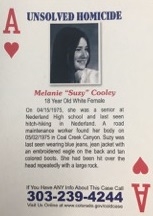
Melanie ‘Suzi’ Cooley, 18, April 15, 1975 (disappeared). Nederland, CO.

Melanie Suzanne Cooley (also called Suzi by family and friends) was born on October 27, 1956 to Bob and Nina Cooley in Boulder, Colorado. The middle child in a family of six, Ms. Cooley was 18 years old when she disappeared close to the high school she attended in Nederland (which is about 50 miles away from Denver) on April 15, 1975. After classes were over on Tuesday, April 15, 1975, Melanie left the high school she attended in Nederland, Colorado where she was a senior and was never seen or heard from again. She was last seen by friends hitchhiking nearby campus, and it’s unclear where or when exactly she got picked up; no one saw the vehicle the young girl climbed into that day. On Friday, May 2, 1975 the body of Melanie Suzanne Cooley was discovered fully clothed and frozen by a maintenance worker on Twin Spruce Road near Coal Creek Canyon about 20 miles away from where she was last seen. Of the discovery, Jefferson County Sheriff Brad Leach said: “she had been bludgeoned, perhaps with a stone. Her hands were tied in front with a yellow nylon cord; many, many feet of it, wrapped around and around. She died from a blow to the head and strangulation. Her face had been beaten repeatedly with a rock … One contact lens was missing. The body was in pretty bad shape. What with freezing and thawing, and the wild things, two weeks lying there.”

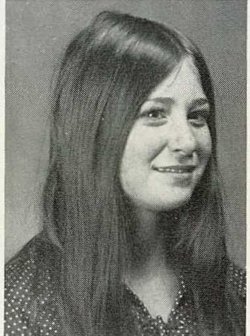
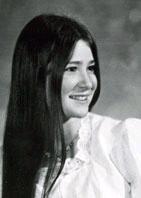
Melanie ‘Suzi’ Cooley.
Melanie Cooley.

Shelley Kay Robertson, 23, July 1, 1975 (disappeared). Golden, CO.

Shelley Kay Robertson was born on July 24, 1951 to Roberta and Elmer Robertson of Arvada, Colorado. She graduated from Arvada High School in Colorado in 1969 then spent a year doing missionary work for the United Church of Christ in Biloxi, Mississippi. After returning she attended Red Rocks Community College where she majored in Spanish. I’ve read varying reports that say she disappeared on either June 29 or July 1, 1975… what I’m deducing is she was last seen on June 29 and failed to show up to work on July 1, 1975 (I could be wrong). Seven weeks later her body was discovered in a mine shaft near Georgetown by mining students. Clear Creek County investigator Bob Denning went to Salt Lake City to discuss Robertson’s disappearance with Bundy and when asked about Robertson he said “I don’t want to talk about that.” Denning said he is 99% sure that it was Bundy who murdered Shelley.

Shelley Kay Robertson in grade school.
Shelley Kay Robertson.
Shelley Kay Robertson dressed up for graduation.

Nancy Perry-Baird, 23, July 4, 1975 (disappeared). East Layton, UT.

Nancy Perry-Baird was born on January 14, 1952 to Kenneth and Elna (nee Dee) Perry of Provo, Utah. Nancy was divorced and had a young son when she disappeared on July 4, 1975. She was working a 3-11 PM shift (some sources say it was until midnight) as an attendant at the Fina self-service gas station in East Layton, Utah. A little after five o’clock Officer David Anderson stopped and chatted with Nancy for a bit during her shift; he bought a soda water before leaving a few minutes later to investigate a potential alcohol violation at the Shamrock gas station on the other side of the highway. When Nancy’s manager Bonnie Peck popped in to get some soda water at around 5:30 she came into a line of customers and no cashier. What happened between Officer Anderson leaving and Bonnie Peck arriving? Somehow in that 15-20 minute time frame Nancy had vanished off the face of the earth. All of her personal belongings including her car, purse, and cashed paycheck were left behind. The only thing out of the ordinary was that $10 worth of gas on a pump that hadn’t been paid for. Nancy has never been recovered.

Nancy Perry-Baird as a child.
Nancy Perry-Baird.
Nancy Perry-Baird.

Sandra Jean ‘Sandy’ Weaver.

Edit, November 2023: One thing I routinely try to do is go through my resources and update my articles when I find more information. When I was in Florida this past May I came across a 59 page document from the Trempealeau County Sheriff’s Department in Wisconsin regarding the case of Sandra Jean Weaver. At first, I thought about putting the new information in a simple addendum, but there’s so much that I’m just going to rewrite the entire piece. The report is broken down into four parts: the first is a write up (almost like a report) that Detective Daryl L. McBride had with Weaver’s friend, Joan Elkins at the LaCrosse Police station on January 11, 1975. The second is a verbatim interview between Glade Gamble and the Toole County Sheriff’s Department, Detective Jerry Thompson from the Salt Lake County Sheriff’s department, and Officer Milo Vig from the Mesa Co. Sheriff’s Department on January 22.  The third is an interview between Ken Jones and the same members of LE as the Gamble interview that took place on January 22, 1975, and the last portion is an interview with the same officers and Phillip Quintana on January 21, 1975.

Sandra ‘Sandy’ Jean Weaver was born on August 5, 1955 to Bruno and Marlene of Arcadia, Wisconsin. She had two brothers (Randy and Billy) and two sisters (Nancy and Julie); the Weavers also had a son named Joseph who sadly passed away two days after he was born in 1961. Sandy had blue eyes, was 5’7” and weighed 120 pounds; she wore her brown hair long and parted down the middle. She attended Arcadia High School, and during her time there was on the drill team, participated in the Future Homemakers of America, Girls Athletic Association, worked PT as a librarian and was the junior editor of the newspaper. After graduating in 1973, she studied commercial art at Western Wisconsin Technical Institute in La Crosse, WI.

Sandra left home in the summer of 1974 and moved to Salt Lake City, hitchhiking the entire way there with her two friends, Joan Elkins and Jeffrey L. Skarboszewski. According to an investigator for the Mesa County Sheriff’s office, after arriving in Utah the friends went to Toole, where they stayed in a canyon for a few days. It was there they met a guy named Ken Jones, who invited them to come stay in his trailer near Toole. Jeff got a job part time working with Jones father and both girls found employment full time for the Manpower program. Looking into it, Manpower appears to be sort of on the job training program based out of SLC. For their first week the girls took inventory of motion picture products, and the second week they were sent to the Wycoff warehouse (which was a trucking company); Weaver had been on the job for a little over a week when she was murdered. The position was roughly forty miles away from Jones’ trailer, and the friends hitchhiked back and forth everyday. In a conversation with her mother in June 1974, Sandra said she was planning on going home for her sister Nancy’s wedding on July 27th, but didn’t specify an exact date she planned on being back. It’s known that Weaver was a frequent, heavy drug user and had a tendency to ‘sleep around’ (oh good Lord, weren’t we all young once?). The guy she was with the night before her disappearance (a young man named Glade Gamble) said that they engaged in intercourse the night before she vanished (but more on him later)…

On Friday, June 28 Sandra and Joan bought some groceries in SLC then hitchhiked back to Jones’ trailer, arriving around 7 PM. At around 11:00 that evening a friend from their new job named Phillip Quintana (aka Phillip Martinez) showed up with the intention of spending the weekend with them (he arrived with a random friend). In addition, Jones had a friend that was staying with him that was between 18 to 20 years old and was an ‘athletic freak.’ That night, Sandra slept with Ken and Joan slept with Phill (his friend spent the night in a chair). The following day, Weaver left the residence and went to a friend named Jeanine’s trailer in Toole. There, Weaver met Glade Gamble and the two took a drive through the canyon in Jeanine’s blue VW Beetle.

At roughly 7 PM on June 29th, Weaver returned to Jones’ trailer and picked up Joan, Phillip, and his friend. From there, the group got dinner then went to a party at Jeanine’s trailer. At the gathering, Weaver introduced Elkins to a guy named Bruce Bolinder, who she had met that afternoon while driving around with Gamble. According to Weaver, Bolinder was supplying Gamble with THC. It is speculated Sandy snorted some THC and used some phenobarbital (and possibly Nembutal) at some point in the evening. There were roughly 25 people at the gathering and most of them were imbibing in some form of drug use. At some point early in the evening Phillip fell asleep on the floor of the trailer, and after a while Joan woke him up to go sleep outside in Gambles VW van. Around midnight she woke Phillip up for a second time to let him know they could catch a ride back to Jones’ trailer with Bolinder. Weaver stayed behind at Jeanine’s trailer. At some point in the conversation with law enforcement Elkins mentioned that when she left her friends trailer with Phillip, there were four vehicles in the driveway: Bruce Bolinders gold Cadillac, Glades red and white VW Bus, Jeanine’s VW Bug, and a fourth vehicle (she wasn’t sure of the make and model or its owner).

At some point during the day, Weaver purchased $15 worth of phenobarbital from Bolinder. Joan said Sandy used some the night of the party as well as on June 30 and July 1, and during this time she stayed at Jeanine’s trailer. At some point on Sunday, June 30 Elkins called Jeanine’s trailer and talked to Gamble, asking to speak to Sandy. He told her she was sleeping but that he would take them to work the next morning. On Monday, July 1, 1974 Sandra returned to Ken’s trailer to change her clothes and wake up Joan for work. Elkins told her she wasn’t feeling well and wasn’t going in that day. Weaver asked to borrow some cash, and she gave her $5 from her purse (which at some point during the day Elkins noticed was missing). Joan said Sandy was wearing blue corduroy shorts and a halter top, and this was the last time she saw her friend. The next day on July 2, she received a call from the secretary at Manpower asking why either of them hadn’t come into work. Joan told her that she was sick, to which the secretary replied, ‘yes I know, Sandy told me.’ She went on to tell her that Weaver had worked until 11:30 in the morning the day before then left and never returned.

The body of Sandra Weaver was discovered the next day on July 2, 1974 around 4:00 PM by tourists hiking in the area near DeBeque, CO by the Colorado River about sixteen to eighteen miles east of Grand Junction. Her naked body was beaten and strangled, found off a service road in the Palisades Canyon (some sources say it was DeBeque Canyon) in Colorado; the only item found on her body was ‘a tiny wooden cross on a gold chain around her neck’ (which she was most likely wearing when she was last seen). I know I’m jumping the gun a bit here but something odd is jumping out at me: two other Utah victims (Laura Ann Aime and Melissa Smith) were also both found the same way: naked only wearing a ‘small necklace.’ Additionally, both girls were strangled in the same fashion as Weaver. Sheriff Haywood has ‘no doubt’ that the killer of Aime and Smith killed Sandra as well. Additionally, Salt Lake City Detective Jerry Thompson said that the facts in the Weaver case ‘are very similar’ to the ones surrounding those of the Smith and Aime murders. She had been sexually assaulted and died by suffocation due to strangulation; her fingernails were also freshly manicured shortly before her death. Because there were no footprints or drag marks found anywhere near Weaver’s remains it’s speculated she was killed somewhere else then dumped off at the top of the canyon, and she just sort of rolled down it. Unfortunately her body wasn’t identified until January 1975: according to an article titled ‘Services Pending for Murder Victim, Weaver was identified through a nationwide check of persons reported missing. Law enforcement also found a very particular type of contact lens on the victim, and using optometric tests forensic experts were able to determine that it belonged to Weaver; dental records were also used.

In a conversation with detectives on January 11, 1975, Elkins said that Sandra was ‘pretty doped up’ when she returned to Jones’ trailer on the morning of July 1, 1974. She suspects this may have been the reason that she showed up to work without shoes on.  Later in the day on July 2nd, Bolinder came to Jones’ home and visited a bit with Joan. He came to see her a few more times in the next few days and eventually invited her to move in with him, which she did a little over two weeks later in the latter part of July 1974 (bringing Glade Gamble with her). Joan finally reported Weaver as missing to the SLC police around the 5th or 6th of July; they advised her to call the Toole County Sheriff’s as well. She also shared the news with Sandra’s mother in Wisconsin. She told LE that she asked Bolinder to help her locate Weaver, but he just pushed her request off. Elkins stayed with him for about three weeks then moved in with another friend named Danny Quinn. She eventually left SLC and returned home to LaCosse on August 15, 1974. She brought all of Sandra’s belongings back with her, returning them to her parents.

Seventeen year old Dick Pehrson was a former employee of the Wycoff warehouse and a friend of the girls. He told Joan that Phillip Quintana got dropped off with Sandra the morning she disappeared but he didn’t know who was driving. He also told her that Quintana told a secretary at Manpower that Weaver had been talking to a truck driver the morning she disappeared. Additionally, the same secretary told Marlene Weaver that Quintana told her that her daughter had been seen on a bus headed for Idaho.

Bruno Weaver traveled from Arcadia to Salt Lake and Toole in November 1974 and got in touch with a number of his daughter’s friends/acquaintances; he also spoke with Quintana on the phone around the same time. During that conversation, Phillip denied going to Jeanine’s party the night of July 29 but said that his friend ‘Martinez’ was there. Mr. Weaver also spoke with Bruce Bolinder, who shared with him that a friend named Steve Symonds gave Sandra and Phillip a ride to Salt Lake City the morning of July 1st. The police report stated that ‘all of the men seemed uncooperative and hesitant to talk to Mr. Weaver.’ Jones did tell Mr. Weaver that he had a pair of Sandra’s shoes at his trailer despite both Joan and Jeff telling him she only brought two pairs with her (which were already accounted for). Skarboszeski told LE that to the best of his memory he never saw Sandra go to work without shoes on and didn’t think she would ever go to her POE barefoot.

Elkins admitted to using some of the phenobarbital Weaver bought on June 30 and July 1, but couldn’t explain how the drugs got back to Jones residence because her friend hadn’t been back to his trailer at that point (she briefly came back the morning of July 1 to borrow money and change her clothes before leaving right away for work). Strangely enough, the blue corduroy shorts that Joan claims she last saw Sandy wearing were found amongst her belongings that were returned to the Weavers.      

In the second portion of the document from the Trempealeau County Sheriff’s Department, Glade Gamble sat down with members of law enforcement (specifically, the Toole County Sheriff’s Department, Jerry Thompson, and Milo Vig). The interview began at 1:35 in the afternoon on January 22, 1975 and lasted for 45 minutes. In the beginning, Gamble is shown a picture of Weaver and was asked if it resembled the individual he spent time with in June of the previous year. He said yes it did and that she was ‘a good looking girl.’ I mean, most of the ‘interview’ is traditional back and forth between suspect and police, however one particularly interesting portion jumped out at me: investigators questioned, ‘within hours of leaving you, she was murdered brutally, and I am not kidding you when I say brutally. I probably shouldn’t do this but there is a little difference isn’t there? As you can see, I don’t think many human lives deserve that kind of treatment. So if you can help me for God’s sake, give me some information. I don’t care if any drugs were involved, cause we’re not here or have no interest at all in petty crimes or drugs at this time, I am interested in that.’ In response to that, Glade said that he told them everything he knew the first time they spoke except for dates, which he didn’t elaborate on so I don’t know if he meant he forgot them or was purposely withholding information. He said the only phone number Sandra probably had was Ken Jones’ at his trailer.

Some of the key points I took away from this interview are as follows: Mr. Weaver met with Gamble at his house sometime in November 1974. He said the majority of the time he saw the two friends they were wearing shorts, although he thinks he remembers Sandy wearing pants the last time he saw her (since she was on her way to work). He made it clear to the detectives that he didn’t remember if she was wearing shoes or not the last time he saw her and had to be told by a friend that she showed up at work barefoot later that morning. Gamble was able to tell LE that he remembered she normally wore a pair of slip-on clogs but she left them behind at Jeannine’s (if she’s anything like me she probably figured she’d be back there soon enough and it was no big deal). He also speculated that Elkins may have picked the clogs up with the rest of Sandra’s belongings before she returned home to WI. He left Jeanine’s trailer at around 6 AM and speculated that Weaver was stopping back at Jones’ residence before going into work and that she would just pick up another pair of shoes there. He did share that he remembers someone saying that Joan’s purse got stolen, and wondered if it happened at the party the Saturday before Sandy disappeared. He also said that he took off the Tuesday after she disappeared but couldn’t remember the reason why.

When LE asked Gamble how Elkins felt about Bruce Bolinder he replied that she may have been a bit afraid of him in the sense that she worried he might kick her out and send her home. Apparently, he had a bit of a reputation as a ‘ladies man’ and speculated that Joan was probably aware of this and was nervous that he might get sick of her and move on; he didn’t remember the two ever arguing or fighting in any way. Also on the topic of Bruce being a ladies man, Gamble said that he thought that girls in general seemed to like him but didn’t get close with him. He also said that he thought Sandra and Joan met him on June 29th (which was the night of the party) and that he asked Sandy out a time or two but nothing ever came of it. When asked if Bollinder had a violent temper, Gamble replied that he ‘heard of him fighting but had never been there.’ He also allegedly had deep contacts in the local drug world that neither girl was aware of. When Glade was questioned on whether or not he knew of anyone that would have a reason to kill Weaver, he said he had no idea why anyone would want to ‘brutally murder a girl like this.’ and that ‘nobody really argued with her that he knew about.’ He speculated that Joan probably left them to go back to Kenny’s trailer with Phillip because she most likely ‘just got tired of Bruce.’

The detective repeated the question: why would anyone want to brutally murder a girl like Sandra, asking: ‘you certainly couldn’t say it was a sexual act because she certainly would have given in (gross).’ Gamble told them that the only thing about Weaver that upset him was that she was kind of ‘slow mentally’ and wasn’t very quick to react to things, but that he would never act on his frustrations and didn’t know how anyone could do that. When questioned about when he became aware that Sandy may have either been abducted or murdered, he said that he quickly grew suspicions after no one heard from her and that both him and Joan almost immediately wondered if she was dead after she stopped coming around: ‘I didn’t know why anyone would kill her or how or anything else but I figured she would have gotten ahold of somebody sooner or later.’ He also told detectives that he was aware that Joan had some minor drug charges but nothing major and he had some minor charges as well as a drunk driving arrest. He told them that he had no contact with Elkins in any capacity after Sandy disappeared.

Per Gamble, Sandy had taken two downers he gave her on Friday night, and that he wasn’t sure if Joan ever reported her friend as missing as he never witnessed her make a call to Toole LE. He also said he wasn’t sure if he was there when she talked to Sandy’s parents on the phone but that he was there when she made some calls to Wisconsin regarding her friend. The last time he claimed to have sex with Weaver was sometime after midnight on Sunday night/early Monday morning, but wasn’t sure what the exact time was. When asked if they engaged in anal intercourse Gamble didn’t respond to the question. To the best of his knowledge he said that he wasn’t sure if Sandy had slept with anyone else in that Friday/Saturday/Sunday time frame other than him, and that he ‘wasn’t with her all the time,’ but did clarify that he spent two nights with her. The last time he saw her she was getting into a car with Steve Simons and Scott Williams to go to SLC for work around 6 AM on Monday, July 1. He said that he learned of Weaver’s death after seeing it on the news but didn’t know when she died. By the time of the interview in early 1975 Gamble sold his VW bus and purchased a 1972 Grand Prix. He shared that even though he didn’t know her very well he knew that Joan wasn’t overly fond of cops and wasn’t sure if she would hold anything back for that reason. The interview ended with Gamble agreeing to take a voluntary polygraph examination.

The third interview took place with the same members of law enforcement and Kenneth H. Jones on January 22, 1975. He told the detectives that he met all three friends when they were ‘up hitchhiking up in Settlement Canyon’ around June 10/11, 1974 and that somehow turned into them coming and staying with him. He further shared that Glade Gamble met the girls at his trailer and that he didn’t know Bruce Bolinder very well. In the beginning of the conversation LE told him that the reason they are speaking to him for a second time is because it was determined that Sandra had been murdered shortly after leaving his trailer. There’s a lot of back and forth between the officers and the suspect, with LE saying they ‘needed to get some answers if we can. I realize this was six months ago and it is hard to remember, and I don’t expect you to remember everything. We have had a chance to go over this and some other things that have come up that need to be answered, and I was hoping that you could help me or hide me to the right person. Now correct me if I’m wrong. I understand that Sandy left the trailer on Monday morning, July 1st to go to work with a Mexican kid by the name of Phillip Quintana, who had stayed at the trailer that night with Joan. Is that correct?’ To this, Jones simply answered, ‘ah huh.’ He said that he didn’t attend the party at Jeanine’s trailer the Saturday before Sandy disappeared and wasn’t home when Joan and Phillip got back early Sunday morning. He also shared that he wasn’t sure who was left behind at the trailer when Sandy and Quintana departed for Salt Lake around 7/7:30 AM the Monday morning she disappeared. He did say that when he came home from work around 4 PM Elkins was still there and ‘it wasn’t right away but she couldn’t figure out why she didn’t come back. You know she figured maybe she would come back later, and she never did. She was worried about her.’ … ‘Well right at first, you now she thought she might have had a pretty good excuse and then after she didn’t show up for a day or so, well then she was getting worried.’ When detectives inquired, ‘I don’t know how much attention you paid, but this is a really critical point in the line of clothing, I understand both these girls had very little clothing when they lived here, is that correct?’ .. ‘ As far as you seen, give me an idea, five or six changes, one of two? Can you give me an idea? Did they wear shorts much of the time, a lot?’ He replied, ‘yeah, they wore shorts,’ but did specify that Elkins had a home made dress made out of Levi’s jean material.

Like with the other interviews, the investigators were very focused on the girl’s footwear and asked Jones if Weaver had a lot of shoes, to which he replied she had a pair of sandals and some clogs and that Elkins took them with her when she went home to Colorado. About a week after Sandy disappeared Elkins left Ken’s trailer and moved in with a guy named Danny Quinn; she didn’t give an explanation as to why she left but it was on her own accord and he didn’t ask her to leave. Jones told LE that he was aware that the girls mainly hitch hiked to get around and frequently caught rides with both friends and strangers. He also shared that at no point after her friend disappeared did Elkins ever mention that she was going to go look for her, but that she ‘contacted Sandra’s parents and they decided to put it in the paper, her picture, and I think she turned it in, she said she turned it in.’ Jones said that when Joan finally got around to notifying the Toole County Sheriff’s department about Weaver’s disappearance they told her to also get in touch with SLC LE as well. When asked if he thought Sandy and Elkins were ‘close’ he replied, ‘yes, they were real close.’ He also commented that she seemed to be almost smitten with Bruce Bolinder and talked about him a lot. He said the weekend before Sandra disappeared she wasn’t at his trailer at all but that she most likely came back early Monday morning to get Joan and get ready to go to work. When asked if he knew of anyone that had ‘heard if Sandy came back into town that Monday morning after she left and went back to work that morning,’ Jones simply said ‘no.’

According to Ken, Sandy’s father came to see him about a month and a half before the interview (so November/December 1974). When asked what he thought happened to Weaver he replied that if she made it to work that day then it must have been someone from her POE that she ‘decided to go with.’ Ken said he felt it ‘must have been somebody she didn’t know or she just met that day or somebody she just went with. Maybe they told her they would give her a ride home or take her out somewhere else overnight or something.’ He also shared that Joan had no idea what happened to her friend and she thought that maybe she left with somebody from work or ‘something like that.’ When Ken was confronted with ‘well like I said, we realize the drug traffic. We are not here to bother anyone, that we are not trying to make a case. Did she know anything about any major drug deals and somebody thought she knew too much that you know of?;’ he again replied with a simple, ‘no.’ When the detectives inquired, ‘you wouldn’t have to kill her to rape her, correct?,’ Jones answered ‘uh huh’ and that she would probably just go along with it.

Ken said that when he returned home from work at 4:30 around that Monday, Joan was there (she was sick and didn’t go into work) and the last time he saw Sandy was on Friday the night before she left for the party. When the investigators commented that they understood he told Mr. Weaver that he had a pair of his daughter’s shoes, he clarified ‘after she had left and it was either that night or the next day she didn’t show up Joan said something about ‘that is the only pair of shoes or something.’ And she left them and she ain’t got no shoes or something. She couldn’t figure out why she would leave without shoes.’ There was a lot of back and forth about the missing footwear, with the investigators trying to make Jones admit that he had them (which he vehemently denied). When they asked if Weaver’s last paycheck ever got mailed to his trailer or if Joan ever mentioned what happened to it he said that Elkins had it but he wasn’t certain if she cashed it or not (but he strongly suspects that she did). Jeff Skarboszewski left SLC about a week before Sandra disappeared and went to Phoenix. About the trios mystery friend, Jones said that Jeff seemed to treat both girls real good and always wanted to do what was best for them. At the end of the interview he agreed to a voluntary polygraph examination.

In between the third and fourth parts is a photocopy of Bruce Bolinder’s drivers license.

The fourth part of the document is an interview between investigators and Phillip Quintana that took place on January 25, 1975 (this is where things get interesting). The conversation starts out strong right from the get go, with LE asking if he remembers telling a friend named Dirk that Sandra had gone to Idaho or someplace out of state, and where he got that information from. To this, Phillip said it was one of two hitchhiking incidents that took place in the second half of 1974 in which Weaver’s name came up: ‘this guy that picked her up hitchhiking, but I can’t remember his name. He said he saw her and she was supposed to be living with this guy that she was living with in Memory Grove she was supposed to leave with him to Idaho.’ … ‘I was just asking if he knew Joan and Sandy from Toole and he said yeah, that Sandy was supposed to be living in Memory Grove with some guy.’ Quintana said the man was driving a newer model white Ford and was around 21/22 years of age, between 6’2″/6’3” tall, and had shaggy brown hair. One of the detectives told him it was a man named Danny Brumfield that picked him up that day and the event took place sometime around August/September of 1974.

The second hitchhiking incident took place around Halloween 1974 and involved a 23/24 year old man driving an older model light red/dark orange GMC pickup truck. When asked by this mysterious stranger if he wanted to go to a party that both Joan and Sandy would be at, Phillip told him that he had just been to one and had no interest in attending another: ‘well, I was hitchhiking. He picked me up then asked if I wanted to go to a party, he said do you smoke dope, I said yeah, and he said do you want to go to a party, and I said no, and he lit up a joint, and he asked me if I wanted to go to a party out in Toole and said no, and he said, and then I said who is going to be out there, do you know a lot of people out there and he said, ‘I know a chick named Joan and one named Sandy and this dude named Glade, that Glade was supposed to be having it,’ and I told him no I was, and he just dropped me off.’ … ‘They said Sandy and Joan, I don’t know if they were the same chicks but he said Sandy and Joan. Might be two different chicks, I don’t know.’ When questioned about the day Sandra disappeared Phillip said that he ‘thought she was going back to work, she was going to work, and anyway they didn’t want me back over there and so I just went down to my moms’ and that he never saw either girl again after July 1st (I deduced that he was briefly employed with Manpower but was terminated). He acknowledged to LE that he was aware that Elkins was trying to get in contact with him around the 13th of July but wasn’t successful in her attempts. When asked if he knew that Weaver was missing at this point in time Phillip said no and that he didn’t know she was gone until the month before (which would have been December 1974).

Quintana said that he and Joan went back to Jones’ trailer at around 3 or 4 in the morning and crashed immediately; they woke up around 6 PM the following evening. He said Monday morning Sandy called Joan at Ken’s trailer and asked if she was going to go to work, and he told her that Joan wasn’t going to but he was getting a ride to SLC and could bring her along. He reported that Manpower attempted to get in touch with him about Sandra’s disappearance around the 1st or 2nd week of December but that he never talked to Bruno Weaver. In response to that, investigators said that ‘he claims he did, how about him calling you on the phone Phillip. I am going to try to refresh your memory. And you told him: ‘he asked you if you were at a party with his daughter in Toole, and you said no not me but my friend Martinez.’ Do you recall that?’ … ‘see, I talked to Mr. Weaver, Sandra’s Dad and he said he called you on the phone, I have the date written down and I will be getting it; him and his attorney was out here and he called you on the phone and he asked you, he talked to Phillip Quintana, he asked about  the party, you said, or this Quintana said that he knew Sandra, that he didn’t attend the party in Toole but a friend Martinez did. You don’t recall him saying that to you?’ In response to the third degree, Phillip said, ‘I don’t even remember talking to him, I am pretty sure I didn’t.’

This is when he talked about his two last names, clarifying that his legal name is Quintana and it’s the one he always went by: ‘I guess you came out to my moms, she said that you were looking for me, she said that you asked for Phillip Martinez, or a Phillip Quintana, and she asked me if I was using another name and I told her no. Because I found well, when my Dad got married when he first married my mother I was on probation and I started using his last name and it took them six months to find me, and when they did they told me if I used it again they would stick me in state school because I was using an illegal name.’ When asked what the illegal name he used was he responded with ‘Gurule,’ but that he has used his real name ever since and that he now has a clean record. Later in the interview he repeated himself that he never spoke with Bruno Weaver and when asked if anyone at the party went by the last name of Martinez he said he wasn’t sure because people mostly only went by their first names.

When the investigators asked how the girls got to work everyday Phillip said that after the first day they all drove in together, and ‘when Manpower had a job for them they have them a call out in Toole and they hitchhiked to the job. The very first day they started Manpower called them about 8:00 I guess, they got there around 10:00 10:30.’ When asked if he recalled what time Sandra arrived back at the trailer the Monday morning she disappeared Phillip responded that ‘she had to be to work at 8:00 AM so it was around 7:00 AM;’ he also shared that after she left for the day he wasn’t sure who was left behind in the trailer. Also in the vehicle were two other guys, Steve Simons and Scott Williams; they dropped Weaver off near the Wyckoff building at 3rd West but that she wanted to stop at the store before her shift started to buy some cigarettes. The boys dropped Phillip off at his moms, which wasn’t far from Weaver’s POE. He commented that on their drive Williams and Simons mostly talked to each other and didn’t really seem interested in chatting with him or Sandy. When LE asked him if ‘Sandy gave him any indication when she got off that she was going to come back at noon, or that she didn’t feel well, or that she was going to go back and see Joan or anything like that,’ Quintana responded that ‘she said that cause she didn’t feel well that morning she was kind of burned she said that if she still felt that way at lunch she was just going to go back to Toole’ but didn’t elaborate on how she was going to get there. The detectives shared with him that they knew she took some speed that morning before she left for work and that he took some as well (she gave him five and a friend named Danny another five). To that Phillip responded that he thought she took downers and had a baggie of about 50 of them with her (apparently she purchased 100 of them at the beginning of the weekend but was going through them pretty quickly).

After Phillip mentioned that Joan wasn’t feeling well and had menstrual cramps the detectives asked if she started her period the day before. He replied that he thought ‘she started it that day because the night she was starting to get them bad’ and that she might have gotten her monthly on Sunday night (but he ‘didn’t check’). In response to this, the officers replied: ‘oh Jesus, you know you got me almost to think I am going to send you out to the nut farm and have you checked out there. Was she pretty well smashed out, Joan, that Monday morning or was it mainly from her cramps.’ (wow). To this, he responded it was ‘mainly from her cramps.’ When asked if Joan had a thing for Glade Gamble, Quintana replied that he wasn’t sure but it wouldn’t have surprised him because she ‘acted kind of funny towards him.’ When asked how she may have felt about Bruce Bolinder he said that it seemed as if she wanted nothing to do with him and when they all got in the car together she made a comment about Gamble sitting next to him, and seemed irritated when he refused. When the investigators asked him how the girls may have felt about Kenny Jones he said that ‘they said they liked him, he was a pretty nice guy, but they were just staying because of their relationship, just a place to stay I guess. I guess they were giving him something to say there, some money or something to stay with him but they never did say. He said that he showed up at the party but ‘came a little later.’ When the investigators asked Phillip if Elkins was afraid of any of the guys that they hung around with he answered ‘no, not that I know of, she didn’t tell me’ and when they asked the same question about Weaver he said ‘well they got along real good with everybody out there as far as I know.’

When asked if any of the guys Weaver hung out with ‘would kill that girl,’ Phillip’s initial answer was ‘I can’t really say… I don’t know them, but I know what kind of people they are.’ However he quickly changed his tune and said that the owner of the gold Cadillac (Bruce Bolinder) was the only person he could think of that ‘looked like he could do something like that.’ He elaborated that he didn’t talk much and was kind of mean; Bolinder was also where Gamble was getting his dope from. There’s something interesting that jumps out at me at the end of page 56: the detectives ask Phillip if he remembers telling anyone that ‘he saw Sandy talking to a Wycoff truck driver at about 11:30 on the 1st of July,’ to which there is no verbal (or written) answer. Quintana later stated that the last time he saw her was when she was dropped off at her POE and doesn’t remember ever seeing her talk to a truck driver. He also shared that he didn’t hear from Joan at all after she left for CO and that he knew she lived in WI but wasn’t exactly sure where. Just like with the other gentleman, LE asked if he was willing to undergo a polygraph examination, to which he responded sure and that he had nothing to hide.

As far as the confirmed victims go, Bundy killed 18 year-old Georgeann Hawkins on June 11, 1974 after abducting her from the University District in Seattle (just eleven days earlier he murdered Brenda Ball on June first). Almost two weeks after Weaver was abducted and killed on July 14, 1974 he abducted both Janice Ott and Denise Naslund from Lake Sammamish State Park in Issaquah. When it comes to the unconfirmed victims, Brenda Joy Baker disappeared on May 27, 1974 from Puyallup and on August 2, 1974 Carol Valenzuela was last seen hitchhiking near Vancouver, WA. At the time of Weavers murder Ted was living at the Rogers Rooming house on 12th Ave in Seattle and was employed with the Department of Emergency Services in Olympia (he was there from May 3, 1974 to August 28, 1974). Obviously the drive to SLC wasn’t exactly impossible, as he eventually moved there for law school, but it definitely wasn’t just a quick jaunt down the street. The route Ted would have driven to SLC from Seattle then to DeBeque, Colorado where her remains were found was roughly 1,150 miles ONE WAY (he obviously would have had to take the same trip BACK to Seattle). This is a lot of driving. He was in between schooling at the time, as he graduated from the University of Washington in 1972 and didn’t move to Salt Lake City for law school (part deux) until September 2, 1974. Did Bundy kill Weaver on a trip to Utah to do something for his upcoming education (maybe he had to fill out something at the bursar’s office or check out an apartment)? According to the ‘TB Multiagency Investigative Team Report 1992,’ Ted went on leave (without pay) from the Department of Emergency Services in Seattle, WA on July 1, 1974 (the same day of Weavers abduction); additionally, gas receipts put him in Seattle the same day. Lets not also forget he was in a relationship at the time with Liz Kloepfer, which was just one more thing taking up his time.

This is a rare instance where the more I researched the more information I found, which I know sounds fairly obvious but I have run into countless dead ends writing about some of these girls. For example, I can’t even find Deborah Lee Tomlinson on Ancestry, so I tried to think outside the box and joined a few Facebook groups related to her hometown of Creswell OR, in hopes that maybe I would find a relative or an old friend of hers that could help fill in the gaps surrounding her background… but again, I got nothing. Right before I was about to re-publish this I found even more information about Weaver on cavdef.org… nothing huge or ground breaking, just a few small details. In a comment on the website ExecutedToday.com, an individual going by the name of Philip Conrad commented that he ‘knew Sandra Weaver, the Colorado detectives talked to me and my x wife in lacrosse wi because we thought the guy that left with her might have had something with her death. I do believe Ted Bundy killed her.’ Additionally I found Glade Gambles obituary (which I included below).

In an article written by a Salt Lake journalist after Bundy was executed, Pete Haywood said that authorities placed Bundy in Utah as early as 1970 when he was only 23, which ‘certainly widens the window of time we are looking at in terms of unsolved cases.’ There’s conflicting reports that say the serial killer mentioned Weavers during his death row confessions: some sources say he did, others say he didn’t. Former Mesa County Sheriff said two different television stations ran stories claiming that Bundy took responsibility for Weavers death, and the Salt Lake Tribune ran a story saying the same.

Weaver in her freshman year photo from the 1970 Arcadia High School yearbook.
Weaver in a group picture for the drill team from the 1970 Arcadia High School yearbook. She’s the first girl in the first row.
Sandra Weaver in a group picture for the Future Homemakers of America from the 1970 Arcadia High School yearbook.
Sandra Jean Weaver’s sophomore year picture from the 1971 Arcadia High School yearbook.
Sandra Jean Weaver in a group shot for the Future Homemakers of America from the 1971 Arcadia High School yearbook.
Weaver in a group picture from the Drill Team from the 1971 Arcadia High School yearbook.
Weaver in a group picture from the 1972 Arcadia High School yearbook.
Weaver in a group picture for the newspaper from the 1972 Arcadia High School yearbook.
Weaver in a group picture for the Girls Athletic Association from the 1972 Arcadia High School yearbook.
Sandra Jean Weaver’s senior picture from the 1973 Arcadia High School yearbook.
I pulled this from ‘Classmates.com;’ it looks like Weaver signed above her picture in the 1973 Arcadia High School yearbook.
Weaver in a group picture for the school play from the 1973 Arcadia High School yearbook.
Another shot of Weaver in a group picture for the school play from the 1973 Arcadia High School yearbook. It looks like she is in the middle row, second from the right.
Weaver’s senior year activities from the from the 1973 Arcadia High School yearbook.
Sandra Jean Weaver.
Sandra Jean Weaver.
A caricature of Sandra Weaver drawn by John Krupa (from the ‘Freedom to Draw Unsolved Mysteries’ YouTube page).
An announcement that Bruno Weaver was going to serve in the Korean War, published by The Winona Daily News on February 29, 1952.
Bruno and Marlene Weaver’s marriage announcement, published in The Winona Daily News on July 14, 1954.
An article about Bruno and Marlene Weaver’s son, who was born in March 1961 but passed away shortly after; death notice published in The Winona Daily News on March 29, 1961.
Nancy Weaver from the 1971 Arcadia High School yearbook.
Cheryl Weaver’s freshman year picture from the 1972 Arcadia High School yearbook.
Randall Weaver’s picture from the 1973 Arcadia High School yearbook.
Bryan Weaver’s picture from the 1978 Arcadia High School yearbook.
Marlene Weavers picture fro the 1974 Arcadia High School yearbook. It looks like she worked there as a cook.
A more recent picture of Marlene Weaver, courtesy of Facebook.
A more recent picture of Nancy Weaver, courtesy of Facebook.
Bruno Weaver’s death notice from by The Winona Daily News published on June 17, 1996.
Some notes about Sandra Weaver from a document titled ‘Bundy History’ on the Internet Archives (it’s a document from the Pitkin County Sheriff’s Department that was released on November 24, 1975).
Page two of a document pertaining to Weavers murder from the SLC PD.
Page three of a document pertaining to Weavers murder from the SLC PD.
An article about Sandra Jean Weaver, published by the Wisconsin Rapids Daily Tribune on January 11, 1975. 
An article about Sandra Jean Weaver, published by The La Crosse Tribune on January 11, 1975. 
An article titled ‘Services Pending for Murder Victim’ about Sandra Jean Weaver, published by the Eau Claire Leader Telegram on January 11, 1975. 
An article about Sandra Jean Weaver, published by The Sheboygan Press on January 11, 1975. 
An article about Sandra Jean Weaver, published by The Daily Sentinel on January 11, 1975. 
An article about Sandra Jean Weaver, published by the Stevens Point Daily Journal on January 11, 1975. 
An article about Sandra Jean Weaver, published by The Ironwood Globe on January 11, 1975.
An article about Sandra Jean Weaver, published by The Janesville Gazette on January 11, 1975.
An article about Sandra Jean Weaver, published by the Racine Journal Times on January 11, 1975.
An article titled ‘Murder Victim may be Arcadia Girl’ about Sandra Jean Weaver, published by the Winona Daily News on January 12, 1975. 
An article about Sandra Jean Weaver, published by The Daily Sentinel on January 13, 1975.
An article about Sandra Jean Weaver, published by the Winona Daily News on January 13, 1975. 
An article about Sandra Jean Weaver, published by the Madison Capital Times on January 13, 1975.
An article about Sandra Jean Weaver, published by the Winona Daily News on January 14, 1975.
An article titled ‘Services Pending for Murder Victim’ about Sandra Weaver, published by the Winona Daily News on January 16, 1975. 
Part one of an article titled ‘Services Pending for Murder Victim’ about Sandra Jean Weaver, published by the Winona Daily News on January 16, 1975. 
An article about Sandra Jean Weaver, published by the Winona Daily News on January 17, 1975. 
An article about Sandra Jean Weaver, published by The Daily Sentinel News on January 17, 1975. 
An article about Sandra Jean Weaver, published by The Desert News on January 20, 1975.
An article about Sandra Jean Weaver, published by The Daily Sentinel on January 21, 1975.
An article about Sandra Jean Weaver, published by The Logan Herald Journal on January 21, 1975. 
An article about the murder of Sandra Jean Weaver published in The Daily Herald on January 21, 1975.
An article about Sandra Jean Weaver, published by The Salt Lake Tribune on January 21, 1975.
An article about Sandra Jean Weaver, published by The Ogden Standard-Examiner on January 21, 1975.
In an
An article about Sandra Jean Weaver, published by the La Crosse Tribune on July 2, 1975.
An article about Sandra Jean Weaver, published by The Daily Sentinel on October 3, 1975.
An article about Sandra Jean Weaver, published by The Daily Sentinel on October 13, 1975.
An picture mentioning Sandra Jean Weaver, published by The Salt Lake Tribune on January 23, 1989 before Bundy was executed.
beaten and strangled near DeBeque, Colorado
An article about Sandra Weaver published by the La Crosse Tribune on January 24, 1989.
An article about Bundy possibly being linked to the murder of Sandra Weaver published by The Winona Daily News on January 25, 1989.
An article mentioning Sandra Weaver after Bundy was executed in 1989.
utah law officers follow up on serial killers confessions
An article mentioning Sandra Weaver after Bundy was executed in 1989.
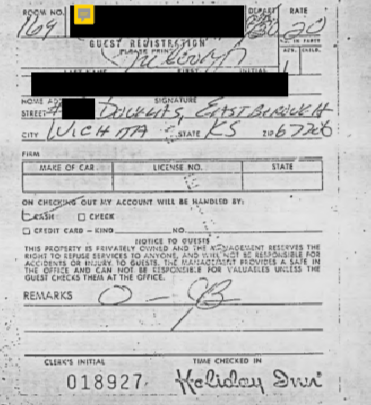
An article mentioning the possible discovery of the remains of Sandra Weaver published by The Salt Lake Tribune on November 9, 1996.
Photo courtesy of journal6other.files.wordpress.com.
A picture of Sandra’s friend Joan Elkins from the 1971 Logan High School yearbook.
Another picture of Joan Elkins from the 1971 Logan High School yearbook.
A picture of Sandra’s friend Jeff Skarboszewski from the 1970 Central High School yearbook.
Bruce L. Bolinder from the 1965 Grantsville High School yearbook.
Bruce L. Bolinder’s wedding announcement published in The Tooele Bulletin on April 11, 1967.
Bruce Bolinder’s divorce announcement published in The Transcript-Bulletin on September 12, 1969.
A photocopy of Bruce L. Bolinder’s ID pulled from the investigative documents regarding her murder from the Trempealeau County Sheriffs Department.
Glade A. Gamble obituary published in The Tooele Transcript-Bulletin on January 21, 1997.
A map of the (one way) route Ted would have had to drive to SLC from Seattle then to DeBeque,Colorado. He obviously would have had to take the same trip BACK to the Rogers Rooming house. This is a lot of driving.
I tried finding a picture of the old Manpower building Sandra worked at but wasn’t successful.
Weavers grave site. Notice her brother that passed away in March 1961 is buried next to her.

Melanie Suzanne Cooley.

Melanie Suzanne Cooley (also called Suzi by family and friends) was born on October 27, 1956 to Bob and Nina Cooley in Boulder, Colorado. The middle child in a family of six, Ms. Cooley was 18 years old when she disappeared close to the high school she attended in Nederland (which is about 50 miles away from Denver) on April 15, 1975. She was a petite girl with dark eyes and long brown hair she wore parted down the middle. Melanie had a younger adopted sister named Michelle that was six when she disappeared, a younger brother named Cris that was about 18 months younger than her, and an older brother named Bob Jr. that was a sophomore at the University of Colorado. She lived with her family in the foothills west of Boulder on Magnolia Drive, her Father Bob was an airline pilot and her Mother Nina was a student at the nearby University of Colorado, studying both English and Anthropology. Interestingly enough, this is the first time I’ve come across any sort of political notation on any possible Bundy victims: in my research I learned that the Cooley family leaned very much to the left and was very politically active, participating in Vietnam War protests as well as civil rights demonstrations and peace marches. Nina Cooley said Melanie loved animals, even saving the life of a tiny kitten that was so small it needed to be fed with an eyedropper. Like most 18 year olds, Melanie had a strained relationship with her parents, and in her later years had an especially tough time getting along with her Mom. Of this time in their lives, Nina Cooley said: “as she grew older it often seemed I could do nothing right for Suzi, as though that girl-child had found me inadequate. I took it personally and how it hurt, lost as I was in my own neediness to be loved, I could not see her great need for separation-from-mother and independence of her unique self, and her need for the love and guidance of a mature mother.” Melanie had big dreams and aspirations and didn’t want to be tied down to her small town roots and was skeptical of the more traditional family values in which she was raised. Despite this, Nina Cooley adored her daughter, saying that: “she learned fast, was bright and quick, when she wasn’t somewhere faraway. When she was three years old her favorite book was about a baby rabbit eager to be big and wise enough to leave the nest.” It was reported to law enforcement that the young girl reportedly experimented with drugs on occasion (including marijuana and some “harder substances”) and frequently hitchhiked. Friends said she had no qualms with accepting rides from complete strangers and would often hitchhike home from school with other neighborhood kids largely because she didn’t like taking the bus. Mrs. Cooley said that Melanie was “somewhat of a wilful girl.” … ” she wanted what she wanted right then.” and that ” for us, a stranger was a friend we hadn’t met yet.” Melanie either was sexually active at the time of her death or was planning on engaging in sexual activity shortly before she died (Nina said she bought birth control pills in hopes to soon have a boyfriend).

Described as a good student by her teachers, Suzi was a lover of the arts, and was a gifted artist that loved reading, macrame, painting, journaling, creative writing, and poetry; she was also a talented musician that loved playing the guitar. Melanie also had a deep love for photography and even helped take pictures for her high school yearbook; she stayed active by hiking and skiing. She didn’t play any sports but did help keep score for the basketball team. In addition to being active in academics and after school activities, Melanie was employed as a valet driver at the nearby Eldora Ski Resort. Only six weeks away from graduation, she planned on either attending the University of Colorado (which is where her Mother and Brother attended college as well) or traveling. Her Mom said she would say, “I want to get a jeep and just drive!” and that “freedom was her watchword, and had been always.” … “she was desperate to learn. But she wanted to learn about lifeand so little in school seemed relevant. She saw the absurdity, the burning irony, of being imprisoned in an institution of learning while life was going on all around her out there! Her impatience and frustration knew no bounds. So much to learn and so little time, speak the words of her journal, over and again.” She had a deep appreciation for nature and was fascinated with learning about Native American heritage and culture. One time Suzi went tent camping alone for three days in the mountains and while she was away from her site hiking a bear came by and raided her camp. She was so excited over the situation she immediately went home, got her mother and brought her back to show her what happened. The bear destroyed her set up and left behind giant footprints, even shredding a container filled with beef jerky. Nina Cooley said that her daughter didn’t always like to follow the rules and that teachers and fellow students either “loved her or had a tough time getting along with her.” … “She drew people to her or she repelled them. Her first grade teacher feared and disliked her openly, overtly. The teacher of her second grade class adored her, took her to lunch and on special trips, gave her books of poetry. The pattern continued into high school.” Nina also said that Melanie had no problems speaking her mind and that on occasion it got her in trouble.

After classes were over on Tuesday, April 15, 1975, Melanie left the high school she attended in Nederland, Colorado where she was a senior and was never seen or heard from again. She was last seen by friends hitchhiking nearby campus, and it’s unclear where or when exactly she got picked up; no one saw the vehicle the young girl climbed into that day. She was last seen wearing blue jeans, a blue denim jacket with an embroidered eagle on the back (that she designed herself), a soft peachy-tan blouse with a background made up of small orange flowers and different colored geometric figures, and knee high tan leather boots. On the day of Melanie’s disappearance, Nina Cooley told law enforcement that she was wearing her hair pinned up “in a kind of french roll” and that “she looked very pretty.” When she didn’t come home that afternoon on the bus with her brother or even call her parents tried to report her missing the very next morning. When Nina voiced her concern to her husband he said, “oh, you know how she is, all drama! We’ll hear from her.” The parents were met with push back from the Boulder County Sheriff’s Department that told them there was nothing they could do until she was missing for at least 48 hours. From there she called Melanie’s two best friends, but neither one of them knew where she was. One girl shared that recently Suzi mentioned a Pink Floyd concert she really wanted to go to but that was the extent of her knowledge.

Two days later on Thursday, April 17 the Cooley’s received a call from the Nederland High School Principal with news that a man came in with a wallet containing Melanie’s’ driver’s license and other personal information in it. He found it near his property and brought it straight to the school, figuring it must have belonged to a student. The Principal called the Cooley’s as a formality to let them know the wallet had been found and let them know he turned it into the Boulder County Sheriff’s Department. Later that day a Boulder County Detective came to speak with the family to get more information and a picture of Melanie to begin search efforts. A few days following that her parents and four sheriff’s deputies combed the area where the wallet had been found, which had previously been a hippie commune and had “sheds and outbuildings, piles of old lumber, barrels of trash and rusted auto bodies” scattered all over it. Mrs. Cooley discovered her daughter’s prescription birth control pills, in a personalized pink case with “Suzi” written on it, discarded in the dirt a few feet away from the side of the road; that wasn’t something Melanie would have been irresponsible or careless about. Something was very wrong.

On Friday, May 2, 1975 the body of Melanie Suzanne Cooley was discovered fully clothed and frozen by a maintenance worker on Twin Spruce Road near Coal Creek Canyon about 20 miles away from where she was last seen. Of the discovery, Jefferson County Sheriff Brad Leach said: “she had been bludgeoned, perhaps with a stone. Her hands were tied in front with a yellow nylon cord; many, many feet of it, wrapped around and around. She died from a blow to the head and strangulation. Her face had been beaten repeatedly with a rock … One contact lens was missing. The body was in pretty bad shape. What with freezing and thawing, and the wild things, two weeks lying there.”  … “Her body, fully clothed, was found by the driver of a bulldozer on a little mountain track up Coal Creek called Twin Spruce Road, a few miles from where the billfold and pill case were recovered. The body was frozen.” It was far worse than anything the Cooley family could have dreamed of. Of her big sisters death, little Michelle said: “Suzi always said she wanted to be free. And now she’s free!” Despite that innocent statement the young child quickly developed nightmares about her siblings death and struggled with them for many years.

Author Ann Rule briefly discussed Melanie in her true crime bestseller ‘The Stranger Beside Me’: “a filthy pillow case, perhaps used as a garrote, perhaps as a blindfold, was still twisted around her neck,” which I think suggests the killer was some sort of transient or camping enthusiast (why else use something as obscure as a pillow case?). Cooley’s remains were identified by a report card law enforcement found in her pocket as well as through dental records and a small (less than a quarter inch long), very particular brown birthmark in the shape of a shoe found on her thigh. Mr. and Mrs. Cooley also positively identified her based on the clothing she was wearing. The young girl was believed to have been deceased anywhere from ten days to two weeks before her body was discovered. Because her remains were at an advanced level of decomposition after being exposed to the elements for so long it was impossible to tell if she had been sexually assaulted. In my research on this case I couldn’t find evidence or mention of it anywhere.

It’s suspected Melanie may have been a victim of Ted Bundy’s, however the only real, semi-compelling evidence is gas receipts that put him close to the scene in Golden, Colorado at some point in the month before Melanie vanished (about 50 minutes away). After killing women in Utah during October and November of 1974, Bundy migrated east in early 1975 to Colorado, killing nurse Caryn Eileen Campbell in January, the first of three confirmed women he killed there. Cooley possessed a lot of the same physical traits that Ted’s other victims did: she was attractive and slim, with long brown hair she wore parted down the middle. Like other Bundy killings surrounding an academic setting (Debbie Kent, Lynette Culver, and Kim Leach), it’s strongly speculated that the killer may have abducted Melanie as she was leaving school, as Ted moved around comfortably in a both high school and college settings (Florida State University, Evergreen State College, Central Washington, Oregon State and Brigham Young University). I do want to point out that Cooley was found fully clothed where Bundy typically left his victims in either a nude or semi-nude state.

Melanie was murdered 9 days after Denise Lynne Oliverson, who was abducted and killed on April 6, 1975 from nearby Grand Junction. Only a few months after Cooley was murdered twenty four year old Shelley Kay Robertson from Golden, Colorado was reported missing after she didn’t show up to work. Robertson was last seen alive in the company of a “wild haired man driving an old pickup truck” by a police officer on July 1, 1975. Seven weeks after she disappeared, Shelley’s body was found in a mine shaft near Georgetown. Ted did drive a VW Beetle as we all know but his brother did have a pick up truck (who I know lived in Tacoma which is a 20 hour drive away but still).

Regarding what Bundy was doing in April of 1975 I can’t find any record of him working anywhere. In August 1974, Ted was accepted to law school for a second time at the University of Utah and moved to Salt Lake City on September 2nd, 1974; he was a student there in April 1975 when Cooley was murdered. Shortly after Melanie’s remains were found in June 1975 he was employed as a night manager in charge of Bailiff Hall at The University of Utah (he was fired for showing up drunk) and in July and August of 1975 he worked as a part-time security guard at the school; his position was terminated due to budget cuts.

Another serial killer investigated (but eventually cleared) of Melanie Cooley’s death was Vincent Groves, who was convicted of strangling at least seven women in Denver, Colorado between March 1979 and July 1988. On July 25, 1988 an investigation into the murder of an Aurora prostitute helped link Vincent Groves to the deaths of 17 sex workers metro-wide; he was arrested on September 1, 1988. He was convicted of the strangulation death of Diane Mancera, whose body was found dumped at the Surrey Ridge exit off of I-25 in July 1988. Groves began to have health problems in the early 90’s and he was eventually diagnosed with Hepatitis C and liver failure. He died on October 31, 1996 in a prison hospital near Denver. Shortly before his death, Groves was asked about other murders but he refused to discuss anything. Sixteen years after his death in 2012 his guilt was conclusively proven in four murders (Emma Jenefort, Peggy Cuff, Pamela Montgomery, and Joyce Ramey) with the help of DNA profiling. According to the Denver Police Department based on circumstantial evidence and a number of testimonies, Groves could have been responsible for more than 20 murders (however at this time his total victim count remains unknown).

Like confirmed Colorado victims Melissa Smith and Laura Aime, Cooley was a small-town girl taken close to her hometown community. Also like both girls, Melanie’s remains were found largely intact in an open, remote area. About the region of Colorado where Melanie lived and was abducted from, Redditorannaflixion’ said: “I lived in Rollinsville and went to school in Nederland in the 80’s. It was a . . . weird place. Like all of Colorado, it’s a place where stark opposites live together in uneasy harmony. There are indeed a lot of hippies and granola types, people who collect crystals and want to live in harmony with nature. Then there are the right-wingers whose homes are almost compounds, where they are suspicious of strangers and that sort of thing. A lot of people just wanted to live kind of “off the grid.” Everyone smokes marijuana. No one ever, ever tells the police anything. You could beat your kids or your wife; no one would dream of telling the police. That was the down side of the “live and let live” style up there. I don’t know, it’s been a long, long time since I was there, but honestly I found it insular, though there were nice people, too. I think it would be surprising if she happened to run into Ted Bundy, but it’s possible. Girls especially tended to be very trusting, as I recall. They were pretty sheltered. And holy shit, getting anywhere was impossible, so yeah, hitchhiking would have been the thing. Even my schoolbus didn’t actually drop me off anywhere near my house. I had like a three mile hike home every day.” (I just wanted to add, Rollinsville is about 5 or so miles away from Nederland High School). I do want to point out that there are two glaring differences between Smith/Aime’s murders compared to Cooley’s: both girls were sexually assaulted and Bundy accepted responsibility for killing them.

Redditor ‘DepartmentWide419’ commented: “I live here and this case fascinates me.” … “Nederland high school is near eldora. There is essentially a single highway that runs through Ned, the 119. It runs from Boulder (and beyond, but for our purposes, Boulder canyon) to black hawk. It runs through downtown Nederland. The high school is off of another road, Eldora ave, that heads to a very remote town, Eldora. The only reason a non-local would go down this road is to go to the ski resort, Eldora. In the off season, a non-local would have no reason to go down this road. It contains the high school about .6 miles down the road, a dozen or so houses, and the 4th of July trail, which is fairly popular but could be inaccessible due to snow in April. She may have walked out to the 119 to hitch a ride. But I doubt Ted Bundy would be down Eldora ave.” … “The 119 is very popular with sightseers and tourists. Bikers, bicyclists and RV-ers are common. But April is a little early. A roving serial killer may have simply heard it is a nice joy ride and been passing through.” … “In terms of small town values, small town values here are smoking marijuana, being sexually active and “getting in a jeep to just drive.” Those are pretty much the pastimes here. Others include skiing, drinking, shooting guns and foraging. We have a couple nice music venues and a pretty famous recording studio. The dead and a bunch of other bands recorded albums just out of town here, so it is remote, but it’s not like her interests were in some way rebellious for the culture here.” … “I’m unsure where is meant by the “foothills west of Boulder” but twin spruce is not exactly in that direction. So she would have been hitching a ride in the wrong direction on the 119 to be brought to twin spruce if she in fact lived west of Boulder, and was trying to go home. Or someone turned around or lied to her about where they were going. Maybe something like, “oh yeah I can bring you down to Boulder on magnolia Road” but they cut down to coal creek instead. Either way, she would have known she wasn’t going home within 15 minutes. These are also windy roads. Turns are taken at 20 mph in many places. So it seems like a difficult place to kidnap someone from unless you had doors that didn’t open from the inside. Because your captive could literally just jump out of the car. A smaller sedan needs to take roads like magnolia at 15 mph in many places. I have to take those roads at 10 mph in an AWD SUV with studded tires in a lot of places. It’s just too bumpy and curvy. Especially in April before the roads have been resurfaced, they are a mess. A country girl who is familiar with the area could easily pop out and run into the forest and find their way to a trail from magnolia to Nederland. Unless the doors were locked from the inside or there were two people.” … “I think it’s most likely it was a local or a transient with enough time on their hands to learn the back roads and how they all connect. You can take magnolia for instance, cut over to coal creek and then turn on to twin spruce. But it would be a difficult sequence for a non-local to know. Probably more than one person, and someone who lives here.” … “Bikers have a strong hold here and have since the 60’s. Lots of outlaw types and lots of speed. Pretty much anything could have happened to her, but I find Ted Bundy less likely than creepy yokels hopped up on speed or other drugs. LSD is easy to find. All drugs are. A couple of weirdos on a bender seem way more likely. They would have had a reason to be in Ned, maybe leaving a local establishment and heading home to Gilpin/coal creek area. They could see her, find her attractive. They could name nearby places to make her comfortable, maybe offer to smoke a joint over by twin sisters, or the reservoir or other beauty spot on her way home. She says yes. It gets weird. They don’t let her leave. They panic, realize they can’t let her go. Rope could easily already be in the car. A lot of people carry it here. Either kill her on the spot, or bring her home to kill her. (Who has a pillowcase in their car, unless they are homeless? Why would a young girl get in a car with a homeless dude?).”

When digging for information on the unconfirmed victims I sometimes have to get creative in my attempts to find interesting and engaging information. In a YouTube comment on the only (very short) video I found on Melanie Cooley, a childhood friend named Renee Wilson said: “I knew her. She was my neighbor, babysitter and friend. I loved her. I was so heartbroken when it all happened and didn’t know who Ted Bundy was. I was 8 at the time and I still feel the emotions.” … “She was very beautiful inside and out. She was kind, giving and fun to be around. I idolized her. I was and still am heartbroken.” … “I am always amazed by the interest in Melanie. She deserves to be remembered. Yes, I do believe Bundy did it. There are things that I know that others do not. She was so sweet and fun.”

There’s another very obvious part of this story that is very frequent in Bundy victims: the hitchhiking aspect. Brenda Ball, the unknown Idaho hitchhiker, Laura Aime… just like Melanie these girls were frequently known to hitchhike (well, I’m assuming the frequent part about the poor Idaho victim). Melanie’s cause of death was a combination of strangulation and blunt force trauma, which is a very frequent Bundy method of murder. Now, when she was found her hands were bound together with a nylon rope, and I feel it’s important that while none of Bundy’s other (confirmed) victims were left this way we do know that he sometimes did use handcuffs to help subdue his victims. He may never have used a nylon in a binding sense however Ted did confess to using one to strangle at least one of his victims.

Bob Cooley passed away on March 31, 2011 in Boulder. On November 20, 2012, Melanie’s Mother Nina published a memoir titled “Dream Path: Search for Meaning, Search for Truth.” It’s description reads: “Cooley, now retired and widowed, lived in Texas and Colorado before moving to California with her husband. Desperate for answers to Life’s mysteries following the violent death of her teenaged daughter, she began recording dreams, became a psychotherapist using dreamwork where appropriate. She currently facilitates a small circle of devoted dreamers.” Regarding Bundy as a suspect of her daughters murder, she said: “Ted Bundy, the notorious serial killer, was to be executed in Florida. At least two books and countless brief accounts of Bundy’s biographical information and his trail of terror have been published. As Bundy had been a suspect in my daughter’s murder, it was known that he was in the vicinity when she disappeared, a reporter from the local newspaper came up to my house for an interview. A reporter with a Seattle newspaper called, “People Magazine” too, wanting to do a story. I declined, seeing no need of that kind of publicity. Because Bundy was a suspect in numerous crimes in many places, a large group of journalists, detectives, and other law enforcement personnel traveled to Florida and waited in line to interview him before his execution. By the time the Boulder representative, number thirteen, gained access, Bundy was ready to admit anything and everything, and did so with abandon. They learned nothing of value.” Law enforcement eventually came forward saying the evidence against Ted was inconclusive and Melanie’s case is considered cold to this day; Bundy denied any involvement with her murder. Personally… I’m not sure about this one. If Ted really did go after “slim, long haired brunettes that wore their hair long and parted down the middle” and Melanie was wearing her hair up in a “french roll” the day she was abducted it would have made her look drastically different from one of his typical victims. But, if he stalked her before abducting her (as he was known to do) then he would have known her hair was indeed not short. This particular ‘what if’ situation reminds me of yet another unconfirmed Bundy victim Sotria Kritsonis, who got her long, dark hair cut short right before supposedly accepting a ride to school from him (he allegedly let her go after realizing she had gotten her hair cut off). I think there’s a semi-decent chance that Cooley was a victim of Ted, however without DNA or any other forensic confirmation we will probably never know for sure.

Anyone with information regarding this case is asked to please contact the Jefferson County Sheriff’s Office at 303.271.0211. 

Melanie Suzanne Cooley in her 1970 Nederland High School yearbook photo.
Melanie Cooley.
Melanie Cooley.
Melanie Cooley.
Melanie Cooley.
Melanie Cooley.
A missing poster for Melanie Cooley.
TB’s whereabouts on April 15, 1975 according to the ‘Ted Bundy Multiagency Investigative Team Report 1992.’
An article about Melanie Cooley.
An article about Cooley published by The Greeley Daily Tribune on May 9, 1975.
An article mentioning Melanie Cooley from the Greeley Daily Tribune on October 27, 1975.
An article mentioning Melanie Cooley from the Logan Herald Journal on October 27, 1975.
An article mentioning Melanie Cooley from the Walla Walla Union Bulletin on November 2, 1975.
An article mentioning Melanie Cooley from the Logan Herald Journal on March 8, 1976.
An article mentioning Melanie Cooley from the Centralia Daily Chronicle on March 8, 1976.
An article mentioning Melanie Cooley.
An article mentioning Melanie Cooley from the Colorado Springs Gazette Telegraph on January 18, 1989.
A short clipping about some unconfirmed Bundy victims from ‘The Hartford Courant.’
Bob Cooley, Melanie’s father. He enjoyed sailing, playing with his dog on the beach, jewelling, and helping his mentor/friend teach his woodworking class. Described as a strong and gentle man and world traveler, he died on March 31, 2011.
One of the only pictures I could find of Shelley Kay Robertson, another unconfirmed Bundy victim. After graduating from Arvada High School, she spent a year with the United Church of Christ at a mission in Biloxi, Mississippi. She returned to Colorado and studied Spanish at Red Rocks Community College.
Nina Cooley’s book “Dream Path: Search for Meaning, Search for Truth.”
A ‘french roll” hairstyle.
Serial Killer Vincent Groves.
A map of Bundy’s other Colorado victims.