Susanne Arlette Swanson was born in May 1955 to Herbert and Blanche (nee Haynes) Swanson in Rancho Palos Verdes, California. Blanche Ethel Haynes was born on July 12, 1916 in Mason, MI, and Sue’s father Herbert Clarence Swanson was born February 9, 1918 in Tacoma, WA. The couple were married in Flagstaff, Arizona on October 13, 1948 and had two daughters together: Susanne and her sister, Holly. After serving in WWII Herb went to school and got a degree in engineering, and after he graduated he got a position with the LA Department of Water and Power, and would frequently talk about how much he loved going to work every single day, not just for his love of engineering but also because of the wonderful people that he worked with.
Sue was a strong student and while she was attending Palos Verdes Peninsula High School in Los Angelas she was in Spanish Club, Advanced Girls Ensemble, and concert choir. After she graduated in 1973 she relocated to Salt Lake City and enrolled in Brigham Young University. Susanne married LeRoy Crawford on May 23, 1975 in their temple in SLC and the couple had four children together: Kristi , Jaden, Glen, and David. Leroy Dalley Crawford was born on November 9, 1949 in Summit, Utah.
One hot day in early August 1975 after registering for a Spanish class for the upcoming semester at BYU, Crawford made a quick call on a pay phone in the Wilkinson Center. After she hung up, she nearly ran into ‘a handsome, curly haired man in his early 30’s’ that had ‘mesmerizing clear green eyes,’ ones that she had felt for sure were fixated on her as she finished up with her phone call moments before. The young newlywed softly apologized and quickly walked off, but the attractive stranger stayed with her and placed himself between her and the exit; she said that his voice was ‘deep’ and ‘rhythmic,’ and it ‘sounded poetic’ to her… she also thought to herself that his smile was perfect and his ‘handsome dimples’ drew her to every word that came out of her mouth. He told her: ‘you have such long, beautiful hair. You really are a pretty woman…. I love your eyes, they are captivating.’ Then came the question that stuck with her for the next forty years: ‘may I walk you to your car?’
Crawfordlied, and told him: ‘thank you, but my husband is going to pick me up shortly,’ then flashed her diamond ring at him (which she pointed out had been in plain sight during the entire interaction). She said in response the man said nothing, but quickly turned and darted out of the building. At the time she thought the encounter was unusual and he offered her no explanation to his quick departure, like ‘I’m sorry, I didn’t realize you were married,’ or ‘it was nice talking to you.’ He simply turned away from her then fled.
She later concluded that he probably was anxious to go and: ‘find his next victim, to captivate her with his charm, wit, intelligence and charisma. I had no idea who this evil man was until many years later. ’She said that fourteen years later (which would have been roughly around the time of his 1989 execution) she was watching the news and a story about none other than Ted came on and it dawned on her who it was that she had run into in August of 1975: ‘I saw him for the first time after all those years in three-dimensional form, walking and talking as I had remembered.’ Crawford said that even though she had seen Bundy’s face ‘multiple times over the years’ in the newspaper and on newscasts she didn’t realize it was him because he ‘had so many different faces, each captivating with an array of hairstyles and looks. His eyes seemed to mutate from green to brown and then back to a hue of green again while we were talking that day in 1975.’
Sue said she’ll obviously never know what would have happened if she had never gotten married only six months prior, and strongly believes that she ‘would have allowed him to walk me to my car if I had not been married’ because she ‘sensed no danger in his presence.’ Thinking about it, she realized that she ‘fit into his pattern of victims: young, tall and thin, with long brown hair parted in the middle.’ ‘It had to be him,’ she thought to herself. At that time in early 1989 she was stuck in an unhappy marriage and remembered that the man was the only person in the past fourteen years that had bothered to pay her a single compliment.
At the time Crawford claimed she had her encounter with Ted in early August 1975 he had been a law student at the University of Utah and was in the final stages of his relationship with Elizabeth Kloepfer (although by then we knew he was being unfaithful to her). According to her, ‘Bundy was arrested two weeks after my meeting him when police finally caught up with him on August 16, 1975. It was also a little more than a month after the abduction and murder of Susan Curtis, a 16-year-old girl attending a youth conference at BYU.’ This statement is at the very least confirmed to be true: According to the ‘1992 FBI TB Multiagency Team Report,’ on June 27, 1975 after she left the Wilkenson Student Center to go back to her room during a youth conference but she was never seen or heard from again.
At the time she wrote her article for Spectrum, Crawford was a resident of Ivins City, UT (according to her FB page she still lives there) and was a student at Dixie State University; she is a grandmother to six and concluded her article by saying: ‘these days I can count four wonderful children and six darling grandchildren. They never would have been born had I accepted Ted Bundy’s offer.’
Herbert Clarence Swanson passed away on February 15, 2008, and at the time of his death, he had been married to Blanche for close to sixty years. According to his obituary, Herb was a gifted gymnast in his youth and loved to roller skate, go camping, and go out flying with his brother, Fred (who was a pilot). Sue’s mother died only ten months after her husband on December 24, 2008. Blanche was gifted in music (she excelled at the piano) and poetry, and in her younger days taught at a small school in the country. Her obituary said that: ‘her greatest gift, and most beloved of her family, was her kind and gracious heart and the sweetness which she radiated to all who knew her. Her greatest passion in life was dancing, and we as her family in our mind’s eye, can see her dancing once again as she once used to!’ During Herb and Blanche’s time together, they enjoyed traveling through the continental United States (including Canada and Alaska).
Leroy Dalley Crawford passed away suddenly on August 9, 2016 at the age of sixty-six of Richfield, Utah. According to his obituary, he was a huge fan of music, and knew how to play the piano, the organ, and a variety of different wind instruments (his favorite being the tuba, which he played in the Utah Valley Symphony while he attended BYU). He was called to the Southwest Indian Mission in 1969 where he served the Navajo Native Americans in the four corners area of the US (where Arizona, Colorado, Utah and New Mexico meet), and while there he learned how to speak Navajo fluently.
Works Cited: Crawford, Susanne. ‘A chance encounter with serial killer Ted Bundy.’ (March 8, 2015). Taken December 11, 2025 from http://www.spectrum.com
Susanne and her mother, Blanche.Sue and her father Herb poising together with a horse.Blanche Swanson and her two daughters, Holly and Sue.Susanne’s sophomore year picture from the 1971 Palos Verdes Peninsula High School yearbook.Susanne’s junior year picture from the 1972 Palos Verdes Peninsula High School yearbook.A picture of Susanne in a group shot for girls choir ensemble from the 1972 Palos Verdes Peninsula High School yearbook (she is in the top row ion the far right).Susanne’s senior year picture from the 1973 Palos Verdes Peninsula High School yearbook.Crawford.Crawford on her 1973/1974 student ID card at Brigham Young University.A photo of Sue in front of Dixie State University.Sue.Leroy and Sue in the list of people that applied for marriage licenses published in The Daily Herald on May 12, 1975.The announcement of one of Sue and Leroy’s children published in The Salt Lake Tribune on February 14, 1983.The announcement of one of Sue and Leroy’s children published in The West Valley View: The Green Sheet on February 17, 1983.A FB post Sue made for what would have been her father’s 99th birthday.A FB post Sue made for what would have been her mother’s 107th birthday.A FB post Sue made for what would have been her father’s 99th birthday.Bundy’s whereabouts in August 1975 according to the ‘1992 FBI TB Multiagency Report.’ Notice he was apprehended on August 16th so this would make me think if Crawford’s enocunter did happen it was in the first hald of the month. Ted’s first apartment located at 565 1st Ave in SLC, where he was living at the time Sue claims she had her encounter with the killer.Sue Curtis, who was never seen or heard from again after she left the Wilkenson Student Center at BYU to go back to her room during a youth conference.Bundy’s whereabouts on June 27, 1975 when Sue Curtis was abducted from BYU according to the ‘1992 FBI TB Multiagency Report.’The outside of the Wilkinson Student Center at Brigham Young University. Picture courtesy of OddStops.The outside of the Wilkinson Student Center at Brigham Young University. Picture taken in November 2022.The route from Bundy’s apartment on 1st Ave in SLC to the Wilkinson Student Center at BYU.An announcement that LeRoy Crawford was Christened published in The Parowan Times on December 9, 1949.Leroy Dalley Crawford.A picture of Leroy Crawford driving a bus, an occupation Sue said he did for many years.The Magna Times on December 18, 1980.Sue’s ex-husband, Leroy Dalley Crawford.LeRoy’s obituary.A comment Glen Crawford left on his fathers Legacy page.The final resting place of LeRoy Dalley Crawford.Herbert Clarence Swanson’s WWII draft card.Sue’s father, Herb.Sue’s mother, Blanche.Herb Swanson. Blanche Ethel Haynes.Herbert and Blanche Swanson, 1938 versus 1985.Holly Swanson’s freshman year picture from the 1975 Palos Verdes Peninsula High School yearbook.Sue’s mother Blanche.Sue’s four children: Jaden, Glen, Dave, and Kristi at Glen’s wedding in 2009.
Deborah Wharton Beeler was born in Lawrence Memorial Hospital on October 6, 1946 to John and Elizabeth ‘Betty’ (nee Wharton) in New London, Connecticut. John Hall Beeler Sr. was born on August 3, 1918 in Baltimore, Maryland and according to MyHeritage, he graduated from John Hopkins University with a BS in civil engineering in 1938 and went on to serve in the Army during WWII, where he saw battle in Europe; upon his discharge from the military on April 10, 1944 he was employed at the Arundel Corporation and Consolidated Engineering Company’ and went on to become the president of the Precision Tool Company in Edgemont, Pennsylvania.Elizabeth Sergeant Wharton was born on November 15 1922 in Philadelphia, and graduated from the Agnes Irwin School in 1941; she made her debut later that same year. The Beeler’s were married on October 28. 1942 in the Thomas Virgin Islands and had three children together: Deborah, Edward (b. 1956) and John (b. 1944). After getting hitched the family moved around the US, and briefly lived in Stonington, CT and Maryland before eventually settling down in Pennsylvania.
According to an article published in The Times-Herald on February 26, 1970, the Beelers were ‘listed in the Social Register of Pennsylvania’ which is a directory of ‘prominent and elite families’ in the Philadelphia area and other regions of the state that (historically) focused on ‘old money’ and well-connected families (in more recent years they have expanded to include a more ‘diverse’ membership). In early 1970 the family lived in the Chester Hill area of Philadelphia, and Deborah’s brother John was a Captain in the Air Force and was serving in Vietnam, and her younger brother Edward was attending Chester Hills Academy in Philadelphia.
Deborah Beeler seemed to live an incredibly charmed life: described by a loved one as ‘vivacious,’ she was the daughter of a wealthy, high level business executive and graduated from Springside High School in 1964. Springside was an independent college preparatory school in the Chestnut Hill area of Philadelphia, and while there she excelled in academics and participated in drama club, glee club, and wrote for the newspaper. After graduating from high school Beeler went on to attend Smith College in Northampton, Massachusetts, and graduated in 1968; upon completion she relocated to Berkley, where she got a part time intern position teaching three reading classes a day at the Oakland Technical High School, and got her temporary teaching credentials in January 1970 after taking a class in the Golden State.
According to Deb’s boyfriend and Ted Bundy’s one time Seattle lawyer John Henry Browne (who Bundy actually sought out to be his attorney), at the time of her death she was a graduate student in English education at UC Berkeley, and in addition to teaching she volunteered PT at a halfway house that was close to the cottage that she rented (which was located in the front part of 477 Arlington Avenue). According to William H. Miller, the principal of the school Beeler taught at, she was ‘outstanding,’ and seemed to get along very well with her students, and friends of hers said she was in good spirits the week prior to her death and was an ‘outdoorsy’ type and enjoyed hiking and skiing.
Inspector Jack Houston with the Berkley PD also said that Beeler had gone to her teaching job on Friday, February 20, 1970 and that the following Monday was a holiday (Presidents’ Day), however she failed to report to work on Tuesday, February 24th. The Almeida county coroner said that the twenty-three year old had been found later that day in her cottage by her landlord Stanley Gould, who became worried after she didn’t pick up her mail; her autopsy would later determine she had been deceased for roughly 24 hours. Beeler had been dressed in a ‘slip over housecoat’ and a ‘shorty’ night gown, and was found lying face down on her living room floor; she had been strangled with an electric cord from a nearby hot plate (one source said it was from a lamp), which her killer had looped around her neck multiple times. A pair of pliers that may have been used to tighten the cord lay just within arm’s reach from the victim.
At first, Deputy Coroner David Hitchcock speculated that her death may have been a suicide, but this theory was disregarded (detectives thought this because of the pliers). The ME determined that she died of strangulations but had been hit on the side of the head; she had probably been unconscious when she was strangled. According to William H. Miller, the principal of the school Debbie taught at, she was ‘outstanding,’ and seemed to get along very well with her students. Friends of hers said she was in good spirits the week prior to her death and was an ‘outdoorsy” type, and enjoyed hiking and skiing.
At first, Deputy Coroner David Hitchcock speculated that Beeler’s death may have been a suicide, but this theory was quickly disregarded. The ME determined that she died of strangulation but had also been hit on the side of the head and may have been unconscious at the time she was killed. According to Inspector Houston, ‘there were no signs of a forced entry nor a struggle. I don’t think she would have let anyone in whom she didn’t know while she was wearing her nightclothes. I’m sure that whoever did her in was somebody she knew.’ He also said that she more than likely had let the man that took her life into her apartment willingly, and that she hadn’t been sexually assaulted and her residence showed no sign of a struggle. Detectives interviewed all known loved ones and acquaintances of Beeler: current and former boyfriends, friends, colleagues, family members, residents of the halfway house she volunteered at. No one gave them any helpful information.
I think what is most interesting about Deborah Beeler is, at the time of her murder she was in a relationship with John Henry Browne, who would later become Ted Bundy’s lawyer. While working and going to school in DC Browne made frequent trips to San Francisco, and he connected with Debbie through a friend he nicknamed ‘Punky,’ and the two began dating (an exact time wasn’t given or how long they were together, but I’m thinking it was around 1969). There are no good pictures of Deborah that I could find, however Browne described her in his book as ‘pretty, with brown eyes and long brown hair she parted down the middle.’ The night that they met, the two stayed up until 4 AM talking about a broad range of topics, ranging from war (I’m assuming Vietnam was going on during the time), the death penalty (both were ‘vehemently against it’), and prisoners rights.
According to Browne, ‘she lived in Heights-Ashbury, which in 1969 was the red-hot center of the hippie universe. I started to stay at her apartment, and we’d walked up and down the street, taking it all in. I was struck by her kindness towards strangers. If we came across a homeless man, she would stop and engage him in conversation. And if she had spare change, she would hand it over. It was almost alarming how open she was, how trusting. At Christmas she joined me for a holiday party at my parents house I have a photo from that party that my dad took of her sitting on my lap (Browne, 57)’
According to JHB, Beeler ‘was an angel, and so smart,’ and was as passionate about prisoners’ rights as he was. In the fall of 1969, he left his beloved in Berkeley, quit the band he was in and enrolled in law school at American University in Washington, DC. While there the two ‘maintained a long-distance relationship, talking on the phone, occasionally exchanging letters. When Debbie came out east to see her family, we connected in her hometown of Philadelphia. I met her parents, John and Elizabeth, who had a beautiful home in the tony neighborhood of Chestnut Hill. John, like my father, was an engineer, and was president of Precision Tool Company. Debbie and I talked a lot on that trip about what we wanted out of our relationship. We weren’t anywhere near where Audrey and I had been. We weren’t ready to get engaged, but we loved being around each other, even if we had to live on separate coasts. She was excited about the intern program she’d been accepted, teaching English at Oakland Technical High School. And I was excited about a new program I’d just started with my law school pal Allen Ressler in DC (Browne, 56-57).’
Browne said that some nights he would call her and tell her about the work he was doing with Law-Core, which he described as a ‘university-based prisoners’ rights project,’ and he said she ‘was proud of him.’ He also said that she had ‘recently began to volunteer at a nearby halfway house teaching ex-cons how to write and had recently moved into a cottage in the hills above Berkeley. The phone calls kept me tethered to the Bay area (Browne, 60).’ He also said that there were times that he ‘wouldn’t hear from Debbie for a week or more, or I wouldn’t call her. Our lives were both so busy. So I thought nothing of it until late February when I didn’t hear from her for several days (Browne, 60).’
In the early morning hours of February 26, 1970, Browne received a phone call from his dad from California (that he originally hoped was Debbie), who told him his girlfriend was dead and had been murdered: ‘he was home in Palo Alto and was holding that day’s newspaper: ‘Deborah Beeler had been found dead, lying face down on the living room floor of her Berkeley cottage.’ My whole body went cold, ‘Police said an electrical cord was looped several times around her neck,’ my dad had read to me from The Oakland Tribune: ‘Death was caused by strangulation, but there were indications she was struck on the side of the head. She had been dead for at least 24-hours.’’
After the murder Browne was thrown into a deep depression, and: ‘it really sent me through a loop. I withdrew a lot. I think I was really clinically depressed but didn’t know it.’ … ‘I fell into a deep depression. I didn’t leave my apartment. Didn’t eat. Didn’t answer the phone. I missed classes. I was confused and heartbroken (Browne, 62). He also said that where he had always been passionately against the death penalty he wanted Debbie’s killer to be executed if he was ever caught.
In the first page of Browne’s epilogue, he said that people often ask him if he thinks Bundy killed his one-time girlfriend, and to this he said, ‘the short answer is no. Aside from a few coincidences- both she and her manner of death fit the Bundy profile- there is no direct evidence that Ted was active in the Bay area in early 1970. But the question itself brings up all kinds of complicated thoughts. I’ve never been able to shake the knowledge that Ted knew about my loss before he sought me out as his counsel- and that he kept this secret from me for years. More complicated still is the fact that I defended Ted knowing he had killed countless of women just like Debbie. It was the ultimate test: how committed was I to this life of defending the rights and lives of others, even the most heinous, no matter how much their crimes personally impacted me (Browne, 215).’
In an interview with Washington reporter CR Brown with KCPQ-TV, Browne said that and Bundy had signed a document releasing him from attorney-client privilege and that he could disclose anything he wanted about his time as his lawyer: ‘Ted told me things that he’s never told anyone before… he told me his first victim was a man, and that he had killed over one-hundred people.’ … ‘And I was talking to people who kind of introduced me to Ted, and got me involved with Ted, and I now believe that Ted actually ‘chose me,’ and I found out that he had researched me. He knew where I lived, he knew what kind of clothes I had, what kind of cars I had…. and the women I was dating, they were the same kind of women that he was murdering. I kind of put this together recently, and that kind of creeps me out a lot. Because I had also lost a woman friend to a murderer: my girlfriend when I was in law school was murdered in Berkeley, and I was in DC. And so, he knew that.’ When asked if he thought Bundy had anything to do with his girlfriend’s death, he responded, ‘I pray to God that he didn’t, and I never even thought about that until recently because they reopened some of those cases in California.’ … ‘But it wasn’t in the area where he told me he had killed people.’
Browne said that to this day, he’s not entirely sure why he was willing to defend Bundy in court, but he said Deborah was always on his mind: ‘part of the reason involves my relationship with Debbie and her commitment to being anti-death penalty and her being active in anti-death penalty programs. After she was murdered, I became kind of a believer in the death penalty for a while. But then I had this very powerful dream. Debbie came to me and said, ‘don’t honor me by doing things I didn’t agree with.’ And so, I thought it was a good reminder. If she was around, she would want me to continue fighting against the death penalty. That’s why I’ve been doing this for 40 years now.’
According to his Wikipedia page, John Henry Browne was born on August 11, 1946 and he is a criminal defense attorney practicing in Seattle that is known for his ‘zeal’ in defending his clients, his flair for garnering media attention, and his habit to ‘plead guilty to avoid the death penalty.’ In addition to Bundy, he has represented a number of high-profile defendants, including Colton Harris-Moore (also known as The Barefoot Bandit, he was only a teenager when he was charged with the theft of hundreds of thousands of dollars in property), Benjamin Ng (who was partly responsible for The Wah Mee massacre, which was a multiple homicide that took place on February 18, 1983, in which Ng and two others gunned down fourteen people in the Wah Mee gambling club on Maynard Alley S. in Seattle’s Chinatown), and Martin Pang (an arsonist that served twenty-three years in a Walla Walla prison for the deaths of four Seattle firefighters). Browne has tried over 350 criminal cases and is particularly known for getting sympathetic treatment for his clients by shifting the focus away from the crimes they committed by arguing for consideration of their background, and the circumstances in which the events took place.
At the time Beeler was murdered Ted Bundy was in the early stages of his romance with his long-term girlfriend Elizabeth Kloepfer, and was residing at the Rogers Rooming House on 12th Avenue Northeast in Seattle. He was employed as a ‘messenger and process server’ for an Attorney’s office, and was there from September 1969 to May 1970 and was fired for ‘unjustifiable absences’ after claiming he had been babysitting Liz’s daughter.’ According to the ‘1992 TB FBI Multi agency Team Report,’ he wasn’t a student at that time and didn’t enroll at The University of Washington until June 1970, however he did spend some time in California when he attended Stanford University in 1967; the following year he quit school completely and started traveling around the US, and briefly spent some time in San Francisco.
Mrs. Beeler died at the age of ninety-eight on January 3, 2021, and her husband wasn’t too far behind her: John Hall Beeler Sr. died after having a stroke on April 13, 2001 in Hershey’s Mill, PA. According to John’s obituary, the couple had three grandchildren (two boys and a girl) and were residing at Dunwoody Village in Newtown Square before their death (which is a retirement community that provides nursing care, residential apartments, and wellness care to the elderly). In addition to working with Arundel Corp. and The Precision Tool Company, in his younger years Mr. Beeler was president of JM Schmidt Company in West Chester and retired in 1984 after twenty years of service; before working for Schmidt he oversaw the ‘finished products division’ of the former Dodge Steel Casting Company in the Tacony Section of Philadelphia, and was also there for twenty years. He enjoyed golf and at one time played with a ‘five-stroke handicap.’ At the time of Mrs. Beeler’s death the couple had been married for fifty-eight years, and they are buried next to one another and their daughter in Saint Andrew’s Episcopal Cemetery in Ludwigs Corner, PA. As of September 2025, Deborah’s case remains unsolved and open.
Deborah’s brother Ted attended the University of Utah for his undergraduate degree and went onto graduate school at the University of Michigan; he got married in August 1976. According to familysearch.org, John Beeler Jr. is deceased and passed away sometime in 2023.
Works Cited: Browne, John Henry. ‘The Devil’s Defender: My Odyssey through American Criminal Justice from Ted Bundy to the Kandahar Massacre.’ (2016). Gardner, James Ross. (July 18, 2012). ‘The Law and John Henry !*@#ing Browne.’ Taken August 28, 2025 from SeattleMet.com
The Beeler family in the 1950 census.A picture of Beeler from her school’s newspaper taken from the 1962 Springside High School yearbook (she is in the back row in the middle).A picture of Beeler from The Glee Club taken from the 1962 Springside High School yearbook (she is on the left side on the bottom).A picture of Beeler from drama club taken from the 1962 Springside High School yearbook (she’s directly in the center).A photo of Debbie Beeler, courtesy of Smith College.The back of Debbie’s photo from Smith College. Deborah Beeler.Deborah Beeler listed in the obituaries in the April 1970 edition of Smith Alumnae Quarterly.The final resting place of the Beelers.An article about Beeler’s murder published in The San Francisco Examiner on February 25, 1970.Part one of an article about Beeler’s murder published in The Oakland Tribune on February 25, 1970.Part two of an article about Beeler’s murder published in The Oakland Tribune on February 25, 1970.An article about Beeler’s murder published in The Independent on February 25, 1970.An article about Beeler’s murder published in The News Register on February 26, 1970.An article about Beeler’s murder published in The Philadelphia Daily News on February 26, 1970.An newspaper clipping about Beeler’s murder published in The Times-Herald on February 26, 1970.An article about Beeler’s murder published in The Berkeley Gazette on February 26, 1970.An article about Beeler’s murder published in The Nevada State Journal on February 26, 1970.An article about Beeler’s murder published in The Tulare Advance-Register on February 26, 1970.An article about the murder of Deborah Beeler published in The Philadelphia Daily News on February 26, 1970.An article about Beeler’s murder published in The Daily Independent Journal on February 26, 1970.An article about Beeler’s murder published in The Republican and Herald on February 26, 1970.An article about Beeler’s murder published in The Los Angeles Times on February 27, 1970.An article about Beeler’s murder published in The Danville News on February 27, 1970.Part one of an article about murders in California that mentions Deborah Beeler published in The Berkeley Gazette on February 27, 1970.Part two of an article about murders in California that mentions Deborah Beeler published in The Berkeley Gazette on February 27, 1970.An article about Beeler’s murder published in The Peninsula Times Tribune on February 27, 1970.A newspaper clipping mentioning Beeler’s funeral service published in The Philadelphia Inquirer on February 28, 1970 ·Part one of an article about murders in California published in The Berkeley Gazette on November 12, 1970.Part two of an article about murders in California published in The Berkeley Gazette on November 12, 1970.A picture of John Hall Beeler Sr. from the 1938 John Hopkins yearbook.John H. Beeler’s name in the list of graduates from the 1920 John Hopkins University commencement ceremony.Mr. Beelers WWII draft card. A clipping announcing Debbie’s parent’s engagement published in The Baltimore Sun on June 28, 1942.A newspaper article that mentions Debbie’s parent’s engagement published in The Philadelphia Inquirer on September 17, 1942.A newspaper article that mentions Debbie’s mother published in The Courier-Post on October 12, 1942.John and Elizabeth’s wedding announcement published in The Baltimore Sun on November 8, 1942.A newspaper clipping that mentions John Beeler’s time in the Army published in The Day on September 27, 1948.Deborah Beeler’s birth announcement published in The Day on October 7, 1946.A newspaper clipping that mentions Deborah Beeler having dinner with a friend that was published in The Philadelphia Inquirer on February 2, 1964.The first part of a newspaper clipping that mentions Debbie coming out party. The second part of a newspaper clipping that mentions Debbie coming out party. A picture of John Hall Beeler Jr’s senior year picture from the 1962 St. Andrew´s High School yearbook.A newspaper clipping about Debbie’s brother John published in The News and Advance on April 6, 1969.Ted Beeler from the 1970 Chestnut Hill Academy yearbook.Ted Beeler’s marriage announcement published in The Fort Lauderdale News on February 1, 1976.John Beeler’s obituary published in The Philadelphia Inquirer on April 17, 2001.John Hall Beeler Sr.’s obituary published in The Philadelphia Inquirer on April 19, 2001.Mr. and Mrs. Beeler.The Beeler family: in the back row, Jack and Ted Beeler; in the middle row is Jack’s son Benji and Ted’s daughter Katie and his son, Josh. In the front row is Ted’s wife Pam, John’s wife Bessie, and to the far right is Margy Hoadly.Bundy’s whereabouts in early 1970 according to the 1992 FBI TB Multiagency Team Report.Bundy’s route from his residence at the Roger’s Rooming House in Seattle to 477 Arlington Avenue in Berkeley California where Beeler was killed.Some questions John Henry Browne answered related to the murder of Deborah Beeler, screen shot courtesy of DailyJournal.comA comment about Beeler’s murder on a Websleuth’s post about her.A blurb from an article published in the Seattle Times on January 3, 2003 that mentions John Henry Browne’s sixth marriage.A screen shot of an Instagram post from John Henry Browne’s wife about their wedding.John Henry Browne.The accolades of John Henry Browne.
This is a rare occasion I was unable to find out any background information about the woman I was writing about: typically, I can come up with some helpful tidbit that helps me dig up more information about them, however I was unable to do that with Ms. Griswold. If anyone knows anything more than what I have here and would like to reach out to me about it, I will give you credit for your help.
While I was driving to Michigan with my husband last week I stumbled across an article posted by another true crime Facebook Group called, ‘TB: I was Trying to Think Like an Elk’ that included an article published in February 1989 from The Oregonian discussing an encounter that Nellie Griswold may have had with Ted Bundy: Griswold, who lived in Halsey, Oregon in the early part of 1974, worked as a waitress in the restaurant part of The Pioneer Villa truck stop, located right off the I-5 in the southern part of Linn County.
In early 1974 (she wasn’t sure if it was January or February) Griswold was twenty-four years old, and one evening as she was working she noticed a man that matched Bundy’s description lingering around her POE: she told her boss ‘this guy kind of gives me the creeps,’ to which he replied, ‘don’t worry, that’s just Teddy’ and went on to tell her that he had been hanging around The Pioneer Villa’s bar semi-regularly for about a week and a half. Nellie said that she was going through a bad time in her life and at the time was newly divorced with an infant and was having relationship issues with her current-boyfriend (they eventually broke up); that night, she left her daughter with a friend so she could talk with her significant other about their relationship problems after she got out of work.
But as Nellie’s shift went on her worry only grew: the stranger kept trying to hustle her and repeatedly asked her out on a date (an offer that she politely declined) and stood in the hallway near the front door, just watching her. Before her workday ended at 9 PM she ‘told the manager I was going to leave by the back door because I didn’t want this guy to give me a hard time.’ A little after nine she left out the restaurants back door and got her 1964 Thunderbird and began the five mile drive to her apartment…. but as she made her way to Halsey she noticed a yellow VW Beetle trailing behind her: ‘I sped up and it speeded up. It was a race to my apartment. My car was faster. I got out of the car and unlocked the door and went inside. There were stores across the street from us and stores on both sides of us. Nobody was around. I made it inside and I shut the door.’
During an interview with reporter ‘John Painter Jr.’ with the newspaper ‘The Sunday Oregonian,’ Griswold said the strange man parked his car in front of her apartment building and stood out there a long time, just staring towards her residence: ‘I became afraid he would still be there when my boyfriend got off work at 11 PM. We already had been fighting, and I didn’t feel I needed to deal with a stranger at my door on the night that I was trying to put our relationship back together.’
According to Nellie, when she arrived home: ‘I watched him through the window. I didn’t turn any lights on. He sat there for maybe fifteen, twenty minutes. He tried to start the car, and it made some sort of sound and he got out of the car. He lifted up the back end and did something and put down the back end and it slammed the end of his hand.’
She went on to say that the next thing she remembered was the stranger frantically knocking on her apartment door: ‘he was banging the door, begging me to let him inside, (saying) that he was cold from sitting in the car, very cold, and he was bleeding and needed something to cover his hand, ice or something. I was stupid enough to fall for it and went and got some ice and handed it to him through the door. I became afraid. Like I said, I’d been trying to get rid of him… My boyfriend’s due home anytime and I wanted him out of there. So at this time I’m going to do anything just to get rid of him.’
Griswold went on: ‘I have no phone and anyway it took thirty-five minutes for the police to get to Halsey when you called them. I stepped outside and he made a statement that he knew my boyfriend was seeing somebody else. This really triggered me because this is what I basically had been arguing about with him.’
She also clarified that she was aware ‘Teddy’ had been drinking at bar most of the evening. “I figured he’d picked it up talking to some of the help in the bar; the girl who was tending bar was a friend and she pretty much knew what was going on.’ Intrigued, she agreed to go with him while the ice was on his hand: ‘he said he couldn’t drive because it hurt too much. We opened the car door. He sat in the driver’s side and closed the door. I sat on a pillow. There was no seat on the passenger’s side.’
Griswold went on to say: “I said, ‘What kind of a rig is this?,’ to which he replied that he didn’t have a job at the moment and it was the only option he had to get around: ‘I sat there on a pillow with the door open and my feet on the ground. I wouldn’t close the door. It became cold.’ When she announced that she was going to go back inside the stranger tried to stall her: ‘he asked where I was from and I told him I was from the Seattle area, which I was, and he knew different places. He was real interested in Golden Gardens Park and especially Carkeek Park on the sound and Green Lake. He seemed to know the Green Lake area where a lot of us girls used to hang out quite a bit.’ At the time in the 1970’s both Green Lake Park and Golden Gardens Park were popular hangouts for college kids.
Nellie continued: ‘I didn’t feel that uncomfortable at that time. He had something to drink and wanted me to drink some of it but wouldn’t. And then he was smoking something… I thought it was marijuana.’ After that, the man immediately appeared to become inebriated, and even nodded off periodically: ‘he was real in and out. He said he was too drunk to drive. I kept saying you’d better get out of here and he saying, ‘nope, I’m hurt and I’ve been drinking much.’’
Finally, the attractive young mother made the choice to finally leave, and ‘started to get out of the car and he reached out and tugged at my hair. I turned to him and said, ‘don’t do that,’ and at that time another car came around the corner and the lights flashed inside the car and I said, ‘that’s Alan (her boyfriend), let me go. And he let me go. He literally said, ‘get out of the car.’’
Griswold quickly ran to into her apartment and locked the door behind her, and after the other vehicle drove by, the man returned to her apartment and began pounding on the door, saying loudly, ‘I’m cold. Let me in.’ Thoroughly spooked, she went back to her bedroom and got her boyfriend’s large semi-automatic pistol that he had also taught her to shoot: ‘I told him I had a gun and knew how to use it and would shoot him if he did not leave.’ The pounding immediately stopped.
Looking out the window, Nellie said that the man went back to his Bug and just sat there for a while then circled the block a few times before he eventually disappeared for good; she never saw him again, and he never returned to The Pioneer Villa. Because of how much time had passed her story was impossible to corroborate, however investigators in SLC and Seattle said the man’s actions were consistent with Ted’s behavior. According to Dr. Robert Keppel, ‘you haven’t said anything to me that doesn’t sound like Bundy. She’s lucky she’s alive.’
It would be fair to say that at the time of Nellie’s attack Bundy had a lot of spare time on his hands: he was taking a break from school (he didn’t begin law school for the second time until later that September) and happened to be in between jobs at the time (in September 1973 he was the Assistant to the Washington state Republican chairman, and remained unemployed until May 3, 1974 when he started at the Department of Emergency Services in Olympia). He was still in a (fairly) committed relationship with Elizabeth Kloepfer at the time and was residing in the Roger’s Rooming House on 12th Avenue NE in Seattle.
As we know, Ted’s first confirmed attack took place on January 4, 1974 when he brutally assaulted Karen Sparks in her basement apartment near the University of Washington in Seattle. Additionally, he abducted and killed Lynda Ann Healy not far away on January 31, 1974… so its safe to say Bundy was definitely active at the time Griswold claims she was hassled by him.
According to Dr. Keppel, Bundy’s habit of roaming across the Pacific Northwest had always been ‘one of the biggest problems about the guy,’ and despite there being a trail of credit card receipts for gas there were many times that he paid for fuel in cash: meaning, he could travel across multiple state lines and investigators ‘never even know he’d been there.’ As for the yellow VW that Griswold so vividly remembers, Keppel said two witnesses from Central Washington University in Ellensburg told police about a man that drove a similar vehicle that tried to pick them up; also, on May 6, 1974 Roberta Parks vanished without a trace from the Oregon State University campus in Corvallis, which is only thirty miles northwest of the Pioneer Villa. I know there’s a lot of back and forth as to EXACTLY what color Ted’s car is… but I don’t think it’s a coincident that Death from Family Guy drove a bright yellow Beetle.
When showed a picture of the serial killer, Nellie was unable to ID Bundy, but she was able to identify a photo of him taken in 1973 that was released after his arrest two years later in Granger, Utah for the aggravated kidnapping of Carol DaRonch. She said that Ted’s ‘longer, curly hair’ was the most important part of her identification. Griswold told Painter that she felt ‘for the other victims. I just don’t understand why I’m still here.’ At the time of the interview in February 1989 Griswold said that she was a happily married mother of two and was living with her husband and kids in Southwest Washington.
The beginning part of Griswold’s story published in The Sunday Oregonian on February 12, 1989.The only article I could find about Nellie Griswolds claim about Ted Bundy, published in The Sunday Oregonian on February 12, 1989.Bundy’s route from the Roger’s Rooming House to Pioneer Villa Truck Stop in Halsey, Oregon.Bundy’s whereabouts in early 1974 according to the 1992 FBI TB Multiagency Team Report.Bundy’s whereabouts in early 1974 according to the 1992 FBI TB Multiagency Team Report.Bundy’s whereabouts in early 1974 according to the 1992 FBI TB Multiagency Team Report.A drawing for the Pioneer Villa Truck Plaza in Halsey, Oregon.A horse and buggy themed advertisement for the Pioneer Villa Truck Plaza in Halsey, Oregon where Nellie Griswold worked at the time she had her encounter with Ted Bundy.A Google Maps view of where Green River Park and Carkeek Park are in relation to one another.A map of Carkeek Park in Seattle.A sign for Green Lake Park in Seattle, Washington.
Introduction: Hallie Ann Seaman was born on July 2, 1949 in Michigan to Francis ‘Frank’ and Mary (nee Jefferson) Seaman. Frank was born on June 3, 1919 in Chicago, and after his mother died when he was young, he was adopted by Anna R. Seaman and moved to Pontiac, MI; he changed his surname to Seaman in 1937. Mary Alice Jefferson was born on September 27, 1923 in Ypsilanti, Michigan and was married to a man named Neil Wood Hathaway before she got married to Hallie’s father: the two were married on October 4, 1941 (she was only eighteen!) and divorced not even two years later on July 30, 1943 on the grounds of ‘extreme cruelty.’ Mary Alice graduated from Eastern Michigan University and joined the ‘US Cadet Nurse Corps’ during WWII in October 1944; she got married to Francis Seaman on January 11, 1947 and the couple had three children together: Hallie, Thomas, and Jill (b. 1952).
Francis earned his seaman’s papers and worked on ships in the New York City harbor, and was later employed on the assembly line at the Ford Motor Company. He earned a BS in chemistry, a master’s degree in Sociology, and a PhD in philosophy from the University of Michigan, and in 1949 got a winter teaching position at the University of Idaho; he worked as a lookout on Bald Mountain and pulled lumber on the green chain for Potlatch Forest Inc. (now Potlatch Corporation) during summers. He eventually became the head of UI’s philosophy department, and helped create the school’s general studies program.
Background: Hallie Ann Seaman attended Moscow High School in Idaho, where she was very active in extra-circular activities: she was inducted into National Honor Society and participated in Orchestra, the Future Scientists of America Club, Drama Club, and Debate Club. After graduating in 1966 she earned her undergraduate degree from Reed College in Portland, Oregon, and after graduating went on to attend the University of Washington. At the time of her death in the spring of 1975 Seaman was twenty-five years old and an honor student, and was only two terms away from earning a master’s degree in architecture; specifically, she was interested in learning how to design high-quality, low-income housing for people in need. Both of the Seaman sisters had relocated to Seattle from Moscow, and were both brilliant students with great scientific minds. Described by those that knew her as an ‘intelligent, strong-willed and athletic,’ Hallie was studying how to design quality low-income housing, and according to her missing person’s report, she had green eyes, stood at 5’9″, and weighed around 148 pounds.
April 29, 1975: According to Hallie’s father, she had recently broken up with her boyfriend (who was a dentist from Pioneer Square), but according to the bf, she was upset with him for working so much and the fact that they didn’t spend a lot of time together. Per the missing person’s report that was filed on May 2, 1975 by Mr. Seaman with the King County Sheriff’s, Hallieleft the apartment she shared with a friend located at 2946 Eastlake Avenue East and headed for work, where she was employed as a researcher at a real estate firm. After the murder a fellow architecture student named David Keyes-Nations came forward and told investigators that he saw her on April 29, 1975 sometime between 9:30 and 9:45 PM* talking on the phone while sitting at her drafting table in her studio in the basement of the architecture building; he said that Seaman had been wearing her raincoat and when he walked by again ten minutes later she was gone; her studio showed no sign of a struggle. *A newspaper article lists the time as 8 PM.
To get to her car after leaving her studio, Hallie had to walk down a dimly lit path that was lined by overgrown evergreen shrubs, and all her killer would have had to do was sit and wait. Despite this, Sergeant Mike Mudgett with the University of Washington Campus Police Department doubted that the man that killed her would have done that, because as they exited the parking lot they would have had to pass by a security guard booth.
Hallie’s apartment was only 1.7 miles north of the University of Washington campus, and after leaving school that evening she had plans to stop by her boyfriend’s then was supposed to go see her sister, but they both said she never showed up. After she never showed up, Jill went over to her apartment to check it out, and she told investigators that she didn’t think her sister had ever come home that night: ‘she told her boyfriend she was coming over to see me that night. He talked to her at 7:30 and she said she had a class that evening, and then she was coming by my place, but I never heard from her.’ They also went looking for her vehicle in its usual spots (school, work, her apartment) and never found it. Seaman’s boyfriend told investigators that ‘she picked up hitchhikers, but only a certain type: one that was clean cut and looked like an average student. She was independent and confident and not likely to be talked into any type of potentially dangerous situations. There weren’t many situations Hallie couldn’t handle.’ Because of this, police strongly suspected that she may have picked up the wrong person (or people).
On May 1, 1975 at 2 PM investigators received a call from an anonymous woman that was too afraid to give her real name: she told them that roughly forty minutes after Seaman was last seen at approximately 10:30 PM she was driving with a friend in the Lake Union area close to the U of W when they saw two males (the driver had long curly blonde hair and the passenger had shorter dark hair) placing a young woman in the back of a white Chevrolet (that very well could have been Hallie’s car) that appeared to be unconscious (or even dead). The caller said that she didn’t get a good look at the woman’s face, but she did ‘see her underpants,’ and she had on ‘red panties and a light-colored olive coat,’ and she would have been able to ID those. She told police that she was disturbed by what she saw and fear made her flee, but immediately after she had second thoughts and went back, but by the time she had gotten back they were gone.
According to Detective Wayne Dorman, who took the woman’s report, she said: ‘I was driving home when I saw something very, very disturbing. It was near the University at the corner of NE 40th and 8th NE. I saw an older white station wagon. It might have been a Ford—I don’t know cars that well. There were two men in it. The passenger had dark hair and the driver had long, curly blond hair. But before they drove away. I saw the driver outside the car. He was loading this girl into the back seat, and, ah . . . she looked like she was unconscious or maybe even dead.’
When Detective Dorman asked her ‘what makes you think that?’ she replied, ‘well, her legs were spread wide, so wide I could see her panties. They were multicolored and she had on black sandals with two- or three-inch stacked heels. I wanted to stop and try to help her, but the people with me said we could be in danger if we tried to get involved. At least, I talked them into driving around the block to get another look, but by the time we circled back, the white wagon was gone.’ Dorman asked, ‘could you identify the men you saw?,’ to which she replied, ‘I don’t know. Maybe the blond one. They were under the streetlight.’ However, when the detective tried to persuade her to at the very least give him her phone number, the caller hung up.
Investigators were never able to confirm if the woman’s story was true, but they thought the chances were pretty good; according to Detective Norton, ‘whether or not that was Hallie, I don’t know to this day.’
Fire:Around 2:40 AMon May 2, 1975 detectives received a phone call from the Seattle Fire Department in regards to a white 1965 Ford Fairlane 500 station wagon that was on fire in the Sodo neighborhood; it was found in a shipping container storage lot owned by the Sea-Land Corporation that was located only three miles south of where Seaman’s body was recovered, and local investigators didn’t connect the dots between the burnt car and the deceased young woman until after she had been identified; they strongly suspect that Seaman was killed in her vehicle. Even though the Burlington Northern Railroad Line kept a switch engine with a 24-hour crew in the area where Seaman’s car had been recovered, no one had seen who had left there.
Jack Hickam was the responding firefighter from the ‘Marshal 5’ fire district that processed Hallie’s car, and he determined that the fire didn’t start in the engine but rather in one of the seat cushions; he also got a ‘probable’ reading for flammable liquid when he used a hydrocarbon indicator. Despite criminalist Ann Beaman from the Western Washington State Crime Lab literally sifting through the vehicle’s ashes, no helpful evidence was recovered from Hallie’s car, but she was able to find her missing shoe, which had part of a nylon melted into it along with a charred coin purse and part of a key chain. The driver’s side door handle (which was thrown clear from the scene when the gas tank exploded) was also tested for fingerprints but nothing useful was found.
Keys: In a Seattle Police memo dated May 8, 1975, a patrolman in Burlington named Floyd L. Lane was walking along some railroad tracks two days prior checking out boxcars when he came across ‘a set of keys on a brass hook.’ He was west of where Seaman’s car was found and after he examined them he realized they were partially scorched and decided to reach out to the detectives investigating the burnt Ford.
Discovery: Only fourteen hours after she was last seen alive at roughly 12:15 PM on April 30, 1975 Seaman’s remains were found in South Lake Union only a couple of miles south of her apartment by a man named Raymond Bobbie Tillery. Tillery was on his lunch break exercising in a parking lot near his POE when he discovered her body: it had been hidden by an overgrown thicket of blackberry bushes beneath the I-5 freeway in front of 1303 Roy Street. He immediately called 911.
Mr. Tillery told police that he first noticed the victims legs from about thirty feet away, and when he got closer, he realized what he was looking at and ran back to his office to call 911. Detectives strongly speculated that Seaman’s body was transported to the scene from another unknown location and was left in the bushes. Dr. Besant Mathews, from the KCME’s office examined the body at the scene, and it was in his professional opinion that the victim was brought there sometime during the early morning hours of April 30, 1975.
In the days immediately following Seaman’s disappearance, a University of Washington professor from the School of Architecture called the King County Sheriff’s and shared with them some concerns about his missing graduate student: ‘she hasn’t been to class for two days, and her description would be pretty close to the ‘Jane Doe’ in the papers and on television. Her name is Hallie Ann Seaman. She’s 25 years old.’ As it turned out, his hint was legit, and on May 2, 1975 Hallie’s sister and her boyfriend went to the King County Morgue and identified her body.
Seaman had been dressed in a grey, yellow, a pink striped dress and a light-colored olive coat (some reports said it was tan), and was not wearing any panties. She had been found lying face up and the nylon on her left leg was found down by her ankle and her left shoe was off of her foot and was tangled up in the stocking; there was no nylon or shoe on her right foot. Responding officers found three cuts in her coat as well as a small amount of blood on the upper part of her left foot. Also found on the scene were pieces of green glass, an empty Rainer beer bottle, a Michelob can, two broken beer bottles (that were all tested for prints), and a blue towel.
The young woman had no purse or ID on her and she wore no jewelry, and investigators presume she had been dead for roughly ‘a dozen hours’ when her remains were found and by then rigor mortis had frozen her body completely. Based on the way she was discovered, the victim most likely had been laying face down somewhere for a few hours after her death before she was eventually repositioned and left on her back, as she was found. It was clear to the detectives that she had been left in the parking lot but had been killed someplace else, and she had been found immaculately clean, right down to her unpolished fingernails and had worn little to no makeup.
Autopsy: She had obviously put up quite a fight, as her arms bore a great number of defense wounds. The King County medical examiner, Dr. Patrick Besant-Matthews said that she had been stabbed eleven times (one report said it was twelve) and had wounds in her liver, stomach, lungs, and aorta. The knife that the killer had used was between two and a half to three inches long and detectives said he must have been in a frenzy because it was the kind of violence only seen after an attack by a sexual sadist, or someone that deeply hated his victim.
During her autopsy the ME located two stab wounds located on the left side of her abdomen, and determined she was somewhere between five to six months pregnant. Detectives found no blood underneath or around her body aside than a few droplets on some leaves that were found below her; she had two cuts approximately 1.5 inches long on the lower part of her right leg and had numerous bruises on both of her legs.
Hallie’s fatal wounds were located on her right side, when the killer’s blade pierced her kidney and severed her aorta. Even though the documents released to me from King County said that it was determined by the ME she had not been sexually assaulted, other sources say she was (I’m more likely to go with the Sheriff’s Department over a podcaster, no shade to them). King County Detective Wayne Dorman said that this fact surprised him and it made investigators wonder if Seaman’s assailant ‘may have panicked before he had a chance to rape her.’ He also said they wondered if perhaps she was killed by a hitchhiker she picked up that perhaps she ‘was a college student. In all probability she would do so.’
The ME working the case took twelve polaroid photos, six of which were left behind at the King County Medical Examiners office; the victims fingerprints were taken to the FBI, but she didn’t come up in any police databases (as she had no criminal record). Clothing and articles that were found with the body were examined and put in the property room at the King County Sheriff’s department: hergreen coat and dress had no labelsandappeared to have been handmade and the nylons that was found with her shoe appeared to have been part of some panty hose that were cut at the top by something incredibly sharp, possibly a knife or a razor; the other leg that had the attached ‘panty section’ of the hosiery had been pulled down over her left leg and was found inside out so that her stacked-heel black sandal was caught inside.
On 5:50 PM on April 30, 1975 King County 911 Operator #75 received a call from an anonymous caller that stated a man (whose name was completely blacked out in the police file) had killed the victim, and it was then that a second operator came on the line and said that the call came from a redacted address, that was actually Farwest Service Corporation, or Farwest Taxi (they blacked out the address but not the name of the business?). Investigators checked into the suspect in the ‘R/B information’ (which may or may not stand for ‘running book’), and discovered he worked as a cook, had blond hair, and weighed 210 pounds; he also had a history of assault, robbery, and auto theft along with multiple arrests and convictions on his record. He was eventually cleared.
On May 6, 1975 Hallie’s boyfriend reached out to investigators (he was also from Idaho and was home visiting) and told them he was upset over the story that was printed about her in the newspapers, to which they said they have ‘no control over the press.’ From there, the detective told him that the polygraph exam he agreed to was scheduled for Friday, May 9, 1975 at 1:30 PM and that he should arrive fifteen minutes beforehand. During the interview with detectives, he said that his girlfriend typically wore white underwear and at the time she was killed the wallet that she was using was a man’s, and there was no metal on it except the snap on the leather band to help keep it closed. Seaman’s boyfriend said that the last time he had intercourse with her on Saturday, April 26th and she did wear nylons most of the time but didn’t cut them at the top in the way that the victims was found.
Ted Bundy: At the time of Hallie’s murder in the spring of 1975 Ted Bundy was still out and about living the good life, and wasn’t arrested until later that August. He was still living in his first Utah apartment on First Avenue in SLC and was attending law school at the University of Utah; he was also towards the end of his multi-year, long-distance romance with Elizabeth Kloepfer (who he was not even remotely faithful to, as he was dating multiple other women). However, one thing jumped out at me about Hallie possibly being a Bundy victim: the last time he was active in Washington was July 1974: although not completely unheard of, that’s quite a bit of time in between victims.
I can see why Hallie would initially be thought to possibly be a Bundy victim, as she (very obviously) fit very neatly into his typical victim type: she was an academic, and was slim, young, and beautiful, with thick, beautiful chestnut hair that she wore (VERY) long and braided down her back. She was also by herself and in a public place, and just the year prior he had abducted two other students on the University of Washington’s campus: Lynda Ann Healy and Georgann Hawkins (and attacked Karen Sparks).
Hallie’s Killer: In 2002 detectives submitted forensic evidence that had been collected and preserved from Seaman’s autopsy in 1975 to the Washington state crime lab, who in turn generated a DNA profile of the suspected killer; sadly there were no hits in CODIS (the FBI’s Combined DNA Index System that was created in 1998 to share genetic profiles of certain felons in all fifty states). The case was reopened in 2017 and in an attempt to find new leads, Seattle police Detective Rolf Norton tried to utilize the field of genetic genealogy, which tested unknown DNA samples taken from crime scenes and tested it against publicly available genetic profiles in an attempt to identify possible suspects (like Ancestry or 23andme.com). Unfortunately for the detective, the lab had utilized the entire genetic sample when generating the suspected killer’s genetic profile in 2002 (which sometimes happens), so that wasn’t possible. In 2019, lawmakers in Washington passed new legislation as a continuation of their 2015 Sexual Assault Kit Initiative, which made all state policing agencies to submit all untested rape kits to the crime lab for testing, thus expanding the criteria for whose DNA could be included in CODIS.
In 2023, DNA tests posthumously linked a Washington killer named Charles Rodman Campbell to the murder of Hallie Ann Seaman. In a 2023 article with The Seattle Times, Detective Norton said: ‘really, the craziness about this story is who ended up being the suspect:’ In August of 2023, he received an email from William Stubbs, a forensic scientist at the Washington State Patrol Crime Lab about the case, who told him a lab report would soon be on its way: ‘he’s like, ‘well, I think it’s going to surprise you, what the result is,’ and I’m like, ‘Pfft. OK, surprise me. And so he sent me a copy of the reports … and I was blown away.’ In the initial stages of the investigation, detectives painstakingly logged over 120 names of possible suspects that came up during the investigation, and Campbell wasn’t one of them.
Shortly after his birth in Hawaii on October 21, 1954 Campbell’s family relocated to Washington, and according to his parents he was an angry child that loved to bully other children and when he was twelve his behavioral problems began to escalate: he began drinking and smoking, and at thirteen began using amphetamines. The following year used heroin for the first time and when he was fifteen he had several run-ins with police: he stole a car, and he along with a friend were caught pushing over headstones in a cemetery. In October 1969 at the age of sixteen he was caught breaking into an elementary school, and in 1971 after his father had him arrested for stealing the family car he called a friend on three separate occasions and asked him to shoot his dad; later that July, he was sentenced to a year in jail for burglarizing a house.
On December 11, 1974 Campbell forced 23-year-old Renae Wicklund to perform oral sex on while he held a knife to her eight-month-old daughter Shanana** then threatened her life and her baby. The young mother was outside washing the windows of her home while Shanana was playing on the lawn when suddenly she noticed a young man running towards her: instincts kicked in and she immediately grabbed her daughter and ran into the house, but the intruder still managed to force his way inside. After the assault Wicklund’s neighbor and friend Barbara Hendrickson came over, and upon realizing what happened called the police. ** I’ve seen her name spelled Shannah and Shannon.
After the violent assault Campbell remained a fugitive for thirteen months until he was arrested on a burglary charge in Okanogan County; he was then brought back to Snohomish County, and after Wicklund picked him out of a police line-up he was charged with first-degree assault and sodomy. The young mother, along with Hendrickson, testified against Campbell at his trial and he was given a maximum sentence of thirty years in prison; unfortunately, he was granted ‘work release’ only six years into his bid on May 1, 1981 (one report said it was seven), which allowed him to leave prison grounds and go out into the community and get a job. Renae tried her best to move on with life after the assault but struggled: she ended up divorcing her husband in 1978, and shortly after he died in a car accident.
While incarcerated, Campbell had a hard time conforming to prison life and staying in line: while there he got into several physical altercations with other inmates, and earned the nickname ‘one punch’ because that’s all it took him to win a fight. He also raped at least two of his cellmates, one of which was a childhood friend and according to the CO’s he was also dealing drugs.
While on work release, Campbell was allowed to leave the facility during the day but had to return in the evening, and Wicklund lived about fifty miles away from the facility (she never moved out of the home she was assaulted in). In the spring of 1982 the 31-year old was working for a local Beauty School, and after staying home sick on April 14thCampbell returned to Renae’s residence and cut her throat: she was found naked on the floor of her bedroom and had been strangled and severely beaten with a blunt object.
When her (then) eight-year-old daughter arrived home from school later that same afternoon he ambushed her and brought her into the room where her mother’s dead body was; he then strangled her and slid her throat nearly to the point of decapitation. Almost immediately after he killed Renae and Shanana, 51-year-oldBarbara stopped over to make her sick friend some Jell-O as a snack; he took her life as well. It’s strongly speculated that Campbell’s motive for returning to Wicklund’s home to further victimize her was revenge due to her and Hendrickson having testified against him during his trial for Wicklund’s rape.
While Campbell was out on work release he got his girlfriend pregnant and his son Jacob was born on October 18th, 1982. During his November 1982 trial the prosecution presented a great deal of evidence against him, including the fact that one of Shanana’s earrings were found in his car, his fingerprints were found on a glass at the crime scene, and another neighbor saw him leaving Wicklund’s home the day of the murders. The trial lasted fifteen days and the jury only needed four hours to find him guilty of all three murder counts and recommended he be sentenced to death; the judge agreed with this decision and on December 17, 1982 he sentenced Campbell to death.
Campbell fought his death sentence to the very end and filed appeal after appeal with no success, and after twelve years of sitting on death row at the Washington State Penitentiary in Walla Walla he was put to death on May 27, 1994. The day before his execution he was due to be moved to a different cell that was closer to the gallows, but he refused to cooperate with correction officers and laid down on the floor; in turn, they used pepper spray to get him to comply. Campbell’s last meal consisted of fish sticks, a tossed green salad, scalloped potatoes, and a cherry tart; he didn’t eat a single bite.
When it came time for his execution to be carried out Campbell also refused to walk to the gallows, and he needed to be strapped to a board and carried to the trap door; while on it, he kept moving his head which prevented prison staff from putting the hood and noose on him. He didn’t have any final words, and at 12:12 AM he dropped through the trap door and was pronounced dead two minutes later. He was the last death row inmate to be executed by hanging.
Noting Campbells’ notoriety, a (now retired) Tacoma Detective that was working for the state Attorney General’s Office named Lindsey Wade decided to submit Campbell’s DNA profile into CODIS (despite his crimes in Snohomish County predating the creation of the database). Then came the news that DNA had connected him to the murder of Hallie Seaman, and according to Detective Norton: ‘serendipity came together with some great investigative work from ’75 and Lindsey Wade thinking out of the box and making some really, really great decisions.’
Upon the realization that Campbell was out of jail for a little over a year between his attack on Wicklund in 1974 and his capture in early 1976, Detective Norton encouraged other Washington police jurisdictions to look at their own unsolved cases from that time frame to see if it’s possible he committed additional homicides. Additionally, after his conviction laws in the state were changed so that victims of violent crimes and people that testify against offenders need to be notified upon their release.
After Hallie’s murder was solved Detective Norton said that he had been in touch with her sister and brother but declined to discuss their conversation as they requested privacy. When asked if solving an almost fifty-year-old homicide can bring closure to a family, he said it’s tough to say: ‘is it harder now, that the bandage gets ripped open again after all these years? I don’t know. You’re cognizant of that when you’re reaching out to families and having these discussions. My guess is that most would like to know, rather than not knowing. However, you’re bringing up the worst thing that ever happened to a family and laying it on the table again.’
Dr. Jill Seaman MD: Hallie’s sister has led quite an impressive life: after graduating from Moscow High School in 1970 she relocated to Vermont where she attended Middleburg College and got a Bachelor of Arts degree in 1974; from there she returned to the Pacific Northwest and in 1979 earned her MD from the University of Washington Medical School. She is a board-certified family practice Doctor and in 1988 advanced her education even further and attended the London School of Hygiene and Tropical Medicine.
After graduating from medical school, Dr. Seaman moved to Alaska, where she worked as the Chief Medical Officer at a 50-bed hospital in Bethel treating Yupik Native American Indians. In 1984, she went to Sudan, where she served as a physician for the International Refugee Committee in a makeshift hospital and the following year she worked at a therapeutic feeding center catering to Ethiopian refugees.
While in the South Sudan between 1989 and 1997, Dr. Seaman battled an epidemic of kala-azar (or visceral leishmaniasis), and in 2000 her and a colleague developed a successful program in Lanken (a village east of the Nile River) against tuberculosis. In 2009 she was named a MacArthur Fellow (or a ‘genius grant’) winner and has written and co-authored numerous articles that were published in various medical journals. In 1997 she was featured in Time Magazine’s special on ‘Heroes of Medicine’ and has won numerous awards for medical and humanitarian services. In recent years Dr. Seaman splits her time between Africa and Alaska, where she provides public-health services to Yup’ik Eskimos. She also has her own Wikipedia page and is married to another MacArthur Fellow winner.
Jacob Campbell: According to his website, Charles Campbell’s son was raised knowing what he did and some of his earliest memories include sitting in a courtroom in Snohomish County with his father. Despite not knowing his dad outside of a prison environment, Jacob claimed the two had a good relationship, which he credits to weekly visits with his mother along with frequent letters. In 1994, when Jacob was in sixth grade he petitioned the Governor of Washington state in an attempt to save his father’s life, but was unsuccessful.
After the death of his father Jacobs’ life began to spiral out of control: when he started High School he got deeply involved with the party scene and began to drink heavily and abuse any substance he could get his hands on. While spending some time in the Benton County Correctional Facility as a juvenile he learned about a program called Jubilee that helped him turn his life around, and now he is a husband, father, and a Doctoral Student in Transformative Studies (PhD) at the California Institute of Integral Studies.
Conclusion: In the days that immediately followed her murder a friend of Hallie’s recalled what a great loss her death was to so many people: ‘she was a bright, dynamic girl. She was the most dynamic creature I’ve ever seen. Suggest something and it would be done. She had tremendous drive.’ One of her professors said that she ‘was one of the most brilliant students we’ve had. We’ll never know how much she could have done to help low-income families have decent housing.’
Mr. Seaman was born with a circulatory brain malformation, and after a run in 1991 it burst and left him unable to walk or talk. With his wife’s encouragement, he learned to walk again, and according to his obituary, he enjoyed running, gardening, and always maintained a positive attitude and sense of humor. In 1964 he was named the University of Idaho’s outstanding faculty member and worked with Moscow schools helping with the moral development of children, and even served on the school board during the 1980’s and 1990’s. He was also a charter member of the Unitarian Universalist Church of the Palouse, a member Phi Beta Kappa, and was a founding member of the Outer Circle (a multidisciplinary university discussion group). He died at home at the age of seventy-nine on September 6, 1998. Hallie’s mother Mary died at the age of seventy-five on November 5, 1998 in Moscow, Idaho.
According to her obituary, Mrs. Seaman was the youngest of eight children and attended the State Normal School in Ypsilanti and later studied nursing at Cook County Hospital at Chicago. During World War II, she learned drafting for the Willow Run Bomber Plant in Michigan and when she was done serving her country continued her education at the University of Idaho in Moscow. During her working years she held several different jobs, with positions ranging from assembly work to dress designing until she became a mother and left the workforce so she could devote all of her time and energy into raising her three children. Mrs. Seaman was involved in Moscow city planning in an attempt to help save its downtown, however after Hallie’s murder she retreated from outside activities and concentrated on writing, architecture, and landscaping (especially her own home and garden). She was a member of the University Arboretum Associates and the League of Women Voters as well as multiple women’s rights groups and literary and environmental organizations. After her husband’s cerebral hemorrhage in 1990, she dedicated all her time and energy to his care. Tom Seaman still resides in Moscow, and according to his father’s obituary he was an ‘avid traveler.’ At the time of her father’s death Jill was practicing medicine in Nairobi.
Works Cited: Banner, Patti (May 13, 2024). ‘DNA Links Killer to University of Washington Student’s Death.’ Green, Sara (Jean December 23. 2023). ‘A UW student was murdered in 1975. Her killer was never known, until now. jacobrcampbell.com/testimony/ LA Times (no author listed). ‘Killer Struggles with Guards Before Hanging.’ (May 28, 1994). Rule, Ann (December 2004). ‘Kiss Me, Kill Me: Ann Rule’s Crime Files Volume 9.’ lmtribune.com/northwest/frank-seaman-79-retired-ui-professor-75773
Hallie Seaman from the 1964 Moscow High School yearbook.Hallie Ann Seaman in a group photo for orchestra taken from the 1964 Moscow High School yearbook.Hallie Ann Seaman in a group photo for orchestra taken from the 1964 Moscow High School yearbook.Hallie Seaman from the 1965 Moscow High School yearbook.Hallie Ann Seaman junior year picture from the 1966 Moscow High School yearbook.A picture of Hallie from the 1966 Moscow High School yearbook.Hallie Ann Seaman in a group photo for National Honor Society taken from the 1966 Moscow High School yearbook.Hallie Ann Seaman in a group photo for Drama Club taken from the 1966 Moscow High School yearbook.Hallie Ann Seaman in a group photo for Debate Club taken from the 1966 Moscow High School yearbook.Hallie Ann Seaman in a group photo for orchestra taken from the 1966 Moscow High School yearbook.Hallie Ann Seaman in a group photo for the Future Scientists of America Club taken from the 1966 Moscow High School yearbook.Hallie in a picture for Pep Band from the 1966 Moscow High School yearbook.Hallie Ann Seaman.Raymond Tillery’s statement ion relation to the murder of Hallie Seaman, courtesy of the King County Sheriff’s Department.Notes related to Seaman’s investigation, courtesy of the King County Sheriff’s Department. Notes related to the Seaman investigation, courtesy of the King County Sheriff’s Department.A drawing of the crime scene from Seaman’s case file, courtesy of the King County Sheriff’s Department.A vehicle report related to the Seaman investigation, courtesy of the King County Sheriff’s Department.What looks like a BOLO for Seaman’s vehicle, courtesy of the King County Sheriff’s Department.The hand-written notes related to the BOLO for Seaman’s vehicle, courtesy of the King County Sheriff’s Department.Seaman’s missing persons report, courtesy of the King County Sheriff’s Department.A police document related to Seaman’s vehicle, courtesy of the King County Sheriff’s Department.A drawign of a key chain taken from Seaman’s case file, courtesy of the King County Sheriff’s Department.A police memo in relation to Seaman’s car keys, courtesy of the King County Sheriff’s Department.A police report in relation to Seaman’s car keys, courtesy of the King County Sheriff’s Department.A drawing of where Seaman’s keys were recovered, courtesy of the King County Sheriff’s Department.The clothing that was collected from the scene of Seaman’s murder, courtesy of the King County Sheriff’s Department.A letter to Seattle police chief Herb Swindler about Hallie’s murder written by a colleague of Dr. Seaman at the University of Idaho, courtesy of the King County Sheriff’s Department.Some notes related to the murder of Hallie Ann Seaman, courtesy of the King County Sheriff’s Department. A layout of the events surrounding Seaman’s murder.A possible route from the prison Campbell was residing in to Clearwater, WA where Renae Wicklund lived.A white 1965 Ford Fairlane 500.Where 1303 Roy Street in Seattle looks like today.Whatthe intersection of Holgate St Bridge & 8th Ave South looks like today, which is where Hallie’s car was found.This is where Hallie’s apartment building once stood, located at 2946 Eastlake Ave East in Seattle, WA 98102. The Ruby Condos were built in 2009. An undated article about Hallie Seaman courtesy of the King County Sheriff’s department.An undated article about Hallie Ann Seaman, courtest of the KIng County Sheriff’s Department..An article about the murder of Hallie Ann Seaman published in The Daily Herald on May 3, 1975.On of the few newspaper articles about Hallie that actually happens to mention ‘Ted,’ published in The Kitsap Sun on May 7, 1975.A recent newspaper article about the murder of Hallie Seaman published in The Olympian on January 2, 2024.Bundy’s whereabout in late April/early May 1975 according to the ‘TB 1992 FBI Mutiagency Report.’ A possible route from Bundy’s apartment in SLC to the University of Washington’s School of Architecture.
Charles Rodman Campbell.Charles Campbell.Charles Campbell.An article about Campbell’s murder trial published in The Olympian on November 9, 1982.An article about Campbell’s trial published in The Tri-City Herald on November 21, 1982.An article about Campbell’s murder trial published in The Daily Herald on November 26, 1982.An article about Campbell’s murder conviction published in The Daily Herald on November 27, 1982.An article about Charles Campbell’s execution published in The News Tribune on May 27, 1994.A newspaper article about Charles Rodman Campbell’s execution published by The Daily Herald on June 4, 1994.An article about Campbell’s execution and final moments.
The announcement in the local newspaper that Hallie’s mother applied for a marriage license with her first husband (notice the ten year age gap), published in The Ypsilanti Daily Press on September 29, 1941.A picture of Mary Jefferson from the 1940 Eastern Michigan University yearbook.The wedding announcement for Hallie’s mother’s first marriage published in The Ypsilanti Daily Press on October 6, 1941.Hallie’s mother’s first record of marriage.Hallie’s mother’s first marriage license. The divorce record from Hallie’s mother’s first marriage.Mary Alice Seaman’s WWII card for the ‘US Cadet Nurse Corps,’ dated October 1944.Mr. Seaman’s WWII draft card. According to said Kathleen Kearney, a retired professor of family and consumer sciences at the University of Idaho: ‘we overlapped one or two years (on the school board in the late 1970s). Frank was a very honest man and concerned that the school funding was used correctly and accounting was accurate. I didn’t always agree with him, maybe half the time, but he was a nice man E I liked him as a friend. He probably did the best homework as anyone on the board, and he was always interested in excellent education at the fairest price.’Frank Seaman’s junior year picture from the 1949 University of Idaho yearbook. Marvin Henberg, a former philosophy professor at the University of Idaho that worked with Dr. Seaman, said about his colleague: ’One of my fondest memories of Frank was that he used to keep an open box on his desk containing an enticing contraption made of wood doweling and string. People, myself included, could not resist pulling it out of the box to have a look at it. We would then try to get it back in the box, only to find that we could not do so. Turn and twist it as we might, the contraption would not go back in. Frank would, face beaming, have to return it for us.’Jill Seaman from the 1968 Moscow High School yearbook.A picture of Tom Seaman from the 1974 Moscow High School yearbook.Dr. Jill Seaman.A newspaper article that mentions Jill Seaman published in The Spokane Chronicle on December 24, 1974.A picture of Jill Seaman in The Coeur d’Alene Press on December 26, 1974.A newspaper clipping about some criminal activity Raymond Tillery was involved in published in The Danville News on March 10, 1947. According to Ancestry, Mr. Tillery was born on Christmas in 1925 in Kansas City and he passed away on September 4, 2001.Renae Wicklund, top, was murdered by Charles Rodman Campbell in 1982. (Seattle Times Archives).Renae Wicklund.Shannah Wicklund was killed by Charles Rodman Campbell in 1982 when she was 8 years old. Photo courtesy of The Seattle Times Archives.Barbara Hendrickson. Jacob Campbell.
A missing persons flier for a young woman named Cathy Carter was included in an article about the missing women in Seattle published by Evergreen State College’s newspaper (which is where Donna Gail Manson went to school). I inquired with the Thurston County Sheriff’s department about Cathy in November 2024, and they said they had no information on her. After some minor investigating I learned that she wasn’t gone for very long, and returned home, got married, and lives near Vancouver, WA.
The front page of an article that features Cathy’s missing persons flyer, published in The Cooper Point Journal on August 11, 1974. Also featured is Katherine Merry Devine (who was actually a victim of William Cosden Jr.) and Donna Manson.The first part of an article published by The Cooper Point Journal on August 11, 1974. Photo courtesy of the Evergreen State College Archives.The second part of an article published by The Cooper Point Journal on August 11, 1974. Photo courtesy of the Evergreen State College Archives.An article about the disappearance of Cathy Carter published in The Olympian on July 5, 1974.An article about the recovery of Cathy Carter published in The Olympian on July 10, 1974.Cathy’s mother’s obituary published in The Olympian on May 1, 2007.A recent picture of Cathy Carter-Gonzales, courtesy of Facebook.
Twenty-one minutes of audio taken from four hours of recordings from a 1989 interview at Florida State Prison between Dr. Robert Keppel and Ted Bundy that is used in training at the FBI Academy in Quantico, Virginia. During the interview Bundy brags about slaughtering eleven women across the state of Washington.
Background:Marjorie ‘Margie’ Sue Fithian was born on June 4, 1952 to Robert and Elizabeth ‘Betty’ (nee Talkington) Fithian in Greeley, Colorado.Robert Warren Fithian was born on November 23, 1920 in Bayard, Nebraska and after graduating from high school he joined the Army and served in WWII; when he returned home from the war he enrolled at Colorado State College of Agriculture and Mechanic Arts and graduated in 1946. He was employed as an ‘Assistant County Agent.’ Elizabeth May Talkington was born on May 4, 1923 in Belfield, ND, and according to her Ancestry page, after graduating from Fryberg High School in 1941 she attended North Dakota State University in Fargo, where she earned a BS with a focus in Home Economics in 1945; she went on to get a job as a home service director at a gas and electric company. The couple were married on September 19, 1948 and had four children together: Christine (b. 1949), Virginia (b. 1957), David (b. 1960), and Marjorie. They divorced on June 3, 1970 and Mr. Fithian got remarried to a woman named Erma on July 15, 1977 in Reno, NV. After separating from Robert, Betty went back to school at UNC and earned her education degree, and began her career at a local HeadStart Program; she later taught elementary school in district six in Greeley (primarily focusing on Kindergarten).
A petite woman, Margie stood at a mere 5’0” tall and weighed only 108 pounds; she had auburn hair, green eyes, andwas described as a ‘free spirit’ and a ‘hippie chick’ by her loved ones. She was very trusting almost to a fault and no one could think of any reason why anyone would ever want to hurt her. At the time of her death in June 1975 she was enrolled at Aims Community College in Greeley, and according to the local newspaper she was employed there as well. At some point after graduating from high school Fithian married Vietnam War veteran James Patrick Reese, who was born on June 24, 1945, but the couple divorced on April 5, 1971. After separating from her husband she moved into a trailer in her hometown of Greeley with her 18-month-old son, Dylan Sage (who eventually dropped Dylan from his name), and where no source ever came right out and said that her ex-husband was his father some articles gave the child the last name of ‘Reese;’ Sage’s Dad wasn’t ‘in the picture,’ and lived outside of Colorado.
June 1975: On Friday, June 20, 1975 Marjorie and Sage, along with a single suitcase, made their way to the bus station in Greeley; the twenty-three-year-old single mom had a fun, family-oriented weekend in Denver planned with her aunt and uncle and had intentions of returning early Monday morning. Mother and son arrived safely at their destination and enjoyed some quality time with family, and when their visit was over at around 7 AM on Sunday, June 23rd*, her uncle dropped them at a bus station in Denver to return home on a bus that departed at 7:30 AM (one report specifically says they parted ways at 7:20 AM); the two never boarded. The Greyhound bus driver was later tracked down and interviewed by detectives, and he said that Marjorie and Sage had not been on his bus that morning. *I did see it incorrectly reported that Fithian was dropped off at the bus stop on June 23 but wasn’t found until the 24th, but that doesn’t seem to be accurate, as they went for a weekend and the 24th was a Tuesday (and every other report says that she was found later the same morning).
Marjorie’s cousins, who were with her the weekend before she was killed, were also interviewed by investigators, and they said that nothing unusual had occurred during their brief visit and they had no idea what could have happened to her. When he returned home after dropping the two off at the bus station, Fithian’s Uncle realized that she had dropped some change and had left it behind at his residence, so there is a chance that she may have not had enough money to have been able to purchase the tickets (remember, this is well before the time of cell phones, and a bunch of quarters was a decent amount of currency in the 1970’s). Because of this, some people wonder if maybe she had been forced to hitchhike due to lack of other options.
Discovery: At around 9 AM roughly two hours after Fithian’s uncle dropped her off at the bus stop a twenty-four-year-old ranch hand named Terry Furnish was making his way from the eastern part of ‘The Painter Ranch’ to the west side on Weld County Road 386, located between Interstate’s 76 and 35, about four miles north of Roggen. As he was making his way down the gravel road he noticed a car barreling towards him that was moving at a high rate of speed, which was unusual due to the lack of activity in the area: the driver had been in an early 1960’s model two door car (possibly a Ford or Chevrolet) that may have had a broken window and a yellowish/brown body with a black roof that was possibly ripped in one spot. As Furnish got closer to the entrance of the I-76 he came across a ghastly site: a woman lying in the middle of the road covered in blood; sitting with her was a little blond-haired boy, calmly holding her hand. Responding investigators strongly felt that Terry stumbled upon them only moments after they were left there.
Furnish moved the child out of the glass, got back in his truck and flew down the road to a company vehicle that contained a CB Radio. After sending a message out with his location and a description of what happened he raced back to Sage, where he picked up him up and tried to soothe him the best that he could before help arrived. A Colorado state Trooper was the first to arrive on the scene, and after determining that Marjorie had a faint pulse he called for a medic; unfortunately she died on the way to the hospital. According to Weld County Sheriff Don Bower, the child wasn’t harmed and that Fithian was found ‘within a matter of minutes’ after the shooting took place.
Terry’s family had managed The Painter Ranch in Roggen since 1955, and he had only been there visiting from South Dakota, where he was working as a field man (in a newspaper I also saw it called ‘The Two-Bar Ranch’). The stretch of road where Fithian was found was desolate and surrounded by empty fields ‘as far as the eye could see,’ as there were only two ranches in the area at the time and the road wasn’t heavily traveled.
Unsure of what to do with Sage, the officer put him in the back of his patrol car, and it wasn’t long before more state troopers, Weld County Sheriff’s deputies, and a handful of ranch hands that heard the announcement arrived. Looking back at what happened so long ago, Furnish said: ‘I didn’t know what to do. I didn’t know whether to put him in the pickup, but I set him just out of the glass. You just don’t know what would have happened to the little guy, and his mom, too. It’s just so unfortunate, it was so remote then, the ambulance took a long time, over an hour if I remember right.’
Investigation: First responders immediately secured the scene and began canvassing the area, and even though the roadway had very little traffic LE still shut it down. Tire tracks close to Marjorie and Sage showed the suspect drove their vehicle to the scene from the Interstate-76, pulled a U-turn, then went back towards the highway. As the hours ticked by the investigators had no choice but to take Sage back to the police station while they tried to find someone to claim him. Close to where her body was found, investigators found her coat and a blanket (both of which were placed over her) and up the road they found her suitcase: in it were clothes for mother and son as well as a slip of paper with a phone number scrawled on it that belonged to her Betty Fithian, her mother. This was incredibly helpful, as Marjorie was not carrying any identification with her. Jack Van Arsdale, who was the only detective with the Weld County Sheriff’s Department at the time of the murder in June 1975, said that she told him that her daughter and grandson had traveled by bus to Denver to visit with family.
Elizabeth was able to identify the young victim as her daughter, and told detectives that the young child that was with her was her grandson. Detectives told her to come to the police station to pick up Sage and upon learning the news about Marjorie’s death was ‘absolutely devastated.’ Because the body was still at the morgue being autopsied, investigators were unable to show her the remains when she arrived but decided not to wait for its findings to start investigating the case as a homicide.
Before Betty left with Sage she sat down and spoke with investigators about what may have happened to her daughter: she told them that she had known that the two had gone to Denver to visit with family and were due to return home later that morning because she had classes the next day. At the time she expressed concern regarding the fact that so much was still unknown and what happened and that she was afraid for her grandson, and wasn’t sure if he would be safe.
After speaking with Betty, investigators contacted Denver police, who immediately sent detectives to interview Marjorie’s Uncle. He said the usual things: that they had a nice visit and that nothing out of the ordinary had happened, however he did share that whilein Denver his niece had gone on a date with a man that she had been casually seeing. He had taken Margie and her son to the zoo and said that it ‘seemed as if they all had a really good time.’ After learning this the Denver detectives knew they had to track this mystery date down…. But according to Ashley Flowers they had no luck, and there’s no mention that they ever found him in Fithian’s case file (more on this later). However, they did manage to track down Sage’s father, and he had an alibi and was nowhere near Colorado at the time of his ex’s murder.
Marjorie was shot twice in the face execution style, and a spent .25 caliber casing was found near her body that investigators felt was most likely discharged from an automatic pistol. She had been wearing jeans, a blouse, and brown leather sandals, one of which had been kicked off to the side of the roadway; her auburn hair had been cut into a classic 70’s shag, and her feathered bangs were saturated in blood from what appeared to be a gunshot wound to her forehead.
Investigators took samples of the broken pieces of glass that were found at the scene and determined that it most likely came from a car headlight or window, which made them suspect that a struggle had taken place before Kithian was shot; additionally, according to her autopsy she had not been sexually assaulted.Notably missing from the scene was any sort of weapon, and as of July 2025 one was never recovered in relation to the murder. Responding officers asked Furnish if the woman had said anything in the moments before they arrived on the scene, but he told them she had been unconscious and actually had thought she had been deceased.
Clues point to the idea that Fithian had been shot elsewhere and had been brought to the dirt road where she was recovered. In an interview with ‘The Deck’ podcast creator Ashley Flowers, Detective Van Arsdale said that as he was making his way to the crime scene he passed the ambulance, and when the EMT briefly stopped he asked if he could hop in and sit with the victim just in case she woke up so he could take a statement, but the paramedic told him that she had just expired. About the incident, Van Arsdale said: ‘I proceeded on down to the crime scene, it was a pretty confusing mess. State patrol cars, a couple farmers, couple of ranchers… a couple of our guys. There was a lot of stuff going on, on the dirt road.’ Afterwards, instead of taking her to the hospital EMT’s took her to the local mortuary, which at the time was owned and operated by the Weld County Coroner’s Office.
Almost right after the murder, Weld County Sheriff’s brought Terry Furnish in for an ‘official’ sit down interview to get the specific details of what happened down in print while they were still fresh in his mind. He told them that he still couldn’t’ recall any specific details about the driver of the yellowish sedan, one thing that did stand out to him was that the cloth on the top part of the vehicle was ripped, that he was ‘100% certain of.’ After learning this, Detective Van Arsdale immediately radioed dispatch and put out a BOLO on the vehicle. Investigators used every single possible option that they had at the time to locate the oddly specific car with the very particular visual flaw, and according to Van Arsdale, ‘they did a lot of work on finding vehicles like that through the Colorado Department of Motor Vehicles. They got a long list of license plates for vehicles that matched that description and looked into who these vehicles were registered to. But ultimately it didn’t come up with any leads, but not for a lack of trying.’
After he arrived on the scene, Detective Van Arsdale realized that if the crime had taken place shortly after they arrived then they had to act quickly, as it meant the assailant was still somewhere nearby.One of the ranch workers told investigators there were some ‘unusual tire tracks nearby,’ which they determined ‘looked fresh’ and were very close in proximity to the shooting. The Weld County Sheriff’s also reached out to the public and asked for their assistance and requested if anyone had seen anything suspicious the morning of June 23, 1975 to please reach out to them immediately. According to (current) Sheriff Steve Reams, ‘where this crime occurred, is not easily accessible off the highway. You don’t just take an exit ramp and turn, you kinda hafta go out of your way to get where they ended up at.’
On June 25, 1975 Detective Van Arsdale and the Weld County Sheriff returned to the scene of Marjorie’s murder, this time on horseback: the two law enforcement officers rode up and down Weld County Road 386 looking for more evidence that may have missed immediately after the murder… but all they found was more broken glass. Later that same day investigators also searched Marjorie’s residence in Greeley, but they didn’t find anything helpful. It’s also worth mentioning that at her residence detectives found only a small amount of marijuana residue, and there was no indication at all that pointed towards heavy substance use.
On June 26th news of Fithian’s murder hit the local newspaper, and in addition to publishing her obituary The Greeley Daily Tribune also announced the establishment of a memorial fund for Sage. A handful of locals contacted police and reported that they had seen mother and son at a nearby cafe eating breakfast earlier in the morning before she was killed; another tip claimed that several men had witnessed someone picking them up from the parking lot of ‘The Picadilly Restaurant’ in Denver. In the weeks following the murder detectives across multiple police jurisdictions in Colorado investigated hundreds of Fithians friends/family/acquaintances/and classmates, but didn’t learn much useful information.
Police also began getting tips about some seemingly low-level criminals, specifically four men named Robert Davis, Vern Hudson, Jerry Walker, and Larry Hernandez, who were all investigated for Fithian’s murder. They were already aware of the four men after having multiple run-ins with all of them, and from the beginning didn’t think that any of them had anything to do with the case.
Around mid-July investigators were notified that two of the men, Jerry and Robbie, had been arrested in a neighboring town for burning down Vern’s garage, which made them even more suspicious in their eyes. This also hinted that there had been a sort of falling out with the members of the friend group, and wondered if it had possibly had anything to do with Fithian’s murder.
An Arrest: Just a little over two months after Fithian was murdered an arrest was finally made: on August 27, 1975 the Weld County Sheriff’s Department arrested thirty-four year old Jerry Eugene Walker on first degree murder charges based on information provided to the office from a CI. According to Greeley Police Officer Chris Clinton, a local confidential informant reached out to him and shared that Walker told him that he ‘shot the bitch in the face,’ and bragged about killing the young mother; he had also shown him one black and white photo and two color ones of a wounded Marjorie that had ‘gunshot sounds to her face’ and was ‘suffering from wounds.’ After he was taken into custody detectives went to his house armed with a search warrant with hopes of finding the murder weapon, ammo, or any photos of Fithian; they didn’t find anything.
When Walker was arrested a story ran in the local newspaper, which included a picture of him being led away by detectives in handcuffs. The day after Mrs. Fithian called the Weld County Sheriff’s Department and told them that ‘something weird had happened,’ and according to Detective Van Arsdale: ‘she called me and said that the strangest thing just happened: Sage just looked at the picture and said, ‘oh, that’s Jerry.’ It’s the only person that he’s ever identified, or said anything about.’ It was the first thing that Sage ever said about his mother’s death, and it gave the investigating officer chills, and he wondered if maybe the boy recognized Walker because she had a relationship of some kind with him. Until then, the detective had been unsure of Walkers involvement with Fithian, but that made him question things.
Walker told investigators that he picked up Fithian and her son from the Denver bus station because she was supposed to be transporting drugs for him, but when she failed to produce the substances or money he killed her.On September 30, 1975 the murder charge against him was dismissed due to a ‘lack of evidence,’ however because he was being still being charged with the misdemeanor crimes of arson, criminal mischief, and assault he was released on $5,000 bond; the charges were ‘dismissed without prejudice’ indicating that they could be refiled again in the future if sufficient evidence was found. According to The Greeley Daily Tribune, Walker and a co-defendant were accused of the burglary and theft charges of entering the apartment, assaulting, and menacing Karen Logan and stealing money in an amount over $100 belonging to Randy Mitchell. Additionally, he is charged with causing intentional bodily harm to that of Ms. Logan and of damaging real and personal property of the woman in the amount of $100 or more.
Two weeks after his release, Walker died of an accidental drug overdose while sitting at home in a living room couch: Weld County Coroner Ross Adamson said that Walker died of an ‘unintentional overdose of barbiturates,’ and put his estimated time of death at around 6 AM on Sunday, October 12, 1975. When police and paramedics arrived on the scene they found ‘lots’ of empty pill bottles, and the coroner ultimately ruled the death as an accidental overdose. A Captain with the Greeley PD told the local newspaper that letters found in Walkers house brought up suicide, however according to those that knew him he hadn’t brought it up recently. Captain Richard McNamara of the Greeley PD said that investigators were also looking into a rumor that two of the deceased friends had recently died of unnatural causes in Colorado Springs, and another had passed in Greeley earlier in the year but nothing ever came of it. According to Ashley Flowers, some informants told police that Walkers death wasn’t accidental and was actually ‘tied to Marjorie’s death.’
The investigating detectives got word of a ‘drug party’ that some of the suspects would be attending on October 1, 1975 and they were able to secure a search warrant and raided the event; they arrested everyone present. Jack spoke to Robbie later that night, who said that he ‘was in the car with Vern and Larry when Vern shot her in the face.’ It was at this moment that investigators realized they didn’t know who was telling the truth, as they all seemed to have a problem with one another. Detective Van Arsdale said that at the end of the day he didn’t really believe any of the men’s stories, because every last detail they talked about was public knowledge and was published in the local newspaper: they didn’t give any information that only the killer would have been privy to.
After Jerry died Fithian’s case completely stalled and a year went by with little movement: Weld County didn’t have concrete evidence that linked Walker or Vern Hudson to the murder, and the men kept changing their stories and going back and forth on what happened. In early 1977 the Sheriff’s Department brought Larry Hernandez in for a lie detector test, and before talking with detectives, he allowed himself to be administered sodium pentothal (or truth serum). During the interview he told them that he had made the entire story up about Marjorie’s murder and knew nothing about her death, but he did admit that he sold her weed a few times and the two had gone to the local community college together.
As it turned out, he barely knew her: when he was initially interviewed about the murder in 1975 he was briefly left alone with her case file, and he took it upon himself to read through it and learn intimate details surrounding her murder. Hernandez also volunteered that he fabricated the entire thing because he was angry at the man he previously claimed was Fithian’s killer for ‘ratting on him.’ According to Byron Kastilahn, an investigator with the Weld County Sheriff’s Department: ‘he said he did this because he was mad at the other drug dealer who he’d named as Fithian’s killer. They had a criminal history between them and they’d been narking each other out to the police.’
After that, investigators tracked down Vern, who by that time was in prison in Wyoming state and was facing drug trafficking charges. He spoke with them, but like Hernandez he denied having anything to do with Fithians murder. They even gave him a chance to rat on his former friends, but he admitted that the entire thing had been a lie and none of them had anything to do with her death. Hudson died in 2006. In 2020, Kastilahn tracked down Hernandez, who maintained the exact same story that he told in 1977.
After talking to Hernandez, detectives were aghast at the thought that the entire year and a half they spent investigating had been for nothing, and started looking into other possibilities, including the idea that Fithian had been killed by a random person and the murder was a crime of opportunity and not one with motive. They also wondered if perhaps her killer had tried to ‘put the moves on her,’ and when she turned him down he got angry and attacked her. Additionally, they were almost certain that robbery wasn’t the reason for the homicide, as she didn’t have any money and all of her possessions were found at the scene. According to Detective Van Arsdale, ‘I think somebody picked her up… her dad said that she was a pretty friendly gal, I think somebody realized at the bus station that she didn’t have any money and offered her a ride.’
But, Sheriff Reams said that two gunshot wounds to the face execution style didn’t sound like a random crime: ‘to me, it always seemed like it was a very personal thing, I guess the circumstances surrounding Marjorie’s death. Someone knew that she was going to be traveling with her kid… now, could they have just picked them up at a bus stop? Yes, but to kill her and leave her son behind. That’s almost as if there’s a personal relationship that was formed there, with anger involved… that’s what it came across as to me. But, we just don’t know. Obviously, it doesn’t really take that many shots to kill someone, typically we would call that an overkill. It’s not necessary, and again, just taking her out to a remote location, and she trusted whoever enough to at least travel with them.’
But if Marjorie and Sage did take a stranger up on an offer for a ride home to Greeley, how did they wind up in Roggen? After a certain amount of driving in the wrong direction wouldn’t she have said something (or maybe she did, we’ll never know)? According to Sheriff Reams, ‘she was trusting enough of someone to not even try to get out of the car at a stop sign or anything like that, which tells me that there was some kind of relationship that was probably there. And then the two shots then the dragging her out of a car and leaving her on the side of the road with her kid with her kid, then driving off. That speaks to me as a stranger killing, but I can’t rule that out.’ There is a slight chance that when Margie and Sage were left on the dirt road that she was already fatally wounded, however detectives strongly feel that it was the location where she was shot, as there is no other way to explain the glass found on the ground. According to Detective Van Arsdale, ‘I think she was shot inside the car. He went around, he took her out, then shot her a second time on the ground.’
To Detective Van Arsdale, it all came back to timing: there was only a two-hour window in which Fithian could have been killed, and it took roughly an hour and a half to get to Denver from Greeley; from there, it was (almost) another hours drive to Roggen, which means it would have been highly unlikely that she would have called Walker (or one of the other three men) for a ride, and they wouldn’t have been able to pull it off unless they were already in the area. According to Detective Van Arsdale, ‘I don’t believe any of them. I keep coming back to: 7:30, she got on the bus, or the bus was there. And she didn’t get on it but her uncle dropped her off there at 7:30, and then at 9:30 she’s on a dirt road out in Roggen. I don’t think she could have called Jerry Walker to come and pick her up and give her a ride home, or Vern Hudson. And I don’t know if they would have been at the bus station. And I don’t think anybody knew because she was just coming home from her uncles from spending the weekend there.’
Drugs?: With no real leads in the investigation, theories began to swirl about what may have happened to Marjorie. One that detectives considered was that she may have been transporting drugs from Greeley to Denver, given she had what the Weld County Sheriff’s Department called a ‘history of marijuana use,’ and according to Detective Kastilahn: ‘they thought (Fithian) might have acted as a drug mule, transporting drugs from Denver somewhere else.’Other theories included that she may have been hitchhiking or had been purposefully ‘targeted by an unknown assailant,’ which Detective Van Arsdale called ‘unlikely.’
Ottis Toole: Months then years went by with almost no movement on Marjorie’s case. In 1982 a serial killer came onto investigators radar after he admitted to committing some murders in the state of Colorado in the 1970’s: Ottis Toole. According to a 1984 article published in The Daily Sentinel (which is a newspaper based out of Grand Junction), Toole confessed to a 1974 murder in Colorado Springs, which he later recanted. Despite this, investigators were able to find evidence that helped prove that he was in fact in the state of Colorado in the summer of 1975, so they went to talk to him while he was in prison, but he wasn’t very helpful. There is no actual evidence that Fithian was killed by Ottis Toole, and as we all know he would often confess to murders that he didn’t commit. He died at the age of forty-nine while in prison.
Detective Kastilahn suspects that because Toole knew he was going to die in prison he had nothing to lose, and that is probably why he confessed to so many homicides that he had nothing to do with: ‘he claimed to have killed people in Colorado, but he was so vague in his statements that to my knowledge, he wasn’t really linked to anything in Colorado. He claimed to have been in Colorado, and claimed to have killed people in Colorado, but that wasn’t verified.’ … ‘He said, you know, he really couldn’t remember… um, the detective was trying to describe where the murder happened, north of Denver, northeast of Denver. He was just, non-committal. Like, ‘yeah, I’m not sure if I was there. I might of killed her,’ is what he basically said.’
Ted Bundy: At the time Marjorie was killed in late June 1975 Ted Bundy was still out in the community living the good life and wasn’t arrested until later that August. He was residing in his first Utah apartment located on First Avenue in SLCand was attending law school at the University of Utah; he was towards the end of his multi-year, long-distance romance with Elizabeth Kloepfer, who he was not even remotely faithful to.
In a Reddit group called ‘r/CrimeJunkiePodcast,’ a user going by the handle ‘Awakeningosiri’ posted about Fithian’s murder and whether or not Bundy could have been responsible for it, and she brought up a lot of good points: ‘Bundy was in the right region, at the right time, with a known victim type and vehicle match. This case has more circumstantial alignment than many others tied to him. His geographic range and risk profile by 1975 make him a strong person of interest.’
Roggen is only about an hour and a half away from Vail, where Bundy abducted 26-year-old ski instructor Julie Cunningham on March 15, 1975, and as we know he was known to drive long distances when stalking his prey and often did it in public places (like a bus station). For example, he drove over 262 miles to Sackett Hall at Oregon State College to abduct Kathy Parks while he was living at the Roger’s Rooming House on 12th Avenue in Seattle. However, Fithian was killed with a gun, and where it isn’t confirmed that Ted used such a weapon Carol DaRonch said that when he tried to kidnap her on November 8, 1974 he pulled out ‘a small pistol’ (its also worth mentioning that most of his victims weren’t recovered so we’ll never really know how he killed them). Additionally, it was reported that the suspicious vehicle fleeing the scene was a 1960’s yellow/brownish car with ripped black roof, and as we all know Bundy drove a solid-colored beige 1968 VW Beetle.
This is also fairly obvious, and if you’re a seasoned reader you don’t need me to point out that Marjorie also fit very neatly into Bundy’s typical victim type: she was slim, young, and beautiful, and had light brown hair that she wore long and parted down the middle. She was also traveling alone and was in a public place, however I’ve never heard of him going after a woman that had a child with them. Like Toole, there is no evidence linking Ted to Fithian’s murder.
Recent Years: In the early 2000’s Fithian’s case was reopened, and detectives hoped that a fresh set of eyes on the investigation (as well as modern day forensic techniques) would help them, however that wasn’t exactly what happened. According to Sheriff Reams, who was a detective at the time, ‘in 1975 in Weld County the resources just probably were not as available to work a case like this. And the manpower that would have been necessary to track down those leads and find people in Denver and various other areas and it seems simple now, I wish we could go back and try again. And every year that goes by you realize it’s just that much farther from probably having that likelihood. I worry about all that stuff, and to be honest with you when I went back and looked for this case file I was able to find a certain amount of information that was stored on-site. And then once I got back from the FBI Academy I went out to a place where we used to store archives and I found another box of documents or evidence related to this case: photo and what not that were in a place where those items should have never been. And so, yeah I worry about what steps were done and not properly documented or not or were properly retained. I hate the idea of potentially saying, ‘hey, basics steps weren’t taken, and if they were they certainly weren’t done in a way that was documented that we would have expected by today’s standards.’’
Even Detective Van Arsdale said that looking back, if he could do it all over again, he would have handled the case completely differently and would have done a much better job at documenting what happened: ‘We didn’t have our act together very well. We had not gotten our crime scene techs trained yet, they weren’t in place. So we had those patrol officers trying to do their job but they didn’t really know what they were doing.’
Sage: Marjorie’s son is now in his fifties and agreed to speak with Ashley Flowers and her team of investigators for a podcast about his mother: ‘my first name is Dylan, and I’m named after Bob Dylan. And then Sage I think after Sage Brush. So, you know, that’s definitely from that era of time, I think. She was a painter, she wrote poetry and I have a couple scrapbooks of some of her work. And we all have pictures or paintings as well.’ He went on to tell Flowers that he has some of his mom’s vinyl albums and where none of his kids got her red hair he wonders if perhaps they got some of her talents. He also said that his aunt and grandma did a good job of protecting him from the brutal details surrounding her death when he was a kid, and about it he said, ‘you know, I think about my children at that age, and to tell them… yeah, that would be difficult for them. I had a good support system around me.’ He also said that over the years he’s tried not to obsess about the investigation or why his life was spared, but he would still like to know who did it, if only for his family: ‘I don’t think you can lose a daughter or a sister or a mother and not be traumatized by it., especially when it’s the way that it happened. So, you know, kind of putting the pieces together, again, just to bring closure for everybody.’
In March 2020 Detective Kastilahn began working on Weld County cold cases full time, and he knew there was a lot of pressure to get this murder in particular solved. So, he immediately got to work reading through all the case notes and began reinterviewing everyone that was still alive from the original investigation. The following month he tracked down Robbie, who was the only one of the four original men that were investigated for Fithian’s murder: he admitted that he lied about everything and had completely made up the story about Vern shooting Fithian because he was mad at him about something at the time, and said that was why they had burned down his garage.
In the spring of 2020, Detective Kastilahn was able to track down the young man that Marjorie had gone on a date with on the day before her murder, who told him that he was in fact interviewed by police back when the crime took place in 1975 despite there being no record of it anywhere in the case file (even though he was never considered a suspect). The detective did admit that one thing stuck out to him about the man that made absolutely no sense to him: he said that he was the one that dropped Marjorie and Sage off at the bus station in Denver the morning she was killed, which completely contradicts what police thought was the truth. Fithian’s uncle has since passed away so there’s no way to confirm this, however Kastilahn suspects it’s a simple memory mix-up and that he was confused. Ashley Flowers asked the detective what kind of car he drove at the time and if it matched the sedan that was seen speeding away from the scene on the morning of the murder, but he said he has no idea.
Detective Kastilahn also tracked down the cousins that Fithian had visited with in the days prior to her death, and they all maintained that they don’t remember anything out of the ordinary about the visit: ‘It’s an unfortunate case as far as leads go. Nobody had threatened her and her family and friends didn’t know of anyone that had a problem with her.’
The last significant event in relation to the case happened in the fall of 2020 when Weld County Sheriff’s received a phone call from a woman who had a strange encounter in June 1975 around the same time that Marjorie was killed: according to Detective Kastilahn, ‘she said that she was walking north of UNC, maybe on 13th Avenue on 12th Avenue or someplace around there. Back around this time in June 1975 there was this guy in a van slowly following her, and she’s walking down the road. And she’s looking back and he’s just staring at her. And she looks super creepy. And she’s not liking this at all. So the van finally goes ahead and turns right, so she keeps walking and then as she’s walking she sees the van is parked on that cross street, like it was waiting for her. And so she starts walking up to this house, like maybe he’ll think that I live here and he’ll leave me alone. Well, the van starts up and comes over and parks in front of the house so she goes into the house and she’s freaking out now and she thinking ‘thank God the door was unlocked. So she goes into the house and closes the door. And then there’s this old couple in their sixties that were sitting in their chairs reading the newspapers going, ‘what is this lady doing?’’
‘And she locks the door and hides behind the door, and the guy comes up and starts banging on the door and he tries to open the door. Like, thank God she locked it. So, that’s a crazy story. She didn’t get a license plate or anything but she wanted to give this information to us.’ The detective said that he couldn’t help but wonder if perhaps there was a man stalking young women in June 1975 in Colorado and wishes there was some DNA to work with, but none was collected at the scene and that ‘it’s going to take either a confession or somebody to get implicated. A confession is probably the best thing that’s going to get complete closure and a conviction.’
Sheriff Reams told Flowers that he has worked some nasty cases, but never one quite like this one: ‘It’s only by the grace of God that kid is still alive, and his life was spared. I can’t imagine what went through someone’s head or how they could sleep from that day forward, knowing what they’d done. Even if we never solve it, I hope that they burn in hell for the rest of their lives for what they did.’
Conclusion: Thankfully about his mother’s murder Sage doesn’t remember anything, and only knows stories about her secondhand through her family and friends memories. He now resides outside of Colorado with his wife and children.
PFC James Reese died at the age of 71 in Phoenix, CA and according to his meager obituary, he ‘passed away on June 29, 2016 and if you have any information regarding this person, please call Legacy Funeral Home.’
Marjorie’s father died at the age of eighty-four on February 27, 2005 in Greeley and he is laid to rest at Fort Logan National Cemetery in Denver; his wife Erma passed away on November 2, 2001. Her mother passed away at the age of eighty-six on December 12, 2009 in Greeley, and according to her obituary she retired from teaching in 1987 and afterwards became a Peer Counselor for North Range Behavioral Health for five years; Betty was a life long student, reader, artist, and strong Christian woman. As of July 2025, Marjorie’s sister Virginia Lynn is 68 years old and lives in Elizabeth, Colorado, and her other sister Christine is still residing in their hometown of Greeley; David Warren Fithian also currently resides in Greeley with his wife.
About the murder, in 2002 Terry Furnish said: ‘as long as it’s been, it’s hard to say. I wish I knew more, I really do. I’ve thought about it a thousand times. Had I come up on it right when it happened and the people would have been there you wonder what you would have done then because there’s probably a good chance you would have been shot at, also. It’s a sad thing and you’d like to see closure but with it being so long ago it’s a hard thing, but they do that every once in a while.’ As of July 2025 it is unknown if Marjorie’s DNA was ever tested with modern forensic techniques, however it is known that no sample was collected at the crime scene back in June 1975.
Works Cited: ‘Cat Leigh.’ ‘Toddler Found Holding His Dying Mother’s Hand On The Side Of A Road.’ (August 5, 2023). Taken July 8, 2025 from medium.com Ashley Flowers, The Deck Podcast: ‘Marjorie Sue Fithian – Wild Card, Colorado.’ Taken July 10, 2025 from thedeckpodcast.com Gabel, Rachel. ‘Rural Colorado murder from 1975 sparks national attention.’ (August 19, 2022). Taken July 7, 29025 from thefencepost.com Hudson, Edward. ‘City Detective Held As a Slayer for Hire.’ (February 15, 1976). Taken July 11, 2025 from theNewYorkTimes.com Moylan, Joe. ‘A look at more of Weld’s most heinous crimes.’ (May 28, 2020). Taken July 10, 2025 from GreeleyTribune.com ‘Segura, Daniella. ‘Toddler found holding dead mom’s hand in 1975, CO cops say. Now, push for answers.’ (June 25, 2025). ‘TaraCalicosBike’ on Reddit, post titled: ‘In June of 1975, twenty three year old Marjorie Fithian was found dead on a desolate gravel road in Colorado. She had gunshot wound to her face, and her 18 month old son was sitting beside her, holding her hand. Who killed Marjorie?’ in the hub, ‘UnsolvedMysteries.’ Worrell, Georgia. ‘Greeley woman killed for unknown reasons.’ (April 22, 2022). Taken on July 8, 2025 from http://www.longmontleader.com
A picture of a little Marjorie published in The Greeley Daily Tribune on February 22, 1958.A horrible quality picture including Marjorie from her time at Cameron Elementary School published in The Greeley Daily Tribune on January 21, 1964.Marjorie from the 1968 Greeley Central High School yearbook.The only picture of Marjorie from the 1970 Greeley High School yearbook (she didn’t get her senior portrait done).A picture of Marjorie after she won an art contest published in The Greeley Daily Tribune on March 26, 1970.Marjorie’s name is listed in an article published in The Greeley Daily Tribune on March 26, 1970. It’s about an art contest that was judged by Greeley’s ‘Junior Women’s Club,’ and she won in the ‘fine arts’ category. Marjorie’s name is listed among the graduates of Central High School published in The Greeley Daily Tribune on June 2, 1970.Marjorie and her son.Marjorie and a friend.Marjorie’s residence at the time of her death located at 405 21st Street in Greeley, Colorado.Marjorie’s final resting place.Marjorie was found on the side of Weld County Road 386, a dirt road in Roggen, Colorado along with her eighteen-month-old son Sage in June 1975; photo courtesy of the Weld County Sheriff’s Department. The stretch of road where Marjorie and Sage were found in June of 1975, photo courtesy of the Weld County Sheriff’s Department. A spent .25 casing, one of Fithian’s sandals, a jacket and blanket used to cover Fithian by first responders, and a suitcase were found at the scene, photo courtesy Weld County Sheriff’s Office.Marjorie’s sandal, which was found near her body; photo courtesy of the Weld County Sheriff’s Department. Upon arriving on the scene, investigators from multiple police jurisdictions found a spent bullet casing near Marjorie and Sage, which was most likely from a .25 automatic pistol. Photo courtesy of the Weld County Sheriff’s Department. A farmer found these tire tracks close to the crime scene; photo courtesy of the Weld County Sheriff’s Department. A farmer found these tire tracks close to the crime scene; photo courtesy of the Weld County Sheriff’s Department. What the road where Marjorie and Sage were found looks like today; photo courtesy of the Weld County Sheriff’s Department. What the road where Marjorie and Sage were found looks like today; photo courtesy of the Weld County Sheriff’s Department. Where Roggen, Colorado is located when compared to Denver and Greeley.This is the picture of Jerry Walker that Sage saw and identified, photo courtesy of the Weld County Sheriff’s Department.A picture of Weld County Deputies along with members of the Greeley PF arresting Jerry Walker, published in The Greeley Daily Tribune on August 28, 1975.Where Jerry Walker was living at the time of Fithian’s murder, located at 1510 3rd Avenue in Greeley, Colorado. Technically, it’s where he died as well.A picture of Sheriff Bower and Sergeant Harold Andrews investigating the scene of Marjorie Fithian’s murder, courtesy of The Greeley Daily Tribune on June 25 1975.A picture of investigators at the scene of Marjorie’s murder published in The Greeley Daily Tribune on June 30, 1975.An article about the murder of Marjorie Fithian published in The Greeley Daily Tribune on June 25, 1975.An article about the murder of Marjorie Fithian published in The Greeley Daily Tribune on June 26, 1975.Marjorie’s obituary published in The Greeley Daily Tribune on June 26, 1975.An article about the murder of Marjorie Fithian published in The Greeley Daily Tribune on June 30, 1975.An article about Marjorie Fithian being honored post-humorously for some volunteer work she was involved with published in The Greeley Daily Tribune on June 30, 1975.An article about the investigation of the murder of Marjorie Fithian published in The Greeley Daily Tribune on July 14, 1975.An article about the a suspect being arrested for the murder of Marjorie Fithian published in The Greeley Daily Tribune on August 27, 1975.Part one of an article about the arrest of Jerry Walker for the murder of Marjorie Fithian published in The Greeley Daily on August 28, 1975.Part two of an article about the arrest of Jerry Walker for the murder of Marjorie Fithian published in The Greeley Daily on August 28, 1975.An article about the arrest of Jerry Walker for the murder of Marjorie Fithian published in The Greeley Daily Tribune on September 10, 1975.An article about the arrest of Jerry Walker for the murder of Marjorie Fithian published in The Greeley Daily Tribune on September 26, 1975.An article about charges being dismissed against Jerry Walker for the murder of Marjorie Fithian published in The Greeley Daily Tribune on September 30, 1975.An article about the death of Jerry Walker published in The Greeley Daily Tribune on October 13, 1975.An article about the arrest of Jerry Walker for the murder of Marjorie Fithian published in The Greeley Daily Tribune on October 15, 1975.An article about the murder of Marjorie Fithian published in The Greeley Daily Tribune on June 14, 1976.An article about new technology helping solve cold cases in Colorado that mentions Marjorie Fithian published in The Fort Collins Coloradoan on July 5, 2009.A newspaper clipping about Marjorie’s sister petitioning for custody of her son published in The Greeley Daily Tribune on August 11, 1975.Marjorie’s father, Robert Warren Fithian.A picture of Robert Fithian from the 1946 Colorado State College of Agriculture and Mechanic Arts yearbook.Robert Warren Fithian WWII draft card.A clipping about Robert Fithian recommending that the public make sure to ‘cut their alfalfa crops’ so they don’t get infested with weevils, published in The Windsor Beacon on June 17, 1948.‘Well it’s weevil season, but we were prepared.’Robert and Elizabeth’s wedding announcement published in The Fort Collins Coloradoan on September 5, 1948.The wedding announcement of Robert and Berry Fithian published in The Fort Collins Coloradoan on September 22, 1948; it’s interesting to me that the bride’s sister was also named Marjorie.A clipping announcing the birth of Marjorie’s little sister published in The Greeley Daily Tribune on January 26, 1957.An announcement that Marjorie’s aunt got married that mentions she was a flower girl that was published in The Greeley Daily Tribune on July 22, 1957.A newspaper article about Marjorie’s father published in The Greeley Daily Tribune on January 22, 1965.Christine Fithian’s picture from the 1967 Greeley Central High School yearbook.Christine Fithian’s wedding announcement that mentions Marjorie published in The Greeley Daily Tribune on June 9, 1970.A newspaper article about Marjorie’s brother getting injured in a bicycle accident published in The Greeley Daily Tribune on May 29, 1974.Virginia Fithian’s picture from the 1974 Greeley Central High School yearbook.David Fithian’s picture from the 1977 Greeley Central High School yearbook.An article mentioning Marjorie’s brother David getting into a drunk driving accident published in The Desert Dispatch on November 9, 1981.Robert Fithian’s final resting place, located at Fort Logan National Cemetery in Denver, CO; he is located in section 15, site 139.The picture from Marjorie’s sister Christine’s LinkedIn page. She is a graduate of University of Northern Colorado and is a sales rep at Atmos Energy.Mrs. Betty Fithian, photo courtesy of her Legacy page.James Reese in the 1960 Fort Collins High School yearbook.Marjorie’s ex-husband, James Patrick Reese.A newspaper clipping mentioning Marjorie’s ex-husband being sentenced to prison for a year published in The Greeley Daily Tribune on on January 9, 1970.James P. Reese’s gravestone.The very short obituary of James Reese published in The Arizona Republic on July 25, 2016.An article about Vern Hudson being charged with drug trafficking published in The Greeley Daily Tribune on October 27, 1975.A newspaper article about two men being charged with the assault of Vern Hudson published in The Windsor Beacon on November 26, 1975.An article about Vern Hudson being charged with drug trafficking published in The Windsor Beacon on February 19, 1976.A newspaper blurb mentioning Vern Hudson being sentenced to prison published in The Windsor Beacon on March 25, 1976.An article about Vern Hudson being charged with possession of drugs while already in prison published in The Colorado Springs Gazette-Telegraph on June 28, 1977.A clipping about Larry Hernandez being arrested for failure to appear in court The Greeley Daily Tribune on April 12, 1974.An article about Larry Hernandez and his wife Barbara being arrest for the possession of drugs published in The Greeley Daily Tribune on April 27, 1976.Bundy’s whereabouts in June 1975 according to the 1992 TB FBI Multiagency Team Report.The possible route Bundy could have taken from his residence at 565 E 1st Avenue in Salt Lake City to Weld County Road 386 north of Roggen, Colorado.Ted’s VW; as you can see, it’s yellowish in color however the top isn’t black, and it the same color as the rest of the car. Terry Furnish, photo courtesy of Facebook.A comment on a Reddit post about Marjorie’s murder, created by user ‘nehemiahsucks.’A comment on a Reddit post about Marjorie’s murder, created by user ‘quant1000.’A comment on a Reddit post about Marjorie’s murder, created by user ‘toothpasteandcocaine.’
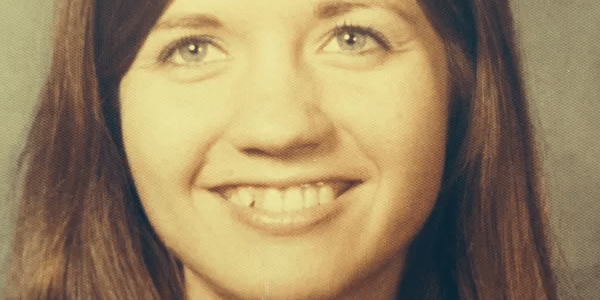


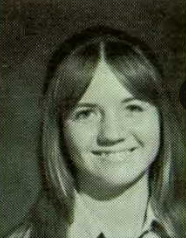


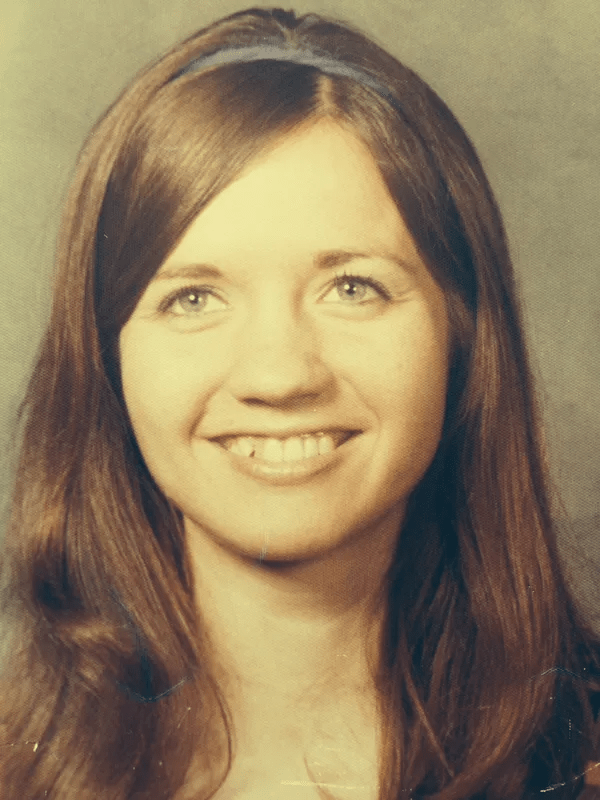

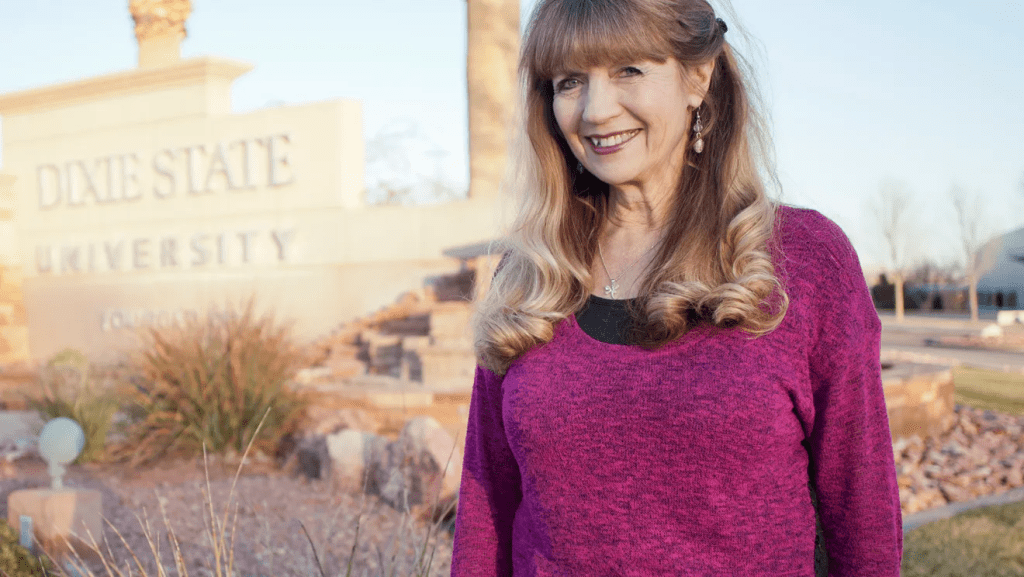


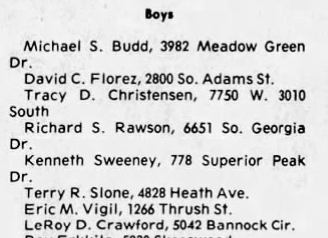

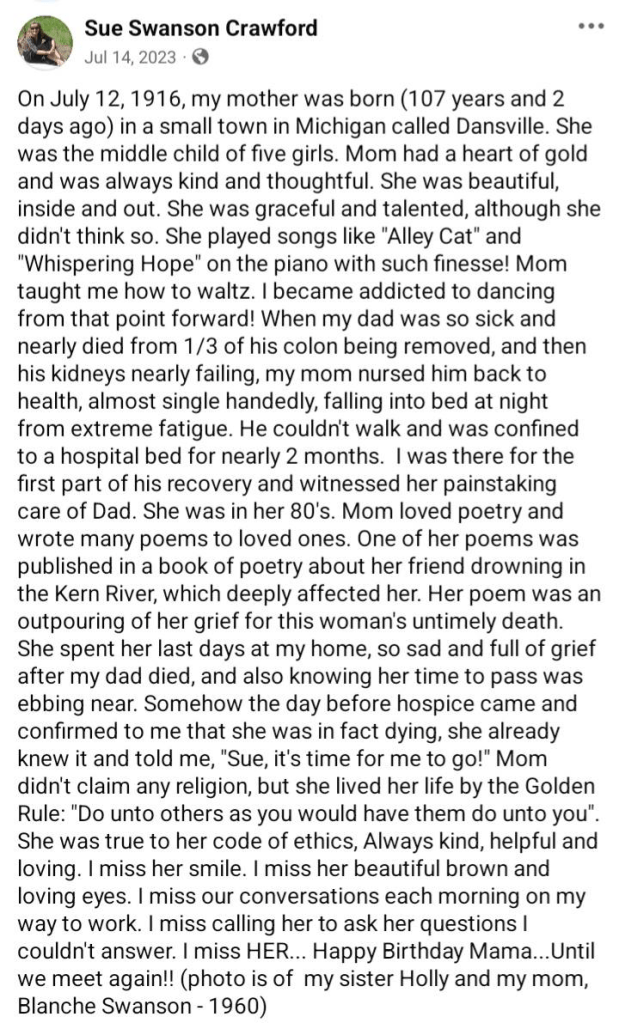


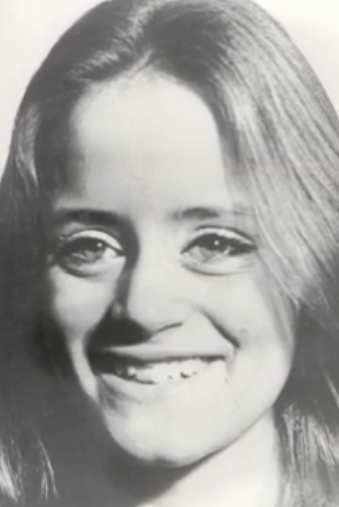

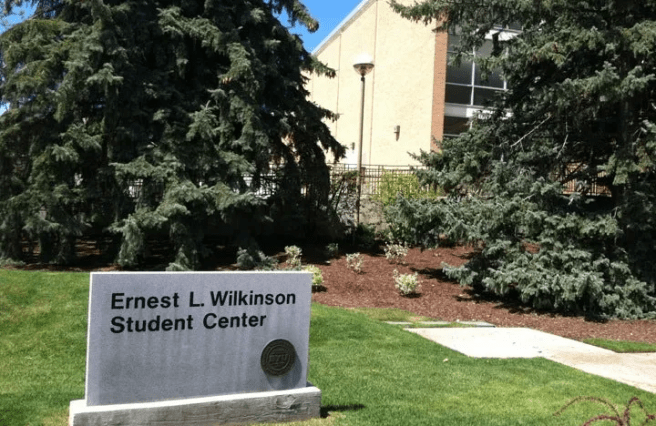
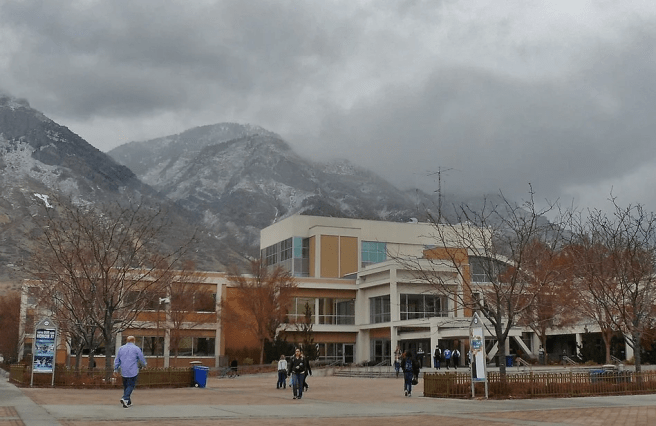
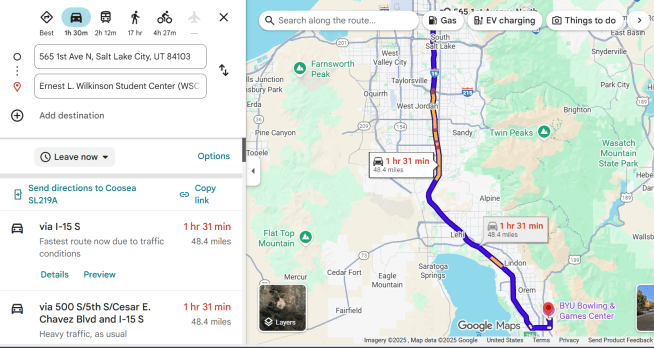
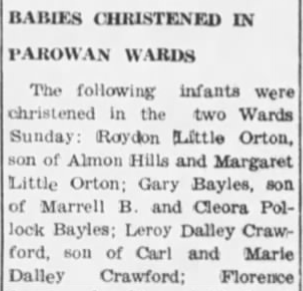

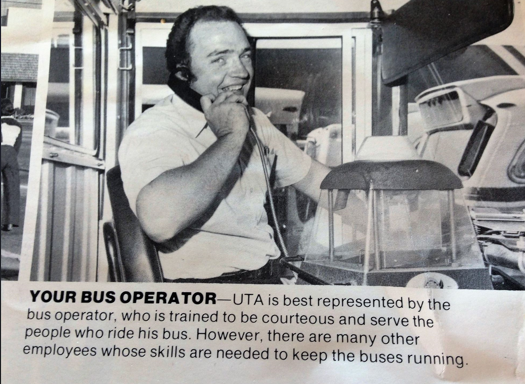



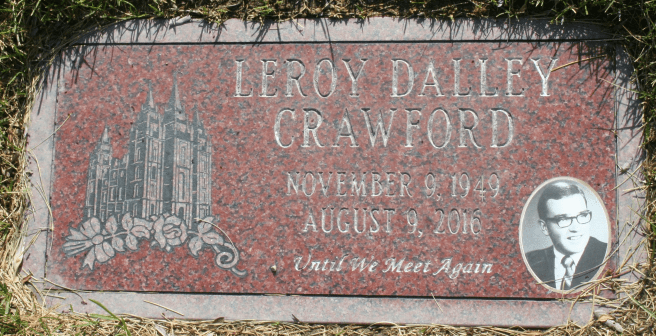
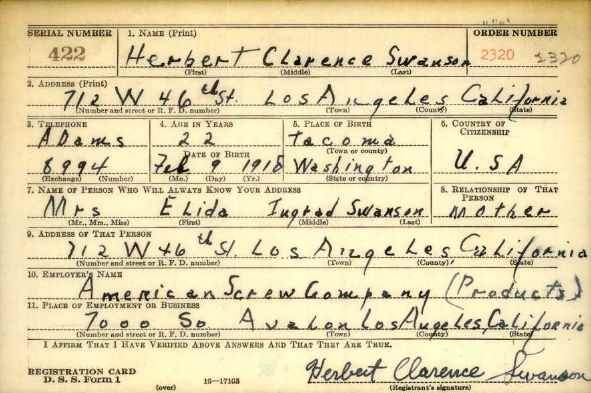
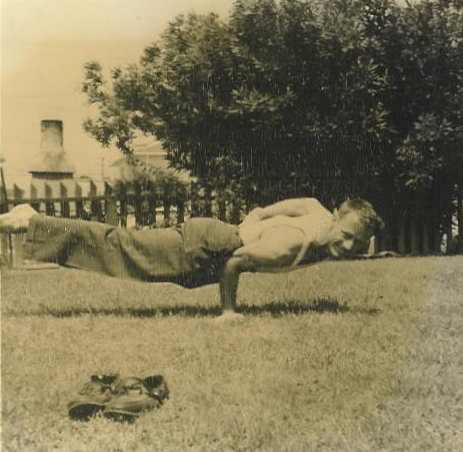

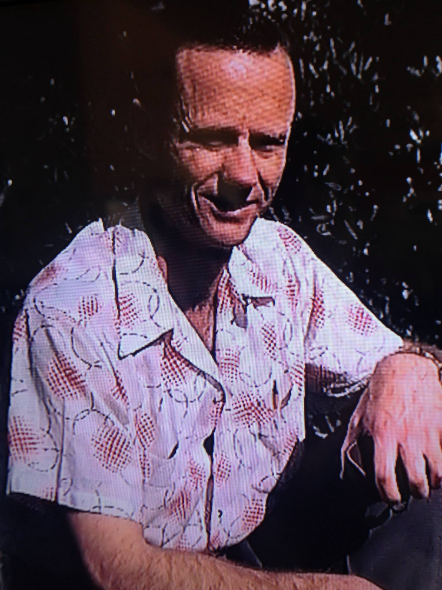

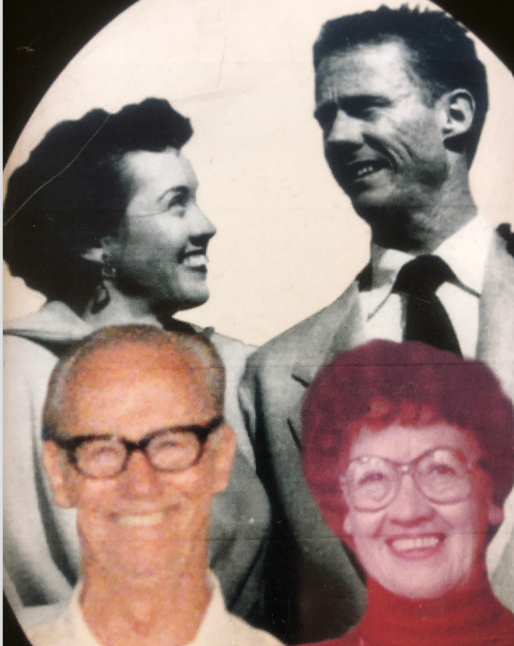
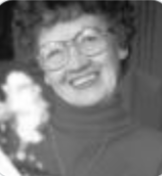

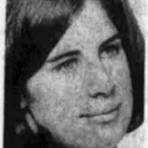





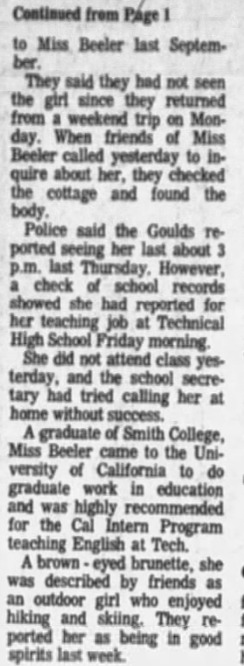
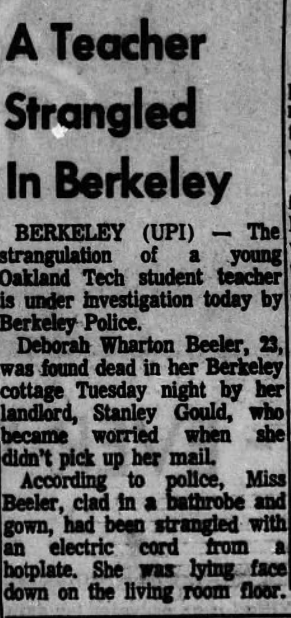

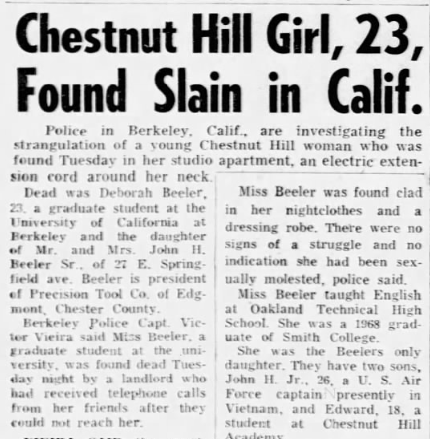

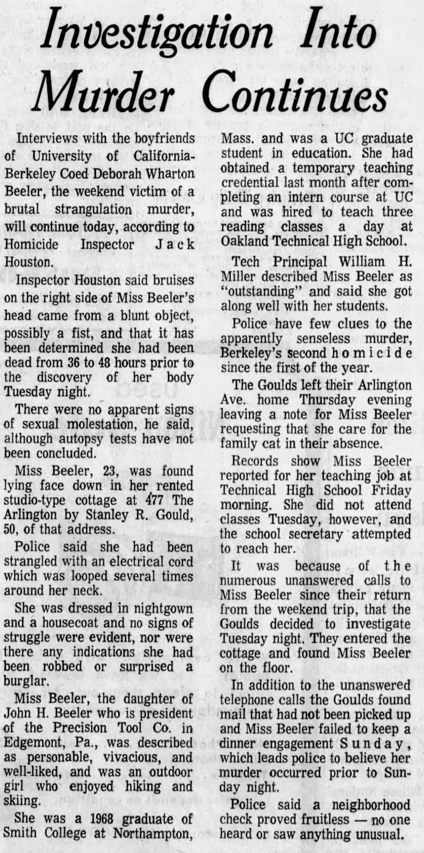

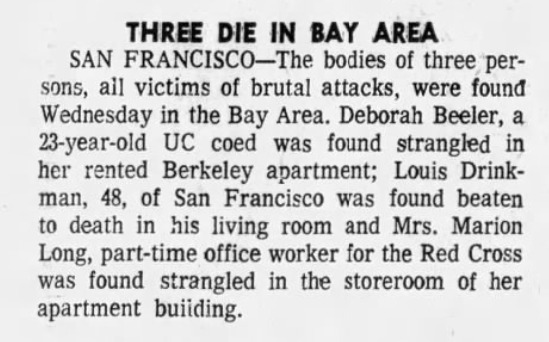
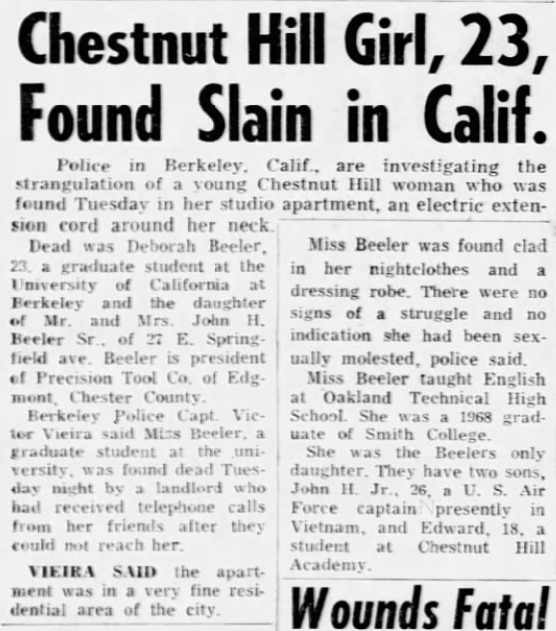
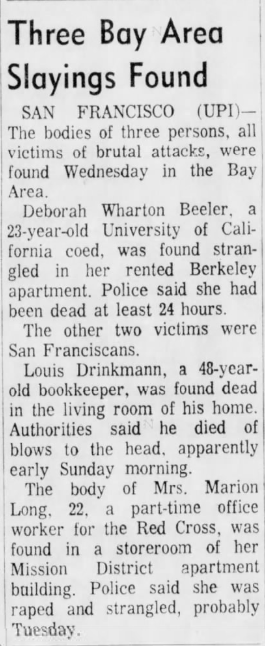

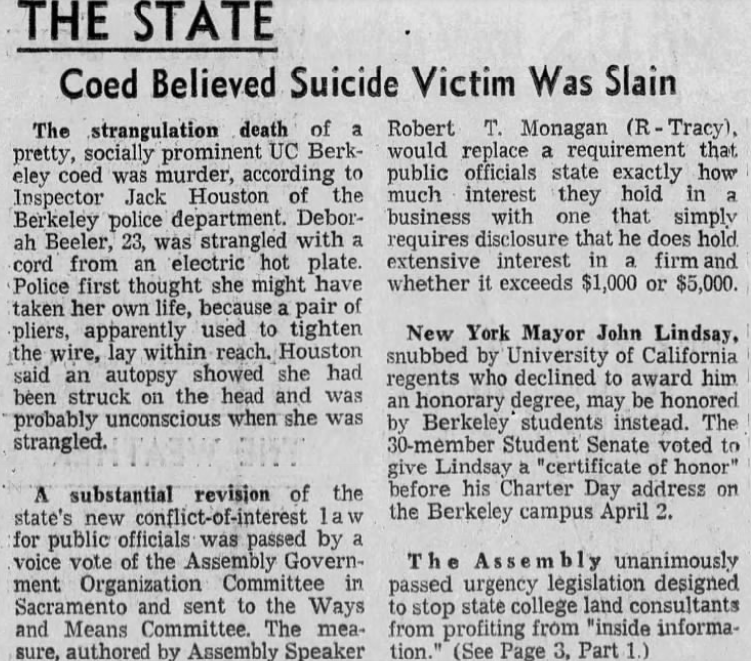

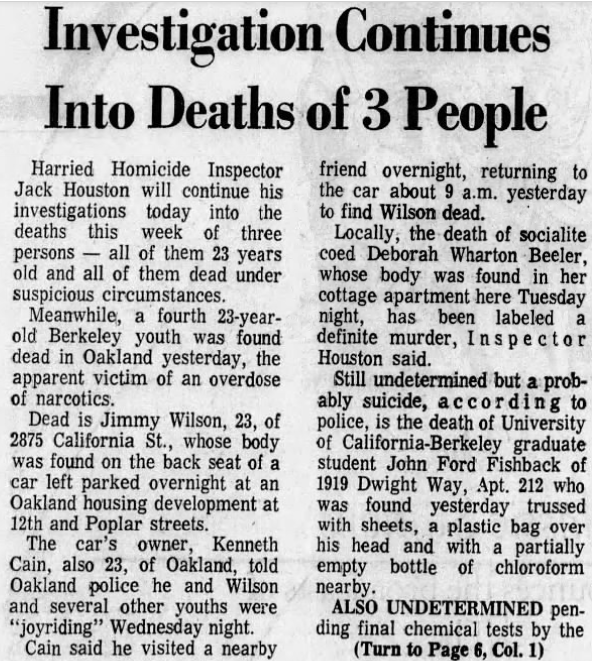
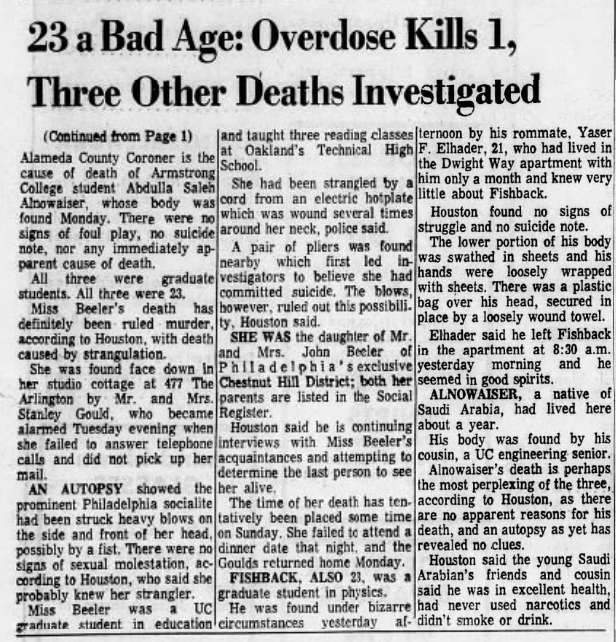

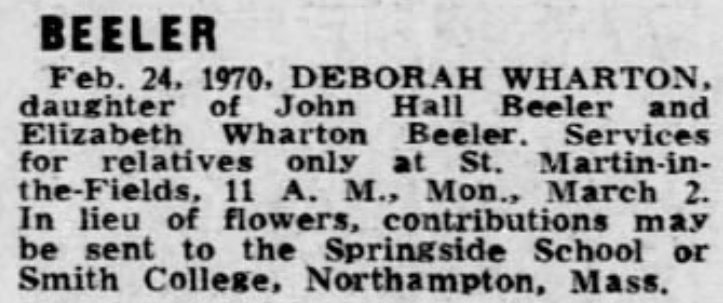
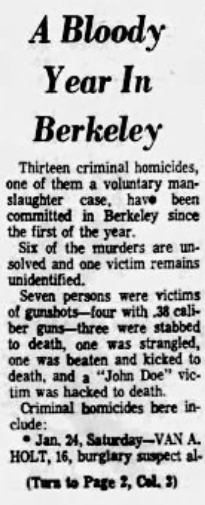
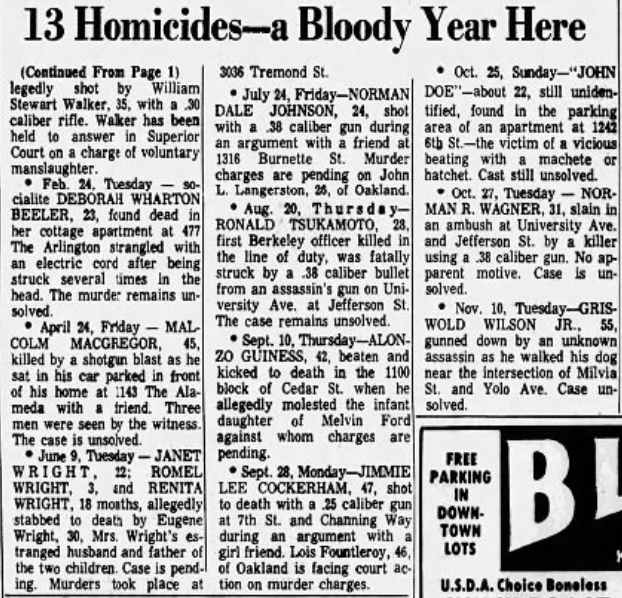




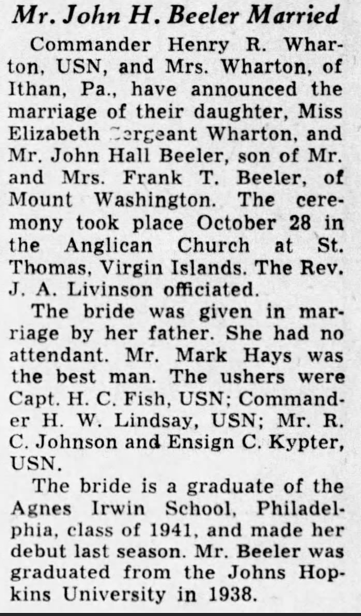
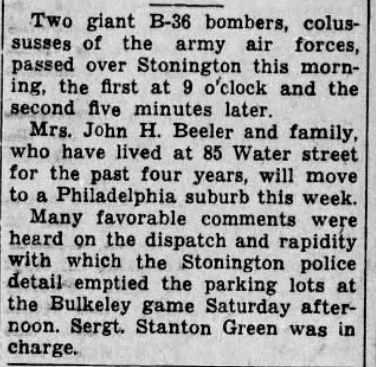


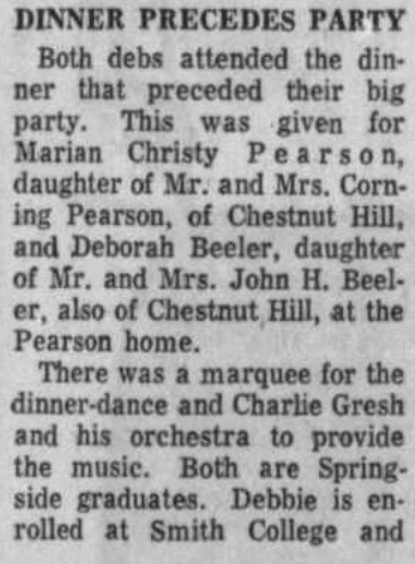
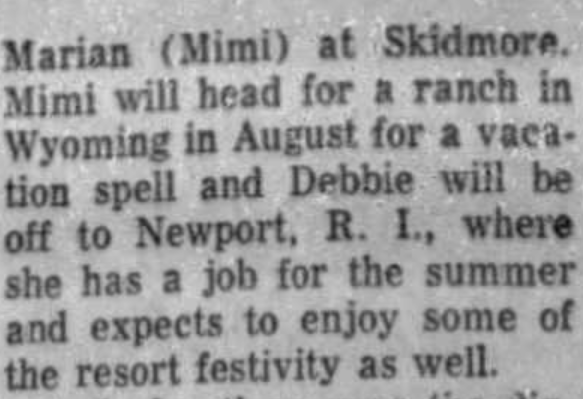

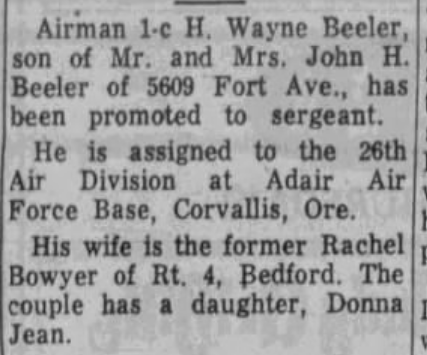
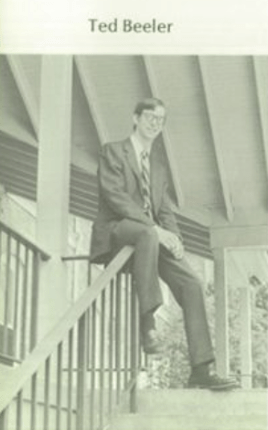

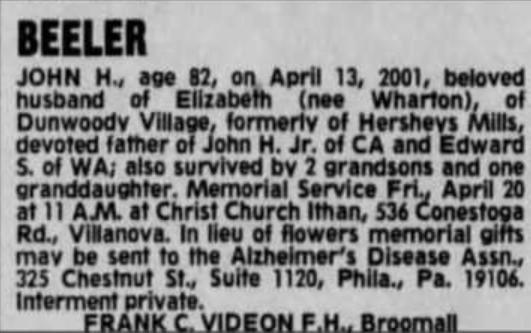
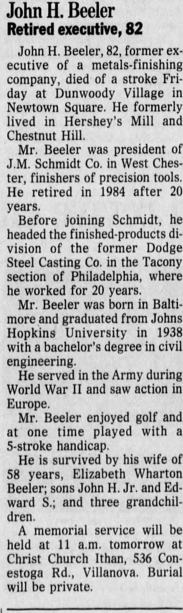


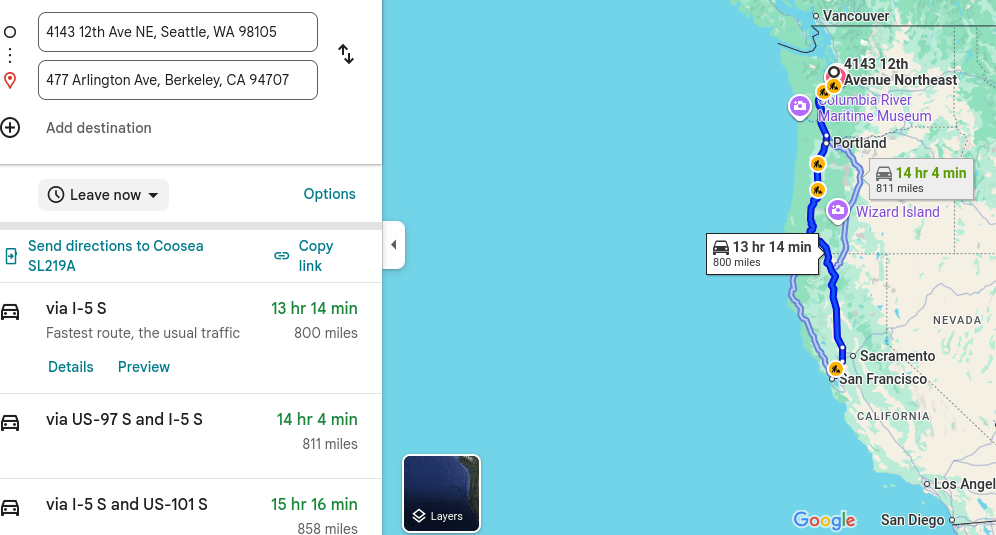


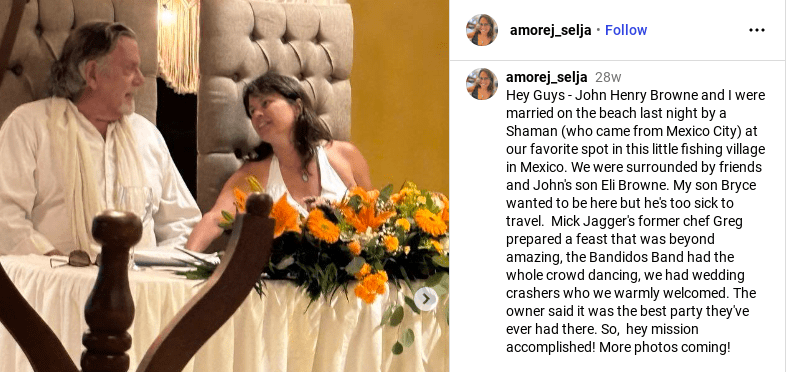


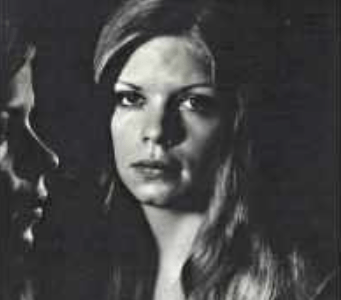


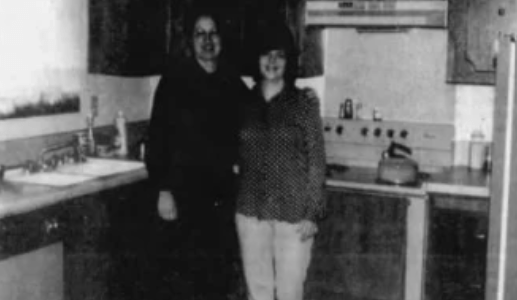

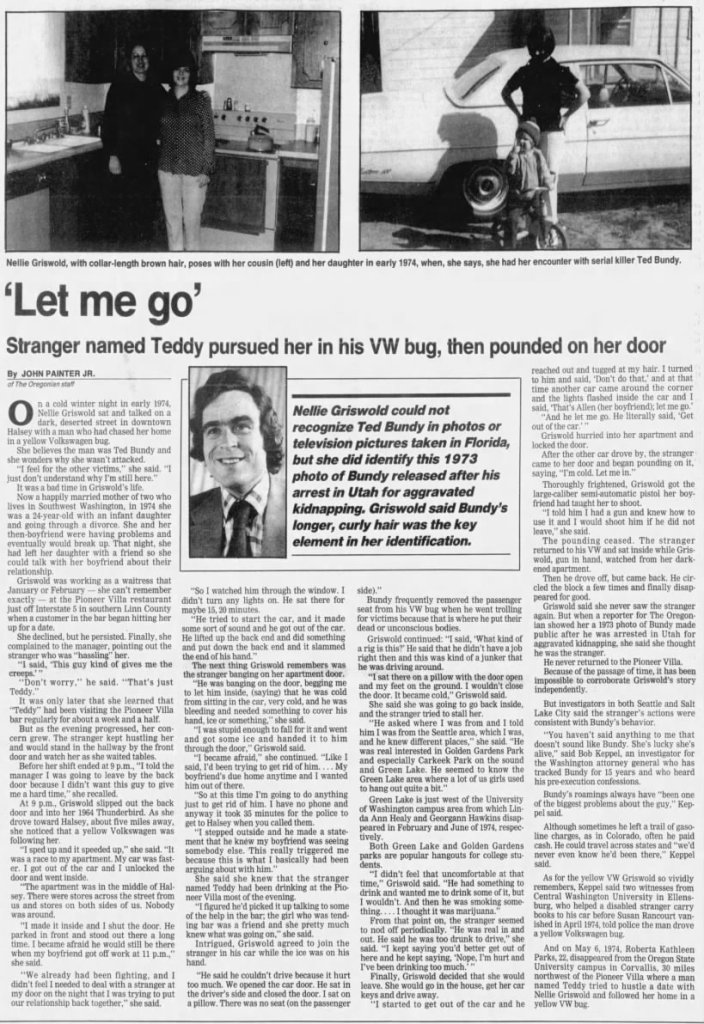

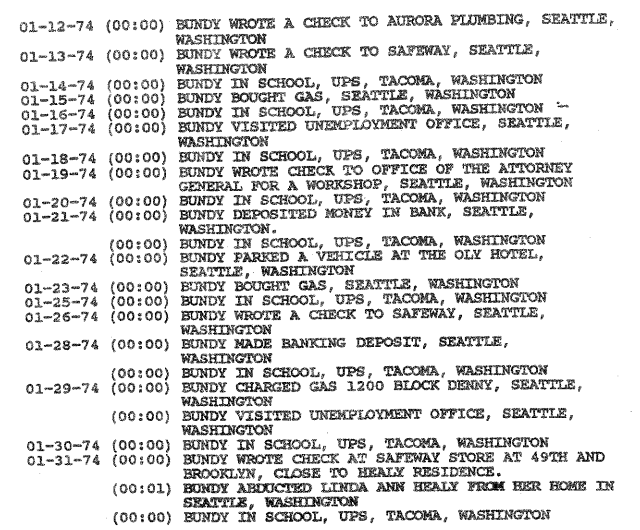
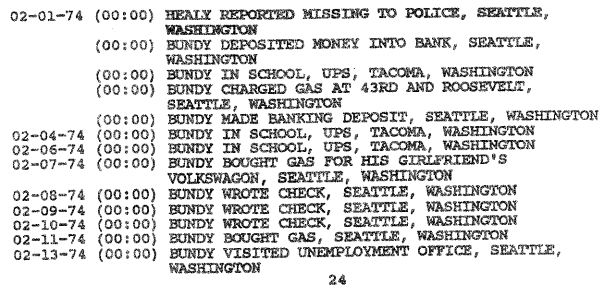
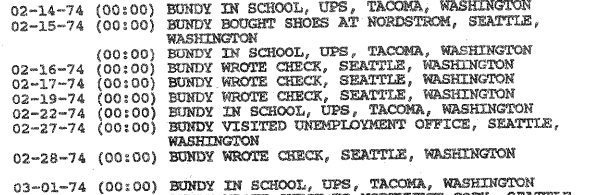




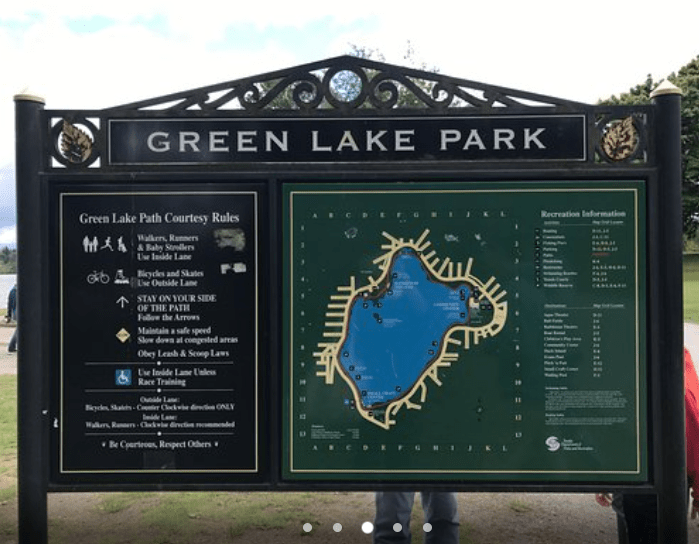


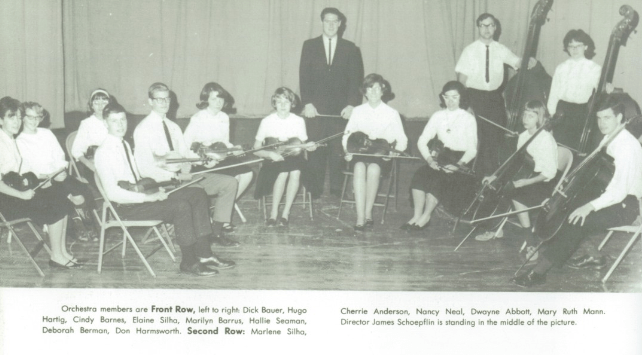


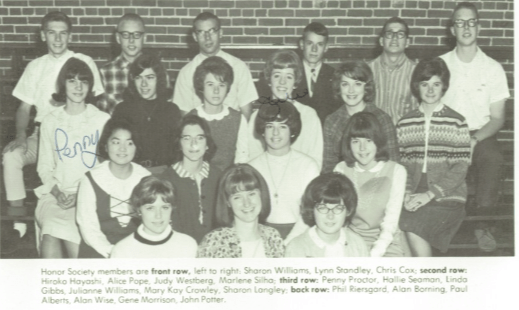

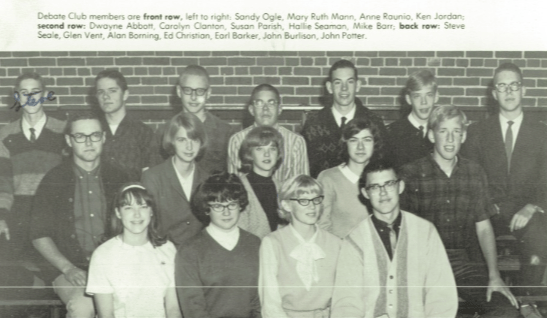
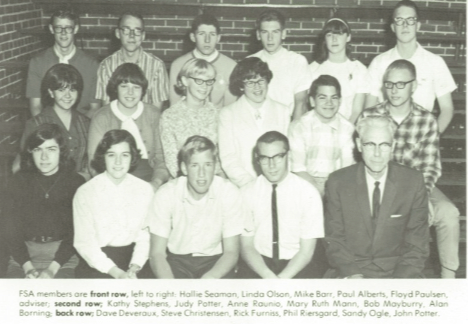
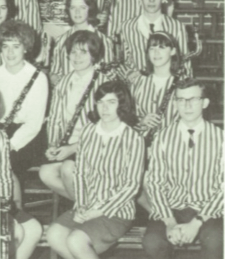

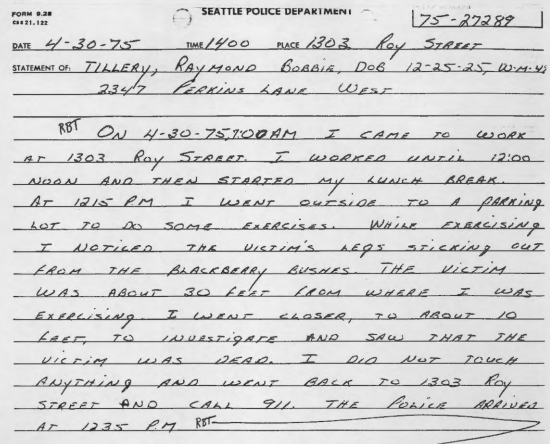
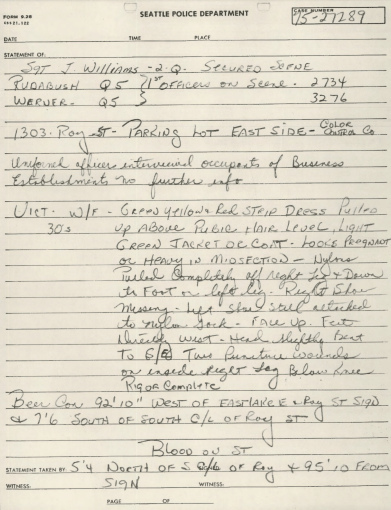


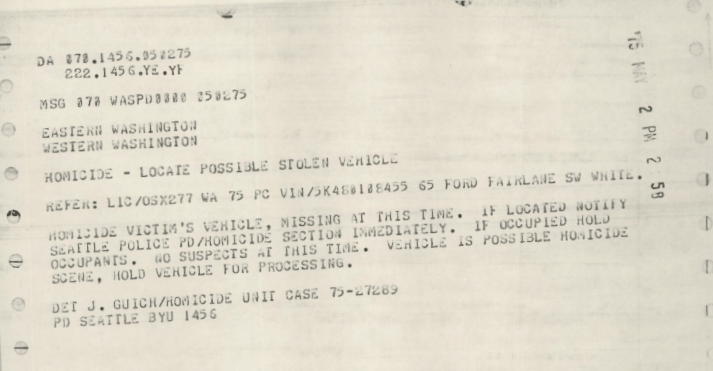
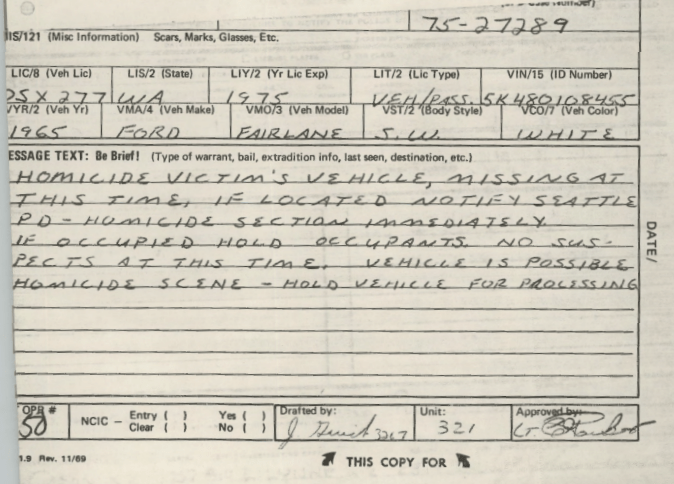
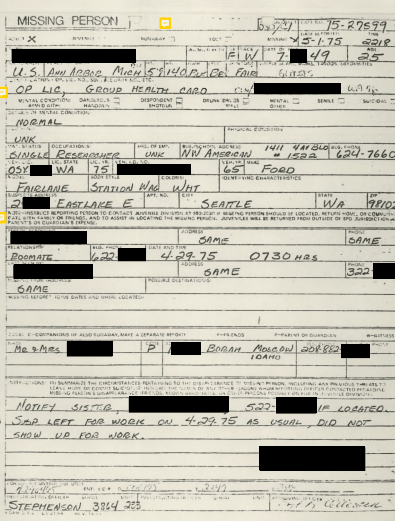
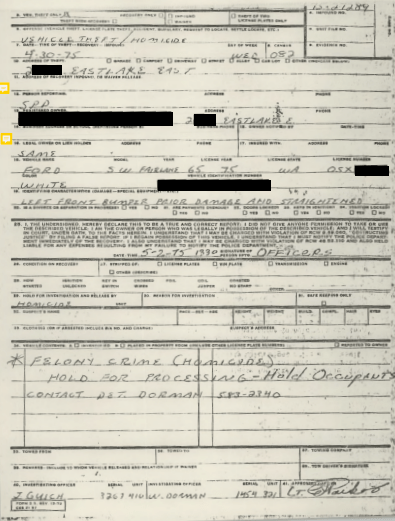

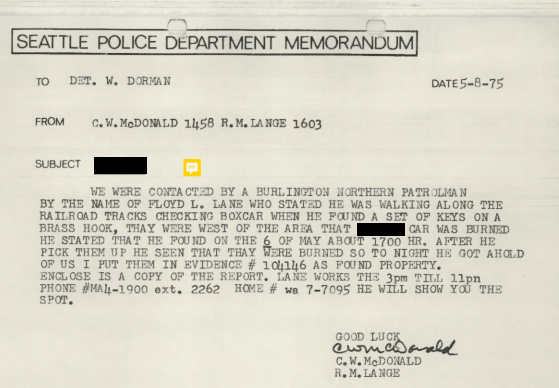


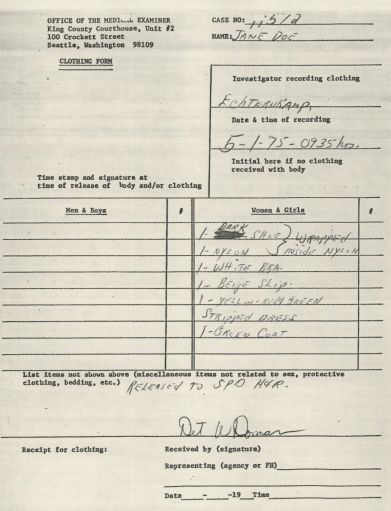


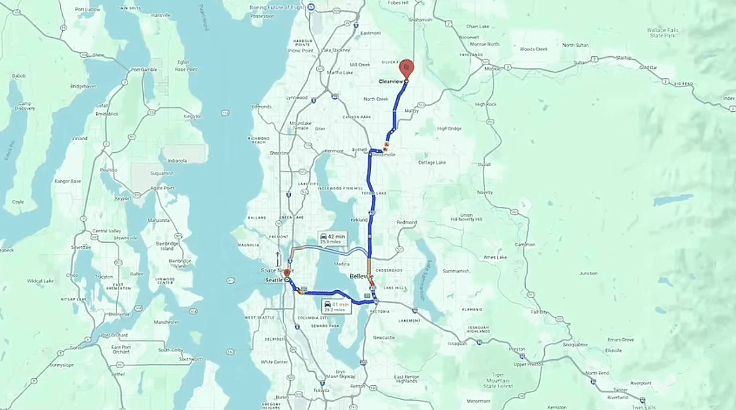


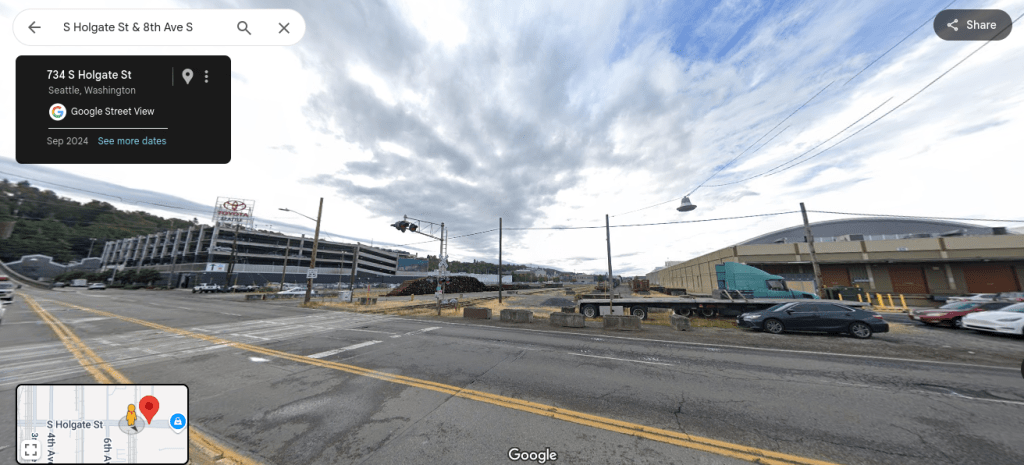


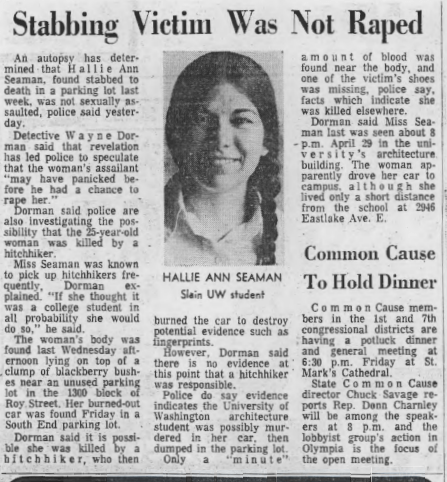
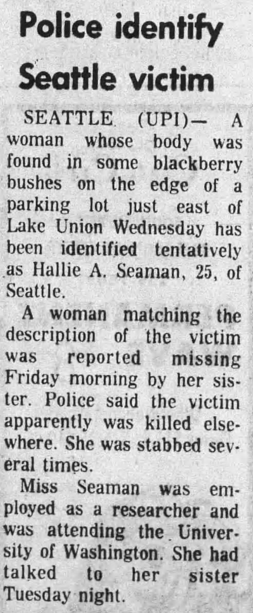
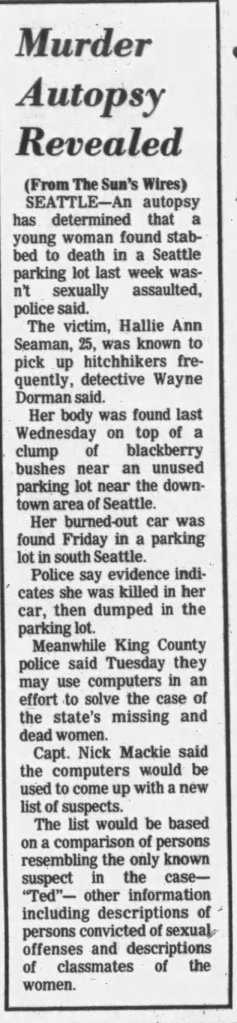
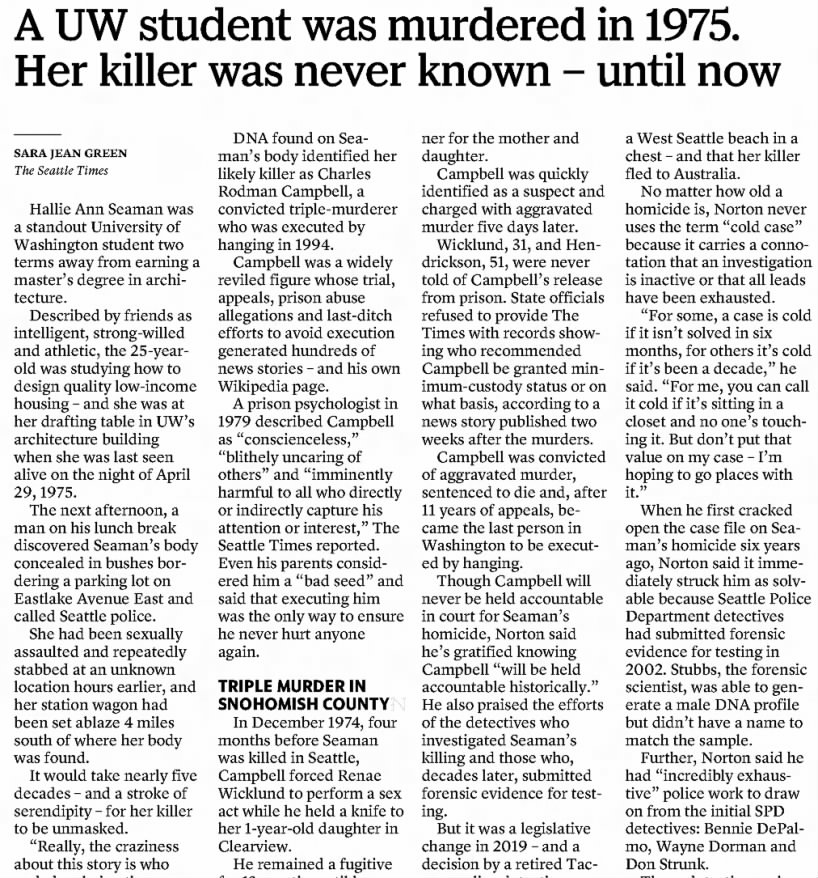


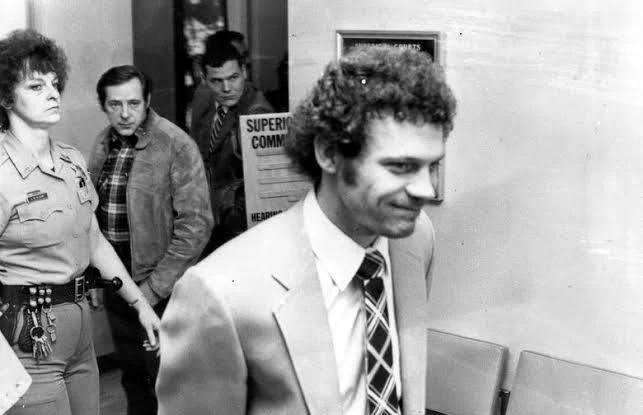
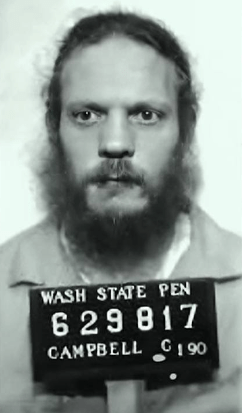


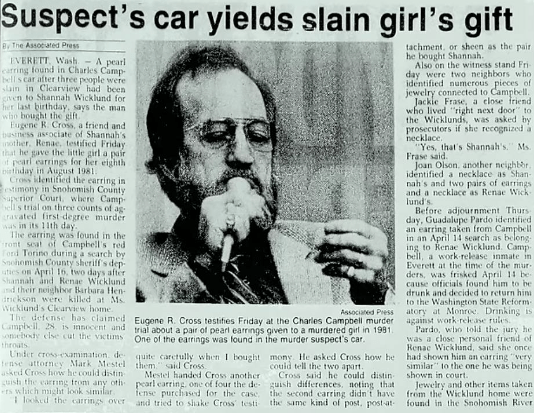
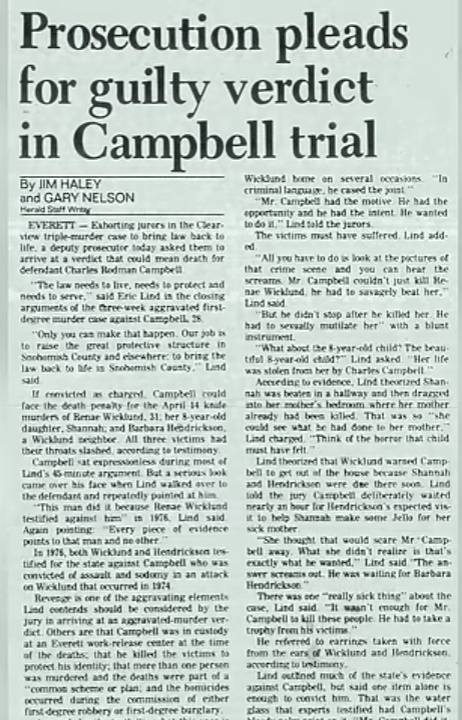
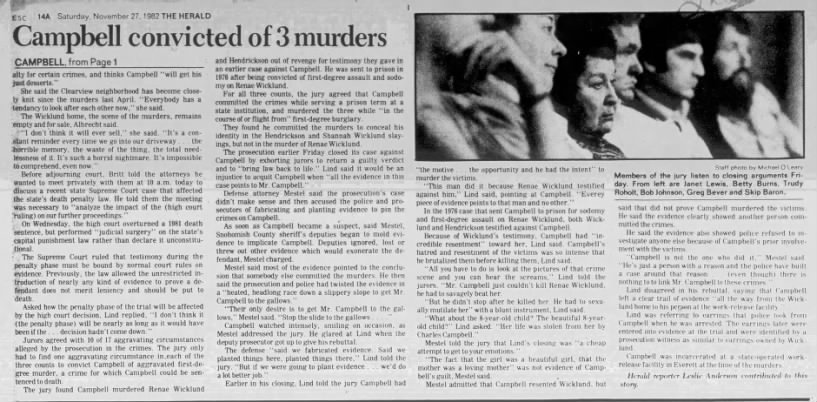
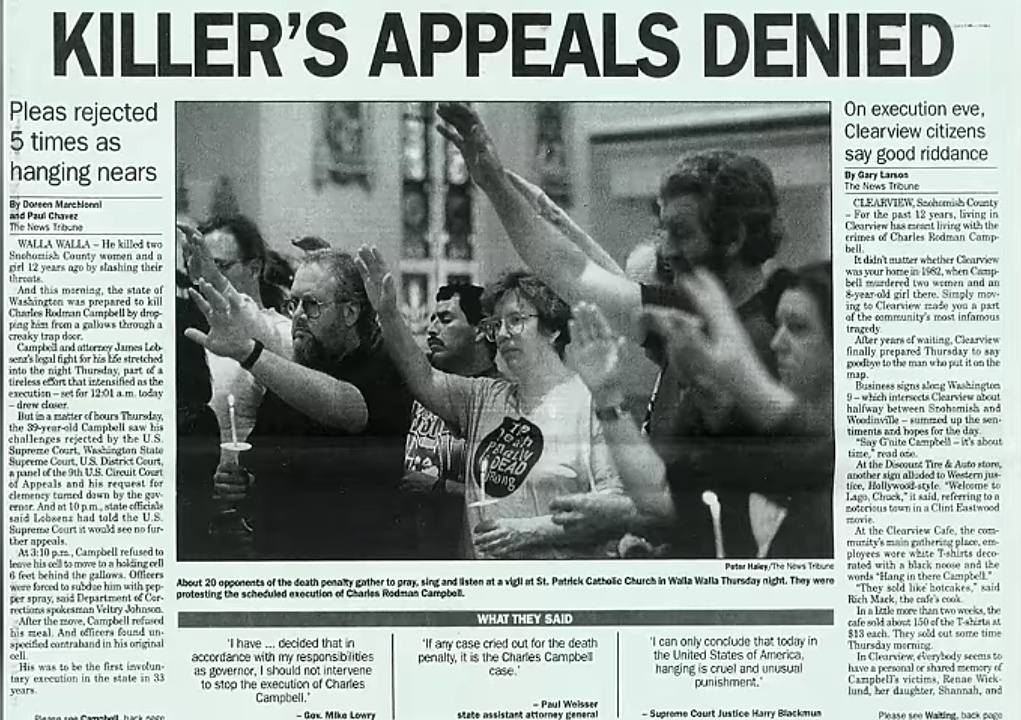
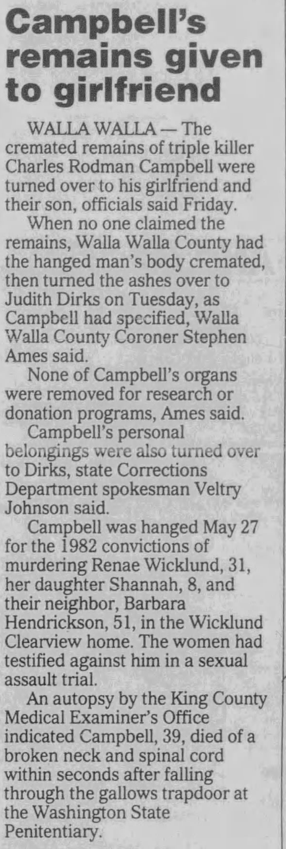

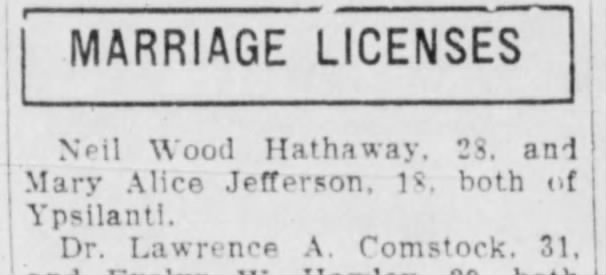
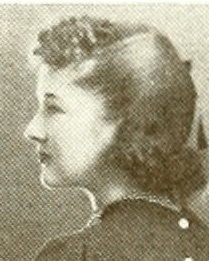
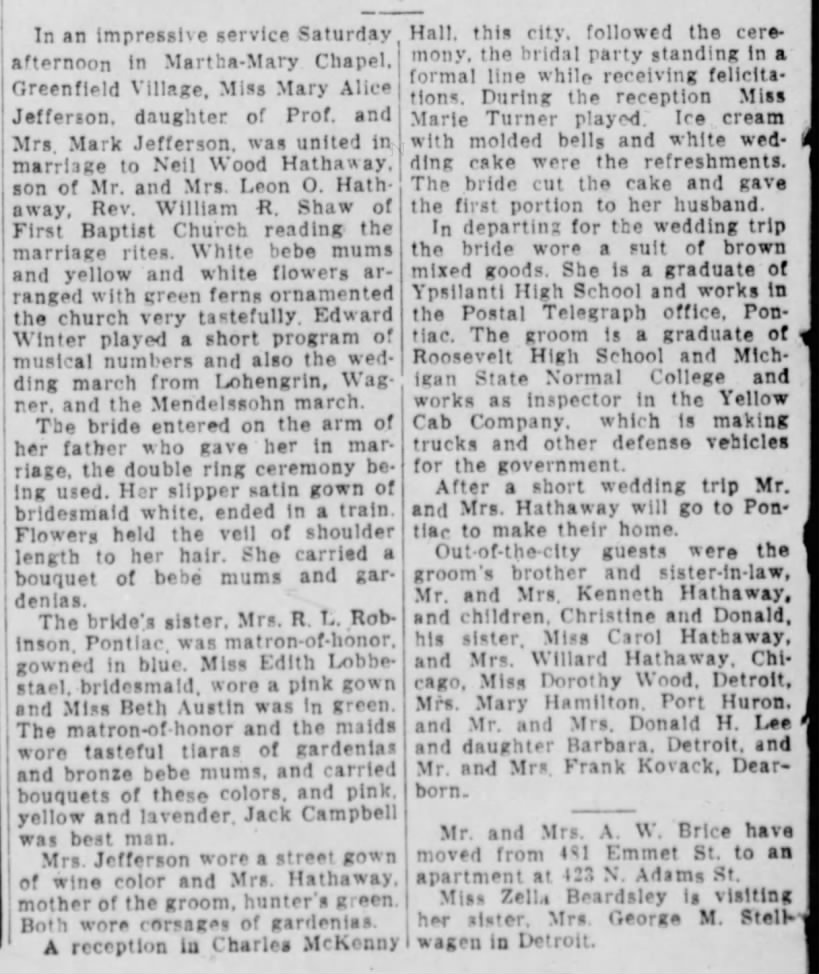


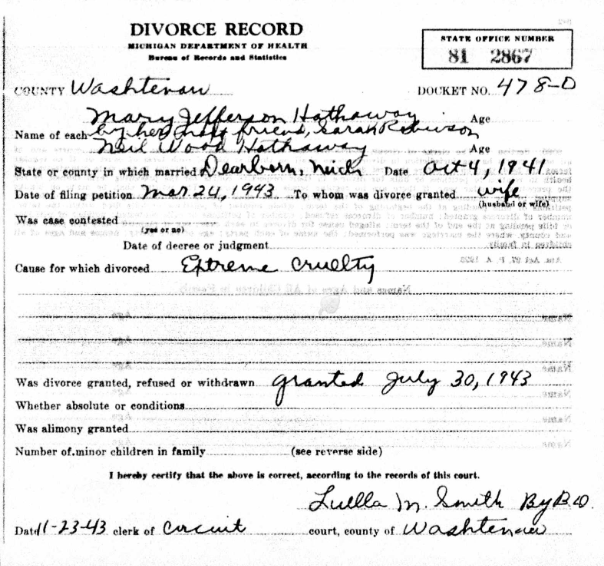

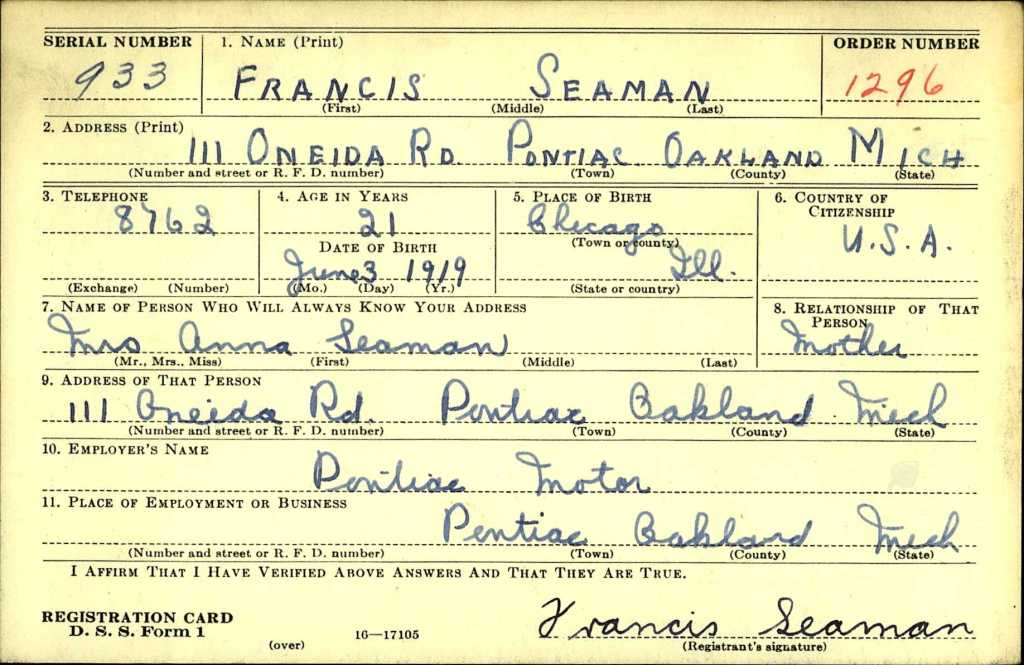


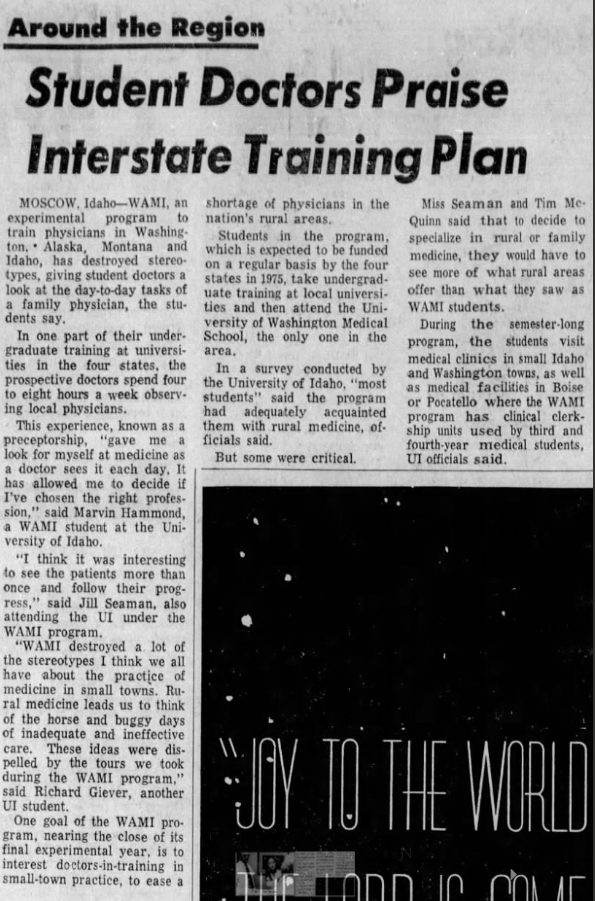

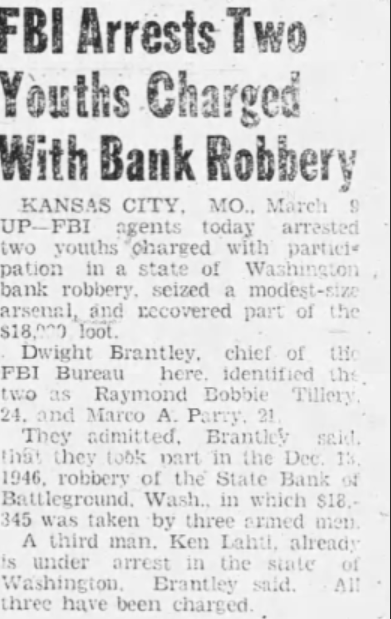
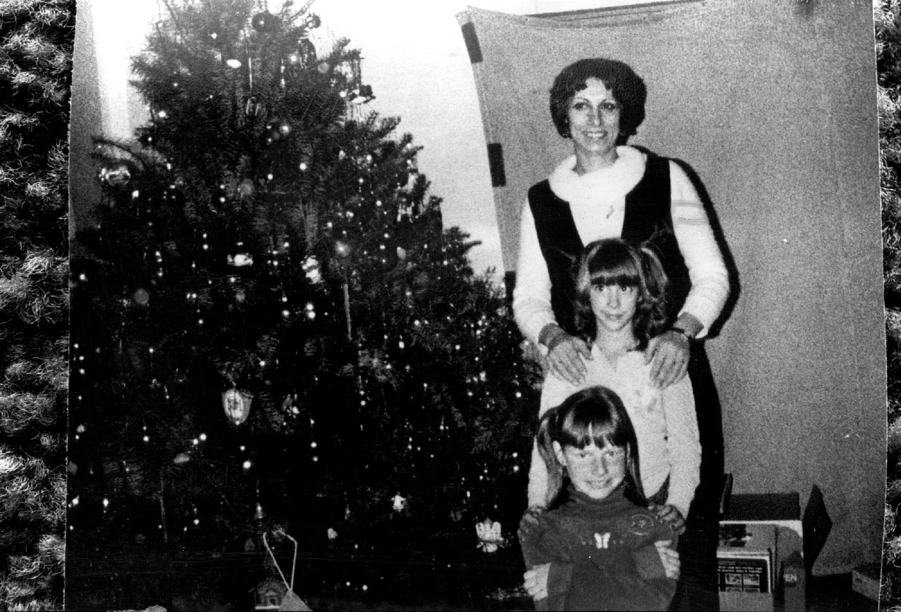

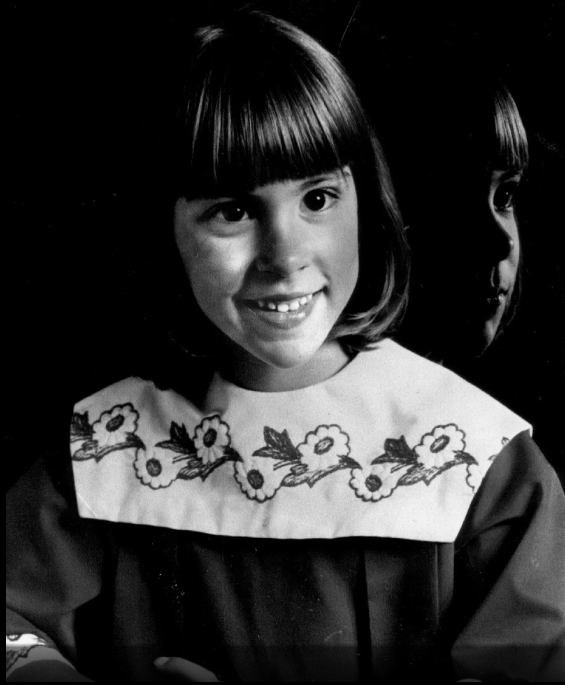


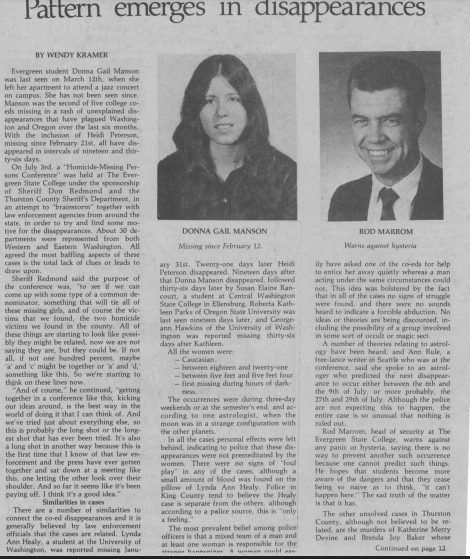

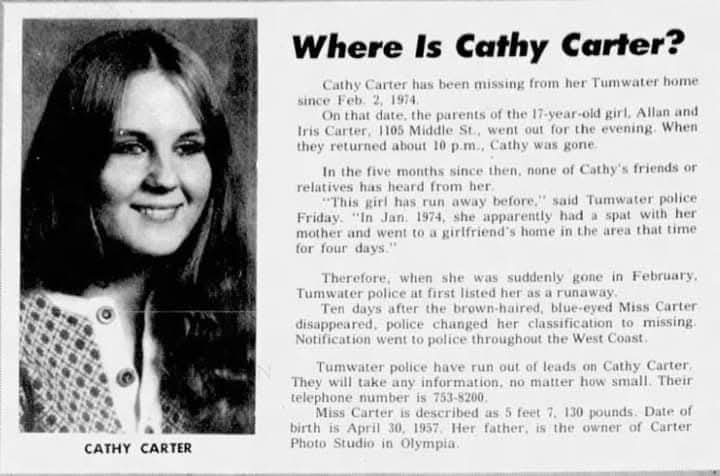
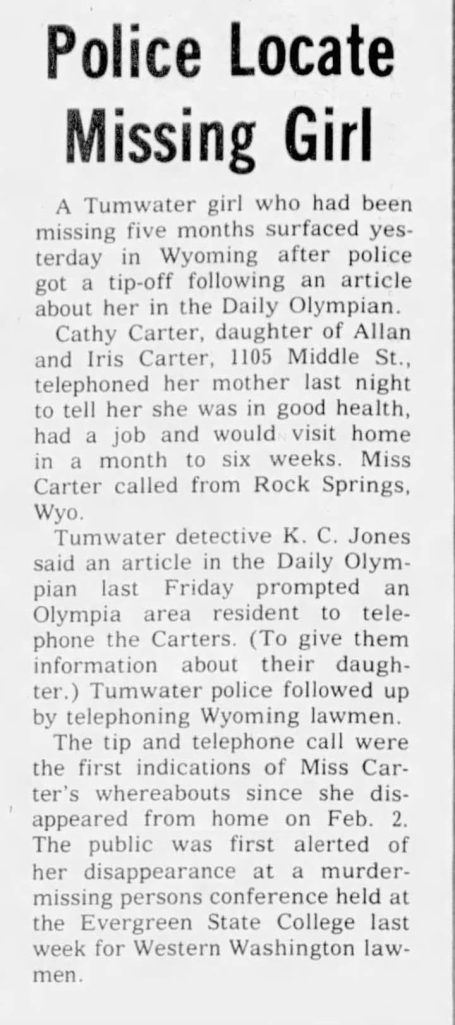

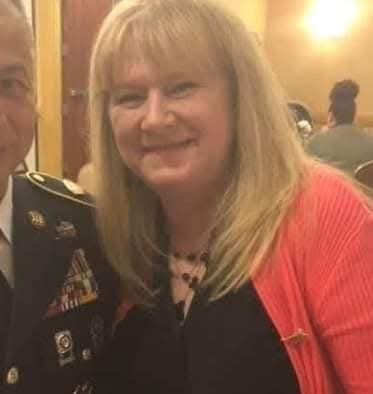

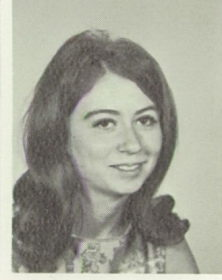






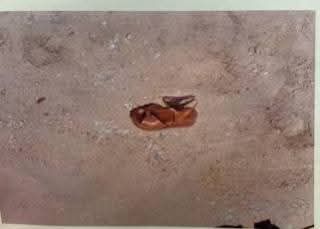
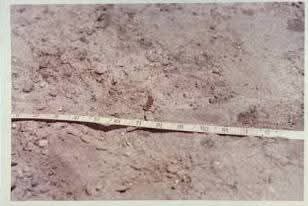

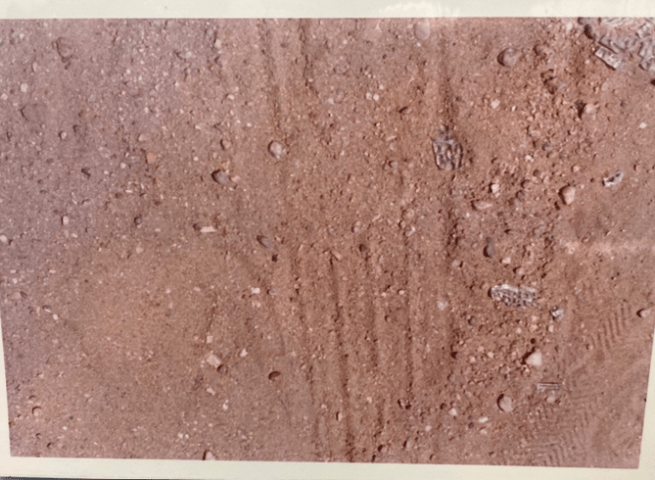


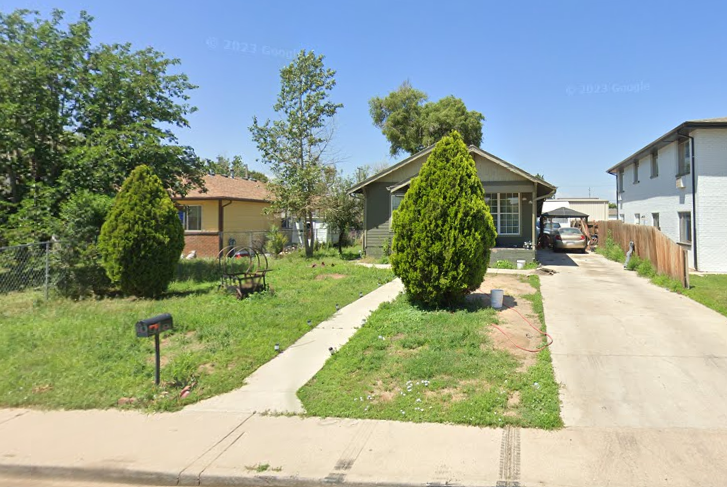
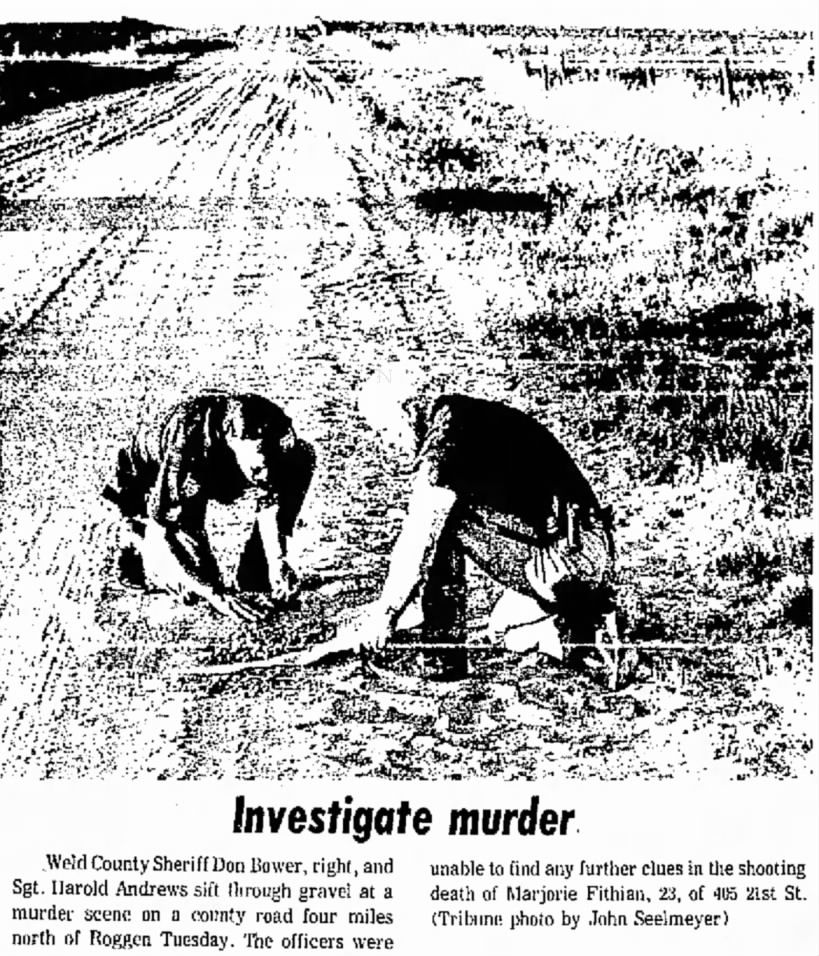

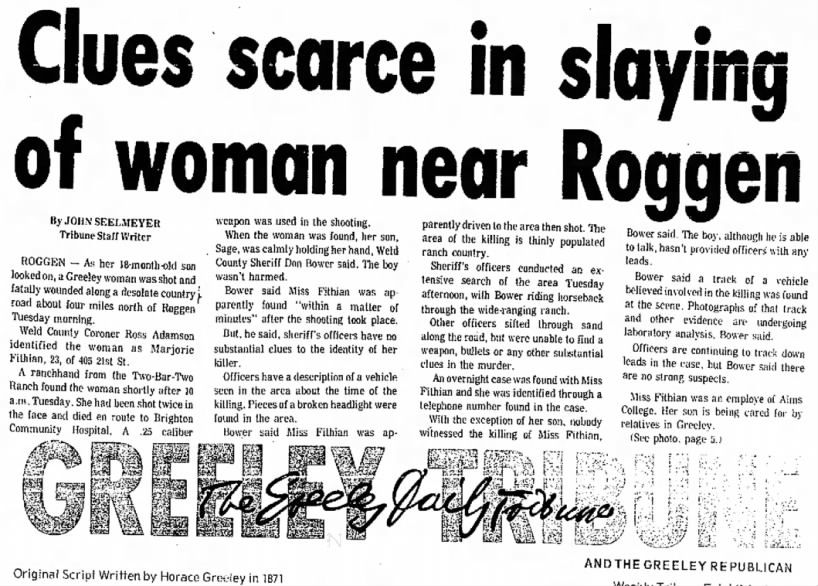
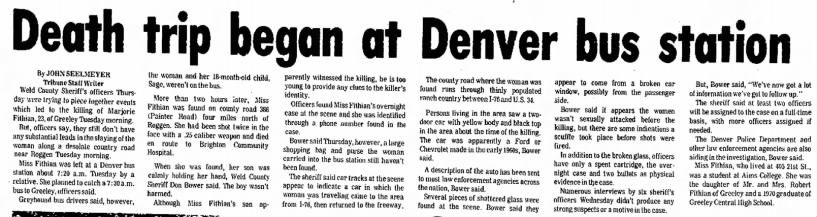
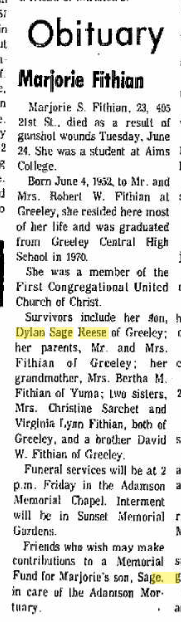
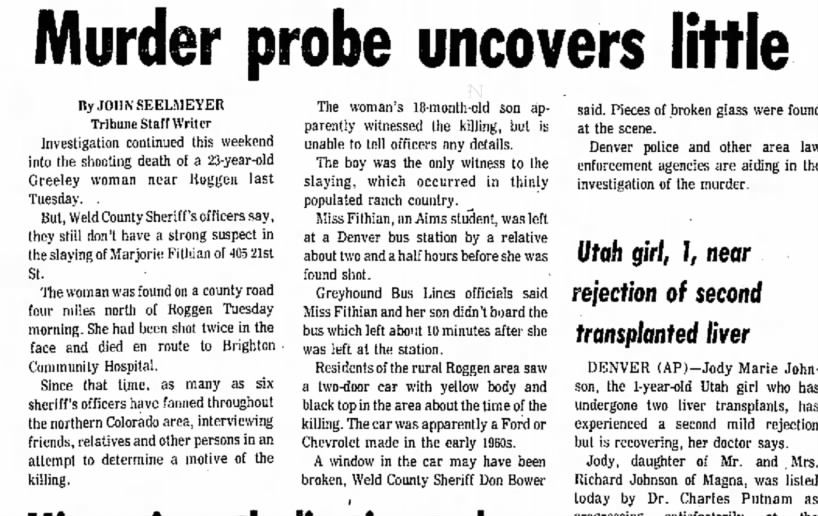


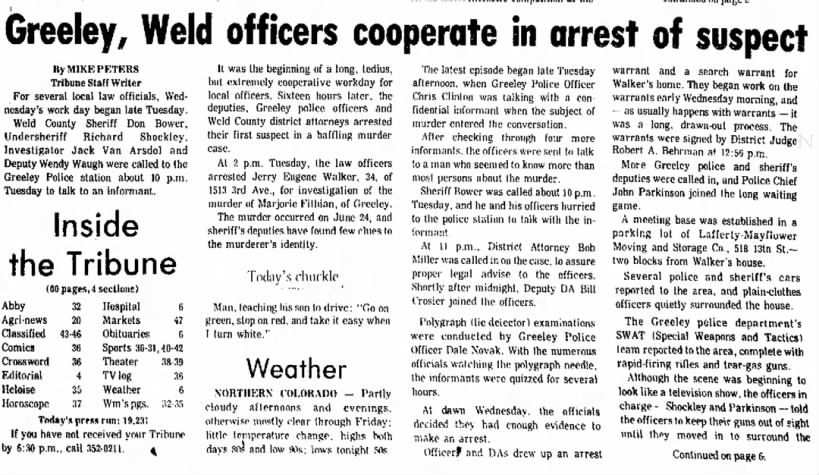
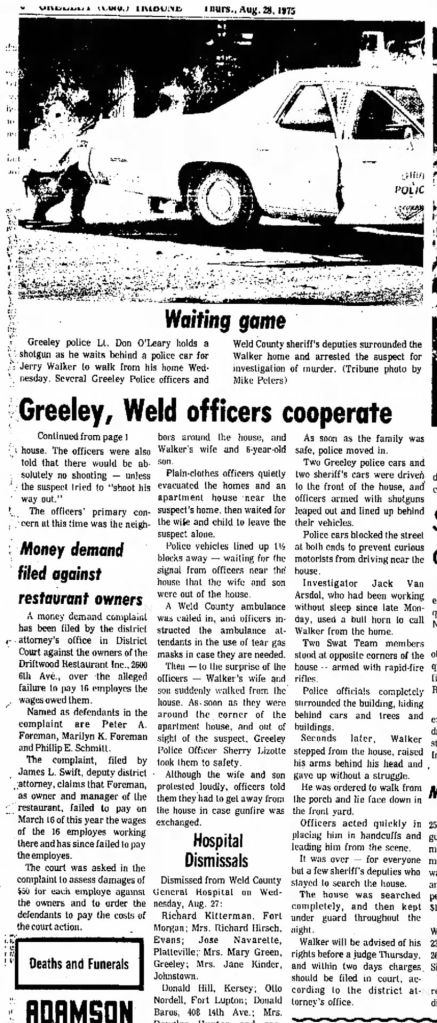
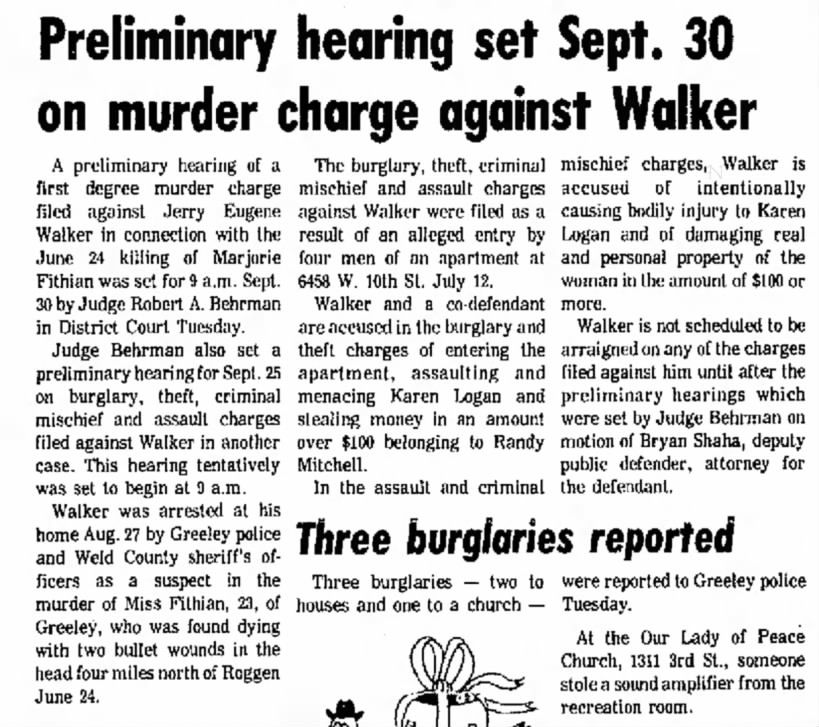


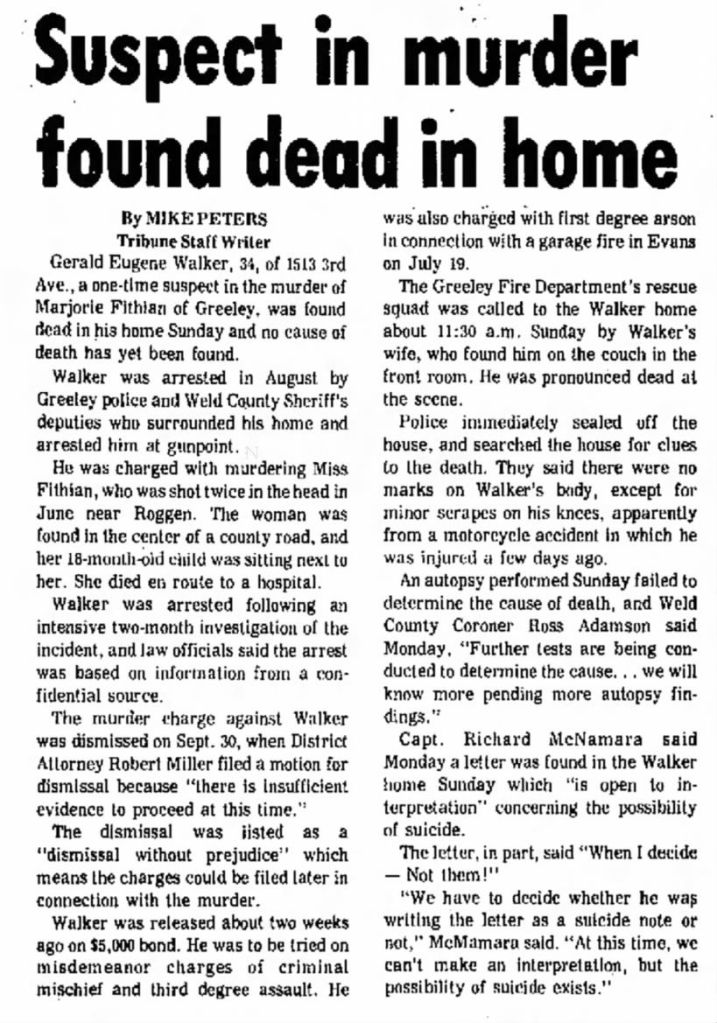
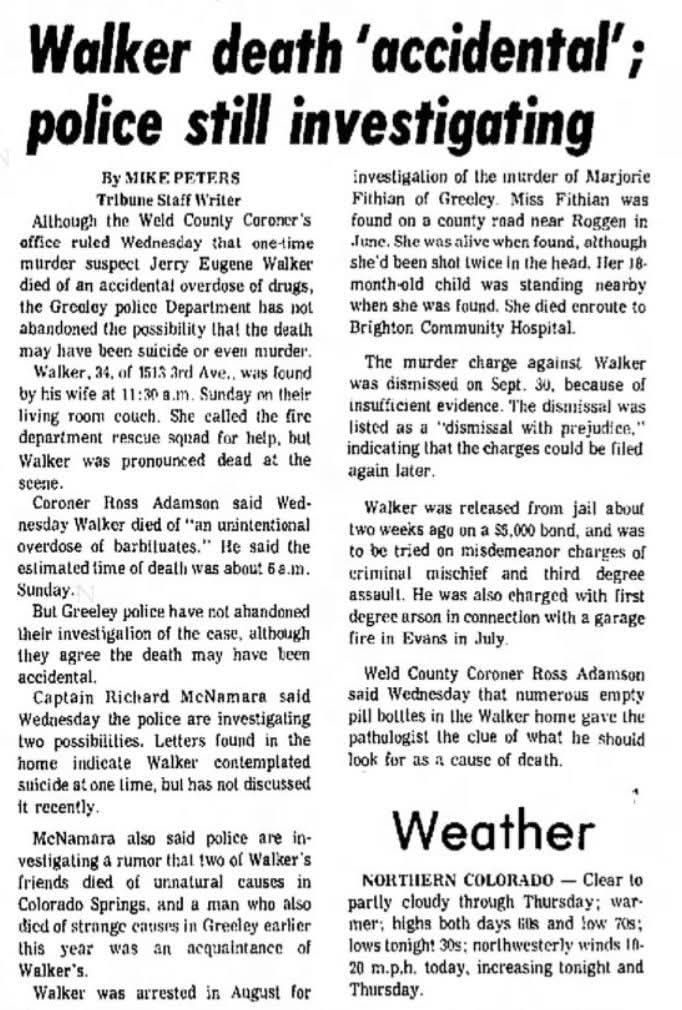
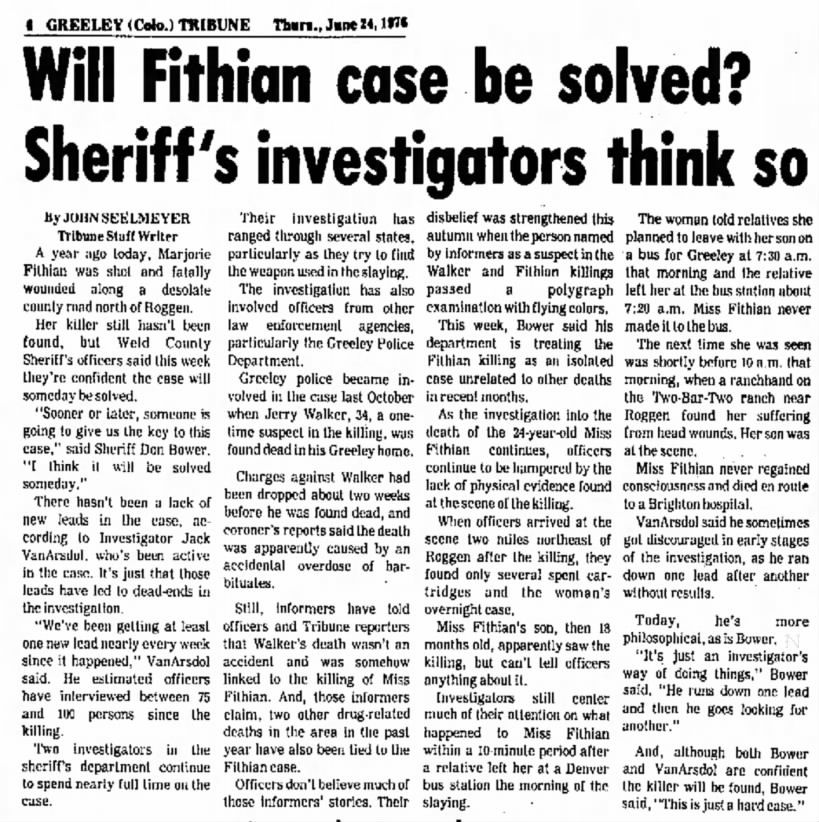
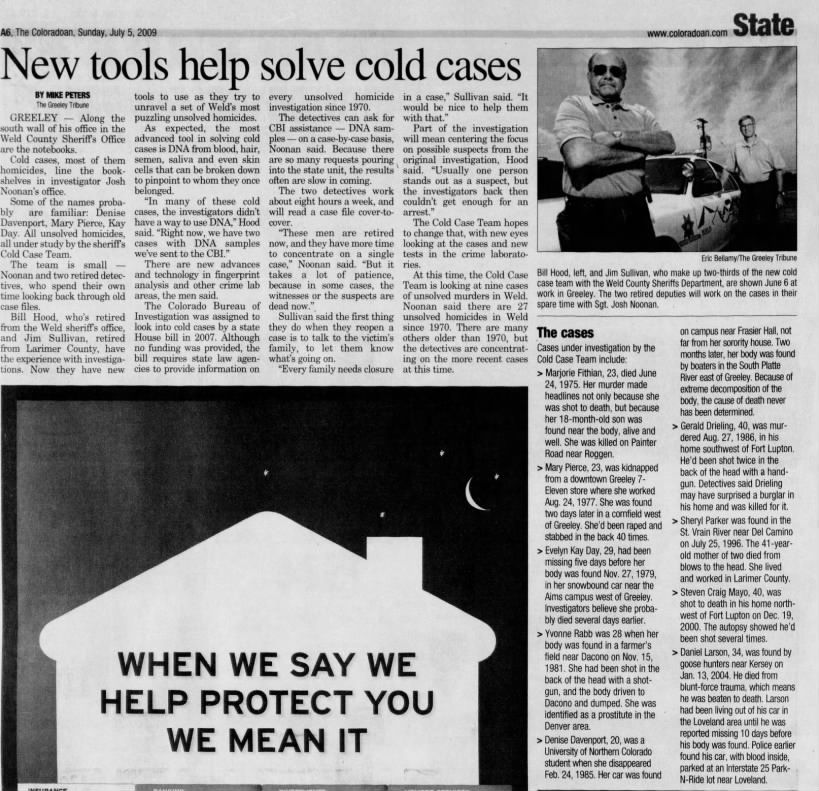





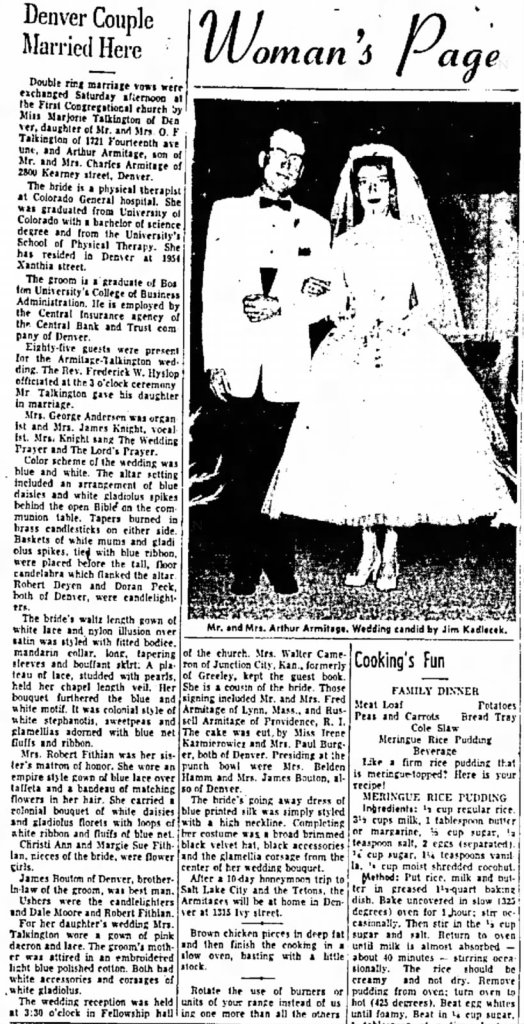
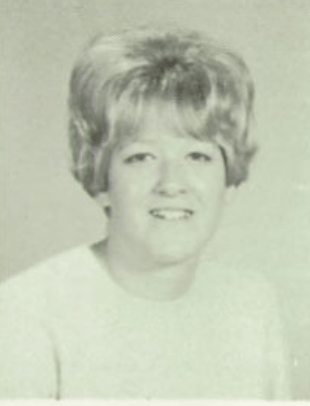












 Another Bundy Blog.