Johanna Tabitha Virginia Strong Leatherbury was born on May 17, 1953 to Jack and Gayle (nee Strong) in Cedar City, UT. Mr. Leatherbury was born on September 16, 1916 in Eureka, UT and her mother was born on July 21, 1920. The couple were wed on May 22, 1939 in Heber City and eventually settled down in Holladay outside of Salt Lake City. Jack was a graduate of Brigham Young University and worked for the Union Pacific railroad for 43 years. The couple had ten children: six boys (Jack, Charles, Paul, Christopher, Marshall, and Greg) and four girls (Roxanne, Johanna, Suzanne and Jacquine, who died the same day she was born on February 22, 1940).
Johanna stood at 5’3″ tall and weighed 135 pounds at the time of her murder. In 1971, she graduated from Olympus High School and was employed at Ballast Hall, a dormitory at the University of Utah. She was also a member of the Holladay Sixth Ward Chapel, a branch of the Church of Jesus Christ of Latter-Day Saints. The evening of August 20, 1971 was no different than any other: before she left her family home to go hang out with her friends the 17 year-old said goodbye to her parents and siblings. It would be the last time the Leatherbury’s would see her alive. The night turned into morning, and she never came home. This wasn’t like Johanna at all and her family knew right away that something was wrong. Immediately they began to search the area in hopes of finding her.
Described by one of her brothers as ‘thoughtful and kind,’ Johanna was very well liked by her peers and was deeply loved by family and friends. She always made time to visit her grandfather at the VA, who was an injured World War II veteran and loved spending time with her nieces, who said their aunt would often take them out for coffee with her friends and never treated them like children. Like most teenagers on the cusp of adulthood, Leatherbury liked going out with friends and ‘hanging out:’ on the evening of Friday August 20th, she met up with friends at a popular hangout referred to as ‘The Complex,’ which is best described as a vacant field where kids from the areas high schools went to hang out. Leatherbury had just graduated and was moving on to college (most likely the University of Utah where she worked), and it’s important to keep in mind it was the end of August, which is right before school starts up again. Of the spot, Jack Leatherbury said that it was just a normal teenage haunt, and that the areas two schools (Skyline and Olympus High) were just a five minute, 1.7 mile drive apart so many of the students knew each other from growing up in the same area: ‘the kids from Skyline and Olympus High School all hung out at this area. They played games and did what teenagers do.’
I have two different reports as to where Johanna was last seen: in an article published by The Ogden Standard-Examiner on August 24, 1971, it stated that ‘Miss Leatherbury was last seen Friday night when she drove a friend home.’ However the more frequently given account is that she was last seen getting into a car with two unidentified gentlemen containing an unknown number of people by friends near The Complex (which was located at the intersection of State Street and 2100 South Street) at roughly 11:00 PM on August 20, 1971 (I read one source that said it was as late as 11:25 PM and listed the location at 2500 South State Street and West Temple). No one caught the type of car that Johanna got into, however the public was given a description of two different makes and models that were said to be in the area where she was last seen: on August 26th just days after Leatherbury was murdered LE issued an all points bulletin on two cars and their drivers that were reported to be near The Complex. One of them was a 1959/60 black (or dark green) Chevrolet Impala with an engine that ‘sounded like a washing machine’ that was driven by an approximately 24 year-old male with ‘hair down to his ears.’ The second vehicle in question was a 1970/71 Dodge Charger with white racing stripes painted on the sides and a black stripe on the rear that was driven by a person described as ‘young and blonde.’ Unfortunately, it seems that police were unsuccessful in their search efforts.
The day after Johanna was last seen her older brother Jack heard a report on the radio that immediately alarmed him: ‘it was a bulletin on the radio that said there had been a body discovered in the surplus canal out by the Great Salt Lake.’ … ‘Good Lord, I could tell you where we were about every hour from the day to the time they discovered her.’ Per KSL, her younger sister, Roxanne said that ‘when she didn’t show up, we all began to panic.’ The Leatherbury family’s search attempts didn’t yield any answers; however her body was quickly discovered the next day.
On August 21, sometime between 4 – 4:45 PM the naked remains of Johanna Leatherbury were discovered in a marshy area near the Great Salt Lake by David Russell and Neal Draper. The men happened to be fishing in the canal, which was located about a half mile west of the west stock bridge on the Goggin’s Drain by the Great Saltaire, an abandoned entertainment complex that had been destroyed in a fire in November 1970. Goggins Drain is a bypass canal that drains water from a surplus canal and helps transport water from 21st South to the Great Salt Lake. At first the two fishermen thought they found an old department store mannequin, however after they brought it to shore and further inspected it they quickly realized that wasn’t the case at all: it was the corpse of a young woman.
Because it was 1971 and not 2023 the men had no cell phones, so they drove to the closest town of Magna, UT to inform law enforcement about their discovery. Once detectives arrived on the scene and pulled the body out of the water it was obvious to them what happened to the young woman: she had been shot in the chest and head nine times and stabbed in the chest and stomach four times (I did see it reported she was stabbed five times and another that said was shot only three times). She had also been raped and pistol whipped. In the very beginning, responding officers thought the body may have belonged to 17-year-old Sheri Martin, who disappeared from her POE of Winchells Donut House on August 12, 1971. Martin’s body was eventually found by two hikers 15 miles south of Wendover on September 6; she also died from gunshot wounds.
Captain Pete ‘ND’ Haywood of the Salt Lake County Sheriff’s Department told the public that they’re ‘looking into many leads in the killing of Leatherbury, but we have no suspects at this time.’ Strangely enough, a 20 year-old woman named Leeora Looney disappeared the same evening in August 1971 that Johanna was murdered after she was reported missing from her POE at a doughnut shop in Lakewood. According to court documents, her car and purse were also both left behind, completely untouched. Several witnesses reported seeing two men in the shop just before she disappeared that were later identified as serial killers Sherman Ramon McCrary and Carl Taylor. Three days after Looney disappeared her naked remains were found in a remote field; she had been strangled, raped, and shot in the head. It was later determined McCrary and Taylor were responsible for her death as well as Shari Martins. The McCrary family is suspected of at least 24-26 additional murders (I’ve read varying amounts) and all involved young women that were last seen alive at doughnut shops throughout Colorado, Texas, Florida, Kansas City and Utah between 1970 and 1971. In 1988, 62-year-old Sherman Ramon McCrary hung himself in his cell while serving time in prison; he would have been eligible for parole in 1997.
It wasn’t long before police identified the woman as Johanna Leatherberry. After she was found, SLC deputies thoroughly combed the marshes that bordered the Great Salt Lake for clues. Additionally, on August 22-23 two Utah National Guard helicopters helped in the search and they combed through the area where her remains were found; unfortunately, this failed to find anything of value. Detectives speculated that she was killed early in the morning after she disappeared then was transported to Goggins Drain. After arriving, her assailants dragged her body into the water, where it floated for roughly eight hours before it was discovered. Investigators found multiple tire tracks and footprints near where the remains were recovered as well. On August 26, 1971 detectives executed a search warrant to enter an undisclosed Salt Lake residence, where they confiscated a .22 caliber gun as well as a switchblade, which may have been connected with the crime. Ballistics tests were done on the weapon and comparisons were made with slugs taken from the girls remains. A total of three .22 caliber pistols as well as the knife were sent into the FBI crime lab in Washington DC; also sent in were the victim’s fingernail clippings, hair samples, her Chrysler car, and her purse as well as its contents. Captain Haywood told the media that all possible leads were being investigated and any pistol which deputies came across in their routine duties were being run through ballistics.
At first, the investigation was on a fast track and LE were certain an arrest would quickly be made, however all leads were deemed to be a ‘dead ends’andfizzled out; the case quickly went cold. Weeks turned into months, which turned into years, then decades. Hopes for a quick arrest vanished after multiple persons of interest were questioned and cleared. In an article published on August 27, 1971, it’s reported that at one point five full time detectives were assigned to the Leatherbury case. They conducted interviews with hundreds of Johanna’s family members, friends, school/church mates, acquaintances, and coworkers, but no one could provide them with anything of value. One of Captain Haywood’s ‘hottest leads’ was a phone call from a man that wished to remain anonymous that claimed he had seen a girl abducted near the County Complex the same night Johanna was last seen. Officers asked the man to call them back and Haywood even offered to protect his identity.
Captain Haywood said that one of LE’s biggest handicaps regarding the investigation was that no one that was with the victim at The Complex the night she disappeared ever came forward to offer information. Because of this, investigators had to keep going back to find individuals to check out certain pieces of information, which took up a lot of valuable time and made their job much harder. Haywood speculated there were at least a dozen kids at The Complex the night Leatherbury disappeared (if not more), but nobody wanted to come forward and volunteer anything helpful. It also made him wonder if maybe there was some form of illegal activity going on that night that nobody wanted to get in trouble for.
According to KTSU, today the vacant lot where Leatherbury was last seen is now occupied by The Salt Lake County Clerk’s Office and an assisted living development. One odd fact about this case is that her wallet and checkbook were found on the roof of the World Motor Motel which was located at 1900 South and State Street in SLC. Eventually, two juveniles (one of them was an industrial school escapee) came forward that had items in their possession that belonged to Johanna; they were questioned, cleared, and released. The boys admitted to rifling through her Chrystler early on Saturday, August 21st and stealing her purse, which she left behind on the backseat. The two then went through the bag, throwing its contents on the roof of the motel; they threw the purse itself in some nearby bushes. LE found the belongings thanks to a breeze that blew several of Leatherbury’s papers off the roof of the motel, which alerted them to the location of the items as they combed the area for evidence. Detective Haywood said that Leatherbury’s vehicle was found a couple blocks away from The Complex parked on Westminster Avenue between State Street and 200 East near the Salt Lake County Complex in the early morning just hours after she disappeared.
A night watchman from the Morton Salt Company told LE that he saw a brown International Harvester Scout driving in the area where Johanna’s remains were recovered at around 5 AM on August 21; this is the same time that investigators suspect her remains were dumped. When detectives located the vehicle’s owner and spoke to him, he was cleared as well. Captain Haywood said of the killer, ‘there’s no doubt in the world that this is a crime committed by a local person.’ The SLC Chief of Detectives seemed to back him on his claim, saying that Leatherbury’s body was found in ‘practically an unknown spot’ and that the individual would have had to had to have known the area ‘intimately’ to find his way in and out on the three trails leading to the area. One of those three paths was useless and led directly to a muddy mess.
On September 5, 1971, Haywood announced that he saw links between Johanna’s case and the brutal murders of William Rulon Shaw and a young delivery driver named Mike Bown. Shaw was a 65 year old florist that was killed three days after Johanna on August 24, 1971 after he was shot during a robbery of his shop. Michael Preston ‘Mike’ Bown was a 23 year-old deliveryman in Provo and was shot in the back of the head on September 2, 1971 while dropping off bread at Natter’s Market on South 700 East Street. The bullet struck him in his left cheek and exited through his right eye, killing him instantly. Another employee, 33 year-old Carolyn Kingston was also shot in the head through her right temple but survived. The suspect got away with less than a hundred dollars. There was a second delivery man on the scene and I read conflicting reports that either the suspect’s gun jammed or that he ran out of ammo, but regardless as to what happened that person’s life was spared that day. According to him, the robber was between 18 to 20 years of age, had curly hair, was short and well groomed. Left behind at the crime scene was a gold Timex watch with a dark blue face and a blue and gray striped nylon band. The timepiece used Roman numerals rather than numbers and is strongly believed to have belonged to the suspect. Additionally, there were reports of a 1959 Black Chevrolet Impala four-door sedan at the scene with its engine running, much like the one seen the night Johanna disappeared. Haywood said that he saw similarities in the deaths of Bown, Leatherbury, and Shaw: they all involved a .22 caliber pistol and that the ‘mode of operation’ in the Bowe and Shaw homicides were similar.
At the time Johanna was murdered Bundy was living in Seattle at the Rogers Rooming house on 12th Avenue and was in a long term relationship with Elizabeth Kloepfer. He was also an undergraduate psychology student at the University of Washington (although he was in between semesters at the time, as it was the middle of August). At the time he was a delivery driver for Pedline Supply Company, which was a family-owned medical supply company (he was there from June 5, 1970 to December 31, 1971). One of the first things that jumped out at me regarding Johanna being a possible Bundy victim is the fact that she was shot multiple times. None of Ted’s victims were ever shot, and aside from Carol DaRonch’s claim that he pulled out a gun during her attempted kidnapping I never heard of him using such a weapon in any capacity. The only other unconfirmed victim I wrote about that suffered from gunshot wounds is Susan Wickersham. On July 11th, 1973 at 11:30 PM, the 17-year-old dropped the family car off at the restaurant her mother was working at in Bend, Oregon then left to wait across the street for some friends to pick her up. When they never showed up, she decided to walk home instead and was never seen alive again. Wickersham’s skeletal remains were found in the woods by a man collecting firewood on January 20, 1976. Examination of her skull by the state medical examiner’s office determined she had suffered from a gunshot wound to the head. Personally, I don’t think Bundy killed Susan and it seems like her family doesn’t either (I briefly spoke with one of her SIL’s on FB and she agrees with me).
Officials in charge of Leatherbury’s murder said that most of the files related to the case were damaged by flooding at the police station years ago. Despite going cold, her case is still considered ‘active’ and officials exhumed her body in 2017; the results of this examination have not been shared with the public or even her family, which deeply upsets them. Johanna’s niece Sandy said that they ‘weren’t privy to hardly anything. We appealed for the file, and we were denied.’ … ‘She deserved more. She deserved to have whoever did this to be caught.’ … ‘We just didn’t have any follow-through. There was no follow-through. It was just put up on the shelf and left.’ … ‘I am so angry and frustrated because there was a door being slammed in our face all of the time.’ However, a spokeswoman for the Unified Police Department named Melody Gray disagreed with that statement, explaining that the case is still active and that they ‘have a full-time cold case investigator and he has actively been working this case including right now.’
A newsletter for the police society VIDOCQ dated December 15, 2015 mentions a presentation the organization put on regarding the case of Johanna Leatherbury (looking through their website I couldn’t find any additional information on her). In the article, Deputy Police Commissioner Bill Gill reported that Chief Medical Examiner Dr. Todd Grey was able to secure a sample of Leatherbury’s DNA as well as her mandible for further testing. The same article mentioned that the group was going to speak with a serial killer named ‘Robert Lee Sales,’ who was serving time at the Utah State Prison for murders similar in nature to Leatherbury’s. Incarcerated since 1973, Sells raped and murdered multiple young woman around Johanna’s age in the early 1970’s. He was convicted of the murder of JoAnn Poulsen from Corinne, UT, who was recovered from the PineView Reservoir on September 26, 1971. Oddly enough she disappeared on August 21, 1971, which is the same day that the remains of Leatherbury’s were recovered.
About her sister, Roxanne Leatherby-Brough said that Johanna ‘was a good kid. She tried hard to please other people, help us all. I don’t know. I miss her a lot.’ The remaining members of the Leatherbury family haven’t gotten much information related to Johanna’s case over the years, and unfortunately both of her parents died before seeing their daughter’s killer brought to justice: Gayle passed away at the age of 64 on November 6, 1984 and Mr. Leatherbuty died at the age of 73 on May 6, 1990. Their son Jack said he watched as the gruesome details and gnawing unknown tore his parents apart, and because of the death of their daughter they both went to their graves completely changed people. A few of Johanna’s siblings have passed away as well: her brother Paul died at the age of 55 on November 23, 1997 in Murray, UT (which is coincidentally where the Fashion Place Mall is located, which is where Carol DaRonch’s attempted abduction took place). According to his obituary, he was a past President of the Utah Arabian Horse Association and he loved his horses, fishing, and traveling. He had a great zest for life and was known to those who loved him as ‘the world’s greatest salesman.’ On July 5, 2012 Greg Leatherbury died of complications from diabetes at the age of 61. He was known to loved ones as ‘the great organizer’ because he excelled at planning events and activities, including an annual Father’s Day Open Golf Tournament. Charles Leatherbury died at the age of 73 on December 27, 2018; he was in the US Army and fought in the Vietnam War.
Because of their extreme dissatisfaction with the way law enforcement handled the investigation, the Leatherbury family recently joined forces with the Utah Cold Case Coalition to help get answers in Johanna’s case. The coalition is a Utah based organization that helps to bridge the gap between police and the families of cold case murder victims. Two of Johanna’s nieces, sisters Sandy and Cindy, said they were told that information related to their aunt’s case could not be shared because it is still an open and active investigation. Cindy Leatherbury-Grange commented that: ‘we really have felt the case was solvable, but now it’s so many years past.’… ‘We’re wondering if these people are dead, what has happened. Thirty years ago, we might have had a chance.’ The coalition’s co-founder Jason Jensen is certain Johanna’s killer is local to Salt Lake City. In a post on their FB page about the Leatherbury case, the ‘Cold Case Coalition’ commented that: ‘it’s been exactly 48 years since Johanna Leatherbury was found dead in a drainage ditch near Saltair in Salt Lake County. She had been raped, shot, and stabbed. 48 YEARS. Yet Unified P.D. won’t release any records because it’s ‘still an open case’s This is the same response we get from Unified in every case. If you haven’t solved the case in nearly half a century, can someone else have a try?’
In an article published by ABC4, Johanna’s family got an email from a Salt Lake detective in mid-February 2022 with news they’ve been waiting many, many years to receive: ‘They have identified new DNA from the crime scene and he was securing funds to send it to their lab for testing and hopefully he’ll be able to use genetic genealogy.’ Jensen commented that this new evidence could be a variety of things: ‘if it was an article of clothing or something that was handled by an investigator 30 or 40 years ago chances are great that it’s an incidental from an investigator. But if it’s something concrete like semen, then it’s going to be the bad guy.’ This technique is quickly becoming very common with law enforcement and helps to identify familial DNA, and from there authorities are able to narrow down the search in hopes of finding a possible suspect. The article said it would be months before LE got the results of the DNA analysis and considering it’s now the end of 2023, I’m leaning towards them not finding anything of value from the sample. As a side note, in early 2023 Rita Curran’s killer was found in the same manner, and it was determined that her neighbor William DeRoos killed the pretty young teacher in her bed on July 19, 1971 in Burlington, VT.
Johanna Leatherbury.Johanna Leatherbury.Leatherbury’s sophomore year picture from the 1969 Olympus High School yearbook.Leatherbury in a group picture for chorus from the 1969 Olympus High School yearbook.Johanna Leatherbury’s senior picture from the 1971 Olympus High School yearbook.Investigators standing at the site where Leatherbury’s remains were discovered.A screen grab of crime scene photo’s related to Johanna Leatherbury’s murder.Another screen grab of crime scene photo’s related to Leatherbury’s murder.Where the Leatherbury family lived, located at 2919 Ward Way in Holladay, Utah.Where Johanna attended church, the Holladay Sixth LDS Ward Chapel (located at 3070 Nila Way in Holladay, Utah).Johanna’s birth announcement.An article I found on WebSleuths about Leatherbury that had no publication information..An article about the murder of Johanna Leatherbury published by The Deseret News on August 23, 1971.An article about Johanna Leatherbury published by The Ogden Standard-Examiner on August 23, 1971.An article about Johanna Leatherbury published by The Herald-Journal on August 23, 1971.An article about Johanna Leatherbury published by The Salt Lake Tribune on August 23, 1971.An article about Johanna Leatherbury published by The Ogden Standard-Examiner on August 24, 1971.An article about Johanna Leatherbury published by The Herald-Journal on August 24, 1971.An newspaper blurb mentioning a service for Leatherbury published by The Daily Herald on August 24, 1971.An article about Johanna Leatherbury published by The Deseret News on August 24, 1971.An article about Johanna Leatherbury published by The Salt Lake Tribune on August 24, 1971.An article about Johanna Leatherbury published by The Daily Herald on August 25, 1971.A short listing of Utah deaths featuring Johanna Leatherbury published by The Ogden Standard-Examiner on August 25, 1971.An article about Johanna Leatherbury published by The American Fork Citizen on August 26, 1971.An article about Leatherbury published by The Ogden Standard-Examiner on August 26, 1971.An article about Johanna Leatherbury published by The Daily Herald on August 27, 1971.An article about the murder of Johanna Leatherbury published by The Herald-Journal on August 27, 1971.An article about Johanna Leatherbury published by The Salt Lake Tribune on August 27, 1971.An article about the murder of Johanna Leatherbury published by The Deseret News on August 27, 1971.An article about the investigation on the murder of Johanna Leatherbury published by The Ogden Standard-Examiner on August 28, 1971.An article about the investigation on the murder of Johanna Leatherbury published by The Deseret News on August 31, 1971.An article mentioning Leatherbury published by The Deseret News on September 2, 1971.An article mentioning Leatherbury published by The Deseret News on September 4, 1971.An article mentioning Leatherbury published by The Ogden Standard-Examiner on September 4, 1971.An article mentioning Leatherbury published by The Ogden Standard-Examiner on September 5, 1971.An article mentioning Leatherbury published by The Herald-Journal on September 6, 1971.An article mentioning Leatherbury published by The Ogden Standard-Examiner on September 8, 1971.An article mentioning Leatherbury published by The Deseret News on September 8, 1971.Leatherbury mentioned in an article published in The Salt Lake Tribune on November 22, 1971.An advertisement for ‘secret witnesses’ that mentions Leatherbury published by The Salt Lake Tribune on December 2, 1971.An opinion piece about secret witnesses that mentions Leatherbury published by The Salt Lake Tribune on December 6, 1971.An article mentioning Leatherbury published by The Salt Lake Tribune on December 30, 1971.An newspaper blurb about secret witnesses mentioning Leatherbury published by The Salt Lake Tribune on January 15, 1972.An article mentioning Leatherbury published by The Salt Lake Tribune on August 1, 1972.An article mentioning Leatherbury published by The Salt Lake Tribune on September 10, 1972.An article about unsolved crimes mentioning Leatherbury published by The Deseret News on January 1, 1973.An article mentioning Leatherbury published by The Deseret News on January 1, 1974.The second page of an article mentioning Leatherbury published by The Deseret News on September 16, 1985.An article after Bundy was executed that mentions his possible link to Leatherbury’s death published by The Salt Lake Tribune on January 24, 1989.An article after Bundy was executed that mentions his possible link to Leatherbury’s death published by The Salt Lake Tribune on January 25, 1989.A picture mentioning Leatherbury possibly being a victim of Bundy published by The Salt Lake Tribune on January 25, 1989.An article about a website featuring true crime sites mentioning Leatherbury published by The Daily Herald on October 30, 2000.An article about a website featuring unsolved crimes mentioning Leatherbury published by The Toole Transcript-Bulletin on November 9, 2000.Jack Leatherbury in his senior year of high school.Jack Leatherbury’s World War II draft card.Jack Leatherbury’s freshman picture from the 1937 Brigham Young University yearbook.Jack Leatherbury’s senior picture from the 1941 Brigham Young University yearbook.Jack and Gayle’s marriage announcement published in The Pleasant Grove Review on June 16, 1939.Jack and Gayle in the 1940 census. The birth announcement for Johanna’s oldest brother Jack, who was born on Valentine’s Day in 1941.A newspaper blurb mentioning the Leatherbury’s visiting Gayle’s parents. There’s a lot of weird little things like this in newspapers I’ve noticed. This was published in The American Fork Citizen on October 1, 1943.It looks like at one point the Leatherbury’s thought about divorcing. This was published in The Salt Lake Tribune on February 12, 1947.Gayle Kathryn Strong Leatherbury.Jack Leatherbury’s photo from the 1957 Olympus High School yearbook.Paul Leatherbury’s photo from the 1958 Olympus High School yearbook.Charles Leatherbury’s photo from the 1964 Olympus High School yearbook.Paul Leatherbury’s photo from the 1965 Olympus High School yearbook.Greg Leatherbury’s photo from the 1965 Olympus High School yearbook.Marshall S. Leatherbury’s photo from the 1965 Olympus High School yearbook.Roxanne (l) and Suzanne (r) Leatherbury’s junior year pictures from the 1971 Olympus High School yearbook.Greg Leatherbury’s wedding announcement published in The Salt Lake Tribune on February 3, 1974.A photo from Greg Leatherbury’s 2012 Obituary.Johanna’s brother Jack in a screen grab from a news clip about his sisters death that aired on August 22, 2022.Johanna’s nieces.An obituary for Johanna published by The Salt Lake Tribune on August 24, 1971.An announcement for funeral services for Johanna published by The Salt Lake Tribune on August 24, 1971.An obituary for Gayle Leatherbury published by The Daily Herald on November 9, 1984.An obituary for Gayle Leatherbury published by The Pleasant Grove Review on November 14, 1984.An obituary for Johanna’s father Jack Leatherbury published by The Salt Lake Tribune on May 8, 1990.An obituary for Paul Leatherbury published by The Salt Lake Tribune on November 25, 1997.Johanna’s grave site; she is buried next to her little sister, who sadly died the same day she was born in 1940.Gayle and Jack Leatherbury’s grave stone.Paul Leatherbury’s grave stone.Charles Leatherbury’s grave stone.Jack Leatherbury’s pedigree. I know it’s cut off on the right side, I was unable to find the rest of it.The Leatherbury’s are mentioned in a document I found on Ancestry titled: ‘Remington’s of Utah: with their ancestors and descendants from ‘Section IV. Descendants of Jerome N. and Lydia RB Remington.’Bundy’s whereabouts in 1971 when Leatherbury was murdered according to the ‘TB Multiagency Investigative Team Report 1992.’A Google maps route from the Rogers Rooming house in Seattle where Bundy was living at the time to where Johanna was last seen in Utah.A picture of a car similar to Johanna’s white Chrysler. Where the ‘Complex’ once was located, which was where Leatherbury was last seen before she was murdered on August 20, 1971.The intersection where the ‘Complex’ once was located, which was where Leatherbury was last seen before she was murdered on August 20, 1971.The intersection where the ‘Complex’ once was located, which was where Leatherbury was last seen before she was murdered on August 20, 1971.The town of Magna, which is where the two fishermen that discovered Johanna’s body had to travel to in order to report their discovery to police.An aerial view of the Goggins Drain outside of SLC in Utah where Johanna’s remains were found.The World Motor Hotel.The former site of ‘The Complex.’The Great Saltair. A brown International Harvester scout.A 1960 black Chevrolet Impala like the one that was reportedly seen the night Johanna was killed.A Timex watch much like the one found left behind at Michael Bowe’s murder.A brief mentioning of Johanna Leatherbury VIDOCQ Society newsletter. According to their website, ‘for more than 25 years, the VIDOCQ Society has provided pro bono expert assistance to law enforcement agencies across the United States as they work to solve their cold case homicides. The Society does not conduct independent investigations; we act as a catalyst and assist law enforcement agencies only at their invitation.’William Rulon Shaw.Michael Preston Bown.A picture of Robert Lee Sales published in The Ogden Standard-Examiner on January 18, 1974.Robert Sales victim, Joann Poulsen.Roylene ‘Roydie’ Alexander, who was murdered by Robert Sales at the age of 17 on June 15, 1972.An article about Robert Sales being charged for the murder of Roylene Alexander that was published by The Salt Lake Tribune on February 22, 2003.An obituary for Sheri Martin published by The Deseret News on September 11, 1971.Leeora Looney.Raymond Carl Taylor (l) and Sherman McCrary (r). Carolyn Elizabeth McCrary is being escorted in background. Photo courtesy of Oxygen. Pictures of the McCrary family and Raymond Taylor after they were arrested. An article about the McCrary family published by Deseret News on December 6, 1973.Norman Daniel ‘Pete’ Hayward, who served as the Salt Lake County Sheriff for 12 years and was employed with the Sheriff’s Office for over 44 years. A distant cousin of Johanna’s left a comment on her ‘findagrave’ page.
On November 8th, 1974, 27 year old Ted Bundy left his apartment on 1st Avenue North in Salt Lake City and drove to the Fashion Place Mall on South State Street in Murray. From there, he attempted to kidnap 18 year-old phone operator Carol DaRonch, who was there doing some shopping after parking her maroon 1974 Camaro on the southern side of the mall’s parking lot. At the time, the storefront was occupied by Sears but today is a Dillard’s.
That evening at around 7 PM, DaRonch was standing outside a WaldenBooks when a man approached her. He identified himself as ‘Officer Roseland’ and asked if she parked by the Sears entrance of the mall. She said the man was polite and sounded well-educated. After Carol confirmed that she did, the ‘policeman’ told her that he witnessed someone attempting to break into her vehicle and requested that she go with him to assess the damage and see if anything was taken. DaRonch agreed, thinking Bundy was a real officer of the law, but once they arrived immediately realized her car was untouched and nothing at all was missing.
Despite assuring ‘Officer Roselund’ that everything was fine, Bundy was able to convince Carol to go with him back inside the mall and file an official complaint. Once inside, he began poking around the hallways, almost as if he were searching for someone. He then told Carol that ‘they’ must have taken the suspect to the nearby ‘police substation,’ then proceeded to walk her across the street to a closed laundromat on East St. South. The building was in a small, nondescript retail space and once there Ted tried to open its side door, which was conveniently locked (as the laundromat was closed). It was at that moment that DaRonch became suspicious of the ‘officer,’ and asked him for some identification. Almost as if he was waiting for the request, Ted pulled out his wallet and quickly flashed her a silver police badge. Carol immediately felt reassured and agreed to go with him to the main police station. Bundy then walked her back across the street to his waiting VW, and despite thinking it was an odd choice of vehicle for a police officer, she wondered that maybe he was working undercover and just went with it.
Once in Bundy’s Bug, the ‘officer’ immediately began heading in the opposite direction of the station. About driving for about a half-mile, he abruptly pulled the car over and onto a curb in front of McMillan Elementary School. Quickly realizing that something was wrong, Carol began panicking and demanded to know where they were going. Her captor seemed completely removed from the situation and just stared at her, not saying a word. While she tried to open the door to escape, Ted suddenly sprang to life, grabbed her left arm and slapped a handcuff on her wrist. During the struggle, DaRonch clawed and hit Bundy with such force that it prevented him from being able to get the handcuff on her other wrist.
In an effort to scare Carol, Bundy pulled out a small black pistol and threatened her with it. But instead of submitting, she continued to scream and fight against him until she was finally able to escape out of the passengers side door. Ted also got out of the car and pursued her with a crowbar, but thankfully Carol was able to flag down a passing motorist and get away.
Bundy took advantage of a hysterical and preoccupied DaRonch to quickly flee, and jumped back into his Beetle and drove off, furious that he had just let a potential victim get away. He then drove twenty-one miles away to Bountiful, where Debra Jean Kent and her parents were attending a play at Viewmont High School. When the performance went longer than expected, Debra volunteered to take the family car and pick up her two younger brothers at a local skating rink. It was only three miles away, and if traffic was light it should have been only a twenty minute round trip. Eventually an hour passed and Deb never returned to the auditorium. As more and more time went by, Mr. and Mrs. Kent grew anxious and decided to go outside and find a payphone.
After exiting the school, they were met with a sight that filled them with pure terror: in the parking lot was the family car. The Kent’s quickly realized that not only was their daughter missing, but their sons were still at the roller rink. Later that same evening, a search of the schools grounds took place, and classrooms were opened to make sure that Deb hadn’t accidentally been locked inside somehow. The Kent family and friends also searched some of the hills and canyons around Bountiful, but unfortunately they found no trace of the missing teenager.
The police initially told Belva Kent that 24 hours needed to pass before they were able to organize a search for the missing girl. In the beginning of the investigation law enforcement strongly speculated that the seventeen year old was just another runaway, but they were soon pressured into taking action. The next day, police and forensic experts combed Viewmont High School’s parking lot, and despite not finding any signs of a struggle they did find a discarded handcuff key outside of the auditorium on the western part of the school grounds. It didn’t take long for experts to determine it was a perfect fit to the handcuffsthat had been used during the attempted kidnapping of Carol DaRonch earlier that same day. It was now glaringly obvious that after DaRonch’s kidnapper fled the scene he quickly made the drive north to Bountiful, where he successfully abducted Debra Kent.
A man matching Bundy’s description was seen that evening lurking around the school, asking young women to help him ID a car in the parking lot. Raelynn Shepherd was a drama teacher at Viewmont High School who Ted repeatedly tried to lure outside. Shepherd said that he had a ‘nervousness’ about him that made her feel uncomfortable and didn’t care for the way he was looking at her. Because of that, she told him that she was too busy to help; when she saw him again at around 10:45 PM his hair was messed up and he was breathing heavily. This was about 20–30 minutes after Kent had left the school to pick up her brothers, which means Bundy returned to Viewmont after abducting her. His motivations for doing this are unclear: he may have been trying to establish an alibi by appearing in public immediately after the abduction. Or, perhaps he was looking for a second victim. We’ll never know. Additional eyewitnesses reported hearing a woman screaming in the parking lot at roughly the same time that Kent left the auditorium. Another individual came forward and reported that they saw a VW Beetle driving away from the high school.
Bundy became the prime suspect behind Deb’s disappearance after he was arrested for the attempted kidnapping of Carol DaRonch. However, law enforcement didn’t have enough evidence to charge him with the abduction. As the years passed by, it seemed less and less likely that Kents’ remains would ever be recovered. The family lived at 23 East 3500 Street South in Bountiful, and after she disappeared her mother left their porch light on for years in hopes that it would somehow bring her home.Right before he was put to death in January 1989, Bundy finally confessed to killing Deb Kent. He said that he brought her back to his apartment and after ‘keeping her for a while’ murdered her. He then put her body in his car and drove 105 miles away to Fairview Canyon, where he buried her remains about 3 feet deep, under some heavy rocks. After searching the Canyon, law enforcement found a patella (kneecap), and it is likely that her other bones were scavenged and spread around by wildlife over time. Although the ME’s office determined that the bone was human, they weren’t able to test it beyond that until 2015, when a cold-case detective stumbled across Kent’s DNA that had never been entered into the NamUs database. At that point, he reached out to Mrs. Kent, who held onto the only piece of her daughter she had left and asked if he could take the bone for genetic testing.
Although she gave the detective the patella, Mrs. Kent told him that she didn’t want to know the results. In her mind, it belonged to Debra and didn’t want to be told otherwise. Thankfully her fears were put to rest five months later, when the results came back that the bone belonged to Debra. Mrs. Kent said that her daughters murder destroyed her family: her younger son, Bill blamed himself for his sister’s death and died in an alcohol-related car accident on February 3rd, 1985. Shortly after Deb’s disappearance, Dean Kent quit his job as an oil executive, began drinking, walked out on his marriage, and fathered a child. He died from cancer at the age of 78 on January 2nd, 2016. In a 1989 interview, Belva Kent said that Ted Bundy was a ‘cancer’ that tore her family apart. She passed away on June 22, 2023.
What the Fashion Place Mall looked like in the 1970’s. Photo courtesy of OddStops.When Bundy approached his ‘target,’ she was standing outside of this Walden Books. Photo courtesy of OddStops.The Fashion Place Mall, located at 6191 South State Street in Murray, UT. Photo taken in November 2022.A sign for the Fashion Place Mall. Photo taken in November 2022.Bundy brought DaRonch from the Fashoin Place Mall to this building located at 139 E 6100 Street and pretended that it was a police substation. In reality, it was just a closed laundromat. Photo taken in November 2022.The side view of the ‘police substation’ as it looks today. Photo taken in November 2022.The ‘police substation.’ Photo taken in November 2022.A beautiful shot in front of The Fashion Place Mall in Murray, where Carol DaRonch was abducted from. Photo taken in November 2022.Where my rental car sits is where DaRonch fled Bundy’s car. It’s on the western side of McMillan Elementary School, close to the intersection between South Fashion Boulevard and 5900 South. Photo taken in November 2022.Viewmont High School, located at 120 West 1000 North in Bountiful, UT. Photo taken in November 2022.The parking lot of Viewmont High School. Photo courtesy of Jacob Barlow.The auditorium of Viewmont High School as it looks today.Ted’s first SLC apartment located at 565 1st Avenue. Photo taken in November 2022.A broader shot of the entrance to Fairview Canyon, where Deb Kent’s remains were found. It’s about an hour and a half outside of Salt Lake City. Photo taken in November 2022. The entrance to Fairview Canyon, where Deb Kent’s remains were found. It’s about an hour and a half outside of Salt Lake City. Photo taken in November 2022.Another shot of the entrance to Fairview Canyon, where Deb Kent’s remains were found. Photo taken in November 2022.A broader shot of the entrance to Fairview Canyon, where Deb Kent’s remains were found. It’s about an hour and a half outside of Salt Lake City. Photo taken in November 2022.A Google maps route that Bundy may have taken from his apartment in SLC to Murray then eventually to Viewmont High School, where he abducted Deb Kent from.The route from McMillian Elementary School to Viewmont High School.Carol DaRonch.DaRonch and her son.A maroon, 1974 Camero.Debra Jean Kent.Deb (who is in the back row in the middle) in a family photograph, photo courtesy of the Facebook group, ‘Ted Bundy: I was trying to think like an Elk.’ Deb is 3rd right in this photograph from a dance group, photo courtesy of the Facebook group, ‘Ted Bundy: I was trying to think like an Elk.’ Deb Kent and friends. Photo courtesy of the Facebook group, ‘TB: I was Trying to Think like an Elk.’Deb Kent and some school mates. Photo courtesy of the Facebook group, ‘TB: I was Trying to Think like an Elk.’An obituary for Deb’s brother, Bill Kent published by The Davis County Clipper on February 6, 1985,Belva Kent as a child.Belva Kent.Belva Kent. Mr. Dean Kent.Deb Kent’s patella, photo courtesy of Tiffany Jean.Bundy’s whereabouts on November 8, 1974 according to the ‘TB Multiagency Investigative Team Report 1992.’An article related to the DaRonch trial published by The Ogden Standard-Examiner on October 3, 1975.An article related to the DaRonch trial published by The Spokesman-Review on October 31, 1975.An article mentioning DaRonch published by The Albany Democrat-Herald on October 22, 1976.An article about a reward for Kent published by The Davis County Clipper on November 22, 1974.An article about Deb Kent published by The Deseret News on November 27, 1974.An article about Deb Kent published by The Salt Lake Tribune on April 24, 1975.An article about Deb Kent published by The Ogden Standard-Examiner on November 13, 1977.The Kent’s on the front page of The Tampa Bay Times on July 8, 1986.Raelynne Shepherd.Raylynne Shepherd. Photo courtesy of the Facebook group, ‘TB: I was Trying to Think like an Elk.’Raelynne Shepherd.The clothes Kent was wearing when she was abducted. Photo courtesy of Tiffany Jean/Bountiful Police Department.An advertisement for ‘Rustic Rink,’ where Kent was on her way to the night she was abducted.
I’ve been spending a good chunk of my time writing about the unconfirmed victims so in this installment of ‘All Things Bundy,’ I’m going over his confirmed kills.
Karen Sparks-Epley (18). January 4, 1974. Survived, Seattle, WA.
Also referred to as ‘Joni Lenz,’ Sparks was brutally assaulted by Ted Bundy while asleep in her basement apartment in the University District of Seattle. She was his first known victim. Thankfully Bundy didn’t kill her, however she was badly beaten with a metal rod, sexually assaulted, and left unconscious for hours before her roommates discovered her later that night. Ted left her with a number of serious long-term injuries she still struggles with to this day.
Karen Sparks.Karen Sparks.Karen Sparks.Karen Sparks in the Amazon documentary, ‘Falling for a Killer.’
Lynda Ann Healy (21). February 1, 1974. Murdered, Seattle, WA.
On January 31st, 1974, Healy borrowed a friends car to go shopping for a family dinner she was preparing the next night and returned with her groceries at roughly 8:30 PM. Shortly after, Lynda and her roommates went drinking at a popular bar called Dante’s Tavern located at 5300 Roosevelt Way NE. The establishment was a five minute walk from her apartment but the friends didn’t stay out long because Lynda needed to be up at 5:30 AM to be at her job giving the ski report for a local radio station. A number of sources report that Bundy used to go to Dante’s often and it is hypothesized that he first saw Lynda there then followed her home. In the early morning hours of February 1, 1974, he broke into Healy’s basement room, beat her, took off her bloody nightgown (making sure to neatly hang it up in her closet), dressed her then carried her off into the night. It is theorized that Ted only took clothes to make it appear as if Lynda left on her own but obviously we’ll most likely never know the truth. Her body found in March 1975 on Taylor Mountain, near Issaquah outside of Seattle.
Lynda Healy, in the middle holding her little sister.Lynda Ann Healy (middle) with her siblings.Lynda Ann Healy.Lynda Ann Healy.
Donna Gail Manson (19). March 12, 1974. Murdered, Olympia, WA.
On the day of her abduction, Donna planned on going to a folk dancing class at the College Activities Building at Evergreen State College (where she attended). Later that same night, she made plans to go to a jazz concert at the Daniel J. Evans Library (also on campus), which was scheduled to start at 8 PM. Donna departed her dormitory just after 7 PM and set out for the dance class, which was just a two minute walk away. Despite how close the College Activities Building was to her dorm, no one recalls seeing her at either the dancing class or the jazz recital, making it highly unlikely that she ever made it that far. Manson was never seen alive again. After confessing to her murder, Bundy said he burned her skull in Liz Kendall’s fireplace.
Donna Gail Manson.Donna Gail Manson.Donna Gail Manson.Donna Manson.
Susan Elaine Rancourt (18). April 17, 1974. Murdered, Ellensburg, WA.
Shortly before 8 PM the evening she disappeared from her college campus at Central Washington University, Susan Rancourt put some clothes in a washing machine in Barto Hall (her dorm building). She then went to a meeting about becoming a Residential Advisor at Munson Hall. When it ended at 10 PM Sue left to walk back to her dorm to switch out her laundry but was never seen alive again. She had plans later that night to watch a movie with a friend but never showed up. Rancourts skull was later found near Taylor Mountain, where Bundy placed several bodies during his reign of terror.
Susan Elaine Rancourt.Susan Elaine Rancourt.Sue Rancourt.The Susan Rancourt Memorial Garden at CWU. Photo taken in April 2022.
Roberta Kathleen Parks (20). April 17, 1974. Corvallis, OR.
A student at Oregon State University in Corvallis, Parks was abducted from her college campus, which is over a four and a half hour drive for Bundy (who was living at the Rogers Rooming House on 12th Ave NE in Seattle at the time). Shortly before 11:00 PM the night she disappeared, Parks encountered Bundy in the Memorial Union Commons cafeteria at OSU. During Teds interviews with journalists Hugh Aynesworth and Stephen Michaud, he ‘confessed’ in the third-person that Kathy may have encountered her killer while in the cafeteria. Bundy then said he was able to convince her to leave with him and as soon as the opportunity presented itself he immediately overpowered her. He most likely bound and gagged Parks during the 250-mile trip back to Seattle, where then killed her and dumped her body on Taylor Mountain.
Roberta Parks, second from the left.Roberta ‘Kathy’ Parks.Kathy Parks.One of the more frequently used pictures of Kathy Parks.
Brenda Carol Ball (22). June 1, 1974. Murdered, Burien, WA.
In the wee hours of June 1st, 1974, Brenda Ball seemingly vanished into thin air after seeing a band play at The Flame Tavern located at 12803 Ambaum Boulevard in Burien, WA. She arrived at the bar alone and stayed until closing. As the act was wrapping up their set at the end of the night Brenda asked one of the members she knew for a ride home back to her house but he was heading in the opposite direction so he couldn’t help out. There are two conflicting reports about how she could have left the bar that night: one is that she left by herself and was planning on hitchhiking home, and the other claims that she left with an unidentified man wearing an arm sling. Despite law enforcement being hesitant to officially say her disappearance was related to the other missing girls in Seattle, her skull was the first discovered on Taylor Mountain in March of 1975.
Brenda Ball’s senior picture from the 1970 Mount Rainier High School yearbook.A barefoot Brenda Ball.Brenda Carol Ball.Brenda Ball.
Georgeann Hawkins (18). June 11, 1974. Murdered, Seattle, WA.
A student at the University of Washington, Georgann Hawkins disappeared from an alley behind her sorority house in June 1974. The night before she vanished, Hawkins went to a party, where she had a few mixed cocktails. Because she had a Spanish final coming up that she needed to study she didn’t stay long; she did mention to a sorority sister that she was planning on swinging by the Beta Theta Pi House to pick up some Spanish notes from her boyfriend. Hawkins arrived at the frat at approximately 12:30 AM on June 11 and stayed for approximately thirty minutes. After getting the notes and saying goodnight to her beau, Georgann left the fraternity house for her sorority house, Kappa Alpha Theta. Before he was executed, Ted told law enforcement that he approached her in an alley on her way home, feigning injury with a hurt leg (using his crutches as a ruse) while dropping his briefcase. Bundy asked Hawkins for help carrying the prop to his VW Bug, which was waiting in a parking lot roughly 160 yards north of the alley. She agreed and as she bent over to put the briefcase in his vehicle, Ted grabbed a conveniently placed crowbar and knocked her out with a single blow to the head. He then pushed George into his car and drove off into the night. Bundy claimed that while driving she regained consciousness and started to incoherently babble about her upcoming final, thinking he was her Spanish tutor. He again knocked her out with his crowbar. Once at his intended location, Ted took her unconscious body out of his car and strangled her with an old piece of rope. According to him, the parts of Georgann’s body he had not buried were recovered in Issaquah with the bodies of Janice Ott and Denise Naslund. He confessed to murdering Hawkins shortly before his 1989 execution.
Georgeann and her pom poms, from her time at Lakes High School, in Lakewood, WA.A photo of George from the 1973 Washington State Daffodil festival.A b&w photo of Georgeann Hawkins.Georgann Hawkins.
Janice Ann Blackburn-Ott (23). July 14, 1974. Murdered, Issaquah, WA.
At the time she was murdered, Janice Ott worked as a probation case worker at the King County Youth Service Center in Seattle, WA. In December of 1973, she married Jim Ott, who at the time of her death was in California for graduate school. After her car was broken into while living in Seattle, she moved in with a roommate to 75 Front Street in Issaquah (she felt the smaller community would be safer). The morning she disappeared, Janice spent a few hours at doing laundry and having a cup of coffee with a friend. After her errands and chores were completed, she rewarded herself with a trip to Lake Sammamish. Ott was abducted by Bundy at around 12.30 PM, and just a mere three and a half hours later he returned to the same park and abducted Denise Naslund.
Janice Ott and her younger sister standing outside her VW Bug.Janice Ott.Janice and Jim Ott.Janice Ott.
Denise Marie Naslund (18). July 14, 1974. Murdered, Issaquah, WA.
On a beautiful, picture perfect sunny day, Naslund disappeared from a very busy Lake Samammish State Park (that day was Rainier Beer’s annual picnic, there were over 40,000 people there). She was there with her boyfriend and another couple, and after telling them she was going to the restroom Denise was never seen alive again. Naslund lived with her mother in Seattle and was studying to become a computer programmer. Eleanor Rose said her daughter had the kind of helpful nature that would easily place her in danger. Denise’s remains were found on a hillside near Issaquah roughly two months later in September 1974, only two miles away from Lake Samammish. Bundy confessed to her murder shortly before his execution.
Denise Marie Naslund.Denise Marie Naslund.Denise Naslund.
Nancy Wilcox (16). October 2, 1974. Murdered, Holladay, UT.
The first of Teds confirmed Utah victims, Wilcox went missing after she went on a walk to buy a pack of gum (it’s also speculated that from there she was on her way to her high school to visit her boyfriend). She left the house in a huff after getting into a fight with her Dad about her bf’s pick-up truck leaking oil on the families driveway. Both Mr. and Mrs. Wilcox said that because of this law enforcement initially considered her to be a runaway even though they knew their daughter would never voluntarily leave home and had no troubles whatsoever in her personal life. Nancy left all of her personal belongings behind including some expensive jewelry that held deep sentimental value to her. Before he was executed Bundy confessed to sexually assaulting and strangling her, then burying her body about 200 miles away near Capitol Reef National Park. Sadly her body has never been found.
Nancy Wilcox.Nancy Wilcox.Nancy Wilcox.
Melissa Smith (17). October 26, 1974. Murdered, Midvale, UT.
Bundy abducted Smith shortly after she left a pizza parlor on West Center Street in Midvale at around 9.30 PM on October 26, 1974. One unconfirmed report suggests that he may have been asking women in the area to help him with a car issue. Melissa was the daughter of Midvale Police Chief Louis Smith, and her murder took place just sixteen days after Nancy Wilcox vanished from the nearby city of Holladay (and five days before Laura Aime). On the night she disappeared, Smith was supposed to sleep over at a girlfriend’s house but those plans fell through after she didn’t answer the phone. After realizing she had been stood up, she decided to leave the pizzeria and walk back to her house on Fern Drive. At some point during her walk, its speculated that Bundy grabbed Melissa off the street and killed her. She never made it home.
Melissa Smith.Melissa Smith.Melissa Smith.
Laura Aime (17). October 31, 1974. Murdered, Lehi, UT.
Shortly before she disappeared Aime dropped out of high school, left home (she frequently couch surfed at various friends’ homes), and worked a few menial part-time jobs. Surprisingly she still remained in contact with her family and according to her parents, they were just beginning to accept her ‘nomadic lifestyle.’ So, when she first disappeared no one really seemed overly concerned. Thanks to my newspapers.com subscription it didn’t take long for me to realize there were no news articles mentioning Laura Aime’s disappearance at first, and her name only began to appear in ink after two hikers discovered her remains in American Fork Canyon. Additionally, when her body was first discovered, law enforcement first speculated it belonged to Deborah Kent.
Laura Ann Aime, photo courtesy of ThisInterestsMe.Laura Ann Aime, photo courtesy of ThisInterestsMe.Laura Ann Aime.Laura Ann Aime.
Carol DaRonch (18). November 8, 1974. Survived, Murray, UT.
The evening she was abducted Carol DaRonch parked her maroon 1974 Camaro on the southern side of The Fashion Place Mall in Murray, UT. As she was window shopping outside Walden Books, DaRonch was approached by Bundy, who was posing as a police officer. He said that her car had been broken into and asked her to drive down ‘to the station’ with him to file a report with him. However as they were on their way he attempted to subdue and handcuff her but was unsuccessful: she was able to fend him off and escape. Of the encounter, DaRonch said that she ‘thought he was kind of creepy … I thought he was a lot older than he was.’ She also commented that she could smell alcohol on his breath.
Carol DaRonch.Carol DaRonch.Carol DaRonch.DaRonch as she looks today.
Debra Jean Kent (17). November 8, 1974. Murdered, Bountiful, UT.
After Bundy was unsuccessful in his attempts to kidnap Carol DaRonch he quickly realized he was going to need a new victim. So he made the twenty-two minute drive away to Viewmont High School, where he successfully abducted Debbie Kent. Kent was watching a play with her family but left the school at approximately 10:30 PM to pick up her brother from the nearby Rustic Roller Rink. She never made it to the rink and was most likely abducted in the parking lot. According to an eyewitnesses, there was loud screaming coming from the area at roughly the time that Debra was last seen, and another person saw a light-colored VW Beetle speeding away from the school. After the Kent’s realized their daughter hadn’t even made it out of the parking lot, they found a handcuff key on the ground by their car. Bundy confessed to killing Deb and burying her body in the same area as Nancy Wilcox.
Debra Kent.Debra Kent.Debra Kent.
Caryn Campbell (23). January 12, 1975. Murdered, Estes Park, CO.
Bundy abducted the 23-year-old nurse from the Wildwood Inn in Snowmass Village. While staying at the inn with her fiance and his children, Campbell went missing after going upstairs to her room to retrieve a magazine. Although we will never know for certain how exactly Ted managed to abduct the attractive young woman, it is highly likely he feigned an injury and asked her to help him carry something back to his vehicle. After he lured her away from the hotel to a darkened parking lot he hit her over the head then quickly snuck her into his Bug. Roughly five weeks after Campbell disappeared her body was found less than three miles away from the Wildwood Inn. Someone driving by her remains noticed a large amount of birds flying over the area. Using dental records, police determined that the remains belonged to Caryn. The postmortem examination revealed that her skull had sustained three heavy blows. Before Ted’s run in with Ol’ Sparky, he confessed to Campbells murder.
The day before Bundy was executed Campbell’s father Robert did an interview with the Free Press saying that ‘you never really forgive someone for something like that,’ Robert Campbell said. ‘You just try to put it behind you. … The thing I’d like to have back, I can’t have.’ … ‘I’m not a vindictive person, but certainly you can’t go around killing people. I suppose I approve of his execution reluctantly, but I don’t think executing Bundy will be a deterrent. People will keep killing.’Caryn Campbell.Caryn Campbell.
Julie Cunningham (26). March 15, 1975. Murdered, Vail, CO.
Cunningham disappeared early in the evening on March 15, 1975 after leaving her Apollo Park apartment in Vail to go a nearby bar to meet up with a friend. Bundy told law enforcement that he pretended to be an injured skier on crutches that needed help carrying a pair of ski boots to his car. According to Ted, the pair walked over half a mile together before they finally reached his vehicle. Once there, Bundy knocked her unconscious, put her in his car then drove to a remote area roughly eighty miles west of Vail and sexually assaulted her. When finished, he strangled her to death and dumped her remains in a shallow grave near Rifle, CO. Julie’s body has never been recovered.
Denise Oliverson (24). April 6, 1975. Murdered, Grand Junction, CO.
On April 6, 1975, Denise Oliverson set out on a bike ride to her parents house but was never seen alive again. The next day, a search party found her bicycle and shoes under the Fifth Street Bridge by some railroad tracks. Just days before he was executed in January 1989, Bundy told law enforcement he abducted Oliverson then disposed of her body in a river about five miles West of Grand Junction. Her remains have never been found.
Denise Oliverson.Denise Oliverson.Denise Oliverson on her wedding day.
Lynette Dawn Culver (12). May 6, 1975. Murdered, Pocatello, ID.
Although the details surrounding Culvers murder seem to vary between sources, it’s strongly speculated she was last seen at Alameda Junior High School. It’s worth mentioning, this was a two and a half hour drive from where Bundy was living at the time in Salt Lake City to Pocatello, Idaho. Some places say that she left campus during her lunch period, where others claim Lynette was last seen getting on a bus. When considering her healthy and happy relationship with family and friends as well as and her stellar academic performance, she most likely was taken against her will. In his death row interviews, Bundy confessed to killing Lynette then dumping her body in the Snake River. He also said he raped and drowned the 12 year old child in a hotel room after abducting her. Law enforcement didn’t fully accept his confession despite providing some convincing details.
Lynette Dawn Culver. Lynette Dawn Culver. Lynette Dawn Culver.Lynette Dawn Culver.
Susan Curtis (15). June 27, 1975. Murdered, Provo, UT.
At the time she was murdered, Susan was a freshman at Woods Cross High School. She had a history of running away from home for days at a time but never was gone for very long. Susan was originally from Bountiful, Utah but at the time of her disappearance was attending a youth conference at Brigham Young University in Provo. A natural athlete, Curtis had ridden her bicycle 50 miles from Bountiful to Provo to attend the conference. She vanished on the first evening of the conference after a formal banquet: she left her friends to make the quarter mile walk back to her dormitory to brush her teeth but was never seen or heard from again. As Bundy walked down to the hall to be executed Curtis was his last death row confession. Since her body has not been recovered she is still regarded as a missing person.
Susan Curtis.Susan Curtis.Susan Curtis.Susan Curtis.Susan Curtis.
Margaret Bowman (21). January 15, 1978. Murdered, Tallahassee, FL.
In the early morning hours of January 15, 1978, a group of young women residing at the Chi Omega house at Tallahassee’s Florida State University were asleep in their beds when evil crept in… Margaret Bowman was born in Honolulu and moved to Florida in 1973 after her father retired from the US Air Force. Bowman was one of four women Bundy attacked when he broke into the sorority house at around 3 AM on January 15, 1978. He beat her with a piece of firewood as well as a telescope and strangled her to death with her own tights. Despite the violent nature of the crime, the initial investigation failed to produce any evidence of sexual assault or struggle. The severity of the beating was so extreme that part of Bowman’s brain was visible.
A picture of Margaret Bowman from high school. I hate that it has ‘RIP’ on it but I couldn’t find another copy.Margaret Bowman.Margaret Bowman.Margaret Bowman.
Lisa Janet Levy (20). January 15, 1978. Murdered, Tallahassee, FL.
Lisa was born in St Petersburg, FL and attended Dixie Hollins High School, where she played flute in the band for two years. At FSU, she majored in fashion merchandising and worked at the Colony Shop near campus. When law enforcement got to the crime scene Levy’s was the first sister that officers found dead. Medical Pathologists discovered that she had been beaten on the head with a log, sexually assaulted with a hair spray bottle then strangled. Additionally, they found bite marks on her buttocks and one of her nipples had been so savagely bitten that it was almost completely severed from the rest of her breast.
Levy.Lisa Levy.Levy.Lisa Levy and her boyfriend.Lisa Levy and her boyfriend.
Kathy Kleiner-Rubin (20). January 15, 1978. Survived, Tallahassee, FL.
Kathy Kleiner-Rubin and Karen Chandler shared a room at the Chi Omega sorority house. That night she was attacked Kathy went to bed first, with Chandler following shortly after. After Bundy attacked and murdered Lisa Levy, he went into the room next door and brutally assaulted Kleiner-Rubin and Chandler. In an interview, Kathy said that was awoken that morning by the sound of her bedroom door opening. The assailant then tripped over a chest that was in-between the girls twin beds. Ted then assaulted her with a piece of firewood, which left her with a broken jaw, concussion, skull fracture, broken arm and finger. Miraculously, she survived her injuries and testified against Bundy in his death penalty trial.
Kathy Kleiner-Rubin at Bundy’s trial.Kathy Kleiner-Rubin.Kathy Kleiner-Rubin as she looks today.Kathy Kleiner-Rubin as she looks today.
Karen Chandler (22). January 15, 1978. Survived, Tallahassee, FL.
As I said earlier, Karen Chandler was Kathy Kleiner-Rubin’s roommate in the Chi Omega house. After Bundy was done brutally assaulting Kathy he moved onto Chandler. Bundy knocked out four of her teeth and beat her so severely that he broke her jaw and right arm. Somehow Chandler survived. She took the rest of the academic quarter off, but later returned to the Chi Omega house at FSU.
Karen Chandler.Karen Chandler.Karen Chandler.Karen Chandler.Karen Chandler as she looks today.
Cheryl Thomas (21). January 15, 1978. Survived, Tallahassee, FL.
After Bundy was finished with his atrocities at the Chi Omega sorority house, he wandered a few blocks over and climbed into an open kitchen window in Cheryl Thomas’ apartment. He attacked her and Thomas barely escaped with her life: her jaw was broken in two places, her shoulder dislocated, and she had five skull fractures, which left her permanently deaf in her left ear. In 1978 Thomas was a student at FSU and a member of the schools dance team. The night she was attacked was alone in her apartment but thanks to some attentive neighbors who heard the assault her life was saved.
Cheryl Thomas.Cheryl Thomas.Cheryl Thomas.Cheryl Thomas.A more recent picture of Thomas.
Kimberly Dianne Leach (12). February 9, 1978. Murdered, Lake City, FL.
In 1978, Kim Leach was a 12-year-old seventh-grader at Lake City Junior High School, where she was a straight-A student and the runner-up Valentine Queen. Leach was one of Bundy’s youngest and his last victim. On the morning of February 9, 1978, Kimberly arrived at Lake City Junior high School on time. Just before 9 AM, she left her first period class to go and pick up her purse that she had accidentally left behind in her homeroom. After she recovered the purse she headed back towards her classroom in the pouring rain but never arrived. That afternoon, Kimberly’s parents became concerned when their daughter didn’t come home after school. They called everybody they knew, but nobody could account for Kimberly. Their concern escalated to fear when they learned she had been at her first period class but then never returned. They immediately called law enforcement to report their daughter missing. A search party quickly formed and concentrated on Suwannee River State Park for weeks. Kims remains were eventually found on April 7, 1978 in an abandoned hog pen with a small metal lead-to. She was nude other than for a pullover jumper, her clothes were piled up beside her body. She was in an advanced state of decomposition, but she was identified thanks to dental records. Leach had suffered homicidal violence about the neck region.
Kim Leach.Kim Leach.Kim Leach.
Miscellaneous:
There is no consensus as to when or where Bundy began killing. He told different people varying stories to and refused to give the specifics of his earlier crimes, even as he shared in graphic detail to dozens of later murders in the days before he was his executed. He told one of his attorneys Polly Nelson that he attempted his first kidnapping in 1969 in Ocean City, NJ, however did not kill anyone until sometime in 1971 in Seattle. He told Portland forensic psychologist Dr. Art Norman that he murdered two women in Atlantic City while visiting family in Philadelphia in 1969. Bundy hinted to former homicide detective Dr. Robert Keppel that he committed a murder in Seattle in 1972 and another murder in 1973 that involved a hitchhiker near Tumwater, but he refused to elaborate. Rule and Keppel both believed that he might have started killing as a teenager. Bundy’s earliest documented homicides were committed in 1974, when he was 27 years old. By his own admission, he had by then mastered the necessary skills to leave minimal incriminating forensic evidence at crime scenes.
On September 2, 1974, Bundy drove through Boise while moving from Seattle to Salt Lake City and during that trip, he picked up a still unknown hitchhiker and killed her. Ted returned the next day to photograph and dismember the corpse then dumped her remains in the Snake River. Reports from Gonzaga University’s student newspaper ‘The Gonzaga Bulletin’ claim that Bundy stopped by a campus dorm for a party in the 1970’s and drove a female student to Pullman. She miraculously survived.
Bundy confessed to detectives from Idaho, Utah, and Colorado that he had committed numerous additional homicides, including several that were unknown to the police. He explained that when he was in Utah he could bring his victims back to his apartment, ‘where he could reenact scenarios depicted on the covers of detective magazines.’ A new ulterior strategy quickly became apparent: he withheld many details, hoping to parlay the incomplete information into yet another stay of execution. ‘There are other buried remains in Colorado,’ he admitted, but refused to elaborate. The new strategy (which was referred to as ‘Ted’s bones-for-time scheme’) served only to deepen the resolve of authorities to see Bundy executed on schedule, and yielded little new detailed information. In cases where he did give details, nothing was found. Colorado detective Matt Lindvall interpreted this as a conflict between his desire to postpone his execution by divulging information and his need to remain in ‘total possession, and the only person who knew his victims true resting places.’
in Oregon, 2 (both unidentified)
in Idaho, 2 (1 unidentified)
in California, 1 (unidentified)
After being sentenced to death, Bundy spent 11 years on death row, before he was executed by electric chair on 24 January 1989.
Instead of another in-depth deep dive here’s a brief summarization of each girls case along with a few pictures of Bundy’s more frequently discussed unconfirmed victims. I’ve written about multiple other “suspected” victims (like Kathy Kolodziej or RitaCurran) but those I didn’t include in this list as they are “easily debunked” (obviously Bundy didn’t kill Kolodziej as he was in Seattle at the time and she was in school in Cobleskill, NY and William DeRoos killed Rita Curran in Vermont).
Ann Marie Burr, 8, August 31, 1961 (disappeared). Tacoma, WA
Ann Marie Burr was born on December 14, 1952, in Del Morte County, California, to Donald and Beverly Ann (nee Leach) Burr. Eight year old Ann Marie Burr vanished from her bed without a trace on a stormy night in late August 1961. She lived a little over 3 miles away from Ted and contrary to popular belief, he was not her paperboy and his Uncle Jack did not give Ann Marie piano lessons.
Beverly Burr pregnant with Ann.Ann Marie.Ann Marie at her first communion in 1961.
Lisa Wick (20) (survived) & Lonnie Trumbull (20), June 23, 1966. Seattle, WA.
Early in the morning on June 23, 1966, roommates Lonnie Trumbull and Lisa Wick were brutally attacked as they slept in their basement apartment in the Queen Anne Hill region of Seattle. Both victims were originally from Portland, Oregon and were employed with United Airlines as flight attendants; they had only been living in the apartment for a month and (for some reason) had intentions to move into another unit in the complex later that week. Trumbull and Wick had a third roommate (Joyce Bowe), who came home around 9:30 AM to find her roommates brutally beaten. Thankfully Wick was wearing large hair curlers which helped cushion the blows of the assailant that probably saved her life. Sadly Trumbull wasn’t so lucky and she succumbed to her injuries.
Lonnie Trumbull.Lisa Wick.Lisa Wick. and Lonnie Trumbull.Lisa Wick on her wedding day.
Susan Perry (19) & Elizabeth Davis (19), May 39, 1969. Ocean City, New Jersey.
On May 30, 1969, 19 year-old co-eds Susan Davis and Elizabeth Perry were stabbed to death near mile marker 31.9 of the New Jersey Parkway in Somers Point, NJ. The young women visited the Jersey Shore on vacation for Memorial Day since the Tuesday before. Susan had just completed her degree at an all-girls school in Godfrey, Illinois called Monticello Junior College and was set to graduate on May 25 with an associates of arts degree; Elizabeth started after her friend so she still had a ways to go in her studies before she graduated. Around 4:30 AM they left their boarding house to head back to Camp Hill, Pennsylvania in hopes of beating the holiday traffic, and before they hit the road stopped to grab a bite to eat at The Somers Point Diner. No one is really certain what happened after the girls left the restaurant roughly an hour later: A NJ trooper found their light blue 1966 Chevrolet convertible abandoned on the side of the Turnpike around noon that day and had it towed. On June 2 at about 1:30 PM, the bodies of the friends were discovered by a Garden State Parkway maintenance worker named Elwood “Woody” Faunce Jr. who searched the area of the parkway where the convertible was found. Their remains were found hidden under piles of leaves in dense woods roughly 200 yards away from the Parkway and about 150 yards from the abandoned Chevy. Davis was found completely naked and her clothes were found neatly folded in a pile nearby; Perry was fully clothed except her underwear was missing. There’s varying reports on whether or not the girls were sexually assaulted: some sources say that Perry was not raped but no determination could be made for Davis. Others claim that both girls remains were too decomposed to be able to tell, and still others that said there was “some evidence of sexual assault” but didn’t go any further in their explanation. Later news reports claim that neither girl had been sexually assaulted.
Elizabeth Perry and Susan Davis.Susan Davis and Elizabeth Perry.
Kerry May-Hardy, 22, June 24, 1972. Seattle, Washington.
Kerry May-Hardy was born on April 3, 1950 in Seattle, Washington to John and Sheila (most recently Olson) Hardy. She grew up in the Capitol Hill district of Seattle, and attended Lincoln High School in Seattle before she dropped out her senior year. Kerry married James Garvey May on May 15, 1971 at Central Lutheran Church in the Capitol Hill area of Seattle but by the time she disappeared the couple were reportedly separated. The evening before Kerry disappeared in June of 1972 she spent the night at a girlfriends house in the Woodland Park area of Washington and from there (per a note she left behind) was going to a second girlfriends house roughly ten miles away on Beacon Hill. Years into the investigation Seattle cold case detective Mike Clestnski said that at some point it was reported she was last seen alive hitchhiking around the Woodland Park area on June 13, 1972 (a day after what was initially reported). Her remains were discovered at a golf course in September 2010 after her burial site was disturbed. May-Hardy physically fit Bundy’s victim profile, however he was executed in 1989 and never mentioning her name or claimed responsibility for her murder. Additionally Gary Ridgway has reportedly not commented on her case either.
Kerry May-Hardy in her high school yearbook.Kerry May-Hardy in her high school yearbook.Kerry May-Hardy.
Vicki Lynn Hollar, 23, August 20, 1973 (disappeared). Eugene, OR.
Vicki Lynn Hollar was born in Illinois on March 8, 1949, and after graduating from Southern Illinois University she moved to Eugene, OR in June 1973. At 5:00 PM on August 20, 1973 Hollar was last seen getting into her 1965 black Volkswagen Beetle with the running boards removed; she was leaving her job at Bon Marche (she was a seamstress) at 8th Avenue and Washington Street in Eugene, Oregon. Vicki and her supervisor walked out to their vehicles together after work and it’s suspected she may have been on her way to her apartment located in the 6600 block of West 27th Avenue. She had plans to attend a neighborhood party with a friend at 8:00 PM but she never came home. Vicki was never seen or heard from again. Her friends reported that she did have a habit of picking up hitchhikers and all of her possessions and clothes were found at her residence; she also never picked up her last paycheck. Vicki’s parents said that their daughter was a happy girl that was content with her life: she liked her new job and had no reason to just up and leave.
Vicki Hollar from her Southern Illinois University college yearbook, ‘The Obeslisk.’Vicki Lynn Hollar.
Rita Lorraine Jolly, 17, June 29, 1973(disappeared). West Linn, OR.
Rita Lorraine Jolly was born on December 6th, 1955 to Donald and Mary Elizabeth (nee Horner) Jolly of West Linn, Oregon. Jolly left her residence on Horton Road in West Linn, Oregon at 7:15 PM on June 29, 1973 to go for a nightly walk and vanished without a trace. The 17 year-old was last seen between 8:30 and 9:00 PM walking uphill on Sunset Avenue. Like so many other Bundy victims she was slender and had long, dark brown hair and hazel eyes. Jolly walked with a slight limp after a horse she was riding fell over and crushed her leg. Rita’s front teeth may have overlapped slightly and she had a small scar above her right eye just below the eyebrow.
Rita Jolly.Rita Jolly.
Joyce LePage, 21, July 22, 1974 (disappeared). Pullman, WA.
Joyce Margaret LePage was born to Walter and Florence Ethelyn (nee Ham) LePage on December 4, 1949 in Pullman, Washington. Described by her family as an athletic and intelligent student, after graduating from high school she decided to attend Washington State University, which wasn’t a surprise to the LePage’s as they had a history at the school and her grandfather taught there. Despite having an off campus apartment, Joyce enjoyed sneaking into Stevens Hall, a vacant dormitory on WSU’s campus (which was also under construction at the time in the summer): she hung out on the first floor and enjoyed the quiet atmosphere and would study, write letters to her long distance boyfriend, and play the baby grand piano when the stress from the vigorous, quick-paced semester became too much. At 21 years-old, she was last seen on the schools campus on July 22, 1971. Her remains were discovered nine months later in a deep ravine south of Pullman, Washington wrapped in military blankets and a piece of missing (stolen??) carpet from Stevens Hall bound with rope. Multiple suspects have never been cleared.
The LePage family.Joyce LePage.Joyce and friend (James Krumstick) at a school event in 1968.
Brenda Joy Baker, 14, May 25, 1974 (disappeared). Puyallup, WA.
Bespectacled Brenda Joy Baker was born on July 13, 1959, to Benjamin and Margaret (Stephens) Baker in Enumclaw, WA. Fourteen-year-old Baker was attending Tahoma Junior High School when she ran away from home on May 25, 1974; despite her young age, Baker was a frequent hitchhiker. She was last seen near Puyallup, WA on May 2, 1974 trying to thumb a ride “south” to Fort Lewis; her remains were found 31 days later on the outskirts of Millersylvania State Park not far from the Restover Truck Stop. Before she vanished, the young lady told her friends she was “planning to meet a soldier.” Baker had a long history of running away from home, even living in a foster home for an unknown period of time. However, this time the young child’s absence was immediately noticed by her family, and a missing person’s report was filed the same day. On June 17, 1974, Bakers body was found on a small road located on the outskirts of Millersylvania State Park by hikers. The young girl was positively identified as Brenda Joy Baker by Thurston County sheriff’s investigators in part due to a police report filed by her parents with King County Police as well as dental records, clothing, and jewelry (two bracelets, an earring, and a ring) found with the body. Brenda seems to come from a tragic roots, having two brothers who also passed away extremely young: Benjamin was born in 1956 and passed away at the age of 25 in 1982 and Victor who was born in 1960 but sadly died in 1981 at the age of 21.
Brenda Joy Baker.Brenda Baker.
Sandra Jean Weaver, 19, July 1, 1974 (disappeared). Salt Lake City, UT.
Sandra Jean Weaver (who went by Sandy) was born on August 5, 1955 to Bruno and Marlene of Arcadia, Wisconsin. An investigator for Mesa County Colorado Sheriff’s office said that Sandra left Wisconsin in the summer of 1974 and moved to Salt Lake City; she hitchhiked the whole way there with a girlfriend and a male friend. After the friends arrived they went to Toole and either stayed with ‘a girlfriend and a couple boys in a trailer’ or in an apartment (I read conflicting reports). She got a job roughly forty miles away in Salt Lake and hitchhiked everyday back and forth to work. Sandra was last seen leaving the “Wycoff Building” from the Salt Lake area on her lunch hour around 10/11 AM on Monday, July 1, 1974 after two individuals picked her up at her residence around 8 AM and dropped her off at her place of employment. The body of Sandra Weaver was discovered the next day on July 2, 1974 around 4:00 PM by tourists hiking in the area near DeBeque, CO by the Colorado River about sixteen to eighteen miles east of Grand Junction. Her naked body was found beaten and strangled off a service road in the Palisades Canyon (some sources say it was DeBeque Canyon) in Colorado. She had been sexually assaulted and died by suffocation due to strangulation; her fingernails were freshly manicured shortly before her death. Unfortunately her body wasn’t identified until January 1975: according to an article titled “Services Pending for Murder Victim,” she was identified through a nationwide check of persons reported missing. Law enforcement also found a very particular type of contact lens on the victims remains, and using optemetric tests forensic experts were able to determine that lens belonged to Weaver; dental records were also used.
Sandra Jean Weaver.Sandra Jean Weaver.
Laurie Partridge, 17, December 4, 1974 (disappeared). Spokane WA.
Laura ‘Laurie’ Lynn Partridge was born on May 31, 1957 to Ken and Mary Partridge of Santa Monica, California. The family relocated to Spokane from Fountain Valley, CA when Mr. Partridge was transferred by the outdoor advertising firm that he worked for in August of 1974. At first Laurie was incredibly upset about the move to Washington state and had hopes of going back to California as soon as possible but she quickly settled into her new life. She even broke up with her old boyfriend in CA and started dating a new guy in Spokane. At roughly 12:30 PM on December 4, 1974 Laurie went to the administrative offices at her school after telling friends she was starting to experience menstrual cramps; she wanted to go home and lay down before her shift at work later. She didn’t have a car of her own so she called both of her parents for a ride, but they were working and told her to just hang out and wait for the bus (I read in a news article that it was rainy that day). Not willing to sit around and hoping the walk and some fresh air might help soothe her cramps, Laurie decided to trek the two miles home. She was never seen or heard from again.
Debbie Diane Smith, 17, birth date unknown. February 1975 (disappeared), SLC International Airport.
Not much is known about Deborah Diane Smith. Her stats on ‘bci.utah.gov’ website list her as 6’7” tall and 180 pounds but I wonder if this is a typo. Additionally the website says “the victim was located deceased in an open pasture located North/West of the Salt Lake International Airport. The victim was located by a Utah Power and Light worker checking on poles.”
One of the few pictures of Debbie out there, this is on her grave stone.A part of me wonders if this was from a bogus site but it’s from bci.utah.gov and looks legit.
Melanie ‘Suzi’ Cooley, 18, April 15, 1975 (disappeared). Nederland, CO.
Melanie Suzanne Cooley (also called Suzi by family and friends) was born on October 27, 1956 to Bob and Nina Cooley in Boulder, Colorado. The middle child in a family of six, Ms. Cooley was 18 years old when she disappeared close to the high school she attended in Nederland (which is about 50 miles away from Denver) on April 15, 1975. After classes were over on Tuesday, April 15, 1975, Melanie left the high school she attended in Nederland, Colorado where she was a senior and was never seen or heard from again. She was last seen by friends hitchhiking nearby campus, and it’s unclear where or when exactly she got picked up; no one saw the vehicle the young girl climbed into that day. On Friday, May 2, 1975 the body of Melanie Suzanne Cooley was discovered fully clothed and frozen by a maintenance worker on Twin Spruce Road near Coal Creek Canyon about 20 miles away from where she was last seen. Of the discovery, Jefferson County Sheriff Brad Leach said: “she had been bludgeoned, perhaps with a stone. Her hands were tied in front with a yellow nylon cord; many, many feet of it, wrapped around and around. She died from a blow to the head and strangulation. Her face had been beaten repeatedly with a rock … One contact lens was missing. The body was in pretty bad shape. What with freezing and thawing, and the wild things, two weeks lying there.”
Melanie ‘Suzi’ Cooley.Melanie Cooley.
Shelley Kay Robertson, 23, July 1, 1975 (disappeared). Golden, CO.
Shelley Kay Robertson was born on July 24, 1951 to Roberta and Elmer Robertson of Arvada, Colorado. She graduated from Arvada High School in Colorado in 1969 then spent a year doing missionary work for the United Church of Christ in Biloxi, Mississippi. After returning she attended Red Rocks Community College where she majored in Spanish. I’ve read varying reports that say she disappeared on either June 29 or July 1, 1975… what I’m deducing is she was last seen on June 29 and failed to show up to work on July 1, 1975 (I could be wrong). Seven weeks later her body was discovered in a mine shaft near Georgetown by mining students. Clear Creek County investigator Bob Denning went to Salt Lake City to discuss Robertson’s disappearance with Bundy and when asked about Robertson he said “I don’t want to talk about that.” Denning said he is 99% sure that it was Bundy who murdered Shelley.
Shelley Kay Robertson in grade school.Shelley Kay Robertson.Shelley Kay Robertson dressed up for graduation.
Nancy Perry-Baird, 23, July 4, 1975 (disappeared). East Layton, UT.
Nancy Perry-Baird was born on January 14, 1952 to Kenneth and Elna (nee Dee) Perry of Provo, Utah. Nancy was divorced and had a young son when she disappeared on July 4, 1975. She was working a 3-11 PM shift (some sources say it was until midnight) as an attendant at the Fina self-service gas station in East Layton, Utah. A little after five o’clock Officer David Anderson stopped and chatted with Nancy for a bit during her shift; he bought a soda water before leaving a few minutes later to investigate a potential alcohol violation at the Shamrock gas station on the other side of the highway. When Nancy’s manager Bonnie Peck popped in to get some soda water at around 5:30 she came into a line of customers and no cashier. What happened between Officer Anderson leaving and Bonnie Peck arriving? Somehow in that 15-20 minute time frame Nancy had vanished off the face of the earth. All of her personal belongings including her car, purse, and cashed paycheck were left behind. The only thing out of the ordinary was that $10 worth of gas on a pump that hadn’t been paid for. Nancy has never been recovered.
Nancy Perry-Baird as a child.Nancy Perry-Baird.Nancy Perry-Baird.
Edit, November 2023: One thing I routinely try to do is go through my resources and update my articles when I find more information. When I was in Florida this past May I came across a 59 page document from the Trempealeau County Sheriff’s Department in Wisconsin regarding the case of Sandra Jean Weaver. At first, I thought about putting the new information in a simple addendum, but there’s so much that I’m just going to rewrite the entire piece. The report is broken down into four parts: the first is a write up (almost like a report) that Detective Daryl L. McBride had with Weaver’s friend, Joan Elkins at the LaCrosse Police station on January 11, 1975. The second is a verbatim interview between Glade Gamble and the Toole County Sheriff’s Department, Detective Jerry Thompson from the Salt Lake County Sheriff’s department, and Officer Milo Vig from the Mesa Co. Sheriff’s Department on January 22. The third is an interview between Ken Jones and the same members of LE as the Gamble interview that took place on January 22, 1975, and the last portion is an interview with the same officers and Phillip Quintana on January 21, 1975.
Sandra ‘Sandy’ Jean Weaver was born on August 5, 1955 to Bruno and Marlene of Arcadia, Wisconsin. She had two brothers (Randy and Billy) and two sisters (Nancy and Julie); the Weavers also had a son named Joseph who sadly passed away two days after he was born in 1961. Sandy had blue eyes, was 5’7” and weighed 120 pounds; she wore her brown hair long and parted down the middle. She attended Arcadia High School, and during her time there was on the drill team, participated in the Future Homemakers of America, Girls Athletic Association, worked PT as a librarian and was the junior editor of the newspaper. After graduating in 1973, she studied commercial art at Western Wisconsin Technical Institute in La Crosse, WI.
Sandra left home in the summer of 1974and moved to Salt Lake City, hitchhiking the entire way there with her two friends, Joan Elkins and Jeffrey L. Skarboszewski. According to an investigator for the Mesa County Sheriff’s office, after arriving in Utah the friends went to Toole, where they stayed in a canyon for a few days. It was there they met a guy named Ken Jones, who invited them to come stay in his trailer near Toole. Jeff got a job part time working with Jones father and both girls found employment full time for the Manpower program. Looking into it, Manpower appears to be sort of on the job training program based out of SLC. For their first week the girls took inventory of motion picture products, and the second week they were sent to the Wycoff warehouse (which was a trucking company); Weaver had been on the job for a little over a week when she was murdered. The position was roughly forty miles away from Jones’ trailer, and the friends hitchhiked back and forth everyday. In a conversation with her mother in June 1974, Sandra said she was planning on going home for her sister Nancy’s wedding on July 27th, but didn’t specify an exact date she planned on being back. It’s known that Weaver was a frequent, heavy drug user and had a tendency to ‘sleep around’ (oh good Lord, weren’t we all young once?). The guy she was with the night before her disappearance (a young man named Glade Gamble) said that they engaged in intercourse the night before she vanished (but more on him later)…
On Friday, June 28 Sandra and Joan bought some groceries in SLC then hitchhiked back to Jones’ trailer, arriving around 7 PM. At around 11:00 that evening a friend from their new job named Phillip Quintana (aka Phillip Martinez) showed up with the intention of spending the weekend with them (he arrived with a random friend). In addition, Jones had a friend that was staying with him that was between 18 to 20 years old and was an ‘athletic freak.’ That night, Sandra slept with Ken and Joan slept with Phill (his friend spent the night in a chair). The following day, Weaver left the residence and went to a friend named Jeanine’s trailer in Toole. There, Weaver met Glade Gamble and the two took a drive through the canyon in Jeanine’s blue VW Beetle.
At roughly 7 PM on June 29th, Weaver returned to Jones’ trailer and picked up Joan, Phillip, and his friend. From there, the group got dinner then went to a party at Jeanine’s trailer. At the gathering, Weaver introduced Elkins to a guy named Bruce Bolinder, who she had met that afternoon while driving around with Gamble. According to Weaver, Bolinder was supplying Gamble with THC. It is speculated Sandy snorted some THC and used some phenobarbital (and possibly Nembutal) at some point in the evening. There were roughly 25 people at the gathering and most of them were imbibing in some form of drug use. At some point early in the evening Phillip fell asleep on the floor of the trailer, and after a while Joan woke him up to go sleep outside in Gambles VW van. Around midnight she woke Phillip up for a second time to let him know they could catch a ride back to Jones’ trailer with Bolinder. Weaver stayed behind at Jeanine’s trailer. At some point in the conversation with law enforcement Elkins mentioned that when she left her friends trailer with Phillip, there were four vehicles in the driveway: Bruce Bolinders gold Cadillac, Glades red and white VW Bus, Jeanine’s VW Bug, and a fourth vehicle (she wasn’t sure of the make and model or its owner).
At some point during the day, Weaver purchased $15 worth of phenobarbital from Bolinder. Joan said Sandy used some the night of the party as well as on June 30 and July 1, and during this time she stayed at Jeanine’s trailer. At some point on Sunday, June 30 Elkins called Jeanine’s trailer and talked to Gamble, asking to speak to Sandy. He told her she was sleeping but that he would take them to work the next morning. On Monday, July 1, 1974 Sandra returned to Ken’s trailer to change her clothes and wake up Joan for work. Elkins told her she wasn’t feeling well and wasn’t going in that day. Weaver asked to borrow some cash, and she gave her $5 from her purse (which at some point during the day Elkins noticed was missing). Joan said Sandy was wearing blue corduroy shorts and a halter top, and this was the last time she saw her friend. The next day on July 2, she received a call from the secretary at Manpower asking why either of them hadn’t come into work. Joan told her that she was sick, to which the secretary replied, ‘yes I know, Sandy told me.’ She went on to tell her that Weaver had worked until 11:30 in the morning the day before then left and never returned.
The body of Sandra Weaver was discovered the next day on July 2, 1974 around 4:00 PM by tourists hiking in the area near DeBeque, CO by the Colorado River about sixteen to eighteen miles east of Grand Junction. Her naked body was beaten and strangled, found off a service road in the Palisades Canyon (some sources say it was DeBeque Canyon) in Colorado; the only item found on her body was ‘a tiny wooden cross on a gold chain around her neck’ (which she was most likely wearing when she was last seen). I know I’m jumping the gun a bit here but something odd is jumping out at me: two other Utah victims (Laura Ann Aime and Melissa Smith) were also both found the same way: naked only wearing a ‘small necklace.’ Additionally, both girls were strangled in the same fashion as Weaver. Sheriff Haywood has ‘no doubt’ that the killer of Aime and Smith killed Sandra as well. Additionally, Salt Lake City DetectiveJerry Thompson said that the facts in the Weaver case ‘are very similar’ to the ones surrounding those of the Smith and Aime murders. She had been sexually assaulted and died by suffocation due to strangulation; her fingernails were also freshly manicured shortly before her death. Because there were no footprints or drag marks found anywhere near Weaver’s remains it’s speculated she was killed somewhere else then dumped off at the top of the canyon, and she just sort of rolled down it. Unfortunately her body wasn’t identified until January 1975: according to an article titled ‘Services Pending for Murder Victim, Weaver was identified through a nationwide check of persons reported missing. Law enforcement also found a very particular type of contact lens on the victim, and using optometric tests forensic experts were able to determine that it belonged to Weaver; dental records were also used.
In a conversation with detectives on January 11, 1975, Elkins said that Sandra was ‘pretty doped up’ when she returned to Jones’ trailer on the morning of July 1, 1974. She suspects this may have been the reason that she showed up to work without shoes on. Later in the day on July 2nd, Bolinder came to Jones’ home and visited a bit with Joan. He came to see her a few more times in the next few days and eventually invited her to move in with him, which she did a little over two weeks later in the latter part of July 1974 (bringing Glade Gamble with her). Joan finally reported Weaver as missing to the SLC police around the 5th or 6th of July; they advised her to call the Toole County Sheriff’s as well. She also shared the news with Sandra’s mother in Wisconsin. She told LE that she asked Bolinder to help her locate Weaver, but he just pushed her request off. Elkins stayed with him for about three weeks then moved in with another friend named Danny Quinn. She eventually left SLC and returned home to LaCosse on August 15, 1974. She brought all of Sandra’s belongings back with her, returning them to her parents.
Seventeen year old Dick Pehrson was a former employee of the Wycoff warehouse and a friend of the girls. He told Joan that Phillip Quintana got dropped off with Sandra the morning she disappeared but he didn’t know who was driving. He also told her that Quintana told a secretary at Manpower that Weaver had been talking to a truck driver the morning she disappeared. Additionally, the same secretary told Marlene Weaver that Quintana told her that her daughter had been seen on a bus headed for Idaho.
Bruno Weaver traveled from Arcadia to Salt Lake and Toole in November 1974 and got in touch with a number of his daughter’s friends/acquaintances; he also spoke with Quintana on the phone around the same time. During that conversation, Phillip denied going to Jeanine’s party the night of July 29 but said that his friend ‘Martinez’ was there. Mr. Weaver also spoke with Bruce Bolinder, who shared with him that a friend named Steve Symonds gave Sandra and Phillip a ride to Salt Lake City the morning of July 1st. The police report stated that ‘all of the men seemed uncooperative and hesitant to talk to Mr. Weaver.’ Jones did tell Mr. Weaver that he had a pair of Sandra’s shoes at his trailer despite both Joan and Jeff telling him she only brought two pairs with her (which were already accounted for). Skarboszeski told LE that to the best of his memory he never saw Sandra go to work without shoes on and didn’t think she would ever go to her POE barefoot.
Elkins admitted to using some of the phenobarbital Weaver bought on June 30 and July 1, but couldn’t explain how the drugs got back to Jones residence because her friend hadn’t been back to his trailer at that point (she briefly came back the morning of July 1 to borrow money and change her clothes before leaving right away for work). Strangely enough, the blue corduroy shorts that Joan claims she last saw Sandy wearing were found amongst her belongings that were returned to the Weavers.
In the second portion of the document from the Trempealeau County Sheriff’s Department, Glade Gamble sat down with members of law enforcement (specifically, the Toole County Sheriff’s Department, Jerry Thompson, and Milo Vig). The interview began at 1:35 in the afternoon on January 22, 1975 and lasted for 45 minutes. In the beginning, Gamble is shown a picture of Weaver and was asked if it resembled the individual he spent time with in June of the previous year. He said yes it did and that she was ‘a good looking girl.’ I mean, most of the ‘interview’ is traditional back and forth between suspect and police, however one particularly interesting portion jumped out at me: investigators questioned, ‘within hours of leaving you, she was murdered brutally, and I am not kidding you when I say brutally. I probably shouldn’t do this but there is a little difference isn’t there? As you can see, I don’t think many human lives deserve that kind of treatment. So if you can help me for God’s sake, give me some information. I don’t care if any drugs were involved, cause we’re not here or have no interest at all in petty crimes or drugs at this time, I am interested in that.’ In response to that, Glade said that he told them everything he knew the first time they spoke except for dates, which he didn’t elaborate on so I don’t know if he meant he forgot them or was purposely withholding information. He said the only phone number Sandra probably had was Ken Jones’ at his trailer.
Some of the key points I took away from this interview are as follows: Mr. Weaver met with Gamble at his house sometime in November 1974. He said the majority of the time he saw the two friends they were wearing shorts, although he thinks he remembers Sandy wearing pants the last time he saw her (since she was on her way to work). He made it clear to the detectives that he didn’t remember if she was wearing shoes or not the last time he saw her and had to be told by a friend that she showed up at work barefoot later that morning. Gamble was able to tell LE that he remembered she normally wore a pair of slip-on clogs but she left them behind at Jeannine’s (if she’s anything like me she probably figured she’d be back there soon enough and it was no big deal). He also speculated that Elkins may have picked the clogs up with the rest of Sandra’s belongings before she returned home to WI. He left Jeanine’s trailer at around 6 AM and speculated that Weaver was stopping back at Jones’ residence before going into work and that she would just pick up another pair of shoes there. He did share that he remembers someone saying that Joan’s purse got stolen, and wondered if it happened at the party the Saturday before Sandy disappeared. He also said that he took off the Tuesday after she disappeared but couldn’t remember the reason why.
When LE asked Gamble how Elkins felt about Bruce Bolinder he replied that she may have been a bit afraid of him in the sense that she worried he might kick her out and send her home. Apparently, he had a bit of a reputation as a ‘ladies man’ and speculated that Joan was probably aware of this and was nervous that he might get sick of her and move on; he didn’t remember the two ever arguing or fighting in any way. Also on the topic of Bruce being a ladies man, Gamble said that he thought that girls in general seemed to like him but didn’t get close with him. He also said that he thought Sandra and Joan met him on June 29th (which was the night of the party) and that he asked Sandy out a time or two but nothing ever came of it. When asked if Bollinder had a violent temper, Gamble replied that he ‘heard of him fighting but had never been there.’ He also allegedly had deep contacts in the local drug world that neither girl was aware of. When Glade was questioned on whether or not he knew of anyone that would have a reason to kill Weaver, he said he had no idea why anyone would want to ‘brutally murder a girl like this.’ and that ‘nobody really argued with her that he knew about.’ He speculated that Joan probably left them to go back to Kenny’s trailer with Phillip because she most likely ‘just got tired of Bruce.’
The detective repeated the question: why would anyone want to brutally murder a girl like Sandra, asking: ‘you certainly couldn’t say it was a sexual act because she certainly would have given in (gross).’ Gamble told them that the only thing about Weaver that upset him was that she was kind of ‘slow mentally’ and wasn’t very quick to react to things, but that he would never act on his frustrations and didn’t know how anyone could do that. When questioned about when he became aware that Sandy may have either been abducted or murdered, he said that he quickly grew suspicions after no one heard from her and that both him and Joan almost immediately wondered if she was dead after she stopped coming around: ‘I didn’t know why anyone would kill her or how or anything else but I figured she would have gotten ahold of somebody sooner or later.’ He also told detectives that he was aware that Joan had some minor drug charges but nothing major and he had some minor charges as well as a drunk driving arrest. He told them that he had no contact with Elkins in any capacity after Sandy disappeared.
Per Gamble, Sandy had taken two downers he gave her on Friday night, and that he wasn’t sure if Joan ever reported her friend as missing as he never witnessed her make a call to Toole LE. He also said he wasn’t sure if he was there when she talked to Sandy’s parents on the phone but that he was there when she made some calls to Wisconsin regarding her friend. The last time he claimed to have sex with Weaver was sometime after midnight on Sunday night/early Monday morning, but wasn’t sure what the exact time was. When asked if they engaged in anal intercourse Gamble didn’t respond to the question. To the best of his knowledge he said that he wasn’t sure if Sandy had slept with anyone else in that Friday/Saturday/Sunday time frame other than him, and that he ‘wasn’t with her all the time,’ but did clarify that he spent two nights with her. The last time he saw her she was getting into a car with Steve Simons and Scott Williams to go to SLC for work around 6 AM on Monday, July 1. He said that he learned of Weaver’s death after seeing it on the news but didn’t know when she died. By the time of the interview in early 1975 Gamble sold his VW bus and purchased a 1972 Grand Prix. He shared that even though he didn’t know her very well he knew that Joan wasn’t overly fond of cops and wasn’t sure if she would hold anything back for that reason. The interview ended with Gamble agreeing to take a voluntary polygraph examination.
The third interview took place with the same members of law enforcement and Kenneth H. Jones on January 22, 1975. He told the detectives that he met all three friends when they were ‘up hitchhiking up in Settlement Canyon’ around June 10/11, 1974 and that somehow turned into them coming and staying with him. He further shared that Glade Gamble met the girls at his trailer and that he didn’t know Bruce Bolinder very well. In the beginning of the conversation LE told him that the reason they are speaking to him for a second time is because it was determined that Sandra had been murdered shortly after leaving his trailer. There’s a lot of back and forth between the officers and the suspect, with LE saying they ‘needed to get some answers if we can. I realize this was six months ago and it is hard to remember, and I don’t expect you to remember everything. We have had a chance to go over this and some other things that have come up that need to be answered, and I was hoping that you could help me or hide me to the right person. Now correct me if I’m wrong. I understand that Sandy left the trailer on Monday morning, July 1st to go to work with a Mexican kid by the name of Phillip Quintana, who had stayed at the trailer that night with Joan. Is that correct?’ To this, Jones simply answered, ‘ah huh.’ He said that he didn’t attend the party at Jeanine’s trailer the Saturday before Sandy disappeared and wasn’t home when Joan and Phillip got back early Sunday morning. He also shared that he wasn’t sure who was left behind at the trailer when Sandy and Quintana departed for Salt Lake around 7/7:30 AM the Monday morning she disappeared. He did say that when he came home from work around 4 PM Elkins was still there and ‘it wasn’t right away but she couldn’t figure out why she didn’t come back. You know she figured maybe she would come back later, and she never did. She was worried about her.’ … ‘Well right at first, you now she thought she might have had a pretty good excuse and then after she didn’t show up for a day or so, well then she was getting worried.’ When detectives inquired, ‘I don’t know how much attention you paid, but this is a really critical point in the line of clothing, I understand both these girls had very little clothing when they lived here, is that correct?’ .. ‘ As far as you seen, give me an idea, five or six changes, one of two? Can you give me an idea? Did they wear shorts much of the time, a lot?’ He replied, ‘yeah, they wore shorts,’ but did specify that Elkins had a home made dress made out of Levi’s jean material.
Like with the other interviews, the investigators were very focused on the girl’s footwear and asked Jones if Weaver had a lot of shoes, to which he replied she had a pair of sandals and some clogs and that Elkins took them with her when she went home to Colorado. About a week after Sandy disappeared Elkins left Ken’s trailer and moved in with a guy named Danny Quinn; she didn’t give an explanation as to why she left but it was on her own accord and he didn’t ask her to leave. Jones told LE that he was aware that the girls mainly hitch hiked to get around and frequently caught rides with both friends and strangers. He also shared that at no point after her friend disappeared did Elkins ever mention that she was going to go look for her, but that she ‘contacted Sandra’s parents and they decided to put it in the paper, her picture, and I think she turned it in, she said she turned it in.’ Jones said that when Joan finally got around to notifying the Toole County Sheriff’s department about Weaver’s disappearance they told her to also get in touch with SLC LE as well. When asked if he thought Sandy and Elkins were ‘close’ he replied, ‘yes, they were real close.’ He also commented that she seemed to be almost smitten with Bruce Bolinder and talked about him a lot. He said the weekend before Sandra disappeared she wasn’t at his trailer at all but that she most likely came back early Monday morning to get Joan and get ready to go to work. When asked if he knew of anyone that had ‘heard if Sandy came back into town that Monday morning after she left and went back to work that morning,’ Jones simply said ‘no.’
According to Ken, Sandy’s father came to see him about a month and a half before the interview (so November/December 1974). When asked what he thought happened to Weaver he replied that if she made it to work that day then it must have been someone from her POE that she ‘decided to go with.’ Ken said he felt it ‘must have been somebody she didn’t know or she just met that day or somebody she just went with. Maybe they told her they would give her a ride home or take her out somewhere else overnight or something.’ He also shared that Joan had no idea what happened to her friend and she thought that maybe she left with somebody from work or ‘something like that.’ When Ken was confronted with ‘well like I said, we realize the drug traffic. We are not here to bother anyone, that we are not trying to make a case. Did she know anything about any major drug deals and somebody thought she knew too much that you know of?;’ he again replied with a simple, ‘no.’ When the detectives inquired, ‘you wouldn’t have to kill her to rape her, correct?,’ Jones answered ‘uh huh’ and that she would probably just go along with it.
Ken said that when he returned home from work at 4:30 around that Monday, Joan was there (she was sick and didn’t go into work) and the last time he saw Sandy was on Friday the night before she left for the party. When the investigators commented that they understood he told Mr. Weaver that he had a pair of his daughter’s shoes, he clarified ‘after she had left and it was either that night or the next day she didn’t show up Joan said something about ‘that is the only pair of shoes or something.’ And she left them and she ain’t got no shoes or something. She couldn’t figure out why she would leave without shoes.’ There was a lot of back and forth about the missing footwear, with the investigators trying to make Jones admit that he had them (which he vehemently denied). When they asked if Weaver’s last paycheck ever got mailed to his trailer or if Joan ever mentioned what happened to it he said that Elkins had it but he wasn’t certain if she cashed it or not (but he strongly suspects that she did).Jeff Skarboszewski left SLC about a week before Sandra disappeared and went to Phoenix. About the trios mystery friend, Jones said that Jeff seemed to treat both girls real good and always wanted to do what was best for them. At the end of the interview he agreed to a voluntary polygraph examination.
In between the third and fourth parts is a photocopy of Bruce Bolinder’s drivers license.
The fourth part of the document is an interview between investigators and Phillip Quintana that took place on January 25, 1975 (this is where things get interesting). The conversation starts out strong right from the get go, with LE asking if he remembers telling a friend named Dirk that Sandra had gone to Idaho or someplace out of state, and where he got that information from. To this, Phillip said it was one of two hitchhiking incidents that took place in the second half of 1974 in which Weaver’s name came up: ‘this guy that picked her up hitchhiking, but I can’t remember his name. He said he saw her and she was supposed to be living with this guy that she was living with in Memory Grove she was supposed to leave with him to Idaho.’ … ‘I was just asking if he knew Joan and Sandy from Toole and he said yeah, that Sandy was supposed to be living in Memory Grove with some guy.’ Quintana said the man was driving a newer model white Ford and was around 21/22 years of age, between 6’2″/6’3” tall, and had shaggy brown hair. One of the detectives told him it was a man named Danny Brumfield that picked him up that day and the event took place sometime aroundAugust/September of 1974.
The second hitchhiking incident took place around Halloween 1974 and involved a 23/24 year old man driving an older model light red/dark orange GMC pickup truck. When asked by this mysterious stranger if he wanted to go to a party that both Joan and Sandy would be at, Phillip told him that he had just been to one and had no interest in attending another: ‘well, I was hitchhiking. He picked me up then asked if I wanted to go to a party, he said do you smoke dope, I said yeah, and he said do you want to go to a party, and I said no, and he lit up a joint, and he asked me if I wanted to go to a party out in Toole and said no, and he said, and then I said who is going to be out there, do you know a lot of people out there and he said, ‘I know a chick named Joan and one named Sandy and this dude named Glade, that Glade was supposed to be having it,’ and I told him no I was, and he just dropped me off.’ … ‘They said Sandy and Joan, I don’t know if they were the same chicks but he said Sandy and Joan. Might be two different chicks, I don’t know.’ When questioned about the day Sandra disappeared Phillip said that he ‘thought she was going back to work, she was going to work, and anyway they didn’t want me back over there and so I just went down to my moms’ and that he never saw either girl again after July 1st (I deduced that he was briefly employed with Manpower but was terminated). He acknowledged to LE that he was aware that Elkins was trying to get in contact with him around the 13th of July but wasn’t successful in her attempts. When asked if he knew that Weaver was missing at this point in time Phillip said no and that he didn’t know she was gone until the month before (which would have been December 1974).
Quintana said that he and Joan went back to Jones’ trailer at around 3 or 4 in the morning and crashed immediately; they woke up around 6 PM the following evening. He said Monday morning Sandy called Joan at Ken’s trailer and asked if she was going to go to work, and he told her that Joan wasn’t going to but he was getting a ride to SLC and could bring her along. He reported that Manpower attempted to get in touch with him about Sandra’s disappearance around the 1st or 2nd week of December but that he never talked to Bruno Weaver. In response to that, investigators said that ‘he claims he did, how about him calling you on the phone Phillip. I am going to try to refresh your memory. And you told him: ‘he asked you if you were at a party with his daughter in Toole, and you said no not me but my friend Martinez.’ Do you recall that?’ … ‘see, I talked to Mr. Weaver, Sandra’s Dad and he said he called you on the phone, I have the date written down and I will be getting it; him and his attorney was out here and he called you on the phone and he asked you, he talked to Phillip Quintana, he asked about the party, you said, or this Quintana said that he knew Sandra, that he didn’t attend the party in Toole but a friend Martinez did. You don’t recall him saying that to you?’ In response to the third degree, Phillip said, ‘I don’t even remember talking to him, I am pretty sure I didn’t.’
This is when he talked about his two last names, clarifying that his legal name is Quintana and it’s the one he always went by: ‘I guess you came out to my moms, she said that you were looking for me, she said that you asked for Phillip Martinez, or a Phillip Quintana, and she asked me if I was using another name and I told her no. Because I found well, when my Dad got married when he first married my mother I was on probation and I started using his last name and it took them six months to find me, and when they did they told me if I used it again they would stick me in state school because I was using an illegal name.’ When asked what theillegal name he used was he responded with ‘Gurule,’ but that he has used his real name ever since and that he now has a clean record. Later in the interview he repeated himself that he never spoke with Bruno Weaver and when asked if anyone at the party went by the last name of Martinez he said he wasn’t sure because people mostly only went by their first names.
When the investigators asked how the girls got to work everyday Phillip said that after the first day they all drove in together, and ‘when Manpower had a job for them they have them a call out in Toole and they hitchhiked to the job. The very first day they started Manpower called them about 8:00 I guess, they got there around 10:00 10:30.’ When asked if he recalled what time Sandra arrived back at the trailer the Monday morning she disappeared Phillip responded that ‘she had to be to work at 8:00 AM so it was around 7:00 AM;’ he also shared that after she left for the day he wasn’t sure who was left behind in the trailer. Also in the vehicle were two other guys, Steve Simons and Scott Williams; they dropped Weaver off near the Wyckoff building at 3rd West but that she wanted to stop at the store before her shift started to buy some cigarettes. The boys dropped Phillip off at his moms, which wasn’t far from Weaver’s POE. He commented that on their drive Williams and Simons mostly talked to each other and didn’t really seem interested in chatting with him or Sandy. When LE asked him if ‘Sandy gave him any indication when she got off that she was going to come back at noon, or that she didn’t feel well, or that she was going to go back and see Joan or anything like that,’ Quintana responded that ‘she said that cause she didn’t feel well that morning she was kind of burned she said that if she still felt that way at lunch she was just going to go back to Toole’ but didn’t elaborate on how she was going to get there. The detectives shared with him that they knew she took some speed that morning before she left for work and that he took some as well (she gave him five and a friend named Danny another five). To that Phillip responded that he thought she took downers and had a baggie of about 50 of them with her (apparently she purchased 100 of them at the beginning of the weekend but was going through them pretty quickly).
After Phillip mentioned that Joan wasn’t feeling well and had menstrual cramps the detectives asked if she started her period the day before. He replied that he thought ‘she started it that day because the night she was starting to get them bad’ and that she might have gotten her monthly on Sunday night (but he ‘didn’t check’). In response to this, the officers replied: ‘oh Jesus, you know you got me almost to think I am going to send you out to the nut farm and have you checked out there. Was she pretty well smashed out, Joan, that Monday morning or was it mainly from her cramps.’ (wow). To this, he responded it was ‘mainly from her cramps.’ When asked if Joan had a thing for Glade Gamble, Quintana replied that he wasn’t sure but it wouldn’t have surprised him because she ‘acted kind of funny towards him.’ When asked how she may have felt about Bruce Bolinder he said that it seemed as if she wanted nothing to do with him and when they all got in the car together she made a comment about Gamble sitting next to him, and seemed irritated when he refused. When the investigators asked him how the girls may have felt about Kenny Jones he said that ‘they said they liked him, he was a pretty nice guy, but they were just staying because of their relationship, just a place to stay I guess. I guess they were giving him something to say there, some money or something to stay with him but they never did say. He said that he showed up at the party but ‘came a little later.’ When the investigators asked Phillip if Elkins was afraid of any of the guys that they hung around with he answered ‘no, not that I know of, she didn’t tell me’ and when they asked the same question about Weaver he said ‘well they got along real good with everybody out there as far as I know.’
When asked if any of the guys Weaver hung out with ‘would kill that girl,’ Phillip’s initial answer was ‘I can’t really say… I don’t know them, but I know what kind of people they are.’ However he quickly changed his tune and said that the owner of the gold Cadillac (Bruce Bolinder) was the only person he could think of that ‘looked like he could do something like that.’ He elaborated that he didn’t talk much and was kind of mean; Bolinder was also where Gamble was getting his dope from. There’s something interesting that jumps out at me at the end of page 56: the detectives ask Phillip if he remembers telling anyone that ‘he saw Sandy talking to a Wycoff truck driver at about 11:30 on the 1st of July,’ to which there is no verbal (or written) answer. Quintana later stated that the last time he saw her was when she was dropped off at her POE and doesn’t remember ever seeing her talk to a truck driver. He also shared that he didn’t hear from Joan at all after she left for CO and that he knew she lived in WI but wasn’t exactly sure where. Just like with the other gentleman, LE asked if he was willing to undergo a polygraph examination, to which he responded sure and that he had nothing to hide.
As far as the confirmed victims go, Bundy killed 18 year-old Georgeann Hawkins on June 11, 1974 after abducting her from the University District in Seattle (just eleven days earlier he murdered Brenda Ball on June first). Almost two weeks after Weaver was abducted and killed on July 14, 1974 he abducted both Janice Ott and Denise Naslund from Lake Sammamish State Park in Issaquah. When it comes to the unconfirmed victims, Brenda Joy Baker disappeared on May 27, 1974 from Puyallup and on August 2, 1974 Carol Valenzuela was last seen hitchhiking near Vancouver, WA. At the time of Weavers murder Ted was living at the Rogers Rooming house on 12th Ave in Seattle and was employed with the Department of Emergency Services in Olympia (he was there from May 3, 1974 to August 28, 1974). Obviously the drive to SLC wasn’t exactly impossible, as he eventually moved there for law school, but it definitely wasn’t just a quick jaunt down the street. The route Ted would have driven to SLC from Seattle then to DeBeque, Colorado where her remains were found was roughly 1,150 miles ONE WAY (he obviously would have had to take the same trip BACK to Seattle). This is a lot of driving. He was in between schooling at the time, as he graduated from the University of Washington in 1972 and didn’t move to Salt Lake City for law school (part deux) until September 2, 1974. Did Bundy kill Weaver on a trip to Utah to do something for his upcoming education (maybe he had to fill out something at the bursar’s office or check out an apartment)? According to the ‘TB Multiagency Investigative Team Report 1992,’ Ted went on leave (without pay) from the Department of Emergency Services in Seattle, WA on July 1, 1974 (the same day of Weavers abduction); additionally, gas receipts put him in Seattle the same day. Lets not also forget he was in a relationship at the time with Liz Kloepfer, which was just one more thing taking up his time.
This is a rare instance where the more I researched the more information I found, which I know sounds fairly obvious but I have run into countless dead ends writing about some of these girls. For example, I can’t even find Deborah Lee Tomlinson on Ancestry, so I tried to think outside the box and joined a few Facebook groups related to her hometown of Creswell OR, in hopes that maybe I would find a relative or an old friend of hers that could help fill in the gaps surrounding her background… but again, I got nothing. Right before I was about to re-publish this I found even more information about Weaver on cavdef.org… nothing huge or ground breaking, just a few small details. In a comment on the website ExecutedToday.com, an individual going by the name of Philip Conrad commented that he ‘knew Sandra Weaver, the Colorado detectives talked to me and my x wife in lacrosse wi because we thought the guy that left with her might have had something with her death. I do believe Ted Bundy killed her.’ Additionally I found Glade Gambles obituary (which I included below).
In an article written by a Salt Lake journalist after Bundy was executed, Pete Haywood said that authorities placed Bundy in Utah as early as 1970 when he was only 23, which ‘certainly widens the window of time we are looking at in terms of unsolved cases.’ There’s conflicting reports that say the serial killer mentioned Weavers during his death row confessions: some sources say he did, others say he didn’t. Former Mesa County Sheriff said two different television stations ran stories claiming that Bundy took responsibility for Weavers death, and the Salt Lake Tribune ran a story saying the same.
Weaver in her freshman year photo from the 1970 Arcadia High School yearbook. Weaver in a group picture for the drill team from the 1970 Arcadia High School yearbook. She’s the first girl in the first row. Sandra Weaver in a group picture for the Future Homemakers of America from the 1970 Arcadia High School yearbook. Sandra Jean Weaver’s sophomore year picture from the 1971 Arcadia High School yearbook.Sandra Jean Weaver in a group shot for the Future Homemakers of America from the 1971 Arcadia High School yearbook.Weaver in a group picture from the Drill Team from the 1971 Arcadia High School yearbook.Weaver in a group picture from the 1972 Arcadia High School yearbook. Weaver in a group picture for the newspaper from the 1972 Arcadia High School yearbook.Weaver in a group picture for the Girls Athletic Association from the 1972 Arcadia High School yearbook.Sandra Jean Weaver’s senior picture from the 1973 Arcadia High School yearbook.I pulled this from ‘Classmates.com;’ it looks like Weaver signed above her picture in the 1973 Arcadia High School yearbook.Weaver in a group picture for the school play from the 1973 Arcadia High School yearbook.Another shot of Weaver in a group picture for the school play from the 1973 Arcadia High School yearbook. It looks like she is in the middle row, second from the right.Weaver’s senior year activities from the from the 1973 Arcadia High School yearbook.Sandra Jean Weaver.Sandra Jean Weaver.A caricature of Sandra Weaver drawn by John Krupa (from the ‘Freedom to Draw Unsolved Mysteries’ YouTube page).An announcement that Bruno Weaver was going to serve in the Korean War, published by The Winona Daily News on February 29, 1952.Bruno and Marlene Weaver’s marriage announcement, published in The Winona Daily News on July 14, 1954.An article about Bruno and Marlene Weaver’s son, who was born in March 1961 but passed away shortly after; death notice published in The Winona Daily News on March 29, 1961.Nancy Weaver from the 1971 Arcadia High School yearbook. Cheryl Weaver’s freshman year picture from the 1972 Arcadia High School yearbook.Randall Weaver’s picture from the 1973 Arcadia High School yearbook.Bryan Weaver’s picture from the 1978 Arcadia High School yearbook.Marlene Weavers picture fro the 1974 Arcadia High School yearbook. It looks like she worked there as a cook.A more recent picture of Marlene Weaver, courtesy of Facebook.A more recent picture of Nancy Weaver, courtesy of Facebook.Bruno Weaver’s death notice from by The Winona Daily News published on June 17, 1996.Some notes about Sandra Weaver from a document titled ‘Bundy History’ on the Internet Archives (it’s a document from the Pitkin County Sheriff’s Department that was released on November 24, 1975).Page two of a document pertaining to Weavers murder from the SLC PD.Page three of a document pertaining to Weavers murder from the SLC PD.An article about Sandra Jean Weaver, published by the Wisconsin Rapids Daily Tribune on January 11, 1975. An article about Sandra Jean Weaver, published by The La Crosse Tribune on January 11, 1975. An article titled ‘Services Pending for Murder Victim’ about Sandra Jean Weaver, published by the Eau Claire Leader Telegram on January 11, 1975. An article about Sandra Jean Weaver, published by The Sheboygan Press on January 11, 1975. An article about Sandra Jean Weaver, published by The Daily Sentinel on January 11, 1975. An article about Sandra Jean Weaver, published by the Stevens Point Daily Journal on January 11, 1975. An article about Sandra Jean Weaver, published by The Ironwood Globe on January 11, 1975.An article about Sandra Jean Weaver, published by The Janesville Gazette on January 11, 1975. An article about Sandra Jean Weaver, published by the Racine Journal Times on January 11, 1975.An article titled ‘Murder Victim may be Arcadia Girl’ about Sandra Jean Weaver, published by the Winona Daily News on January 12, 1975. An article about Sandra Jean Weaver, published by The Daily Sentinel on January 13, 1975.An article about Sandra Jean Weaver, published by the Winona Daily News on January 13, 1975. An article about Sandra Jean Weaver, published by the Madison Capital Times on January 13, 1975.An article about Sandra Jean Weaver, published by the Winona Daily News on January 14, 1975.An article titled ‘Services Pending for Murder Victim’ about Sandra Weaver, published by the Winona Daily News on January 16, 1975. Part one of an article titled ‘Services Pending for Murder Victim’ about Sandra Jean Weaver, published by the Winona Daily News on January 16, 1975. An article about Sandra Jean Weaver, published by the Winona Daily News on January 17, 1975. An article about Sandra Jean Weaver, published by The Daily Sentinel News on January 17, 1975. An article about Sandra Jean Weaver, published by The Desert News on January 20, 1975.An article about Sandra Jean Weaver, published by The Daily Sentinel on January 21, 1975.An article about Sandra Jean Weaver, published by The Logan Herald Journal on January 21, 1975. An article about the murder of Sandra Jean Weaver published in The Daily Herald on January 21, 1975.An article about Sandra Jean Weaver, published by The Salt Lake Tribune on January 21, 1975.An article about Sandra Jean Weaver, published by The Ogden Standard-Examiner on January 21, 1975.An article about Sandra Jean Weaver, published by the La Crosse Tribune on July 2, 1975.An article about Sandra Jean Weaver, published by The Daily Sentinel on October 3, 1975.An article about Sandra Jean Weaver, published by The Daily Sentinel on October 13, 1975.An picture mentioning Sandra Jean Weaver, published by The Salt Lake Tribune on January 23, 1989 before Bundy was executed.An picture mentioning Sandra Jean Weaver, published by The Salt Lake Tribune on January 23, 1989 before Bundy was executed.An article about Sandra Weaver published by the La Crosse Tribune on January 24, 1989.An article about Bundy possibly being linked to the murder of Sandra Weaver published by The Winona Daily News on January 25, 1989.An article mentioning Sandra Weaver after Bundy was executed in 1989.An article mentioning Sandra Weaver after Bundy was executed in 1989.An article mentioning the possible discovery of the remains of Sandra Weaver published by The Salt Lake Tribune on November 9, 1996.Photo courtesy of journal6other.files.wordpress.com.A picture of Sandra’s friend Joan Elkins from the 1971 Logan High School yearbook.Another picture of Joan Elkins from the 1971 Logan High School yearbook.A picture of Sandra’s friend Jeff Skarboszewski from the 1970 Central High School yearbook.Bruce L. Bolinder from the 1965 Grantsville High School yearbook.Bruce L. Bolinder’s wedding announcement published in The Tooele Bulletin on April 11, 1967.Bruce Bolinder’s divorce announcement published in The Transcript-Bulletin on September 12, 1969.A photocopy of Bruce L. Bolinder’s ID pulled from the investigative documents regarding her murder from the Trempealeau County Sheriffs Department.Glade A. Gamble obituary published in The Tooele Transcript-Bulletin on January 21, 1997.A map of the (one way) route Ted would have had to drive to SLC from Seattle then to DeBeque,Colorado. He obviously would have had to take the same trip BACK to the Rogers Rooming house. This is a lot of driving. I tried finding a picture of the old Manpower building Sandra worked at but wasn’t successful. Weavers grave site. Notice her brother that passed away in March 1961 is buried next to her.
Nancy Perry-Baird was born on January 14, 1952 to Kenneth and Elna (nee Dee) Perry of Provo, Utah. On July 21, 1947 Kenneth and Elna wed and the couple eventually settled in Layton, Utah. They had five children: a son (Don) and four daughters, Norma (Pitt), Pat (Lindeman), Gail (Fleming), and Nancy. I couldn’t find what Mr. Perry did for a living but he was in the military at one point and was married twice (he got hitched to his first wife Wanda in 1939 but sadly she passed away in 1945). Elna was a graduate of Brigham Young University and earned degrees in both accounting and education; she retired from the IRS in Ogden after working there for 15 years. Nancy had fair skin with long strawberry blonde hair and hazel eyes; she stood 5’2”/5’3″tall and had scars on the inside of both wrists (interesting factoid: she had type O-positive blood). At the time of her disappearance she was living at 471 Wasatch Drive in Layton, Utah and was employed at the Triangle Oil Company’s Fina Gas Station at 1378 North Highway 89. I wasn’t able to find a lot about Nancy’s early life or family background, but everything I came across pointed towards her having a relatively normal childhood; she did however at one point attempt suicide. She went to Layton High School in Utah and got married to FloydD. (Dee) Baird in 1970 after she graduated (they were both 18). Floyd was employed as a master electrician and the couple had a son together in the Winter of 1971; they sadly got divorced in the Spring of 1975.
On July 4, 1975,23 year-old Nancy was working a 3-11 PM shift (some sources say it was until midnight) as an attendant at the Fina self-service gas station in East Layton, Utah. At the time of her disappearance she lived close to her job, her son lived with family, and her ex-husband lived in Wyoming state. A little after five o’clock OfficerDavidAnderson stopped and chatted with Nancy a little bit during her shift; he bought a soda water before leaving a few minutes later to investigate a potential alcohol violation at the Shamrock gas station on the other side of the highway. He returned to the Fina station shortly after at around 5:30, when he noticed a green van and a couple of lingering ‘hippie-types’ and wanted to assess the situation. When Perry-Baird’s manager Bonnie Peck popped in to pick up some soda water at around 5:30 she came into a line of customers and no cashier. After Officer Anderson returned he encountered Peck and quickly realized that sometime in the past 15-20 minutes Nancy Perry-Baird had vanished off the face of the earth. The only thing out of the ordinary was that there was $10 worth of gas on a pump that hadn’t been paid for (the average cost of a gallon of gas in 1975 was .57 cents so that was a good amount of fuel). Not only was Nancy’s locked car left behind but her handbag containing her cashed paycheck ($167), car/house keys, headache medications, and other personal belongings was left in the gas station as well. Former East Layton Police Chief Ray Adams said Baird’s purse was left inside the station and that she was checked on by an officer out on patrol no more than 15 minutes before she disappeared. She was last seen wearing a blue halter top with blue shorts, a gold pinky ring inlaid with a ruby in the center, with two smaller rubies on each side of the center stone. Over her street clothes was her work attire: a blue pinstriped smock-type shirt with the Fina Gas Station logo embroidered on it. At the time Nancy was working her son was with relatives.
By July 7 law enforcement exhausted their land and air searches and shifted their focus to talking to Nancy’s family, friends, acquaintances, and customers. Police were able to obtain receipts from the gas station for the hours she worked and were able to track down a good number of her customers. One by the name of Denzel G. Williams was contacted by law enforcement because a credit card receipt proved that he had purchased gasoline during the time Nancy was there. Mr. Williams told police that he was there to fill up the family car and a gas can before a trip to Park City the next morning, and was there with his son David and nine-year-old daughter, Jana; he estimated they were there between roughly 5:10 and 5:15 PM. He never entered the service station but his daughter went in to buy a bottle of raspberry soda (she only had 28 cents and the beverage cost 29 but Nancy let the penny slide and gave it to her anyways). The young girl said that two young white men, roughly in their early 20’s, were chatting with Nancy at the end of the counter, but didn’t appear to be buying anything. The Williams children were able to provide police with descriptions of the individuals they saw, which allowed them to use a tool called an ‘Identi-kit’ which helped build composite images of the suspects. Police labeled the men ‘subject #1’ and ‘subject #2,’ and both were determined to be ‘hippie type individuals.’ Subject #1 was described as ‘skinny, had shoulder-length hair, a beard and mustache and wore a denim jacket with frayed edges.’ Subject #2 also had a beard and mustache, however his hair only came to the bottom of his ears and he was wearing a yellow long-sleeve shirt.
Mr. Williams remembered seeing what he thought was a bright yellow 1973 four-door Ford Maverick with a white stripe along the side. He also reported seeing a third man outside the gas station, who he described as being between 55 to 60 years old and very slender, with a full head of gray hair and overly prominent veins on his arms. The man went into the exterior men’s restroom and came out while he was still pumping his gasoline. Williams said the gentleman never went inside the station and after he filled up his gas tank gave his credit card to his son, who went inside and paid. He said that it takes about four to five minutes to drive to his house from the Fina station and he very clearly remembered being home before 5:30, which was exactly when his brother came over for a visit.
Another important eyewitness is Mrs. Henry Heath, who reached out to the police because she had stopped by the gas station around 5:30 PM to buy film and witnessed several people milling around the counter waiting for assistance. She distinctly remembered a Caucasian man in his late 20’s with medium length brown hair styled neatly with a bit of facial stubble buying what appeared to be a canned beverage. Mrs. Heath further reported that she saw a Mexican man with two small boys that were also standing at the counter waiting to purchase some items. Lastly, there was a visibly irritated tall, thin, white male in his 50’s who (most likely upset by the lack of customer service) put a six pack of beer down and walked out. It was at this point that the older woman started poking around the store to see exactly what was going on. She checked the women’s restroom and noticed the door was open and there was no one inside; the man with the two boys looked in the office, which also was unoccupied. Mrs. Heath also reported seeing a yellow pickup truck hauling a shell camper with a young couple inside; they stopped to get gas and when they weren’t serviced right away blew their horn. Within about 5-7 minutes of waiting around for help Peck came in to purchase some soda water, and as she was in a hurry made a beeline to the counter. A male customer (obviously a regular that recognized her) made a joke asking if she stepped away for a moment to grab a beer, which is when she asked what was going on and where her cashier was. At this point three people in a van pulled up asking for directions to the Sheriff’s Office, announcing that one of their vehicles had been impounded. Peck quickly jumped into action and cashed out the waiting customers; Mrs. Heath paid for her film and remembers getting home roughly 10 minutes before 6:00.
What happened in the 15-20 minutes between Mr. Williams leaving the gas station and Mrs. Heath showing up? One of the stranger parts of this case is (to me) how she was abducted in the middle of the day on a holiday during peak business hours. Why abduct someone then? Why not wait until 9:00 or 10:00 at night when there’s fewer customers and you’re protected by darkness? The FBI briefly got involved because at first they felt maybe Nancy was kidnapped but after about six weeks and no leads they eventually left things in the hands of local law enforcement (as they were unable to prove anything and weren’t able to officially take on the case if she was abducted). Over the years hundreds of Nancy’s family, friends, and acquaintances were interviewed and polygraphed and everyone passed.
In a joint statement released by former Davis County Sheriff William J. ‘Dub’ Lawrence and Chief Adams, it was reported there were no signs of a struggle or theft from the Fina station (aside from the $10 worth of gas). Thankfully Nancy’s disappearance was taken seriously from the start. I mean, that makes sense when comparing this disappearance to the other missing girls in Utah at the time… after all, she had a son, a stable job, and was a bit older than most of the other victims (even though Caryn Campbell was also 23, Denise Oliverson was 24, and Julie Cunningham was 26). Family and friends told police there were no signs that Nancy had any intention of leaving or taking off. All of her personal belongings were left behind in her residence and no money was taken, which almost makes me think she was an intended target and the attack was not meant to be a robbery. Additionally, her manager said she was always on time to work and was a good employee, making me think she wouldn’t just walk off the job or just leave. Law enforcement interviewed Perry-Baird’s family the night she disappeared but they weren’t able to offer much help. They felt it especially odd that Nancy left behind $167 in cash… but what if she was possibly attempting to stage an abduction so she could disappear? Maybe then it might make sense? Law enforcement spoke with RichardMarinoka from the employment office in Ogden, UT on July 8, who said that Nancy had come in to speak with someone in March because she was apparently unhappy at her job and wanted to find a better one. Was she depressed about her current situation and trying to disappear?
When police searched Nancy’s bedroom they found a phone number scribbled on a pad of paper near the phone that belonged to a female relative in Lakewood, Colorado. When they called the family member she claimed she hadn’t had any contact with Perry-Baird for about two and a half years. Law enforcement also collected a sampling of her hair brushes from her home as well as her birth control pills, which showed that she hadn’t taken any since April 7. Now…. why does a woman stop taking her pill? She’s either not having any sex at all, she WANTS to get pregnant, or she already is. This (in my opinion) throws a wrench in things. Apparently (according to the police report) there were nine different men that Nancy had some sort of past or current romantic involvement with, so my educated assumption is she was having some sort of sex life.
Sheriff Lawrence brought 14 deputies to the area early on Saturday, July 5, and those deputies joined four East Layton officers in a ground search of the mountains and roads of North Davis County over the course of the day. Lawrence commented that: ‘we’re treating it as if it were the worst, but hoping she’ll come home.’ A SLC Police Department helicopter was brought in for about three hours to search both sides of the highway but with no success. The sheriff said that all leads were checked out; however the case quickly ran dry and eventually went cold. About two months after she vanished two residents in Castle Rock, Utah reported that they thought they saw Nancy shopping at a local food store (unfortunately nothing came from that sighting). It’s worth mentioning that Castle Rock is only a 30 minutes drive away from Lakewood, which is where that female relative of Nancy’s lives whose phone number was written down on the pad of paper next to her bed.
Floyd Baird was out of state when his ex-wife disappeared and was officially cleared by authorities in 1975. He had been working on an electrical job in Rexburg, Idaho that fourth of July holiday and spent the day in Jackson Hole with a friend (Rick Thomas) either river running or kayaking. Interestingly enough, he did tell police that despite being divorced he still went on the occasional date with his ex-wife.
According to neighbors, Monty Torres was a man who Nancy hired to mow her lawn the month before she disappeared. When law enforcement spoke with Torres, he seemed visibly nervous, however told them he was in Pocatello, ID the afternoon of July 4. He was able to provide them with alibis that confirmed they saw him at 1 PM and again at 7 PM. Torres told investigators the last time he saw Nancy was about a month before she disappeared (his mom volunteered that she hadn’t seen her son in about three months). When police showed Mr. Williams’ daughter some pictures from Nancy’s personal photo album, she positively identified Torres as being one of the two men she saw at the gas station the afternoon of July 4th. Additionally, two other male acquaintances of the young divorcee were questioned in relation to Nancy’s disappearance: Reed Miller and a man whose name was redacted. Deputy Ben Reichel interviewed Miller, who was also in the Jackson Hole area that holiday weekend. He shared that he knew Nancy for roughly two and a half years (since the winter of 1972) and at one point the two were pretty serious but after he told her that he didn’t have any interest in getting married things cooled down quick. The two saw each other for the last time on June 28 when they went out on a date. Miller, Torres, and Baird were polygraphed and all three men passed.
Only one of the men Nancy was involved with had their name redacted and all we know about him is that police tried to speakwith him multiple times but he dodged their every attempt. In a report completed by Officer Anderson dated July 8, Baird’s parents provided police with two pictures of a boyfriend whose name they have currently redacted due to the fact he is still under investigation for this abduction. According to reports, the ‘redacted’ man reportedly worked in a warehouse setting and his Foreman shared that he left for Phoenix to see his parents on July 2nd and wasn’t supposed to be back to work until either July 12/13. Because they couldn’t reach him, law enforcement tried to locate his family members and the closest ones they found were a cousin and an aunt. The cousin shared that despite ‘reacted’ getting divorced in June 1975 he was supposedly thinking about getting back together with his ex-wife. His Aunt, Mrs. Frank Olson stated she didn’t associate with her brother or his side of the family.
At the time Nancy was abducted in the summer of 1975, Sheriff Lawrence said the department was investigating quite a few high-profile cases and for about a month after she vanished they talked to multiple people of interest but were unable to pinpoint a suspect. He commented that: ‘when a police officer does this for years you develop a sixth sense. You feel it. (Bundy) was the worst of the worst criminals and it took its toll on most of us. We had five missing women at one time. Half we found part of the bodies, some of them.’
Enter Ted Bundy… in the summer of 1975, Ted was enrolled in classes at the University of Utah School of Law and was living at 565 1st Avenue in SLC (he was there from September of 1974 to September of 1975). He was briefly employed as the night manager in charge of Bailiff Hall from June to July 1975 (he was fired for showing up drunk) and from July to August 1975 he was a PT security guard at the University of Utah (his position was terminated due to budget cuts). His activity is unaccounted for on July 4, 1975 in theFBI Bundy Multiagency Investigative Team Report 1992. It’s obvious by her physical description that Nancy fit Bundy’s typical victim profile, however the crime scene is outside of a school setting, and I never heard of Ted going after anyone in a retail/gas station setting before. Before Perry-Baird’s disappearance, Bundy’s last confirmed kill was Susan Curtis on June 28, 1975 out of Provo, Utah: the 12 year old girl vanished from Brigham Young University and Ted told law enforcement he buried her roughly 75 miles away. Now, if you’re considering the unconfirmed victims, on June 29, 1975, Shelley K. Robertson also vanished without a trace; her body was found in a mine shaft near Georgetown seven weeks later. Ted’s reign of terror didn’t last much longer after Nancy disappeared: early in the morning on August 16th, 1975 Utah State Trooper Sergeant Bob Hayward arrested him in Granger, Utah after leading him on a mile and a half long car chase.
Bundy living in the area is really the only thing police have linking him to Perry-Baird’s disappearance. No one at the Fina station reported seeing a man that fit his physical description or his VW nearby (lets face it, a Bug is a fairly memorable vehicle). Unlike Nancy Wilcox (for example), there was never any mention of a mysterious law student in Nancy’s life (it’s been speculated Ted went into the restaurant where Wilcox worked and flirted with her). When asked about Nancy Perry-Baird’s disappearance during his death row interviews, Bundy denied any responsibility. This obviously means he was either lying or telling the truth, and if he was telling the truth it means that someone else abducted her.
After Ted was arrested in SLC, Sheriff Lawrence’s team of detectives started looking into him in relation to Nancy’s abduction, saying ‘we had him in Rock Springs, Wyoming which put him on Interstate-80 coming back from Colorado.’ From Rock Springs, Lawrence said Bundy headed west into Utah and chose to return to Salt Lake using Interstate-84: ‘we don’t have any gas receipts that he stopped in the area.’ The Sheriff theorized that Bundy at one point headed south on Highway-89, the same roadway where the Fina gas station Nancy worked at was located, saying ‘there’s no women missing (along I-80). There was no abduction on 80-coming in.’ He strongly believes that the serial killer murdered Baird then disposed of her remains in Lambs Canyon, saying ‘Ted Bundy was tired, he had driven all day. I believe he went to somewhere that was close. It was handy it was safe, it was secure.’ Lawrence also said that Bundy was familiar with the area and that the body of Melissa Smith was found just about ten miles away in Parleys Canyon: ‘it’s what we call the law of probability. It’s not provable but if you work back by process of elimination you come up with the most logical scenario.’ In the pictures section I included a Websleuths comment saying that East Layton law enforcement said Bundy fueled up at the Fina station at least once in 1975.
According to researcher Tiffany Jean, records from the Carol DaRonch kidnapping case show that during the summer of 1975 Bundy briefly dated a woman from SLC named Leslie Knudson. Jean said that Knudson was able to provide law enforcement with an alibi for her beau on that fourth of July weekend in 1975: the pair had attended a family reunion at her family’s ranch. Her maternal grandfather was a sheep rancher and owned property in Fruitland, UT, which is more than 100 miles from the gas station where Nancy Perry-Baird disappeared from.
Sadly, at the end of the day Ted’s involvement with the disappearance of Nancy Perry-Baird is just a theory with nothing but weak, circumstantial evidence: there just wasn’t enough for prosecutors to bring him up on charges. Before he was put to death he was interviewed by a Salt Lake Sheriff, and told him that he didn’t kill Baird. According to the audio tapes, Bundy said: ‘Nancy Baird, who is that? I’m not sure who you are talking about. No. I didn’t have anything to do with that.’
Despite Ted denying any involvement with Baird’s death, Sheriff Lawrence doesn’t believe him: ‘he admitted that he had some of the heads of his victims in Utah at his apartment. He mentioned Lamb’s Canyon.’ Perry-Baird’s in-laws don’t believe Bundy either and also felt he was responsible for her murder: her FIL Wally Baird felt Ted’s denial could have possibly been a cover-up: ‘he may have been that way because he didn’t know at the time that she had kids, a child and had been married. That was something that was contrary to his MO.’
Law enforcement commented at the time that they found no evidence making them think Nancy’s disappearance had anything to do with the then nine month old disappearance of Debbie Kent from Bountiful, UT. Kent was abducted from the parking lot of Viewmont High School on November 8,1974; as of March 2023 only her patella has been found. For reference, the school was about a 45-minute drive away from the gas station. Here’s an interesting tidbit of information: according to a 1975 news story published by the Davis County Clipper, Kent’s father was an official of the Triangle Oil Company that owned the Fina gas station that Baird was employed at.
Recently a new theory on Perry-Baird’s strange disappearance has emerged: The Utah Cold Case Coalition noticed that the investigation pretty much stopped after Bundy came into the picture.One of the coalitions co-founders Karra Porter commented that ‘a lot of the investigation stopped there. So we talked to quite a few people that were never interviewed.’ Some of the people interviewed include former law enforcement that worked the case when Nancy first disappeared. The coalition has recently come across two possible persons of interest, the first was a young man that was trying to date Baird (the feeling wasn’t mutual) and that ‘one of the names we’ve been given by former law enforcement does have a subsequent history of sex offenses and a criminal record and so that at least adds to the red flag.’ (he even had a history that landed him in prison) … ‘What we’ve learned so far is that one of the two suspects would be consistent with potentially having a pickup like that.’ Porter elaborated that new witnesses that were never before interviewed reported seeing a pickup truck leaving the area at roughly the time Nancy was abducted, which jumps out at me because when Bundy moved from Seattle to SLC he did buy an old pickup truck. She also said that of the two potential suspects one stands out a touch more than the other. The Coalition is currently attempting to interview him, however as of March 2023 the Covid pandemic is still getting in the way.
It’s speculated that Nancy’s case may somehow be related to the disappearance of another young woman named Cheryl Scherer. Nineteen year-oldScherervanished out of thin air from Rhoades Pump-Ur-Own self service station in Scott City, Missouri sometime between 11:40 and 11:50 AM on April 17, 1979. The two women shared many similar characteristics (such as age, body type, and hairstyle) and disappeared under incredibly similar circumstances. Two hours before her shift ended, Cheryl called her mother who later told police nothing about the conversation was out of the ordinary and that her daughter seemed to be in a good mood. A coworker eventually came in to find the station deserted and ransacked. Just like Perry-Baird, Scherer’s car was left in the parking lot (with the keys inside) and her purse and checkbook were left inside her POE (however in this situation $480 was missing from the cash register). Police speculated the young girl was abducted after a robbery but there were no witnesses. The depraved serial killers OtisToole and Henry Lee Lucas admitted to an abduction during that time and it’s strongly suspected they are responsible for Scherers disappearance. Both men denied any involvement in either girls disappearance.
When Nancy vanished in July of 1975, a young reserve officer named Thomas Jackson was the newest member of the East Layton police force, and Nancy’s case file shows he didn’t play a huge role in her investigation. However he shared with the COLD podcast that he didn’t feel Ted Bundy was responsible for Perry-Baird’s disappearance. Instead, he speculated it was his colleague officer Dave Anderson that might have been responsible for the young mothers demise. At the time of her disappearance, he had only been a police officer for about ten months. A few former law enforcement-related sources familiar with East Layton police operations in the 1970’s shared with the podcast that most of Anderson’s time was spent patrolling US Highway 89, which is the same stretch of road that Nancy’s place of employment was located on. In former Officer Jackson’s opinion, ‘Anderson spent too much time looking at women.’ Anderson left his job with the East Layton PD almost right after Nancy vanished, and case records do not show that he was ever investigated or challenged in any way regarding his account of her disappearance.
After she disappeared, Perry-Baird’s young son was told that ‘his mother is vacationing’ and he was sent to live with relatives. Newer technology at a Texas University helped forensic experts create a DNA profile for Baird based on genetic samples provided by her family. Nancy Perry-Baird would be 71 years old as of March 2023. Her ex-husband passed away on March 17, 2018 after years of battling Idiopathic Pulmonary Fibrosis. Despite her remains never being recovered, she has a memorial stone in a Provo City Cemetery. Her date of death is listed as the fourth of July, 1975.
***
Update, August 2023.
I’m always updating my articles as I come across new information, and recently I found the initial police report (thanks to the COLD podcast) as well as a newly published article by ksltv.com. After initially being denied a request for Nancy’s case file by Davis County Sheriff’s Office, the podcast filed an appeal, and the original determination was overturned and the request was granted (with portions redacted).
Perry-Baird’s name came to the attention of the podcast’s co-collaborators Dave Cawley and Keira Fairmont while conducting research on the Sheree Warren case. Apparently an informant named William Babbel began communicating with the FBI in February of 1989 while incarcerated at Florida State Prison. Babbel shared that he was at one point incarcerated with Warren’s ex-boyfriend Cary Hartmann, who at the time was serving a prison sentence of 15-years-to-life for an aggravated sexual assault in Ogden, Utah. Although she vanished years after Nancy in 1985, their cases had some eerie similarities: both women were recently divorced from (or were in the process of the act) their spouses and were primary caregivers for their young sons. They were about the same age at the time of their disappearances (Sheree was 25 and Nancy was 23) and both were last seen at their places of employment.
Babbel reportedly claimed that ‘Hartmann had been ‘openly talking about Warren’s disappearance,’ and the FBI states that he told one of their agents that ‘Hartmann questioned why Ted Bundy was blamed for the disappearance of Nancy Baird.’ … ‘on one occasion, Hartmann was looking at a newspaper article depicting Ted Bundy along with photos of many of his victims. Hartmann placed a X by the photos of five of Bundy’s alleged victims.’ FBI Special Agent Gregory Hall later commented that Babbel ‘learned that Cary Hartmann was an acquaintance of Nancy Baird. Baird’s disappearance allegedly occurred while Hartmann was experiencing a divorce.’ At the time Nancy disappeared in July 1975, Hartmann had been between his two marriages, so Babbel’s information seemed to have at least a glimmer of credibility. However the agency later dropped the inmate as an informant, claiming he was unreliable. In addition to Perry-Baird and Warren, he also attempted to tell the FBI about information related to the disappearance of Joyce Yost.
One new piece of information I gathered from the case file that I didn’t know beforehand was an account from a friend of Nancy’s named Deloris Drake. She told a detective that on the evening of July 2, 1975 the two girls went to a few bars together along Ogden’s Washington Boulevard, including Rigos and the Iron Horse. She drove the pair back to her house at around 2:30 AM early the morning of July 3, 1975 and from there Nancy left for her own home in East Layton. About 30 minutes after leaving, she returned to her friends home, and she ‘appeared to be quite shaken and frightened because a man named Tom in a yellow van had followed her home.’ Tom had apparently pursued Perry-Baird to Drake’s home and was making threatening comments toward her as she opened her door. Deloris told law enforcement that she had seen a second man with ‘Tom’ that was on a motorcycle.
A baby picture of Nancy from 1952.A baby picture of Nancy from 1952.Nancy Perry-Baird as a child, photo taken in 1960 when she was around 8 years old.Nancy Perry-Baird as a child, photo taken in 1960 when she was around 8 years old.Nancy Perry-Baird in her youth sitting at a piano.Nancy Perry-Baird as a child.Nancy with a cat.Nancy Perry-Baird in grade school.Nancy Perry as a sophomore in 1968; photo courtesy of Layton High School yearbook. Nancy Perry-Baird from the 1969 East Layton yearbook.Nancy Perry-Baird from the 1969 East Layton yearbook.A wedding invitation from Floyd and Nancy’s wedding.Nancy on her wedding day.Floyd and Nancy on their wedding day.Nancy with family on her wedding day.A photo from Nancy’s wedding day.Nancy and her son.Nancy on a motorcycle.Floyd and Nancy at her high school graduation.Nancy Perry-Baird compared to the Finley Creek Jane Doe.Another composite sketch of the Finley Creek Jane DoeFloyd Dee Baird.Floyd Dee Baird.Nancy’s Mother, Elna Lorraine Perry; she was born on September 11, 1924 and passed away on May 28, 2010. Nancy’s Father Kenneth Stewart Perry; he was born on October 19, 1917 and passed away on December 2, 1979.A birth announcement for Floyd and Nancy’s son published in The Ogden Standard-Examiner on October 14, 1970. Photo found by Teri Offield. An article about Nancy’s disappearance, published in The Salt Lake Tribune on July 6, 1975.An article about Nancy’s disappearance, published in The Salt Lake Tribune on July 7, 1975.An article about Nancy’s disappearance, published in The Ogden Standard-Examiner on July 7, 1975.An article about Nancy’s disappearance titled ‘Police Question Friends of Missing Woman, 23’ published by The Daily Herald on July 7, 1975.An article about Nancy’s disappearance, published in The Ogden Standard-Examiner on July 8, 1975.An article about Nancy’s disappearance, published in The Salt Lake Tribune on July 8, 1975.An article about Nancy’s disappearance published by The Ogden Standard-Examiner on July 9, 1975.An article about Nancy’s disappearance published by The Salt Lake Tribune on July 9, 1975.An article about Nancy’s disappearance published by The Ogden Standard-Examiner on July 10, 1975.An article about Nancy’s disappearance titled ‘Help Sought to Locate Woman, 23′ published by The Daily Herald on July 10, 1975.An article about Nancy’s disappearance published by The Logan Herald Journal on July 10, 1975. An article about Nancy’s disappearance published by The Salt Lake City Tribune on July 10, 1975. An article about Nancy’s disappearance published by The Deseret News on July 10, 1975. An article about Nancy’s disappearance published by The Utah Provo Daily Herald on July 10, 1975. An article about Nancy’s disappearance titled ‘Case of Missing Mother Baffles Officers in Davis’ published by The Ogden Standard-Examiner on July 15, 1975.An article about Nancy’s disappearance published by The Deseret News on July 28, 1975.An article about Nancy’s disappearance published by The Salt Lake City Tribune on August 25, 1975,An article about Nancy’s disappearance titled ”Authorities Still Baffled By Missing Woman, 23′ published by The Ogden Standard-Examiner on September 2, 1975.An article about Nancy’s disappearance titled ‘Missing Layton Woman Spotted? Story Checked’ published in The Ogden Standard-Examiner on September 5, 1975.An article about Nancy’s disappearance, published in The Ogden Standard-Examiner on November 19, 1975.An article about Nancy published by The Ogden Standard-Examiner on January 13, 1976.An article mentioning Nancy published by The Tampa Tribune on April 5, 1978.A 1976 article about the disappearance of Nancy Perry-Baird.An article mentioning Nancy’s disappearance published by The Deseret News on July 10, 1978. Photo found by Teri Offield.An article about Nancy’s disappearance published by The Walla Walla Union Bulletin on May 23, 1986.An article mentioning Nancy’s disappearance, published in The Texan Newspaper on March 2, 1988.An article mentioning Nancy among the list of Ted’s victims after his 1989 execution.Some articles about the disappearance of Nancy Perry-Baird.The FBI Bundy Multiagency Investigative Team Report 1992; Bundy’s activity is unaccounted for on July 5 when Nancy disappeared.Courtesy of Websleuths.Courtesy of Websleuths. I think the most interesting part is “I have followed this case and know that Bundy used his credit card at that location, at least once (per the East Layton police).”Courtesy of Reddit.A ‘NamUs’ missing persons poster for Nancy.Nancy’s gravestone.Jana Williams Grow and David Williams as they look today from the article titled, ‘Blamed on Bundy: COLD Podcast Challenges Popular Theory in Nancy Baird Cold Case’ published on May 15, 2023 and written by Dave Cawley and Keira Fairmont. David and Jana Williams provided information to the Davis County Sheriff’s Office about two men they’d seen speaking to Nancy Baird minutes prior to her disappearance. A detective used that information to generate these two Identi-kit composites.What is an identi-kit, you may ask? (I did). It’s a 1970’s-era kit that helped law enforcement to generate composite facial sketches by stacking transparencies of individual features.The Identi-kit composite of ‘subject #1’ in the Nancy Perry-Baird case. Photo courtesy of thecoldpodcast. The Identi-kit composite of ‘subject #2’ in the Nancy Perry Baird case. Photo courtesy of thecoldpodcast. The Identi-kit composite of ‘subject #3’ in the Nancy Perry Baird case. Photo courtesy of thecoldpodcast.Nancy Perry-Baird went to this bar with a friend two days before she vanished. Photo courtesy of thecoldpodcast.A Google Earth view of the Fina station where Nancy worked.The Fina station where Nancy worked.A map from Layton to Rock Springs, CO where Nancy was reported being seen.A Google Maps view of 471 Wasatch, Layton UT.Google Maps view from the Fina gas station to Bundys boarding house.A yellow 1973 four-door Ford Maverick.Cheryl Scherer.Sheriff William “Dub” Lawrence.Bonnie Peck.Cheryl Scherer.A map of reference from East Layton, UT where Nancy Perry-Baird was possibly abducted from to Scott Hill, Missouri, where Cheryl Scherer was last seen alive.William Babbel, who briefly acted as an FBI informant in February of 1989. Photo courtesy of The Weber County Attorneys Office.
My friend Kyrie Allyson asked me to share the pictures of Ted’s apartment in SLC at 565 1st Ave. I didn’t get any sort of weird vibe from it, but I wasn’t in Utah for very long… I had limited time and needed to get through things FAST. Maybe if I had been able to walk around and linger a bit I would have been able to get a better feel for what may have happened here.
Ted Bundy lived at this house while attending law school in Salt Lake City between September 1974 and September 1975. Almost immediately after he moved in women started mysteriously disappearing from both Utah and Colorado. At the time, the residence was a boarding house meaning multiple tenants rented rooms and shared basic common areas. While living here Ted occupied room two, which (when looking at it from the street) is on the second floor right above the porch.
Located on the right side of the residence is a fire escape that was added some time in the 1960’s; Ted supposedly used it frequently to come and go as he pleased in the middle of the night. There is an entrance to a cellar in the back of the house on the left side, and according to one of his house mates (who didn’t find it suspicious at the time), Bundy would sometimes go down there late at night.
Before he was put to death, Bundy confessed to bringing two of his victims back to his room: Debra Kent and Nancy Wilcox. He claimed that he left Kent in his room ‘for a period of time’ before he killed her, and eventually dumped her body in a canyon around 100 miles away; he also claimed to have left Wilcox in his room as well before he took her life. Obviously there’s a lot of doubts with these claims: how could he keep girls there for days at a time against their will completely undetected? After leaving this residence in September 1975 he moved about a mile away to 364 Douglas Street.
Ted Bundy’s first Salt Lake City apartment, located at 565 First Avenue. Photo taken November 2022.Ted Bundy’s first Salt Lake City apartment. Photo taken November 2022.Definitely a constant theme I noticed in my adventures is ‘no trespassing’ signs, here and in Seattle. Photo taken November 2022.A close up of the ‘no trespassing’ sign located at the entrance to the house. Photo taken November 2022.The rear of Ted’s one-time boarding house. Photo courtesy of Chris Mortenson/Rob Dielenberg’s, ‘Ted Bundy: A Visual Timeline.’The front of Ted’s former boarding house; his room on the second floor is around the red block. Photo courtesy of OddStops.The fire escape located on the eastern side of TB’s former boarding house that leads directly into his bedroom. Photo courtesy of Chris Mortenson/Rob Dielenberg’s, ‘Ted Bundy: A Visual Timeline.’How the bathroom in Ted’s former apartment building looked in 2016; it is located immediately to the left as you walk in the front door. Photo courtesy of Chris Mortenson/Rob Dielenberg’s, ‘Ted Bundy: A Visual Timeline.’The stairs leading up to Ted’s room at 565 First Ave in SLC. Photo courtesy of Chris Mortenson/Rob Dielenberg’s, ‘Ted Bundy: A Visual Timeline.’The entrance hall in TB’s former rooming house; his one-time bedroom is straight ahead and the bathroom is the door on the right. Photo courtesy of Chris Mortenson/Rob Dielenberg’s, ‘Ted Bundy: A Visual Timeline.’Bundy’s former room as it looked in 2016. Photo courtesy of Rob Dielenberg’s, ‘Ted Bundy: A Visual Timeline.’The kitchenette in Bundy’s former rooming house. Photo courtesy of Rob Dielenberg’s, ‘Ted Bundy: A Visual Timeline.’The dining area and lounge located in TB’s former boarding house. Photo courtesy of Rob Dielenberg’s, ‘Ted Bundy: A Visual Timeline.’The kitchenette in TB’s former boarding house. Photo courtesy of Rob Dielenberg’s, ‘Ted Bundy: A Visual Timeline.’Photo courtesy of Rob Dielenberg’s, ‘Ted Bundy: A Visual Timeline.’The hatch and steps leading to the cellar located in the back of Bundy’s former rooming house. Photo courtesy of Chris Mortenson/Rob Dielenberg’s, ‘Ted Bundy: A Visual Timeline.’The steps leading to the cellar in TB’s former boarding house. Photo courtesy of Chris Mortenson/Rob Dielenberg’s, ‘Ted Bundy: A Visual Timeline.’The back of TB’s former boarding house. Reading through Jerry Thompson’s reports, the basement was never inspected when Ted’s room was searched on August 21, 1975 after his first arrest. Photo courtesy of Rob Dielenberg’s, ‘Ted Bundy: A Visual Timeline.’


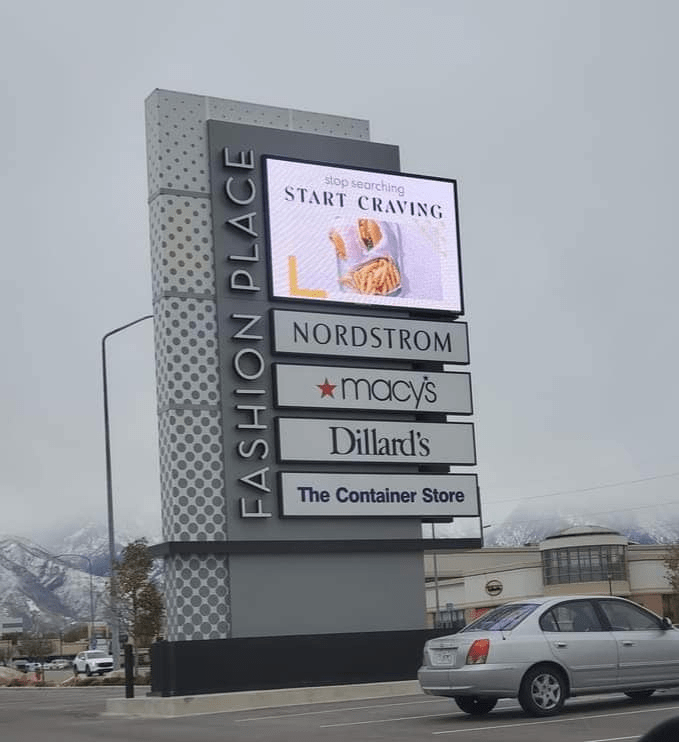



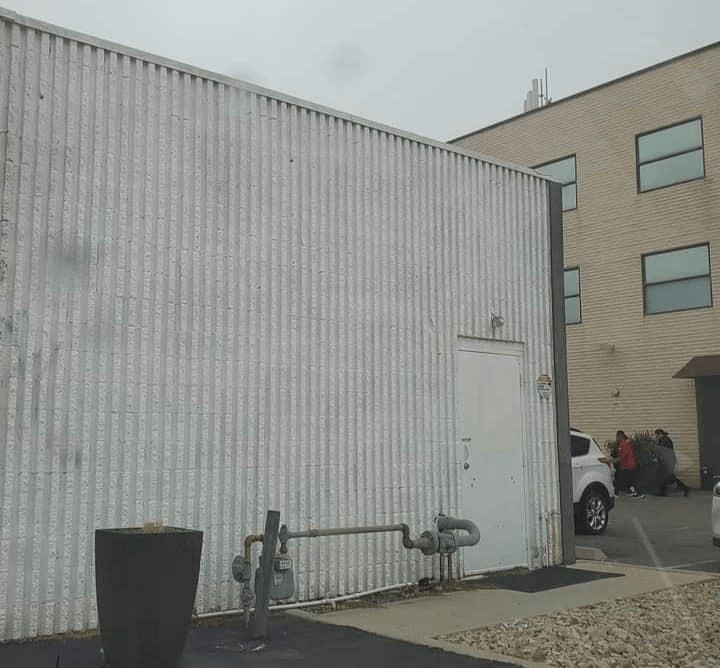
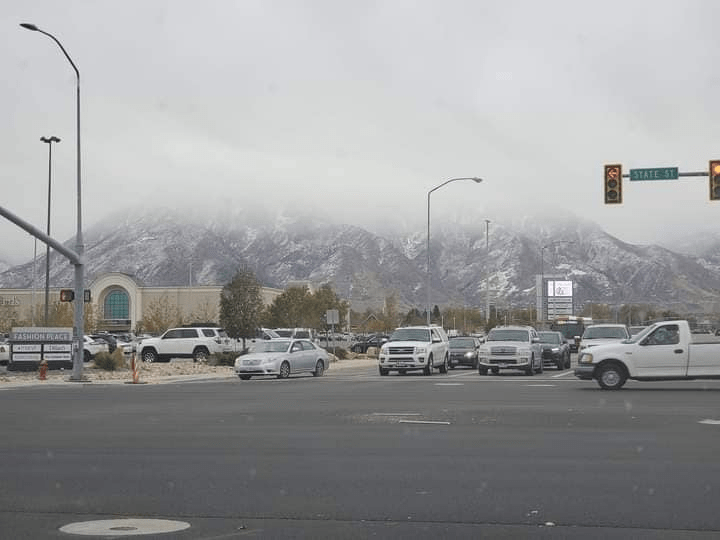
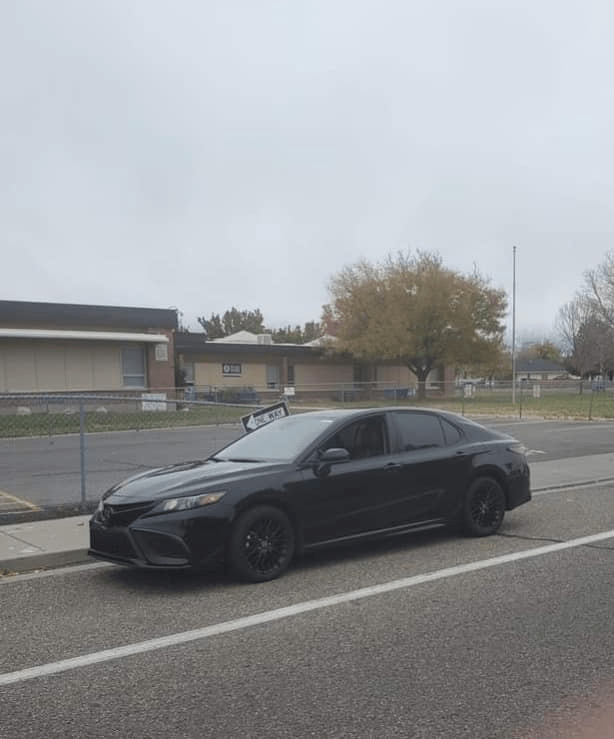

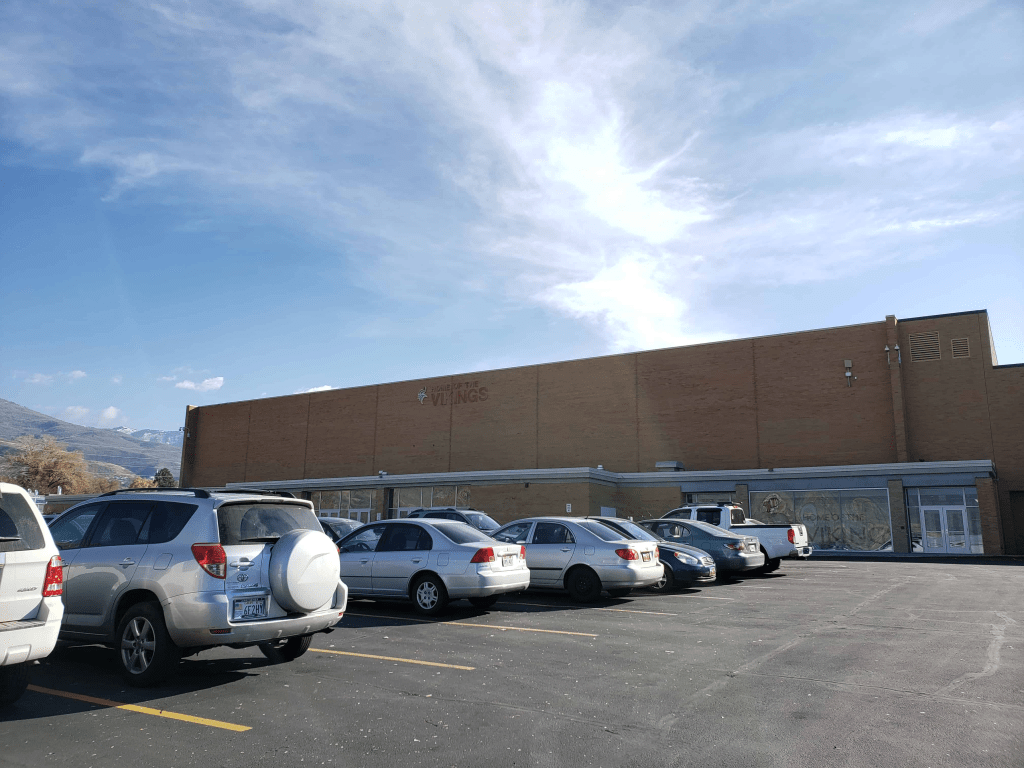
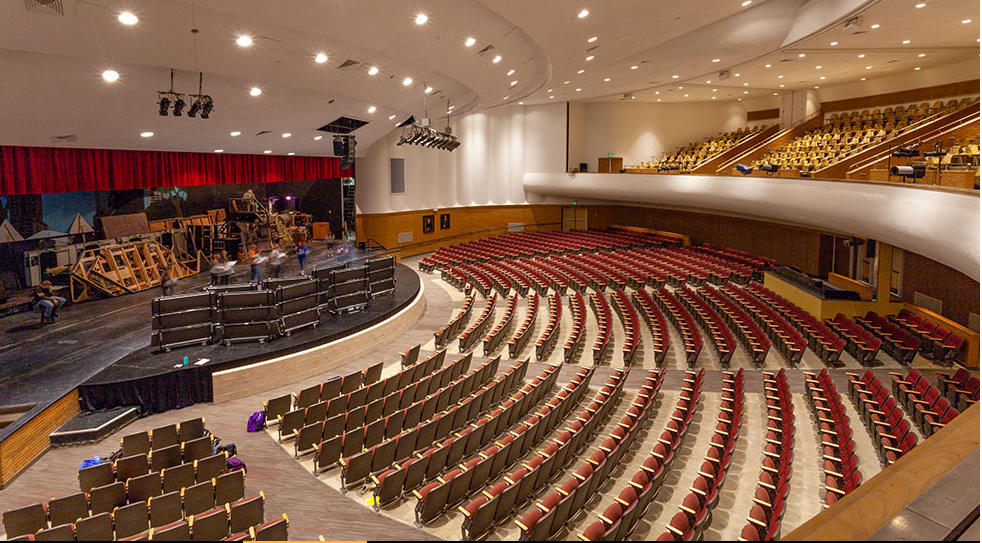
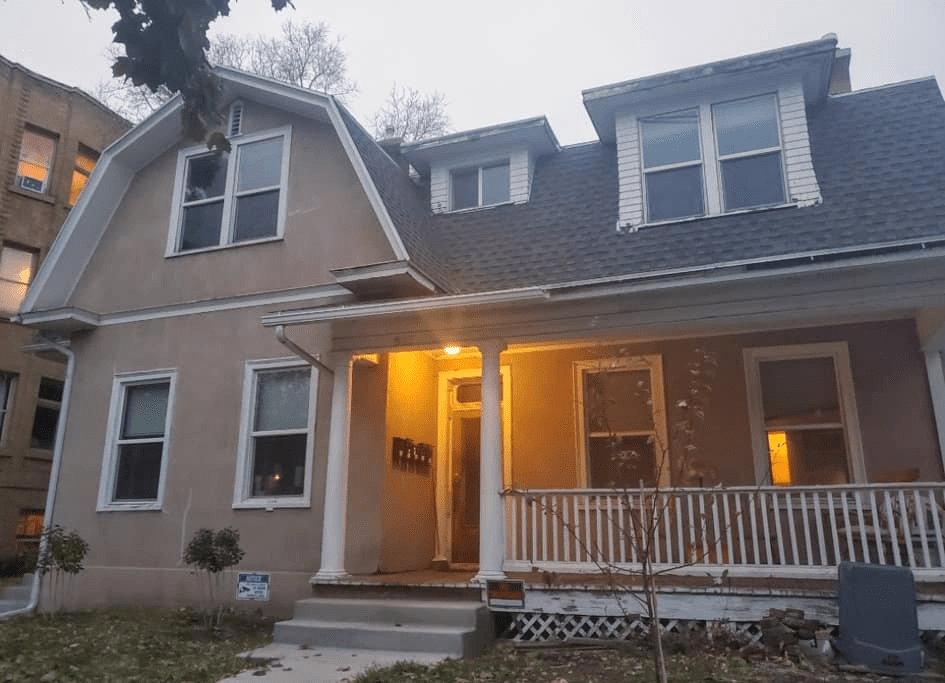
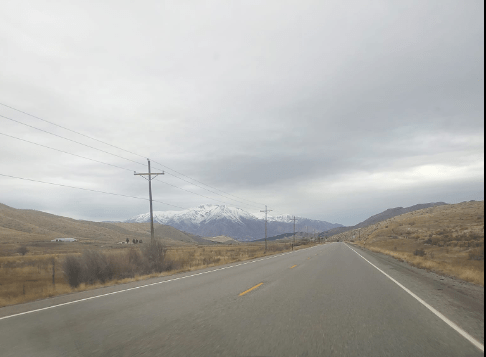


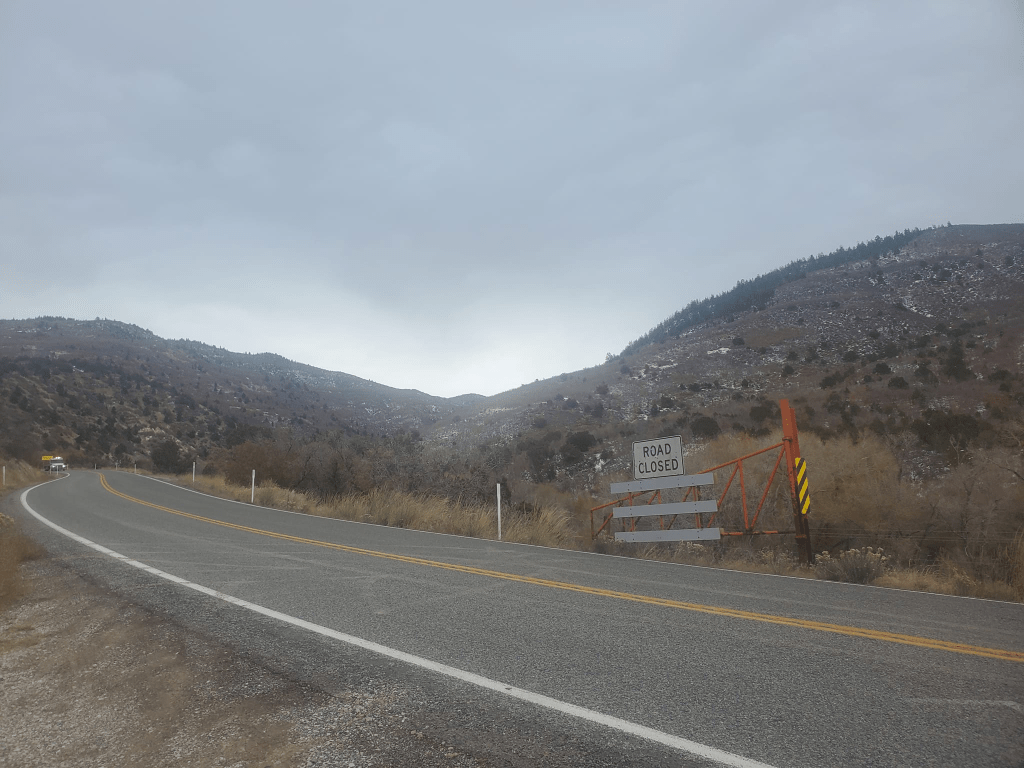



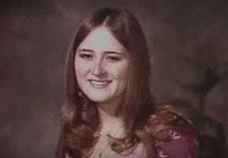
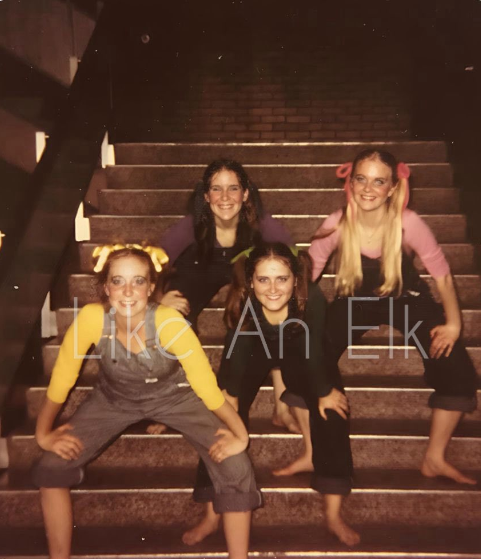
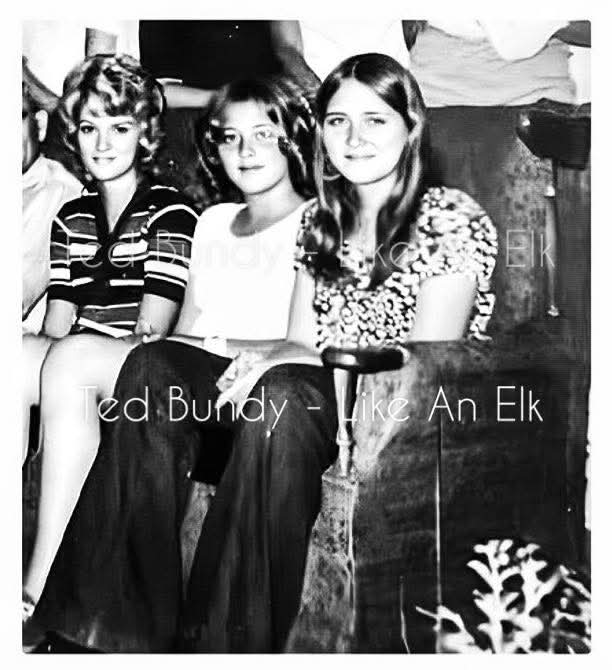

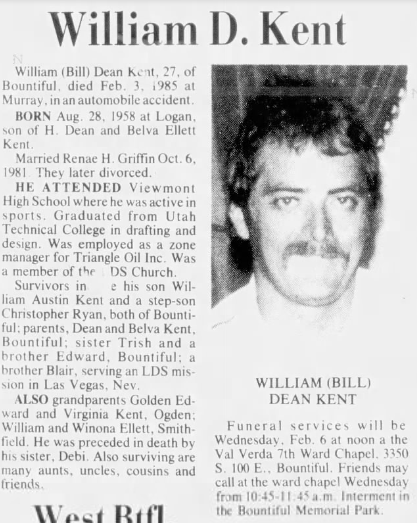

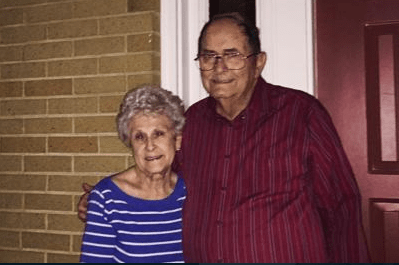

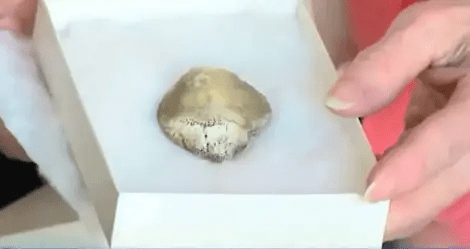


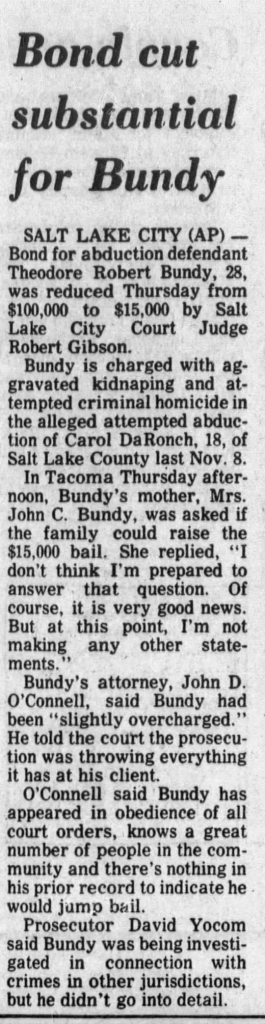
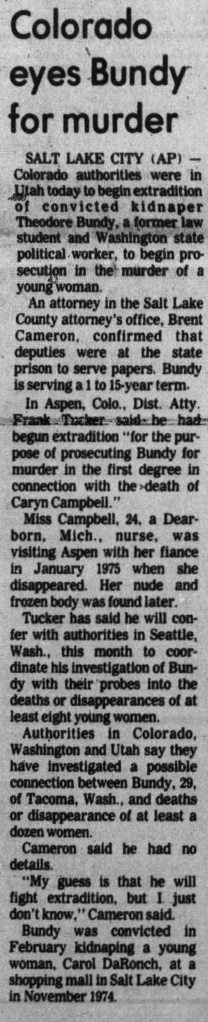
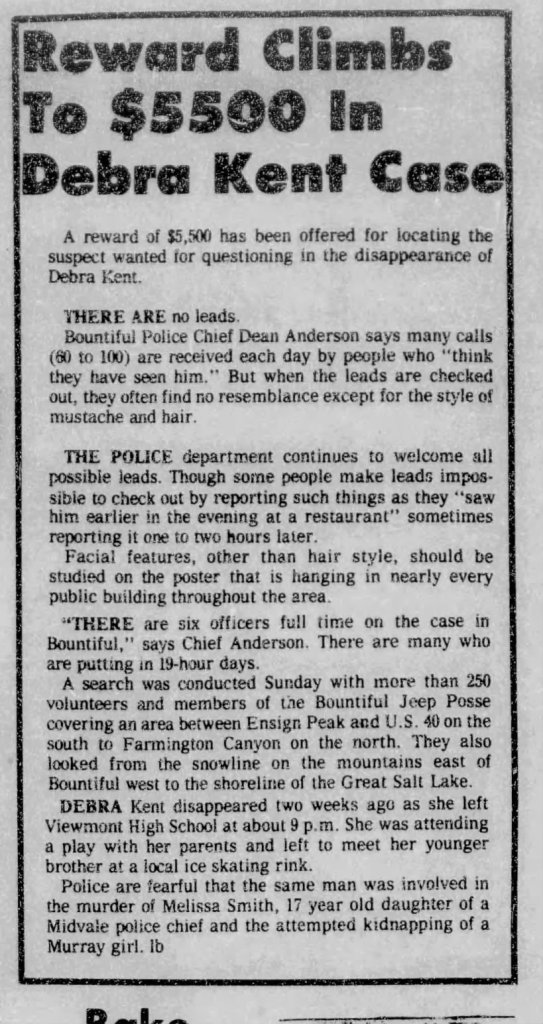


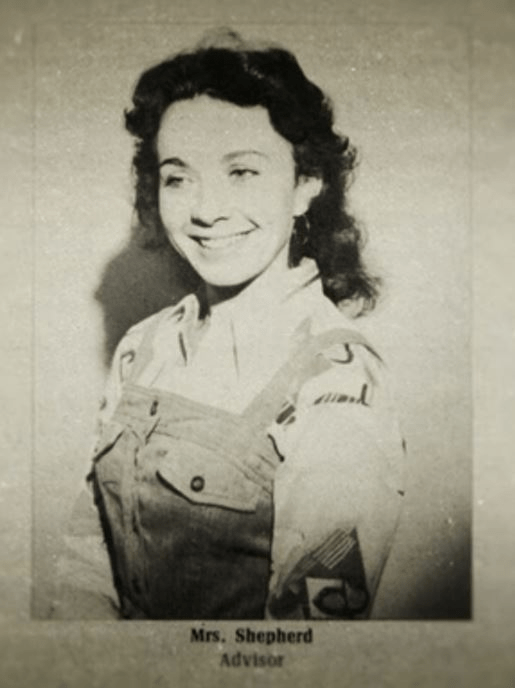


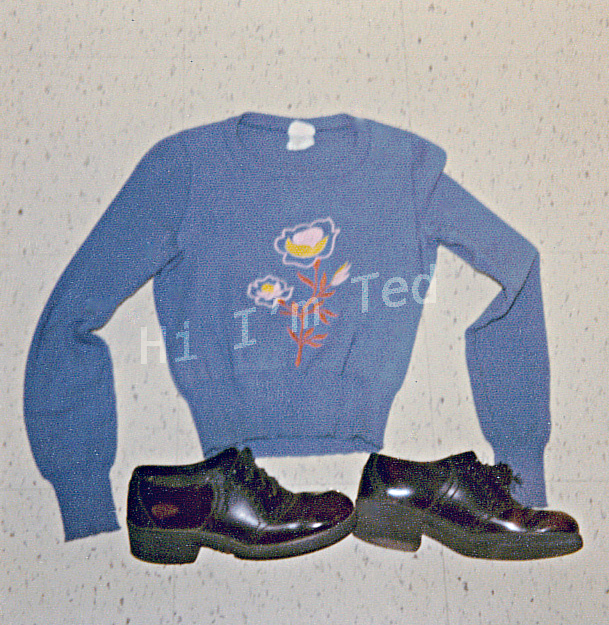
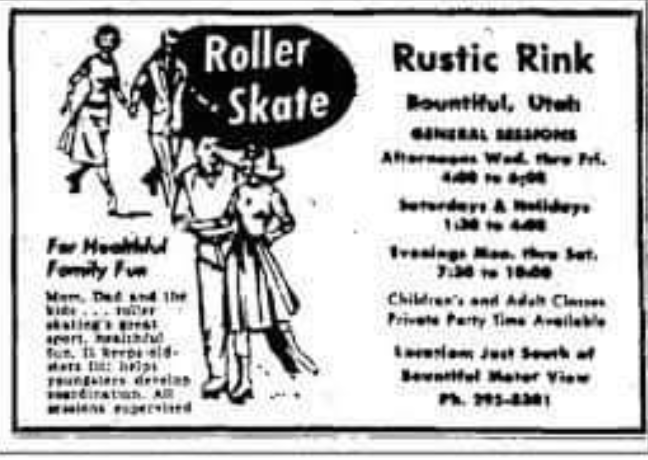

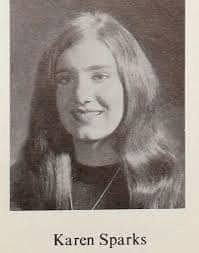


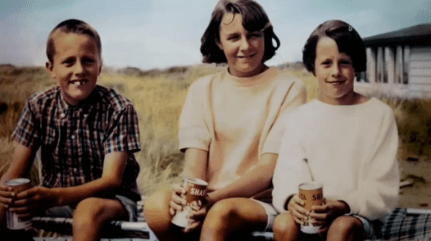
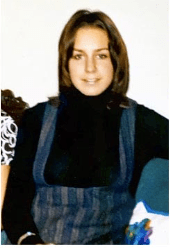


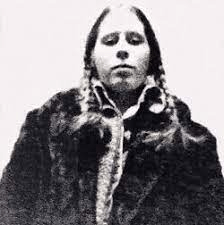

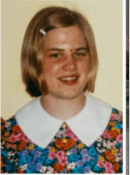
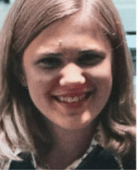
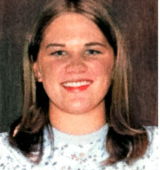


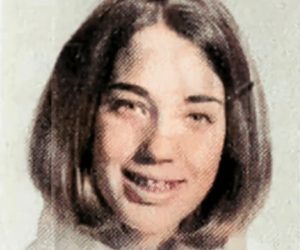

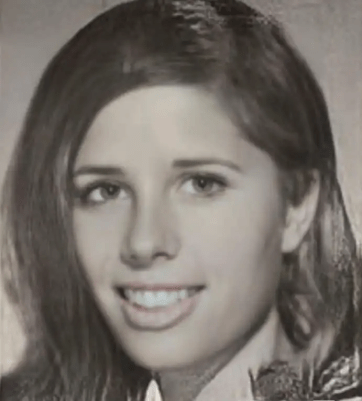

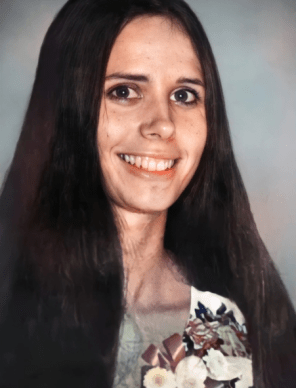


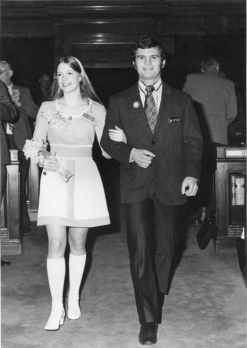
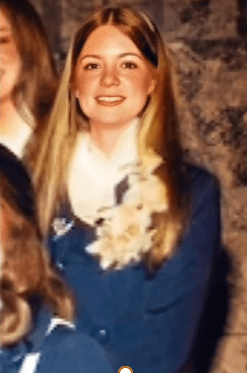

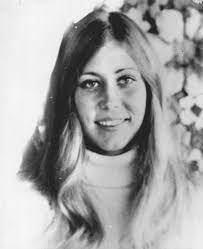

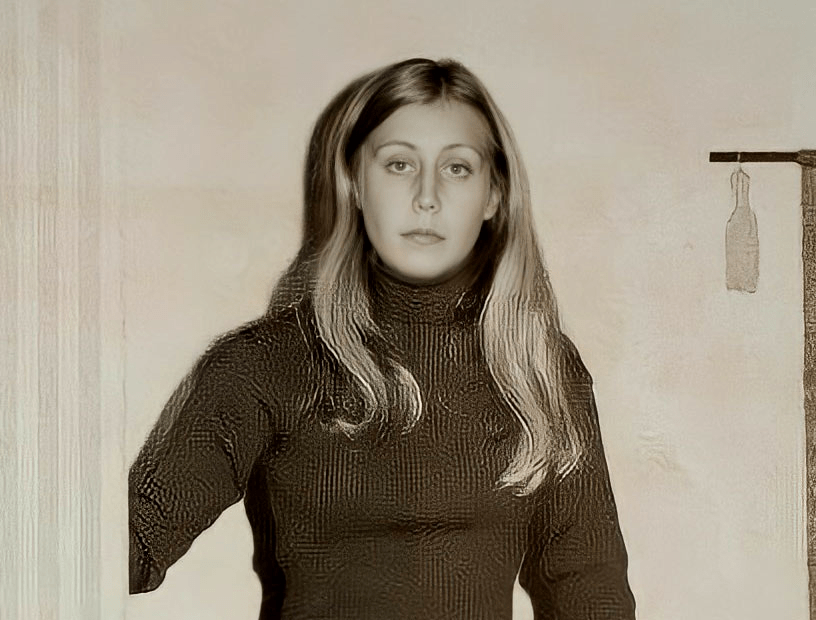


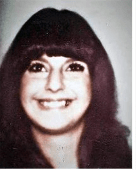
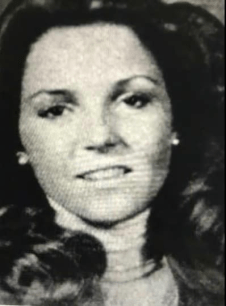

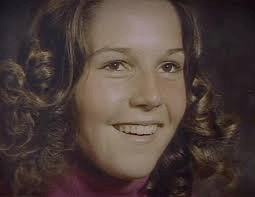
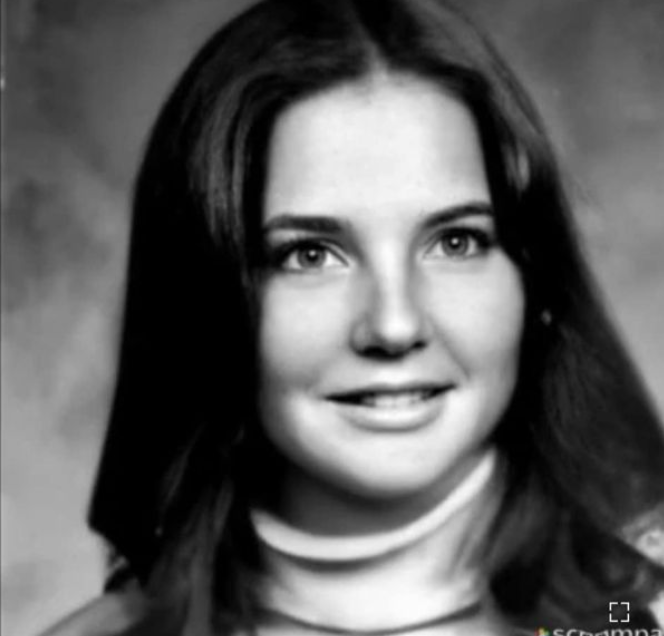

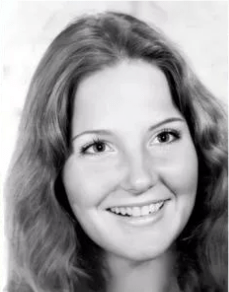
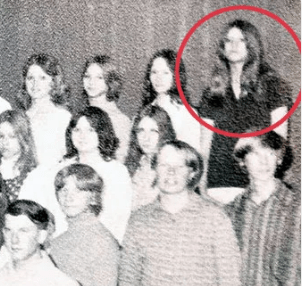
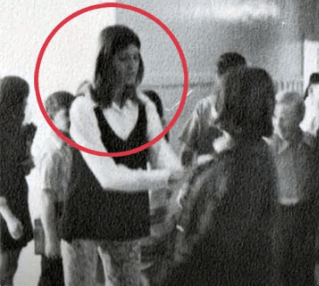
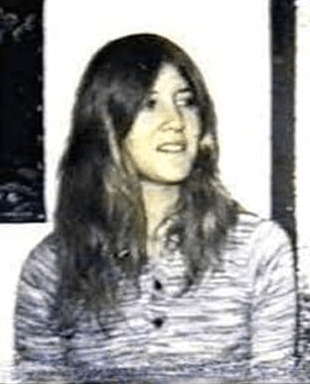

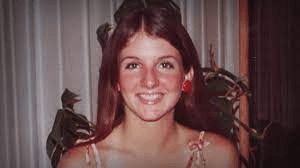


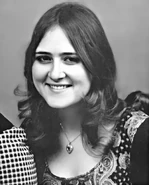

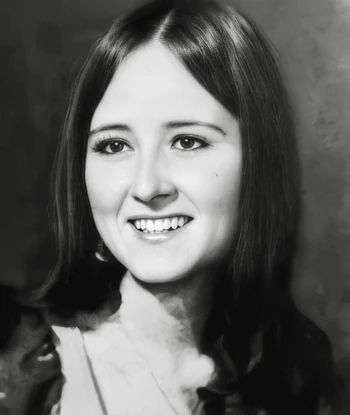

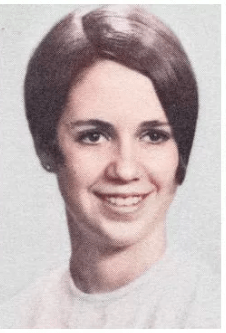

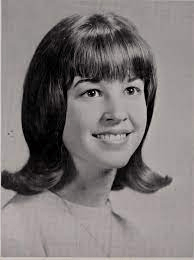
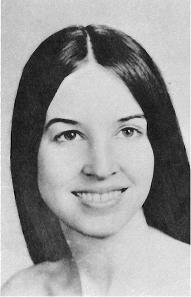
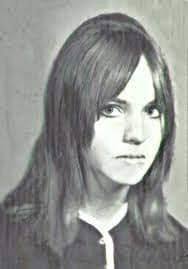
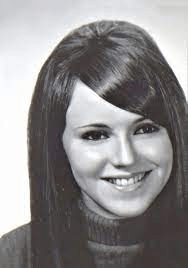


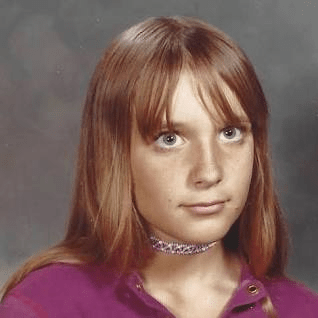


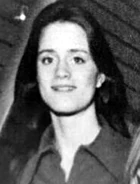

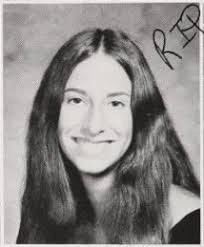

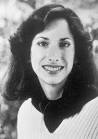


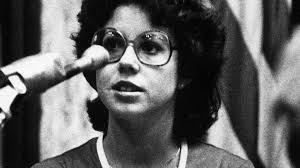



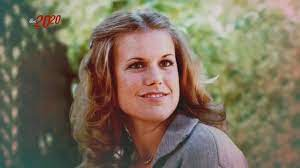








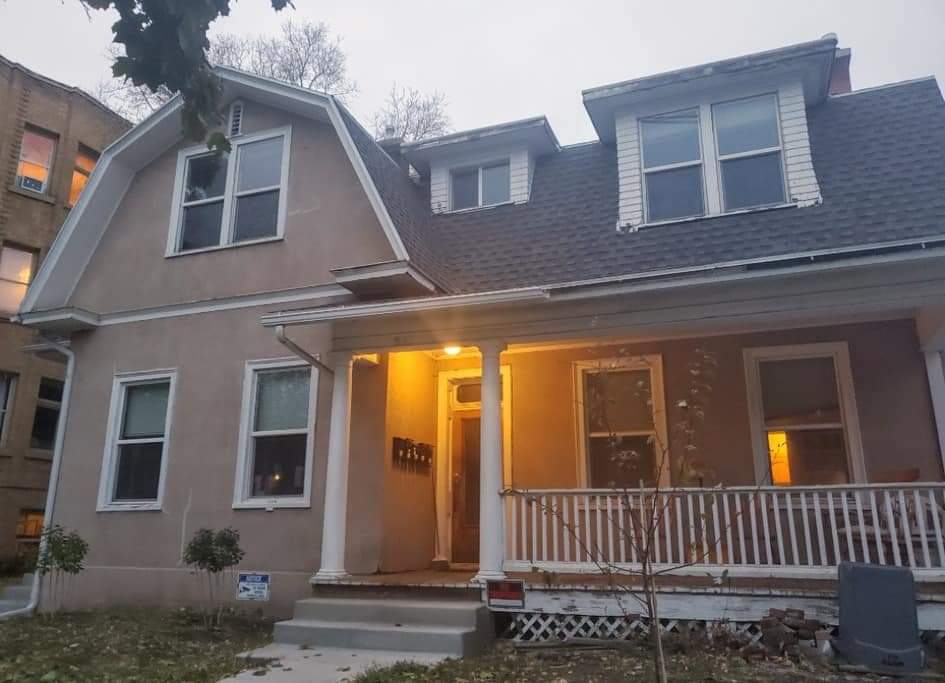


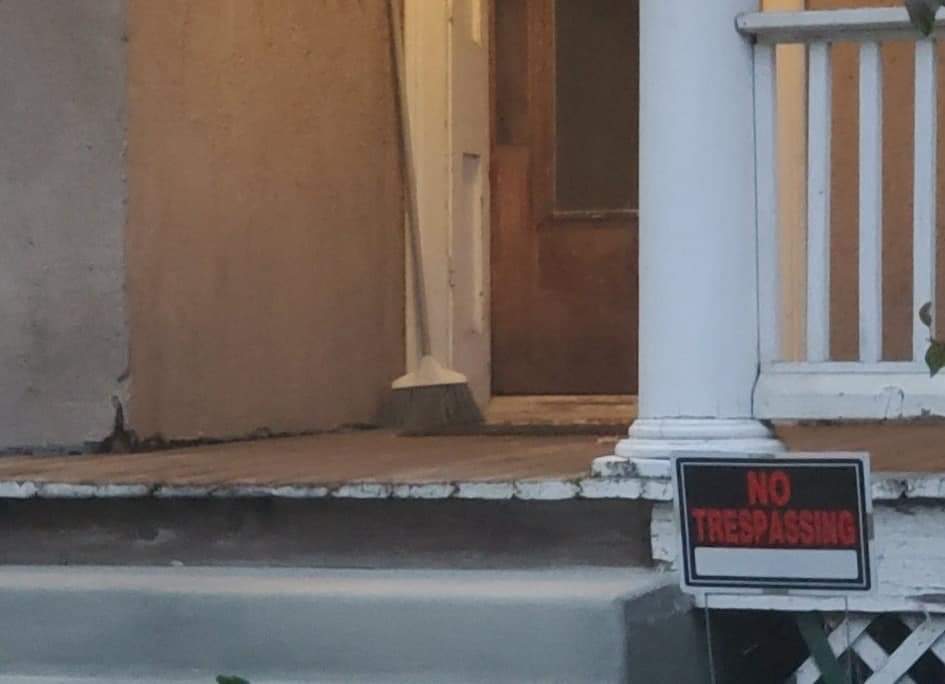

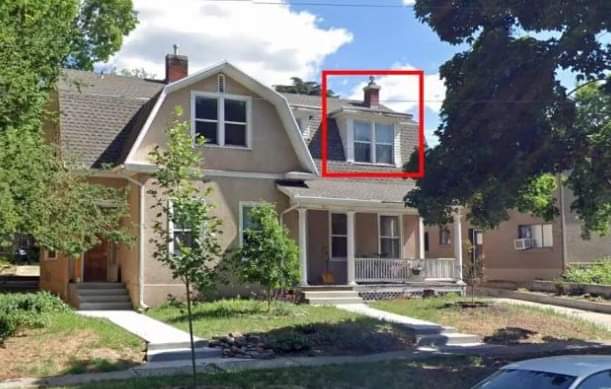





 Another Bundy Blog.