






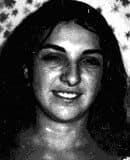
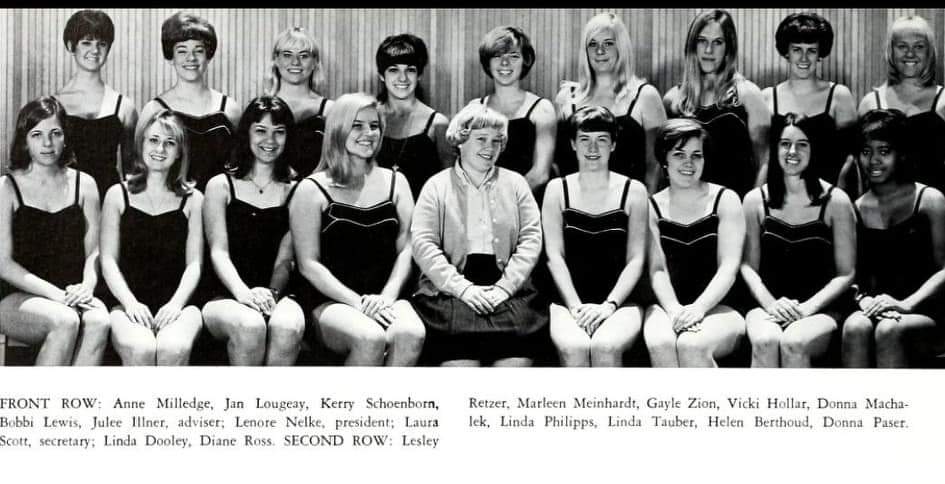
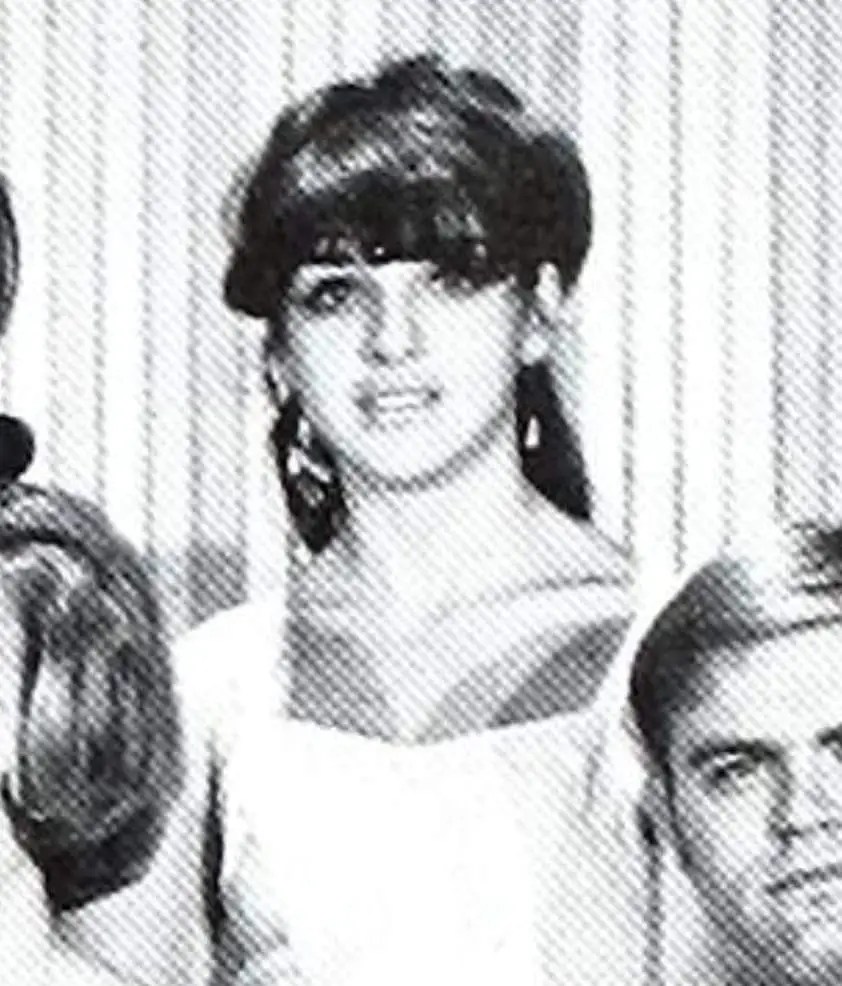
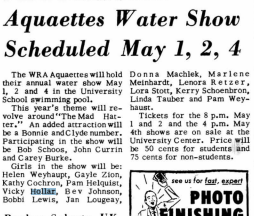
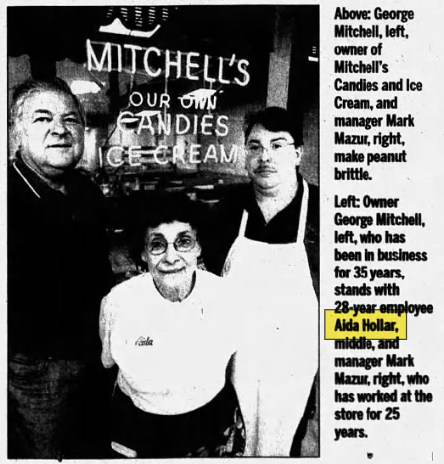
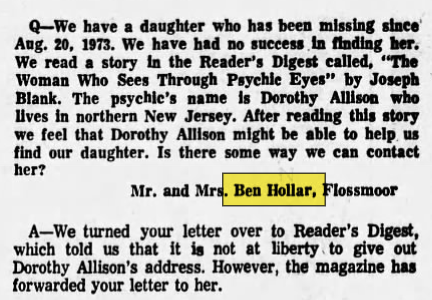
Vicki Lynn Hollar was born on March 8, 1949 to Benjamin and Aida (nee Presta) Hollar in Flossmoor, Illinois; the couple also had a son named Kenneth. Sadly Aida gave birth to a son they named Benny Gene on November 11, 1959 but he only lived for four days. An attractive, small framed girl, Ms. Hollar stood 5’1” tall, had brown hair and eyes and weighed a mere 115 pounds. She moved to Eugene from Illinois in June 1972 after graduating from Southern Illinois University and moved into an apartment with five roommates. She was employed as a seamstress at Bon Marche located at 175 West Broadway (now Macy’s) and had only worked there for two weeks. Friends and coworkers told law enforcement that Vicki was happy and was looking forward to being scheduled for full-time hours the following work week.
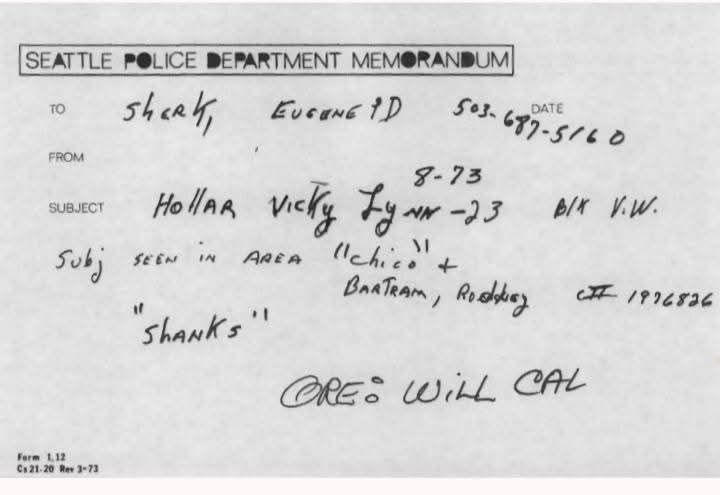
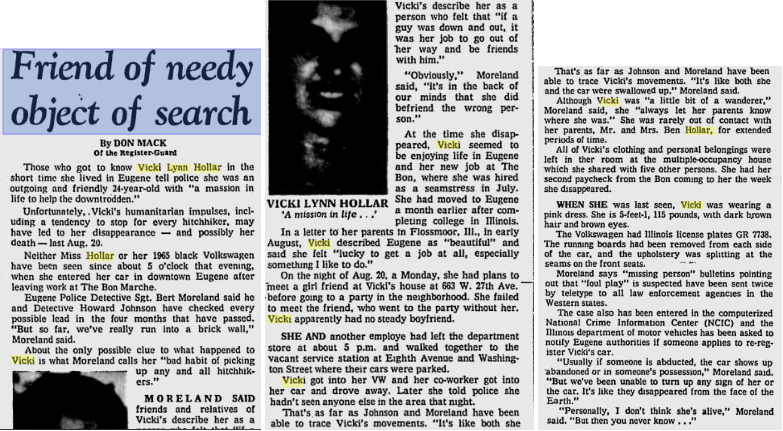
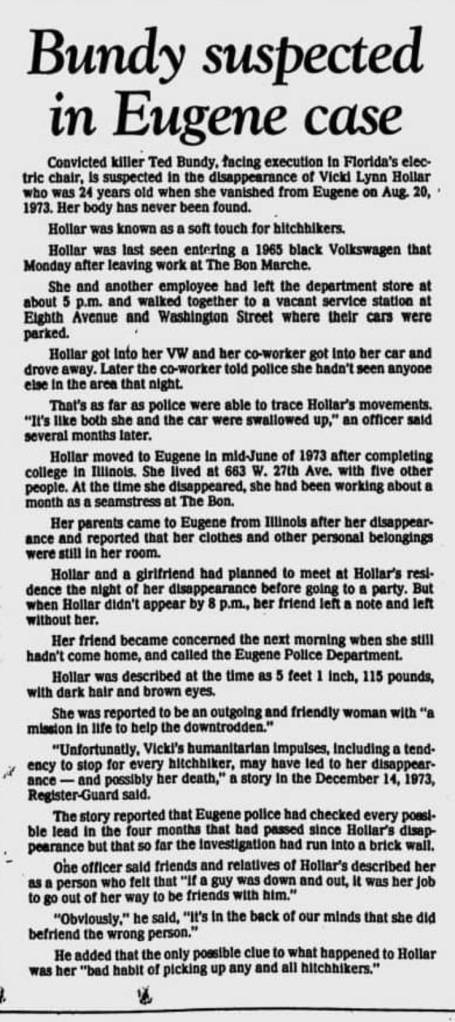
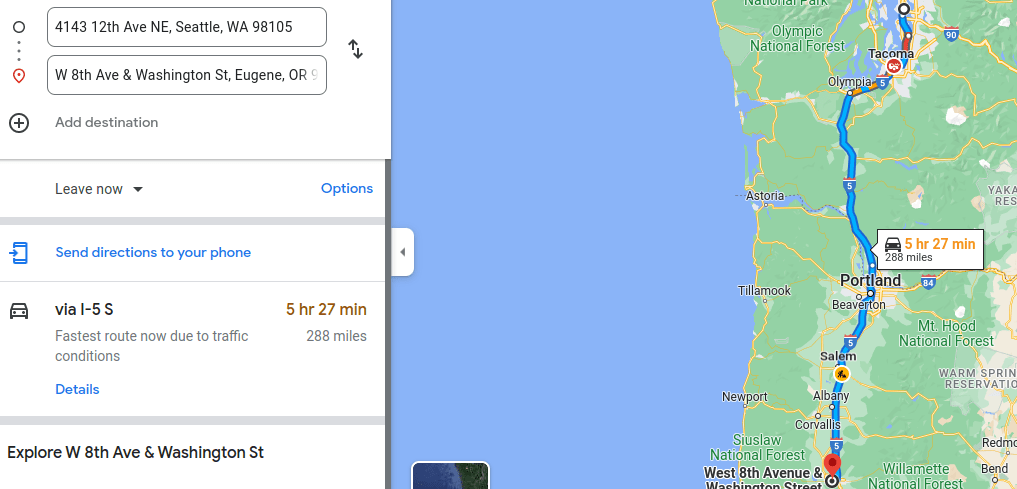
On Monday, August 20, 1973 twenty-four-year-old Vicki disappeared without a trace: she was last seen getting into her black 1965 Volkswagen Bug close to 8th Avenue and Washington Street in Eugene; her Beetle had Illinois plates (numbered GR7738) and its running boards were removed. After work at around 5:00 PM she walked with her supervisor to their cars parked in a vacant service station at 8th Avenue and Washington; she was wearing a pink dress. The coworker said that she ‘hadn’t seen anyone else in the area that night.’ That was the last time anyone saw Vicki: law enforcement said that ‘it’s like both she and the car were swallowed up.‘
It’s strongly theorized that after her workday Vicki was on her way to her apartment about 1.7 miles away located in the 6600 block of West 27th Avenue. She was supposed to meet a friend at her place around 8:00 PM and from there the pair were going to go to a party somewhere in the neighborhood. Unfortunately, Vicki never made it home or to the gathering, and sadly was seen or heard from again. The friend she was supposed to meet up with hung around for a little bit then when she never showed up, left a note for Vicki and went to the party by herself. The next day however, when she still didn’t hear from Ms. Hollar the friend became even more concerned, and because Vicki was a bit older than the other missing girls vanishing around the region law enforcement immediately took her disappearance seriously: she was establishing roots in Eugene and didn’t seem to have any reason to just up and leave.
After Vicki disappeared, her parents came from Illinois to talk to law enforcement and get a feel for the investigation. They told police that all of their daughter’s clothes and personal belongings were left behind at her apartment. Additionally, she never picked up her last paycheck from Bon Marche and her purse and car have never been found to this day. Eugene Police followed every single lead they received for four full months after Vicki’s disappearance but came up with nothing.
Vicki’s family stated she was incredibly content with where she was in her life and was happy with the direction it was heading: she loved her new job, had a lot of friends and didn’t seem to have any reason to just up and leave. Like so many others in the 1970’s, she did have a habit of picking up hitchhikers on occasion. Described as ‘outgoing and friendly,’ the young woman was said to ‘have a mission in life to help the downtrodden,’ and an officer that worked the case said that loved ones described Vicki as a kind-hearted person who felt that ‘if a guy was down and out, it was her job to go out of her way to be friends with him. Obviously, it’s in the back of our minds that she did befriend the wrong person. On December 14, 1973 a story that ran in the Register-Guard said ‘unfortunately, Vicki’s humanitarian impulses, including a tendency to stop for every hitchhiker, may have lead to her disappearance but that so far the investigation had run into a brick wall.‘
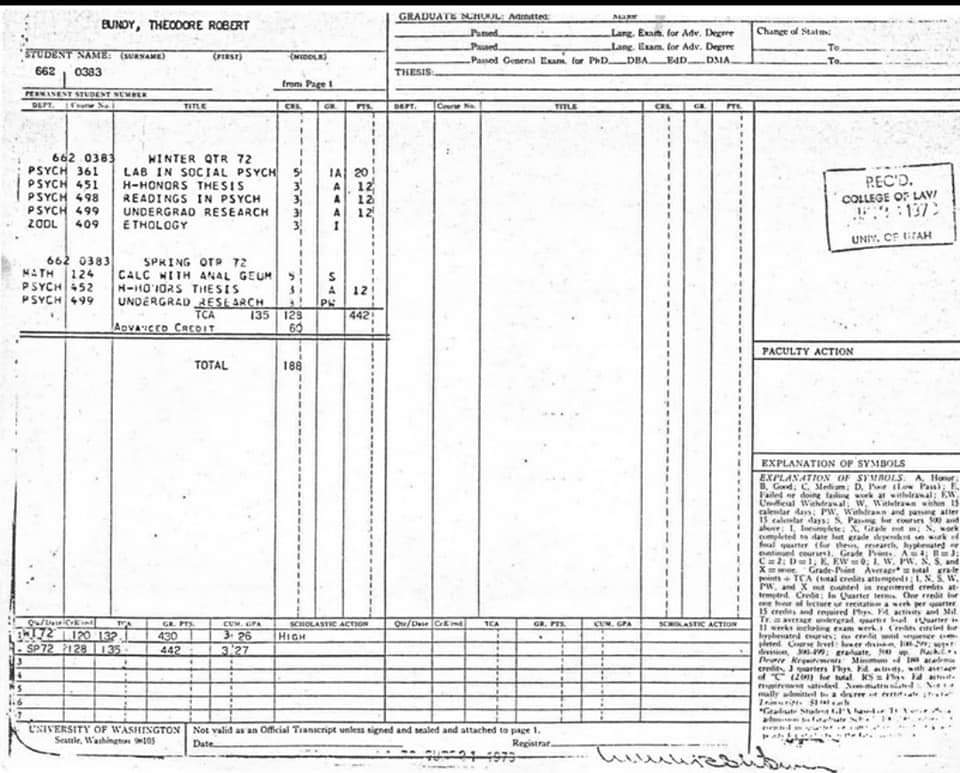
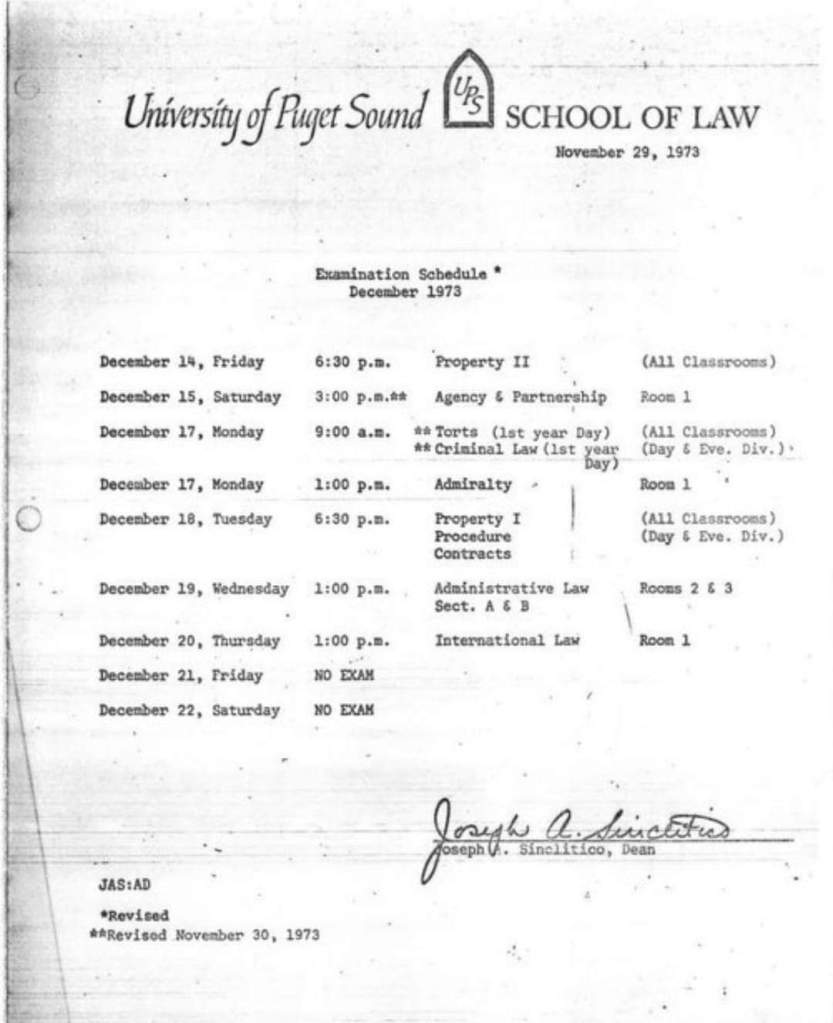
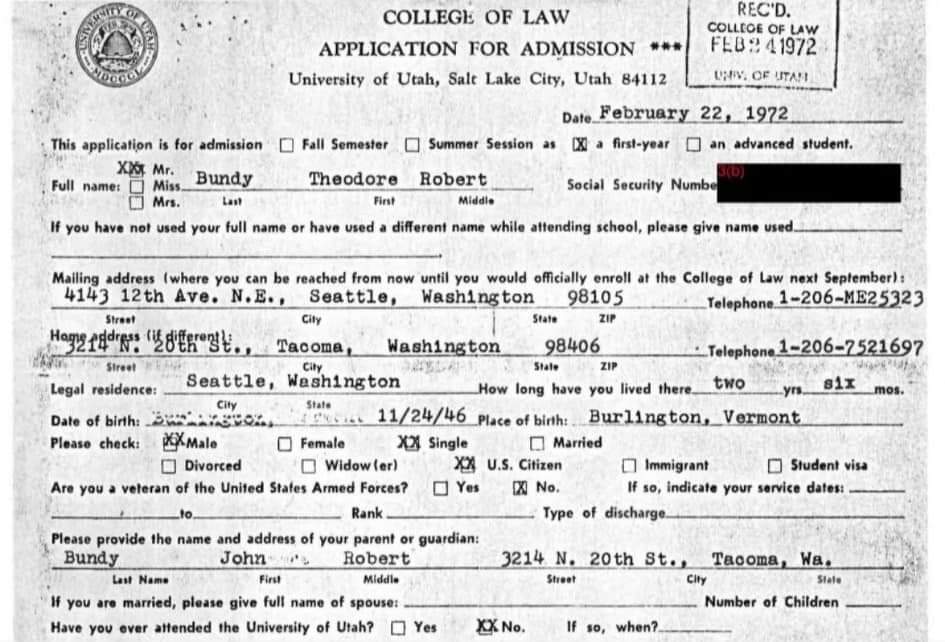
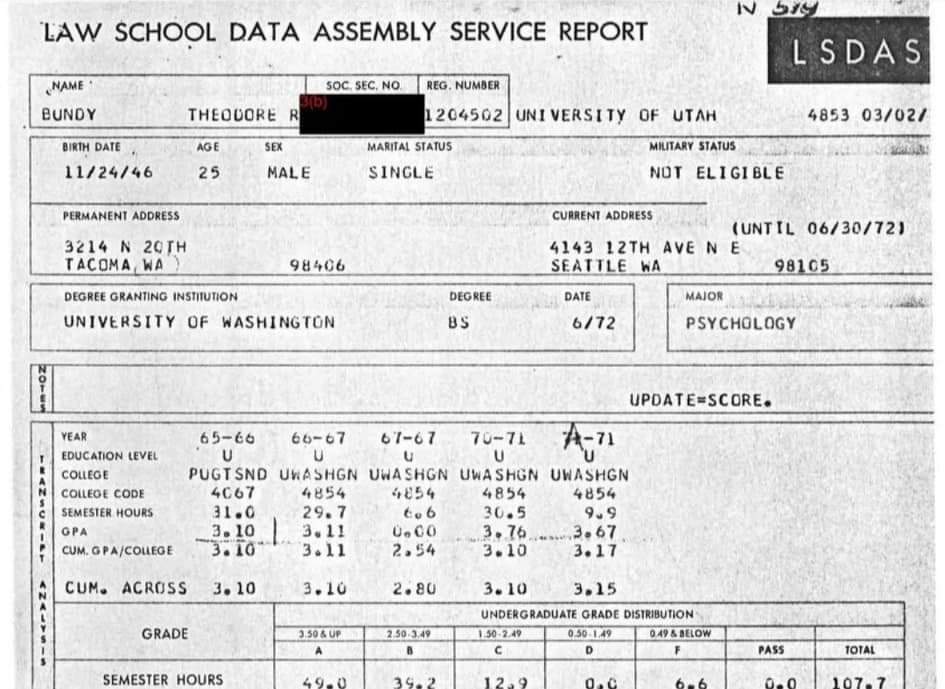
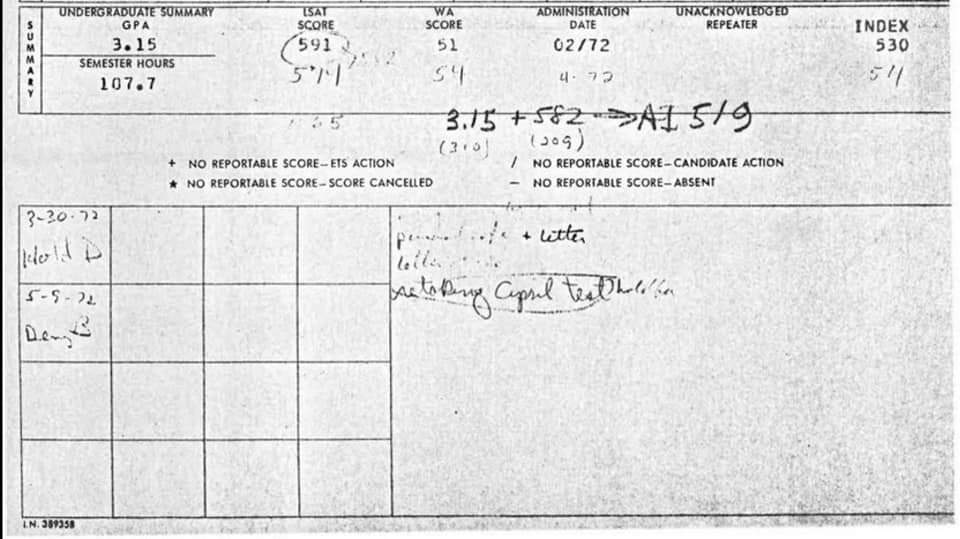
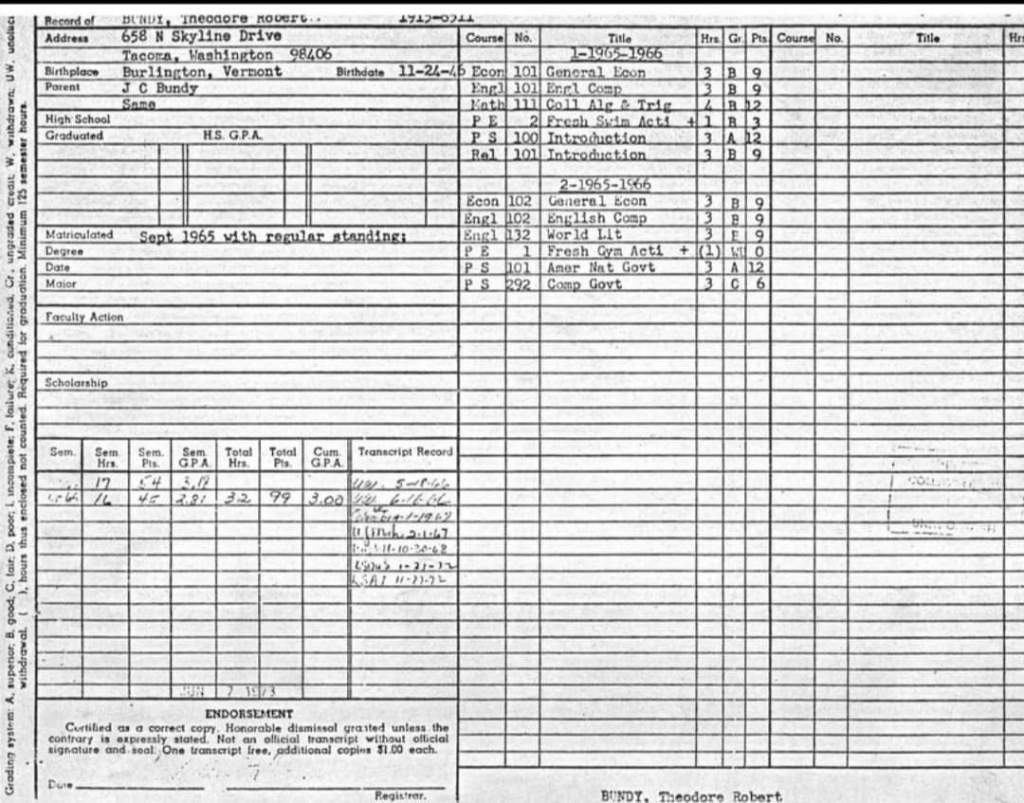
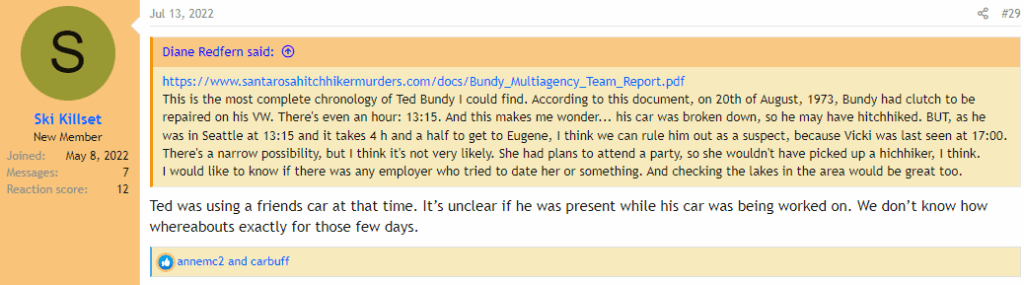
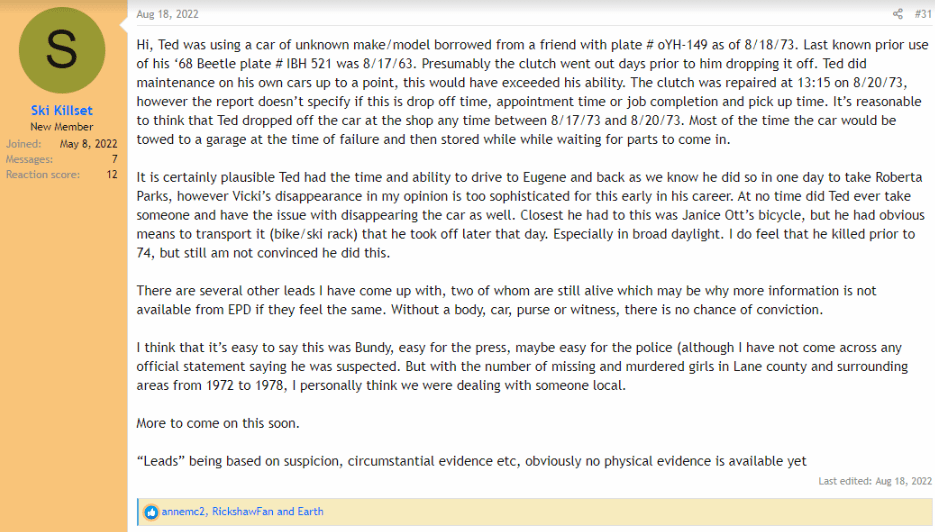
I already briefly touched on Vicki’s case when I wrote about another young girl that Bundy suspected of murdering from Oregon, Rita Jolly. Seventeen-year-old Ms. Jolly also disappeared without a trace from West Linn on June 29, 1973. At the time of Vicki’s disappearance in August 1973, Bundy seemed to be in between jobs: from February to April of that year he worked for King County Program Planning then took a break from employment until September 1973, when he was the Assistant to the Washington State Republican chairman. At this time he was still in a relationship with Liz Kloepfer and he was also enrolled in law school at the University of Puget Sound. According to the ‘Ted Bundy Multiagency Investigative Team Report 1992,’ Ted was having the clutch repaired on his VW Bug in Seattle, although it’s argued he was ‘borrowing’ a car from someone (see Websleuths screen grabs below for clarification).
In his final death row interview with Bob Keppel, Bundy confessed to starting his murder spree in 1972, years before his official reign of terror started in 1974:
RK: There’s a gal in 1971, Thurston County.
TB: No.
RK: Not that far back. Nothing that far back?
TB: 1972.
I’ve been finding most of Bundy’s ‘unconfirmed victims‘ have very weak commonalities without a lot of substance… Vicki did look like one of Teds victims: she was beautiful and slim, with brown hair and dark features. Her abduction was most likely a crime of opportunity, like so many of the others. Additionally, she fit neatly into his age range, as he killed young females anywhere from 12 years old (possibly even as young as eight if you throw Ann Marie Burr into the mix) up to 26 years old (ski instructor Julie Cunningham). But that’s about it. Bundy confessed to two homicides in Oregon but never gave any information that would identify the victims. It’s highly considered that Hollar is one of those two girls. Ted confessed to abducting Roberta Kathleen Parks from Oregon State University on May 6, 1974; he claimed to have raped and killed her at Taylor Mountain, over 250 miles away from the school and about 25 miles southeast of Seattle. Because she was found in Washington, she is not included in his Oregon victim count. In interviews with law enforcement, Ted confessed to killing two additional women in Oregon but refused to elaborate on their details; Vicki Hollar and Rita Jolly are the best candidates according to most law enforcement. Oregon detectives tried but were unable to question Ted regarding Vicki’s disappearance before his execution in 1989, eliminating the chance of closing the case in relation to Bundy. I was not able to find anything from any of Ms. Hollar’s family in regards to Bundy as her killer, however I did find a quote by Jill Jolly that was of importance: ‘as I recall, my mother told me that the local detectives managed to get a direct question about Rita through to him before his execution, and his reply was ‘No. No more in Oregon.’ Bundy withheld many secrets hoping to parlay the untold stories into yet another stay of execution. ‘There are other buried remains in Colorado’ he said, refusing to elaborate any further. Dubbed Ted’s ‘bones-for-time scheme,’ this only frustrated detectives even more.
At this point in my writing I don’t need to point out that this attractive young woman fits the physical description of Teds other victims and he was known to have been in the general region at the time of her disappearance. At first I thought 24 was a little too old to make her one of Teds victims (as I previously stated, Julie Cunningham was 26 when she was killed)… then I remember this one time when I went back to school for my counseling degree (what a total waste of time that was): all the kids I was taking classes with were all in their very early 20’s and in between classes one day we were all sitting around talking and when I told them I was 30 they all seemed genuinely surprised that I wasn’t ‘their age’ (their words, not mine I swear). I mean, maybe they were being kind but I’ve been told my entire life I look younger than I am. Maybe not SUPER young but maybe Vicki looked younger than she was. Or maybe I’m overthinking this and 24 was a fine age for Bundy. Just my thoughts.
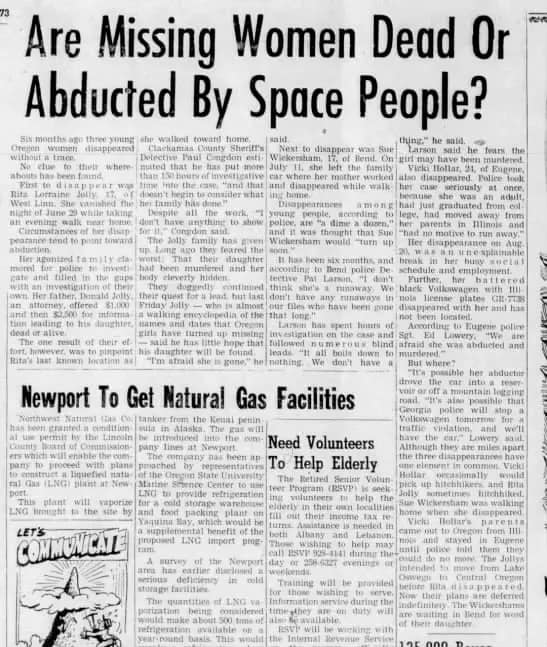
An interesting piece of this puzzle is Vicki’s little black bug has never been found. Now, obviously this means it’s most likely been stashed somewhere out of view (or broken down and sold for parts)… like, in a deserted barn, storage unit, or even a large body of water…My first instinct is a body of water. Websleuths user ‘Klimster’ points out that: ‘There are a LOT of bodies of water around Eugene. There’s the Willamette and McKenzie rivers and Fern Ridge, as you’ve mentioned. However, Fern Ridge has been emptied out at least one time that I know of in the ten years I’ve lived around here. There’s also a lot of lakes nearby and it doesn’t take long to get to the ocean either. The Willamette River is quite large. There are many areas where a car could have gone in unnoticed, IMO.’ According to Eugene Police Sergeant Ed Lowrey: ‘we are afraid she was abducted and murdered.’ … ‘its possible her abductor drove the car into a reservoir or off a mountain logging road. It’s also possible that Georgia police will stop a Volkswagen tomorrow for a traffic violation and we’ll have the car.’
An interesting factoid I figured out from mapping out lots of potential routes along Washington/Oregon/Utah/Idaho is that Vickie Hollar and Rita Jolly were both last seen in close vicinity of major roadways. Bundy loved to drive around late at night, just roaming the Pacific Northwest looking for prey… that makes me think that if Ted was going to destinations south of Seattle he would just hop on the I-5 (which goes right through Eugene), or possibly go down I-205 in the Portland area. The city of Eugene has four colleges in it (New Hope Christian College, Bushnell U, University of Oregon, and Lane CC) and is home to the school Roberta Parks attended (University of Oregon). It’s well known that Bundy loved to prowl areas around college campus’s, and where better to go than a medium-sized college town with four schools?
Looking through different true crime forums I was able to find some stories about Vicki from people that knew her: Websleuths user ‘Fal’ commented that: ‘Vicki was my grandmother’s goddaughter. My grandma tells a story of how when Vicki was coming from Illinois on her way to Oregon, she stopped in Denver to see her. My grandma told her that she should stay in Denver with her, because it was a nice place to live. Vicki said no, and that she had a job lined up for her in Oregon that she was excited to start (I’m assuming it was the seamstress job, which actually runs in my Gma’s family). That was the last time my grandma heard from her. Additionally, from the same forum user ‘Cait6’ commented that: Vicki stood up in my parents wedding just prior to leaving Illinois. She was good friends with my parents in college at SIU and at one point slept on their couch as college kids do when they are in between living situations. They had a tight knit group of friends and my dad told me stories of them all taking her beetle off roading down in Carbondale. One day off roading they accidentally knocked off one of the running boards on one side. When they got back to even it out, my dad and friends helped take off the other one which has always been a unique detail in her vehicle that remains missing. I wish I could provide you more information than that. My parents too have always wanted to know what happened to Vicki as they are now both close to their 70’s. I hope one day more information comes to light for you and her family.’
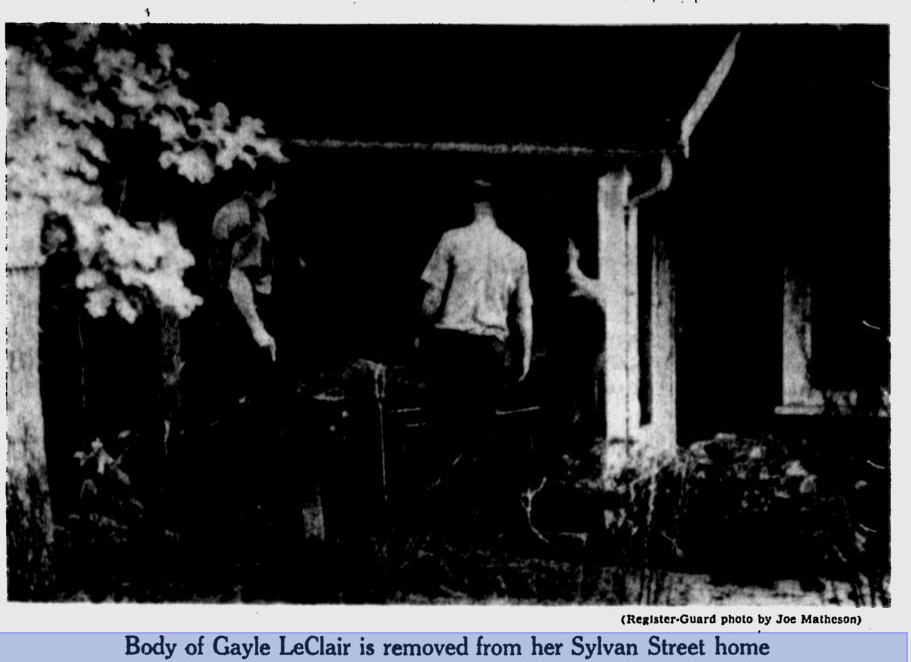
Another young woman was murdered from Eugene, OR just three days after Vicki disappeared: Gayle LeClair was just 22 years old when she was stabbed to death in her rented home. The young women who dreamed of one day becoming a teacher moved to Eugene in January 1972 and was found brutally killed in her apartment on Sylvan Street. I couldn’t find much on this case, but much like Vicki Hollar she seemed happy and very well liked by the people around her. Webslueths user ‘CherryValley’ commented that: ‘I knew Gayle in gold Beach in the 60’s. I have always wondered if they ever caught her murderer. Her murder was a shocking event in our circle of young friends. I wish someday soon this will be solved.’
What happened to Vicki in the 1.7 miles from where her car was parked to her apartment? Did she pick up a hitchhiker who took her hostage and killed her? Did she decide to leave it all behind and start a new life somewhere? As of February 2023, Vicki Hollar is still classified as missing. She would be 73 years old. Benny Hollar passed away in December 1991 and as of September 2023 Aida Hollar is still alive.
I’ll end this with a poem about Vicki from Aimée Bakers piece, ‘The Saints of the Last Days’ called ‘Patron Saint of Seamstresses:’
‘Pray that she is the kind of woman who knows
how to pull a thread through, stitch
a hem closed with straight lines, and cut
an end loose without shifting, so you can offer
your own thimbleful of blood
to place at the feet of our maternal
heroine, the only one who will know
if the dark man watches her as he does her blood
sisters. Know that you offer for her a relic,
a way to carry her through the passageway
to the dusky vein of a car lot. Pray
that her pink-blushed dress stays neat
and clean. That the latch on her car door
always bolts tight against wanderers. That the ivory dawn
awakens her every morning until she is a grandmother.
And know that your prayers will not be enough
for her to overstep this moment, so that she can darn
this evening closed with her sleep.’
Edit: As of March 2023 I found some interesting new information from a ‘Websleuths’ user trying to solve Vicki’s case. It would be wonderful if they were successful.


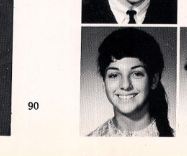


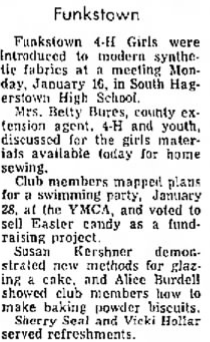
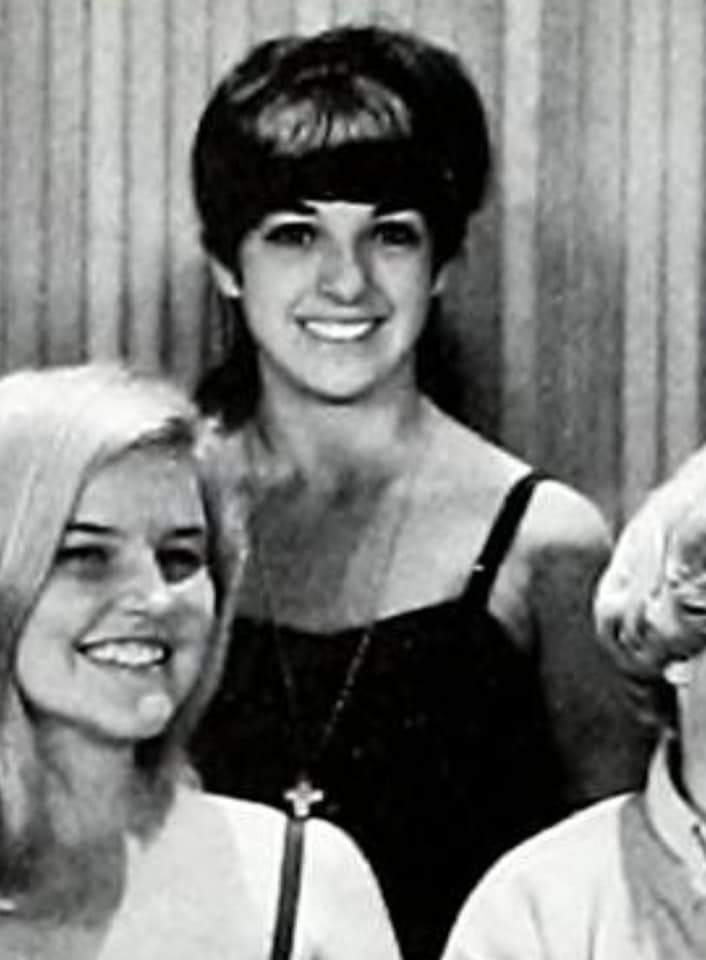






















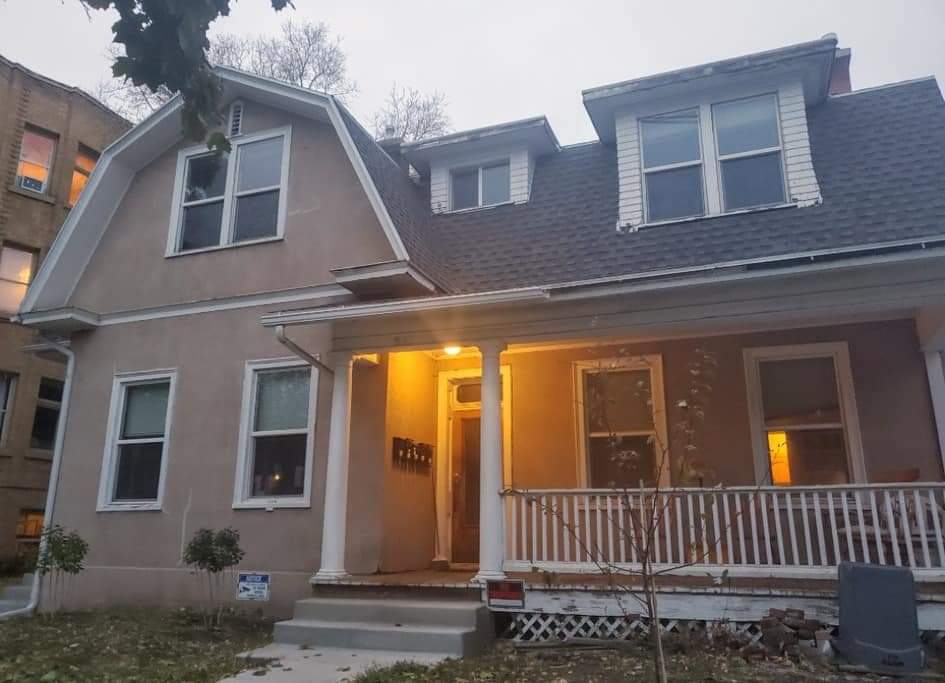
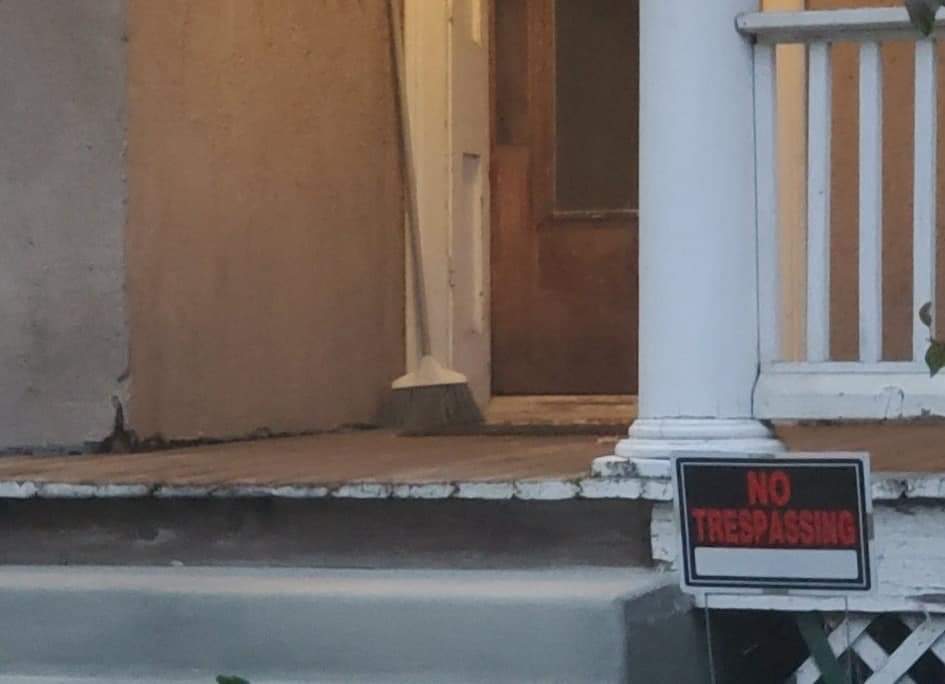
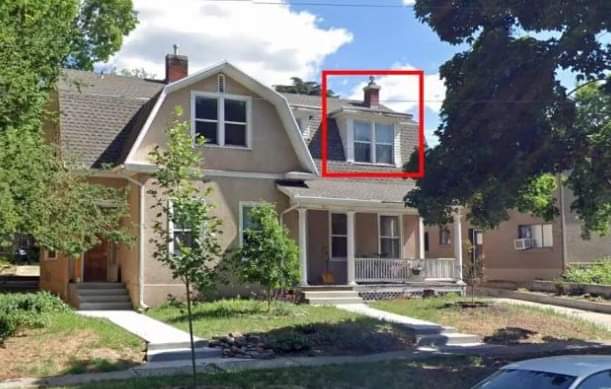
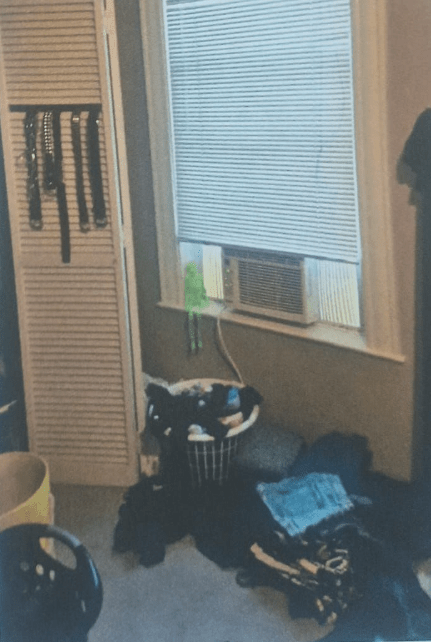
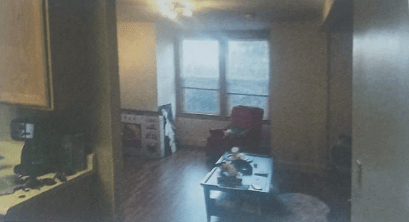
My friend Kyrie Allyson asked me to share the pictures of Ted’s apartment in SLC at 565 1st Ave. I didn’t get any sort of weird vibe from it, but I wasn’t in Utah for very long… I had limited time and needed to get through things FAST. Maybe if I had been able to walk around and linger a bit I would have been able to get a better feel for what may have happened here.
Ted Bundy lived at this house while attending law school in Salt Lake City between September 1974 and September 1975. Almost immediately after he moved in women started mysteriously disappearing from both Utah and Colorado. At the time, the residence was a boarding house meaning multiple tenants rented rooms and shared basic common areas. While living here Ted occupied room two, which (when looking at it from the street) is on the second floor right above the porch.
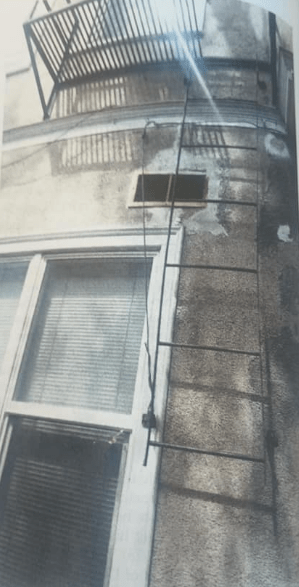
Located on the right side of the residence is a fire escape that was added some time in the 1960’s; Ted supposedly used it frequently to come and go as he pleased in the middle of the night. There is an entrance to a cellar in the back of the house on the left side, and according to one of his house mates (who didn’t find it suspicious at the time), Bundy would sometimes go down there late at night.
Before he was put to death, Bundy confessed to bringing two of his victims back to his room: Debra Kent and Nancy Wilcox. He claimed that he left Kent in his room ‘for a period of time’ before he killed her, and eventually dumped her body in a canyon around 100 miles away; he also claimed to have left Wilcox in his room as well before he took her life. Obviously there’s a lot of doubts with these claims: how could he keep girls there for days at a time against their will completely undetected? After leaving this residence in September 1975 he moved about a mile away to 364 Douglas Street.






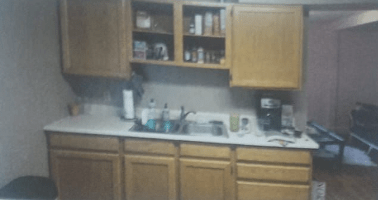

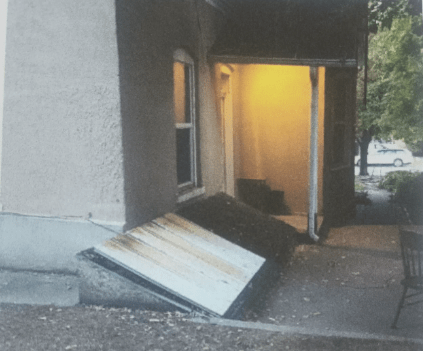
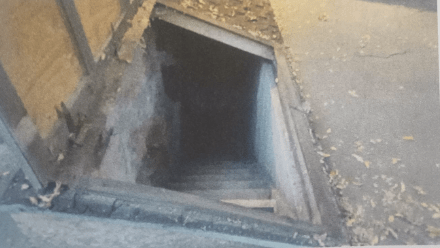


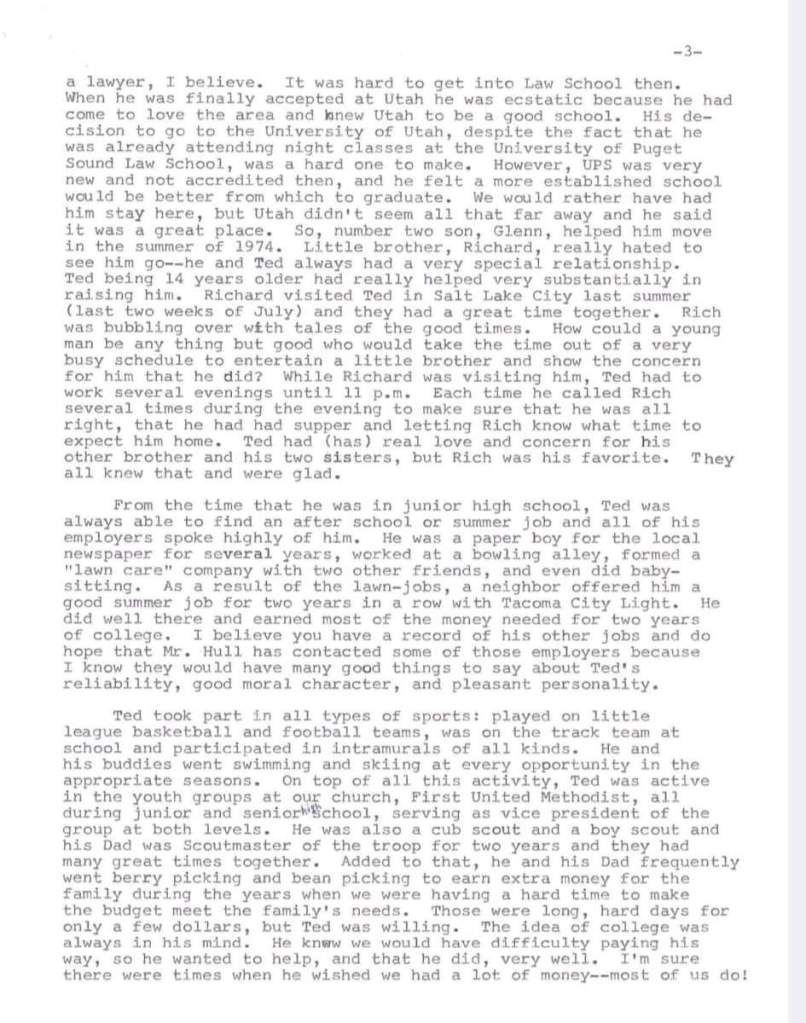
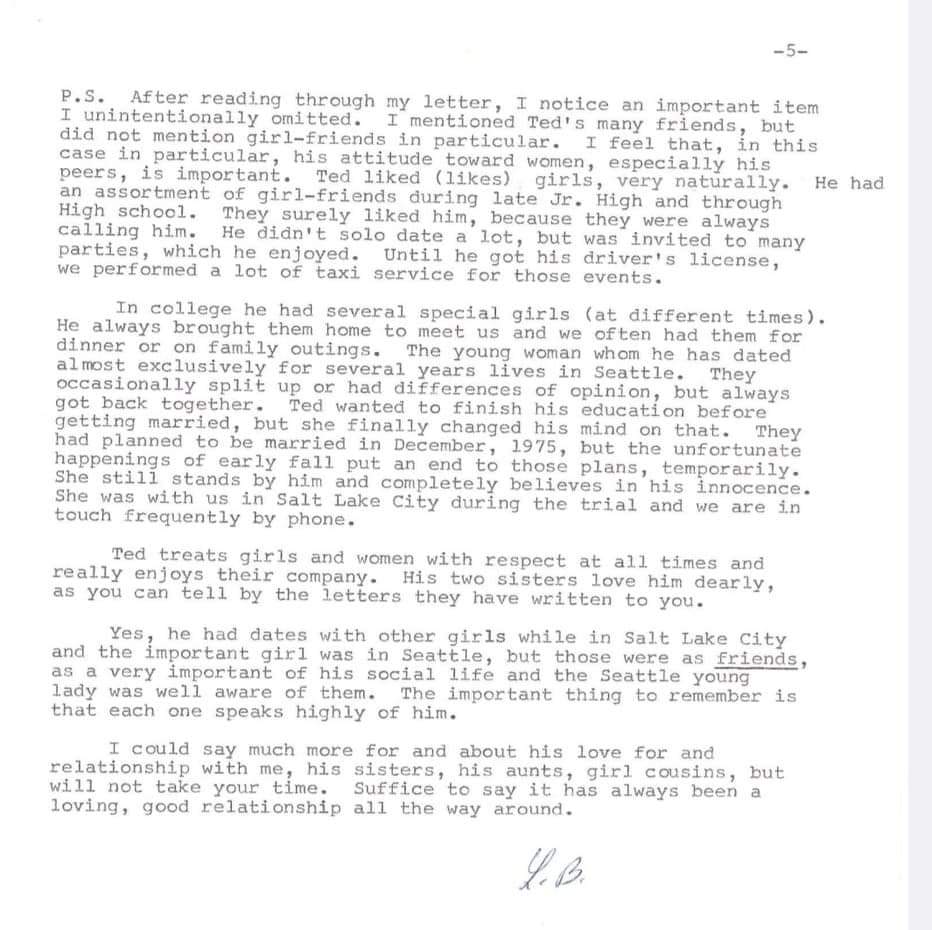
On March 10, 1976, Louise Bundy penned an emotional plea to Judge Stewart Hanson on Ted’s behalf.

















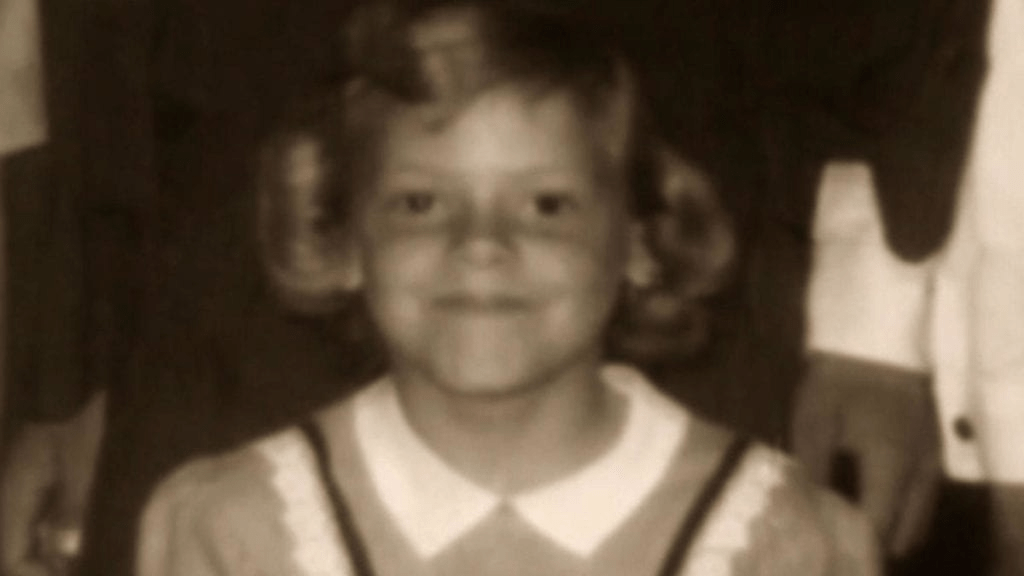


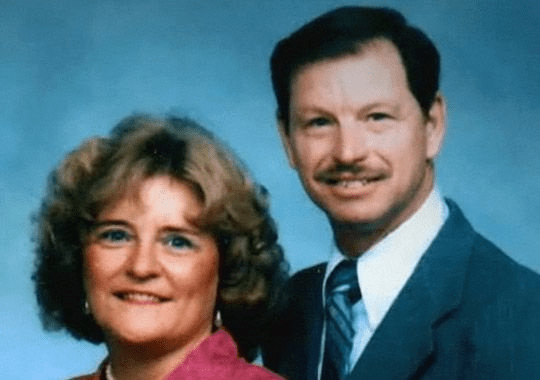
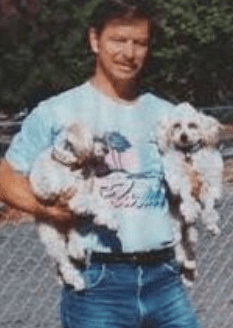












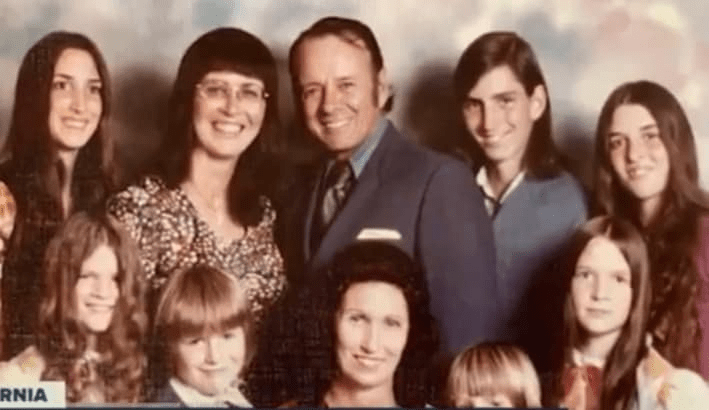
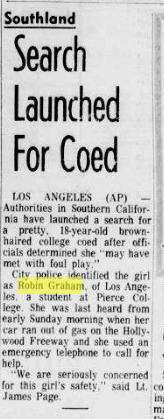
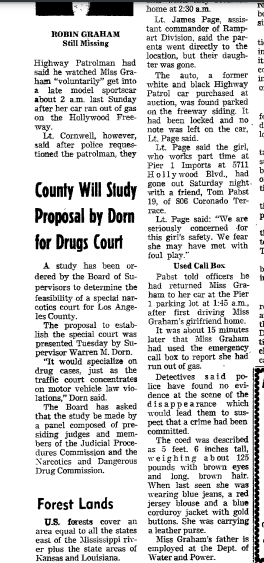
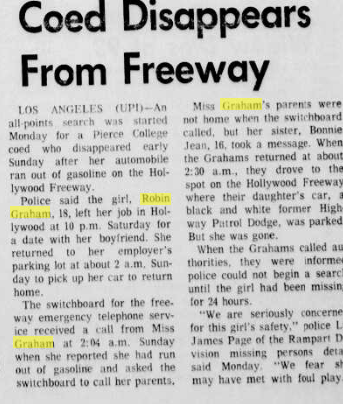
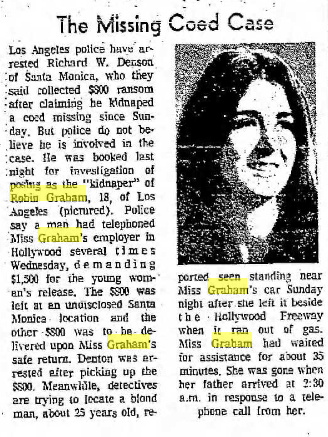
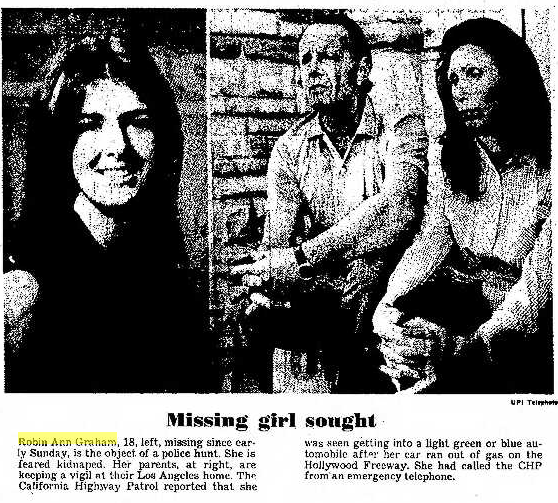
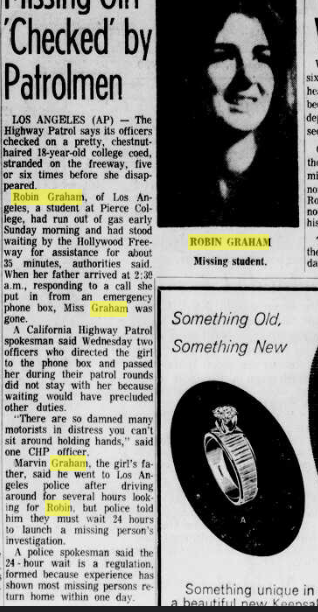
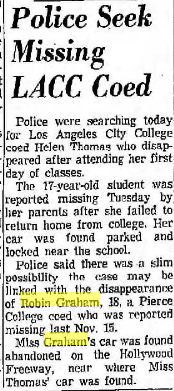
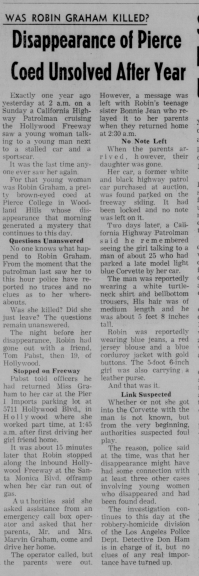
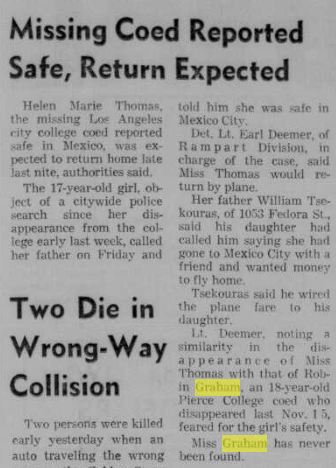
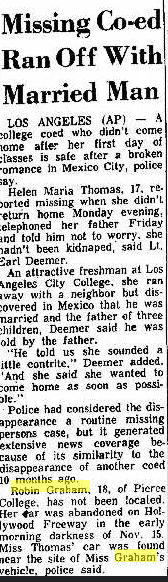
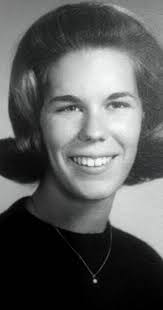
Robin Ann Graham was born on June 22, 1952 to Marvin and Beverly Graham. The family of eleven grew up at 2227 Lemoyne Street in the Silverlake-Los Feliz area of Los Angeles, California; Mr. Graham was employed with the Department of Water and Power. Described as having a big personality and an even bigger heart, at the time of her disappearance Robin stood 5’6” tall, weighed 125 pounds, and had dark brown eyes and long brown hair she wore parted down the middle. A naturally gifted student, Robin graduated from John Marshall High School in June 1970 and was attending Pierce College (a public community college in Woodland Hills, LA) as an art major; the ambitious young lady also worked PT at Pier 1 Imports in Hollywood. At the time of her disappearance Ms. Graham was in a healthy, long-term relationship and had a very busy social life.
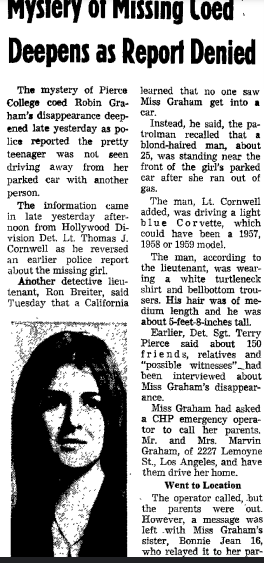
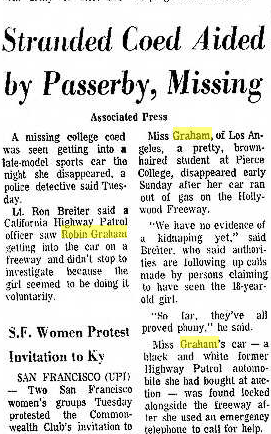
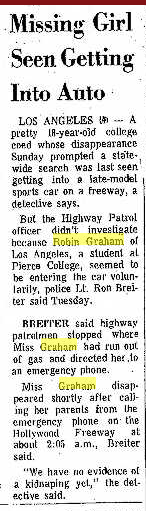
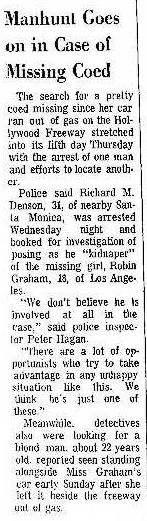
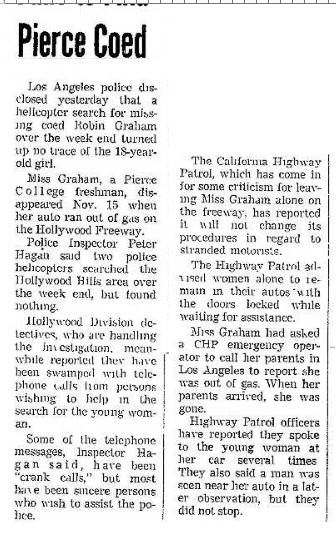
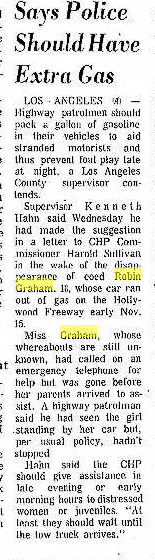
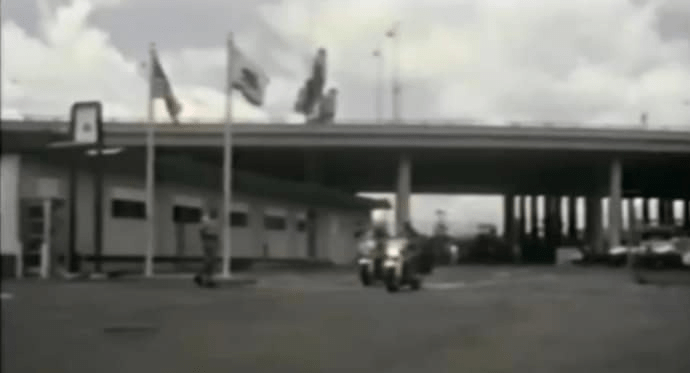
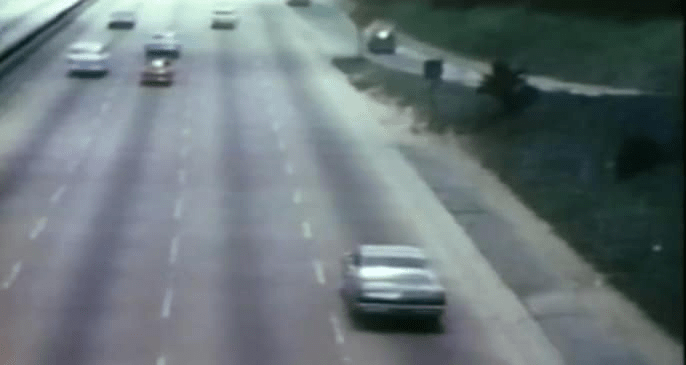
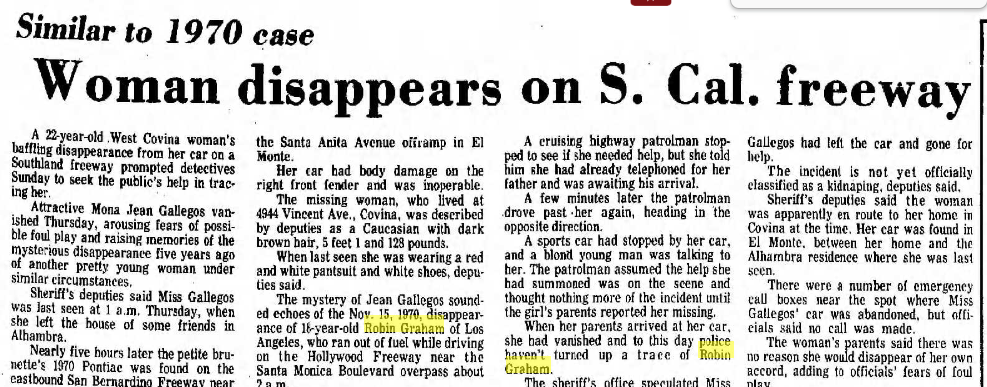
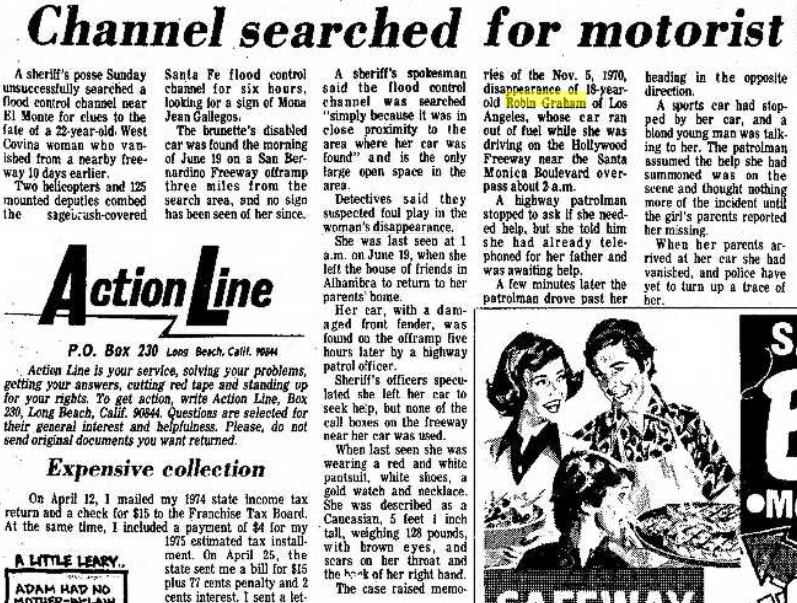
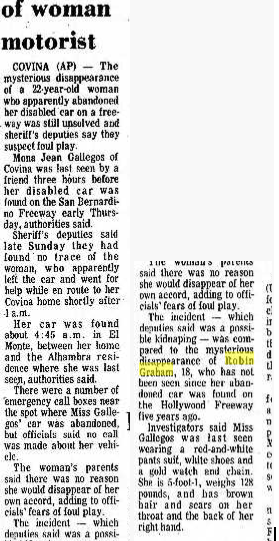
The night before she disappeared on November 14th, 1970 (after dropping off a friend at home), Robin left her vehicle (a former black and white highway patrol car bought at auction) in the Pier 1 Imports parking lot (located at 5711 Hollywood Boulevard) and got a ride with her boyfriend for a night out partying and dancing with college friends. Robin was last seen carrying a leather handbag wearing a dark blue corduroy jacket (with gold buttons), a red jersey blouse, blue jeans and red clogs; she had a birthmark on her lower back and one of her front teeth was just a hair darker than the others. After dropping a friend off at home, I’m reading that Robin was either dropped off at her car by either her boyfriend or by a friend named Tom Palst (sp?), who very well may be her boyfriend, it’s unclear). I’m also coming across varying reports saying she was possibly driving her boyfriends car. Robin immediately set off down the Hollywood Freeway for home. Mere minutes into her journey (somewhere between 1:55-2 AM, accounts vary) the car stalled: she ran out of gas and was stranded on the Santa Monica Boulevard off ramp. Almost immediately after pulling over, California Highway Patrol pulled up beside her and asked if they could offer any assistance, or at the very least call her a tow-truck. At one point during the early morning, they helped push her car further onto the shoulder, as it was slightly sticking out in the Number four lane. Robin politely declined the tow but asked to be directed to the nearest ‘call box,’ which she used to let her parents know she was experiencing car problems; records say the call was placed to the Graham home at 2:04 AM. The officers pulled up a second time when she informed them she did indeed call home and help was on the way: her little sister accepted the call and passed the information along to her parents (who were out at a party). Satisfied with the answer but still wanting to make sure the young lady was OK, they drove away but decided to loop around once again just to check on her and make sure help really was on the way. After they passed her the last time no one knows exactly what happened to Robin: they saw her talking with a Caucasian man roughly around 25/26 years old with medium length brown hair standing at around 5’8.” I do want to point out there is a discrepancy in the hair color of the unidentified male: in one news report it’s said he had “blonde hair” instead of brown. He was wearing bell-bottom pants, a white turtleneck and was driving a 1957 – 1960 blue Corvette. The ‘Doe Network’ claims the car was a ‘hardtop’ which couldn’t be true, as apparently all Corvettes from that time period were convertibles. I found various reports stating that the man was either ‘leaning in her car window’ or was tinkering underneath the hood, inspecting something. CHP assumed it was the relative the young girl called for help so they just kept driving.
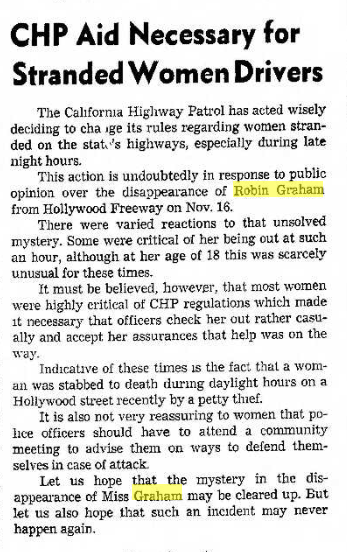
Unfortunately the CHP officers didn’t get close enough to the mystery man to get a good look at his face as they drove past him, and because of this there was never a composite sketch of the suspect done. They reported they saw the blue sports car initially pass Robin’s car, pull off the freeway at the next exit then circle around and come back, eventually parking behind her. The initial report stated that Robin left willingly with the young man, however when that officer was questioned for a second time he clarified he did not see the pair leave together. The last time Graham was seen by law enforcement officers was at roughly 2:00 AM. The call box operated called the Graham home but both parents were out: sixteen year old Bonnie Jean took the message that her sister was stranded and relayed it to her parents when they arrived home at 2:30. They both immediately went to their daughters aide, however when they arrived only her car was there and Robin was nowhere in sight. Additionally, there was no note left behind anywhere in or around her locked vehicle. Law enforcement even fingerprinted the car but were unable to get any viable prints off it and Sergeant Terry Pierce said they interviewed about 150 friends, family members, and acquaintances of Robins in an attempt to gain intel on the cause. Of her disappearance CHP Lieutenant Page said “we are seriously concerned for the girls safety. We fear she may have met with foul play.”
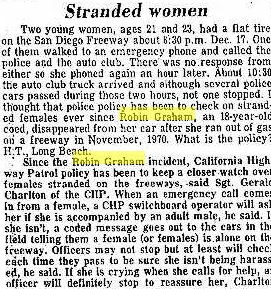
Handling of the incident by law enforcement prompted immediate criticism from LA County Supervisor Kenneth Hahn, and because of the officers failing to stay with Robin and keep her safe the CHP faced immediate backlash: an investigation was launched looking into the conduct of the officers surrounding the night Robin disappeared. People were absolutely livid at the thought of trained police officers leaving a young, vulnerable teenage girl alone in the presence of a male stranger in the wee hours of the morning (which resulted in her abduction). Despite the public outcry, it was eventually determined that the patrolmen in question were acting in accordance with policy. Despite that ruling, California Highway Patrol policy was changed to ensure the safety of all stranded female motorists, stating that CHP officers were to remain with any female motorists that were left stranded on the side of the roads at night until their help arrived. Even though police took these extra precautions, women still continued to go missing under similar circumstances involving vehicles over the following years.
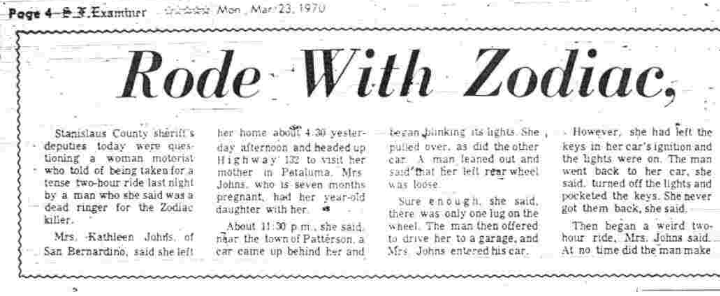
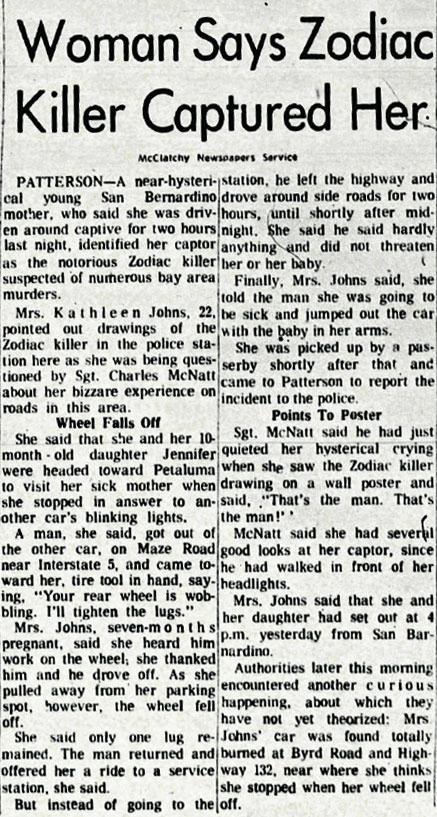
Ms. Grahams mysterious disappearance was first handled by the same detectives at the Rampart Division of the LAPD, who theorized it was linked to other eerily similar cases involving missing young women: in November 1967, law enforcement warned the public of an attacker who flagged down three women pretending to have car problems before he assaulted them; they felt the incidents seem to be linked. Eight months before Robin disappeared, Kathleen Johns was on her way to San Francisco with her infant when the car behind her started flashing its headlights at her. When she pulled over a man got out of the vehicle and said her back wheel was ‘wobbling furiously;’ he offered to fix it however instead of helping he loosened it so it completely fell off as she attempted to drive away. The man then backed up and offered to take her and the baby to a nearby service station, which she accepted. As he wordlessly passed the gas station Johns got nervous and asked where they were going. He kept quiet for a few minutes then said, “before I kill you, I’m going to throw your baby out the window.” They drove around like that for about 90 minutes; he taunted the young mother with similar comments like, “you know you’re going to die.” Johns eventually managed to escape the vehicle, hiding in a field with her baby as he frantically looked for her with a flashlight; he eventually left when a truck approached. She eventually was able to wave down another vehicle, which took her to a nearby police station. While she waited at the police station to make an official report, Johns saw a sketch on the wall of the same man that had spent the past hour terrorizing her: it was a wanted poster for the Zodiac Killer.
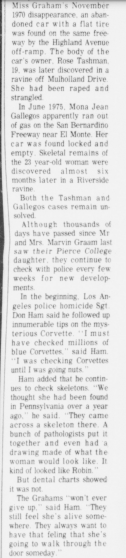
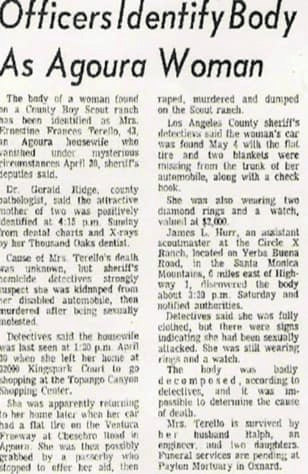
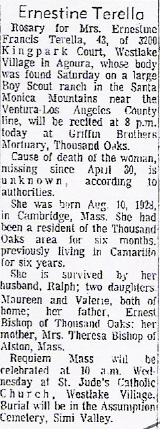
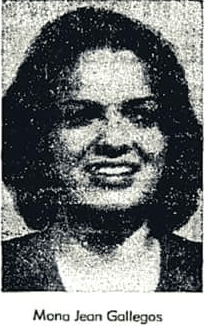
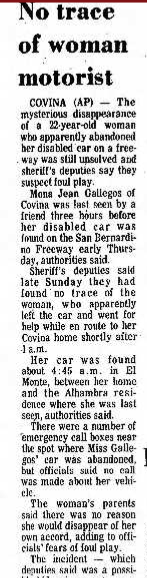
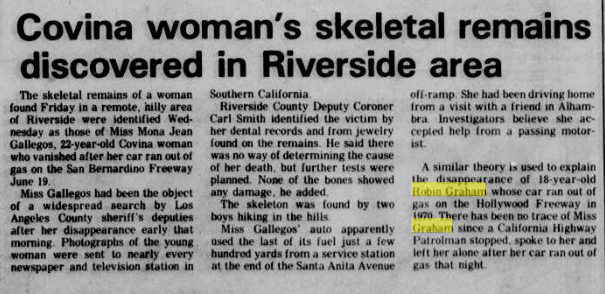
Ms. Graham was the fourth young woman to disappear under mysterious circumstances in the general Hollywood, CA area within a two year period, however, in most of those cases the victims’ remains were eventually found, unlike Graham (whose body has never been found). Most of Bundy’s victims were never discovered so we know he had a way of making bodies disappear (which also might explain why Grahams body was never found). On the evening of October 30,1966 Riverside College student Cheri Jo Bates went to her schools library to study for a few hours, and when she tried to leave for home her VW Bug wouldn’t start. Conveniently right at that very moment, an unidentified man offered her up his assistance, even going so far as to look under the hood of her VW Bug in an attempt to diagnose why it wouldn’t start. The man claimed he was unable to start it but offered her a ride, which she accepted. Her body was found the next day by a groundskeeper at the college: the young co-ed was brutally killed with a knife and was cut and slashed so aggressively that her head nearly came off. Elizabeth Habe was the daughter of author Hans Habe and b-actress Eloise Hardt. She was a student at the University of Hawaii and was home in LA on Christmas vacation when she was murdered on December 29, 1968 after returning home from a double date with John Hornburg (a family friend). She left Johns house at 3:15 AM in her sports car and was abducted when she got home to her Moms house on Cynthia Avenue in West Hollywood. Her body was discovered on New Years Day in 1969 in dense underbrush off Mulholland Drive; she was found fully clothed and her body was burned, with contusions in her eyes and slashes to her throat and heart; the medical examiner determined no sexual assault took place. There were a few rapes in the neighborhood in the weeks before Habe’s brutal death and it’s further speculated that the young student may have been killed by the Manson Family. A former Family associate said that “members of the Family knew her.” Robin’s case also shows some parallels with the May 1969 murder of Rose Tashman, a young woman who was found murdered just hours after her 1965 beige Mustang was discovered abandoned with a flat tire on the side of the Hollywood Freeway. At around 2 AM, the Valley Junior College student was driving home from a friend’s house in Van Nuys, CA after studying for an exam when she got a flat tire. She was stranded on the side of the Hollywood Freeway just a few miles away from where Graham’s car was found in late 1970. The next day, Tashmans Mustang was found abandoned near the Highway Avenue off-ramp on the Hollywood Freeway; road flares had been set up around the vehicle and her left tire was flat. There was also evidence that someone had stopped to “help” assist her with the flat tire. Only nine hours later, the young girls naked body was found in a brushy ravine off Mullholland Drive about a half mile away from where Habe’s body was found; she was strangled and raped. On January 20, 1970, Cindy Lee Mellin got a flat tire in the same general area as Tashman and Graham, and just like the others she vanished without a trace under mysterious conditions. Mellin was a student and employed at the Broadway Department Store in Ventura, California; she was 5’6″ tall, weighed 105 pounds and had brown hair and blue eyes. She was last seen wearing a navy blue dress with red buttons matched with blue shoes with gold buckles (she had her brown corduroy coat with her as well); The Press Courier described the 19 years old as a “pretty Ventura coed.” After work that evening in January, Cindy walked to her car only to discover she had a flat tire. Two of Cindy’s coworkers (who had been picked up by their spouses after work) reported they saw the young girl talking to an unidentified man at about 10:30 PM but assumed it was her Dad so they left. They described te male as tall and slim, between 35 and 40 years old; he drove a light-colored car. Leonard Mellin said that his daughter most likely would not have been able to change the tire herself so the theory that an unidentified man approached Cindy under the guise of helping makes sense. That following morning, after realizing his daughter never came home from work the night before, Mr. Mellin drove to the shopping center where Cindy worked and found her car in the same spot as she’d left it but the spare tire was on the ground nearby; her doors, trunk, and glove box were open, and it appeared that one of the car tires had been purposefully slashed with a knife. Her body has never been recovered. On April 20, 1972 Ernestine Terello got a flat tire near the Ventura freeway in Agoura, CA and surprise surprise… her car was later found abandoned; a month later her body was found on the ‘Circle X Boy Scout Ranch’ in the Santa Monica mountains. Police theorized that a good Samaritan had offered her help fix her tire then abducted her. Strangely her body was found fully clothed, so its possible that sexual assault may not have been a motive. Additionally, she still had on valuable jewelry robbery was most likely also not a motive. This case did not get much press attention and no suspects have ever been mentioned nor have any arrests been made. Similarly, on June 19, 1975 nineteen year old Mona Jean Gallegos was driving home from a friend’s house in Alhambra, CA and at roughly 1 AM ran out of gas near Santa Anita Avenue on the San Bernardino Freeway in El Monte. Her skeletal remains were discovered about six months later in a Riverside ravine.
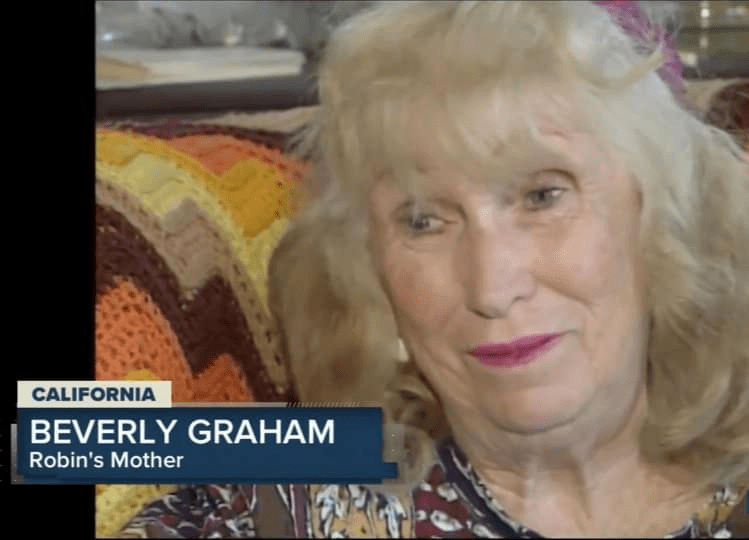
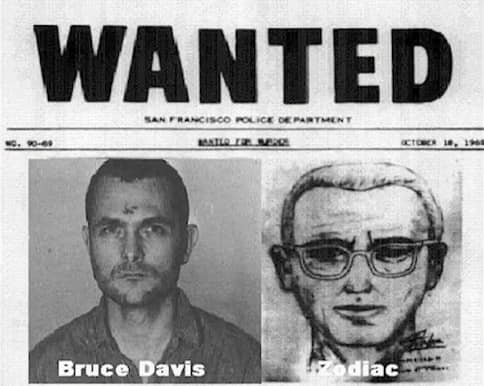
The media was incredibly inconsistent when reporting on Robins case, and law enforcement felt that the “free-spirited nature of the 70’s” made these young girls fairly easy, very trusting targets. Regarding her daughters disappearance, Beverly Graham said: “it’s strange, it happened right in the middle of the city, but there never really were any clues. Maybe it will turn something up. We still live with that hope.” For years after his daughter disappeared, Mr. Graham called LA homicide Sargent Donald Ham every few weeks to get a status update on the case; the two men eventually became friends and would on occasion grab lunch and catch up. In 1975 Sargent Ham thought that Robin “had been found in Pennsylvania [over a year ago], they came across a skeleton there. A bunch of pathologists put in together and even had a drawing made of what the woman would look like. It kind of looked like Robin.” However after a forensics expert investigated dental records it was obvious that the skeleton did not belong to Robin. Ham took over the case in 1976, and in his time investigating it checked out “millions of blue Corvettes.” … ” I was checking Corvettes until I was going nuts.” … “one traffic control officer used to come in every morning with a list of Corvettes he had spotted. It didn’t matter what color they were. He said it could have been painted.” As for Robins parents, he said “they won’t ever five up. They still feel she’s alive somewhere. They always want to have that feeling that she’s going to walk through that door someday… she was a beautiful girl.” After the LA Times ran a story on Robins disappearance a woman wrote to Mr. and Mrs. Graham claiming that she too, had stalled out on the Freeway earlier that same night and that a man driving a similar Corvette claiming to be an off-duty officer offered her a ride. She refused his offer; and it’s unknown if it was the same man who was last seen with Robin. There’s been no proof this is the same man last seen with Robin, but police felt this was a “solid theory. One thing that further confused law enforcement was why Robin left no note on her car for her family; was it for the simple reason she had no pen and/or paper with her? Sadly I never have pens in my car. They were also confused as to why she refused help from uniformed police officers in marked police cruisers just minutes earlier but accepted help from a non-uniformed man in a Corvette? Was she trying to avoid a tow fee from the police? Unfortunately this lead to nothing. The next month the woman identified this unknown man as Bruce Davis, who is one of the numerous people suspected of being the Zodiac Killer. Davis was a serial killer who operated in the California area in the late 1970’s. He is still suspected in many unsolved disappearances and murders in the area, including a couple found in an alley close to the Silver Lake area close to Los Angeles. They had each been stabbed over 40 times. Davis had been a high-profile member of the Charles Mansons ‘Family’ and, although he didn’t participate in the August 1969 murder of actress Sharon Tate he had turned himself into police just weeks after Graham disappeared. He was eventually convicted of two separate murder counts, including that of ranch hand Donald “Shorty” Shea, which is the only murder Manson technically had a direct hand in. After he was taken into custody on December 2, 1970, no further murders took place that were definitively linked to the Zodiac Killer. Davis was sentenced to life in prison, and despite keeping a clean record since 1980 and it being previously recommended he be granted parole seven times (those decisions were rejected by three different CA governors), in 2022 a California panel denied his parole, telling him to try again in three years saying he “lacks empathy.” Bruce Davis has denied being the Zodiac Killer.
It is worth noting that Robin disappeared on the night of a full moon, which is when the Zodiac was known to operate. It was very challenging finding a lot of relevant information regarding the case, but one thing that surprised me was that it was speculated that she was possibly a victim of the Zodiac. I won’t lie, I don’t know a ton about that particular SK: I read Robert Graysmith’s famous book many years ago… But, when looking into it further I guess Graham did live in the right region of California during the right time frame to be a possible victim. He claimed to have killed 37 victims in northern California between 1968 and 1970 and sent letters with hand-drawn ciphers taunting San Francisco Bay Area press taking credit for these murders. It’s worth noting that of these 37 victims the Zodiac takes credit for, law enforcement can only agree on seven confirmed victims (two survived). The case remains unsolved despite a lot of recent activity in the past few years: Earl Van Best Jr. (he was the central figure on the FX show “The Most Dangerous Animal of All”), Arthur Leigh Allen (a former elementary school teacher as well as the only suspect authorities ever publicly named and convicted sex offender who died in 1992), and (this is almost brand new information) Garry F. Poste, a suspect named by a group called ‘The Case Breakers’ that said forensic experts now feel is “a very strong suspect” after a statewide examination recovered new Zodiac evidence. It’s pretty well known that any case from that time period with the weak ‘modus operandi’ involving victims in broken down vehicles was linked to the Zodiac, and unfortunately in recent years a slew of amateur sleuths invested in the case have helped spread much misinformation.
As I stated earlier, the man last seen with Robin that night in 1970 was described as being brunette, 5’8″ tall, and in his mid-20’s (specifically 25-26); at that time in November 1970 Bundy would have been 23, which is pretty consistent with that description. What’s really jumping out at me is the turtleneck part, as that piece of clothing seemed like a staple in Ted’s wardrobe (there’s numerous pictures with him wearing one). Now, Bundy was 5’10” where the man talking to Robin was described as being roughly 5’8” but keep in mind that’s just an estimation. Also at the time it’s thought that Bundy still owned his first VW Beetle, a light blue one he purchased in April 1966; he didn’t buy the infamous yellow one until spring of 1973… so if Bundy did abduct Robin, where did the blue Corvette come from… I probably don’t need to say that we know it didn’t belong to him. Did he borrow it? One thing we do know is that he is a competent car thief (but a bad driver) so is it really that off base for him to have stolen this car then ditched it when he was done with it? We know he was caught in Aspen and Florida after getting pulled over in stolen vehicles and he did it numerous times when he was an adolescent (his mother helped pay for him to have his record expunged when he became legal age so it wouldn’t affect his future career). Bundy did at one point tell law enforcement that he killed a victim somewhere unspecified in California during his reign of terror, and he’s further suspected of committing the Santa Rosa Hitchhiker murders that also took place in the 1970’s. Of the victims in the SRH case, three were raped and three others were too badly decomposed to tell. Detective Bob Keppel shared with ‘SeattlePI’ that “the killings in Santa Rosa would fit his methods, he spent time in the area, and I”m sure he started killing well before 1974. It was an open market for Bundy.” … “one of the last times I talked to Bundy I mentioned California, and he looked at me like, ‘I can’t talk about that right now.’” … “I think he believed his execution would be stayed so he could talk for years about his crimes, but the governor had other ideas.”
In mid-November 1970 when Robin disappeared it looks like Bundy was employed as a delivery driver for Pedline Supply Company (a family owned medical supply company); he worked there from June 5, 1970 to December 31, 1971. In mid-1970, he also re-enrolled at the University of Washington and was living in the Rogers Rooming House on 12th Avenue in Seattle. Additionally he was in a committed relationship with Liz Kloepfer at this time as well, so he had a lot of established roots in the general area. It’s obvious in Robin Grahams description that she fit the profile of one of Teds typical victims: she was tall and slender, with long dark hair parted down the middle. She was even in the right age range and a college student (who we know Ted LOVED to target). When analyzing the logistics of Bundy killing Robin, the scene of the crime was almost 17 and a half hours away from where he lived in Seattle… but I mean, Bundy had a lot on his plate at the time Robin disappeared. Did he really have time to drive all the way to California to commit a murder? Playing devils advocate, we know he was an avid night person and had no problem prowling long distances when looking for prey. It was in early 1970 that Bundy rekindled his relationship with Stephanie Brooks, which helps place him in California; it also appears that he was in the Santa Rosa area of California at some point in that general time frame as well, which is just a hair over a 6 hour drive (with light traffic) to LA. This also helps put him much closer to the scene of the crime (as we know Bundy enjoyed traveling far distances to throw police off his trail). Was Robin Graham just another one of Teds ‘murders of opportunity?’ It’s worth noting that not only do we have confirmed kills from Washington, Colorado, Utah, Oregon, Florida, and Idaho, I’ve also written about numerous other states he could have been active in (Pennsylvania, Vermont, and New Jersey).
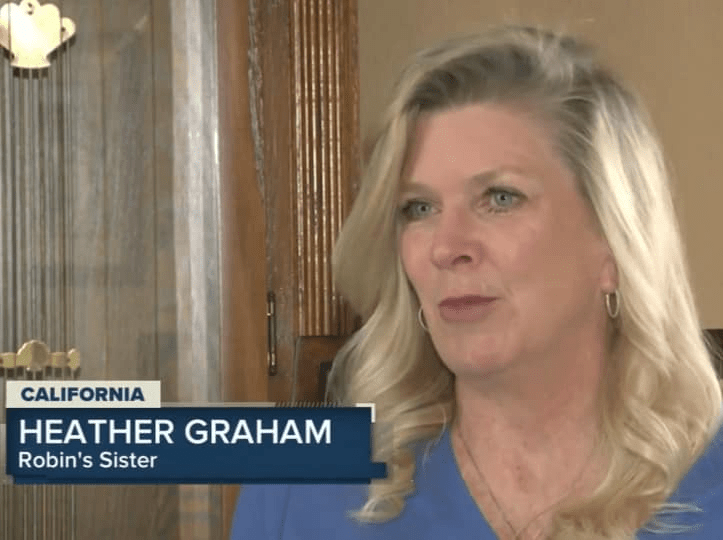
Websleuths user ‘Howard’ commented that they “have researched the Graham case. I know her parents. They are still waiting for a break in the case and have kept their same address and phone number since 1970!” On June 28, 2005, Websleuths user ‘Graham‘ commented back saying: “when you say that you have researched the case I was wondering if you have found anything that is not in the police reports? I just recently spoke with the police regarding the case. I’m Robin’s sister. I would like to hear what info you have found. Thanks.” Seventeen years after Robins strange disappearance in 1986, a mysterious ad caught the attention of a member of the Graham family when it appeared in the LA Times classifieds. Beverly Graham said of the event: “one of our daughters saw it. The funny thing is, she never looks at the personal ads. But this one day…” The ad read: “DEAREST ROBIN You ran out of gas on the Hollywood Frwy. A man in a Corvette pulled over to help. You’ve not been since of since. It’s been 17 years, but it’s always just yesterday. Still looking for you (signed) THE ECHO PARK DUCKS.” The message sounded innocent enough and almost romantic in a way, which made some people speculate it was a clue about the young girls disappearance. The ad was really put under a microscope after KFI disc jockey Geoff Edwards read it on the air, and the phone calls and letters quickly started coming in, which helped establish the link to the missing persons case from 17 years before. Edwards said, “it sounded so romantic. I wondered if anyone knew what it was all about, and I got all kinds of calls and mail. Someone even wondered if the message was a clue to the killing.” It turned out the mystery sender was an old friend of Robins named Al Medrano (who was still living in the neighborhood) just wanted to let the world know that his friend was still missing and that she had not been forgotten about. The Graham family, who also still live in Echo Park, remember Al as a neighborhood friend of their Robins. Why he chose then to put something in the paper, he said: “well, it occurred to me that Nov. 15 (the day of her disappearance) fell on the same day (Sunday) this year as it did in 1970, and I just wanted to show she wasn’t forgotten.” He said the last part about the “Echo Park Ducks” was what they used to call their friend group and he wanted the message to be off all of them.
On October 5, 2012, the blog missingrobinanngraham.blogspot.com, creator Michael Haddan commented: “Please note that there is NO TRUTH to the ‘Find A Grave’ post by someone anonymous claiming that Robin Ann Graham ‘died’ in 1970. This was posted by someone who apparently wants Robin to be dead, to settle the mystery of her disappearance with a completely unfounded and irresponsible statement that hurts both Robin and all who love her. This person wants everyone who has hope for Robin’s safe return to GIVE UP, and for all continuing investigations into her disappearance to end. LAPD Detectives John St. John and Detective Hamm both told me never to assume that she is dead just because I ‘want resolution’ to her case, and that to do so would be not only to give up on Robin, but to show a lack of love and respect for her. I’ve notified this person and asked how Robin ‘died’ and how this person knows this. Of course there is no answer. I thought that he/she would have taken the post down by now, but it still shows up in Google’s priority postings. This is an utter travesty. We’ve had many hoaxes regarding Robin’s disappearance over the decades, and unless this ‘mystery person’ actually knows something–and should therefore contact the LAPD–this is unquestionably just another HOAX.”
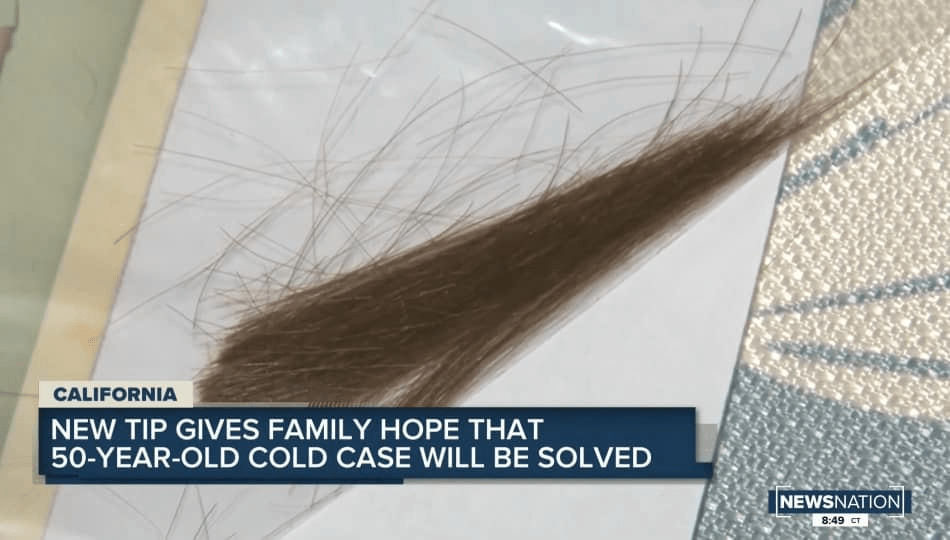
Regarding Robins disappearance, Sargent Ham said: “all we’ve got is a missing persons report. We’ve never found remains. She could be alive somewhere.” At this time, the surviving Graham family is trying to enter pieces of her hair into DNA databases that didn’t exist when she went missing in the early 1970’s; Both Mr. and Mrs. Graham have passed away and Robin would be 70 years old as of February 2023. One thing that is nearly certain about Robins mysterious disappearance is that she fell victim to the good Samaritan ruse.

Robin Ann Graham.




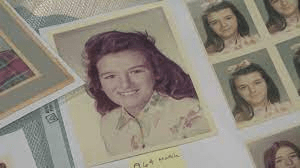


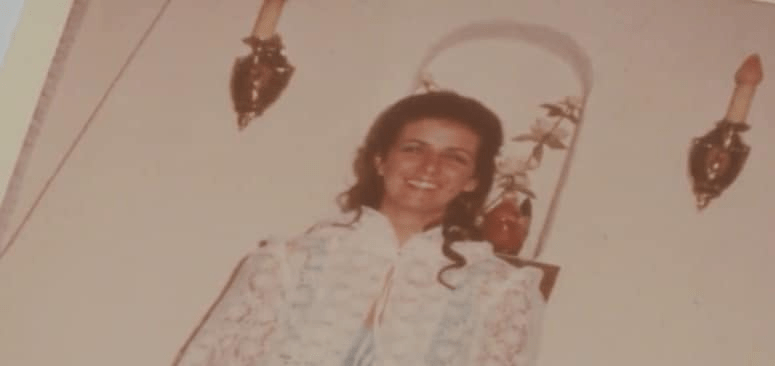

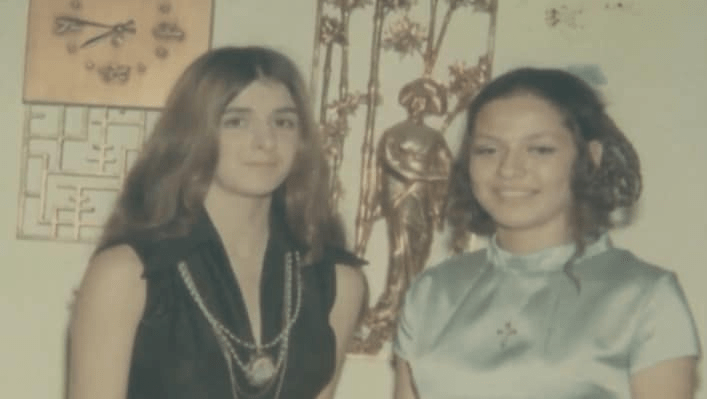


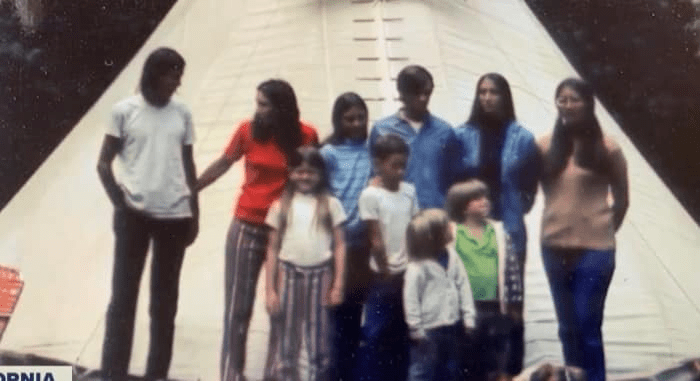


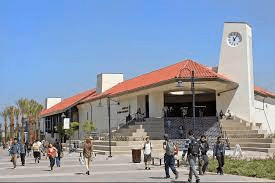
































Joyce Margaret LePage was born to Walter and Florence (nee Ham) LePage on December 4, 1949 in Pullman, Washington. Mr. LePage was born on August 13, 1913 in Santa Ana, CA, and even though he dropped out of high school due to his family’s frequent moves, he enrolled in college in 1936 after seeing an ad that Brownsville Junior College accepted adult learners with no high school diploma as long as they were able to maintain a C average. About the experience, he said ‘That ad really excited me. I really worked to keep up that freshman year and was up until midnight studying a lot of nights … and, yes, did come through with the C average.’ In the summer months in between school, he hitchhiked and took odd jobs (like shoveling sand in Zapata, Mexico, for two weeks). Walter eventually went on to attend Central Missouri State Teachers College (where a full quarters tuition only cost $20) and graduated in 1940 with a dual BS in physics and chemistry (with minors in both education and math); his first teaching job was in a one-room schoolhouse in Missouri. Mrs. LePage (who preferred to go by her middle name of Ethelyn), grew up in Pullman where her father taught accounting at Washington State University.
In 1943 while working at Hanford Engineer Works as an instrument technician Walter met his future wife, who was a student and employed in their chemistry department; the couple were wed on October 5th, 1945. Before WWII, Mr. LePage learned how to fly airplanes and for most of the war training pilots near Cuero, TX; when the flight school closed in 1948 the couple purchased some undeveloped farmland just north of Pasco, WA and began the W.A. LePage Seed Company, which was family owned and operated for 46 years. Additionally, Mr. LePage helped found the Washington State Potato Commission.
Joyce was the second of five children, and had an older sister named Phyllis and three younger brothers: Bruce, Steven and David. She came from a highly driven, working class family that strongly valued education and spent a lot of time on the family farm on LaPorte Drive. Due to the long hours the LePage’s put in on the farm, the siblings didn’t partake in many after school activities, and because of this their bond was incredibly strong. When they were kids, Joyce loved bothering her younger brothers, and would often leave ‘scattered notes’ around the yard to keep them occupied and out of her hair when they were too loud or annoying. Of their childhood, Bruce said: ‘we never had to deal with financial stress. Just good family memories. My dad took a lot of photos and videos of us kids. We all have something to look back on.’
Joyce inherited her fathers love for flying and in the small amount of spare time she had earned her pilot’s license at only 18 years old. Some interesting facts about Ms. LePage: she was a phenomenal student throughout her entire academic career, and took grades very seriously. She got an 86/100 on her drivers test, and lost 6 points because ‘she slightly inched out of her lane six times.’ Joyce loved using vivid describing words when writing, and one time used the word ‘delicious’ to describe a tempting, beautifully wrapped gift she wanted to open. She enjoyed listening to rock bands like Steppenwolf, and particularly loved the Petula Clark classic ‘Downtown.’ Bruce said that his sister had a great passion for writing and ‘was going to go places in her life, and I think she could very well have ended up being an educator at some level, high school, junior high, middle school, or possible college level because she loved to write and was talented at it.’ … ‘Joyce had a great future ahead of her.’ Described by loved ones as vivacious, hardworking, and friendly, Joyce was the second of her siblings to attend WSU (her sister Phyllis earned a degree in business administration). As I said earlier, their maternal Grandfather was a professor of accounting at Wazzu so it seemed natural for the LePage children to continue their education at the institution (Bruce eventually enrolled there as well).
At the time of her murder in 1971, LePage was 21 years old and a junior at WSU. Despite it being summertime, the young coed was still living near campus on Maiden Lane, taking accelerated courses so she could graduate on time. Described by loved ones as athletic, ambitious, and attractive, she was 5’9”, weighed 136 pounds, had brown eyes and medium length light brown hair. Despite having her own apartment, Joyce enjoyed spending time in Stevens Hall, a vacant, all-girls dormitory on the university’s campus, which was under construction at the time of her murder. She enjoyed the quiet atmosphere and would frequently hang out on the first floor and study, write letters to her long distance boyfriend, and play the baby grand piano when the stress from the semester became too much; she would also (on occasion), spend the night there. About his sister, Bruce commented that: ‘she would slip up there. She had a window she could slide open and slip inside. She would go in there and do her writing.’ Retired WSU Sergeant Don Maupin said of Joyce: ‘clearly she was entering the hall, going in and out of there. And it wouldn’t be hard for someone else to do the same thing, particularly if they’re observing her’ … ‘Some of her friends knew she was going into Stevens Hall. In fact, the people who dropped her off said, ‘You’ve got to quit doing that. It’s dangerous, and besides that you’re going to get in trouble.’’ In the early stages of the investigation, law enforcement wasn’t aware that LePage liked to spend her down time in the unoccupied dormitory.
Joyce disappeared under mysterious circumstances on Thursday, July 22, 1971; she had been wearing cutoff jeans and a blue blouse late in the day when friends dropped her off at her apartment around 10 PM. Most likely because she lived away from home and took place before cell phones existed, it took ten days for Mr. LePage to report his daughter missing after she didn’t come home for a planned weekend visit. During their investigation, investigators found her car parked about 3-4 blocks away from her apartment on Oak Street; in it were her shoes and purse (sans her ID and keys). LePage had been taking skydiving lessons and her first parachute jump was scheduled for the following day (which she never showed up for). Regarding his sister as missing, Bruce said that ‘she had no reason to take off, and was planning to come down for the Water Follies (boat races) that coming weekend. She just never showed up.’ Joyce left behind all of her personal belongings and told none of her loved ones that she had any plans of taking off, and because of this, detectives immediately felt that some form of foul play was involved.
Oddly enough, a second crime took place on WSU’s campus on the evening LePage went missing: on July 23, 1971, a 5’x6’ chunk of green carpet was discovered to be missing from the lobby of Stevens Hall by school custodians. At first, campus police chalked it up to a random act of vandalism, but when they explored the residence hall further they stumbled upon blood splatter in the back corner of a room at the basement level of the hall.
It is strongly speculated that there was a party in Stevens Hall on the evening LePage disappeared: WSU custodian Rosy Lord said that on the morning of July 23, 1971 the cleaning crew came into a mess, and there were pizza boxes and ‘drug paraphernalia’ strewn all over the place. A friend of Joyce’s told law enforcement that she was planning on going to the residence hall the evening she disappeared, but no one could place her there. A neighbor told police that they saw her getting into a car with two unknown men early in the morning on the 23rd, but nothing ever came of this report. There were additional rumors being floated throughout the community: some suspected the attractive young woman ran off to join a commune, while others felt it was her that she stole the piece of carpet and took off with it (but why?). Additionally, a psychic came forward and told police he had a vision of the young girl getting on a plane for Argentina with a ‘Latin boyfriend.’
As time went by, the case created some jurisdictional complications: WSU investigated the missing patch of carpet, Pullman law enforcement was responsible for the missing persons case, and the Whitman County Sheriff’s Department was eventually put in charge of the murder investigation. This means that multiple police agencies were responsible for different parts of the case, and no one really knows how long it took them to connect Joyce’s remains to the missing carpet from Stevens Hall. The current (as of July 2024) Whitman County Sheriff Brett Myers commented: ‘that makes it difficult to piece together (today) what WSU did, what Whitman County did.’ As we know from other Bundy cases, this really throws a wrench in things as investigating agencies from that time period weren’t overly interested in sharing information with one another.
The letters that Joyce wrote to her boyfriend were handed over to police and became part of her case file, and thanks to them detectives were able to verify that she often liked to sneak into the vacant dormitory. Sergeant Maupin commented: ‘there’s little doubt that (Stevens Hall) is where the stabbing took place because she was stabbed multiple times and she was removed from the hall later on.’ … ‘Clearly she was entering the hall, going in and out of there, and it wouldn’t be hard for someone else to do the same thing, particularly if they’re observing her.’
Roughly nine months after her mysterious disappearance, on April 16, 1972, a teenager scouring the area for gemstones with his mom (some reports say they were looking for opals, another says garnets) discovered the skeletal remains of LePage along a dry creek bed in a gully roughly 10-15 miles south of Pullman, just off Wawawai Road in Wawawai Canyon. Her remains were well hidden by dense brush at the bottom of a deep ravine that was only accessible by a narrow gravel road, and she was enveloped in her school’s missing carpet as well as two military-style blankets then bound with rope (she was wrapped in the blankets first and then the carpet). Sheriff Myers said: ‘it starts as a missing person’s case. It starts out also as a missing piece of carpet from a WSU building.’ … ‘We have a theft case and a missing person case, but it was not until April of 1972 that we discovered that her body was deliberately put somewhere in the carpet.’ A positive identification was made thanks to Joyce’s dental records as well as genetic testing that was conducted by the FBI. Former Whitman County Sheriff Mike Humhprey said: ‘there definitely was foul play, but the official and specific cause of death has not been determined.’
The FBI performed some forensic tests on Joyce’s remains and determined that her cause of death was most likely the result of multiple stab wounds, as they found three puncture wounds close to her rib cage (I do want to mention that in one article it was reported she had seven wounds, but three is the number that is most frequently reported). Police determined that she had most likely been killed in the front foyer of Stevens Hall, and afterwards her assailant wrapped her body up in the missing hunk of carpet then quickly snuck her out to his waiting vehicle, then transported it to the ravine, where he disposed of it.
After Joyces body was found in 1972, the LePage family didn’t want much to do with the investigation: her father seemed to keep up with it the most, and after he passed away Bruce stepped up and seemingly became the family spokesperson, saying: ‘there wasn’t anything we or the public could do, so we had to wait until her body was found. If her body had been found immediately, at the site she was murdered, we could have looked into closure. My family has come to terms with the case pretty well, myself included. But with the nine month time frame, and the lack of evidence where her body was disposed of, there was nothing to go on.’ He further elaborated that he knew his sister had a lot of male attention: ‘I just know there were a lot of guys who would have loved to have dated her.’ … ‘This could very well be a person she turned down.’
At the time of her disappearance, Joyce was seeing a guy that was living in South Africa; he was investigated and was quickly cleared. Another possible scenario could be that LePage did attend the party at Stevens Hall on the evening she was killed and perhaps turned down the advances of a young man… When you combine that with the drug paraphernalia (I’m assuming the kids drank as well) that was found in the Hall on the morning after LePage’s murder it makes me wonder if maybe her killer wasn’t in the most rational frame of mind when he took her life.
There’s a few things that jump out at me when it comes to Bundy’s possible involvement with LePage’s murder, the biggest is the timing. As I’ve said in every single other piece I’ve ever written about a pre-Karen Sparks (suspected) victim: we know that his murder ‘career’ didn’t officially begin until early 1974 when he brutally attacked the young coed in her basement apartment then left her for dead… but when it comes to Ted I don’t think very much is set in stone, as there is no concrete, set-in-stone date that he began murdering young women. It’s pretty obvious that Joyce fit his typical victim profile, and I’m not even referring to her brown hair parted down the middle: she was a beautiful, slim, well-educated woman that disappeared off a college campus. If that doesn’t scream Ted Bundy then I don’t know what does. Sergeant Maupin said of his possible involvement: ‘profile-wise, she did fit the description (of Bundy’s victims)’ … ‘there’s no real evidence he was involved or in the area and Bundy was probably only suggested as other leads went cold.’
I’ve read in multiple sources that a ‘yellow VW Bug’ was seen cruising around WSU’s campus at roughly the time of Joyce’s murder, and that an ‘unknown person matching Bundy’s description was seen at the time of the disappearance.’ I do want to point out that per the FBI’s ‘TB MultiAgency Investigative Team Report 1992,’ he didn’t purchase his infamous tan 1968 Beetle until the spring of 1973 (he owned it until October 3, 1975), and where he did have another one prior to that he didn’t own it in the summer of 1971.
The way Joyce was murdered is also a big variation from Bundy’s typical method: much like the NJ Turnpike victims Elizabeth Perry and Susan Davis (who were killed in May of 1969), Joyce was stabbed to death. Aside from his final victim (little Kimberly Dianne Leach), Bundy was never known to use a knife while committing his atrocities, and even then he didn’t stab her. Just as an interesting side note regarding Leach: some pathologists theorized that he may have used a blade to slit her throat, while others strongly felt that he used a ligature but cinched it so tightly that her throat appeared cut. Additionally, it ‘appeared’ that none of Ted’s other victims had any sort of stab wounds, and he never said a word about using a knife in any capacity during his death row confessions… I use the word ‘appear’ because we didn’t often see his victims immediately after they were attacked, and experts really aren’t 100% certain how he murdered them (aside from Karen Sparks). It really wasn’t until Florida at the end of his rampage that he began unraveling and began leaving remains in places where they’d almost immediately be seen (like Chi Oh). It’s also worth mentioning that LePage was found wrapped up in a piece of carpet and some old blankets, and that was something Bundy wasn’t known to do.
Based on the remains that were uncovered in Washington state it looks like Ted preferred to bludgeon his victims and/or strangling them. He admitted that fact to Bill Hagmaier during one of their numerous conversations in the mid to late 1980’s, when he shared that he preferred strangling his victims so that he could watch them take their last breath. Bundy further elaborated that he choked his first victim to death with his bare hands at some point in May of 1973, but found this method to be too difficult and began using a ligature.
Because of Joyce’s advanced level of decomposition it was impossible to determine if she had been sexually assaulted or not, and it’s important to remember that the sexual component was a big part of Bundy’s drive to kill. Regarding the level of breakdown present, Sheriff Myers commented that: ‘her body was badly decomposed. We don’t know exactly how she was killed.’ Additionally, little forest creatures and other scavengers had disturbed her remains and spread parts of her all over Wawawai Canyon.
1971 was a busy year for Ted: in January he enrolled as a psychology student at the University of Washington. Pullman is only about a five hour drive from Ernst and Freda Roger’s boarding house on 12th Ave, and we know he drove a little less than four and a half hours to the University of Oregon when he killed Kathy Parks. At the time of LePage’s murder Bundy was working at Pedline Medical Supply Company and was taking summer classes; he was also in a (mostly) committed relationship with Liz Kloepfer at this time as well. According to her book ‘The Phantom Prince: My Life With Ted Bundy,’ things between the two were still pretty steamy in 1971, and in March she began pushing for marriage (again, according to her). When he resisted she told him that there was another guy that was interested in her and that she was going to go out on a double date with him and her friend Angie (most likely Mary Lynn Chino) and her bf . In response to this threat Ted seemed to be mostly apatheticc but would later follow Kloepfer and the date to The Walrus Tavern; lots of drama ensued and Bundy wound up leaving alone. In July, Liz and Molly moved into a two story apartment in the University District (located at 5208 18th Ave NE) that was closer to the Rogers rooming house, which would make you think they would have started spending a good chunk of their time together but according to Liz he became distant and ‘out of sync, and started spending most of his nights away from her.
Ted enjoyed toying with his audience, and frequently told different stories to different people, and usually refused to discuss his earlier crimes. He told one of his attorneys (during his latter years) Polly Nelson that he attempted his first kidnapping in Ocean City, NJ in 1969 but didn’t commit murder until sometime in 1971 in Seattle. However at a different time he told psychologist Dr. Arthur Norman that he killed two women in 1969 near the Jersey Shore while living with his aunt in Philadelphia. According to Robert A. Dielenberg’s ‘TB: A Visual Timeline,’ Bundy told both Dr. Nelson and Dr. Dorothy Lewis that sometime in June/July 1971 he ‘follows a woman, picks up two-by-four in a lot, lays in wait, but the woman enters her house before she reaches his hiding spot. A few nights later he saw a woman park her car, walk up to her door, and fumble for her keys. He walked up behind her and struck her with a piece of wood he was carrying. She fell down screaming. He panicked and ran.’ In September of 1971, Bundy began working at the Seattle Crisis Clinic on Capitol Hill.
Ted also hinted to former King County Detective Dr. Robert Keppel that he committed a murder in Seattle in 1972 and another the following year that involved a hitchhiker near Tumwater, but he refused to elaborate on either. By his own admission, he had by then mastered the necessary skills (keep in mind, this was in the days before DNA became a thing) to leave minimal incriminating forensic evidence behind at crime scenes. Before Bundy was executed in Florida, the Whitman County Sheriff’s Department gave Dr. Keppel information related to the LePage case, and the following is an exchange between the two men in January 1989:
Robert Keppel: ‘I guess what I need then, I want to eliminate any suggestions of rather than me throwing out stuff for you to say, you know, this is what we need to talk about or not, like the August 2nd, if there’s only eleven, then that’s fine. I don’t want to do any guess work. I mean, I’ve got girls like in 1971 at WSU that’s been murdered that I’m curious about.
Ted Bundy: ‘Yeah, I can tell you– I can tell you — yeah, we can do it that way if you’d like, too. And maybe in some ways that’s easier. I can tell you what, that’s, you know, what I’m not involved in. You know; if you have a list of that type in your head.’
RK: ‘There’s a gal in 1971, Thurston County.’
TB: ‘No.;
RK: ‘Not that far back. Nothing that far back?’
TB: ‘1972.’
(…)
TB: ‘I have no hesitation about talking about things that I have done… No hesitation about telling you about what I haven’t done. Ok. So if I tell you something, I may not tell you something. I might not tell you something right now or every single detail right now, but if I tell you something, you can rely on it. And when I say, yes, I did it or no, I didn’t do something, that’s the way it is.’
About LePage’s murder, ‘hi: I’m Ted’ researcher Tiffany Jean points out that ‘the location is also unusual for an early Bundy murder. Bundy’s earliest known attacks occurred quite close to his residence in Seattle’s University District, usually just blocks away. This way he was able to stalk his victims, probably peeping into their windows and learning their routines. This was easy for him to do, as he was essentially their neighbor, and felt comfortable roaming about the neighborhood.’ Redditor ‘janiceian1983’ also made a great point that: ‘this is a problem because the thing with Bundy is that he had a ‘generally unremarkable face’ which he CONSTANTLY changed the appearance of through different facial hair styles, that’s why it had been so hard to identify him for a while. People generally didn’t remember him because he was generic-looking.’
In 1989, former Whitman County Sheriff Steve Thomson said ‘there were certain similarities between this case and others that brought us to Bundy, and we later placed him in this area at about that time.’ Sergeant Maupin points out that: ‘profile-wise, she did fit the description (of Bundy’s victims). She had auburn hair. She was beautiful. She was tall, athletic and college-age.’ … ‘I don’t want to rule anybody completely out, but, my personal opinion is no. It wasn’t Ted Bundy. My gut feeling is this was someone she knew.’ Current Whitman County Sheriff Brett Myers said that ‘there were certain things that kind of leaned toward Ted Bundy, and there were things that leaned away. There were reports of a person matching Bundy’s description being in the area.’ Myers followed every reported lead and spent nearly his entire 26-year career trying to solve LePage’s murder, even going so far as to try to interview Ted while on death row. Regarding Bundy as a suspect in his sister’s murder, Bruce said: ‘we have to broaden it (the case) out and take all the possibilities. Ted Bundy is one of them. But sometimes you get too broad and get distracted and the probability goes out.’
Law enforcement administered polygraph tests to not only suspects but also friends and acquaintances of Joyce to no avail: Lieutenant Del Brannan of WSU campus police said that: ‘we have given tests to not only suspects but also associates of LePage’s who wanted to verify that they had nothing to do with it.’ … ‘we can have all the theories we want but we have to have proof.’ A (one time) major suspect was interviewed again in 2012 and passed a polygraph test, officially eliminating him from the suspect pool. About him, Sheriff Myers said: ‘he was interviewed immediately after Joyce disappeared and again after the body was found, but he’d never taken a polygraph. He hadn’t been contacted again since about 1972. We met with him and said here’s how he could help. He was very cooperative and passed a polygraph. I’m confident at this point that we can focus on other avenues. That’s a big change in the investigation in terms of our focus.’
Law enforcement administered polygraph tests to not only suspects but also friends and acquaintances of Joyce to no avail: Lieutenant Del Brannan of WSU campus police commented: ‘we have given tests to not only suspects but also associates of LePage’s who wanted to verify that they had nothing to do with it.’ … ‘we can have all the theories we want but we have to have proof.’ A (one time) major suspect was interviewed again in 2012 and passed a polygraph test, officially eliminating him from the suspect pool. Sheriff Myers commented that: ‘he was interviewed immediately after Joyce disappeared and again after the body was found, but he’d never taken a polygraph. He hadn’t been contacted again since about 1972. We met with him and said here’s how he could help. He was very cooperative and passed a polygraph. I’m confident at this point that we can focus on other avenues. That’s a big change in the investigation in terms of our focus.’
In 2014 evidence related to LePage’s case was re-submitted to the Washington State Crime Lab for forensic analysis but with no luck; additionally, LE also attempted to track down people from her circle of friends in recent years but didn’t come up with anything helpful. WSU Police Officer Jeff Olmstead (who took over the case after Sargent Maupin retired) said: ‘It would be nice to bring this to a logical conclusion and hold someone responsible. I think that’s the ultimate goal for the LePage family and for all the officers who investigated this over the years. My worst fear is what if we were never even close? What if it was someone who slipped through the cracks, who was never identified or interviewed by the early investigators?’
When researching this case I found a comment from Bruce LePage on Tiffany Jean’s article on Joyce: ‘DNA testing and fingerprint testing have been unsuccessful. Please remember that Joyce’s body was found nine months after her murder. Until then, her’s was just a missing person case. Once her body was found my father had her remains cremated. The Washington State crime lab was not able to identify definitive DNA samples. The prime person of interest in this case knows he is being watched.’
I did look into a few additional serial killers when researching this case, the first being Gary Gene Grant, who was only eighteen when he raped and murdered four young women (three of which were minors) in Renton, WA between 1969 and 1971 (which is less than a five hour drive to WSU in Pullman). But he was quickly ruled out, as he was apprehended on April 30, 1971 and Joyce wasn’t murdered until late July. On August 25, 1971, Grant was convicted of murder and was sentenced to life in prison, and as of July 2024 he is serving his sentence at the Monroe Correctional Complex.
Ottis Toole immediately came to mind as well, as his activity (sort of) fits into the right time frame of LePage’s murder. But after looking into him he didn’t really begin his criminal career until 1976 when he met his lover and co-killer Henry Lee Lucas at a Jacksonville soup kitchen. Warren Leslie Forrest was another active serial killer in the state at roughly the same time LePage was killed, and although he was only charged with two murders it is strongly suspected that he killed at least six women in Clark County between 1971 and 1974. In 1974, he was arrested for the kidnapping and attempted murder of a 15-year-old girl, who went to police after she escaped on July 17, 1974. She told them that she had been abducted by Forrest after he picked her up while she was attempting to hitchhike out of Ridgefield, and after they reached the slopes of Tukes Mountain he bound and gagged her then tied her to a tree; he then proceeded to rape and beat her. Thankfully she managed to escape by chewing through her gag and hiding in a nearby bush until the morning, when she emerged and looked for help.
On October 1, 1974 Forrest met a young woman in Portland and lured her into his van under the guise of a photo shoot for a modeling gig. But instead of take her picture, he drove the 20-year-old to a city park and repeatedly shot her with an air-powered dart gun and raped her. He then took her to Camas, where he stabbed her six times near Lacamas Lake then attempted to strangle her; she fell unconscious, and as her assailant most likely believed she was dead, he undressed her and left her remains in some nearby bushes. Thankfully, she woke up two hours later and was able to flag down some passers-by, who drove her to the hospital. She survived, and once she was in a stable condition, the young woman gave detectives a description of her attacker as well as the very particular features of his vehicle, which was a blue 1973 Ford van.
Forrest was identified the following day and was taken into custody; he was charged with the kidnapping and attempted murder of the 20-year-old woman. His legal team quickly filed a motion for a psychiatric evaluation, which determined he was legally insane, and because of this he was acquitted by reason of insanity and was ordered to undergo treatment at the Western State Hospital in Lakewood. He went on trial for the murder of another victim in 1979, then another in 2023 and was found guilty in both cases. I have found no evidence tying him to the murder of LePage, and it doesn’t sound like he would exactly fit in on a college campus. Just as a side note, police strongly feel that Forrest is responsible for several more unsolved homicides in Washington, including two that were initially thought to be Bundy. He is currently being held at Airway Heights Corrections Center in Washington.
Robert Lee Yates is another active serial killer that operated in Washington state at roughly the same time LePage was killed, however after a bit of investigating the date of her murder actually falls a bit outside of when he was active. Also referred to as ‘The Grocery Bag Killer,’ in 1975 Yates got a job as a corrections officer at the Washington State Penitentiary, and in October 1977 he enlisted in the US Army. Between 1975 and 1998 Yates killed at least eleven women in Spokane, two in Walla Walla in 1975, and one in Skagit County in 1988; his total victim count is unknown but he confessed to murdering at least eighteen women. He mostly went after sex workers, and after having intercourse with them he would then shoot them in the head. He managed to evade capture until 2000 but was arrested after evidence found in his car tied him to one of the murders. Although he took a plea to avoid the death penalty, after evidence of two additional murders came to light he was given the charge anyway. In 2018 his guilty verdict was changed to life in prison after the capital punishment was abolished in Washington; he is currently being held at the same prison where he was once employed in Walla Walla.
It does go without saying that any average Joe could have killed Joyce, and she wasn’t killed by a serial killer. Was it a fellow student at WSU? An employee, possibly? Someone just passing through that happened to be there because of the party that may have taken place the night of the murder? With so much advancement in genomics over the past few years hopefully the police are able to do a bit more work on her case soon.
Stevens Hall is the second oldest building at WSU, and as of July 2024 LePage’s murder is the only homicide that took place on school grounds. Over the years many spooky stories have come out of the residence hall: girls that lived there have reported disembodied screams, strange noises, and doors opening and closing on their own. In the early 90’s some of its residents were telling ghost stories late one night, and the next morning woke up to a scribbled note on a message board that said, ‘I’ll be back. – Ted.’ More messages appeared, along with other strange notes and mysterious phone calls, however it was eventually determined to be a prank after a student came forward and confessed it was them the whole time.
As of January 2023, Joyce LePage’s murder is the oldest unsolved case in Whitman County, and because it is still considered an ‘ongoing, open investigation’ the sheriff’s office will not release her case file to the public. To this day, Bruce LePage still holds onto hope that his sisters murder will be solved, and is offering a $100,000 reward to anyone with information that helps lead to the arrest and conviction of the person responsible ($60,000 for an arrest and an additional $40,000 for a conviction): ‘in a way it sounds foolish to do a reward at this time. If there was going to be one it might have helped if it was done earlier on. But I guess I don’t care.’ … ‘I will remain involved and keep the reward up for $100,000 for as long as I am alive.’
Sheriff Myers said that: A unique set of hurdles have been placed for this case: She wasn’t reported missing for 10 days and DNA testing didn’t really hit the scene for another 20 years.’ … ‘it’s sad that it’s been 50 years since Joyce’s murder and we still don’t have resolution or a positively identified suspect. Maybe once or twice a year, we get new leads.’ Sadly Joyce’s parents both passed away before their daughters killer was caught: Mr. LePage passed away on January 13, 2011 at the age of 97 and Mrs. LePage on October 7, 2017 at 93.
Bundy was only recently ruled out of another unconfirmed victim from 1971 that I wrote about: Rita Patricia Curran. It was speculated that Ted was in Vermont looking into his roots when Curran was murdered on July 19, 1971, and it was determined in February 2023 that she was actually killed by her upstairs neighbor, William DeRoos. Curran was a second grade school teacher at Milton Elementary School when she was found lying naked on her bedroom floor on Brooks Avenue in Burlington. It’s a popular Bundy rumor that Rita lived next door to the Elizabeth Lund Home for Unwed Mothers, but it was actually a few streets over. Thanks to advanced DNA technology and a discarded cigarette butt found at the scene of the crime, genetic genealogist CeCe Moore was able to tie DeRoos to Curran’s murder and it was eventually determined that his wife that alibied him was lying. DeRoos died of a drug overdose in San Francisco in 1986.
Sadly both of Joyce’s parents passed away before their daughters killer was caught: Mrs. LePage died at the age of 93 on October 7, 2017; she was an active member of the Pasco Heights Community Club and taught Sunday school. Walter LePage died at the age of 97 on January 12, 2011. In the 1950’s, he helped establish the Franklin Fire District #3, and between 1957-67 he was a member of the county Parks and Recreation board, and helped develop Chiawana Park and the Sun Willows Golf Course. Joyce’s little brother David passed away at the age of 59 on Valentines Day in 2021. He enjoyed fireworks, garage sales, shopping at Costco, music, science, and conspiracy theories. He even created and published his own newspaper on conspiracy theories, and delivered it throughout the Northwest.
Sheriff Maupin commented that: ‘it’s sad that it’s been 50 years since Joyce’s murder and we still don’t have resolution or a positively identified suspect. Maybe once or twice a year, we get new leads. But we don’t get as much solid and credible information about the case. We will keep hoping for new information.’ Anyone with information on Joyce LePage’s disappearance and homicide should contact the Whitman County Sheriff’s Office at 509-397-6266.


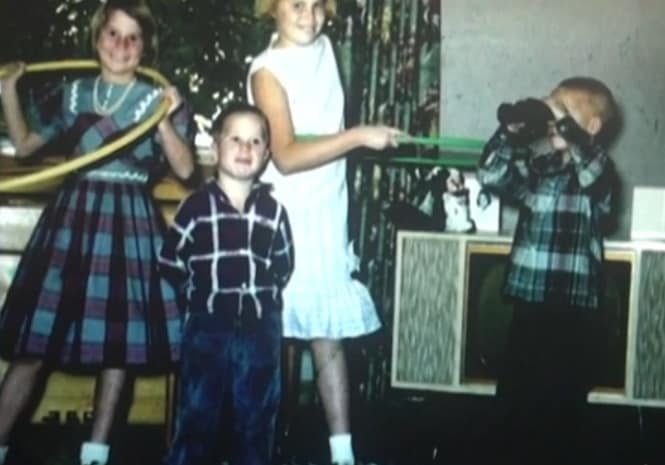


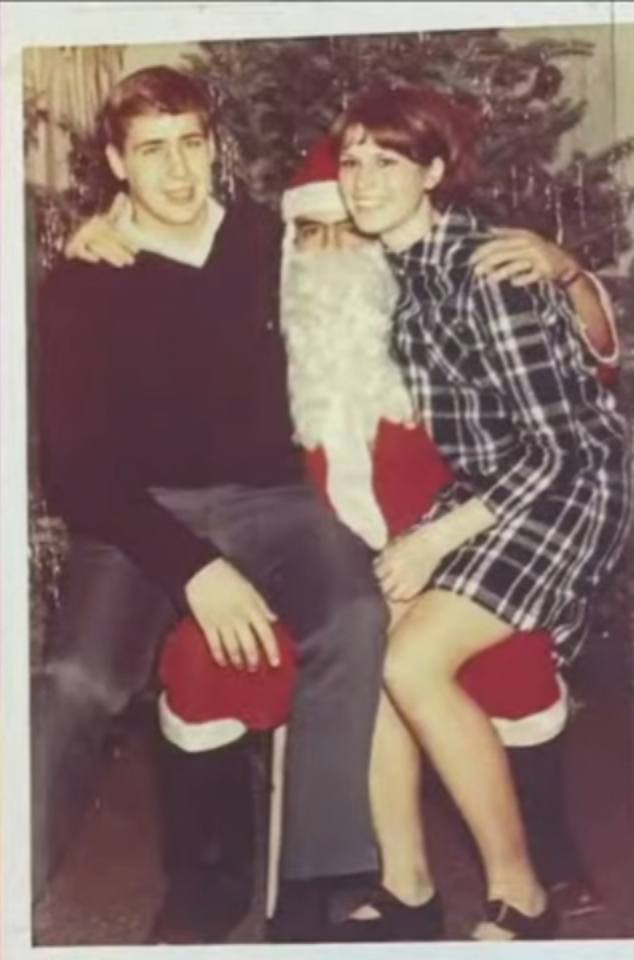
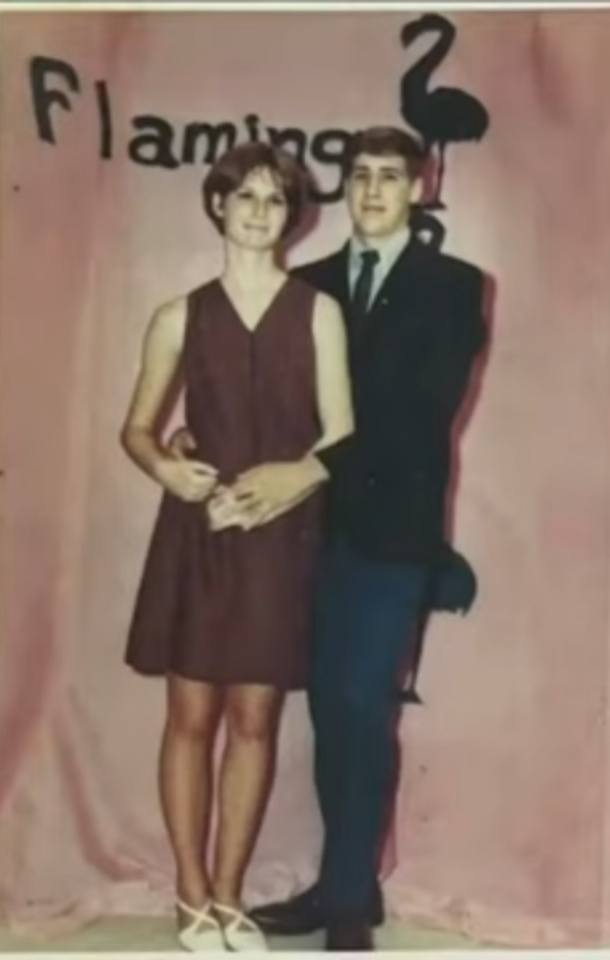

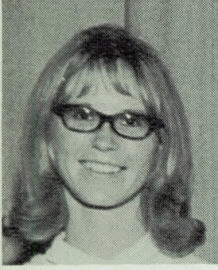
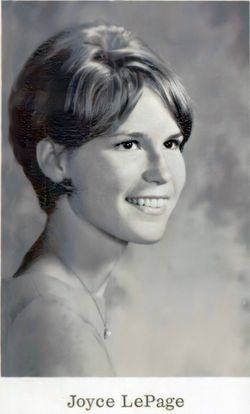


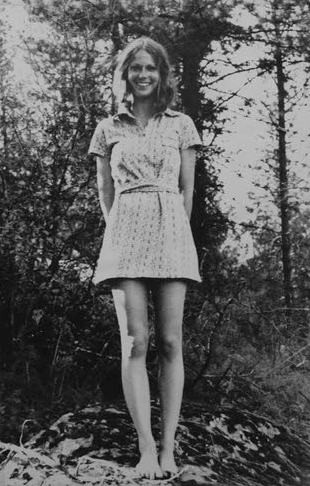
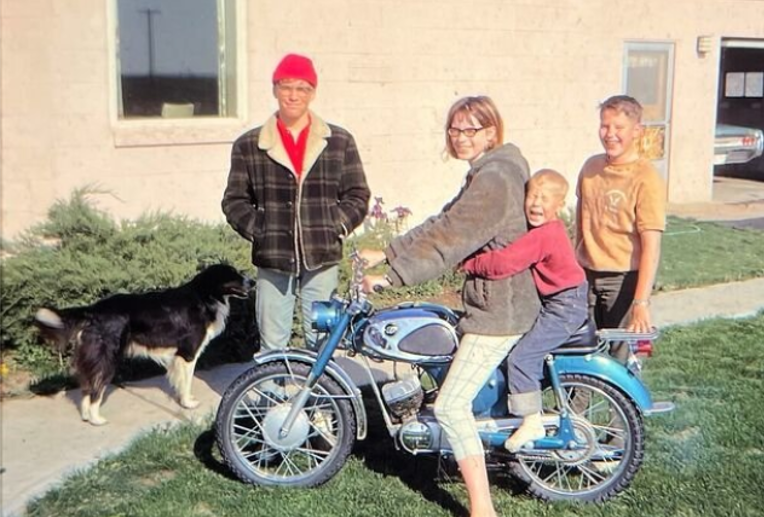


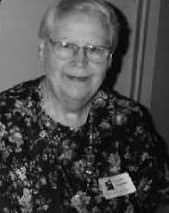

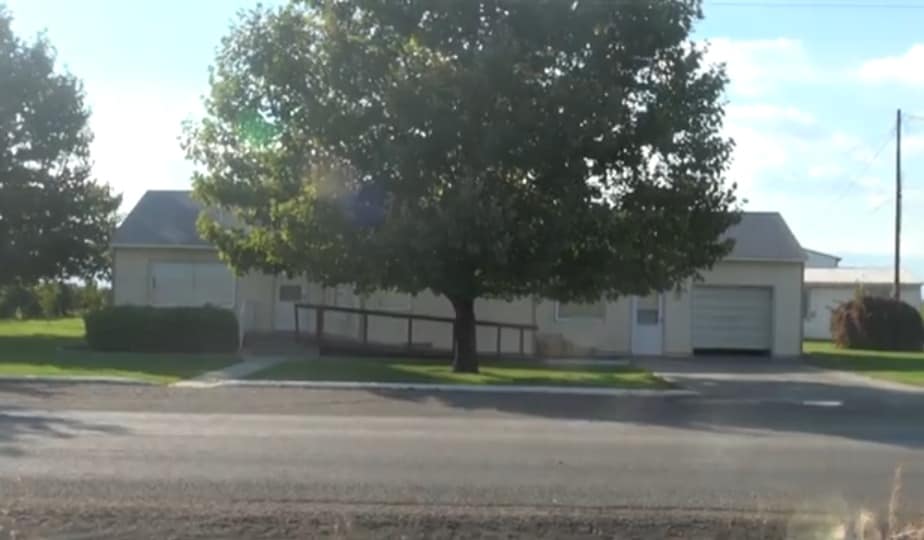

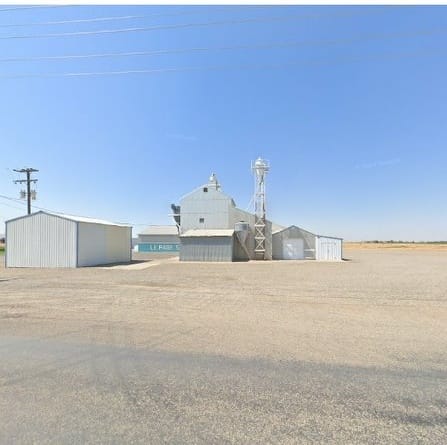


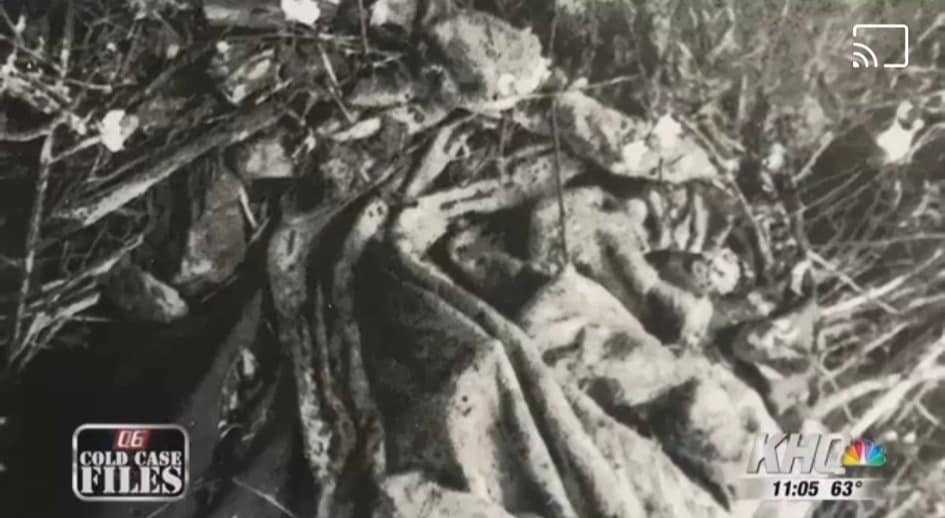
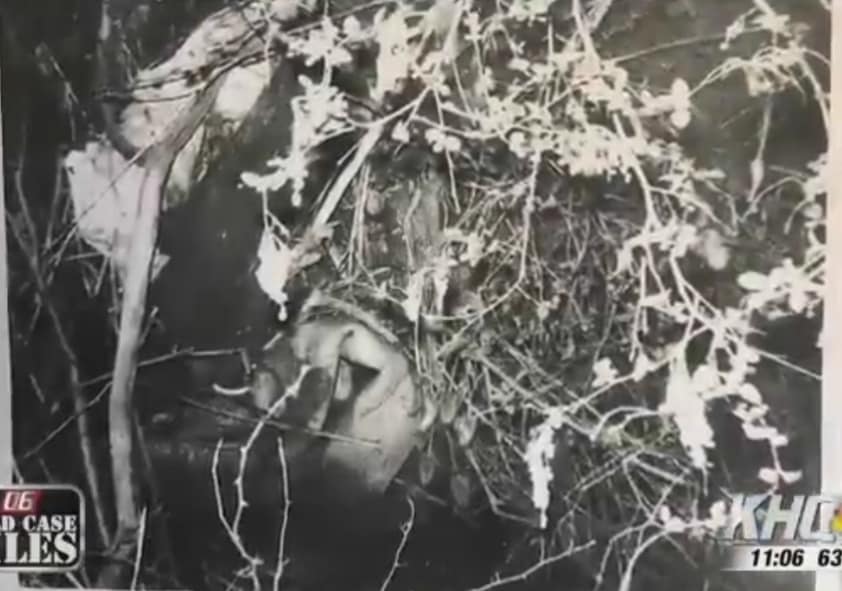


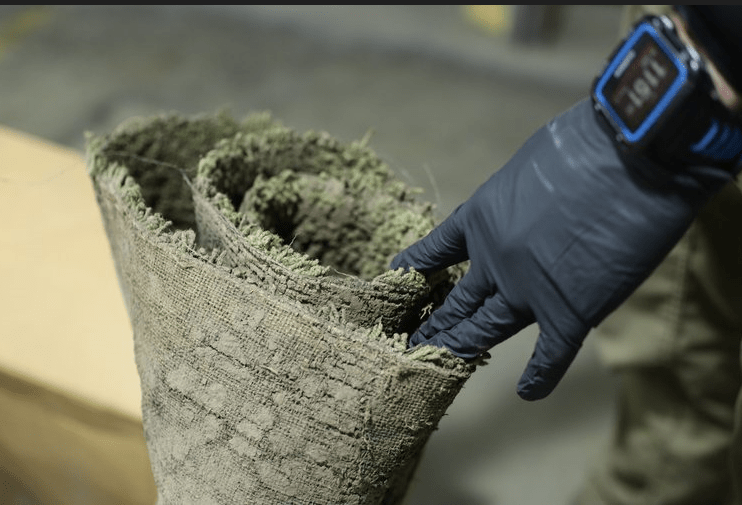


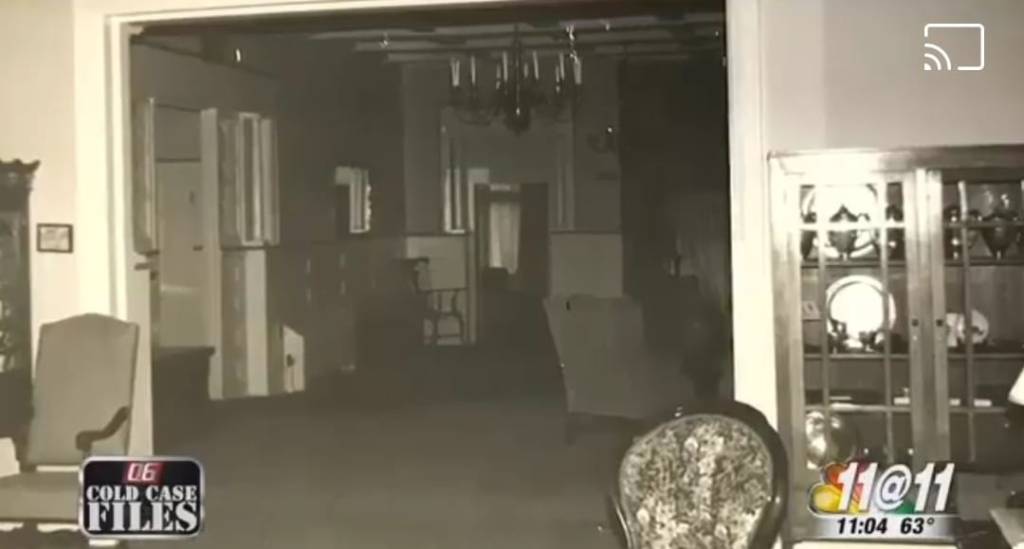

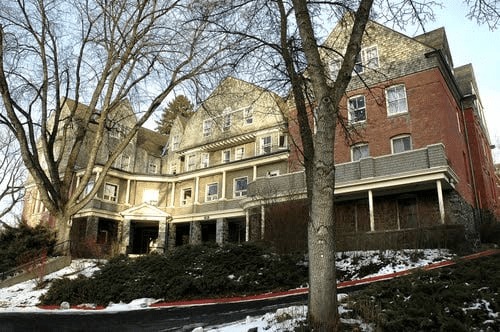


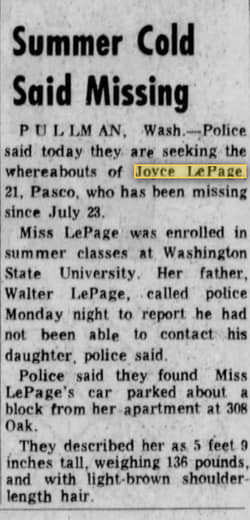

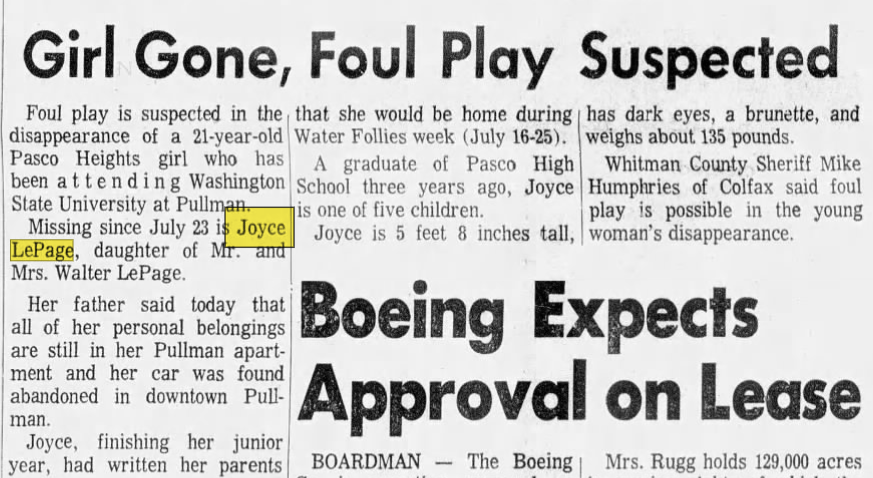
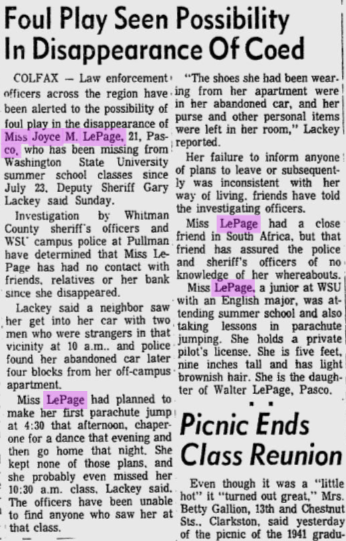


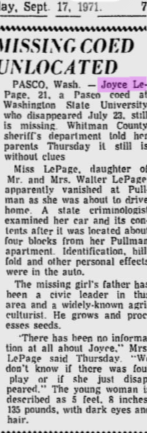
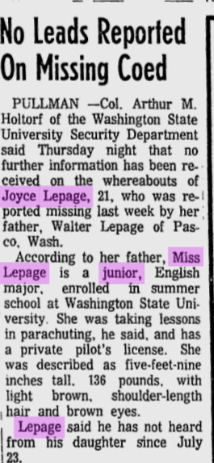


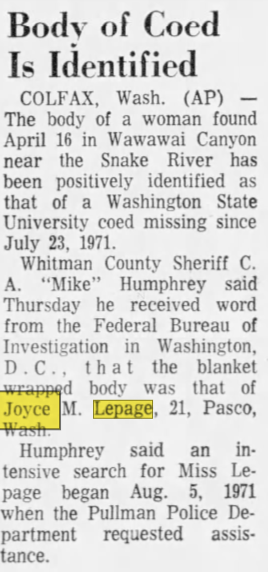
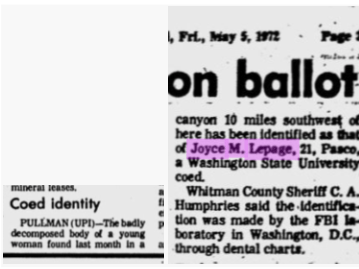
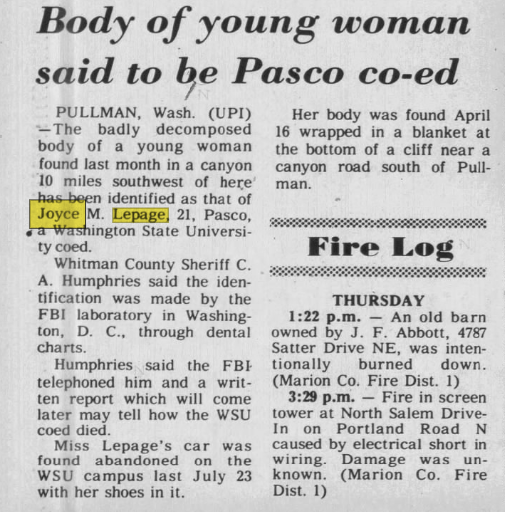


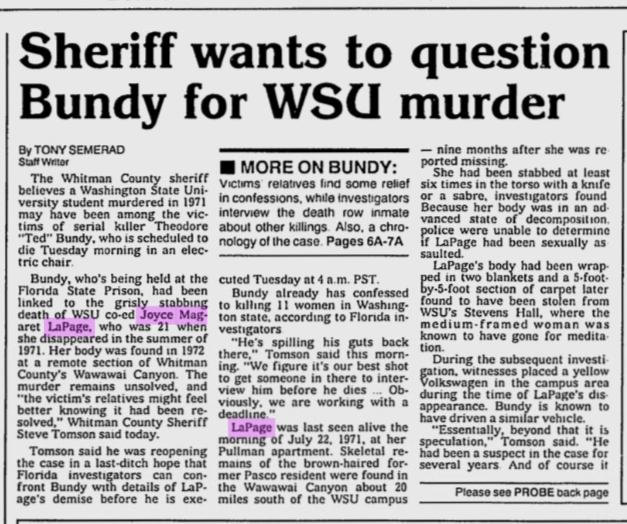

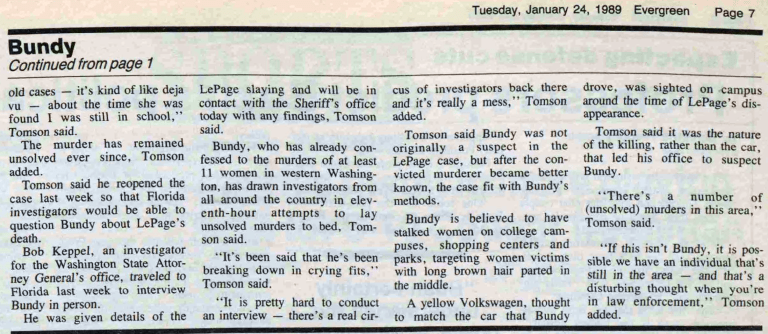
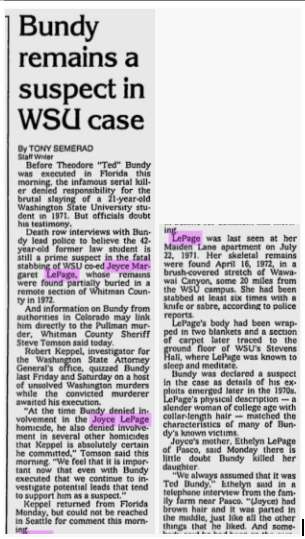

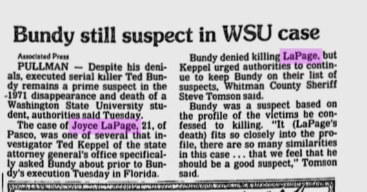
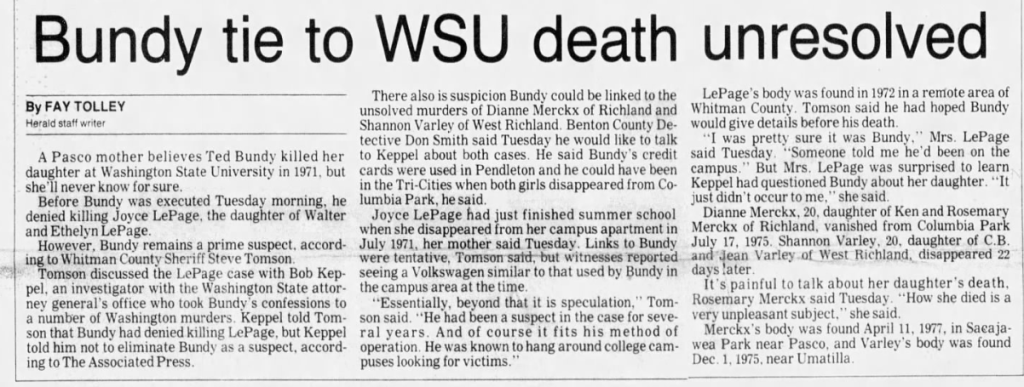
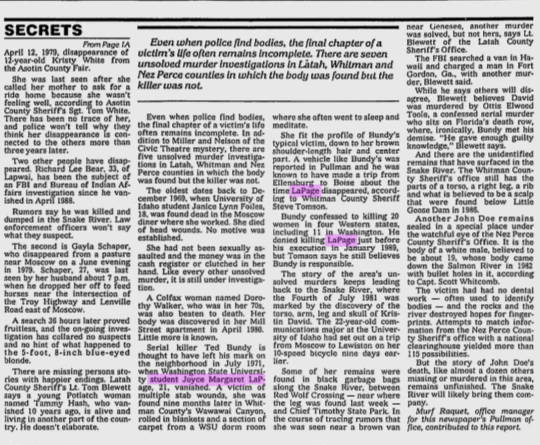


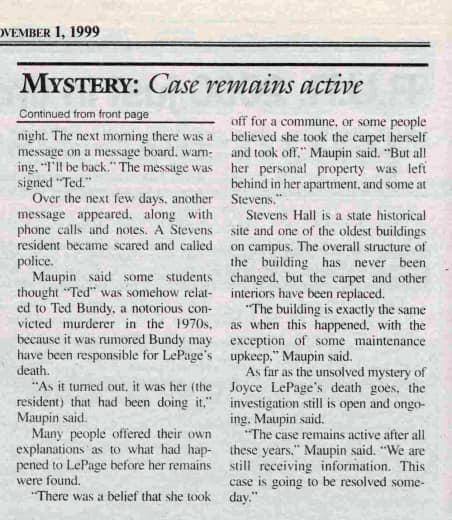
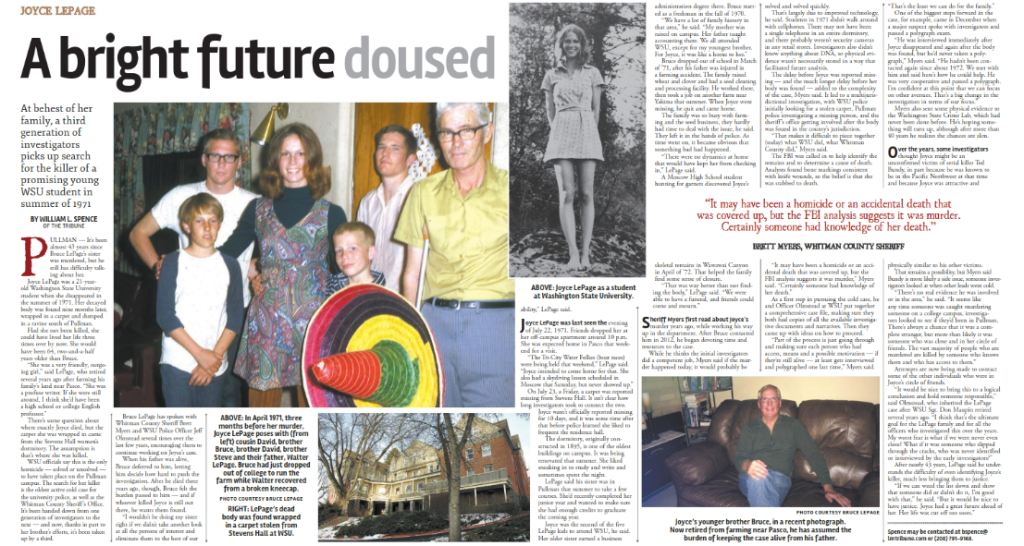

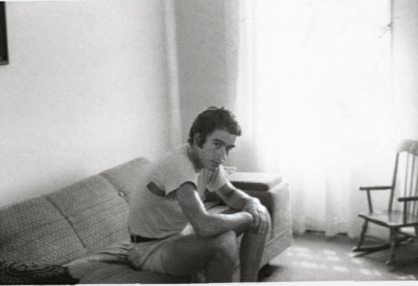
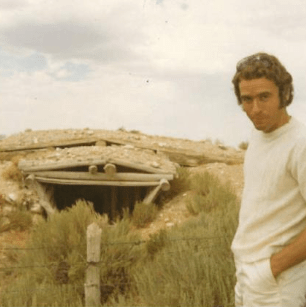

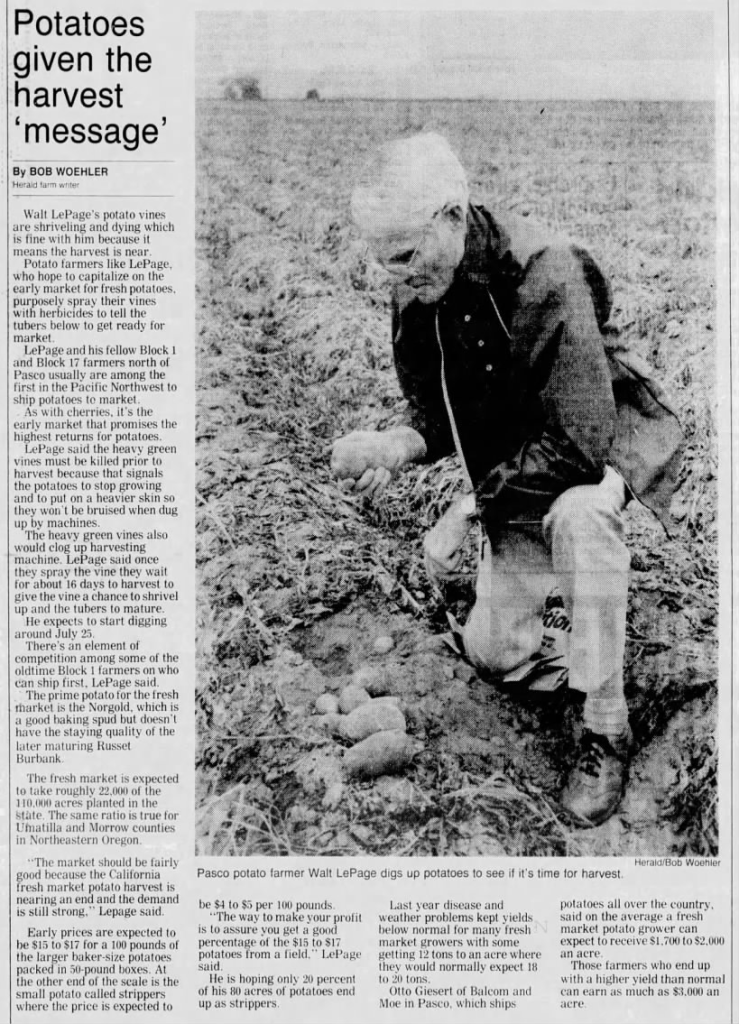


Rita Lorraine Jolly was born on December 6, 1955 to Donald Clover and Mary Elizabeth (nee Horner) Jolly of West Linn, Oregon. Mr. Jolly was an attorney and Rita was the youngest of four children: she had two brothers (Jeffrey and Bryan) and a sister (Jill). The couple met at the University of Minnesota Law School and were married on April 24, 1947 in Hennepin, Minnesota; they relocated to West Linn in 1949. After graduating, the couple opened a law office: Mr. Jolly worked as an attorney and Mary was his legal secretary. Because Don and Mary were both survivors of the Great Depression, they were often considered to be ‘frugal and liberal for their time.’ Above all else, the Jolly family valued education and pushed for their children to have strong critical thinking skills.
A tall girl, at the time of her disappearance, Rita stood between 5’5 and 5’6” tall, weighed around 130 pounds, had hazel eyes and medium length brown hair she wore parted down the middle. She had a small scar on her face just below her right eyebrow and her front teeth were slightly crooked and overlapped a little bit. She also had her wisdom teeth pulled and had small pit fillings in the buccal (cheek) side of her lower molars. In an interview with the website ‘Uncovered,’ Jill Jolly said that her sister enjoyed ‘nature, animals, and creativity’ and spent her time after school ‘immersed in books, writing poetry, and creating art.’ … ‘she had a real talent. I have folders filled with her writings. I am ashamed to admit that it’s very difficult for me to go through these writings. They are such intimate windows into her life, and often the anguish in them bleeds through. I feel a responsibility to preserve these writings. I have a good flatbed scanner now, and hope to be able to focus on making digital copies so that I may more easily share them.’
Per Uncovered: ‘growing up, Rita struggled with emotional regulation and sensitivity, which led her parents to seek help from a child psychologist.’ Jill said that she now believes her sister may have been on the autism spectrum, a concept not widely understood in the 1960’s and 70’s. Disillusioned by cliques and peer pressure, Rita faced bullying for being different, and in her junior year of high school was reprimanded for writing a derogatory statement on the school wall. Her parents defended her, challenging the school to ‘improve its culture.’
At around thirteen, the Jolly’s bought Rita a gelding quarter horse named Sugar that became her best friend. I read from multiple sources that she walked with an uneven stride due to an improperly knitted fracture of her lower left leg, however according to a comment Jill (username ‘JillElaine‘) left on the YouTube video ‘Mystery Murders: The 1973 Disappearance of Rita Jolly,’ (done by ‘Steve the Amateur Historian‘): ‘as for Rita’s ‘limp’, she was still in the process of healing from her broken leg (a horse she was riding fell over on a muddy trail and crushed it). But whatever limp she might have had was almost unnoticeable.’ … ‘she was healthy & strong, and a horse owner. She went for walks in the evening almost daily, often several miles in length.’ Rita’s front teeth were slightly crooked, and overlapped a little bit; she also had her wisdom teeth pulled and had small pit fillings in the buccal (cheek) side of her lower molars.
Mr. and Mrs. Jolly said their daughter was incredibly bright and mature for her age and took academics very seriously. A user going by the name of ‘Cheryl Klawitter’ commented on the ‘The Morbid Library’ article about Rita that she ‘was in a couple of classes with Rita at Clackamas Community College in Oregon City in 1973. I won’t claim we were friends, just casual acquaintances. But we talked some. She had told me she’d hitchhiked to a concert in Eugene, (sometime in the month prior to her disappearance). So the image of her being a naive high school girl, out for an evening walk is misleading. Of note: there was a full lunar eclipse Saturday the 30th, the night after she disappeared. From what I knew if her personality, that would have excited her. She could have been hitchhiking just about anywhere that Friday night (the 29th), looking to party. If she was on I-5 it is just not that unlikely she may have crossed paths with Bundy. Or for that matter some other predator. I knew the Chief of Police in West Linn at that time and he confided (later) they suspected Bundy. I assume that was after excluding people she knew.’* Per Jill Jolly, ‘As a senior, Rita attended full-time classes at Clackamas Community College through a special program for scholastically-advanced high school seniors. Excelling in Creative Writing and art programs, Rita thrived in this environment. Though she did not attend classes at West Linn High School during her senior year, she insisted on participating in the graduation ceremony in June 1973.’
At about 7:15-7:30 PM on June 29, 1973, Jolly left her family home to take a walk, something she did almost daily according to her sister. Jill said that she ‘left with a smile on her face’ and Mr. Jolly said ‘she smiled at us and went out the door. I went out to cut the grass. She never came back.’ Rita was last seen wearing a brown wool Pendleton shirt jacket, a red and blue cotton shirt, olive colored army fatigue pants (or blue jeans depending on the source), and low-cut blue tennis shoes with buckskin heels. She seemed okay and in decent spirits; her family said she didn’t have any known problems with anyone in her life and Jill commented that she ‘struggled with angst that affects so many young people, and it’s possible she initially ran away. But her social security number has never had any activity, as far as I know.’ Ms. Jolly was ‘in the Robinwood area and/or on Sunset Ave around 8:30 to 9:00 PM’ and was seen for the last time around 9:30 PM walking uphill on Sunset Avenue near the Oregon City Arch Bridge that crosses the Willamette River into West Linn. Shortly after she vanished two young men in Portland went to law enforcement claiming they saw her the night after she disappeared, but when approached she said her name was Mary. The men that reported the alleged sighting did not leave their contact information with police so no follow-up was made and their story was never confirmed. Regarding the incident, Jill said that: ‘the following night, two young men reported to the police that they tried to pick up a girl who looked like Rita, but this young lady was not her.’ Mr. Jolly told law enforcement that all of his daughters personal belongings were left behind and there was nothing missing from her bedroom. He said she that was an ‘independent thinker with few dates or close friends.’ Detective D. Calhoun (who worked the case and immediately had a gut feeling that Rita was murdered) commented that: ‘people don’t usually just disappear and have no contact.’
Almost from the beginning, information related to Jolly’s mysterious disappearance stopped trickling in and leads dried up almost immediately. By July 15, the idea of Rita having left home willingly had morphed into the possibility that she was most likely abducted under sinister circumstances. Mr. Jolly was crucial in keeping his daughters case in the news and relevant: not only did he hand deliver letters to local police precincts and news stations begging them to help find her, he also offered a $2,500 reward for any information leading to her whereabouts. Rita’s case was being investigated at the city, county, and state level, but despite all the help the investigation went nowhere. Apparently (per ‘The Morbid Library‘), her brother believed that the perpetrator was someone local who possibly knew her, and in an edit on their article about Ms. Jolly, author CJ Lynch said: ‘thanks to a comment on this post, we now know a bit more about Rita as a person. She is an adventurous person: at the time of her disappearance, she often hitchhiked to get where she was going, and she enjoyed concerts and parties. She is a free spirit, enjoying the freedom and independence that comes with being in college.’ (this edit was because of comments left by readers).
YouTuber ‘Whitney Dahlin‘ pointed out that a ‘hit and run is also possible. she was walking alone in the evening I feel like it’s entirely possible someone hit her and then hit her body or buried her body so they wouldn’t go to prison for it. I feel like a a lot of missing person cases where the missing person was last seen taking a walk in the evening are really hit by a car cases. Abductions are very rare compared with pedestrian car accidents.’
Within a six-month period in 1973 four young women went missing from the same general area in Oregon: first Rita in late June, then seventeen-year-old Susan Wickersham from Bend just two weeks later on July 11 (her body was discovered in January 1976 just five miles south of her hometown). Ms. Wickersham is sadly yet another unconfirmed Bundy victim I never heard of, although realistically he most likely didn’t kill her, as she was found with a gunshot wound in her head which wasn’t his MO… Next to disappear was twenty-four-year-old Vicki Lynn Hollar, a petite girl (only 5’1” and 115 pounds) with dark eyes and brown hair. Ms. Hollar was last seen getting in her black 1965 Volkswagen Beetle with the running boards removed (Illinois plates GR 7738) on August 20, 1973. She was leaving her place of employment at the Bon Marché (now Macy’s), where she had been employed as a seamstress for about two weeks. It’s been theorized that Vicki was headed home to her apartment at 600 West 27th Avenue in Eugene with the intention of meeting up with a friend to attend a party in her neighborhood later that evening (but she never showed up). Friends shared with police that Hollar had a habit of picking up hitchhikers; her VW and personal belongings have also never been recovered. Lastly is Suzanne Rae Justis, who disappeared on November 5, 1973. Recently divorced, Justis was from Eugene and hitchhiked to Portland, and in a phone call to her mother from outside the Memorial Coliseum that day said she would return home the next day to pick up her son from school. Sue’s mom booked a room for her for the night at a nearby hotel, but it was never used. She never came home and has never been heard from again. For unclear reasons, a missing persons report wasn’t filed until 1989.
I’ve been finding most of the ‘unconfirmed victims‘ have very weak commonalities without a lot of substance… Rita did look like one of Ted’s victims: she was attractive and slim, with long brown hair and dark features. Her abduction was most likely a crime of opportunity (like so many of the others), meaning the perpetrator took advantage of a particular situation most likely with no prior plans to go out and commit the atrocious act. Additionally, Jolly fit neatly into his preferred age range: she was seventeen, and he typically targeted younger females anywhere from twelve years old (possibly even as young as eight if you throw Ann Marie Burr into the mix) all the way up to twenty-six (Colorado ski instructor Julie Cunningham). But that’s about it. And it’s important to keep in mind how common the ‘long hair parted down the middle’ look was during that time period: even my own mother looked like she could have been one of Bundy’s victims.
During his death row confessions Ted admitted to abducting Roberta Kathleen Parks from Oregon State University on May 6, 1974; he claimed to have raped and killed her at Taylor Mountain, over 250 miles away from her school and about 25 miles southeast of Seattle. Because Parks was found in Washington state she is typically not included in his Oregon victim count. In interviews, Bundy confessed to killing two additional women in Oregon but refused to elaborate on the details; according to most detectives, Rita Jolly and Vicki Hollar are the best candidates. Law enforcement tried but were unable to question Ted about Rita’s disappearance before his execution in 1989, eliminating the chance of possibly closing her case. Jill Jolly said of Bundy’s execution: ‘as I recall, my mother told me that the local detectives managed to get a direct question about Rita through to him before his execution, and his reply was ‘No. No more in Oregon.’’ Dubbed Ted’s ‘bones-for-time scheme,’ he withheld many secrets right up until the very end of his life in hopes to parlay the untold stories into yet another stay of execution. ‘There are other buried remains in Colorado…’ Bundy said, refusing to elaborate any further. He then took his secrets with him to the grave. Colorado Detective Matt Lindvall felt this was a direct conflict between his desire to postpone his execution by giving up information and his need to remain in ‘total possession: the only person who knew his victims’ true resting places.’
Regarding suspects, Ted is one of only two seriously considered individuals I could find that was investigated for the abduction of Rita Jolly; the other one is Warren Leslie Forest. Two additional names that are almost casually thrown around when ANY unclaimed victim is brought up from that time are Henry Lee Lucas and Ottis Toole. The pair were lovers, united in their shared childhood traumas and together they terrorized the United States throughout the 1970’s and 80’s. Lucas falsely claimed he killed upwards of 600 people (Toole said he participated in 108 of them), however it was eventually determined he was responsible for two of them and was strongly suspected of only eight more. But, investigating both men a little further, at the time Rita disappeared in mid-1973 Lucas was serving a 5-year prison stint for attempting to kidnap three schoolgirls in 1971, and Toole’s history is a little fuzzy between 1966 and 1973, but his first strongly suspected kill was the 1974 murder of Patricia Webb. Oddly enough, Toole died at the same Florida State facility that executed Ted in 1989: he entered the Raiford prison in 1983 and died in 1996 from cirrhosis of the liver. Additionally, Ed Kemper and Gary Ridgway both popped in my head as possible suspects, but Kemper was apprehended on April 24, 1973 and operated more in the California area (Rita disappeared June 29 which is obviously after he was arrested) and Ridgway didn’t start his atrocities until 1982. In her interview with Uncovered, Jill said that: ‘there are five possible suspects that have been identified.’ I’m unsure who else it could have been (I’m sure police are playing close to the vest with what information they have). If I think of any additional potential suspects I will update my article.
Warren Leslie Forrest was convicted of abducting and stabbing to death nineteen-year-old Krista Kay Blake in 1974 then burying her remains near Battle Ground on Tukes Mountain. He’s been in prison since October 2, 1974 and for decades Clark County law enforcement tried (with no success) to link him to other murders in the area. On October 12, 1974, the human remains of two women were found in Dole Valley near Vancouver, Washington. One was immediately identified as Carol Platt-Valenzuela but the other individual remained unidentified for over 40 years. But, thanks to DNA profiling and some blood left behind on the dart gun Forrest used to subdue his victims, in 2015 those remains were finally determined to be those of Martha Morrison, who disappeared from the Portland area under mysterious circumstances in September 1974. Two of his suspected victims have never been found: Diane Gilcrest (14) and Jamie Grissim (16). Before Warren was identified as the killer, Bundy was considered a person of interest in Morrison’s death (he’s still a suspect in Valenzuela’s murder). In 2020, Forrest was charged with the murder of Martha Morrison.
‘Historywmystery.blogspot.com‘ said about the Jolly disappearance: ‘It’s also important to remember that this was the 1970’s and there were numerous women, especially young ones, hitchhiking along I-5 back in the 1970’s and some of them met with death at the hands of someone who couldn’t have been Ted Bundy. There was an extensive article I found in a 1975 paper discussing the perils of young women who were hitchhiking in Oregon, many of whom knew the danger and yet continued to hitchhike. There was Martha Morrison, who was a frequent runaway who vanished from Portland on September 1, 1974. Her remains were discovered a little over a month later and were not identified until 2017 using DNA testing. She, for a long time, was considered a possible Ted Bundy victim until her remains were identified and it was found she had been killed by William* Forrest, a serial killer working out of the Vancouver, Washington area. Interestingly enough, Forrest was someone that I considered as a possible culprit in the Rita Jolly case, something that’s still possible but definitely something I am calling more into question now.’
*they meant Warren Forrest.
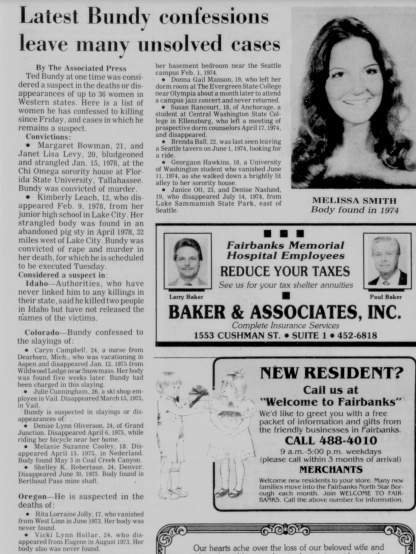
Jill Jolly gave the following quote in her interview with ‘Uncovered:’ ‘…the truth is that we really don’t know what happened to her. We all have theories. Our dad thought she had called several times, mostly just silence on the phone but once he said that he heard her voice, ‘Mom? Mom?’, then ”Dad?’, then a click on the phone hanging up. Could she have gotten involved in a cult or some other situation where it was hard to leave? I find myself wondering how folks can help with solving the mystery of what happened to Rita. After 50 years, I don’t think it’s likely that we will have answers before all of us who knew her are gone from this earth. The advent of DNA gave us so much hope! But the number of unidentified bodies and the expense & difficulty of the tests has been discouraging. It’s not a quick fix. Nonetheless, perhaps someday she will be one of the humans who are ‘given their name back’.’
2022 marks the 49th anniversary of Rita Lorraine Jolly’s mysterious disappearance. Sadly, Mr. and Mrs. Jolly both passed away before learning what happened to their daughter: Mary died in 2005 and Donald on July 2, 2010. Mr. Jolly always held onto hope that Rita was still alive. As of December 2022, all three of her siblings are alive and are still desperate for answers. Rita’s dental records are available and her DNA was entered into CODIS in 2000.
Jill Jolly also pointed out that: ‘there are literally thousands of unidentified bodies in NamUs database at https://www.namus.gov/ Thanks to DNA, some of them are finally being given their names back. Unfortunately, running DNA is expensive and can be difficult to extract from older remains. Please support efforts to fund attempts to give these poor souls back to their families.’
* Jill Jolly researched the lunar calendar extensively and couldn’t find any record of there ever being an eclipse on the evening her sister disappeared.
I’mWorks Cited:
doenetwork.org/cases/2503dfor.html
namus.gov/MissingPersons/Case#/7780
newspapers.com/clip/38129030/rita-jolly-missing-oregon/
clackamas.us/sheriff/case/73-9833
missingin.org/reg4206/rita_lorraine_jolly.htm
salem-news.com/articles/march022008/cold_cases_3-1-08.php
newspapers.com/newspage/565976821/
historylink.org/File/2637
obits.oregonlive.com/obituaries/oregon/obituary.aspx?n=donald-clover-jolly
uncovered.com/cases/rita-jolly
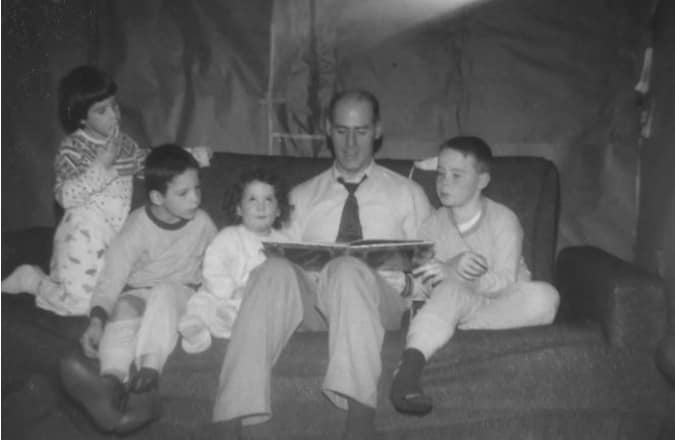

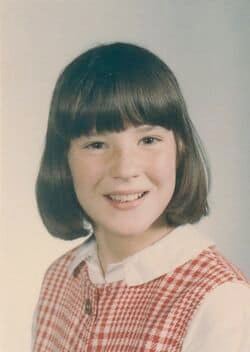


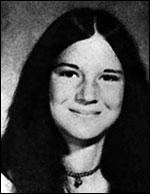
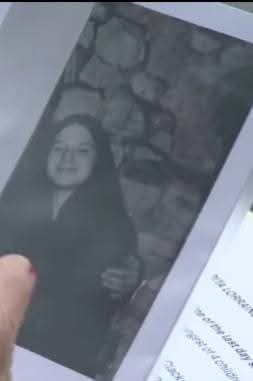


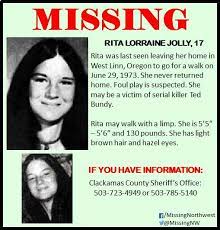
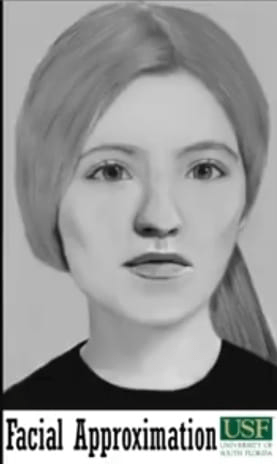


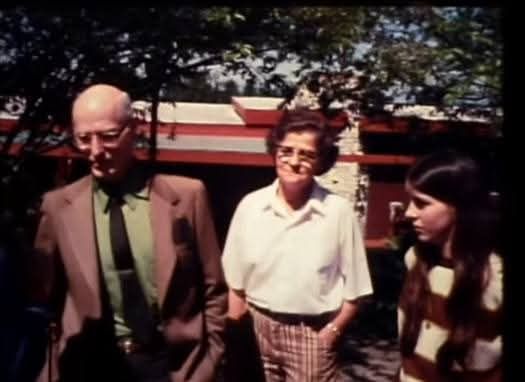


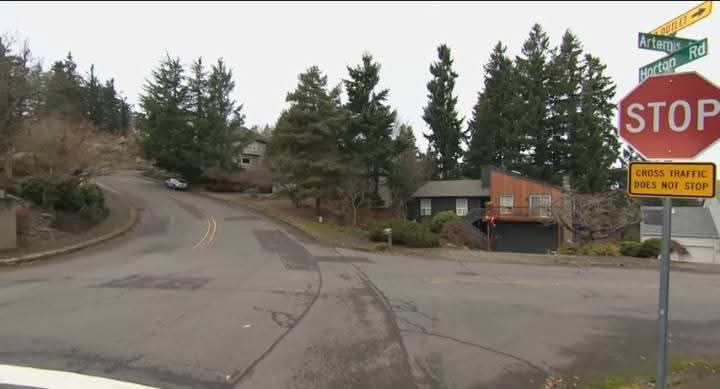

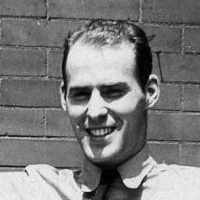
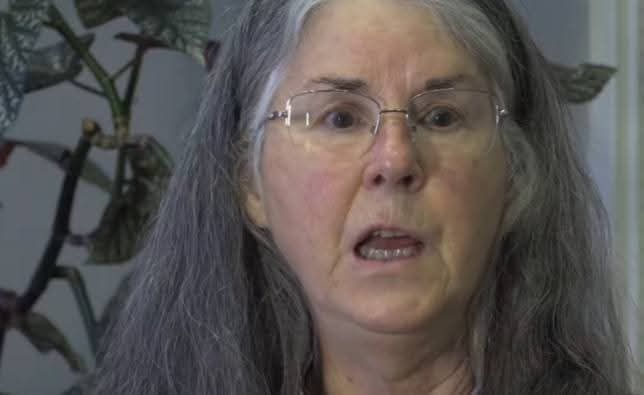


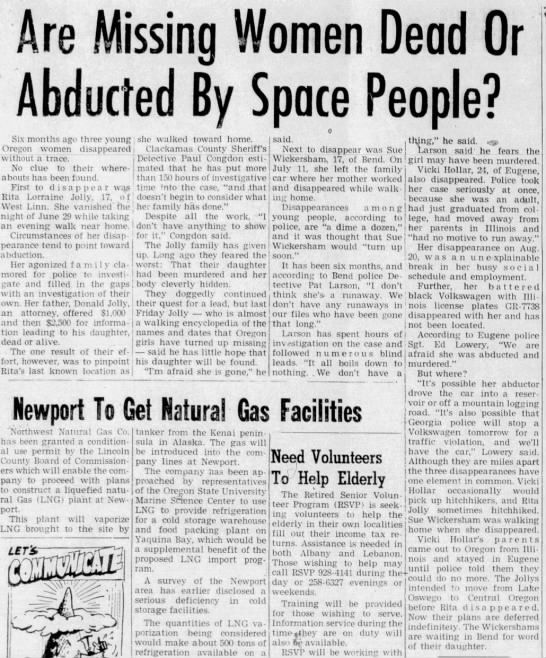
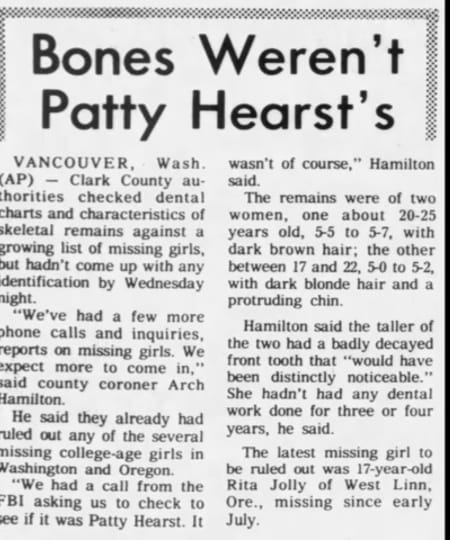
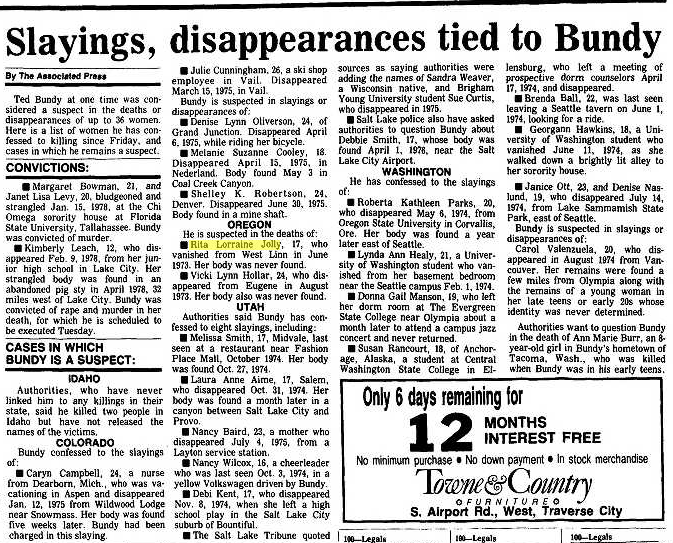

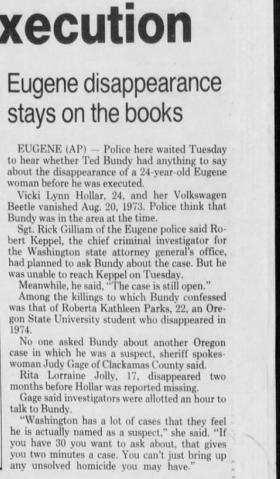

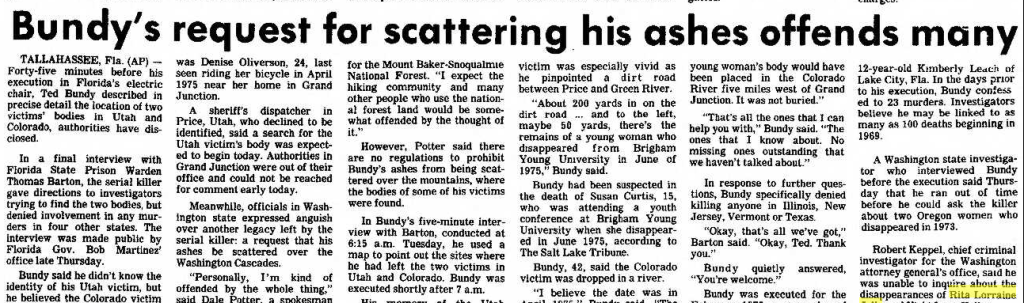

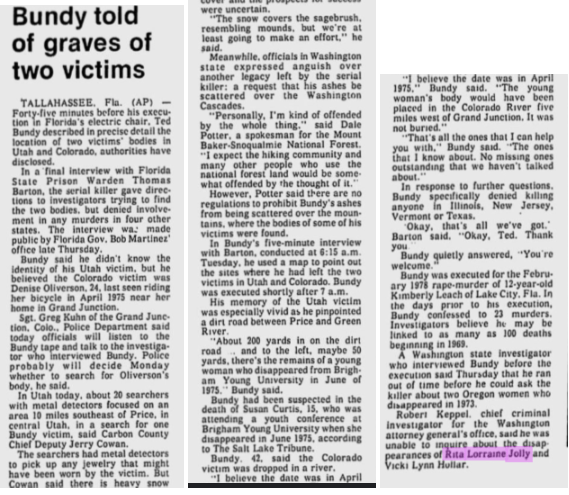


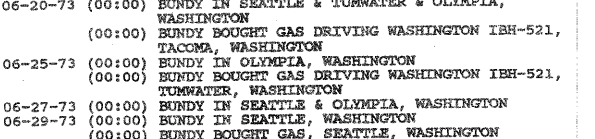

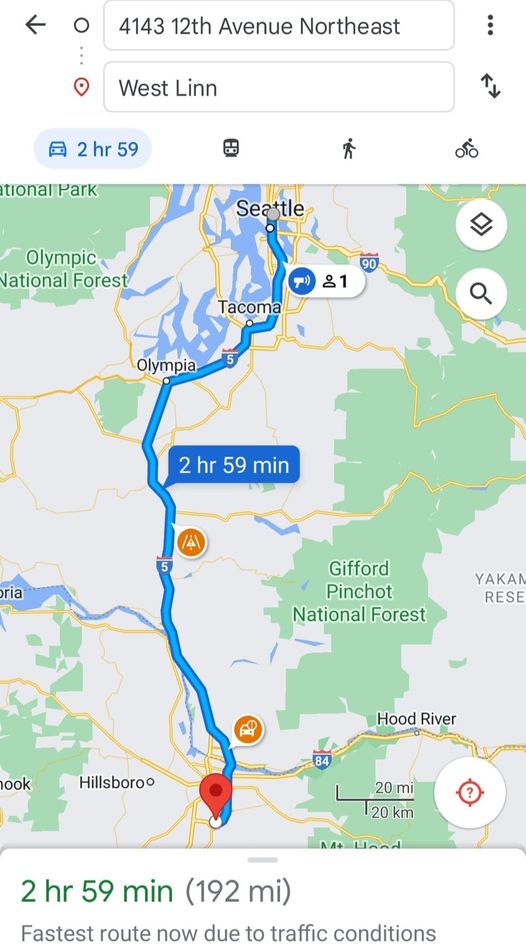
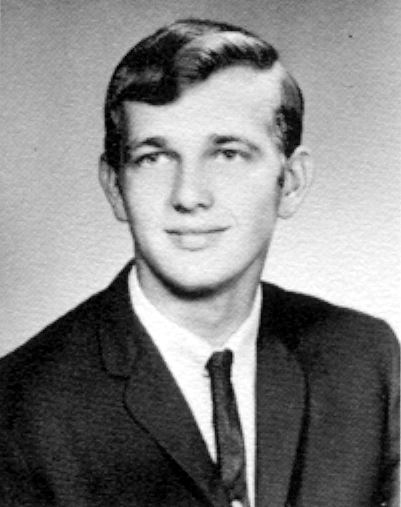



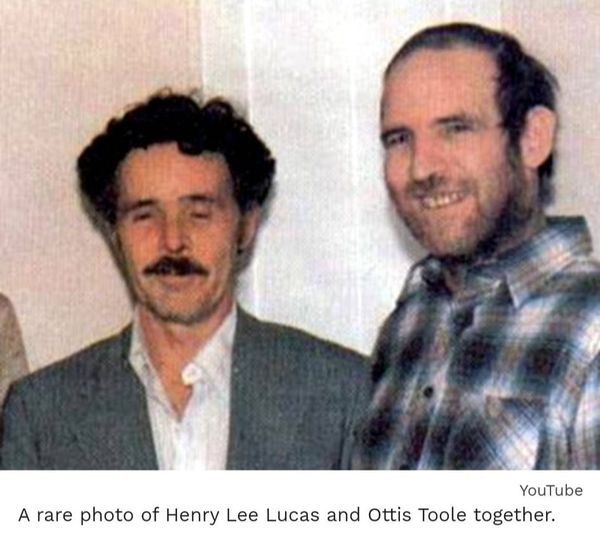


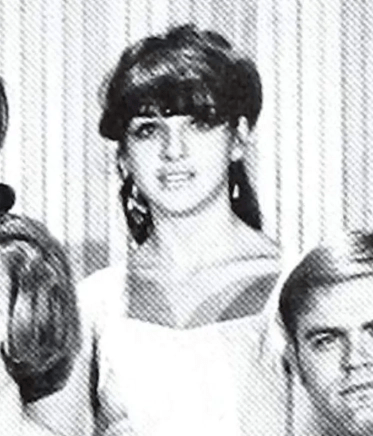


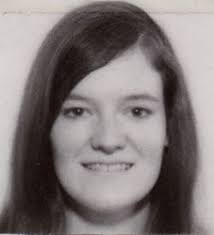
Rita Patricia Curran was born on June 21, 1947 to Thomas Sr. and Mary (nee Donahue) Curran in Woodhaven, NY; Rita had a younger brother (Thomas Jr.) and sister Mary (Campbell); Mr. Curran worked for IBM. The strict Roman Catholic family eventually settled down in Burlington, Vermont. Described as ‘quiet, sweet, and almost painfully shy,’ Rita was a small girl with a petite frame, dark eyes, and long brown hair she wore parted down the middle. After graduating from Mount Saint Mary’s Academy, Ms. Curran attended Trinity College in Vermont, an all girls Catholic school that was close to home; in 1969 she earned a Bachelor’s degree in education. Described as ‘a person truly dedicated to her profession’, Rita was in her second year of teaching second-grade at Milton Elementary School in Milton, Vermont. After her untimely passing Milton Elementary Principal Merritt Clark Jr. said of his young teacher: ‘the boys and girls seemed to like her being in class. She did a lot of work with the deprived and handicapped children’ … ‘she had a knack about her working with these kids.’ In her spare time Rita participated in ‘The Champlain Echoes,’ an all-female acapella group and taught a religion class at St. Ann’s Catholic Church in Milton (which was about 20 miles away from where she was staying the summer she was murdered).
Rita’s permanent residence was in Milton, VT however in the summer of 1971 she was renting an apartment with two roommates in Burlington while participating in a reading and language arts workshop at the nearby University of Vermont graduate school. Ms. Curran found an ad for a ‘roommate wanted’ in a local newspaper and had moved into a first story apartment in a converted three-story Victorian house just about two weeks before her death (it was also the first time in her life she lived away from home). She originally planned on staying the entire summer but Mary Curran said her daughter was planning on coming home just a few days after she was murdered. She went on to say that Rita’s two roommates were friends before she moved in and she felt like she didn’t quite fit in with them. Plus she got into an argument with one of them over a boy spending the night. Mary Curran-Campbell said of her sister: ‘she had actually lived at home all her life until June of 1971, and she found an ad in the Burlington Free Press looking for a roommate part-time for the summer. It seemed to be a good fit and so she moved out about one month before she was murdered.’ While living there Curran was employed at the Colonial Motor Inn as a chambermaid (which is strangely only half a mile away from the ‘Elizabeth Lund Home for Unwed Mothers’ where Bundy was born in November 1946). The day of her disappearance, Ms. Curran worked at the Inn from 8:15 AM until 2:40 PM then attended choir practice at The Sara M. Holbrook Community Center located at 66 North Avenue in Burlington, Vermont; she may have been there as late as 10 PM. A representative from the Motor Inn said that Curran was extremely well liked there, was very popular among staff, and had been employed there on and off for about 3-4 years, usually during summer breaks. She often complained to her co-workers that she felt like an ‘ugly duckling’ but held onto hope that she would someday find a man, settle down, and get married. Rita also shared with friends that she already went to three weddings at that point in mid-1971 and moved to Burlington with hopes to find a boyfriend because she felt all the good men in Milton were already taken.
One of Curran’s roommate, twenty four year-old Beverly Lamphere, said she last saw Rita alive at around 11:20 PM when she left the apartment to meet up with her boyfriend Paul Robinson (23) at a Shelburne Road restaurant; their third roommate Kerry Duame met up with the couple at some point. Robinson said that ‘we were gone maybe two or three hours. We had asked Rita to join us that night, but she said no.’ Ms. Lamphere took the only set of keys with her when she left but made sure to leave both the front and back doors unlocked; it was their usual practice as they lived in a safe, residential neighborhood. At around 1:00 AM on July 19, 1971 the friends returned to the apartment with no signs of forced entry; they assumed Curran was sleeping as she was nowhere to be found. After arriving the friends sat in the living room chatting for a while, completely unaware that anything was wrong. It wasn’t until around 1:20 AM that Beverly discovered the gruesome scene straight out of a horror movie: the 24 year-old schoolteacher was lying dead on her bedroom floor, naked and on her back, her torn underwear discarded underneath her; Rita’s face and head were badly beaten. Beverly’s boyfriend attempted to perform life saving measures but it was too late. Curran’s hair was styled up in curlers (just like Seattle flight attendant Lisa Wick), and it was as if she’d been attacked while getting ready for bed. There had been signs of a struggle and it appeared Curran fought for her life. When the roommates were questioned, they weren’t able to give very much helpful information, as they were nowhere near the scene at the time of the murder. Burlington Detective Wayne Liberty said they were eventually ruled out as suspects in 1972. Paul Robinson said he can still remember the screams of horror when his friend discovered Rita’s body: ‘I was the one that called the police. I told them there had been a murder. I have always had a question about whether Rita was still alive when we got back into the apartment that night.’…’This kind of horror was unheard of in Burlington, Vermont. It was a very innocent time. I can’t tell you how fast deadbolts flew off the shelves after Rita’s murder.’
Chief Medical Examiner Dr. Lawrence Harris determined Currans cause of death to be ‘asphyxia caused by manual strangulation’ and that she had been beaten in the head and face (most likely with a closed fist); there were no drugs found in her system. The ME pinpointed her time of death to be sometime between 11:30 PM and 12:30 AM and that she had been sexually assaulted with a crowbar (but she was not raped). Detectives also found blood on her throat. Law enforcement said it was evident by the scene that there were ‘signs of an intense struggle.’ Shortly after Rita’s murder Former Chittenden County States Attorney and now US Senator Patrick Leahy (he was elected to the position in 1974) wanted no information on it released to the public and put a ‘blackout’ on the case, meaning no information at all was released to the public about the murder. This devastated the Curran family, who felt Rita’s death should have immediately been a front page story.
At the time law enforcement called Rita’s murder ‘the most intensive investigation in the city’s history’ and that ‘in their memory there had been no crime of such violence in the history of this city of 38,000 persons.’ Police determined that the murderer entered the apartment through an unlocked door and attacked Curran while she was most likely in bed but not yet asleep. Neighbors said they heard nothing out of the ordinary: no screams or anything during the time the murder took place. Police quickly ruled out robbery as a motive, as Currans purse sat untouched on the floor directly behind the door with about $20 inside (as well as her personal items and driver’s license); her car was also found unbothered in its normal spot in front of the apartment building. In the kitchen police found Currans blood smeared on the inside of the door, which most likely had rubbed off from the suspects hand as he was fleeing through the back door. Police found no fingerprints at the scene.
The murder of Rita Curran terrified the residents of Burlington, as it took place during a time of innocence, and when violent sexual murders were infrequent and rare. An unclaimed $3,000 reward was offered at the time for any information leading to the arrest and conviction of the murderer of Curran. Her sister Mary said that ‘Burlington was considered a very safe place. It was an unbelievable shock to the city when this happened.’ … ‘The phrase ‘it can’t happen here’ just can’t be used because it will happen here, it has happened here. In any hometown that you hear people say that on the news, they’re not being realistic.’ The ‘Burlington Free Press’ reported that Rita told her friends that on multiple occasions she received strange, almost threatening telephone calls late at night with nothing on the other end but heavy breathing. Several other women in the area reported receiving similar types of calls. Additionally reports of a tall, mysterious peeping Tom looking into windows were made as well as others that reported attempted break-ins, where the intruder ran away after they screamed. There was never an official connection made between Rita’s murder, the peeping Tom, and the obscene phone calls, but they supposedly all stopped in September of that year. Detective Richard Beaulieu of the Burlington Police Department had officers look into a possible connection between several assaults on other local women and Rita’s murder in the area. A week before Curran was murdered, a 20 year old Burlington woman was raped in her bed at 4 AM by an assailant she felt was around 16-17 years old. In October 1970, a woman sleeping in her bed suffered a vicious knife attack only three blocks away from Rita’s apartment. Thankfully, the unnamed suspect got spooked when his victim started screaming; it’s unknown if he was ever caught. In September 1971, police claimed they got their first big break in the case and that evidence would soon be handed over to a grand jury. But, weeks passed by then months, and nothing ever came to fruition from that big announcement. Years later it was determined this ‘major break’ most likely stemmed from the fact that police had polygraphed one of Rita’s neighbors after a prior unrelated rape accusation came to light. However, nothing ever came of it and there wasn’t enough evidence to arrest the unnamed male. In addition to the neighbor there were three other suspects that were looked into but all were eventually cleared. Additionally, Burlington Police looked into all males in the area with any known history of sexual offenses. By 1979, two of the four viable suspects in the Curran case died and another two were in prison for homicides that ‘bore no resemblance to the Curran murder.’ Despite the intense public interest in the young school teacher’s murder the case quickly went cold.
Curran’s case got renewed attention in 1980 after she was named a possible Bundy victim in Ann Rule’s, ‘The Stranger Beside Me.’ In the novel, a retired FBI agent commented that there was a ‘remarkable resemblance between Rita Curran’ and his first girlfriend, Diane Edwards.
One thing I am EXTREMELY thankful for is all the leg work and research other ‘Bundy scholars’ do, largely because I’m just an insurance agent blogging as a hobby. The creator of the ‘hi: I’m Ted’ site said the following about Currans murder: ‘In researching this case, I spoke to a woman who was a teenager in Burlington at the time of the attack and claimed that her parents were close friends with the Currans. The woman (who wished to remain anonymous) said that Rita was found bound with piano wire, which she had apparently struggled against, as her skin was torn and bloodied. She also said that the police suspected the ‘son of a prominent judge’ but did not have enough evidence to charge a high profile member of the community’s son with the crime, and instead his family put him in a mental institution.’ … ‘The piano wire claim is an oddly specific detail that has never been mentioned in any of the news reports from that era or more recently. Binding victims with piano wire while they were still alive was certainly not a known part of Bundy’s modus operandi. The woman I spoke to claimed this detail came directly from the Curran family, but without the case file or the family speaking out, these details cannot be substantiated and may just be rumors. However it is interesting to note that at least some of this information is corroborated by Rita’s mother, who publicly accused the police of a ‘cover up’ in 1979.’
Elizabeth Kloepfer was in a serious, long term relationship with Ted Bundy from fall 1969 to 1975 and she made no mentions of him visiting Vermont in the early 1970’s in her 1980 memoir, ‘The Phantom Prince.’ During that period in July 1971 Liz took Molly and moved into an apartment closer to the Rogers Rooming House even though her and Ted weren’t as strong as they once were. She said their lives were ‘out of sync’ and that they didn’t spend as much time together as they did when they had first started dating. Just as a side note, I cannot tell you how many times I’ve had to refer to my handy-dandy ‘Ted Bundy Job Chart’ over the last 8 months since I started writing this blog. Anyways, in the summer of 1971 when Rita Curran was murdered Bundy worked as a delivery driver for Pedline Supply Company, a family-owned medical supply company. While there he was once caught stealing a picture from a Physician’s office (he was let off with just a verbal warning). Ted began his employment there on June 5, 1970 and was there until December 31, 1971 when they moved their office across town and he quit. Also at that time in 1971 Bundy was still in his undergraduate days at the University of Washington. So as far as any concrete proof putting Bundy in Burlington in July 1971… there just isn’t any (just a lot of rumors and speculative stories). In ‘The Stranger Beside Me,’ Rule hypothesizes that Ted had some sort of ‘defining moment’ in his 20’s where he went to the Elizabeth Lund home in hopes to track down the truth about his parentage. She further speculates that after Bundy realized he was ‘illegitimate’ and that his birth was the result of a pre-marital tryst he went blind with rage and killed Rita Curran during that brief period he was in Vermont. But this doesn’t seem to make much sense: we know Ted told Liz he already knew about his illegitimacy when they first started dating in late 1969. Rule spoke with retired FBI agent John Bassett who was supposedly ‘intrigued by the remarkable resemblance between Rita Curran and Diane Edwards, the fact that Rita had died of strangulation and bludgeoning to the head, and the proximity of the Colonial Motor Inn where Rita worked to an institution that had wrought so much emotional trauma in Ted Bundy’s life: The Elizabeth Lund Home for Unwed Mothers.’ Another interesting factoid: there’s supposedly a report from animal control that said someone going by the name of ‘Bundy’ was bit by a dog the same week that Curran died (this is all the information I could find on this event). Does that place him at the scene or is it just another coincidence?
Mary Campbell even wrote Bundy a letter before he was executed asking if he murdered her sister: ‘we asked the FBI when they were interrogating him whether if she was one of his case, and we got a letter back from the FBI that said he did not deny it or acknowledge it.’ Bundy was questioned about Curran’s death for the final time shortly before he was executed the morning of January 24, 1989. Thomas Barton, the warden at Florida State Prison in Raiford, asked him about his involvement at around 6:15 that morning. He said: ‘I can say without any question that there is no, uh, nothing for instance, that I was involved in Illinois or New Jersey,’ then when asked specifically about Burlington, Ted said a simple ‘no’ and that was that. Bundy denied any involvement with her murder right up to the very end.
Because it was so widely speculated that Bundy was in the Burlington area at the time of Rita’s murder, Deputy Police Chief Shawn Burke said Vermont law enforcement felt he may have been their guy for quite some time. However, Patrick Leahy said after Vermont investigators spoke with him in Raiford before he was executed they were finally able to ‘discard him as a suspect.’ Additionally, former Burlington Police Chief Kevin Scully said, ‘we have looked into the possibility of Ted Bundy’s involvement, we’re satisfied that at the time of the Rita Curran murder, Ted Bundy was somewhere else in the country.’
Bundy’s DNA was submitted to the CODIS database in 2011; no hits came back on the murder of Rita Curran. In 2016, Vermont detectives said they were taking another look at her case with‘’fresh eyes’ and more modern investigative resources. Leahy told Vermont’s ‘Burlington Free Press’ that Rita’s murder was ‘an extremely brutal homicide. Certainly, one of the most brutal I’ve ever seen in my years as state’s attorney’ and that it was ‘a horrible scene. I can still picture what I saw. A lot of evidence was gathered there. We didn’t have techniques like DNA and thinks like that back at the time. Hopefully, the evidence that was gathered was enough.’ Shawn Burke further commented that, ‘uniquely, there are still witnesses and people of interest who remain alive. It is a case where we have been running down some active leads.’ Since the murder took place in 1971, Vermont law enforcement ruled out dozens of suspects, polygraphed over 100 people and went over hundreds and hundreds of tips related to the case. They also spoke with all of the registered sex offenders that resided in the area close to where she was murdered and still came up with nothing.
Mrs. Curran felt there was some sort of police cover-up regarding her daughters case, saying ‘we felt a lot more could have been done but wasn’t for political reasons.’ Roughly a week before Bundy was executed she sent a telegraph to Bundy begging him to finally tell the truth about his involvement with Rita’s death; it was the FBI who sent her a response, saying Bundy refused to say anything about it, either way. On the 45th anniversary of Rita’s death in 2016, Thomas Jr. and Mary put a notice in the local paper in memory of their beloved sister. It read: ‘we will never forget you. We will never give up hope that we will someday know why you were taken from us.’ The siblings hoped their parents would have answers about their daughters death before they died but sadly that didn’t happen: Mr. Curran died in 1991 and Mrs. Curran passed in 2002. In a July 2021 interview with the ‘Burlington Free Press’, Mary Curran-Campbell said: ‘We’ve lived with this day-in and day-out for 50 years. I can’t say I’m going to give up, but I have to surrender to the powers that be.’ …’fifty years is a long time to grieve, a long time to hope. The fifty-year mark confirms that a resolution in our lifetime to Rita’s murder is not going to happen… We know Rita’s death did not happen in a vacuum. Somebody somewhere knows what happened that night on July 19, 1971 and they will take that information to their grave. May God have mercy on their soul.’
The brutal murder of Ms. Curran remains open to this day and is the oldest cold case that is still under investigation by the Burlington police department. In July 2021, Vermont Detective Tom Chenette said that despite over half of a century going by, that law enforcement could still find justice for Curran. Regarding Rita’s murder, Leahy said: ‘I can only imagine how relieved her family would be if it’s solved.’ Beverly Lamphere was 95 years old when she passed away in late May 2021. Anyone with information regarding the murder of Rita Curran is encouraged to contact the Burlington Police Department Major Crime Unit at 802.244.8781.
Update:
On Tuesday, February 22, 2023 acting Burlington Police Chief Jon Murad made the announcement the Curran family waited almost 52 years to hear: they finally know who killed their beloved Rita. It was a neighbor that lived in the apartment two floors above hers, a man named William Richard DeRoos. DNA collected at the crime scene from a discarded, ‘un-crushed’ cigarette butt ‘laying on the floor’ below Curran’s elbow in 1971 helped law enforcement link DeRoos to the murder. According to the newly released case file, ‘the Lark cigarette butt that was found next to the right arm of Rita’s murdered body had a male DNA profile that was linked to William DeRoos (b. 12.14.1939). This cigarette butt was unique in the sense that it was not crushed, smooshed or butted out. It had burned out there at the scene, as there was ash located on the floor between her body and her right arm. The end of the cigarette butt had jagged paper that was consistent with a cigarette that had burned out on its own.’
An investigative report from February 2023 states that a ‘big break in the case occurred in 2014’ when law enforcement was able to retrieve DNA from the cigarette butt. It is worth mentioning that Bundy’s DNA was among the 13 samples compared to the sample, and he was ruled out. In August 2022, the DNA from the butt was tested against DeRoos’ and investigators finally found a genetic match. Lieutenant Detective James Trieb said ‘that cigarette butt sat in evidence for over 40 years’ until Detective Jeffrey Beerworth sent it to the NYC Office of the Chief Medical Examiner for analysis. It was then that forensic experts found a single strand of male DNA on it, but they ran into another dead end when it didn’t match any results in the Combined DNA Index System (CODIS). It wasn’t until early 2023 that Burlington law enforcement contacted Parabon Nanolabs Chief Genetic Genealogist CeCe Moore for assistance identifying the unmatched strand, which finally resulted in a positive ID earlier this year. Moore commented that ‘this case is over 50 years old, and it only took a few hours to narrow it down to William DeRoos.’
According to a recently unearthed marriage certificate, William and Michelle (nee Roach) DeRoos (who now goes by the name Kylas Nagaarjuna) were wed on July 21, 1971 in Burlington, which helps place him near the scene of the crime around the time of Rita’s death. Additionally, his official mailing address proves he lived in the same house as Curran at the time of her murder. DeRoos was 31 years-old when he took Rita’s life and at the time was married for only two weeks; Michelle was only twenty-four and was several years younger than her new husband. The night of the homicide DeRoos and his wife had an argument and he ‘left for a cool-down walk.’ Almost immediately after the murder William’s wife gave law enforcement an alibi, telling them he was with her the entire night and never left. Chief Murad said during a Tuesday press conference that: ‘five decades later, she gave our detectives a different story: the truth.’ Kylas later admitted to investigators that DeRoos had convinced her to lie so they would not connect him to Curran’s murder. Nagaarjuna elaborated that she didn’t recall exactly how long William was gone but the next day he ‘told her not to mention that he was not at home’ when the murders took place due to his sordid criminal past and because of it law enforcement ‘would try to accuse him of it.’ She told The Daily Beast that she is still ‘overwhelmed’ by the news and that she doesn’t ‘wish to speak to the public about this;’ she further elaborated that she ‘has conveyed a message’ to Curran’s family. In September 2022 law enforcement met with Nagaarjuna who said that her ex had been in prison twice prior to their marriage and that he definitely had a violent streak. On one occasion he went after his second wife’s throat, briefly strangling her and even stabbing one of her friends unprovoked. Law enforcement feels she had no previous knowledge that her husband was involved in the murder.
Chief Murad said that Curran ‘put up a vicious struggle’ with DeRoos and that she ‘fought for her life.’ The morning after the murder, law enforcement asked the newlyweds if they had heard anything suspicious the night before, and they both denied seeing or hearing anything out of the ordinary: ‘they heard nothing and Mrs. DeRoos stated that she had been up around 1:00 AM but had heard no unusual noises or anything else.’ Paul Robinson found this strange because the walls in the two-bedroom apartment were extremely thin: ‘I have to believe that someone heard something that night.’ Shortly after taking Rita’s life, DeRoos left his new wife and ‘moved to Thailand and became a Buddhist monk.’ She eventually followed him there to become a nun, however their relationship fizzled out largely because it was ‘against the rules’ and the couple divorced. DeRoos reappeared in the San Francisco area sometime during 1974 and he married for a second time. He died in 1986 at the age of 46 from ‘acute morphine poisoning’ in a seedy hotel room in San Francisco.
Former Burlington Police Chief Brandon del Pozo was on the case from 2015 to 2019 and shared with The Daily Beast that ‘Rita’s killer may be dead but if this is all the justice Burlington police can offer her spirit and her loved ones, then so be it. Unless the police keep their memory alive and continue the investigation, the victims of unsolved murders are often lost to time. I’m so proud of the Burlington detectives who kept Rita’s case open while I served as chief, traveling in (and around) the country to collect comparison DNA and re-interview witnesses, and who never stopped until today. The Burlington Police Department never forgot about Rita.’
In September 2022, law enforcement met with Nagaarjuna who said that despite her ex-husband being in prison twice prior to their marriage he had never been violent with her. Things changed with his second wife Sarah Hepting, who told police that DeRoos had an extreme propensity for violence. She shared with them an incident where William stabbed a friend of theirs for no apparent reason, which she thinks he was arrested for (police are still trying to confirm this as she is unsure of the time it happened). Hepting also reported that on a separate occasion he strangled her to the point she nearly lost consciousness (again this was unprovoked).
As I said earlier, both of Rita’s parents passed away waiting for their daughter’s killer to be caught. Her siblings thanked the Burlington Police for the compassion they showed their family over the five decades long investigation. Tom Curran said: ‘my mother came here from Ireland and my father from Newfoundland. We were an old-fashioned, strong, Catholic family. I don’t think so much about the guy who did this as I do about Rita and my parents and what they went through. I pray to my parents, and I pray to Rita.’
Chief Murad told The Daily Beast: ‘when people doing an ancestry or genealogy test check the box saying it’s okay for law enforcement to use the results, they are helping solve murders. They are bringing evil-doers to justice. They are delivering closure to families. I am tremendously proud of the detectives who did this for Rita and her family.’
What’s incredibly helpful is Burlington PD finally released the file for Rita’s case; I attached it in a separate piece: https://jjeannejurewicz.wordpress.com/2023/02/22/rita-patricia-curran-case-file/

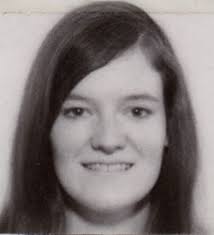










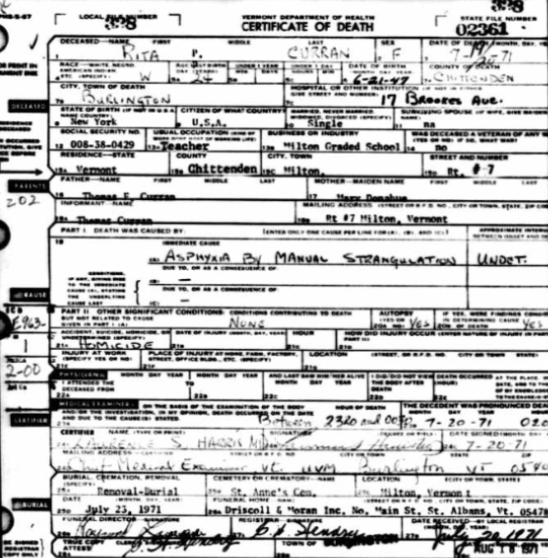



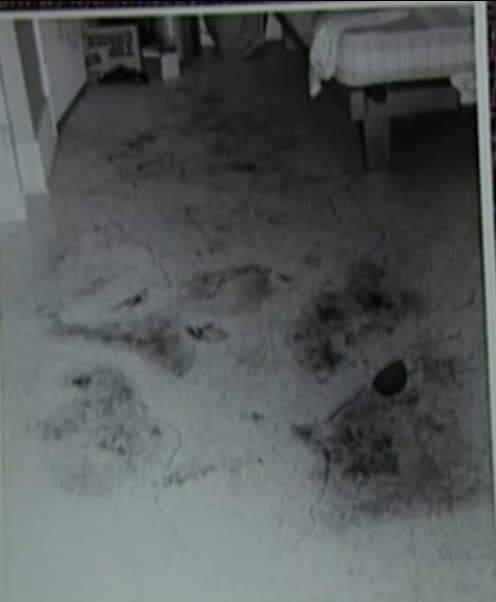


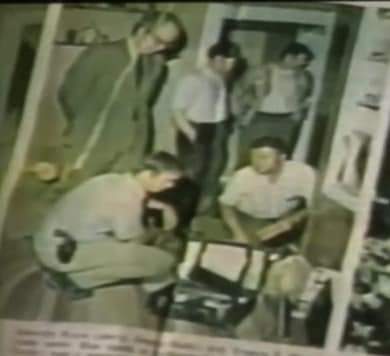

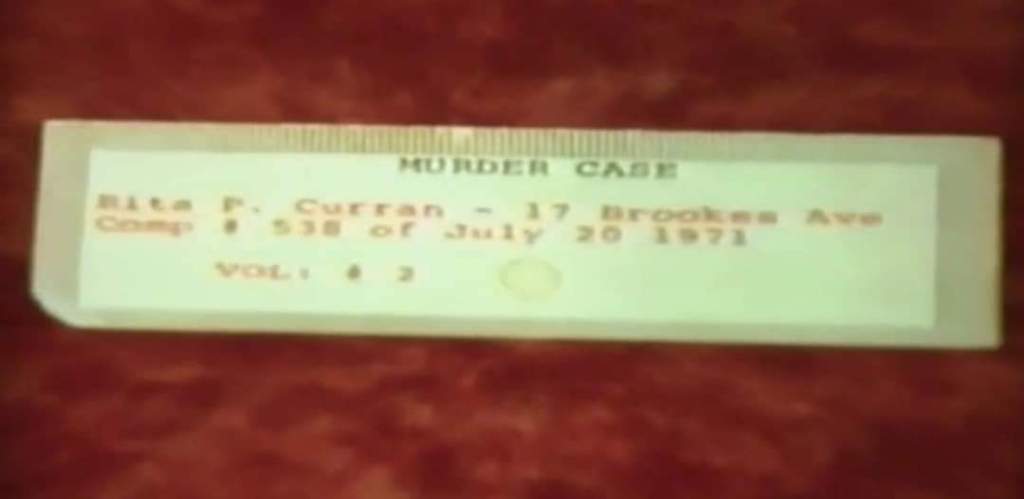


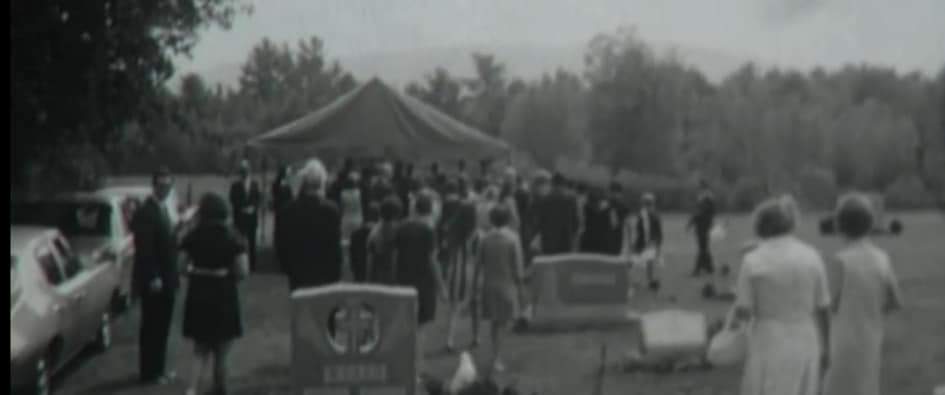


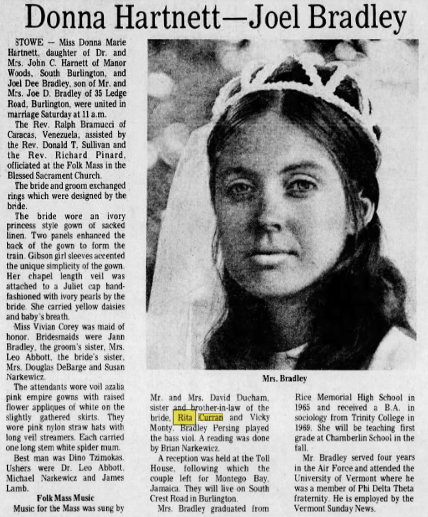


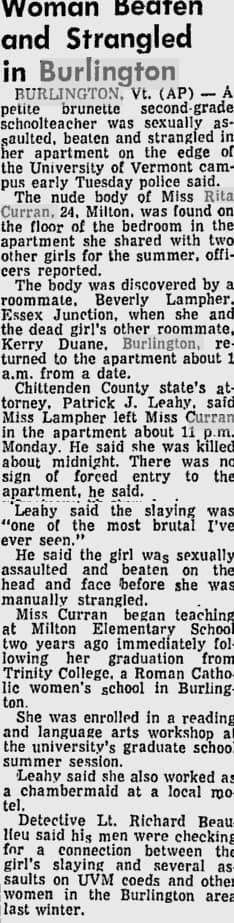
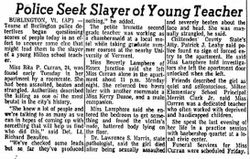
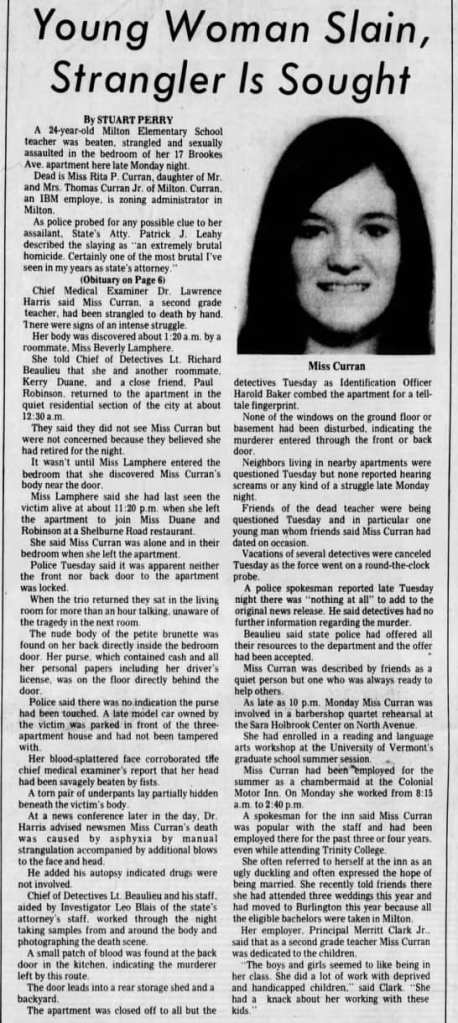





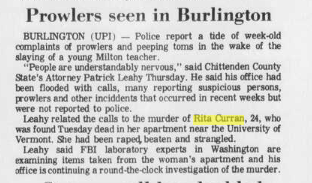


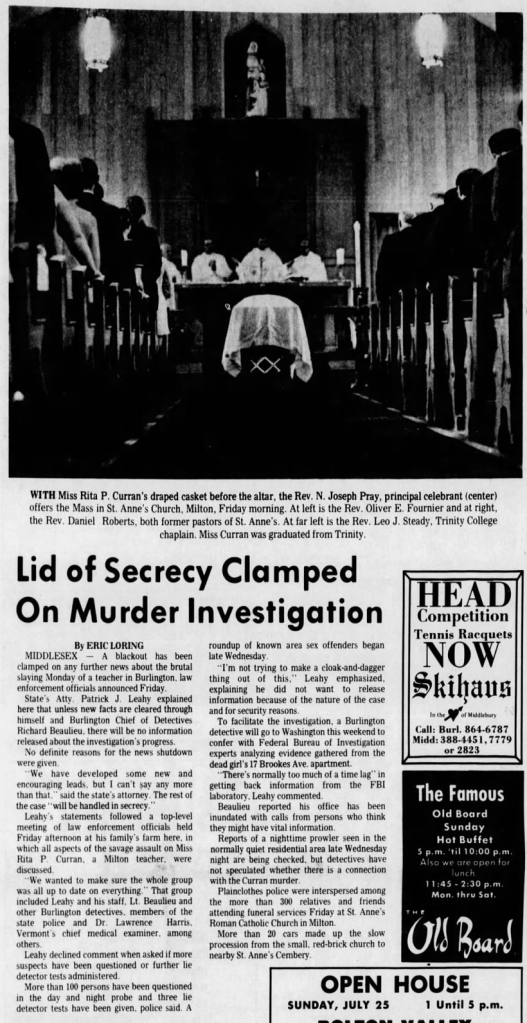

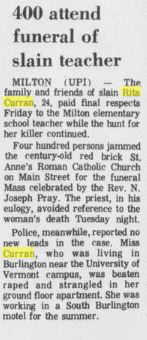
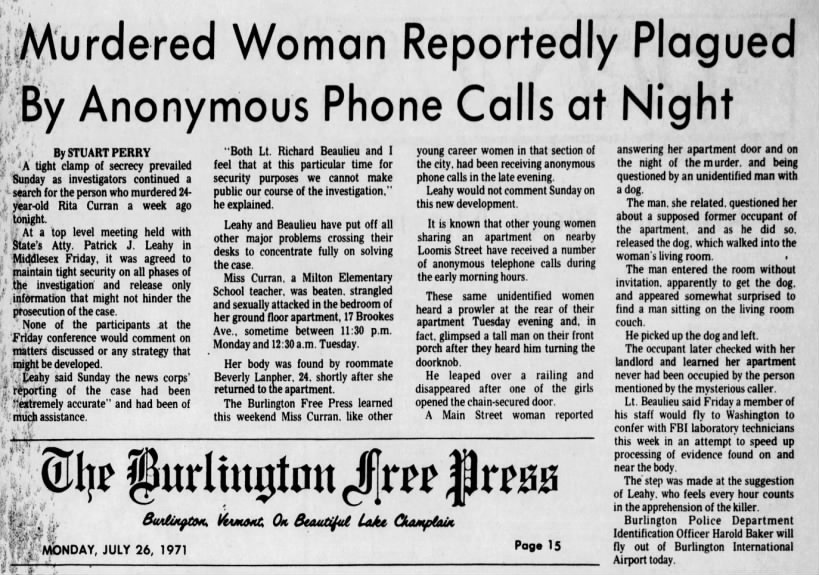


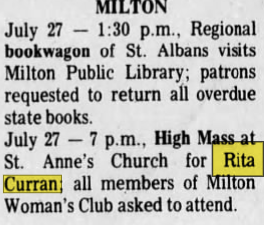
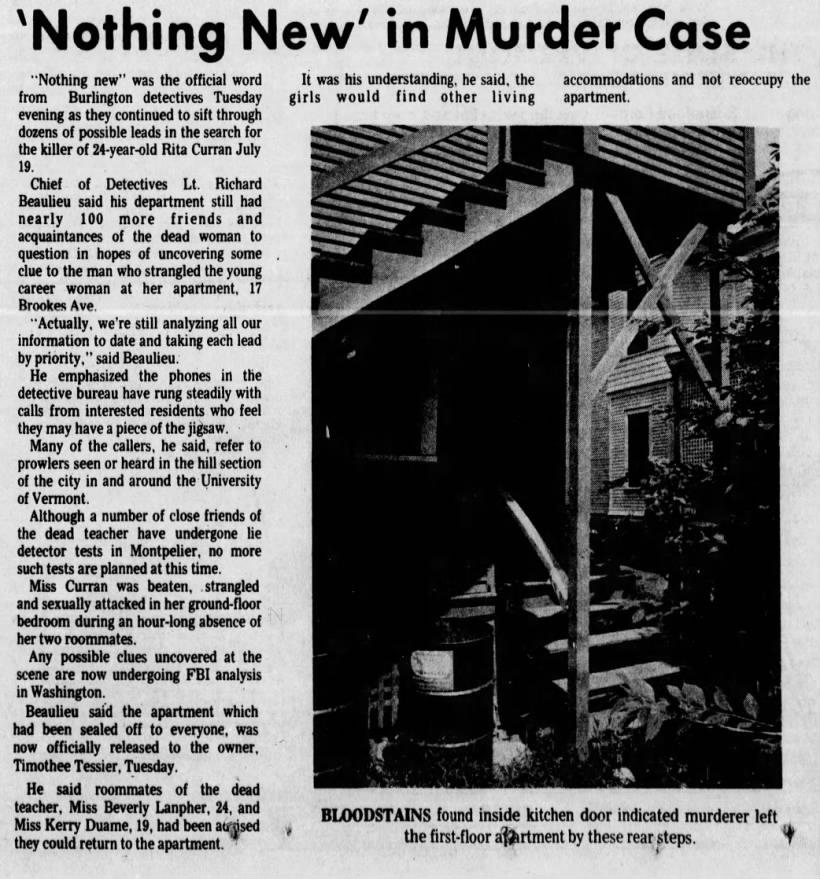

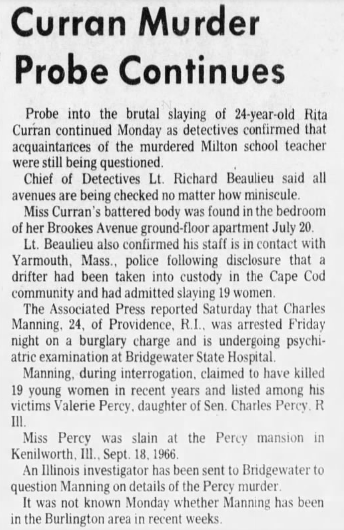
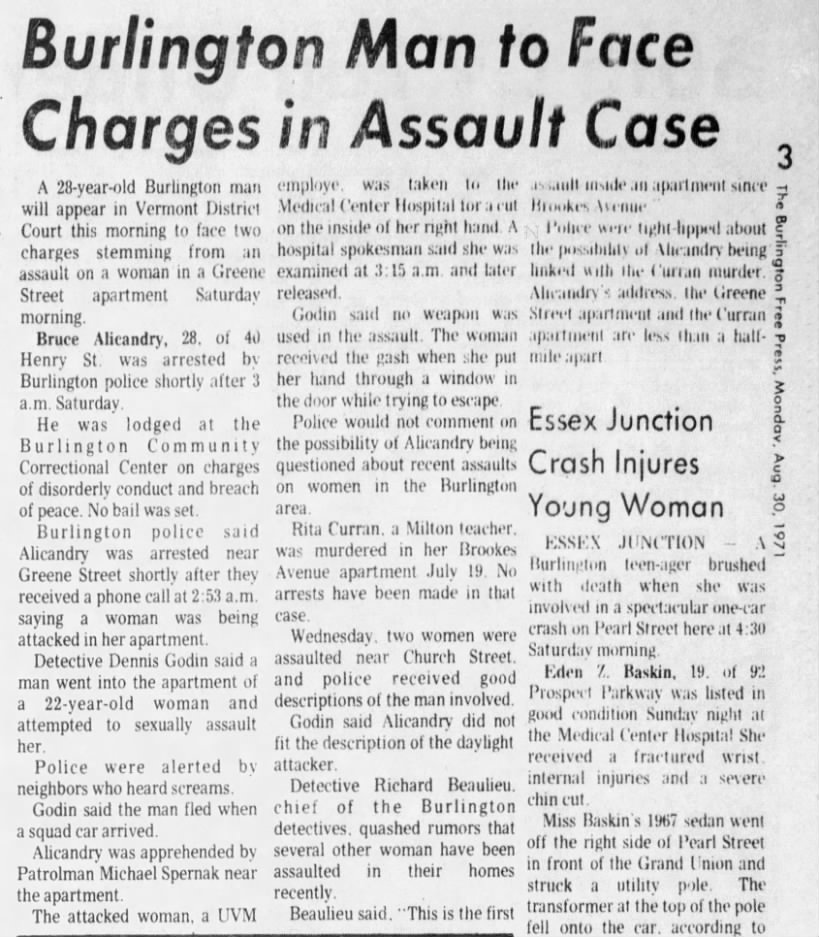

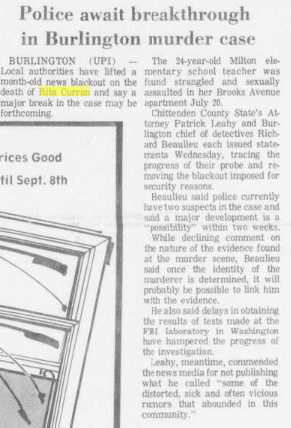


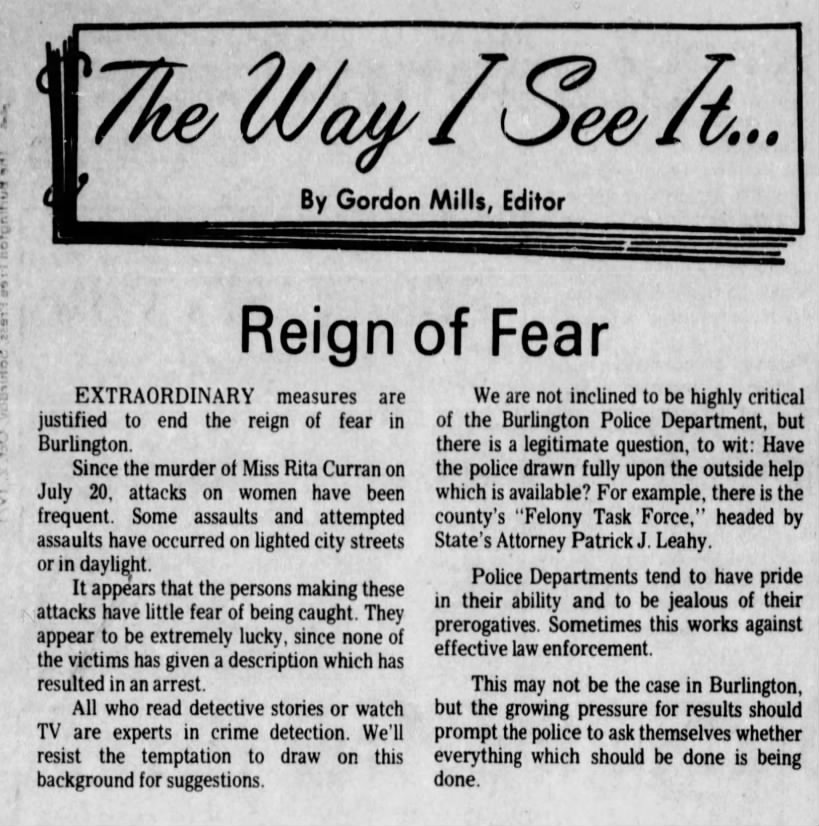


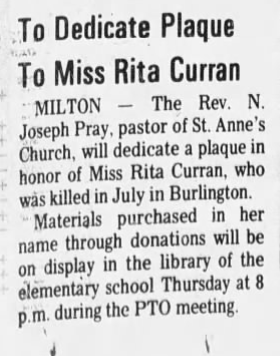

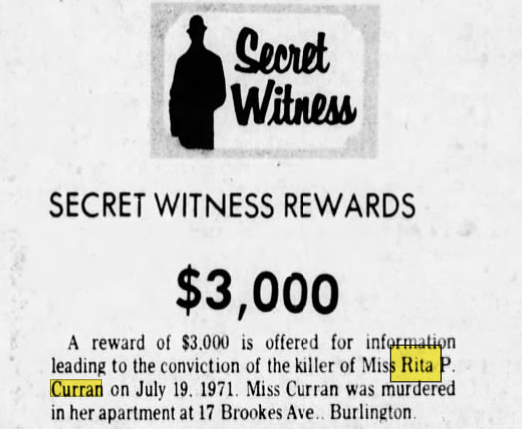
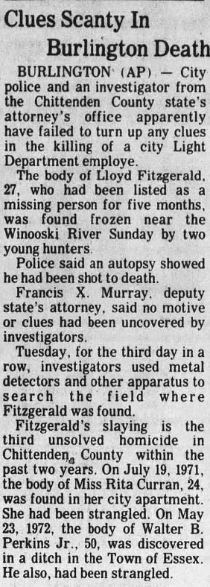

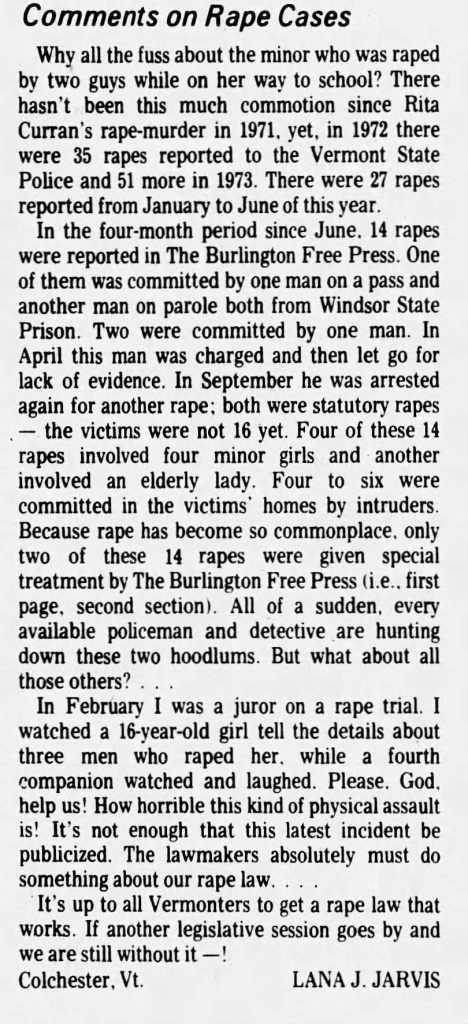


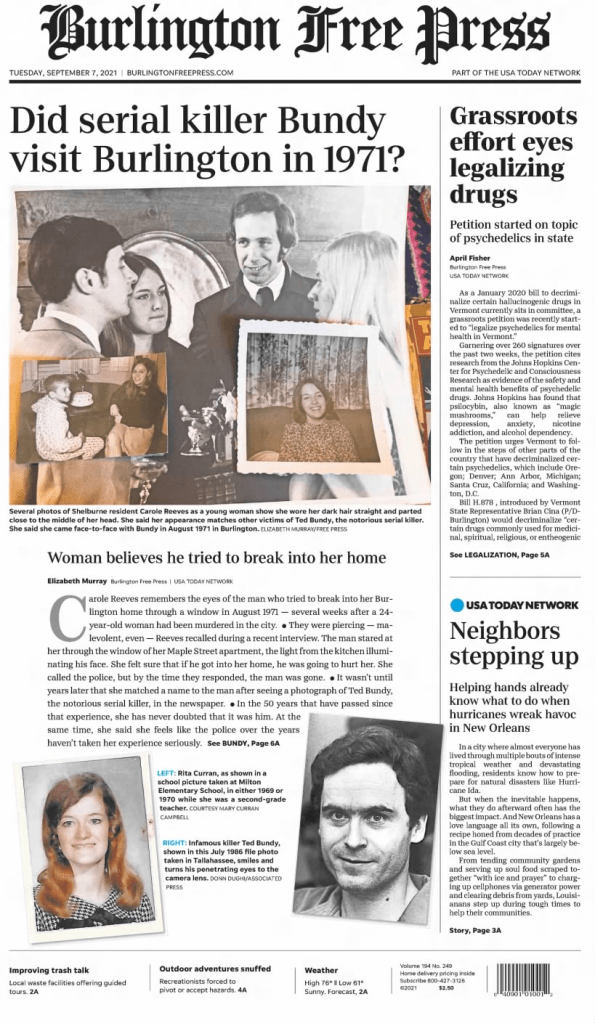

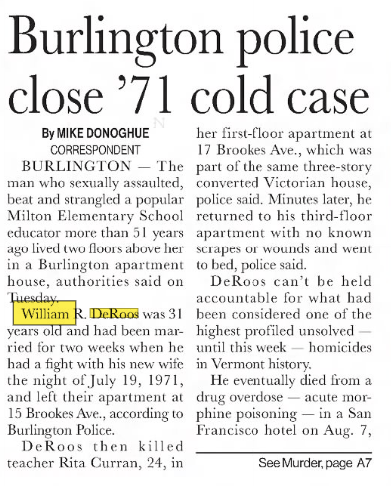
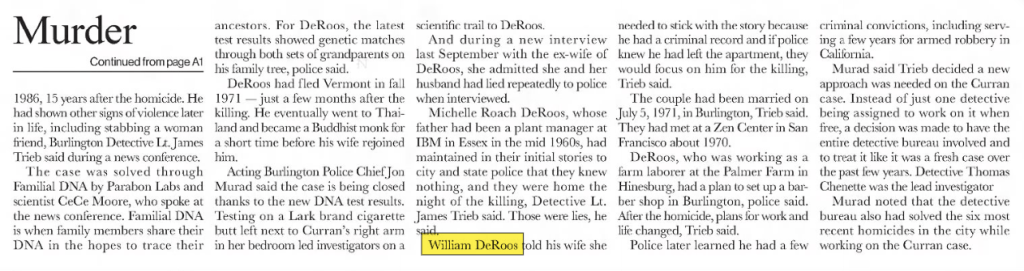

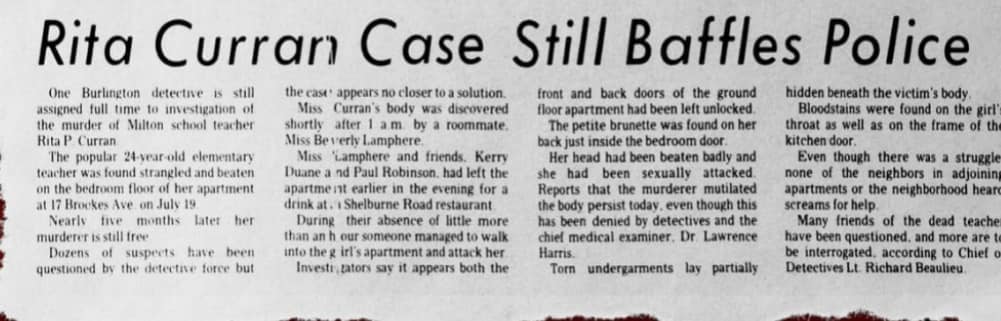

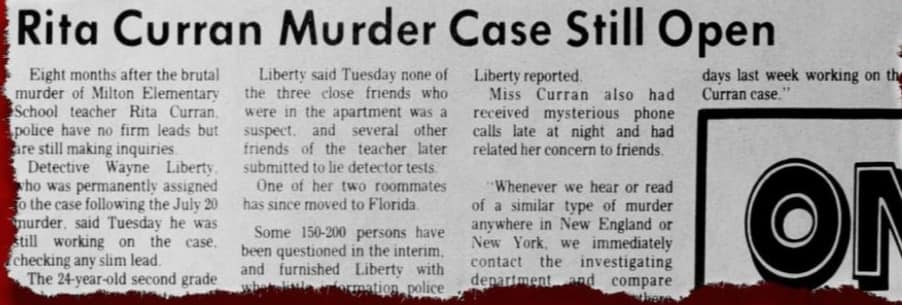





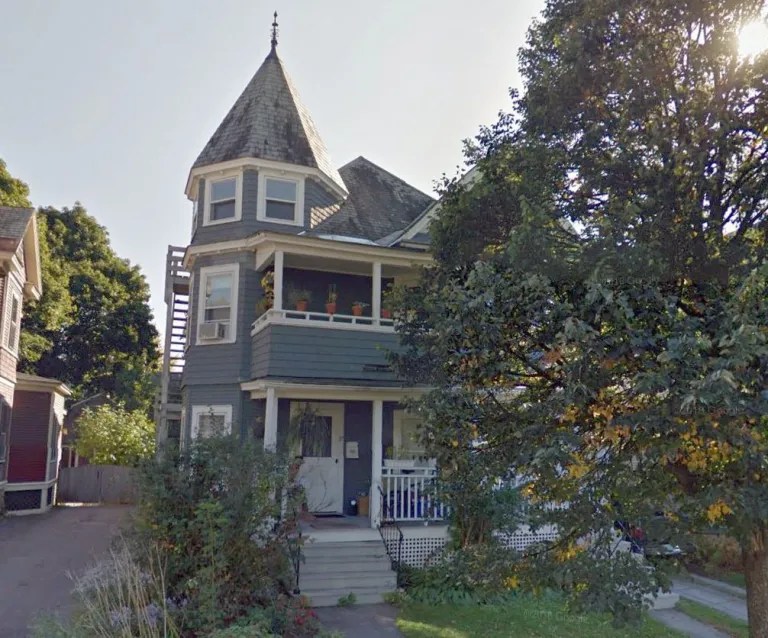


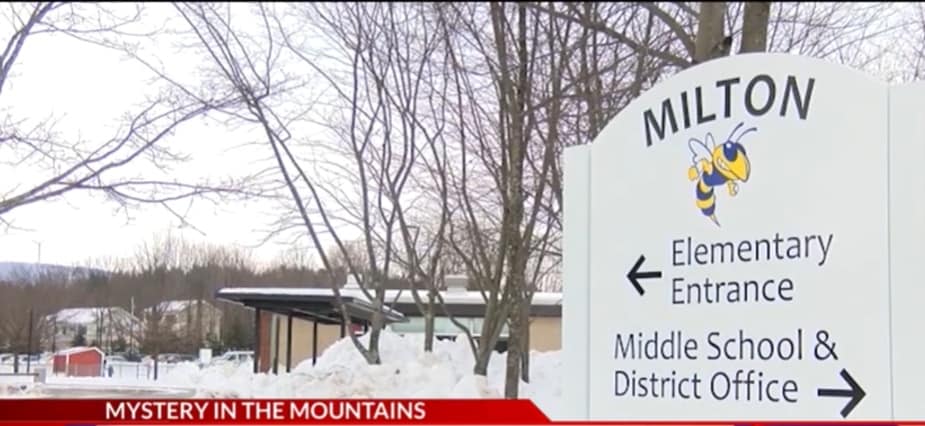


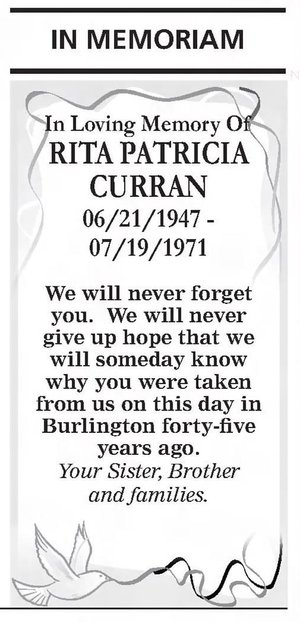


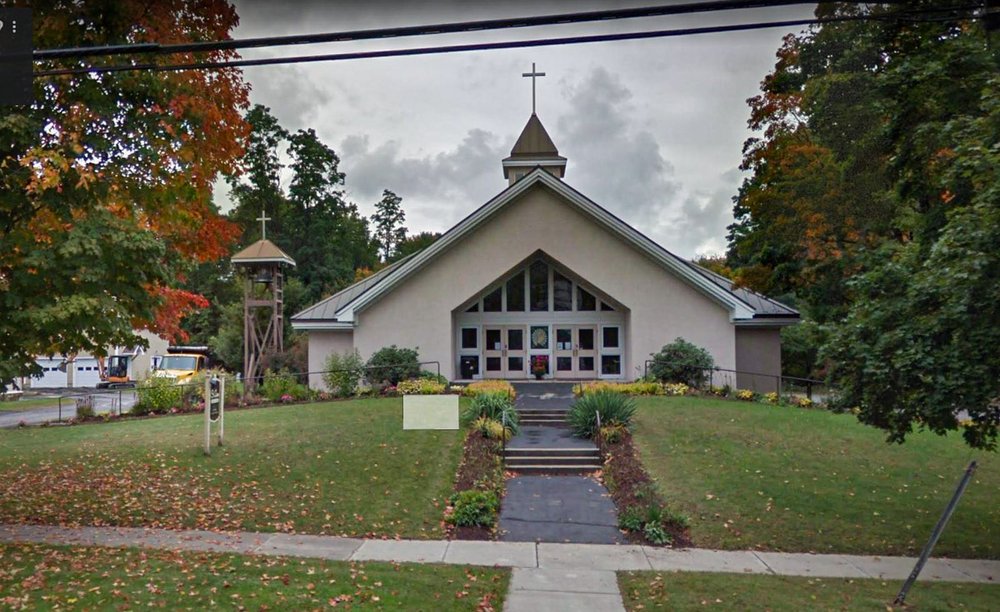
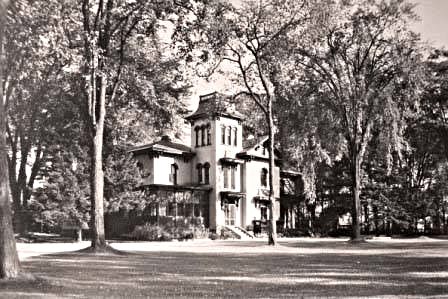





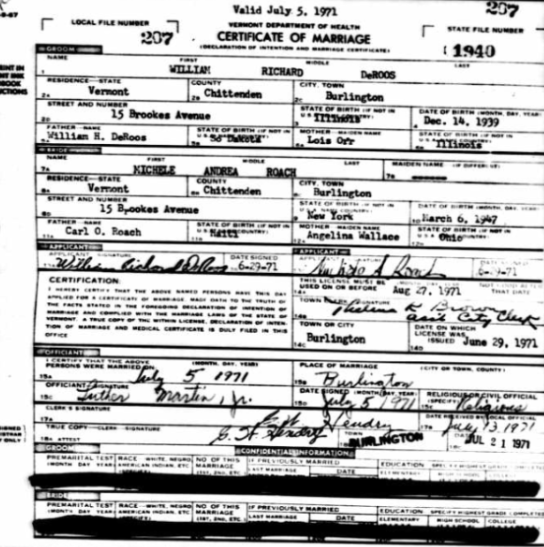


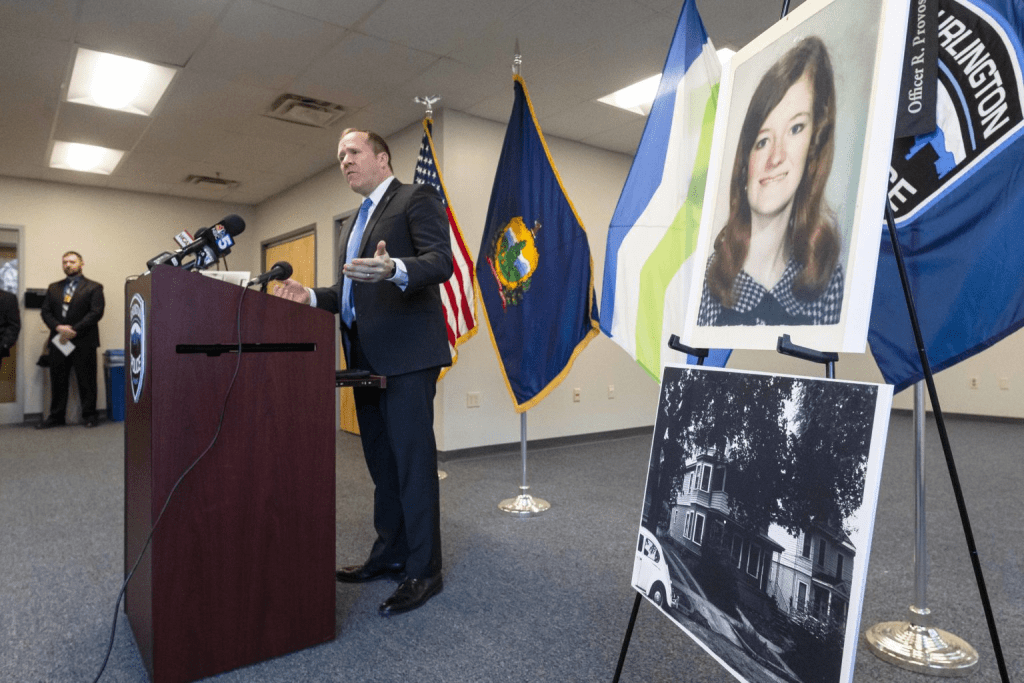


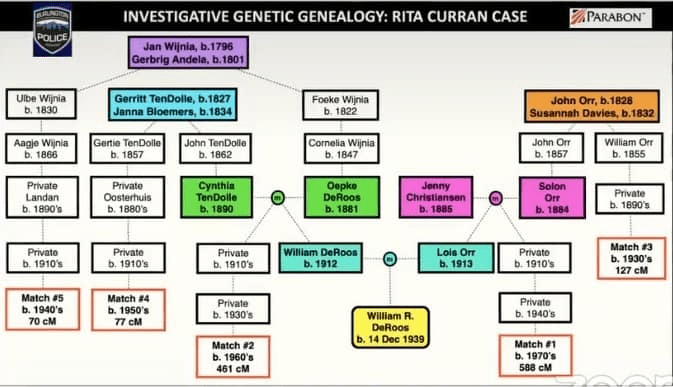
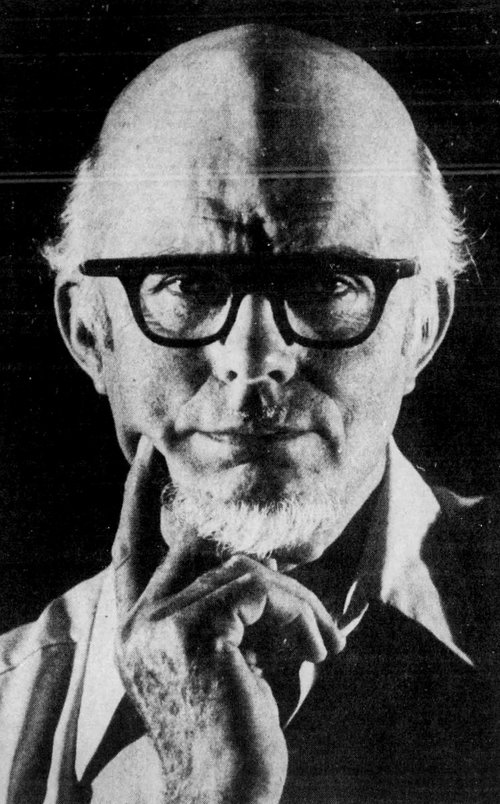
 Another Bundy Blog.