
Directed by Amber Sealy and written by C. Robert Cargill (under the pseudonym of Kit Lesser), ‘No Man of God’ stars Elijah Wood (as Bill Hagmaier), Luke Kirby (as Ted Bundy), Aleksa Palladino (as Ted’s final attorney Carolyn Lieberman/Diana Weiner), and James Patrick of Terminator fame (Roger Depue). The film had its premiere at the Tribeca Film Festival on June 11, 2021 and was officially released by RLJE Films on August 27, 2021. In my opinion, this movie is unlike any other Bundy production that’s out there because it takes place (almost) completely inside the walls of Florida State Prison after his murders and trials took place. Set between 1985 and 1989, it’s based on conversations between the FBI Agent (Hagmaier) and serial killer during his time on death row in the sunshine state. In the opening scene some information about what you’re about to watch appears on the screen: ‘in the late 1970’s, a team of FBI researchers proposed that, by understanding the psychology of violent serial offenders, investigators could more effectively combat serial rapes and homicides. The process was called profiling. In 1984, President Ronald Reagan announced the establishment of the National Center for the Analysis of Violent Crime, creating the first five full-time positions for FBI profilers. Special Agent Bill Hagmaier was picked as one. The following is inspired by FBI transcripts, recordings, and the recollections of Bill Hagmaier.’
The movie begins in 1985, where an group of FBI agents from the elite Behavior Science Unit are sitting in on a meeting with Supervisory Special Agent Roger Depue, who shares with them that he needs them to gather case studies on violent offenders, including serial rapists and killers (by ‘begins’ I mean the plot of the movie, in literal terms it actually begins with a real-life broadcast announcing Bundy’s execution). Names like Charles Manson, Ed Kemper, and David Berkowitz are thrown around… and when the other agents laughed and passed on Ted, newcomer William Hagmaier accepted the challenge despite being aware of the killers deep distrust of the Bureau. Initially through snail mail, Bundy expressed interest in communicating with Hagmaier, who eventually traveled to the condemned man’s final home for an interview. Over the next couple of years, the two men developed an unusual ‘friendship’ of sorts while discussing pornography and detective magazines as a possible catalyst for violent serial offenders. Despite some hesitation at first from the agent, during these conversations Bundy was able to cajole personal details about his personal life out of him, under the guise of establishing trust between them.
The following year the two men met again. This time, Ted is shown some crime scene photos related to the recent Green River murders and gives Hagmaier his opinion on them, and through the agents sly questioning the killer accidentally volunteers some details about his own diabolical history. At one point during their chat Bundy asks Bill if he thinks he could kill someone, and when the agent responds that, due to his being an FBI agent it could in theory happen, it’s not exactly the answer he was seeking. Back at Quantico, FBI Unit Chief Depue cautioned his agent not to get too close to someone like Bundy, and that he ‘didn’t want someone like him getting inside his head.’ Despite this warning, while sharing stories about their children during their next visit in 1987, Ted senses that his new friend is getting too deep inside of his head and taunts him to wonder outloud what he might do if he ever escaped from prison. In response, Hagmaier describes it with (most likely) a good amount of accuracy, which makes him furious and he verbally attacks him. After calming down a bit Bundy begins to disclose more intimate details of his life and what may have led him to murder, but along the way he also dispelled many of the popular myths about him (such as going after women with long, dark hair). The killer also shared that in an alternate reality Bill could be the one sitting in prison and he could be an FBI agent, a statement that deeply affected the agent.
Thanks to IMDB, I learned quite a few interesting facts about the movie I was unaware about before writing this article: in the first conversation between Bundy and Agent Hagmaier the SK asks why the Bureau didn’t send Douglas, and by that he meant John Douglas, who was the criminal profiler that wrote ‘Mindhunter’ on which the TV series is based. Also, when Bill is talking to Bundy about confessing he mentions Henry Lee Lucas, another serial killer that (along with his partner/lover Otis Toole) frequently lied and fabricated stories about his criminal history, hinting at him to tell the truth. Lastly, in 1987 Ted mentions that they should co-author a book together and name it ‘The Bill and Ted Show,’ alluding to the 1989 movie ‘Bill & Ted’s Excellent Adventure’ which was released less than a month after he was executed. This is one of the few errors, as the movie wasn’t released for two years after this conversation took place.
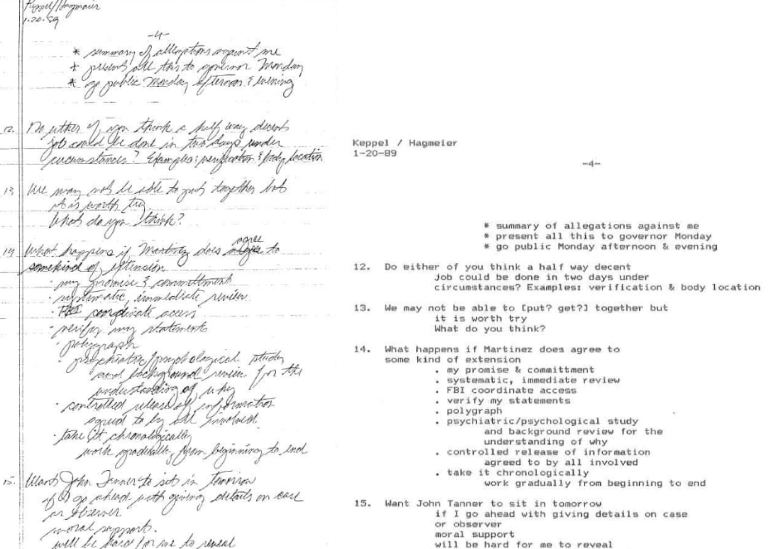
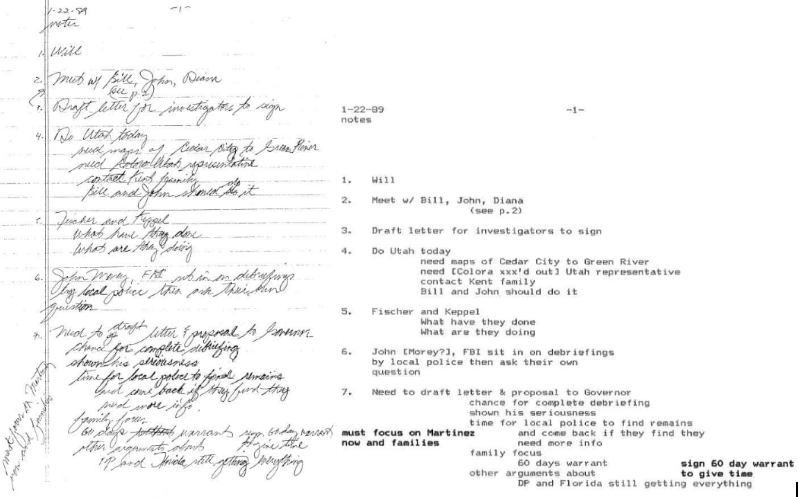
The final half of the movie (roughly) takes place in the last few days of Bundy’s life in January 1989, after (then) Florida state Governor Bob Martinez signed his death warrant and he was trying to weasel his way out of getting executed. Ted (of course) said that the determination of only being granted seven days was done by the governor in a pathetic attempt to gain the favor of the people of Florida in the hopes of getting reelected (spoiler alert, he did not). Hearing of the killers quickly approaching doom, individuals from all over the US as well as members of the media began to gather outside the prison. At this time, we meet his civil attorney Carolyn Lieberman, who is deeply against Hagmaiers involvement in anything related to Ted due to his ties to ‘law enforcement,’ however the killer is insistent that he be there, saying Bill is his ‘best friend.’
Hagmaier was sent to Florida not to fight for Bundy’s life but to simply be there and act as his scheduling coordinator: Ted is finally ready to confess and spill all of his secrets, and because he is a complete narcissist it’s all being done on his terms. He tells Bill of his plan to only give detectives the bare minimum in order to bait them and make them want more, which he hoped would grant him more time to live. In response, the agent urges Bundy not to play games with the governor of Florida, advice that he mostly ignores. Members of law enforcement agencies from all over the US poured into Florida: Idaho, California, Oregon, Colorado, and Utah; where I didn’t hear representatives from NJ or Vermont mentioned I recall Bundy also being questioned about the 1969 New Jersey Parkway murders (Susan Davis and Elizabeth Perry) as well as the 1971 homicide of schoolteacher Rita Curran (in VT).
During interviews with investigators across multiple states, Bundy is purposefully vague and evasive with his answers, only sharing small tidbits of information with them. Additionally, he completely disregarded Bill’s concerns about media coverage and Carolyn scheduled an interview with Christian Psychologist, creator of ‘Focus on the Family,’ and straight up douchebag Dr. James Dobson the day before he was executed in hopes that he would petition the governor on behalf of Ted in hopes of getting a stay… But of course, the sleazebag waited until after the interview to reveal that he never planned on talking to Martinez, as he felt the killer would never be granted a pardon. It was really almost spooky watching Kirby’s performance as Bundy during his interview: not only was the dialogue nearly identical but so were the facial expressions made by the killer. It was as if he somehow channeled Bundy’s spirit during that scene.
Later that day after the interview the warden informed Hagmaier that Bundy was to undergo a last-minute sanity hearing, and where multiple conversations were to be conducted the decision to put the killer to death would ultimately fall completely on his testimony to a psychiatric board; as we know, they ultimately declare Bundy sane.
When the men speak for the last time on January 23, 1989 Bill brings up a conversation they had a few years prior, about being ‘brought under the water:’ through violent, horrifying details, Bundy finally opened up and shared how he lured and killed one of his victims, leaving the agent completely overwhelmed and in tears. After this interaction Ted asked his friend why this is happening to him, proving he was still completely remorseless. Infuriated, as Bill prepares to leave the condemned man asks if he had any idea why he did what he did, to which he simply said, ‘because you wanted to.’ Just moments before Bundy was scheduled to die, Hagmaier is told by a prison official that he had been taken off the list to sit in on the execution so that someone else could fill his spot. The movie wraps up with Agent Hagmaier alone in the warden’s office, answering the telephone and talking to his wife and son. As he is catching up with his son, the crowd outside erupts in spirited cheers as it was announced that Ted was officially declared dead.
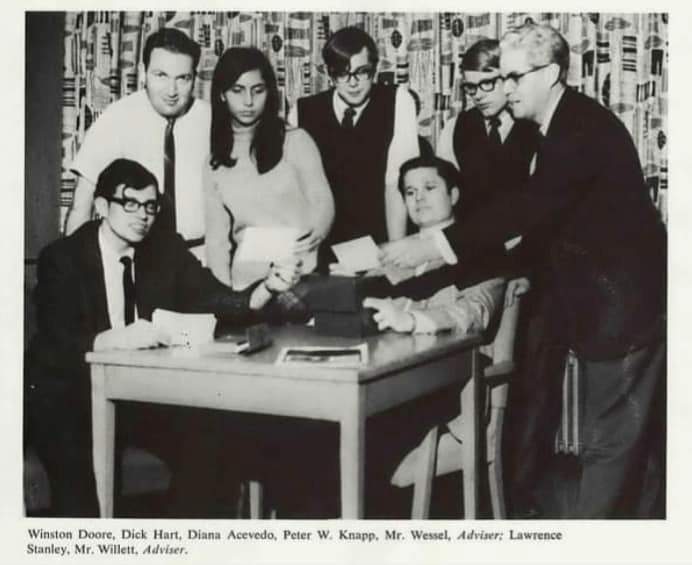
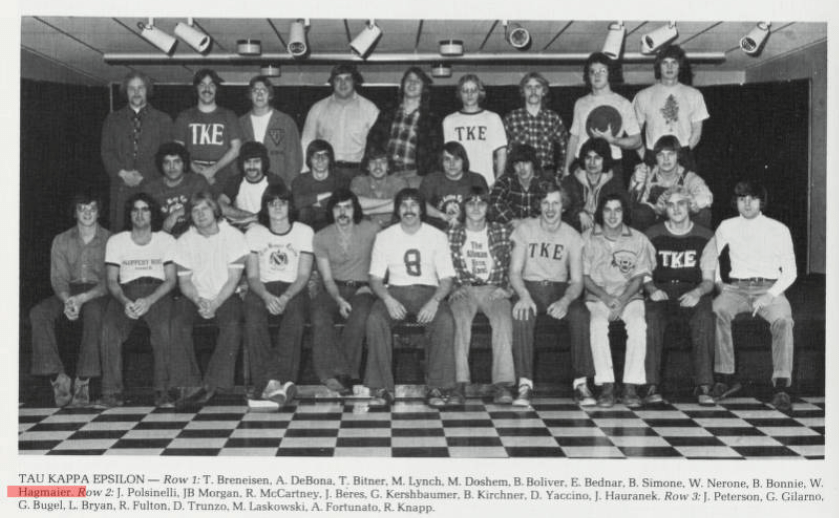
Just some quick background on Diana: she was a civil attorney, which is a type of lawyer that mainly works on civil lawsuits (such as, a personal injury case or contract dispute) and represents their clients in non-criminal areas of the law. Weiner (whose maiden name was Acevedo) got her BA from Houghton College (which is a Christian school close to where I live) in NY in 1969 and went on to earn her Juris Doctorate from Georgetown in 1982. She has been married to her husband Nevin for over forty years, who also worked as an attorney before retiring.
Diana first met Ted Bundy in October 1986 through psychologist Art Norman, who was brought on earlier in the year to interview him for a clemency proceeding. Dr. Norman was in the same social circle as Weiner and her husband, and he felt that Bundy would be more open and honest if there was an ‘intelligent, attractive attorney, and a woman who could be very open and would have the personality to open up and would not be threatened by whatever he says.’ Well, he was definitely on the right track: almost immediately, Diana’s presence prompted Ted to talk more honestly and intensely about his feelings towards violence and women, which were ‘things he has difficulty talking about with a man.’ All of this was being done by Dr. Norman in an attempt to figure out whether the killer had been ‘mentally competent’ to stand trial when he was convicted in the early 1980’s. Shortly after their meeting, Weiner officially became Bundy’s civil attorney and represented him (along with other death row inmates) in a civil rights lawsuit surrounding the poor ‘exercise conditions’ at Raiford Prison.
There seemed to be quite a bit of whispering about the nature of hers and Bundy’s relationship before he was put to death, but there is no proof that anything inappropriate ever took place between the two. About Bundy, Weiner said they had ‘an attorney-client relationship, but I also, as an attorney and client do, developed a congenial relationship with the client.’ The idea is strongly hinted at in ‘No Man of God’ as well: in the movie the warden asked Hagmaier why a civil attorney needed to visit a death row inmate 80 times in three years, and where I don’t know how accurate that estimation is, in reality she spent roughly seventy hours with him during his time on death row.
According to the website ‘yourtango’ (just for the record, I don’t know how accurate this information is), Bundy’s feelings for Weiner were so glaringly obvious that they became a bit of annoyance to the rest of his legal team, including his defense attorney Polly Nelson. At one point she even confronted Ted about his feelings, which she was beginning to suspect were making her own job more difficult. In her book ‘Defending the Devil,’ Nelson wrote about her experience, and at one point said: ‘Ted, quit giving me this ‘Ms. Weiner’ stuff. I know why you see her, and it has nothing to do with any lawsuit. She’s beautiful, she’s interested, she can come during lawyer’s visiting hours, and you can have unsupervised visits with her.’ In response to this, Ted paused briefly, smiled then said, ‘that about sums it up.’
In one of the few interviews she did after Ted’s execution, Weiner said she the man she knew wasn’t a killer, or a rapist: while she made it clear that she wasn’t in any way minimizing what he did, she remembers a man that became a born-again Christian that seemed genuinely remorseful for what he did and was sincere when he said he wanted to confess in hopes to ease the pain of his victims’ families: “I think the public is unwilling to accept that there could be a commonality between Ted Bundy and the rest of humanity or that Ted Bundy could have at the end of his life sought to tell the truth, confess or have had any moral compunction to do so.’
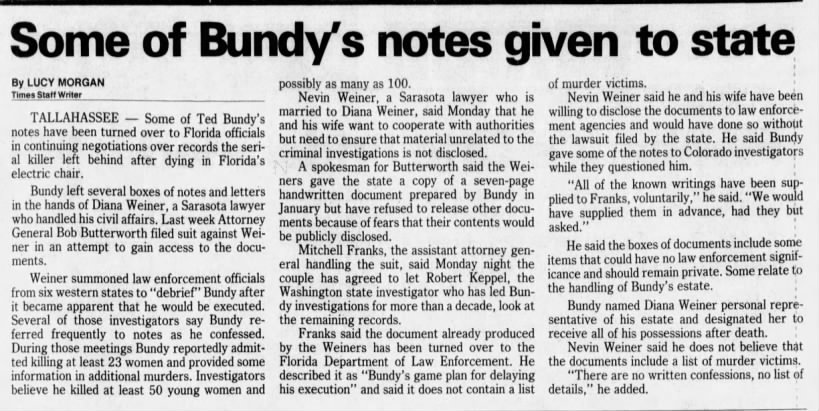
According to the legal paperwork that was left behind by the killer, Bundy left Weiner all of his worldly possessions, including his wedding ring, roughly $700, and his ashes. Regarding the latter of the three, she was instructed by her client to spread them across one of his dumpsites at Taylor Mountain, which never took place; a family member of Ted’s is currently in possession of them.
One thing I wonder about is the scene towards the end of the movie when Ted said he would rather slit his wrists then be killed by the state of Florida, an act he was easily talked out of by Hagmaier. I mean, it was no secret that Bundy was absolutely terrified of dying, and personally I think he would never have committed suicide because I honest to God think he fully expected a call from the governor granting him another stay of execution at the very last possible moment (like, as he was being strapped into the Ol’ Sparky). I mean… I just don’t think Bundy had it in him to take his own life. It’s ironic, in a really sad way: he had no problem killing potentially dozens upon dozens of girls and young women, but when it came to himself he was scared shitless.
One thing I was incredibly impressed by was how accurate this movie was when it came to the smaller details about Bundy’s life as well as his timeline. In quite a few Ted related movies, the creators changed the names of victims and family members, but that didn’t happen with ‘No Man of God.’ They even called his daughter by the correct name, which surprised me a bit as I know she has tried her hardest to stay out of the limelight regarding her fathers case (I hope that was able to continue); it’s even mentioned that that he hadn’t seen Rosa for a long stretch of time after he told Carole Ann Boone his plans of confessing (she stopped visiting in 1986). Additionally, when Bill talks about how his son pulled his pants down while pretending to be an elephant while crab-walked around his preschool classroom… Well, he really does have a son named Bryan, who followed in his fathers footsteps and became an officer with the NYPD (and I’m sure he loved that story being involved in the movie).
Other popular names related to Bundy were also used, like Liz Kloepfer, true crime legend Ann Rule, and his first love Diane Edwards. Rule is briefly brought up in conversation, when Ted denied her theory that Edwards was the main catalyst for his drive to kill and declared that being dumped by her had nothing to do with why he committed such atrocities. One name did jump out at me as being wrong but it was the way it was done that surprised me: Hagmaier questioned Bundy about ‘Diane Leach,’ and where the details were mostly correct they called her by her middle name and completely left out her first (Kimberly). Another identity that was changed was Carolyn Leiberman, and it wasn’t until after I spent a solid half-hour trying to figure out who she was that I realized the name was changed from Diana Weiner. My educated guess as to why: Ms. Weiner is still alive and the creators of the movie didn’t want people looking her up and harassing her.
And now I’m just going to go through and point out various things that interested me about this movie (thrilling, I know):
- When Bundy is talking to members of LE across various states about his potential victims, the detective from Oregon lists different cities across the state and asks whether or not he ever murdered there. Every place he brings up is one that Ted was suspected of killing in: Eugene (mainly Vicki Lynn Hollar but there are other suspected victims), West Linn (Rita Lorraine Jolly), and Corvallis (Kathy Parks, who was actually confirmed).
- When a detective from Colorado questions Ted if he committed murder before 1975 (specifically 1968) he evades the question at first, and says he’s ready to break for lunch; when alone he tells Agent Hagmaier that he suspects the officer was in a relationship with one of the women he killed. I found no evidence that this ever happened, and I have never heard of this before seeing ‘No Man of God’ (I also couldn’t find a record of it anywhere else). After Ted tells Bill of his suspicions about the member of LE he shares that he not only killed the young woman but he also ‘made love to her dead body’ then cut her head ‘clean off.’ Looking into murdered women from the state in 1968, on March 26 Constance Marie Paris walked off a bus in Denver at the intersection of Girard Avenue and South Broadway and was never seen alive again. Just five days later on March 31, 1968 her remains were found in a ditch in the southwest part of Denver; she was found naked and was strangled and sexually assaulted. As of July 2024 her case remains unsolved.
- Ted told Bill that when he was finally recaptured in Florida he tried to tell police who he was but they didn’t believe him. I recall (from listening to Liz Kloepfer’s ‘The Phantom Prince’ exactly one thousand times on Audible) that in reality he was reluctant to share his true identity and only gave them his name in exchange for a phone call (to Liz)… so I’m not exactly sure how accurate that part is.
- When Ted takes Bill ‘under the water,’ he mentioned using smelling salts to revive his victim, which I never heard of him using before. Also interesting, the victim he discussed killing was Kathy Parks. In this scene, he said: ‘I’m going to… take you somewhere… that I’ve never taken anyone before. And I will do the talking. She’s… beautiful. She’s…. Radiant. And very familiar. Her dad is sick. He’s, uh… He’s in and out of the hospital. I hear her talking about it over a pay phone. He has heart problems. I have a badge that I got in the usual way, a local police badge. And tonight… full moon. She looks amazing. She’s exactly like one of the girls from the magazines. Walk up to her. I’m Officer Ted, Officer Ted Bundy. Something’s happened. She goes pale. “What do you mean?” ‘Your father’s had a heart attack. I was sent to find you. My car is over this way.” She rushes with me. It all happened so fast. She doesn’t have time to clock the police officer is picking her up in a Volkswagen. I open the door for her. Before she realizes there’s no passenger seat, wham! I hit her in the back of the head with a tire iron. She’s out. Isn’t she beautiful? Her dark hair parted down the middle.’ Parks was abducted on May 6, 1974 at around 11 PM, most likely right outside the Memorial Union on Oregon State University’s campus; she was on her way to get a hot fudge sundae. We know that she was incredibly upset and distracted that night because her father had recently suffered from a heart attack and she was concerned about him.
I know that Ted once told a story that he was in the library at Michigan State University and was flipping through college catalogs while contemplating his next move… he knew he wanted to go somewhere warm that was near water and close to a college campus. The movie features a scene where Ted tells Bill that he didn’t want to get caught, and honestly I’m going to have to lean towards that. Did he go to Florida in hopes of living out the rest of his life in anonymity, or did he go there purposefully to get a death sentence? Or, did he simply not want to live the rest of his life behind bars? I mean… I’m sure he was aware that if he stayed in Colorado there would be a good chance that he would die of natural causes while living out his final days in prison. If you really think about it, the Chi Omega murders (and the attack of Cheryl Thomas on Dunwoody Street) were incredibly reckless almost to a point they would be considered careless. It was as if he was begging to get caught. Why was he so sloppy if he wanted to avoid detection?
Over the years there have been many movies made about Ted Bundy, and that isn’t taking into account the dozens upon dozens of documentary-type television shows and mini-series that have been produced as well. Personally, my favorite is the oldest one starring Mark Hammon titled, ‘The Deliberate Stranger.’ Made in 1986, it’s a (fairly) accurate retelling of a book by the same name that was written by Seattle Times reporter Richard W. Larsen in 1980. The book was adapted into a two-part made for TV movie that originally aired on NBC on May 4 and 5, 1986. What I think is interesting about this is that TB was still alive when it was made, even though he claimed he had no interest in seeing it. Surprisingly, there wasn‘t another film about the SK made until 2002 (things really seem to pick up after that), when Michael Reilly Burke played the serial killer in the movie simply named ‘Ted Bundy;’ it was universally panned (as it should have been because it’s a total of crap) and was deemed ‘exploitative’ by critics. The following year Ann Rule’s classic ‘The Stranger Beside Me’ was made into another made for TV movie starring Billy Campbell and Barbara Hershey. Next up: on July 21, 2008 Parker Lewis himself Corin Nemec starred in ‘Bundy: An American Icon’ (which is also called ‘Bundy: A Legacy of Evil’) and to be honest, I thought this and the MRB movie were one in the same. I only recently realized that they’re two separate films. Then of course in 2019 we have another favorite of mine, the Zac Efron/Lily Collins Netflix movie titled, ‘Extremely Wicked, Shockingly Evil And Vile,’ and where it wasn’t entirely accurate it was pretty well-made and entertaining. Lastly, in 2021 one-time teen heart throb Chad Michael Murray played the titular character in ‘Ted Bundy: American Boogeyman;’ it was a cinematic abortion and I don’t think I ever finished it.
There’s also been multiple films about Bundy’s involvement in the investigation of the Green River/Gary Ridgway killings that took place near Bundy’s hometown of Tacoma: in 2004 Cary Elwes portrayed Ted in ‘The Riverman,’ followed by ‘The Capture Of The Green River Killer’ in 2008 then ‘Bundy And The Green River Killer’ in 2019.
On the movie review website ‘Rotten Tomatoes,’ ‘No Man of God’ currently has an approval rating of 80% based of 81 reviews; the film has an IMDB rating of 6.4/10. According to ‘Metacritic,’ it has a weighted score of 67/100 and a user score of 7.1 (based off 21` reviews); this is considered by them to be ‘highly favorable.’ As of July 2024 ‘No Man of God’ earned $216,000 at the worldwide box office.
Works Cited:
bundyphile.com/2021/11/05/no-man-of-god-movie-review/
yourtango.com/2019321781/who-is-diana-weiner-ted-bundys-lawyer-and-final-love-interest

















 Another Bundy Blog.