
Introduction: In my early stages of blogging about Ted Bundy I worried that I would eventually run out of things to write about (I figured there were only so many things to delve into). Where at the time I didn’t know a fraction of what I do now, I just assumed I would max out and my blog would eventually just… end. But, thankfully, I didn’t really have anything to worry about: between Ted, his confirmed victims, his unconfirmed victims, his family/lawyers/girlfriends/employment history/vehicles/residences (and so on)… I don’t think I’ll run out of writing material anytime soon.
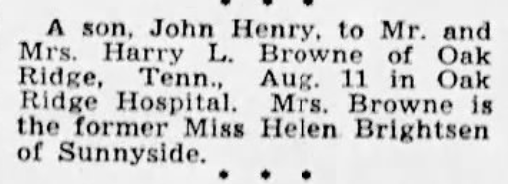
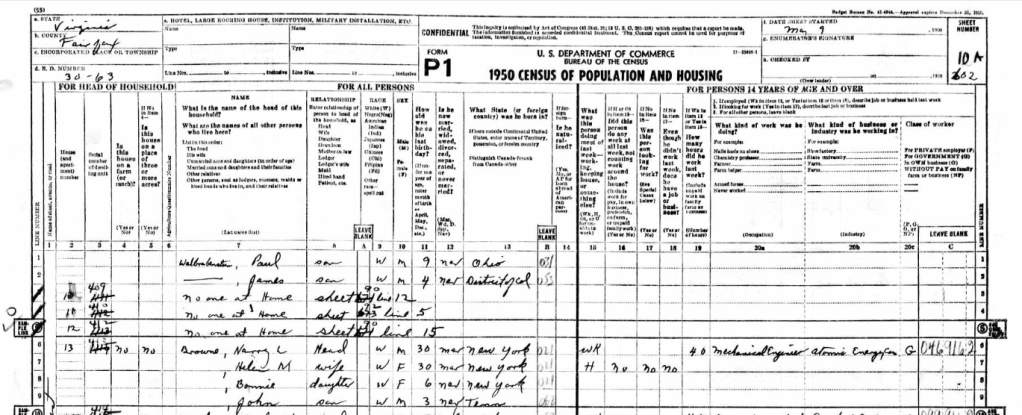
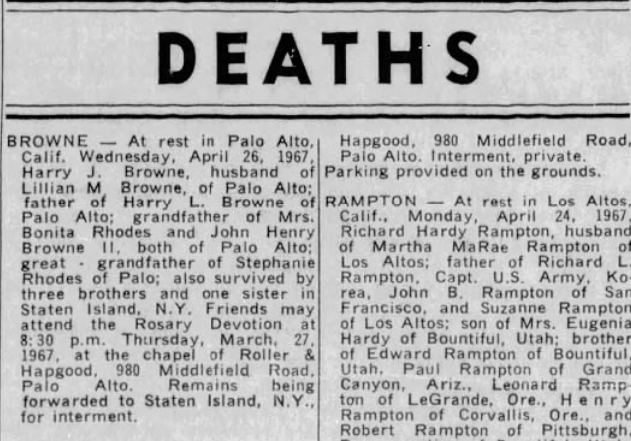
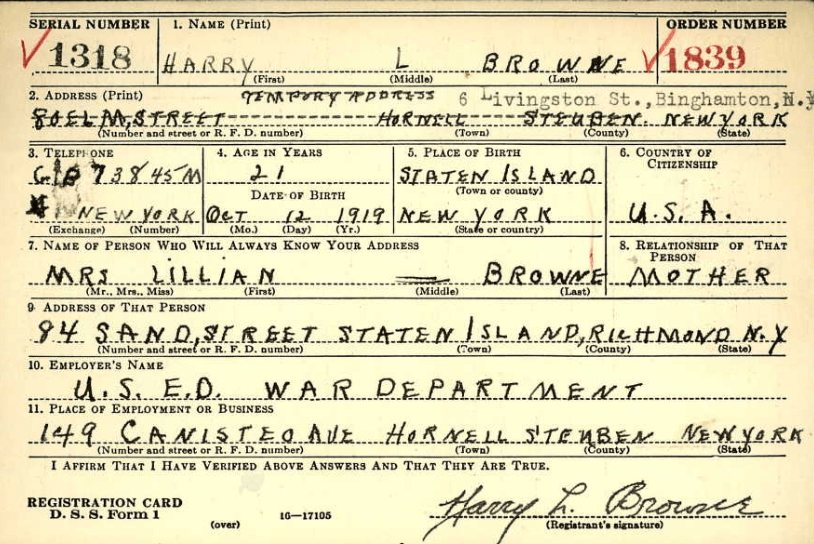
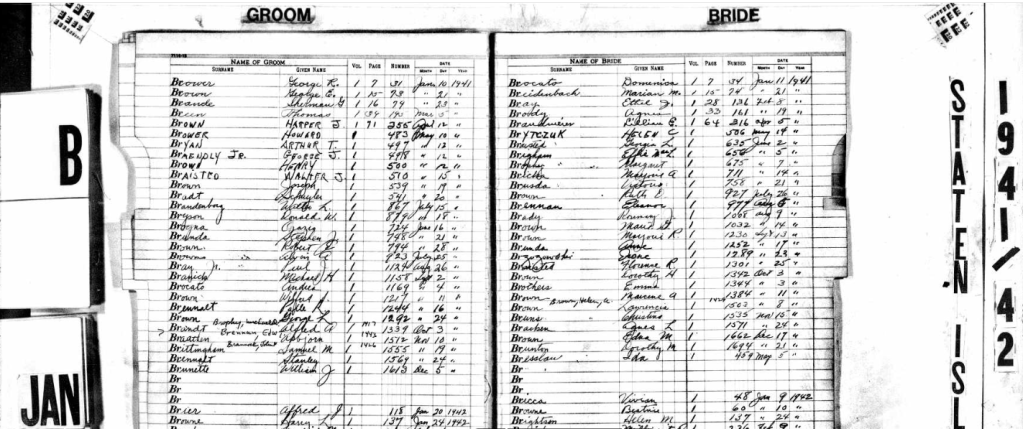
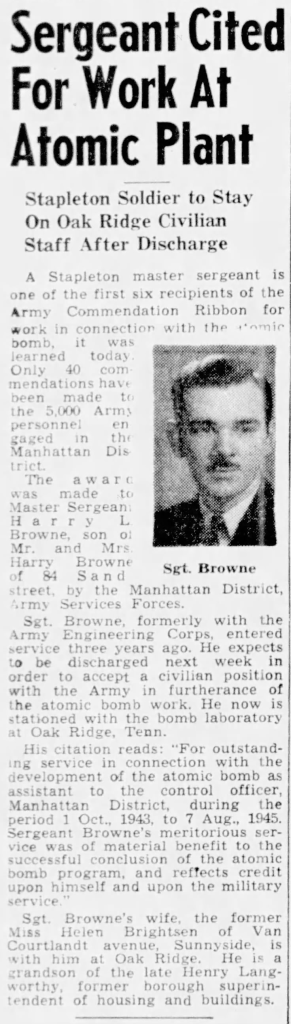
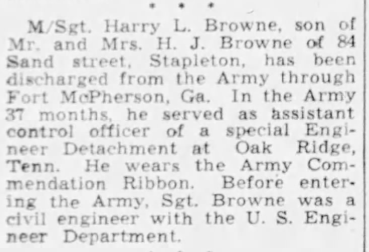
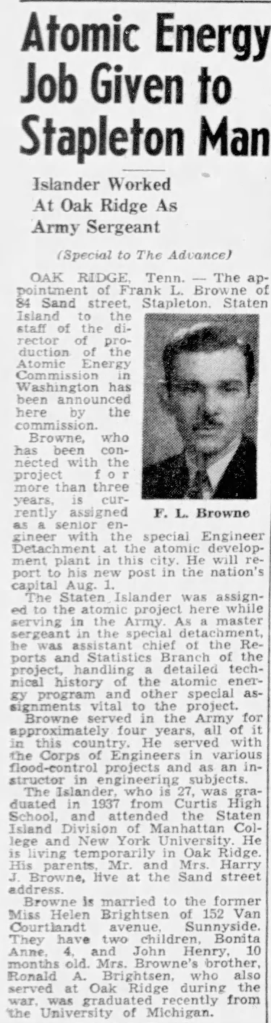
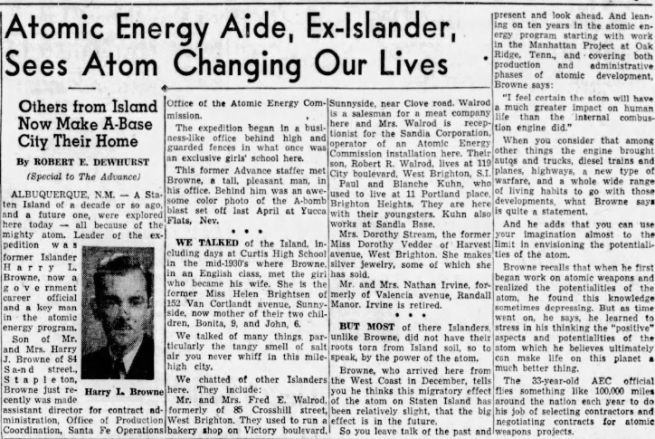
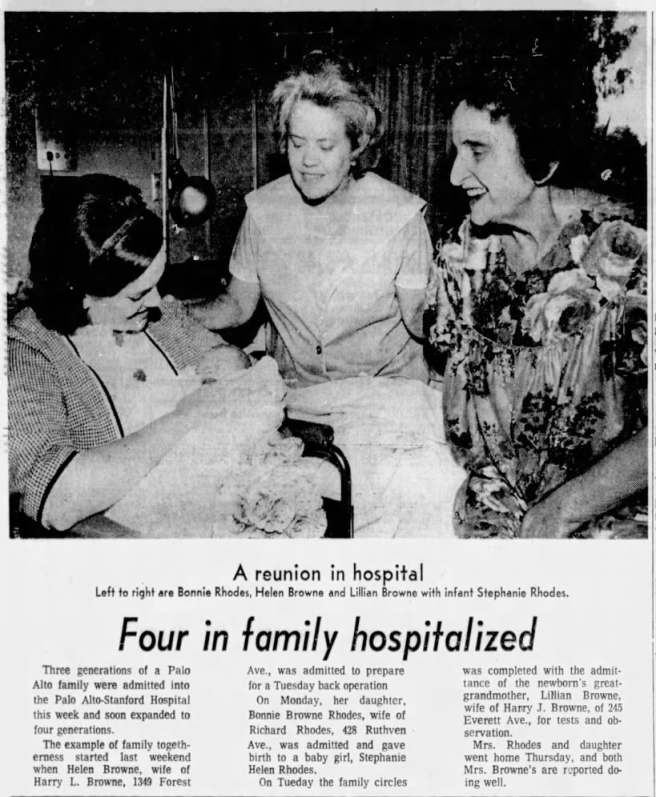
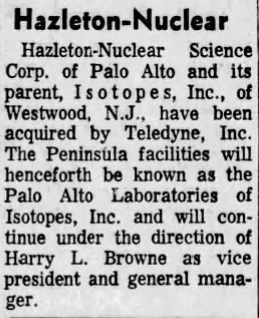
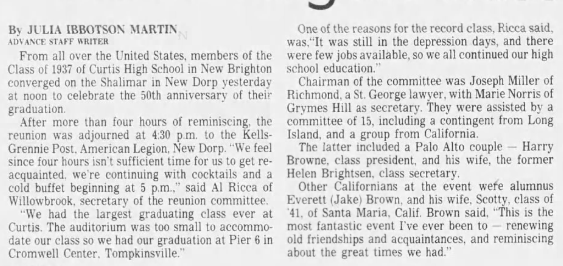
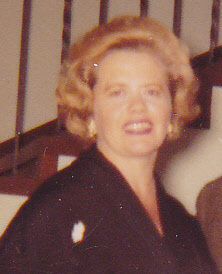
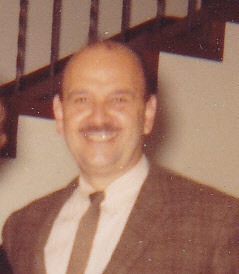
Background: John Henry Browne was born on August 11, 1946 to Harry and Helen Browne in Oak Ridge, TN. Harry L. Browne Jr. was born on October 12, 1919 in Staten Island and Helen Margaret Brightsen was born on June 16, 1919 in New York. Upon returning home from the Army during WWII (he enlisted on January 1, 1939) the high school sweethearts got married on January 24, 1942 in NYC, and the couple went on to have two children together: Bonita (or Bonnie, b. June 1944) and John. While his wife was still in the hospital recovering from giving birth to their daughter, Harry got a call from Colonel James C. Marshall, who was the military lead on a new governmentally funded engineering program: he wanted the new father to come work for him on a new project. Harry said yes, and the young family packed up their home in New York and moved to Oak Ridge, TN.
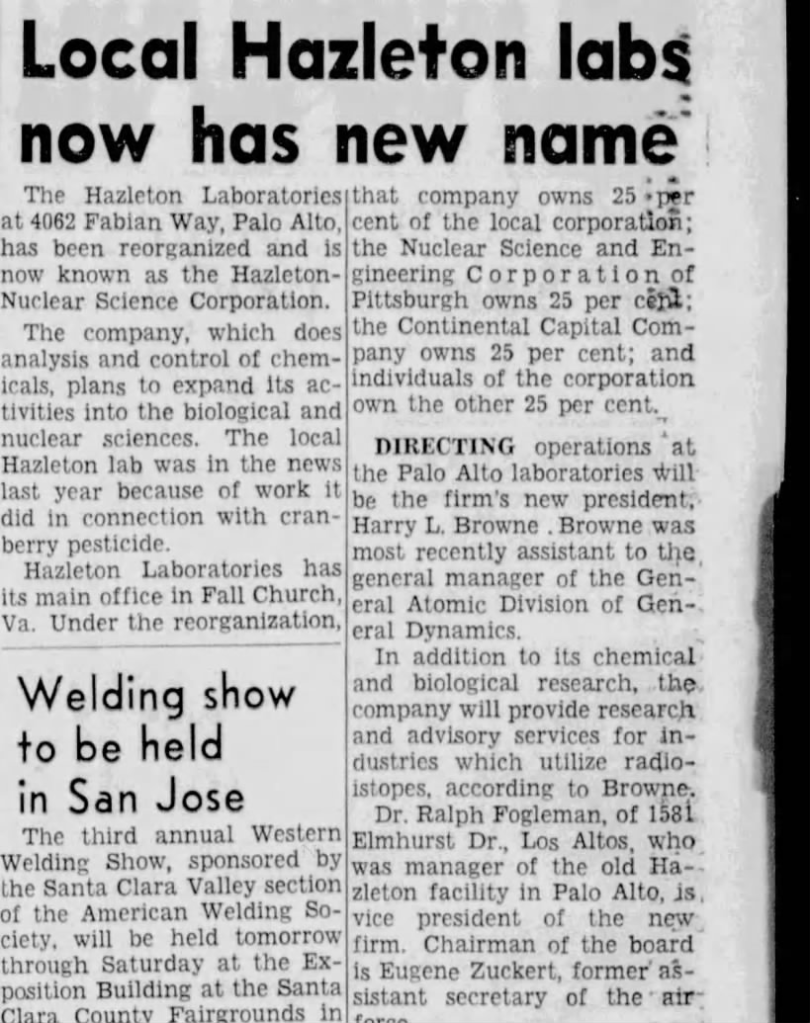
Parents: An engineering graduate of Manhattan College in New York City, Harry L. Browne was smart… but according to those that knew them, his wife was smarter: a national merit scholar that read multiple newspapers every day, Helen could ‘understand any math equation, no matter how complex.’ According to John, his father was ‘always in motion:’ he was a member of the NYS Corps of Engineers and was involved in ‘secret government contracting’ that helped lead to the development of the atomic bomb. Additionally, Harry once worked as a nuclear engineer for the Atomic Energy Commission, and eventually retired in Palo Alto, CA as a vice president for the Bechtel Corporation (which is a premier American engineering, procurement, construction, and project management company founded in 1898).
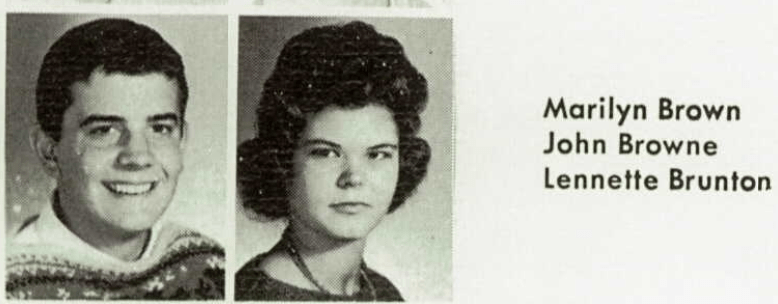
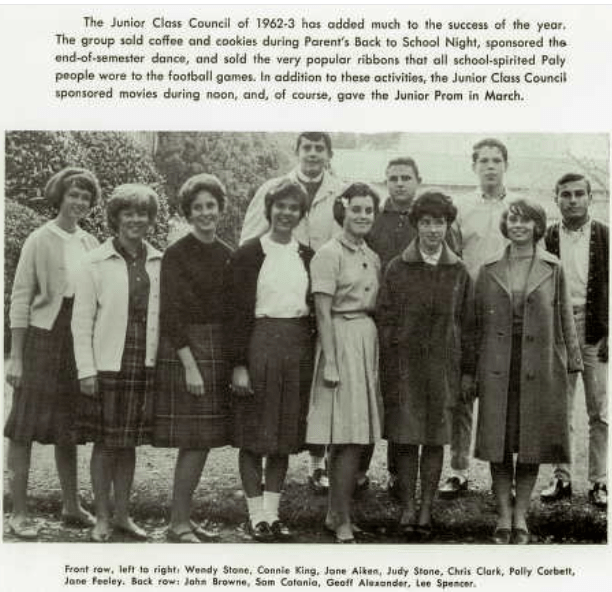
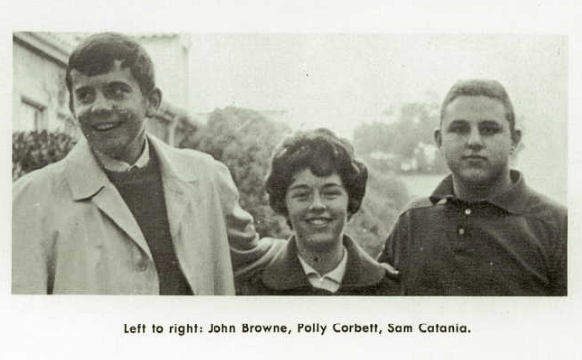
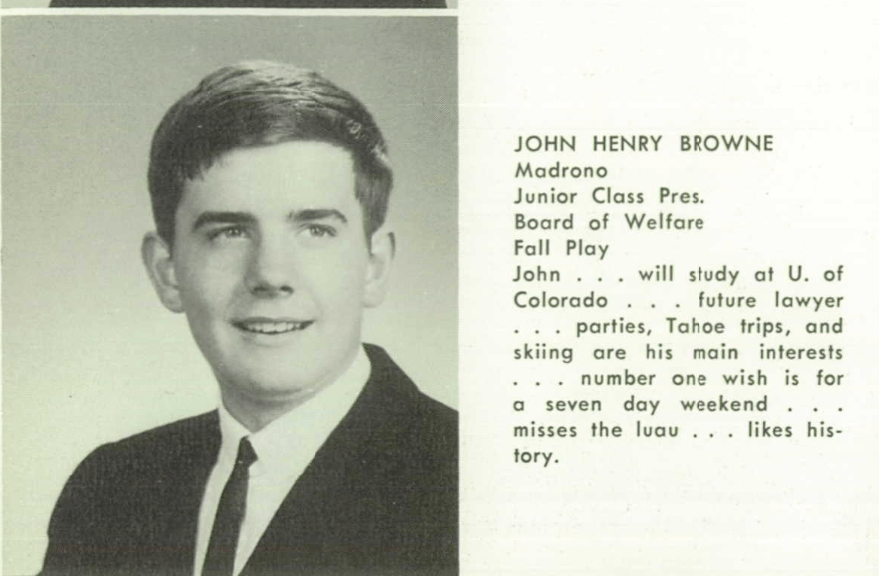
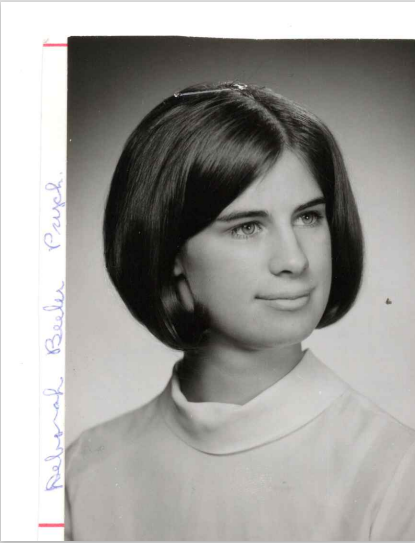
Education: After John graduated from Palo Alto High School in 1964 he went on to attend The University of Colorado at Denver, where he worked majored in philosophy and worked several jobs to get by. After he learned how to play the bass, he became involved in the local music scene and joined a band with some buddies and was even friends with Ron McKernan (of The Grateful Dead) and Jimi Hendrix. According to Browne, his band was in the process of attempting to sign a deal with Elektra Records, but after he was arrested and (briefly) jailed on a ‘bad check’ he pivoted from music to a career in law (the charges were dropped after investigators discovered that the check only bounced because he had moved his account to a different bank by the time it was cashed). According to reports, he was bailed out by his one-time girlfriend Deborah Beeler (more on her later), and by the time he was allowed to contact her he had already spent seventeen hours in police custody. While in jail he spent time with men that has been there ‘for a week,’ but still didn’t have legal representation, and by the time he was released had decided to become a criminal defense attorney.
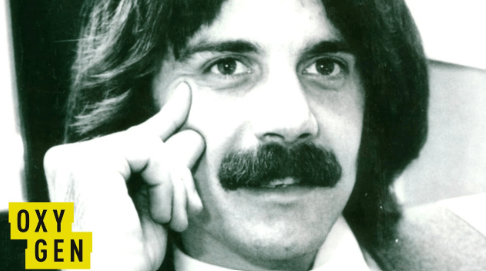
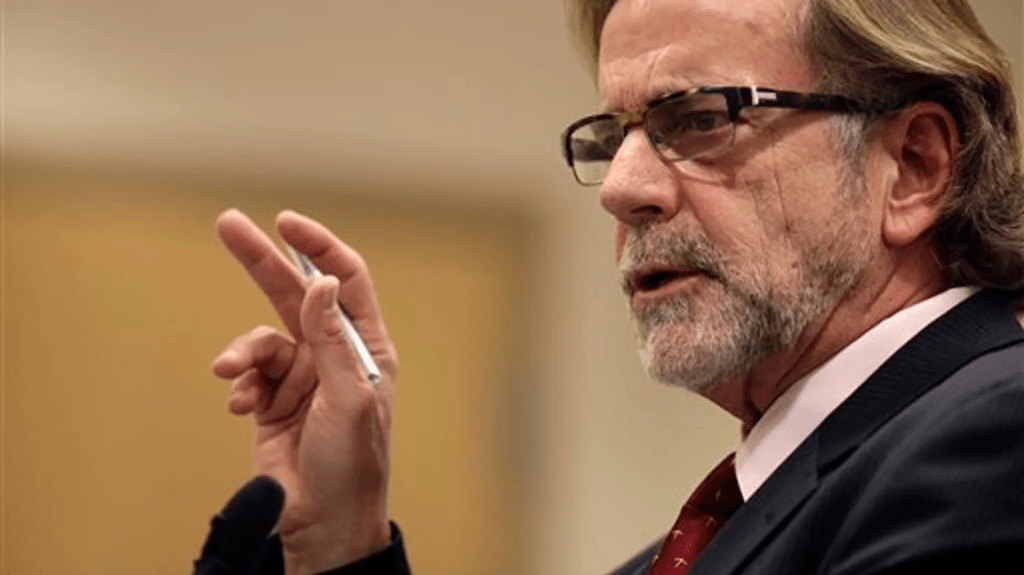
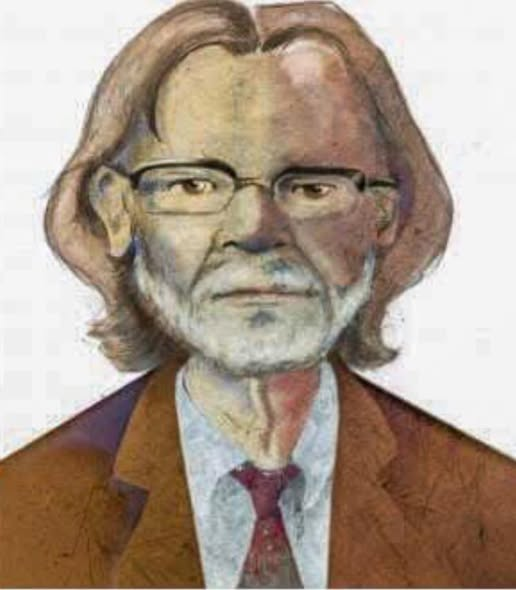
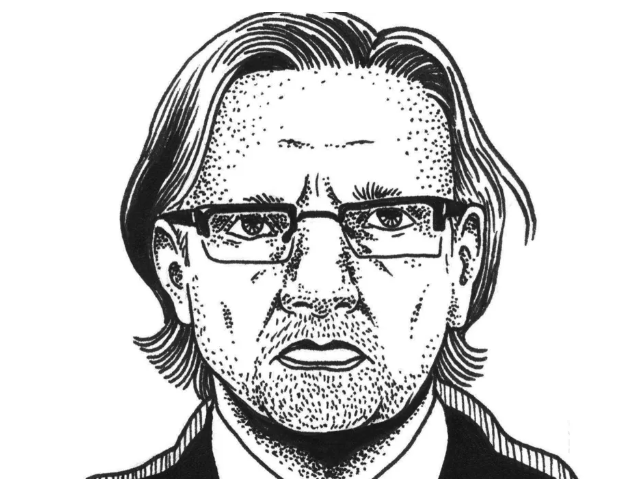
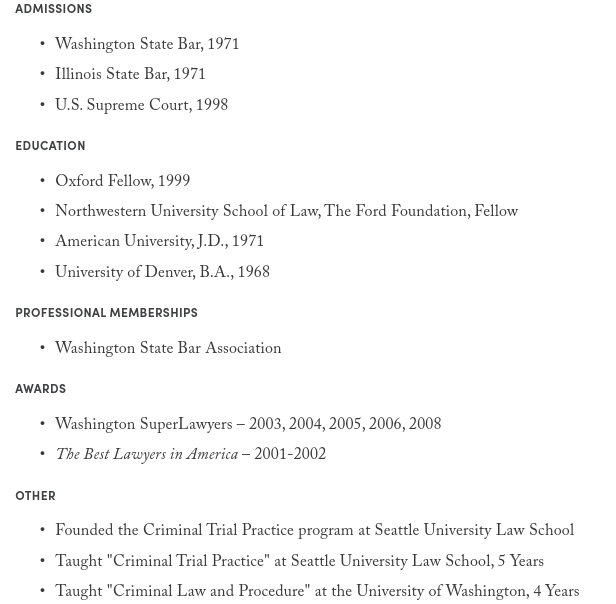
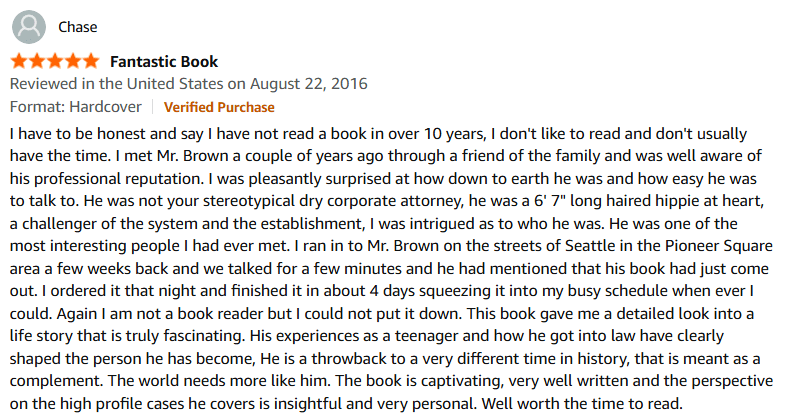
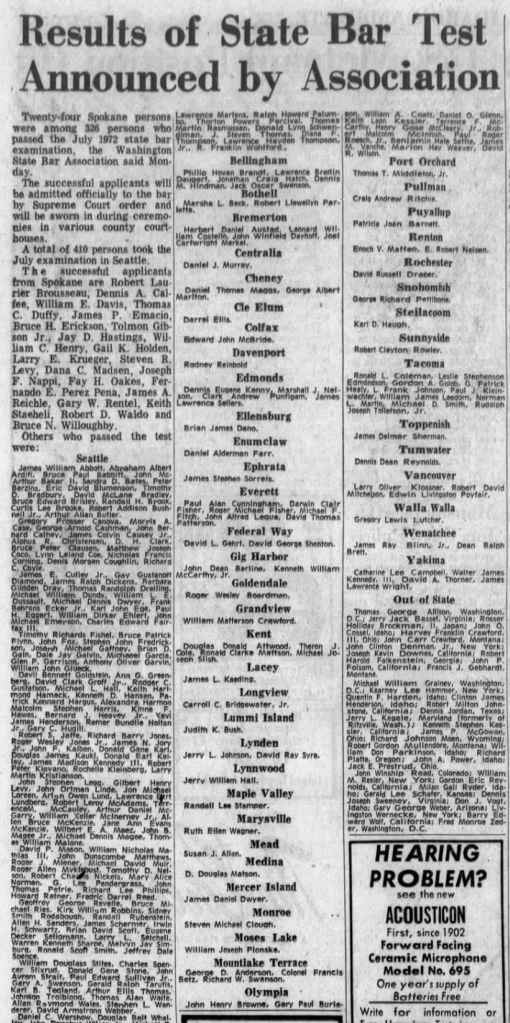
Accolades: Browne stands at an impressive 6’7″ tall, and has brown eyes; (in his youth) he thick brown hair, and when he let it grow long and had he occasionally would be mistaken for Yanni, the New Age musician (his ‘thick black mustache’ didn’t help). In 1968 John relocated to Washington DC to attended American University’s School of Law, and upon graduating in 1971 he got a Fellowship at Northwestern University’s School of Law; he was also an Oxford Fellow in 1999. From 1971 to his retirement in 2025 he tried over 250 criminal cases and was a member of the Washington State Bar Association; he was also voted one of Washington state’s ‘Super Lawyers on multiple occasions (from 2003-2006 then again in 2008) and had the distinction of being one of ‘The Best Lawyers in American from 2001 to 2002.’ JHB also established the Criminal Trial Practice program at Seattle University’s Law School and taught ‘Criminal Trial Practice’ at the school for five years; he also taught Criminal Law and Procedure’ for four years at the University of Washington.
The ‘Spiro T. Agnew Incident’: while attending law school in the fall of 1969, Browne got a part-time job as a page at ABC News, with some of his duties including escorting guests to where they needed to be as well as keeping them occupied. On one occasion he was responsible for entertaining Spiro T. Agnew, the 39th vice president of the United States, who served from 1969 until his resignation in 1973. Agnew has the distinction of being the only VP in US history to resign due to criminal charges, and was widely known for his aggressive, alliterative rhetoric against the media and anti-war protesters.
For what I feel are fairly obvious reasons, the promising young law student strongly disliked Agnew, and while preparing a cocktail for the VP in the studios greenroom it suddenly dawned on Browne that he had a vial of LSD in his pocket … and maybe it would be a good idea to dose him with it before he went on live television. He ultimately decided against it and while discussing the event in ‘The Devil’s Defender’ he called it ‘a moment of youthful radicalism’ that could have ‘drastically altered my life as well as the course of political history.’
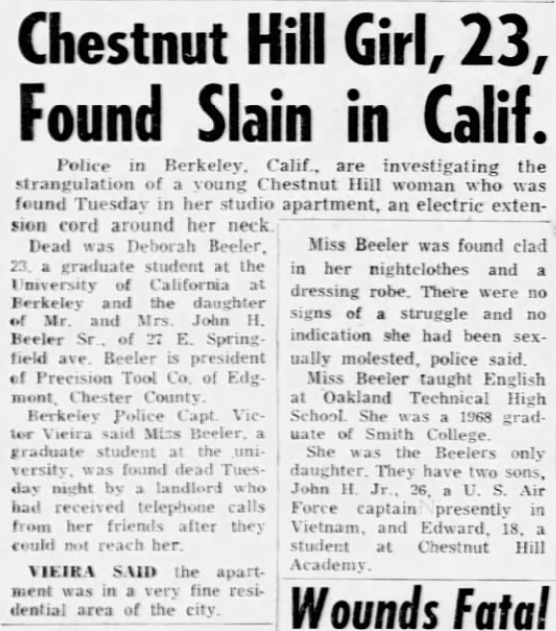
Deborah Beeler: In the late 1960’s, Browne met Deborah Wharton Beeler through a mutual friend when they were both spending time in California, and they fell in love thanks to their shared views on politics, prisoner rights, and the Vietnam War. The twenty-three-year-old teacher, graduate student, and political activist was a transplant from Philadelphia, and sadly not long into their relationship on February 25, 1970, she was found murdered in her cottage in Oakland. The case remains unsolved to this day and Brown has often cited Beeler’s murder as a ‘canon event’ that helped steer the trajectory of his career and perspective on the criminal justice system.
Vietnam: the US officially joined the Vietnam War during Browne’s time at the University of Colorado on March 8, 1965; he was an active opponent of the conflict and felt it was his anti-authoritarian nature combined with his opposition to the system that naturally led him to his career as a criminal defense attorney. While he was in college in Denver, Browne became politically active and formed a chapter of the Students for a Democratic Society to protest the US’s involvement in the Vietnam War. During the conflict, he was able to avoid the draft until he graduated from law school in 1971 (thanks to a 2-S classification), and when his number was called upon graduating, he refused to go, citing military regulations and that individuals over 6 feet 6 inches tall were disqualified from serving. He consulted with pacifist Quakers and doctors and even performed stretching exercises to ensure he met the requirement. When facing recruiters, he was measured at well over 6’6″ and was deemed unfit for service. through a combination of physical height and advocacy he was able to avoid it completely until it ended on January 27, 1973.
Substance Abuse: Browne has admitted to drinking heavily and abusing cocaine while in his 30’s (but did specify in his memoir that he never actively used while handling major cases), and noted that his drug use coincided with a period of his life where his ego was ‘out of control’ and he was heavily focused on the publicity surrounding his work. He said he abused drugs and alcohol in an attempt to ‘change his reality’ and cope with the stress of his career, and one evening while celebrating after winning a death penalty case he had fallen into a ‘puddle of rainwater and cat shit;’ after this wake up call, he attended an intensive workshop in Death Valley and has since then has utilized meditation, yoga, and a focus on spirituality to maintain his sobriety and manage the stress of his high profile legal career.
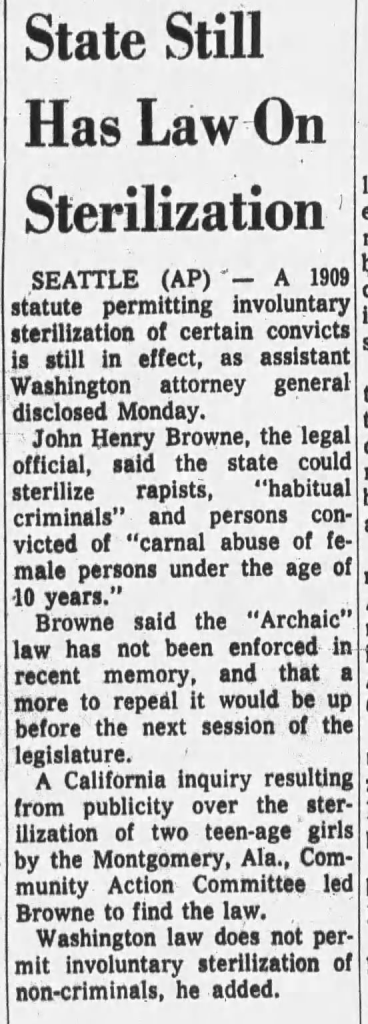
In 1972 Browne was hired as an assistant attorney general for Washington under then-Attorney General Slade Gorton, despite swearing he didn’t have an interest ‘in being on the government’s side’ (he said he only took the position because it involved prison reform). One time while on the job John (while posing as a prison inmate), spent a few days in the maximum-security wing at the Washington Corrections Center in Shelton, and after some time there rewrote some of the rules on punishment within the institution; additionally, he also got the ‘go-ahead’ for Native American prisoners to conduct religious sweat lodges, a practice that continues to this day.
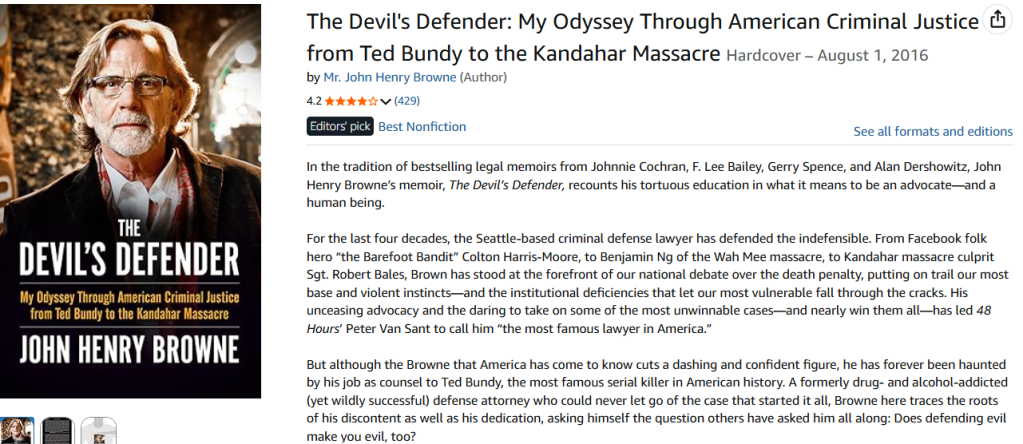
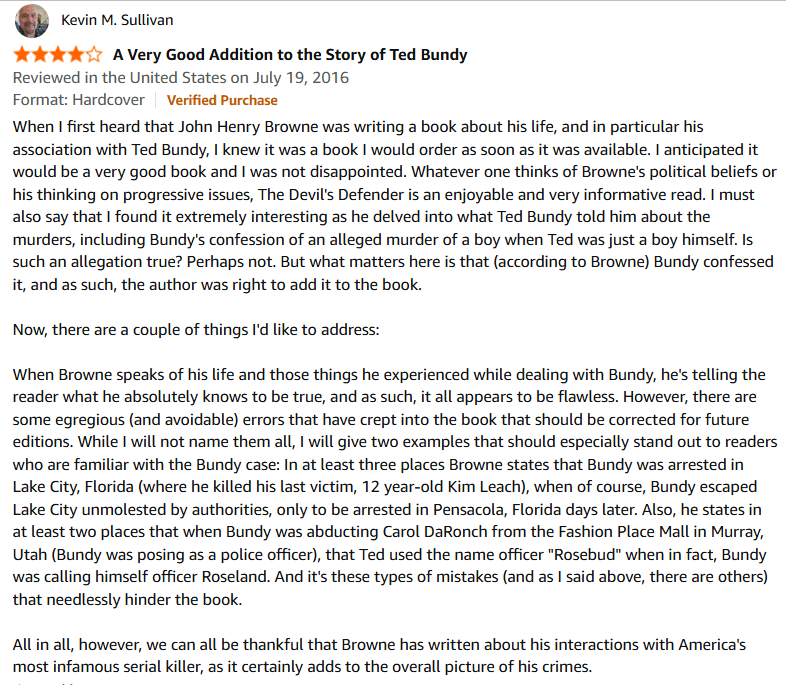
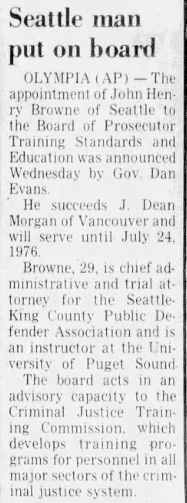
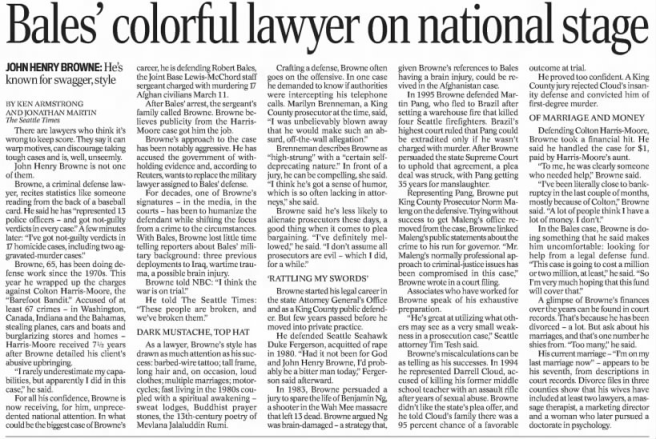
Early Career: according to Browne’s 2016 book, ‘The Devil’s Defender,’ in December 1975 he was appointment to ‘The Board of Prosecutor Training Standards and Education’ by Washington state Governor Daniel J. Evans (the same one that Bundy campaigned for). He joined the King County Public Defender’s Office earlier that same year, where he moved up the ranks quickly and became chief trial attorney… 1975 was a busy year for the young attorney: that October is when he was first introduced to Ted Bundy (more on him later).
Famous Cases: Browne’s impressive fifty-four year long legal career is defined by his defense of ‘unwinnable’ cases, ones that focus on humanizing his clients in an attempt to avoid the death penalty.
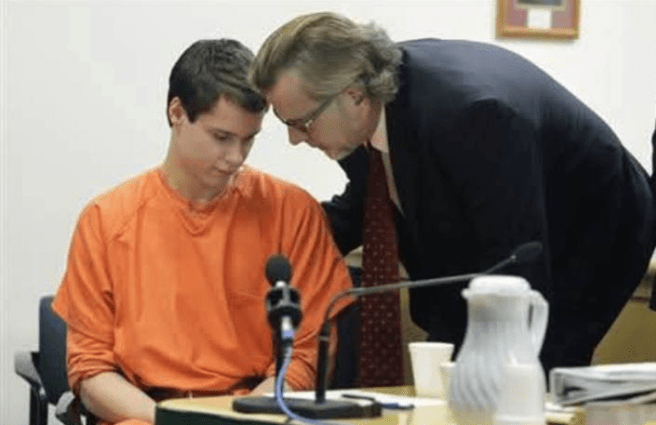
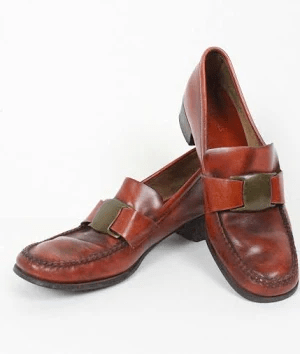
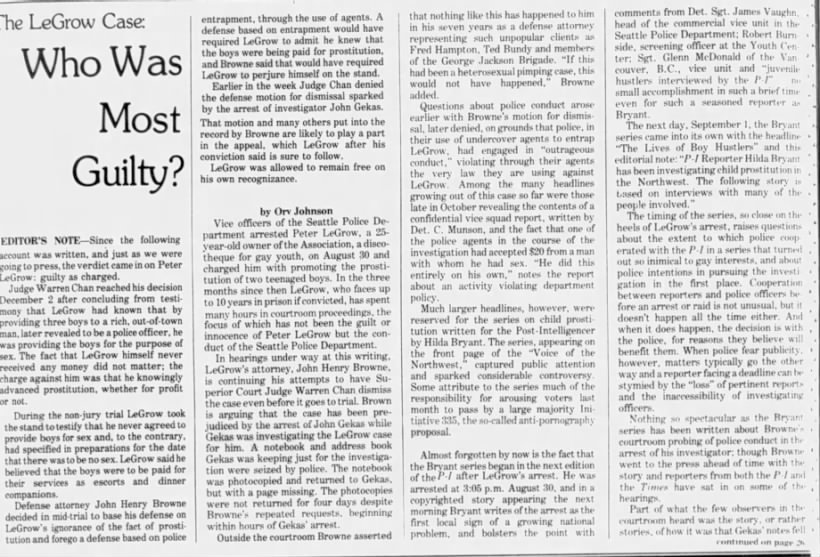
Ted Bundy: Browne first became acquainted with Ted Bundy in October of 1975 after his Utah arrest earlier that August; according to John, he was ‘immediately struck’ by his clients appearance: ‘he wore a turtleneck sweater under a corduroy jacket, khakis, and Bass Weejun loafers. The look seemed to be an attempt to telegraph ‘Ivy League law student,’ but it was a caricature of an Ivy League law student.’ Browne said he referred to his SLC charges as ‘this little stupid case in Utah,’ a fact that he corrected Ted on, stressing that it was a ‘much bigger problem’ (as by that point, Seattle’s newspapers had been running headlines such as ‘is the Utah Ted the Seattle Ted?’); in response, Ted scoffed and said, ‘if they haven’t put it together by now, they never will.’ In the earlier stages of the investigation JHB claimed that Bob Keppel of the King County Sheriff’s Department approached him and said in a case of this magnitude ‘attorney/client privilege shouldn’t apply;’ in response to this, the lawyer laughed and told him to read ‘The Bill of Rights.’ At one point during Browne’s time representing Bundy he arranged for his client to take a lie detector test, something Ted swore he would pass because of his ‘personality type,’ which he was confident would ‘fool the machine’ saying it was ‘just a game’ (it’s worth noting that he failed).
JHB said Ted would use his law office library to research search and seizure laws, and that he became an ‘expert’ on the fallibility of eyewitness identification; he also said that during these visits Browne could see him ‘trying to get closer and closer to me. He knew I was only four months older than he was, and the similarity in our ages seemed like a big deal to him. He started asking where I purchased my clothing and what books, movies, and television shows I enjoyed. If I told him I’d bought, say, my penny loafers at The Bon Marche, the next time I saw him, swear to God, he’d be wearing the same penny loafers. I embarrassed him once when he arrived with actual pennies tucked into the shoes creases, I laughed and said, ‘Ted, that hasn’t been a thing since the early 1960’s.’’
John said at one time during his time representing Ted he shared with him that he wanted ‘to be a good person, but I’m just not,’ and that he had fallen to the floor crying while he made that confession; he has also said on repeated occasions that he didn’t believe people could be born evil, until he met Ted.
When JHB was 29 he sat in Teds Florida Jail cell while he ‘confessed things to me he said he’d never tell anyone else,’ and told him that he had ‘one more confession’: the reason he consulted him as a lawyer was because they were ‘so much alike.’ Browne said he recalls ‘returning to my cheap motel room, lighting a cigarette, and looking at my reflection in the bathroom mirror. I felty sick to my stomach.’
In 1978 after Ted’s second escape Browne flew to Florida and helped negotiate a plea bargain that would have saved him from the death penalty. The deal (that covered multiple jurisdictions across multiple states) would have required Bundy to plead guilty to his crimes… but at the last-minute the killer rejected the deal, a decision that ultimately sealed his fate.
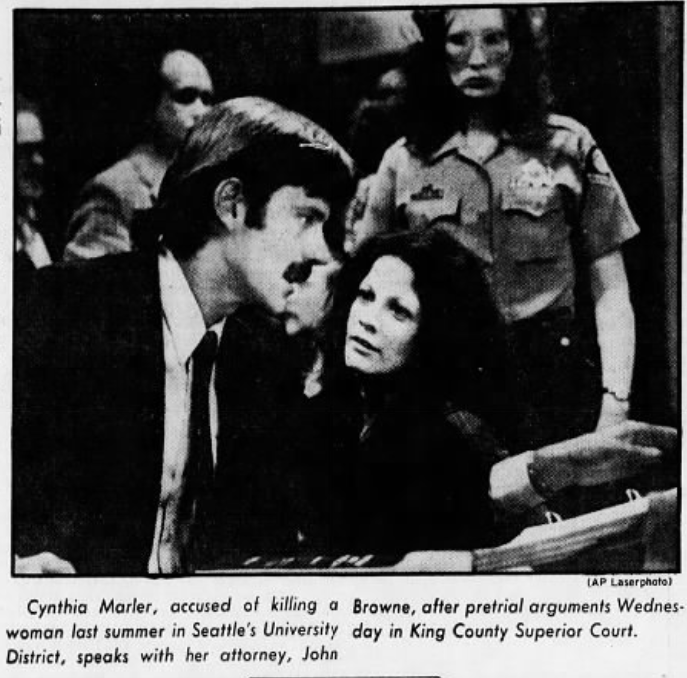
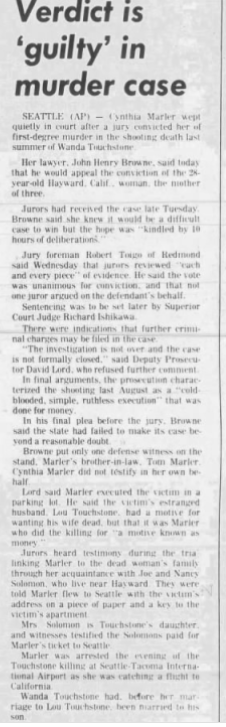
Cynthia Marler: on August 11, 1980, Cynthia Marler was arrested and charged with the murder of Wanda Touchstone, a Polish immigrant that had recently separated from her husband. She hired Browne to defended her against charges that she was a ‘cold blooded killer that hired someone to kill Lou Touchstone’s wife,’ and during her trial it was argued that she was a hired ‘assassin’ that traveled from Bay Area (where she lived) to kill Touchistone; in response to this, JHB argued that it was actually the victim’s husband who had the real motive and ‘he held a great hammer over her head.’ She was ultimately convicted of the murder but appealed her conviction in 1982; the original ruling was upheld.
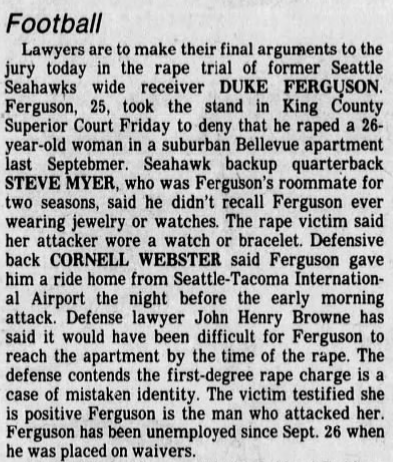
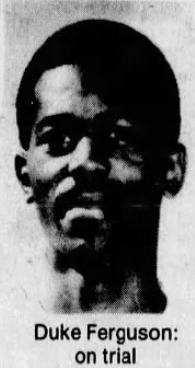
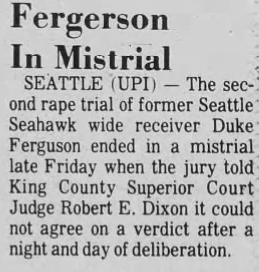
Duke Fergerson: A former Seattle Seahawk, Duke Fergerson was charged with raping two young women at an apartment complex, and he was arrested on October 23, 1979; Browne represented him in court, and by late 1980 he acquitted of all charges. The case gained additional attention after Jodi Zimbelman, a Seahawks ticket office employee who had previously dated Fergerson, filed a discrimination lawsuit against the team claiming she had been fired because of her interracial relationship with the football player; the team maintained Zimbelman was fired for violating a rule against dating other employees.
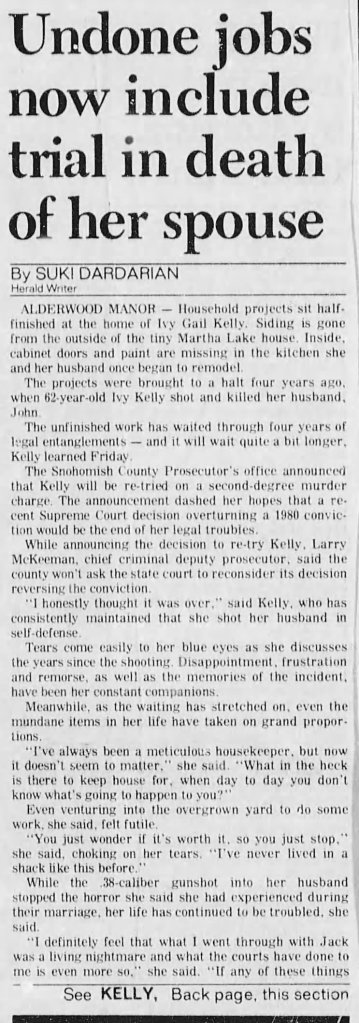
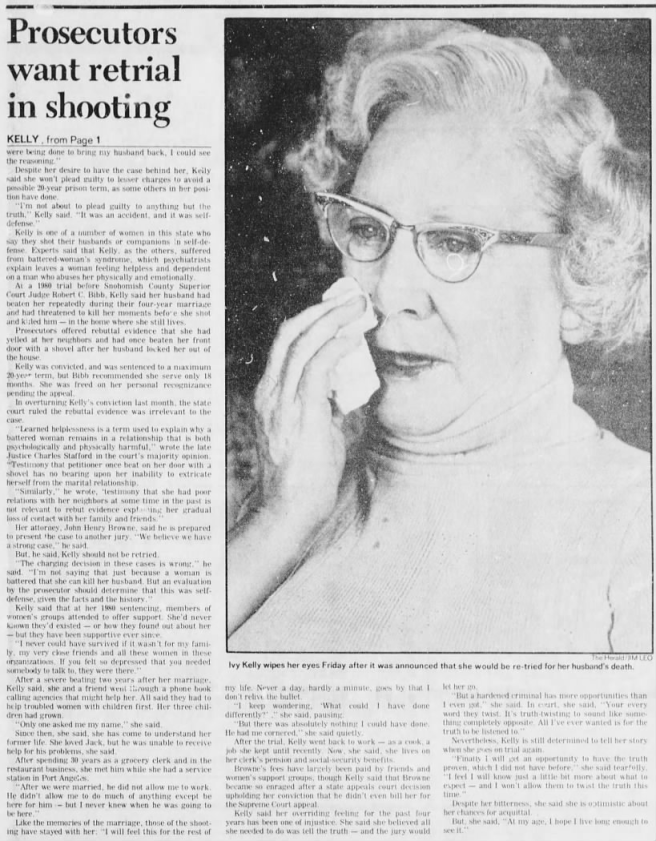
Ivy Kelly & Claudia Thacker: Ivy Gail Kelly and Claudia Thacker are the first two women in the US to successfully use the ‘battered woman syndrome’ defense in relation to charges they faced in connection to their husbands’ deaths. Kelly was charged with her spouse’s death after she shot and killed him on August 30, 1980 in their Snohomish County residence. Ms. Kelly’s defense was that her husband (who had been drunk at the time he was killed) had been angry with her and had been try to block the only way out of their house; at the time she believed he wanted to kill her, so she pulled out a pistol and pointed it at him… and even though Kelly claimed she only ‘intended to scare him,’ the weapon discharged, killing him.
Ivy was found guilty of second-degree murder by a jury of her peers and was sentenced to a maximum term of twenty years in prison; she appealed the verdict, claiming she lived through ‘years of ‘extensive previous physical abuse at the hands of her husband,’ and during the proceedings was represented by John Henry Browne. The attorney presented arguments for self-defense based on his client’s history of being an abused spouse and called in a recognized expert in the field of battered women, who testified the incident ‘fit the classic behavioral model of a batterer’ and that Kelly was ‘a victim of the battered woman syndrome.’ The jury eventually acquitted her.
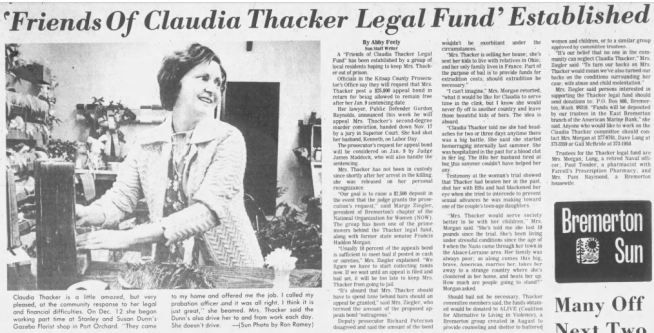
On September 5, 1977 Claudia Thacker ended a twenty-year living nightmare in her Port Orchard, Washington home after she shot and killed her husband, Kenneth after he attacked her during a drunken rage. She was convicted of second-degree murder (which carries a mandatory 5-to-20-year sentence), but in June 1979 was freed on her own recognizance pending the outcome of her appeal with the Washington State Court of Appeals. Claudia claimed she was only defending herself and their young child, and that during the original trial the jury heard very little about her husband’s ‘violent habits.’ On September 11, 1980 Claudia Thacker was officially acquitted of her second-degree murder charge, four years and two trials after she fatally shot her husband in the back.
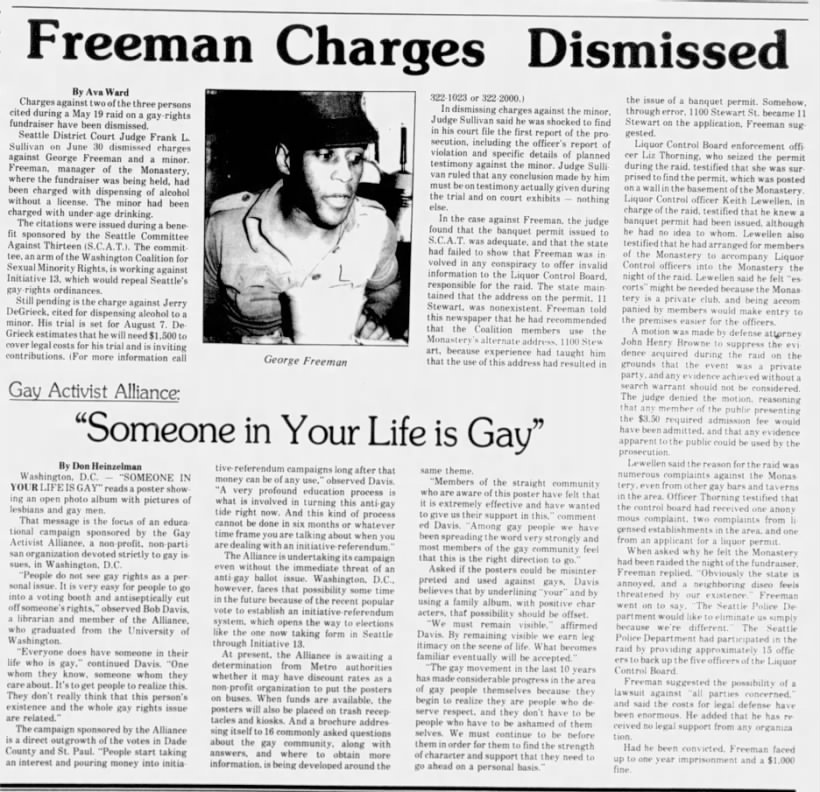
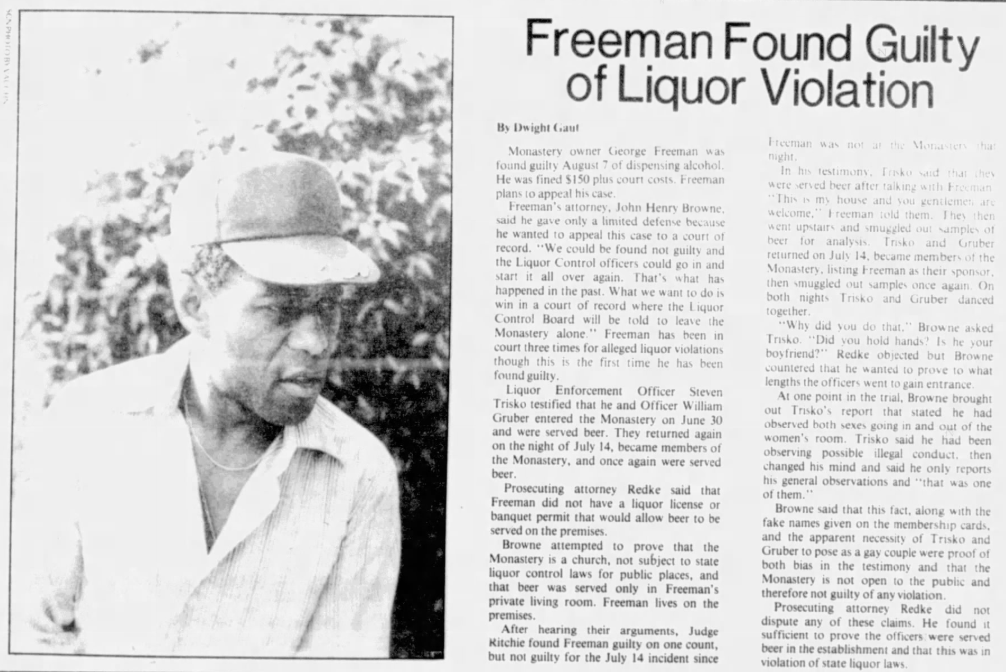
George Freeman: from 1977 to 1985 Minister George Freeman operated ‘The Monastery,’ an organization in Seattle that simultaneously acted as a gay church, a nightclub, an LGBTQ community center, and a homeless shelter for queer youth all wrapped up in one. For example: on a typical day, Freeman would host DJ’s playing dance music in the early evening, then at 2 AM would stop everything to deliver a sermon. In April 1978 he got busted serving alcohol without a license to an undercover officer, who paid $7 for what the establishment called ‘a tithe’ (they also said he didn’t have the appropriate banquet permit either). During the proceedings, it was noted that The Monastery was registered as a religious organization with the Universal Life Church, and the prosecutor argued that the activities occurring at the Monastery were not religious in nature. For these charges, Freeman was represented by John H. Browne, and in the end the Seattle courts fined him $150.
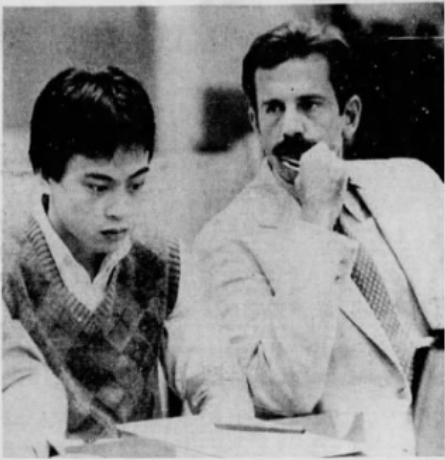
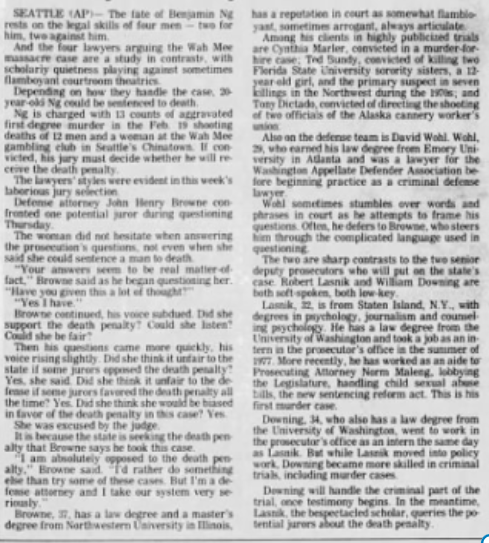
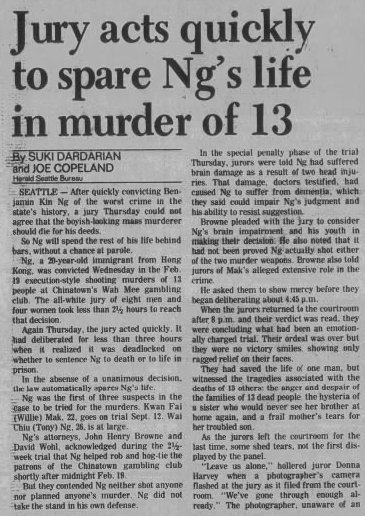
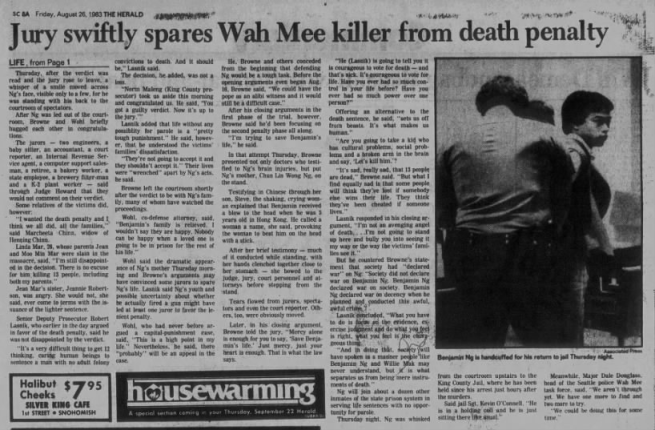
Benjamin Ng: John Henry Browne also represented Benjamin Ng, who was a part of the 1983 Wah Mee Massacre, which (as of April 2026) is classified as the deadliest mass shooting in Washington state history. On February 18, 1983 three men bound and robbed fourteen people at the Wah Mee Club (an illegal gambling den located in Seattle’s Chinatown district), then opened fire on them, killing thirteen of them; one victim (Wai Chin) survived and testified against them. In addition to Ng two other men were charged for the brutal crime: Kwan Fai ‘Willie’ Mak and Wai-Chiu’ ‘Tony’ Ng.
While acting as Ng’s attorney, Browne admitted that his client participated in the robbery and ‘hog-tying’ of the victims, but denied he actually shot anyone: he portrayed Willie Mak as the sole mastermind and leader who planned to ‘eliminate all witnesses,’ and argued that Mak said he’d ‘kill the victims himself if his partners refused.’ During the sentencing phase, JHB presented evidence that his client suffered from extreme brain damage caused by being repeatedly beaten with wood as a child in Hong Kong. Browne was successful in helping Ng avoid the death penalty and on August 25, 1983 he was convicted on thirteen counts of aggravated first-degree murder and was sentenced to life in prison without the possibility of parole; Willie Mak was originally sentenced to death but his sentence was overturned in 1988, and Tony Ng received a 30-year sentence (he served twenty-eight-years of it before he was released and deported to his native Hong Kong in 2014).
Tony Dictado: in 1982 John Henry Browne represented Tony Dictado after he was charged for arranging the execution styled first-degree murders of two Filipino American cannery-union reformers, Gene Viernes and Silme Domingo. Prosecutors identified Dictado as the leader of a Filipino gang called Tulisan, and argued in June 1981 he ordered the hits because the men blocked the gang’s efforts to establish high-stakes gambling in Alaska canneries. In March 1982, a jury found Dictado guilty of two counts of aggravated first-degree murder after only ten hours of deliberation and he was sentenced to life in prison without the possibility of parole; Browne expressed disappointment with the quick verdict, suggesting it had not been ‘thought out.’ He also handled Dictado‘s appeal, arguing the court erred by allowing conspiracy evidence without an appropriate charge and challenging the constitutionality of the mandatory life sentence. As of April 2026, Dictado remains in prison in Washington state.
Martin Pang: in 1995 JHB represented Martin Pang after four members of the Seattle Fire Department died battling the fire he set to his parents’ Seattle frozen foods warehouse in order to collect the insurance payout. Browne came to Pangs defense after he fled to Brazil in response to these charges, and successfully argued before the Brazilian Supreme Court that his client should not face murder charges because the countries laws prohibited his extradition if he faced murder charges; the courts ruled in Pangs favor and because of this King County Prosecutor Norm Maleng was forced to drop the four counts of first-degree murder and the death penalty. Browne negotiated a plea agreement where Pang pleaded guilty to four counts of first-degree manslaughter and in 1998, he was sentenced to 35 years in prison; after serving roughly twenty-three years, Pang was released from custody on September 27, 2018.
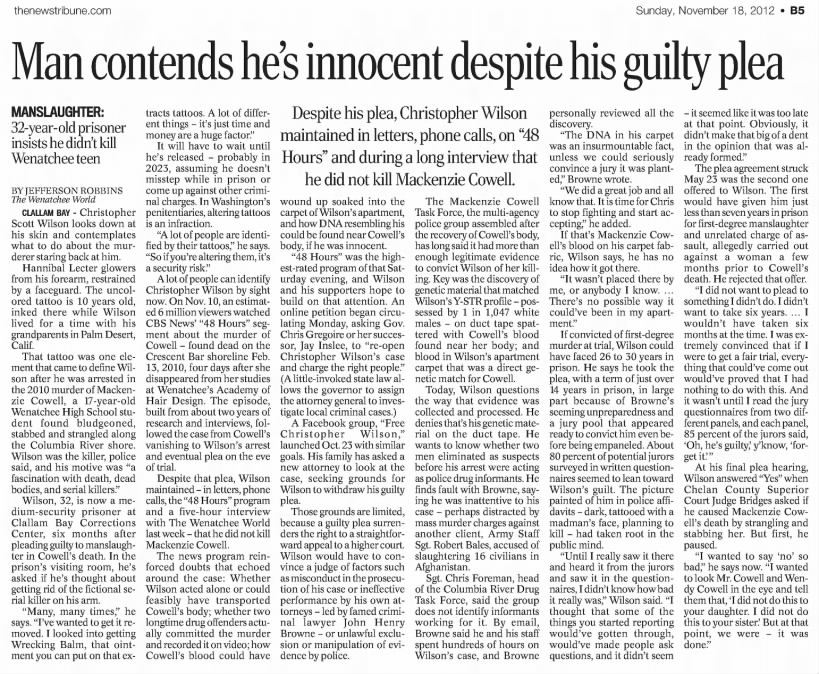
Christopher Scott Wilson: on February 9, 2010 seventeen-year-old Mackenzie Nicole Cowell was last seen at The Academy of Hair Design in Wenatchee, WA where she was a student; her remains were discovered four days later on the banks of the Columbia River. A post-mortem exam determined she had been strangled, stabbed in the neck, and had suffered blunt force trauma to the head, and it wasn’t long before detectives zeroed in on Christopher Scott Wilson, a twenty-nine-year-old classmate of Cowell’s.
DNA found on duct tape close to where Cowell’s body was discovered linked Wilson to the murder, and according to investigators, he left the beauty school shortly after Mackenzie did on the day she disappeared. A search of his apartment revealed the presence of blood which matched Cowell’s DNA and in December 2010, the task force assigned with solving the murder made a second arrest: Wilson’s friend Tessa Schuyleman, who was accused of (but was never charged with) helping him cover up the crime and was instead charged with obstruction of justice for an unrelated case. In a plea agreement, Wilson pleaded guilty to manslaughter and was sentenced to just over fourteen years in prison; he was freed from Monroe Correctional Center on December 11, 2023.
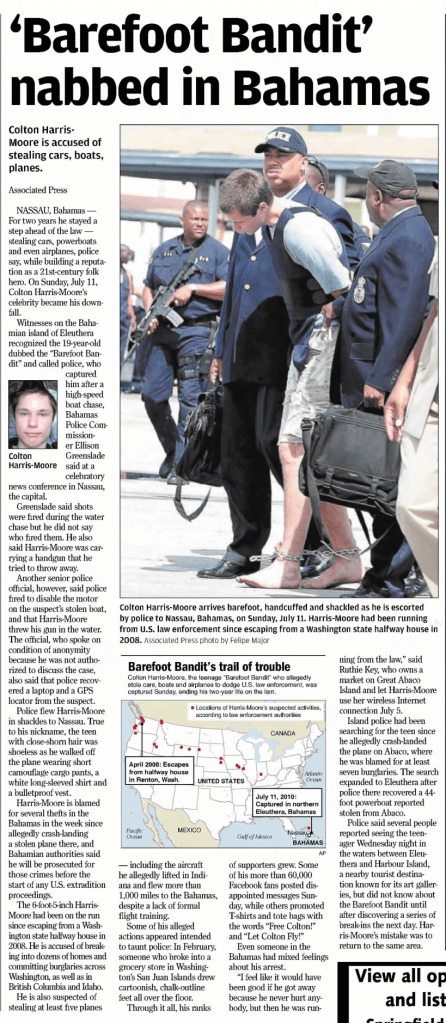
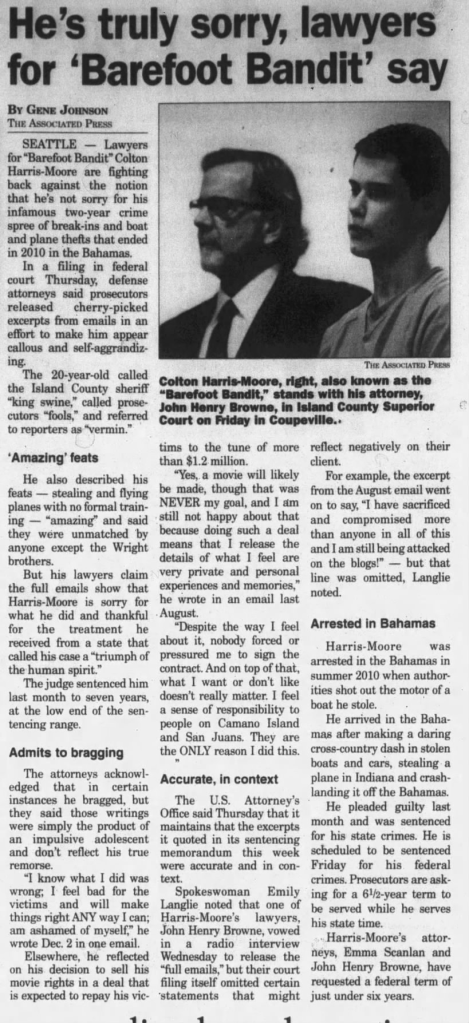
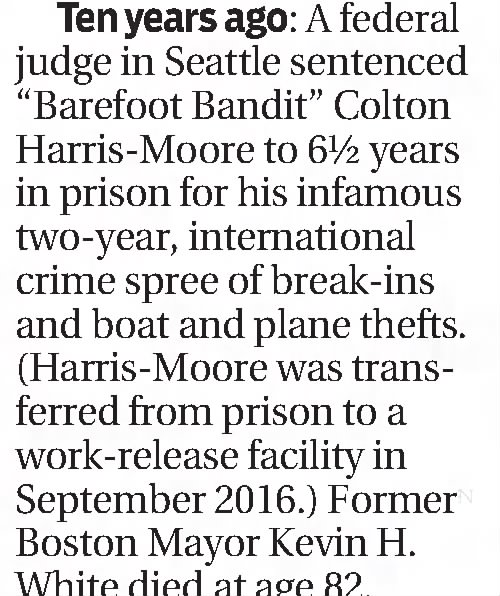
Colton Harris-Moore: also referred to as ‘the barefoot-bandit,’ Harris-Moore led LE on a two-year long manhunt between 2008 to 2010 across the western part of Washington state all the way to the Caribbean, and he stood accused of stealing boats, breaking into countless homes, and hijacking (three) airplanes. The product of an unsavory home life (his mother was a severe alcoholic), by the age of seven he was already breaking into homes to steal food and other survival supplies, and by fifteen he was living in the woods in an attempt to escape his home life.
In 2011, he was charged with sixty-seven felonies, and in January 2012 Browne persuaded a state judge to give his client the low end of the sentencing range: 6.5 years (78 months) in federal prison. The judge expressed sympathy for his ‘terrible upbringing,’ but stressed the necessity of the sentence. Colton was also ordered to pay $1.4 million in court-ordered restitution, and he sold his life story rights to 20th Century Fox for an equal amount.
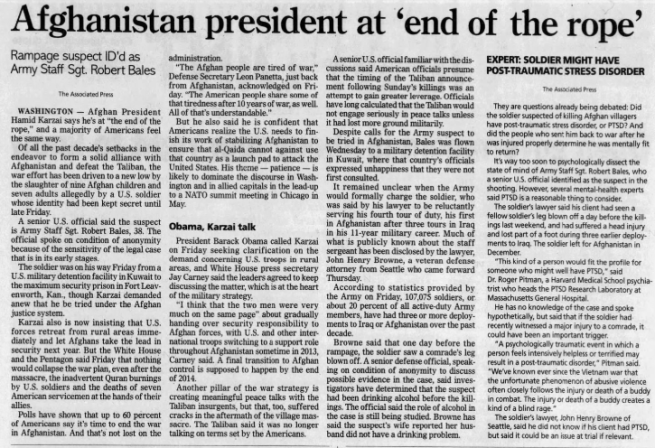
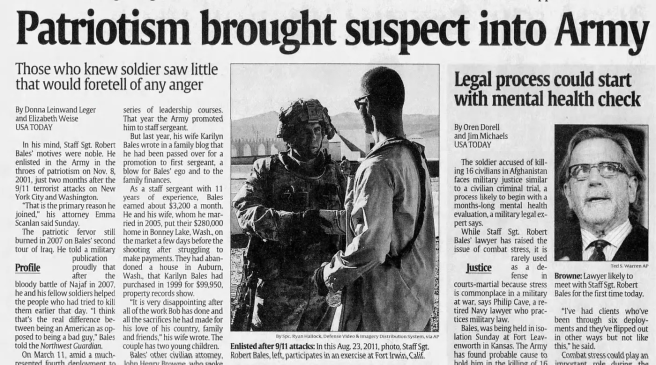
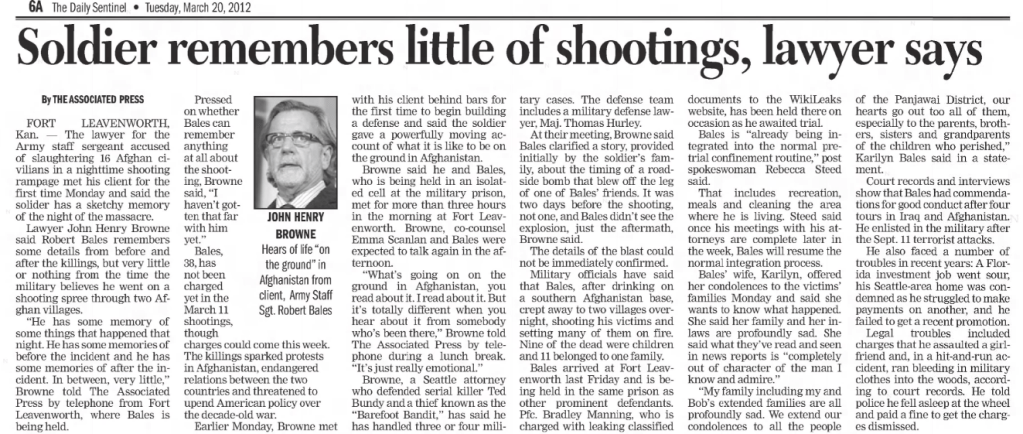
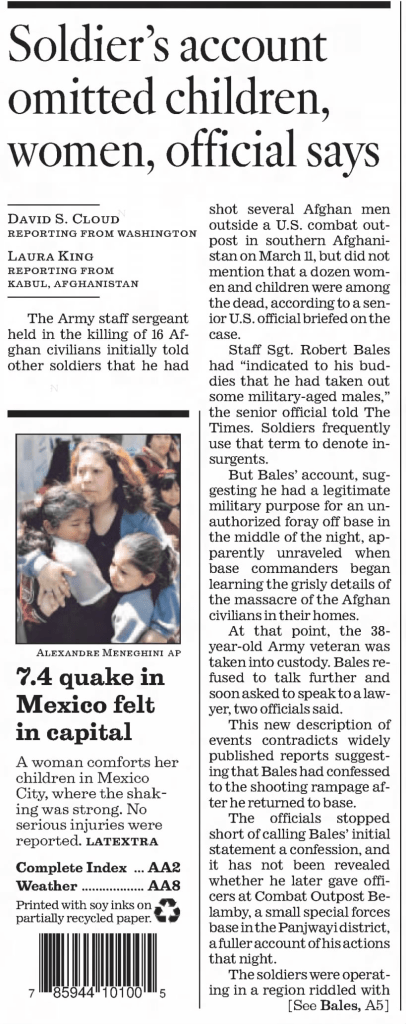
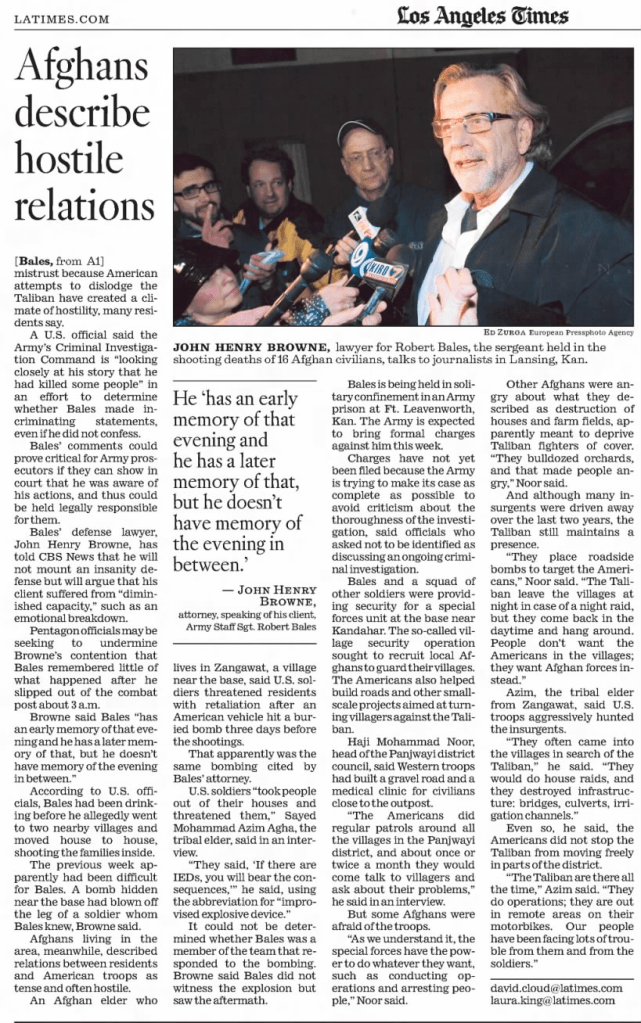
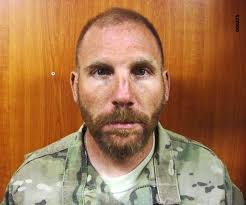
Robert Bales: on March 11, 2012 after drinking some whiskey with his Army buddies in his barracks, thirty-eight-year-old US Staff Sergeant Robert Bales performed a ‘solo raid’ on two southern Afghan villages known as the Kandahar massacre, where he allegedly shot, knifed, and (in some cases) burned innocent men, women, and children. Armed with a knife, a nine mm pistol, and M-4 rifle outfitted with a grenade launcher, Bales had been on his fourth deployment in almost as many years and was suffering from an extreme case of PTSD. Officials say the father of two from Lake Tapps walked to two villages and took the lives of four men, four women, two boys and seven girls; he then burned some of their remains.
In addition to having alcohol in his system, Bales was also abusing steroids at the time of the killings that were provided to him by his superior officers, and according to JHB: ‘if Sergeant Bales did it… and I do mean if, we as a nation are to blame. We created this situation.’ … ‘I think the message for the public in general is that he’s one of our boys and they need to treat him fairly.’ Browne defended his Bales alongside military lawyers, and described him as ‘mild-mannered,’ and claimed that he only acted the way he did because he ‘was upset after seeing a friend’s leg blown off the day before;’ he also clarified that his client had ‘no animosity toward Muslims.’ In an attempt to avoid the death penalty, Bales pleaded guilty to sixteen counts of murder and six counts of assault and attempted murder in a plea deal, and on August 23, 2013, he was sentenced to life in prison without the possibility of parole. As of April 2026 he is still incarcerated and is being housed at the US Disciplinary Barracks in Fort Leavenworth, Kansas.
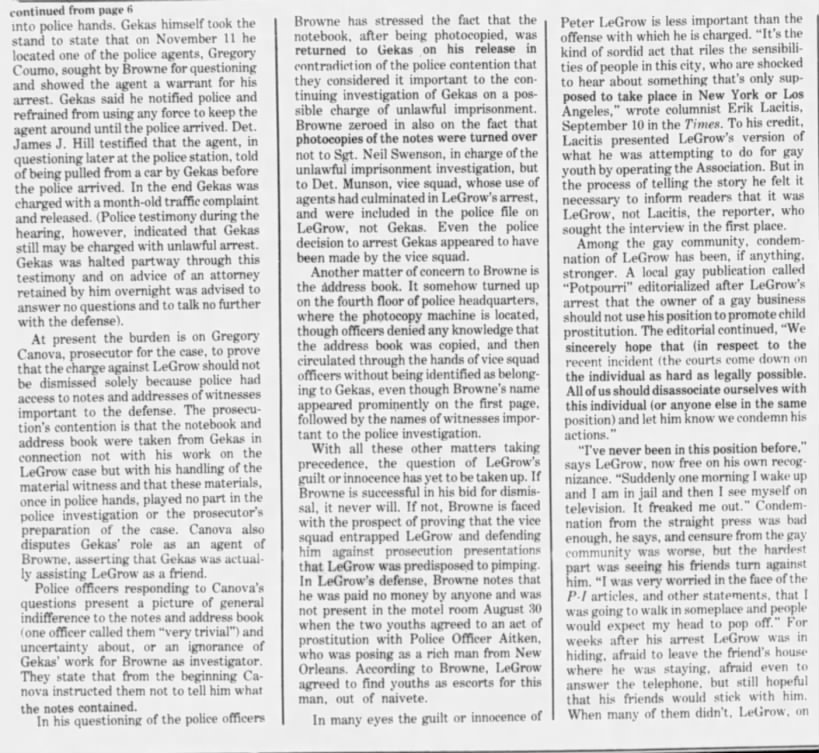
Darrell Cloud: Browne was less successful in representing Darrell Cloud, who was accused of murdering his former middle-school teacher with a firearm in 1994 after years of sexual abuse. He guided his client in rejecting a plea bargain then presented an unsuccessful insanity defense during his jury trial, and Darrell was convicted of first-degree murder; he later (successfully) argued that his attorney had harmed his ability to conduct plea negotiations by making an unreasonable assessment of his chances of success in the trial (which he claimed Browne told him there had been a ‘95% chance’ of a favorable outcome). By blaming JHB’s conduct, Cloud was able to obtain a reduced sentence on a lesser charge.
Marriages: Browne has described himself as a ‘serial monogamist’ and an ‘oft-married individual’ that once told ‘The New York Times’ that his marriages ‘would round up toward double digits’ (realistically, he is on his eighth marriage, and the latest Mrs. Browne seems lovely). He says that his work on behalf of women stems from ‘a place of respect,’ and that ‘the world would be better if it was run by women.’
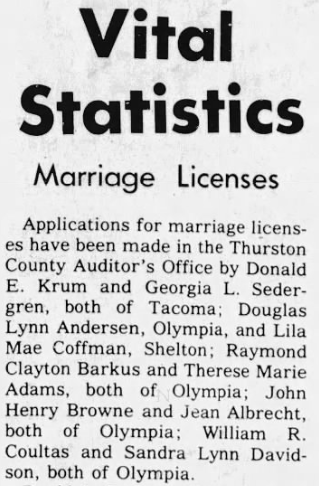
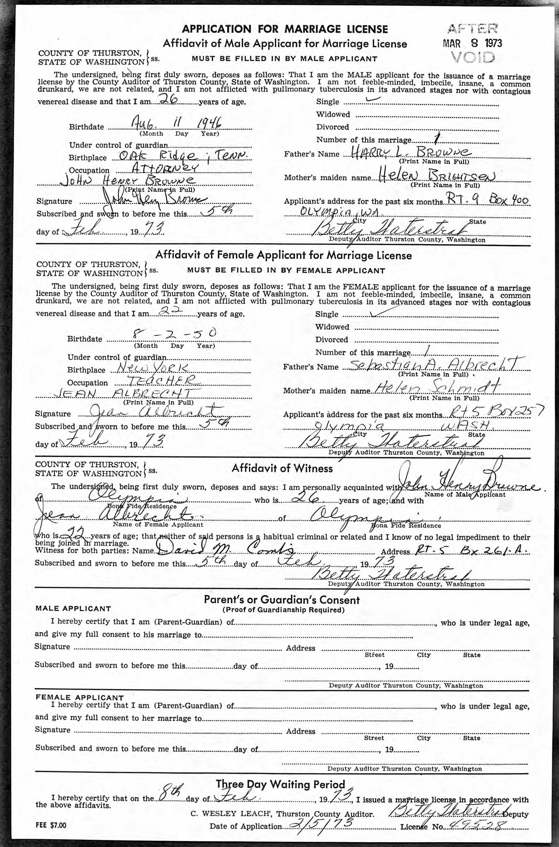
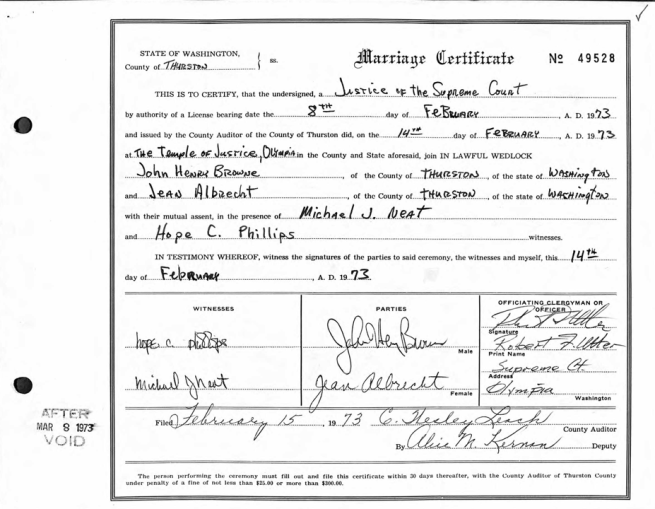
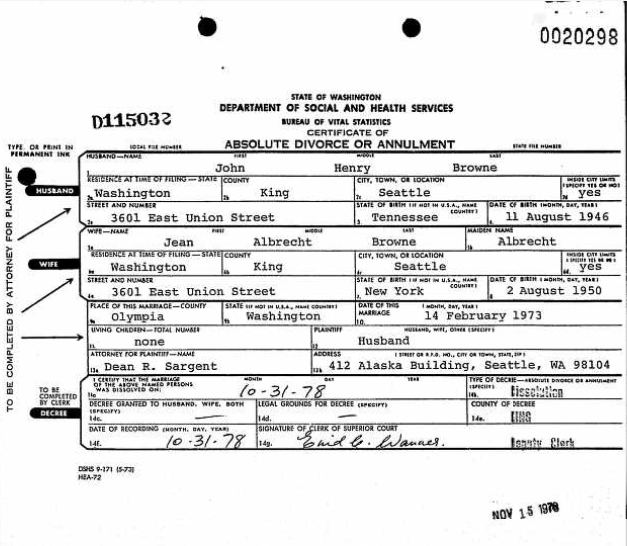
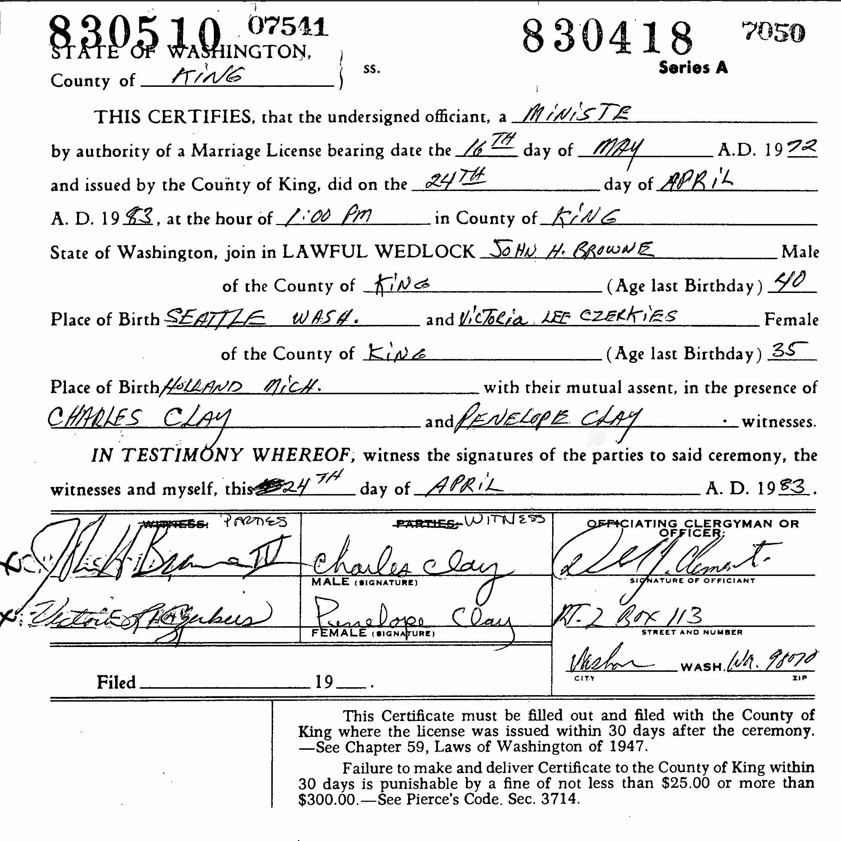
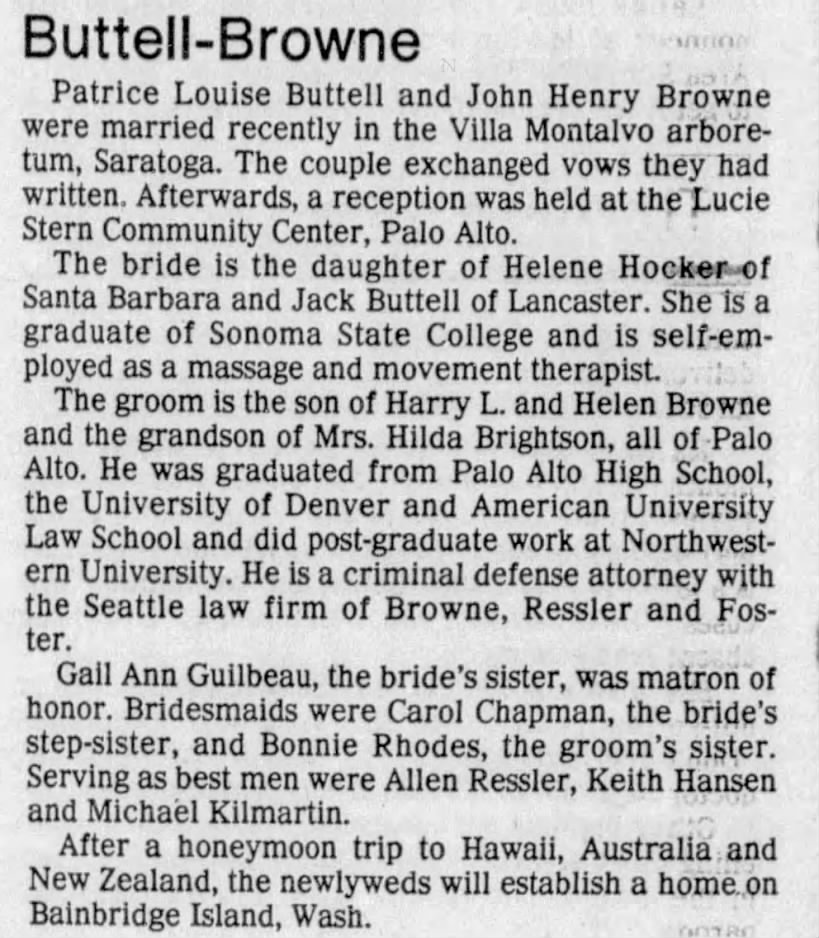
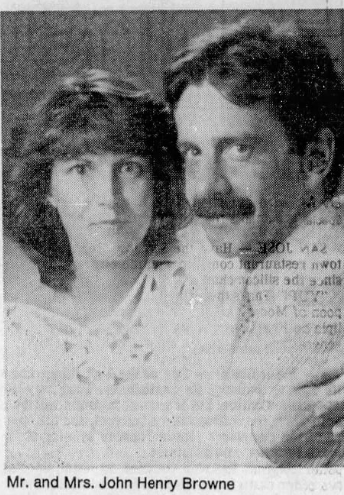
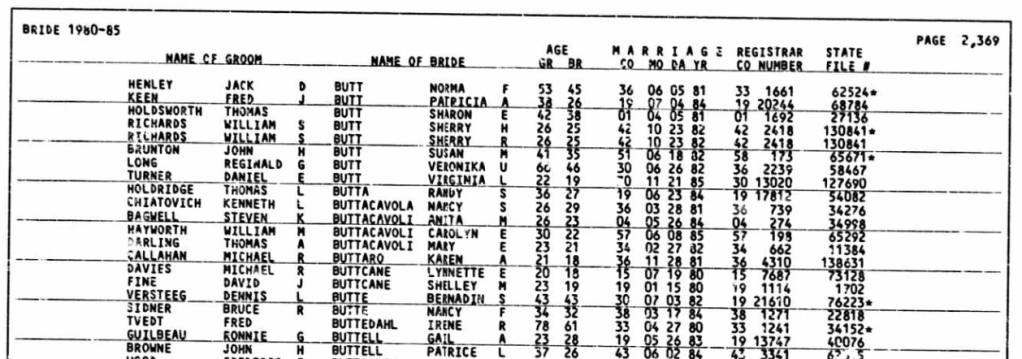
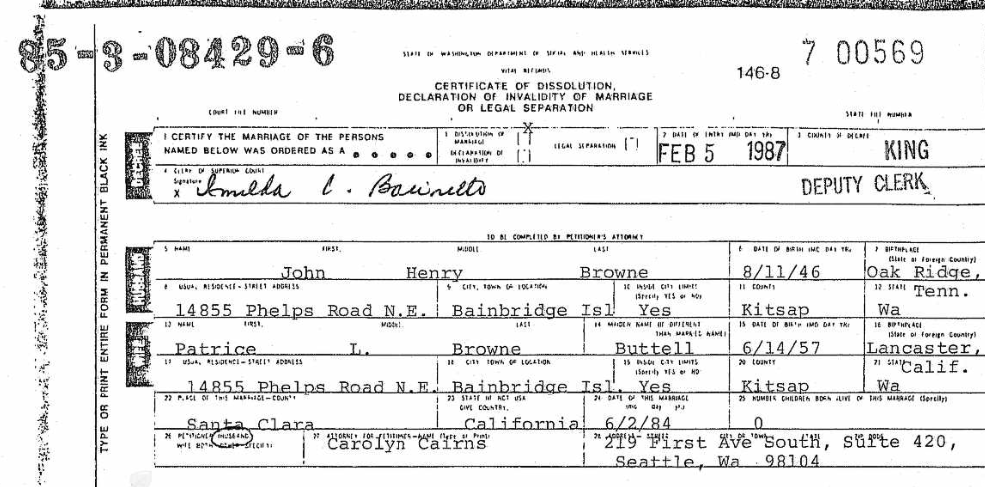
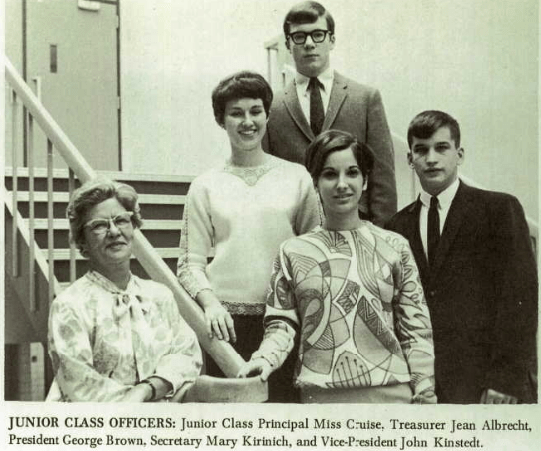
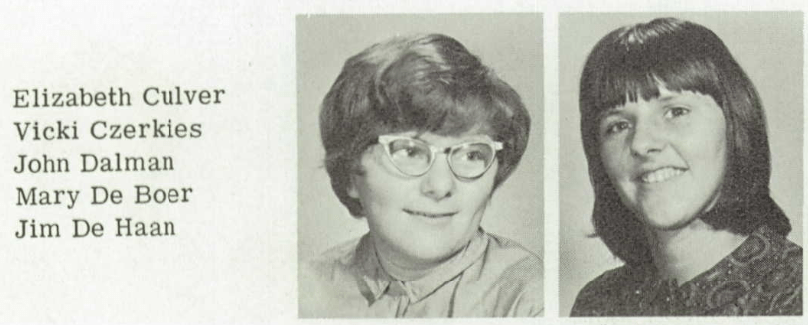
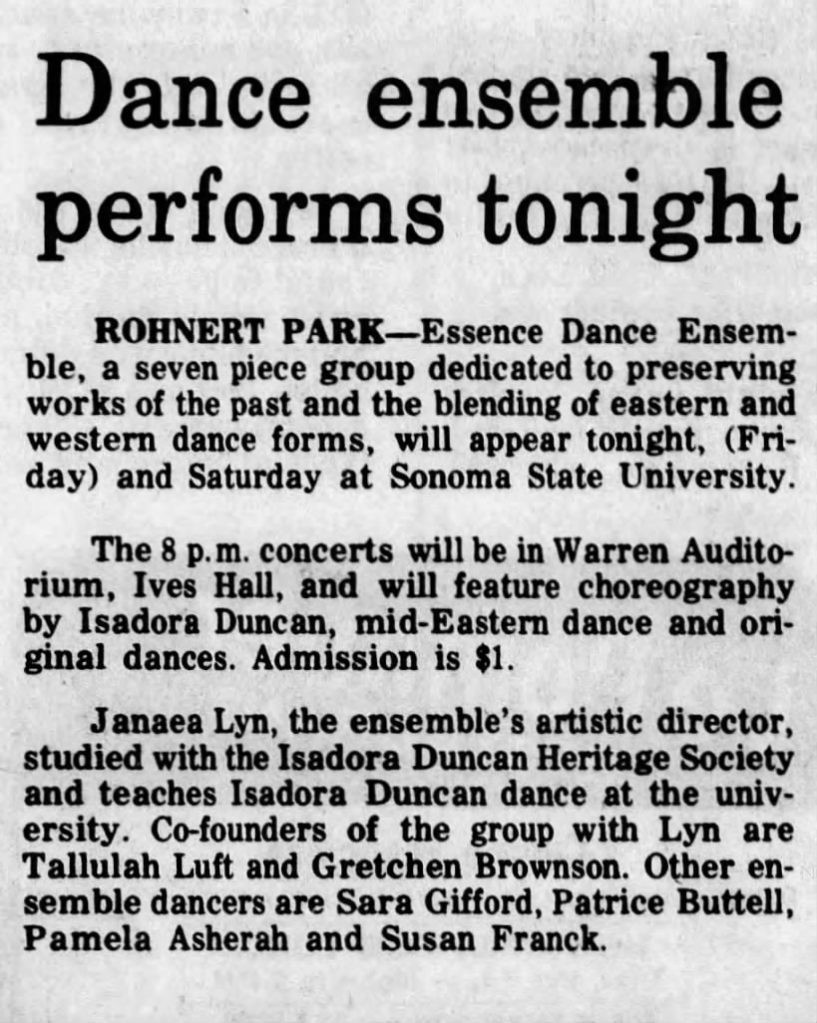
Despite being married multiple times over the course of his life, Browne resents being called a ‘womanizer,’ and said he is ‘always faithful in his relationships’. He married his first wife Jean Albrecht on February 14, 1973 at the Temple of Justice in Olympia, WA; originally from New York state, Albrecht was employed as a teacher during the couples’ union. They weren’t married for very long and divorced on Halloween in 1978. Browne married his second wife Victoria Lee Czerkies on April 24, 1983 in Seattle, and the couple divorced sometime before he married his third wife Patrice Buttell on June 2, 1984. Patrice was a graduate of Sonoma State College and the time they were together she was a (self-employed) massage and movement therapist; the couple were officially divorced on February 5, 1987.
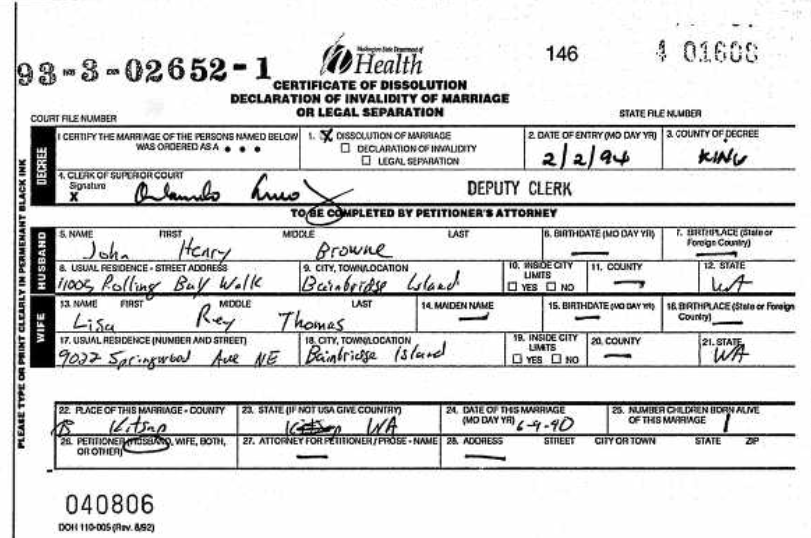
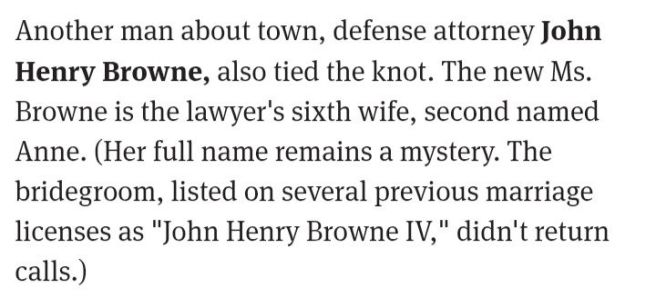
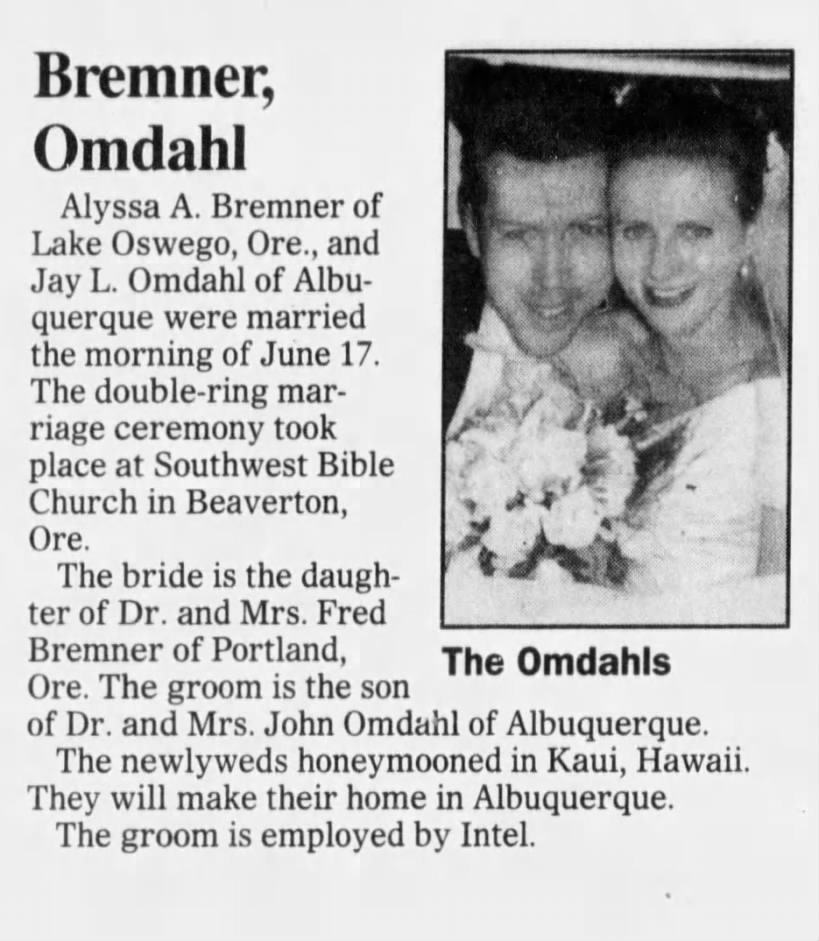
John married his fourth wife, Lisa Rey Thomas on June 9, 1990 and the couple had a son together named Eli. According to her LinkedIn page, Lisa earned her PhD at Washington State University and is a research scientist for The Alcohol and Drug Abuse Institute at the University of Washington in Seattle. After the couple divorced on February 2, 1994 Browne went on to marry his fifth wife, Anne Bremner.
Born in McAlester, Oklahoma on June 4, 1958, Bremner graduated with honors from Stanford University in 1980 with a degree in medieval history and went on to attend Seattle University School of Law (she completed her JD in 1982). In recent years, she has been a television commentator for several high-profile legal cases (including the murder of Meredith Kercher in Italy and Amanda Knox) and describes herself as ‘a liberal, an idealist, and a Democrat,’ and like her former husband is opposed to capital punishment.
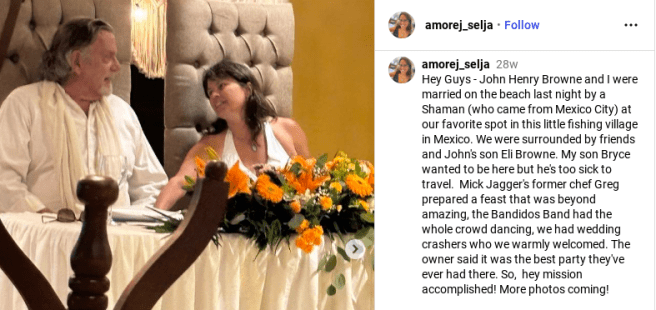
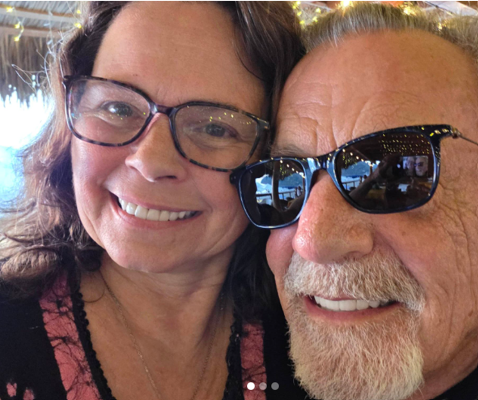
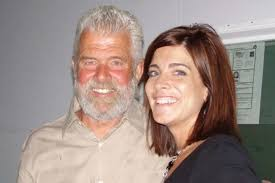
I was unable to find any information about wives six and seven, but most recently Browne got married to Debra Amore Selland on February 14, 2022; the newest Mrs. Browne is a trained paralegal and worked for her husband on some of his final murder trials before he retired.
2006 Ethics Charges: in 2006, the Washington State Bar Association admonished Browne as part of a settlement of ethics charges stemming from compensation issues, saying that on one occasion he charged a client more than what had been arranged in a written agreement (such an admonition was the lowest form of disciplinary action doled out by the bar). In response to the charges, he said one of his legal assistants had prepared the written agreement and he had not known about it.
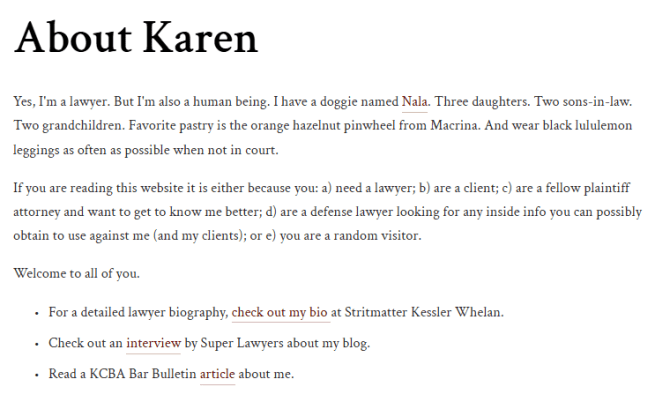
Scandal, Karen Koehler: one of the more scandalous cases that Browne was involved in is the murder of Timothy ‘Mac’ McNamara, who married his biological niece Tracy Nessl after moving from Washington state to Belize: the two began a romantic relationship in 2012 and shortly after they relocated to the foreign country (in an attempt to avoid public scrutiny) they tied the knot. On Christmas Day in 2014, Mac was found dead from a gunshot wound to the back of the head at their home: initially his death was reported as a suicide, however forensic investigators later determined the location of the wound made suicide ‘practically uncomfortable.’ Additionally, detectives discovered that Tracy had recently purchased a 9mm pistol, which was the same type of weapon that had been found at the scene.
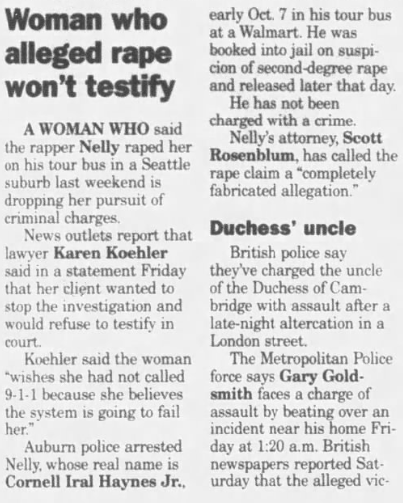
In a September 2015 lawsuit filed by Seattle attorney Karen Koehler against Tracy on behalf of Tim’s adult children, it was alleged that their stepmom/cousin had seduced their father in an attempt to gain control of his assets before killing him. In March 2022, a jury in Grant County, Washington found McNamara civilly liable for the 2014 death of her husband/uncle after they determined she had committed battery that proximately caused his death; his children, Jennifer Ralston and Caleb McNamara, were awarded approximately $3.327 million in damages.
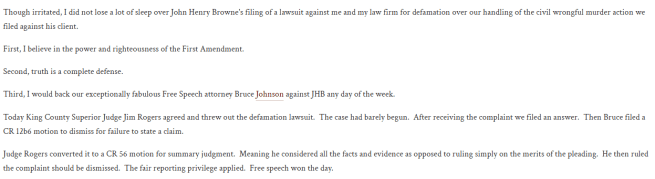
In May 2016, a conflict between Browne and Koehler became public after she published excerpts of emails between the two on her blog, ‘The Velvet Hammer,’ claiming he had insulted her physical appearance, used disparaging language towards her, and even called her a ‘whack job.’ In July 2016, Browne sued Koehler and her firm for defamation on behalf of McNamara, claiming her firm had knowingly posted incorrect information and had falsely portrayed her as a ‘murderer’ on their website in an attempt to bias potential jurors.
In November 2016, King County Superior Court Judge James E. Rogers dismissed Browne’s defamation suit and ruled that the defendant’s firm’s online statements were protected under the ‘Fair Report Privilege’ because they recounted information from official legal proceedings. After her victory, Koehler filed a motion seeking sanctions against Browne, alleging he had engaged in an ‘inappropriately intimate relationship’ with his client at the time he represented her, which she claimed clouded his professional judgment and fueled his personal attacks against her; in response, Browne denied the allegations as ‘rumors and gossip,’ and in December 2016 the court denied Koehler’s request (although it is worth nothing that because of their ‘dispute’ the WA state bar association already canceled plans to reprint portions of Browne’s memoirs).
Although authorities in Belize issued a warrant for her arrest on murder charges, McNamara has never been extradited from the US and has never faced a criminal trial for the death of her husband/uncle.
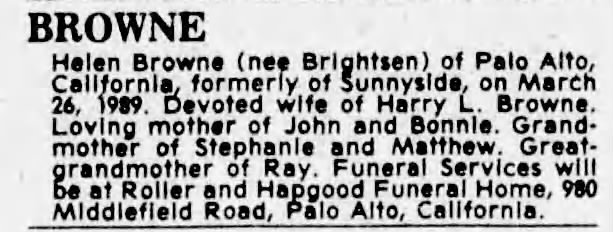
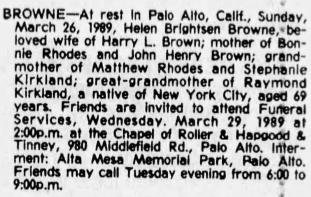
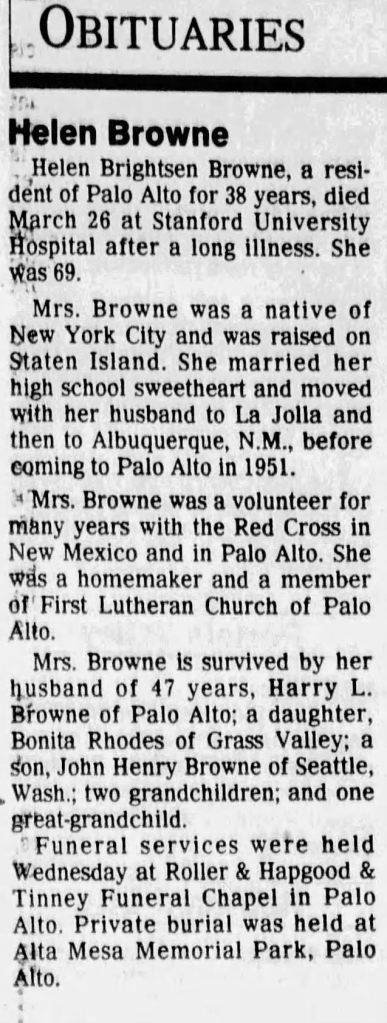
Conclusion: Helen Brightsen-Browne died at the age of sixty-nine after succumbing to a long illness on March 26, 1989. According to her obituary, she was a homemaker and volunteered with the American Red Cross for many years; she was also a member of the First Lutheran Church of Palo Alto. At the time of her death her and Harry had been married for forty-seven years. John’s father Harry L. Browne died on Valentine’s Day in 2015 at the age of ninety-five, and his sister Bonnie passed away at the age of seventy-one on July 24, 2013 in Sacramento, California.
Works Cited:
Ackley, Andrew. (March 28, 2022). ‘Notorious Legal Saga Ends in Jury Verdict: Tracy Nessl McNamara killed Tim McNamara.’ Taken March 30, 2026 from andrewwackley.com
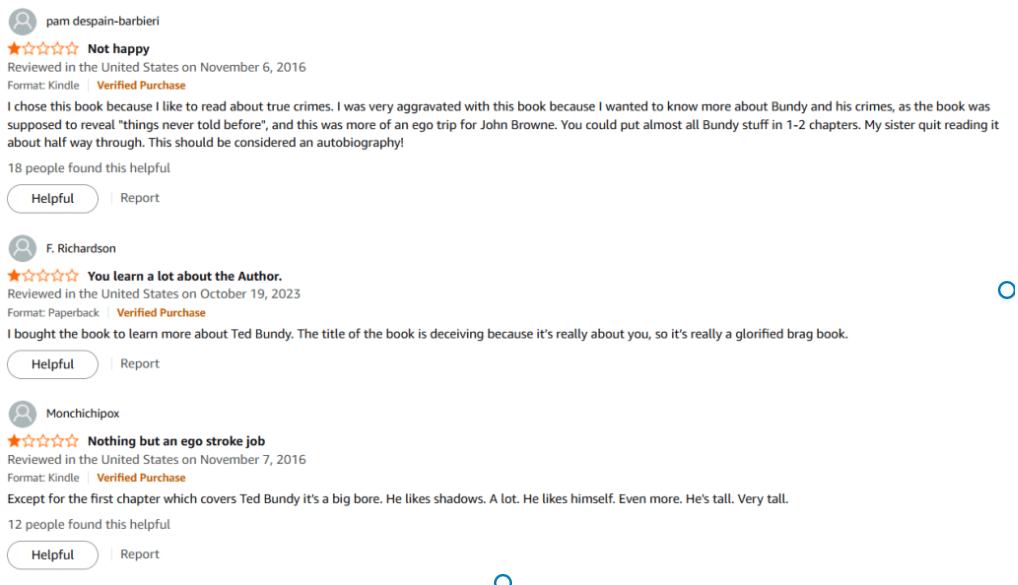
Browne, John Henry. (2016). ‘The Devils Defender: My Odyssey Through American Criminal Justice from Ted Bundy to the Kandahar Massacre.’
Kamb, Lewis. (December 5, 2016).’Sex with Client? Feuding Lawyers get Personal in Wrongful Death case.’ Taken March 17, 2026 from seattletimes.com
Seven, Richard. (March 22, 1998). ‘For The Defense: Bundy, Ng, Pang And An Eagle Scout: Attorney John Henry Browne Has Defended Them All With His Own Peculiar Style.’ Taken February 9 2026 from seattletimes.com
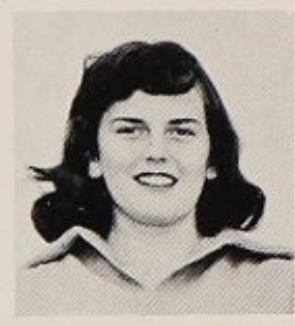
yearbook.












 Another Bundy Blog.