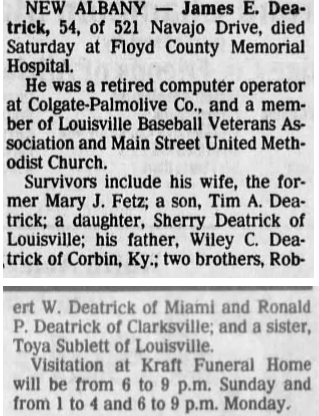
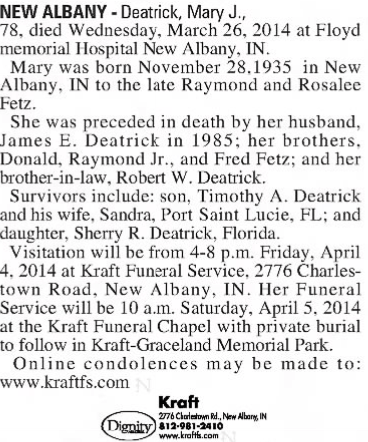
Sherry Rae-Deatrick was born on September 12, 1956 to James and Mary (nee Fetz) Deatrick in New Albany, Indiana.Mr. Deatrick was born on August 20, 1931 and Mary was born on November 28,1935 in New Albany, IN. The couple were wed on March 16, 1956 and had two children together: Sherry and her brother, Timothy. James was employed as a computer operator for the corporate offices of Colgate-Palmolive Corporation and was a member of the Louisville Baseball Veterans Association, and the family was active at the Main Street United Methodist Church.
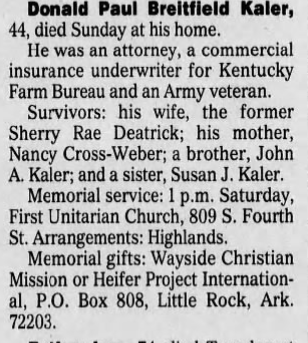
Sherry graduated from New Albany High School in 1976 and went on to earn her BA in Psychology from the University of Louisville, graduating magna cum laude. She briefly lived in NYC, where she was employed with Brooklyn Legal Services and at an insurance defense law firm while she was attending graduate school. At some point she married a man named Donald Paul Breitfield Kaler, and when she returned home to Indiana in 1992 she enrolled in night classes at the Louis D. Brandeis School of Law at the University of Louisville, and worked full time while maintaining top grades. In Deatricks first year of law school she earned the Marilyn Meredith Memorial Award for top female student, and she was a member of the Journal of Family Law.
After graduating from law school in 1997 Deatrick worked at various law firms across the United States, and according to her ‘Linked In’ profile, she has worked as an attorney for herself since 2008, and specializes in both Social Security disability and Department of Veterans Affairs appeals. From November 2004 to 2008 she worked as a Project Manager for Tichenor & Associates, where she was responsible for several government contracts, bankruptcy debtor audits, and state healthcare programs. From 1999 to 2002 she worked as General Counsel under Governor Paul Patton in Frankfort, KY.
On her law practice’s (public) Facebook page, ‘Sherry R. Deatrick, Attorney,’ on February 23, 2012 she announced: ‘I am now admitted to practice in the US District Court, Southern District of Indiana. Looking for office space in my hometown of New Albany.’ And almost ten years later on October 14, 2021 she said; ‘I’m back! I have relocated back home from Florida and I’m re-establishing my solo law practice again. My main focus is on social security disability law and bankruptcy. Serving Kentucky and Southern Indiana.’
Deatrick claims that she had an encounter with prolific serial killer Ted Bundy in the summer of 1974, and although she doesn’t provide an exact date that rough time frame fits perfectly into when he was active. I do want to say that on two separate occasions I tried to reach out to Sherry for clarification on this, but she didn’t see either of my messages. One day during summer school Sherry had gotten into an argument with her fiance and stormed away from him in a fit of anger, and as she was walking she was offered a ride from none other than Ted: “I’d had an argument with my fiancé and as he usually gave me a lift home from summer school, I set off home on foot. Then this cute guy pulled up and asked if I wanted a ride.’ She hesitated briefly, as she wasn’t one to take rides from strangers but after the man reassured her that she was safe, and he ‘was an assistant professor at the local school’ and ‘acting out of anger at my fiancé, I got in.’
Sherry told the man her address, which was roughly three miles away from where he picked her up in New Albany, Indiana, but instead of driving her directly home he stopped at a store to buy some beer: ‘he hadn’t asked my age and I wasn’t going to tell him how young I was. As we drank the beers, he said, ‘Why don’t we go for a ride?’’ She agreed. As the pair crossed the Ohio River and drove into a different state she began to feel nervous, and ‘felt a little worried but things were different in the 70’s. People were a lot more free sexually and I was no exception. It was all quite exciting and I decided to follow his lead though that seems pretty stupid now.’
At the time, Deatrick said that she was titillated at the thought of a romantic encounter with a handsome stranger, and called Bundy ‘handsome and hypnotic,’ which are words that are frequently used to describe him. After cruising around for about thirty minutes or so they arrived in Louisville, Kentucky, and the young man suddenly pulled off the main drag and into a parking lot: ‘it’s clear Bundy knew exactly where he was headed when he’d started driving. He must have scoped it out before picking me up. At the time I thought the location was a bit weird as the new housing estate wasn’t finished but I was quite adventurous.’ ‘Ted’ then led Sherry into a house that was under construction and “I thought it was nice that he was kissing me. I was still mad at my boyfriend and wanted to get back at him so I was up for it. Then all of a sudden, his hands were both going around my throat. I started to say, ‘Wait. Hold on.’
It was at that moment that they heard construction workers calling out nearby: they had returned from a break. About how things played out, Sherry said that ‘he was clearly rattled when he heard the voices and it was like he’d been shaken out of a trance.’ The man immediately took her back to his Beetle, thus ending their brief encounter: ‘I didn’t understand what had gone wrong. Why had he driven us all this way to make out, and then stopped suddenly? I worried I’d done something wrong?’ After driving back to New Albany in complete silence, ‘Ted’ dropped Deatrick off near her parents’ house then drove away into the night. She never saw him again.
Sherry kept the event to herself, and didn’t tell anyone about what happened to her. It wasn’t until the 1980’s that she read a book about Bundy and strongly felt there was a ‘good chance’ he was the man that she shared a brief romantic entanglement with in the summer of 1974. She speculates that maybe he was in the area looking at law schools to possibly attend: ‘maybe Bundy had gone there to scout it out and happened across me walking home. Later I heard Bundy say there were women in Kentucky who were lucky to be alive. I am certain I was one of those women. I fit the profile for most of his victims, walking alone, upset.’ Only in recent years did Deatrick tell her mother, who has since passed away: ‘she was so shocked but grateful I hadn’t been harmed. I hope young girls who read my story now will be more cautious than I was at that age. I was so naive and trusting and it almost cost me my life.’
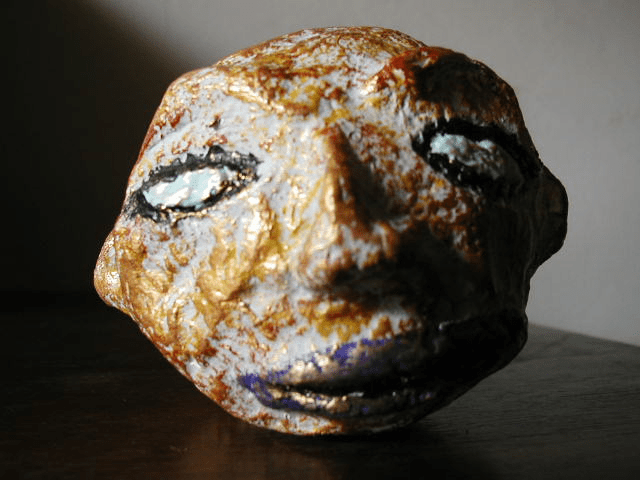
In addition to being an attorney Deatrick has worn many hats over the duration of her career: she’s been a playwright, gallery curator, theatre critic, award-winning journalist, and (according to one blogger/artist) ‘a creator of whimsical and mysterious artistic creations.’ According to the website ‘annenberg.usc.edu,’ Sherry was at one time an ‘affiliated freelancer’ with the ‘Louisville Eccentric Observer’ that is based out of Kentucky (she was their theatre critic and won three awards three years in a row for her contributions to the paper). During her time at LEO, she largely focused on the arts and wrote pieces about celebrities like John Waters and local curiosities like Specific Gravity Ensemble (a group known for putting on micro-plays in elevators). Also, according to blogger and artist Jeffrey Scott Holland, Sherry at one time had her own art studio called the ‘Deatrick Gallery,’ which was located in Louisville; her medium included mosaics, crochet amigurumi, and ‘paper-mache miniature heads.’ According to the galleries ‘Geocities’ website, Deatrick’s gallery housed the work of several artists, including Jefferey Holland, Lila Afiouni, and Steve Rigot. She also put on a ‘one-woman performance’ named ‘Heads’ at her gallery in 2004, where she also sold her paper-mache heads that were painted bright colors.
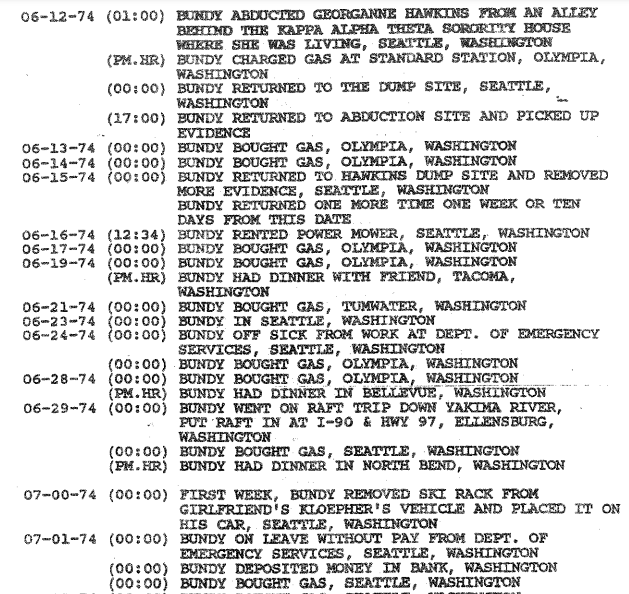
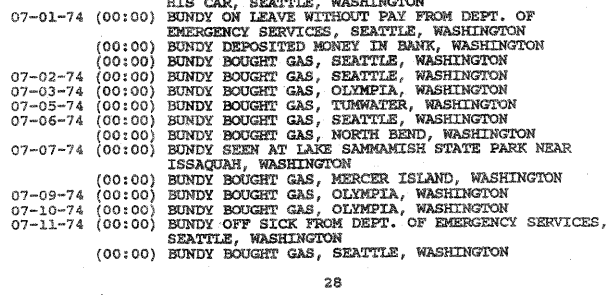
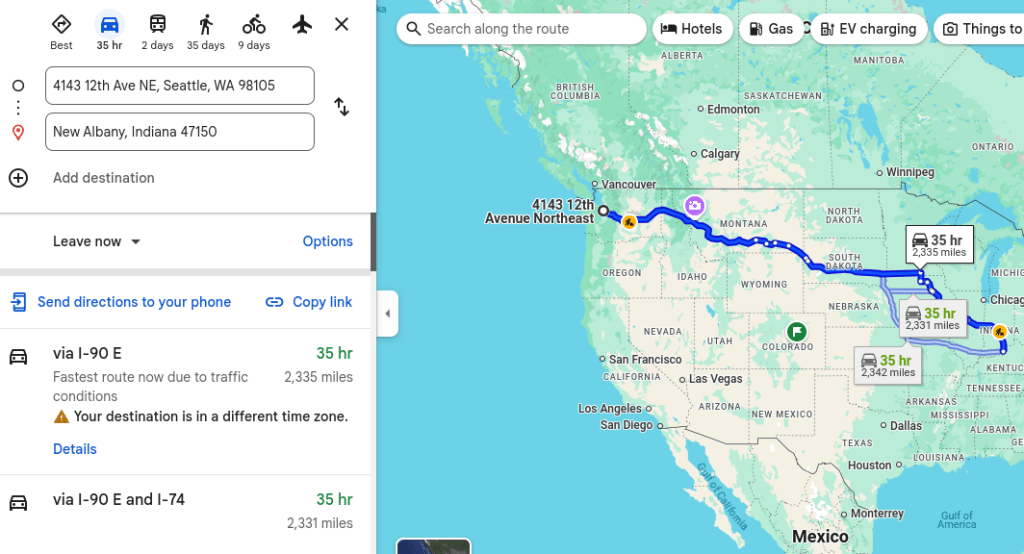
I included Ted’s whereabouts in the summer of 1974 below, and nowhere in it does it say he visited the state of Indiana at any point in time. I understand that not every single one of his movements was recorded, but Indiana is many states away from the Rogers Rooming House in Seattle (where he was living at the time), and was a whopping thirty five hour drive away (and that’s just one way, without stops!). One would think he would have used a credit card to purchase gas at some point in the trip, and therefore would have been listed in the ‘1992 TB Multi agency Team Report.’
The summer of 1974 was a busy time for Bundy: in the late spring/early summer on May 30/June 1, 1974 he abducted and killed Brenda Carol Ball after she saw a band play at The Flame Tavern in Burien, WA. On June 11, 1974 Ted abducted then killed Georgann Hawkins from outside her sorority house at the University of Washington in Seattle. A little over a month later on July 14 he abducted and killed both Jan Ott and Denise Naslund from Lake Sammamish Park in Issaquah, and in late summer/early fall on September 2, 1974 he abducted and killed the unknown Idaho hitchhiker during his move from Seattle to SLC. At the time Bundy was also in a fairly committed, long term relationship with Elizabeth Kloepfer and was gearing up for his second attempt at law school in Salt Lake City. He also worked from May 3, 1974 to August 28, 1974 at the Department of Emergency Services in Olympia, WA.
Sherry Deatrick is the fourth living victim I’ve written about since I started writing about Ted Bundy (I briefly forgot about Susan Roller/’Sara A. Survivor’). The first was Sotria Kritsonis, who claims she escaped an encounter with Ted in the winter of 1972 after he asked if she wanted a ride while she was waiting at a bus stop on Rainer Street. The two drove around for a while, and after he realized she got her hair cut short he got angry and threw her out of his car. Kritsonis claims she saw him the following year on TV and immediately knew it was him… but it couldn’t have been Ted, because he wasn’t arrested for his crimes against women until August 1975, and he didn’t purchase his tan VW until the spring of 1973. Now, I suppose it’s possible she saw the news story about how he got caught wearing a disguise while infiltrating an event for the Washington state Democratic party, but I highly doubt it.
Rhonda Stapley is one of the more ‘out there’ living Bundy victims, and by this I mean she has been featured in various television specials and mini-series about the serial killer. Stapley was a twenty-one -year-old pharmacy student at the University of Utah when she claims Ted pulled over and asked if she wanted a ride back to her dormitory after a painful dental surgery in the fall of 1974. Like Kritsonis, she was sitting at a bus stop, and not long into the drive he looked at her and said, ‘do you know what? I am going to kill you now.’ He then knocked her unconscious and drove to a secluded canyon just outside of the city, where he beat and sexually assaulted her over and over again for hours before she was finally able to escape by jumping in a nearby stream. She eventually made her way back to the University of Utah, and because she was worried that her mother would pull her from school Rhonda kept the event to herself until 2011,: ‘I imagined people whispering, ‘that’s that girl who was raped.’ I didn’t want attention. I still don’t.’
Susan Lorrayne Roller (who writes under the pseudonym Sara A. Survivor) is an alleged repeat victim and long-time acquaintance of Bundy during the time he was active (and possibly before) in Washington state. She claims that she was friends with Georgann Hawkins as well, and where I couldn’t find any proof of any friendship (as in, pictures of them together) they were Pierce County Daffodil Princesses a year apart (Susan in 1972, Georgann in 1973). Roller claims that she dated Ted briefly before he began to routinely mentally and physically abuse her, and that he also stalked her during their time together at the University of Washington.
Roller has published three books about Bundy: the first is a memoir published in July 2016 and only a limited number of copies were printed (it has since been completely pulled to be ‘rewritten’); her website has disappeared as well because the domain wasn’t properly maintained. The second and third books are more based in facts, and are directly related to the Bundy investigation. In ‘Defense of Denial: Ted Bundy’s Final Prison Interview, 1989’ (published on April 5, 2016), Sarah released some interviews between Ted and Bob Keppell that supposedly provides evidence there were additional victims, and shows proof that police kept information related to the case from the public. Her third book, ‘Reflections on Green River: The Letters of, and Conversations with, Ted Bundy,’ was also published on April 5, 2016 and is ‘a collection of actual documents related to the interviews that took place between WA State authorities in 1984 and 1988 that were released to Roller after years of coming forward.’
James E. Deatrick died at the age of fifty-four on November 24, 1985, and Sherry’s mother Mary died at the age of 78 on March 26, 2014 at Floyd Memorial Hospital in New Albany, IN.Sherry is 67 years old (as of February 2025), and is a widow currently living in Largo, Florida. Her husband Donald Paul Breitfield Kaler died on January 30, 2000 at the age of forty-four, and according to his obituary, he was a US Army Veteran and a licensed attorney; he worked as a commercial insurance underwriter for the Kentucky Farm Bureau. Herbrother Timothy A. Deatrick lives in Port Saint Lucie, Florida with his wife, Sandra.
Works Cited: Deatrick, Sherry. (April 2, 2020). ‘Hypnotised by a Handsome Stranger.’ Taken February 25, 2025 from vtfeatures.co.uk Deatrick, Sherry. (April 2, 2020). ‘True Life Lucky Escape: Hypnotised by a Handsome Stranger.’ Taken February 24, 2025 from vtfeatures.com ‘Deatrick Law Firm: Sherry R. Deatrick, Attorney at Law.’ Taken February 25, 2025 from piattorneylist.com/online/memberDetail38461.htm Holland, Jeffrey Scott. ‘Unusual Kentucky: Sherry Deatrick.’ (June 7, 2010). Taken February 25, 2025 from unusualkentucky.blogspot.com Punteha van Terheyden. (July 27, 2019). ‘Hitching a ride with handsome stranger Ted Bundy nearly cost me my life.’ Taken February 24, 2025 from ‘The Mirror.’ geocities.ws/deatrickgallery/deatrick.html
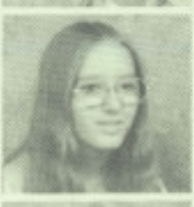
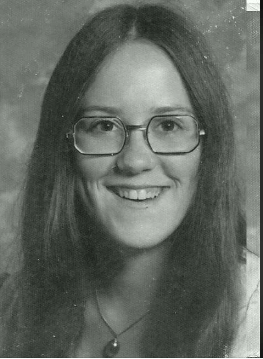
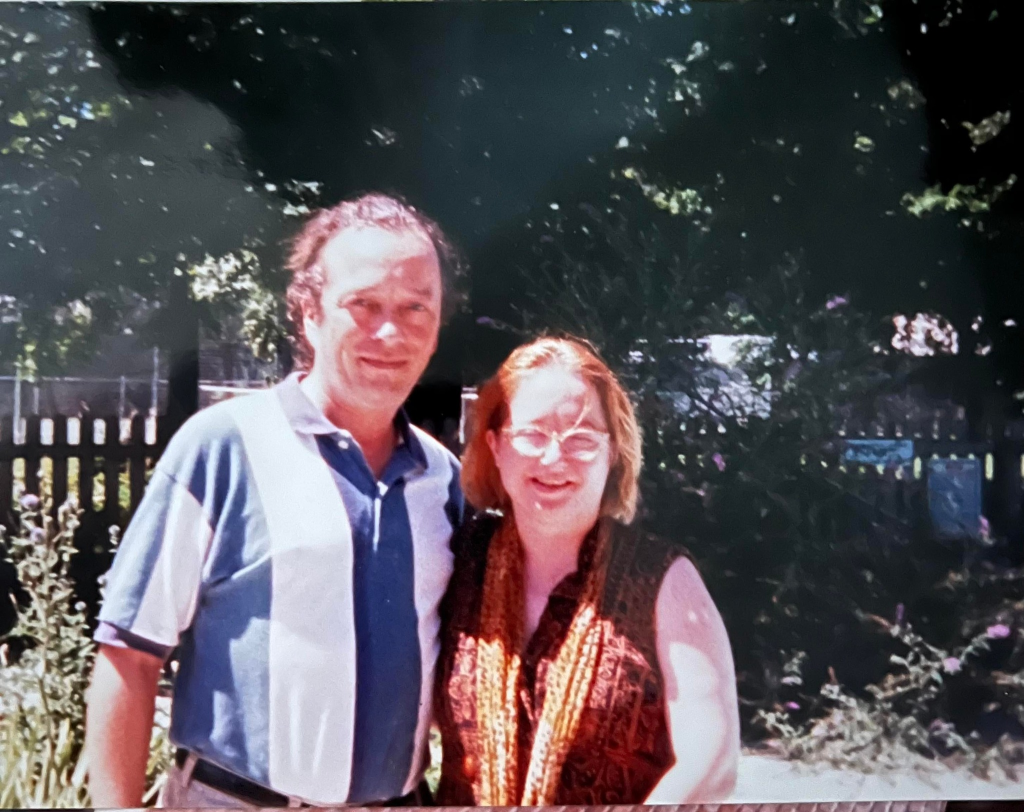
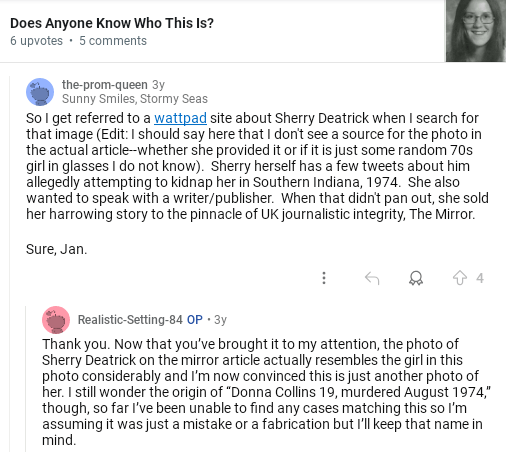
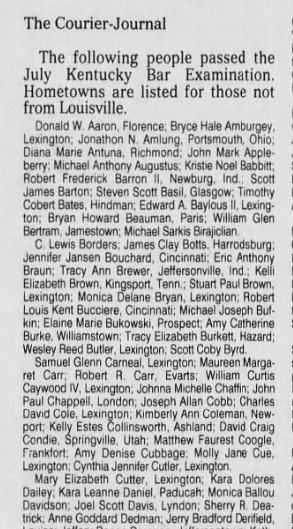
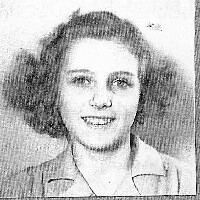
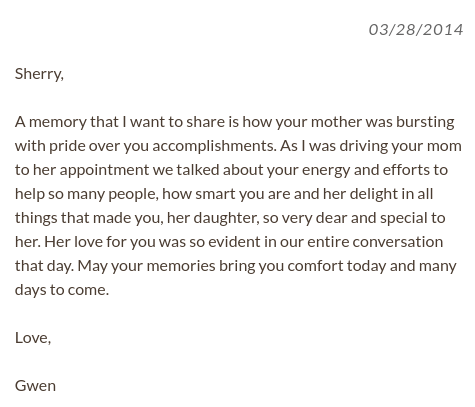
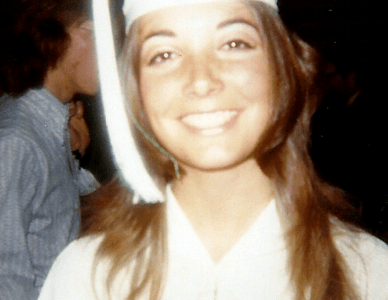
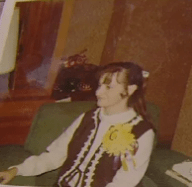
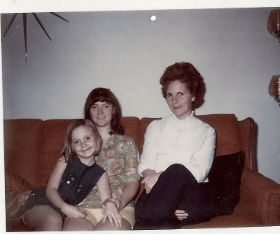
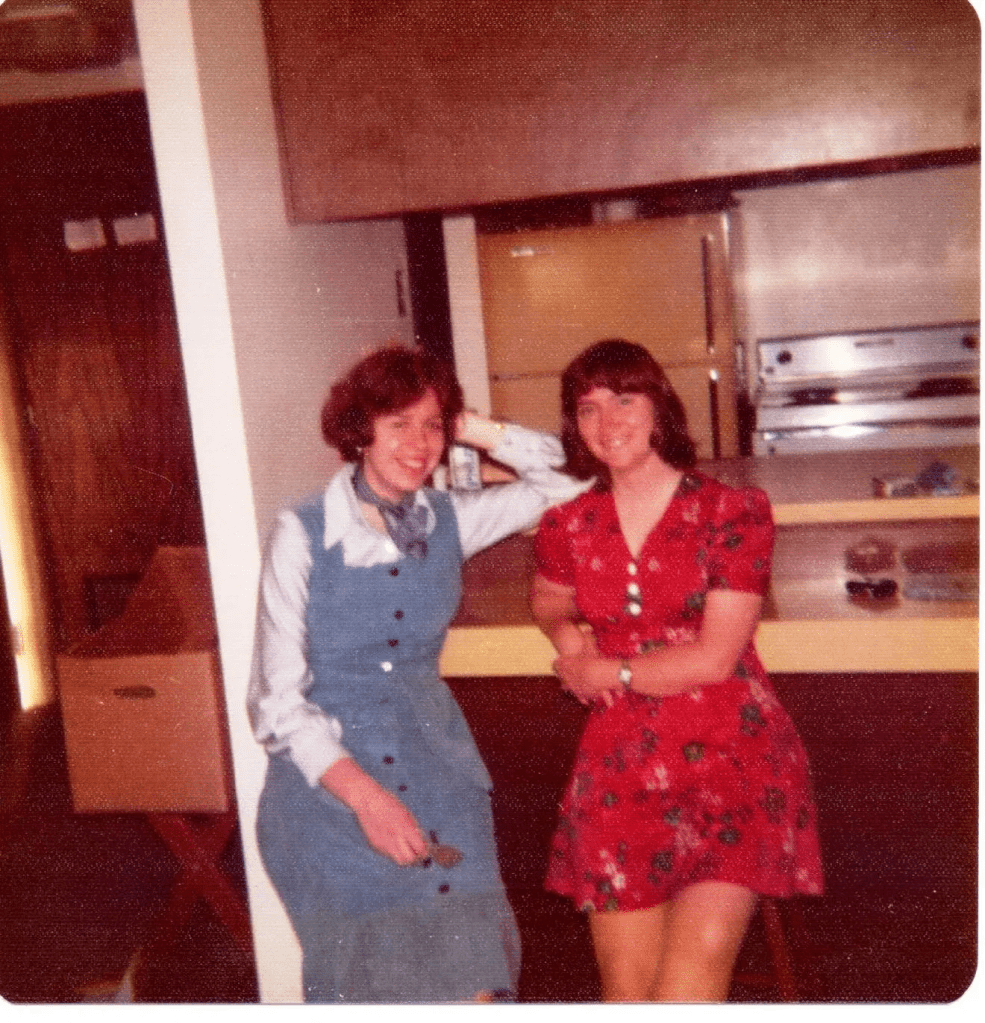
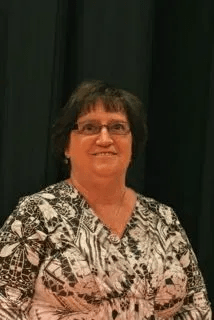
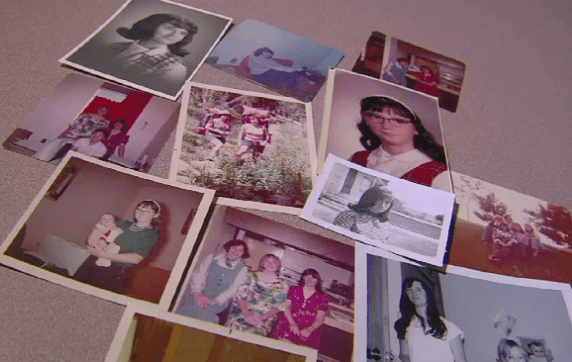
A picture of Deatrick from ‘The Mirror.’A picture of Sherry Deatrick from her sophomore year from the 1972 New Albany High School yearbook.Deatrick.A picture of Deatrick I found on Pinterest.A picture of Deatrick taken from the website ‘UnusualKentucky.blogspot.’A picture of Sherry with her husband, Don. Photo courtesy of Facebook.Deatrick.A picture of Sherry and her mother Mary taken sometime in the 1990’s. Photo courtesy of Facebook.Another picture of Sherry with a male friend. Photo courtesy of Twitter.A recent picture of Sherry with a male friend. Photo courtesy of Twitter, because I refuse to call it X.Another recent picture of Deatrick. Photo courtesy of Twitter.Information related to Sherry’s law practice, taken from the website ‘UnusualKentucky.blogspot.’The spread Deatrick did titled ‘Hypnotised by a Handsome Stranger.’ The layout of an article Deatrick did with the UK magazine ‘The Mirror.’A comment from a Reddit post asking why a picture on Pinterest was for a woman named Donna Collins but it’s really for Sherry Deatrick.A paper-mache head that blogger Jeffrey Scott Holland purchased after attending Deatricks one-woman show at her gallery in 2004.Another piece of Sherry’s artwork, photo courtesy of geocities.ws/deatrickgallery/deatrickSherry mentioned in a list of people that passed the Kentucky bar exam in July 1997 published in The Courier-Journal on November 3, 1997. ·A newspaper blurb mentioning Deatrick getting a position with the Louisville office of Dinsmore & Shohl LLP published in The Courier-Journal on December 3, 1997.Deatrick’s name in an article about a lawsuit published in The Lexington Herald-Leader on January 19, 2005. Bundy’s whereabouts in the summer of 1974 according to the ‘FBI TB MultiAgency Team Report 1992.’Bundy’s whereabouts in the summer of 1974 according to the ‘FBI TB MultiAgency Team Report 1992.’Bundy’s whereabouts in the summer of 1974 according to the ‘FBI TB MultiAgency Team Report 1992.’Bundy’s whereabouts in the summer of 1974 according to the ‘FBI TB MultiAgency Team Report 1992.’A possible route Bundy could have taken going from Seattle to New Albany, Indiana.Deatricks fathers obituary published in The Courier-Journal on November 24, 1985.Sherry’s husband Donald’s obituary published in The Courier-Journal on February 2, 2000.Deatricks mother’s obituary published in The Courier-Journal on April 2, 2014.Mary Fetz’s yearbook photo from the 195 New Albany High School yearbook.A picture of Sherry’s mother.Mary Deatrick.A kind word about Deatrick’s mother taken from her memorial page on dignitymemorial.com.Sotria Kristonis.Susan L. Roller.Rhonda Stapley.
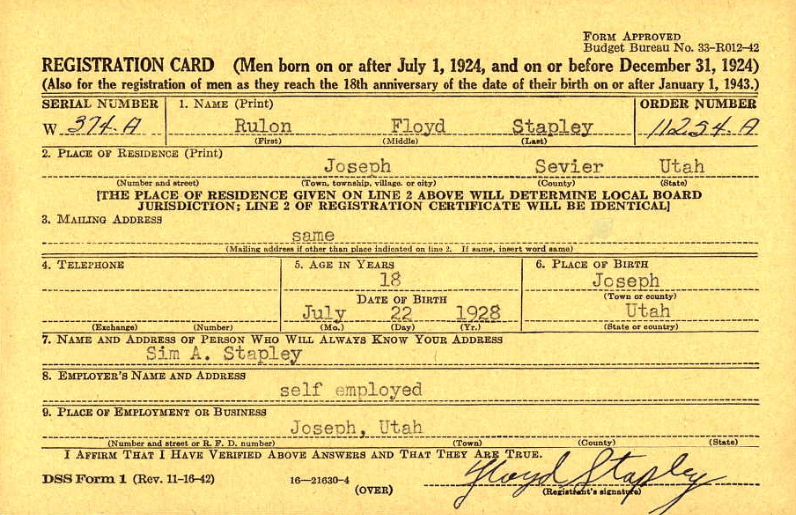
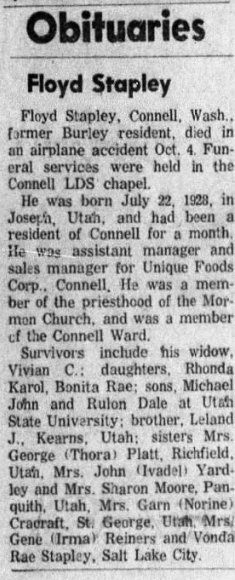
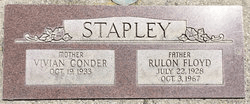
Rhonda Stapley was born on August 19, 1953 to Rulon and Vivian Stapley in Richfield, Utah. Rulon (who seemed to go by his middle name of Floyd) was born on July 22, 1928 in Joseph, UT and Vivian was born on October 19, 1933 in Austin, UT. The couple were wed on April 11, 1948, in Coconino, Arizona and eventually settled down in the Salt Lake City area. Together they had 4 children: two boys (Rulon Dale and Michael John) and two girls (Rhonda Karol and Bonita Rae). Mr. Stapley worked as an operator of a frozen food company but passed away in a plane crash on October 3, 1967 at the age of 39. Vivian had a variety of jobs in her life, and was employed as a school lunch lady, in fast food and retail stores. She remarried Stanley Redfern in 1978and passed away at the age of 87 on October 7, 2021. The Stapley family apparently had a small-scale ‘claim to fame’ after developing a couple patents for some potato products. Rhonda graduated from Connell High school in 1971 and went on to attend the University of Utah. After completing her degree in pharmacy, the petite 4’11” brunette married Barry Robert Godding on (either) April 23/24, 1979 in SLC (according to Ancestry). In the acknowledgments portion of her book she mentions she has ‘daughters’ but doesn’t elaborate any further .
On an unusually warm and sunny day in October 1974 Rhonda Stapley was waiting for the bus to pick her up to take her back to her dormitory when a young man in a light colored VW Bug pulled up and asked if she’d like a ride: ‘just as it passed me, it stopped and he put it in reverse and backed up. He rolled down the passenger window and he says, ‘Hey where are you going?’’ When she replied ‘the University of Utah,’ he told her that’s where he was headed as well and asked if she’d like a ride, which she happily accepted. The shy young college student had been at the dentist and her mouth was still sore from the extensive work she had just had done. He introduced himself as Ted and told her he was a first year law student. Stapley immediately noticed his striking blue eyes and told him that she was close to being done with a degree in pharmacy. In an interview for the documentary ‘Ted Bundy: The Survivors,’ she shared that it ‘didn’t feel like hitchhiking, what I did. This felt like a friendly college student helping another college student, and that seemed normal and not out of place.’ But, it didn’t take long before Rhonda realized that the handsome stranger wasn’t taking the normal route back to school. When she asked him about it he politely inquired if it would be okay if he just ran a quick errand up by the zoo, to which she said no, she didn’t. But when the zoo came and went, Rhonda quickly became concerned again, to which the man simply told her that the errand wasn’t AT the zoo but near it. And that’s when things began to get extremely uncomfortable for her: ‘the ride started to become strained, he stopped talking to me altogether, he just had both hands on the steering wheel just driving.’ Desperate to escape, when Stapley reached for the door handle she realized it was missing,and that’s when she REALLYbegan to panic.
At around 3-3:30 PM, the young man eventually reached Big Cottonwood Canyon and ‘suddenly he pulled over. It seemed like he was looking for a place to park. At this point I did not expect a murder attempt, I was more anticipating an attempt at a romantic parking episode, and I wasn’t afraid of that either, just not interested, and wanting to get out of that potential situation without embarrassing either of us. I still thought he was a nice and somewhat charming guy right up to the moment.’ … ‘He turned a way that wasn’t the normal route to the university. You could get there that way, but it wasn’t the normal route and I questioned him about that. I said, ‘Where are we going?’And that was when the ride started to become strange. He just had both hands firmly on the steering wheel and was just driving.’
After finding a secluded spot off the beaten track, Stapley’s abductor stopped the car and turned to face her directly. The naive young Mormon woman was certain he was going to make a move on her and lean in for a kiss: ‘in my mind, I think he’s looking for a place to pull over and park and make out.’ The thought of such casual intimacy with a complete stranger was something she wasn’t comfortable with, not only because of her devout faith but also her sore mouth. However instead of a smooch he looked at her, his bright blue eyes now black, and said completely without emotion: ‘I am going to kill you.’ … ‘Then he puts his hands ’round my throat and starts squeezing and shaking me, and I’m thinking, ‘Why? Why does he want to kill someone and why is it me?’’ After dragging her out of his VW, Rhonda’s captor proceeded to physically and sexually assault her for hours in the public canyon near a picnic table. During the assault he choked her out, repeatedly taking her to the brink of consciousness then stopping; he even slapped her across the face to wake her up. Stapley also claims that he bit her on the right breast and would yell at her, ‘you should be thanking me that you are even still alive. I can kill you anytime I want.’ She said that: ‘he was angry, more angry than I’ve ever seen anybody. His fists were clenched and his veins were bulging on his forehead and his neck, and his face was bright red. His eyes were almost black.’ Interesting fact about the bite: Rhonda said the marking reappeared roughly forty years later (which immediately made me think of the stigmata markings on Christ during his crucifixion).
When his back was briefly turned and he was ‘distracted by something near his car,’ Stapley was able to escape her captor by jumping into a ‘fast moving mountain river’ and floating to safety: ‘As soon as I jumped up and started to run, I fell into a fast-moving mountain stream, which is probably what saved my life.’ When she got far enough away (I got the impression she was at one point unconscious while in the stream and woke up land), she managed to get herself out of the water then walked the roughly ten miles back to the University of Utah. She traveled mostly through the woods, petrified that her attacker would find her if she walked along the main roadway. She credited her new boots as one of the main reasons she was able to make the long walk back, and on the CrimePiper website, user ‘Fra La’ commented that ‘she has added yet another reason why she was on foot, she had new hiking boots to break in. New details cropping up all the time, lol. Too many details.’ To this, site creator (and good friend of mine) Erin Banks replied: ‘convenient plot twist to explain why she still had her pants on when she walked back home for 6-7 hours. The boots were a brilliant idea, I’ll give her that (when Stapley jumped in the running water she claimed that her pants were still around her ankles).’ After her long journey back to the University of Utah, Rhonda took a long, hot shower then assessed her injuries: she had bruising on her face, a large ‘goose-egg’ over her eye, bruises and markings all over her body (but especially around the neck), and a few broken ribs. Somehow, no one ever questioned her about any of it, including her friends, roommates, and professors, who all saw her routinely after the incident. Despite the headlines she saw that reported other women from the Salt Lake area were vanishing at an alarming rate, Stapley kept the incident to herself and didn’t come forward with her story until 2016.
Because Rhonda left some of her personal belongings (including her drivers license) behind in her abductor’s car, she was afraid that he would somehow eventually track her down. But, thankfully she never updated the DMV with her new mailing address after she moved so he couldn’t locate her through her ID. The identity of her attacker remained a mystery until roughly a year after her assault, when she saw his face in a newspaper in August 1975 when it was reported that a local law student was arrested for the unsuccessful kidnapping ofCarol DaRonch. After Bundy (who she referred to as ‘her bad guy’) was finally caught, Stapley said that his arrest brought not only relief but also a ‘wave of guilt. It was another proof that it was him. ‘That’s the guy.’ Maybe I should have done something about it.’ She rationalized her decision of not going to LE because other women had since reported him and she felt that she had nothing else of value to add. She also feared unwanted attention from those who wondered why she didn’t report the incident to police earlier.
Fearing that if her mother found out she had been assaulted she’d make her dropout of school and return home, Stapley blamed herself for accepting a ride from a stranger. Also, at the time of her abduction she was a virgin as well as a devout Mormon, and didn’t want people to think poorly or less of her if they knew she was no longer pure: ‘the teachings in the LDS church at that time was that your virtue and your chastity were the most important thing a young woman could have, and if you come to a point giving up your chastity or your life, you’re better off eternally if you die.’ … ‘I felt ashamed and embarrassed and stupid; stupid for even getting into such a dangerous situation.’ … ‘I imagined people whispering, ‘that’s that girl who was raped.’ I didn’t want attention. I still don’t.’
When enough time passed and Stapley was finally ready to date again, she left little notes all over her (shared) apartment (including underneath garbage cans) sharing where she was and who she was with. She hoped that if she ever went missing again her roommates (or the police) would eventually find them and because of them they would be able to locate her. That I do think is a little weird: were they not friendly? I have friends who are devoutly religious and they still talk openly about dating and men. It’s not forbidden, why all the secrets and weird notes? And what if the garbage can got dirty and they needed to clean it? Ever have a bag of trash leak garbage juice all over the can? It’s not pretty… personally, I would have most likely hosed it off… So what’s to say the note would have even been found?
Could you imagine how many lives Stapley could have saved if she came forward immediately after she was attacked? I stopped commenting on Facebook posts of people talking about how it was her ‘faith that forced her to keep her mouth shut and she was embarrassed and ashamed.’ I’m sorry, I just don’t buy that. Being sexually assaulted was completely out of her control, and if she went to the police right after it happened maybe Bundy would have been caught sooner, which would have prevented some of his Utah and Colorado killings as well as everything in Florida. When asked why she didn’t go to police earlier she told People magazine: ‘I thought that I just needed to put it away and make life like it was before and just pretend it never happened.’
Rhonda kept the assault to herself until 2011, when a supervisor at her POE using the same type of threatening language as Bundy did put her in an uncomfortable situation, which forced the memories of her assault to immediately come rushing back to her. The nightmares and flashbacks finally forced her to seek help: ‘I couldn’t control my tears, I couldn’t sleep, I couldn’t eat. I thought I was going crazy. But I knew it had to be related to the Bundy stuff, because that’s what my dreams and my nightmares and my panic attacks were about.’ Stapley sought mental health therapy, and like many other Americans turned to the internet for help. After an anonymous online friend shared a run-in with the serial killer she was finally able to gather the strength and tell loved ones what happened to her after almost 37 years: ‘there’s no group of Ted Bundy survivors that I could sign up and join. But there are other people who have experienced trauma. They can understand not wanting to tell, and the shame and embarrassment and all those things that go along with rape. The main thing I wanted to tell people was that they’re not alone. Even though their traumatic experience may be different than my traumatic experience, at least there’s someone who can recognize those feelings and people who can understand.’ Looking into it, Rhonda publicly came forward with her story in the spring of 2016: I see she did an interview with Dr. Phil on April 26, 2016andpublished her book ‘I Survived Ted Bundy: The Attack, Escape & PTSD that Changed My Life’ (complete with forward by Bundy bff Ann Rule) on May 5, 2016. She also did an interview with People magazine roughly a week later on May 13, 2016.
Rhonda kept the assault to herself until 2011, when a supervisor using the same type of threatening language that Bundy used put her in an uncomfortable situation, forcing her past to immediately come back to haunt her. The nightmares and flashbacks finally forced Stapley to seek help: ‘I couldn’t control my tears, I couldn’t sleep, I couldn’t eat. I thought I was going crazy. But I knew it had to be related to the Bundy stuff, because that’s what my dreams and my nightmares and my panic attacks were about.’ She sought mental health therapy, and like most other Americans, turned to the internet for help. After an anonymous friend shared a run-in with the serial killer, Stapley was finally able to tell loved ones her story after almost 37 years: ‘there’s no group of Ted Bundy survivors that I could sign up and join. But there are other people who have experienced trauma. They can understand not wanting to tell, and the shame and embarrassment and all those things that go along with rape. The main thing I wanted to tell people was that they’re not alone. Even though their traumatic experience may be different than my traumatic experience, at least there’s someone who can recognize those feelings and people who can understand.’ Looking into it, she publicly came forward with her story in the spring of 2016: I see she did an interview with Dr. Phil on April 26, 2016 and published her book ‘I Survived Ted Bundy: The Attack, Escape & PTSD that Changed My Life’ (complete with forward by Bundy bff Ann Rule) on May 5, 2016. She also did an interview with People magazine roughly a week later on May 13, 2016.
Stapley stated her assault took place in the ‘autumn of 1974,’ which does line up with when Bundy was living in Utah for his second (unsuccessful) attempt at law school (he moved there from Seattle on September 2, 1974). He was living at his first SLC apartment located at 565 1st Avenue North, and from what I understand he made a decent attempt his second time around and made a point of going to most of his classes. He was in between jobs at the time, but previously worked at the Department of Emergency Services in Olympia from May 3, 1974 to August 28, 1974. He remained unemployed until June 1975, when he briefly was employed as the night manager of Bailiff Hall at the University of Utah (he was fired the next month for coming in inebriated). Bundy was still in a long distance relationship with Liz Kloepfer, even though things seemed to be strained and sort of fizzling out at that point.
In my opinion, the most damning piece of evidence against Stapley’s claims is the missing VW handle. Like Sotria Kritsonis, Rhonda claims that the passenger’s side door handle was completely missing from the car, and I’m sorry… that’s never been brought up in any other CONFIRMED Bundy case (Kritsonis does not apply). I personally don’t believe it. As Erin Banks’ points out in her book, ‘Ted Bundy: Examining the Unconfirmed Survivor Stories:’ ‘the 1968 Beetle would not open if the outside door handle was still attached to the door while the inner door handle had been dismounted, Several researchers have credibly demonstrated that in the past. If the inner latch had been discounted, the integral part of the door handle, the cylinder pin latch assembly, and mounting screws holding inside and outside of the door handles together, and only separated by the door/panel itself, would sit loosely in the door. If one now tugged on the outer latch in an attempt to open the door, one would inevitably pull out the entire door handle from the outside.’ I don’t think I need to go on, as this right here proves there really was no way she would have been able to let herself in the vehicle if it had no inside handle. The only other thing I want to touch on regarding this topic is when I was in Seattle I listened to the Phantom Prince on Audible and I remember thinking to myself how often Ted drove around in his Beetle with Liz, Molly, and other friends… if he took the door handle off his vehicle he would have the run the risk of someone in his life seeing it, and no one in his inner circle ever reported seeing it missing. We also have to remember that he was drunk and/or high a good chunk of the time he was out ‘hunting’… he could have very easily forgotten that he took it off, running the risk of getting caught by Liz (or any other woman he was sleeping with). Lets also think back to Carol DaRonch, who had no problem exiting Bundy’s car on her own and never said anything about a missing door handle when she had her own experience with him a month later in early November, 1974.
Another thing about Stapley’s story that jumps out of me is her complete lack of any sort of substantial head wound. Most of Ted’s victims (if not all of them) suffered from some sort of skull injury in order to help incapacitate them, but Rhonda said her attacker didn’t go after her in any such way. He also didn’t use any sort of medium (like a cable or rope) in his strangulation technique aside from his hands, which is unusual for him (for example, with Cheryl Thomas he used a pair of pantyhose to choke her). Also, despite the fact that Stapley said it was an unseasonably warm fall day, the water she floated away in still would have been incredibly cold: according to my research, the waterways in and around SLC in October would have been in the high-50’s to low/ mid-60’s, and experts say that you should consider any water temperature below 70 degrees Fahrenheit with extreme caution. I guess I just find it hard to believe that she would have been able to gather the energy and strength to walk the TEN MILES back to her dormitory after being submerged in freezing cold water… Especially when you throw some (self-diagnosed) broken ribs, a painful dental surgery, and hours upon hours of being brutally sexually assaulted into the equation… I mean, the journey would have taken her hours, and since she traveled through the woods instead of the main roadway the conditions would have been a bit rough and less than ideal. In her book, Banks reports that when you take her height, weight, and normal everyday level of activity into account it would have taken her at least 15-20 minutes per mile of walking (and that was a healthy, uninjured individual). Also, when Stapley woke up after moving down the river she reported it was dark outside (meaning it was after 7 PM), which is the time of sunset in SLC in October. Don’t get me wrong, I’m sure her adrenaline was really pumping, especially at first… but her walk back would have taken hours, it would have eventually worn off.
Additionally, Ms. Banks spoke with residents of SLC that lived near the area of Cottonwood Canyon where Stapley said she was assaulted. They reported that the level of water present at that time of year would have been minimal, and the depth of a puddle: ‘just a few short inches high during fall and winter.’ Banks also said there were lots of large boulders in the water which would have further prevented Stapley from ‘floating away from her abductor.’ Something interesting Erin points out in her book is that after the assault Stapley attempted suicide but half-way through had a change of heart. She called a suicide prevention hotline for help, and the man that answered her call (named Dave) immediately dropped the phone and rushed to her address in order to save her life. I mean… I work for a health insurance company, I have a pretty good understanding of HIPAA laws and how important it is to follow them. Even in a time as unregulated as the 1970’s, I never heard of a crisis hotline employee (or ANY other mental health professional) breaking every single rule put in place so they could go and help the person that called in. Stapley and ‘Dave’ somehow ran into each other again years later (he had since earned his doctorate), and after catching up a bit and telling him her story he told her that she was his hero and that he ‘put her on a pedestal right alongside my family members who work as first responders or who have been in military combat.’ I mean, what? Why would anyone say that to her?
Stapley is one of a few women that claimed to have been kidnapped and/or assaulted by Ted Bundy and lived to tell the tale. I know one individual from my Facebook group that said she was a victim of his but requested that I respect her privacy and not pry any further (she is working on a book from what I understand)… I know of a few others that have some pretty obvious mental health issues. Please keep in mind, when I say this I’m not talking about his confirmed victims, like Karen Sparks/Carol DaRonch/Kathy Kleiner/Karen Chandler/Cheryl Thomas. Just like Sotria Kritsonis (whose abduction site was my very last stop when I went to Seattle in April 2022), Rhonda came forward later in life to tell the tale of her run in with Ted. On February 9, 2018, Kritsonis did an interview with KIRO-TV where she discussed her 1972 alleged kidnapping attempt, which was very similar to Stapley’s: it also began at a bus stop on her way to college (just minus the dental surgery) and the car she got into was also missing its passengers side door handle. Just as a side note, one thing that does irritate me is how people say Rhonda isn’t ‘attractive enough to be a Bundy victim,’ which absolutely drives me nuts because first of all, attractiveness is subjective and (in my opinion), she was a pretty girl in her younger years. I mean, I personally think the serial killer was an opportunist that took advantage of whoever he happened to stumble across… Let’s look at his younger victims, like Kimberly Leach, or Lynette Culver. This is probably borderline inappropriate to say but I don’t think Bundy looked at these TWELVE YEAR OLD GIRLS and thought, ‘ they’re attractive and totally my type, they’re going to be my next victim.’ He simply took them because they were there.
The reviews for Stapley’s book on Amazon seem to be mostly good: as of December 2023, it had 677 reviews and a rating of 4.4 out of 5 stars. Some are overwhelmingly positive, for example one was written by a private investigator that said it ‘should be mandatory reading at all police academies’ Another that said: ‘the author’s story of survival, and struggle with PTSD is incredible. This is one person’s description of how trauma influenced her decision-making process. From an outsider’s point of view, it was enlightening, terrifying, awe-inspiring and educational. I encourage all law enforcement officers to read and study this book.’ However, others completely write off her story, and say that the entire scenario never happened and was made up for attention. This is just my personal observation, but most of the people that picked up her book and believed her story seem to be true crime novices, and didn’t have a very complete understanding of Bundy’s story, where the ones that were doubtful have a stronger background in true crime and have a deeper understanding of the case.
On June 22, 2016, Rhonda went on KATU’s morning show and told the host that her alleged encounter with Bundy was more serious and relevant than Carol DaRonch’s because she was sexually assaulted but DaRonch wasn’t, saying: ‘she actually escaped as soon as she got into the car so she wasn’t really assaulted.’ It’s absurd to think that because DaRonch wasn’t raped or brutally beaten that she wasn’t ‘really assaulted.’ The woman fought off a crowbar and escaped with a handcuff around her wrist. She clearly suffered horribly at the hands of her attacker. Of course she was assaulted.
I always wondered how Stapley’s family and other loved ones felt about her story, specifically if her husband and daughters believed her. Apparently, Barry Godding didn’t fully support his wife’s decision to publicly come forward after so many years and was even less enthused at the idea of her writing a book. She said that he liked to throw temper tantrums about her ‘quest to tell her truth and often insulted her with insensitive remarks about finally getting over that pesky rape all those years ago.’ I went through Rhonda’s FB page a few times in preparation for this article and interestingly enough, Erin Banks had the same mentality that I did about a heart attack Barry suffered the same year that she came forward about what happened to her, saying: ‘in a 2016 status update on one of her Facebook profiles Stapley speaks of how relieved she is that her husband is finally recovering after his heart attack, for she can now finally get back to promoting her and selling her book. I found this statement to be incredibly tone deaf and revealing as to her own level of empathy: ‘Barry seemed to think that I was dredging up ancient history for some devious purpose. I got the impression he thought that I was competing with him, that I had decided to become upset about a long ago trauma just as he was dealing with his own health crisis.’’
When I write an article, I have a set list of resources I go through, such as Reddit, YouTube, Ancestry, MyHeritage, and so on and so forth. One of my favorites is CrimePiper, which is run by Erin Banks, who is the author of the book I mentioned earlier. When I visited the sites files section something interesting caught my eye: a professor at the University of Utah and Rhonda’s one time mentor through the LDS church named Dr. Victor B. Clinepublished a paper on May 24, 2009 titled ‘Pornography’s Effects on Adults & Children,’ and on page nine he mentions Bundy. Rhonda said that Dr. Cline was ‘the first man to take a personal interest in her after the attack,’ and he requested to be assigned as her home teacher. Typically this is something the church does with all of the members of a family present, however in Stapley’s case he worked with her alone. The PhD told her he was famous and that people paid good money to receive his counseling services, but because they were meeting through the church he was providing her with those services for free. A great point that Ms. Banks brings up is that when Dr. Cline reached out to Rhonda, he had no idea that she had been assaulted by Bundy, and ‘she believed he, a virtual stranger, just ‘seemed to sense’ that something was wrong with her. To take such an extensive and personal interest in a female student, considering the obvious possible connotations of the nature of his interest, is astounding for someone who has much to lose as Cline did. It’s ‘not recommended’ by the LDS that a man and a woman who are not married or not otherwise related to one another interact without witnesses present or in great frequency. Still, Cline showered young Rhonda with attention. (Banks, 19).’ So, this man that apparently had a big impact on Stapley in her post sexually assaulted years wrote a paper that mentioned Bundy, and suddenly two years later she comes forward claiming that he assaulted her in October 1974? Come on.
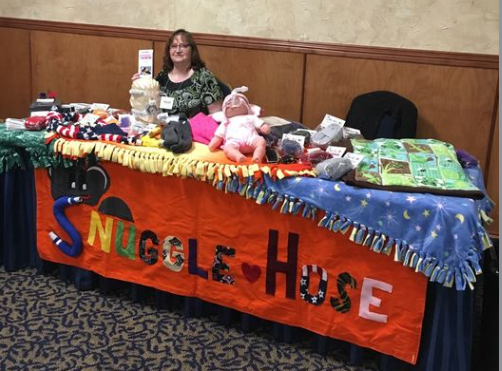
Stapley still lives in SLC with her husband, and in a 2016 interview with People magazine she referred to herself as ‘an inventor’ as well as a pharmacist, wife, mother, and grandmother. In January 2003 Rhonda and her sister Bonita Hunt founded SnuggleHose, which is defined on her website as ‘warm, soft, cozy covers for CPAP (Continuous Positive Airway Pressure machines for patients with sleep apnea) hoses and ventilator machines.’ Stapley came up with the idea after she was diagnosed with sleep apnea in June 2002 and started using a CPAP. She is active on multiple social media platforms and even participates in ‘Ted Bundy trivia’ on the Facebook group ‘TB: All Opinions Matter.’ About her experience of living through being raped by Bundy, she said: ‘I think my experience with Ted Bundy affected every aspect of my life. It changed my level of self-confidence, it changed my trust, even my trust in myself. I became more introverted, less outgoing.’
I want to end this article with a quote from Erin Banks’ book: ‘Mrs. Stapley’s worth as a human being is indisputable. Her story is not.’ Before I wrote this article, a (very small) part of me wondered if *maybe* the young college student was raped (even though I didn’t think it was by Bundy). But, then I remember when I had my wisdom teeth extracted: my mouth was incredibly sore and puffy, plus I was numb from the novocaine. Not to mention I was bloody and stuffed full of gauze. Was Bundy really so hell bent on sexually assaulting a woman that he did it to one in such an off putting situation? Stapley said that he even raped her orally, which surely would have not been ideal for him considering the condition of her mouth (she said he was so rough that he ripped out some of the stitches in her cheek, which would have only made her 10 mile walk home even more hellish). Oddly enough, much like the bite mark on her breast that reappeared forty years after it happened, on one occasion when Stapley was thinking about the assault and how her oral stitches were ripped out her gums began to bleed for no reason. I mean, if I were Rhonda and I had just endured hours upon hours of hell, I would have looked for the first person available for help, not wandered back to campus, probably unsure of where I was going, hoping and praying I’d make it back alive. There’s just so many parts of this story that don’t really make any sense. A small part of me does feel bad for doubting a potential rape victims story, but I can’t help it.
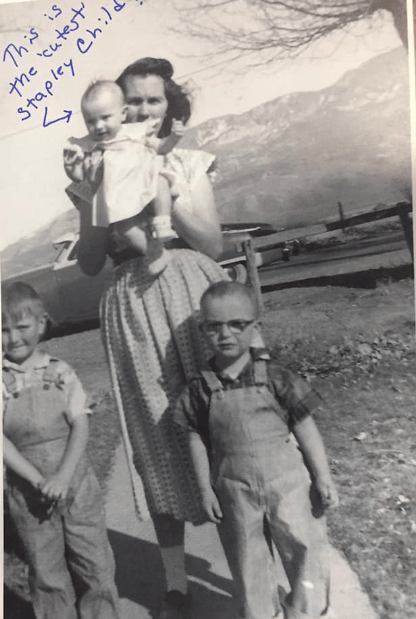
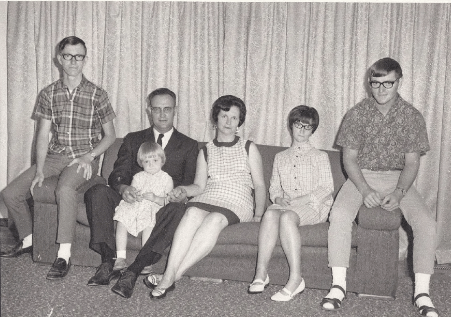
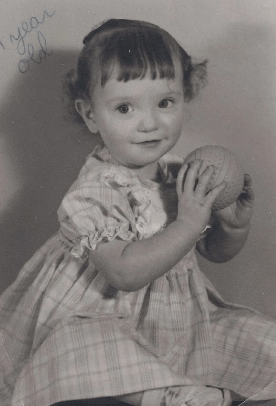
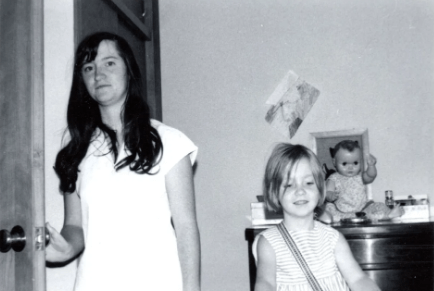
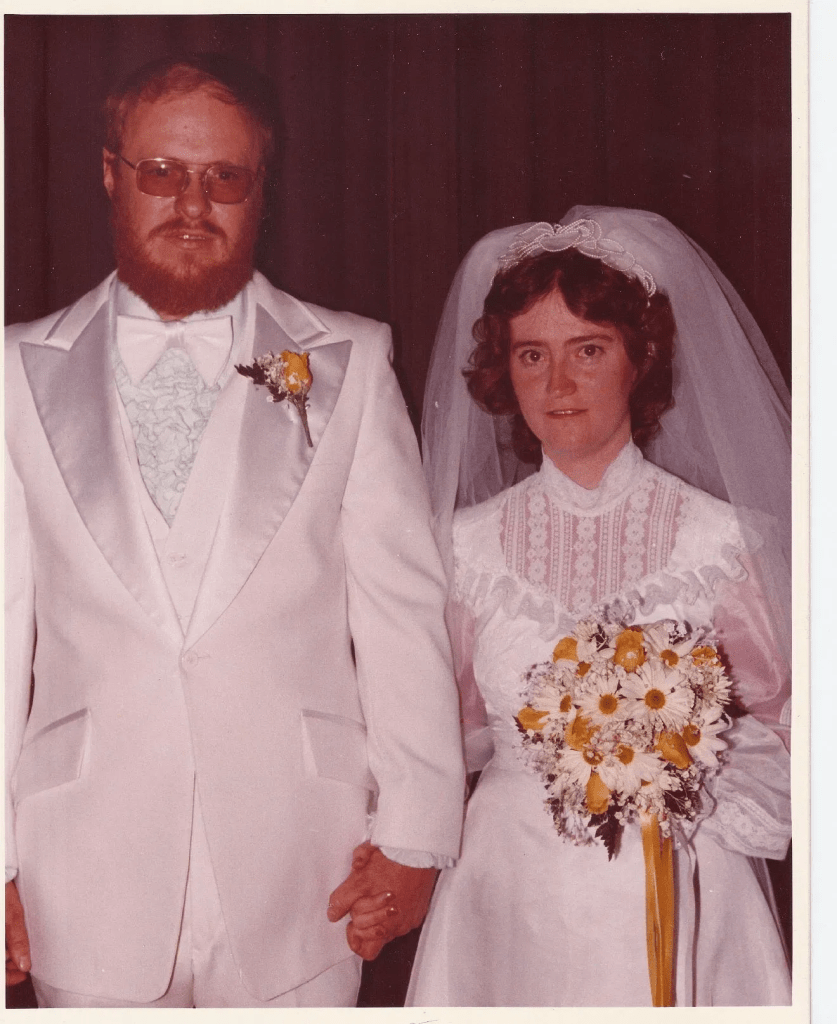
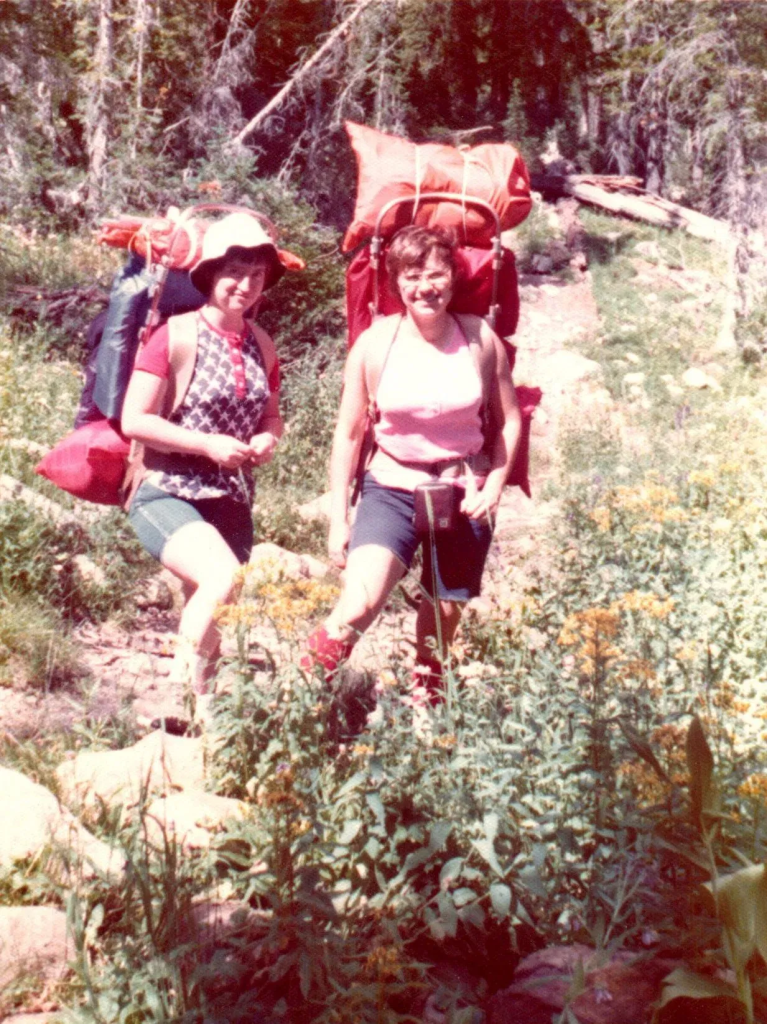
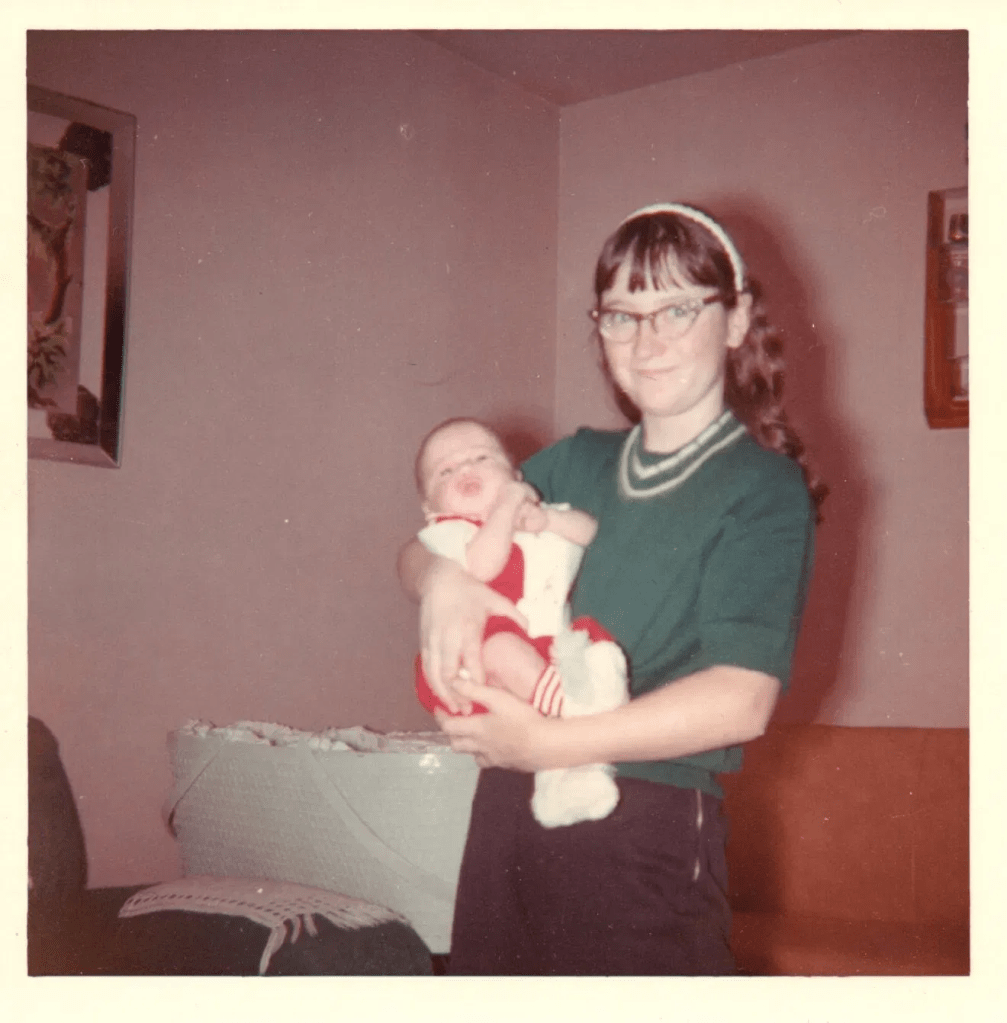
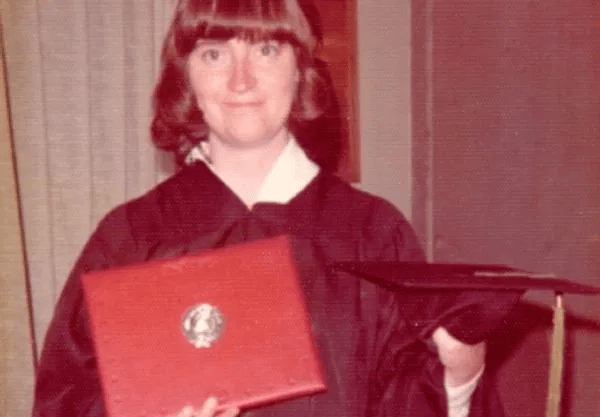
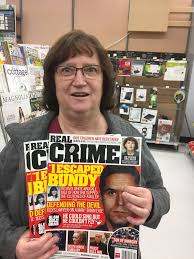
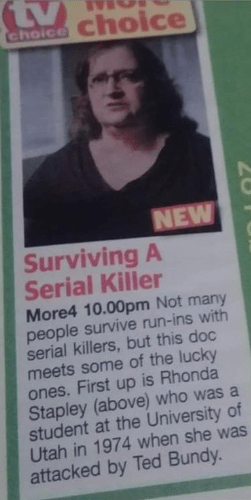
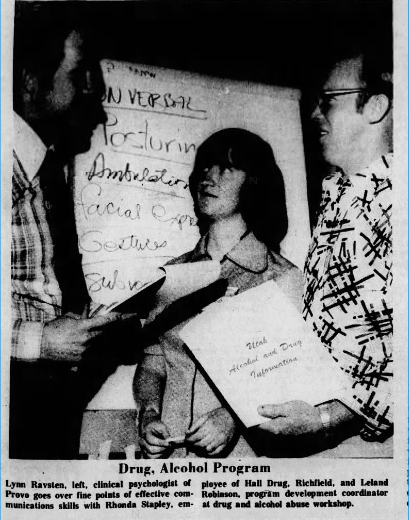
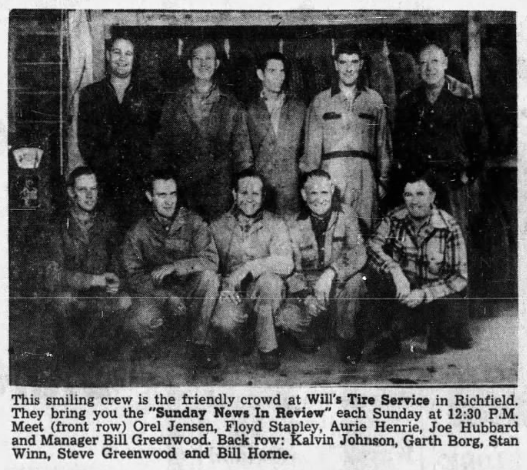
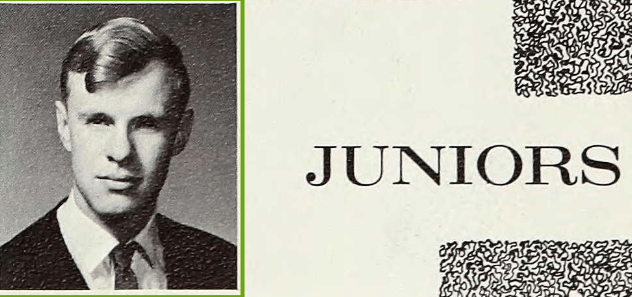
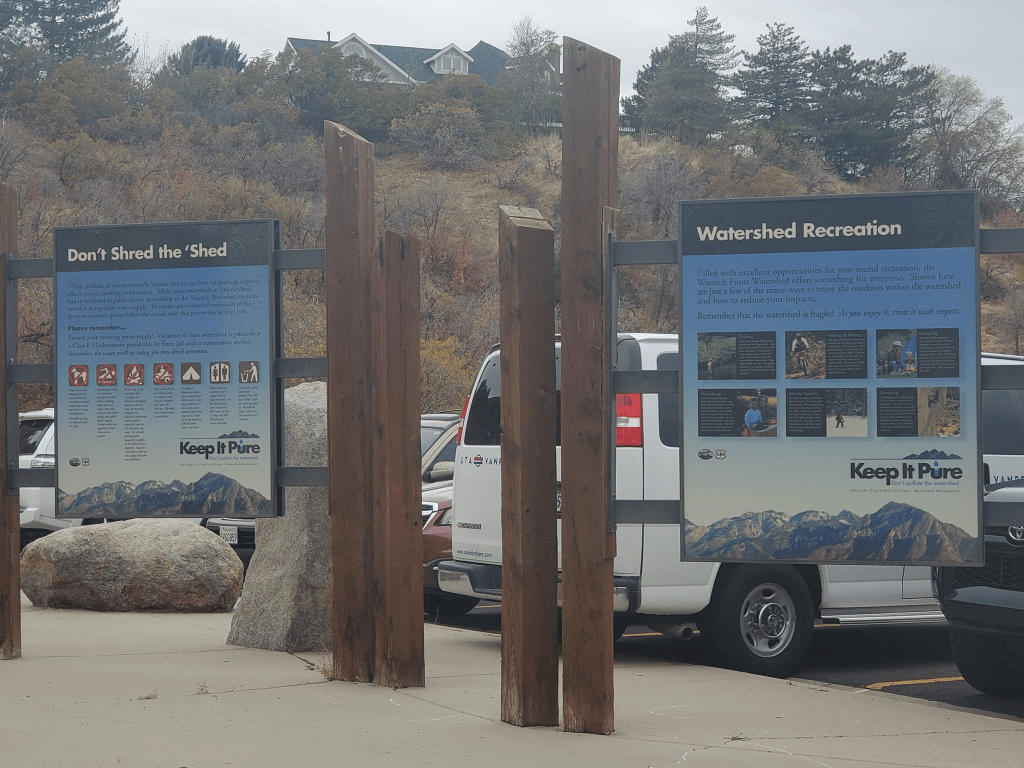
Vivian Stapley-Redfern with three of her four children.The entire Stapley family.A very young Rhonda Stapley.A young Rhonda Stapley in elementary school.Another picture of Rhonda Stapley in elementary school.A young Rhonda Stapley.Rhonda and her husband on their wedding day.Rhonda and a friend on a camping trip.Rhonda Stapley.Rhonda Stapley.Rhonda Stapley.Rhonda Stapley.Rhonda Stapley.Rhonda Stapley.Rhonda and one of her daughters.Rhonda holding one of her daughters.Rhonda accepting her diploma after gradating from the University of Utah with a degree in pharmacy.Rhonda holding her diploma after gradating from the University of Utah.Rhonda.A picture of Rhonda and a friend.Rhonda sitting at a computer.Rhonda.Rhonda.A b&w picture of Rhonda Stapley.Rhonda and her siblings at her Mother’s 86th birthday lunch.Rhonda with her mother and one of her brothers.Rhonda and her husband, Barry.Another picture of Rhonda and her husband, Barry.Rhonda and her dog.Stapley posing with some of her Snugglehose products. A screen grab of a bunch of photos of Rhonda Stapley.A picture of Rhonda next to her book.Rhonda holding a true crime magazine that contains an article about her.An advertisement for a TV show featuring Stapley.An advertisement for a podcast featuring Rhonda Stapley.A blurb about Stapley getting a position as a pharmacist published in The Sun-Advocate on December 13, 1973.A blurb about Stapley getting a position as a pharmacist published in The Richmond Reaper on June 26, 1975.A blurb about Stapley standing up in a friends wedding published in The Ogden Standard-Examiner on September 28, 1975.A picture of Stapley published in The Richfield Reaper on August 26, 1976.A birth announcement for one of Barry and Rhonda’s daughters published in The Salt Lake Tribune on October 30, 1981.An article mentioning Stapley’s husband Barry published in The Salt Lake Tribune on December 18, 2004.The first portion of Bundys whereabouts in October 1974 according to the ‘Ted Bundy Multiagency Investigative Team Report 1992.’The second portion of Bundys whereabouts in October 1974 according to the ‘Ted Bundy Multiagency Investigative Team Report 1992.’Vivian Stapley-Redfern, Rhonda’s mother.Rhonda’s parents, Floyd and Vivian.Rhonda’s fathers WW2 draft card. A picture featuring Rhonda’s father Floyd published in The Richmond Reaper on Christmas day in 1952.Rulon Floyd Stapley.A photo of Floyd Stapley from one of his obituaries published by The Tri-City Herald on October 10, 1967.A picture about Rhonda’s fathers plane crash published in The Salt Lake Tribune on October 9, 1967.An obituary for Rulon Floyd Stapley published in The Salt Lake Tribune on October 12, 1967.An obituary for Rulon Floyd Stapley published in The South Idaho Press on October 19, 1967.An note of gratitude from the family of Floyd Stapley published in The Richfield Reaper on October 19, 1967.The grave site of Rhonda’s parents. Barry Godding’s junior year picture from the 1966 East High School yearbook.A picture of Rhonda’s mother during peak Covid she posted on Facebook. The caption read: ‘I visited Mom today. Had to stand outside 6 feet back from window that was cracked open about 3 inches. They sat her in a chair 3 feet back from the window. I shouted but she could barely hear what I was saying. We mainly just waved to each other.’ Sadly, she passed away on October 7, 2021.Dr. Victor Cline.The portion of Dr. Victor Cline’s paper titled ‘Pornography’s Effects on Adults & Children’ that mentions Bundy.A picture of Big Cottonwood Canyon taken in November 2022.A picture of a couple signs from Big Cottonwood Canyon taken in November 2022.A picture of a sign from Big Cottonwood Canyon taken in November 2022.








































 Another Bundy Blog.