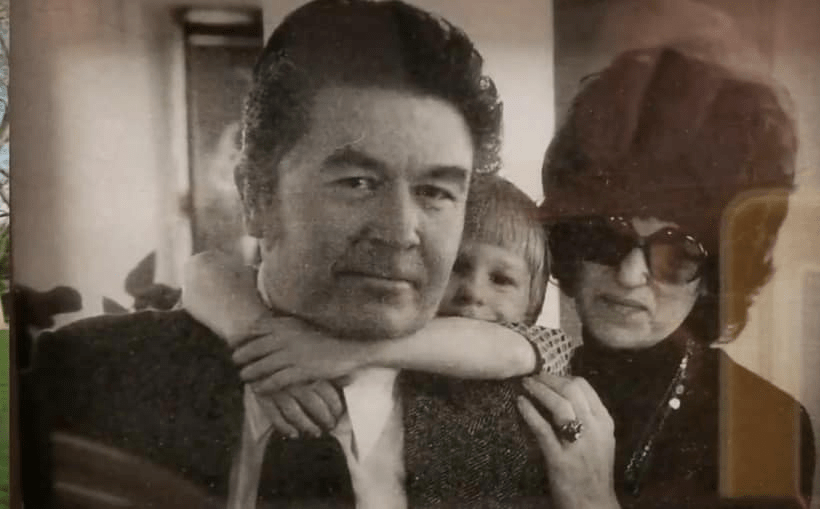
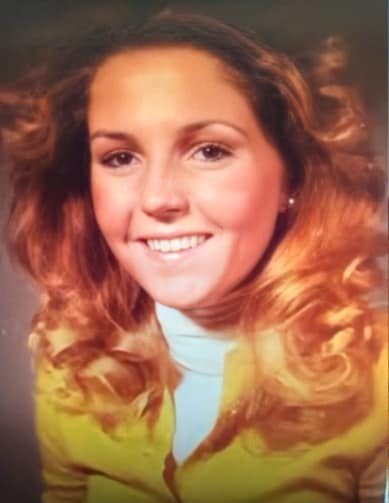
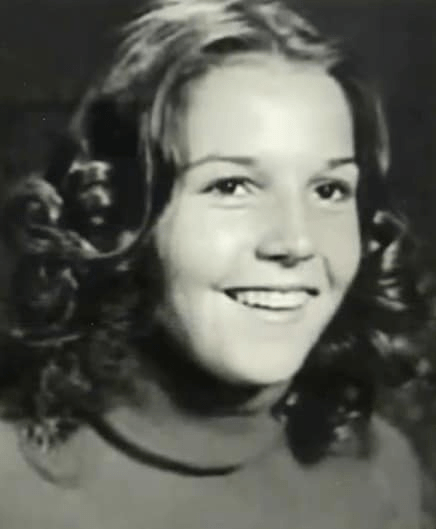
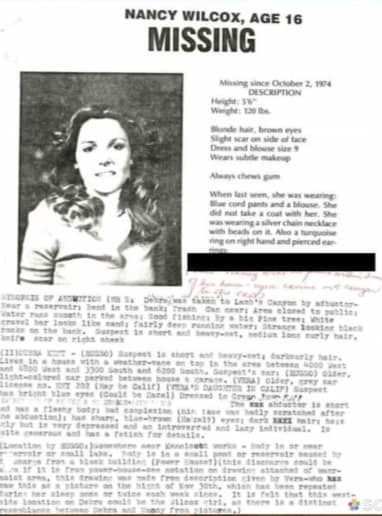
Sandra Jean ‘Sandy’ Weaver.

Edit, November 2023: One thing I routinely try to do is go through my resources and update my articles when I find more information. When I was in Florida this past May I came across a 59 page document from the Trempealeau County Sheriff’s Department in Wisconsin regarding the case of Sandra Jean Weaver. At first, I thought about putting the new information in a simple addendum, but there’s so much that I’m just going to rewrite the entire piece. The report is broken down into four parts: the first is a write up (almost like a report) that Detective Daryl L. McBride had with Weaver’s friend, Joan Elkins at the LaCrosse Police station on January 11, 1975. The second is a verbatim interview between Glade Gamble and the Toole County Sheriff’s Department, Detective Jerry Thompson from the Salt Lake County Sheriff’s department, and Officer Milo Vig from the Mesa Co. Sheriff’s Department on January 22.  The third is an interview between Ken Jones and the same members of LE as the Gamble interview that took place on January 22, 1975, and the last portion is an interview with the same officers and Phillip Quintana on January 21, 1975.

Sandra ‘Sandy’ Jean Weaver was born on August 5, 1955 to Bruno and Marlene of Arcadia, Wisconsin. She had two brothers (Randy and Billy) and two sisters (Nancy and Julie); the Weavers also had a son named Joseph who sadly passed away two days after he was born in 1961. Sandy had blue eyes, was 5’7” and weighed 120 pounds; she wore her brown hair long and parted down the middle. She attended Arcadia High School, and during her time there was on the drill team, participated in the Future Homemakers of America, Girls Athletic Association, worked PT as a librarian and was the junior editor of the newspaper. After graduating in 1973, she studied commercial art at Western Wisconsin Technical Institute in La Crosse, WI.

Sandra left home in the summer of 1974 and moved to Salt Lake City, hitchhiking the entire way there with her two friends, Joan Elkins and Jeffrey L. Skarboszewski. According to an investigator for the Mesa County Sheriff’s office, after arriving in Utah the friends went to Toole, where they stayed in a canyon for a few days. It was there they met a guy named Ken Jones, who invited them to come stay in his trailer near Toole. Jeff got a job part time working with Jones father and both girls found employment full time for the Manpower program. Looking into it, Manpower appears to be sort of on the job training program based out of SLC. For their first week the girls took inventory of motion picture products, and the second week they were sent to the Wycoff warehouse (which was a trucking company); Weaver had been on the job for a little over a week when she was murdered. The position was roughly forty miles away from Jones’ trailer, and the friends hitchhiked back and forth everyday. In a conversation with her mother in June 1974, Sandra said she was planning on going home for her sister Nancy’s wedding on July 27th, but didn’t specify an exact date she planned on being back. It’s known that Weaver was a frequent, heavy drug user and had a tendency to ‘sleep around’ (oh good Lord, weren’t we all young once?). The guy she was with the night before her disappearance (a young man named Glade Gamble) said that they engaged in intercourse the night before she vanished (but more on him later)…

On Friday, June 28 Sandra and Joan bought some groceries in SLC then hitchhiked back to Jones’ trailer, arriving around 7 PM. At around 11:00 that evening a friend from their new job named Phillip Quintana (aka Phillip Martinez) showed up with the intention of spending the weekend with them (he arrived with a random friend). In addition, Jones had a friend that was staying with him that was between 18 to 20 years old and was an ‘athletic freak.’ That night, Sandra slept with Ken and Joan slept with Phill (his friend spent the night in a chair). The following day, Weaver left the residence and went to a friend named Jeanine’s trailer in Toole. There, Weaver met Glade Gamble and the two took a drive through the canyon in Jeanine’s blue VW Beetle.

At roughly 7 PM on June 29th, Weaver returned to Jones’ trailer and picked up Joan, Phillip, and his friend. From there, the group got dinner then went to a party at Jeanine’s trailer. At the gathering, Weaver introduced Elkins to a guy named Bruce Bolinder, who she had met that afternoon while driving around with Gamble. According to Weaver, Bolinder was supplying Gamble with THC. It is speculated Sandy snorted some THC and used some phenobarbital (and possibly Nembutal) at some point in the evening. There were roughly 25 people at the gathering and most of them were imbibing in some form of drug use. At some point early in the evening Phillip fell asleep on the floor of the trailer, and after a while Joan woke him up to go sleep outside in Gambles VW van. Around midnight she woke Phillip up for a second time to let him know they could catch a ride back to Jones’ trailer with Bolinder. Weaver stayed behind at Jeanine’s trailer. At some point in the conversation with law enforcement Elkins mentioned that when she left her friends trailer with Phillip, there were four vehicles in the driveway: Bruce Bolinders gold Cadillac, Glades red and white VW Bus, Jeanine’s VW Bug, and a fourth vehicle (she wasn’t sure of the make and model or its owner).

At some point during the day, Weaver purchased $15 worth of phenobarbital from Bolinder. Joan said Sandy used some the night of the party as well as on June 30 and July 1, and during this time she stayed at Jeanine’s trailer. At some point on Sunday, June 30 Elkins called Jeanine’s trailer and talked to Gamble, asking to speak to Sandy. He told her she was sleeping but that he would take them to work the next morning. On Monday, July 1, 1974 Sandra returned to Ken’s trailer to change her clothes and wake up Joan for work. Elkins told her she wasn’t feeling well and wasn’t going in that day. Weaver asked to borrow some cash, and she gave her $5 from her purse (which at some point during the day Elkins noticed was missing). Joan said Sandy was wearing blue corduroy shorts and a halter top, and this was the last time she saw her friend. The next day on July 2, she received a call from the secretary at Manpower asking why either of them hadn’t come into work. Joan told her that she was sick, to which the secretary replied, ‘yes I know, Sandy told me.’ She went on to tell her that Weaver had worked until 11:30 in the morning the day before then left and never returned.

The body of Sandra Weaver was discovered the next day on July 2, 1974 around 4:00 PM by tourists hiking in the area near DeBeque, CO by the Colorado River about sixteen to eighteen miles east of Grand Junction. Her naked body was beaten and strangled, found off a service road in the Palisades Canyon (some sources say it was DeBeque Canyon) in Colorado; the only item found on her body was ‘a tiny wooden cross on a gold chain around her neck’ (which she was most likely wearing when she was last seen). I know I’m jumping the gun a bit here but something odd is jumping out at me: two other Utah victims (Laura Ann Aime and Melissa Smith) were also both found the same way: naked only wearing a ‘small necklace.’ Additionally, both girls were strangled in the same fashion as Weaver. Sheriff Haywood has ‘no doubt’ that the killer of Aime and Smith killed Sandra as well. Additionally, Salt Lake City Detective Jerry Thompson said that the facts in the Weaver case ‘are very similar’ to the ones surrounding those of the Smith and Aime murders. She had been sexually assaulted and died by suffocation due to strangulation; her fingernails were also freshly manicured shortly before her death. Because there were no footprints or drag marks found anywhere near Weaver’s remains it’s speculated she was killed somewhere else then dumped off at the top of the canyon, and she just sort of rolled down it. Unfortunately her body wasn’t identified until January 1975: according to an article titled ‘Services Pending for Murder Victim, Weaver was identified through a nationwide check of persons reported missing. Law enforcement also found a very particular type of contact lens on the victim, and using optometric tests forensic experts were able to determine that it belonged to Weaver; dental records were also used.

In a conversation with detectives on January 11, 1975, Elkins said that Sandra was ‘pretty doped up’ when she returned to Jones’ trailer on the morning of July 1, 1974. She suspects this may have been the reason that she showed up to work without shoes on.  Later in the day on July 2nd, Bolinder came to Jones’ home and visited a bit with Joan. He came to see her a few more times in the next few days and eventually invited her to move in with him, which she did a little over two weeks later in the latter part of July 1974 (bringing Glade Gamble with her). Joan finally reported Weaver as missing to the SLC police around the 5th or 6th of July; they advised her to call the Toole County Sheriff’s as well. She also shared the news with Sandra’s mother in Wisconsin. She told LE that she asked Bolinder to help her locate Weaver, but he just pushed her request off. Elkins stayed with him for about three weeks then moved in with another friend named Danny Quinn. She eventually left SLC and returned home to LaCosse on August 15, 1974. She brought all of Sandra’s belongings back with her, returning them to her parents.

Seventeen year old Dick Pehrson was a former employee of the Wycoff warehouse and a friend of the girls. He told Joan that Phillip Quintana got dropped off with Sandra the morning she disappeared but he didn’t know who was driving. He also told her that Quintana told a secretary at Manpower that Weaver had been talking to a truck driver the morning she disappeared. Additionally, the same secretary told Marlene Weaver that Quintana told her that her daughter had been seen on a bus headed for Idaho.

Bruno Weaver traveled from Arcadia to Salt Lake and Toole in November 1974 and got in touch with a number of his daughter’s friends/acquaintances; he also spoke with Quintana on the phone around the same time. During that conversation, Phillip denied going to Jeanine’s party the night of July 29 but said that his friend ‘Martinez’ was there. Mr. Weaver also spoke with Bruce Bolinder, who shared with him that a friend named Steve Symonds gave Sandra and Phillip a ride to Salt Lake City the morning of July 1st. The police report stated that ‘all of the men seemed uncooperative and hesitant to talk to Mr. Weaver.’ Jones did tell Mr. Weaver that he had a pair of Sandra’s shoes at his trailer despite both Joan and Jeff telling him she only brought two pairs with her (which were already accounted for). Skarboszeski told LE that to the best of his memory he never saw Sandra go to work without shoes on and didn’t think she would ever go to her POE barefoot.

Elkins admitted to using some of the phenobarbital Weaver bought on June 30 and July 1, but couldn’t explain how the drugs got back to Jones residence because her friend hadn’t been back to his trailer at that point (she briefly came back the morning of July 1 to borrow money and change her clothes before leaving right away for work). Strangely enough, the blue corduroy shorts that Joan claims she last saw Sandy wearing were found amongst her belongings that were returned to the Weavers.      

In the second portion of the document from the Trempealeau County Sheriff’s Department, Glade Gamble sat down with members of law enforcement (specifically, the Toole County Sheriff’s Department, Jerry Thompson, and Milo Vig). The interview began at 1:35 in the afternoon on January 22, 1975 and lasted for 45 minutes. In the beginning, Gamble is shown a picture of Weaver and was asked if it resembled the individual he spent time with in June of the previous year. He said yes it did and that she was ‘a good looking girl.’ I mean, most of the ‘interview’ is traditional back and forth between suspect and police, however one particularly interesting portion jumped out at me: investigators questioned, ‘within hours of leaving you, she was murdered brutally, and I am not kidding you when I say brutally. I probably shouldn’t do this but there is a little difference isn’t there? As you can see, I don’t think many human lives deserve that kind of treatment. So if you can help me for God’s sake, give me some information. I don’t care if any drugs were involved, cause we’re not here or have no interest at all in petty crimes or drugs at this time, I am interested in that.’ In response to that, Glade said that he told them everything he knew the first time they spoke except for dates, which he didn’t elaborate on so I don’t know if he meant he forgot them or was purposely withholding information. He said the only phone number Sandra probably had was Ken Jones’ at his trailer.

Some of the key points I took away from this interview are as follows: Mr. Weaver met with Gamble at his house sometime in November 1974. He said the majority of the time he saw the two friends they were wearing shorts, although he thinks he remembers Sandy wearing pants the last time he saw her (since she was on her way to work). He made it clear to the detectives that he didn’t remember if she was wearing shoes or not the last time he saw her and had to be told by a friend that she showed up at work barefoot later that morning. Gamble was able to tell LE that he remembered she normally wore a pair of slip-on clogs but she left them behind at Jeannine’s (if she’s anything like me she probably figured she’d be back there soon enough and it was no big deal). He also speculated that Elkins may have picked the clogs up with the rest of Sandra’s belongings before she returned home to WI. He left Jeanine’s trailer at around 6 AM and speculated that Weaver was stopping back at Jones’ residence before going into work and that she would just pick up another pair of shoes there. He did share that he remembers someone saying that Joan’s purse got stolen, and wondered if it happened at the party the Saturday before Sandy disappeared. He also said that he took off the Tuesday after she disappeared but couldn’t remember the reason why.

When LE asked Gamble how Elkins felt about Bruce Bolinder he replied that she may have been a bit afraid of him in the sense that she worried he might kick her out and send her home. Apparently, he had a bit of a reputation as a ‘ladies man’ and speculated that Joan was probably aware of this and was nervous that he might get sick of her and move on; he didn’t remember the two ever arguing or fighting in any way. Also on the topic of Bruce being a ladies man, Gamble said that he thought that girls in general seemed to like him but didn’t get close with him. He also said that he thought Sandra and Joan met him on June 29th (which was the night of the party) and that he asked Sandy out a time or two but nothing ever came of it. When asked if Bollinder had a violent temper, Gamble replied that he ‘heard of him fighting but had never been there.’ He also allegedly had deep contacts in the local drug world that neither girl was aware of. When Glade was questioned on whether or not he knew of anyone that would have a reason to kill Weaver, he said he had no idea why anyone would want to ‘brutally murder a girl like this.’ and that ‘nobody really argued with her that he knew about.’ He speculated that Joan probably left them to go back to Kenny’s trailer with Phillip because she most likely ‘just got tired of Bruce.’

The detective repeated the question: why would anyone want to brutally murder a girl like Sandra, asking: ‘you certainly couldn’t say it was a sexual act because she certainly would have given in (gross).’ Gamble told them that the only thing about Weaver that upset him was that she was kind of ‘slow mentally’ and wasn’t very quick to react to things, but that he would never act on his frustrations and didn’t know how anyone could do that. When questioned about when he became aware that Sandy may have either been abducted or murdered, he said that he quickly grew suspicions after no one heard from her and that both him and Joan almost immediately wondered if she was dead after she stopped coming around: ‘I didn’t know why anyone would kill her or how or anything else but I figured she would have gotten ahold of somebody sooner or later.’ He also told detectives that he was aware that Joan had some minor drug charges but nothing major and he had some minor charges as well as a drunk driving arrest. He told them that he had no contact with Elkins in any capacity after Sandy disappeared.

Per Gamble, Sandy had taken two downers he gave her on Friday night, and that he wasn’t sure if Joan ever reported her friend as missing as he never witnessed her make a call to Toole LE. He also said he wasn’t sure if he was there when she talked to Sandy’s parents on the phone but that he was there when she made some calls to Wisconsin regarding her friend. The last time he claimed to have sex with Weaver was sometime after midnight on Sunday night/early Monday morning, but wasn’t sure what the exact time was. When asked if they engaged in anal intercourse Gamble didn’t respond to the question. To the best of his knowledge he said that he wasn’t sure if Sandy had slept with anyone else in that Friday/Saturday/Sunday time frame other than him, and that he ‘wasn’t with her all the time,’ but did clarify that he spent two nights with her. The last time he saw her she was getting into a car with Steve Simons and Scott Williams to go to SLC for work around 6 AM on Monday, July 1. He said that he learned of Weaver’s death after seeing it on the news but didn’t know when she died. By the time of the interview in early 1975 Gamble sold his VW bus and purchased a 1972 Grand Prix. He shared that even though he didn’t know her very well he knew that Joan wasn’t overly fond of cops and wasn’t sure if she would hold anything back for that reason. The interview ended with Gamble agreeing to take a voluntary polygraph examination.

The third interview took place with the same members of law enforcement and Kenneth H. Jones on January 22, 1975. He told the detectives that he met all three friends when they were ‘up hitchhiking up in Settlement Canyon’ around June 10/11, 1974 and that somehow turned into them coming and staying with him. He further shared that Glade Gamble met the girls at his trailer and that he didn’t know Bruce Bolinder very well. In the beginning of the conversation LE told him that the reason they are speaking to him for a second time is because it was determined that Sandra had been murdered shortly after leaving his trailer. There’s a lot of back and forth between the officers and the suspect, with LE saying they ‘needed to get some answers if we can. I realize this was six months ago and it is hard to remember, and I don’t expect you to remember everything. We have had a chance to go over this and some other things that have come up that need to be answered, and I was hoping that you could help me or hide me to the right person. Now correct me if I’m wrong. I understand that Sandy left the trailer on Monday morning, July 1st to go to work with a Mexican kid by the name of Phillip Quintana, who had stayed at the trailer that night with Joan. Is that correct?’ To this, Jones simply answered, ‘ah huh.’ He said that he didn’t attend the party at Jeanine’s trailer the Saturday before Sandy disappeared and wasn’t home when Joan and Phillip got back early Sunday morning. He also shared that he wasn’t sure who was left behind at the trailer when Sandy and Quintana departed for Salt Lake around 7/7:30 AM the Monday morning she disappeared. He did say that when he came home from work around 4 PM Elkins was still there and ‘it wasn’t right away but she couldn’t figure out why she didn’t come back. You know she figured maybe she would come back later, and she never did. She was worried about her.’ … ‘Well right at first, you now she thought she might have had a pretty good excuse and then after she didn’t show up for a day or so, well then she was getting worried.’ When detectives inquired, ‘I don’t know how much attention you paid, but this is a really critical point in the line of clothing, I understand both these girls had very little clothing when they lived here, is that correct?’ .. ‘ As far as you seen, give me an idea, five or six changes, one of two? Can you give me an idea? Did they wear shorts much of the time, a lot?’ He replied, ‘yeah, they wore shorts,’ but did specify that Elkins had a home made dress made out of Levi’s jean material.

Like with the other interviews, the investigators were very focused on the girl’s footwear and asked Jones if Weaver had a lot of shoes, to which he replied she had a pair of sandals and some clogs and that Elkins took them with her when she went home to Colorado. About a week after Sandy disappeared Elkins left Ken’s trailer and moved in with a guy named Danny Quinn; she didn’t give an explanation as to why she left but it was on her own accord and he didn’t ask her to leave. Jones told LE that he was aware that the girls mainly hitch hiked to get around and frequently caught rides with both friends and strangers. He also shared that at no point after her friend disappeared did Elkins ever mention that she was going to go look for her, but that she ‘contacted Sandra’s parents and they decided to put it in the paper, her picture, and I think she turned it in, she said she turned it in.’ Jones said that when Joan finally got around to notifying the Toole County Sheriff’s department about Weaver’s disappearance they told her to also get in touch with SLC LE as well. When asked if he thought Sandy and Elkins were ‘close’ he replied, ‘yes, they were real close.’ He also commented that she seemed to be almost smitten with Bruce Bolinder and talked about him a lot. He said the weekend before Sandra disappeared she wasn’t at his trailer at all but that she most likely came back early Monday morning to get Joan and get ready to go to work. When asked if he knew of anyone that had ‘heard if Sandy came back into town that Monday morning after she left and went back to work that morning,’ Jones simply said ‘no.’

According to Ken, Sandy’s father came to see him about a month and a half before the interview (so November/December 1974). When asked what he thought happened to Weaver he replied that if she made it to work that day then it must have been someone from her POE that she ‘decided to go with.’ Ken said he felt it ‘must have been somebody she didn’t know or she just met that day or somebody she just went with. Maybe they told her they would give her a ride home or take her out somewhere else overnight or something.’ He also shared that Joan had no idea what happened to her friend and she thought that maybe she left with somebody from work or ‘something like that.’ When Ken was confronted with ‘well like I said, we realize the drug traffic. We are not here to bother anyone, that we are not trying to make a case. Did she know anything about any major drug deals and somebody thought she knew too much that you know of?;’ he again replied with a simple, ‘no.’ When the detectives inquired, ‘you wouldn’t have to kill her to rape her, correct?,’ Jones answered ‘uh huh’ and that she would probably just go along with it.

Ken said that when he returned home from work at 4:30 around that Monday, Joan was there (she was sick and didn’t go into work) and the last time he saw Sandy was on Friday the night before she left for the party. When the investigators commented that they understood he told Mr. Weaver that he had a pair of his daughter’s shoes, he clarified ‘after she had left and it was either that night or the next day she didn’t show up Joan said something about ‘that is the only pair of shoes or something.’ And she left them and she ain’t got no shoes or something. She couldn’t figure out why she would leave without shoes.’ There was a lot of back and forth about the missing footwear, with the investigators trying to make Jones admit that he had them (which he vehemently denied). When they asked if Weaver’s last paycheck ever got mailed to his trailer or if Joan ever mentioned what happened to it he said that Elkins had it but he wasn’t certain if she cashed it or not (but he strongly suspects that she did). Jeff Skarboszewski left SLC about a week before Sandra disappeared and went to Phoenix. About the trios mystery friend, Jones said that Jeff seemed to treat both girls real good and always wanted to do what was best for them. At the end of the interview he agreed to a voluntary polygraph examination.

In between the third and fourth parts is a photocopy of Bruce Bolinder’s drivers license.

The fourth part of the document is an interview between investigators and Phillip Quintana that took place on January 25, 1975 (this is where things get interesting). The conversation starts out strong right from the get go, with LE asking if he remembers telling a friend named Dirk that Sandra had gone to Idaho or someplace out of state, and where he got that information from. To this, Phillip said it was one of two hitchhiking incidents that took place in the second half of 1974 in which Weaver’s name came up: ‘this guy that picked her up hitchhiking, but I can’t remember his name. He said he saw her and she was supposed to be living with this guy that she was living with in Memory Grove she was supposed to leave with him to Idaho.’ … ‘I was just asking if he knew Joan and Sandy from Toole and he said yeah, that Sandy was supposed to be living in Memory Grove with some guy.’ Quintana said the man was driving a newer model white Ford and was around 21/22 years of age, between 6’2″/6’3” tall, and had shaggy brown hair. One of the detectives told him it was a man named Danny Brumfield that picked him up that day and the event took place sometime around August/September of 1974.

The second hitchhiking incident took place around Halloween 1974 and involved a 23/24 year old man driving an older model light red/dark orange GMC pickup truck. When asked by this mysterious stranger if he wanted to go to a party that both Joan and Sandy would be at, Phillip told him that he had just been to one and had no interest in attending another: ‘well, I was hitchhiking. He picked me up then asked if I wanted to go to a party, he said do you smoke dope, I said yeah, and he said do you want to go to a party, and I said no, and he lit up a joint, and he asked me if I wanted to go to a party out in Toole and said no, and he said, and then I said who is going to be out there, do you know a lot of people out there and he said, ‘I know a chick named Joan and one named Sandy and this dude named Glade, that Glade was supposed to be having it,’ and I told him no I was, and he just dropped me off.’ … ‘They said Sandy and Joan, I don’t know if they were the same chicks but he said Sandy and Joan. Might be two different chicks, I don’t know.’ When questioned about the day Sandra disappeared Phillip said that he ‘thought she was going back to work, she was going to work, and anyway they didn’t want me back over there and so I just went down to my moms’ and that he never saw either girl again after July 1st (I deduced that he was briefly employed with Manpower but was terminated). He acknowledged to LE that he was aware that Elkins was trying to get in contact with him around the 13th of July but wasn’t successful in her attempts. When asked if he knew that Weaver was missing at this point in time Phillip said no and that he didn’t know she was gone until the month before (which would have been December 1974).

Quintana said that he and Joan went back to Jones’ trailer at around 3 or 4 in the morning and crashed immediately; they woke up around 6 PM the following evening. He said Monday morning Sandy called Joan at Ken’s trailer and asked if she was going to go to work, and he told her that Joan wasn’t going to but he was getting a ride to SLC and could bring her along. He reported that Manpower attempted to get in touch with him about Sandra’s disappearance around the 1st or 2nd week of December but that he never talked to Bruno Weaver. In response to that, investigators said that ‘he claims he did, how about him calling you on the phone Phillip. I am going to try to refresh your memory. And you told him: ‘he asked you if you were at a party with his daughter in Toole, and you said no not me but my friend Martinez.’ Do you recall that?’ … ‘see, I talked to Mr. Weaver, Sandra’s Dad and he said he called you on the phone, I have the date written down and I will be getting it; him and his attorney was out here and he called you on the phone and he asked you, he talked to Phillip Quintana, he asked about  the party, you said, or this Quintana said that he knew Sandra, that he didn’t attend the party in Toole but a friend Martinez did. You don’t recall him saying that to you?’ In response to the third degree, Phillip said, ‘I don’t even remember talking to him, I am pretty sure I didn’t.’

This is when he talked about his two last names, clarifying that his legal name is Quintana and it’s the one he always went by: ‘I guess you came out to my moms, she said that you were looking for me, she said that you asked for Phillip Martinez, or a Phillip Quintana, and she asked me if I was using another name and I told her no. Because I found well, when my Dad got married when he first married my mother I was on probation and I started using his last name and it took them six months to find me, and when they did they told me if I used it again they would stick me in state school because I was using an illegal name.’ When asked what the illegal name he used was he responded with ‘Gurule,’ but that he has used his real name ever since and that he now has a clean record. Later in the interview he repeated himself that he never spoke with Bruno Weaver and when asked if anyone at the party went by the last name of Martinez he said he wasn’t sure because people mostly only went by their first names.

When the investigators asked how the girls got to work everyday Phillip said that after the first day they all drove in together, and ‘when Manpower had a job for them they have them a call out in Toole and they hitchhiked to the job. The very first day they started Manpower called them about 8:00 I guess, they got there around 10:00 10:30.’ When asked if he recalled what time Sandra arrived back at the trailer the Monday morning she disappeared Phillip responded that ‘she had to be to work at 8:00 AM so it was around 7:00 AM;’ he also shared that after she left for the day he wasn’t sure who was left behind in the trailer. Also in the vehicle were two other guys, Steve Simons and Scott Williams; they dropped Weaver off near the Wyckoff building at 3rd West but that she wanted to stop at the store before her shift started to buy some cigarettes. The boys dropped Phillip off at his moms, which wasn’t far from Weaver’s POE. He commented that on their drive Williams and Simons mostly talked to each other and didn’t really seem interested in chatting with him or Sandy. When LE asked him if ‘Sandy gave him any indication when she got off that she was going to come back at noon, or that she didn’t feel well, or that she was going to go back and see Joan or anything like that,’ Quintana responded that ‘she said that cause she didn’t feel well that morning she was kind of burned she said that if she still felt that way at lunch she was just going to go back to Toole’ but didn’t elaborate on how she was going to get there. The detectives shared with him that they knew she took some speed that morning before she left for work and that he took some as well (she gave him five and a friend named Danny another five). To that Phillip responded that he thought she took downers and had a baggie of about 50 of them with her (apparently she purchased 100 of them at the beginning of the weekend but was going through them pretty quickly).

After Phillip mentioned that Joan wasn’t feeling well and had menstrual cramps the detectives asked if she started her period the day before. He replied that he thought ‘she started it that day because the night she was starting to get them bad’ and that she might have gotten her monthly on Sunday night (but he ‘didn’t check’). In response to this, the officers replied: ‘oh Jesus, you know you got me almost to think I am going to send you out to the nut farm and have you checked out there. Was she pretty well smashed out, Joan, that Monday morning or was it mainly from her cramps.’ (wow). To this, he responded it was ‘mainly from her cramps.’ When asked if Joan had a thing for Glade Gamble, Quintana replied that he wasn’t sure but it wouldn’t have surprised him because she ‘acted kind of funny towards him.’ When asked how she may have felt about Bruce Bolinder he said that it seemed as if she wanted nothing to do with him and when they all got in the car together she made a comment about Gamble sitting next to him, and seemed irritated when he refused. When the investigators asked him how the girls may have felt about Kenny Jones he said that ‘they said they liked him, he was a pretty nice guy, but they were just staying because of their relationship, just a place to stay I guess. I guess they were giving him something to say there, some money or something to stay with him but they never did say. He said that he showed up at the party but ‘came a little later.’ When the investigators asked Phillip if Elkins was afraid of any of the guys that they hung around with he answered ‘no, not that I know of, she didn’t tell me’ and when they asked the same question about Weaver he said ‘well they got along real good with everybody out there as far as I know.’

When asked if any of the guys Weaver hung out with ‘would kill that girl,’ Phillip’s initial answer was ‘I can’t really say… I don’t know them, but I know what kind of people they are.’ However he quickly changed his tune and said that the owner of the gold Cadillac (Bruce Bolinder) was the only person he could think of that ‘looked like he could do something like that.’ He elaborated that he didn’t talk much and was kind of mean; Bolinder was also where Gamble was getting his dope from. There’s something interesting that jumps out at me at the end of page 56: the detectives ask Phillip if he remembers telling anyone that ‘he saw Sandy talking to a Wycoff truck driver at about 11:30 on the 1st of July,’ to which there is no verbal (or written) answer. Quintana later stated that the last time he saw her was when she was dropped off at her POE and doesn’t remember ever seeing her talk to a truck driver. He also shared that he didn’t hear from Joan at all after she left for CO and that he knew she lived in WI but wasn’t exactly sure where. Just like with the other gentleman, LE asked if he was willing to undergo a polygraph examination, to which he responded sure and that he had nothing to hide.

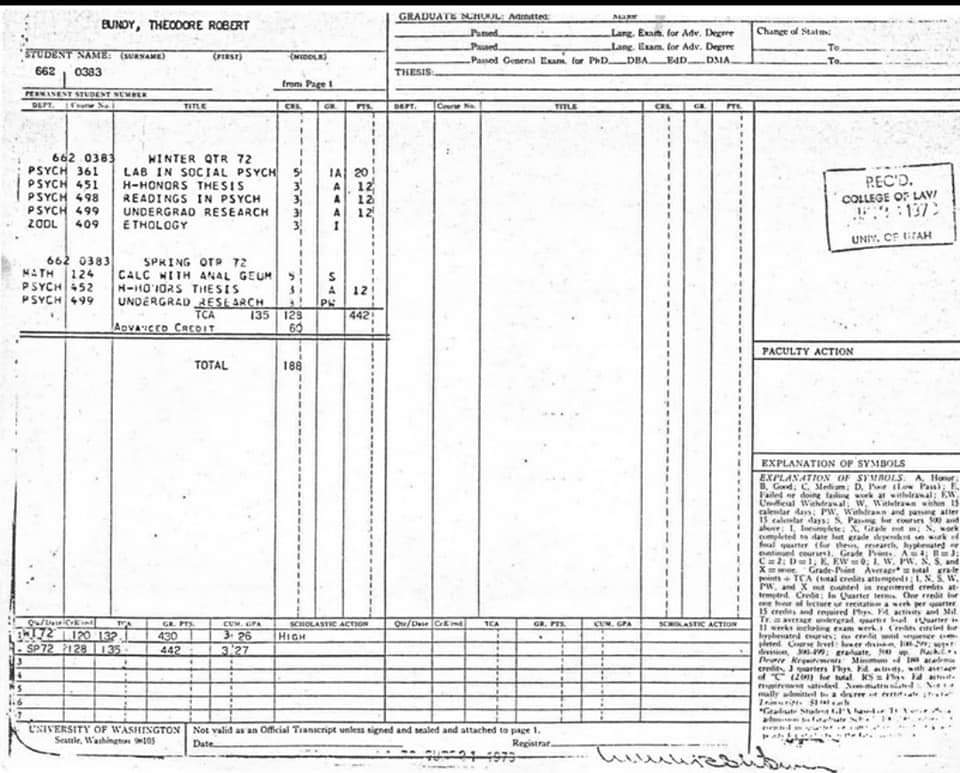
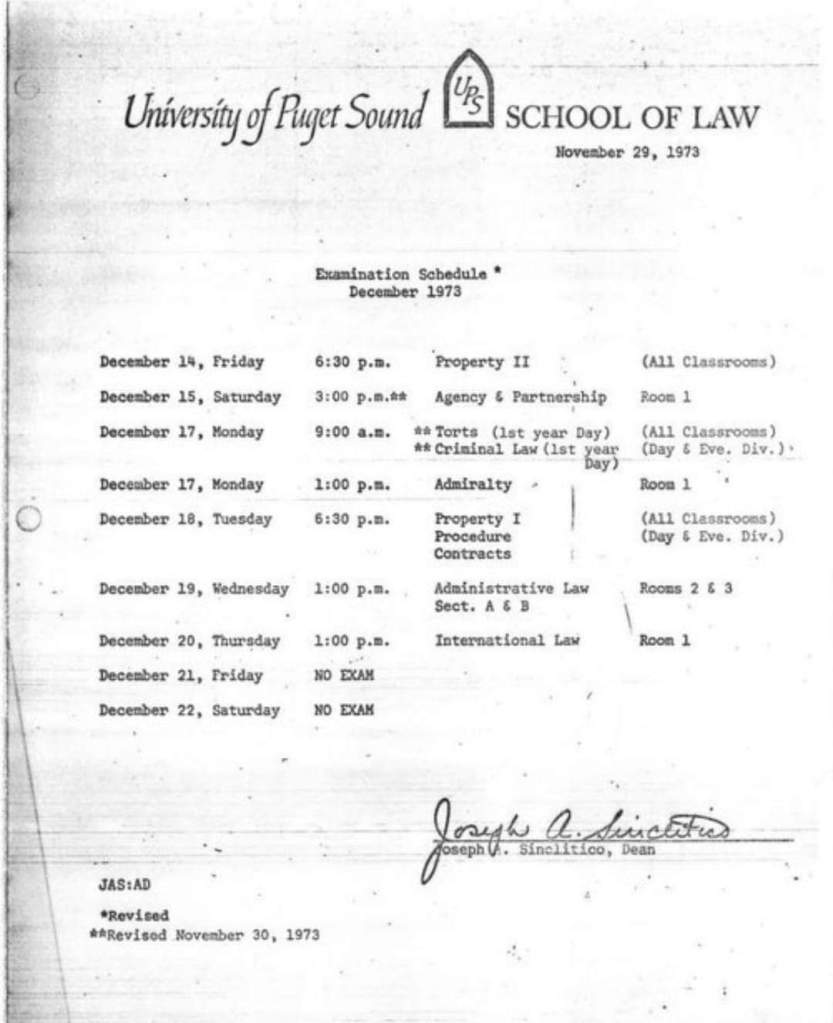
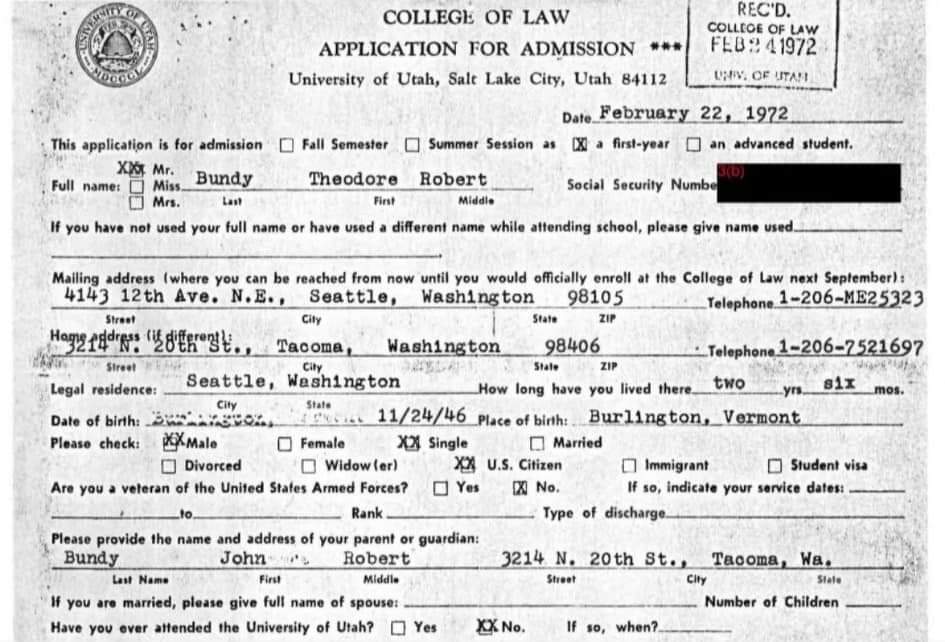
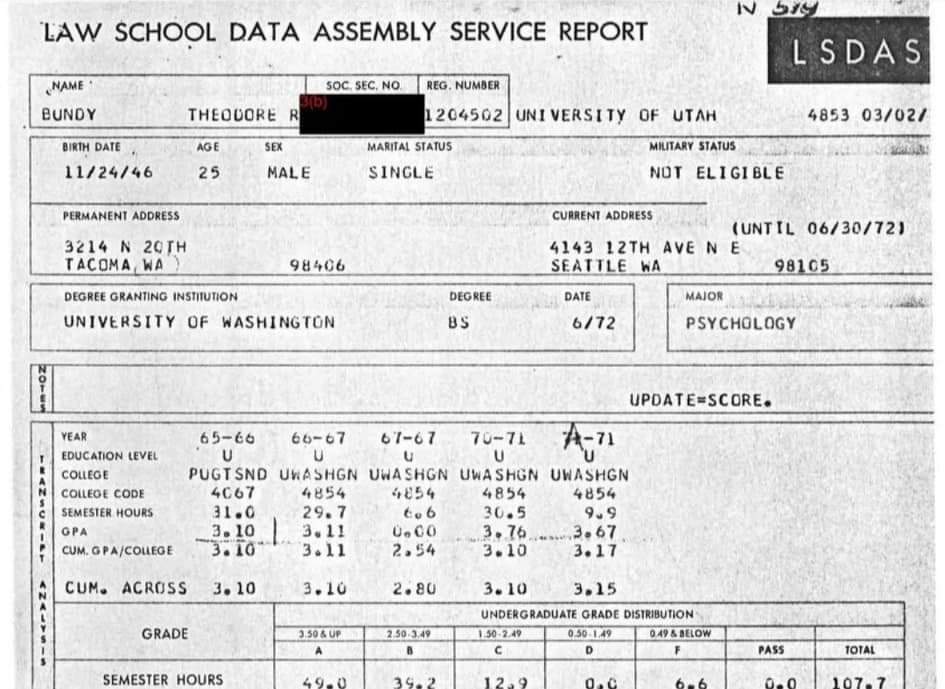
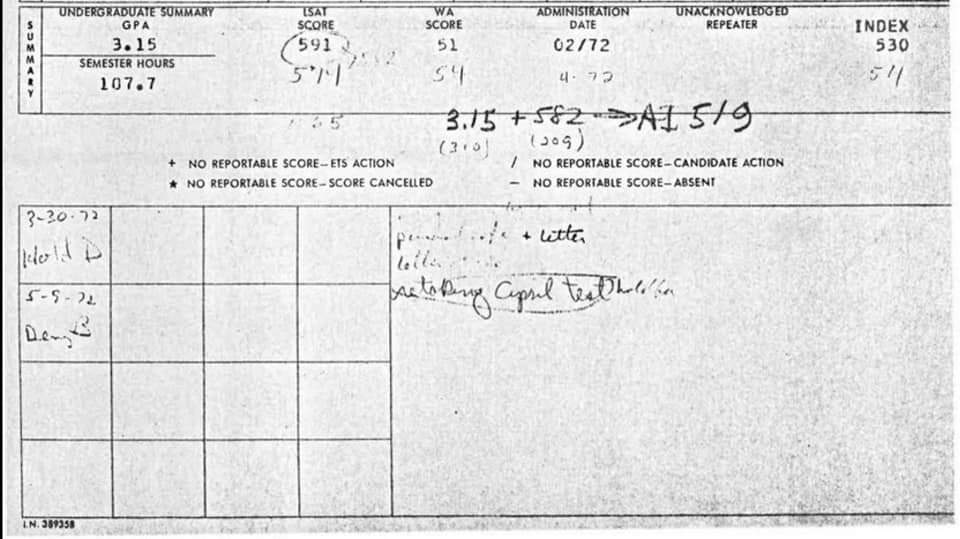
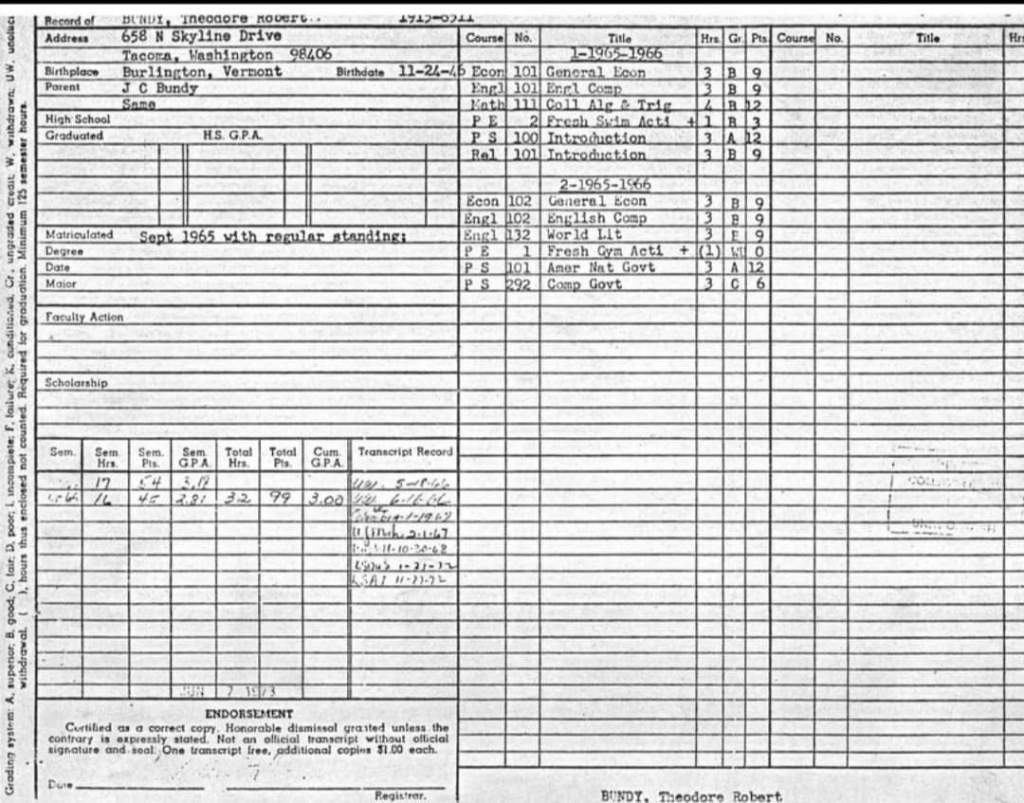
As far as the confirmed victims go, Bundy killed 18 year-old Georgeann Hawkins on June 11, 1974 after abducting her from the University District in Seattle (just eleven days earlier he murdered Brenda Ball on June first). Almost two weeks after Weaver was abducted and killed on July 14, 1974 he abducted both Janice Ott and Denise Naslund from Lake Sammamish State Park in Issaquah. When it comes to the unconfirmed victims, Brenda Joy Baker disappeared on May 27, 1974 from Puyallup and on August 2, 1974 Carol Valenzuela was last seen hitchhiking near Vancouver, WA. At the time of Weavers murder Ted was living at the Rogers Rooming house on 12th Ave in Seattle and was employed with the Department of Emergency Services in Olympia (he was there from May 3, 1974 to August 28, 1974). Obviously the drive to SLC wasn’t exactly impossible, as he eventually moved there for law school, but it definitely wasn’t just a quick jaunt down the street. The route Ted would have driven to SLC from Seattle then to DeBeque, Colorado where her remains were found was roughly 1,150 miles ONE WAY (he obviously would have had to take the same trip BACK to Seattle). This is a lot of driving. He was in between schooling at the time, as he graduated from the University of Washington in 1972 and didn’t move to Salt Lake City for law school (part deux) until September 2, 1974. Did Bundy kill Weaver on a trip to Utah to do something for his upcoming education (maybe he had to fill out something at the bursar’s office or check out an apartment)? According to the ‘TB Multiagency Investigative Team Report 1992,’ Ted went on leave (without pay) from the Department of Emergency Services in Seattle, WA on July 1, 1974 (the same day of Weavers abduction); additionally, gas receipts put him in Seattle the same day. Lets not also forget he was in a relationship at the time with Liz Kloepfer, which was just one more thing taking up his time.

This is a rare instance where the more I researched the more information I found, which I know sounds fairly obvious but I have run into countless dead ends writing about some of these girls. For example, I can’t even find Deborah Lee Tomlinson on Ancestry, so I tried to think outside the box and joined a few Facebook groups related to her hometown of Creswell OR, in hopes that maybe I would find a relative or an old friend of hers that could help fill in the gaps surrounding her background… but again, I got nothing. Right before I was about to re-publish this I found even more information about Weaver on cavdef.org… nothing huge or ground breaking, just a few small details. In a comment on the website ExecutedToday.com, an individual going by the name of Philip Conrad commented that he ‘knew Sandra Weaver, the Colorado detectives talked to me and my x wife in lacrosse wi because we thought the guy that left with her might have had something with her death. I do believe Ted Bundy killed her.’ Additionally I found Glade Gambles obituary (which I included below).

In an article written by a Salt Lake journalist after Bundy was executed, Pete Haywood said that authorities placed Bundy in Utah as early as 1970 when he was only 23, which ‘certainly widens the window of time we are looking at in terms of unsolved cases.’ There’s conflicting reports that say the serial killer mentioned Weavers during his death row confessions: some sources say he did, others say he didn’t. Former Mesa County Sheriff said two different television stations ran stories claiming that Bundy took responsibility for Weavers death, and the Salt Lake Tribune ran a story saying the same.

Weaver in her freshman year photo from the 1970 Arcadia High School yearbook.
Weaver in a group picture for the drill team from the 1970 Arcadia High School yearbook. She’s the first girl in the first row.
Sandra Weaver in a group picture for the Future Homemakers of America from the 1970 Arcadia High School yearbook.
Sandra Jean Weaver’s sophomore year picture from the 1971 Arcadia High School yearbook.
Sandra Jean Weaver in a group shot for the Future Homemakers of America from the 1971 Arcadia High School yearbook.
Weaver in a group picture from the Drill Team from the 1971 Arcadia High School yearbook.
Weaver in a group picture from the 1972 Arcadia High School yearbook.
Weaver in a group picture for the newspaper from the 1972 Arcadia High School yearbook.
Weaver in a group picture for the Girls Athletic Association from the 1972 Arcadia High School yearbook.
Sandra Jean Weaver’s senior picture from the 1973 Arcadia High School yearbook.
I pulled this from ‘Classmates.com;’ it looks like Weaver signed above her picture in the 1973 Arcadia High School yearbook.
Weaver in a group picture for the school play from the 1973 Arcadia High School yearbook.
Another shot of Weaver in a group picture for the school play from the 1973 Arcadia High School yearbook. It looks like she is in the middle row, second from the right.
Weaver’s senior year activities from the from the 1973 Arcadia High School yearbook.
Sandra Jean Weaver.
Sandra Jean Weaver.
A caricature of Sandra Weaver drawn by John Krupa (from the ‘Freedom to Draw Unsolved Mysteries’ YouTube page).
An announcement that Bruno Weaver was going to serve in the Korean War, published by The Winona Daily News on February 29, 1952.
Bruno and Marlene Weaver’s marriage announcement, published in The Winona Daily News on July 14, 1954.
An article about Bruno and Marlene Weaver’s son, who was born in March 1961 but passed away shortly after; death notice published in The Winona Daily News on March 29, 1961.
Nancy Weaver from the 1971 Arcadia High School yearbook.
Cheryl Weaver’s freshman year picture from the 1972 Arcadia High School yearbook.
Randall Weaver’s picture from the 1973 Arcadia High School yearbook.
Bryan Weaver’s picture from the 1978 Arcadia High School yearbook.
Marlene Weavers picture fro the 1974 Arcadia High School yearbook. It looks like she worked there as a cook.
A more recent picture of Marlene Weaver, courtesy of Facebook.
A more recent picture of Nancy Weaver, courtesy of Facebook.
Bruno Weaver’s death notice from by The Winona Daily News published on June 17, 1996.
Some notes about Sandra Weaver from a document titled ‘Bundy History’ on the Internet Archives (it’s a document from the Pitkin County Sheriff’s Department that was released on November 24, 1975).
Page two of a document pertaining to Weavers murder from the SLC PD.
Page three of a document pertaining to Weavers murder from the SLC PD.
An article about Sandra Jean Weaver, published by the Wisconsin Rapids Daily Tribune on January 11, 1975. 
An article about Sandra Jean Weaver, published by The La Crosse Tribune on January 11, 1975. 
An article titled ‘Services Pending for Murder Victim’ about Sandra Jean Weaver, published by the Eau Claire Leader Telegram on January 11, 1975. 
An article about Sandra Jean Weaver, published by The Sheboygan Press on January 11, 1975. 
An article about Sandra Jean Weaver, published by The Daily Sentinel on January 11, 1975. 
An article about Sandra Jean Weaver, published by the Stevens Point Daily Journal on January 11, 1975. 
An article about Sandra Jean Weaver, published by The Ironwood Globe on January 11, 1975.
An article about Sandra Jean Weaver, published by The Janesville Gazette on January 11, 1975.
An article about Sandra Jean Weaver, published by the Racine Journal Times on January 11, 1975.
An article titled ‘Murder Victim may be Arcadia Girl’ about Sandra Jean Weaver, published by the Winona Daily News on January 12, 1975. 
An article about Sandra Jean Weaver, published by The Daily Sentinel on January 13, 1975.
An article about Sandra Jean Weaver, published by the Winona Daily News on January 13, 1975. 
An article about Sandra Jean Weaver, published by the Madison Capital Times on January 13, 1975.
An article about Sandra Jean Weaver, published by the Winona Daily News on January 14, 1975.
An article titled ‘Services Pending for Murder Victim’ about Sandra Weaver, published by the Winona Daily News on January 16, 1975. 
Part one of an article titled ‘Services Pending for Murder Victim’ about Sandra Jean Weaver, published by the Winona Daily News on January 16, 1975. 
An article about Sandra Jean Weaver, published by the Winona Daily News on January 17, 1975. 
An article about Sandra Jean Weaver, published by The Daily Sentinel News on January 17, 1975. 
An article about Sandra Jean Weaver, published by The Desert News on January 20, 1975.
An article about Sandra Jean Weaver, published by The Daily Sentinel on January 21, 1975.
An article about Sandra Jean Weaver, published by The Logan Herald Journal on January 21, 1975. 
An article about the murder of Sandra Jean Weaver published in The Daily Herald on January 21, 1975.
An article about Sandra Jean Weaver, published by The Salt Lake Tribune on January 21, 1975.
An article about Sandra Jean Weaver, published by The Ogden Standard-Examiner on January 21, 1975.
In an
An article about Sandra Jean Weaver, published by the La Crosse Tribune on July 2, 1975.
An article about Sandra Jean Weaver, published by The Daily Sentinel on October 3, 1975.
An article about Sandra Jean Weaver, published by The Daily Sentinel on October 13, 1975.
An picture mentioning Sandra Jean Weaver, published by The Salt Lake Tribune on January 23, 1989 before Bundy was executed.
beaten and strangled near DeBeque, Colorado
An article about Sandra Weaver published by the La Crosse Tribune on January 24, 1989.
An article about Bundy possibly being linked to the murder of Sandra Weaver published by The Winona Daily News on January 25, 1989.
An article mentioning Sandra Weaver after Bundy was executed in 1989.
utah law officers follow up on serial killers confessions
An article mentioning Sandra Weaver after Bundy was executed in 1989.
An article mentioning the possible discovery of the remains of Sandra Weaver published by The Salt Lake Tribune on November 9, 1996.
Photo courtesy of journal6other.files.wordpress.com.
A picture of Sandra’s friend Joan Elkins from the 1971 Logan High School yearbook.
Another picture of Joan Elkins from the 1971 Logan High School yearbook.
A picture of Sandra’s friend Jeff Skarboszewski from the 1970 Central High School yearbook.
Bruce L. Bolinder from the 1965 Grantsville High School yearbook.
Bruce L. Bolinder’s wedding announcement published in The Tooele Bulletin on April 11, 1967.
Bruce Bolinder’s divorce announcement published in The Transcript-Bulletin on September 12, 1969.
A photocopy of Bruce L. Bolinder’s ID pulled from the investigative documents regarding her murder from the Trempealeau County Sheriffs Department.
Glade A. Gamble obituary published in The Tooele Transcript-Bulletin on January 21, 1997.
A map of the (one way) route Ted would have had to drive to SLC from Seattle then to DeBeque,Colorado. He obviously would have had to take the same trip BACK to the Rogers Rooming house. This is a lot of driving.
I tried finding a picture of the old Manpower building Sandra worked at but wasn’t successful.
Weavers grave site. Notice her brother that passed away in March 1961 is buried next to her.

Nancy Perry-Baird.

Nancy Perry-Baird was born on January 14, 1952 to Kenneth and Elna (nee Dee) Perry of Provo, Utah. On July 21, 1947 Kenneth and Elna wed and the couple eventually settled in Layton, Utah. They had five children: a son (Don) and four daughters, Norma (Pitt), Pat (Lindeman), Gail (Fleming), and Nancy. I couldn’t find what Mr. Perry did for a living but he was in the military at one point and was married twice (he got hitched to his first wife Wanda in 1939 but sadly she passed away in 1945). Elna was a graduate of Brigham Young University and earned degrees in both accounting and education; she retired from the IRS in Ogden after working there for 15 years. Nancy had fair skin with long strawberry blonde hair and hazel eyes; she stood 5’2”/5’3″tall and had scars on the inside of both wrists (interesting factoid: she had type O-positive blood). At the time of her disappearance she was living at 471 Wasatch Drive in Layton, Utah and was employed at the Triangle Oil Company’s Fina Gas Station at 1378 North Highway 89. I wasn’t able to find a lot about Nancy’s early life or family background, but everything I came across pointed towards her having a relatively normal childhood; she did however at one point attempt suicide. She went to Layton High School in Utah and got married to Floyd D. (Dee) Baird in 1970 after she graduated (they were both 18). Floyd was employed as a master electrician and the couple had a son together in the Winter of 1971; they sadly got divorced in the Spring of 1975.

On July 4, 1975, 23 year-old Nancy was working a 3-11 PM shift (some sources say it was until midnight) as an attendant at the Fina self-service gas station in East Layton, Utah. At the time of her disappearance she lived close to her job, her son lived with family, and her ex-husband lived in Wyoming state. A little after five o’clock Officer David Anderson stopped and chatted with Nancy a little bit during her shift; he bought a soda water before leaving a few minutes later to investigate a potential alcohol violation at the Shamrock gas station on the other side of the highway. He returned to the Fina station shortly after at around 5:30, when he noticed a green van and a couple of lingering ‘hippie-types’ and wanted to assess the situation. When Perry-Baird’s manager Bonnie Peck popped in to pick up some soda water at around 5:30 she came into a line of customers and no cashier. After Officer Anderson returned he encountered Peck and quickly realized that sometime in the past 15-20 minutes Nancy Perry-Baird had vanished off the face of the earth. The only thing out of the ordinary was that there was $10 worth of gas on a pump that hadn’t been paid for (the average cost of a gallon of gas in 1975 was .57 cents so that was a good amount of fuel). Not only was Nancy’s locked car left behind but her handbag containing her cashed paycheck ($167), car/house keys, headache medications, and other personal belongings was left in the gas station as well. Former East Layton Police Chief Ray Adams said Baird’s purse was left inside the station and that she was checked on by an officer out on patrol no more than 15 minutes before she disappeared. She was last seen wearing a blue halter top with blue shorts, a gold pinky ring inlaid with a ruby in the center, with two smaller rubies on each side of the center stone. Over her street clothes was her work attire: a blue pinstriped smock-type shirt with the Fina Gas Station logo embroidered on it. At the time Nancy was working her son was with relatives.

By July 7 law enforcement exhausted their land and air searches and shifted their focus to talking to Nancy’s family, friends, acquaintances, and customers. Police were able to obtain receipts from the gas station for the hours she worked and were able to track down a good number of her customers. One by the name of Denzel G. Williams was contacted by law enforcement because a credit card receipt proved that he had purchased gasoline during the time Nancy was there. Mr. Williams told police that he was there to fill up the family car and a gas can before a trip to Park City the next morning, and was there with his son David and nine-year-old daughter, Jana; he estimated they were there between roughly 5:10 and 5:15 PM. He never entered the service station but his daughter went in to buy a bottle of raspberry soda (she only had 28 cents and the beverage cost 29 but Nancy let the penny slide and gave it to her anyways). The young girl said that two young white men, roughly in their early 20’s, were chatting with Nancy at the end of the counter, but didn’t appear to be buying anything. The Williams children were able to provide police with descriptions of the individuals they saw, which allowed them to use a tool called an ‘Identi-kit’ which helped build composite images of the suspects. Police labeled the men ‘subject #1’ and ‘subject #2,’ and both were determined to be ‘hippie type individuals.’ Subject #1 was described as ‘skinny, had shoulder-length hair, a beard and mustache and wore a denim jacket with frayed edges.’ Subject #2 also had a beard and mustache, however his hair only came to the bottom of his ears and he was wearing a yellow long-sleeve shirt.

Mr. Williams remembered seeing what he thought was a bright yellow 1973 four-door Ford Maverick with a white stripe along the side. He also reported seeing a third man outside the gas station, who he described as being between 55 to 60 years old and very slender, with a full head of gray hair and overly prominent veins on his arms. The man went into the exterior men’s restroom and came out while he was still pumping his gasoline. Williams said the gentleman never went inside the station and after he filled up his gas tank gave his credit card to his son, who went inside and paid. He said that it takes about four to five minutes to drive to his house from the Fina station and he very clearly remembered being home before 5:30, which was exactly when his brother came over for a visit.

Another important eyewitness is Mrs. Henry Heath, who reached out to the police because she had stopped by the gas station around 5:30 PM to buy film and witnessed several people milling around the counter waiting for assistance. She distinctly remembered a Caucasian man in his late 20’s with medium length brown hair styled neatly with a bit of facial stubble buying what appeared to be a canned beverage. Mrs. Heath further reported that she saw a Mexican man with two small boys that were also standing at the counter waiting to purchase some items. Lastly, there was a visibly irritated tall, thin, white male in his 50’s who (most likely upset by the lack of customer service) put a six pack of beer down and walked out. It was at this point that the older woman started poking around the store to see exactly what was going on. She checked the women’s restroom and noticed the door was open and there was no one inside; the man with the two boys looked in the office, which also was unoccupied. Mrs. Heath also reported seeing a yellow pickup truck hauling a shell camper with a young couple inside; they stopped to get gas and when they weren’t serviced right away blew their horn. Within about 5-7 minutes of waiting around for help Peck came in to purchase some soda water, and as she was in a hurry made a beeline to the counter. A male customer (obviously a regular that recognized her) made a joke asking if she stepped away for a moment to grab a beer, which is when she asked what was going on and where her cashier was. At this point three people in a van pulled up asking for directions to the Sheriff’s Office, announcing that one of their vehicles had been impounded. Peck quickly jumped into action and cashed out the waiting customers; Mrs. Heath paid for her film and remembers getting home roughly 10 minutes before 6:00.

What happened in the 15-20 minutes between Mr. Williams leaving the gas station and Mrs. Heath showing up? One of the stranger parts of this case is (to me) how she was abducted in the middle of the day on a holiday during peak business hours. Why abduct someone then? Why not wait until 9:00 or 10:00 at night when there’s fewer customers and you’re protected by darkness? The FBI briefly got involved because at first they felt maybe Nancy was kidnapped but after about six weeks and no leads they eventually left things in the hands of local law enforcement (as they were unable to prove anything and weren’t able to officially take on the case if she was abducted). Over the years hundreds of Nancy’s family, friends, and acquaintances were interviewed and polygraphed and everyone passed.

In a joint statement released by former Davis County Sheriff William J. ‘Dub’ Lawrence and Chief Adams, it was reported there were no signs of a struggle or theft from the Fina station (aside from the $10 worth of gas). Thankfully Nancy’s disappearance was taken seriously from the start. I mean, that makes sense when comparing this disappearance to the other missing girls in Utah at the time… after all, she had a son, a stable job, and was a bit older than most of the other victims (even though Caryn Campbell was also 23, Denise Oliverson was 24, and Julie Cunningham was 26). Family and friends told police there were no signs that Nancy had any intention of leaving or taking off. All of her personal belongings were left behind in her residence and no money was taken, which almost makes me think she was an intended target and the attack was not meant to be a robbery. Additionally, her manager said she was always on time to work and was a good employee, making me think she wouldn’t just walk off the job or just leave. Law enforcement interviewed Perry-Baird’s family the night she disappeared but they weren’t able to offer much help. They felt it especially odd that Nancy left behind $167 in cash… but what if she was possibly attempting to stage an abduction so she could disappear? Maybe then it might make sense? Law enforcement spoke with Richard Marinoka from the employment office in Ogden, UT on July 8, who said that Nancy had come in to speak with someone in March because she was apparently unhappy at her job and wanted to find a better one. Was she depressed about her current situation and trying to disappear?

When police searched Nancy’s bedroom they found a phone number scribbled on a pad of paper near the phone that belonged to a female relative in Lakewood, Colorado. When they called the family member she claimed she hadn’t had any contact with Perry-Baird for about two and a half years. Law enforcement also collected a sampling of her hair brushes from her home as well as her birth control pills, which showed that she hadn’t taken any since April 7. Now…. why does a woman stop taking her pill? She’s either not having any sex at all, she WANTS to get pregnant, or she already is. This (in my opinion) throws a wrench in things. Apparently (according to the police report) there were nine different men that Nancy had some sort of past or current romantic involvement with, so my educated assumption is she was having some sort of sex life.

Sheriff Lawrence brought 14 deputies to the area early on Saturday, July 5, and those deputies joined four East Layton officers in a ground search of the mountains and roads of North Davis County over the course of the day. Lawrence commented that: ‘we’re treating it as if it were the worst, but hoping she’ll come home.’ A SLC Police Department helicopter was brought in for about three hours to search both sides of the highway but with no success. The sheriff said that all leads were checked out; however the case quickly ran dry and eventually went cold. About two months after she vanished two residents in Castle Rock, Utah reported that they thought they saw Nancy shopping at a local food store (unfortunately nothing came from that sighting). It’s worth mentioning that Castle Rock is only a 30 minutes drive away from Lakewood, which is where that female relative of Nancy’s lives whose phone number was written down on the pad of paper next to her bed.

Floyd Baird was out of state when his ex-wife disappeared and was officially cleared by authorities in 1975. He had been working on an electrical job in Rexburg, Idaho that fourth of July holiday and spent the day in Jackson Hole with a friend (Rick Thomas) either river running or kayaking. Interestingly enough, he did tell police that despite being divorced he still went on the occasional date with his ex-wife.

According to neighbors, Monty Torres was a man who Nancy hired to mow her lawn the month before she disappeared. When law enforcement spoke with Torres, he seemed visibly nervous, however told them he was in Pocatello, ID the afternoon of July 4. He was able to provide them with alibis that confirmed they saw him at 1 PM and again at 7 PM. Torres told investigators the last time he saw Nancy was about a month before she disappeared (his mom volunteered that she hadn’t seen her son in about three months). When police showed Mr. Williams’ daughter some pictures from Nancy’s personal photo album, she positively identified Torres as being one of the two men she saw at the gas station the afternoon of July 4th. Additionally, two other male acquaintances of the young divorcee were questioned in relation to Nancy’s disappearance: Reed Miller and a man whose name was redacted. Deputy Ben Reichel interviewed Miller, who was also in the Jackson Hole area that holiday weekend. He shared that he knew Nancy for roughly two and a half years (since the winter of 1972) and at one point the two were pretty serious but after he told her that he didn’t have any interest in getting married things cooled down quick. The two saw each other for the last time on June 28 when they went out on a date. Miller, Torres, and Baird were polygraphed and all three men passed.

Only one of the men Nancy was involved with had their name redacted and all we know about him is that police tried to speak with him multiple times but he dodged their every attempt. In a report completed by Officer Anderson dated July 8, Baird’s parents provided police with two pictures of a boyfriend whose name they have currently redacted due to the fact he is still under investigation for this abduction. According to reports, the ‘redacted’ man reportedly worked in a warehouse setting and his Foreman shared that he left for Phoenix to see his parents on July 2nd and wasn’t supposed to be back to work until either July 12/13. Because they couldn’t reach him, law enforcement tried to locate his family members and the closest ones they found were a cousin and an aunt. The cousin shared that despite ‘reacted’ getting divorced in June 1975 he was supposedly thinking about getting back together with his ex-wife. His Aunt, Mrs. Frank Olson stated she didn’t associate with her brother or his side of the family.

At the time Nancy was abducted in the summer of 1975, Sheriff Lawrence said the department was investigating quite a few high-profile cases and for about a month after she vanished they talked to multiple people of interest but were unable to pinpoint a suspect. He commented that: ‘when a police officer does this for years you develop a sixth sense. You feel it. (Bundy) was the worst of the worst criminals and it took its toll on most of us. We had five missing women at one time. Half we found part of the bodies, some of them.’

Enter Ted Bundy… in the summer of 1975, Ted was enrolled in classes at the University of Utah School of Law and was living at 565 1st Avenue in SLC (he was there from September of 1974 to September of 1975). He was briefly employed as the night manager in charge of Bailiff Hall from June to July 1975 (he was fired for showing up drunk) and from July to August 1975 he was a PT security guard at the University of Utah (his position was terminated due to budget cuts). His activity is unaccounted for on July 4, 1975 in the FBI Bundy Multiagency Investigative Team Report 1992. It’s obvious by her physical description that Nancy fit Bundy’s typical victim profile, however the crime scene is outside of a school setting, and I never heard of Ted going after anyone in a retail/gas station setting before. Before Perry-Baird’s disappearance, Bundy’s last confirmed kill was Susan Curtis on June 28, 1975 out of Provo, Utah: the 12 year old girl vanished from Brigham Young University and Ted told law enforcement he buried her roughly 75 miles away. Now, if you’re considering the unconfirmed victims, on June 29, 1975, Shelley K. Robertson also vanished without a trace; her body was found in a mine shaft near Georgetown seven weeks later. Ted’s reign of terror didn’t last much longer after Nancy disappeared: early in the morning on August 16th, 1975 Utah State Trooper Sergeant Bob Hayward arrested him in Granger, Utah after leading him on a mile and a half long car chase.

Bundy living in the area is really the only thing police have linking him to Perry-Baird’s disappearance. No one at the Fina station reported seeing a man that fit his physical description or his VW nearby (lets face it, a Bug is a fairly memorable vehicle). Unlike Nancy Wilcox (for example), there was never any mention of a mysterious law student in Nancy’s life (it’s been speculated Ted went into the restaurant where Wilcox worked and flirted with her). When asked about Nancy Perry-Baird’s disappearance during his death row interviews, Bundy denied any responsibility. This obviously means he was either lying or telling the truth, and if he was telling the truth it means that someone else abducted her.

After Ted was arrested in SLC, Sheriff Lawrence’s team of detectives started looking into him in relation to Nancy’s abduction, saying ‘we had him in Rock Springs, Wyoming which put him on Interstate-80 coming back from Colorado.’ From Rock Springs, Lawrence said Bundy headed west into Utah and chose to return to Salt Lake using Interstate-84: ‘we don’t have any gas receipts that he stopped in the area.’ The Sheriff theorized that Bundy at one point headed south on Highway-89, the same roadway where the Fina gas station Nancy worked at was located, saying ‘there’s no women missing (along I-80). There was no abduction on 80-coming in.’ He strongly believes that the serial killer murdered Baird then disposed of her remains in Lambs Canyon, saying ‘Ted Bundy was tired, he had driven all day. I believe he went to somewhere that was close. It was handy it was safe, it was secure.’ Lawrence also said that Bundy was familiar with the area and that the body of Melissa Smith was found just about ten miles away in Parleys Canyon: ‘it’s what we call the law of probability. It’s not provable but if you work back by process of elimination you come up with the most logical scenario.’ In the pictures section I included a Websleuths comment saying that East Layton law enforcement said Bundy fueled up at the Fina station at least once in 1975.

According to researcher Tiffany Jean, records from the Carol DaRonch kidnapping case show that during the summer of 1975 Bundy briefly dated a woman from SLC named Leslie Knudson. Jean said that Knudson was able to provide law enforcement with an alibi for her beau on that fourth of July weekend in 1975: the pair had attended a family reunion at her family’s ranch. Her maternal grandfather was a sheep rancher and owned property in Fruitland, UT, which is more than 100 miles from the gas station where Nancy Perry-Baird disappeared from.

Sadly, at the end of the day Ted’s involvement with the disappearance of Nancy Perry-Baird is just a theory with nothing but weak, circumstantial evidence: there just wasn’t enough for prosecutors to bring him up on charges. Before he was put to death he was interviewed by a Salt Lake Sheriff, and told him that he didn’t kill Baird. According to the audio tapes, Bundy said: ‘Nancy Baird, who is that? I’m not sure who you are talking about. No. I didn’t have anything to do with that.’

Despite Ted denying any involvement with Baird’s death, Sheriff Lawrence doesn’t believe him: ‘he admitted that he had some of the heads of his victims in Utah at his apartment. He mentioned Lamb’s Canyon.’ Perry-Baird’s in-laws don’t believe Bundy either and also felt he was responsible for her murder: her FIL Wally Baird felt Ted’s denial could have possibly been a cover-up: ‘he may have been that way because he didn’t know at the time that she had kids, a child and had been married. That was something that was contrary to his MO.’

Law enforcement commented at the time that they found no evidence making them think Nancy’s disappearance had anything to do with the then nine month old disappearance of Debbie Kent from Bountiful, UT. Kent was abducted from the parking lot of Viewmont High School on November 8,1974; as of March 2023 only her patella has been found. For reference, the school was about a 45-minute drive away from the gas station. Here’s an interesting tidbit of information: according to a 1975 news story published by the Davis County Clipper, Kent’s father was an official of the Triangle Oil Company that owned the Fina gas station that Baird was employed at.

Recently a new theory on Perry-Baird’s strange disappearance has emerged: The Utah Cold Case Coalition noticed that the investigation pretty much stopped after Bundy came into the picture. One of the coalitions co-founders Karra Porter commented that ‘a lot of the investigation stopped there. So we talked to quite a few people that were never interviewed.’ Some of the people interviewed include former law enforcement that worked the case when Nancy first disappeared. The coalition has recently come across two possible persons of interest, the first was a young man that was trying to date Baird (the feeling wasn’t mutual) and that ‘one of the names we’ve been given by former law enforcement does have a subsequent history of sex offenses and a criminal record and so that at least adds to the red flag.’ (he even had a history that landed him in prison) … ‘What we’ve learned so far is that one of the two suspects would be consistent with potentially having a pickup like that.’ Porter elaborated that new witnesses that were never before interviewed reported seeing a pickup truck leaving the area at roughly the time Nancy was abducted, which jumps out at me because when Bundy moved from Seattle to SLC he did buy an old pickup truck. She also said that of the two potential suspects one stands out a touch more than the other. The Coalition is currently attempting to interview him, however as of March 2023 the Covid pandemic is still getting in the way.

It’s speculated that Nancy’s case may somehow be related to the disappearance of another young woman named Cheryl Scherer. Nineteen year-old Scherer vanished out of thin air from Rhoades Pump-Ur-Own self service station in Scott City, Missouri sometime between 11:40 and 11:50 AM on April 17, 1979. The two women shared many similar characteristics (such as age, body type, and hairstyle) and disappeared under incredibly similar circumstances. Two hours before her shift ended, Cheryl called her mother who later told police nothing about the conversation was out of the ordinary and that her daughter seemed to be in a good mood. A coworker eventually came in to find the station deserted and ransacked. Just like Perry-Baird, Scherer’s car was left in the parking lot (with the keys inside) and her purse and checkbook were left inside her POE (however in this situation $480 was missing from the cash register). Police speculated the young girl was abducted after a robbery but there were no witnesses. The depraved serial killers Otis Toole and Henry Lee Lucas admitted to an abduction during that time and it’s strongly suspected they are responsible for Scherers disappearance. Both men denied any involvement in either girls disappearance.

When Nancy vanished in July of 1975, a young reserve officer named Thomas Jackson was the newest member of the East Layton police force, and Nancy’s case file shows he didn’t play a huge role in her investigation. However he shared with the COLD podcast that he didn’t feel Ted Bundy was responsible for Perry-Baird’s disappearance. Instead, he speculated it was his colleague officer Dave Anderson that might have been responsible for the young mothers demise. At the time of her disappearance, he had only been a police officer for about ten months. A few former law enforcement-related sources familiar with East Layton police operations in the 1970’s shared with the podcast that most of Anderson’s time was spent patrolling US Highway 89, which is the same stretch of road that Nancy’s place of employment was located on. In former Officer Jackson’s opinion, ‘Anderson spent too much time looking at women.’ Anderson left his job with the East Layton PD almost right after Nancy vanished, and case records do not show that he was ever investigated or challenged in any way regarding his account of her disappearance.

After she disappeared, Perry-Baird’s young son was told that ‘his mother is vacationing’ and he was sent to live with relatives. Newer technology at a Texas University helped forensic experts create a DNA profile for Baird based on genetic samples provided by her family. Nancy Perry-Baird would be 71 years old as of March 2023. Her ex-husband passed away on March 17, 2018 after years of battling Idiopathic Pulmonary Fibrosis. Despite her remains never being recovered, she has a memorial stone in a Provo City Cemetery. Her date of death is listed as the fourth of July, 1975.

***

Update, August 2023. 

I’m always updating my articles as I come across new information, and recently I found the initial police report (thanks to the COLD podcast) as well as a newly published article by ksltv.com. After initially being denied a request for Nancy’s case file by Davis County Sheriff’s Office, the podcast filed an appeal, and the original determination was overturned and the request was granted (with portions redacted). 

Perry-Baird’s name came to the attention of the podcast’s co-collaborators Dave Cawley and Keira Fairmont while conducting research on the Sheree Warren case. Apparently an informant named William Babbel began communicating with the FBI in February of 1989 while incarcerated at Florida State Prison. Babbel shared that he was at one point incarcerated with Warren’s ex-boyfriend Cary Hartmann, who at the time was serving a prison sentence of 15-years-to-life for an aggravated sexual assault in Ogden, Utah. Although she vanished years after Nancy in 1985, their cases had some eerie similarities: both women were recently divorced from (or were in the process of the act) their spouses and were primary caregivers for their young sons. They were about the same age at the time of their disappearances (Sheree was 25 and Nancy was 23) and both were last seen at their places of employment.

Babbel reportedly claimed that ‘Hartmann had been ‘openly talking about Warren’s disappearance,’ and the FBI states that he told one of their agents that ‘Hartmann questioned why Ted Bundy was blamed for the disappearance of Nancy Baird.’ … ‘on one occasion, Hartmann was looking at a newspaper article depicting Ted Bundy along with photos of many of his victims. Hartmann placed a X by the photos of five of Bundy’s alleged victims.’ FBI Special Agent Gregory Hall later commented that Babbel ‘learned that Cary Hartmann was an acquaintance of Nancy Baird. Baird’s disappearance allegedly occurred while Hartmann was experiencing a divorce.’ At the time Nancy disappeared in July 1975, Hartmann had been between his two marriages, so Babbel’s information seemed to have at least a glimmer of credibility. However the agency later dropped the inmate as an informant, claiming he was unreliable. In addition to Perry-Baird and Warren, he also attempted to tell the FBI about information related to the disappearance of Joyce Yost. 

One new piece of information I gathered from the case file that I didn’t know beforehand was an account from a friend of Nancy’s named Deloris Drake. She told a detective that on the evening of July 2, 1975 the two girls went to a few bars together along Ogden’s Washington Boulevard, including Rigos and the Iron Horse. She drove the pair back to her house at around 2:30 AM early the morning of July 3, 1975 and from there Nancy left for her own home in East Layton. About 30 minutes after leaving, she returned to her friends home, and she ‘appeared to be quite shaken and frightened because a man named Tom in a yellow van had followed her home.’ Tom had apparently pursued Perry-Baird to Drake’s home and was making threatening comments toward her as she opened her door. Deloris told law enforcement that she had seen a second man with ‘Tom’ that was on a motorcycle.

A baby picture of Nancy from 1952.
Nancy Perry-Baird as a child, photo taken in 1960 when she was around 8 years old.
Nancy Perry-Baird in her youth sitting at a piano.
Nancy Perry-Baird as a child.
Nancy with a cat.
Nancy Perry-Baird in grade school.
Nancy Perry as a sophomore in 1968; photo courtesy of Layton High School yearbook. 
Nancy Perry-Baird from the 1969 East Layton yearbook.
A wedding invitation from Floyd and Nancy’s wedding.
Nancy on her wedding day.
Floyd and Nancy on their wedding day.
Nancy with family on her wedding day.
A photo from Nancy’s wedding day.
Nancy and her son.
Nancy on a motorcycle.
Floyd and Nancy at her high school graduation.
Nancy Perry-Baird compared to the Finley Creek Jane Doe.
Another composite sketch of the Finley Creek Jane Doe
Floyd Dee Baird.
Floyd Dee Baird.
Nancy’s Mother, Elna Lorraine Perry; she was born on September 11, 1924 and passed away on May 28, 2010.

Nancy’s Father Kenneth Stewart Perry; he was born on October 19, 1917 and passed away on December 2, 1979.
A birth announcement for Floyd and Nancy’s son published in The Ogden Standard-Examiner on October 14, 1970. Photo found by Teri Offield.
An article about Nancy’s disappearance, published in The Salt Lake Tribune on July 6, 1975.
An article about Nancy’s disappearance, published in The Salt Lake Tribune on July 7, 1975.
An article about Nancy’s disappearance, published in The Ogden Standard-Examiner on July 7, 1975.
An article about Nancy’s disappearance titled ‘Police Question Friends of Missing Woman, 23’ published by The Daily Herald on July 7, 1975.
An article about Nancy’s disappearance, published in The Ogden Standard-Examiner on July 8, 1975.
An article about Nancy’s disappearance, published in The Salt Lake Tribune on July 8, 1975.
An article about Nancy’s disappearance published by The Ogden Standard-Examiner on July 9, 1975.
An article about Nancy’s disappearance published by The Salt Lake Tribune on July 9, 1975.
An article about Nancy’s disappearance published by The Ogden Standard-Examiner on July 10, 1975.
An article about Nancy’s disappearance titled ‘Help Sought to Locate Woman, 23′ published by The Daily Herald on July 10, 1975.
An article about Nancy’s disappearance published by The Logan Herald Journal on July 10, 1975.
An article about Nancy’s disappearance published by The Salt Lake City Tribune on July 10, 1975.
An article about Nancy’s disappearance published by The Deseret News on July 10, 1975.
An article about Nancy’s disappearance published by The Utah Provo Daily Herald on July 10, 1975.
An article about Nancy’s disappearance titled ‘Case of Missing Mother Baffles Officers in Davis’ published by The Ogden Standard-Examiner on July 15, 1975.
An article about Nancy’s disappearance published by The Deseret News on July 28, 1975.
An article about Nancy’s disappearance published by The Salt Lake City Tribune on August 25, 1975,
An article about Nancy’s disappearance titled ”Authorities Still Baffled By Missing Woman, 23′ published by The Ogden Standard-Examiner on September 2, 1975.
An article about Nancy’s disappearance titled ‘Missing Layton Woman Spotted? Story Checked’ published in The Ogden Standard-Examiner on September 5, 1975.
An article about Nancy’s disappearance, published in The Ogden Standard-Examiner on November 19, 1975.
An article about Nancy published by The Ogden Standard-Examiner on January 13, 1976.
An article mentioning Nancy published by The Tampa Tribune on April 5, 1978.
A 1976 article about the disappearance of Nancy Perry-Baird.
An article mentioning Nancy’s disappearance published by The Deseret News on July 10, 1978. Photo found by Teri Offield.
An article about Nancy’s disappearance published by The Walla Walla Union Bulletin on May 23, 1986.
An article mentioning Nancy’s disappearance, published in The Texan Newspaper on March 2, 1988.
This image has an empty alt attribute; its file name is 319158609_903021394191868_6987185981797144771_n.jpg
An article mentioning Nancy among the list of Ted’s victims after his 1989 execution.
Some articles about the disappearance of Nancy Perry-Baird.
The FBI Bundy Multiagency Investigative Team Report 1992; Bundy’s activity is unaccounted for on July 5 when Nancy disappeared.
Courtesy of Websleuths.
Courtesy of Websleuths. I think the most interesting part is “I have followed this case and know that Bundy used his credit card at that location, at least once (per the East Layton police).”
Courtesy of Reddit.
A ‘NamUs’ missing persons poster for Nancy.
Nancy’s gravestone.
Jana Williams Grow and David Williams as they look today from the article titled, ‘Blamed on Bundy: COLD Podcast Challenges Popular Theory in Nancy Baird Cold Case’ published on May 15, 2023 and written by Dave Cawley and Keira Fairmont.
David and Jana Williams provided information to the Davis County Sheriff’s Office about two men they’d seen speaking to Nancy Baird minutes prior to her disappearance. A detective used that information to generate these two Identi-kit composites.
What is an identi-kit, you may ask? (I did). It’s a 1970’s-era kit that helped law enforcement to generate composite facial sketches by stacking transparencies of individual features.
The Identi-kit composite of ‘subject #1’ in the Nancy Perry-Baird case. Photo courtesy of thecoldpodcast.

The Identi-kit composite of ‘subject #2’ in the Nancy Perry Baird case. Photo courtesy of thecoldpodcast.

The Identi-kit composite of ‘subject #3’ in the Nancy Perry Baird case. Photo courtesy of thecoldpodcast.
Nancy Perry-Baird went to this bar with a friend two days before she vanished. Photo courtesy of thecoldpodcast.
A Google Earth view of the Fina station where Nancy worked.
The Fina station where Nancy worked.
A map from Layton to Rock Springs, CO where Nancy was reported being seen.
A Google Maps view of 471 Wasatch, Layton UT.
Google Maps view from the Fina gas station to Bundys boarding house.
A yellow 1973 four-door Ford Maverick.
Cheryl Scherer.
Sheriff William “Dub” Lawrence.
Bonnie Peck.
Cheryl Scherer.
A map of reference from East Layton, UT where Nancy Perry-Baird was possibly abducted from to Scott Hill, Missouri, where Cheryl Scherer was last seen alive.
William Babbel, who briefly acted as an FBI informant in February of 1989. Photo courtesy of The Weber County Attorneys Office.

Nancy Wilcox.

Nancy Wilcox was born on July 4, 1958 to Herbert and Constance (nee Mouritsen) Wilcox of Holladay, Utah; she was one of six kids and had four brothers and a sister (David Michael, Richard Stephen, Thomas Brent, James Patrick and Susie Wilcox-Nelson). The Wilcox family were devout Latter-day Saint’s and Nancy was very active in the LDS community; she was described as being incredibly kind, very pretty, funny, and it seemed that everyone who knew her liked her. She was said to have a small, close-knit group of friends, was a straight shooter, and didn’t drink, do drugs, or party. The young girl had medium length strawberry-blondish hair, brown eyes, stood roughly 5’6” and weighed around 120 pounds; she used minimal make-up, had a small scar on the side of her face, wore a size 6.5 shoe and a size 9 dress. At the time of her disappearance in early October 1974, Nancy was sixteen years old and a junior at Olympus High School. It’s commonly reported that she was a cheerleader however according to her best friend Louisa Paulson-Graves, it was her that participated in that extracurricular activity, not Nancy. In September and October 1974, Wilcox worked part time at a small coffee shop called the Arctic Circle Drive-In near her home but was fired prior to her murder. When she disappeared she was in a healthy, committed relationship with a guy from her high school named John Hood.

Wilcox was last seen by some classmates near her high school in the passengers seat of a tan VW Beetle close to her home on Arnette Drive in Holladay, Utah on October 2, 1974. The young lady was on her way to the store to purchase a pack of gum, and it’s speculated that from there she was on her way to her high school to see her boyfriend, who was a football player and may have been somewhere on campus. Salt Lake County Sheriff’s Detective Jerry Thompson said she was last seen wearing a blouse of unknown color, blue corduroy pants, a silver chain necklace with beads and a turquoise ring; she wasn’t wearing a coat. In an interview with YouTuber ‘Captain Borax,’ Susie Nelson said that on the day she went missing her sister left the house in a huff after getting into a fight with her Dad about John’s pick-up truck leaking oil on the families driveway (oh my gosh my Dad would be the same way!). Both Mr. and Mrs. Wilcox said because of this initially law enforcement deemed her to be a runaway, however it was glaringly obvious to her loved ones that she had no intention of leaving home and had no troubles whatsoever in her personal life. Nancy left all of her personal belongings behind including some expensive jewelry that held deep sentimental value to her.

From January to July 1974, young women in Washington state were disappearing at an alarming rate, and even though most residents of Utah were somewhat aware of what was happening it still seemed too far away to really affect them. After all, it was Seattle’s problem, not theirs. At the time in the mid-70’s, law enforcement felt so strongly that the killer was going after young coeds in the general Seattle area that they were even hesitant to link ‘Ted’ to the disappearance of Kathy Parks out of Corvallis, Oregon. I probably don’t need to say that Nancy was the first of many young women to vanish without a trace from the Salt Lake City area in 1974. The juvenile division of the sheriff’s department did not release a public appeal for information related to her disappearance until December of 1974, three months after she vanished (and even then they stressed that she ‘might still be a runaway’). On the day after Ms. WIlcox’s case first made the news a waitress from Lake Point contacted the Sheriff’s Department and told them she had seen a girl matching Wilcox’s description at the restaurant where she worked. She further claimed that the young girl was with a ‘tall young man who had a mustache’ and when they were done with their meal drove off in a ‘light-colored Volkswagen.’

I hope I don’t need to point out that we live in different times now and back in 1974 there was no internet scroll with news constantly updating itself. Additionally, at that time police jurisdictions didn’t like to share information with one another, and Utah wasn’t on high alert like Washington state was about missing young females: Nancy was the first (known) of Bundy’s Utah victims to go missing. After Wilcox vanished, Utah law enforcement were unable to find very many helpful clues that would help them locate her (they had few leads and not much to go on). During the course of the investigation they spoke with at least 45 of her family, friends, school mates and acquaintances, however none of them knew anything about her disappearance. Several of her loved ones were also given polygraph tests but passed. On November 30, 1974, Utah police began a two day search of the canyons around Salt Lake City but were unable to find any trace of Nancy.

It’s speculated that Bundy may have been grooming Nancy Wilcox: family members said she mentioned an older man who would come into the drive-in that she briefly worked at and flirt with her. As I said earlier, she was employed at an Arctic Circle located on 3300 South and shared with her cousin Jamie Hayden that while there she had met an ‘older guy in law school.’ Susie told a similar story: one time Nancy became visibly excited when she saw this same older gentleman drive by their family home, and said something like, ‘oh my gosh, that’s the guy who has been coming into my work!’ During his final interviews with law enforcement, Ted didn’t share that he knew Wilcox beforehand nor did he elaborate or give any intimate details about her murder. Ted did admit he remembered Nancy’s case vividly because it took a fair amount of time for her name to appear in the news after she disappeared: ‘because nothing came out in the paper about it for some time, as I recall, in this particular case. Which I later would associate with Wilcox.’ This shows he was paying close attention to the media coverage surrounding his atrocities.

On September 2nd, 1974 Bundy left Washington and moved to Salt Lake City to attend the University of Utah School of Law. After Nancy’s mysterious disappearance on October 18, 1974, he abducted 17-year-old Melissa Smith from Midvale, Utah; her naked body was discovered nine days later by two deer hunters on a hillside in Summit Park, UT. A stocking was found tied around her neck and she had sustained multiple blows to the head. Less than two weeks later on the evening of October 31, 1974, 17-year-old Laura Ann Aime vanished after leaving a cafe in Lehi, Utah. Almost a month later on November 27th two hikers stumbled upon her remains in American Fork Canyon. A little over a week later on November 8, 1974, Bundy attempted to kidnap 18-year-old Carol DaRonch from the Fashion Place Mall on South State Street in Murray but was unsuccessful. After DaRonch escaped, Bundy quickly realized he’d need a new victim and drove roughly 25 miles away to Bountiful to abduct 17 year-old Debra Kent. Kent and her parents were at a play at Viewmont High School when it went later than expected. She volunteered to take the family car and pick up her two younger brothers at a nearby roller skating rink. On her way out to the parking lot, Bundy abducted then killed her and dumped her body roughly 50 miles away in American Fork Canyon. Upon realizing that a worrying pattern was emerging, the Salt Lake County Sheriff’s Office began a review of all their cases involving missing girls. Subsequently, they determined that Nancy Wilcox and Debra Kent were the only girls who were still unaccounted for.

Before Bundy was put to death in Florida, he confessed to killing Nancy on January 22, 1989 in a 90-minute confession with Salt Lake City Detective Dennis Couch. It’s not surprising: she fits the physical profile of one of his victims and it was established he was in the Holliday, Utah area at the time of her disappearance. During his confession, Ted said that he was driving on a ‘main roadway’ south of the University of Utah when he saw Wilcox walking along the side of the road, forcibly abducted her at knife point then ‘ushered’ her into a nearby orchard; he elaborated that it was dark at the time, the lighting in the area wasn’t the greatest, and that the area was ‘small’ and ‘residential’). Bundy then ‘restrained’ her, put her in his waiting VW then drove her back to his apartment (at 565 1st Avenue), where he sexually assaulted her; he kept her alive for a day. He then killed her and dumped her body in Capitol Reef National Park, located roughly 216 miles away; he specifically told law enforcement that he remembered disposing of Nancy’s body after driving south on I-15 then onto U-89. He had trouble giving them an exact location, claiming ‘we need better maps. That would help. We need just a clearer picture of what it looks like. I do not remember this Capitol Reef National Park. But I don’t imagine that it looks any different from the rest of it, except its name.’ Now, there’s two schools of thought here: either he couldn’t recall exactly where he dumped her body or he purposefully withheld information using the excuse about the map as an excuse. It is worth noting that Bundy claimed Nancy was never in his car which to me is just bizarre. Now, let me get this straight: he abducted her, killed her, then took her body over 200 miles away to dispose of it but she never was in his vehicle? That just doesn’t make any sense. And at first I thought maybe he had Liz’s car or a family members, then I quickly remembered she was a Utah victim not a Washington one and that Bundy is a notorious fucking liar.

During one of Bundy’s third-person ‘pseudo-confessions’ with Stephen Michaud, he suggested that ‘the killer’ parked his car further down the road then ran up behind Nancy and forced her to go into the orchard. He elaborated that they right then and there that he planned on raping her but didn’t intend on killing her. In his mind, avoiding murder might help bring less attention to the crime; obviously, this plan didn’t work when she began to struggle against him. At that point he started to get paranoid that someone nearby might hear Nancy’s cries of distress and decide to investigate so out of pure fear he wrapped his hands around her throat and strangled her until she passed out (or so he thought). Once she was unconscious, he then took off her clothes and sexually assaulted her. After he was finished he realized that she had stopped moving, which panicked him so much that he dragged her body into a corner and then left. However, once ‘the killer’ had returned to his apartment he began to worry that he had left behind physical evidence so he decided to return to the orchard and see if her remains were still there.

According to Ted, ‘the killer’ was so inebriated when he killed Nancy that it took him some time afterwards to piece together exactly what happened so he could locate the orchard again. Once he finally found it, he realized that her body was still there, completely undisturbed. He then swiftly loaded her into his Bug along with her discarded clothing and took her body back to his apartment. He waited ‘a day or two’ before finally dumping her body somewhere near Capitol Reef National Park, but was not able to provide an exact location. I don’t know, I don’t buy Bundy bringing her back to his apartment in any capacity, it just doesn’t sound plausible (unless she was dead but even that’s incredibly risky). Getting caught carrying an unconscious or dead girl in and out of your rooming house in the middle of the night is a bit of a red flag, in my opinion. Also, if she wasn’t dead and regained consciousness she could have screamed or made noise and getting caught was the last thing Bundy wanted. Obviously there are giant discrepancies between his third person ‘confession’ and what he shared with law enforcement before he was executed in 1989. Who knows what to believe.

After Bundy confessed to Nancy’s murder and the Wilcox family was informed their daughter was gone, Herbert Wilcox commented: ‘the sheriff’s office has advised us that the case is closed. The whereabouts of Nancy’s earthly remains are known only to her Heavenly Father.’ Sadly her older brother, David Michael passed away from a kidney disease four months after she vanished. In a 1984 letter to Belva Kent, Mrs, Wilcox wrote of their daughters deaths: ‘I compare my feelings in the loss of both of the children. Knowing that we buried (David’s) body is sad but peaceful and I have had some wonderful dreams wherein I have talked to him, and I know he is happy. I have never had a pleasant or comforting feeling about Nancy. It is a constant pain. Even now when the phone rings on Mother’s Day, Christmas or her birthday, for a split second I think she might be calling (I cannot imagine losing two children so young, so tragically).’ At Nancy’s memorial service on June 30, 1990, Robert Carlyle Stephens of the West Valley Utah Stake of The Church of Jesus Christ of Latter-Day Saints said she ‘has been at peace for 16 years, but there has been turmoil in our minds because we did not know what happened to her until recently. Now all those who knew and loved Nancy can be at peace and know that she left home happy and died quickly.’ … ‘When Nancy died, so white, so splendid, so fine, so beautiful and so innocent, she was received immediately into the Savior’s arms.’ He further said that the memorial service was ‘a final act to settle our minds and thoughts and remember her for who she was and how she was rather than what happened to her.’

On March 19, 1989, the Deseret News reported that after Ted confessed his crimes to law enforcement they searched Capitol Reef National Park and found bones along with the tattered remnants of an old, tan blouse with lace: ‘it was deteriorated to the point that it could have been 14.5 years ago, that they say may have belonged to Nancy.’ They found bones in three different areas during a 2.5 square mile search located one mile east of the park: it was from the location Bundy confessed to dumping her body roughly two months earlier. Forensic experts felt that most of the bones belonged to animals and at the time of the discovery former Wayne County Sheriff Kerry Ekker claimed that the bones found in one area could possibly have been human and that: ‘they were of the size that alarmed us to the point that it could have been human.’ … ‘he (Bundy) claimed that he buried her, but in past victims he didn’t bury them. The information that we got on this is very vague.’…’We didn’t extricate any of the bones.’ … ‘He thought the word `Notom’ meant something to him when he left the highway.’ Sheriffs found a ‘shoulder blade that would have to be off of a small animal or a human of approximately Nancy’s size.’ Shortly after they were found the bones were sent off to be tested and unfortunately none were a match to Wilcox. The only human bone found after Ted gave his death row confessions was a patella (knee cap) in Fairview Canyon a little over 130 miles away from Capitol Reef National Park; it was assumed to have been Debra Kent’s and was given to her family. However, because investigators were unable to get DNA from the remains they were unable to 100% confirm the identification until 2015. After going through the missing persons report, it was noted that Kent’s mother had the kneecap, which authorities at the time didn’t know about. Bountiful Police Sergeant Shane Alexander said: ‘Belva Kent was very hesitant at first, but eventually she agreed, believing that it would be a good thing to know and have that confirmation. I sent the patella to the University of North Texas as well as the samples that were collected, and then they were able to determine that the patella matched the family DNA that was collected.’

Steven Kuick has a different theory about Nancy’s death: ‘Just found a new one, so he said he remembers driving Nancy Wilcox through Scipio, Fillmore, and Beaver Utah, which is about 2.5 hours west from Capitol Reef National Park, and the road through the mountains would have been way too much at the time. Bundy spoke of being worried about driving the speed limit because a cop may be trying to reach his quota, and said  (he drove through Beaver, which is 2.5 hours south of his apartment, and Capitol Reef National Park is another 2.5 hours east through a mountainous road at night, I just do not believe he did all of that, I do not. If he feels he went east out of Beaver towards the National Park, he very well could have, that would have been HWY 153 East towards Junction, Utah. Drive east off Highway 153 east heading towards Junction, it’s a 40.5 mile journey, and about 10 miles down 153 east there is a road that heads north, and it goes nowhere, it is not a named road on the map that I have, and it looks like it would be a perfect spot for Bundy, and it looks like a spot he could confuse with Capitol Reef National Park. I do not think he went down the road very far either once he went North on that road off of 153. He wanted to hurry up at that point and just get rid of her. Jim Reed Creek follows the road I am talking about, and there looks to be a gravel road that breaks off of there as well, which could truly be where Nancy Wilcox is located.’

Both Mr. and Mrs. Wilcox have both passed away as well as two of Nancy’s brothers. As of 1987, the orchard where Bundy took Wilcox no longer exists; it is now occupied by Summerspring Court, a housing development.

Works Cited:
deseret.com/1989/3/19/18799046/bones-blouse-may-belong-to-bundy-victim
thisinterestsme.com/nancy-wilcox/
int-missing.fandom.com/wiki/Nancy_Wilcox
bci.utah.gov/coldcases/nancy-wilcox
https://www.deseret.com/1990/7/1/18869477/victim-s-family-lays-hope-and-grief-to-rest-in-empty-grave

A picture of the Wilcox family in 1966. l to r: David, Nancy, Herbert, Connie, Richard, Tom, and Susie. Photo courtesy of Tiffany Jean/Chris Mortenson.
The Wilcox’s.
Nancy Wilcox from 1972. Photo courtesy of Tiffany Jean.
Nancy Wilcox (far left) with her mother and cousins Jeff and Jamie Hayden, October 1973. Photo courtesy of Tiffany Jean/Jamie Hayden via KSL News.
Nancy Wilcox. Photo courtesy of Tiffany Jean.
Nancy Wilcox.
Nancy Wilcox.
Nancy Wilcox.
In Remembrance of Nancy Wilcox, photo courtesy of Captain Borax.
A missing poster for Nancy Wilcox, photo courtesy of Captain Borax.
At the time of Nancy’s murder there was an orchard roughly 500 feet south of Nancy’s house; it was right next to Olympus High School on 3900 South, photo courtesy of thisinterestsme.com.
An aerial image that shows how close Wilcox’s house was to the orchard in Millcreek. As of 1987 the orchard no longer exists and the land is currently occupied by a housing development called Summerspring Court, photo courtesy of oddstops.com.
A picture of where the orchard was in comparison to Nancy’s house, photo courtesy of oddstops.com.
A map of Bundy’s 8 mile drive to the Wilcox residence from his apartment, photo courtesy of Google Maps.
If Bundy was telling the truth and dumped Nancy’s body in Fairview Canyon then it means he drove about four hours to dispose of her body, photo courtesy of thisinterestsme.com.
The entrance of Summerspring Court, which was built roughly 13 years after Wilcox disappeared. Photo from November 2022.
Olympus High School.
The football field from Olympus High School.
The suspected location where Nancy was abducted.
The house where Nancy Wilcox lived when she was abducted and killed by Bundy. It’s located at 2409 Arnette Drive in Salt Lake City, is 1,482 square feet in size and was built in 1957. I took this picture in November 2022.
A 1989 aerial shot of the Fairview Canyon search area, photo courtesy of the Bountiful PD.
Arctic Circle Drive-In in Holladay, Utah.
A photo of where the formed Arctic Circle Drive-In stood; it’s now called Higher Ground Coffee, courtesy of Captain Borax.
John Hood, Nancy’s boyfriend at the time of her disappearance, photo courtesy of Captain Borax.
A picture of Nancy’s bother Richard Wilcox, photo courtesy of findagrave.com.
A picture of Richard Wilcox, photo courtesy of findagrave.com.
A picture of Nancy’s Dad Herbert Wilcox, photo courtesy of findagrave.com.
The gravestone for Nancy Wilcox, photo courtesy of findagrave.
A picture of the gravestone of Herbert and Connie Wilcox, photo courtesy of findagrave.com.
A picture of the gravesite for David Wilcox, photo courtesy of findagrave.com.
The memorial card from Mr. Wilcox’s funeral, photo courtesy of Captain Borax.
A screen grab of Connie Wilcox, photo courtesy of Captain Borax.
Connie Wilcox.
Nancy’s parents. Photo courtesy of Tiffany Jean.
A picture of Connie Wilcox, photo courtesy of legacy.com. What a beautiful woman. She looked kind.
A handwritten note inside the cover of the 1974 Olympus High School yearbook to a sophomore named Ann, from Nancy. Nancy’s cousin Jamie Hayden identified this as Nancy Wilcox’s tone and handwriting in September, 2024. Photo courtesy of Tiffany Jean.
A newspaper mentioning Nancy Wilcox.
A newspaper article about Nancy Wilcox.
Newspaper article from ‘The Ogden Standard-Examiner’ published on December 3, 1974. 
Newspaper article from ‘The Deseret News’ published on September 7, 1978.
A newspaper article mentioning Wilcox from the Deseret News published on September 16, 1985.
The second part of a newspaper article mentioning Wilcox published by the Deseret News on January 23, 1989.
Photo courtesy of the Spokesman-Review published on March 23rd, 1989.
An article about Nancy Wilcox published by the The Deseret News on May 16, 1989.
An article about Nancy Wilcox courtesy of the The Deseret News published on August 26, 1989.
Newspaper article from The Daily Herald published on July 2, 1990.
A newspaper article about Nancy Wilcox.
Some notes written by Dr. Robert Keppel about the Nancy Wilcox case. Photo courtesy of Tiffany Jean.
A pic from the 1974/75 Olympus High School yearbook, photo courtesy of Captain Borax.
A pic from the 1974/75 Olympus High School yearbook, photo courtesy of Julia Larina.
Some of the cases law enforcement were able to close after Bundy confessed before he was executed.

Ted Bundy, College Information and Transcripts.

Ted Bundy’s Temple University Academic Records (received by College of Law on July 23, 1973), photo courtesy of Maria Serban.
Ted Bundy’s Temple University Academic Records,received by College of Law on July 23, 1973 (continued), photo courtesy of Maria Serban.
Ted Bundy’s University of Washington Transcript, photo courtesy of Maria Serban.
Ted Bundy’s University of Washington Transcript (continued), photo courtesy of Maria Serban.
Ted Bundy’s University of Puget Sound School of Law First Year Class Schedule, 1973-74, photo courtesy of Maria Serban.
Ted Bundy’s University of Puget Sound School of Law Examination Schedule December 1973, photo courtesy of Maria Serban.
Ted Bundy’s University of Utah College of Law Application for Admission February 22, 1972, photo courtesy of Maria Serban.
Ted Bundy’s University of Utah College of Law Application for Admission February 22, 1972 (continued), photo courtesy of Maria Serban.
Ted Bundy’s 1974 acceptance letter to the University of Utah College of Law, photo courtesy of Maria Serban.
Ted Bundy’s Law School Data Assembly Service Report from the University of Utah, photo courtesy of Maria Serban.
Ted Bundy’s Law School Data Assembly Service Report from the University of Utah (continued), photo courtesy of Maria Serban.
Ted Bundy’s Student Record Card from the University of Utah from April 25, 1975, photo courtesy of Maria Serban.
Ted Bundy’s Student Record Card from the University of Utah from April 25, 1975 (continued), photo courtesy of Maria Serban.
A complete list of all the schools Bundy attended in chronological order, photo courtesy of Maria Serban.

Ted’s (first) Utah Apartment.

My friend Kyrie Allyson asked me to share the pictures of Ted’s apartment in SLC at 565 1st Ave. I didn’t get any sort of weird vibe from it, but I wasn’t in Utah for very long… I had limited time and needed to get through things FAST. Maybe if I had been able to walk around and linger a bit I would have been able to get a better feel for what may have happened here.

Ted Bundy lived at this house while attending law school in Salt Lake City between September 1974 and September 1975. Almost immediately after he moved in women started mysteriously disappearing from both Utah and Colorado. At the time, the residence was a boarding house meaning multiple tenants rented rooms and shared basic common areas. While living here Ted occupied room two, which (when looking at it from the street) is on the second floor right above the porch.

Located on the right side of the residence is a fire escape that was added some time in the 1960’s; Ted supposedly used it frequently to come and go as he pleased in the middle of the night. There is an entrance to a cellar in the back of the house on the left side, and according to one of his house mates (who didn’t find it suspicious at the time), Bundy would sometimes go down there late at night.

Before he was put to death, Bundy confessed to bringing two of his victims back to his room: Debra Kent and Nancy Wilcox.
He claimed that he left Kent in his room ‘for a period of time’ before he killed her, and eventually dumped her body in a canyon around 100 miles away; he also claimed to have left Wilcox in his room as well before he took her life. Obviously there’s a lot of doubts with these claims: how could he keep girls there for days at a time against their will completely undetected? After leaving this residence in September 1975 he moved about a mile away to 364 Douglas Street.

Ted Bundy’s first Salt Lake City apartment, located at 565 First Avenue. Photo taken November 2022.
Ted Bundy’s first Salt Lake City apartment. Photo taken November 2022.
Definitely a constant theme I noticed in my adventures is ‘no trespassing’ signs, here and in Seattle. Photo taken November 2022.
A close up of the ‘no trespassing’ sign located at the entrance to the house. Photo taken November 2022.
The rear of Ted’s one-time boarding house. Photo courtesy of Chris Mortenson/Rob Dielenberg’s, ‘Ted Bundy: A Visual Timeline.’
The front of Ted’s former boarding house; his room on the second floor is around the red block. Photo courtesy of OddStops.
The fire escape located on the eastern side of TB’s former boarding house that leads directly into his bedroom. Photo courtesy of Chris Mortenson/Rob Dielenberg’s, ‘Ted Bundy: A Visual Timeline.’
How the bathroom in Ted’s former apartment building looked in 2016; it is located immediately to the left as you walk in the front door. Photo courtesy of Chris Mortenson/Rob Dielenberg’s, ‘Ted Bundy: A Visual Timeline.’
The stairs leading up to Ted’s room at 565 First Ave in SLC. Photo courtesy of Chris Mortenson/Rob Dielenberg’s, ‘Ted Bundy: A Visual Timeline.’
The entrance hall in TB’s former rooming house; his one-time bedroom is straight ahead and the bathroom is the door on the right. Photo courtesy of Chris Mortenson/Rob Dielenberg’s, ‘Ted Bundy: A Visual Timeline.’
Bundy’s former room as it looked in 2016. Photo courtesy of Rob Dielenberg’s, ‘Ted Bundy: A Visual Timeline.’
The kitchenette in Bundy’s former rooming house. Photo courtesy of Rob Dielenberg’s, ‘Ted Bundy: A Visual Timeline.’
The dining area and lounge located in TB’s former boarding house. Photo courtesy of Rob Dielenberg’s, ‘Ted Bundy: A Visual Timeline.’
The kitchenette in TB’s former boarding house. Photo courtesy of Rob Dielenberg’s, ‘Ted Bundy: A Visual Timeline.’
Photo courtesy of Rob Dielenberg’s, ‘Ted Bundy: A Visual Timeline.’
The hatch and steps leading to the cellar located in the back of Bundy’s former rooming house. Photo courtesy of Chris Mortenson/Rob Dielenberg’s, ‘Ted Bundy: A Visual Timeline.’
The steps leading to the cellar in TB’s former boarding house. Photo courtesy of Chris Mortenson/Rob Dielenberg’s, ‘Ted Bundy: A Visual Timeline.’
The back of TB’s former boarding house. Reading through Jerry Thompson’s reports, the basement was never inspected when Ted’s room was searched on August 21, 1975 after his first arrest. Photo courtesy of Rob Dielenberg’s, ‘Ted Bundy: A Visual Timeline.’