Ted Bundy, School Related Information.
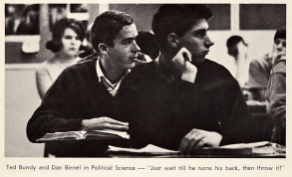
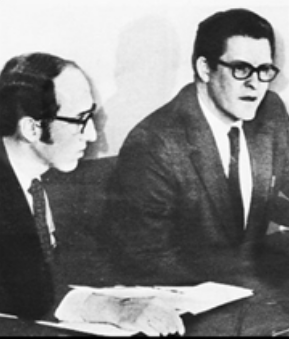
A candid shot of Ted taken from the 1965 Woodrow Wilson yearbook.
Stanley Elementary School, which is the first school that little Teddy attended after Louise married Johnnie Bundy in 1951 and the family was living on South Sheridan Avenue, located at 7401 South 8th Street in Tacoma, Washington.
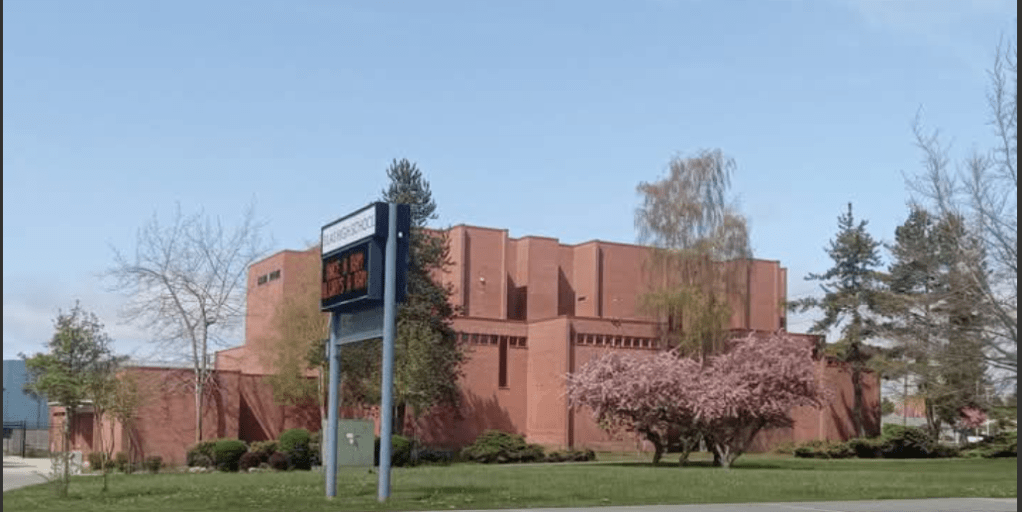
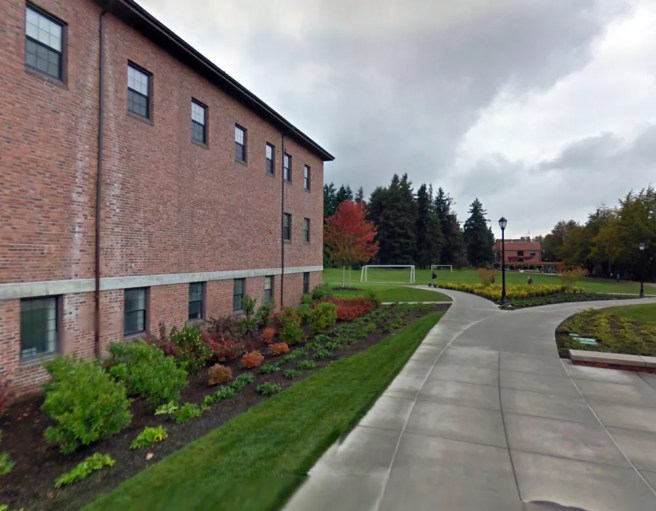
Geiger Elementary School (Now Geiger Montessori Elementary School) is the second school that Bundy attended after the family moved into their second home on North Skyline drive in 1953 (Ted would have been around 6/7). Photo courtesy of OddStops.
This Google Street View image of the original Geiger Elementary School was taken in September 2007, photo courtesy of OddStops.
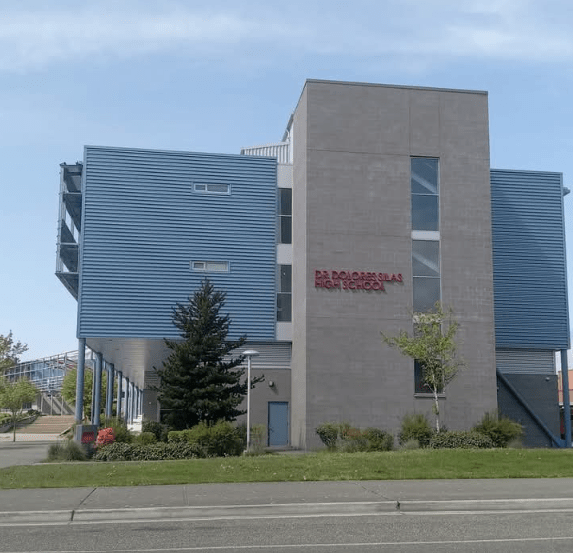
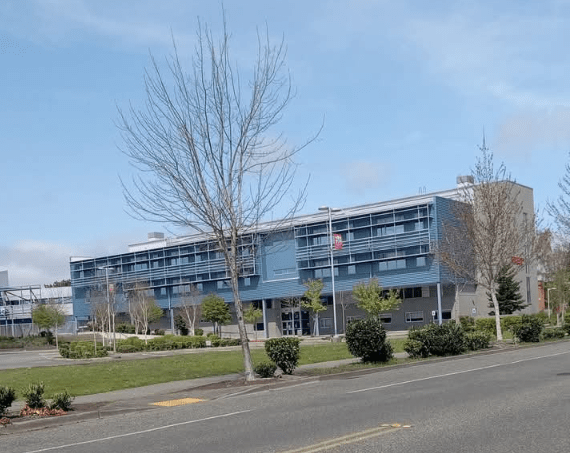
This is the front of Silas High School, formerly Woodrow Wilson High School, where Ted graduated from in 1965. Picture taken in April 2022.
Ted Bundy’s alma mater: Dr. Dolores Silas High School, located at 1202 North Orchard Street in Tacoma. From its founding in 1958 until July 2021 it was called Woodrow Wilson High School. Picture taken in April 2022.
Dr. Dolores Silas High School, in Tacoma, WA. Pictures taken in April 2022.
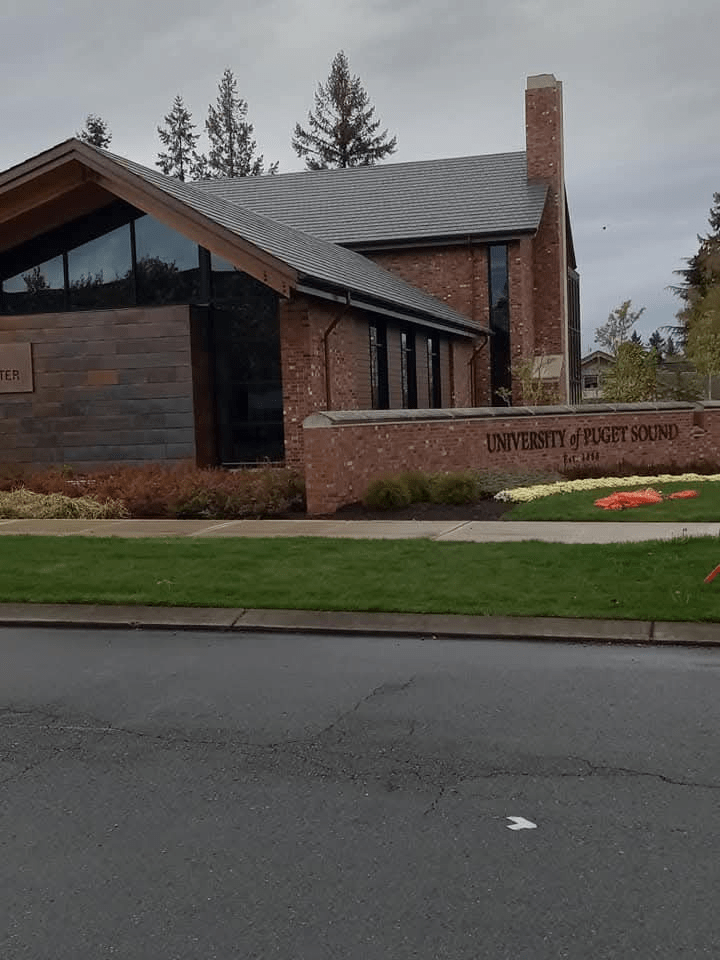
Bundy at his high school graduation at the University of Puget Sound. In this photo, Ted can be seen standing on a pathway that runs along the eastern side of Warner Gym, across from Thomas Hall. Picture courtesy of OddStops.
Where the picture of Ted on the day of his high school graduation, located on the campus at the University of Puget Sound, located at 1500 North Warner Street in Tacoma, Washington. Picture courtesy of OddStops.
A picture of the main building at the entrance of The University of Puget Sound, taken in April 2022.
A picture of the entrance of The University of Puget Sound, taken in April 2022.
Another picture of the entrance of The University of Puget Sound, taken in April 2022.
The Cecil H. Green Library, where the East Asian studies Department was located at Stanford University in Palo Alta, California. Ted attended the prestigious university in 1967.
Ted was at Stanford University studying Mandarin in 1967, according to the ‘1992 TB FBI Multiagency Report.’
Temple University campus in Philadelphia, picture taken in 2022.
Ted was at Temple University in Philadelphia and was living in Lafayette Hill with his Aunt Julia in 1969, according to the ‘1992 TB FBI Multiagency Report.’
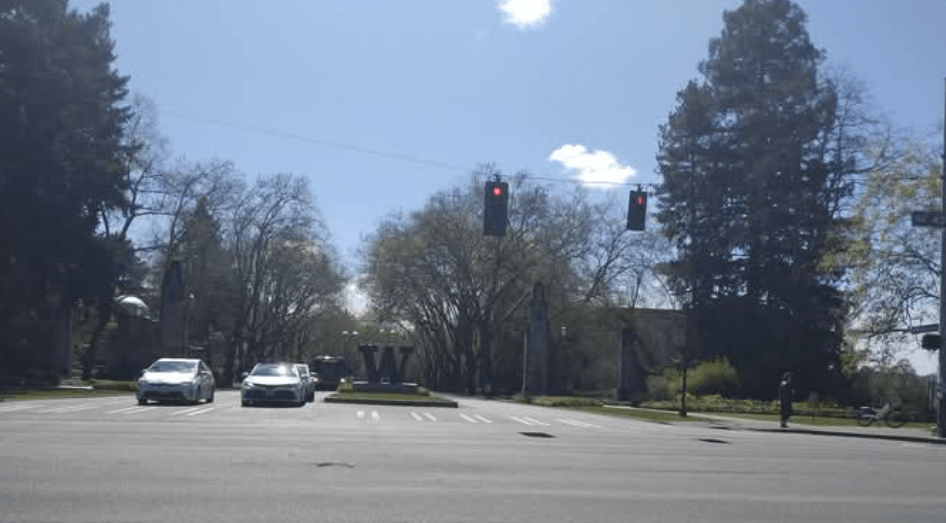
A picture of the entrance of The University of Washington, taken in April 2022.
Guthrie Hall, at the University of Washington where the Psychology Department is located. Bundy graduated with a degree in Psychology in 1972.
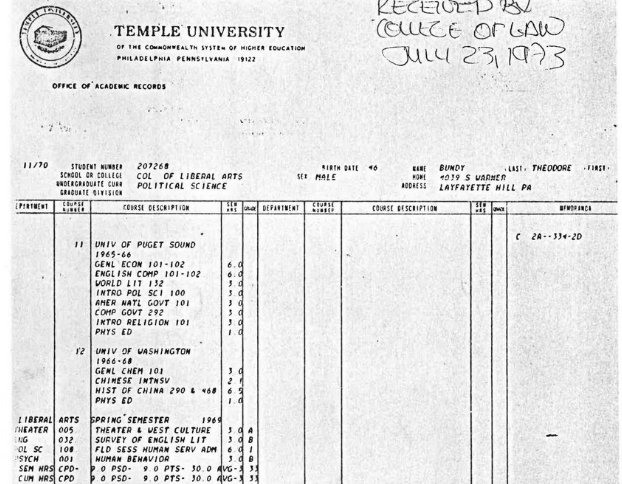
Ted’s transcript from his time at Temple University in Philadelphia, taken from his application to the University of Utah School of Law.
The scores from the first time Ted took the LSATS in March 1972.
The scores from the second time Ted took the LSATS on April 25, 1972.
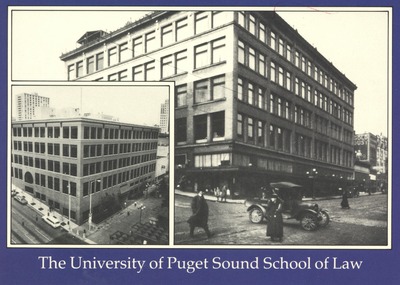
The University of Puget Sounds School of Law.
The entrance to The University of Puget Sounds School of Law.
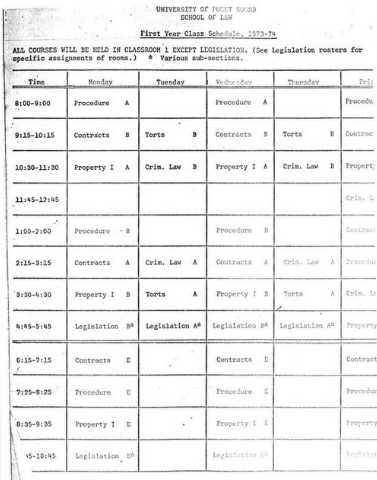
Ted’s schedule in his first year, first semester at the University of Puget Sounds law school.
Ted’s law school exam schedule from December 1972.
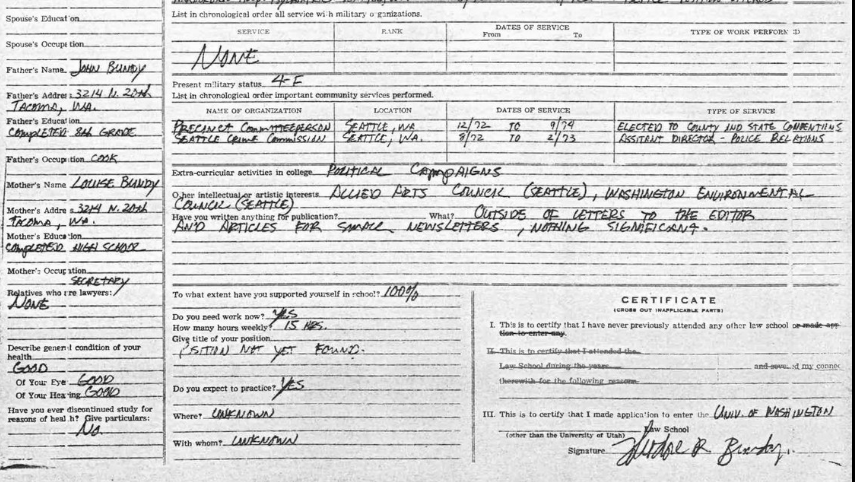
Some documentation related to Ted’s application to the University of Utah School of Law.
The top portion of Bundy’s application for the University of Utah School of Law dated February 22, 1972.
The first page of Teds application to the University of Utah School of Law dated February 15, 1973.
The bottom portion of Bundy’s application for the University of Utah School of Law dated February 22, 1972.
Part of Ted’s application to the University of Utah School of Law dated April 24, 1974.
The bottom portion of Teds application to the University of Utah School of Law dated April 24, 1974.
Ted’s job and academic history on his application to the University of Utah School of Law.
Part of Ted’s application to the University of Utah School of Law.
Ted’s summary of transfer credits from the University of Utah Admissions Office, dated October 3, 1974.
Ted’s ‘student record card’ from his time at the University of Utah School of Law.
The bottom part of the summary of transfer credits from the University of Utah, dated October 3, 1974.
A copy of Ted’s transcript from the University of Washington that was received by the University of Utah School of Law.
Page one of a recommendation letter for Ted from Professor Scott Fraser (Department of Psychology, University of Washington) dated February 25, 1972, to the University of Utah College of Law.
Page two of a recommendation letter for Ted from Professor Scott Fraser (Department of Psychology, University of Washington) dated February 25, 1972, to the University of Utah College of Law.
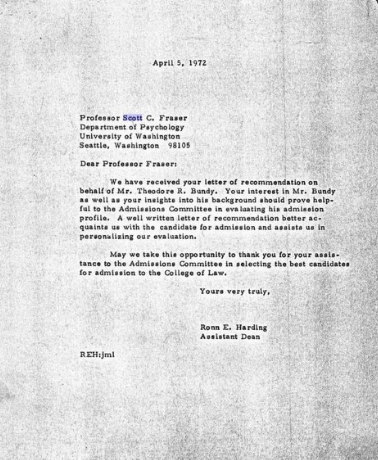
Dean Harding’s response to Scott Fraser, dated April 5, 1972.
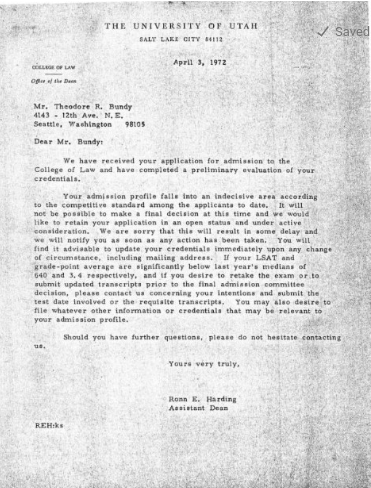
A letter dated April 3, 1972 from Dean Harding to Ted Bundy, regarding his application for admission to the University of Utah College of Law.
A letter dated April 12, 1972, from Ted Bundy to Dean Harding, regarding the status of his application for admission to the University of Utah College of Law.
A letter dated May 12, 1972 that was sent by Dean Harding to Ted in regards to the evaluation of his credentials for admission to the University of Utah College of Law.
A letter of recommendation dated February 27, 1973 from Daniel Evans to the Dean of Admissions at the University of Utah College of Law.
An undated letter sent to the University of Utah School of Law from Ted telling them that he would not be attending law school in the fall of 1973.
A letter dated April 5, 1973 from Dean Harding to Ted Bundy, regarding the evaluation of his application for admission to the University of Utah College of Law, followed by Ted’s response telling the dean that he was unable to attend the their law school in the fall of 1973.
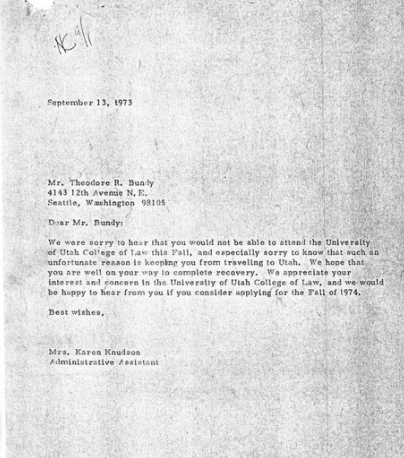
A letter dated September 13, 1973 that was sent to Ted after her notified the University of Utah School of Law that he would not be attending in the fall of 1973.
A letter of acceptance dated May 3, 1974 from Dean Buffmire to Ted Bundy, letting him know that he had been accepted as a first year student at the University of Utah College of Law for the Fall semester 1974.
A statement from Dr. Bob Keppel in regards to Bundy’s schedule and Lynda Ann Healy, who were both taking Psych 498 and 499 in the winter and spring quarter of 1972.
Lynda Ann Healy’s school schedule from the semester she was killed.

Document from the King County Sheriff’s Department: Part One.

I recently put in a request with the King County Sheriff’s Department for information related to the Bundy investigations, and they’ve sent me a lot of stuff and will most likely send a lot more int he future. I’m working on putting the pictures in a blog post, and it’s proving to be exhausting due to the fact that there are SO many of them (I’m working as fast as I can with two jobs and a needy husband). Here are some interesting documents they sent me that are worth a read. I’ve never encountered them out in ‘the wild.’

Nancy Diane Wyckoff.*

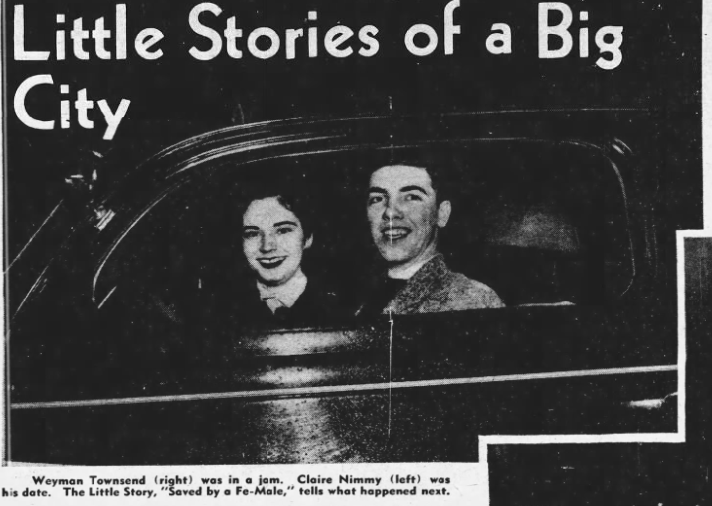
Nancy Diane Wyckoff was born to Brian and Claire (nee Nimmy) in Los Angeles on January 5, 1954 (just as a side note, I’ve seen her referred to as both Nancy and Diane). Mr. Wyckoff was born on June 10, 1927 in LA, and Claire was born on August 11, 1922 in Oak Park, IL; at some point she relocated with her family to Georgia. The couple were wed on May 15, 1953 and settled down in Glendale, California; they had one child together but at some point divorced. Brian married again on July 4, 1958 and had two more children, including Nancy’s half-sister Sarah Wendeline, who was born on August 5, 1963 in San Diego.

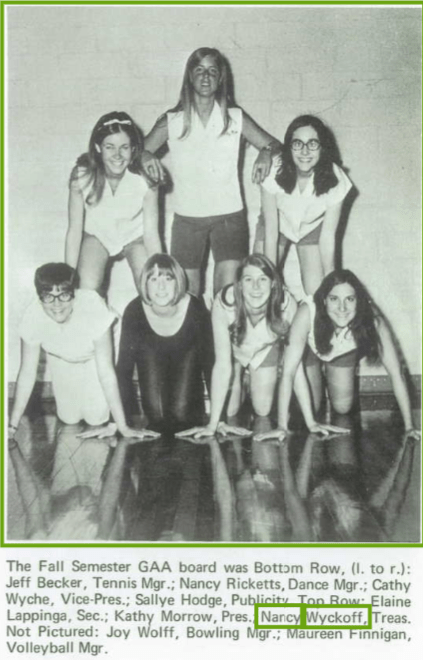
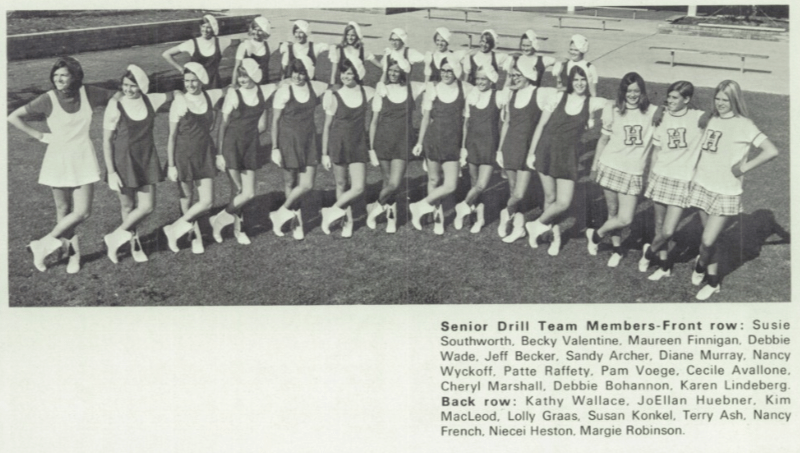
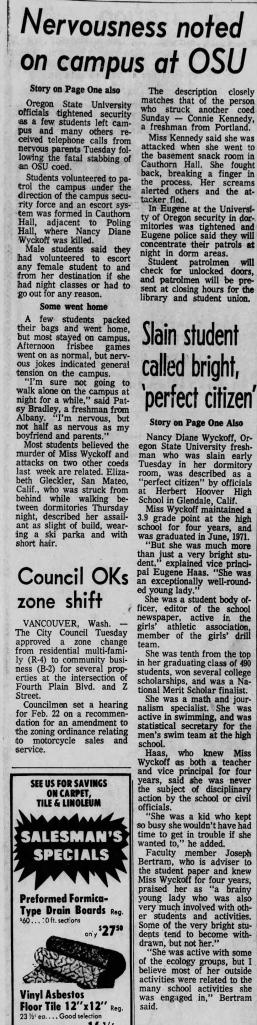
An overall exceptional and bright young woman, Nancy’s parents described her as a diligent and loving child that only wanted the best for herself. She was a 1970 graduate of Herbert Hoover High School, where she was on the senior prom committee, the swim team, and the drill team. Wyckoff was also the Editor-in-Chief of the school newspaper and was secretary of the science club. She maintained a 3.88 GPA and ranked ten out of 490 out of her graduating class, and was considered an excellent, well-rounded young woman. She especially loved math and science, and was a Mu Alpha Theta Jr. Honor Scholar.

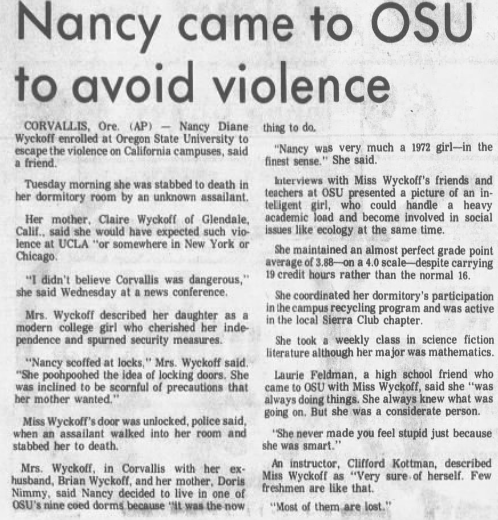
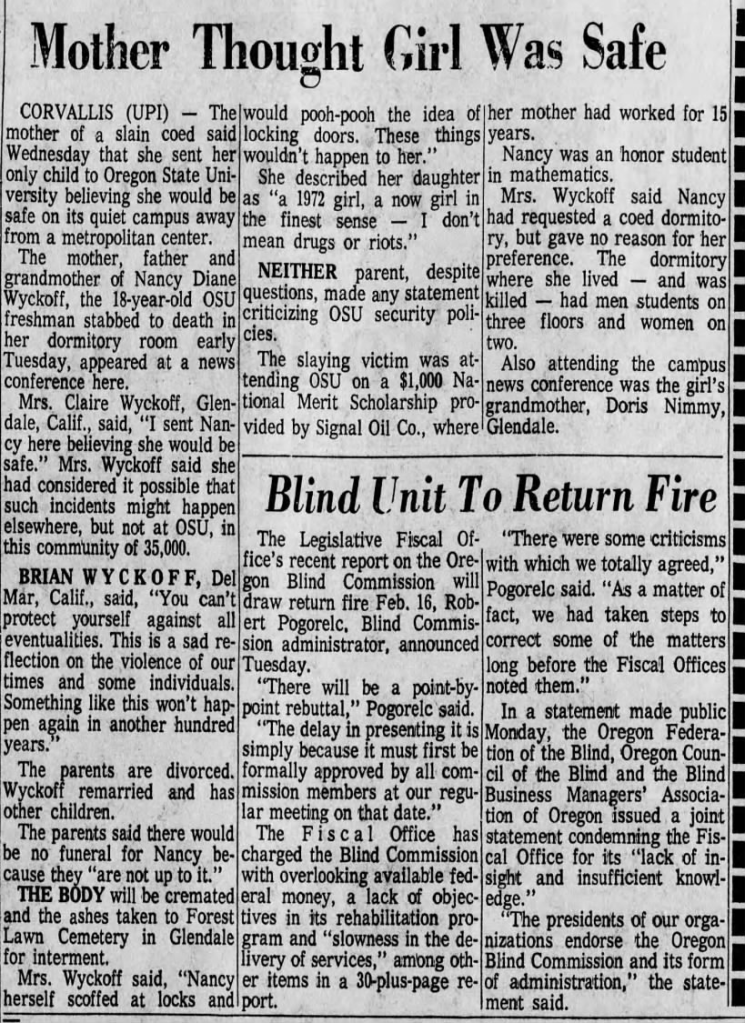
According to her parents, Nancy had an independent streak, and after graduating high school moved to Corvallis, OR where she enrolled at Oregon State University as a mathematics major. She lived in Poling Hall in room 333, and according to an article published in The Olympian, women lived on the first, third, and fourth floors and men lived on the second and fifth floors. Wyckoff was in the honors program, and had received a $1,000 National Merit Scholarship from the Signal Oil Company, where her mother had been employed for 15 years in Glendale. She was interested in politics, nature, and music, and especially loved horseback riding and camping.

Although she dated around, Nancy had no steady boyfriend at the time of her murder, and according to her mother she: ‘choose to live in a coed dorm because it was the ‘now’ thing to do. Nancy was very much a 1972 girl, in the finest sense.’ Taking an impressive 19 credit hours, Wyckoff was the dormitory coordinator of OCU’s recycling program and was active in the school’s Sierra Club, an organization that cherishes and protects natural beauty. A friend of hers from Herbert Hoover High School that also attended Oregon State said that Nancy was ‘always doing things. She always knew what was going on. But she was a considerate person. She never made you feel stupid just because she was smart.’

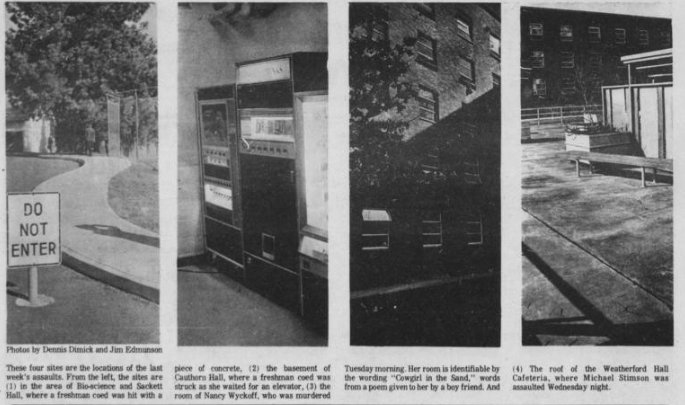
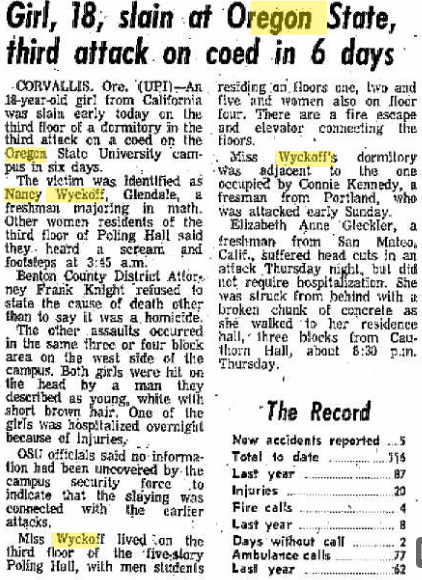
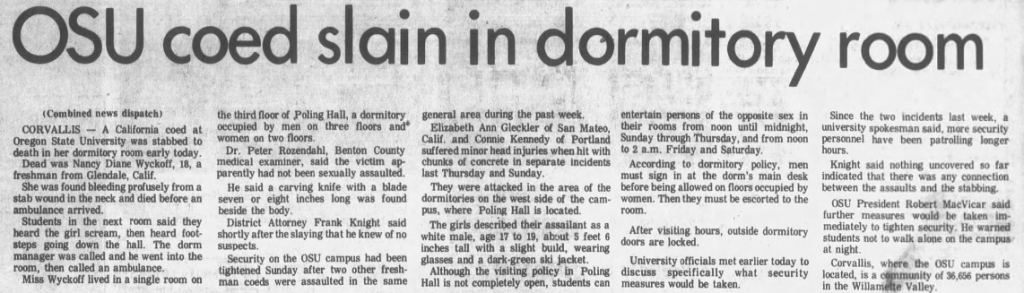
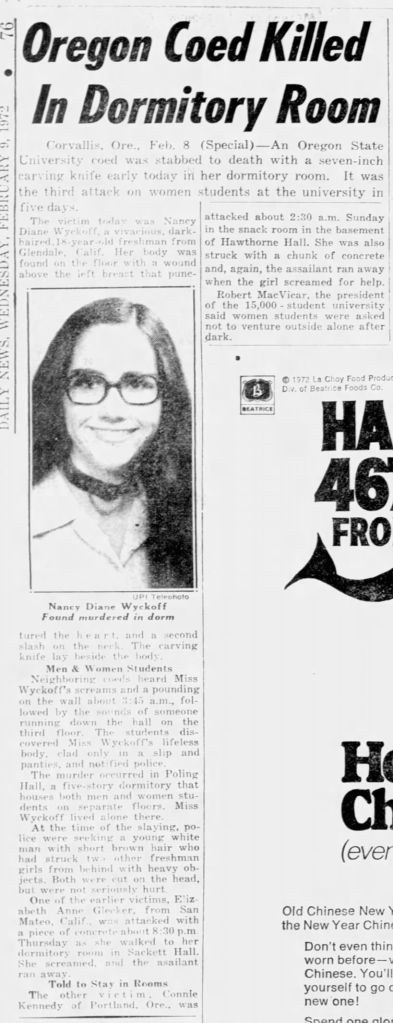
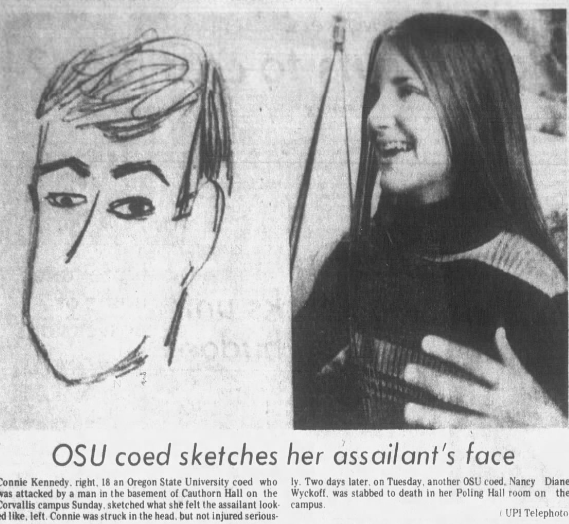
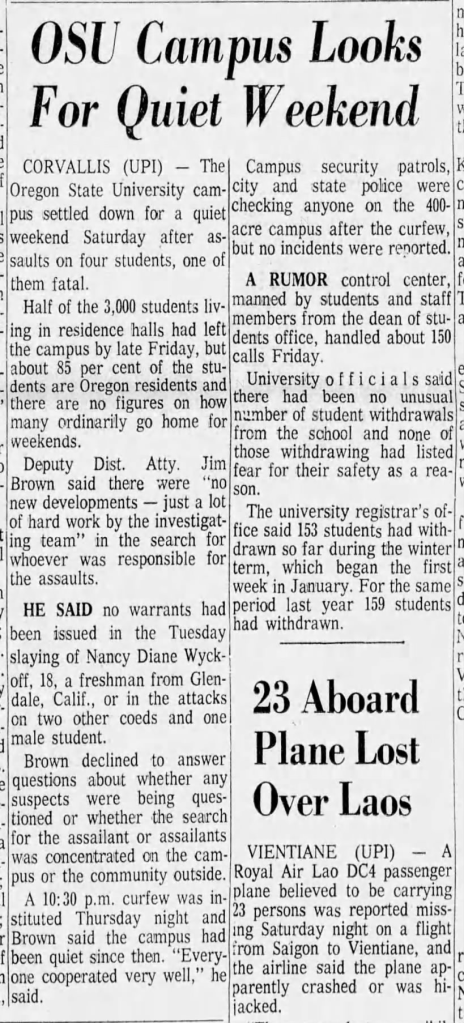
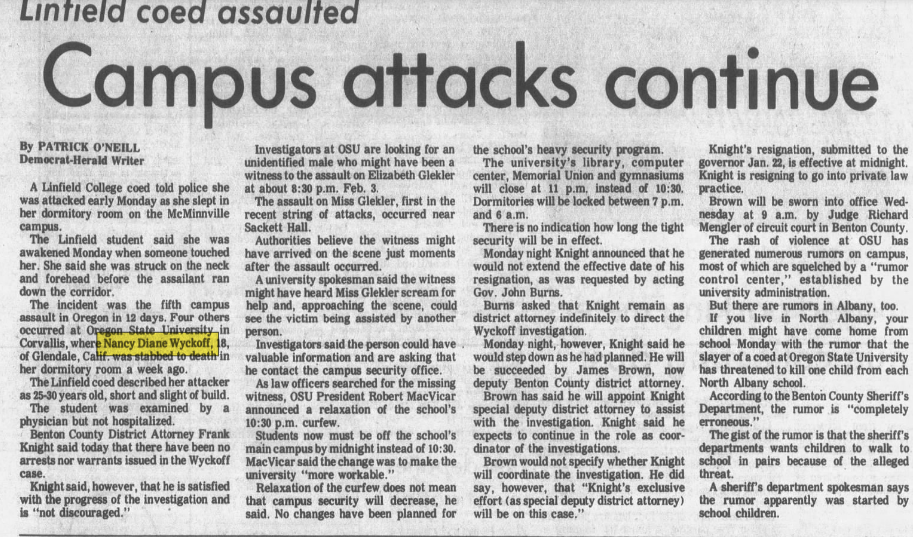
Before Diane’s murder two separate attacks took place on OSU’s campus: at around 8 PM on Thursday, February 3, 1972 a young woman named Elizabeth Ann Gleckler was walking by the Agronomy Building when she got hit in the back of the head with something hard. She fell to the ground and began to scream, which scared off her assailant; she needed stitches and it was eventually determined the weapon her attacker used was a chunk of concrete. Gleckler told campus security that although she didn’t see her assailant’s face she said he was short and young. Just a few days later on February 6, another coed named Connie Kennedy was attacked at around 2:30 AM. She had left her dorm room in Cauthorn Hall and went down to the basement to get a snack from the vending machines, and as she was making her selection felt a blow to the back of her head. A struggle ensued, but thankfully Kennedy was able to get away from her attacker and run away. Like Ms. Gleckler, she didn’t get a good look at her attacker but described him as ‘young, short, brown hair, I think.’

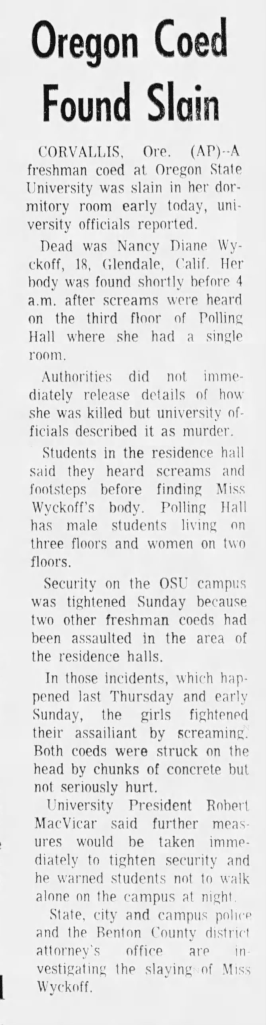
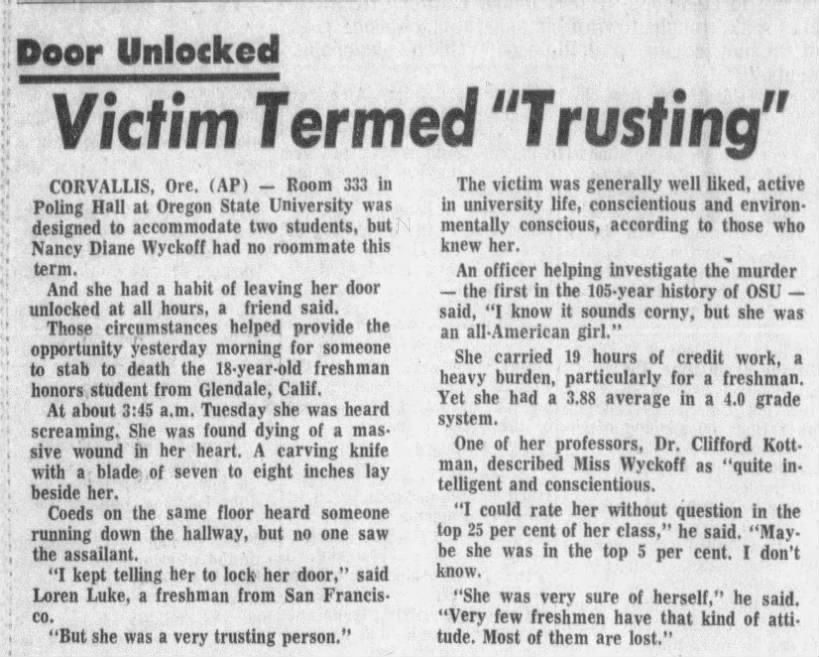
Around 3:45 AM on Tuesday, February 8, 1972 (although I’ve seen it listed as early as 3:00) residents of Poling Hall woke up to two separate screams that came from room 333 on the third floor, then the sound of someone running down the hall and the slam of the north facing fire door. Upon hearing the signs of distress, girls went running to Nancy’s room, and when they arrived they were met with a ghastly sight: Wyckoff’s bare feet, sticking out of the door frame, which prevented it from closing. The clothing on the upper part of her body was saturated in blood, and her head was resting against her bed frame. The young coed was dressed in pajamas, and a large amount of blood had already started to poole underneath her body. Her dorm room was decorated with driftwood and shells she collected from the Oregon coast, which was a popular weekend getaway for OSU students. At the foot of her bed was a poster of a gross green frog with a caption underneath that read: ‘kiss me.’ Her windows had faced the school’s quad, and glued on them were letters that formed the phrase: ‘cowgirl in the sand,’ which is a song by Neil Young that was released in 1969.

The young ladies quickly called the head resident, a young man named William Lex, who ran to Nancy’s room to assess the situation. He knelt beside her, and although she was gravely injured he could still make out faint, shallow breathing. He then made three separate calls: the first to 911 for emergency care, the second to the Corvallis PD, then finally to the OR State Trooper that was assigned to OSU to help augment the university’s police force.

Wyckoff had bled out quickly and it didn’t take long before she succumbed to her injuries; she died before the paramedics arrived. Investigators quickly determined that the young coed had been stabbed, and an 8-inch bone handled carving knife was found lying beside her; its tip was slightly bent. Two foreign hairs had been found in the pool of blood found underneath her. Investigators also found a small, red flashlight that was left behind in Nancy’s bedroom, a type that didn’t take batteries and had a removable portion that could be plugged into a wall and charged, which was missing. Its discovery was initially kept a secret from the public.

Dr. William Brady, who was the Oregon state medical examiner that performed a post mortem examination on Wyckoff, determined that she had suffered three different wounds, and their length and widths all aligned perfectly with the knife that was found left behind at the crime scene. The wound that proved to be fatal penetrated the upper part of her heart, and was six inches long; he said that she ‘she would have succumbed in two or three minutes as a result of this wound. And, it was dealt with considerable force, severing cartilage in its path.’ The second wound entered at the lower part of her neck immediately above the left clavicle and stopped at the top of her right lung. The third was the one that caused the assailant’s knife to bend: it was a shallow wound in her left shoulder, and the only reason it wasn’t deeper is because the shoulder bone is located right below the skin, and it resisted the thrust of the weapon. She was not sexually assaulted in any capacity.

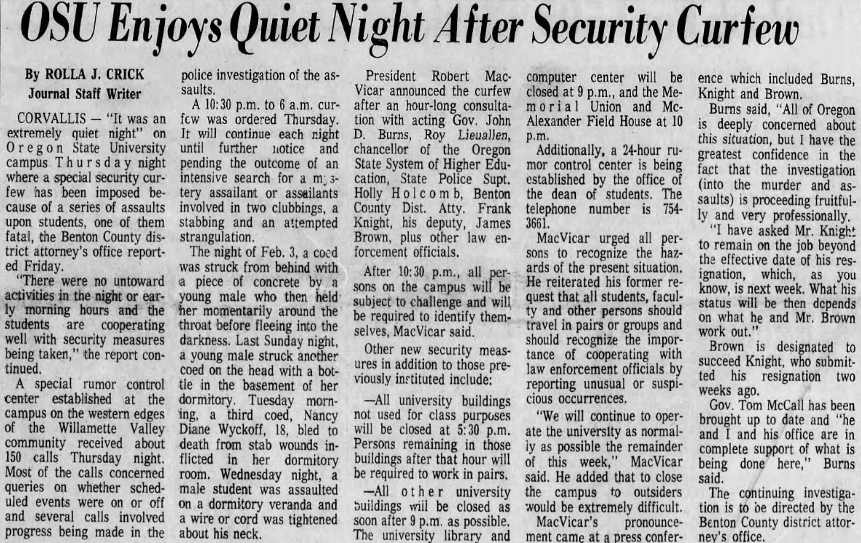
According to those that knew her well, Nancy was a trusting girl, too trusting, and sadly this may have been her downfall: all rooms in her dormitory had locks on them, but she had not utilized hers on the night of her murder. According to Claire Wyckoff, ‘Nancy scoffed at locks. She pooh poohed at the idea of locking doors. She was inclined to be scornful of precautions that her mother wanted.’ After the murder the President of the University ordered a mandatory 10:30 PM curfew on campus: all dorms were to be locked by 7 PM, and all visiting between buildings ceased.

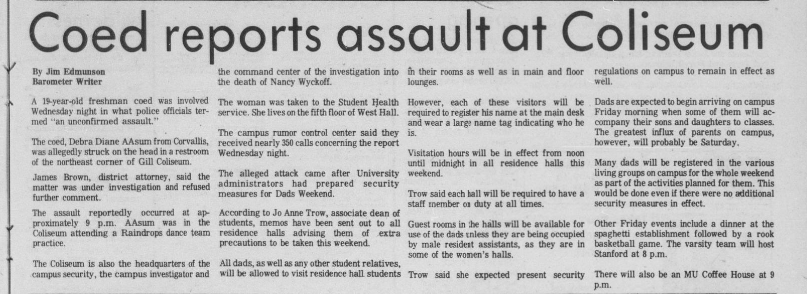
All three policing agencies working the case set up headquarters in the Gill Coliseum on OSU’s campus in order to be close to the investigation, and surprisingly they all seemed to work very well together. Typically LE in the 1970’s didn’t like to share information with each other, and I think of the 1971 murder of Joyce LePage, where the investigation was hindered because the different agencies working the case hoarded information and refused to share it with one another. So much data was collected over the course of Wyckoffs investigation that 1700 pages worth of reports were produced, and the Corvallis Police Sergeant Jim Montgomery (along with his partner, Mel Cofer) alone talked to 199 people during his time working the case.

On February 11, 1972 at roughly 8 PM a young student named Michael C. Stinson stumbled into Weatherford Hall, clutching his neck, barely able to speak. Finally, after much effort he was able to say that as he’d been looking at stars on the veranda of the men’s dorm someone had come up from behind him, slipped a cord around his neck and he subsequently blacked out. Stinson was taken to the Student Health Center where he was evaluated, and physicians said that the pressure from the wire or rope is what made the thin red line left behind on his neck. This only clouded the MO of the sneaky assailant even more.

As the days ticked by and the month of February came to an end, tensions on OSU’s campus lessened somewhat despite no movement being made on the case. On March 1 a decision was made and pictures of a knife that was identical to the one used to kill Wyckoff as well as the recovered flashlight were published in the OSU newspaper along with a plea that anyone that may know more about either to please come forward. When investigators released the picture of the flashlight they left out that it was found in Nancy’s room, and only stated it had been located ‘somewhere in Poling Hall.‘ LE was able to determine that the knife had been made in Japan and came in a kit along with a fork, and where several stores in Corvallis sold these sets unfortunately they didn’t keep records of their customers.

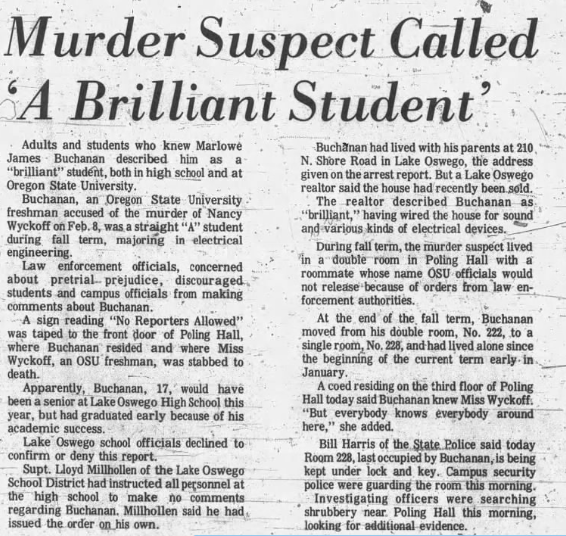
Shortly after the publication a student named Marlowe James Buchanan came forward and told police that he recognized the flashlight, and said: ‘you know, I think that might be my flashlight. I lost it the night before the murder, must have been around 11.’  The young man said that he couldn’t remember exactly where he lost it, but remembered seeing friends on February 7 and surmised that he probably misplaced it then. Buchanan then gave investigators the names of the buddies that he’d been with that night, however they quickly determined that his story had some inconsistencies to them: the boys said they didn’t recall that Marlowe was with them the evening before the murder and that when the article was published he’d asked them not to talk about the fact that he lost his flashlight, and when they asked why, he said ‘its not important, and the police would just bug me about it.’

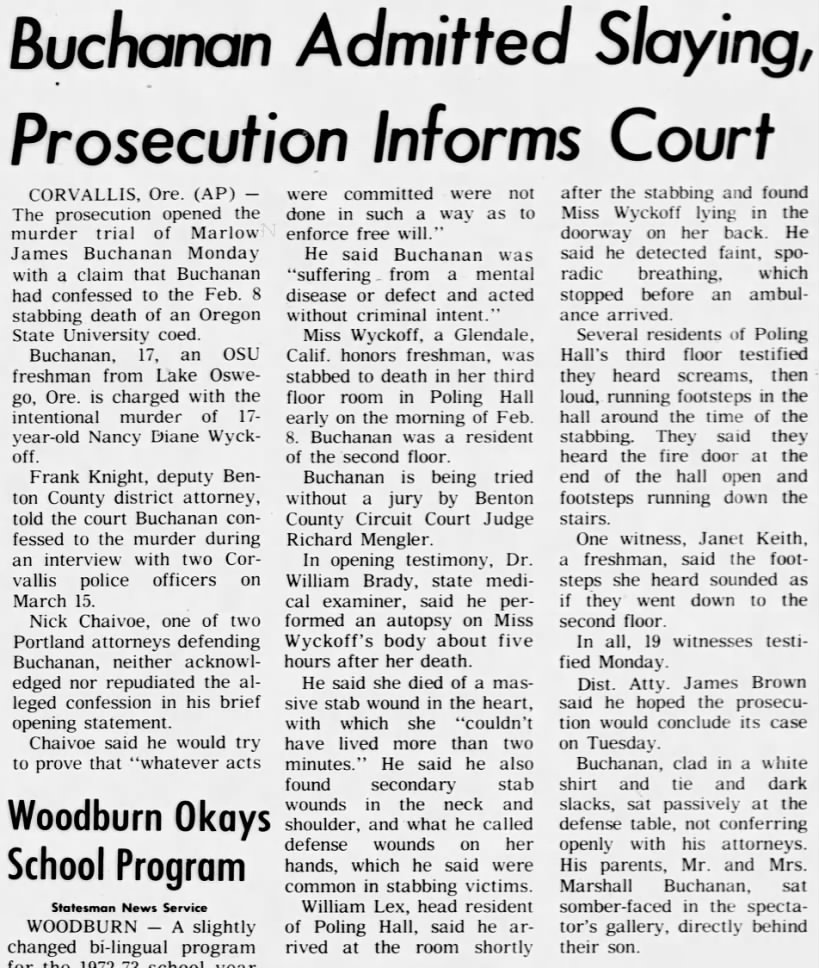
Marlowe James Buchanan was 5’6″ tall and weighed 150 pounds. He maintained a 4.0 average and was known to be brilliant amongst those that knew him, and even graduated from high school a year early after skipping the fifth grade. During an initial interview with investigators, he told them ‘if I’d ever been in her room, it would have been way back at the start of the school year,’ so like all of the other students that admitted to being in Wyckoff’s room, he was fingerprinted. On the third occasion Buchanan spoke with LE he shared: ‘I’ve been thinking, you might find my prints on that fire door. I went up to the third floor to rat fink the girls up there. You know, set off a smoke bomb in the hall. But I changed my mind.’ Investigating officers said he seemed to like talking to them but had a flippant, uncaring facade to him, and that his story wasn’t ‘holding water.’

On March 15, 1972 Benton County Sergeant BJ Miller and his partner Corporal Harris of the Oregon State Police asked Buchanan to come in again to speak to them at their makeshift office in Gill Coliseum. They asked the young man over and over again where the replaceable charging unit had gone from his missing flashlight, and in response he told them that he flushed it down the toilet the morning after the murder because ‘the flashlight was lost, and when something’s gone, it’s gone, so there was no use in keeping the unit.’ He then changed his story, and said he recalled waking up the morning of February 8th feeling that something was ‘terribly wrong,’ and that made him get up, out of bed, and flush the battery down the toilet.

When investigating officers realized that no battery had been found after being disposed of through OSU’s plumbing system, they rushed to the schools custodian, but despite their best efforts the charging unit was gone. Criminologist Bart Reid had done some DNA testing on the hair that was found underneath Wyckoff’s body, and it was determined to be a match to a sample pulled from Buchanan. And Reid’s lab report was shown to the young engineering student, they said to him: ‘we don’t believe you: this report shows you were in her room,’ and his smugness immediately vanished; he still didn’t ask for a lawyer. Harris placed a picture of the murder weapon in front of him and after a while asked, ‘will you go through life with her death on your conscience?” Buchanan began softly crying, and after a few moments he blurted out the entire story.

The young student had been ‘inspired’ by the recent attacks around campus (that he called ‘pranks’), and he wanted to throw the biggest one of all. Buchanan’s previous reference to smoke bombs only alluded to the truth of what really happened: he said he originally intended to scare the young women on the third floor, but the greatest thing he could dream up was to set off one of those bombs inside one of the girls’ rooms, and he only went into Nancy’s because she left it unlocked. He told investigators that he snuck in, knelt beside the sleeping girl, and placed the knife on the floor; he then reached into his pocket for the smoke bomb but as he was fumbling for it the flashlight fell onto the floor, which woke Wyckoff up. He said ‘ I reached for the flashlight but I got the knife instead,’ and when asked (repeatedly) why he needed the piece of cutlery, he never gave detectives a valid answer. When investigators searched Buchanans dormitory they found a set of knives that had one missing, which was a match to the one that was found next to Wyckoff.

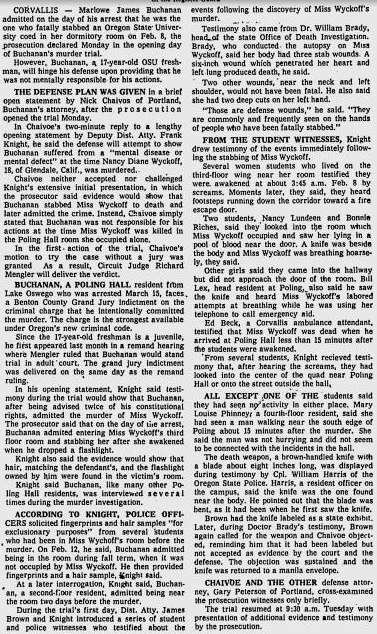
Buchanan volunteered that he had been experiencing mental health issues at the time of the incident, and when he went in her room, she woke up, screamed, then quickly ran towards him, which caused him to panic. He said that because he had been raised with ‘conservative values’ he did not want to be caught alone in a female’s bedroom in the early hours of the morning, so he (logically) panicked and ‘unintentionally’ stabbed and killed Nancy in an effort to force her to be quiet.

Only four months shy of turning eighteen, Buchanan was quickly transferred out of juvenile court and was tried as an adult. On April 7, 1972 he was indicted on a charge of intentional murder, meaning there was no delegation between first and second degree murder. It is defined as the killing of another person intentionally and is punishable by a minimum of 25 years in prison without parole. The freshman electrical student plead not guilty, citing mental incompetence.

Skilled at chess and bridge, like Nancy Marlowe excelled at math and science, but his social skills and maturity level were not ‘in pace’ with his mind, and he had limited contact with the opposite sex and hadn’t started dating yet. The Buchanan family moved from Southern California to West Oswego, Oregon in 1967 because ‘there were things happening there that we could no longer live with, and we felt the schooling would be better in Oregon.’ He said he had danced with a girl once but that had been the extent of his experience with women, and also suffered from allergies. When asked by a reporter what Marlowe was like, one of his classmates replied with, ‘small thin, slightly built with a baby face and a baby voice.’

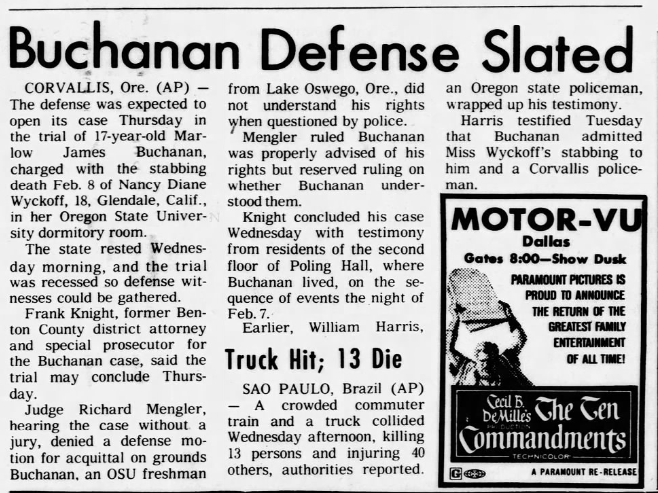
Marlowe waived his right to a jury trial and left his fate up to Circuit Court Judge Richard Mengler. Portland based attorneys Nick Chaivoe and Gary Petersen worked for the defense, and at the beginning of the trial Chaivoe said ‘whatever acts were committed were not done in such a way to enforce free will,’ and that Buchanan was ‘suffering from a mental disease or defect and acted without criminal intent.’ No effort was made by the defense to deny that he killed Wyckoff, but psychiatric testimony was introduced which purported that he was a sick person and would be a danger to society if not properly treated.

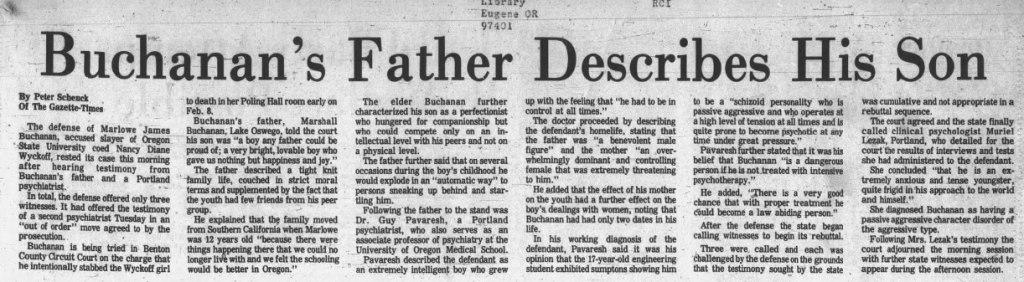
Doctors that later examined Buchanan dismissed his claims of mental incompetence and determined him to be mentally stable enough to be tried as an adult. The prosecution brought in multiple psychologists to testify on their behalf, all of which reported that he had not been battling any form of mental illness at the time of the homicide but did suggest that he may have been emotionally stressed and had possibly undergone a psychotic break. Experts deemed him to be immature and felt that he panicked beyond the point of rationality at the sound of his victims’ screams, which is why he stabbed her.

During the trial the defense called psychiatrist Dr. Guy Parvarvesh to the stand, who told the court that said ‘Buchanan thought of himself as a normal kid, when instead, he was very shy, introverted. He grew up with the idea that he was in full control, because he never failed at anything he tried.’ He also said that Marlowe developed a schizoid personality, most likely as a result of growing up with a ‘benevolent father and domineering mother. ‘As a result, this led to him ‘having doubts as to his masculinity, and naturally this developed much anger underneath, that he can never admit to anyone or himself.’ The Doctor also said that the defendant enjoyed playing pranks, which was very normal for a person who is ‘sweet on the outside but has anger underneath that can’t be expressed.’ Pranks were a socially acceptable way to express these feelings, while at the same time he was able to relieve these repressed emotions on an unconscious level.’ Dr. Parvarvesh went on to say that ‘Marlowe is a sick person, if he is not treated he will remain a very dangerous person, but if he undergoes extensive psychotherapy, I feel he can become a normal law abiding citizen.’ On Thursday, May 18, 1972 Buchanan received a 10-year prison sentence for the crime, as it was believed he had not entered the room with criminal intent. He was sent to The Oregon Correctional Institute to serve out his sentence.

In June 2024 the Lifetime Network released a made for TV movie (loosely) based on Wyckoff’s murder titled: ‘Danger in the Dorm’ (it’s technically based off of the Ann Rule short story of the same title, to be specific). It stars Bethany Frankel (who got top billing even though the movie is about her daughter, but whatever) and Clara Alexandrova as her daughter Kathleen, a college student that is supposed to be Nancy. While the movie somewhat (mostly) accurately tells Wyckoff’s story, the characters names were obviously changed and there were several occurrences of dramatization that took place. Also, just by watching the trailer, the biggest thing that jumped out at me was: the film takes place today, not in the 1970’s. According to the synopsis on the films IMDB page: ‘after the murder of her childhood best friend and fellow classmate, Kathleen must catch a killer who’s preying on young girls around campus.’ I may or may not watch it later. Stay tuned.

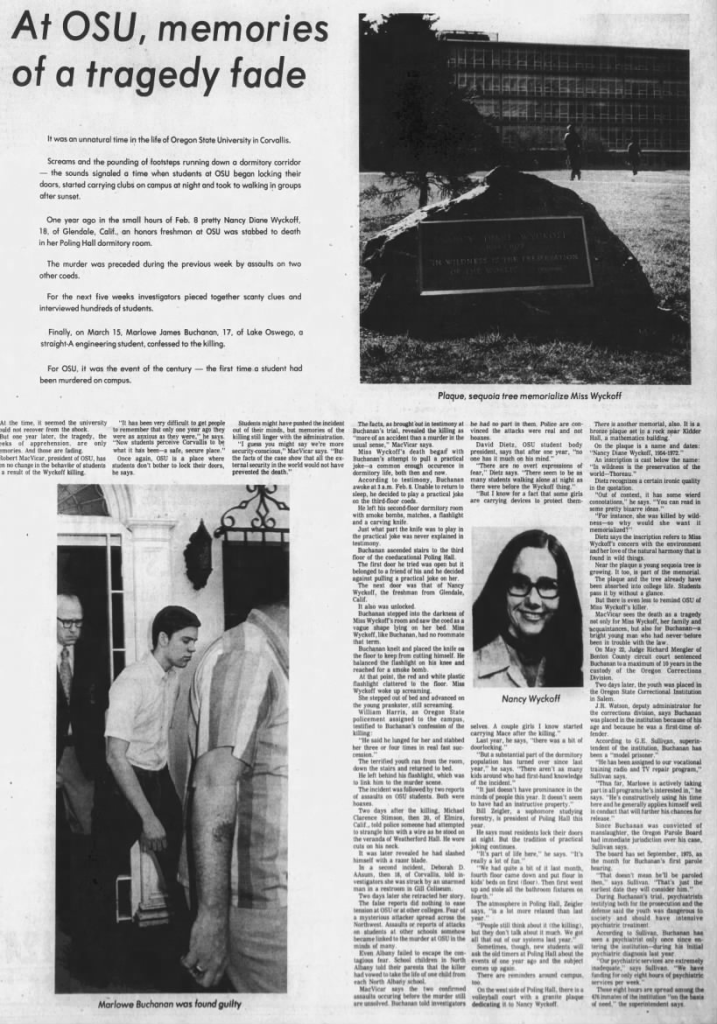
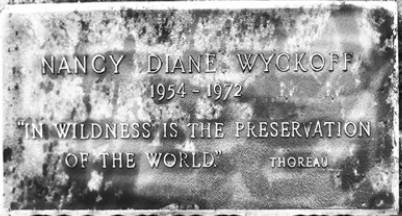
In late February 1972 Nancy’s alma mater of Herbert Hoover High School in Glendale, CA dedicated their journalism room to her memory. In July 1972 students at Oregon State University planted a sequoia tree in her honor in front of Kidder Hall, its plaque reading: ‘Nancy Diane Wyckoff / 1965-1972 / ‘In wilderness is the preservation of the World.’ / -Thoreau.’ Also in the fall of 1972, OSU dedicated their Volleyball Court to Wyckoff’s memory. Brian and Claire Wyckoff established a $1,000 scholarship in their daughter’s honor, and specified that it be divided between a male and female student that were residents of Poling Hall that showed academic excellence along with a financial need. Brian Wyckoff died at the age of 64 on January 10, 1992 and Claire passed at the age of 85 on July 7, 2007. Nancy’s sister Sarah died on  April 11, 2023 in San Diego, California.

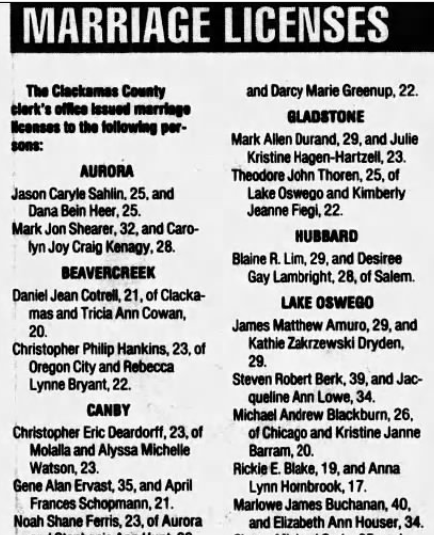
As of December 2024 Marlowe James Buchanan still lives in his hometown of West Oswego, Oregon with his wife, Elizabeth Ann (nee Houser). The couple were married on July 22, 1995 in Washington, OR and have no children. I wasn’t able to find much information about him, but I wasn’t able to find any additional criminal activity linked to him, so he seems to have flown under the radar since being released from prison. He may have gone on to finish his education after he got out of prison, as I found his name linked to some patents that were filed while he was employed at Eaton Intelligent Power Limited. As I found myself digging and digging but still coming up with nothing I suddenly realized that Mr. Buchanan most likely does not want to be found, and I’m going to let him be.

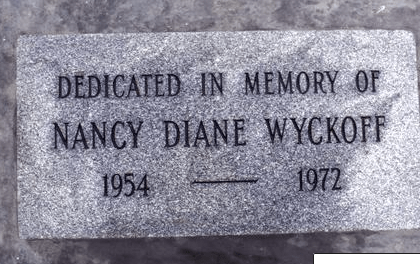
* Just as a side note, I have seen Nancy’s last name spelled Wyckoff and Wycoff; I’m going by the spelling used in almost EVERYTHING, including her high school yearbooks and newspaper articles… although it’s spelled Wycoff on her gravestone (which is actually VERY weird to me, of all the things that it should be correct on it should be that).

Works Cited:
Dawn, Randee. (June 16, 2024). ‘Who killed Nancy Wyckoff? The true story behind Lifetime’s ‘Danger in the Dorm.’’ Taken November 30, 2024 from today.com/popculture/tv/danger-in-the-dorm-true-story-rcna156410
Rule, Ann. (1994). ‘True Crime Archives: Volume One.’
SInha, Shivangi. (June 8, 2024). ‘Nancy Wyckoff Murder: How Did She Die? Who Killed Her?’ Taken November 30, 2024 from thecinemaholic.com/nancy-wyckoff/
Shrestha, Naman. (June 12, 2024). ‘Marlowe James Buchanan: Where is the Killer Now?’ Taken November 30, 204 from thecinemaholic.com/marlowe-james-buchanan/

Wyckoff’s sophomore picture from the 1969 Herbert Hoover High School yearbook.
Wyckoff in a group photo for the Modern Dance Club from the 1970 Herbert Hoover High School yearbook.
Wyckoff’s junior picture from the 1970 Herbert Hoover High School yearbook.
Another picture of Wyckoff from the 1970 Herbert Hoover High School yearbook.
Wyckoff in a group photo for the Purple Press Staff, from the 1970 Herbert Hoover High School yearbook
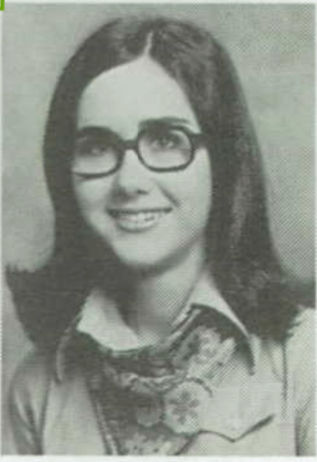
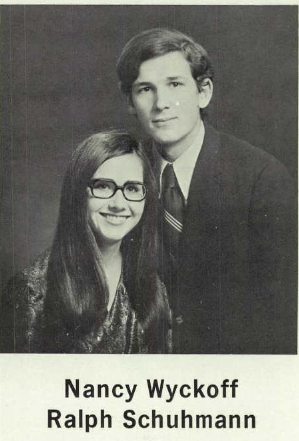
Wyckoff’s senior year picture from the 1971 Herbert Hoover High School yearbook.
Wyckoff’s in a group picture from the 1971 Herbert Hoover High School yearbook.
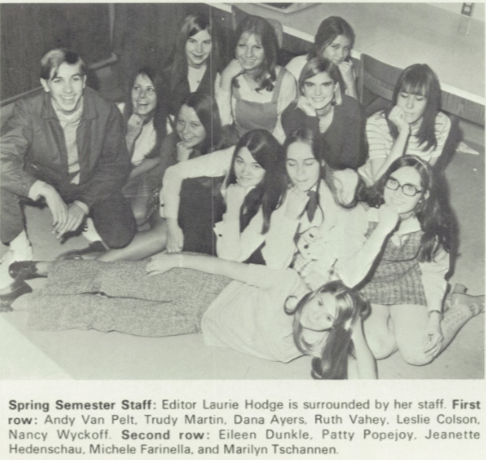
Wyckoff’s in a group picture for the school newspaper from the 1971 Herbert Hoover High School yearbook.
Wyckoff in a picture for homecoming court from the 1971 Herbert Hoover High School yearbook.
Nancy Diane Wyckoff.
The Agronomy Building on OSU’s campus. A few days before Wyckoff was killed another female student was attacked outside the building after she was hit in the head with a chunk of concrete.
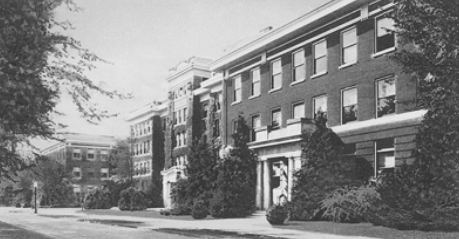
Poling Hall, where Diane lived at the time of her murder.
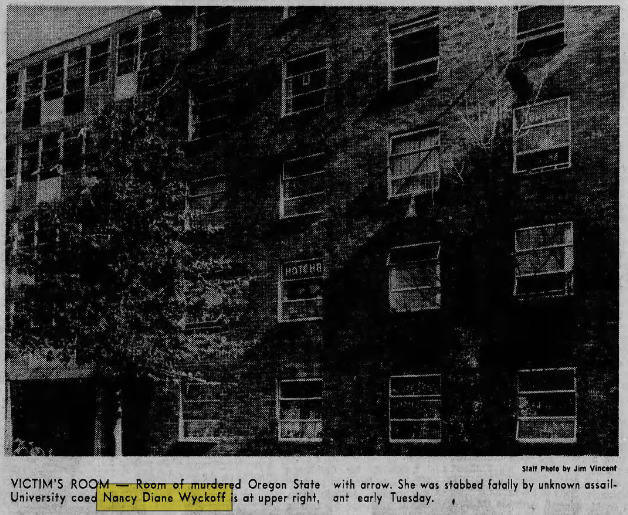
A picture of the outside of Nancy’s building taken from The Oregonian on February 9, 1972.
Detectives looking at the killers escape route, looking for evidence. Photo courtesy of Ann Rule.
Investigators examining locks at the scene of Wyckoff’s murder.
An investigator at the scene of Wyckoff’s murder, photo courtesy of The Barometer.
Pictures related to the scene of Wyckoff’s murder, courtesy of The Barometer published on February 11, 1972.
The knives that were found at the scene of the crime. Photo courtesy of the OSU school newspaper ‘The Barometer,’ published on March 2, 1972.
The flashlight found at the scene of the crime. Photo courtesy of the OSU school newspaper ‘The Barometer,’ published on March 2, 1972.
Wyckoff’s parents and maternal grandmother at a press conference related to her murder. Photo courtesy of The Statesman Journal, published on February 10, 1972.
A clipping of a police sketch of the wanted killer published in The Oregonian in February 1972.
An article about the attack of a coed on OSU’s campus before the murder of Nancy Wyckoff published in The Statesman Journal on February 5, 1972.
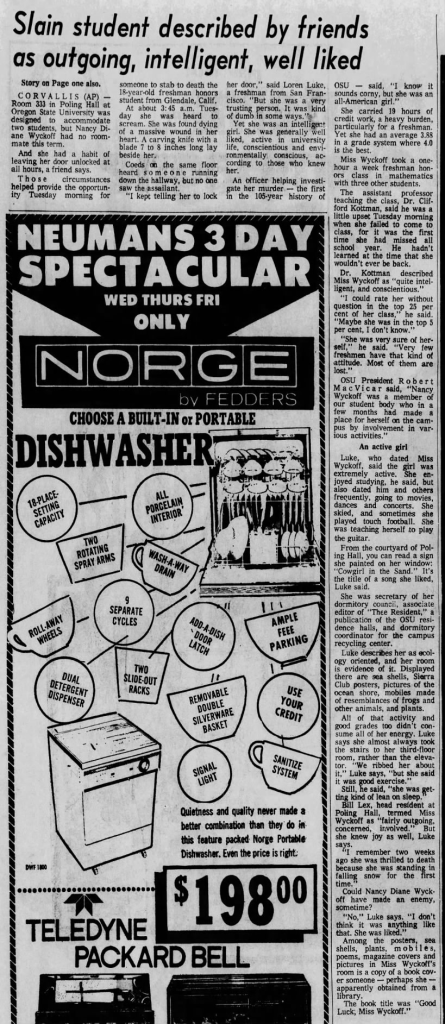
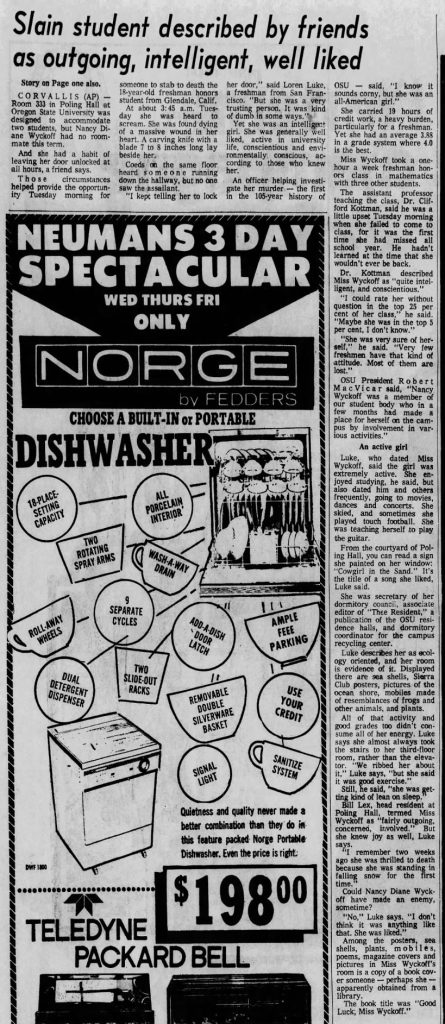
An article about the murder of Nancy Diane Wyckoff published in The Olympian on February 8, 1972.
An article about the murder of Nancy Diane Wyckoff published in The Corvallis Gazette-Times on February 8, 1972.
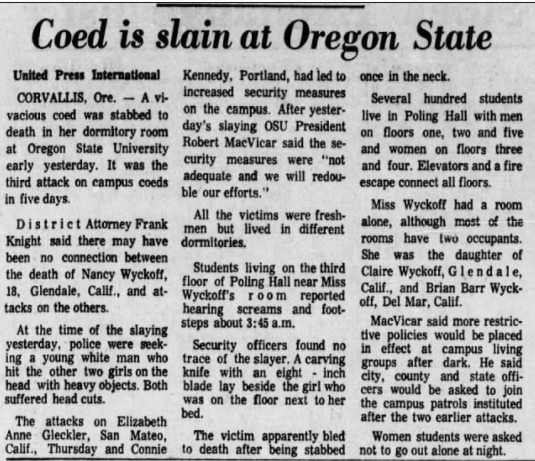
An article about the murder of Nancy Diane Wyckoff published in The Columbus Telegram on February 8, 1972.
An article about the murder of Nancy Diane Wyckoff published in The Corvallis Gazette-Times on February 8, 1972.
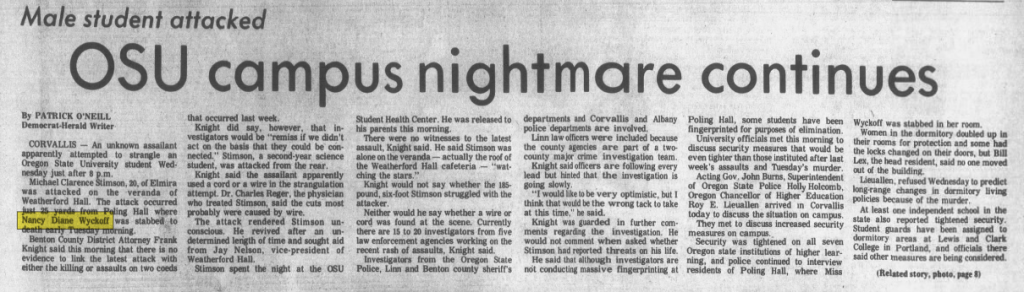
An article about the an attack on campus published in The Oregon Daily Journal on February 9, 1972.
An article about the murder of Nancy Diane Wyckoff published in The Spokane Chronicle on February 9, 1972.
An article about the murder of Nancy Diane Wyckoff published in The Albany Democrat-Herald on February 8, 1972 .
An article about the murder of Nancy Diane Wyckoff published in The Daily News on February 9, 1972.
An article about the murder of Nancy Diane Wyckoff published in The Oregonian on February 9, 1972.
An article about the murder of Nancy Diane Wyckoff published in The Kellogg Evening News on February 9, 1972.
An article about the murder of Nancy Diane Wyckoff published in The Oregonian on February 9, 1972.
An article about the murder of Nancy Diane Wyckoff published in The Arizona Republic on February 9, 1972.
An article about the murder of Nancy Diane Wyckoff published in The Oregonian on February 9, 1972.
An article about the murder of Nancy Diane Wyckoff published in The Sacramento Bee on February 10, 1972.
An article about the murder of Nancy Diane Wyckoff published in The Statesman Journal on February 10, 1972.
The first article about the murder of Wyckoff published in The Albany Democrat-Herald on February 10, 1972.
The second article about the murder of Wyckoff published in The Albany Democrat-Herald on February 10, 1972.
An article about the murder of Nancy Diane Wyckoff published in The Sacramento Bee on February 10, 1972.
An article about the murder of Nancy Diane Wyckoff published in The Oregon Daily on February 10, 1972.
An article about an assault on OSU campus that mentions the murder of Nancy Wyckoff published in The World on February 10, 1972.
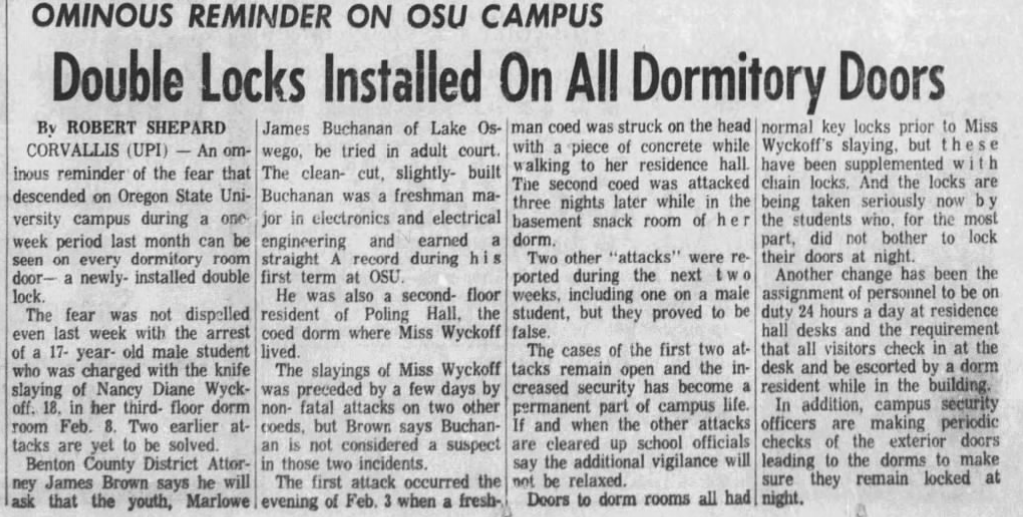
An article about the level of security on OSU’s campus after Wyckoff’s murder published in The Oregon Daily Journal on February 11, 1972.
An article about the level of security on OSU’s campus after Wyckoff’s murder published in The Albany Democrat-Herald on February 11, 1972.
An article about an assault on OSU campus that mentions the murder of Nancy Wyckoff published in The Greater Oregon on February 11, 1972.
An article about a composite sketch from an attack on OSU’s campus that mentions Nancy Wyckoff published in The Albany Democrat-Herald on February 11, 1972.
An article about the atmosphere on OSU’s campus published in The Oregon Daily Journal on February 12, 1972.
An article about a curfew on OSU’s campus after the murder of Nancy Wyckoff published in The Gazette on February 12, 1972.
An article about the attacks on OSU’s campus in February 1972 published in The Albany Democrat-Herald on February 15, 1972.
An article about a reward for information about the murder of Nancy Wyckoff published in The Oregon Daily Journal on February 16, 1972.
An article about another attack on OSU’s campus published in The Los Angeles Times on February 17, 1972.
An article about another attack on OSU’s campus published in The Barometer on February 17, 1972.
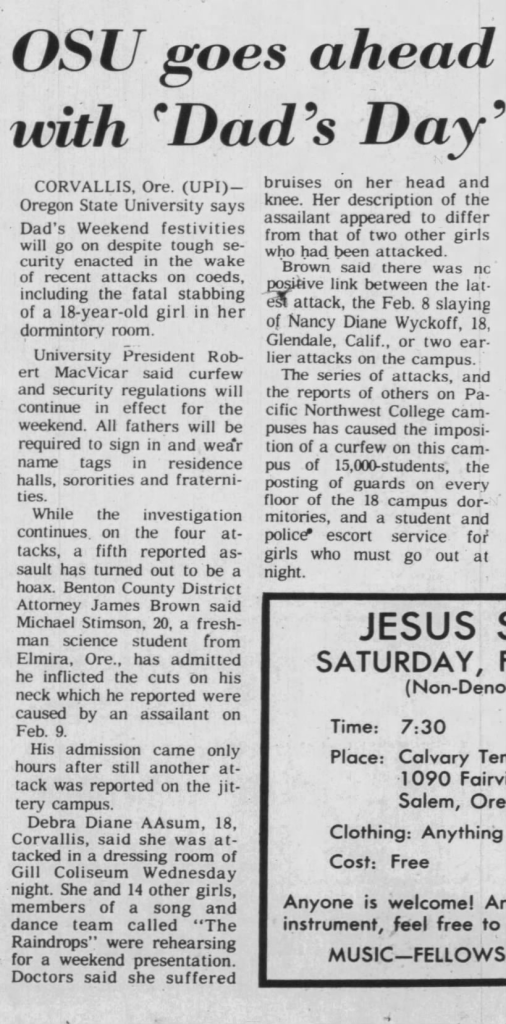
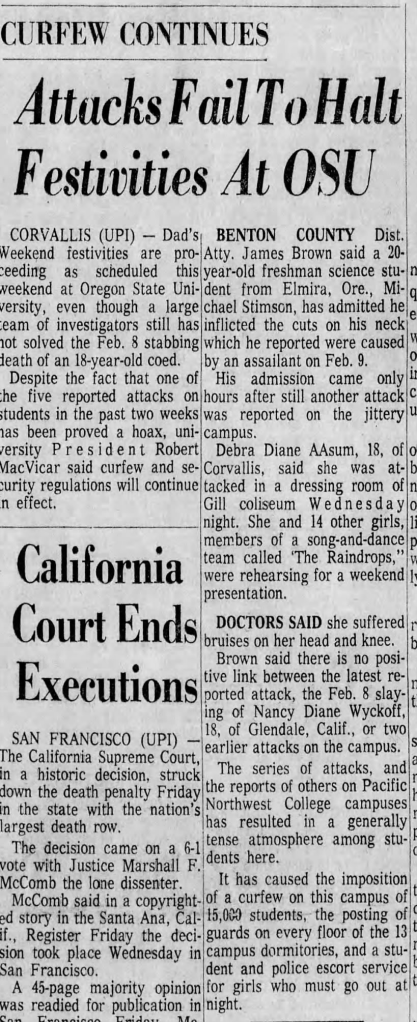
An article about OSU moving forward with ‘Dad Day’s’ after the murder of Nancy Wyckoff published in The Capital Journal on February 18, 1972.
An article about activities on OSU’s campus that mentions Nancy Wyckoff published in The Oregon Daily Journal on February 18, 1972.
An article about an incident on OSU’s campus that mentions Nancy Wyckoff published in The Star News on February 19, 1972.
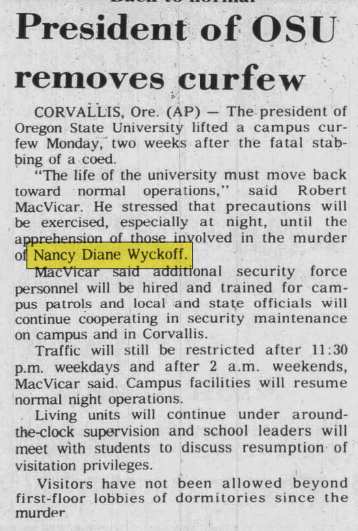
An article about the curfew on OSU’s campus being lifted that mentions Wyckoff published in The Capital Journal on February 21, 1972.
An article about the coed dorms on OSU’s campus possibly being responsible for Wyckoff’s murder published in The Greater Oregon on February 25, 1972.
An article about the journalism room at Herbert Hoover High School being dedicated to Wyckoff’s honor published in The LA Times on February 26, 1972.
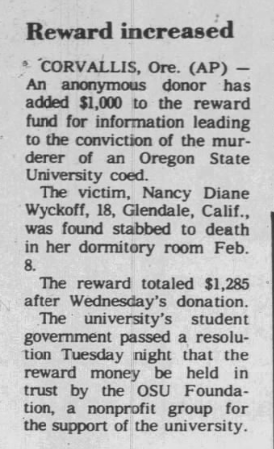
An article about the reward for information related to Wyckoff’s murder published in The Capital Journal on March 2, 1972 
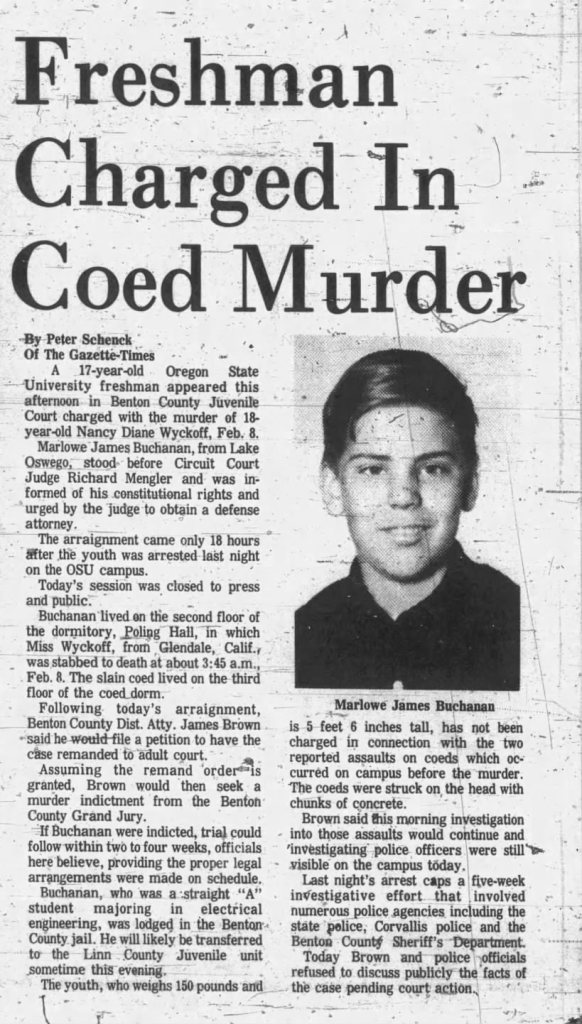
An article about Buchanan being charged for the murder of Nancy Wyckoff published in The Corvallis Gazette-Times on March 16, 1972.
An article about the trial of Marlowe Buchanan published in The Corvallis Gazette-Times on March 16, 1972.
An article about the trial of Marlowe Buchanan published in The Vancouver Sun on March 16, 1972.
An article about the trial of Marlowe Buchanan published in The Albany Democrat-Herald on March 17, 1972.
An article about the trial of Marlowe Buchanan published in The Redlands Daily Facts on March 17, 1972.
An article about the trial of Marlowe Buchanan published in The Sacramento Bee on March 17, 1972.
An article about Marlowe Buchanan retaining legal council published in The Corvallis Gazette-Times on March 21, 1972.
An article about the trial of Marlowe Buchanan published in The Albany Democrat-Herald on March 22, 1972.
An article about security in OSU dorms being amped up after the murder of Nancy Wyckoff published in The World on March 22, 1972.
An article about no decision being made regarding remanding Marlowe Buchanan published in The Oregonian on March 24, 1972.
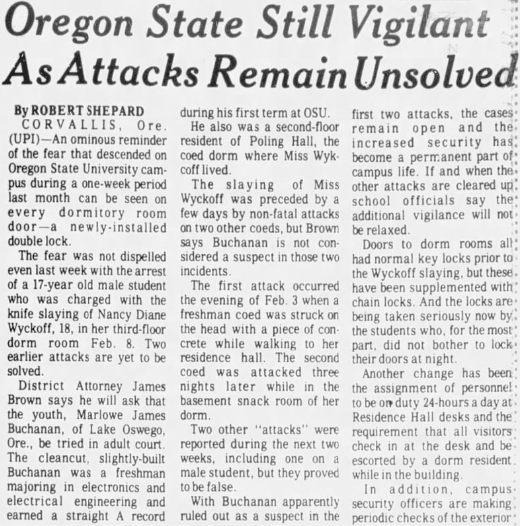
An article about OSU being vigilant after a bout of attacks published in The Anchorage Times on March 28, 1972.
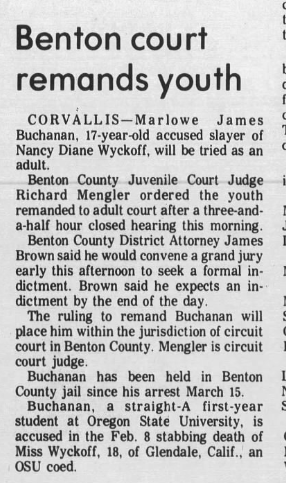
An article about Marlowe Buchanan being remanded to adult court published in The Albany Democrat-Herald on April 7, 1972.
An article about Marlowe Buchanan being indicted for intentional murder published in The Albany Democrat-Herald on April 8, 1972.
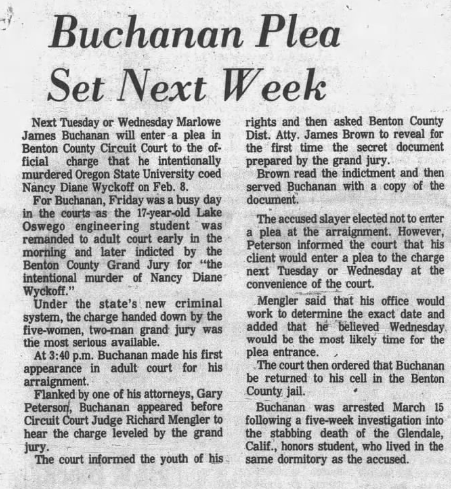
An article about Marlowe Buchanan entering a plea published in The Corvallis Gazette-Times on April 8, 1972.
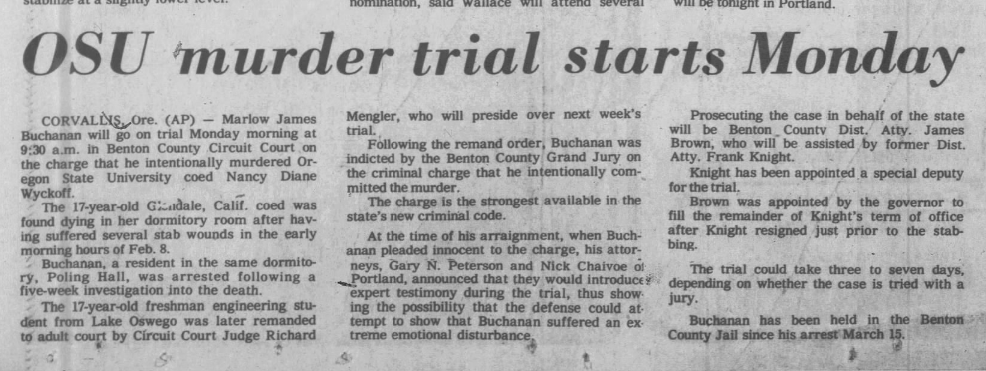
An article about a trial date being set for Marlowe Buchanan published in The Corvallis Gazette-Times on April 26, 1972.
An article about the trial date for Marlowe Buchanan published in The Capital Journal on May 13, 1972.
An article about the trial of Marlowe Buchanan published in The Desert Sun on May 16, 1972.
An article about the trial of Marlowe Buchanan published in The World on May 16, 1972.
An article about the trial of Marlowe Buchanan published in The Statesman Journal on May 16, 1972.
An article about the trial of Marlowe Buchanan published in The Eugene Register-Guard on May 16, 1972.
An article about the trial of Marlowe Buchanan published in The Statesman Journal on May 17, 1972.
An article about the trial of Marlowe Buchanan published in The Albany Democrat-Herald on May 17, 1972.
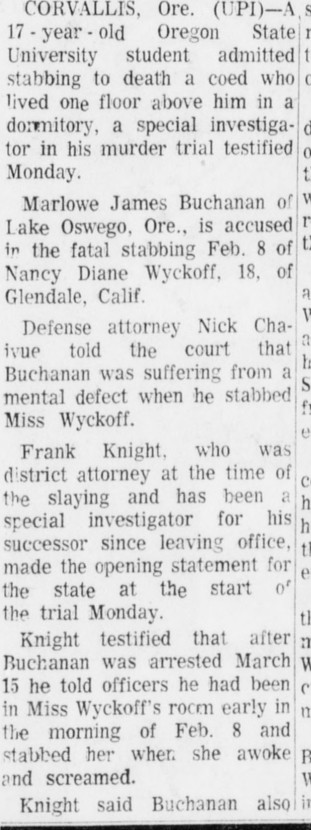
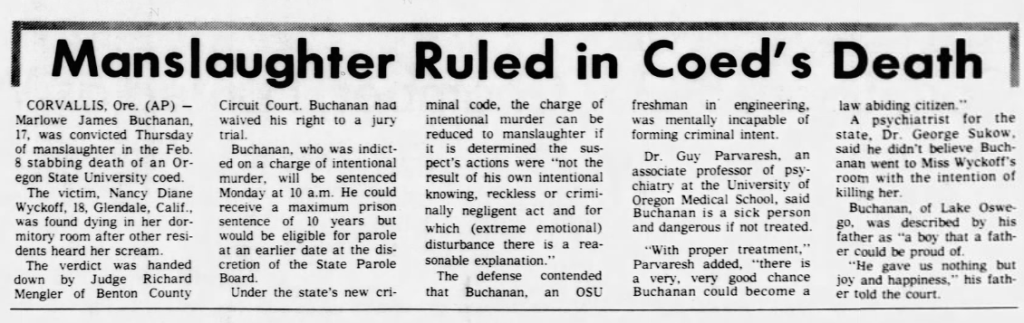
An article about the trial of Marlowe Buchanan published in The Corvallis Gazette-Times on May 18, 1972.
An article about the trial of Marlowe Buchanan published in The Statesman Journal on May 18, 1972.
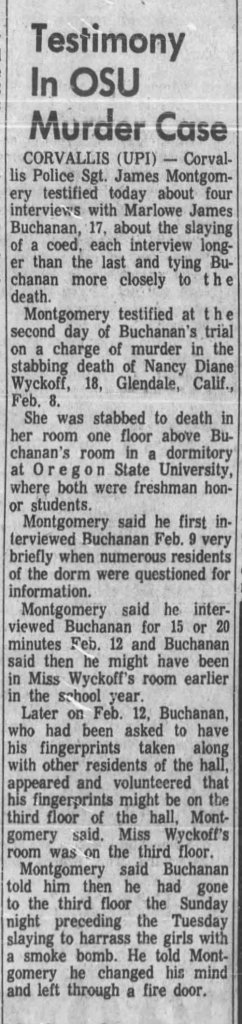
An article about the trial of Marlowe Buchanan published in The World on May 18, 1972.
An article about the trial of Marlowe Buchanan published in The Statesman Journal on May 19, 1972.
An article about Buchanan receiving ten years in prison published in The Statesman Journal on May 23, 1972.
An article about the trial of Marlowe Buchanan published in The Daily News on July 23, 1972.
An article about the death of Nancy Wyckoff published in The Albany Democrat-Herald on February 8, 1973.
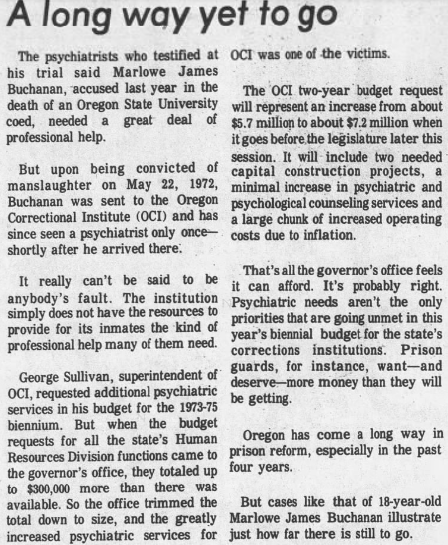
An article about Buchanan published in The Albany Democrat-Herald on February 10, 1973.
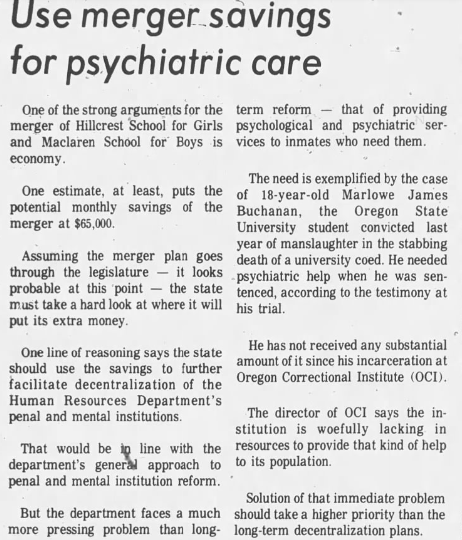
An article about finances related to psychiatric care in the state of Oregon that mentions Marlowe Buchanan published in The Albany Democrat-Herald on March 1, 1973.
An article about public safety on OSU’s campus after what turned out to be the Ted Bundy murders in Florida that mentioned Nancy Wyckoff, published to The World on January 28, 1978. 
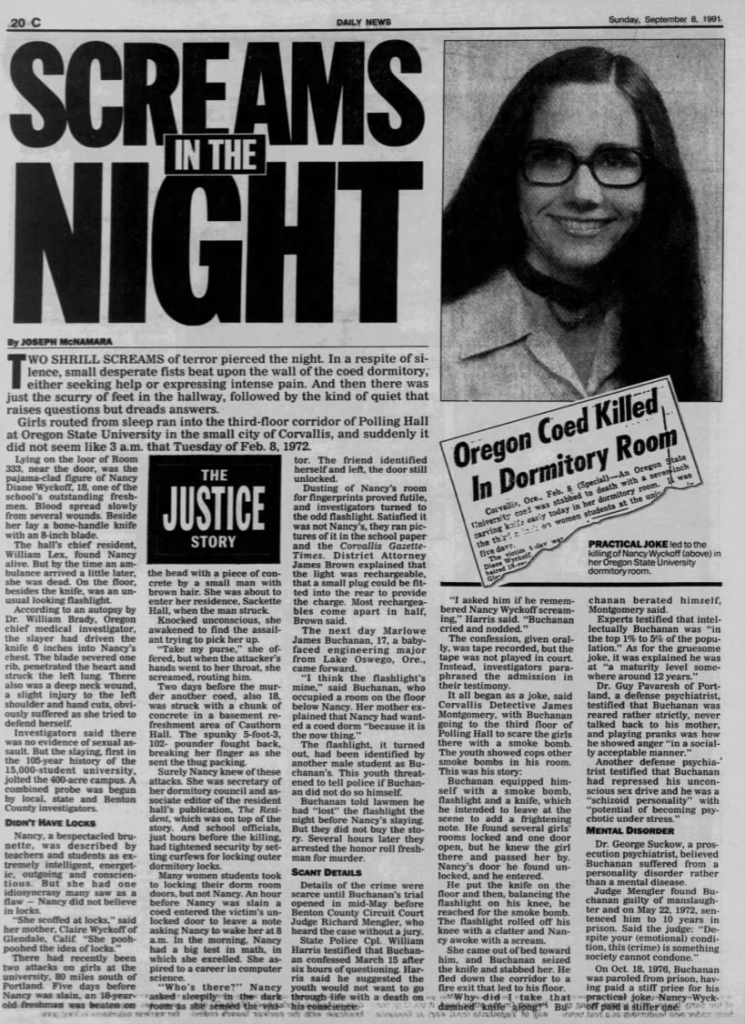
An article about the murder of Nancy Wyckoff published in The Daily News on September 8, 1991.
A newspaper clipping about the 25th anniversary of the murder of Nancy Diane Wyckoff published in The Statesman Journal on May 17, 1997.
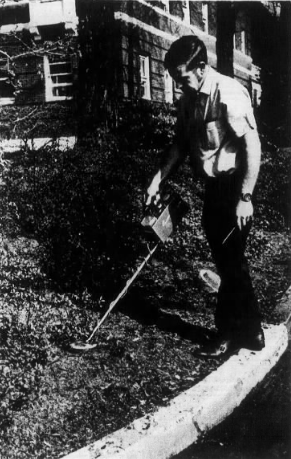
Kenneth R. White, who was the VP of Whites’ Electronics in Sweet Home, OR using one of his metal detectors on OSU’s campus outside of Weatherford Hall, near where Nancy was killed. Photo published in The Albany Democrat-Herald on March 17, 1972.
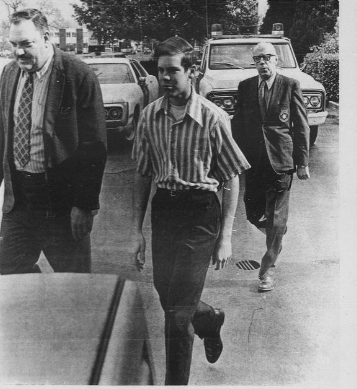
A picture of Buchanan walking into the county court building with detectives after his arrest published in The Corvallis Gazette-Times on March 16, 1972.
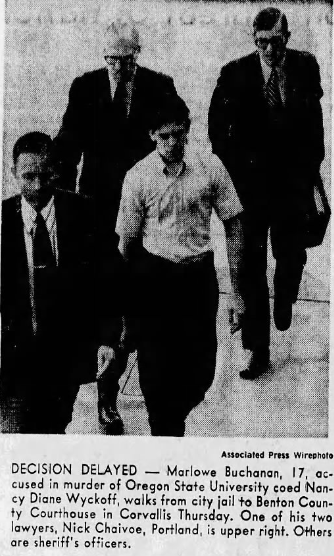
Marlowe James Buchanan walking out of Benton County Jail on his way to a preliminary hearing in Benton Co. Juvenile Court. Photo published in The Albany Democrat-Herald on March 17, 1972.
Marlowe James Buchanan walking into court. Photo published in The Barometer on April 10, 1972.
Buchanan walking into the county court building with detectives after his arrest.
Benton County District Attorney James Brown and and former DA Frank Knight worked together to prosecute Buchanan.
The sequoia tree dedicated to Nancy Wyckoff at Oregon State. Picture taken in July 1972, courtesy of the Oregon Digital Archives.
Wyckoff’s tree on OSU’s campus.
The plaque on Nancy’s memorial tree.
The Volleyball court dedicated to Nancy Diane Wyckoff at Oregon State University. Picture taken in 1972.
The plaque dedicating volleyball court to Nancy Diane Wyckoff at OSU. Picture taken in 1972.
Brian Barr Wyckoff from the 1944 Glendale High School yearbook.
A picture of Claire Wyckoff published in The Atlanta Constitution on July 30, 1939.
A picture of Claire Wyckoff published in The Atlanta Journal on March 24, 1940.
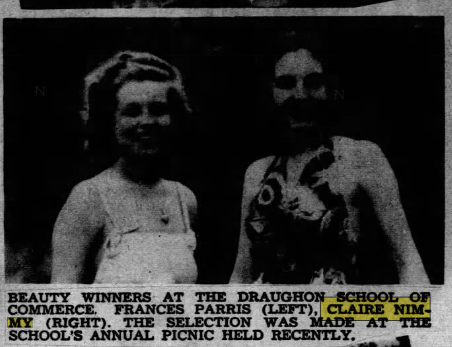
An article mentioning Claire Nimmy published in The Atlanta Constitution on January 11, 1942.
Brian and Claire Wyckoff’s marriage certificate.
Sarah Wendeline Wyckoff.
Marlowe James Buchanan’s eighth grade picture from the 1967 Lake Oswego Junior High School yearbook. He was born on July 13, 1954 in Washington, OR.
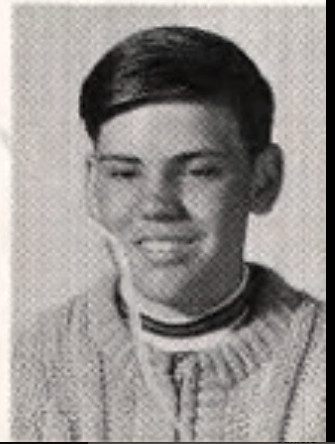
Marlowe James Buchanan’s sophomore picture from the 1969 Lake Oswego High School yearbook.
Marlowe James Buchanan’s junior picture from the 1970 Lake Oswego High School yearbook.
Marlowe James Buchanan’s senior picture from the 1971 Lake Oswego High School yearbook.
Buchanan in a candid shot taken at an event related to chess club taken from the 1971 Lake Oswego High School yearbook.
An announcement that Buchanan was granted a marriage license published in The Oregonian on July 20, 1995.
Buchanan in the 1995 Oregon state marriage index.
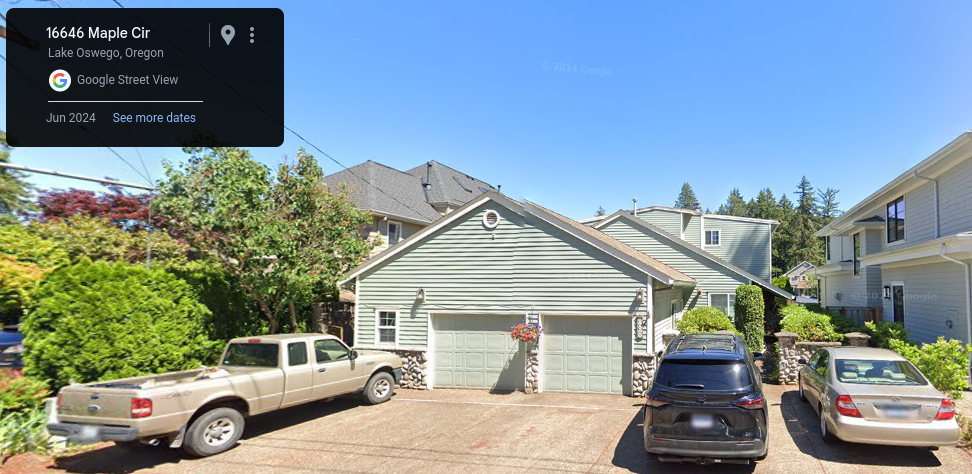
Where Marlowe Buchanan is said to live (according to public record) in Lake Oswego, OR.
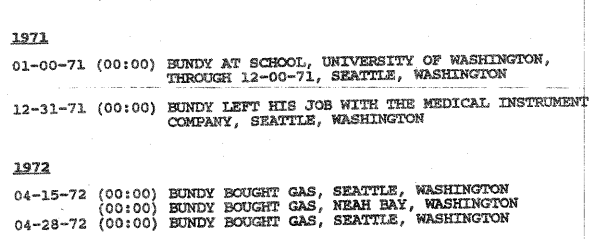
I know TB has nothing to do with this case, but it wouldn’t feel like an article if I didn’t account for his whereabouts in February 1972, according to the Ted Bundy Multiagency Investigative Team Report.
Nancy’s spot in The Forest Lawn Memorial Park Cemetery, in Glendale, CA. She is located in the Fucshia Terrace in The Great Mausoleum, Columbarium of the Dawn, Niche 30161.
A Reddit post about a possible experience with Wyckoff’s spirit.
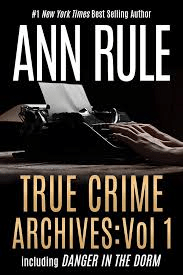
Ann Rule’s book: True Crime Archives, Volume One, which features the short story about Wyckoff, ‘Danger in the Dorm.’
A promotional sign for the Lifetime movie, ‘Danger in the Dorm.’
A still from the Lifetime movie, ‘Danger in the Dorm.’

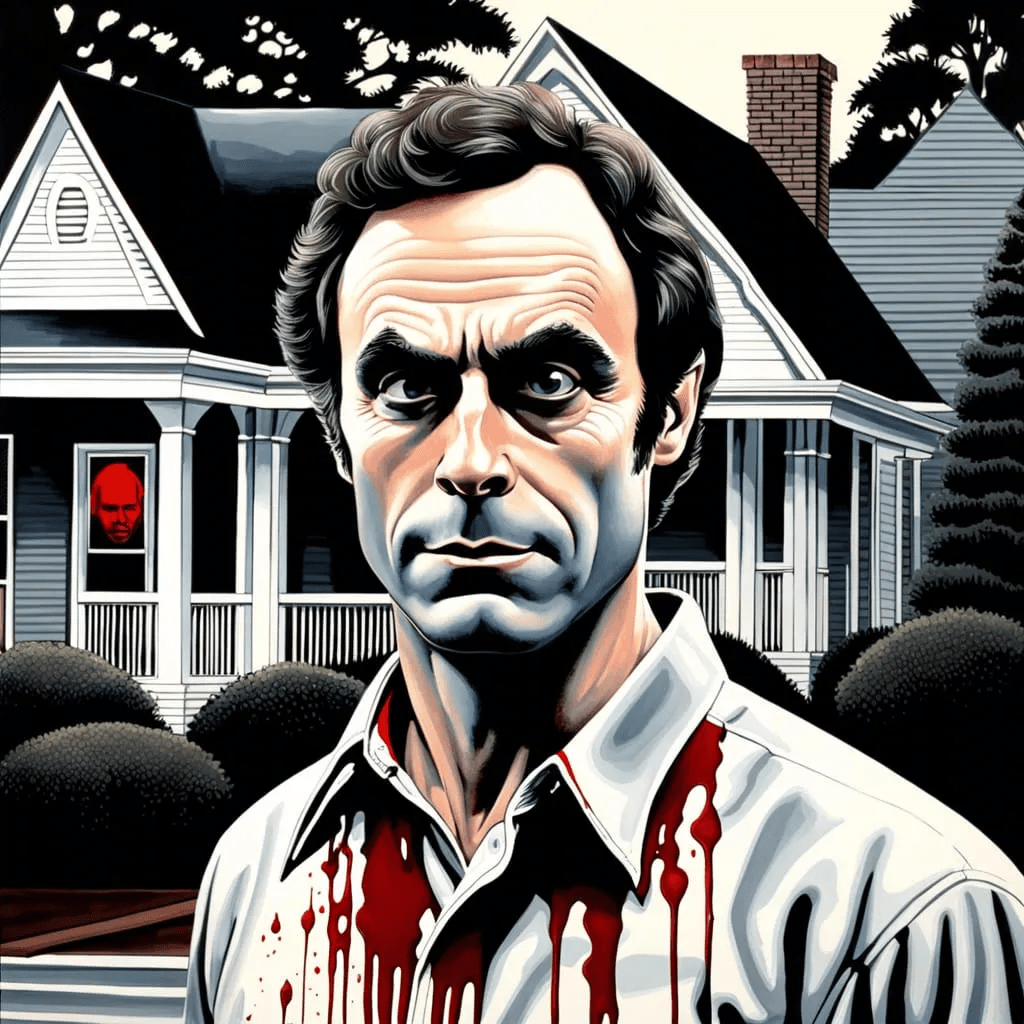
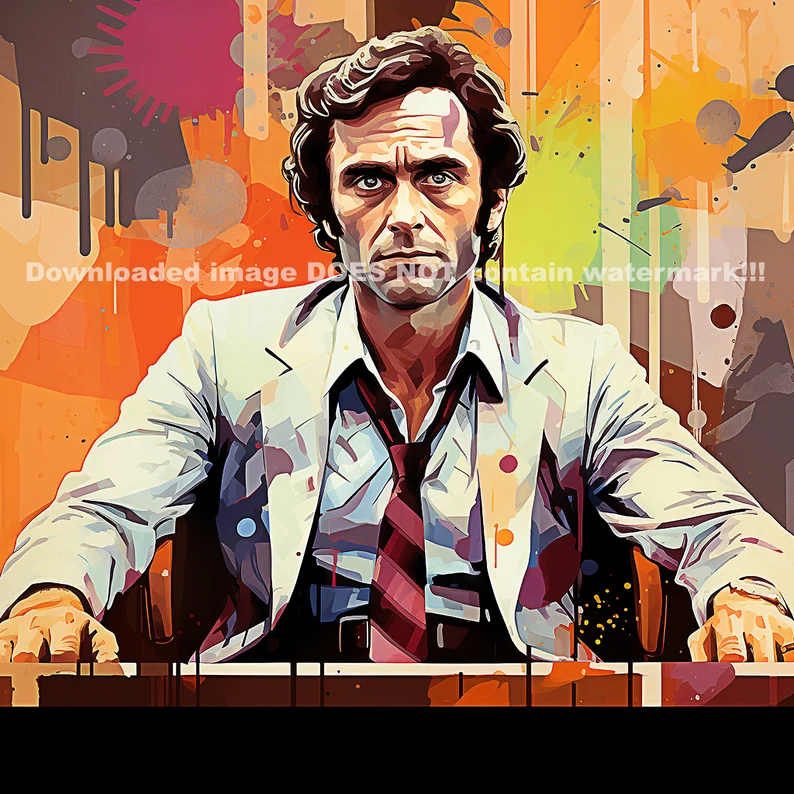
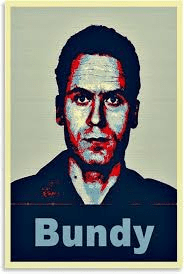
Ted Bundy Artwork.

Over the years I’ve come across quite a bit of unusual artwork related to Ted Bundy, and I decided to compile the most unusual ones here. I will be updating this as I find new and interesting pictures.

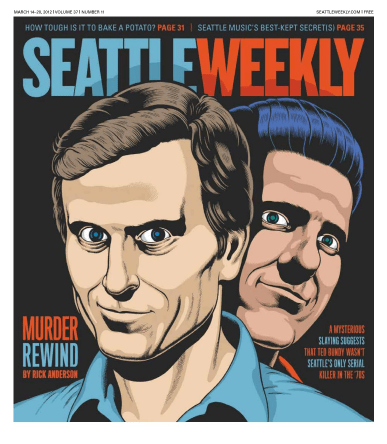
A drawing of Ted is featured on the cover of Seattle Weekly published on March 14, 2012.
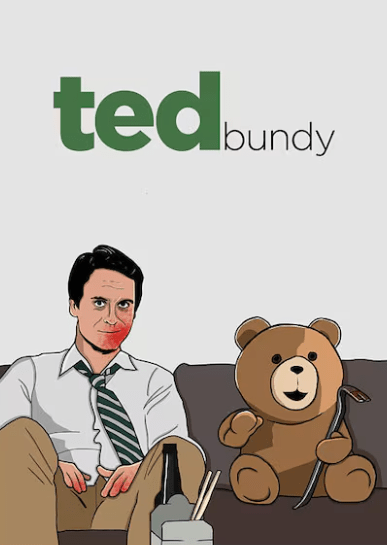
A fake poster featuring Ted Bundy instead of Marky Mark on a poster for the Seth McFarland movie, ‘Ted.’ Photo created by Etsy user BatRavoili.
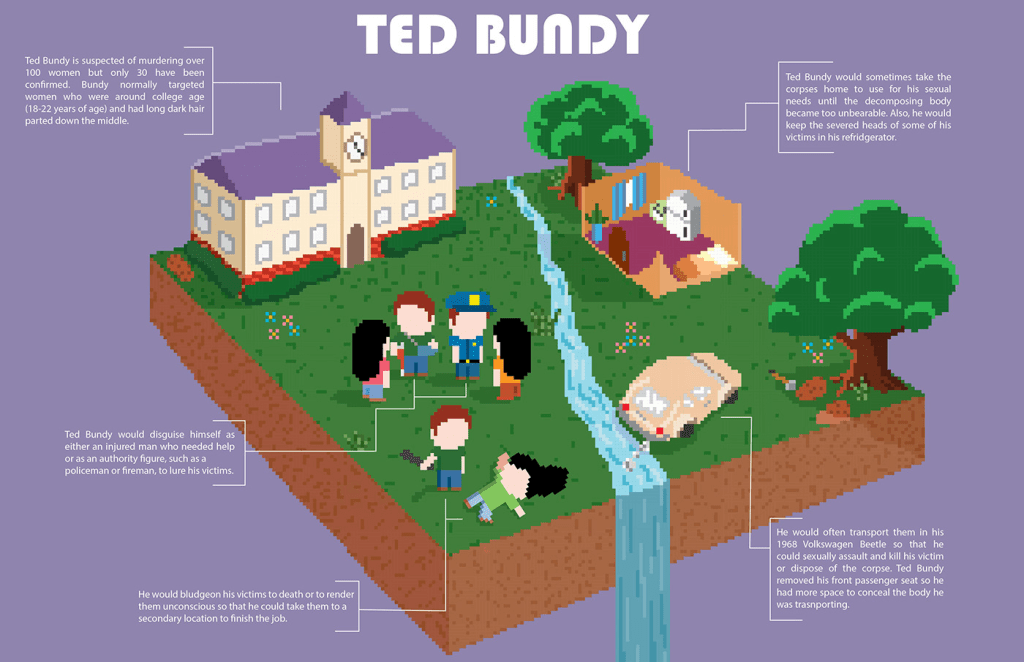
A school project done by Melody Campbell titled: ‘Ted Bundy Info-graphic.’
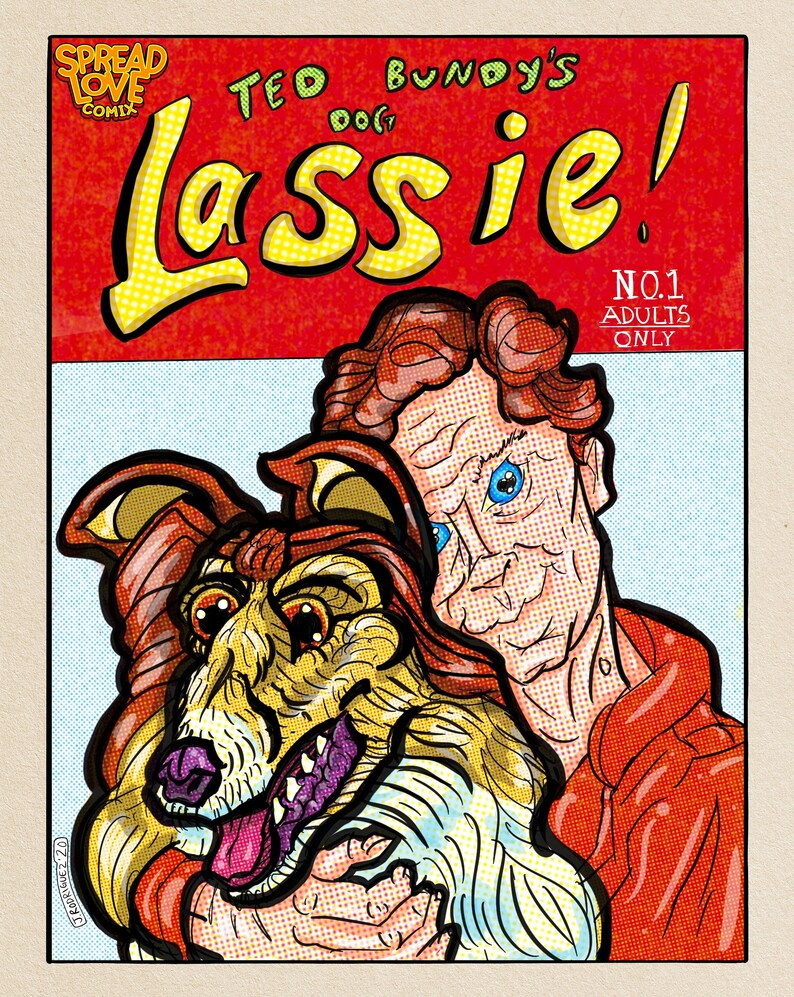
A pretend comic book titled Lassie, which was apparently the name of Ted’s first dog. Created by Etsy user GOREjessArtCreations.
The cover of ‘Hi, I’m Ted: The Serial Killer Coloring Book for Adults.’ Published by by Brian Berry, photo courtesy of Amazon.
A sticker of Ted Bundy holding a crowbar, created by DeviantArt user Nupao.
TB holding a crowbar created by BeHance.net user Allie Waalbearite.
A TB meme.
Another silly Bundy meme.
It’s the end of the road for Ted: this is a cartoon created by Alexandra Beguez and is appropriately titled, ‘The End of Evil.’
A second cartoon created by Alexandra Beguez.
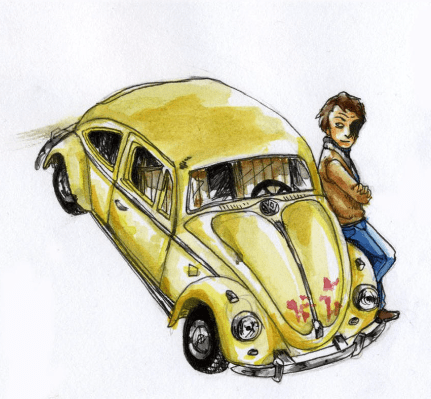
A drawing of Bundy leaning against his VW taken from a card created by Etsy user BlackMagicMedia.
A drawing of Ted and his VW Beetle created by DeviantArt user Seal-of-Metatron.
TB on a tarot card, called ‘the ace of Carter.’ Photo taken from ‘alcarter14.tumblr.com’
An ad for a t-shirt taken from the website neatoshop.
A cute comic taken from the website Alncomics, titled weird_comics_128_20208.
A photo of a cartoon version of Bundy standing in front of an orangish-red VW, which is most likely the one he stole from Rick Garzaniti and was caught driving during his final arrest. Photo from Medium contributor Charles Mahoney.
Whatever the fuck this thing is. Photo courtesy of Kallyn Song-Nichols.
A ‘shitty shark doodle with Ted Bundy’s face on it’ (those are the creators words, not mine) taken from imgur and drawn by user SnowflakeHooker.
A weird advertisement for Mercedes Benz I found on DeviantArt, created by user Brassboy212.
A young Ted created by artist Bernice Steinbaum.
A drawing of Ted discovering his birth certificate taken from DeviantArt and created by the user SuburbanBeatnik.
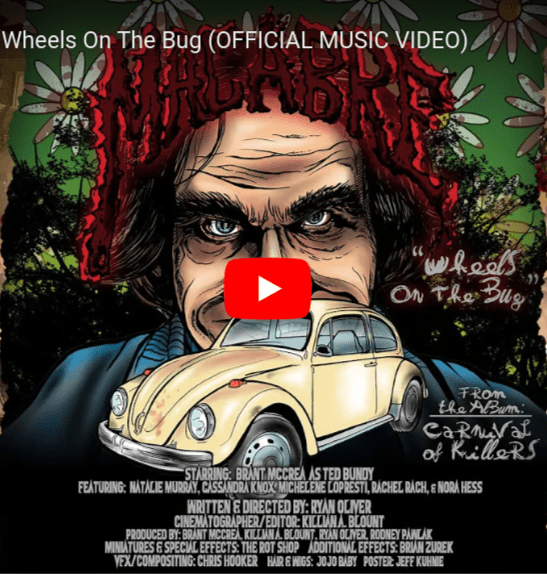
The drawing in the beginning of the music video for MACABRE’s ‘Wheels on the Bus.’ Photo courtesy of Deathblow Productions.
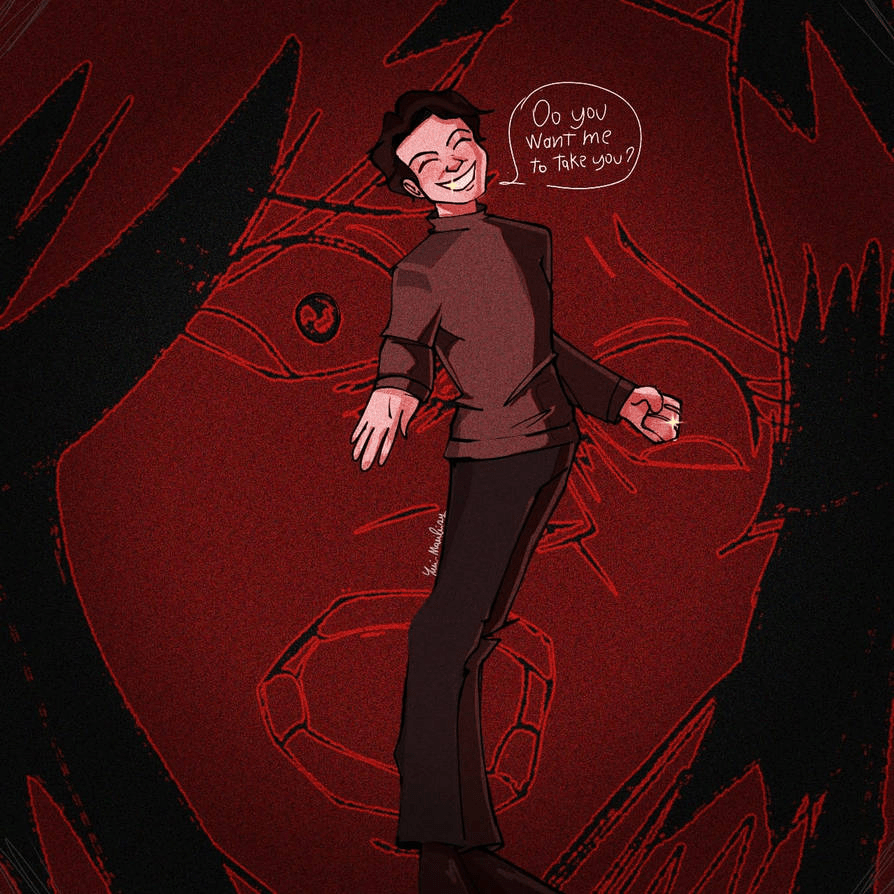
A drawing of Ted with a victim in the background. Courtesy of DeviantArt user Yuriuwu0111.
A drawing of Bundy wearing a suit with his hands in his pockets created by DeviantArt user LovableNightmare.
Bundy as he might look like in a Pixar movie, photo courtesy of OpenArt.ai.
A TB chibi taken from the website Creative Fabrica.
A TB birthday card taken from Etsy and created by user DepressiveGhoul.
A TB wedding card taken from Etsy and created by user DepressiveGhoul.
The front of a Bundy themed Christmas Card drawn by DeviantArt creator OliverDer.
A Ted Bundy Enamel Pin from the website RatBoneSkinny.
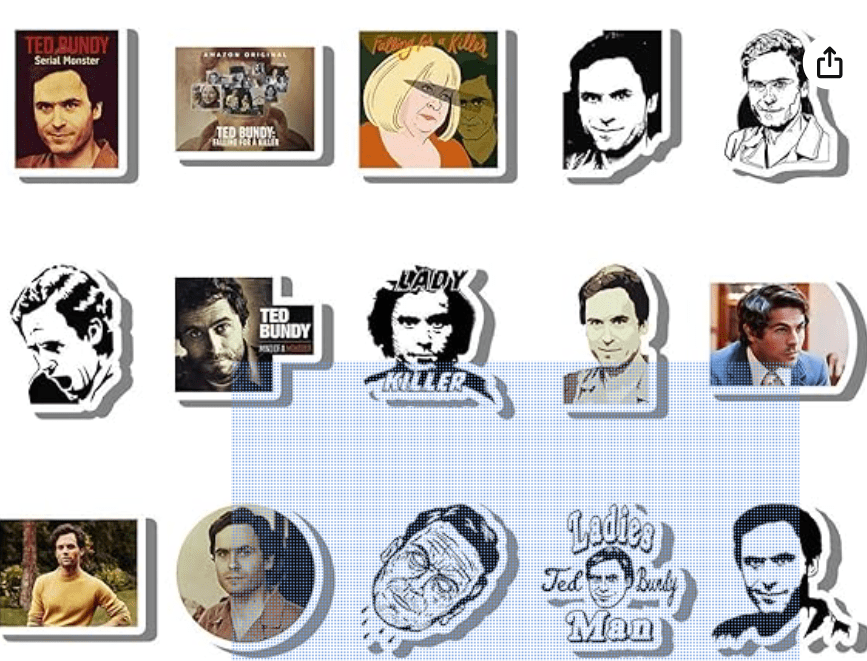
Some Bundy themed refrigerator magnets that I found sold on Amazon by user Philevathan.
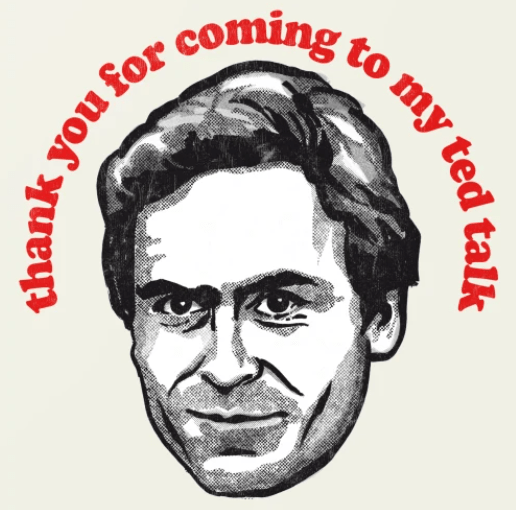
Ted Bundy: ‘Thank You For Coming To My Ted Talk.’ Designed by TeePublic user DankFutura.
Ted Bundy’s eyes, taken from Instagram user ‘chris.honeysuckle.ellis.’
TB as he would look like as a character from South Park.
The album cover of a band named Ondre Care, for the track name Ted Bundy.
An album cover titled Tedd (not a typo) Bundy for a band named Streets Soprano.
Ted Bundy applying lipstick to a severed head taken from YouTube Make-up artist She’s Been Drawing.
A drawing of Bundy as well as some blood created by Vee Lary Mixed Media.
This image has an empty alt attribute; its file name is image-142.png
A ‘saint-like’ Bundy, created by Creative Fabrica user Kristin Arnold.
Ted Bundy breaking off in a million pieces, courtesy of TeePublic seller DrKooper.
A picture of Ted Bundy during his second prison escape, found on the website FineArtAmerica, created by the user ‘K True-Crime.’
A second picture of Ted Bundy during his second prison escape, found on the website FineArtAmerica, created by the user ‘K True-Crime.’
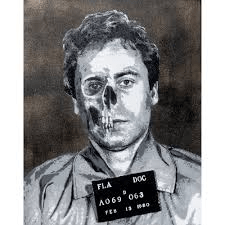
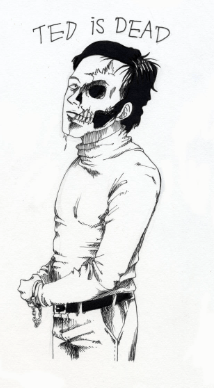
A spray painted picture of TB with half of his face decayed. Photo courtesy of Lisa Suwansupa.
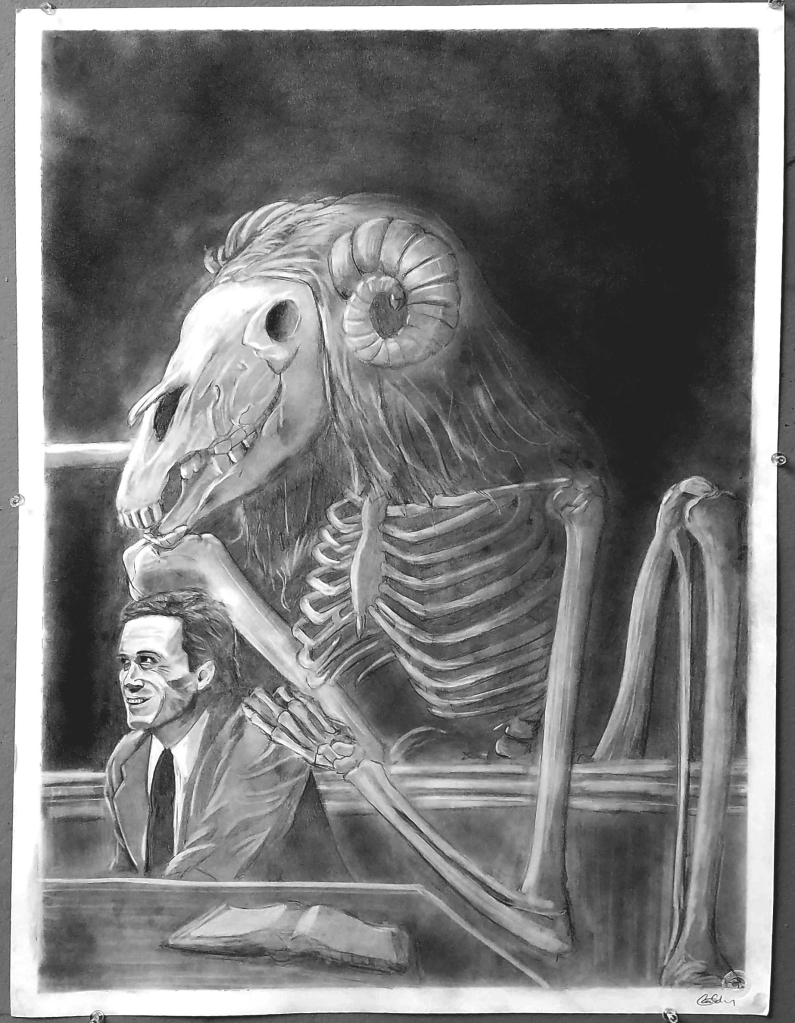
Ted Bundy and his Demon Smiling in Court. Photo drawn by Redditor Kick_Narisin
A drawing of Ted commenting on feeling like a vampire at times created by DeviantArt user Seal-of-Metatron.
A drawing of TB from a podcast done by Captain Borax..
Ted Bundy in the forefront, with the front seat of his VW in the background. It’s a lovely, monochromatic piece created by Aubree Eckhardt and found at aubreeeckhardt.com/about-this-ghoulie.
Ted sitting in a lounge chair wearing a suit holding a ligature of some sort. Courtesy of the website ArtStation (titled: Ted Bundy).
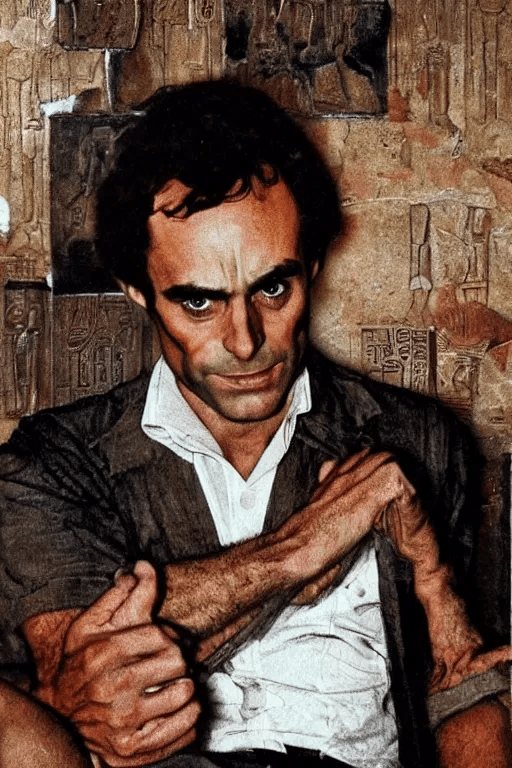
A fake (but eerily realistic) picture of Bundy created using AI, courtesy of OpenArt.ai.
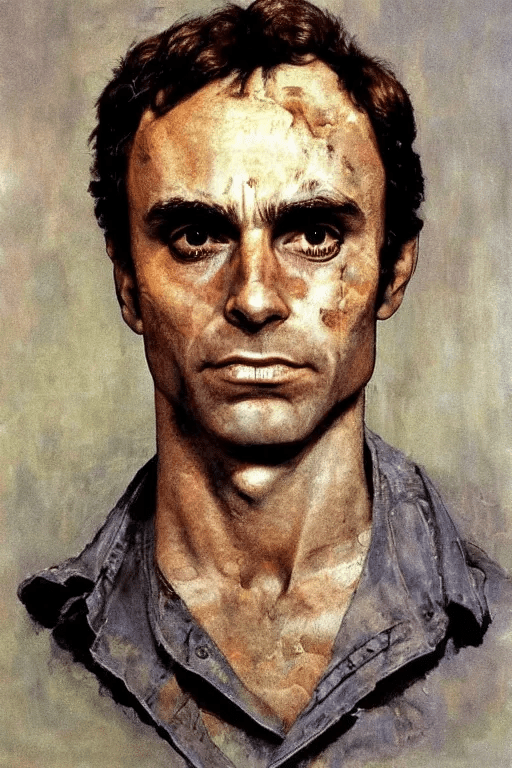
Another realistic pic of Ted using AI courtesy of OpenArt.ai.
Bundy covered in blood, made with AI, taken from the website creator.nightcafe.studio and created by user Renbach.
A poster of Ted found on Amazon, sold by the user ‘ZZAMUSDD.’
A spooky Ted surrounded by flames made by Creative Fabrica user Don Gilman.
A piece of TB artwork created by artist Nicholas Sprice.
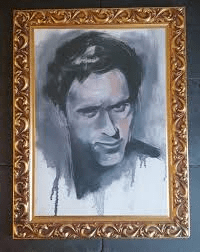
Ted Bundy Painting by Cristina Gradinaru.
A painting of TB, courtesy of Etsy creator ‘ShadowlanderArt.’
Ted wearing a suit created, by creator.nightcafe.studio user Poison lord.
A painting of Ted created by Etsy creator DanSlayer666.
Ted gripping the desk in the courtroom created by Etsy user Deepwithinthevoid.
A painting of Ted created by Etsy user LittleDarkWorkshop.
Ted with a colorful, pixelated background. Photo from the website creator.nightcafe.studio’ and created by the user KingBlackBeard.
A picture of Ted on a t-shirt taken from the website Art Junky’s Bizarre.
A piece of artwork called ‘Bundy Denial,’ painted by artist William David
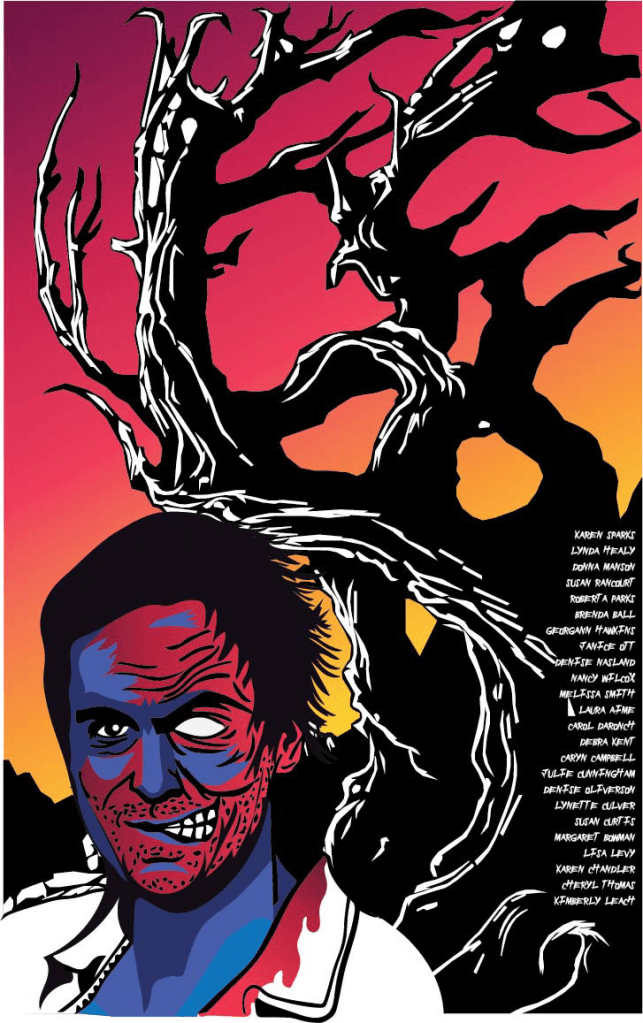
A shot of Ted with his face rotting away with his confirmed victims written on the side. Created by user Rachel Butchart on BeHance.net.
A TB Canvas Painting taken from serialkillershop.
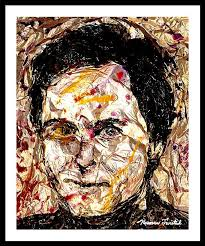
A painting of Ted found on the website FineArtAmerica titled ‘Ted Bundy: Electric Poster,’ created by Norman Twisted.
A picture of Bundy with melting eyes taken from Behance.net and created by user Brooke VanDevelder.
I found this on the website ‘Flickr,’ it’s created by user Jasmin Visual Agnosia.
A drawing of Ted created by DeviantArt user beef-tart.
A photo of Ted looking like a zombie in court that I found on the website FineArtAmerica and was created by artist Justin Coffman.
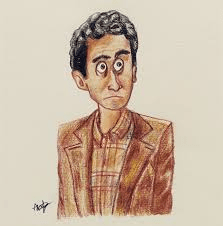
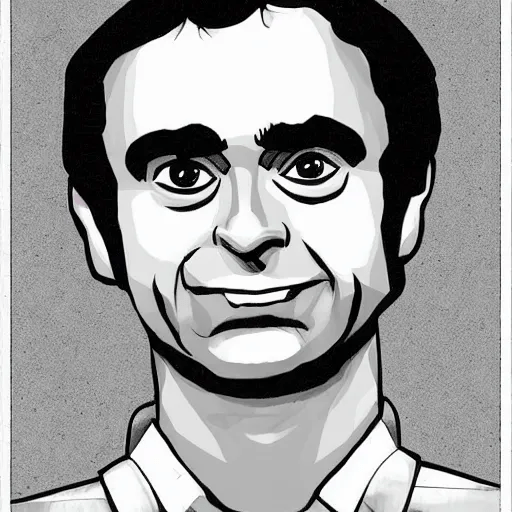
A drawing of Ted Bundy wearing a collared shirt and brown blazer. I found this on Pinterest but the link that took me to Instagram was bad. I’m not sure who drew this.
A drawing of Ted created by DeviantArt user SuburbanBeatnick.
A picture of Ted Bundy taken from DeviantArt and created by user Seal-of-Metatron.
A picture of Ted Bundy taken from DeviantArt and created by user The-Real-NComics.
A charcoal b&w sketch of Ted created by Etsy user DanSlayer666.
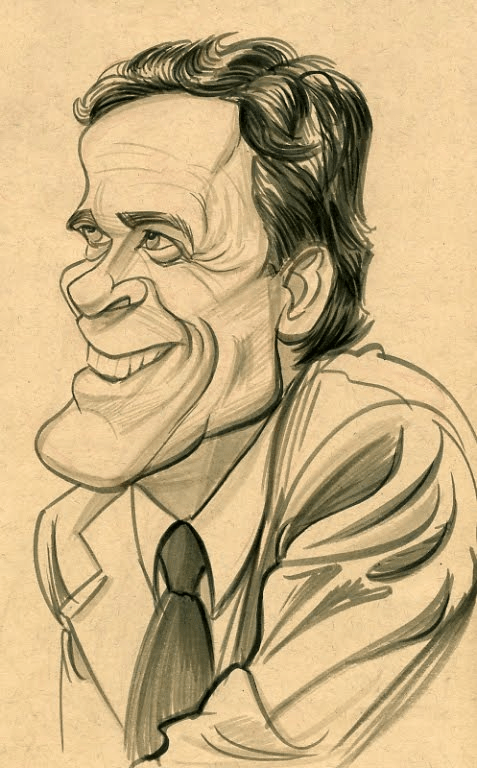
A caricature of TB with an exaggerated chin and dark wavy hair courtesy of Zack Wallenfang.
Bundy drawn in the style of Mike Judge, photo courtesy of OpenArt.ai.
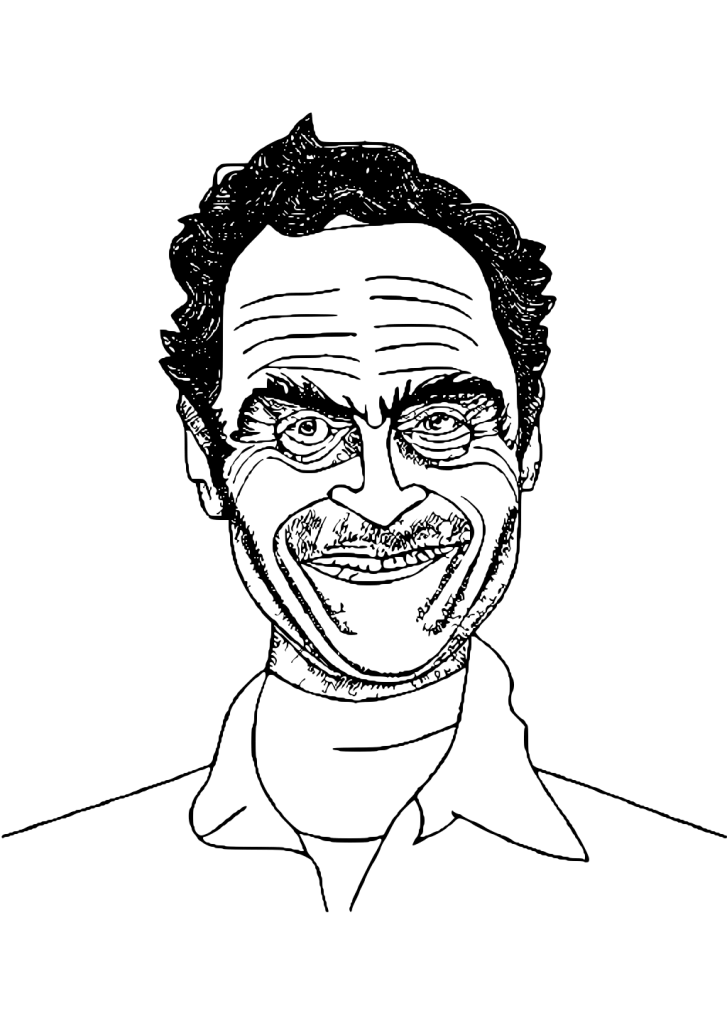
A Ted Bundy Coloring Page created by Creative Fabrica user Kristin Arnold.
A drawing of Ted courtesy of Pinterest user Anastasia Ridgway.
A geometric portrait of TB created by artist Christina Fairhead.
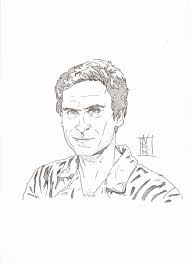
A b&w drawing of Ted taken from BeHance.net created by user Allie Waalbearite.
I found this from the website pixai.art made by the user Justina Maxina.
An image of TB on the front of a t-shirt taken from swagshirt99.
A zombified TB painted by Etsy creator DanSlayer666.
A zombified TB created by Dribbble user ‘Lucian Radu.’
A drawing of Ted Bundy created by DeviantArt user The-Real-NComics.
A poster of Ted sold by the Amazon user RURUMING.
TB with horns, image created by CV Smith.
Ted rocking out in Ol’ Sparky, painting created by BeHance.net user Sonang Akbario.
A painting of Bundy with the electric chair in the background by Paul Bridgman.
A painting of Ted post-execution created by Nicolas Remy.
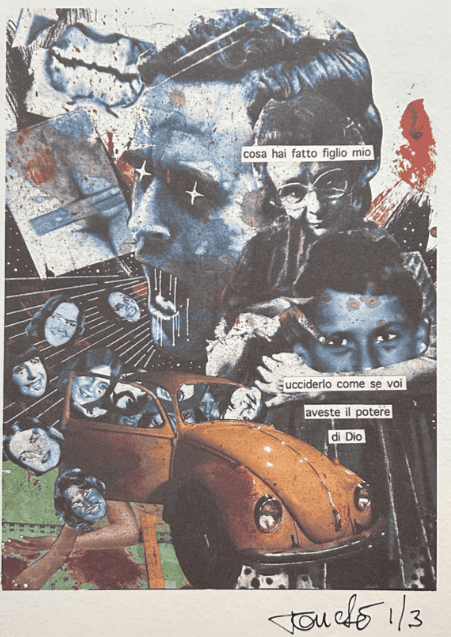
A TB limited edition print featured in the Italian true crime book ‘Cronaca Nera,’ written by Le Foto Che Hanno Segnato Un’epoca.
A piece titled ‘Ted Bundy’s Last Smile’ created by artist Sam Hane.
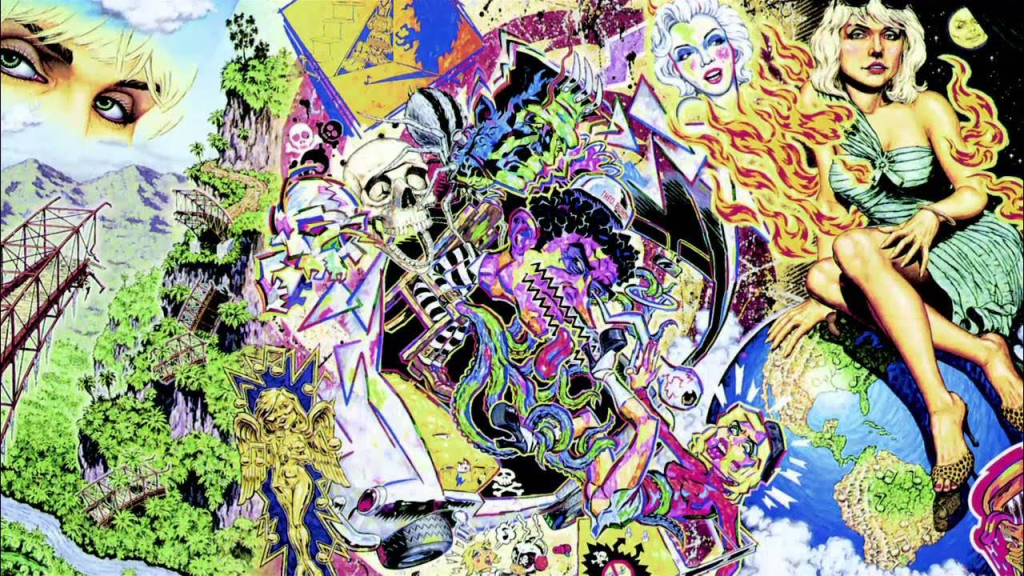
A retelling of Blondie’s encounter with Bundy inspired artist Robert Williams to paint this work of art titled ‘Debbie Harry’s Fears’ (that looks like him in the middle).
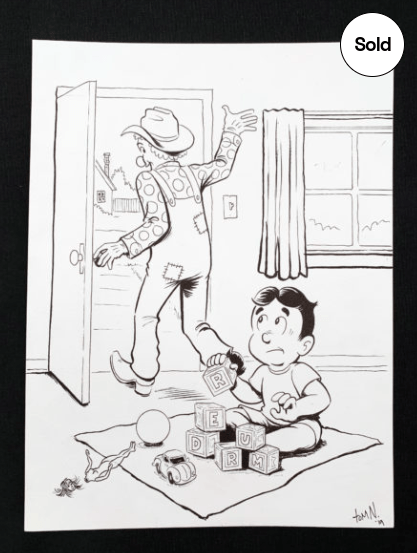
A drawing by artist Tom Neely titled ‘Ted Bundy, Dead Beat Dad,’ created in 2019; it recently sold for $300.
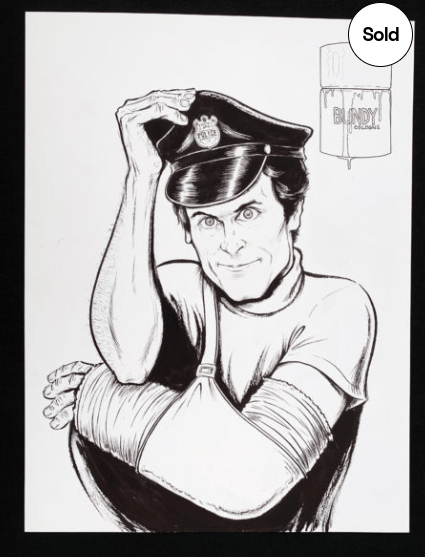
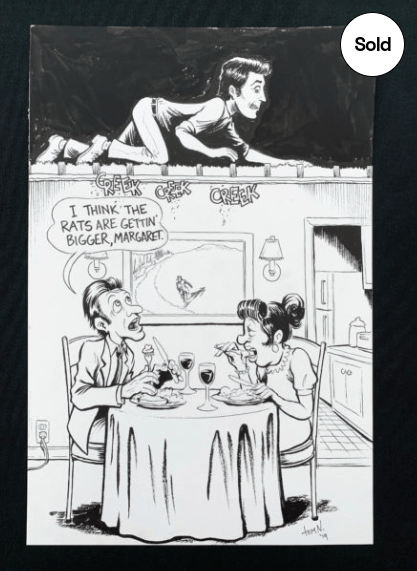
A drawing by artist Tom Neely titled ‘Ted Bundy, Cologne Ad,’ created in 2019; it recently sold for $800.
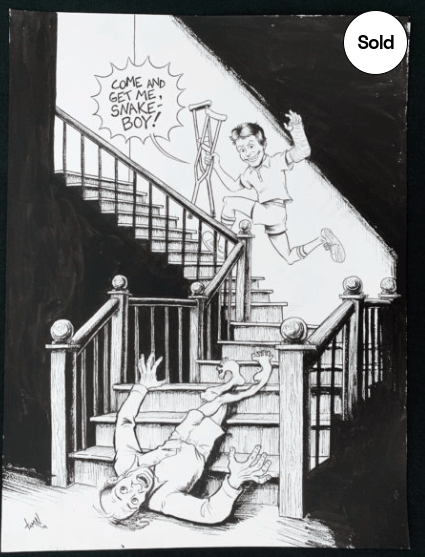
A drawing by artist Tom Neely titled ‘Ted Bundy: Crutch Thief,’ created in 2019; it recently sold for $500.
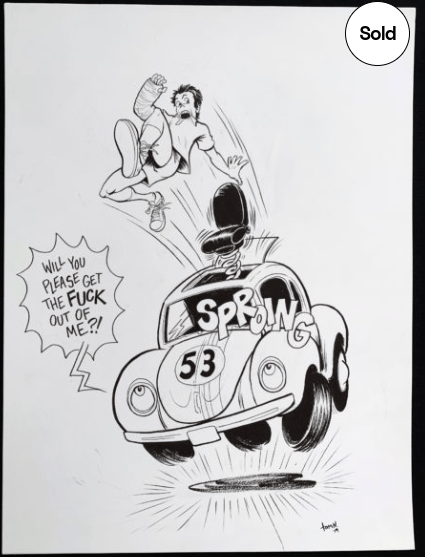
A drawing by artist Tom Neely titled ‘Ted Bundy: Ejected,’ created in 2019; it recently sold for $800.
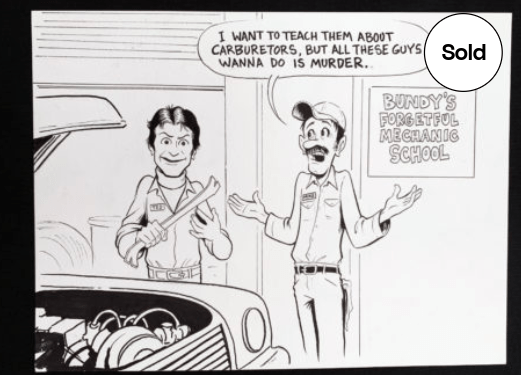
A drawing by artist Tom Neely titled ‘Ted Bundy: Mechanic School,’ created in 2019; it recently sold for $200.
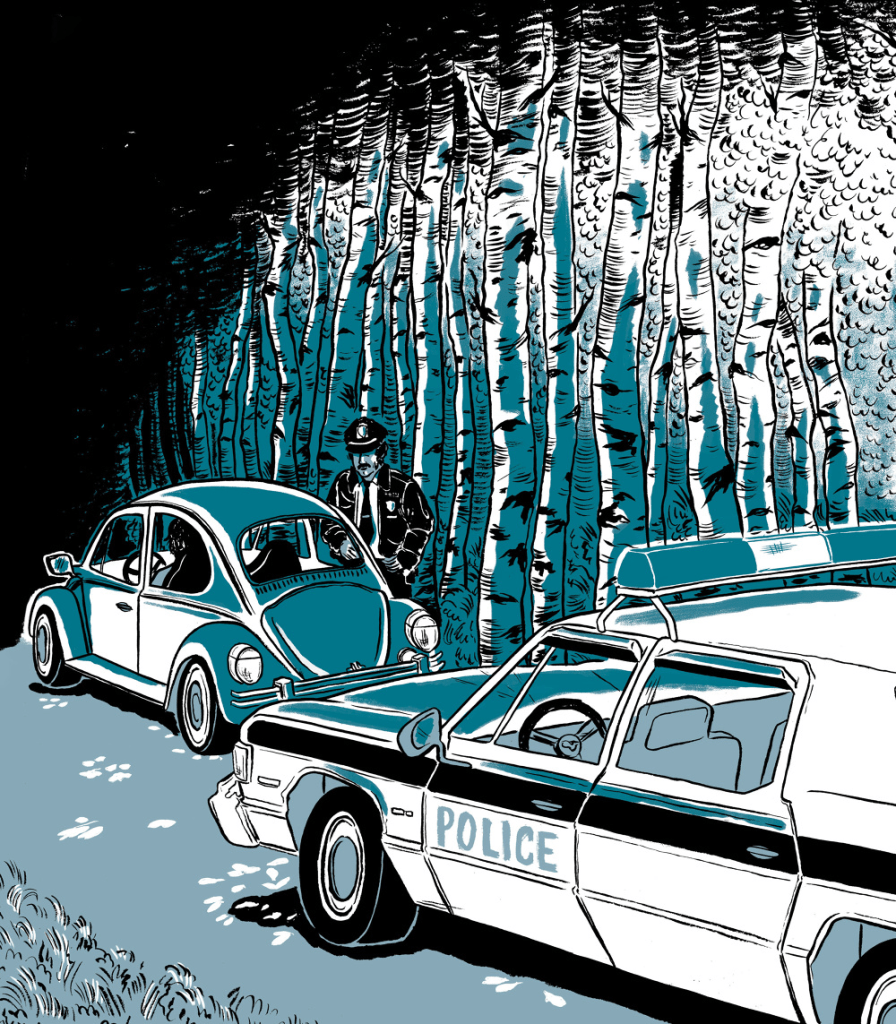
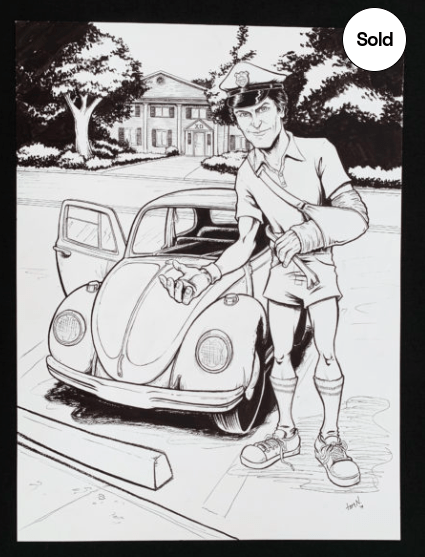
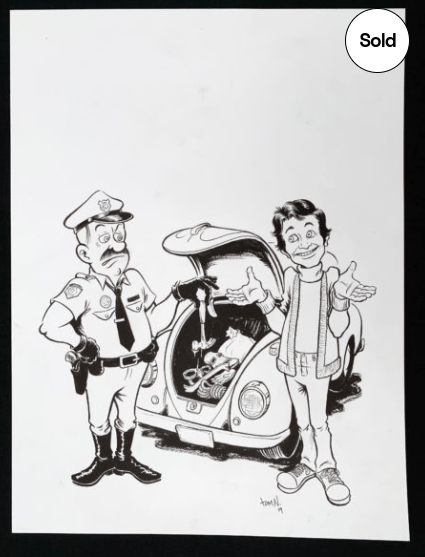
A drawing by artist Tom Neely titled ‘Ted Bundy Gets Pulled Over,’ created in 2019; it recently sold for $200.
A drawing by artist Tom Neely titled ‘Ted Bundy: Ski Shop Thief,’ created in 2019; it recently sold for $200.
A drawing by artist Tom Neely titled ‘Ted Bundy Gets Pulled Over,’ created in 2019; it recently sold for $500.
A drawing by artist Tom Neely titled ‘Ted Bundy Escapes,’ created in 2019; it recently sold for $400.
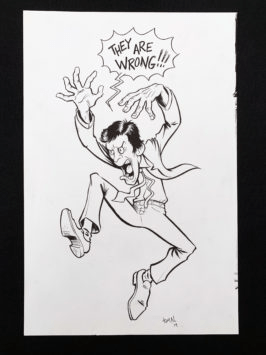
A drawing by artist Tom Neely titled ‘Ted Bundy: They Are Wrong,’ created in 2019.

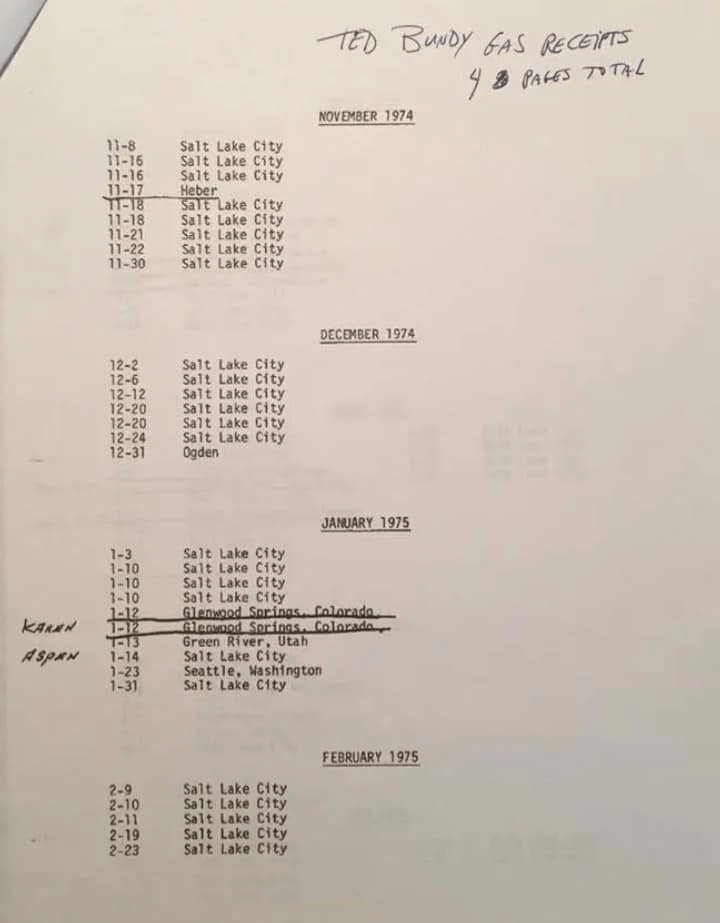
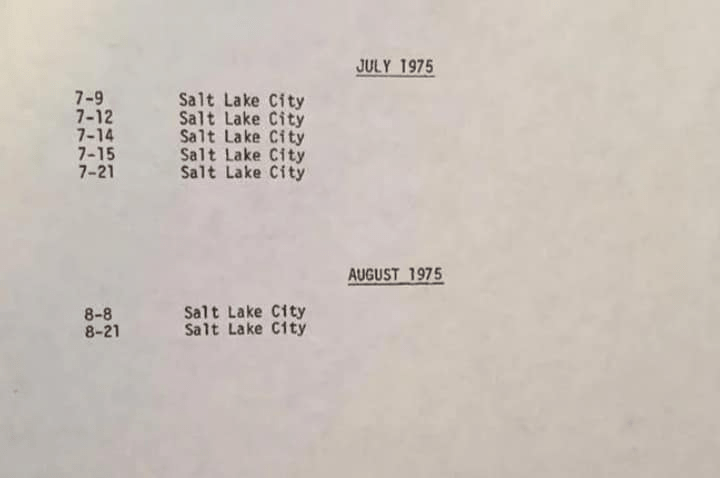
Ted Bundy, Gas Receipts.

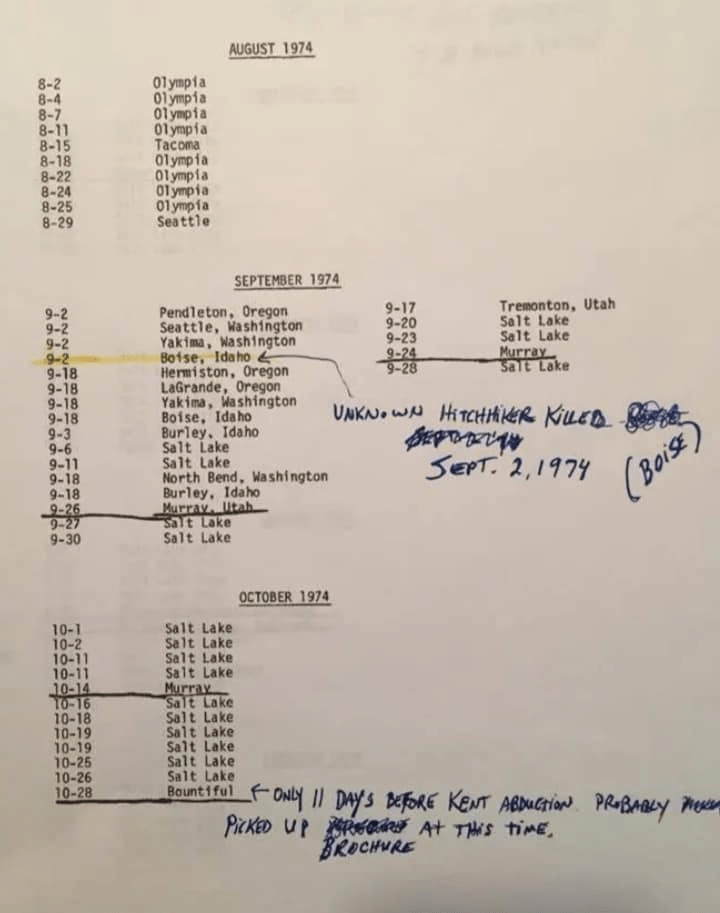
I have been searching for Bundy’s gas receipts for YEARS. I’ve always struggled with insomnia, and last night at around 4 AM found a TB website I never came across before and read through EVERYTHING. Thank you to the ‘Ted Bundy Archives’ WordPress page and Kevin Sullivan for this information.

TB gas receipts August 1974 to October 1974. Photo courtesy of Kevin Sullivan.
TB gas receipts November 1974 to February 1975. Photo courtesy of Kevin Sullivan.
TB gas receipts March 1975 to May 1975. Photo courtesy of Kevin Sullivan.
TB gas receipts in July and August 1975. Photo courtesy of Kevin Sullivan.