“In a will signed the night before his execution, Ted Bundy asked that his body be cremated and the ashes spread over Washington state’s Cascade Mountains, where at least four of his victims’ bodies were found, a newspaper reported.
The will prepared by Bundy’s civil attorney, Diana Weiner, was released by Florida State Prison officials Wednesday at the request of The Florida Times- Union in Jacksonville, which reported the story in Thursday’s editions.
‘Diana A. Weiner will contact family and friends as to any services. The ashes are to be spread over the Washington Cascade Mountains,’ Bundy stated in the will.
The will did not give a specific location for the ashes, and attempts by The Associated Press to reach Ms. Weiner by telephone were unsuccessful.
Sandy Williams, co-owner of the Williams-Thomas Funeral Home in Gainesville where Bundy’s body was sent, would not give details about the final disposition of the body because of an agreement with Ms. Weiner.
‘There will be no public funeral as of right now,’ Williams said. ‘We do not believe there will be a public funeral in the future.’
Bundy was executed Tuesday at Florida State Prison near Starke for the February 1978 murder of Kimberly Leach, 12, of Lake City. He also was convicted of two other Florida deaths and is suspected in at least 50 deaths nationwide.
He was suspected in as many as 15 rapes and murders of young women in Washington while he lived in the Seattle area in the mid-1970s. Four of his victims’ bodies were found on Taylor Mountain in the foothills of the Cascades.
In the typewritten will, Bundy gave Ms. Weiner control over his remains, personal property and assets, including mail sent to him at the prison.
Prison records show Bundy’s personal property included a radio with a headphone, a gold-tone chain with a cross, a religious book, stationery, a gold wedding band and a bottle of suntan lotion.
He also had $709.66 in cash, money donated by family and friends for snacks and other items from the prison canteen.
The items were inventoried Tuesday and picked up at the prison by Ms. Weiner, said Department of Corrections spokesman Bob Macmaster.
Volusia County State Attorney John Tanner, a friend of Bundy’s who visited him often in recent years, was designated to handle the arrangements if Ms. Weiner was unable to do so.”
‘Bundy Wanted Cremation, Ashes Spread Over Cascades.’ Published January 25, 1989. Taken July 27, 2022 from AP News.com.”
“After Bundy’s death, celebrants cheered at the departure of the van carrying his remains to Gainesville, where he would be cremated. But the party ended there. Bundy was dead, and the evil he had carried was apparently gone from the world. Vendors packed up their souvenirs and counted their earnings. Spectators rolled up their signs, piled into their cars, and drove back home. Camera crews dismantled the equipment and left in search of the next story. And Ted Bundy’s ashes, along with all his other earthly possessions, were given to his attorney, with the instructions that they be scattered at an undisclosed location in Washington’s Cascade Range, in lieu of a public funeral. In many ways, he’d already had one.
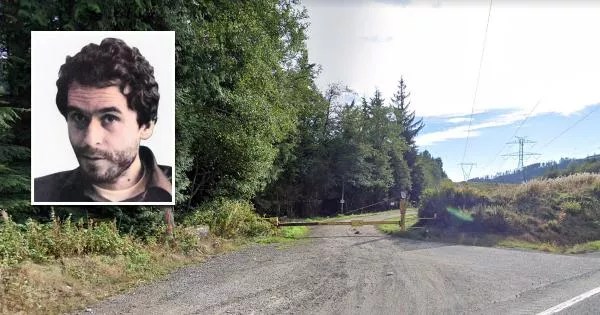
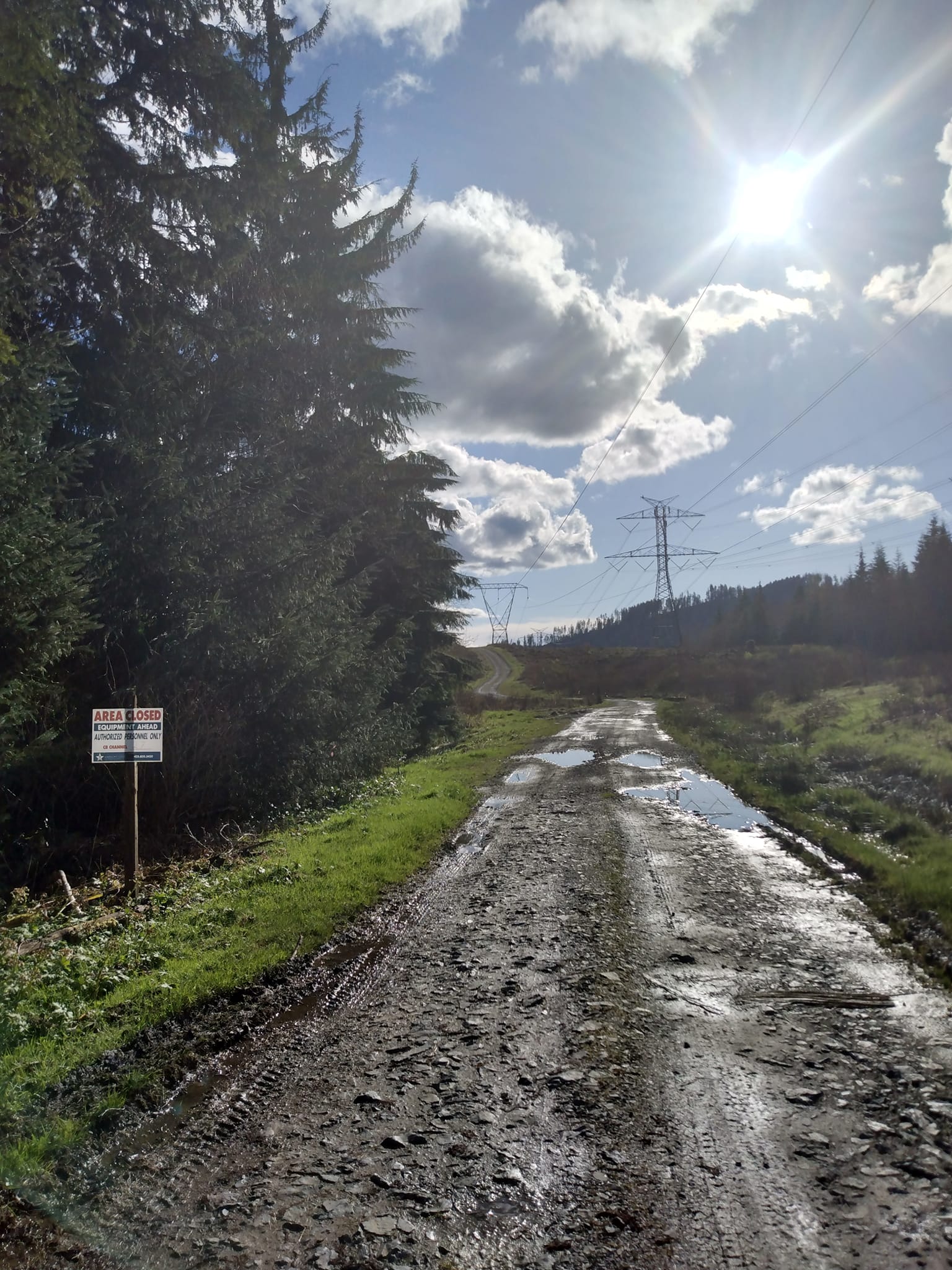
Bundy had disposed of two of his victims in Lake Sammamish State Park, and of another two on Taylor Mountain, both locations west of Seattle and not far from the Washington Cascades. It was in these secluded, wooded areas that he revisited his victims for hours at a time, possessing them as fully as one human being can ever possess another. (In his interviews with Aynesworth and Michaud, Bundy described his fondness for theft, and how the joy of ownership was, for him, far superior to the thrill of the crime.) It is not so far-fetched to guess that there may be other, undiscovered bodies somewhere in the Washington Cascades—perhaps one, perhaps a dozen, perhaps all of them clustered in the undisclosed location where Bundy’s ashes were laid to rest.
The truly remarkable thing about the disposal of Bundy’s remains, however, is how little anyone seemed to care what happened to them. Anyone who followed the Bundy case with even the vaguest interest can piece together the likelihood of his remains mingling with those of his victims. Yet the fate of his body became a nonissue once it became just that—the fate of a body, and not of a man.
If we are to believe in evil—evil as a substance, as nonhuman dark matter that sometimes comes to rest in human bodies, as something as intangible yet identifiable as a soul—then what happens when the person who possesses it dies? The people who clustered outside Florida State Prison on the morning of Bundy’s execution seemed to believe that it would simply dissipate, and would perhaps descend to hell just as a soul ascends to heaven. Yet this is a fiction that perpetuates the same blind spot that allowed Bundy to seem above suspicion for so long. If “evil” is an unknown quantity, a supernatural presence in an otherwise normal human body, then we will fail to suspect the seemingly normal humans surrounding us—let alone a handsome, successful, intelligent young man—of harboring “evil” impulses. Bundy, unable to acknowledge the enormity of his crimes until it was clear that doing so was his only hope at survival, comforted himself with the same fiction by describing “the entity” and “the personality”—two separate beings coexisting within the same body. But there was no entity. There was no pure evil or “special kind of malevolence.” Bundy wasn’t possessed, nor was he a larger-than-life monster. Though psychologically atypical, he was in all other ways a normal, flesh-and-blood member of the human race, and his death was the same as anyone else’s. No great evil departed the world at the moment he died. No one was safer. No one’s life was measurably improved. The human capacity for evil actions remained unaltered: greater in some, but present in every man, woman, and child on earth.
Ultimately, the scattering of Bundy’s ashes in the Cascades is a testament to his humanity, and a crucial reminder to us that he was human after all. He may have committed brutal crimes in Washington’s parks and woods, but they were also areas that he loved the same way the rest of us do: the way we love the beauty of an area that will live long after us; the way we love a place that affords us peace; the way we love our home. And Bundy himself, though no longer able to cause us harm, is still present in our world, his earthly remains at rest in one of the most beautiful parts of the country. They have no magic qualities. They pose no threat to the area they inhabit. They are, in the end, the remains of a human being—no more, no less.”
Marshall, Sarah. “The Earthly Remains: Revisiting Ted Bundy.” January 4, 2013. Taken July 27, 2022 from https://www.orderofthegooddeath.com/article/the-earthly-remains-revisiting-ted-bundy/.





 Another Bundy Blog.