Back in April I began the process of requesting the case files related to the murder of Katherine Merry Devine from the Thurston Co. Sheriff’s Department out of Washington state. I found the entire ordeal to be not only simple but also incredibly inexpensive, so logically I thought to myself, ‘what else can I get from these fine people?,’ and after looking into it I realized that confirmed Bundy victim Donna Gail Manson was also abducted from the same county. These are the documents that they sent me. Last night I registered with neighboring King County and requested some documents from them as well. This is outstanding.
When I went to Seattle in April 2022 there were a few places I never got around to seeing, one of them being Bundy’s Issaquah dump site… but it certainly wasn’t for lack of trying: I drove around the same three mile area for almost two hours one day trying to find it (Google Maps really dropped the ball with that one, IMO). I finally had to give up because it was taking precious time away from other places I needed to see, and as I was driving away I remember thinking to myself that I’d never get back there again and I blew it. But, thankfully in May 2024 I was able to spend a few days in Washington state during my vacation to Oregon and I was finally able to locate it, with a little help with my friend Cole Kaiser, who is awesome and deserves recognition for his help.
Issaquah is a small city located about fifteen miles east of Seattle. Back in 1974, it was much (much) less populated than it is today, going from 4,500 residents to roughly 40,000. The Issaquah dump site is where Ted Bundy dumped the bodies of Janice Ann Ott, Denise Marie Naslund, and (most likely) Georgann Hawkins (despite her body never positively being identified). A University of Washington student, Hawkins was last seen in the early morning hours of June 11, 1974 after leaving a party early and stopping by her boyfriend’s dormitory room to get some Spanish notes for an upcoming final she was worried about.She stopped and chatted with a male friend named Duane (who was a Beta Theta Pi fraternity brother, like her bf) out his window then walked off into the night and was never seen again. Twenty-three year old Ott and nineteen year old Naslundboth disappeared on July 14th, 1974 from Lake Sammamish State Park, which is located just ten minutes away from the dump site. All three girls vanished without a trace until later that year on September 6th, when two hunters discovered what they strongly suspected were human skeletal remains while out looking for grouse.
Upon arrival Seattle based LE discovered a variety of human bones, most of which had been dispersed throughout the wooded area thanks to local wildlife (including, but not limited to, bobcats, bears, coyotes, and cougars). Among the bones found were teeth, a jawbone, pelvis, a skull, five femurs, and a spine, and investigators quickly determined that some of them belonged to Ott and Naslund. During Bundy’s death row confessions he also claimed that he buried Hawkins at the site as well, but investigators were never able to positively confirm this.
At the time of the murders in the mid-1970’s forensic experts (in most cases) needed either a mandible or skull to make a positive ID, as they often relied on matching teeth against dental records due to the fact that DNA testing wasn’t a ‘thing’ back then. Some of the bones that were found at the site were cremated and as a result were never able to be tested, as it was apparently ‘department policy’ to incinerate bones that were left unidentified in storage for too long. As I said earlier, the search team recovered five femur bones from the area, which retired King County Detective Dr. Robert D. Keppel said proved that Bundy dumped at least three victims there.
Looking at the pictures that I included below (of the site from the 1970’s to now), it’s obvious the area has undergone quite a transformation over the past fifty years. For example, Highlands Drive wasn’t there at all, and the Swedish Issaquah Campus wasn’t built until over 30 years after the murders took place. Additionally, back in 1974 the area could only be accessed through a narrow and winding dirt pathway, and the railway line that ran through the city’s Olde Town neighborhood was taken out and replaced by the Rainier and Issaquah-Preston walking trails that are still there today.
Despite The Issaquah dump site being the first one that was found it wasn’t the first one that Bundy utilized: six months after its discovery in March 1975 a second dumping ground of bodies was discovered at nearby Taylor Mountain (also called Tiger Mountain) when two forestry students from nearby Green River Community College stumbled upon skeletal remains while marking trees for a school project. I wonder what Bundy’s logic was for switching up his dump sites, moving from Taylor Mountain (where he left Lynda Healy, Brenda Ball, Kathy Parks, and Sue Rancourt) to Issaquah. Did he want to move somewhere else in an attempt to throw off law enforcement? We also know that he was impulsive and often made decisions quickly and without much thought: did he just stumble across this location one day and decide to utilize it? Or did Ted maybe have a close call at Taylor Mountain, possibly running into other (late night) hikers or even a policeman out on patrol?
During his January 1989 confession Ted told Dr. Keppel that he buried Georgann’s head in an area that was very close to the dump site, roughly 25–50 yards north parallel to the dirt road before turning left and walking about ten years ‘through the trees, eventually coming across an area he described as ‘very rocky’ and ‘very rocky.’ Investigators didn’t wait long to go looking for Hawkin’s remains after Bundy was put to death, and on February 15, 1989 search teams combed through the Issaquah dump site once again, but were unable to find any trace of the young co-ed. We do know that Ted was known to imbibe during his murders, and very well could have been drunk, high, or both. When you consider that and the fact that the murder was committed nearly fifteen years prior to his confession it might explain why no trace of George was ever found. Or… was Bundy purposefully giving investigators the bare minimum in an attempt to get another stay of execution. Or, was it all just another lie?
Jan Ott, Bundy’s first Lake Sam victim.Denise Naslund, who Bundy abducted roughly four hours after Jan Ott.Nine different shots of the dirt road leading to the Issaquah dump site in September 1974. Photo courtesy of the King County Archives/Tiffany Jean.A photo of the search of the Issaquah dump site. Picture courtesy of OddStops.Denise Naslund’s skull found in the dump site, was found by two hunters on a hillside just east of Issaquah less than ten miles from Lake Sammamish. Photo courtesy of KIRO-7.Denise Naslund’s hair at the Issaquah dump site. Photo courtesy of the King County Archives.Another shot of Denise Naslund’s hair at the Issaquah dump site. Photo courtesy of the King County Archives.A rib cage at the Issaquah dump site. Photo courtesy of the King County Archives.Another shot of the rib cage at the Issaquah dump site. Photo courtesy of the King County Archives.A picture from the Issaquah dump site. Photo courtesy of Oxygen.A mapping of where the different bones were found at the Issaquah dump site.Ted at the Issaquah dump site; he was there with Liz that day.This aerial photo was taken roughly two years before Bundy started using it as a dump site in September 1972. Picture courtesy of OddStops.An aerial photo taken of the dump site by the United States Geological Survey in 1977. Picture courtesy of OddStops.This is an aerial photograph taken by police of Bundy’s Issaquah dump site. Picture courtesy of OddStops. A map of map of Issaquah from 1950. Bundy’s dump site is just north of an abandoned cabin on the north side of the railway. Picture courtesy of OddStops.On the left is an older map that pinpoints the exact location of the dump site taken from ‘Ted Bundy: A Visual Timeline’ by Rob Dielenberg. On the right is a recent aerial photograph of the area. As of June 2024 the region was turned into a walking trail.The dump site as it looks today. Photo courtesy of OddStops.A snapshot taken at the Issaquah dump site on February 15, 1989 when investigators were looking for the remains of Georgann Hawkins after Bundy discussed her murder during his death row confessions. Photo courtesy of the King County Archives.Another picture taken at the Issaquah dump site on February 15, 1989. Photo courtesy of MSNBC.A picture of the possible dump site of Georgann Hawkins taken in February 1989. Photo courtesy of MSNBC.A screen grab of the map Cole Kaiser sent me that helped me get to the Issaquah dump site. Thanks homie.Driving by the Issaquah dump site as it looks today.A photo I took of the Issaquah Dump Site in May 2024.A photo I took of the Issaquah Dump Site in May 2024.A photo I took of the Issaquah Dump Site in May 2024.A photo I took of the Issaquah Dump Site in May 2024.A photo I took of the Issaquah Dump Site in May 2024.A photo I took of the Issaquah Dump Site in May 2024.A photo I took of the Issaquah Dump Site in May 2024.A photo I took of the Issaquah Dump Site in May 2024.
Intro: Jessica told you about the monster behind these heinous crimes, and now, I am going to tell you about the victims. I think it is important to know about their lives and not the fact that they died, but that they lived. The victims are the ones who should be remembered. I feel that his sisters were among his first victims along with Helen Pilkerton. They suffered abuse at his hand and also were used to lure unsuspecting victims. To my utter disbelief, there were not much information for the beautiful lost souls, and none for the hitchhikers they fell victim to him. I want them to know that I, a complete stranger, do not know who you are or where you are, did not forget you. I also feel that if his parents would have not covered for him and turned him in, many lives would have been saved. This is my opinion but after hearing the whole story from his sisters, my opinion is that they didn’t protect them and then did not protect the poor innocent girls from this monster. Ted Bundy was suspected of Kathy’s death, but DNA proved to be William Cosden Jr. He was in prison for attacking Beverly Pearson already hiding right under their nose. It took 28 years and DNA evidence to find the truth. Here is the havoc this man created and the grief he inflicted on the families of his victims. I will start with his earliest victims, his sisters, and then go on to victims he raped, and killed, and finally Kathy Devine, his final known victim. A story full of senseless killings that never should have happened if he would have stayed in jail where he belonged.
Early Victim, Helen Pilkerton: Cosden was sent to a mental hospital in Maryland for killing a woman in 1967 and was serving a three to four-year term at the McNeil Island Corrections Center near Tacoma for a 1976 rape and murder conviction. Her name was Helen Patricia Pilkerton. She was an employee of the Lexington Park Motel and was just 20 years old. Helen Patricia Pilkerton was born on May 24th, 1945, in St. Mary’s, Maryland, her father, John was 22 and her mother Helen was 21. She had one brother and four sisters. She died on April 16, 1967, at the age of 21, and was buried in Hollywood, Maryland.
Helen was found in a stream by two teenage girls and her body was badly beaten. Cosden had just returned from active duty in Vietnam where he was discharged due to violent behavior. The family of the victim had to sue the Military because of the outrageous leniency of the sentence. To my utter disbelief, Cosden was free after 6 years to rape and kill again. Deputy Prosecutor Philip Harju said, “He is an obvious danger to society.” Yet, he was released to rape and kill again. The story should have ended here, better yet not allowed at all.
His sisters, Karen and Susan: They were told their brother was away at a hospital and so his sisters thought he was all better when he came home. There was no warning from their parents whatsoever. They never told them why he was away and never took steps to protect them. He would get in constant trouble at home and in school almost like he invited the punishment. He always had to be in control. His sisters wished their parents were more aware. He loved to torment his sisters and animals. He got pleasure in making his sisters cry. When Karen was 4, he started sexually abusing her. He warned her he would hurt the whole family if she told. The same thing happened to Susan in a few years. He took steps to encourage them to not be close. When Susan was 8, her brother can downstairs all dressed up to go out. The next morning, she woke to find the sheriff at the kitchen table. They came for her brother. He had confessed to his father that he had killed a woman the night before. The sisters were beginning to see just how evil he was. He did four years in a mental hospital. Four years. His parents told the girls he had went to get well and he was well. That very night he came home, he sexually assaulted his sister. He was also a firebug and burned down the family home. His mother suspected it was him but did nothing. Again. The cause of the fire was listed as electrical. A house down the block burned too. He seemed to get away with everything. He would also burn his truck to cover evidence. Then one day the paper was showing about a body found. He got more and more agitated as the paper was read and screamed at them to stop reading. This turned out to be Kathy. He would go to “help” people on snow days when in fact he was looking for prey. One day after a snow day he was arrested for rape. In 1986, Susan came across his file that showed he was going to be released, she freaked out. She went to the police department to talk about her abuse. The detective she talked to said he believed her brother killed Kathy and would not retire until he found out. Susan told her story and wanted to make sure he didn’t get out. DNA tests were done, and he was convicted. She even flipped him the bird as they were sentencing him. Her family was actually mad at her for doing this. Susan, you are a hero to me. In 2015, he died alone of a heart attack. They had to deal with the effects of their traumatic past as adults, with one of the sisters even nearing death. Despite the difficulties, the sisters band together to discuss the harm done to them and make an effort to make things right. About a week after filming, Sisters in Silence, Karen Harris passed away following a battle with lung cancer. RIP Karen.
Hitchhikers: Restover Truck Stop in Tumwater, just off Interstate 5, focal point for hitchhikers where he worked there, and his father owned. As I pointed out, Susan says her brother Williams Cosden Jr. would use her as bait to pick up women hitchhikers. The women would feel safe getting into his truck with a little girl there. He would tell his mom he was taking Susan to get ice cream and then take her to pick up hitchhikers. Once the girls were in the truck, he would lock Susan in the back. Many hitchhikers would disappear during this time. We may never know all his victims and which ones were Bundy’s. I apologize for not finding any names of the hitchhiker victims, it makes me wonder how many girls are in unmarked graves all over because of men like Cosden. I wonder if these families ever knew what happened to their daughters. My heart goes out to these families. I hope they found some kind of closure.
Beverly Pearson: On November 30th, 1975, 24-year-old Beverly Pearson stopped to get gas. As she was filling up, she encountered Willian Cosden Jr. She recognized him, but finished getting gas and drove away. On her way home, she lost control of her truck and pulled over. She noticed that Cosden pulled over right behind her. She told him she was fine, but when she went to get back in her truck, he hit her with a rubber mallet. He then forced her into his truck and kept threatening her and she kept saying to not hit her again. He pulled over at a wooded area and sexually assaulted her. She remembers thinking to try to get him to talk. Her step father was a police commissioner and taught her to try and get anyone who attacks you to talk. She asked him personal questions and told him if he let her go, he could come visit her at home. It worked and he took her back to her truck. She immediately called the police and Cosden was picked up Cosden was found guilty and was sentence to serve a 49-year sentence. Because of her bravery, he was off the streets.
Kathy Devine: I got most of Kathy’s story from Jessica because she wrote it better than any article I read. According to Jessica, Katherine Devine was born to Sally and William L. Devine in Seattle in King County, Washington, on December 25, 1958. She was a Christmas baby. Her family remembered how the kind-hearted teen thought she was destined to become a Minister after being born on Christmas Day. Kathy regularly brought home stray animals and homeless children living on the streets to take care of them. She had a big heart and always sought to help the less fortunate and helpless individuals. Witnesses last saw the 14-year-old teen hitchhiking in Seattle near North 91st Street and Aurora Avenue North. Her mother stared Kathy had just broken up with her boyfriend and was headed south to visit relatives in Rockaway, Oregon. Her family had reported her to the authorities as a runaway. Little did they know that was the last time their daughter would be seen alive. On December 6, 1973, a young couple stumbled across the remains of the 14-year-old girl in Margaret McKenny Campground in Thurston County. The victim’s throat had been slashed, and she was lying face down. An examination further revealed she had been brutally sodomized and strangled to death. According to police reports, the officers found the victim’s pants were deliberately torn. Authorities figured that since the place was deserted and it would take a local to know their way around the campground, the killer must be local. The decomposed remains were not immediately identified until Kathy’s sister Sherrie Devine, then 16, saw a television news program in Seattle of the discovery and recognized an embroidered patch on the pair of jeans the victim was reported wearing. Witnesses saw Cosden come in the night of the murder with stains on his clothing. The witnesses called police. After leaving the truck stop, Cosden’s truck caught fire and was destroyed three miles from the truck stop. During initial interviews with police, Cosden denied ever seeing Kathy Devine.” Kathy was first thought to be a victim of Ted Bundy. When Ms. Devine disappeared in 1973 Ted was attending the University of Puget Sound Law School and lived within two miles from where she was last seen. Everyone knows he drove the yellow, cream-colored Beetle for years before his arrest, but supposedly his brother owned a white pickup truck. During his death row confessions before his execution in 1989, Bundy told law enforcement that he picked up a hitchhiker in 1973, killed her then left her body close to where Kathy’s remains were found in Olympia, however he couldn’t remember the exact location. He denied having any involvement with Devine’s murder. But this makes me wonder if he did indeed kill Kathy. Cosden was surprised to be convicted and Bundy admitted to killing a hitchhiker and they only found Kathy at that site. Kathy’s ex-boyfriend was a suspect but passed the polygraph. Another man said he saw the whole thing but was very uncooperative with police. While searching his house, a lot of newspaper articles about Kathy were found along with a blood-stained knife. When they brought him in, he denied all charges and said he could explain. He said the knife was for hunting and after testing, the knife did indeed have animal blood on it. He was cleared of the charges. An anonymous man called detectives and suggested they investigate Cosden. The man said he looked in the back of Cosden’s truck and found a blood-soaked sleeping bag along with a single shoe. He was looking in Cosden’s truck because he claimed he was a co-worker and Cosden was stealing from him. Before the police had a chance to investigate Cosden’s truck “mysteriously” caught in fire. Remember, Kathy was found missing a shoe. The shoe found on Kathy matched what the man described but they never got the evidence since it burned. The police went to the jail to confront Cosden and he denied it even though they have DNA proof found on Kathy. Luckily, they had enough to convince a jury and his sister, Susan helped, and he was convicted. He lived in the area at the time of Kathy’s disappearance and murder. According to witnesses, William was seen wearing bloodstained clothes at the Truck Stop on November 26, 1973. He worked at the truck shop owned by his father and was reportedly working an early morning shift. After leaving the truck stop, Cosden’s truck caught fire and was destroyed three miles from the truck stop. Additionally, witnesses claimed to find what appeared to be bloodstains inside William’s truck late on November 25, the very day Kathy was last seen alive.
William Cosden was already in prison for sexually assaulting Beverly Pearson when he was convicted of Kathy’s death. it was be the oldest open murder case in the state to have been solved by DNA “fingerprinting,” authorities said. After Cosden was finally convicted of his daughter’s murder, Mr. Devine said: ‘It’s finished. There’s a justice system, and it works.″ ‘It doesn’t bring Kathy back, but it sure does help. “It was very creepy,” Sherrie Devine, the victim’s older sister, said of the court appearance. Devine’s mother, Sally, said she was nervous about seeing Cosden for the first time. “It would have been worse if we would have had to look directly at him,” I cannot help thinking that if the justice system kept this monster behind bars after his first murder and rape in 1967, Kathy would still be alive. And why weren’t his sisters protected from this monster? They were just little girls.
Conclusion: It took many years to finally catch her killer, but finally the family has answers and hopefully a little bit of peace. Such an unnecessary waste of her and of the beautiful souls who left this world too soon. My heart goes out to everyone whose life was touched by William Cosden Jr. I want to thank Jessica for not letting these girls be forgotten and reminding us they did live and not only die. And Charlene and Sherrie, you should have never had to endure this kind of horror in your family. My heart goes out to you and much respect for coming out the other side of this tragedy. A long as Jessica and I are here, we will not let her be forgotten.
McNeil Prison.William E. Cosden Jr.Cosden.Kathy Devine.Kathy Devine.Devine.Kathy and one of her sisters.The remains of Kathy Devine.The bell-bottom blue jeans with a dragon patch on the pocket that Kathy was wearing when her remains were recovered.The mock-suede coat with fur trim that Kathy Devine was wearing when her remains were recovered.The ‘waffle-stomper” boots Kathy was wearing when her remains were recovered.Beverly Pearson.
Cites:
Katherine Devine Murder: Where is William Cosden Jr Today? Update (thecinemaholic.com) Life term for man whom DNA linked to murder (seattlepi.com) Closing ceremony, tour of McNeil Island prison (seattlepi.com) Evil Lives Here, Sisters in Silence. Season 13, Episode 10. Katherine Devine Murder: Where is William Cosden Jr Today? Update (thecinemaholic.com) Katherine Merry “Kathy” Devine. | Another Bundy Blog. (wordpress.com) Most pictures were taken from Another Bundy Blog: Kathy Devine Facebook page Cowards ad Killers Man sentenced to life in prison for 1973 murder | The Seattle Times Historical Newspapers from 1700s-2000s – Newspapers.com On the case with Paul Zahn, Season 12, Ep 4, Waving Goodbye. Other info, Another Bundy Blog. (wordpress.com) https://www.heraldnet.com/news/rapist-charged-in-1973-killing/
On November 8th, 1974, 27 year old Ted Bundy left his apartment on 1st Avenue North in Salt Lake City and drove to the Fashion Place Mall on South State Street in Murray. From there, he attempted to kidnap 18 year-old phone operator Carol DaRonch, who was there doing some shopping after parking her maroon 1974 Camaro on the southern side of the mall’s parking lot. At the time, the storefront was occupied by Sears but today is a Dillard’s.
That evening at around 7 PM, DaRonch was standing outside a WaldenBooks when a man approached her. He identified himself as ‘Officer Roseland’ and asked if she parked by the Sears entrance of the mall. She said the man was polite and sounded well-educated. After Carol confirmed that she did, the ‘policeman’ told her that he witnessed someone attempting to break into her vehicle and requested that she go with him to assess the damage and see if anything was taken. DaRonch agreed, thinking Bundy was a real officer of the law, but once they arrived immediately realized her car was untouched and nothing at all was missing.
Despite assuring ‘Officer Roselund’ that everything was fine, Bundy was able to convince Carol to go with him back inside the mall and file an official complaint. Once inside, he began poking around the hallways, almost as if he were searching for someone. He then told Carol that ‘they’ must have taken the suspect to the nearby ‘police substation,’ then proceeded to walk her across the street to a closed laundromat on East St. South. The building was in a small, nondescript retail space and once there Ted tried to open its side door, which was conveniently locked (as the laundromat was closed). It was at that moment that DaRonch became suspicious of the ‘officer,’ and asked him for some identification. Almost as if he was waiting for the request, Ted pulled out his wallet and quickly flashed her a silver police badge. Carol immediately felt reassured and agreed to go with him to the main police station. Bundy then walked her back across the street to his waiting VW, and despite thinking it was an odd choice of vehicle for a police officer, she wondered that maybe he was working undercover and just went with it.
Once in Bundy’s Bug, the ‘officer’ immediately began heading in the opposite direction of the station. About driving for about a half-mile, he abruptly pulled the car over and onto a curb in front of McMillan Elementary School. Quickly realizing that something was wrong, Carol began panicking and demanded to know where they were going. Her captor seemed completely removed from the situation and just stared at her, not saying a word. While she tried to open the door to escape, Ted suddenly sprang to life, grabbed her left arm and slapped a handcuff on her wrist. During the struggle, DaRonch clawed and hit Bundy with such force that it prevented him from being able to get the handcuff on her other wrist.
In an effort to scare Carol, Bundy pulled out a small black pistol and threatened her with it. But instead of submitting, she continued to scream and fight against him until she was finally able to escape out of the passengers side door. Ted also got out of the car and pursued her with a crowbar, but thankfully Carol was able to flag down a passing motorist and get away.
Bundy took advantage of a hysterical and preoccupied DaRonch to quickly flee, and jumped back into his Beetle and drove off, furious that he had just let a potential victim get away. He then drove twenty-one miles away to Bountiful, where Debra Jean Kent and her parents were attending a play at Viewmont High School. When the performance went longer than expected, Debra volunteered to take the family car and pick up her two younger brothers at a local skating rink. It was only three miles away, and if traffic was light it should have been only a twenty minute round trip. Eventually an hour passed and Deb never returned to the auditorium. As more and more time went by, Mr. and Mrs. Kent grew anxious and decided to go outside and find a payphone.
After exiting the school, they were met with a sight that filled them with pure terror: in the parking lot was the family car. The Kent’s quickly realized that not only was their daughter missing, but their sons were still at the roller rink. Later that same evening, a search of the schools grounds took place, and classrooms were opened to make sure that Deb hadn’t accidentally been locked inside somehow. The Kent family and friends also searched some of the hills and canyons around Bountiful, but unfortunately they found no trace of the missing teenager.
The police initially told Belva Kent that 24 hours needed to pass before they were able to organize a search for the missing girl. In the beginning of the investigation law enforcement strongly speculated that the seventeen year old was just another runaway, but they were soon pressured into taking action. The next day, police and forensic experts combed Viewmont High School’s parking lot, and despite not finding any signs of a struggle they did find a discarded handcuff key outside of the auditorium on the western part of the school grounds. It didn’t take long for experts to determine it was a perfect fit to the handcuffsthat had been used during the attempted kidnapping of Carol DaRonch earlier that same day. It was now glaringly obvious that after DaRonch’s kidnapper fled the scene he quickly made the drive north to Bountiful, where he successfully abducted Debra Kent.
A man matching Bundy’s description was seen that evening lurking around the school, asking young women to help him ID a car in the parking lot. Raelynn Shepherd was a drama teacher at Viewmont High School who Ted repeatedly tried to lure outside. Shepherd said that he had a ‘nervousness’ about him that made her feel uncomfortable and didn’t care for the way he was looking at her. Because of that, she told him that she was too busy to help; when she saw him again at around 10:45 PM his hair was messed up and he was breathing heavily. This was about 20–30 minutes after Kent had left the school to pick up her brothers, which means Bundy returned to Viewmont after abducting her. His motivations for doing this are unclear: he may have been trying to establish an alibi by appearing in public immediately after the abduction. Or, perhaps he was looking for a second victim. We’ll never know. Additional eyewitnesses reported hearing a woman screaming in the parking lot at roughly the same time that Kent left the auditorium. Another individual came forward and reported that they saw a VW Beetle driving away from the high school.
Bundy became the prime suspect behind Deb’s disappearance after he was arrested for the attempted kidnapping of Carol DaRonch. However, law enforcement didn’t have enough evidence to charge him with the abduction. As the years passed by, it seemed less and less likely that Kents’ remains would ever be recovered. The family lived at 23 East 3500 Street South in Bountiful, and after she disappeared her mother left their porch light on for years in hopes that it would somehow bring her home.Right before he was put to death in January 1989, Bundy finally confessed to killing Deb Kent. He said that he brought her back to his apartment and after ‘keeping her for a while’ murdered her. He then put her body in his car and drove 105 miles away to Fairview Canyon, where he buried her remains about 3 feet deep, under some heavy rocks. After searching the Canyon, law enforcement found a patella (kneecap), and it is likely that her other bones were scavenged and spread around by wildlife over time. Although the ME’s office determined that the bone was human, they weren’t able to test it beyond that until 2015, when a cold-case detective stumbled across Kent’s DNA that had never been entered into the NamUs database. At that point, he reached out to Mrs. Kent, who held onto the only piece of her daughter she had left and asked if he could take the bone for genetic testing.
Although she gave the detective the patella, Mrs. Kent told him that she didn’t want to know the results. In her mind, it belonged to Debra and didn’t want to be told otherwise. Thankfully her fears were put to rest five months later, when the results came back that the bone belonged to Debra. Mrs. Kent said that her daughters murder destroyed her family: her younger son, Bill blamed himself for his sister’s death and died in an alcohol-related car accident on February 3rd, 1985. Shortly after Deb’s disappearance, Dean Kent quit his job as an oil executive, began drinking, walked out on his marriage, and fathered a child. He died from cancer at the age of 78 on January 2nd, 2016. In a 1989 interview, Belva Kent said that Ted Bundy was a ‘cancer’ that tore her family apart. She passed away on June 22, 2023.
What the Fashion Place Mall looked like in the 1970’s. Photo courtesy of OddStops.When Bundy approached his ‘target,’ she was standing outside of this Walden Books. Photo courtesy of OddStops.The Fashion Place Mall, located at 6191 South State Street in Murray, UT. Photo taken in November 2022.A sign for the Fashion Place Mall. Photo taken in November 2022.Bundy brought DaRonch from the Fashoin Place Mall to this building located at 139 E 6100 Street and pretended that it was a police substation. In reality, it was just a closed laundromat. Photo taken in November 2022.The side view of the ‘police substation’ as it looks today. Photo taken in November 2022.The ‘police substation.’ Photo taken in November 2022.A beautiful shot in front of The Fashion Place Mall in Murray, where Carol DaRonch was abducted from. Photo taken in November 2022.Where my rental car sits is where DaRonch fled Bundy’s car. It’s on the western side of McMillan Elementary School, close to the intersection between South Fashion Boulevard and 5900 South. Photo taken in November 2022.Viewmont High School, located at 120 West 1000 North in Bountiful, UT. Photo taken in November 2022.The parking lot of Viewmont High School. Photo courtesy of Jacob Barlow.The auditorium of Viewmont High School as it looks today.Ted’s first SLC apartment located at 565 1st Avenue. Photo taken in November 2022.A broader shot of the entrance to Fairview Canyon, where Deb Kent’s remains were found. It’s about an hour and a half outside of Salt Lake City. Photo taken in November 2022. The entrance to Fairview Canyon, where Deb Kent’s remains were found. It’s about an hour and a half outside of Salt Lake City. Photo taken in November 2022.Another shot of the entrance to Fairview Canyon, where Deb Kent’s remains were found. Photo taken in November 2022.A broader shot of the entrance to Fairview Canyon, where Deb Kent’s remains were found. It’s about an hour and a half outside of Salt Lake City. Photo taken in November 2022.A Google maps route that Bundy may have taken from his apartment in SLC to Murray then eventually to Viewmont High School, where he abducted Deb Kent from.The route from McMillian Elementary School to Viewmont High School.Carol DaRonch.DaRonch and her son.A maroon, 1974 Camero.Debra Jean Kent.Deb (who is in the back row in the middle) in a family photograph, photo courtesy of the Facebook group, ‘Ted Bundy: I was trying to think like an Elk.’ Deb is 3rd right in this photograph from a dance group, photo courtesy of the Facebook group, ‘Ted Bundy: I was trying to think like an Elk.’ Deb Kent and friends. Photo courtesy of the Facebook group, ‘TB: I was Trying to Think like an Elk.’Deb Kent and some school mates. Photo courtesy of the Facebook group, ‘TB: I was Trying to Think like an Elk.’An obituary for Deb’s brother, Bill Kent published by The Davis County Clipper on February 6, 1985,Belva Kent as a child.Belva Kent.Belva Kent. Mr. Dean Kent.Deb Kent’s patella, photo courtesy of Tiffany Jean.Bundy’s whereabouts on November 8, 1974 according to the ‘TB Multiagency Investigative Team Report 1992.’An article related to the DaRonch trial published by The Ogden Standard-Examiner on October 3, 1975.An article related to the DaRonch trial published by The Spokesman-Review on October 31, 1975.An article mentioning DaRonch published by The Albany Democrat-Herald on October 22, 1976.An article about a reward for Kent published by The Davis County Clipper on November 22, 1974.An article about Deb Kent published by The Deseret News on November 27, 1974.An article about Deb Kent published by The Salt Lake Tribune on April 24, 1975.An article about Deb Kent published by The Ogden Standard-Examiner on November 13, 1977.The Kent’s on the front page of The Tampa Bay Times on July 8, 1986.Raelynne Shepherd.Raylynne Shepherd. Photo courtesy of the Facebook group, ‘TB: I was Trying to Think like an Elk.’Raelynne Shepherd.The clothes Kent was wearing when she was abducted. Photo courtesy of Tiffany Jean/Bountiful Police Department.An advertisement for ‘Rustic Rink,’ where Kent was on her way to the night she was abducted.
I’ve been spending a good chunk of my time writing about the unconfirmed victims so in this installment of ‘All Things Bundy,’ I’m going over his confirmed kills.
Karen Sparks-Epley (18). January 4, 1974. Survived, Seattle, WA.
Also referred to as ‘Joni Lenz,’ Sparks was brutally assaulted by Ted Bundy while asleep in her basement apartment in the University District of Seattle. She was his first known victim. Thankfully Bundy didn’t kill her, however she was badly beaten with a metal rod, sexually assaulted, and left unconscious for hours before her roommates discovered her later that night. Ted left her with a number of serious long-term injuries she still struggles with to this day.
Karen Sparks.Karen Sparks.Karen Sparks.Karen Sparks in the Amazon documentary, ‘Falling for a Killer.’
Lynda Ann Healy (21). February 1, 1974. Murdered, Seattle, WA.
On January 31st, 1974, Healy borrowed a friends car to go shopping for a family dinner she was preparing the next night and returned with her groceries at roughly 8:30 PM. Shortly after, Lynda and her roommates went drinking at a popular bar called Dante’s Tavern located at 5300 Roosevelt Way NE. The establishment was a five minute walk from her apartment but the friends didn’t stay out long because Lynda needed to be up at 5:30 AM to be at her job giving the ski report for a local radio station. A number of sources report that Bundy used to go to Dante’s often and it is hypothesized that he first saw Lynda there then followed her home. In the early morning hours of February 1, 1974, he broke into Healy’s basement room, beat her, took off her bloody nightgown (making sure to neatly hang it up in her closet), dressed her then carried her off into the night. It is theorized that Ted only took clothes to make it appear as if Lynda left on her own but obviously we’ll most likely never know the truth. Her body found in March 1975 on Taylor Mountain, near Issaquah outside of Seattle.
Lynda Healy, in the middle holding her little sister.Lynda Ann Healy (middle) with her siblings.Lynda Ann Healy.Lynda Ann Healy.
Donna Gail Manson (19). March 12, 1974. Murdered, Olympia, WA.
On the day of her abduction, Donna planned on going to a folk dancing class at the College Activities Building at Evergreen State College (where she attended). Later that same night, she made plans to go to a jazz concert at the Daniel J. Evans Library (also on campus), which was scheduled to start at 8 PM. Donna departed her dormitory just after 7 PM and set out for the dance class, which was just a two minute walk away. Despite how close the College Activities Building was to her dorm, no one recalls seeing her at either the dancing class or the jazz recital, making it highly unlikely that she ever made it that far. Manson was never seen alive again. After confessing to her murder, Bundy said he burned her skull in Liz Kendall’s fireplace.
Donna Gail Manson.Donna Gail Manson.Donna Gail Manson.Donna Manson.
Susan Elaine Rancourt (18). April 17, 1974. Murdered, Ellensburg, WA.
Shortly before 8 PM the evening she disappeared from her college campus at Central Washington University, Susan Rancourt put some clothes in a washing machine in Barto Hall (her dorm building). She then went to a meeting about becoming a Residential Advisor at Munson Hall. When it ended at 10 PM Sue left to walk back to her dorm to switch out her laundry but was never seen alive again. She had plans later that night to watch a movie with a friend but never showed up. Rancourts skull was later found near Taylor Mountain, where Bundy placed several bodies during his reign of terror.
Susan Elaine Rancourt.Susan Elaine Rancourt.Sue Rancourt.The Susan Rancourt Memorial Garden at CWU. Photo taken in April 2022.
Roberta Kathleen Parks (20). April 17, 1974. Corvallis, OR.
A student at Oregon State University in Corvallis, Parks was abducted from her college campus, which is over a four and a half hour drive for Bundy (who was living at the Rogers Rooming House on 12th Ave NE in Seattle at the time). Shortly before 11:00 PM the night she disappeared, Parks encountered Bundy in the Memorial Union Commons cafeteria at OSU. During Teds interviews with journalists Hugh Aynesworth and Stephen Michaud, he ‘confessed’ in the third-person that Kathy may have encountered her killer while in the cafeteria. Bundy then said he was able to convince her to leave with him and as soon as the opportunity presented itself he immediately overpowered her. He most likely bound and gagged Parks during the 250-mile trip back to Seattle, where then killed her and dumped her body on Taylor Mountain.
Roberta Parks, second from the left.Roberta ‘Kathy’ Parks.Kathy Parks.One of the more frequently used pictures of Kathy Parks.
Brenda Carol Ball (22). June 1, 1974. Murdered, Burien, WA.
In the wee hours of June 1st, 1974, Brenda Ball seemingly vanished into thin air after seeing a band play at The Flame Tavern located at 12803 Ambaum Boulevard in Burien, WA. She arrived at the bar alone and stayed until closing. As the act was wrapping up their set at the end of the night Brenda asked one of the members she knew for a ride home back to her house but he was heading in the opposite direction so he couldn’t help out. There are two conflicting reports about how she could have left the bar that night: one is that she left by herself and was planning on hitchhiking home, and the other claims that she left with an unidentified man wearing an arm sling. Despite law enforcement being hesitant to officially say her disappearance was related to the other missing girls in Seattle, her skull was the first discovered on Taylor Mountain in March of 1975.
Brenda Ball’s senior picture from the 1970 Mount Rainier High School yearbook.A barefoot Brenda Ball.Brenda Carol Ball.Brenda Ball.
Georgeann Hawkins (18). June 11, 1974. Murdered, Seattle, WA.
A student at the University of Washington, Georgann Hawkins disappeared from an alley behind her sorority house in June 1974. The night before she vanished, Hawkins went to a party, where she had a few mixed cocktails. Because she had a Spanish final coming up that she needed to study she didn’t stay long; she did mention to a sorority sister that she was planning on swinging by the Beta Theta Pi House to pick up some Spanish notes from her boyfriend. Hawkins arrived at the frat at approximately 12:30 AM on June 11 and stayed for approximately thirty minutes. After getting the notes and saying goodnight to her beau, Georgann left the fraternity house for her sorority house, Kappa Alpha Theta. Before he was executed, Ted told law enforcement that he approached her in an alley on her way home, feigning injury with a hurt leg (using his crutches as a ruse) while dropping his briefcase. Bundy asked Hawkins for help carrying the prop to his VW Bug, which was waiting in a parking lot roughly 160 yards north of the alley. She agreed and as she bent over to put the briefcase in his vehicle, Ted grabbed a conveniently placed crowbar and knocked her out with a single blow to the head. He then pushed George into his car and drove off into the night. Bundy claimed that while driving she regained consciousness and started to incoherently babble about her upcoming final, thinking he was her Spanish tutor. He again knocked her out with his crowbar. Once at his intended location, Ted took her unconscious body out of his car and strangled her with an old piece of rope. According to him, the parts of Georgann’s body he had not buried were recovered in Issaquah with the bodies of Janice Ott and Denise Naslund. He confessed to murdering Hawkins shortly before his 1989 execution.
Georgeann and her pom poms, from her time at Lakes High School, in Lakewood, WA.A photo of George from the 1973 Washington State Daffodil festival.A b&w photo of Georgeann Hawkins.Georgann Hawkins.
Janice Ann Blackburn-Ott (23). July 14, 1974. Murdered, Issaquah, WA.
At the time she was murdered, Janice Ott worked as a probation case worker at the King County Youth Service Center in Seattle, WA. In December of 1973, she married Jim Ott, who at the time of her death was in California for graduate school. After her car was broken into while living in Seattle, she moved in with a roommate to 75 Front Street in Issaquah (she felt the smaller community would be safer). The morning she disappeared, Janice spent a few hours at doing laundry and having a cup of coffee with a friend. After her errands and chores were completed, she rewarded herself with a trip to Lake Sammamish. Ott was abducted by Bundy at around 12.30 PM, and just a mere three and a half hours later he returned to the same park and abducted Denise Naslund.
Janice Ott and her younger sister standing outside her VW Bug.Janice Ott.Janice and Jim Ott.Janice Ott.
Denise Marie Naslund (18). July 14, 1974. Murdered, Issaquah, WA.
On a beautiful, picture perfect sunny day, Naslund disappeared from a very busy Lake Samammish State Park (that day was Rainier Beer’s annual picnic, there were over 40,000 people there). She was there with her boyfriend and another couple, and after telling them she was going to the restroom Denise was never seen alive again. Naslund lived with her mother in Seattle and was studying to become a computer programmer. Eleanor Rose said her daughter had the kind of helpful nature that would easily place her in danger. Denise’s remains were found on a hillside near Issaquah roughly two months later in September 1974, only two miles away from Lake Samammish. Bundy confessed to her murder shortly before his execution.
Denise Marie Naslund.Denise Marie Naslund.Denise Naslund.
Nancy Wilcox (16). October 2, 1974. Murdered, Holladay, UT.
The first of Teds confirmed Utah victims, Wilcox went missing after she went on a walk to buy a pack of gum (it’s also speculated that from there she was on her way to her high school to visit her boyfriend). She left the house in a huff after getting into a fight with her Dad about her bf’s pick-up truck leaking oil on the families driveway. Both Mr. and Mrs. Wilcox said that because of this law enforcement initially considered her to be a runaway even though they knew their daughter would never voluntarily leave home and had no troubles whatsoever in her personal life. Nancy left all of her personal belongings behind including some expensive jewelry that held deep sentimental value to her. Before he was executed Bundy confessed to sexually assaulting and strangling her, then burying her body about 200 miles away near Capitol Reef National Park. Sadly her body has never been found.
Nancy Wilcox.Nancy Wilcox.Nancy Wilcox.
Melissa Smith (17). October 26, 1974. Murdered, Midvale, UT.
Bundy abducted Smith shortly after she left a pizza parlor on West Center Street in Midvale at around 9.30 PM on October 26, 1974. One unconfirmed report suggests that he may have been asking women in the area to help him with a car issue. Melissa was the daughter of Midvale Police Chief Louis Smith, and her murder took place just sixteen days after Nancy Wilcox vanished from the nearby city of Holladay (and five days before Laura Aime). On the night she disappeared, Smith was supposed to sleep over at a girlfriend’s house but those plans fell through after she didn’t answer the phone. After realizing she had been stood up, she decided to leave the pizzeria and walk back to her house on Fern Drive. At some point during her walk, its speculated that Bundy grabbed Melissa off the street and killed her. She never made it home.
Melissa Smith.Melissa Smith.Melissa Smith.
Laura Aime (17). October 31, 1974. Murdered, Lehi, UT.
Shortly before she disappeared Aime dropped out of high school, left home (she frequently couch surfed at various friends’ homes), and worked a few menial part-time jobs. Surprisingly she still remained in contact with her family and according to her parents, they were just beginning to accept her ‘nomadic lifestyle.’ So, when she first disappeared no one really seemed overly concerned. Thanks to my newspapers.com subscription it didn’t take long for me to realize there were no news articles mentioning Laura Aime’s disappearance at first, and her name only began to appear in ink after two hikers discovered her remains in American Fork Canyon. Additionally, when her body was first discovered, law enforcement first speculated it belonged to Deborah Kent.
Laura Ann Aime, photo courtesy of ThisInterestsMe.Laura Ann Aime, photo courtesy of ThisInterestsMe.Laura Ann Aime.Laura Ann Aime.
Carol DaRonch (18). November 8, 1974. Survived, Murray, UT.
The evening she was abducted Carol DaRonch parked her maroon 1974 Camaro on the southern side of The Fashion Place Mall in Murray, UT. As she was window shopping outside Walden Books, DaRonch was approached by Bundy, who was posing as a police officer. He said that her car had been broken into and asked her to drive down ‘to the station’ with him to file a report with him. However as they were on their way he attempted to subdue and handcuff her but was unsuccessful: she was able to fend him off and escape. Of the encounter, DaRonch said that she ‘thought he was kind of creepy … I thought he was a lot older than he was.’ She also commented that she could smell alcohol on his breath.
Carol DaRonch.Carol DaRonch.Carol DaRonch.DaRonch as she looks today.
Debra Jean Kent (17). November 8, 1974. Murdered, Bountiful, UT.
After Bundy was unsuccessful in his attempts to kidnap Carol DaRonch he quickly realized he was going to need a new victim. So he made the twenty-two minute drive away to Viewmont High School, where he successfully abducted Debbie Kent. Kent was watching a play with her family but left the school at approximately 10:30 PM to pick up her brother from the nearby Rustic Roller Rink. She never made it to the rink and was most likely abducted in the parking lot. According to an eyewitnesses, there was loud screaming coming from the area at roughly the time that Debra was last seen, and another person saw a light-colored VW Beetle speeding away from the school. After the Kent’s realized their daughter hadn’t even made it out of the parking lot, they found a handcuff key on the ground by their car. Bundy confessed to killing Deb and burying her body in the same area as Nancy Wilcox.
Debra Kent.Debra Kent.Debra Kent.
Caryn Campbell (23). January 12, 1975. Murdered, Estes Park, CO.
Bundy abducted the 23-year-old nurse from the Wildwood Inn in Snowmass Village. While staying at the inn with her fiance and his children, Campbell went missing after going upstairs to her room to retrieve a magazine. Although we will never know for certain how exactly Ted managed to abduct the attractive young woman, it is highly likely he feigned an injury and asked her to help him carry something back to his vehicle. After he lured her away from the hotel to a darkened parking lot he hit her over the head then quickly snuck her into his Bug. Roughly five weeks after Campbell disappeared her body was found less than three miles away from the Wildwood Inn. Someone driving by her remains noticed a large amount of birds flying over the area. Using dental records, police determined that the remains belonged to Caryn. The postmortem examination revealed that her skull had sustained three heavy blows. Before Ted’s run in with Ol’ Sparky, he confessed to Campbells murder.
The day before Bundy was executed Campbell’s father Robert did an interview with the Free Press saying that ‘you never really forgive someone for something like that,’ Robert Campbell said. ‘You just try to put it behind you. … The thing I’d like to have back, I can’t have.’ … ‘I’m not a vindictive person, but certainly you can’t go around killing people. I suppose I approve of his execution reluctantly, but I don’t think executing Bundy will be a deterrent. People will keep killing.’Caryn Campbell.Caryn Campbell.
Julie Cunningham (26). March 15, 1975. Murdered, Vail, CO.
Cunningham disappeared early in the evening on March 15, 1975 after leaving her Apollo Park apartment in Vail to go a nearby bar to meet up with a friend. Bundy told law enforcement that he pretended to be an injured skier on crutches that needed help carrying a pair of ski boots to his car. According to Ted, the pair walked over half a mile together before they finally reached his vehicle. Once there, Bundy knocked her unconscious, put her in his car then drove to a remote area roughly eighty miles west of Vail and sexually assaulted her. When finished, he strangled her to death and dumped her remains in a shallow grave near Rifle, CO. Julie’s body has never been recovered.
Denise Oliverson (24). April 6, 1975. Murdered, Grand Junction, CO.
On April 6, 1975, Denise Oliverson set out on a bike ride to her parents house but was never seen alive again. The next day, a search party found her bicycle and shoes under the Fifth Street Bridge by some railroad tracks. Just days before he was executed in January 1989, Bundy told law enforcement he abducted Oliverson then disposed of her body in a river about five miles West of Grand Junction. Her remains have never been found.
Denise Oliverson.Denise Oliverson.Denise Oliverson on her wedding day.
Lynette Dawn Culver (12). May 6, 1975. Murdered, Pocatello, ID.
Although the details surrounding Culvers murder seem to vary between sources, it’s strongly speculated she was last seen at Alameda Junior High School. It’s worth mentioning, this was a two and a half hour drive from where Bundy was living at the time in Salt Lake City to Pocatello, Idaho. Some places say that she left campus during her lunch period, where others claim Lynette was last seen getting on a bus. When considering her healthy and happy relationship with family and friends as well as and her stellar academic performance, she most likely was taken against her will. In his death row interviews, Bundy confessed to killing Lynette then dumping her body in the Snake River. He also said he raped and drowned the 12 year old child in a hotel room after abducting her. Law enforcement didn’t fully accept his confession despite providing some convincing details.
Lynette Dawn Culver. Lynette Dawn Culver. Lynette Dawn Culver.Lynette Dawn Culver.
Susan Curtis (15). June 27, 1975. Murdered, Provo, UT.
At the time she was murdered, Susan was a freshman at Woods Cross High School. She had a history of running away from home for days at a time but never was gone for very long. Susan was originally from Bountiful, Utah but at the time of her disappearance was attending a youth conference at Brigham Young University in Provo. A natural athlete, Curtis had ridden her bicycle 50 miles from Bountiful to Provo to attend the conference. She vanished on the first evening of the conference after a formal banquet: she left her friends to make the quarter mile walk back to her dormitory to brush her teeth but was never seen or heard from again. As Bundy walked down to the hall to be executed Curtis was his last death row confession. Since her body has not been recovered she is still regarded as a missing person.
Susan Curtis.Susan Curtis.Susan Curtis.Susan Curtis.Susan Curtis.
Margaret Bowman (21). January 15, 1978. Murdered, Tallahassee, FL.
In the early morning hours of January 15, 1978, a group of young women residing at the Chi Omega house at Tallahassee’s Florida State University were asleep in their beds when evil crept in… Margaret Bowman was born in Honolulu and moved to Florida in 1973 after her father retired from the US Air Force. Bowman was one of four women Bundy attacked when he broke into the sorority house at around 3 AM on January 15, 1978. He beat her with a piece of firewood as well as a telescope and strangled her to death with her own tights. Despite the violent nature of the crime, the initial investigation failed to produce any evidence of sexual assault or struggle. The severity of the beating was so extreme that part of Bowman’s brain was visible.
A picture of Margaret Bowman from high school. I hate that it has ‘RIP’ on it but I couldn’t find another copy.Margaret Bowman.Margaret Bowman.Margaret Bowman.
Lisa Janet Levy (20). January 15, 1978. Murdered, Tallahassee, FL.
Lisa was born in St Petersburg, FL and attended Dixie Hollins High School, where she played flute in the band for two years. At FSU, she majored in fashion merchandising and worked at the Colony Shop near campus. When law enforcement got to the crime scene Levy’s was the first sister that officers found dead. Medical Pathologists discovered that she had been beaten on the head with a log, sexually assaulted with a hair spray bottle then strangled. Additionally, they found bite marks on her buttocks and one of her nipples had been so savagely bitten that it was almost completely severed from the rest of her breast.
Levy.Lisa Levy.Levy.Lisa Levy and her boyfriend.Lisa Levy and her boyfriend.
Kathy Kleiner-Rubin (20). January 15, 1978. Survived, Tallahassee, FL.
Kathy Kleiner-Rubin and Karen Chandler shared a room at the Chi Omega sorority house. That night she was attacked Kathy went to bed first, with Chandler following shortly after. After Bundy attacked and murdered Lisa Levy, he went into the room next door and brutally assaulted Kleiner-Rubin and Chandler. In an interview, Kathy said that was awoken that morning by the sound of her bedroom door opening. The assailant then tripped over a chest that was in-between the girls twin beds. Ted then assaulted her with a piece of firewood, which left her with a broken jaw, concussion, skull fracture, broken arm and finger. Miraculously, she survived her injuries and testified against Bundy in his death penalty trial.
Kathy Kleiner-Rubin at Bundy’s trial.Kathy Kleiner-Rubin.Kathy Kleiner-Rubin as she looks today.Kathy Kleiner-Rubin as she looks today.
Karen Chandler (22). January 15, 1978. Survived, Tallahassee, FL.
As I said earlier, Karen Chandler was Kathy Kleiner-Rubin’s roommate in the Chi Omega house. After Bundy was done brutally assaulting Kathy he moved onto Chandler. Bundy knocked out four of her teeth and beat her so severely that he broke her jaw and right arm. Somehow Chandler survived. She took the rest of the academic quarter off, but later returned to the Chi Omega house at FSU.
Karen Chandler.Karen Chandler.Karen Chandler.Karen Chandler.Karen Chandler as she looks today.
Cheryl Thomas (21). January 15, 1978. Survived, Tallahassee, FL.
After Bundy was finished with his atrocities at the Chi Omega sorority house, he wandered a few blocks over and climbed into an open kitchen window in Cheryl Thomas’ apartment. He attacked her and Thomas barely escaped with her life: her jaw was broken in two places, her shoulder dislocated, and she had five skull fractures, which left her permanently deaf in her left ear. In 1978 Thomas was a student at FSU and a member of the schools dance team. The night she was attacked was alone in her apartment but thanks to some attentive neighbors who heard the assault her life was saved.
Cheryl Thomas.Cheryl Thomas.Cheryl Thomas.Cheryl Thomas.A more recent picture of Thomas.
Kimberly Dianne Leach (12). February 9, 1978. Murdered, Lake City, FL.
In 1978, Kim Leach was a 12-year-old seventh-grader at Lake City Junior High School, where she was a straight-A student and the runner-up Valentine Queen. Leach was one of Bundy’s youngest and his last victim. On the morning of February 9, 1978, Kimberly arrived at Lake City Junior high School on time. Just before 9 AM, she left her first period class to go and pick up her purse that she had accidentally left behind in her homeroom. After she recovered the purse she headed back towards her classroom in the pouring rain but never arrived. That afternoon, Kimberly’s parents became concerned when their daughter didn’t come home after school. They called everybody they knew, but nobody could account for Kimberly. Their concern escalated to fear when they learned she had been at her first period class but then never returned. They immediately called law enforcement to report their daughter missing. A search party quickly formed and concentrated on Suwannee River State Park for weeks. Kims remains were eventually found on April 7, 1978 in an abandoned hog pen with a small metal lead-to. She was nude other than for a pullover jumper, her clothes were piled up beside her body. She was in an advanced state of decomposition, but she was identified thanks to dental records. Leach had suffered homicidal violence about the neck region.
Kim Leach.Kim Leach.Kim Leach.
Miscellaneous:
There is no consensus as to when or where Bundy began killing. He told different people varying stories to and refused to give the specifics of his earlier crimes, even as he shared in graphic detail to dozens of later murders in the days before he was his executed. He told one of his attorneys Polly Nelson that he attempted his first kidnapping in 1969 in Ocean City, NJ, however did not kill anyone until sometime in 1971 in Seattle. He told Portland forensic psychologist Dr. Art Norman that he murdered two women in Atlantic City while visiting family in Philadelphia in 1969. Bundy hinted to former homicide detective Dr. Robert Keppel that he committed a murder in Seattle in 1972 and another murder in 1973 that involved a hitchhiker near Tumwater, but he refused to elaborate. Rule and Keppel both believed that he might have started killing as a teenager. Bundy’s earliest documented homicides were committed in 1974, when he was 27 years old. By his own admission, he had by then mastered the necessary skills to leave minimal incriminating forensic evidence at crime scenes.
On September 2, 1974, Bundy drove through Boise while moving from Seattle to Salt Lake City and during that trip, he picked up a still unknown hitchhiker and killed her. Ted returned the next day to photograph and dismember the corpse then dumped her remains in the Snake River. Reports from Gonzaga University’s student newspaper ‘The Gonzaga Bulletin’ claim that Bundy stopped by a campus dorm for a party in the 1970’s and drove a female student to Pullman. She miraculously survived.
Bundy confessed to detectives from Idaho, Utah, and Colorado that he had committed numerous additional homicides, including several that were unknown to the police. He explained that when he was in Utah he could bring his victims back to his apartment, ‘where he could reenact scenarios depicted on the covers of detective magazines.’ A new ulterior strategy quickly became apparent: he withheld many details, hoping to parlay the incomplete information into yet another stay of execution. ‘There are other buried remains in Colorado,’ he admitted, but refused to elaborate. The new strategy (which was referred to as ‘Ted’s bones-for-time scheme’) served only to deepen the resolve of authorities to see Bundy executed on schedule, and yielded little new detailed information. In cases where he did give details, nothing was found. Colorado detective Matt Lindvall interpreted this as a conflict between his desire to postpone his execution by divulging information and his need to remain in ‘total possession, and the only person who knew his victims true resting places.’
in Oregon, 2 (both unidentified)
in Idaho, 2 (1 unidentified)
in California, 1 (unidentified)
After being sentenced to death, Bundy spent 11 years on death row, before he was executed by electric chair on 24 January 1989.
Carol Louise was born on December 30, 1955 to William and Barbara (nee Johnson) Platt in Bemidji, Minnesota. The couple had five children: Carol, David, Gary, Robert, and Gail. After high school Bill Platt attended Bemidji State University and worked in general construction before entering the US Navy during World War II. He returned to the Turtle River area of Minnesota after he was discharged and married Barbara on April 10, 1950. After the couple got hitched, Mr. Platt worked in the local mines, on the iron range, and was self-employed in his later years; Mrs. Platt was a trained cook and worked various jobs including at the Lake Julia Nursing Home, Markham Hotel, Viking Supper Club, and the Turtle Club. Carol eventually relocated to Camas, Washington. Like so many of the other unconfirmed victims I wasn’t able to find much about her background.
Seventeen-year-old Carol married Robert Valenzuela on August 17, 1973 and shortly after the couple became the parents of twins (they were ten months old when she was murdered). The couple were only married for about a year when on August 2, 1974 Carol disappeared after hitchhiking from Camas to Vancouver: she apparently made it to her intended destination and was last seen at a welfare office in Vancouver. At 11:00 AM a case worker told her to come back later that same afternoon at 1 PM to receive food stamps, however she never returned to the office and was never seen from again. Robert reported her missing two days later on August 4; she was eighteen years old. Ms. Valenzuela was not known to be involved in prostitution and had no criminal record. The case quickly went dry.
On the morning of October 12, 1974 a deer hunter stumbled upon a mass of hair in a heavily wooded area roughly fourteen miles northeast of Vancouver not far from the Oregon border. He thought it was an unusual place to find a wig and after investigating the mass with the shank of his gun quickly realized it was attached to a skull and that it wasn’t a wig at all. After law enforcement arrived they quickly realized there wasa second victim and their skeletal remains were scattered throughout the area. According to lab reports, the bones had not completely oxidized and it was determined that their deaths most likely did not occur suddenly, and possibly took place as a result of suffocation. Thebodies were discovered within a mile or so of where 16-year-old Jamie Grissim’s ID was found (she vanished on December 7, 1971 and to this day her remains have never been recovered). It was determined that the second woman’s death took place roughly six weeks before Valenzuela’s. Former Clark County Sheriff Gene Cotton reported that Robert Valenzuela was initially held as a ‘material witness’ although no charges were ever filed against him.
Eventually it was determined that the physical characteristics of the first skeleton matched those of Valenzuela.Former Curator of the Physical Anthropology department at the Smithsonian J. Lawrence Angel said that the second victim was ‘white, between 17 and 23 years old, and was of slender build, weighing about 125 or 130 pounds.’ … he also said that ‘the woman probably had a small face and long, dark brown hair which was coarse, thick and probably with a natural curl.’ He also commented that her upper teeth were ‘noticeably decayed’ and she had a ‘splayed back, protruding buttocks and had apparently given birth.’ When the two bodies were initially found their dental charts were sent to Bemidji, Minnesota as part of a routine check of missing persons in the area, which resulted in the identification of Mrs. Valenzuela. The remains of the second victim were sent to the FBI laboratory in Washington, DC but went unidentified for many years.
Martha Morrison resided in Portland, Oregon and vanished without a trace on September 1, 1974. She grew up in foster care while living in Lane County, Oregon and had a history of substance abuse and running away from home (both her biological and foster families). Morrison was last seen leaving the apartment she rented with a boyfriend; they had reportedly gotten into an argument. DNA was obtained from Morrison’s sister and half-brother, which helped develop a genetic profile to compare to potential matches. After the testing was complete, it was compared to the currently unidentified remains, whose DNA profile was developed in 2012. Similarities in the genetic material were noted, however a definite match was not immediately established. It didn’t help that Morrison’s skull and some other bones were mislabeled as Valenzuela’s while they were sitting in storage (which was one of the reasons why the remains were unidentified for so long). The National Center for Missing and Exploited Children paid to have Morrison’s Fathers body exhumed so they could obtain his DNA to compare it to the unidentified remains, which resulted in a positive identification that the remains were those of Martha Morrison on July 17, 2015. After her body was successfully ID’d, police went to the public, encouraging them to submit tips to help solve the case. In August 2017, law enforcement matched her blood with remnants on a pistol owned by Warren LeslieForrest, who was a longtime suspect. Before Forrest was named as their killer both Ted Bundy and RandallWoodfield (the I-5 Killer) were both considered as ‘people of interest’ in both women’s murders. Forrest was officially charged with Morrison’s homicide in 2020.
At the time Valenzuela disappeared in the summer of 1974 Bundy was still in a long term relationship with Liz Kloepfer and was residing in the Rogers Rooming House on 12th Avenue in Seattle. He was getting ready to move to Salt Lake City to begin his second attempt at law school and was employed with The Department of Emergency Services in Olympia (he worked there just for a few months from May 3, 1974 until August 28). Bundy told law enforcement that he wasn’t responsible for the death of Valenzuela, which is one of the only murders from the Pacific Northwest that he was suspected of that he denied. Most likely because Ted was a habitual liar he remained a suspect of Valenzuela’s murder for quite a few years, as he told investigators before he was executed he may or may not be responsible for additional murders other than the ones he was convicted of.
Enter Warren Leslie Forrest. Forrest apparently liked to pose as a Seattle University photography student and liked to approach women asking if they’d like to pose for pictures for a fee of thirty to forty dollars. The victims would leave with him in his blue murder van where he quickly subdued them and bound them with rope at the ankles and wrists. Forrest was a government employee with the Parks Department which gave him access to a lot of restricted areas in local recreation areas. One of his victims managed to escape after he kidnapped and brutally raped her, and thankfully she was able to get away and flag down a passing motorist who took her to the police. Forrest was eventually tracked down and although law enforcement couldn’t place him in the area at the time of Valenzuela’s disappearance detectives were intrigued by the recurring pattern of victims that were dumped in the woods. They were also struck by the testimony of Forrest’s friends, who were shocked at his actions and claimed he was just a normal, regular guy (which is similar to the way psychologists predicted Bundy acted with his friends).
Warren Leslie Forrest has been in prison on a single murder count since 1974, when he was charged with the murder of nineteen year old Krista Kay Blake. In 2014, detectives began taking another look at physical evidence related to Forrest’s criminal history to help link him to any possible unsolved crimes, but it wasn’t until 2019 that DNA evidence helped link him to the murder of Morrison. Forensic experts from the Washington State Police Crime Lab isolated a partial DNA profile from bloodstains found on Forrest’s dart gun and cross-referenced it with Morrison’s DNA, which led to the positive identification of her remains. As a result, Forrest was identified as her killer. In January 2020 Forrest was extradited to Clark County to await charges in Martha Morrison’s murder. For the first time in 40 years he appeared in court on February 7, 2020, pleading not guilty. The trial was originally scheduled to begin on April 6 2020, but was delayed several times due to the COVID pandemic. The trial finally resumed in early 2023 and on February 1, 2023 a jury found him guilty of the murder of Martha Morrison. Sixteen days later, Forrest was given another life sentence. During the proceedings, he was still apprehensive about admitting hisguilt, but freely gave his opinion that ‘girls from socially disadvantaged environments should not hitchhike or get into cars with strangers due to their vulnerable disposition.’
Sadly, Carols father Bill and her brother David died on January 2, 1986 in a car accident north of Bemidji; Bill was 58 and David was 28. Barbara Platt passed away on February 9, 1993 at the age of 61 in Fargo, ND. It does seem that Robert Valenzuela did eventually remarry. I’m respecting Carols family and will not disclose anything about her twins.
* In October 2024 one of Carol’s grandchildren reached out to me to not only point out some things that were incorrect in my piece but to also voice concern that her grandmothers article didn’t belong on a website about Ted Bundy. After a bit of back and forth I told her I would not remove the article but would add a disclaimer that Carol was not a victim of the serial murderer and more likely was killed by the hands of Warren Leslie Forrest. This blog may have Ted Bundy in the title but it’s turned into so much more than that. And I also want to add that I didn’t pay someone to go find me secret files about Ms. Valenzuela: everything I found was in the public domain and was literally at my fingertips. Where I do understand that it must be incredibly invasive to do a Google search and find an entire article written about your grandmother that was murdered in an incredibly brutal way, but everything I found was either in a newspaper article or from some sort of historical website, like Ancestry/MyHeritage. Also, if something is misspelled (like a name), that is information I pulled from another source, so if it’s not correct in my article it’s also incorrect in the original. I didn’t pull it out of thin air, it came from somewhere. Instead of Googling someone and having to go through 7-8 websites to get everything you need, I’m trying my hardest to be a complete resource. All of this information was easily found, and was free.
Carol Valenzuela.Carol (middle).Carol with her twins; they were ten months old when she disappeared.William Platts WW2 draft card.Carol Valenzuela’s death certificate. An announcement about Robert and Carol published by The Pioneer on April 24, 1974.A clipping about the murder of Carol. Published by The Ellensburg Daily Record on October 24, 1974.A clipping about the murder of Carol published by The Corvallis Gazette-Times on October 24, 1974.An article about the identification of Carol Valenzuela published by the Eugene Register-Guard on October 23, 1974.An article about the identification of Carol Valenzuela published by The Columbian on October 23, 1974.An article about the identification of Carol Valenzuela published by The Albany Democrat-Herald on October 23, 1974.An article about the identification of Carol Valenzuela published by The Longview Daily News on October 23, 1974.An article about the identification of Carol Valenzuela published by The Spokesman-Review on October 24, 1974.An article about the identification of Carol Valenzuela published by The Capital Journal on October 24, 1974.An article about the identification of Carol Valenzuela published by The Capital Journal on November 30, 1974.An article about the identification of Carol Valenzuela published by The News Tribune on November 30, 1974.A picture about of the unidentified victim (that turned out to be Martha Morrison) in an article about the identification of Carol Valenzuela published by the Eugene Register-Guard on November 30, 1974.An article about Carol published by The Columbian on November 29, 1974.An article about the identification of Carol Valenzuela published by the Eugene Register-Guard on November 30, 1974.An article about the identification of Carol Valenzuela published by the Columbian on December 2, 1974.An article about Bundy’s King County victims and their possible relation to Valenzuela’s published by The Columbian on March 12, 1975.An article mentioning Valenzuela published by The Columbian on July 20, 1975.An article mentionong Carol published by The Columbian on July 30, 1978.An article about the possible finding of the remains of plane hijacker DB Cooper that mentions Carol Valenzuela published by the Eugene Register-Guard on February 27, 1980.An article about Bundy’s victims that mentions Carol, published by The Ellensburg Daily Record on January 19, 1989.An article about Bundy’s WA state victims that mentions Carol Valenzuela, published by The Telegraph on January 23, 1989.Part two of an article about a possible stay for Bundy’s January 1989 execution that mentions Carol Valenzuela, published by The Ellensburg Daily Record on January 23, 1989.An article about Bundy’s victims that mentions Carol, published by The Gainesville Sun on January 23, 1989.An article about Bundy’s suspected victims that mentions Carol, published by The Pittsburgh Post-Gazette on January 24, 1989.An article about Bundy’s suspected victims that mentions Carol, published by The Gainesville Sun on January 25, 1989.An article that mentions Carol, published by The Columbian on January 27, 1994.An article mentioning Valenzuela published by The Statesman Journal on August 25, 2017.An article mentioning Valenzuela published by The Longview Daily News on January 20, 2020.The house where Carol was living at the time she was abducted, located at 825 Northwest Ivy Street in Camas, Washington.Carol’s grave stone.Ted’s whereabouts on August 2, 1974 when Carol Valenzuela disappeared according to the ‘TB Multiagency Investigative Team Report 1992.’Bundy’s possible route from his room at the Rogers Boarding House to Vancouver, where Carol was last seen.It’s important to keep in mind that Warren Leslie Forrest didn’t always look like the old, ragged dirtbag he is today: at one time he was young and handsome. Some mugshots of a younger Warren Leslie Forrest.A more recent picture of Warren Leslie Forrest.Warren Leslie Forrest’s blue murder van. A picture of Warren Leslie Forrest victim Martha Morrison.Jamie Grissim.Some suspected victims of Warren Leslie Forrest.Randall Woodfield, an American serial killer nicknamedthe I-5 Killer after the highway he hunted his prey (which ran from Washington to California). Originally from Oregon, Woodfield was convicted of three murders and is suspected of killing up to eighteen people. He is currently incarcerated at the Oregon State Penitentiary.
Edit, November 2023: One thing I routinely try to do is go through my resources and update my articles when I find more information. When I was in Florida this past May I came across a 59 page document from the Trempealeau County Sheriff’s Department in Wisconsin regarding the case of Sandra Jean Weaver. At first, I thought about putting the new information in a simple addendum, but there’s so much that I’m just going to rewrite the entire piece. The report is broken down into four parts: the first is a write up (almost like a report) that Detective Daryl L. McBride had with Weaver’s friend, Joan Elkins at the LaCrosse Police station on January 11, 1975. The second is a verbatim interview between Glade Gamble and the Toole County Sheriff’s Department, Detective Jerry Thompson from the Salt Lake County Sheriff’s department, and Officer Milo Vig from the Mesa Co. Sheriff’s Department on January 22. The third is an interview between Ken Jones and the same members of LE as the Gamble interview that took place on January 22, 1975, and the last portion is an interview with the same officers and Phillip Quintana on January 21, 1975.
Sandra ‘Sandy’ Jean Weaver was born on August 5, 1955 to Bruno and Marlene of Arcadia, Wisconsin. She had two brothers (Randy and Billy) and two sisters (Nancy and Julie); the Weavers also had a son named Joseph who sadly passed away two days after he was born in 1961. Sandy had blue eyes, was 5’7” and weighed 120 pounds; she wore her brown hair long and parted down the middle. She attended Arcadia High School, and during her time there was on the drill team, participated in the Future Homemakers of America, Girls Athletic Association, worked PT as a librarian and was the junior editor of the newspaper. After graduating in 1973, she studied commercial art at Western Wisconsin Technical Institute in La Crosse, WI.
Sandra left home in the summer of 1974and moved to Salt Lake City, hitchhiking the entire way there with her two friends, Joan Elkins and Jeffrey L. Skarboszewski. According to an investigator for the Mesa County Sheriff’s office, after arriving in Utah the friends went to Toole, where they stayed in a canyon for a few days. It was there they met a guy named Ken Jones, who invited them to come stay in his trailer near Toole. Jeff got a job part time working with Jones father and both girls found employment full time for the Manpower program. Looking into it, Manpower appears to be sort of on the job training program based out of SLC. For their first week the girls took inventory of motion picture products, and the second week they were sent to the Wycoff warehouse (which was a trucking company); Weaver had been on the job for a little over a week when she was murdered. The position was roughly forty miles away from Jones’ trailer, and the friends hitchhiked back and forth everyday. In a conversation with her mother in June 1974, Sandra said she was planning on going home for her sister Nancy’s wedding on July 27th, but didn’t specify an exact date she planned on being back. It’s known that Weaver was a frequent, heavy drug user and had a tendency to ‘sleep around’ (oh good Lord, weren’t we all young once?). The guy she was with the night before her disappearance (a young man named Glade Gamble) said that they engaged in intercourse the night before she vanished (but more on him later)…
On Friday, June 28 Sandra and Joan bought some groceries in SLC then hitchhiked back to Jones’ trailer, arriving around 7 PM. At around 11:00 that evening a friend from their new job named Phillip Quintana (aka Phillip Martinez) showed up with the intention of spending the weekend with them (he arrived with a random friend). In addition, Jones had a friend that was staying with him that was between 18 to 20 years old and was an ‘athletic freak.’ That night, Sandra slept with Ken and Joan slept with Phill (his friend spent the night in a chair). The following day, Weaver left the residence and went to a friend named Jeanine’s trailer in Toole. There, Weaver met Glade Gamble and the two took a drive through the canyon in Jeanine’s blue VW Beetle.
At roughly 7 PM on June 29th, Weaver returned to Jones’ trailer and picked up Joan, Phillip, and his friend. From there, the group got dinner then went to a party at Jeanine’s trailer. At the gathering, Weaver introduced Elkins to a guy named Bruce Bolinder, who she had met that afternoon while driving around with Gamble. According to Weaver, Bolinder was supplying Gamble with THC. It is speculated Sandy snorted some THC and used some phenobarbital (and possibly Nembutal) at some point in the evening. There were roughly 25 people at the gathering and most of them were imbibing in some form of drug use. At some point early in the evening Phillip fell asleep on the floor of the trailer, and after a while Joan woke him up to go sleep outside in Gambles VW van. Around midnight she woke Phillip up for a second time to let him know they could catch a ride back to Jones’ trailer with Bolinder. Weaver stayed behind at Jeanine’s trailer. At some point in the conversation with law enforcement Elkins mentioned that when she left her friends trailer with Phillip, there were four vehicles in the driveway: Bruce Bolinders gold Cadillac, Glades red and white VW Bus, Jeanine’s VW Bug, and a fourth vehicle (she wasn’t sure of the make and model or its owner).
At some point during the day, Weaver purchased $15 worth of phenobarbital from Bolinder. Joan said Sandy used some the night of the party as well as on June 30 and July 1, and during this time she stayed at Jeanine’s trailer. At some point on Sunday, June 30 Elkins called Jeanine’s trailer and talked to Gamble, asking to speak to Sandy. He told her she was sleeping but that he would take them to work the next morning. On Monday, July 1, 1974 Sandra returned to Ken’s trailer to change her clothes and wake up Joan for work. Elkins told her she wasn’t feeling well and wasn’t going in that day. Weaver asked to borrow some cash, and she gave her $5 from her purse (which at some point during the day Elkins noticed was missing). Joan said Sandy was wearing blue corduroy shorts and a halter top, and this was the last time she saw her friend. The next day on July 2, she received a call from the secretary at Manpower asking why either of them hadn’t come into work. Joan told her that she was sick, to which the secretary replied, ‘yes I know, Sandy told me.’ She went on to tell her that Weaver had worked until 11:30 in the morning the day before then left and never returned.
The body of Sandra Weaver was discovered the next day on July 2, 1974 around 4:00 PM by tourists hiking in the area near DeBeque, CO by the Colorado River about sixteen to eighteen miles east of Grand Junction. Her naked body was beaten and strangled, found off a service road in the Palisades Canyon (some sources say it was DeBeque Canyon) in Colorado; the only item found on her body was ‘a tiny wooden cross on a gold chain around her neck’ (which she was most likely wearing when she was last seen). I know I’m jumping the gun a bit here but something odd is jumping out at me: two other Utah victims (Laura Ann Aime and Melissa Smith) were also both found the same way: naked only wearing a ‘small necklace.’ Additionally, both girls were strangled in the same fashion as Weaver. Sheriff Haywood has ‘no doubt’ that the killer of Aime and Smith killed Sandra as well. Additionally, Salt Lake City DetectiveJerry Thompson said that the facts in the Weaver case ‘are very similar’ to the ones surrounding those of the Smith and Aime murders. She had been sexually assaulted and died by suffocation due to strangulation; her fingernails were also freshly manicured shortly before her death. Because there were no footprints or drag marks found anywhere near Weaver’s remains it’s speculated she was killed somewhere else then dumped off at the top of the canyon, and she just sort of rolled down it. Unfortunately her body wasn’t identified until January 1975: according to an article titled ‘Services Pending for Murder Victim, Weaver was identified through a nationwide check of persons reported missing. Law enforcement also found a very particular type of contact lens on the victim, and using optometric tests forensic experts were able to determine that it belonged to Weaver; dental records were also used.
In a conversation with detectives on January 11, 1975, Elkins said that Sandra was ‘pretty doped up’ when she returned to Jones’ trailer on the morning of July 1, 1974. She suspects this may have been the reason that she showed up to work without shoes on. Later in the day on July 2nd, Bolinder came to Jones’ home and visited a bit with Joan. He came to see her a few more times in the next few days and eventually invited her to move in with him, which she did a little over two weeks later in the latter part of July 1974 (bringing Glade Gamble with her). Joan finally reported Weaver as missing to the SLC police around the 5th or 6th of July; they advised her to call the Toole County Sheriff’s as well. She also shared the news with Sandra’s mother in Wisconsin. She told LE that she asked Bolinder to help her locate Weaver, but he just pushed her request off. Elkins stayed with him for about three weeks then moved in with another friend named Danny Quinn. She eventually left SLC and returned home to LaCosse on August 15, 1974. She brought all of Sandra’s belongings back with her, returning them to her parents.
Seventeen year old Dick Pehrson was a former employee of the Wycoff warehouse and a friend of the girls. He told Joan that Phillip Quintana got dropped off with Sandra the morning she disappeared but he didn’t know who was driving. He also told her that Quintana told a secretary at Manpower that Weaver had been talking to a truck driver the morning she disappeared. Additionally, the same secretary told Marlene Weaver that Quintana told her that her daughter had been seen on a bus headed for Idaho.
Bruno Weaver traveled from Arcadia to Salt Lake and Toole in November 1974 and got in touch with a number of his daughter’s friends/acquaintances; he also spoke with Quintana on the phone around the same time. During that conversation, Phillip denied going to Jeanine’s party the night of July 29 but said that his friend ‘Martinez’ was there. Mr. Weaver also spoke with Bruce Bolinder, who shared with him that a friend named Steve Symonds gave Sandra and Phillip a ride to Salt Lake City the morning of July 1st. The police report stated that ‘all of the men seemed uncooperative and hesitant to talk to Mr. Weaver.’ Jones did tell Mr. Weaver that he had a pair of Sandra’s shoes at his trailer despite both Joan and Jeff telling him she only brought two pairs with her (which were already accounted for). Skarboszeski told LE that to the best of his memory he never saw Sandra go to work without shoes on and didn’t think she would ever go to her POE barefoot.
Elkins admitted to using some of the phenobarbital Weaver bought on June 30 and July 1, but couldn’t explain how the drugs got back to Jones residence because her friend hadn’t been back to his trailer at that point (she briefly came back the morning of July 1 to borrow money and change her clothes before leaving right away for work). Strangely enough, the blue corduroy shorts that Joan claims she last saw Sandy wearing were found amongst her belongings that were returned to the Weavers.
In the second portion of the document from the Trempealeau County Sheriff’s Department, Glade Gamble sat down with members of law enforcement (specifically, the Toole County Sheriff’s Department, Jerry Thompson, and Milo Vig). The interview began at 1:35 in the afternoon on January 22, 1975 and lasted for 45 minutes. In the beginning, Gamble is shown a picture of Weaver and was asked if it resembled the individual he spent time with in June of the previous year. He said yes it did and that she was ‘a good looking girl.’ I mean, most of the ‘interview’ is traditional back and forth between suspect and police, however one particularly interesting portion jumped out at me: investigators questioned, ‘within hours of leaving you, she was murdered brutally, and I am not kidding you when I say brutally. I probably shouldn’t do this but there is a little difference isn’t there? As you can see, I don’t think many human lives deserve that kind of treatment. So if you can help me for God’s sake, give me some information. I don’t care if any drugs were involved, cause we’re not here or have no interest at all in petty crimes or drugs at this time, I am interested in that.’ In response to that, Glade said that he told them everything he knew the first time they spoke except for dates, which he didn’t elaborate on so I don’t know if he meant he forgot them or was purposely withholding information. He said the only phone number Sandra probably had was Ken Jones’ at his trailer.
Some of the key points I took away from this interview are as follows: Mr. Weaver met with Gamble at his house sometime in November 1974. He said the majority of the time he saw the two friends they were wearing shorts, although he thinks he remembers Sandy wearing pants the last time he saw her (since she was on her way to work). He made it clear to the detectives that he didn’t remember if she was wearing shoes or not the last time he saw her and had to be told by a friend that she showed up at work barefoot later that morning. Gamble was able to tell LE that he remembered she normally wore a pair of slip-on clogs but she left them behind at Jeannine’s (if she’s anything like me she probably figured she’d be back there soon enough and it was no big deal). He also speculated that Elkins may have picked the clogs up with the rest of Sandra’s belongings before she returned home to WI. He left Jeanine’s trailer at around 6 AM and speculated that Weaver was stopping back at Jones’ residence before going into work and that she would just pick up another pair of shoes there. He did share that he remembers someone saying that Joan’s purse got stolen, and wondered if it happened at the party the Saturday before Sandy disappeared. He also said that he took off the Tuesday after she disappeared but couldn’t remember the reason why.
When LE asked Gamble how Elkins felt about Bruce Bolinder he replied that she may have been a bit afraid of him in the sense that she worried he might kick her out and send her home. Apparently, he had a bit of a reputation as a ‘ladies man’ and speculated that Joan was probably aware of this and was nervous that he might get sick of her and move on; he didn’t remember the two ever arguing or fighting in any way. Also on the topic of Bruce being a ladies man, Gamble said that he thought that girls in general seemed to like him but didn’t get close with him. He also said that he thought Sandra and Joan met him on June 29th (which was the night of the party) and that he asked Sandy out a time or two but nothing ever came of it. When asked if Bollinder had a violent temper, Gamble replied that he ‘heard of him fighting but had never been there.’ He also allegedly had deep contacts in the local drug world that neither girl was aware of. When Glade was questioned on whether or not he knew of anyone that would have a reason to kill Weaver, he said he had no idea why anyone would want to ‘brutally murder a girl like this.’ and that ‘nobody really argued with her that he knew about.’ He speculated that Joan probably left them to go back to Kenny’s trailer with Phillip because she most likely ‘just got tired of Bruce.’
The detective repeated the question: why would anyone want to brutally murder a girl like Sandra, asking: ‘you certainly couldn’t say it was a sexual act because she certainly would have given in (gross).’ Gamble told them that the only thing about Weaver that upset him was that she was kind of ‘slow mentally’ and wasn’t very quick to react to things, but that he would never act on his frustrations and didn’t know how anyone could do that. When questioned about when he became aware that Sandy may have either been abducted or murdered, he said that he quickly grew suspicions after no one heard from her and that both him and Joan almost immediately wondered if she was dead after she stopped coming around: ‘I didn’t know why anyone would kill her or how or anything else but I figured she would have gotten ahold of somebody sooner or later.’ He also told detectives that he was aware that Joan had some minor drug charges but nothing major and he had some minor charges as well as a drunk driving arrest. He told them that he had no contact with Elkins in any capacity after Sandy disappeared.
Per Gamble, Sandy had taken two downers he gave her on Friday night, and that he wasn’t sure if Joan ever reported her friend as missing as he never witnessed her make a call to Toole LE. He also said he wasn’t sure if he was there when she talked to Sandy’s parents on the phone but that he was there when she made some calls to Wisconsin regarding her friend. The last time he claimed to have sex with Weaver was sometime after midnight on Sunday night/early Monday morning, but wasn’t sure what the exact time was. When asked if they engaged in anal intercourse Gamble didn’t respond to the question. To the best of his knowledge he said that he wasn’t sure if Sandy had slept with anyone else in that Friday/Saturday/Sunday time frame other than him, and that he ‘wasn’t with her all the time,’ but did clarify that he spent two nights with her. The last time he saw her she was getting into a car with Steve Simons and Scott Williams to go to SLC for work around 6 AM on Monday, July 1. He said that he learned of Weaver’s death after seeing it on the news but didn’t know when she died. By the time of the interview in early 1975 Gamble sold his VW bus and purchased a 1972 Grand Prix. He shared that even though he didn’t know her very well he knew that Joan wasn’t overly fond of cops and wasn’t sure if she would hold anything back for that reason. The interview ended with Gamble agreeing to take a voluntary polygraph examination.
The third interview took place with the same members of law enforcement and Kenneth H. Jones on January 22, 1975. He told the detectives that he met all three friends when they were ‘up hitchhiking up in Settlement Canyon’ around June 10/11, 1974 and that somehow turned into them coming and staying with him. He further shared that Glade Gamble met the girls at his trailer and that he didn’t know Bruce Bolinder very well. In the beginning of the conversation LE told him that the reason they are speaking to him for a second time is because it was determined that Sandra had been murdered shortly after leaving his trailer. There’s a lot of back and forth between the officers and the suspect, with LE saying they ‘needed to get some answers if we can. I realize this was six months ago and it is hard to remember, and I don’t expect you to remember everything. We have had a chance to go over this and some other things that have come up that need to be answered, and I was hoping that you could help me or hide me to the right person. Now correct me if I’m wrong. I understand that Sandy left the trailer on Monday morning, July 1st to go to work with a Mexican kid by the name of Phillip Quintana, who had stayed at the trailer that night with Joan. Is that correct?’ To this, Jones simply answered, ‘ah huh.’ He said that he didn’t attend the party at Jeanine’s trailer the Saturday before Sandy disappeared and wasn’t home when Joan and Phillip got back early Sunday morning. He also shared that he wasn’t sure who was left behind at the trailer when Sandy and Quintana departed for Salt Lake around 7/7:30 AM the Monday morning she disappeared. He did say that when he came home from work around 4 PM Elkins was still there and ‘it wasn’t right away but she couldn’t figure out why she didn’t come back. You know she figured maybe she would come back later, and she never did. She was worried about her.’ … ‘Well right at first, you now she thought she might have had a pretty good excuse and then after she didn’t show up for a day or so, well then she was getting worried.’ When detectives inquired, ‘I don’t know how much attention you paid, but this is a really critical point in the line of clothing, I understand both these girls had very little clothing when they lived here, is that correct?’ .. ‘ As far as you seen, give me an idea, five or six changes, one of two? Can you give me an idea? Did they wear shorts much of the time, a lot?’ He replied, ‘yeah, they wore shorts,’ but did specify that Elkins had a home made dress made out of Levi’s jean material.
Like with the other interviews, the investigators were very focused on the girl’s footwear and asked Jones if Weaver had a lot of shoes, to which he replied she had a pair of sandals and some clogs and that Elkins took them with her when she went home to Colorado. About a week after Sandy disappeared Elkins left Ken’s trailer and moved in with a guy named Danny Quinn; she didn’t give an explanation as to why she left but it was on her own accord and he didn’t ask her to leave. Jones told LE that he was aware that the girls mainly hitch hiked to get around and frequently caught rides with both friends and strangers. He also shared that at no point after her friend disappeared did Elkins ever mention that she was going to go look for her, but that she ‘contacted Sandra’s parents and they decided to put it in the paper, her picture, and I think she turned it in, she said she turned it in.’ Jones said that when Joan finally got around to notifying the Toole County Sheriff’s department about Weaver’s disappearance they told her to also get in touch with SLC LE as well. When asked if he thought Sandy and Elkins were ‘close’ he replied, ‘yes, they were real close.’ He also commented that she seemed to be almost smitten with Bruce Bolinder and talked about him a lot. He said the weekend before Sandra disappeared she wasn’t at his trailer at all but that she most likely came back early Monday morning to get Joan and get ready to go to work. When asked if he knew of anyone that had ‘heard if Sandy came back into town that Monday morning after she left and went back to work that morning,’ Jones simply said ‘no.’
According to Ken, Sandy’s father came to see him about a month and a half before the interview (so November/December 1974). When asked what he thought happened to Weaver he replied that if she made it to work that day then it must have been someone from her POE that she ‘decided to go with.’ Ken said he felt it ‘must have been somebody she didn’t know or she just met that day or somebody she just went with. Maybe they told her they would give her a ride home or take her out somewhere else overnight or something.’ He also shared that Joan had no idea what happened to her friend and she thought that maybe she left with somebody from work or ‘something like that.’ When Ken was confronted with ‘well like I said, we realize the drug traffic. We are not here to bother anyone, that we are not trying to make a case. Did she know anything about any major drug deals and somebody thought she knew too much that you know of?;’ he again replied with a simple, ‘no.’ When the detectives inquired, ‘you wouldn’t have to kill her to rape her, correct?,’ Jones answered ‘uh huh’ and that she would probably just go along with it.
Ken said that when he returned home from work at 4:30 around that Monday, Joan was there (she was sick and didn’t go into work) and the last time he saw Sandy was on Friday the night before she left for the party. When the investigators commented that they understood he told Mr. Weaver that he had a pair of his daughter’s shoes, he clarified ‘after she had left and it was either that night or the next day she didn’t show up Joan said something about ‘that is the only pair of shoes or something.’ And she left them and she ain’t got no shoes or something. She couldn’t figure out why she would leave without shoes.’ There was a lot of back and forth about the missing footwear, with the investigators trying to make Jones admit that he had them (which he vehemently denied). When they asked if Weaver’s last paycheck ever got mailed to his trailer or if Joan ever mentioned what happened to it he said that Elkins had it but he wasn’t certain if she cashed it or not (but he strongly suspects that she did).Jeff Skarboszewski left SLC about a week before Sandra disappeared and went to Phoenix. About the trios mystery friend, Jones said that Jeff seemed to treat both girls real good and always wanted to do what was best for them. At the end of the interview he agreed to a voluntary polygraph examination.
In between the third and fourth parts is a photocopy of Bruce Bolinder’s drivers license.
The fourth part of the document is an interview between investigators and Phillip Quintana that took place on January 25, 1975 (this is where things get interesting). The conversation starts out strong right from the get go, with LE asking if he remembers telling a friend named Dirk that Sandra had gone to Idaho or someplace out of state, and where he got that information from. To this, Phillip said it was one of two hitchhiking incidents that took place in the second half of 1974 in which Weaver’s name came up: ‘this guy that picked her up hitchhiking, but I can’t remember his name. He said he saw her and she was supposed to be living with this guy that she was living with in Memory Grove she was supposed to leave with him to Idaho.’ … ‘I was just asking if he knew Joan and Sandy from Toole and he said yeah, that Sandy was supposed to be living in Memory Grove with some guy.’ Quintana said the man was driving a newer model white Ford and was around 21/22 years of age, between 6’2″/6’3” tall, and had shaggy brown hair. One of the detectives told him it was a man named Danny Brumfield that picked him up that day and the event took place sometime aroundAugust/September of 1974.
The second hitchhiking incident took place around Halloween 1974 and involved a 23/24 year old man driving an older model light red/dark orange GMC pickup truck. When asked by this mysterious stranger if he wanted to go to a party that both Joan and Sandy would be at, Phillip told him that he had just been to one and had no interest in attending another: ‘well, I was hitchhiking. He picked me up then asked if I wanted to go to a party, he said do you smoke dope, I said yeah, and he said do you want to go to a party, and I said no, and he lit up a joint, and he asked me if I wanted to go to a party out in Toole and said no, and he said, and then I said who is going to be out there, do you know a lot of people out there and he said, ‘I know a chick named Joan and one named Sandy and this dude named Glade, that Glade was supposed to be having it,’ and I told him no I was, and he just dropped me off.’ … ‘They said Sandy and Joan, I don’t know if they were the same chicks but he said Sandy and Joan. Might be two different chicks, I don’t know.’ When questioned about the day Sandra disappeared Phillip said that he ‘thought she was going back to work, she was going to work, and anyway they didn’t want me back over there and so I just went down to my moms’ and that he never saw either girl again after July 1st (I deduced that he was briefly employed with Manpower but was terminated). He acknowledged to LE that he was aware that Elkins was trying to get in contact with him around the 13th of July but wasn’t successful in her attempts. When asked if he knew that Weaver was missing at this point in time Phillip said no and that he didn’t know she was gone until the month before (which would have been December 1974).
Quintana said that he and Joan went back to Jones’ trailer at around 3 or 4 in the morning and crashed immediately; they woke up around 6 PM the following evening. He said Monday morning Sandy called Joan at Ken’s trailer and asked if she was going to go to work, and he told her that Joan wasn’t going to but he was getting a ride to SLC and could bring her along. He reported that Manpower attempted to get in touch with him about Sandra’s disappearance around the 1st or 2nd week of December but that he never talked to Bruno Weaver. In response to that, investigators said that ‘he claims he did, how about him calling you on the phone Phillip. I am going to try to refresh your memory. And you told him: ‘he asked you if you were at a party with his daughter in Toole, and you said no not me but my friend Martinez.’ Do you recall that?’ … ‘see, I talked to Mr. Weaver, Sandra’s Dad and he said he called you on the phone, I have the date written down and I will be getting it; him and his attorney was out here and he called you on the phone and he asked you, he talked to Phillip Quintana, he asked about the party, you said, or this Quintana said that he knew Sandra, that he didn’t attend the party in Toole but a friend Martinez did. You don’t recall him saying that to you?’ In response to the third degree, Phillip said, ‘I don’t even remember talking to him, I am pretty sure I didn’t.’
This is when he talked about his two last names, clarifying that his legal name is Quintana and it’s the one he always went by: ‘I guess you came out to my moms, she said that you were looking for me, she said that you asked for Phillip Martinez, or a Phillip Quintana, and she asked me if I was using another name and I told her no. Because I found well, when my Dad got married when he first married my mother I was on probation and I started using his last name and it took them six months to find me, and when they did they told me if I used it again they would stick me in state school because I was using an illegal name.’ When asked what theillegal name he used was he responded with ‘Gurule,’ but that he has used his real name ever since and that he now has a clean record. Later in the interview he repeated himself that he never spoke with Bruno Weaver and when asked if anyone at the party went by the last name of Martinez he said he wasn’t sure because people mostly only went by their first names.
When the investigators asked how the girls got to work everyday Phillip said that after the first day they all drove in together, and ‘when Manpower had a job for them they have them a call out in Toole and they hitchhiked to the job. The very first day they started Manpower called them about 8:00 I guess, they got there around 10:00 10:30.’ When asked if he recalled what time Sandra arrived back at the trailer the Monday morning she disappeared Phillip responded that ‘she had to be to work at 8:00 AM so it was around 7:00 AM;’ he also shared that after she left for the day he wasn’t sure who was left behind in the trailer. Also in the vehicle were two other guys, Steve Simons and Scott Williams; they dropped Weaver off near the Wyckoff building at 3rd West but that she wanted to stop at the store before her shift started to buy some cigarettes. The boys dropped Phillip off at his moms, which wasn’t far from Weaver’s POE. He commented that on their drive Williams and Simons mostly talked to each other and didn’t really seem interested in chatting with him or Sandy. When LE asked him if ‘Sandy gave him any indication when she got off that she was going to come back at noon, or that she didn’t feel well, or that she was going to go back and see Joan or anything like that,’ Quintana responded that ‘she said that cause she didn’t feel well that morning she was kind of burned she said that if she still felt that way at lunch she was just going to go back to Toole’ but didn’t elaborate on how she was going to get there. The detectives shared with him that they knew she took some speed that morning before she left for work and that he took some as well (she gave him five and a friend named Danny another five). To that Phillip responded that he thought she took downers and had a baggie of about 50 of them with her (apparently she purchased 100 of them at the beginning of the weekend but was going through them pretty quickly).
After Phillip mentioned that Joan wasn’t feeling well and had menstrual cramps the detectives asked if she started her period the day before. He replied that he thought ‘she started it that day because the night she was starting to get them bad’ and that she might have gotten her monthly on Sunday night (but he ‘didn’t check’). In response to this, the officers replied: ‘oh Jesus, you know you got me almost to think I am going to send you out to the nut farm and have you checked out there. Was she pretty well smashed out, Joan, that Monday morning or was it mainly from her cramps.’ (wow). To this, he responded it was ‘mainly from her cramps.’ When asked if Joan had a thing for Glade Gamble, Quintana replied that he wasn’t sure but it wouldn’t have surprised him because she ‘acted kind of funny towards him.’ When asked how she may have felt about Bruce Bolinder he said that it seemed as if she wanted nothing to do with him and when they all got in the car together she made a comment about Gamble sitting next to him, and seemed irritated when he refused. When the investigators asked him how the girls may have felt about Kenny Jones he said that ‘they said they liked him, he was a pretty nice guy, but they were just staying because of their relationship, just a place to stay I guess. I guess they were giving him something to say there, some money or something to stay with him but they never did say. He said that he showed up at the party but ‘came a little later.’ When the investigators asked Phillip if Elkins was afraid of any of the guys that they hung around with he answered ‘no, not that I know of, she didn’t tell me’ and when they asked the same question about Weaver he said ‘well they got along real good with everybody out there as far as I know.’
When asked if any of the guys Weaver hung out with ‘would kill that girl,’ Phillip’s initial answer was ‘I can’t really say… I don’t know them, but I know what kind of people they are.’ However he quickly changed his tune and said that the owner of the gold Cadillac (Bruce Bolinder) was the only person he could think of that ‘looked like he could do something like that.’ He elaborated that he didn’t talk much and was kind of mean; Bolinder was also where Gamble was getting his dope from. There’s something interesting that jumps out at me at the end of page 56: the detectives ask Phillip if he remembers telling anyone that ‘he saw Sandy talking to a Wycoff truck driver at about 11:30 on the 1st of July,’ to which there is no verbal (or written) answer. Quintana later stated that the last time he saw her was when she was dropped off at her POE and doesn’t remember ever seeing her talk to a truck driver. He also shared that he didn’t hear from Joan at all after she left for CO and that he knew she lived in WI but wasn’t exactly sure where. Just like with the other gentleman, LE asked if he was willing to undergo a polygraph examination, to which he responded sure and that he had nothing to hide.
As far as the confirmed victims go, Bundy killed 18 year-old Georgeann Hawkins on June 11, 1974 after abducting her from the University District in Seattle (just eleven days earlier he murdered Brenda Ball on June first). Almost two weeks after Weaver was abducted and killed on July 14, 1974 he abducted both Janice Ott and Denise Naslund from Lake Sammamish State Park in Issaquah. When it comes to the unconfirmed victims, Brenda Joy Baker disappeared on May 27, 1974 from Puyallup and on August 2, 1974 Carol Valenzuela was last seen hitchhiking near Vancouver, WA. At the time of Weavers murder Ted was living at the Rogers Rooming house on 12th Ave in Seattle and was employed with the Department of Emergency Services in Olympia (he was there from May 3, 1974 to August 28, 1974). Obviously the drive to SLC wasn’t exactly impossible, as he eventually moved there for law school, but it definitely wasn’t just a quick jaunt down the street. The route Ted would have driven to SLC from Seattle then to DeBeque, Colorado where her remains were found was roughly 1,150 miles ONE WAY (he obviously would have had to take the same trip BACK to Seattle). This is a lot of driving. He was in between schooling at the time, as he graduated from the University of Washington in 1972 and didn’t move to Salt Lake City for law school (part deux) until September 2, 1974. Did Bundy kill Weaver on a trip to Utah to do something for his upcoming education (maybe he had to fill out something at the bursar’s office or check out an apartment)? According to the ‘TB Multiagency Investigative Team Report 1992,’ Ted went on leave (without pay) from the Department of Emergency Services in Seattle, WA on July 1, 1974 (the same day of Weavers abduction); additionally, gas receipts put him in Seattle the same day. Lets not also forget he was in a relationship at the time with Liz Kloepfer, which was just one more thing taking up his time.
This is a rare instance where the more I researched the more information I found, which I know sounds fairly obvious but I have run into countless dead ends writing about some of these girls. For example, I can’t even find Deborah Lee Tomlinson on Ancestry, so I tried to think outside the box and joined a few Facebook groups related to her hometown of Creswell OR, in hopes that maybe I would find a relative or an old friend of hers that could help fill in the gaps surrounding her background… but again, I got nothing. Right before I was about to re-publish this I found even more information about Weaver on cavdef.org… nothing huge or ground breaking, just a few small details. In a comment on the website ExecutedToday.com, an individual going by the name of Philip Conrad commented that he ‘knew Sandra Weaver, the Colorado detectives talked to me and my x wife in lacrosse wi because we thought the guy that left with her might have had something with her death. I do believe Ted Bundy killed her.’ Additionally I found Glade Gambles obituary (which I included below).
In an article written by a Salt Lake journalist after Bundy was executed, Pete Haywood said that authorities placed Bundy in Utah as early as 1970 when he was only 23, which ‘certainly widens the window of time we are looking at in terms of unsolved cases.’ There’s conflicting reports that say the serial killer mentioned Weavers during his death row confessions: some sources say he did, others say he didn’t. Former Mesa County Sheriff said two different television stations ran stories claiming that Bundy took responsibility for Weavers death, and the Salt Lake Tribune ran a story saying the same.
Weaver in her freshman year photo from the 1970 Arcadia High School yearbook. Weaver in a group picture for the drill team from the 1970 Arcadia High School yearbook. She’s the first girl in the first row. Sandra Weaver in a group picture for the Future Homemakers of America from the 1970 Arcadia High School yearbook. Sandra Jean Weaver’s sophomore year picture from the 1971 Arcadia High School yearbook.Sandra Jean Weaver in a group shot for the Future Homemakers of America from the 1971 Arcadia High School yearbook.Weaver in a group picture from the Drill Team from the 1971 Arcadia High School yearbook.Weaver in a group picture from the 1972 Arcadia High School yearbook. Weaver in a group picture for the newspaper from the 1972 Arcadia High School yearbook.Weaver in a group picture for the Girls Athletic Association from the 1972 Arcadia High School yearbook.Sandra Jean Weaver’s senior picture from the 1973 Arcadia High School yearbook.I pulled this from ‘Classmates.com;’ it looks like Weaver signed above her picture in the 1973 Arcadia High School yearbook.Weaver in a group picture for the school play from the 1973 Arcadia High School yearbook.Another shot of Weaver in a group picture for the school play from the 1973 Arcadia High School yearbook. It looks like she is in the middle row, second from the right.Weaver’s senior year activities from the from the 1973 Arcadia High School yearbook.Sandra Jean Weaver.Sandra Jean Weaver.A caricature of Sandra Weaver drawn by John Krupa (from the ‘Freedom to Draw Unsolved Mysteries’ YouTube page).An announcement that Bruno Weaver was going to serve in the Korean War, published by The Winona Daily News on February 29, 1952.Bruno and Marlene Weaver’s marriage announcement, published in The Winona Daily News on July 14, 1954.An article about Bruno and Marlene Weaver’s son, who was born in March 1961 but passed away shortly after; death notice published in The Winona Daily News on March 29, 1961.Nancy Weaver from the 1971 Arcadia High School yearbook. Cheryl Weaver’s freshman year picture from the 1972 Arcadia High School yearbook.Randall Weaver’s picture from the 1973 Arcadia High School yearbook.Bryan Weaver’s picture from the 1978 Arcadia High School yearbook.Marlene Weavers picture fro the 1974 Arcadia High School yearbook. It looks like she worked there as a cook.A more recent picture of Marlene Weaver, courtesy of Facebook.A more recent picture of Nancy Weaver, courtesy of Facebook.Bruno Weaver’s death notice from by The Winona Daily News published on June 17, 1996.Some notes about Sandra Weaver from a document titled ‘Bundy History’ on the Internet Archives (it’s a document from the Pitkin County Sheriff’s Department that was released on November 24, 1975).Page two of a document pertaining to Weavers murder from the SLC PD.Page three of a document pertaining to Weavers murder from the SLC PD.An article about Sandra Jean Weaver, published by the Wisconsin Rapids Daily Tribune on January 11, 1975. An article about Sandra Jean Weaver, published by The La Crosse Tribune on January 11, 1975. An article titled ‘Services Pending for Murder Victim’ about Sandra Jean Weaver, published by the Eau Claire Leader Telegram on January 11, 1975. An article about Sandra Jean Weaver, published by The Sheboygan Press on January 11, 1975. An article about Sandra Jean Weaver, published by The Daily Sentinel on January 11, 1975. An article about Sandra Jean Weaver, published by the Stevens Point Daily Journal on January 11, 1975. An article about Sandra Jean Weaver, published by The Ironwood Globe on January 11, 1975.An article about Sandra Jean Weaver, published by The Janesville Gazette on January 11, 1975. An article about Sandra Jean Weaver, published by the Racine Journal Times on January 11, 1975.An article titled ‘Murder Victim may be Arcadia Girl’ about Sandra Jean Weaver, published by the Winona Daily News on January 12, 1975. An article about Sandra Jean Weaver, published by The Daily Sentinel on January 13, 1975.An article about Sandra Jean Weaver, published by the Winona Daily News on January 13, 1975. An article about Sandra Jean Weaver, published by the Madison Capital Times on January 13, 1975.An article about Sandra Jean Weaver, published by the Winona Daily News on January 14, 1975.An article titled ‘Services Pending for Murder Victim’ about Sandra Weaver, published by the Winona Daily News on January 16, 1975. Part one of an article titled ‘Services Pending for Murder Victim’ about Sandra Jean Weaver, published by the Winona Daily News on January 16, 1975. An article about Sandra Jean Weaver, published by the Winona Daily News on January 17, 1975. An article about Sandra Jean Weaver, published by The Daily Sentinel News on January 17, 1975. An article about Sandra Jean Weaver, published by The Desert News on January 20, 1975.An article about Sandra Jean Weaver, published by The Daily Sentinel on January 21, 1975.An article about Sandra Jean Weaver, published by The Logan Herald Journal on January 21, 1975. An article about the murder of Sandra Jean Weaver published in The Daily Herald on January 21, 1975.An article about Sandra Jean Weaver, published by The Salt Lake Tribune on January 21, 1975.An article about Sandra Jean Weaver, published by The Ogden Standard-Examiner on January 21, 1975.An article about Sandra Jean Weaver, published by the La Crosse Tribune on July 2, 1975.An article about Sandra Jean Weaver, published by The Daily Sentinel on October 3, 1975.An article about Sandra Jean Weaver, published by The Daily Sentinel on October 13, 1975.An picture mentioning Sandra Jean Weaver, published by The Salt Lake Tribune on January 23, 1989 before Bundy was executed.An picture mentioning Sandra Jean Weaver, published by The Salt Lake Tribune on January 23, 1989 before Bundy was executed.An article about Sandra Weaver published by the La Crosse Tribune on January 24, 1989.An article about Bundy possibly being linked to the murder of Sandra Weaver published by The Winona Daily News on January 25, 1989.An article mentioning Sandra Weaver after Bundy was executed in 1989.An article mentioning Sandra Weaver after Bundy was executed in 1989.An article mentioning the possible discovery of the remains of Sandra Weaver published by The Salt Lake Tribune on November 9, 1996.Photo courtesy of journal6other.files.wordpress.com.A picture of Sandra’s friend Joan Elkins from the 1971 Logan High School yearbook.Another picture of Joan Elkins from the 1971 Logan High School yearbook.A picture of Sandra’s friend Jeff Skarboszewski from the 1970 Central High School yearbook.Bruce L. Bolinder from the 1965 Grantsville High School yearbook.Bruce L. Bolinder’s wedding announcement published in The Tooele Bulletin on April 11, 1967.Bruce Bolinder’s divorce announcement published in The Transcript-Bulletin on September 12, 1969.A photocopy of Bruce L. Bolinder’s ID pulled from the investigative documents regarding her murder from the Trempealeau County Sheriffs Department.Glade A. Gamble obituary published in The Tooele Transcript-Bulletin on January 21, 1997.A map of the (one way) route Ted would have had to drive to SLC from Seattle then to DeBeque,Colorado. He obviously would have had to take the same trip BACK to the Rogers Rooming house. This is a lot of driving. I tried finding a picture of the old Manpower building Sandra worked at but wasn’t successful. Weavers grave site. Notice her brother that passed away in March 1961 is buried next to her.
One of the things that has always gotten under my skin about Ted Bundy (aside from his crimes against humanity) was how little he confessed to during his time on death row. He essentially used his secrets as a bargaining chip to extend his life right up until the very end. So, he could have killed the neat and tidy 30 women he confessed to, or he may have murdered over 100 as he told his attorney John Henry Browne… as I said in a previous article, unless someone discovers his long-lost diary where he candidly spoke of his dastardly deeds no one will ever truly know the full extent of Bundy’s crimes. There’s so many murdered and missing women he could possibly be responsible for but little to no concrete evidence to prove it. In my cross-country tour of anything related to Ted, I’ve already been to Washington and Pennsylvania with hopes of going to Colorado in December (edit, November 2023: I’ve been to Florida and Utah since, I have Oregon, Idaho, and Colorado left).
Whenever you hear the run-down of states Bundy had any possible activity to, New York is usually brought up last and is followed with, ‘but he was quickly ruled out as a suspect.’ The possible murder in question is that of KatherineKolodziej. Kathy was only seventeen-years-old at the time of her homicide in early November of 1974, and was a SUNY Cobleskill student majoring in animal husbandry. The attractive young student was last seen in the early morning hours of Saturday, November 2, 1974 walking out of a local tavern called ‘The Vault’ in the village of Cobleskill. She went out dancing with a few girlfriends but turned down a ride back to campus, saying wanted to stay out a bit longer and was going to be getting a ride home from someone else. According to her cousin Vicki Szydlowski, Kathy spoke to her mother just a few hours before her night out, and Mrs. Kolodziej asked her to stay at her dorm that night and study. Kathy was responsible and a good student, not a partier by any means, but this time she disregarded her moms request because she wanted to go out with her college friends. I probably would have done the same thing when I was 17. About her cousin, Vicki said: ‘she was a good kid, but it was a Friday night and she wanted to go out with her friends to the local bar. It was a small community; everybody knew everybody and that’s just what we all did back then.’
Katherine ‘Kathy’ Kolodziej was an only child born to Andrew and Hedwig (nee Szydlowski) Kolodziej on December 7, 1956 in Ronkonkoma, New York. Hedwig was born on April 10, 1919 in Jamaica, NY; Andrew was born on April 12, 1922 in Wysne Lapse Poland and emigrated to the United States in the early 1940’s. Despite the fact that Kathy’s case went cold nearly 50 years ago, NYS Police investigator David Ayers told Andrea Cavallier from Dateline in December 2020 he isn’t about to let the young girl’s killer get away: ‘it’s a very tough case, and a lot of time has passed. But let’s just say, anything is possible. It’s not hopeless.’ Ayers went on to tell Cavallier that Ms. Kolodziej was last seen at roughly 1:30 AM leaving the bar wearing a red coat and crossing the street, most likely beginning her walk back to campus, which was only about a mile away ( I made the drive myself earlier today and it was indeed very short). It was the last time she was seen alive. It wasn’t until the weekend was coming to an end that her loved ones knew something was very wrong: she’d never just disappear without telling anyone where she was going. After Kathy’s story made the local news, a witness came forward claiming they saw a young woman get into a yellow Volkswagen Beetle around 1:45 AM the morning she vanished; to this day it has not been confirmed by authorities whether or not it was her.
Twenty-five long days went by. Law enforcement, Cobleskill campus security, and volunteers spent thousands of combined man hours combing the area looking for any trace of the missing girl. Finally, on November 23, 1974 law enforcement received a tip that hunters found a single blue shoe at the intersection of McDonald and Cross Hill Road in Richmondville, NY; Police later found its pair up the road. That same day Kolodziej’s remains were found by a group of deer hunters in a field on McDonald Road in Richmondville. Detective Ayers informed Dateline a man (who thankfully was aware of the missing co-ed in the area) had noticed a piece of red cloth in the distance through his binoculars and immediately notified the police. Upon arriving at the scene, state police discovered the badly decomposing body of Kathy Kolodziej discarded on a low rock wall; she was naked from the waist down but the lower part of her body was covered up by her red coat that was draped over her like a blanket. According to an autopsy performed at the Albany Medical Center, she had been stabbed seven times with two different weapons.
There would be no Thanksgiving celebration that year for the Kolodziej family. Instead of gathering together for a happy meal, Kathy’s parents started to prepare to bury their only child. Vicki Szydlowski said of that day: ‘we were supposed to go to Aunt Hattie’s at their home in Ronkonkoma that day for Thanksgiving. But then they got the call about Kathy. Nothing was ever the same.’ She went on to say that she and her siblings were close to her in their younger years however as they grew older and went to different colleges they eventually drifted apart, ‘but we always came back together at family gatherings; we had that cousin bond.’ Vicki described her cousin as a kind, good person who always made them laugh, especially with her different accents: Kathy had perfected her father’s thick Polish accent, which made everyone laugh when she pretended to speak like him.
Vicki shared a story with Dateline that when Kathy begged her parents for a horse her father built a stable in the backyard of their Lake Ronkonkoma home, and that: ‘she loved all animals, was always bringing them home. But she really loved horses, loved riding them, caring for them. It was her passion. And it led to what would have been her career.’ In her senior year of high school Kolodziej attended BOCES, majoring in ‘Horse Care & Horse Training.’ After graduating in 1974, she decided to turn her love for horses into a career and enrolled at the State University of New York at Cobleskill majoring in animal husbandry in hopes of becoming a veterinarian one day.
In a 1979 news interview, Kathy’s uncle Charles Szydlowski (a retired New York State police detective) recalled the phone call he got from his sister about his niece’s disappearance: ‘She said, ‘Charlie, Kathy is laying on the side of the road somewhere dead, I know it.’’ He attempted to tell her that her only child would turn up safe: ‘I said, ‘Heddy, there are 13 million people in New York State. What are the chances this is going to affect us this way? But she was right. Her first thought was that her daughter was dead, and she was right … I told Hattie… I told her that she’ll be all right. But my sister was so upset. She kept saying that Kathy was dead. Dead on the side of the road somewhere. Turns out, she was right.’ In the years that followed Kathy’s death, Andrew and Hedwig Kolodziej tirelessly worked next to law enforcement in hopes of helping them solve their daughter’s murder. Of her aunt and uncle, Vicki said: ‘they mourned their daughter for so many years, but they died before knowing who did this to her. It’s heartbreaking.’ After the death of Mr. and Mrs. Kolodziej, Vicki and Charles have taken on the duty of reaching out to investigators about any developments or updates about Kathy’s case. Mr. Szydlowski said that he’s hopeful his niece’s case will be solved soon: ‘our family would like closure. I would like to know. And one day, I’ll be able to tell my sister what happened.’
In addition to the New York State Police, many other investigating agencies have helped interview thousands of people about Kathy’s murder over the past almost 50 years. Friends, family, classmates, casual acquaintances… if anyone so much as walked by Kathy on Cobleskill’s campus, law enforcement spoke with them. However, with each year that goes by the chances of catching the coed’s killer becomes less and less likely as witnesses (and the killer themselves) are growing old and passing away. Detective Ayers inherited the cold case in 2016 and shared with Dateline that while he is unable to disclose specifics regarding DNA findings in Kathy’s case: ‘it’s an investigative avenue we continue to explore due to the advancements made with DNA technology. I do believe that any developments made with DNA evidence will be a huge step towards getting answers and possibly solving the investigation.’ HE also said that investigating LE agencies have reached out to the public on multiple occasions, encouraging them to report any information that could potentially help lead to an arrest: ‘individuals who may have had information of what happened are older now, some have even passed away, but we’re still hoping to track someone down who we missed before. We received numerous tips over the years, but the more time that passes, the harder it becomes.’
TomCioffi was the NYS Detective in charge of the case before Ayers took over; in 2012 he put up billboards in the Cobleskill area regarding Kathy’s disappearance and made requests for information through the media in an attempt to keep her murder on the public radar. The most recent one was put up in the fall of 2017 by Detective Ayers on Route 7 in Cobleskill: on it was a photo of Kolodziej along with a plea to the public that anyone with information regarding her homicide to call authorities. In addition to the well-placed billboards there’s also a Twitter handle and a police-run Facebook page titled ‘@Justice4Kathy Facebook Page.’ Its purpose is to provide the public with updates on the case and invites those who knew her or lived in the area to share stories and submit information. About the Facebook page, Ayers said that ‘we hope that by sharing Kathy’s story, and photos of the local bar and the area of Cobleskill, it will jog someone’s memory and they’ll have the information we need. There’s always somebody we might have missed, or someone who was reluctant to talk. We hope now is the time they come forward.’ He hopes that the billboards combined with the social media page will help put a renewed buzz in the case, and hopefully Kolodziej’s killer can finally be brought to justice. ‘We’re coming up on 50 years since Kathy’s murder, but we haven’t given up. There’s always a chance for closure. There’s always hope.’
The young student only lived in the area for about two months before she was murdered, which really didn’t give her a lot of time to form a lot of intimate and meaningful relationships (especially ones off campus). This is worth mentioning because Kathy was found in such an intimate way: her assailant was very careful to cover up the lower part of her body (despite being the one responsible for taking her clothes off in the first place). The fact that the killer seemed to know the ins and outs of the close knit area makes me speculate that maybe at one point they lived locally and weren’t just a drifter passing through. If (and this is a BIG if), she was held captive for any amount of time before she was killed then I would think she was murdered by someone that most likely lived alone and away from a lot of people (possibly in the country or a more remote area).
After the grim discovery investigators interviewed not only members of the student body at SUNY Cobleskill but also patrons of the bar she was last seen at. In addition, because of the report that Kathy was last seen getting into a yellow Volkswagen, law enforcement also tracked down and interviewed Bug owners in the area as well as anybody that may have had a connection to the murders of young women in the Northeast area. Despite the countless number of police interviews conducted over the years not a single serious suspect can be identified. Quite a few serial killers were investigated for the murder, including TedBundy, Lewis Lent, DonaldSigsbee, and John William Hopkins but all were eventually cleared.
So, we all know that Bundy didn’t kill this girl. In fact, I (very) briefly spoke with Detective Ayers on the phone and he flat-out told me he wasn’t guilty either (I’m an insurance agent with no police training, I will never pretend I know more than a trained law enforcement officer does). We know that on August 30, 1974 Bundy moved to Utah to start law school (ahem, again), and on October 31st he abducted and murdered Laura Ann Aime after she attended a Halloween party at Brown’s Café with friends in Lehi, Utah. Now, the café is 2,191 miles away from The Vault in Cobleskill and takes well over a full day to drive to (straight through, no stops). This means if Bundy did kill Kathy, he would have had to kill Aime then immediately get in his car to make the one day, nine hour drive to NYS to kill Kathy, who disappeared early in the morning on November 2nd. I mean, I suppose it’s plausible, but I just don’t think it happened. I listened to Dr. Keppels book ‘Terrible Secrets: Ted Bundy on Serial Murder’ on Audible while driving to Cobleskill and one of my biggest takeaways related to this case was that Bundy apparently made a real attempt to attend a good amount of classes his first semester back at law school. So the idea of him driving to NYS to commit a single murder just doesn’t make sense. Especially since on November 8th, just 6 days after Katherine Kolodziej was abducted, Bundy hit twice in Utah (Carol DaRonch then Debra Kent): The Fashion Place Mall in Murray Utah is 2,170 miles away from SUNY Cobleskill (and a 32-hour drive). We also must keep in mind the fact that law enforcement said that they had evidence that Kathy was most likely kept alive until the day before her body was discovered… I’m sorry, it’s just completely improbable that Bundy made this trip and committed this murder.
The serial killer Donald Sigsbee lived in Madison, NY (roughly 61 miles away from Cobleskill) and in March, 2004 he was convicted on two counts of second-degree murder for the 1975 death of 19-year-old SUNY Morrisville student Regina Reynolds. Ms. Reynolds was last seen hitchhiking at the intersection of Route 20 and 46 in Morrisville, NY. It is also speculated that he is responsible for the death of 21-year-old Martha Louise Allen, whose body was found by a boater on Black Creek on July 25, 1973 in the area of Verona Beach State Park. An index card with Ms. Allen’s name on it was discovered with paperwork related to Sigsbee’s cabinet business two years after her death. Law enforcement briefly considered him as a suspect in Ms. Kolodziej’s murder but he was eventually ruled out. In 2004, Sigsbee was found guilty of second-degree murder for the stabbing death of Reynolds and he died of natural causes on October 26, 2009 in Mohawk Valley Correctional Facility in Rome, NY.
WOW: I never heard of Lewis Lent but boy am I glad I looked him up… he reminds me of the wish.com version of Ed Kemper. I know it’s insensitive to make light of a murderer but come on… it’s a bit obvious. Anyways, Lent was a former Massachusetts janitor that murdered two children (but possibly more). Despite living in a different state at the time of the murders his childhood home was in Newfield, NY which is only about a 2.5 hour drive from Cobleskill. He claimed to be the subject of blackouts and memory lapses, and in one AP interview he blamed it on a close encounter with UFO occupants while in Virginia. It’s worth noting that his victims were much younger than Kathy (two were only twelve years old). It’s speculated that Lent didn’t act alone and that his accomplice(s) are still at large.
JohnWilliamHopkins’ first confirmed victim was the last he was officially linked to: Joanne Pecheone was a 19-year-old St. Francis de Sales School student when she was murdered on January 12, 1972. The school is located in Utica, NY, which is roughly 60 miles away from Cobleskill. Next was 17-year-old Cecelia Genatiempo, who Hopkind killed on July 24/25, 1976 in Gloversville, NY. His third and final confirmed victim was Sherrie Anne Carville, a 17-year-old high school student he kidnapped from a bar in her hometown of Johnstown, NY on October 22, 1978. Because of some striking similarities in the Hopkins murders and Kathy’s case, Tom Cioffi and Schoharie County Sheriff Tony Desmond (also a NYS Trooper) believe Hopkins could have possibly had some sort of role in Katherine’s murder. When he was arrested in 1979, he admitted to the murder of three young women total, but would only name and discuss two of them: for unknown reasons he refused to discuss anything related to his third victim. In relation to the homicide of Kathy Kolodziej, Sheriff Desmond said that ‘three of the victims were the same age as Kathy, and if you look at some of the pictures of these victims, the hairstyle parted in the center, long and combed down, it’s similar. And they were all college students.’ However, NYS Trooper senior investigator William John said evidence linking John to Kathy’s homicide was still minimal, and that: ‘we’re not sure if it was Hopkins. We’re looking at means and opportunities.’ He went on to say that Hopkins raped his victims and there was no evidence that Katherine was sexually assaulted in any way (despite the young girl being found naked from the waist down). I feel it’s worth mentioning that Hopkins appeared to have an unhealthy obsession with knives, and would often carry several of them on him in various sheaths (Kathy was stabbed eight times with two different weapons). The mystery of his third victim was a secret the killer thought he took he took with him to the grave: on June 3, 2000 while incarcerated at the Great Meadow Correctional Facility in Comstock, NY Hopkins committed suicide by slashing the back of his legs and wrists with a razor. After a cold case review, in 2011 the Oneida County DA Scott McNamara announced in a press release that police in Utica finally closed the case of Joanne Pecheone, naming Hopkins as her killer. There have been some speculations that he may have had additional victims on top of the three he was convicted of (including Kathy’s), however authorities have been unable to successfully link him to anything as of November 2023.
Redditor ‘whiskeyandtea’ had a lot of interesting insights regarding Ms. Kolodziej’s tragic murder, saying: ‘I’ve been researching this case for about a year and a half now. Some of my opinions are:
It was probably someone local.
As others have said, this road is not exactly easy to stumble upon.
In a recent interview the investigator assigned to the case said that a forensics report at the time suggested she was killed within a day of her body being discovered. Her body was discovered 3 weeks after she vanished. If this piece of information is true, where was she being held this whole time? Granted this piece of evidence contradicts what previous investigators have suggested (they believe she was killed almost immediately after being taken). Still, it’s a consideration.
It was someone she trusted.
No one reported hearing screaming, to my knowledge. In Cobleskill, at that time of night, if someone forces a person into a car, someone will likely hear the scream. So she probably got into the car willingly.
She turned down a ride home and said she was going to be getting a ride home from someone else. She probably did, and that person is probably the person who killed her. Why would you turn down a ride home from someone you know to catch a ride with some one you don’t?
The way the body was covered and carefully placed on the wall in the field seems like it might be a demonstration of remorse, to a degree, which you might expect from someone who knew her.
It was probably someone from the college, although it may also have been a townie from a bar.
She was only in town for 2 months. That’s not enough time to meet that many people, especially outside of campus, especially when you are acclimating to a new environment. Again, because it seems likely that she took a ride from someone she knows and trusts. How many people would you know and trust after living somewhere for only 2 months. If, and this is a BIG if, she was in fact held captive for a duration of time before being killed: it was probably someone who lived alone. This would eliminate most students, which means this should be cautiously evaluated, because there is probably a decent chance it was a fellow student.’
In a comment on an ‘Unsolved Mysteries’ Reddit post about Kolodziej’s disappearance, ‘TheEvilWoman‘ commented that they ‘live only a few miles from where her body was found. McDonald Rd is a really small road. You can hardly see it in the dark. I seriously doubt it was a random murderer. My guess is that it was someone local to the area. Someone she knew from hanging out in the bars. As for the Sheriff’s dept in this county, they are a joke. I ask the state troopers if I need the police. I doubt they will solve Kathy’s murder unless someone confesses. Her killer ‘most likely still lives in the county, probably in Richmondville.’ In response to that, a second Redditor by the handle Amj9412 commented, ‘you’re right it would be a weird spot to leave someone if you didn’t know your way around. Creepy to think he could still live around town!’ I will say, this past weekend I went to Cobleskill and did some exploring in the area and they are absolutely right: McDonald Road is extremely short, and is absolutely located in an odd, secluded spot ‘off the beaten track.’ Therefore, my educated assumption is someone must have known the area fairly well to leave the remains of the young lady in such a particular spot.
In the offices of the Princetown State Police Station located in Schenectady, NY the files related to the Katherine Kolodziej case are split into three cardboard boxes, her last name scribbled on the sides in dark black permanent black marker. Two of them can be found at the Trooper barracks in Rotterdam, and the third at their station in Cobleskill. Inside is information related to the case, including photos of Kathy, her autopsy report, information pertaining to leads, and crime scene photos. Currently, the only consistent phone calls law enforcement receive regarding the cold case are the twice-yearly inquiries from a former college classmate of Kolodziej’s who lives in Florida (Barbara Rose Lanieri). Despite many years going by since the murder took place, NY State Police remain hopeful that Kathy’s case can still be solved. Regarding the murder, Tom Cioffi said, ‘I still think this case can be solved. I really do.’
Andrew Kolodziej passed away on February 13, 2001 in Ronkonkoma at the age of 78; Mrs. Kolodziej died less than a year later on January 9, 2002 in Ronkonkoma at the age of 82. They’re buried in the same plot as their daughter at Holy Sepulchre Cemetery in Coram, New York.
New York State Crime Stoppers is offering a cash reward of up to $2,500 for information that directly leads to the arrest and conviction of the person(s) responsible for the homicide of Katherine Kolodziej. If you have any information in this case, please contact Investigator David Ayers at (518) 337–1223 and/or 24 hours (518) 234–3131. You can also leave an anonymous tip through Crime Stoppers. Use the ‘leave a tip’ tab on the Facebook profile or call their hotline at 1–866–313-TIPS (8477).
A photo of Kathy with her cousins.A photo of Kathy with her cousin, courtesy of Maria Kolodziej.Kathy Kolodziej eating a meal with family. A photo of Kathy with her horse, Sandy.A second photo of Kathy with her horse, Sandy.Another photo of Kathy with her beloved horse, Sandy.Kathy.A photo of Kathy with her cousins.A photo of Kathy, courtesy of Maria Kolodziej.Kathy Kolodziej. A yearbook photo of Kathy.A photo of Kathy with her Cobleskill dorm mates.Kathy.TB’s whereabouts on November 2, 1974 according to the ‘Ted Bundy Multiagency Investigative Team Report 1992.’Original missing persons flyer from November 1974.Case information sheet on Homicide Victim Katherine Kolodziej.The house Kathy grew up in located at 2867 Chestnut Avenue in Ronkonkoma, NY.An article about Kathy published by The Glens Falls Post Star on November 29, 1974.An article about Kathy published by The Daily Star on November 29, 1974.Part one of an article on Kathy’s death published by Newsday on November 29, 1974.Part two of an article on Kathy’s death published by Newsday on November 29, 1974.Part three of an article on Kathy’s death published by Newsday on November 29, 1974.An article about Kathy published by The Daily News on November 29, 1974.An article about Kathy published by The Glens Falls Post Star on November 30, 1974.An article about Kathy published by Newsday on November 30, 1974.An article about Kathy published by The Daily Star on December 3, 1974.An article about Kathy published by The Daily Star on December 9, 1974.An article about Kathy published by Newsday on December 2, 1974.An article about Kathy published by The Daily Star on January 2, 1975.An article about Kathy published by The Daily Star on February 15, 1975.An article mentioning Kathy published by the New York Oneonta Daily Star on March 15, 1975.An article about Kathy published by The Daily Star on March 18, 1975.An article about Kathy published by The Daily Star on July 8, 1975.An article about Kathy published by the Syracuse Herald Journal on November 2, 1975.An article about Regina Reynolds mentioning Kathy published by the Syracuse Herald Journal on November 13, 1975.An article mentioning Kathy titled ‘Missing Sidney Girl found Dead’ published by The Daily Star on November 20, 1975.Part one of an article mentioning Kathy published by The Daily Star on November 21, 1975.Part two of an article mentioning Kathy published by The Daily Star on November 21, 1975.Part three of an article mentioning Kathy published by The Daily Star on November 21, 1975.Part one of an article mentioning Kathy in high school published by the Syracuse Herald American on November 23, 1975.Part two of an article mentioning Kathy in high school published by the Syracuse Herald American on November 23, 1975.An article about Kathy published by The Daily Star on April 27, 1976.An article mentioning Kathy published by The Bangor Daily News on January 4, 1978.An article mentioning Kathy published by The The Journal News on January 4, 1978.An article mentioning Kathy published by The Star-Gazette on January 4, 1978.An article about Kathy published by Newsday on May 19, 1999.An article mentioning Kathy published by Newsday on October 6, 1999.Part one of an article mentioning Kathy’s murder published by Press and Sun-Bulletin on June 12, 2002.Part two of an article mentioning Kathy’s murder published by Press and Sun-Bulletin on June 12, 2002.Part one of an article about Kathy published by the Syracuse Post Standard on April 4, 2004.Part two of an article about Kathy published by the Syracuse Post Standard on April 4, 2004.Part three of an article about Kathy published by the Syracuse Post Standard on April 4, 2004.An article mentioning Kathy published by Newsday on April 25, 2006.An article reexamining Kathy’s case published by Newsday on February 19, 2011.An article reexamining Kathy’s case published by The Daily News on September 9, 2018.An article mentioning Kathy published by the Syracuse Post Standard on May 6, 2021.An article about the 49th anniversary of the murder of Kathy Kolodziej published by The News of Schoharie County on November 9, 2023. Courtesy of my friend, Michelina Serino.An article about the 49th anniversary of the murder of Kathy Kolodziej published by The News of Schoharie County in November of 2023. Courtesy of my friend, Michelina Serino.A photograph from the crime scene of the murder of Kathy Kolodziej taken on November 23, 1974.A photograph from the crime scene of the murder of Kathy Kolodziej in November 1974. The scene of where Kathy Kolodziej’s body was found in November 1974.The rock wall where Kathy Kolodziej’s body was found in November 1974.A photograph from the crime scene of the murder of Kathy Kolodziej taken on November 23, 1974.A photograph from the crime scene of the murder of Kathy Kolodziej taken on November 23, 1974.A photograph from the crime scene of the murder of Kathy Kolodziej taken on November 23, 1974.A photograph from the crime scene of the murder of Kathy Kolodziej taken on November 23, 1974.A photo from the crime scene.Kathy’s discarded blue shoe found by hunters.The coffin bearing the body of Katherine Kolodziej is carried from St. Joseph’s Roman Catholic Church in Lake Ronkonkoma on December 2, 1974. Photo courtesy of Walter del Toro.The gravesite of Kathy and her parents.Kathy’s uncle Charles Szydlowski, a retired New York State police detective.A memorial close to where Kathy’s remains were found on McDonald Road.A memorial close to where Kathy’s remains were found on McDonald Road.The latest billboard from 2017 regarding Kathy’s 1974 unsolved homicide.Schoharie County District Attorney James Sacket, (front left) Investigator Dave Ayers and New York State Police Captain Richard J. O’Brien speak to reporters in front of a billboard asking for information about the murder of Kathy Kolodziej in Cobleskill.A photo of the original investigators of the Kolodziej case in more recent years.Tom Coiffi with evidence boxes containing information about Kathy Kolodziej’s case.A Google Maps image of the area where Kathy was discovered. View of SUNY Cobleskill during the 1980’s.An aerial shot of SUNY Cobleskill taken in the 1980’s.An older B&W snapshot of ‘The Vault’ in Cobleskill in the early 80’s.An older color snapshot of ‘The Vault’ in Cobleskill.The Vault as it stands today in 2022.Please ignore my dirty car. Another shot of The Vault as it stands today, August 2022.The entrance to SUNY Cobleskill, August 2022.SUNY Cobleskill Equestrian Center.A 2022 map of SUNY Cobleskill.Part of the SUNY Cobleskill campus where Kathy would have taken courses for her major in Animal Husbandry.McDonald Road, where Kathy’s remains were found.The best shot I could get of the rock wall where Kathy’s remains were found without trespassing. 2022.Another shot of the rock wall, 2022.Another shot of the rock wall, August 2022.Some friends gathering at the site of where the remains of Kathy Kolodziej were found at a memorial service on November 13, 2023. Photo courtesy of Michelina Serino.Some friends gathering at the site of where the remains of Kathy Kolodziej were found at a memorial service on November 13, 2023. Photo courtesy of Michelina Serino.A cross marks the spot where the remains of Kathy Kolodziej were found at a memorial service on November 13, 2023. Photo courtesy of Michelina Serino.The Naturalization Records for Andrew Joseph Kolodziej from when he emigrated to the US from Poland. Mr. Kolodziej’s WW2 draft card. Hedwig Kolodziej’s senior picture from the 1938 John Adams High School yearbook.Kathy’s parents, Andrew and Kathy Kolodziej. Lewis Lent, a janitor from Massachusetts, confessed to kidnapping, sexually assaulting, and killing 12 year-old Sara Wood in August 1993, however he refused to tell law enforcement where he buried her body. He had also plead guilty to the 1990 kidnapping and murder of 12-year-old Pittsfield, MA native Jimmy Bernardo. Lent abducted Jimmy from the Pittsfield movie theater where he worked as a janitor. Lent was sentenced to life without parole for the Bernardo murder and sentenced to 25 years to life for the Wood murder and is currently in prison in Massachusetts. He is also suspected in a number of other child kidnapping cases. Lent recanted his confession and refuses to disclose the location of Sara’s body. Lent has said that he can’t say where her body is because she is not buried alone. It has been speculated that Lent did not act alone and that his accomplice(s) are still at large.Joanne Pecheone.Correspondence between murderer Lewis Lent and reporter Christine O’Donnell discussing the murder of Kathy Kolodziej; he denied any involvement in her murder.Correspondence between murderer Lewis Lent and reporter Christine O’Donnell discussing the murder of Kathy Kolodziej; he denied any involvement in her murder.Donald Sigsbee. He was convicted in March 2004 on two counts of second-degree murder in the death of Regina Reynolds in Onondaga County Court. Reynolds was a 19 year-old SUNY Morrisville student, killed in 1975. She was last seen alive hitchhiking at the intersection of state Route 20 and Route 46 in Morrisville. NY. He died on October 26, 2009 in Mohawk Valley Correctional Facility in Rome, NY.John William Hopkins, AKA The Mohawk Valley Ripper.
When I went to Seattle my schedule was jam packed: I was there for EIGHT DAYS and barely had enough time to do everything (no wonder why I came home exhausted). I briefly considered taking a day trip to Oregon so I could retrace the last steps of Roberta Kathleen Parks and take some snapshots of Oregon State… but I couldn’t find the time. I’ll probably do a deep dive on her eventually and tie it into Taylor Mountain somehow but for now here’s a short piece from Kevin Sullivan about Ms. Parks along with some pictures.
“In 1974, Kathy Parks (1954-1974), originally from California, was a student at Oregon State University in Corvallis, Oregon. And it would be here, a little before 11:00 PM on May 6, 1974, that she would encounter Ted Bundy in the Memorial Union Commons cafeteria. And because it was closing at 11:00, besides a worker or two milling about, Bundy and Parks may have been the only two people still there. It seems certain no one noticed them. And her disappearance would remain a bit of a mystery for a number of years until Bundy conveyed to a writer in the third-person that Parks may have encountered her abductor in the cafeteria. He then spoke of convincing her to leave with him, and once the opportunity presented itself, he took control of her.
Later, investigators would interview Lorraine Fargo who stopped to speak with Kathy on the corner that is just across the narrow side street that runs beside the Memorial Union Commons. Lorraine was aware of the issues Kathy was having with her boyfriend (he wanted to settle down, she didn’t), and she asked her to come back to her room in Sackett Hall, but Kathy didn’t want to just yet. She wanted to walk around the campus, she told Lorraine, but promised to come over in a little while. As Lorraine watched Kathy cross the narrow street, she dropped a letter in the mailbox. That letter, postmarked May 7, 1974, was addressed to her boyfriend, Christy McPhee, telling him that she loved him and was looking forward to seeing him. She ended it by saying:
I’m feeling down right now, due to a combination of things, I suppose. To tell you the truth, I don’t even feel like finishing this letter. I think I’ll go for a walk outside a while. I’m sorry this is such a bum letter. I really am. But, after all, everyone has their ups and downs. This day has especially had its share of bad news. Well- I’m looking forward to seeing you – very much. When you come, please put your arms around me and make me feel like everything is OK. I really miss you. I’m needing the comfort of your presence now. I love you, Kathy
Bundy most likely kept Parks alive, tied up and gagged, for the 250-mile trip back to Washington State, where he soon killed her and dumped her remains on Taylor Mountain.”
An except from Kevin Sullivans, “The Encyclopedia of the Ted Bundy Murder” published in 2020.
Roberta is on second on the left, photo courtesy of ‘Ted Bundy: I was Trying to Think Like an Elk.’A picture of a young Kathy Parks, courtesy of ‘Ted Bundy: I was Trying to Think Like an Elk.’A picture of a young Kathy Parks.Kathy Parks in her school yearbook.Kathy Parks. Roberta Kathleen Parks. Kathy Parks. Kathy Parks yearbook.Another picture of Kathy showcasing her long, flowing locks. Kathy Parks. Kathy Parks. Kathy Parks. Kathy Parks and her boyfriend.Another picture of Kathy Parks and her boyfriend.Kathy holding a baby.A missing persons poster for Kathleen Parks.Kathy Parks father.A picture of Kathy’s Mom in her youth.Mrs. Parks before she passed away. An article about the disappearance of Kathy Parks.


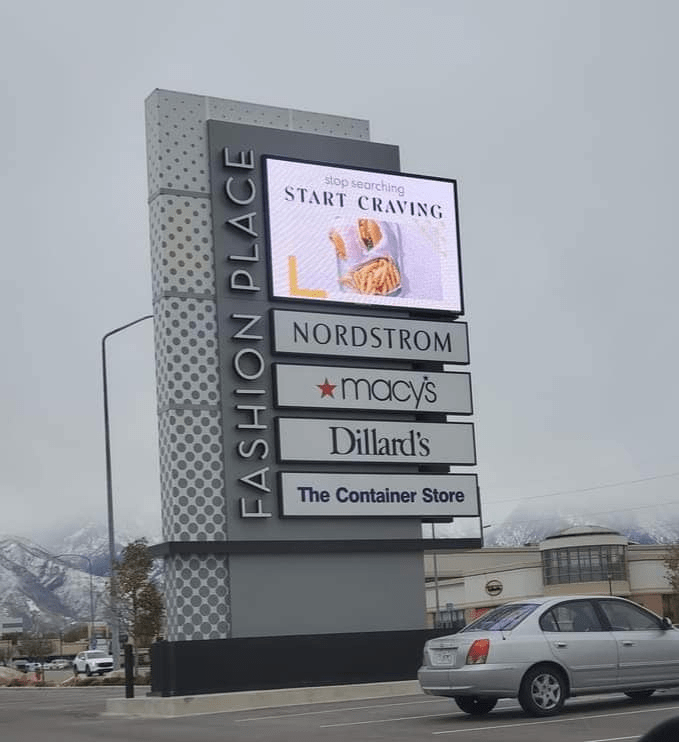



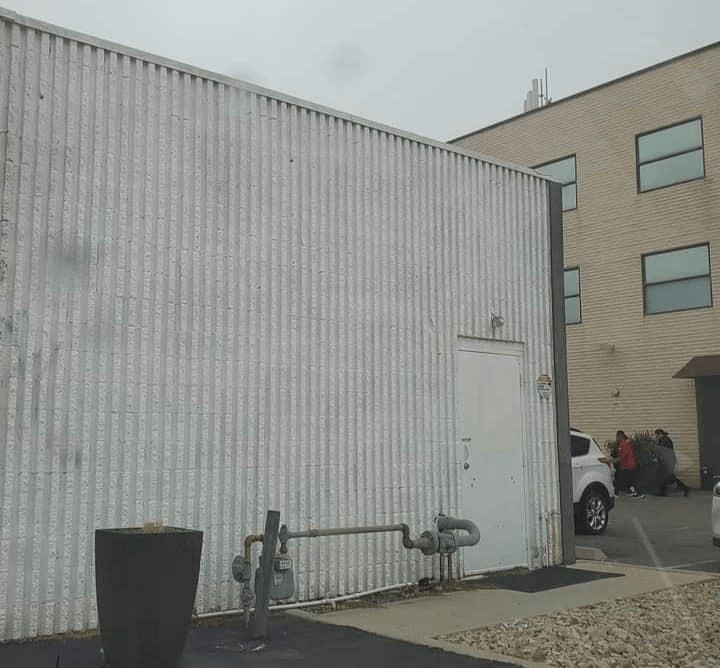
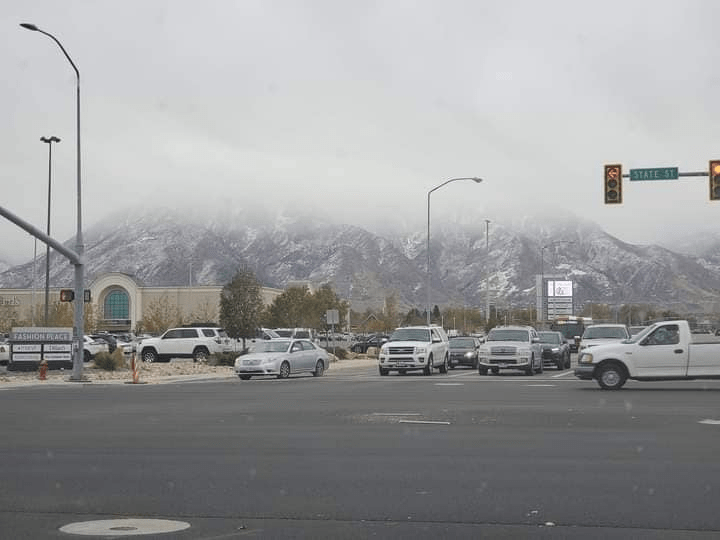
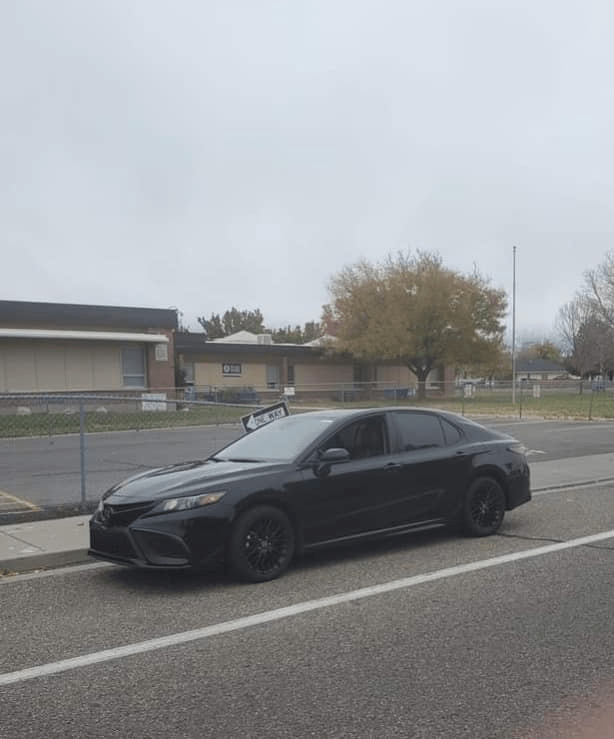

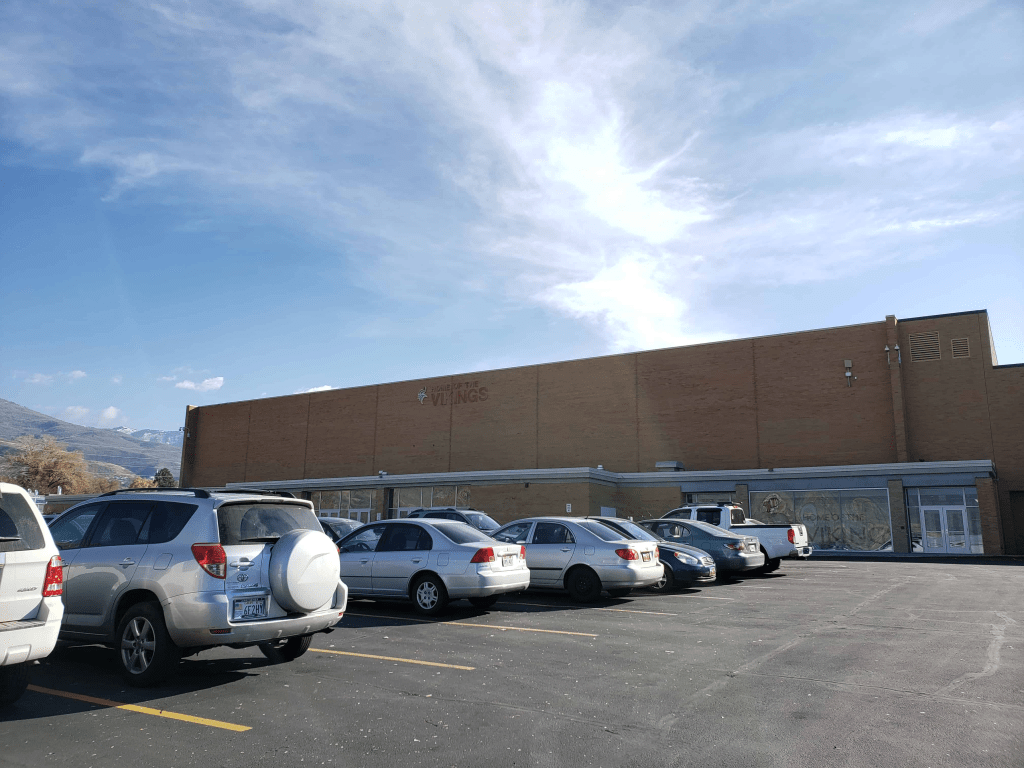
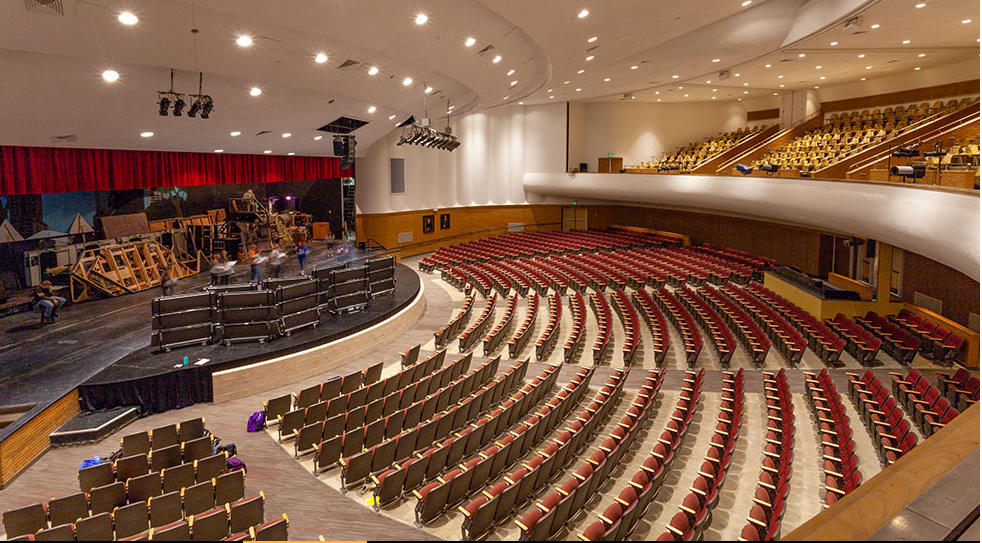


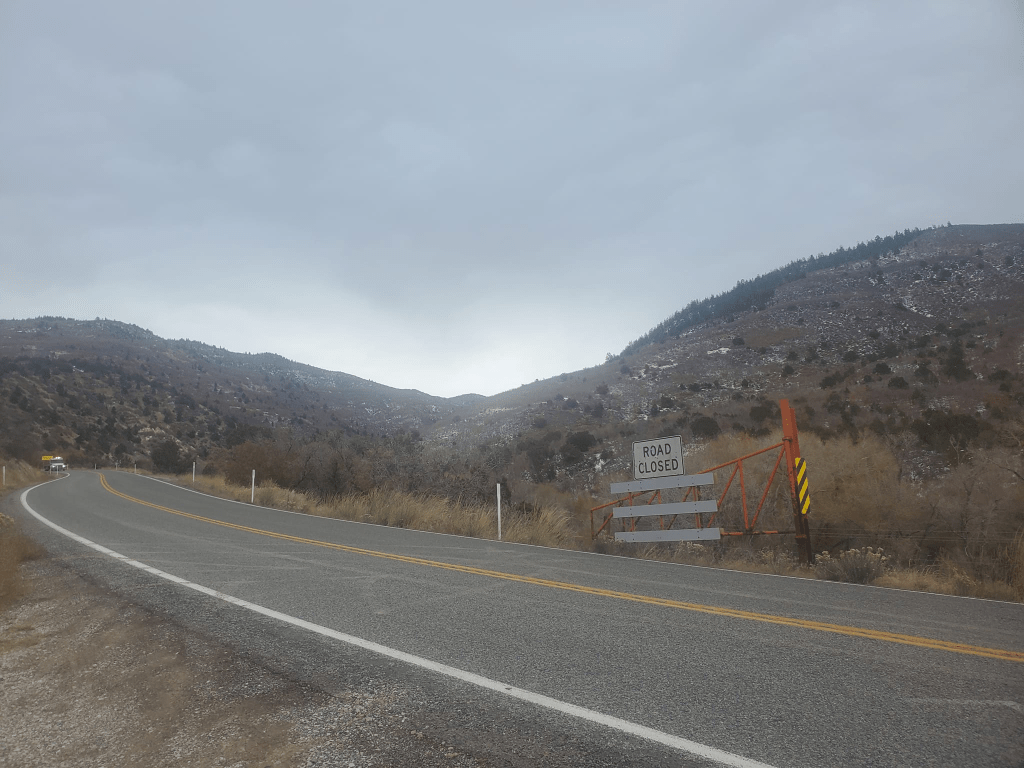



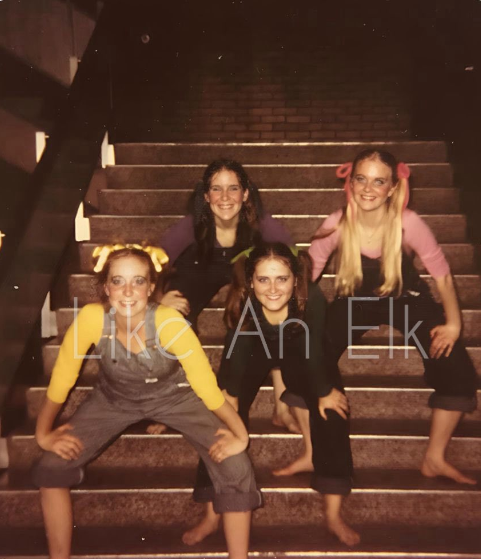
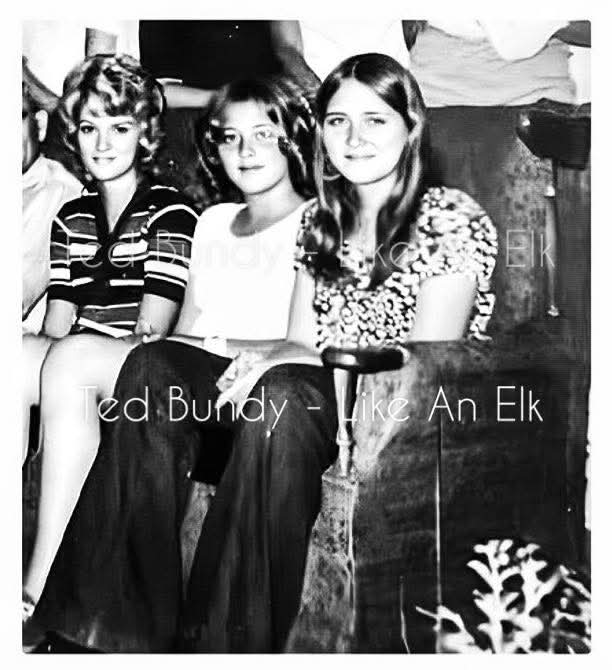

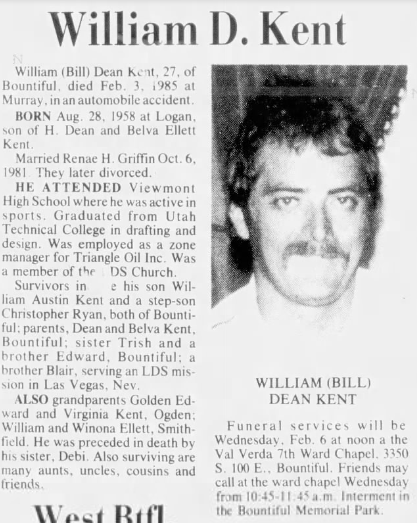

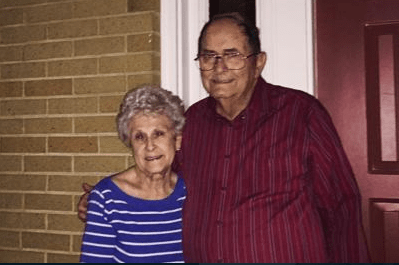

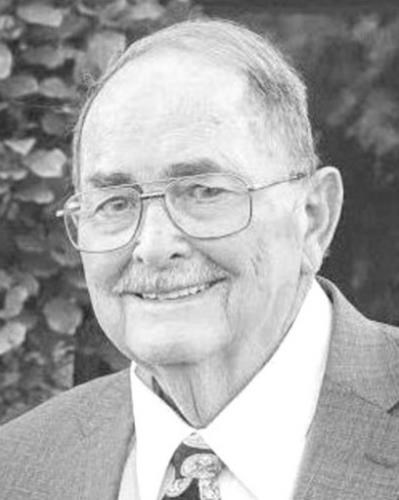
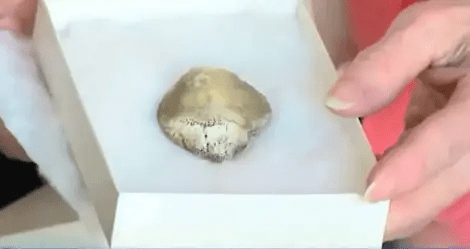


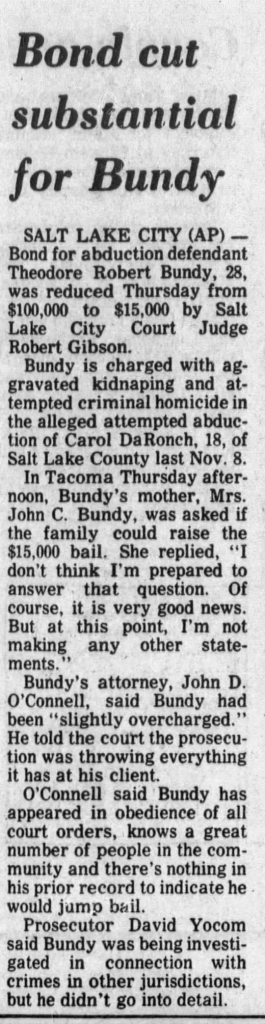
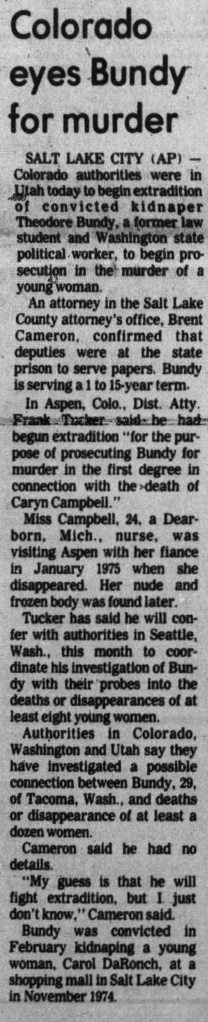
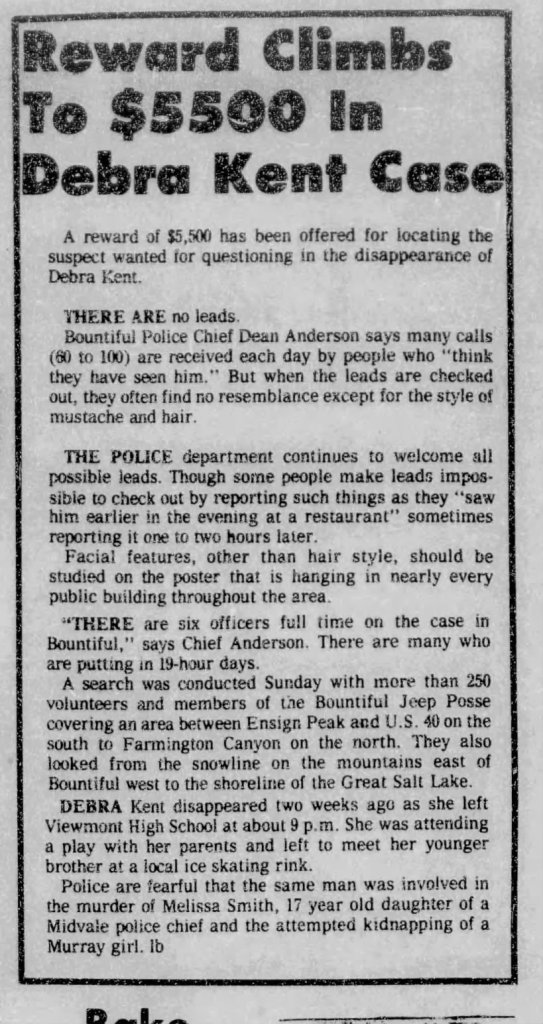


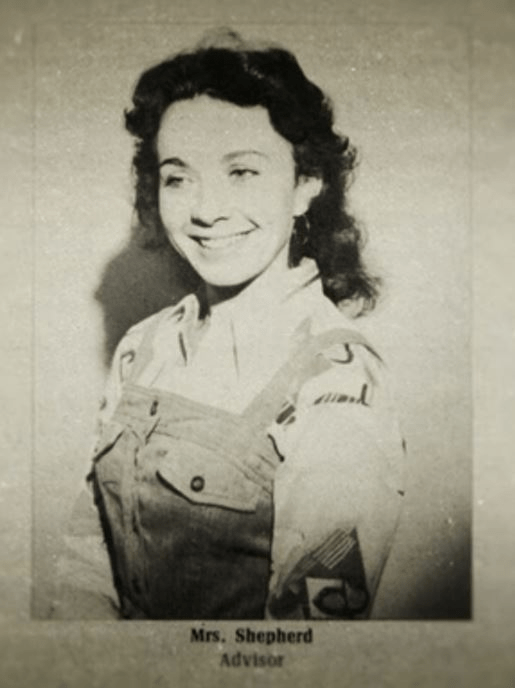


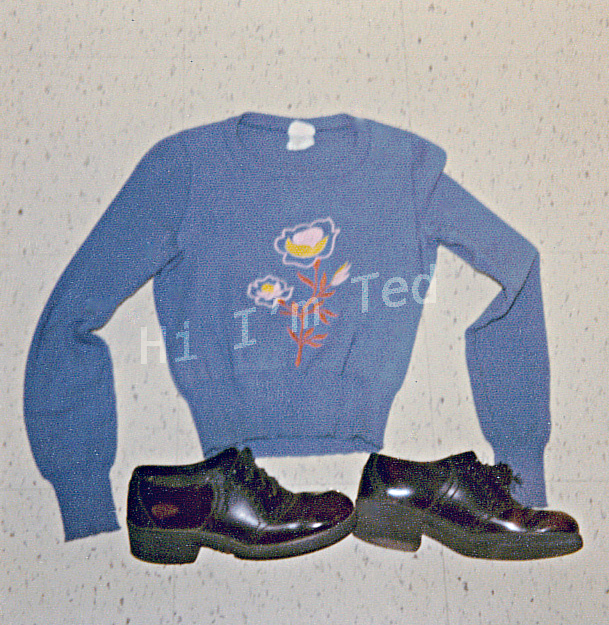
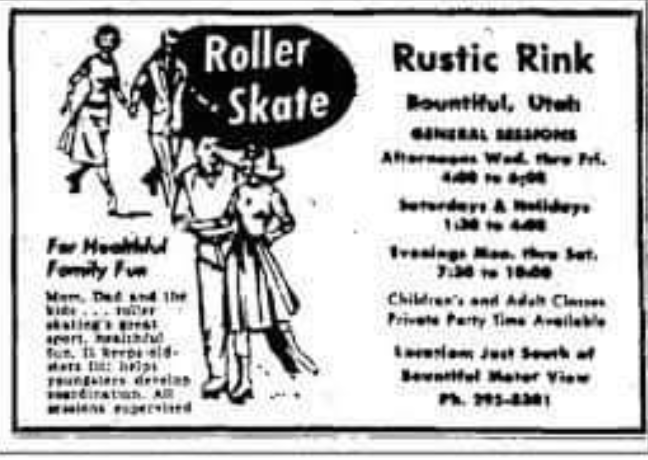
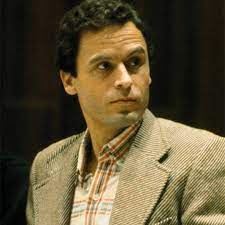
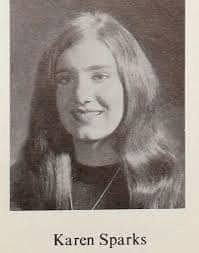


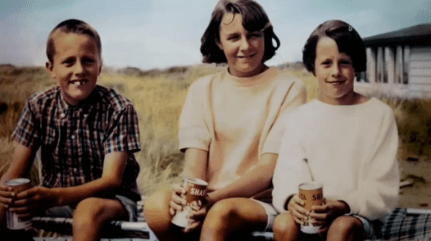


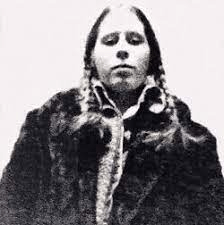

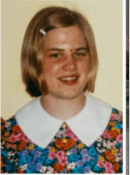
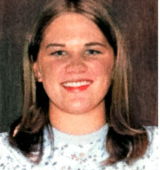


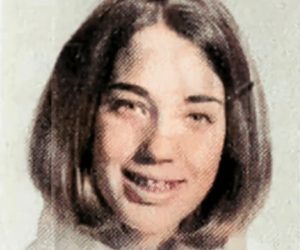

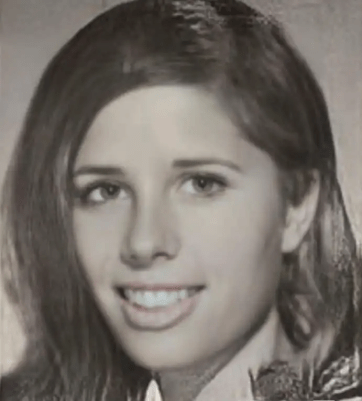

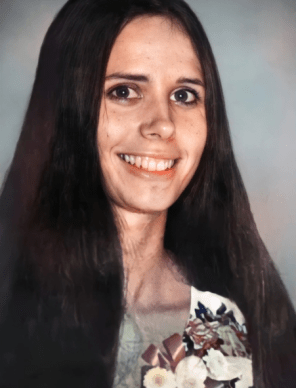


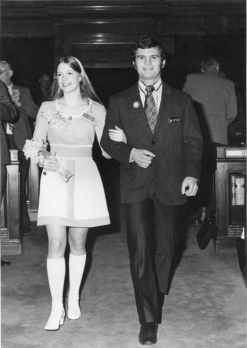
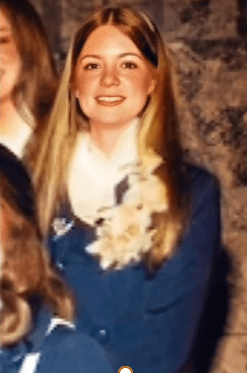


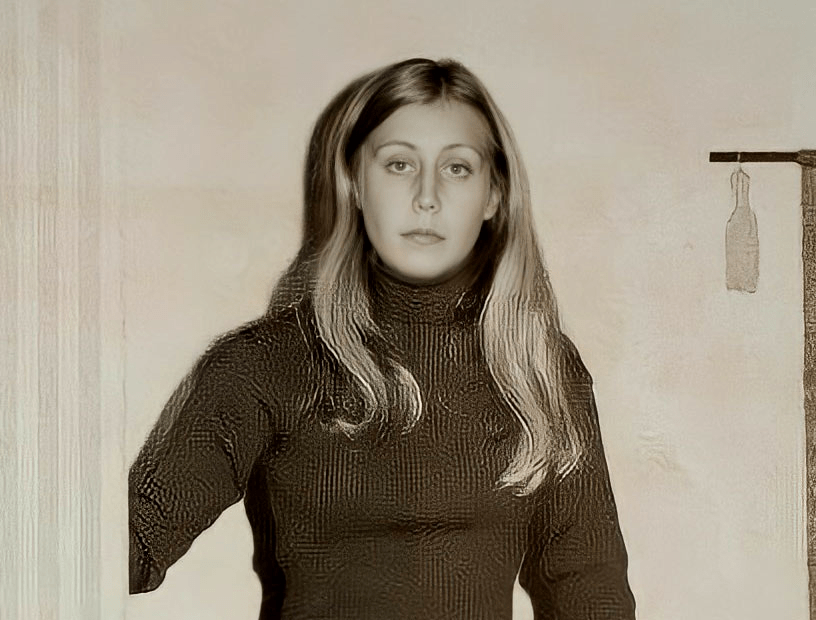

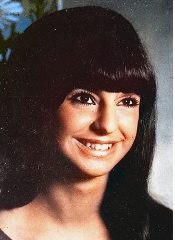

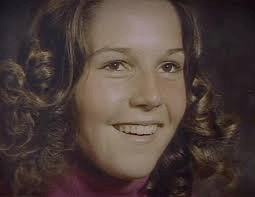
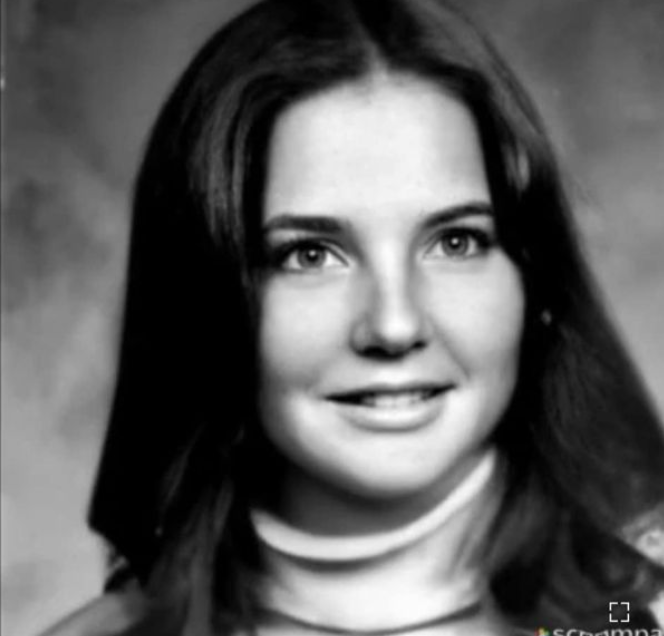

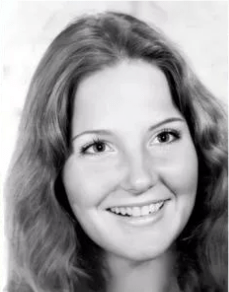
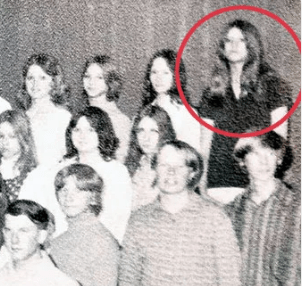



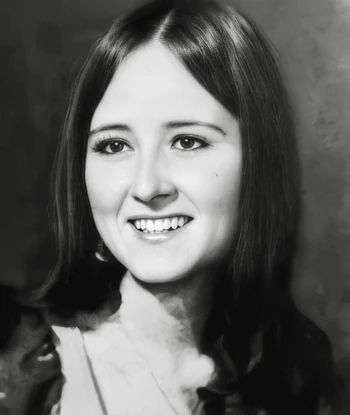

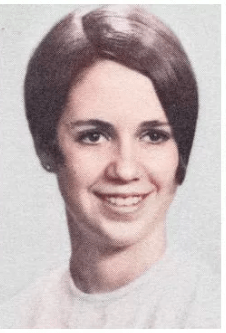

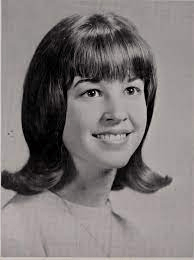
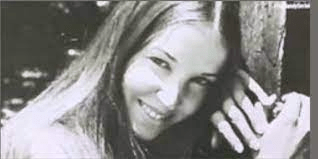
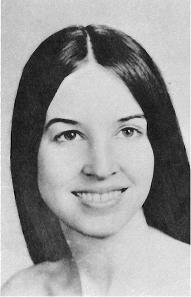
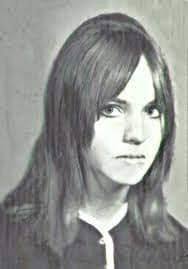
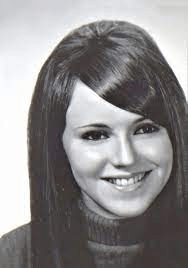


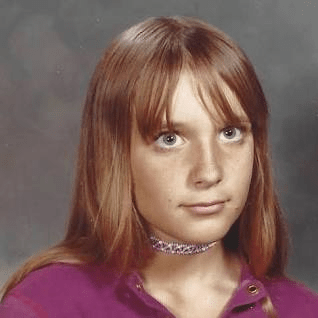


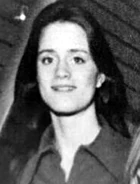

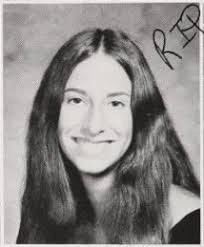
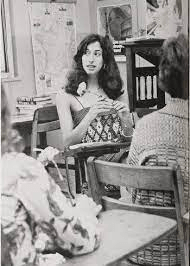
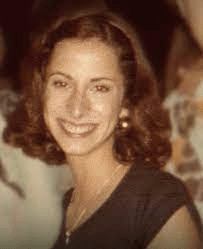
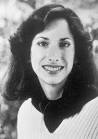


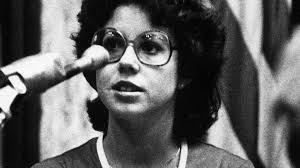



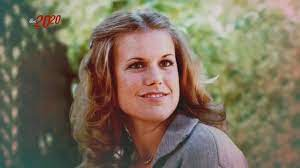








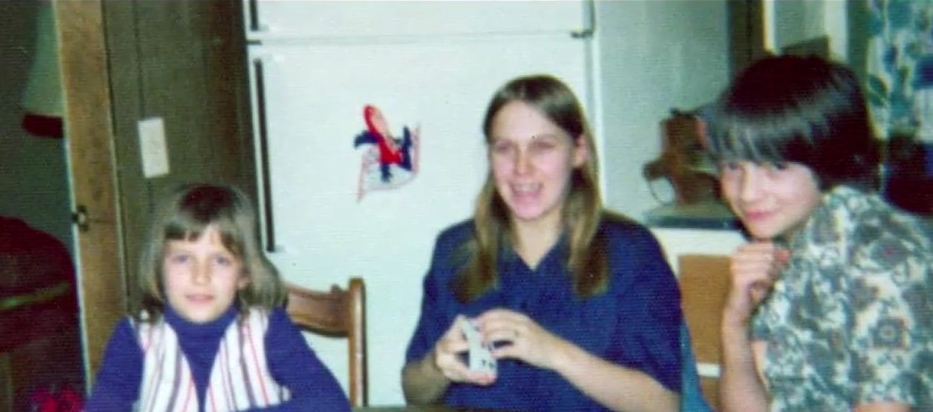


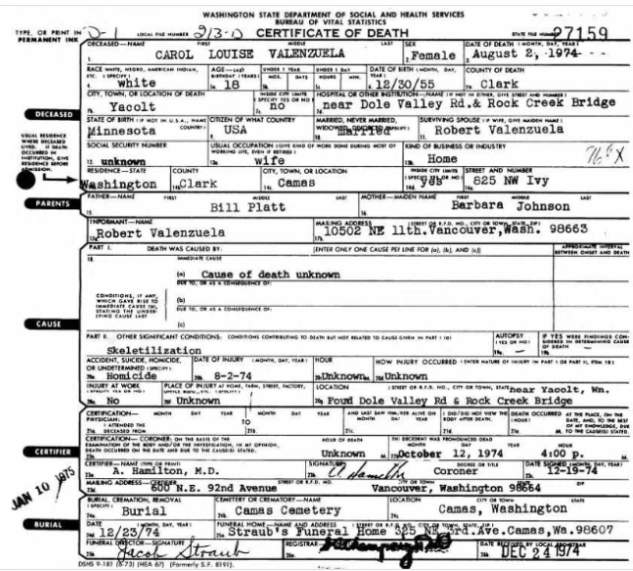
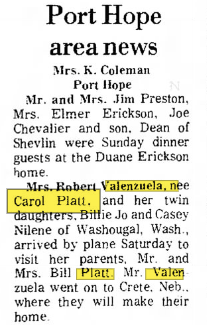
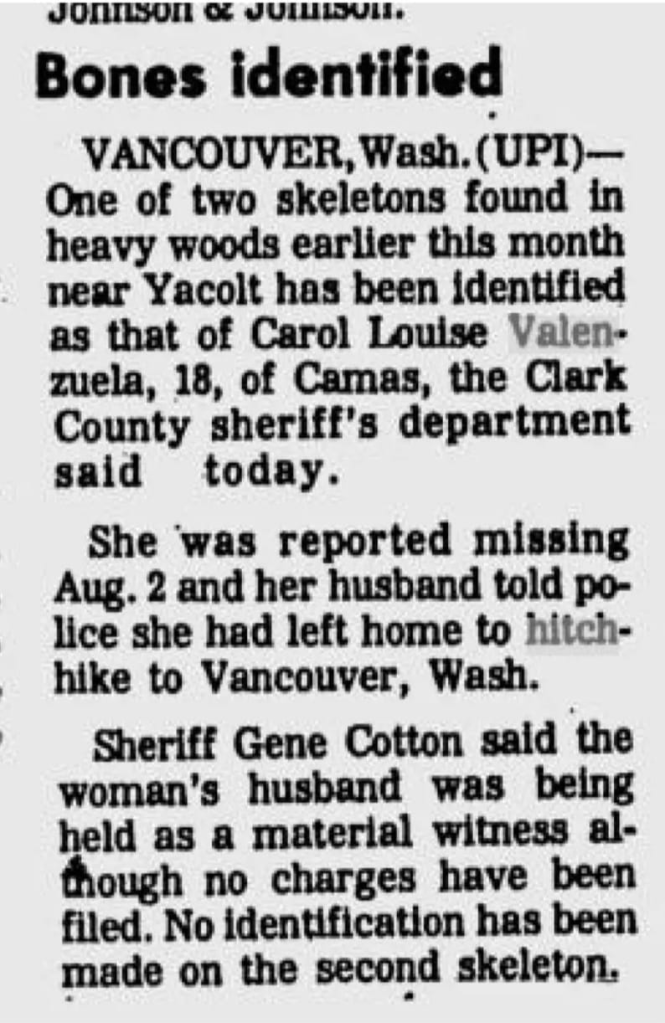


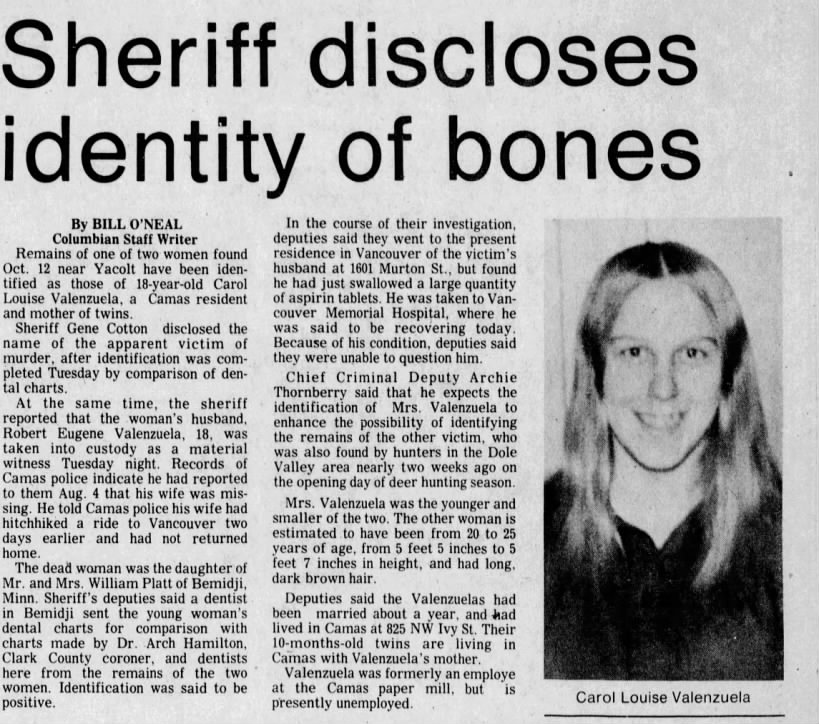

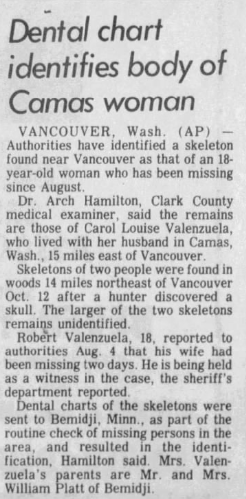
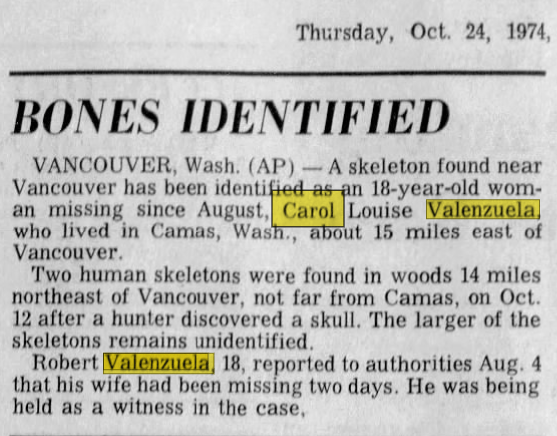
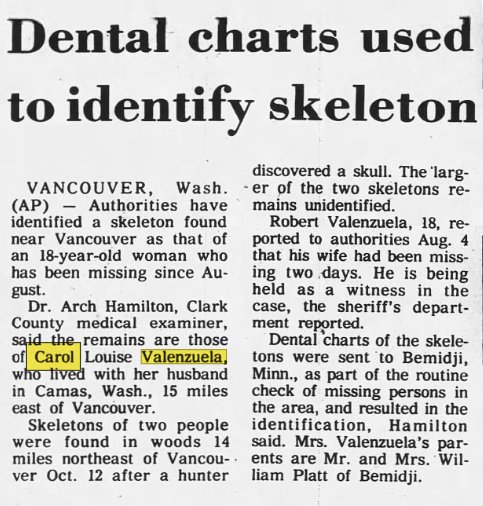

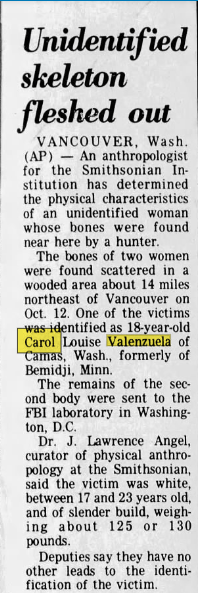

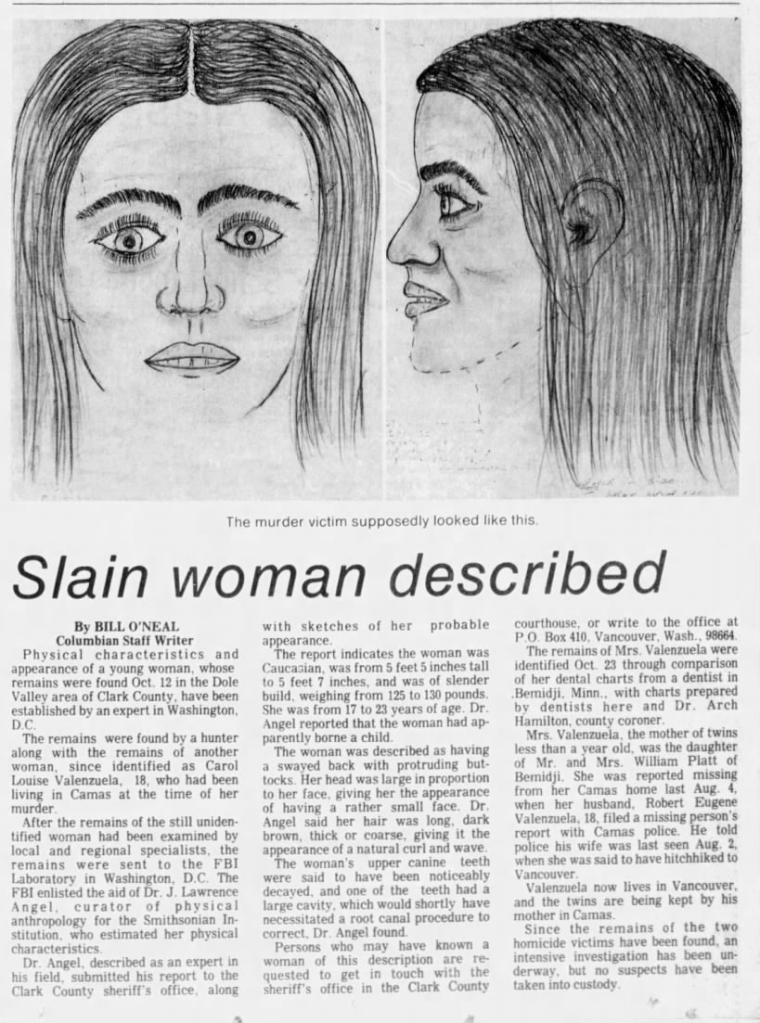


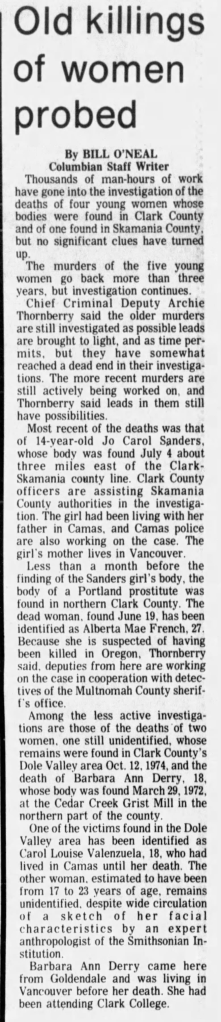

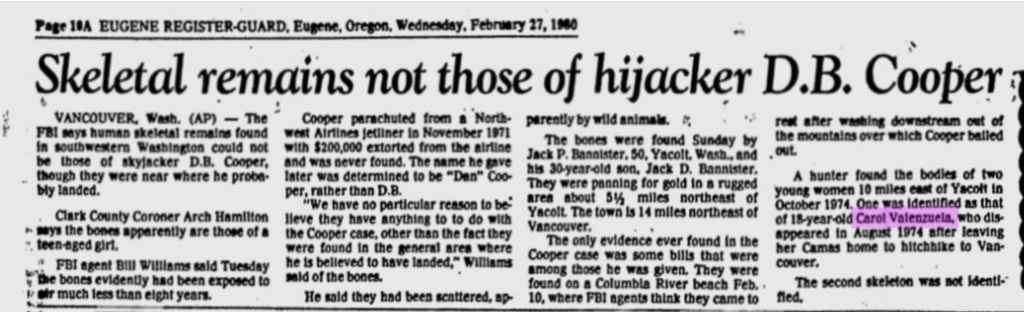
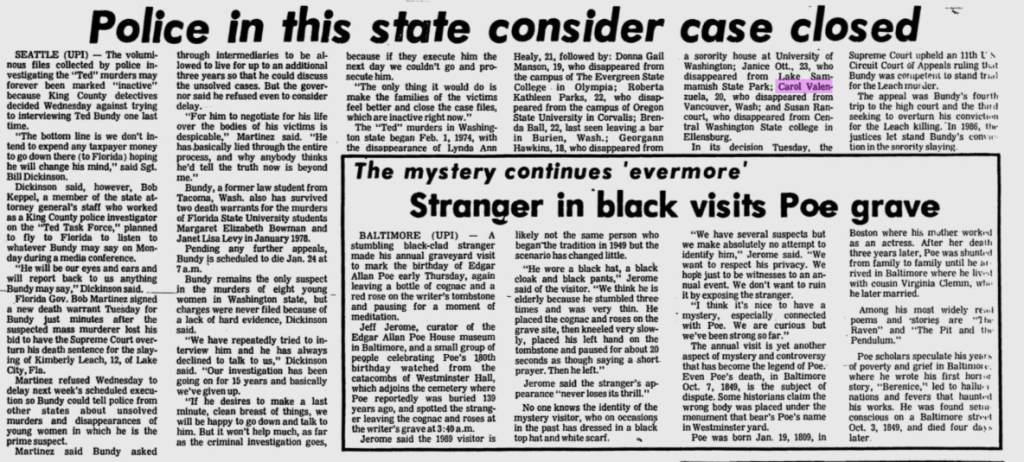
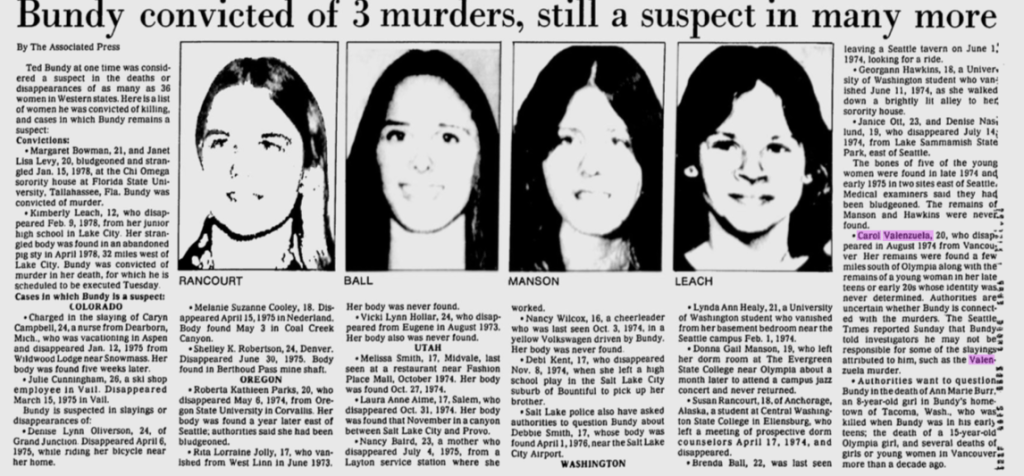

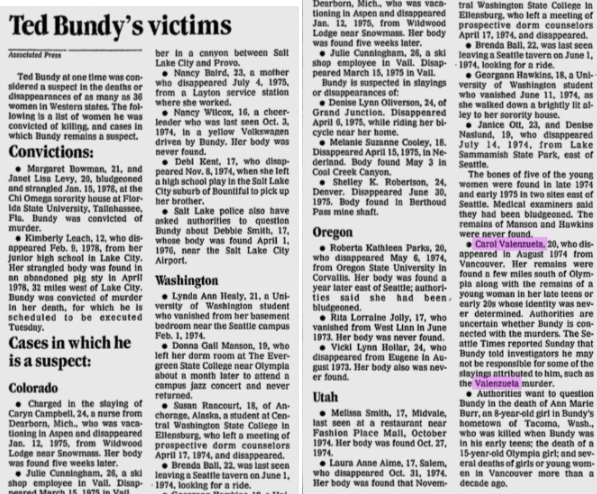

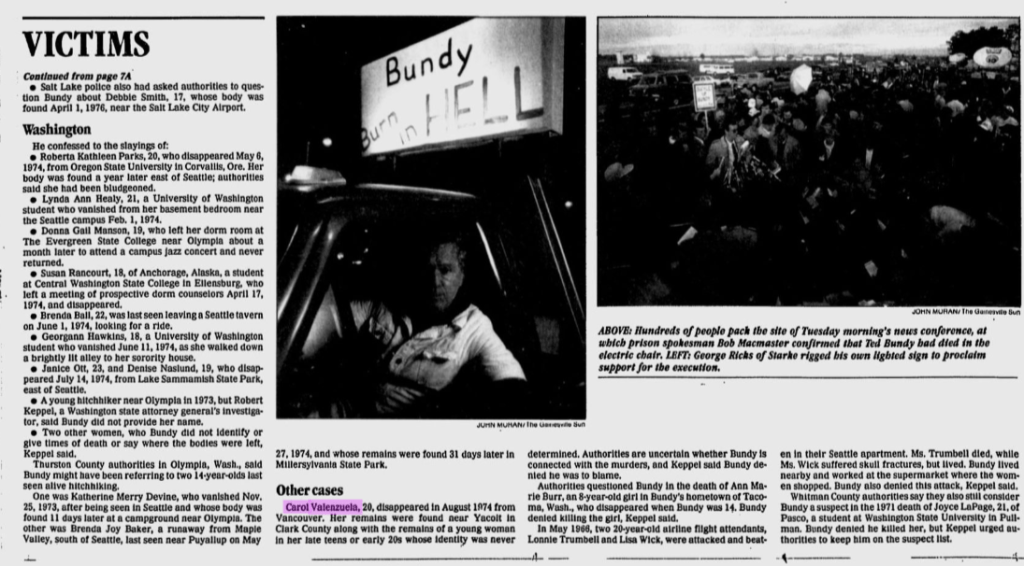
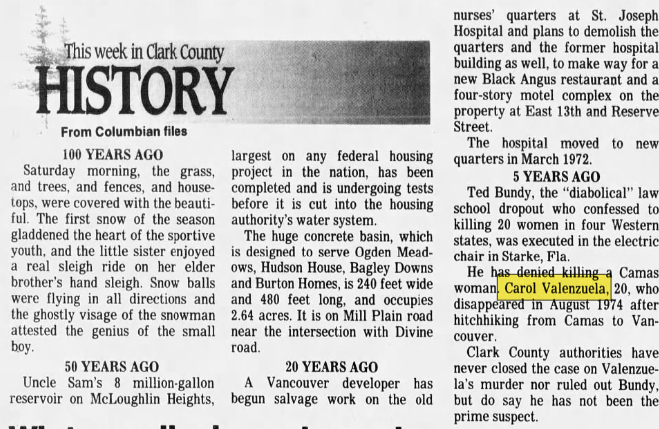
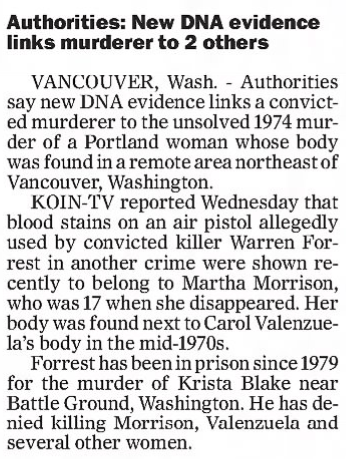
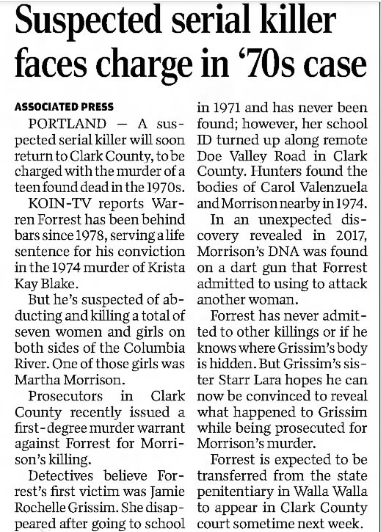
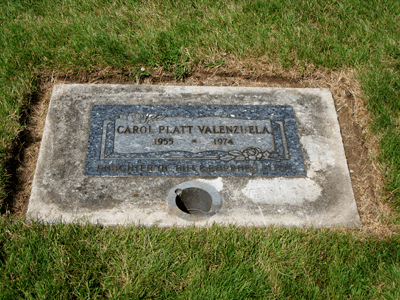



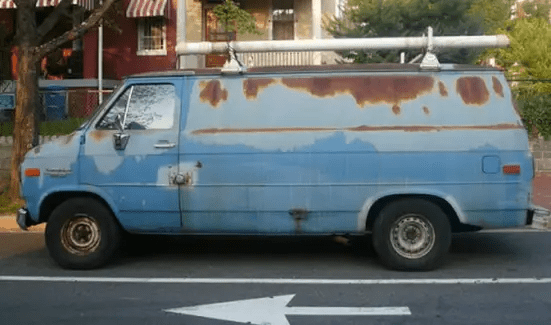
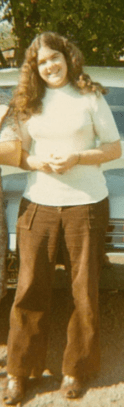
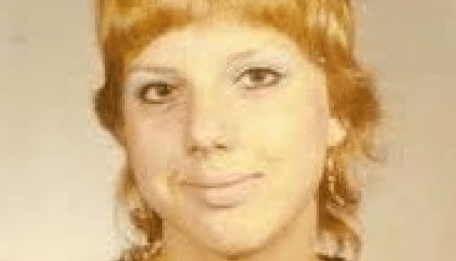
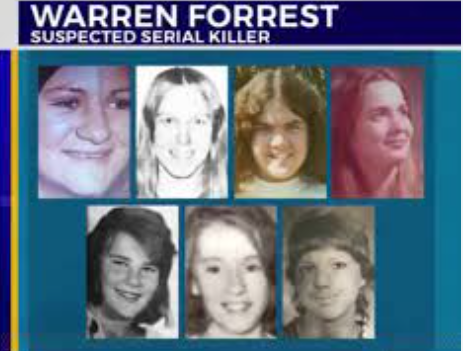
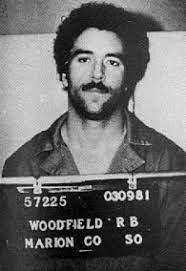



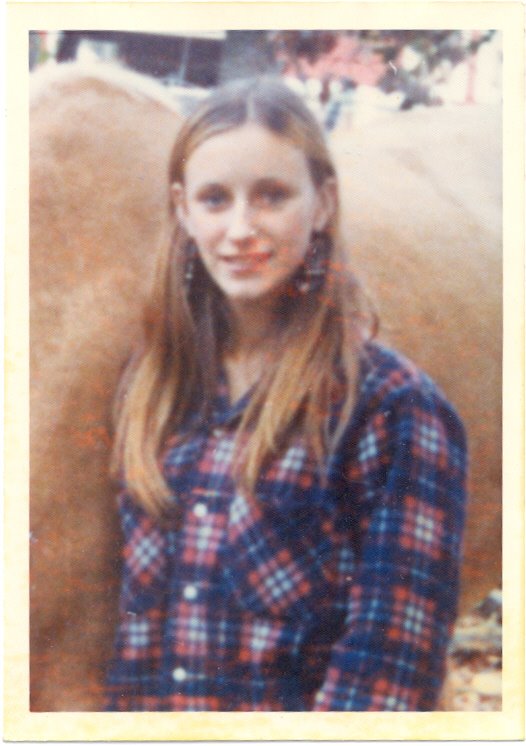


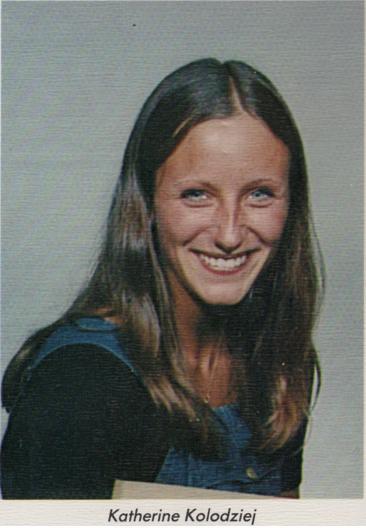

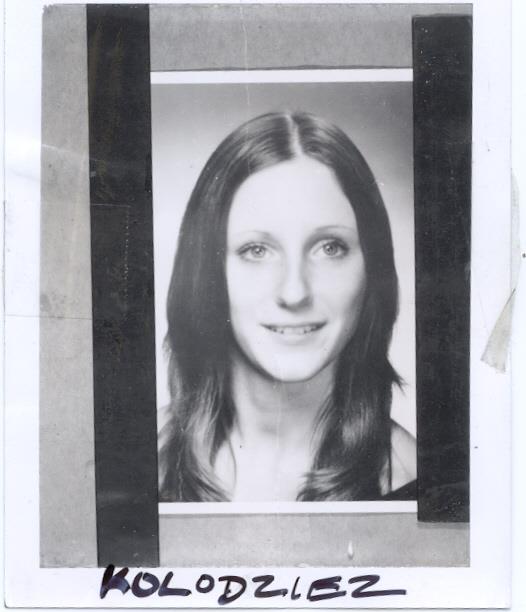
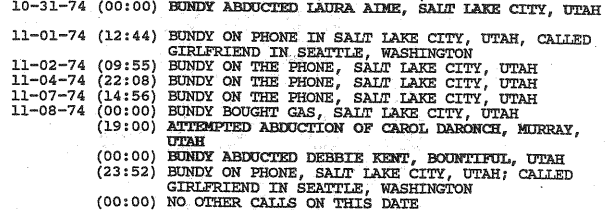
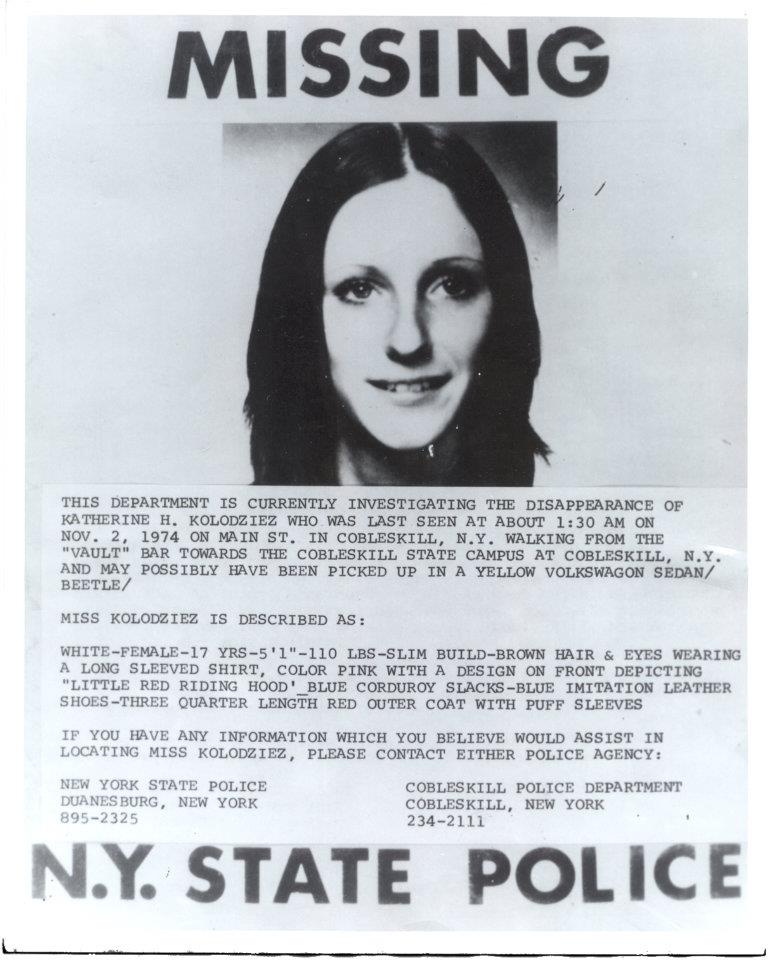
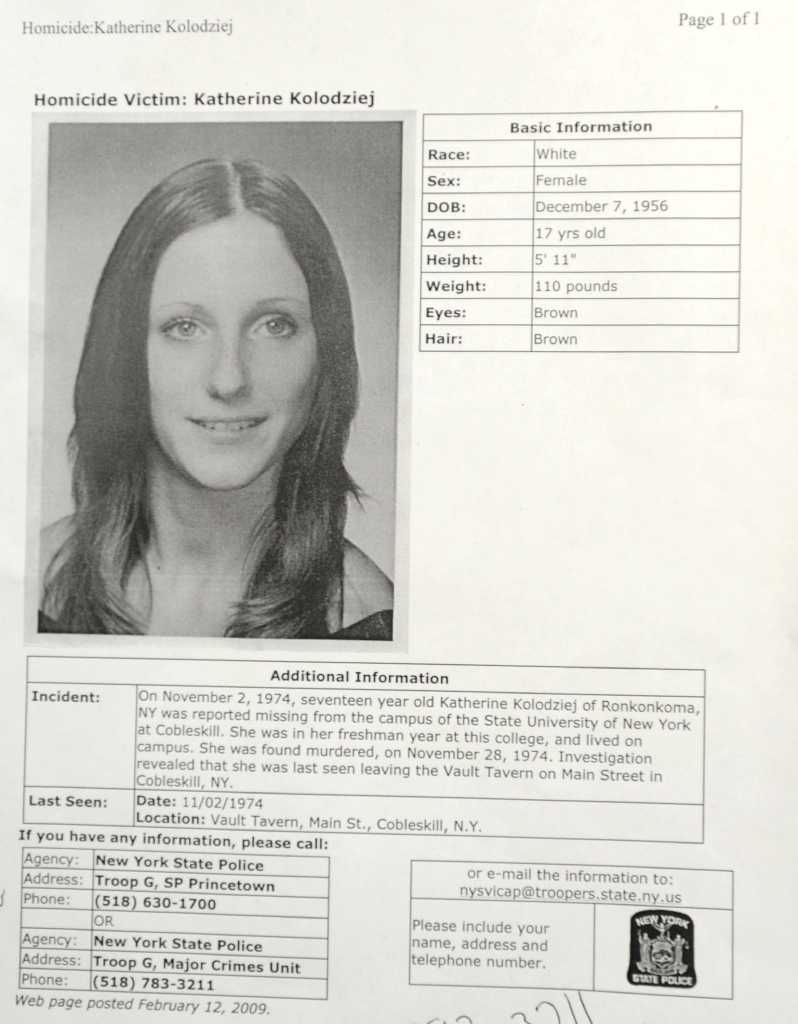
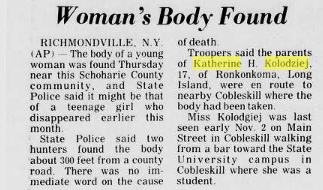

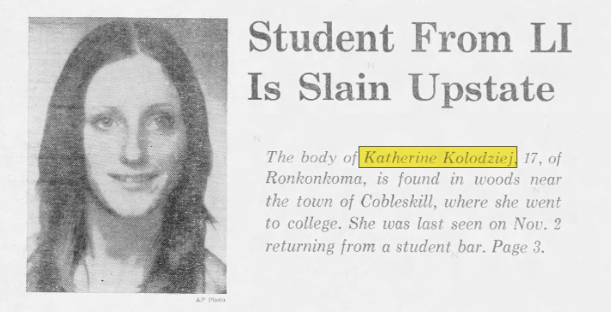


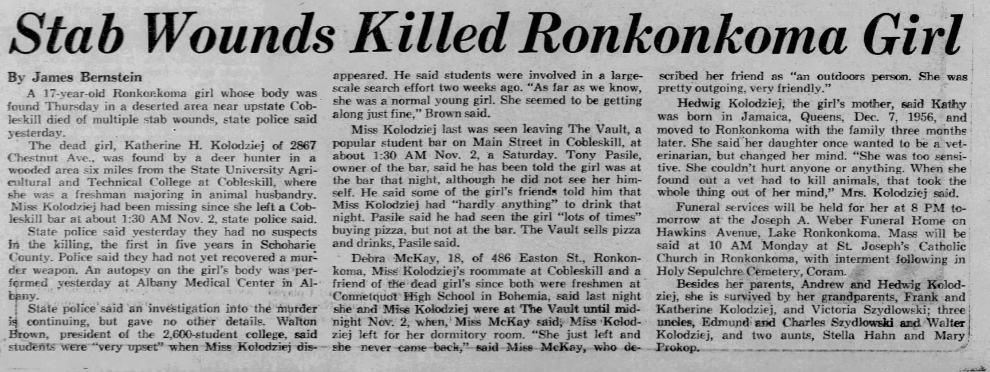
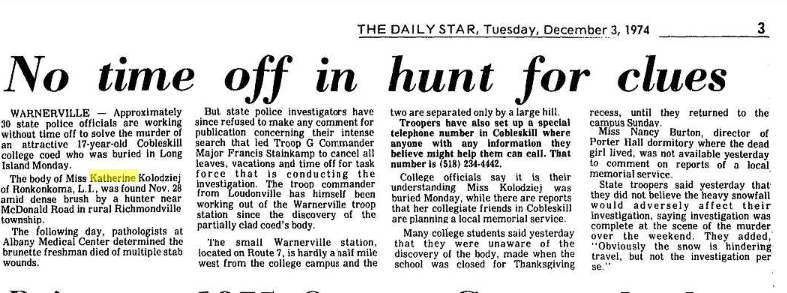


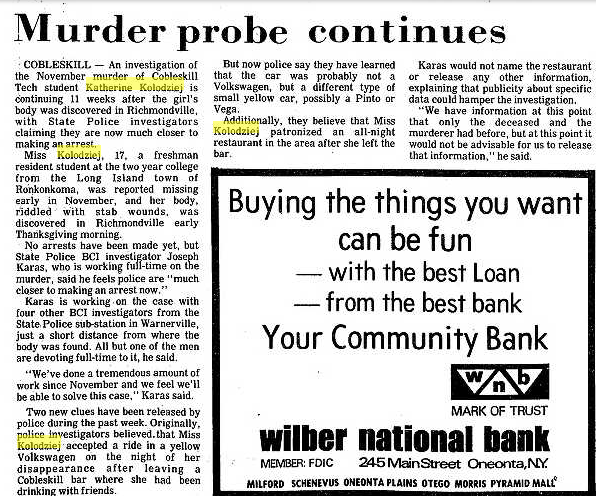
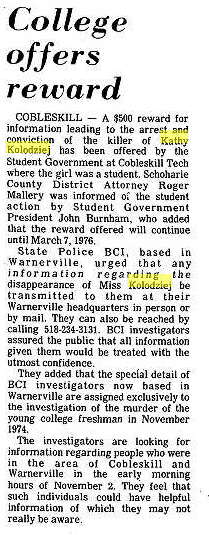

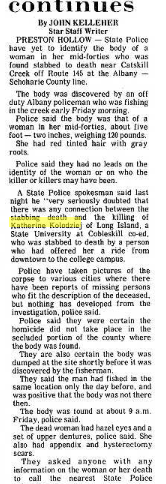
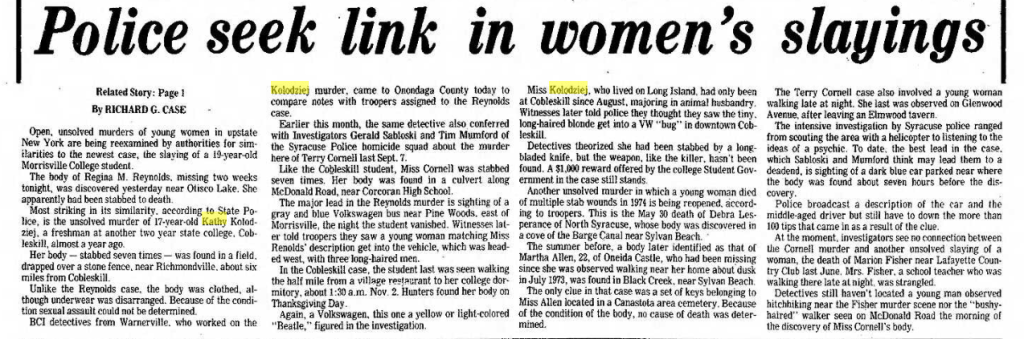
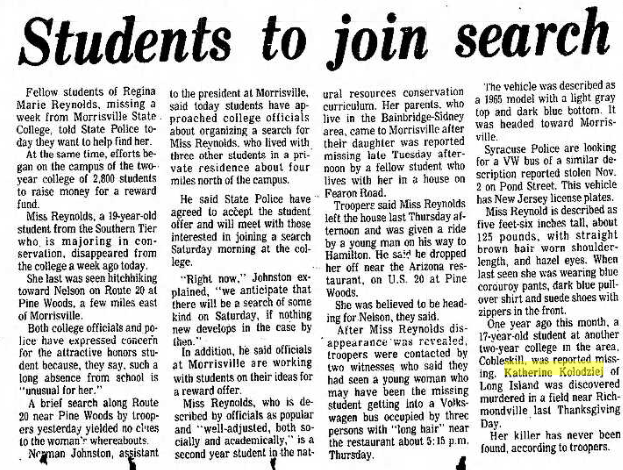

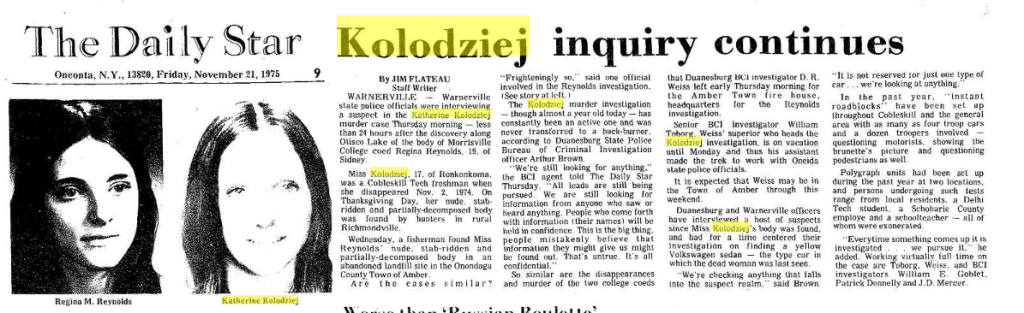

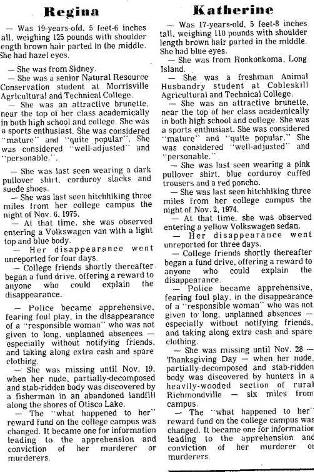
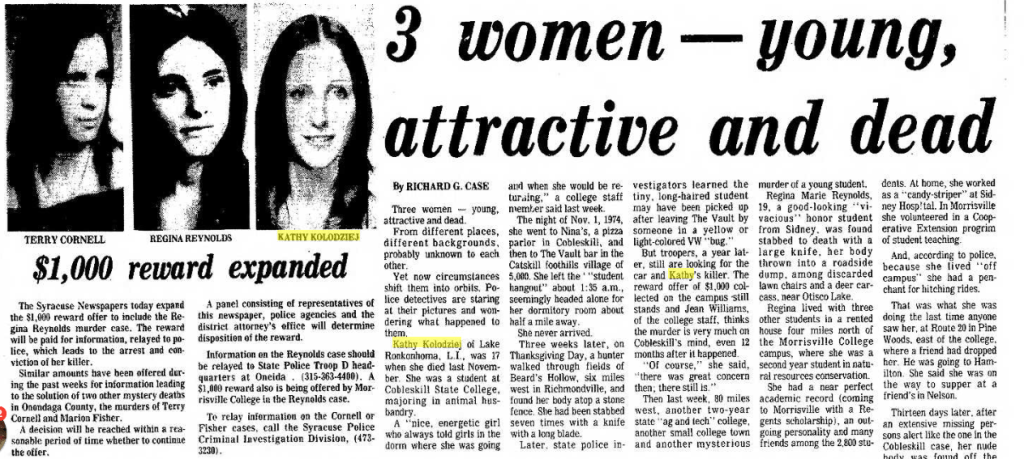



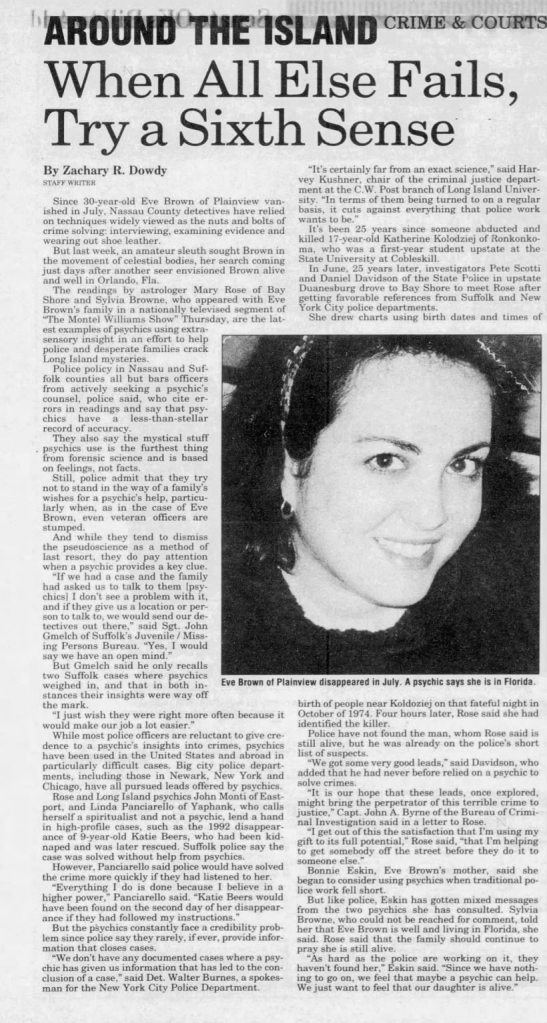

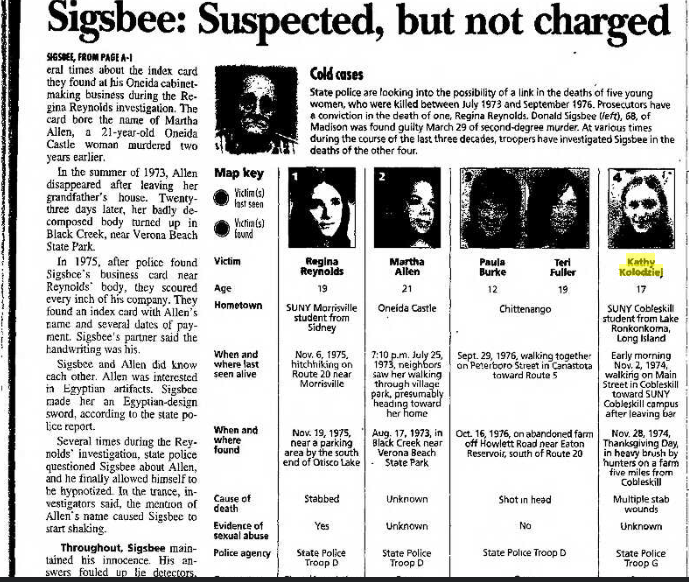


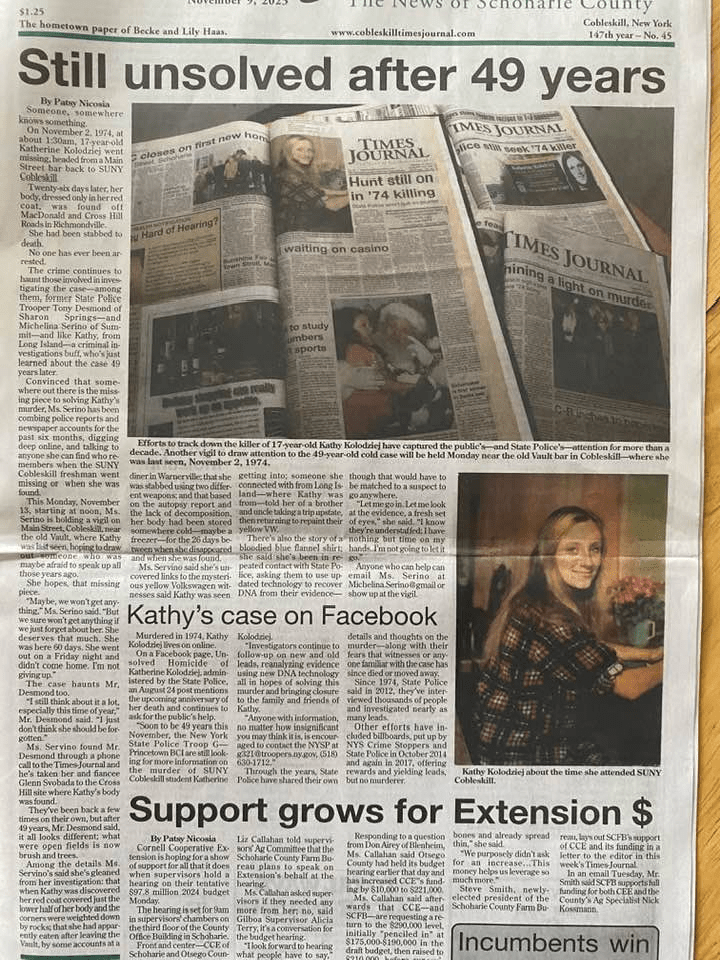


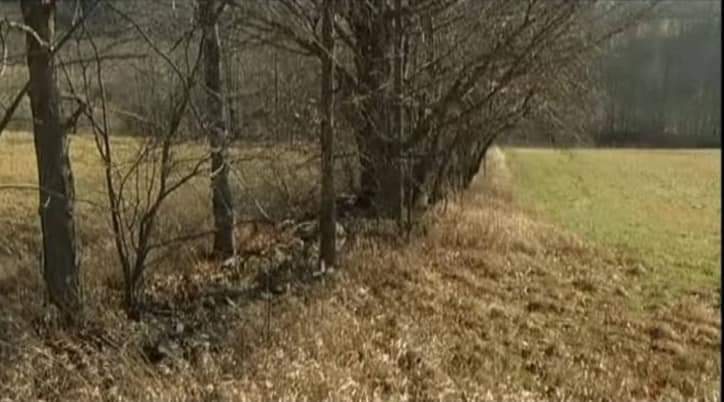


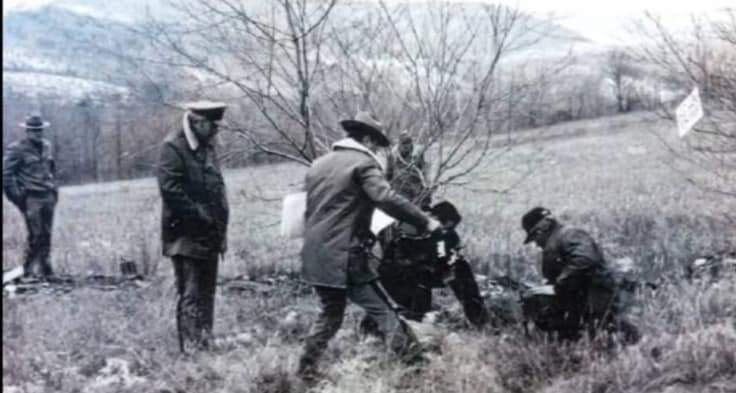
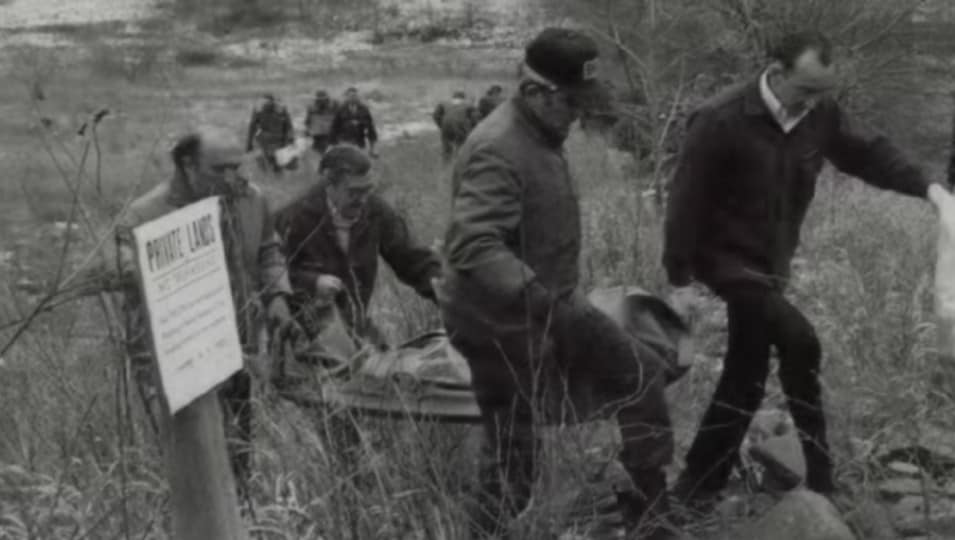

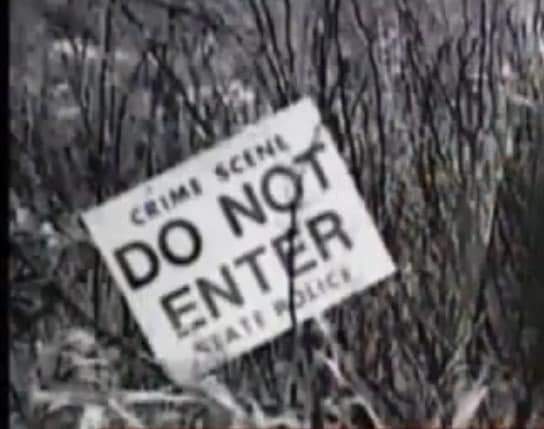
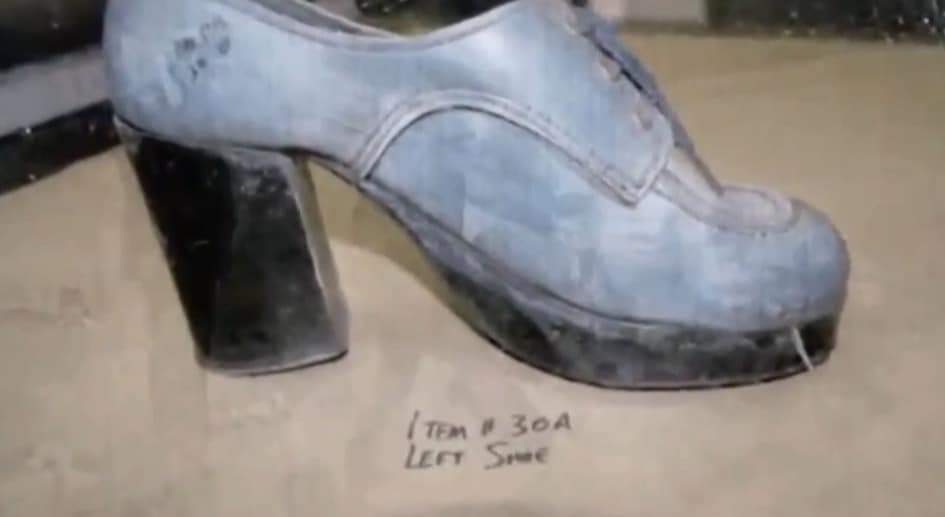
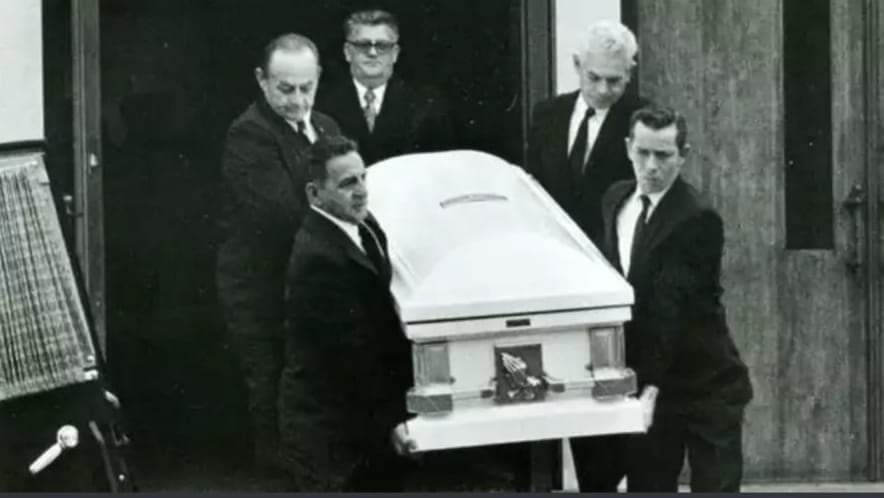


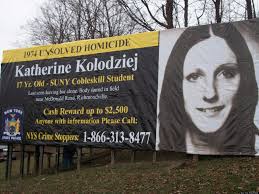


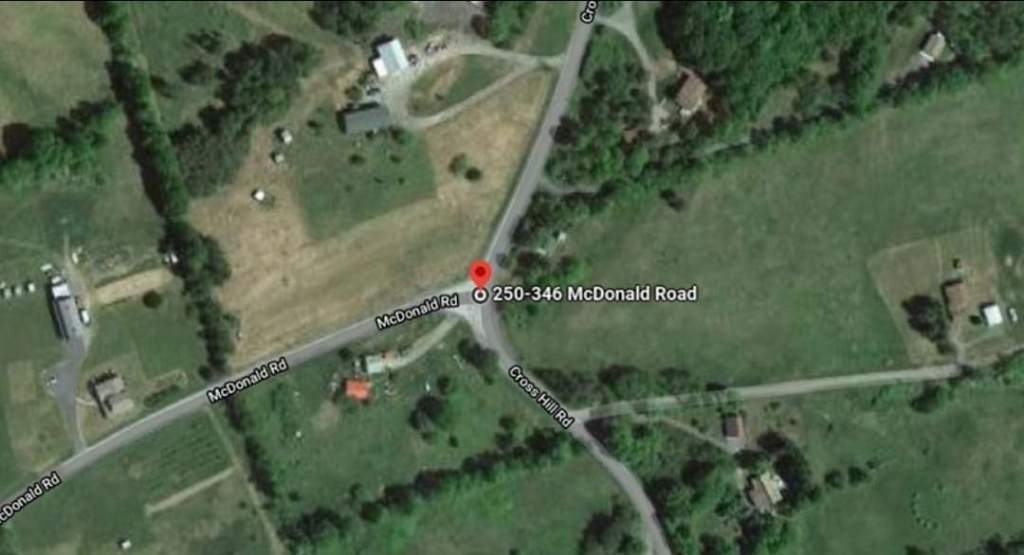


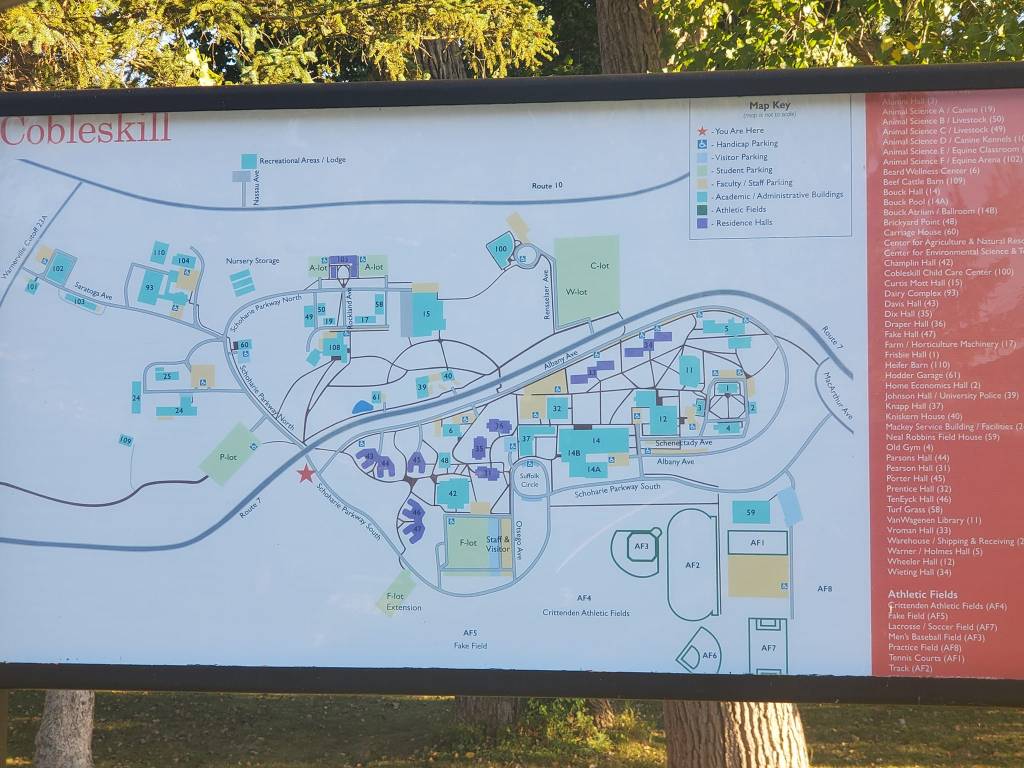


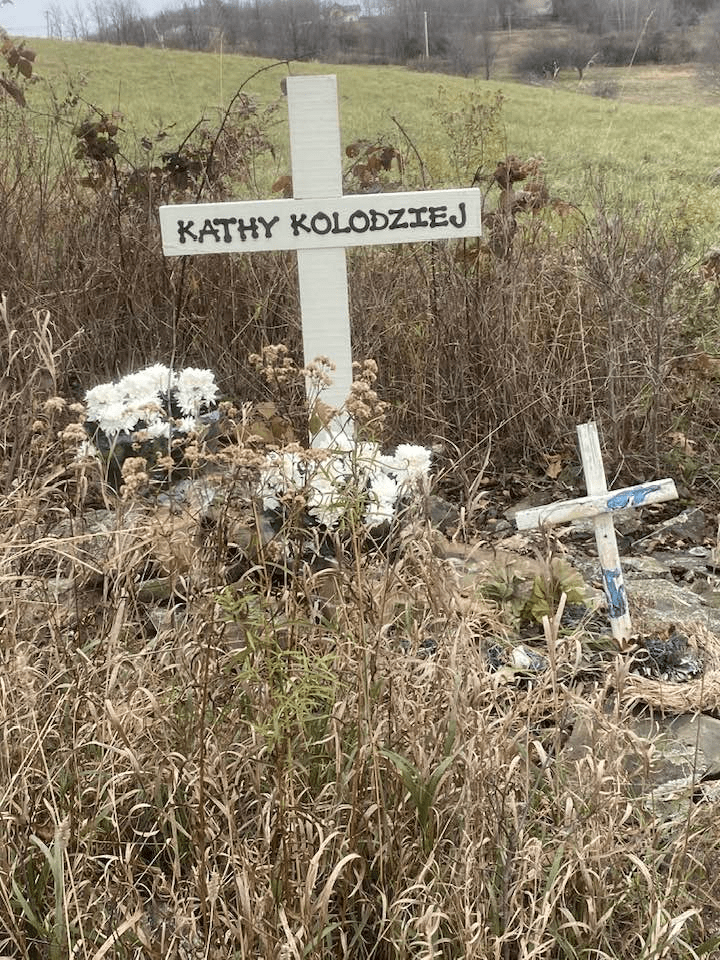




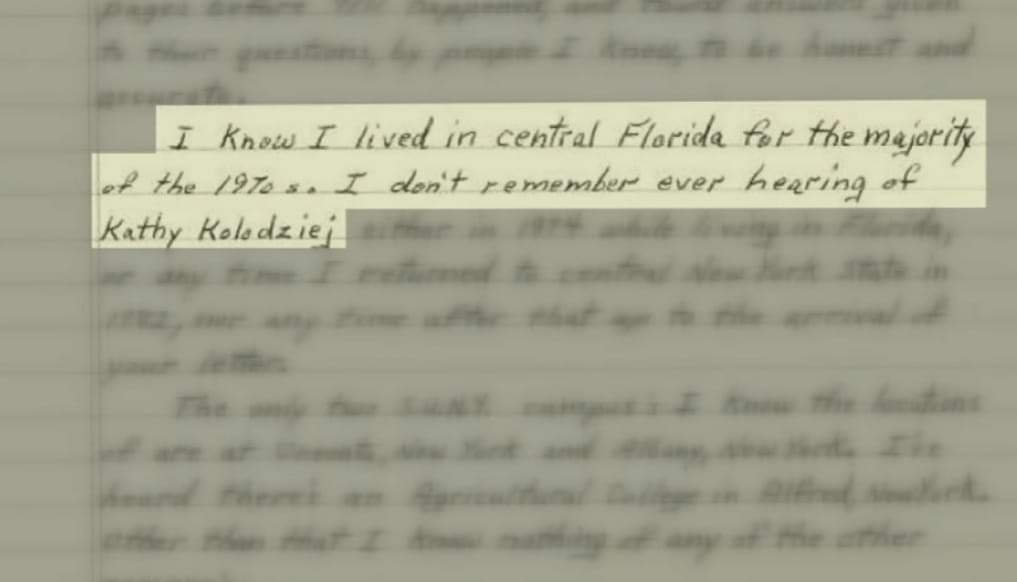
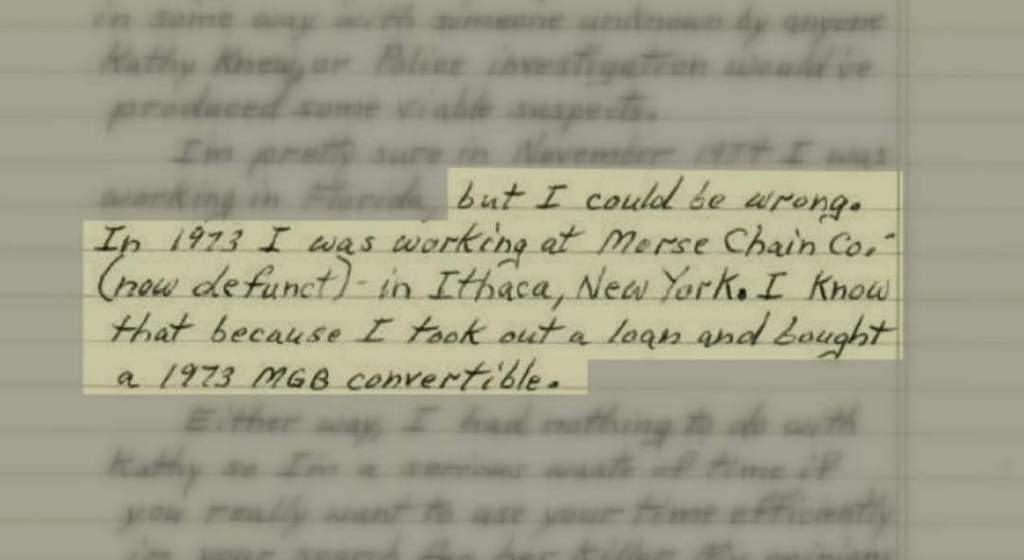



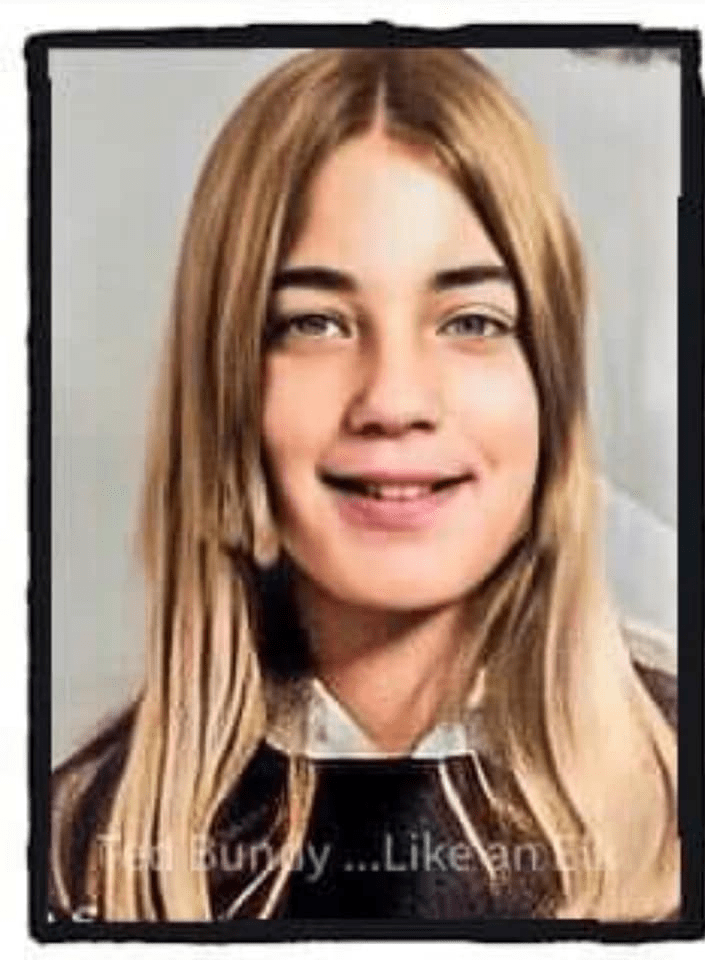
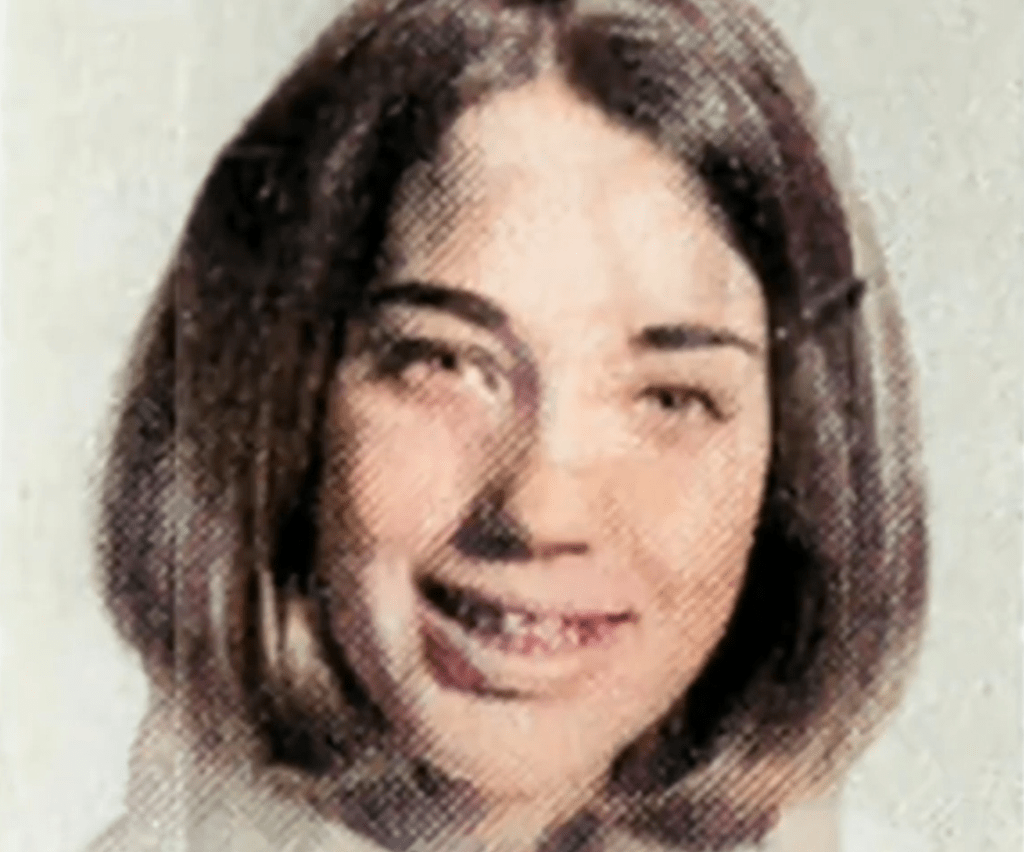
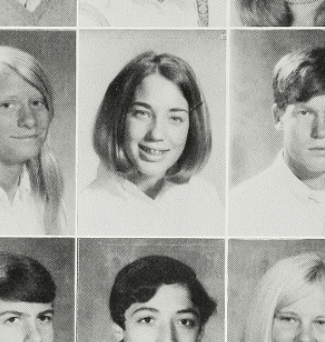

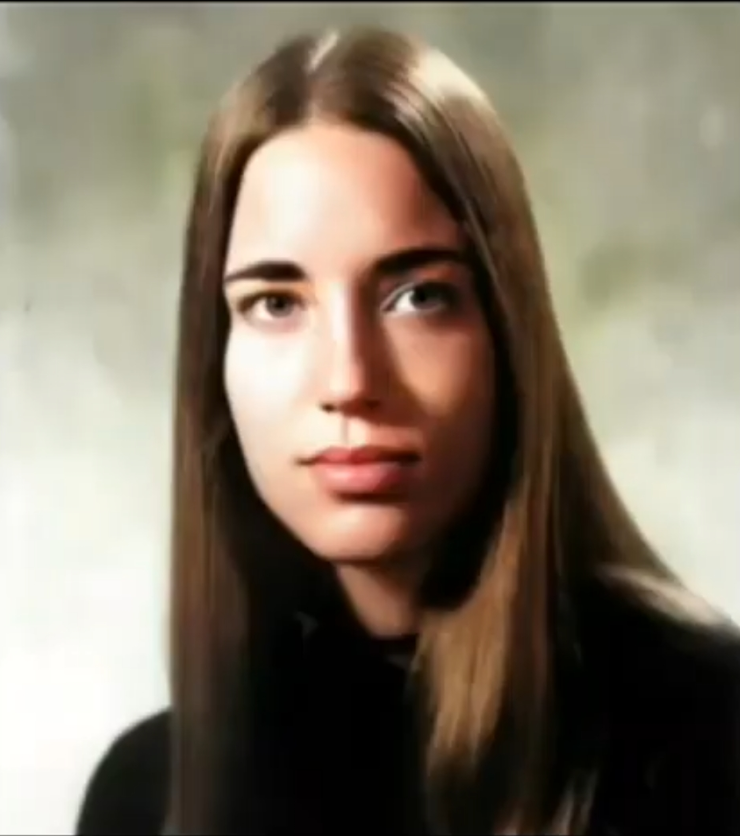
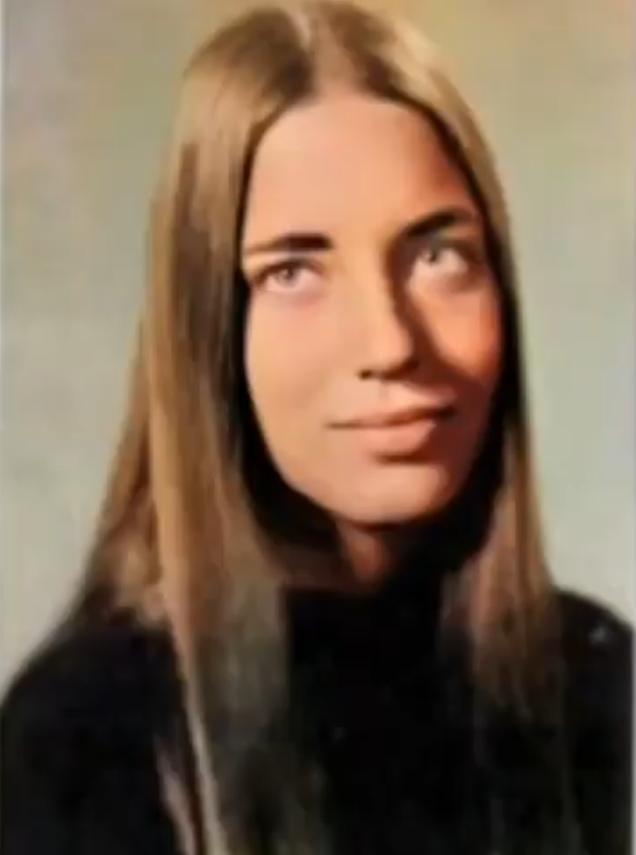
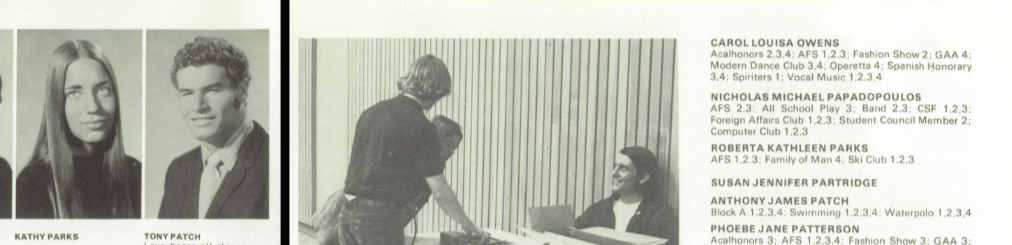
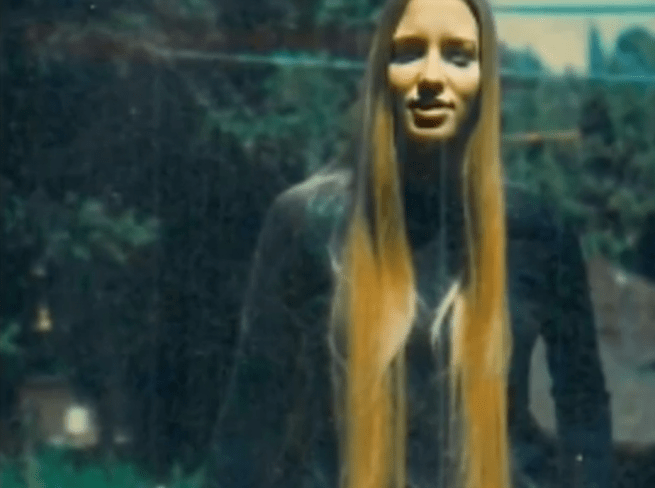


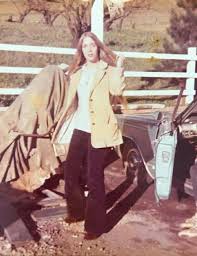

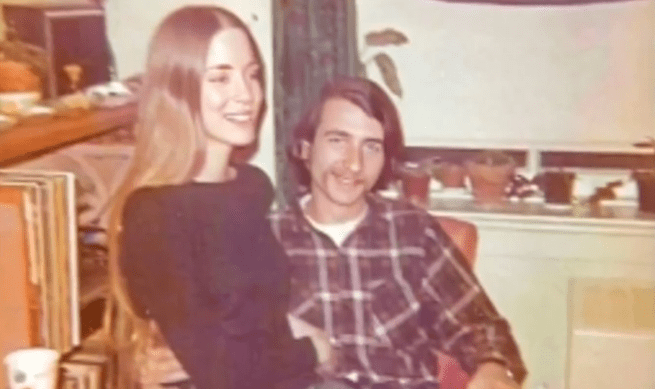
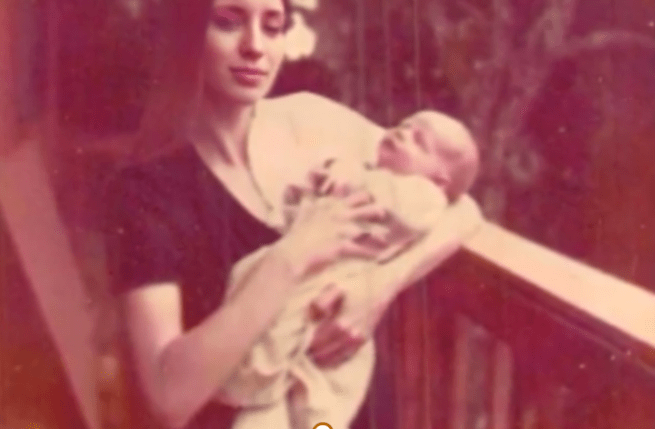
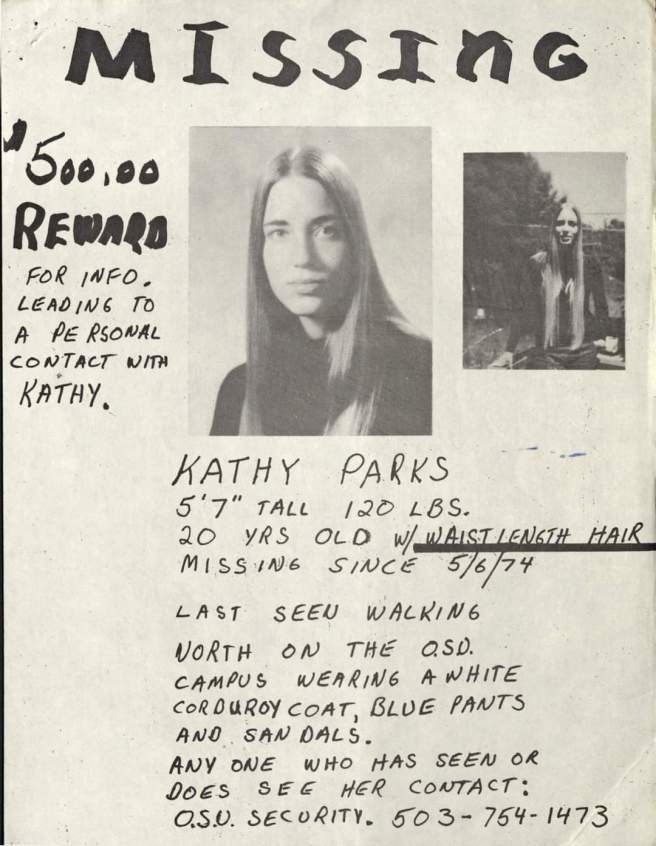

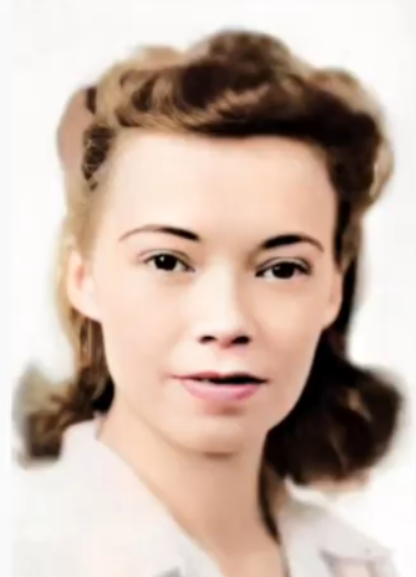

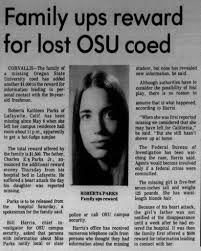
 Another Bundy Blog.