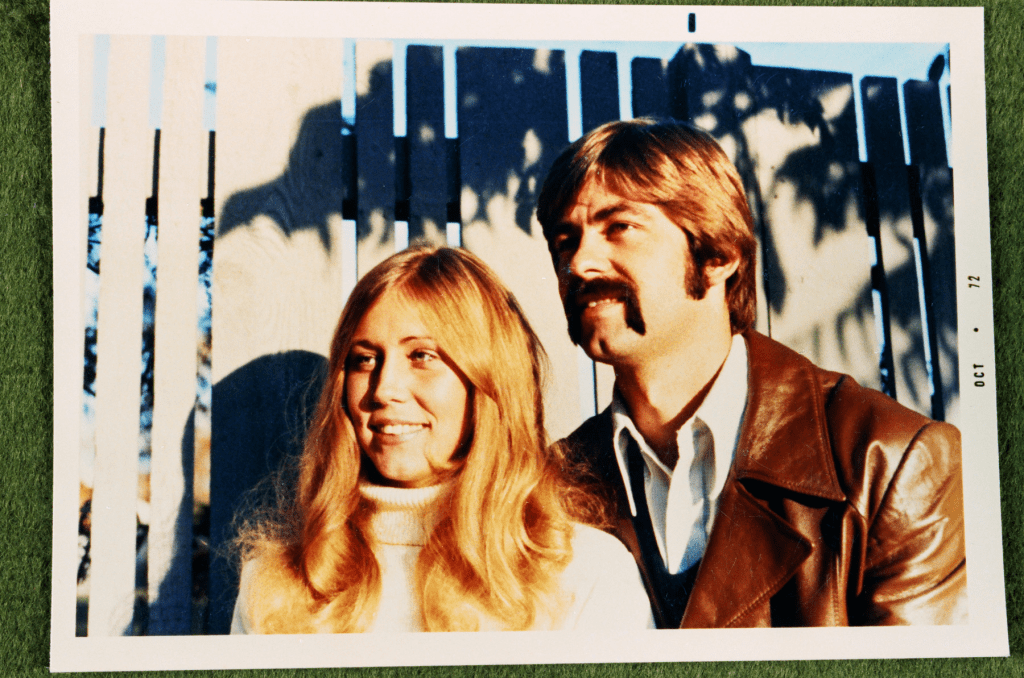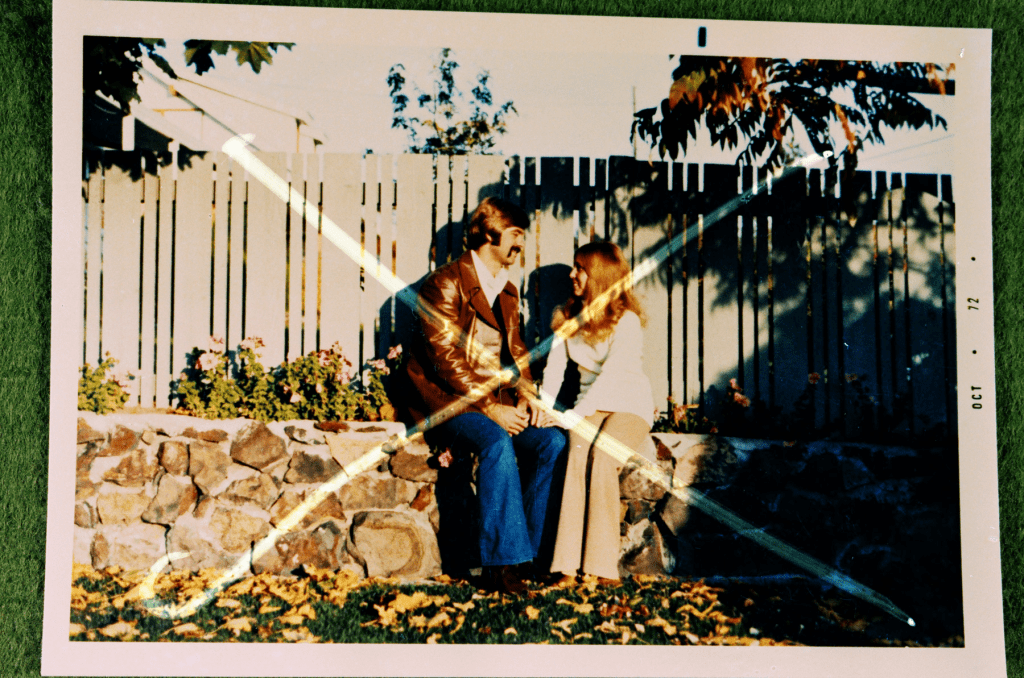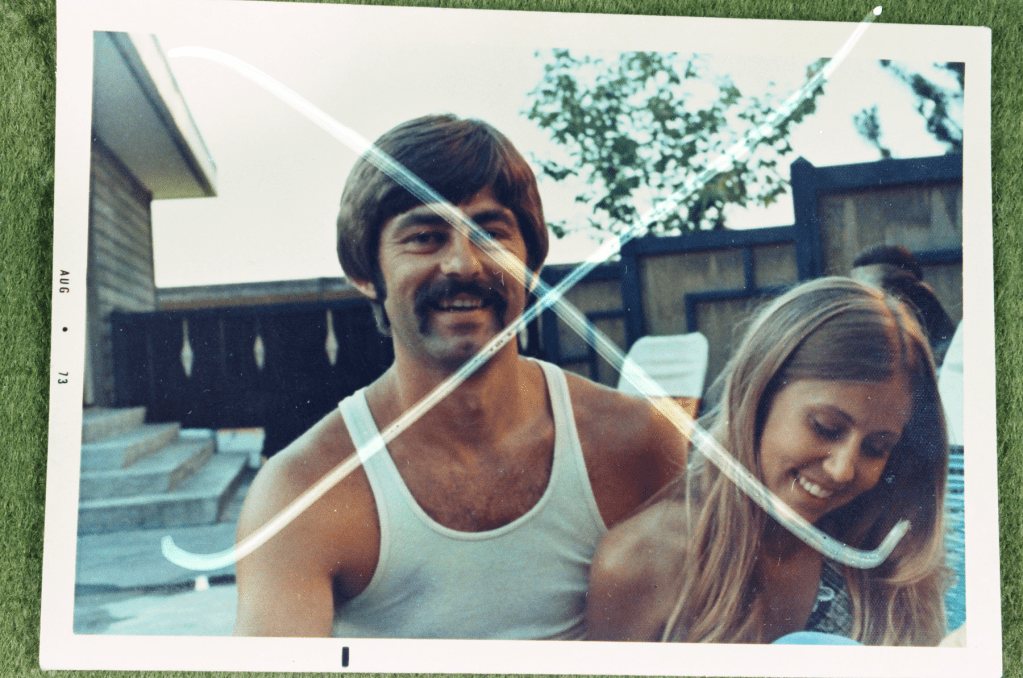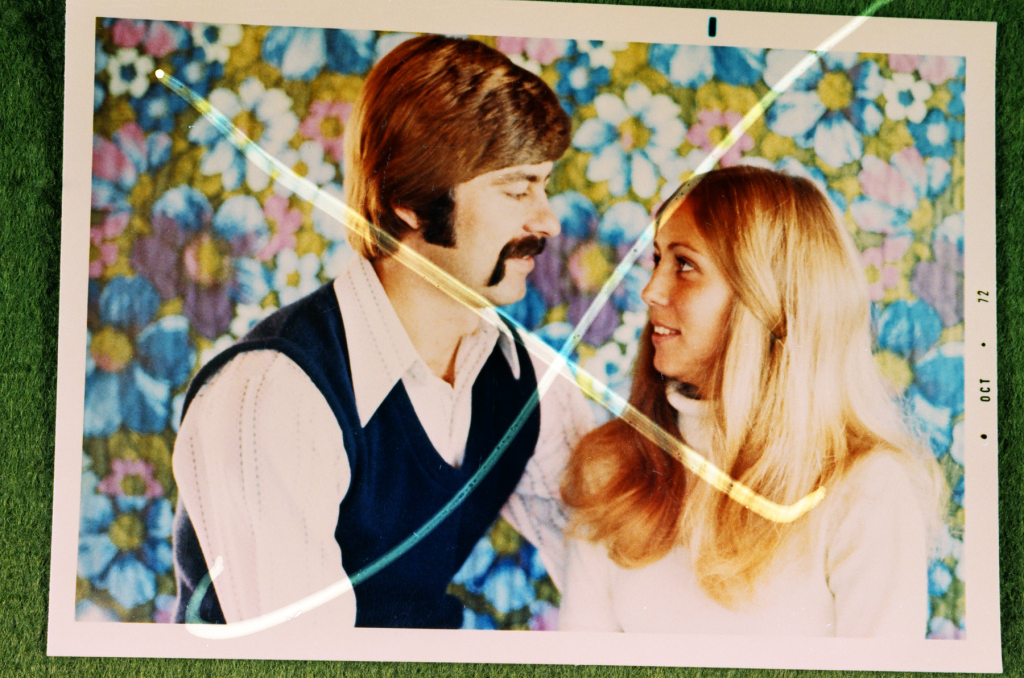

Ted Bundy, Christmas Correspondence.

Bundy sent this Christmas card in 1985 from his time on death row while at Florida State Prison while awaiting execution for his long string of assaults and murders. Photo courtesy of The Daily Mail.
In the card (which came with a letter) Bundy continued to deny his crimes but said photographs in books about them ‘brought back memories.’ Photo courtesy of The Daily Mail.
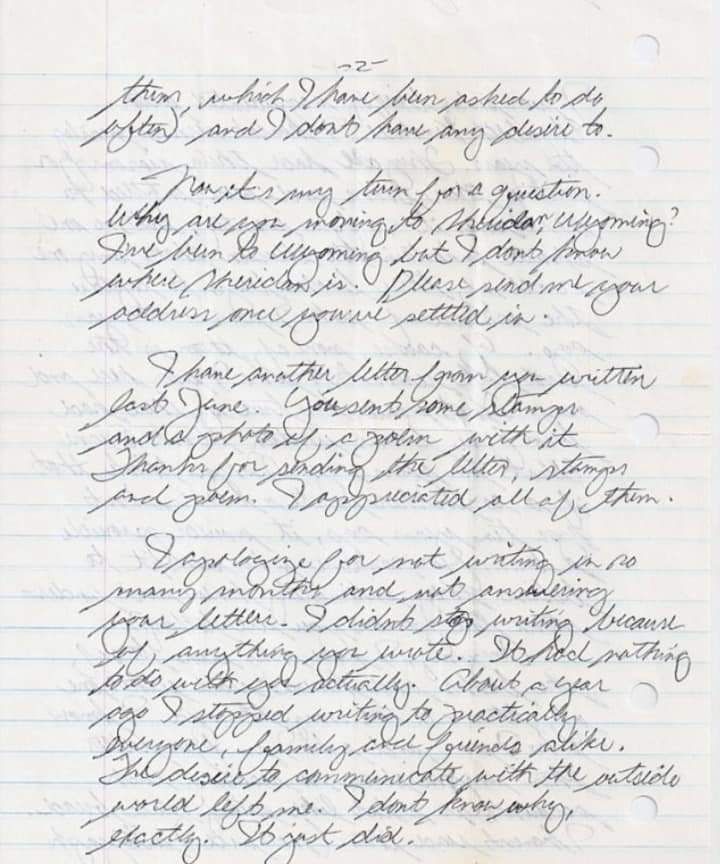
Page two of the letter. Photo courtesy of The Daily Mail.
Page three of the letter. Photo courtesy of The Daily Mail.
The card was written to a pen pal of Bundy, who said looking at it was ‘chilling.’ Photo courtesy of The Daily Mail.
In this card, Bundy speaks of his disdain for the many books written about him. Photo courtesy of The Daily Mail.
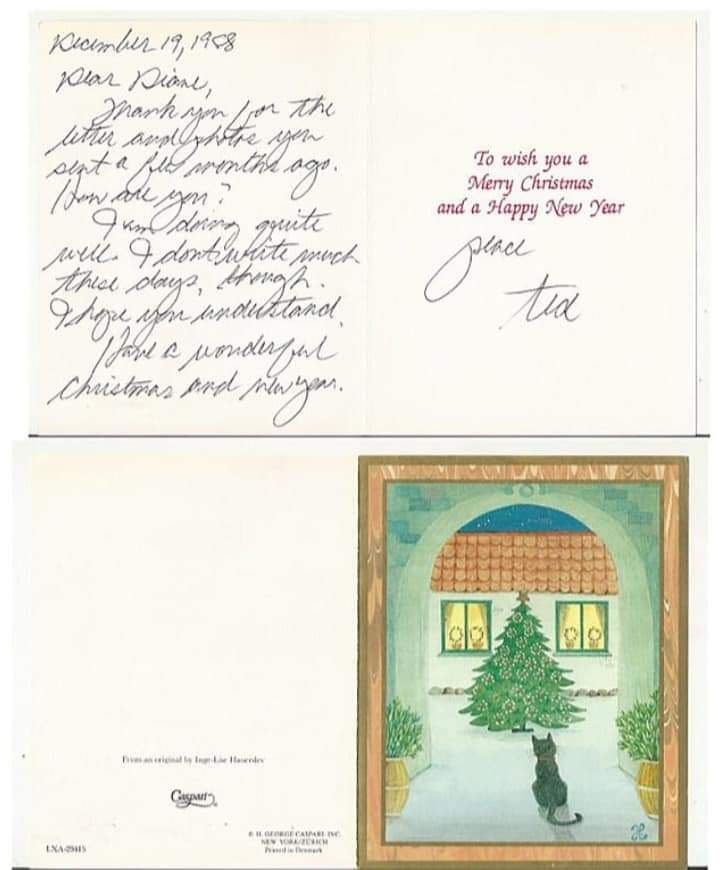
An updated Christmas card signed from Bundy.
The front of an envelope from a Christmas card from Carol Boone in 1980. Photo courtesy of Supernaught.
The back of an envelope for a Christmas card from Carol Boone in 1980. Photo courtesy of Supernaught.
The front of a Christmas card from Carol Boone in 1980. Photo courtesy of Supernaught.
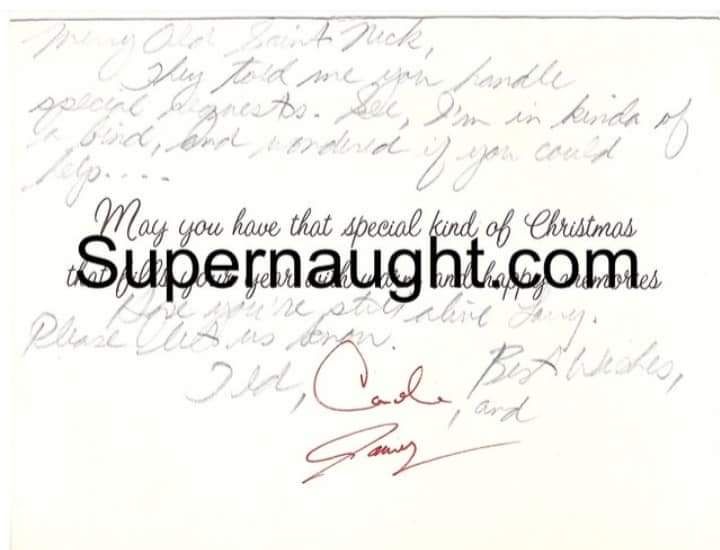
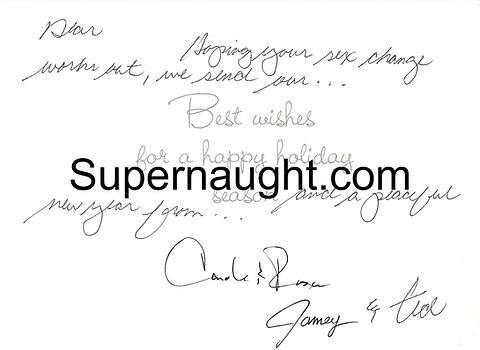
The inside of a Christmas card from Carol Ann Boone, Ted, and Jamey in 1980. Photo courtesy of Supernaught.
The back of a Christmas card from Carol Boone in 1980. Photo courtesy of Supernaught.
A Christmas letter to one time Bundy attorney Polly Nelson in 1987.
Ted 1985 Christmas card. Photo courtesy of Supernaught.
The envelope from a Christmas card sent from Bundy the December before he was executed in 1988.
The front of a Christmas card sent from Bundy the December before he was executed in 1988.
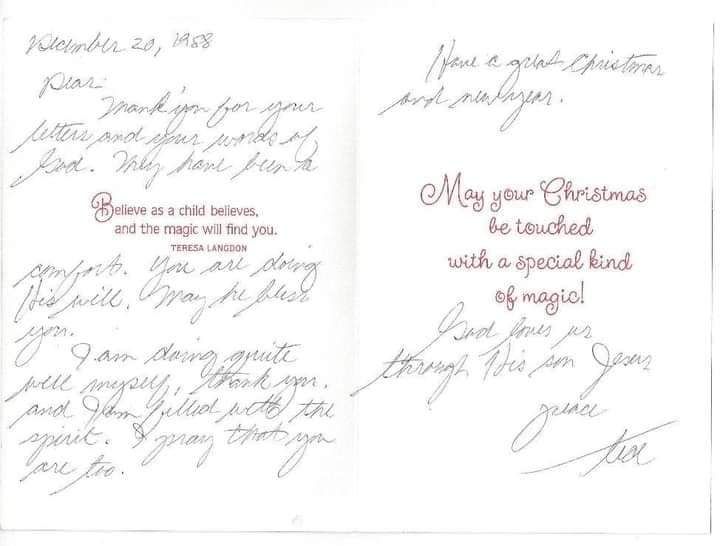
A Christmas card sent from Bundy the December before he was executed in 1988.

Theodore Robert Bundy, Crime Scene Photos.

Over the years I’ve only come across a few pictures from Bundy’s crime scenes, for the simple fact that there’s not many of them. This is because he usually left little to no trace of himself behind, and there were no bodies recovered until they were completely decomposed (well, until the end in 1978). I came across a website last night on TikTok (as silly as that sounds), and it contained a bunch of pictures I’ve never seen before, I was pretty amazed. So, here they are. I also went through my own collection and found some additional crime-scene related pictures and included those as well. Because, why not? If anyone has more, please feel free out reach out to me. I will give you credit.

Edit: I wanted to thank Tiffany Jean for all of the hard work she does on the Bundy case. Because of her we have information never before accessible, and she is a wonderful educator and TB resource. Thank you for all that you do.

TB’s kill kit.
Some more items from Bundy’s kill kit. Photo courtesy of Kevin Sullivan.
The outside of Bundy’s VW Beetle. It’s confirmed that at least eighteen of his victims were transported in this vehicle.
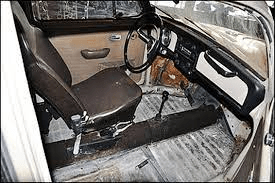
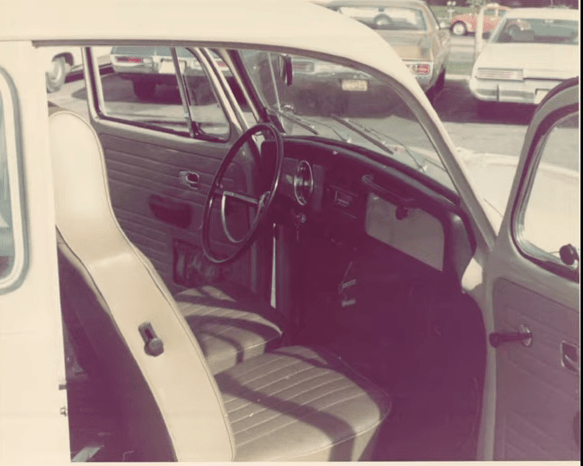
The inside of Ted’s VW Beetle. Bundy took out the cars passenger seat so that his victims could lie vertically without being seen by others.
Another shot of the inside of Bundy’s VW.
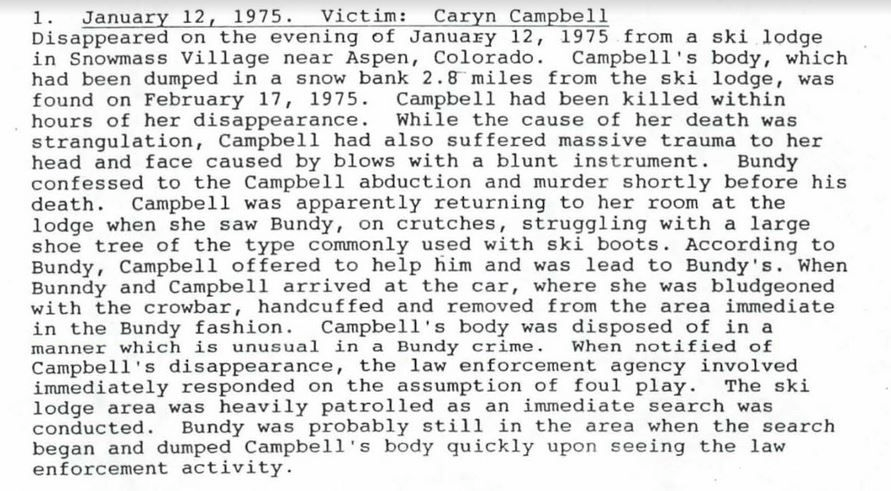
Bundy’s VW Beetle notes from the ‘Ted Bundy Multiagency Investigative Team Report 1992.’ He bought the infamous tan Bug in the spring of 1973 from a woman named Martha Helms.
First confirmed Bundy victim, Karen Sparks-Epley (formerly known as Joni Lenz).
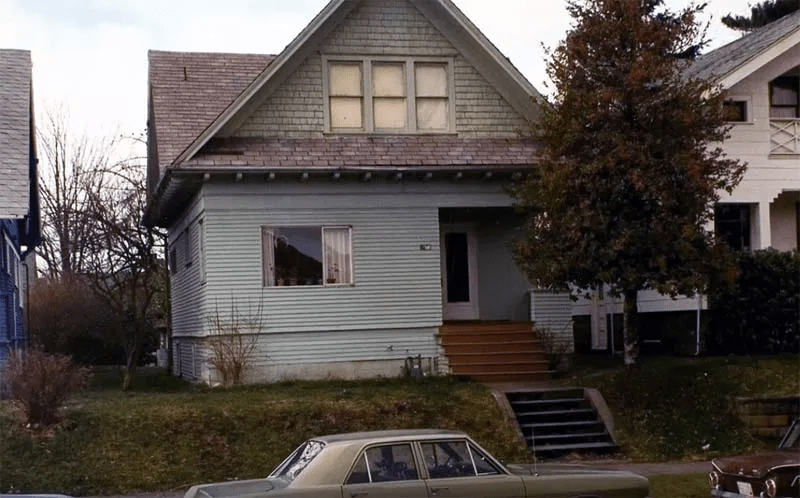
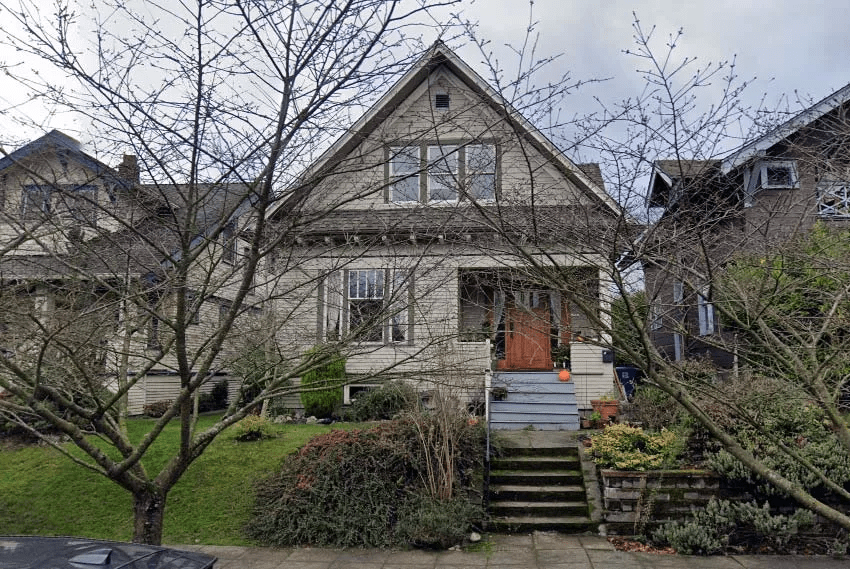
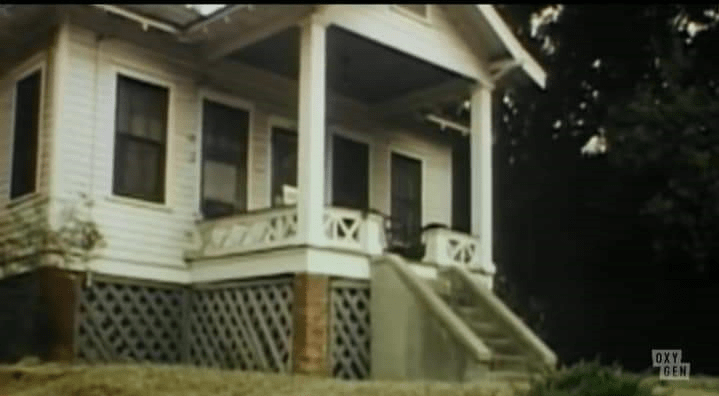
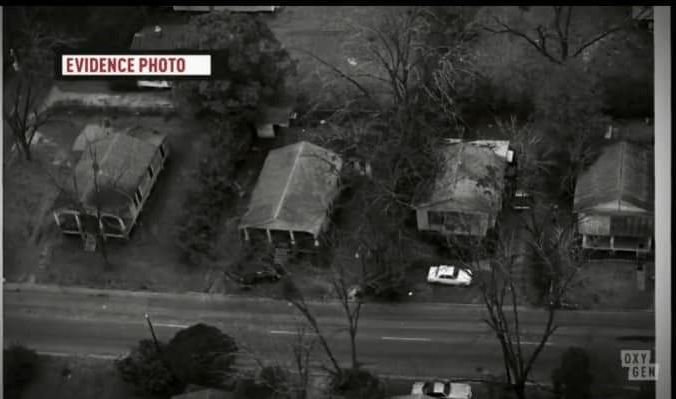
Karen Sparks-Epley’s residence where was attacked by Ted Bundy on January 4, 1974. This is a police photograph of 4325 8th Avenue NE, Sparks’ bedroom is circled in white. The house was torn down at some time in 1985.
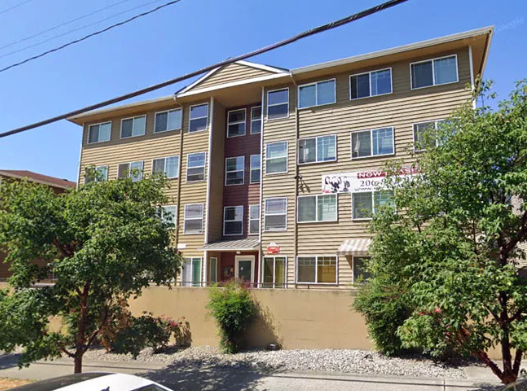
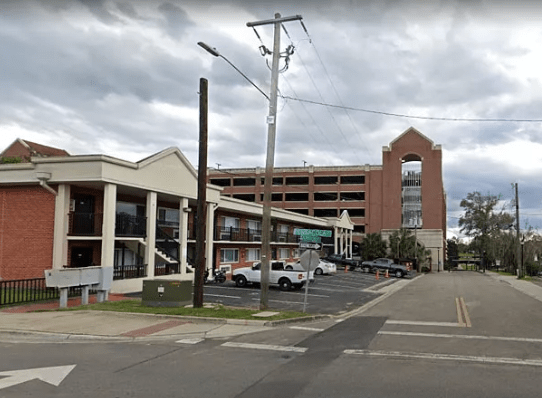
These days the site of the house is now home to the Westwood apartments, which were built in 1985.
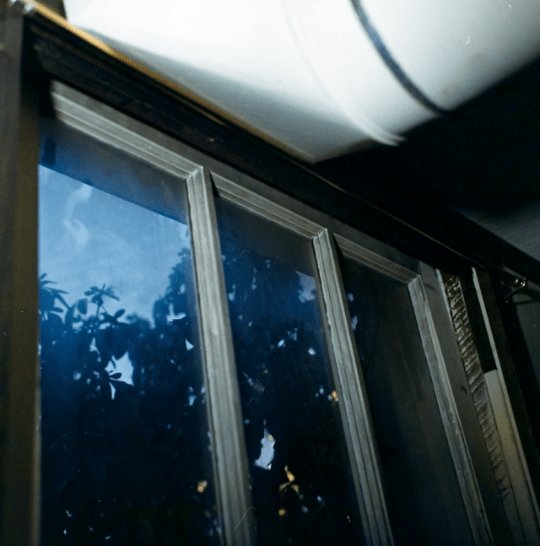
The window at Karen Sparks apartment Bundy used to break in.
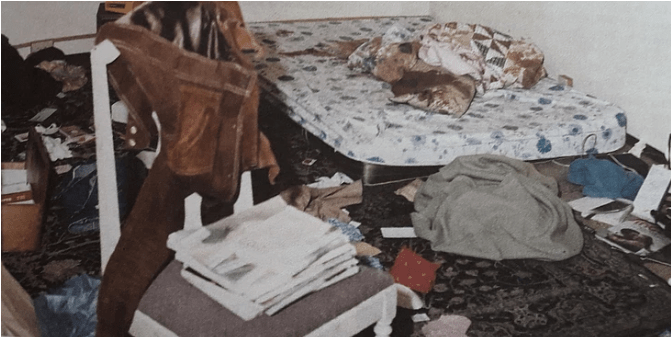
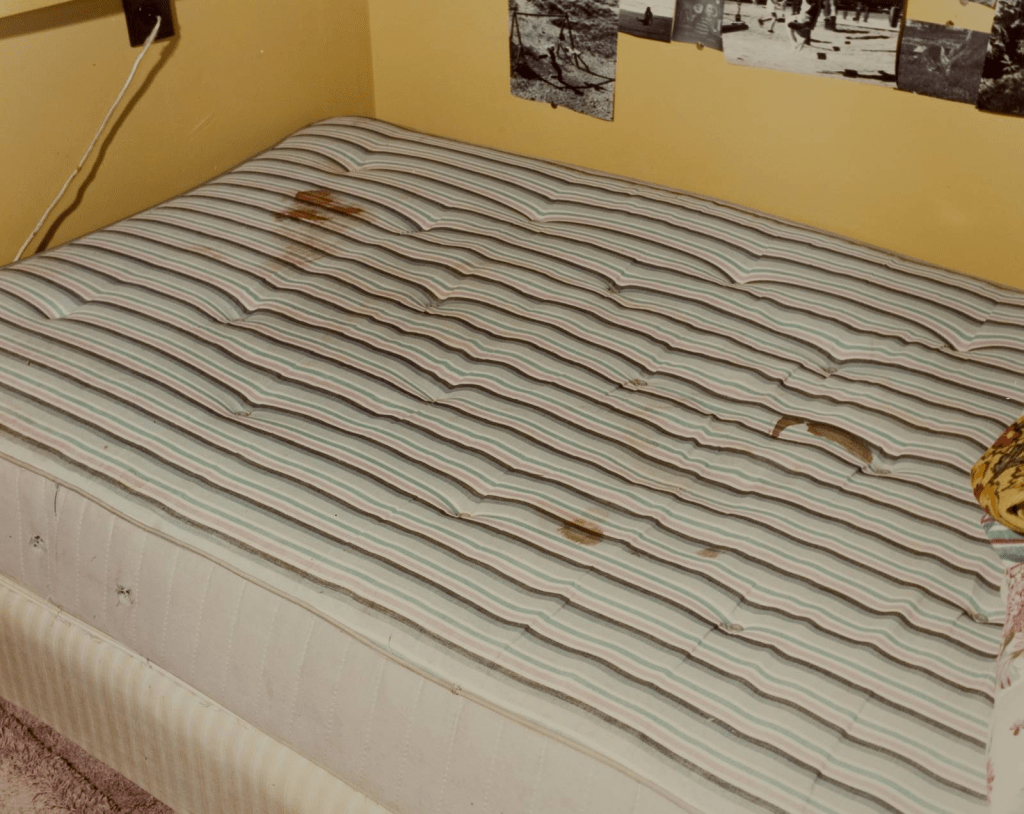
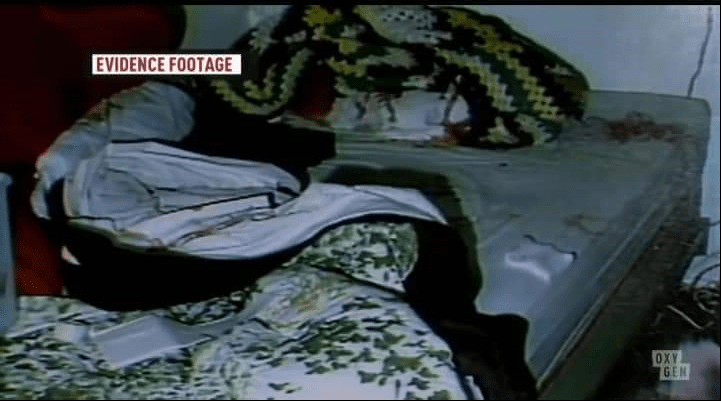
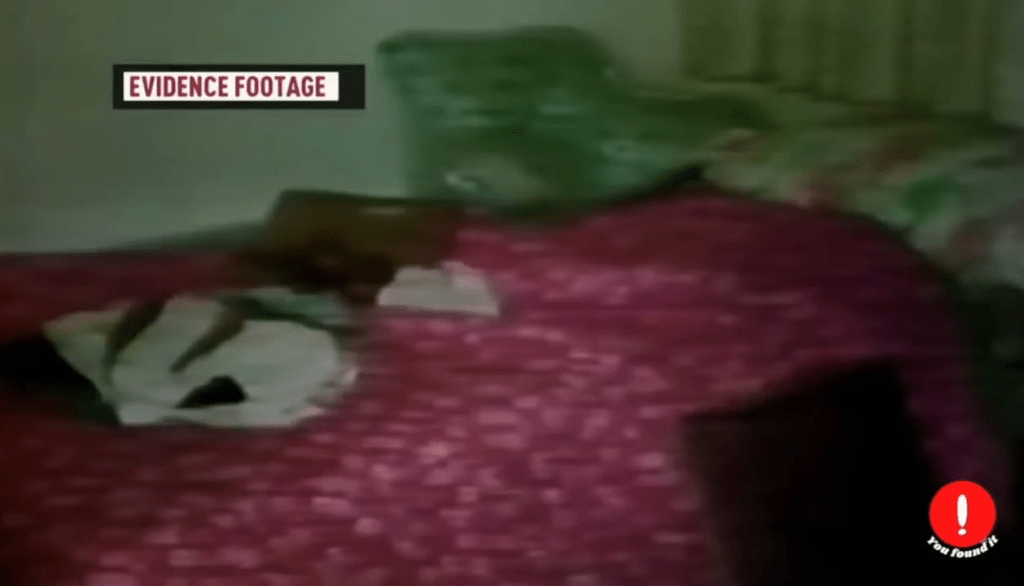
The bedroom of Karen Sparks after her assault. Photo courtesy of KIRO-7.
The close-up of Sparks bed after her assault. Photo courtesy of Amazon.
The bedroom of Karen Sparks after her assault. Photo courtesy of KIRO-7.
The doorway of Karen Sparks bedroom after her assault. Photo courtesy of KIRO-7.
The floor of Karen Sparks bedroom after her assault. Photo courtesy of KIRO-7.
The bedroom of Karen Sparks after her assault.
The bedding of Sparks. Photo courtesy of Amazon.
A crime scene photo from the assault of Karen Sparks.
Lynda Ann Healy, TB’s first confirmed kill. Healy was born on July 3,1952 in Seattle and was abducted on January 31, 1974.
Healy’s house as it looked in the 1970’s.
Healy’s apartment in 2021.
A photo of the trail behind Lynda Ann Healy’s apartment; her house is circled in red. Photo courtesy of OddStops.
A King County Detective walking out of the side door of Healy’s apartment. Photo courtesy of Amazon.
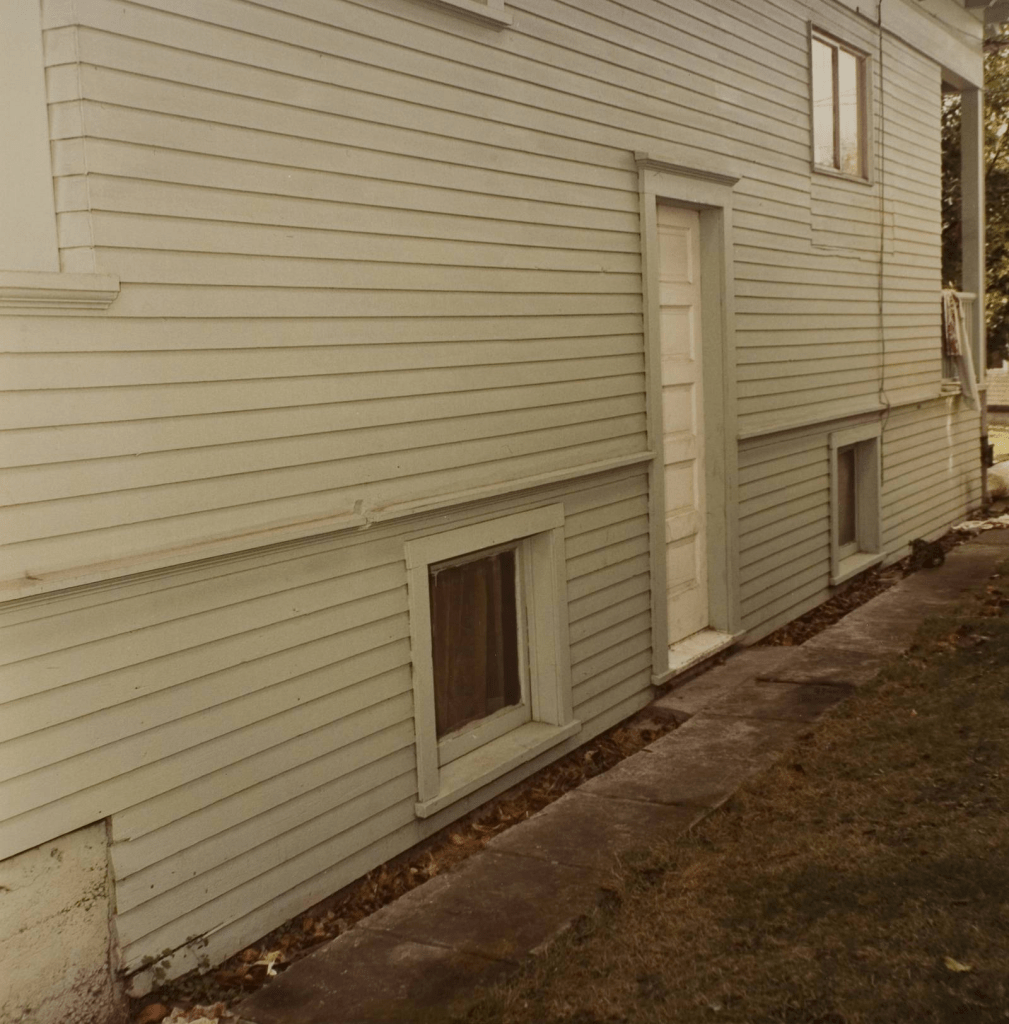
The entrance of Healy’s apartment, via the side door of the house. Photo courtesy of KIRO-7.
The side door of Healy’s apartment. Photo courtesy of KIRO-7.
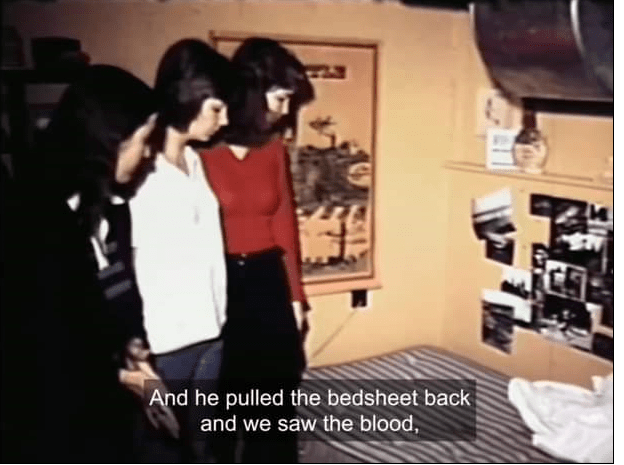
Lynda’s roommates standing around her bed. Photo courtesy of Amazon.
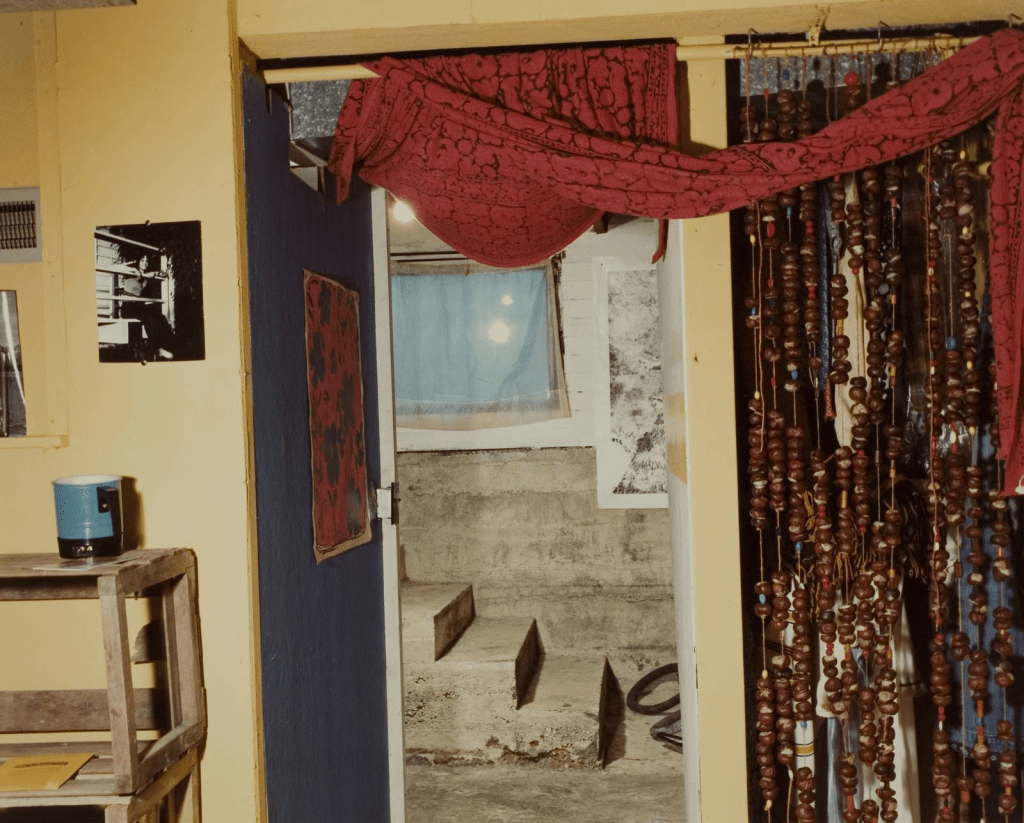
The entrance of Healy’s bedroom and the stairs leading outside. Photo courtesy of KIRO-7.
Another shot of the entrance of Lynda Healy’s bedroom. Photo courtesy of KIRO-7.
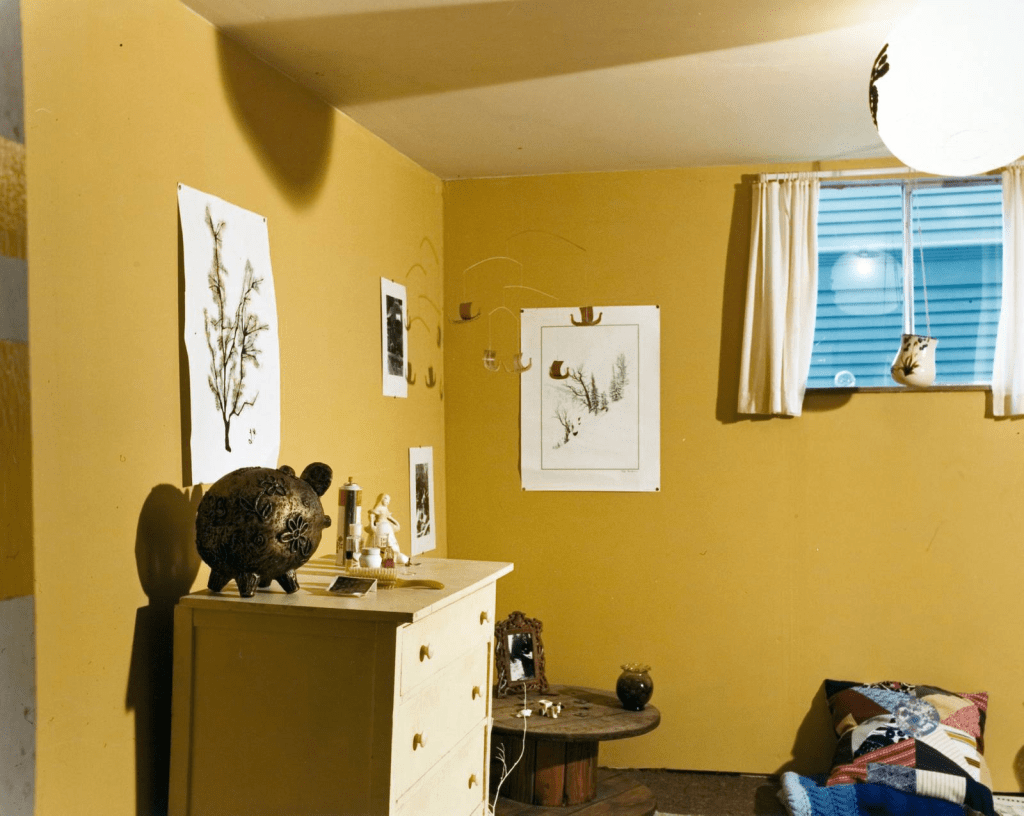
One side of Healy’s bedroom. Photo courtesy of KIRO-7.
Another shot of Healy’s bedroom. Photo courtesy of KIRO-7.
A shot of Healy’s mattress. Photo courtesy of KIRO-7.
A close-up of the blood stain on Lynda Ann Healy’s mattress. Photo courtesy of KIRO-7.
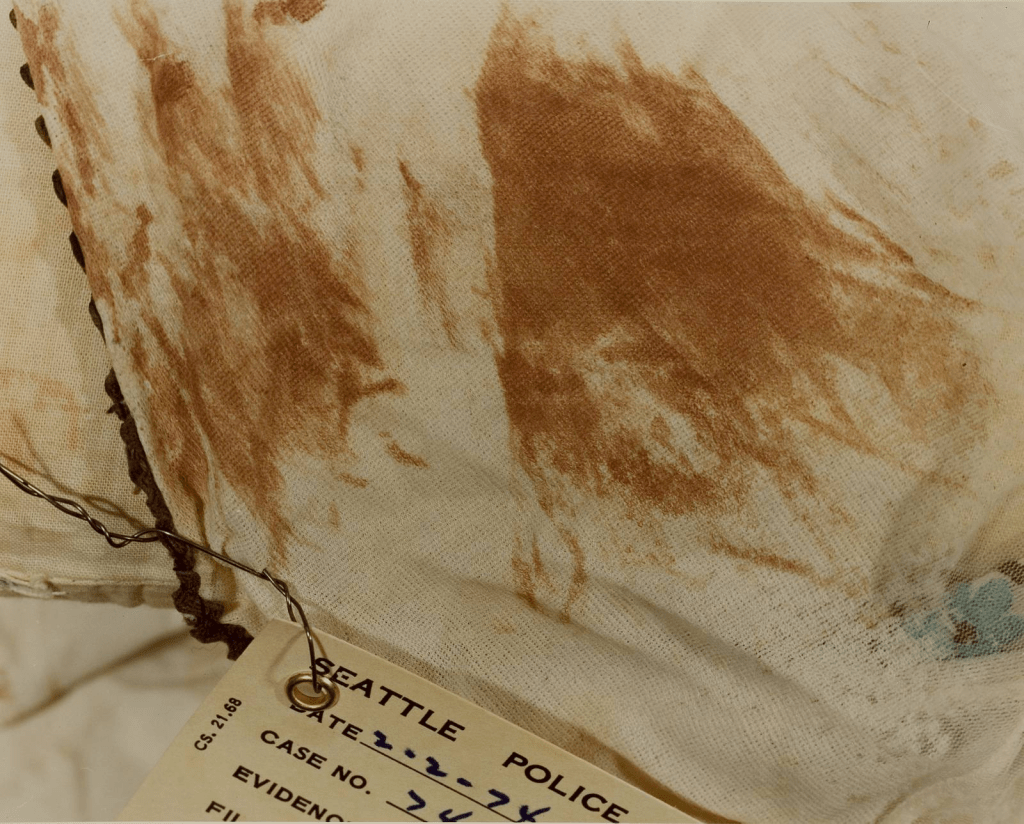
The blood stain on Lynda Ann Healy’s bedding. Photo courtesy of Amazon.
A close-up of the blood stain on Lynda Ann Healy’s bedding. Photo courtesy of Amazon.
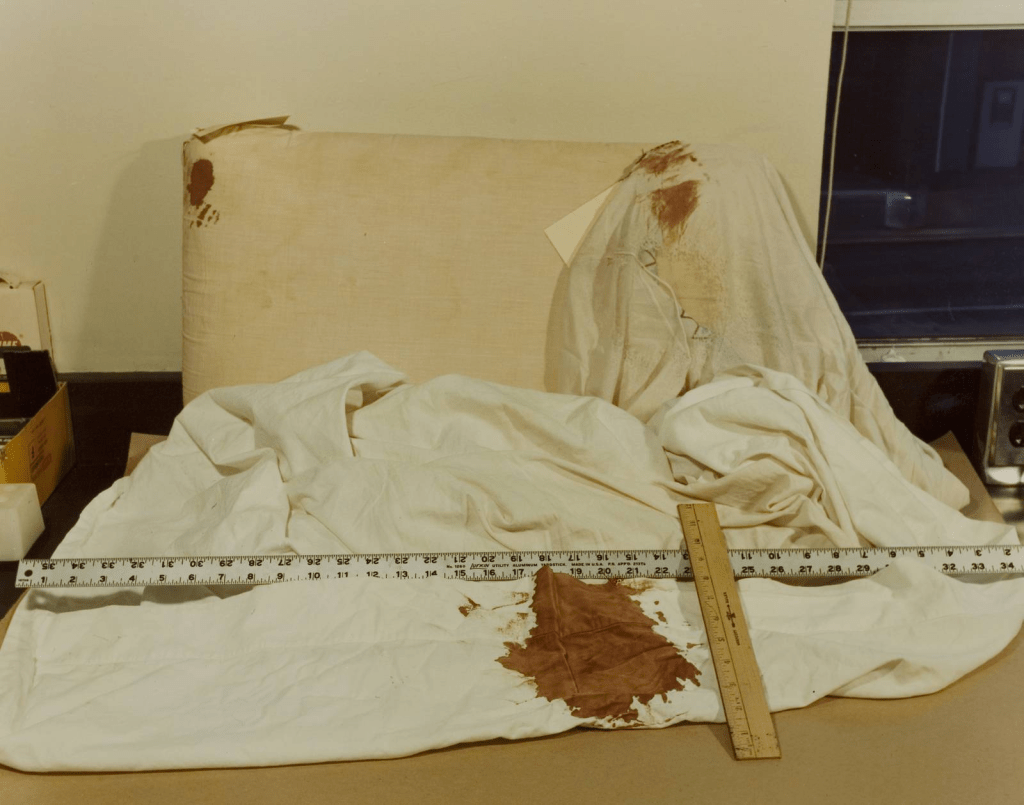
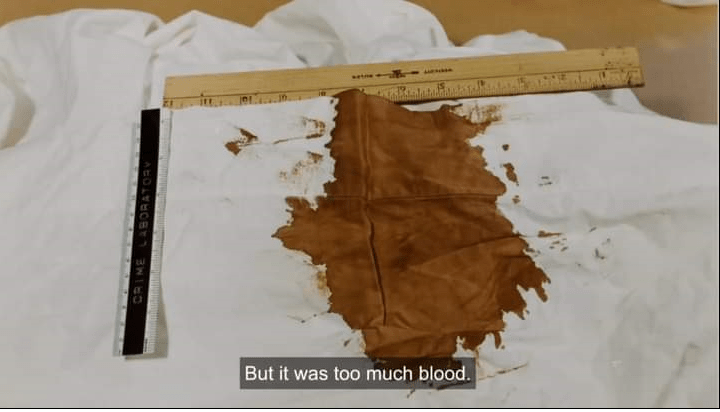
The blood stain at the crime scene of Healy. Photo courtesy of Amazon.
A close-up of the blood stain at the crime scene of Lynda Healy. Photo courtesy of Amazon.
Susan Elaine Rancourt.
Roberta Kathleen Parks.
Brenda Ball’s drivers license. Photo courtesy of KIRO-7.
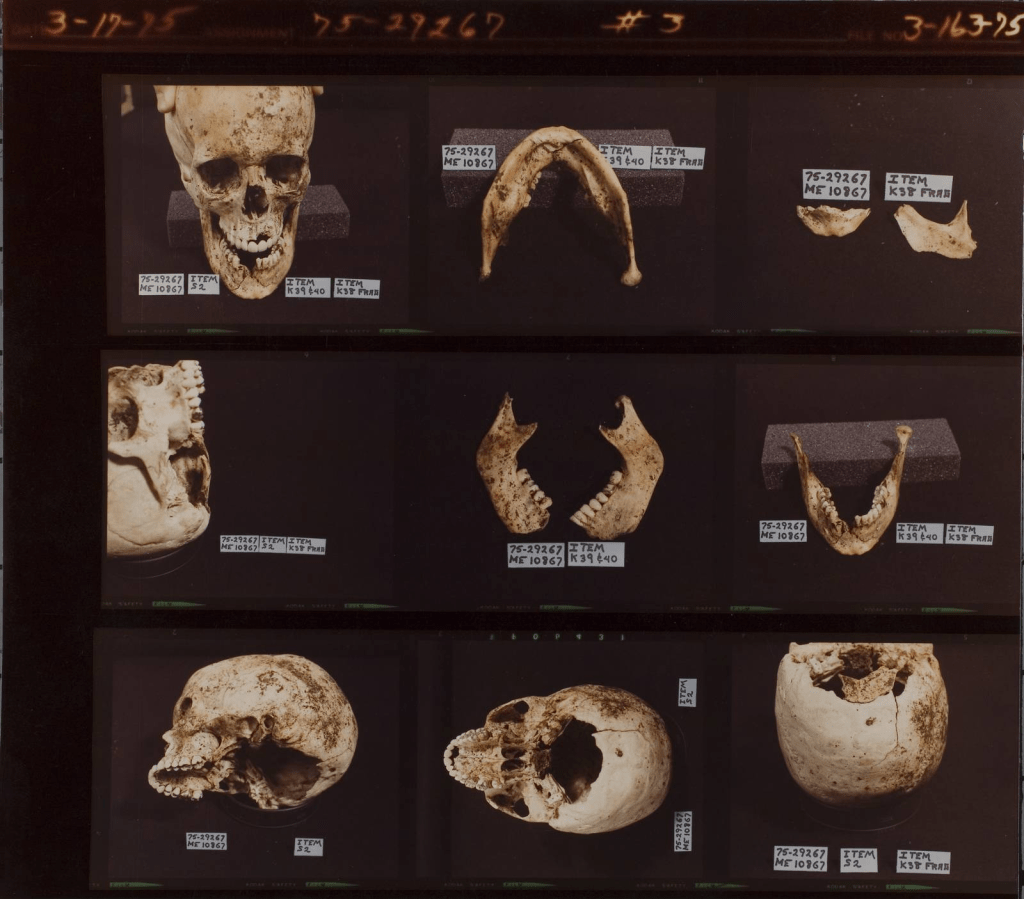
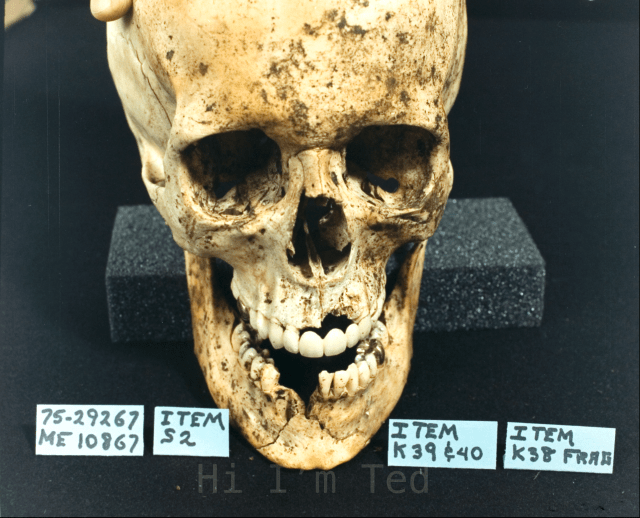
The following is borrowed from Dr. Robert Keppel’s true crime classic ‘The Riverman: Ted Bundy and I Hunt for the Green River Killer:’ ‘The final tally of remains for Taylor Mountain paled in comparison to Issaquah: three crania, three mandibles, two small pieces of a skull, one tooth, and a small blond hair mass. Not one other remnant of a human skeleton was discovered. The remains of four women were identified from the sparse skeletal remains we had recovered: Susan Rancourt, who disappeared April 17, 1974, from the library at Central Washington State College; Kathy Parks, last seen May 5, 1974, at Oregon State University, over 260 miles from Taylor Mountain; Brenda Ball, who was last seen May 31, 1974, at the Flame Tavern in Seattle; and Lynda Healy, who was reported missing from her basement bedroom at the University of Washington on January 31, 1974.’
Powerline Road on Taylor Mountain. Photo courtesy of KIRO-7.
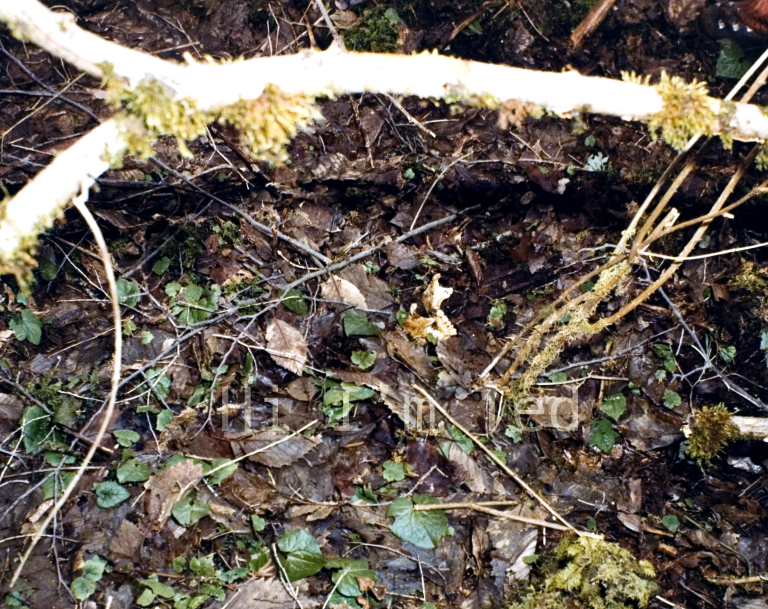
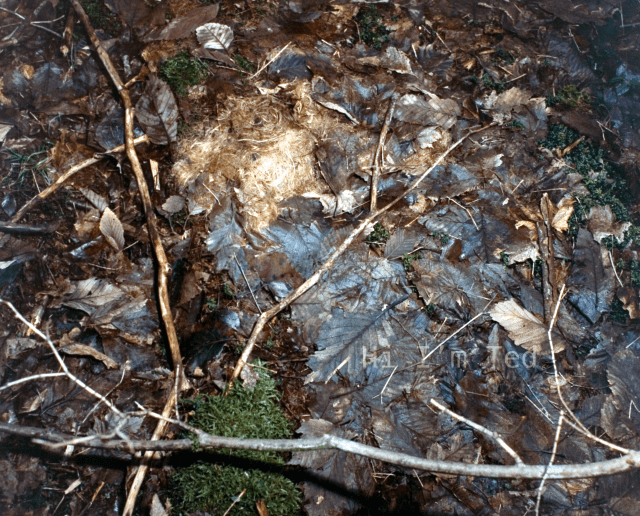
Another shot of the Taylor Mountain dump site. Photo courtesy of KIRO-7.
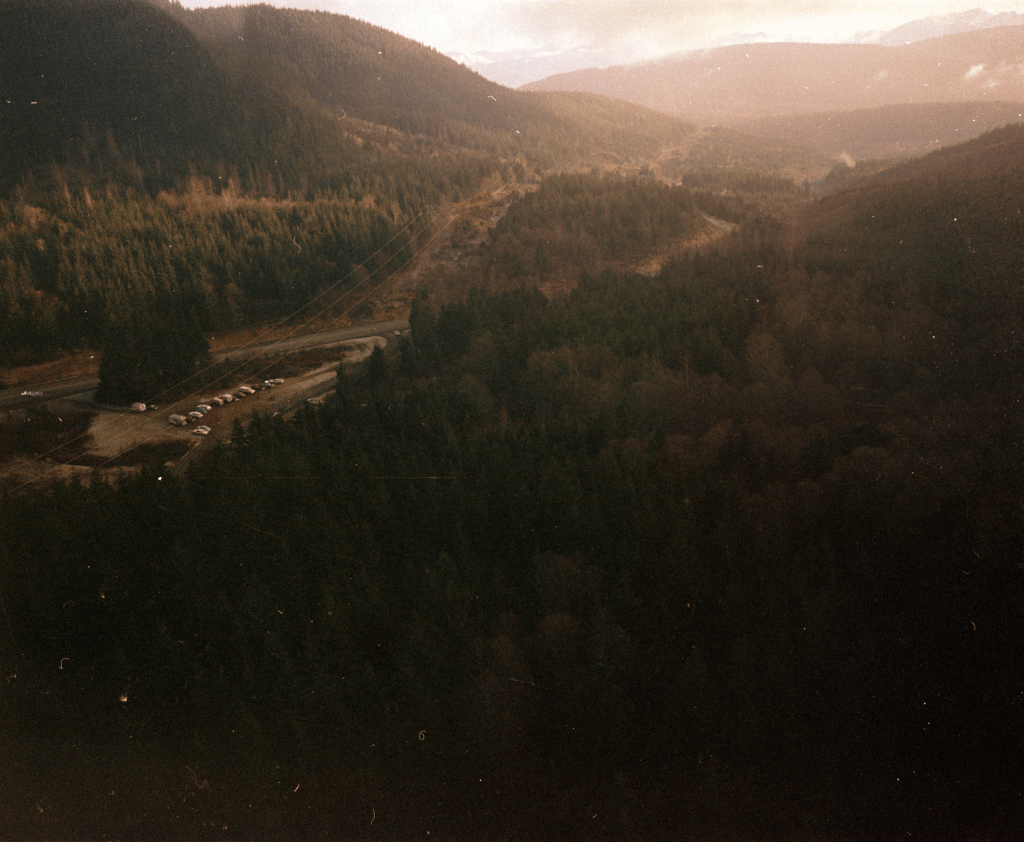
An aerial shot of Taylor Mountain. Photo courtesy of KIRO-7.
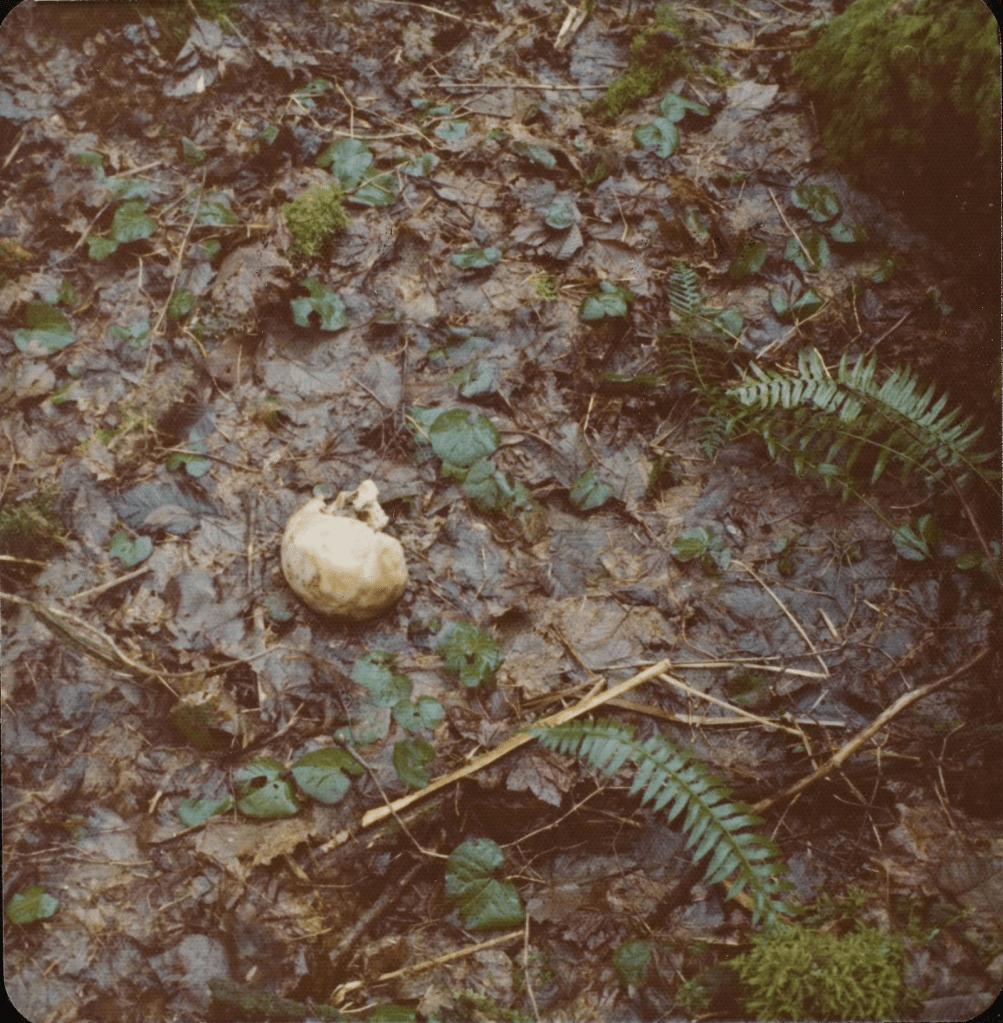
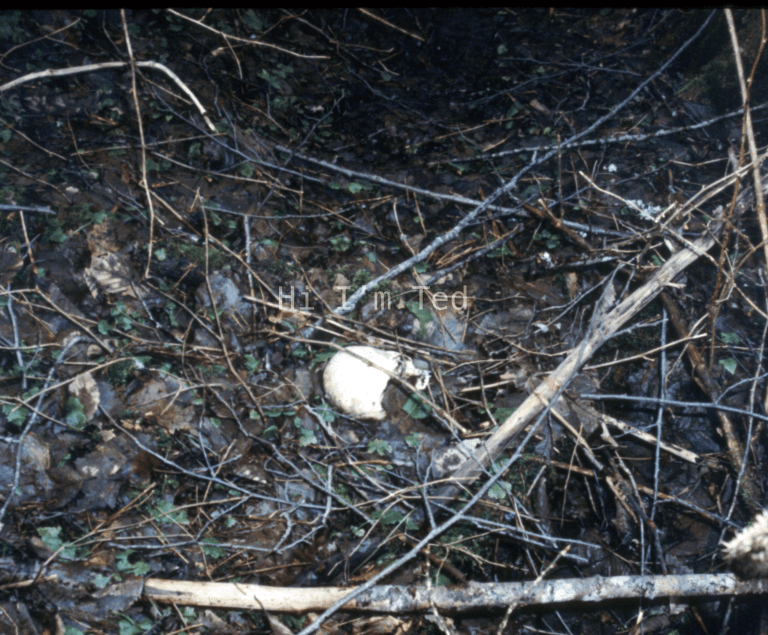
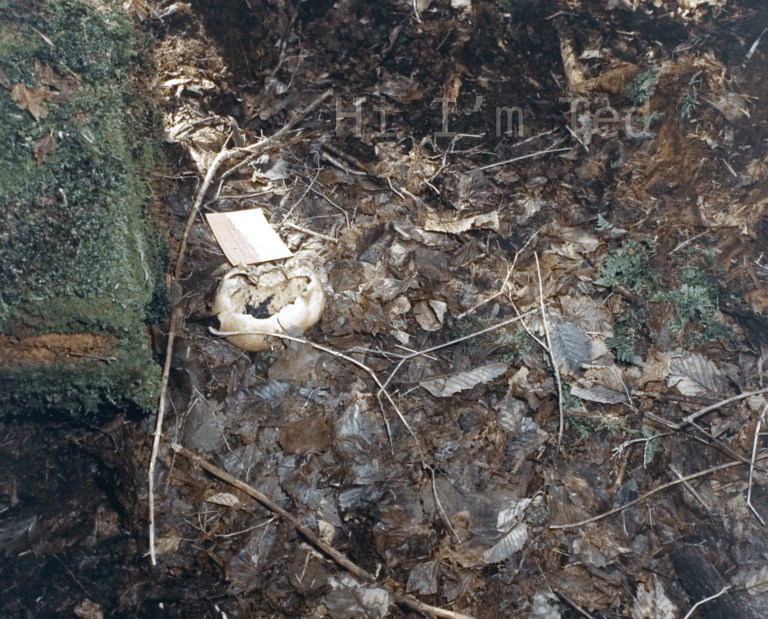
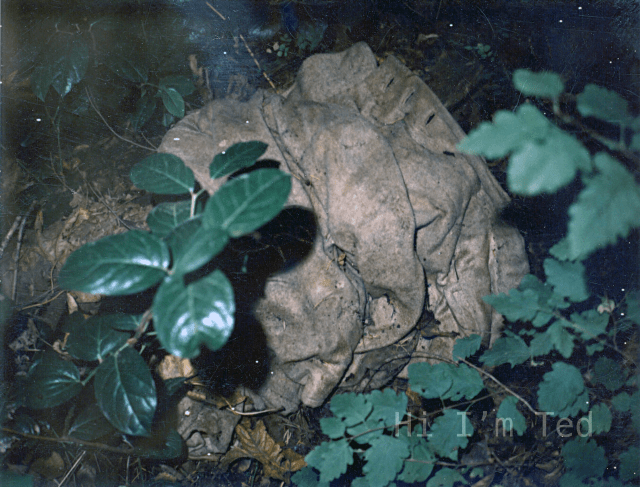
The skull of Brenda Ball at the Taylor Mountain dump site. Photo courtesy of KIRO-7.
Another shot of the skull of Brenda Ball at the Taylor Mountain dump site. Photo courtesy of KIRO-7.
A close-up shot of the skull of Brenda Ball. Photo courtesy of the KIRO-7.
A shot of Lynda Ann Healy’s mandible with teeth taken from about 15 feet away. Photo courtesy of the King County Archives.
A shot of Lynda Ann Healy’s mandible taken from roughly four feet away. Photo courtesy of the King County Archives/Tiffany Jean.
Susan Rancourt’s beautiful blonde hair. Photo courtesy of the King County Archives/Tiffany Jean.
Susan Rancourt’s skull. Photo courtesy of the King County Archives/Tiffany Jean.
Kathy Parks’ skull. Photo courtesy of the King County Archives/Tiffany Jean.
One of the skulls recovered from Taylor Mountain. Photo courtesy of the King County Archives/Tiffany Jean.
LE pointing out something at the Taylor Mountain dump site. Photo courtesy of Oxygen.
A member of law enforcement pointing something out at the Taylor Mountain dump site.
Members of law enforcement at the Taylor Mountain dump site. Photo courtesy of KIRO-7.
A green, military-style type coat, item #K-35. Photo courtesy of the King County Archives/Tiffany Jean.
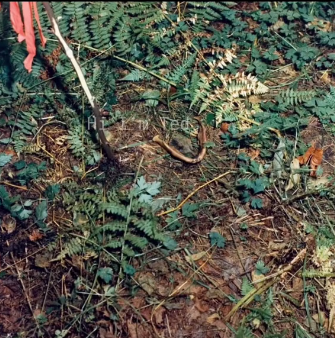
Dense underbrush at the Taylor Mountain dump site. Photo courtesy of the King County Archives/Tiffany Jean.
A shot from the Taylor Mountain dump site. Photo courtesy of the King County Archives/Tiffany Jean.
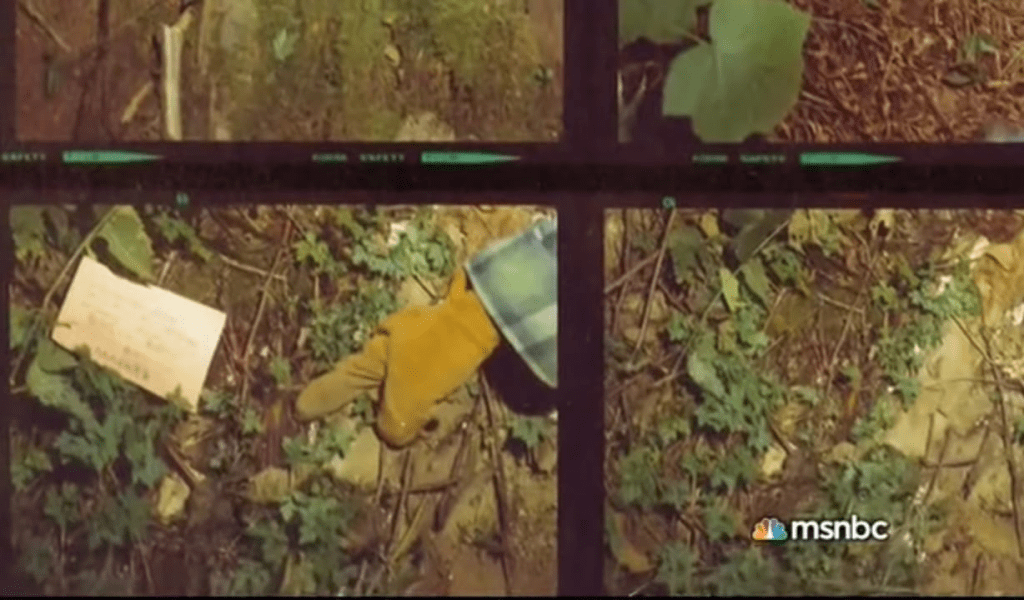
A shot from the Taylor Mountain dump site. Photo courtesy of MSNBC.
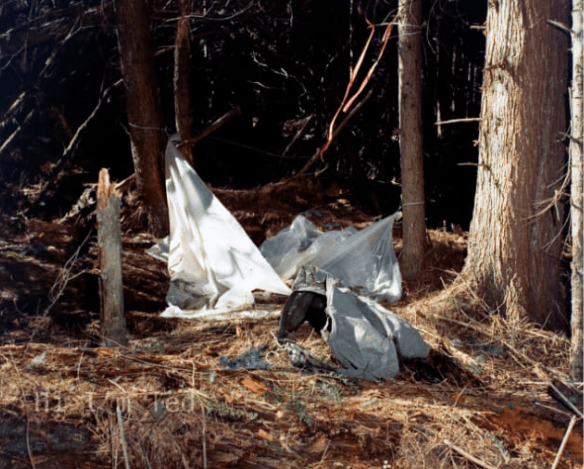
The tattered remains of a sloppily made, lean-to shelter found at Taylor Mountain. Photo courtesy of the King County Archives/Tiffany Jean.
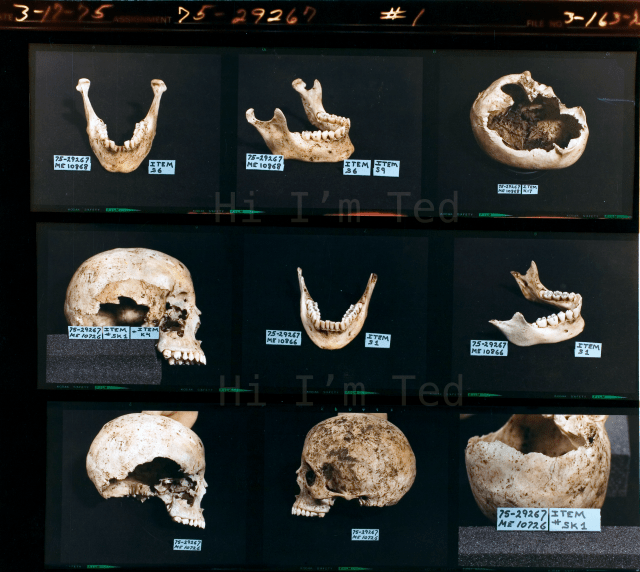
Clockwise from the top left: Parks mandible, Parks mandible, Parks skull, Healy mandible, Ball skull, Ball skull, Ball skull, Ball skull, Healy mandible center. Photo courtesy of the King County Archives/Tiffany Jean.
Clockwise from top left: Parks skull and mandible, Parks skull and mandible, Rancourt skull, Parks skull, Parks skull, Parks skull, Parks skull, Parks skull, Parks skull at center. Photo courtesy of the King County Archives/Tiffany Jean.
Another group of bones found at Taylor Mountain. Photo courtesy of KIRO-7. I believe these are all bones in Susan Rancourts skull.
Brenda Ball’s skull. Photo courtesy of the King County Archives/Tiffany Jean.
Susan Rancourt’s skull. Photo courtesy of the King County Archives/Tiffany Jean.
Kathy Parks’ skull. Photo courtesy of the King County Archives/Tiffany Jean.
Janice Ott.
Denise Naslund.
TB’s Issaquah dump site as it looks today.
The entryway to Ted’s Issaquah dump site as it looks today.
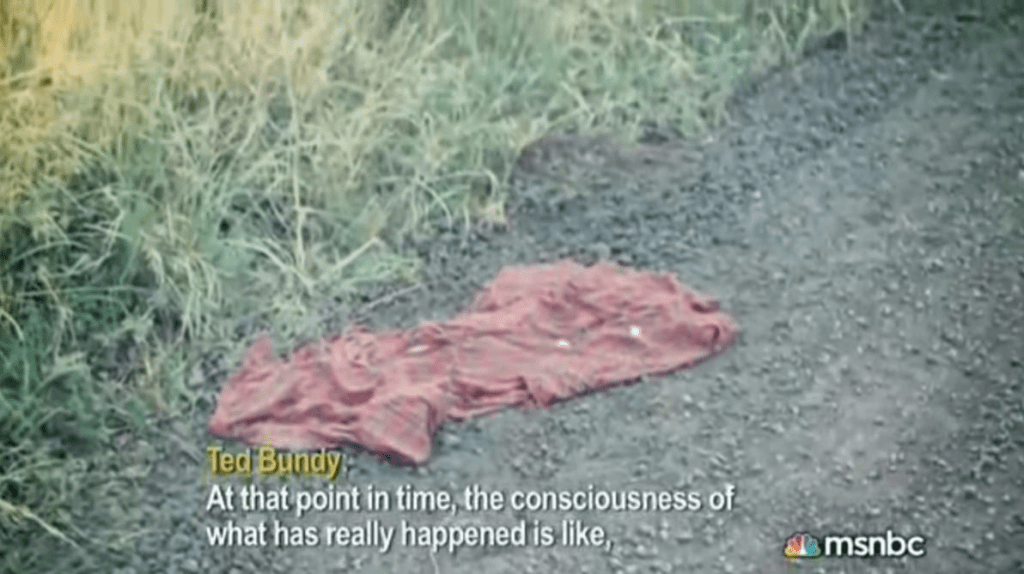
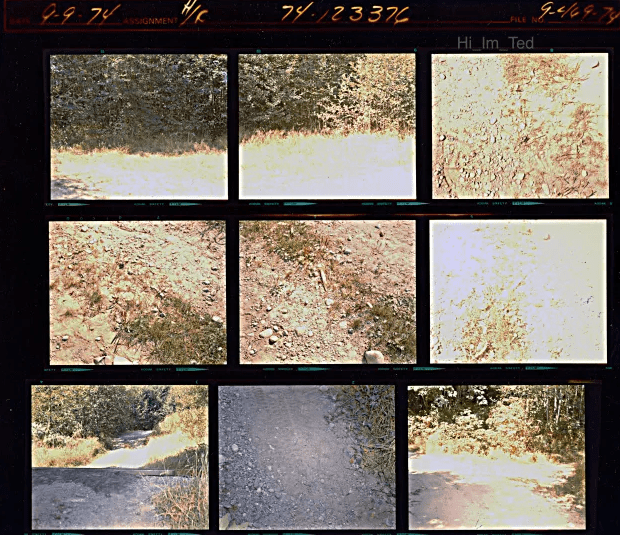
The Issaquah dirt road and grassy area in September 1974. Photo courtesy of the King County Archives/Tiffany Jean.
Denise Naslunds hair at the Issaquah dump site. Photo courtesy of the King County Archives.
Another shot of Denise Naslunds hair at the Issaquah dump site. Photo courtesy of the King County Archives.
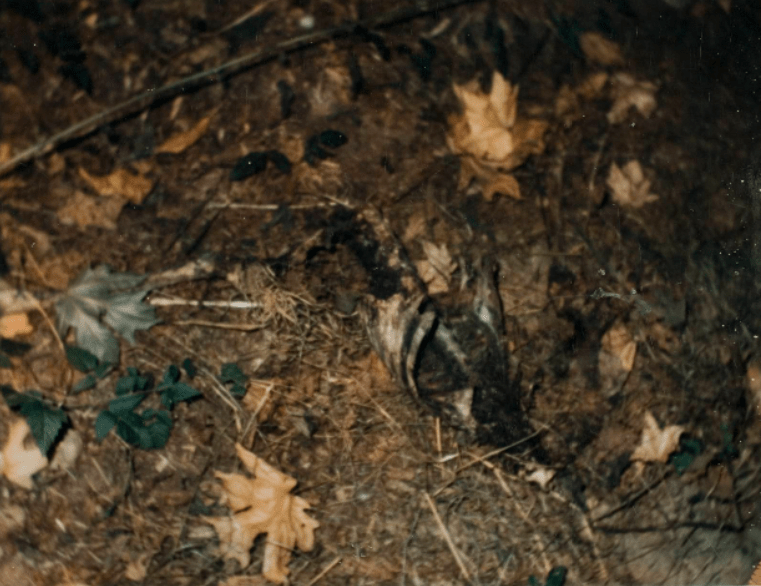
A rib cage at the Issaquah dump site. Photo courtesy of the King County Archives.
Another shot of the rib cage at the Issaquah dump site. Photo courtesy of the King County Archives.
Denise Naslunds skull from the Issaquah dump site. It was found by two hunters on a hillside just east of Issaquah, less than ten miles from Lake Sammamish where she was abducted. Photo courtesy of KIRO-7.
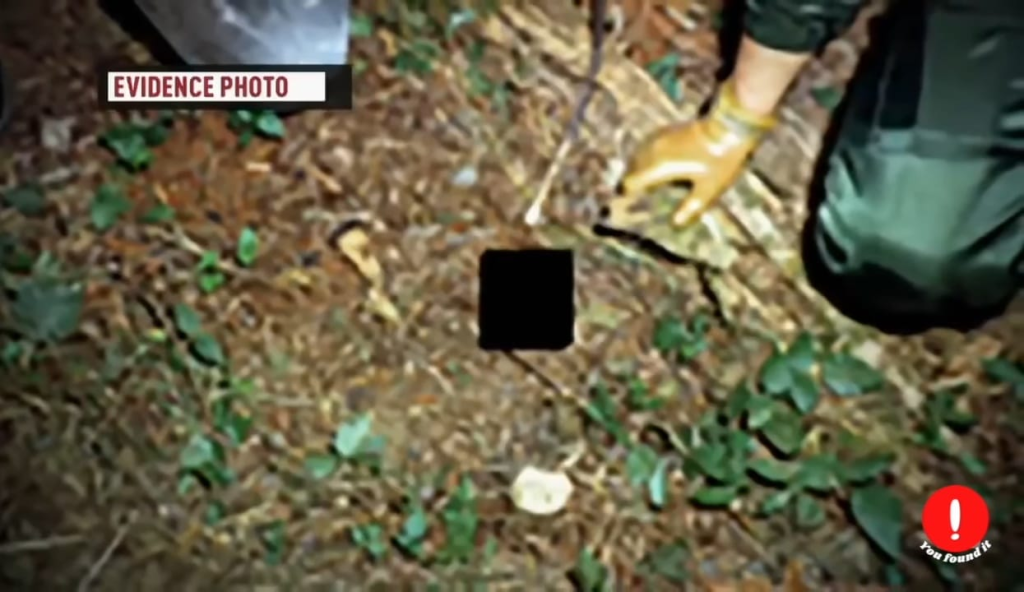
A picture from the Issaquah dump site. Photo courtesy of Oxygen.
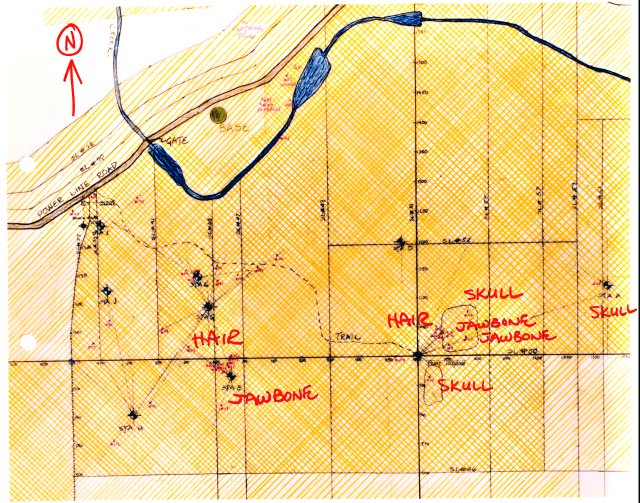
A mapping of where the different bones were found at the Issaquah dump site.
Ted at the Issaquah dump site; he was there with Liz that day.
Georgann Hawkins.
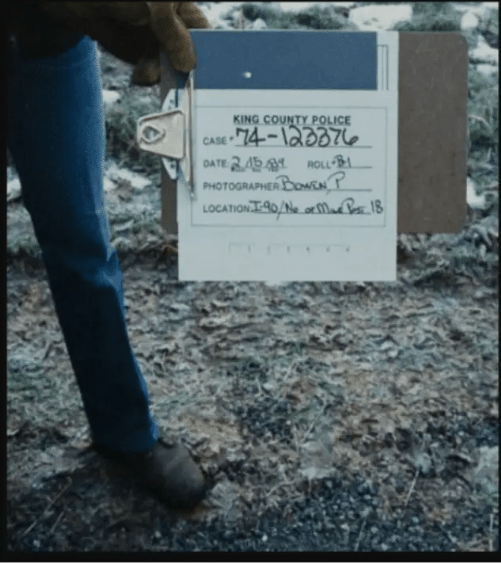
A snapshot taken at the Issaquah dump site on February 15, 1989. Investigators were looking for the remains of Georgann Hawkins, after Bundy confessed to her murder during his death row confessions. Photo courtesy of the King County Archives.
Another picture taken at the Issaquah dump site on February 15, 1989.
A picture of the possible dump site of Georgann Hawkins taken in February 1989.
The ESAR map Keppel brought with him to the Florida State Prison for his final interview with Bundy. Photo courtesy of the King County Archives/Tiffany Jean.
Susan Curtis.
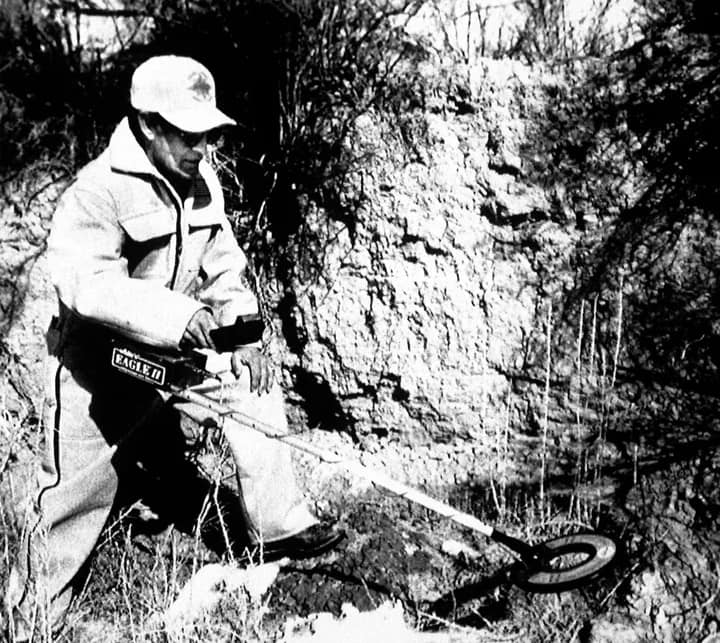
Joe Ruden from the Carbon County Search and Rescue team uses a metal detector to search for the burial site of Susan Curtis, who disappeared from the BYU campus in Utah in the summer of 1975. Bundy confessed to killing Curtis during his death row confessions and that he buried her about ten miles south east of Price, UT.
Jim Simone from the Carbon County Search and Rescue team sets out in search for the remains of Sue Curtis.
Debra Kent.
Deb Kent’s patella. Photo courtesy of Tiffany Jean. Right before he was put to death in January 1989, Bundy finally confessed to killing Deb Kent. He said that he brought her back to his apartment and after ‘keeping her for a while’ murdered her. He then put her body in his car and drove 105 miles away to Fairview Canyon, where he buried her remains about 3 feet deep, under some heavy rocks. After searching the Canyon, law enforcement found a patella (kneecap), and it is likely that her other bones were scavenged and spread around by wildlife over time. Although the ME’s office determined that the bone was human, they weren’t able to test it beyond that until 2015, when a cold-case detective stumbled across Kent’s DNA that had never been entered into the NamUs database. At that point, he reached out to Mrs. Kent, who held onto the only piece of her daughter she had left and asked if he could take the bone for genetic testing. Although she gave the detective the patella, Mrs. Kent told him that she didn’t want to know the results. In her mind, it belonged to Debra and didn’t want to be told otherwise. Thankfully her fears were put to rest five months later, when the results came back that the bone belonged to Debra.
Melissa Smith.
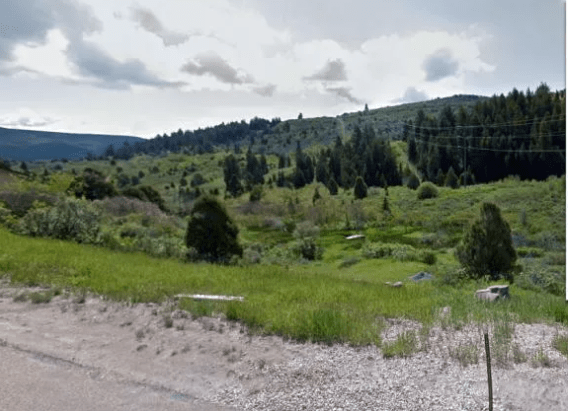
Where the remains of Melissa Smith were found, on Kilby Road in Park City, Utah.
Investigators at the scene where the remains of Laura Ann Aime were found.
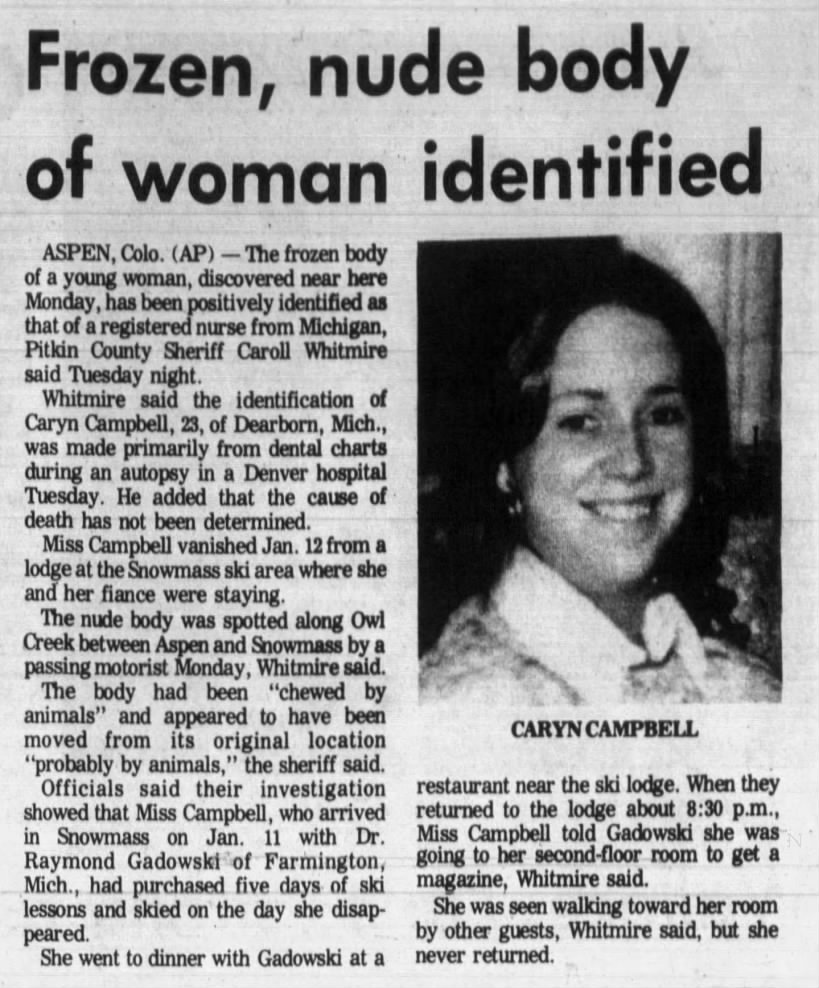
Caryn Campbell. Photo courtesy of KIRO-7.
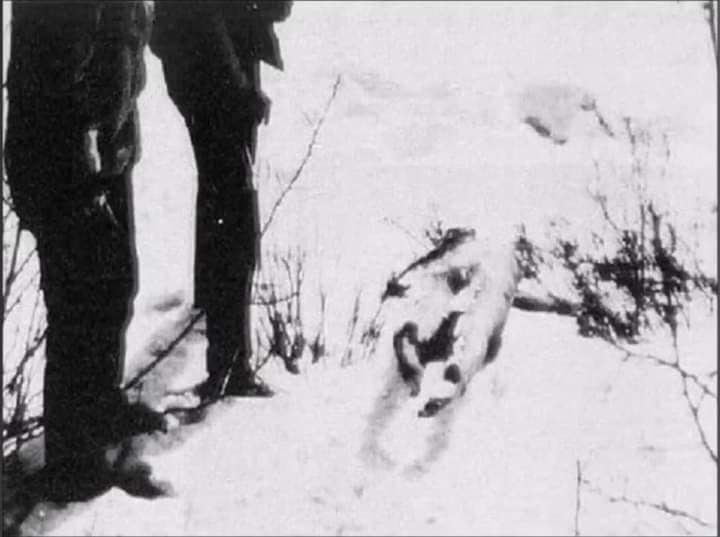
A shot of the remains of Caryn Campbell in the snow. Photo courtesy of Vanessa West.
The skull of Caryn Campbell. Photo courtesy of Vanessa West.Thank you to my friend Samantha Shore for letting me know the identity of this victim.
Vince Lahey holding a crowbar over Campbells autopsy photo. Photo courtesy of Erin Banks.
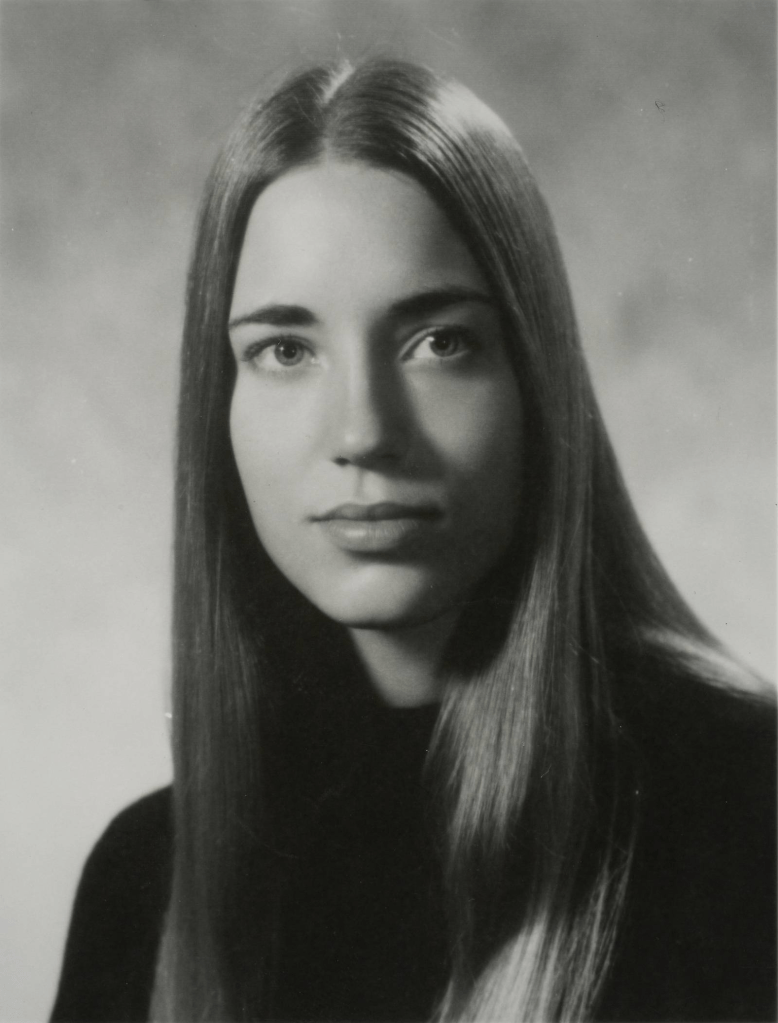
Caryn Campbell, Bundy’s MO. Photo courtesy of Erin Banks.
An article about the discovery of Caryn Campbell’s remains, published by The Daily Sentinel on February 19, 1975.
A photo of Bundy’s shoe print in the snow after his second escape on December 30, 1977. Photo courtesy of The Coloradoan.
Margaret Bowman, a victim of Bundy’s 1978 Florida rampage.
Lisa Levy, a victim of Bundy’s 1978 Florida rampage.
Kathy Kleiner testifying at Bundy’s trial.
Kathy Kleiner, today.
Karen Ann Chandler testifying at Bundy’s trial.
Karen Chandler, today.
The crime scene of Chi Omega victim, Margaret Bowman. Photo courtesy of Vanessa West.
Margaret Bowman, who was murdered while defenseless in her bed. Photo courtesy of Vanessa West.
Chi Omega victim, Margaret Bowman. Photo courtesy of Vanessa West.
A photo of Chi Omega victim, Lisa Levy. Photo courtesy of Vanessa West.
A bite mark on Chi Omega victim, Lisa Levy. Photo courtesy of Vanessa West.
Another shot of Bundy’s bite mark on Lisa Levy’s buttock. Photo courtesy of Vanessa West.
The layout of the rooms at the Chi Omega sororiety house.
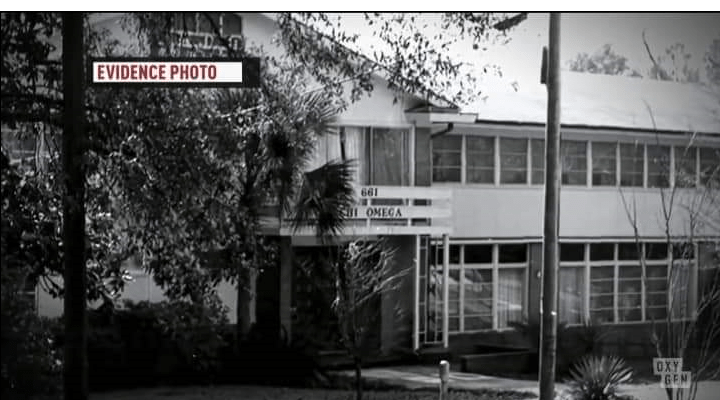
The Chi Omega House right after the murders took place in 1978. Twenty year old Lisa Levy and twenty-one year old Margaret Bowman were brutally murdered in their beds by Bundy. He also viciously attacked and left for dead Karen Ann Chandler and Kathy Kleiner, but thankfully both women survived. Photo courtesy of Oxygen.
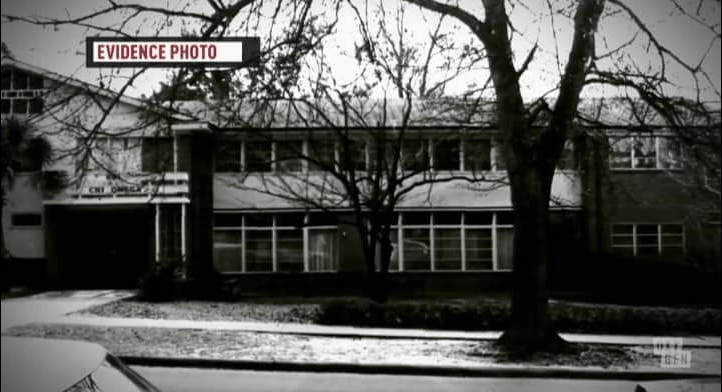
Another shot of the Chi Omega House right after the murders. Photo courtesy of Oxygen.
Another shot of the Chi Omega House right after the murders. I love the old LE vehicle parked out front. Photo courtesy of Oxygen.
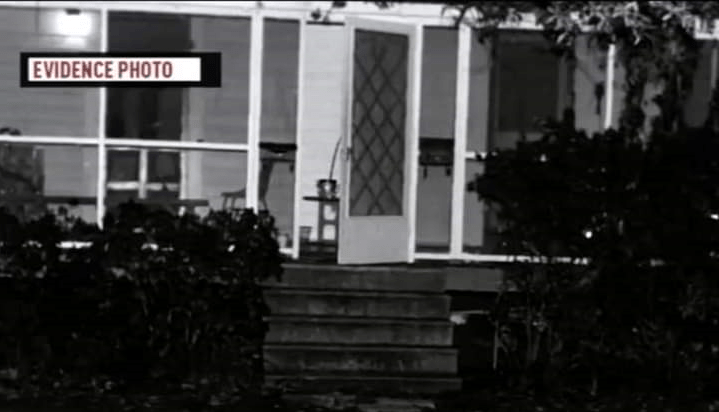
The unlocked door of the Chi Omega House that Bundy snuck into. Photo courtesy of Oxygen.
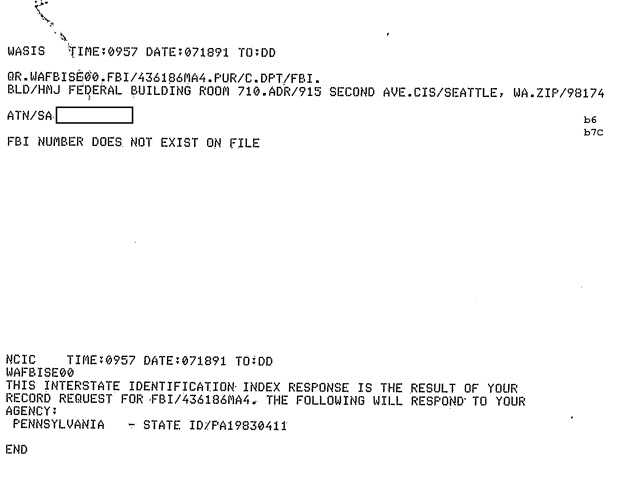
An area outside of the Chi Omega house. Photo courtesy of Oxygen.
A shot of the logs outside of the Chi Omega house Bundy used to attack the four sleeping co-eds. Photo courtesy of Oxygen.
Another shot of the logs outside the Chi Omega house. Photo courtesy of Oxygen.
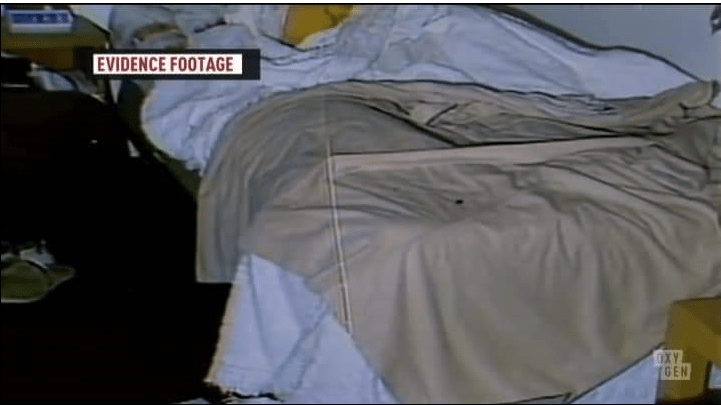
One of the beds in the Chi Omega house. Photo courtesy of Oxygen.
Another one of the beds from the Chi Omega house. Photo courtesy of Oxygen.
Another bed from the Chi Omega house. Photo courtesy of Oxygen.
Another one of the beds from the Chi Omega house. Photo courtesy of Oxygen.
Another bed at Chi Oh.
A picture of one of the bedrooms in the Chi Omega house after Bundy’s murders.
A picture of a hallway at the Chi Omega house after Bundy’s murders.
A photo related to Bundy’s January 1978 Tallahassee crime scene. Photo courtesy of Oxygen.
Cheryl Thomas. Bundy used the same log to attack Thomas that he used in the Chi Omega assaults. Photo courtesy of Oxygen.
A photo of the house on Dunwoody Street Cheryl Thomas shared with friends from FSU. Photo courtesy of Oxygen.
Another shot of the house that Cheryl Thomas shared with friends from FSU. Photo courtesy of OddStops.
An aerial shot of where Cheryl Thomas lived and was attacked, located at 431 Dunwoody Street in Tallahassee; the house has since been torn down. Photo courtesy of Oxygen.
What the area on Dunwoody Street looks like in 2023.
The door at the residence of Cheryl Thomas in Tallahassee. Photo courtesy of Oxygen.
The open window in Cheryl Thomas’s kitchen that Bundy climbed into. Photo courtesy of Oxygen.
The fly screen on Thomas’ window that Bundy knocked loose when he climbed into her kitchen the night of her assault. Photo courtesy of Rob Dielenberg.
The flower pot that Bundy knocked over when he broke into Cheryl Thomas’ apartment. Photo courtesy of Rob Dielenberg.
The window in Thomas’s kitchen that Bundy crawled through.
The back door at Cheryl Thomas’s apartment. Law enforcement took chunks out of the doors of both sides of the house; the perpetrator left his fingerprints behind on both. Photo courtesy of Oxygen.
The crime scene of Cheryl Thomas. Photo courtesy of Oxygen.
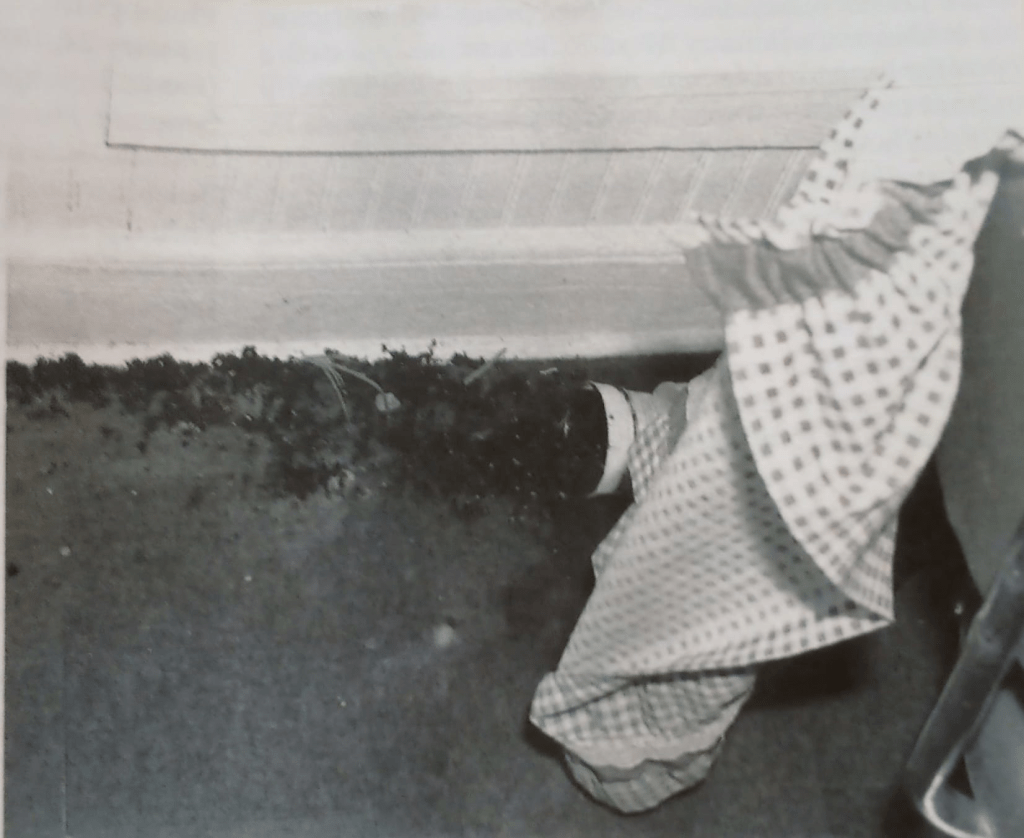
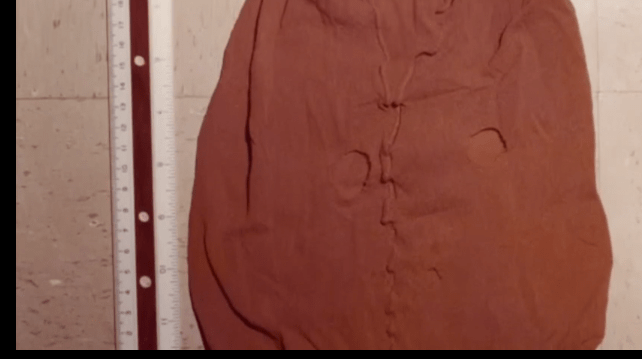
Pantyhose found in Cheryl Thomas’ apartment. According to court documents, a knotted pair of pantyhose was found in her bedroom with holes cut into the nylon to create a mask. Photo courtesy of Oxygen.
The lath that Thomas used to prop her bedroom window open. Photo courtesy of Rob Dielenberg.
The pantyhose mask found in Cheryl Thomas’ apartment. 
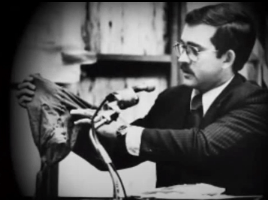
An expert holding up the pantyhose mask found in Cheryl Thomas’ apartment at Bundy’s Chi Omega trial. 
Kimberly Dianne Leach.
The white van Bundy stole from FSU. It’s the vehicle he used to abduct Kim Leach with.
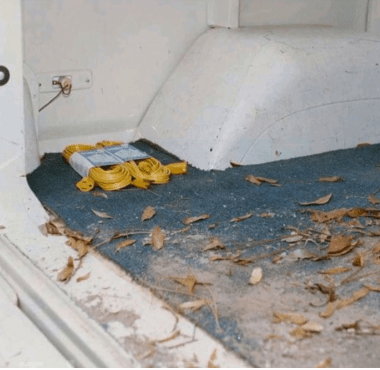
The inside of the van Bundy stole from FSU.
Another shot of the inside of the van Bundy stole from FSU.
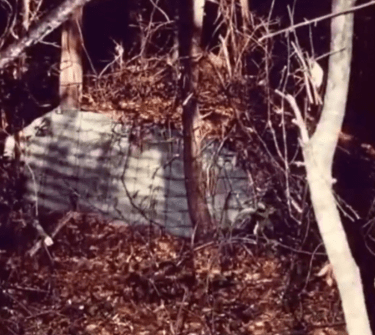
The hog shed Bundy used to dispose of Leach’s body.
A screen shot from Leach’s crime scene. This was all could find, I apologize for the poor quality.
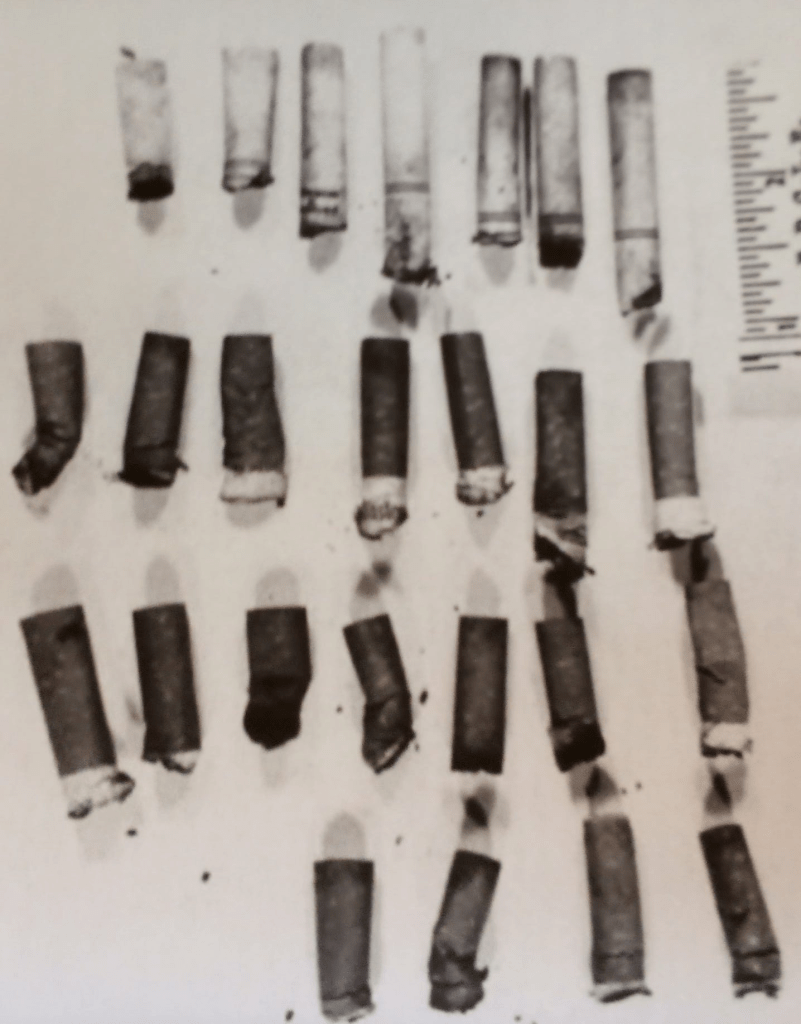
The first three rows of butts were found discarded on the ground in Suwannee River State Park, and the single column on the right were the ones ground discarded in the FSU van. Photo courtesy of Rob Dielenberg.
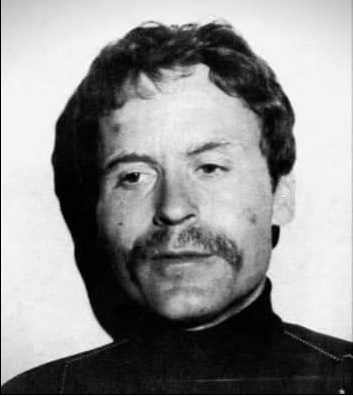
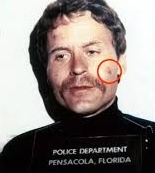
Bundy’s final mug shot from February 1978 after he was arrested in Jacksonville. The bruise on his face occurred after he got into a brief tussle with the arresting officer, who hit him in the cheek with his gun.
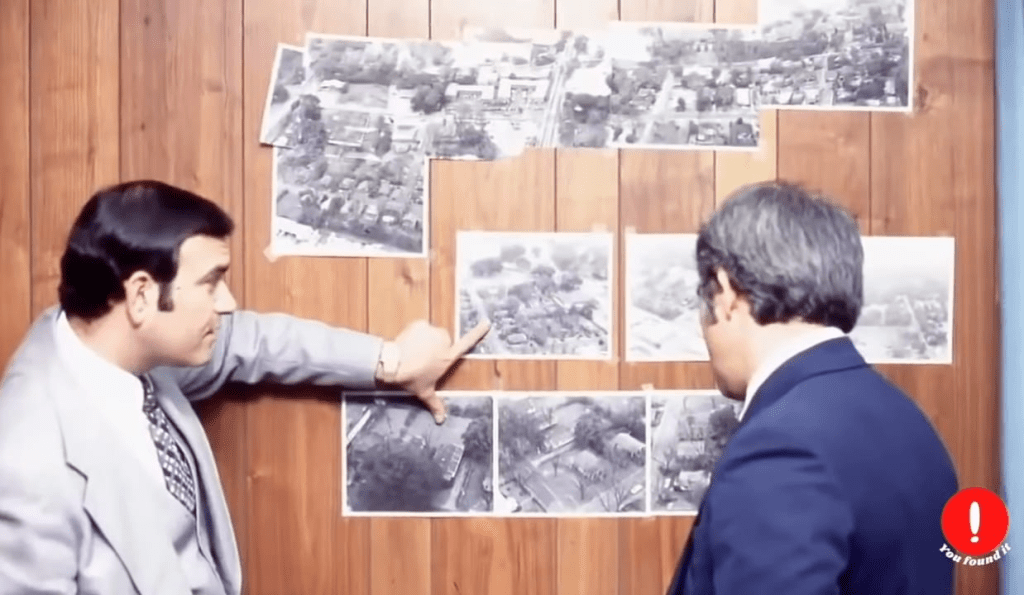
Former Leon County Sheriff Ken Katsaris looking at pictures related to the Bundy case.
A dentist taking a mold of Bundys teeth. Photo courtesy of Oxygen.
Another shot of a dentist taking a old of Bundys teeth. Photo courtesy of Oxygen.
Molds of Bundy’s teeth. Photo courtesy of Oxygen.
Bundy’s teeth. Photo courtesy of Vanessa West.
Bundy’s gross teeth.
Bundy’s bite mark. Photo courtesy of Vanessa West.
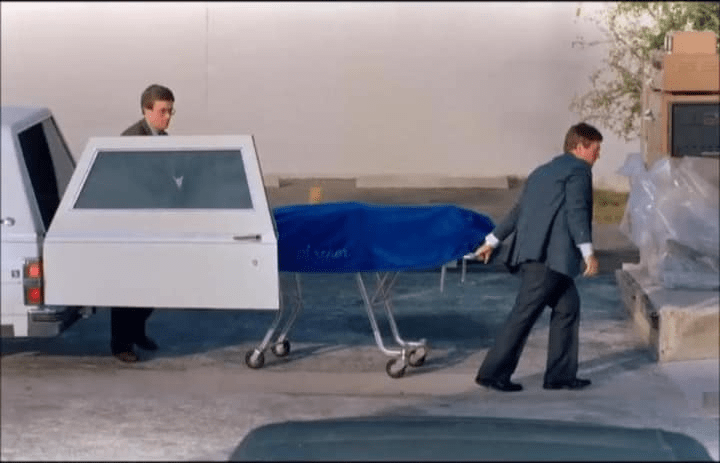
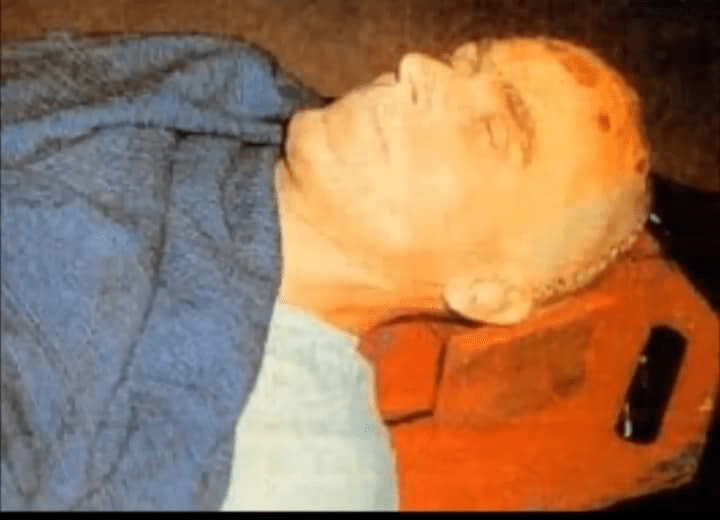
A photo of Ted arriving at the Medical Examiners office after his execution.
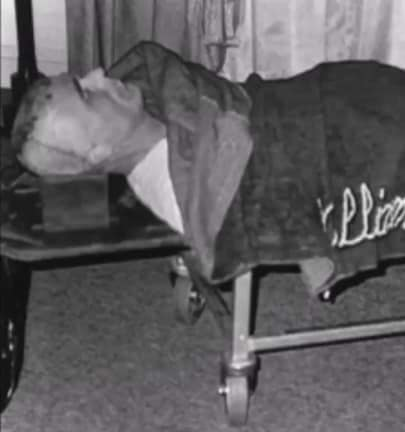
A B&W of Bundy after his execution.
Bundy after his execution.
A picture of Bundy, post-mortem. Photo courtesy of the Florida state Department of Corrections.
Bundy after his execution.
The top of Bundy’s head after his execution.

Judge Edward Douglas Cowert.

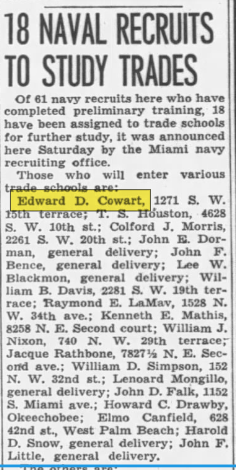
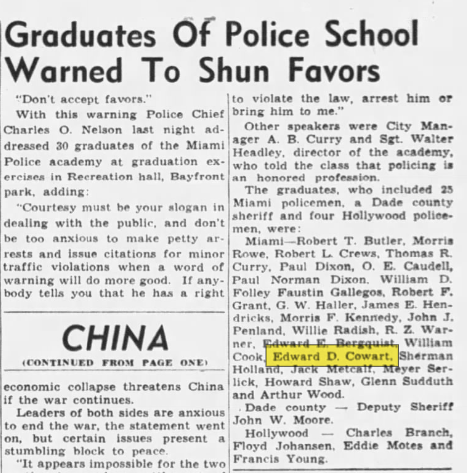
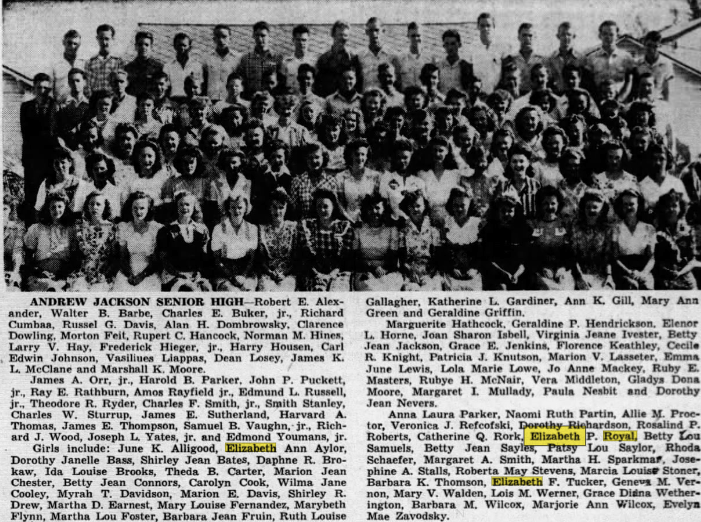
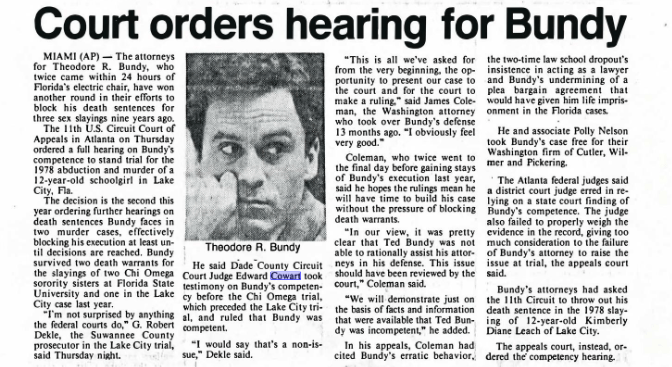
Edward Douglas Cowart was born on February 17, 1925 to William and Helen (nee Douglas) in Plant City, FL. He had an older brother named William that was born in 1920. Judge Cowart served in the Navy from 1942 to 1946 and when he returned married Elizabeth Pearl Royal on July 22, 1946. The couple had two daughters, Susan and Patricia. Cowart worked as a motorcycle officer in the Miami Police Department before returning to school to earn his degrees in law: he got a BA in 1950 from the University of Miami and a JD from Stetson University in 1952. 

Cowart worked as a Dade County Circuit Court Judge for 14 years. He was highly respected in the law community and was well-known for his almost Southern hospitality and long drawl. The trial that helped make him famous is that of Ted Bundy, who had a messy, incomplete background in law himself and was originally arrested for a series of murders in the Pacific Northwest on August 16, 1975 in Utah (between at the very least 1974 and 75). The judge imposed a death sentence on the serial killer, and he is frequently remembered for his unusually sympathetic post-sentencing remarks to Bundy:

‘The court finds that both of these killings were indeed heinous, atrocious and cruel. And that they were extremely wicked, shockingly evil, vile and the product of a design to inflict a high degree of pain and utter indifference to human life. This court, independent of, but in agreement with the advisory sentence rendered by the jury does hereby impose the death penalty upon the defendant Theodore Robert Bundy. It is further ordered that on such scheduled date that you’ll be put to death by a current of electricity, sufficient to cause your immediate death, and such current of electricity shall continue to pass through your body until you are dead. Take care of yourself, young man. I say that to you sincerely; take care of yourself. It is an utter tragedy for this court to see such a total waste of humanity, I think, as I’ve experienced in this courtroom. You’re a bright young man. You’d have made a good lawyer and I would have loved to have you practice in front of me, but you went another way, partner. I don’t feel any animosity toward you. I want you to know that. Once again, take care of yourself.’

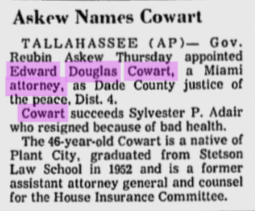
Cowart replaced Gerald Kogan in the position of Dade County Circuit Court, as he was appointed to the Florida state Supreme Court. About Cowart, Kogan said that he was ‘one of those human beings who was destined to be a judge. He was intelligent, he was compassionate, he was understanding, and when he had to be, he was tough as nails.’ 

In 1982 then Dade State Attorney and (former) US Attorney General Janet Reno hired Cowart to be her chief assistant, in between his stints on the bench. He stayed in the position until 1984, when he went back to be a judge at the Dade County Circuit Court. Every year he was in that role, Cowart ranked either at or close to the top in the annual Dade Bar poll of judges. 

Just after midnight on August 3, 1987 Edward Douglas Cowart died of a massive heart attack at Coral Reef hospital in Miami at the age of 62. He was cremated and the location of ashes is unknown. In his obituary published by The Miami Herald on August 7, 1987, ‘from jail guards to Supreme Court justices, traffic cops to traffic judges,the wept together and swapped favorite stories on Thursday (August 6, 1987) at a memorial service for Dade Circuit Court Judge Edward Cowart.’ The 25 minute long service in the massive Old Cutler Presbyterian Church (which seats 1,500) was standing room only.

What is so upsetting to me is that Bundy outlived the judge, as he wasn’t executed until January 1989 (after a number of unsuccessful appeals to Cowart and the Court of Appeals in attempts to overturn his death sentence or be granted a new trial). Elizabeth Cowart passed away on April 5, 2001 in Danbury, CT. Their daughter Susan passed away on October 4, 2007. 

Edward Douglas Cowart World War II Draft Card.
Edward Cowart at his Police Academy graduation.
A news clipping mentioning Cowart learning a trade published in The Miami News on May 17, 1942.
An article from Cowart was a cop published by The Miami News on June 30, 1942.
Judge Cowarts wife, then Elizabeth P. Royal, in a group photo from Alma Jackson High School, published in The Miami News on May 28, 1944.
An  article from when Cowart was a cop published in the Fort Myers New Press on July 28, 1949.
Judge Cowarts wedding announcement published in the Fort Myers New Press on July 28, 1946.
An article from Cowart was a cop published by The Miami Herald on November 12, 1949.
Judge Cowarts picture for his second year of law school from the 1951 Stetson University yearbook.
Judge Cowarts law school graduation picture from the 1952 Stetson University yearbook.
In 1952 Judge Cowart graduated with his bachelors in law from Stetson University.
Judge Cowarts senior year activities at law school from the 1952 Stetson University yearbook.
Judge Cowarts name is mentioned under the student register from the Stetson University Bulletin.
Phi Delta Phi
Cowarts Phi Delta Phi picture in the 1952 Stetson University yearbook.
A certificate for Edward Cowart, courtesy of the Carol DaRonch YouTube page.
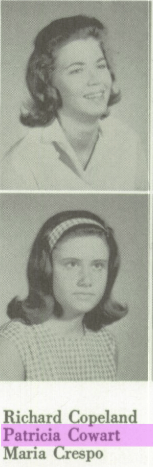
Patricia Cowarts freshman picture from the 1965 Coral Gables High School yearbook.
Patricia Cowarts junior picture from the 1967 Coral Gables High School yearbook.
A photo of Judge Cowarts daughter, Susan Irene. She was born on June 20, 1952 and passed away on October 4, 2007.
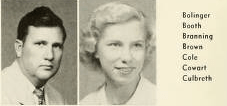
Irene Susan Cowarts junior picture from the 1969 Miami Palmetto High School yearbook.
Sue Cowarts senior picture from the 1971 Miami Palmetto High School yearbook.
This image has an empty alt attribute; its file name is image-46.png
A picture of Cowart acting as a prosecutor.
This image has an empty alt attribute; its file name is image-169.png
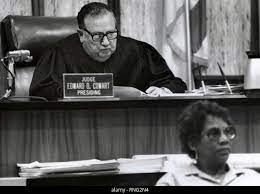
A b&w of Judge Cowart on the bench at Bundy’s trial.
This image has an empty alt attribute; its file name is image-168.png
Judge Cowart examining evidence at Bundy’s trial.
This image has an empty alt attribute; its file name is image-167.png
Carol DaRonch and Judge Cowart at Bundy’s trial.
This image has an empty alt attribute; its file name is image-164.png
Judge Cowart at Bundy’s trial.
This image has an empty alt attribute; its file name is image-162.png
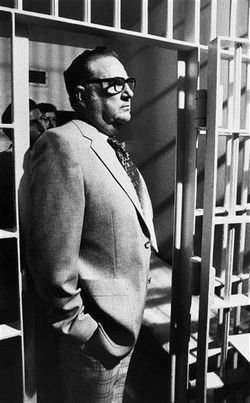
Judge Cowart examining the conditions of Bundy’s cell during his trial.
This image has an empty alt attribute; its file name is image-163.png
Another shot of Judge Cowart examining the conditions of Bundy’s cell during his trial.
This image has an empty alt attribute; its file name is image-69.png
Judge Cowart sitting on the bench.
This image has an empty alt attribute; its file name is image-68.png
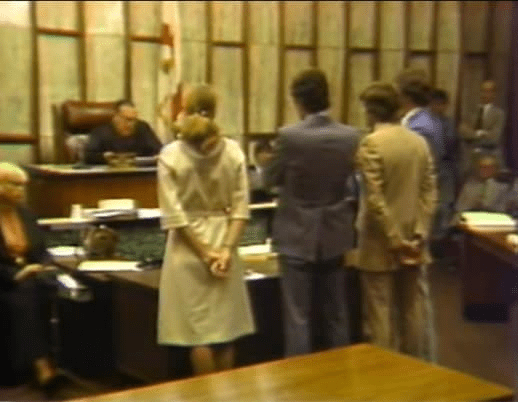
Bundy and his lawyers in front of Judge Cowart.
A short blurb mentioning Cowart published by The Miami News Journal on June 30, 1951.
A short blurb mentioning Cowart published by The Miami News-Press on April 20, 1952.
A short blurb about Cowart published by The Daytona Beach Morning Journal on January 7, 1972.
An about about Cowart presiding over a case published by The Miami Herald on May 1, 1973.
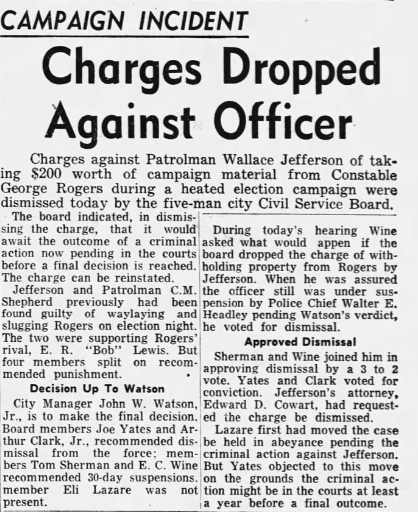
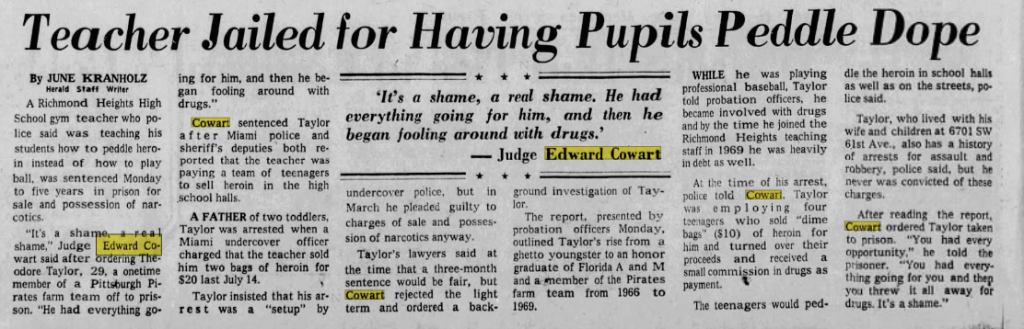
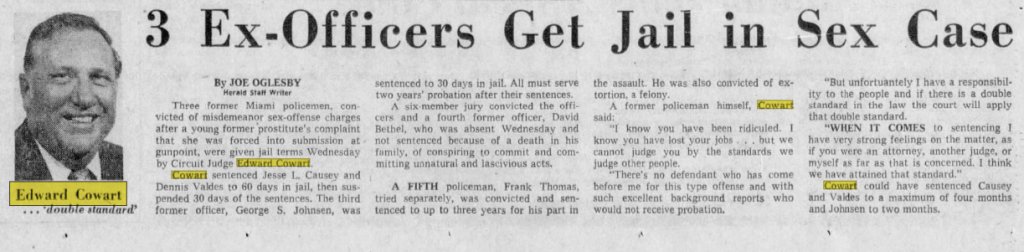
An article about Cowart presiding over a case published by The Miami Herald on November 13, 1973. I noticed he used a lot of similar statements like those he said in the Bundy trial in other situations.
An about about Cowart presiding over a case published by The Miami Herald on July 18, 1974.
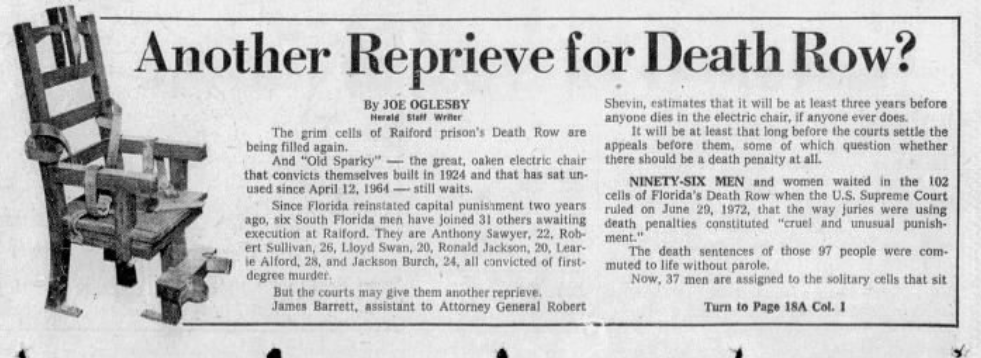
Part one of an article about the death penalty featuring Edward Cowell published by The Daytona Miami Herald Journal on January 7, 1975.
Part two of an article about the death penalty featuring Edward Cowell published by The Daytona Miami Herald Journal on January 7, 1975.
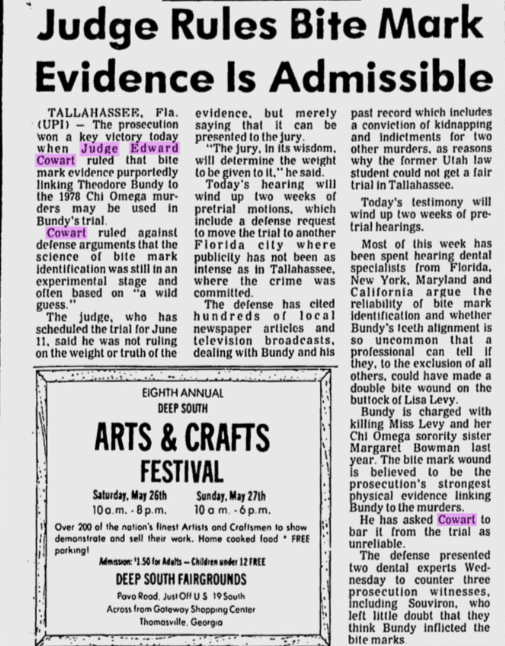
An article about Bundys trial mentioning Judge Cowart published by The Albany Herald on May 24, 1979.
An article about Judge Cowart and the Bundy trial published by The Deseret News on June 13, 1979.
An article mentioning Judge Cowart n relation to the Bundy trial published by The Press-Courier on June 26, 1979.
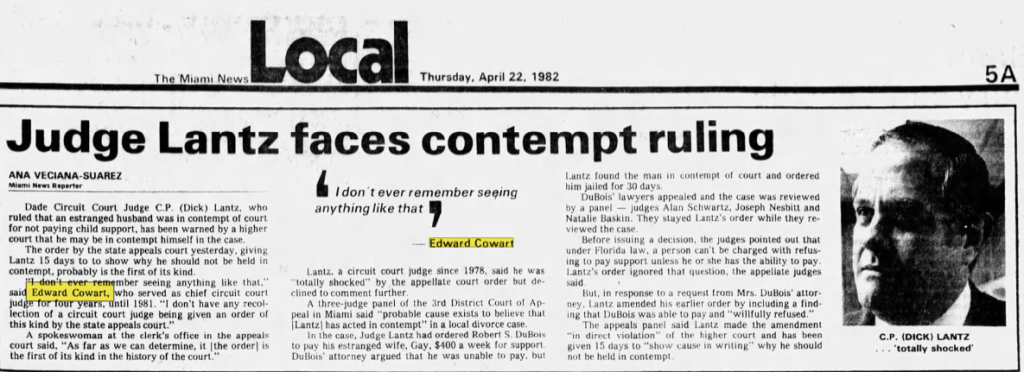
An article about Judge Cowart published by The Miami News on April 22, 1982.
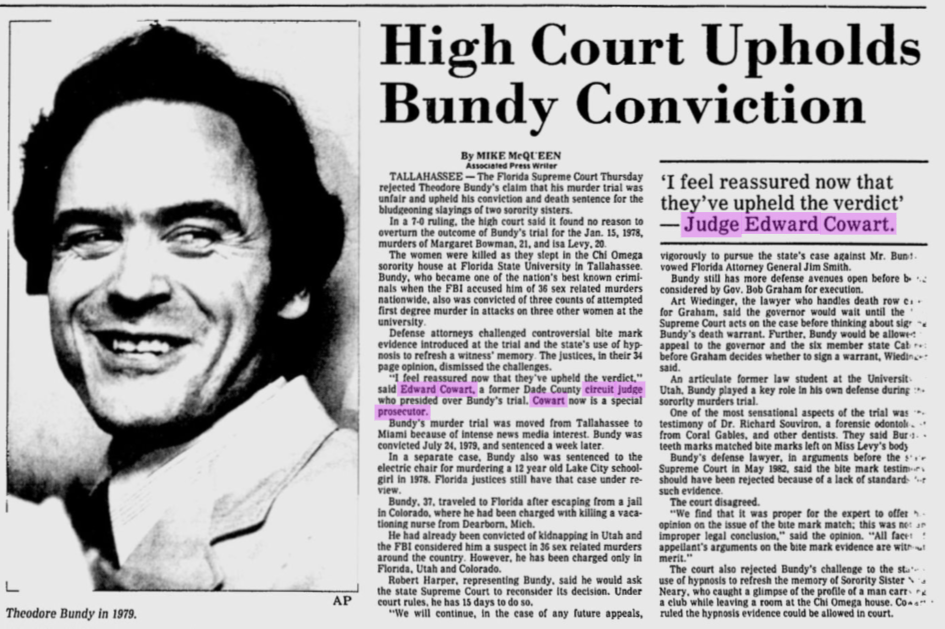
An article about Bundy’s conviction being upheld that mentions Judge Cowart published by The Daytona Beach Morning Journal on June 22, 1984.
An article about Judge Cowart published by The Miami Herald on July 3, 1984.
An article about Judge Cowart returning to the bench published by The Miami Herald on July 10, 1984.
An article on Cowart published by The Miami Herald on July 4, 1985.
An article about one of Bundy’s stay’s of execution published by The Press-Courier on December 21, 1985.
An article mentioning Cowart published by The Miami Herald on April 26, 1986.
An article about one of Bundy’s stay’s of execution published by The Spokesman-Review on June 24, 1986.
Another short blurb about one of Bundy’s stays published by The Catholic Press on June 25, 1986.
An article about Bundy’s appeal mentioning Judge Cowart by The Boca Raton News on June 30, 1986.
An article mentioning Judge Cowart published by The Ogden-Standard Examinser on April 3, 1987.
Judge Hanson’s obituary published by The Palm Beach Post on August 4, 1987.
Another one of Judge Cowarts obituaries, published by The Miami Herald on August 7, 1987.
Another article about he passing of Judge Corart published by The Miami Herald on August 12, 1987.
Another article about the passing of Judge Cowart published by The Miami Herald on August 12, 1987.
The Honorable Edward D. Cowart won the Selig Goldin Honoree post-humorously in 1989.
Former US Attorney General, Janet Reno.

Janla N. Carr.

So, most true crime fans are aware that Ted Bundy’s paternal lineage is unknown: Louise either had a completely anonymous one night stand, was with a man who lied to her about his real name/identity, or had a relationship with a guy who just up and left her and she took his identity with her to the grave (or a combination of these theories). There are multiple rumors surrounding the identity of Ted’s father: it’s been said he was a sailor that went by the name of Jack Worthington, an Air Force vet and salesman named Lloyd Marshall, and even Louise’s own father Samuel Cowell (even though DNA evidence proves he wasn’t). The name of Ted’s father was listed as Lloyd Marshall on his birth certificate (before Johnnie Bundy adopted him). Per ‘wikiwand,’ ‘census records reveal that several men by the name of ‘John Worthington’ and ‘Lloyd Marshall’ lived near Louise when Bundy was conceived.’ Mrs. Bundy told the FBI that Ted’s father was a man named Jack Worthington and that she only slept with him once (she also told Agent Bill Hagmaier that she was aware of the rumors and Samuel wasn’t Ted’s Dad).

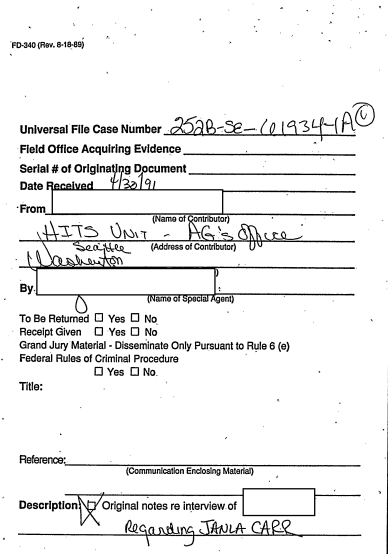
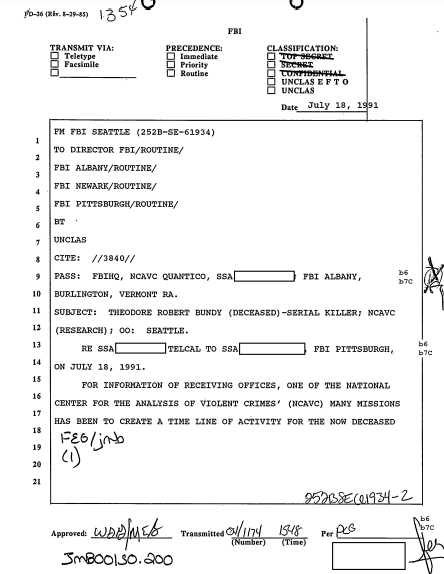
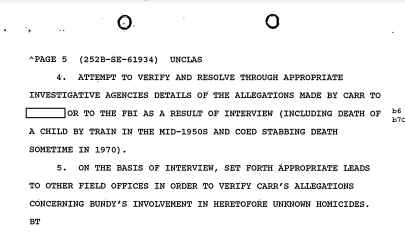
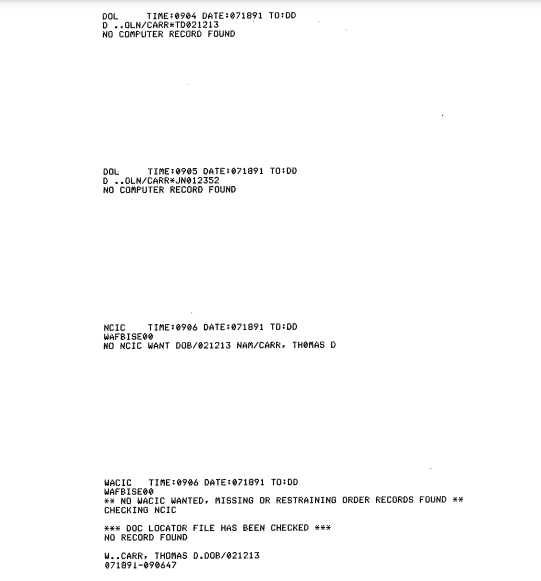
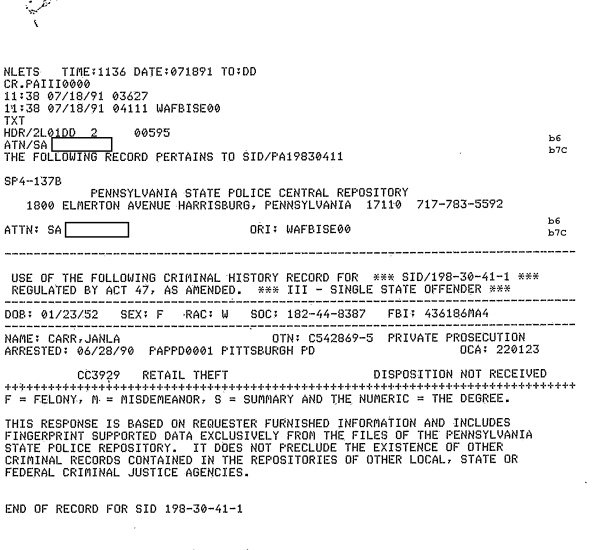
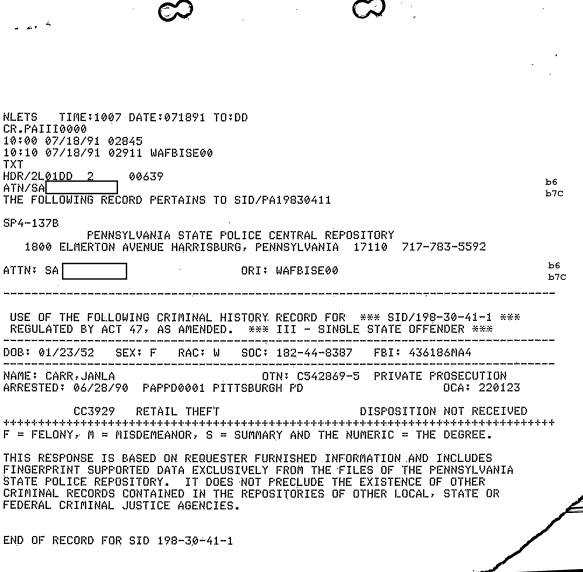
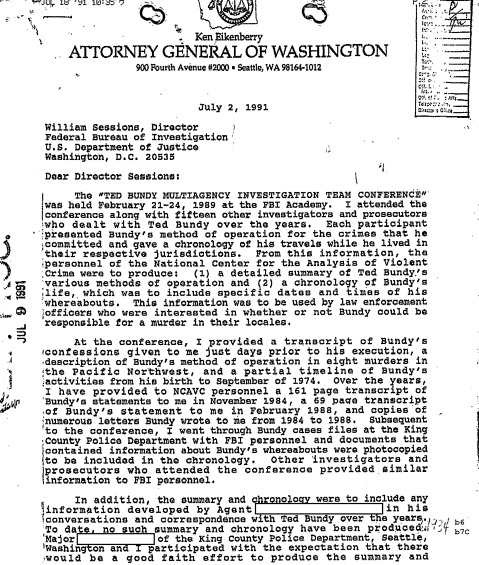
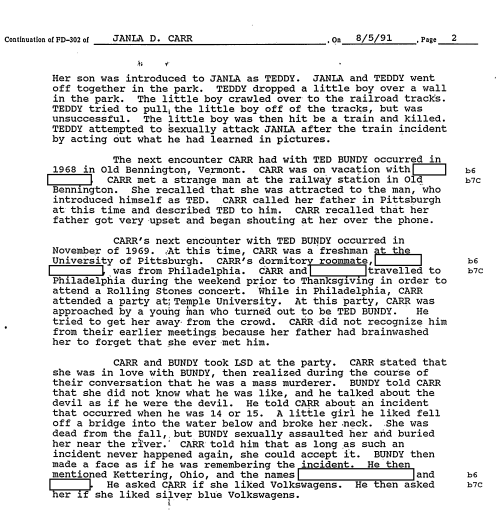
I’m not sure of the year, but ‘vault.fbi.gov’ released three separate documents that contained an absolute gold mine of information about the Bundy case (I included the portions about the Carrs in full at the bottom, as I don’t like leaving my readers hunting for additional information). Part one begins with a document from Salt Lake City law enforcement going over the details of Teds first escape on June 7, 1977 (as we all know he was quickly recaptured but escaped again to Florida later that same year on December 30). The beginning of the third portion is about a Pennsylvania woman named Janla N. Carr, who claims her dad (Thomas Dowling Carr) is Ted Bundy’s real Father. For the tl;dr type of people: Janla Carr claims Ted Bundy is her half-brother, he apparently had a twin brother, and he committed additional murders during early childhood and adolescence (well before 1974).

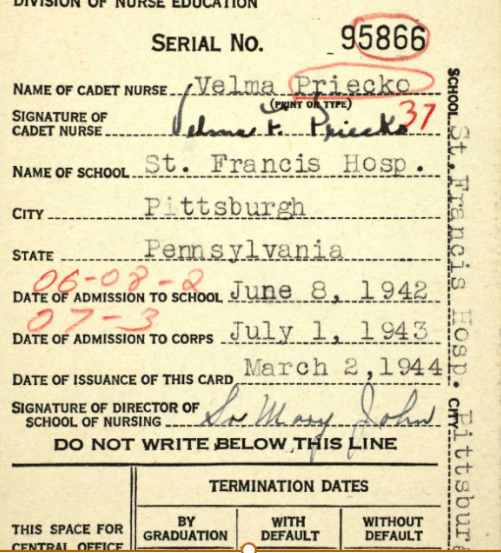
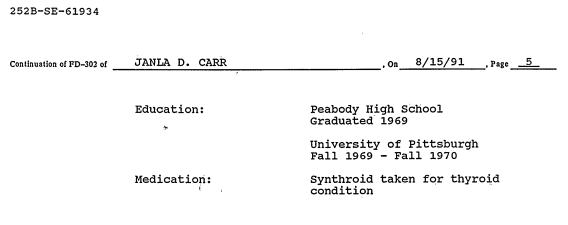
Janla N. Carr was born on January 23, 1952 to Thomas Dowling Carr and Velma F. Priecko out of Pittsburgh, Pennsylvania (Mrs. Carr’s maiden name is occasionally incorrectly listed as Nriecko). Janla was 5’5″ tall, weighed 150 pounds and had brown hair and brown eyes. The son of an undertaker, Thomas was born on February 12, 1913 in Columbus, Ohio and bounced around the country quite a bit before the family eventually settled down in Pittsburgh, PA in 1937 (he went to grade school in Reading, PA and oddly enough lived in Spokane, WA while attending high school, which is only about 4.5 hours away from Bundy’s hometown of Tacoma). After successfully taking a civil service exam, Mr. Carr got a job with the Railroad Mail Service (he began work for them in 1936, at some point became a supervisor, and retired in 1975) and Velma was a Nurse at the Western State Psychiatric Institute & Clinic in Pittsburgh. Family and friends told police that Janla and Thomas had what they would consider a ‘love-hate’ relationship. Additionally, Janla would frequently tell her friends that her dad had abused her and her mother, who passed away from cancer in 1983.

In 1969 Janla graduated from Peabody High School in Pittsburgh and later that fall started college at the University of Pittsburgh (she attended for two semesters). Carr eventually started skipping class before dropping out completely, claiming she had some sort of thyroid condition (I’ll bring this up again later). At some point in her life she experimented with LSD, which can result in altered memories. The use of hallucinogens (even infrequently) can interfere with the action of Glutamate (which helps to regulate pain perception), responses to the environment, and memory. It’s also worth noting that people who use LSD often experience blackouts: even though they may appear to be awake and conscious the entire ‘trip’ in actuality they have no recollection of what happened for either a portion or the entire time they were under the influence. Some users of LSD find their short-term memory is permanently affected and even after they stop using the drug their memories never come back.

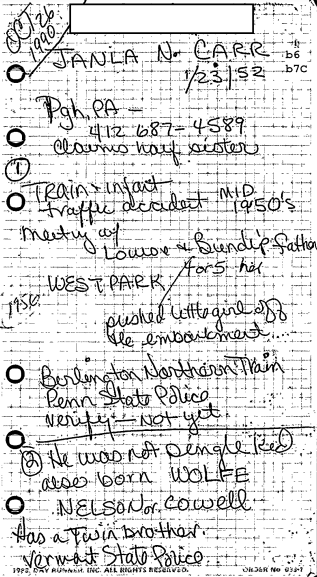
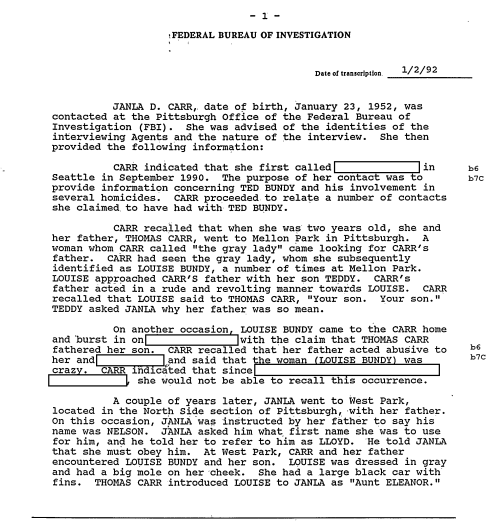
The first time Carr claims she met Ted was when she was two years-old: Mrs. Bundy brought her young son to meet up with Thomas and Janla at Mellon Park in Pittsburgh. Per the document released by the FBI, Janla told them that ‘a woman whom Carr called ‘the gray lady’ came looking for Carrs father. Carr had seen the gray lady, who she subsequently identified as Louise Bundy, a number of times at Mellon Park (although there isn’t a time or any other details of this introduction other than she remembers Louise as appearing gray in color). Thomas Carr denies ever knowing Louise Bundy. I don’t think I believe this story, as Louise moved Ted from Pennsylvania to Tacoma in 1950 and married Johnnie Bundy the next year. Teds half-sister Linda was born in 1952 and Louise had three more children after (Richie is the youngest Bundy-sibling and he was born in 1961)… why would Mrs. Bundy take her little boy ALL THE WAY across the country on multiple occasions and leave her new husband (who as we know stepped up and acted like a Father figure to Ted after he married his mom) and baby(ies) behind to go visit the Carrs? Janla told the FBI that on that occasion her ‘father acted in a rude and revolting manner towards Louise,’ and Teddy even asked Janla why her father was so mean to his mother. She also recalled that Louise said to Thomas Carr, ‘Your son. Your son.’

The next time Ms. Carr saw Ted was at West Park in Pittsburgh a couple years later in the mid-1950’s. On this occasion, Thomas instructed his daughter to call Louise ‘Aunt Eleanor’ and to tell her that ‘his name was Nelson. Janla asked him what first name she was to use for him, and he told her to refer to him as Lloyd. He told Janla she must obey him.’ When they met with Louise this time, Carr said she was dressed in gray, had ‘a big mole on her cheek,’ and drove a ‘big black car with fins.’ Like with so many of the other living unconfirmed victims, when writing this I relied heavily on Erin Banks book, ‘Ted Bundy: Examining the Unconfirmed Survivor Stories.’ In it, she discusses that during this second visit the two children wandered away from where the adults were sitting. ‘Janla and Ted went off together in the park. Teddy dropped a little boy over a wall in the park.The little boy crawled over to the railroad tracks. Teddy tried to pull the little boy was then hit by a train and killed.’the child’s mother allegedly witnessed the event. After the murder, Carr insisted that Bundy attempted to rape her and that he was ‘acting out what he had learned in pictures.’ I mean… where do I even start? Erin took all the work out of the equation for me (thanks friend), and pointed out that no police report exists regarding this alleged incident. If the mother witnessed another child murder her precious baby in such a horrifically gruesome way, where is the paper trail that would obviously exist? Or some form of proof of the repercussions of Teds actions? And why was it never discussed before in any Bundy related books or documentaries? It’s a pretty substantial event, much larger than something that could be expunged from a juveniles record at 18 (obviously something like that would make the papers, I would think). Also, Ted was born in 1946, which would have made him only 8 or 9 years-old when this event took place. Banks also points out that the average age that males in the 1950’s reached puberty remained as it was in decades prior at 12.5 years old. I mean, there’s always outliers to the average but how could it be possible that Ted rape Janla if he wasn’t physically able to? Janla discusses another time (there are no details given about when exactly it occurred) where Louise ‘burst in on [redacted] with the claim that Thomas Carr fathered her son. Carr recalled that her father acted abusive to her and [redacted] and said that the woman (Louise Bundy) was crazy. Carr indicated that since [redacted], she would not be able to recall this occurrence.’

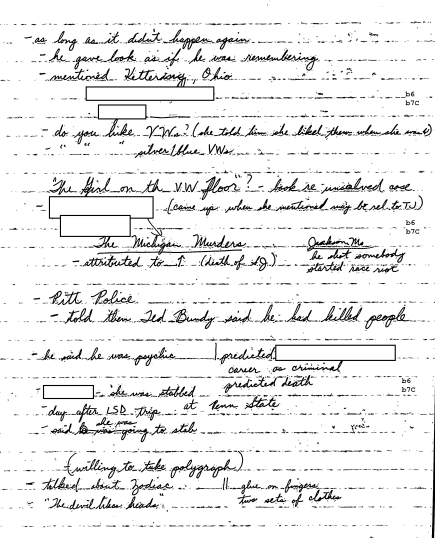
Interestingly enough, Ms. Carrs run-ins with Ted didn’t end when they were children (it actually seems as if the encounters happened more frequently when the two were adults). Janla told the Pittsburgh branch of the FBI that the next time she saw her half-brother was while on vacation in Vermont in 1968: she ‘met a strange man at the railroad station’ in Old Bennington who introduced himself to her as Ted and that she was attracted to him. When she called her Dad and told him about her new friend he became very angry and started yelling at her. After that Carr claimed that she ran into Ted at a Rolling Stones concert in Philadelphia (sometime between 1968 and 1970) while he was attending Temple University and living at his Aunt Julia’s house in Lafayette Hill. It’s worth noting that Bundy did briefly live in Pennsylvania from December 1968 until May 1969 when he moved back to Tacoma (per the ‘TB FBI Multiagency Report 1992.’). Next up: at some point in November 1969 Carr said they ran into each other at a party shortly when she was a freshman at the University of Pittsburgh. She claimed that she didn’t recognize him because at some point in the past her father and Ted hypnotized and brainwashed her (I’ll elaborate more on that later). The two took LSD together while at the party and determined then that she was ‘in love with him’ despite him confessing to her that he was a ‘mass murderer.’ Bundy told Carr that she didn’t know what he was really like, and he talked about ‘the devil as if he were the devil.’ During that trip he started disclosing all of his deepest, darkest secrets to her, including the fact that he already committed several murders at that point in time (even though he told Bob Keppel that he started killing women in 1972) and that one time he incited a race riot after he shot a man in Jackson, Mississippi (you know, because he was known to do that), which ‘bears certain Manson-esque connotations’ (Banks, 54). Carr also claims that Ted confessed to being responsible for the 1969 slayings of Elizabeth Davis and Susan Curtis (also known as the Jersey Parkway Murders). I do want to note, the FBI file said that Ted shared with Janla that he was responsible for A murder on the Jersey Parkway (as in one).. and I don’t know if this is an error or intentional. In her book, Banks points out that ‘Bundy had allegedly intimated to Dr. Ron Holmes that he had killed the two women, yet no recording of it exists. It is noteworthy that Bundy was incarcerated with Gerald Stano at the time, who was a suspect in the case and may have filled Bundy in on several details of the double homicide.’ Carr claims that Ted confessed to a series of murders that was discussed in the book, ‘The Michigan Murders’ as well as some slayings in Ohio. Additionally (although he didn’t give the victims name), she claimed that Ted took responsibility for the disappearance of eight year old Ann Marie Burr from his hometown of Tacoma, WA. Carr claimed that Ted described pushing the little girl off a bridge which resulted in her neck breaking. After she was dead, the fifteen year old sexually assaulted her before he buried ‘her body near a river.’ After this encounter, Bundy hypnotized Janla so she would forget the encounter ever happened.

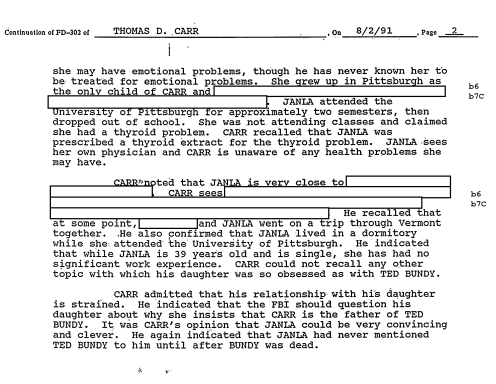
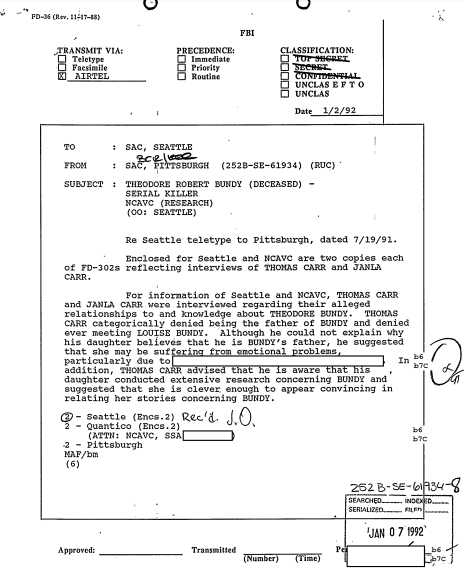
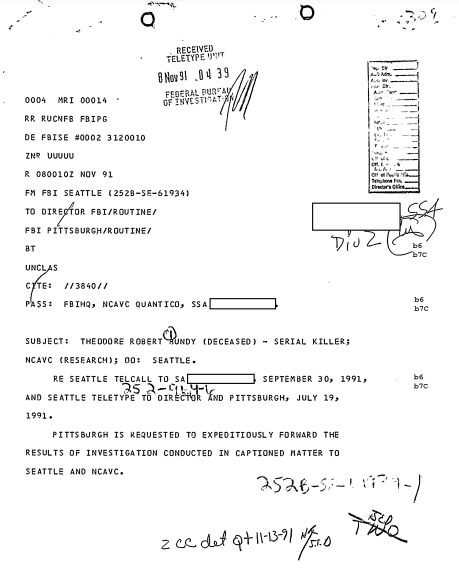
Thomas Carr first remembers his daughter talking about Bundy for the first time at some point in the late 1980’s: he told the FBI that she called someone in Washington about Ted and that he tried to discourage her from doing it again. Thanks to these documents released by the FBI, we know that Janla didn’t begin her delusions of Bundy being her half-brother until around 1990, and she first contacted Seattle law enforcement that September about her speculations (conveniently this was after he was executed in January 1989). Carr told them she wanted to help provide information about his involvement in ‘several homicides.’ At some point in 1991, Ms. Carr learned that Louise Bundy named Jack Worthington as Ted’s father, which per the document ‘relates Janla’s claim that her father told Louise his name was either Lloyd Nelson or Jack Worthington.’ Unfortunately the (handwritten) notes aren’t completely clear (to me, anyways) and it’s tough deciphering what is meant in some parts. It appears Janla attempted to contact the agency multiple times and they finally granted her an interview on October 26, 1990, when she shared with them her alleged past experiences with Ted Bundy (she even offered to undergo a polygraph examination proving she was being truthful). Carr claims Ted was given the surname Wolfe, Nelson, or Cowell at birth and that her Dad ‘thinks she’s nuts’ and that her ‘stories are fabrications.’ Thomas Carr commented that he ‘could not recall any other topic with which his daughter was so obsessed as with Ted Bundy.’ (Fun side note: she also claimed he had two toes that were stuck together).

Additionally she points out that she feels that older pictures of her father ‘bears a resemblance to published photographs of Ted Bundy.’ Carr included a picture of her father from 1946 in the handwritten letters she sent to the FBI, who she felt bore a ‘striking resemblance to Bundy.’ Janla shared that she wrote to Louise on several occasions and that she even wrote her back: in the response Ms. Carr said that Louise ‘discounted everything Carr had written and about.’ She termed Louise Bundy’s response as the ‘original poison pen letter;’ she also claimed that her father destroyed letters from Louise Bundy that were addressed to Jack Worthington as well as ‘an Army jacket with the name Nelson on it.’

Another thing I want to circle back on is the concept that Ted apparently had a twin brother: I’m including this snippet from Banks book because it gave me a good laugh but it also brings up a really good point: ‘Carr is adamant that Bundy had a twin brother. Those leaning towards believing Carr posit that Louise may have taken turns taking Bundy or his twin brother to these family reunion meetings with the Carrs. One person even suggested that it may have been Bundy’s twin who later sought Carr out in Pittsburgh. Obviously this logic is flawed. This isn’t ‘Breaking Bad’ and we’re not talking about the Salamanca twins in real life. The fact aside that the Lund Home did not record a twin birth in Louise’s case, why would Louise not have brought both boys to meet Mr. Thomas Dowling Carr and his daughter Janla? Where exactly was this twin brother when Bundy grew up in the Cowell and later Bundy household? Where is he on any family photos that found their way onto the internet over the decades? He should have been in at least one photo together with his twin. And where is he now? If he resembles Bundy, just imagine the terror and panic that would have followed, had he been spotted someplace after Bundy’s conviction, let alone after his execution. He would have been the most (wrongfully) arrested man in the history of the USA.’ I mean… yeah. This is written so perfectly I don’t need to elaborate further. The idea that Bundy had a twin no one knew about is absurd.

It shouldn’t come as a surprise that Janla had a long history of mental illness: her father claims that she never held a job and he paid the rent for her apartment (located in an old mansion at 5705 Fifth Avenue in the Oakland area of Pittsburgh). Even though Thomas said she didn’t work a company called ‘Telefundraiser / Public Interest Communications’ is listed in the FBI document as Janla’s place of employment with a notation of of April 1990 written by it (I don’t know if they meant that was her current POE and started that April or if it was the only place she’s ever worked, it’s not clear). She also had numerous inpatient stays at the Western Psychiatric Institute and Clinic in Pittsburgh. Her father also shared with the FBI that his daughter also had some sort of ‘thyroid condition‘ and took ‘Synthroid,’ a Doctor prescribed thyroid medication that is used to treat a condition called hypothyroidism in adults and children. It is meant to replace a hormone that is usually made by an under-producing thyroid gland. Looking into the condition, it appears that individuals suffering with this thyroid disease often experience changes in mood, specifically anxiety and depression. It seems that the more advanced the thyroid condition, the more severe the mood shifts.

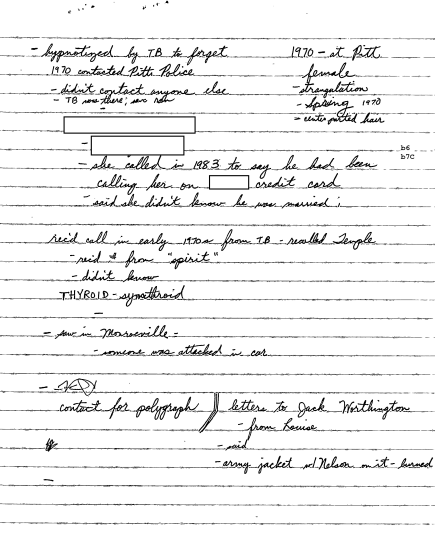
Janla said she saw Ted next in the spring of 1970: she was a student (and resident) at the University of Pittsburgh and ran into him on campus. Around the same time, a Pittsburgh coed (who wore her ‘hair parted in the center’) was strangled to death. She said that time he ‘told her he had killed people;’ she immediately took this information to the University of Pittsburgh Campus Police. Carr commented that she doesn’t know if they did anything with the information. There isn’t any additional information about this encounter but apparently after it took place Bundy ‘disappeared;’ she doesn’t know if the Campus Police ever checked him out. After that incident Bundy contacted Janla on the telephone at some time in the early 1970’s: he told her that a spirit gave him her unlisted phone number; it was at that time that she remembered meeting up with him while he was at Temple (vault.fbi.gov/TedBundy, page 40).

Janla told the Pittsburgh branch of the FBI that she didn’t begin to remember these events until several years before the interview took place because ‘both her father and Bundy had hypnotized her.’‘ She claims that the two men had hypnotized her in order to make her ‘forget about the family connection;’ per the FBI document, Carr broke free from this spell at some point in 1969. She also said that she did not always recognize Ted when she see him or remember that he was her half-brother. Janla also claimed that Bundy told her that he was psychic and one time predicted that ‘a woman named [redacted] was going to be stabbed.’ She went on to claim that the next day ‘a woman named [redacted] was stabbed at Penn State University.’ He also said that ‘he would have a career as a criminal, and that he would be killed for his crimes.’ Carr claims that at the end of this encounter Bundy hypnotized her so that she would forget everything he told her.

In 1983 Janla said Bundy called her from Florida State Prison and gave her the name of Angela Woods. ‘Also in 1983, Carr received a call from [redacted], who identified herself as [redacted]. She told Carr that Bundy had used [redacted] credit card to call Carr. Carr told [redacted] that she did not know Bundy was married’ (this makes me think redacted is Carole Ann Boone). About four years go by before Carr is contacted by Bundy again: in 1987 she received a phone call from Ted but she ‘didn’t recognize his voice.’ He told her he was ‘the most evil person in the world.’ Carr shared with the FBI that she was ‘half-asleep when he called’ and she didn’t realize until later that it was Ted who called her.

Thomas Carr denied that Ted Bundy is his son and is not sure why his daughter thinks this is true. In an interview with the FBI, he shared that Janla never talked about Ted until after he was executed and that he sought her out because she had ‘incriminating information about him.’ In order to find information that would help corroborate her stories, Thomas said that she would tirelessly research Bundy’s background, trying to find some random fact that would help prove her case. He also shared that Janla became practically obsessed with the serial killer, and would read anything she could get her hands on about him: magazines, newspapers, books. She also utilized computer databases at various libraries in the area (specifically the Carnegie Library as well as the libraries at Carnegie Mellon University and the University of Pittsburgh). Carr claims that his daughter is ‘clever enough to appear convincing in relating her stories concerning Bundy.’

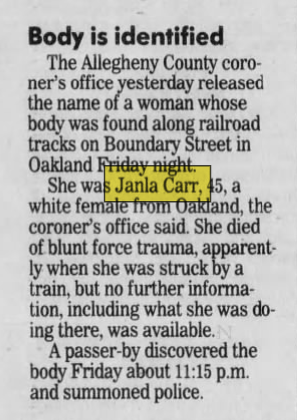
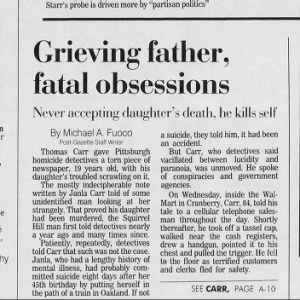
Eight days after her 45th birthday on January 31, 1997 Janla Carr was found dead in a subway tunnel near Central Catholic High School in the Oakland area of Pittsburgh following a stay at a psychiatric hospital. The area was a known hangout for people experiencing homelessness. Friends of Carr told law enforcement that she seemed happy before she died despite the fact that she stopped taking her medication. Pittsburgh Homicide Sergeant Paul Marraway described Janla as ‘eccentric,’ and that ‘she had been in the hospital for psychological problems.’ Because Janla wasn’t a victim of sexual assault and had no physical defensive wounds, investigating officers ruled her death as a suicide (the ME listed her death as ‘undetermined’). But her father knew differently: Thomas Carr went to Pittsburgh law enforcement multiple times over the following year regarding his daughters death. One time he gave homicide detectives a 19 year-old torn piece of newspaper that contained Janla’s handwriting all over it: she claimed that there was an unusual man in her apartment who stood up from the couch he was sitting on and looked at her in an ‘unsettling way’ (Banks, 57). The note was deemed mostly nonsense by the police, however Mr. Carr felt it proved his daughter had been murdered. Police said that it was as if he became obsessed with that piece of paper. Over and over again, detectives patiently told him that his daughters death was a suicide, and if it wasn’t, it was an accident. She wasn’t murdered.

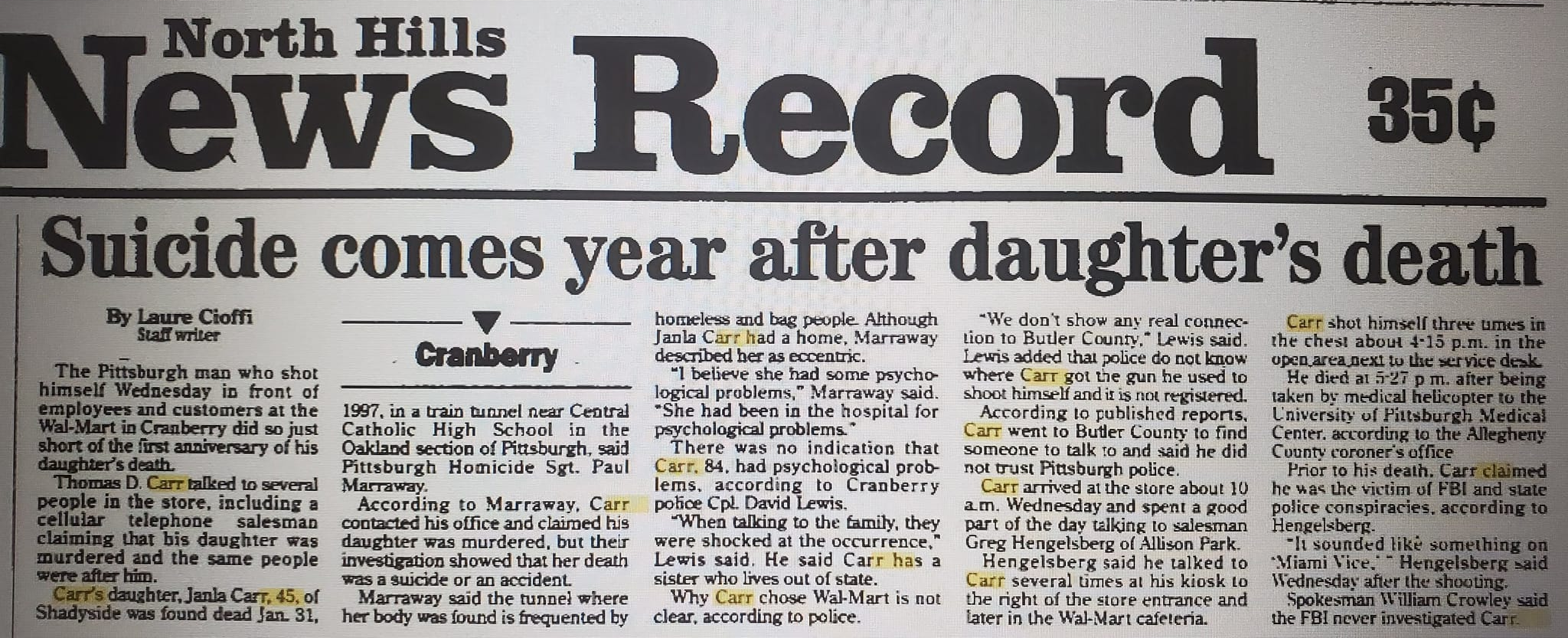
The Pittsburgh branch of the FBI looked into Janla’s story and they eventually determined that it lacked credibility (obviously, as we are all aware Bundy’s paternal lineage remains unknown). Finally Thomas Carr’s delusions of his daughter being murdered by the FBI got the best of him and he had enough: on Wednesday, January 28, 1998 Carr went to the Walmart in Cranberry, PA multiple times. He spent a few hours wandering through the isles and sharing his story with Greg Hengelsberg, a cell phone salesman working at the store. Among the things he shared was that his neighbor broke into his house and stole his stamp collection and that his phone was being tapped by the FBI and whoever is doing that also killed his daughter. Regarding the conversation, Hengelsberg commented that ‘it sounded like something on ‘Miami Vice.’’ Per an article published by the North News Record on January 30, 1998: ‘he said the same people tapping phones were the ones who killed his daughter. He said he was wanted by the FBI and the state police.’ … ‘One minute it would be a normal conversation, and then he would get serious… that they had gotten to his daughter and now were after him and whoever was tapping his phones had played it for the woman he was in love with and and she had duped him and never spoke to him again.’ When he was finished walking the store, Carr took off the tasseled hat he was wearing, walked near the cash registers, pulled out a handgun, pointed it to his chest and pulled the trigger. Clearly hurt, he quickly fired two more shots into his chest; he died later that day. The day before he took his life, Thomas went to the Butler Eagle Newspaper offices and told a member of their staff that he wanted to talk about his daughter’s death. He said that he wanted to talk about his attempts to get the Pittsburgh Police interested in the case but he no longer felt he could trust them. He also said that he was ‘on the run from the law’ and that Janla’s murder involved a top political aide of a gubernatorial candidate. He was referred to Post-Gazette reporter Dennis B. Roddy. According to one-time Cranberry Police Corporal David Lewis, Carr showed no signs of having any psychological problems, and when his family was contacted they were surprised at the news. Lewis further commented that police didn’t know how Carr obtained the gun used to shoot himself and that it’s not registered.

I personally don’t think Janla was Ted’s half sister. I think she suffered from a terrible case of untreated mental illness and the only reason she knew so much about him was because she obsessively and tediously studied him. On the website ‘documentingreality,’ a user going by the name of ‘Susan’ said that Janla ‘knows far too much for her to have been dismissed the way she was later on.’ I mean… I wish Susan would have elaborated a bit on what information she thought was so unique, but there’s so much information out there about Bundy, even back then (as the places Carr utilized contained a lot of helpful sources). Janla easily could have learned a great deal of information about Bundy simply by reading books and newspaper articles.

Thomas Carr was 84 years old when he killed himself.
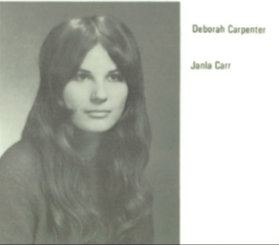
Janla’s senior picture from the 1969 Peabody High School yearbook.
Janla’s senior year activities according to the 1969 Peabody High School yearbook.
An article about Janla Carr’s death published by The Pittsburgh Post-Gazette on February 3, 1997.
An article about the suicide of Thomas Carr published by The Pittsburgh Post-Gazette on January 30, 1998.
An article about the suicide of Thomas Carr published by The North Hills News Record on January 30, 1998.
Part one of an article about the suicide of Thomas Carr, published by the North News Record on January 30, 1998.
Part two of an article about the suicide of Thomas Carr, published by the North News Record on January 30, 1998.
Thomas Carr’s WWII Veteran Compensation Application, dated 1950.
Thomas Carr’s Registration card for the service.
Janla Carr’s Mothers information in the US City Directories listing.
Velma Carr’s nursing school credentials.
Teds birth certificate.
Little Teddy with his grandfather Samuel.
William Lloyd Marshall.
Page five of a document regarding Janla Carr/Ted Bundy from vault.fbi.gov.
Page six of a document regarding Janla Carr/Ted Bundy from vault.fbi.gov.
Page seven of a document regarding Janla Carr/Ted Bundy from vault.fbi.gov.
Page eight of a document regarding Janla Carr/Ted Bundy from vault.fbi.gov.
Page nine of a document regarding Janla Carr/Ted Bundy from vault.fbi.gov.
Page ten of a document regarding Janla Carr/Ted Bundy from vault.fbi.gov.
Page eleven of a document regarding Janla Carr/Ted Bundy from vault.fbi.gov.
Page twelve of a document regarding Janla Carr/Ted Bundy from vault.fbi.gov.
Page thirteen of a document regarding Janla Carr/Ted Bundy from vault.fbi.gov.
Page fourteen of a document regarding Janla Carr/Ted Bundy from vault.fbi.gov.
Page fifteen of a document regarding Janla Carr/Ted Bundy from vault.fbi.gov.
Page sixteen of a document regarding Janla Carr/Ted Bundy from vault.fbi.gov.
Page seventeen of a document regarding Janla Carr/Ted Bundy from vault.fbi.gov.
Page eighteen of a document regarding Janla Carr/Ted Bundy from vault.fbi.gov.
Page nineteen of a document regarding Janla Carr/Ted Bundy from vault.fbi.gov.
Page twenty of a document regarding Janla Carr/Ted Bundy from vault.fbi.gov.
Page twenty-one of a document regarding Janla Carr/Ted Bundy from vault.fbi.gov.
Page twenty-two of a document regarding Janla Carr/Ted Bundy from vault.fbi.gov.
Page twenty-three of a document regarding Janla Carr/Ted Bundy from vault.fbi.gov.
Page twenty-four of a document regarding Janla Carr/Ted Bundy from vault.fbi.gov.
Page twenty-five of a document regarding Janla Carr/Ted Bundy from vault.fbi.gov.
Page twenty-six of a document regarding Janla Carr/Ted Bundy from vault.fbi.gov.
Page twenty-seven of a document regarding Janla Carr/Ted Bundy from vault.fbi.gov.
Page twenty-eight of a document regarding Janla Carr/Ted Bundy from vault.fbi.gov.
Page twenty-nine of a document regarding Janla Carr/Ted Bundy from vault.fbi.gov.
Page thirty of a document regarding Janla Carr/Ted Bundy from vault.fbi.gov.
Page thirty-one of a document regarding Janla Carr/Ted Bundy from vault.fbi.gov.
Page thirty-two of a document regarding Janla Carr/Ted Bundy from vault.fbi.gov.
Page thirty-three of a document regarding Janla Carr/Ted Bundy from vault.fbi.gov.
Page thirty-four of a document regarding Janla Carr/Ted Bundy from vault.fbi.gov.
Page thirty-five of a document regarding Janla Carr/Ted Bundy from vault.fbi.gov.
Page thirty-six of a document regarding Janla Carr/Ted Bundy from vault.fbi.gov.
Page thirty-seven of a document regarding Janla Carr/Ted Bundy from vault.fbi.gov.
At this time Janla was instructed by her father to 'say his name was Nelson. Janlaasked him what first name she was to user for him, and he told her to reer to him as Lloyd. She told Janla she ,ust obey him.'
Page thirty-eight of a document regarding Janla Carr/Ted Bundy from vault.fbi.gov.
Page thirty-nine of a document regarding Janla Carr/Ted Bundy from vault.fbi.gov.
Page forty of a document regarding Janla Carr/Ted Bundy from vault.fbi.gov.
Page forty-one of a document regarding Janla Carr/Ted Bundy from vault.fbi.gov.
Page forty-two of a document regarding Janla Carr/Ted Bundy from vault.fbi.gov.
Page forty-three of a document regarding Janla Carr/Ted Bundy from vault.fbi.gov.
Page forty-four of a document regarding Janla Carr/Ted Bundy from vault.fbi.gov.
Page forty-five of a document regarding Janla Carr/Ted Bundy from vault.fbi.gov.
Page forty-six of a document regarding Janla Carr/Ted Bundy from vault.fbi.gov.
Page forty-seven of a document regarding Janla Carr/Ted Bundy from vault.fbi.gov.
Page forty-eight of a document regarding Janla Carr/Ted Bundy from vault.fbi.gov.
Page forty-nine of a document regarding Janla Carr/Ted Bundy from vault.fbi.gov.
Page fifty of a document regarding Janla Carr/Ted Bundy from vault.fbi.gov.
Page fifty-one of a document regarding Janla Carr/Ted Bundy from vault.fbi.gov.
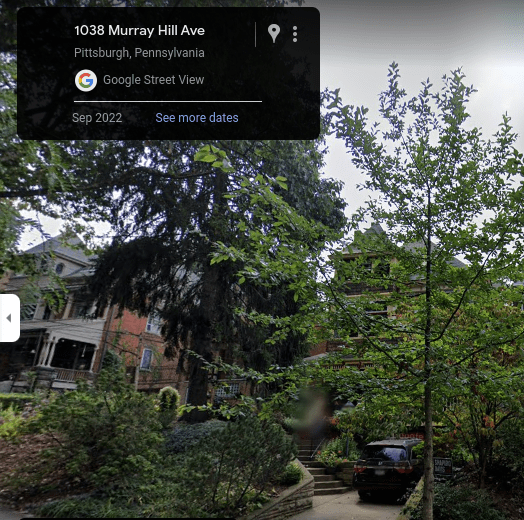
Thomas Carr’s address of 1038 Murray Hill Road in Pittsburgh, PA. It’s the house to the right and the view is obscured due to trees.
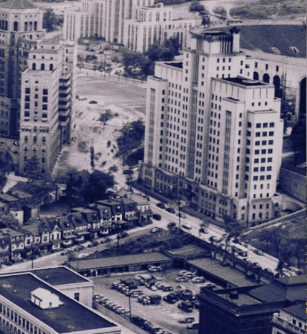
The Western Psychiatric Institute and Clinic in Pittsburgh, PA.

A Report by Ted Bundy to King County, January 26, 1973.

A Preliminary Research Proposal written by Theodore R. Bundy (consultant to Department of Budget & Program Planning) for King County, ‘Misdemeanants who Recidivate,’ dated January 26, 1973. Document courtesy of the Internet Archives, user ‘Marionumber1.’ From February to the end of April in 1973 Bundy worked for King County Program Planning.

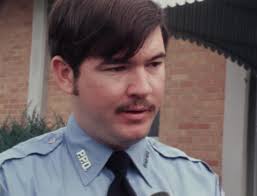
David Lee.

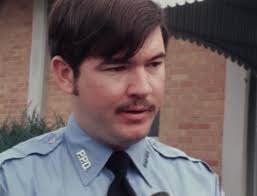
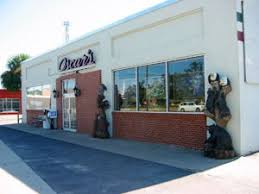
“I noticed a VW Bug coming out of the alleyway behind Oscar Woerners Restaurant (no headlights). I came up behind it and I activated my blue lights at the same time I was running the tag, and the tag came back as a stolen vehicle. I didn’t have a backup anywhere close by, there was only three of us working in the entire city of Pensacola that night. I got him out of the car, and had him lay on the pavement. He kept saying, ‘officer, what’s wrong? officer, what’s wrong?'” … “Initially when I was placing the handcuffs on him he kicked my feet out from under me and struck me with a handcuff that had been placed on one wrist. And it of course knocked me off my feet and that’s when it started.” … “I was chasing him hollering ‘halt’ and so forth, well he turned and all I’d seen was a nickle and thought it was a gun. So I leveled down and fired… so I said wow, my God. I killed him.” … “well I went and seen if he was shot. And I bent down and he grabbed my wrist and we had a struggle for my revolver. And it’s a heavy pistol and when I broke it away I swung and slapped him on the cheek. And if you see pictures right after the suspect was arrested there’s a big bruise on the side of his cheek, and thay was from my pistol barrel. There’s no doubt in my mind he would have killed me if he would have gotten my gun away from me.”
– David Lee.

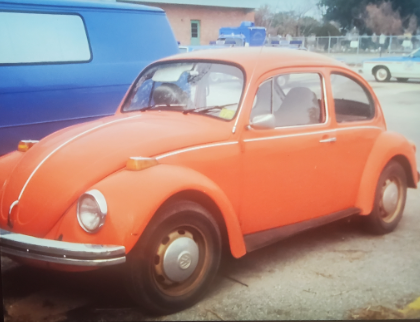
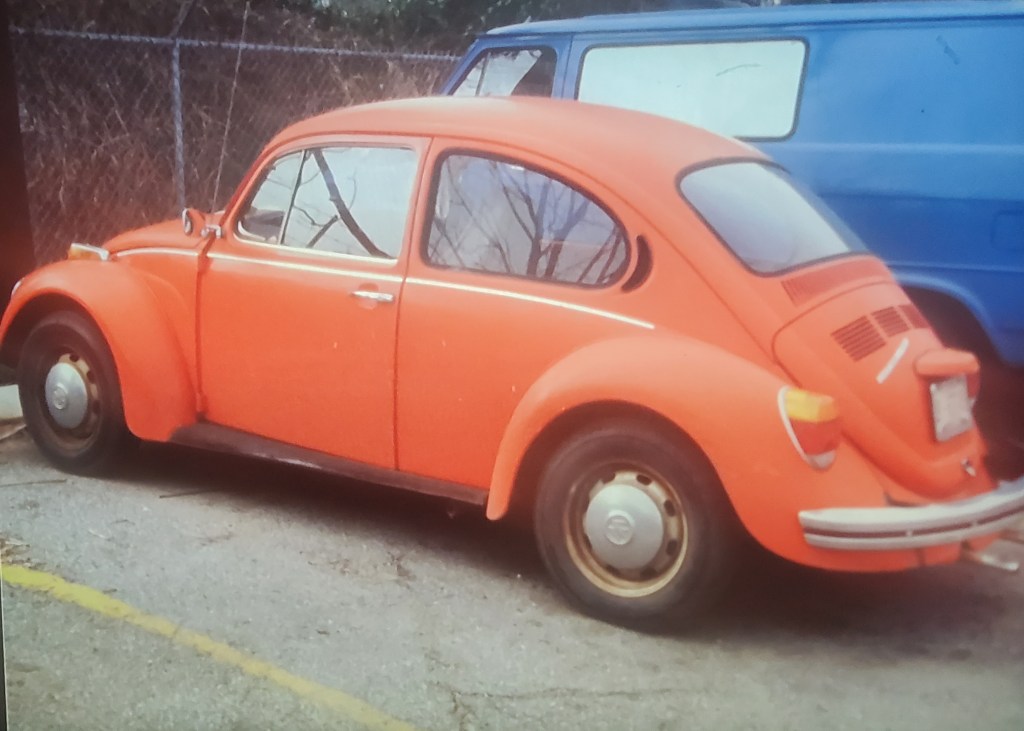
Rick Garzaniti’s stolen VW.
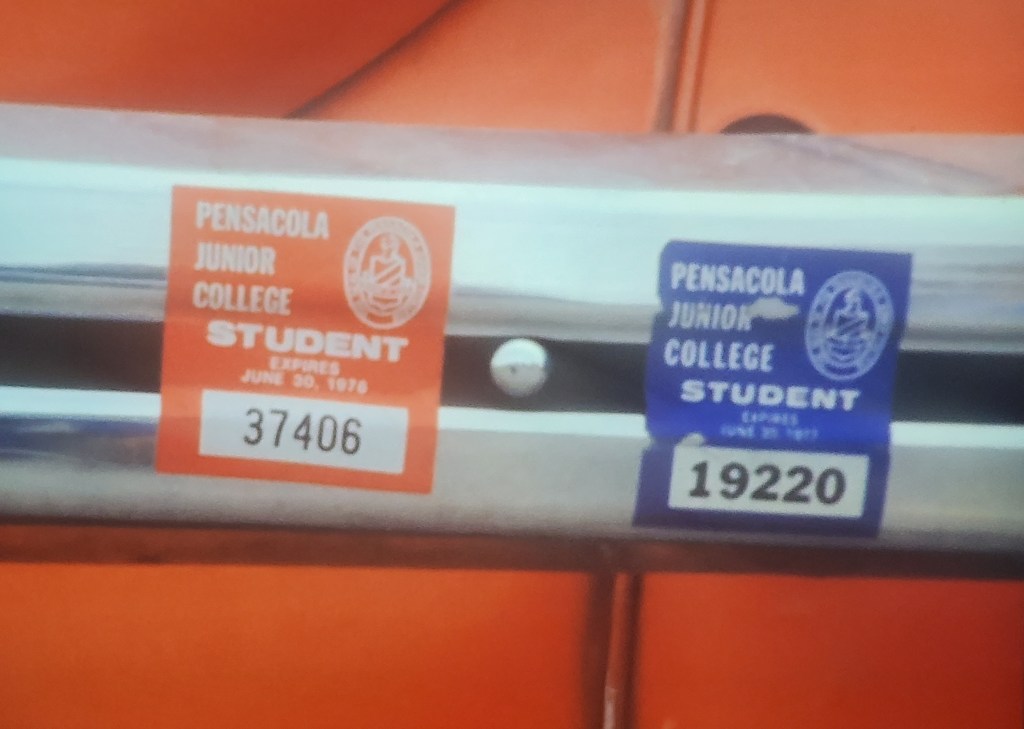
The tags on Rick Garzaniti’s stolen VW.
Officer David Lee.
Ted’s bruise (circled in red), photo courtesy of OddStops.
Oscar Woerner’s Restaurant in Pensacola, Florida.

KCSO: Third Installment of Bundy investigation photos: Janice and Jim Ott color photos.

The third installment of Ted Bundy-related records released by the King County Sheriff’s Office’s Public Disclosure Unit. On July 14, 1974 twenty-three-year-old Janice Ann Ott disappeared from Lake Sammamish State Park, after having been last seen leaving the area with a young man that called himself ‘Ted.’ Her skeletal remains were found by two grouse hunters four miles away on September 7, 1974.’ Photos courtesy of the ‘Internet Archives’/Maria Serban.

Photo 1/18. Courtesy of Maria Serban.
Photo 2/18. Courtesy of Maria Serban.
Photo 3/18. Courtesy of Maria Serban.
Photo 4/18. Courtesy of Maria Serban.
Photo 5/18. Courtesy of Maria Serban.
Photo 6/18. Courtesy of Maria Serban.
Photo 7/18. Courtesy of Maria Serban.
Photo 8/18. Courtesy of Maria Serban.
Photo 9/18. Courtesy of Maria Serban.
Photo 10/18. Courtesy of Maria Serban.
Photo 11/18. Courtesy of Maria Serban.
Photo 12/18. Courtesy of Maria Serban.
Photo 13/18. Courtesy of Maria Serban.
Photo 14/18. Courtesy of Maria Serban.
Photo 15/18. Courtesy of Maria Serban.
Photo 16/18. Courtesy of Maria Serban.
Photo 17/18. Courtesy of Maria Serban.
Photo 18/18. Courtesy of Maria Serban.

Bundy Vehicles.

  • Like I usually do, I’m relying on the ‘Ted Bundy Multiagency Investigative Team Report 1992‘ for my information on this article but I’m also heavily depending on a piece my friend Erin Banks wrote to help fill in the gaps and fix the inaccuracies (I posted the link to her article below).
  • The first time I remember Bundy commenting on a vehicle was when he was talking about his stepfather’s car: he said that he often felt humiliated being seen in Johnnie’s run-down old Rambler. Fun fact: Ted apparently learned how to drive at 15 (before he legally had his license).
  • Despite consistently owning cars Ted was known to borrow vehicles from loved ones and acquaintances:
  • Around 1969 he borrowed his cousins car for an entire summer after Diane Edwards ended their romance (I don’t know any other details).
  • He not only had Mrs. Ferris’ (from his days at the Seattle Yacht Club) drive him places he also borrowed her car on occasion. Despite scouring the internet I couldn’t find what the make and model of her vehicle was.
  • Bundy often “borrowed” his gf’s Liz Kloepfer’s 1973 light blue Beetle (on two occasions she thinks he took it without asking).
  • Ted was an accomplished car thief long before his jail breaks began in 1977: he had a lengthy juvenile record that Louise Bundy helped pay to have sealed when he turned eighteen (as to not potentially damper his “bright future”).
  • In September 1965, Bundy bought his first car: a 1933 Plymouth Coupe with money he earned working as a forklift operator working at ‘City Lights Tacoma’ (he was also a student at the time at the University of Puget Sound). 
  • In April 1966 he sold the Coupe to put money towards a pale blue 1958 VW Bug. It was smaller, more reliable and got better gas mileage than his clunky old car.
  • Bundy owned a white pickup truck at some point in time (I couldn’t find much information about that particular vehicle). I could have sworn I read somewhere that it was his brothers truck but when I looked into it I couldn’t find any information on it. According to the TB Multiagency Report he owned it until late 1975 (November/December). 
  • A blurb from the website ‘the outline’ mentions that Ted’s friend Marlin Vortman owned a VW Bug similar to the one he drove; I wonder if this is the ‘Washington TAG OYU-19 (7-18-1973) Owned by friend of Bundy, King County Washington,  Make/Model Unknown’ mentioned in the TB Multiagency Report.
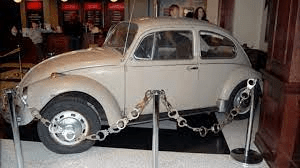
  • At some time in the spring of 1973 Ted purchased his infamous tan 1968 VW Bug from a woman named Martha Helms. Countless murder victims (many of them unknown) across multiple states were inside of this car. On August 15, 1975, Bundy fled the scene in this vehicle when Utah Highway Patrol officer Bob Hayward tried to pull him over in Granger. When Officer Haywood eventually caught up to him and searched it he found: “a crowbar behind the driver’s seat, a box of large green plastic garbage bags, an ice pick, a flashlight, a pair of gloves, torn strips of sheeting, a knit ski mask, a pair of handcuffs, and a strange mask made from pantyhose.” Law enforcement also observed that the passengers seat had been removed and placed in the back seat. Bundy was arrested for evading an officer and was released the next day on bail (there was nothing found in the car at the time linking him to any additional crimes). When the Bug was impounded after Ted was arrested forensic experts found DNA in it that helped link him to the murders. In 1978, SLC Sheriff’s Deputy Lonnie Anderson bought the death wagon for $925 (US) and it sat for in storage for almost twenty years. Deputy Anderson put it up for sale for $25,000 in 1997 and it was purchased by a well-known Murderabilia collector named Arthur Nash. In 2010 Nash leased it to the ‘National Crime And Punishment Museum’ in Washington DC and when that museum closed in 2015 it was moved to the ‘East Alcatraz Crime Museum.’ At one point Nash said he had plans to have the vehicle swabbed for DNA however as of April 2023 this has not happened. Who even knows if there would be any usable genetic information remaining after so much time has passed? I think one of my favorite Bundy back-and-forth’s is whether or not he removed the VW’s door handle (I don’t think he did). Looking into the particular make and model of Beetle it doesn’t seem that it was as easy as just taking a few screws out of the mechanism and popping out the handle: you most likely needed to take the entire door panel off and it was a process. I know unconfirmed (and living) Bundy victims Sotria Kritsonis and Rhonda Stapley both claim that the man that lured them into his VW Bug removed the inside door handle, however no one else reported ever seeing this. Liz never commented that she was ever in his car without a passenger’s side handle on occasion, nor did any of his other friends.
  • Thanks to a lot of time spent digging I was finally able to come across a small snippet of information I’ve only seen in one source: On the afternoon of Saturday. February 10, 1978 Ted made his first attempt to depart Tallahassee, FL (he had killed Kim Leach the day before): sometime between 4 and 6 PM he started looking inside parked cars for keys left in the ignition. Within minutes he found a 1975 Toyota in the parking lot of an auto repair shop and was off. He took the car back to The Oak (where he watched TV with a friend for awhile, Frances Messier) then went out for the night. That same time Tallahassee Police Officer Roy Dickey was sitting in an unmarked patrol car trying to find information related to the Chi Omega case. He saw Bundy walking near his vehicle and said Bundy noticed him immediately. and made a quick getaway. When he arrived back at The Oak he immediately started packing the stolen Toyota. dickey he had parked it about a block away. Around 1 AM Deputy Keith Dawes was doing patrol and came across Bundy “locking or unlocking a car door.” The officer said that where the individual didn’t do anything in particular to warrant his attention he was still drawn to him for an unknown reason. Deputy Dawes got out of his patrol car and approached Bundy, immediately asking him for ID. Ted quickly said he didn’t have any on him but mentioned he’d just come out to grab something quick from his car. When the officer asked “where do you live” he answered almost without thinking, “College Avenue.” As they continued to chat a bit the officer started looking around the vehicle with his flashlight and spotted a single license plate in the backseat. When questioned about it Bundy said that he had found it laying around somewhere and wasn’t sure exactly what to do with it. It was then that he got spooked and quickly (and successfully) sprinted away. The car and property inside of it was immediately impounded (Sullivan, The Bundy Murders).
  • On February 12, 1978 at around 11 AM Bundy attempted to steal a white 1972 Mazda but didn’t make it very far: there was a sort of “shimmy” in the front end and it wasn’t safe to operate. He quickly ditched it for something else.
  • Immediately after Ted ditched the Mazda he found a VW Bug but realized almost right away it was somebody’s baby (just by the way it was souped up and decorated). He quickly got rid of it (he has a conscience about a car but not for human life?).
  • Bundy eventually came across an orangish-red 1972 Volkswagen Beetle owned by Rick Garzaniti, who had purchased the car in April 1974. The evening of February 12, 1978 Garzaniti went to a buddy’s house and left the keys in the car (he didn’t plan on staying long) but got distracted by a Burt Reynolds movie (haven’t we all?). He left it parked behind the friends residence in an alleyway. When Rick eventually went to leave he discovered his car had vanished; he immediately reported it as stolen. Three days later he got a call from law enforcement letting him know that his vehicle had been found however it was being held as evidence; it wasn’t released to him until almost two months later. When he finally got it back it was covered in dark black fingerprint powder, a sizable chunk was missing from the upholstery, and the backseat was gone. Additionally Garzaniti found some items in it that didn’t belong to him, including several license plates and some random bicycle parts.
Works Cited.
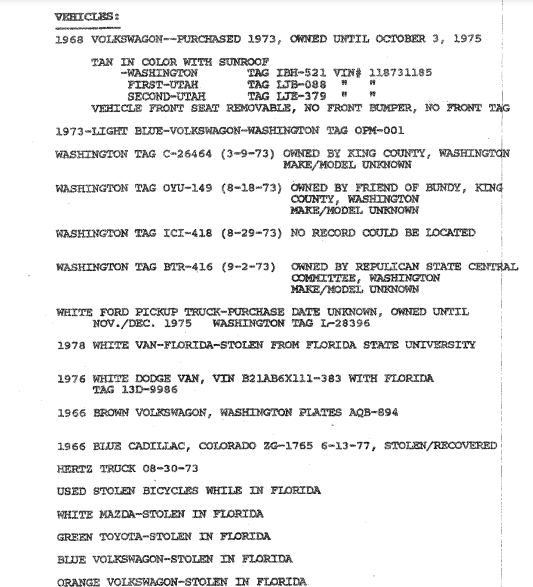
Ted’s vehicle history according to the ‘Ted Bundy Multiagency Investigative Team Report 1992.’
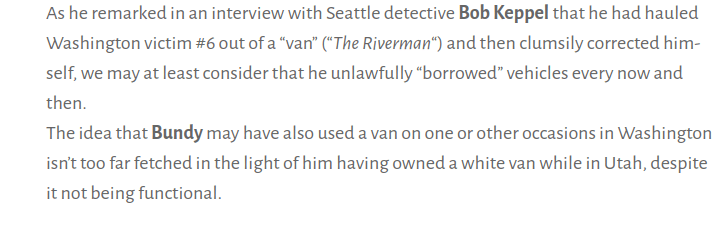
An interesting factoid I stumbled upon in my research thanks to Erin Banks/CrimePiper.
A blurb from the website ‘theoutline’ mentions the fact that Ted’s friend Marlon Vortman owned a VW Bug similar to the one he drove; I wonder if this is the ‘Washington TAG OYU-19 (7-18-1973) Owned by friend of Bundy, King County Washington, Make/Model Unknown” in the TB Multiagency Report.
A notation about Marlin Vortman from the ‘Ted Bundy and File 1004 documents from Seattle PD’ document, courtesy of the ‘Internet Archives’.
A 1965 “Rambler” style type car that Mr. Bundy drove (Ted hated it). Erin Banks commented that he “considered it to be a mediocre car for people of the lower middle class.”
A 1933 Plymouth Coupe. What a neat old car…
A car similar to Bundy’s first VW: a pale blue, 1958 Bug.
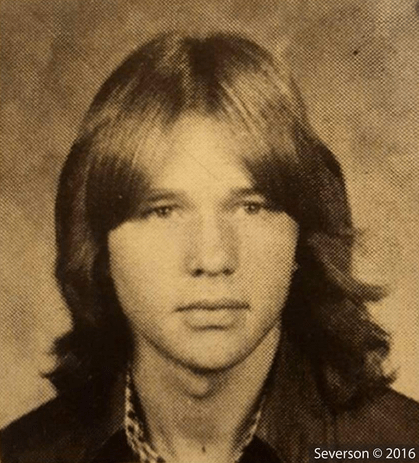
Bundy’s infamous tan VW. On September 19, 1975 he tried to get rid of it by selling it to Bryan Severson, an 18 year old high school senior for $800 (US) after giving it a very deep cleaning (obviously to remove any lingering forensic evidence).
The front of Bundys tan VW.
The inside passengers side door of Ted’s VW Bug. As you can see, the door handle is in tact.
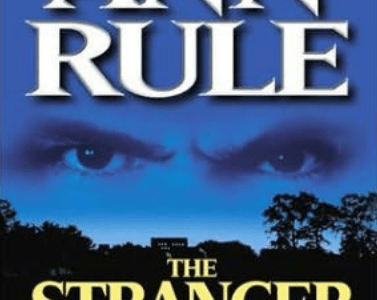
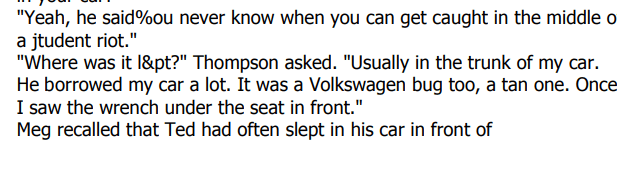
An excerpt of Ann Rule’s “The Stranger Beside Me” mentioning how Liz (in this she’s called Meg) told police that Ted often borrowed her car.
Bryan Severson, photo courtesy of Chris Mortensen/Erin Banks.
Arthur Nash, current owner of Bundy’s tan VW Bug.
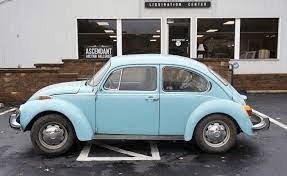
A ‘robin’s egg blue’ 1973 VW Beetle much like the one Liz drove. On two separate occasions she speculates Ted took her car without asking her permission. As Banks points out in her article, “there are certainly many who believe that Bundy began murdering prior to 1974 as well, and may have used Kloepfer’s car in the hope that should police become suspicious of him, they would not forensically examine her VW.”
The ‘Ted Bundy Multiagency Investigative Team Report 1992’ mentioning Bundy stealing the white van from FSU on February 5, 1978.
The white FSU van Bundy stole and abducted Kim Leach in.
The inside of the van Bundy stole from FSU.
A record of Ted stealing the green 1975 Toyota on February 10, 1978 according to the ‘Ted Bundy Multiagency Investigative Team Report 1992.’
A white 1972 Mazda.
A rare act of abstaining for Bundy, excerpt from Kevin Sullivan’s ‘The Bundy Murders: A Comprehensive History Paperback.”
In 1978, Rick Garzaniti sold his reddish-orange VW Bundy stole earlier that same year for $1,300 (US) to a 16 year old girl (it was her first car, her Dad bought it for her).
The back of Rick Garzaniti’s VW.
According to the ‘Ted Bundy Multiagency Investigative Team Report 1992,’ Ted stole Garzaniti’s VW on February 12, 1978.
A 1966 brown VW Bug.
A 1966 blue Cadillac.
Some misc. car related information related to Bundy from the ‘Ted Bundy and File 1004 documents from Seattle PD’ document, courtesy of the ‘Internet Archives’.

Ted Bundy’s Girlfriends.

A Comprehensive List of Ted Bundy’s Girlfriends:

  • Diane Edwards: They were together from mid-1967 to March 1968; in the summer of 1973 they reconciled and got engaged. Bundy then stopped all contact with her for a few months before eventually completely ending things with her.
  • Bundy dated Cathy Swindler on and off beginning in April 1968.
  • He met Elizabeth Kloepfer at The Sandpiper Tavern on September 30, 1969 and they dated on and off until April 1977 when she ended their relationship. Bundy reportedly dated many other women while seeing Liz.
  • In 1972 he had an affair with Sandy Gwinn (supposedly with Liz’s blessing), a coworker at Harborview Hospital Mental Health Center (where he interned from July to September 1972).
  • In early 1974 Bundy briefly dated a girl named Adrienne Pandora Toua Miller (her married name is Pandora Thompson).
  • In early 1974 he briefly dated a girl named Ann Swenson (in her book ‘The Phantom Prince’ Liz refers to her as Kim Andrews).
  • In the Summer of 1974 Ted dated Becky Gibbs.
  • In early 1975 he had a short relationship with Marguerite Maughan. Her father tried to cover up their brief fling after he was appointed to the Utah Supreme Court.
  • Ted dated Leslie Knudsen from June 1975 to Fall 1975. She told law enforcement he scared her young son Josh on multiple occasions.
  • In Florida Bundy started corresponding with former co-worker Carole Ann Boone and they started a relationship in March 1978. The couple got married during Bundy’s death penalty trial in Florida in 1980 and they had a daughter in 1982. Boone divorced him in 1986 and returned to Washington state with her son and daughter.
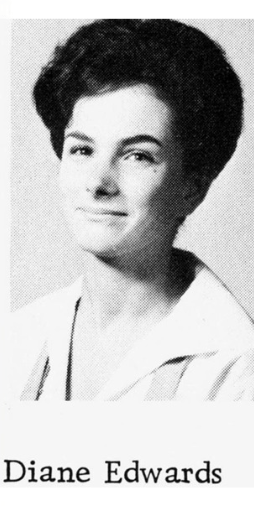
A baby picture of Diane Edwards, courtesy of Erin Banks/CrimePiper.
Diane Edwards, courtesy of Erin Banks/CrimePiper.
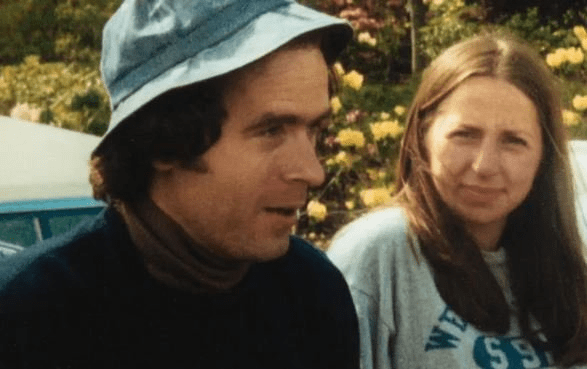
Ted and Diane Edwards, courtesy of Erin Banks/CrimePiper.
Former Bundy flame Diane Edwards.
Cathy Swindler, courtesy of ‘Ted Bundy: I was Trying to Think Like an Elk.’
A yearbook picture of Cathy Swindler, courtesy of Erin Banks/CrimePiper.
A yearbook picture of Cathy Swindler.
A yearbook photo of Cathy Swindler.
A young Liz Kloepfer, photo courtesy of ‘Ted Bundy: I was Trying to Think Like an Elk.’
Liz Kloepfer and her daughter Molly.
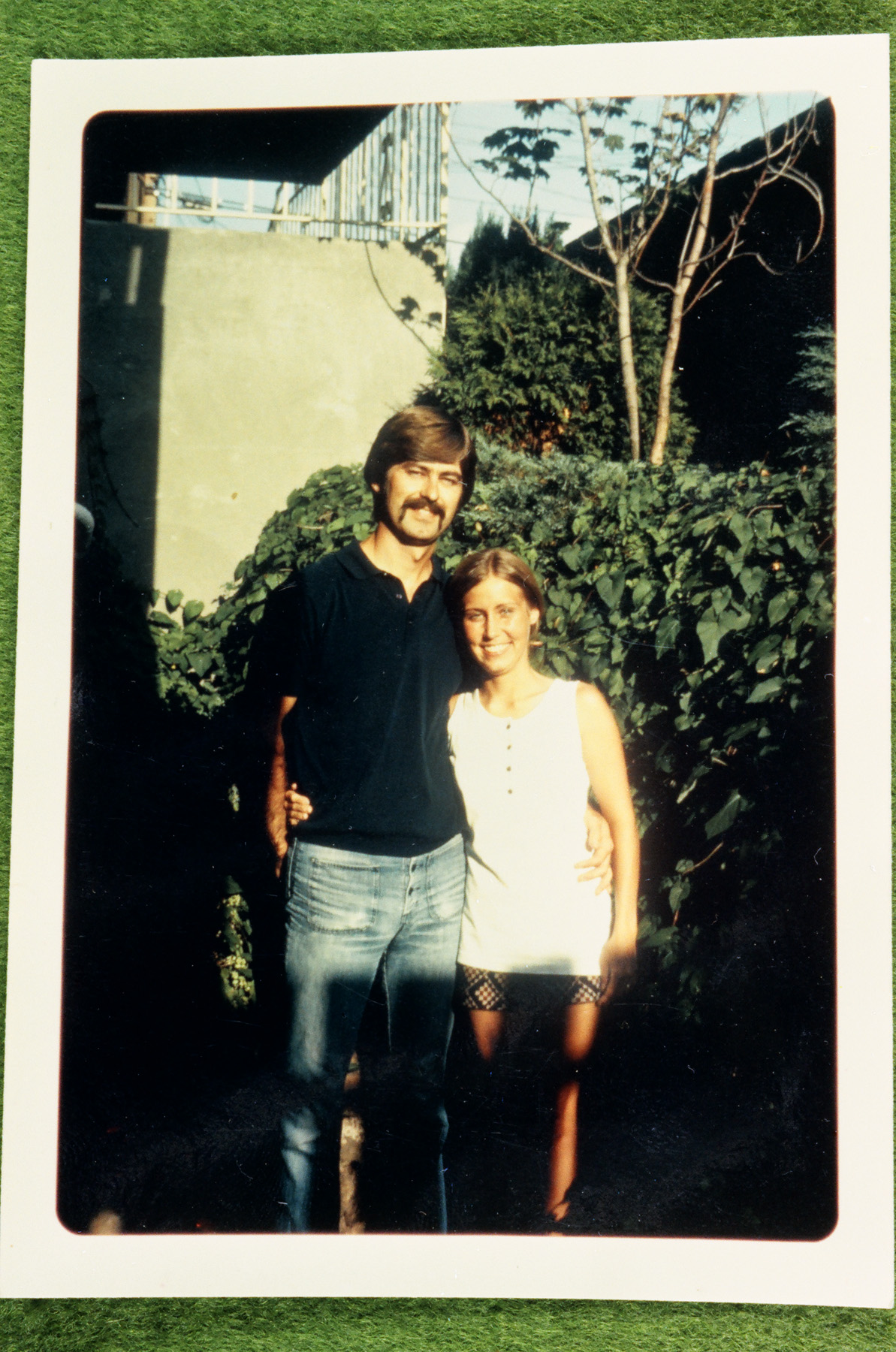
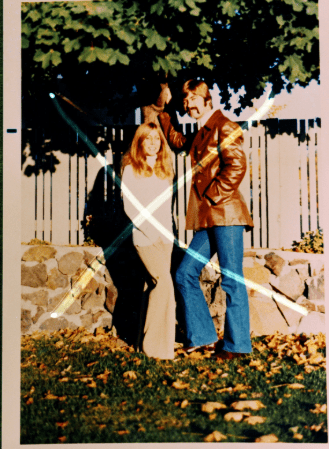
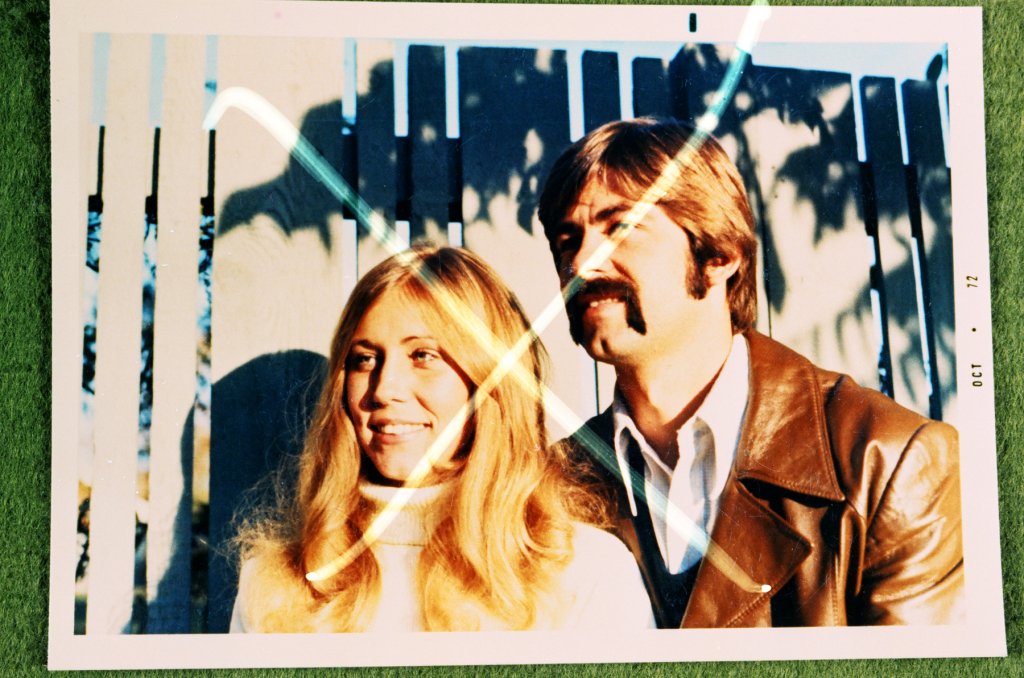
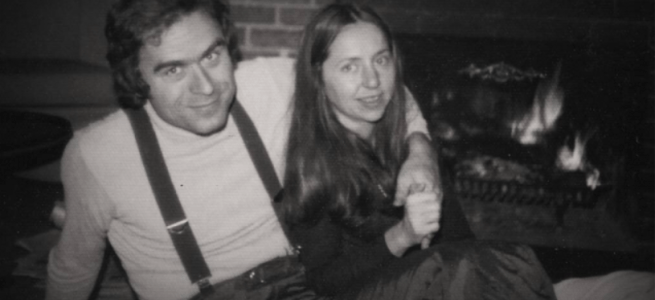
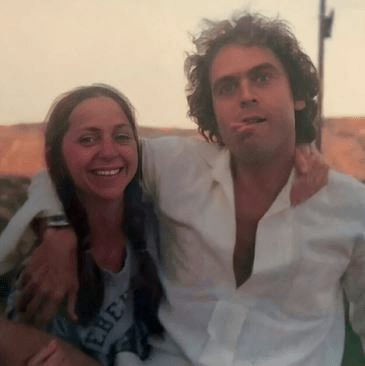
Ted and Liz.
Ted and Liz.
Ted, Liz, and Molly.
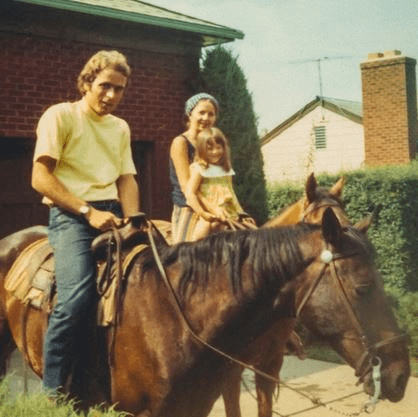
Ted, Liz, and Molly riding horses.
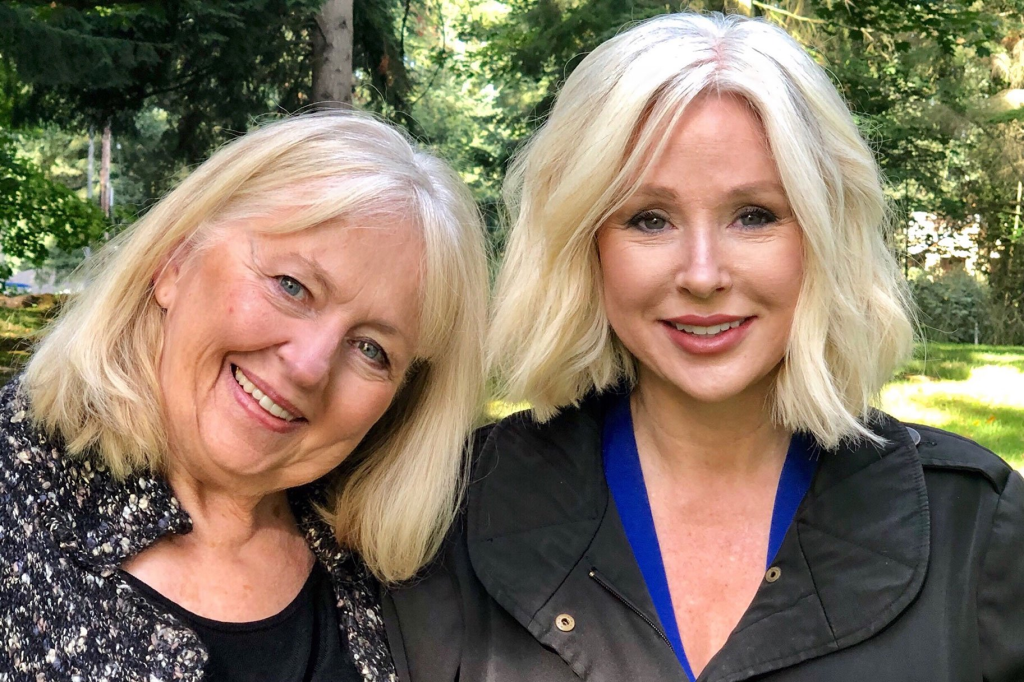
A more recent picture of Liz and Molly.
Sandy Gwinn, photo courtesy of ‘hi: I’m Ted.’
Sandy Gwinn, photo courtesy of ‘Ted Bundy: I was Trying to Think Like an Elk.’
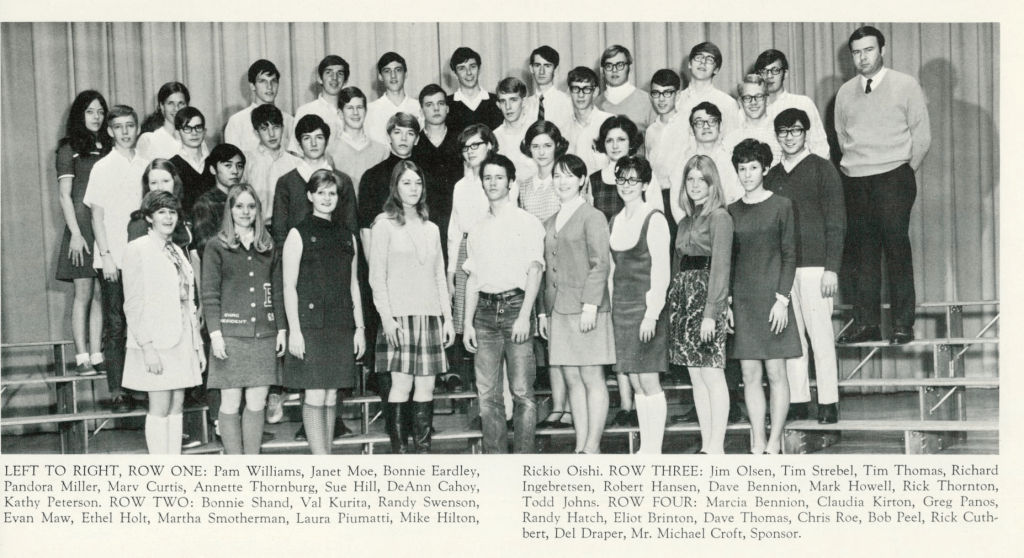
Pandora Miller in the 1967 East High School yearbook, courtesy of Maria Serban.
Pandora Miller in the 1969 East High School yearbook, courtesy of Maria Serban.
Pandora Miller in the 1969 East High School yearbook (the International Club members group photo), courtesy of Maria Serban.
Adrienne Pandora Toua Miller in the 1969 East High School yearbook, courtesy of Maria Serban.
Pandora Miller in the 1969 East High School yearbook (she’s in the first row, far left), courtesy of Maria Serban.
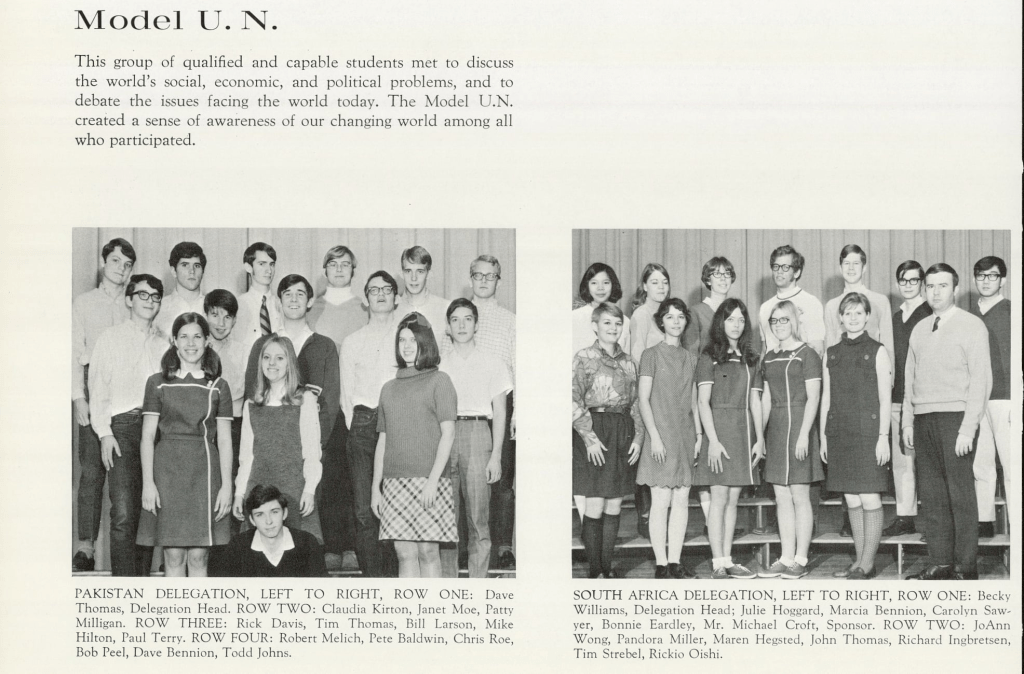
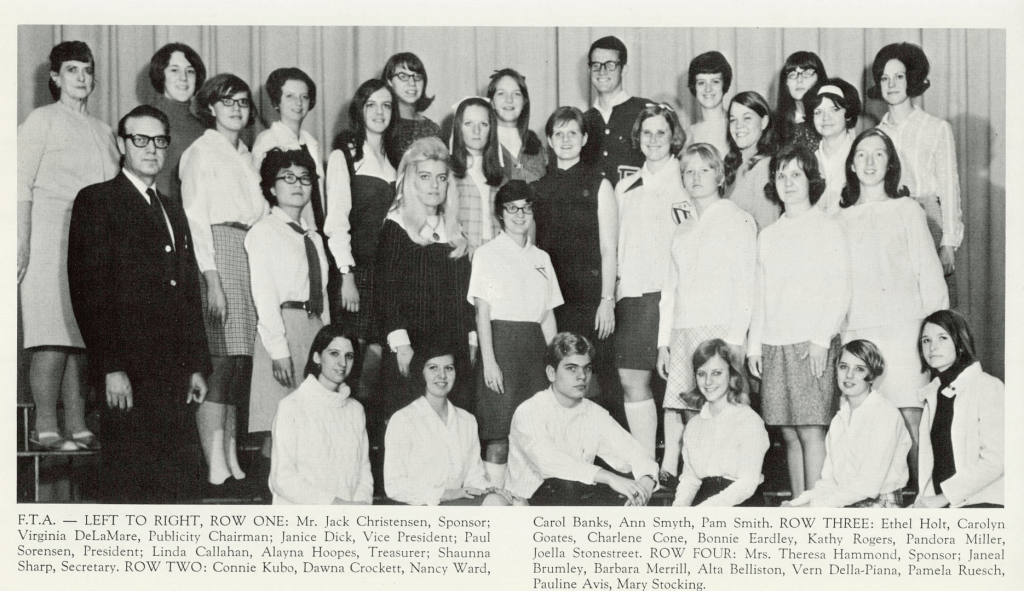
Pandora Miller in the 1969 East High School yearbook (FTA group photo), courtesy of Maria Serban.
Ann Swenson.

Ann Swenson.
Former Bundy girlfriend Ann Swenson. They dated briefly in February and March 1975.
A handwritten note about Ann Swenson to Pete Hayward, photo courtesy of CrimePiper.
Becky Gibbs, courtesy of ‘Ted Bundy: I was Trying to Think Like an Elk.’
Becky Gibbs, courtesy of ‘hi: I’m Ted.’
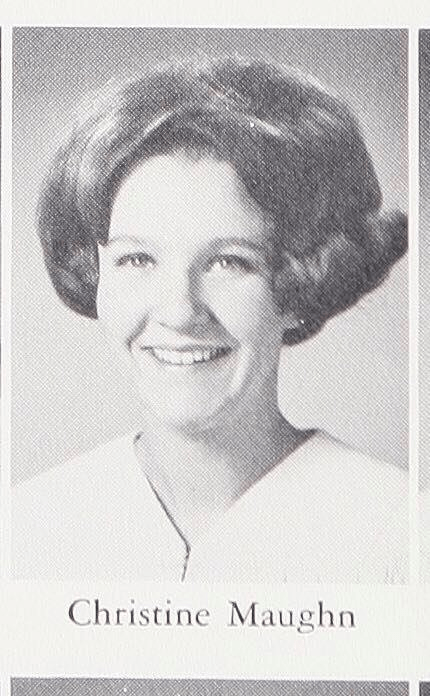
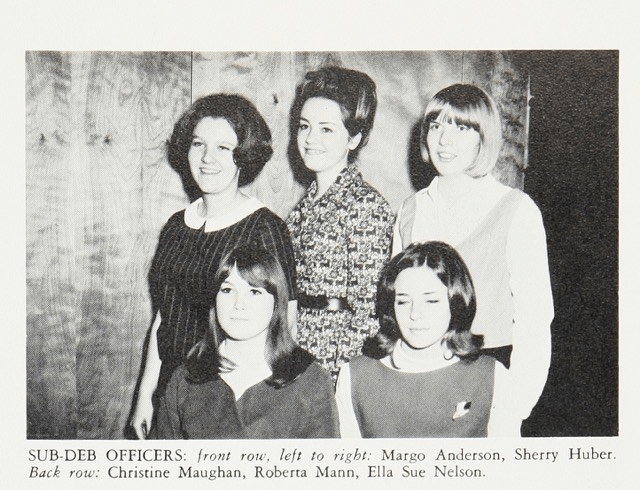
Marguerite (Christine) Maughn, photo courtesy of Erin Banks/CrimePiper. She dated Ted casually and lived downstairs from him when he resided in his first Utah apartment at 565 1st Avenue. Her Father is a Utah Supreme Court justice and on February 24, 1976 she testified for the prosecution in the Carol DaRonch kidnapping trial.
A yearbook picture of Marguerite Maughn, courtesy of Erin Banks/CrimePiper. Ted met her at a Mormon social church function in Utah.
Marguerite Maughn, courtesy of ‘Ted Bundy: I was Trying to Think Like an Elk.’
A picture of Marguerite Maugham in 2008, courtesy of Erin Banks/CrimePiper. She was a secretary to John O’Connell, one of Ted’s Seattle Attorneys.
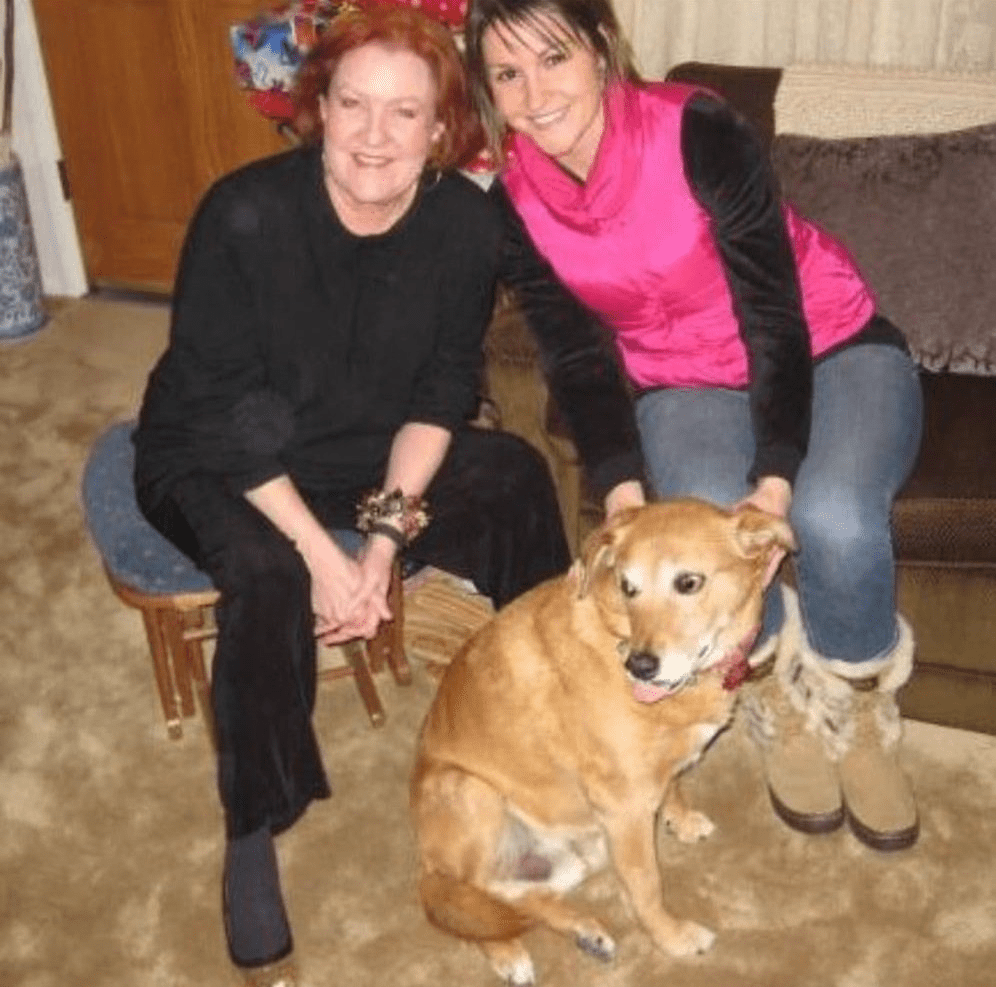
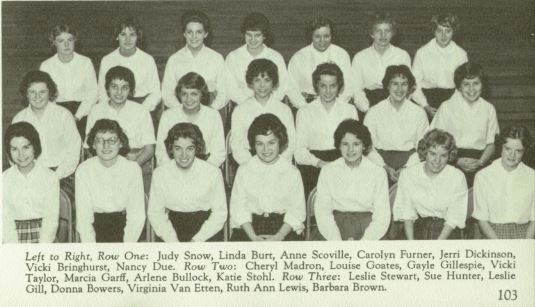
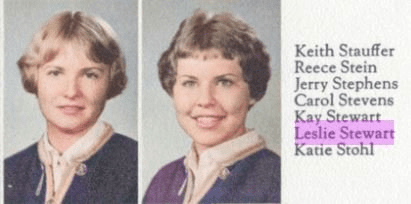
A yearbook photo of Leslie Knudson.
Leslie Knudson (Stewart).
Leslie Knudson.
Leslie Knudson.
Leslie Knudson.
Leslie Knudson.
Carole Ann Boone.
Carole Ann Boone.
A jailhouse photo of Ted, Carole, Jamie (Carole’s son from a previous marriage) and Rosa.
A jailhouse photo of Ted, Carole, and Rosa.