Ted Bundy’s First Escape: June 7, 1977 – June 13, 1977.

In the early morning hours on August 6, 1975 Utah Highway Patrol Trooper Bob Hayward pulled Bundy over in Granger, UT over after noticing his unfamiliar VW Beetle driving through his residential neighborhood. After the officer made his first attempt to pull him over, the man killed his front headlights and attempted to flee the scene (he also went through two stop signs). After Ted eventually did pull over Hayward noticed that his front passenger’s seat had been removed and was put in the backseat; when the tan Bug was searched officers found a crowbar, a ski mask, handcuffs, a pantyhose mask, an ice pick, garbage bags, rope, as well as additional items that are generally considered to be ‘burglary tools.’ Bundy told the officers that he found the handcuffs in a dumpster and that the mask was for skiing (I mean, of course it was); he tried to pass the rest of the things off as ‘common household items.’After a search of his apartment, it was determined that LE didn’t have enough evidence to detain Ted and he was charged for evading and the possession of burglary tools and was ROR’ed the following day. Ted later confessed that when they searched his residence, they missed a hidden collection of Polaroids of his victims, which he immediately destroyed when he was released

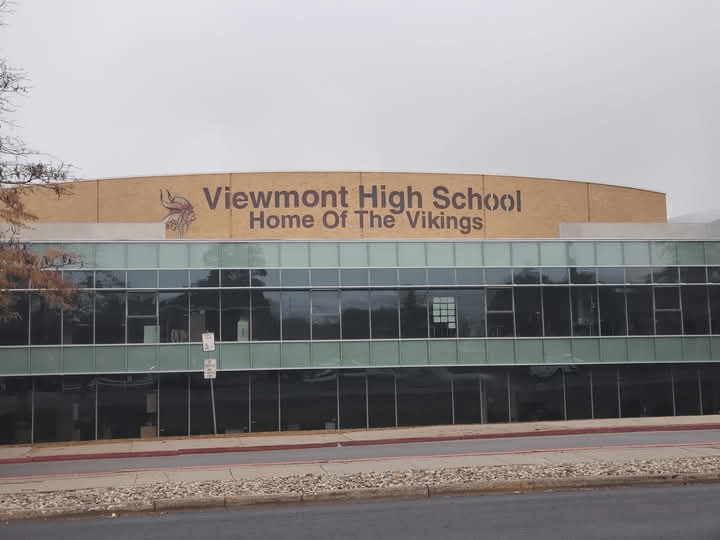
After being brought up to speed on Bundy’s arrest, (now retired) SLC Homicide Detective Jerry Thompson vaguely recalled that he matched the description of the suspect from the attempted kidnapping of Carol DaRonch that occurred the prior November; he also remembered Bundy’s name from a phone call he received from Liz Kloepfer roughly a month later in December. While going through Ted’s Salt Lake apartment on First Avenue, investigators found a playlet from Viewmont High Schools production of ‘The Redhead’ from the same night that Deb Kent disappeared, as well as a guide for ski resorts in Aspen with a checkmark next to the Wildwood Inn (which is where Dearborn, MI nurse Caryn Campbell was abducted from). LE compared the items found in his car to what DaRonch reportedly saw in her kidnappers VW, and it was eventually determined that the handcuffs that her abductor put on one of her wrists were the same type as the ones in his ‘kit.’ After she picked Bundy out of a line up, detectives said they had enough evidence to charge him with attempted kidnapping, and after being formally arrested Johnnie and Louise paid $15,000 to bond Ted out of jail.

In February 1976 Ted’s case went to trial: he was found guilty after waiving his right to a jury trial and was sentenced to fifteen years in prison. By this time investigators were well into connecting the dots between the missing and murdered women across Utah, Colorado, and Washington. In October 1976 Bundy was charged with the murder of Caryn Campbell, and on January 28, 1977 he was extradited from SLC to Glenwood Springs, CO to stand trial for her murder. Upon arriving to Colorado, (now retired) Pitkin County Sheriff Dick Kienast commented that he felt the prisoner should be shackled at all times while in the courtroom, however Judge George Lohr disagreed. Partly due to the Sheriff’s fears about Bundy being supervised and watched, he was transferred to the Garfield County Jail in Glenwood Springs and was transported wearing handcuffs to hearings.

So, in a nutshell: because the one-time law student was acting as his own legal counsel he was allowed to appear in front of the judge while without leg shackles, which gave him the opportunity to walk without any physical restraints or limitations; this also granted him use of the courthouse’s second story law library. On the morning of June 7 after he was first escorted to the court room Bundy said that he almost made his attempt right away but was interrupted by Judge Lohr exiting his chambers. He said that a second attempt was foiled at recess when the courtroom cleared, and he was moved to the window that he would later jump from, but was interrupted by a reporter that came back to retrieve her purse. As she left Bundy decided to give her some time to exit the building and leave the area, saying he also wanted to avoid landing upon her as he fell. After quite a bit of waiting around, he felt that the conditions were finally satisfactory, and he finally was able to make his leap. leap from a more ‘modern’ building. After he escaped it took the deputy that oversaw guarding him several minutes to realize that he was no longer in their custody, which obviously helped give him a decent head start. Upon inspection, LE was able to find several footprint-shaped impressions that were deeply embedded in the earth where the now fugitive had jumped out of the window (there were also handprints, as Bundy fell to his hands after he jumped).

Upon inspection, LE found several foot and hand shaped impressions deeply embedded in the earth from where Ted had landed, and because of the building’s high ceilings it was much further down than if he made the leap from a more ‘modern’ building. After he escaped it took the deputy that oversaw guarding him several minutes to realize that he was no longer in his custody, which obviously helped give the now fugitive a decent head start.

It was Deputy David Westerlund’s practice to stand in the corridor and look into the courtroom while also keeping an eye on the door (that had a window) to make sure whoever he was guarding was still present and accounted for. Only about five minutes into recess a reporter returned to the courtroom and noticed that it was empty, and when Westerlund noticed her concern, he reassured her that ‘I think he’s in there,’ and it was only then that he poked his head into the courtroom and realized that it was completely empty. Immediately after everyone realized Ted had escaped an intensive manhunt began, which included helicopters with infrared scanners to detect body heat, tracking dogs, mountain rescue search squads, and hundreds of unpaid volunteers. Within a half hour of his escape police had roadblocks set up at every main road going out of Aspen, and members of law enforcement combed the city, going house by house looking for the fugitive.

While in court on the morning he jumped, Ted was wearing a ribbed brown turtleneck, a striped sweater and brown corduroy pants. After he escaped custody it was mentioned that he may have altered his appearance by taking off his sweater and turtleneck which revealed a blue and white striped shirt underneath. A courthouse secretary named Casey Armstrong saw Bundy land in front of her from where she was looking out a basement window, as he ran past the building’s northwest corner (where she was standing). An unnamed eyewitness told LE that at around 10:50 AM he saw Ted almost immediately after he escaped run by Freddie’s Restaurant, which was on Main Street just two blocks east of the courthouse. Members of LE that were combing the area also ran into a group of kids from The Riverside Trailer Park, who reported that they saw Bundy cross Aspens Roaring Fork River shortly after jumped. These are the only two confirmed sightings of the killer after his first escape. As the minutes turned into hours turned into days, Bundy’s escape and the way it was handled showed serious deficiencies in the capabilities of local Aspen LE (this will be discussed in length later on).

Between roughly 10:40/10:45 in the morning, an unidentified person walking by the courthouse noticed a man jump out of its second story window, and said that he landed hard but immediately got up and ran across the front lawn, past the bus depot, then out of view. The eyewitness then went into the Sheriff’s office and asked if it was ‘normal for people to jump out of second story windows around here?’ Standing at the front counter, Kralicek cursed when he heard and knew right away that it had to be Bundy. The officer and Coleen Curtis (who was another Pitkin County employee) raced up the stairs, and it was only when Deputy Westerlund saw Curtis that he acknowledged Bundy’s absence.

According to the dispatch office logs, at 10:48 AM on June 7, 1977 Westerlund put out a frantic call on his radio: ‘Bundy has escaped!’ Upon hearing the news the sheriff’s secretary Whitney Wulff immediately notified her boss, then ran out of the front doors of the courthouse and surveyed the scene: near the lilac bush at the building’s west corner she found some of Bundy’s foot/hand prints as well as some of his law papers. Curtis eventually located the sweater that he was seen wearing earlier in the day left behind in the courthouse, and it was later used as scent for the trained tracking dogs that were flown in to assist in the investigation.
By means of local radio stations, LE informed the residents of Aspen about Bundy’s escape, and warned them to stay inside and lock their doors and windows. In the early stages of the investigation, it was speculated that Bundy fled the state, and strangely enough, Sheriff Kienast had been anticipating the escape (or at least an attempted one) and said that he originally thought it would occur in the beginning of 1976 when he was first extradited to Colorado. The Sheriff went on to say, what better place to ‘make a break’ than Aspen?

After Ted’s escape Captain Pete Hayward out of SLC expressed concern that he could possibly be killed during the manhunt, and that he hoped that didn’t happen because he had ‘a lot of things I want to talk to him about.’ 

On the morning of Ted’s escape, the two sheriff’s deputies that transported him said that when they arrived he was dressed in street clothes and was ready to go. During the drive from the jail to the courthouse he sat in the front seat, and according to both officers he was silent for a good portion of the 40 minute drive. Sergeant Murphy sat directly behind him and while he was driving Sheriff Kralicek kept his left hand on the steering wheel and his right hand free, close to his service weapon. At that point in 1977 Kralicek had spent a large amount of time guarding Ted, and he later said that it wasn’t out of the norm and was typical behavior. On the opposite end of the spectrum Sergeant Murphy was more nervous.

When they reached their destination, Kralicek brought Ted into the courthouse by taking him firmly by the arm, while Murphy followed behind, keeping an eye on him and carrying his box of legal documents. As they walked into the courthouse a reporter from The Aspen Times named Mark Lewy took a picture of the three men (I‘ll include it in the bottom): initially, it was simply a picture for a routine assignment, a file shot to use when the trial began, but since the reporter was the only member of the press that was at the courthouse that day, his photo became the most recent and up-to-date shot that LE had of Bundy. After realizing this Lewy quickly rushed to make prints to take to the Sheriff’s department, who immediately put it on ‘wanted’ signs all over Aspen and used it for their roadblock search.

It should be noted that Ted frequently exercised in his cell and his guards reported that he was in excellent shape and physical condition, and on multiple occasions they observed him studying the Hunter Valley area as well as the slopes of Red and Smuggler Mountains. Members of Pitkin County LE strongly felt that if Bundy was on foot, he was probably headed towards Hunter Creek, a popular hiking trail that began just a short distance from downtown Aspen. Immediately after he escaped, off-duty officers from various branches of Aspen law enforcement began arriving at the sheriff’s office to volunteer their services, as well as the members of the reserve sheriff’s department. They were wearing civilian clothes and were all heavily armed.

After Ted jumped, officers were reasonably confident that he wouldn’t make it in the wilderness for very long. According to an article published by The Straight Creek Journal on June 9, 1977, after his escape (retired) Police Chief Art Hougland and City Attorney Dorothy Nuttall quickly decided to ‘go ahead and place a temporary ban on the sale of firearms and I’ll find some justification.‘ Additionally, immediately after Bundy’s jump people were asked to pick up their kids from school, to travel in pairs, and not to go camping alone. Long lines quickly formed at roadblocks, where officers searched every single car that passed through. At one of the checkpoints that was located near a small mom and pop shop called ‘Catherine’s Store,’ Garfield County PD made nine arrests that were unrelated to Bundy, and confiscated nearly 500 pounds of marijuana. Additionally, they arrested a federal fugitive on the run from California that had weapons in his vehicle.

Later the same day Bundy escaped, just before 3 PM investigators took a tracking dog to the area where he was last confirmed to have been seen. His shoes and sweater gave the canine his scent, and he was able to track him for roughly a quarter mile, but eventually lost his scent right after. It’s thought that perhaps that was where he may have stolen a vehicle, and because he got away so smoothly authorities briefly considered the possibility that he had an accomplice, and realized that his one time cellmate at the Pitkin County Jail Daniel Kellum happened to be absent without leave from his work release program. Kellum was briefly a suspect but was cleared. LE also put traces out on Bundy’s girlfriends, however they were all out of the general Aspen area at the time.

As the day progressed and it got later and later, the intensity of the search slowed down. Tired members of Aspen law enforcement were sent home to rest, but were told to report back for duty at 4:30 AM. Four roadblocks were maintained throughout all hours of the rainy night, and constant patrols were kept up on trails, highways, and most local roadways. On the morning of July 8th, Sheriff Kienast called for members of the community to volunteer and help them assist in a house to house search for the fugitive.

At 10:40 AM on June 10 Bob Keppel reached out to Liz Kloepfer at her POE at the University of Washington. She told the detective that she didn’t think he would come back to Seattle and that the last time she spoke with him was the previous Monday at 9:30 AM and that he was in a good mood and was optimistic about his upcoming trial. She further elaborated that she had not heard from Ted since he escaped but promised that if he did reach out to her that she would call them right away. Kloepfer also volunteered that she had no knowledge of any plan to escape but Bundy was making her life miserable, and she almost hoped that he would be found dead. 

When he was recaptured and back in police custody investigators were able to piece together Ted’s activities and pin down exactly where he went: after he jumped out the courthouse window he said that he immediately got to his feet and ‘vaulted’ over both fences on the sides of the front walkway. He then ran down an alleyway and to the Roaring Fork River, then walked east along its bank until he got to the Neale Avenue Bridge. Bundy then returned to the road and walked half of a block to West End Street, which he followed to its southern terminus and climbed over 3,000 feet to the very top without taking a single break. He eventually found his journey obstructed by a ridge and had to replan his route, and while traveling upstream he noticed Fritz Kaeser’s cabin at the intersection of Castle Creek and Conundrum Creek Roads, and where he determined that it was most likely deserted he didn’t stop at that time. Ted continued exploring the  area, and at around 5:00 PM he wandered into a residential area in Conundrum Creek, spending around four hours there looking for away out of the area.

At approximately 11:00 PM, Bundy continued with his hike along the Conundrum Trail. It had been raining since earlier in the evening, and he was still dressed as he had been right after he escaped. Soaked to the bone and suffering from exhaustion, he only was able to make it a total of two to three miles in the next three or four hours, as he kept getting lost and dozing off. At approximately 3:30 AM in the morning on the day after he escaped, Ted finally decided that he needed to get out of the rain and find a warm and dry place to rest and remembered the little hunting cabin and went back to it, arriving a half hour later.

Not wanting to risk getting caught, Bundy sat at a distance and watched the cabin until around 8:00 AM, where he then entered through the back after first trying to break a window in the front and realizing he couldn’t enter that way. After he finally made his way inside after successfully breaking a window he ate what little food he was able to find (including brown sugar, tomato sauce and tea) then slept for a few hours. Ted left the cabin shortly after midnight on June 9, bringing with him anything useful he found, including a .22 caliber high-powered deer rifle with no scope, two boxes of ammunition, a flashlight, a couple of extra shirts, a jacket, and a few items from a first aid kit. When Aspen Police Officer David Garms analyzed the fingerprints that were left behind on some dishes at the scene it was determined they belonged to Ted. Upon leaving, he left a note on the window in a poor attempt to conceal the break-in, that read, ‘TOM, sorry, broke this when putting in plywood. Will have another put in immediately. – AMY.’ When analyzed by experts, it was determined that the note had similar characteristics of Bundy’s handwriting. The cabin had previously been checked on June 4 by its caretaker Wayne Smuggler, who determined that the property appeared to be in order. He took care of the property and checked in on it from time to time when its owners couldn’t make it out there (they live in Arizona full time). When Smuggler returned to check the property on June 11 he found evidence of an attempted forced entry and immediately contacted the Pitkin County Sheriff’s Department.

After Bundy departed Kaeser’s cabin he hiked back up Conundrum Trail, stopping high up on the west side of the valley, where he slept in a secluded grove from mid-dawn until about 2:00 in the afternoon. When he woke up he started climbing the side of the valley, trekking across the ridge over the top of Keefe Peak before he dropped into the Maroon Creek Valley at about 9:30 PM, when he stopped to rest and build a fire; he stayed until 2:00 AM. Early on June 9 he continued his mission to the valley floor, only to discover he was on East Maroon Creek. Ted later recalled this as his ‘second emotional low,’ the first being when he had to return to the cabin. 

A couple ‘behind the scenes, law enforcement related’ events also took place on June 9, 1977 as well: the Salt Lake City Attorney’s Office filed an escape warrant against Ted, with no bond. Additionally, Sheriff Kienast requested that reporting CBI agent Leo Konkel open up an internal investigation surrounding the circumstances of Bundy’s escape, asking that they be studied so that appropriate action could be taken against the county employees that were tasked that day to watch him.

At 6:30 PM on June 10, 1977 CBI Agent Leo Konkel interviewed the Pitkin County deputy that was in charge of watching Bundy on the morning he escaped, David Westerlund. He had been employed with the sheriff’s department in Minnesota for roughly 26 years and joined the Pitkin County Sheriff’s Office after relocating to Colorado on July 1, 1976. Westerlund shared that the first time he had anything to do with Bundy was when he transported him (along with Deputy Carol Kempfert) from the Pitkin County Jail to the Garfield County Jail on April 11, 1977, which took place without incident; the day of his June 1977 escape was his second encounter with him. The following was taken verbatim from Agent Konkel’s Investigative Report regarding Bundy’s escape: ‘On June 7, 1977, he came on duty at approximately 7:00 AM. At the morning briefing, he was advised that he would probably aid in the security for the Bundy hearings. At approximately 9:00 a.m., Pitkin County Deputy Sgt. Kralicek and Deputy Murphy brought Bundy into the courtroom, directly to the counsel table. Deputy Murphy was off-duty and was discharged by Kralicek after Bundy was secured in the courtroom. He was not handcuffed nor restrained in any other manner. None of the deputies in the courtroom were armed, as is the understood policy of Judge Lohr’s courtroom (CBI).’

Judge Lohr called court to session at about 9:00 AM, and roughly 15 minutes later Sergeant Kralicek told Deputy Murphy that he was free to leave. Later that same morning at 9:10 AM Westerlund sat down next to Sheriff Kralicek, and Bundy was sitting in the railed-in section at the counsel table that is typically reserved for lawyers and their clients that are ‘parties to actions.’ Right before he went into the courtroom Kralicek had some things to take care of in the Sheriff’s Office downstairs and said that Westerlund was officially the deputy designated to be in charge of Bundy, but aside from that, he was not given any additional instructions.

When Judge Lohr called a recess at roughly 10:30 AM, everyone except Bundy and Westerlund left the courtroom. He began pacing in and about the enclosed railing area as well as around the clerk’s office, and the deputy also walked a few times along with him then remained stationary. At some time that morning Ted mailed some letters at the court clerk’s office, and on a separate occasion he approached Westerlund and told him that he needed to make some copies; the deputy showed no acknowledgement that he heard the request, so Bundy sat back down at the counsel table. Westerlund then just went and stood just outside of the courtroom door, where he could still keep eyes on the defendant, and at one point he saw Ted get up, walk around the room, then sit back down at the table. He said that the last time he saw Bundy he was standing by the counsel table before his attention was diverted for about 1.5 to two minutes because of some activity that was taking place downstairs.

When I said earlier that Ted escaped from the Pitkin County  Courthouse’s ‘law library,’ your mind probably immediately went to a beautiful room with lots of leather bound books and the smell of rich mahogany… but in this case, it was just the back part of the second floor courtroom that contained a couple of six foot tall shelves filled with  law books and is separated from the rest of the room by a five foot tall divider.

Deputy Westerlund reported that he was never given any additional instructions when it came to how prisoners like Ted Bundy were handled in the courtroom, and as far as he knew, the prisoner was not to be handcuffed or shackled; it was also his understanding that the presiding Judge didn’t allow deputies to wear guns in his courtroom. Westerlund acknowledged that he understood how serious Bundy’s charges were and that ‘he was responsible for his custody.’

Bundy discarded the hunting rifle somewhere ‘on the Eastern Slope of the Ridge,’ and began moving north to the junction of East and West Maroon Creeks. Sometime around 3 PM he began feeling pain in his right knee, so he stopped to rest it at the junction, where he stayed for the next six hours. After continuing with his travels, he moved steadily along the east side of the creek but his right knee locked-up as he made his way close to the vicinity of the T-Lazy-7 Ranch. According to their website, ‘the authentic T-Lazy-7 Ranch has been the jumping off point for a variety of adventure activities since 1938. T-Lazy-7 is the gateway to the world famous Maroon Bells, and has exquisite scenery for weddings, family fun, and outdoor enthusiasts.’ Despite not being able to bend his knee, he continued to cross the creek on the bridge at the ranch and onto the pavement of Maroon Creek Road.

Making sure to avoid major roadways and traffic routes at the first sign of daylight, Bundy continued his trek along Castle Creek Road and eventually made his way back to Kaeser’s cabin. Upon his arrival at roughly 4:30 AM on Sunday, June 12 he realized that police had been there, and because of this he was afraid to stay any longer, fearing they would return. Ted called this discovery his ‘third and worst emotional low.’

Upon this event, Bundy then made his way back to a parking lot on Conundrum Trail, and at roughly 8 AM one of the search helicopters landed roughly 200 yards from him as he laid resting in some tall grass, almost giving away his hiding place. This spooked him, and from there he made his way back to Aspen Mountain, which he had originally escaped down four days prior. Because he was so physically weak he started heading back towards Aspen, and it was during this ascent on Sunday morning that he ran into a local resident that called himself ‘Sinclair’ (most likely Bruce), who told him that he was ‘hunting for Ted Bundy.’ The fugitive told Sinclair that he was from Pennsylvania but he promised that he would ‘watch for Bundy.’

On Saturday, June 11, 1977 trained canines were flown into Aspen from Denver to help with the manhunt, which was moved from the eastern part of Aspen to the Castle Creek region after the discovery of the break-in at the cabin. The use of dogs had been previously suspended Wednesday, June 8 after rain showers caused the mutts to lose track of Bundy’s scent.

That Sunday, July 12 Ted made what he considered to be good progress in his journey: he kept walking north towards Aspen, passing the local sewage plant and meandering down the western side of the mountain. He then made his way back into the Castle Creek Canyon area, moving west and eventually crossing into a golf course at the Prince of Peace Chapel via Colorado Highway 82. While walking through the course he tripped and fell in a thick patch of brush, and because of his extreme state of distress he remained there, unable to get it together enough to keep going. After roughly an hour he was finally able to gather the strength to get up and keep going, and eventually entered a residential area in the Cemetery Lane area, where he wandered around for a few hours before deciding to steal a car and get out of the area once and for all.

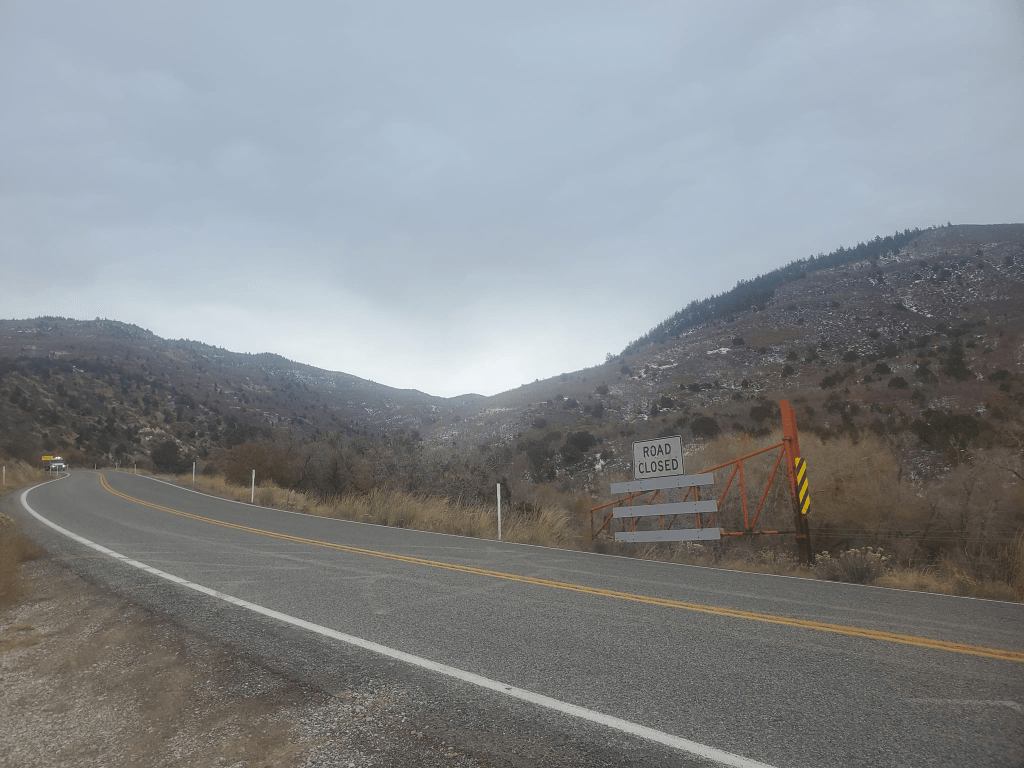
On the law enforcement side of things, at around 1:00 PM on June 12, 1977 the FBI reached out to the Pitkin County Sheriff’s asking about some friends of Ted, and they officially became involved in the investigation due to the fact that he was being looked into for charges related to an unlawful flight to avoid imprisonment. Also on the 12th Bundy walked the five miles back to Aspen and stole a blue Cadillac from the Cemetery Lane area; it was unlocked and the keys were in it. As he was making his way through Independence Pass at around 2 AM on June 13, 1977 he came across a sign that read ‘CLOSED- ROCK SLIDE’ and pulled a u-turn, making the decision that he was going to attempt to bypass another checkpoint on his way out of Aspen; if successful, he had plans to barter the expensive camera that he found in the car for gas money. It was then that he ran into Officers Gene Flatt and Maureen Higgins in front of the Cresta Haus Lodge located on the outskirts of eastern Aspen not far from the Pitkin County Courthouse. In the very early stages of the investigation, the two simply pulled him over on the suspicion he was intoxicated, but that’s when he was apprehended (I will have more to say regarding this event later). For the entire six days Bundy was free he had only been about five to eight miles away from the Pitkin County Courthouse.

The usually clean cut Ted had grown a scraggly beard and he had scratches all over his body, and had lost anywhere from fifteen to twenty pounds; he was also suffering from extreme exhaustion and was incredibly confused and disoriented. After he was recaptured a Physician saw him in his cell, and reported that he had blistered feet, a knee strain, and scratches all over his body. There had been a road block fairly close to where he was driving right before he was apprehended, so there was a fair chance that he would have had no other choice than to have driven through it and would have wound up being taken into custody anyways. After the arrest was made someone from the Sheriff’s department came clean and said that the cruiser that pulled the fugitive over was in such bad shape that it only had a max speed of 30 miles per hour, and ‘it’s a good thing Bundy didn’t try to outrun them.’ In fact, all five of the patrol vehicles that were assisting in the manhunt were reportedly in poor working condition.

At around 7:15 AM the news broke that he was back in police custody. About Bundy’s capture, (now retired) deputy Gene Flatt said that ‘at first I didn’t recognize him..’ Gaunt and almost hollow-looking, Bundy had been wearing some sort of disguise, and was dressed in a plaid shirt (that he stole from the cabin), a yellow hat, and wire-rimmed glasses (which were swiped from the Caddy), as well as a Band-Aid on his nose. When he was brought in, Sheriff Kienast greeted him while smiling, and said ‘welcome home, Ted,’ to which Bundy replied, ‘thank you.’ In an interview with TV reporter Barbara Grossman, Officer Flatt said: ‘I noted a vehicle driving erratically about an eighth of a mile east of Aspen on Highway-82.  We observed this vehicle for a matter of seconds and I turned around and pursued it and found Mr. Bundy driving.’ When asked if he immediately recognized the fugitive, Flatt said that ‘it took me about two glances, he was pretty… altered. His appearance had been altered by glasses and uh, a minor growth of beard.’ When asked if Ted mentioned where he was headed Officer Higgins replied ‘that he didn’t say,’ and Flatt said that he was ‘most likely going to leave the Valley, if possible.’ When asked in an interview  if the height of the second story courtroom worried him as he was making the jump, Bundy replied, ‘it could have been six stories, I still would have done it.’

Under intense guard and a high level of security, Ted was brought back to the Pitkin County courthouse later the same morning he was recaptured; he was barefoot and wearing jail issued, dark green coveralls, and thanks to a new court order it was now mandatory that he wear leg shackles at all times while in court. As he was led inside, he engaged in a little bit of back and forth with reporters, and when a photographer tripped a bit while attempting to take his picture, Bundy joked: ‘don’t hurt yourself.’ His recapture caused elation amongst the Pitkin County Sheriff’s department, who had suffered a large amount of embarrassment thanks to his escape, and about it, (now retired) Undersheriff Ben Meyers said, ‘we’re very, very relieved, to say the least.’ Bundy was then given some new charges by Judge George Lohr: escape, second degree burglary, misdemeanor theft (for stealing a .22 caliber rifle), and felony theft (the Caddy). In response to this, Ted (in his exhausted and drained mental state), didn’t say much; if convicted of the new charges alone Ted could have faced up to ninety years in prison.

Oddly enough, it was an attempted rape not committed by Bundy that may have led to his recapture: at around 1:00 AM on June 13, 1977 a 17-year-old student suffered an attempted sexual assault as she was walking home along West Hopkins Street in Aspen. She went to police and told them that her assailant had followed her briefly then knocked her down and kicked her in an attempt to subdue her. He then tried to drag her by the hair, but she screamed and struggled until he got spooked and ran away. The young woman described him as between 19-28 years old, 5’10” tall, and 165 pounds; he was clean shaven with dark blonde, collar-length hair and was wearing blue jeans and a white T-shirt, and after the altercation she told investigators that she remembered hearing a car pull away from the scene. Upon hearing that a then unidentified Bundy had been pulled over, Aspen Police officer Terry Quirk reached out to the Pitkin County Sheriff’s and asked if they needed assistance, and when he arrived on the scene he quickly realized that neither deputy (Higgins or Flatt) was in complete control of the situation nor did they immediately recognize who they were dealing with: but thankfully Quirk arrived and realized who they were dealing with and gained control over the arrest, taking the wanted man back into custody.

Long-time Bundy researcher and respected reporter Richard Larsen said that he often wondered if this escape may have been loosely premeditated, as he waived extradition to Colorado. I mean, he had nothing left to lose, why not take a chance and return to laid back and easy going Aspen, where the local keystone cops could possibly make a mistake? And I mean, he wasn’t wrong because that’s exactly what happened. And while on that topic, why was the security in the courtroom practically nonexistent? After he was rearrested in the early morning hours of Monday, June 13, 1977, Larson sat down with Bundy in Sheriff Kienast’s office for an interview surrounding his activities and whereabouts during his six day siesta. He shared that he thinks the last time he was in Aspen for a motion hearing was on May 23, and it was then that he made the decision that the next time he came there he was going to escape. He had been carefully and methodically getting ready for a jailbreak for months, but had not made concrete plans until then. Ted also said that although he had become more focused on his plan roughly 30 days before his escape it still took him a while to get over his worries on how it could possibly affect his upcoming murder trial.

As we all know, Bundy wasn’t in Colorado for long: later that same year on December 30 he escaped for a second time, this time getting all the way to Tallahassee in the ‘Sunshine State.’ He rented a room at ‘The Oakes’ Rooming House near Florida State University under the alias Chris Hagen (who was a real, one time student at the school)…. But I’m going to end this article at that, and leave the circumstances regarding this other escape for another time.

Interestingly enough, Bundy wasn’t the only dangerous convict that escaped from police custody in June 1977: On April 4, 1968, James Earl Ray killed Martin Luther King, Jr. with a single shot from his Remington rifle while the civil rights activist was standing on the second-floor balcony of the Lorraine Motel in Memphis, Tennessee. On June 10, 1977 Ray (along with six other prisoners) escaped from Brushy Mountain State Penitentiary in Petros, Tennessee, and remained at large for 54 hours before he was recaptured during a massive manhunt on June 13. He was charged for his prison break and an additional year was added to his existing sentence, officially making it a full century.

Ted standing in the Pitkin County Courthouse before his first escape.
Another picture of Ted standing in the Pitkin County Courthouse before his first escape.
One of the only two piof Ted Bundy from the day of his disappearance; it was taken as he was walking into the Pitkin County Courthouse along with Sheriff Kralicek and Sergeant Murphy. Photo taken by reporter, Mark Lewy.
A B&W picture of the Pitkin County Courthouse taken in 1974. Photo courtesy of ‘HistoryColorado.’
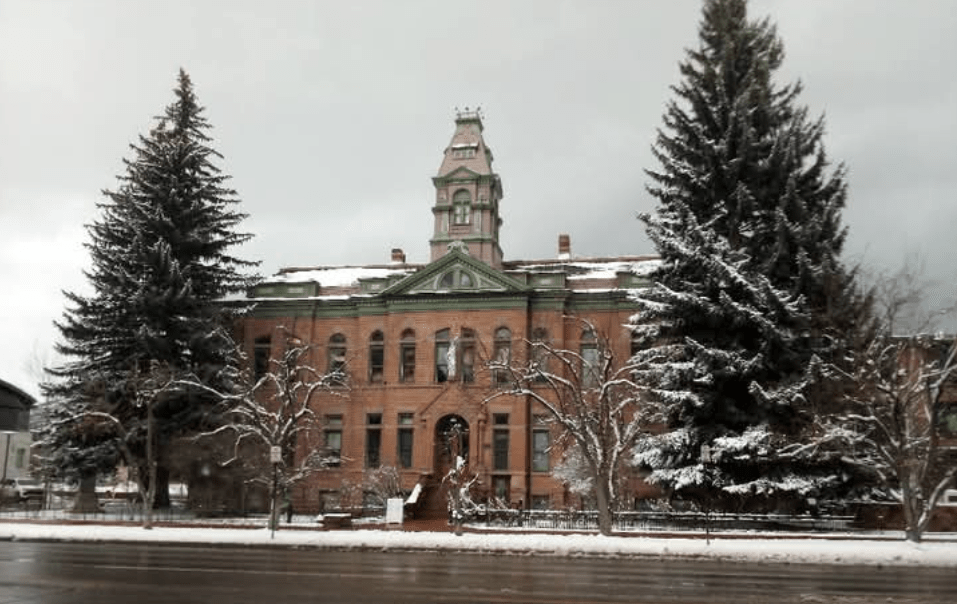
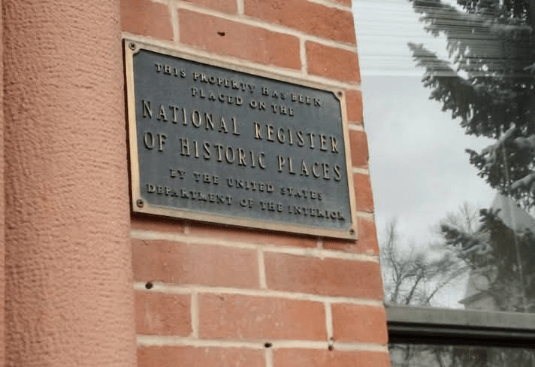
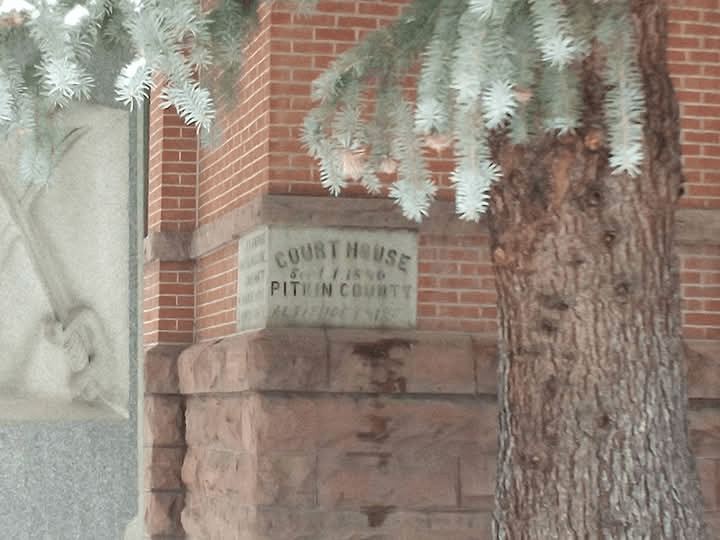
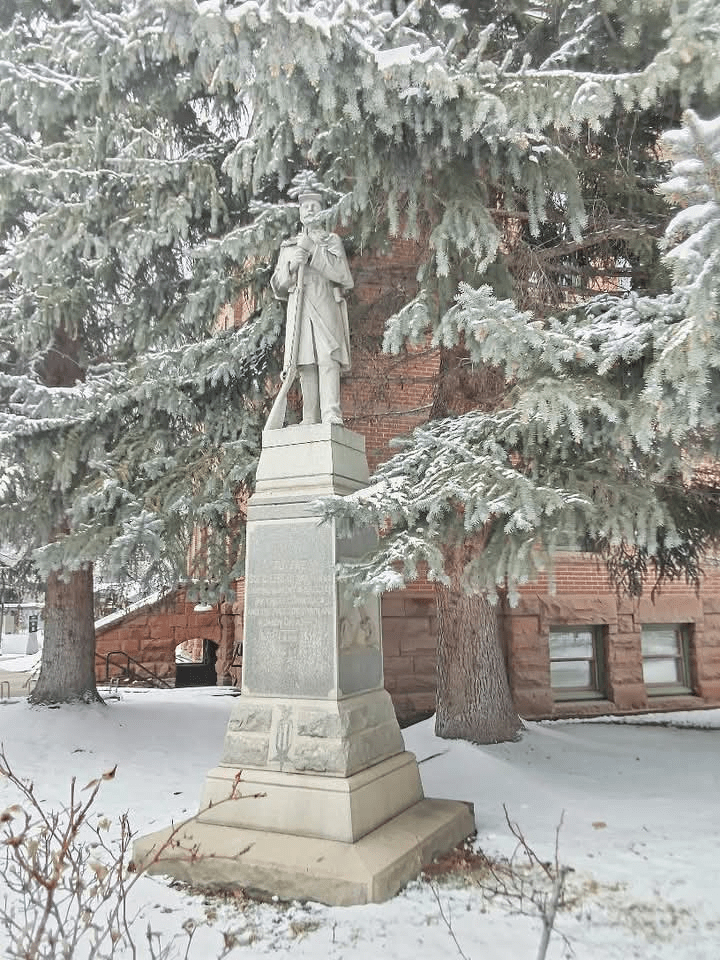
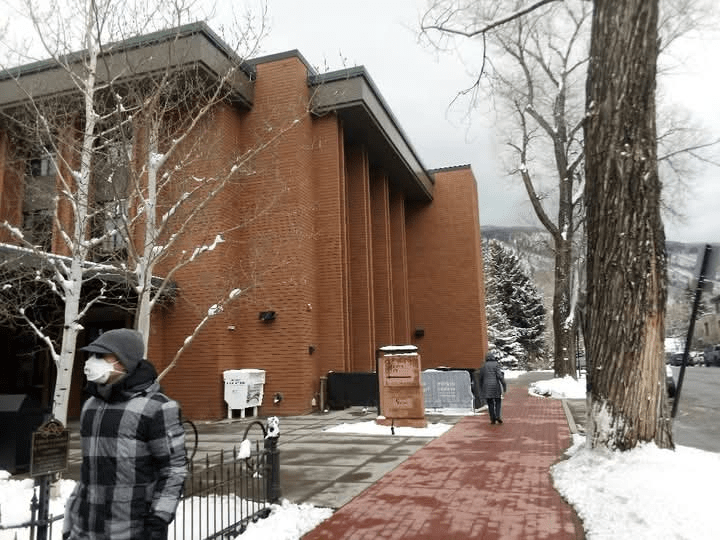
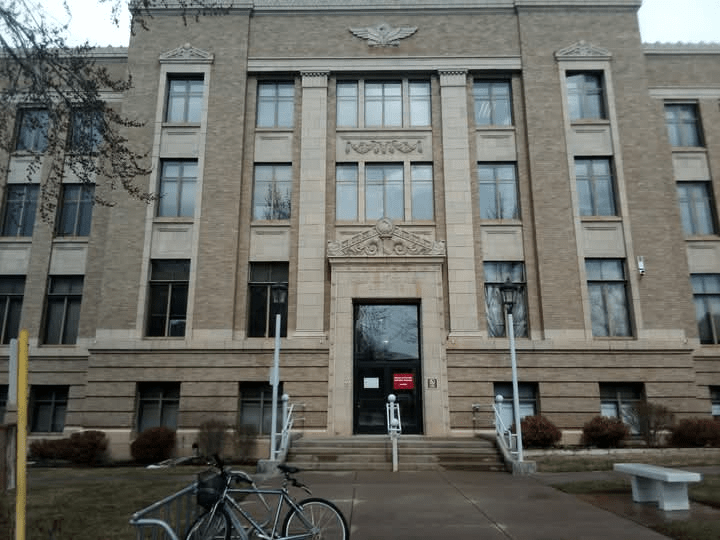
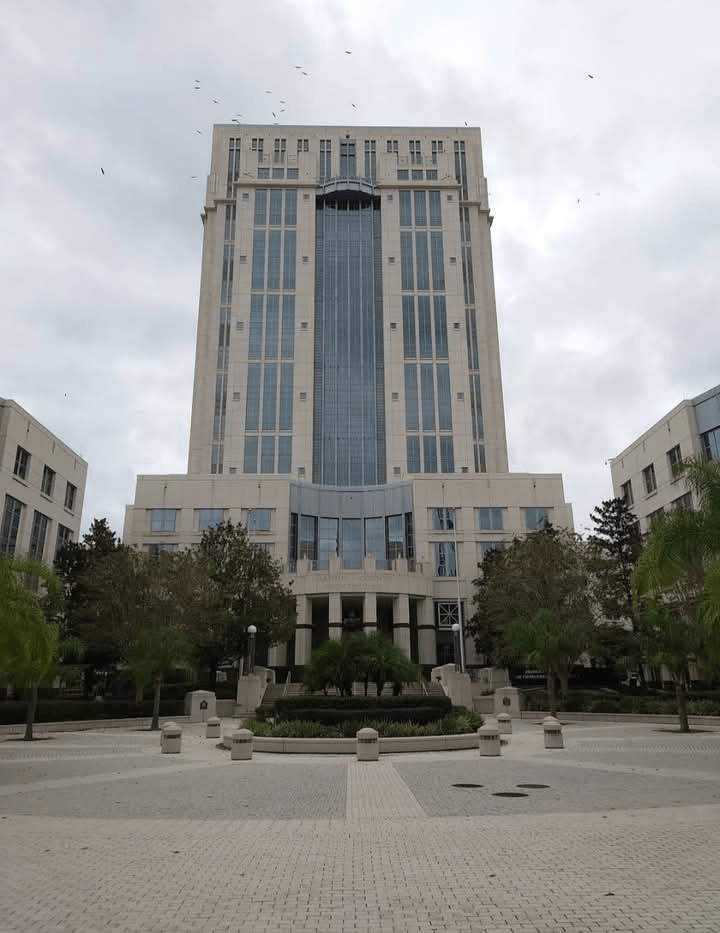
A more recent picture of the Pitkin County Courthouse.
Another shot of the Pitkin County Courthouse taken in 1974. Photo courtesy of ‘Denver7.’
The courtroom in the Pitkin County Courthouse as it looks today; Ted jumped out the far right window. Photo courtesy of Vince Lahey.
Another close-up picture of the window Bundy jumped from, screenshot courtesy of the Carol DaRonch YouTube page. Isn’t it ironic there’s a yellowish colored Beetle parked right outside?
A shot from the inside looking of the window Bundy jumped from. Screenshot courtesy of the Carol DaRonch YouTube page.
A close-up of the window Bundy jumped from taken from the outside, screenshot courtesy of the Carol DaRonch YouTube page.
A close-up of the second story window Bundy jumped out of at the Pitkin County Courthouse. Screenshot courtesy of ABC News.
A photo of a reporter standing outside the Pitkin County Courthouse on the morning Bundy escaped. Screenshot courtesy of ABC News.
A photo of Chief Public Defender James Dumas standing inn front of the Pitkin County Courthouse, published in The Aspen Times on June 9, 1977. Photo courtesy of Tiffany Jean.
Tracking dogs sniffing the grounds in front of the Pitkin County Courthouse getting a sense of smell for him. Screenshot courtesy of the Carol DaRonch YouTube page.
A second shot of tracking dogs sniffing the grounds in front of the Pitkin County Courthouse getting a sense of smell for him. Screenshot courtesy of the Carol DaRonch YouTube page.
The footprints Bundy left behind when he jumped out of the law library second story window at the Pitkin County Courthouse. Screenshot courtesy of the Carol DaRonch YouTube page.
A hand-drawn diagram of the Pitkin County Courthouse courtroom done by CBI Agent Leo Konkel. Photo courtesy of Tiffany Jean.
A hand-drawn sketch of the area where Bundy escaped from published by The Aspen Times on June 9, 1977. Photo courtesy of Tiffany Jean.
A picture of two Pitkin County Sheriff deputies standing outside the Kaeser cabin that was published in The Aspen Times on June 13, 1977. Courtesy of The Aspen Historical Society and Tiffany Jean.
A member of the Pitkin County Sheriffs office looking in the truck of a car at one of the roadblocks during the manhunt for Bundy. Photo from an article published by The Fort Collins Coloradoan on June 8, 1977.
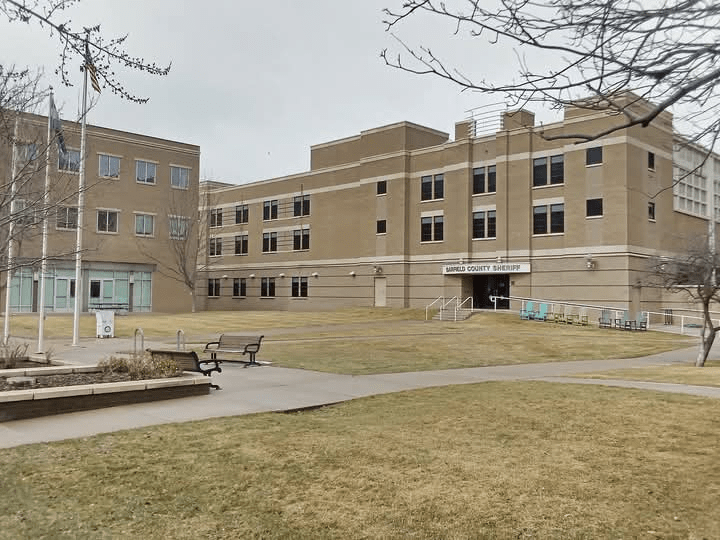
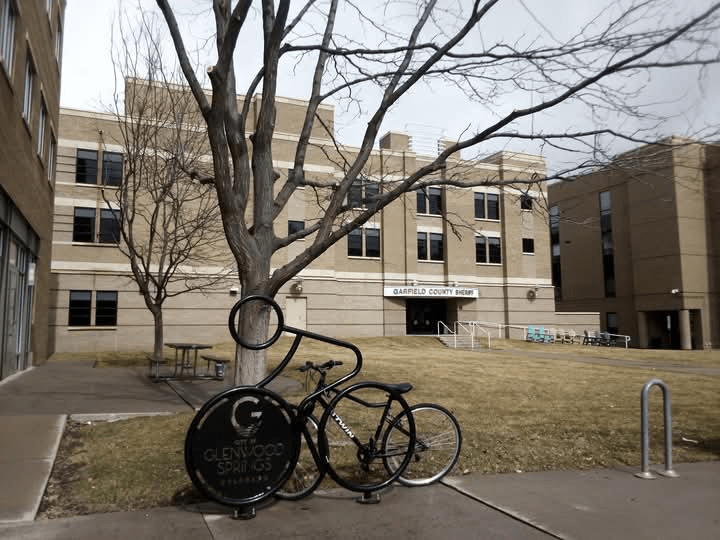
The Garfield County jail in Glenwood Springs in 1977.
A shot from the search from Bundy’s first escape in Aspen. Screenshot courtesy of ABC News.
Cars waiting to be searched after Bundy’s first escape in Aspen in June 1977. Screenshot courtesy of ABC News.
Bob Braudis inspecting vehicles (while smoking a cigarette) during Bundy’s manhunt. Photo courtesy of KOAA News.
Officers searching cars during the Bundy manhunt Photo published in The Aspen Times on June 9, 1977.
A member of Aspen LE holding up the picture taken of Bundy as he was walking into the courtroom the morning he escaped. Photo courtesy of ABC News.
A helicopter searching for Bundy after his first Aspen escape. Screenshot courtesy of the Carol DaRonch YouTube page.
The cabin Bundy broke into during his June 1977 escape. Screenshot courtesy of the Carol DaRonch YouTube page.
A screenshot of the cabin Bundy stayed in during his first escape.
Another screenshot of the cabin Bundy stayed in during his first escape. Screenshot courtesy of the Carol DaRonch YouTube page.
A bent fence at the cabin Bundy broke into during his first Aspen escape. Screenshot courtesy of the Carol DaRonch YouTube page.
A close up shot of the cabin Bundy broke into during his June 1977 escape. Screenshot courtesy of the Carol DaRonch YouTube page.
Reporter Barbara Grossman standing in front of the cabin Bundy stayed at during his escape. Screenshot courtesy of the Carol DaRonch YouTube page.
A photo of Fritz Kaeser taken in 1978. Photo courtesy of Chris Cassett for The Aspen Times/Tiffany Jean.
The items Bundy stole from the Kaeser cabin. Courtesy of Tiffany Jean.
Officers looking at maps during Bundy’s manhunt. Published in The Aspen Times on June 9, 1977.
A tracking dog getting Bundy’s scent from his discarded sweater. Picture published in The Aspen Times on June 9, 1977. Courtesy of Tiffany Jean.
Some negatives found in 2017 from Bundy’s escape. They’re pictures of police searching vehicles going out of Aspen. Photo courtesy of Post Independent.
A note to DA Yokum from Detective Pete Haywood. Photo courtesy of Chris Mortensen.
Bundys personal  journal entry for May 23, 1977, which is the day he originally planned to escape. Photo courtesy of Tiffany Jean.
Some guidelines for guarding Bundy written by Sergeant Pete Murphy. Photo courtesy of Tiffany Jean.
Bundy walking into the courtroom with officer Higgins. Screenshot courtesy of the Carol DaRonch YouTube page.
Bundy being lead down the stairs at the Pitkin County Courthouse after he was recaptured.
Bundy being lead back into the Pitkin County Courthouse after he was recaptured.
Newscaster Sandy Gilmour during a broadcast after Bundy was recaptured. Screenshot courtesy of the Carol DaRonch YouTube page.
Whitney Wulff. Screenshot courtesy of the Carol DaRonch YouTube page.
Former Pitkin County Sheriff Dick Kienast.
Retired Pitkin County Sheriff Dick Kienast and a sign after Bundy was recaptured early June 13, 1977. When he was brought in, the Sheriff said, “welcome home, Ted,’ and to this he replied, ‘thank you.’ Photo taken on June 14, 1977, courtesy of Tiffany Jean.
Whitney Wulff, of the Pitkin County Sheriff’s Department. Screenshot courtesy of the Carol DaRonch YouTube page.
A quote made by Wulff that was published in The Seattle Post-Intelligencer on June 14, 1977
The staff of the Pitkin County Sheriff’s Office in 1977. Photo courtesy of Bob Braudis.
A picture of deputies Gene Flatt and Maureen Higgins published in The Aspen Times on June 14, 1977.
One of Bundys arresting officers, Gene Flatt. Screenshot courtesy of the Carol DaRonch YouTube page.
One of Bundys arresting officers, Maureen Higgins. Screenshot courtesy of the Carol DaRonch YouTube page.
A photo of Maureen Higgins and Bob Braudis (standing in the front) from the 1970’s. Courtesy of Tiffany Jean.
Some members of the Aspen Police Department from the 1983 Saab APD ski team; Officer Terry Quirk is at the far right.
A shot of the Cadillac Bundy stole during his first escape. Screenshot courtesy of the Carol DaRonch YouTube page.
A shot of the side of the Cadillac Bundy stole during his first escape. Screenshot courtesy of the Carol DaRonch YouTube page.
A B&W shot of the 1966 Cadillac Bundy stolen and was driving when he was apprehended. Photo courtesy of Marc Demmon/Tiffany Jean.
The inside of the Cadillac Bundy stole during his first escape. Screenshot courtesy of ABC News.
A wanted poster for Bundy after his first escape. Courtesy of Tiffany Jean.
Bundy’s activities in 1977 according to the ‘TB Multiagency Investigative Team Report 1992.’
A drawing of Bundy’s cell that he drew in May 1977. Courtesy of Garfield County.
Bundys fingerprints from the cabin. Courtesy of Tiffany Jean.
A note to Sheriff Pete Hayward from Pitkin County DA David Yocom. Courtesy of the Haywood family and Chris Mortensen.
An article about Bundy’s first escape published by The Daily Chronicle on June 7, 1977.
An article about Bundy’s first escape published by The Daily Herald on June 7, 1977.
An article about Bundy’s first escape published by The Fort Collins Coloradoan on June 8, 1977.
A blurb about who is responsible for Bundy’s first escape published by The News Tribune on June 9, 1977.
A blurb about Carol DaRonch receiving protection after Bundy’s first escape published by The News Tribune on June 9, 1977.
An article about the FBI joining the manhunt during Bundy’s first escape published by The Seattle Times on June 10, 1977. Courtesy of Tiffany Jean.
An article about Bundy’s first escape published by The News Tribune on June 10, 1977.
The second article written about Bundy’s escape published by The News Tribune on June 10, 1977.
One of two articles written about Bundy’s escape published by The News Tribune on June 11, 1977.
The second article written about Bundy’s escape published by The News Tribune on June 11, 1977.
An article written about Bundy’s escape published by The News Tribune on June 12, 1977.
An article written about Bundy’s escape published by The Seattle Post-Intelligencer on June 12, 1977. Courtesy of Tiffany Jean.
An article written about Bundy’s escape published by The Columbian on June 13, 1977.
An article written about Bundy’s escape published by The Colorado Springs Gazette-Telegraph on June 13, 1977.
One of three articles written about Bundy’s escape published by The Longview Daily News on June 13, 1977.
An article written about Bundy’s first escape published by The News Tribune on June 14, 1977.
The first of two articles written about Bundy’s recapture published by The News Tribune on June 16, 1977.
The second article written about Bundy’s recapture published by The News Tribune on June 16, 1977.
Two short blurbs regarding Bundy;s first escape that were published in The Straight Creek Journal on June 23, 1977. Courtesy of Tiffany Jean.
An article about the fallout of the Bundy escape, published by The The Seattle Post-Intelligencer on June 30, 1977.
A map of where LE suspected Bundy may have been lurking during his first escape, published by The Aspen Times. Photo courtesy of Tiffany Jean.
A trail map of the Aspen Highlands where Bundy roamed throughout his first escape from 1974. Photo courtesy of The Aspen Historical Society and Tiffany Jean.
This photo was taken in 1975 during the filming of a Marlboro commercial on the T-Lazy-7 Ranch. Photo courtesy of ‘tlazy7.’
T-Lazy-7 Ranch in Aspen, CO.
The site of the Crestahaus Lodge today, located on the eastern outskirts of Aspen. Bundy was stopped along Highway 82 just outside. Photo courtesy of David Wood/Tiffany Jean.
The main street mall in downtown Aspen from a postcard made in the 1970’s. Courtesy of Tiffany Jean.
A picture of some Bundy related clothing after his first escape, published in The Seattle Post-Intelligencer on June 11, 1977. Courtesy of Tiffany Jean.
The Aspen State Teacher’s College was a fictitious school that published a humorous newsletter called ‘Clean Sweep,’ in the style of ‘The Onion.’ The theme of the June 1977 issue was largely Bundy themed, thanks to his escape. Page 1 of 4, courtesy of Tiffany Jean.
These images are courtesy of Marc Demmon, who wrote the issue and ran the fake school. Demmon said that Aspen in the 1970′ had a hippie college town-vibe, just without the college, so logically he made one up. Page 2 of 4, courtesy of Tiffany Jean.
In an interview with archivist Tiffany Jean, the satirist remembered that during Bundy’s first escape many of the Aspen residents didn’t know much about the full extent his atrocities, and just knew that he was being prosecuted for the murder of Caryn Campbell but it was universally thought to be a weak case. Page 3 of 4, courtesy of Tiffany Jean.
Because Ted was good looking, seemingly smart and well educated he became a ‘folk hero’ of sorts in Aspen. Page 4 of 4, courtesy of Tiffany Jean.
A detailed encounter that a hiker had with Bundy during his first escape. Courtesy of Tiffany Jean.

Ted, Carole, and Rosa.

I came across quite a few pictures of Ted and his family these past few days and I wanted to share them here. Carole Ann Boone passed away in a retirement home in Seattle in 2018, and where I do know some details about Rose/Rosa’s adult life I will not disclose anything out of respect for her privacy. I was hesitant about including her face in some of these but I found them all quite easily on the public domain.

A rare picture of baby Rosa by herself, photo courtesy of ‘Ted Bundy: I was Trying to Think Like an Elk.’
Ted holding Rosa as a baby. I’ve seen her referred to as both Rose and Rosa.
A happy family: Ted, Carole Ann, and Rosa.
Ted, Carole Ann, and Rosa.
Ted, Carole Ann, and Rosa. Sometimes her face is blurred out, and other times it isn’t.
Ted, Jaime Boone, Carole Ann, and Rosa.
Ted, Carole Ann, and Rosa.
Ted and Rosa. Imagine the only time you ever saw your father was under the watchful eye of a prison guard.
A rare picture of Rosa by herself, photo courtesy of ‘Ted Bundy: I was Trying to Think Like an Elk.’
Ted and Rosa.
Ted and his daughter.
Carole Ann and Ted.
Carole Ann and Ted.
Ted and Carole Ann.
Just Ted… he looks so ghastly in this picture.
A young Ted before his time in prison aged him, photo courtesy of ‘Ted Bundy: I was Trying to Think Like an Elk.’
Ted in prison. Photo courtesy of Tiffany Jean.

Another picture of Ted in prison. Photo courtesy of Supernaught.
Ted looks quite a bit heavier than he normally does in this picture.
Ted with some other FSU inmates. Photo courtesy of Supernaught.
Ted in prison. Photo courtesy of the FB group ‘TB’s Crowbar Magazine.’
Another shot of Ted in prison. Photo courtesy of the FB group ‘TB’s Crowbar Magazine.’
A shot of a magazine article about Ted, Carole Ann, and Rosa.
A picture of Carole Ann Boone taken shortly before her death.

Analysis of ‘No Man of God.’

Directed by Amber Sealy and written by C. Robert Cargill (under the pseudonym of Kit Lesser), ‘No Man of God’ stars Elijah Wood (as Bill Hagmaier), Luke Kirby (as Ted Bundy), Aleksa Palladino (as Ted’s final attorney Carolyn Lieberman/Diana Weiner), and James Patrick of Terminator fame (Roger Depue). The film had its premiere at the Tribeca Film Festival on June 11, 2021 and was officially released by RLJE Films on August 27, 2021. In my opinion, this movie is unlike any other Bundy production that’s out there because it takes place (almost) completely inside the walls of  Florida State Prison after his murders and trials took place. Set between 1985 and 1989, it’s based on conversations between the FBI Agent (Hagmaier) and serial killer during his time on death row in the sunshine state. In the opening scene some information about what you’re about to watch appears on the screen: ‘in the late 1970’s, a team of FBI researchers proposed that, by understanding the psychology of violent serial offenders, investigators could more effectively combat serial rapes and homicides. The process was called profiling. In 1984, President Ronald Reagan announced the establishment of the National Center for the Analysis of Violent Crime, creating the first five full-time positions for FBI profilers. Special Agent Bill Hagmaier was picked as one. The following is inspired by FBI transcripts, recordings, and the recollections of Bill Hagmaier.’

The movie begins in 1985, where an group of FBI agents from the elite Behavior Science Unit are sitting in on a meeting with Supervisory Special Agent Roger Depue, who shares with them that he needs them to gather case studies on violent offenders, including serial rapists and killers (by ‘begins’ I mean the plot of the movie, in literal terms it actually begins with a real-life broadcast announcing Bundy’s execution). Names like Charles Manson, Ed Kemper, and David Berkowitz are thrown around… and when the other agents laughed and passed on Ted, newcomer William Hagmaier accepted the challenge despite being aware of the killers deep distrust of the Bureau. Initially through snail mail, Bundy expressed interest in communicating with Hagmaier, who eventually traveled to the condemned man’s final home for an interview. Over the next couple of years, the two men developed an unusual ‘friendship’ of sorts while discussing pornography and detective magazines as a possible catalyst for violent serial offenders. Despite some hesitation at first from the agent, during these conversations Bundy was able to cajole personal details about his personal life out of him, under the guise of establishing trust between them.

The following year the two men met again. This time, Ted is shown some crime scene photos related to the recent Green River murders and gives Hagmaier his opinion on them, and through the agents sly questioning the killer accidentally volunteers some details about his own diabolical history. At one point during their chat Bundy asks Bill if he thinks he could kill someone, and when the agent responds that, due to his being an FBI agent it could in theory happen, it’s not exactly the answer he was seeking. Back at Quantico, FBI Unit Chief Depue cautioned his agent not to get too close to someone like Bundy, and that he ‘didn’t want someone like him getting inside his head.’ Despite this warning, while sharing stories about their children during their next visit in 1987, Ted senses that his new friend is getting too deep inside of his head and taunts him to wonder outloud what he might do if he ever escaped from prison. In response, Hagmaier describes it with (most likely) a good amount of accuracy, which makes him furious and he verbally attacks him. After calming down a bit Bundy begins to disclose more intimate details of his life and what may have led him to murder, but along the way he also dispelled many of the popular myths about him (such as going after women with long, dark hair). The killer also shared that in an alternate reality Bill could be the one sitting in prison and he could be an FBI agent, a statement that deeply affected the agent.

Thanks to IMDB, I learned quite a few interesting facts about the movie I was unaware about before writing this article: in the first conversation between Bundy and Agent Hagmaier the SK asks why the Bureau didn’t send Douglas, and by that he meant John Douglas, who was the criminal profiler that wrote ‘Mindhunter’ on which the TV series is based. Also, when Bill is talking to Bundy about confessing he mentions Henry Lee Lucas, another serial killer that (along with his partner/lover Otis Toole) frequently lied and fabricated stories about his criminal history, hinting at him to tell the truth. Lastly, in 1987 Ted mentions that they should co-author a book together and name it ‘The Bill and Ted Show,’ alluding to the 1989 movie ‘Bill & Ted’s Excellent Adventure’ which was released less than a month after he was executed. This is one of the few errors, as the movie wasn’t released for two years after this conversation took place.

The final half of the movie (roughly) takes place in the last few days of Bundy’s life in January 1989, after (then) Florida state Governor Bob Martinez signed his death warrant and he was trying to weasel his way out of getting executed. Ted (of course) said that the determination of only being granted seven days was done by the governor in a pathetic attempt to gain the favor of the people of Florida in the hopes of getting reelected (spoiler alert, he did not). Hearing of the killers quickly approaching doom, individuals from all over the US as well as members of the media began to gather outside the prison. At this time, we meet his civil attorney Carolyn Lieberman, who is deeply against Hagmaiers involvement in anything related to Ted due to his ties to ‘law enforcement,’ however the killer is insistent that he be there, saying Bill is his ‘best friend.’

Hagmaier was sent to Florida not to fight for Bundy’s life but to simply be there and act as his scheduling coordinator: Ted is finally ready to confess and spill all of his secrets, and because he is a complete narcissist it’s all being done on his terms. He tells Bill of his plan to only give detectives the bare minimum in order to bait them and make them want more, which he hoped would grant him more time to live. In response, the agent urges Bundy not to play games with the governor of Florida, advice that he mostly ignores. Members of law enforcement agencies from all over the US poured into Florida: Idaho, California, Oregon, Colorado, and Utah; where I didn’t hear representatives from NJ or Vermont mentioned I recall Bundy also being questioned about the 1969 New Jersey Parkway murders (Susan Davis and Elizabeth Perry) as well as the 1971 homicide of schoolteacher Rita Curran (in VT).

During interviews with investigators across multiple states, Bundy is purposefully vague and evasive with his answers, only sharing small tidbits of information with them. Additionally, he completely disregarded Bill’s concerns about media coverage and Carolyn scheduled an interview with Christian Psychologist, creator of ‘Focus on the Family,’ and straight up douchebag Dr. James Dobson the day before he was executed in hopes that he would petition the governor on behalf of Ted in hopes of getting a stay… But of course, the sleazebag waited until after the interview to reveal that he never planned on talking to Martinez, as he felt the killer would never be granted a pardon. It was really almost spooky watching Kirby’s performance as Bundy during his interview: not only was the dialogue nearly identical but so were the facial expressions made by the killer. It was as if he somehow channeled Bundy’s spirit during that scene.

Later that day after the interview the warden informed Hagmaier that Bundy was to undergo a last-minute sanity hearing, and where multiple conversations were to be conducted the decision to put the killer to death would ultimately fall completely on his testimony to a psychiatric board; as we know, they ultimately declare Bundy sane.

When the men speak for the last time on January 23, 1989 Bill brings up a conversation they had a few years prior, about being ‘brought under the water:’ through violent, horrifying details, Bundy finally opened up and shared how he lured and killed one of his victims, leaving the agent completely overwhelmed and in tears. After this interaction Ted asked his friend why this is happening to him, proving he was still completely remorseless. Infuriated, as Bill prepares to leave the condemned man asks if he had any idea why he did what he did, to which he simply said, ‘because you wanted to.’ Just moments before Bundy was scheduled to die, Hagmaier is told by a prison official that he had been taken off the list to sit in on the execution so that someone else could fill his spot. The movie wraps up with Agent Hagmaier alone in the warden’s office, answering the telephone and talking to his wife and son. As he is catching up with his son, the crowd outside erupts in spirited cheers as it was announced that Ted was officially declared dead.

Just some quick background on Diana: she was a civil attorney, which is a type of lawyer that mainly works on civil lawsuits (such as, a personal injury case or contract dispute) and represents their clients in non-criminal areas of the law. Weiner (whose maiden name was Acevedo) got her BA from Houghton College (which is a Christian school close to where I live) in NY in 1969 and went on to earn her Juris Doctorate from Georgetown in 1982. She has been married to her husband Nevin for over forty years, who also worked as an attorney before retiring.

Diana first met Ted Bundy in October 1986 through psychologist Art Norman, who was brought on earlier in the year to interview him for a clemency proceeding. Dr. Norman was in the same social circle as Weiner and her husband, and he felt that Bundy would be more open and honest if there was an ‘intelligent, attractive attorney, and a woman who could be very open and would have the personality to open up and would not be threatened by whatever he says.’ Well, he was definitely on the right track: almost immediately, Diana’s presence prompted Ted to talk more honestly and intensely about his feelings towards violence and women, which were ‘things he has difficulty talking about with a man.’ All of this was being done by Dr. Norman in an attempt to figure out whether the killer had been ‘mentally competent’ to stand trial when he was convicted in the early 1980’s. Shortly after their meeting, Weiner officially became Bundy’s civil attorney and represented him (along with other death row inmates) in a civil rights lawsuit surrounding the poor ‘exercise conditions’ at Raiford Prison.

There seemed to be quite a bit of whispering about the nature of hers and Bundy’s relationship before he was put to death, but there is no proof that anything inappropriate ever took place between the two. About Bundy, Weiner said they had ‘an attorney-client relationship,  but I also, as an attorney and client do, developed a congenial relationship with the client.’ The idea is strongly hinted at in ‘No Man of God’ as well: in the movie the warden asked Hagmaier why a civil attorney needed to visit a death row inmate 80 times in three years, and where I don’t know how accurate that estimation is, in reality she spent roughly seventy hours with him during his time on death row.

According to the website ‘yourtango’ (just for the record, I don’t know how accurate this information is), Bundy’s feelings for Weiner were so glaringly obvious that they became a bit of annoyance to the rest of his legal team, including his defense attorney Polly Nelson. At one point she even confronted Ted about his feelings, which she was beginning to suspect were making her own job more difficult. In her book ‘Defending the Devil,’ Nelson wrote about her experience, and at one point said: ‘Ted, quit giving me this ‘Ms. Weiner’ stuff. I know why you see her, and it has nothing to do with any lawsuit. She’s beautiful, she’s interested, she can come during lawyer’s visiting hours, and you can have unsupervised visits with her.’ In response to this, Ted paused briefly, smiled then said, ‘that about sums it up.’

In one of the few interviews she did after Ted’s execution, Weiner said she the man she knew wasn’t a killer, or a rapist: while she made it clear that she wasn’t in any way minimizing what he did, she remembers a man that became a born-again Christian that seemed genuinely remorseful for what he did and was sincere when he said he wanted to confess in hopes to ease the pain of his victims’ families: “I think the public is unwilling to accept that there could be a commonality between Ted Bundy and the rest of humanity or that Ted Bundy could have at the end of his life sought to tell the truth, confess or have had any moral compunction to do so.’

According to the legal paperwork that was left behind by the killer, Bundy left Weiner all of his worldly possessions, including his wedding ring, roughly $700, and his ashes. Regarding the latter of the three, she was instructed by her client to spread them across one of his dumpsites at Taylor Mountain, which never took place; a family member of Ted’s is currently in possession of them.

One thing I wonder about is the scene towards the end of the movie when Ted said he would rather slit his wrists then be killed by the state of Florida, an act he was easily talked out of by Hagmaier. I mean, it was no secret that Bundy was absolutely terrified of dying, and personally I think he would never have committed suicide because I honest to God think he fully expected a call from the governor granting him another stay of execution at the very last possible moment (like, as he was being strapped into the Ol’ Sparky). I mean… I just don’t think Bundy had it in him to take his own life. It’s ironic, in a really sad way: he had no problem killing potentially dozens upon dozens of girls and young women, but when it came to himself he was scared shitless.

One thing I was incredibly impressed by was how accurate this movie was when it came to the smaller details about Bundy’s life as well as his timeline. In quite a few Ted related movies, the creators changed the names of victims and family members, but that didn’t happen with ‘No Man of God.’ They even called his daughter by the correct name, which surprised me a bit as I know she has tried her hardest to stay out of the limelight regarding her fathers case (I hope that was able to continue); it’s even mentioned that that he hadn’t seen Rosa for a long stretch of time after he told Carole Ann Boone his plans of confessing (she stopped visiting in 1986). Additionally, when Bill talks about how his son pulled his pants down while pretending to be an elephant while crab-walked around his preschool classroom… Well, he really does have a son named Bryan, who followed in his fathers footsteps and became an officer with the NYPD (and I’m sure he loved that story being involved in the movie).

Other popular names related to Bundy were also used, like Liz Kloepfer, true crime legend Ann Rule, and his first love Diane Edwards. Rule is briefly brought up in conversation, when Ted denied her theory that Edwards was the main catalyst for his drive to kill and declared that being dumped by her had nothing to do with why he committed such atrocities. One name did jump out at me as being wrong but it was the way it was done that surprised me: Hagmaier questioned Bundy about ‘Diane Leach,’ and where the details were mostly correct they called her by her middle name and completely left out her first (Kimberly). Another identity that was changed was Carolyn Leiberman, and it wasn’t until after I spent a solid half-hour trying to figure out who she was that I realized the name was changed from Diana Weiner. My educated guess as to why: Ms. Weiner is still alive and the creators of the movie didn’t want people looking her up and harassing her.

And now I’m just going to go through and point out various things that interested me about this movie (thrilling, I know):

  • When Bundy is talking to members of LE across various states about his potential victims, the detective from Oregon lists different cities across the state and asks whether or not he ever murdered there. Every place he brings up is one that Ted was suspected of killing in: Eugene (mainly Vicki Lynn Hollar but there are other suspected victims), West Linn (Rita Lorraine Jolly), and Corvallis (Kathy Parks, who was actually confirmed).
  • When a detective from Colorado questions Ted if he committed murder before 1975 (specifically 1968) he evades the question at first, and says he’s ready to break for lunch; when alone he tells Agent Hagmaier that he suspects the officer was in a relationship with one of the women he killed. I found no evidence that this ever happened, and I have never heard of this before seeing ‘No Man of God’ (I also couldn’t find a record of it anywhere else). After Ted tells Bill of his suspicions about the member of LE he shares that he not only killed the young woman but he also ‘made love to her dead body’ then cut her head ‘clean off.’ Looking into murdered women from the state in 1968, on March 26 Constance Marie Paris walked off a bus in Denver at the intersection of Girard Avenue and South Broadway and was never seen alive again. Just five days later on March 31, 1968 her remains were found in a ditch in the southwest part of Denver; she was found naked and was strangled and sexually assaulted. As of July 2024 her case remains unsolved.
  • Ted told Bill that when he was finally recaptured in Florida he tried to tell police who he was but they didn’t believe him. I recall (from listening to Liz Kloepfer’s ‘The Phantom Prince’ exactly one thousand times on Audible) that in reality he was reluctant to share his true identity and only gave them his name in exchange for a phone call (to Liz)…  so I’m not exactly sure how accurate that part is.
  • When Ted takes Bill ‘under the water,’ he mentioned using smelling salts to revive his victim, which I never heard of him using before. Also interesting, the victim he discussed killing was Kathy Parks. In this scene, he said: ‘I’m going to… take you somewhere… that I’ve never taken anyone before. And I will do the talking. She’s… beautiful. She’s…. Radiant. And very familiar. Her dad is sick. He’s, uh… He’s in and out of the hospital. I hear her talking about it over a pay phone. He has heart problems. I have a badge that I got in the usual way, a local police badge. And tonight… full moon. She looks amazing. She’s exactly like one of the girls from the magazines. Walk up to her. I’m Officer Ted, Officer Ted Bundy. Something’s happened. She goes pale. “What do you mean?” ‘Your father’s had a heart attack. I was sent to find you. My car is over this way.” She rushes with me. It all happened so fast. She doesn’t have time to clock the police officer is picking her up in a Volkswagen. I open the door for her. Before she realizes there’s no passenger seat, wham! I hit her in the back of the head with a tire iron. She’s out. Isn’t she beautiful? Her dark hair parted down the middle.’ Parks was abducted on May 6, 1974 at around 11 PM, most likely right outside the Memorial Union on Oregon State University’s campus; she was on her way to get a hot fudge sundae. We know that she was incredibly upset and distracted that night because her father had recently suffered from a heart attack and she was concerned about him.

I know that Ted once told a story that he was in the library at Michigan State University and was flipping through college catalogs while contemplating his next move… he knew he wanted to go somewhere warm that was near water and close to a college campus. The movie features a scene where Ted tells Bill that he didn’t want to get caught, and honestly I’m going to have to lean towards that. Did he go to Florida in hopes of living out the rest of his life in anonymity, or did he go there purposefully to get a death sentence? Or, did he simply not want to live the rest of his life behind bars? I mean… I’m sure he was aware that if he stayed in Colorado there would be a good chance that he would die of natural causes while living out his final days in prison. If you really think about it, the Chi Omega murders (and the attack of Cheryl Thomas on Dunwoody Street) were incredibly reckless almost to a point they would be considered careless. It was as if he was begging to get caught. Why was he so sloppy if he wanted to avoid detection?

Over the years there have been many movies made about Ted Bundy, and that isn’t taking into account the dozens upon dozens of documentary-type television shows and mini-series that have been produced as well. Personally, my favorite is the oldest one starring Mark Hammon titled, ‘The Deliberate Stranger.’ Made in 1986, it’s a (fairly) accurate retelling of a book by the same name that was written by Seattle Times reporter Richard W. Larsen in 1980. The book was adapted into a two-part made for TV movie that originally aired on NBC on May 4 and 5, 1986. What I think is interesting about this is that TB was still alive when it was made, even though he claimed he had no interest in seeing it. Surprisingly, there wasn‘t another film about the SK made until 2002 (things really seem to pick up after that), when Michael Reilly Burke played the serial killer in the movie simply named ‘Ted Bundy;’ it was universally panned (as it should have been because it’s a total of crap) and was deemed ‘exploitative’ by critics. The following year Ann Rule’s classic ‘The Stranger Beside Me’ was made into another made for TV movie starring Billy Campbell and Barbara Hershey. Next up: on July 21, 2008 Parker Lewis himself Corin Nemec starred in ‘Bundy: An American Icon’ (which is also called ‘Bundy: A Legacy of Evil’) and to be honest, I thought this and the MRB movie were one in the same. I only recently realized that they’re two separate films. Then of course in 2019 we have another favorite of mine, the Zac Efron/Lily Collins Netflix movie titled, ‘Extremely Wicked, Shockingly Evil And Vile,’ and where it wasn’t entirely accurate it was pretty well-made and entertaining. Lastly, in 2021 one-time teen heart throb Chad Michael Murray played the titular character in ‘Ted Bundy: American Boogeyman;’ it was a cinematic abortion and I don’t think I ever finished it.

There’s also been multiple films about Bundy’s involvement in the investigation of the Green River/Gary Ridgway killings that took place near Bundy’s hometown of Tacoma: in 2004 Cary Elwes portrayed Ted in ‘The Riverman,’ followed by ‘The Capture Of The Green River Killer’ in 2008 then ‘Bundy And The Green River Killer’ in 2019.

On the movie review website ‘Rotten Tomatoes,’ ‘No Man of God’ currently has an approval rating of 80% based of 81 reviews; the film has an IMDB rating of 6.4/10. According to ‘Metacritic,’ it has a weighted score of 67/100 and a user score of 7.1 (based off 21` reviews); this is considered by them to be ‘highly favorable.’ As of July 2024 ‘No Man of God’ earned $216,000 at the worldwide box office.

Works Cited:
bundyphile.com/2021/11/05/no-man-of-god-movie-review/
yourtango.com/2019321781/who-is-diana-weiner-ted-bundys-lawyer-and-final-love-interest

A picture of Bill Hagmaier sitting with Bundy during one of their interviews.
Elijah Wood (l) next to one of the only pictures of a young Bill Hagmaier (r) that I could find; I apologize for the poor quality.
Luke Kirby (l) next to Ted Bundy (r).
Aleksa Palladino (l) next to the ‘real’ Carolyn Lieberman (Diana Weiner, r). The photo of Weiner is courtesy of Maria Serban and is from the 1964 Northeast High School yearbook (located in St. Petersburg, FL). Weiner said that her client ‘wanted to die having left a more full understanding with the public of what the underlying factors were in his behavior so that we as a society would be able to take steps to prevent the kind of behavior he committed.’
Diana Weiner (then Acevedo) in a picture for the debate club from the 1968 Houghton College yearbook. Photo courtesy of Maria Serban.
Diana Weiner from her time at Georgetown. Photo courtesy of Tiffany Jean.
A more recent photo of Diana Weiner taken from her Twitter account.
Diana’s husband, Nevin. He went to the University of Rochester which is close to the college where she earned her undergraduate degree.
An interoffice memorandum from one of the seventy (plus) visits Weiner made to Ted during her time has his attorney. Courtesy of Tiffany Jean.
An interoffice memorandum from Florida State prison regarding Bundy’s final interviews. Courtesy of Tiffany Jean.
An interoffice memo detailing Bundy’s final wishes, including a special contact visit with Diana Weiner (which was denied). Courtesy of Tiffany Jean.
According to this interoffice memo, Weiners last (ahem, no-contact) visit with her client took place the day before he was put to death. Courtesy of Tiffany Jean.
Bill Hagmaier in a group picture from an academic fraternity from his time at Slippery Rock University in 1969.
According to the Slippery Rock website, ​Bill Hagmaier was born in 1947 in Pittsburgh and earned his Bachelors in elementary education in 1969. After serving in the Army Military Police Corps, he went back and got his Masters Degree in counseling in 1974. Upon finishing his FBI training in May 1978, Hagmaier was assigned to the Minneapolis Division for four years; from there, he worked in the office at the FBI’s state headquarters for two years then finished his time with the bureau as the Assistant Senior Resident Agent in St. Paul.
Christian Clemenson (l) and Dr. James Dobson (r).
dob
Aleksa Palladino and Luke Kirby from ‘No Man of God.’
The weirdest review I’ve come across, found on commonsensemedia.org. I don’t want to sign up for more reviews, I want to be guaranteed no more of these ridiculous reviews come up in my search results again.
Amber Sealey.
About the movie, ‘No Man of God’ writer C. Robert Cargill (who wrote the screenplay under the name Kit Lesser) discussed with the horror-comedy podcast ‘Pod of Madness’ why he wanted to write the film, explaining: ‘There have been a lot of movies and a lot of media made about Ted Bundy, and one of the things that bugged me a lot was that it’s all kind of selling the myth of Ted Bundy and kind of glorifying him in a way. And the deeper you dig into the story you realize there’s nothing to mystify here, there’s nothing amazing about him.’
A newspaper clipping that mentions Weiner published by The News-Press on February 6, 1989.
A newspaper clipping mentioning Diana Weiner published in The Tampa Bay Times on February 7, 1989.
These are Bundy’s final, handwritten notes (between January 20 and 22, 1989). Thank you to Maria Serban for sharing these, she is amazing. Page one of Bundy’s notes from January 20, 1989.
Page two of Bundy’s notes from January 20, 1989. Document courtesy of Maria Serban.
Page three of Bundy’s notes from January 20, 1989. Document courtesy of Maria Serban.
Page four of Bundy’s notes from January 20, 1989. Document courtesy of Maria Serban.
Page one of Bundy’s notes from January 21, 1989. Document courtesy of Maria Serban.
Page one of Bundy’s notes from January 22, 1989. Document courtesy of Maria Serban.
Page two of Bundy’s notes from January 22, 1989. Document courtesy of Maria Serban.
Kathy Parks and her boyfriend, Christy McPhee.
I thought this contained a lot of interesting information about Kathy Parks written by Redditor ‘Quick-Employee1744.’
An article mentioning Kathy Parks father suffering a heart attack published by The Petaluma Argus-Courier on May 24, 1974.
Constance Marie Paris.

Ted Bundy Drawings from his time at Florida State Prison.

I always knew John Wayne Gacy created artwork while in prison but I didn’t know Bundy did as well. Referred to as ‘the Ted Bundy Drawings,’ these five pieces of artwork were supposedly sketched by the killer himself, and it’s strongly speculated they depicted images that utilized metaphors as well as allusions and weren’t of his victims. They offer no explanation for his crimes against humanity, but do share some general, very loose commonalities, such as dark and intense eyes, over-exaggerated mouths, and a consistent ‘phallic’ type of shape.

‘Me.’
‘Entity.’
‘Handcuffs.’
‘Bigfish.’
‘Freedom.’

Thank you to the website ‘The True Crime Database” for these pictures. Taken on May 2, 2024 from https://www.thetruecrimedatabase.com/case_file/ted-bundy-drawings/

Bundy’s Execution: January 24, 1989.

Theodore Robert Bundy was executed in Florida’s Prison’s electric chair on January 24, 1989 after brutally raping and killing dozens of young women between 1974 and 1978 (most likely earlier than that). The infamous serial killer was sentenced to capital punishment after brutally killing three young women in Florida (and countless others across the Pacific Northwest) and had been given the death penalty three times before he was finally killed. Bundy sat on death row for almost a decade when he was finally executed at 7:16 AM EST, and the event became a celebration of sorts for Floridians. On January 23, as the condemned man was spilling his guts in a last ditch effort to push off his execution, a crowd of almost 500 gathered outside the Florida Prison chanting phrases such as ‘die, Bundy, die’ and ‘burn Bundy, burn,’ drinking drank beer and holding signs that read ‘watch Ted fry, see Ted die!’ But not everyone was excited, there was also a small group of anti-death penalty protesters that didn’t want to see the event take place.

Bundy in prison with some of his fellow inmates. Photo courtesy of Supernaught.
Ol’ Sparky, the electric chair at Florida State Prison.
Bundy peering out from behind the bars at Florida State before he was executed. Photo courtesy of Hezakya News.
A drawing of Bundy walking to the execution chair.
A drawing of Bundy on his way to the execution chair.
A drawing of Bundy in the execution chair. Photo courtesy of ‘Ted Bundy: I was Trying to Think like an Elk.’
A drawing of Ted sitting in the electric chair.
A picture from a Florida newspaper after Bundy was executed.
The crowd outside of Florida State Prison before Bundy’s execution in the early morning hours of January 24, 1989. Photo courtesy of Fox 13 News.
News crews gathering outside of Florida State Prison before Bundy’s execution in the early morning hours of January 24, 1989. Photo courtesy of Hezakya News.
A gentleman wearing a ‘Burn Bundy, Burn’ t-shirt outside Florida State Prison before Bundy was executed. Photo courtesy of Hezakya News.
A picture taken the morning of Bundy’s execution.
A picture taken the morning of Bundy’s execution outside Florida State Prison.
A sign someone was holding outside Florida State Prison before Bundy was executed. Photo courtesy of Fox 13 News.
A sign someone was holding outside Florida State Prison before Bundy was executed.
A picture taken before Bundy’s execution.
Some pro-death penalty demonstrators standing outside of Florida State Prison the morning of Ted’s execution.
Some anti-death penalty protesters standing outside of Florida State Prison the morning of Ted’s execution.
A sign hung in the window of a Florida musical instrument store the morning of Bundy’s execution.
A sign hung in the window of The Phyrst, a bar in Florida on the morning of Bundy’s execution.
Mrs. Bundy talking on the phone the morning of Ted’s execution.
The hearse pulling out of Florida State Prison carrying Bundy’s remains after he was executed.
The hearse driving Ted’s remains to the ME’s office after he was executed.
A photo of Ted arriving at the Medical Examiners office after his execution.
A B&W of Bundy after his execution.
A close-up B&W of Bundy after his execution.
A picture of Bundy, post-mortem. Photo courtesy of the Florida state Department of Corrections.
Bundy after his execution.
The top of Bundy’s head after his execution.
Bundy’s legs after his execution.
An article written the day Bundy was executed published by The Greenwood Commonwealth on January 24, 1989.
An article written the day Bundy was executed published by The Enterprise-Journal on January 24, 1989.
An article written the day Bundy was executed published by The Elizabethton Star on January 24, 1989.
An article written the day Bundy was executed published by The Sun Times on January 24, 1989.
Bundys death certificate.
A mock obituary for Ted Bundy created by ‘theodorerobertcowellnelsonbundy.wordpress.com.’ The description reads: ‘I thought he deserved a proper obituary, not some sensationalized news article about the monstrous serial killer celebrating his death.’
An interesting opinion piece Bryan Kohberger’s mother sent to a newspaper about Ted Bundy’s execution, published by The Daily News on February 16, 1989.

Ted Bundy, Christmas Correspondence.

Bundy sent this Christmas card in 1985 from his time on death row while at Florida State Prison while awaiting execution for his long string of assaults and murders. Photo courtesy of The Daily Mail.
In the card (which came with a letter) Bundy continued to deny his crimes but said photographs in books about them ‘brought back memories.’ Photo courtesy of The Daily Mail.
Page two of the letter. Photo courtesy of The Daily Mail.
Page three of the letter. Photo courtesy of The Daily Mail.
The card was written to a pen pal of Bundy, who said looking at it was ‘chilling.’ Photo courtesy of The Daily Mail.
In this card, Bundy speaks of his disdain for the many books written about him. Photo courtesy of The Daily Mail.
An updated Christmas card signed from Bundy.
The front of an envelope from a Christmas card from Carol Boone in 1980. Photo courtesy of Supernaught.
The back of an envelope for a Christmas card from Carol Boone in 1980. Photo courtesy of Supernaught.
The front of a Christmas card from Carol Boone in 1980. Photo courtesy of Supernaught.
The inside of a Christmas card from Carol Ann Boone, Ted, and Jamey in 1980. Photo courtesy of Supernaught.
The back of a Christmas card from Carol Boone in 1980. Photo courtesy of Supernaught.
A Christmas letter to one time Bundy attorney Polly Nelson in 1987.
Ted 1985 Christmas card. Photo courtesy of Supernaught.
The envelope from a Christmas card sent from Bundy the December before he was executed in 1988.
The front of a Christmas card sent from Bundy the December before he was executed in 1988.
A Christmas card sent from Bundy the December before he was executed in 1988.

Theodore Robert Bundy, Crime Scene Photos.

Over the years I’ve only come across a few pictures from Bundy’s crime scenes, for the simple fact that there’s not many of them. This is because he usually left little to no trace of himself behind, and there were no bodies recovered until they were completely decomposed (well, until the end in 1978). I came across a website last night on TikTok (as silly as that sounds), and it contained a bunch of pictures I’ve never seen before, I was pretty amazed. So, here they are. I also went through my own collection and found some additional crime-scene related pictures and included those as well. Because, why not? If anyone has more, please feel free out reach out to me. I will give you credit.

Edit: I wanted to thank Tiffany Jean for all of the hard work she does on the Bundy case. Because of her we have information never before accessible, and she is a wonderful educator and TB resource. Thank you for all that you do.

TB’s kill kit.
Some more items from Bundy’s kill kit. Photo courtesy of Kevin Sullivan.
The outside of Bundy’s VW Beetle. It’s confirmed that at least eighteen of his victims were transported in this vehicle.
The inside of Ted’s VW Beetle. Bundy took out the cars passenger seat so that his victims could lie vertically without being seen by others.
Another shot of the inside of Bundy’s VW.
Bundy’s VW Beetle notes from the ‘Ted Bundy Multiagency Investigative Team Report 1992.’ He bought the infamous tan Bug in the spring of 1973 from a woman named Martha Helms.
First confirmed Bundy victim, Karen Sparks-Epley (formerly known as Joni Lenz).
Karen Sparks-Epley’s residence where was attacked by Ted Bundy on January 4, 1974. This is a police photograph of 4325 8th Avenue NE, Sparks’ bedroom is circled in white. The house was torn down at some time in 1985.
These days the site of the house is now home to the Westwood apartments, which were built in 1985.
The window at Karen Sparks apartment Bundy used to break in.
The bedroom of Karen Sparks after her assault. Photo courtesy of KIRO-7.
The close-up of Sparks bed after her assault. Photo courtesy of Amazon.
The bedroom of Karen Sparks after her assault. Photo courtesy of KIRO-7.
The doorway of Karen Sparks bedroom after her assault. Photo courtesy of KIRO-7.
The floor of Karen Sparks bedroom after her assault. Photo courtesy of KIRO-7.
The bedroom of Karen Sparks after her assault.
The bedding of Sparks. Photo courtesy of Amazon.
A crime scene photo from the assault of Karen Sparks.
Lynda Ann Healy, TB’s first confirmed kill. Healy was born on July 3,1952 in Seattle and was abducted on January 31, 1974.
Healy’s house as it looked in the 1970’s.
Healy’s apartment in 2021.
A photo of the trail behind Lynda Ann Healy’s apartment; her house is circled in red. Photo courtesy of OddStops.
A King County Detective walking out of the side door of Healy’s apartment. Photo courtesy of Amazon.
The entrance of Healy’s apartment, via the side door of the house. Photo courtesy of KIRO-7.
The side door of Healy’s apartment. Photo courtesy of KIRO-7.
Lynda’s roommates standing around her bed. Photo courtesy of Amazon.
The entrance of Healy’s bedroom and the stairs leading outside. Photo courtesy of KIRO-7.
Another shot of the entrance of Lynda Healy’s bedroom. Photo courtesy of KIRO-7.
One side of Healy’s bedroom. Photo courtesy of KIRO-7.
Another shot of Healy’s bedroom. Photo courtesy of KIRO-7.
A shot of Healy’s mattress. Photo courtesy of KIRO-7.
A close-up of the blood stain on Lynda Ann Healy’s mattress. Photo courtesy of KIRO-7.
The blood stain on Lynda Ann Healy’s bedding. Photo courtesy of Amazon.
A close-up of the blood stain on Lynda Ann Healy’s bedding. Photo courtesy of Amazon.
The blood stain at the crime scene of Healy. Photo courtesy of Amazon.
A close-up of the blood stain at the crime scene of Lynda Healy. Photo courtesy of Amazon.
Susan Elaine Rancourt.
Roberta Kathleen Parks.
Brenda Ball’s drivers license. Photo courtesy of KIRO-7.
The following is borrowed from Dr. Robert Keppel’s true crime classic ‘The Riverman: Ted Bundy and I Hunt for the Green River Killer:’ ‘The final tally of remains for Taylor Mountain paled in comparison to Issaquah: three crania, three mandibles, two small pieces of a skull, one tooth, and a small blond hair mass. Not one other remnant of a human skeleton was discovered. The remains of four women were identified from the sparse skeletal remains we had recovered: Susan Rancourt, who disappeared April 17, 1974, from the library at Central Washington State College; Kathy Parks, last seen May 5, 1974, at Oregon State University, over 260 miles from Taylor Mountain; Brenda Ball, who was last seen May 31, 1974, at the Flame Tavern in Seattle; and Lynda Healy, who was reported missing from her basement bedroom at the University of Washington on January 31, 1974.’
Powerline Road on Taylor Mountain. Photo courtesy of KIRO-7.
Another shot of the Taylor Mountain dump site. Photo courtesy of KIRO-7.
An aerial shot of Taylor Mountain. Photo courtesy of KIRO-7.
The skull of Brenda Ball at the Taylor Mountain dump site. Photo courtesy of KIRO-7.
Another shot of the skull of Brenda Ball at the Taylor Mountain dump site. Photo courtesy of KIRO-7.
A close-up shot of the skull of Brenda Ball. Photo courtesy of the KIRO-7.
A shot of Lynda Ann Healy’s mandible with teeth taken from about 15 feet away. Photo courtesy of the King County Archives.
A shot of Lynda Ann Healy’s mandible taken from roughly four feet away. Photo courtesy of the King County Archives/Tiffany Jean.
Susan Rancourt’s beautiful blonde hair. Photo courtesy of the King County Archives/Tiffany Jean.
Susan Rancourt’s skull. Photo courtesy of the King County Archives/Tiffany Jean.
Kathy Parks’ skull. Photo courtesy of the King County Archives/Tiffany Jean.
One of the skulls recovered from Taylor Mountain. Photo courtesy of the King County Archives/Tiffany Jean.
LE pointing out something at the Taylor Mountain dump site. Photo courtesy of Oxygen.
A member of law enforcement pointing something out at the Taylor Mountain dump site.
Members of law enforcement at the Taylor Mountain dump site. Photo courtesy of KIRO-7.
A green, military-style type coat, item #K-35. Photo courtesy of the King County Archives/Tiffany Jean.
Dense underbrush at the Taylor Mountain dump site. Photo courtesy of the King County Archives/Tiffany Jean.
A shot from the Taylor Mountain dump site. Photo courtesy of the King County Archives/Tiffany Jean.
A shot from the Taylor Mountain dump site. Photo courtesy of MSNBC.
The tattered remains of a sloppily made, lean-to shelter found at Taylor Mountain. Photo courtesy of the King County Archives/Tiffany Jean.
Clockwise from the top left: Parks mandible, Parks mandible, Parks skull, Healy mandible, Ball skull, Ball skull, Ball skull, Ball skull, Healy mandible center. Photo courtesy of the King County Archives/Tiffany Jean.
Clockwise from top left: Parks skull and mandible, Parks skull and mandible, Rancourt skull, Parks skull, Parks skull, Parks skull, Parks skull, Parks skull, Parks skull at center. Photo courtesy of the King County Archives/Tiffany Jean.
Another group of bones found at Taylor Mountain. Photo courtesy of KIRO-7. I believe these are all bones in Susan Rancourts skull.
Brenda Ball’s skull. Photo courtesy of the King County Archives/Tiffany Jean.
Susan Rancourt’s skull. Photo courtesy of the King County Archives/Tiffany Jean.
Kathy Parks’ skull. Photo courtesy of the King County Archives/Tiffany Jean.
Janice Ott.
Denise Naslund.
TB’s Issaquah dump site as it looks today.
The entryway to Ted’s Issaquah dump site as it looks today.
The Issaquah dirt road and grassy area in September 1974. Photo courtesy of the King County Archives/Tiffany Jean.
Denise Naslunds hair at the Issaquah dump site. Photo courtesy of the King County Archives.
Another shot of Denise Naslunds hair at the Issaquah dump site. Photo courtesy of the King County Archives.
A rib cage at the Issaquah dump site. Photo courtesy of the King County Archives.
Another shot of the rib cage at the Issaquah dump site. Photo courtesy of the King County Archives.
Denise Naslunds skull from the Issaquah dump site. It was found by two hunters on a hillside just east of Issaquah, less than ten miles from Lake Sammamish where she was abducted. Photo courtesy of KIRO-7.
A picture from the Issaquah dump site. Photo courtesy of Oxygen.
A mapping of where the different bones were found at the Issaquah dump site.
Ted at the Issaquah dump site; he was there with Liz that day.
Georgann Hawkins.
A snapshot taken at the Issaquah dump site on February 15, 1989. Investigators were looking for the remains of Georgann Hawkins, after Bundy confessed to her murder during his death row confessions. Photo courtesy of the King County Archives.
Another picture taken at the Issaquah dump site on February 15, 1989.
A picture of the possible dump site of Georgann Hawkins taken in February 1989.
The ESAR map Keppel brought with him to the Florida State Prison for his final interview with Bundy. Photo courtesy of the King County Archives/Tiffany Jean.
Susan Curtis.
Joe Ruden from the Carbon County Search and Rescue team uses a metal detector to search for the burial site of Susan Curtis, who disappeared from the BYU campus in Utah in the summer of 1975. Bundy confessed to killing Curtis during his death row confessions and that he buried her about ten miles south east of Price, UT.
Jim Simone from the Carbon County Search and Rescue team sets out in search for the remains of Sue Curtis.
Debra Kent.
Deb Kent’s patella. Photo courtesy of Tiffany Jean. Right before he was put to death in January 1989, Bundy finally confessed to killing Deb Kent. He said that he brought her back to his apartment and after ‘keeping her for a while’ murdered her. He then put her body in his car and drove 105 miles away to Fairview Canyon, where he buried her remains about 3 feet deep, under some heavy rocks. After searching the Canyon, law enforcement found a patella (kneecap), and it is likely that her other bones were scavenged and spread around by wildlife over time. Although the ME’s office determined that the bone was human, they weren’t able to test it beyond that until 2015, when a cold-case detective stumbled across Kent’s DNA that had never been entered into the NamUs database. At that point, he reached out to Mrs. Kent, who held onto the only piece of her daughter she had left and asked if he could take the bone for genetic testing. Although she gave the detective the patella, Mrs. Kent told him that she didn’t want to know the results. In her mind, it belonged to Debra and didn’t want to be told otherwise. Thankfully her fears were put to rest five months later, when the results came back that the bone belonged to Debra.
Melissa Smith.
Where the remains of Melissa Smith were found, on Kilby Road in Park City, Utah.
Investigators at the scene where the remains of Laura Ann Aime were found.
Caryn Campbell. Photo courtesy of KIRO-7.
A shot of the remains of Caryn Campbell in the snow. Photo courtesy of Vanessa West.
The skull of Caryn Campbell. Photo courtesy of Vanessa West.Thank you to my friend Samantha Shore for letting me know the identity of this victim.
Vince Lahey holding a crowbar over Campbells autopsy photo. Photo courtesy of Erin Banks.
Caryn Campbell, Bundy’s MO. Photo courtesy of Erin Banks.
An article about the discovery of Caryn Campbell’s remains, published by The Daily Sentinel on February 19, 1975.
A photo of Bundy’s shoe print in the snow after his second escape on December 30, 1977. Photo courtesy of The Coloradoan.
Margaret Bowman, a victim of Bundy’s 1978 Florida rampage.
Lisa Levy, a victim of Bundy’s 1978 Florida rampage.
Kathy Kleiner testifying at Bundy’s trial.
Kathy Kleiner, today.
Karen Ann Chandler testifying at Bundy’s trial.
Karen Chandler, today.
The crime scene of Chi Omega victim, Margaret Bowman. Photo courtesy of Vanessa West.
Margaret Bowman, who was murdered while defenseless in her bed. Photo courtesy of Vanessa West.
Chi Omega victim, Margaret Bowman. Photo courtesy of Vanessa West.
A photo of Chi Omega victim, Lisa Levy. Photo courtesy of Vanessa West.
A bite mark on Chi Omega victim, Lisa Levy. Photo courtesy of Vanessa West.
Another shot of Bundy’s bite mark on Lisa Levy’s buttock. Photo courtesy of Vanessa West.
The layout of the rooms at the Chi Omega sororiety house.
The Chi Omega House right after the murders took place in 1978. Twenty year old Lisa Levy and twenty-one year old Margaret Bowman were brutally murdered in their beds by Bundy. He also viciously attacked and left for dead Karen Ann Chandler and Kathy Kleiner, but thankfully both women survived. Photo courtesy of Oxygen.
Another shot of the Chi Omega House right after the murders. Photo courtesy of Oxygen.
Another shot of the Chi Omega House right after the murders. I love the old LE vehicle parked out front. Photo courtesy of Oxygen.
The unlocked door of the Chi Omega House that Bundy snuck into. Photo courtesy of Oxygen.
An area outside of the Chi Omega house. Photo courtesy of Oxygen.
A shot of the logs outside of the Chi Omega house Bundy used to attack the four sleeping co-eds. Photo courtesy of Oxygen.
Another shot of the logs outside the Chi Omega house. Photo courtesy of Oxygen.
One of the beds in the Chi Omega house. Photo courtesy of Oxygen.
Another one of the beds from the Chi Omega house. Photo courtesy of Oxygen.
Another bed from the Chi Omega house. Photo courtesy of Oxygen.
Another one of the beds from the Chi Omega house. Photo courtesy of Oxygen.
Another bed at Chi Oh.
A picture of one of the bedrooms in the Chi Omega house after Bundy’s murders.
A picture of a hallway at the Chi Omega house after Bundy’s murders.
A photo related to Bundy’s January 1978 Tallahassee crime scene. Photo courtesy of Oxygen.
Cheryl Thomas. Bundy used the same log to attack Thomas that he used in the Chi Omega assaults. Photo courtesy of Oxygen.
A photo of the house on Dunwoody Street Cheryl Thomas shared with friends from FSU. Photo courtesy of Oxygen.
Another shot of the house that Cheryl Thomas shared with friends from FSU. Photo courtesy of OddStops.
An aerial shot of where Cheryl Thomas lived and was attacked, located at 431 Dunwoody Street in Tallahassee; the house has since been torn down. Photo courtesy of Oxygen.
What the area on Dunwoody Street looks like in 2023.
The door at the residence of Cheryl Thomas in Tallahassee. Photo courtesy of Oxygen.
The open window in Cheryl Thomas’s kitchen that Bundy climbed into. Photo courtesy of Oxygen.
The fly screen on Thomas’ window that Bundy knocked loose when he climbed into her kitchen the night of her assault. Photo courtesy of Rob Dielenberg.
The flower pot that Bundy knocked over when he broke into Cheryl Thomas’ apartment. Photo courtesy of Rob Dielenberg.
The window in Thomas’s kitchen that Bundy crawled through.
The back door at Cheryl Thomas’s apartment. Law enforcement took chunks out of the doors of both sides of the house; the perpetrator left his fingerprints behind on both. Photo courtesy of Oxygen.
The crime scene of Cheryl Thomas. Photo courtesy of Oxygen.
Pantyhose found in Cheryl Thomas’ apartment. According to court documents, a knotted pair of pantyhose was found in her bedroom with holes cut into the nylon to create a mask. Photo courtesy of Oxygen.
The lath that Thomas used to prop her bedroom window open. Photo courtesy of Rob Dielenberg.
The pantyhose mask found in Cheryl Thomas’ apartment. 
An expert holding up the pantyhose mask found in Cheryl Thomas’ apartment at Bundy’s Chi Omega trial. 
Kimberly Dianne Leach.
The white van Bundy stole from FSU. It’s the vehicle he used to abduct Kim Leach with.
The inside of the van Bundy stole from FSU.
Another shot of the inside of the van Bundy stole from FSU.
The hog shed Bundy used to dispose of Leach’s body.
A screen shot from Leach’s crime scene. This was all could find, I apologize for the poor quality.
The first three rows of butts were found discarded on the ground in Suwannee River State Park, and the single column on the right were the ones ground discarded in the FSU van. Photo courtesy of Rob Dielenberg.
Bundy’s final mug shot from February 1978 after he was arrested in Jacksonville. The bruise on his face occurred after he got into a brief tussle with the arresting officer, who hit him in the cheek with his gun.
Former Leon County Sheriff Ken Katsaris looking at pictures related to the Bundy case.
A dentist taking a mold of Bundys teeth. Photo courtesy of Oxygen.
Another shot of a dentist taking a old of Bundys teeth. Photo courtesy of Oxygen.
Molds of Bundy’s teeth. Photo courtesy of Oxygen.
Bundy’s teeth. Photo courtesy of Vanessa West.
Bundy’s gross teeth.
Bundy’s bite mark. Photo courtesy of Vanessa West.
A photo of Ted arriving at the Medical Examiners office after his execution.
A B&W of Bundy after his execution.
Bundy after his execution.
A picture of Bundy, post-mortem. Photo courtesy of the Florida state Department of Corrections.
Bundy after his execution.
The top of Bundy’s head after his execution.

Judge Edward Douglas Cowert.

Edward Douglas Cowart was born on February 17, 1925 to William and Helen (nee Douglas) in Plant City, FL. He had an older brother named William that was born in 1920. Judge Cowart served in the Navy from 1942 to 1946 and when he returned married Elizabeth Pearl Royal on July 22, 1946. The couple had two daughters, Susan and Patricia. Cowart worked as a motorcycle officer in the Miami Police Department before returning to school to earn his degrees in law: he got a BA in 1950 from the University of Miami and a JD from Stetson University in 1952. 

Cowart worked as a Dade County Circuit Court Judge for 14 years. He was highly respected in the law community and was well-known for his almost Southern hospitality and long drawl. The trial that helped make him famous is that of Ted Bundy, who had a messy, incomplete background in law himself and was originally arrested for a series of murders in the Pacific Northwest on August 16, 1975 in Utah (between at the very least 1974 and 75). The judge imposed a death sentence on the serial killer, and he is frequently remembered for his unusually sympathetic post-sentencing remarks to Bundy:

‘The court finds that both of these killings were indeed heinous, atrocious and cruel. And that they were extremely wicked, shockingly evil, vile and the product of a design to inflict a high degree of pain and utter indifference to human life. This court, independent of, but in agreement with the advisory sentence rendered by the jury does hereby impose the death penalty upon the defendant Theodore Robert Bundy. It is further ordered that on such scheduled date that you’ll be put to death by a current of electricity, sufficient to cause your immediate death, and such current of electricity shall continue to pass through your body until you are dead. Take care of yourself, young man. I say that to you sincerely; take care of yourself. It is an utter tragedy for this court to see such a total waste of humanity, I think, as I’ve experienced in this courtroom. You’re a bright young man. You’d have made a good lawyer and I would have loved to have you practice in front of me, but you went another way, partner. I don’t feel any animosity toward you. I want you to know that. Once again, take care of yourself.’

Cowart replaced Gerald Kogan in the position of Dade County Circuit Court, as he was appointed to the Florida state Supreme Court. About Cowart, Kogan said that he was ‘one of those human beings who was destined to be a judge. He was intelligent, he was compassionate, he was understanding, and when he had to be, he was tough as nails.’ 

In 1982 then Dade State Attorney and (former) US Attorney General Janet Reno hired Cowart to be her chief assistant, in between his stints on the bench. He stayed in the position until 1984, when he went back to be a judge at the Dade County Circuit Court. Every year he was in that role, Cowart ranked either at or close to the top in the annual Dade Bar poll of judges. 

Just after midnight on August 3, 1987 Edward Douglas Cowart died of a massive heart attack at Coral Reef hospital in Miami at the age of 62. He was cremated and the location of ashes is unknown. In his obituary published by The Miami Herald on August 7, 1987, ‘from jail guards to Supreme Court justices, traffic cops to traffic judges,the wept together and swapped favorite stories on Thursday (August 6, 1987) at a memorial service for Dade Circuit Court Judge Edward Cowart.’ The 25 minute long service in the massive Old Cutler Presbyterian Church (which seats 1,500) was standing room only.

What is so upsetting to me is that Bundy outlived the judge, as he wasn’t executed until January 1989 (after a number of unsuccessful appeals to Cowart and the Court of Appeals in attempts to overturn his death sentence or be granted a new trial). Elizabeth Cowart passed away on April 5, 2001 in Danbury, CT. Their daughter Susan passed away on October 4, 2007. 

Edward Douglas Cowart World War II Draft Card.
Edward Cowart at his Police Academy graduation.
A news clipping mentioning Cowart learning a trade published in The Miami News on May 17, 1942.
An article from Cowart was a cop published by The Miami News on June 30, 1942.
Judge Cowarts wife, then Elizabeth P. Royal, in a group photo from Alma Jackson High School, published in The Miami News on May 28, 1944.
An  article from when Cowart was a cop published in the Fort Myers New Press on July 28, 1949.
Judge Cowarts wedding announcement published in the Fort Myers New Press on July 28, 1946.
An article from Cowart was a cop published by The Miami Herald on November 12, 1949.
Judge Cowarts picture for his second year of law school from the 1951 Stetson University yearbook.
Judge Cowarts law school graduation picture from the 1952 Stetson University yearbook.
In 1952 Judge Cowart graduated with his bachelors in law from Stetson University.
Judge Cowarts senior year activities at law school from the 1952 Stetson University yearbook.
Judge Cowarts name is mentioned under the student register from the Stetson University Bulletin.
Phi Delta Phi
Cowarts Phi Delta Phi picture in the 1952 Stetson University yearbook.
A certificate for Edward Cowart, courtesy of the Carol DaRonch YouTube page.
Patricia Cowarts freshman picture from the 1965 Coral Gables High School yearbook.
Patricia Cowarts junior picture from the 1967 Coral Gables High School yearbook.
A photo of Judge Cowarts daughter, Susan Irene. She was born on June 20, 1952 and passed away on October 4, 2007.
Irene Susan Cowarts junior picture from the 1969 Miami Palmetto High School yearbook.
Sue Cowarts senior picture from the 1971 Miami Palmetto High School yearbook.
This image has an empty alt attribute; its file name is image-46.png
A picture of Cowart acting as a prosecutor.
This image has an empty alt attribute; its file name is image-169.png
A b&w of Judge Cowart on the bench at Bundy’s trial.
This image has an empty alt attribute; its file name is image-168.png
Judge Cowart examining evidence at Bundy’s trial.
This image has an empty alt attribute; its file name is image-167.png
Carol DaRonch and Judge Cowart at Bundy’s trial.
This image has an empty alt attribute; its file name is image-164.png
Judge Cowart at Bundy’s trial.
This image has an empty alt attribute; its file name is image-162.png
Judge Cowart examining the conditions of Bundy’s cell during his trial.
This image has an empty alt attribute; its file name is image-163.png
Another shot of Judge Cowart examining the conditions of Bundy’s cell during his trial.
This image has an empty alt attribute; its file name is image-69.png
Judge Cowart sitting on the bench.
This image has an empty alt attribute; its file name is image-68.png
Bundy and his lawyers in front of Judge Cowart.
A short blurb mentioning Cowart published by The Miami News Journal on June 30, 1951.
A short blurb mentioning Cowart published by The Miami News-Press on April 20, 1952.
A short blurb about Cowart published by The Daytona Beach Morning Journal on January 7, 1972.
An about about Cowart presiding over a case published by The Miami Herald on May 1, 1973.
An article about Cowart presiding over a case published by The Miami Herald on November 13, 1973. I noticed he used a lot of similar statements like those he said in the Bundy trial in other situations.
An about about Cowart presiding over a case published by The Miami Herald on July 18, 1974.
Part one of an article about the death penalty featuring Edward Cowell published by The Daytona Miami Herald Journal on January 7, 1975.
Part two of an article about the death penalty featuring Edward Cowell published by The Daytona Miami Herald Journal on January 7, 1975.
An article about Bundys trial mentioning Judge Cowart published by The Albany Herald on May 24, 1979.
An article about Judge Cowart and the Bundy trial published by The Deseret News on June 13, 1979.
An article mentioning Judge Cowart n relation to the Bundy trial published by The Press-Courier on June 26, 1979.
An article about Judge Cowart published by The Miami News on April 22, 1982.
An article about Bundy’s conviction being upheld that mentions Judge Cowart published by The Daytona Beach Morning Journal on June 22, 1984.
An article about Judge Cowart published by The Miami Herald on July 3, 1984.
An article about Judge Cowart returning to the bench published by The Miami Herald on July 10, 1984.
An article on Cowart published by The Miami Herald on July 4, 1985.
An article about one of Bundy’s stay’s of execution published by The Press-Courier on December 21, 1985.
An article mentioning Cowart published by The Miami Herald on April 26, 1986.
An article about one of Bundy’s stay’s of execution published by The Spokesman-Review on June 24, 1986.
Another short blurb about one of Bundy’s stays published by The Catholic Press on June 25, 1986.
An article about Bundy’s appeal mentioning Judge Cowart by The Boca Raton News on June 30, 1986.
An article mentioning Judge Cowart published by The Ogden-Standard Examinser on April 3, 1987.
Judge Hanson’s obituary published by The Palm Beach Post on August 4, 1987.
Another one of Judge Cowarts obituaries, published by The Miami Herald on August 7, 1987.
Another article about he passing of Judge Corart published by The Miami Herald on August 12, 1987.
Another article about the passing of Judge Cowart published by The Miami Herald on August 12, 1987.
The Honorable Edward D. Cowart won the Selig Goldin Honoree post-humorously in 1989.
Former US Attorney General, Janet Reno.

Ted Bundy, Childhood Photos.

Ted Bundy was born out of wedlock on November 24, 1946 to Eleanor ‘Louise’ Cowell. His paternal lineage is unknown but his Grandfather was ruled out as a contender thanks to a DNA test. Ted was born at The Elizabeth Lund Home for Unwed Mothers in Burlington, Vermont (also referred to as ‘Lizzie’s Home for Naughty Ladies’). Louise initially left her little boy behind but his Grandparents forced her to bring him home, and because their daughter was young and unmarried Samuel and Eleanor planned to raise the child as their own. For the first five years of his life Ted lived in Philadelphia, Pennsylvania.

In 1950 Louise moved little Teddy across the United States to Tacoma, Washington, where she gave him the last name of Nelson and moved in with her Uncle Jack Cowell, a music professor at the nearby University of Puget Sound. In May of 1951 Louise married an army cook named Johnnie Bundy. The couple met at a church function and married shortly after. The couple went on to have 4 children together and Johnnie formally adopted Ted in 1951.

While Louise has said Ted’s father was a ‘sailor,’ true crime writer Ann Rule claimed that on the serial killer’s birth certificate an Air Force veteran named Lloyd Marshall was listed as his father. However, in the book ‘The Only Living Witness: The True Story of Serial Sex Killer Ted Bundy,’ journalists Stephen Michaud and Hugh Aynesworth claim that a war veteran named Jack Worthington was his father. The truth of Ted’s fathers identity will most likely never be known.

When Ted was 21 years old he took a trip to the east coast, where he visited Burlington and obtained a copy of his birth certificate. It was then that he realized for certain he was an illegitimate child, a fact he didn’t take well. According to loved ones he was extremely bitter about the circumstances surrounding his birth and his parental lineage. He also resented Louise for keeping it a secret from him.

A copy of Teds birth certificate.
Ted Bundy’s amended birth certificate. Note that this birth certificate was issued in 1951 after Louise married Johnny Bundy. The original document will remain sealed until 2045.
Bundy as a small child.
Bundy on a sled posing with a snowman.
Little Teddy and Louise Bundy at the Jersey Shore.
Little Teddy and his Grandfather at the Jersey Shore.
Ted and his Grandfather.
Little Ted.
A young Ted posing at a Christmas tree.
Bundy (far right) with some friends.
Bundy with 2/4 of his step-siblings.
Tucker Carlson or Ted Bundy? You decide.
Bundy in elementary school.
Ted and Johnnie Bundy.
Ted in a group shot from elementary school, he is in the back row, third from the left. Photo courtesy of Tiffany Jean.
Another shot of Ted at boy scout camp.
Another shot of Ted at camp.
Ted shooting a rifle at camp.
Bundy on a rowboat.
An adolescent Ted.
Ted with his half brothers and sisters.
Ted and his brothers and sisters (he’s holding a baby Richie).
A blurry shot of the Bundy siblings in B&W.
The Bundy family, in color.
Bundy’s senior picture.
A new Bundy family picture courtesy of Edna Cowell-Martin.
In May of 1951 Johnnie and Louise Bundy moved into this house at 1620 South Sheridan Avenue in Tacoma. It was the family’s first home and when they moved in Ted was only four years old. Before they moved in Louise and Ted lived at his great Uncle Jacks house at 1514 South Alder Street.
I took this picture of the Bundy family’s second home on North Skyline in April 2022. It reminds me of a watercolor painting.
This is the third and final house the Bundy family lived in, located at 3214 North 20th Street in Tacoma, WA; the family moved into the house in 1968. Johnny and Louise stayed here until the late 2000’s.