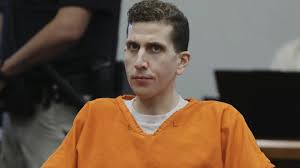
Listed below are Non-Exempt Investigatory Records courtesy of the Moscow Police Department related to State of Idaho versus Bryan Kohberger (Latah County Case CR29-22-2805, Ada County Case CR01-24-31665, and MPD Case No. 22-M09903) that have been redacted pursuant to the Idaho Public Records Act and authorized for release to the general public. Released on July 23, 2025.
Some documents related to the murder of Deborah Kathleen Tomlinson that took place on December 27, 1975, courtesy of the Grand Junction Police Department. Tomlinson was definitely not a Ted Bundy victim, but she was killed at roughly the same time that he was active (in a state where he was active). Her murder was possibly part of an ongoing crime spree in Grand Junction that targeted individuals that may have known too much about the area’s drug activities in relation to corrupt law enforcement, such as police Chief Ben Meyers. Not to be confused with Deborah Lee Tomlinson from Oregon.
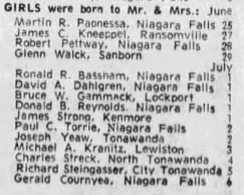
Introduction: Amanda ‘Mandy’ Lyn Steingasser was born on July 5, 1976 to Richard and Loraine (nee Huffman) in North Tonawanda, NY. Richard (who was affectionately called ‘Carp’) was born on October 11, 1944 in Buffalo, NY and was employed as a millwright for Fedders Manufacturing Company, which is known for its contributions to the heating, ventilation, and air conditioning industry. Loraine Huffman was born on November 29, 1950 and worked as a customer service representative at CCMA, LLC, a global supply chain for users of metals whose primary business is the marketing and distribution of alloying metals and ores to the iron, steel, ferro-alloys and aluminum industries.
Background: In the fall of 1993 Mandy was a senior at North Tonawanda High School, and upon completion had plans of attending Niagara County Community College (but for what exactly, she was unsure). She was 5’5″ tall, weighed 135 pounds, had blue eyes, and wore her blonde hair long and midway down her back; she hung out with an eclectic group of people, and had some friends that were classified as jocks and others that were considered ‘freaks.’ A passionate environmentalist and animal enthusiast, she especially loved turtles and adored her family’s sheepdog, Sam. Like most young women her age, Mandy loved music, especially classic rock bands like Led Zeppelin, The Beatles, Janice Joplin, and Crosby, Stills, Nash & Young.
Mandy was her parents’ only child and the apple of her dad’s eye, however the Steingassers were definitely aware that their daughter wasn’t perfect: she didn’t get straight A’s, and at times didn’t always follow the rules. When she was fifteen, she had started to party and had begun dabbling with drinking and marijuana… but, for the most part she was a typical teenager and didn’t push the boundaries too much. Her parents were aware of her extracurricular activities and accepted them, knowing she wasn’t experimenting with anything ‘too hard,’ always made her curfew, and her grades didn’t slip. A middle to working class city, at the time in 1993 North Tonawanda was made up of roughly 33,000 people and their citizens prided themselves on how safe it was, especially when compared to nearby Buffalo and Niagara Falls.
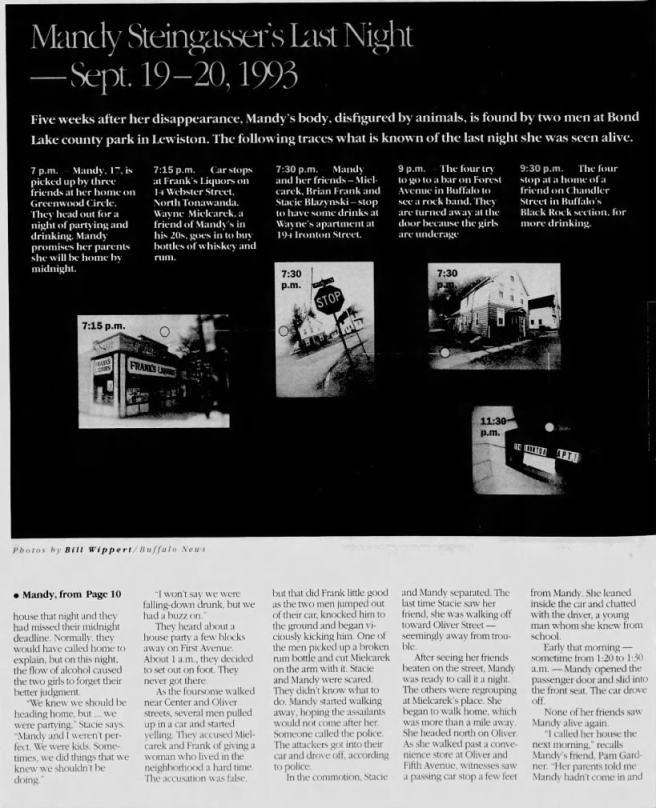
September 18, 1993: On the evening of Saturday, September 18, 1993 Mandy told her parents that she was going out with some friends, and in response to this, they told her to be home at midnight. When she left the family home she met up with some friends: her best friend, seventeen-year-old Stacie Blazynski, Brian Frank, and Wayne Mielcarek, who was over twenty-one and had his own apartment. The friends first stop was at the liquor store, where they purchased some cheap whiskey and rum, and from there they went to Mielcarek’s place and had a few drinks. At roughly 9:00 PM they got into Eric’s car and drove to a club in nearby Buffalo with hopes to see a band, but because the girls were underage they weren’t allowed in. From there they went to an unnamed friend’s apartment in Buffalo and hung out for a bit, then went back to Wayne’s apartment, where they continued to imbibe.
That evening Stacie had plans of sleeping over at the Steingasser home, but midnight came and went and the girls realized they had missed their curfew… perhaps if had they been sober and in the right frame of mind they would have thought to call Mandy’s parents to let them know they’d be late… but the Steingassers never heard from their daughter. At some point earlier in the night thefriends had learned about a house party just a few doors down from Mielcarek’s apartment, and they decided to check it out. At around 1 AM they began their short walk down Ironton Street, and that’s when a car with several men pulled up beside them and accused Mielcarek and Frank of harassing a local woman in the neighborhood. The boys told them that they must have mistaken them for someone else but they were relentless, and two of them got out of the car and jumped Frank, and kicked him after pulling him onto the ground. The other man grabbed a nearby broken glass bottle and cut Wayne’s arm, and as this was happening Mandy and Blazynski were forced to helplessly stand by and watch.
At around 1:30 AM they heard sirens wailing in the distance and everyone scattered: Steingasser’s three friends headed towards Mielcarek’s apartment, but according to them she went the other way and headed toward First Avenue, where the house party was. According to Brian Frank, ‘we screamed her name five or six times, ‘Mandy, Mandy.’ We were all in shock.’ As they were parting ways Blazynski said that Steingasser told her that she didn’t want to be taken home by the police, and Frank later testified that he noticed an unknown male that happened to be walking in the same direction as she was.
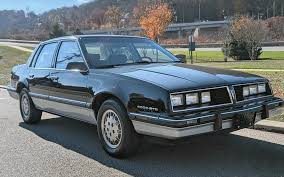
After they parted ways that night Mandy most likely began to make her way homeand was roughly a mile away when a woman at a nearby payphone said that she saw her walking and that a man driving a black 1984 Pontiac 6000 that was moving in the opposite direction quickly made a U-turn at Sixth Avenue and pulled up beside her. She said that she observed Steingasser speak with him for a few minutes through the passenger’s side window then eventually got in and it drove off. It was the last time Mandy Steingasser was seen alive, and Rich and Loraine reported her missing the following day; they offered a $5,000 reward for any information that led to the return of their daughter.
In the month after her disappearance more than 5,000 flyers with Mandy’s face on it had been passed out across the Western New York area, and according to Loraine: ‘we have one done up in English, and Spanish, or the Puerto Rican section of Buffalo. Because there was a fight that night, a ruckus , and it involved Puerto Ricans. And nobody really saw Mandy after that, except for this one kid that gave her a ride.’ … ‘ We put (in the flyer) out to the Puerto Rican section, not to say that they took her, but somebody might have seen something.’ About the street fight Mandy witnessed the last night she was seen alive, the NT retired Chief of Police Lloyd Graves said that ‘the girls weren’t’ involved at all. There were some kids in a car, and evidently, they had a little altercation with some other boys there. But I don’t know if that had anything to do with her disappearance. I kind of doubt it, because that was quite a while before she disappeared.’
The Days After:On September 19, 1993, Loraine Steingasser filed a missing persons report with the North Tonawanda police, who initially regarded Mandy as a runaway. Because of that, a few days afterwards she reached out to the Federal Bureau of Investigation: ‘I know she didn’t run away because she would have called. I wanted somebody who would take it a little more seriously.’ In the early days of Mandy’s disappearance there was some back and forth in regards to the FBI possibly getting involved, however when Mandy’s remains were later uncovered they completely backed out, which makes sense as no crime took place across state lines. Those that knew Mandy said it was completely out of character for her to disappear, and immediately knew that she hadn’t run away or left on her own free will. In their search efforts investigators used bloodhounds, helicopters, and hours upon hours of searching on foot, with absolutely no luck.
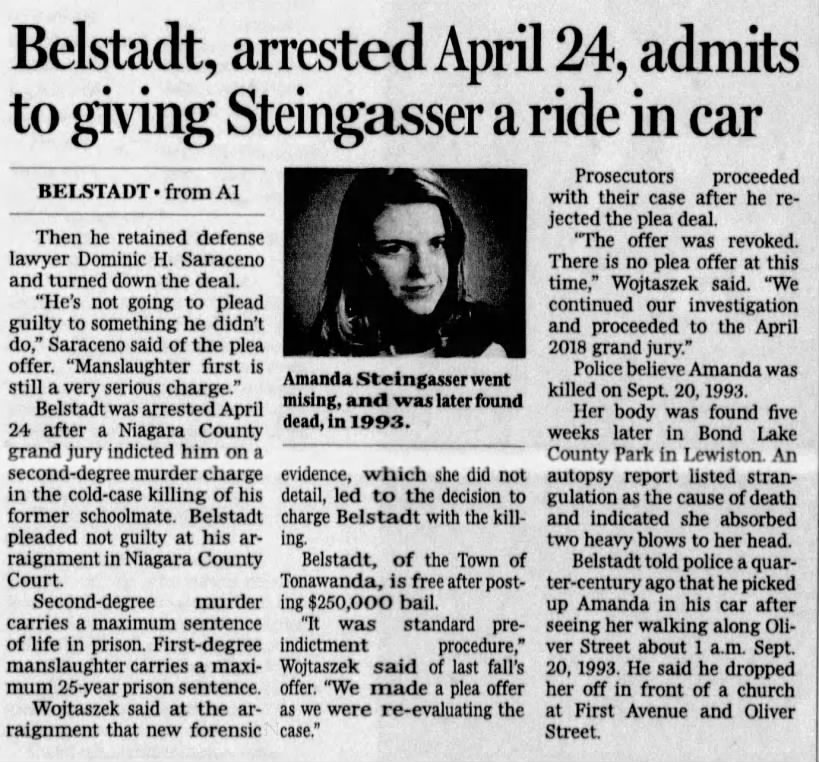
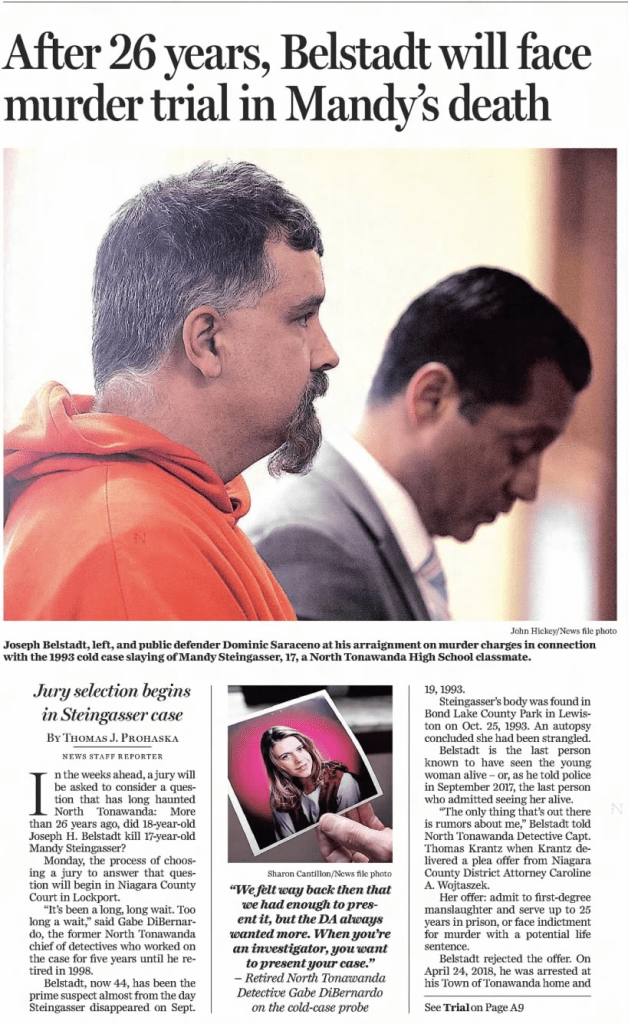
In the days following Steingassers disappearance the young man that picked her up came into the Tonawanda Police station: in a conversation with detectives on September 22, 1993, 18-year old Joseph H. Belstadt said that he knew Mandy because they went to the same high school and that he picked her up and started to drive her home. A few minutes into their drive he claimed that she changed her mind and told him to drop her off at a nearby house party instead, so he turned around and dropped her off at Holy Protection Orthodox Church at roughly 1:30 AM (which was only a few blocks away from where the street fight took place). He said that when Mandy got out she walked up to ‘a young man of Puerto Rican descent’ that was sitting on its front steps; it was the last time he saw her, and he told investigators that afterwards he went to Canada with some friends. When NT detectives later investigated his story, they immediately found that it had several holes in it: no one saw him drop Mandy off at the church close to a local mini-mart, and no one knew the identity of the young man that she met up with that night. Despite this, at the time they said they had no reason to doubt Belstadt’s story.
Some portions of Belstadt’s story were confirmed by eyewitnesses who saw Mandy get into his car: sisters Tanya and Rebecca Coughlin lived in an apartment at the intersection of Fifth Avenue and Oliver Street, and in the early morning hours of September 19, 1993 Tanya was outside of the residence and Rebecca was looking out their front window. Both young women confirmed that they saw a car drive past her then quickly make a U-turn so it could pull up beside her at the intersection; Steingasser and the driver spoke for a few minutes before she eventually got in and it drove away, turning around to drive in the direction that she had originally been walking in. The sisters both recognized Joseph Belstadt as the driver because they knew him from their old neighborhood where he had also lived, and Rebecca identified Steingasser as the young woman who got into his car because she recognized her from school.
There was, however a key part of the sister’s story that differed from Belstadt’s: after they drove away Rebecca remained in front of the window that was looking out onto the street for another five to six more minutes, which means he hadn’t ‘quickly turned his car around’ like he claimed he did to drive Mandy back to the intersection of Oliver and First, because if he did she would have seen his car drive by her apartment.
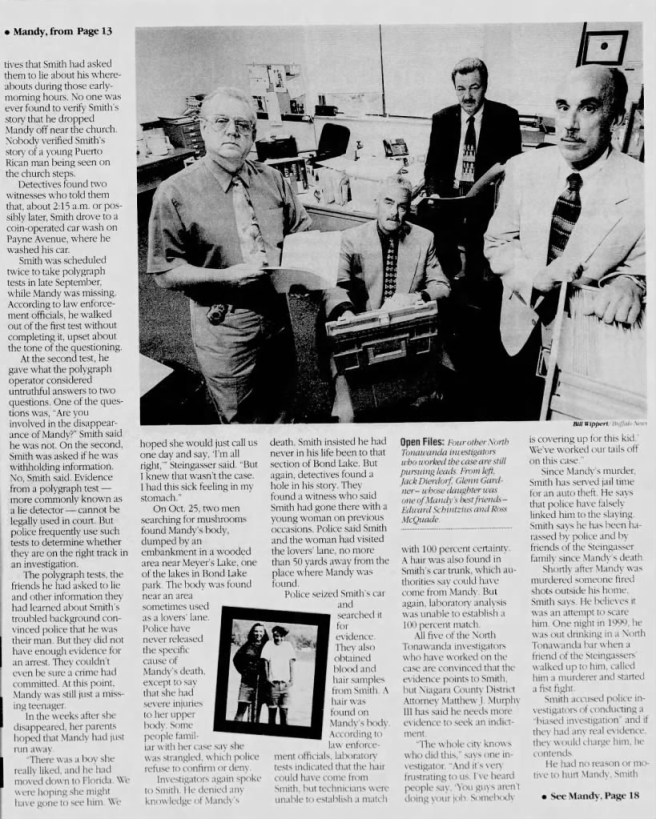
Detectives in North Tonawanda soon discovered that Belstadt had asked his friends Jerry Miller and Sherry Carrazzolo to lie about his whereabouts on the morning that Mandy was last seen alive. Miller, who was actually his best friend, told investigators that he, Joe, and three other friends were cruising around earlier that evening, and Belstadt was pulled over and given two tickets for traffic violations; afterwards, they went to the City of Tonawanda Police Department, where he unsuccessfully tried to fight the citations. Afterwards, the five friends sat in his car and thought about what they wanted to do for the rest of the night. Miller suggested a trip to Canada, but Belstadt said he didn’t want to and ‘just wanted to drive around,’ so his four friends went across the border without him.
Miller said that the friends returned home to NT later that morning, and when he drove by Belstadt’s Mother’s house a few hours later he noticed that his car wasn’t in the driveway. He also said they saw his friend two days later and that was when he asked him to lie for him, and if questioned to tell the police he should say that he went with them to Canada on September 18/19, 1993. Detectives in North Tonawanda also said that a man that knew Belstadt reported that he saw him that same morning at roughly around 2 AM and noticed that his car was wet, and when asked about it he said that he had ‘just had it washed.’ Additionally, two eyewitnesses came forward and said they saw him at a coin operated car wash at roughly 2:15 AM, which was about an hour and fifteen minutes after Steingasser was last seen alive.
Belstadt did agree to a polygraph examination, however got upset because he didn’t like the ‘tone’ of the questions he was being asked and stormed out. He eventually came in for a second exam where he was asked only two things: ‘are you involved in the disappearance of Mandy,’ and ‘are you withholding any information.’ He said ‘no’ to both questions and the administrators of the polygraph determined that Belstadt was not telling the truth, however because due to a lack of evidence nothing could be done. At the time of the examination detectives still had no idea what had happened to Mandy, and her family was still holding onto hope that she would be found. Her boyfriend Christopher Palesh had moved to Florida on September 17, 1993, which was two days before she went missing, and her parents were hoping that she had just taken off to be with him.
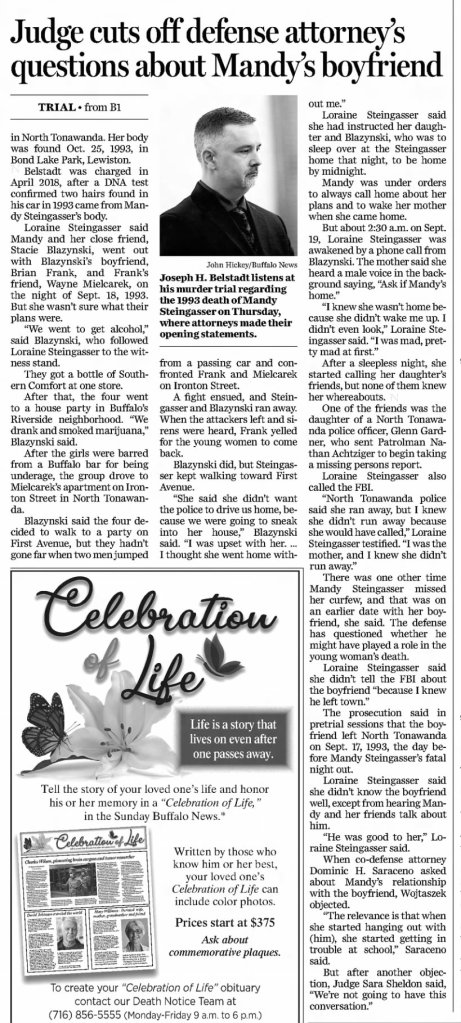
During her daughter’s murder trial in October 2021, Mrs. Steingasser testified that she told her to be home by midnight, mostly because she had spent the night with Chris about a week before; she also said that ‘anytime she went anywhere, she had to call me and when she came home, she had to wake me up.’ But it never came, and the only two telephone calls Loraine received on September 18 and 19, 1993 were a hang-up and one from an unknown male who ‘asked if Mandy was home;’ she later testified that she recognized her daughter’s friend Stacie’s voice in the background saying, ‘ask if Mandy’s home.’
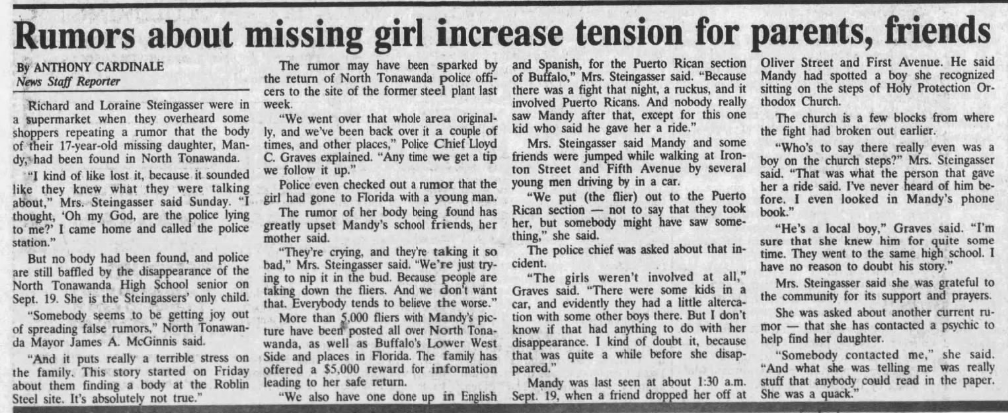
In early October 1993 about two weeks after their daughter disappeared Mr. and Mrs. Steingasser were out grocery shopping when they happened to overhear one of the store’s employees talking about Mandy, and that she had been found in NT. Loraine said: ‘I kind of like, lost it, because it sounded like they knew what they were talking about. I thought, ‘oh my God,’ are the police lying to me?’ I came home and called the police station.’ The former mayor of North Tonawanda James A. McGinnis said of the incident ‘somebody seems to be getting joy out of the NY high school senior, and somebody seems to be getting joy out of spreading false rumors. And it puts a really terrible stress on the family. The story started on a Friday about them finding a body on the Roblin Steel site. It’s absolutely not true.’ According to Police Chief Lloyd C. Graves, ‘we went over the whole area originally, and we’ve been back over it a couple of times, and other places. Anytime we get a tip, we follow it up.’ It’s speculated that the rumor may have started because of the return of NY police to the Roblin Steel Plant, and it greatly upset Steingassers friend group, who according to her mother were ‘crying, and they’re taking it so bad. We’re just trying to nip it in the bud. Because people are taking down the flyers, And we don’t want that. Everybody tends to believe the worst.’
About Mandy, retired North Tonawanda detective chief Gabriel DiBernardo said that her disappearance was ‘totally out of character. We’re appealing to anyone and everyone to call us with any information.’ About her daughter’s disappearance, Mrs. Steingasser, ‘I still feel that there are people out there who saw something and haven’t come forward. Please give us the information. You don’t know what we’re going through.’
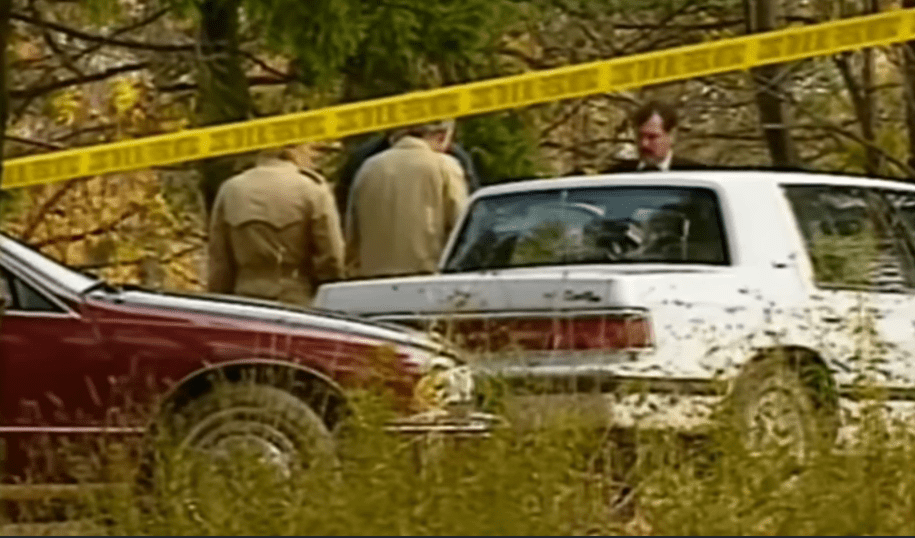
Discovery: On the afternoon of October 25, 1993 thirty-six days after Steingasser was last seen alive, two men were out scavenging for mushrooms near Bond Lake Park in Lewiston, and as they were walking along a trail they smelled something pungent and decaying: when they peered down into a ravine they discovered a body on a steep embankment leading to Meyers Lake. The spot is described as a ‘lovers lane,’ of sorts, and police would frequently find kids parked there, partying and ‘being intimate.’ Charles Keith Shepherd, one of the men that spotted Steingasser’s remains at the park that day, said he was walking along the crevasse with his brother-in-law when they saw denim on the edge, and when his BIL got closer he realized what they found, and immediately left to call the sheriff’s department.
When police arrived on the scene they discovered the remains of a young woman, whose pants had been pulled halfway down and her bra was wrapped around her neck; there was a pint sized liquor bottle in the pocket of her jean jacket. Because of the body’s advanced level of decomposition investigators were unable to immediately make a positive identification on the scene, however the victim had on the same clothes that Steingasser was last seen wearing. What detectives surmised had happened based on the crime scene was: her killer had taken her to a secluded, out of the way place and tried to put ‘the moves’ on her. When he started to pull her pants down she stopped him, and he got angry and he hit her on the head; he then ripped her bra off and strangled her with it. When the victim was deceased, he pushed her remains down the embankment in the park with the hope that it would roll into the lake, however some bushes stopped it.
An autopsy was performed the following day by Dr. Sung-Ook Baik, and dental records were used in making a positive identification. She had been strangled, and her blue bra was still tied around her neck; she also had a hairline skull fracture in front of her left ear. According to a MD during her trial, the skull fracture occurred while Mandy was still alive, because there was bleeding under her scalp at the left temple. Additionally, she had a brain bleed, a chip in the fingernail of her left pinky finger finger, tearing on her jeans and bra, was not wearing any shoes, and all of the hooks on her bra were broken; she had not been sexually assaulted.
Not only did investigators have a theory regarding what happened to Steingasser, they also had a prime suspect in mind: Joseph Belstadt. Their biggest hindrance was a lack of evidence proving guilt. Police obtained a search warrant and seized his car, and when it was examined they found a pubic hair in the backseat, but further testing proved it belonged to neither Steingasser or Belstadt. After her remains were found detectives questioned him again, and that was when he admitted that he had lied about going to Canada with his friends because he thought he needed an alibi or he would have looked guilty. In reality, he told them that he had just gone to a donut shop after he dropped Steingasser off at the church and knew nothing about her murder. He also said he had never been to the area where her remains were uncovered, but once again detectives learned that he had lied to them: during his trial, a woman named Stephanie Bartlett-Landes testified that Belstadt took her to the ‘park-like setting’ in Lewiston twice in the summer of 1993 when she was only 15-years-old, and they had parked a few dozen feet away from where Mandy’s body was eventually found.
A Case Gone Cold: In the first few months of the investigation detectives conducted interviews with dozens upon dozens of Steingassers friends/family/acquaintances/schoolmates, but every lead dried up and it wasn’t long before the investigation went cold. There was some renewed buzz in the case in August 2000 when The Buffalo News published an article about the murder, and in it the writer didn’t name Belstadt as the suspect due to the fact that he had not been officially identified. In the nearly seven years since the murder, five detectives that worked on the case said they all thought that he was the killer, with one even saying that the ‘whole city of Tonawanda knew who killed Mandy,’ but there was nothing they could do about it due to lack of evidence.
The public accused the police of covering up Mandy’s death and of not doing their jobs properly, and said it wasn’t right that they let Belstadt skate. The Niagara County DA on the other hand did feel that there was enough evidence to charge him, and that after DNA testing it turned out that a hair that had been found on Mandy’s body could have belonged to him, but it was not conclusive. Belstadt was interviewed for the article, and he claimed that he didn’t kill Mandy and they parted ways when he dropped her off outside of North Tonawanda church.
In the years since Mandy’s murder Joseph Belstadt served some time in jail for auto theft, and claimed that her friends and family had continuously harassed him, and as a consequence he ended up dropping out of high school about a month after her remains were discovered; additionally, he was forced to move out of state because he was ‘afraid for his life.’ He also claimed that shortly after the homicide someone fired a gun outside of his home in what he thought was an attempt to intimidate him. In 1999 while drinking at a bar one of her friends came up to him, called him a murderer then proceeded to get into a fistfight with him. He also felt that the investigation was ‘biased against him’ and he wanted the North Tonawanda police department to leave him alone, and he was certain that one day detectives were going to come out with false evidence to arrest him.
As it turned out, Belstadt’s family had at one point taunted the police in relation to Steingasser’s murder: in 1997 the lead investigator in the case was working PT as bouncer at a music venue, and one night a country band was playing and when he looked out into the crowd he made eye contact with his brother, Jamie. A few minutes after he began shouting out a song request, and immediately the detective knew he was taunting him: it wasn’t a country song, it was ‘Mandy’ by Barry Manilow.
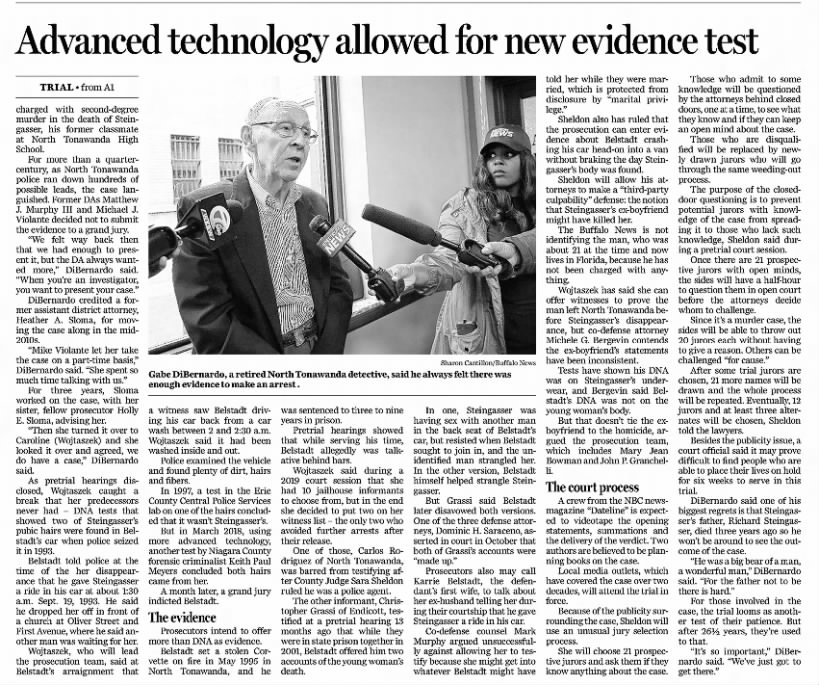
In a test performed in 2002 by retired Erie County Central Police Services lab technician Paul Hojnacki, Belstadt’s sperm was found on a piece of material taken from his car seat, however the female DNA profile that was also found did not belong to Steingasser. He also said that none of his DNA was on any of Mandy’s clothes or on her body, and that he looked for sperm or semen but ‘didn’t find any.’ Mark Henderson, a retired forensic chemist and serologist for the Niagara County Sheriff’s Department, didn’t attend Steingassers autopsy in October 1993, but he did take over custody of the clothing and tissue samples that were taken that day. For over twenty-five years the materials were tested and retested as technology improved: ‘I swabbed anything that looked like possibly a stain,’ including the jewelry that was found on Steingasser’s remains, a pint bottle of Southern Comfort found in the pocket of her jacket, underneath her fingernails, and her underwear; Henderson clarified that he took five small pieces of cloth from the underwear she was wearing. In 2017 he said he used a small vacuum on the clothing from Steingasser’s remains after spraying them with a special solution in hopes of turning up more DNA.
In the years after their daughter’s murder the Steingassers had a tough time coping: they left her room just the way it was on the night they had last seen her. All of her clothes still hung in the closet, and the Led Zeppelin posters were still affixed on the wall. About the tragedy Mr. Steingasser said that ‘I tried not to think about it. I know we’re never gonna get her back, you gotta get on with your life. I try to keep it out of my mind, but there are twenty things that happen every day to remind me of her. The memories keep coming back.’
2018: The years kept ticking by. Sadly Mandy’s father passed away on March 14, 2015 without her murder being solved. Police did more testing on the pubic hair that was found in Belstadt’s back seat, and once again it came back ‘no match found.’ In 2017 the case was officially reopened, and in the twenty-four years since the murder forensic technology had greatly improved, and there was finally some progress that was made in relation to the investigation. Amongst the debris that was vacuumed up from the back seat of Belstadt’s car, forensic technicians were able to find a second pubic hair, and inearly 2018 they did testing on both hairs: a forensic expert noted that on the root of one of them there was some tissue that was left behind, which suggests it came out with force. On March 10, 2018 detectives finally got the answers they had waited so long to hear: the pubic hairs found in Joseph Belstadt’s car belonged to Mandy Steingasser. They also determined that fibers that were found stuck to her body belonged to carpet from the vehicle as well.
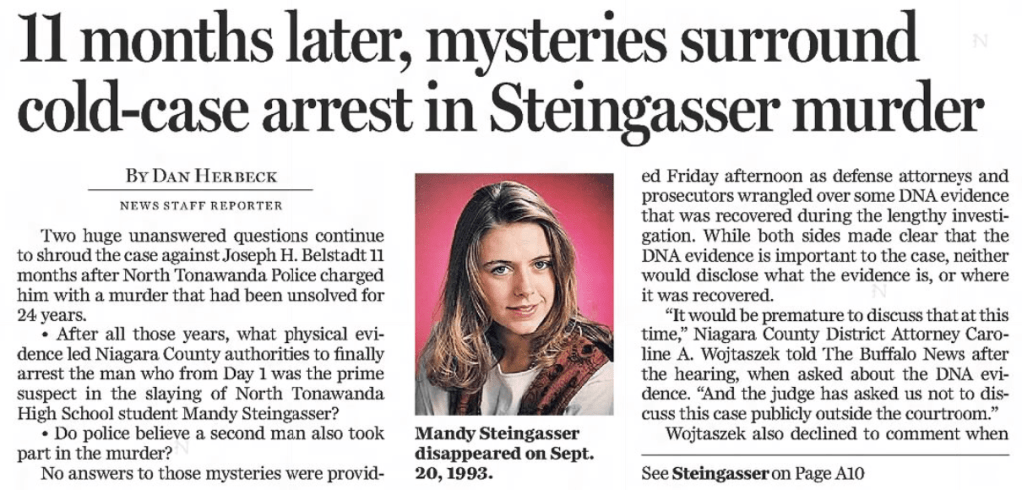
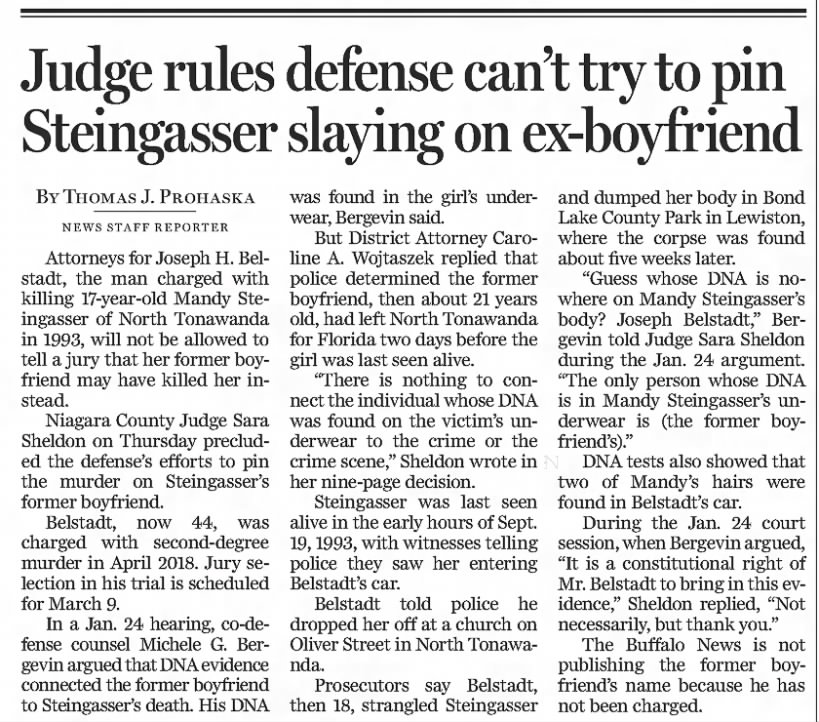
Arrest: On April 24, 2018 Joseph Belstadt was arrested for the murder of Mandy Steingasser, and he was released on $250,000 bail. After he was arrested the NT police continued to investigate and collect evidence against him, and one thing they uncovered was that male DNA that was found in Mandy’s underwear wasn’t his, and instead belonged to her boyfriend, Chris Palesh.
In the decades since Steingassers murder Palace had been arrested on three separate occasions for domestic violence as well as animal cruelty charges, and when the North Tonawanda PD asked him for a DNA sample he initially refused. In 2019 they went through his parents’ trash and collected two used plastic forks, and upon learning this he came forward and ‘willingly volunteered’ a sample of his DNA, which lab techs compared to the sample taken from the crime scene; it was a match. Palesh told detectives that he did have consensual sex with Steingasser roughly a week before she was last seen alive, however it is important to keep something in mind: according to Senior Forensic Criminologist Keith Paul Meyers with the Niagara County Sheriff’s Department, ‘studies have shown that DNA can survive up to three laundry cycles.’
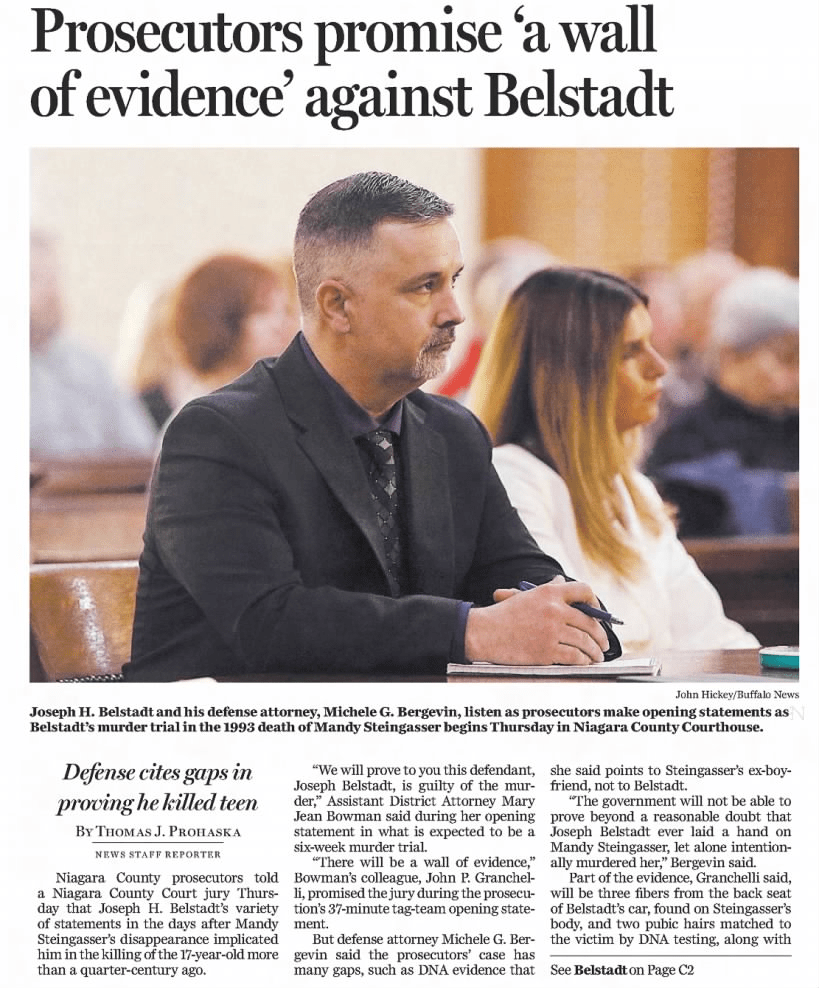
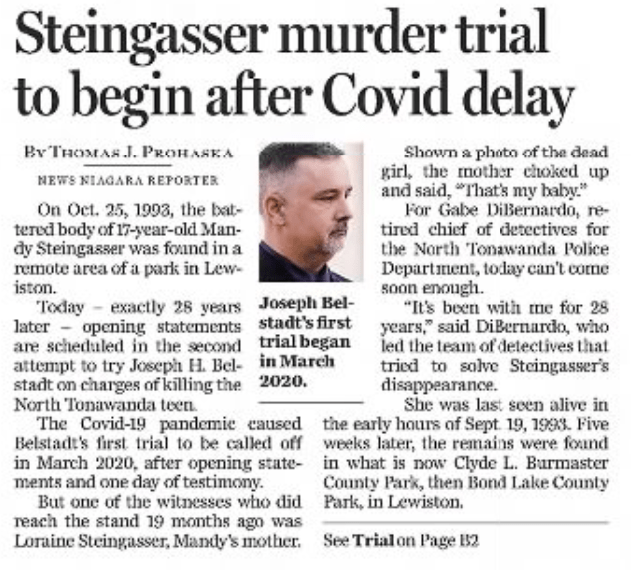
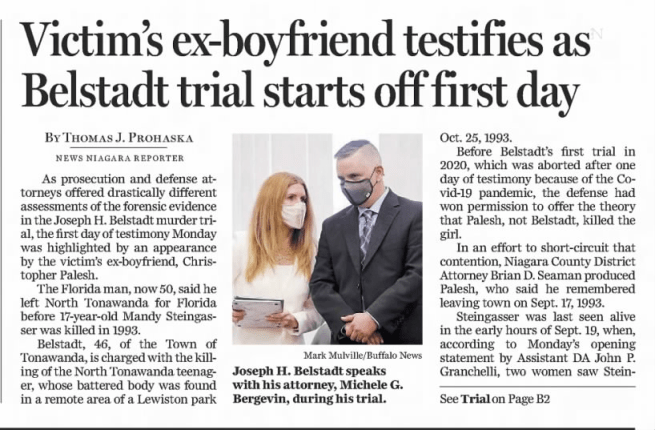
Trial:Belstadt’s trial began on October 25, 2021 at the Angelo DelSignore Civic Buildingin Niagara Falls, which happened to be the 28th anniversary of the day that Mandy’s body was found. The prosecution didn’t have a ‘magic bullet’ piece of evidence, and instead argued that nearly every piece of circumstantial evidence pointed to Belstadt being the killer. When shown a picture of her daughter in court, Mrs. Steingasser pointed out that in it she was: ‘wearing the same vest she was found wearing. She’s wearing the same ring she was found wearing. She called it her lucky ring. It was mine.’
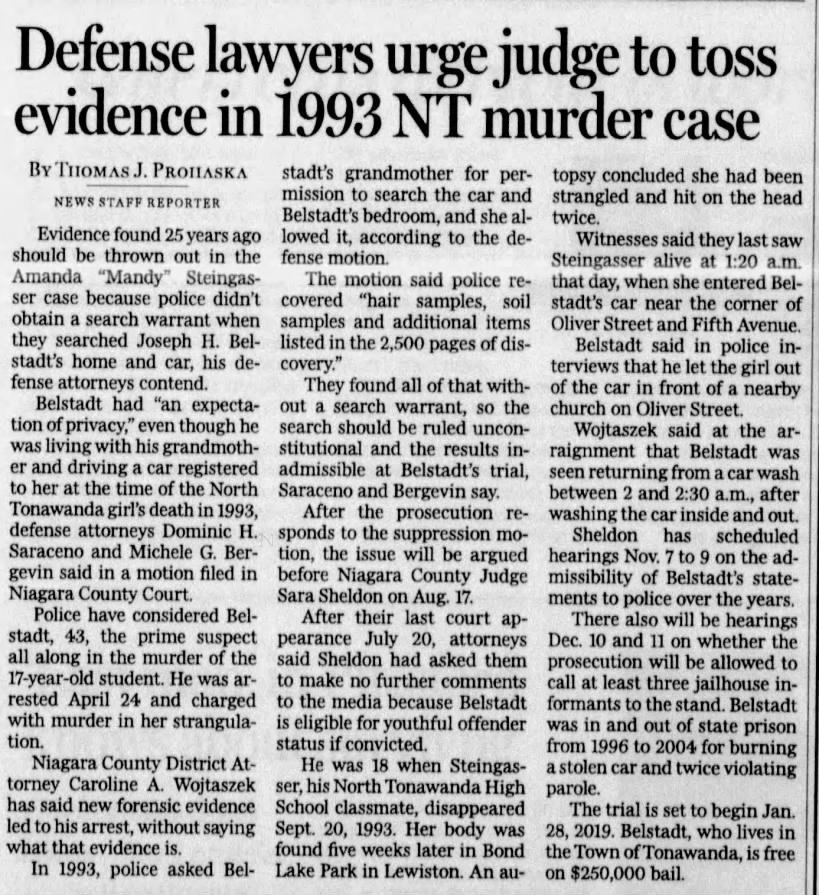
The defense argued that none of the evidence that had been presented proved beyond the shadow of a doubt that Belstadt killed Mandy: the pubic hairs were the most damning thing against him, and his lawyers argued that they could have been on the outside of her clothes and had fallen off while she was in his vehicle. They said that ultimately, they only proved that Steingasser was in his car at some point before she disappeared, which is what he had maintained since the beginning.
Belstadt’s attorneys argued that after the initial stages of the investigation (remember that on night he was first questioned he lied about where he was when Mandy disappeared) their client was cooperative with investigators, and told jurors that no evidence existed that proved he made any sort of advance towards her, and that quite a few of the samples that were tested actually excluded him. The defense also said that the prosecution was relying on eyewitness testimony that was twenty-six years old, and they would not be able to prove beyond a reasonable doubt when, how, or where Steingasser was killed; according to Belstadt’s attorney Michele Bergevin: ‘most importantly, the government, after you hear all of the evidence, will not be able to prove to you beyond a reasonable doubt who, if anyone, intentionally took the life of Mandy Steingasser.’
In an article published on November 8, 2021 by The News Niagara Reporter, during the trial Mandy’s first cousin Carolyn Steingasser-Tucker testified in court that she, along with Jennifer Zuhr, confronted Belstadt in a hallway at North Tonawanda High School in October 1993, and they ‘asked him, ‘what did you do with Mandy?’ She went on to say that Zuhr did most of the talking, and at one point she grabbed him by the shirt and shoved him against a wall outside the school cafeteria in front of many witnesses: ‘the hallway was full. He said, ‘I didn’t do anything with her,’ and that he only planned on taking her to her house but when they got to the Memorial Pool on Payne Avenue she decided she didn’t want to go home; so he turned around in a Burger King parking lot and took her back to the church where he originally picked her up.’
Michele Bergevin asked Tucker if she remembered taking ‘a lynching party’ to his house, and in response she said she knew nothing about that. When Bergevin pressed her about the incident in the hallway she said she was never interviewed by police about it, and that Belstadt didn’t fight back, and he ‘cowered’ instead, like ‘the little, scrawny, pimply-faced kid he was’ (those were his attorney’s words).
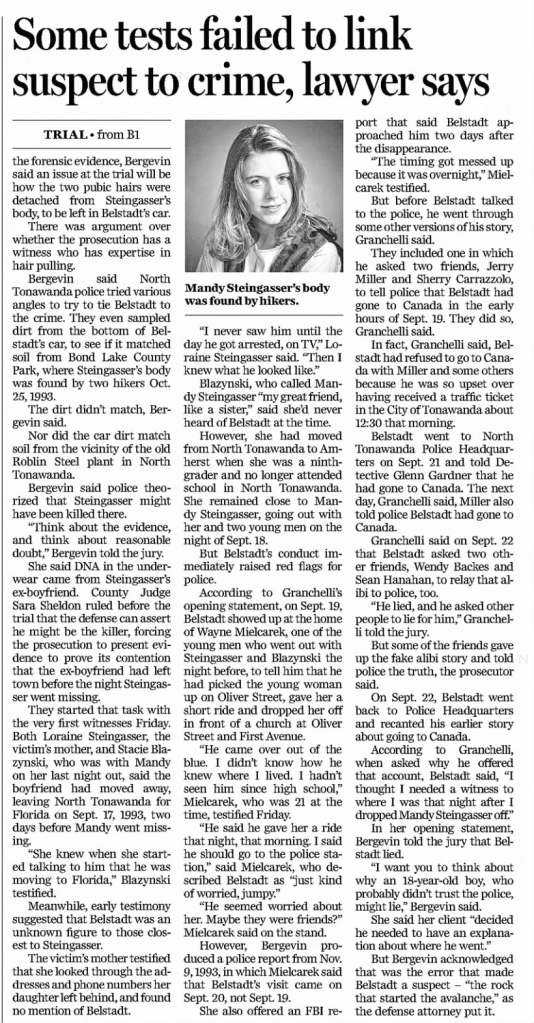
In court, Mandy’s friend Stacie admitted that she made the hang-up call to the Steingasser residence that night, and that Mielcarek made the second one, however Frank said that Wayne made both calls. Mielcarek said he doesn’t remember calling anyone that night, but said that he did remember Joseph Belstadt knocking on the door to his home on the morning of September 19 to ask if he knew where Mandy was. Wayne, who barely knew Belstadt, said that ‘he said she was missing,’ he later testified, which he said was news to him: ‘I said, ‘How do you know she’s missing?’ He said he gave her a ride.’ Mielcarek said he told Belstadt to take his information to the police, and about the encounter said ‘he came over out of the blue. I didn’t know how he knew where I lived. I hadn’t seen him since high school. He said he gave her a ride that night, that morning. I said he should go to the police station.’ He also said that Belstadt seemed ‘just kind of worried, jumpy. He seemed worried about her. Maybe they were friends.’
There has been a long-standing dispute regarding the exact date that Belstadt went to Mielcarek’s residence: in 1993 Wayne signed a formal statement with detectives saying it took place on September 21, and not on the morning of September 19. Michele Bergevin pointed out that if that was true then Mielcarek already knew Steingasser was missing when Belstadt had visited him.
According to a Buffalo News article published in November 2021, Christopher A. Grassi of Endicott, who served time with Belstadt at the Cayuga Correctional Facility in 2000 and 2001, testified during the trial that he confided in him that ‘he strangled a girl during a three-person sexual encounter in his car.’ He also said that the defendant went by the nickname ‘Squirrelly’ while serving time for arson after he got caught torching a stolen car; Christopher was there for hiring a man to burn down his nightclub for the insurance money.Grassi said he told him that he was driving his car while a friend of his was having sex with the female in the back seat. In response to this, Michele Bergevin called him ‘nothing but a fraudster’ and said that he didn’t even know her client in prison.
Bergevin also accused Grassi of paying another inmate on the prison buildings and grounds crew to feed him information about Belstadt so he could relay it to the North Tonawanda police, who had visited him at the prison looking for information related to Mandy’s murder: “Isn’t it true you actually paid Christopher Bennett for information about Joe Belstadt, just like you paid somebody to burn down your nightclub?’ Grassi denied it but did admit that his memory of the event wasn’t very good: ‘I don’t even remember 90% of it. Whatever is in my statement is what I remember.’
Neither side placed the statement in evidence, so the jury never will get to read it and decide for themselves what Grassi told the North Tonawanda detectives in June 2001. Bergevin said that Chris Bennett died in January 2021, which she said was, ‘lucky for you, huh?’ directed towards Grassi. The DA went on to say that Bennett ‘researched this about Joe Belstadt and this young girl that went missing, and he made up a story,’ and to this Grassi said: ‘I am not aware of that.’
Retired North Tonawanda detective William Carosella was one of the officers that was tasked with collecting items from Belstadt’s car a few days after Steingasser was last seen alive, and when questioned by the defense if he recalled collecting any cigarette and/or marijuana butts, he replied that he couldn’t recall from memory if either of items were recovered. He admitted to the court that where he couldn’t remember every single item collected, he did remember that they collected into evidence a tire iron, a piece of wood with a nail sticking out of it, carpet from the trunk of the vehicle, and other miscellaneous debris. Additionally, from Belstadt’s vehicle, forensic experts collected three carpet fibers from the trunk, debris from the side panels, various items that had miscellaneous hairs on them, dirt from the tire treads, and several other miscellaneous items, which were all listed individually in the search warrant inventory.
The defense suggested a different suspect completely: Christopher Palesh, and argued that his semen was found on her underwear and he had a history of violence. In response to this, the prosecution said that may have exonerated Belstadt if it had had been a rape case, but Steingasser hadn’t been sexually assaulted. Also testifying in the trial was Christopher’s mother Carol Pelesh, who said she remembered her son for Florida leaving ‘on a Friday,’ which would have been September 17, 1993. Also, Mandy’s friend Jennifer Chiaravalle testified that she remembered taking her to Palesh’s house on September 17, 1993, and it was the last time they saw each other, as he left later that day: ‘he was leaving for Florida that day and she wanted to say goodbye.’
Guilty: The trial lasted three weeks, during which sixty-five witnesses testified to the jury, which was made up of six men and six women. After both sides said their peace and the jury went back to deliberate, it only took them ten hours over two days to come to a determination: on November 17, 2021 Joseph Belstadt was found guilty of second-degree murder; he was immediately remanded into custody. According to Niagara County DA Brian Seaman, the death of Steingasser was: ‘a horrendous and violent crime. He fractured this girl’s skull and strangled her with her own bra. That kind of calls for the maximum sentence.’ … ‘For 28 years, the murder of Mandy Steingasser has been an open wound in the community of North Tonawanda and Niagara County. She has not been forgotten by her family, her friends, her loved ones. Not by the North Tonawanda police. Today, finally, twenty-eight-years later, her killer has been brought to justice. He will now suffer the consequences of his heinous actions.’
Belstadt was sentenced to twenty-five years, and has maintained his innocence this entire time; during his sentencing, he said: ‘I would like to say to Mandy’s family and friends how sorry I am for the pain they’ve gone through, but I am not the person who killed Mandy. I’ve been saying that since day one, and that’s not going to change. I did not kill Mandy Steingasser.’ To this, DA Seaman disagreed and said: ‘my response to that is we put out the evidence before a jury, that jury found this defendant guilty beyond a reasonable doubt, and the jury’s verdict stands and they found the proper verdict in this case.’ About the verdict, Loraine Steingasser said that ‘during the time Joe Belstadt has been living his life, my daughter did not.’
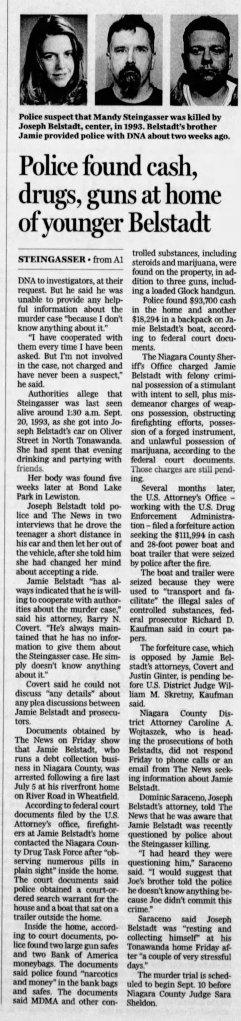
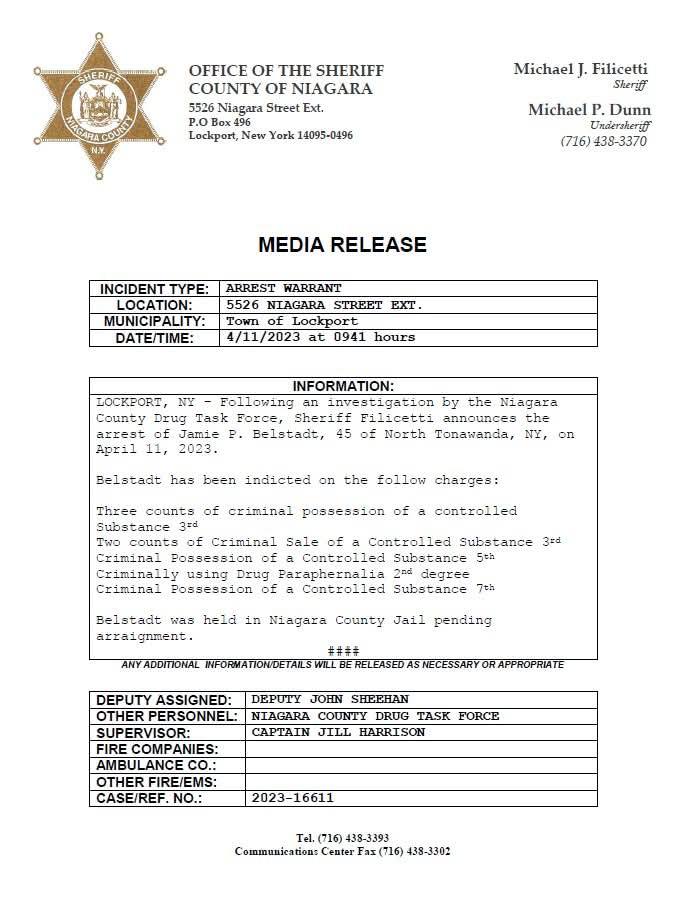
It Runs in the Family: According to an article published in The Buffalo News on April 28, 2018, when it comes to Joe’s brother Jamie Paul Belstadt, his attorney Barry N. Covert said that he ‘has always indicated that he is willing to cooperate with authorities about the murder case. He’s always maintained that he has no information to give them about the Steinhasser case. He simply doesn’t know anything.’ Jamie also said that he was questioned about the disappearance in mid-April 2018 and although he provided investigators with a sample of his DNA he also told them that he wouldn’t be able to provide them with any additional help because ‘I don’t know anything about it. I have cooperated with them every time I have been asked. But I’m not involved in the case, not charged and have never been a suspect.’
On April 11, 2023 the younger Belstadt brother was arrested and booked in Niagara County Jail on felony drug charges following an investigation by the Niagara County Drug Task Force. According to Sheriff Michael Filicetti, he had been charged with felony criminal possession of a stimulant with intent to sell plus misdemeanor charges of weapons possession, obstructing firefighting efforts, possession of a forged instrument, and unlawful possession of marijuana (this is according to federal court documents). When police searched his home they found a loaded Glock handgun and $93,700 in cash (with an additional $18,294 in a backpack on his boat); as of July 2025, he is in Niagara County Jail. According to his LinkedIn profile, he has owned a debt collection agency for the past seventeen years called ‘Vision Credit.’
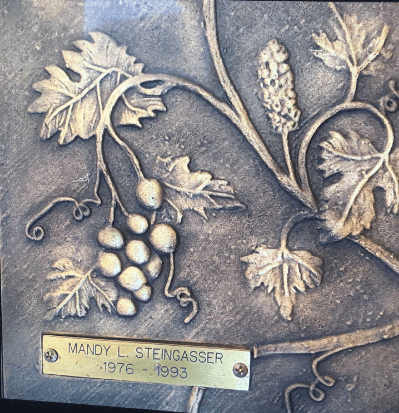
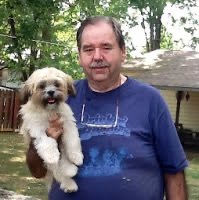
Conclusion: At the time of his death at the age of seventy on March 14, 2015 Richard and Loraine Steingasser had been married for thirty-nine years; he now rests next to his daughter at Acacia Park Cemetery. According to his obituary, Mr, Steingasser was a member of the Renaissance Club and in his spare time he enjoyed playing euchre, going fishing, and doing carpentry work. Loraine is alive and residing in North Tonawanda with her dog, Bruno.
As of July 2025 Joseph H. Belstadt is serving out his prison sentence at Attica Correctional Facility; he will be eligible for parole in November 2046, when he is seventy-one-years old.
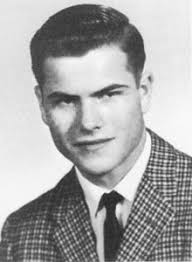
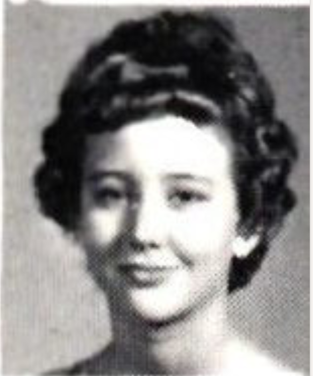
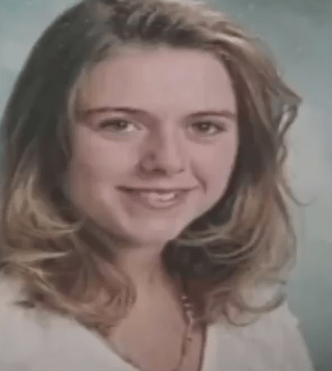
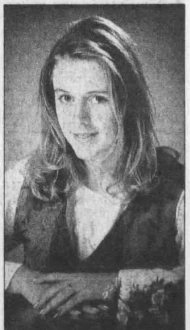
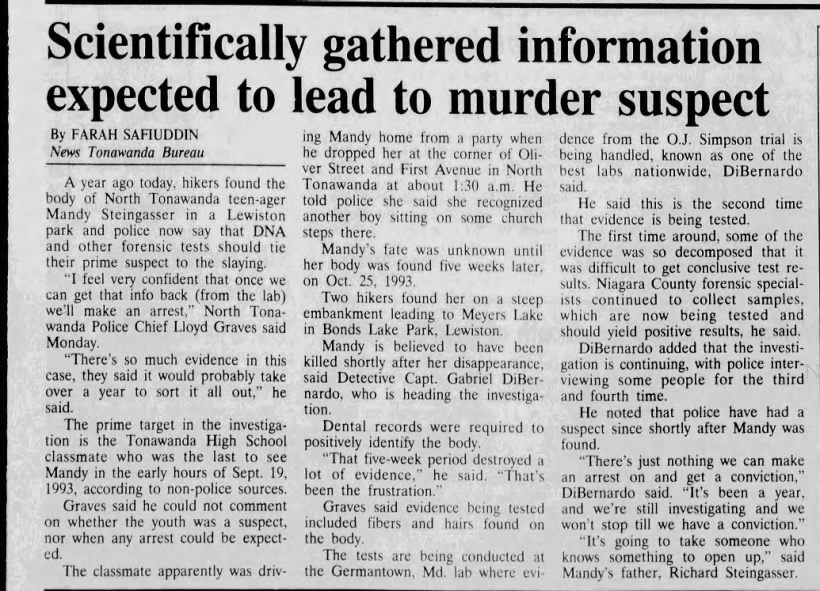
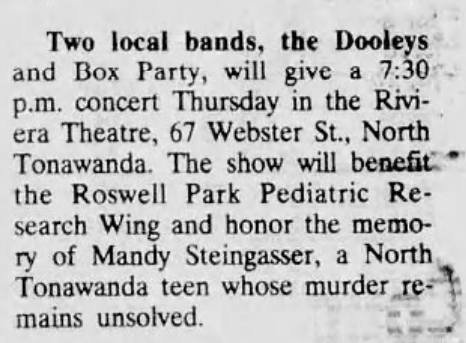
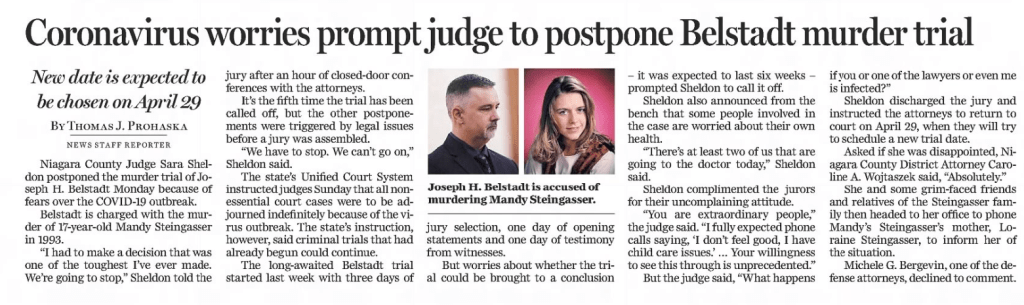
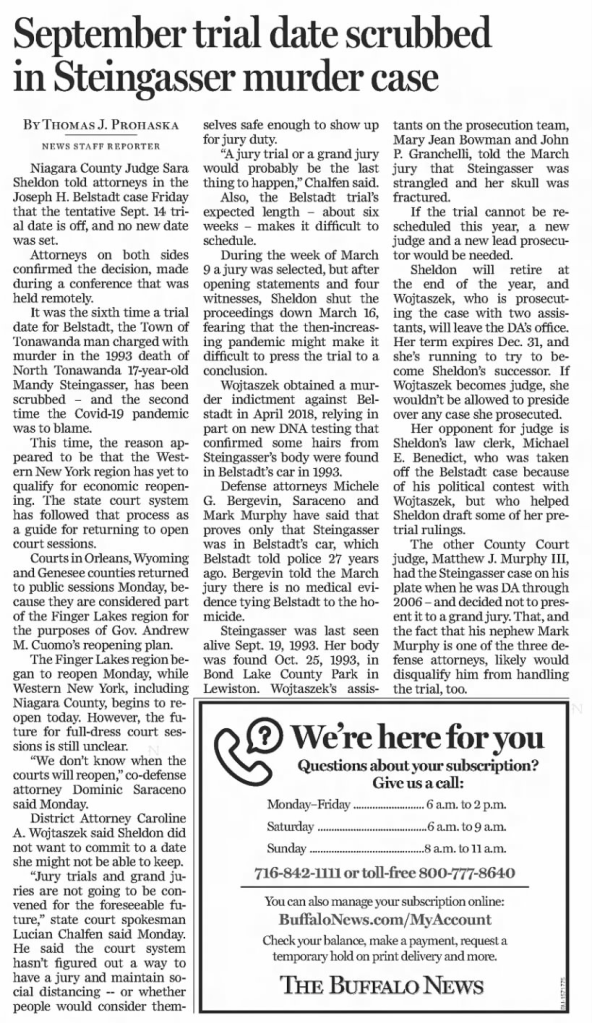
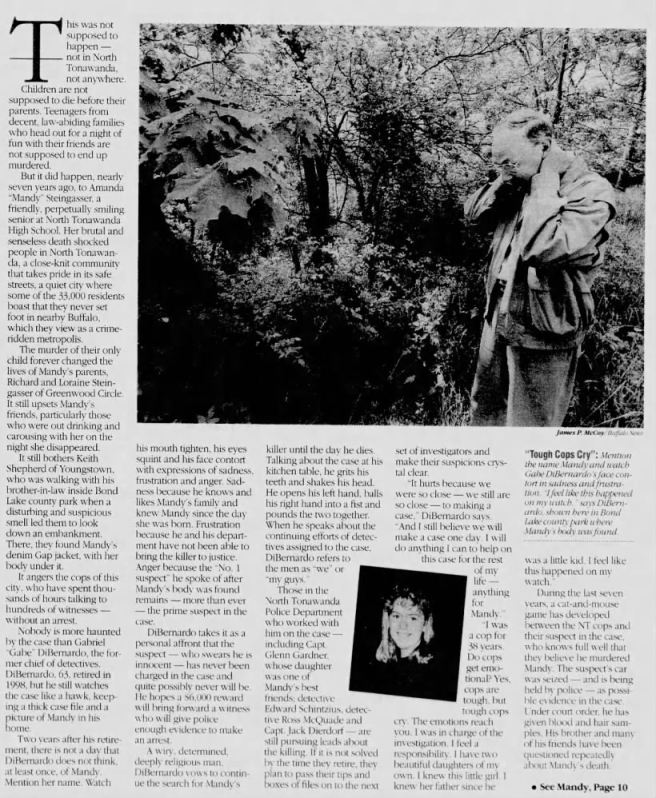
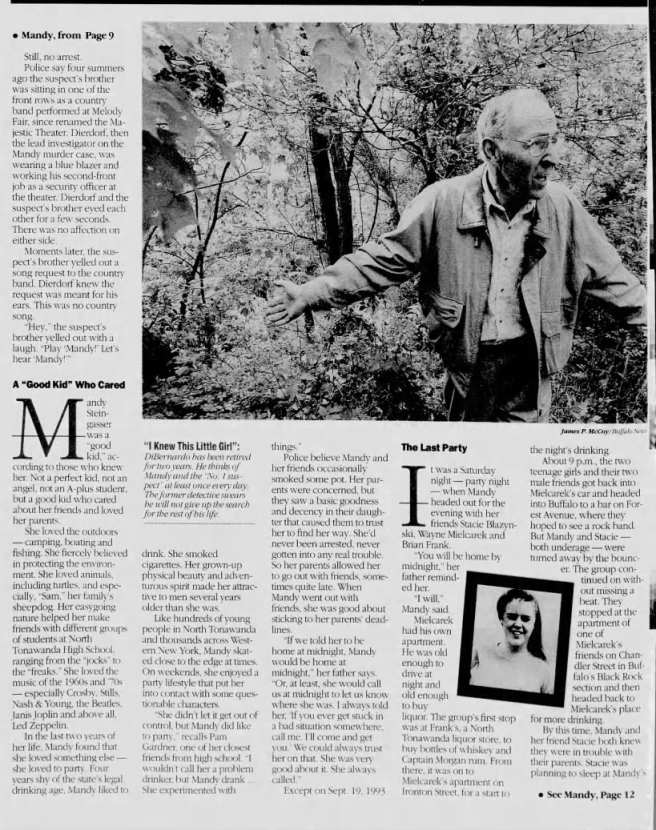
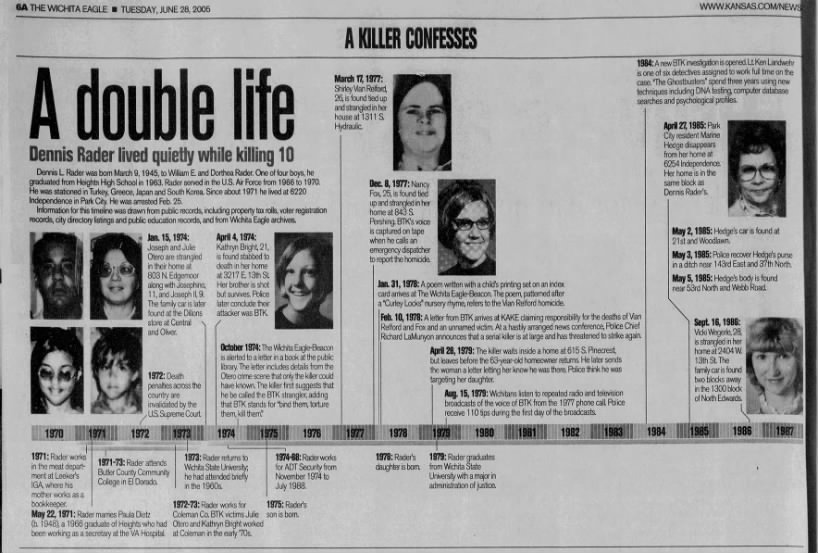
I love this picture of Mandy, it reminds me of one of those glamour shots my mom never let me get. Mandy Steingasser Mandy Steingasser.A B&W picture of Mandy Steingasser.Mandy Steingasser.Mandy Steingasser.A picture of Mandy that was published in The Buffalo News on October 11, 1993.Mandy Steingasser with her beloved pup, Sam.Mandy’s birth announcement published in The Buffalo News on July 10, 1976.The Steingasser family home, located at 133 Greenwood Circle in North Tonawanda, NY.The former Holy Protection Orthodox Church; it’s permanently closed and located at 143 Main Street in the City of Tonawanda. Photo courtesy of WKBW.A sign for Bond Lake Park, located about sixteen miles away from North Tonawanda. Picture courtesy of WKBW.A picture from the original crime scene at Bond Lake Park in October 1993. Picture courtesy of WKBW.A picture of the taped off crime scene at Bond Lake Park in October 1993. Picture courtesy of WKBW.A picture of investigators at the original crime scene at Bond Lake Park in October 1993. Picture courtesy of WKBW.A picture of investigators at the original crime scene at Bond Lake Park in October 1993. Picture courtesy of WKBW.A picture of investigators at the original crime scene at Bond Lake Park in October 1993. Picture courtesy of WKBW.A picture of investigators at the original crime scene at Bond Lake Park in October 1993. Picture courtesy of WKBW.A picture of investigators at the original crime scene at Bond Lake Park in October 1993. Picture courtesy of WKBW.A picture of investigators at the original crime scene at Bond Lake Park in October 1993. Picture courtesy of WKBW.A picture of investigators at the original crime scene at Bond Lake Park in October 1993. Picture courtesy of WKBW.A picture of investigators at the original crime scene at Bond Lake Park in October 1993. Picture courtesy of WKBW.A picture of investigators at the original crime scene at Bond Lake Park in October 1993. Picture courtesy of WKBW.A black 1984 Pontiac 6000, similar to the one Belstadt was driving the night Steingasser went missing.Joseph Belstadt’s mug shot. He was born on April 25, 1975 in North Tonawanda, NY.Joseph Belstadt and his wife, Jennifer. An article about the disappearance of Mandy Steingasser published in The Buffalo News on September 25, 1993.An article about the disappearance of Mandy Steingasser published in The Buffalo News on October 2, 1993.An article about the disappearance of Mandy Steingasser published in The Buffalo News on October 8, 1993.An article about the disappearance of Mandy Steingasser published in The Buffalo News on October 11, 1993.An article about the murder of Mandy Steingasser published in The Buffalo News on October 26, 1993.An article about the murder of Mandy Steingasser published in The Buffalo News on October 27, 1993.An article about the murder of Mandy Steingasser published in The Buffalo News on October 28, 1993.An article about the murder of Mandy Steingasser published in The Buffalo News on November 4, 1993.An article about the disappearance of Mandy Steingasser published in The Buffalo News on October 25, 1994.A newspaper clipping about a local band called ‘The Dooley’s’ releasing a CD that was dedicated to memory of Mandy Steingasser that was published in The Buffalo News on January 12, 1996.An article about a local band called ‘The Dooley’s’ that mentions Mandy Steingasser published in The Buffalo News on March 4, 1996.An article about the murder of Mandy Steingasser published in The Buffalo News on September 21, 1996.Part one of an article about the murder of Mandy Steingasser published in The Buffalo News on September 20, 2013.Part two of an article about the murder of Mandy Steingasser published in The Buffalo News on September 20, 2013.Part one of an article about the trial of Joseph Belstadt published in The Buffalo News on May 5, 2018.Part two of an article about the trial of Joseph Belstadt published in The Buffalo News on May 5, 2018.Part one of an article about the arrest of Joseph Belstadt published in The Buffalo News on April 28, 2018.Part two of an article about the arrest of Joseph Belstadt published in The Buffalo News on April 28, 2018.An article about the arrest of Joseph Belstadt published in The Buffalo News on July 31, 2018.Part one of an article about the trial of Joseph Belstadt published in The Buffalo News on March 14, 2020.Part two of an article about the trial of Joseph Belstadt published in The Buffalo News on March 14, 2020.An article about the trial of Joseph Belatadt published in The Buffalo News on March 17. 2020.An article about the trial of Joseph Belstadt published in The Buffalo News on May 19, 2020.Part one of an article about the murder of Mandy Steingasser published in The Buffalo News on August 6, 2000.Part two of an article about the murder of Mandy Steingasser published in The Buffalo News on August 6, 2000.Part three of an article about the murder of Mandy Steingasser published in The Buffalo News on August 6, 2000.Part four of an article about the murder of Mandy Steingasser published in The Buffalo News on August 6, 2000.Part five of an article about the murder of Mandy Steingasser published in The Buffalo News on August 6, 2000.Part six of an article about the murder of Mandy Steingasser published in The Buffalo News on August 6, 2000.Part seven of an article about the murder of Mandy Steingasser published in The Buffalo News on August 6, 2000.An article about the murder of Mandy Steingasser published in The Buffalo News on September 27, 2003.Part one of an article about the murder of Mandy Steingasser published in The Buffalo News on September 20, 2013.Part two of an article about the murder of Mandy Steingasser published in The Buffalo News on September 20, 2013.Part one of an article about the murder of Mandy Steingasser published in The Buffalo News on November 6, 2016.Part two of an article about the murder of Mandy Steingasser published in The Buffalo News on November 6, 2016.Part one of an article about the arrest of Joseph Belstadt for the murder of Mandy Steingasser published in The Buffalo News on April 26, 2018.Part two of an article about the arrest of Joseph Belstadt for the murder of Mandy Steingasser published in The Buffalo News on April 26, 2018.Part one of an article about the trial of Joseph Belstadt for the murder of Mandy Steingasser published in The Buffalo News on February 26, 2019.Part two of an article about the trial of Joseph Belstadt for the murder of Mandy Steingasser published in The Buffalo News on February 26, 2019.Part one of an article about the trial of Joseph Belstadt for the murder of Mandy Steingasser published in The Buffalo News on April 6, 2019.Part two of an article about the trial of Joseph Belstadt for the murder of Mandy Steingasser published in The Buffalo News on April 6, 2019.Part one of an article about the trial of Joseph Belstadt for the murder of Mandy Steingasser published in The Buffalo News on October 29, 2019.Part two of an article about the trial of Joseph Belstadt for the murder of Mandy Steingasser published in The Buffalo News on October 29, 2019.Part one of an article about Belstadt being charged for Steingassers murder published in The Buffalo News on January 25, 2020.Part two of an article about Belstadt being charged for Steingassers murder published in The Buffalo News on January 25, 2020.An article about Belstadt being charged for Steingassers murder published in The Buffalo News on February 7, 2020.An article about Belstadt being charged for Steingassers murder published in The Buffalo News on March 3, 2020.Part one of an article about the trial of Joseph Belstadt for the murder of Mandy Steingasser published in The Buffalo News on March 9, 2020.Part two of an article about the trial of Joseph Belstadt for the murder of Mandy Steingasser published in The Buffalo News on March 9, 2020.Part one of an article about the trial of Joseph Belstadt for the murder of Mandy Steingasser published in The Buffalo News on March 13, 2020.Part two of an article about the trial of Joseph Belstadt for the murder of Mandy Steingasser published in The Buffalo News on March 13, 2020.Part one of an article about the trial of Joseph Belstadt for the murder of Mandy Steingasser published in The Buffalo News on March 16, 2020.Part two of an article about the trial of Joseph Belstadt for the murder of Mandy Steingasser published in The Buffalo News on March 16, 2020.Part one of an article about the trial of Joseph Belstadt for the murder of Mandy Steingasser published in The Buffalo News on October 25, 2021.Part two of an article about the trial of Joseph Belstadt for the murder of Mandy Steingasser published in The Buffalo News on October 25, 2021.Part one of an article about the trial of Joseph Belstadt for the murder of Mandy Steingasser published in The Buffalo News on October 26, 2021.Part two of an article about the trial of Joseph Belstadt for the murder of Mandy Steingasser published in The Buffalo News on October 26, 2021.Part one of an article about the trial of Joseph Belstadt for the murder of Mandy Steingasser published in The Buffalo News on October 27, 2021.Part two of an article about the trial of Joseph Belstadt for the murder of Mandy Steingasser published in The Buffalo News on October 27, 2021.
“”””””””””””””””””””””””””””””””””””””_
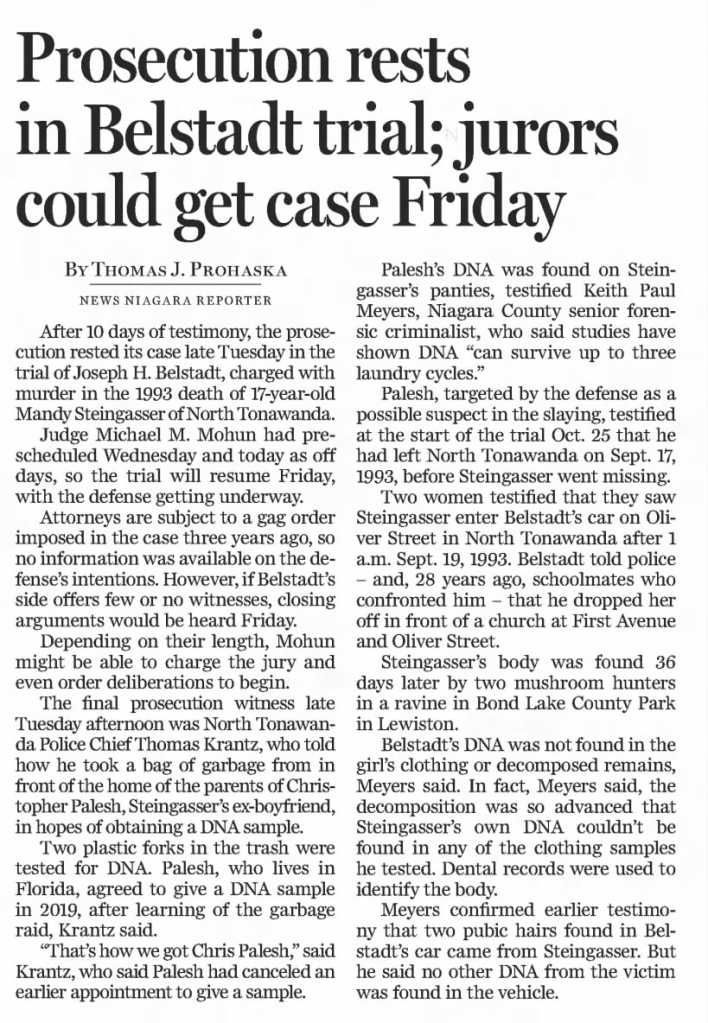
An article about the trial of Joseph Belstadt for the murder of Mandy Steingasser published in The Buffalo News on November 11, 2021.Part one of an article about the trial of Joseph Belstadt for the murder of Mandy Steingasser published in The Buffalo News on November 13, 2021Part two of an article about Belstadt’s conviction published in The Buffalo News on November 13, 2021.Part one of an article about Belstadt’s conviction published in The The Buffalo News on November 17, 2021.Part two of an article about Belstadt’s conviction published in The The Buffalo News on November 17, 2021.A newspaper article about Belstadt’s conviction published in The Buffalo News on November 19, 2021.Part one about the trial of Joseph Belstadt published in The Buffalo News on January 15, 2022.Part two about the trial of Joseph Belstadt published in The Buffalo News on January 15, 2022.Mandy Steingassers final resting place, located in Acacia Park Cemetery in Pendleton, NY.A book about Mandy Steingasser, published by Linda Crystal on January 1, 2008. Photo courtesy of Amazon. Ms. Crystal has a BA in Forensic Psychology from SUNY Buffalo and passed the Passed NYS Private Investigation Exam. She is a forensic astrologist and specializes in missing persons profiles and astral chart and calendars.A comment left on a YouTube video about Mandy made by user ‘Toast-by5wu,’ on a video made by creator ‘heavy casefiles’ titled ‘The Solved Case of Mandy Steingasser, Solved After Twenty-Five Years.’ A comment left on a YouTube video about Mandy made by user ‘QuivaRPG,’ on a video made by creator ‘heavy casefiles’ titled ‘The Solved Case of Mandy Steingasser, Solved After Twenty-Five Years.’ A newspaper clipping featuring Carp Steingasser published in The Tonawanda News on September 21, 1961.A picture of Richard Steingasser from the 1964 North Tonawanda High School yearbook.Loraine Huffman from the 1969 North Tonawanda yearbook.A newspaper clipping announcing that Mr. Steingasser won at ‘Jingo’ published in The Buffalo News on September 9, 2012.Richard Steingasser.Richard Steingassers final resting place, located in Acacia Park Cemetery in Pendleton, NY.Loraine Steingasser’s beloved puppy, Bruno.Mr. Steingassers obituary taken from the Acacia Park Cemetery website.A comment left on Mr. Steingassers memorial page on the Acacia Park Cemetery website.Jamie Belstadt.Jamie Belstadt’s arrest warrant. Wayne A. Mielcarek, AKA ‘the Bassmaster,’ who died at the age of fifty-one on July 9, 2024 at the Erie County Medical Center. He relocated to Myrtle Beach, South Carolina, and was a avid outdoorsman, who loved to fish and was a avid sports fan who loved the Buffalo Bills and Buffalo Sabres; Wayne was survived by his wife of sixteen years, Tina, son, and stepchildren.Brian Frank, who is a teacher at Edison Elementary School in the Ken-Ton school district.A picture of Stacie Blazynski at her shop, ‘The Vapor Room’ that she opened with her mother Sally, published in The Buffalo News on July 4, 2016.
Background:Karen Merle Levy was born on October 28, 1954 to Bertram and Sylvia (nee Neifield) Levy in Cherry Hill, New Jersey. Bertram Elliott Levy was born on June 17, 1927 in Camden NJ and Sylvia was born on May 29, 1929 in Pennsylvania. After graduating from Camdem High School in 1944, Mr. Levy went on to serve in WWII, and upon returning home married Sylvia in the summer of 1950; the couple went on to have three children together: Karen, Eric, and Richard. Bertram was the chairman of the board for Parts Distributors Incorporated in Cherry Hill, and according to the 1950 census, Mrs. Levy’s profession was listed as ‘a secretary at a sweater manufacturer.’ According to her father, before she was killed Karen had recently made a ‘prayer shall’ for her brother, Rick, and she ‘was very creative, good at cooking and sewing. Not a great student.’ He went on to say that ‘she enrolled in home economics at Syracuse University, so you can imagine what kind of girl she was. And there were some who felt she was very pretty, and that’s how I felt too.’
Syracuse University: After graduating from Cherry Hill East High School in 1972, Karen went on to attend Syracuse University, majoring in Home Economics. According to Karen’s family, her hobbies included bowling, reading, and riding her bike, and those that knew her well said that she possessed a lot of ‘old-fashioned qualities’ and really excelled at cooking and sewing. At the time of her death she was working on making an afghan and had it with her when she left for New Jersey. Ms. Levy stood at 5 feet tall even, weighed between 100 to 105 pounds, and wore her dark brown hair at her shoulders; she also had brown eyes and wore gold-rimmed, ‘granny-type’ glasses.
At the time of her murder Karen was in a long-distance relationship with a young man named Gary Lieberman, who transferred to Cherry Hill East High School in the beginning of their junior year in 1970. Lieberman’s name came immediately after hers in their school’s yearbook, and because of that a part of me wonders if they were brought together for semi-logistical reasons. After graduating high school he went on to attend Monmouth College, located in West Long Branch, New Jersey.
In her daughters first few months away from home, Mrs. Levy said that she ‘couldn’t keep her in writing paper, she wrote to us and her grandmother and her friends all the time. She called home more than once a week.‘ The Levy’s saw Karen for the last time roughly three weeks before she disappeared, during parents weekend on October 28, 1972, which also happened to be her 18th birthday. At that time Karen shared with them her plans of borrowing one of her brothers cars to go and visit Gary the weekend of November 10, 1972, but he wound up needing it. So, she did what many other young students at SU did at the time: she posted a three-by-five index card on a bulletin board on campus that said ‘ride wanted’ that contained her name, contact information, and final destination. Mrs. Levy said that ‘she told her friends he sounded strange over the phone and asked them to come along with her to meet him. The man looked alright and she took the ride.’
Monmouth College: On November 9, 1972 a ‘non-student’ and self-proclaimed ‘businessman*’ from Livingston, NJ calling himself ‘Bill Lacey’ reached out to Levy by phone and agreed to take her to Monmouth College, and the two made plans to meet at the Upstate Medical Center near campus at 6 PM the following day (*one report said he claimed to be a ‘traveling salesman’). Levy was accompanied by her friend Paula Lippin and her boyfriend Mitchell Sakofs, and they were able to confirm that she did meet up with an individual that introduced himself as Bill Lacey and was last seen walking away from them in his company. She was last seen wearing a navy blue peacoat, blue bell bottom ‘dungarees,’ a multi-colored V-neck vest, and brown shoes; she was carrying with her a blue knapsack and told Gary she was due to arrive at around 11 PM.
Disappearance: When Karen never arrived at Monmouth police were immediately notified and she was officially listed as a ‘missing person’ due to the fact they had no solid evidence that she had been abducted or was forced into ‘Bill Lacey’s’ car. After they felt that her case wasn’t being taken seriously enough, the Levy’s hired two New Jersey private investigators to assist, including one named John Begley, who brought her disappearance to the attention of the Albany Branch of the Federal Bureau of Investigation on November 13, 1972. Also on the same date, Sylvia Levy reached out to the Newark Division of the FBI, and on November 14th the Identification Division was asked to release a missing persons notice. About her daughter, Mrs. Levy said ‘she loved college and she had no family problems. She was going to visit her boyfriend and she had a birthday present for him. Why would anyone assume she was a runaway?’ She also said that in the initial stages of her daughter’s disappearance things were mishandled by the Syracuse police department, who she said didn’t have the resources to make a thorough investigation. She also charged the department with ‘cynicism and callousness in not conducting a prompt probe of Karen’s disappearance, and that no one lifted a finger for days, and those days were crucial, because they would not believe in the honesty and the sincerity and goodness of our child.’ About the delay in the initial stages of the case, Sylvia said ‘you see the attitude of the authorities is: if you’re young and you disappear, you ran off. They besmith the kids as a group. And the moral of the story is: don’t be young.’
Three policing jurisdictions were investigating Levy’s case: University Police, local Syracuse law enforcement, and the NYS Troopers, and in the early parts of the investigation at least twelve detectives were assigned to work full time on the case. In the first few days after she disappeared investigators focused their search efforts on Sennett, NY after they received multiple reports on November 11th that a man was seen carrying what seemed to be an unconscious woman to his car. One of the women that reported the incident said she was driving on an isolated road when she saw a car parked next to a field and a man walking towards it while carrying a woman that appeared to be unconscious that was dressed in a blue coat and jeans. Unfortunately, nothing came of this.
Investigators combed the general Central New York area and expanded their search into New Jersey, but came up with nothing. Syracuse police conducted over 500 interviews over the course of the investigation and tracked down anyone and everyone that was confirmed to be in the area when Levy was last seen. They also investigated all locals that were named Bill Lacey (or had variations of the name) and spoke with other young women that requested rides in the same method as Levy and whether or not they had any strange encounters with a man that matched his description. Additionally, detectives checked out local newspapers looking for advertisements that were posted by men offering rides in the same time frame that Levy vanished.
Every single tip that investigators received regarding the disappearance of Karen Levy was looked into, and many of the leads were related to the bulletin boards on Syracuse University’s campus. Additionally, NYS Police used helicopters, airplanes, and dogs in their search efforts, and conducted foot searches all over the two most likely routes of travel from SU to Monmouth College, combing through long stretches of highways and secluded ‘lovers’ lanes’… but to no avail. Because Levy’s friend and her boyfriend were able to get a good look at ‘Bill Lacey,’ a sketch artist was able to come up with a composite drawing of him, which was shared all over New York state. According to them, the man looked like ‘half the guys in the country’ aside from his left eye, which was either crossed or unable to completely focus.
At the request of the Syracuse PD, the Albany Branch of the FBI (most likely as a cooperative measure, as they weren’t officially involved) conducted investigations regarding Levy’s disappearance in Oklahoma City, New York City, Chicago, Memphis, Charlotte, Newark, Dallas, Honolulu, and Detroit, which helped eliminate suspects.Because Ms. Levy left with Lacey voluntarily and of her own free will there was no violation of the Federal Kidnaping Statute., therefore the FBI didn’t ‘officially’ join in on the investigation. Despite this, Mr. and Mrs. Levy felt their daughter would never leave on her own with a stranger, and her father commented that: ‘it’s just not consistent with her or her nature to disappear purposefully,’ and about the possibility that someone may have taken his Karen he said that he had ‘no feeling toward that man who has abducted her, I can’t feel vindictive. We just want her home safe and sound. We don’t have any Thanksgiving plan, hopefully we will celebrate Karen’s safe return.’
The Levy’s knew that their daughter would never voluntarily go anywhere with a strange man that she didn’t know. and immediately knew that something sinister had happened to her. In December 1972 they posted a $2,500 reward for any information that lead to the return of their daughter (it was never redeemed), and paid for thousands of missing persons fliersthat contained a picture of Karen on it along with the police composite sketch of ‘Bill Lacey’ as well as both of their complete physical descriptions.
Police tracked down a few young men that matched Bill Lacey’s description, and all of them were brought in for questioning and were released. One of the suspects was identified by both of Levy’s friends from a photograph, however when it came to a line-up they said they were only ‘uncertain’ it was him. After a long, in-depth interrogation the man passed a lie‐detector test, and was able to come up with an alibi for his whereabouts on November 10, 1972.
‘Bill Lacey:’ According to Karen’s friends, she had shared that she was slightly suspicious of the man that would be driving her to New Jersey after a weird conversations they had over the telephone the day before she vanished, as they were dotted with ‘hippie-type’ phrases such as ‘bummer’ and he seemed vague in his knowledge about the distance to Gary’s college. They were all surprised when ’Bill Lacey’ showed up dressed as a clean-cut businessman, wearing a grey suit with a vest, his brown hair cut short and parted neatly on the right; they also said that he was between 20 to 25 years old, roughly six feet tall, and told them that he was from Cleveland.
Detectives went to Upstate Medical Center where Lacey said he delivered medical supplies to, and spoke with members of their staff, and they said they had never heard of him. They also learned that two other coeds that were looking for rides were also contacted by a man named ‘Bill Lacey:’ one girl needed to get to Philadelphia and the other one to Boston, and in each case Lacey told them that he made weekly deliveries to their city. The girl in Philadelphia got spooked after she asked for a phone number and he simply hung up on her, and the one from Boston said when she told him that she wanted a friend to come with her he suddenly said that he needed to leave earlier than he originally anticipated and hung up on her.
One of the last people to talk to Karen during the final hours of her life was Gary, who had driven to Syracuse University the weekend prior to attend a rock concert on campus, and when he left Monday morning they had agreed to talk on the phone the following Thursday about her possibly coming to visit him the following weekend. He said that: ‘she said there was something fishy about the guy who offered her a ride. She said a lot of girls on her floor didn’t think she should take the ride.’ When she asked him what she should do, Lieberman thought about it briefly then said he ‘couldn’t make that decision. I told her I wanted to see her, but didn’t want her to take any unnecessary risk.’ He said that in response to this, she said they would ‘leave it that I’m coming down unless I give you a call.’ But he never heard from her again after that.
According to her high school friends Sherry Frepow and Michele Goldstein, who both went to attend Monmouth College with Gary, Karen had always bummed rides with friends on previous visits, and according to Frepow, ‘she never took rides with strangers, but she really wanted to come down that weekend. She was coming for Gary’s and my birthday. She mentioned over the phone the night before that the guy was kind of weird because he wasn’t charging her any money, and he seemed wrong about the time it took to get here. I didn’t want to think anything about it. You just never think that something like this could happen.’
After Karen talked to her boyfriend she spoke with her parents, and Mr. Levy said that: ‘she called all excited about getting a ride. She gave no details.’ Mr. Levy described Karen as ‘steady and reliable,’ and if anything, she was ‘too trustworthy,’ and that attending school at Syracuse University was the first time that she was ever away from home. According to them, she always called us and the call on Thursday was ‘nothing out of the ordinary and barely mentioned who she was getting a ride with, and she certainly didn’t tell us about her doubts of taking a ride with that man.’ About the individual, Bertram Levy said that ‘they described him later as a neat looking man, well dressed. Not a beatnik. Not a hippie in dungarees. Karen would never have accepted a ride with one of those.’ To this, Mrs. Levy shook her head and said ‘Oh, maybe she would have. We don’t know, we just don’t know.’
In a document I found that included a great deal of information related to the Levy case titled, ‘Hearings before the Subcommittee on Crime of the Committee on the Judiciary House of Representatives, Record Session, HR 4191 and HR 8722, Amendments to the Federal Kidnapping Statute, dated February 27, 1974 and April 10, 1974’ (which was obviously compiled before the apprehension of John E. Harris): ‘The Syracuse University Police Department’s initial report listed the only person who accompanied Karen to meet ‘Bill Lacey’ on November 10, as Amy Krackovitz, Karen’s roommate. However, two people, not one, accompanied Karen, and Amy Krackovitz was not one of them. Similarly, the report listed the suspected abductor as one ‘Charles Lacey,’ and the University Police has devoted some time and effort in preparing a preliminary background report on a ‘Charles Lacey’ for their initial report. However, Karen Levy’s abductor had identified himself as ‘Bill Lacey’ not ‘Charles,’ and again precious time was lost. In fact, it was not until two days after Karen’s disappearance that the Syracuse University Police Department mapped a coordinated plan of investigation. Yet, even after mapping the plan, it was not until the afternoon of November 13, when at the suggestion of the Levys’ private detective that the Syracuse University Police Department went to the ride boards to check for fingerprints on Karen’s ride notices, which were the tab type requiring anyone removing a tab with Karen’s phone number on it to touch the notice.’
Ted of the West Coast?’: Months ticked by, then eventually years, and Levy’s homicide remained unsolved. By the summer of 1974 the murders in Seattle had started, and the infamous ‘Ted of the West Coast’ had begun his reign of terror throughout the Pacific Northwest. Briefly, in the summer of 1974 it was speculated that the crazed killer had made his way to New York state and had something to do with the disappearance of Karen Levy, however that theory quickly was tossed out when her real killer was apprehended that fall. At the time of Levy’s disappearance in November 1972 Bundy was employed at Seattle’s Department of Law & Justice Planning (he was there from September 1972 to January 1973) and was in his first semester of law school at The University of Puget Sound in Tacoma. He was in a committed relationship with Elizabeth Kloepfer and was living at the Rogers Rooming House on 12th Avenue in Seattle’s University District.
Murder: According to an anonymous member of the Syracuse Police Department’s criminal investigation division, in late October 1974 ‘it was a confession to a friend by the suspect that finally helped to break the case.** Syracuse Deputy Police Chief John Dillon said that he got a tip from a friend of twenty-four-year-old John E. Harris of Cicero, NY who shared with him that he tried to stab thirty-four-year old Richard Bellinger with an ice pick on March 26, 1974, and that he killed Karen Levy. Bellinger was the business agent for John’s wife of a year-and-a-half Donna Lee Harris, who according to detectives was ‘a 21‐year‐old go‐go dancer.’ Unfortunately he told police that he didn’t get a good look at his attacker and wouldn’t be able to recognize him. Harris, who by that time had grown a big bushy beard, told investigators that Levy had gotten ‘hysterical’ when he attacked her and he killed her to ‘shut her up.’ During the interrogation his wife sat beside him, softly coaxing her husband to ‘tell them everything. If you did anything wrong, tell them.’ At that time he also volunteered that at the age of sixteen he had been arrested for rape and spent five years inside a reformatory. ** I have seen varying reports as to how police learned about the identity of John Harris: a different source says that while in jail in 1973 John’s brother Paul shared with another inmate what his brother had done to Levy, and that was eventually passed on to NYS investigators who arrested Harris as a result. Another article said that Paul told his girlfriend who told a friend who told another friend who eventually came forward and told law enforcement.
On Saturday, October 26, 1974 John E. Harris led investigators to the body of Karen Merle Levy in a shallow grave at his POE of five years: Ley Creek Sewage Treatment Plant in Salina, NY: she had been found underneath four feet of landfill and had been stabbed and strangled with a nylon stocking, which was still cinched around her neck. Detectives working the case theorized that Harris had hit Levy over the head with a shovel then dragged her to the landfill, where he strangled and buried her. Also at the scene investigators found a ring with Karen’s initials engraved on it, a medallion that had ‘keep holy the Commandments’ inscribed on it, and a set of keys, one of which fit the lock to her one-time dorm room. A 100% positive identification was made after a forensic dentist was brought in to examine Levy’s skeletal remains and according to Deputy Chief Dillon, the preliminary investigation had shown that Levy was killed less than an hour after she was last seen.After Karen’s body was discovered, Mr. Levy said that they could now ‘pick up our lives now and try to live a halfway normal life. We were hoping, wishing for a miracle, but did not truly expect it.’ According to Ken Levy, ‘for two years they didn’t give up hope, there was no closure for two years, when Karen’s body was finally recovered the family felt enormous relief, followed with sadness.’
According to an article published in The Syracuse Herald-Journal on September 17, 1975, John Harris implicated his brother Paul for the murder of Karen Levy in a series of letters,and claimed that he was with him that night in November 1972 when he picked her up and said that he was the killer, not him. Paul denied having anything to do with killing the young coed and after multiple interrogations and lie detector tests he was eventually cleared of any wrong-doing. In an article published in The Post-Standard on September 13, 1975, Paul said that he didn’t think his brother acted alone and that he thought ‘there was someone with him or someone forcing him to do it.’ When asked why he thought this, he said that John was ‘into some pretty heavy stuff’ and was ‘involved with gambling and the sale of drugs, as well as taking pictures of nude models: ‘John would pick the models up, sometimes from Syracuse University, and take them to a photo shoot where he would wait until the photographer was finished. Sometimes he would actually pose with her.’
Paul went on to say that John was involved with a group he dubbed ‘The Utica Bunch,’ and was ‘in this for the money, and maybe a little for the girls.’ When asked why he would want to blame him for the murder, Paul said he was asking himself the same thing and that ‘something happened in his mind. His memory is gone. Either he is trying to grasp onto the only escape left or it has just become a game for him. He probably doesn’t know I didn’t do that. I didn’t tell police. I just told my girlfriend who told somebody who told somebody. The police finally got wind of it.’ Paul Harris was a bartender by trade but after charges were dismissed he volunteered in an interview that he was thinking about leaving the area, saying the murder had ‘ruined his reputation’ and that he was at ‘the point where I might have to leave Syracuse. At least twice, enemies of John’s have actually tried to kill me.’ He also said that in November 1974 he was shot at while walking down Clinton Street, and in the beginning of September 1975 someone had tried to run him off the road on Route 81 by approaching him at an angle that ‘could only have been an attempt to get me.’ He also said that on one occasion a woman threw a drink in his face.
After Harris was held without bail, police records showed that in 1966 he was arrested on a rape charge and served five years in Coxsackie Reformatory. Pretrial proceedings began on November 1, 1974, and he was indicted on two counts of murder, along with additional charges of first‐degree rape and first‐degree sexual abuse. Additionally, John Harris was charged with attempted murder and possession of a dangerous weapon in relation to his crimes against Richard Bellinger.
Judge Gale ruled that Harris was unable to stand trial on December 23, 1974 and ordered him be sent to the Mid-Hudson Psychiatric Center on January 9, 1975, where he spent three months being evaluated. Although center professionals determined that he was capable of standing trial for Karen’s murder, two psychiatrists (one of them being the Head of the County’s Mental Health Department) said that he has ‘deteriorated steadily’ since his arrest. According to Chief Assistant District Attorney John Shannon, Harris was ‘capable of understanding the nature of the charges against him and assisting his attorneys in the defense of this case.’
At the sanity hearing, a psychiatrist from Mid-Hudson Psychiatric Center testified that the defendant told him that he was able to trick two separate doctors into believing that he was insane: ‘he (Harris) told me that when he was in his cell, he was told by the other inmates to keep looking at the floor. They told him to blink and mumble.’ At the hearing Harris took the stand and said that he didn’t know what his rights were when he gave the NYS Troopers a written confession, which was reportedly ‘peculiar and false.’ In it, he said that he drove her to the treatment plant and ‘asked her for a kiss,’ and when she refused he strangled her, and then ‘hit her and she hit me with her purse. So I knocked her out. She tried to claw my face so I hit her several times in the head. I thought she was unconscious. I took her out of the car and carried her on the lawn. I removed her jacket. The grass was wet so I rubbed her arm on the grass and splashed a mud puddle. She wouldn’t wake up. I started to cry. I walked around her, hoping she was all right.’ He said when he realized she was dead he stuffed her remains in an incinerator, and turned her all except her skull and bones. With a crowbar he crushed the bones to dust, and put them in a truck and buried ‘some place in Skaneateles.’
During his trial, Harris testified that he was ‘tired and sick’ when he spoke with police after his initial arrest, and that ‘when police asked him to sign the statement, he said, ‘shouldn’t I have a lawyer?” In response, they said, ‘if you don’t sign it, you’re going to be here all night until you do.’ He went on to say that during the interrogation he ‘had an upset stomach, and I was nervous and tired’ and that at one point a screaming match broke out between him and an investigator. He also claimed that the signature on the confession was forged and not his, which went nowhere. After Levy’s murder between November 1972 and October 1974 police had two separate (unrelated) interactions with Harris: one time he was pulled over for ‘failure to use his direction signal,’ and after he told the NYS Trooper he was ‘tired of being harassed by the fuzz’ they brought him into a nearby police station, questioned him for an hour, and was eventually issued a citation.
To the surprise of everyone, on July 25, 1975 Harris plead guilty to the rape and murder of Karen Levy because he was ‘tired of waiting for all the court actions to end.’ Under the terms of a plea bargain that was approved by the Levy family, he accepted a twenty year to life prison term for the murder, and began the sentence September 12, 1975. In an emotional interview with reporters, Harris said that he just wanted ‘to do my time and go home and lead a decent life.’ Mr. Levy said that he agreed with the plea bargain because ‘it gave them the best justice they were capable of getting at that point without having to go through a trial’ and that he ‘would prefer never to come face to face with Harris. That’s not going to bring Karen back. But it’s not like we’ve washed our hands of the thing.’ Harris was initially housed at Auburn Correctional Facility and after bouncing over a few prisons he was briefly moved to Clinton Correctional before going to Orleans Correctional Facility in 1992.
In September 1979 Harris attempted to appeal his conviction based on ‘arguments that he didn’t knowingly waive his right to remain silent or have his attorney present when he was questioned by police,’ and that he didn’t knowingly waive his right to a jury trial when he pleaded guilty. It was ultimately denied. In August of 2000 Harris was up for parole for the fourth time, but was denied due to the fact that he still ‘posed an imminent threat to community safety’ and was ‘incompatible with the welfare and safety of the community.’ According to an article published in The Post-Standard on August 6, 2000, he was cited (meaning he received a formal warning for violating rules/regulations) six times for breaking prison rules, including harassment, assaulting a prison guard, and property damage.
By 1999 Harris had completely changed his story again: in an article published in The Post-Standard on August 7, 2000, in an April 1999 interview with LE he said that he accepted responsibility for Karen’s death, however claimed he wasn’t the one that killed her. He went on to elaborate that he (along with some companions that he refused to name) planned on using Levy to transport drugs from Syracuse to New Jersey and their plan was to slip them into her luggage then blame her if they were stopped by law enforcement: ‘that way if we got stopped and frisked by the cops, it’s in their stuff, and we could write it off.’ He claimed it was ‘by chance’ that he met Karen and it was only the two of them in the car when they stopped for food at a Motel 7 on Seventh North Street just over the city line in Salina.
While Karen was inside the motel a second vehicle pulled up and they said they put the drugs in her bags, which were still in the car, but she noticed that ‘something was wrong’ and got upset. The men pulled Harris aside and as they were talking one of them ‘stabbed her in the stomach’ and he ‘just saw her fall to the floor. And I just… the feeling I got I almost vomited.’ The friends told him that he had to ‘get rid of her,’ and he had to ‘dump her body somewhere.’ He said that he ‘pulled her out of the car. She just reached up to me and said don’t let them hurt me anymore.’ When asked by investigators why he didn’t drop her off at a hospital, he said he was afraid because he was an ex-con that had ‘served time for grand larceny in 1967,’ and he ‘didn’t want to get in anymore trouble,’ and he ‘just ended up burying the girl. It was bothering me very much, in fact, it made me very emotional. I’d come home and I’d be very emotional with my wife. We’d start arguing over the littlest things. ‘Cuz it always drew back to me about Miss Levy. Most times I would have nightmares and I’d wake up.’ During that 1999 interview Harris also claimed that the incident ‘still haunted him,’ and that sometimes he would read newspaper clippings about the case over and over again: ‘and when I’m done reading the stories I just think I’m responsible for her death.’
About his release being denied Harris said that ‘it’s not that cut and dry.’ … ‘It leads people into thinking I’m actually guilty of this murder.’ If released Harris said that he wasn’t trying to fit into society and wasn’t interested in making friends with his neighbors: ‘I don’t wanna blend in with society, I wanna stay away from society. I just wanna be a recluse someplace. I just wanna go off by myself. I’m tired of people, and I’m tired of crap. I’ve put up with it for twenty-five-years, I just wanna be able to think and breathe.’
According to an article published in The Post Standard on August 7, 2000, while in prison Harris served as a ‘facilitator’ in ‘Network,’ a self-help, behavioral modification program at the prison and served as the program’s ‘institutional clerk’ and went to ‘victim awareness programs.’ About being up for parole so many times, he said that ‘it’s like it doesn’t matter what I do, what I accomplish, how much I give (the parole board) what I’m suppose to give them. they still rubber stamp me. They give me the same answer on every parole denial.’ From prison, Harris had some words for the Levy family: ‘no matter how much time passes, I’ll never get over it. But at the same time, of course her family will never get over it… So what can you tell them? Of course I’m sorry. I’m immensely, immensely sorry. But what good is that gonna do anybody? I can’t bring her back, I can’t undo what has already been done.’ Sadly I learned in a Facebook post made by Rick Levy in July 2022 that Harris’s parole had been approved and he was released from prison shortly after.
After Levy’s disappearance students at Syracuse University continued to use ‘the bulletin board method’ as a way of old-fashioned ‘ride-sharing,’ and there was no noticeable decline in the amount of students that stood around, bumming rides. One 17-year-old Syracuse University student said that she was ‘just a little more choosy,’ and that her ‘new attitude’ was based not so much on the disappearance of Karen Levy but more because the last time she had accepted a ride from a stranger, the person had raped her.
Strangely enough, Karen Levy is not the only young woman from New York state that Bundy was (briefly) suspected of killing: on November 2, 1974 Katherine Kolodziej disappeared after a night out at The Vault Tavern in Cobleskill, NY. The 17-year-old from Ronkonkoma was a freshman majoring in Equestrienne Studies at SUNY Cobleskill, and less than four weeks later on November 28, 1974 her remains were found on a rock wall on nearby McDonald Road in Richmondville, NY. It was reported that a yellow VW Beetle was seen driving away from the tavern on the evening Kathy was last seen alive, however at the time she was killed Bundy was placed on the phone in Salt Lake City (per the ‘1992 TB Multiagency Investigative Report’).
Mr. and Mrs. Levy were married for forty-six years when Bertram passed away at the age of 69 on October 12, 1996 in Union Township, NJ. According to his obituary, Mr. Levy worked at his job for fifty-four years, was a member and former president of the board of Temple Beth Shalom in Cherry Hill, a past VP and treasurer of the Jewish Geriatric Home, and a member of the Mizpah-Haddon Heights Lodge 191 Free and Accepted Masons. Sylvia Levy passed away on July 16, 2020 at the age of 91. I reached out to Rich Levy after I saw a post he made on Facebook asking that people reach out to the parole board on his family’s behalf regarding Harris being up for release, but I completely misread his tone and he seemed incredibly reluctant to speak to me due to the fact that it was too painful to talk about, so I dropped it. Because of that I didn’t include any details or pictures about his, Eric’s, or Gary Leiberman’s lives, past or present.
Karen Levy’s senior picture from the 1972 Cherry Hill East High School yearbook.Karen Levy.Another picture of Karen Levy taken from The Daily News on April 14, 1973.Karen Levy’s senior year accomplishments that were published in the 1972 Cherry Hill East High School yearbook; as you can see, her one time love Gary Lieberman is immediately after her. The missing persons flier for Karen Levy that was published in The Syracuse Herald-Journal on December 10, 1972.A note from Syracuse police to Seattle detectives A picture of Karen’s ring after her remains were discovered. A picture of the key found with Karen’s remains.A search crew looking for the remains of Karen Levy.A picture of Mr. and Mrs. Levy published in The Daily Register on October 29, 1974.Bertram and Sylvia Levy holding a framed portrait of Karen, picture taken from The Star-Ledger on March 10, 1974.A letter regarding the Levy case from the Syracuse Chief of Police, possibly in relation to the Bundy case, courtesy of the King County Sheriffs Department.A log from a reward calls book from the Ted investigation that mentions Bill Lacy, courtesy of the King County Sheriffs Department.A second log from a reward calls book from the Ted investigation that mentions Bill Lacy, courtesy of the King County Sheriffs Department.Karen’s parents house, where she lived between semesters at Syracuse University, located at 507 Tearose Lane in Cherry Hill, NJ.An article about Karen before her brutal murder published by The Courier-Post on November 17, 1971.An article about the disappearance of Karen Levy published in The Asbury Park Press on November 22, 1972.An article about the disappearance of Karen Levy published in TheThe Democrat and Chronicle on November 24, 1972.An article about the disappearance of Karen Levy published in The Syracuse Herald-Journal on November 29, 1972.An article about the disappearance of Karen Levy published in The Courier-Post on November 29, 1972.An article about the disappearance of Karen Levy published in The Syracuse Herald-Journal on November 30, 1972.An article about the disappearance of Karen Levy published in The Asbury Park Press on December 3, 1972.Part one of an article about the disappearance of Karen Levy published in The Syracuse Herald-Journal on December 3, 1972.Part two of an article about the disappearance of Karen Levy published in The Syracuse Herald-Journal on December 3, 1972.Part one of an article about the disappearance of Karen Levy published in The Philadelphia Inquirer on December 3, 1972.Part two of an article about the disappearance of Karen Levy published in The Philadelphia Inquirer on December 3, 1972.An article about the disappearance of Karen Levy published by The Daily Register on December 4, 1972.An article about the disappearance of Karen Levy published by The Times Leader on December 4, 1972.An article about the disappearance of Karen Levy published in The Daily Register on December 4, 1972.Part one of an article about the disappearance of Karen Levy published in The Syracuse Herald-Journal on December 6, 1972.Part two of an article about the disappearance of Karen Levy published in The Syracuse Herald-Journal on December 6, 1972.An article about the disappearance of Karen Levy published in The Asbury Park Press on December 7, 1972.An article about the disappearance of Karen Levy published in The Mercury on December 8, 1972.Part one of an article about the disappearance of Karen Levy published in The Syracuse Herald-Journal on December 8, 1972.Part two of an article about the disappearance of Karen Levy published in The Syracuse Herald-Journal on December 8, 1972.An article about the disappearance of Karen Levy published in The Intelligencer Journal on December 8, 1972.An article about the disappearance of Karen Levy published in The Syracuse Herald-Journal on December 10, 1972.An article about the murder of Karen Levy published in The Gloucester County Times on Dec 12, 1972.An article about the disappearance of Karen Levy published in The Syracuse Herald-Journal on Dec 19, 1972An article mentioning Karen Levy published in The Syracuse Herald-Journal on December 31, 1972.An article about the disappearance of Karen Levy published in The Finger Lakes Times on January 10, 1973.An article about the disappearance of Karen Levy published in The Syracuse Herald-Journal on January 18, 1973.An article about a reward in relation to the disappearance of Karen Levy published in The Gloucester County Times on January 27, 1973.An article a reward in relation to the disappearance of Karen Levy published in The Daily Register on January 29, 1973.An article about the disappearance of Karen Levy published in The Daily Register on April 11, 1973.An article about the disappearance of Karen Levy published in The Daily News on April 14, 1973.An article about the murder of Joan D’Allessandro that mentions Karen Levy published in The News on April 24, 1973.Part one of an article about the disappearance of Karen Levy published in The Star-Ledger on May 13, 1973.Part two of an article about the disappearance of Karen Levy published in The Star-Ledger on May 13, 1973.An article about the disappearance of Karen Levy published in The Star-Ledger on July 21, 1973.An article about the disappearance of Karen Levy published in The Asbury Park Press on November 11, 1973.An article about the disappearance of Karen Levy published in The Press of Atlantic City in December 12, 1973.An article about the disappearance of Karen Levy published in The Press of Atlantic City on December 12, 1973.An article about the disappearance of Karen Levy published in The Finger Lakes Times on August 11, 1973. An article about the disappearance of Karen Levy published in The Star-Ledger on February 28, 1974.An article about the disappearance of Karen Levy published in The Syracuse Herald-Journal on March 3, 1974.An article about the disappearance of Karen Levy published in The Star-Ledger on March 10, 1974.An article about the disappearance of Karen Levy published in The Courier-Post on March 11, 1974.An article about the disappearance of Karen Levy published in The Lansing State Journal on March 14, 1974.An article about the disappearance of Karen Levy published in The Finger Lakes Times on March 18, 1974.Part one of an article about the disappearance of Karen Levy published in The Journal Herald on March 19, 1974.Part two of an article about the disappearance of Karen Levy published in The Journal Herald on March 19, 1974.An article about the disappearance of Karen Levy published in The Huntsville Times on March 21, 1974.An article about the disappearance of Karen Levy published in The Albany Democrat-Herald on April 2, 1974.An article about the disappearance of Karen Levy published in The Star-Ledger on June 6, 1974.An article about the disappearance of Karen Levy published in The News Tribune on July 31, 1974.An article about ‘Ted of the West’ possibly having ties to the disappearance of Karen Levy published in The Post-Standard on August 5, 1974.An article about ‘Ted of the West’ possibly being related to the disappearance of Karen Levy published in The Syracuse Herald-Journal on August 18, 1974.An article about ‘Ted of the West’ possibly being related to the disappearance of Karen Levy published in The Syracuse Herald-American on August 18, 1974.An article about the discovery of the remains of Karen Levy published in The Spokesman-Review on October 27, 1974.An article about the murder of Karen Levy published in The Syracuse Herald-Journal on October 27, 1974.An article about the discovery of the remains of Karen Levy published in The Syracuse Herald-Journal on October 27, 1974.An article about the discovery of the remains of Karen Levy published in The Asbury Park Press on October 28, 1974.An article about the discovery of the remains of Karen Levy published in The Philadelphia Inquirer on October 28, 1974.An article about the murder of Karen Levy published in The Courier-Post on October 28, 1974.An article about the murder of Karen Levy published in The Ashbury Park Press on October 28, 1974.An article about the murder of Karen Levy published in The Syracuse Herald-Journal on October 28, 1974.An article about the murder of Karen Levy published in The Daily Register on October 29, 1974.An article about the murder of Karen Levy published in The Star-Ledger on October 29, 1974.An article about the murder of Karen Levy published in The Syracuse Herald-Journal on October 29, 1974.An article about the murder of Karen Levy published in The Daily Sentinel on October 29, 1974.An article about the murder of Karen Levy published in The Daily Sentinel on October 29, 1974.An article about the murder of Karen Levy published in The Syracuse Herald-Journal on October 31, 1974.An article about the murder of Karen Levy published in The Star-Ledger on October 31, 1974.An article about the discovery of the remains of Karen Levy published in The Buffalo News on October 31, 1974.An article about the murder of Karen Levy published in The Philadelphia Inquirer on November 20, 1974.An article about John Harris being found competent to stand trial published in The Daily Record on December 12, 1974.An article about John Harris being sent to a psychiatric center for evaluation published in The Democrat and Chronicle on January 9, 1975.An article about the murder of Karen Levy published in The Daily News on February 2, 1975.An article about the murder of Karen Levy published in The Post-Standard on March 28, 1975.An article about the murder of Karen Levy published in The Syracuse Herald-Journal on April 14, 1975.An article about the murder of Karen Levy published in The Post-Standard on July 17, 1975.An article about the murder of Karen Levy published in The Post-Standard on July 18, 1975.A newspaper article about the murder of Karen Levy published in The Syracuse Herald-Journal on July 28, 1975.A newspaper blurb about the murder of Karen Levy published in The Gloucester County Times on July 29, 1975.An article about the murder of Karen Levy published in The Post-Standard on July 29, 1975.An article about the murder of Karen Levy published in The Daily Messenger on July 29, 1975.An article about John Harris and the murder of Karen Levy published in The News on July 30, 1975.An article about the murder of Karen Levy published in The Syracuse Herald-Journal on September 12, 1975.An article about John Harris in relation to th4e murder of Karen Levy published in The Post-Standard on September 13, 1975.A newspaper article about John Harris published in The Syracuse Herald-Journal on September 13, 1975.The first part of an article about the murder of Karen Levy published in The Syracuse Herald-Journal on September 15, 1975.Part two of an article about the murder of Karen Levy published in The Syracuse Herald-Journal on September 15, 1975.An article about John Harris being sentenced for the murder of Karen Levy published in The Daily Messenger on September 16, 1975An article about the murder of Karen Levy published in The Post-Standard on September 16, 1975.An article about the murder of Karen Levy published in The Post-Standard on September 16, 1975.An article about the murder of Karen Levy published in The Syracuse Herald-Journal on September 17, 1975.An article about the murder of Karen Levy published in The Syracuse Herald-Journal on September 24, 1975.An article about the murder of Karen Levy published in The Syracuse Herald-Journal on October 2, 1975.An article about the murder of Karen Levy published in The Syracuse Herald-Journal on October 2, 1975.An article about the murder of Karen Levy published in The Post-Standard on October 3, 1975.An article about John Harris appealing his conviction for the murder of Karen Levy published in The Post-Standard on December 12, 1977.An article about the possible appeal of John Harris published in The Syracuse Herald-Journal on September 9, 1979.An article about the murder of Karen Levy published in The Syracuse Herald-Journal on October 28, 1979.An article mentioning Karen Levy published in The Syracuse Herald-Journal on July 22, 1996.An article mentioning the murder of Karen Levy published in The Post-Standard on November 6, 1999.An article about the murder of Karen Levy published in The Daily News on August 30, 1987.An article about the Ley Creek Sewage Plant that mentions Karen Levy published in The Post-Standard on October 26, 1999.An article about John Harris being up for parole published in The Post-Standard on August 6, 2000.Part one of a newspaper article about John Harris being up for parole published in The Post-Standard on August 7, 2000.Part two of a newspaper article about John Harris being up for parole published in The Post-Standard on August 7, 2000.A general route from Syracuse University to Monmouth College in New Jersey.John E. Harris A picture of Johns parents home, in Cicero, NY; at the time of Karen’s murder he lived in a house across the street with his wife, Donna.Part one of a newspaper article about John Harris and his family published in The Courier-Post on October 28, 1974.Part two of a newspaper article about John Harris and his family published in The Courier-Post on October 28, 1974.A newspaper blurb about Donna Lee Harris being granted a divorce that was published in The Syracuse Herald-Journal on July 3, 1975.A blurb in the paper mentioning John and Donna Harris’ divorce published in The Post-Standard on July 3, 1975Mr. Levy’s WWII draft card. The announcement of Mr. and Mrs. Levy’s engagement that was published in The Courier-Post on May 18, 1950.Mr. Levy’s obituary published in The Philadelphia Inquirer on October 13, 1996.Mr. Levy’s obituary published in The Philadelphia Inquirer on October 14, 1996.A post on a Facebook page for the ‘Cherry Hill East Class of 1974 Reunion Page’ regarding John E. Harris being up for parole. A Facebook post made by Karen’s brother Rick Levy about John Harris being up or parole.A comment on the above Facebook post about the outcome of John E. Harris’ parole hearing made by Karen’s brother Rick Levy about John Harris being up or parole.A picture of John E. Harris after his arrest published in The Syracuse Herald-Journal on September 12, 1975.A picture of Mr. Levy along with members of Syracuse law enforcement that was published in The Asbury Park Press on November 22, 1972.A picture of Mr. and Mrs. Levy that was published in The Star-Ledger on October 29, 1974.A picture of Mrs. Levy sitting on Karen’s bed.Gary Lieberman’s senior year picture in the 1972 Cherry Hill East High School yearbook.Kathy Kolodziej.Where Bundy was in November of 1972; I know it’s moot at this point as we all know Bundy had nothing to do with the disappearance of Karen Levy, but as this is a blog about him I feel that this needs to be here.A possible route that Bundy could have taken from the Rogers Rooming House in Seattle to Syracuse University.
Karen M. Levy (no relation to Lisa Levy out of Florida) was a student at Syracuse University that was majoring in Home Economics when she disappeared after accepting a ride from a stranger on November 10, 1972 (her remains weren’t discovered until October 1974). When researching for my article I came across the following document that gives a good amount of details about her background and murder.
Growing up near Amherst, NY the ‘bike path rapist’ was my families version of ‘the boogeyman.’ I remember when he reemerged in 2006 my mom came into my bedroom and told me ‘not to go running by myself’ after class (I was at Daemen University at the time, and if you knew me then you’d know how laughable the thought of that was), but I understand her fear. Coincidentally when Joan Diver was killed I was dating her husbands (who was a Chemistry PhD at the University of Buffalo) lab assistant, and it gave me a fairly unique perspective into it all.