I’ve been compiling a list of missing and murdered young women from the 1970’s in Oregon in a notebook, and I figured why not also include it here. As I learn of new victims I will update the list… over the years I’ve found dozens of names on various websites and newspaper articles about other missing and murdered women, but they’re scattered all over the internet in a million different sources… why not put them all here?
Janet Lynn Karin-Shanahan: (April 23, 1969, Eugene). Twenty-two years old. Strangled and found in the trunk of her own car.
Niki Diane Britten: (July 16, 1969, Albany). Fifteen years old. Frequent run away.
Barbara Katherine Cunningham: (May 25, 1971, Eugene). Thirty-four years old. Found deceased in her apartment by her mother.
Barbara Ann Bryson: (July 29, 1971, Stayton). Nineteen years old. Was last known to be attending a party.
Fay Ellen Robinson: (March 12, 1972, Eugene). Found deceased in apartment.
Alma Jean Barra: (March 23, 1972, Happy Valley). Twenty-eight years old. Found deceased in Willamette National Cemetery.
Beverly May Jenkins: (May 25, 1972, Cottage Grove). Sixteen years old. Her remains were found in June1972just off the I-5 roughly ten miles outside of Cottage Grove; she had been strangled to death.
Jane Pellett: (June 7, 1972, Salem). Twenty-eight years old. Found deceased on a busy roadside on June 26, 1972.
Geneva Joy Martin: (June 16, 1972, Eugene). Nineteen years old. Found deceased on the side of the road by a farmer.
Rita Lorraine Jolly: (June 29, 1973, West Linn). Seventeen years old. Disappeared while out on a routine nightly walk.
Allison Lynn Caufman: (July 1973, Portland). Fifteen years old. Died as a result of head injuries after being shoved from a car moving at a high rate of speed.
Laurie Lee Canaday: (July 9, 1973, Milwaukee). Her remains were recovered on the pavement at the intersection of Southeast Scott Street and McLoughlin Blvd in Milwaukee, OR.
Susan Ann Wickersham: (July 11, 1973, Bend). Seventeen years old. Was found deceased from a gunshot wound on January 20, 1976.
Vicki Lynn Hollar: (August 20, 1973, Eugene). Disappeared along with her 1965 VW black VW Beetle with IL plates and the running boards removed.
GayleLeClair: (August 23, 1973, Eugene). Found stabbed in her apartment.
Deborah LeeTomlinson: (October 15, 1973, Creswell/Eugene). Disappeared along with a friend on her sixteenth birthday. According to her sister (and my friend) Jean she was seen in California after she disappeared).
Virginia Erickson: (October 21, 1973, Portland). Thirty-two years old, mother of six. Disappeared, most likely killed by her husband.
Suzanne Rae Seay-Justis: (November 5, 1973, Portland). From Eugene, despite having a car hitchhiked.
Marion Vinetta Nagle McWhorter: (October 1974, Tigard). According to McWhorter’s sister, she had been traveling before she disappeared around the Western part of the US. Her body was finally identified in September 2025, but the case remains unsolved.
Leslie Michelle (seven years old) and Geoffrey Lyman (five years old) Brown. Murders took place on February 22, 1975 and both victims were found on March 12, 1975 in McIver Park, Estacada.
Margo Nerline Ascencio-Castro: (March 1, 1975, Eugene). Twenty-two years old. Found stabbed in a motel room, possibly involved with a local motorcycle gang.
Tina Marie Mingus: (October 1975, Salem). Sixteen-years old. Murdered, body recovered.
Cherril Sue Miller: (October 12, 1975, Portland). Twenty-eight years old.
Camille Karen Covert-Foss: (October 17, 1975, Hillsboro). Found shot in her vehicle at her POE, in a Southwest Portland-area shopping center.
Kim Charleson: (January 7, 1976, Cannon Beach). The 22 year old had been in college and may have been carrying a small amount of Canadian currency when she disappeared.
Sandra Renee ‘Sandy’ Morden: (1977) Approx sixteen years old, her partial skeleton was found in Washington in 1980 and its believed that she died in the late 1970’s. She was identified in October 2019.
Karen Jean Lee: (last seen alive, May 26, 1977, Cornelius). Lee ran away with a male companion, fourteen year old Rodney L. Grissom. Her possessions and clothes were found by a logging crew sometime in November 1977 however her remains were never recovered. Grissom’s clothes and belongings found in same area, roughly a quarter mile away from Lee’s in November 1982; his remains have also never been found. (Thank you to my friend Ryan AuClair for this information).
Virginia Mae Erickson was born on April 26, 1941 to Joseph and Virgie (nee Lee) in Mazama, WA. Mr. Ackley was born on February 1, 1910 in Montesano, and Virgie was born on a houseboat on June 12, 1912 in Empire, OR. The couple were wed on March 18, 1928 in Buxton, Oregon and had eight children together: Virginia, Lawrence, Maxine, Joseph, Charles, Jean, David, and a daughter named Joyce that died in childbirth.
On October 18, 1958 seventeen year old Virginia married twenty-one year old David Erickson in Montesano, WA; Erickson was born on May 31, 1937 in Tigerton, Wisconsin. After relocating to Sweet Home, OR the couple had six children together: two boys and four girls. Ginny was a petite woman, and only stood at 5’1” tall and weighed 125 pounds; she had green eyes and curly chestnut hair she wore at her shoulders. She was a devout fundamentalist Christian and dedicated stay at home mother, and played the piano during church service every Sunday morning while her daughters would sing in the choir; on occasion, David would join her and play the guitar (when he attended). Virginia was also very close to her parents who lived in Washington, and she spoke with them frequently and would usually visit every six weeks or so (give or take). Ginny’s younger sister Maxine said she ‘could not go for more than six weeks without going to see her folks and she always had the kids with her. She would not have gone that long without seeing her kids or seeing her mother.’
Virginia was last seen alive by her children in their home on 48th Avenue in Sweet Home on the morning of October 21, 1973: David woke up their oldest childRachel and told her they’d be going to church without them that Sunday because he was taking their mother out hunting. This immediately struck her as being incredibly unusual and out of character for her mother, but she got up anyways and helped get her brothers and sisters (who ranged in age from six to thirteen years old) ready for service. Ginny and David’s sixteen year old nephew Jimmy picked the kids up that morning and took them to Sunday School, and their son David (who goes by Michael) said of the memory: ‘I just remember momma staying home, and she was crying when she was cooking something on the stove, and she gave us hugs goodbye, and she just told me she was sick. My cousin Jimmy picked all of us kids up and took us to church, and my mom never showed up at the church to play the piano, and I thought that was kind of weird, and it was my Uncle Jim and Aunt Shirley’s little church.’
Before leaving for church, Virginia pulled Rachel aside and said to her, ‘if I’m not here when you get home, you feed the kids and take care of them.’ The (then) 13 year old said that she remembers her mother was dressed in a bathrobe but the parts of her that were visible were covered in bruises and that it was almost as if she was trying to hide what was underneath; she also said that her breathing appeared to be labored and almost strained.Rachel said that she remembered her mom being afraid of her dad and that lots of other people were as well, but she also said that he was a sweet talker that could be very charmingand manipulative.
When they arrived at church Rachel found her Aunt Shirley and told her about what happened at home; Shirley immediately got in her car and drove towards the Erickson residence, which was just down the street, and where she cannot say for 100% certainty Rachel strongly speculates she drove to her family’s house to see what was going on between her parents. According to a comment made by Amber Erickson on the website for the ‘Vanished’ podcast about her grandmother, when Shirley went to the Erickson home that Sunday morning David met her at the door with a gun, and threatened not only her but her children as well. When the service was over Jimmy took them home and the kids came back to an empty house, and when their father came home at around 2/2:30 PM he was by himself without Virginia.
Rachel and one of her sisters immediately asked David where their mother was, and he told them that she had simply ‘ran away.’ She was aware that her father had multiple guns, including hunting rifles and high powered pistols, and knew that day he took his .22 with him when he left the house. Later that same day Rachel was able to go back to the church to confront her aunt, and when she cornered her in the nursery Shirley slapped her across the face and said, ‘your mothers dead, don’t ever speak of her again.’
Assuming David was telling them at the very least some partial truths, the children began looking through their mothers personal belongings to see if anything was missing, but everything was left behind, even her shoes. According to Michael, ‘I remember helping Rachel look for missing stuff because I remember Mom and Dads bedspread was gone, and Rachel was screaming that ‘mom would never leave without her glasses. And why are her rings still here? Why are her clothes all still here? She didn’t even wear her shoes.’’
Almost immediately after Virginia disappeared David gave away all of her personal possessions, including her clothes, books, and jewelry, andMichael even saw her set of green and cream colored encyclopedias at his Aunt Shirley’s house (she denied they belonged to his mother). According to him, ‘a whole bunch of church people came into our house the next day, or really soon after mom left that I came home from school and a lot of church people were there taking everything. They took the washing machine, all of her books were gone, a lot of the cooking stuff was gone. Me and Eric were sleeping on the floor, the front room furniture was gone. The TV was gone. So I always thought that was kind of weird.’
According to Rachel, the day before her mother disappeared her parents were arguing about Denise, one of her twelve year old twin sisters, who the day prior had told Virginia that she was no longer menstruating. She remembers hearing her say to their father, ‘I’m bringing Denise to the doctor on Monday and everyone will know now, for sure, what kind of man you are and what you’ve done.’ In response to this, David (who was a golden glove boxer in Wisconsin) screamed at her that she ‘wouldn’t live until Monday’ if she told anybody, then slammed her against the wall and began ‘hitting and punching’ her. This wasn’t out of the ordinary for her father, and Rachel said that on multiple occasions her mother tried telling people about the abuse he inflicted upon his family, but no one had believed her. According to Michael, the Erickson home wasn’t the only place that the children were exposed to sexual abuse, and at their uncle’s church (called The Pentecostal Church of God) a Sunday School teacher named Dale also preyed on the boys; it was later found out that he was caught and served six years in prison for the sexual abuse of a minor.
Eventually the girls told family members (specifically their dads brother Albert, a Pentecostal preacher) about Denise’s pregnancy and the sexual abuse, and the police were eventually notified. Even though everyone in the Erickson family knew that Virginia was missing nobody did anything about it, and the children were gaslite and told their mom ‘ran away.’ Rachel and her brothers and sisters knew she would never run away on her own, and she certainly wouldn’t cheat on her husband and leave her children behind. According to an article published in The Albany Democrat-Herald on May 9, 1997, the sheriff’s department received an anonymous postcard on April 29, 1974 suggesting that they look into Erickson’s disappearance (Rachel later said that it was her grandfather that sent the correspondence). Former Sheriff Dave Burright said in an April 1996 interview that ‘we highly suspect she’s been killed and the husband has been a strong suspect from the very beginning.
In one of the very few newspaper articles I found about Virginia’s disappearance that was written in May 1996, The Albany Democrat-Herald interviewed Denise, who said the family briefly relocated to California after her mother disappeared. In the same interview she also admitted that she had been pregnant with her fathers baby at the time and that the child was stillborn in February 1974; in the months that followed, the family returned to Oregon.
According to The Albany Democrat-Herald, the sheriff’s department received an anonymous postcard on April 29, 1974 suggesting that they look into Erickson’s disappearance (Rachel later said that it was her grandfather that sent the correspondence). Even though he was aware that his father was a bad man, it was still scary for Michael when police came to his house to arrest him: ‘the only thing I remember is the policeman, they came and took Penny out, and she was sitting in the police car in the backseat and when we were walking past the dining room table they had dad bent over that with handcuffs on him with all three of his guns laid out, and some knives on the table. When we walked by, and they were trying to make it so that we couldn’t look, putting their hands by our faces. And then I remember going into the police car, which I thought was kind of strange because me and Eric went in one and Penny went by herself in another. I could see her crying , but we couldn’t get out to help or do anything. We all ended up at the police station, the three youngest kids were together and they were giving us snacks and talking to us and making sure we had something to do. It was terrifying trying to figure out what I was in trouble for, but they wouldn’t say nothing.’
By this time over seven months had passed since Virginia was last seen alive, and David Erickson was arrested September 1974 on three counts of first degree rape for three of his daughters (specifically ‘two thirteen year olds and a 14 year old,’ even though Rachel was only 13). After their fathers arrest the four Erickson daughters were completely removed from the area so that he couldn’t track them down before he was sentenced, an event that took place on Rachel’s fifteenth birthday: January 6, 1975. On February 8, 1975 hebegan his ten year sentence at The Oregon State Penitentiary; he was paroled after less than six years on November 28, 1980. According to Virginia’s granddaughter Trinity, before David went away he had a baby with a local woman that had a crush on him, but it didn’t take long before she left him. After David was sent away most of the six children were shuffled off to different foster homes (although they attempted to keep the two brothers together), although Rachel was sent to live with her maternal grandparents in Washington.
The abuse in the foster homes was so horrific that Michael ran away to his Aunt Shirley’s house, who he lived with for a period of time before becoming legally emancipated. Unfortunately his aunt was incredibly abusive to her sons, and even though she didn’t do much to him beyond yelling at him on occasion he still had a hard time accepting the kind of person she was inside of church versus inside of her home. Most of the Erickson children (and grandchildren) strongly believe that she knew what happened to Virginia, and they always hoped that some form of the truth would ‘slip out’ when they spent time together.
About his Aunt Shirley, Michael Erickson said ‘I know she was abusive. She was loud. She would scream, and she wouldn’t think twice to start swinging at anybody, or anything. But at the same time it was ‘thank you Jesus, thank you Jesus…’ It’s like I said, that she went to church and that kinda stuff, but Shirley ran us out when we were 16.She ran all of us kids out of her house because she had a lot of, not adopted but but adopted kids going through the house all the time. But I never got her to say anything about mom but she did tell her son Jimmy just a few months ago that God has forgiven her for what she’s done. So, we have no idea what else she’s talking about.’
In October 1973 when his wife disappeared David Erickson worked as a contractor with the federal government cutting logging roads in Linn County, and according to Rachel, ‘he was the guy that made all those back roads up there, up into the mountains by Sweet Home. So he had a full forest that he could have stuck her in.’ She also said she has a good feeling as to where he may have left her mother but due to the vastness of the area she would need a place to start, and was looking for ‘a place that he liked to go to.’
In April 2023 Michael’s daughter Trinity reached out to ‘The Vanishing’ podcasters Marissa Jones and Amanda Coleman and expressed interest in having her grandmother featured on the show. She said that she suspects her grandfather took Virginia to Green Peter Lake and one of two things most likely happened: he either put her body under a tree then filled in the area around it, or he cut her up with his chainsaw and then threw the pieces into the water.
At the time Virginia disappeared, Rachel was thirteen years old, followed by ten year old twins Tammy and Denise then came Michael, Eric, and Penny. She along with Michael remembers their mother as being a warm and loving person and a doting wife that adored her family and loved being a mom. According to Rachel, ‘she loved God, she loved going to church all the time. She played piano at the church, she was a very loving mom. I did have a mom that loved me and that I was so close to. I’d sit with her at the piano all the time, and I wanted her to teach me how to play the piano and right before she disappeared she was teaching me the chorus but I couldn’t really put my hands together yet. I would sit for hours with her at the piano, then after she disappeared (this may sound kind of weird to most people) but the Sunday after she disappeared, that night after I got home from Church I sat there and I cried and I said, ‘Jesus, if you’ve taken my momma away to be with you, then please put her hands in my hands so that I can play the piano.’ And ever since that day, I’ve been able to play with my hands together and play anything by ear.’
Another person that may have witnessed quite possibly Virginia’s last moments on earth was her nephew Jimmy, and although he has never spoken publicly about what happened that morning in October 1973 ‘The Vanishing’ podcasters were able to obtain some correspondence between him and another family member that helpsshed some light into what he may have seen. In more recent years Jimmy said that he has gone out in the woods surrounding Sweet Home and looked in the places that he felt that David could have left his aunt, but with no success, and that he ‘has ideas, but no facts.’ He also brought up John Arthur Ackroyd, who was born and raised in Sweet Home, but looking into him he didn’t start killing until 1977 and Virginia doesn’t fit into his MO.
At the end of the email Jimmy said he had ‘given suggestions to investigators as possible locations, but because of the generalizations that I had I’m sure that nothing was ever found. I have went to look in those places too, poking around in places that my intuition sent me. But I’m not a searcher. Not even a little. I haven’t hunted in years. I used to go looking, even drew a circle around how far he could have carried her and made it back in that time frame that he was gone. It’s possibilities are a huge circle. Looked at possible gravesites where he could have put her body under another body to be buried on the following Monday. Still nothing. And there were a few in the circle.’
One theory that has recently been floated around the Erickson family is that David had the help of a neighbor and close friend of disposing of Virginia’s body, and according to Rachel in October 2023: ‘the recent thing that I heard about was this was weeks just before Covid hit, I had heard from my cousin that he heard from a friend that there was a guy, he lived right across the street from us. He was my dads friend and from what I heard from this guy that just recently told my cousin that he helped my dad get rid of my moms body, and wrapped her body around an engine block with a chain and threw it in the Green Peter Dam, in one of the deepest areas. And I’d always known something about Green Peter Dam, and the detective said that it would need to be scheduled to get approved because it was a dam. Then he said he would try to get them to go and look and stuff and then Covid hit and it shut everything completely down. And I haven’t heard anything.’
About the neighbor, Mike said ‘he was crazy, he was drinking all the time and beating his kids all the time. And I was over there one time and he had seen an elk on TV, and he shot the TV. He was in and out of prison all the time, and then dad and him were in prison at the same time. So they were pretty close.’ The Erickson children have been unable to track down the origin of the story and don’t know where it came from.
The Ericksons remember their mom trying to leave their father multiple times over the years, but she always came back. This makes sense, as it was the 1970’s and there weren’t a lot of resources available for a stay at home mom of six with no money and limited education. Mike also believed that his mother didn’t have a strong support system to fall back on, as her own father would tell her to go back to her husband after an argument and ‘figure things out.’ Most of the people in Virginia’s life felt the issues between her and David were ‘husband and wife business,’ and when a fight would occur he would say that she wanted to ‘run off with another man’ and they believed him, so when she disappeared it made it all the more easy to believe that she left willingly.
When his father was released from prison Michael decided he deserved another chance, and reached out to him in an attempt to re-establish a relationship with him, a decision he deeply regrets and that still haunts him to this day. After getting out of prison Erickson wasn’t rehabilitated, and he went on to molest multiple granddaughters and other members of the family: ‘he tried to put things back together, when dad was down at the penitentiary. I thought I could make a go at it with my dad, and then he ended up molesting my daughter Trinity. It made me feel like I failed.’ Michael always said he suspected his father was responsible for his mothers disappearance, and that he ‘asked my dad several times if he’d killed my mom, and he always said no. So I don’t know if he made her shoot herself, like the Russian roulette stuff or if he did kill her… you know, one cop told me it was a nobody homicide, that’s kind of what it went under,’ … ‘ he said they were going hunting, and they got in an argument and he let her out of the Foster store, the little store down the road in between Sweet Home and Foster, which they’re all one, so he let her out then he went hunting is what he told me. But at the same time, my dad was pretty strong but to try to deadlift her… I think he could have done it, I always thought he put her in an old pick up that he had , and drove her into Green Peter Lake up above Foster Lake. I’ve always had that feeling, but I’ve never been able to get anyone to go out there and dive and stuff like that for her. But then all of the sudden he had his brand new Land Cruiser and that pick-up was gone. It’s not like he traded it in or anything like that. But it was just gone.’ … ‘He did tell his brother Albert Erickson, ‘this time she’s not coming back.’
There are two large bodies of water in the Sweet Home area: Green Peter Lake and Foster Lake. Rachel figured out that her father could have traveled roughly forty-five miles on the morning Virginia disappeared before he would have had to turn around and be back by 2/2:30 after church, and both lakes fit into these parameters.
The day he got out of prison, Linn County Detectives questioned Erickson about Virginia’s disappearance on the first of several occasions, and just like he did with his children, he changed his story multiple times, and none of his reasoning fully explained what may have happened to her or where her body could be. On one occasion, he said his wife changed her mind about going hunting because she had a headache and he went without her, and she was gone when he returned. Another time, he claimed they had left the house together but after only making it one block away Virginia asked to go to a store to buy candy, and while inside she used the pay phone to call her boyfriend, then walked back to the house to meet him. A third story involves Ginny leaving him and their family to be with a truck driver from Madras, OR. Erickson also volunteered that he’d seen her a few months after her disappearance and she was ‘fine,’ a sighting that has never been confirmed by investigators.
Someone reported to police that they saw Virginia in Bend, OR and gave them the vehicle’s license plate. Sheriff Burright said that they ‘ran that one down and one of the people looked like her. We’re sure it was a case of mistaken identity.’ According to Burright, three things seemed to be consistent in the case: ‘that Erickson vanished on a Sunday, that she was a devout Christian and would never miss church, and she was very close with her mom and dad.
In the years before his death Denise hounded her father, asking him over and over again what happened to her mother and what he did to her, and on one occasion after telling him that she thought he was responsible for her disappearance he responded, ‘well, I don’t know what to say about that.’ David Erickson died of congestive heart failure and lung cancer at the age of 67 in Lebanon, OR on April 20, 2005, taking all of his secrets to the grave. According to his obituary, he had one more child named Angie and he loved hunting and fishing. The brief write-up also mentioned that he ‘loves his grandchildren,’ and knowing what we do know now about this disgusting creature, it just makes me sick. In 2005 when David died members of the Erickson family were so thankful that they went to his funeral just to make sure he was really gone, an event they were kicked out of. According to Rachel, there’s a few people out there that she feels may know what happened to her mother but refuse to come forward and talk.
Before her grandfathers death Trinity remembers an incident that made her lean towards him being responsible for Virginia’s disappearance: ‘I am 100% sure that he killed her. When I was around 18, I heard him talking, and I thought he was talking to someone. And I heard him.. And he was just sitting there going, ‘I had to kill her, that whore, she would have ruined my life. I had to kill her. I had to put her out. She would have ruined my life.’ And I was like, ‘what?’ and was on the other side of the wall. So I got up and I came out of my room to go to the bathroom and he was in there by himself. He had just been talking to himself.’
Virginia’s daughter Penny declined to do an interview with The Vanishing podcasters, but she did send the girls an email: ‘things I remember: I remember believing they (dad and mom) went hunting. Dad came home without mom. I know we went to church before they left. My dad has told me many different stories on why she didn’t come home. 1) He dropped her off at the end of our street. 2) he dropped her off at Glenns Market. 3) She wanted a candy bar and he dropped her off at the hilltop store. 4) She ran off with a boyfriend. Later cops confirmed she did not. 5) She left us. Those are the ones I remember. I remember one time he was abusing me, sexually, and he said he thought he heard my mom so he made me jump up and get my clothes on and go check to see if she came back. It wasn’t her, and when I came back into his bedroom he noticed in my haste that I had put my clothes on inside out and he told me that I needed to be more careful. I now just realized how cruel that was. I know he knew she was dead. He also told me once that when you bury someone without embalming them the ground does something weird, for the life of me, I can’t remember what he said though. Sorry. My earliest memories are of him manipulating me to play with him. He was mentally and sexually abusive to me. He was all those things and physically abusive to my sisters. My dad on the outside of our house was funny and loving. He would give anyone his last few dollars if they wanted it. He was a habitual liar. Oh, and also I remember one day he said we were going to go find our mom. He started to walk us up a hill near our house then suddenly changed his mind. I don’t know why he ended with that action, but either way it was cruel. I always wondered if he was going to attempt to kill us all or if he was just playing some sort of twisted mind game. I also remember him taking off all he could on the Jeep and washing it. I was the only kid home because all my siblings were in school, I think. I don’t know. Maybe they were in the house, or I wasn’t paying attention. I don’t know if they remember that or not.’
Michael Erickson also shared some horrifying stories about growing up with his father: ‘the worst thing that dad made me do with my momma was, he would tie her to the kitchen chair and then make me play Russian roulette with her. So I’d be crying and everything and he’d hold his hand up underneath my hand and point the gun at her face, and move it down to her chest, then move it down to her belly and stuff like that. But every time I pulled the trigger it would never go off. Sometimes we had to sit there for so long and it wouldn’t go off and I remember one time he put two bullets in it, this was about when I was seven, and I still wouldn’t go off, and it was a .22 revolver, and he was really mad and he grabbed my arm and told me to get outside and my momma, she was just crying for mercy, not wanting to get killed. But thank God the gun wouldn’t fire on her. Then I’d see her with a few bruises and stuff after. But I remember her standing at the sink and crying a lot. When she was at the sink cleaning dishes, I’d give her hugs on her legs.’
Rachel remembers the Russian roulette incidents and other atrocities that her father had inflicted upon her and her brothers and sisters when they were small. She said that one time ‘he wanted to have sex with me one day and I didn’t want to and I was trying to fight him and I went running outside and he kicked me through a barbed wire fence and I have a big ol’ gash on the back of my back from it. He didn’t stop just with us, he molested some of my nieces, and it was like he didnt care what age they were.’
Rachel said that her mothers disappearance split the family generationally, and most of her extended family told her to leave it in the past and to let it go. These are the same people that called David a ‘good Christian man’ that could do no wrong despite the fact that he was convicted of raping his three young daughters. She also said there are two detectives from the Linn County Sheriff’s Department that are currently working on the case, Caleb Riley and Randy Voight.
When the creators of ‘The Vanishing’ podcast asked the Linn County Sheriff’s Department for Virginia Erickson’s case file their request was denied, citing an ‘open investigation,’ and sadly this doesn’t surprise me. The Thurston County Sheriff’s Department in Washington refused to even give me the name of a victim they’re still investigating, and the murder took place in the mid-1970’s.
Despite multiple requests over the years Shirley refused to tell her nieces and nephews what she knew about the disappearance of their mother, and she took what she knew with her to the grave, as she died on December 17, 2023. But one thing is for sure: to this day the extended Erickson clan remains devoted to David, not Virginia, and smears her name every time she is brought up in favor of his. When asked why he still remains so high in the family’s favor, Michael said that he could ‘smooth talk anybody and that he helped a lot of people and things like that. He was always telling jokes, and pulling practical jokes.’
Rachel went on to lead a very successful life: she spent twenty-eight years working as a MWR Program Chief for the US Coast Guard before retiring, and is happily married with two daughters; after living in Kodiak, Alaska for many years she relocated to Woodstock, Georgia. Michael went onto get married and have two beautiful daughters of his own, Trinity and her sister.
Virginia’s father Joseph Ackley died on February 15, 1978 in Bend, and Virgie passed away at the age of 76 on February 9, 1989 in Hoquiam, WA. Her brother Charles died on September 9, 1993 in Montesano, WA, and her other brother Richard died on March 10, 2008 at the age of 80 in Casa Grande, AZ. Her twin daughters Tammy and Denise have both passed away as well after struggling with substance abuse.
As of February 2024 Virginia is considered missing under suspicious circumstances and would be 83 years old. Her children strongly believe that their father murdered her, and detectives investigating the case also suspect he was involved in her disappearance but were never able to gather enough evidence to charge him.
Works Cited: Amanda Coleman and Marissa Jones, The Vanished Podcast, Episode 411: Virginia Erickson Taken January 26, 2025 from thevanishedpodcast.com/episodes/2023/10/2/episode-411-virginia-erickson Chappell, Sky. ‘Virginia Erickson, The Forgotten Sweet Home Woman.’ (October 25, 2023). Taken January 26, 2025 from sweethomenews.com/virginia-erickson-the-forgotten-sweet-home-woman/ The Charley Project: VIrginia Erickson. Taken January 26, 2025 from charleyproject.org/case/virginia-ackley-erickson
Virginia at sixteen. Photo courtesy of The Democrat Albany Herald.Virginia Erickson.A picture of Virginia and her brothers and sisters (the only one missing is Maxine). She is the woman on the far left.Virginia standing on horses. Photo courtesy of Rachel Dyer.A picture of Virginia from 1994 using age-progressive technology to make her look fifty-three.Virginia and her family listed in the 1950 census.David and Virginia Erickson’s marriage certificate. David and Virginia listed in the Portland, Oregon City Directory in 1960.A newspaper clipping mentioning the birth of David and Virginia’s first child published in The Eugene Guard on January 8, 1960.An article that mentions Virginia published by The Albany Democrat-Herald on May 3, 1996.An article about Virginia published by The Albany Democrat-Herald on May 9, 1996.Part one of an article that mentions Virginia Erickson published in The Albany Democrat-Herald on August 8, 1996.Part two of an article that mentions Virginia Erickson published in The Albany Democrat-Herald on August 8, 1996.An article mentioning Virginia published by The Corvallis Gazette-Times on August 9, 1996.David Erickson.A newspaper clipping about Denise Erickson giving birth published in The Albany Democrat-Herald on February 5, 1974.A newspaper blurb mentioning David being charged for three counts of first degree rape published in The Albany Democrat-Herald on September 25, 1974.A newspaper blurb mentioning Erickson pleading not guilty on two charges of rape published in The Statesman Journal on December 4, 1974.A newspaper blurb mentioning Erickson pleading not guilty on two charges of rape published in The Statesman Journal on January 15, 1975.A blurb mentioning David being found guilty of rape published by The Capital Journal on January 16, 1975.A blurb mentioning David being found guilty of rape published in The Statesman Journal on February 12, 1975.A newspaper clipping about David Erickson being sentenced to ten years in prison for rape published in The Statesman Journal on February 15, 1975.A blurb mentioning charges being dropped in relation to a complaint he filed while in prison published by The Statesman Journal on September 15, 1976.David Erickson listed in the Oregon state death index. Erickson mentioned in the death notices section of The Albany Democrat-Herald on April 22, 2005.David Erickson’s obituary published in The Albany Democrat-Herald on April 23, 2005.Virginia’s father, Joseph Richard Ackley.Virginia’s fathers WWII draft card. Virginia’s fathers obituary publishe Bulletin on February 16, 1978.Virgie Ackley.A picture of Virgie Ackley courtesy of Ancestry user ‘oliverwharris.’Virginia’s mother Virgie with some other family members. Photo courtesy of Ancestry user ‘oliverwharris.’Maxine Ackley.A picture of Virginia’s daughters Penny and Denise from The Albany Democrat-Herald on May 9, 1996.A comment that Virginia’s granddaughter Amber left on her episode of The Vanishing podcast.A comment that Virginia’s granddaughter Shelly left on her episode of The Vanishing podcast.A comment that Virginia Erickson’s son-in-law left on her episode of The Vanishing podcast. Trinity commenting on a post about her grandmother on the true crime website, ‘Websleuths.’ A comment on an Instagram post about the Vanished podcast featuring Virginia Erickson.Shirley Erickson and her husband Jim in their younger years. Photo courtesy of the public domain.Shirley and Jim Erickson. Photo courtesy of the public domain.Shirley Erickson’s obituary.
Janet Lynn Shanahan was born on August 19, 1946 to Stanley Paul and Jean Lois (nee Wyse) Karin in Spokane, WA. Janet’s father Stanley was born on September 30, 1916 and her mother Jean was born on November 2, 1924 in Illinois. The couple had two daughters together (Janet and her younger sister Jane) but eventually divorced, and it looks like Stanley was involved in some lower-level criminal activity and even served some jail time. Jean got remarried to a man named Jared Thomas, and it looks like he adopted Janet and Jane; the couple had two sons together, Jared and Timothy. Blonde haired, blue eyed Janet was an honor student, and attended Willamette High School in Eugene, Oregon. She was very active during her time there and was involved in multiple after school groups and activities, including drama club, the art guild, and the newspaper. During her senior year she was crowned prom queen and was voted ‘Girl of the Year, and according to those that knew her, Shanahan was incredibly outgoing, well-liked, and she had a lot of friends. After graduating high school in 1964 she got a part time job at a credit card company and attended the University of Oregon with the goal of one day becoming a junior high school teacher; according to her mother: ‘she was a leader, queen of this and that, and in the National Honor Society. She was very likable, very easy to get along with, and an excellent student.’
Janet married fellow OU student Christopher John Shanahan on May 24, 1968. He was born on February 19, 1946 in Washington DC and after his family relocated to Oregon he graduated from South Eugene High School in 1963. On the Shanahans marriage certificate Chris’ occupation is listed as student, and in April 1969 the couple had been married for about eleven months. In between classes and her PT job Janet was also student teaching at Cal Young Junior High School, and at the time of her murder she was in the spring semester of her sophomore year (Chris was in his junior). According to an article published in The Eugene Register Guard on January 5, 1997, Janet’s mother said that she didn’t know her new SIL very well, as they haven’t been married very long, but did say he was ‘kind of a loner’ but that as far as she could tell he seemed to be treating Janet right.’
On the evening of Monday, April 21, 1969 Janet attended a night class then briefly stopped home before leaving around 9:30 PM to attend her younger brother’s fifteenth birthday party at her parents house, about two miles away on Rutledge Street. Christopher Shanahan was reportedly sick at the time and stayed at home in bed. An article published in 1997 says that after the party at around 11:00 Janet went out for around 30-minutes with Jane (who had just recently moved home to their parents house in Eugene) to get some food at the nearby Lynwood Cafe. After the girls ate they went to a local convenience store and picked up a car magazine for her husband, then Janet dropped her sister off at their parents house when they were done. The night she was last seen alive she was wearing a rust and cold colored brocade suit.
The timeline of when Janet was reported missing is a bit unclear:an article published in April 1969 states that she was reported missing later that same evening, but according to The Statesman Journal in 1997, Chris Shanahan woke at 8 AM the following morning, ‘and discovered his wife hadn’t returned home. After she failed to report for work at 1 PM at a credit company, Shanahan reported her as missing.’
I’ve seen some sources list the day Janet was discovered as April 22 and others that say it was April 23, but if she wasn’t reported as missing until one o’clock in the afternoon after she dropped Jane off at her parents house then it’s safe to say she was recovered two days after she was last seen, roughly thirty-four hours later. On the morning of April 23, 1969, Christopher contacted his SIL asking her to accompany him in an attempt to retrace Janet’s steps from the evening she disappeared in hopes of finding her 1951 Plymouth coupe. At roughly 9:40 AM after only ten minutes of looking they noticed the sedan in a ditch in an industrial area near a lumber mill, less than two miles away from her parents house on Cross Street, at the intersection of Roosevelt Boulevard and Maple Street. Employees from the nearby lumber mill report the vehicle being there since somewhere between 1 AM and 6 AM the previous morning.The keys were missing, but Chris was still able to get the trunk open, and that’s when they found Janet’s body; she had been strangled to death.
After finding Janet’s body Chris called police using a nearby pay phone, then dropped Jane off at home, and immediately went to his attorney’s office. A passing motorist saw Chris and Janes reactions and thought there was a car accident and contacted police as well. Where he did initially cooperate with police, after the discovery Shanahan told investigating detectives that he’d been on a ‘desperate search’ for his wife, but in reality he did everyday, mundane tasks like reading for class and getting new tires on his car. The night before she was found, he had been seen out, drinking beer and shooting pool. After April 25, 1969 he never contacted police for news again on his wife’s death, and didn’t stick around for long after either, and shortly after moved across the country to Connecticut, where he still resides as of January 2025.
An employee at nearby Eugene Stud & Veneer, Inc named Earl Albert said he saw the couple walking towards the car, and after the young man ‘glanced’ in the front part of the vehicle he then opened the trunk and repeatedly screamed, ‘oh no, oh no, no’ over and over again. Police reported that the inside of her sedan was ‘neat and orderly,’ and there were no signs of a struggle. Janet’s body was fully clothed except for her shoes, which were found lying next to her, and despite there being no outward signs of sexual assault it was later determined that she was indeed violated. Upon searching the scene for clues investigators didn’t find much useful information, and Sergeant DW Carley said that to kill Shanahan her assailant most likely ‘used something flexible, such as a length of garden hose.’
Over the years detectives have interviewed hundreds of Shanahan’s friends, family members, school mates, and acquaintances, with little to no luck. Because genetic evidence was not properly stored in the 1960’s, there is no DNA sample related to Janets murder, therefore detectives are largely relying on tips from the general public to solve her case. According to cold case detective Drew Tracey, ‘we have already done a pretty thorough investigation, and we have our thoughts, but thoughts do not convict people.’
In a January 1997 article published in The Statesman Journal, Eugene Police Detective Les Rainey said investigators were looking for an unidentified man and woman that may have been with Shanahan at a cafe on the evening she disappeared sometime after she left with her sister, which alludes to Janet possibly returning after she dropped her sister off. Rainey also said that he hopes to get in contact with two friends of the Shanahans, Robbie and Marcia Robertson as well as an acquaintance of Chris’ named Freida Jessey (this is her maiden name, which is all that was released). Detective Rainey made it clear that the three individuals were not suspects and could possibly help shed some new light on what Chris’s frame of mind was like after his wife was killed.
In 1996 while on the east coast for a separate investigation a detective working the investigation tracked Chris Shanahan down in New Milford, Connecticut and tried to talk to him about his wife’s murder, and this time his demeanor had completely changed: he became angry, and combative, and refused to answer any questions, directing the detective to his attorney. About Shanahan, Rainey said ‘we have some concerns and some suspicions, but if there’s information that would clear him, we’re interested in that too.’ In a 1997 (attempted) interview with The Register-Guard, Chris Shanahan said ‘no comment, that’s my comment. Please don’t contact me again. If you do, I’ll be real upset.’ Jean Thomas said of her son in law, ‘I don’t think he could ever do that, and I told the detective that.’ According to Les Rainey, ‘my instincts, based on my experience and training, indicate it was done by someone who was close to her.’
A week after Janet’s murder a waitress that was working at a cafe along Highway 99 in Eugene came forward to LE and told them that the young newlywed had come into the restaurant sometime after 11:30 PM the night that she was killed. She was with two other women and were eventually joined by a young man, and it was never made clear if the other woman she was with was her sister. The waitress was shown a picture of Christopher Shanahan, but was unsure if it was him. A second woman came forward and told LE that she saw a woman that strongly resembled Janet Shanahan on the evening she was last seen alive. Both reports were investigated, but nothing ever came of it.
In the beginning of the investigation authorities tried to link Janet’s murder to the strangulation deaths of two other Eugene women: twenty-two year old Linda Salee on April 23, 1969 and eighteen year old Karen Sprinker on March 27, 1969, who were eventually determined to be the victims of serial killer Jerry Brudos.
Despite there being no serious suspects in relation to Janet’s murder two serial killers that were known to be active in the Oregon area around the time were investigated: Ted Bundy and Jerry Brudos. In April 1969 when the homicide took place it looks like Bundy was attending Temple University in Philadelphia, and was living with his Aunt Julia in Lafayette Hill, Pennsylvania, so that pretty much rules him out as a suspect. Jerry Brudos operated mostly out of Salem, Oregon and is responsible for four deaths that took place between January 1968 and June 3, 1969, about a month and a half after Shanahan was killed. Also known as ‘The Lust Killer’ and the ‘Shoe Fetish Slayer,’ Brudos is also known to have attempted to abduct two other young women.
There are only a few commonalities that might make one think Brudo’s could be responsible for Shanahan’s death, and they’re weak and largely circumstantial: he was active at the time and he had a shoe fetish, and she was found without her footwear on… but that’s really where it ends. The serial killer was known to dismember his victims and was known to have saved certain body parts (usually their breasts or feet ), so the fact that Janet was found in one piece leads me to believe he isn’t the one responsible for her death. Also, YouTuber ‘Steve the Amateur Historian’ pointed out that he mainly operated in the Salem area, and not Eugene. Another reason I think Brudos wasn’t responsible for Shanahan’s death is the fact that all of his murders took place either in his vehicle or in his basement/garage workshop of one of the two homes that he lived in at the time, where he wouldn’t have had enough time to kidnap Janet, drive to his residence, kill her, bask in it, then drive back to Eugene to dispose of her remains in only thirty-fours hours time.
On June 27, 1969, Brudos entered a plea of guilty to three counts of first-degree murder and was sentenced to three consecutive terms of life imprisonment with the possibility of parole served at Oregon State Penitentiary. He (unsuccessfully) appealed his conviction on multiple occasions, and died of liver cancer in 2006.
In June 2022 some family and friends of Janet that wished to remain anonymous approached investigators offering a $45,000 reward for the identification, arrest and conviction of her killer. They feel that because of how many years had passed, time is fleeting and this may be the last realistic effort to solve the case. According to Eugene Cold Case Detective Rick Gilliam, ‘the importance is, the fact this is 53 years old, and individuals out there are getting older, and the suspect may not have many more years to live. And the friends and family members would just like to resolve this case once and for all, so that’s why that reward’s out there.’
Janet’s biological father Stanley Karen died shortly after her murder at the age of 52 on June 10, 1969. Her mother Jean died on December 4, 1979 in Cook, IL, and her stepfather Jared Thomas died on May 5, 2009. Christopher Shanahan is now 78 and currently lives in New Milford, Connecticut. He never remarried and was never cleared in his wife’s murder.
Works Cited: Bull, Brian. ‘$45,000 reward offered in Eugene murder case from 1969.’ Taken January 24, 2025 from klcc.org Cascadia Crime & Cryptids: Episode 50: The Unsolved Murder of Janet Lynn Shanahan. Taken January 26, 2025 from cascadiacrimepod.libsyn.com/episode-50-the-unsolved-murder-of-janet-lynn-shanahan ‘Reward offered in 1969 Murder of Janet Shanahan.’ June 9, 2022. Taken January 23, 2025 from eugene.or.govo
Janets freshman year photo from the 1961 Willamette High School yearbook.Janets sophomore year photo from the 1962 Willamette High School yearbook.Janet’s junior year picture from the 1963 Willamette High School yearbook.Janet in a photo from drama club from the 1963 Willamette High School yearbook.Janet in a picture from homecoming taken from the 1964 Willamette High School yearbook.Janet in another picture from homecoming taken from the 1964 Willamette High School yearbook.Janet in a photo from drama club from the 1963 Willamette High School yearbook.Janet in a picture for prom taken from the 1964 Willamette High School yearbook.Janet in another picture from prom taken from the 1964 Willamette High School yearbook.Janet in another picture from prom taken from the 1964 Willamette High School yearbook.Janet being crowned prom queen taken from the 1964 Willamette High School yearbook.Janet was voted taken from the 1964 Willamette High School yearbook.Janet in a picture taken from the 1964 Willamette High School yearbook.Janet in a picture taken from the 1964 Willamette High School yearbook.Janet in a picture from her schools newspaper taken from the 1964 Willamette High School yearbook.Janet in another picture for her schools newspaper taken from the 1964 Willamette High School yearbook.Janet in a picture for the art guild taken from the 1964 Willamette High School yearbook.Janet’s senior year picture from the 1964 Willamette High School yearbook.Janet Shanahan.Janet.Shanahan.Shanahan.Janet Shanahan.Shanahan.Shanahan.Janet Lynn Shanahan, on her wedding day, May 24, 1968.A picture of Janet and her husband from their wedding day published in The Statesman Journal on April 25, 1969.Janet’s birth announcement published in The Spokane Chronicle on September 21, 1946.Christopher and Janet’s marriage certificate. Christopher and Janet’s marriage announcement published in The Eugene Register-Guard on June 9, 1968.Janet’s death certificate.Janet’s gravestone in the West Lawn Memorial Park cemetery in Eugene, OR; she is laid to rest in the Garden of Memory plot.Murder victim Janet Lynn Shanahan (inset), and authorities investigating the crime scene where she was found in the trunk of her 1951 Plymouth sedan (dark vehicle, left side of photo.)The victim’s 1951 Plymouth at the 1969 crime scene. Photo courtesy of the Eugene Police Department.Janet’s 1961 Plymouth sedan. Photo courtesy of the Eugene Police Department.What the industrial park where Janet’s remains were found looks like today. Janet listed in Oregon’s death index.Lynwood Cafe.An article about the murder of Janet Shanahan published in The Corvallis Gazette-Times on April 24, 1969.An article about the murder of Janet Shanahan published in The Statesman Journal on April 24, 1969.An article about the murder of Janet Shanahan published in The Oregon Daily Journal on April 24, 1969.An article about the murder of Janet Shanahan published in The Capital Journal on April 24, 1969.An article about the murder of Janet Shanahan published in The Statesman Journal on April 25, 1969.An article about the murder of Janet Shanahan published in The Oregonian on April 25, 1969.An article about the murder of Janet Shanahan published in The Capital Journal on April 25, 1969.An article about the murder of Janet Shanahan published in The Corvallis Gazette-Times on April 25, 1969.An article about the murder of Janet Shanahan published in The Eugene Register-Guard May 6, 1969.An article about Jerry Brudos that mentions the murder of Janet Shanahan published in The Capital Journal on May 20, 1969.An article about Jerry Brudos that mentions the murder of Janet Shanahan published in The Greater Oregon on May 23, 1969.An article about Jerry Brudos that mentions the murder of Janet Shanahan published in The World on May 22, 1969.An article about Jerry Brudos that mentions the murder of Janet Shanahan published in The Eugene Register-Guard on May 24, 1969.An article about Jerry Brudos that mentions the murder of Janet Shanahan published in The Statesman Journal on June 3, 1969.An article about Jerry Brudos that mentions the murder of Janet Shanahan published in The Albany Democrat-Herald on June 28, 1969.An article about the murder of Janet Shanahan published in The Eugene Register-Guard on April 26, 1970.An article about Jerry Brudos that mentions the murder of Janet Shanahan published in The Corvallis Gazette-Times on October 1, 1970.An article about Jerry Brudos that mentions the murder of Janet Shanahan published in The Corvallis Gazette-Times on June 22, 1995.Part one of an article about the murder of Janet Shanahan published in The Eugene Register-Guard on January 5, 1997.Part two of an article about the murder of Janet Shanahan published in The Eugene Register-Guard on January 5, 1997.An article about the murder of Janet Shanahan published in The Statesman Journal on January 6, 1997.Part one of an article about the murder of Janet Shanahan published in The Statesman Journal on June 13, 2022.Part one of an article about the murder of Janet Shanahan published in The Statesman Journal on June 13, 2022.Bundy’s activities in 1969 according to the ‘1992 Ted Bundy Multiagency Investigative Team Report..’A picture of Jerry Brudo’s taken after his arrest published in The Albany Democrat-Herald on June 28, 1969.A picture of Janet’s stepfather Thomas Jared Hill from the 1945 Oregon State College yearbook.A birth announcement for Janet’s younger sister published in The Spokesman-Review on November 25, 1947.A newspaper blurb mentioning the divorce of Janet’s parents published in The Spokane Chronicle on June 11, 1948.Information related to a 1949 arrest of Janet’s biological father, Stanley Karin.A newspaper clipping about some criminal activity Janet’s father was involved in published in The Oregonian on January 25, 1957. The marriage certificate for Janet’s mother and stepfather.Jane Thomas’ picture from the 1962 Willamette High School yearbook.Chris Shanahan’s junior year picture from the 1962 South Eugene High School yearbook.Chris Shanahan’s senior year picture from the 1963 South Eugene High School yearbook.Janet’s stepfather.Janet’s stepfather’s obituary published in The Register-Guard.Chris and Janet’s apartment building located at 746 East 19th Avenue in Eugene, OR 97401.A picture of where the birthday party took place on April 21, 1969 at 1328 Rutledge Street in Eugene, OR.
Alma Jean ‘Jeannie’ was born on October 12, 1943 to Oren and Orphey ‘Pearl’ Reynolds in Peoria, IL. Mr. Reynolds was born in 1920 and her mother Pearl was born on December 30, 1926 in St. Louis, MO. She was divorced from Thomas Barra and the couple had two children together: at the time of her death their daughter was four and their son was nine. Mr. Barra was born on February 12, 1930 in Johnson, IL and was quite a bit younger than his wife. It appears that Alma spent most of her life in Illinois but after splitting with her husband she took her children and relocated to Portland, Oregon. She was a petite woman, and stood at 5’1” tall and at the time of her murder weighed a mere ninety pounds; she dyed her strawberry blonde hair black and wore it at her shoulders.
Alma was seen earlier in the day around her apartment building before eventually leaving her kids with a babysitter, telling her that she would return at 11:30 later that evening, but when she failed to return home her sitter reported her as missing to local law enforcement. The twenty-eight year old was last seen leaving the Copper Penny Tavern in the company of an unknown gentleman driving southbound on 92nd Avenue between 11 and 11:30 PM on March 23, 1972. There’s some discrepancy as to what she was last wearing: according to the Clackamas County Sheriff’s website, she was dressed in a white sweater, turtleneck, maroon vest and pants, but according to an article published in The Oregon Daily Journal, she had been wearing a green pantsuit with a vest that was adorned with gold buttons on the side. Barra’s remains were discovered by two sixteen year olds out hiking, Joseph Venini and Lawrence Staub (one report said they were actually out riding their bikes) in an area that contained a heavy amount of brush near Lincoln Memorial Park Cemetery, roughly forty feet off of Mount Scott Boulevard.
One-time Multnomah County Medical Examiner Dr. Larry V. Lewman said that Barra died of strangulation and had what appeared to be nylon stockings cinched around her neck; she was nude from the waist down but showed no sign of sexual assault. Lieutenant Vern White with the Clackamas County Sheriff’s Department said there were signs of a struggle at the scene, and the victim put up quite a fight before she was finally subdued. There was a fifteen foot diameter around the remains that were ‘torn up,’ and investigators noted that moss, fern, hazel, and blackberry vines were all damaged during the attack. Some of her clothes were removed and were found scattered around the crime scene, and one of her shoes was found nearby on the side of the road; the other was found discarded in some nearby brush; missing from the area entirely was Barra’s black patent leather purse. After a positive identification was made her apartment was searched for clues, but investigators came up with nothing.
Alma Barra is one of over a dozen women that were either murdered or went missing in the state of Oregon in the early to mid 1970’s, and at the risk of being redundant (because I have written about them in all of my other pieces) I’m only going to gloss over all but one. I’ll only really dig into the new young woman that I recently learned about.
Thirty-four year old Barbara Katherine Pushman-Cunningham was discovered strangled to death in her Eugene apartment by her mother on May 25, 1971. On March 22, 1972 Fay Ellen Robinson was found dead in her bed in her downtown apartment in Portland, and later that same year on June 16 the badly decomposed remains of Geneva Joy Martin were found face down in a ‘woody, roadside ditch’ by a local farmer. Also in June 1972 the remains of sixteen year old Beverly May Jenkins were discovered just off the I-5 roughly ten miles outside of Cottage Grove; she had been strangled to death. On July 11th, 1973 Susan Ann Wickersham was abducted out of Bend, Oregon, and her remains were discovered on January 20th, 1976. On August 23, 1973 Gayle Elizabeth LeClair failed to come in for her scheduled shift at the Eugene Municipal Library, and when her supervisor went to her house to check on her she was found to be deceased as a result of multiple stab wounds.
In my opinion, there’s three cases that took place in mid to late 1973 that all fit very neatly into TB’s MO: Rita Lorraine Jolly, Vicki Lynn Hollar, and Suzanne Rae Seay-Justis. I know Ted only confessed to two additional Oregon murders aside from Roberta Kathleen Parks, but we all know he didn’t tell the truth very often… Seventeen year old Rita Lorraine Jolly left her family home in West Linn at around 7:15 PM on June 29, 1973 to go for a routine walk, and was seen for the last time a few hours later between 8:30 and 9:00 PM. Not even two months later on August 20, 1973 twenty-four-year-old seamstress Vicki Lynn Hollar was last seen getting into her black 1965 Volkswagen Beetle after leaving The Bon Marche in Eugene at 5:00 PM; neither her nor her vehicle have ever been recovered. Suzanne Rae Seay-Justis was last heard from on November 5, 1973 after she called her mother from outside the Memorial Coliseum in Portland.
Personally, I feel Bundy is most likely responsible for the murder of Rita Jolly and Sue Justis, and where Hollar looks exactly like most of his other victims I’ve never heard of him disposing of a vehicle before. We know he had a history of car theft, but did he really have the means to dispose of an entire vehicle? I do want to note that most of the major bodies of water surrounding Eugene were dredged in the years following Vicki’s disappearance, and her VW remains unaccounted for to this day.
While writing this piece I learned the identity of another young woman that was killed in the state of Oregon in the mid 1970’s: Camille Karen Covet-Foss. On October 17th, 1975, Ms. Covet-Foss was last seen alive leaving her job at Sears-Roebuck in Washington Square at 5 PM to drop off a check at the bank. The twenty-five year old was married but had no kids yet, and had been employed with Sears for seven years, and had only come to the store from the main branch in Portland about three months prior to her murder (she was the stores head cashier). Later that same day at roughly 9:30 PM a security guard for the Southwest Portland-area shopping center named Claudia Shaw found Camille‘s body inside her light olive 1969 Chevrolet Impala, which was parked outside of the building where she worked.
Oregon state ME Dr. William Brady said Camille was shot twice: a bullet grazed one of her thumbs before penetrating her neck, and the other hit her chest. The wounds were inflicted by a large-caliber handgun that was fired at close range (either a .38 or 357-magnum revolver); Dr. Brady also said she also had been beaten in the face. Detectives said nothing appeared to be missing from the car, including the bank deposit.
As I mentioned earlier, most of the women I write about from Oregon were most likely not victims of Ted Bundy, and that includes Ms. Covet-Foss… but, because this is a blog about him I do feel the need to mention that we know he wasn’t responsible for her death, as he was just beginning his legal troubles in Utah and was tied up at the time.
Alma’s ex-husband Thomas died at the age of 67 on January 11, 1998 in Johnson City, IL; according to his obituary, he was a Korean war veteran and served in the US Army as a Specialist 3rd Class. Alma’s mother Pearl Richardson passed away at the age of 96 in Branson, MO on August 17, 2023. She loved being a mom and a grandmother, and loved to shop, bowl, and fish, but her greatest love was her Lord and Savior Jesus Christ. Despite my best efforts I was unable to find any information about Ms. Barra’s children, but I quickly realized there is most likely a reason for that and stopped. If I made any mistakes in my research or if anyone from her family that comes across this would like to reach out to me directly, my contact information is on my home page.
Alma.Alma, photo courtesy of Amber Geye.Alma, photo courtesy of Amber Geye.A newspaper article about the murder of Alma Barra published in The Oregon Daily Journal on March 27, 1972.A newspaper article about the murder of Alma Barra published in The Oregon Daily Journal on March 27, 1972.A newspaper article about the murder of Alma Barra published in The Capital Journal on March 28, 1972.A newspaper article about the murder of Alma Barra published in The Corvallis Gazette-Times on March 28, 1972.A newspaper article about Alma Barra published in The Capital Journal on March 28, 1972.A newspaper article about the murder of Alma Barra published in The Oregon Daily Journal on March 29, 1972.A newspaper article about the murder of Alma Barra published in The Oregon Daily Journal on March 29, 1972.A newspaper article that mentions the murder of Alma Barra published in The The Oregonian on January 25, 1983.Barra’s name in the list of deaths in Oregon state.An want-ad for a bar maid at the Copper Penny Tavern published in The Oregonian on August 13, 1971.Tom Barra’s grave stone.Alma’s ex-husbands obituary.Ted’s whereabouts in the middle of October 1975 according to the 1992 TB FBI Multiagency Investigative Report.Alma’s mother, Pearl.
Fay Ellen Robinson was born on October 7, 1948 to Thomas Harvey and Alice Susan (nee Prentiss) in Portland, Oregon.Thomas Harvey Robinson Jr. was born on September 29, 1912 in Corsicana, TX, and Alice was born on September 15, 1916 in Oregon. Mr. Robinson graduated from Oregon State University in 1935 with a degree in electrical engineering,** and he had a long and successful career with The Bonneville Power Administration. The couple were married on September 6, 1938, in Longview, WA and had three children together: Fay, Patricia (b. 1943), and Randolph (b. 1946). Fay was a 1966 graduate of Tigard High School, where she excelled at academics and was a member of National Honor Society; she was also in her schools play group, Spanish Club, and Ski Club. Robinson went on to attend the University of Oregon, and after graduating in 1970 she moved to Eugene and got a job with the State Public Welfare Division. At the time of Fay’s murder her sister Patricia lived across the street from her.
At around 7 AM on Wednesday, March 22, 1972 Fay Ellen Robinson was found dead in her bed in her downtown apartment. According to former Lane County Public Attorney Robert Naslund, a friend and coworker named Samuel Owens made the gruesome discovery and had stopped by to give her a ride to work. She was fully clothed, dressed in pants and a sweater, and suffered from stab wounds in her neck and upper chest. According to police, Robinson’s apartment was located alongside an east-west alley located off Oak Street, and her neighbors said they heard her return home the night before at around 10 PM but didn’t hear anything unusual after that.
Fay’s boss and the manager of the Welfare Division David Kuhns said that Robinson had been an intake worker at the department’s office building since January, and said she was ‘a very quiet, serious type of person and very interested in her job. I have no idea why someone would want to harm her.’ According to reports, Robinson was a ‘rather gregarious person with a number of friends, and they’re being questioned by police,’ and in an article published in The Eugene Register-Guard, no motive had been established and police were at a loss for who would want to hurt her. Her autopsy was performed later in the same day she was discovered, and showed that she suffered from multiple stab wounds to her upper chest and neck.
According to the ‘TB MultiAgency Report 1992,’ Bundy’s whereabouts are mostly unaccounted for in early 1972. At the time Ms. Robinson was murdered Ted was living in Seattle at the Rogers Rooming House on 12th Avenue, and was in the middle ofa long term relationship with Elizabeth Kloepfer. He was in the final semester of his undergraduate psychology degree from the University of Washington, and was getting ready to start an internship at Harborview Medical Center in Seattle in June (he also started at the Seattle Crime Commission around the same time).
As I’ve said in multiple other articles, its Bundy canon that the serial murderer began killing in early January 1974 with his brutal attack on fellow University of Washington student Karen Sparks (I can only assume he thought she was dead when he left her). But during his confessions before his execution he hinted to Dr. Robert Keppel that he may have started as early as 1972 with a young girl in Seattle (but of course didn’t elaborate any further than that). But… I’ve also read that he confessed to a different person that he began killing in 1969 in the Jersey Shore, and yet another that suggests 1971.
In the 2.5+ years that I’ve spent writing this blog I seem to stumble upon a new victim from Oregon every few months, and there’ve been quite a few cases of young women in the area with fates similar to Robinsons. The first one that jumped out at me is Alma Jean ‘Jeannie’ Barra, who was last seen leaving the Copper Penny Tavern in Portland the day after Fay was killed on March 23, 1972. The 28-year-old was last seen between 11 and 11:30 PM wearing a white sweater, turtleneck, maroon vest and pants and was in the company of an unknown male driving southbound on 92nd Avenue. Three days later Ms. Barra’s body was found roughly 40 feet off of Mount Scott Boulevard in an area of heavy brush of the Willamette National Cemetery in Happy Valley, OR.
In my opinion, there’s three murders that took place in mid to late 1973 that all fit very neatly into TB’s MO:Rita Lorraine Jolly, Vicki Lynn Hollar, and Suzanne Rae Seay-Justis. I know Ted only confessed to two additional Oregon murders aside from Roberta Kathleen Parks, but we all know he didn’t tell the truth very often… Seventeen year old Rita Lorraine Jolly left her family home on Horton Road in West Linn at around 7:15 PM on June 29, 1973 to go for a routine walk, and was last seen a few hours later sometime between 8:30 and 9:00 PM walking uphill on Sunset Avenue. She has never been heard from again.
24-year old Vicki Lynn Hollar was last seen getting into her black 1965 Volkswagen Beetle (with Illinois plates and the running boards removed) in a parking lot at 8th Avenue and Washington Street in Eugene at 5:00 PM on August 20, 1973. She and her supervisor walked together to their respective vehicles after work and that was the last time Hollar was ever seen alive; additionally, her Beetle has never been recovered.
Suzanne Rae Seay-Justis was last heard from on November 5, 1973 after she called her mother from outside the Memorial Coliseum in Portland. During the call, Justis said that she would return to Eugene the following day to pick up her son from school. Law enforcement recovered her vehicle left behind near her residence, and it was reported that she frequently hitchhiked to get around. Sue’s mother reserved a room for her for the night at a nearby hotel, but it was never used, and she never arrived home the following day. For reasons that are unknown, a missing persons report wasn’t filed for Justis until 1989.
According to an article published in The Oregonian on February 22, 1989, investigators in Oregon were looking into murders that Bundy could have been linked to far before 1972: a student at the University of Oregon, Janet Lynn Shanahan was married and worked PT at a credit union when her remains were found stuffed in the trunk of her car on April 23, 1969. Her vehicle and remains were found in West Eugene by her husband, who reported her missing two days before her body was recovered; according to the medical examiner, she had been raped and strangled. On May 24, 1971 thirty-four Barbara Katherine Cunningham was found deceased in her West Eighth Ave apartment; she had also been raped and strangled.
Gayle Elizabeth LeClair, who was found deceased in a similar manner that’s almost identical to that of Robinson. LeClair was a clerk/typist at the Eugene Municipal Library, and she was found stabbed in her rental house by her supervisor on August 23, 1973 after she failed to come in for her scheduled shift at 10:30 AM.Gayle had a date with a known acquaintance the night before, and the pair went to a drive-in movie then back to her apartment for a nightcap. She was last seen alive by him at 1:30 AM, and after a conversation with detectives the young man was quickly cleared as a suspect.
At roughly 1 PM on June 16, 1972 the badly decomposed remains ofGeneva Joy Martin were found face down in a ‘woody, roadside ditch’ by Frank Miller, a local farmer. Martin wasonly wearing a coat and shoes, and her hair was caked with dried mud and sediment. She remained unidentified for roughly ten days,and because of the advanced level of decomposition police were unable to pinpoint her cause of death, but it’s suspected she had fallen in with a bad crowd and was dabbling in substance abuse. Also in June 1972 the remains of sixteen year old Beverly May Jenkins were found just off the I-5 roughly ten miles outside of Cottage Grove; she had been strangled to death.
On July 9, 1973 the remains of Laurie Lee Canaday were recovered on the pavement at the intersection of Southeast Scott Street and McLoughlin Blvd in Milwaukee, OR. According to LE, she was a frequent hitchhiker and was on her way home from work when she was abducted. Fifteen year old Alison Lynn Caufman’s nude remains were found on June 20, 1973 after she was dumped down a 30 foot long embankment near the Northeast Marine Drive near Blue Lake Park. She told her parents that she had plans of going to a BBQ, but LE later learned that there was no get-together at the address she had given them; an autopsy showed that she had died from strangulation and been sexually assaulted.
Deborah Lee Tomlinson disappeared on her sixteenth birthday along with an unnamed friend on October 15, 1973 from Creswell, OR.Creswell is an incredibly small town with only one high school, and the reported population according to the 1970 census was a mere 1,199 (it went up to 5,031 people in 2010). Called Debby by family and friends, Tomlinson had brown eyes, was 5’5”, weighed 140 pounds, and had golden brown hair she wore at her shoulders; she had a ring of moles around her neck. Not even a week later Virginia Erickson vanished without a trace on October 21, 1973 out of Sweet Home, OR. Earlier in the day that she disappeared, Erickson told her oldest daughter: ‘Rachel, if I’m not here when you get home, you feed the kids and take care of them,’ which she then did, and her dad stayed home with their mom to ‘go on a hunting trip.’ After the service was over Rachel and her younger siblings returned to an empty house, and no trace of Virginia has been seen since.
According to an article published by The Sunday Oregonian on December 7, 1975, in March 1974 the remains of seventeen year old Caroletta Spencer were discovered on a road in Sauvie Island; she suffered from multiple gunshot wounds. On the evening of March 1, 1975 the remains of twenty-two year old Margo Nerine Ascencio/Castro were found in a room at the El Don Motel on West 6th Avenue. She had been brutally attacked and died as the result of multiple stab wounds, which she had all over her body. Detectives quickly learned that at one time Ascencio had ties to the Hessian Motorcycle Club, and her murder remains unsolved. Cecelia Louise Hostetler* was twenty seven when she was reported missing out of Eugene in 1975 (even though local LE could find no record of her in their files), and was last seen leaving her POE. It’s speculated that she had plans to hitchhike home using the I-5 and her remains have never been recovered.
I think the next two girls can be quickly debunked as TB victims, as he was in prison when they were both killed. Tina Marie Mingus was only 16 years old when her body was found in Salem, OR in October 1975, and Floy Joy Bennet (who went by Jeanne) was 37 (and obviously a bit out of Bundy’s preferred age range) when she vanished in February 1978.What’s strange is I couldn’t find any more information about any of these women out there on the interwebs. It’s almost as if they never existed.
Fay’s sister Patricia died from pneumonia at the age of 64 on May 2, 2008 in Beaverton, WA.Thomas Robinson passed away from heart failure on February 21, 2003 in Silverdale, Washington. He retired from an eventful career as an electrical engineer in 1973 and was a member of the Tri County Gun Club in Sherwood, Oregon. Mrs. Robinson died at the age of 93 on January 31, 2010 in Bremerton, WA.As of December 2024 the murder of Fay Ellen Robinson remains unsolved.
* I would like to thank a reader going by the handle ‘BG’ for this. I left the old (and obviously incorrect) information about Cecelia Hostetler in the article because it was what was reported on at the time. But she eventually turned up and died at the age of 74 in a nursing home, and it was most likely an errant missing persons report that was relayed to the news, and when she was found the police likely didn’t have a file on her because she was an adult, and the public was never updated on her case.
** A big big thank you to Fay’s brother Randy for helping me correct some inconsistencies. I really appreciate you.
This is Fay’s sophomore year photo from the 1964 Tigard High School yearbook (it looks like they don’t do individual pictures aside from the senior class).Fay in a group picture from Ski Club taken from the 1964 Tigard High School yearbook.Fay in the a picture for Mother’s Tea in the 1964 Tigard High School yearbook.Fay in a group photo from the play ‘Once Upon a Midnight’ taken from the 1964 Tigard High School yearbook.Fay in a group picture for Spanish Club taken from the 1964 Tigard High School yearbook.Fay in the NHS in the 1964 Tigard High School yearbook.Fay’s senior picture from the 1966 Tigard High School yearbook.Fay in a group photo for Ski Club from the 1966 Tigard High School yearbook.Fay in a group photo for IRL Club from the 1966 Tigard High School yearbook.Fay in a group photo for the Tigrettes from the 1966 Tigard High School yearbook.Fay in a group picture for the Tigrettes taken from the 1966 Tigard High School yearbook.Fay in a picture for the Tigrettes from the 1966 Tigard High School yearbook.Fay in a group picture for NHS taken from the 1966 Tigard High School yearbook.Fay Ell Robinson in the Death Index for Oregon, 1898-2008.An article about the murder of Fay Ellen Robinson published in The Eugene Register-Guard on March 22, 1972.An article about the murder of Fay Ellen Robinson published in The Oregon Daily Journal on March 23, 1972.An article about the murder of Fay Ellen Robinson published in The Capital Journal on March 23, 1972.An article about the murder of Fay Ellen Robinson published in The Eugene Register-Guard on March 23, 1972.An article about the murder of Fay Ellen Robinson published in The Eugene Register-Guard on March 22, 1972.An article about the murder of Fay Ellen Robinson published in The Statesman Journal on March 23, 1972.An article about the murder of Fay Ellen Robinson published in The Albany Democrat-Herald on March 23, 1972.Fay Ellen Robinson’s obituary published in The Oregonian on March 25, 1972.An article about a Eugene woman that killed her husband that mentions the murder of Fay Ellen Robinson published in The Eugene Register-Guard Apr 4, 1972.An article about the murder of Fay Ellen Robinson published in The Eugene Register-Guard on September 10, 1973.An article about unsolved murders in Lane County that mentions Fay Ellen Robinson published in The Eugene Register-Guard on April 16, 1978.The first part of an article mentioning Robinson’s murder published in The Eugene Register-Guard on April 16, 1978.The second part of an article mentioning Robinson’s murder published in The Eugene Register-Guard on April 16, 1978.An article about Bundy’s possible Oregon victims that mentions Fay Robinson published in barbThomas, Alice, and Fay’s gravestone, which is located in Cor 201, Niche 200 at the River View Cemetery in Portland, OR.Fay’s mother’s birth certificate. Fay’s parent’s wedding announcement published in The Corvallis Gazette-Times on August 9, 1938.Mr. and Mrs. Robinson’s record of marriage.Thomas H. Robinson’s WWII draft card.Fay and the rest of her family listed in the 1950 US census.Patricia Robinsons senior picture from the 1961 Tigard High School yearbook.A picture of Randy Robinson from the 1964 Tigard High School yearbook.Mr. Robinson’s obituary, published in The Sun on February 21, 2003.Patricia Robinson-Gardner’s obituary published in The Sunday Oregonian on May 11, 2008.Teds whereabouts in early 1972 according to the ‘1992 TB FBI Multiagency Report.’ Rita Lorraine Jolly, who disappeared out of her West Linn neighborhood at 7:15 PM on June 29, 1973 after leaving to go for a walk.Justis was last heard from on November 5, 1973 after she called her mother from outside the Memorial Coliseum in Portland, OR.Vicki Lynn Hollar, who disappeared from Eugene, OR on August 20, 1973. Alma Jean Barra, who was last seen leaving the Copper Penny Tavern in Portland between 11 and 11:30 PM on March 23, 1972A newspaper article about the strangulation death of Janet Lynn Shanahan published in The Oregon Daily Journal on April 24, 1969.A newspaper article about the strangulation death of Barbara Katherine Cunningham published in The Oregon Daily Journal on May 27, 1971.Gayle Elizabeth LeClair, who was found deceased in her Eugene apartment on August 23, 1972.The gravestone of Geneva Joy Martin, who was found deceased on the side of the road in Eugene by a local farmer in July 1972. A newspaper article about the death of Laurie Canaday published in The Oregon Journal on July 9, 1973.A newspaper article about the strangulation death of Alison Caufman published in The Sunday Oregonian on June 24, 1973.Deborah Lee Tomlinson disappeared out of Creswell, OR with an unidentified girlfriend on her sixteenth birthday on October 15, 1973.Virginia Erickson, a resident of Sweet Home, OR that has been missing since October 21, 1973. An article about Floy Joy ‘Jeanne’ Bennet published in The Bulletin on March 2, 1988.An article about the homicide of Margo Nerine Castro published in The Greater Oregon on March 7, 1975.
Nancy Diane Wyckoff was born to Brian and Claire (nee Nimmy) in Los Angeles on January 5, 1954 (just as a side note, I’ve seen her referred to as both Nancy and Diane). Mr. Wyckoff was born on June 10, 1927 in LA, and Claire was born on August 11, 1922 in Oak Park, IL; at some point she relocated with her family to Georgia. The couple were wed on May 15, 1953 and settled down in Glendale, California; they had one child together but at some point divorced. Brian married again on July 4, 1958 andhad two more children, including Nancy’s half-sister Sarah Wendeline, who was born on August 5, 1963 in San Diego.
An overall exceptional and bright young woman, Nancy’s parents described her as a diligent and loving child that only wanted the best for herself. She was a 1970 graduate of Herbert Hoover High School, where she was on the senior prom committee, the swim team, and the drill team. Wyckoff was also the Editor-in-Chief of the school newspaper and was secretary of the science club. She maintained a 3.88 GPAand ranked ten out of 490 out of her graduating class, and was considered an excellent, well-rounded young woman. She especially loved math and science, and was a Mu Alpha Theta Jr. Honor Scholar.
According to her parents, Nancy had an independent streak, and after graduating high school moved to Corvallis, OR where she enrolled at Oregon State University as a mathematics major. She lived in Poling Hall in room 333, and according to an article published in The Olympian, women lived on the first, third, and fourth floors and men lived on the second and fifth floors. Wyckoff was in the honors program, and had received a $1,000 National Merit Scholarship from the Signal Oil Company, where her mother had been employed for 15 years in Glendale. She was interested in politics, nature, and music, and especially loved horseback riding and camping.
Although she dated around, Nancy had no steady boyfriend at the time of her murder, and according to her mother she: ‘choose to live in a coed dorm because it was the ‘now’ thing to do. Nancy was very much a 1972 girl, in the finest sense.’ Taking an impressive 19 credit hours, Wyckoff was the dormitory coordinator of OCU’s recycling program and was active in the school’s Sierra Club, an organization that cherishes and protects natural beauty. A friend of hers from Herbert Hoover High School that also attended Oregon State said that Nancy was ‘always doing things. She always knew what was going on. But she was a considerate person. She never made you feel stupid just because she was smart.’
Before Diane’s murder two separate attacks took place on OSU’s campus: at around 8 PMon Thursday, February 3, 1972 a young woman named Elizabeth Ann Gleckler was walking by the Agronomy Building when she got hit in the back of the head with something hard. She fell to the ground and began to scream, which scared off her assailant; she needed stitches and it was eventually determined the weapon her attacker used was a chunk of concrete. Gleckler told campus security that although she didn’t see her assailant’s face she said he was short and young. Just a few days later on February 6, another coed named Connie Kennedy was attacked at around 2:30 AM. She had left her dorm room in Cauthorn Hall and went down to the basement to get a snack from the vending machines, and as she was making her selection felt a blow to the back of her head. A struggle ensued, but thankfully Kennedy was able to get away from her attacker and run away. Like Ms. Gleckler, she didn’t get a good look at her attacker but described him as ‘young, short, brown hair, I think.’
Around 3:45 AM on Tuesday, February 8, 1972 (although I’ve seen it listed as early as 3:00) residents of Poling Hall woke up to two separate screams that came from room 333 on the third floor, then the sound of someone running down the hall and the slam of the north facing fire door. Upon hearing the signs of distress, girls went running to Nancy’s room, and when they arrived they were met with a ghastly sight: Wyckoff’s bare feet, sticking out of the door frame, which prevented it from closing. The clothing on the upper part of her body was saturated in blood, and her head was resting against her bed frame. The young coed was dressed in pajamas, and a large amount of blood had already started to poole underneath her body. Her dorm room was decorated with driftwood and shells she collected from the Oregon coast, which was a popular weekend getaway for OSU students. At the foot of her bed was a poster of a gross green frog with a caption underneath that read: ‘kiss me.’ Her windows had faced the school’s quad, and glued on them were letters that formed the phrase: ‘cowgirl in the sand,’ which is a song by Neil Young that was released in 1969.
The young ladies quickly called the head resident, a young man named William Lex, who ran to Nancy’s room to assess the situation. He knelt beside her, and although she was gravely injured he could still make out faint, shallow breathing. He then made three separate calls: the first to 911 for emergency care, the second to the Corvallis PD, then finally to the OR State Trooper that was assigned to OSU to help augment the university’s police force.
Wyckoff had bled out quickly and it didn’t take long before she succumbed to her injuries; she died before the paramedics arrived. Investigators quickly determined that the young coed had been stabbed, and an 8-inch bone handled carving knife was found lying beside her; its tip was slightly bent.Two foreign hairs had been found in the pool of blood found underneath her. Investigators also found a small, red flashlight that was left behind in Nancy’s bedroom, a type that didn’t take batteries and had a removable portion that could be plugged into a wall and charged, which was missing. Its discovery was initially kept a secret from the public.
Dr. William Brady, who was the Oregon state medical examiner that performed a post mortem examination on Wyckoff, determined that she had suffered three different wounds, and their length and widths all aligned perfectly with the knife that was found left behind at the crime scene. The wound that proved to be fatal penetrated the upper part of her heart, and was six inches long; he said that she ‘she would have succumbed in two or three minutes as a result of this wound. And, it was dealt with considerable force, severing cartilage in its path.’ The second wound entered at the lower part of her neck immediately above the left clavicle and stopped at the top of her right lung. The third was the one that caused the assailant’s knife to bend: it was a shallow wound in her left shoulder, and the only reason it wasn’t deeper is because the shoulder bone is located right below the skin, and it resisted the thrust of the weapon. She was not sexually assaulted in any capacity.
According to those that knew her well, Nancy was a trusting girl, too trusting, and sadly this may have been her downfall: all rooms in her dormitory had locks on them, but she had not utilized hers on the night of her murder. According to Claire Wyckoff, ‘Nancy scoffed at locks. She pooh poohed at the idea of locking doors. She was inclined to be scornful of precautions that her mother wanted.’ After the murder the President of the University ordered a mandatory 10:30 PM curfew on campus: all dorms were to be locked by 7 PM, and all visiting between buildings ceased.
All three policing agencies working the case set up headquarters in the Gill Coliseum on OSU’s campus in order to be close to the investigation, and surprisingly they all seemed to work very well together. Typically LE in the 1970’s didn’t like to share information with each other, and I think of the 1971 murder of Joyce LePage, where the investigation was hindered because the different agencies working the case hoarded information and refused to share it with one another. So much data was collected over the course of Wyckoffs investigation that 1700 pages worth of reports were produced, and the Corvallis Police Sergeant Jim Montgomery (along with his partner, Mel Cofer) alone talked to 199 people during his time working the case.
On February 11, 1972 at roughly 8 PM a young student named Michael C. Stinson stumbled into Weatherford Hall, clutching his neck, barely able to speak. Finally, after much effort he was able to say that as he’d been looking at stars on the veranda of the men’s dorm someone had come up from behind him, slipped a cord around his neck and he subsequently blacked out. Stinson was taken to the Student Health Center where he was evaluated, and physicians said that the pressure from the wire or rope is what made the thin red line left behind on his neck.This only clouded the MO of the sneaky assailant even more.
As the days ticked by and the month of February came to an end, tensions on OSU’s campus lessened somewhat despite no movement being made on the case. On March 1 a decision was made and pictures of a knife that was identical to the one used to kill Wyckoff as well as the recovered flashlight were published in the OSU newspaper along with a plea that anyone that may know more about either to please come forward. When investigators released the picture of the flashlight they left out that it was found in Nancy’s room, and only stated it had been located ‘somewhere in Poling Hall.‘ LE was able to determine that the knife had been made in Japan and came in a kit along with a fork, and where several stores in Corvallis sold these sets unfortunately they didn’t keep records of their customers.
Shortly after the publication a student named Marlowe James Buchanan came forward and told police that he recognized the flashlight, and said: ‘you know, I think that might be my flashlight. I lost it the night before the murder, must have been around 11.’ The young man said that he couldn’t remember exactly where he lost it, but remembered seeing friends on February 7 and surmised that he probably misplaced it then. Buchanan then gave investigators the names of the buddies that he’d been with that night, however they quickly determined that his story had some inconsistencies to them: the boys said they didn’t recall that Marlowe was with them the evening before the murder and that when the article was published he’d asked them not to talk about the fact that he lost his flashlight, and when they asked why, he said ‘its not important, and the police would just bug me about it.’
Marlowe James Buchanan was 5’6″ tall and weighed 150 pounds. He maintained a 4.0 average and was known to be brilliant amongst those that knew him, and even graduated from high school a year early after skipping the fifth grade. During an initial interview with investigators, he told them ‘if I’d ever been in her room, it would have been way back at the start of the school year,’ so like all of the other students that admitted to being in Wyckoff’s room, he was fingerprinted. On the third occasion Buchanan spoke with LE he shared: ‘I’ve been thinking, you might find my prints on that fire door. I went up to the third floor to rat fink the girls up there. You know, set off a smoke bomb in the hall. But I changed my mind.’ Investigating officers said he seemed to like talking to them but had a flippant, uncaring facade to him, and that his story wasn’t ‘holding water.’
On March 15, 1972 Benton County Sergeant BJ Miller and his partner Corporal Harris of the Oregon State Police asked Buchanan to come in again to speak to them at their makeshift office in Gill Coliseum. They asked the young man over and over again where the replaceable charging unit had gone from his missing flashlight, and in response he told them that he flushed it down the toilet the morning after the murder because ‘the flashlight was lost, and when something’s gone, it’s gone, so there was no use in keeping the unit.’ He then changed his story, and said he recalled waking up the morning of February 8th feeling that something was ‘terribly wrong,’ and that made him get up, out of bed, and flush the battery down the toilet.
When investigating officers realized that no battery had been found after being disposed of through OSU’s plumbing system, they rushed to the schools custodian, but despite their best efforts the charging unit was gone. Criminologist Bart Reid had done some DNA testing on the hair that was found underneath Wyckoff’s body, and it was determined to be a match to a sample pulled from Buchanan. And Reid’s lab report was shown to the young engineering student, they said to him: ‘we don’t believe you: this report shows you were in her room,’ and his smugness immediately vanished; he still didn’t ask for a lawyer. Harris placed a picture of the murder weapon in front of him and after a while asked, ‘will you go through life with her death on your conscience?” Buchanan began softly crying, and after a few moments he blurted out the entire story.
The young student had been ‘inspired’ by the recent attacks around campus (that he called ‘pranks’), and he wanted to throw the biggest one of all. Buchanan’s previous reference to smoke bombs only alluded to the truth of what really happened: he said he originally intended to scare the young women on the third floor, but the greatest thing he could dream up was to set off one of those bombs inside one of the girls’ rooms, and he only went into Nancy’s because she left it unlocked. He told investigators that he snuck in, knelt beside the sleeping girl, and placed the knife on the floor; he then reached into his pocket for the smoke bomb but as he was fumbling for it the flashlight fell onto the floor, which woke Wyckoff up. He said ‘ I reached for the flashlight but I got the knife instead,’ and when asked (repeatedly) why he needed the piece of cutlery, he never gave detectives a valid answer. When investigators searched Buchanans dormitory they found a set of knives that had one missing, which was a match to the one that was found next to Wyckoff.
Buchanan volunteered that he had been experiencing mental health issues at the time of the incident, and when he went in her room, she woke up, screamed, then quickly ran towards him, which caused him to panic. He said that because he had been raised with ‘conservative values’ he did not want to be caught alone in a female’s bedroom in the early hours of the morning, so he (logically) panicked and ‘unintentionally’ stabbed and killed Nancy in an effort to force her to be quiet.
Only four months shy of turning eighteen, Buchanan was quickly transferred out of juvenile court and was tried as an adult. On April 7, 1972 he was indicted on a charge of intentional murder, meaning there was no delegation between first and second degree murder. It is defined as the killing of another person intentionally and is punishable by a minimum of 25 years in prison without parole.The freshman electrical student plead not guilty, citing mental incompetence.
Skilled at chess and bridge, like Nancy Marlowe excelled at math and science, but his social skills and maturity level were not ‘in pace’ with his mind, and he had limited contact with the opposite sex and hadn’t started dating yet. The Buchanan family moved from Southern California to West Oswego, Oregon in 1967 because ‘there were things happening there that we could no longer live with, and we felt the schooling would be better in Oregon.’ He said he had danced with a girl once but that had been the extent of his experience with women, and also suffered from allergies. When asked by a reporter what Marlowe was like, one of his classmates replied with, ‘small thin, slightly built with a baby face and a baby voice.’
Marlowe waived his right to a jury trial and left his fate up to Circuit Court Judge Richard Mengler. Portland based attorneys Nick Chaivoe and Gary Petersen worked for the defense, and at the beginning of the trial Chaivoe said ‘whatever acts were committed were not done in such a way to enforce free will,’ and that Buchanan was ‘suffering from a mental disease or defect and acted without criminal intent.’ No effort was made by the defense to deny that he killed Wyckoff, but psychiatric testimony was introduced which purported that he was a sick person and would be a danger to society if not properly treated.
Doctors that later examined Buchanan dismissed his claims of mental incompetence and determined him to be mentally stable enough to be tried as an adult. The prosecution brought in multiple psychologists to testify on their behalf, all of which reported that he had not been battling any form of mental illness at the time of the homicide but did suggest that he may have been emotionally stressed and had possibly undergone a psychotic break. Experts deemed him to be immature and felt that he panicked beyond the point of rationality at the sound of his victims’ screams, which is why he stabbed her.
During the trial the defense called psychiatrist Dr. Guy Parvarvesh to the stand, who told the court that said ‘Buchanan thought of himself as a normal kid, when instead, he was very shy, introverted. He grew up with the idea that he was in full control, because he never failed at anything he tried.’ He also said that Marlowe developed a schizoid personality,most likely as a result of growing up with a ‘benevolent father and domineering mother. ‘As a result, this led to him ‘having doubts as to his masculinity, and naturally this developed much anger underneath, that he can never admit to anyone or himself.’ The Doctor also said that the defendant enjoyed playing pranks, which was very normal for a person who is ‘sweet on the outside but has anger underneath that can’t be expressed.’ Pranks were a socially acceptable way to express these feelings, while at the same time he was able to relieve these repressed emotions on an unconscious level.’ Dr. Parvarvesh went on to say that ‘Marlowe is a sick person, if he is not treated he will remain a very dangerous person, but if he undergoes extensive psychotherapy, I feel he can become a normal law abiding citizen.’ On Thursday, May 18, 1972 Buchanan received a 10-year prison sentence for the crime, as it was believed he had not entered the room with criminal intent. He was sent to The Oregon Correctional Institute to serve out his sentence.
In June 2024 the Lifetime Network released a made for TV movie (loosely) based on Wyckoff’s murder titled: ‘Danger in the Dorm’ (it’s technically based off of the Ann Rule short story of the same title, to be specific). It stars Bethany Frankel (who got top billing even though the movie is about her daughter, but whatever) and Clara Alexandrova as her daughter Kathleen, a college student that is supposed to be Nancy. While the movie somewhat (mostly) accurately tells Wyckoff’s story, the characters names were obviously changed and there were several occurrences of dramatization that took place. Also, just by watching the trailer, the biggest thing that jumped out at me was: the film takes place today, not in the 1970’s. According to the synopsis on the films IMDB page: ‘after the murder of her childhood best friend and fellow classmate, Kathleen must catch a killer who’s preying on young girls around campus.’ I may or may not watch it later. Stay tuned.
In late February 1972 Nancy’s alma mater of Herbert Hoover High School in Glendale, CA dedicated their journalism room to her memory. In July 1972 students at Oregon State University planted a sequoia tree in her honor in front of Kidder Hall, its plaque reading: ‘Nancy Diane Wyckoff / 1965-1972 / ‘In wilderness is the preservation of the World.’ / -Thoreau.’ Also in the fall of 1972, OSU dedicated their Volleyball Court to Wyckoff’s memory. Brian and Claire Wyckoff established a $1,000 scholarship in their daughter’s honor, and specified that it be divided between a male and female student that were residents of Poling Hall that showed academic excellence along with a financial need. Brian Wyckoff died at the age of 64 on January 10, 1992 and Claire passed at the age of 85 on July 7, 2007. Nancy’s sister Sarah died on April 11, 2023 in San Diego, California.
As of December 2024 Marlowe James Buchanan still lives in his hometown of West Oswego, Oregon with his wife, Elizabeth Ann (nee Houser). The couple were married on July 22, 1995 in Washington, OR and have no children. I wasn’t able to find much information about him, but I wasn’t able to find any additional criminal activity linked to him, so he seems to have flown under the radar since being released from prison. He may have gone on to finish his education after he got out of prison, as I found his name linked to some patents that were filed while he was employed at Eaton Intelligent Power Limited. As I found myself digging and digging but still coming up with nothing I suddenly realized that Mr. Buchanan most likely does not want to be found, and I’m going to let him be.
* Just as a side note, I have seen Nancy’s last name spelled Wyckoff and Wycoff; I’m going by the spelling used in almost EVERYTHING, including her high school yearbooks and newspaper articles… although it’s spelled Wycoff on her gravestone (which is actually VERY weird to me, of all the things that it should be correct on it should be that).
Works Cited: Dawn, Randee. (June 16, 2024). ‘Who killed Nancy Wyckoff? The true story behind Lifetime’s ‘Danger in the Dorm.’’ Taken November 30, 2024 from today.com/popculture/tv/danger-in-the-dorm-true-story-rcna156410 Rule, Ann. (1994). ‘True Crime Archives: Volume One.’ SInha, Shivangi. (June 8, 2024). ‘Nancy Wyckoff Murder: How Did She Die? Who Killed Her?’ Taken November 30, 2024 from thecinemaholic.com/nancy-wyckoff/ Shrestha, Naman. (June 12, 2024). ‘Marlowe James Buchanan: Where is the Killer Now?’ Taken November 30, 204 from thecinemaholic.com/marlowe-james-buchanan/
:
Wyckoff’s sophomore picture from the 1969 Herbert Hoover High School yearbook.Wyckoff in a group photo for the Modern Dance Club from the 1970 Herbert Hoover High School yearbook.Wyckoff’s junior picture from the 1970 Herbert Hoover High School yearbook.Another picture of Wyckoff from the 1970 Herbert Hoover High School yearbook.Wyckoff in a group photo for the Purple Press Staff, from the 1970 Herbert Hoover High School yearbookWyckoff’s senior year picture from the 1971 Herbert Hoover High School yearbook.Wyckoff’s in a group picture from the 1971 Herbert Hoover High School yearbook.Wyckoff’s in a group picture for the school newspaper from the 1971 Herbert Hoover High School yearbook.Wyckoff in a picture for homecoming court from the 1971 Herbert Hoover High School yearbook.Nancy Diane Wyckoff.The Agronomy Building on OSU’s campus. A few days before Wyckoff was killed another female student was attacked outside the building after she was hit in the head with a chunk of concrete.Poling Hall, where Diane lived at the time of her murder.A picture of the outside of Nancy’s building taken from The Oregonian on February 9, 1972.Detectives looking at the killers escape route, looking for evidence. Photo courtesy of Ann Rule.Investigators examining locks at the scene of Wyckoff’s murder.An investigator at the scene of Wyckoff’s murder, photo courtesy of The Barometer.Pictures related to the scene of Wyckoff’s murder, courtesy of The Barometer published on February 11, 1972.The knives that were found at the scene of the crime. Photo courtesy of the OSU school newspaper ‘The Barometer,’ published on March 2, 1972.The flashlight found at the scene of the crime. Photo courtesy of the OSU school newspaper ‘The Barometer,’ published on March 2, 1972.Wyckoff’s parents and maternal grandmother at a press conference related to her murder. Photo courtesy of The Statesman Journal, published on February 10, 1972.A clipping of a police sketch of the wanted killer published in The Oregonian in February 1972.An article about the attack of a coed on OSU’s campus before the murder of Nancy Wyckoff published in The Statesman Journal on February 5, 1972.An article about the murder of Nancy Diane Wyckoff published in The Olympian on February 8, 1972.An article about the murder of Nancy Diane Wyckoff published in The Corvallis Gazette-Times on February 8, 1972.An article about the murder of Nancy Diane Wyckoff published in The Columbus Telegram on February 8, 1972.An article about the murder of Nancy Diane Wyckoff published in The Corvallis Gazette-Times on February 8, 1972.An article about the an attack on campus published in The Oregon Daily Journal on February 9, 1972.An article about the murder of Nancy Diane Wyckoff published in The Spokane Chronicle on February 9, 1972.An article about the murder of Nancy Diane Wyckoff published in The Albany Democrat-Herald on February 8, 1972 .An article about the murder of Nancy Diane Wyckoff published in The Daily News on February 9, 1972.An article about the murder of Nancy Diane Wyckoff published in The Oregonian on February 9, 1972.An article about the murder of Nancy Diane Wyckoff published in The Kellogg Evening News on February 9, 1972.An article about the murder of Nancy Diane Wyckoff published in The Oregonian on February 9, 1972.An article about the murder of Nancy Diane Wyckoff published in The Oregonian on February 9, 1972.An article about the murder of Nancy Diane Wyckoff published in The Arizona Republic on February 9, 1972.An article about the murder of Nancy Diane Wyckoff published in The Oregonian on February 9, 1972.An article about the murder of Nancy Diane Wyckoff published in The Oregonian on February 9, 1972.An article about the murder of Nancy Diane Wyckoff published in The Sacramento Bee on February 10, 1972.An article about the murder of Nancy Diane Wyckoff published in The Sacramento Bee on February 10, 1972.An article about the murder of Nancy Diane Wyckoff published in The Statesman Journal on February 10, 1972.The first article about the murder of Wyckoff published in The Albany Democrat-Herald on February 10, 1972.The second article about the murder of Wyckoff published in The Albany Democrat-Herald on February 10, 1972.An article about the murder of Nancy Diane Wyckoff published in The Sacramento Bee on February 10, 1972.An article about the murder of Nancy Diane Wyckoff published in The Oregon Daily on February 10, 1972.An article about an assault on OSU campus that mentions the murder of Nancy Wyckoff published in The World on February 10, 1972.An article about the level of security on OSU’s campus after Wyckoff’s murder published in The Oregon Daily Journal on February 11, 1972.An article about the level of security on OSU’s campus after Wyckoff’s murder published in The Albany Democrat-Herald on February 11, 1972.An article about an assault on OSU campus that mentions the murder of Nancy Wyckoff published in The Greater Oregon on February 11, 1972.An article about a composite sketch from an attack on OSU’s campus that mentions Nancy Wyckoff published in The Albany Democrat-Herald on February 11, 1972.An article about the atmosphere on OSU’s campus published in The Oregon Daily Journal on February 12, 1972.An article about a curfew on OSU’s campus after the murder of Nancy Wyckoff published in The Gazette on February 12, 1972.An article about the attacks on OSU’s campus in February 1972 published in The Albany Democrat-Herald on February 15, 1972.An article about a reward for information about the murder of Nancy Wyckoff published in The Oregon Daily Journal on February 16, 1972.An article about another attack on OSU’s campus published in The Los Angeles Times on February 17, 1972.An article about another attack on OSU’s campus published in The Barometer on February 17, 1972.An article about OSU moving forward with ‘Dad Day’s’ after the murder of Nancy Wyckoff published in The Capital Journal on February 18, 1972.An article about activities on OSU’s campus that mentions Nancy Wyckoff published in The Oregon Daily Journal on February 18, 1972.An article about an incident on OSU’s campus that mentions Nancy Wyckoff published in The Star News on February 19, 1972.An article about the curfew on OSU’s campus being lifted that mentions Wyckoff published in The Capital Journal on February 21, 1972.An article about the coed dorms on OSU’s campus possibly being responsible for Wyckoff’s murder published in The Greater Oregon on February 25, 1972.An article about the journalism room at Herbert Hoover High School being dedicated to Wyckoff’s honor published in The LA Times on February 26, 1972.An article about the reward for information related to Wyckoff’s murder published in The Capital Journal on March 2, 1972 An article about Buchanan being charged for the murder of Nancy Wyckoff published in The Corvallis Gazette-Times on March 16, 1972.An article about the trial of Marlowe Buchanan published in The Corvallis Gazette-Times on March 16, 1972.An article about the trial of Marlowe Buchanan published in The Vancouver Sun on March 16, 1972.An article about the trial of Marlowe Buchanan published in The Albany Democrat-Herald on March 17, 1972.An article about the trial of Marlowe Buchanan published in The Redlands Daily Facts on March 17, 1972.An article about the trial of Marlowe Buchanan published in The Sacramento Bee on March 17, 1972.An article about Marlowe Buchanan retaining legal council published in The Corvallis Gazette-Times on March 21, 1972.An article about the trial of Marlowe Buchanan published in The Albany Democrat-Herald on March 22, 1972.An article about security in OSU dorms being amped up after the murder of Nancy Wyckoff published in The World on March 22, 1972.An article about no decision being made regarding remanding Marlowe Buchanan published in The Oregonian on March 24, 1972.An article about OSU being vigilant after a bout of attacks published in The Anchorage Times on March 28, 1972.An article about Marlowe Buchanan being remanded to adult court published in The Albany Democrat-Herald on April 7, 1972.An article about Marlowe Buchanan being indicted for intentional murder published in The Albany Democrat-Herald on April 8, 1972.An article about Marlowe Buchanan entering a plea published in The Corvallis Gazette-Times on April 8, 1972.An article about a trial date being set for Marlowe Buchanan published in The Corvallis Gazette-Times on April 26, 1972.An article about the trial date for Marlowe Buchanan published in The Capital Journal on May 13, 1972.An article about the trial of Marlowe Buchanan published in The Desert Sun on May 16, 1972.An article about the trial of Marlowe Buchanan published in The World on May 16, 1972.An article about the trial of Marlowe Buchanan published in The Statesman Journal on May 16, 1972.An article about the trial of Marlowe Buchanan published in The Eugene Register-Guard on May 16, 1972.An article about the trial of Marlowe Buchanan published in The Statesman Journal on May 17, 1972.An article about the trial of Marlowe Buchanan published in The Albany Democrat-Herald on May 17, 1972.An article about the trial of Marlowe Buchanan published in The Corvallis Gazette-Times on May 18, 1972.An article about the trial of Marlowe Buchanan published in The Statesman Journal on May 18, 1972.An article about the trial of Marlowe Buchanan published in The World on May 18, 1972.An article about the trial of Marlowe Buchanan published in The Statesman Journal on May 19, 1972.An article about Buchanan receiving ten years in prison published in The Statesman Journal on May 23, 1972.An article about the trial of Marlowe Buchanan published in The Daily News on July 23, 1972.An article about the death of Nancy Wyckoff published in The Albany Democrat-Herald on February 8, 1973.An article about Buchanan published in The Albany Democrat-Herald on February 10, 1973.An article about finances related to psychiatric care in the state of Oregon that mentions Marlowe Buchanan published in The Albany Democrat-Herald on March 1, 1973.An article about public safety on OSU’s campus after what turned out to be the Ted Bundy murders in Florida that mentioned Nancy Wyckoff, published to The World on January 28, 1978. An article about the murder of Nancy Wyckoff published in The Daily News on September 8, 1991.A newspaper clipping about the 25th anniversary of the murder of Nancy Diane Wyckoff published in The Statesman Journal on May 17, 1997.Kenneth R. White, who was the VP of Whites’ Electronics in Sweet Home, OR using one of his metal detectors on OSU’s campus outside of Weatherford Hall, near where Nancy was killed. Photo published in The Albany Democrat-Herald on March 17, 1972.A picture of Buchanan walking into the county court building with detectives after his arrest published in The Corvallis Gazette-Times on March 16, 1972.Marlowe James Buchanan walking out of Benton County Jail on his way to a preliminary hearing in Benton Co. Juvenile Court. Photo published in The Albany Democrat-Herald on March 17, 1972. Marlowe James Buchanan walking into court. Photo published in The Barometer on April 10, 1972.Buchanan walking into the county court building with detectives after his arrest.Benton County District Attorney James Brown and and former DA Frank Knight worked together to prosecute Buchanan.The sequoia tree dedicated to Nancy Wyckoff at Oregon State. Picture taken in July 1972, courtesy of the Oregon Digital Archives.Wyckoff’s tree on OSU’s campus.The plaque on Nancy’s memorial tree.The Volleyball court dedicated to Nancy Diane Wyckoff at Oregon State University. Picture taken in 1972.The plaque dedicating volleyball court to Nancy Diane Wyckoff at OSU. Picture taken in 1972.Brian Barr Wyckoff from the 1944 Glendale High School yearbook.A picture of Claire Wyckoff published in The Atlanta Constitution on July 30, 1939.A picture of Claire Wyckoff published in The Atlanta Journal on March 24, 1940.An article mentioning Claire Nimmy published in The Atlanta Constitution on January 11, 1942.Brian and Claire Wyckoff’s marriage certificate. Sarah Wendeline Wyckoff.Marlowe James Buchanan’s eighth grade picture from the 1967 Lake Oswego Junior High School yearbook. He was born on July 13, 1954 in Washington, OR.Marlowe James Buchanan’s sophomore picture from the 1969 Lake Oswego High School yearbook.Marlowe James Buchanan’s junior picture from the 1970 Lake Oswego High School yearbook.Marlowe James Buchanan’s senior picture from the 1971 Lake Oswego High School yearbook.Buchanan in a candid shot taken at an event related to chess club taken from the 1971 Lake Oswego High School yearbook.An announcement that Buchanan was granted a marriage license published in The Oregonian on July 20, 1995.Buchanan in the 1995 Oregon state marriage index.Where Marlowe Buchanan is said to live (according to public record) in Lake Oswego, OR.I know TB has nothing to do with this case, but it wouldn’t feel like an article if I didn’t account for his whereabouts in February 1972, according to the Ted Bundy Multiagency Investigative Team Report.Nancy’s spot in The Forest Lawn Memorial Park Cemetery, in Glendale, CA. She is located in the Fucshia Terrace in The Great Mausoleum, Columbarium of the Dawn, Niche 30161.A Reddit post about a possible experience with Wyckoff’s spirit. Ann Rule’s book: True Crime Archives, Volume One, which features the short story about Wyckoff, ‘Danger in the Dorm.’ A promotional sign for the Lifetime movie, ‘Danger in the Dorm.’A still from the Lifetime movie, ‘Danger in the Dorm.’
Geneva Joy Martin was born on November 16, 1952 to Robert Eugene and Florence (nee Boldt) Martin in Hastings, MI. Mr. Martin was born on August 7, 1930 and Florence was born on March 16, 1914 in Hutchinson, Minnesota; her occupation is listed as ‘secretary’ in her ‘geni’ profile, and the couple had two daughters but eventually divorced. In 1942 Florence moved her family to Anchorage, Alaska, where she would eventually get remarried to a man named Maurice Green, who worked for the state railroad. The couple would have two daughters together: Lynella Faith (Grant) and Madelon Grace (Mottet). Aside from a DOB and where she was born I couldn’t find any more details about Ms. Martins childhood.
At some point before her death Geneva married Harvey ‘Stormy’ Nelson Irvin … or, at least that’s what it says on her tombstone. I could find no record of their nuptials anywhere and he isn’t mentioned once in any articles about her aside from the fact that she used his last name on occasion ‘as an alias…’ I did, however, find four other marriage certificates for Mr. Irvin on Ancestry. The couple had a daughter named Daphnia Joy that was two months old when nineteen year old Geneva was found deceased, and in the year prior to her disappearance she briefly lived in Seattle and the Eugene/Springfield, OR area. Harvey was born on February 15, 1950, and after Geneva was killed he wasn’t single for very long: he married Patricia Connelly less than three years later on May 22, 1975 in Reno, Nevada.
At roughly 1 PM on June 16, 1972 the remains of a decomposed, ‘partially clad young woman’ were found face down in a ‘woody, roadside ditch’ by Frank Miller, a local farmer. She was only wearing a coat and shoes, and her hair was caked with dried mud and sediment; she remained unidentified for roughly ten days while detectives searched for clues. At the scene investigators made a plaster cast of where the victim was found in the ditch in hopes to further aid in the investigation… and this is where not having a background in policing/criminology/forensics hurts me because I didn’t know that was a thing. Looking into it, ‘casting’ is when experts preserve impressions from crime scenes (for example larger, 3D impressions such as tire marks or footprints). The process works almost the same way an orthodontist makes a mold of a patient’s teeth, and forensic experts and LE use an array of materials to help create the ‘casts.’
The young victim was taken to Eugene’s Sacred Heart Hospital, where specialists from the Oregon Crime Laboratory got to work on identifying her. According to (retired) Linn County DA Jackson Frost, they were able to tell that she was in the ditch for ‘about three days, but definitely not a week,’ and were immediately able to determine that she was no older than 25. Thanks in part to an advanced stage of facial decomp, it took thirteen days and $162 worth of long distance phone calls to Alaska (where Martin received care) before dental experts were able to make a near positive identification; a sister living in Colorado helped make an absolute positive ID. Despite an autopsy as well as ‘all kinds of lab tests,’ investigatorswere never able to pinpoint Martin’s exact cause of death due to her having ‘no violent wounds;’ I also found no mention of sexual assault. In the beginning of the investigation medical examiners thought they detected drugs in her system however it was later determined that the advanced state of decomp produced a chemical that masked the presence of narcotics. Despite there being 150 pages worth of notes in Martins case file, there is next to no information out there on her.
In the end of an article published in The Greater Oregon on June 30, 1972, DA Frost commented that ‘the young woman apparently was living under circumstances where she might not want to use her true name, thus the alias.’ In an article published by The Albany Democrat-Herald on June 28, 1973, Frost said that Martin was a known drug user and had recently been in treatment for ‘drug related mental problems’ in Eugene. At the time of her death detectives learned she had been living in Eugene for several months and a week before she was last seen had cashed her monthly welfare check then quietly slipped out of sight; it was the last time she was seen alive.
At the time Geneva was murdered Ted Bundy was living in Seattle at the Rogers Rooming House on 12th Avenue, and was in the middle ofa long term relationship with Elizabeth Kloepfer. He had just finished his undergraduate psychology degree from the University of Washington and was getting ready for his first (unsuccessful) attempt at law school at the University of Puget Sound (which he began the following year). At the time Ted was interning as a counselor at Harborview Mental Health Center in Seattle (he was only there from June to September 1972), and according to the ‘TB MultiAgency Report 1992,’ Bundy was mostly in Seattle the week before she was found dead but made a trip to San Francisco on June 13 and stayed until the 15th; his whereabouts are then unaccounted for until June 18 when he bought gas in Seattle. As I’ve said in multiple other articles, its Bundy cannon that the serial murderer began killing in early January 1974 with his brutal attack of fellow University of Washington student Karen Sparks in her basement apartment, but during his confessions before his execution he hinted to Dr. Robert Keppel that he may have started as early as 1972 with a young girl in Seattle (but of course didn’t elaborate further than that).
I didn’t know Bundy was ever actually suspected in any additional Oregon murders on top of Roberta Parks (for sure) and (possibly) Vicki Hollar/Rita Jolly/Sue Justis, but according to an article published by The Eugene Register-Guard on February 24, 1989, Martin was at one time considered a possible victim of his as well as Beverly May Jenkins, Allison Lynn Caufman, Laurie Lee Canaday, Tina Marie Mingus, and Floy Jean Bennet. Now, I am in no way saying these women are really possible victims of Ted Bundy, I’m just saying they were in the very least in the correct place at the right (or wrong) time (well sort of, as some if the dates are completely off). Sixteen year old Beverly May Jenkins was from Roseburg, OR and in June 1972 her remains were found just off the I-5 roughly ten miles outside of Cottage Grove; she had been strangled to death. Fifteen year old Portland native Allison Lynn Caufman died as a result of head injuries after being shoved from a car moving at a high rate of speed in July 1973. I think the last two girls can be quickly debunked, as Bundy was in prison when both victims were killed. Tina Marie Mingus was only 16 years old when her body was found in Salem, OR in October 1975, and Flow Joy Bennet was 37 (and obviously a bit out of Bundy’s preferred age range) when she vanished in February 1978. What’s strange is I couldn’t find any more information about any of these women out there. It’s almost as if they never existed.
But there’s more dead and missing women, on top of that article. Twenty year old Faye Ellen Robinson was found deceased from multiple stab wounds in the upper part of her body in March 23, 1972. Like most Bundy victims, she was educated and had a good job working in county government: she graduated from the University of Oregon in 1970 and was employed by the Lane County Welfare Department. Also on March 23 Alma Jean Barra was last seen after leaving the Copper Penny Tavern in the company of an unknown man driving southbound on 92nd Avenue between 11 and 11:30 PM. The 28-year-old’s body was found in an area of heavy brush of the Willamette National Cemetery, roughly forty feet off of Mount Scott Boulevard; she had been strangled and showed no signs of sexual assault. Next is 17 year old Susan Wickersham, who disappeared from Bend, OR on July 11, 1973 after dropping off the family car at her mom’s POE after joyriding around town with a gf (some conflicting reports say she was at a party). Wickershams remains were found on January 20, 1976 and her skull had a bullet hole behind the right ear with no exit wound. Gayle LeClair was murdered in her rental house on August 23, 1973; a clerk/typist at the Eugene Municipal Library, she had been found by her supervisor stabbed to death after she failed to come in for her scheduled shift. Lastly, Deborah Lee Tomlinson vanished without a trace after running away from Creswell, OR with an unnamed friend on her sixteenth birthday on October 15, 1973.
I tried my hardest to find some sort of link between Ms. Martin and any other victims from the area, but not having a cause of death makes it really hard to compare. What I (personally) think happened: she met up with some undesirable friends and together they used some illegal substances, then Geneva overdosed and they panicked then got rid of her body in the most convenient and easiest way they could think of. I mean, to me it sounds plausible that they dumped her on the side of the road (possibly in the middle of the night) because they got scared and didn’t want to be held responsible for her death. In 1972 ‘Good Samaritan’ laws didn’t exist, so if anyone was present when she died then most likely they would have been held responsible in some capacity.
After the death of her mother Daphnia was sent to live with relatives out of state. Per the Green family’s myheritage site, she got married and had a son. Harvey went on to marry (and divorce) numerous times and had four more children; he passed away on February 3, 2007 at the age of 56. Geneva’s father passed away at the age of 84 in 2014 in Garibaldi, OR, and Mrs. Green died January 13, 1994 at the age of 79 due to a smoking related illness. Both of her half-sisters have led incredibly remarkable lives: Dr. Lynella Faith Grant is a psychologist, statistician, lawyer, personnel director, inventor, marketer, publisher, and author; Dr. Madelon Green-Mottet got her PhD in Fisheries from the University of Washington in Seattle and taught classes on aquaculture at a small college in Sitka, Alaska.
Some information related to the death of Geneva Joy Martin, courtesy of the King County Sheriff’s Department.Some information related to the death of Geneva Joy Martin, courtesy of the King County Sheriff’s Department.Some information related to the death of Geneva Joy Martin, courtesy of the King County Sheriff’s Department.Some information related to the death of Geneva Joy Martin, courtesy of the King County Sheriff’s Department.Some information related to the death of Geneva Joy Martin, courtesy of the King County Sheriff’s Department.Some information related to the death of Geneva Joy Martin, courtesy of the King County Sheriff’s Department.Some information related to the death of Geneva Joy Martin, courtesy of the King County Sheriff’s Department.Some information related to the death of Geneva Joy Martin, courtesy of the King County Sheriff’s Department.Some information related to the death of Geneva Joy Martin, courtesy of the King County Sheriff’s Department.Some information related to the death of Geneva Joy Martin, courtesy of the King County Sheriff’s Department.Some information related to the death of Geneva Joy Martin, courtesy of the King County Sheriff’s Department.Some information related to the death of Geneva Joy Martin, courtesy of the King County Sheriff’s Department.Some information related to the death of Geneva Joy Martin, courtesy of the King County Sheriff’s Department.The grave stone of Geneva Joy Martin. She is buried in plot 21 at The Mulkey Cemetery in Eugene, Oregon.The family history of Ms. Martin according to myheritage.com.An article about the discovery of Martin’s remains published by The Statesman Journal on June 17, 1972.An article about Martin’s body being discovered (but unidentified), published by The Albany Democrat-Herald on June 17, 1972.An article about the murder of Joseph N. Zaloom that mentions Geneva Martin published by The Albany Democrat-Herald on June 19, 1972.A picture from an article about the discovery of Martin’s remains published by The Albany Democrat-Herald on June 19, 1972.An article about the discovery of Martin’s remains published by The Statesman Journal on June 20, 1972.An article about the discovery of Martin’s remains published by The Albany Democrat-Herald on June 20, 1972.An article about the discovery of Martin’s remains published by The Corvallis Gazette-Times on June 20, 1972.An article about the discovery of Martin’s remains published by The Corvallis Gazette-Times on June 21, 1972.An article about the discovery of Martin’s remains published by The Albany Democrat-Herald on June 22, 1972.Part one of an article about the discovery of Martin’s remains published by The Times on June 22, 1972.Part two of an article about the discovery of Martin’s remains published by The Times on June 22, 1972.An article mentioning Martin published by The Albany Democrat-Herald on June 24, 1972.An article mentioning Martin published by The Albany Democrat-Herald on June 26, 1972.An article about the identification of Geneva Joy Martin-Irvin’s remains published by The Corvallis Gazette-Times on June 29, 1972.An article about the death of Geneva Joy Martin-Irvin published by The Albany Democrat-Herald on June 29, 1972.Part one of an article about the discovery of Martin’s remains published by The Times on June 29, 1972.Part two of an article about the discovery of Martin’s remains published The Times on June 29, 1972.An article about the death of Geneva Joy Martin-Irvin published by The Spokesman-Review on June 30, 1972.An article about the positive identification of Geneva Joy Martin-Irvin’s remains published by The Capital Journal on June 30, 1972.An article about the positive ID of Geneva Joy Martin’s remains published by The Statesman Journal on June 30, 1972.An article about the death of Geneva Joy Martin published by The Greater Oregon on June 30, 1972.An article about the death of Geneva Martin published by The Albany Democrat-Herald on July 6, 1972.An article about the death of Geneva Joy Martin published by The Albany Democrat-Herald on July 26, 1972.An article mentioning the death of Geneva Joy Martin-Irvin published by The Albany Democrat-Herald on August 29, 1972.An article mentioning the death of Geneva Martin published by The Albany Democrat-Herald on September 14, 1972.An article about the death of Geneva Joy Martin published by The Albany Democrat-Herald on December 26, 1972.An article mentioning the death of Geneva Joy Martin published by The Albany Democrat-Herald on June 28, 1973.An article mentioning the death of Geneva Martin published by The Albany Democrat-Herald on July 19, 1978.Part one of an article about potential Bundy victims out of Oregon published after his execution from The Eugene Register-Guard on February 24, 1989.Part two of an article about potential Bundy victims out of Oregon published after his execution from The Eugene Register-Guard on February 24, 1989.Bundy’s whereabouts the week before Geneva was found murdered according to the ‘TB Multiagency Investigative Team Report 1992.’An article about a burglary performed by Geneva’s ‘husband’ published in The Eugene Register-Guard on November 8, 1969.A newspaper blurb about a burglary performed by Geneva’s ‘husband’ published in The Eugene Register-Guard on January 27, 1973.A newspaper blurb about Geneva’s ‘husband’ published in The Eugene Register-Guard on March 6, 1973.An article about Harvey Irvin having another baby with his new wife published by The Albany Democrat-Herald on July 10, 1975.An article about Geneva’s ‘husband’ driving with a suspended license published in The Lebanon Express on April 12, 1976.Harvey Irvin and Lorie Ann William’s marriage certificate from 2001.Harvey Irvin’s obituary published in The Kansas City Star on February 3, 2007.Mrs. Green’s obituary.Madelon Green Mottet from the 1963 West Anchorage High School yearbook.Dr. Madelon Green Mottet, PhD.Dr. Madelon Mottet’s bio on her Amazon page.
Gayle Elizabeth LeClair was born on January 26, 1951 to Donald and Barbara LeClair in Gold Beach, Oregon.Mr. LeClair was born on June 4, 1930 and was employed as a car salesman, and Barbara Jean was born on July 8, 1930 in Redondo Beach, CA and worked as a bank teller at Western Bank. The couple were wed on February 10, 1950 and had two children together (Gayle and her younger brother Cleve*), but sadly divorced in September 1970. After his marriage ended he had a daughter named Leah with a woman he only dated for a short period of time. The woman put her up for adoption and Mr. LeClair wasn’t aware of her existence until around 2000. He went on to get remarried in December 1970 and had a son named Frank; the couple remained together until the early 1980’s. On September 22, 1985 Mr. LeClair remarried for a third time to a woman named Leola Wilson, who he remained with until his death.
Gayle LeClair was a petite, attractive young woman, with blue eyes and light blonde hair that she woreshort while in high school but according to her mother grew out in college, and often wore it tied up with a leather barrette. After graduatingfrom Gold Beach High School in 1969 LeClair went on to attend Southwestern Oregon Community College for two years. While at SWOCC she was active in the schools theater group, and during her first semester there was on the crew during a production of ‘Don’t Drink the Water.’ According to her mother, Gayle was a studious young woman that excelled in math and had dreams of continuing her education and becoming a teacher one day. When she lived at home she would (on occasion) attend service at Emmanuel Episcopal Church in Coos Bay. LeClair moved to Eugene in January 1972 after she graduated from community college and got a job at the Eugene Municipal Library as a clerk-typist.
After Gayle failed to come in for her scheduled shift at 10:30 AM on August 23, 1973 (or answer multiple phone calls) her supervisor went to her house to check on her. Upon arrival, there was no sign of forced entry and the front door was unlocked, and after walking towards LeClair’s bedroom the unidentified supervisor discovered her deceased from multiple stab wounds shortly after 11:00 AM; upon the discovery she immediately went next door and used a neighbor’s telephone to contact police. Gayle had a date with a known acquaintance the night before; they went to a drive-in movie then went back to her apartment for a nightcap. She was last seen alive by him at 1:30 AM, and after a conversation with detectives the young man was quickly cleared as a suspect.
Lieutenant Donald Lonnecker with the Eugene Police Department said the LeClair was dressed for bed when she was murdered and a ‘preliminary autopsy indicated no evidence of sexual assault.’ Before moving into the house she was killed in, from January 1972 to May 1973 she resided at 3760 Concord Street in the Bethel-Echo neighborhood of West-Eugene; she lived by herself in both residences. Mrs. Duane Brown lived next door to the victim on Concord Street and said where they weren’t close and didn’t talk often she said she was a ‘nice, pleasant person.’ Miss LeClair seemed to have a healthy relationship with her family, and before she was murdered her brother Cleve visited her (he lived in North Bend with their mother), and Barbara said of her daughter ‘she would pick up the phone in the evening just to ask how our day had been.’ Neither Gayle’s mother nor father could come up with any reason why anyone would want to hurt their daughter.
Members of law enforcement were immediately baffled at the motive behind the murder of LeClair. Lieutenant Lonnecker said that the victim ‘spent a lot of time socially with people’ and ‘had a lot of friends,’ and those that knew LeClair said she was ‘both outgoing and moody, depending on who knows her and in what way;’ he also said that she was ‘pleasant, and socially active,’ had a lot of friends, and a busy social life. Despite this, neighbors of LeClair didn’t seem to know her at all, and one of them even thought the house she lived in was vacant. According to an article published in The World on August 30, 1973, the small home that LeClair rented had lots of trees, shrubs and other greenery on the property despite being in a residential neighborhood, which would make it very easy for someone to hide in her yard and look through her windows. Her landlord, J. Sidney Armstrong, was a former Lane County District Attorney that moved into private practice, and at one point even dated the victim (although not recently). Armstrong told investigators that his ex ‘had a lot of boyfriends’ and was eventually cleared of any wrongdoing. On August 24, 1973 Lane County DA J. Pat Horton said they never recovered the murder weapon, but did clarify they think it was either a ‘knife or some other sharp instrument.’
At the time of her murder in August 1973, Ted Bundy seemed to be in between jobs: from February to April of that year he worked for King County Program Planning then took a break from employment until September 1973, when he got a position as the Assistant to the Washington State Republican chairman. Although it wasn’t as intense as their first few years together he was still in a relationship with Liz Kloepfer… but he was also seeing his ex-girlfriend Stephanie Brooks on the side as well (they rekindled their romance earlier that year). He was also getting ready to start law school at the University of Puget Sound (which he started the following month in September 1973). According to the ‘Ted Bundy Multiagency Investigative Team Report 1992,’ on the day of LeClair’s murder Bundy got into a car accident in Kloepfer’s eggshell blue VW Beetle.
Now, it’s widely accepted that Bundy’s murder rampage began in January 1974, when he brutally assaulted (and most likely left for dead) fellow University of Washington student Karen Sparks in her basement apartment. But, most people in the true crime community strongly suspect he started well before this (some people think as early as 1961 with little Ann Marie Burr in his hometown of Tacoma). I feel it’s worth mentioning that during his final death row interviews with Dr. Bob Keppel, Bundy confessed to starting his murder spree in 1972, not 1974:
Robert Keppel: ‘There’s a gal in 1971, Thurston County.’ Ted Bundy: ‘No.’ RK: ‘Not that far back. Nothing that far back?’ TB: ‘1972.’
Additionally, after Bundy was executed forensic psychologist Arthur Norman told New Jersey based news magazine ‘The SandPaper’ that the killer once told him that he murdered ‘two women in the Philadelphia area’ (most likely Elizabeth Perry and Susan Davis), which he suspected were his first two homicides. Dr. Norman even notified Atlantic City Prosecutor Jeffrey Blitz about his confession, who immediately shot down the story, calling it inconclusive. He never investigated it.
Ted confessed to abducting Roberta Kathleen Parks from Oregon State University on May 6, 1974: he drove her over 250 miles away to Taylor Mountain, where he raped and killed her. She is his only confirmed Oregon victim. In interviews with law enforcement, Bundy confessed to murdering two additional women in the ‘Beaver State’ but refused to elaborate any further; according to most law enforcement, Vicki Hollar and Rita Jolly are the best candidates. On June 29, 1973 seventeen year old Rita Lorraine Jolly left her family home to take a walk, something she did every night before bed. She never returned home. Not even two months later on August 20, 1973 twenty-four-year-old Hollar disappeared without a trace after leaving the Bon Marche in Eugene, where she had just gotten a new job as a seamstress two weeks prior. Detectives tried but were unable to question Ted regarding Vicki’s disappearance before his execution in 1989, eliminating the chance of closing the case in relation to the serial killer. I was not able to find anything from the Hollar family in regards to Bundy, however I did find a quote by Jill Jolly: ‘as I recall, my mother told me that the local detectives managed to get a direct question about Rita through to him before his execution, and his reply was ‘No. No more in Oregon.’ Bundy withheld many secrets in the end in hopes to parlay them into yet another stay of execution, and even told detectives that ‘there are other buried remains in Colorado’ (then of course he refused to elaborate any further).
Regarding how close the Bon Marche in Eugene was compared to LeClair’s residence, WebSleuths user BlueJean40′ points out that ‘both of these locations are relatively close on the same side of our city. Just wondered if anyone had read anything about them possibly being connected.’ Not even three months after LeClair was killed on November 5, 1973 twenty-three year old Suzanne Justis most likely hitchhiked from her home in Eugene to Portland, as her car was found left behind at home. She spoke to her mother from a phone booth located outside of the Memorial Coliseum. Justis told her mother she was planning on coming home the following day to pick up her young son from school but never showed up. No trace of her has ever been recovered.
Now, when I say this I’m in no way implying that Ted Bundy was responsible for every single murder that took place in the state of Oregon in 1973… but I am surprised that after two years of very intense research I’m still coming across names that I’ve never seen before. During my research into Gayle LeClair I learned about a young women named Faye Robinson (her high school yearbook spelled her first name ‘Fay’), who was found deceased from multiple stab wounds in the upper part of her body not even six months before LeClair in March 1973. Like Gayle, Robinson was educated and worked in county government: she graduated from the University of Oregon in 1970 and was employed by the Lane County Welfare Department.
Another girl I want to mention is 17 year old Susan Wickersham, who disappeared on July 11, 1973 after dropping off the family car at her mom’s POE in downtown Bend after joyriding around town with a girlfriend (some conflicting reports say she was at a party). Her remains were found on January 20, 1976 and her skull had a bullet hole behind the right ear with no exit wound. Lastly, a 15 year old girl named Alison Lynn Caufman disappeared out of Portland sometime in 1973 (I was unable to find an exact date or any more details about her) as well as eighteen year old Laurie Lee Caniday from nearby Milwaukie (yes, that’s spelled correctly).
Now, I want to (briefly) talk about the May 1969 Garden State Parkway killings separately from the other missing/murdered girls for a moment, just because I feel that they share some (very) general commonalities with the murder of Miss. LeClair (even though I personally don’t think Bundy was responsible for the murder of Susan Davis and Elizabeth Perry): like LeClair, both victims expired as a result of multiple stab wounds, and even though none of Ted’s other victims(that we know of, anyways) ever suffered from any similar types of injuries we do know that he used a (dull) knife to cut the throat of little Kimberly Dianne Leach in Florida on February 9, 1978.
Aside from Ted, another name that came up in relation to the murder of Gayle LeClair is Dayton Leroy Rogers, an American serial killer that has been linked to the slayings of at least eight ‘street’ women (which is code for sex workers/addicts/runaways) across Oregon. He was convicted of the murder of his final victim in 1988, and two years later in May 1989 he was sentenced to death after being found guilty of six additional homicides. Rogers was actually sentenced to death on three separate occasions, but all three times the Oregon Supreme Court vacated the decision and remanded the cases for a new trial; he was sentenced to death for a fourth time on November 16, 2015. According to Roger’s defense attorney, the killer said that he would have waived all future appeals and allocated to his atrocities in exchange for a life sentence rather than receiving the death penalty. His death sentence was overturned for the fourth time on November 12, 2021 partially thanks to a new law signed by Governor Kate Brown limiting the amount of ‘aggravating factors required for seeking the death penalty.’ Governor Brown commuted the death sentences of everyone on Oregon’s death row to life without parole on December 13, 2022. Dayton is still alive as of June 2024, and will live out the rest of his days behind bars.
Now, nothing in my research told me that TedBundy was ever considered a suspect in LeClair’s murder, despite her living in a fairly accessible area to him and fit neatly into his preferred age range, as he killed young females anywhere from 12 years old (possibly even as young as eight if you throw Ann Marie Burr into the mix) up to 26 years old (ski instructor Julie Cunningham). Miss. LeClair also fit the physical description of one of Ted’s victims, as she was beautiful and slim and had long hair and a petite build. But these superficial details are pretty much where any possible link to Bundy ends.
Mr. LeClair died at the age of 74 on January 27, 2009 due to a ‘smoking related illness.’ He was an avid outdoorsman, loved racing, and was a member of the Fraternal Order of Eagles. Gayle’s brother Cleve died of heart failure on May 9, 2009. He was active in a local HAM radio club and was trained to help run a radio station in the event of an emergency. Frank LeClair was able to tell me that Barbara LeClair passed away on December 11, 2024.
* Edit, January 2025: I would like to thank Gayle’s brother Frank, who was kind enough to reach out to me and point out a few mistakes I made and give me some updates about his sister’s case. He shared with me that a detective from the Eugene PD Cold Case Squad had been in touch with him in recent years, who shared they had uncovered a piece of evidence in relation to the murder that unfortunately at the time had not been properly processed into evidence, therefore there was no chain of custody and it wouldn’t hold up in court. But they did however send a piece of the sample to a laboratory that specializes in recovering DNA and they were able to uncover two partial but separate genetic profiles from the blood evidence. The detective shared with him that they needed a blood sample from an immediate family member in order to determine which portion belonged to Gayle, and unfortunately since Frank was only a half-sibling he didn’t qualify, as it needed to come from a ‘more direct relative.’ He helped them get in touch with Ms. LeClair’s motherBarbara, who happily volunteered a sample. After receiving it the lab was able to isolate the suspected killers DNA from the sample taken from the crime scene, however because of the age and the fact that the sample was degraded they weren’t able to obtain a full set of genetic markers.
But Frank did tell me that recently they were able to get genetic samples from every person of interest in relation to the case, and if they were deceased they got one from one of their children. So far investigators have been able to clear every suspect except for one, who died several years ago; his child has refused to voluntarily give up a DNA sample. The detective told Frank the names of a few different suspects that were eliminated after the DNA evidence was analyzed, but he forgot most of them. The ones that stuck out the most were Gayle’s date that night and the landlord, John Sydney Armstrong.
Gayle LeClair’s junior year picture from the 1968 Gold Beach Union High School yearbook.Gayle LeClair’s senior year picture from the 1969 Gold Beach Union High School yearbook.The final resting place of Gayle LeClair. She is buried at Rogue River Cemetery in Gold Beach, OR.LeClair listed in the Oregon state death index.LeClair mentioned in an article published by The World on February 10, 1954.An article about a play called ‘Don’t Drink the Water’ put on by Southwestern Oregon Community College in the fall of 1969. Gayle LeClair is mentioned at the bottom, it was published in The World on November 15, 1969.A newspaper blurb about the murder of Gayle LeClair published by The Albany Democrat-Herald on August 24, 1973.A picture of the Sylvan Street crime scene published in The Eugene Register-Guard on August 24, 1973.Part one of an article about the murder of Gayle LeClair published in The Eugene-Register Guard on August 24, 1973.Part two of an article about the murder of Gayle LeClair published in The Eugene-Register Guard on August 24, 1973.Part one of an article about the murder of Gayle LeClair published by The World on August 30, 1973.Part two of an article about the murder of Gayle LeClair published by The World on August 30, 1973.Gayle LeClair’s obituary published in The World on August 27, 1973.An article mentioning LeClair published by The Eugene Register-Guard on September 10, 1973.An article about multiple murders in Lane County, Oregon that mentions the murder of Gayle LeClair published by The Eugene Register-Guard on April 16, 1978 (there is more to this but it doesn’t mention LeClair).The first part of a newspaper article about serial killer Dayton Leroy Rogers that mentions the murder of Gayle LeClair published in The Eugene Register-Guard on September 19, 1987.The second part of a newspaper article about serial killer Dayton Leroy Rogers that mentions the murder of Gayle LeClair published in The Eugene Register-Guard on September 19, 1987.3760 Concord Street, where LeClair lived from January to May 1973.1781 Sylvan Street, where LeClair was murdered. Donald and Barbara’s marriage announcement published in The World on February 21, 1950.Donald and Barbara LeClair’s marriage certificate that was filed on June 5, 1950.A newspaper clipping about Mr. LeClair being charged with a DUI published in The World on January 9, 1969.Donald and Barbara’s divorce announcement published in The World on June 20, 1970 .Donald and Barbara LeClair’s divorce paperwork, filed on September 29, 1970.An obituary for Gayle’s brother Cleve published in The World on May 12, 2009.Some kind words written by a friend about Gayle’s brother Donald from his memorial page on Legacy.com.I was unable to find out much about Gayle but I did find this on WebSleuths that was written by someone that knew her.Bundy’s whereabouts on August 24, 1973 according to the ‘TB Multiagency Team Report 1992.’A list of just some of the missing (and murdered) girls from Oregon between 1969-78.Fay (Faye?) Robinsons senior picture from the 1966 Tigard High School yearbook.An article about Robinson’s murder published by The Statesman Journal on March 23, 1972.Dayton Leroy Rogers.
Deborah Lee Tomlinson was born on October 15, 1957 in Bitburg, Germany to Arthur and Sandra (nee Roup) Tomlinson.Arthur Vernon Tomlinson was born on September 22, 1937 in Modesto, California, and Sandra Lee Roup was born on December 31, 1939 in Livingston, Montana. According to the Tomlinson family tree, the couple had three daughters together: Deborah and her twin sisters, Jean and Joyce (b. 1958). At some point they divorced, and Mr. Tomlinson was briefly married again in 1968 (they quickly parted ways; he went on to have a relationship with Sally Morphisand in 1969 they had a son together named Daniel. He got married to Shelley Williams on August 30, 1975 in Orange, CA but their union also didn’t last long, and they split up in February of the following year. Mr. Tomlinson was married for a fourth time, and the couple had a son together. Sandra got remarried to Henry Nelson on May 10, 1963 in Billings, Montana.
After their parents parted ways Deborah, Jean, and Joyce went to live with their father and stepmother in California, and Sandra relocated to Oregon. Because of their parents’ divorce the girls were separated from their mother at a very young age, which Joyce felt prevented them from forming a strong bond because she wasn’t given a chance to raise her own babies.
According to most reports online, Deborah Lee Tomlinson disappeared from Creswell, Oregon** on her sixteenth birthday on October 15, 1973.Creswell is an incredibly small town with only one high school, and according to the 1970 census the reported population was made up of a mere 1,199 people (it went up to 5,031 in 2010). Referred to as ‘Debbie’ by family and friends (per Joyce, she hated being called ‘Deb’), Tomlinson had brown eyes, stood at 5’5” tall, and weighed 140 pounds (Joyce felt she may have been slightly heavier); she wore her golden-brown hair at her shoulders and had a ring of moles around her neck. In the initial days following her disappearance investigators strongly believed that she was a runaway,whichmost likely explains why I couldn’t find any newspaper reports or media coverage on her. One of the only other real takeaways I could find regarding her case was that she disappeared with an ‘unidentified teenage friend.’
** After I initially wrote the article on Deborah in April 2024 I was contacted by her sister Jean, and more recently Joyce. Both sisters were kind enough to help fill in some of the gaps in their family background and were able to provide me with some of their thoughts regarding her disappearance. According to Jean, their Aunt Helen told them in more recent years that Deborah had ran away from Eugene, not Creswell, and at one point the family had been contacted by a friend that claimed they had seen her in Santa Rosa, CA with ‘a black guy,’ which was a big deal as their father didn’t approve of people of color (Joyce also said she was there visiting a friend named Lyn). The family member also volunteered that they thought she may have been pregnant at the time as well, but nothing ever came out of that. About this alleged sighting, Joyce doesn’t feel it’s true, as that’s where their grandmother lived and Deborah would never have left the area without paying her a visit, especially if she had been pregnant (the two were especially close).
According to Jean, after their parents split up the girls were raised by their father in California, but because Deborah’s didn’t get along very well with their stepmother she had moved to Oregon to live with their mother (who she also clashed with). She also said that at the time her sister disappeared she seemed mostly happy but had been in a bit of a transition period in her life and may have been under the impression that moving out of state may have resulted in more lenient rules, but that wasn’t the case.
According to Joyce, Debbie was simply acting like any other teenager, doing things like sneaking out at night and smoking: one evening in a quick moment of anger their dad announced that he was pulling a ‘Pontious Pilot’ and was ‘washing his hands of her.’ When she left home Joyce said somehow she knew it would be the last time that she ever saw her, and to this day she struggles with her feelings towards her father about that event. Additionally, she strongly suspects that a missing person’s report was never filed in the days after she was last seen, as she never came across one after contacting local Oregon law enforcement. Because of this, I strongly feel that Debbie didn’t disappear exactly on October 15, 1973, and most likely vanished sometime around it.
Jean shared with me that in the years following her sister’s disappearance neither one of their parents wanted to talk much about her, as it brough up too many painful memories. Because of this she told me that she doesn’t know as much about her as she would like to, but she does know that Debbie loved rock n ’roll music and had gotten caught sneaking out at night several times while she still lived with them in California.
Shortly after Deborah disappeared Joyce told me that their stepbrother had reached out to let her know about a formerly missing woman had been found murdered that happened to have some moles around her neck in a pattern similar to Debbie’s (which she said appeared to be ‘almost like a spaced apart, like a necklace’); it obviously turned out not to be her.
When I asked if perhaps Debbie had run off with a guy, Jean shared with me that was what most likely happened, despite the fact the sisters weren’t allowed to date until they were sixteen. Regarding her feelings on the recent ‘genetic genealogy’ craze and if she thought it could help solve the mystery of what happened to her sister, she said that she has never been contacted by LE about it, however at one point she was told by the National Center for Missing & Exploited Children that any records possibly related to Deborah were destroyed in a fire.
In 1984 Joyce and her husband took a road trip with their grandkids to visit their great-grandmother and Hank, and while there her stepfather shared that he caught Debbie sneaking out one night and she had been smoking marijuana. He told them that this freaked him out and he tried to do a ‘scared straight’ type intervention and had reached out to the local county sheriff (who had happened to be a friend of his), who had come to the house and had a conversation with his teenage stepdaughter; Debbie disappeared shortly after that.
At the time Tomlinson disappeared in October 1973, Ted Bundy was living at the Rogers Rooming House on 12th Avenue Northeast in Seattle, and where it was a five-hour drive (one way) from his residence to Eugene/Creswell, we know he had no problem with traveling long distances to look for prey. Despite being in a long term, (supposedly) monogamous relationship with Liz Kendall, while on a business trip with the Republican Party to California in the summer of 1973 he rekindled his romance with one time girlfriend Diane Edwards. Ted’s former flame visited him in Seattle on multiple occasions in the latter part of the year, and the couple at one point were even briefly engaged… but the happy times didn’t last long, and in January 1974 he abruptly and without reason cut off all contact with her.
On top of juggling two women, in September 1973 Ted enrolled in law school at the University of Puget Sound, and according to the ‘TB MultiAgency Investigative Team Report 1992,’ on Monday, October 15, 1973 when Tomlinson disappeared, he was in class. Additionally, at the time he was in between employment: in September 1973 he was the Assistant to the Washington state Republican chairman and remained unemployed until May 3 of the following year when he got a position with the Department of Emergency Services in Olympia.
In addition to Ted Bundy multiple other serial killers roamed the Pacific Northwest in the early to middle 1970’s: the first one (aside from Ted) that popped in my head was Warren Leslie Forrest, a double murderer that has been sentenced to two life terms in prison for the murders of Krysta Blake and Martha Morrison in 1974; he is also considered the prime suspect in at least five additional murders and disappearances going back as far as 1971. He has been in police custody since 1974 and on February 4, 2023 he was convicted on another murder count after DNA linked him to the murder of Martha Morrison.
On June 8, 1961, Portland police received a call from a housewife whose dog had returned home with a human foot in a paper bag, and when detectives went to her home the animal came back with a hand. Upon investigating, LE found several additional body parts around the woman’s neighborhood, and all of the appendages were deemed to be fresh and were completely drained of blood. Police went through local missing people’s reports and came across the file of twenty-three year old Joan Caudle, a housewife and mother of two that had recently been reported missing by her husband (who of course was an immediate suspect).
Joan’s husband told detectives that where she wasn’t normally a big drinker she had been a bit depressed recently because her mother had been sick, therefore there was a chance she had been at a bar having a few. Police then tracked down a barfly that had a string of arrests for public drunkenness and she told them she had been in a bar on the night of June 7 and met a man going by the name Marquette. The pair had seemingly hit it off when a woman approached them and stole his attention away, and when detectives showed the eyewitness a photograph of Joan Caudle, she said that was definitely the same woman from the bar.
Upon his arrest Marquette admitted that he raped and murdered the Portland housewife then he drained her blood, dismembered her body, and left her head to rot in the woods. Despite being found guilty of first degree murder the jury recommended leniency, and Marquette was sentenced to life in prison.After serving only eleven years of his sentence (during which he was described as a model prisoner), he was released on parole in 1973.
Not even two and a half years after Marquette was released on parole in April 1975, a fisherman discovered a mutilated corpse floating in a Willamette River slough in Marion County, Oregon; it had been bled dry and had been dismembered. Detectives determined the remains were those of thirty-seven-year-old Betty Lucille Wilson (one report said she was thirty-five), a North Carolina native who led a life of extreme poverty and had seven children since marrying her abusive husband at the age of 16. At the time she was killed she was living in an abandoned school bus.
While he was confessing to Wilson’s murder, Marquette also shared with detectives that he killed a second woman in a similar fashion sometime in 1974, and he led them to two shallow graves where he had disposed of the bulk of the remains. Unfortunately because the head was never found, there was no way the victim could be identified, and Marquette admitted that he didn’t know who she was. Her identity remains unknown.
Within a five-month period in the latter part of 1973 five young women went missing in Oregon, and three more were found murdered: first was Rita Lorraine Jolly, who disappeared on June 29 while taking a nightly walk in her West Linn neighborhood; her remains have never been found. On July 9, 1973 the body of Laurie Lee Canaday was recovered in the middle of the road at the intersection of Southeast Scott Street and McLoughlin Boulevard in Milwaukee,OR. Next was seventeen-year-old SusanWickersham from Bend on July 11; her body was discovered in January 1976, only five miles south of her hometown; she had suffered a gunshot wound to the head. Additionally, sometime in July 1973 fifteen-year-old Allison Lynn Caufman of Portland died as a result of head injuries after she was shoved from a car moving at a high rate of speed.
On August 20, 1973 twenty-four-year-old Illinois transplant Vicki Lynn Hollar was last seen getting in her black 1965 Volkswagen Beetle (with the running boards removed) after she left her place of employment at the Bon Marché in Eugene, where she had been working as a seamstress for about two weeks. It’s thought that she was headed home to her apartment, as she had plans of meeting up with a friend to attend a party in her neighborhood later that evening (she never showed up). Friends shared with police that she had a habit of picking up hitchhikers; her VW and personal belongings have also never been recovered. Just three days later on August 23, 1973, Gayle LeClair was found stabbed in her apartment in Eugene, OR. The twenty-two year old had recently moved to the area after she got a job at the Eugene City Library.
Just six days after Deborah Tomlinson was reportedly last seen, thirty-two-year-old VirginiaErickson disappeared from Sweet Home on October 21, 1973; although it’s never been proven, evidence points towards her husband being her killer and that it most likely took place while the two were ‘out on a hunting trip.’ Lastly, we have twenty-three-year-old divorcee Suzanne Justis, who went missing on November 5, 1973. From Eugene, Justis had hitchhiked to Portland (despite owning her own car), and had called her mom from a payphone outside of the Veterans Memorial Coliseum to let her know that she would be home the next day to pick up her son from school; she never showed up. Not one case has been solved.
Strangely enough, there was another young woman with the same first and last name as Deborah that had been brutally killed a little over two years after she was last seen in Colorado: nineteen-year-oldDeborah Kathleen Tomlinson was murdered in her apartment complex on Belford Ave in Grand Junction on December 27, 1975. In the days that followed her murder, detectives quickly exhausted all leads and the investigation quickly went cold. Forty-five long years went by. In an article published on December 3, 2020 by the website ‘WesternSlopeNow,’ the Grand Junction PD announced a break in the case: they had partnered with a DNA Technology Company calledParabon to analyze the unknown semen and blood that had been found with the victim at the original 1975 crime scene.
About the process, Parabon’s Chief Genetic Genealogist CeCe Moore said that they analyze ‘the DNA, so we can look at 850,000 genetic markers that will allow us to predict relationships that are distant.’ Also, just as a side note, Moore is the scientist that helped solve the 1971 murder of Roman Catholic schoolteacher Rita Curran out of Vermont (who up until recently was also an unconfirmed Bundy victim). After the samples that were collected from the original 1975 crime scene were processed, Parabon built a family tree using public records in an attempt to identify the unknown person-of-interest, and it was concluded that a man named Jimmy Dean Duncan killed Deborah K. Tomlinson. As ofApril 2024, law enforcement has found no connection between Duncan and Tomlinson, but found that he had a family member that lived close to the college she was attending at the time of her death. Detective Sean Crocker from the Grand Junction Police Department commented that ‘we believe Mr. Duncan visited this relative, and that’s how possibly he could’ve encountered Ms. Tomlinson.’ Jimmy Dean Duncan passed away in 1987.
Arthur Tomlinson died at the age of sixty-four on January 29, 2001 in Las Vegas, NV. Deborah’s mother Sandra Lee Nelson passed away from lung cancer at the age of sixty-three on February 2, 2003, and according to her death certificate, she had been the owner/operator of a café. Sandy’s husband Henry died on March 16, 1994 at the age of 54, most likely in a medical facility in Spokane, WA. Deborah’s brother Daniel Sean Tomlinson died in 2022 at the age of fifty-three in California.
Deborah’s sister Jean retired after almost twenty years in the RV Business in November 2023, and she currently lives in Henderson, Nevada with her husband of almost twenty years, Dave. In 2019 Joyce retired from the Bureau for Child Support Enforcement with the State of West Virginia, and was married to the love of her life until he passed away on May 26, 2003. She currently resides in St Thomas, Pennsylvania. If Deborah was anything like her sisters, she was a kind, compassionate person that would have done a lot of good in this world.
In the years following Deborah’s disappearance the twins remain close, although Jean admitted her disappearance has been incredibly hard on their family. She also confessed that a small part of her always thought her big sister would reach out to one of them when they were adults, after everyone had grown up. More than anything they want closure, and at the very least wish they had a body to properly lay to rest so their sister could be with the rest of their family. Debbie would have been an aunt and great aunt multiple times over, and it’s heartbreaking to think of her never getting to meet either of her brother-in-laws, or nieces and nephews. As of October 2025, Deborah Lee Tomlinson’s case remains open and she would be 68 years old. Joyce said that the family’s DNA is on file with the NCMEC website.
* In October 2025 I finally came across the Tomlinson family’s Ancestry page, which helped give me a lot of background into Deborah’s family life and background. I also updated the article with information from an interview that I did with her sister Jean in February 2025 as well.
A missing persons poster for Deborah.The girls standing with their dad and Aunt Jean, who Joyce said they were all especially fond of; sadly right after this picture was taken she moved to Virginia. Photo courtesy of the Tomlinson family archives.The three sisters in a picture during their time in the Bethlehem Lutheran Church Chancel Choir that was published in The Rohnert Park Cotati Clarion on June 26, 1968.Deborah (on the far left), Joyce, and Jean. Photo courtesy of the Tomlinson family archives.Some members of the Tomlinson family; it looks like Deborah and her sisters are in the front. Photo courtesy of the Tomlinson family archives.Tomlinson before she disappeared in 1973.What Debbie Tomlinson might have looked like at the age of 53 using age progressing technology, photo released on July 21, 2011.What Debbie Tomlinson might have looked like at the age of 58 using age progressing technology, photo released on June 28, 2016.According to the ‘Ted Bundy MultiAgency Investigative Team Report 1992,’ on October 15, 1973 when Tomlinson disappeared Bundy was supposed to be in class at The University of Puget Sound in Tacoma. Bundy’s fall 1973 law school schedule from the University of Puget Sound.Bundy’s route from where he lived at the Rogers Rooming house to Creswell, OR.Warren Leslie Forrest.A more recent picture of Warren Leslie Forrest.Warren Leslie Forrest’s van.Richard Laurence Marquette.A list of some other missing girls from Oregon from 1969-78. Tomlinson isn’t even listed.A comment on a Websleuth’s page about Deborah’s disappearance made by Joyce Sparks on October 16, 2013.A comment on a Websleuth’s post about Deborah Tomlinson made by user ‘Caring1.’A Websleuth’s comment on a post about Deborah made by a user named ‘theshadow45’ on August 27, 2017.A Websleuth’s comment on a post about Deborah made by a user named ‘Alleykins’ on August 27, 2017.Deborah Kathleen Tomlinson.An article about the murder of Deborah Kathleen Tomlinson published by The Daily Sentinel on January 14, 1976.The Tomlinson family tree, courtesy of Joyce Tomlinson.Deborah’s grandmother Nora and her father, Arthur. Photo courtesy of the Tomlinson family archives.Deborah’s father, Arthur Vernon Tomlinson. Photo courtesy of the Tomlinson family archives.Deborah’s mother listed in the 1940 census.Arthur Tomlinson from the 1951 Westwego High School yearbook.Deborah’s father listed in some Baptism’s that took place in New Orleans, Louisiana in 1951.An article about Mr. Tomlinson’s time in the military in Great Falls, Montana published in The Malmstrom Minuteman on May 25, 1956.A passport log for Deborah’s mother Sandra dated August 5, 1959.A passport log for Deborah, dated August 5, 1959.A passport log for Deborah’s sister Joyce dated August 5, 1959.A passport log for Deborah’s sister Jean dated August 5, 1959,Arthur Tomlinson in a list of people applying for a marriage license published in The Press Democrat on January 11, 1968.Mr. Tomlinson’s address; according to this, he was employed at Sonoma State Hospital at the time.Arthur Tomlinson and his second wife listed in the CA Divorce Index, 1966-1977.Jean and Joyce Tomlinson. Photo courtesy of the Tomlinson family archives.Some of the Tomlinson family at Jean’s wedding. Photo courtesy of the Tomlinson family archives.Some members of Deborah’s family at Joyce’s wedding. Photo courtesy of the Tomlinson family archives.Mr. Tomlinson’s second wife, Shelley.Henry Nelson’s obituary published in The Montana Standard on March 17, 1994.Deborah’s mothers death certificate.Deborah’s half-brother, Daniel Sean Tomlinson.Deborah’s half-brother, Daniel.Deborah’s baby sisters, Joyce and Jean.Deborah’s sister Jean and her husband, Dave.
I’ve been spending a good chunk of my time writing about the unconfirmed victims so in this installment of ‘All Things Bundy,’ I’m going over his confirmed kills.
Karen Sparks-Epley (18). January 4, 1974. Survived, Seattle, WA.
Also referred to as ‘Joni Lenz,’ Sparks was brutally assaulted by Ted Bundy while asleep in her basement apartment in the University District of Seattle. She was his first known victim. Thankfully Bundy didn’t kill her, however she was badly beaten with a metal rod, sexually assaulted, and left unconscious for hours before her roommates discovered her later that night. Ted left her with a number of serious long-term injuries she still struggles with to this day.
Karen Sparks.Karen Sparks.Karen Sparks.Karen Sparks in the Amazon documentary, ‘Falling for a Killer.’
Lynda Ann Healy (21). February 1, 1974. Murdered, Seattle, WA.
On January 31st, 1974, Healy borrowed a friends car to go shopping for a family dinner she was preparing the next night and returned with her groceries at roughly 8:30 PM. Shortly after, Lynda and her roommates went drinking at a popular bar called Dante’s Tavern located at 5300 Roosevelt Way NE. The establishment was a five minute walk from her apartment but the friends didn’t stay out long because Lynda needed to be up at 5:30 AM to be at her job giving the ski report for a local radio station. A number of sources report that Bundy used to go to Dante’s often and it is hypothesized that he first saw Lynda there then followed her home. In the early morning hours of February 1, 1974, he broke into Healy’s basement room, beat her, took off her bloody nightgown (making sure to neatly hang it up in her closet), dressed her then carried her off into the night. It is theorized that Ted only took clothes to make it appear as if Lynda left on her own but obviously we’ll most likely never know the truth. Her body found in March 1975 on Taylor Mountain, near Issaquah outside of Seattle.
Lynda Healy, in the middle holding her little sister.Lynda Ann Healy (middle) with her siblings.Lynda Ann Healy.Lynda Ann Healy.
Donna Gail Manson (19). March 12, 1974. Murdered, Olympia, WA.
On the day of her abduction, Donna planned on going to a folk dancing class at the College Activities Building at Evergreen State College (where she attended). Later that same night, she made plans to go to a jazz concert at the Daniel J. Evans Library (also on campus), which was scheduled to start at 8 PM. Donna departed her dormitory just after 7 PM and set out for the dance class, which was just a two minute walk away. Despite how close the College Activities Building was to her dorm, no one recalls seeing her at either the dancing class or the jazz recital, making it highly unlikely that she ever made it that far. Manson was never seen alive again. After confessing to her murder, Bundy said he burned her skull in Liz Kendall’s fireplace.
Donna Gail Manson.Donna Gail Manson.Donna Gail Manson.Donna Manson.
Susan Elaine Rancourt (18). April 17, 1974. Murdered, Ellensburg, WA.
Shortly before 8 PM the evening she disappeared from her college campus at Central Washington University, Susan Rancourt put some clothes in a washing machine in Barto Hall (her dorm building). She then went to a meeting about becoming a Residential Advisor at Munson Hall. When it ended at 10 PM Sue left to walk back to her dorm to switch out her laundry but was never seen alive again. She had plans later that night to watch a movie with a friend but never showed up. Rancourts skull was later found near Taylor Mountain, where Bundy placed several bodies during his reign of terror.
Susan Elaine Rancourt.Susan Elaine Rancourt.Sue Rancourt.The Susan Rancourt Memorial Garden at CWU. Photo taken in April 2022.
Roberta Kathleen Parks (20). April 17, 1974. Corvallis, OR.
A student at Oregon State University in Corvallis, Parks was abducted from her college campus, which is over a four and a half hour drive for Bundy (who was living at the Rogers Rooming House on 12th Ave NE in Seattle at the time). Shortly before 11:00 PM the night she disappeared, Parks encountered Bundy in the Memorial Union Commons cafeteria at OSU. During Teds interviews with journalists Hugh Aynesworth and Stephen Michaud, he ‘confessed’ in the third-person that Kathy may have encountered her killer while in the cafeteria. Bundy then said he was able to convince her to leave with him and as soon as the opportunity presented itself he immediately overpowered her. He most likely bound and gagged Parks during the 250-mile trip back to Seattle, where then killed her and dumped her body on Taylor Mountain.
Roberta Parks, second from the left.Roberta ‘Kathy’ Parks.Kathy Parks.One of the more frequently used pictures of Kathy Parks.
Brenda Carol Ball (22). June 1, 1974. Murdered, Burien, WA.
In the wee hours of June 1st, 1974, Brenda Ball seemingly vanished into thin air after seeing a band play at The Flame Tavern located at 12803 Ambaum Boulevard in Burien, WA. She arrived at the bar alone and stayed until closing. As the act was wrapping up their set at the end of the night Brenda asked one of the members she knew for a ride home back to her house but he was heading in the opposite direction so he couldn’t help out. There are two conflicting reports about how she could have left the bar that night: one is that she left by herself and was planning on hitchhiking home, and the other claims that she left with an unidentified man wearing an arm sling. Despite law enforcement being hesitant to officially say her disappearance was related to the other missing girls in Seattle, her skull was the first discovered on Taylor Mountain in March of 1975.
Brenda Ball’s senior picture from the 1970 Mount Rainier High School yearbook.A barefoot Brenda Ball.Brenda Carol Ball.Brenda Ball.
Georgeann Hawkins (18). June 11, 1974. Murdered, Seattle, WA.
A student at the University of Washington, Georgann Hawkins disappeared from an alley behind her sorority house in June 1974. The night before she vanished, Hawkins went to a party, where she had a few mixed cocktails. Because she had a Spanish final coming up that she needed to study she didn’t stay long; she did mention to a sorority sister that she was planning on swinging by the Beta Theta Pi House to pick up some Spanish notes from her boyfriend. Hawkins arrived at the frat at approximately 12:30 AM on June 11 and stayed for approximately thirty minutes. After getting the notes and saying goodnight to her beau, Georgann left the fraternity house for her sorority house, Kappa Alpha Theta. Before he was executed, Ted told law enforcement that he approached her in an alley on her way home, feigning injury with a hurt leg (using his crutches as a ruse) while dropping his briefcase. Bundy asked Hawkins for help carrying the prop to his VW Bug, which was waiting in a parking lot roughly 160 yards north of the alley. She agreed and as she bent over to put the briefcase in his vehicle, Ted grabbed a conveniently placed crowbar and knocked her out with a single blow to the head. He then pushed George into his car and drove off into the night. Bundy claimed that while driving she regained consciousness and started to incoherently babble about her upcoming final, thinking he was her Spanish tutor. He again knocked her out with his crowbar. Once at his intended location, Ted took her unconscious body out of his car and strangled her with an old piece of rope. According to him, the parts of Georgann’s body he had not buried were recovered in Issaquah with the bodies of Janice Ott and Denise Naslund. He confessed to murdering Hawkins shortly before his 1989 execution.
Georgeann and her pom poms, from her time at Lakes High School, in Lakewood, WA.A photo of George from the 1973 Washington State Daffodil festival.A b&w photo of Georgeann Hawkins.Georgann Hawkins.
Janice Ann Blackburn-Ott (23). July 14, 1974. Murdered, Issaquah, WA.
At the time she was murdered, Janice Ott worked as a probation case worker at the King County Youth Service Center in Seattle, WA. In December of 1973, she married Jim Ott, who at the time of her death was in California for graduate school. After her car was broken into while living in Seattle, she moved in with a roommate to 75 Front Street in Issaquah (she felt the smaller community would be safer). The morning she disappeared, Janice spent a few hours at doing laundry and having a cup of coffee with a friend. After her errands and chores were completed, she rewarded herself with a trip to Lake Sammamish. Ott was abducted by Bundy at around 12.30 PM, and just a mere three and a half hours later he returned to the same park and abducted Denise Naslund.
Janice Ott and her younger sister standing outside her VW Bug.Janice Ott.Janice and Jim Ott.Janice Ott.
Denise Marie Naslund (18). July 14, 1974. Murdered, Issaquah, WA.
On a beautiful, picture perfect sunny day, Naslund disappeared from a very busy Lake Samammish State Park (that day was Rainier Beer’s annual picnic, there were over 40,000 people there). She was there with her boyfriend and another couple, and after telling them she was going to the restroom Denise was never seen alive again. Naslund lived with her mother in Seattle and was studying to become a computer programmer. Eleanor Rose said her daughter had the kind of helpful nature that would easily place her in danger. Denise’s remains were found on a hillside near Issaquah roughly two months later in September 1974, only two miles away from Lake Samammish. Bundy confessed to her murder shortly before his execution.
Denise Marie Naslund.Denise Marie Naslund.Denise Naslund.
Nancy Wilcox (16). October 2, 1974. Murdered, Holladay, UT.
The first of Teds confirmed Utah victims, Wilcox went missing after she went on a walk to buy a pack of gum (it’s also speculated that from there she was on her way to her high school to visit her boyfriend). She left the house in a huff after getting into a fight with her Dad about her bf’s pick-up truck leaking oil on the families driveway. Both Mr. and Mrs. Wilcox said that because of this law enforcement initially considered her to be a runaway even though they knew their daughter would never voluntarily leave home and had no troubles whatsoever in her personal life. Nancy left all of her personal belongings behind including some expensive jewelry that held deep sentimental value to her. Before he was executed Bundy confessed to sexually assaulting and strangling her, then burying her body about 200 miles away near Capitol Reef National Park. Sadly her body has never been found.
Nancy Wilcox.Nancy Wilcox.Nancy Wilcox.
Melissa Smith (17). October 26, 1974. Murdered, Midvale, UT.
Bundy abducted Smith shortly after she left a pizza parlor on West Center Street in Midvale at around 9.30 PM on October 26, 1974. One unconfirmed report suggests that he may have been asking women in the area to help him with a car issue. Melissa was the daughter of Midvale Police Chief Louis Smith, and her murder took place just sixteen days after Nancy Wilcox vanished from the nearby city of Holladay (and five days before Laura Aime). On the night she disappeared, Smith was supposed to sleep over at a girlfriend’s house but those plans fell through after she didn’t answer the phone. After realizing she had been stood up, she decided to leave the pizzeria and walk back to her house on Fern Drive. At some point during her walk, its speculated that Bundy grabbed Melissa off the street and killed her. She never made it home.
Melissa Smith.Melissa Smith.Melissa Smith.
Laura Aime (17). October 31, 1974. Murdered, Lehi, UT.
Shortly before she disappeared Aime dropped out of high school, left home (she frequently couch surfed at various friends’ homes), and worked a few menial part-time jobs. Surprisingly she still remained in contact with her family and according to her parents, they were just beginning to accept her ‘nomadic lifestyle.’ So, when she first disappeared no one really seemed overly concerned. Thanks to my newspapers.com subscription it didn’t take long for me to realize there were no news articles mentioning Laura Aime’s disappearance at first, and her name only began to appear in ink after two hikers discovered her remains in American Fork Canyon. Additionally, when her body was first discovered, law enforcement first speculated it belonged to Deborah Kent.
Laura Ann Aime, photo courtesy of ThisInterestsMe.Laura Ann Aime, photo courtesy of ThisInterestsMe.Laura Ann Aime.Laura Ann Aime.
Carol DaRonch (18). November 8, 1974. Survived, Murray, UT.
The evening she was abducted Carol DaRonch parked her maroon 1974 Camaro on the southern side of The Fashion Place Mall in Murray, UT. As she was window shopping outside Walden Books, DaRonch was approached by Bundy, who was posing as a police officer. He said that her car had been broken into and asked her to drive down ‘to the station’ with him to file a report with him. However as they were on their way he attempted to subdue and handcuff her but was unsuccessful: she was able to fend him off and escape. Of the encounter, DaRonch said that she ‘thought he was kind of creepy … I thought he was a lot older than he was.’ She also commented that she could smell alcohol on his breath.
Carol DaRonch.Carol DaRonch.Carol DaRonch.DaRonch as she looks today.
Debra Jean Kent (17). November 8, 1974. Murdered, Bountiful, UT.
After Bundy was unsuccessful in his attempts to kidnap Carol DaRonch he quickly realized he was going to need a new victim. So he made the twenty-two minute drive away to Viewmont High School, where he successfully abducted Debbie Kent. Kent was watching a play with her family but left the school at approximately 10:30 PM to pick up her brother from the nearby Rustic Roller Rink. She never made it to the rink and was most likely abducted in the parking lot. According to an eyewitnesses, there was loud screaming coming from the area at roughly the time that Debra was last seen, and another person saw a light-colored VW Beetle speeding away from the school. After the Kent’s realized their daughter hadn’t even made it out of the parking lot, they found a handcuff key on the ground by their car. Bundy confessed to killing Deb and burying her body in the same area as Nancy Wilcox.
Debra Kent.Debra Kent.Debra Kent.
Caryn Campbell (23). January 12, 1975. Murdered, Estes Park, CO.
Bundy abducted the 23-year-old nurse from the Wildwood Inn in Snowmass Village. While staying at the inn with her fiance and his children, Campbell went missing after going upstairs to her room to retrieve a magazine. Although we will never know for certain how exactly Ted managed to abduct the attractive young woman, it is highly likely he feigned an injury and asked her to help him carry something back to his vehicle. After he lured her away from the hotel to a darkened parking lot he hit her over the head then quickly snuck her into his Bug. Roughly five weeks after Campbell disappeared her body was found less than three miles away from the Wildwood Inn. Someone driving by her remains noticed a large amount of birds flying over the area. Using dental records, police determined that the remains belonged to Caryn. The postmortem examination revealed that her skull had sustained three heavy blows. Before Ted’s run in with Ol’ Sparky, he confessed to Campbells murder.
The day before Bundy was executed Campbell’s father Robert did an interview with the Free Press saying that ‘you never really forgive someone for something like that,’ Robert Campbell said. ‘You just try to put it behind you. … The thing I’d like to have back, I can’t have.’ … ‘I’m not a vindictive person, but certainly you can’t go around killing people. I suppose I approve of his execution reluctantly, but I don’t think executing Bundy will be a deterrent. People will keep killing.’Caryn Campbell.Caryn Campbell.
Julie Cunningham (26). March 15, 1975. Murdered, Vail, CO.
Cunningham disappeared early in the evening on March 15, 1975 after leaving her Apollo Park apartment in Vail to go a nearby bar to meet up with a friend. Bundy told law enforcement that he pretended to be an injured skier on crutches that needed help carrying a pair of ski boots to his car. According to Ted, the pair walked over half a mile together before they finally reached his vehicle. Once there, Bundy knocked her unconscious, put her in his car then drove to a remote area roughly eighty miles west of Vail and sexually assaulted her. When finished, he strangled her to death and dumped her remains in a shallow grave near Rifle, CO. Julie’s body has never been recovered.
Denise Oliverson (24). April 6, 1975. Murdered, Grand Junction, CO.
On April 6, 1975, Denise Oliverson set out on a bike ride to her parents house but was never seen alive again. The next day, a search party found her bicycle and shoes under the Fifth Street Bridge by some railroad tracks. Just days before he was executed in January 1989, Bundy told law enforcement he abducted Oliverson then disposed of her body in a river about five miles West of Grand Junction. Her remains have never been found.
Denise Oliverson.Denise Oliverson.Denise Oliverson on her wedding day.
Lynette Dawn Culver (12). May 6, 1975. Murdered, Pocatello, ID.
Although the details surrounding Culvers murder seem to vary between sources, it’s strongly speculated she was last seen at Alameda Junior High School. It’s worth mentioning, this was a two and a half hour drive from where Bundy was living at the time in Salt Lake City to Pocatello, Idaho. Some places say that she left campus during her lunch period, where others claim Lynette was last seen getting on a bus. When considering her healthy and happy relationship with family and friends as well as and her stellar academic performance, she most likely was taken against her will. In his death row interviews, Bundy confessed to killing Lynette then dumping her body in the Snake River. He also said he raped and drowned the 12 year old child in a hotel room after abducting her. Law enforcement didn’t fully accept his confession despite providing some convincing details.
Lynette Dawn Culver. Lynette Dawn Culver. Lynette Dawn Culver.Lynette Dawn Culver.
Susan Curtis (15). June 27, 1975. Murdered, Provo, UT.
At the time she was murdered, Susan was a freshman at Woods Cross High School. She had a history of running away from home for days at a time but never was gone for very long. Susan was originally from Bountiful, Utah but at the time of her disappearance was attending a youth conference at Brigham Young University in Provo. A natural athlete, Curtis had ridden her bicycle 50 miles from Bountiful to Provo to attend the conference. She vanished on the first evening of the conference after a formal banquet: she left her friends to make the quarter mile walk back to her dormitory to brush her teeth but was never seen or heard from again. As Bundy walked down to the hall to be executed Curtis was his last death row confession. Since her body has not been recovered she is still regarded as a missing person.
Susan Curtis.Susan Curtis.Susan Curtis.Susan Curtis.Susan Curtis.
Margaret Bowman (21). January 15, 1978. Murdered, Tallahassee, FL.
In the early morning hours of January 15, 1978, a group of young women residing at the Chi Omega house at Tallahassee’s Florida State University were asleep in their beds when evil crept in… Margaret Bowman was born in Honolulu and moved to Florida in 1973 after her father retired from the US Air Force. Bowman was one of four women Bundy attacked when he broke into the sorority house at around 3 AM on January 15, 1978. He beat her with a piece of firewood as well as a telescope and strangled her to death with her own tights. Despite the violent nature of the crime, the initial investigation failed to produce any evidence of sexual assault or struggle. The severity of the beating was so extreme that part of Bowman’s brain was visible.
A picture of Margaret Bowman from high school. I hate that it has ‘RIP’ on it but I couldn’t find another copy.Margaret Bowman.Margaret Bowman.Margaret Bowman.
Lisa Janet Levy (20). January 15, 1978. Murdered, Tallahassee, FL.
Lisa was born in St Petersburg, FL and attended Dixie Hollins High School, where she played flute in the band for two years. At FSU, she majored in fashion merchandising and worked at the Colony Shop near campus. When law enforcement got to the crime scene Levy’s was the first sister that officers found dead. Medical Pathologists discovered that she had been beaten on the head with a log, sexually assaulted with a hair spray bottle then strangled. Additionally, they found bite marks on her buttocks and one of her nipples had been so savagely bitten that it was almost completely severed from the rest of her breast.
Levy.Lisa Levy.Levy.Lisa Levy and her boyfriend.Lisa Levy and her boyfriend.
Kathy Kleiner-Rubin (20). January 15, 1978. Survived, Tallahassee, FL.
Kathy Kleiner-Rubin and Karen Chandler shared a room at the Chi Omega sorority house. That night she was attacked Kathy went to bed first, with Chandler following shortly after. After Bundy attacked and murdered Lisa Levy, he went into the room next door and brutally assaulted Kleiner-Rubin and Chandler. In an interview, Kathy said that was awoken that morning by the sound of her bedroom door opening. The assailant then tripped over a chest that was in-between the girls twin beds. Ted then assaulted her with a piece of firewood, which left her with a broken jaw, concussion, skull fracture, broken arm and finger. Miraculously, she survived her injuries and testified against Bundy in his death penalty trial.
Kathy Kleiner-Rubin at Bundy’s trial.Kathy Kleiner-Rubin.Kathy Kleiner-Rubin as she looks today.Kathy Kleiner-Rubin as she looks today.
Karen Chandler (22). January 15, 1978. Survived, Tallahassee, FL.
As I said earlier, Karen Chandler was Kathy Kleiner-Rubin’s roommate in the Chi Omega house. After Bundy was done brutally assaulting Kathy he moved onto Chandler. Bundy knocked out four of her teeth and beat her so severely that he broke her jaw and right arm. Somehow Chandler survived. She took the rest of the academic quarter off, but later returned to the Chi Omega house at FSU.
Karen Chandler.Karen Chandler.Karen Chandler.Karen Chandler.Karen Chandler as she looks today.
Cheryl Thomas (21). January 15, 1978. Survived, Tallahassee, FL.
After Bundy was finished with his atrocities at the Chi Omega sorority house, he wandered a few blocks over and climbed into an open kitchen window in Cheryl Thomas’ apartment. He attacked her and Thomas barely escaped with her life: her jaw was broken in two places, her shoulder dislocated, and she had five skull fractures, which left her permanently deaf in her left ear. In 1978 Thomas was a student at FSU and a member of the schools dance team. The night she was attacked was alone in her apartment but thanks to some attentive neighbors who heard the assault her life was saved.
Cheryl Thomas.Cheryl Thomas.Cheryl Thomas.Cheryl Thomas.A more recent picture of Thomas.
Kimberly Dianne Leach (12). February 9, 1978. Murdered, Lake City, FL.
In 1978, Kim Leach was a 12-year-old seventh-grader at Lake City Junior High School, where she was a straight-A student and the runner-up Valentine Queen. Leach was one of Bundy’s youngest and his last victim. On the morning of February 9, 1978, Kimberly arrived at Lake City Junior high School on time. Just before 9 AM, she left her first period class to go and pick up her purse that she had accidentally left behind in her homeroom. After she recovered the purse she headed back towards her classroom in the pouring rain but never arrived. That afternoon, Kimberly’s parents became concerned when their daughter didn’t come home after school. They called everybody they knew, but nobody could account for Kimberly. Their concern escalated to fear when they learned she had been at her first period class but then never returned. They immediately called law enforcement to report their daughter missing. A search party quickly formed and concentrated on Suwannee River State Park for weeks. Kims remains were eventually found on April 7, 1978 in an abandoned hog pen with a small metal lead-to. She was nude other than for a pullover jumper, her clothes were piled up beside her body. She was in an advanced state of decomposition, but she was identified thanks to dental records. Leach had suffered homicidal violence about the neck region.
Kim Leach.Kim Leach.Kim Leach.
Miscellaneous:
There is no consensus as to when or where Bundy began killing. He told different people varying stories to and refused to give the specifics of his earlier crimes, even as he shared in graphic detail to dozens of later murders in the days before he was his executed. He told one of his attorneys Polly Nelson that he attempted his first kidnapping in 1969 in Ocean City, NJ, however did not kill anyone until sometime in 1971 in Seattle. He told Portland forensic psychologist Dr. Art Norman that he murdered two women in Atlantic City while visiting family in Philadelphia in 1969. Bundy hinted to former homicide detective Dr. Robert Keppel that he committed a murder in Seattle in 1972 and another murder in 1973 that involved a hitchhiker near Tumwater, but he refused to elaborate. Rule and Keppel both believed that he might have started killing as a teenager. Bundy’s earliest documented homicides were committed in 1974, when he was 27 years old. By his own admission, he had by then mastered the necessary skills to leave minimal incriminating forensic evidence at crime scenes.
On September 2, 1974, Bundy drove through Boise while moving from Seattle to Salt Lake City and during that trip, he picked up a still unknown hitchhiker and killed her. Ted returned the next day to photograph and dismember the corpse then dumped her remains in the Snake River. Reports from Gonzaga University’s student newspaper ‘The Gonzaga Bulletin’ claim that Bundy stopped by a campus dorm for a party in the 1970’s and drove a female student to Pullman. She miraculously survived.
Bundy confessed to detectives from Idaho, Utah, and Colorado that he had committed numerous additional homicides, including several that were unknown to the police. He explained that when he was in Utah he could bring his victims back to his apartment, ‘where he could reenact scenarios depicted on the covers of detective magazines.’ A new ulterior strategy quickly became apparent: he withheld many details, hoping to parlay the incomplete information into yet another stay of execution. ‘There are other buried remains in Colorado,’ he admitted, but refused to elaborate. The new strategy (which was referred to as ‘Ted’s bones-for-time scheme’) served only to deepen the resolve of authorities to see Bundy executed on schedule, and yielded little new detailed information. In cases where he did give details, nothing was found. Colorado detective Matt Lindvall interpreted this as a conflict between his desire to postpone his execution by divulging information and his need to remain in ‘total possession, and the only person who knew his victims true resting places.’
in Oregon, 2 (both unidentified)
in Idaho, 2 (1 unidentified)
in California, 1 (unidentified)
After being sentenced to death, Bundy spent 11 years on death row, before he was executed by electric chair on 24 January 1989.
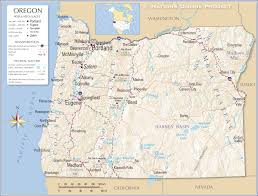


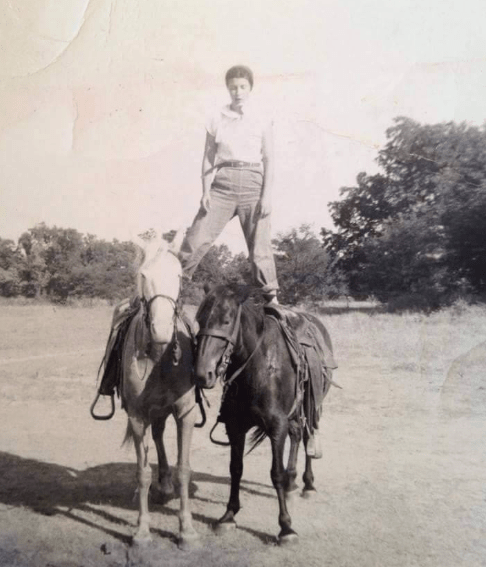






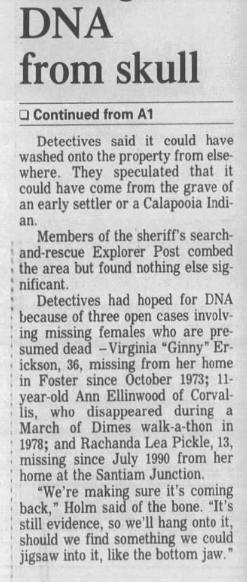


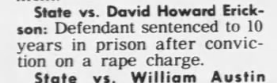

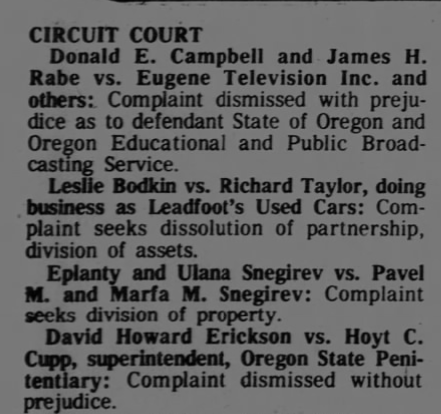

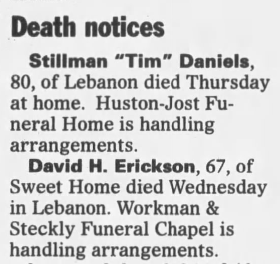
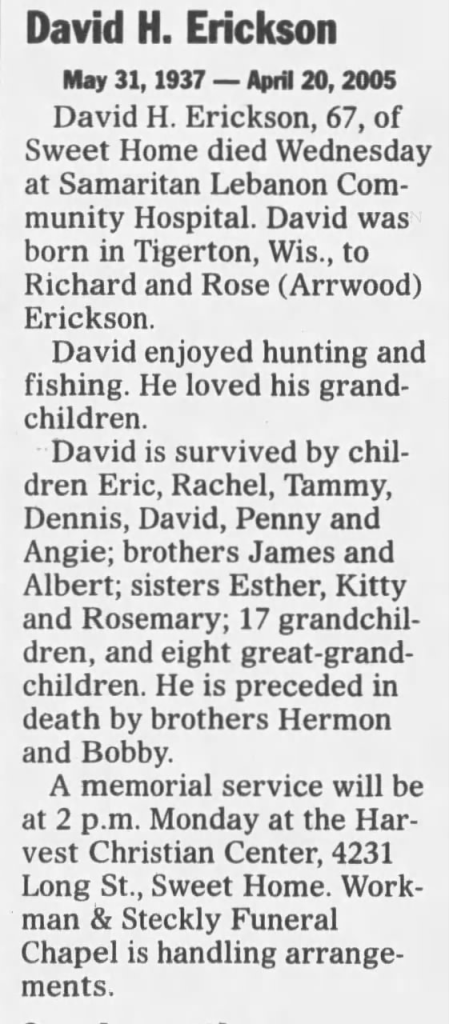
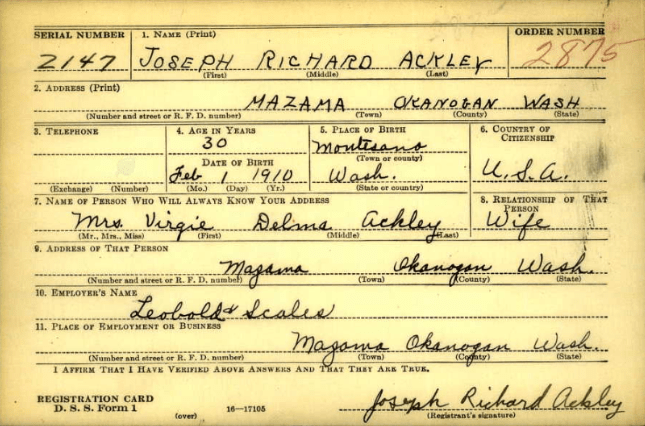
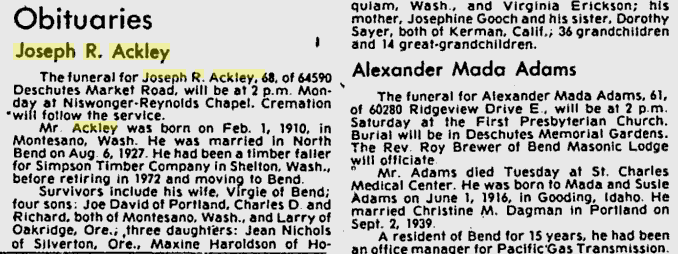
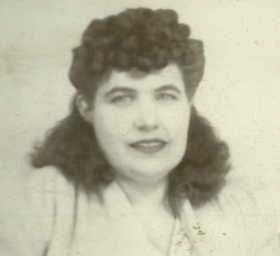
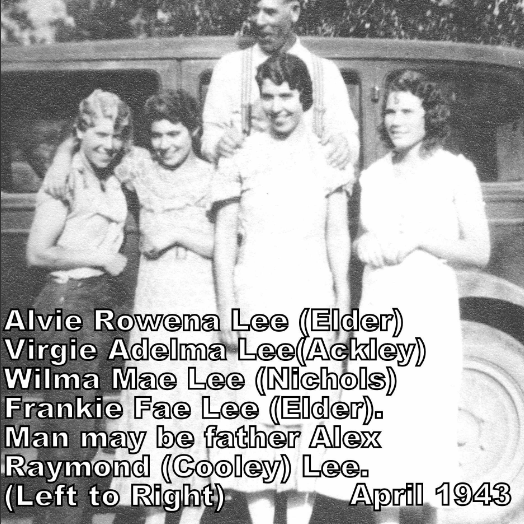
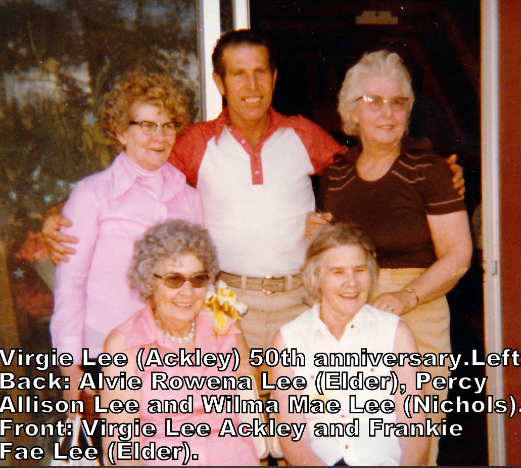
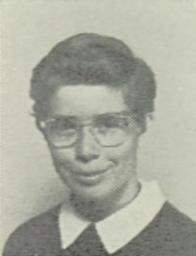


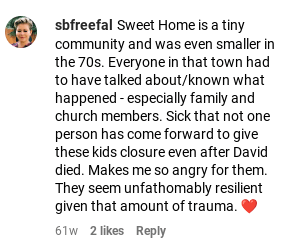

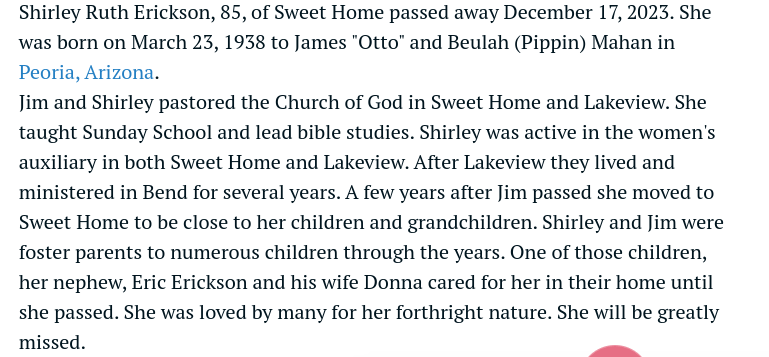

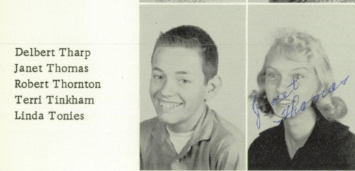

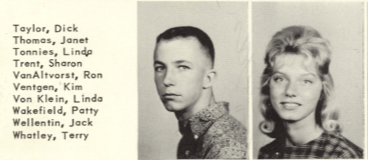
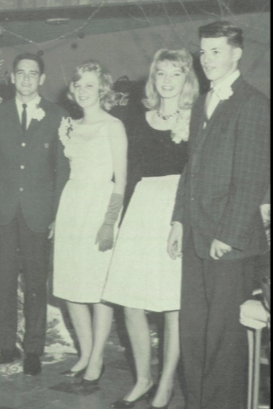
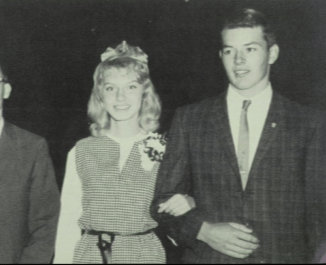


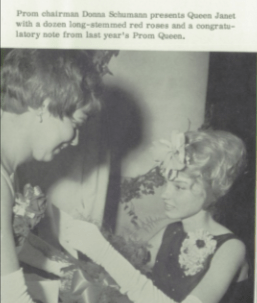
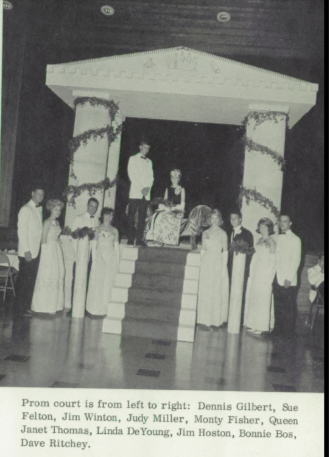
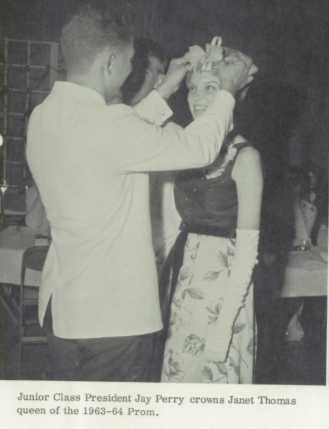


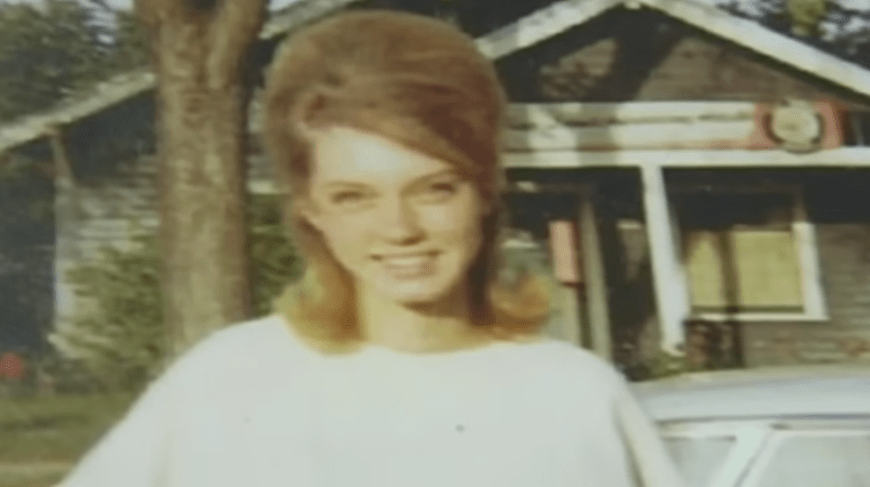


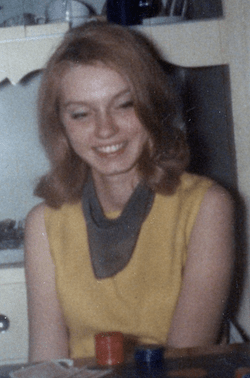

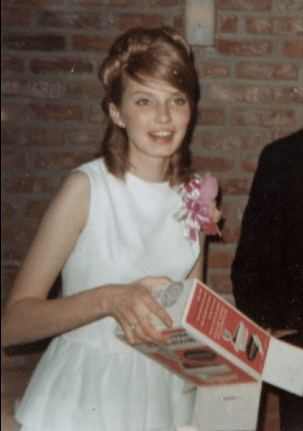


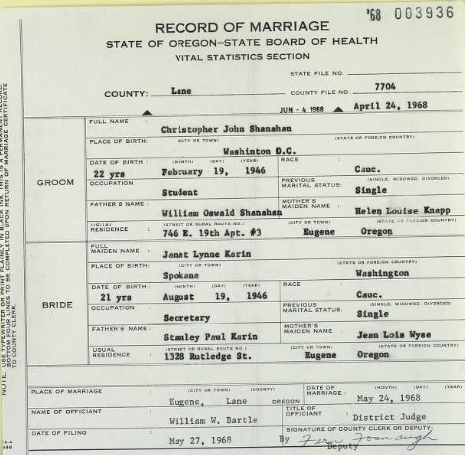


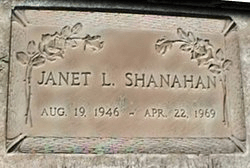
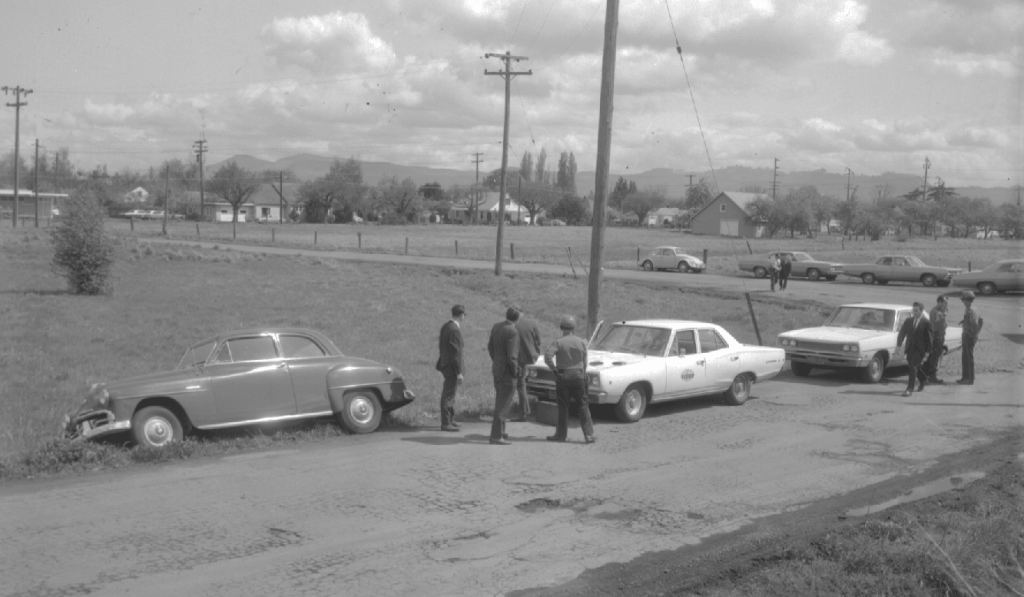


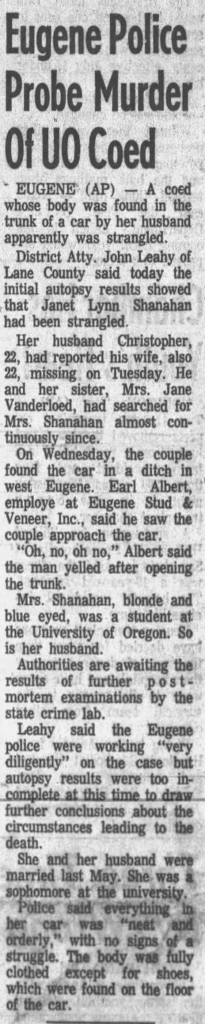

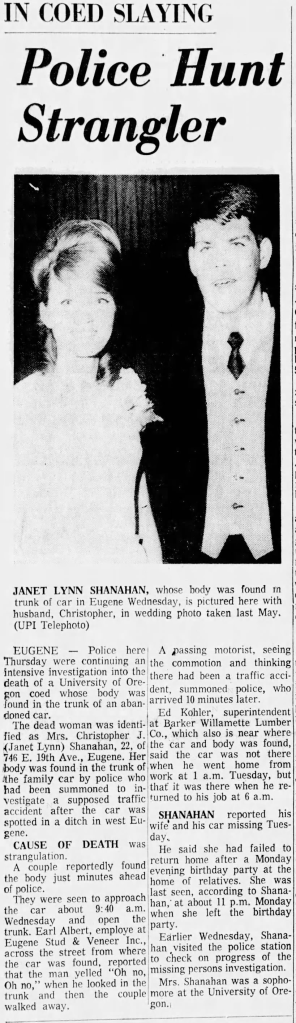


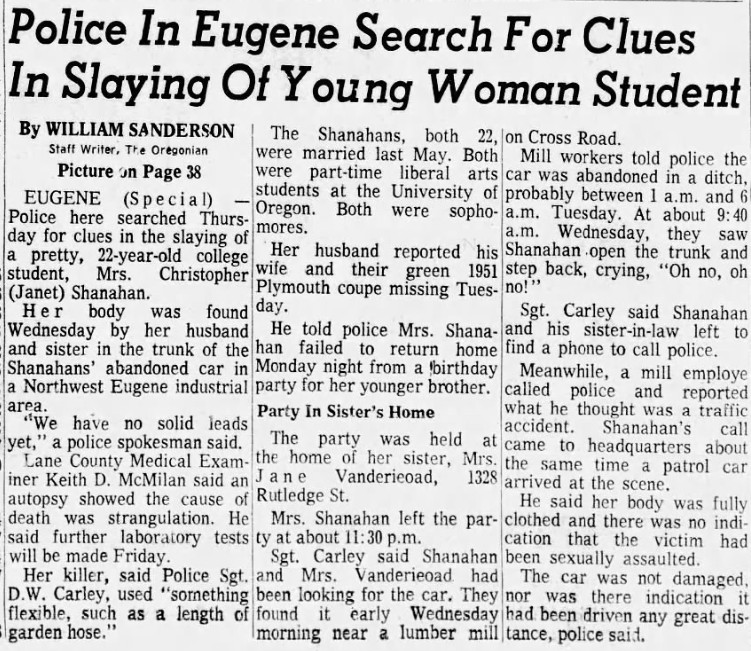


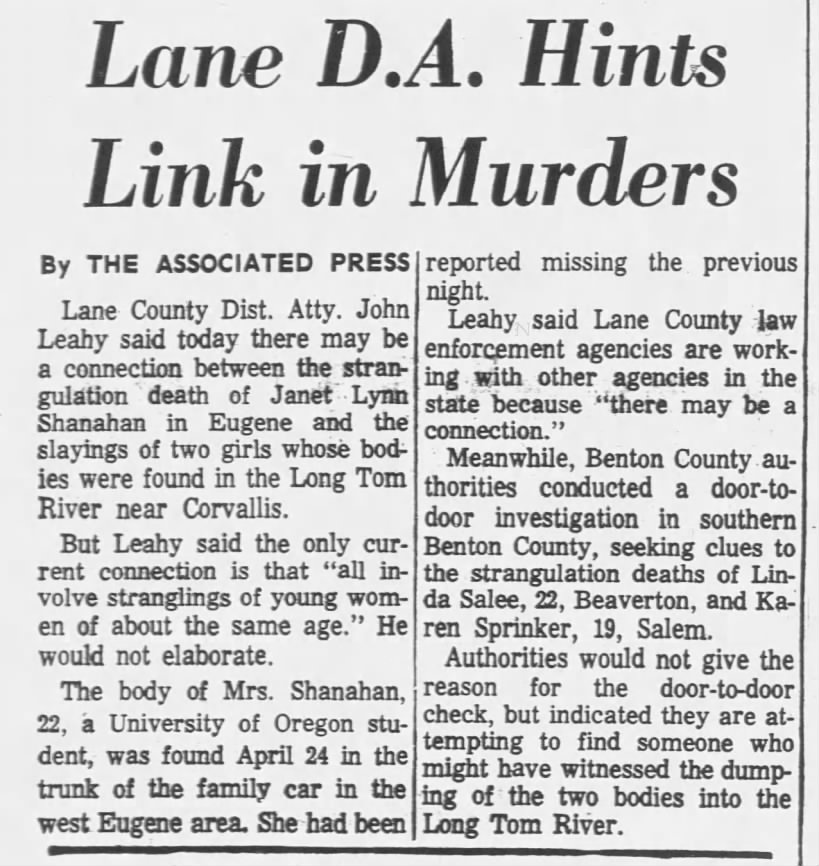



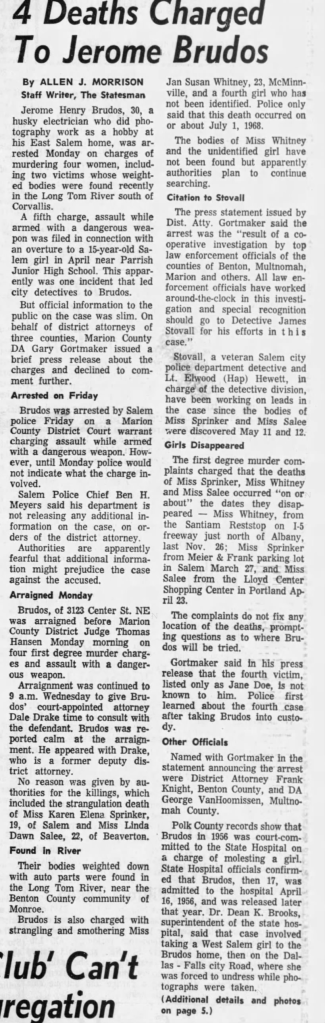
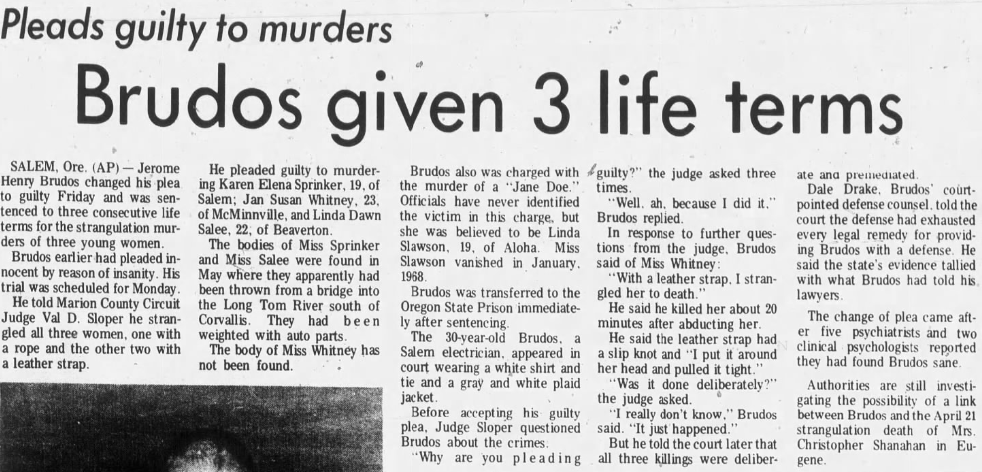
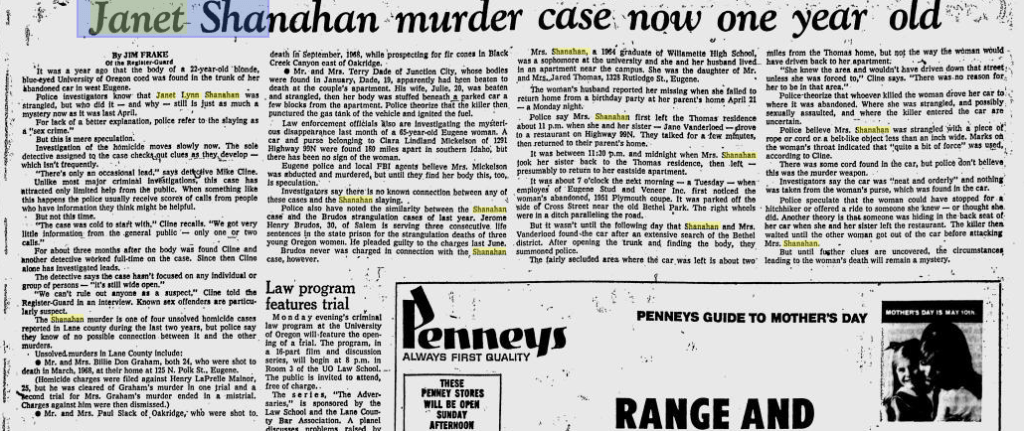
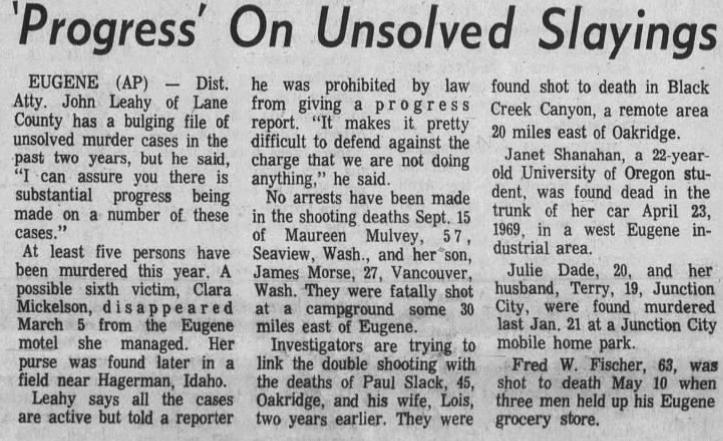


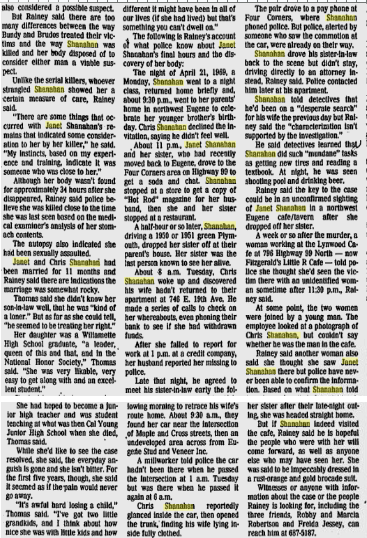

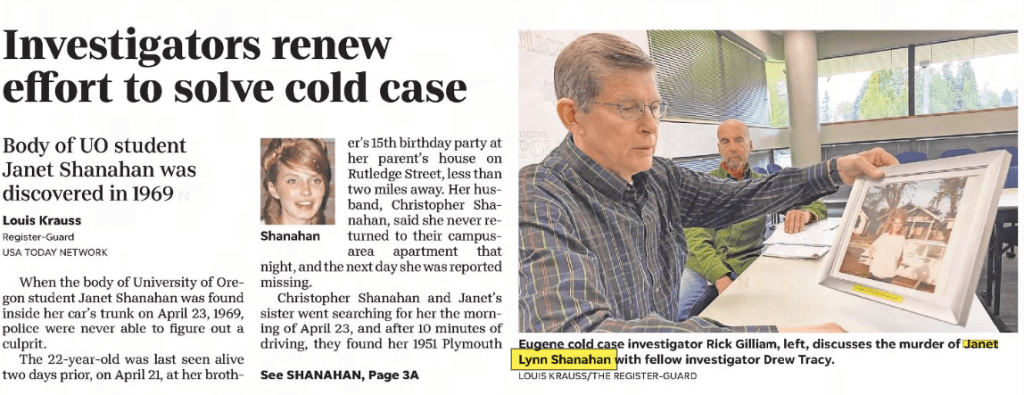
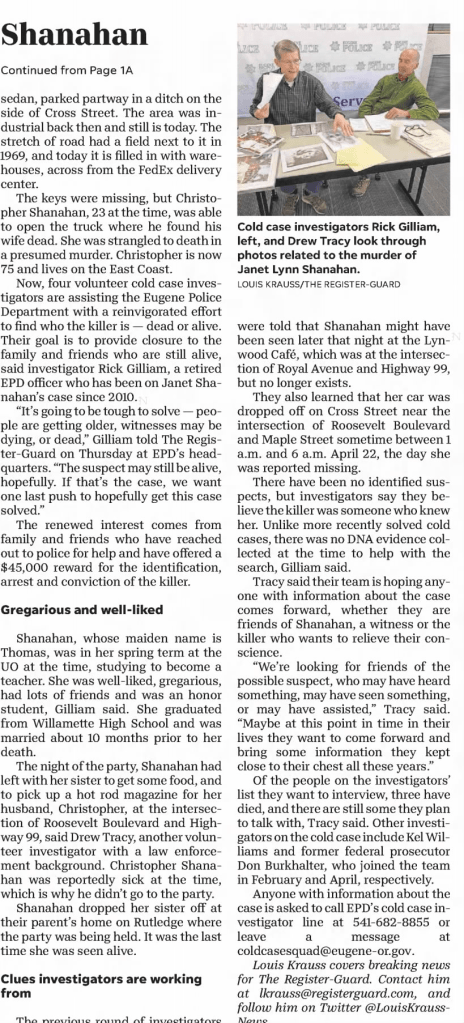


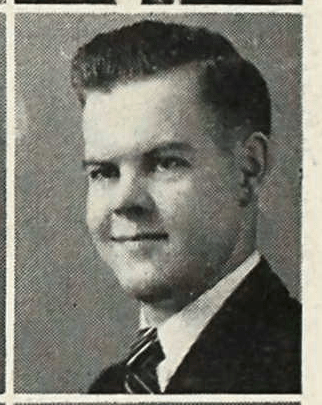


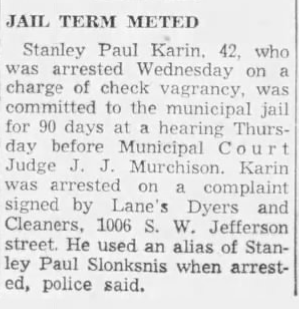
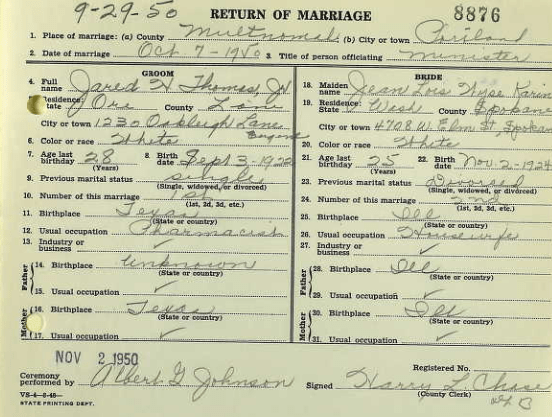
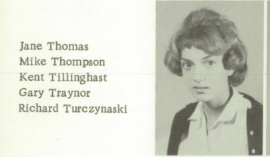
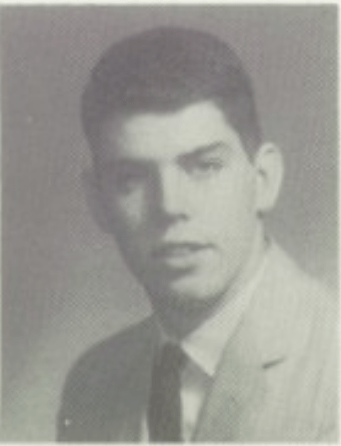


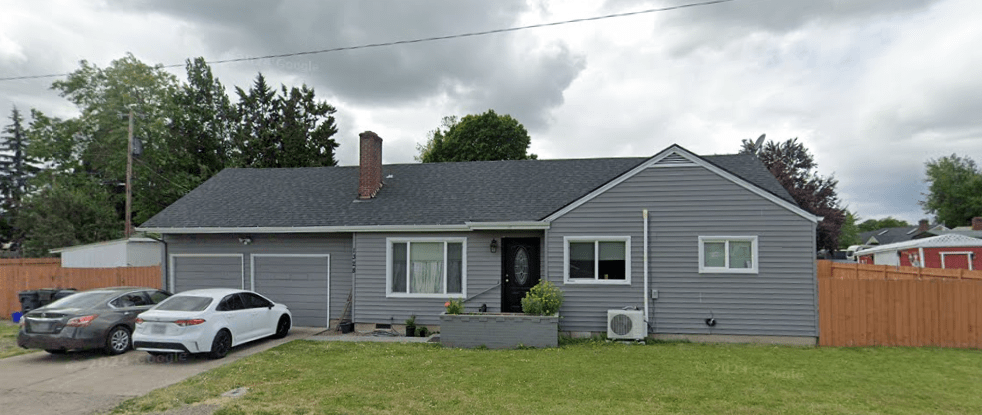


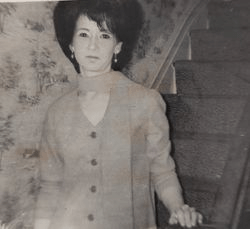
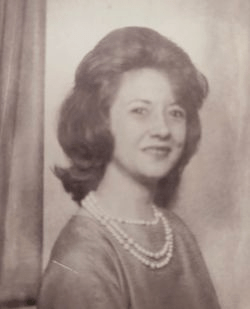


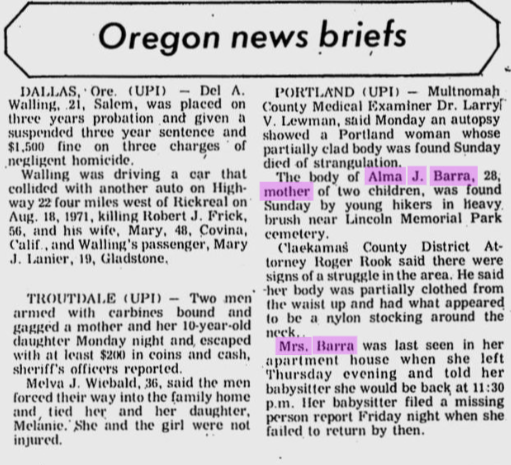
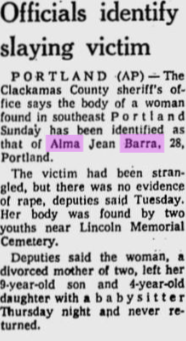
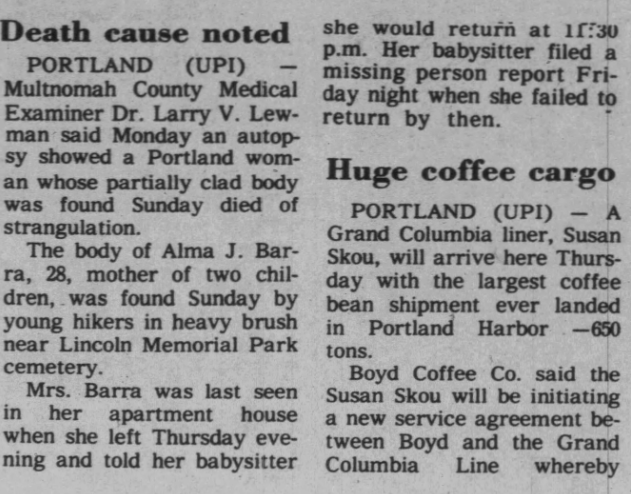
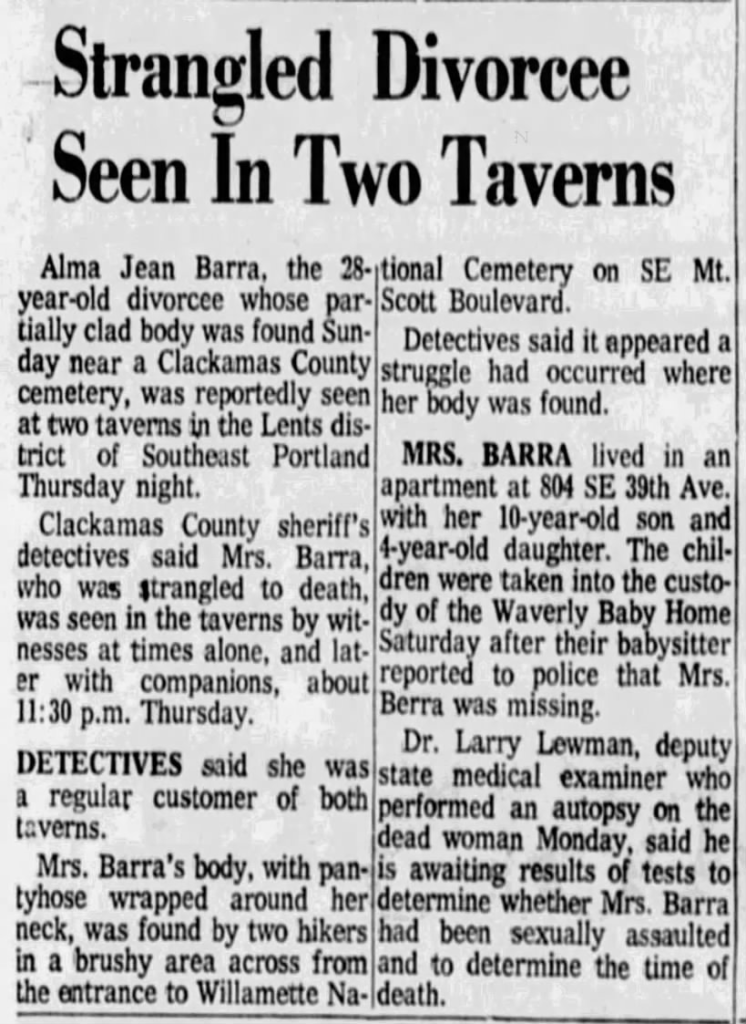


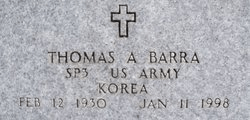
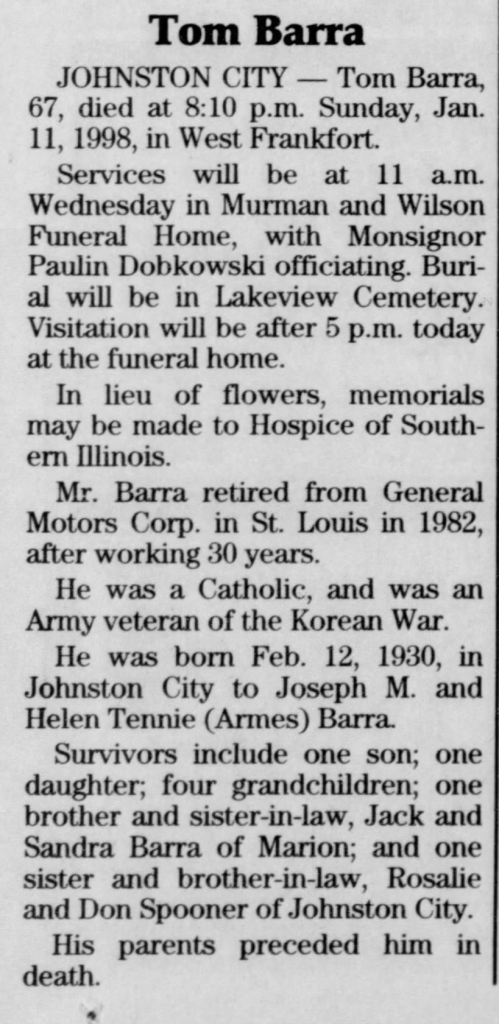
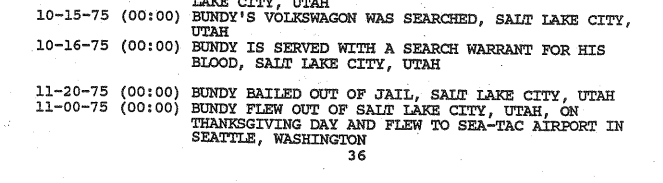




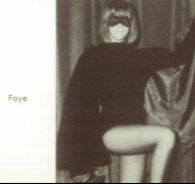
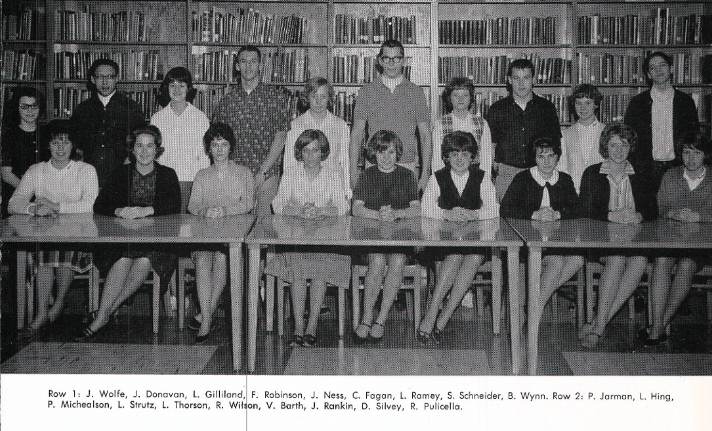


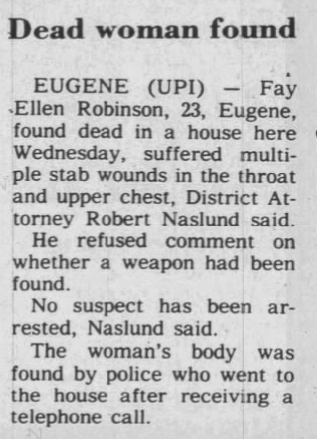


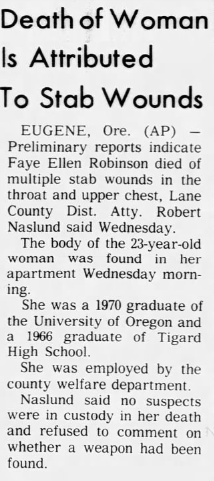
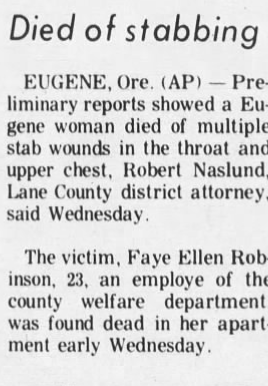
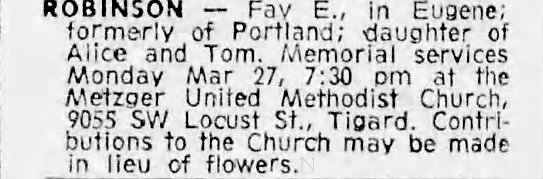

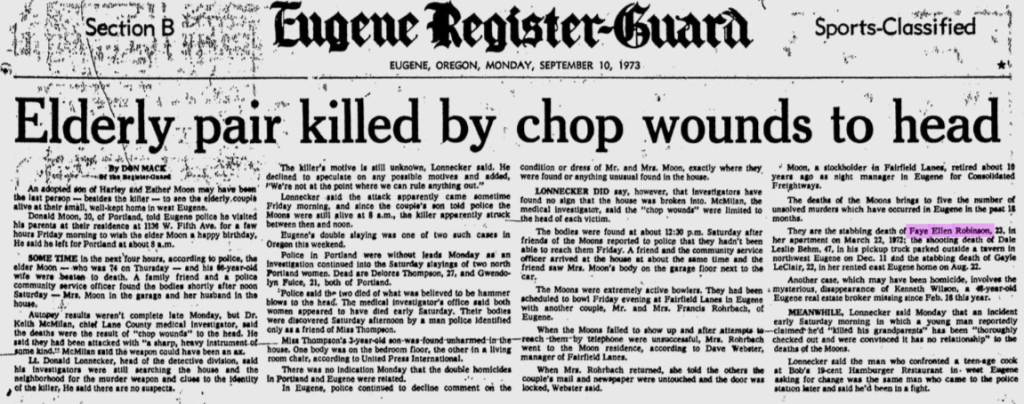
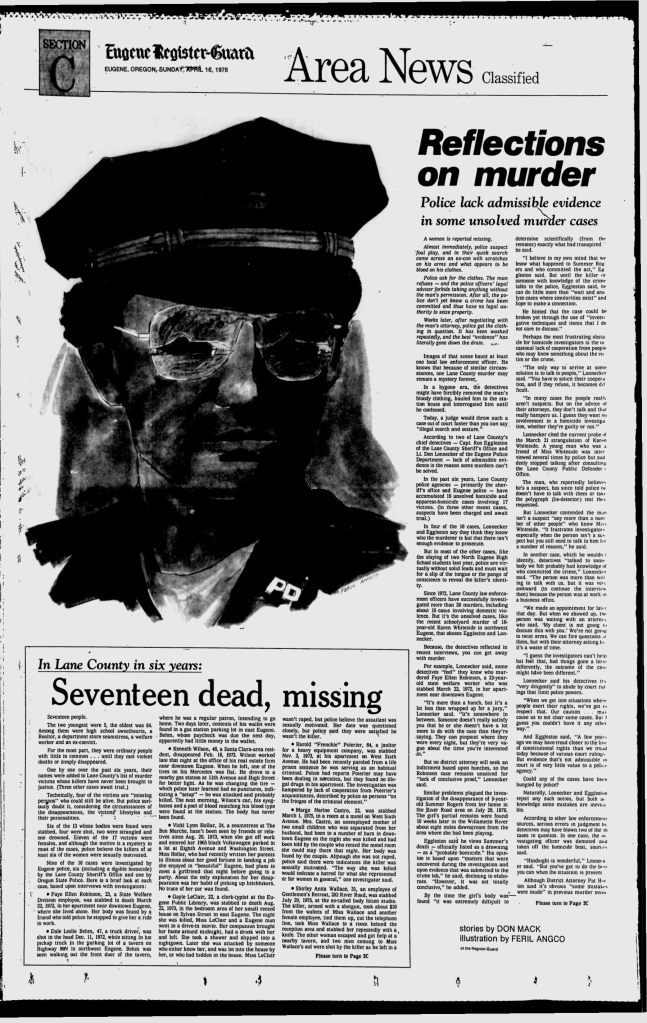


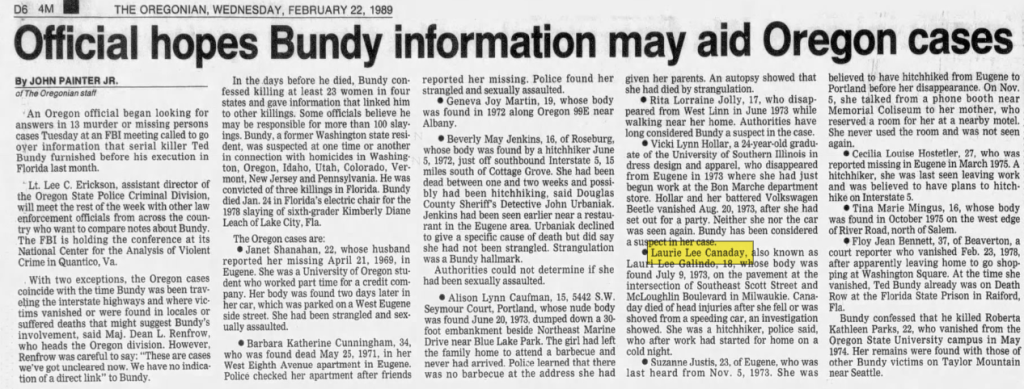


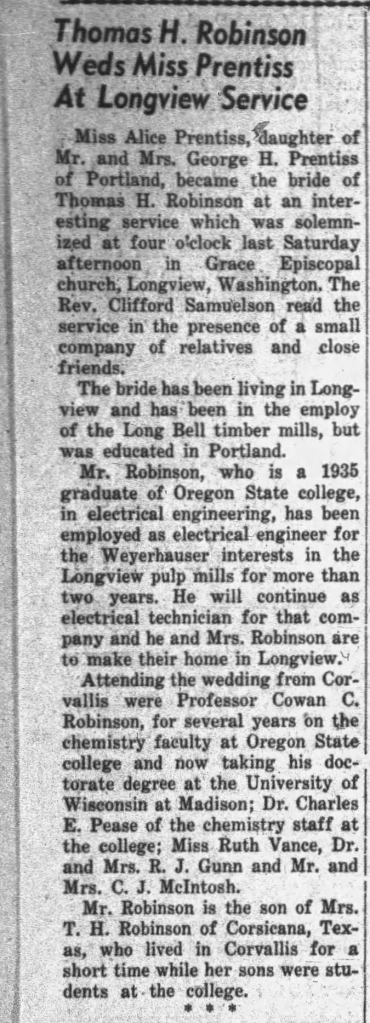


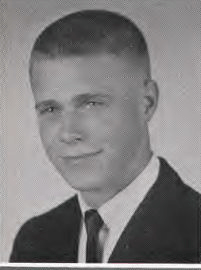
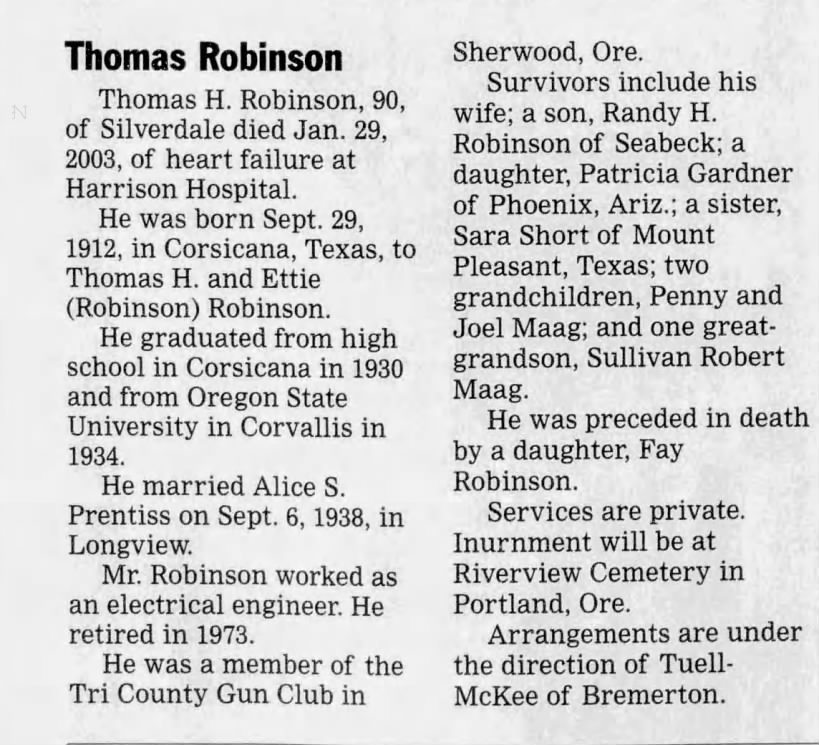
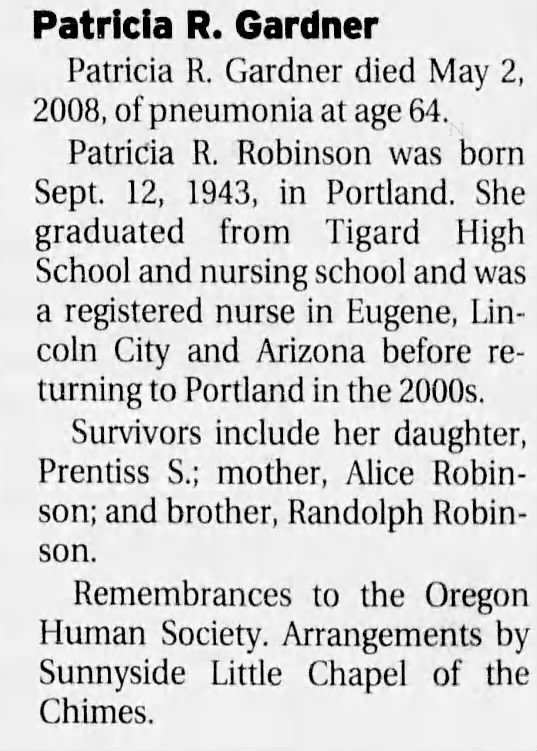


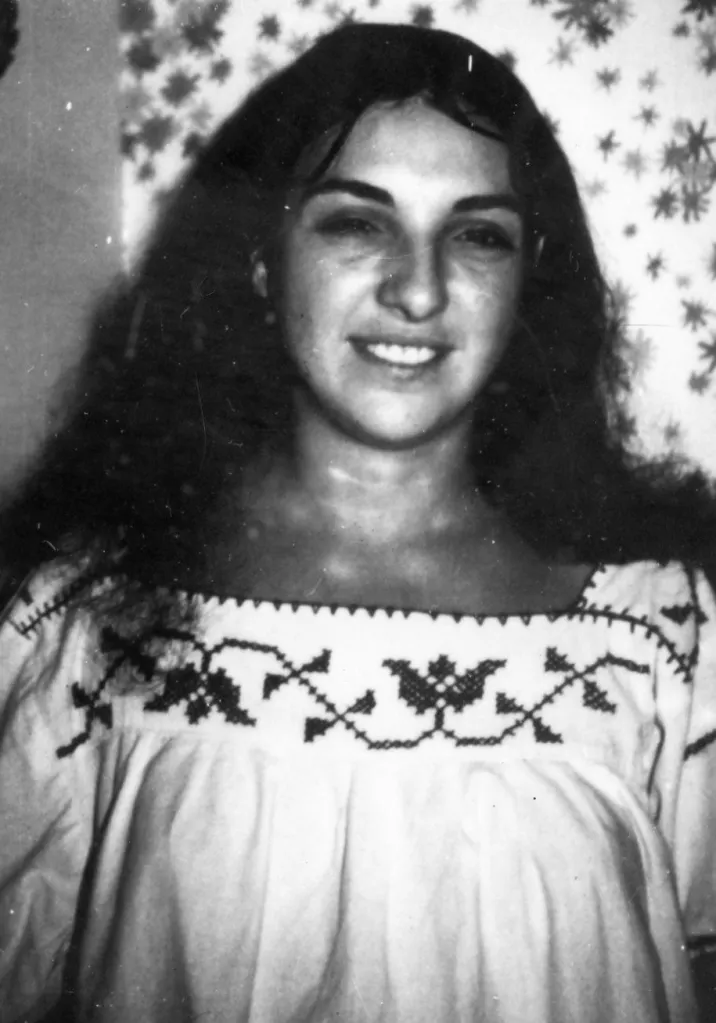
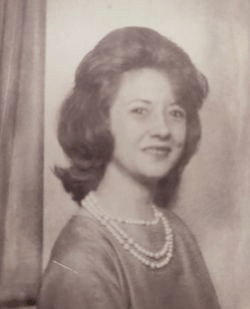


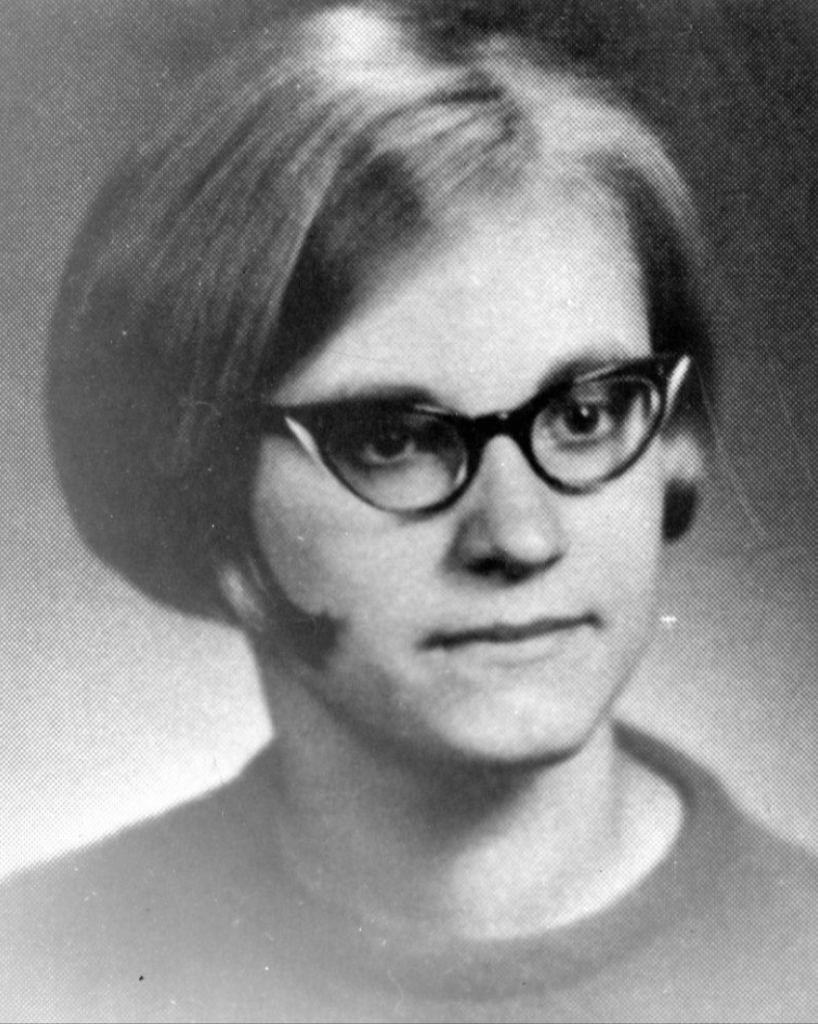


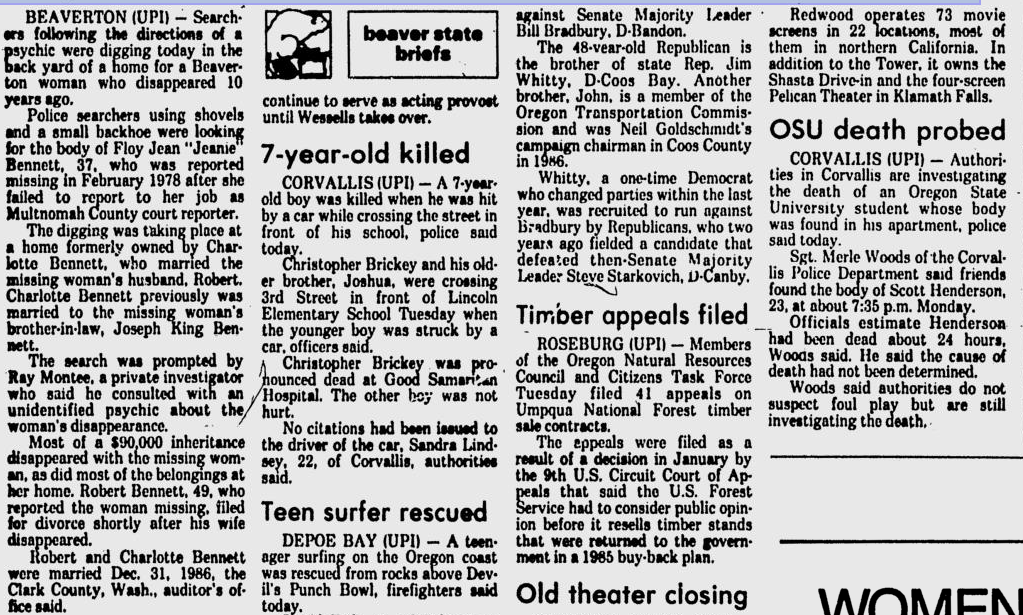
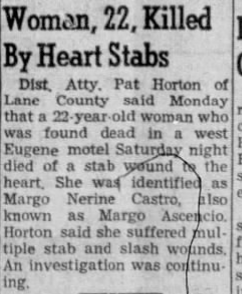






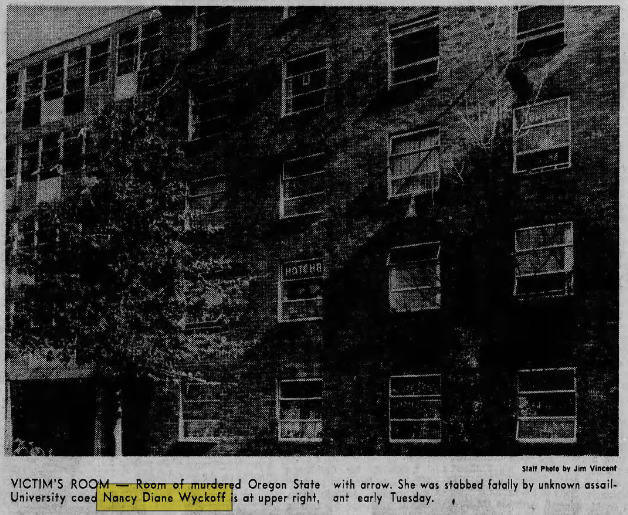


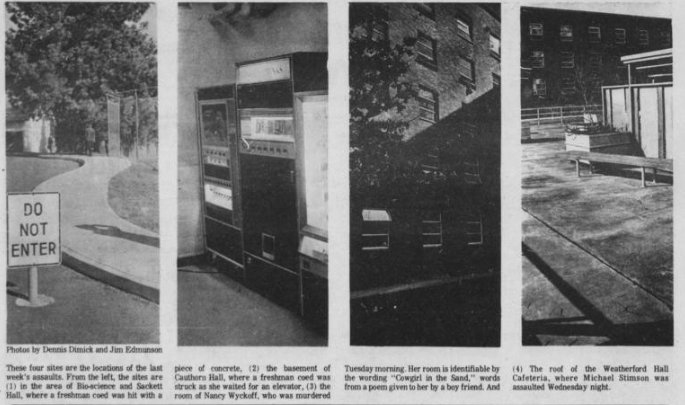


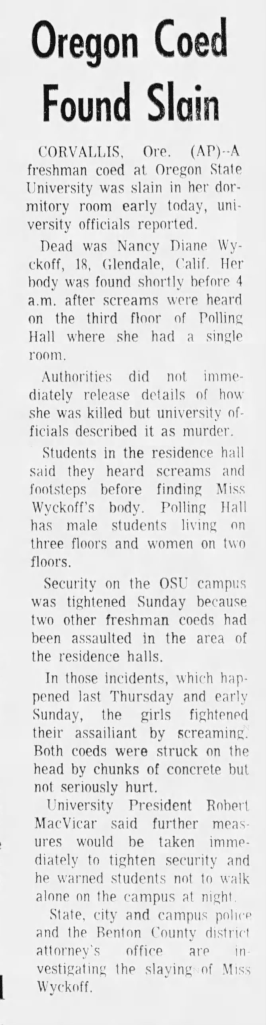

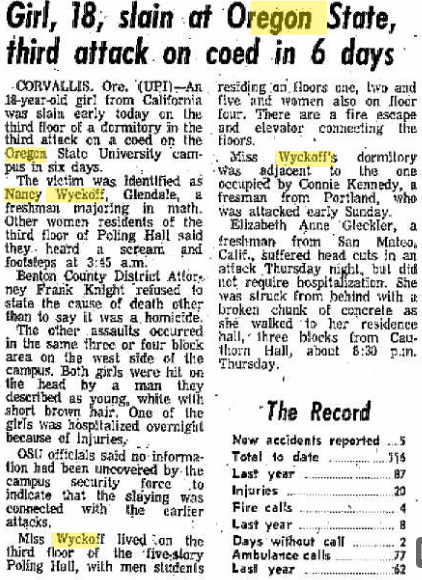


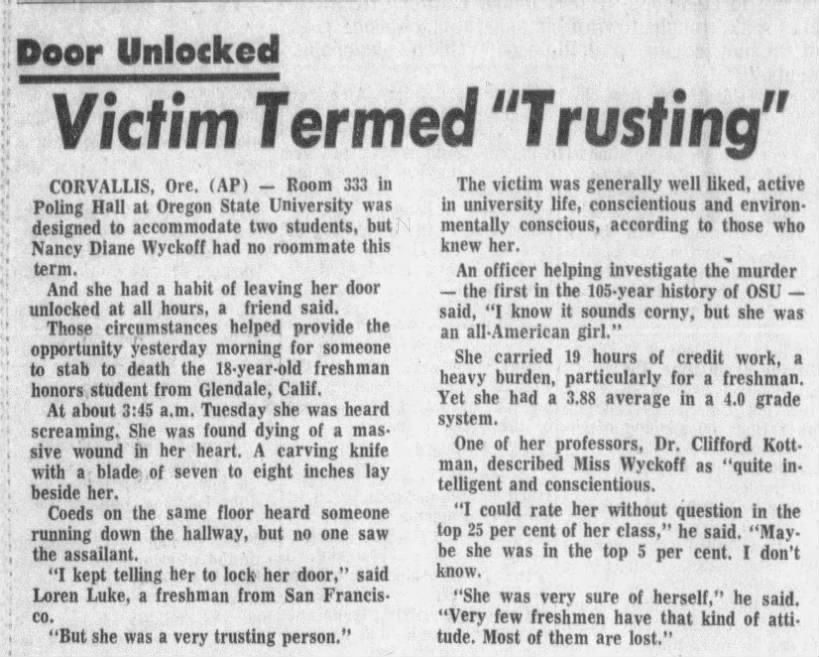
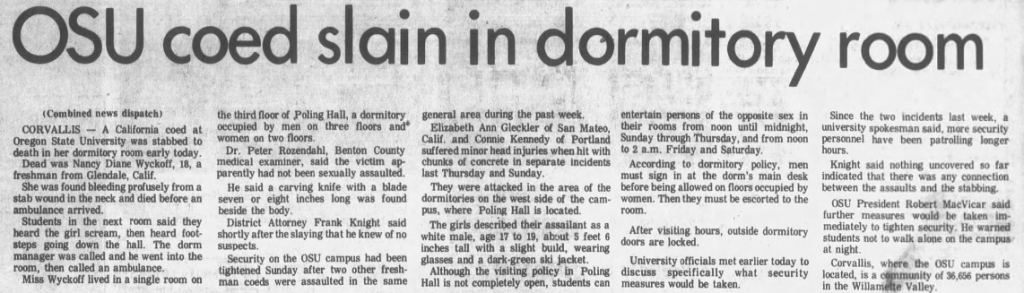
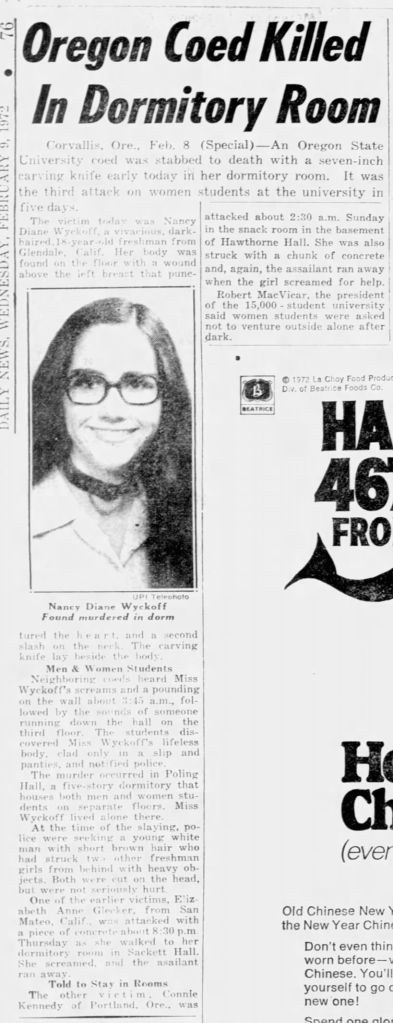




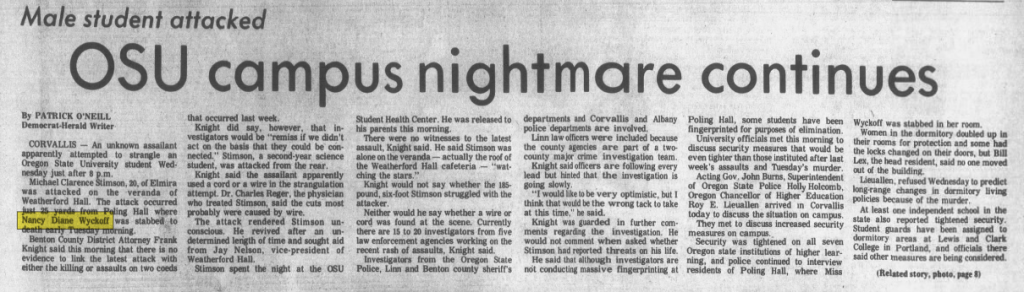
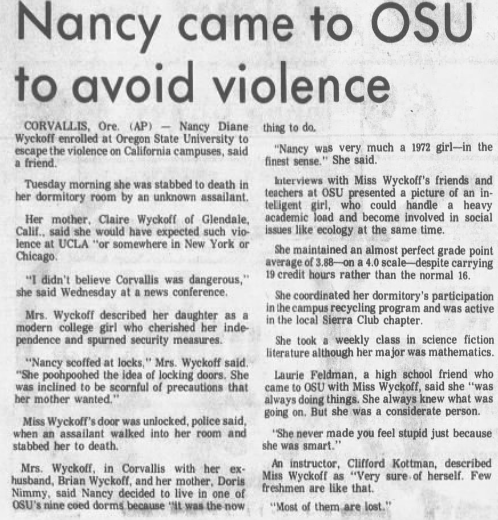

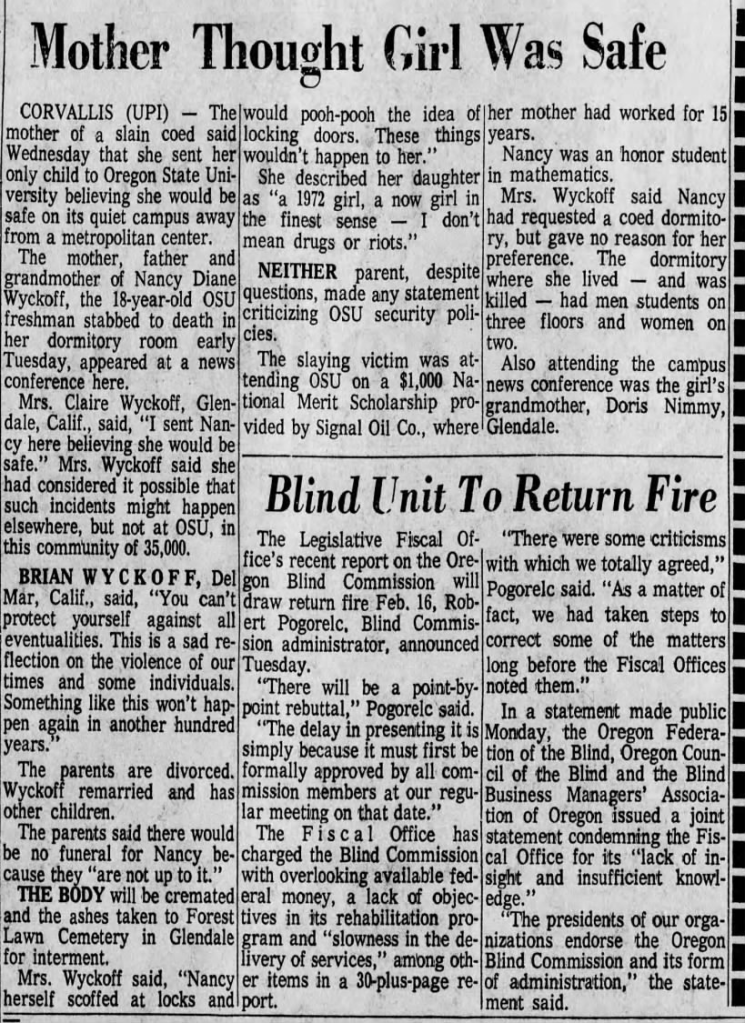

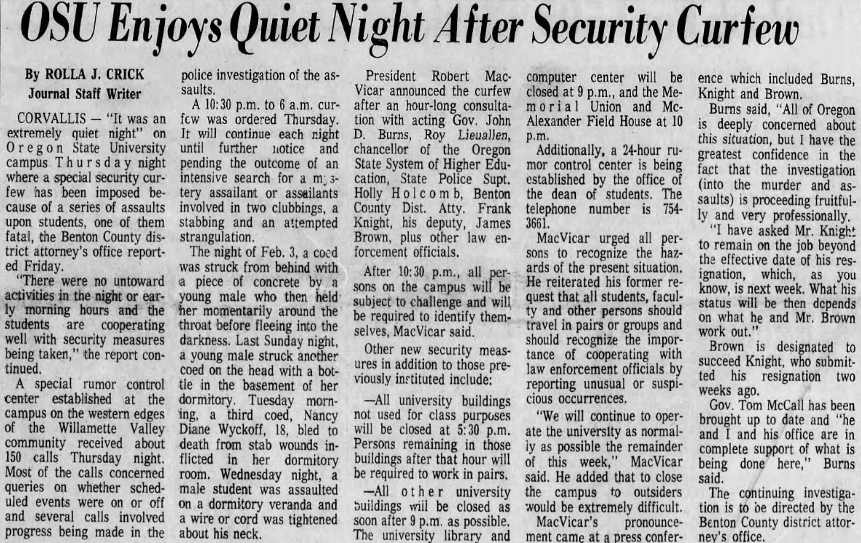


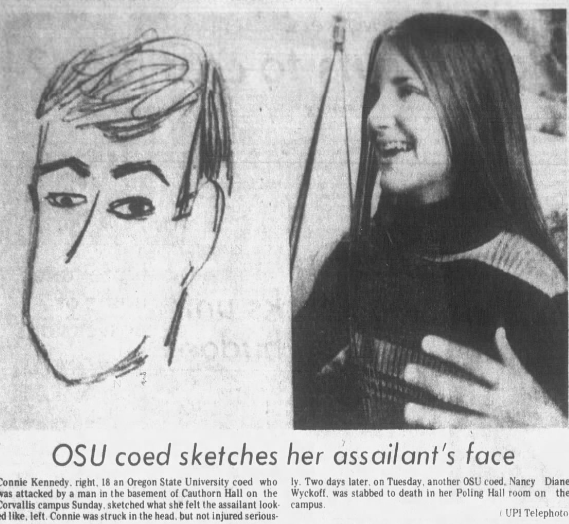
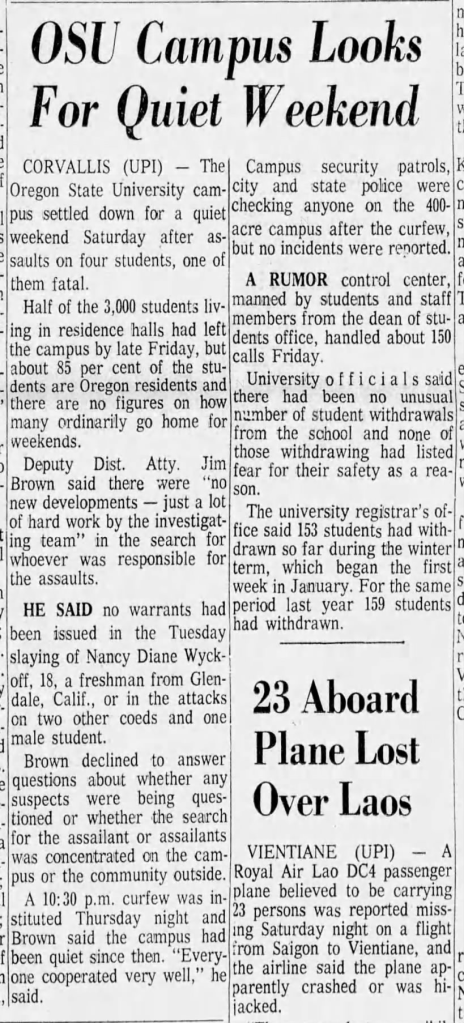

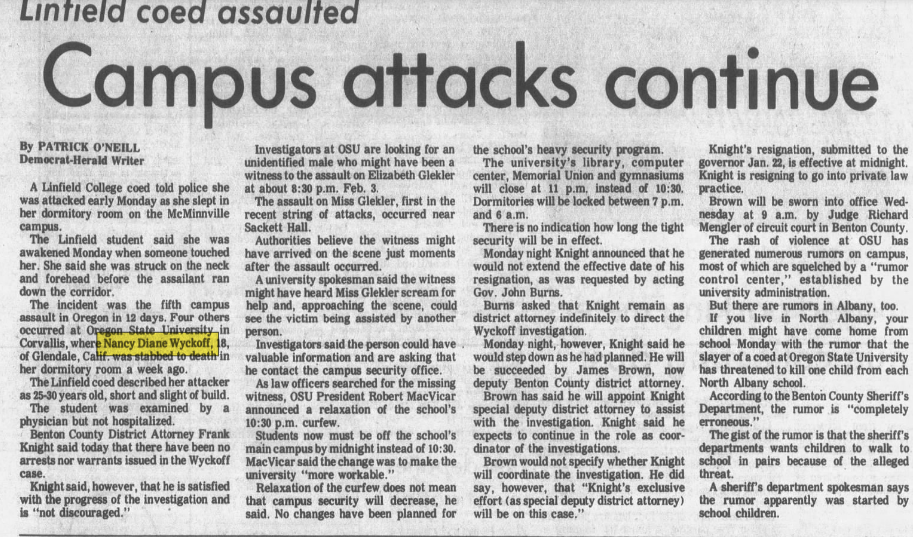


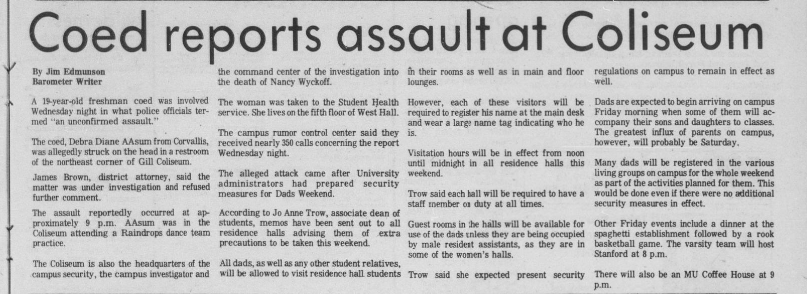
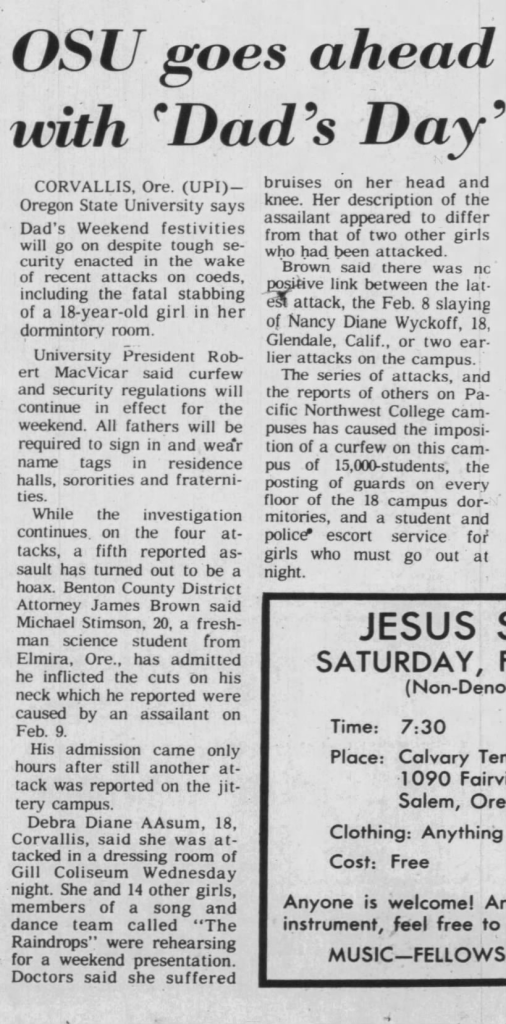
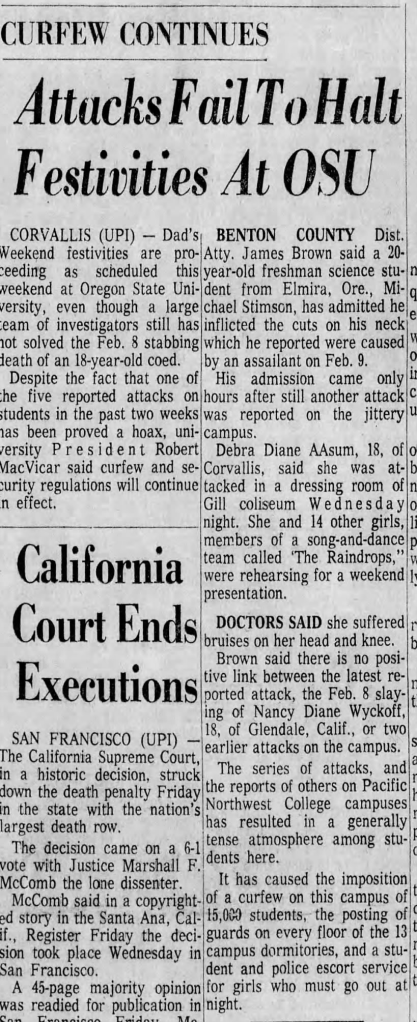

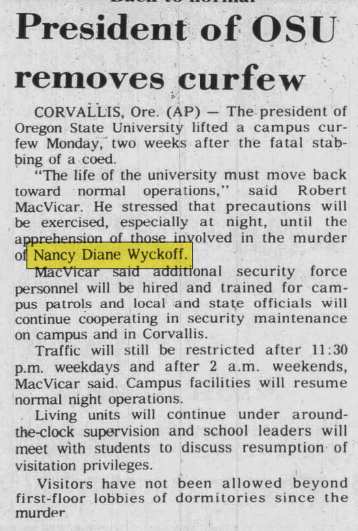


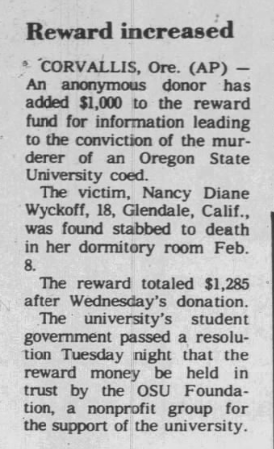
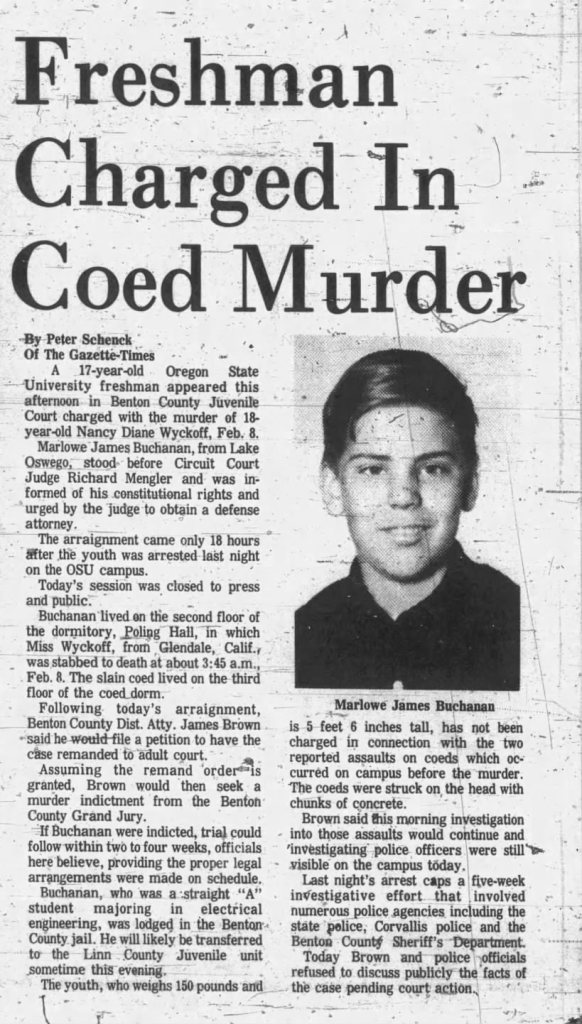
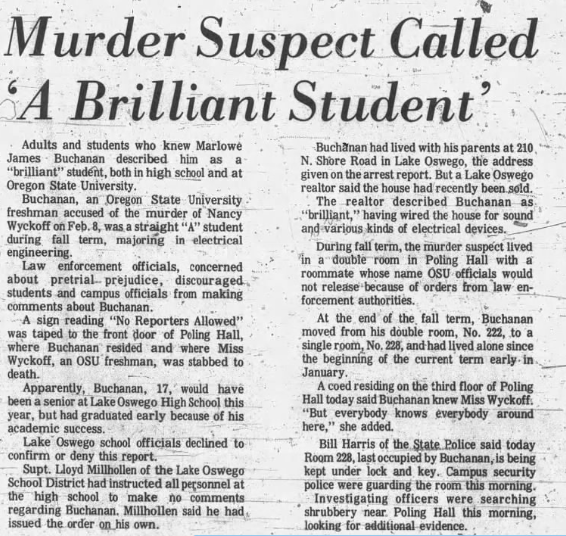


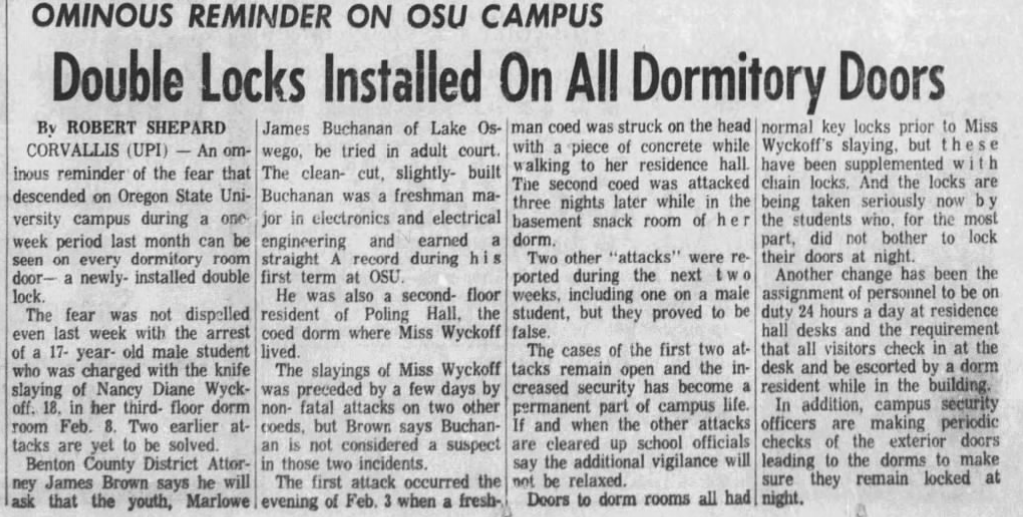

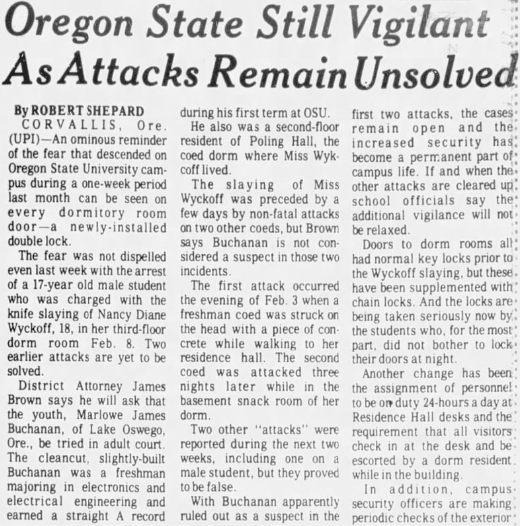
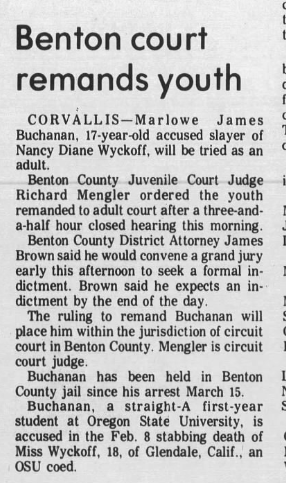

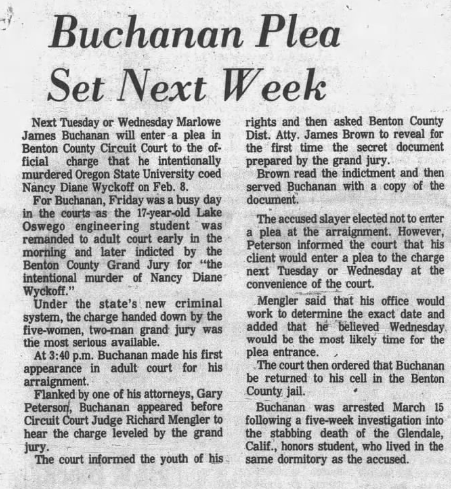

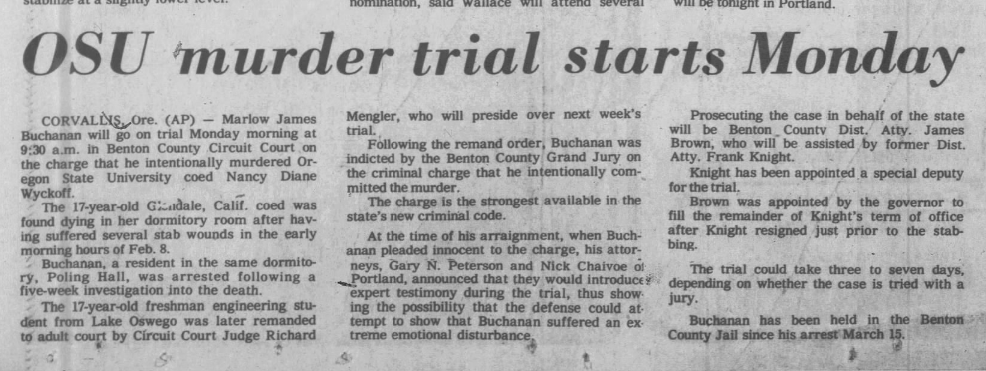
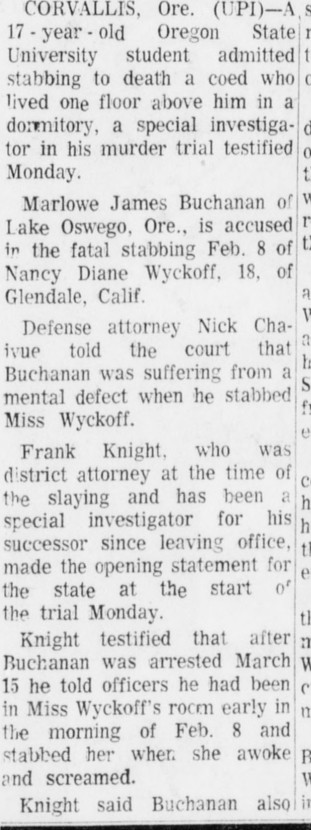


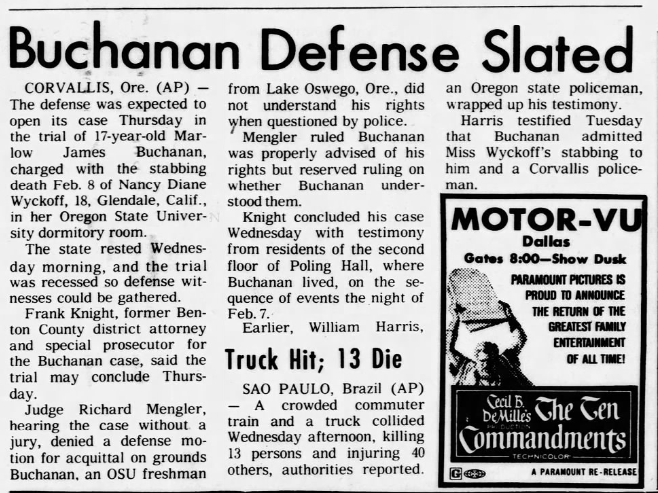

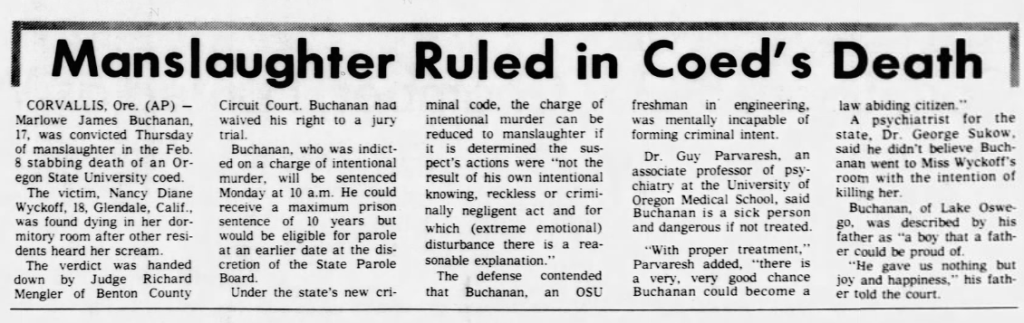


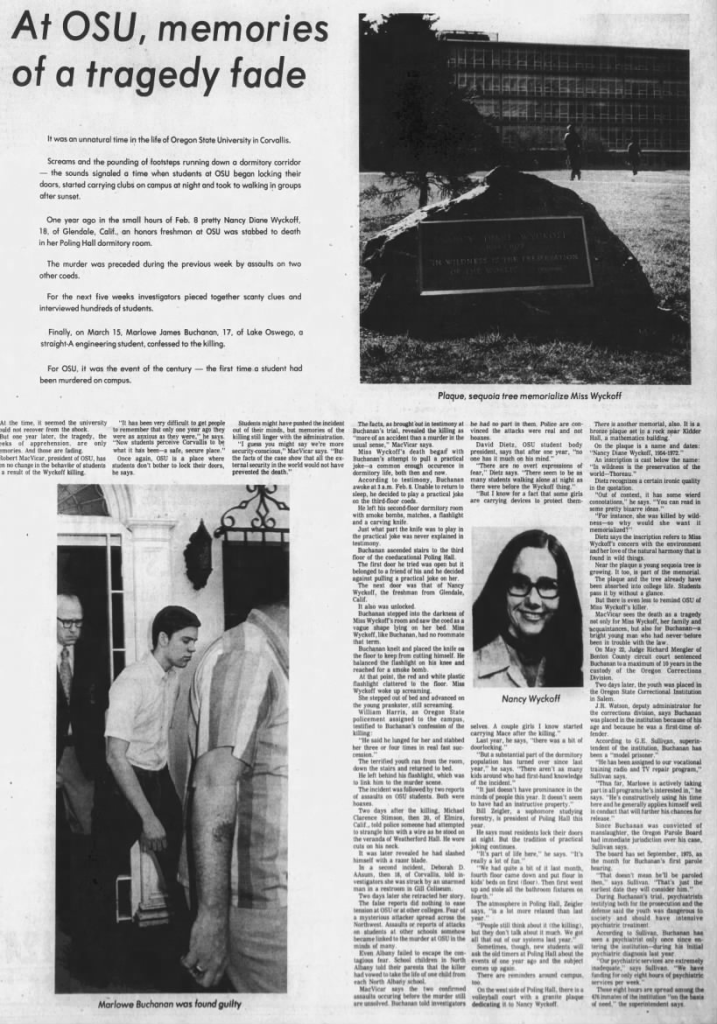
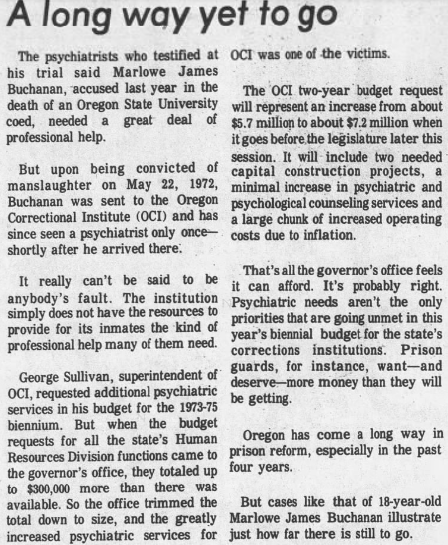

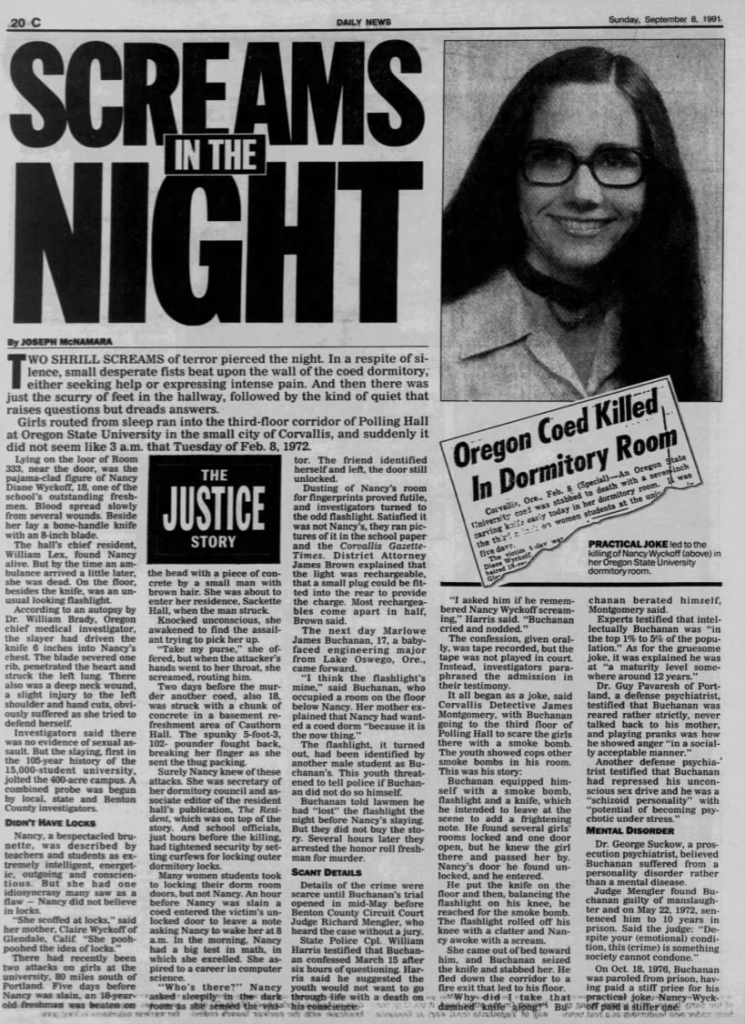



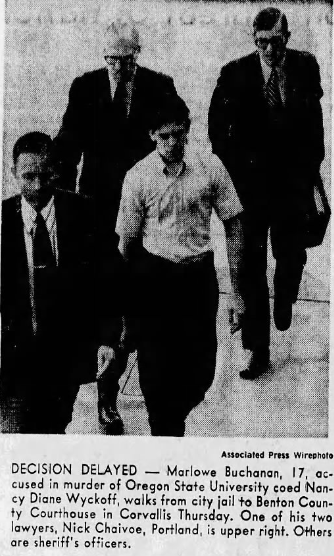


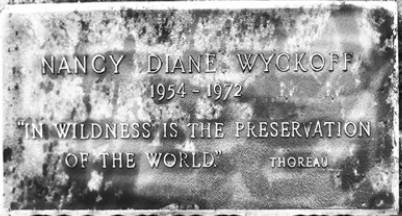

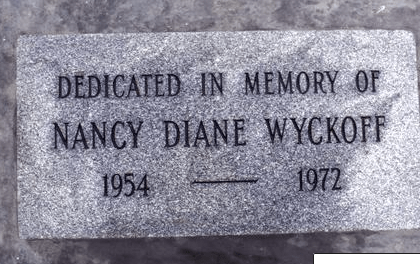

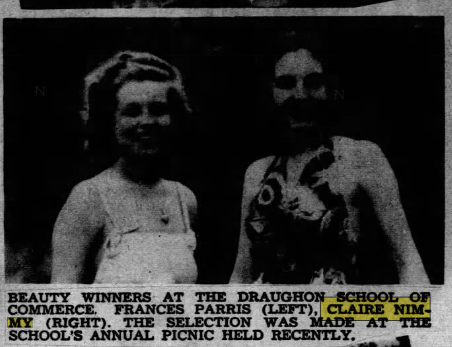
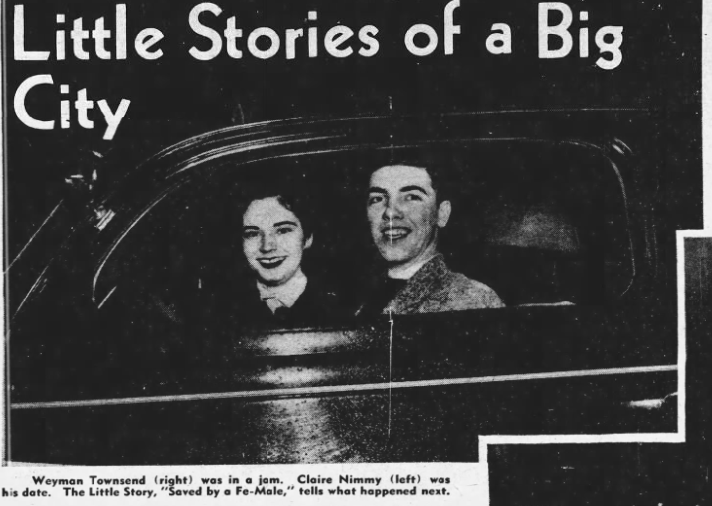






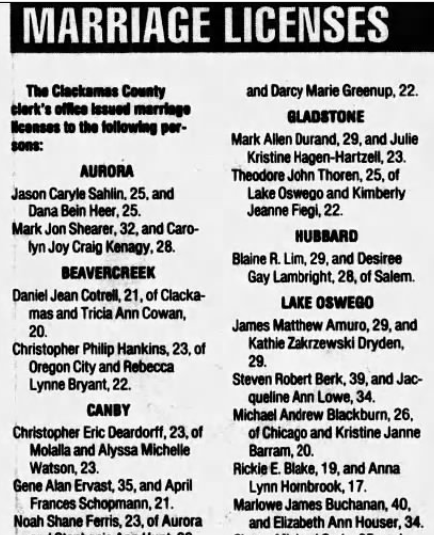

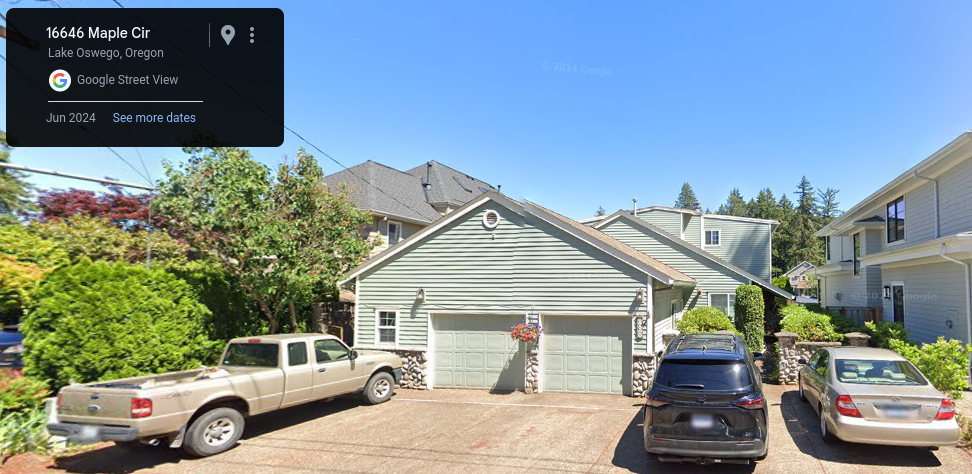
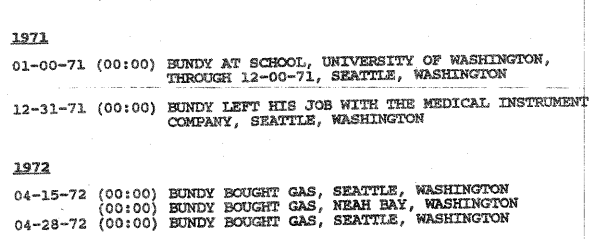




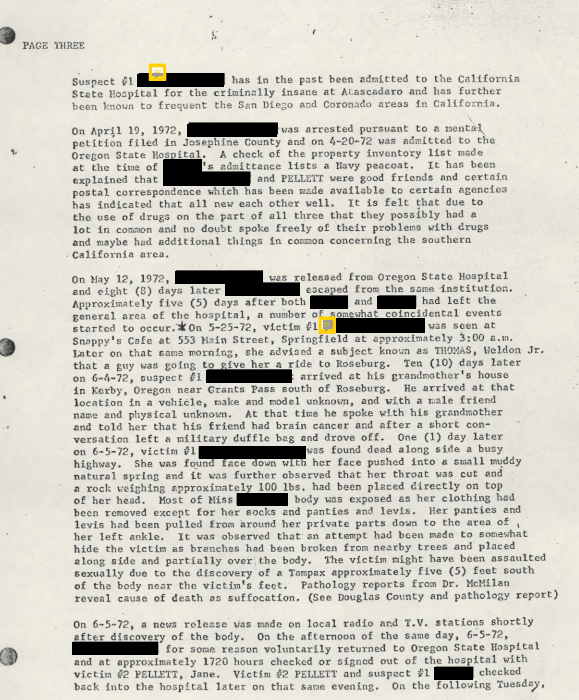


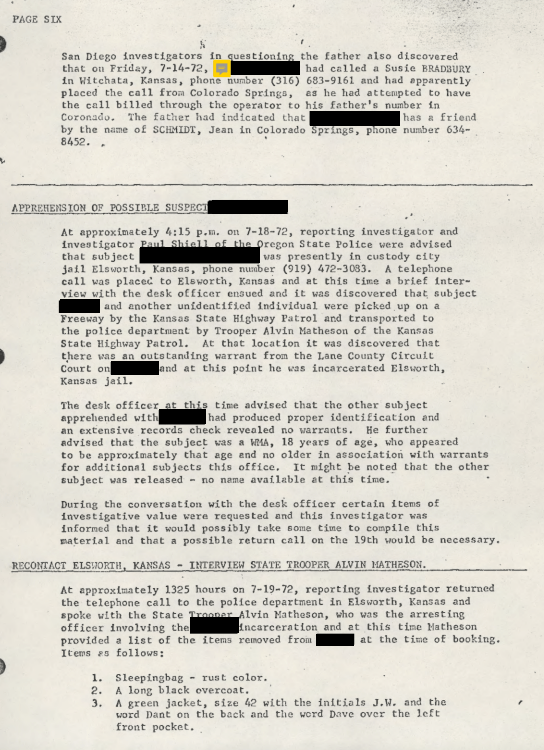

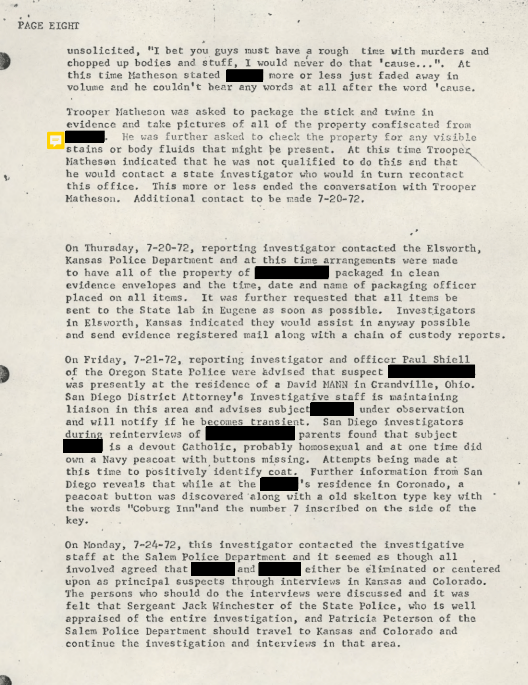

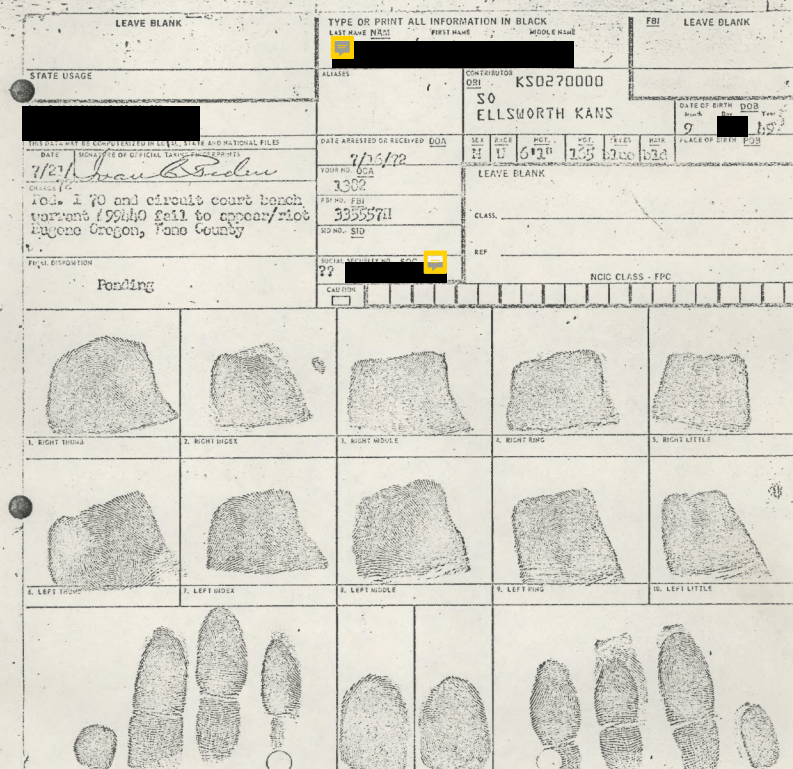
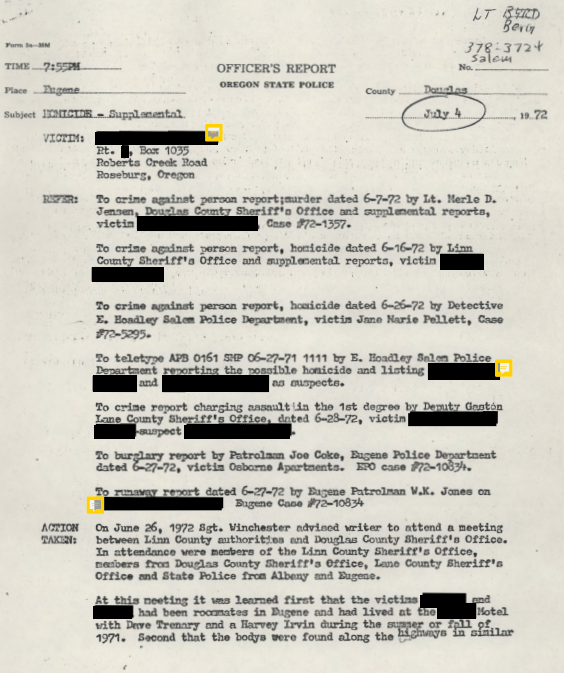


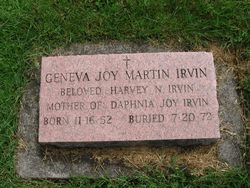


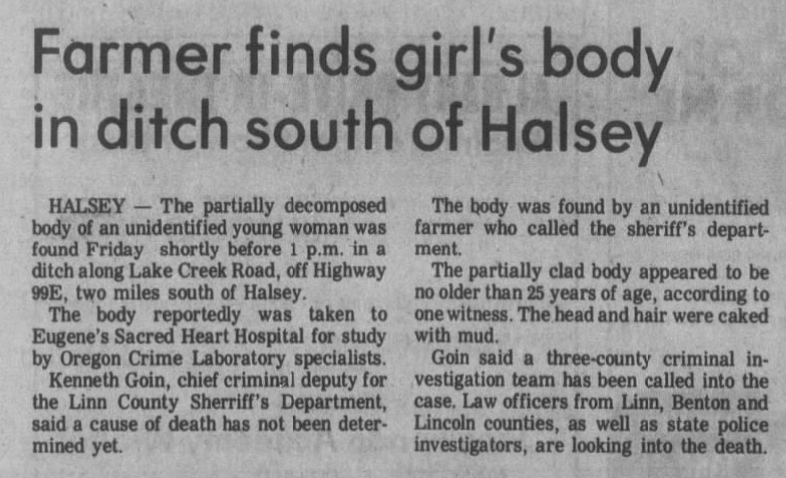
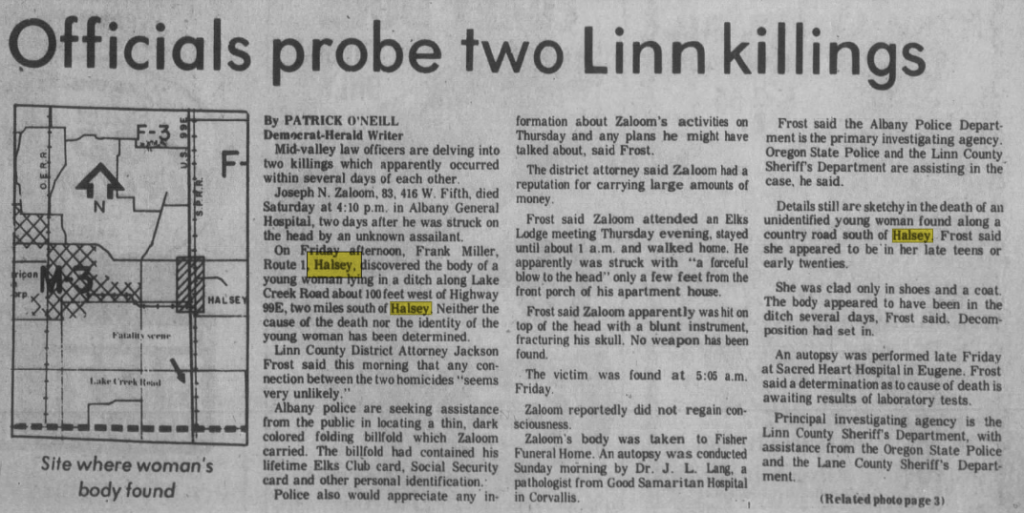
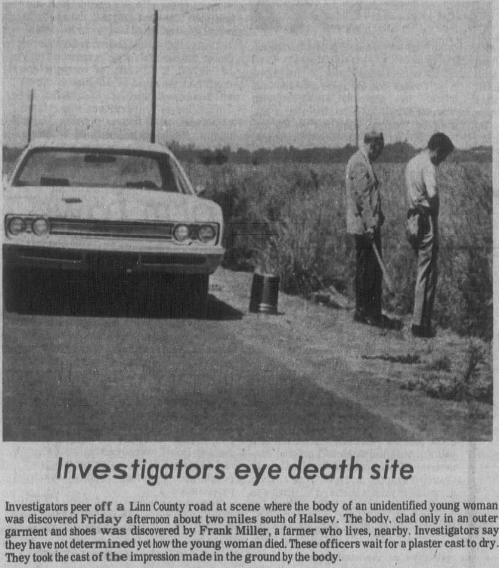
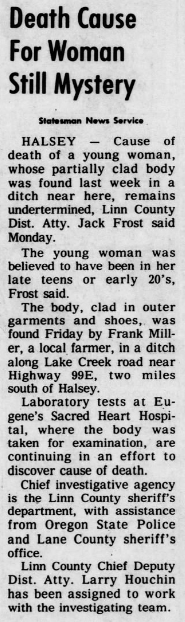

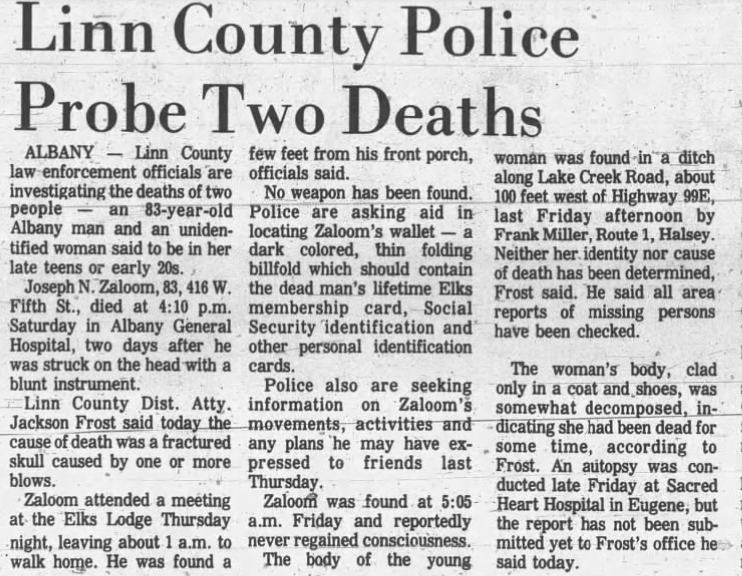

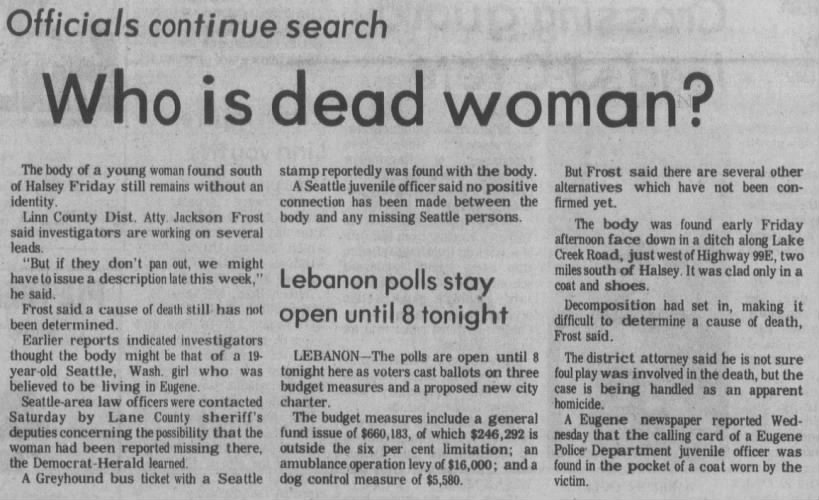


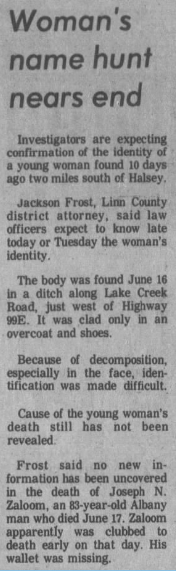


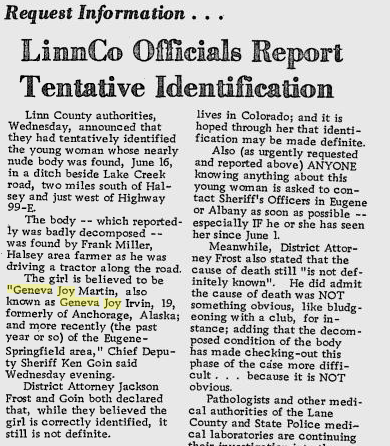


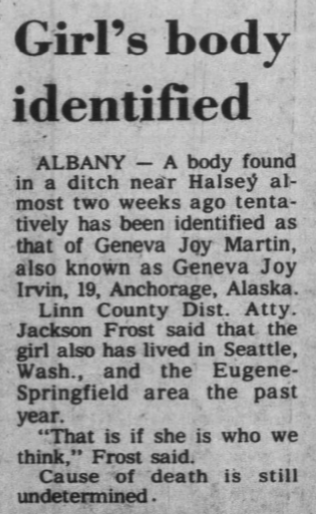


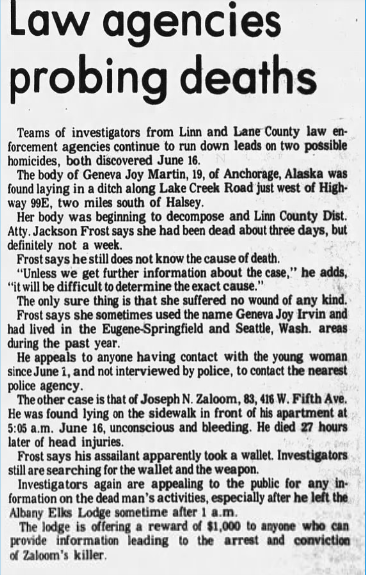
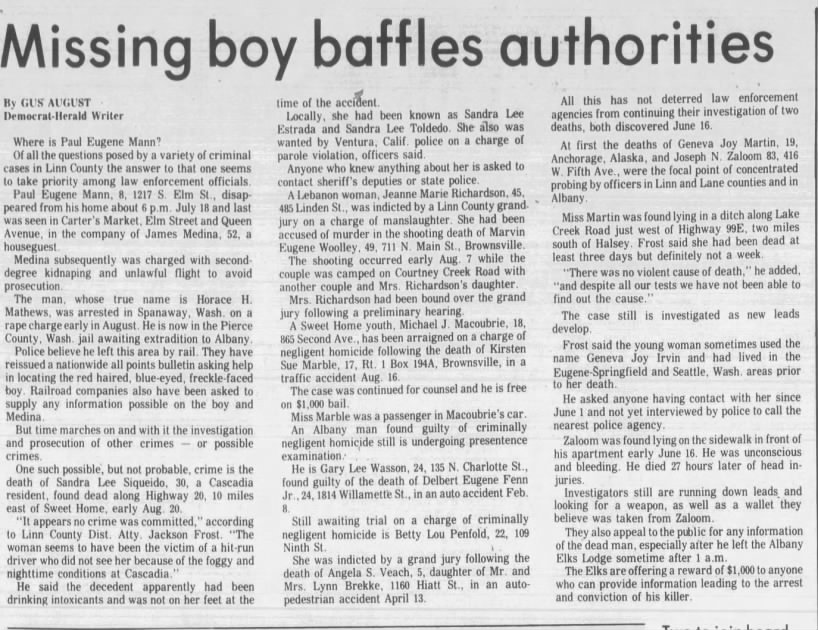
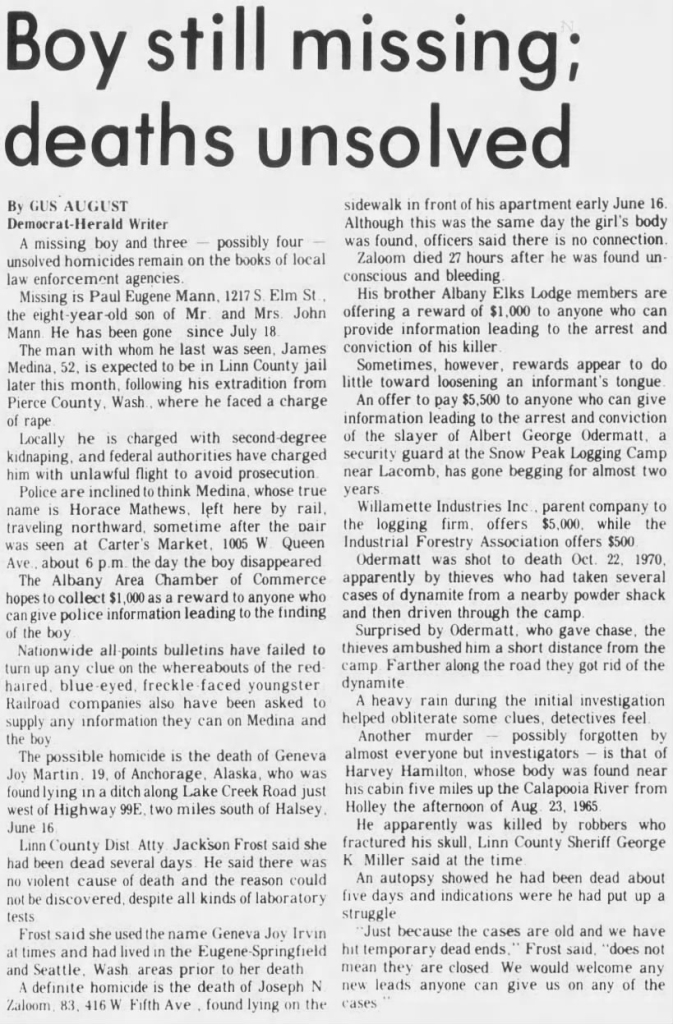
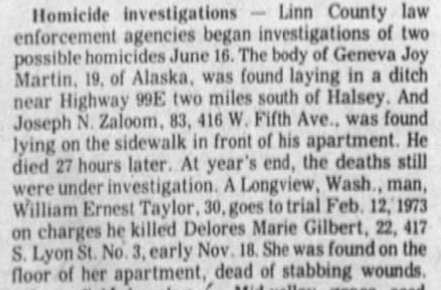

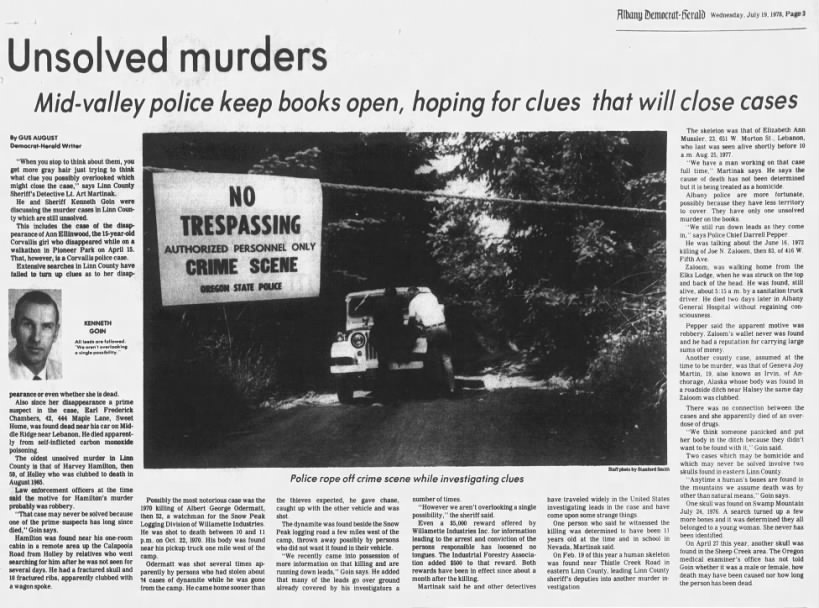


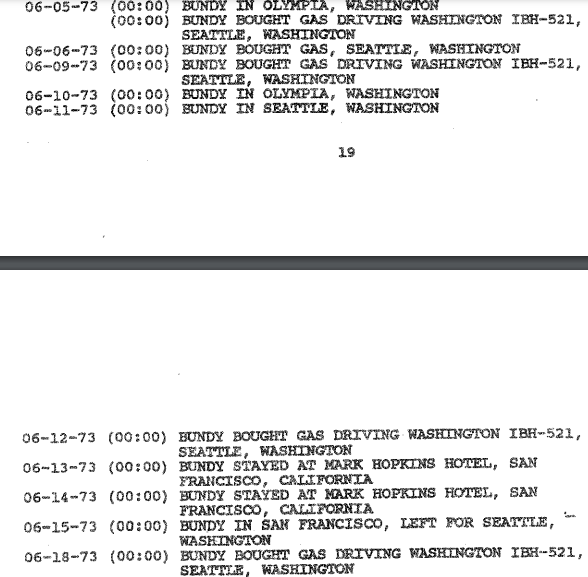

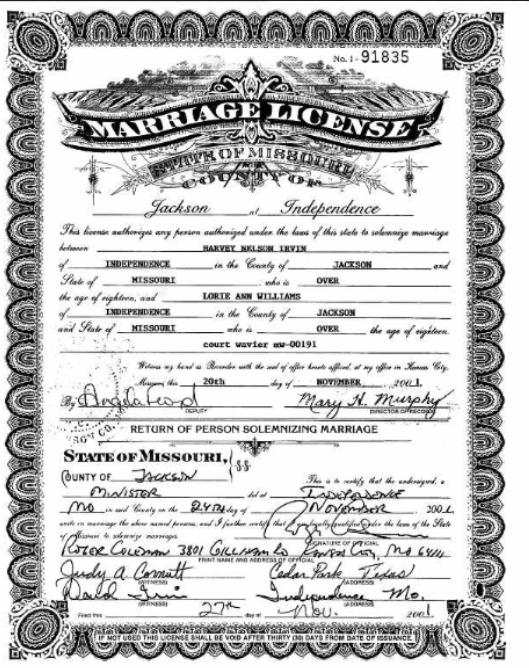




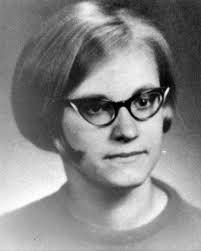



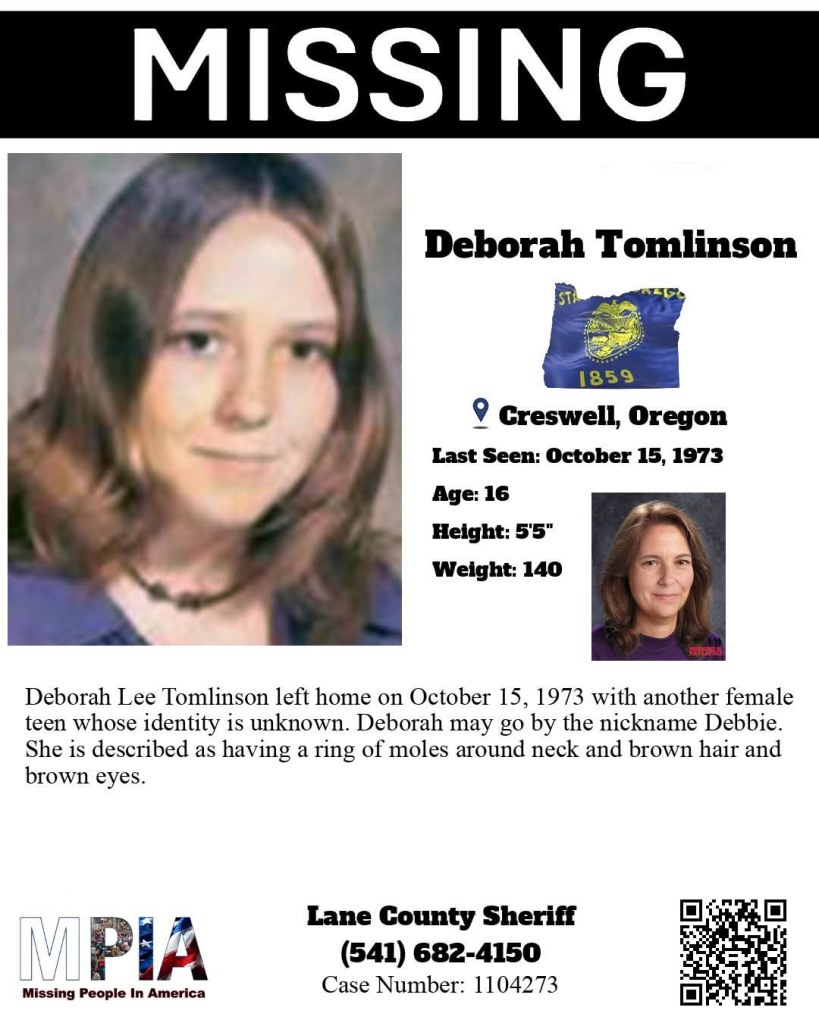

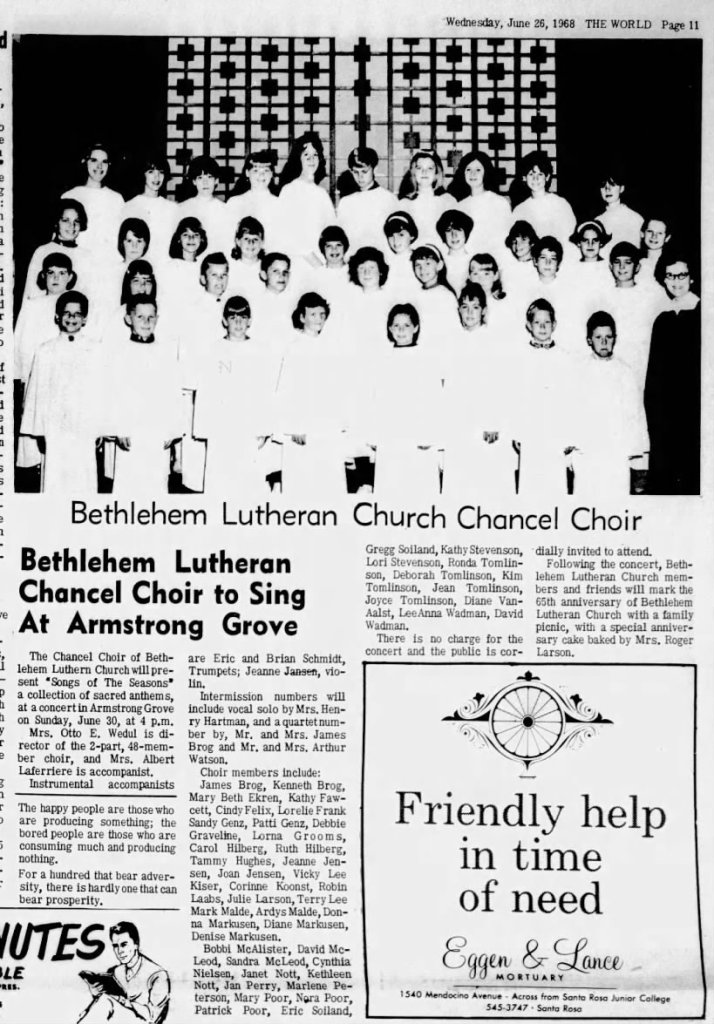
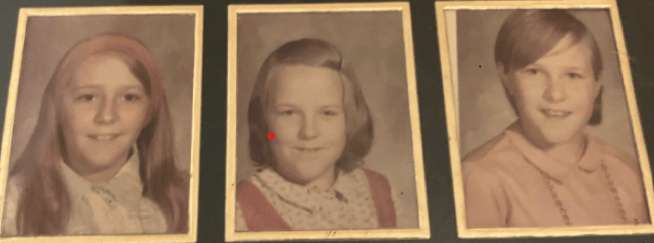
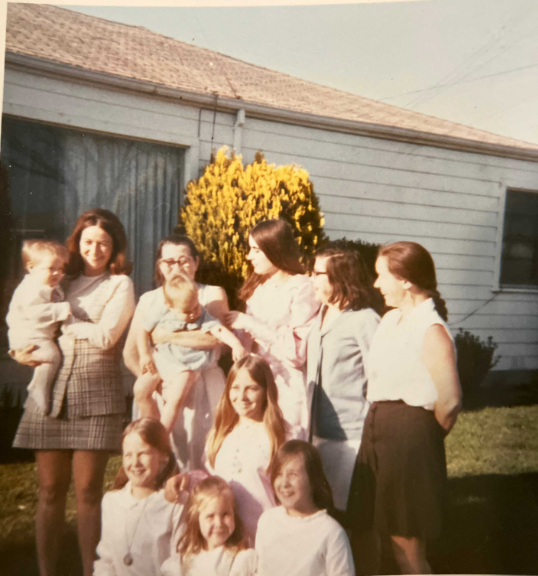







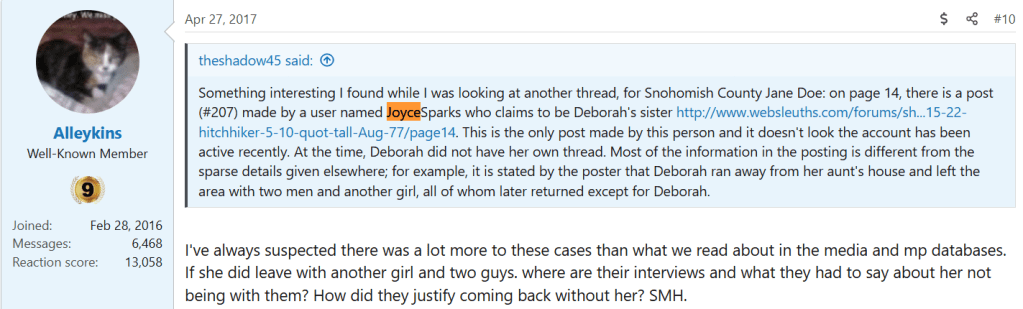

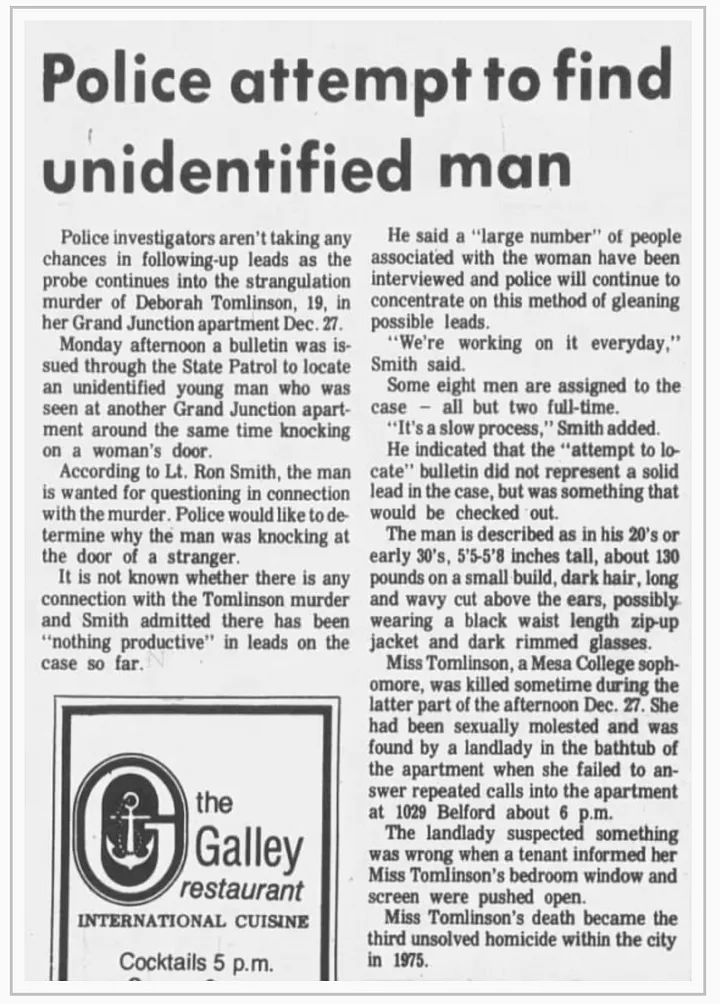
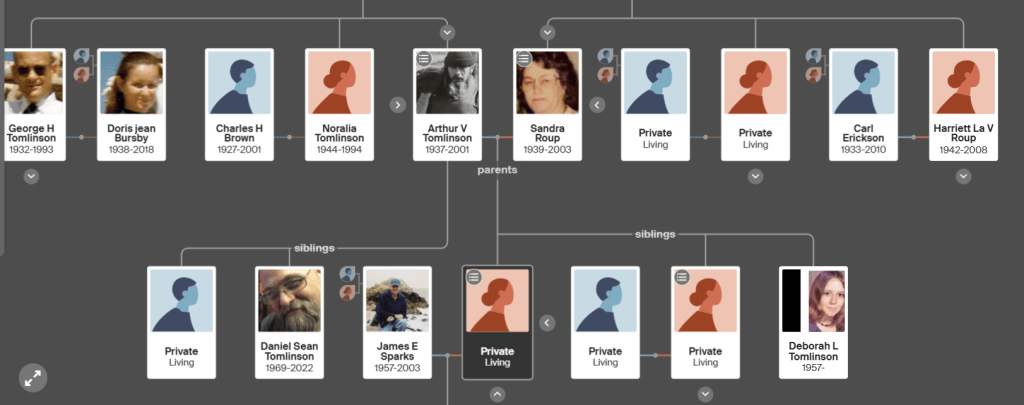
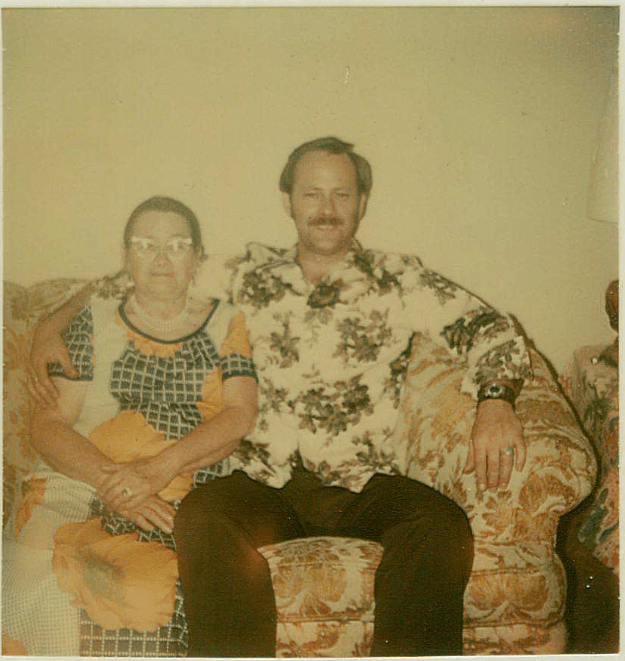

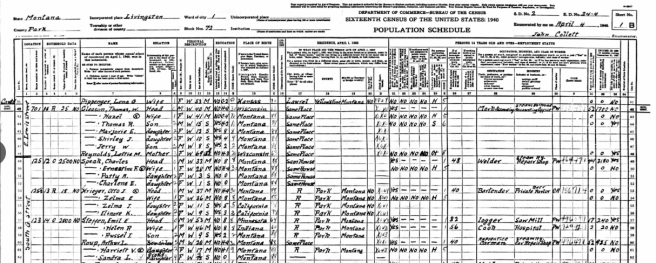


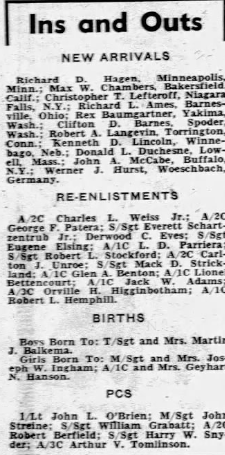

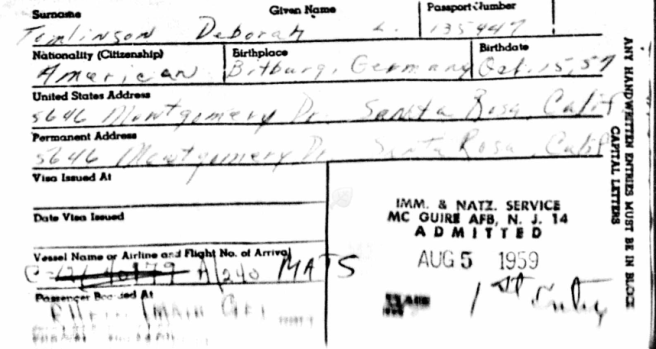
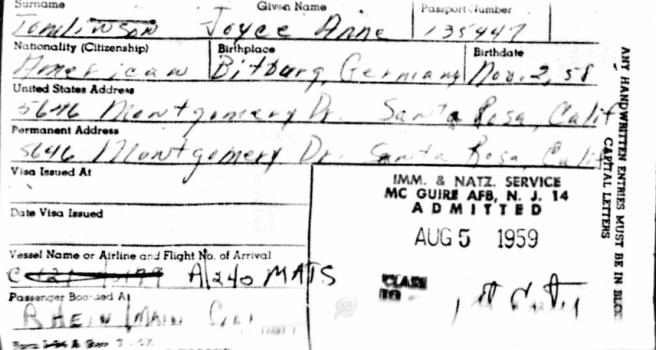
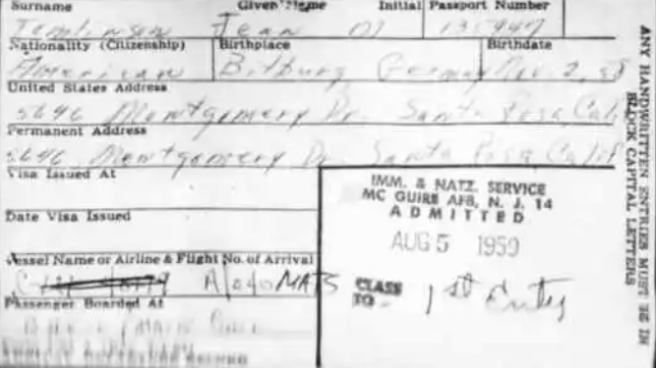
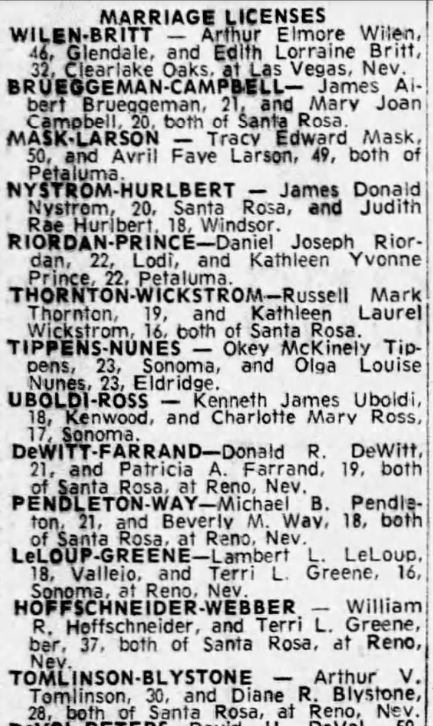
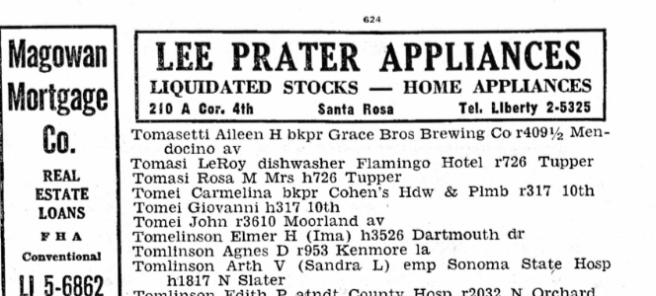




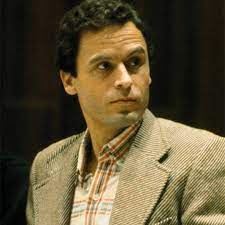
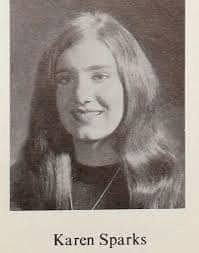


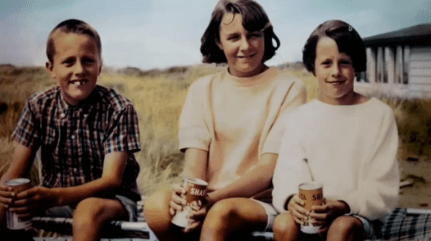



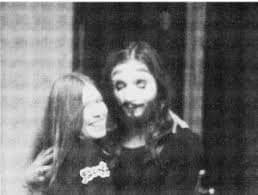
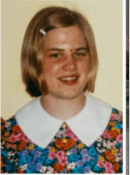
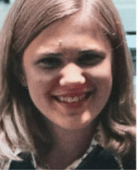
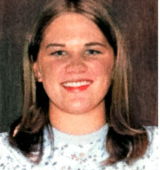


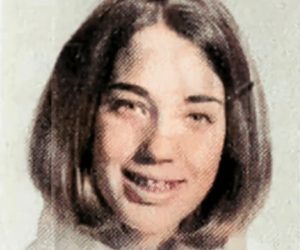

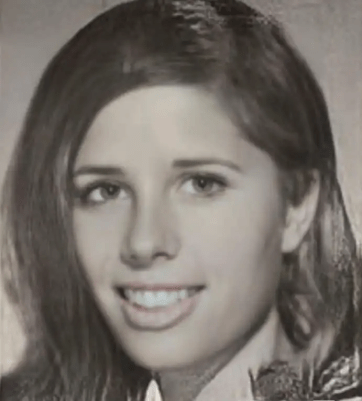

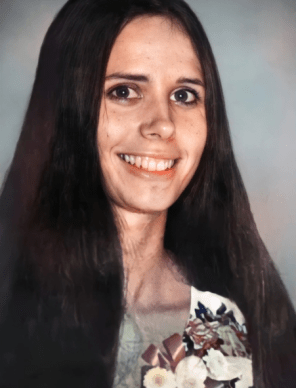


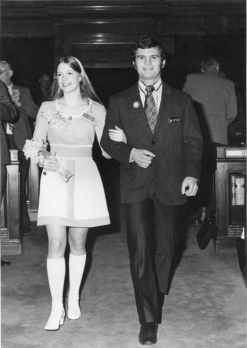
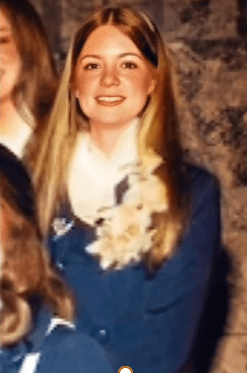

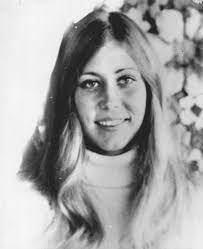

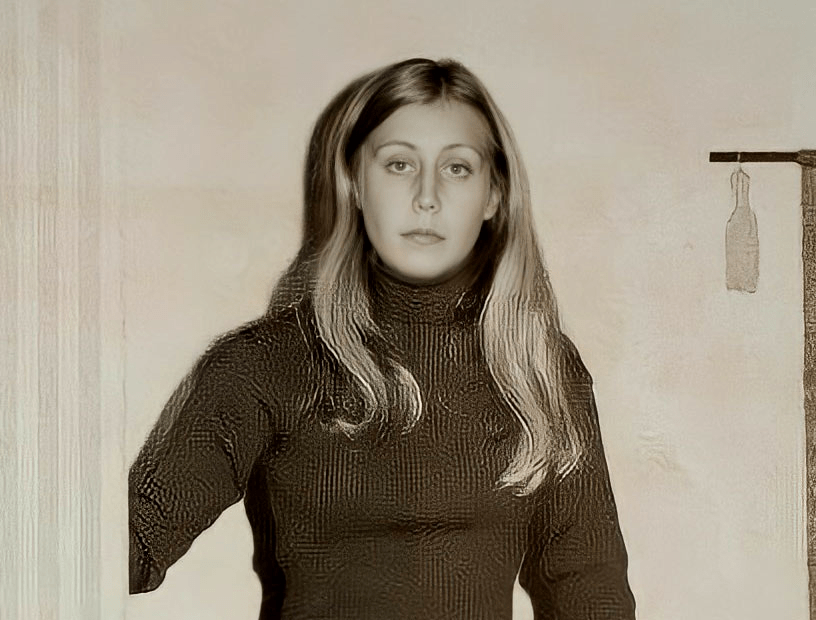

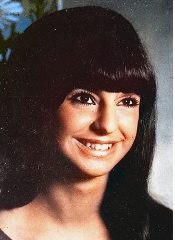
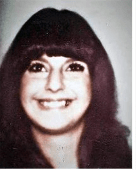
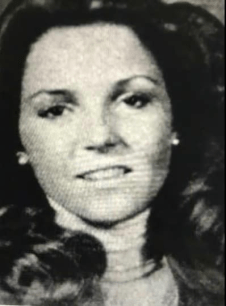

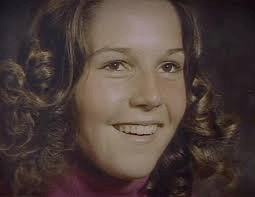
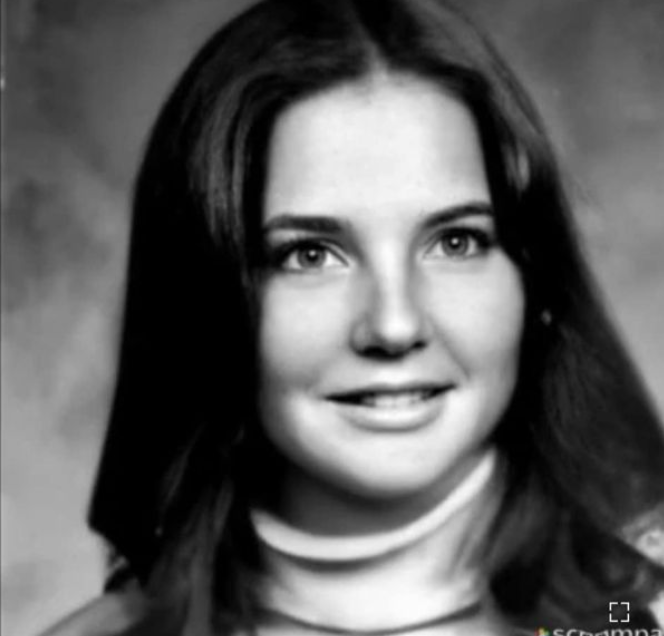

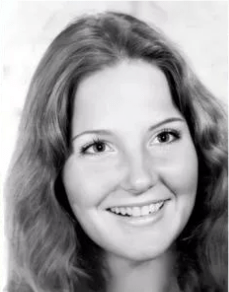
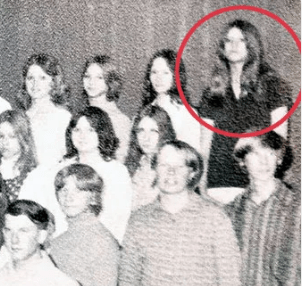
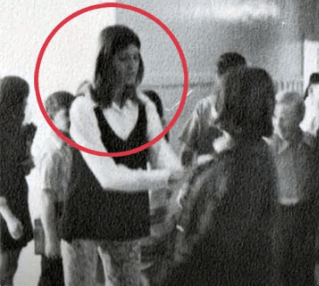
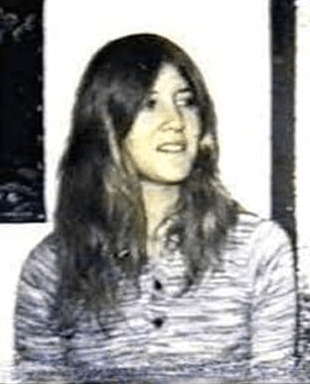

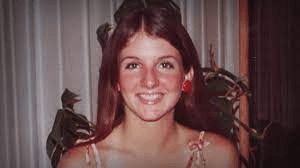




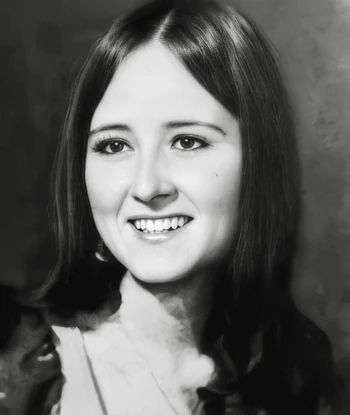

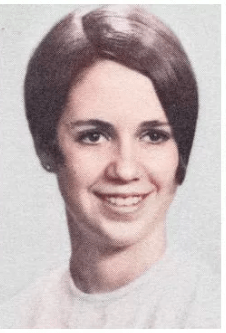

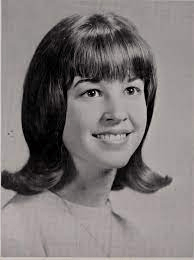
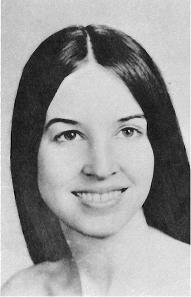
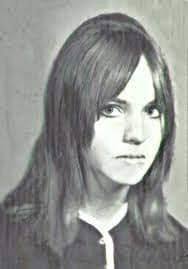
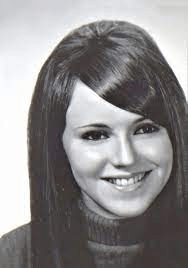


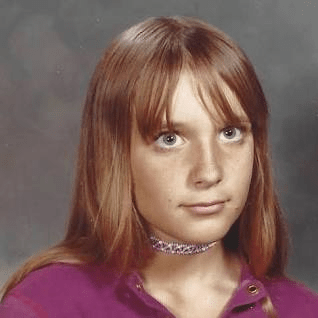


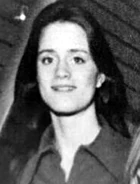

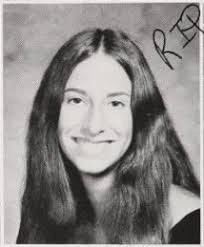
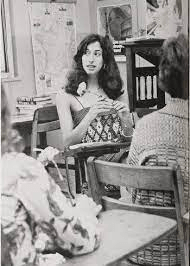
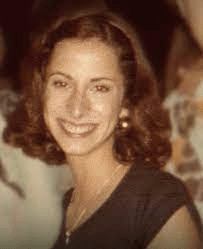












 Another Bundy Blog.