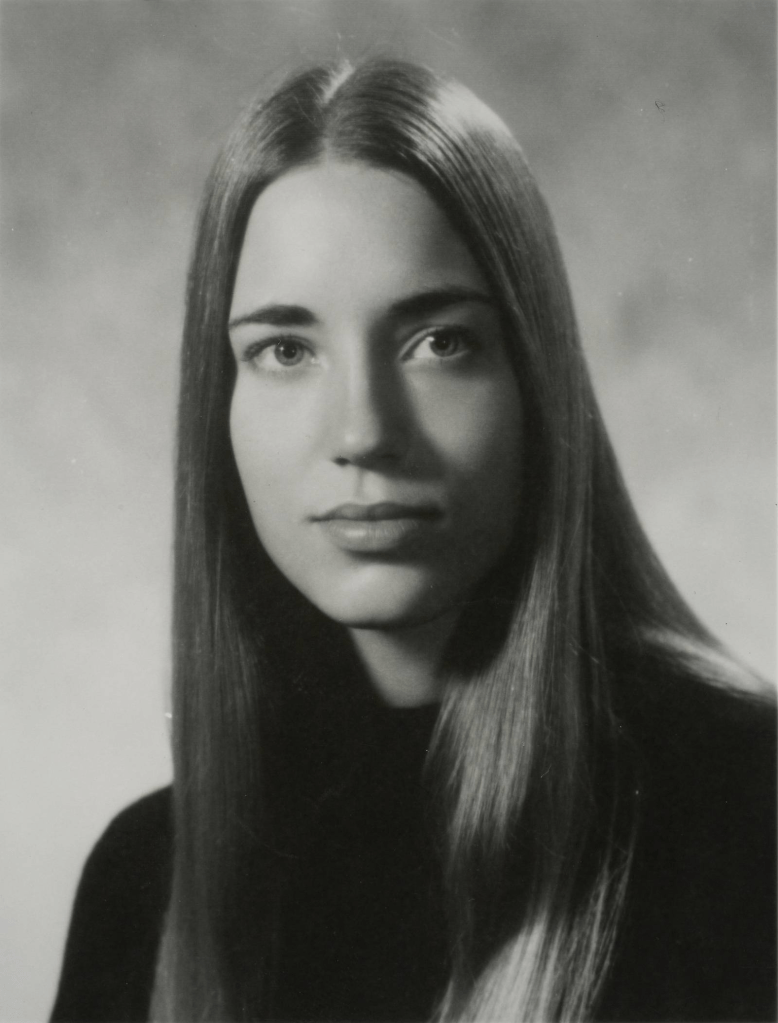
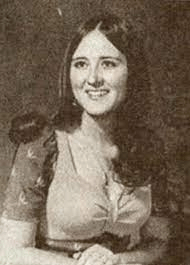
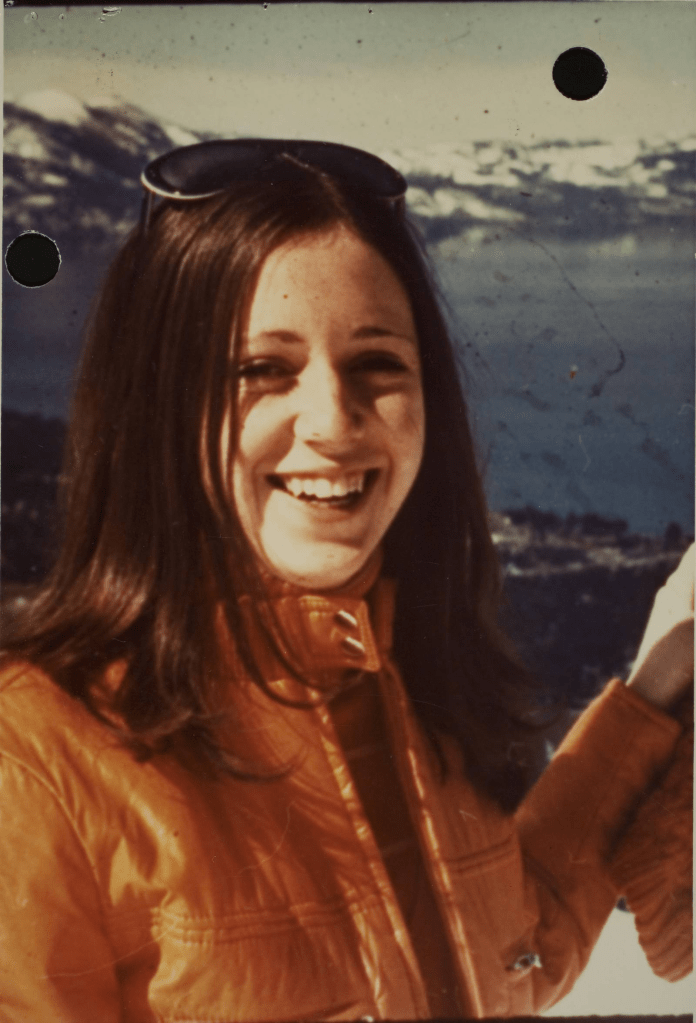
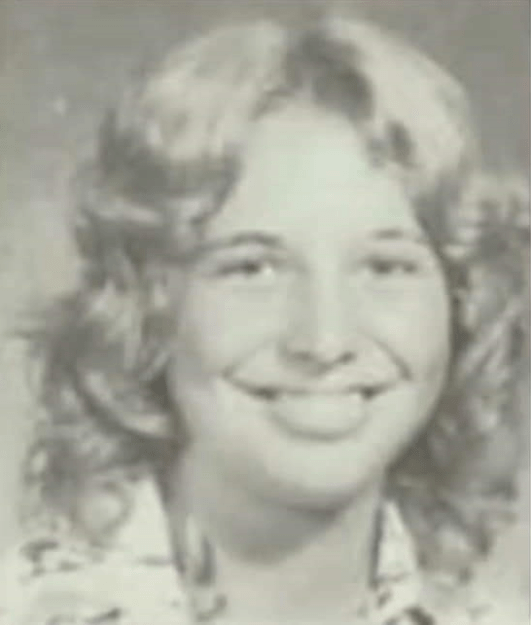
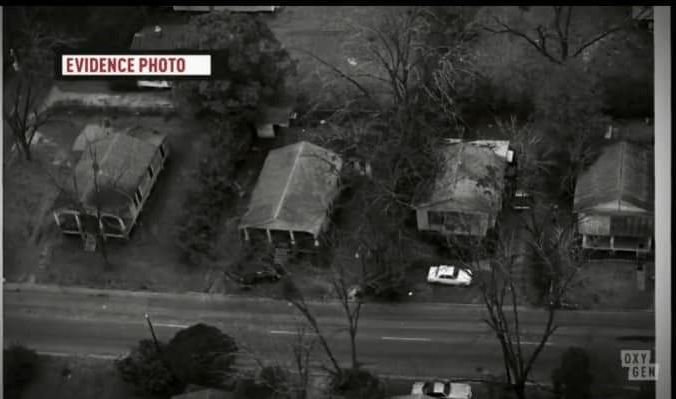
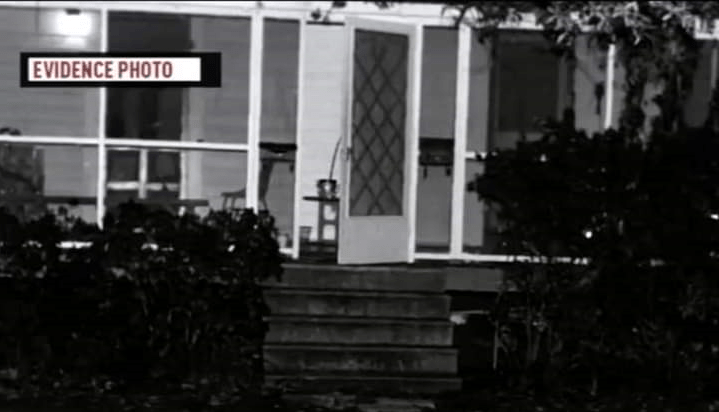
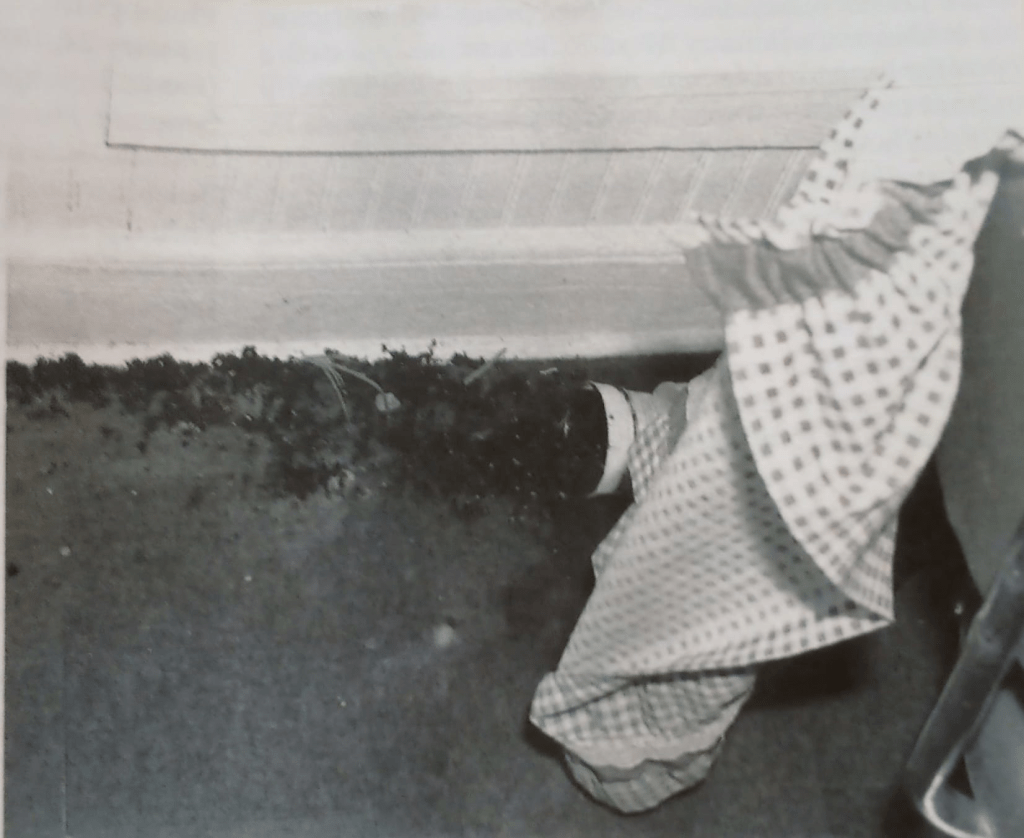
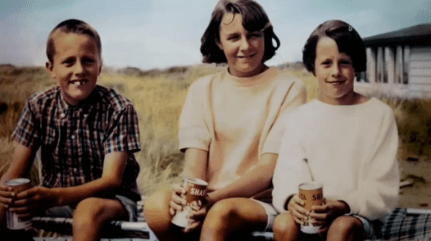
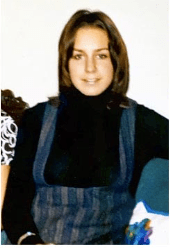
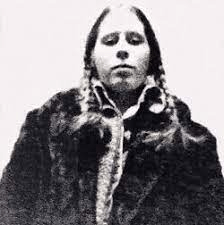
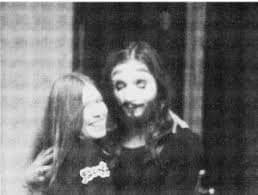
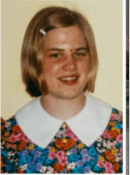
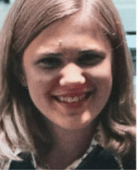
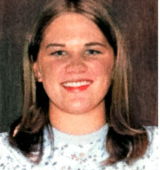
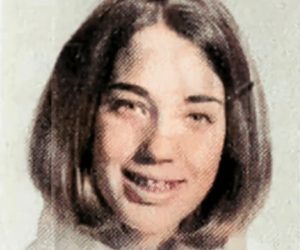
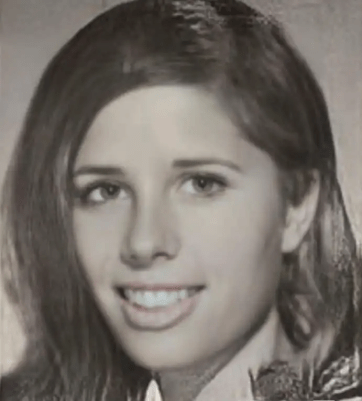
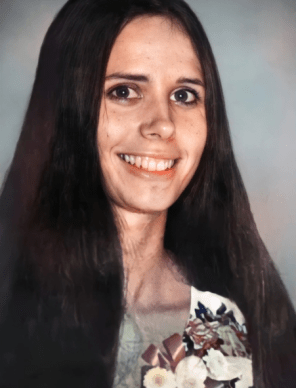
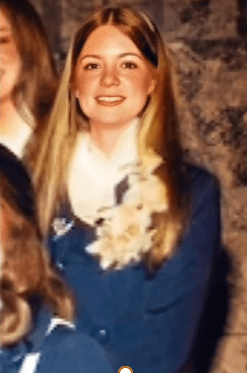
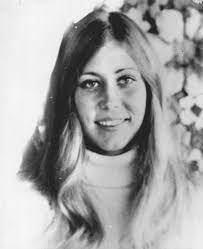
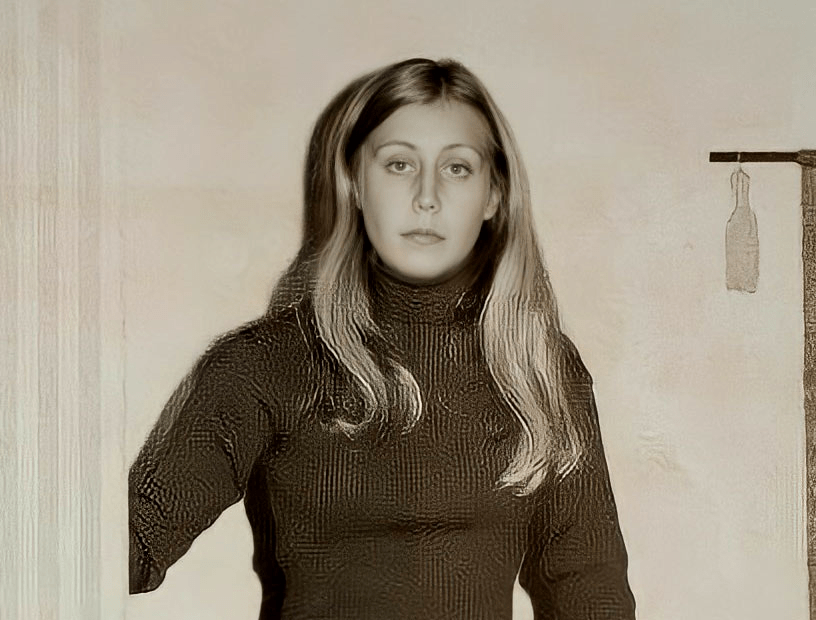
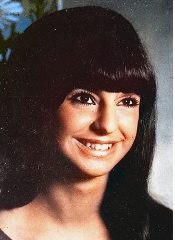
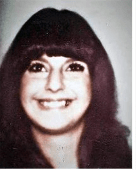
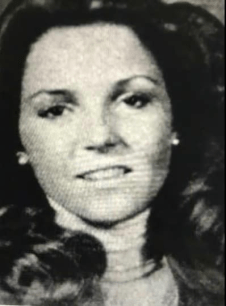
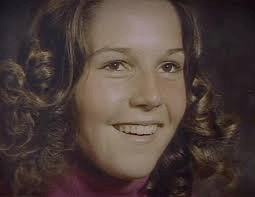
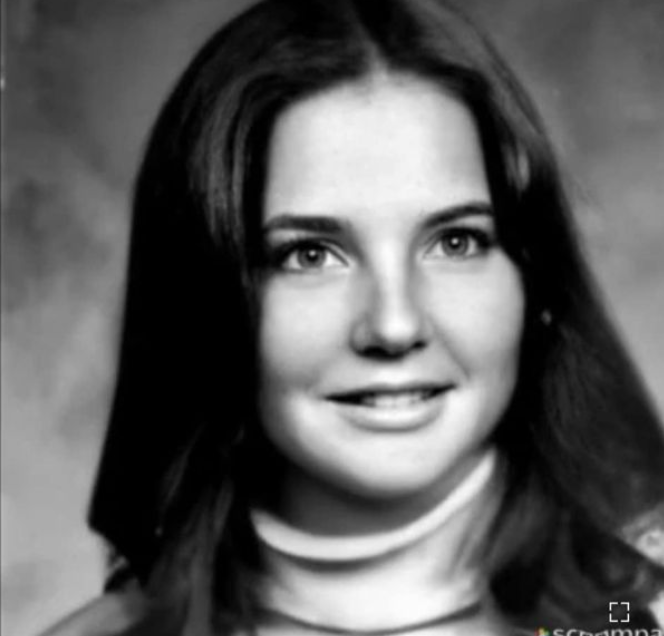
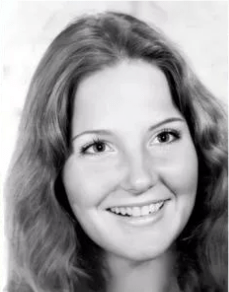
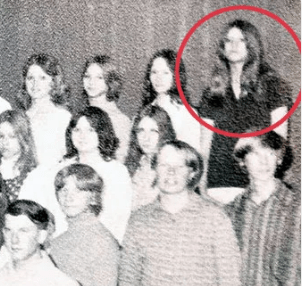
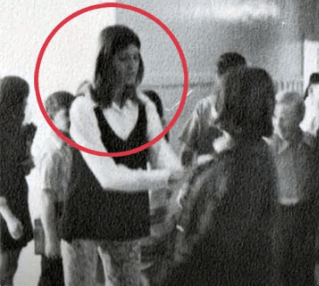
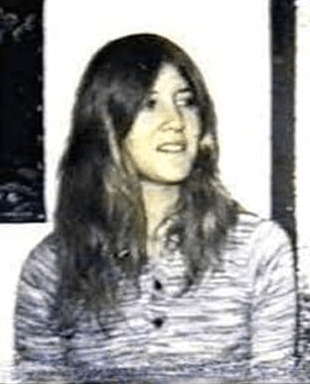
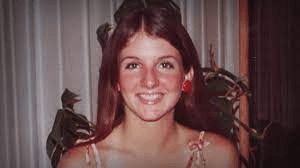
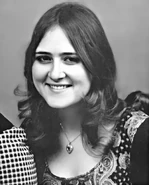
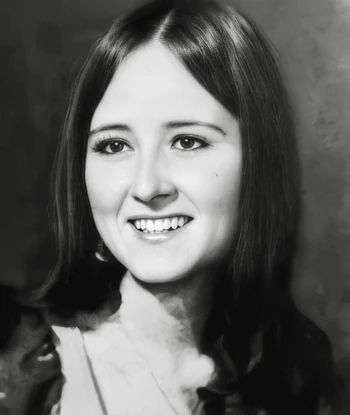
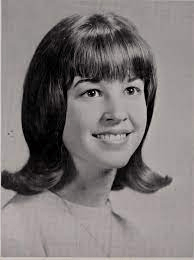
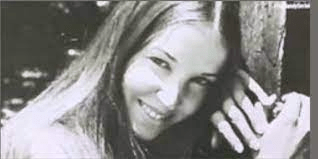
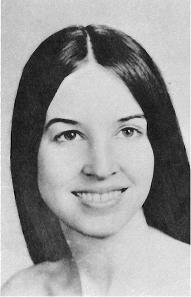
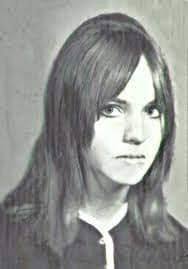
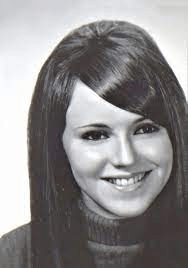
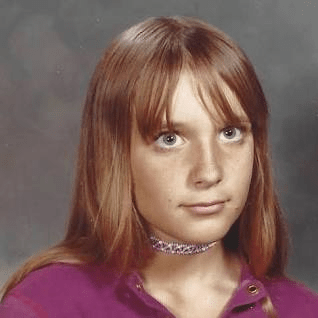
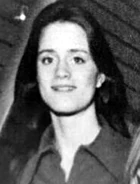
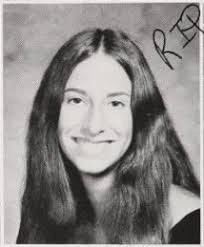
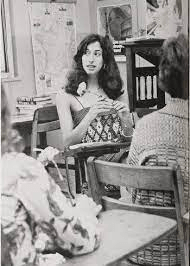
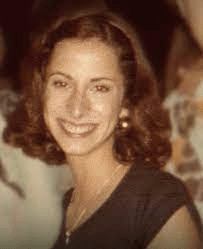
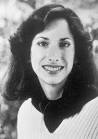
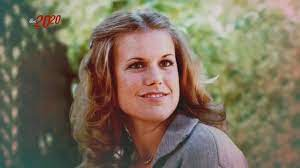
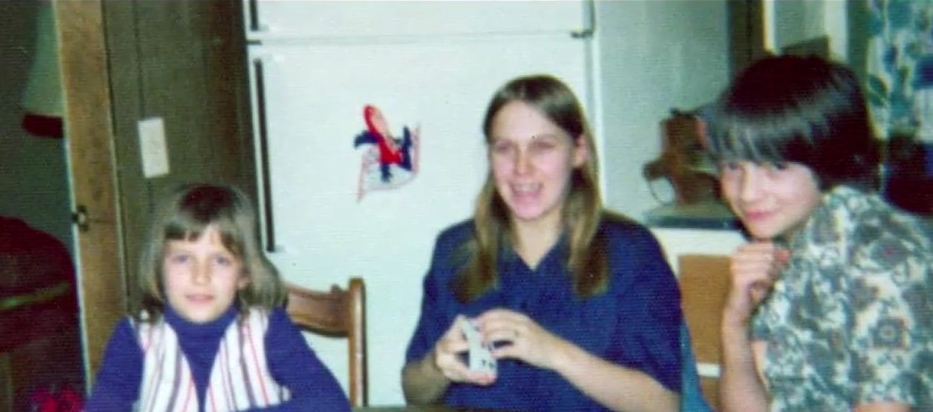
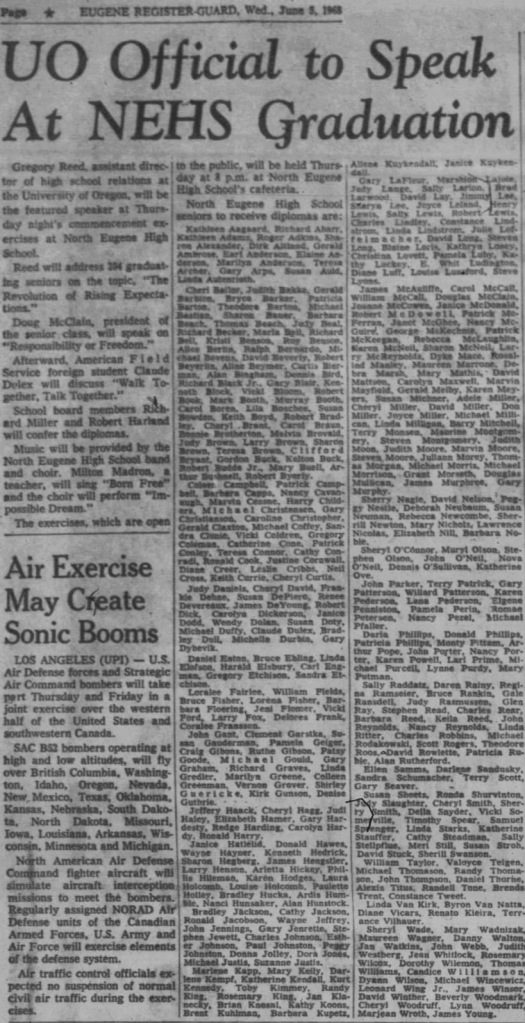
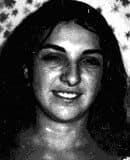
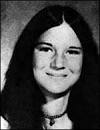
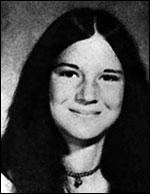
Geneva Joy Martin was born on November 16, 1952 to Robert Eugene and Florence (nee Boldt) Martin in Hastings, MI. Mr. Martin was born on August 7, 1930 and Florence was born on March 16, 1914 in Hutchinson, Minnesota; her occupation is listed as ‘secretary’ in her ‘geni’ profile, and the couple had two daughters but eventually divorced. In 1942 Florence moved her family to Anchorage, Alaska, where she would eventually get remarried to a man named Maurice Green, who worked for the state railroad. The couple would have two daughters together: Lynella Faith (Grant) and Madelon Grace (Mottet). Aside from a DOB and where she was born I couldn’t find any more details about Ms. Martins childhood.
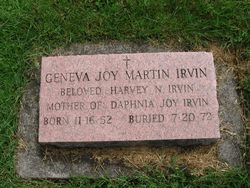
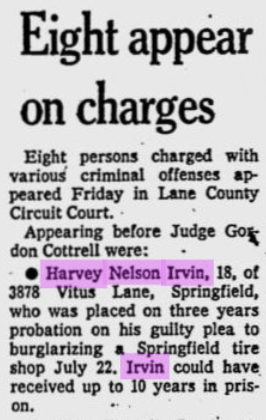
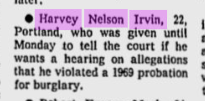
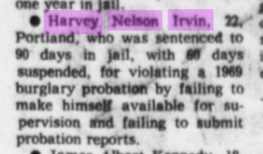
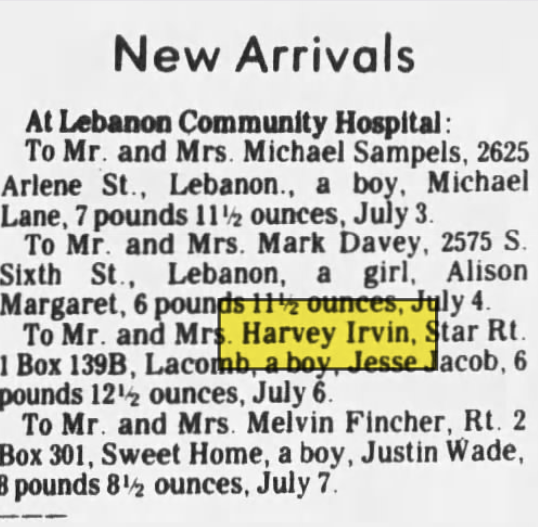
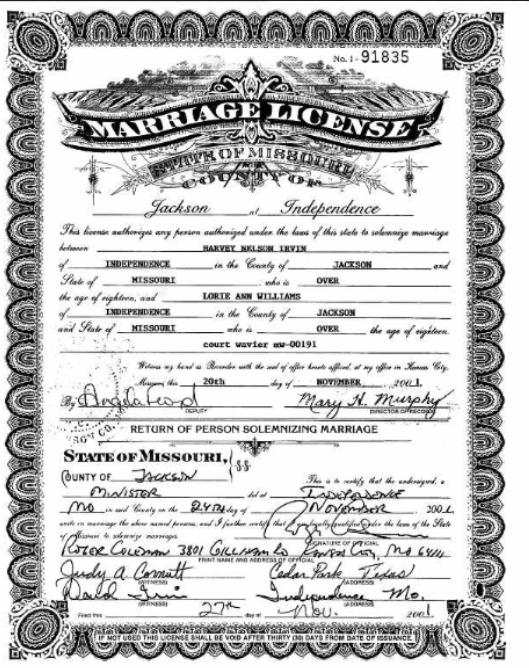
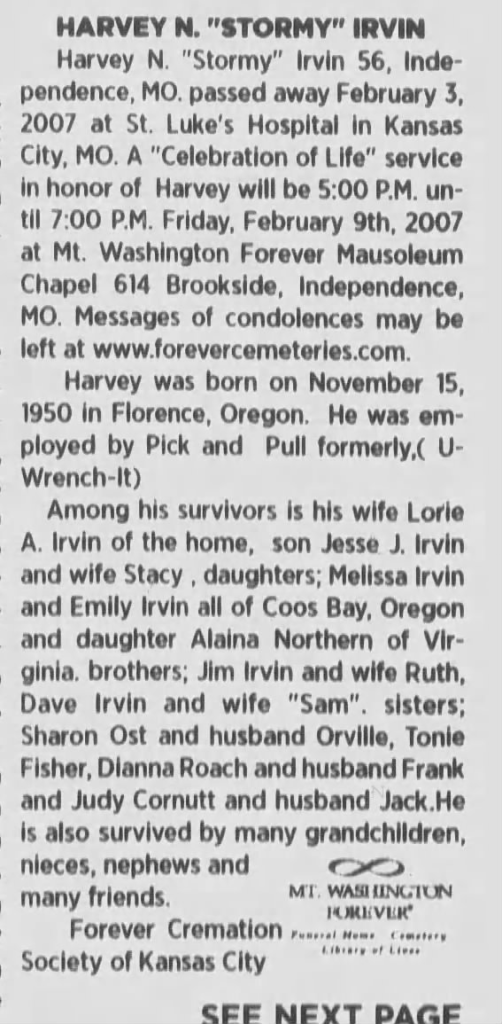
At some point before her death Geneva married Harvey ‘Stormy’ Nelson Irvin … or, at least that’s what it says on her tombstone. I could find no record of their nuptials anywhere and he isn’t mentioned once in any articles about her aside from the fact that she used his last name on occasion ‘as an alias…’ I did, however, find four other marriage certificates for Mr. Irvin on Ancestry. The couple had a daughter named Daphnia Joy that was two months old when nineteen year old Geneva was found deceased, and in the year prior to her disappearance she briefly lived in Seattle and the Eugene/Springfield, OR area. Harvey was born on February 15, 1950, and after Geneva was killed he wasn’t single for very long: he married Patricia Connelly less than three years later on May 22, 1975 in Reno, Nevada.
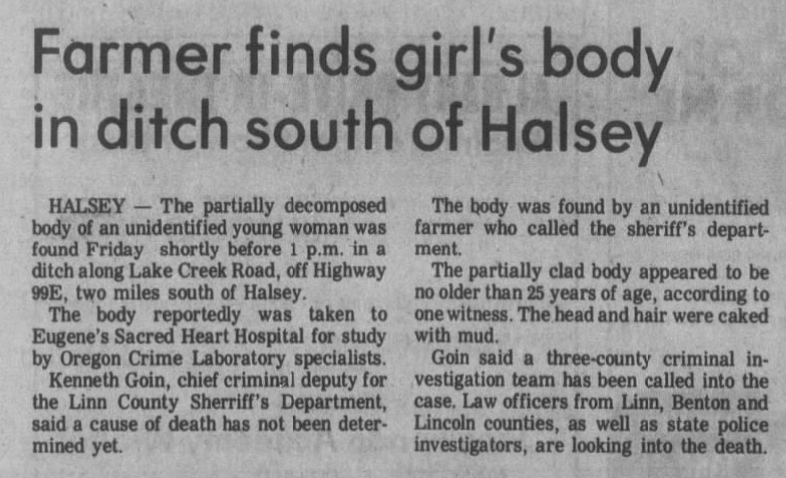
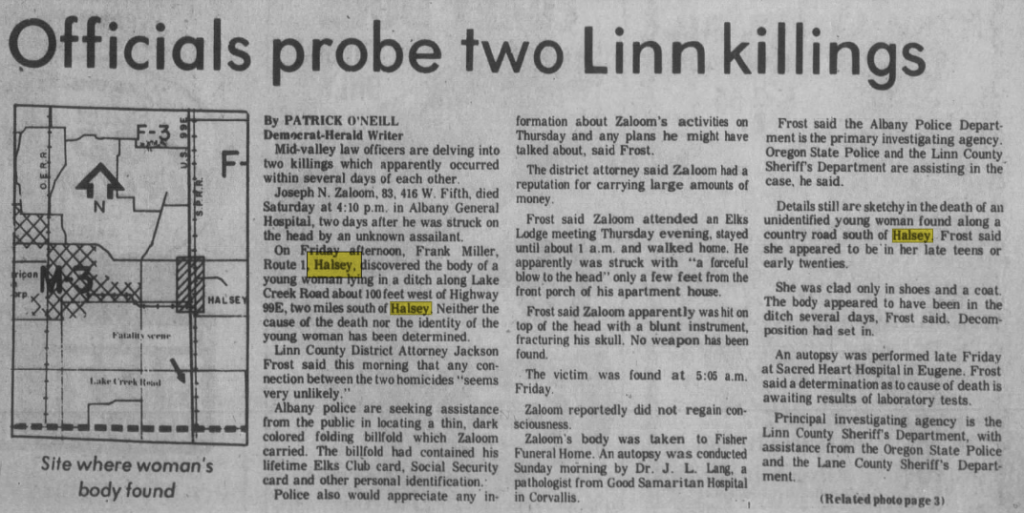
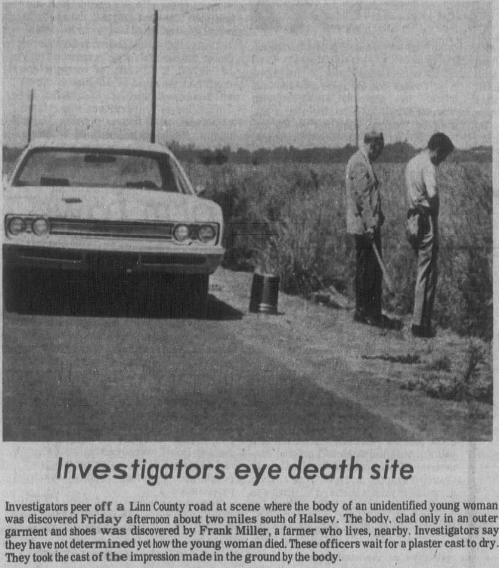
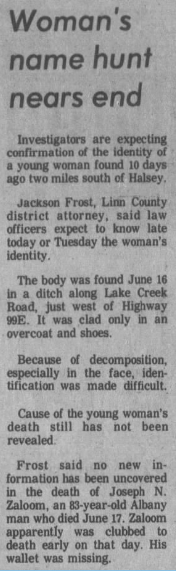
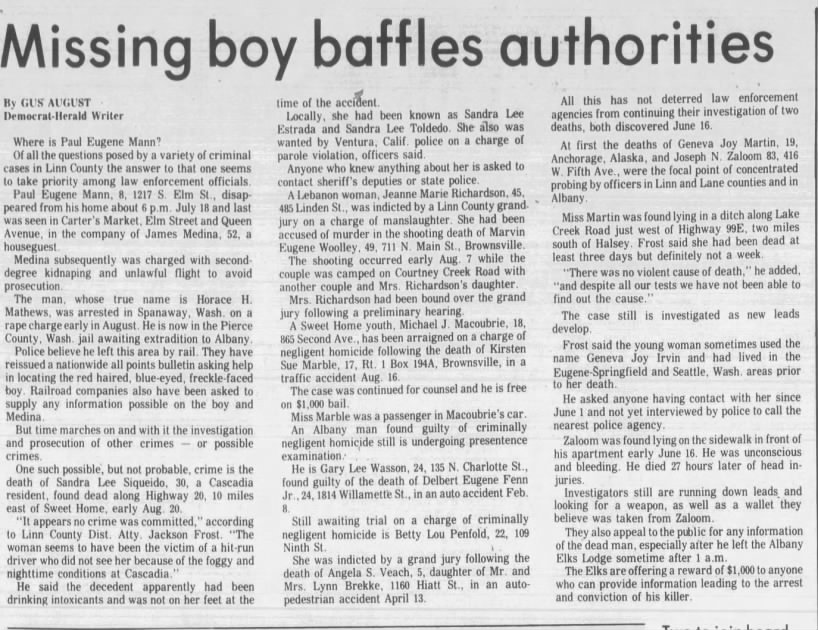
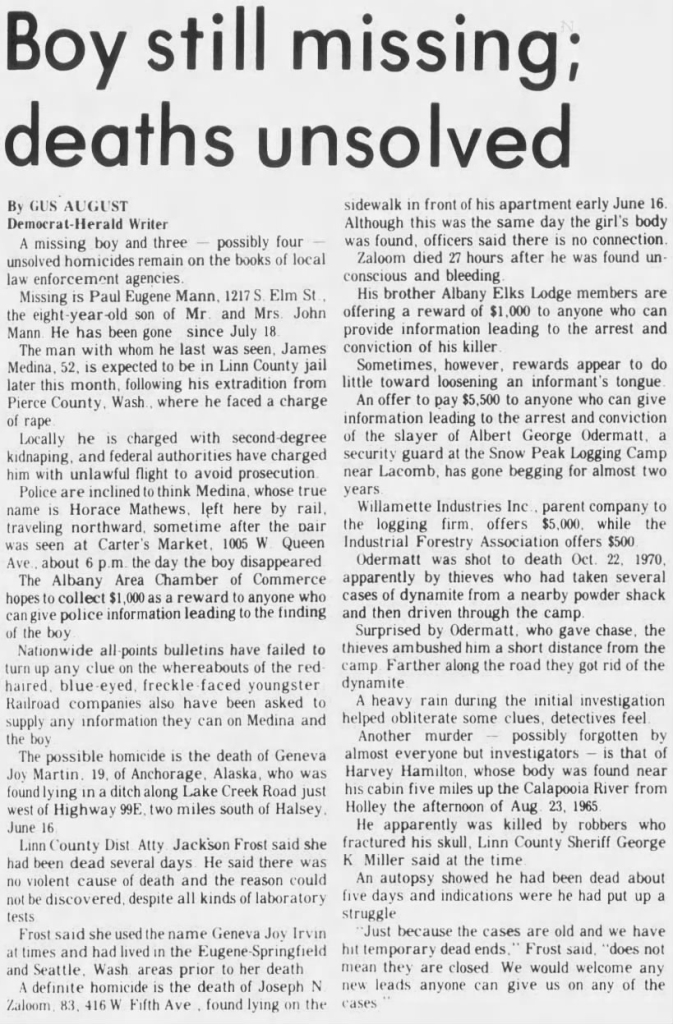
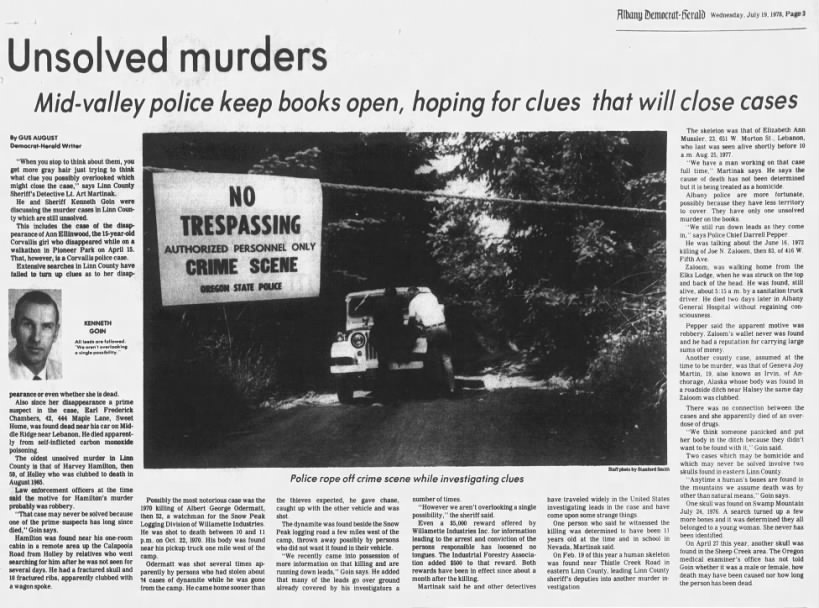
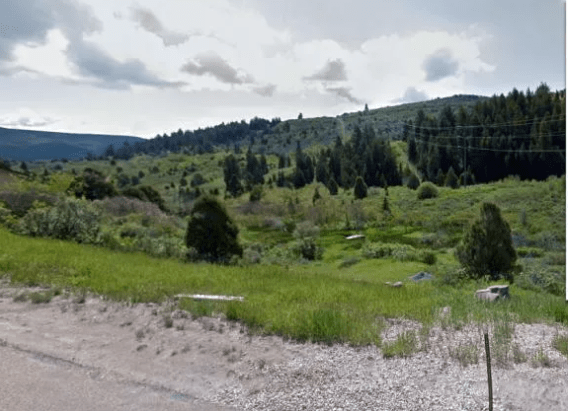
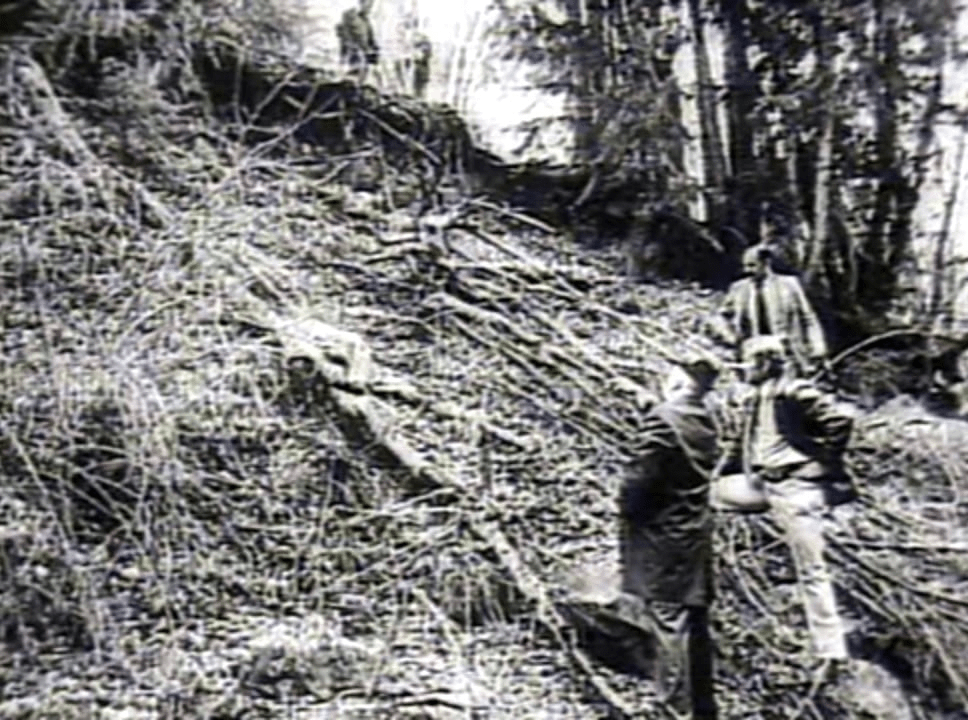
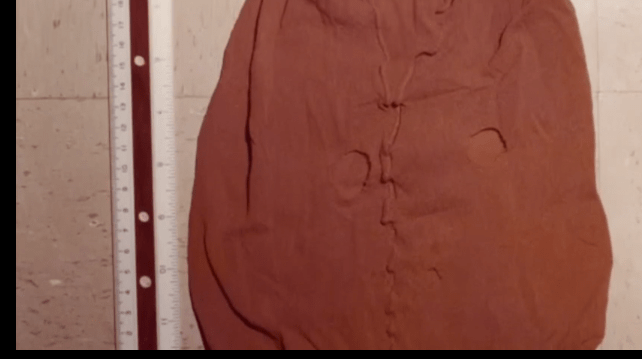
At roughly 1 PM on June 16, 1972 the remains of a decomposed, ‘partially clad young woman’ were found face down in a ‘woody, roadside ditch’ by Frank Miller, a local farmer. She was only wearing a coat and shoes, and her hair was caked with dried mud and sediment; she remained unidentified for roughly ten days while detectives searched for clues. At the scene investigators made a plaster cast of where the victim was found in the ditch in hopes to further aid in the investigation… and this is where not having a background in policing/criminology/forensics hurts me because I didn’t know that was a thing. Looking into it, ‘casting’ is when experts preserve impressions from crime scenes (for example larger, 3D impressions such as tire marks or footprints). The process works almost the same way an orthodontist makes a mold of a patient’s teeth, and forensic experts and LE use an array of materials to help create the ‘casts.’
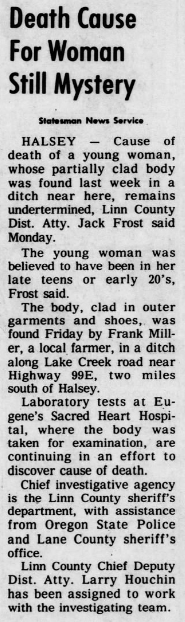
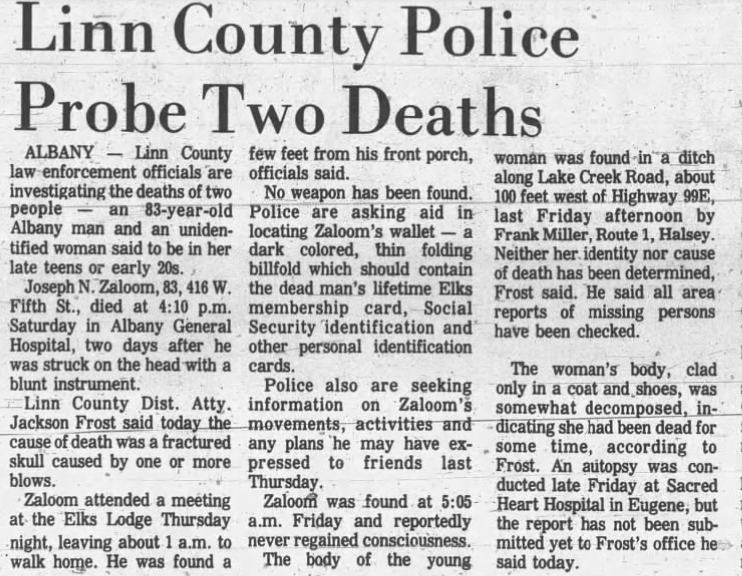
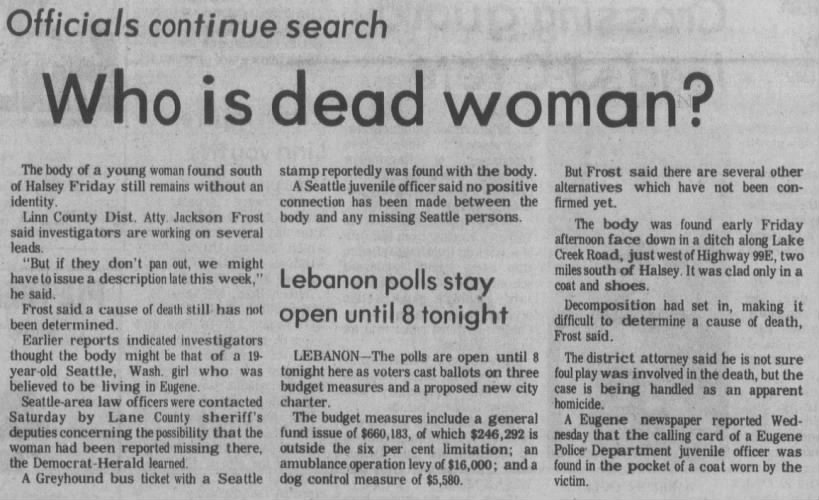
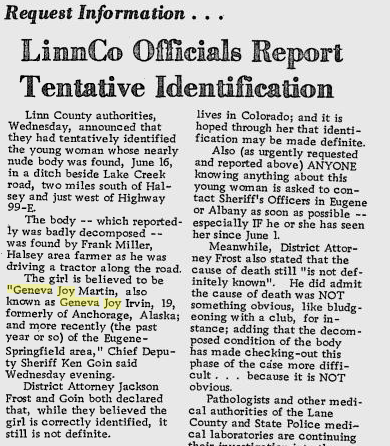
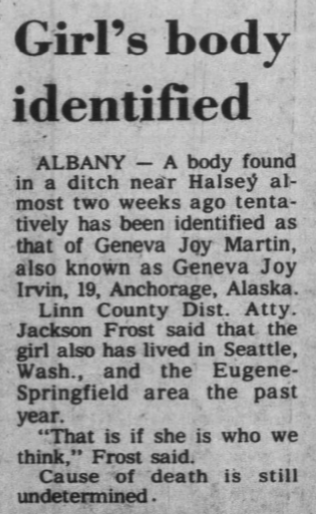
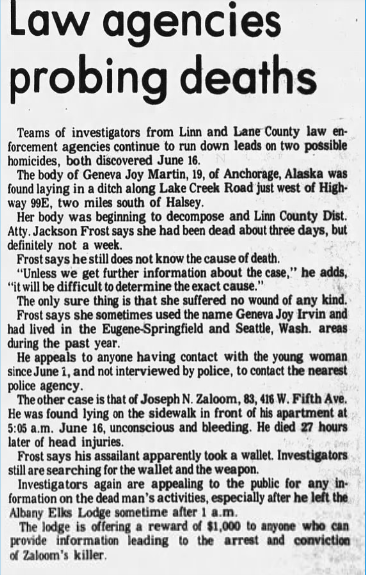
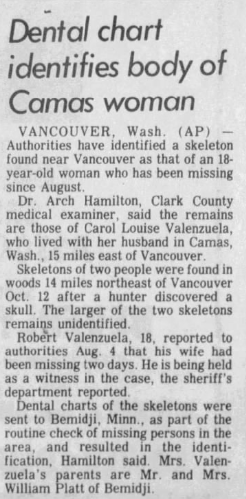
The young victim was taken to Eugene’s Sacred Heart Hospital, where specialists from the Oregon Crime Laboratory got to work on identifying her. According to (retired) Linn County DA Jackson Frost, they were able to tell that she was in the ditch for ‘about three days, but definitely not a week,’ and were immediately able to determine that she was no older than 25. Thanks in part to an advanced stage of facial decomp, it took thirteen days and $162 worth of long distance phone calls to Alaska (where Martin received care) before dental experts were able to make a near positive identification; a sister living in Colorado helped make an absolute positive ID. Despite an autopsy as well as ‘all kinds of lab tests,’ investigatorswere never able to pinpoint Martin’s exact cause of death due to her having ‘no violent wounds;’ I also found no mention of sexual assault. In the beginning of the investigation medical examiners thought they detected drugs in her system however it was later determined that the advanced state of decomp produced a chemical that masked the presence of narcotics. Despite there being 150 pages worth of notes in Martins case file, there is next to no information out there on her.
In the end of an article published in The Greater Oregon on June 30, 1972, DA Frost commented that ‘the young woman apparently was living under circumstances where she might not want to use her true name, thus the alias.’ In an article published by The Albany Democrat-Herald on June 28, 1973, Frost said that Martin was a known drug user and had recently been in treatment for ‘drug related mental problems’ in Eugene. At the time of her death detectives learned she had been living in Eugene for several months and a week before she was last seen had cashed her monthly welfare check then quietly slipped out of sight; it was the last time she was seen alive.
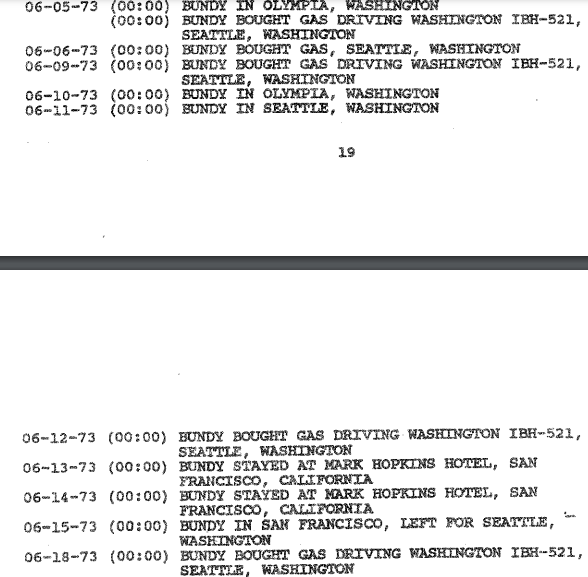
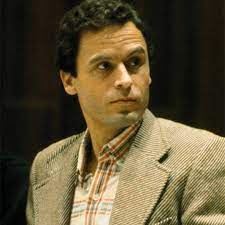
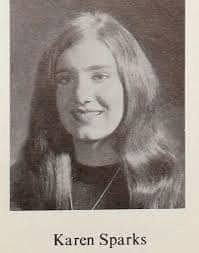
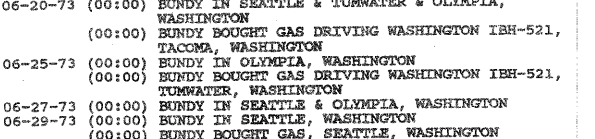
At the time Geneva was murdered Ted Bundy was living in Seattle at the Rogers Rooming House on 12th Avenue, and was in the middle ofa long term relationship with Elizabeth Kloepfer. He had just finished his undergraduate psychology degree from the University of Washington and was getting ready for his first (unsuccessful) attempt at law school at the University of Puget Sound (which he began the following year). At the time Ted was interning as a counselor at Harborview Mental Health Center in Seattle (he was only there from June to September 1972), and according to the ‘TB MultiAgency Report 1992,’ Bundy was mostly in Seattle the week before she was found dead but made a trip to San Francisco on June 13 and stayed until the 15th; his whereabouts are then unaccounted for until June 18 when he bought gas in Seattle. As I’ve said in multiple other articles, its Bundy cannon that the serial murderer began killing in early January 1974 with his brutal attack of fellow University of Washington student Karen Sparks in her basement apartment, but during his confessions before his execution he hinted to Dr. Robert Keppel that he may have started as early as 1972 with a young girl in Seattle (but of course didn’t elaborate further than that).
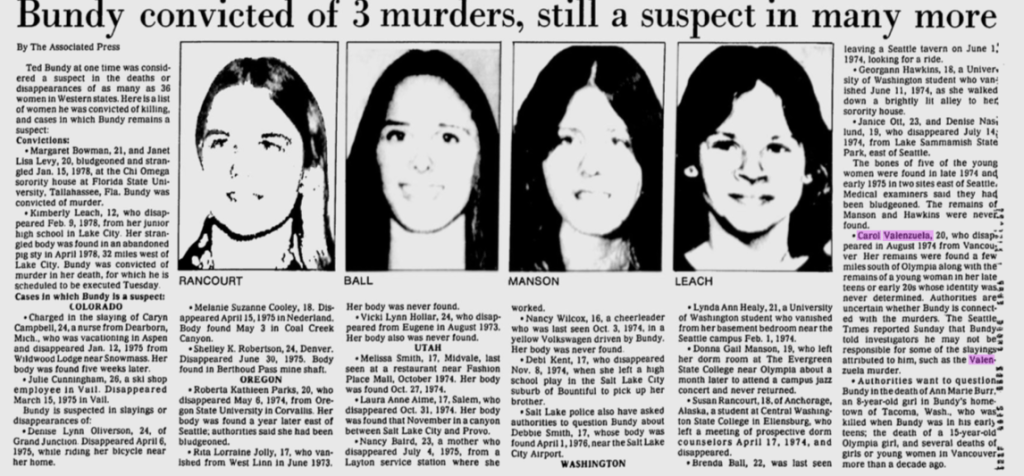
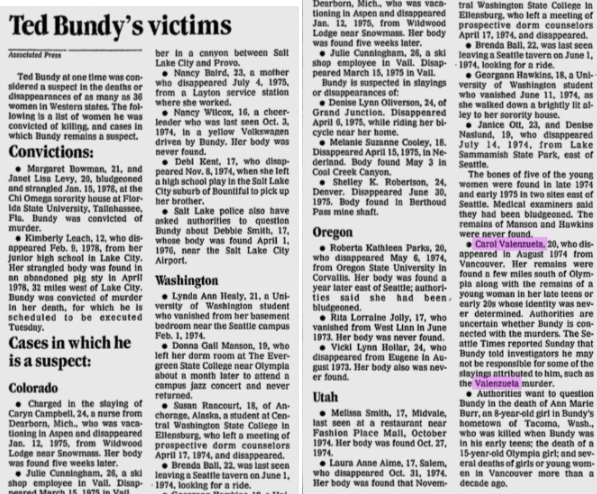
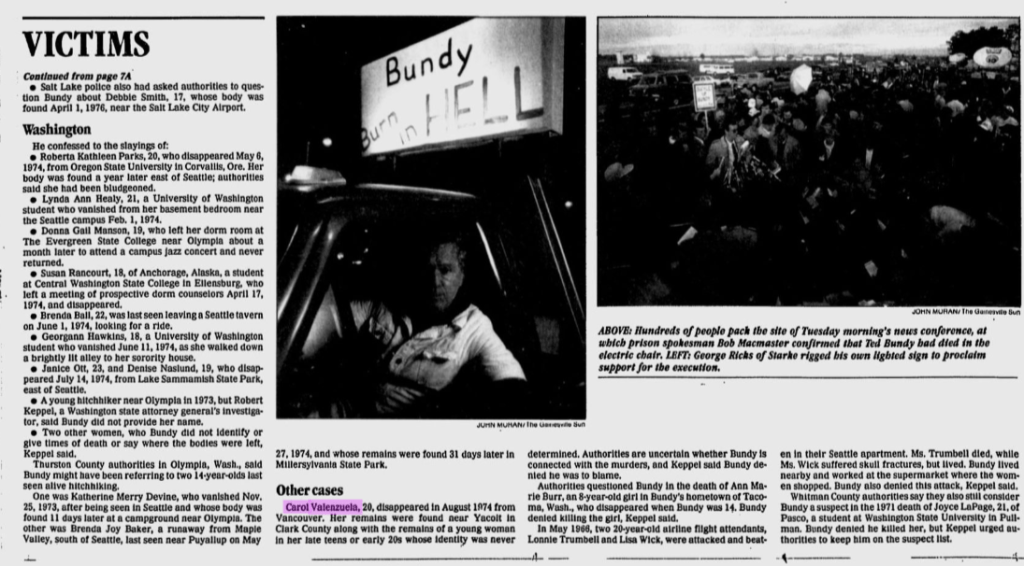
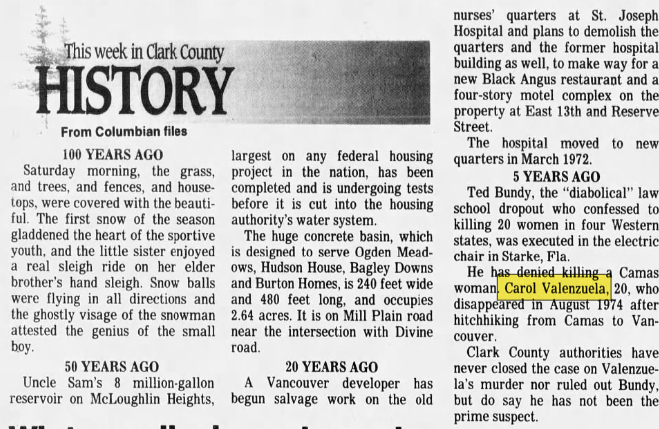
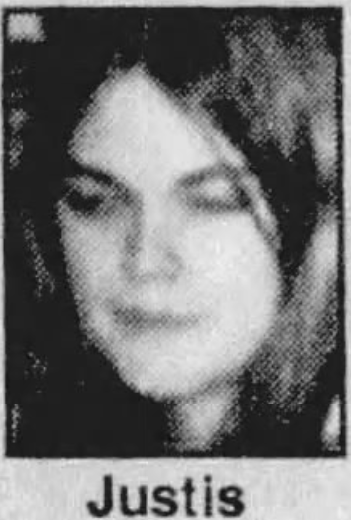
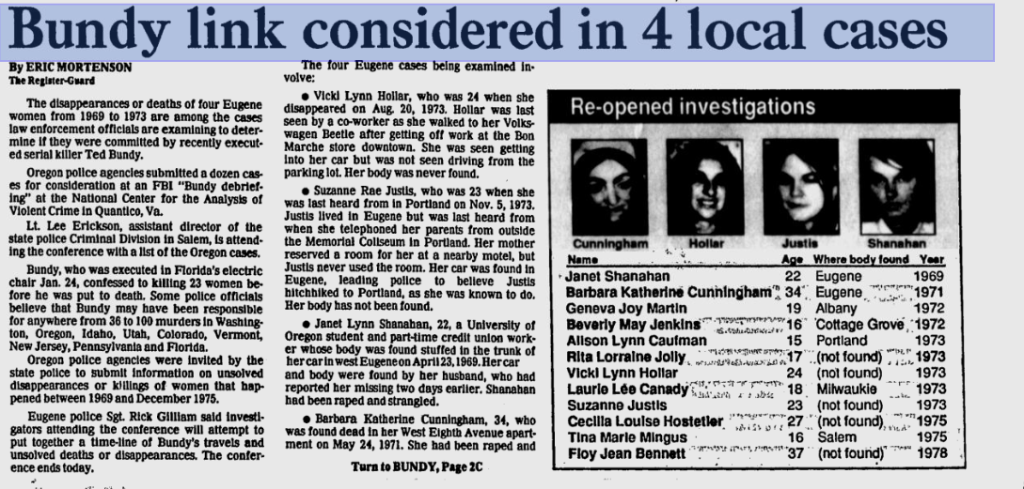
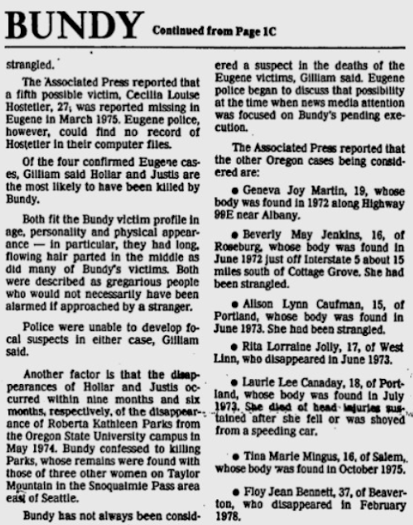
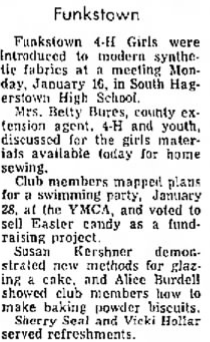
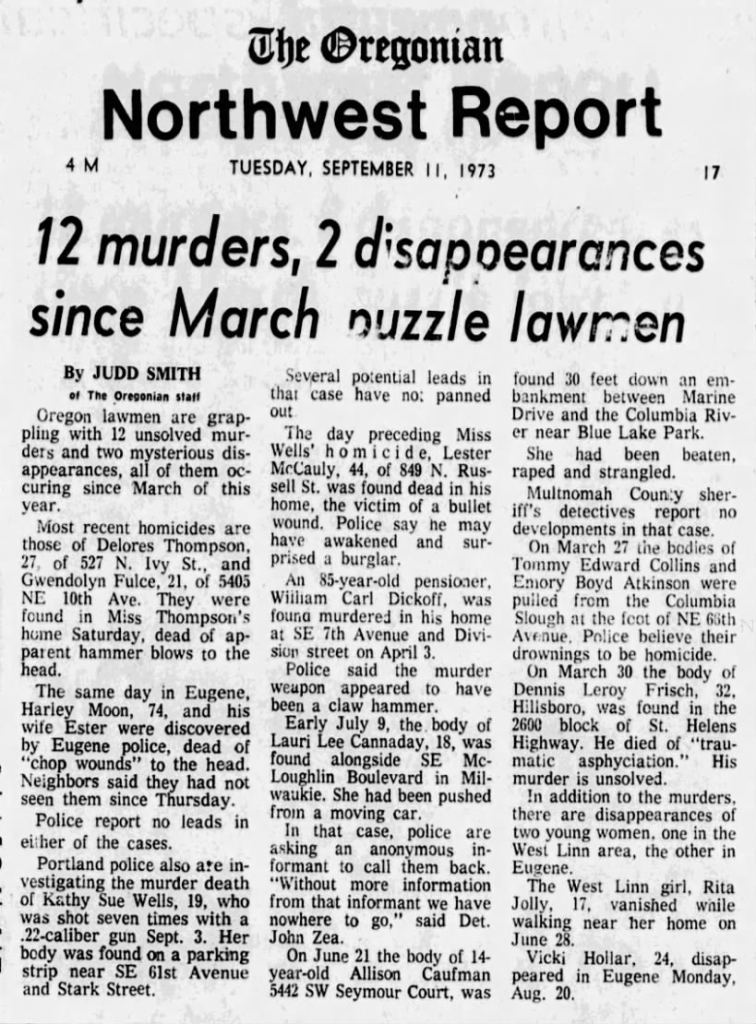
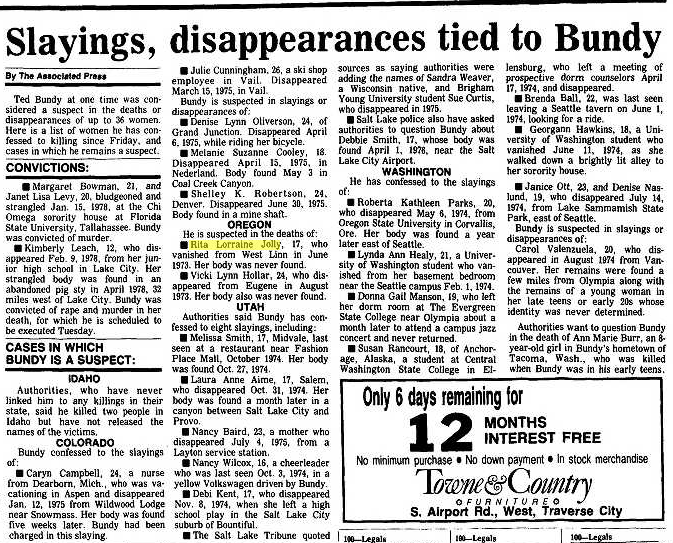
I didn’t know Bundy was ever actually suspected in any additional Oregon murders on top of Roberta Parks (for sure) and (possibly) Vicki Hollar/Rita Jolly/Sue Justis, but according to an article published by The Eugene Register-Guard on February 24, 1989, Martin was at one time considered a possible victim of his as well as Beverly May Jenkins, Allison Lynn Caufman, Laurie Lee Canaday, Tina Marie Mingus, and Floy Jean Bennet. Now, I am in no way saying these women are really possible victims of Ted Bundy, I’m just saying they were in the very least in the correct place at the right (or wrong) time (well sort of, as some if the dates are completely off). Sixteen year old Beverly May Jenkins was from Roseburg, OR and in June 1972 her remains were found just off the I-5 roughly ten miles outside of Cottage Grove; she had been strangled to death. Fifteen year old Portland native Allison Lynn Caufman died as a result of head injuries after being shoved from a car moving at a high rate of speed in July 1973. I think the last two girls can be quickly debunked, as Bundy was in prison when both victims were killed. Tina Marie Mingus was only 16 years old when her body was found in Salem, OR in October 1975, and Flow Joy Bennet was 37 (and obviously a bit out of Bundy’s preferred age range) when she vanished in February 1978. What’s strange is I couldn’t find any more information about any of these women out there. It’s almost as if they never existed.
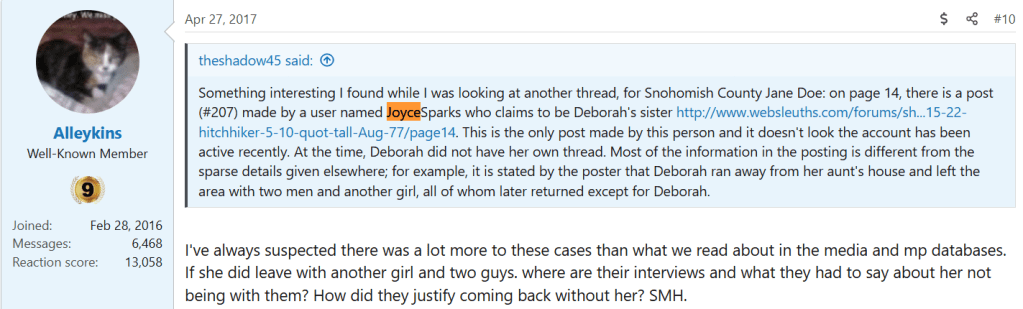
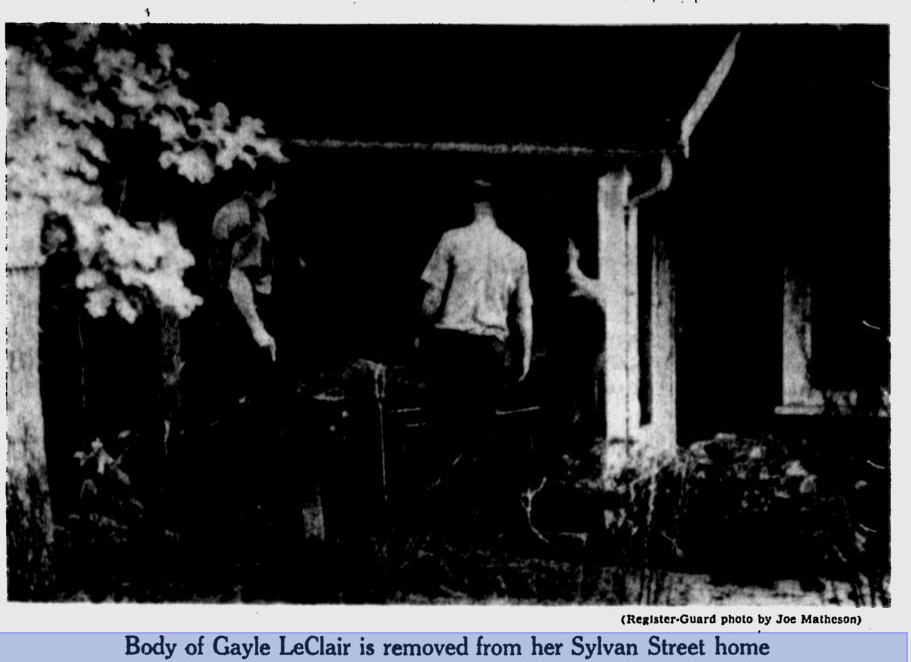
But there’s more dead and missing women, on top of that article. Twenty year old Faye Ellen Robinson was found deceased from multiple stab wounds in the upper part of her body in March 23, 1972. Like most Bundy victims, she was educated and had a good job working in county government: she graduated from the University of Oregon in 1970 and was employed by the Lane County Welfare Department. Also on March 23 Alma Jean Barra was last seen after leaving the Copper Penny Tavern in the company of an unknown man driving southbound on 92nd Avenue between 11 and 11:30 PM. The 28-year-old’s body was found in an area of heavy brush of the Willamette National Cemetery, roughly forty feet off of Mount Scott Boulevard; she had been strangled and showed no signs of sexual assault. Next is 17 year old Susan Wickersham, who disappeared from Bend, OR on July 11, 1973 after dropping off the family car at her mom’s POE after joyriding around town with a gf (some conflicting reports say she was at a party). Wickershams remains were found on January 20, 1976 and her skull had a bullet hole behind the right ear with no exit wound. Gayle LeClair was murdered in her rental house on August 23, 1973; a clerk/typist at the Eugene Municipal Library, she had been found by her supervisor stabbed to death after she failed to come in for her scheduled shift. Lastly, Deborah Lee Tomlinson vanished without a trace after running away from Creswell, OR with an unnamed friend on her sixteenth birthday on October 15, 1973.
I tried my hardest to find some sort of link between Ms. Martin and any other victims from the area, but not having a cause of death makes it really hard to compare. What I (personally) think happened: she met up with some undesirable friends and together they used some illegal substances, then Geneva overdosed and they panicked then got rid of her body in the most convenient and easiest way they could think of. I mean, to me it sounds plausible that they dumped her on the side of the road (possibly in the middle of the night) because they got scared and didn’t want to be held responsible for her death. In 1972 ‘Good Samaritan’ laws didn’t exist, so if anyone was present when she died then most likely they would have been held responsible in some capacity.
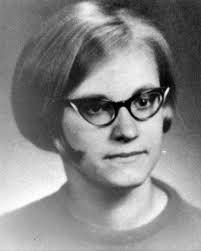
After the death of her mother Daphnia was sent to live with relatives out of state. Per the Green family’s myheritage site, she got married and had a son. Harvey went on to marry (and divorce) numerous times and had four more children; he passed away on February 3, 2007 at the age of 56. Geneva’s father passed away at the age of 84 in 2014 in Garibaldi, OR, and Mrs. Green died January 13, 1994 at the age of 79 due to a smoking related illness. Both of her half-sisters have led incredibly remarkable lives: Dr. Lynella Faith Grant is a psychologist, statistician, lawyer, personnel director, inventor, marketer, publisher, and author; Dr. Madelon Green-Mottet got her PhD in Fisheries from the University of Washington in Seattle and taught classes on aquaculture at a small college in Sitka, Alaska.
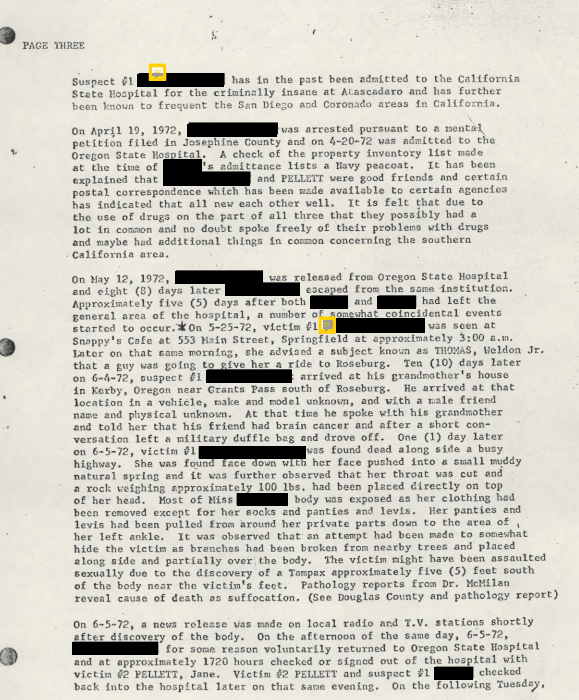
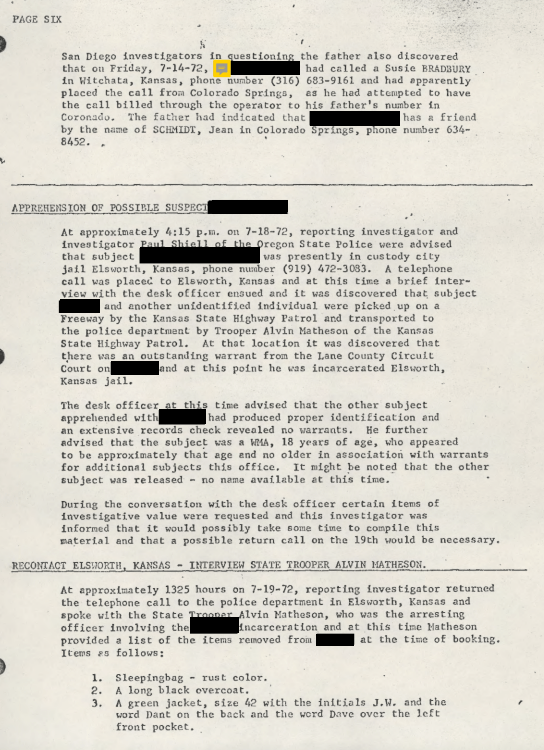
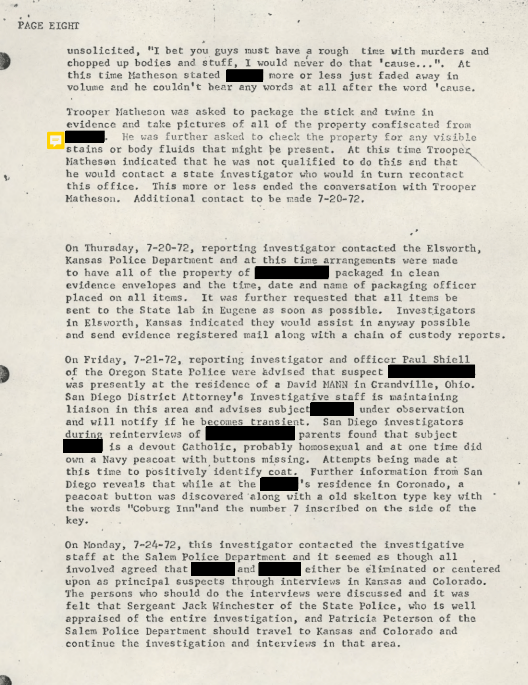
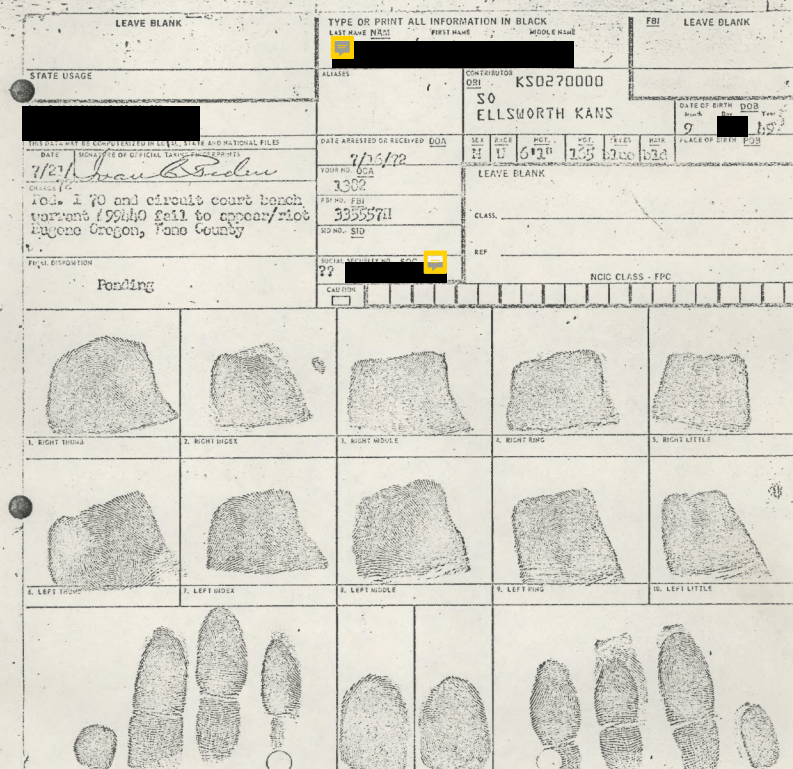
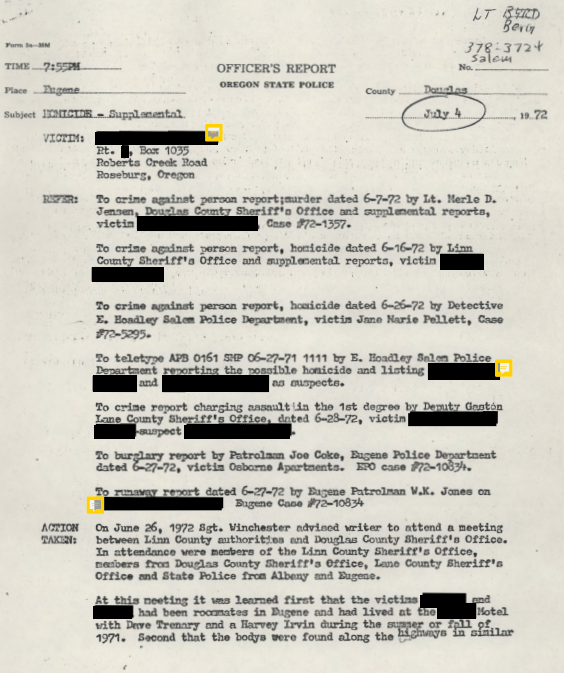
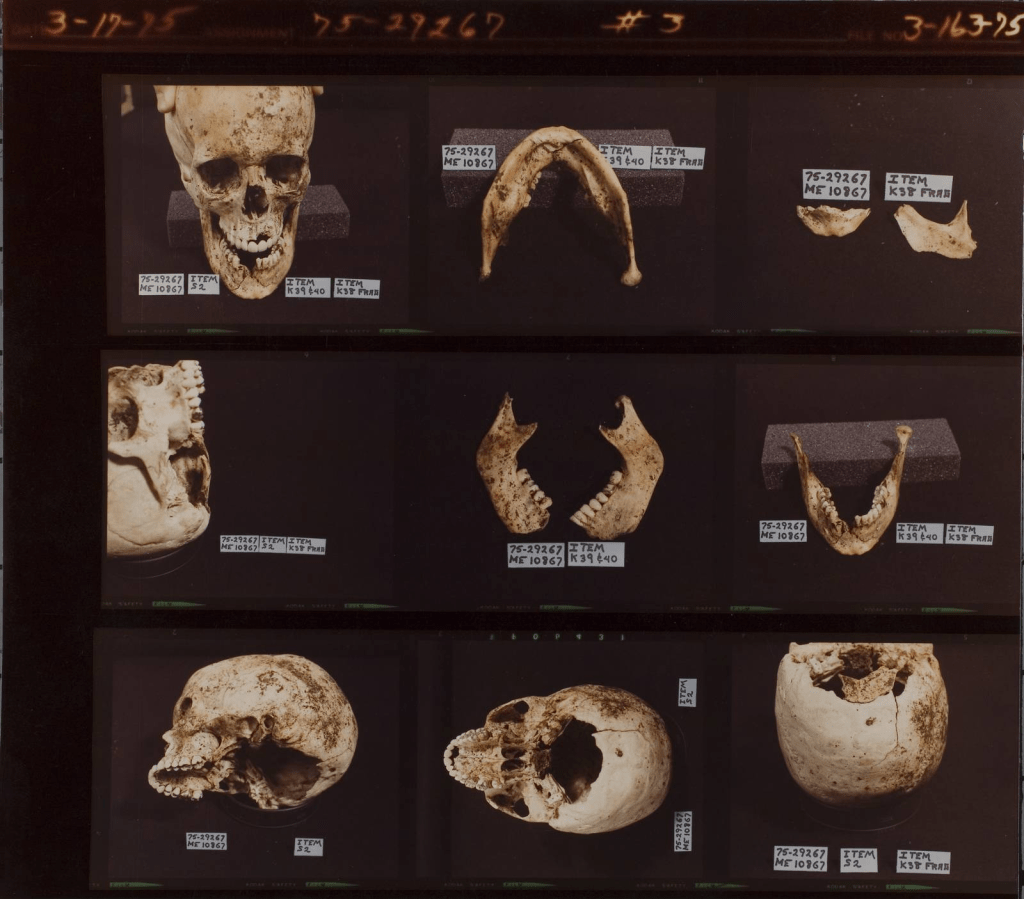
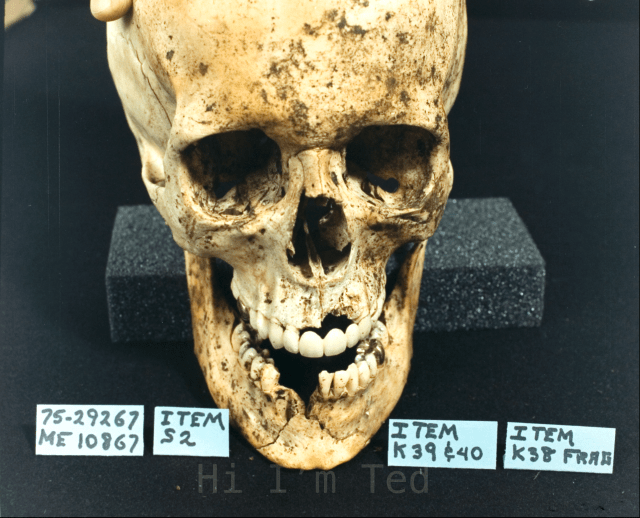
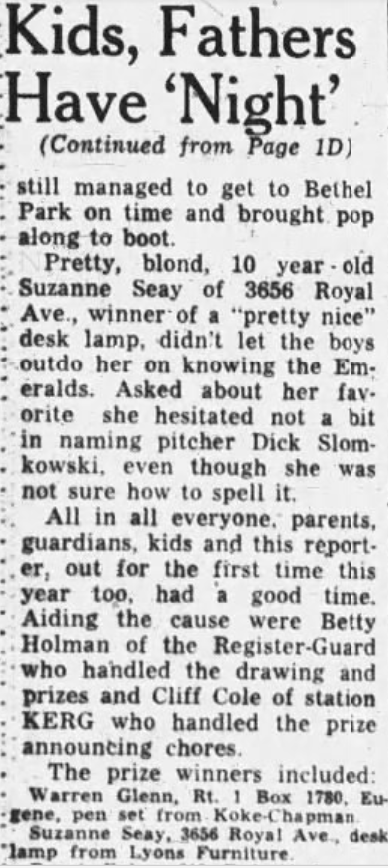
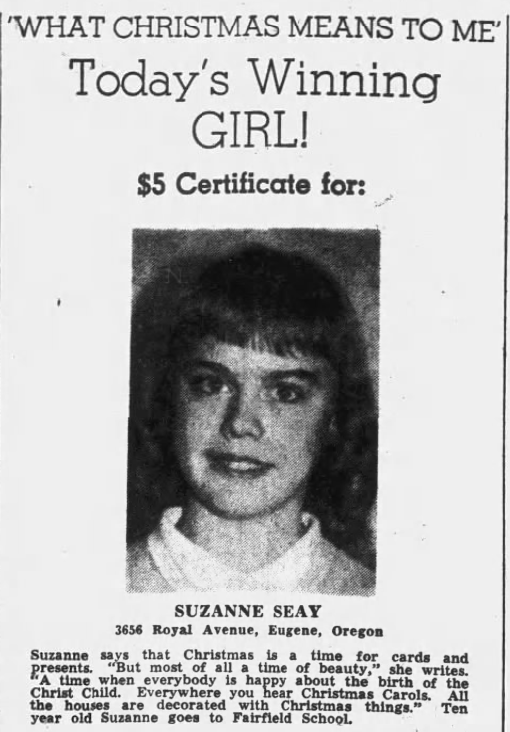
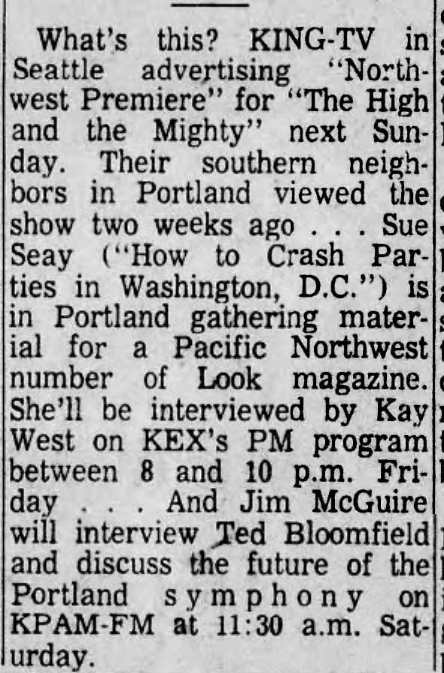
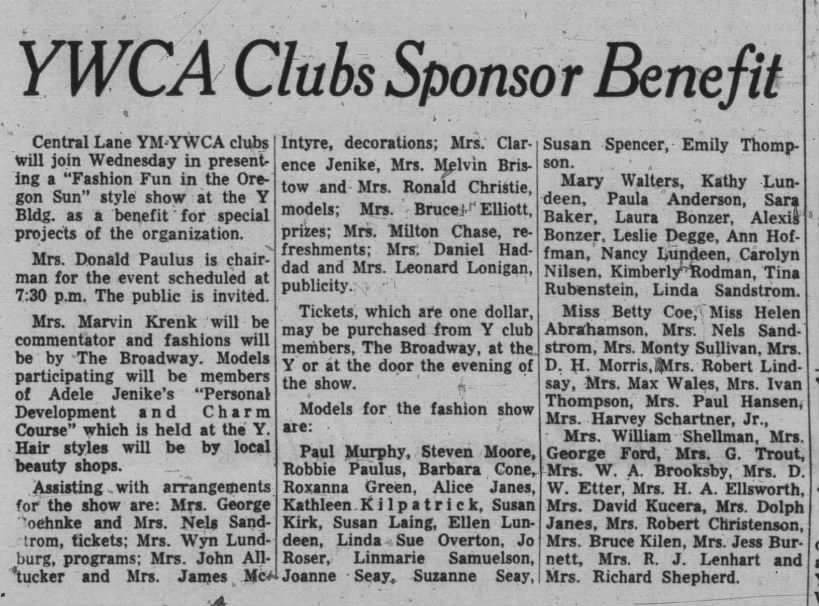
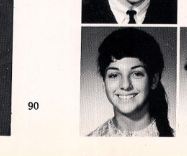
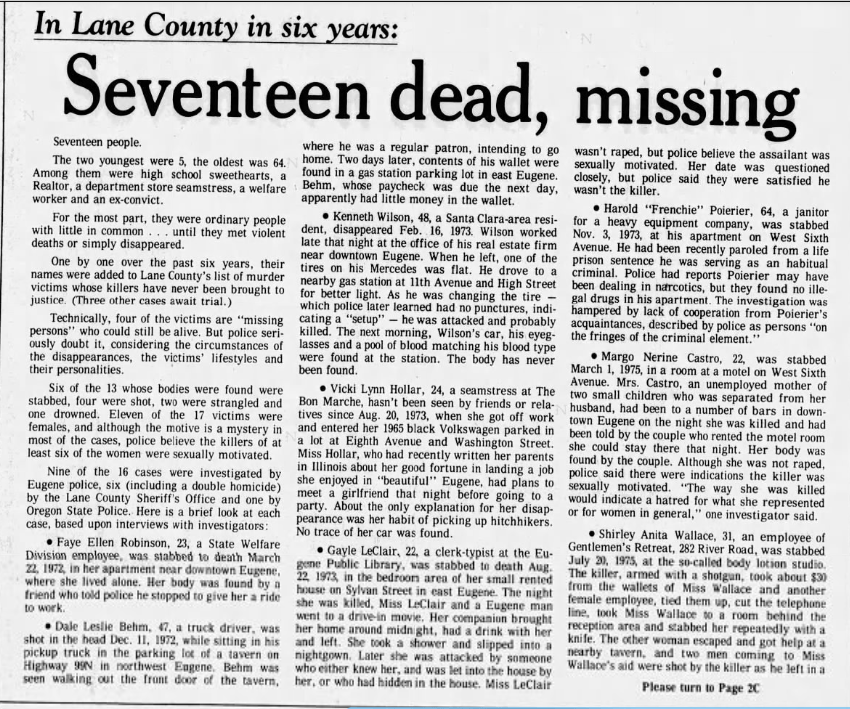
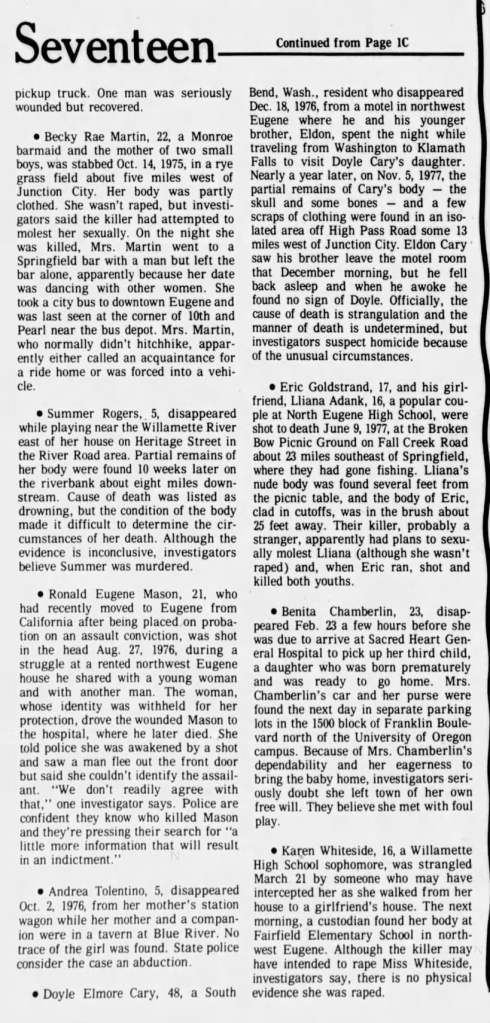
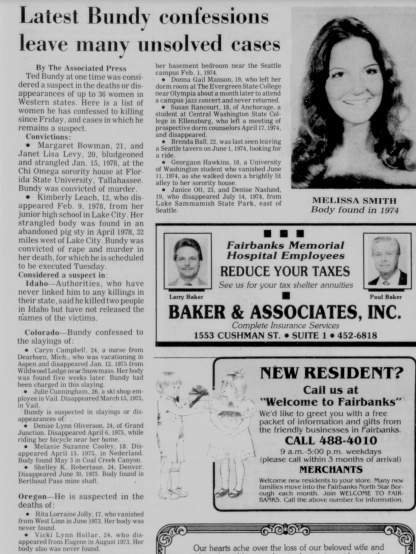
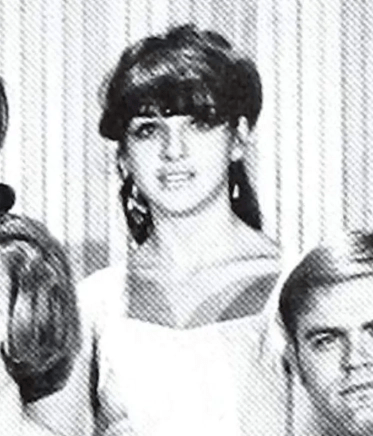
Some information related to the death of Geneva Joy Martin, courtesy of the King County Sheriff’s Department.Some information related to the death of Geneva Joy Martin, courtesy of the King County Sheriff’s Department.Some information related to the death of Geneva Joy Martin, courtesy of the King County Sheriff’s Department.Some information related to the death of Geneva Joy Martin, courtesy of the King County Sheriff’s Department.Some information related to the death of Geneva Joy Martin, courtesy of the King County Sheriff’s Department.Some information related to the death of Geneva Joy Martin, courtesy of the King County Sheriff’s Department.Some information related to the death of Geneva Joy Martin, courtesy of the King County Sheriff’s Department.Some information related to the death of Geneva Joy Martin, courtesy of the King County Sheriff’s Department.Some information related to the death of Geneva Joy Martin, courtesy of the King County Sheriff’s Department.Some information related to the death of Geneva Joy Martin, courtesy of the King County Sheriff’s Department.Some information related to the death of Geneva Joy Martin, courtesy of the King County Sheriff’s Department.Some information related to the death of Geneva Joy Martin, courtesy of the King County Sheriff’s Department.Some information related to the death of Geneva Joy Martin, courtesy of the King County Sheriff’s Department.The grave stone of Geneva Joy Martin. She is buried in plot 21 at The Mulkey Cemetery in Eugene, Oregon.The family history of Ms. Martin according to myheritage.com.An article about the discovery of Martin’s remains published by The Statesman Journal on June 17, 1972.An article about Martin’s body being discovered (but unidentified), published by The Albany Democrat-Herald on June 17, 1972.An article about the murder of Joseph N. Zaloom that mentions Geneva Martin published by The Albany Democrat-Herald on June 19, 1972.A picture from an article about the discovery of Martin’s remains published by The Albany Democrat-Herald on June 19, 1972.An article about the discovery of Martin’s remains published by The Statesman Journal on June 20, 1972.An article about the discovery of Martin’s remains published by The Albany Democrat-Herald on June 20, 1972.An article about the discovery of Martin’s remains published by The Corvallis Gazette-Times on June 20, 1972.An article about the discovery of Martin’s remains published by The Corvallis Gazette-Times on June 21, 1972.An article about the discovery of Martin’s remains published by The Albany Democrat-Herald on June 22, 1972.Part one of an article about the discovery of Martin’s remains published by The Times on June 22, 1972.Part two of an article about the discovery of Martin’s remains published by The Times on June 22, 1972.An article mentioning Martin published by The Albany Democrat-Herald on June 24, 1972.An article mentioning Martin published by The Albany Democrat-Herald on June 26, 1972.An article about the identification of Geneva Joy Martin-Irvin’s remains published by The Corvallis Gazette-Times on June 29, 1972.An article about the death of Geneva Joy Martin-Irvin published by The Albany Democrat-Herald on June 29, 1972.Part one of an article about the discovery of Martin’s remains published by The Times on June 29, 1972.Part two of an article about the discovery of Martin’s remains published The Times on June 29, 1972.An article about the death of Geneva Joy Martin-Irvin published by The Spokesman-Review on June 30, 1972.An article about the positive identification of Geneva Joy Martin-Irvin’s remains published by The Capital Journal on June 30, 1972.An article about the positive ID of Geneva Joy Martin’s remains published by The Statesman Journal on June 30, 1972.An article about the death of Geneva Joy Martin published by The Greater Oregon on June 30, 1972.An article about the death of Geneva Martin published by The Albany Democrat-Herald on July 6, 1972.An article about the death of Geneva Joy Martin published by The Albany Democrat-Herald on July 26, 1972.An article mentioning the death of Geneva Joy Martin-Irvin published by The Albany Democrat-Herald on August 29, 1972.An article mentioning the death of Geneva Martin published by The Albany Democrat-Herald on September 14, 1972.An article about the death of Geneva Joy Martin published by The Albany Democrat-Herald on December 26, 1972.An article mentioning the death of Geneva Joy Martin published by The Albany Democrat-Herald on June 28, 1973.An article mentioning the death of Geneva Martin published by The Albany Democrat-Herald on July 19, 1978.Part one of an article about potential Bundy victims out of Oregon published after his execution from The Eugene Register-Guard on February 24, 1989.Part two of an article about potential Bundy victims out of Oregon published after his execution from The Eugene Register-Guard on February 24, 1989.Bundy’s whereabouts the week before Geneva was found murdered according to the ‘TB Multiagency Investigative Team Report 1992.’An article about a burglary performed by Geneva’s ‘husband’ published in The Eugene Register-Guard on November 8, 1969.A newspaper blurb about a burglary performed by Geneva’s ‘husband’ published in The Eugene Register-Guard on January 27, 1973.A newspaper blurb about Geneva’s ‘husband’ published in The Eugene Register-Guard on March 6, 1973.An article about Harvey Irvin having another baby with his new wife published by The Albany Democrat-Herald on July 10, 1975.An article about Geneva’s ‘husband’ driving with a suspended license published in The Lebanon Express on April 12, 1976.Harvey Irvin and Lorie Ann William’s marriage certificate from 2001.Harvey Irvin’s obituary published in The Kansas City Star on February 3, 2007.Mrs. Green’s obituary.Madelon Green Mottet from the 1963 West Anchorage High School yearbook.Dr. Madelon Green Mottet, PhD.Dr. Madelon Mottet’s bio on her Amazon page.
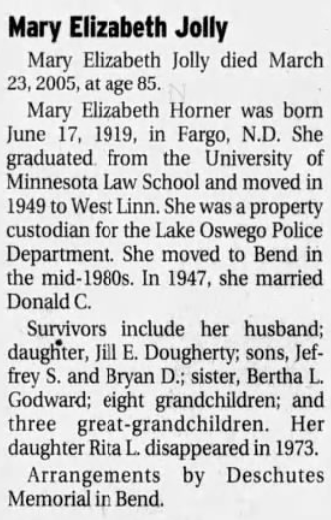
Gayle Elizabeth LeClair was born on January 26, 1951 to Donald and Barbara LeClair in Gold Beach, Oregon.Mr. LeClair was born on June 4, 1930 and was employed as a car salesman, and Barbara Jean was born on July 8, 1930 in Redondo Beach, CA and worked as a bank teller at Western Bank. The couple were wed on February 10, 1950 and had two children together (Gayle and her younger brother Cleve*), but sadly divorced in September 1970. After his marriage ended he had a daughter named Leah with a woman he only dated for a short period of time. The woman put her up for adoption and Mr. LeClair wasn’t aware of her existence until around 2000. He went on to get remarried in December 1970 and had a son named Frank; the couple remained together until the early 1980’s. On September 22, 1985 Mr. LeClair remarried for a third time to a woman named Leola Wilson, who he remained with until his death.
Gayle LeClair was a petite, attractive young woman, with blue eyes and light blonde hair that she woreshort while in high school but according to her mother grew out in college, and often wore it tied up with a leather barrette. After graduatingfrom Gold Beach High School in 1969 LeClair went on to attend Southwestern Oregon Community College for two years. While at SWOCC she was active in the schools theater group, and during her first semester there was on the crew during a production of ‘Don’t Drink the Water.’ According to her mother, Gayle was a studious young woman that excelled in math and had dreams of continuing her education and becoming a teacher one day. When she lived at home she would (on occasion) attend service at Emmanuel Episcopal Church in Coos Bay. LeClair moved to Eugene in January 1972 after she graduated from community college and got a job at the Eugene Municipal Library as a clerk-typist.
After Gayle failed to come in for her scheduled shift at 10:30 AM on August 23, 1973 (or answer multiple phone calls) her supervisor went to her house to check on her. Upon arrival, there was no sign of forced entry and the front door was unlocked, and after walking towards LeClair’s bedroom the unidentified supervisor discovered her deceased from multiple stab wounds shortly after 11:00 AM; upon the discovery she immediately went next door and used a neighbor’s telephone to contact police. Gayle had a date with a known acquaintance the night before; they went to a drive-in movie then went back to her apartment for a nightcap. She was last seen alive by him at 1:30 AM, and after a conversation with detectives the young man was quickly cleared as a suspect.
Lieutenant Donald Lonnecker with the Eugene Police Department said the LeClair was dressed for bed when she was murdered and a ‘preliminary autopsy indicated no evidence of sexual assault.’ Before moving into the house she was killed in, from January 1972 to May 1973 she resided at 3760 Concord Street in the Bethel-Echo neighborhood of West-Eugene; she lived by herself in both residences. Mrs. Duane Brown lived next door to the victim on Concord Street and said where they weren’t close and didn’t talk often she said she was a ‘nice, pleasant person.’ Miss LeClair seemed to have a healthy relationship with her family, and before she was murdered her brother Cleve visited her (he lived in North Bend with their mother), and Barbara said of her daughter ‘she would pick up the phone in the evening just to ask how our day had been.’ Neither Gayle’s mother nor father could come up with any reason why anyone would want to hurt their daughter.
Members of law enforcement were immediately baffled at the motive behind the murder of LeClair. Lieutenant Lonnecker said that the victim ‘spent a lot of time socially with people’ and ‘had a lot of friends,’ and those that knew LeClair said she was ‘both outgoing and moody, depending on who knows her and in what way;’ he also said that she was ‘pleasant, and socially active,’ had a lot of friends, and a busy social life. Despite this, neighbors of LeClair didn’t seem to know her at all, and one of them even thought the house she lived in was vacant. According to an article published in The World on August 30, 1973, the small home that LeClair rented had lots of trees, shrubs and other greenery on the property despite being in a residential neighborhood, which would make it very easy for someone to hide in her yard and look through her windows. Her landlord, J. Sidney Armstrong, was a former Lane County District Attorney that moved into private practice, and at one point even dated the victim (although not recently). Armstrong told investigators that his ex ‘had a lot of boyfriends’ and was eventually cleared of any wrongdoing. On August 24, 1973 Lane County DA J. Pat Horton said they never recovered the murder weapon, but did clarify they think it was either a ‘knife or some other sharp instrument.’
At the time of her murder in August 1973, Ted Bundy seemed to be in between jobs: from February to April of that year he worked for King County Program Planning then took a break from employment until September 1973, when he got a position as the Assistant to the Washington State Republican chairman. Although it wasn’t as intense as their first few years together he was still in a relationship with Liz Kloepfer… but he was also seeing his ex-girlfriend Stephanie Brooks on the side as well (they rekindled their romance earlier that year). He was also getting ready to start law school at the University of Puget Sound (which he started the following month in September 1973). According to the ‘Ted Bundy Multiagency Investigative Team Report 1992,’ on the day of LeClair’s murder Bundy got into a car accident in Kloepfer’s eggshell blue VW Beetle.
Now, it’s widely accepted that Bundy’s murder rampage began in January 1974, when he brutally assaulted (and most likely left for dead) fellow University of Washington student Karen Sparks in her basement apartment. But, most people in the true crime community strongly suspect he started well before this (some people think as early as 1961 with little Ann Marie Burr in his hometown of Tacoma). I feel it’s worth mentioning that during his final death row interviews with Dr. Bob Keppel, Bundy confessed to starting his murder spree in 1972, not 1974:
Robert Keppel: ‘There’s a gal in 1971, Thurston County.’ Ted Bundy: ‘No.’ RK: ‘Not that far back. Nothing that far back?’ TB: ‘1972.’
Additionally, after Bundy was executed forensic psychologist Arthur Norman told New Jersey based news magazine ‘The SandPaper’ that the killer once told him that he murdered ‘two women in the Philadelphia area’ (most likely Elizabeth Perry and Susan Davis), which he suspected were his first two homicides. Dr. Norman even notified Atlantic City Prosecutor Jeffrey Blitz about his confession, who immediately shot down the story, calling it inconclusive. He never investigated it.
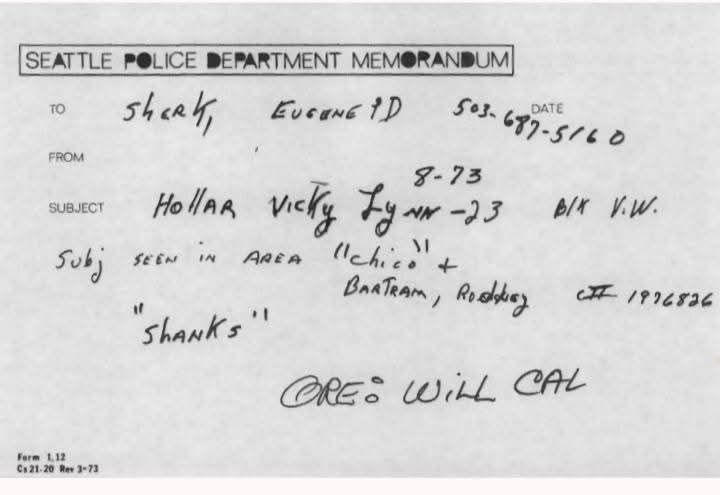
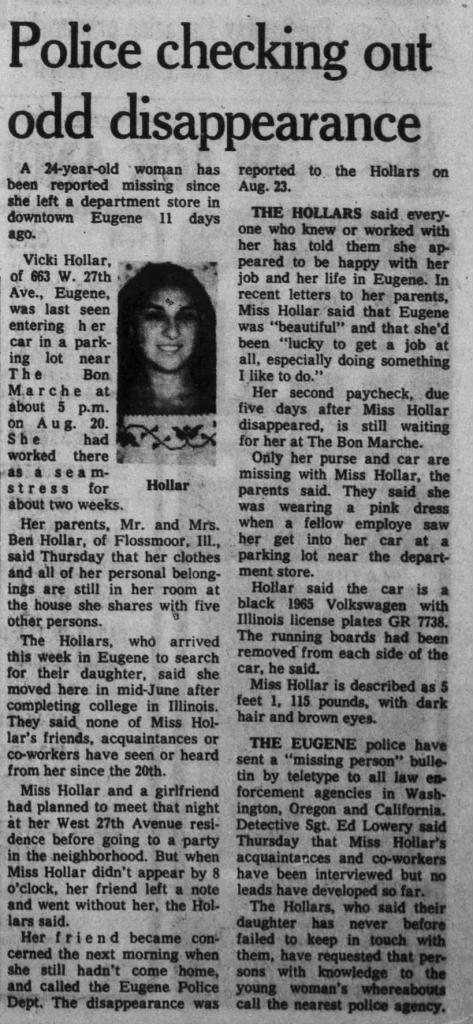
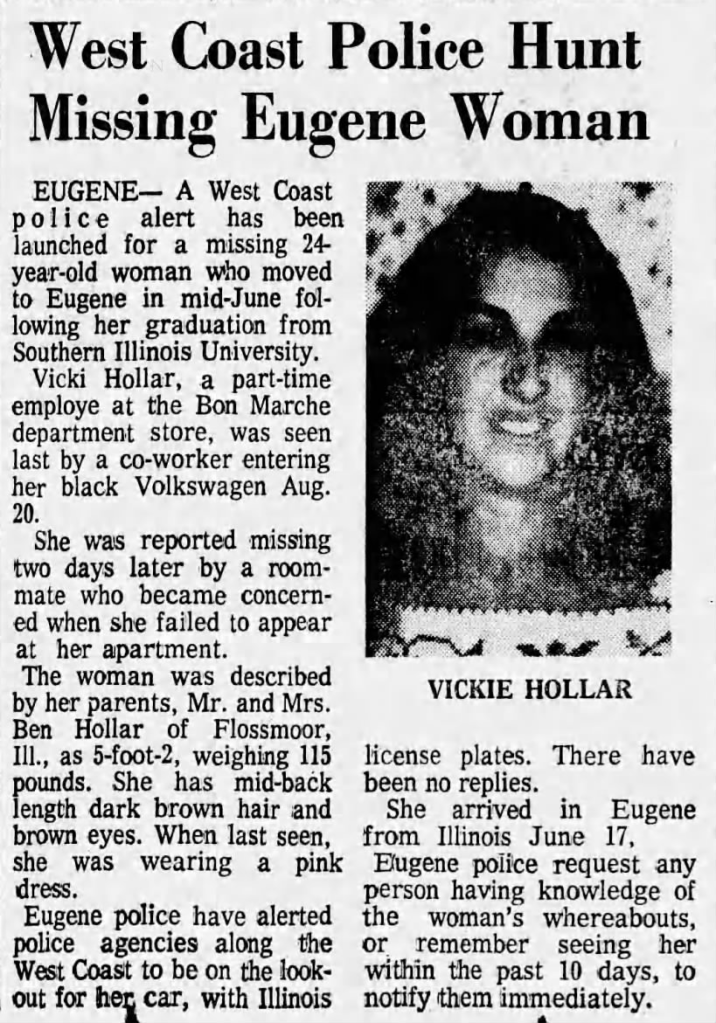
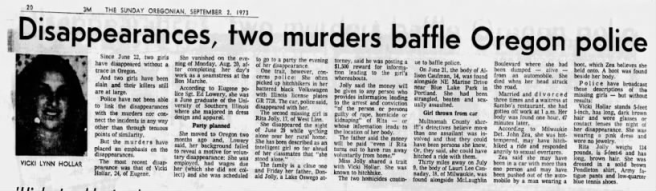
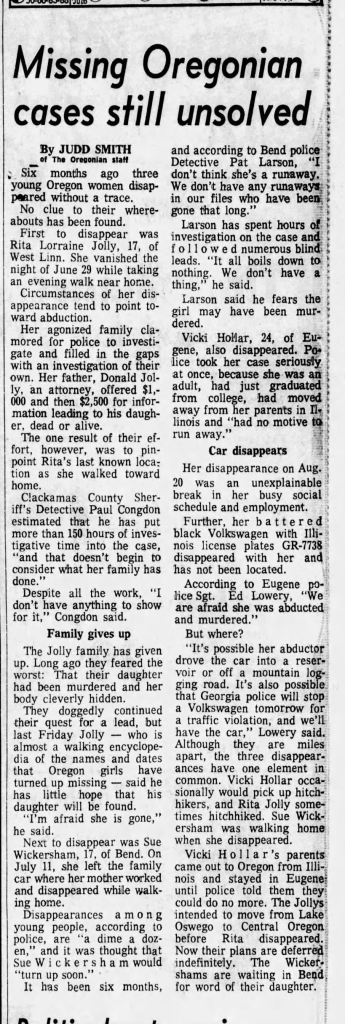
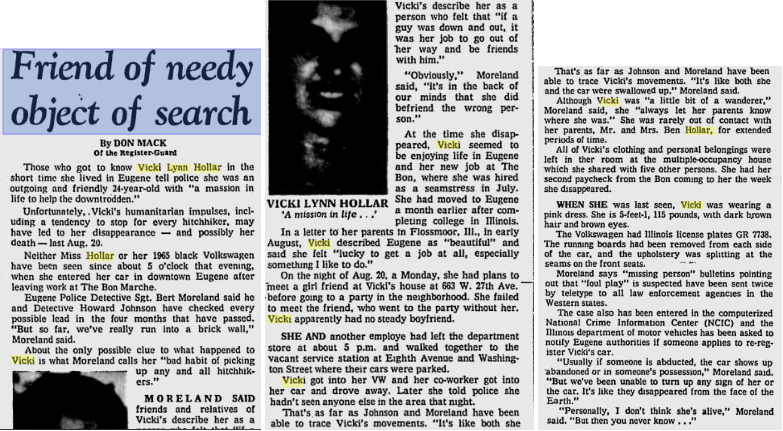
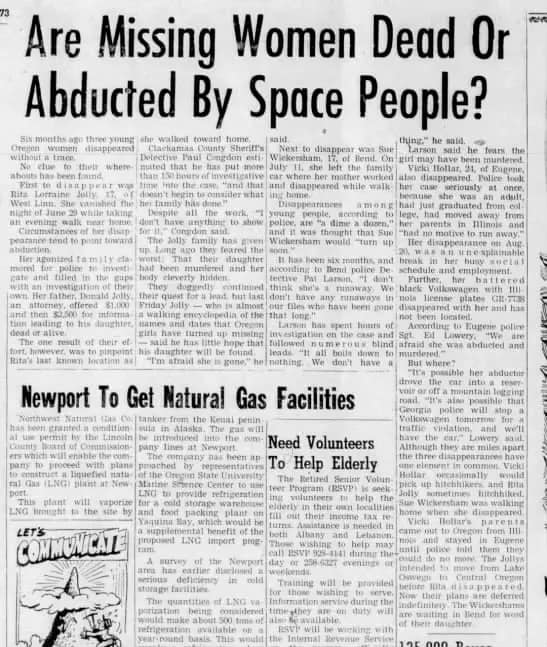
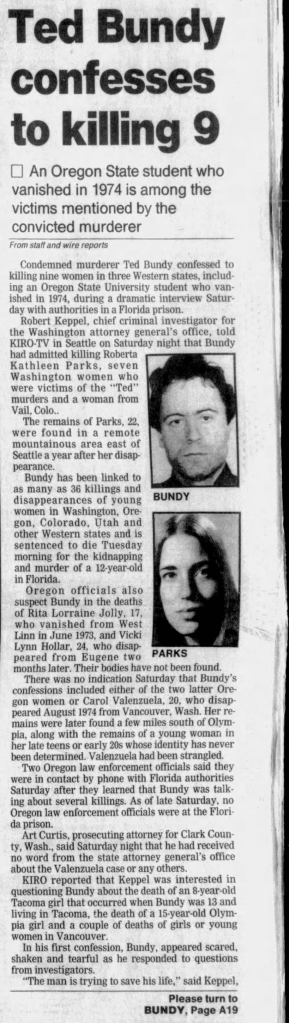
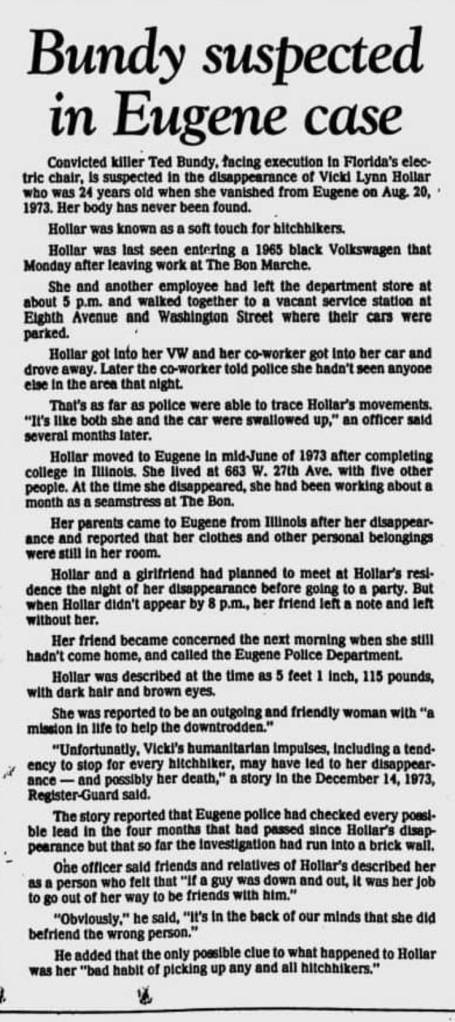
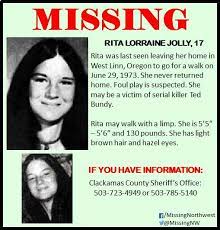
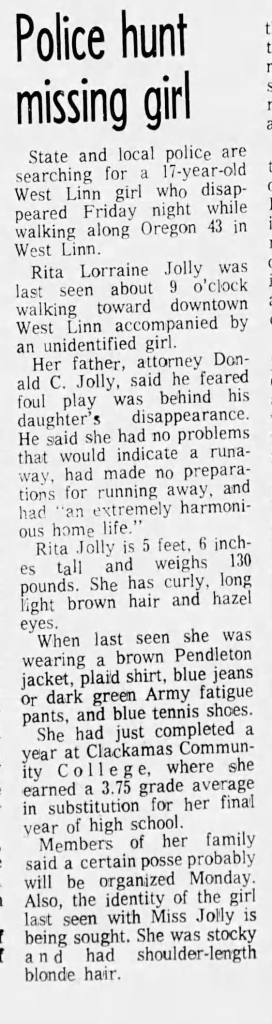
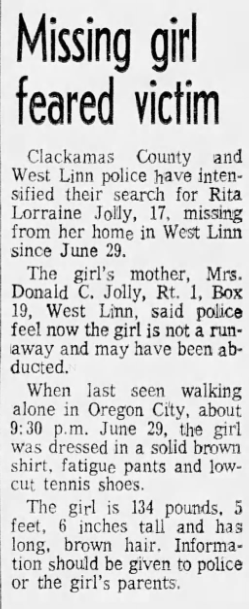
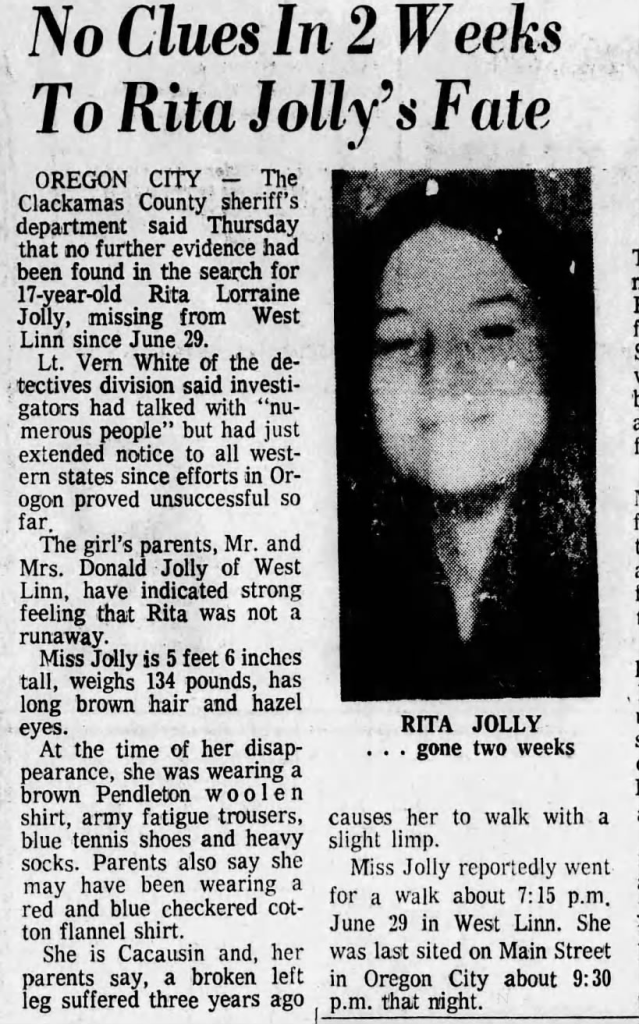
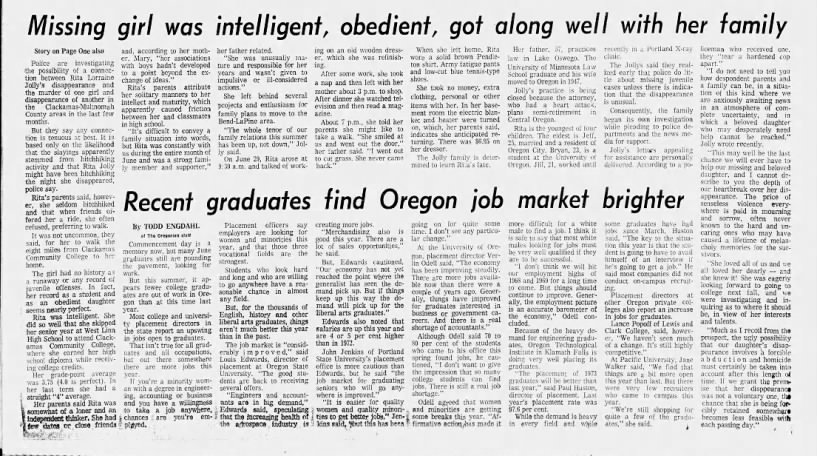
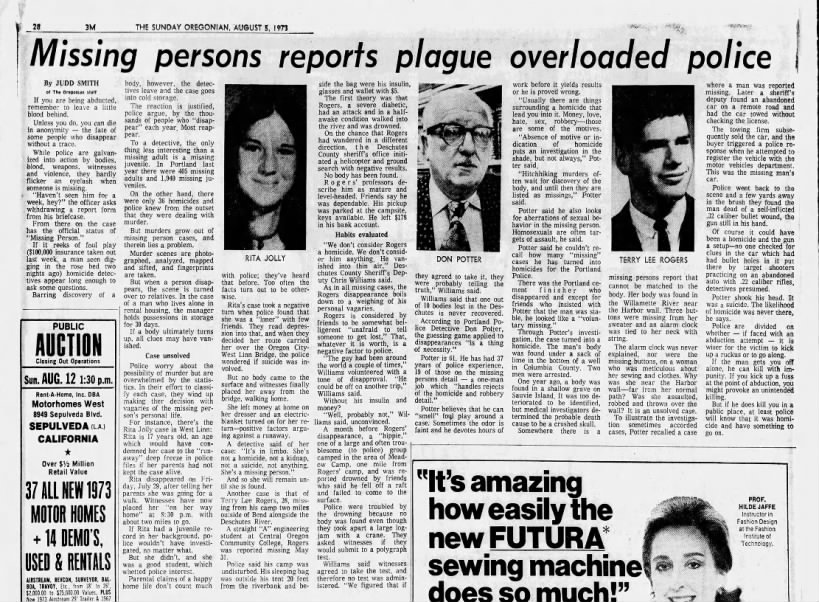
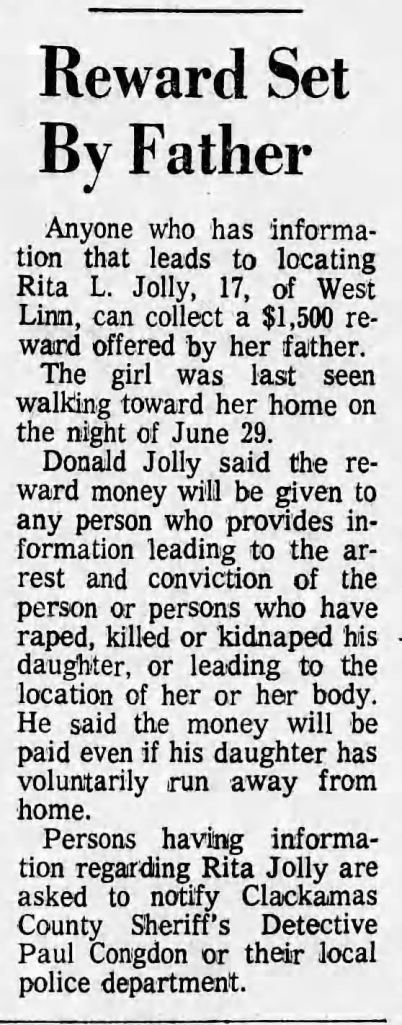
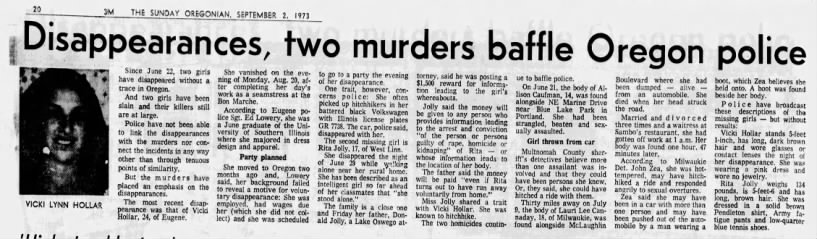
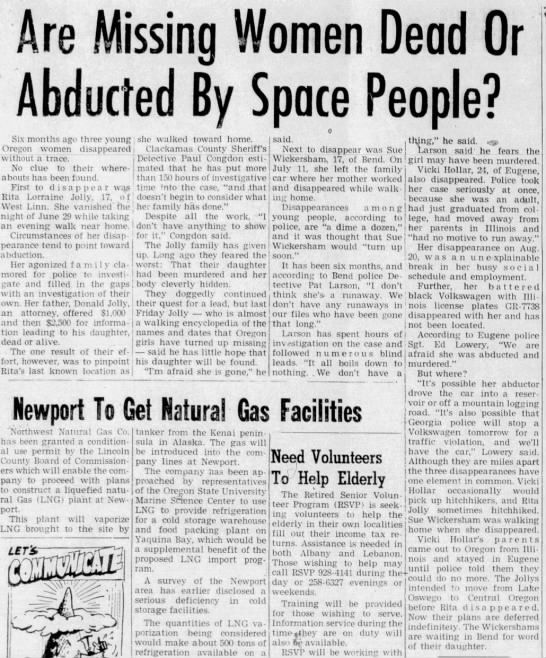
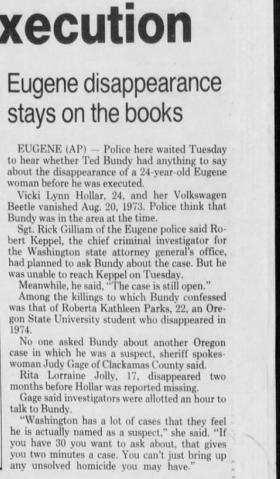
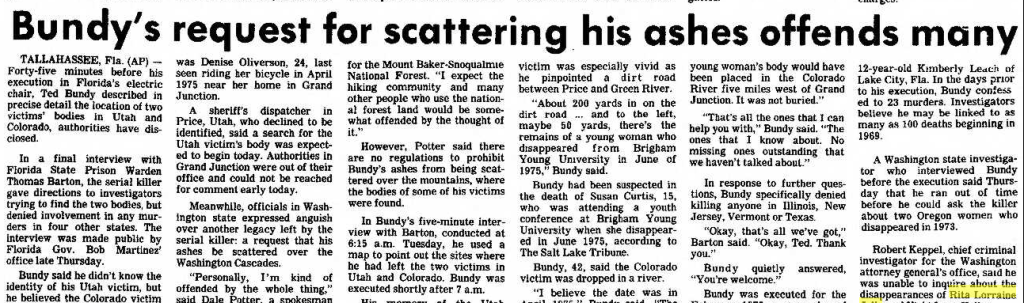
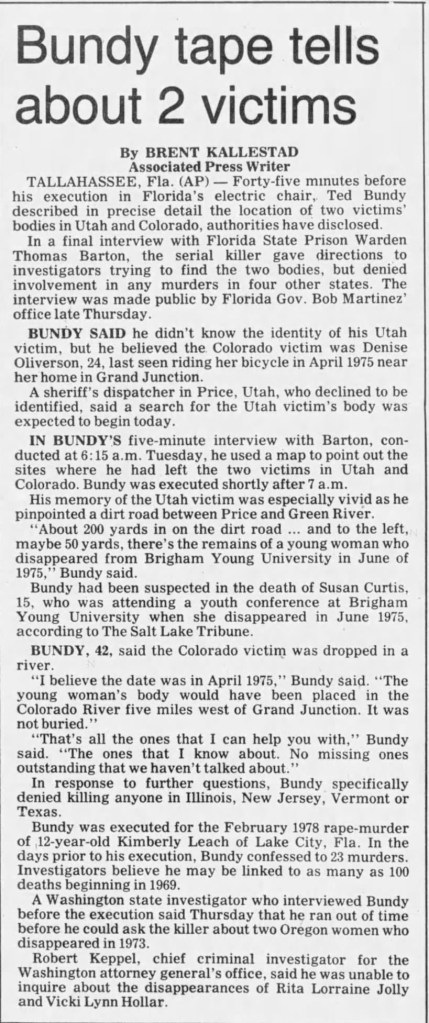
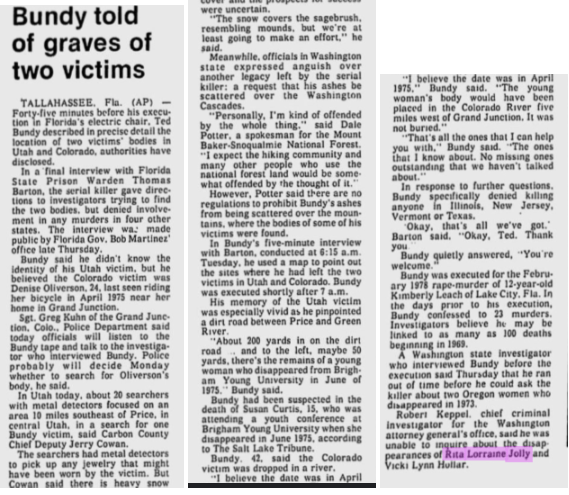
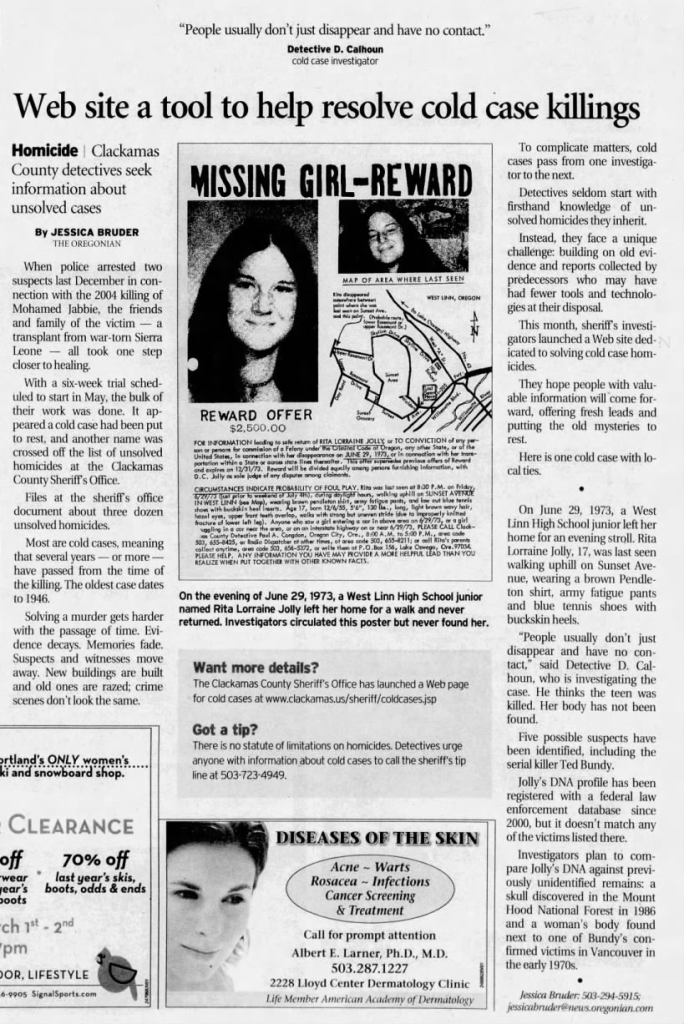
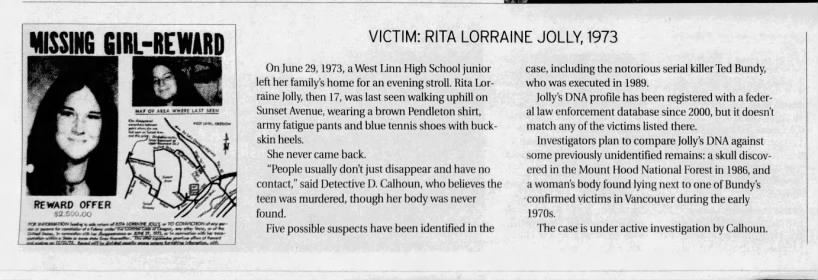
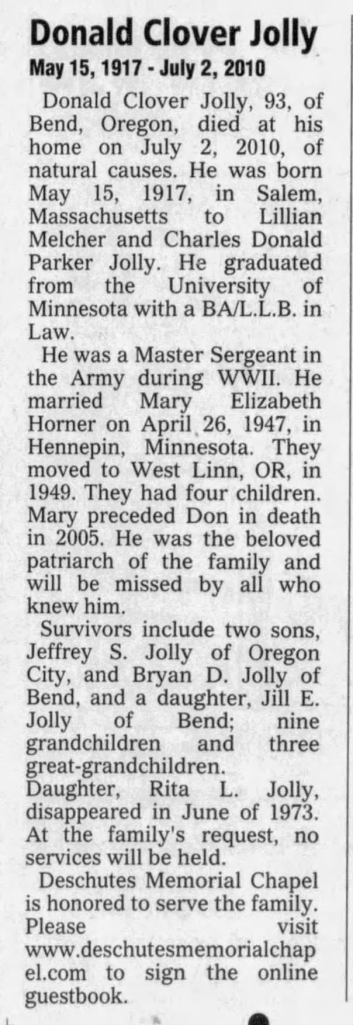
Ted confessed to abducting Roberta Kathleen Parks from Oregon State University on May 6, 1974: he drove her over 250 miles away to Taylor Mountain, where he raped and killed her. She is his only confirmed Oregon victim. In interviews with law enforcement, Bundy confessed to murdering two additional women in the ‘Beaver State’ but refused to elaborate any further; according to most law enforcement, Vicki Hollar and Rita Jolly are the best candidates. On June 29, 1973 seventeen year old Rita Lorraine Jolly left her family home to take a walk, something she did every night before bed. She never returned home. Not even two months later on August 20, 1973 twenty-four-year-old Hollar disappeared without a trace after leaving the Bon Marche in Eugene, where she had just gotten a new job as a seamstress two weeks prior. Detectives tried but were unable to question Ted regarding Vicki’s disappearance before his execution in 1989, eliminating the chance of closing the case in relation to the serial killer. I was not able to find anything from the Hollar family in regards to Bundy, however I did find a quote by Jill Jolly: ‘as I recall, my mother told me that the local detectives managed to get a direct question about Rita through to him before his execution, and his reply was ‘No. No more in Oregon.’ Bundy withheld many secrets in the end in hopes to parlay them into yet another stay of execution, and even told detectives that ‘there are other buried remains in Colorado’ (then of course he refused to elaborate any further).
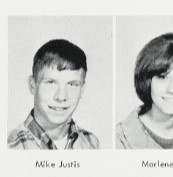
Regarding how close the Bon Marche in Eugene was compared to LeClair’s residence, WebSleuths user BlueJean40′ points out that ‘both of these locations are relatively close on the same side of our city. Just wondered if anyone had read anything about them possibly being connected.’ Not even three months after LeClair was killed on November 5, 1973 twenty-three year old Suzanne Justis most likely hitchhiked from her home in Eugene to Portland, as her car was found left behind at home. She spoke to her mother from a phone booth located outside of the Memorial Coliseum. Justis told her mother she was planning on coming home the following day to pick up her young son from school but never showed up. No trace of her has ever been recovered.
Now, when I say this I’m in no way implying that Ted Bundy was responsible for every single murder that took place in the state of Oregon in 1973… but I am surprised that after two years of very intense research I’m still coming across names that I’ve never seen before. During my research into Gayle LeClair I learned about a young women named Faye Robinson (her high school yearbook spelled her first name ‘Fay’), who was found deceased from multiple stab wounds in the upper part of her body not even six months before LeClair in March 1973. Like Gayle, Robinson was educated and worked in county government: she graduated from the University of Oregon in 1970 and was employed by the Lane County Welfare Department.
Another girl I want to mention is 17 year old Susan Wickersham, who disappeared on July 11, 1973 after dropping off the family car at her mom’s POE in downtown Bend after joyriding around town with a girlfriend (some conflicting reports say she was at a party). Her remains were found on January 20, 1976 and her skull had a bullet hole behind the right ear with no exit wound. Lastly, a 15 year old girl named Alison Lynn Caufman disappeared out of Portland sometime in 1973 (I was unable to find an exact date or any more details about her) as well as eighteen year old Laurie Lee Caniday from nearby Milwaukie (yes, that’s spelled correctly).
Now, I want to (briefly) talk about the May 1969 Garden State Parkway killings separately from the other missing/murdered girls for a moment, just because I feel that they share some (very) general commonalities with the murder of Miss. LeClair (even though I personally don’t think Bundy was responsible for the murder of Susan Davis and Elizabeth Perry): like LeClair, both victims expired as a result of multiple stab wounds, and even though none of Ted’s other victims(that we know of, anyways) ever suffered from any similar types of injuries we do know that he used a (dull) knife to cut the throat of little Kimberly Dianne Leach in Florida on February 9, 1978.
Aside from Ted, another name that came up in relation to the murder of Gayle LeClair is Dayton Leroy Rogers, an American serial killer that has been linked to the slayings of at least eight ‘street’ women (which is code for sex workers/addicts/runaways) across Oregon. He was convicted of the murder of his final victim in 1988, and two years later in May 1989 he was sentenced to death after being found guilty of six additional homicides. Rogers was actually sentenced to death on three separate occasions, but all three times the Oregon Supreme Court vacated the decision and remanded the cases for a new trial; he was sentenced to death for a fourth time on November 16, 2015. According to Roger’s defense attorney, the killer said that he would have waived all future appeals and allocated to his atrocities in exchange for a life sentence rather than receiving the death penalty. His death sentence was overturned for the fourth time on November 12, 2021 partially thanks to a new law signed by Governor Kate Brown limiting the amount of ‘aggravating factors required for seeking the death penalty.’ Governor Brown commuted the death sentences of everyone on Oregon’s death row to life without parole on December 13, 2022. Dayton is still alive as of June 2024, and will live out the rest of his days behind bars.
Now, nothing in my research told me that TedBundy was ever considered a suspect in LeClair’s murder, despite her living in a fairly accessible area to him and fit neatly into his preferred age range, as he killed young females anywhere from 12 years old (possibly even as young as eight if you throw Ann Marie Burr into the mix) up to 26 years old (ski instructor Julie Cunningham). Miss. LeClair also fit the physical description of one of Ted’s victims, as she was beautiful and slim and had long hair and a petite build. But these superficial details are pretty much where any possible link to Bundy ends.
Mr. LeClair died at the age of 74 on January 27, 2009 due to a ‘smoking related illness.’ He was an avid outdoorsman, loved racing, and was a member of the Fraternal Order of Eagles. Gayle’s brother Cleve died of heart failure on May 9, 2009. He was active in a local HAM radio club and was trained to help run a radio station in the event of an emergency. Frank LeClair was able to tell me that Barbara LeClair passed away on December 11, 2024.
* Edit, January 2025: I would like to thank Gayle’s brother Frank, who was kind enough to reach out to me and point out a few mistakes I made and give me some updates about his sister’s case. He shared with me that a detective from the Eugene PD Cold Case Squad had been in touch with him in recent years, who shared they had uncovered a piece of evidence in relation to the murder that unfortunately at the time had not been properly processed into evidence, therefore there was no chain of custody and it wouldn’t hold up in court. But they did however send a piece of the sample to a laboratory that specializes in recovering DNA and they were able to uncover two partial but separate genetic profiles from the blood evidence. The detective shared with him that they needed a blood sample from an immediate family member in order to determine which portion belonged to Gayle, and unfortunately since Frank was only a half-sibling he didn’t qualify, as it needed to come from a ‘more direct relative.’ He helped them get in touch with Ms. LeClair’s motherBarbara, who happily volunteered a sample. After receiving it the lab was able to isolate the suspected killers DNA from the sample taken from the crime scene, however because of the age and the fact that the sample was degraded they weren’t able to obtain a full set of genetic markers.
But Frank did tell me that recently they were able to get genetic samples from every person of interest in relation to the case, and if they were deceased they got one from one of their children. So far investigators have been able to clear every suspect except for one, who died several years ago; his child has refused to voluntarily give up a DNA sample. The detective told Frank the names of a few different suspects that were eliminated after the DNA evidence was analyzed, but he forgot most of them. The ones that stuck out the most were Gayle’s date that night and the landlord, John Sydney Armstrong.
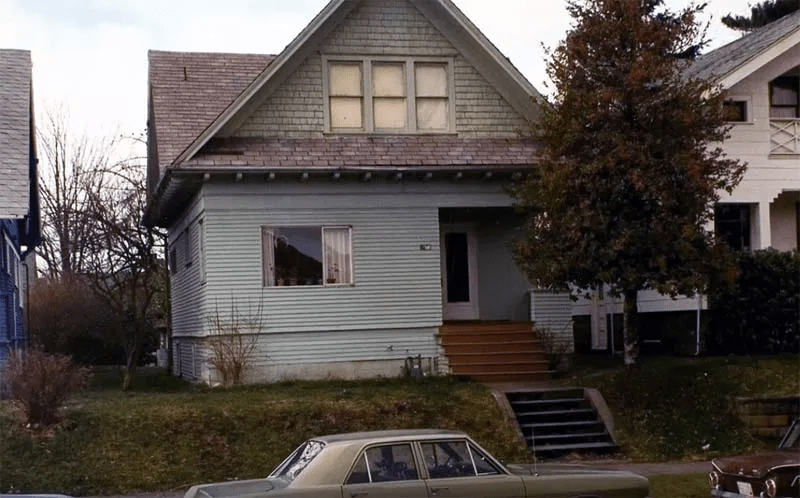
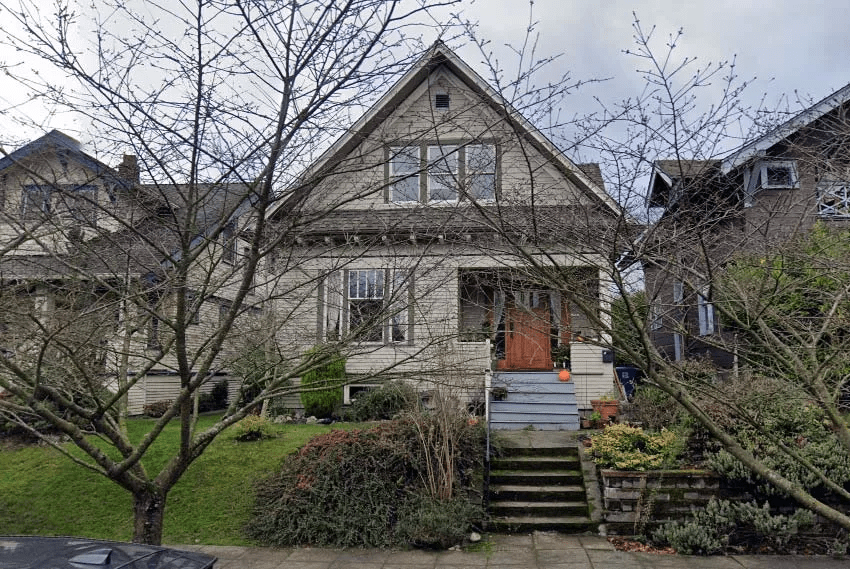
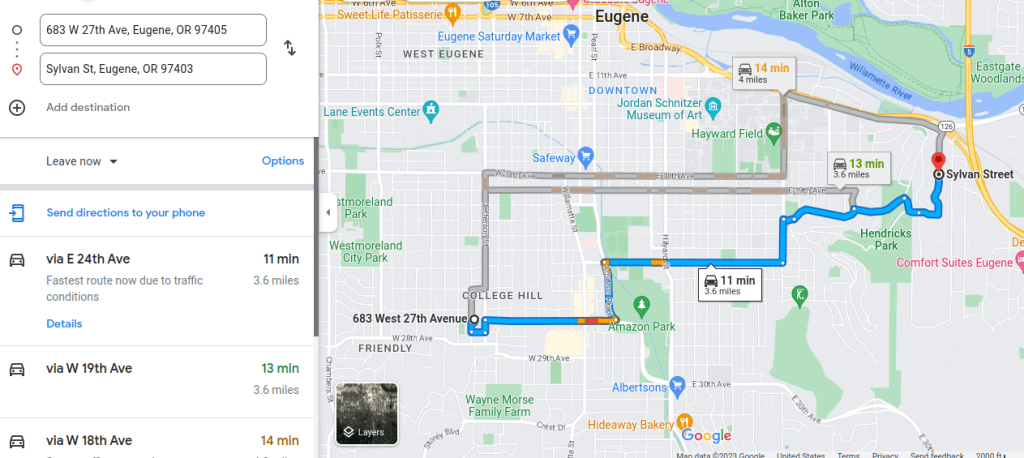
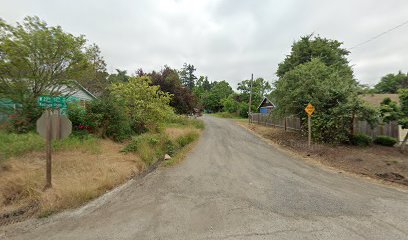
Gayle LeClair’s junior year picture from the 1968 Gold Beach Union High School yearbook.Gayle LeClair’s senior year picture from the 1969 Gold Beach Union High School yearbook.The final resting place of Gayle LeClair. She is buried at Rogue River Cemetery in Gold Beach, OR.LeClair listed in the Oregon state death index.LeClair mentioned in an article published by The World on February 10, 1954.An article about a play called ‘Don’t Drink the Water’ put on by Southwestern Oregon Community College in the fall of 1969. Gayle LeClair is mentioned at the bottom, it was published in The World on November 15, 1969.A newspaper blurb about the murder of Gayle LeClair published by The Albany Democrat-Herald on August 24, 1973.A picture of the Sylvan Street crime scene published in The Eugene Register-Guard on August 24, 1973.Part one of an article about the murder of Gayle LeClair published in The Eugene-Register Guard on August 24, 1973.Part two of an article about the murder of Gayle LeClair published in The Eugene-Register Guard on August 24, 1973.Part one of an article about the murder of Gayle LeClair published by The World on August 30, 1973.Part two of an article about the murder of Gayle LeClair published by The World on August 30, 1973.Gayle LeClair’s obituary published in The World on August 27, 1973.An article mentioning LeClair published by The Eugene Register-Guard on September 10, 1973.An article about multiple murders in Lane County, Oregon that mentions the murder of Gayle LeClair published by The Eugene Register-Guard on April 16, 1978 (there is more to this but it doesn’t mention LeClair).The first part of a newspaper article about serial killer Dayton Leroy Rogers that mentions the murder of Gayle LeClair published in The Eugene Register-Guard on September 19, 1987.The second part of a newspaper article about serial killer Dayton Leroy Rogers that mentions the murder of Gayle LeClair published in The Eugene Register-Guard on September 19, 1987.3760 Concord Street, where LeClair lived from January to May 1973.1781 Sylvan Street, where LeClair was murdered. Donald and Barbara’s marriage announcement published in The World on February 21, 1950.Donald and Barbara LeClair’s marriage certificate that was filed on June 5, 1950.A newspaper clipping about Mr. LeClair being charged with a DUI published in The World on January 9, 1969.Donald and Barbara’s divorce announcement published in The World on June 20, 1970 .Donald and Barbara LeClair’s divorce paperwork, filed on September 29, 1970.An obituary for Gayle’s brother Cleve published in The World on May 12, 2009.Some kind words written by a friend about Gayle’s brother Donald from his memorial page on Legacy.com.I was unable to find out much about Gayle but I did find this on WebSleuths that was written by someone that knew her.Bundy’s whereabouts on August 24, 1973 according to the ‘TB Multiagency Team Report 1992.’A list of just some of the missing (and murdered) girls from Oregon between 1969-78.Fay (Faye?) Robinsons senior picture from the 1966 Tigard High School yearbook.An article about Robinson’s murder published by The Statesman Journal on March 23, 1972.Dayton Leroy Rogers.
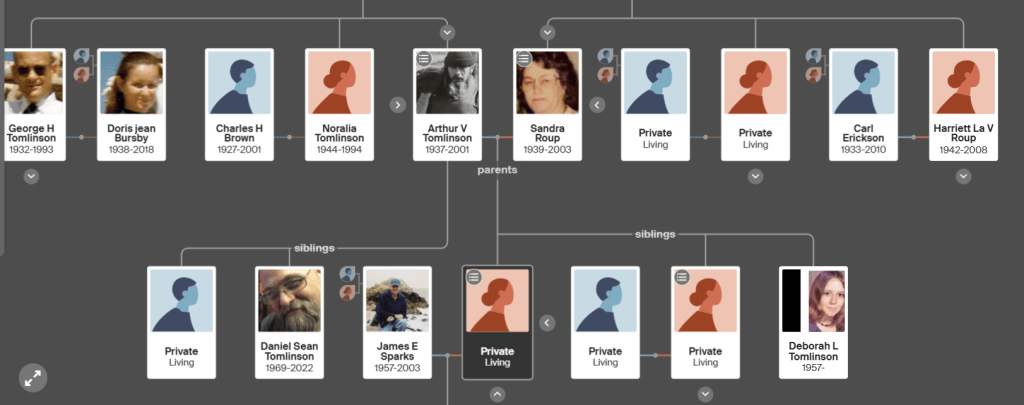
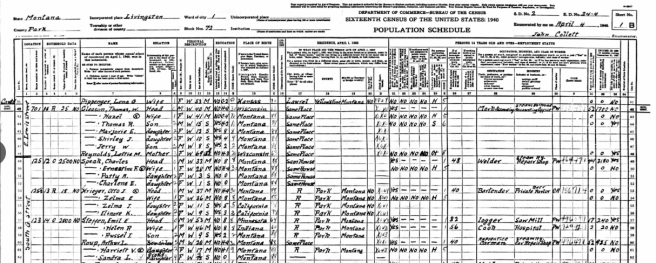
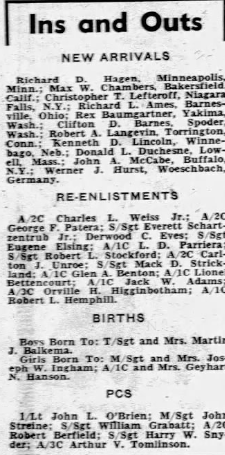
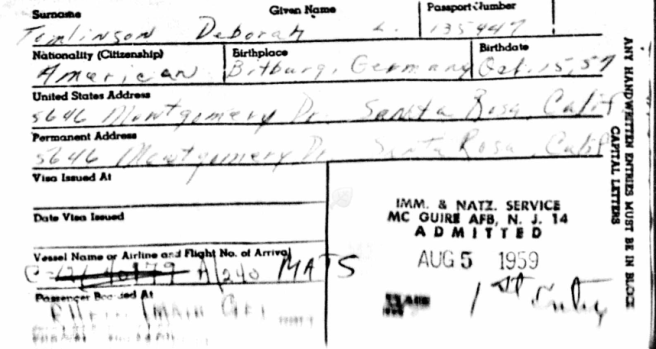
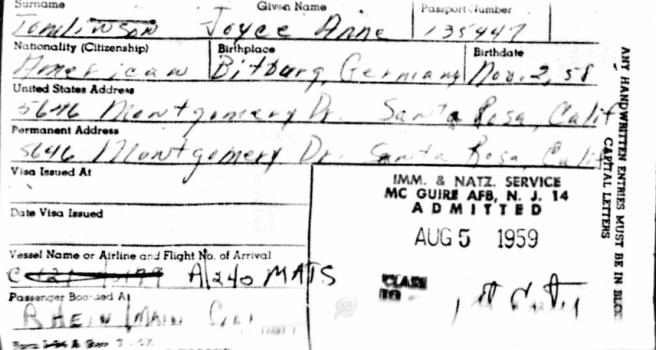
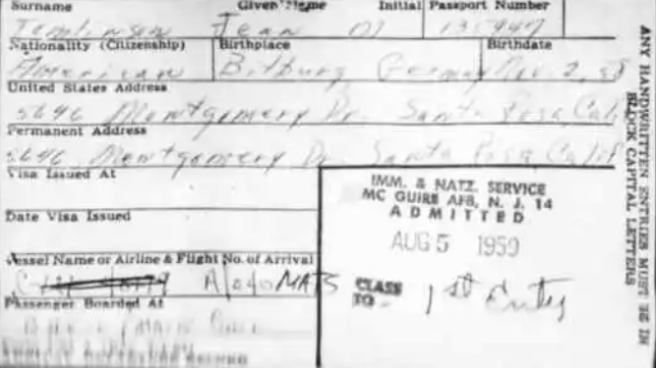
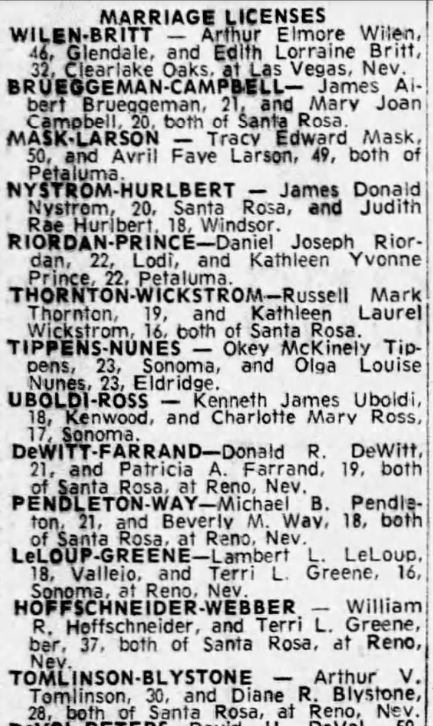
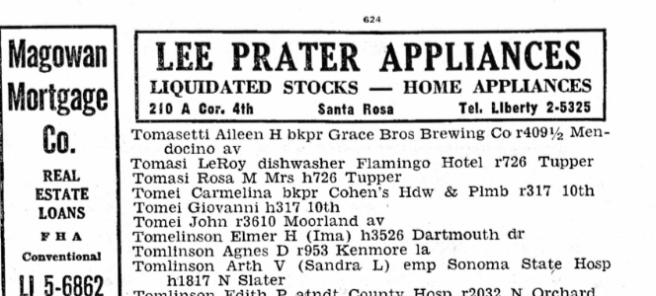
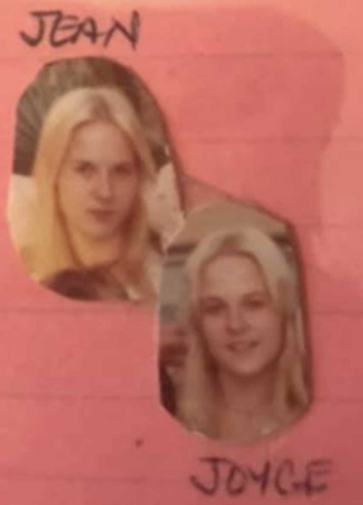
Deborah Lee Tomlinson was born on October 15, 1957 in Bitburg, Germany to Arthur and Sandra (nee Roup) Tomlinson.Arthur Vernon Tomlinson was born on September 22, 1937 in Modesto, California, and Sandra Lee Roup was born on December 31, 1939 in Livingston, Montana. According to the Tomlinson family tree, the couple had three daughters together: Deborah and her twin sisters, Jean and Joyce (b. 1958). At some point they divorced, and Mr. Tomlinson was briefly married again in 1968 (they quickly parted ways; he went on to have a relationship with Sally Morphisand in 1969 they had a son together named Daniel. He got married to Shelley Williams on August 30, 1975 in Orange, CA but their union also didn’t last long, and they split up in February of the following year. Mr. Tomlinson was married for a fourth time, and the couple had a son together. Sandra got remarried to Henry Nelson on May 10, 1963 in Billings, Montana.
After their parents parted ways Deborah, Jean, and Joyce went to live with their father and stepmother in California, and Sandra relocated to Oregon. Because of their parents’ divorce the girls were separated from their mother at a very young age, which Joyce felt prevented them from forming a strong bond because she wasn’t given a chance to raise her own babies.
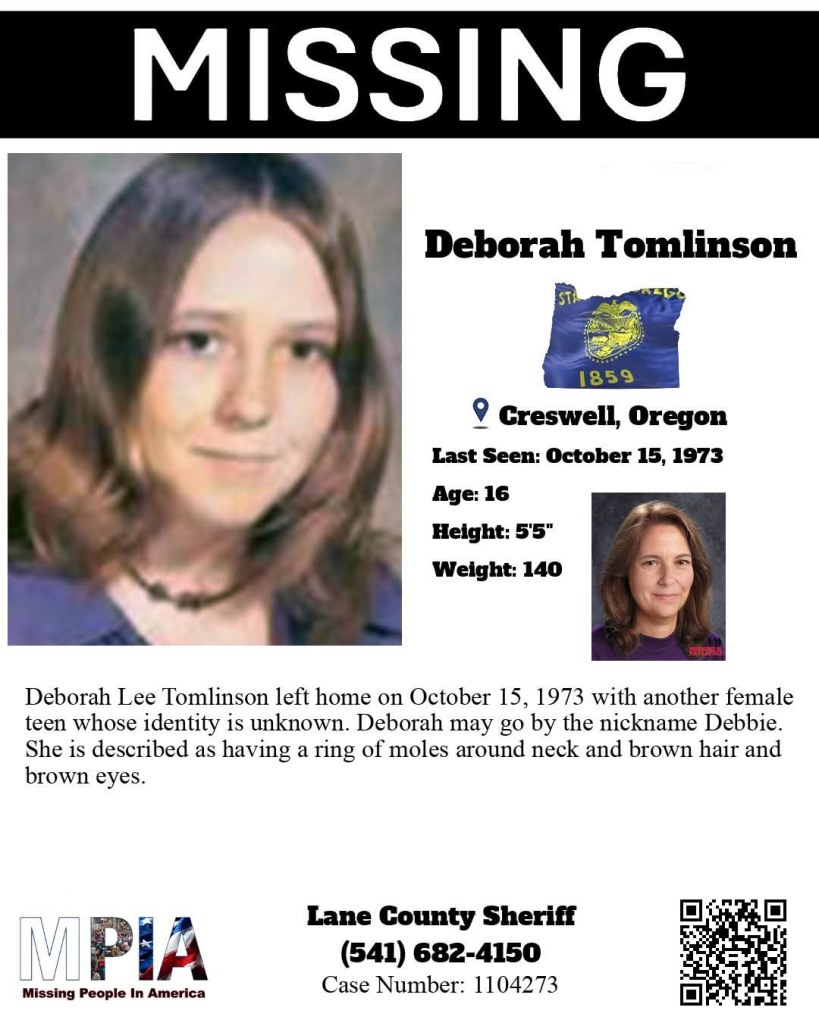
According to most reports online, Deborah Lee Tomlinson disappeared from Creswell, Oregon** on her sixteenth birthday on October 15, 1973.Creswell is an incredibly small town with only one high school, and according to the 1970 census the reported population was made up of a mere 1,199 people (it went up to 5,031 in 2010). Referred to as ‘Debbie’ by family and friends (per Joyce, she hated being called ‘Deb’), Tomlinson had brown eyes, stood at 5’5” tall, and weighed 140 pounds (Joyce felt she may have been slightly heavier); she wore her golden-brown hair at her shoulders and had a ring of moles around her neck. In the initial days following her disappearance investigators strongly believed that she was a runaway,whichmost likely explains why I couldn’t find any newspaper reports or media coverage on her. One of the only other real takeaways I could find regarding her case was that she disappeared with an ‘unidentified teenage friend.’
** After I initially wrote the article on Deborah in April 2024 I was contacted by her sister Jean, and more recently Joyce. Both sisters were kind enough to help fill in some of the gaps in their family background and were able to provide me with some of their thoughts regarding her disappearance. According to Jean, their Aunt Helen told them in more recent years that Deborah had ran away from Eugene, not Creswell, and at one point the family had been contacted by a friend that claimed they had seen her in Santa Rosa, CA with ‘a black guy,’ which was a big deal as their father didn’t approve of people of color (Joyce also said she was there visiting a friend named Lyn). The family member also volunteered that they thought she may have been pregnant at the time as well, but nothing ever came out of that. About this alleged sighting, Joyce doesn’t feel it’s true, as that’s where their grandmother lived and Deborah would never have left the area without paying her a visit, especially if she had been pregnant (the two were especially close).
According to Jean, after their parents split up the girls were raised by their father in California, but because Deborah’s didn’t get along very well with their stepmother she had moved to Oregon to live with their mother (who she also clashed with). She also said that at the time her sister disappeared she seemed mostly happy but had been in a bit of a transition period in her life and may have been under the impression that moving out of state may have resulted in more lenient rules, but that wasn’t the case.
According to Joyce, Debbie was simply acting like any other teenager, doing things like sneaking out at night and smoking: one evening in a quick moment of anger their dad announced that he was pulling a ‘Pontious Pilot’ and was ‘washing his hands of her.’ When she left home Joyce said somehow she knew it would be the last time that she ever saw her, and to this day she struggles with her feelings towards her father about that event. Additionally, she strongly suspects that a missing person’s report was never filed in the days after she was last seen, as she never came across one after contacting local Oregon law enforcement. Because of this, I strongly feel that Debbie didn’t disappear exactly on October 15, 1973, and most likely vanished sometime around it.
Jean shared with me that in the years following her sister’s disappearance neither one of their parents wanted to talk much about her, as it brough up too many painful memories. Because of this she told me that she doesn’t know as much about her as she would like to, but she does know that Debbie loved rock n ’roll music and had gotten caught sneaking out at night several times while she still lived with them in California.
Shortly after Deborah disappeared Joyce told me that their stepbrother had reached out to let her know about a formerly missing woman had been found murdered that happened to have some moles around her neck in a pattern similar to Debbie’s (which she said appeared to be ‘almost like a spaced apart, like a necklace’); it obviously turned out not to be her.
When I asked if perhaps Debbie had run off with a guy, Jean shared with me that was what most likely happened, despite the fact the sisters weren’t allowed to date until they were sixteen. Regarding her feelings on the recent ‘genetic genealogy’ craze and if she thought it could help solve the mystery of what happened to her sister, she said that she has never been contacted by LE about it, however at one point she was told by the National Center for Missing & Exploited Children that any records possibly related to Deborah were destroyed in a fire.
In 1984 Joyce and her husband took a road trip with their grandkids to visit their great-grandmother and Hank, and while there her stepfather shared that he caught Debbie sneaking out one night and she had been smoking marijuana. He told them that this freaked him out and he tried to do a ‘scared straight’ type intervention and had reached out to the local county sheriff (who had happened to be a friend of his), who had come to the house and had a conversation with his teenage stepdaughter; Debbie disappeared shortly after that.
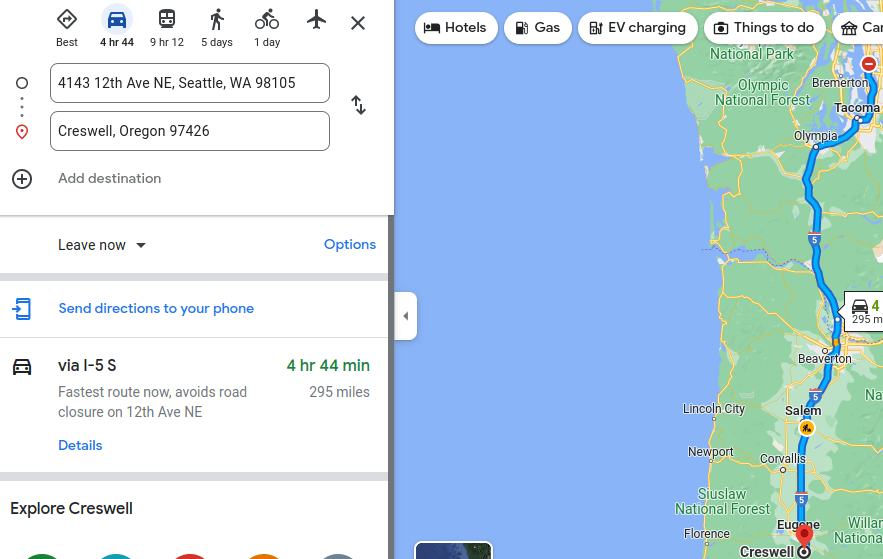
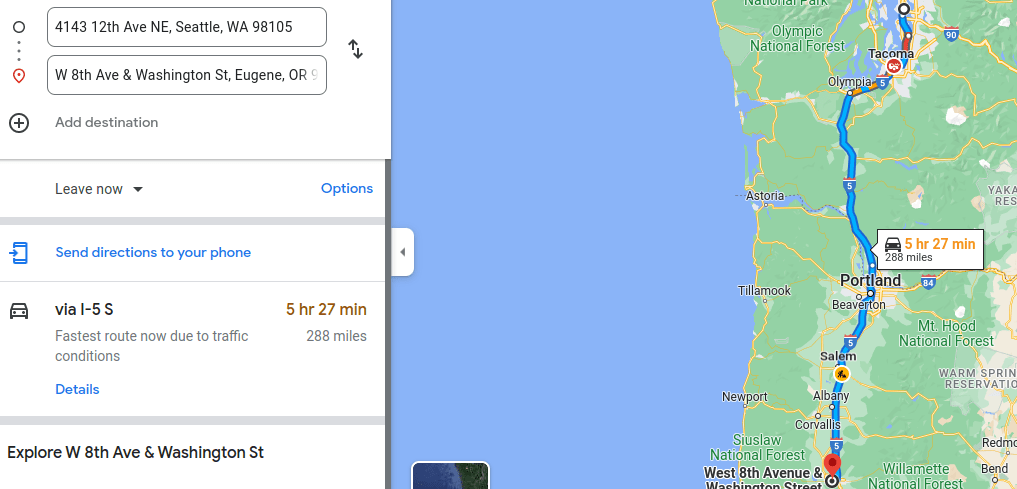
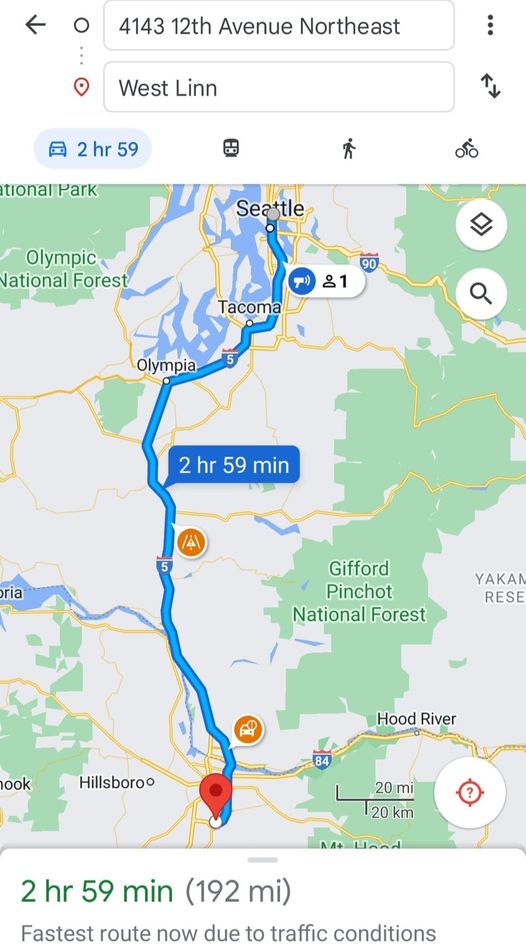
At the time Tomlinson disappeared in October 1973, Ted Bundy was living at the Rogers Rooming House on 12th Avenue Northeast in Seattle, and where it was a five-hour drive (one way) from his residence to Eugene/Creswell, we know he had no problem with traveling long distances to look for prey. Despite being in a long term, (supposedly) monogamous relationship with Liz Kendall, while on a business trip with the Republican Party to California in the summer of 1973 he rekindled his romance with one time girlfriend Diane Edwards. Ted’s former flame visited him in Seattle on multiple occasions in the latter part of the year, and the couple at one point were even briefly engaged… but the happy times didn’t last long, and in January 1974 he abruptly and without reason cut off all contact with her.
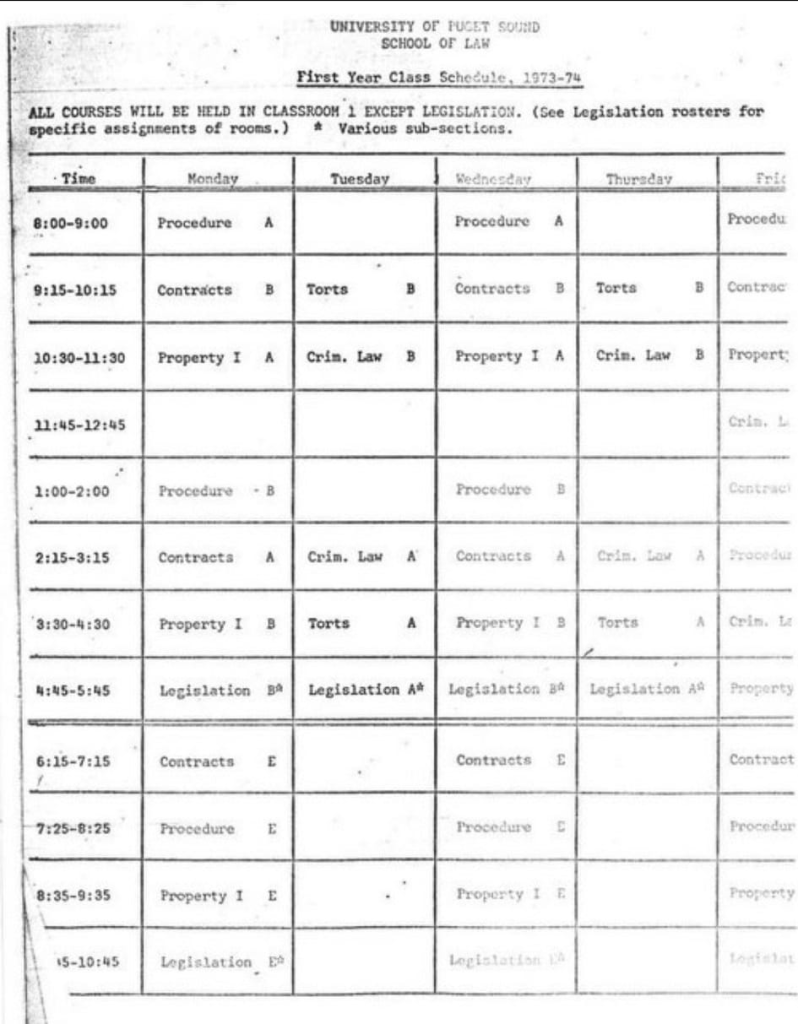
On top of juggling two women, in September 1973 Ted enrolled in law school at the University of Puget Sound, and according to the ‘TB MultiAgency Investigative Team Report 1992,’ on Monday, October 15, 1973 when Tomlinson disappeared, he was in class. Additionally, at the time he was in between employment: in September 1973 he was the Assistant to the Washington state Republican chairman and remained unemployed until May 3 of the following year when he got a position with the Department of Emergency Services in Olympia.
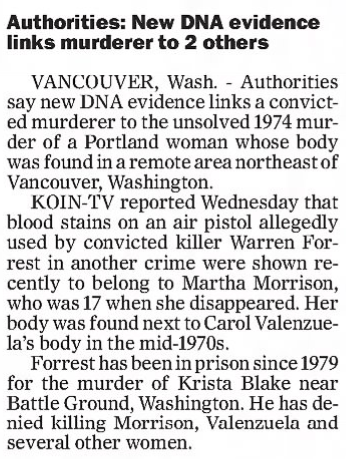
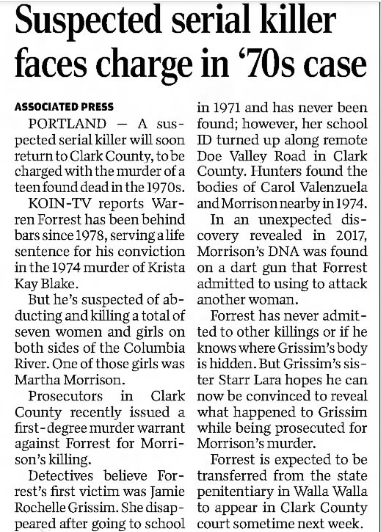
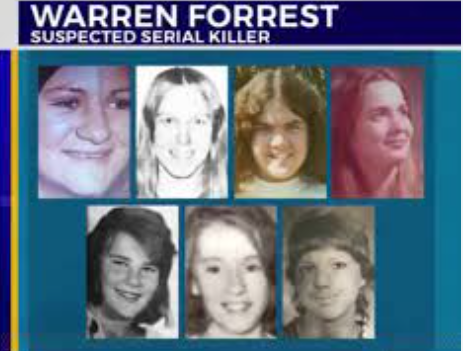
In addition to Ted Bundy multiple other serial killers roamed the Pacific Northwest in the early to middle 1970’s: the first one (aside from Ted) that popped in my head was Warren Leslie Forrest, a double murderer that has been sentenced to two life terms in prison for the murders of Krysta Blake and Martha Morrison in 1974; he is also considered the prime suspect in at least five additional murders and disappearances going back as far as 1971. He has been in police custody since 1974 and on February 4, 2023 he was convicted on another murder count after DNA linked him to the murder of Martha Morrison.
On June 8, 1961, Portland police received a call from a housewife whose dog had returned home with a human foot in a paper bag, and when detectives went to her home the animal came back with a hand. Upon investigating, LE found several additional body parts around the woman’s neighborhood, and all of the appendages were deemed to be fresh and were completely drained of blood. Police went through local missing people’s reports and came across the file of twenty-three year old Joan Caudle, a housewife and mother of two that had recently been reported missing by her husband (who of course was an immediate suspect).
Joan’s husband told detectives that where she wasn’t normally a big drinker she had been a bit depressed recently because her mother had been sick, therefore there was a chance she had been at a bar having a few. Police then tracked down a barfly that had a string of arrests for public drunkenness and she told them she had been in a bar on the night of June 7 and met a man going by the name Marquette. The pair had seemingly hit it off when a woman approached them and stole his attention away, and when detectives showed the eyewitness a photograph of Joan Caudle, she said that was definitely the same woman from the bar.
Upon his arrest Marquette admitted that he raped and murdered the Portland housewife then he drained her blood, dismembered her body, and left her head to rot in the woods. Despite being found guilty of first degree murder the jury recommended leniency, and Marquette was sentenced to life in prison.After serving only eleven years of his sentence (during which he was described as a model prisoner), he was released on parole in 1973.
Not even two and a half years after Marquette was released on parole in April 1975, a fisherman discovered a mutilated corpse floating in a Willamette River slough in Marion County, Oregon; it had been bled dry and had been dismembered. Detectives determined the remains were those of thirty-seven-year-old Betty Lucille Wilson (one report said she was thirty-five), a North Carolina native who led a life of extreme poverty and had seven children since marrying her abusive husband at the age of 16. At the time she was killed she was living in an abandoned school bus.
While he was confessing to Wilson’s murder, Marquette also shared with detectives that he killed a second woman in a similar fashion sometime in 1974, and he led them to two shallow graves where he had disposed of the bulk of the remains. Unfortunately because the head was never found, there was no way the victim could be identified, and Marquette admitted that he didn’t know who she was. Her identity remains unknown.
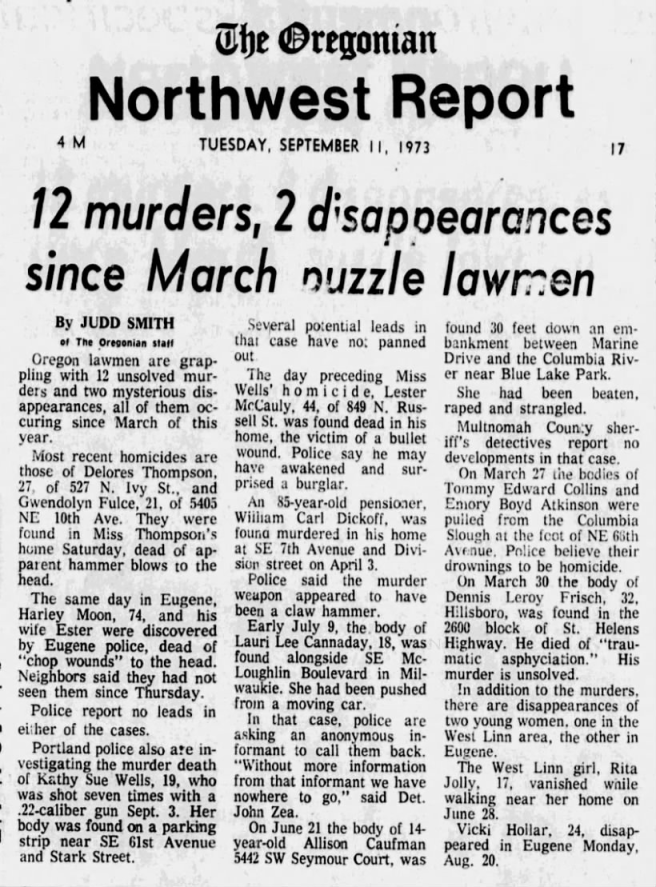
Within a five-month period in the latter part of 1973 five young women went missing in Oregon, and three more were found murdered: first was Rita Lorraine Jolly, who disappeared on June 29 while taking a nightly walk in her West Linn neighborhood; her remains have never been found. On July 9, 1973 the body of Laurie Lee Canaday was recovered in the middle of the road at the intersection of Southeast Scott Street and McLoughlin Boulevard in Milwaukee,OR. Next was seventeen-year-old SusanWickersham from Bend on July 11; her body was discovered in January 1976, only five miles south of her hometown; she had suffered a gunshot wound to the head. Additionally, sometime in July 1973 fifteen-year-old Allison Lynn Caufman of Portland died as a result of head injuries after she was shoved from a car moving at a high rate of speed.
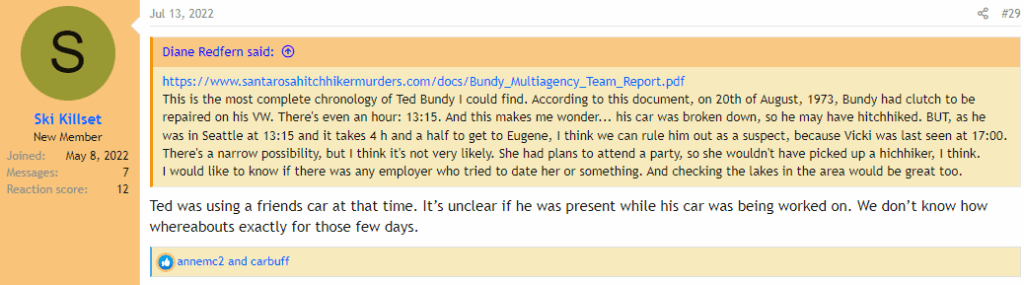
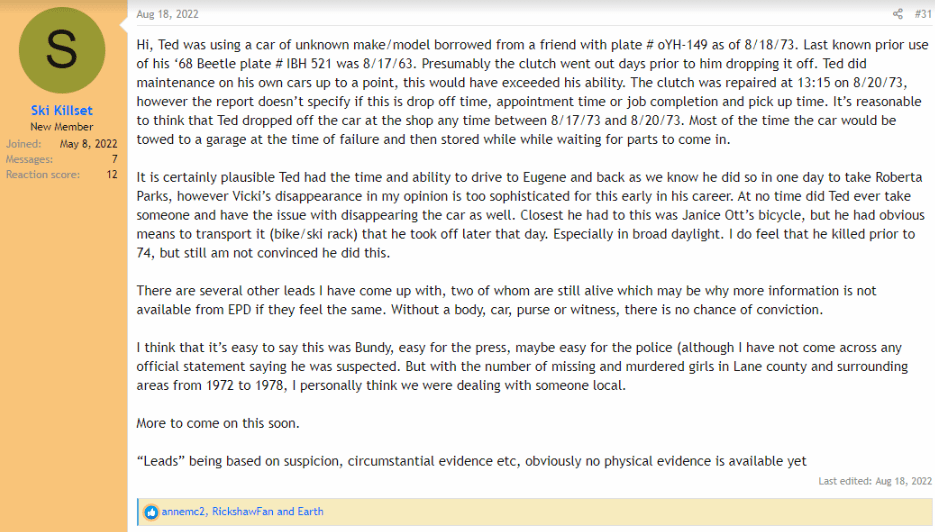
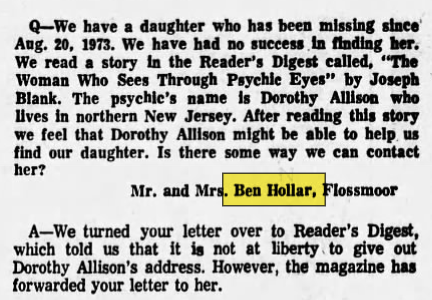
On August 20, 1973 twenty-four-year-old Illinois transplant Vicki Lynn Hollar was last seen getting in her black 1965 Volkswagen Beetle (with the running boards removed) after she left her place of employment at the Bon Marché in Eugene, where she had been working as a seamstress for about two weeks. It’s thought that she was headed home to her apartment, as she had plans of meeting up with a friend to attend a party in her neighborhood later that evening (she never showed up). Friends shared with police that she had a habit of picking up hitchhikers; her VW and personal belongings have also never been recovered. Just three days later on August 23, 1973, Gayle LeClair was found stabbed in her apartment in Eugene, OR. The twenty-two year old had recently moved to the area after she got a job at the Eugene City Library.
Just six days after Deborah Tomlinson was reportedly last seen, thirty-two-year-old VirginiaErickson disappeared from Sweet Home on October 21, 1973; although it’s never been proven, evidence points towards her husband being her killer and that it most likely took place while the two were ‘out on a hunting trip.’ Lastly, we have twenty-three-year-old divorcee Suzanne Justis, who went missing on November 5, 1973. From Eugene, Justis had hitchhiked to Portland (despite owning her own car), and had called her mom from a payphone outside of the Veterans Memorial Coliseum to let her know that she would be home the next day to pick up her son from school; she never showed up. Not one case has been solved.
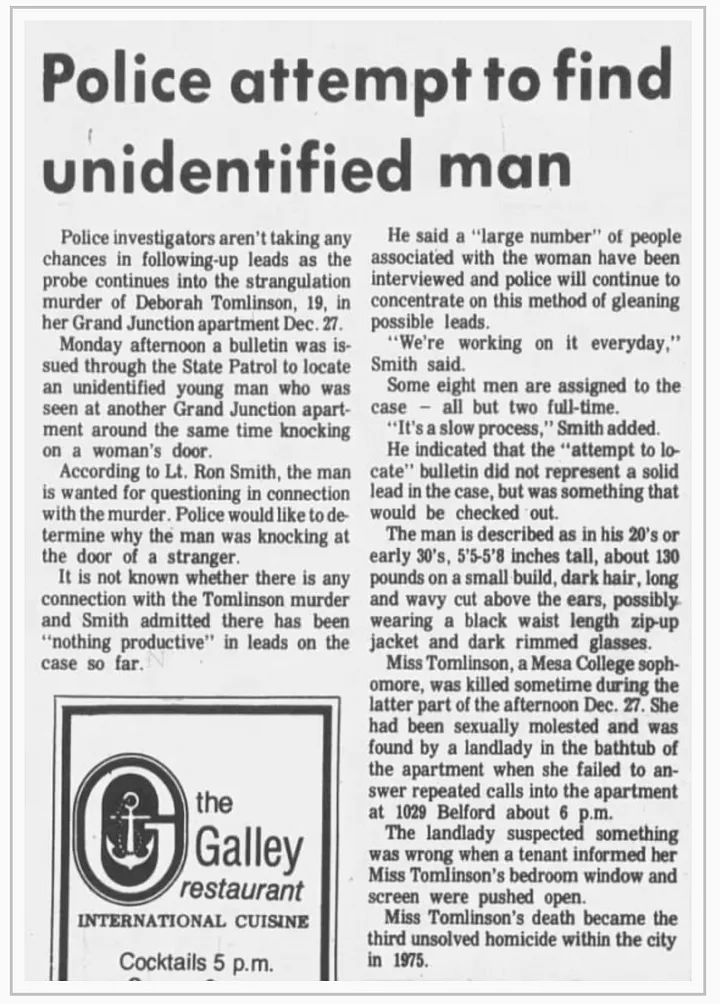
Strangely enough, there was another young woman with the same first and last name as Deborah that had been brutally killed a little over two years after she was last seen in Colorado: nineteen-year-oldDeborah Kathleen Tomlinson was murdered in her apartment complex on Belford Ave in Grand Junction on December 27, 1975. In the days that followed her murder, detectives quickly exhausted all leads and the investigation quickly went cold. Forty-five long years went by. In an article published on December 3, 2020 by the website ‘WesternSlopeNow,’ the Grand Junction PD announced a break in the case: they had partnered with a DNA Technology Company calledParabon to analyze the unknown semen and blood that had been found with the victim at the original 1975 crime scene.
About the process, Parabon’s Chief Genetic Genealogist CeCe Moore said that they analyze ‘the DNA, so we can look at 850,000 genetic markers that will allow us to predict relationships that are distant.’ Also, just as a side note, Moore is the scientist that helped solve the 1971 murder of Roman Catholic schoolteacher Rita Curran out of Vermont (who up until recently was also an unconfirmed Bundy victim). After the samples that were collected from the original 1975 crime scene were processed, Parabon built a family tree using public records in an attempt to identify the unknown person-of-interest, and it was concluded that a man named Jimmy Dean Duncan killed Deborah K. Tomlinson. As ofApril 2024, law enforcement has found no connection between Duncan and Tomlinson, but found that he had a family member that lived close to the college she was attending at the time of her death. Detective Sean Crocker from the Grand Junction Police Department commented that ‘we believe Mr. Duncan visited this relative, and that’s how possibly he could’ve encountered Ms. Tomlinson.’ Jimmy Dean Duncan passed away in 1987.
Arthur Tomlinson died at the age of sixty-four on January 29, 2001 in Las Vegas, NV. Deborah’s mother Sandra Lee Nelson passed away from lung cancer at the age of sixty-three on February 2, 2003, and according to her death certificate, she had been the owner/operator of a café. Sandy’s husband Henry died on March 16, 1994 at the age of 54, most likely in a medical facility in Spokane, WA. Deborah’s brother Daniel Sean Tomlinson died in 2022 at the age of fifty-three in California.
Deborah’s sister Jean retired after almost twenty years in the RV Business in November 2023, and she currently lives in Henderson, Nevada with her husband of almost twenty years, Dave. In 2019 Joyce retired from the Bureau for Child Support Enforcement with the State of West Virginia, and was married to the love of her life until he passed away on May 26, 2003. She currently resides in St Thomas, Pennsylvania. If Deborah was anything like her sisters, she was a kind, compassionate person that would have done a lot of good in this world.
In the years following Deborah’s disappearance the twins remain close, although Jean admitted her disappearance has been incredibly hard on their family. She also confessed that a small part of her always thought her big sister would reach out to one of them when they were adults, after everyone had grown up. More than anything they want closure, and at the very least wish they had a body to properly lay to rest so their sister could be with the rest of their family. Debbie would have been an aunt and great aunt multiple times over, and it’s heartbreaking to think of her never getting to meet either of her brother-in-laws, or nieces and nephews. As of October 2025, Deborah Lee Tomlinson’s case remains open and she would be 68 years old. Joyce said that the family’s DNA is on file with the NCMEC website.
* In October 2025 I finally came across the Tomlinson family’s Ancestry page, which helped give me a lot of background into Deborah’s family life and background. I also updated the article with information from an interview that I did with her sister Jean in February 2025 as well.
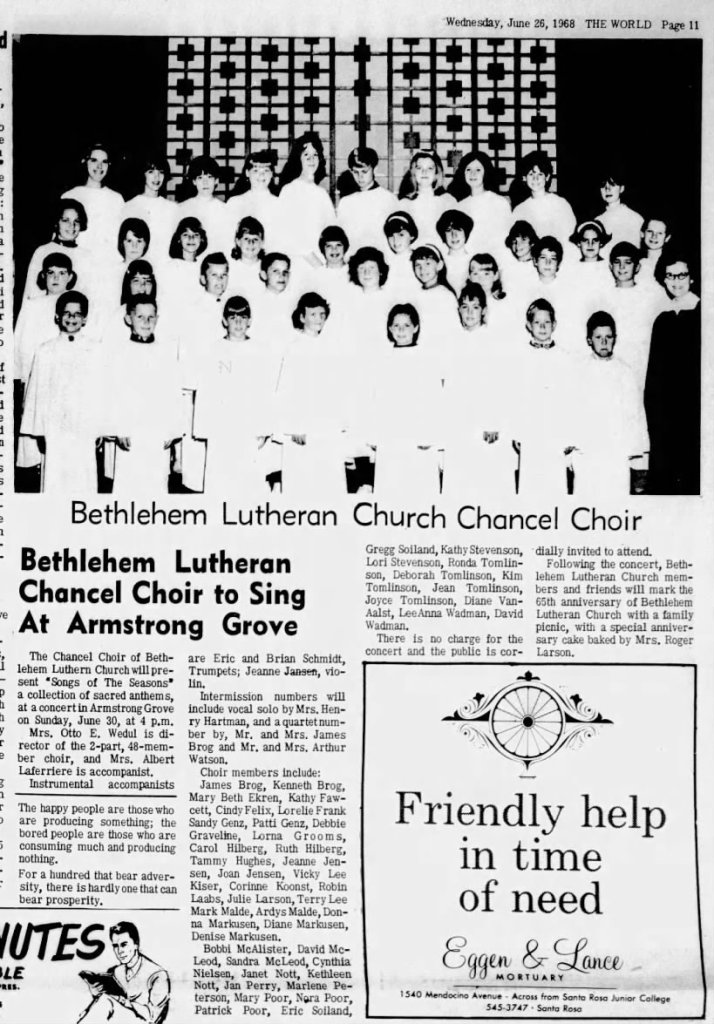
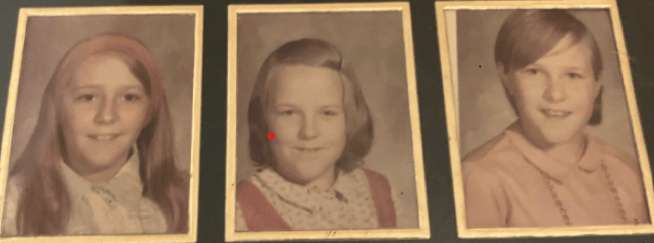
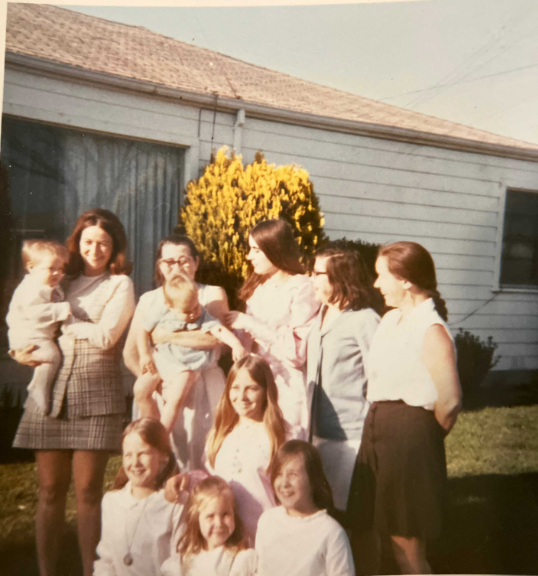
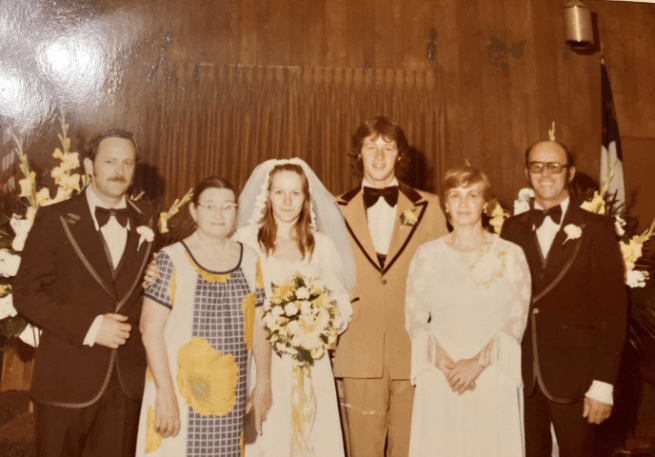
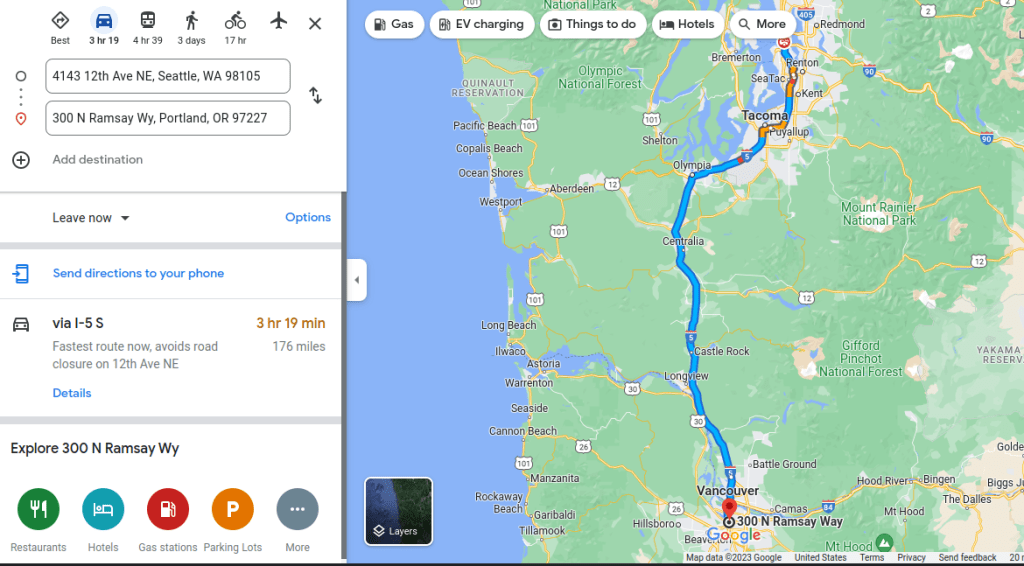
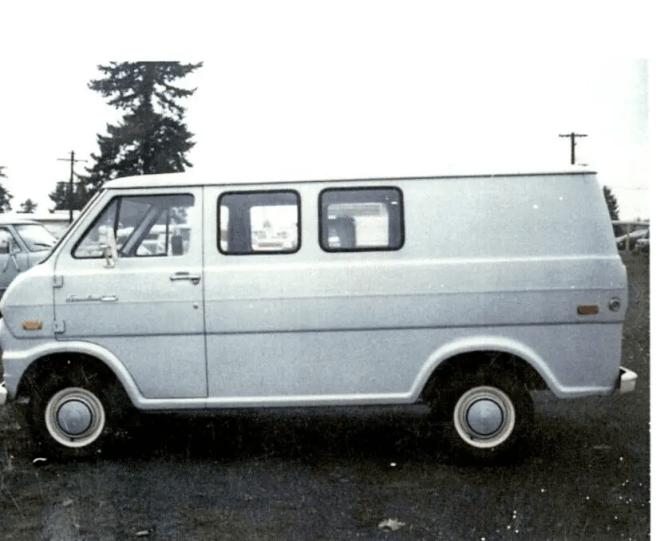
A missing persons poster for Deborah.The girls standing with their dad and Aunt Jean, who Joyce said they were all especially fond of; sadly right after this picture was taken she moved to Virginia. Photo courtesy of the Tomlinson family archives.The three sisters in a picture during their time in the Bethlehem Lutheran Church Chancel Choir that was published in The Rohnert Park Cotati Clarion on June 26, 1968.Deborah (on the far left), Joyce, and Jean. Photo courtesy of the Tomlinson family archives.Some members of the Tomlinson family; it looks like Deborah and her sisters are in the front. Photo courtesy of the Tomlinson family archives.Tomlinson before she disappeared in 1973.What Debbie Tomlinson might have looked like at the age of 53 using age progressing technology, photo released on July 21, 2011.What Debbie Tomlinson might have looked like at the age of 58 using age progressing technology, photo released on June 28, 2016.According to the ‘Ted Bundy MultiAgency Investigative Team Report 1992,’ on October 15, 1973 when Tomlinson disappeared Bundy was supposed to be in class at The University of Puget Sound in Tacoma. Bundy’s fall 1973 law school schedule from the University of Puget Sound.Bundy’s route from where he lived at the Rogers Rooming house to Creswell, OR.Warren Leslie Forrest.A more recent picture of Warren Leslie Forrest.Warren Leslie Forrest’s van.Richard Laurence Marquette.A list of some other missing girls from Oregon from 1969-78. Tomlinson isn’t even listed.A comment on a Websleuth’s page about Deborah’s disappearance made by Joyce Sparks on October 16, 2013.A comment on a Websleuth’s post about Deborah Tomlinson made by user ‘Caring1.’A Websleuth’s comment on a post about Deborah made by a user named ‘theshadow45’ on August 27, 2017.A Websleuth’s comment on a post about Deborah made by a user named ‘Alleykins’ on August 27, 2017.Deborah Kathleen Tomlinson.An article about the murder of Deborah Kathleen Tomlinson published by The Daily Sentinel on January 14, 1976.The Tomlinson family tree, courtesy of Joyce Tomlinson.Deborah’s grandmother Nora and her father, Arthur. Photo courtesy of the Tomlinson family archives.Deborah’s father, Arthur Vernon Tomlinson. Photo courtesy of the Tomlinson family archives.Deborah’s mother listed in the 1940 census.Arthur Tomlinson from the 1951 Westwego High School yearbook.Deborah’s father listed in some Baptism’s that took place in New Orleans, Louisiana in 1951.An article about Mr. Tomlinson’s time in the military in Great Falls, Montana published in The Malmstrom Minuteman on May 25, 1956.A passport log for Deborah’s mother Sandra dated August 5, 1959.A passport log for Deborah, dated August 5, 1959.A passport log for Deborah’s sister Joyce dated August 5, 1959.A passport log for Deborah’s sister Jean dated August 5, 1959,Arthur Tomlinson in a list of people applying for a marriage license published in The Press Democrat on January 11, 1968.Mr. Tomlinson’s address; according to this, he was employed at Sonoma State Hospital at the time.Arthur Tomlinson and his second wife listed in the CA Divorce Index, 1966-1977.Jean and Joyce Tomlinson. Photo courtesy of the Tomlinson family archives.Some of the Tomlinson family at Jean’s wedding. Photo courtesy of the Tomlinson family archives.Some members of Deborah’s family at Joyce’s wedding. Photo courtesy of the Tomlinson family archives.Mr. Tomlinson’s second wife, Shelley.Henry Nelson’s obituary published in The Montana Standard on March 17, 1994.Deborah’s mothers death certificate.Deborah’s half-brother, Daniel Sean Tomlinson.Deborah’s half-brother, Daniel.Deborah’s baby sisters, Joyce and Jean.Deborah’s sister Jean and her husband, Dave.
Over the years I’ve only come across a few pictures from Bundy’s crime scenes, for the simple fact that there’s not many of them. This is because he usually left little to no trace of himself behind, and there were no bodies recovered until they were completely decomposed (well, until the end in 1978). I came across a website last night on TikTok (as silly as that sounds), and it contained a bunch of pictures I’ve never seen before, I was pretty amazed. So, here they are. I also went through my own collection and found some additional crime-scene related pictures and included those as well. Because, why not? If anyone has more, please feel free out reach out to me. I will give you credit.
Edit: I wanted to thank Tiffany Jean for all of the hard work she does on the Bundy case. Because of her we have information never before accessible, and she is a wonderful educator and TB resource. Thank you for all that you do.
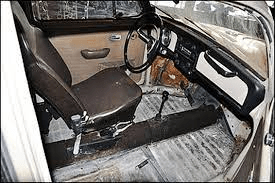
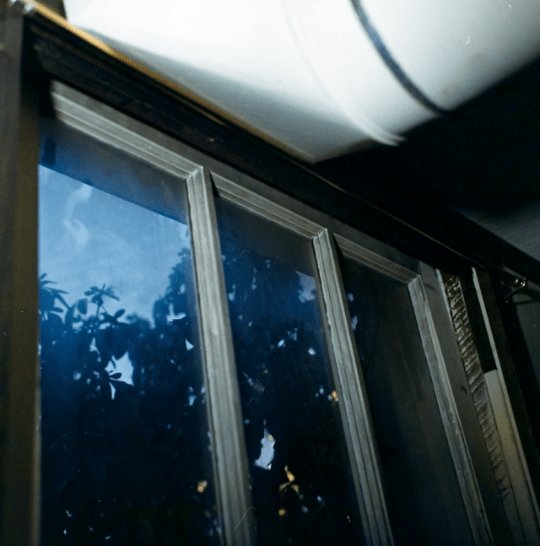
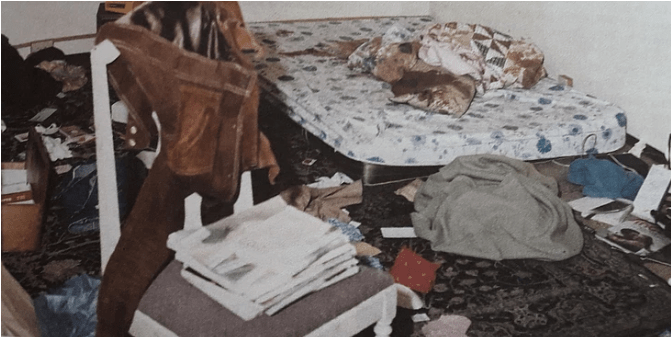
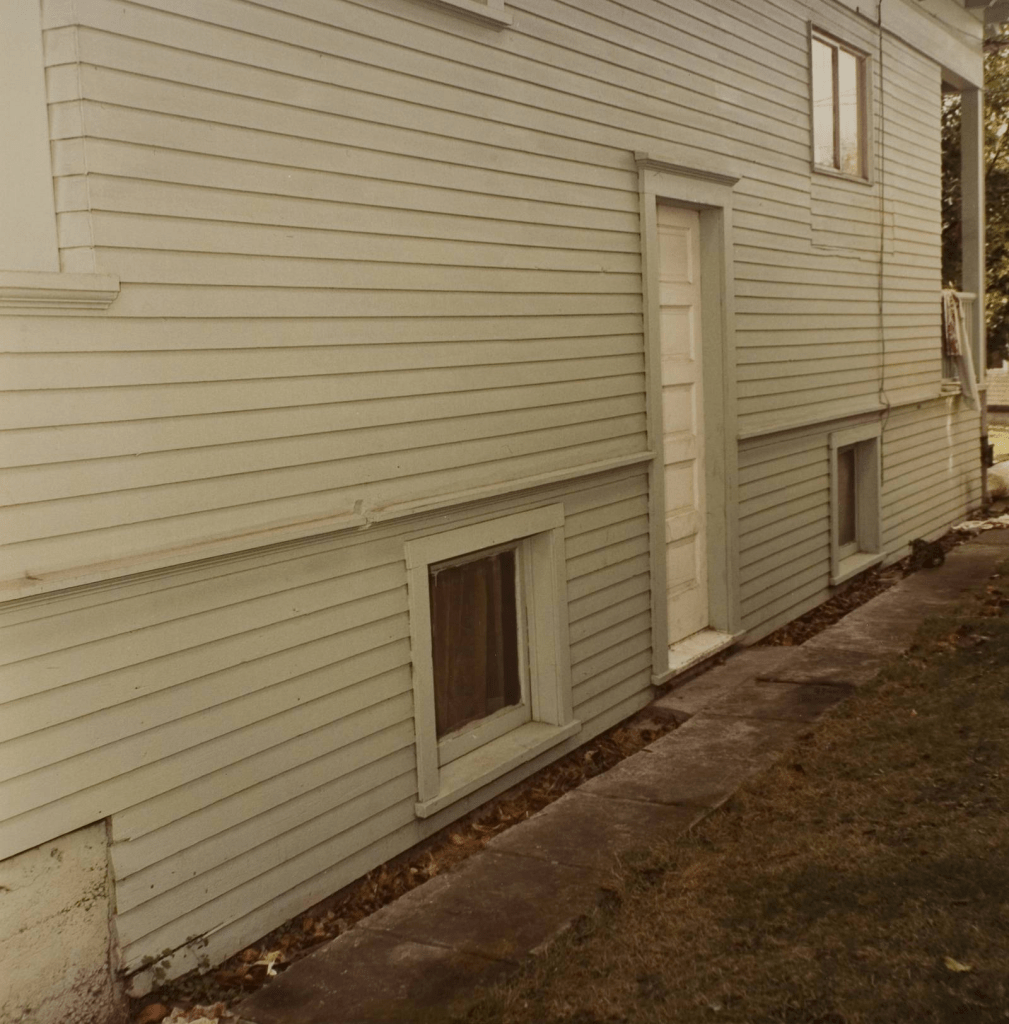
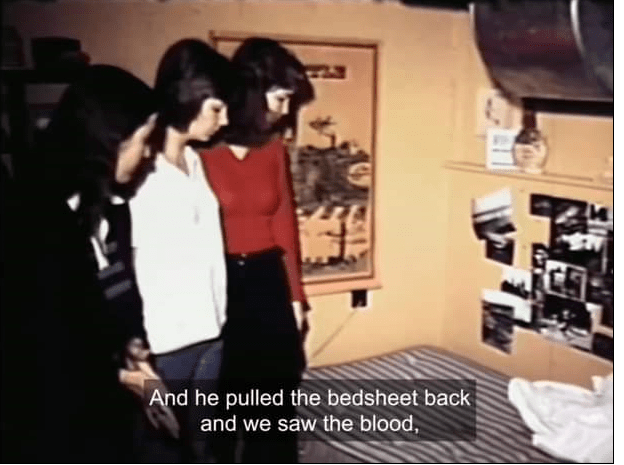
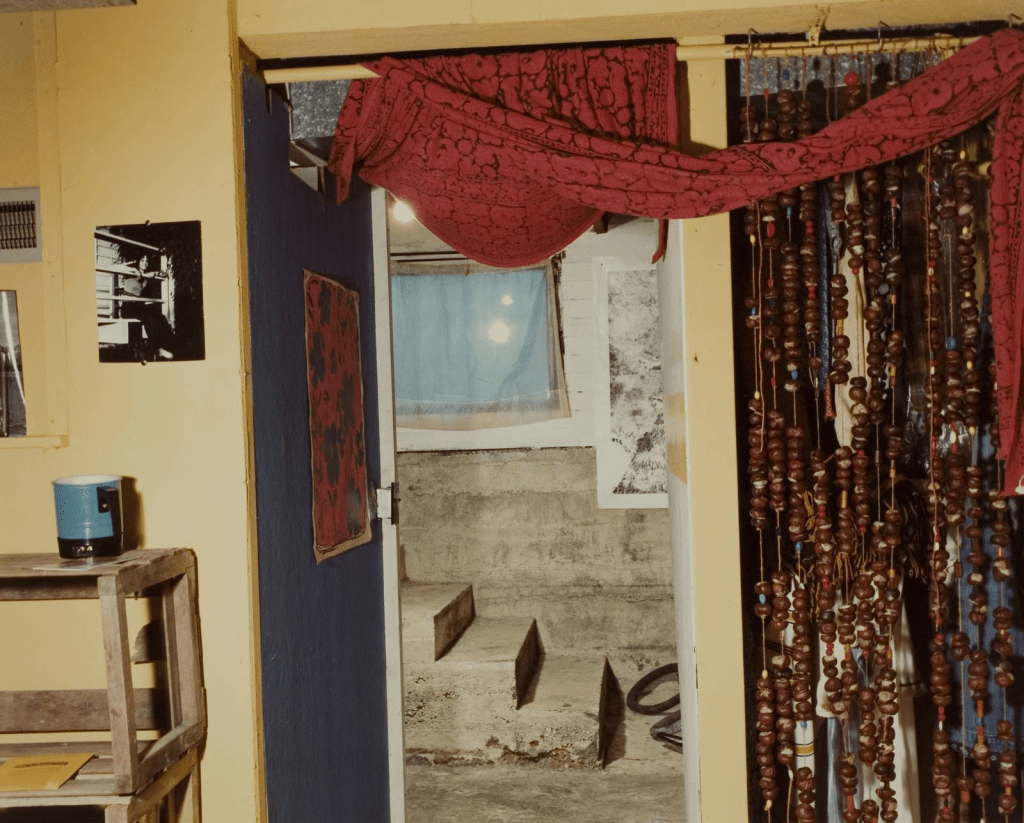
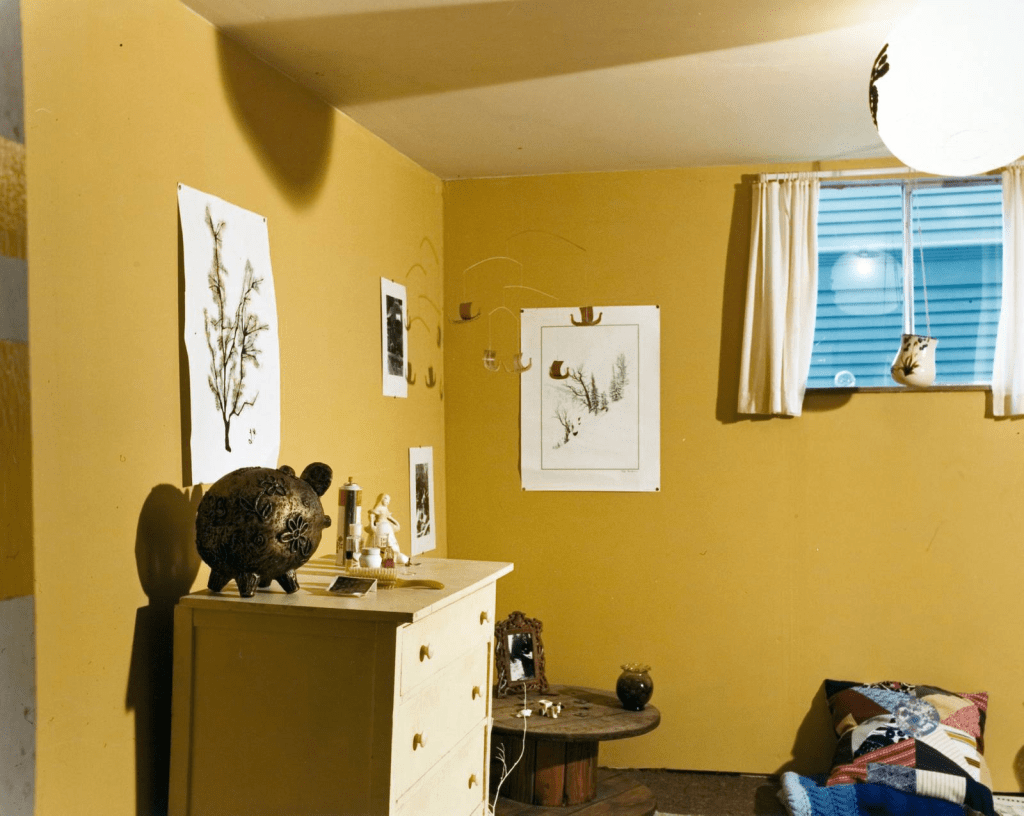
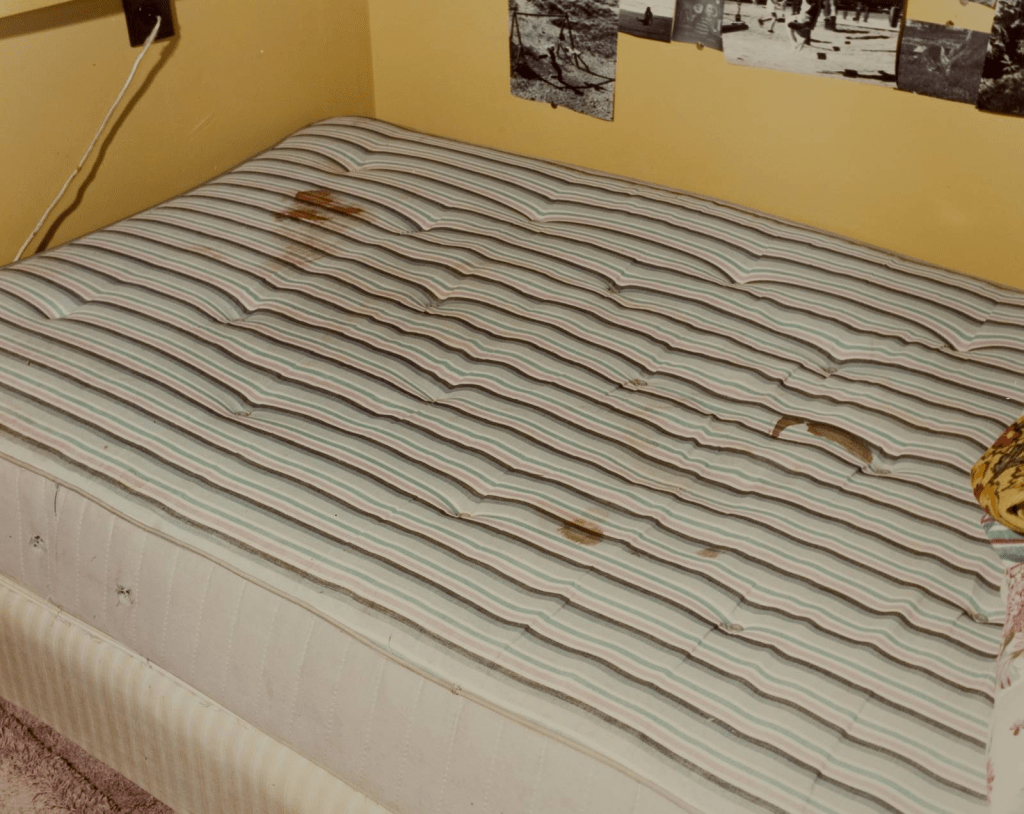
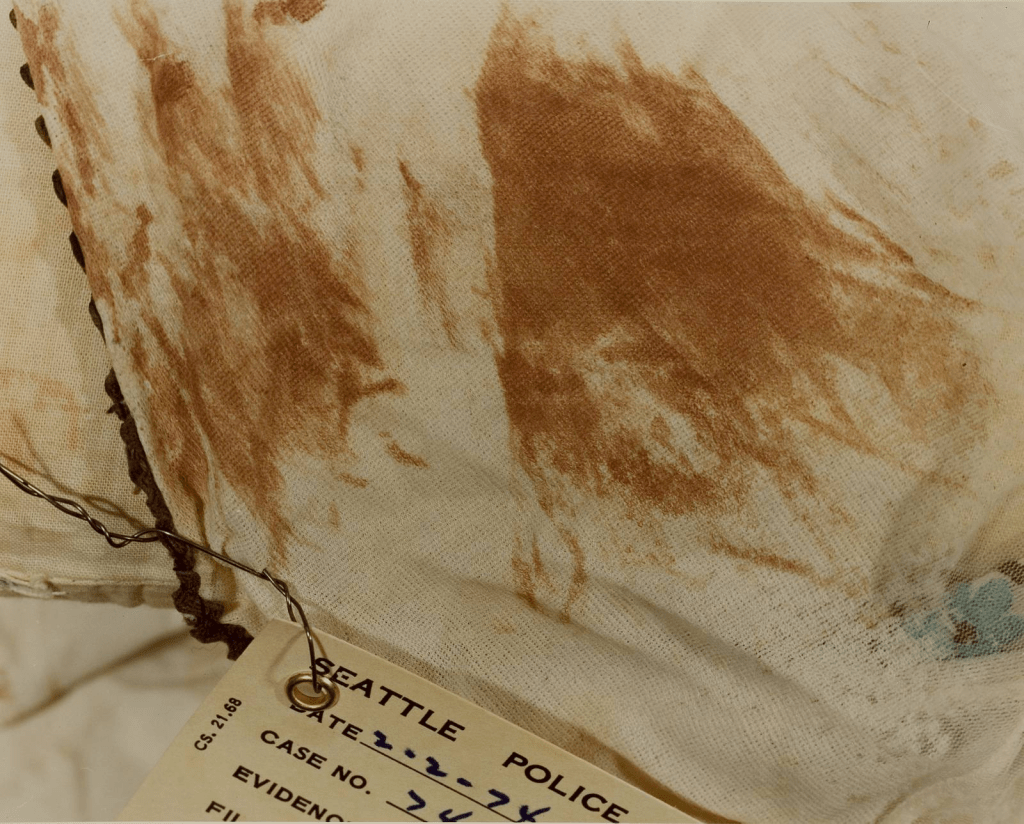
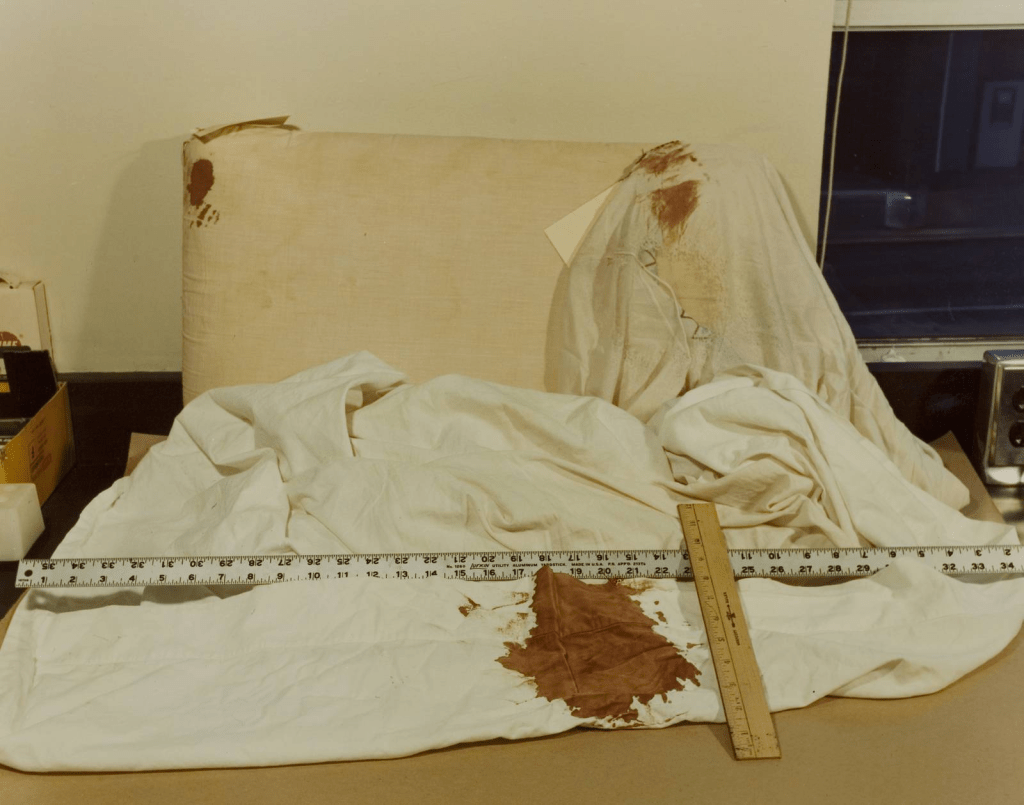
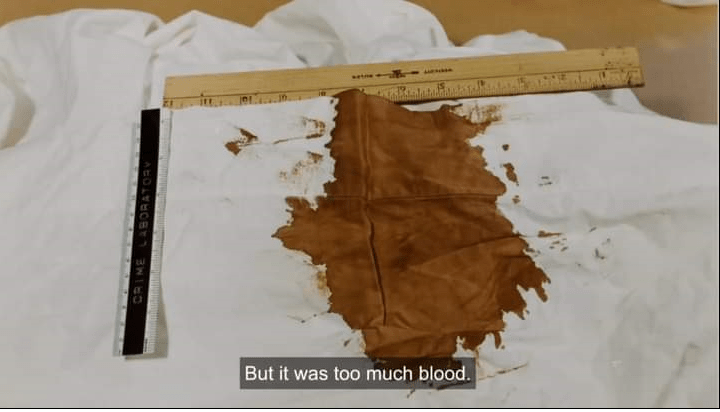
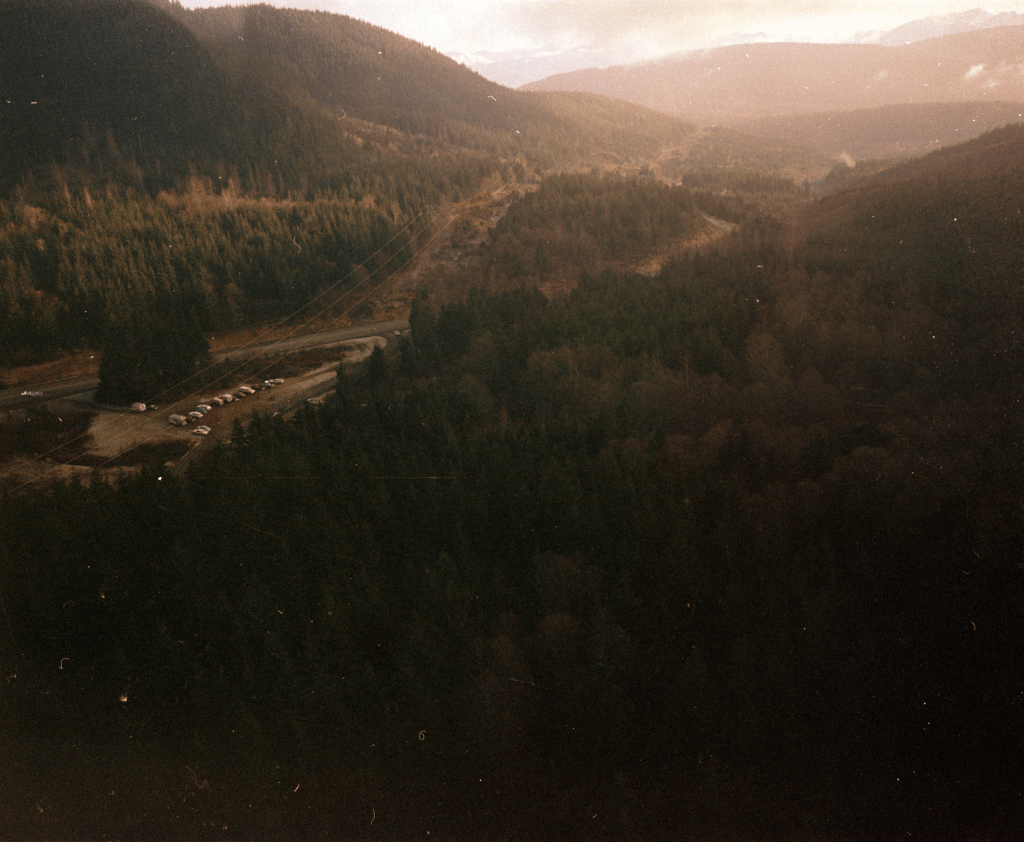
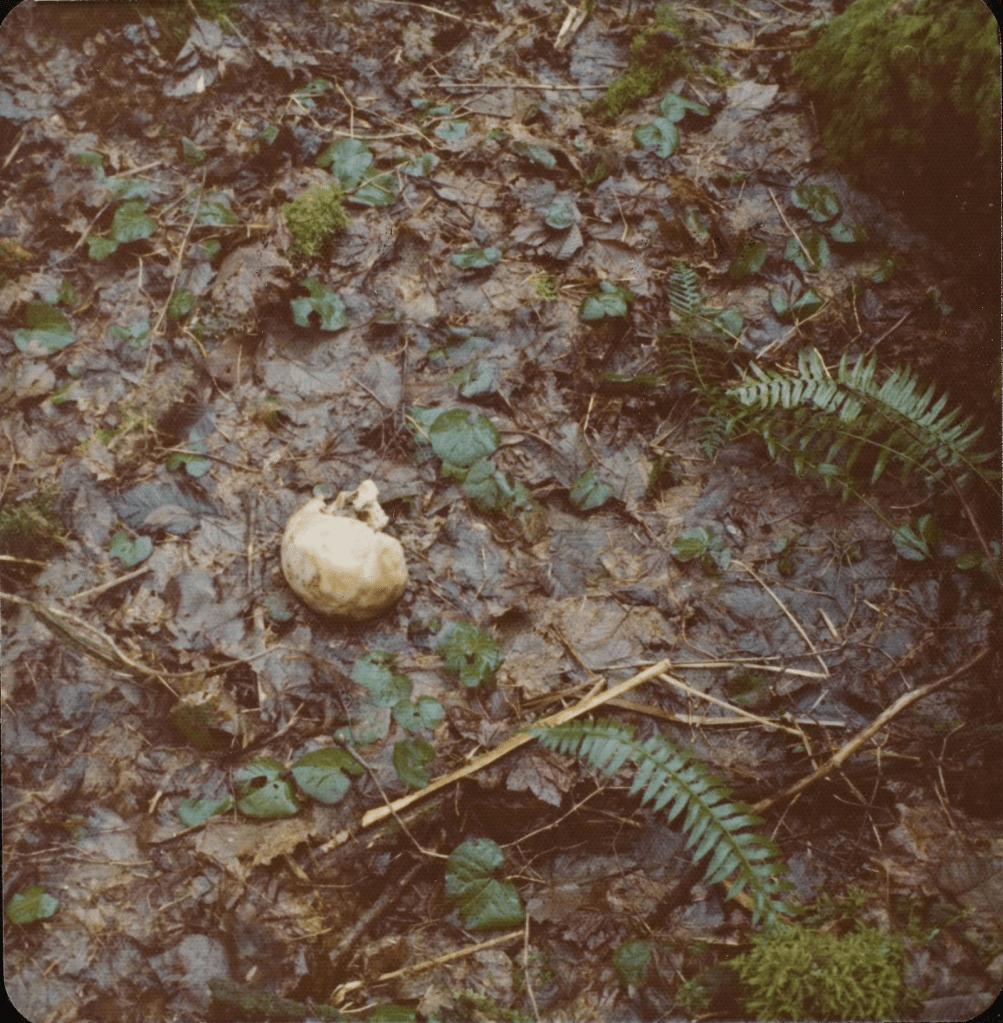
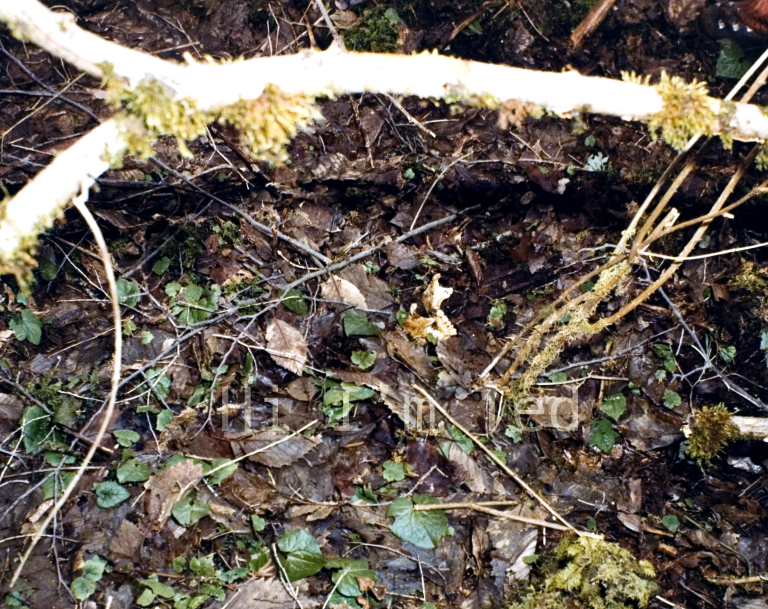
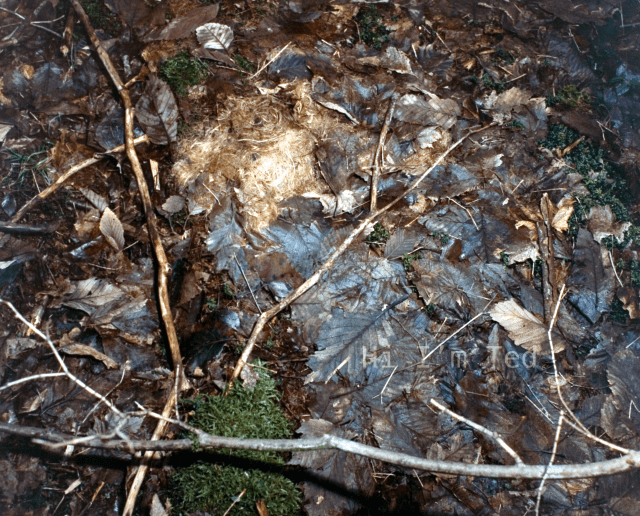
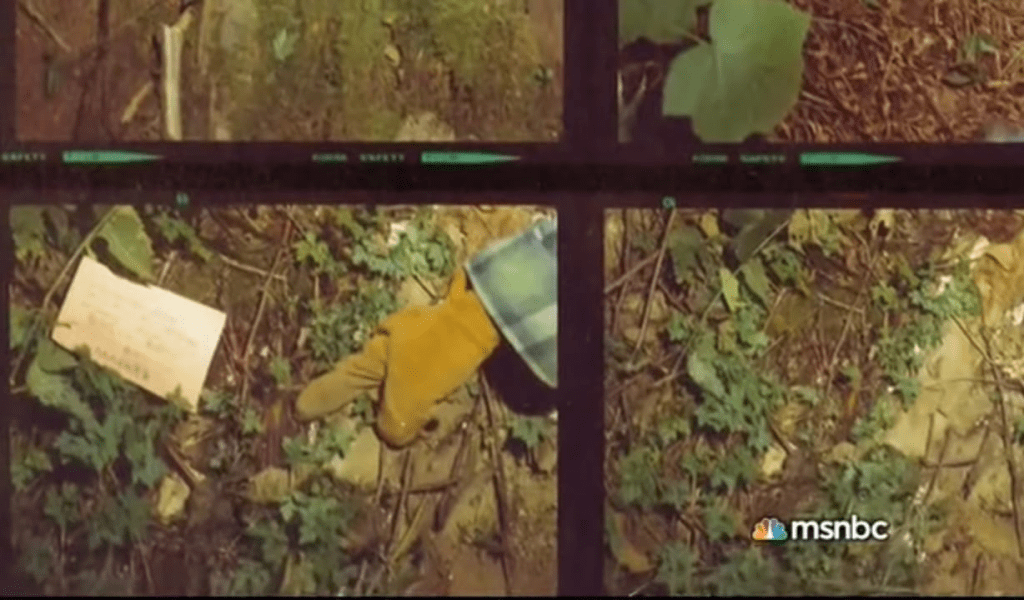
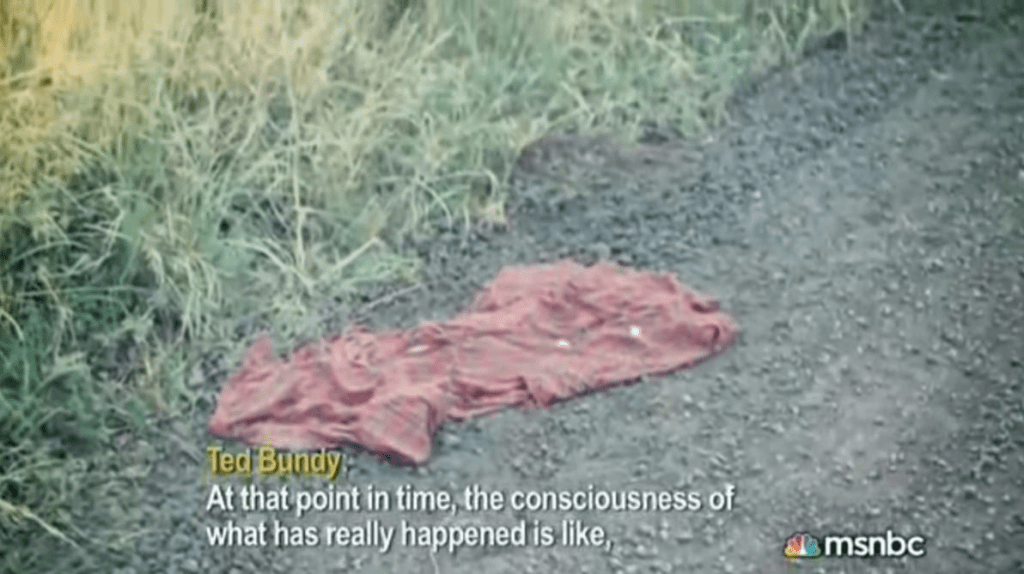
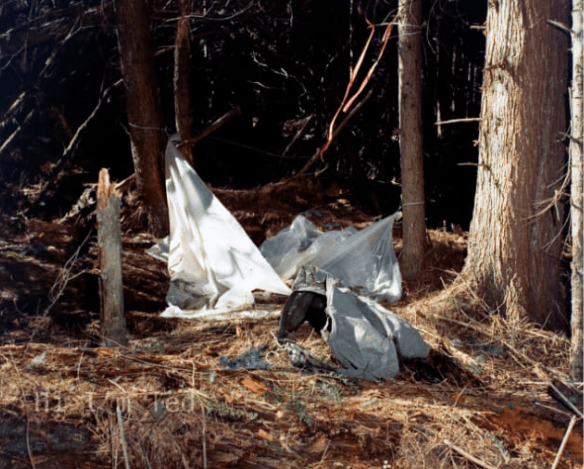
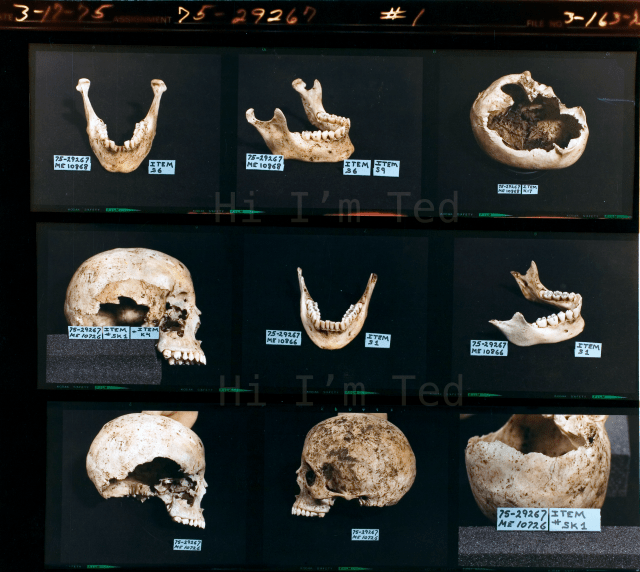
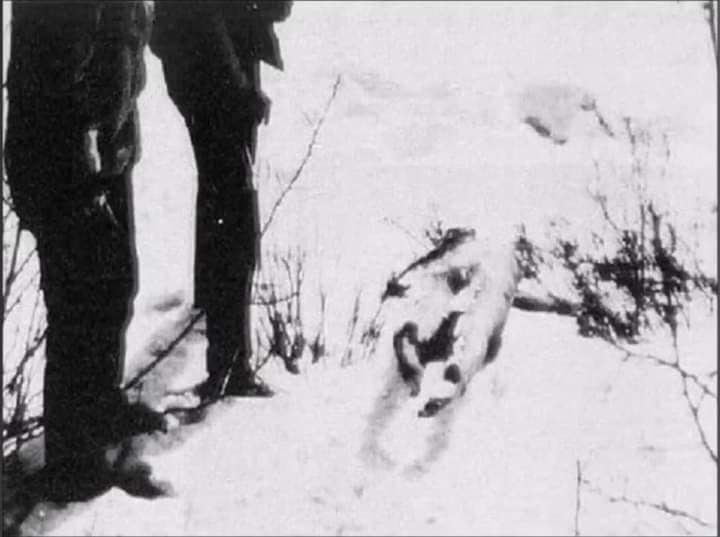
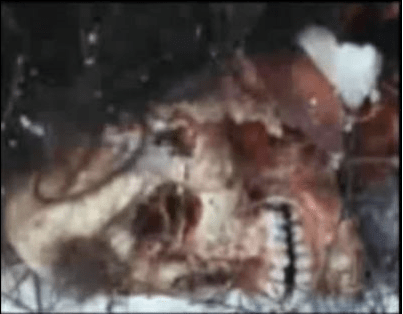
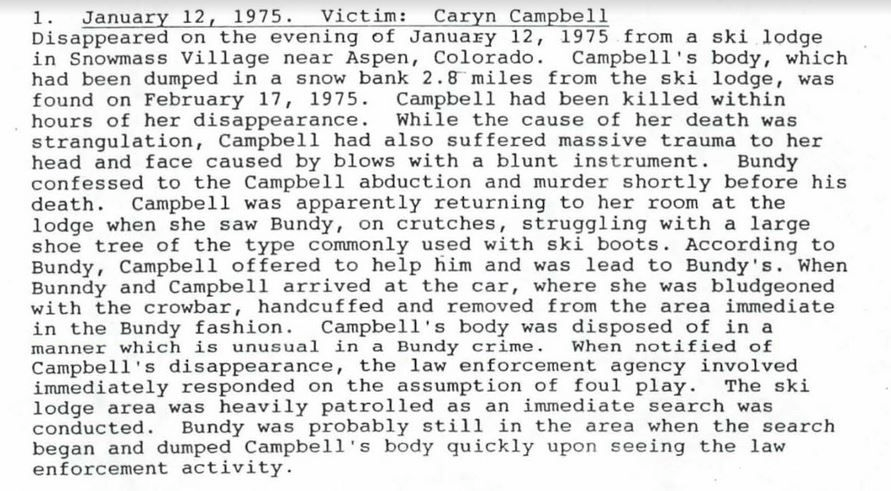
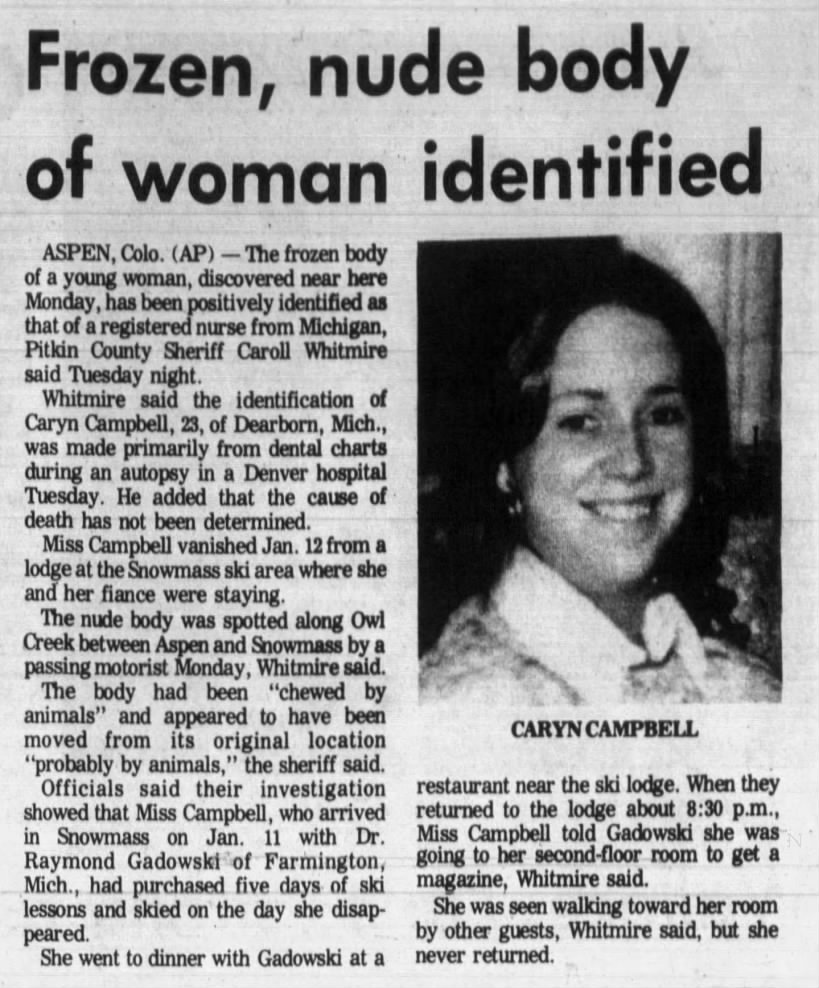
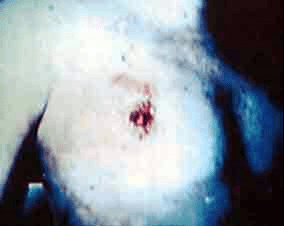
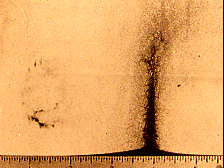
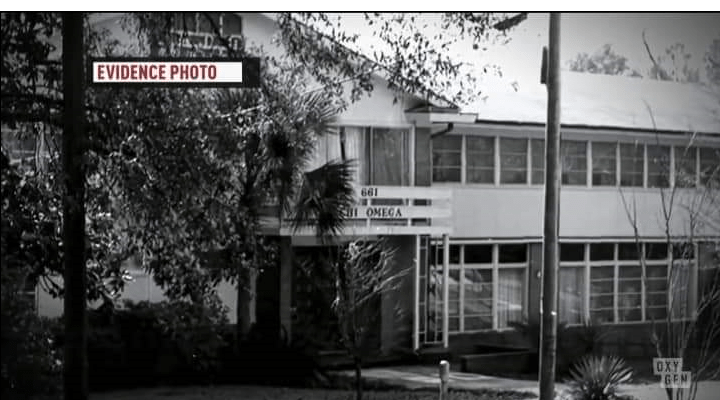
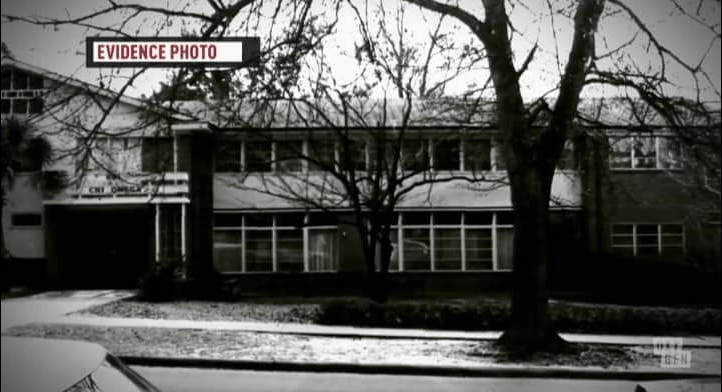
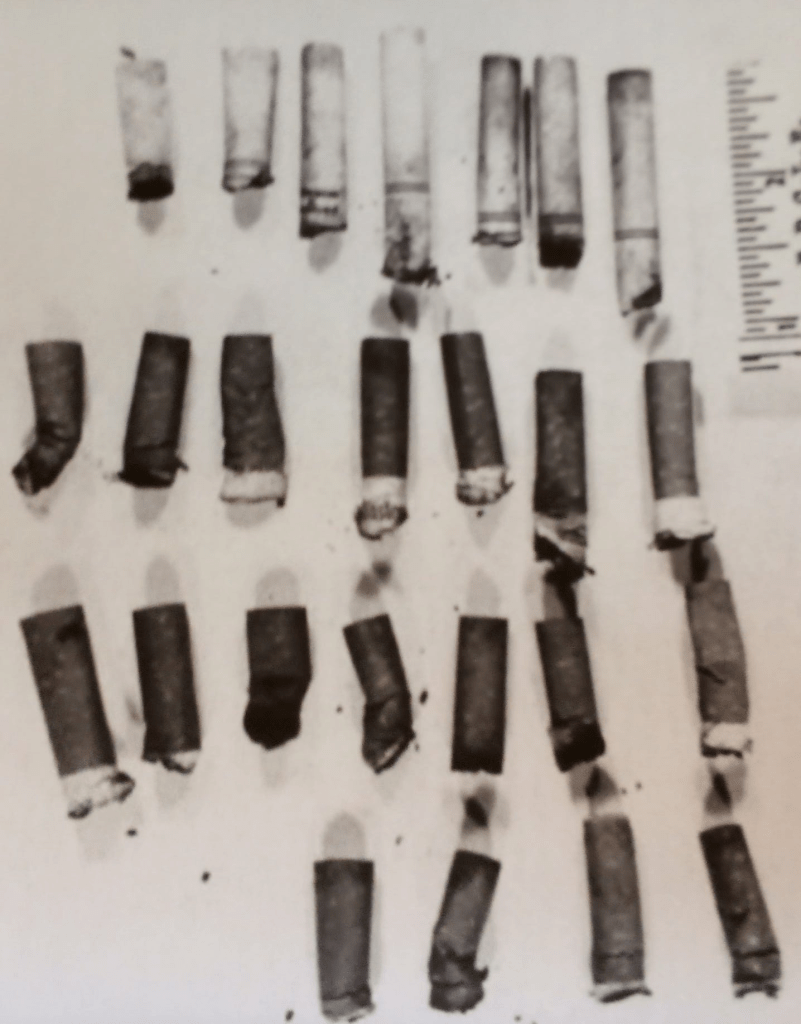
TB’s kill kit.Some more items from Bundy’s kill kit. Photo courtesy of Kevin Sullivan.The outside of Bundy’s VW Beetle. It’s confirmed that at least eighteen of his victims were transported in this vehicle.The inside of Ted’s VW Beetle. Bundy took out the cars passenger seat so that his victims could lie vertically without being seen by others.Another shot of the inside of Bundy’s VW.Bundy’s VW Beetle notes from the ‘Ted Bundy Multiagency Investigative Team Report 1992.’ He bought the infamous tan Bug in the spring of 1973 from a woman named Martha Helms.First confirmed Bundy victim, Karen Sparks-Epley (formerly known as Joni Lenz). Karen Sparks-Epley’s residence where was attacked by Ted Bundy on January 4, 1974. This is a police photograph of 4325 8th Avenue NE, Sparks’ bedroom is circled in white. The house was torn down at some time in 1985. These days the site of the house is now home to the Westwood apartments, which were built in 1985.The window at Karen Sparks apartment Bundy used to break in.The bedroom of Karen Sparks after her assault. Photo courtesy of KIRO-7.The close-up of Sparks bed after her assault. Photo courtesy of Amazon.The bedroom of Karen Sparks after her assault. Photo courtesy of KIRO-7.The doorway of Karen Sparks bedroom after her assault. Photo courtesy of KIRO-7.The floor of Karen Sparks bedroom after her assault. Photo courtesy of KIRO-7.The bedroom of Karen Sparks after her assault.The bedroom of Karen Sparks after her assault.The bedding of Sparks. Photo courtesy of Amazon.A crime scene photo from the assault of Karen Sparks.Lynda Ann Healy, TB’s first confirmed kill. Healy was born on July 3,1952 in Seattle and was abducted on January 31, 1974.Healy’s house as it looked in the 1970’s.Healy’s apartment in 2021.A photo of the trail behind Lynda Ann Healy’s apartment; her house is circled in red. Photo courtesy of OddStops.A King County Detective walking out of the side door of Healy’s apartment. Photo courtesy of Amazon.The entrance of Healy’s apartment, via the side door of the house. Photo courtesy of KIRO-7.The side door of Healy’s apartment. Photo courtesy of KIRO-7.Lynda’s roommates standing around her bed. Photo courtesy of Amazon.The entrance of Healy’s bedroom and the stairs leading outside. Photo courtesy of KIRO-7.Another shot of the entrance of Lynda Healy’s bedroom. Photo courtesy of KIRO-7.One side of Healy’s bedroom. Photo courtesy of KIRO-7.Another shot of Healy’s bedroom. Photo courtesy of KIRO-7.A shot of Healy’s mattress. Photo courtesy of KIRO-7.A close-up of the blood stain on Lynda Ann Healy’s mattress. Photo courtesy of KIRO-7.The blood stain on Lynda Ann Healy’s bedding. Photo courtesy of Amazon.A close-up of the blood stain on Lynda Ann Healy’s bedding. Photo courtesy of Amazon.The blood stain at the crime scene of Healy. Photo courtesy of Amazon.A close-up of the blood stain at the crime scene of Lynda Healy. Photo courtesy of Amazon.Susan Elaine Rancourt.Roberta Kathleen Parks.Brenda Ball’s drivers license. Photo courtesy of KIRO-7.The following is borrowed from Dr. Robert Keppel’s true crime classic ‘The Riverman: Ted Bundy and I Hunt for the Green River Killer:’ ‘The final tally of remains for Taylor Mountain paled in comparison to Issaquah: three crania, three mandibles, two small pieces of a skull, one tooth, and a small blond hair mass. Not one other remnant of a human skeleton was discovered. The remains of four women were identified from the sparse skeletal remains we had recovered: Susan Rancourt, who disappeared April 17, 1974, from the library at Central Washington State College; Kathy Parks, last seen May 5, 1974, at Oregon State University, over 260 miles from Taylor Mountain; Brenda Ball, who was last seen May 31, 1974, at the Flame Tavern in Seattle; and Lynda Healy, who was reported missing from her basement bedroom at the University of Washington on January 31, 1974.’ Powerline Road on Taylor Mountain. Photo courtesy of KIRO-7.Another shot of the Taylor Mountain burial site. Photo courtesy of KIRO-7.An aerial shot of Taylor Mountain. Photo courtesy of KIRO-7.The skull of Brenda Ball at the Taylor Mountain burial site. Photo courtesy of KIRO-7.Another shot of the skull of Brenda Ball at the Taylor Mountain burial site. Photo courtesy of KIRO-7.Another shot of the skull of Brenda Ball at the Taylor Mountain burial site. Photo courtesy of KIRO-7.A close-up shot of the skull of Brenda Ball. Photo courtesy of the KIRO-7.A shot of Lynda Ann Healy’s mandible with teeth taken from about 15 feet away. Photo courtesy of the King County Archives.A shot of Lynda Ann Healy’s mandible taken from roughly four feet away. Photo courtesy of the King County Archives/Tiffany Jean.Susan Rancourt’s beautiful blonde hair. Photo courtesy of the King County Archives/Tiffany Jean.Susan Rancourt’s skull. Photo courtesy of the King County Archives/Tiffany Jean.Kathy Parks’ skull. Photo courtesy of the King County Archives/Tiffany Jean.One of the skulls recovered from Taylor Mountain. Photo courtesy of the King County Archives/Tiffany Jean.LE pointing out something at the Taylor Mountain burial site. Photo courtesy of Oxygen.A member of law enforcement pointing something out at the Taylor Mountain burial site.Members of law enforcement at the Taylor Mountain burial site. Photo courtesy of KIRO-7.A green, military-style type coat, item #K-35. Photo courtesy of the King County Archives/Tiffany Jean.Dense underbrush at the Taylor Mountain burial site. Photo courtesy of the King County Archives/Tiffany Jean.A shot from the Taylor Mountain burial site. Photo courtesy of the King County Archives/Tiffany Jean.A shot from the Taylor Mountain burial site. Photo courtesy of MSNBC.A shot from the Taylor Mountain burial site. Photo courtesy of MSNBC.A shot from the Taylor Mountain burial site. Photo courtesy of MSNBC.The tattered remains of a sloppily made, lean-to shelter found at Taylor Mountain. Photo courtesy of the King County Archives/Tiffany Jean.Clockwise from the top left: Parks mandible, Parks mandible, Parks skull, Healy mandible, Ball skull, Ball skull, Ball skull, Ball skull, Healy mandible center. Photo courtesy of the King County Archives/Tiffany Jean.Clockwise from top left: Parks skull and mandible, Parks skull and mandible, Rancourt skull, Parks skull, Parks skull, Parks skull, Parks skull, Parks skull, Parks skull at center. Photo courtesy of the King County Archives/Tiffany Jean.Another group of bones found at Taylor Mountain. Photo courtesy of KIRO-7. I believe these are all bones in Susan Rancourts skull.Brenda Ball’s skull. Photo courtesy of the King County Archives/Tiffany Jean.Susan Rancourt’s skull. Photo courtesy of the King County Archives/Tiffany Jean. Kathy Parks’ skull. Photo courtesy of the King County Archives/Tiffany Jean.Janice Ott.Denise Naslund.TB’s Issaquah burial site as it looks today.The entryway to Ted’s Issaquah burial site as it looks today.The Issaquah dirt road and grassy area in September 1974. Photo courtesy of the King County Archives/Tiffany Jean.Denise Naslunds hair at the Issaquah burial site. Photo courtesy of the King County Archives.Another shot of Denise Naslunds hair at the Issaquah burial site. Photo courtesy of the King County Archives.A rib cage at the Issaquah burial site. Photo courtesy of the King County Archives.Another shot of the rib cage at the Issaquah burial site. Photo courtesy of the King County Archives.Denise Naslunds skull from the Issaquah burial site. It was found by two hunters on a hillside just east of Issaquah, less than ten miles from Lake Sammamish where she was abducted. Photo courtesy of KIRO-7.A picture from the Issaquah burial site. Photo courtesy of Oxygen.A mapping of where the different bones were found at the Issaquah burial site.Ted at the Issaquah burial site; he was there with Liz that day.Georgann Hawkins.A snapshot taken at the Issaquah burial site on February 15, 1989. Investigators were looking for the remains of Georgann Hawkins, after Bundy confessed to her murder during his death row confessions. Photo courtesy of the King County Archives.Another picture taken at the Issaquah burial site on February 15, 1989.A picture of the possible burial site of Georgann Hawkins taken in February 1989.The ESAR map Keppel brought with him to the Florida State Prison for his final interview with Bundy. Photo courtesy of the King County Archives/Tiffany Jean.Susan Curtis.Joe Ruden from the Carbon County Search and Rescue team uses a metal detector to search for the burial site of Susan Curtis, who disappeared from the BYU campus in Utah in the summer of 1975. Bundy confessed to killing Curtis during his death row confessions and that he buried her about ten miles south east of Price, UT. Jim Simone from the Carbon County Search and Rescue team sets out in search for the remains of Sue Curtis. Debra Kent.Deb Kent’s patella. Photo courtesy of Tiffany Jean. Right before he was put to death in January 1989, Bundy finally confessed to killing Deb Kent. He said that he brought her back to his apartment and after ‘keeping her for a while’ murdered her. He then put her body in his car and drove 105 miles away to Fairview Canyon, where he buried her remains about 3 feet deep, under some heavy rocks. After searching the Canyon, law enforcement found a patella (kneecap), and it is likely that her other bones were scavenged and spread around by wildlife over time. Although the ME’s office determined that the bone was human, they weren’t able to test it beyond that until 2015, when a cold-case detective stumbled across Kent’s DNA that had never been entered into the NamUs database. At that point, he reached out to Mrs. Kent, who held onto the only piece of her daughter she had left and asked if he could take the bone for genetic testing. Although she gave the detective the patella, Mrs. Kent told him that she didn’t want to know the results. In her mind, it belonged to Debra and didn’t want to be told otherwise. Thankfully her fears were put to rest five months later, when the results came back that the bone belonged to Debra.Melissa Smith.Where the remains of Melissa Smith were found, on Kilby Road in Park City, Utah.Investigators at the scene where the remains of Laura Ann Aime were found. Caryn Campbell. Photo courtesy of KIRO-7.A shot of the remains of Caryn Campbell in the snow. Photo courtesy of Vanessa West.The skull of Caryn Campbell. Photo courtesy of Vanessa West.Thank you to my friend Samantha Shore for letting me know the identity of this victim.Vince Lahey holding a crowbar over Campbells autopsy photo. Photo courtesy of Erin Banks.Caryn Campbell, Bundy’s MO. Photo courtesy of Erin Banks.An article about the discovery of Caryn Campbell’s remains, published by The Daily Sentinel on February 19, 1975.A photo of Bundy’s shoe print in the snow after his second escape on December 30, 1977. Photo courtesy of The Coloradoan.Margaret Bowman, a victim of Bundy’s 1978 Florida rampage.Lisa Levy, a victim of Bundy’s 1978 Florida rampage.Kathy Kleiner testifying at Bundy’s trial.Kathy Kleiner, today.Karen Ann Chandler testifying at Bundy’s trial.Karen Chandler, today.The crime scene of Chi Omega victim, Margaret Bowman. Photo courtesy of Vanessa West.Margaret Bowman, who was murdered while defenseless in her bed. Photo courtesy of Vanessa West.Chi Omega victim, Margaret Bowman. Photo courtesy of Vanessa West.Chi Omega victim, Margaret Bowman. Photo courtesy of Vanessa West.Chi Omega victim, Margaret Bowman. Photo courtesy of Vanessa West.Chi Omega victim, Margaret Bowman. Photo courtesy of Vanessa West.A photo of Chi Omega victim, Lisa Levy. Photo courtesy of Vanessa West.A bite mark on Chi Omega victim, Lisa Levy. Photo courtesy of Vanessa West.Another shot of Bundy’s bite mark on Lisa Levy’s buttock. Photo courtesy of Vanessa West.The layout of the rooms at the Chi Omega sororiety house.The Chi Omega House right after the murders took place in 1978. Twenty year old Lisa Levy and twenty-one year old Margaret Bowman were brutally murdered in their beds by Bundy. He also viciously attacked and left for dead Karen Ann Chandler and Kathy Kleiner, but thankfully both women survived. Photo courtesy of Oxygen.Another shot of the Chi Omega House right after the murders. Photo courtesy of Oxygen.Another shot of the Chi Omega House right after the murders. I love the old LE vehicle parked out front. Photo courtesy of Oxygen.The unlocked door of the Chi Omega House that Bundy snuck into. Photo courtesy of Oxygen.An area outside of the Chi Omega house. Photo courtesy of Oxygen.A shot of the logs outside of the Chi Omega house Bundy used to attack the four sleeping co-eds. Photo courtesy of Oxygen.Another shot of the logs outside the Chi Omega house. Photo courtesy of Oxygen.One of the beds in the Chi Omega house. Photo courtesy of Oxygen.Another one of the beds from the Chi Omega house. Photo courtesy of Oxygen.Another bed from the Chi Omega house. Photo courtesy of Oxygen.Another one of the beds from the Chi Omega house. Photo courtesy of Oxygen.Another bed at Chi Oh.Another bed at Chi Oh.A picture of one of the bedrooms in the Chi Omega house after Bundy’s murders. A picture of a hallway at the Chi Omega house after Bundy’s murders. A photo related to Bundy’s January 1978 Tallahassee crime scene. Photo courtesy of Oxygen.Cheryl Thomas. Bundy used the same log to attack Thomas that he used in the Chi Omega assaults. Photo courtesy of Oxygen.A photo of the house on Dunwoody Street Cheryl Thomas shared with friends from FSU. Photo courtesy of Oxygen.Another shot of the house that Cheryl Thomas shared with friends from FSU. Photo courtesy of OddStops.An aerial shot of where Cheryl Thomas lived and was attacked, located at 431 Dunwoody Street in Tallahassee; the house has since been torn down. Photo courtesy of Oxygen.What the area on Dunwoody Street looks like in 2023.The door at the residence of Cheryl Thomas in Tallahassee. Photo courtesy of Oxygen.The open window in Cheryl Thomas’s kitchen that Bundy climbed into. Photo courtesy of Oxygen.The fly screen on Thomas’ window that Bundy knocked loose when he climbed into her kitchen the night of her assault. Photo courtesy of Rob Dielenberg.The flower pot that Bundy knocked over when he broke into Cheryl Thomas’ apartment. Photo courtesy of Rob Dielenberg.The window in Thomas’s kitchen that Bundy crawled through.The back door at Cheryl Thomas’s apartment. Law enforcement took chunks out of the doors of both sides of the house; the perpetrator left his fingerprints behind on both. Photo courtesy of Oxygen. The crime scene of Cheryl Thomas. Photo courtesy of Oxygen. Pantyhose found in Cheryl Thomas’ apartment. According to court documents, a knotted pair of pantyhose was found in her bedroom with holes cut into the nylon to create a mask. Photo courtesy of Oxygen.The lath that Thomas used to prop her bedroom window open. Photo courtesy of Rob Dielenberg.The pantyhose mask found in Cheryl Thomas’ apartment. An expert holding up the pantyhose mask found in Cheryl Thomas’ apartment at Bundy’s Chi Omega trial. Kimberly Dianne Leach.The white van Bundy stole from FSU. It’s the vehicle he used to abduct Kim Leach with.The inside of the van Bundy stole from FSU.Another shot of the inside of the van Bundy stole from FSU.Another shot of the inside of the van Bundy stole from FSU.The hog shed Bundy used to dispose of Leach’s body.A screen shot from Leach’s crime scene. This was all could find, I apologize for the poor quality.The first three rows of butts were found discarded on the ground in Suwannee River State Park, and the single column on the right were the ones ground discarded in the FSU van. Photo courtesy of Rob Dielenberg. Bundy’s final mug shot from February 1978 after he was arrested in Jacksonville. The bruise on his face occurred after he got into a brief tussle with the arresting officer, who hit him in the cheek with his gun.Former Leon County Sheriff Ken Katsaris looking at pictures related to the Bundy case. A dentist taking a mold of Bundys teeth. Photo courtesy of Oxygen.Another shot of a dentist taking a old of Bundys teeth. Photo courtesy of Oxygen.Molds of Bundy’s teeth. Photo courtesy of Oxygen.Molds of Bundy’s teeth. Photo courtesy of Oxygen.Bundy’s teeth. Photo courtesy of Vanessa West.Bundy’s gross teeth.Bundy’s bite mark. Photo courtesy of Vanessa West.A photo of Ted arriving at the Medical Examiners office after his execution.A B&W of Bundy after his execution.Bundy after his execution.A picture of Bundy, post-mortem. Photo courtesy of the Florida state Department of Corrections.Bundy after his execution.The top of Bundy’s head after his execution.
I’ve been spending a good chunk of my time writing about the unconfirmed victims so in this installment of ‘All Things Bundy,’ I’m going over his confirmed kills.
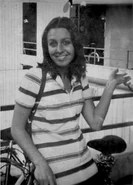
Karen Sparks-Epley (eighteen). January 4, 1974. Survived, Seattle, WA.
Also referred to as ‘Joni Lenz,’ Sparks was brutally assaulted by Ted Bundy while asleep in her basement apartment in the University District of Seattle. She was his first known victim. Thankfully Bundy didn’t kill her, however she was badly beaten with a metal rod, sexually assaulted, and left unconscious for hours before her roommates discovered her later that night. Ted left her with a number of serious long-term injuries she still struggles with to this day.
Karen Sparks.Karen Sparks.Karen Sparks.Karen Sparks in the Amazon documentary, ‘Falling for a Killer.’
Lynda Ann Healy (twenty-one). February 1, 1974. Murdered, Seattle, WA.
On January 31st, 1974, Healy borrowed a friend’s car to go shopping for a family dinner she was preparing the next night and returned with her groceries at roughly 8:30 PM. Shortly after, Lynda and her roommates went drinking at a popular bar called Dante’s Tavern located at 5300 Roosevelt Way NE. The establishment was a five-minute walk from her apartment but the friends didn’t stay out long because Lynda needed to be up at 5:30 AM to be at her job giving the ski report for a local radio station. A number of sources report that Bundy used to go to Dante’s often and it is hypothesized that he first saw Lynda there then followed her home. In the early morning hours of February 1, 1974, he broke into Healy’s basement room, beat her, took off her bloody nightgown (making sure to neatly hang it up in her closet), dressed her then carried her off into the night. It is theorized that Ted only took clothes to make it appear as if Lynda left on her own but obviously, we’ll most likely never know the truth. Her body found in March 1975 on Taylor Mountain, near Issaquah outside of Seattle.
Lynda Healy, in the middle holding her little sister.Lynda Ann Healy (middle) with her siblings.Lynda Ann Healy.Lynda Ann Healy.
Donna Gail Manson (nineteen). March 12, 1974. Murdered, Olympia, WA.
On the day of her abduction, Donna planned on going to a folk dancing class at the College Activities Building at Evergreen State College (where she attended). Later that same night, she made plans to go to a jazz concert at the Daniel J. Evans Library (also on campus), which was scheduled to start at 8 PM. Donna departed her dormitory just after 7 PM and set out for the dance class, which was just a two-minute walk away. Despite how close the College Activities Building was to her dorm, no one recalls seeing her at either the dancing class or the jazz recital, making it highly unlikely that she ever made it that far. Manson was never seen alive again. After confessing to her murder, Bundy said he burned her skull in Liz Kendall’s fireplace.
Donna Gail Manson.Donna Gail Manson.Donna Gail Manson.Donna Manson.
Susan Elaine Rancourt (eighteen). April 17, 1974. Murdered, Ellensburg, WA.
Shortly before 8 PM the evening she disappeared from her college campus at Central Washington University, Susan Rancourt put some clothes in a washing machine in Barto Hall (her dorm building). She then went to a meeting about becoming a Residential Advisor at Munson Hall. When it ended at 10 PM Sue left to walk back to her dorm to switch out her laundry but was never seen alive again. She had plans later that night to watch a movie with a friend but never showed up. Rancourt’s skull was later found near Taylor Mountain, where Bundy placed several bodies during his reign of terror.
Susan Elaine Rancourt.Susan Elaine Rancourt.Sue Rancourt.The Susan Rancourt Memorial Garden at CWU. Photo taken in April 2022.
Roberta Kathleen Parks (twenty). April 17, 1974. Corvallis, OR.
A student at Oregon State University in Corvallis, Parks was abducted from her college campus, which is over a four-and-a-half-hour drive for Bundy (who was living at the Rogers Rooming House on 12th Ave NE in Seattle at the time). Shortly before 11:00 PM the night she disappeared, Parks encountered Bundy in the Memorial Union Commons cafeteria at OSU. During Teds interviews with journalists Hugh Aynesworth and Stephen Michaud, he ‘confessed’ in the third person that Kathy may have encountered her killer while in the cafeteria. Bundy then said he was able to convince her to leave with him and as soon as the opportunity presented itself, he immediately overpowered her. He most likely bound and gagged Parks during the 250-mile trip back to Seattle, where then killed her and left her body on Taylor Mountain.
Roberta Parks, second from the left.Roberta ‘Kathy’ Parks.Kathy Parks.One of the more frequently used pictures of Kathy Parks.
Brenda Carol Ball (twenty-two). June 1, 1974. Murdered, Burien, WA.
In the wee hours of June 1st, 1974, Brenda Ball seemingly vanished into thin air after seeing a band play at The Flame Tavern located at 12803 Ambaum Boulevard in Burien, WA. She arrived at the bar alone and stayed until closing. As the act was wrapping up their set at the end of the night Brenda asked one of the members she knew for a ride home back to her house, but he was heading in the opposite direction so he couldn’t help out. There are two conflicting reports about how she could have left the bar that night: one is that she left by herself and was planning on hitchhiking home, and the other claims that she left with an unidentified man wearing an arm sling. Despite law enforcement being hesitant to officially say her disappearance was related to the other missing girls in Seattle; her skull was the first discovered on Taylor Mountain in March of 1975.
Brenda Ball’s senior picture from the 1970 Mount Rainier High School yearbook.A barefoot Brenda Ball.Brenda Carol Ball.Brenda Ball.
Georgeann Hawkins (eighteen). June 11, 1974. Murdered, Seattle, WA.
A student at the University of Washington, Georgann Hawkins disappeared from an alley behind her sorority house in June 1974. The night before she vanished, Hawkins went to a party, where she had a few mixed cocktails. Because she had a Spanish final coming up that she needed to study she didn’t stay long; she did mention to a sorority sister that she was planning on swinging by the Beta Theta Pi House to pick up some Spanish notes from her boyfriend. Hawkins arrived at the frat at approximately 12:30 AM on June 11 and stayed for approximately thirty minutes. After getting the notes and saying goodnight to her beau, Georgann left the fraternity house for her sorority house, Kappa Alpha Theta. Before he was executed, Ted told law enforcement that he approached her in an alley on her way home, feigning injury with a hurt leg (using his crutches as a ruse) while dropping his briefcase. Bundy asked Hawkins for help carrying the prop to his VW Bug, which was waiting in a parking lot roughly 160 yards north of the alley. She agreed and as she bent over to put the briefcase in his vehicle, Ted grabbed a conveniently placed crowbar and knocked her out with a single blow to the head. He then pushed George into his car and drove off into the night. Bundy claimed that while driving she regained consciousness and started to incoherently babble about her upcoming final, thinking he was her Spanish tutor. He again knocked her out with his crowbar. Once at his intended location, Ted took her unconscious body out of his car and strangled her with an old piece of rope. According to him, the parts of Georgann’s body he had not buried were recovered in Issaquah with the bodies of Janice Ott and Denise Naslund. He confessed to murdering Hawkins shortly before his 1989 execution.
Georgeann and her pom poms, from her time at Lakes High School, in Lakewood, WA.A photo of George from the 1973 Washington State Daffodil festival.A b&w photo of Georgeann Hawkins.Georgann Hawkins.
Janice Ann Blackburn-Ott (twenty-three). July 14, 1974. Murdered, Issaquah, WA.
At the time she was murdered, Janice Ott worked as a probation case worker at the King County Youth Service Center in Seattle, WA. In December of 1973, she married Jim Ott, who at the time of her death was in California for graduate school. After her car was broken into while living in Seattle, she moved in with a roommate to 75 Front Street in Issaquah (she felt the smaller community would be safer). The morning she disappeared, Janice spent a few hours at doing laundry and having a cup of coffee with a friend. After her errands and chores were completed, she rewarded herself with a trip to Lake Sammamish. Ott was abducted by Bundy at around 12.30 PM, and just a mere three and a half hours later he returned to the same park and abducted Denise Naslund.
Janice Ott and her younger sister standing outside her VW Bug.Janice Ott.Janice and Jim Ott.Janice Ott.
Denise Marie Naslund (eighteen). July 14, 1974. Murdered, Issaquah, WA.
On a beautiful, picture-perfect sunny day, Naslund disappeared from a very busy Lake Sammamish State Park (that day was Rainier Beer’s annual picnic, there were over 40,000 people there). She was there with her boyfriend and another couple, and after telling them she was going to the restroom Denise was never seen alive again. Naslund lived with her mother in Seattle and was studying to become a computer programmer. Eleanor Rose said her daughter had the kind of helpful nature that would easily place her in danger. Denise’s remains were found on a hillside near Issaquah roughly two months later in September 1974, only two miles away from Lake Sammamish. Bundy confessed to her murder shortly before his execution.
Denise Marie Naslund.Denise Marie Naslund.Denise Naslund.
Nancy Wilcox (sixteen). October 2, 1974. Murdered, Holladay, UT.
The first of Teds confirmed Utah victims, Wilcox went missing after she went on a walk to buy a pack of gum (it’s also speculated that from there she was on her way to her high school to visit her boyfriend). She left the house in a huff after getting into a fight with her dad about her bf’s pick-up truck leaking oil on the family’s driveway. Both Mr. and Mrs. Wilcox said that because of this law enforcement initially considered her to be a runaway even though they knew their daughter would never voluntarily leave home and had no troubles whatsoever in her personal life. Nancy left all of her personal belongings behind including some expensive jewelry that held deep sentimental value to her. Before he was executed Bundy confessed to sexually assaulting and strangling her, then burying her body about 200 miles away near Capitol Reef National Park. Sadly, her body has never been found.
Nancy Wilcox.Nancy Wilcox.Nancy Wilcox.
Melissa Smith (seventeen). October 26, 1974. Murdered, Midvale, UT.
Bundy abducted Smith shortly after she left a pizza parlor on West Center Street in Midvale at around 9.30 PM on October 26, 1974. One unconfirmed report suggests that he may have been asking women in the area to help him with a car issue. Melissa was the daughter of Midvale Police Chief Louis Smith, and her murder took place just sixteen days after Nancy Wilcox vanished from the nearby city of Holladay (and five days before Laura Aime). On the night she disappeared, Smith was supposed to sleep over at a girlfriend’s house, but those plans fell through after she didn’t answer the phone. After realizing she had been stood up, she decided to leave the pizzeria and walk back to her house on Fern Drive. At some point during her walk, it’s speculated that Bundy grabbed Melissa off the street and killed her. She never made it home.
Melissa Smith.Melissa Smith.Melissa Smith.
Laura Aime (seventeen). October 31, 1974. Murdered, Lehi, UT.
Shortly before she disappeared Aime dropped out of high school, left home (she frequently couch surfed at various friends’ homes), and worked a few menial part-time jobs. Surprisingly she still remained in contact with her family and according to her parents, they were just beginning to accept her ‘nomadic lifestyle.’ So, when she first disappeared no one really seemed overly concerned. Thanks to my newspapers.com subscription it didn’t take long for me to realize there were no news articles mentioning Laura Aime’s disappearance at first, and her name only began to appear in ink after two hikers discovered her remains in American Fork Canyon. Additionally, when her body was first discovered, law enforcement first speculated it belonged to Deborah Kent.
Laura Ann Aime, photo courtesy of ThisInterestsMe.Laura Ann Aime, photo courtesy of ThisInterestsMe.Laura Ann Aime.Laura Ann Aime.
Carol DaRonch (eighteen). November 8, 1974. Survived, Murray, UT.
The evening she was abducted Carol DaRonch parked her maroon 1974 Camaro on the southern side of The Fashion Place Mall in Murray, UT. As she was window shopping outside Walden Books, DaRonch was approached by Bundy, who was posing as a police officer. He said that her car had been broken into and asked her to drive down ‘to the station’ with him to file a report with him. However as they were on their way he attempted to subdue and handcuff her but was unsuccessful: she was able to fend him off and escape. Of the encounter, DaRonch said that she ‘thought he was kind of creepy … I thought he was a lot older than he was.’ She also commented that she could smell alcohol on his breath.
Carol DaRonch.Carol DaRonch.Carol DaRonch.DaRonch as she looks today.
Debra Jean Kent (seventeen). November 8, 1974. Murdered, Bountiful, UT.
After Bundy was unsuccessful in his attempts to kidnap Carol DaRonch he quickly realized he was going to need a new victim. So, he made the twenty-two minute drive away to Viewmont High School, where he successfully abducted Debbie Kent. Kent was watching a play with her family but left the school at approximately 10:30 PM to pick up her brother from the nearby Rustic Roller Rink. She never made it to the rink and was most likely abducted in the parking lot. According to an eyewitness, there was loud screaming coming from the area at roughly the time that Debra was last seen, and another person saw a light-colored VW Beetle speeding away from the school. After the Kent’s realized their daughter hadn’t even made it out of the parking lot, they found a handcuff key on the ground by their car. Bundy confessed to killing Deb and burying her body in the same area as Nancy Wilcox.
Debra Kent.Debra Kent.Debra Kent.
Caryn Campbell (twenty-three). January 12, 1975. Murdered, Estes Park, CO.
Bundy abducted the twenty-three-year-old nurse from the Wildwood Inn in Snowmass Village. While staying at the inn with her fiancé and his children, Campbell went missing after going upstairs to her room to retrieve a magazine. Although we will never know for certain how exactly Ted managed to abduct the attractive young woman, it is highly likely he feigned an injury and asked her to help him carry something back to his vehicle. After he lured her away from the hotel to a darkened parking lot, he hit her over the head then quickly snuck her into his Bug. Roughly five weeks after Campbell disappeared her body was found less than three miles away from the Wildwood Inn. Someone driving by her remains noticed a large number of birds flying over the area. Using dental records, police determined that the remains belonged to Caryn. The postmortem examination revealed that her skull had sustained three heavy blows. Before Ted’s run in with Ol’ Sparky, he confessed to Campbells murder.
The day before Bundy was executed Campbell’s father Robert did an interview with the Free Press saying that ‘you never really forgive someone for something like that,’ Robert Campbell said. ‘You just try to put it behind you. … The thing I’d like to have back, I can’t have.’ … ‘I’m not a vindictive person, but certainly you can’t go around killing people. I suppose I approve of his execution reluctantly, but I don’t think executing Bundy will be a deterrent. People will keep killing.’Caryn Campbell.Caryn Campbell.
Julie Cunningham (twenty-six). March 15, 1975. Murdered, Vail, CO.
Cunningham disappeared early in the evening on March 15, 1975 after leaving her Apollo Park apartment in Vail to go a nearby bar to meet up with a friend. Bundy told law enforcement that he pretended to be an injured skier on crutches that needed help carrying a pair of ski boots to his car. According to Ted, the pair walked over half a mile together before they finally reached his vehicle. Once there, Bundy knocked her unconscious, put her in his car then drove to a remote area roughly eighty miles west of Vail and sexually assaulted her. When finished, he strangled her to death and left her remains in a shallow grave near Rifle, CO. Julie’s body has never been recovered.
Denise Oliverson (twenty-four). April 6, 1975. Murdered, Grand Junction, CO.
On April 6, 1975, Denise Oliverson set out on a bike ride to her parents house but was never seen alive again. The next day, a search party found her bicycle and shoes under the Fifth Street Bridge by some railroad tracks. Just days before he was executed in January 1989, Bundy told law enforcement he abducted Oliverson then disposed of her body in a river about five miles West of Grand Junction. Her remains have never been found.
Denise Oliverson.Denise Oliverson.Denise Oliverson on her wedding day.
Lynette Dawn Culver (twelve). May 6, 1975. Murdered, Pocatello, ID.
Although the details surrounding Culvers murder seem to vary between sources, it’s strongly speculated she was last seen at Alameda Junior High School. It’s worth mentioning, this was a two-and-a-half-hour drive from where Bundy was living at the time in Salt Lake City to Pocatello, Idaho. Some places say that she left campus during her lunch period, where others claim, Lynette was last seen getting on a bus. When considering her healthy and happy relationship with family and friends as well as and her stellar academic performance, she most likely was taken against her will. In his death row interviews, Bundy confessed to killing Lynette then dumping her body in the Snake River. He also said he raped and drowned the twelve-year-old child in a hotel room after abducting her. Law enforcement didn’t fully accept his confession despite providing some convincing details.
Lynette Dawn Culver. Lynette Dawn Culver. Lynette Dawn Culver.Lynette Dawn Culver.
Susan Curtis (fifteen). June 27, 1975. Murdered, Provo, UT.
At the time she was murdered, Susan was a freshman at Woods Cross High School. She had a history of running away from home for days at a time but never was gone for very long. Susan was originally from Bountiful, Utah but at the time of her disappearance was attending a youth conference at Brigham Young University in Provo. A natural athlete, Curtis had ridden her bicycle 50 miles from Bountiful to Provo to attend the conference. She vanished on the first evening of the conference after a formal banquet: she left her friends to make the quarter mile walk back to her dormitory to brush her teeth but was never seen or heard from again. As Bundy walked down to the hall to be executed Curtis was his last death row confession. Since her body has not been recovered, she is still regarded as a missing person.
Susan Curtis.Susan Curtis.Susan Curtis.Susan Curtis.Susan Curtis.
Margaret Bowman (twenty-one). January 15, 1978. Murdered, Tallahassee, FL.
In the early morning hours of January 15, 1978, a group of young women residing at the Chi Omega house at Tallahassee’s Florida State University were asleep in their beds when evil crept in… Margaret Bowman was born in Honolulu and moved to Florida in 1973 after her father retired from the US Air Force. Bowman was one of four women Bundy attacked when he broke into the sorority house at around 3 AM on January 15, 1978. He beat her with a piece of firewood as well as a telescope and strangled her to death with her own tights. Despite the violent nature of the crime, the initial investigation failed to produce any evidence of sexual assault or struggle. The severity of the beating was so extreme that part of Bowman’s brain was visible.
A picture of Margaret Bowman from high school. I hate that it has ‘RIP’ on it but I couldn’t find another copy.Margaret Bowman.Margaret Bowman.Margaret Bowman.
Lisa Janet Levy (twenty). January 15, 1978. Murdered, Tallahassee, FL.
Lisa was born in St Petersburg, FL and attended Dixie Hollins High School, where she played flute in the band for two years. At FSU, she majored in fashion merchandising and worked at the Colony Shop near campus. When law enforcement got to the crime scene Levy’s was the first sister that officers found dead. Medical Pathologists discovered that she had been beaten on the head with a log, sexually assaulted with a hair spray bottle then strangled. Additionally, they found bite marks on her buttocks and one of her nipples had been so savagely bitten that it was almost completely severed from the rest of her breast.
Levy.Lisa Levy.Levy.Lisa Levy and her boyfriend.Lisa Levy and her boyfriend.
Kathy Kleiner-Rubin (twenty). January 15, 1978. Survived, Tallahassee, FL.
Kathy Kleiner-Rubin and Karen Chandler shared a room at the Chi Omega sorority house. That night she was attacked Kathy went to bed first, with Chandler following shortly after. After Bundy attacked and murdered Lisa Levy, he went into the room next door and brutally assaulted Kleiner-Rubin and Chandler. In an interview, Kathy said that was awoken that morning by the sound of her bedroom door opening. The assailant then tripped over a chest that was in-between the girls twin beds. Ted then assaulted her with a piece of firewood, which left her with a broken jaw, concussion, skull fracture, broken arm and finger. Miraculously, she survived her injuries and testified against Bundy in his death penalty trial.
Kathy Kleiner-Rubin at Bundy’s trial.Kathy Kleiner-Rubin.Kathy Kleiner-Rubin as she looks today.Kathy Kleiner-Rubin as she looks today.
Karen Chandler (twenty-two). January 15, 1978. Survived, Tallahassee, FL.
As I said earlier, Karen Chandler was Kathy Kleiner-Rubin’s roommate in the Chi Omega house. After Bundy was done brutally assaulting Kathy he moved onto Chandler. Bundy knocked out four of her teeth and beat her so severely that he broke her jaw and right arm. Somehow Chandler survived. She took the rest of the academic quarter off but later returned to the Chi Omega house at FSU.
Karen Chandler.Karen Chandler.Karen Chandler.Karen Chandler.Karen Chandler as she looks today.
Cheryl Thomas (twenty-one). January 15, 1978. Survived, Tallahassee, FL.
After Bundy was finished with his atrocities at the Chi Omega sorority house, he wandered a few blocks over and climbed into an open kitchen window in Cheryl Thomas’ apartment. He attacked her and Thomas barely escaped with her life: her jaw was broken in two places, her shoulder dislocated, and she had five skull fractures, which left her permanently deaf in her left ear. In 1978 Thomas was a student at FSU and a member of the school’s dance team. The night she was attacked was alone in her apartment but thanks to some attentive neighbors who heard the assault her life was saved.
Cheryl Thomas.Cheryl Thomas.Cheryl Thomas.Cheryl Thomas.A more recent picture of Thomas.
Kimberly Dianne Leach (twelve). February 9, 1978. Murdered, Lake City, FL.
In 1978, Kim Leach was a 12-year-old seventh grader at Lake City Junior High School, where she was a straight-A student and the runner-up Valentine Queen. Leach was one of Bundy’s youngest and his last victim. On the morning of February 9, 1978, Kimberly arrived at Lake City Junior high School on time. Just before 9 AM, she left her first period class to go and pick up her purse that she had accidentally left behind in her homeroom. After she recovered the purse, she headed back towards her classroom in the pouring rain but never arrived. That afternoon, Kimberly’s parents became concerned when their daughter didn’t come home after school. They called everybody they knew, but nobody could account for Kimberly. Their concern escalated to fear when they learned she had been at her first period class but then never returned. They immediately called law enforcement to report their daughter missing. A search party quickly formed and concentrated on Suwannee River State Park for weeks. Kims remains were eventually found on April 7, 1978, in an abandoned hog pen with a small metal lead-to. She was nude other than for a pullover jumper, her clothes were piled up beside her body. She was in an advanced state of decomposition, but she was identified thanks to dental records. Leach had suffered homicidal violence about the neck region.
Kim Leach.Kim Leach.Kim Leach.
Miscellaneous: there is no consensus as to when or where Bundy began killing. He told different people varying stories to and refused to give the specifics of his earlier crimes, even as he shared in graphic detail to dozens of later murders in the days before he was his executed. He told one of his attorneys Polly Nelson that he attempted his first kidnapping in 1969 in Ocean City, NJ, however, did not kill anyone until sometime in 1971 in Seattle. He told Portland forensic psychologist Dr. Art Norman that he murdered two women in Atlantic City while visiting family in Philadelphia in 1969. Bundy hinted to former homicide detective Dr. Robert Keppel that he committed a murder in Seattle in 1972 and another murder in 1973 that involved a hitchhiker near Tumwater, but he refused to elaborate. Rule and Keppel both believed that he might have started killing as a teenager. Bundy’s earliest documented homicides were committed in 1974, when he was 27 years old. By his own admission, he had by then mastered the necessary skills to leave minimal incriminating forensic evidence at crime scenes.
On September 2, 1974, Bundy drove through Boise while moving from Seattle to Salt Lake City and during that trip, he picked up a still unknown hitchhiker and killed her. Ted returned the next day to photograph and dismember the corpse then left her remains in the Snake River. Reports from Gonzaga University’s student newspaper ‘The Gonzaga Bulletin’ claim that Bundy stopped by a campus dorm for a party in the 1970’s and drove a female student to Pullman. She miraculously survived.
Bundy confessed to detectives from Idaho, Utah, and Colorado that he had committed numerous additional homicides, including several that were unknown to the police. He explained that when he was in Utah he could bring his victims back to his apartment, ‘where he could reenact scenarios depicted on the covers of detective magazines.’ A new ulterior strategy quickly became apparent: he withheld many details, hoping to parlay the incomplete information into yet another stay of execution. ‘There are other buried remains in Colorado,’ he admitted, but refused to elaborate. The new strategy (which was referred to as ‘Ted’s bones-for-time scheme’) served only to deepen the resolve of authorities to see Bundy executed on schedule and yielded little new detailed information. In cases where he did give details, nothing was found. Colorado detective Matt Lindvall interpreted this as a conflict between his desire to postpone his execution by divulging information and his need to remain in ‘total possession, and the only person who knew his victims true resting places.’
in Oregon, 2 (both unidentified)
in Idaho, 2 (1 unidentified)
in California, 1 (unidentified)
After being sentenced to death, Bundy spent eleven years on death row at Florida State Prison in Starke, before he was executed by electric chair on January 24, 1989.
Carol Louise was born on December 30, 1955 to William and Barbara (nee Johnson) Platt in Bemidji, Minnesota. The couple had five children: Carol, David, Gary, Robert, and Gail. After high school Bill Platt attended Bemidji State University and worked in general construction before entering the US Navy during World War II. He returned to the Turtle River area of Minnesota after he was discharged and married Barbara on April 10, 1950. After the couple got hitched, Mr. Platt worked in the local mines, on the iron range, and was self-employed in his later years; Mrs. Platt was a trained cook and worked various jobs including at the Lake Julia Nursing Home, Markham Hotel, Viking Supper Club, and the Turtle Club. Carol eventually relocated to Camas, Washington. Like so many of the other unconfirmed victims I wasn’t able to find much about her background.
Seventeen-year-old Carol married Robert Valenzuela on August 17, 1973 and shortly after the couple became the parents of twins (they were ten months old when she was murdered). The couple were only married for about a year when on August 2, 1974 Carol disappeared after hitchhiking from Camas to Vancouver: she apparently made it to her intended destination and was last seen at a welfare office in Vancouver. At 11:00 AM a case worker told her to come back later that same afternoon at 1 PM to receive food stamps, however she never returned to the office and was never seen from again. Robert reported her missing two days later on August 4; she was eighteen years old. Ms. Valenzuela was not known to be involved in prostitution and had no criminal record. The case quickly went dry.
On the morning of October 12, 1974 a deer hunter stumbled upon a mass of hair in a heavily wooded area roughly fourteen miles northeast of Vancouver not far from the Oregon border. He thought it was an unusual place to find a wig and after investigating the mass with the shank of his gun quickly realized it was attached to a skull and that it wasn’t a wig at all. After law enforcement arrived they quickly realized there wasa second victim and their skeletal remains were scattered throughout the area. According to lab reports, the bones had not completely oxidized and it was determined that their deaths most likely did not occur suddenly, and possibly took place as a result of suffocation. Thebodies were discovered within a mile or so of where 16-year-old Jamie Grissim’s ID was found (she vanished on December 7, 1971 and to this day her remains have never been recovered). It was determined that the second woman’s death took place roughly six weeks before Valenzuela’s. Former Clark County Sheriff Gene Cotton reported that Robert Valenzuela was initially held as a ‘material witness’ although no charges were ever filed against him.
Eventually it was determined that the physical characteristics of the first skeleton matched those of Valenzuela.Former Curator of the Physical Anthropology department at the Smithsonian J. Lawrence Angel said that the second victim was ‘white, between 17 and 23 years old, and was of slender build, weighing about 125 or 130 pounds.’ … he also said that ‘the woman probably had a small face and long, dark brown hair which was coarse, thick and probably with a natural curl.’ He also commented that her upper teeth were ‘noticeably decayed’ and she had a ‘splayed back, protruding buttocks and had apparently given birth.’ When the two bodies were initially found their dental charts were sent to Bemidji, Minnesota as part of a routine check of missing persons in the area, which resulted in the identification of Mrs. Valenzuela. The remains of the second victim were sent to the FBI laboratory in Washington, DC but went unidentified for many years.
Martha Morrison resided in Portland, Oregon and vanished without a trace on September 1, 1974. She grew up in foster care while living in Lane County, Oregon and had a history of substance abuse and running away from home (both her biological and foster families). Morrison was last seen leaving the apartment she rented with a boyfriend; they had reportedly gotten into an argument. DNA was obtained from Morrison’s sister and half-brother, which helped develop a genetic profile to compare to potential matches. After the testing was complete, it was compared to the currently unidentified remains, whose DNA profile was developed in 2012. Similarities in the genetic material were noted, however a definite match was not immediately established. It didn’t help that Morrison’s skull and some other bones were mislabeled as Valenzuela’s while they were sitting in storage (which was one of the reasons why the remains were unidentified for so long). The National Center for Missing and Exploited Children paid to have Morrison’s Fathers body exhumed so they could obtain his DNA to compare it to the unidentified remains, which resulted in a positive identification that the remains were those of Martha Morrison on July 17, 2015. After her body was successfully ID’d, police went to the public, encouraging them to submit tips to help solve the case. In August 2017, law enforcement matched her blood with remnants on a pistol owned by Warren LeslieForrest, who was a longtime suspect. Before Forrest was named as their killer both Ted Bundy and RandallWoodfield (the I-5 Killer) were both considered as ‘people of interest’ in both women’s murders. Forrest was officially charged with Morrison’s homicide in 2020.
At the time Valenzuela disappeared in the summer of 1974 Bundy was still in a long term relationship with Liz Kloepfer and was residing in the Rogers Rooming House on 12th Avenue in Seattle. He was getting ready to move to Salt Lake City to begin his second attempt at law school and was employed with The Department of Emergency Services in Olympia (he worked there just for a few months from May 3, 1974 until August 28). Bundy told law enforcement that he wasn’t responsible for the death of Valenzuela, which is one of the only murders from the Pacific Northwest that he was suspected of that he denied. Most likely because Ted was a habitual liar he remained a suspect of Valenzuela’s murder for quite a few years, as he told investigators before he was executed he may or may not be responsible for additional murders other than the ones he was convicted of.
Enter Warren Leslie Forrest. Forrest apparently liked to pose as a Seattle University photography student and liked to approach women asking if they’d like to pose for pictures for a fee of thirty to forty dollars. The victims would leave with him in his blue murder van where he quickly subdued them and bound them with rope at the ankles and wrists. Forrest was a government employee with the Parks Department which gave him access to a lot of restricted areas in local recreation areas. One of his victims managed to escape after he kidnapped and brutally raped her, and thankfully she was able to get away and flag down a passing motorist who took her to the police. Forrest was eventually tracked down and although law enforcement couldn’t place him in the area at the time of Valenzuela’s disappearance detectives were intrigued by the recurring pattern of victims that were dumped in the woods. They were also struck by the testimony of Forrest’s friends, who were shocked at his actions and claimed he was just a normal, regular guy (which is similar to the way psychologists predicted Bundy acted with his friends).
Warren Leslie Forrest has been in prison on a single murder count since 1974, when he was charged with the murder of nineteen year old Krista Kay Blake. In 2014, detectives began taking another look at physical evidence related to Forrest’s criminal history to help link him to any possible unsolved crimes, but it wasn’t until 2019 that DNA evidence helped link him to the murder of Morrison. Forensic experts from the Washington State Police Crime Lab isolated a partial DNA profile from bloodstains found on Forrest’s dart gun and cross-referenced it with Morrison’s DNA, which led to the positive identification of her remains. As a result, Forrest was identified as her killer. In January 2020 Forrest was extradited to Clark County to await charges in Martha Morrison’s murder. For the first time in 40 years he appeared in court on February 7, 2020, pleading not guilty. The trial was originally scheduled to begin on April 6 2020, but was delayed several times due to the COVID pandemic. The trial finally resumed in early 2023 and on February 1, 2023 a jury found him guilty of the murder of Martha Morrison. Sixteen days later, Forrest was given another life sentence. During the proceedings, he was still apprehensive about admitting hisguilt, but freely gave his opinion that ‘girls from socially disadvantaged environments should not hitchhike or get into cars with strangers due to their vulnerable disposition.’
Sadly, Carols father Bill and her brother David died on January 2, 1986 in a car accident north of Bemidji; Bill was 58 and David was 28. Barbara Platt passed away on February 9, 1993 at the age of 61 in Fargo, ND. It does seem that Robert Valenzuela did eventually remarry. I’m respecting Carols family and will not disclose anything about her twins.
* In October 2024 one of Carol’s grandchildren reached out to me to not only point out some things that were incorrect in my piece but to also voice concern that her grandmothers article didn’t belong on a website about Ted Bundy. After a bit of back and forth I told her I would not remove the article but would add a disclaimer that Carol was not a victim of the serial murderer and more likely was killed by the hands of Warren Leslie Forrest. This blog may have Ted Bundy in the title but it’s turned into so much more than that. And I also want to add that I didn’t pay someone to go find me secret files about Ms. Valenzuela: everything I found was in the public domain and was literally at my fingertips. Where I do understand that it must be incredibly invasive to do a Google search and find an entire article written about your grandmother that was murdered in an incredibly brutal way, but everything I found was either in a newspaper article or from some sort of historical website, like Ancestry/MyHeritage. Also, if something is misspelled (like a name), that is information I pulled from another source, so if it’s not correct in my article it’s also incorrect in the original. I didn’t pull it out of thin air, it came from somewhere. Instead of Googling someone and having to go through 7-8 websites to get everything you need, I’m trying my hardest to be a complete resource. All of this information was easily found, and was free.
Carol Valenzuela.Carol (middle).Carol with her twins; they were ten months old when she disappeared.William Platts WW2 draft card.Carol Valenzuela’s death certificate. An announcement about Robert and Carol published by The Pioneer on April 24, 1974.A clipping about the murder of Carol. Published by The Ellensburg Daily Record on October 24, 1974.A clipping about the murder of Carol published by The Corvallis Gazette-Times on October 24, 1974.An article about the identification of Carol Valenzuela published by the Eugene Register-Guard on October 23, 1974.An article about the identification of Carol Valenzuela published by The Columbian on October 23, 1974.An article about the identification of Carol Valenzuela published by The Albany Democrat-Herald on October 23, 1974.An article about the identification of Carol Valenzuela published by The Longview Daily News on October 23, 1974.An article about the identification of Carol Valenzuela published by The Spokesman-Review on October 24, 1974.An article about the identification of Carol Valenzuela published by The Capital Journal on October 24, 1974.An article about the identification of Carol Valenzuela published by The Capital Journal on November 30, 1974.An article about the identification of Carol Valenzuela published by The News Tribune on November 30, 1974.A picture about of the unidentified victim (that turned out to be Martha Morrison) in an article about the identification of Carol Valenzuela published by the Eugene Register-Guard on November 30, 1974.An article about Carol published by The Columbian on November 29, 1974.An article about the identification of Carol Valenzuela published by the Eugene Register-Guard on November 30, 1974.An article about the identification of Carol Valenzuela published by the Columbian on December 2, 1974.An article about Bundy’s King County victims and their possible relation to Valenzuela’s published by The Columbian on March 12, 1975.An article mentioning Valenzuela published by The Columbian on July 20, 1975.An article mentionong Carol published by The Columbian on July 30, 1978.An article about the possible finding of the remains of plane hijacker DB Cooper that mentions Carol Valenzuela published by the Eugene Register-Guard on February 27, 1980.An article about Bundy’s victims that mentions Carol, published by The Ellensburg Daily Record on January 19, 1989.An article about Bundy’s WA state victims that mentions Carol Valenzuela, published by The Telegraph on January 23, 1989.Part two of an article about a possible stay for Bundy’s January 1989 execution that mentions Carol Valenzuela, published by The Ellensburg Daily Record on January 23, 1989.An article about Bundy’s victims that mentions Carol, published by The Gainesville Sun on January 23, 1989.An article about Bundy’s suspected victims that mentions Carol, published by The Pittsburgh Post-Gazette on January 24, 1989.An article about Bundy’s suspected victims that mentions Carol, published by The Gainesville Sun on January 25, 1989.An article that mentions Carol, published by The Columbian on January 27, 1994.An article mentioning Valenzuela published by The Statesman Journal on August 25, 2017.An article mentioning Valenzuela published by The Longview Daily News on January 20, 2020.The house where Carol was living at the time she was abducted, located at 825 Northwest Ivy Street in Camas, Washington.Carol’s grave stone.Ted’s whereabouts on August 2, 1974 when Carol Valenzuela disappeared according to the ‘TB Multiagency Investigative Team Report 1992.’Bundy’s possible route from his room at the Rogers Boarding House to Vancouver, where Carol was last seen.It’s important to keep in mind that Warren Leslie Forrest didn’t always look like the old, ragged dirtbag he is today: at one time he was young and handsome. Some mugshots of a younger Warren Leslie Forrest.A more recent picture of Warren Leslie Forrest.Warren Leslie Forrest’s blue murder van. A picture of Warren Leslie Forrest victim Martha Morrison.Jamie Grissim.Some suspected victims of Warren Leslie Forrest.Randall Woodfield, an American serial killer nicknamedthe I-5 Killer after the highway he hunted his prey (which ran from Washington to California). Originally from Oregon, Woodfield was convicted of three murders and is suspected of killing up to eighteen people. He is currently incarcerated at the Oregon State Penitentiary.
Suzanne “Sue” Rae Justis was born to John and Doris (Smeed) Seay on January 5, 1950 in Vancouver, Washington. The couple were wed on December 25, 1954 and eventually relocated to Eugene, Oregon; they had three daughters (Suzanne, Chris, and Joan) and a son (Gary). Sue attended North Eugene High School and about halfway through her senior year on February 3, 1968 she married Mike Justis (who I’m deducing was her high school sweetheart as they went to school together and were so young); the couple had a son together however they divorced in November 1971. Sue was 5’3,” weighed 110 pounds and had blue eyes; she also had a mole on the left side of her face underneath her bottom lip. Like so many of the other unconfirmed victims I write about, there isn’t a lot of information out there on her (the majority of the pictures I found were from high school). At the time she disappeared in 1973 Justis was 23 years old and wore her brown hair long and parted down the middle. Most of what we know about the last hours of Suzanne Justis’ life is because of a conversation she had with her mother: at some point on November 5, 1973 Mrs. Seay spoke with her daughter on the phone. Sue told her that she was in the general area of what was (at the time) The Memorial Coliseum in Portland, OR and was planning on returning home the next day so she could pick her son up from school (which makes me think she didn’t have to be back until around 2 or 3 PM). Mrs. Seay (who for obvious reasons was concerned about her daughter) got her a hotel room although there are no details about what one she set it up with. Despite owning a car Suzanne was known to hitchhike frequently: according to one article, law enforcement found her vehicle in her hometown of Eugene so it’s believed that she got to Portland through ulterior means (most likely hitchhiking). Sue never used the room her Mom got for her and she never returned home, making law enforcement speculate that she tried to thumb a ride home and most likely was abducted by the individual that picked her up. As we all know, Bundy often targeted hitchhikers and would quickly subdue then incapacitate them once they were securely in his vehicle. For reasons that have never been made known, a missing persons report was never filed for Justis until 1989.
One frequentroute Bundy liked to take when hunting for prey was the I-5, which is the main north-to-south Interstate Highway located on the West Coast of the US. It extends throughout California, Oregon, and goes right through Seattle, WA (where Bundy was living at the time Justis disappeared in 1973). The Memorial Coliseum is located right off the I-5, which is where Sue told her Mom she was close to on the night they last spoke. Additionally, when Vicki Lynn Hollar was abducted from the nearby college town of Eugene (the University of Oregon is located there as well, which is where Kathy Parks was abducted form) she was taken right off the I-5 as well.n As we all know, Bundy’s ‘official’ reign of terror began on January 4, 1974 when he brutally assaulted and left Karen Sparks for dead in Seattle. According to the ‘Ted Bundy Multiagency Investigative Team Report 1992,’ when Justis vanished on November 5, 1973 he purchased gas in Seattle. At the time Ted was in between jobs: in September 1973 he was briefly employed as the Assistant to the Washington State Republican Chairman and he remained unemployed until May 3, 1974, when he got a job at the Department of Emergency Services in Olympia (he was there until August 28, 1974). In September 1973 he started law school at the University of Puget Sound but quickly grew disenchanted with the schools ‘lack of prestige’ and stopped attending classes. At the time he was still in a fairly committed relationship with Elizabeth Kloepfer, his longtime girlfriend in Seattle. Is it really that far-fetched that Bundy would have gone out driving around aimlessly on a random Monday night, maybe after studying or seeing Liz? The trip would have been roughly three hours and nineteen minutes away (one way) from the Rogers Rooming House where he was living at the time. Did he just happen to drive past the Memorial Coliseum and stumble across Justis, thumbing a ride around Portland? We know he abducted Kathy Parks while living at the same place and she was roughly the same distance away (even though she was found in Washington state’s Taylor Mountain). I know the TB Investigative Report places him in Seattle (it doesn’t specify at what time), but the round trip would have been an easy one for Ted. I don’t know, if I can be honest, I don’t think he killed a lot of the girls I write about (maybe 70% of them)… but, I’m leaning towards him killing Suzanne Justis. I personally think that all these girls are going to be found in a burial site together: Rita Jolly. Vicki Hollar. Suzanne Justis. I speculate that when they find one, they’ll find them all. ‘Steve the Amateur Historian’ points out in his YouTube video about Justis that the week she disappeared Ted wasn’t going to class: he attended on Friday, November 2, 1973 then there’s a break until the following Friday, November 9. What was he doing in this time? Skipping class because he was hunting for a victim (who happened to be Suzanne)? I was able to track down his school schedule and on Monday nights he had night class from 6:15-10:45 PM (with a few ten-minute breaks in between). I would think if this happened more recently, I could search for the school’s Academic Calendar and check if maybe there was a weird mid-semester break for those dates, but considering the University of Puget Sounds Law School doesn’t even exist anymore I’m not wasting my time. As far as I know, Bundy never discussed Justis in any capacity. When being questioned by Dr. Bob Keppel about the murder of WSU student Joyce LePage, the following exchange occurred between the two men: Ted Bundy: ‘Yeah, I can tell you– I can tell you — yeah, we can do it that way if you’d like, too. And maybe in some ways that’s easier. I can tell you what, that’s, you know, what I’m not involved in. You know; if you have a list of that type in your head.’ Robert Keppel: ‘There’s a gal in 1971, Thurston County.’ TB: ‘No.’ RK: ‘Not that far back. Nothing that far back?’ TB: ‘1972.’ (…) In this interview Bundy claims he started killing in 1972, meaning it isn’t that much of a reach that he would have abducted more girls from Oregon than he admitted to. Before he was executed Ted admitted to killing three women there in that state (including Parks). Who knows if he was being truthful with this number, but most Bundy scholars feel Rita Jolly and Vicki Hollar were these victims… but at this point we’ll probably never know. Ted was often under the influence while he was committing his atrocities (whether it was booze, weed, or a combination of the two)…. what’s to say there weren’t additional girls he either lied about killing or straight up didn’t remember? Another possible suspect that was investigated but eventually ruled out was Warren LeslieForrest, a serial killer who operated mostly in the Washington state area from 1972 to 1974. Forrest was 5’9,” 155 pounds, had light brown shoulder length hair, blue eyes, and a bushy mustache. He was employed with the Clark County Parks and Recreation Department in Washington from January 1, 1971 to October 2, 1974, when he was arrested; he could have anywhere from one to six victims. At the time of his arrest Warren was 25 years old and living with his wife and two kids on 18th Avenue in Battleground, WA. I’m not sure if he is a candidate for Suzanne Justis’ murder as he seemed to gravitate towards younger, more adolescent girls (in their mid to late teenage years). There was an obvious difference between a teenage girl and 23 year old Justis (in my opinion). Also, he seemed to ‘hunt’ more around the Vancouver area, as his only confirmed victim from Portland was MarthaMorrison. Around the same time in 1973 multiple other girls went missing from the same general area in Oregon: Fifteen year old Alison Lynn Caufman was found strangled to death in June1973. Rita Jolly disappeared from West Linn while out on a nightly walk on June 29, 1973 and Susan Wickersham was abducted while waiting for a ride home from friends in Bend, OR on July 11,1973. Her body was found on January 20, 1976 with a gunshot wound in the head (it’s strongly speculated Bundy didn’t have anything to do with her death as it didn’t fit his MO). Vicki Lynn Hollar disappeared after leaving her new job as a seamstress at Bon Marche in Eugene on August 20, 1973 (her black 1965 VW Beetle has also never been recovered). In 1973 Laurie Lee Canady died from massive head injuries after being shoved out of a moving vehicle at a high rate of speed in Portland (I wasn’t able to find ANYTHING else about her). I don’t mean to immediately jump to Bundy (or any other serial killer) when I hear about any woman in the Pacific Northwest that was abducted and/or murdered in the early to mid-1970’s, but I guess I just can’t help myself. Who knows, maybe Justis met her demise at the hands of a random killer who only targeted her. Look at the recently solved case of Rita Curran, who was brutally butchered by William DeRoos. Whenever I hear about deaths like this in the 1970’s my mind automatically jumps to Bundy, but what if it was just some random nut? If Suzanne were alive in May 2023 she would be 73 years old. Because she had a son to care for I highly doubt she would just up and leave on her own (especially since she spoke with her mother the night she vanished and mentioned her intentions of coming home the next day). Mr. Seay passed on January 11, 1994 and Suzanne’s mom Doris died at the age of 82 on March 12, 2012.
Sue’s sophomore picture from the 1966 North Eugene High School yearbook.Sue in the sophomore class officers picture from the 1966 North Eugene High School yearbook.Sue posing with the cheerleading squad in 1966.Sue with the cheerleading squad in 1966.Suzanne’s picture in the 1967 North Eugene High School yearbook.Sue posing with the Evaluation Committee in 1967.Sue in a group picture from 1967.Sue in a group picture from her 1967 yearbook.A blurb mentioning Sue in the prom committee in the 1967 yearbook.Sue posing with the Junior Class Council in 1967.Students practicing for the all language caroling party at Christmas time in 1967.A blurb mentioning Sue’s position in the German Club in the 1967 North Eugene High School yearbook.Sue’s senior picture from the 1968 North Eugene High School yearbook.A blurb mentioning Sue’s position in the German Club in the 1968 North Eugene High School yearbook.Sue Justis, photo courtesy of the King County Sheriffs Department.A picture of Sue taken from The Register-Guard on February 24, 1989.Michael and Suzanne Justis’ marriage application.Michael and Suzanne Justis’ marriage certificate.Michael and Suzanne Justis’ divorce papers filed on November 22, 1971.A clipping that mentions Sue Seay and her father that was published in The Register-Guard on August 4, 1960.Sue Seay expressing ‘what Christmas means to me’ that was published in The Register-Guard on December 18, 1960.An article about Seay being featured in a segment for KING-TV that was published in The Oregonian on October 13, 1961.A clipping that mentions Joanne and Sue Seay in relation to the local YMCA that was published in The Register-Guard on April 29, 1963.An article about Sue Seay winning a $25 scholarship that was given out annually by the FBLA to the most deserving senior in the organization that was published in The Register-Guard on May 29, 1963.A clipping about Sue Seay participating in a track meet that was published in The News-Review on October 23, 1963.An article about Sue Seay being voted as an officer of her sophomore class that was published in The Register-Guard on November 3, 1965.An article about Sue and her sister standing up in their aunts wedding that was published in The Register-Guard on July 26, 1964.Sue’s name is listed in a list of students that ran the mile that was published in The Register-Guard on July 26, 1964A clipping that mentions Sue Seay being the historian of her high school’s International Relations League that was published in The Register-Guard on October 12, 1966.An article about Sue Seay being in charge of publicity for her high schools prom that was published in The Register-Guard on November 16, 1966.A clipping that mentions Sue Seay being co-chair of her high schools Christmas dance that was published in The Register-Guard on December 7, 1966.Sue’s name is mentioned in relation to cheerleading that was published in The Register-Guard on May 3, 1967.Sue’s name is mentioned in relation to her school yearbook staff (she was the ad manager) that was published in The Register-Guard on May 24, 1967.An article about Sue working on her high schools yearbook that was published in The Register-Guard on May 24, 1967.An article about Sue being voted secretary/treasurer of her high schools German Club that was published in The Register-Guard on June 7, 1967.Michael and Sue Justis in a list of high school graduates that was published in The Register-Guard on June 5, 1968.Divorces granted on November 22, 1971 in Eugene, OR published by The Eugene Register-Guard on November 28, 1971.A citation about custody of Mike and Suzanne’s son, Timothy published by The Eugene Register-Guard on April 1, 1974.Mike Justis’ picture from the 1967 North Eugene High School yearbook.A list of the missing girls from Oregon from 1969-78.A blurb mentioning Suzanne serving cake at her Aunts wedding.An article mentioning Suzanne before she vanished published by The Eugene Register-Guard on November 28, 1971.Part one of an article about the missing Oregon girls published by the Eugene Register-Guard on February 24, 1989.Part two of an article about the missing Oregon girls published by The Eugene Register-Guard on February 24, 1989.The Memorial Coliseum in Portland, OR. The Memorial Coliseum in Portland, OR. Bundy’s whereabouts on November 5, 1973 according to the ‘Ted Bundy Multiagency Investigative Team Report 1992.’ A Google Maps route from the Rogers Rooming House where Bundy was living at the time to the Memorial Coliseum in Portland, where Justis told her Mother last she was.A poorly made map of where Bundy’s unconfirmed Oregon victims were last seen (aside from Kathy Parks, who is considered one of his confirmed casualties).Route I-5, highlighted in red. Bundy’s class schedule from his first semester at ‘The University of Puget Sounds Law School.’Vicki Lynn Hollar.Rita Jolly.A younger Warren Leslie Forrest.Warren Leslie Forrest.Martha Morrison.Suzanne’s mother, Doris Seay.John Seay’s obituary, published in The Arizona Republic on January 14, 1994.John Seay’s obituary, published in The The Register-Guard on March 15, 2012.Suzanne’s sister Joan from the 1966 North Eugene High School yearbook.
Susan Ann Wickersham was born on November 21, 1955 to Roy and Sharon Wickersham of 905 SE Roosevelt Ave in Bend, Oregon. ‘Susie’ (as she was called by family and friends) was 5’3” tall, weighed 110 pounds, and had medium length blonde hair.One of three children, at the time she disappeared Susan was 17 years old and had just completed her junior year at Bend High School. Family and friends described her as ‘a likable young lady with a bubbly, outgoing personality.’
In 1973, Bend, Oregon had a population of approximately 37,000* people and contained only one high school, and (for the most part) its residents were trusting and everyone residing there felt safe. At that time in the 1970’s hitchhiking was common (and legal), as people believed in the goodness of others. At roughly 11:30 PM on Wednesday July 11th, 1973, Susan dropped the family car off at the Sage Room Restaurant where her mother was employed after joyriding around town with a girlfriend (some conflicting reports say she was at a party with friends). Sharon let Susan borrow the vehicle on the condition that she return it before her shift ended. The restaurant has since closed but was located at 855 NW Wall Street in Bend, OR. Mrs. Wickersham asked her daughter if she wanted to sit and wait with her until the restaurant closed and they could drive home together, but Susan said she was going to hitch a ride with friends across the street in front of the Owl Pharmacy. When they didn’t show up she decided to trek the two miles home. Susan was last seen walking away from the drug store toward the intersection of Wall and Franklin streets wearing a ‘brown car coat,’ white slacks, white shoes and a blue and white checkered shirt; she was carrying a brown handbag.
After Susan never came home that summer night, the Wickersham family became frantic with worry and traveled all over Bend in hopes to locate their daughter. They showed anyone willing to look her picture, begging for any information they may know about what may have happened the night she disappeared. Police said that disappearances among young people at the time were a ‘dime a dozen’ and theorized that she took off but would ‘turn up soon.’ Mr. and Mrs. Wickersham immediately suspected foul play and told law enforcement that Susan didn’t runaway and would never leave voluntarily: she had a steady job and no problems in her personal or family life. Unfortunately they didn’t agree and suspected the teen ran away from home. In the months following Wickersham’s disappearance, police received multiple reports of possible sightings of her: former Bend Police Chief Emil Moen said they received calls that she was seen in Vancouver, Klamath Falls, Portland, and Bend. Most of these reports were from people who had seen girls that they felt looked like Susan. Two of them said she was in Klamath Falls a few days after Wickersham disappeared; another report was given by a salesman who said he recognized her as a girl he saw eating breakfast at a restaurant in Klamath Falls after he saw a story about Susan on the news. A Bend woman said that she spoke with a girl fitting Wickersham’s description at a bus stop in Klamath Falls. All reports lead to nothing. Wickersham’s little sister Rhonda McMurran said that ‘the police tried to tell them she had run away. I just don’t think they took it real seriously at the time. We knew better.’ … ‘I just knew she was gone, but you still have to hold hope.’ The family knew deep down that something bad had happened to their Susan. Because at first they weren’t taken seriously, the Wickersham family feels that law enforcement lost valuable time and evidence in the first few years after she disappeared. The police however claim that’s not true at all, and they did follow up on multiple leads and claim they made a real effort to locate her.
Denice Blake was at the Sage Room Restaurant waitressing the night Susan disappeared in 1973 and told police she remembers seeing her childhood friend briefly when she stopped in to return her mothers car. In 2015, Denice told KTVZ: ‘It was just a sunny ordinary day. This was Bend, Oregon in 1973, stuff like that didn’t happen here. I worked at the Sage Room Restaurant with (Susan’s) mom. She came in that day and we said ‘hi’ and exchanged greetings. A couple minutes later, I was waiting on a table and I saw her standing across the street in front of what was then the Owl Pharmacy, and the next time I happened to look out the window, she was gone.’ A different eyewitness claimed to have seen Wickersham near the Tower Theater a little later on in the night.
On January 20, 1976, Susans remains were discovered about three to five miles south of Bend in the Deschutes River Woods; I read conflicting reports that said a man scouring the area for firewood stumbled upon them and others that said, ‘a logger near a truck weigh station close to Highway 97 found her remains near a cinder pit.’ With the body were some ‘personal items’ and scraps of clothing that helped identify her. Like most other cases involving a burial site in a remote location, forest creatures had scattered Wickersham’s bones all over the area. Her skull had a bullet hole behind the right ear with no exit wound, and because of this police feel that she most likely met her demise from a small caliber weapon (possibly a .22 pistol). Portland Deputy State Medical Examiner Larry Lewman determined that the bones were there for probably two years or more’ and were those of an individual in their late teens/early 20’s (but had no idea if the skeleton belonged to a male or female). Because Susan’s dental records couldn’t be located (for unknown reasons), Bend law enforcement had to mail the skull to her former dentist, Dr.David Mason (who moved to Stewart, British Columbia to treat Eskimos) in hopes he could ID his former patients’ teeth from memory. Dr. Lewman said that ‘we’re depending on memory. There are some distinctive dental characteristics (residual baby teeth, impacted wisdom teeth) which he (Mason) might remember.’ Thankfully Dr. Davis did remember because he was able to confirm that the skull belonged to Wickersham as he ‘recognized the dental work as his own.’ Former Deschutes County District Attorney Mike Dugan said that ‘there was no doubt that she was dead, there’s no question she met death by a homicidal act, so it became a whodunit.’
Unfortunately the amount of evidence found with Susans remains was next to nothing and the case once again went cold. To this day law enforcement has an unnamed person of interest in mind but unfortunately not enough evidence to prosecute them. In 2004 (one source said it was 2005), the Deschutes County Sheriff’s Office assembled their ‘Cold Case Team,’ which consists of veteran law enforcement whose mission is to investigate cases that have long gone nowhere and still remain unsolved. According to a 2011 article published in the Bend Bulletin, ‘the squad consists of four retired law enforcement officials who volunteer about 20 hours each week poring over binders filled with information on unsolved crimes. And it’s Wickersham’s long-unsolved case that sparked the start of the cold case squad.’ They are hoping for members of the public to come forward and help provide new information to help link the suspect to Susan’s murder. On September 12, 2006, the Cold Case Squad joined forces with a FBI crime scene processing team from Portland that included 15 volunteers from the sheriff’s office search and rescue unit. Together they searched an area near Knott and Scalehouse Roads in hopes to collect new evidence related to Wickersham’s case (however they didn’t come up with much).
In July 1973, Ted Bundy was in between jobs: from November 1972 to April 1973 he worked for the Seattle Crime PreventionAdvisory Commission helping draft the state’s new hitchhiking laws (ironically, he also wrote a rape-prevention pamphlet). He remained unemployed until September 1973 when he was the assistant to the Washington State Republican chairman. The ‘FBI Multi-Agency Team Report 1992‘ has no record of Teds whereabouts on 7.11.1973 (although he was in Olympia the day before and after). Bundy was in between schooling at the time as well: later on in the year he enrolled in the of University of Puget Sound’s Law School in Tacoma (that endeavor didn’t last long). He was also in a long-term relationship with Liz Kloepfer at the time as well. The drive from the Rogers Rooming House in Seattle where Ted was residing at the time to the Sage Room Restaurant in Bend was a bit over six hours, one way (or roughly 330ish miles). Receipts put him in Seattle the day before and after but in my opinion, Ted definitely could have made that trip easily with no issues. and what if he bought gas in cash (so there was no real paper trail)? Now, I know I’m not a cop or criminologist. I know that none of Bundy’s victims suffered from gunshot wounds BUT (and I’m just throwing this out there): in a 2022 interview with People magazine, Carol DaRonch said Ted ‘brandished a gun’ when he attempted to kidnap her in 1975 in Utah. Did Bundy experiment with alternative methods aside from a crowbar and strangulation? In my article about the homicides of Susan Davis and Elizabeth Perry (also known as the New Jersey Parkway Murders), I wrote about how the two girls were vacationing at the Jersey Shore Memorial Day weekend in 1969 and were stabbed to death shortly after they departed for home. Were these early murders ones Bundy committed before he honed and ‘perfected’ his technique? The human body contains a shockingly large amount of blood; was stabbing and shooting too ‘messy’ for Ted, which is why he never returned to these methods again (that we know of anyways)? We do know he carried an extra set of clothes in his car with him at all times in case of emergencies. Personally, I do think this case is a bit of a stretch and poor Miss. Wickersham was most likely murdered by someone else. I don’t think she is a victim of Ted Bundy.
On April 19, 2022 a Reddit user suggested that Wickersham may be the victim of John Arthur Ackroyd. Born on October 3, 1949, Ackroyd was raised in the small logging town of Sweet Home, Oregon (a little over 2 hours away from where Susan was last seen); in 1977 he started working for the Oregon state highway department along US Route 20. That same year, he sexually assaulted Marlene Gabrielson and in 1978 he abducted and murdered Kaye Turner (with the ‘help’ of an accomplice, Roger Dale Beck). Ackroyd’s stepdaughter Rachanda Pickle went missing in 1990 and he was officially charged with her murder in 2013 (he pleaded no contest). He is also suspected of killing Sheila Swanson and Melissa Sanders in 1992 in Lincoln County, Oregon. ‘The Oregonian’ newspaper further alleges he was involved in the murders of several additional women. Despite Ackroyd’s shady history, it was determined that he was stationed oversees in the Army between 1969 and 1976 so he couldn’t have been responsible for Susan’s death. He died on December 30, 2016.
For former Deschutes County Sheriff’s Captain Marc Mills, Susan’s case was personal. The two were classmates at Bend High School, and said that ‘Susan was happy, free-spirited. We would occasionally be at the same lunch table. It was sad when Susan went missing, and a shock when the town learned how she died. It was disturbing for our Class of 1974.’ … ‘It was one of the first things I wanted to do, was pick this file up as a young detective, the youngest detective at the time. This is one of the cases I really, truly wanted to have closure.’ Mills said it was upsetting for everyone in the community when Wickersham went missing, and a horrible shock when everyone learned how she died: ‘it was disturbing for our Class of 1974. It’s disheartening. Of course, a lot of my classmates had hope, had hope in me.’ He said that detectives are ‘only a clue or two away from cracking the case, but the clock is ticking.’ The cold case team uses the 1974 Bend High School yearbook in their interviews to help ‘jog memories and spark conversation’ when trying to obtain new information about Susan. In 2022 former Deschutes County District Attorney Mike Dugan told KTVZ news that ‘it’s more of a case of a lack of concrete proof than a lack of a theory,’ and that ‘they absolutely believed they knew who did it. The cold case unit came and tried to get us to do a prosecution. My chief deputy district attorney and I reviewed what they had and said, ‘we still don’t have enough’.’
It’s speculated that Susan’s disappearance could be linked to Rita Jolly from West Linn, OR and Vicki Lynn Hollar from Eugene, OR. Jolly vanished on June 29, 1973 while out on a nightly walk and Hollar disappeared while leaving her job at Bon Marche (she was employed there as a seamstress) on August 20, 1973. Unlike Susan, both girls haven’t been recovered. As I said earlier, I don’t think Bundy killed Wickersham but I do think he murdered Jolly and Hollar.
Rhonda said that Susan is never far from her thoughts, ‘probably because we never had closure. I couldn’t even imagine then that it would take this long to solve.’ She hopes that one day she will learn why Susan was taken from them, saying ‘someday, I’d like to look the guy in the eye and say, ‘Why’d you do this?’ She was just a nice person. You think of all those things that could have been, and all the people who loved her.’
Despite her case being cold for many years, Bend police as well as Susans loved ones still think they have a pretty good idea who is responsible for her murder; they hope one day they’ll come up with enough evidence to be able to make an arrest. Rhonda thinks that she has a good idea who the killer is, saying: ‘it’s probably going to surprise many of us, and it’s probably going to surprise how close in proximity they were to a number of us in Bend community.’ In 2015, Captain Mills said he still holds onto hope that Wickersham’s killer will be caught, and has a message for anyone that knows something but is holding back: ‘you’re 42 years older. You’re probably near the end of your life. Put some things in motion… at least in the event of your death, so investigators at the sheriff’s office can put this case to rest and give what family is left closure.’ Sadly, both of Susan’s parents died before police were able to solve their daughters murder: Mr. Wickersham passed away in 1993 and Mrs. Wickersham in 2006.
* I’ve had numerous residents of Bend reach out to tell me they feel this number is wrong. I would know nothing about that, I pulled that figure off the website ‘oregon.reaproject.org.’
Susan in her 1972 yearbook photo.Susan Wickersham.Susan Wickersham’s gravestone.The Owl Pharmacy in Bend, OR where Susan was last seen; it’s no longer open.An older shot of Bend, OR.An older shot of Bend, OR.An article on Susan Wickersham published by The Bulletin on July 17, 1973.An article on Susan Wickersham published by The Bend Bulletin on July 23, 1973.
An article on Susan Wickersham published by The Bulletin on September 19, 1973.
Article courtesy of ‘Ted Bundy: I was trying to Think like an Elk.Article courtesy of ‘Ted Bundy: I was trying to Think like an Elk.An article on the missing Oregon girls published by The Greater Oregon on December 21, 1973.An article on Susan Wickersham published by The Bulletin on January 17, 1975.An article on Susan Wickersham published by The Bulletin on January 21, 1976. An article about Susan after her remains were found published in The Capital Journal. I couldn’t find the publication date.An article on Susan Wickersham published by The Bulletin on January 26, 1976.An article on Susan Wickersham published by The The Bulletin on January 29, 1976. An article on Susan Wickersham published by The Eugene Register-Guard on February 11, 1976.A newspaper piece on the Deschutes County Cold Case Squad.Out of respect I left Susan’s SIL’s name off this Facebook post. When I see posts like this my heart drops to my feet. On occasion I need to ground myself and remember why I’m doing this: for the victims, not Ted Bundy. Monsters like him need to stop being glorified. Another post from Susans SIL. Ted’s whereabouts for July 11, 1973’s are unaccounted for in the ‘Ted Bundy Multiagency Investigative Team Report 1992.’Susan Ann Wickersham listed in the Oregon US, Death Index from 1898-2008.The house the Wickersham family was living in when Susan was murdered located at 905 Southeast Roosevelt Avenue in Bend, OR. The most logical route from the Rogers Rooming house where Ted was living at the time to the Sage Room Restaurant in Bend, OR.A Google Maps route of Susan Wickershams possible walk home from the Sage Room Restaurant.A Google Maps view of where Susan Wickersham was last seen compared to where her remains were discovered at the Deschutes River Woods.A Google Maps view of where a recent search for Susan Wickersham took place compared to where her body was found.Susan’s sisters Rhonda’s write up for her ten year high school reunion booklet, courtesy of bendhigh1969.com/clients/869621/File/10thReunionBookletPart3.pdf.John Arthur Ackroyd.Vicki Lynn Hollar.Rita Jolly around age 10-11.
Vicki Lynn Hollar was born on March 8, 1949 to Benjamin and Aida (nee Presta) Hollar in Flossmoor, Illinois; the couple also had a son named Kenneth. Sadly Aida gave birth to a son they named Benny Gene on November 11, 1959 but he only lived for four days. An attractive, small framed girl, Ms. Hollar stood 5’1” tall, had brown hair and eyes and weighed a mere 115 pounds. She moved to Eugene from Illinois in June 1972 after graduating from Southern Illinois University and moved into an apartment with five roommates. She was employed as a seamstress at Bon Marche locatedat 175 West Broadway (now Macy’s) and had only worked there for two weeks. Friends and coworkers told law enforcement that Vicki was happy and was looking forward to being scheduled for full-time hours the following work week.
On Monday, August 20, 1973 twenty-four-year-old Vicki disappeared without a trace: she was last seen getting into her black 1965 Volkswagen Bug close to 8th Avenue and Washington Street in Eugene; her Beetle had Illinois plates (numbered GR7738) and its running boards were removed. After work at around 5:00 PM she walked with her supervisor to their cars parked in a vacant service station at 8th Avenue and Washington; she was wearing a pink dress. The coworker said that she ‘hadn’t seen anyone else in the area that night.’ That was the last time anyone saw Vicki: law enforcement said that ‘it’s like both she and the car were swallowed up.‘
It’s strongly theorized that after her workday Vicki was on her way to her apartment about 1.7 miles away located in the 6600 block of West 27th Avenue. She was supposed to meet a friend at her place around 8:00 PM and from there the pair were going to go to a party somewhere in the neighborhood. Unfortunately, Vicki never made it home or to the gathering, and sadly was seen or heard from again. The friend she was supposed to meet up with hung around for a little bit then when she never showed up, left a note for Vicki and went to the party by herself. The next day however, when she still didn’t hear from Ms. Hollar the friend became even more concerned, and because Vicki was a bit older than the other missing girls vanishing around the region law enforcement immediately took her disappearance seriously: she was establishing roots in Eugene and didn’t seem to have any reason to just up and leave.
After Vicki disappeared, her parents came from Illinois to talk to law enforcement and get a feel for the investigation. They told police that all of their daughter’s clothes and personal belongings were left behind at her apartment. Additionally, she never picked up her last paycheck from Bon Marche and her purse and car have never been found to this day. Eugene Police followed every single lead they received for four full months after Vicki’s disappearance but came up with nothing.
Vicki’s family stated she was incredibly content with where she was in her life and was happy with the direction it was heading: she loved her new job, had a lot of friends and didn’t seem to have any reason to just up and leave. Like so many others in the 1970’s, she did have a habit of picking up hitchhikers on occasion. Described as ‘outgoing and friendly,’ the young woman was said to ‘have a mission in life to help the downtrodden,’ and an officer that worked the case said that loved ones described Vicki as a kind-hearted person who felt that ‘if a guy was down and out, it was her job to go out of her way to be friends with him. Obviously, it’s in the back of our minds that she did befriend the wrong person. On December 14, 1973 a story that ran in the Register-Guard said ‘unfortunately, Vicki’s humanitarian impulses, including a tendency to stop for every hitchhiker, may have lead to her disappearance but that so far the investigation had run into a brick wall.‘
I already briefly touched on Vicki’s case when I wrote about another young girl that Bundy suspected of murdering from Oregon, Rita Jolly. Seventeen-year-old Ms. Jolly also disappeared without a trace from West Linn on June 29, 1973. At the time of Vicki’s disappearance in August 1973, Bundy seemed to be in between jobs: from February to April of that year he worked for King County Program Planning then took a break from employment until September 1973, when he was the Assistant to the Washington State Republican chairman. At this time he was still in a relationship with Liz Kloepfer and he was also enrolled in law school at the University of Puget Sound. According to the ‘Ted Bundy Multiagency Investigative Team Report 1992,’ Ted was having the clutch repaired on his VW Bug in Seattle, although it’s argued he was ‘borrowing’ a car from someone (see Websleuths screen grabs below for clarification).
In his final death row interview with Bob Keppel, Bundy confessed to starting his murder spree in 1972, years before his official reign of terror started in 1974:
RK: There’s a gal in 1971, Thurston County. TB: No. RK: Not that far back. Nothing that far back? TB: 1972.
I’ve been finding most of Bundy’s ‘unconfirmedvictims‘ have very weak commonalities without a lot of substance… Vicki did look like one of Teds victims: she was beautiful and slim, with brown hair and dark features. Her abduction was most likely a crime of opportunity, like so many of the others. Additionally, she fit neatly into his age range, as he killed young females anywhere from 12 years old (possibly even as young as eight if you throw Ann Marie Burr into the mix) up to 26 years old (ski instructor JulieCunningham). But that’s about it. Bundy confessed to two homicides in Oregon but never gave any information that would identify the victims. It’s highly considered that Hollar is one of those two girls. Ted confessed to abducting Roberta Kathleen Parks from Oregon State University on May 6, 1974; he claimed to have raped and killed her at Taylor Mountain, over 250 miles away from the school and about 25 miles southeast of Seattle. Because she was found in Washington, she is not included in his Oregon victim count. In interviews with law enforcement, Ted confessed to killing two additional women in Oregon but refused to elaborate on their details; Vicki Hollar and Rita Jolly are the best candidates according to most law enforcement. Oregon detectives tried but were unable to question Ted regarding Vicki’s disappearance before his execution in 1989, eliminating the chance of closing the case in relation to Bundy. I was not able to find anything from any of Ms. Hollar’s family in regards to Bundy as her killer, however I did find a quote by Jill Jolly that was of importance: ‘as I recall, my mother told me that the local detectives managed to get a direct question about Rita through to him before his execution, and his reply was ‘No. No more in Oregon.’ Bundy withheld many secrets hoping to parlay the untold stories into yet another stay of execution. ‘There are other buried remains in Colorado’ he said, refusing to elaborate any further. Dubbed Ted’s ‘bones-for-time scheme,’ this only frustrated detectives even more.
At this point in my writing I don’t need to point out that this attractive young woman fits the physical description of Teds other victims and he was known to have been in the general region at the time of her disappearance. At first I thought 24 was a little too old to make her one of Teds victims (as I previously stated, Julie Cunningham was 26 when she was killed)… then I remember this one time when I went back to school for my counseling degree (what a total waste of time that was): all the kids I was taking classes with were all in their very early 20’s and in between classes one day we were all sitting around talking and when I told them I was 30 they all seemed genuinely surprised that I wasn’t ‘their age’ (their words, not mine I swear). I mean, maybe they were being kind but I’ve been told my entire life I look younger than I am. Maybe not SUPER young but maybe Vicki looked younger than she was. Or maybe I’m overthinking this and 24 was a fine age for Bundy. Just my thoughts.
An interesting piece of this puzzle is Vicki’s little black bug has never been found. Now, obviously this means it’s most likely been stashed somewhere out of view (or broken down and sold for parts)… like, in a deserted barn, storage unit, or even a large body of water…My first instinct is a body of water. Websleuths user ‘Klimster’ points out that: ‘There are a LOT of bodies of water around Eugene. There’s the Willamette and McKenzie rivers and Fern Ridge, as you’ve mentioned. However, Fern Ridge has been emptied out at least one time that I know of in the ten years I’ve lived around here. There’s also a lot of lakes nearby and it doesn’t take long to get to the ocean either. The Willamette River is quite large. There are many areas where a car could have gone in unnoticed, IMO.’ According to Eugene Police Sergeant Ed Lowrey: ‘we are afraid she was abducted and murdered.’ … ‘its possible her abductor drove the car into a reservoir or off a mountain logging road. It’s also possible that Georgia police will stop a Volkswagen tomorrow for a traffic violation and we’ll have the car.’
An interesting factoid I figured out from mapping out lots of potential routes along Washington/Oregon/Utah/Idaho is that Vickie Hollar and Rita Jolly were both last seen in close vicinity of major roadways. Bundy loved to drive around late at night, just roaming the Pacific Northwest looking for prey… that makes me think that if Ted was going to destinations south of Seattle he would just hop on the I-5 (which goes right through Eugene), or possibly go down I-205 in the Portland area. The city of Eugene has four colleges in it (New Hope Christian College, Bushnell U, University of Oregon, and Lane CC) and is home to the school Roberta Parks attended (University of Oregon). It’s well known that Bundy loved to prowl areas around college campus’s, and where better to go than a medium-sized college town with four schools?
Looking through different true crime forums I was able to find some stories about Vicki from people that knew her: Websleuths user ‘Fal’ commented that: ‘Vicki was my grandmother’s goddaughter. My grandma tells a story of how when Vicki was coming from Illinois on her way to Oregon, she stopped in Denver to see her. My grandma told her that she should stay in Denver with her, because it was a nice place to live. Vicki said no, and that she had a job lined up for her in Oregon that she was excited to start (I’m assuming it was the seamstress job, which actually runs in my Gma’s family). That was the last time my grandma heard from her. Additionally, from the same forum user ‘Cait6’ commented that: Vicki stood up in my parents wedding just prior to leaving Illinois. She was good friends with my parents in college at SIU and at one point slept on their couch as college kids do when they are in between living situations. They had a tight knit group of friends and my dad told me stories of them all taking her beetle off roading down in Carbondale. One day off roading they accidentally knocked off one of the running boards on one side. When they got back to even it out, my dad and friends helped take off the other one which has always been a unique detail in her vehicle that remains missing. I wish I could provide you more information than that. My parents too have always wanted to know what happened to Vicki as they are now both close to their 70’s. I hope one day more information comes to light for you and her family.’
Another young woman was murdered from Eugene, OR just three days after Vicki disappeared: Gayle LeClair was just 22 years old when she was stabbed to death in her rented home. The young women who dreamed of one day becoming a teacher moved to Eugene in January 1972 and was found brutally killed in her apartment on Sylvan Street. I couldn’t find much on this case, but much like Vicki Hollar she seemed happy and very well liked by the people around her. Webslueths user ‘CherryValley’ commented that: ‘I knew Gayle in gold Beach in the 60’s. I have always wondered if they ever caught her murderer. Her murder was a shocking event in our circle of young friends. I wish someday soon this will be solved.’
What happened to Vicki in the 1.7 miles from where her car was parked to her apartment? Did she pick up a hitchhiker who took her hostage and killed her? Did she decide to leave it all behind and start a new life somewhere? As of February 2023, Vicki Hollar is still classified as missing. She would be 73 years old. Benny Hollar passed away in December 1991 and as of September 2023 Aida Hollar is still alive.
I’ll end this with a poem about Vicki from Aimée Bakers piece, ‘The Saints of the Last Days’ called ‘Patron Saint of Seamstresses:’ ‘Pray that she is the kind of woman who knows how to pull a thread through, stitch a hem closed with straight lines, and cut
an end loose without shifting, so you can offer your own thimbleful of blood to place at the feet of our maternal
heroine, the only one who will know if the dark man watches her as he does her blood sisters. Know that you offer for her a relic,
a way to carry her through the passageway to the dusky vein of a car lot. Pray that her pink-blushed dress stays neat
and clean. That the latch on her car door always bolts tight against wanderers. That the ivory dawn awakens her every morning until she is a grandmother.
And know that your prayers will not be enough for her to overstep this moment, so that she can darn this evening closed with her sleep.’
Edit: As of March 2023 I found some interesting new information from a ‘Websleuths’ user trying to solve Vicki’s case. It would be wonderful if they were successful.
The only childhood picture I could find of Vicki, she is in the front row on the far left. Vicki Hollar.Vicki Lynn Hollar.Vicki Hollars 1964 Homewood-Flossmoor High School yearbook photo.Vicki Hollars 1965 Homewood-Flossmoor High School yearbook photo.Vicki Hollars 1966 Homewood-Flossmoor High School yearbook photo.Vicki Hollars 1967 Homewood-Flossmoor High School yearbook photo.Vicki Hollars 1967 Homewood-Flossmoor High School senior activities.An article mentioning Vicki published by The Daily Mail on January 30, 1967. A photo of Vicki from her 1968 Southern Illinois University yearbook, ‘The Obelisk.’A photo of ‘The Aquaettes’ including Vicki from the 1968 Southern Illinois University yearbook, ‘The Obelisk.’A photo of Vicki from the 1969 Southern Illinois University yearbook, ‘The Obelisk.’A photo of Vicki from the 1969 Southern Illinois University yearbook, ‘The Obelisk.’Vicki. Photo courtesy of the King County Sheriffs Department.Some artwork of Vicki created by Christina Marie Martinez.Some artwork of Vicki created by Christina Marie Martinez.A police memorandum about Hollar, courtesy of the King County Sheriffs Department.A newspaper blurb mentioning Hollar during her time as an Aquaette.A newspaper clipping mentioning Vicki seeking a job published in The Homewood Flossmoor Star in early May 27, 1971.Vicki is listed in the list of graduates from the commencement address at Southern Illinois University at Carbondale.An article from a newspaper mentioning a speeding ticket Vicki got in early 1973, the same year she disappeared.The 1950 census mentioning one-year-old Vicki.A newspaper article about the disappearance of Vicki Lynn Hollar published in The Register-Guard on August 31, 1973.An article about the disappearance of Vicki Hollar published in The Sunday Oregon Journal on September 1, 1973.An article about the disappearance of Vicki Hollar published in The Sunday Oregonian on September 2, 1973.An article about the disappearance of Vicki Hollar published in The Oregonian on September 11, 1973.An article mentioning the disappearance of Vicki Hollar published in The Sunday Oregonian on December 9, 1973.An article about Hollar published by The Register-Guard on December 14, 1973.An article on the missing Oregon girls published by The Greater Oregon on December 21, 1973.The first part of an article mentioning Vicki’s disappearance published in The Eugene Register-Guard on April 16, 1978.The second part of an article mentioning Vicki’s disappearance published in The Eugene Register-Guard on April 16, 1978.An article mentioning Hollar published by The Statesman Journal on January 25, 1989.An article published two days before Bundy’s execution that mentions Vicki Lynn Hollar that was published in The Sunday Oregonian on January 22, 1989.Vicki Hollar is mentioned above in an article published by The Hartford Courant on January 25, 1989.An article about Bundy’s execution mentioning Hollar published by The Columbian on January 27, 1989.An article mentioning Hollar published by The Statesman Journal on January 27, 1989.An article on Vicki Hollar.A screen shot of where Bundy was on August 20, 1973 according to the FBI’s ‘Ted Bundy Multiagency Investigative Team Report 1992.’A picture of a 1965 black VW Beetle (although Vicki’s car had the running boards removed). Where Vicki walked with a coworker to get her Beetle.I couldn’t find an exact address for Ms. LeClair but I did search for the name of is in relation to Ms. Hollars residence. The route from the Rogers rooming house on 12th Ave to the area where Vicki was last seen getting into her Bug where it was parked at W 8th Ave in Eugene, OR.This is the image that came up when I searched Vicki’s address at the time of her murder, 683 West 27th Ave in Eugene, OR.An interesting theory surrounding the disappearance of Vicki Hollar from ‘Websleuths” user ‘Earth.’An interesting theory on the disappearance of Vicki Hollar from ‘Websleuths’ user ‘Fai’ written on July 21, 2019.An interesting theory on the disappearance of Vicki Hollar from ‘Websleuths’ user ‘Cait6’ written on July 22, 2019.An interesting theory on the disappearance of Vicki Hollar from ‘Websleuths’ user ‘Ski Killset’ written on July 13, 2022.An interesting theory on the disappearance of Vicki Hollar from ‘Websleuths’ user ‘Ski Killset’ written on August 18, 2022.An article on the murder of Gayle LeClair, published on August 30, 1973 by The Globe (Coos Bay, OR). The obituary of Gayle LeClair, published on August 27, 1973 by The Globe (Coos Bay, OR). A photo of the crime scene from the murder of Gayle LeClair from the Eugene Register-Guard, published on August 24, 1973.Ben Hollar’s draft card. A photo of Aida Hollar from the 1947 Fenger Academy yearbook.Benny and Aida Hollars marriage license announcement in the local newspaper.Vicki’s mother Aida.Vicki’s parents begging for help, published The Chicago Tribune on March 10, 1979.Vicki’s brother Kenneth from the 1969 Homewood-Flossmoor High School yearbook.
Rita Lorraine Jolly was born on December 6, 1955 to Donald Clover and MaryJolly of West Linn, Oregon. Donald Clover Jolly was born on May 17, 1917 in Salem, MA and Mary Elizabeth Horner was born in Fargo, North Dakota on June 17,1919 and after graduating from high school she attended Macalester College then later went on to law school, and earned her JD from the University of Minnesota in 1943. During WWII Mr. Jolly was a Master Sergeant, and after the war he graduated from the U of Mwith a BA/LLB in Law. The couple met while attending law school, and were married on April 24, 1947 in Hennepin, Minnesota; they relocated to West Linn in 1949. After graduating, the couple opened a law office: Mr. Jolly worked as an attorney and Mary was his legal secretary. Rita was the youngest of four children, and Mrs. Jolly had two boys (Jeffrey and Bryan) and a two girls (Rita and Jill). Because Don and Mary were both survivors of the Great Depression, they were often considered to be ‘frugal and liberal for their time,’ and above all else, the family valued education, and pushed for their children to have strong critical thinking skills.
A tall girl, at the time of her disappearance, Rita stood between 5’5 and 5’6” tall, weighed around 130 pounds, had hazel eyes and medium length brown hair she wore parted down the middle. She had a small scar on her face just below her right eyebrow and her front teeth were slightly crooked and overlapped a little bit. She also had her wisdom teeth pulled and had small pit fillings in the buccal (cheek) side of her lower molars. In an interview with the website ‘Uncovered,’ Jill Jolly said that her sister enjoyed ‘nature, animals, and creativity’ and spent her time after school ‘immersed in books, writing poetry, and creating art.’ … ‘she had a real talent. I have folders filled with her writings. I am ashamed to admit that it’s very difficult for me to go through these writings. They are such intimate windows into her life, and often the anguish in them bleeds through. I feel a responsibility to preserve these writings. I have a good flatbed scanner now, and hope to be able to focus on making digital copies so that I may more easily share them.’
Per Uncovered: ‘growing up, Rita struggled with emotional regulation and sensitivity, which led her parents to seek help from a child psychologist.’ Jill said that she now believes her sister may have been on the autism spectrum, a concept not widely understood in the 1960’s and 70’s. Disillusioned by cliques and peer pressure, Rita faced bullying for being different, and in her junior year of high school was reprimanded for writing a derogatory statement on the school wall. Her parents defended her, challenging the school to ‘improve its culture.’
At around thirteen, the Jolly’s bought Rita a gelding quarter horse named Sugar that became her best friend. I read from multiple sources that she walked with an uneven stride due to an improperly knitted fracture of her lower left leg, however according to a comment Jill (username ‘JillElaine‘) left on the YouTube video ‘MysteryMurders: The 1973 Disappearance of Rita Jolly,’ (done by ‘Steve the Amateur Historian‘): ‘as for Rita’s ‘limp’, she was still in the process of healing from her broken leg (a horse she was riding fell over on a muddy trail and crushed it). But whatever limp she might have had was almost unnoticeable.’ … ‘she was healthy & strong, and a horse owner. She went for walks in the evening almost daily, often several miles in length.’ Rita’s front teeth were slightly crooked, and overlapped a little bit; she also had her wisdom teeth pulled and had small pit fillings in the buccal (cheek) side of her lower molars.
Mr. and Mrs. Jolly said their daughter was incredibly bright and mature for her age and took academics very seriously. A user going by the name of ‘Cheryl Klawitter’ commented on the ‘The Morbid Library’ article about Rita that she ‘was in a couple of classes with Rita at Clackamas Community College in Oregon City in 1973. I won’t claim we were friends, just casual acquaintances. But we talked some. She had told me she’d hitchhiked to a concert in Eugene, (sometime in the month prior to her disappearance). So the image of her being a naive high school girl, out for an evening walk is misleading. Of note: there was a full lunar eclipse Saturday the 30th, the night after she disappeared. From what I knew if her personality, that would have excited her. She could have been hitchhiking just about anywhere that Friday night (the 29th), looking to party. If she was on I-5 it is just not that unlikely she may have crossed paths with Bundy. Or for that matter some other predator. I knew the Chief of Police in West Linn at that time and he confided (later) they suspected Bundy. I assume that was after excluding people she knew.’* Per Jill Jolly, ‘As a senior, Rita attended full-time classes at Clackamas Community College through a special program for scholastically-advanced high school seniors. Excelling in Creative Writing and art programs, Rita thrived in this environment. Though she did not attend classes at West Linn High School during her senior year, she insisted on participating in the graduation ceremony in June 1973.’
At about 7:15-7:30 PM on June 29, 1973, Jolly left her family home to take a walk, something she did almost daily according to her sister. Jill said that she ‘left with a smile on her face’ and Mr. Jolly said ‘she smiled at us and went out the door. I went out to cut the grass. She never came back.’ Rita was last seen wearing a brown wool Pendleton shirt jacket, a red and blue cotton shirt, olive colored army fatigue pants (or blue jeans depending on the source), and low-cut blue tennis shoes with buckskin heels. She seemed okay and in decent spirits; her family said she didn’t have any known problems with anyone in her life and Jill commented that she ‘struggled with angst that affects so many young people, and it’s possible she initially ran away. But her social security number has never had any activity, as far as I know.’ Ms. Jolly was ‘in the Robinwood area and/or on Sunset Ave around 8:30 to 9:00 PM’ and was seen for the last time around 9:30 PM walking uphill on Sunset Avenue near the Oregon City Arch Bridge that crosses the Willamette River into West Linn. Shortly after she vanished two young men in Portland went to law enforcement claiming they saw her the night after she disappeared, but when approached she said her name was Mary. The men that reported the alleged sighting did not leave their contact information with police so no follow-up was made and their story was never confirmed. Regarding the incident, Jill said that: ‘the following night, two young men reported to the police that they tried to pick up a girl who looked like Rita, but this young lady was not her.’ Mr. Jolly told law enforcement that all of his daughters personal belongings were left behind and there was nothing missing from her bedroom. He said she that was an ‘independent thinker with few dates or close friends.’ Detective D. Calhoun (who worked the case and immediately had a gut feeling that Rita was murdered) commented that: ‘people don’t usually just disappear and have no contact.’
Almost from the beginning, information related to Jolly’s mysterious disappearance stopped trickling in and leads dried up almost immediately. By July 15, the idea of Rita having left home willingly had morphed into the possibility that she was most likely abducted under sinister circumstances. Mr. Jolly was crucial in keeping his daughters case in the news and relevant: not only did he hand deliver letters to local police precincts and news stations begging them to help find her, he also offered a $2,500 reward for any information leading to her whereabouts. Rita’s case was being investigated at the city, county, and state level, but despite all the help the investigation went nowhere. Apparently (per ‘The Morbid Library‘), her brother believed that the perpetrator was someone local who possibly knew her, and in an edit on their article about Ms. Jolly, author CJ Lynch said: ‘thanks to a comment on this post, we now know a bit more about Rita as a person. She is an adventurous person: at the time of her disappearance, she often hitchhiked to get where she was going, and she enjoyed concerts and parties. She is a free spirit, enjoying the freedom and independence that comes with being in college.’ (this edit was because of comments left by readers).
YouTuber ‘Whitney Dahlin‘ pointed out that a ‘hit and run is also possible. she was walking alone in the evening I feel like it’s entirely possible someone hit her and then hit her body or buried her body so they wouldn’t go to prison for it. I feel like a a lot of missing person cases where the missing person was last seen taking a walk in the evening are really hit by a car cases. Abductions are very rare compared with pedestrian car accidents.’
Within a six-month period in 1973 four young women went missing from the same general area in Oregon: first Rita in late June, then seventeen-year-old SusanWickersham from Bend just two weeks later on July 11 (her body was discovered in January 1976 just five miles south of her hometown). Ms. Wickersham is sadly yet another unconfirmed Bundy victim I never heard of, although realistically he most likely didn’t kill her, as she was found with a gunshot wound in her head which wasn’t his MO… Next to disappear was twenty-four-year-old Vicki Lynn Hollar, a petite girl (only 5’1” and 115 pounds) with dark eyes and brown hair. Ms. Hollar was last seen getting in her black 1965 Volkswagen Beetle with the running boards removed (Illinois plates GR 7738) on August 20, 1973. She was leaving her place of employment at the Bon Marché (now Macy’s), where she had been employed as a seamstress for about two weeks. It’s been theorized that Vicki was headed home to her apartment at 600 West 27th Avenue in Eugene with the intention of meeting up with a friend to attend a party in her neighborhood later that evening (but she never showed up). Friends shared with police that Hollar had a habit of picking up hitchhikers; her VW and personal belongings have also never been recovered. Lastly is Suzanne Rae Justis, who disappeared on November 5, 1973. Recently divorced, Justis was from Eugene and hitchhiked to Portland, and in a phone call to her mother from outside the Memorial Coliseum that day said she would return home the next day to pick up her son from school. Sue’s mom booked a room for her for the night at a nearby hotel, but it was never used. She never came home and has never been heard from again. For unclear reasons, a missing persons report wasn’t filed until 1989.
I’ve been finding most of the ‘unconfirmedvictims‘ have very weak commonalities without a lot of substance… Rita did look like one of Ted’s victims: she was attractive and slim, with long brown hair and dark features. Her abduction was most likely a crime of opportunity (like so many of the others), meaning the perpetrator took advantage of a particular situation most likely with no prior plans to go out and commit the atrocious act. Additionally, Jolly fit neatly into his preferred age range: she was seventeen, and he typically targeted younger females anywhere from twelve years old (possibly even as young as eight if you throw Ann Marie Burr into the mix) all the way up to twenty-six (Colorado ski instructor Julie Cunningham). But that’s about it. And it’s important to keep in mind how common the ‘long hair parted down the middle’ look was during that time period: even my own mother looked like she could have been one of Bundy’s victims.
During his death row confessions Ted admitted to abducting Roberta Kathleen Parks from Oregon State University on May 6, 1974; he claimed to have raped and killed her at Taylor Mountain, over 250 miles away from her school and about 25 miles southeast of Seattle. Because Parks was found in Washington state she is typically not included in his Oregon victim count. In interviews, Bundy confessed to killing two additional women in Oregon but refused to elaborate on the details; according to most detectives, Rita Jolly and Vicki Hollar are the best candidates. Law enforcement tried but were unable to question Ted about Rita’s disappearance before his execution in 1989, eliminating the chance of possibly closing her case. Jill Jolly said of Bundy’s execution: ‘as I recall, my mother told me that the local detectives managed to get a direct question about Rita through to him before his execution, and his reply was ‘No. No more in Oregon.’’ Dubbed Ted’s ‘bones-for-time scheme,’ he withheld many secrets right up until the very end of his life in hopes to parlay the untold stories into yet another stay of execution. ‘There are other buried remains in Colorado…’ Bundy said, refusing to elaborate any further. He then took his secrets with him to the grave. Colorado Detective Matt Lindvall felt this was a direct conflict between his desire to postpone his execution by giving up information and his need to remain in ‘total possession: the only person who knew his victims’ true resting places.’
Regarding suspects, Ted is one of only two seriously considered individuals I could find that was investigated for the abduction of Rita Jolly; the other one is Warren Leslie Forest. Two additional names that are almost casually thrown around when ANY unclaimed victim is brought up from that time are Henry Lee Lucas and Ottis Toole. The pair were lovers, united in their shared childhood traumas and together they terrorized the United States throughout the 1970’s and 80’s. Lucas falsely claimed he killed upwards of 600 people (Toole said he participated in 108 of them), however it was eventually determined he was responsible for two of them and was strongly suspected of only eight more. But, investigating both men a little further, at the time Rita disappeared in mid-1973 Lucas was serving a 5-year prison stint for attempting to kidnap three schoolgirls in 1971, and Toole’s history is a little fuzzy between 1966 and 1973, but his first strongly suspected kill was the 1974 murder of Patricia Webb. Oddly enough, Toole died at the same Florida State facility that executed Ted in 1989: he entered the Raiford prison in 1983 and died in 1996 from cirrhosis of the liver. Additionally, Ed Kemper and Gary Ridgway both popped in my head as possible suspects, but Kemper was apprehended on April 24, 1973 and operated more in the California area (Rita disappeared June 29 which is obviously after he was arrested) and Ridgway didn’t start his atrocities until 1982. In her interview with Uncovered, Jill said that: ‘there are five possible suspects that have been identified.’ I’m unsure who else it could have been (I’m sure police are playing close to the vest with what information they have). If I think of any additional potential suspects I will update my article.
Warren Leslie Forrest was convicted of abducting and stabbing to death nineteen-year-old Krista Kay Blake in 1974 then burying her remains near Battle Ground on Tukes Mountain. He’s been in prison since October 2, 1974 and for decades Clark County law enforcement tried (with no success) to link him to other murders in the area. On October 12, 1974, the human remains of two women were found in Dole Valley near Vancouver, Washington. One was immediately identified as Carol Platt-Valenzuela but the other individual remained unidentified for over 40 years. But, thanks to DNA profiling and some blood left behind on the dart gun Forrest used to subdue his victims, in 2015 those remains were finally determined to be those of Martha Morrison, who disappeared from the Portland area under mysterious circumstances in September 1974. Two of his suspected victims have never been found: Diane Gilcrist (14) and Jamie Grissim (16). Before Warren was identified as the killer, Bundy was considered a person of interest in Morrison’s death (he’s still a suspect in Valenzuela’s murder). In 2020, Forrest was charged with the murder of Martha Morrison.
‘Historywmystery.blogspot.com‘ said about the Jolly disappearance: ‘It’s also important to remember that this was the 1970’s and there were numerous women, especially young ones, hitchhiking along I-5 back in the 1970’s and some of them met with death at the hands of someone who couldn’t have been Ted Bundy. There was an extensive article I found in a 1975 paper discussing the perils of young women who were hitchhiking in Oregon, many of whom knew the danger and yet continued to hitchhike. There was Martha Morrison, who was a frequent runaway who vanished from Portland on September 1, 1974. Her remains were discovered a little over a month later and were not identified until 2017 using DNA testing. She, for a long time, was considered a possible Ted Bundy victim until her remains were identified and it was found she had been killed by William* Forrest, a serial killer working out of the Vancouver, Washington area. Interestingly enough, Forrest was someone that I considered as a possible culprit in the Rita Jolly case, something that’s still possible but definitely something I am calling more into question now.’ *they meant Warren Forrest.
Jill Jolly gave the following quote in her interview with ‘Uncovered:’ ‘…the truth is that we really don’t know what happened to her. We all have theories. Our dad thought she had called several times, mostly just silence on the phone but once he said that he heard her voice, ‘Mom? Mom?’, then ”Dad?’, then a click on the phone hanging up. Could she have gotten involved in a cult or some other situation where it was hard to leave? I find myself wondering how folks can help with solving the mystery of what happened to Rita. After 50 years, I don’t think it’s likely that we will have answers before all of us who knew her are gone from this earth. The advent of DNA gave us so much hope! But the number of unidentified bodies and the expense & difficulty of the tests has been discouraging. It’s not a quick fix. Nonetheless, perhaps someday she will be one of the humans who are ‘given their name back’.’
2022 marks the 49th anniversary of Rita Lorraine Jolly’s mysterious disappearance. Sadly, Mr. and Mrs. Jolly both passed away before learning what happened to their daughter: she passed away after a chronic lung illness and osteoporosis on March 23, 2005 at the age of eighty-five. According to her obituary, she worked mostly as a property custodi9al officer for the Lake Oswego PD until she retired in 1983. Her hobbies included archeology, birdwatching, and politics. Mr. Jolly died at the age of ninety-threeon July 2, 2010 of natural causes at home. After his daughter disappeared he always held onto hope that Rita was still alive. As of December 2022, all three of her siblings are alive and are still desperate for answers. Rita’s dental records are available and her DNA was entered into CODIS in 2000.
Bryan Jolly currently resides in Bend, OR and is the owner of ‘Bryan Jolly Construction.‘ Jeff Jolly lives in Depoe Bay, Oregon. Jill Jolly is active in her sisters disappearance, and is vocal on multiple social media platforms (like WebSleuth’s, and my own blog), and in recent years has also done interviews both in front of and behind the camera; she currently resides in Bend, OR.
* Jill Jolly researched the lunar calendar extensively and couldn’t find any record of there ever being an eclipse on the evening her sister disappeared.
The Jolly family. Photo courtesy of Jill Elaine Jolly & Uncovered.The Jolly family with a neighbor boy. Photo courtesy of Jill Elaine Jolly & Uncovered.Rita Jolly at age 10-11.Rita Jolly doing yard work. Photo courtesy of Jill Elaine Jolly & Uncovered.Rita Jolly freshman picture from the 1970 West Linn High School yearbook.Rita Lorraine Jolly.Rita Jolly.Rita Jolly. Photo courtesy of KGW News.Rita’s missing persons poster. Photo courtesy of KGW News.A missing person’s card for Rita Jolly. A missing person’s card for Rita Jolly.What Rita may look more recently like using age progression technology.Rita’s artwork. Photo courtesy of Jill Elaine Jolly & Uncovered.Rita’s artwork. Photo courtesy of Jill Elaine Jolly & Uncovered.The Jolly family doing a TV interview after Rita disappeared. Photo courtesy of KGW News.The Jolly family standing with a reporter during a TV interview after Rita disappeared. Photo courtesy of KGW News.A close up shot of Mr. Jolly during an interview. Photo courtesy of KGW News.A reporter in West Linn doing a news story about Rita. Photo courtesy of KGW News.Rita’s West Linn neighborhood. Photo courtesy of KGW News.An article about the disappearance of Rita Jolly published in The Oregonian on July 2, 1973.An article about the disappearance of Rita Jolly published in The Oregonian on July 12, 1973.An article about the disappearance of Rita Jolly published in The Oregon Journal on July 13, 1973.An article about Rita Jolly published in The Sunday Oregonian on July 15, 1973.An article about Ms. Jolly’s disappearance published by The Statesman Journal on July 15, 1973. An article about the disappearance of Rita Jolly published in The Sunday Oregonian on August 5, 1973.An article about the disappearance of Rita Jolly published in The Oregon Journal on August 9, 1973.An article about a reward related to the disappearance of Rita Jolly published in The Oregon Journal on September 1, 1973.An article about the disappearance of Rita Jolly published in The Sunday Oregonian on September 2, 1973.An article mentioning the disappearance of Rita Jolly published in The Sunday Oregonian on September 11, 1973.An article about the disappearance of Rita Jolly published in The Sunday Oregonian on December 9, 1973.An article on the missing Oregon girls that mentions Rita Jolly published by The Greater Oregon on December 21, 1973.An article about Patty Hearst that mentions the disappearance of Rita Jolly that was published in The Statesman Journal on October 17, 1974.Part one of an article on the missing/murders residents of Oregon that mentions Rita Jolly published in The Register-Guard on April 16, 1978.Part two of an article on the missing/murders residents of Oregon that mentions Rita Jolly published in The Register-Guard on April 16, 1978.An article mentioning Rita Jolly published by the Traverse City Record Eagle on January 23, 1989.An article mentioning Rita Jolly published by the Fairbanks Daily News Mine on January 23, 1989.An article mentioning Rita Jolly published by the Indiana Gazette on January 23, 1989.An article mentioning Jolly published by The Statesman Journal on January 25, 1989Jolly is mentioned above in an article published by The Hartford Courant on January 25, 1989.An article mentioning Rita Jolly published by the Elyria Chronicle Telegram on January 27, 1989.An article mentioning Rita Jolly published by The Mobile Press on January 27, 1989.An article mentioning Rita Jolly published by Paris News on January 28, 1989.An article mentioning Rita Jolly published by The Evening News on January 29, 1989.Part one of an article written by Don Jolly published by The Bulletin on February 28, 1994.Part two of an article written by Don Jolly published by The Bulletin on February 28, 1994.An article about Rita Jolly published by The Oregonian on February 28, 2008.Part one of an article about unsolved Oregon murders that mentions Rita Jolly published in The Oregonian on February 28, 2008.Part two of an article about unsolved Oregon murders that mentions Rita Jolly published in The Oregonian on February 28, 2008.Some information related to the disappearance of Rita Jolly published in The Oregonian on February 28, 2008.An article about playing cards related to Oregon cold cases that mentions Rita Jolly published in The Oregonian on July 31, 2013,A list of the missing girls from Oregon from 1969-78.Mr. Jolly’s WWII draft card.Mary Elizabeth Horner-Jolly.Donald Clover Jolly.Jill Jolly in an interview about her sister.Mr. Jolly.Don Jolly’s obituary write-up.Jeff Jolly’s senior picture from the 1966 West Linn High School yearbook.Jill Jolly’s sophomore picture from the 1968 West Linn High School yearbook.Bryan Jolly’s senior picture from the 1968 West Linn High School yearbook.An opinion piece Bryan Jolly submitted to The Register-Guard on September 13, 1974.A picture of Jeffrey Jolly in an article published in The Oregonian on September 25, 1987.Rita’s mother’s obituary published in The Bulletin on March 30, 2005.Rita’s mother’s obituary published in The Oregonian on Aapril 1, 2005.Mr. Jolly’s obituary, published in The Bulletin on July 15, 2010.Mr. Jolly’s funeral arrangements, published in The Bulletin on July 15, 2010.A newspaper clipping regarding some legal matters regarding their fathers death published in The Bulletin on September 7, 2010.TB’s whereabouts when Rita was last seen on June 29, 1973 according to the ‘Ted Bundy Multiagency Investigative Team Report 1992.’Ted’s Oregon Murders.The Google Maps route from the Rogers’ Rooming House in Seattle to the town where Rita Jolly lived in Oregon.Warren Leslie Forrest. It’s important to keep in mind at the time he committed murder he looked like THIS, not the troll directly below. A more recent picture of Warren Leslie Forrest.Warren Leslie Forrest’s blue murder van. Ever since I read an article my very wonderful friend Erin Banks (of ‘CrimePiper’) wrote about the different types of vehicles serial killers drove I am now curious about how they come into play in the role (or act) of murder. Bundy had his little VW, Kemper had his gigantic boat of a Ford Galaxie 500… this is exactly the vehicle I imagined Forrest driving. A creepy van. All that’s missing is the sign for free ice cream and naps. Henry Lee Lucas.Ottis Toole.Henry Lee Lucas and Otis Toole.Gary Leon Ridgway in this 1982 King County Sheriff’s booking photo. Fifty-two year old Ridgway was arrested on November 30, 2001 on the suspicion of being the so-called Riverman/Green River Killer. Edmund Emil Kemper III was on born December 18, 1948 and killed a total of 10 people, including his mother and her best friend. The 6’9″ giant was active from from May 1972 to April 1973 after his parole for murdering his paternal grandparents. Susan Wickersham.A photo of Vicki Lynn Hollar from the 1969 Southern Illinois University yearbook, ‘The Obelisk.’Martha Morrison was a 17 year old Portland girl who was murdered in 1974. Sadly her remains went unidentified for over 40 years after they were discovered. I’m only including this because I mentioned it in the picture above and I’m fascinated by Ed Kemper. It’s his used yellow 1969 Ford Galaxie 500.