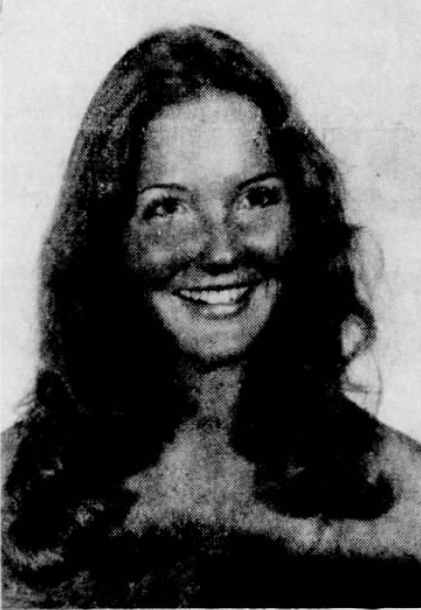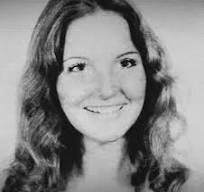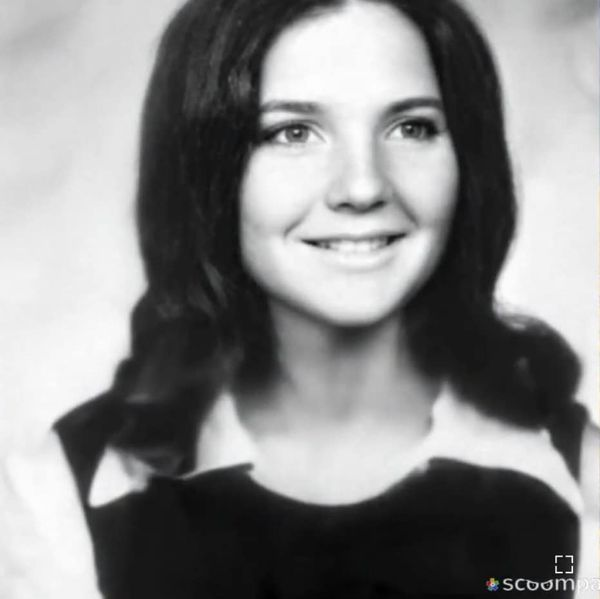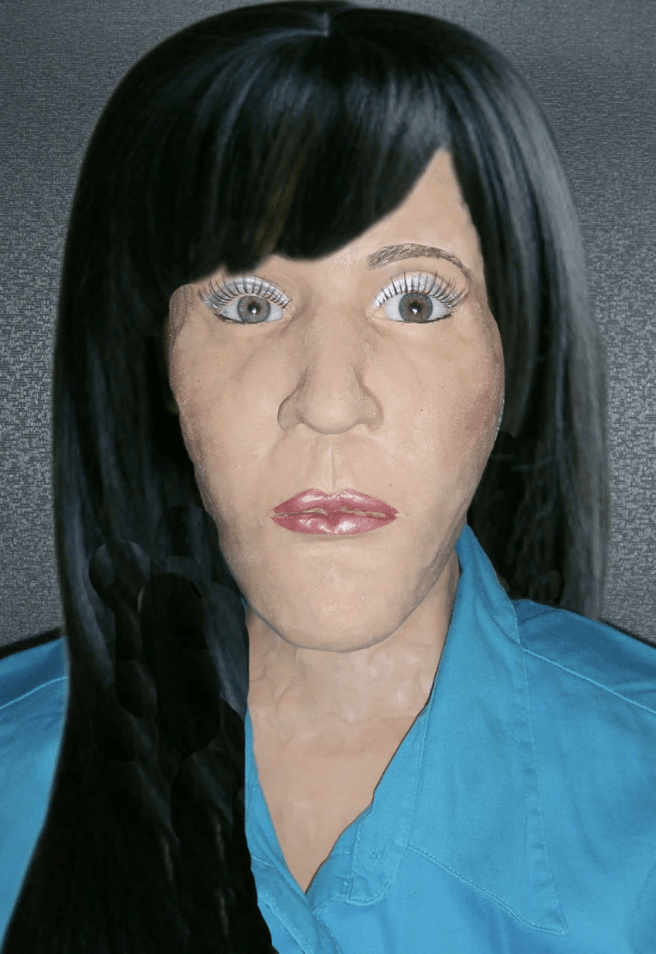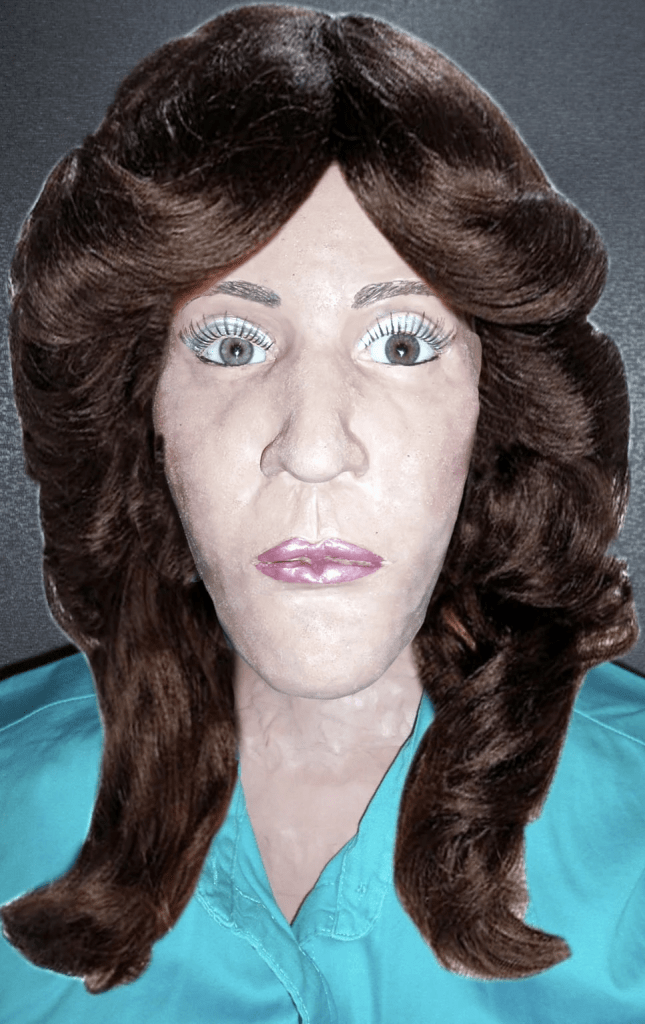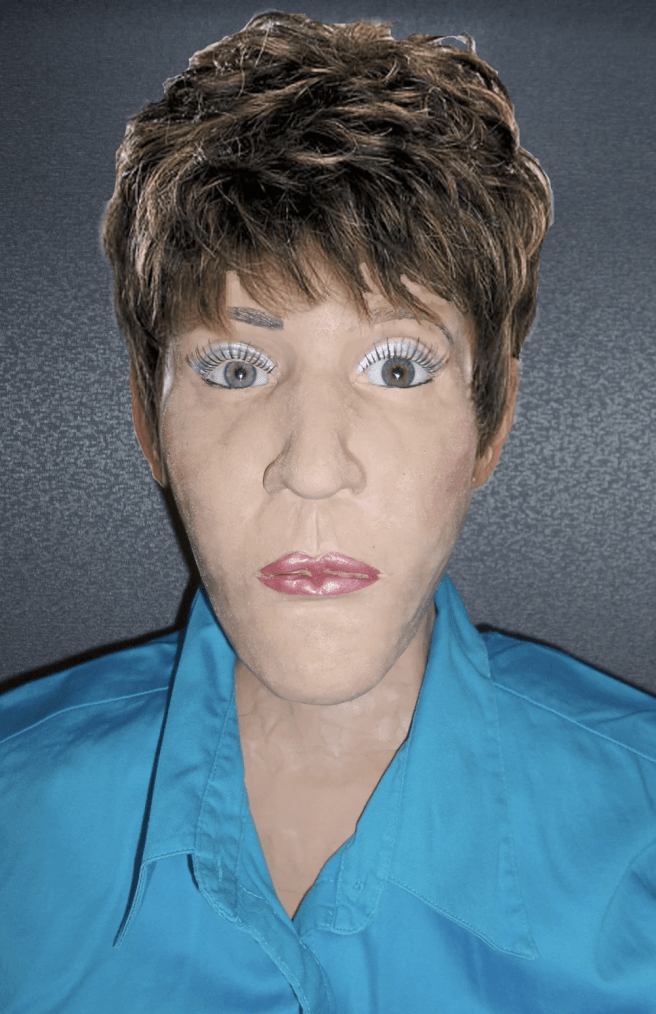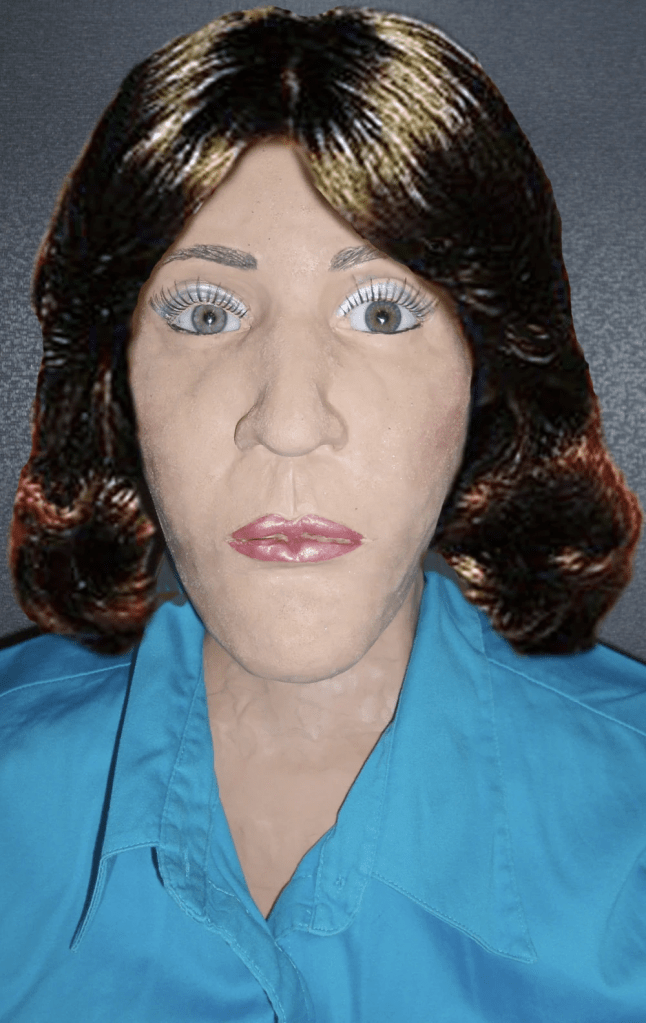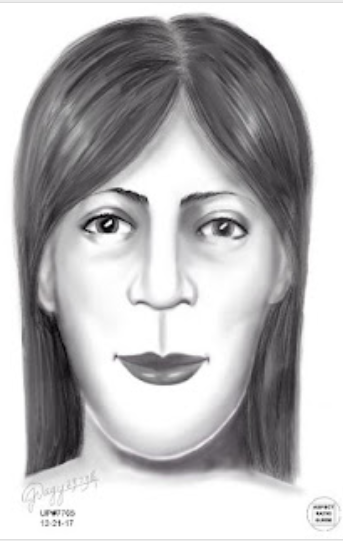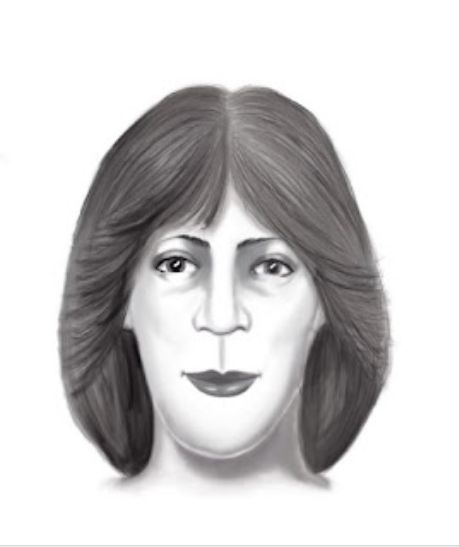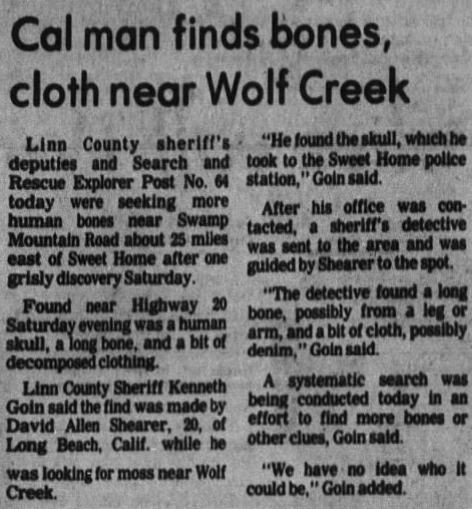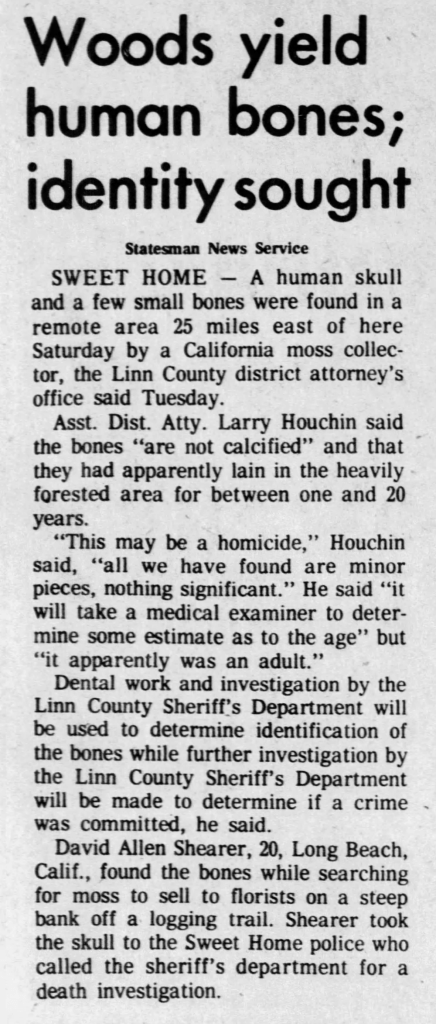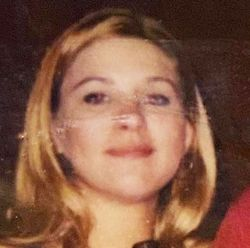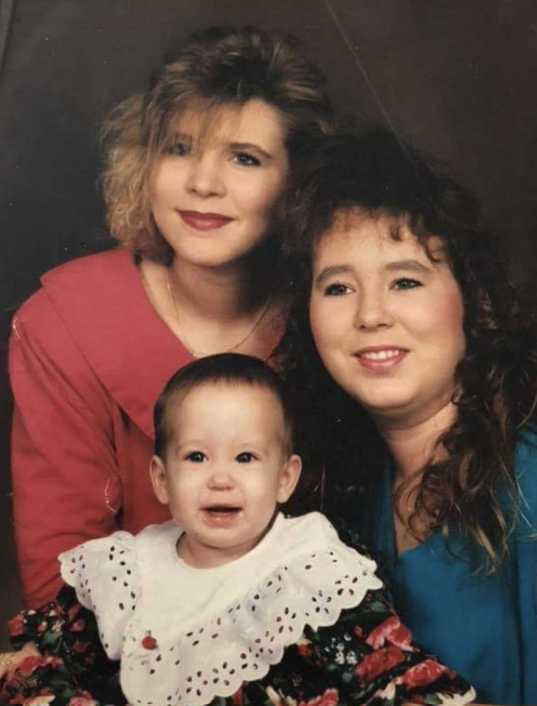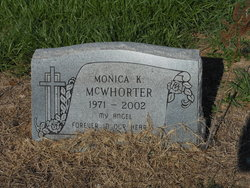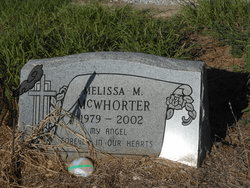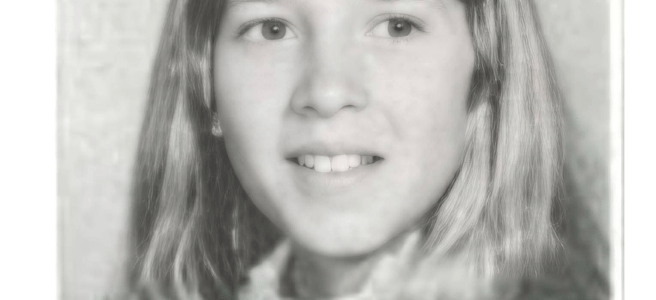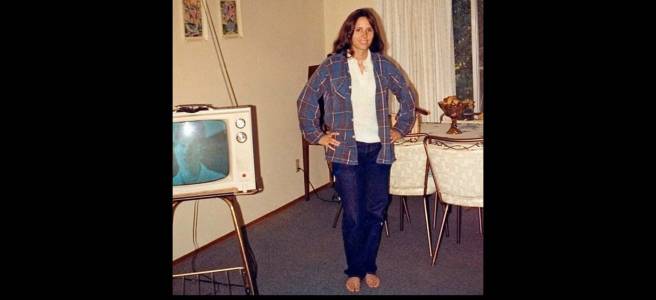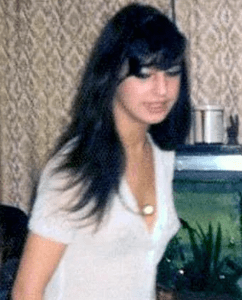
Melissa Anne* Smith.

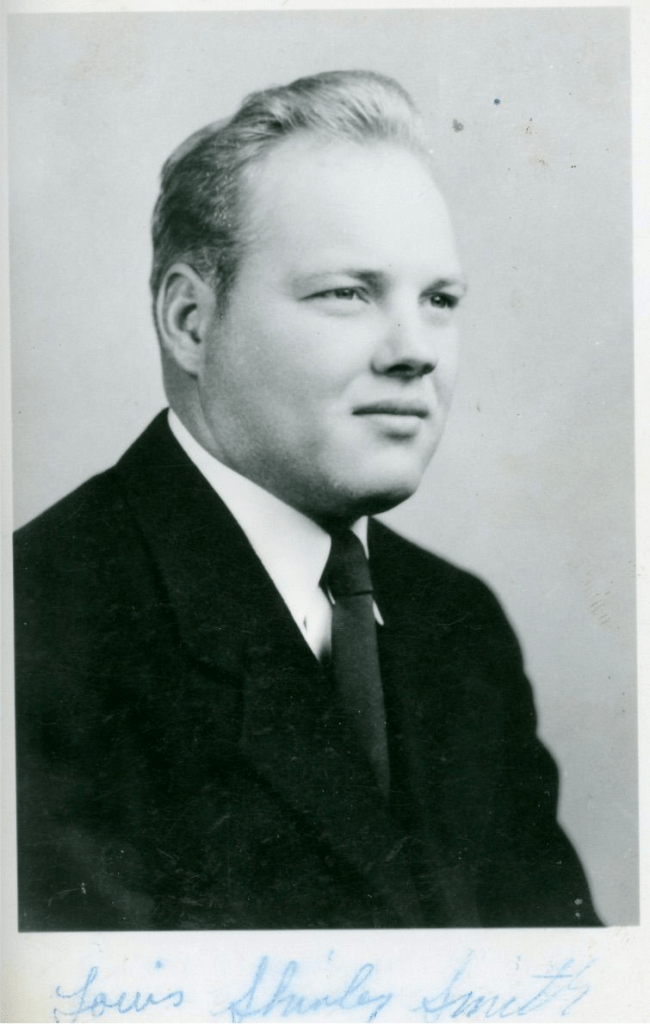
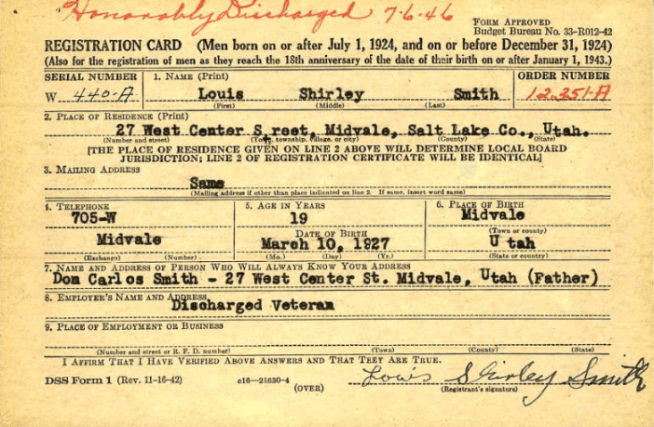
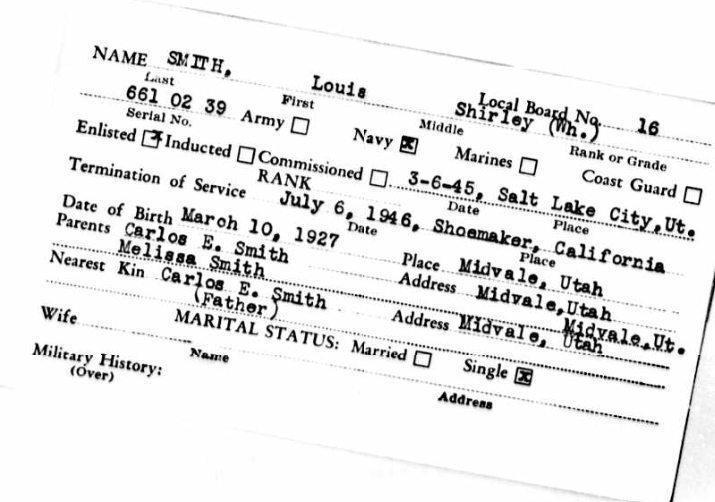
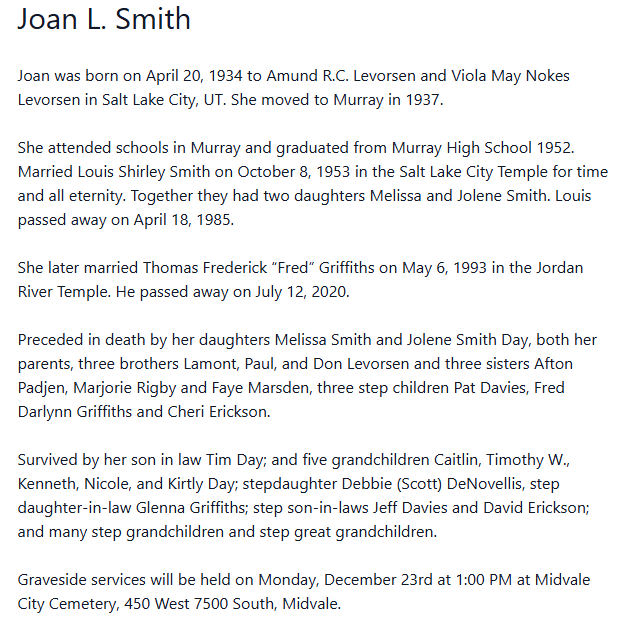
Introduction: Melissa Ann Smith was born on July 4, 1957 in Midvale, Utah to Louis and Joan Smith. Louis Shirley Smith was born on March 10, 1927 in Midvale and after graduating from high school he joined the Navy and was in WWII and the Korean War. After getting out of the service he returned to his hometown and joined the police force, where he rose quickly through the ranks and earned the role of the chief of police. Joan Phyllis Levorsen was born on April 20, 1934 in Salt Lake City to Amund RC and Viola May Nokes Levorsen and moved with her family to Murray in 1937, where she graduated from Murray High School in 1952. The couple were married October 8, 1953 in the Salt Lake City Temple and had two daughters together: Melissa and her younger sister Jolene (b. August 9, 1959).

Background: According to Ann Rule’s true crime classic, ‘The Stranger Beside Me,’ at the time of Smith’s murder Midvale was ‘a quiet Mormon community made up of 5,000 people that was located just south of Salt Lake City. It’s a good place to raise kids, and Melissa, although warned, had never had a reason to be afraid.’ The family was a part of the Ninth LDS Ward in Midvale, and Melissa was very active in her faith. At the time of her death, she was seventeen and a senior at Hillcrest High School, and was also a student at Continental School of Beauty, where she was a cosmetology student.

October 18, 1974: Jolene Smith told investigators that she thinks her sister may have left home around 9:10 PM on the evening of October 18, 1974, but she wasn’t positive and stated she could have left as early as 8:10 PM. According to one of Melissa’s two best friends (and fellow HS classmate) Julie Rushton, the two spoke at around 8/8:15 PM (one report said it was 9 PM) when they discussed their plans of meeting up at a local pizza place called ‘The Pepperoni’ (which was also her POE) ‘somewhere around 9 PM, or around 9:30 PM’,** and here’s where I found something interesting: according to the missing person’s report, Julie had ‘some words’ with a friend of theirs named Sherry McClery about her boyfriend earlier in the evening, and she ‘felt low and needed someone to talk to’ (Sherry had been at the pizzeria visiting with another employee named Cindy Howell). In every other source it was reported that Rushton had been having ‘boyfriend problems’ and not friend problems, but this does not seem to be the case (I know this isn’t a major detail, it’s just something that jumped out at me).

Julie said that Melissa stayed for a while and that they chatted a bit, then she ‘left there at approximately 9:30, or between there and 10 PM’ and ‘assumed she was going home’; Sherry left The Pepperoni at roughly 9:30 as well, and had been right behind Melissa. According to the police report, ‘the reason we can say 9:30 is that Sherry M. called her mother to see if she could go to the show. Her mother looked at the clock to see what time it was, and it was 9:15. Sherry left the Pepperoni between ten and fifteen minutes after she called her mother. Also asked Sherry what way Melissa went and her first statement was towards State Street.’

Rushton was also upset that Smith was sleeping over their friend Mindy’s house and it didn’t appear that she was invited, but I wonder if it maybe had to do the fact that Manning went to a different high school (she went to Murray High School and was not a fellow student at Hillcrest). According to Melissa’s case file provided by the Midvale PD, Cindy Howell told investigators that she overheard Julie ‘talking to Melissa, she was upset with Mindy Manning because Melissa was going to stay over at her house on this particular night, but Melissa had been unable to get ahold of Mindy on the phone. She had apparently gone out with someone else and that Melissa was very upset over this. She states that when Smith left there around 9:30 or between there and 10 PM she also assumed that she was going home.’ My interpretation of this is: Melissa was trying to call Mindy to see if Rushton could come along to the sleepover, but she had ditched them both and wasn’t home at all.  

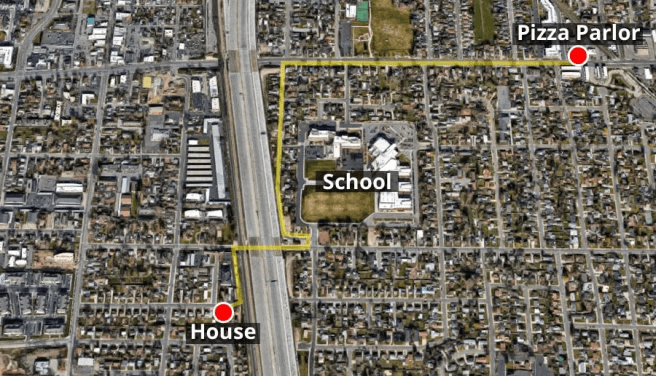
Per Ann Rule, the walk to the pizzeria meant ‘negotiating shortcuts, down a dirt road and a dirt bank, under a highway overpass and a railroad bridge, and across a school playfield.’ When she left the restaurant Melissa’s intended destination was most likely her home so she could pick up her night clothes, and the chances were pretty good that she took the same dark, poorly lit route that she used to get there. She never made it home.

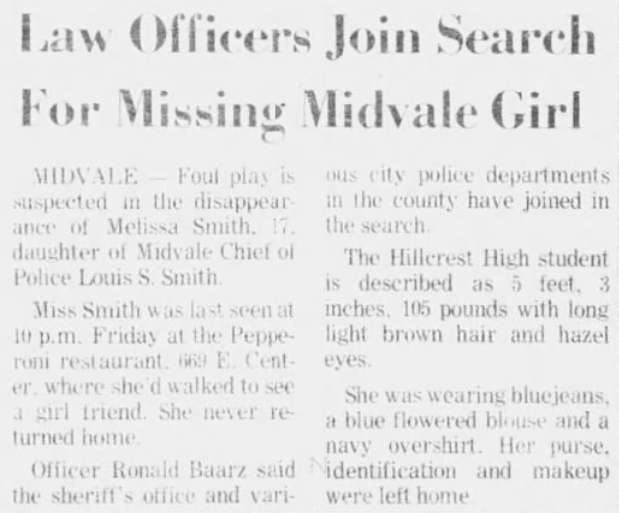
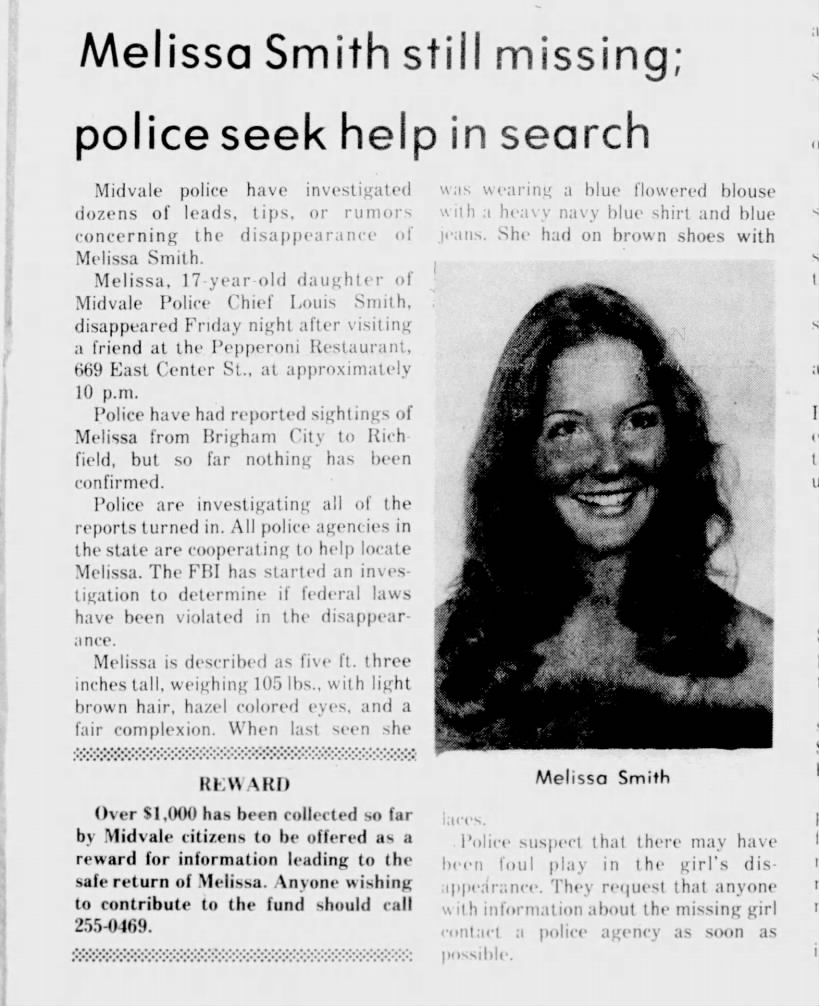
At the time of her disappearance Melissa was a junior at Hillcrest High School in Midvale, Utah, and was active in her faith. According to her family, she was a very cautious girl, and Midvale itself was a small Mormon town: religious and very quiet, and even though her father worried about his girls and taught them to be safety-aware, she had little to fear in the tiny community. At the time of her disappearance Smith weighed 105 pounds, had light brown hair she wore at her shoulders, stood at 5’3″ tall, had hazel eyes, and a fair complexion. She was last seen wearing blue jeans, a blue flowered blouse, and a heavy navy-blue shirt she used for a coat; her purse, identification, and make-up were left at home. Melissa was reported missing by her mother (her father took the official report) and because of the nature of the disappearance and the type of girl Melissa was, foul play was immediately suspected. Jolene Smith said that running away was against everything her sister stood for, and it was something she would never do; she also said that Melissa was the type of person that would have eventually called home had they left suddenly. According to Midvale PD officer Ronald Baarz, the sheriff’s office and various city police departments in the county had joined in on the search.

Julie was employed at the same restaurant that Melissa was last seen at, and she was a student with her not only at Hillcrest High School but also at Continental Beauty School. During her second interview with Detectives Ben Forbes and Jerry Thompson (both with the Salt Lake County Sheriff’s Department) Julie admitted that she had given Melissa $10 so they could buy pot that weekend and said that they had both smoked it before, which was a detail she had left out the first time she spoke with them, most likely because her parents had been present (that time she had been by herself at the beauty school she attended). During that interview Julie was also asked if Melissa wore a lot of makeup and ‘false eyelashes,’ and she replied that she ‘wore a lot of make up around her eyes,’ but that was it; Rushton also said that none of their other girlfriends wore false lashes either so Melissa wouldn’t have gotten them from them. She also clarified that her friend wasn’t the type of person to borrow another person’s clothes or personal items (aside from her sister).

When Rushton was questioned if Melissa had ever used any substance harder than pot, she said to the best of her knowledge no she didn’t, and she had hitchhiked ‘on occasion, if there was no other way to get where they were going.’ When asked if her friend was fearful of getting into a car with a stranger Julie replied, ‘I don’t believe she was afraid of anyone.’ She also said Smith was still a virgin (as far as she knew) and would ‘not give in all the way with any boy regardless of what.’ She also said that her friend was ‘closer to her than her own mother,’ and the only other person that she was that close with was her sister. But aside from her, no matter what came up, problems at home or school, boys or anything, the two always discussed things together. Rushton stated that Melissa left the restaurant at around 9:30 PM and that she had been walking towards State Street.

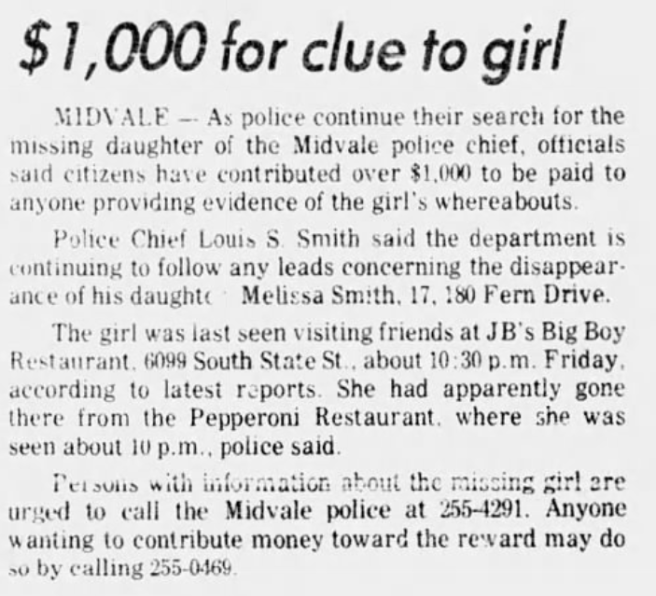
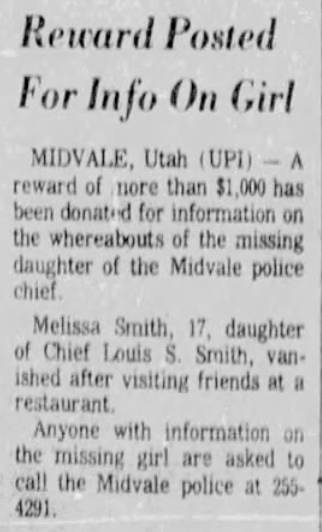
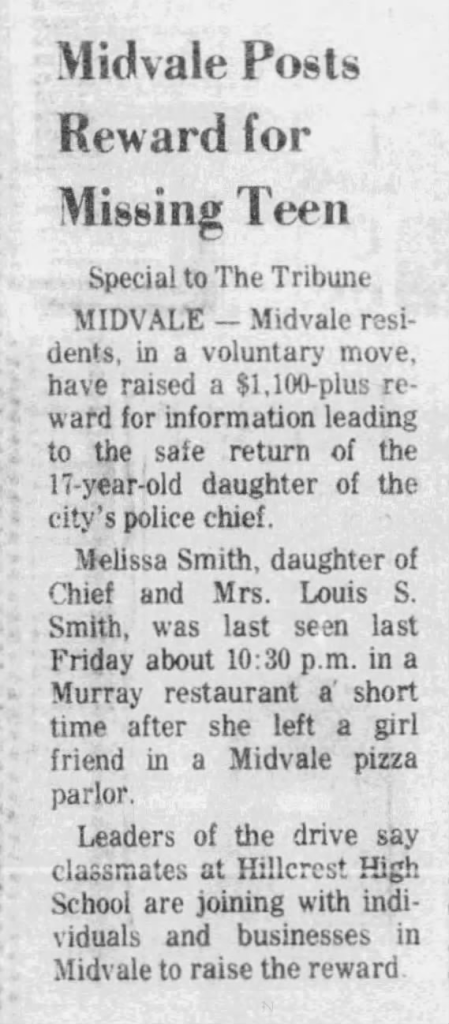
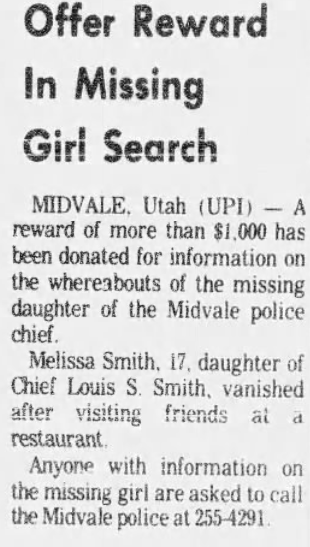
Investigators looked into multiple alleged sightings of Smith in the days following her disappearance, all the way from Brigham City to Richfield, with no luck; the FBI even stepped in and started an investigation to determine if any federal laws had been violated in relation to her disappearance. Shortly after she disappeared a $1,000 reward was listed for any information that led to the safe return of Melissa Smith. 

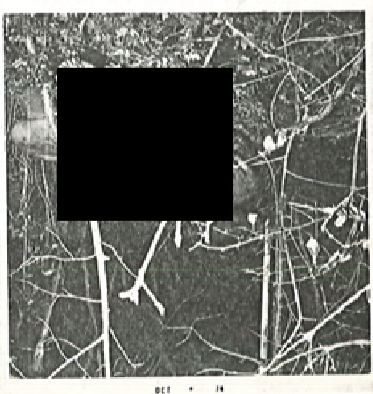
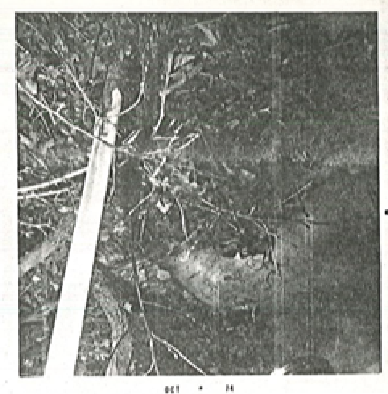
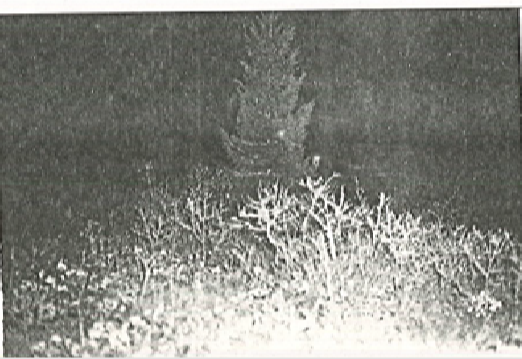
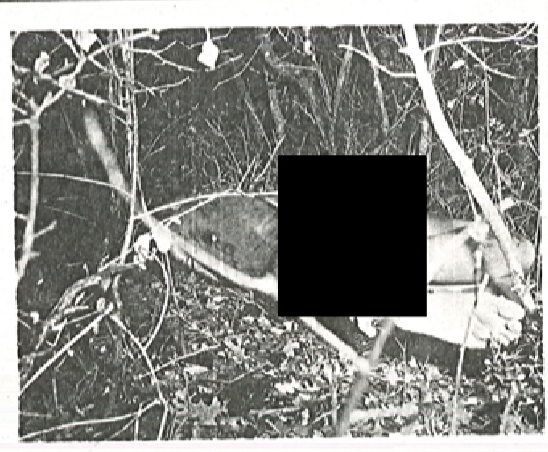
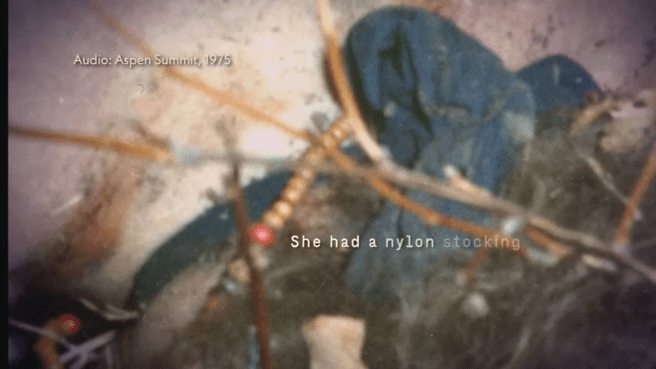
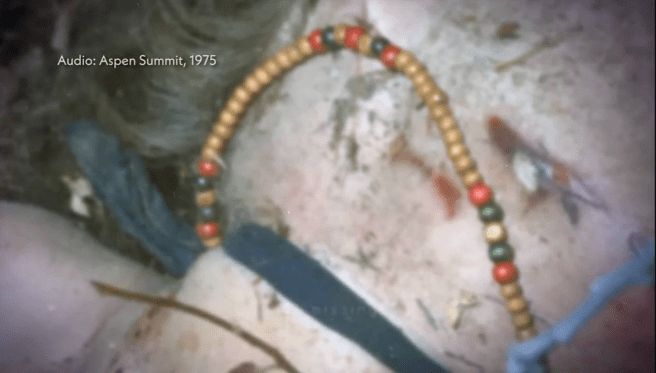
October 27, 1974: the remains of Melissa Smith were found by three hunters at 2:30 PM on October 27, 1974 in the Tollgate Canyon region of Summit Park (specifically the discovery was reported by Phillip D. Hughes). There were no signs of a struggle and the lack of dirt on the victims gave rise to the belief that she had been carried to the spot after her death. She had been nude aside from a necklace that had been made of wooden beads that were mostly yellow but had random blue and red ones spaced out (roughly) every three inches, which had been tangled in a man’s navy blue knit sock, which had been tied behind her neck. According to her autopsy, ‘the stocking around the neck of the victim was cut off, and it is observed that the stocking is a navy-blue knit material with a ribbed elastic top approximately 2 1/2 inches long. The knot tied at the back of the neck appears to be just a double granny knot, and several of the victim’s head hairs are interwoven through the knot.’ Smith had been found on her stomach with her left arm completely underneath her body and the right arm extended and unfolded at a 90-degree angle; both of her legs had been bent at the knees. According to investigators, roughly ‘forty-nine paces directly west of where the body was found’ they found a folding patio chair. A positive ID was made thanks to dental records and the fact that Mrs. Smith was also able to identify the necklace as belonging to her daughter.

Smith’s remains were taken to Utah Medical Center, where an autopsy was performed, and according to the ME Dr. Serge Moore, she had been sexually assaulted and ‘there were heavy predominant abrasions over the left and right shoulder blades which extend down to almost the small of the back; there are also heavy abrasions on both buttocks and large scrape marks on both buttocks, with more abrasions on the left leg from the knee extending down approximately roughly inches towards the foot. On closer examination of the head of the victim, approximately six inches above the top vertebra is what appears to be a bullet wound of contact, approximately one half inch by one inch, and this is circumference by powder burn of approximately one-eighth in diameter. There are what appears to be liver-mortis marks on the central part of the back, and as far as rigor mortis is concerned, the lower limbs are fairly rigid at this inspection, but the arms and hands are fairly limber. I would estimate the time of death anywhere from thirty to thirty-six hours.’ During the exam Dr. Moore also discovered a small, irregular, brown-colored birth mark on the lower left back of the victim that had been previously described to investigators by Mrs. Smith that had been hard to see at first because of the multiple scrapes and abrasions covering the victims’ back.

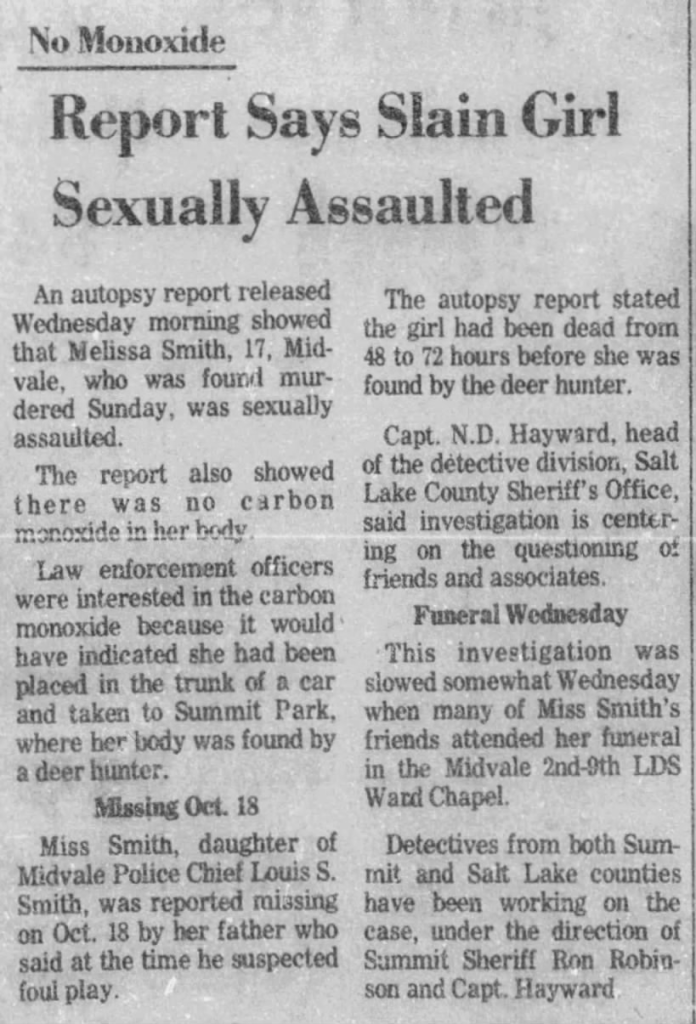
Smith sustained multiple skull fractures, and in the initial stages of the investigation it had been first believed she died from a bullet wound to the back of the head, but the autopsy later proved that wasn’t the case. According to Salt Lake County Sheriff ND ‘Pete’ Hayward (who served as captain of detectives before his twelve-year stint as county sheriff), investigators were awaiting tests to see if carbon monoxide had been found in her body, because ‘if there was, it would indicate that she was killed elsewhere and taken to the site in the trunk of a car. Determining where the murder took place is important to where legal jurisdiction will be.’ Smith’s autopsy eventually showed no CO2 in her body, indicating she was not beaten and transported to the area while still alive in her killers trunk.

Per her autopsy report, Melissa appeared to have her hair styled and makeup done at some time immediately before she had been discovered; her fingernails had been polished as well, and according to Jolene, she had done them the night she disappeared. The younger Smith daughter also told Colorado Detective Michael Fisher that the makeup, false lashes and choice of nail polish that had been discovered on her sister did not belong to her, which helped give rise to the theory that Bundy had been applying makeup and nail polish to his victims at some point during their captivity, either pre or post mortem. It’s also worth mentioning that in the days before her remains were discovered it had snowed roughly five inches in SLC, meaning the crime scene was covered in fresh snow, which only complicated matters.

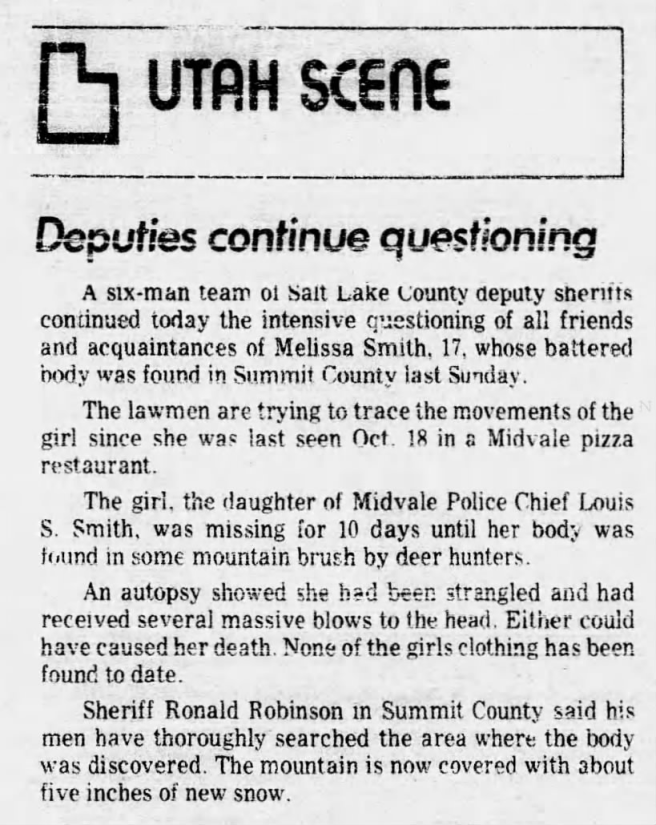
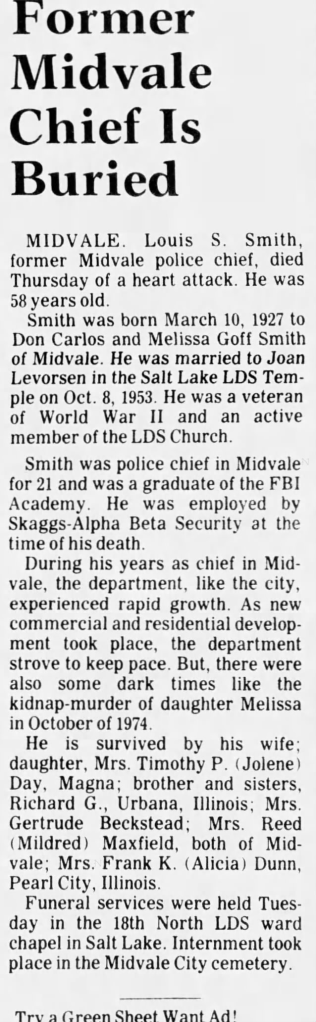
According to Ronald R. Robinson of the Summit County Sheriff’s Office, ‘about a dozen police officers conducted an intensive search of the area today (on October 28, 1974);’ he also said that investigators hoped to find where the crime had actually occurred but because of the large amount of oak brush in the deeply wooded area the search effort was slowed quite a bit. Louis Smith immediately knew that his daughter had been abducted as she never would have left of her own accord, and when her remains were discovered he turned the case over to Salt Lake County Deputy Sheriff Jerry Thompson, who would eventually be tasked with investigating most of Bundy’s suspected Utah murders.

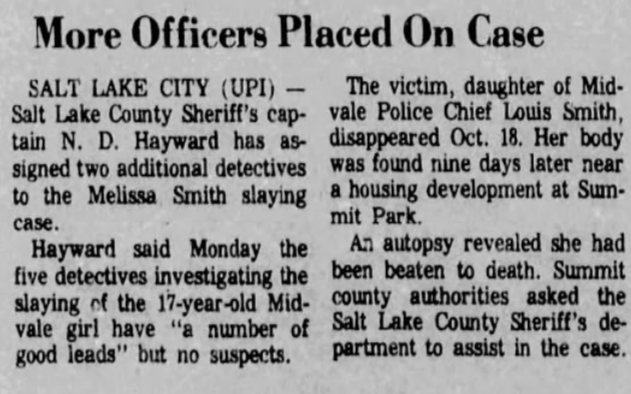
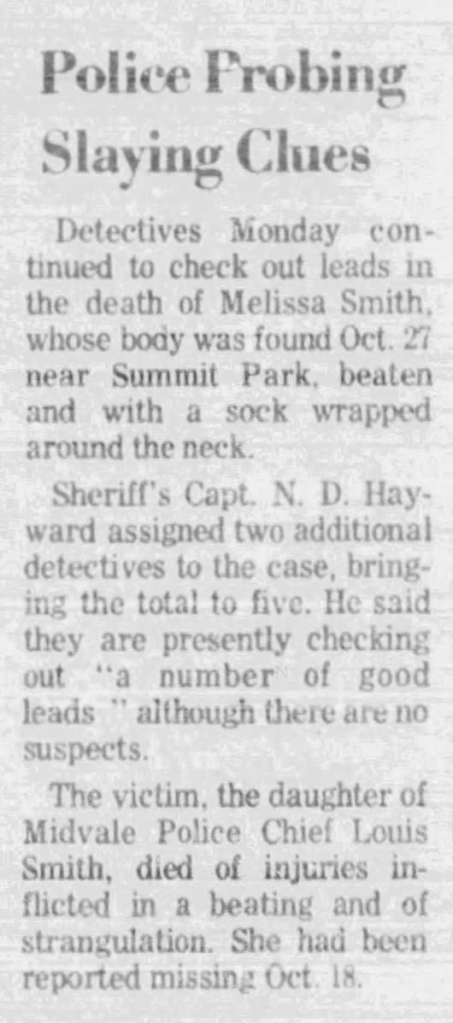
Detectives spoke with hundreds of Smiths schoolmates, beauty school friends, church friends, family members, and boyfriends, but learned nothing of value that helped in their investigation; according to Captain Hayward, ‘we are not satisfied with some of the answers we are receiving as we try to retrace her movements.’ Per Sheriff Robinson, shortly after Melissa’s murder investigators had ‘two or three new leads,’ and said that one of them involved a Timberline Subdivision resident that picked up a young woman several days prior that resembled the victim; she had told him she had been ‘en route to Timberline to see her friends’ (nothing came of this). A similar report claimed Smith had been seen in Evansville, Wyoming on October 22, a tip that was investigated by Midvale PD but was never verified, and according to Lieutenant Darald R. Austin of the Midvale PD: ‘we received a report from a man who knows the family who said he was sure she was seen in Evansville on that day but she had kept her hands in front  of her face while in his presence.‘ Austin returned from Wyoming with some clothing for analysis, and among the items collected were three stockings that were similar to the one found around Smith’s neck. SLC deputies also searched the highway in the Little Mountain area on October 29 after they received a tip that clothing similar to what Smith was reportedly last seen wearing were spotted roughly two hundred yards from the highway; nothing was recovered.

Jolene Smith’s Interviews: sometime in the days following her sister’s murder (there was no exact date given) Jolene Smith sat down for an informal interview with Detectives Ben Forbes and Thompson with the SLC PD at Hillcrest High School. In the beginning, the investigators said she was ‘very antagonistic, very nasty towards us,’ and when asked if she could help them with her sisters’ case she replied, ‘I don’t know what I can do for you. I’ve told dad everything I’m tired of all this bull shit that’s going around.’ When asked about the evening of October 18, 1974 Jolene said the last time she saw her was around 9 PM and she had been ‘very upset because she was going to stay overnight with a friend of hers, Mindy Manning, and that Mindy had stood her up so to speak, as she was not home and Melissa couldn’t find her.’ She also said that her sister gets very upset when people stand her up and she was also mad at her because she wanted to do some typing downstairs and wouldn’t go with her to the pizzeria. Jolene also stated that her and Melissa had arguments on occasion but it was ‘nothing out of the ordinary;’ she also said Julie Rushton called their family’s home and talked her sister into going to her POE to chat ‘as Julie was having some kind of problem with a boyfriend.’

When Jolene was asked about what her sister had on when she left the house, she said she was ‘wearing a pair of hip hugger, denim dark blue pants, which is the brand name of Fox Moor and has a little fox on the pockets in the back. The two pockets are V-shaped.’ She also stated that she had an identical pair of pants at her home and believes the blouse she had been wearing had been made out of a light knit material and had been a ‘slip-over type with the kind of a V-neck short sleeves, dark blue in color with small or tiny flowers on it. Different colors, some of them pink and some of them red.’ When asked what she thought may have happened to her sister Jolene said, ‘I believe she left the pizza place and went out boogian, and that was her comment, ‘boogian,’ until about midnight. Someone must have picked her up and ripped her off, and that’s the only thing I can think of.’ Looking into this verbiage, by ‘boogiaan’ I am almost positive the detective is trying to say ‘boogieing’ but is spelling it wrong.

About Jolene Smith, Jerry Thompson (who was writing the report and had also been a good friend of Louis Smith’s) commented that: ‘in all my years being a police officer I have never talked to an individual that had an attitude like this young girl did after just having her sister brutally murdered.’ When she was asked if she or Melissa had ever ‘thumbed’ before she stated, ‘no way,’ which he knew was a lie because in an interview with Lori Conti she admitted to picking the hitchhiking sisters up in the days prior to Melissa’s disappearance. Jolene also said her sister would ‘never’ wear fake eyelashes and the only time she ever expressed any interest in them she used the ones that you individually had to stick on ‘one lash at a time, not the type you glue across your eyes.’ When she was told that Melissa was found wearing the long type of fake eyelashes she ‘essence called us a liar. She said that she doesn’t believe it.’

In a sworn statement that took place with Detective Jerry Thompson and Captain Pete Hayward at the Metropolitan Hall of Justice in SLC on April 4, 1975, Jolene said that at the time Melissa disappeared she ‘had curly hair because she had recently had a permanent, and it was kinda dark before, you know not real dark btu it was brown. But she had I streaked, so it was about the color of mine or possibly lighter. Okay, and aaah, she had a permanent, and when it got wet it would frizz out, you know, it’d go really curly.’

It was also during this interaction that Jolene was able to clarify what had happened with Mindy in relation to the evening of October 18th, and that she didn’t see Melissa because she had been ‘out with her friends messing around.’ Jolene also said that if her sister was going to smoke cigarettes (and I didn’t get the impression she did it frequently), ‘she would have bought Kools, not Marlboro’s,’ and wouldn’t have ran in real quick to buy them for a guy, she would have made him go in and buy them himself.

The following is taken directly from Jolene Smith’s sworn statement:
Det: ‘Well, what do you think actually has happened, Jolene.’
Jolene: ‘I think she was probably coming out of Pepperoni and started to go home, and aah, somebody said, hey, come here or something like or wanted to talk to her, grabbed her, and that’s what I think happened. Because she, she’d, you know, she wouldn’t be stuck up. She’d say hello.’
D: ‘She’d go over and talk to them?’
J: ‘She’s very friendly.’
D: ‘Yeah, that’s what we wanted to know.’
J: ‘But she wouldn’t go off with somebody else, ‘cuz that was, I mean, we, possibly we’d go off with people, if there were more girls than guys, but she wouldn’t do it alone.’
D: ‘She wouldn’t do it alone, now that’s the thing that I was really concerned with, if some strnger called her nd said come on over to the car, and she may walk over and see who it is or talk to him, but in your opinion she would never have gotten in tht car alone?’
J: ‘Never.’
D: ‘With somebody that she didn’t know?’
J: ‘No way. And aaahh, I don’t know, he’d have to be good looking or she wouldn’t go over either.’
D: ‘Is that right?’
J: ‘Um hum. She’d just (?), yeah, and walk off, say…’
D: ‘There’s no way that she’s just go over to anybody if he was a crum-looking guy?’
J: ‘No, she, no.’
Detective Thompson: ‘Wha would be her reaction, beings your dad’s a police officer, if someone came up to her and showed her a badge that wasn’t in uniform and things like that and said that he wanted to talk to her, or come and get in my car, or something. Do you know?’
J: ‘I don’t know what she’d do, she didn’t like cops very much.’
Captain Hayward: ‘You don’t think she would have gotten into an automobile with anybody that my have shown her a badge, or…’
J: ‘Possible, but she didn’t like cops very well, she’d say, it, she probably would because you know, most people would, but…’

In the same interview Jolene was questioned about possibly being acquainted with Laura Aime, who had disappeared on Halloween later that month, and to my great surprise, she seemed to have been familiar with her and ‘her Mexican boyfriend,’ saying ‘I’ve seen her.’ Smith was also asked if she ever recalled Melissa mentioning a man going by the name ‘Ted,’ to which she replied, ‘it doesn’t, I don’t think so.’

Lori Conti: in Smith’s case file there is a summary of an interview with a senior at Hillcrest High School named Lori Conti, who had observed her ‘thumbing a ride’ twice: once with her sister about a week before she disappeared (she picked both girls up that time) and for a second time on the evening that she disappeared on: ‘…Friday, October 18th, I had a date with a boy and we were going north on State from 7800 South and I observed Melissa alone, thumbing a ride’ while walking along State Street. It had been somewhere between 9:30 and 10 PM (as her boyfriend had picked her up at 9:30) and she had been positive it had been Smith. When Conti was asked if she recalled what she had been wearing and she replied, ‘all I can remember is that she had on dark blue Levi’s, and she thought she had on a blue kind of like, parka or windbreaker, or something to this effect, but was not sure.’ She also told investigators she didn’t know Smith very well but did remember that a few years prior at a youth conference in Logan ‘during the evening hours Melissa would take off with some boys. She stated that one evening she went with some negro boys and that the next day when she came back or during the night, she observed monkey bites and bites around her neck and around the face area;’ Conti’s mother (who had been present for the interview) was able to verify this, as her daughter had come home and told her all of this when it happened.

Judy Tueller: a senior at Hillcrest High School named Judy Tueller said where she also didn’t know Smith ‘very well’ (she said the two would on occasion say hello to each other at school and exchange small talk), on the night of October 18th she saw her at JB’s Restaurant in Murray at 10:30 PM; when Tueller  was pressed about the exact time she said she was ‘positive’ it had been 10:30 PM, as this was when her boyfriend was supposed to meet her there. Tueller also said that when she observed Smith come into the establishment she walked in with another girl in tow and clarified that she did not know if the two were together or not; the other young woman had a small build and was around 5’5” tall. After Melissa walked in, she went directly to the cigarette machine, and where Judy did not observe her buy anything almost immediately after she came in she walked right back out, and it was then that she observed a pack of Marlboro’s in her hand.

Judy also said that just after Melissa walked in the door she noticed a car parked out front directly in front of a ‘no parking zone,’ and that its driver appeared to be ‘be a cowboy with a cowboy hat on’ and as he drove away she ‘noticed the license plate on the back had a yellow horse on it.’ This stuck out to her because the Murray PD frequently patrolled the area and they loved giving out tickets over it, and she remembered thinking to herself how ‘lucky’ this man was that he didn’t get caught (although she did admit that he hadn’t been there for very long). About the car she said she didn’t know anything about it other than it was dark blue in color and was a four-door and was most likely a Ford: ‘it was something like a Torino, it was not a big car like a LTD or something in this line. She stated that it sounded like it had glass packs, not a bad muffler but kind of a lud pipe when it took off.’ Tueller also said that Melissa left by herself (without the girl that walked in with her) and although she didn’t observe her get in the car it disappeared immediately after she left. She said Smith had been wearing Levi’s, the ‘kind of blue ones possibly a little flair at the bottom. The type that most girls wear, and a shirt that’s flowered, kind of a knit material or one that kind of slips over your head but was not sure.’

JayLynn Boggess: the bartender that had been working at JB’s Restaurant on the evening of October 18, 1974 was another Hillcrest High School student named JayLynn Boggess. Described as having an overall ‘bad attitude,’ Boggess was resistant when it came to talking to investigators because she was afraid if it had somehow gotten out she would find a fate similar to Melissa’s. When detectives questioned her at her high school about Smith’s murder she said, ‘the only damn thing I’m going to tell you is that Melissa came in around 10:30 PM with another girl, long blonde hair, a hard looker, turn around and went back out and I don’t know another thing about it.’ She eventually clarified that ‘on the 18th day of October 1974, around 10:30 & 10:45 PM that Miss Smith came into JB’s and walked into the restroom and stayed approximately five minutes and walked out without saying a word to anyone.’ When asked if she was positive that the second girl was blonde Boggess responded with, ‘what the hell do you think?’ and walked out of the room. After the brief interview Boggess’ father called the school’s principal and let him know that he ‘did not want his daughter taken out of class and did not wish to have her talked to by the police department.’

LaVerne J: in the late afternoon of October 21, 1974 at roughly 5:45 PM Officer Elsby of the Midvale PD spoke with a Midvale resident named LaVerne J, who reported that she heard a female scream come from north of the junior high between 10 and 11 PM on October 18th. At this time Mrs. J was working in her backyard, which is a normal activity for her at this time of night as her husband is one of the departments dispatchers and gardening gives her something to do.

Investigators also spoke with an instructor and acquaintance of Smith’s from Continental School of Beauty named Bernadette Burnham who happened to be at a party with Melissa on one of the Saturday’s before she disappeared (either on September 25th or October 5th); Burnham said that Melissa stayed overnight and didn’t have a lot to drink, and where she had arrived at the gathering alone she quickly noticed her chatting and dancing with a young man named Mike Christensen (he was actually twenty-two), and later that same night she also observed the pair sneaking outside together then returning about a half hour later (Melissa had twigs and leaves in her hair).

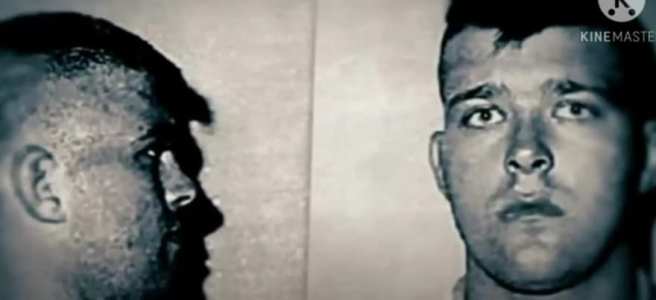
Ted Bundy: in October of 1974 Theodore Robert Bundy was enjoying his days as a recent transplant in SLC from Seattle and was in his first few months of his second attempt at law school. He was still in a (fairly) committed relationship with Elizabeth Kloepfer and had been taking a break from any ‘serious’ side relationships: in the Summer of 1974 he briefly dated Becky Gibbs and remained faithful to Liz until early 1975, when he had a fling with Marguerite Maughan (her father tried to cover up their brief affair after he was appointed to the Utah Supreme Court). At the time he was also in between jobs as well (most likely in a lame attempt to focus on law school), as he left the Department of Emergency Services in Olympia on August 28, 1974 and remained unemployed until June of 1975 when he got a position as the night manager of Baliff Hall at the University of Utah (he was fired the following month after he showed up to work drunk).

Despite a meticulous cleaning job, while going through Bundy’s car after his August 1975 arrest on October 15, 1975, forensic experts found ‘a long, spindly hair’ on the stick-shift lever that belonged to Melissa Smith. Additionally, in the trunk of the Bug, techs found a hair from the head of Caryn Campbell, hairs and fibers that belonged to Laura Aime (in the passenger area), and a hair that belonged to Carol DaRonch was found in embedded in the upholstery in the back (one report said her hairs were found on a pair of handcuffs and on the passenger’s side of the vehicle).

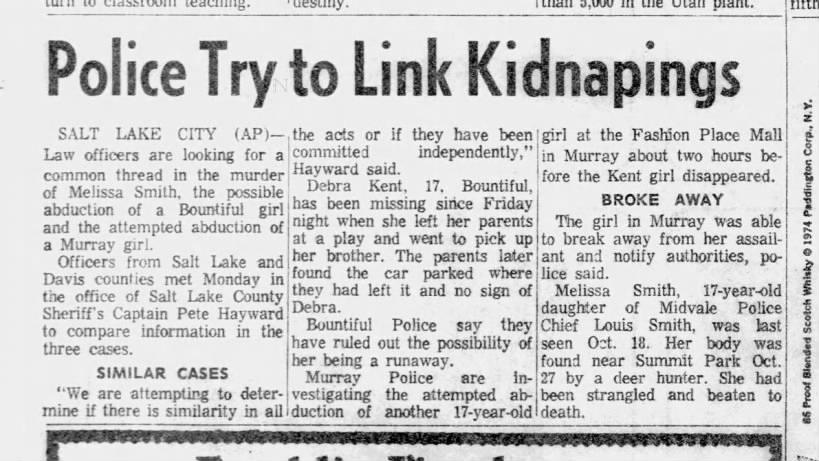
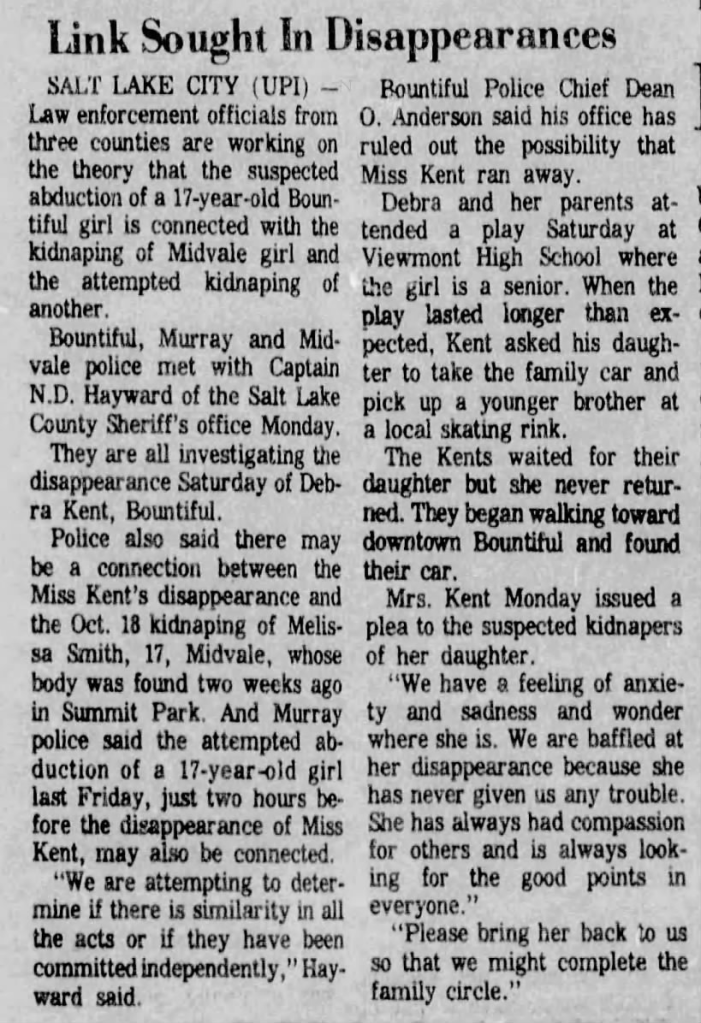
Bundy’s Other Utah Victims: in November 1974 detectives in SLC began piecing together the murders that were taking place across the beehive state and began searching for a common thread in the disappearances/murders of Nancy Wilcox, Melissa Smith, Deb Kent, Laura Aime and the botched kidnapping of Carol DaRonch. According to Pete Hayward, ‘we are attempting to determine if there is similarity in all the acts or if they have been committed independently.‘ First of Ted’s Utah victims is Nancy Wilcox, who had been last seen at roughly 9 PM on October 1, 1974 (some reports say it was October 2nd) when she left her family home in Holladay after getting into an argument with her father about her boyfriend’s truck leaking oil on the driveway. She never returned home and her parents reported her as missing the following day, but because of the way she left police immediately classified her as a runaway and didn’t begin investigating her disappearance until October 29th.

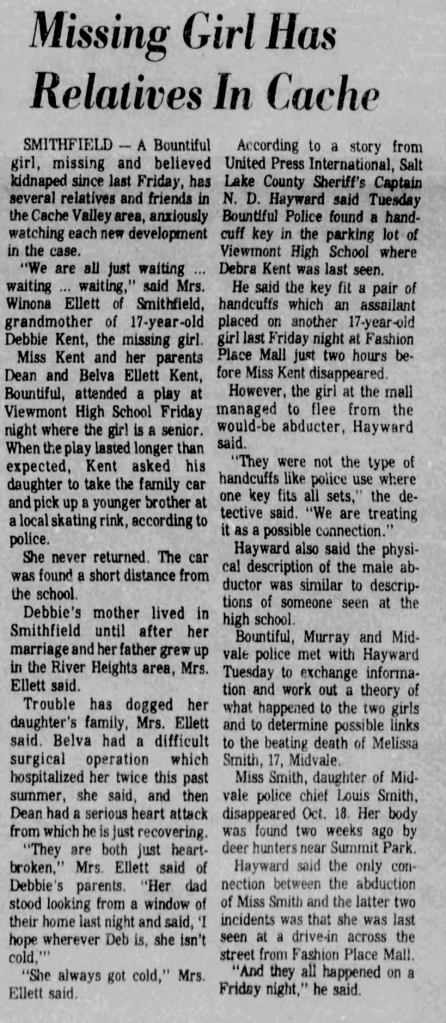
On Halloween 1974 eighteen-year-old Laura Ann Aime disappeared out of Lehi, Utah after she left a Halloween party to go get cigarettes; on November 27, 1974, hikers found her remains in American Fork Canyon, northeast of Provo. Authorities determined she had been beaten, sexually assaulted, and had been strangled to death. A little over a week after the abduction of Laura Aime seventeen-year-old Debra Jean Kent disappeared from a showing of ‘The Redhead’ at Viewmont High School in Bountiful on November 8th after she left to pick up her brother from a nearby roller skating rink when the play ran long. It was later discovered that the family car was in the parking lot, but Deb was nowhere to be seen; a handcuff key was later found on the ground near the vehicle, and someone reported hearing screaming in the area at roughly the same time as Kent was last seen alive. Her case was initially investigated as a runaway, but per Bountiful Police Chief Dean O. Anderson, his office was quickly able to rule out the possibility that she had left willingly. The majority of her remains have never been recovered, aside from her patella (which has been found amongst animal bones in 1989 after Bundy’s death row confessions).

According to Hayward, ‘we are attempting to determine if there is similarity in all the acts or if they have been committed independently.’ When the plan lasted longer than they anticipated the Kents asked Deb to go get her younger brother from a nearby skating rink. According to Belva Kent, ‘we have a feeling of anxiety and sadness and wonder where she is. We are baffled at her disappearance because she has never given us any trouble. She has always been compassionate for others and is always looking for the good points in everyone. Please bring her back to us so that we might complete the family-circle.’

Shortly before Debbie Kent was abducted eighteen-year-old telephone operator Carol DaRonch was doing some shopping after work at the Fashion Place Mall in Murray when she was approached by a young man claiming to be a police officer named ‘Officer Roseland.’ He claimed her car had been broken into, but he thwarted the potential robbery and his partner had the suspect at the station and he was tasked with bringing her back to assist in a line-up. DaRonch hesitantly agreed and went back to his car with him, and during their drive to the police station he tried to attack and subdue her, but she fought back and managed to get away.

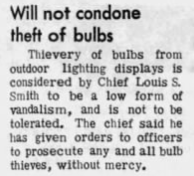
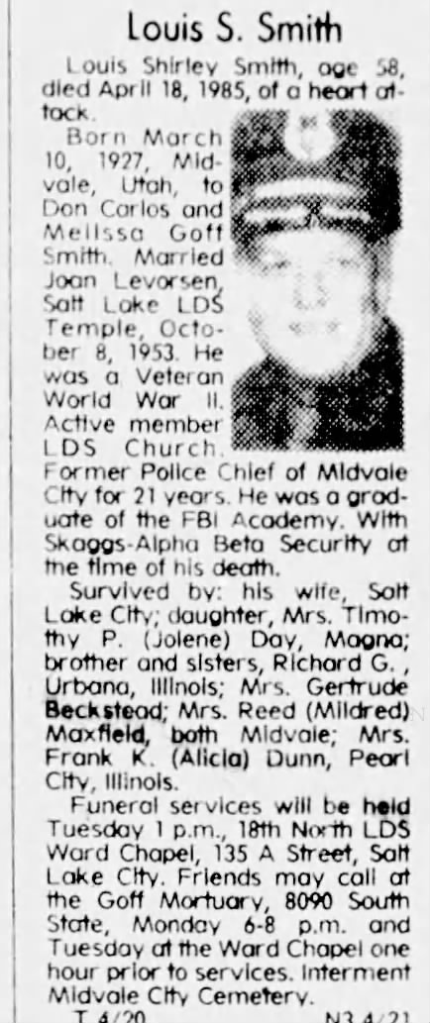
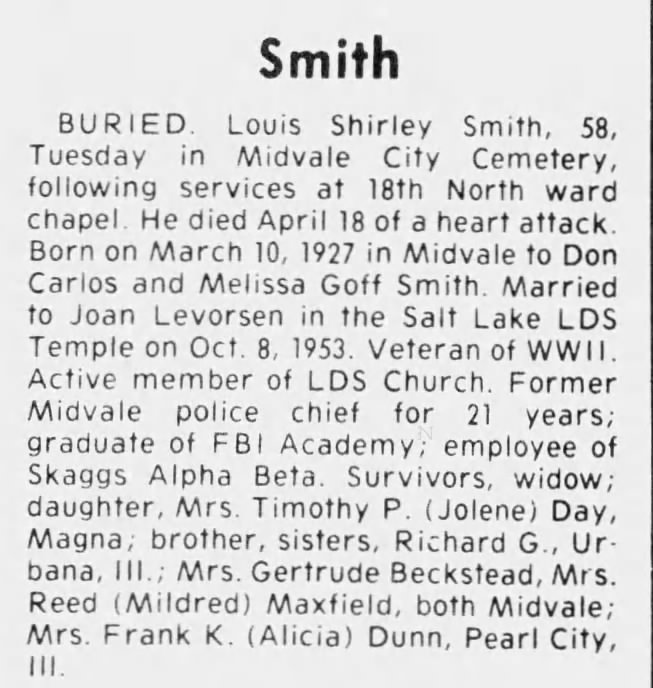
Conclusion: Louis Smith died suddenly of a heart attack on April 18, 1985 at the age of fifty-eight. According to his obituary, he was a veteran of WWII and had been police chief for twenty-one years before he retired; at the time of his death, he had been employed by Skaggs-Alpha Beta Security; he was also a graduate of the FBI Academy. ‘During his years as chief in Midvale, the department, like the city, experienced rapid growth. As new commercial and residential developments took place, he strove to keep pace. But there were also some dark times, like the kidnap-murder of his daughter Melissa in October of 1974.’ One thing I always found interesting in relation to Melissa’s murder and the Bundy case is the fact that every morning before he went into court (during Ted’s trial for the kidnapping of Carol DaRonch) officials had to frisk Mr. Smith down to make sure he didn’t bring his weapon into the building… they were that concerned he would kill Ted.

After Louis died Joan went on to marry Thomas Frederick ‘Fred’ Griffiths on May 6, 1993 in the Jordan River Temple, and the couple were married for twenty-seven years when he died at the age of ninety-two on July 12, 2020. They loved to travel together and enjoyed going out to eat, specifically at the ‘Chuck-O-Rama’ and Sizzler (where they made many good friends). Mr. Griffiths was born on April 18, 1928 in Treasureton, Idaho and per his obituary, he grew up on a farm in Idaho and joined the Merchant Marines when he was seventeen. He married Shirley Darlene Brough on February 26, 1948 and the couple had four children together; they were married for forty-five years when she passed away. Fred was employed at Union Pacific Railroad as a switchman and did maintenance for Bonded Realty Company on the side doing house repairs.

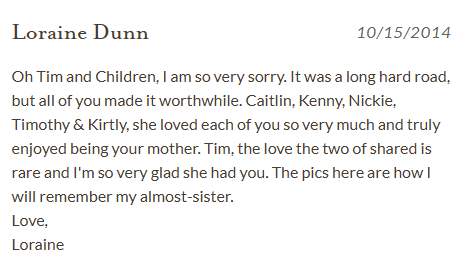
Jolene Smith died at the age of fifty-five on October 12, 2014 in Las Vegas after a long struggle with Multiple Sclerosis; she left behind her husband Tim, five children, and multiple grandchildren. Joan Smith died at the age of ninety on December 18, 2024, in Kearns, Utah; unfortunately, I was unable to find any additional details about her life.

According to the Utah Department of Public Safety, Smith’s case remains open despite the fact that she is considered one of Ted Bundy’s ‘canonical’ victims. During his last-minute interviews with Utah authorities while on death row in January 1989, Bundy would not discuss any details related to this crime and did not directly admit to being responsible for her murder: instead, he choose to limit his confessions to victims whose bodies had not been discovered, as he had planned to use the survivors of girls whose remains had not yet been recovered to pressure Bob Martinez (the then Governor of Florida) to postpone his execution so he could’ help’ locate them. In April 2026, authorities in Utah confirmed through new DNA testing that Laura Ann Aime was indeed a victim of Ted Bundy, closing the long-standing cold case. Perhaps one day the same will be done for Melissa Smith.

* I have seen Melissa’s middle name spelled as Ann, but it is most commonly spelled Anne.

Works Cited:
Keppel, Robert. ‘The Riverman.’ (1995).
Rule, Ann. ‘The Stranger Beside Me.’
Sullivan, Kevin. ‘The Bundy Murders: A Comprehensive History.’ (2009).
Sullivan, Kevin. ‘The Encyclopedia of the Ted Bundy Murders.’ (2020).
The document titled ‘942737281-Melissa-Case-File’ was provided courtesy of Scribed user ‘Matt Wade.’ Upon closer inspection, it looks to have been written by Tiffany Jean.
699915
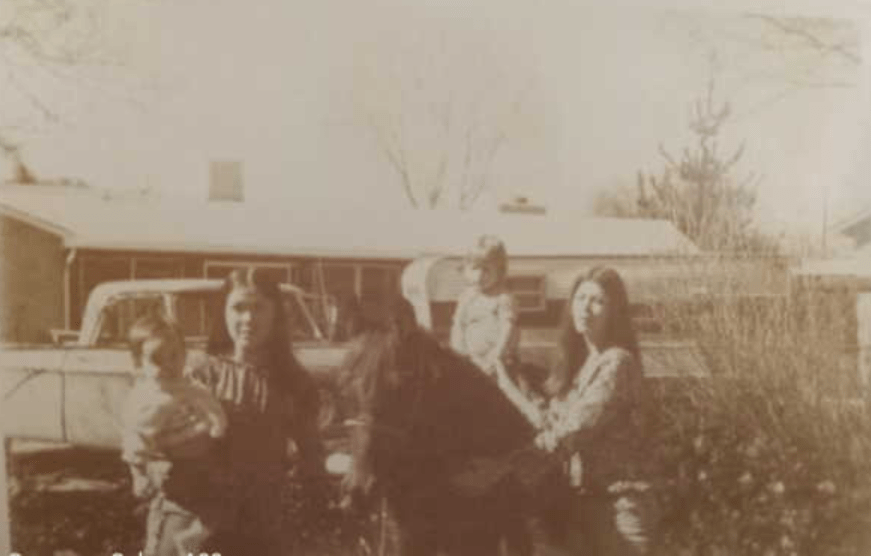
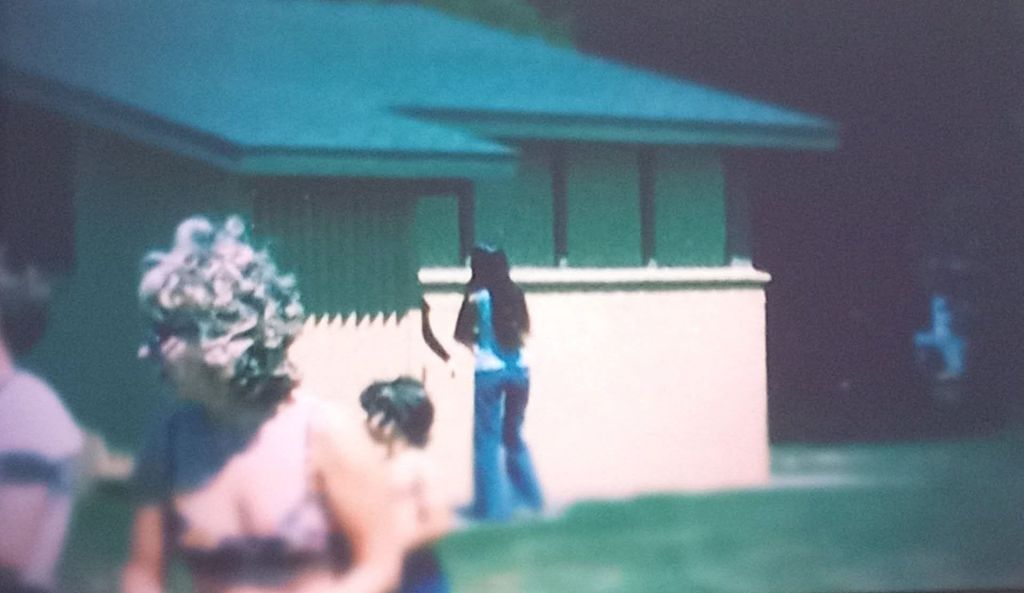
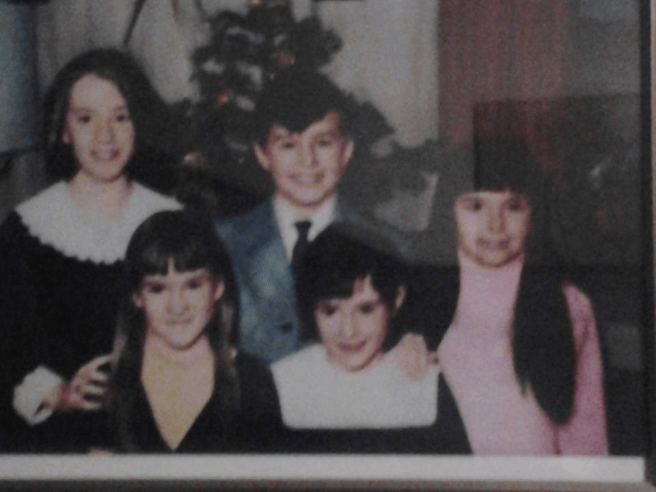
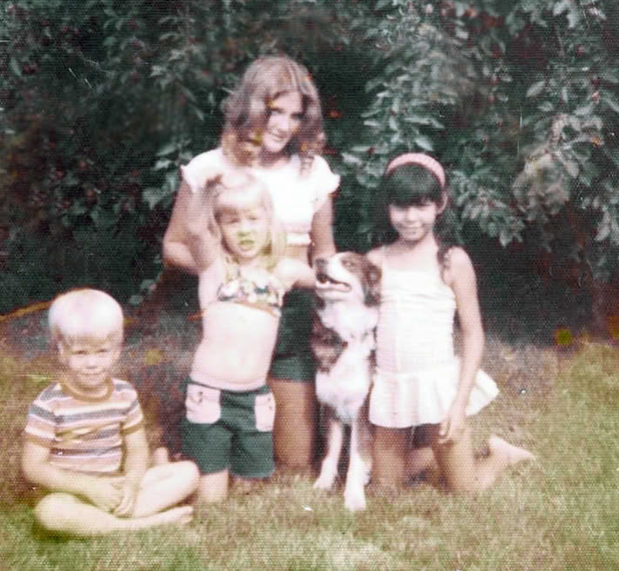
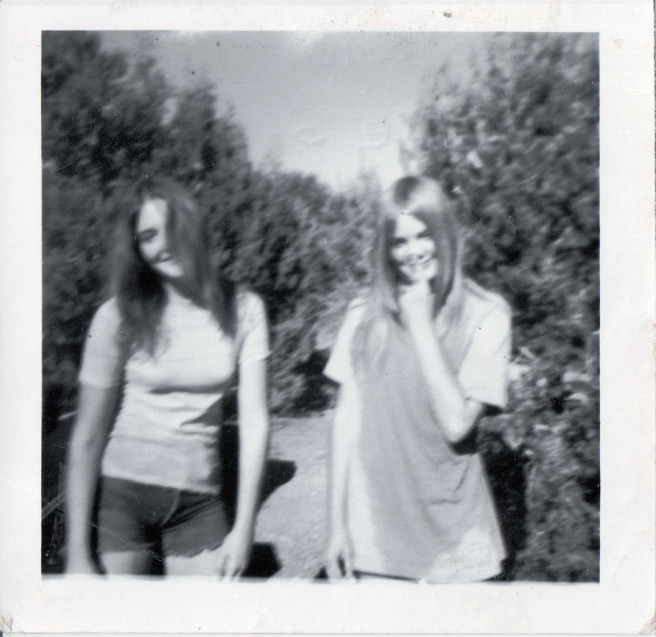
Melissa in the background with some kids from church the summer before she was killed. Photo courtesy of Emmanuel Allison/Tiffany Jean.
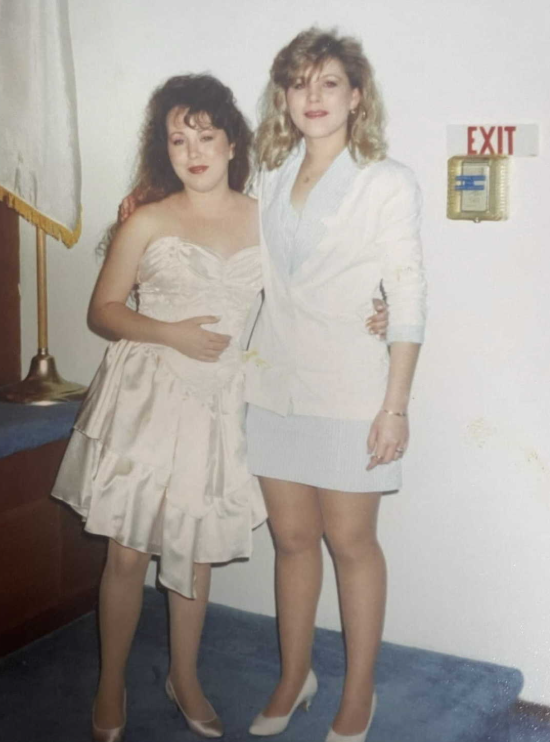
Melissa and her sister, Jolene.
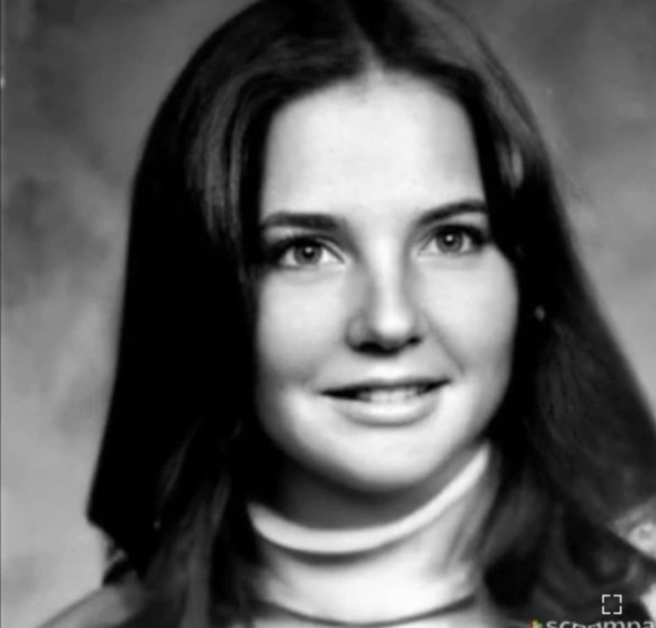
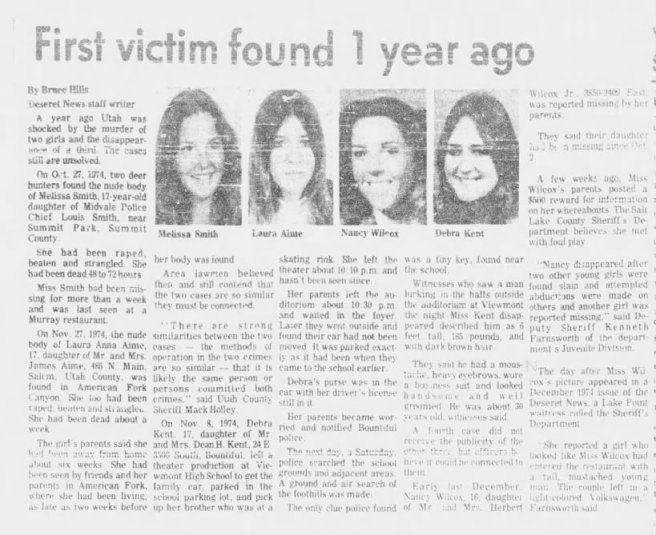
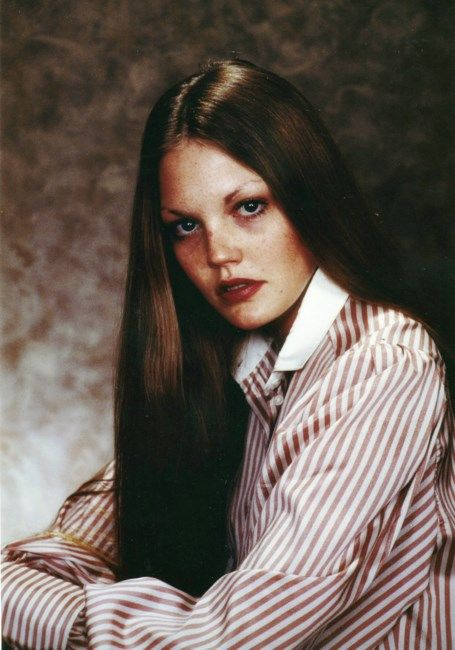
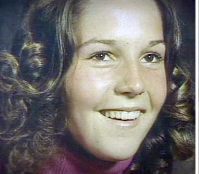
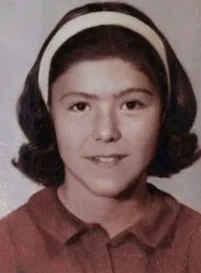
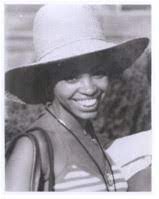
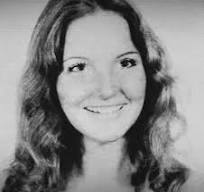
Melissa Smith.
Melissa Smith.
Smith.
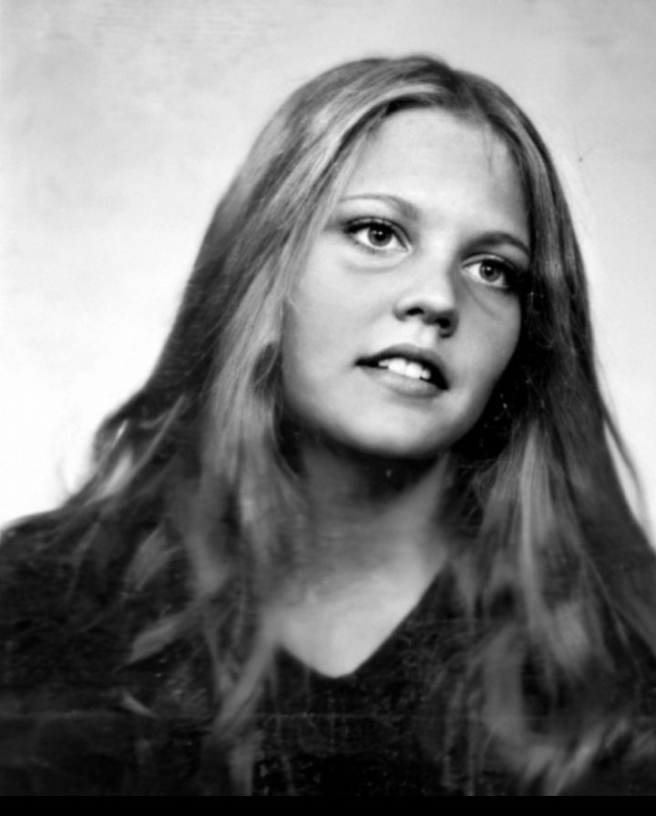
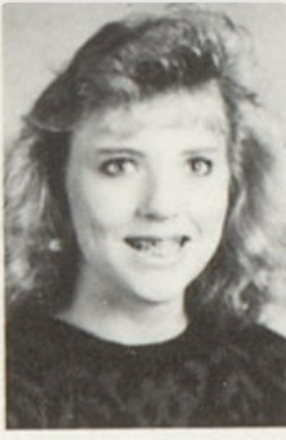
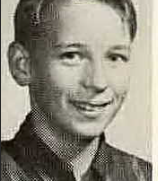
Melissa Smith’s sophomore year picture from the 1973 Hillcrest High School yearbook.
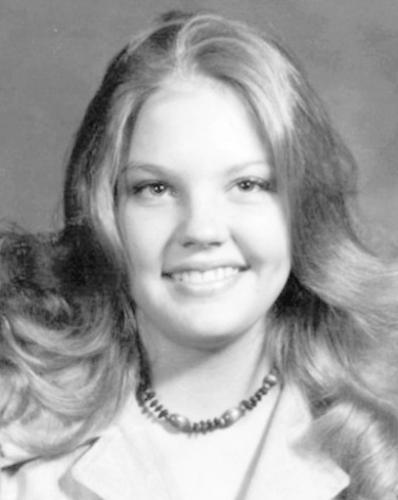
Melissa Smith’s junior year picture from the 1974 Hillcrest High School yearbook.
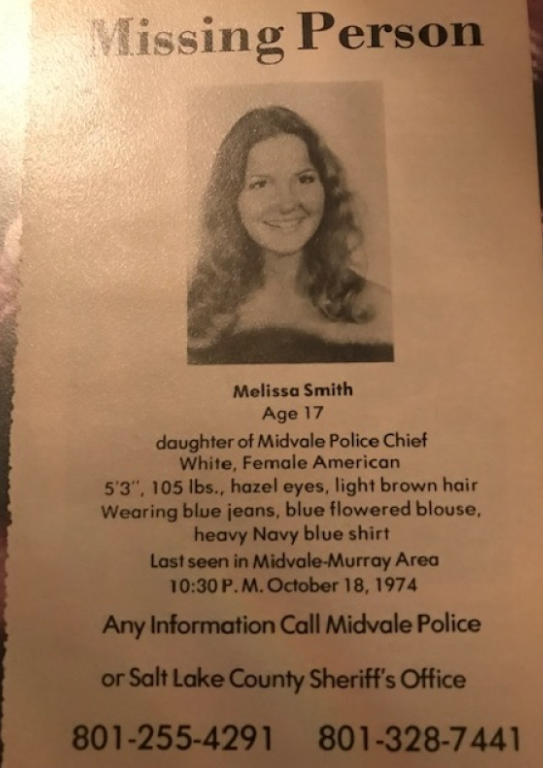
A missing persons poster for Melissa Smith.
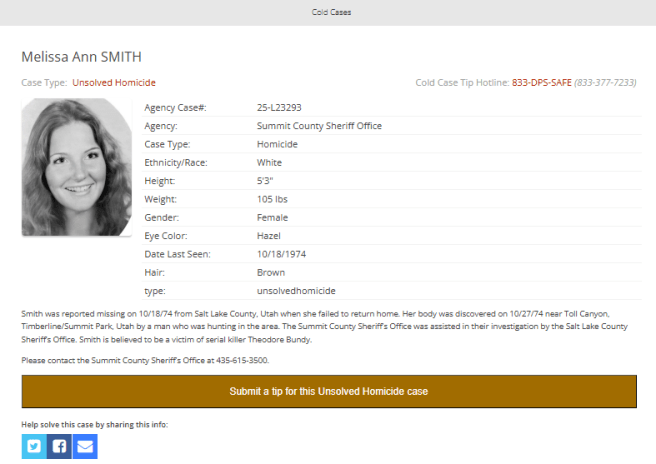
Melissa on the bci.utah.gov website.
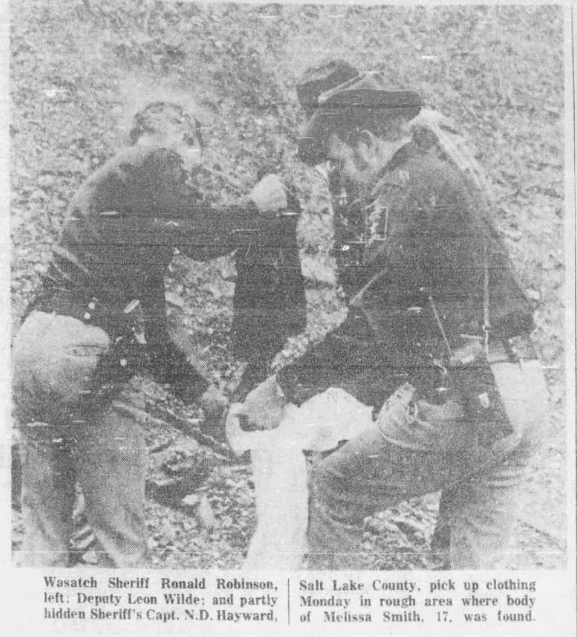
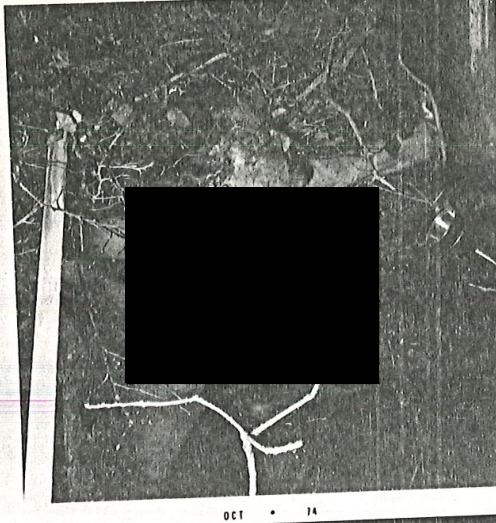
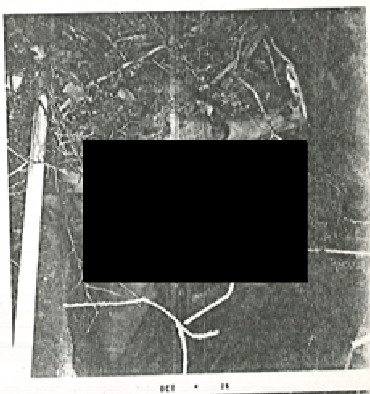
A picture from the crime scene related to the murder of Melissa Smith that was published in The Salt Lake Tribune on October 29, 1974.
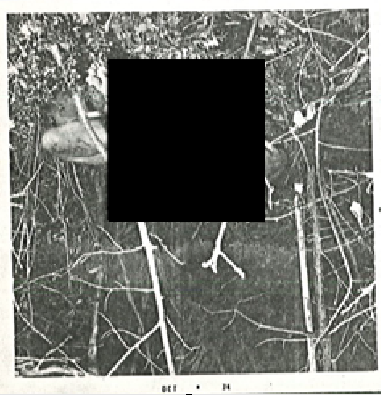
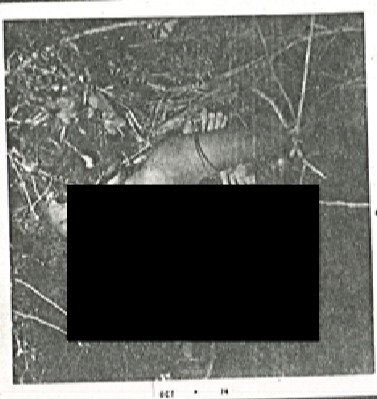
A picture from the discovery of Melissa Smith from her case file from the Midvale PD.
Another picture from the discovery of Melissa Smith from her case file from the Midvale PD.
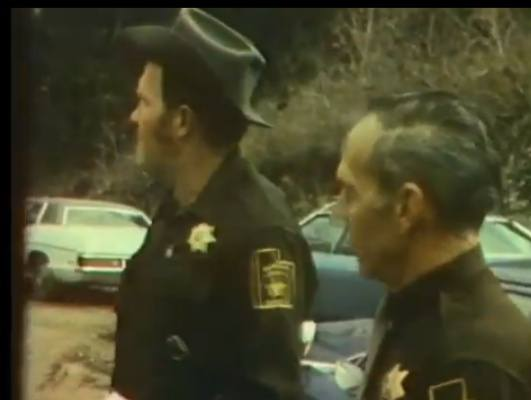
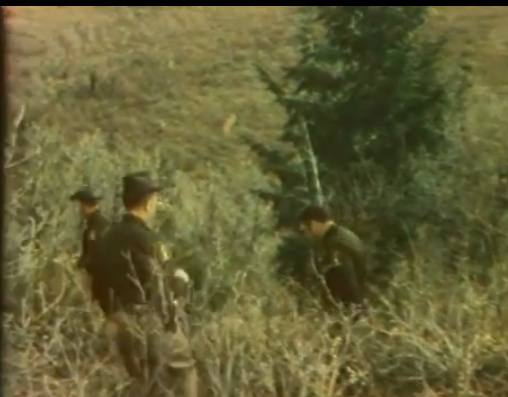
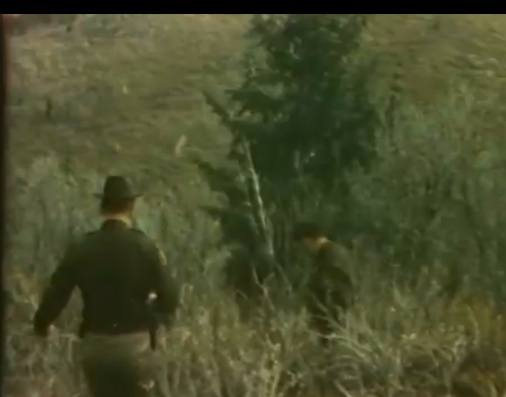
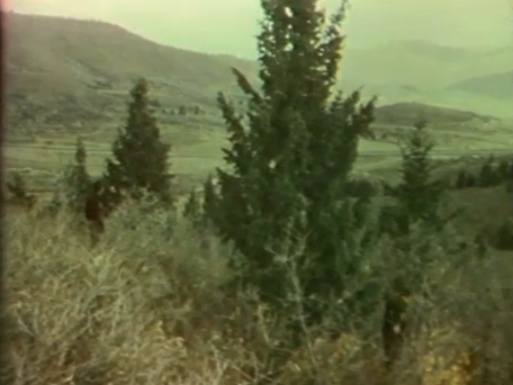
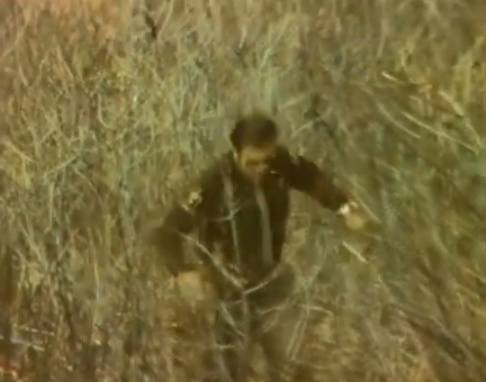
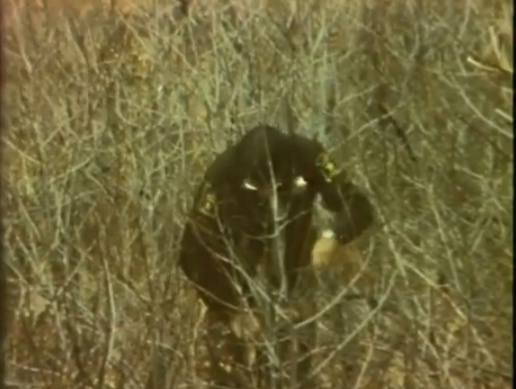
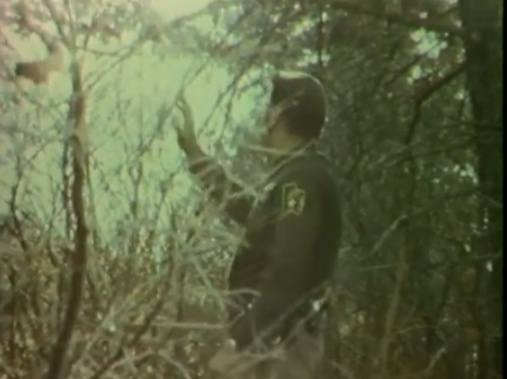
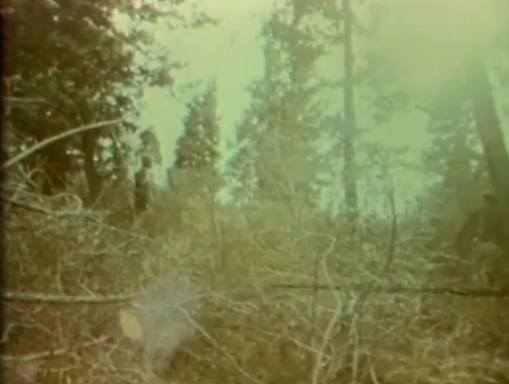
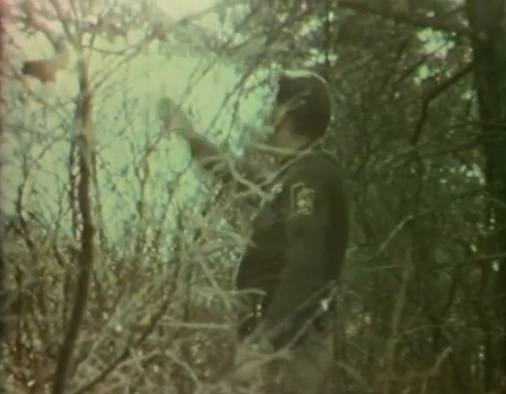
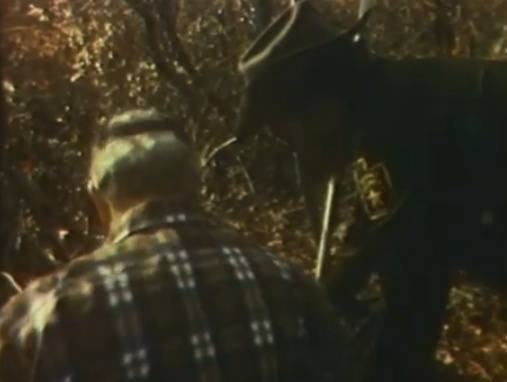
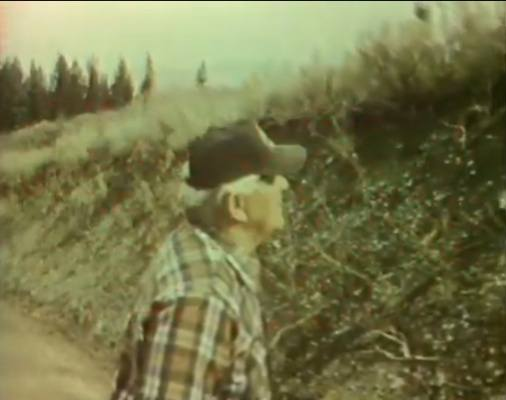
A screenshot from a video related to the discovery of the remains of Melissa Smith. Courtesy of Captain Borax.
Another screenshot from a video related to the discovery of the remains of Melissa Smith. Courtesy of Captain Borax.
A picture from Melissa Smith’s crime scene, courtesy of the series: ‘Hunting Ted Bundy.’
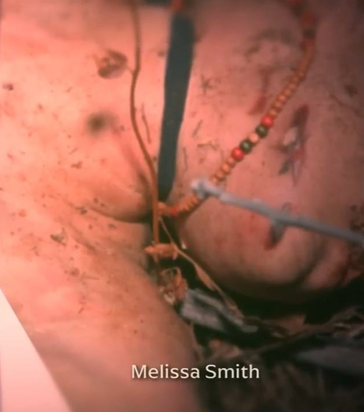
Another picture of Melissa Smith’s neck post-mortem, courtesy of the series: ‘Hunting Ted Bundy.’
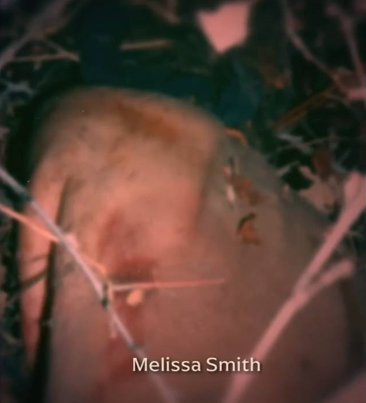
Another picture of the remains of Melissa Smith post-mortem, courtesy of the series: ‘Hunting Ted Bundy.’
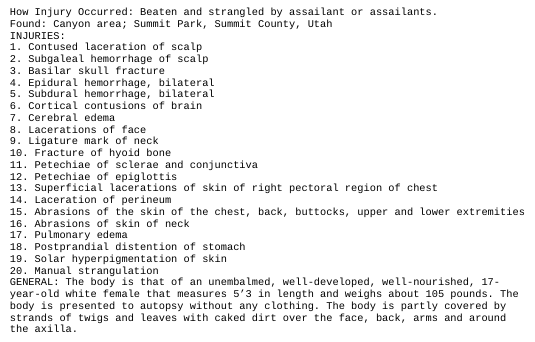
A list of Melissa Smith’s injuries.
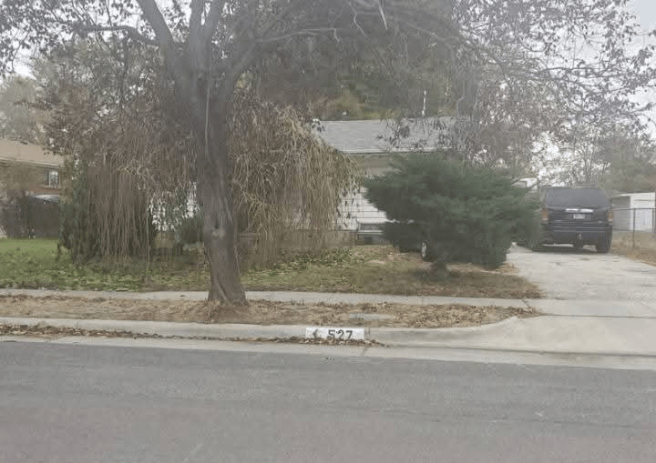
Melissa’s home where she lived at the time of her murder, located at 527 Fern Drive.in Midvale, Utah. Picture taken in November 2022.
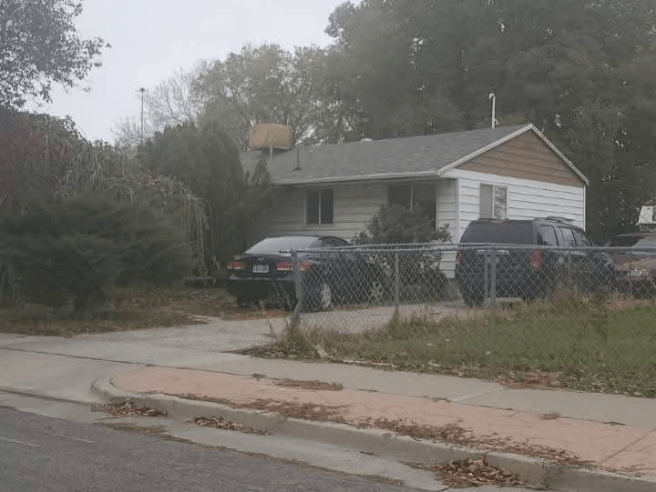
Another picture of Melissa’s childhood home locaterd in Midvale, Utah.
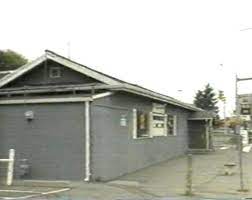
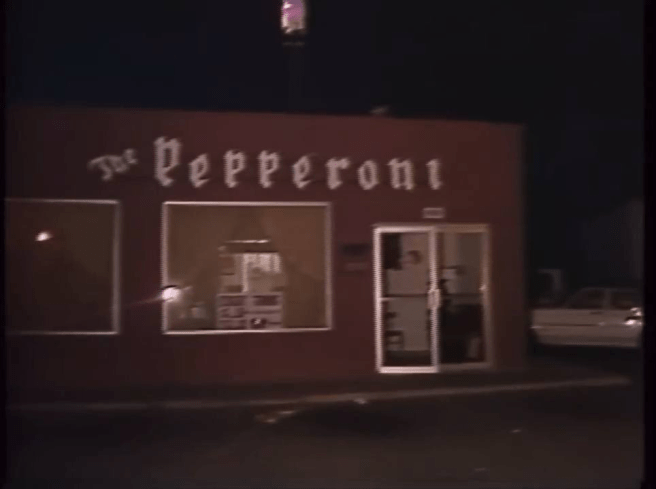
A screen grab of ‘The Pepperoni’ taken around the time Melissa disappeared. Courtesy of Captain Borax.
fern
A screen grab of the sign for ‘The Pepperoni’ taken around the time Melissa disappeared. Courtesy of Captain Borax.
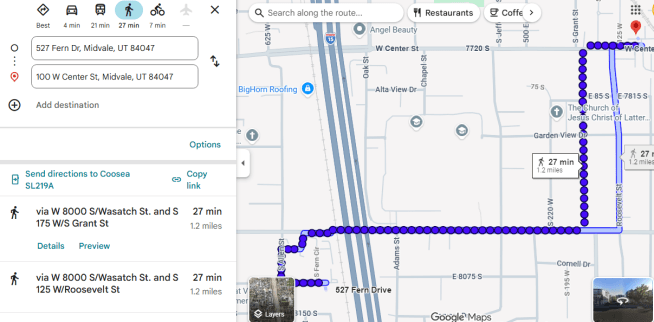
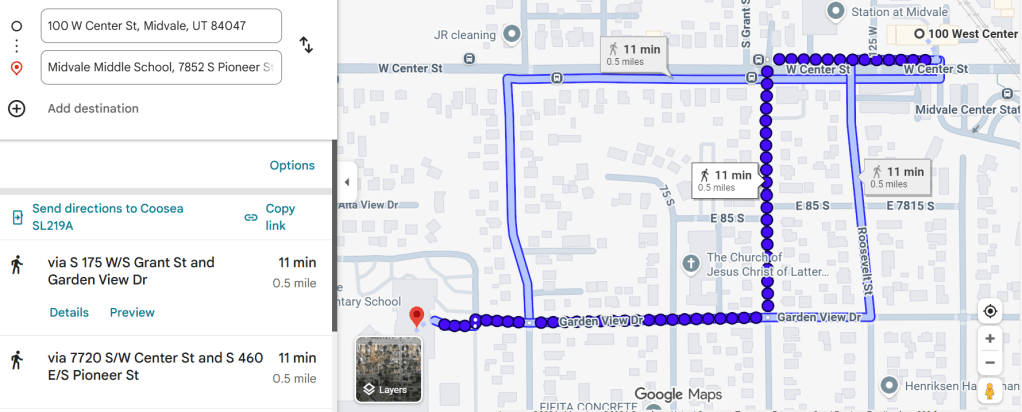
A route from MEelissa’s house to The Pepperoni.
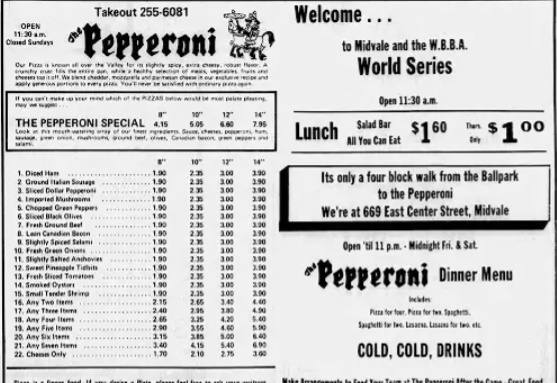
A menu for The Pepperoni Restaurant, where Melissa Smith was last seen in October 1974. Courtesy of Captain Borax.
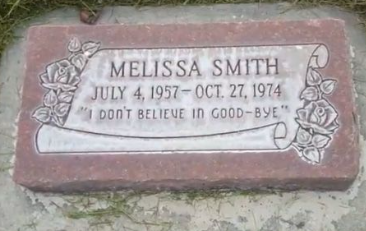
Melissa Smith’s grave stone; her death date is actually the day her remains were discovered.
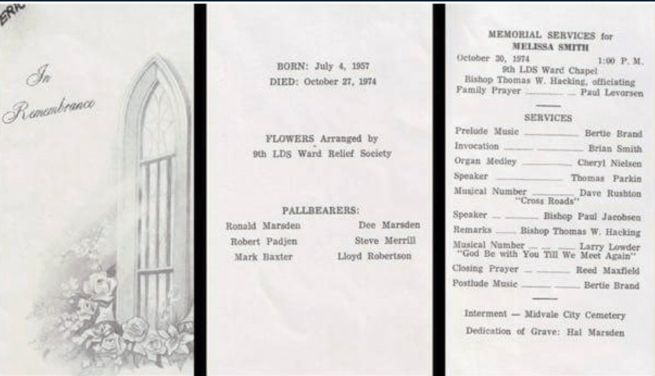
Melissa Smith’s memorial card from her funeral service.
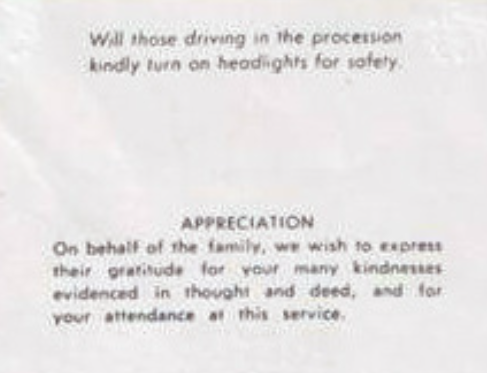
The back page of Melissa Smith’s memorial card from her funeral service.
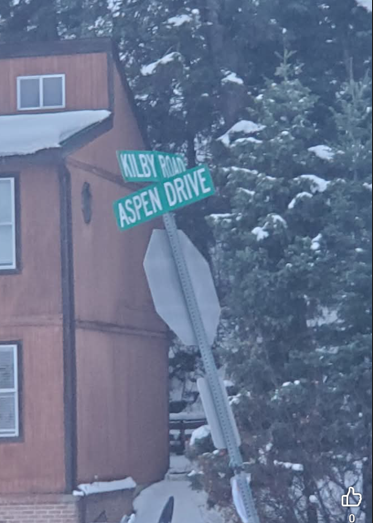
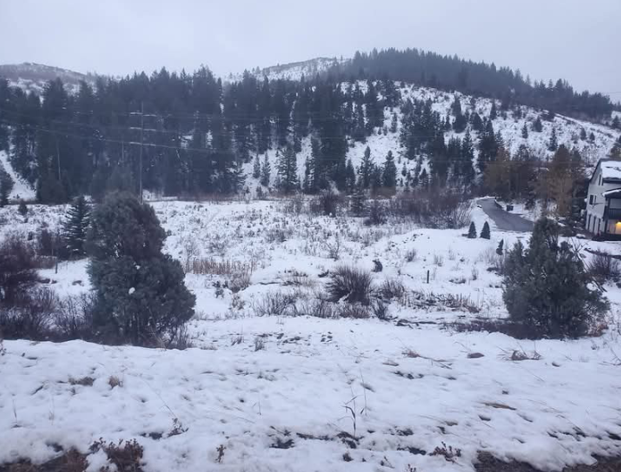
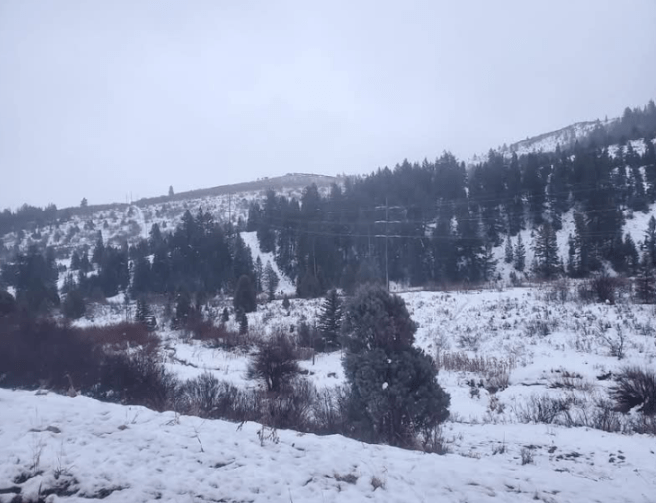
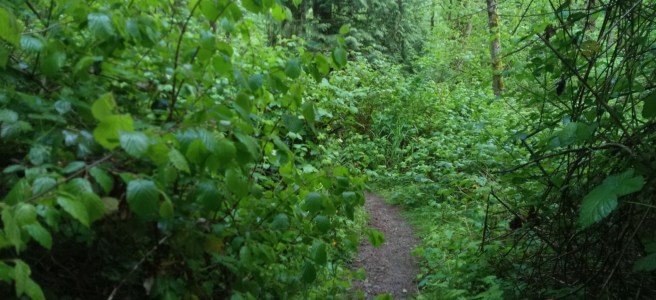
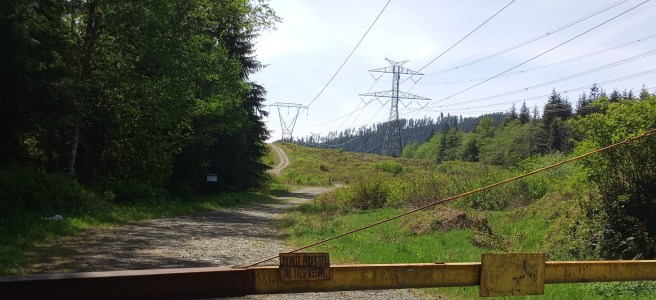
A picture of the road signed near to where the remains of Melissa Smith were found. Photo taken in March 2025.
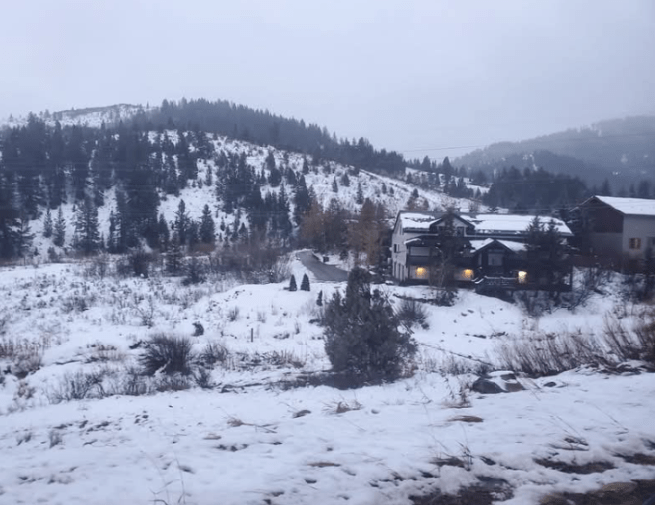
A picture of where the remains of Melissa Smith were found. Photo taken in March 2025.
A second shot of where the remains of Melissa Smith were found. Picture taken in March 2025.
Another shot of where the remains of Melissa Smith were found. Picture taken in March 2025.
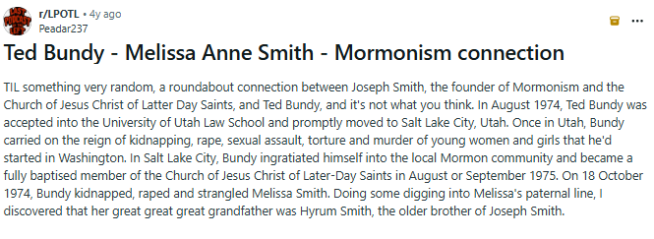
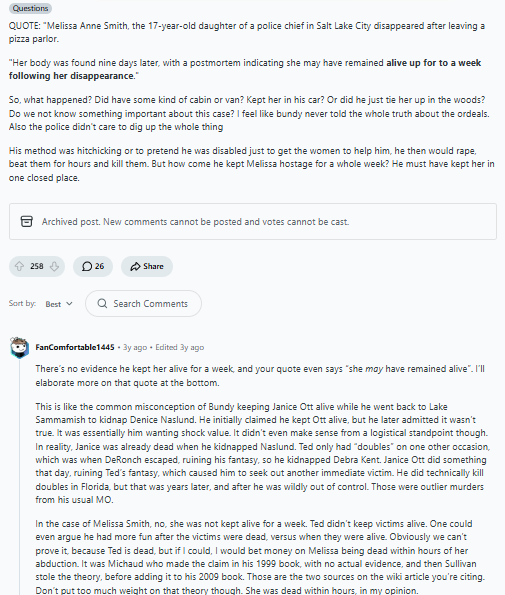
A Reddit post about Melissa Smith and Ted Bundy’s connection to Mormonism made by user ‘Peadar237.’
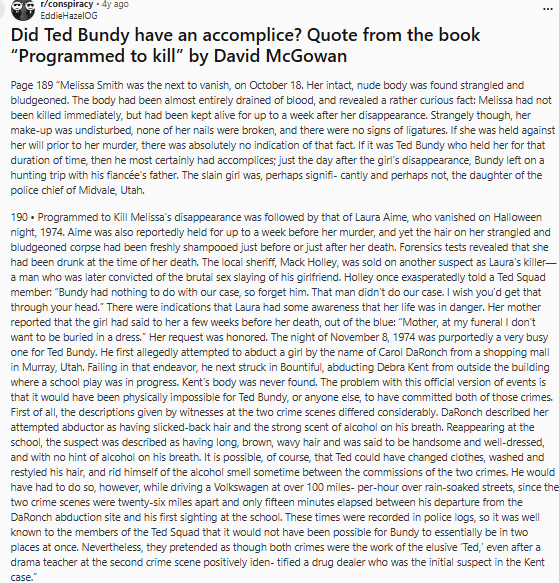
A Reddit post about Melissa Smith and Ted Bundy’s connection to Mormonism made by user ‘EddieHazelOG.’
Some comments on a Reddit post about Melissa Smith and Ted Bundy made by users ‘FanComfortable1445 and InternationalPut3250.’
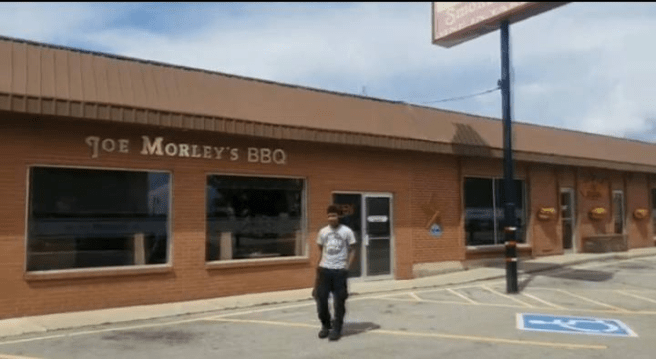
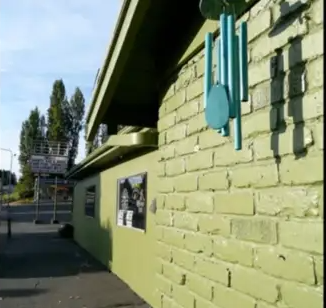
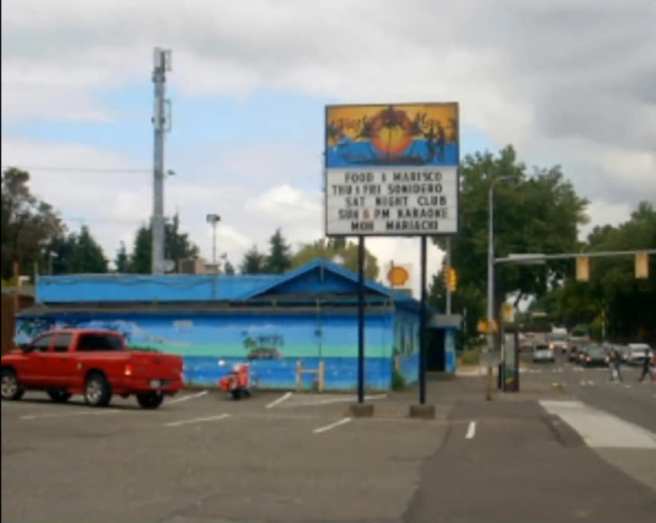
A screenshot of what The Pepperoni Restaurant looks like today, courtesy of Captain Borax.
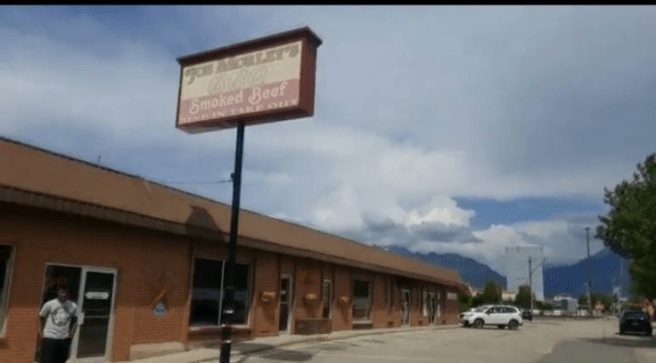
Another screenshot of what The Pepperoni looks like today, courtesy of Captain Borax.
An aerial image shows Melissa’s most likely route the night she was last seen alive. Photo courtesy of OddStops.
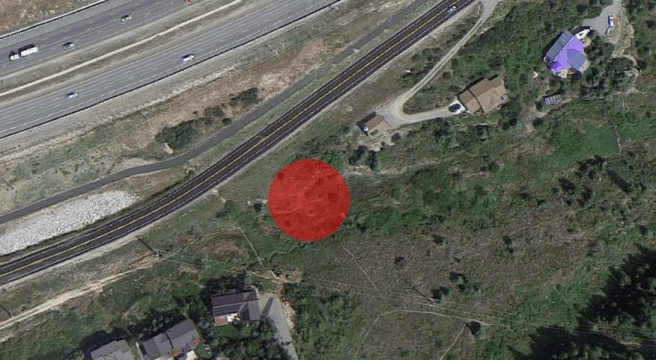
The red circle highlights the general area where Smith’s remains were discovered. Photo courtesy of OddStops.
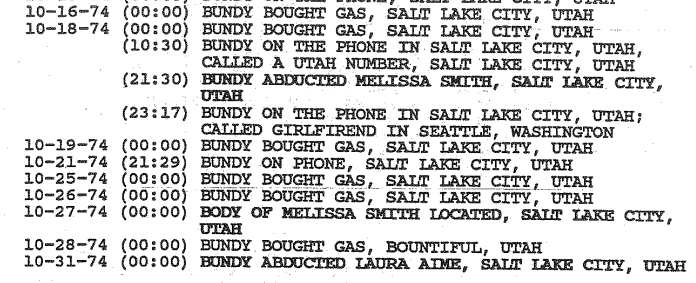
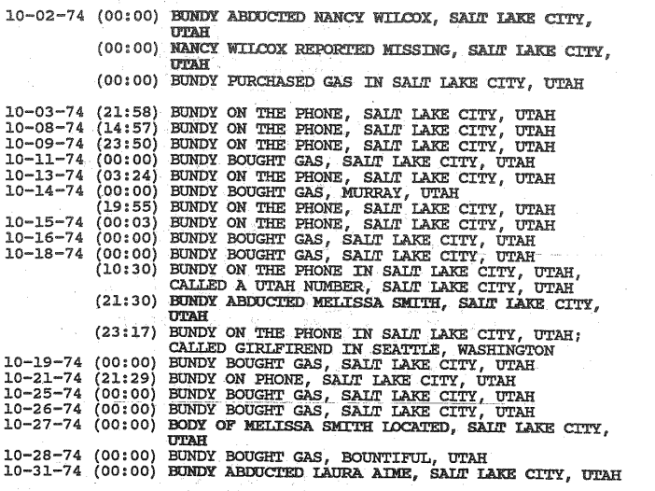
Bundy’s whereabouts in October 1974 according to the 1992 FBI TB Multiagency Team Report.
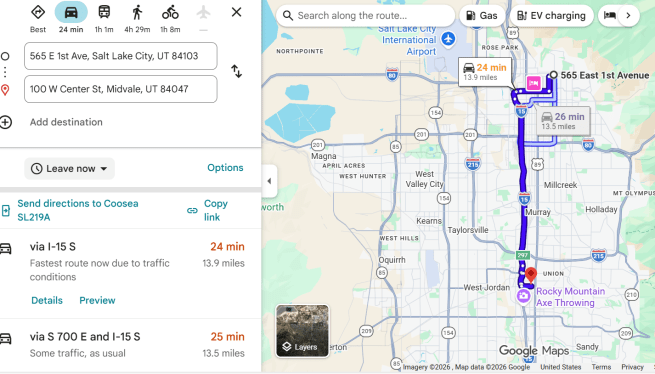
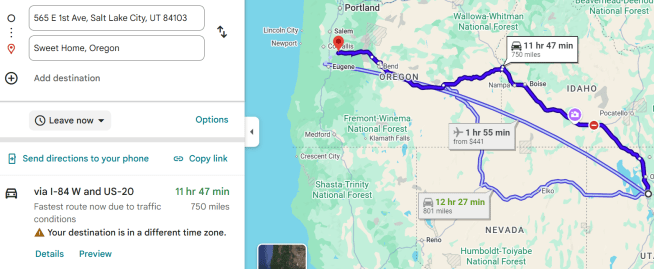
A Google Maps route from Bundy’s residence in SLC to The Pepperoni where Melissa Smith was last seen alive.
On the afternoon of October 21, 1974 17:45: Talked to LaVerne J. She states that she heard a girl scream between 22:00
and 23:00 hours on 10/18. The scream came from north of the junior high. At this
time Mrs. J was working in the back yard, for her working in the yard at night is
not uncommon because her husband is one of our dispatchers and this gives her
something to do. Report taken by Midvale Police Officer Officer Elsby.
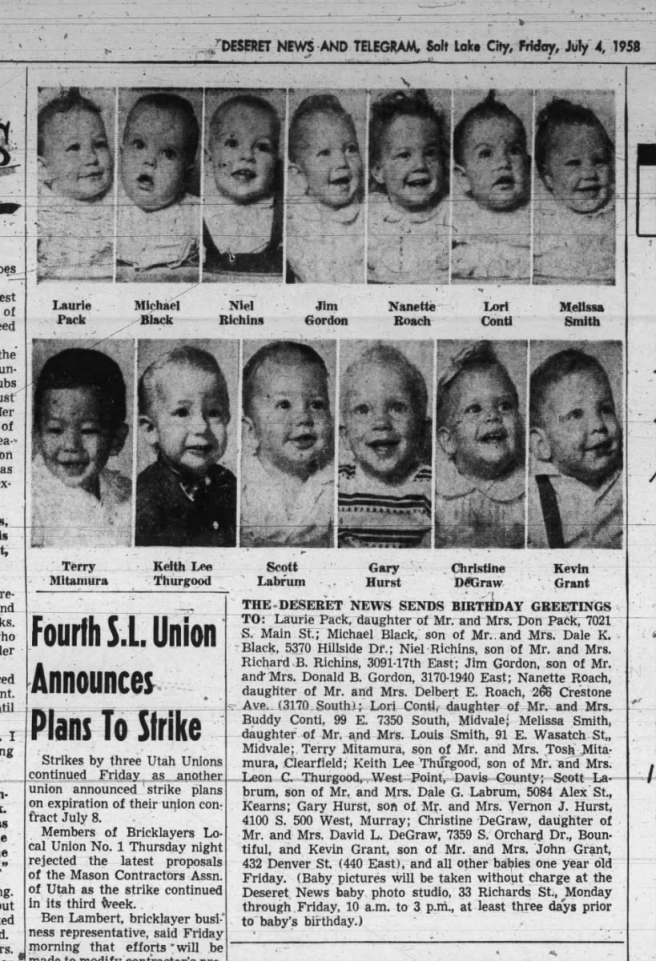
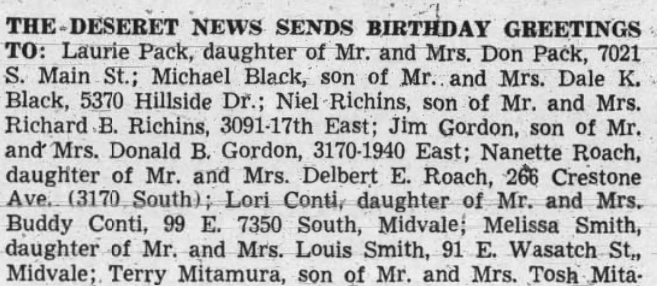
Melissa in a birthday announcement from an issue of The Deseret News that was published on July 4, 1958.
Melissa in a birthday announcement from an issue The Deseret News that was published on July 4, 1958.
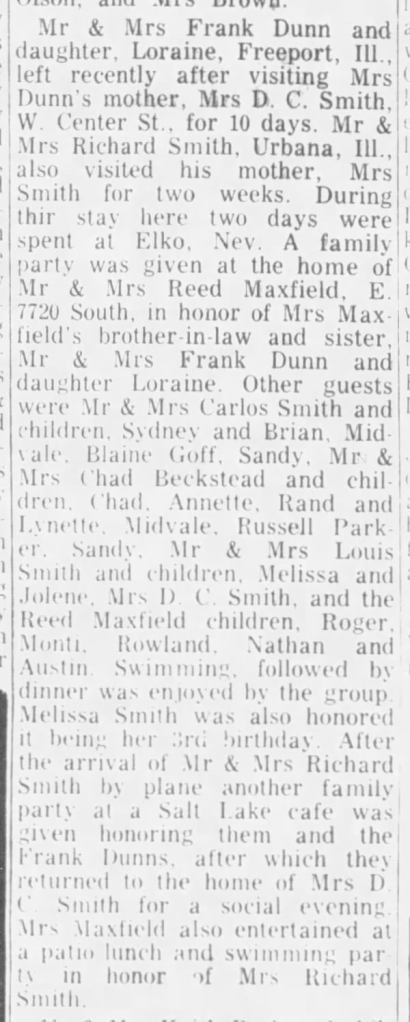
The Smith’s are mentioned in an article published in The Midvale Sentinel on July 29, 1960.
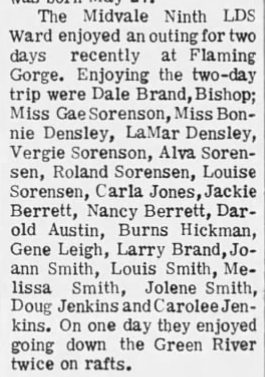
The Smith’s are mentioned in an article published in The Jordan Valley Sentinel on August 5, 1971.
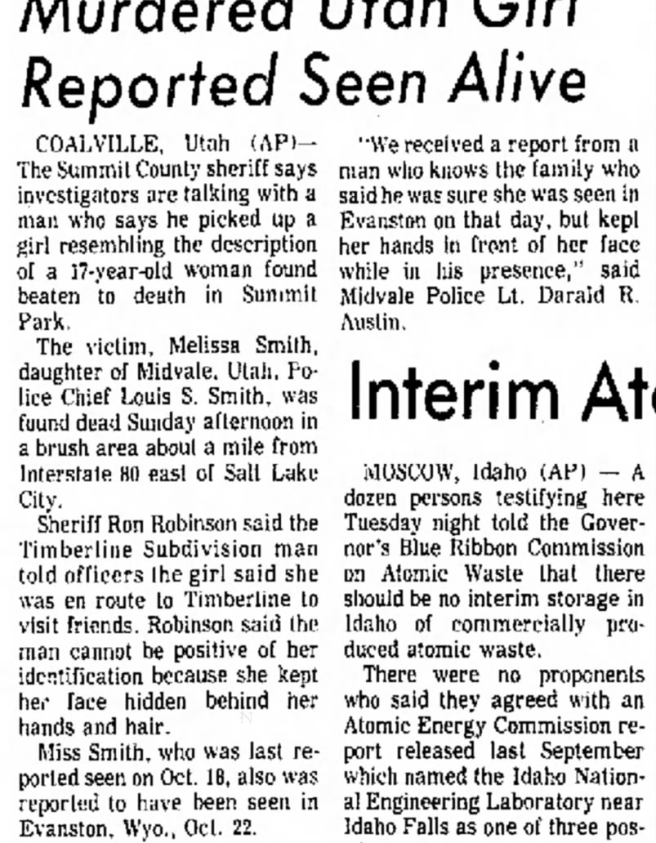
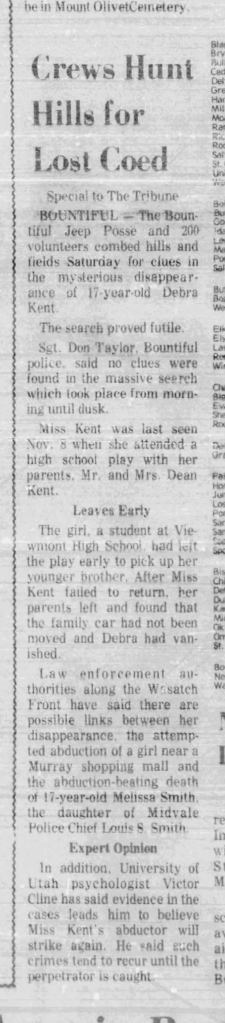
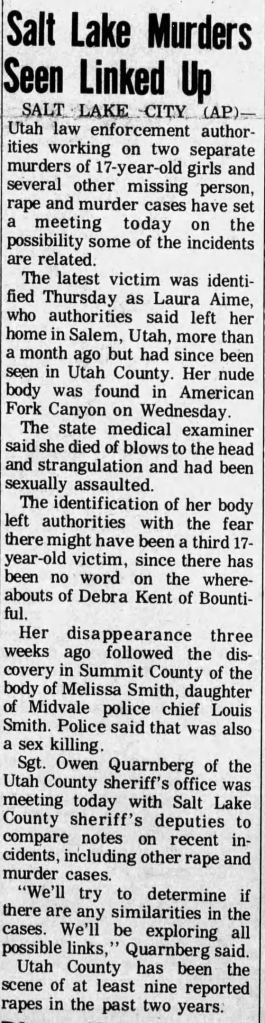
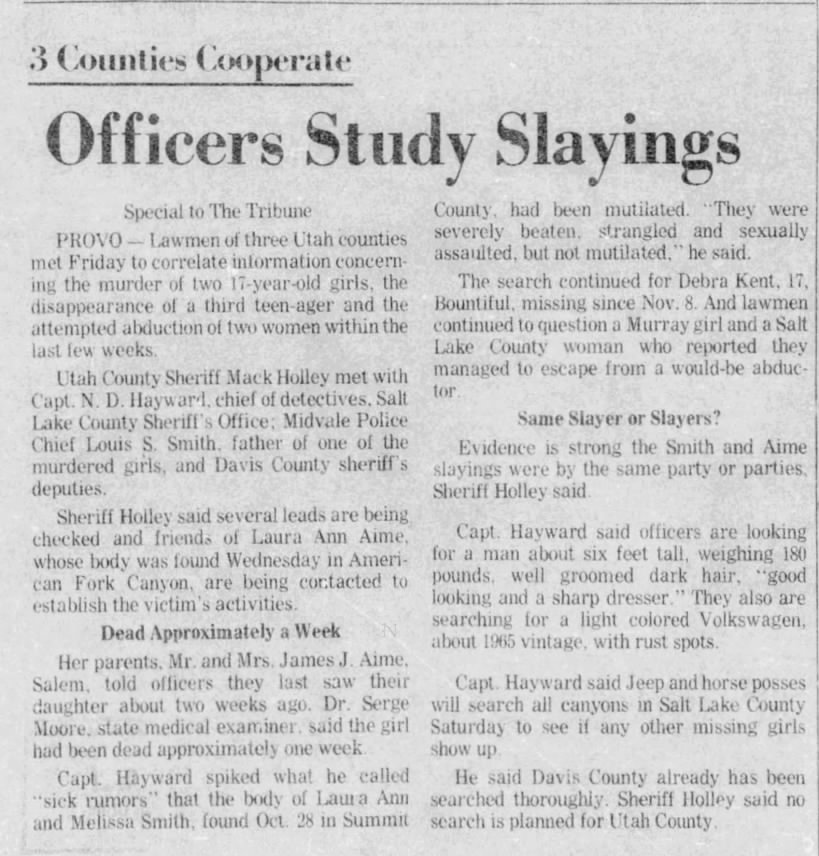
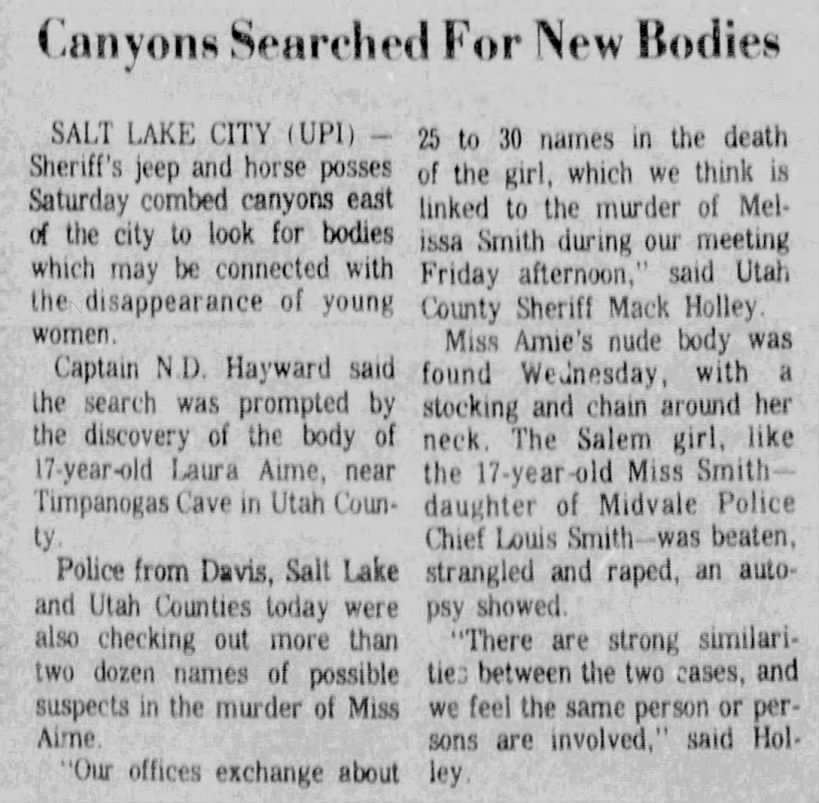
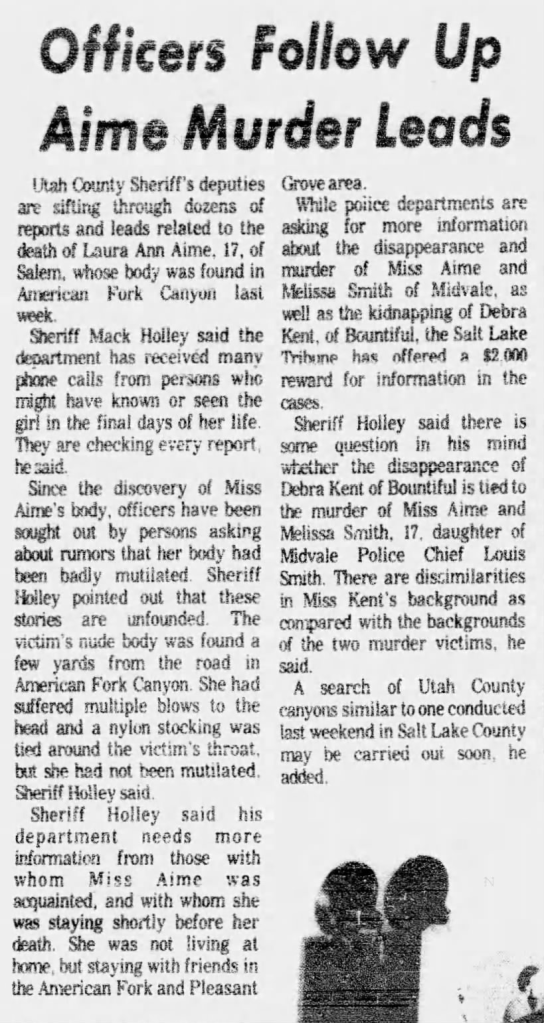
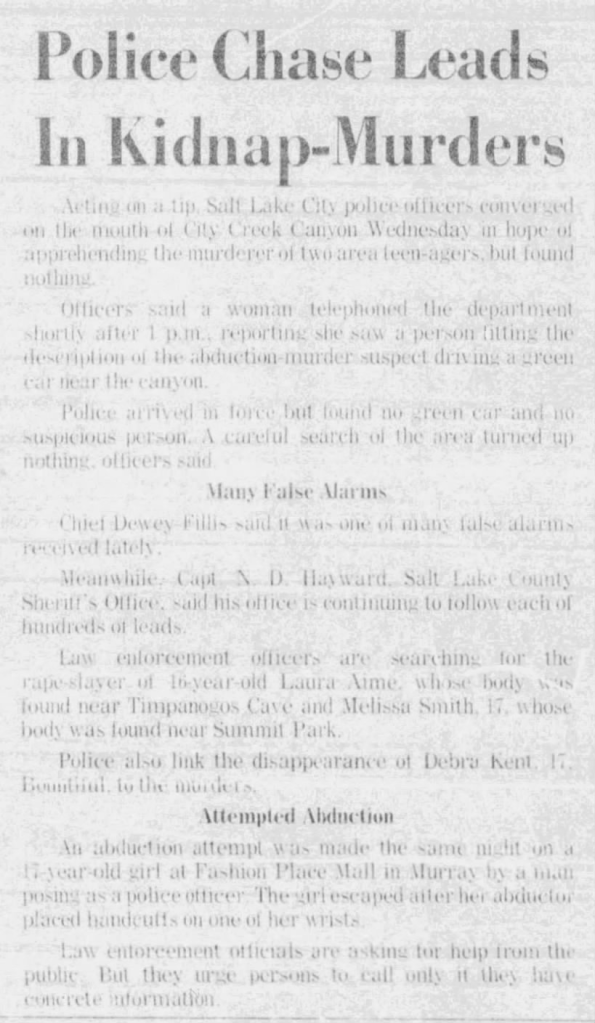
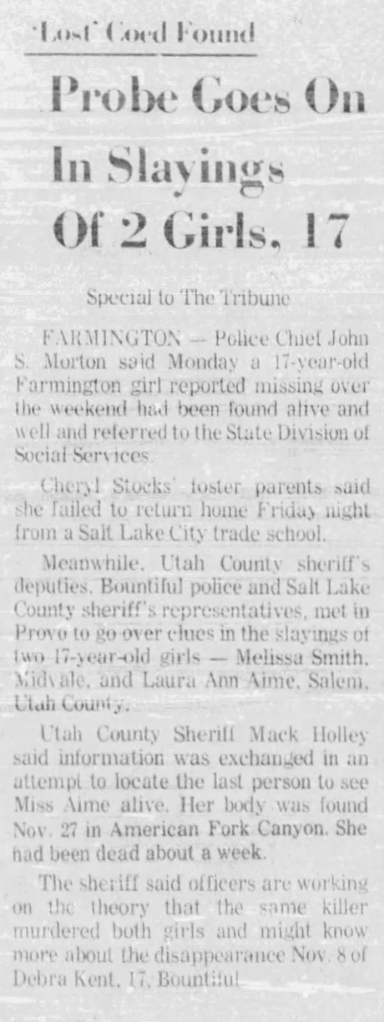
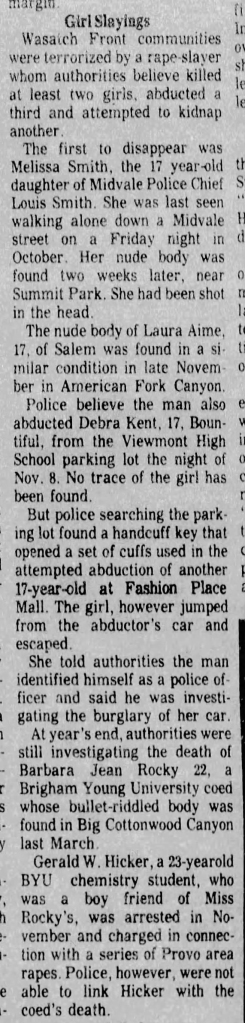
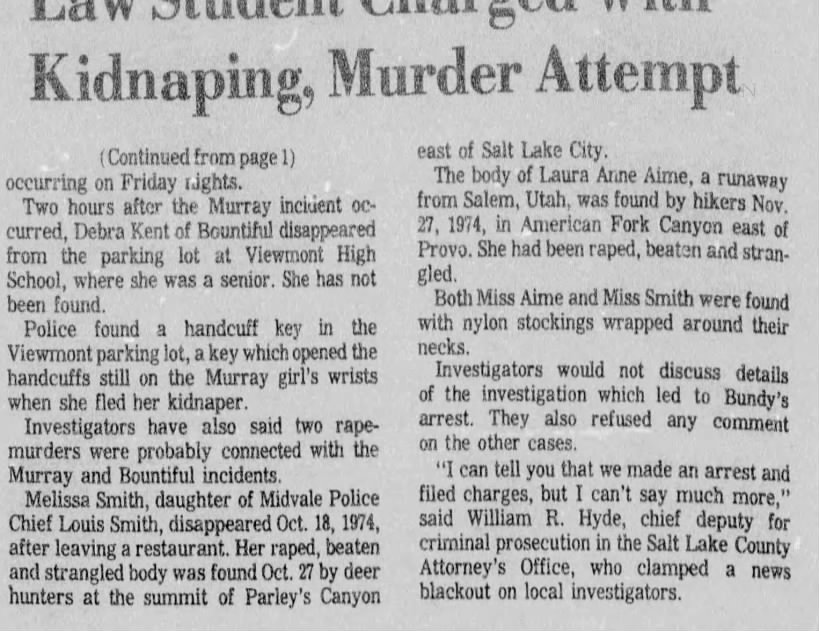
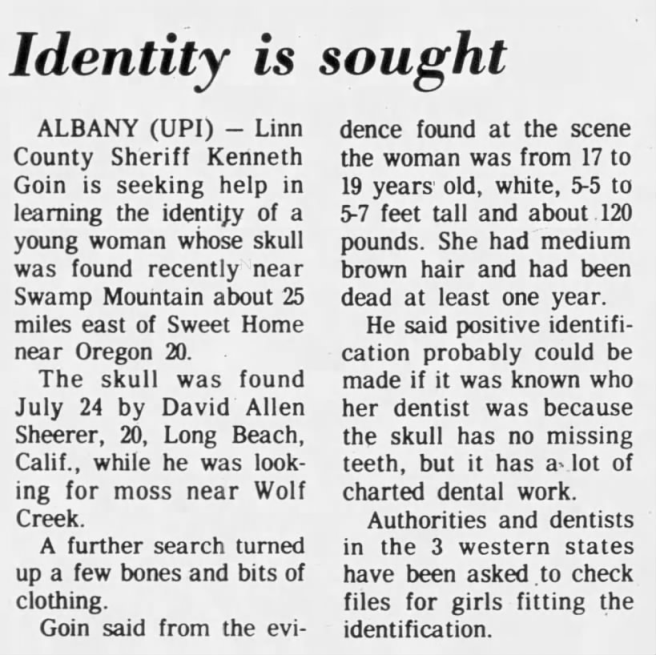
An article about the disappearance of Melissa Smith that was published in The Salt Lake Tribune on October 21, 1974.
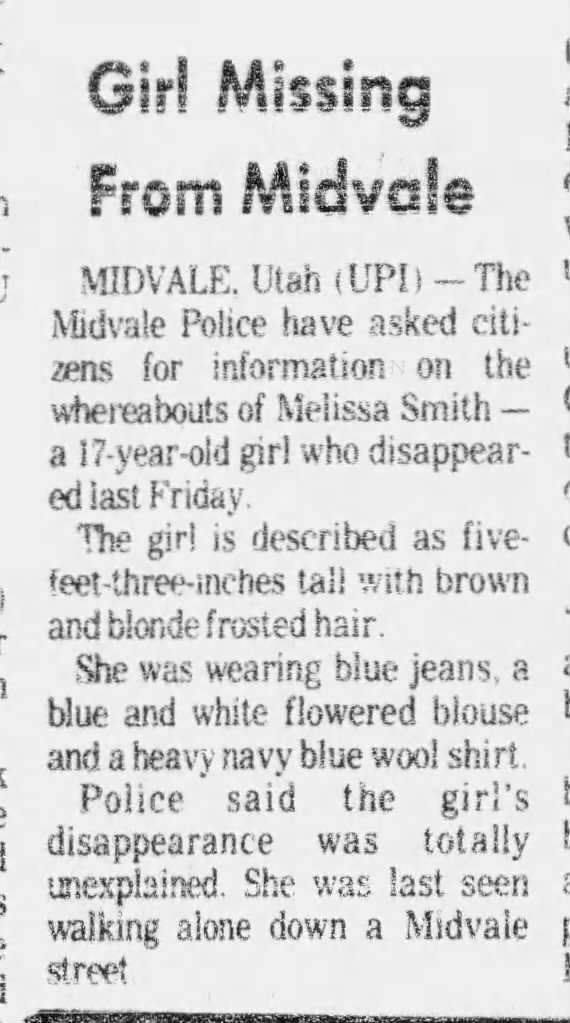
An article about the disappearance of Melissa Smith that was published in The Daily Herald on October 21, 1974.
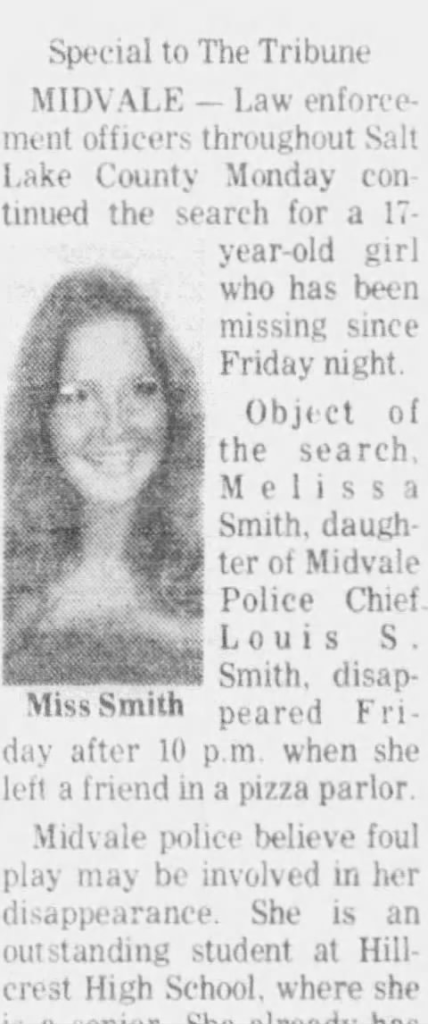
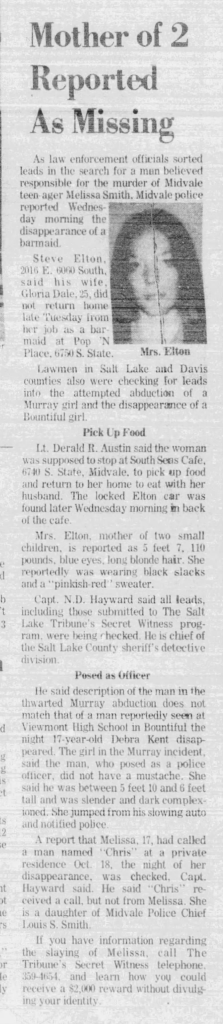
An article about the disappearance of Melissa Smith that was published in The Salt Lake Tribune on October 22, 1974.
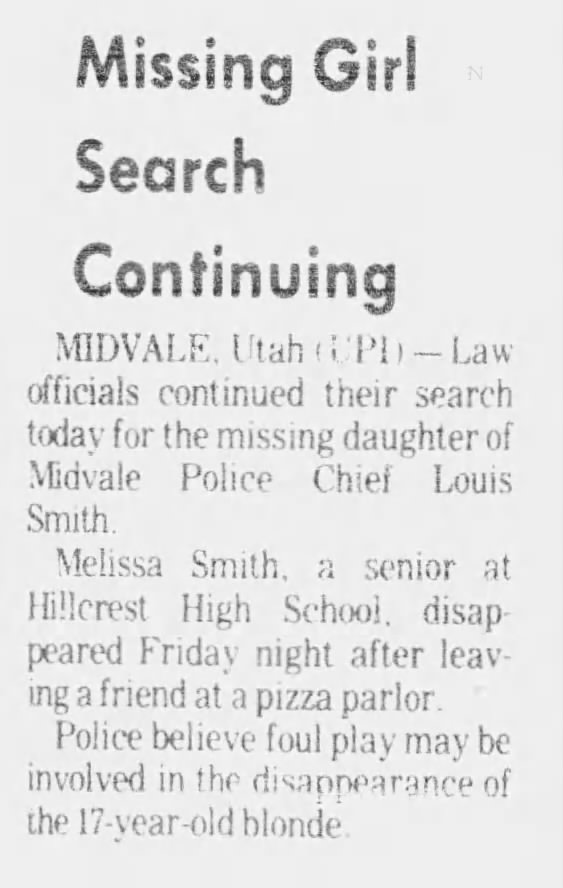
An article about the search for Melissa Smith that was published in The Daily Herald on October 23, 1974.
An article about the disappearance of Melissa Smith that was published in The Jordan Valley Sentinel on October 24, 1974.
An article about the disappearance of Melissa Smith that was published in The Deseret News on October 24, 1974.
An article about a reward related to the disappearance of Melissa Smith that was published in The Herald-Journal on October 25, 1974.
An article about the disappearance of Melissa Smith that was published in The Salt Lake Tribune on October 25, 1974.
An article about the disappearance of Melissa Smith that was published in The Daily Herald on October 27, 1974.
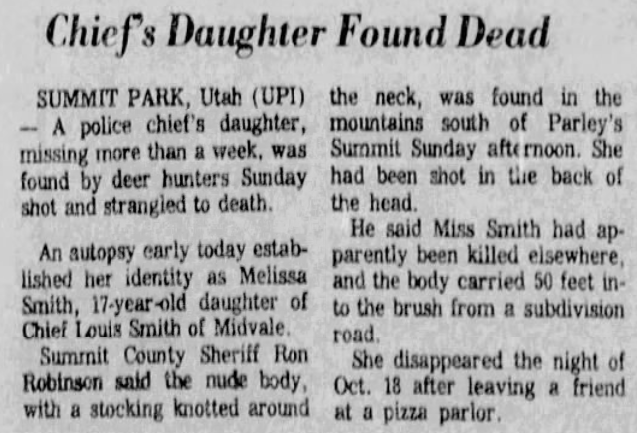
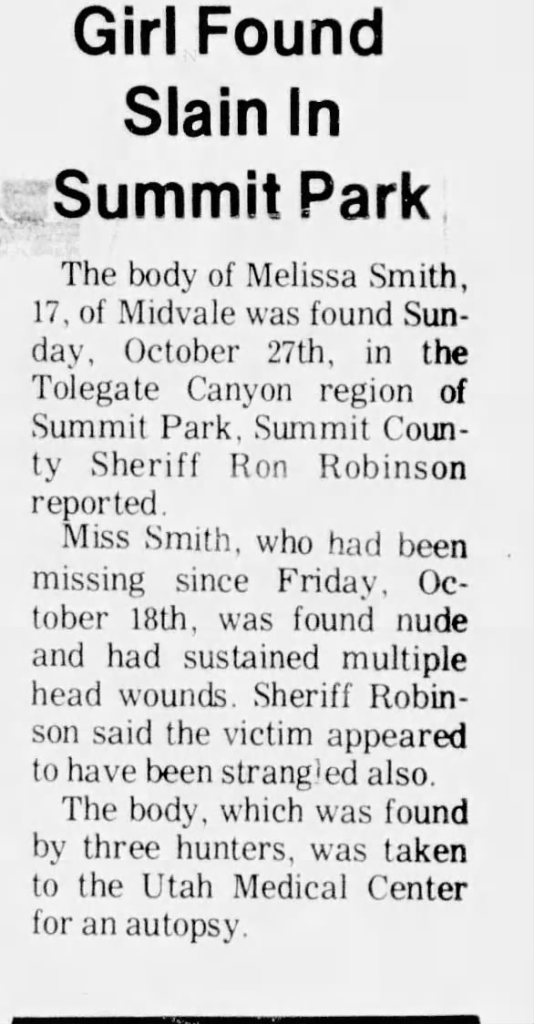
An article about the discovery of the remains of Melissa Smith that was published in The Herald-Journal on October 28, 1974.
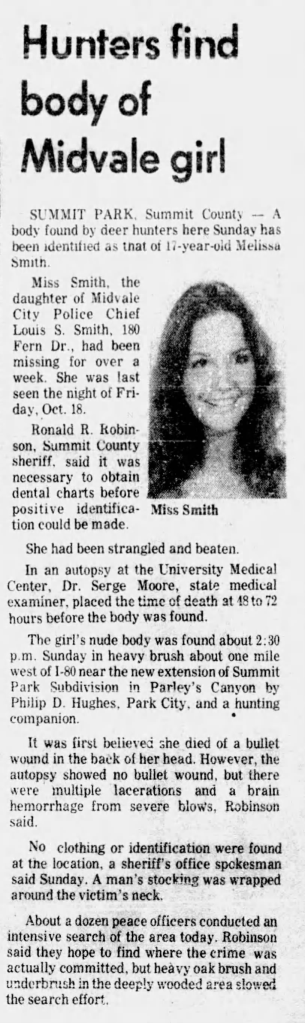
An article about the discovery of the remains of Melissa Smith by deer hunters that was published in The Herald-Journal on October 28, 1974.
An article about the murder of Melissa Smith that was published in The Ogden Standard-Examiner on October 22, 1974.
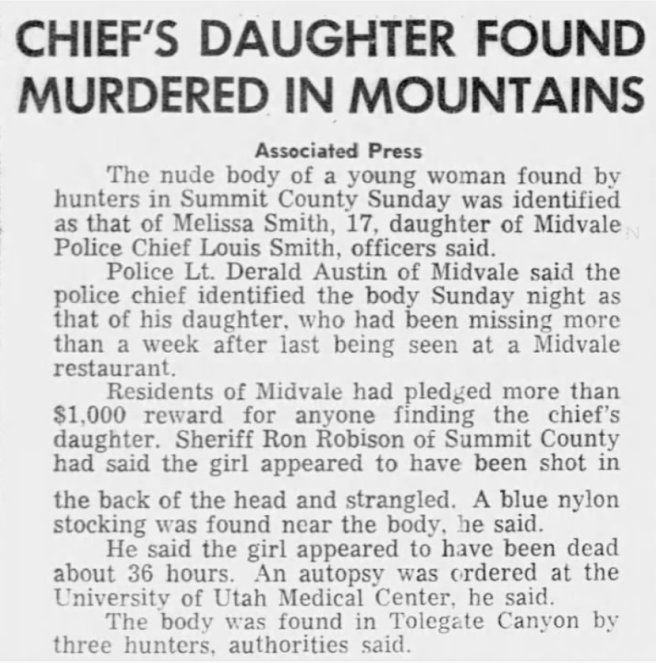
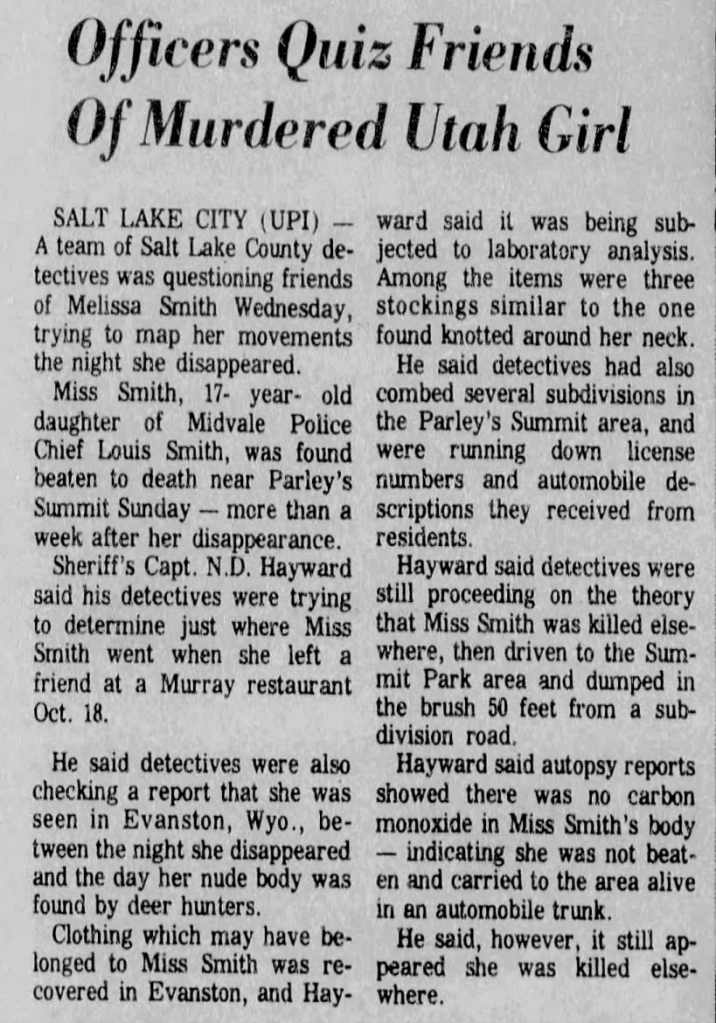
An article about the murder of Melissa Smith that was published in The Deseret News on October 29, 1974.
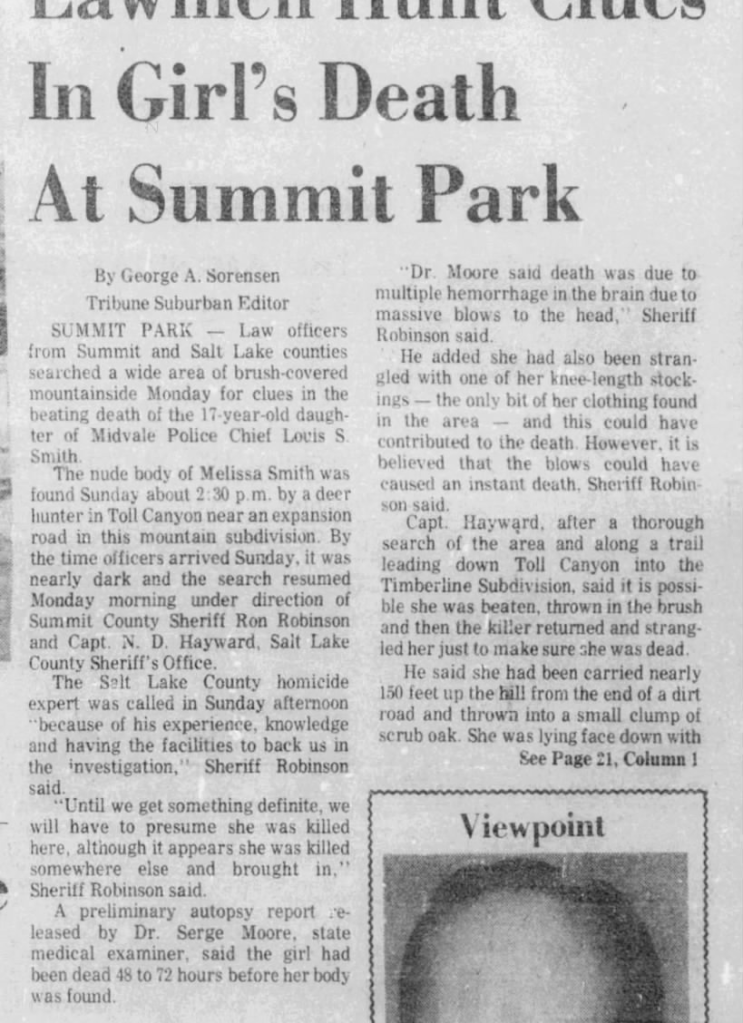
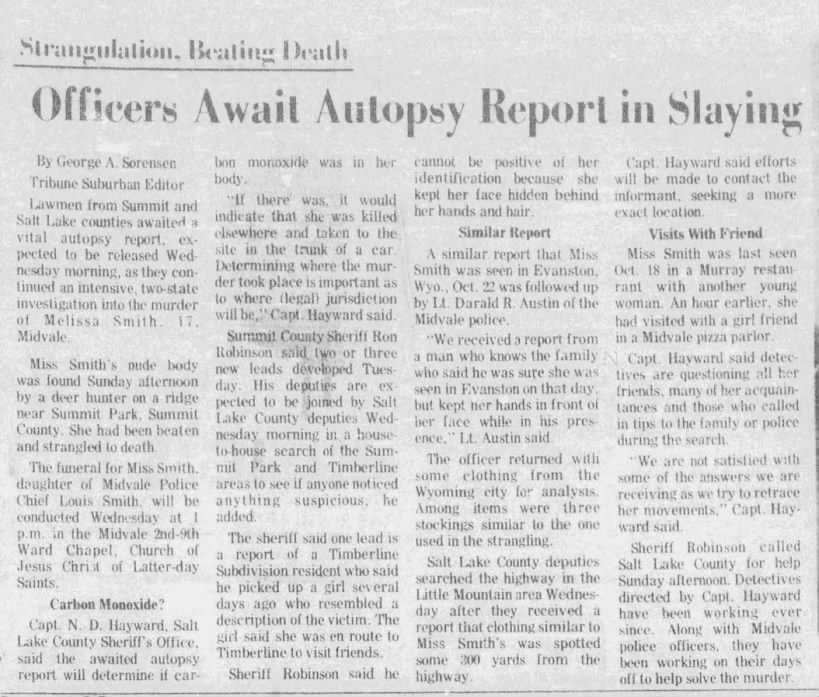
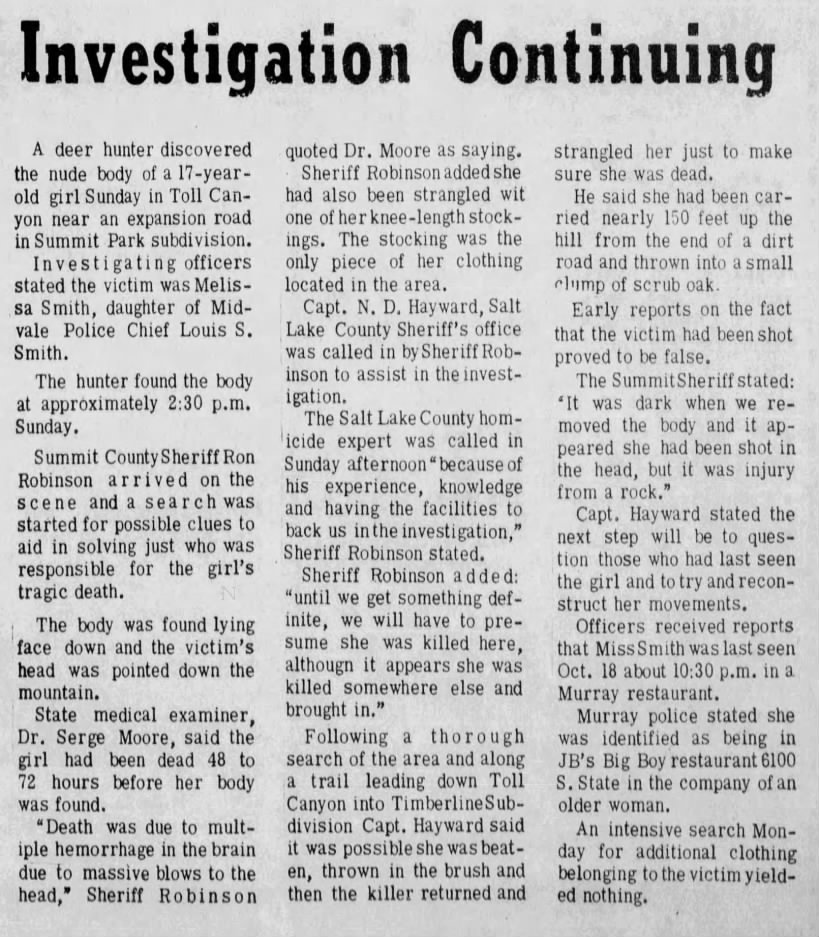
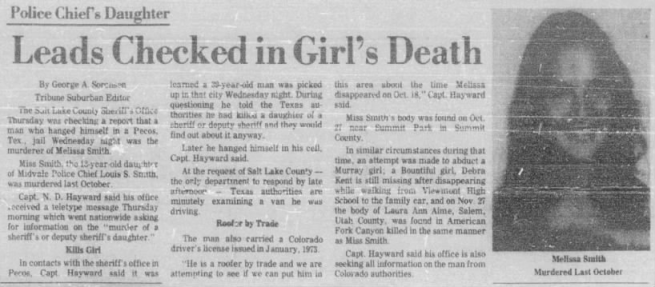
Part one of an article about the murder of Melissa Smith that was published in The Salt Lake Tribune on October 29, 1974.
Part two of an article about the murder of Melissa Smith that was published in The Salt Lake Tribune on October 29, 1974.
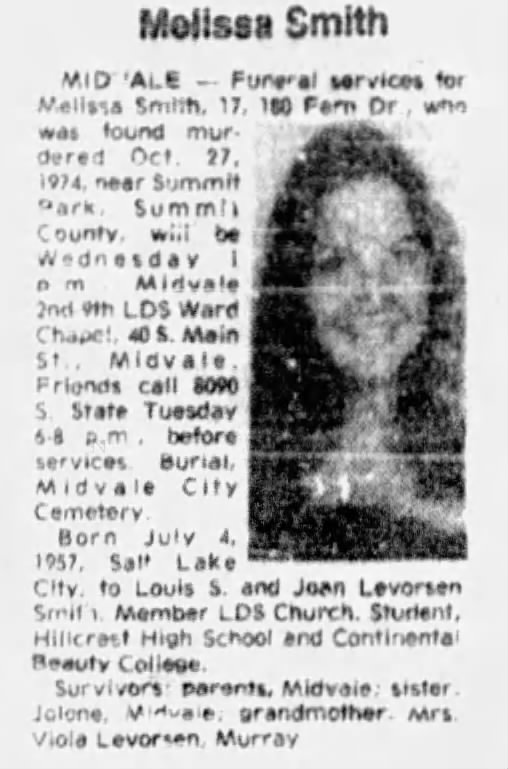
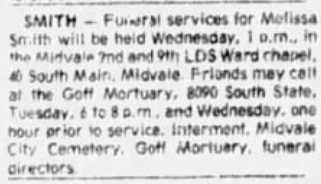
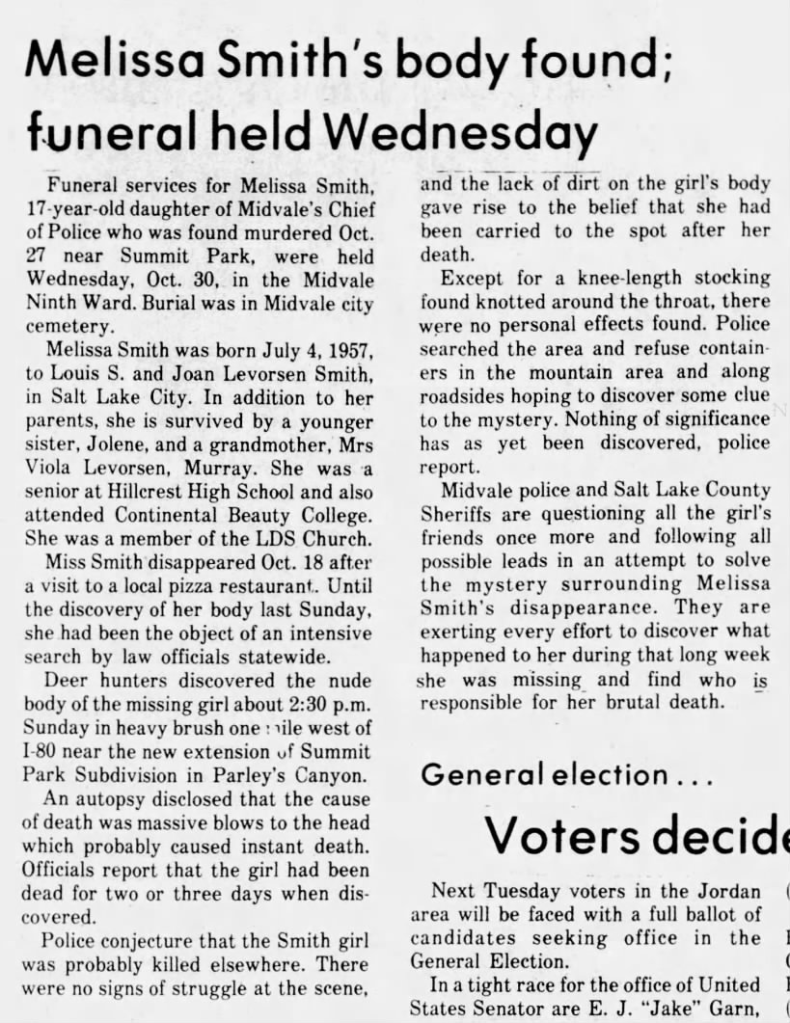
One of the obituaries for Melissa Smith that was published in The Daily Herald on October 29, 1974.
Another obituary for Melissa Smith that was published in The Deseret News on October 29, 1974.
A short article about the murder of Melissa Smith that was published in The Park City Coalition on October 30, 1974.
An article about the murder of Melissa Smith that was published in The Salt Lake Tribune on October 30, 1974.
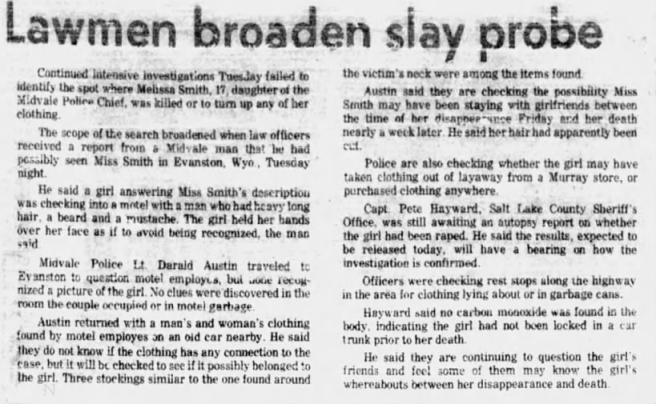
An article about the investigation of the murder of Melissa Smith that was published in The Deseret News on October 30, 1974.
An article about Melissa Smith’s murder investigation that was published in The Idaho State Journal on October 30, 1974.
An article about Melissa Smith’s murder investigation that was published in The Herald-Journal on October 31, 1974.
An article about Melissa Smith’s murder investigation that was published in The Summit County Bee on October 31, 1974.
An article the murder of Melissa Smith that was published in The Jordan Valley Sentinel on October 31, 1974.
An article the murder of Melissa Smith that was published in The Salt Lake Tribune on October 31, 1974.
An article the murder of Melissa Smith that was published in The Deseret News on November 1, 1974.
An article the murder of Melissa Smith that was published in The Herald-Journal on November 5, 1974.
An article the murder of Melissa Smith that was published in The Salt Lake Tribune on November 5, 1974.
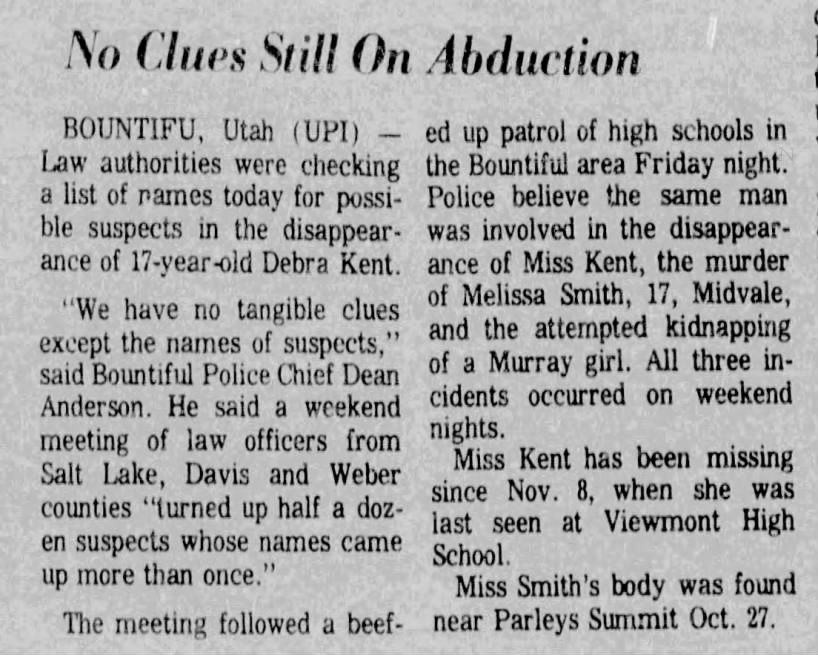
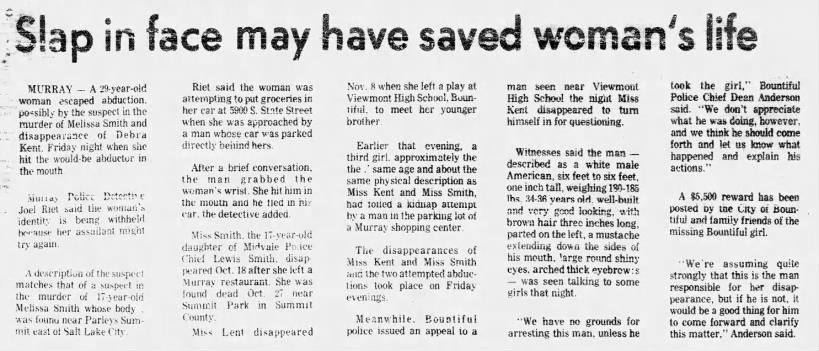
An article the murder of Melissa Smith hat also mentions Debra Kent that was published in The Ogden Standard-Examiner on November 12, 1974.
An article the disappearance of Deb Kent and the murder of Melissa Smith that was published in The Herald-Journal on November 12, 1974.
An article about the disappearance of Deb Kent that mentions Melissa Smith that was published in The Herald-Journal on November 13, 1974.
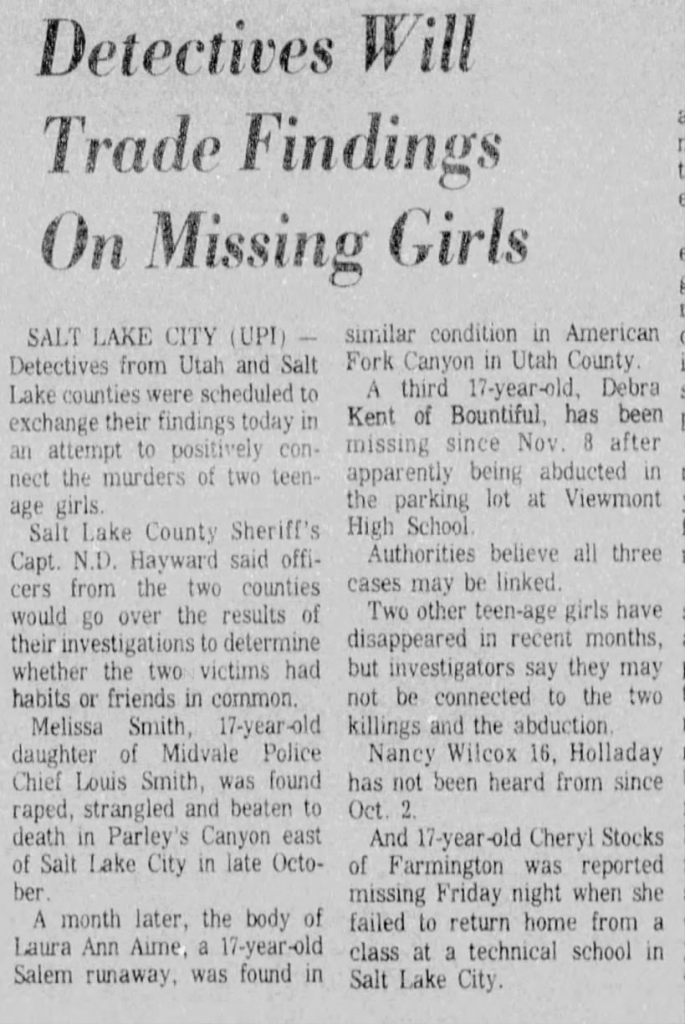
An article about the recent pattern of abductions in SLC that mentions Melissa Smith that was published in The Ogden Standard-Examiner on November 13, 1974.

An article about Melissa Smith’s murder investigation that was published in The Jordan Valley Sentinel on November 14, 1974.
An article about Deb Kent’s disappearance that mentions Melissa Smith that was published in The Salt Lake Tribune on November 17, 1974.
An article about Deb Kent’s disappearance that mentions Melissa Smith that was published in The Herald-Journal on November 18, 1974.
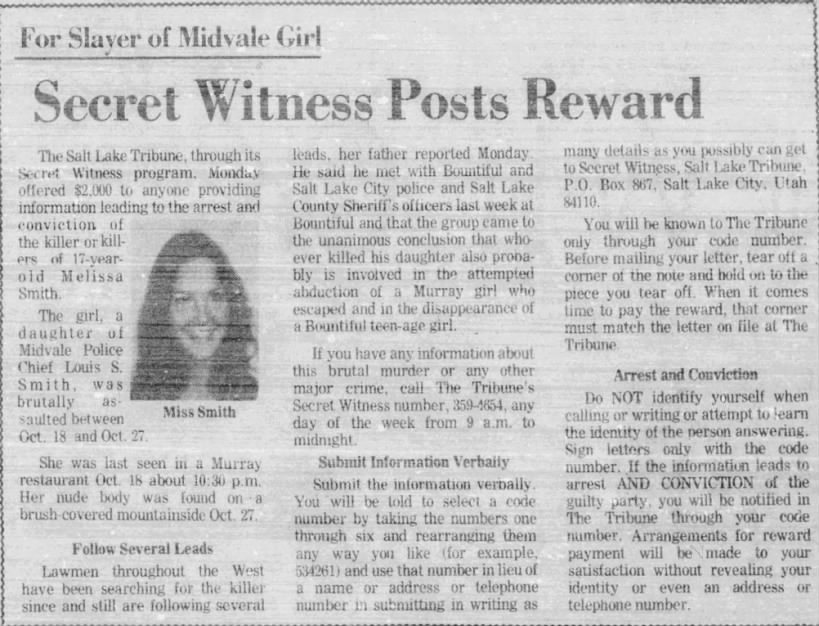
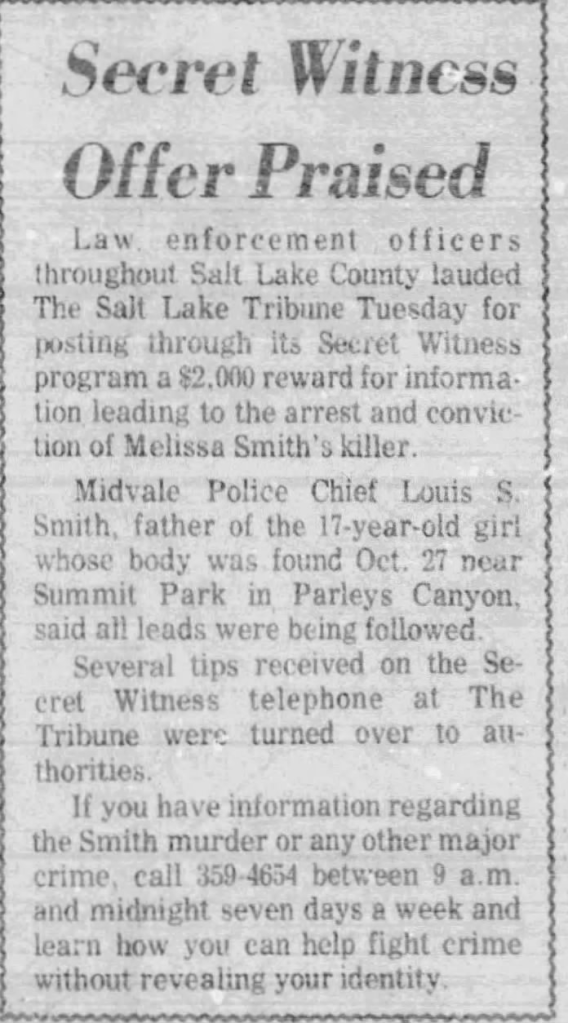
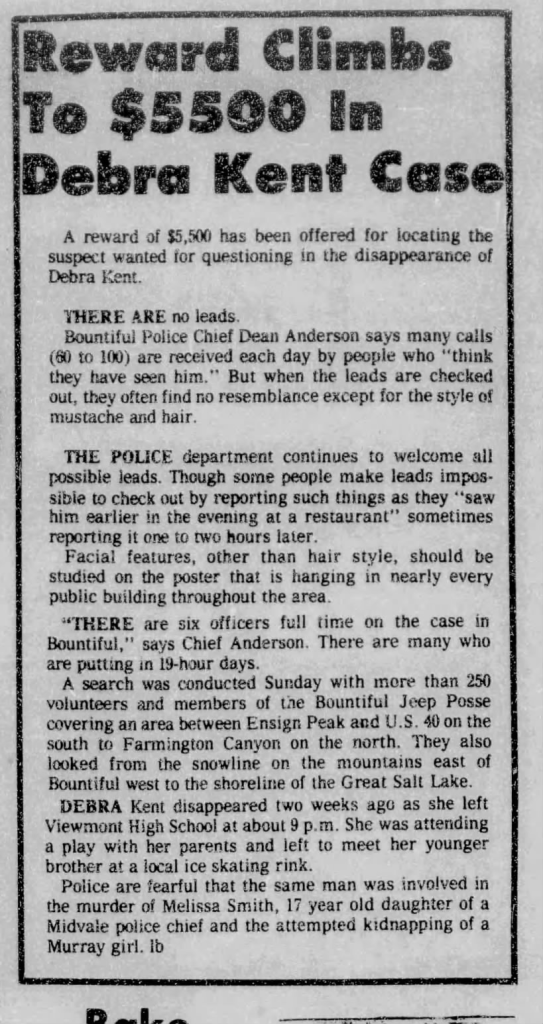
An article about a reward related to the disappearance of Melissa Smith that was published in The Salt Lake Tribune on November 19, 1974.
An article about a reward being offered in relation to the murder of Melissa Smith that was published in The Salt Lake Tribune on November 20, 1974.
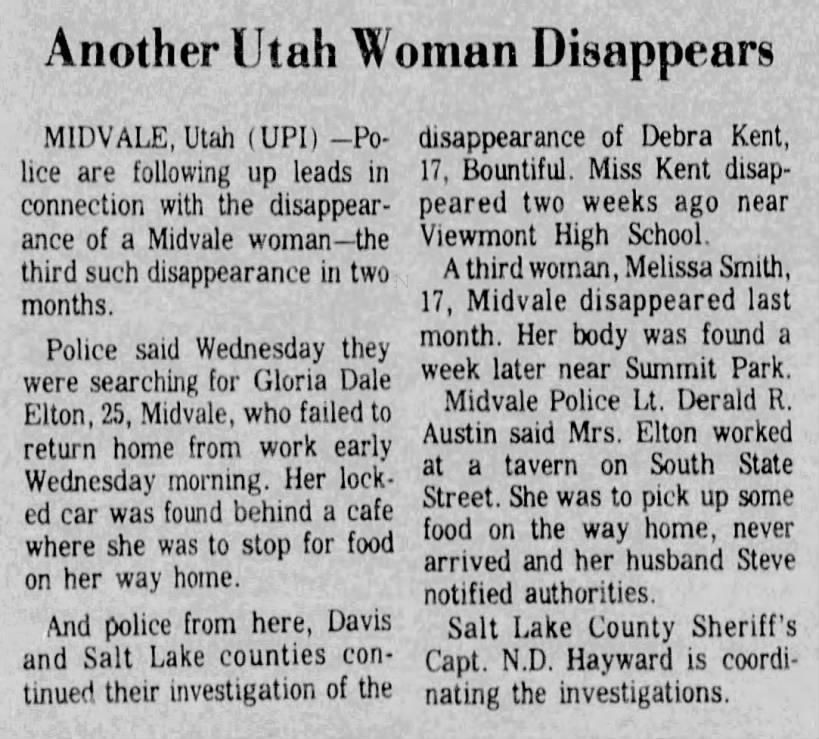
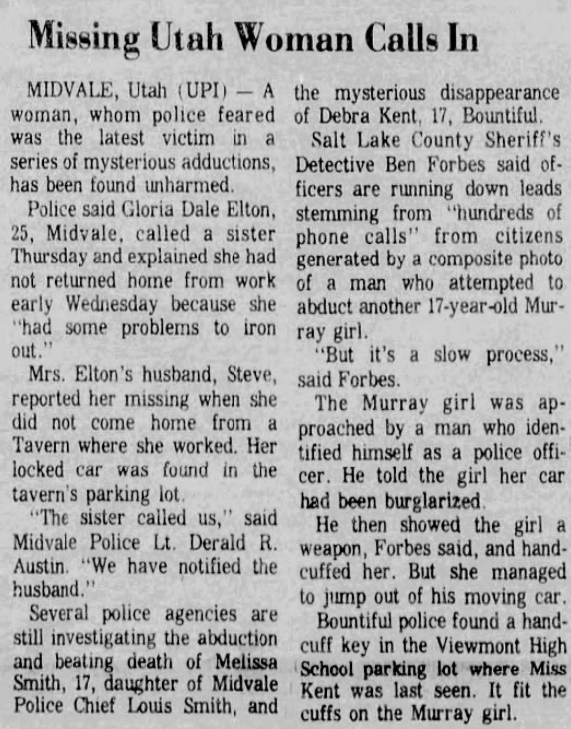
An article about the disappearance of a Utah woman named Gloria Dale Elton that mentions Melissa Smith that was published in The Herald-Journal on November 21, 1974.
An article about the Deb Kent disappearance that mentions Melissa Smith that was published in The Davis County Clipper on November 22, 1974.
An article about the possible disappearance of a Utah woman named Gloria Dale Elton that mentions Melissa Smith that was published in The Herald-Journal on November 22, 1974.
An article about the encounter Carol DaRonch had with Ted Bundy that mentions Melissa Smith that was published in The Deseret News on November 23, 1974.
An article about the disappearance of Gloria Dale that mentions Melissa Smith that was published in The Salt Lake Tribune on November 21, 1974.
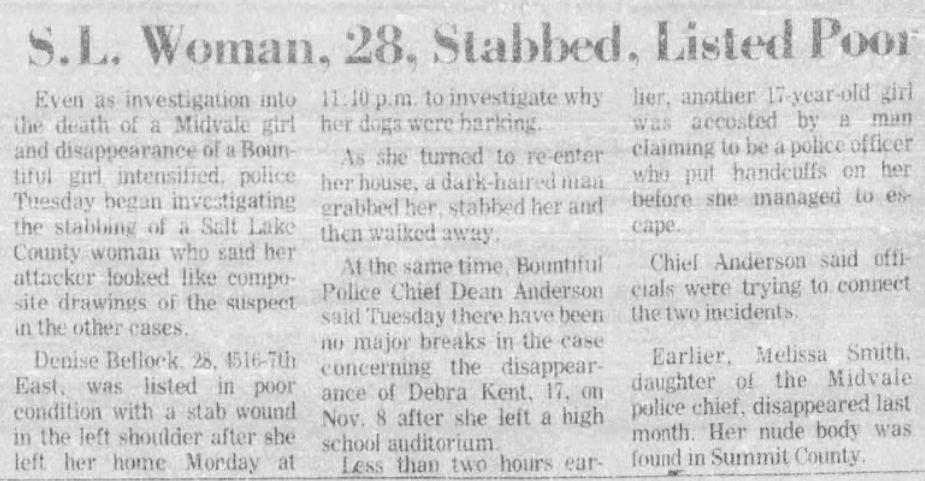
An article about twenty-eight-year-old Denise Bellock being stabbed as she was making her way back into her home that mentions Melissa Smith that was published in The Salt Lake Tribune on November 27, 1974.
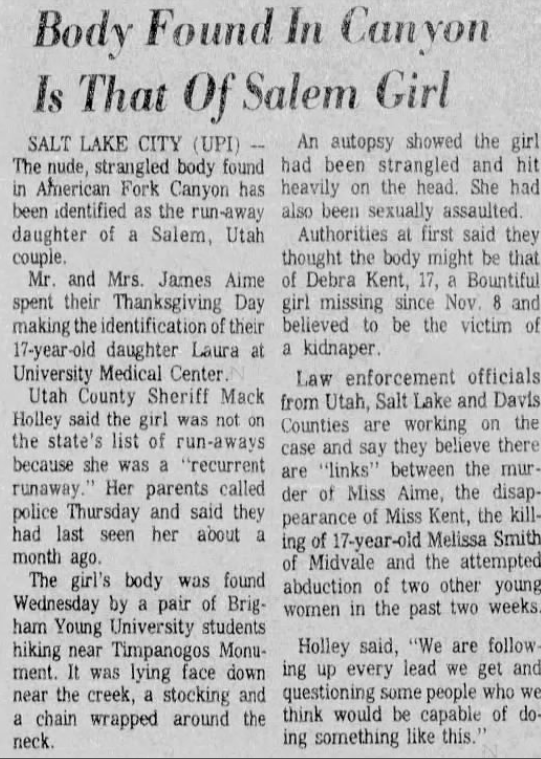
An article about the discovery of Laura Ann Aime that mentions Melissa Smith that was published in The Salt Lake Tribune on November 28, 1974.
An article about the murder of Laura Ann Aime that mentions Melissa Smith that was published in The Herald-Journal on November 29, 1974.
An article about the string of murders in SLC that mentions Melissa Smith that was published in The Kellogg Evening News on November 29, 1974.
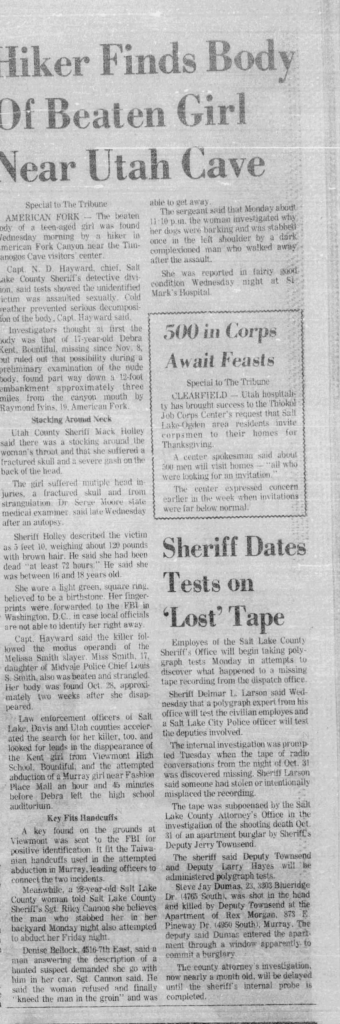
An article about the discovery of Laura Ann Aime that mentions Melissa Smith that was published in The Salt Lake Tribune on November 30, 1974.
An article about the discovery of Laura Ann Aime that mentions Melissa Smith that was published in The Herald-Journal on December 2, 1974.
An article about the disappearances and murders in SLC that mentions Melissa Smith that was published in The Daily Herald on December 2, 1974.
An article about the disappearances and murders in SLC that mentions Melissa Smith that was published in The Herald Journal on December 2, 1974.
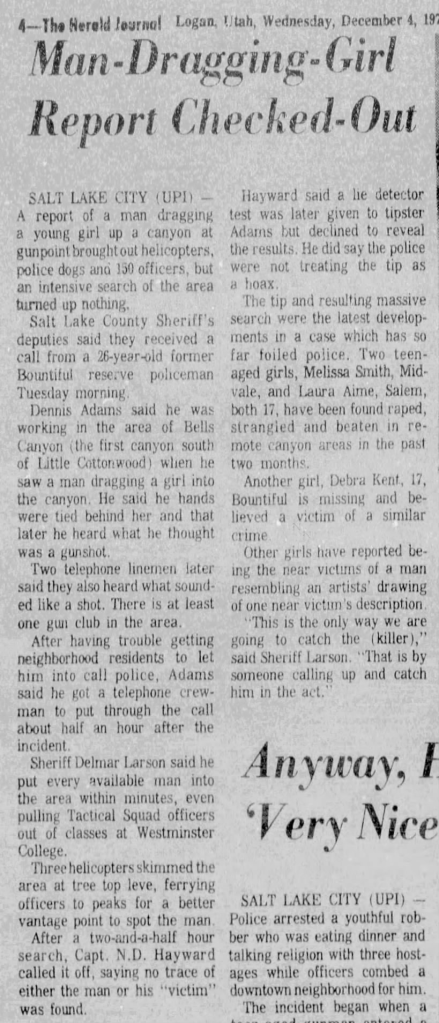
An article about the murders in SLC that mentions Melissa Smith that was published in The Herald-Journal on December 4, 1974.
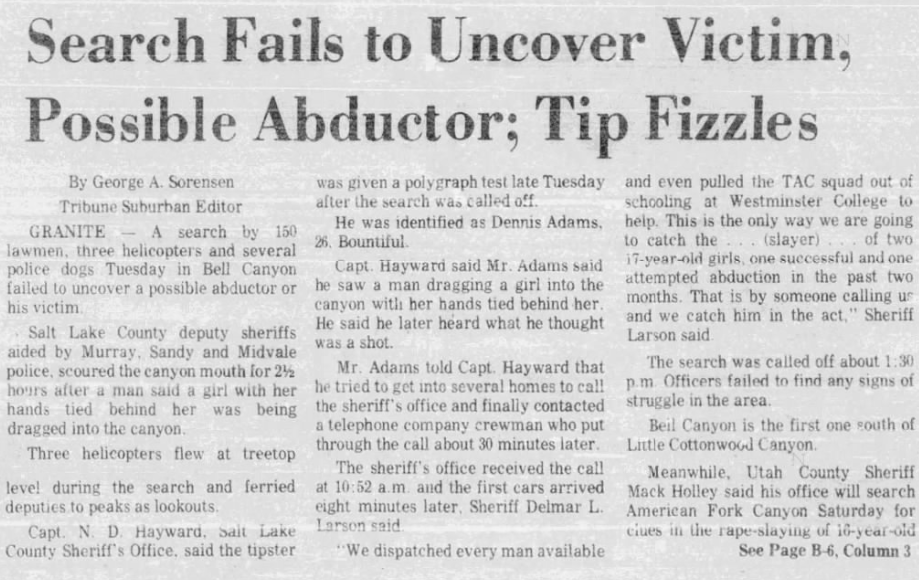
Part one of an article about the murders in SLC that mentions Melissa Smith that was published in The Salt Lake Tribune on December 4, 1974.
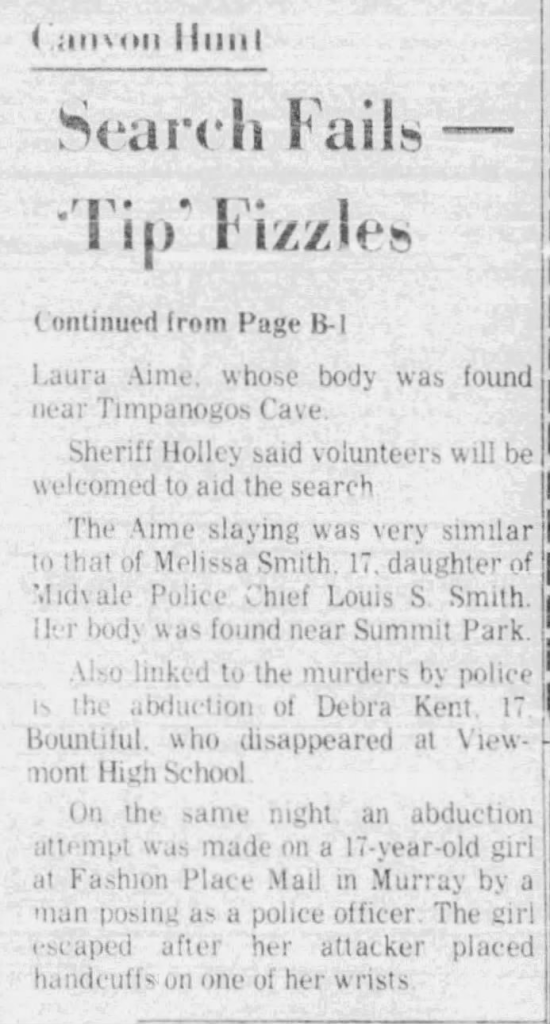
Part two of an article about the murders in SLC that mentions Melissa Smith that was published in The Salt Lake Tribune on December 4, 1974.
An article about the murders in SLC that mentions Melissa Smith that was published in The Salt Lake Tribune on December 5, 1974.
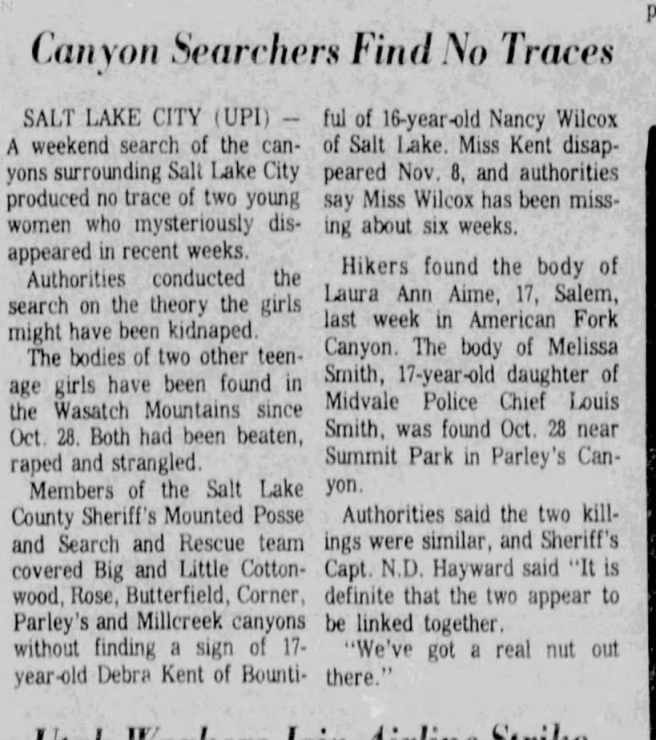
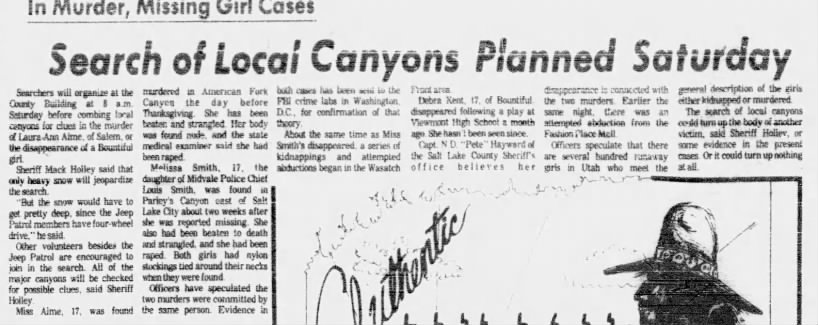
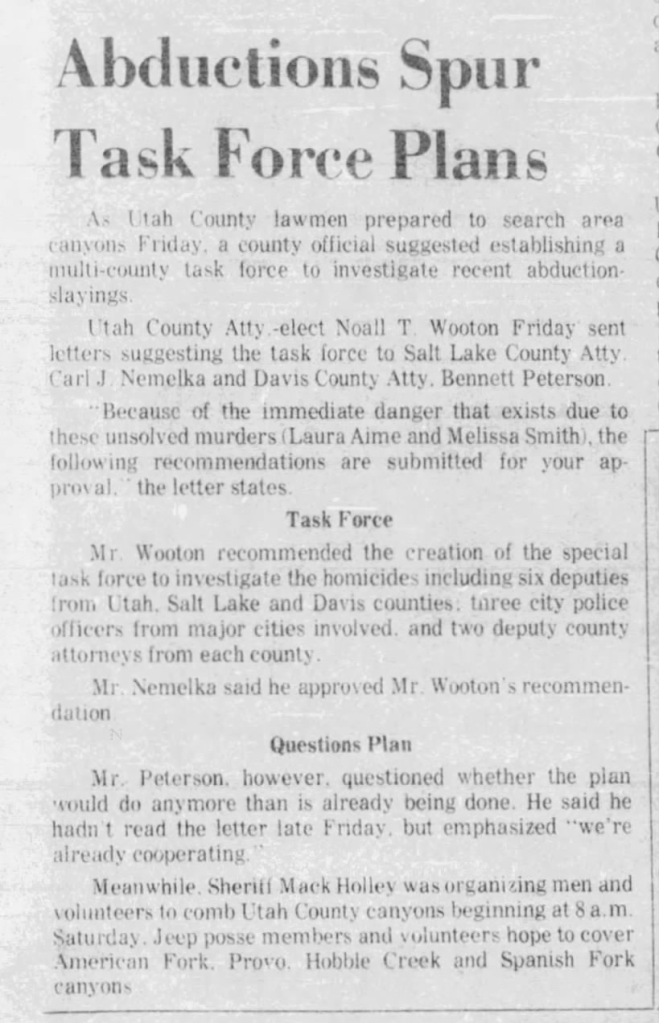
An article about a search of the local canyons surrounding SLC that mentions Melissa Smith that was published in The Daily Herald on December 6, 1974.
An article about the murders in SLC that mentions Melissa Smith that was published in The Salt Lake Tribune on December 7, 1974.
An article about the murders around SLC that mentions Melissa Smith that was published in The Herald-Journal on December 8, 1974.
An article about the various murdered and missing girls around SLC that mentions Melissa Smith that was published in The Herald-Journal on December 9, 1974.
An article about the murder of Melissa Smith that was published in The Salt Lake Tribune on December 10, 1974.
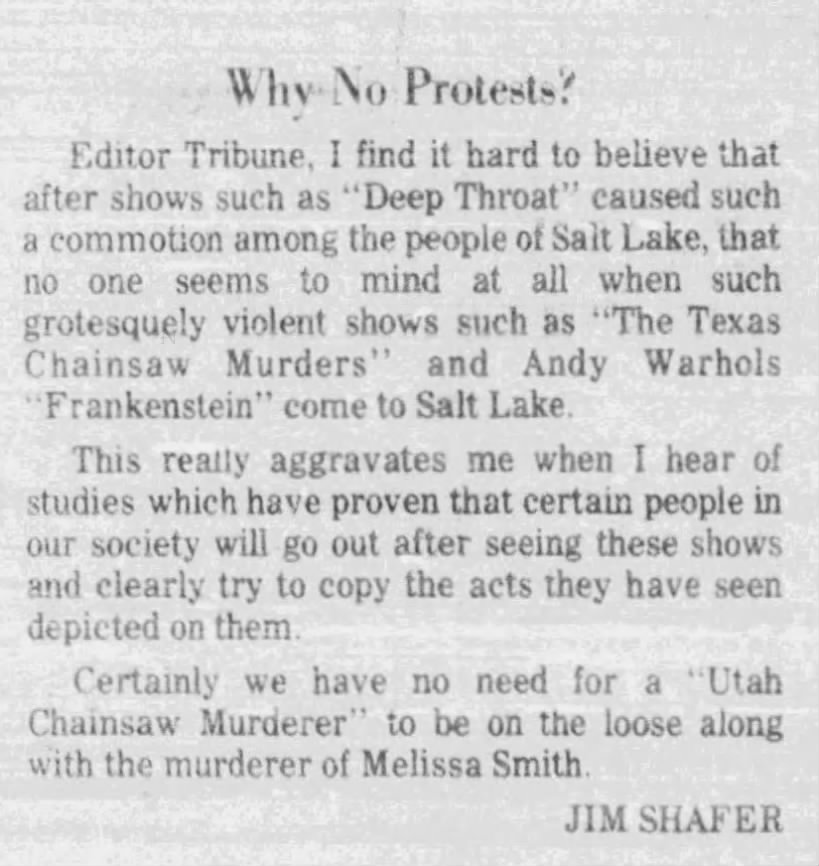
A ‘letter to the editor’ type of aricle that mentions the murder of Melissa Smith that was published in The Salt Lake Tribune on December 12, 1974.
An article about the murder of Melissa Smith that was published in The Deseret News on December 13, 1974.
An article about the murder of Melissa Smith that was published in The Salt Lake Tribune on December 14, 1974.
An article about the murders of Melissa Smith and Laura Ann Aime that also mentions Carol DaRonch that was published in The Herald-Journal on December 26, 1974.
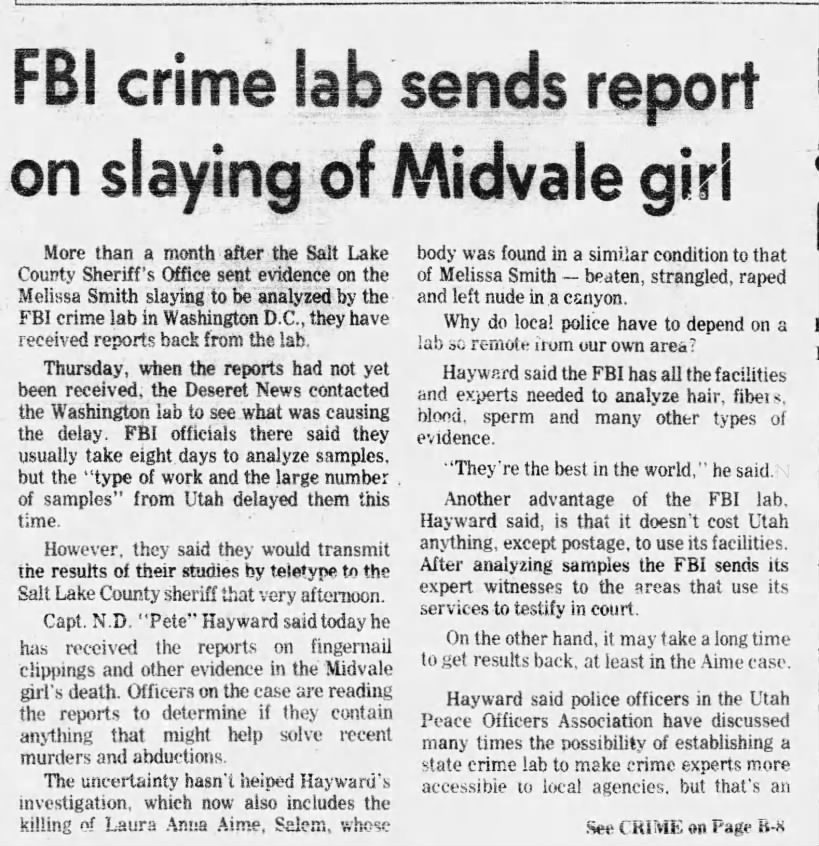
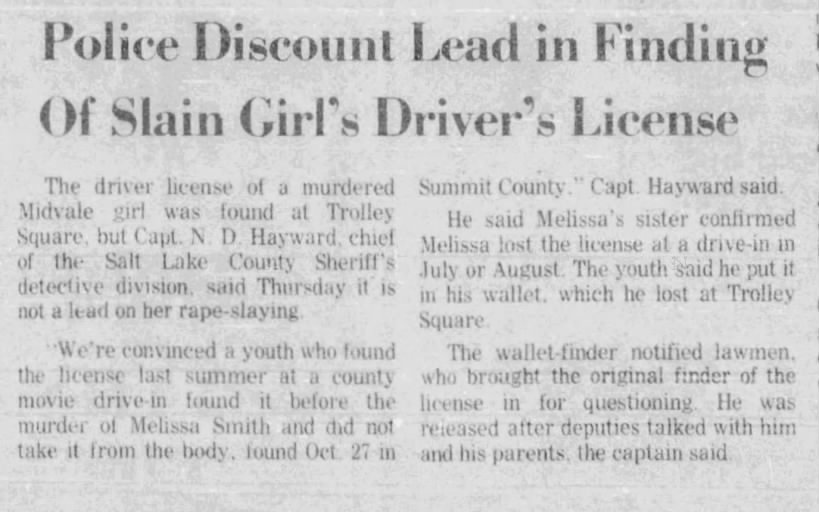
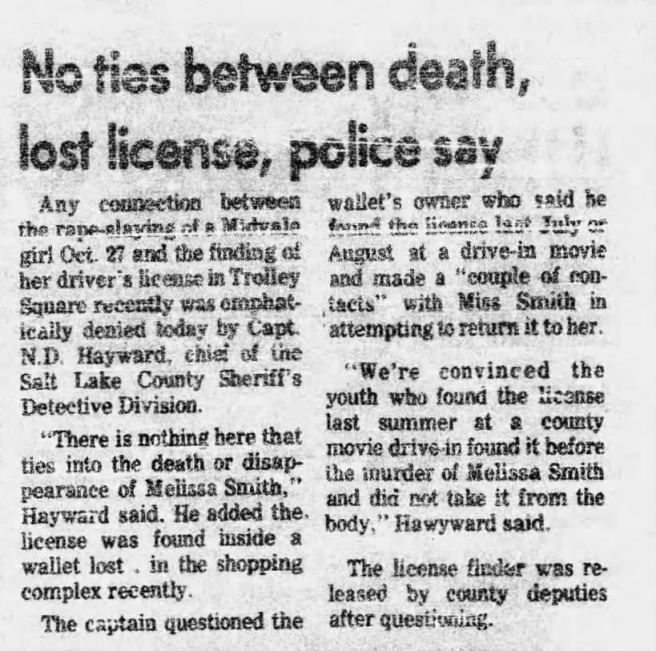
An article about the recent discovery of Melissa Smith’s drivers license that was published in The Salt Lake Tribune on December 27, 1974.
An article about the discovery of Melissa Smith’s drivers license that was published in The Deseret News on December 27, 1974.
An article about the recent discovery of Melissa Smith’s wallet that was published in The Herald-Journal on December 27, 1974.
An article about the recent discovery of Melissa Smith’s drivers license that was published in The Deseret News on December 27, 1974.
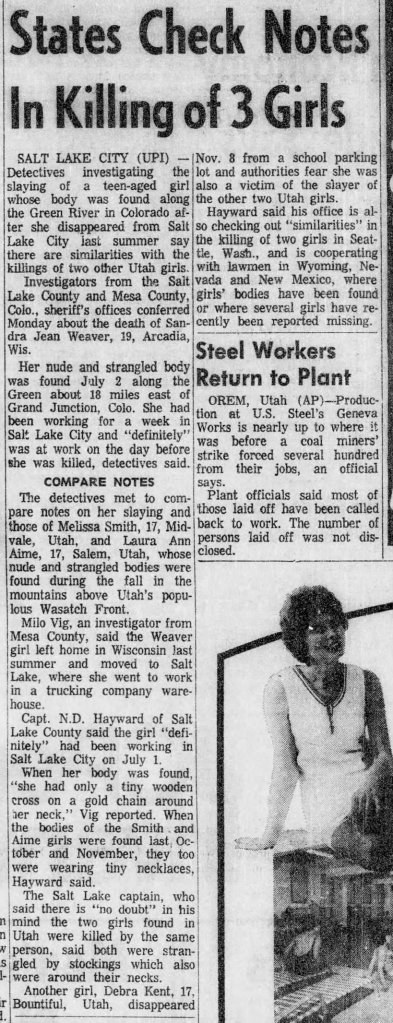
An article about a recent murder of a teenage girl whose body was found in the Green River in Colorado that disappeared from SLC that mentions Melissa Smith that was published in The Daily Herald on January 21, 1975.
An article that mentions Melissa Smith that was published in The Ogden Standard-Examiner on January 21, 1975.
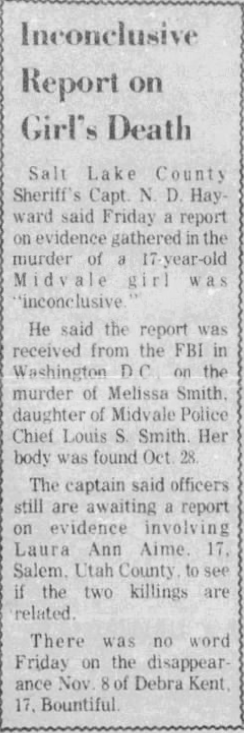
An article about the murder of Melissa Smith that was published in The Salt Lake Tribune on March 14, 1975.
Part one of an article about the murder of Melissa Smith that was published in The Salt Lake Tribune on April 24, 1975.
Part two of an article about the murder of Melissa Smith that was published in The Salt Lake Tribune on April 24, 1975.
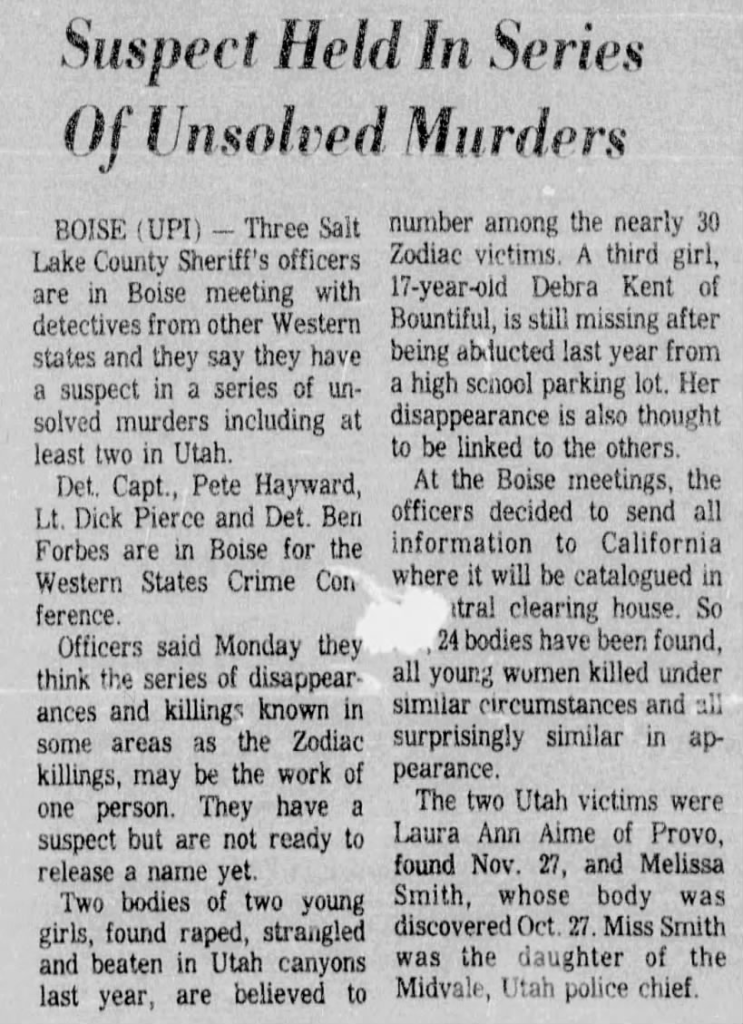
An article about a conference between law enforcement officers regarding the missing and murdered women in the Western part of the US that mentions Melissa Smith that was published in The The Herald-Journal on May 13, 1975.
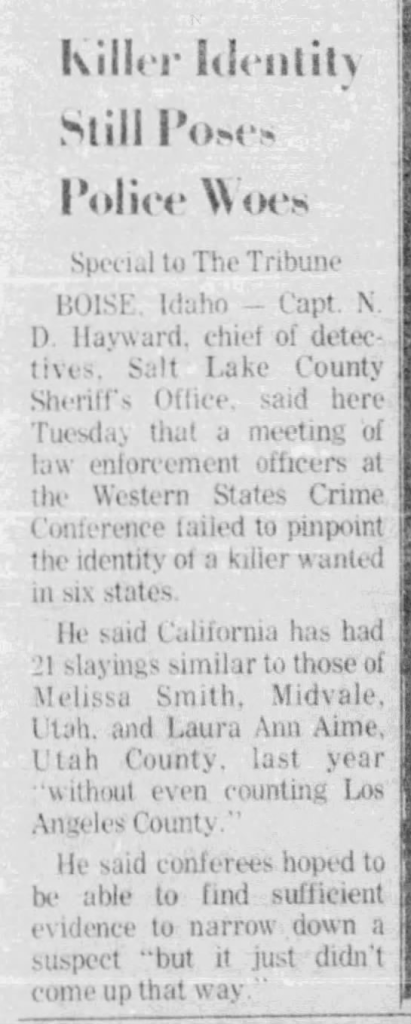
An article about a conference between law enforcement officers regarding the missing and murdered women in the Western part of the US that mentions Melissa Smith that was published in The Salt Lake Tribune on May 14, 1975.
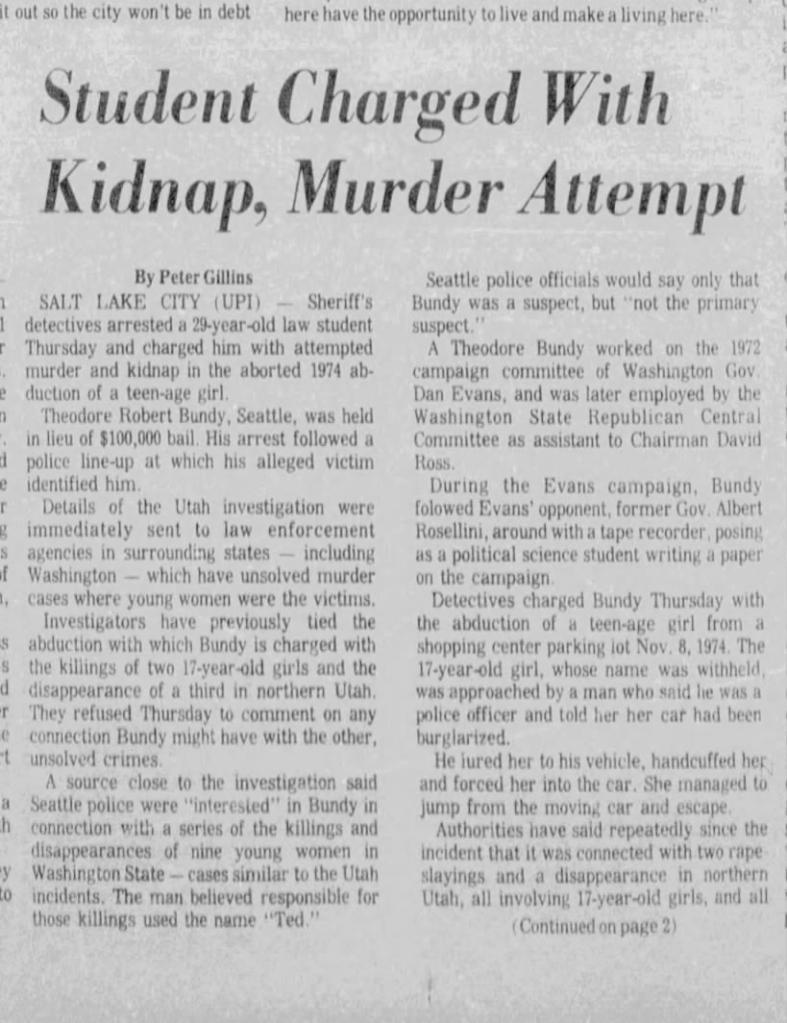
Part one of an article about Ted Bundy being charged with murder and kidnapping that was published in The Herald-Journal on October 3, 1975.
Part two of an article about Ted Bundy being charged with murder and kidnapping that was published in The Herald-Journal on October 3, 1975.
An article about the one-year anniversary of the murders of Bundy’s Utah victims that was published in The Deseret News on October 28, 1975.
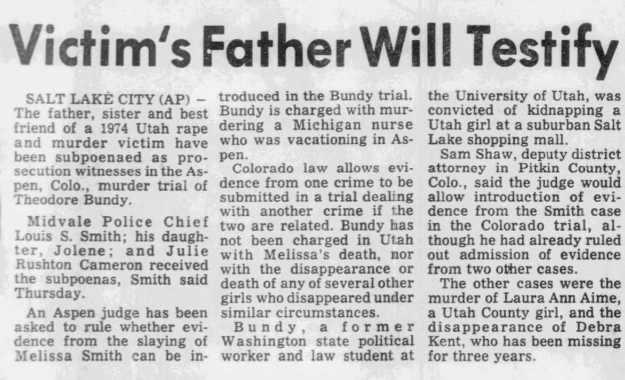
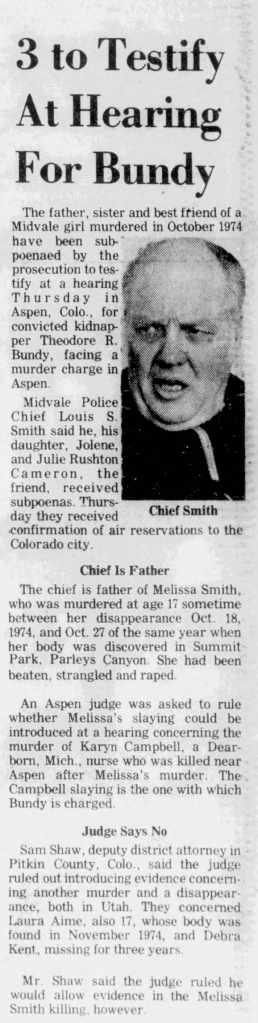
An article about Louis Smith testifying in Bundy’s trial that was published in TheThe Ogden Standard-Examiner on November 11, 1977.
An article about Louis Smith testifying in Bundy’s trial that was published in The Salt Lake Tribune on November 11, 1977.
An article about Louis Smith testifying in Bundy’s trial that was published in The Salt Lake Tribune on November 12, 1977.
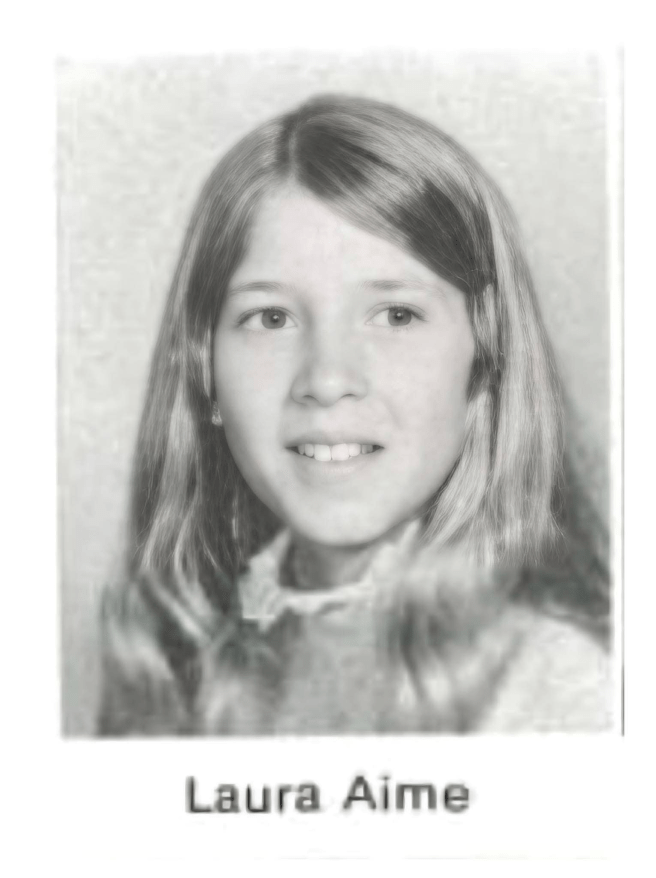
Laura Aime.
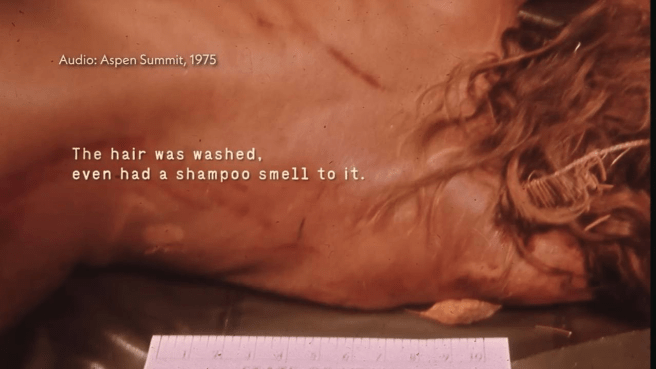
A picture from Laura Aime’s crime scene, courtesy of the series: ‘Hunting Ted Bundy.’ According to the documentary, Aime’s hair had been washed shortly before she was found, and even smelled fresh, like ‘shampoo.’
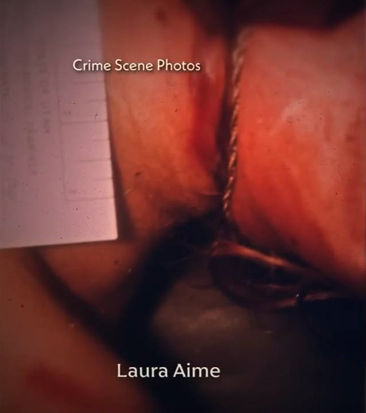
A picture of the rope found around Laura Aime’s neck, courtesy of the series: ‘Hunting Ted Bundy.’
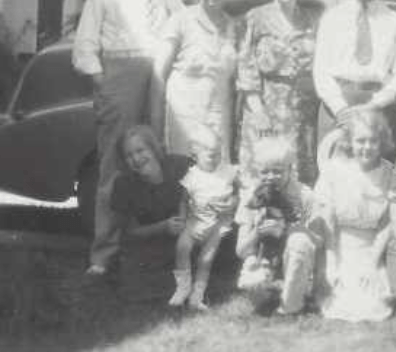
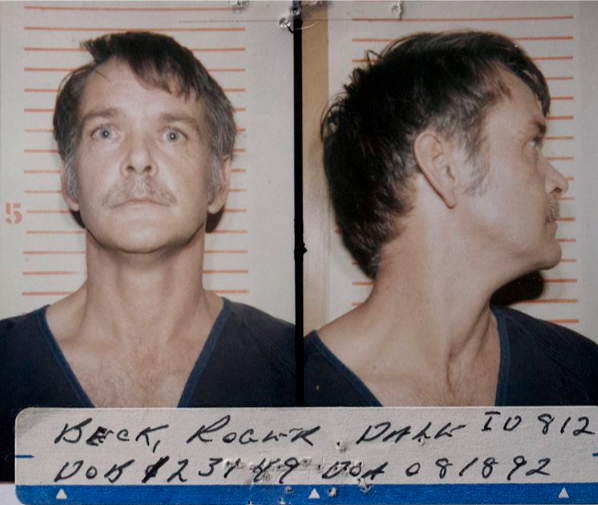
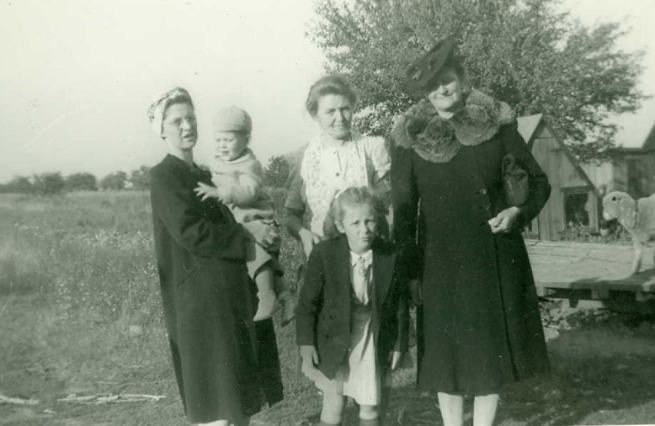
Melissa’s father Louis as a child (he’s the one holding the dachshund) .
Melissa’s father, Louis Smith.
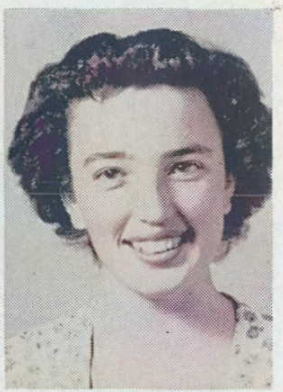
Joan Phyllis Levorsen.
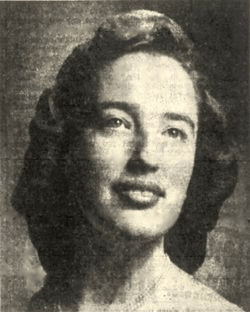
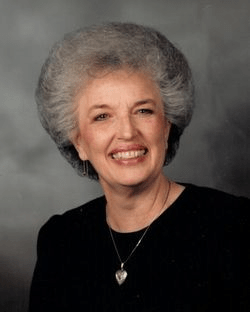
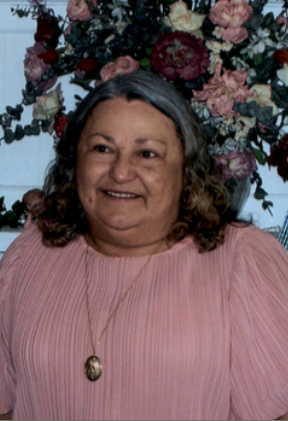
Melissa’s mother, Joan Phyllis Smith.
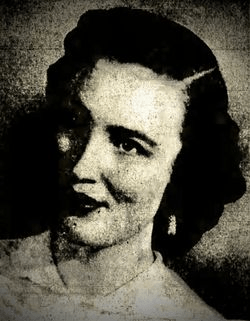
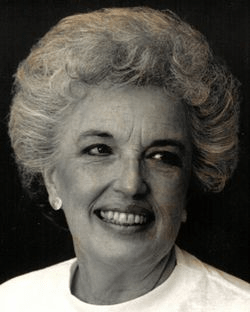
Another black and white picture of Melissa’s mother, Joan Phyllis Smith.
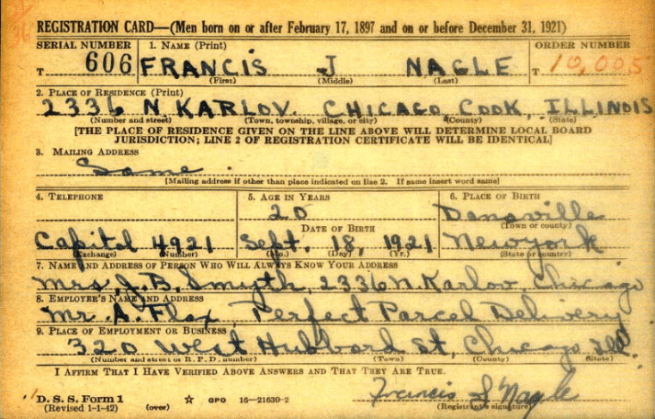
Louis Smith’s WWII draft card.
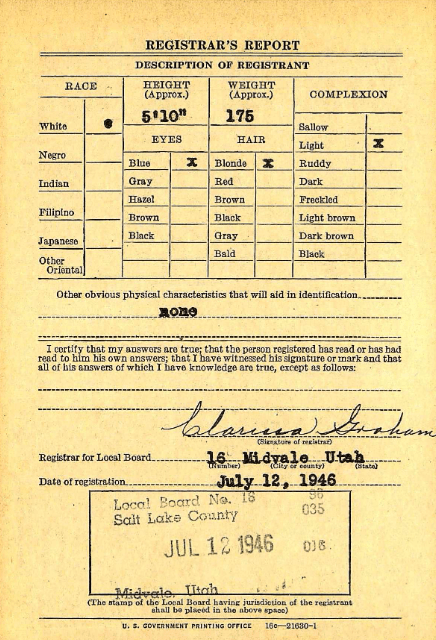
The second part of Louis Smith’s WWII draft card.
Some information related to Louis Smith’s time in the military.
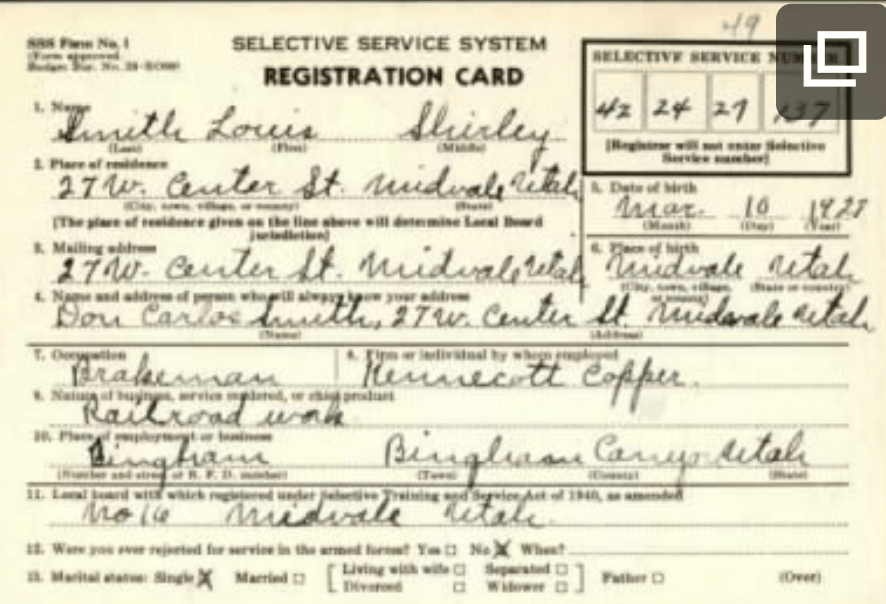
Louis Smith’s Korean draft card.
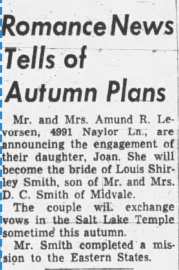
An announcement that Joan Levorsen and Louis Smith were engaged that was published in The Deseret News on July 27, 1953.
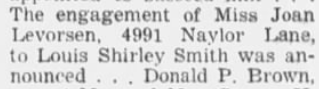
Louis Smith and Joan Levorson are listed as engaged according to The Murray Eagle on July 27, 1953.
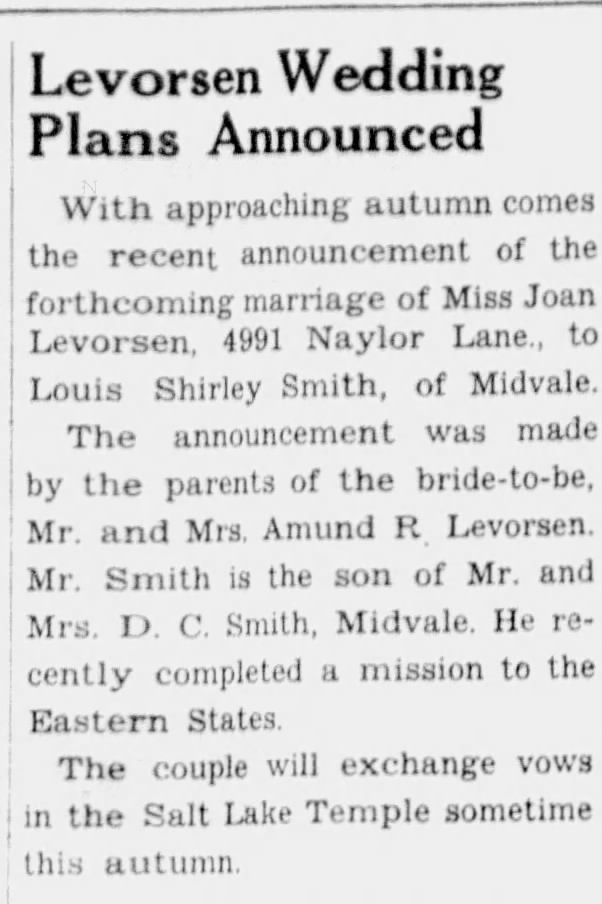
The announcement of the marriage of Joan Levorsen and Louis Smith that was published in The Murray Eagle on August 7, 1953.
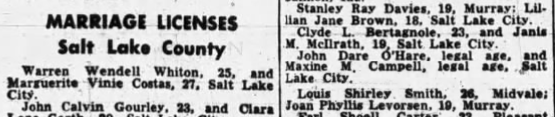
A clipping announcing that Louis Smith and Joan Levorsen applying for their marriage license that was published in The Deseret News on October 8, 1953.
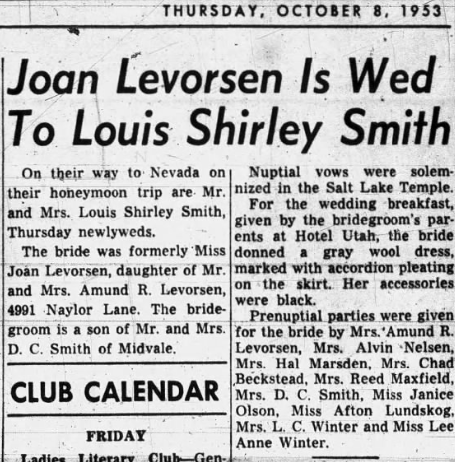
An article announcing the marriage of Louis Shirley Smith and Joan Levorson that was published in The Deseret News on October 8, 1953.
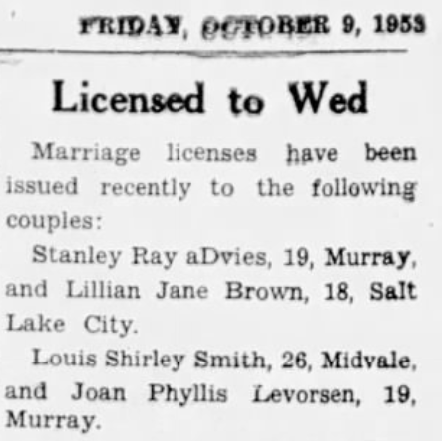
A clipping announcing that Louis Smith and Joan Levorsen applied for their marriage license that was published in The Murray Eagle on October 9, 1953.
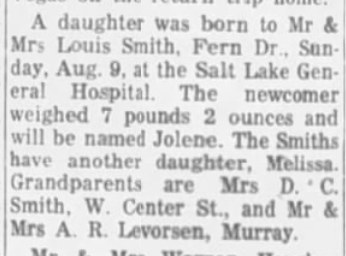
Jolene Smith’s birth announcement that was published in The Midvale Sentinel on August 21, 1959.
Jolene Smith.
Jolene Smith.
Jolene Smith.
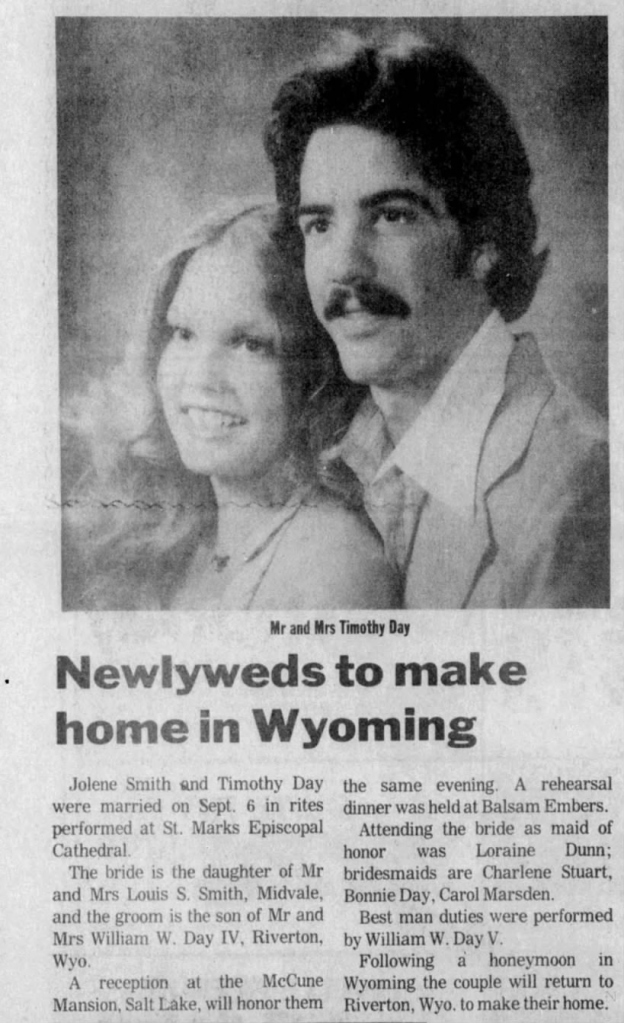
The wedding announcement of Jolene Smith and Timothy Day that was published in The Jordan Valley Sentinel on September 7, 1978.
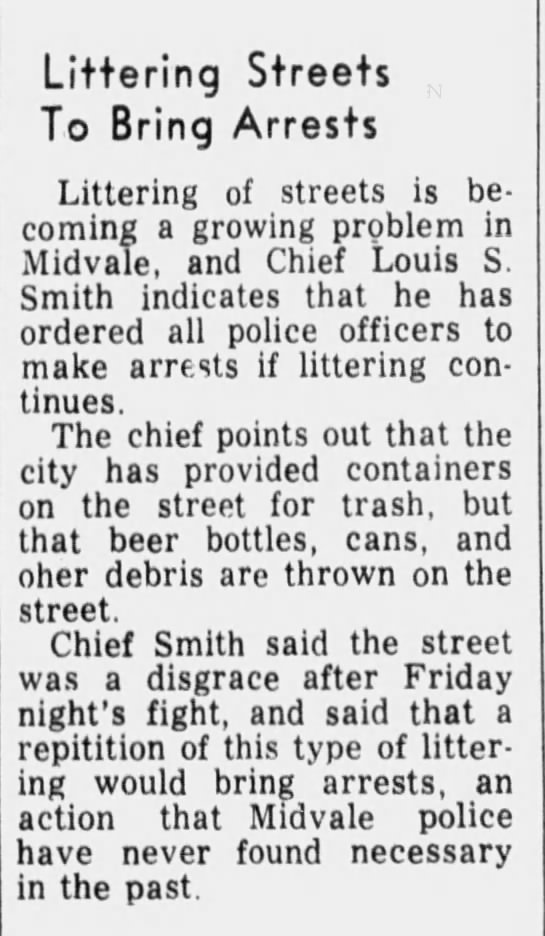
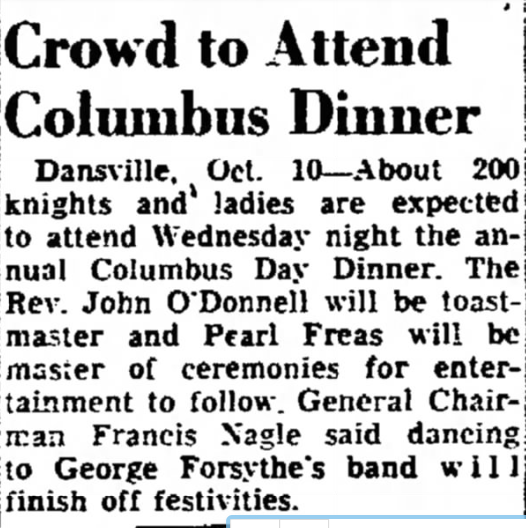
A clipping mentioning Louis Smith in relation to his role as Midvale’s Chief of Police that was published in The Midvale Sentinel on June 22, 1967.
A clipping mentioning Louis Smith in relation to his role as Midvale’s Chief of Police that was published in The Midvale Sentinel on December 11, 1969.
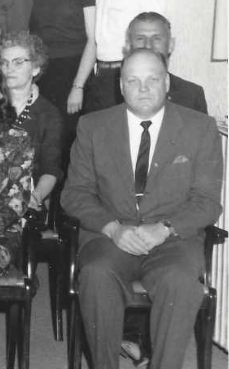
Mr. Smith in a group photo with with Midvale’s second Ward Teachers.
Louis Shirley Smith doing a news interview about his murdered daughter.
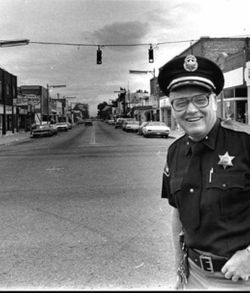
Melissa’s father, Louis Shirley Smith.
The obituary for Louis Shirley Smith that was published in The Salt Lake Tribune on April 21, 1985.
The obituary for Louis Smith that was published in The Jordan Valley Sentinel on April 25, 1985.
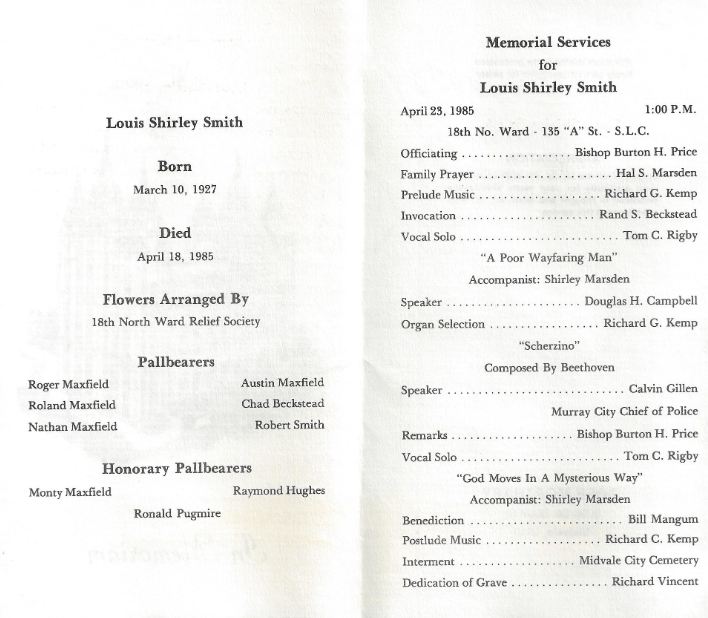
Louis Shirley Smith’s memorial card from his funeral service.
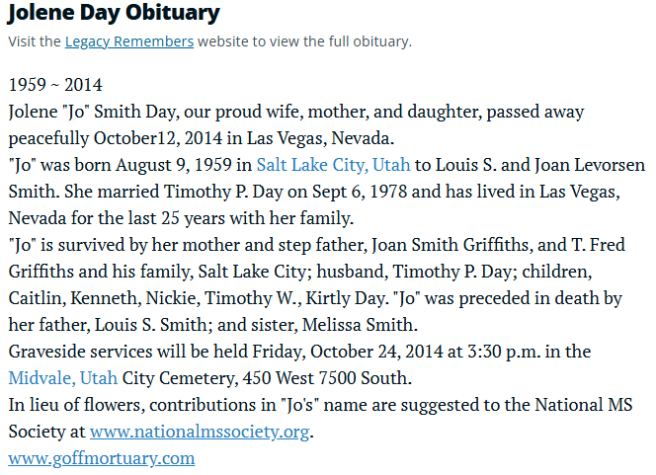
Jolene Smith-Day’s obituary.
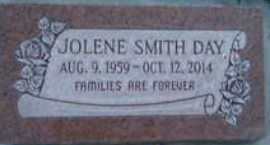
The final resting place of Melissa’s sister, Jolene Smith-Day.
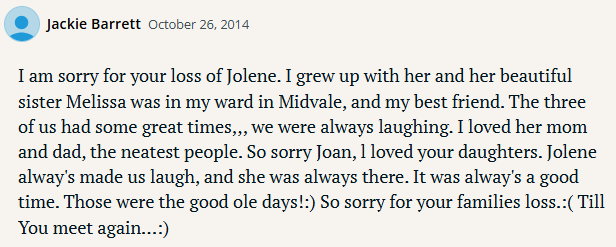
An entry on Jolene Smith-Day’s Legacy page made by someone named Jackie Barrett that mentions Melissa.
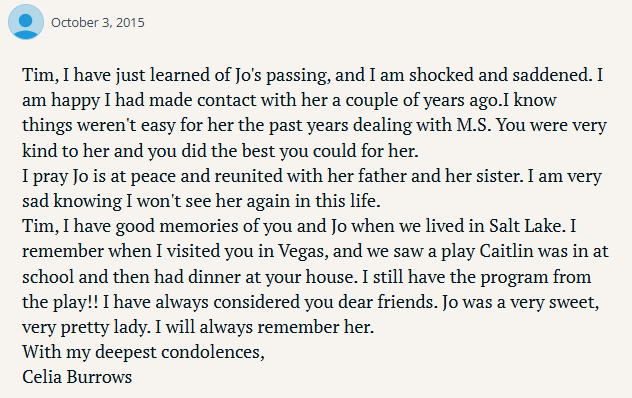
An entry on Jolene Smith-Day’s Legacy page.
An entry on Jolene Smith-Day’s obituary page.
Melissa’s mother, Joan Smith.
A black and white picture of Melissa’s mother, Joan Smith.
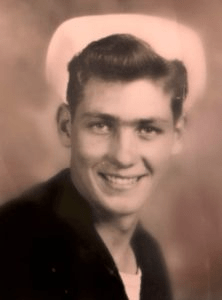
Thomas Frederick ‘Fred’ Griffiths from his time in the Navy.
Fred Griffiths. Per his obituary, he was a hunter, fisherman, traveler and had been a bishop in two different wards. He had many hobbies; he loved collecting geodes and crafted homemade wooden canes; he also had a deep appreciation for music that extended to Organ, Banjo, and he had a large collection of Harmonica’s.
Joan Smith-Griffiths’s obituary.
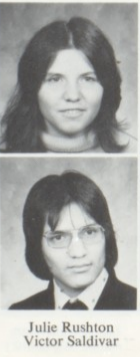
Julie Rushton, the friend Melissa went to visit at The Pepperoni the night she vanished. Picture taken from the 1974 Hillcrest High School yearbook.
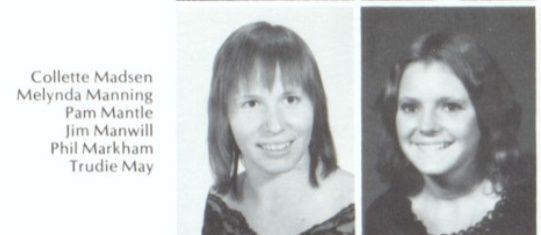
Melynda Manning, Melissa’s other close friend. Picture taken from the 1975 Murray High School yearbook.
Nancy Wilcox.
Carol DaRonch, who Ted Bundy tried to kidnap on November 8, 1974 in Murray, UT before he abducted and killed Debra Kent from nearby Bountiful.
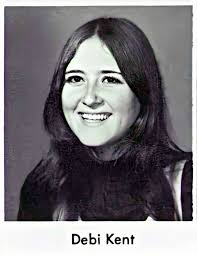
Deb Kent, who Bundy abducted after the failed kidnapping attempt of Carol DaRonch. After her daughter disappeared, Belva Kent w’we have a feeling of anxiety and sadness and wonder where she is. We are baffled at her disappearance because she has never given us any trouble. She has always been compassionate for others and is always looking for the good points in everyone. Please bring her back to us so that we might complete the family-circle.’

Creative Writing Final Project.

Please be kind, I know this isn’t going to be my greatest piece, but the only reason I took the Creative Writing class was so I can be a better blogger.

Part One: Jan.
“Excuse, me miss?” I look up from my book, “All the President’s Men,” slightly annoyed to be interrupted just as it was getting good to see an attractive man with wavy, sandy brown hair looking down at me. He gestured towards his arm, which had been sloppily bandaged and in a sling, and looking down at me asked, “can you help me with something, if you’re not too busy?”
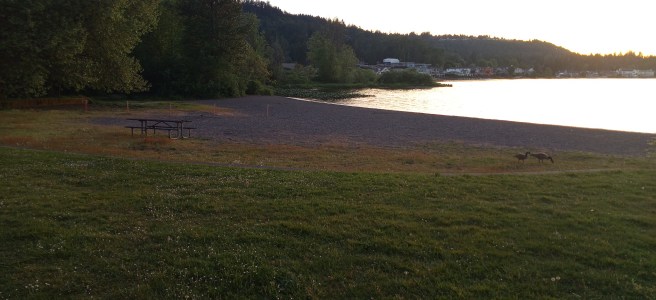
I took in the scenario: it was a bright, sunshiny day at Lake Sammamish State Park in Issaquah, WA, and tens of thousands of people showed up to participate in Rainer Beer’s annual summer picnic (on top of the regular everyday park goers). I arrived only a half hour earlier after spending my morning re-writing my case notes and doing laundry, my yellow Tiger ten speed resting against a tree nearby. I took him in: he was attractive and tall, with a thin but muscular build and dark, wavy hair. Working with the public the way I do, I like to think I was good at reading people, I mean you had to be to do my job well… I thought to myself, “he’s harmless.”
“What do you need? Why don’t you sit down, and we’ll talk about it,” I implored, looking up at him. The blinding sun hurt my eyes, even with sunglasses on. He plopped down on my blanket and exhaled, what sounded like a sigh of relief. “I’ve been asking people for the better part of an hour, no one will help me. I need help bringing a catamaran to my parents’ house. It’s right up the road,’ he pointed towards the park’s entrance. I put my book down and think about it briefly: “I’ve never gone sailing before. How about this: if I help you, then you have to take me sailing?” Flirtatious, but innocent. Jim would be happy you were making new friends.
“Hi, I’m Ted,” the man introduced himself as the two of you stand up, and he begins to help gather your things. As you begin to walk away you notice another man, sitting only a few feet away in a lawn chair, frowning slightly to himself but whatever he was thinking he kept it to himself. On your way to his car, you learn he is a law student at the University of Washington and grew up in Tacoma, and as you approach his dinged-up Volkswagen you notice there’s no sailboat. You question him, he appears confused: ‘Oh, did I say take it to my parents’ house? I meant, it’s AT my parents’ house.” For the first time there’s a strange feeling in your gut. Unease. You look over at him, then glance at your wrist. 12:45 PM. You figure you could take an hour out of your day to help a stranger in need. It will be fine.
The attentive stranger carries your blanket and book to the car, and agrees to drop you back off at the park when finished, “so you can pick up her bike and ride home.” I climbed into the passenger’s seat, and he started the vehicle up. It had an odd, metallic like smell, and as soon as I shut the door, I immediately knew it was the wrong move.
As he pulled out of the lot and into the park’s main drag I noticed a distinct change in the vehicle’s atmosphere: it actually seemed to get a few degrees cooler despite the ninety-degree day. He slowly crept through the line of cars towards the exit, the rickety car loudly idling as he coasted through first gear… my new friend “Ted” looked over at me, then glanced in his rearview mirror and said “it’s a good thing we decided to leave when we did,” nodding behind him towards to the quickly forming line behind you. “Everyone suddenly wants to get out of here,” I mindlessly thought to myself, as I played with a loose string on the strap of my yellow bikini.
He turned left onto East Lake Sammamish Parkway NE and (surprisingly) quickly brought the vehicle up to sixty miles an hour. After only a few minutes of driving he suddenly jerked the wheel and screeched to a halt at to the side of the road and lunged towards something underneath the passenger’s seat, and after fumbling for a quick moment he triumphantly pulled out a crowbar that had “silver duct tape wrapped around the handle” (I absent mindedly noted to myself). I screamed, and tried to fight him off, but it was of no use. I managed to get a few good digs in with my nails before he hit me over the head and I saw black.

Part Two: Ted.
I was reaching the end of the line in Washington… my “final hurrah,” as they say: my days in Seattle were over, and when I was finished tying up all the loose ends in a few weeks, I was uprooting my life and moving to the Beehive State for my second attempt at law school. I glanced at the watch on my wrist: five minutes to noon. I parked my car at Lake Sammamish and got out. It was a beautiful day in the Evergreen State and swarms of people surrounded you on all sides: little boys in swim trunks splashing their giggling sisters, a gaggle of elderly women caked in sunscreen, and beautiful young coeds were out sunning themselves, wearing next to nothing. I put my keys in my pocket and began slowly making my way through that park. I took it ALL in (the couple swigs of vodka didn’t hurt, either… in fact, it helped me be brave).
My right arm was securely bandaged and wrapped up in a beige sling, and as I walked I made sure to favor it as I made my way through to the bandstand. Without any hesitation, I walked up to an attractive blonde woman: ‘Hi, I’m Ted,” I said to her, offering her a friendly smile as I introduced myself. “Can you possibly help me load a sailboat onto the top of my car? It’s right over there,” I said as I pointed towards the nearby parking lot. She hesitated. “Oh no,” I thought to myself… “I was losing her…”
“Oh it’s not very big, or heavy.” I hold up my injured arm and made a face: “I normally have no problem doing it myself, but as you can see, I’m having problems at the moment.” She softly laughed, and said sure, she would help. You smile to yourself and feel relief. As you made your way to the parking lot you tried to keep her engaged, and talking: you made sure to mention you were a law student and had a girlfriend with a young daughter… you wanted her to trust you… all she had to really do was get in the damn vehicle and outside of the park, you could handle the rest. You pointed towards your bronze Beetle: “that’s me.”
She frowned to herself. “Where’s the boat? You said it was on your car?” Oh, did I? “Well, what I meant to say was, it was at my parent’s house just up the hill…. But don’t worry, I’ll bring you back when we’re finished… I would really appreciate your help.” I smile sincerely at her. Her face clouded over, and she said she couldn’t leave because she was meeting her parents and husband.” I thanked her and walked away. Whatever, there were so many others. I’ll find someone that wants to help an injured person in need and begin making my way back towards the bandstand area.
I scanned the beach: my eyes fixed on a petite blonde girl sunbathing in a yellow bikini, reading a thick book. She was tiny and looked like she weighed barely 100 pounds. Perfect. I approach her and walk to the edge of her blanket, where I stand for a few moments waiting for her to notice me. When she finally looks up from her book she notices me, and while shielding her eyes from the sun brightly says, “well, hello there. What can I do for you?” I gesture towards my arm: “Well, I need some help.” She seemed to consider what I said briefly then, after a few moments said, “why don’t you sit down, and we’ll talk about it?” So, I did. “I’ve been asking people for the better part of an hour, no one will help me,” I hear myself lie. I point towards the parking lot and continue: “there’s a catamaran on top of my car; I need help getting it off. I normally have no problem doing it myself, but as you can see, I’m a little impaired at the moment.” She looks like she briefly thinks about what to do, then closes her book and puts it down on her blanket. “I’ve never gone sailing before. How about this: if I help you, then you have to take me sailing?” I happily accepted her offer and helped her gather her belongings. I introduce myself as before: “Hi, I’m Ted,” and without skipping a beat replied, “hi, I’m Jan.”
Near her was a man around my age, with broad shoulders and a brush cut staring at us… No, staring at ME. His eyes were narrow, and I felt as if he was watching my every move and was almost studying me in a way. I brushed him off; I was imagining things. It was the weed I smoked earlier. On your way to the car, you try your hardest to be light and casual, almost cheerful. I volunteer that I am a law student at the University of Washington, and I grew up in Tacoma in a family with four younger brothers and sisters. As the two of you get closer to the car you notice she hesitates: “there’s no sailboat,’ she says, looking at you quizzically. ‘Oh, did I say take it to my parents’ house? I meant, it’s AT my parents’ house.” She seems to relax, but only slightly and even though you suspect she’s onto you, she still gets in.
As you slowly make your way towards the exit, you look over at your new friend, then glance in the rearview mirror and notice a long queue of cars that has lined up behind you: “it’s a good thing we decided to leave when we did.” She nodded her head and played with her bikini top. I turned onto the main highway and we rode in silence for a few miles. “This is it,” I thought to myself, when I pulled off to the side of the road and lunged underneath her seat for my trusty crowbar. She screams loudly, which hurts your ears and only pisses you off, and you bring the crowbar down over her head once. Twice. Three times, until she finally sinks down in her seat. She was finally quiet.

Part Three: Denise.
It was hot. Even with minimal clothes on, the heat was awful. I sprawled out on our blanket, my toes sinking into the outlying sand. We had already been there for a few hours, and I was about four beers and three valiums in. I popped another pill and followed it by a long pull of beer. Correction: I was now four beers and four valiums in. My sunscreen had started to wear off, and my skin was starting to turn a rosy pink color, but I didn’t care. We had already been there for a few hours and I was positive we weren’t sticking around much longer.
I looked at Ken: he was asleep in a lawn chair after imbibing too much. I had to pee, so I got up and began to make my way towards the bathrooms. Bob didn’t say anything, and you heard Nancy try to ask where you were going but you just kept walking and ignore her. After using the facilities, you wash your hands and splash some cold water on your face, an act that greatly helps with the ungodly heat.
As you start to make your way back to your group there’s suddenly a man in front of you, wearing white shorts and a white shirt, his arm was in a sling. He wants to know if you have a few moments available to help him, he needs assistance with putting a sailboat on his car so he can go boating with some friends. His brother had ditched him and because of his sprained wrist he was unable to do it by himself. I glanced in the direction of my friends: everything was as I left it five minutes before. He must have sensed my hesitation because he quickly assured me it wasn’t super heavy and would only take ten minutes, at the most. “Did they even notice I was gone? What’s another twenty minutes?” I thought to myself, as I heard myself agree to help. He told me his car was across the lot, and his parents’ house was only “five minutes away” in Issaquah. I accepted.
His car (a bronze VW Bug) was in rough shape, something he laughed at as you both got in: “it’s only until I finish law school, I’m in my last semester,” he said, making a point of meeting your eyes with his when he said it. You got the impression he was trying to impress you. He started the car and you began making your way through the parking lot. The valium dulled your senses, and it’s as if there’s a warm, fuzzy blanket enveloping you. The beer exacerbated it. You feel… good. He opens the car door for you and climb in. He slams it shut behind you then walks over to the drivers’ side and gets in.
He turns onto one of the surrounding roadways and you both make a polite attempt at small talk (although it’s mostly one sided, on his end): he is a law student at the University of Utah and is only in Seattle for a few weeks to visit his family. His girlfriend has a small daughter, and he said they’ve been together for a few years. For the most part though he’s quiet, doesn’t say much… you’re used to quiet men: your dad is a man of few words. So is your brother, and you don’t question his short, “straight to the point” responses. He keeps driving and before you know it, you’re in the outskirts of Issaquah, quickly approaching Preston. “This is a much longer trip than he made it out to be,” I thought as I uncomfortably shifted in my seat.
After a few miles you finally find the courage to speak: “where are we going? There is no boat, is there?” Despite the high rate of speed we were moving at my hand slowly started to make its way to the door handle. He laughed softly, but distractedly. “No.” I looked around: we were surrounded by nothing, and were in the beginning of the “Issaquah Alps,” as the locals call it (in actuality, the mountains were named Cougar, Squak, and Tiger), and after a few moments of silence he suddenly thrust his fist out and hit me square in the chin. Then again. And again. I sprang into action: despite the booze and drugs, I try my hardest to fight off his blows. Suddenly he grabbed a fistful of my hair, held my head steady, and punched me hard directly in the face, four or five times (I lost count). I finally give in and stop fighting it.
Once he stops, he takes a moment to inspect his handiwork: I could feel the blood dripping down my face, and I can taste its metallicness in my mouth. I slink back in my seat and try to make myself feel as small as possible, drifting in and out of consciousness. “That will teach you to fight back,” he muttered, to no one in particular (most likely himself). I whimper softly and wipe the sticky redness from my eyes.
He starts driving again and turns up the radio and begins humming along to the music. “Annie’s Song” by John Denver. That’s Moms’ favorite singer, I thought. When he slowed down for a stop sign, he must have been reading my thoughts, and said “don’t even think about it,” before speeding up and driving right through it. He then hit me in the head, and everything went dark.

Part Four: Ted
With the small blonde at the cabin, you head back to Lake Sammamish. It’s something you’ve never even thought about before, takin two women in the same day. But something about how smoothly the first abduction went along with the excitement of leaving for law school makes you feel bold, and excited. It’s five minutes to four by the time you arrive. As you walk through the park you begin to look for a young woman that was by herself, young, attractive, and small in stature. It wasn’t long before I came across a young woman (younger than the one, back in the cabin waiting for us, and a bit taller) with long golden-brown hair that had just exited the restrooms by Tibbett’s Beach. I made my move.
“Excuse me, young lady… could you help me launch my sailboat?” She looked at me with a blank expression for a few moments, then asked what I did to hurt my arm. When I told her about my “unfortunate pickleball injury” she seemed mildly sympathetic but said no, apologizing profusely, claiming she was unable to help because she had friends waiting for her. But I sensed her reluctance to tell me no and persisted, and after a while of this back and forth I sensed I was getting nowhere and walked away.
After getting a hot dog and taking a leak I began to walk around again, and shortly after I walked out of the bathroom I ran into another attractive young woman, a teenager that introduced herself to me as “Patricia.” Patty was much more brazen than the last few girls I encountered, and had no issues telling me “NO, I will not help you” before she turned and walked the other way towards a large group of people. “Fine, well fuck you too.’ I thought to myself, sullenly. This was going to be a bit harder than I thought.
I got up and walked towards the lake… There was something about the waves and the sound of the water that soothed my soul. I liked to be near it. I watched the kiddies swim around with their floaties while their mothers fussed, saying to them “don’t go out too far!” (despite the watchful eyes of the lifeguards). It wasn’t long before a tall woman with dark blonde hair wearing a pink bikini top and blue jean cutoffs caught my attention. After watching her from a distance for a few moments I walked up and introduced myself. “Hello, my name is Ted. I was wondering if you could help me put my sailboat on my car.” She looked away from my eyes and immediately said no, and that she “wasn’t very strong” and would be of no help.
I was in no mood to argue. If she didn’t want to help, so be it. I walked around a bit, wading around in the water at Tibbets Beach in a pathetic attempt to cool off. As I slowly walked around the water I looked up towards the bathrooms: an attractive, dark-haired beauty caught my eye: she had walked away from a small group of people and was making her way towards the ladies room. I quickly got out of the water and made my way towards where I knew our paths would eventually intersect, and I waited.
It wasn’t long before the attractive brunette was in front of me. “Excuse me, miss?” She stopped and looked at me, wide-eyed. Then she smiled. “Do you have a few moments to spare to help me? I need some help with putting a sailboat on top of my car so I can go out on the water with some friends later. My brother blew me off for a girl, and because of my injury I can’t manage it by myself. It’s less than five minutes away, at my parents house in Issaquah.” She glanced towards her friends, then back at me. She didn’t seem fazed by the request, and quickly said, ‘sure, why not?” You smile.
You start to walk towards the parking lot, and when you point at your car she giggles: “I know, I know,” you say, laughing good naturedly. “It’s rough. But thankfully it’s also temporary, and only until I finish law school, I’m in my last semester.” That seems to satisfy her curiosity, and she gets in. She’s quiet, but polite. As you slowly make your way through the parking lot. You try to fill the silence with meaningless conversation: “I’m in my last semester of law school in Utah, I’m only home for a few weeks to visit with my family before school starts up again.” She nods silently and looks out the window. I continue: “It’s hard being away from my girlfriend, and her little girl. I’ve been in her life a long time, I’m basically her father,” I say, in an attempt to put her mind at ease.
By now you’re almost out of Issaquah, and for the first time she expresses concern: “where are we going?” I don’t say anything, but I look over and meet her eyes. “We’re not going to get a boat, are we?” I laugh, and softly said, “no.” I took in the moment, and I finally sensed it: fear. It was time.
Before I even realized what I was doing I brought the car to a sudden halt, and my fist darted out, making contact with her jaw. Then I hit her again. And again. She suddenly sprung to life, and tried to shove me away from her, screaming… her long hair getting tangled up in everything. I finally grab a fistful of it, and punched her in the face, over and over again. She finally relents and sits back. I’m not sure if she’s unconscious or had just given up. I take a moment and look at what I have done: Her hair was a tangled mess, and there was blood all over her face, and in her eyes. “That will teach you to fight back,” I muttered, to no one in particular. She meekly coughs and unsuccessfully attempts to wipe the blood from her eyes.
I put the car in drive again and began making my way to the cabin. I had enough of listening to her whimpering, so I turned up the radio. “You fill up my senses, like a night in a forest… Like the mountains in springtime…” When we approach a stop close to our destination I see her hand move towards the door handle. “Don’t even THINK about it,” before I hit her on the side of the head. That time I was certain I knocked her unconscious.

Part Five: Jan:
When I woke up, I was alone… I don’t know how long I was out for, but the sun was still out. I was in a makeshift cabin that had a dirt floor and no lights. My shorts and bikini bottoms were around my ankles, and my arms tied at my wrists above my head, secured at a beam. Adrenaline. Panic. Fear. Jim.
Your new husband was in California, finishing up graduate school. “He has no idea where I am.” I struggled for a while, but it was useless. The constant rubbing of your ligatures was only making your skin raw. You have to use the bathroom, but there was nowhere or way to relieve yourself. So, you hold it. You listen and seem to be surrounded by silence. You’re in a crudely constructed hunting cabin, it seems. And looking out the window you’re surrounded by a thicket of lush, green trees.
You sit, in disbelief, and wonder how you got there. You had always been so careful, so cautious. You worked in law enforcement, for Christ’s sake. You knew how to be safe. Suddenly you her something: a car, coming towards you. The same car as before. “It’s him” He parks, and you hear him talking to someone. “He’s not alone?” Is it a second male? You quickly fall limp. Pretending to be asleep. Or unconscious. Or, both. He comes in briefly and you can feel him studying you but you don’t dare to open your eyes. You hear footsteps walking away, then the door open and slam.
After only a moment or two he’s back, and you’re horrified at what happens next: its’ another woman, her wrists and ankles bound. He drops her next you, surprisingly gently then leaves again.

Part Six: Denise.
When you wake up, you’re on the floor in a dark room. You’re hogtied. The floor was only dirt. You try to make sense of your surroundings, your eyes quickly adapting to the lack of light. Thank God they do, this was a matter of life or death. It all suddenly hits you all at once: you tried helping a law student with a dirty old VW do something with a boat, at his parents’ house by Lake Sammamish. A loud scream suddenly pierces through the room, and it was only then that you noticed a small blonde woman fighting with the man that brought you here. She had a large, gaping wound on the back of her head that was gushing blood, but despite her small stature she was really putting up a fight.
Suddenly, with a sudden surge of invisible strength, the man subdued her, wrapping his hands around her neck, squeezing tightly until she passed out, her body going limp. But he didn’t stop: he kept going, and as he was doing it he didn’t take his eyes off her face. “It’s like he forgot I was there,” you think to yourself. When he finally took his hand off her neck, he stood over her for a few moments, as if he was smelling her. It was in this moment where you suddenly realize you had been so scared you relieved yourself.
He sits down at the table and pulls a clear bottle out of his back pocket and takes a few long drinks from it. He’s out of breath, as if the previous five minutes had just completely exhausted him. You sit there, quiet, watching him. Crying softly. He gets up and starts making his way towards you, slowly. His eyes never leave yours. “I don’t know why I’m like this,” he says. A poor attempt at an apology, of sorts. By now the substances had worn off, you wish he would give you the rest of what was in his bottle on the table.
He’s very clearly savoring this, enjoying it. You realize you must have been asleep for a while; the sun isn’t nearly as bright as it was when you left Lake Sammamish. As he makes his way towards you, you know this is the end for you.

Part Seven: Ted
When you park the car with your new friend, she’s still asleep. So that she doesn’t run off you dig out the handcuffs you keep in your glove compartment box, and put one on her wrist and attach the other on the steering wheel; this is just to keep her secure (for the time being). You go in the cabin and assess the situation: the perky blonde case worker was still asleep in the corning (“everyone gets to sleep but me,” I grumbled to myself). Fumbling for the joint in your pocket, you go outside and light it up, breathing in deeply and holding in the smoke for a few seconds before exhaling sharply. After repeating the same process a few times, I extinguish the end and put what I have left in my pocket.
You walk over to the passenger’s side of the car and look at your raven-haired beauty: her lip had been badly split, and her left eye was black, her socket appeared to be crushed. She moved around slightly and softly groaned. She’s awake, but barely. You quickly find the handcuff key in your breast pocket and free your victim, carrying her from the car to the cabin, and gingerly place her on the floor, as to not hurt her.
Since you went outside to smoke, your other little blonde friend has woken up. She sits on the floor, and looks up at you, unsure of what is happening. The brunette stirs slightly. You can wait no longer; your needs need to be satiated. It’s been long enough. You make your move and grab a knife from the crudely made kitchen counter and cut the blonde down from the rafters. She briefly fights you, which surprises you… but you’ve had enough of this. With a burst of energy, you manage to overpower her, and wrap your hands around her neck and squeeze, hard. Harder. Longer. You finally feel her go limp, but you don’t stop.
Once you feel the life leave her body you stand over her and inhale her last breath. She is now a part of you and always will be. You’re suddenly exhausted and need to sit down. You barely make it to the chair when you collapse on it, and take a long pull from the vodka bottle from your back pocket. The brunette starts crying, softly. You put the bottle down and start making your way towards her, silently. You meet her eyes, shrug your shoulders and say, “I don’t know why I’m like this.”
“You don’t have to do this,” she said through her sobs. And she’s right, I don’t HAVE to, I want to. This is a compulsion that is bigger than me, bigger than anyone… doesn’t she understand that. You take her life the same way you take the tiny blondes. It helps to satiate your bloodlust, but only for now. There would be others.

Marion Vinetta Nagle-McWhorter.

Introduction: Marion Vinetta Nagle was born on January 7, 1953 to Francis and Violet Nagle in Seattle, Washington. Francis Joseph Nagle was born on September 21, 1921 in Dansville, New York and Violet ‘Val’ Jackson was born on July 8, 1927 in Valdez, Alaska (she was of The Ahtna Athabascan culture, an indigenous group of people  from Alaska’s Copper River region). After serving in WWII, Francis and Val tied the knot sometime in 1945 and went on to have five children together: Marion, Richard (b. 1959), William (b. 1955), Patricia (b. 1954), and Valerie (b. 1953). Marion got married at the tender age of sixteen on November 18, 1969 in San Bernardino, California to Kenneth Michael McWhorter, who was born on November 1, 1951 in Brownwood, Texas; the couple had a daughter together named Monica Kay McWhorter (born on February 16, 1971 in San Bernardino, CA).

The Murder: the oldest of her siblings, twenty-one-year-old Marion was living an itinerant life at the time at the time she was last heard from: in late 1974, after separating from her abusive husband, she decided to hitchhike across the northern part of the US, with plans of making her way from California to Seattle then eventually ending up in Alaska. According to her sister Valerie, Marion may have been on her way to ‘The Last Frontier’ in an attempt to find work, as their grandfather lived there at the time she disappeared. In 2024 she told Oregon Live: ‘I always hoped to find her.’ According to reports, in late October 1974 McWhorter stopped in Tigard, Oregon (which is near Mountain), and on the 26th she called her aunt from a pay phone near Washington Square Mall. Valerie said her sister had hoped to stay overnight at her house that was nearby, but she said no, and claimed she had been ‘too busy’ at the time to go pick her up.

According to Valerie, Marion had actually given birth to two daughters but had given the second one up for adoption when she was sixteen and left her older one behind with her estranged husband. Nagle also made it clear that her sister didn’t just up and abandon her child, and that she was simply trying to escape from an abusive relationship: according to police reports, her husband had at one time broken her nose. After Marion disappeared Kenneth filed for divorce in July 1975; shortly after he married Deborah Kay James, who was born on August 19, 1951; the couple had three children together, two sons and Monica’s half-sister Melissa (b. 1979).

Marion’s weight was unknown at the time of her murder, but she had brown eyes and wore her brunette hair long, and she had a healed fracture on the right part of her nasal bone; she was last seen wearing a leather coat with fringe, Levi ‘s jeans (with a 29-inch inseam), and platform-style sandals with an approximately two-inch heel (one source called them a ‘clog-style shoe’) that had a single white strap with a basket weave section that was attached to the base by 5 round tacks on each side. Valerie shared with detectives that ‘their mother was an Alaskan Native from the Ahtna Athabascan people in the Copper River area in southeastern part of the state, and her oldest sister was named after their aunt who died in 1940 in an American Indian boarding school in Alaska.’

The Discovery: on the afternoon of July 24, 1976, twenty-year-old California native David Allen Shearer that had been out on the side of ‘Swamp Mountain Road’ collecting moss to sell to florist shops when he stumbled upon a skull in the woods about a mile south of US 20 in rural Sweet Home, Oregon. She had been wearing a leather coat with fringe, a leather belt adorned with a decorative phoenix made out of black and white Native American styled beadwork, two metal rings, and Levi’s jeans; a lone clog was found nearby. After their discovery the bones were transferred to the Oregon State Medical Examiner’s Office, where a pathologist and odontologist examined them.
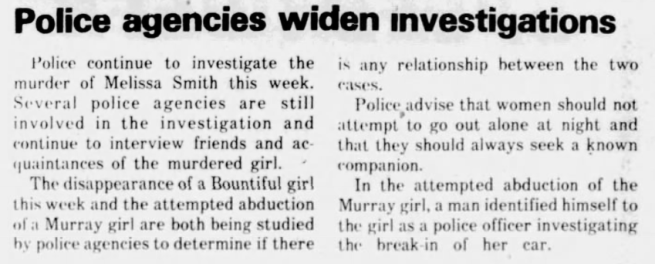
According to Linn County District Attorney Jackson Frost, the county was ‘seeking the identity of the woman who had been described as Caucasian, between 5’5” to 5’7” tall, anywhere from 115 to 125 pounds and had medium brown hair. He further speculated that she had been dead for ‘over a year,’ had worn ‘size ten clothes,’ and was between seventeen and nineteen-years-old: ‘we’re unable to determine how long the remains have been at that place. Though foul play had not been ruled out we don’t have any specific reason to believe this person was murdered.‘ Frost went on to say his office had already received ‘numerous’ phone calls from parents of missing girls asking about their missing daughters, and about the skull said: ‘there are no teeth missing, we have that charted. The problem even in this day is that some people don’t have dental records.’

Because a limited amount of remains that were found (the skull, some teeth, and a few ‘small bones) the examinations came back undetermined: by that point a good amount of time had passed, and on top of the natural decomposition little woodland critters would have done a good job of dispersing their bones all over the area. The odontologist in charge of the dental examination noted several restorations, and per a 2010 Linn County Sheriff’s Office report, a medical examiner identified a ’wound track on her skull, which could have been caused by something similar in size to an ice pick or small caliber firearm.For almost fifty years the remains laid unidentified; she was referred to as the ‘Swamp Mountain Jane Doe.’

The Secret: for many years after her sister disappeared, Valerie said her aunt’s story about their last phone conversation remained consistent, until one day when she shared that Marion had told her that a strange man in a white pickup had offered to give her a ride. Nagle said that when she learned about this piece of the puzzle she: ‘started in earnest with more searching,’ including by checking databases with unidentified persons cases: ‘I remember spending a lot of time on those pages, just scrolling through and trying to look.’ … ‘I never forgot about her.

Valerie also said that her sister’s disappearance was something her parents didn’t often talk about, and she isn’t even positive that they filed a missing person’s report as the Nagle family wouldn’t have ‘known where to even begin looking’ for their daughter and didn’t attempt to organize any search effort. In 2024 The Oregonian newspaper reached out to Tigard law enforcement and requested copies of any missing persons reports filed for Marion; after looking into it, an agency spokesperson said they hadn’t come up with anything. At the time her big sister disappeared Valerie was only eleven and was living in New York state with her parents and one of her brothers, and according to her: ‘I mean, there were, you know, efforts to search, but it was limited. We didn’t have that much to go on.’

Efforts: over the years a NamUs profile (National Missing and Unidentified Persons System) was created for the ‘Swamp Mountain Jane Doe,’ and forensic techs put her information into CODIS (or the ‘Combined DNA Index System’), which allows federal, state, and local law enforcement laboratories to digitally compare genetic samples. Forensic artists also created multiple recreations of a possible physical renderings of the victims face based on the cranial features of her skeleton as well as a clay model that even featured different hairdos and color/shade ranges that maybe she may have worn in an attempt to create an image that people who knew her may have recognized.

Updates: in 2010, the Oregon Museum of Natural and Cultural History completed an anthropology report of the still unidentified remains of the ‘Swamp Mountain Jane Doe,’ and a biological profile gave investigators demographic information on the individual, noting she was most likely a white female under 35 years old when she died. But still, she remained unidentified; also in 2010, a bone sample from the remains were sent to the University of North Texas Center for Human Identification. An additional piece of bone was submitted for DNA extraction in 2020, which allowed for a unique genetic marker profile to be produced and in 2023, Valerie Nagle submitted a DNA sample to a genealogy website when she signed up for Ancestry.com with the hope that it would result in a clue as to what happened to her sister.

It wasn’t until April 2025 that Oregon investigators got a break in the case after Marion’s first cousin uploaded their genetic profile to the Ancestry-type website ‘Family Tree DNA,’ which allowed genealogists to delve deeper into the ‘Swamp Mountain Jane Doe’s’ family tree and eventually led them to one of Marion’s surviving family members: Valerie. In June 2025 detectives reached out to Nagle ‘out of the blue’ and asked what her thoughts were when it came to Marion possibly being the ‘Swamp Mountain Jane Doe;’ she said when they contacted her she was ‘very surprised that they called. I was really glad that they found me through DNA.’ Nagle gave detectives an oral DNA swab for comparison in June 2025 which quickly confirmed that the remains belonged to Marion.

In an interview with KOIN, Oregon State Forensic Anthropologist Hailey Collord-Stalder commented that: ‘this case was cold for 49 years. That means that family members lived and died without ever knowing what happened to their missing loved one.’ She went on to add that McWhorter most ‘likely did not go missing voluntarily. This was one of our oldest unidentified cases. And I think it just goes to show you that no matter how long somebody persists in being unidentified, we won’t give up trying to identify them.’

Suspects, Ted Bundy: in October 1974, Ted Bundy was living in a rooming house in Salt Lake City and was attempting his second round of law school at the University of Utah. This period marked a notable change in his criminal activity as he was in the process of moving his ‘playground’ from the Pacific Northwest to the Intermountain West: on October 2 he abducted and killed sixteen-year-old Nancy Wilcox from Holladay, Utah, and on October 18th seventeen-year-old Melissa Smith disappeared out of nearby Midvale; the daughter of the local police chief, Smiths remains were found nine days later. At the end of the month on Halloween night Ted abducted and killed seventeen-year-old Laura Ann Aime, who vanished after leaving a party in Lehi to buy cigarettes.

In the fall of 1974 Ted was also maintaining his long-distance relationship with Elizabeth Kloepfer in Seattle (despite also dating multiple other women) and it’s also worth mentioning that for his move from Washington to SLC he bought an old white pick-up truck at one point in time (I couldn’t find much information about that particular vehicle). I could have sworn I read somewhere that it was his brothers truck, but when I looked into it I couldn’t find much on it other than the fact that he owned it until late 1975 (this is according to the 1992 TB FBI Multiagency Report ).

John Arthur Ackroyd: a lesser discussed serial killer from the Pacific Northwest, John Arthur Ackroyd was born on October 3, 1949 in the small logging town of Sweet Home, Oregon. He was one of three kids (he had an older and younger sister), and his dad was a maintenance worker and his mother worked in the office for the Sweet Home Police Department. During his adolescence, he was considered a loner and was frequently bullied, and his high school diploma indicated that he had been in the special education program.

After Ackroyd was accused of felony theft he enlisted in the Army, where he worked overseas as a mechanic. Upon returning home in 1977, he got a job with the Oregon highway department which was located along US Route 20 and ran east to west across The Beaver State; some of his responsibilities included clearing vehicle wrecks, helping those whose cars broke down, and overall basic maintenance. Later that same year he raped twenty-nine-year-old Marlene Gabrielsen, a young mother that he allowed to live (she was the only one). In 1978, Ackroyd and an accomplice, Roger Dale Beck, he abducted and murdered thirty-five-year-old Kaye Turner, who had been out running at the time she was abducted.

At some time in the mid-1980’s he married a divorcee named Linda Pickle, who had two children from a previous relationship (Rachanda and Byron); the family moved into a house in Santiam Junction, a state highway division compound at the junction of Oregon-126, Oregon-22, and US Highway 20 (other members of the highway department lived there as well, but few of them had children). After only a year of marriage, the couple divorced but continued to live together; he was abusive to both of his former stepchildren, and Rachanda disappeared under mysterious circumstances on July 10, 1990.

By early 1992 Ackroyd had moved in with his mother in Sweet Home: because of his connection to his thirteen-year-old stepdaughter’s disappearance, most of the women and children in Santiam Junction were uncomfortable with him being there, and as a result he began to work out of Corvallis. In May 1992 nineteen-year-old Sheila Swanson and seventeen-year-old Melissa Sanders vanished while on a camping trip with Sanders’ family at Beverly Beach State Park on the central Oregon coast. They were last seen at a payphone near a grocery store on US 101, reportedly planning to hitchhike back home to Sweet Home and Lebanon. Their remains were discovered in October 1992 by hunters in a remote area off a logging road near Eddyville, and due to the advanced level of decomposition, an exact cause of death could not be determined. Ackroyd was arrested for the murder of Kaye Turner on June 12, 1992, and he was charged with Rachanda’s murder in 2013; he pleaded no contest. Lincoln County Investigators with the DA’s Office Ron Benson and Linda Snow were preparing to present evidence against Ackroyd in relation to the murders of the two young women to a grand jury when he died on December 30, 2016 at the age of sixty-seven.

Warren Leslie Forrest: logically, when I was thinking about the timing of Marion’s murder, serial rapist and murder Warren Leslie Forrest immediately popped into my head… but by late October 1974 he had already been arrested (he was taken into custody on October 2, 1974).

Richard Sean Nagle: sadly, Marion’s younger brother Richard Nagle died from suicide at the age of fourteen on March 6, 1974. He died in his home and according to his autopsy he died of ‘self-inflicted strangulation;’ per his obituary, Nagle was born in Seattle and had moved to Dansville four years prior; he was also in ninth grade at the local junior high school.
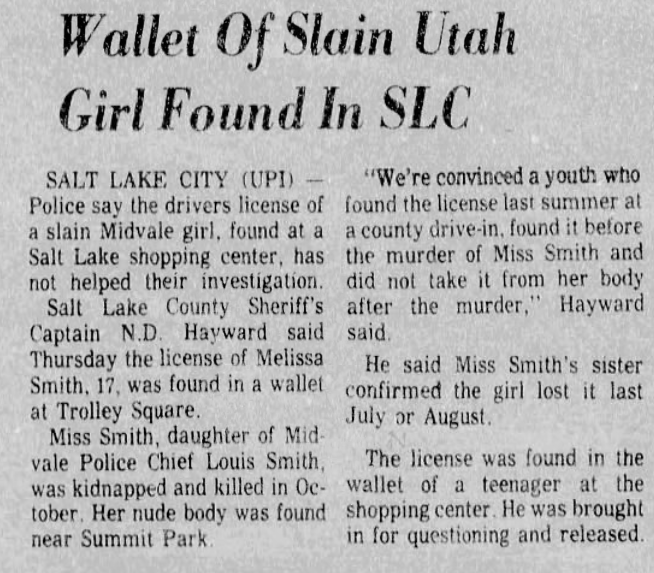
Monica & Melissa: tragically, on April 7, 2002 Marion’s daughter Monica died at the age of thirty-one along with her half-sister, twenty-two-year-old Melissa McWhorter after the vehicle they were driving was hit by a drunk driver in Moffat, Texas. Monica Kay McWhorter married Yeow B. Lim in 1996, and the couple had a son together named Jason Bravo (who fortunately survived the accident with only minor injuries). She is buried in Bell, TX.

Conclusion: the entire Nagle-McWhorter clan is steeped in absolute tragedy: Kenneth Michael McWhorter died at the age of forty-two on July 17, 1994; his widow Deborah died at the age of fifty-six on December 31, 2007. Marion’s brother William Frances Nagle died of a heroin overdose at the age of thirty-eight in Seattle on June 17, 1994. Patricia Ann Nagle-Johnson died from lung cancer at the age of forty-two on January 13, 1997 in Seattle. Marion’s father died on Christmas day in 2002 in Seattle and at the time of his death, he had been married to Violet for fifty-seven years. Violet Nagle died at the age of eighty on May 3, 2008 in Seattle from lung cancer. According to a Reddit post, in recent years Valerie was able to find the daughter that Marion gave up for adoption, but they didn’t get as close to her as they had hoped to. She currently lives in Seattle, Washington and is sixty-three years old. As of April 2026, Marion’s case remains unsolved.

Works Cited:
AP. (September 19, 2025). ‘A woman’s remains were found in Oregon in 1976. They’ve been identified 49 years later thanks to DNA.’ Taken March 4, 2026 from nbcnews.com
Martin, Saleen. (September 22, 2025). ‘She was Last Heard from 51 Years Ago. Her Remains have Finally been Identified.’ Taken March 4, 2026 USA TODAY
Wasson, Lindsey. (September 19, 2025). ‘A Woman Vanished in Oregon in 1974. Now, Remains Two Years Later have been Identified as her, through DNA.’ Taken March 5, 2026 from cbsnews.com
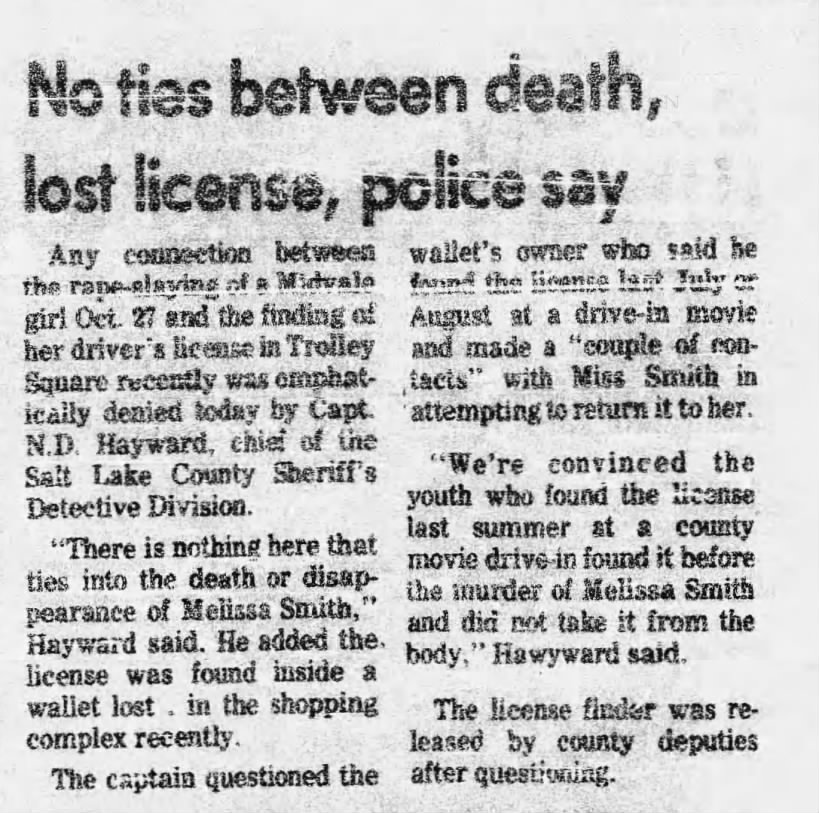
Marion in elementary school.
Marion.
Marion.
Monica (seated on horse) with her mother Marion and aunt before 1975.
The black and white beaded phoenix that was on Marion’s belt when her remains were discovered.
The clog-like shoe that was found near Marion’s remains.
A forensic approximation of what an older version of Marion Nagle-McWhorter might look like in more recent days.
One of the multiple recreations of the ‘Swamp Mountain Jane Doe’s’ face that was based on the cranial features of her skeleton.
A forensic drawing of the former ‘Swamp Mountain Jane Doe.’
A second forensic drawing of the former ‘Swamp Mountain Jane Doe.’
An article about the discovery of the ‘Swamp Mountain Jane Doe’ that was published in The Albany Democrat-Herald on July 26, 1976.
An article about the discovery of the ‘Swamp Mountain Jane Doe’ that was published in The Statesman Journal on July 28, 1976.
An article about the discovery of the ‘Swamp Mountain Jane Doe’ that was published in The Oregon Journal on July 28, 1976.
An article about the discovery of the ‘Swamp Mountain Jane Doe’ that was published in The Albany Democrat-Herald on July 30, 1976.
An article about the ‘Swamp Mountain Jane Doe’ that was published in The Statesman Journal on August 1, 1976.
An article about the ‘Swamp Mountain Jane Doe’ that was published in The Albany Democrat-Herald on August 2, 1976.
An article about the ‘Swamp Mountain Jane Doe’ that was published in The Capital Journal on August 6, 1976.
Part one of an article about the discovery that the ‘Swamp Mountain Jane Doe’ was really Marion McWhorter that was published in The Oregonian on September 17, 2025.
Part two of an article about the discovery that the ‘Swamp Mountain Jane Doe’ was really Marion McWhorter that was published in The Oregonian on September 17, 2025.
Part one of an article about the discovery that the ‘Swamp Mountain Jane Doe’ was really Marion McWhorter that was published in The Oregonian on September 20, 2025.
Part two of an article about the discovery that the ‘Swamp Mountain Jane Doe’ was really Marion McWhorter that was published in The Oregonian on September 20, 2025.
An article about the death of Monica’s daughter Michelle published in The Press Enterprise on October 18, 2025.
Kenneth and Marion in the California state marriage records.
Kenneth and Marion in the California state divorce records from 1975.
I love how her name isn’t spelled even remotely correctly. Published in The San Bernardino County Sun on July 30, 1975.
A comment on a Reddit post about Marion Nagle-McWhorter made by user ‘Sailboat_fuel.’
A comment on a Reddit post about Marion Nagle-McWhorter made by her sister Valerie Nagle, who went by the username ‘PNWpurplepisces.’
A second comment on a Reddit post about Marion made by her sister talking about how her niece is still alive and seems to be ‘doing well.’
Ted’s whereabouts in October 1974 according to the ‘1992 TB Multiagency Team Report.’
A possible route from Bundy’s residence on Est 1st Avenue in SLC to Sweet Home, Oregon where Marion was last seen alive.
A Reddit comment made by user ‘JudiesGarland’ about Ted Bundy possibly being responsible for Marion’s death.
John Arthur Ackroyd.
Part one of an article about the atrocities of John Arthur Ackroyd published in The Sunday Oregonian on June 14, 1992.
Part two of an article about the atrocities of John Arthur Ackroyd published in The Sunday Oregonian on June 14, 1992.
Roger Dale Beck, accomplice of John Arthur Ackroyd.
Vinetta Nagle, Jack Nagle, an unknown women and their aunt Vinetta Clara O’Hara (who Marion was named after).
Francis J. Nagle’s WWII draft card.
A newspaper article mentioning Francis Nagle published in The Evening Tribune on October 10, 1949.
The obituary for Francis J. Nagle.
Monica McWhorter from the 1987 Turlock High School yearbook.
Monica Kay McWhorter from her high school days.
Monica McWhorter, on the right.
Monica Kay McWhorter-Lim.
Monica (left) and her son, Jason Bravo; I’m not sure who the brunette is.
The final resting place of Monic R. McWhorter.
The final resting place of Melissa McWhorter.
An article about the death of Monica’s daughter Michelle published in The Austin American-Statesman on April 8, 2002.
A newspaper clipping a bout the deaths of Monica and Melissa McWhorter.
Richard Sean Nagle.
A newspaper article bout he death of Richard Nagle that was published in The Times-Union on March 7, 1974.
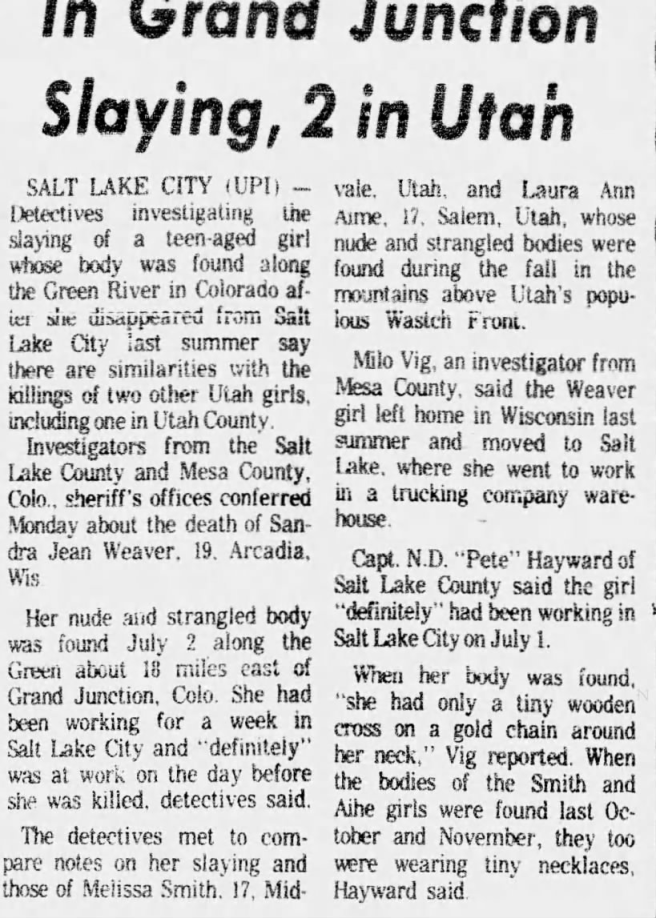
The final resting place of Monica’s brother, Richard Sean Nagle.
Richard Nagle’s obituary.
The final resting place of Monica’s parents and brother.
Kenneth Michael McWhorter listed in the Texas, U.S., Birth Index, 1903-1997.
Kenneth Michael McWhorter.
According to this newspaper clipping, Kenneth and Deborah McWhorter suffered from some marriage difficulties at one point in their relationship, published in The San Bernardino County Sun on October 30, 1981.
Kenneth McWhorter’s second wife, Deborah James.
Valerie Nagle in Seattle. Photo taken by Lindsey Wasson of the AP.
Valerie Nagle, photo courtesy of Facebook.

The Former Flame Tavern/Birrieria Tijuana.

On the evening of June 1, 1974 Ted Bundy abducted Brenda Carol Ball from The Flame Tavern in Burien, WA; she was never seen alive again.

An older picture of The Flame Tavern as it looked in the 1970’s.
An older image of the tavern from the 1970’s, photo courtesy of OddStops.
An old sign from the Flame Tavern, which advertised ‘Dancing Nightly,’ photo courtesy of OddStops.
The band ‘Child Jam’ performing at The Flame in 1972.
This Google Street View image of the bar was taken in 2011, photo courtesy of OddStops.
The former Flame Tavern as it looked in April 2022.
The back part of the former Flame Tavern as it looked in April 2022.
The back parking lot of the former Flame Tavern as it looked in April 2022.
The former Flame Tavern as it looked in April 2022.
The side of the former Flame Tavern as it looked in April 2022.
The front sign from the former Flame Tavern as it looked in April 2022.
The former Flame Tavern as it looked in March 2026: it’s now a Mexican restaurant called ‘Birrieria Tijuana,’ and their food is amazing.
The back parking lot of ‘Birrieria Tijuana’ as it looked in March 2026.
‘Birrieria Tijuana’ as it looked in March 2026.
The entrance of ‘Birrieria Tijuana’ as it looked in March 2026.
‘Birrieria Tijuana’ as it looked in March 2026.
The main dining room of ‘Birrieria Tijuana’ as it looked in March 2026.
Another shot of the main dining room of ‘Birrieria Tijuana’ as it looked in March 2026.
Another picture of the main dining room of ‘Birrieria Tijuana’ as it looked in March 2026.
The restroom in ‘Birrieria Tijuana’ as it looked in March 2026.
Inside looking outside, ‘Birrieria Tijuana’ in March 2026.
My pigeon friend, outside of ‘Birrieria Tijuana’ in March 2026.
The back part of ‘Birrieria Tijuana’ as it looked in March 2026.
The back parking lot of ‘Birrieria Tijuana’ as it looked in March 2026.
Rhonda Louise Burse, who was last seen in Burien, Washington on August 8, 1977 at The (former) Flame Tavern: she worked there as a topless dancer and had been last seen getting into a car after her shift. Burse was a dancer in the general Seattle area as well as Colorado and Texas, and sadly few details are available in her case.

Taylor Mountain.

Video taken in March 2026, posted at 2x and 4x speed. Please be kind with your comments, this (and Issaquah) are the first videos I’ve ever attempted.

A video I took of Ted Bundy’s Taylor Mountain DS in March 2026 sped up 2x.

A video I took of Ted Bundy’s Taylor Mountain DS in March 2026 sped up 4x.

‘Fear.’

My job offers tuition reimbursement, and I like to take one class a semester… I usually take something involving science or math, but because I’m running out of courses to take, I decided to take Creative Writing. I’m hoping it helps me think outside the box a bit more in regard to non-fiction.

The man with his arm in a sling was handsome.
That alone put the brunette beauty at ease
(the valiums and beer didn’t hurt either).
He implored: “could you help me load a catamaran onto my car?
It’s just down the road…
at my parents house.”
He then grinned at her, a smile that went up to his bright blue eyes,
and she shrugged her shoulders and thought to herself,
“why not? What else do I have to do right now?
Ken probably won’t even notice I’m gone.”
The scalding midafternoon July sun beat down on her pale skin mercilessly,
as she made her way across the parking lot to the attractive stranger’s car.
She immediately noticed his vehicle,
which stood out like a sore thumb:
(a tannish-yellow VW Beetle),
“How scary can a guy driving a Bug be?”
she thought to herself as she climbed in.
The two made small talk as he slowly and cautiously made his way
through the park:
he shared with her that he was a law student,
and that maybe one day he would teach her how to sail.
Lake Sammamish State Park was beautiful (if not a bit too hot):
The annual Rainer Beer Picnic was taking place that day
(neither one commented they were there for the event).

The miles ticked by.
the man grew quiet,
and she noticed his eyes went black.
The atmosphere in the car shifted,
and became so tense you could cut the air with a knife.
As the minutes went by, she became increasingly convinced that there was no sailboat.
And suddenly
(without warning),
he swerved his VW over and stopped it abruptly on the side of the road.
After briefly struggling for something under his seat,
the stranger pulled out a
crowbar, with a taped handle…
and after a (very) brief back and forth
he quickly overpowered her,
hitting her once over the head.
The girl slumped over in her sear,
unconscious.
***
The pretty brunette woke up to screaming,
but quickly realized it wasn’t her voice:
A petite girl with blonde hair was fighting with the stranger;
blood streaming from the top of her head,
stemming from a single deep wound.
She watched in horror as the man subdued the woman,
and he wrapped his hands around
her neck…
and squeezed.
Within a matter of minutes,
the light left her eyes.
Before Denise realized what was happening,
he turned around,
and slowly began making his way towards her.
As she looked around for a way out,
she realized there was nowhere for her to go.
Fighting was useless: he was almost double her size.
… as he made his way towards her,
his eyes locked with hers,
and she suddenly remembered his injury:
his sling was gone,
HIS ARM WAS FINE.
It was all a con.

It was in that moment,
(between the benzo’s and the shock)…
the compassionate young woman with so many unfulfilled dreams,
and thoughts,
and plans,
knew it was her end.

The two beautiful, ambitious young women,
that never met,
and had no ties to one another…
in that very moment ,
became tied to one another forever.

Diane Sue Gilchrist.

Diane Sue Gilchrist was born on August 8, 1959 to William and Jean Gilchrist in Vancouver, WA. William Gilchrist was born on July 30, 1930 in Bessemer, Michigan and Jean was born on July 18, 1937 in Potlatch, Idaho. After he relocated to Washington state at the age of ten, Gilchrist served in the Army during WWII and the Korean War and upon returning home got a job as a longshoreman (which is a marine terminal laborer that is responsible for loading and unloading cargo from ships at ports). Before he was married to Diane’s mother he was wed to Georgianne Jordan: the couple tied the knot in Vancouver, WA on December 20, 1949 but had gotten divorced at some point prior to 1959, as he married Jean Peterson on April 16, 1959; the couple had six children together: Carol, Kay (b. 1962), Karen (b. 1959), Diane, William, and Donald (b. 1961). William and Jean seemed to have a rocky relationship, and according to records divorced then reconciled at least once before they eventually parted ways for the final time on December 15, 1980 (she married William Stuart on September 16, 1982). 

Few details are available in relation to Diane’s disappearance: at the time she was a freshman at Shumway Junior High School and wore her blonde hair at her shoulders; she had blue eyes, stood at a mere 4’10” tall, and only weighed 100 pounds. According to her sister Karen, after Diane got home that Monday it was just like every other night in the Gilchrist household: their father began to target her, which led to a verbal altercation and her head being slammed into a door jam. She then bolted upstairs to the bedroom she shared with her sister Kay and slammed the door, and talked about her plans of running away, exclaiming that she couldn’t: ‘handle it anymore;’ shortly after this exchange, she climbed out their second story bedroom window and vanished.

From there, she walked to her boyfriend David’s house, who lived nearby; he would later tell detectives that she got to his residence at around 7 PM but hadn’t been there for long before she announced she was ‘going to walk to the store for cigarettes.’ David wanted to go with her, and Gilchrist responded that she wanted to go by herself and would be back shortly… but when she walked out of the door and into the night, she was never seen or heard from again. Two days later, Diane’s mother reported her missing to the Vancouver City Police, and according to Karen, their mother was so grief stricken by her sister’s disappearance that she had a breakdown and checked herself into Western State Mental Hospital (which was coincidentally the same facility where WLF was later committed). And after that, the Gilchrist siblings went into foster care.

In the beginning part of the investigation, it was suspected that Diane may have been a runaway… and as a result her disappearance wasn’t taken seriously by police. However, this theory was eventually discarded, and investigators now strongly believe she is a victim of serial predator Warren Leslie Forrest. After his 1974 arrest investigators went over Forrest’s employment history, and he apparently took off from work the morning after Gilchrist was last seen alive, and just two days after Diane disappeared, Gloria Knutson was last seen alive (the day after she goes missing, Forrest left work early); two weeks after that, Carol Valenzuela was last seen in downtown Vancouver.

Forrest has been incarcerated since 1978 serving a life sentence for the 1974 murder of Krista Kay Blake (and before that he was committed to Western State Penitentiary in Steilacoom since January 1975). Nineteen-year-old Blake had been seen last on July 11, 1974, climbing into Forrest’s light blue Ford Econoline cargo van outside of downtown Vancouver; only six days later Norma Countryman was abducted while hitchhiking in Ridgefield (she survived the encounter). In 2018 new charges were brought up against Forrest in relation to the murder of Martha Morrison.

Seventeen-year-old Martha’s body was recovered on October 12, 1974, by a member of a hunting party in a densely wooded area in Dole Valley; sadly her remains went identified until July 7, 2015 when some familial DNA from Morrison’s half-brother, sister, and the exhumed body of her father matched some blood that had been found left behind on one of WLF’s dart guns.

About WLF finally being held accountable for his sisters murder, Michael said, ‘boy, am I happy about that one. It’s been 45 years. Am I expecting some kind of closure? I don’t know. I’m kind of really settled in my own mind at this point. I’d like to look him in the eye and say: … ‘Why did you do this?’’ He also said their father reported Martha as missing years prior, but the police report was lost so her disappearance wasn’t officially reported until January 2010, when he contacted police in Eugene, OR. According to Michael, his sister was a ‘free spirit’ that was known to hitchhike and played the guitar, and: ‘was an artist. She was real friendly. She was just a great kid. I don’t know what I’m really expecting. There isn’t really any closure. I got all of the information. OK, this happened. What more can you do? That’s probably all I can really expect at this point. I’m kind of at peace with it somewhat, somewhat.’

In August 2018 Diane’s sister Karen went to the murder trial of Martha Morrison to face her sister’s accused killer for the first time, and about the event said that it was mostly curiosity that brought her there, and ‘it was frightening. We made eye contact. It felt like he knew me’ (as she said this, she was reportedly trembling). 

A friend of Jamie Grisim’s (who is another suspected victim of WLF) sister Dena Rush also attended Forrest’s 2018 hearing (on Starr’s behalf), and about him said: ’there are a lot of girls from our county who are missing that he had a hand in. It’s hard because so many years, and he’s still alive and their loved ones are still missing, these girls. And they deserve better.’ Rush also said she was struck by Forrest’s small stature: ‘you always think when you are going to be next to evil, you’re going to feel it or sense it. He looks so innocuous. He just looked like he couldn’t hurt a fly.’

One of Diane’s friends from early childhood, Jerri Mitchell thinks about her a lot, especially on August 8 of every year (which was their shared birthdays): ‘I miss her, I’ve missed her all these years. She was my first real friend.’ Since 1974, Jerri has held onto hope that her best friend ran away to live another life, and that she isn’t lying dead somewhere.’ At the time Diane disappeared the two friends had been ninth graders at Shumway Junior High School in downtown Vancouver, and they both experienced rough childhoods: ‘when Diane came along, she just came out of nowhere. I don’t remember her being in school before, we just ended up being friends and we hit it off and then she disappeared.’

About her friend, Jerri said: ‘I’ve always thought of kids like her and I, we get lost in the world. We are the ones that if we disappear, no one cares. And that’s what I saw with Diane. Nobody cared when she disappeared. I never had anyone come ask me. I was her best friend when she disappeared.’ She also said that if Diane was one of Forrest’s victims, ‘at least there’s knowing what happened to her,’ and knowing she wasn’t forgotten.’

Karen Gilchrist currently lives in Vancouver, WA and Diane’s sister Carol lives in Washougal, WA. She has been employed as a laundry room attendant at a Holiday Inn since March 2022

Jean Gilchrist-Stuart died at the age of fifty-eight on September 5, 1982 in Vancouver, WA; her obituary said that she was a homemaker. William Gilchrist died at the age of sixty-eight in a Vancouver care center on February 27, 1999. According to his obituary, he was a longshoreman for thirty-five years before his death and he was a member of the Longshoremen’s union. He also enjoyed watching TV and playing cribbage. Diane’s brother Donald William Gilchrist passed away on July 1, 2021.

Warren Leslie Forrest is serving life sentences for the murders of Krista Blake and Martha Morrison in the Washington State Penitentiary in Walla Walla (despite being suspected in six disappearances and murders). As of February 2026 he has never been charged in connection to Diane’s disappearance, and her disappearance remains unsolved. After Diane disappeared the Gilchrist family purchased a burial plot that they keep to this day, waiting for a resolution to her disappearance. According to Karen Gilchrist, her sister: ‘was cheated out of life and Warren Forrest took that away.’

Works Cited:
Carolyn Osorio. (September 9, 2025). Stolen Voices of Dole Valley, Episode 5: The Good-Looking Stranger. Taken February 12, 2026 from https://pod.wave.co/
Prokop, Jessica. (January 6, 2020). ‘Suspected Serial Killer, 70, in Clark County Court in 1974 Murder Case.’ Taken February 18, 2026 from http://www.columbian.com
Tilkin, Dan. (August 8, 2018). ‘Could Diane Gilchrist be Warren Forrest’s 9th Victim?’ Taken February 18, 2026 from http://www.koin.com

Five of the Gilchrist children (Diane is in the top far left).
Diane Sue Gilchrist.
A picture (from 2013) of what Diane Gilchrist could look like using age-progression to age 54.
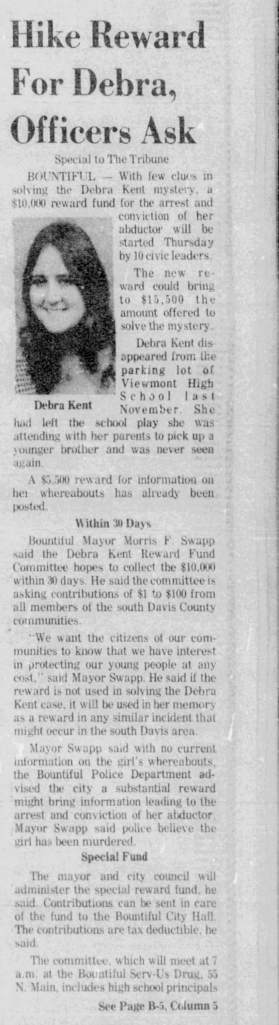
A missing-persons flier for Diane Gilchrist.
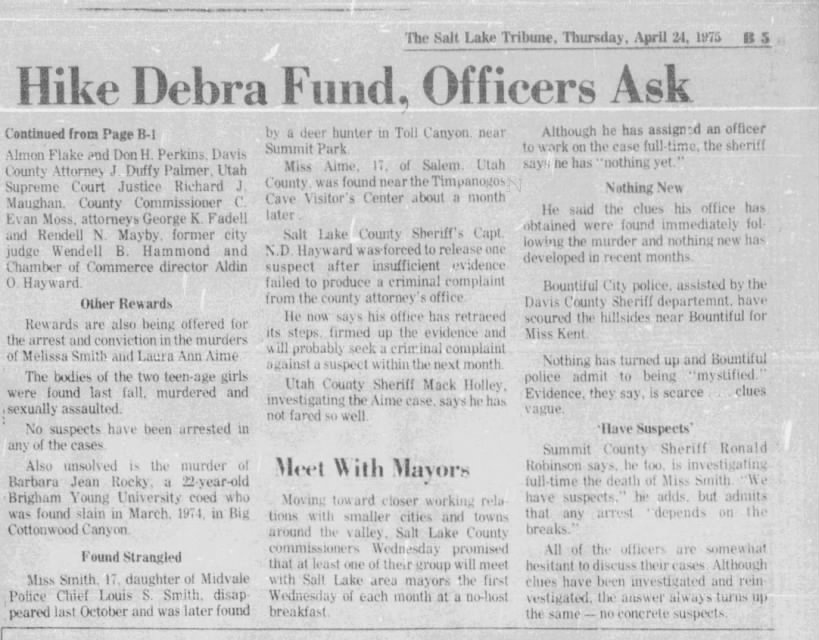
One of Carol Gilchrist’s Facebook posts about her sister.
Another one of Carol Gilchrist’s Facebook posts about her sister.
Part one of an article about Warren Leslie Forrest that mentions Diane Gilchrist published in The Oregonian on January 31, 2023.
Part two of an article about Warren Leslie Forrest that mentions Diane Gilchrist published in The Oregonian on January 31, 2023.
A comment made on a Reddit post about Diane.
The house that Diane was living at the time of her disappearance, located at 1811 Franklin Street in Vancouver, WA.
William Gilchrist’s draft card from Korea.
A picture of Georgeanne Jordan taken from the 1949 Vancouver High School yearbook. She was born on January 17, 1932 and died at the age if eighty-one on February 7, 2013.
Some information related to William Gilchrist’s criminal record.
William Gilchrist and his first wife’s marriage affidavit and application to wed dated December 20, 1949.
William Gilchrist and his first wife’s marriage statistics dated December 20, 1949.
William Gilchrist and his first wife’s certificate of marriage dated January 9, 1949.
William Gilchrist and Jean Peterson’s application for a marriage license dated April 16, 1954.
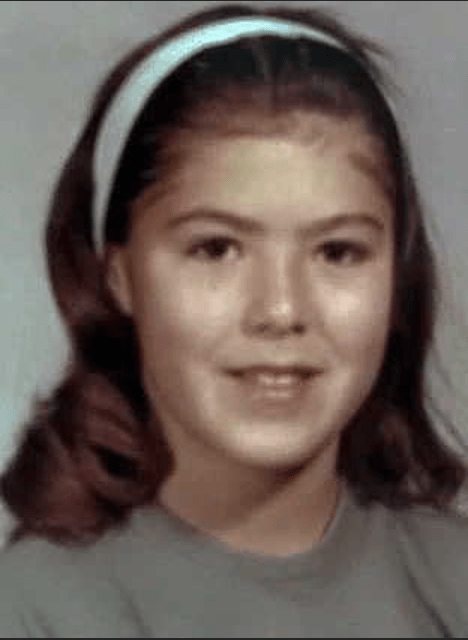
William Gilchrist and Jean Peterson’s certificate of marriage dated April 16, 1954.
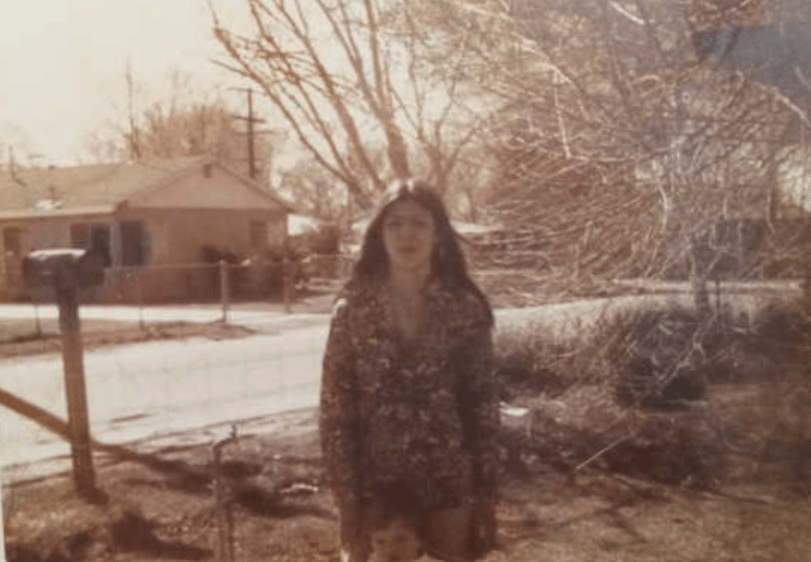
William and Jean are listed in those seeking a divorce published in The Columbian on March 12, 1968.
A picture of Diane’s brother William Gilchrist, taken from The Spokane Chronicle on May 24, 1971.
William and Jeans names in a list of people that applied for a marriage license published in The Columbian on November 3, 1977.
William and Jean are listed in those seeking a divorce published in The Columbian on September 30, 1979.
William and Jean’s certificate of divorce dated June 8, 1977.
William Gilchrist and Jean Peterson’s certificate of marriage dated November 16, 1977.
A newspaper clipping that mentions Diane’s brother Donald published in The Columbian on November 23, 1979.
William and Jean Gilchrist’s certificate of the invalidity of marriage dated December 15, 1980.
Jean E. Gilchrist and William J. Stuart applied for a marriage license published on The Columbian on September 15, 1982.
Jean Gilchrist and William Stuart’s certificate of marriage dated September 16, 1982.
Jeans name in a list of funeral services that was published in The Columbian on September 7, 1989.
Obituary for Jean E. Stuart published in The Columbian on September 7, 1989.
Jean Stuart’s death certificate.
William Gilchrist’s service date and time listed in The Columbian on March 1, 1999.
William Gilchrist’s obituary published in The Columbian on March 1, 1999.
William Gilchrist’s grave site.
Donald Gilchrist.