Margaret Elizabeth Bowman.

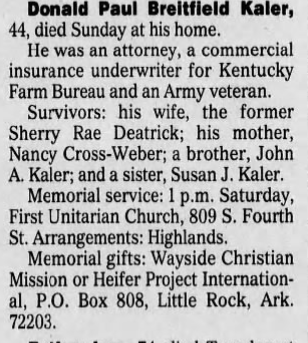
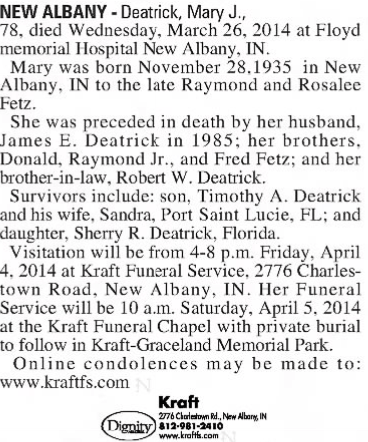
Margaret Elizabeth Bowman was born on January 6, 1957 to Jack and Runelle (nee Karnes) Bowman in Honokaa, Hawaii. Jackson Harrison Bowman III was born on October 26, 1930 in Chattanooga, TN and Mrs. Bowman was born on May 19, 1932 in Denton, TX. Margaret is also the great-great-granddaughter of Pinellas County pioneer Daniel McMullen and the great-niece of Donald C. Bowman (a prominent attorney). The couple were married on December 27, 1954 in Dallas TX and had two children together: Margaret and her younger brother, Jackson H. Bowman IV (b. May 12, 1961).

Mr. Bowman attended Southern Methodist University in Dallas, where he was a ROTC cadet. He joined the Air Force and became a pilot, and flew Trans-Pacific routes from bases in California, Hawaii, Utah and Japan; he also served his Country as an Operations Staff Officer in Saigon Vietnam where he flew combat missions, earning a Bronze Star. While ‘getting his wings,’ in 1953 he went on a blind date with Runelle, who was a Braniff Airways flight attendant at the time and the pair were together ever since. In December 1973 Jack retired from the US Air Force with the aeronautical rating of command pilot and the rank of lieutenant colonel. The following year he began his second career in the real estate business in St. Petersburg, where he served as president of the local Realtor Association and was an officer of the Florida Association of Realtors.
Always Margaret from the first grade on (never Peggy or Maggie), she always requested to be called by her full name. Tall and willowy, with chestnut hair and warm brown eyes, Bowman had her mother’s strong features as well as her delicate nose. As a little girl, she would sit in her father’s lap while he read her Peter Rabbit, and if he stopped for any reason she would pick up where he left off, reciting the book completely from memory, and when her grandparents gave her a copy of ‘The Secret Garden’ at the age of ten, she devoured it, and read it over and over again.

In Margaret’s early years the Bowman family moved around a lot, but in 1973 they settled down in St. Petersburg, FL during her time in high school and college. During her junior and senior years in high school Bowman was a member of the drama club, the Civinettes service club, the scuba diving club, and the tennis team, and in her senior year she served as the president of the French Club and the French National Honor Society, ‘Le Cercle Francais;’ she also enjoyed playing chess with her brother.

At the time of her murder, Bowman was 21 years old and a junior art history major (she had a deep love for classical civilizations) at Florida State University in Tallahassee and was a member of the Gamma Chapter of the Chi Omega sorority. She joined the Chi Omega’s because her grandmother (who was also named Margaret) had pledged there as well. She lived in room number nine in their house on West Jefferson Street, and was described by her sisters as ‘very religious’ but very sweet and easy to get along with. Margaret was rush chairman for the Chi Oh’s and was a member of the schools senate, and in January 1978, she was learning to sew and was working on making a green velveteen dress.

On the evening prior to their murders, both Bowman and her sorority sister Lisa Levy had been at Sherrod’s, a disco-like bar that was located right next door to their house, but whether Bundy saw them there is unknown. According to The Tallahassee Democrat on January 17, 1978, Margaret was invited to go out for a late night burger at an all-night diner  on the evening she was killed but she turned them down, deciding to go to bed instead.

In the early morning hours of January 15, 1978, Bowman was attacked as she was asleep in her second story bedroom as well as three other coeds: Lisa Levy, Karen Chandler, and Kathy Kleiner were found brutally attacked in their beds. Kleiner and Chandler survived, but Margaret and Levy did not. Using blood samples from the four women, forensic serologist (which is a scientist that studies bodily fluids) Richard L. Stephens proved that Lisa Levy and Margaret Bowman were bludgeoned before Kleiner and Chandler.

According to author Steve Winn, responding Tallahassee police officer Bill Newkirk went into Margaret’s room first and he assessed the damage: the young coed laid on her bed in a limp, awkward pose and she had a pair of panty hose cinched around her neck (knotted at the windpipe); her lifeless eyes stared blankly in front of her, and her mouth was gaped open. She had experienced a substantial blow to the head and had a large puncture on the left side of her cranium as well. There was blood everywhere, which had largely accumulated around her shoulders and head and there was also a bloody palm print on the wall that had already started to dry. Despite the massive head wound that Bowman had, the medical examiner concluded that both her and Levy died as a result of strangulation.

According to Officer Newkirk: ‘Ms. Bowman was lying on the bed in the south-west corner of the room with her head and feet pointing in the south-north direction, respectively. The bed spread was covering Ms. Bowman’s entire body with the exception of her head, which was tilted to the right lying on her pillow. Her face was facing the west wall. This writer pulled back the cover bedspread and observed Ms. Bowman had been strangled with a pair of nylon panty hose. Her legs were bent outwardly slightly and spread open. Ms. Bowman was lying on her stomach. Her right arm was extended down her side and her left arm was bent with her elbow facing east and her left hand resting on her back. Both palms of the hands were turned upward. This writer turned Ms. Bowman over onto her right side to check for a heartbeat or pulse and discovered neither. This writer looked at Ms. Bowman’s head and observed where Ms. Bowman had received a crushing blow to her right forehead coupled with what appeared to be puncture wounds in the same vicinity. Massive bleeding occurred from both the forehead and the right ear. Additionally Ms. Bowman’s neck appeared to be disjointed leading this writer to believe there was a possible neck fracture. Ms. Bowman’s body was relatively warm to the touch and her eyes were glassy with pupils dilated.’

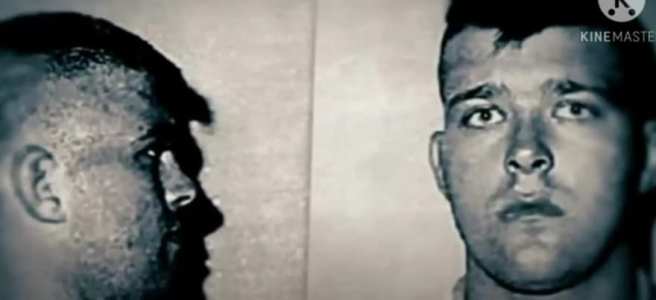
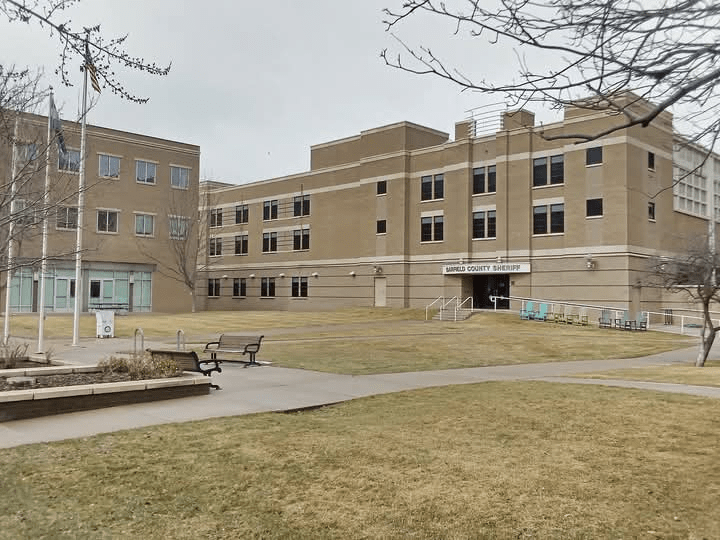
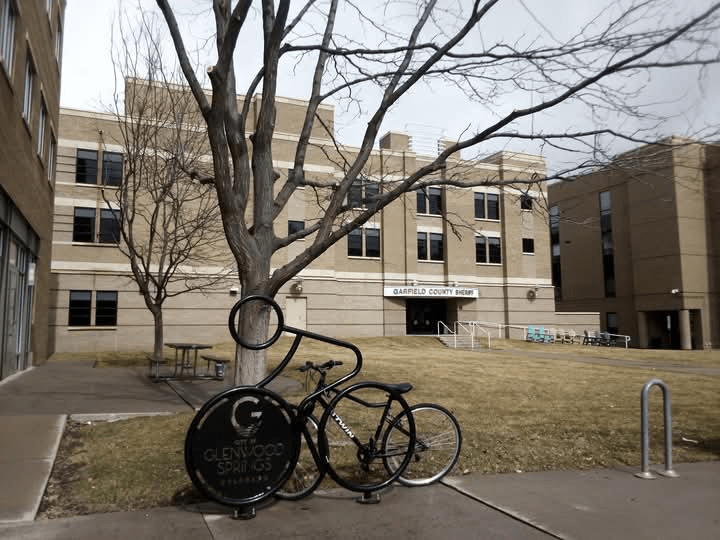
As we all know, Margaret’s killer would later be identified as Ted Bundy, who was first arrested in Granger, Utah in August 1975. After being found guilty of attempted kidnapping on March 2, 1976, Bundy escaped (for the second time) from Glenwood Springs jail in Colorado on December 31, 1977, and over the course of a few days he slowly made his way to the sunshine state, arriving by bus on January 6, 1978. He secured housing at ‘The Oaks’ rooming house the following day, and was seen next to the Chi Omega house late in the day on January 14, 1978.

At 2:00 AM on January 15, 1978 Bundy left Sharrod’s Bar and approximately a half hour later entered the Chi Omega house and began his assault on the four sleeping coeds. It’s strongly believed that Margaret was attacked while in her bed at about 2:45 AM; she had been sexually assaulted and beaten with a piece of firewood, then strangled to death with a Hanes stocking. At 3:17 AM Nita Neary arrived home from a date when she heard unusual noises coming from the upstairs, and suddenly a man came running downstairs then out the door; police were immediately called and nine minutes later they arrived on the scene.

After fleeing the Chi Omega house Bundy made his way about eight blocks over to Dunwoody Street, where at 4:37 AM he broke into the basement apartment of Cheryl Thomas. He brutally attacked the 21-year-old dance major and left her for dead; her skull was broken in five places and she suffered from a dislocated shoulder and fractured jaw. Thomas survived, but due to the permanent loss of equilibrium that she suffered from the attack essentially ended her dance career.

Thankfully before the media broke the news the families of the victims were notified of what happened in the early morning hours of January 15, 1978. The attacks at Florida State shook the Tallahassee community, and the perpetrator remained unidentified for nearly a month. Bundy was arrested for the final time at 1:30 AM on February 15, 1978, but not before he killed 12 year old Kimberly Diane Leach in Lake City, Florida; he was identified two days later. On July 7, 1978 he was indicted for the Chi Omega attacks and after standing trial was given the death sentence for the murders; he was executed on January 24, 1989.

Margaret was one of the few victims whose murder Bundy was ever charged with, and in the days before his execution he confessed to thirty murders, including hers. After their daughter’s death the Bowman family found peace within their church, St. Thomas Episcopal on Snell Isle. Mrs. Bowman said: ‘We decided that the only acceptable way to continue on with our lives was to live life to the fullest and not become bitter old people that no one wanted to be around.’

If Margaret Bowman were alive in December 2024, she would be 67 years old. Her parents thought she would have found happiness working at a museum, possibly involving art or archaeology and would probably be married with children of her own. In 1987, Jack and Runelle Bowman donated a cross in their daughter’s name at St. Thomas’ Episcopal Church in St. Petersburg, where Margaret once belonged. Runelle said that God blessed her with ‘a non-feeling’ when it came to the man that killed her daughter, and she didn’t hate him or even think about him. Instead she turned to her faith, and went to church every Sunday, where she would look at the cross dedicated to Margaret and remember her memory. According to Mrs. Bowman, ‘we decided that the only acceptable way to continue on with our lives was to live life to the fullest and not become bitter old people that no one wanted to be around.’

After Margaret was murdered Runelle Bowman went back to school and earned her Bachelor’s degree in business from the University of South Florida in 1982. After graduating and getting a job in her field she never missed an opportunity to cook a good meal for someone she loved, and her ‘food offerings’ helped serve as a great reminder of how much she loved her family and friends.

On the morning of Bundy’s execution Jack Bowman couldn’t sleep, and as dawn crept near he and Runelle turned on their television set. As seven o’clock came and went, somewhere inside of Florida State Prison the last person to see Margaret alive was being strapped into the electric chair. According to an article published by The Tampa Bay Times, at 7:18 AM they were notified by Paul Freeman from the attorney general’s office that their daughter’s killer had finally been put to death. Freeman’s position had only recently been created mostly due to the efforts of Diane Cossin, a Chi Omega sorority sister who held Lisa Levy as she died.

Following the call, the couple heard horns and fireworks going off in the distance, and on the news saw crudely made signs supporting Bundy’s death and felt a little sickened. About the execution, Mrs. Bowman said: ‘I don’t understand. You don’t see any of the victims’ families acting that way.’ As they watched their TV they saw an eyewitness to the execution describe Ted as looking scared, but that he had managed to retain a sense of dignity. Jack Bowman was glad to hear that, saying: ‘I didn’t have a motivation of vengeance. I had a motivation of justice.’ In the days following Bundy’s death, someone asked about his feelings regarding the execution, to which he replied, ‘I wanted him punished, This was not hard for me,’ and when asked to talk more about Margaret, he began to cry then shut his eyes, saying ‘I don’t think I can.’

After retiring Jack and Runelle decided to stay in Florida because of the kindness they had received from the community when they were on deployment. According to his son, Mr. Bowman was someone that never forgot a face or said an unkind word about anyone, and enjoyed a good meal at a fine restaurant with loved ones. About her husband, Runelle said ‘I was so blessed to have Jack as my husband. He made me a better person. He could connect with people and people loved him.’ The couple were married for over sixty years when Jack died of esophageal cancer at the age of 84 on May 31, 2015. Runelle Bowman passed away peacefully at the age of 88 on March 13, 2021.

No photo description available.
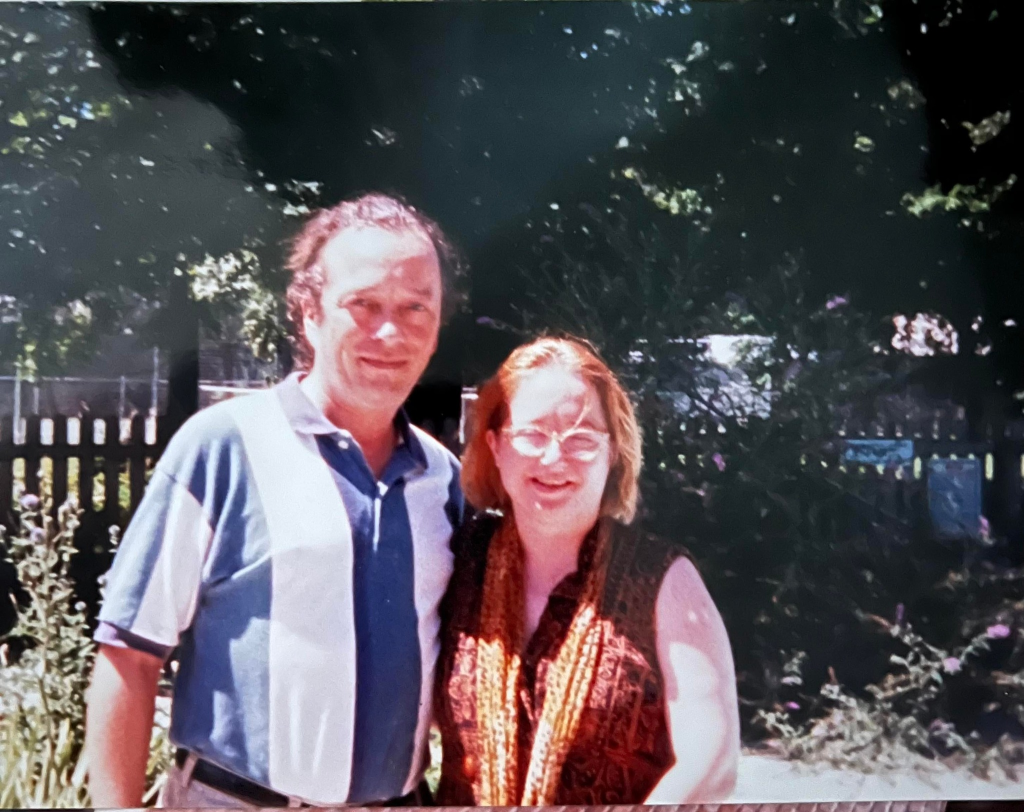
The Bowman family.
Margaret and her little brother.
Margaret and a friend working on Red Cross friendship boxes published on The Tampa Bay Times on August 3, 1969.
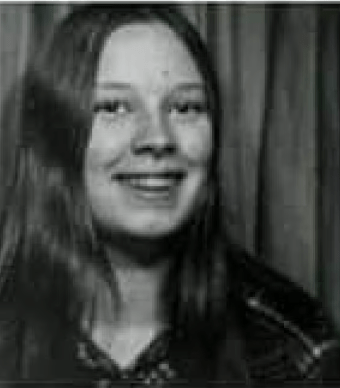
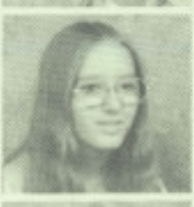
Margaret Bowman’s junior picture from the 1974 St. Petersburg High School yearbook.
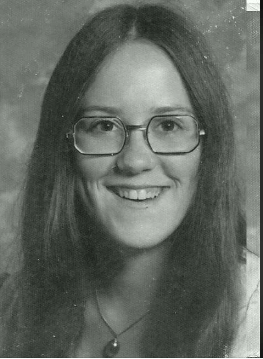
Margaret Bowman’s senior picture from the 1975 St. Petersburg High School yearbook.
Margaret Bowman in a group picture for the Civigrams from the 1975 St. Petersburg High School yearbook.
Margaret in a picture from her time on the tennis team at St. Petersburg High School.
Margaret in high school.
Bowman.
Margaret Bowman.
Margaret
Bowman and some friends.
Bowman and some friends at FSU.
Bowman at a dance, with a date.
Bowman
The crime scene of Chi Omega victim, Margaret Bowman. Photo courtesy of Vanessa West. It’s speculated that the entire crime spree took Bundy less than fifteen minutes.
Margaret Bowman, who was murdered while defenseless in her bed. Photo courtesy of Vanessa West.
Chi Omega victim, Margaret Bowman. Photo courtesy of Vanessa West.
Lisa Levy.
Bundy being read his indictment by Sheriff Ken Katsaris.
The grave of Margaret Bowman.
The Chi Omega House right after the murders took place in 1978. Photo courtesy of Oxygen.
Another shot of the Chi Omega House right after the murders. Photo courtesy of Oxygen.
Another shot of the Chi Omega House right after the murders. I love the old LE vehicle parked out front. Photo courtesy of Oxygen.
The unlocked door of the Chi Omega House that Bundy snuck into. Photo courtesy of Oxygen.
An area outside of the Chi Omega house. Photo courtesy of Oxygen.
A shot of the logs outside of the Chi Omega house Bundy used to attack the four sleeping co-eds. Photo courtesy of Oxygen.
Another shot of the logs outside the Chi Omega house. Photo courtesy of Oxygen.
One of the beds in the Chi Omega house. Photo courtesy of Oxygen.
Another one of the beds in the Chi Omega house. Photo courtesy of Oxygen.
Another bed from the Chi Omega house. Photo courtesy of Oxygen.
Another bed at Chi Oh.
A picture of one of the bedrooms in the Chi Omega house after Bundy’s murders.
A picture of a hallway at the Chi Omega house after Bundy’s murders.
The layout of the rooms at the Chi Omega house in January 1978.
An advertisement for Sherrod’s Disco published in the Florida Flambeau on January 28, 1978. Courtesy of Tiffany Jean.
An article about Bundy’s attacks at FSU published in The Boca Raton News on January 16, 1978.
An article about Bundy’s attacks at FSU published in The Miami Herald on January 16, 1978.
An article about Bundy’s attacks at FSU published in The Fort Pierce Tribune on January 17, 1978.
An article about Bundy’s attacks at Florida State University that mentions Bowman published in The Tallahassee Democrat on January 17, 1978.
An article about Bundy’s attacks at FSU that mentions Margaret Bowman published in The Tampa Bay Times on January 20, 1978.
An article about Bundy’s attacks at FSU published in The Pensacola News Journal on January 22, 1978.
An article about stolen credit cards and student ID’s published in Florida Today on February 21, 1978.
According
A newspaper article about Margaret Bowman published in The Tampa Bay Times on November 28, 1999.
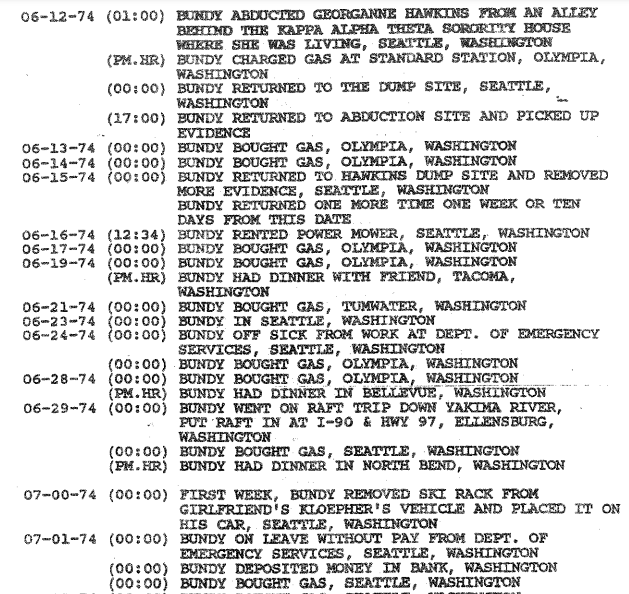
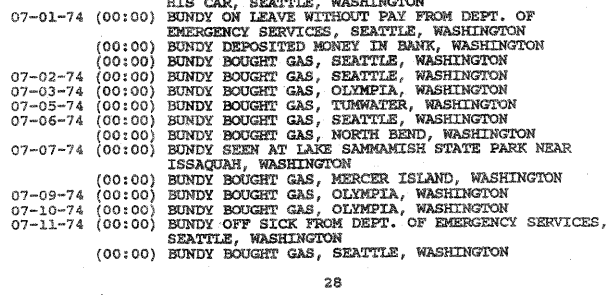
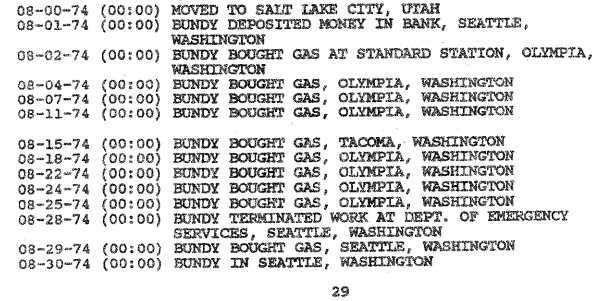
Ted’s whereabouts in January 1978 according to the TB 1992 FBI Multiagency Investigative Team Report.
A comment on a YouTube video about Margaret Bowman.
A newspaper blurb about Runelle Bowman being crowned the Bronco’s Basketball Sweetheart published in The Denton Record-Chronicle on February 15, 1948.
Runelle’s Bowman’s junior year picture from the 1948 Denton High School yearbook.
Runelle’s Bowman’s senior year picture from the 1949 Denton High School yearbook
A picture of Margaret’s mom from the 1948 Denton High School yearbook.
Jack and Runelle Bowman’s wedding announcement published in The Tampa Tribune on December 31, 1954.
Mr. and Mrs. Bowman’s marriage license.
Jackson Bowman IV in a picture from the 1976 St. Petersburg High School yearbook.
Jackson Bowman IV in a picture published in the Tampa Bay Times on January 16, 1978
Jackson Bowen IV’s wedding announcement published in The Miami Herald on March 4, 1990.
A newspaper clipping about the Bowman’s joining the Dragon Club published in The Tampa Bay Times on April 15, 1983.
A picture of Jack Bowman published in The Miami Herald on November 8, 1994.
Jack Bowman.
The Tampa Bay Times on June 3, 2015.
Runelle Bowman.
Mrs. Bowman’s obituary published in Tampa Bay Times on April 2, 2021.
Jack Bowman’s grave stone.
The first part of an article mentioning Jack Bowman published in The Tampa Bay Times on January 25, 1989.
The second part of an article mentioning Jack Bowman published in The Tampa Bay Times on January 25, 1989
A quote by Jack Bowman published in The Tampa Bay Times on January 25, 1989.
An article about former Governor Martinez’s re-election campaign that mentions Jack Bowman published in The South Florida Sun Sentinel on April 21, 1990.
A snippet of a newspaper that mentions Jack Bowman published in The Tampa Bay Times on June 5, 1997.
An article about Bundy’s conduct in court that mentions Jack Bowman.
A letter from Jack Bowman to Larry D. Simpson dated June 7, 1979. Courtesy of Tiffany Jean.
A second letter from Jack Bowman to Larry D. Simpson dated June 7, 1979. Courtesy of Tiffany Jean.
A letter from Jack Bowman to Judge Stewart Hanson dated July 2, 1979. Courtesy of Tiffany Jean.
Jack Bowman (on the far right) at a 1986 conference on victim advocacy. Photo courtesy of Tiffany Jean.

Valerie Ann Duke.

Valerie Ann Duke was born on July 27, 1956 to Thomas and Elizabeth Ann (nee Porter) Duke in Mathis, Texas. Mr. Duke was born on September 15, 1931 Archer City, Archer, TX and Elizabeth was born on August 9, 1933 in Mathis, TX. The couple were wed on November 6, 1954 and had two children together: Valerie and her younger brother Thomas Wade Duke II (b. 1957). An Eagle Scout, Tom went on to earn his PhD in Oceanography at Texas A&M after serving as a Lieutenant in the US Air Force. At some time the family relocated to Tucson, AZ and in 1968 they moved to Gulf Breeze, Florida. The Duke family was Methodist, and before her death Valerie was a member of the Gulf Breeze United Methodist Church.

Information about her background was hard to come by, but I do know she graduated from Woodham High School in Pensacola in 1974 then went on to attend Florida State University in Tallahassee. After enrolling she pledged the Gamma Chapter of the Chi Omega society, and eventually moved into their house on West Jefferson Street; in early 1978 she lived across the hall from Lisa Levy, and next to Kathy Kleiner and Karen Chandler. On January 14, 1978 (which was the night before Bundy’s Chi Omega attacks) Duke decided to go home to her parents house for the weekend in Gulf Breeze, and was not present for the murders that took place the following evening.

On the first anniversary of the murders Valerie Duke dropped out of school, which according to her mother was ‘completely out of character for Valerie. She had broken up with her boyfriend and couldn’t seem to decide whether to stay in Tallahassee or come here.’ Her sorority sisters also said that she was having an incredibly difficult time processing the murders, and to make matters worse, according to her parents Bundy’s fingerprints were found in her room (even though I came across a shred of evidence that confirmed that).

But, Valerie believed it and on May 1, 1979 while driving in between her home in Gulf Breeze and Tallahassee the twenty-two year old* pulled her car off to the side of the road near the East River in Holley and shot herself; she died as a result of her injuries. Her remains were discovered at 6 PM later the day, roughly ten hours after she killed herself . Former Lieutenant Ron Boswell of the Santa Rosa Sheriff’s Department said Duke parked her car near the river, locked the doors, then shot herself with a .38 caliber pistol that was found inside of the car. Also according to Boswell, ‘a suicide note was found inside of the car, at this point we have no reason to suspect foul play.’ It’s strongly speculated by those that knew her well that survivors’ guilt drove Duke to take her own life, and after a communion service she was laid to rest at the Cenizo Hill Cemetery in Mathis, TX. * For the record, I have seen her age listed at both 20 and 22, but simple math puts her at 22 years old.

Thomas Wade Duke I retired from the US Environmental Protection Agency as their Laboratory Director of Marine Biological Research in Gulf Breeze, FL, and went on to work as an environmental consultant for five years. In 2006 Tom and Elizabeth moved from Florida to Woodstock, Georgia to be close to their son and his family. Dr. Thomas Duke died at the age of 79 on March 10, 2011 in Woodstock, Georgia, and Mrs. Duke passed away at the age of 84 after a lengthy illness on December 1, 2017 in Pensacola.

Valerie Duke’s senior year picture from the 1974 Woodham High School yearbook.
Duke in a picture from the Jayettes from the 1974 Woodham High School yearbook.
An article about the suicide of Valerie Ann Duke published in The Pensacola News on May 2, 1979.
Valerie Ann Duke’s obituary, published in The Pensacola News Journal on May 3, 1979.
A newspaper clipping about Duke’s graveside service published in The Corpus Christi Times on May 4, 1979.
An article about the suicide of Valerie Ann Duke published in The Mathis News on May 10, 1979.
Part one of an article about the Chi Omega murders published in The Miami Herald on January 24, 1989.
Part two of an article about the Chi Omega murders published in The Miami Herald on January 24, 1989.
An article about Valerie Duke published in The Tallahassee Democrat on January 25, 1989.
Duke’s grave stone.
The layout of the rooms at the Chi Omega sorority house.
A picture of the front of the Chi Omega house. Photo courtesy of the Oxygen Network.
Outside the Chi Omega house the morning after the murders. Photo courtesy of the Oxygen Network.
Valerie’s mother on her wedding day, from an article published in The Corpus Christi Caller-Times on November 7, 1954.
An article about Thomas Duke visiting his sisters published in The Baytown Sun on August 5, 1954. ·
A picture of Elizabeth Duke published in The Corpus Christi Times on September 26, 1954.
An article about Mrs. Elizabeth Duke published in The Corpus Christi Caller-Times on November 3, 1954.
A write-up about Valerie’s parents getting married published in The Corpus Christi Caller-Times on November 7, 1954.
The birth announcement of Valerie’s younger brother published in The Mathis News on August 9, 1957.
Valerie is mentioned in a local newspaper, published in The Mathis News on December 27, 1957.
An article that mentions Valerie published in The Corpus Christi Caller-Times on June 17, 1974.
Wade Duke’s junior year picture from 1974 Woodham High School yearbook.
An article about the marriage of Valerie’s brother published in The Pensacola News Journal
on August 12, 1979.
Mr. Duke’s obituary published in The Atlanta Constitution on March 15, 2011.
Elizabeth Duke’s obituary published in The Pensacola News Journal on December 5, 2017.
Elizabeth Duke’s obituary published in The Mathis News on December 14, 2017.

Brenda Joy Baker, Case Files: Part Two.

The second installment of documents from the Thurston County Sheriff’s Department related to the murder of Brenda Joy Baker from Maple Valley, WA.

Thurston County Sheriff’s Office, documents related to their investigation into William Earl Cosden Jr., Part One.

I requested the case files for the murders of Katherine Merry Devine and Brenda Joy Baker from the Thurston County Sheriff’s Department and thought, why not ask for William Cosden Jr.’s as well? This is the first installment of those documents. There’s also a 2.3 gigabyte video they gave me as well, I have to figure out a way to get that on here.

The jeans that Kathy Devine was wearing at the time of her murder.
The top part of the jeans that Kathy Devine was wearing at the time of her murder.
The shirt that Kathy Devine was wearing at the time of her murder.
A close up of the shirt that Kathy Devine was wearing at the time of her murder.
The coat that Kathy was wearing at the time of her murder.
A close up of the bottom part of the coat that Kathy was wearing at the time of her murder.
A close up of the top part of the coat that Kathy was wearing at the time of her murder.
The back of the coat that Kathy was wearing at the time of her murder.
One of Kathy’s ‘waffle stomper’ boots that she was wearing at the time she was killed.
The earrings that Kathy Devine was wearing at the time of her murder.
Kathy Devine’s ring.
The ring Kathy Devine was wearing at the time of her murder.
A close-up of one of the rings that Kathy Devine was wearing at the time of her murder.
A close-up of the inside of one of the rings that Kathy Devine was wearing at the time of her murder.
One of the rings that Kathy Devine was wearing at the time of her murder.
A close-up of one of the rings that Kathy Devine was wearing at the time of her murder.
One of Kathy’s rings at the scene of her murder.
Another one of Kathy’s rings at the scene of her murder.
A chain found on Kathy at the time of her death.

Fay Ellen Robinson.

Fay Ellen Robinson was born on October 7, 1948 to Thomas Harvey and Alice Susan (nee Prentiss) in Portland, Oregon. Thomas Harvey Robinson Jr. was born on September 29, 1912 in Corsicana, TX, and Alice was born on September 15, 1916 in Oregon. Mr. Robinson graduated from Oregon State University in 1935 with a degree in electrical engineering,** and he had a long and successful career with The Bonneville Power Administration. The couple were married on September 6, 1938, in Longview, WA and had three children together: Fay, Patricia (b. 1943), and Randolph (b. 1946). Fay was a 1966 graduate of Tigard High School, where she excelled at academics and was a member of National Honor Society; she was also in her schools play group, Spanish Club, and Ski Club. Robinson went on to attend the University of Oregon, and after graduating in 1970 she moved to Eugene and got a job with the State Public Welfare Division. At the time of Fay’s murder her sister Patricia lived across the street from her.

At around 7 AM on Wednesday, March 22, 1972 Fay Ellen Robinson was found dead in her bed in her downtown apartment. According to former Lane County Public Attorney Robert Naslund, a friend and coworker named Samuel Owens made the gruesome discovery and had stopped by to give her a ride to work. She was fully clothed, dressed in pants and a sweater, and suffered from stab wounds in her neck and upper chest. According to police, Robinson’s apartment was located alongside an east-west alley located off Oak Street, and her neighbors said they heard her return home the night before at around 10 PM but didn’t hear anything unusual after that.

Fay’s boss and the manager of the Welfare Division David Kuhns said that Robinson had been an intake worker at the department’s office building since January, and said she was ‘a very quiet, serious type of person and very interested in her job. I have no idea why someone would want to harm her.’ According to reports, Robinson was a ‘rather gregarious person with a number of friends, and they’re being questioned by police,’ and in an article published in The Eugene Register-Guard, no motive had been established and police were at a loss for who would want to hurt her. Her autopsy was performed later in the same day she was discovered, and showed that she suffered from multiple stab wounds to her upper chest and neck.

According to the ‘TB MultiAgency Report 1992,’ Bundy’s whereabouts are mostly unaccounted for in early 1972. At the time Ms. Robinson was murdered Ted was living in Seattle at the Rogers Rooming House on 12th Avenue, and was in the middle of a long term relationship with Elizabeth Kloepfer. He was in the final semester of his undergraduate psychology degree from the University of Washington, and was getting ready to start an internship at Harborview Medical Center in Seattle in June (he also started at the Seattle Crime Commission around the same time).

As I’ve said in multiple other articles, its Bundy canon that the serial murderer began killing in early January 1974 with his brutal attack on fellow University of Washington student Karen Sparks (I can only assume he thought she was dead when he left her). But during his confessions before his execution he hinted to Dr. Robert Keppel that he may have started as early as 1972 with a young girl in Seattle (but of course didn’t elaborate any further than that). But… I’ve also read that he confessed to a different person that he began killing in 1969 in the Jersey Shore, and yet another that suggests 1971.

In the 2.5+ years that I’ve spent writing this blog I seem to stumble upon a new victim from Oregon every few months, and there’ve been quite a few cases of young women in the area with fates similar to Robinsons. The first one that jumped out at me is Alma Jean ‘Jeannie’ Barra, who was last seen leaving the Copper Penny Tavern in Portland the day after Fay was killed on March 23, 1972. The 28-year-old was last seen between 11 and 11:30 PM wearing a white sweater, turtleneck, maroon vest and pants and was in the company of an unknown male driving southbound on 92nd Avenue. Three days later Ms. Barra’s body was found roughly 40 feet off of Mount Scott Boulevard in an area of heavy brush of the Willamette National Cemetery in Happy Valley, OR.

In my opinion, there’s three murders that took place in mid to late 1973 that all fit very neatly into TB’s MO: Rita Lorraine Jolly, Vicki Lynn Hollar, and Suzanne Rae Seay-Justis. I know Ted only confessed to two additional Oregon murders aside from Roberta Kathleen Parks, but we all know he didn’t tell the truth very often… Seventeen year old Rita Lorraine Jolly left her family home on Horton Road in West Linn at around 7:15 PM on June 29, 1973 to go for a routine walk, and was last seen a few hours later sometime between 8:30 and 9:00 PM walking uphill on Sunset Avenue. She has never been heard from again.

24-year old Vicki Lynn Hollar was last seen getting into her black 1965 Volkswagen Beetle (with Illinois plates and the running boards removed) in a parking lot at 8th Avenue and Washington Street in Eugene at 5:00 PM on August 20, 1973. She and her supervisor walked together to their respective vehicles after work and that was the last time Hollar was ever seen alive; additionally, her Beetle has never been recovered.

Suzanne Rae Seay-Justis was last heard from on November 5, 1973 after she called her mother from outside the Memorial Coliseum in Portland. During the call, Justis said that she would return to Eugene the following day to pick up her son from school. Law enforcement recovered her vehicle left behind near her residence, and it was reported that she frequently hitchhiked to get around. Sue’s mother reserved a room for her for the night at a nearby hotel, but it was never used, and she never arrived home the following day. For reasons that are unknown, a missing persons report wasn’t filed for Justis until 1989.

According to an article published in The Oregonian on February 22, 1989, investigators in Oregon were looking into murders that Bundy could have been linked to far before 1972: a student at the University of Oregon, Janet Lynn Shanahan was married and worked PT at a credit union when her remains were found stuffed in the trunk of her car on April 23, 1969. Her vehicle and remains were found in West Eugene by her husband, who reported her missing two days before her body was recovered; according to the medical examiner, she had been raped and strangled. On May 24, 1971 thirty-four Barbara Katherine Cunningham was found deceased in her West Eighth Ave apartment; she had also been raped and strangled.

Gayle Elizabeth LeClair, who was found deceased in a similar manner that’s almost identical to that of Robinson. LeClair was a clerk/typist at the Eugene Municipal Library, and she was found stabbed in her rental house by her supervisor on August 23, 1973 after she failed to come in for her scheduled shift at 10:30 AM. Gayle had a date with a known acquaintance the night before, and the pair went to a drive-in movie then back to her apartment for a nightcap. She was last seen alive by him at 1:30 AM, and after a conversation with detectives the young man was quickly cleared as a suspect.

At roughly 1 PM on June 16, 1972 the badly decomposed remains of Geneva Joy Martin were found face down in a ‘woody, roadside ditch’ by Frank Miller, a local farmer. Martin was only wearing a coat and shoes, and her hair was caked with dried mud and sediment. She remained unidentified for roughly ten days, and because of the advanced level of decomposition police were unable to pinpoint her cause of death, but it’s suspected she had fallen in with a bad crowd and was dabbling in substance abuse. Also in June 1972 the remains of sixteen year old Beverly May Jenkins were found just off the I-5 roughly ten miles outside of Cottage Grove; she had been strangled to death.

On July 9, 1973 the remains of Laurie Lee Canaday were recovered on the pavement at the intersection of Southeast Scott Street and McLoughlin Blvd in Milwaukee, OR. According to LE, she was a frequent hitchhiker and was on her way home from work when she was abducted. Fifteen year old Alison Lynn Caufman’s nude remains were found on June 20, 1973 after she was dumped down a 30 foot long embankment near the Northeast Marine Drive near Blue Lake Park. She told her parents that she had plans of going to a BBQ, but LE later learned that there was no get-together at the address she had given them; an autopsy showed that she had died from strangulation and been sexually assaulted.

Deborah Lee Tomlinson disappeared on her sixteenth birthday along with an unnamed friend on October 15, 1973 from Creswell, OR. Creswell is an incredibly small town with only one high school, and the reported population according to the 1970 census was a mere 1,199 (it went up to 5,031 people in 2010). Called Debby by family and friends, Tomlinson had brown eyes, was 5’5”, weighed 140 pounds, and had golden brown hair she wore at her shoulders; she had a ring of moles around her neck. Not even a week later Virginia Erickson vanished without a trace on October 21, 1973 out of Sweet Home, OR. Earlier in the day that she disappeared, Erickson told her oldest daughter: ‘Rachel, if I’m not here when you get home, you feed the kids and take care of them,’ which she then did, and her dad stayed home with their mom to ‘go on a hunting trip.’ After the service was over Rachel and her younger siblings returned to an empty house, and no trace of Virginia has been seen since.

According to an article published by The Sunday Oregonian on December 7, 1975, in March 1974 the remains of seventeen year old Caroletta Spencer were discovered on a road in Sauvie Island; she suffered from multiple gunshot wounds. On the evening of March 1, 1975 the remains of twenty-two year old Margo Nerine Ascencio/Castro were found in a room at the El Don Motel on West 6th Avenue. She had been brutally attacked and died as the result of multiple stab wounds, which she had all over her body. Detectives quickly learned that at one time Ascencio had ties to the Hessian Motorcycle Club, and her murder remains unsolved. Cecelia Louise Hostetler* was twenty seven when she was reported missing out of Eugene in 1975 (even though local LE could find no record of her in their files), and was last seen leaving her POE. It’s speculated that she had plans to hitchhike home using the I-5 and her remains have never been recovered.

I think the next two girls can be quickly debunked as TB victims, as he was in prison when they were both killed. Tina Marie Mingus was only 16 years old when her body was found in Salem, OR in October 1975, and Floy Joy Bennet (who went by Jeanne) was 37 (and obviously a bit out of Bundy’s preferred age range) when she vanished in February 1978. What’s strange is I couldn’t find any more information about any of these women out there on the interwebs. It’s almost as if they never existed.

Fay’s sister Patricia died from pneumonia at the age of 64 on May 2, 2008 in Beaverton, WA. Thomas Robinson passed away from heart failure on February 21, 2003 in Silverdale, Washington. He retired from an eventful career as an electrical engineer in 1973 and was a member of the Tri County Gun Club in Sherwood, Oregon. Mrs. Robinson died at the age of 93 on January 31, 2010 in Bremerton, WA. As of December 2024 the murder of Fay Ellen Robinson remains unsolved.

* I would like to thank a reader going by the handle ‘BG’ for this. I left the old (and obviously incorrect) information about Cecelia Hostetler in the article because it was what was reported on at the time. But she eventually turned up and died at the age of 74 in a nursing home, and it was most likely an errant missing persons report that was relayed to the news, and when she was found the police likely didn’t have a file on her because she was an adult, and the public was never updated on her case.

** A big big thank you to Fay’s brother Randy for helping me correct some inconsistencies. I really appreciate you.

This is Fay’s sophomore year photo from the 1964 Tigard High School yearbook (it looks like they don’t do individual pictures aside from the senior class).
Fay in a group picture from Ski Club taken from the 1964 Tigard High School yearbook.
Fay in the a picture for Mother’s Tea in the 1964 Tigard High School yearbook.
Fay in a group photo from the play ‘Once Upon a Midnight’ taken from the 1964 Tigard High School yearbook.
Fay in a group picture for Spanish Club taken from the 1964 Tigard High School yearbook.
Fay in the NHS in the 1964 Tigard High School yearbook.
Fay’s senior picture from the 1966 Tigard High School yearbook.
Fay in a group photo for Ski Club from the 1966 Tigard High School yearbook.
Fay in a group photo for IRL Club from the 1966 Tigard High School yearbook.
Fay in a group photo for the Tigrettes from the 1966 Tigard High School yearbook.
Fay in a group picture for the Tigrettes taken from the 1966 Tigard High School yearbook.
Fay in a picture for the Tigrettes from the 1966 Tigard High School yearbook.
Fay in a group picture for NHS taken from the 1966 Tigard High School yearbook.
Fay Ell Robinson in the Death Index for Oregon, 1898-2008.
An article about the murder of Fay Ellen Robinson published in The Eugene Register-Guard on March 22, 1972.
An article about the murder of Fay Ellen Robinson published in The Oregon Daily Journal on March 23, 1972.
An article about the murder of Fay Ellen Robinson published in The Capital Journal on March 23, 1972.
An article about the murder of Fay Ellen Robinson published in The Eugene Register-Guard on March 23, 1972.
An article about the murder of Fay Ellen Robinson published in The Eugene Register-Guard on March 22, 1972.
An article about the murder of Fay Ellen Robinson published in The Statesman Journal on March 23, 1972.
An article about the murder of Fay Ellen Robinson published in The Albany Democrat-Herald on March 23, 1972.
Fay Ellen Robinson’s obituary published in The Oregonian on March 25, 1972.
An article about a Eugene woman that killed her husband that mentions the murder of Fay Ellen Robinson published in The Eugene Register-Guard Apr 4, 1972.
An article about the murder of Fay Ellen Robinson published in The Eugene Register-Guard on September 10, 1973.
An article about unsolved murders in Lane County that mentions Fay Ellen Robinson published in The Eugene Register-Guard on April 16, 1978.
The first part of an article mentioning Robinson’s murder published in The Eugene Register-Guard on April 16, 1978.
The second part of an article mentioning Robinson’s murder published in The Eugene Register-Guard on April 16, 1978.
An article about Bundy’s possible Oregon victims that mentions Fay Robinson published in barb
Thomas, Alice, and Fay’s gravestone, which is located in Cor 201, Niche 200 at the River View Cemetery in Portland, OR.
Fay’s mother’s birth certificate.
Fay’s parent’s wedding announcement published in The Corvallis Gazette-Times on August 9, 1938.
Mr. and Mrs. Robinson’s record of marriage.
Thomas H. Robinson’s WWII draft card.
Fay and the rest of her family listed in the 1950 US census.
Patricia Robinsons senior picture from the 1961 Tigard High School yearbook.
A picture of Randy Robinson from the 1964 Tigard High School yearbook.
Mr. Robinson’s obituary, published in The Sun on February 21, 2003.
Patricia Robinson-Gardner’s obituary published in The Sunday Oregonian on May 11, 2008.
Teds whereabouts in early 1972 according to the ‘1992 TB FBI Multiagency Report.’
Rita Lorraine Jolly, who disappeared out of her West Linn neighborhood at 7:15 PM on June 29, 1973 after leaving to go for a walk.
Justis was last heard from on November 5, 1973 after she called her mother from outside the Memorial Coliseum in Portland, OR.
Vicki Lynn Hollar, who disappeared from Eugene, OR on August 20, 1973.
Alma Jean Barra, who was last seen leaving the Copper Penny Tavern in Portland between 11 and 11:30 PM on March 23, 1972
A newspaper article about the strangulation death of Janet Lynn Shanahan published in The Oregon Daily Journal on April 24, 1969.
A newspaper article about the strangulation death of Barbara Katherine Cunningham published in The Oregon Daily Journal on May 27, 1971.
Gayle Elizabeth LeClair, who was found deceased in her Eugene apartment on August 23, 1972.
The gravestone of Geneva Joy Martin, who was found deceased on the side of the road in Eugene by a local farmer in July 1972.
A newspaper article about the death of Laurie Canaday published in The Oregon Journal on July 9, 1973.
A newspaper article about the strangulation death of Alison Caufman published in The Sunday Oregonian on June 24, 1973.
Deborah Lee Tomlinson disappeared out of Creswell, OR with an unidentified girlfriend on her sixteenth birthday on October 15, 1973.
Virginia Erickson, a resident of Sweet Home, OR that has been missing since October 21, 1973. 
An article about Floy Joy ‘Jeanne’ Bennet published in The Bulletin on March 2, 1988.
An article about the homicide of Margo Nerine Castro published in The Greater Oregon on March 7, 1975.

Debra Diann Smith.*

Debra Diann Smith was born on December 26, 1958 to Thomas Leroy and Thelma Lorene (nee Hoover) Smith in Mansfield, OH. Mr. Smith was born on December 14, 1938 in Lucasville, OH, and I wasn’t able to find when Thelma was born but the couple were wed in October 1957. They had seven children together but eventually divorced, and in 1971 Debra relocated with her family to Salt Lake City. According to the Utah Department of Public Safety website, Debbie Smith had brown eyes, brunette hair, was 6’7″ tall and weighed 180 lbs… but considering the picture that the website used is wrong, I’m only going to assume those stats are incorrect as well.

According to reports Smith was a frequent runaway before she was killed, and left home for the final time in early February 1976. According to an article published in The Bellingham Herald on December 5, 1998, Thelma Smith said that she never reported her daughter as missing because she figured she would just change her mind about leaving and would eventually just come home on her own. On Monday, April 26, 1976 her badly decomposed and nude remains were found by a Utah Power and Light worker checking on poles in an open pasture in some ‘sagebrush covered land’ located one quarter mile NW of the Salt Lake International Airport. It’s often incorrectly reported that Smith was discovered on April 1, however according to newspaper reports it was April 26, 1976.

In the beginning of the investigation forensic experts incorrectly estimated the victim to be ‘middle aged’ and was anywhere from 35 to 45 years old, but when they studied her teeth they realized she was much younger. SLC Coroner Serge Moore performed Smith’s autopsy, and he determined that she suffered from three blows to the head and died from a fractured skull. He also said that she had been deceased for three to four months by the time her remains were discovered. SLC Detective Sergeant Dale Bithell said that evidence found near the scene of the crime indicated that she had been sexually assaulted and clothes were found near the body. Her identity remained a mystery until May 13, 1976, and it was only when Smith’s degraded fingerprints were reconstructed by the FBI that a positive identification was able to be made. The seventeen year olds prints were on file with the SLC Sheriff’s Department after she was arrested three separate times on minor charges.  

In the early spring of 1976 when Debra Smith was killed Ted was still with Liz Kloepfer (although they were getting towards the end of their rocky romance) and he was living at his third SLC residence, located at 413 B Street East (which he moved into at some point before March 22nd, 1976). According to the ‘1992 TB FBI Multiagency Report,’ Bundy was in Seattle on January 12, 13, 30 and was in SLC on February 23, which is when his kidnapping trial started. Although he was heavily under police surveillance around the time Smith was killed, on the report his whereabouts are mostly unaccounted for and he was remanded into custody on March 1, 1976, where he remained until he escaped in June 1977.

In the early stages of the investigation law enforcement thought that Smith’s murder could be linked to two other homicides in the SLC area: Kathy Harmon and Carolyn Sarkessian, who were both found dead on March 6, 1976. Harmon was a newlywed, and was last seen at the Better Days Bar four days before she disappeared. A University of Utah student out walking his dog found Kathy’s half nude remains between Parley’s Canyon and Emigration Canyon north of the Interstate-80. She had been raped, beaten, and strangled. As of December 2024 Harmons murder remains unsolved.

Also on March 6, 1976 SLC police discovered the remains of 24 year old Carolyn Sarkessian, brutally beaten and sexually assaulted; her cause of death is listed as strangulation and she suffered from a broken neck. In July 2004 it was determined that Gayle G. Benavidez was responsible for Sarkessian’s murder after a state-issued mouth swab destroyed his long-standing alibi; he was brought up on murder charge and took a plea deal of life imprisonment. Prior to his conviction of the murder of Carolyn he had two prior rape charges on his record. 

In an article published in the Bellingham Herald on December 5, 1998, Debra’s sister Stormee also disappeared briefly, much to the horror of her mother. At the time she vanished Stormee was in recovery from alcohol addiction, and had recently relocated to Fargo, ND where she completed a treatment program and was working on her sobriety. According to Thelma Smith, she had always managed to stay in touch with her (even ‘while drunk’), because she knew her mother worried about her after already losing one other daughter to murder: ‘the first time it happens to you, it’s totally devastating. because it was such a shock. I’m always concerned when I don’t hear from my girls. She (Stormee) knows that I worry and that’s why she’s so good about calling in.’ Mrs. Smith said that Stormee was outgoing and was comfortable in the company of strangers. and “she doesn’t seem to have a fear, even though her sister was killed.’ … ‘She’s never gone this long without giving me a call. She’s always called to let me know she’s ok. We haven’t heard anything this time. It’s fairly nerve wracking. But we’re holding up pretty well.’ Ms. Smith eventually turned up a few days later on December 9. Also in that same article, it confirms Debra as a Bundy victim and claims that he even confessed to her murder during his death row confessions in January 1989.

Stormee Ann Smith died at the age of forty-one in 2012 in Lynden, WA. Her brother Jeffrey Thomas passed away on March 7, 2020 at the age of thirty-eight. Wendy Jo Smith died at the age of fifty-five on April 5, 2019, and just two months later her twin Mary Francis passed away on July 21, 2019. Thomas Smith died at the age of 82 in January 2021 in Canada. As far as I can tell, Thelma Smith is still alive. As of December 2024 the murder of Debra Diann Smith remains unsolved.

* I have seen not only Debs first but also her middle name spelled a variety of different ways, and I decided to go with the spelling that is on her gravestone. I’ve also seen her middle name listed as DeAnn.

Works Cited:
bci.utah.gov/coldcases/deborah-diane-smith/
victims-of-serial-killers.fandom.com/wiki/Debbie_Smith

Debra as a baby.
Baby Debbie and her mother,
Smith and her mother.
Deb (right).
A picture of Smith in a local newspaper, published in The News Journal Sat, March 6, 1965.
Jack, Steven, Jeffrey, Terry Lynn Sparks, and Debra Smith in November 1968.
Deb and her mom, Thelma.
Debra and her brother, Thomas.
Debra’s gravestone.
Smith’s picture on the Utah Department of Public Safety website.
Thelma, Elizabeth, Stormee, and Francis Smith.
Debra’s grandmother Mary Ellen Smith holding one of her twin sisters (either Wendy or Mary) in their house on East First Street in Mansfield, Ohio.
An article about the discovery of the remains of Deb Smith published in The Daily Herald on April 27, 1976.
An article about the discovery of Smith published in The Ogden-Standard Examiner on April 27, 1976.
An article about the murder of Deb Smith published in The Deseret News on April 30, 1976.
An article about the discovery of the remains of Deb Smith published in The Ogden Standard-Examiner on April 30, 1976.
An article about the murder of Deb Smith that mentions Kathy Harmon published in The Herald-Journal on May 2, 1976.
An article about Deb Smith’s murder published in The News Journal on May 13, 1976.
An article about the identification of Debbie Smith’s body published in The Deseret News on May 13, 1976.
An article about the murder of Deb Smith that mentions Kathy Harmon published in The Herald-Journal on May 14, 1976.
An article about unsolved murders in Salt Lake that mentions Deb Smith published in The Daily Spectrum on October 10, 1984,
An article about unsolved murders in Salt Lake that mentions Deb Smith published in The Daily Herald on October 11, 1984.
An article about unsolved murders in SLC that mentions Debbie Smith published in The Salt Lake Tribune on October 14, 1983.
Part one of an article about unsolved murders that mentions Deb Smith published in The Salt Lake Tribune on October 18, 1983.
Part two of an article about unsolved murders that mentions Deb Smith published in The Salt Lake Tribune on October 18, 1983.
Part one of an article about Bundy’s execution that mentions Debbie Smith published in The Salt Lake Tribune on January 25, 1989.
Part two of an article about Bundy’s execution that mentions Debbie Smith published in The Salt Lake Tribune on January 25, 1989.
A newspaper blurb that mentions Mr. and Mrs. Smith applied for a marriage license, published in The News Journal on October 23, 1957.
An article about the disappearance of Stormee Smith published in The Bellingham Herald on December 5, 1998.
An article about the disappearance of Stormee Smith published in The Spokesman-Review on December 8, 1998.
An article about the disappearance of Stormee Smith published in The Spokesman Review on December 8, 1998.
An article about the disappearance of Stormee Smith published in The Bellingham Herald on December 9, 1998.
An article about the weather conditions in SLC on the day Smith’s body was recovered published in The Ogden Standard-Examiner on April 26, 1976.
Temperatures in 1976 at the SLC International Airport.
Bundy’s whereabouts in early 1976 according to the 1992 TB Multiagency Team Report.
Kathy Harmon.
Carolyn Sarkessian.
Gayle Gilbert Benavidez.

Joy Kathleen ‘Kathy’ Jones-Harmon.

Joy Kathleen ‘Kathy’ Harmon was born on October 30, 1953 to James Donald and Joy Loraine (nee Caldwell) Jones. Her father was born on September 21, 1925 in Sanford, Colorado, and at the age of nineteen he was drafted into the Navy during World War II. He was a signalman in a landing craft vehicle personnel and served on the USS Dade until the end of his enlistment. Loraine was born on July 29, 1930 in Leeds, Utah and the couple were married in a SLC Temple on July 16, 1948; they briefly relocated to Alamosa, CO then Sheridan, Montana before eventually settling down in Southern Utah. The couple had six children together: Kathy, Whitney, Elbert, Jennifer, Matthew, Jackie, and Wesley. The Jones family was deeply involved in the Kearns 4th Ward in the Church of Jesus Christ of Latter-Day Saints, and Kathy married David George Harmon on August 9, 1975 in Elko, NV. Harmon was born July 12, 1948 in SLC and served in the Army during the Vietnam War as a ‘Specialist Four’ (which is a military rank in the US Army that is one step above a Private First Class); he was honorably discharged after being injured and his military decorations for his heroism in battle include one Purple Heart, one Bronze Star Medal, and The Army Commendation.

Harmon had brown eyes and brunette hair that she cut short just before her murder; she stood 5’4” tall and weighed 115-pounds. According to ‘thedeckpodcast,’ she had a reputation for being a little rough around the edges, and was ‘definitely no shrinking violet.’ Her husband was the chapter president of a notorious local outlaw motorcycle gang called The Sundowners (he went by the nickname ‘Easy’), and because of this no one was overly concerned about her being left alone when David was out on the road for work (he also worked PT at a supermarket as a meat wrapper).

In the early spring of 1976 twenty two year old Kathy Harmon had been married for six months, and on the evening of March 2nd the twenty-two year old newlywed (along with her roommate Vicki) stopped by the Better Days Bar in downtown SLC for a nightcap. The two were regulars at the establishment, and when they stopped that rainy Tuesday night they were greeted by owner Van Brown, who was a longtime friend of the Harmon family. When David was out on the road he knew his wife was in good hands, as she had a close knit group of girlfriends that frequently checked in on her when he was away. On that quiet evening out, Vicki said that Kathy seemed unusually sad, and according to her: ‘they were the only ones in there for a while. I sat with them for a while. We just talked. She seemed kinda down.’

Around midnight Vicki decided to call it a night but her friend wasn’t quite ready to leave yet, so she left Kathy behind and made her way to her boyfriends house; despite living together she had recently started spending a large amount of time with her boyfriend and had plans to move in with him shortly after Kathy’s murder. According to public records, by the time Harmon decided to leave the temperature had dropped to a frigid 21 degrees, so she asked Brown for a ride home, who said: ‘all right. But she had to wait till I closed up; that was the deal.’ He then went into the kitchen to wash some dishes and when he came back Kathy was gone. No-one saw her leave the pub that evening, and what happened to her after is  mystery.

In case Kathy didn’t want to sit and wait for a ride, Vicki left behind her very warm, thick coat so she didn’t have to walk home in the light jean jacket that she brought with her. When Vicki arrived at their shared residence the following morning she noticed that Harmons purse was there along with her winter jacket. The strange thing is, she not only missed work on the day she disappeared, but she wasn’t there the day before either. Harmon’s uncle owned the store that she was employed at, so Mrs. Jones was kept well informed when it came to the comings and goings of her daughter. Kathy’s parents grew worried, as it was out of character for her to blow off work and after they couldn’t reach her by phone, they decided to call the police and report her as missing. Law enforcement disregarded the usual customary waiting period and took the report immediately, and stopped by her Salt Lake City apartment later in the day. While there, they talked to her roommate about her purse and coat that was found at the residence, which pointed to the concept that she had made it home from the bar the night before but something happened between the time of her arriving and when she was supposed to leave for work. When questioned, one of her neighbors gave officers testimony about a strange car they saw idling outside Harmon’s residence in the early morning hours of March 6: a blue Volkswagen Beetle, with a tall, thin man in his 20’s standing next to the passenger door.

Just four days after she was last seen at 11:30 AM on March 6, 1976, the remains of Kathy Harmon were found by a University of Utah student that was out walking his dog in between Emigration Canyon and Parley’s Canyon; she was fully clothed on top but her pants and underwear had been removed. After parking his vehicle her killer had carried (then eventually dragged) her body (most likely at dark) nearly 96 yards up the still-frozen slopes of the canyon just north of I-80. It was clear to detectives that an intense struggle had taken place between Harmon and her killer, and that she had put up quite a fight: investigators found skin fragments underneath her fingernails and she had cuts and bruises all over her face, arms, and hands. Although she had a wound on her head, she died from strangulation.

Located next to Kathy’s remains, detectives found her underwear, turned inside out, with semen on the waistband (presumably from her attacker). Robbery did not seem to be the motive of the crime, as detectives found cash in her jeans pocket and her necklace and rings (including her wedding ring) were still present. The Utah state medical examiner said that Harmon had suffered from extensive bruising and had a large amount of abrasions on the lower half of her body, injuries that most likely occurred post-mortem. According to (retired) SLC Captain Pete Haywood, ‘we feel she was carried about 300 years south of the lookout off Utah-65, where her jeans were found, and dragged 75 additional yards to where her body was eventually recovered. The dragging could account for some of the bruises and abrasions inflicted upon her after death.’

It was easy for detectives to rule out David Harmon as a suspect for the murder of his wife, as they quickly determined that he had been out of town for work when she was killed. The homicide investigation soon became bogged down by the discovery of a similar murder that took place at almost exactly the same time as Harmon: on March 6, 1976 on the same day that her body was discovered, the battered, raped, and strangled remains of 24-year-old Carolyn Sarkesian were discovered by SLC police in a trailer in a vacant lot behind a prison halfway house on the 300 West block of North Temple. At the time nineteen year old Gayle Gilbert Benavidez was considered a ‘person of interest,’ but despite being looked at closely by detectives there was no evidence that linked him to Sarkesian’s murder and he was released.

In February 2004, the cold case unit of the Salt Lake City Police Department reviewed Sarkesian’s files and sent the suspect’s DNA to the Utah state crime lab; it came up as a match to genetic material that was left behind at the crime scene. Benavidez pleaded guilty to ‘murder in the first degree’ (which was the law at the time the capital crime took place), which carried a penalty of either death or life in prison with the possibility of parole; he accepted a plea bargain that recommended life in prison. At the time of the homicide took place he was residing in SLC after serving a brief prison term for the 1974 rape of a 15-year-old girl, who had been beaten and choked during that attack. Police say Benavidez had a second rape charge on his record and was in and out of prison until 1991.

In addition to Sarkessian there was a third homicide that was initially tied to the murder of Kathy Harmon, a young woman I have brought up on this blog multiple times: Debbie Smith, whose remains were found by a Utah Power and Light employee in an open pasture near the Salt Lake City International Airport on April 1, 1976. Debbie was born on December 26, 1958 in Mansfield, OH and had been arrested three times in her short life on minor charges, including being a runaway. She ran away from SLC home on an unknown date and was last seen alive in February 1976. In the early stages of the investigation it was believed her remains belonged to an older woman, and she died from three blows to the head. Smith’s murder has also been linked to Ted Bundy and as of December 2024 remains unsolved.

According to a news clip provided by Captain Borax, a man was seen near Kathy’s apartment complex that matched Bundy’s description on the night of her murder, and over the years I’ve seen her name included in a few different sources listed as a Ted Bundy victim. A quick glance at the ‘TB MultiAgency Report 1992’ tells me that he was already in custody by the time she was killed, and as far as I can tell, there is no real evidence linking him to Harmon’s murder, and it’s unknown when the theory was first presented.

According to an article published in The Salt Lake Tribune on October 18, 1983,’ notorious killer (and liar) Henry Lee Lucas was investigated for the murder of Kathy Harmon. In December 1971, he was charged and sentenced to roughly five years in prison for the attempted abduction of a 15-year-old girl at gunpoint, and while serving his sentence he became penpals with a family friend (and the widow of his cousin), Betty Crawford. After being released in August 1975, he moved to Port Deposit, Maryland where he married Crawford and moved in with her and her two daughters in Pennsylvania. Their marriage didn’t last long and ended the following year when Betty accused him of molesting her children. He then relocated to Jacksonville, Florida in 1976, where he met fellow transient and PT transvestite Ottis Elwood Toole in a soup kitchen and struck up a friendship with him. Lucas roamed the US with Toole and went on to kill three more women before the law caught up with him again and he was arrested in 1983. While in custody he confessed to killing hundreds of people, despite there being no evidence linking him to any more than his three known victims. Lucas was sentenced to death which was later commuted to life in prison by then Texas Governor and complete shitbag George W. Bush, and he died from natural causes at the age of 64 on March 12, 2001. No evidence was ever found tying Lucas to the death of Harmon.

In February 2009,  a witness came forward to LE and told them about her (then) 20-year-old boyfriend who had come home one night in early March 1976 with scratches all over his face; at the time he told her that his sister was responsible for his injuries, but she never believed him. She also shared that a week after the incident he was acting unusually and at one point was ‘quite upset’ and ‘crying.’ She also said that he had been with a friend (name withheld) and the two had picked up a girl at a party in SLC then took her to Emigration Canyon, where they had sex with her and left her there.’ She also reported that she remembered that her boyfriend told her ‘she had been found, and he felt bad.’ Strangely enough, despite his horrifying confession she still married him and they were still together when she went to police in 2009 (although in the few years prior their relationship had turned into estrangement). Within days of the eyewitness coming forward, a warrant was issued to collect saliva samples from her 68-year-old Taylorsville resident, and according to witnesses, the woman was there when he was swabbed by LE, and at the time was ‘being treated (by paramedics) because she was having an anxiety attack.’

During the execution of the search warrant investigating officer (retired) Salt Lake County Sheriff’s Lieutenant Don Hutson confirmed that there was a yellow VW Beetle found on the side of the friends house, but it was not the same one that he owned in 1976, which was a vehicle she told investigators her then-boyfriend drove ‘from time to time.’ Detectives also took saliva samples from the friend, whom the witness also claimed may have somehow been involved in Kathy’s murder. Lieutenant Hutson also said that ‘some of the DNA testing may be items that were collected at the scene, at the time of the incident. There is also some evidence that we have collected since then that is also being analyzed. This is something that occurs in a lot of cold cases where we develop new information.’ … ‘and we have techniques available to us to make it possible for us to take the case in a new direction. There’s nothing imminent. In cold cases we want to take our time and not rush anything. They are very complicated and very complex. It may be weeks if not months before we actually come to a conclusion with this particular case.’ Hutson said that at the time that Harmon’s body was recovered, due to the weather and the mountainous terrain it was difficult to collect evidence at the scene, and that ‘we would not open a case, or re-invigorate it so to speak, unless we felt there was something that would really work associated with the case.’

Mr. Jones died on October 4, 2018 Kearns, UT, and Kathy’s mom passed away on June 28, 1998. Joy was active in her local 4th Ward as the Relief Society President, Young Women’s President, and had even earned the prestigious ‘Golden Gleaner Award.’ David Harmon went on to remarry a woman named Laura, who he was with for 33 years before he died at the age of 75 on January 29, 2024. The couple had two daughters together, Brandy and Angela (who has also passed away), and he also had a stepson named Cody Golden. As of December 2024 Kathy’s murder remains unsolved.

Works Cited:
Thompson, Linda. “Life term given for ‘cold case’ killing.” (May 27, 2005). Taken December 6, 2024 from deseret.com/2005/5/27/19894623/life-term-given-for-cold-case-killing/
thetruecrimedatabase.com/case_file/kathy-harmon/, article written by the user ‘Nucleus.’
victims-of-serial-killers.fandom.com/wiki/Kathy_Harmon

Little Kathy Jones mentioned in The Murray Eagle on November 5, 1954.
A picture of Kathy as a baby published in The Deseret News on October 30, 1954.
The picture used in Kathy Harmon’s obituary.
A picture of Kathy Harmon taken from the The Salt Lake Tribune on January 25, 1989.
A picture of Joy Kathleen ‘Kathy’ Jones-Harmon from what looks like high school.
Kathy Harmon.
Kathy.
Kathy Harmon.
Kathy’s obituary published in The Salt Lake Tribune on March 8, 1976.
Part one of an article about the murder of Kathy Harmon published in The Deseret News on March 8, 1976.
Part two of an article about the murder of Kathy Harmon published in The Deseret News on March 8, 1976.
An article about the murder of Kathy Harmon published in The Salt Lake Tribune on March 8, 1976.
An article about the murder of Kathy Harmon published in The Ogden Standard-Examiner on March 9, 1976.
An article about the murder of Kathy Harmon published in The Herald on March 10, 1976.
An article about the murder of Kathy Harmon published in The Deseret News on March 10, 1976.
An article about the murder of Kathy Harmon published in The Standard-Examiner on March 10, 1976.
An article about the murder of Kathy Harmon published in The Herald-Journal on March 10, 1976.
An article about the murder of Carolyn Sarkesian that mentions Kathy Harmon published in The Ogden Standard-Examiner on March 11, 1976.
An article about the murder of Kathy Harmon published in The Daily Herald on March 11, 1976.
An article about the murder of Kathy Harmon published in The Salt Lake Tribune on March 11, 1976.
An article about the murder of Carolyn Sarkesians that mentions Kathy Harmon published in The Herald-Journal on March 11, 1976.
An article about the murder of Kathy Harmon published in The Ogden Standard-Examiner on March 13, 1976.
An article about the murder of Deb Smith that mentions Kathy Harmon published in The Deseret News on April 30, 1976.
An article about the murder or Deb Smith that mentions Kathy Harmon published in The Herald-Journal on May 2, 1976.
An article about the murder of Deb Smith that mentions Kathy Harmon published in The Herald-Journal on May 14, 1976.
An article about Henry Lee Lucas being investigated for the murder of Kathy Harmon published in The Salt Lake Tribune on October 14, 1983.
An article about unsolved murders in Kathy Harmon published in The Salt Lake Tribune on October 18, 1983.
The Salt Lake Tribune on October 18, 1983.
Part one of an article about Henry Lee Lucas being investigated for the murder of Kathy Harmon published in The Salt Lake Tribune on October 10, 1984.
An article about The Salt Lake Tribune on October 10, 1984.
The Salt Lake Tribune on October 14, 1983.
Part one of an article about the murder of Carolyn Sarkanias being solved published in The Salt Lake Tribune on July 17, 2004.
The Salt Lake Tribune on July 26, 2004.
The Salt Lake Tribune on July 17, 2004.
The Salt Lake Tribune on July 31, 2004.
Carolyn Sarkesians; she was found with a broken neck.
Gayle Gilbert Benavidez.
Ted’s whereabouts in March 1976 according to the “TB Multiagency Report 1992.”
Kathy’s grave stone.
Joy Loraine (nee Caldwell) Jones.
James Jones WWII draft card.
A newspaper article about Kathy’s parents applying for a marriage license published in The The Washington County News on July 15, 1948.
A newspaper article about the union of Kathy’s parents published in The Washington County News on July 22, 1948.
James Donald Jones.
Kathy’s parents grave site.
A newspaper clipping mentioning George Harmon being honorably discharged from the US Army published in The Jordan Valley Sentinel on November 20, 1969.
An article about The Sundowners published in The Salt Lake Tribune on February 2, 1982.
David Harmon, who was known to be an easy going guy among those that loved him, and was well loved by the Sundowners Motorcycle Club.
Jackie Brown, Harmon’s sister. Photo from a news clip, courtesy of Captain Borax.
The obituary for Joy Loraine Jones published in The Deseret News on June 30, 1998.
Where Kathy had been living at the time of her murder, photo courtesy of ‘TheDeckPodcast.’
A picture of the area between Emigration Canyon and Parley’s Canyon where Harmons remains were found in March 1976, courtesy of ‘TheDeckPodcast.’
A picture of the Better Days Bar as it looks today, courtesy of ‘TheDeckPodcast.’

Janice Louise Taylor.

Janice* Louise Taylor was born on September 27, 1952 to William ‘Bill’ and Lillian Taylor in Charlestown, MA, and at spoke point the family relocated to Warren, New Hampshire. She had eight siblings: five brothers (Paul, Alan, John, William, and Murdo Margeson Jr.) and three sisters (Lynn, Lauren, and Teresa). The Taylor family moved all over the state and spent some time in Manchester before eventually settling down in Concord, and at the time she vanished Janice was a sophomore at Concord High School; she previously attended Manchester Central High School.

At the time Taylor disappeared she was 5’3” tall, weighed 110 pounds, and wore her brunette hair on the short side. She had brown eyes and was last seen wearing a gold and white suit, black nylon stockings with black shoes, and a blue and white checkered coat; she was using a white purse. The young woman that was described as shy by her family also has a scar behind her left ear from an abscess that didn’t heal correctly.

Janice enjoyed horseback riding and was active in her local 4-H Club; she also had a PT job cleaning stables at a nearby farm. It’s also reported by the Concord PD that she was friendly with individuals that worked at ‘The Rumford Printing Press’ in Concord but they didn’t elaborate as to why this may or may not be significant. Taylor was last seen by friends at school on January 8, 1968* waiting for a ride home from her SIL’s new boyfriend, Barry Bickford, and according to an article published by The Concord Monitor on January 24, 1989, she was last seen standing in front of Buddy’s Grocery before she had given up and started to make her way home. The store clerk saw her walk down Warren Avenue carrying three books, and no one reported seeing her after that. * Just as a side note, I’ve also seen the date listed as January 9.

At the time she disappeared, Janice moved to Concord to help take care of her nephew, and she resided at Alosa’s Trailer Park on Manchester Street with her sister-in-law, Judy Taylor, and her two-year-old nephew, Richard. Judy was estranged from Janice’s brother, and had recently started dating Bickford, who was a Concord local. After he failed to pick Taylor up from school, Barry returned to the trailer late in the evening and told his girlfriend he couldn’t find Janice. By midnight, she still hadn’t returned home, and Judy called the Concord PD to report her missing at 12:21 AM.

Right before Janice disappeared, she had seen bruises on her nephews body and told family members that she thought her SIL’s new beau was responsible. I’ve seen it incorrectly reported Bickford murdered Richard a month after she disappeared, but the event took place four days after she was last seen, and according to an Associated Press, Barry ‘was accused of kicking (the victim) in the abdomen in his home, and ‘the boy died four days later.’ Regarding the death of little Richard, he was convicted of second-degree manslaughter and served only ten months for the murder. At the time law enforcement made it clear to Taylor’s parents that they wanted to talk to her about what she knew about Bickford and the death of her nephew.

After getting out of prison Bickford seemed to go on to live a fairly normal life, and I was unable to find any additional criminal activity associated with his name. Janice’s brother William believes he could have also been involved in his sister’s disappearance as well. Bickford was 21 years old at the time of Taylor’s disappearance, and as of December 2024 would be around ninety years old. According to the Director of Investigations in Concord James Moran, LE had a suspect in mind during the early stages of the investigation but were unable to prove that he kidnapped Janice.

According to an article published in The Concord Monitor on August 9, 1968, a young woman that admitted she was Janice Taylor was found safe in Providence, RI about seven months after she disappeared. She was brought back to NH accompanied by two police officers who released her on her own recognizance into the custody of her mother, but not before she was charged with ‘accessory after the fact’ in relation to the death of her nephew. So… what does this mean? Did she disappear again after she was returned home? Was this all a mistake? Well, according to an article published by The Concord Monitor on the day of Bundy’s execution, the young woman that was brought back to NH from Rhode Island was not Janice, and according to her mother it was the wrong person and only looked like her daughter.

Almost eight years after Janice vanished her brother William learned about Ted Bundy, and the serial murders that were taking place in the western part of the US. He also discovered that the killer visited VT around the time his sister disappeared, and from there he, a private investigator, and an off-duty FBI agent investigated Bundy’s gas receipts along the highways from Vermont to NH, and their research proved that he stopped at a gas station in Loudon, NH two days before his sister disappeared in 1968. This correlates with Ted’s death row confessions, where he insisted that he had never left the interstate when he passed through Concord and that his only stop was to get gas in the Loudon area. In addition to NH, Bundy also clarified that: ‘I can say without any question that there is not, uh, nothing for instance that I was involved in Illinois or New Jersey; when asked about Burlington, VT (Rita Patricia Curran), he simply said ‘no.’

According to the ‘1992 TB MultiAgency Report,’ Ted did take up traveling in early 1968 but the document doesn’t list NH as one of the states that he visited. Also, according to Dr. Rob Dielenberg’s book, ‘Ted Bundy: A Visual History,’ in January 1968 Bundy didn’t begin his traveling until the 18th, when he dropped out of the University of Washington (and again, Concord isn’t listed in the list). In an article published in The Journal Tribune on January 28, 1989, it was reported that William Taylor wrote Bundy a letter that he read an hour before his execution begging him for information related to his sister’s disappearance: ‘in the letter I said, ‘Ted, cover all the bases because the mystery of redemption is not known by the human mind or heart. Only God knows.’ According to Taylor, he was told by two witnesses (one being Bundys own lawyer) that Ted was so ‘struck by that. He started to weep,’ but when asked if he killed Janice, Bundy said ‘absolutely no,’ which is an answer that satisfied the family.

In addition to Ms. Taylor, quite a few young women were either murdered or went missing in the same area in New Hampshire within a seven year period in the late 1960’s/early 1970’s that shared a fair amount of commonalities and a similar MO. Fifteen-year-old Joanne Dunham disappeared on June 11, 1968 in nearby Charlestown, NH, at approximately 7:10 AM. She was last seen on her way to school walking to her bus stop from her residence at the Raiche Mobile Homes, and her remains were found the next day at 4:15 PM on a roped off dirt road on Quaker City Road in Unity, NH approximately 5½ miles from where she was abducted. An autopsy determined that she died of asphyxiation.

Debra Horn disappeared from her Allenstown home on January 29, 1969, and on her walk to school earlier in the morning she fell on some ice and hurt the back of her head and returned home where she stayed for the day. When her parents came home for lunch and saw she wasn’t there her father immediately knew that she had been abducted. Some teenagers found Horn’s badly decomposed remains in the trunk of an abandoned car in Sandown, NH on August 10, 1969.

Twenty-nine-year-old schoolteacher Luella Blakeslee disappeared after leaving her home in Hooksett, NH on the evening of July 4, 1969 to go on a date with her boyfriend, Robert Breest. A local carpenter and general ‘Mr. fix-it,’ in an interview with police about Blakeslee’s disappearance, Breest told them that she never showed up for their night out that evening. Her skeletal remains were found in a shallow grave in Hopkinton on May 9, 1998, and the NH Medical Examiner ruled her death as ‘homicidal violence of an undetermined type.’ After Luella’s body was identified, the Attorney General’s Office issued a press release announcing that Breest had officially been named as a suspect in her murder. Now in his 70’s, in 1973 he was convicted of the 1971 first-degree murder of Susan Randall, and as of December 2024 he is still in prison in MA. In recent years has been fighting to have his homicide conviction overturned because of recent DNA testing. 

Twenty-six-year-old Carmel Sue Whitacre failed to return to hospital grounds on August 9, 1970 after she was released from the New Hampshire State Hospital for a weekend visit with her husband in Portsmouth. Almost ten years later on October 27, 1979 hunters found her skeletal remains near Route 43 in Northwood, NH. Law enforcement consider the circumstances around her death suspicious.

Thirteen year old Kathy Lynn Gloddy failed to return home in Franklin, NH on the evening of Sunday, November 21, 1971, after telling her older sister Janet that she was walking to Bell’s Variety Store to get ice cream and potato sticks (which were some of her favorite snacks). On her way out the door, Gloddy told her sister that she would return shortly, and brought her loyal dog Tasha with her. As the hours ticked by and the day became night, the Gloddy family became frantic, and a sudden noise at their front door gave them a small amount of relief until they realized it was only the dog, who returned home ‘scratching and gnawing, whining and whimpering,’ and would not sit still. Kathy’s body was found around 1:00 PM the following afternoon in the woods off Webster Street, and an autopsy revealed that the young woman experienced severe blunt force injuries to the neck, abdomen, and head and she had been raped and strangled.  

On October 6, 1971, the body of a woman estimated to be between 23 and 37 years old was found in the woods on an unused logging road at the end of Kilton Road in Bedford, NH. She was roughly 5’3” and is thought to have had brown hair, and where her exact cause of death remains undetermined her manner of death was deemed to be a homicide. Through forensic testing and genetic genealogy, in May 2020 the woman was identified as Katherine Ann ‘Kathy’ Alston, who was born in Chelsea, Massachusetts in 1945 and was about 26 years old when she disappeared (although she was never reported missing). In 2022 seventy-six-year-old Arthur Louis Massei was indicted on a charge of first-degree murder in Alston’s death, and was convicted of her murder in May 2024.

Forty-eight year old Arlene Clevesy was found dead in a wooded area near Hume Brook on June 4, 1972. She had been throttled and drowned, and the ME ruled her death as homicide by traumatic asphyxia including drowning. Unaware of this murder until 2015, The New Hampshire State Cold Case Unit pulled and reinvestigated this case, and it was determined that a man named Albert Francis Moore Jr. was her killer. While incarcerated Moore told multiple inmates that he was responsible for Clevesy’s death, but when investigators went to speak to him in 2015 he denied involvement not only for her murder but also for the one he was sitting in prison for. In 1977 Moore was indicted for second-degree murder in connection with Clevesy’s death, but in 1979 the NH Attorney General’s office decided not to prosecute as he was already serving a life sentence in connection with the murder of Donald Rimer in Salem, Massachusetts.

Kathleen Randall was an 18-year-old freshman from Boston University that was reported missing on September 19, 1972. She had vanished from her dormitory and hadn’t been seen since September 13, 1972, and her remains were found at Yudicki Farm on Route 111-A in Nashua on October 1, 1972. All indications suggest that she had been deceased for some time, and her manner of death was ruled undetermined because of the advanced rate of decomposition. The circumstances surrounding her death hint that foul play was involved, and her death has been treated as a homicide.

On July 12, 1973 two fifteen-year-old girls from Merrimack, NH, Diane Compagna and Anne Psaradelis went missing after telling their parents they were spending the night at each other’s houses. Compagna told her parents that before the sleepover the friends were going to swim at a nearby lake, and neither girl was expected home that night. The following afternoon when they failed to return home their parents began to worry, and Marcel Compagna went into the Merrimack PD and filed a missing persons report. It was first thought that they had run away, but two months went by without any word from either girl and their badly decomposed bodies were discovered on September 29, 1973 in the woods by New Boston Road in Candia, NH. Their cause of death was undetermined because of the late stage of decomp, but it is believed that they were strangled.

On April 16, 1974, the badly decomposed body of a female was found in a wooded area off Route 124 in Marlborough, NH. Medical experts estimate that she was approximately 19-30 years old, 5’4″ tall, and had a stocky build, and it is believed that the remains may have been there since the latter part of 1973. As of December 2024 her identity still remains unknown.

On May 20, 1975 at approximately 12:30 PM the body of twenty-two year old Judy Lord was found in her Royal Gardens apartment in Concord, NH; she had been suffocated and strangled. Judy was last seen the night before at about 10:30 PM when she left a volleyball game that was taking place in a common area of her apartment complex, where she lived with her seventeen-month-old son Gregory. Over the years numerous interviews have been conducted with friends, neighbors and acquaintances, and despite the efforts of investigators and the New Hampshire State Police Crime Lab, this case remains unsolved.

On June 30, 1975 twenty-seven year old Melodie Stankiewicz, of Cambridge, MA was found floating in Captain’s Pond in Salem, NH. She had been stabbed a total of 23 times in her chest and abdomen and it’s thought she is the victim of Leonard Paradiso, a convicted rapist and serial killer that operated in Boston that could be responsible for the deaths of up to seven young women. In September 2008 Boston area prosecutors announced that revelations brought to light by former homicide prosecutor Timothy Burke led them to reopen the unsolved murder cases of three young women: Melodie Stankiewicz, Holly Davidson, and Kathy Williams, and according to a prosecutor involved in the new investigation, ‘there were ‘too many similarities between the individual cases to ignore.’

On March 28, 2022 the New Hampshire Cold Case Unit and the Concord Police Department announced that they are taking another look into Taylor’s disappearance, and are looking for anyone that may have had contact with her between December 1967 and January 1968 (or anytime thereafter). John Taylor (who was only eleven at the time Janice vanished), feels that Barry Bickford could be responsible for his sisters disappearance, however police said they were never able to find any evidence officially linking him to the case. About Janice, John said that, ‘it was very turbulent. I could not focus on school. The teacher was talking, and my mind was only wondering where Janice was. I would come home from school, and my mom was crying all the time.’

According to my research, a large chunk of the Taylor family relocated to the San Diego, California area in the years after Janice disappeared. I was unable to find out exactly when but according to Paul Taylor’s Legacy page Janice’s father passed away and Lillian Taylor-Margeson is still alive and resides in San Diego with her son John. Lynn Ellen Taylor died on January 12, 1995 in San Diego, and Janice’s brother Paul passed away on March 9, 2022 at the age of 77 after suffering a cardiac arrest. The father of two spent his career as a real estate investor, and was a self-taught electrician, plumber, painter, and carpenter. William Taylor Jr. passed away in 2016, and according to his (public) Facebook page, he graduated from the Idaho State University School of Pharmacy in 1972. About his sisters disappearance, he said that he was ‘bitter’ because the police told his family that she had probably run away, and it was ‘their job to investigate, that’s what they should have done 21 years ago.’

As of December 2024, Janice would be 72 years old. Regarding his sisters disappearance, John Taylor recalls no search parties at the time, nor any big headlines: ‘I don’t know what type of investigation they had back then, but it did not seem to be thorough. We want the truth and nothing to be sensationalized. We want you to know the basics of what happened. She did not leave home willingly; I can tell you that.’

* I’ve seen Janice’s name also spelled Janis, but I went with the version that was most frequently used and that was Janice.

Works Cited:
doj.nh.gov/bureaus/cold-case-unit/victim-list/janis-taylor
wmur.com/article/new-hampshire-janis-taylor-missing/46326405

A picture with little Janice in it published in The Concord Monitor on December 11, 1964.
Some members of the Taylor family, it looks like Janice is the little girl in the middle row, directly in the center.
Janice Taylor.
Janice Taylor.
One of the residences that Taylor was said to live at before moving into the Alosa Trailer Park located at 176 North State Street in Concord, NH.
One of the residences that Taylor was said to live at before moving into the Alosa Trailer Park on Manchester Street.
All I could find for anything related to the Alosa Trailer Park, located at 155 Manchester Street in Concord, NH.
A Reddit post about the disappearance of Janice Taylor.
An article mentioning Janice Taylor published in The Concord Monitor on November 24, 1965.
An article related to the disappearance of Janice Taylor published in The Concord Monitor on February 9, 1968.
An article related to the disappearance of Janice Taylor published in The Nashua Telegraph on February 23, 1968.
An article about the man that murdered of Janice’s nephew entering no plea in court published in The Nashua Telegraph on February 23, 1968.
The first part of an article about the murder of Janice’s nephew published The Concord Monitor on February 27, 1968.
The second part of an article about the murder of Janice’s nephew published The Concord Monitor on February 27, 1968.
An article about Janice Taylor being found published in The Concord Monitor on August 9, 1968.
Part one of an article about Bundy’s possible link to the disappearance of Janice Taylor published in The Concord Monitor on January 24, 1989.
Part two of an article about Bundy’s possible link to the disappearance of Janice Taylor published in The Concord Monitor on January 24, 1989.
An article about Bundy’s possible link to the disappearance of Janice Taylor published in The Journal Tribune on January 28, 1989. ·
An article about Bundy possibly being related to the murder of Janice Taylor published in The Concord Monitor on January 27, 1989.
Part one of an article about Bundy possibly being related to the murder of Janice Taylor published in The Valley News on January 27, 1989.
Part two of an article about Bundy possibly being related to the murder of Janice Taylor published in The Valley News on January 27, 1989.
Part one of an article about the disappearance of Janice Taylor published in The Concord Monitor on April 3, 2022.
Part two of an article about the disappearance of Janice Taylor published in The Concord Monitor on April 3, 2022.
Part one of an article about the investigation of Janice Taylor published in The Concord Monitor on March 29, 2022.
Part two of an article about the investigation of Janice Taylor published in The Concord Monitor on March 29, 2022.
William and Lillian Taylor.
Janice’s brother, Murdo Margeson Jr.
Mr. Taylor and Janice’s sister, Lynn.
Janice’s mom and brother Mugo.
Lilliam Taylor-Margeson.
Paul Taylor’s obituary published in The Concord Monitor on March 27, 2022.
Bundy’s whereabout in 1968 according to the ‘Ted Bundy Multiagency Investigative Team Report, 1992.’
Joanne Dunham.
Debra Horn.
Luella Blakeslee.
Part one of an article about the murder of Luella Blakeslee published in The Concord Monitor on March 15, 1973.
Part two of an article about the murder of Luella Blakeslee published in The Concord Monitor on March 15, 1973.
An article about Carmel Sue Whitacre published in The Portsmouth Herald on April 13, 1972.
Kathy Gloddy.
An article about Kathy Gloddy.
Katherine Ann ‘Kathy’ Alston.
An article about the murder of Arlene Clevesy published in The Valley News on January 21, 2022.
Kathleen Randall.
Anne Psaradelis.
Diane Compagna.
Judy Lord.
Melanie Stankiewicz.
An article about the identification of the remains of Melanie Stankiewicz published in The Valley News on July 7, 1975.
An article mentioning Melanie Stankiewicz published in The Boston Globe on June 9, 1977.
Leonard Paradiso.

Nancy Diane Wyckoff.*

Nancy Diane Wyckoff was born to Brian and Claire (nee Nimmy) in Los Angeles on January 5, 1954 (just as a side note, I’ve seen her referred to as both Nancy and Diane). Mr. Wyckoff was born on June 10, 1927 in LA, and Claire was born on August 11, 1922 in Oak Park, IL; at some point she relocated with her family to Georgia. The couple were wed on May 15, 1953 and settled down in Glendale, California; they had one child together but at some point divorced. Brian married again on July 4, 1958 and had two more children, including Nancy’s half-sister Sarah Wendeline, who was born on August 5, 1963 in San Diego.

An overall exceptional and bright young woman, Nancy’s parents described her as a diligent and loving child that only wanted the best for herself. She was a 1970 graduate of Herbert Hoover High School, where she was on the senior prom committee, the swim team, and the drill team. Wyckoff was also the Editor-in-Chief of the school newspaper and was secretary of the science club. She maintained a 3.88 GPA and ranked ten out of 490 out of her graduating class, and was considered an excellent, well-rounded young woman. She especially loved math and science, and was a Mu Alpha Theta Jr. Honor Scholar.

According to her parents, Nancy had an independent streak, and after graduating high school moved to Corvallis, OR where she enrolled at Oregon State University as a mathematics major. She lived in Poling Hall in room 333, and according to an article published in The Olympian, women lived on the first, third, and fourth floors and men lived on the second and fifth floors. Wyckoff was in the honors program, and had received a $1,000 National Merit Scholarship from the Signal Oil Company, where her mother had been employed for 15 years in Glendale. She was interested in politics, nature, and music, and especially loved horseback riding and camping.

Although she dated around, Nancy had no steady boyfriend at the time of her murder, and according to her mother she: ‘choose to live in a coed dorm because it was the ‘now’ thing to do. Nancy was very much a 1972 girl, in the finest sense.’ Taking an impressive 19 credit hours, Wyckoff was the dormitory coordinator of OCU’s recycling program and was active in the school’s Sierra Club, an organization that cherishes and protects natural beauty. A friend of hers from Herbert Hoover High School that also attended Oregon State said that Nancy was ‘always doing things. She always knew what was going on. But she was a considerate person. She never made you feel stupid just because she was smart.’

Before Diane’s murder two separate attacks took place on OSU’s campus: at around 8 PM on Thursday, February 3, 1972 a young woman named Elizabeth Ann Gleckler was walking by the Agronomy Building when she got hit in the back of the head with something hard. She fell to the ground and began to scream, which scared off her assailant; she needed stitches and it was eventually determined the weapon her attacker used was a chunk of concrete. Gleckler told campus security that although she didn’t see her assailant’s face she said he was short and young. Just a few days later on February 6, another coed named Connie Kennedy was attacked at around 2:30 AM. She had left her dorm room in Cauthorn Hall and went down to the basement to get a snack from the vending machines, and as she was making her selection felt a blow to the back of her head. A struggle ensued, but thankfully Kennedy was able to get away from her attacker and run away. Like Ms. Gleckler, she didn’t get a good look at her attacker but described him as ‘young, short, brown hair, I think.’

Around 3:45 AM on Tuesday, February 8, 1972 (although I’ve seen it listed as early as 3:00) residents of Poling Hall woke up to two separate screams that came from room 333 on the third floor, then the sound of someone running down the hall and the slam of the north facing fire door. Upon hearing the signs of distress, girls went running to Nancy’s room, and when they arrived they were met with a ghastly sight: Wyckoff’s bare feet, sticking out of the door frame, which prevented it from closing. The clothing on the upper part of her body was saturated in blood, and her head was resting against her bed frame. The young coed was dressed in pajamas, and a large amount of blood had already started to poole underneath her body. Her dorm room was decorated with driftwood and shells she collected from the Oregon coast, which was a popular weekend getaway for OSU students. At the foot of her bed was a poster of a gross green frog with a caption underneath that read: ‘kiss me.’ Her windows had faced the school’s quad, and glued on them were letters that formed the phrase: ‘cowgirl in the sand,’ which is a song by Neil Young that was released in 1969.

The young ladies quickly called the head resident, a young man named William Lex, who ran to Nancy’s room to assess the situation. He knelt beside her, and although she was gravely injured he could still make out faint, shallow breathing. He then made three separate calls: the first to 911 for emergency care, the second to the Corvallis PD, then finally to the OR State Trooper that was assigned to OSU to help augment the university’s police force.

Wyckoff had bled out quickly and it didn’t take long before she succumbed to her injuries; she died before the paramedics arrived. Investigators quickly determined that the young coed had been stabbed, and an 8-inch bone handled carving knife was found lying beside her; its tip was slightly bent. Two foreign hairs had been found in the pool of blood found underneath her. Investigators also found a small, red flashlight that was left behind in Nancy’s bedroom, a type that didn’t take batteries and had a removable portion that could be plugged into a wall and charged, which was missing. Its discovery was initially kept a secret from the public.

Dr. William Brady, who was the Oregon state medical examiner that performed a post mortem examination on Wyckoff, determined that she had suffered three different wounds, and their length and widths all aligned perfectly with the knife that was found left behind at the crime scene. The wound that proved to be fatal penetrated the upper part of her heart, and was six inches long; he said that she ‘she would have succumbed in two or three minutes as a result of this wound. And, it was dealt with considerable force, severing cartilage in its path.’ The second wound entered at the lower part of her neck immediately above the left clavicle and stopped at the top of her right lung. The third was the one that caused the assailant’s knife to bend: it was a shallow wound in her left shoulder, and the only reason it wasn’t deeper is because the shoulder bone is located right below the skin, and it resisted the thrust of the weapon. She was not sexually assaulted in any capacity.

According to those that knew her well, Nancy was a trusting girl, too trusting, and sadly this may have been her downfall: all rooms in her dormitory had locks on them, but she had not utilized hers on the night of her murder. According to Claire Wyckoff, ‘Nancy scoffed at locks. She pooh poohed at the idea of locking doors. She was inclined to be scornful of precautions that her mother wanted.’ After the murder the President of the University ordered a mandatory 10:30 PM curfew on campus: all dorms were to be locked by 7 PM, and all visiting between buildings ceased.

All three policing agencies working the case set up headquarters in the Gill Coliseum on OSU’s campus in order to be close to the investigation, and surprisingly they all seemed to work very well together. Typically LE in the 1970’s didn’t like to share information with each other, and I think of the 1971 murder of Joyce LePage, where the investigation was hindered because the different agencies working the case hoarded information and refused to share it with one another. So much data was collected over the course of Wyckoffs investigation that 1700 pages worth of reports were produced, and the Corvallis Police Sergeant Jim Montgomery (along with his partner, Mel Cofer) alone talked to 199 people during his time working the case.

On February 11, 1972 at roughly 8 PM a young student named Michael C. Stinson stumbled into Weatherford Hall, clutching his neck, barely able to speak. Finally, after much effort he was able to say that as he’d been looking at stars on the veranda of the men’s dorm someone had come up from behind him, slipped a cord around his neck and he subsequently blacked out. Stinson was taken to the Student Health Center where he was evaluated, and physicians said that the pressure from the wire or rope is what made the thin red line left behind on his neck. This only clouded the MO of the sneaky assailant even more.

As the days ticked by and the month of February came to an end, tensions on OSU’s campus lessened somewhat despite no movement being made on the case. On March 1 a decision was made and pictures of a knife that was identical to the one used to kill Wyckoff as well as the recovered flashlight were published in the OSU newspaper along with a plea that anyone that may know more about either to please come forward. When investigators released the picture of the flashlight they left out that it was found in Nancy’s room, and only stated it had been located ‘somewhere in Poling Hall.‘ LE was able to determine that the knife had been made in Japan and came in a kit along with a fork, and where several stores in Corvallis sold these sets unfortunately they didn’t keep records of their customers.

Shortly after the publication a student named Marlowe James Buchanan came forward and told police that he recognized the flashlight, and said: ‘you know, I think that might be my flashlight. I lost it the night before the murder, must have been around 11.’  The young man said that he couldn’t remember exactly where he lost it, but remembered seeing friends on February 7 and surmised that he probably misplaced it then. Buchanan then gave investigators the names of the buddies that he’d been with that night, however they quickly determined that his story had some inconsistencies to them: the boys said they didn’t recall that Marlowe was with them the evening before the murder and that when the article was published he’d asked them not to talk about the fact that he lost his flashlight, and when they asked why, he said ‘its not important, and the police would just bug me about it.’

Marlowe James Buchanan was 5’6″ tall and weighed 150 pounds. He maintained a 4.0 average and was known to be brilliant amongst those that knew him, and even graduated from high school a year early after skipping the fifth grade. During an initial interview with investigators, he told them ‘if I’d ever been in her room, it would have been way back at the start of the school year,’ so like all of the other students that admitted to being in Wyckoff’s room, he was fingerprinted. On the third occasion Buchanan spoke with LE he shared: ‘I’ve been thinking, you might find my prints on that fire door. I went up to the third floor to rat fink the girls up there. You know, set off a smoke bomb in the hall. But I changed my mind.’ Investigating officers said he seemed to like talking to them but had a flippant, uncaring facade to him, and that his story wasn’t ‘holding water.’

On March 15, 1972 Benton County Sergeant BJ Miller and his partner Corporal Harris of the Oregon State Police asked Buchanan to come in again to speak to them at their makeshift office in Gill Coliseum. They asked the young man over and over again where the replaceable charging unit had gone from his missing flashlight, and in response he told them that he flushed it down the toilet the morning after the murder because ‘the flashlight was lost, and when something’s gone, it’s gone, so there was no use in keeping the unit.’ He then changed his story, and said he recalled waking up the morning of February 8th feeling that something was ‘terribly wrong,’ and that made him get up, out of bed, and flush the battery down the toilet.

When investigating officers realized that no battery had been found after being disposed of through OSU’s plumbing system, they rushed to the schools custodian, but despite their best efforts the charging unit was gone. Criminologist Bart Reid had done some DNA testing on the hair that was found underneath Wyckoff’s body, and it was determined to be a match to a sample pulled from Buchanan. And Reid’s lab report was shown to the young engineering student, they said to him: ‘we don’t believe you: this report shows you were in her room,’ and his smugness immediately vanished; he still didn’t ask for a lawyer. Harris placed a picture of the murder weapon in front of him and after a while asked, ‘will you go through life with her death on your conscience?” Buchanan began softly crying, and after a few moments he blurted out the entire story.

The young student had been ‘inspired’ by the recent attacks around campus (that he called ‘pranks’), and he wanted to throw the biggest one of all. Buchanan’s previous reference to smoke bombs only alluded to the truth of what really happened: he said he originally intended to scare the young women on the third floor, but the greatest thing he could dream up was to set off one of those bombs inside one of the girls’ rooms, and he only went into Nancy’s because she left it unlocked. He told investigators that he snuck in, knelt beside the sleeping girl, and placed the knife on the floor; he then reached into his pocket for the smoke bomb but as he was fumbling for it the flashlight fell onto the floor, which woke Wyckoff up. He said ‘ I reached for the flashlight but I got the knife instead,’ and when asked (repeatedly) why he needed the piece of cutlery, he never gave detectives a valid answer. When investigators searched Buchanans dormitory they found a set of knives that had one missing, which was a match to the one that was found next to Wyckoff.

Buchanan volunteered that he had been experiencing mental health issues at the time of the incident, and when he went in her room, she woke up, screamed, then quickly ran towards him, which caused him to panic. He said that because he had been raised with ‘conservative values’ he did not want to be caught alone in a female’s bedroom in the early hours of the morning, so he (logically) panicked and ‘unintentionally’ stabbed and killed Nancy in an effort to force her to be quiet.

Only four months shy of turning eighteen, Buchanan was quickly transferred out of juvenile court and was tried as an adult. On April 7, 1972 he was indicted on a charge of intentional murder, meaning there was no delegation between first and second degree murder. It is defined as the killing of another person intentionally and is punishable by a minimum of 25 years in prison without parole. The freshman electrical student plead not guilty, citing mental incompetence.

Skilled at chess and bridge, like Nancy Marlowe excelled at math and science, but his social skills and maturity level were not ‘in pace’ with his mind, and he had limited contact with the opposite sex and hadn’t started dating yet. The Buchanan family moved from Southern California to West Oswego, Oregon in 1967 because ‘there were things happening there that we could no longer live with, and we felt the schooling would be better in Oregon.’ He said he had danced with a girl once but that had been the extent of his experience with women, and also suffered from allergies. When asked by a reporter what Marlowe was like, one of his classmates replied with, ‘small thin, slightly built with a baby face and a baby voice.’

Marlowe waived his right to a jury trial and left his fate up to Circuit Court Judge Richard Mengler. Portland based attorneys Nick Chaivoe and Gary Petersen worked for the defense, and at the beginning of the trial Chaivoe said ‘whatever acts were committed were not done in such a way to enforce free will,’ and that Buchanan was ‘suffering from a mental disease or defect and acted without criminal intent.’ No effort was made by the defense to deny that he killed Wyckoff, but psychiatric testimony was introduced which purported that he was a sick person and would be a danger to society if not properly treated.

Doctors that later examined Buchanan dismissed his claims of mental incompetence and determined him to be mentally stable enough to be tried as an adult. The prosecution brought in multiple psychologists to testify on their behalf, all of which reported that he had not been battling any form of mental illness at the time of the homicide but did suggest that he may have been emotionally stressed and had possibly undergone a psychotic break. Experts deemed him to be immature and felt that he panicked beyond the point of rationality at the sound of his victims’ screams, which is why he stabbed her.

During the trial the defense called psychiatrist Dr. Guy Parvarvesh to the stand, who told the court that said ‘Buchanan thought of himself as a normal kid, when instead, he was very shy, introverted. He grew up with the idea that he was in full control, because he never failed at anything he tried.’ He also said that Marlowe developed a schizoid personality, most likely as a result of growing up with a ‘benevolent father and domineering mother. ‘As a result, this led to him ‘having doubts as to his masculinity, and naturally this developed much anger underneath, that he can never admit to anyone or himself.’ The Doctor also said that the defendant enjoyed playing pranks, which was very normal for a person who is ‘sweet on the outside but has anger underneath that can’t be expressed.’ Pranks were a socially acceptable way to express these feelings, while at the same time he was able to relieve these repressed emotions on an unconscious level.’ Dr. Parvarvesh went on to say that ‘Marlowe is a sick person, if he is not treated he will remain a very dangerous person, but if he undergoes extensive psychotherapy, I feel he can become a normal law abiding citizen.’ On Thursday, May 18, 1972 Buchanan received a 10-year prison sentence for the crime, as it was believed he had not entered the room with criminal intent. He was sent to The Oregon Correctional Institute to serve out his sentence.

In June 2024 the Lifetime Network released a made for TV movie (loosely) based on Wyckoff’s murder titled: ‘Danger in the Dorm’ (it’s technically based off of the Ann Rule short story of the same title, to be specific). It stars Bethany Frankel (who got top billing even though the movie is about her daughter, but whatever) and Clara Alexandrova as her daughter Kathleen, a college student that is supposed to be Nancy. While the movie somewhat (mostly) accurately tells Wyckoff’s story, the characters names were obviously changed and there were several occurrences of dramatization that took place. Also, just by watching the trailer, the biggest thing that jumped out at me was: the film takes place today, not in the 1970’s. According to the synopsis on the films IMDB page: ‘after the murder of her childhood best friend and fellow classmate, Kathleen must catch a killer who’s preying on young girls around campus.’ I may or may not watch it later. Stay tuned.

In late February 1972 Nancy’s alma mater of Herbert Hoover High School in Glendale, CA dedicated their journalism room to her memory. In July 1972 students at Oregon State University planted a sequoia tree in her honor in front of Kidder Hall, its plaque reading: ‘Nancy Diane Wyckoff / 1965-1972 / ‘In wilderness is the preservation of the World.’ / -Thoreau.’ Also in the fall of 1972, OSU dedicated their Volleyball Court to Wyckoff’s memory. Brian and Claire Wyckoff established a $1,000 scholarship in their daughter’s honor, and specified that it be divided between a male and female student that were residents of Poling Hall that showed academic excellence along with a financial need. Brian Wyckoff died at the age of 64 on January 10, 1992 and Claire passed at the age of 85 on July 7, 2007. Nancy’s sister Sarah died on  April 11, 2023 in San Diego, California.

As of December 2024 Marlowe James Buchanan still lives in his hometown of West Oswego, Oregon with his wife, Elizabeth Ann (nee Houser). The couple were married on July 22, 1995 in Washington, OR and have no children. I wasn’t able to find much information about him, but I wasn’t able to find any additional criminal activity linked to him, so he seems to have flown under the radar since being released from prison. He may have gone on to finish his education after he got out of prison, as I found his name linked to some patents that were filed while he was employed at Eaton Intelligent Power Limited. As I found myself digging and digging but still coming up with nothing I suddenly realized that Mr. Buchanan most likely does not want to be found, and I’m going to let him be.

* Just as a side note, I have seen Nancy’s last name spelled Wyckoff and Wycoff; I’m going by the spelling used in almost EVERYTHING, including her high school yearbooks and newspaper articles… although it’s spelled Wycoff on her gravestone (which is actually VERY weird to me, of all the things that it should be correct on it should be that).

Works Cited:
Dawn, Randee. (June 16, 2024). ‘Who killed Nancy Wyckoff? The true story behind Lifetime’s ‘Danger in the Dorm.’’ Taken November 30, 2024 from today.com/popculture/tv/danger-in-the-dorm-true-story-rcna156410
Rule, Ann. (1994). ‘True Crime Archives: Volume One.’
SInha, Shivangi. (June 8, 2024). ‘Nancy Wyckoff Murder: How Did She Die? Who Killed Her?’ Taken November 30, 2024 from thecinemaholic.com/nancy-wyckoff/
Shrestha, Naman. (June 12, 2024). ‘Marlowe James Buchanan: Where is the Killer Now?’ Taken November 30, 204 from thecinemaholic.com/marlowe-james-buchanan/

Wyckoff’s sophomore picture from the 1969 Herbert Hoover High School yearbook.
Wyckoff in a group photo for the Modern Dance Club from the 1970 Herbert Hoover High School yearbook.
Wyckoff’s junior picture from the 1970 Herbert Hoover High School yearbook.
Another picture of Wyckoff from the 1970 Herbert Hoover High School yearbook.
Wyckoff in a group photo for the Purple Press Staff, from the 1970 Herbert Hoover High School yearbook
Wyckoff’s senior year picture from the 1971 Herbert Hoover High School yearbook.
Wyckoff’s in a group picture from the 1971 Herbert Hoover High School yearbook.
Wyckoff’s in a group picture for the school newspaper from the 1971 Herbert Hoover High School yearbook.
Wyckoff in a picture for homecoming court from the 1971 Herbert Hoover High School yearbook.
Nancy Diane Wyckoff.
The Agronomy Building on OSU’s campus. A few days before Wyckoff was killed another female student was attacked outside the building after she was hit in the head with a chunk of concrete.
Poling Hall, where Diane lived at the time of her murder.
A picture of the outside of Nancy’s building taken from The Oregonian on February 9, 1972.
Detectives looking at the killers escape route, looking for evidence. Photo courtesy of Ann Rule.
Investigators examining locks at the scene of Wyckoff’s murder.
An investigator at the scene of Wyckoff’s murder, photo courtesy of The Barometer.
Pictures related to the scene of Wyckoff’s murder, courtesy of The Barometer published on February 11, 1972.
The knives that were found at the scene of the crime. Photo courtesy of the OSU school newspaper ‘The Barometer,’ published on March 2, 1972.
The flashlight found at the scene of the crime. Photo courtesy of the OSU school newspaper ‘The Barometer,’ published on March 2, 1972.
Wyckoff’s parents and maternal grandmother at a press conference related to her murder. Photo courtesy of The Statesman Journal, published on February 10, 1972.
A clipping of a police sketch of the wanted killer published in The Oregonian in February 1972.
An article about the attack of a coed on OSU’s campus before the murder of Nancy Wyckoff published in The Statesman Journal on February 5, 1972.
An article about the murder of Nancy Diane Wyckoff published in The Olympian on February 8, 1972.
An article about the murder of Nancy Diane Wyckoff published in The Corvallis Gazette-Times on February 8, 1972.
An article about the murder of Nancy Diane Wyckoff published in The Columbus Telegram on February 8, 1972.
An article about the murder of Nancy Diane Wyckoff published in The Corvallis Gazette-Times on February 8, 1972.
An article about the an attack on campus published in The Oregon Daily Journal on February 9, 1972.
An article about the murder of Nancy Diane Wyckoff published in The Spokane Chronicle on February 9, 1972.
An article about the murder of Nancy Diane Wyckoff published in The Albany Democrat-Herald on February 8, 1972 .
An article about the murder of Nancy Diane Wyckoff published in The Daily News on February 9, 1972.
An article about the murder of Nancy Diane Wyckoff published in The Oregonian on February 9, 1972.
An article about the murder of Nancy Diane Wyckoff published in The Kellogg Evening News on February 9, 1972.
An article about the murder of Nancy Diane Wyckoff published in The Oregonian on February 9, 1972.
An article about the murder of Nancy Diane Wyckoff published in The Arizona Republic on February 9, 1972.
An article about the murder of Nancy Diane Wyckoff published in The Oregonian on February 9, 1972.
An article about the murder of Nancy Diane Wyckoff published in The Sacramento Bee on February 10, 1972.
An article about the murder of Nancy Diane Wyckoff published in The Statesman Journal on February 10, 1972.
The first article about the murder of Wyckoff published in The Albany Democrat-Herald on February 10, 1972.
The second article about the murder of Wyckoff published in The Albany Democrat-Herald on February 10, 1972.
An article about the murder of Nancy Diane Wyckoff published in The Sacramento Bee on February 10, 1972.
An article about the murder of Nancy Diane Wyckoff published in The Oregon Daily on February 10, 1972.
An article about an assault on OSU campus that mentions the murder of Nancy Wyckoff published in The World on February 10, 1972.
An article about the level of security on OSU’s campus after Wyckoff’s murder published in The Oregon Daily Journal on February 11, 1972.
An article about the level of security on OSU’s campus after Wyckoff’s murder published in The Albany Democrat-Herald on February 11, 1972.
An article about an assault on OSU campus that mentions the murder of Nancy Wyckoff published in The Greater Oregon on February 11, 1972.
An article about a composite sketch from an attack on OSU’s campus that mentions Nancy Wyckoff published in The Albany Democrat-Herald on February 11, 1972.
An article about the atmosphere on OSU’s campus published in The Oregon Daily Journal on February 12, 1972.
An article about a curfew on OSU’s campus after the murder of Nancy Wyckoff published in The Gazette on February 12, 1972.
An article about the attacks on OSU’s campus in February 1972 published in The Albany Democrat-Herald on February 15, 1972.
An article about a reward for information about the murder of Nancy Wyckoff published in The Oregon Daily Journal on February 16, 1972.
An article about another attack on OSU’s campus published in The Los Angeles Times on February 17, 1972.
An article about another attack on OSU’s campus published in The Barometer on February 17, 1972.
An article about OSU moving forward with ‘Dad Day’s’ after the murder of Nancy Wyckoff published in The Capital Journal on February 18, 1972.
An article about activities on OSU’s campus that mentions Nancy Wyckoff published in The Oregon Daily Journal on February 18, 1972.
An article about an incident on OSU’s campus that mentions Nancy Wyckoff published in The Star News on February 19, 1972.
An article about the curfew on OSU’s campus being lifted that mentions Wyckoff published in The Capital Journal on February 21, 1972.
An article about the coed dorms on OSU’s campus possibly being responsible for Wyckoff’s murder published in The Greater Oregon on February 25, 1972.
An article about the journalism room at Herbert Hoover High School being dedicated to Wyckoff’s honor published in The LA Times on February 26, 1972.
An article about the reward for information related to Wyckoff’s murder published in The Capital Journal on March 2, 1972 
An article about Buchanan being charged for the murder of Nancy Wyckoff published in The Corvallis Gazette-Times on March 16, 1972.
An article about the trial of Marlowe Buchanan published in The Corvallis Gazette-Times on March 16, 1972.
An article about the trial of Marlowe Buchanan published in The Vancouver Sun on March 16, 1972.
An article about the trial of Marlowe Buchanan published in The Albany Democrat-Herald on March 17, 1972.
An article about the trial of Marlowe Buchanan published in The Redlands Daily Facts on March 17, 1972.
An article about the trial of Marlowe Buchanan published in The Sacramento Bee on March 17, 1972.
An article about Marlowe Buchanan retaining legal council published in The Corvallis Gazette-Times on March 21, 1972.
An article about the trial of Marlowe Buchanan published in The Albany Democrat-Herald on March 22, 1972.
An article about security in OSU dorms being amped up after the murder of Nancy Wyckoff published in The World on March 22, 1972.
An article about no decision being made regarding remanding Marlowe Buchanan published in The Oregonian on March 24, 1972.
An article about OSU being vigilant after a bout of attacks published in The Anchorage Times on March 28, 1972.
An article about Marlowe Buchanan being remanded to adult court published in The Albany Democrat-Herald on April 7, 1972.
An article about Marlowe Buchanan being indicted for intentional murder published in The Albany Democrat-Herald on April 8, 1972.
An article about Marlowe Buchanan entering a plea published in The Corvallis Gazette-Times on April 8, 1972.
An article about a trial date being set for Marlowe Buchanan published in The Corvallis Gazette-Times on April 26, 1972.
An article about the trial date for Marlowe Buchanan published in The Capital Journal on May 13, 1972.
An article about the trial of Marlowe Buchanan published in The Desert Sun on May 16, 1972.
An article about the trial of Marlowe Buchanan published in The World on May 16, 1972.
An article about the trial of Marlowe Buchanan published in The Statesman Journal on May 16, 1972.
An article about the trial of Marlowe Buchanan published in The Eugene Register-Guard on May 16, 1972.
An article about the trial of Marlowe Buchanan published in The Statesman Journal on May 17, 1972.
An article about the trial of Marlowe Buchanan published in The Albany Democrat-Herald on May 17, 1972.
An article about the trial of Marlowe Buchanan published in The Corvallis Gazette-Times on May 18, 1972.
An article about the trial of Marlowe Buchanan published in The Statesman Journal on May 18, 1972.
An article about the trial of Marlowe Buchanan published in The World on May 18, 1972.
An article about the trial of Marlowe Buchanan published in The Statesman Journal on May 19, 1972.
An article about Buchanan receiving ten years in prison published in The Statesman Journal on May 23, 1972.
An article about the trial of Marlowe Buchanan published in The Daily News on July 23, 1972.
An article about the death of Nancy Wyckoff published in The Albany Democrat-Herald on February 8, 1973.
An article about Buchanan published in The Albany Democrat-Herald on February 10, 1973.
An article about finances related to psychiatric care in the state of Oregon that mentions Marlowe Buchanan published in The Albany Democrat-Herald on March 1, 1973.
An article about public safety on OSU’s campus after what turned out to be the Ted Bundy murders in Florida that mentioned Nancy Wyckoff, published to The World on January 28, 1978. 
An article about the murder of Nancy Wyckoff published in The Daily News on September 8, 1991.
A newspaper clipping about the 25th anniversary of the murder of Nancy Diane Wyckoff published in The Statesman Journal on May 17, 1997.
Kenneth R. White, who was the VP of Whites’ Electronics in Sweet Home, OR using one of his metal detectors on OSU’s campus outside of Weatherford Hall, near where Nancy was killed. Photo published in The Albany Democrat-Herald on March 17, 1972.
A picture of Buchanan walking into the county court building with detectives after his arrest published in The Corvallis Gazette-Times on March 16, 1972.
Marlowe James Buchanan walking out of Benton County Jail on his way to a preliminary hearing in Benton Co. Juvenile Court. Photo published in The Albany Democrat-Herald on March 17, 1972.
Marlowe James Buchanan walking into court. Photo published in The Barometer on April 10, 1972.
Buchanan walking into the county court building with detectives after his arrest.
Benton County District Attorney James Brown and and former DA Frank Knight worked together to prosecute Buchanan.
The sequoia tree dedicated to Nancy Wyckoff at Oregon State. Picture taken in July 1972, courtesy of the Oregon Digital Archives.
Wyckoff’s tree on OSU’s campus.
The plaque on Nancy’s memorial tree.
The Volleyball court dedicated to Nancy Diane Wyckoff at Oregon State University. Picture taken in 1972.
The plaque dedicating volleyball court to Nancy Diane Wyckoff at OSU. Picture taken in 1972.
Brian Barr Wyckoff from the 1944 Glendale High School yearbook.
A picture of Claire Wyckoff published in The Atlanta Constitution on July 30, 1939.
A picture of Claire Wyckoff published in The Atlanta Journal on March 24, 1940.
An article mentioning Claire Nimmy published in The Atlanta Constitution on January 11, 1942.
Brian and Claire Wyckoff’s marriage certificate.
Sarah Wendeline Wyckoff.
Marlowe James Buchanan’s eighth grade picture from the 1967 Lake Oswego Junior High School yearbook. He was born on July 13, 1954 in Washington, OR.
Marlowe James Buchanan’s sophomore picture from the 1969 Lake Oswego High School yearbook.
Marlowe James Buchanan’s junior picture from the 1970 Lake Oswego High School yearbook.
Marlowe James Buchanan’s senior picture from the 1971 Lake Oswego High School yearbook.
Buchanan in a candid shot taken at an event related to chess club taken from the 1971 Lake Oswego High School yearbook.
An announcement that Buchanan was granted a marriage license published in The Oregonian on July 20, 1995.
Buchanan in the 1995 Oregon state marriage index.
Where Marlowe Buchanan is said to live (according to public record) in Lake Oswego, OR.
I know TB has nothing to do with this case, but it wouldn’t feel like an article if I didn’t account for his whereabouts in February 1972, according to the Ted Bundy Multiagency Investigative Team Report.
Nancy’s spot in The Forest Lawn Memorial Park Cemetery, in Glendale, CA. She is located in the Fucshia Terrace in The Great Mausoleum, Columbarium of the Dawn, Niche 30161.
A Reddit post about a possible experience with Wyckoff’s spirit.
Ann Rule’s book: True Crime Archives, Volume One, which features the short story about Wyckoff, ‘Danger in the Dorm.’
A promotional sign for the Lifetime movie, ‘Danger in the Dorm.’
A still from the Lifetime movie, ‘Danger in the Dorm.’

Ann Marie Hammer-Woodward.

Ann Marie Hammer was born on February 4, 1927 to Maxwell Algernon and Agnes Marie (nee Sutton) Hammer in Aberdeen, SD. She had an older sister named Cecelia Mae (Boyce) and a brother named Lowden William, who was born in December 1921 and sadly only lived to the age of three. Maxwell was born on April 7, 1887 in Hubbard, Iowa, and Agnes was born on August 31, 1890 in Illinois. I wasn’t able to find out very much about Ann’s background, and wasn’t even able to find the name of the high school she graduated from. According to Ancestry.com, the Hammer family lived in Aberdeen, SD in 1930 and in 1935 they moved to Rural, SD. Ann’s father was a WWII vet and was the owner and operator of the Hammer Realtor Company, and president of the Co-operative Building and Sales Company. Sadly he shot himself in the chest in November 1940 with a .410 shotgun, and according to his obituary he had been in poor health for several months prior to his death and had recently learned he had malignant cancer. In late 1940 Mrs. Hammer took her two daughters and moved to Maricopa, AZ.

Ann was married twice: she wed her first husband Clarence George Sutherland in Juárez, Mexico, and her second Leslie Harrison ‘Woody’ Woodward on November 17, 1953 in Gallup, NM (she was his third wife). Sutherland was born in June 1912 in Peoria, Illinois and died in June 1996 in San Diego. ‘Woody’ was born on March 19, 1921 in New York, and the couple had four children together: Leslie Ann, Maxwell Joseph, Suzan Edna, and Guy Thomas.

In the early morning hours between 1:40 and 2:30 AM on March 2, 1973 Woodward was killed in the bar she worked at and owned with her husband. After his wife failed to return home Leslie went into the establishment between 6:30 and 6:45 AM to look for her, and stumbled upon a gruesome sight: Ann, deceased. She was half-dressed with her shirt completely unbuttoned and bra exposed, and she had no pants on and was lying on the floor in between two pool tables, with the right leg of her white striped slacks still tied around her neck. Next to her discarded pants were eight dimes and one tissue, and Moab Detective Jeremy Drexler said there were tissues in every one of Ann’s pockets, except for the left pocket. The mother of four had been beaten, raped and strangled. Woody immediately called his friend Heck Bowman, who was the Grand County Sheriff even though the bar was outside his jurisdiction. Typically the case would have fallen into the lap of the Moab PD instead of the sheriff’s, and that ended up playing a large role in how the investigation was handled and why it was mishandled. Detective Drexler commented that based on the notes he read in Woodward’s case file, there seemed to be some bad blood between the two policing agencies, and they didn’t really get along and couldn’t really seem to work together.

In the early morning hours between 1:40 and 2:30 AM on March 2, 1973 Woodward was killed in the bar she worked at and owned with her husband. After his wife failed to return home Leslie went into the establishment between 6:30 and 6:45 AM to look for her, and stumbled upon a gruesome sight: Ann, deceased. She was half-dressed with her shirt completely unbuttoned and bra exposed; she had no pants on and was lying on the floor in between two pool tables, with the right leg of her white striped slacks still tied around her neck. Next to her discarded pants were eight dimes and a single Klenex, and Detective Drexler said there were tissues in every one of Ann’s pockets except for the left one. The mother of four had been beaten, raped and strangled. Woody immediately called his friend Heck Bowman, who was the Grand County Sheriff even though the bar was outside his jurisdiction. Typically the case would have fallen into the lap of the Moab PD instead of the sheriff’s, and this ended up playing a large role in how the investigation was handled (and why it was mishandled). Detective Drexler commented that based on the notes he read in Woodward’s case file, there seemed to be some bad blood between the two policing agencies, and they didn’t really get along or work together.

Found at the scene were two sets of bar glasses as well as some cigarette butts which helped point investigators to where Ann and her killer were most likely sitting. According to Detective Drexler, ‘they wanted to identify that person who sat next to Ann in the worst way. You can see from the original case notes that they were really hoping that fingerprints on the bar glasses would identify him.’ But, sadly that never worked out, and the glassware was sent to the FBI but came back inconclusive.

In recent years Moab police admitted that they didn’t handle the crime scene as well as they should have, and a lot of important evidence was mishandled and lost. While the (now retired) Police Chief Melvin Dalton was meticulous in his investigation, the method in which things were done 51 years ago muddied the waters, and while ‘very neatly put together and ready for our taking’ there was no records management system in place at the time. The two boxes of information related to Woodward’s murder were eventually removed from the sheriff’s office and placed in a building off campus and was eventually forgotten about. Once Drexler discovered the evidence that was lost so many years before things broke wide open: ‘it was 50 years and six months later, but we got it and I knew we had it. I called my wife and told her I had the evidence in the backseat of my truck and I got emotional. It was a treasure trove.’

The evidence related to Woodward’s murder sat collecting dust in the archives of the Grand County Sheriff’s Department until September 14, 2023, when Detective Drexler found them after taking over the investigation. According to him, ‘it was actually on a shelf back next to some Geiger counters. So the evidence was not labeled as evidence, I guess you could say. It’s just a beat-up cardboard box with dust on it.’ … ‘It was truly amazing. We found these boxes in a store room, and they were absolutely pristine. We opened one box and saw that it was Ann’s clothing. I knew right then: we’re going to get him.’ Two months later DNA related to the case was sent to the Utah State Crime Lab for analysis. In May 2024, that genetic evidence was returned and pointed to Chudomelka. Drexler said: ‘He could explain away having his DNA on the outside of her clothes, but not the inside of her pants. No way.’
Upon taking over the case, Detective Drexler initially thought Ted Bundy was his guy using the logic that he was known to be in the general area at the time Ann was killed… but this isn’t really the case, and a quick glance at the ‘1992 TB MultiAgency Investigative Team Report’ would have told him that Ted was nowhere near Utah at that time. In March 1973 Bundy worked for the King County Program Planning and he was still in a long term relationship with Liz Kloepfer (although by this time he was seeing multiple other women and wasn’t being entirely faithful to her). He wouldn’t go on to commit his first (proven) murder until the beginning of 1974, and wasn’t even active in the state until October 2 when he killed Nancy Wilcox.

In recent years former Moab Police Chief Melvin Dalton sat down with The Deseret Morning News and shared that when he arrived at the scene of the crime it was chaotic and almost like a party: ‘people were going in and out like they were going to church.’ The former police chief also said that because the sheriff’s had taken over the investigation the Moab PD didn’t have access to very much evidence, and that the case was not handled well by them despite his admission that he and his officers weren’t trained to handle a murder: ‘I wasn’t really trained in homicide, I always felt if we had a really good trained detective, we’d have been in a lot better shape.’

Shortly after the murder took place in March 1973, the Deseret News newspaper reported that Sheriff Bowman had a good lead in the case, but nothing ever came of it. Chief Dalton recalled administering polygraph tests and even came up with a few strong potential suspects, however they both got lawyers and stopped talking. The investigation quickly went cold but was reopened in October 2006 after Ann’s daughter Suzan (who was 16 when her mom was killed) sent a letter to (now retired) Moab Police Chief Mike Navarre asking him for help. The homicide remained unsolved until the summer of 2024 when forensic experts were able to determine that a man named Douglas Keith Chudomelka killed the 46 year old wife and mother.

Detective Drexler speculated that Ann’s killer was angry at her for beating him at poker, but clarified that he wasn’t 100% sure and it could also have been a crime of opportunity versus rage. He said that he does know without a doubt that night that the two played cards and Chudomelka ‘drank beer and smoked Camel cigarettes.’ Using modern scientific techniques, he was able to separate the 29 pieces of evidence (which included ashtrays, fingernails, hair, fingerprints and salt shakers) that were part of the original investigation and break them down into about 80, helping the department analyze the components more thoroughly.

Chudomelka worked at the Rio Algom Mine in the Moab area during the early to middle 1970’s and rented a trailer in the Walnut Lane Mobile Home Park for $100 a month. He was known to frequent Woody’s Tavern when he was done with work for the day and had a long paper trail of documented violence. After he killed Woodward, he went into the establishments cash register and helped himself to $75; he also took the $50 out of her left pants pocket that she won from him playing poker (some sources say it was an undetermined amount of money), and two days later he paid his rent with five $20 bills. Detective Drexler said he has no idea if he gave the landlord the stolen money but it’s definitely a possibility.

The current Moab Police Chief Lex Bell said: ‘that pair of pants is what led us to her killer,’ and Detective Drexler said that in addition to the inside of the slacks Ann was wearing, all the buttons on her shirt had Chudomelka’s DNA on them as well. Forensic testing was also done on items found at the bar as well, which confirmed his presence at the establishment on the night Woodward was murdered.

According to Moab reporter Emily Arnsten, the area was much more conservative in 1973, and the Mormon Church had a much greater influence on the community than it does today. But at the same time, there was also a large, blue-collar mining community that contained a large amount of transient workers that may not have been the most pious of people, and Woody’s was the perfect stomping grounds for these individuals. The establishment was perhaps a bit more wild than it is today as well, as they used to employ the likes of go-go dancers and there was lots of gambling that took place on the premises.

According to Ann’s granddaughter Annie Dalton, Woodward was unlike most of the other more ‘traditional’ women in the area: firstly, she was Catholic, not Mormon, and wasn’t originally from the area. She also ran a bar in a conservative area where a lot of people maybe didn’t drink and was a pretty avid card player. Dalton and Woodward family friend Tim Buckingham wonder if her grandmother’s worldly lifestyle had anything to do with the Moab police’s lack of urgency regarding this murder: ‘’I think that when something that horrific happens in a town like this, to convince yourself that it could never happen to you, to feel safe in that, you do what you can to distance yourself from the person that it happened to. That’s most of what I got, the sense of people who were trying to come up with stories that made sense.’ About her grandmother’s murder, Annie said: ‘it was this thing that my mom carried that was grief and loss, and she ended up passing away from COPD. They say that you carry grief in your lungs, and I’ve always felt like it was just grief that she never was able to process. So they were all carrying this burden in different ways and it never got resolved. It’s a tragedy that just keeps being tragic over and over.’

When questioned Chudomelka told investigators that he had not been in Woody’s on the night of the murder, but had instead spent the evening drinking at The Westerner Grill. His girlfriend, Joyce, provided him with an alibi, and told investigating officers that he came home at about 2 AM, however the bartender at The Westerner Grill told police that he was not in at all the night of March 1. Law enforcement asked Chudomelka if he was willing to take a polygraph test, to which he agreed, but in the end they were unable to administer it because when he arrived at the station he was drunk. Eventually, he stopped talking to police and asked for a lawyer and no charges ever stuck. Before he left the area Doug would later be convicted of cattle rustling (which is ‘the act of stealing livestock’) in San Juan County and served out a term of probation. Detective Drexler said he was found guilty of additional crimes in other states, including an atrocity involving a 10-year-old child in Alabama. In 1978, Chudomelka returned to Nebraska, where he managed to (mostly) fly under the radar until his death.

Chudomelka was always considered to be a prime suspect in Woodward’s murder and was one of 25-30 suspects, a number that included acquaintances, bar patrons, and members of the Moab community. Anyone that had been in the tavern on the night of the homicide or was known to be a regular at the establishment was considered a suspect… but he had more going against him than the others: the mid-1960’s Ford sedan that he owned matched the description of the car witnesses reportedly saw parked next to Woodward’s truck late in the evening on March 1, 1973. According to Detective Drexler: ‘they were looking at Doug, they just couldn’t get him. He easily could have killed her and made it home by 2 AM, but the bartender at the Westerner told police Chudomelka was not in at all the night of March 1.’ … ‘They wanted to solve it. All the evidence was there, but they just didn’t have the technology at the time to solve this case beyond a doubt.’

Douglas Keith was born to Paul and Magdalena (nee Arps) Chudomelka in rural Dodge, NE on February 7, 1937. On February 9, 1954 he joined the US Marine Corps and he was married three times: he wed Thelma Mae Scheulz on May 16, 1958 in San Diego, California and the couple had four children together. After they parted ways he met Ernestine Winnie Jolly, and the two were wed on December 3, 1976 in Galveston, TX; I don’t know any details about their divorce but he married Vickie Flowers for a third time at some point before his death. Chudomelka left the military on December 13, 1961 with the rank of sergeant after serving in Korea, then went on to get his CDL and worked as a long haul trucker for several companies across the United States. According to his obituary, at some point after Ann’s murder he moved to Fremont, Nebraska, where he became a lifetime member of the VFW Post 7419 in Nickerson. According to his obituary he had no kids (this is a complete lie) and only left behind siblings (five sisters and two brothers) and three ‘special friends…’ He died on October 18, 2002.

Just a few days after Ann’s murder on March 6, Chief Dalton received permission to pull hairs from the suspects body, and took samples from his belly button, chest, pubic area and head; cigarette butts (which were Camels, like the ones found at the scene of the crime) were also recovered from an ashtray in his residence to see if a saliva sample could be pulled. After the evidence was meticulously collected and preserved it was sent to the FBI, however in 1973 the Bureau was not yet equipped to test hair or saliva, and according to Drexler, ‘this case hinged on the hair Dalton pulled in 1973. I have no idea how he knew that we would be able to do that today. Dalton made this case very easy for us in that aspect.’ The box of evidence was returned (unopened) to the Sheriff’s department along with a letter that (essentially) read: ‘this is a great idea, but we don’t have the technology to do that.’

Douglas Keith Chudomelka was born to Paul and Magdalena (nee Arps) Chudomelka in rural Dodge, NE on February 7, 1937. On February 9, 1954 he joined the US Marine Corps and he was married three times: he wed Thelma Mae Scheulz on May 16, 1958 in San Diego, California and the couple had four children together. After they parted ways he met Ernestine Winnie Jolly, and the two were wed on December 3, 1976 in Galveston, TX; I don’t know any details about their divorce but he married Vickie Flowers for a third time at some point before his death. Chudomelka left the military on December 13, 1961 with the rank of sergeant after serving in Korea, then went on to get his CDL and worked as a long haul trucker for several companies across the United States. According to his obituary, at some point after Ann’s murder he moved to Fremont, Nebraska, where he became a lifetime member of the VFW Post 7419 in Nickerson. According to his obituary he had no kids and only left behind siblings (five sisters and two brothers) and three ‘special friends…’ He died on October 18, 2002.

After Ann died Leslie went on to remarry Jane Jaramillo on November 17, 1985, in Las Vegas (I also saw the date listed as November 11, 1984); the two stayed together until his death on Christmas day in 2015 at the age of 84 in Newton, Kansas. According to his obit, Woody served in the US Navy during WWII, where he earned 13 battle stars. He was an entrepreneur and ran several businesses across Moab, including laundromats, gas stations, and Woody’s Tavern, and in his spare time he enjoyed hunting, fishing and exploring the country while on vacation.

Ann’s sister Cecelia passed away on August 12, 2004. As of November 2024 three of her four children have passed away and the only one remaining is her older daughter Leslie Ann (Estes). According to Estes, ‘there’s no closure for me. It’s still going to go on. She’s still going to be gone tomorrow, and my grandkid, my children have never seen her and don’t ever know what a wonderful grandmother she would have been.’ Max Woodward died in early November 1999 at the age of 43, and Ann’s daughter Suzan passed away on June 1, 2019. According to her obituary, she ‘loved sewing, cross-stitching, driving across the country on adventures, playing with her grandchildren, talking to her daughters and friends, laughing and joking with Pug, going to the mountains, watching sunsets, making pots, and staying in little old hotels with character.’ Guy ‘Bugsy’ Woodward died at the age of fifty on March 13, 2009, and according to his obituary in The Times-Independent, he was a sweet, funny, and loving brother, dad, son, uncle and friend that loved the outdoors, music, yard work, fishing, hunting, making jewelry, heckling his sisters, and being a part of Narcotics Anonymous. His three daughters were the jewels in his crown and were the ‘best accomplishments of his life.’

According to Detective Drexler, ‘if he was alive today, I would be asking Grand County District Attorney Stephen Stocks for an arrest warrant for Douglas K. Chudomelka for the crime of first-degree murder for his actions on March 2, 1973.’ Stacks seemed to be in agreement with Drexlers statement, and said, ‘had he not passed, we would have filed criminal information against him. I hope today brings some closure to the family. I truly believe if this case would have been presented to the jury, he would have been found guilty beyond reasonable doubt for the murder of Ann Woodward.’ Leslie Ann said that her father was the first suspect that LE investigated, and the locals always seemed to be whispering that he was the one responsible for her death; Estes hopes that now these rumors can finally be put to rest. About her father, Leslie Ann said ‘he was larger than life, and it just, it broke our, it broke his heart, but it broke our family, like the splinter never was healed. It never really did even begin to heal.’

Chief Bell said that (as of June 2024) his department was still testing additional items found at Woody’s Tavern, and Detective Drexler commented that both the Moab PD and the Grand County Sheriff’s are ready to start digging into other cold cases. 

Works Cited:
‘Leslie “Woody” Woodward passed away Dec. 25.’ Published on December 28, 2005 in The Times-Independent. Taken on October 28, 2024 from https://www.moabtimes.com/articles/leslie-woody-woodward-passed-away-dec-25/
McMurdo, Doug. “Two raves and a Rant.” Published on July 3, 2024 in The Times-Independent. Taken October 28, 2024 from https://www.moabtimes.com/articles/two-raves-and-a-rant/
McMurdo, Doug. “MPD solves 51-year-old cold case murder.” Published on July 10, 2024 in The Times-Independent. Taken October 28, 2024 from https://www.moabtimes.com/articles/mpd-solves-51-year-old-cold-case-murder/

A young Ann Hammer.
Woodward.
Ann’s grave.
A law enforcement unit is parked outside of Woody’s Tavern on March 2, 1973. Photo courtesy of MPD
Ann’s clothes.
An article about the murder of Ann Woodward published in The Daily Herald on March 2, 1973.
An article about the murder of Ann Woodward published in The Deseret News on March 3, 1973.
An article about the murder of Ann Woodward published in The Daily Herald on March 4, 1973.
An article about the murder of Ann Woodward published in The Deseret News on March 5, 1973.
An article about the murder of Ann Woodward published in The Ogden Herald-Journal on March 6, 1973.
An article about the murder of Ann Woodward published in The Daily Herald on March 6, 1973.
An article about a memorial service being held for Ann Woodward published in The Times-Independent on March 8, 1973.
An article about the investigation of the murder of Ann Woodward published in The Times-Independent on March 8, 1973.
An article about the continuing investigation related to the homicide of Ann Woodward published in The Times-Independent on March 15, 1973.
An article about the continuing investigation related to the homicide of Ann Woodward published in The Salt Lake Tribune on March 25, 1973.
An article about the continuing investigation related to the homicide of Ann Woodward published in The Ogden Standard-Examiner on March 26, 1973.
An article about the continuing investigation related to the homicide of Ann Woodward published in The Deseret News on March 26, 1973.
An article about the continuing investigation related to the homicide of Ann Woodward published in The Daily Herald on March 27, 1973.
An article about the murder of Ann Woodward published in The Times-Independent on March 29, 1973.
An article about the murder of Ann Woodward published in The Ogden Standard-Examiner on August 19, 1973.
An article about unsolved murders in Utah that mentions Ann Woodward published in Deseret News on August 7, 1974.
Ann is mentioned in a ‘notice to creditors’ related to her estate; this was published in The Times-Independent on April 3, 1975.
A plea to the public from Ann’s daughter Suzan for anyone with information related to the murder of her mother to come forward, published in The Times-Independent on May 20, 1993; sadly she has since passed.
A press release put out by the Moab City PD in related to the murder of Ann Woodward.
Woody’s Tavern.
Woody’s in 1973. Photo courtesy of OddStops.
DNA evidence proved that Chudomelka had been sitting at the bar that night. Photo courtesy of OddStops.
The scene of the murder in March 1973. Photo courtesy of OddStops.
The victim’s body was found between a set of pool tables. Photo courtesy of OddStops.
Woody’s Tavern as it looks today, photo courtesy of OddStops. The bar is located at 221 South Main Street in Moab, Utah.
Woody’s Tavern.
The inside of Woody’s Tavern.
The bar at Woody’s Tavern.
A sign inside Woody’s Tavern. Photo courtesy of Instagram.
The bar at Woody’s. Photo courtesy of Instagram.
The inside of Woody’s Tavern. Photo courtesy of Instagram.
A show at Woody’s (this is a great shot of what looks like the entire bar). Photo courtesy of Instagram.
A show at Woody’s. Photo courtesy of Instagram.
A band onstage at Woody’s. Photo courtesy of Instagram.
Individuals that have been permanently banned from Woody’s Tavern. Photo courtesy of Instagram.
A mural on the outside of Woody’s. Photo courtesy of Instagram.
Ted’s whereabouts in early March 1973 according to the ‘TB Multiagency Investigative Team Report 1992.’
Moab Police Detective Jeremy Drexler giving Ann’s remaining living daughter Leslie Ann Estes a hug at the conclusion of the press conference announcing the case was solved. Photo courtesy of Doug McMurdo.
Doug Chudomelka.
An older Doug Chudomelka during his time incarcerated at Dodge County Correctional Facility.
Doug Chudomelka and Thelma Schultz’s marriage records from 1958.
A newspaper clipping about Chudomelka breaking his leg at the age of nine published in The Fremont Tribune on March 1, 1946.
A newspaper clipping about Chudomelka being admitted to the hospital in Camp Pendleton published in The North Bend Eagle on November 7, 1957.
Part one of an article about Chudomelka getting into a car accident published in The Fallbrook/Bonsall Enterprise on September 3, 1959.
Part two of an article about Chudomelka getting into a car accident published in The Fallbrook/Bonsall Enterprise on September 3, 1959.
A newspaper clipping about Chudomelka competing in a marksman contest for the Marines published in The Albion News on June 2, 1960.
A newspaper clipping about Chudomelka’s time in the US Marine Corps published in The North Bend Eagle on September 8, 1960.
A newspaper clipping about Chudomelka serving in the US Marines published in The Boone Companion on February 6, 1961.
A newspaper clipping about Chudomelka competing in a marksman contest published in The Boone Companion on May 8, 1961.
A newspaper article announcing the birth of Chudomelka’s daughter published in The Fremont Tribune on October 23, 1963.
A newspaper clipping about Chudomelka working as a repair shop machinist with the US Marines published in The Cedar Rapids Press on November 26, 1964.
A newspaper clipping about Chudomelka being arrested for reckless driving published in The Independent on June 6, 1965.
A newspaper clipping about Chudomelka getting into a motor vehicle accident published in The Daily Nonpareil on April 9, 1966.
A newspaper clipping about Chudomelka being sued for child support by his ex-wife published in The Daily Nonpareil on August 16, 1967 
An article about a car accident Chudomelka was in, I was unable to find the publication date.
A newspaper clipping about Chudomelka being fined after a traffic infraction published in The Fremont Tribune on July 22, 1972.
A newspaper clipping about Chudomelka being charged with check forgery published in The Fremont Tribune on January 20, 1973.
A newspaper clipping about Chudomelka being sued for child support by his ex-wife published in The Fremont Tribune on July 24, 1973.
A newspaper clipping about Chudomelka being charged with theft published in The Salt Lake Tribune on January 9, 1974.
A newspaper clipping about Chudomelka being charged with theft published in The Times-Independent on January 10, 1974 .
A newspaper clipping about Chudomelka being sentenced to two years of probation after pleading guilty to shooting a registered bull published in The Deseret News on February 9, 1974.
A newspaper clipping about Chudomelka being charged with theft published in The Daily Herald on May 6, 1974.
A newspaper clipping about Chudomelka being charged with theft published in The Manti Messenger on May 9, 1974.
A newspaper clipping about Chudomelka being charged with illegal hunting and trespassing published in The Fremont Tribune on May 15, 1985.
A newspaper clipping about Chudomelka being charged with a drunken driving charge published in The Fremont Tribune on October 14, 1992.
A newspaper clipping about Chudomelka being charged with hitting a fire hydrant with his motor vehicle published in The Fremont Tribune on February 15, 1995.
An article mentioning Chudomelka pleading guilty to a DWI published in The Fremont Tribune on April 7, 1995.
A newspaper clipping about Chudomelka being charged with hi third DWI published The Fremont Tribune on April 28, 1995.
A newspaper clipping about Chudomelka reporting a larceny published in The Fremont Tribune on October 17, 1996.
A newspaper blurb announcing that Douglas Chudomelka died published in The Fremont Tribune on October 19, 2002.
Chudomelka’s obituary published in The The Fremont Tribune on October 21, 2002.
The grave site of Douglas Keith Chudomelka.
Ann’s parents record of marriage filed on March 28, 1921.
Woody in WWII.
Leslie Woodward with his first wife.
Leslie Woodward’s WWII draft card.
Leslie Woodward and his first wife’s marriage certificate.
A letter to Gloria Woodward letting her know that her divorce from Woody was finalized.
The wedding announcement for Ann’s parents, Max Hammer and Agnes Sutton. Courtesy of Jan Even on Ancestry.
Ann’s father’s obituary, published in The Arizona Republican November 28, 1940.
A newspaper clipping regarding Max Hammers funeral, published on November 29, 1940 in Phoenix, AZ.
An application for a military headstone for Ann’s father published on September 17, 1941.
A newspaper clipping about the birth of Woody and Ann’s daughter published in The Times-Independent on September 25, 1958.
An article about a court case involving Leslie Woodward published in The Times-Independent on August 6, 1964.
Ann’s mothers obituary published on February 5, 1965.
An article about a court case involving Leslie Woodward published in The Times-Independent on June 10, 1965.
An article about a court case involving Leslie Woodward published in The Times-Independent on June 17, 1965.
Leslie Ann Woodward (r) in a picture for the FHA published in The Times-Independent on March 4, 1971.
An article about Ann’s husband Woody getting into some trouble related to a car accident, published in The Times-Independent on September 16, 1971.
A newspaper blurb regarding property taxes for Ann and Leslie published in The Times-Independent on December 27, 1973.
An article about Woody appearing before a judge for a driving while intoxicated charge, published in The Times-Independent on February 20, 1973.
A picture of Leslie Woodword from the 1972 Grand County High School yearbook.
A picture of Max Woodword from the 1973 Grand County High School yearbook.
A picture of Suzan Woodward from the 1974 Grand County High School yearbook.
A picture of Guy Woodword from the 1974 Grand County High School yearbook.
A newspaper clipping announcing Guy Woodward’s death published in The Times-Independent on November 25, 1999.
Woody.
A newspaper clipping announcing Leslie Woodward’s death published in The Wichita Eagle on December 27, 2005.
Jane N. Jaramillo, who was born on November 11, 1934 and passed on July 3, 2016.
Former Sheriff Heck Bowman.
Former Moab Police Chief Melvin Dalton, who took steps in 1973 that allowed current law enforcement officers to solve one of Moab’s most notorious cold cases.
Former Moab Police Chief Melvin Dalton.