Melanie Suzanne Cooley (also called Suzi by family and friends) was born on October 27, 1956 to Bob and Nina Cooley in Boulder, Colorado. The middle child in a family of six, Ms. Cooley was 18 years old when she disappeared close to the high school she attended in Nederland (which is about 50 miles away from Denver) on April 15, 1975. She was a petite girl with dark eyes and long brown hair she wore parted down the middle. Melanie had a younger adopted sister named Michelle that was six when she disappeared, a younger brother named Cris that was about 18 months younger than her, and an older brother named Bob Jr. that was a sophomore at the University of Colorado. She lived with her family in the foothills west of Boulder on Magnolia Drive, her Father Bob was an airline pilot and her Mother Nina was a student at the nearby University of Colorado, studying both English and Anthropology. Interestingly enough, this is the first time I’ve come across any sort of political notation on any possible Bundy victims: in my research I learned that the Cooley family leaned very much to the left and was very politically active, participating in Vietnam War protests as well as civil rights demonstrations and peace marches. Nina Cooley said Melanie loved animals, even saving the life of a tiny kitten that was so small it needed to be fed with an eyedropper. Like most 18 year olds, Melanie had a strainedrelationship with her parents, and in her later years had an especially tough time getting along with her Mom. Of this time in their lives, Nina Cooley said: “as she grew older it often seemed I could do nothing right for Suzi, as though that girl-child had found me inadequate. I took it personally and how it hurt, lost as I was in my own neediness to be loved, I could not see her great need for separation-from-mother and independence of her unique self, and herneed for the love and guidance of a mature mother.” Melanie had big dreams and aspirations and didn’t want to be tied down to her small town roots and was skeptical of the more traditional family values in which she was raised. Despite this, Nina Cooley adored her daughter, saying that: “she learned fast, was bright and quick, when she wasn’t somewhere faraway. When she was three years old her favorite book was about a baby rabbit eager to be big and wise enough to leave the nest.” It was reported to law enforcement that the young girl reportedly experimented with drugs on occasion (including marijuana and some “harder substances”) and frequently hitchhiked. Friends said she had no qualms with accepting rides from complete strangers and would often hitchhike home from school with other neighborhood kids largely because she didn’t like taking the bus. Mrs. Cooley said that Melanie was “somewhat of a wilful girl.” … ” she wanted what she wanted right then.” and that ” for us, a stranger was a friend we hadn’t met yet.” Melanie either was sexually active at the time of her death or was planning on engaging in sexual activity shortly before she died (Nina said she bought birth control pills in hopes to soon have a boyfriend).
Described as a good student by her teachers, Suzi was a lover of the arts, and was a gifted artist that loved reading, macrame, painting, journaling, creative writing, and poetry; she was also a talented musician that loved playing the guitar. Melanie also had a deep love for photography and even helped take pictures for her high school yearbook; she stayed active by hiking and skiing. She didn’t play any sports but did help keep score for the basketball team. In addition to being active in academics and after school activities, Melanie was employed as a valet driver at the nearby Eldora Ski Resort. Only six weeks away from graduation, she planned on either attending the University of Colorado (which is where her Mother and Brother attended college as well) or traveling. Her Mom said she would say, “I want to get a jeep and just drive!” and that “freedom was her watchword, and had been always.” … “she was desperate to learn. But she wanted to learn about life, and so little in school seemed relevant. She saw the absurdity, the burning irony, of being imprisoned in an institution of learningwhile life was going on all around her out there! Her impatience and frustration knew no bounds. So much to learn and so little time, speak the words of her journal, over and again.” She had a deep appreciation for nature and was fascinated with learning about Native American heritage and culture. One time Suzi went tent camping alone for three days in the mountains and while she was away from her site hiking a bear came by and raided her camp. She was so excited over the situation she immediately went home, got her mother and brought her back to show her what happened. The bear destroyed her set up and left behind giant footprints, even shredding a container filled with beef jerky. Nina Cooley said that her daughter didn’t always like to follow the rules and that teachers and fellow students either “loved her or had a tough time getting along with her.” … “She drew people to her or she repelled them. Her first grade teacher feared and disliked her openly, overtly. The teacher of her second grade class adored her, took her to lunch and on special trips, gave her books of poetry. The pattern continued into high school.” Nina also said that Melanie had no problems speaking her mind and that on occasion it got her in trouble.
After classes were over on Tuesday, April 15, 1975, Melanie left the high school she attended in Nederland, Colorado where she was a senior and was never seen or heard from again. She was last seen by friends hitchhiking nearby campus, and it’s unclear where or when exactly she got picked up; no one saw the vehicle the young girl climbed into that day. She was last seen wearing blue jeans, a blue denim jacket with an embroidered eagle on the back (that she designed herself), a soft peachy-tan blouse with a background made up of small orange flowers and different colored geometric figures, and knee high tan leather boots. On the day of Melanie’s disappearance, Nina Cooley told law enforcement that she was wearing her hair pinned up “in a kind of french roll” and that “she looked very pretty.” When she didn’t come home that afternoon on the bus with her brother or even call her parents tried to report her missing the very next morning. When Nina voiced her concern to her husband he said, “oh, you know how she is, all drama!We’ll hear from her.” The parents were met with push back from the Boulder County Sheriff’s Department that told them there was nothing they could do until she was missing for at least 48 hours. From there she called Melanie’s two best friends, but neither one of them knew where she was. One girl shared that recently Suzi mentioned a Pink Floyd concert she really wanted to go to but that was the extent of her knowledge.
Two days later on Thursday, April 17 the Cooley’s received a call from the Nederland High School Principal with news that a man came in with a wallet containing Melanie’s’ driver’s license and other personal information in it. He found it near his property and brought it straight to the school, figuring it must have belonged to a student. The Principal called the Cooley’s as a formality to let them know the wallet had been found and let them know he turned it into the Boulder County Sheriff’s Department. Later that day a Boulder County Detective came to speak with the family to get more information and a picture of Melanie to begin search efforts. A few days following that her parents and four sheriff’s deputies combed the area where the wallet had been found, which had previously been a hippie commune and had “sheds and outbuildings, piles of old lumber, barrels of trash and rusted auto bodies” scattered all over it. Mrs. Cooley discovered her daughter’s prescription birth control pills, in a personalized pink case with “Suzi” written on it, discarded in the dirt a few feet away from the side of the road; that wasn’t something Melanie would have been irresponsible or careless about. Something was very wrong.
On Friday, May 2, 1975 the body of Melanie Suzanne Cooley was discovered fully clothed and frozen by a maintenance worker on Twin Spruce Road near Coal Creek Canyon about 20 miles away from where she was last seen. Of the discovery, Jefferson County Sheriff Brad Leach said: “she had been bludgeoned, perhaps with a stone. Her hands were tied in front with a yellow nylon cord; many, many feet of it, wrapped around and around. She died from a blow to the head and strangulation. Her face had been beaten repeatedly with a rock … One contact lens was missing. The body was in pretty bad shape. What with freezing and thawing, and the wild things, two weeks lying there.” … “Her body, fully clothed, was found by the driver of a bulldozer on a little mountain track up Coal Creek called Twin Spruce Road, a few miles from where the billfold and pill case were recovered. The body was frozen.” It was far worse than anything the Cooley family could have dreamed of. Of her big sisters death, little Michelle said: “Suzi always said she wanted to be free. And now she’s free!” Despite that innocent statement the young child quickly developed nightmares about her siblings death and struggled with them for many years.
Author Ann Rule briefly discussed Melanie in her true crime bestseller ‘The Stranger Beside Me’: “a filthy pillow case, perhaps used as a garrote, perhaps as a blindfold, was still twisted around her neck,” which I think suggests the killer was some sort of transient or camping enthusiast (why else use something as obscure as a pillow case?). Cooley’s remains were identified by a report card law enforcement found in her pocket as well as through dental records and a small (less than a quarter inch long), very particular brown birthmark in the shape of a shoe found on her thigh. Mr. and Mrs. Cooley also positively identified her based on the clothing she was wearing. The young girl was believed to have been deceased anywhere from ten days to two weeks before her body was discovered. Because her remains were at an advanced level of decomposition after being exposed to the elements for so long it was impossible to tell if she had been sexually assaulted. In my research on this case I couldn’t find evidence or mention of it anywhere.
It’s suspected Melanie may have been a victim of Ted Bundy’s, however the only real, semi-compelling evidence is gas receipts that put him close to the scene in Golden, Colorado at some point in the month before Melanie vanished (about 50 minutes away). After killing women in Utah during October and November of 1974, Bundy migrated east in early 1975 to Colorado, killing nurse Caryn Eileen Campbell in January, the first of three confirmed women he killed there. Cooley possessed a lot of the same physical traits that Ted’s other victims did: she was attractive and slim, with long brown hair she wore parted down the middle. Like other Bundy killings surrounding an academic setting (Debbie Kent, Lynette Culver, and Kim Leach), it’s strongly speculated that the killer may have abducted Melanie as she was leaving school, as Ted moved around comfortably in a both high school and college settings (Florida State University, Evergreen State College, Central Washington, Oregon State and Brigham Young University). I do want to point out that Cooley was found fully clothed where Bundy typically left his victims in either a nude or semi-nude state.
Melanie was murdered 9 days after Denise Lynne Oliverson, who was abducted and killed on April 6, 1975 from nearby Grand Junction. Only a few months after Cooley was murdered twenty four year old Shelley Kay Robertson from Golden, Colorado was reported missing after she didn’t show up to work. Robertson was last seen alive in the company of a “wild haired man driving an old pickup truck” by a police officer on July 1, 1975. Seven weeks after she disappeared, Shelley’s body was found in a mine shaft near Georgetown. Ted did drive a VW Beetle as we all know but his brother did have a pick up truck (who I know lived in Tacoma which is a 20 hour drive away but still).
Regarding what Bundy was doing in April of 1975 I can’t find any record of him working anywhere. In August 1974, Ted was accepted to law school for a second time at the University of Utah and moved to Salt Lake City on September 2nd, 1974; he was a student there in April 1975 when Cooley was murdered. Shortly after Melanie’s remains were found in June 1975 he was employed as a night manager in charge of Bailiff Hall at The University of Utah (he was fired for showing up drunk) and in July and August of 1975 he worked as a part-time security guard at the school; his position was terminated due to budget cuts.
Another serial killer investigated (but eventually cleared) of Melanie Cooley’s death was Vincent Groves, who was convicted of strangling at least seven women in Denver, Colorado between March 1979 and July 1988. On July 25, 1988 an investigation into the murder of an Aurora prostitute helped link Vincent Groves to the deaths of 17 sex workers metro-wide; he was arrested on September 1, 1988. He was convicted of the strangulation death of Diane Mancera, whose body was found dumped at the Surrey Ridge exit off of I-25 in July 1988. Groves began to have health problems in the early 90’s and he was eventually diagnosed with Hepatitis C and liver failure. He died on October 31, 1996 in a prison hospital near Denver. Shortly before his death, Groves was asked about other murders but he refused to discuss anything. Sixteen years after his death in 2012 his guilt was conclusively proven in four murders (Emma Jenefort, Peggy Cuff, Pamela Montgomery, and Joyce Ramey) with the help of DNA profiling. According to the Denver Police Department based on circumstantial evidence and a number of testimonies, Groves could have been responsible for more than 20 murders (however at this time his total victim count remains unknown).
Like confirmed Colorado victims Melissa Smith and Laura Aime, Cooley was a small-town girl taken close to her hometown community. Also like both girls, Melanie’s remains were found largely intact in an open, remote area. About the region of Colorado where Melanie lived and was abducted from, Redditor ‘annaflixion’ said: “I lived in Rollinsville and went to school in Nederland in the 80’s. It was a . . . weird place. Like all of Colorado, it’s a place where stark opposites live together in uneasy harmony. There are indeed a lot of hippies and granola types, people who collect crystals and want to live in harmony with nature. Then there are the right-wingers whose homes are almost compounds, where they are suspicious of strangers and that sort of thing. A lot of people just wanted to live kind of “off the grid.” Everyone smokes marijuana. No one ever, ever tells the police anything. You could beat your kids or your wife; no one would dream of telling the police. That was the down side of the “live and let live” style up there. I don’t know, it’s been a long, long time since I was there, but honestly I found it insular, though there were nice people, too. I think it would be surprising if she happened to run into Ted Bundy, but it’s possible. Girls especially tended to be very trusting, as I recall. They were pretty sheltered. And holy shit, getting anywhere was impossible, so yeah, hitchhiking would have been the thing. Even my schoolbus didn’t actually drop me off anywhere near my house. I had like a three mile hike home every day.” (I just wanted to add, Rollinsville is about 5 or so miles away from Nederland High School). I do want to point out that there are two glaring differences between Smith/Aime’s murders compared to Cooley’s: both girls were sexually assaulted and Bundy accepted responsibility for killing them.
Redditor ‘DepartmentWide419’ commented: “I live here and this case fascinates me.” … “Nederland high school is near eldora. There is essentially a single highway that runs through Ned, the 119. It runs from Boulder (and beyond, but for our purposes, Boulder canyon) to black hawk. It runs through downtown Nederland. The high school is off of another road, Eldora ave, that heads to a very remote town, Eldora. The only reason a non-local would go down this road is to go to the ski resort, Eldora. In the off season, a non-local would have no reason to go down this road. It contains the high school about .6 miles down the road, a dozen or so houses, and the 4th of July trail, which is fairly popular but could be inaccessible due to snow in April. She may have walked out to the 119 to hitch a ride. But I doubt Ted Bundy would be down Eldora ave.” … “The 119 is very popular with sightseers and tourists. Bikers, bicyclists and RV-ers are common. But April is a little early. A roving serial killer may have simply heard it is a nice joy ride and been passing through.” … “In terms of small town values, small town values here are smoking marijuana, being sexually active and “getting in a jeep to just drive.” Those are pretty much the pastimes here. Others include skiing, drinking, shooting guns and foraging. We have a couple nice music venues and a pretty famous recording studio. The dead and a bunch of other bands recorded albums just out of town here, so it is remote, but it’s not like her interests were in some way rebellious for the culture here.” … “I’m unsure where is meant by the “foothills west of Boulder” but twin spruce is not exactly in that direction. So she would have been hitching a ride in the wrong direction on the 119 to be brought to twin spruce if she in fact lived west of Boulder, and was trying to go home. Or someone turned around or lied to her about where they were going. Maybe something like, “oh yeah I can bring you down to Boulder on magnolia Road” but they cut down to coal creek instead. Either way, she would have known she wasn’t going home within 15 minutes. These are also windy roads. Turns are taken at 20 mph in many places. So it seems like a difficult place to kidnap someone from unless you had doors that didn’t open from the inside. Because your captive could literally just jump out of the car. A smaller sedan needs to take roads like magnolia at 15 mph in many places. I have to take those roads at 10 mph in an AWD SUV with studded tires in a lot of places. It’s just too bumpy and curvy. Especially in April before the roads have been resurfaced, they are a mess. A country girl who is familiar with the area could easily pop out and run into the forest and find their way to a trail from magnolia to Nederland. Unless the doors were locked from the inside or there were two people.” … “I think it’s most likely it was a local or a transient with enough time on their hands to learn the back roads and how they all connect. You can take magnolia for instance, cut over to coal creek and then turn on to twin spruce. But it would be a difficult sequence for a non-local to know. Probably more than one person, and someone who lives here.” … “Bikers have a strong hold here and have since the 60’s. Lots of outlaw types and lots of speed. Pretty much anything could have happened to her, but I find Ted Bundy less likely than creepy yokels hopped up on speed or other drugs. LSD is easy to find. All drugs are. A couple of weirdos on a bender seem way more likely. They would have had a reason to be in Ned, maybe leaving a local establishment and heading home to Gilpin/coal creek area. They could see her, find her attractive. They could name nearby places to make her comfortable, maybe offer to smoke a joint over by twin sisters, or the reservoir or other beauty spot on her way home. She says yes. It gets weird. They don’t let her leave. They panic, realize they can’t let her go. Rope could easily already be in the car. A lot of people carry it here. Either kill her on the spot, or bring her home to kill her. (Who has a pillowcase in their car, unless they are homeless? Why would a young girl get in a car with a homeless dude?).”
When digging for information on the unconfirmed victims I sometimes have to get creative in my attempts to find interesting and engaging information. In a YouTube comment on the only (very short) video I found on Melanie Cooley, a childhood friend named Renee Wilson said: “I knew her. She was my neighbor, babysitter and friend. I loved her. I was so heartbroken when it all happened and didn’t know who Ted Bundy was. I was 8 at the time and I still feel the emotions.” … “She was very beautiful inside and out. She was kind, giving and fun to be around. I idolized her. I was and still am heartbroken.” … “I am always amazed by the interest in Melanie. She deserves to be remembered. Yes, I do believe Bundy did it. There are things that I know that others do not. She was so sweet and fun.”
There’s another very obvious part of this story that is very frequent in Bundy victims: the hitchhiking aspect. Brenda Ball, the unknown Idaho hitchhiker, Laura Aime… just like Melanie these girls were frequently known to hitchhike (well, I’m assuming the frequent part about the poor Idaho victim). Melanie’s cause of death was a combination of strangulation and blunt force trauma, which is a very frequent Bundy method of murder. Now, when she was found her hands were bound together with a nylon rope, and I feel it’s important that while none of Bundy’s other (confirmed) victims were left this way we do know that he sometimes did use handcuffs to help subdue his victims. He may never have used a nylon in a binding sense however Ted did confess to using one to strangle at least one of his victims.
Bob Cooley passed away on March 31, 2011 in Boulder. On November 20, 2012, Melanie’s Mother Nina published a memoir titled “Dream Path: Search for Meaning, Search for Truth.” It’s description reads: “Cooley, now retired and widowed, lived in Texas and Colorado before moving to California with her husband. Desperate for answers to Life’s mysteries following the violent death of her teenaged daughter, she began recording dreams, became a psychotherapist using dreamwork where appropriate. She currently facilitates a small circle of devoted dreamers.” Regarding Bundy as a suspect of her daughters murder, she said: “Ted Bundy, the notorious serial killer, was to be executed in Florida. At least two books and countless brief accounts of Bundy’s biographical information and his trail of terror have been published. As Bundy had been a suspect in my daughter’s murder, it was known that he was in the vicinity when she disappeared, a reporter from the local newspaper came up to my house for an interview. A reporter with a Seattle newspaper called, “People Magazine” too, wanting to do a story. I declined, seeing no need of that kind of publicity. Because Bundy was a suspect in numerous crimes in many places, a large group of journalists, detectives, and other law enforcement personnel traveled to Florida and waited in line to interview him before his execution. By the time the Boulder representative, number thirteen, gained access, Bundy was ready to admit anything and everything, and did so with abandon. They learned nothing of value.” Law enforcement eventually came forward saying the evidence against Ted was inconclusive and Melanie’s case is considered cold to this day; Bundy denied any involvement with her murder. Personally… I’m not sure about this one. If Ted really did go after “slim, long haired brunettes that wore their hair long and parted down the middle” and Melanie was wearing her hair up in a “french roll” the day she was abducted it would have made her look drastically different from one of his typical victims. But, if he stalked her before abducting her (as he was known to do) then he would have known her hair was indeed not short. This particular ‘what if’ situation reminds me of yet another unconfirmed Bundy victim Sotria Kritsonis, who got her long, dark hair cut short right before supposedly accepting a ride to school from him (he allegedly let her go after realizing she had gotten her hair cut off). I think there’s a semi-decent chance that Cooley was a victim of Ted, however without DNA or any other forensic confirmation we will probably never know for sure.
Anyone with information regarding this case is asked to please contact the Jefferson County Sheriff’s Office at 303.271.0211.
Melanie Suzanne Cooley in her 1970 Nederland High School yearbook photo.Melanie Cooley. Melanie Cooley. Melanie Cooley. Melanie Cooley. Melanie Cooley. A missing poster for Melanie Cooley. TB’s whereabouts on April 15, 1975 according to the ‘Ted Bundy Multiagency Investigative Team Report 1992.’An article about Melanie Cooley. An article about Cooley published by The Greeley Daily Tribune on May 9, 1975. An article mentioning Melanie Cooley from the Greeley Daily Tribune on October 27, 1975.An article mentioning Melanie Cooley from the Logan Herald Journal on October 27, 1975.An article mentioning Melanie Cooley from the Walla Walla Union Bulletin on November 2, 1975.An article mentioning Melanie Cooley from the Logan Herald Journal on March 8, 1976.An article mentioning Melanie Cooley from the Centralia Daily Chronicle on March 8, 1976.An article mentioning Melanie Cooley.An article mentioning Melanie Cooley from the Colorado Springs Gazette Telegraph on January 18, 1989.A short clipping about some unconfirmed Bundy victims from ‘The Hartford Courant.’Bob Cooley, Melanie’s father. He enjoyed sailing, playing with his dog on the beach, jewelling, and helping his mentor/friend teach his woodworking class. Described as a strong and gentle man and world traveler, he died on March 31, 2011. One of the only pictures I could find of Shelley Kay Robertson, another unconfirmed Bundy victim. After graduating from Arvada High School, she spent a year with the United Church of Christ at a mission in Biloxi, Mississippi. She returned to Colorado and studied Spanish at Red Rocks Community College. Nina Cooley’s book “Dream Path: Search for Meaning, Search for Truth.”A ‘french roll” hairstyle.Serial Killer Vincent Groves. A map of Bundy’s other Colorado victims.
Susan Margarite Davis of Camp Hill, Pennsylvania was born on March 14, 1950 to Wesley and Marjorie (nee Strauss) Davis. Wesley was born on March 4, 1923 in Greenville, NC and he left Duke University in 1944 to serve in the Pacific Theatre during WWII in the US Navy. Returning to school and graduating in 1947, he went on to become the second generation owner of Davis Bottling Company in Harrisburg, PA. The families middle child, Susan had just completed her degree at Monticello Junior College, an all-girls school in Godfrey, Illinois and graduated on May 25 with an associates of arts degree; a representative of the college described her as a ‘good student.’
Elizabeth Potter (‘Ibby’/Liz) Perry of Excelsior, Minnesota was born to Ray and Margaret Perry on January 10, 1950. Ray Perry was a high level executive at the Bemis Bag Company (I’ve also seen in newspapers that he worked at a paper mill). Despite being only two months younger than Susan, Perry started school a year after her friend so she still had a ways to go in her studies at the junior college. Sadly, Elizabeth was murdered along with Susan on May 30, 1969 in Ocean City, NJ.
Both girls were 19 years old at the time of their murders.
The girls drove to Ocean City, NJ for a short vacation on Memorial Day weekend in 1969; they arrived on May 27 and planned on staying until the 30th. Elizabeth, being from Minnesota, had never been to the beach before, and the trip was an important event in their friendship as they would soon be parting ways: Susan had just graduated and was planning on starting her Bachelor’s Degree at Ithaca College in New York that upcoming fall. Elizabeth enrolled in school a year after her friend and because of that was staying behind. The girls planned on getting some sun, going to the beach, and doing lots of shopping; they even caught a movie. With Ocean City being a dry town there was no alcohol available for purchase, but according to eyewitnesses they brought liquor with them and even went so far as to drive down a dirt road to sneak a few drinks with a couple of new people they met. After the fun was over their plan was to drive to Susans parents house in Harrisburg, PA then drive with them to Durham, North Carolina to watch her older brother Wesley Jr. graduate from Duke University the following Friday. The girls never made it.
The pair were staying at an $8/night, second story room at a boarding house called the Syben Inn located at 912 Ninth Street, and in hopes to beat holiday traffic left around 4:30 AM on May 30. The inn was located right in the heart of Ocean City and was very close to the beach/boardwalk and downtown shopping area. It doesn’t exist anymore and in its place now sits a row of apartment buildings. The owner/landlord Walter Syben asked the girls if they were sure they wanted to leave so early and suggested that maybe they stick around a little bit longer. It was almost as if he somehow knew something terrible was going to happen to them. Syben was very protective of his younger female guests, which makes sense as he had a daughter of his own. A sign located by the front door of his rooming house said: ‘gentleman, wait outside!’The last words Susan and Elizabeth said to him as they were leaving were: ‘there are two of us, and we’ll be alright.’
From the rooming house they drove to a nearby town called Somers Point, which could not have been more opposite from Ocean City. Roughly 60 miles from Philadelphia, Somers Point was a party town with a lot of bars. Elizabeth and Susan were last seen aliveeating breakfast at The Somers Point Diner, a popular eatery located right over the bridge at 8 MacArthur Boulevard. After a short wait, they were seated at a booth close to a window facing the bay. After sitting by themselves for a few minutes, they were approached by three clean-cut college aged men who’d been standing by the hostess station waiting for a table; the girls let them sit with them. When law enforcement caught up with the boys they swore they did not leave with their new female acquaintances; they also passed a polygraph test. Eyewitnesses said that the young women left alone and seemed to be in good moods as they left the diner. They drove towards the Somers Point entrance of the Garden State Parkway and headed northbound to their destination of Camp Hill, PA and were last seen driving away from the diner around 6:00 AM.
Later that morning at around 10:00 AM NJ State Trooper Lewis Stark was out on patrol when he came across Susan’s abandoned 1966 blue Chevrolet Impala convertible (with its top down) parked on the side of the road near mile marker 31.9. There were no keys found inside. When radioing the vehicle in to dispatch it mistakenly was relayed back as abandoned, so he had it impounded and towed to Blazer’s Automotive, who put it in their impound lot on Tilton Road. Stark left for a weekend long fishing trip after his shift ended that day and when he returned on June 2nd learned what happened and quickly realized his mistake: the car was not abandoned and belonged to the two missing women. By that time there was a massive search in effect: within eight hours of the murders the girls parents knew their daughters were missing and reported it to the police. Both Mr. Perry and Mr. Davis had the means to rent helicopters to fly over the area in their efforts to find them. According to New Jersey medical examiner Dr. Edward Albano, both victims were killed only 20-30 minutes after their meal at the diner, which means the murder would’ve occurred sometime around 6:00 AM.
It wasn’t until Monday, June 2 that the girls remains were discovered byElwood‘Woody’ Faunce Jr., a Garden State Parkway maintenance worker. Fauncefound the bodies at roughly 1:30 in the afternoon on the northbound side of the road along Great Egg Harbor Bay, in between mile markers 31.8 and 31.9, which is only a four minute drive away from the Somers Point Diner. They were sloppily ‘buried’ under leaves about 200 yards away from the road and 150 yards from the abandoned car and were covered in welts and bruises. Elizabeth had been tied to a tree with her hair, which is obviously an ‘unusual method of restraint,’ and Susan was face down and completely naked. Her clothes were in a neat pile close to her body, including a blue print dress, underwear, and a light blue jacket with her initials in it. The fact that Davis’ clothes were folded in a neat pile possibly indicates she took them off herself while under duress. Elizabeth was found face up roughly ten feet away, fully clothed in a green dress, shoes, and undergarments; her clothing was ripped and frayed. The only thing not accounted for was her underwear, which we can only speculate as to why it was missing. Perhaps it was as simple as she didn’t have clean ones to wear that day, or maybe there was a more sinister element to it and the killer took them as a trophy of some sort. I do think you could argue that since one of the victims was nude and the other was missing their underwear that there was some sort of sexual component to the crime. Both of the girls’ purses were found nearby and Elizabeths still had $3 plus change in it.
Susan and Elizabeth were both found with close up injuries on their bodies, which suggests that in addition to being stabbed they were beaten brutally. Their autopsy reports disclosed that both victims died of stab wounds that were ‘inflicted with a small knife, possibly a pen or paring knife’ but didn’t say if they were sexually assaulted or not. Ms. Perry’s exact cause of death was from a chest wound that penetrated her right lung; she also had three stab wounds in her abdomen and one on the side of her neck. Ms. Davis died of an injury on her neck that cut into her larynx; she also had four wounds on the left side of her abdomen and an injury on the right side of her neck. Because of the location of the very particular neck wounds she suffered, an investigator theorized that the killer was at one point in the backseat, jabbing at her as she drove, possibly as a way to get her to pull over. Law enforcement never found the murder weapon.
Detectives found a men’s diver-style watch without a wristband close to the scene, which they felt belonged to the murderer. The keys to Susans car were eventually discovered ten days later just off the roadway approximately two miles north of where the bodies were, which almost surely indicates they were tossed from a quickly moving vehicle. At the time of the murders the news media gave varying reports on whether or not the victims were sexually assaulted, and over the course of my research I’ve seen some articles that state Perry had not been raped, while no determination could be made for Davis. Others that indicated both bodies were too decomposed to make a call thanks to the unseasonably warm temperatures, and still others that said there was ‘some evidence of sexual assault’ but didn’t elaborate on what exactly that was. More recent news articles state that neither woman had been raped.
May in New Jersey is typically pretty warm, and in 1969 it was unseasonably hot, with temperatures reaching upwards of ninety degrees, andbecause of this the decomposition rate of the bodies was accelerated. In addition, there were also some animal infestation issues as well (just like at the Bundy dump sites).
The girls both had a lot of valuable possessions with them but everything was accounted for at the scene of the crime: their wallets, purses, and suitcases were all untouched by the assailant. Elizabeth’s friends told police that when she left for the trip she was wearing a very expensive charm bracelet and a one or two carat diamond ring that was found on her by law enforcement. In addition to expensive jewelry, cash was left behind as well so it’s obvious that robbery or money wasn’t the assailants motive. I recently discovered Reddit as a great resource for my Bundy research, and while reading through a thread discussing this case a contributor pointed out the possibility that maybe there were two assailants: the Garden State Parkway is an extremely busy highway, and it could have been a real challenge for one person to abduct two girls. But, maybe it wasn’t super busy that early in the morning on a holiday weekend, I’m just throwing that out there… We also don’t know if maybe he used a gun like he did with Carol DaRonch (if it was Bundy), but at the same time there have been many murderers that have killed more than one person at the same time, alone. Additionally, in the summer of 1974 Bundy abducted Janice Ott and Denise Naslund on the same day mere hours apart, and the fact that he did it so seamlessly almost suggests he did it before and had some previous experience controlling two victims at once. It is worth mentioning that both Perry and Davis were stabbed, which we know isn’t how Bundy typically killed… However, since this was years before his ‘murder career’ officially started in 1974 (I don’t know what else to call it), a part of me wonders if he was still ‘perfecting his craft’ and wasn’t sure what his preferred method of murder was going to be quite yet. I also wonder if maybe he wasn’t prepared for the massive amount of blood a human body contains, and that’s why he never returned to this stabbing method. During his confession Bundy said that in later years he kept at least one extra set of clothes in his car, maybe that was how he was able to get away undetected in this case. Just as a side note, I also wonder if something happened that made him almost rush through these murders so he could get out of there quickly… I mean, I’m sure both women fought like hell against their attacker, and that they screamed and yelled and fought with all their might. If it really was Bundy the fact that he killed two women at the same time is astounding to me…
Early in the investigation New Jersey law enforcement set up a booth at the Somers Point Diner and asked patrons for any helpful information that could help them with the case. Despite receiving hundreds of leads, they still came up with nothing. At least one eyewitness claimed they saw the girls leave a bar with a couple of guys early in the morning on the day they disappeared.
In my research it doesn’t seem to exactly have been a secret that this case was mishandled almost right from the beginning, when the NJ trooper had Elizabeth’s car towed without completely investigating the scene. It didn’t help that the investigation started days after the girls disappeared and that there were very few eyewitnesses but even fewer relevant police notes regarding the case. Hundreds of people were polygraphed and thousands were interviewed about the case. John Divel of the Ocean City Police Department said of the murders: ‘I know that the way the bodies were left, the person who killed those girls had an excellent knowledge of chemistry, knowing that the three things you need are heat, moisture, darkness, and the proper point of acidity to eliminate evidence. All of that was accomplished. It was remarkable.’ In regards to Bundy being the killer, it almost seems as if New Jersey law enforcement doesn’t want to investigate him in fear that they would somehow be held responsible for his rampage in the years that followed.
There were many articles and leads that mentioned there was a hitchhiker in the area at the time of the murders. As I said earlier, only 20-30 minutes passed from when the two women ate breakfast and were murdered. Did they willingly pick up a young man ‘thumbing a ride’ right after they left the restaurant? Did he ‘get down to business’ and kill them both immediately? Despite eyewitness reports it was never fully confirmed if the girls even picked up a hitchhiker that morning in 1969. An eyewitness came forward and claimed he saw the two girls picking up a young man dressed in a yellow sweatshirt and carrying a duffel bag, who appeared to be around 20 years old. Police quickly located the 18 year old male after he was found acting suspiciously in Philadelphia, and after being questioned he admitted to having been in Ocean City the Memorial Day weekend the girls disappeared. While being questioned, he talked about taking a bus to Ocean City the previous Thursday and thumbing rides back to Philadelphia Friday morning, which matches the frame of the murders. The unnamed male failed a polygraph test and gave ‘fuzzy answers to crucial questions.’ He also said strange things regarding ‘visions’ he had about ‘two girls driving a convertible, and I was in the back, and their hair was blowing in the wind.’ Despite this very strange circumstantial evidence, law enforcement could not link him to the murders and he was released. In May 1983 a new witness came forward, saying at around 6:30 AM on the morning of May 30, 1969 he also saw a young male wearing a yellow sweatshirt that was walking along the Parkway at about 6:30 AM, and when he saw the witness coming towards him quickly ducked into the bushes. When they were shown a series of headshots the witness quickly picked out the young man that had originally been questioned and released in 1969. At that point in 1983 the suspect was working as a long haul trucker and was residing in Norristown, Pennsylvania. When interviewed again in December 1983 he was cleared when the county prosecutor’s office decided not to press charges, once again citing a lack of evidence.
One of the few witnesses that came forward alleged that they saw the girls pick up a young, male hitchhiker with his arm in a sling. Others claimed they may have met some boys at a bar the night before they were murdered and went home with them. Two witnesses came forward claiming they had seen a ‘lanky, slender teenager with curly brown hair, a narrow face, and sunken cheekbones’ wearing white T-shirt lingering near the abandoned convertible early the morning of May 30 at roughly 8 AM.
It’s widely accepted that Ted began his heinous murder spree in early 1974 when he attacked Karen Sparks as she slept in her off-campus apartment in Seattle. However, we know he may have killed as early as 1961 when Ann Marie Burr disappeared out of her bedroom in the middle of the night and was never seen again. When I went to Philadelphia in May 2022 to visit some of Ted’s old haunts I debated on making the trek to New Jersey but at the time I was driving an old Beetle and was nervous about not making it there (I made it to PA with no problems why I was suddenly so nervous about NJ was beyond me). I don’t know… I had a hard time justifying an extra 3+ hours of driving for a single spot where two unconfirmed victims were last seen (although now looking back I wish I went).
Many Bundy-sleuths believe that the Garden State Parkway incident were Ted’s first murders, and that he committed the killings after stalking the friends on the Jersey Shore. At the time in May 1969 Bundy was finishing up his time at Temple University in Philadelphia and living with his Aunt Julia in Lafayette Hill. His Grandparents also owned a home in Ocean City on 26th Street. Apparently it’s a fairly common practice for students in Philadelphia to go ‘down the shore’ to New Jersey and has been for decades. When living in Philadelphia Bundy says he went to the porn parlors in Times Square then would drive to Ocean City where he ogled the girls on the 9th Street beach. It’s widely known that Ted didn’t last long at Temple: he started in January 1969 and dropped out in May that same year. When he came back to the west coast after Memorial Day weekend he was driving a professor’s car from Temple to California, even using their credit card for gas. Typical Bundy, he had no problem taking advantage of the situation and made some detours along the way, visiting friends, going to NYC, and even surprising Diane Edwards in San Francisco. He then moved back to Washington state. In ‘Bundy’s Diagnostic Study Report’ it plainly states that: ‘in May of 1969, following Theodore’s experience at Temple University, he traveled to San Francisco, California, stayed there for approximately two to three weeks with friends, then he moved to Tacoma, Washington.’ After Bundy was executed in 1989 forensic psychologist Arthur Norman told New Jersey based news magazine ‘The SandPaper’ that Ted shared with him that he killed ‘two women in the Philadelphia area’ (most likely Perry and Davis), and he felt they may have been his first two murders. Norman even notified Atlantic City Prosecutor Jeffrey Blitz about his confession, who immediately shot down the story, calling it inconclusive.
One of Ted’s attorneys that attempted to help save his life while he was on death row, Polly Nelson said that Norman had spoken to Bundy at a time when he not only talked about himself in the third person but he also exaggerated what he had done and purposefully added misleading details. On January 23, 1989 Bundy once again shared the ‘story’ of his Memorial Day trip to the Jersey Shore in 1969 to psychiatrist Dr. Dorothy Lewis, this time with major differences: he claimed that he had visited Ocean City in the spring of 1969 and had attempted to abduct one woman (not two) but she escaped him. As recorded in Nelson’s book ‘Defending the Devil,’ Bundy said: ‘Well, later on that same year, in the spring, I went to Ocean City. And just hanging out at the beach, and looking at the young women, trailing them around. And my plan again was, I had never done anything like this before, I was… compelled to… act out this vision.’ … ‘Okay, so I was just stalking around the downtown area of this small resort community and I saw a young woman walking along.’ … ‘I didn’t actually kill someone this time, but I really, for the first time, approached a victim, spoke to her, tried to abduct her, and she escaped.: … ‘But that was the first, the kind of step that you just, that I couldn’t ever return from.’… ‘In Ocean City, I realized just how inept I was. And so that made me more cautious, and so I didn’t do that again for a long time.’
After Bundy was executed in January 1989, Norman contacted the New Jersey State Police claiming he confessed to the Garden State Parkway murders in October of 1986. He gave them a recording where Ted discussed his time in New Jersey in 1969, and it was around that time that he began to develop his love for violent pornography and had visiting ‘flesh shops’ in New York City. In the interview, Ted said to Norman: ‘talk about being pushed to the edge with the most sophisticated, explicit pornography available in this country’’’(it’s here he starts talking in the third person)’…he decided to take a little bit of a jaunt to what they call the shore, the Jersey Shore. This is early summer. So, after being more or less detached from people for a long period … didn’t have any friends, didn’t really go anywhere, just more or less had school and then sort of entertained himself with his pornographic hobby and drove the shore and watched the beach and just saw young women lying on the beach. You know, it’s like an overwhelming kind of vision… he evidently found himself tearing around that place for a couple of days. And eventually, without really planning anything, he picked up a couple of young girls. And ended up with the first time he had ever done it. So when he left for the coast, it was not just getting away, it was more like an escape.’
Norman went on to say that neither of the women Bundy talked about were sexually assaulted because he was ‘overwhelmed by the magnitude of the crime… it was quite a wild scene… that’s why it was very important because it was a start (whether or not Norman Ted verbally told him is unclear.)’ … ‘I’m convinced he did it. And I believe that it was the first two murders that he got into. He had no reason to lie to me, and if he was lying, he had been saving this information for 20 years just to con somebody. Or is this just an amazing coincidence, that he just happened to be there on Memorial Day before he went back to the West Coast, and two girls disappeared in that area at the time? That is an amazing coincidence then, and I don’t think he had a little book of crimes that he knew about that he could use to throw his psychologist off. Everything else he told me has been borne out, so why should he lie just about that? I believe him.’
In my research, someone commented on a forum that maybe we think too much about the ‘crowbar and strangulation’ aspect of Bundys methods, especially when looking at potential victims. As we know, he was no stranger to switching things up at times (just like he did with his semi-regular use of casts/crutches). When Bundy brutally assaulted Karen Sparks in early 1974 (the first of his ‘on the record’ violent assaults), he aggressively inserted a metal rod from her bed frame into her vagina, doing extensive damage to her bladder. Lisa Levy (one of his Florida State victims), suffered through a similar type of assault when he inserted a Clairol hairspray bottle into her vagina. When it comes to the victims found on Taylor Mountain and at the Issaquah dump site we cannot say for certain what exact murder method was used, because obviously at that point any remains were found were single bones or skulls (although I will admit the bashed in heads couldn’t have been very good). We have to take his word for it, which is unfortunate because Ted is a pathological liar.
Regarding Bundy as a suspect for the Garden State Parkway murders, one of the original detectives on the case NJ State Police Major Thomas Kinzer told Utah’s ‘The Deseret News’ that: ‘there was never enough to say for sure that he did it.’ … ‘it remains an open investigation.’ In the book ‘The Garden State Parkway Murders: A Cold Case Odyssey,’ true crime writer and lawyer Christian Barth says he interviewed at least two people that said they saw a man matching Bundy’s description in Ocean City that holiday weekend. He also shared with ‘The SandPaper’ that Bundy told Norman he ‘evidently found himself tearing around the place for a couple of days.’ … ‘eventually, without really planning anything, he picked up a couple of young girls, and it ended up it was the first time he had ever done it.’ Kinzer also said in 1988 that two of the original New Jersey detectives that worked the case flew to Florida to interview Bundy about the murders of Perry and Davis but he refused to discuss it. The officers then went to Philadelphia and tracked down Bundy’s Aunt Audrey, who told them that her nephew couldn’t have been at the Jersey Shore the weekend of the murders because he had been in a car accident and had a cast on his leg. After looking into it, law enforcement determined that there is no record of any sort of injury or accident occurring anywhere.
Regarding that fact, Bundy scholar Richard Larsen said: ‘Bingo.’ The serial killer often used some sort of cast (whether on his arm or leg), crutches, or a combination of both to lure his victims. What’s to say he never hurt his ankle in a car accident that weekend in 1969 and his Aunts just accidentally saw him wearing his costume? Larsen felt that Ted used his ‘his feigned-injury ruse’ based on a conversation he had with Ted’s Aunt Julia, who (like her sister) said that Ted’s leg was in a cast that Memorial Day weekend in 1969. Larsen theorized that Bundy saw the girls at the shore, stalked them, then when they tried to leave Ocean City drove right into a trap designed by a then 22 year old Ted Bundy. I wonder if maybe at one point Ted did actually need help while injured and realized it was an easy way to convince women to do anything he wanted to with a please and a smile. The morning of his execution, the warden asked Bundy if he had ever committed murder in New Jersey, and he responded, ‘no, nothing.’ He was put to death just minutes later, taking his secrets with him to the grave…
During an emotional phone call with his ex-girlfriend Liz after his 1978 arrest in Florida, Bundy told her: ‘I’ve fought it for a long, long time … it got too strong. We just happened to be going together when it got underway.’ He began seeing her in the fall of 1969, so this statement makes sense. Much like my last big piece on Ann Marie Burr, a lot of the Bundy family members that were interviewed about early cases were attempting to recall small details from many, many years before. Both of Ted’s aunts talked to law enforcement nearly 20 years after the murders took place, and a part of me wonders why anyone would remember a random Memorial Day in 1969 BUT… I guess if my nephew was a serial killer I’d start coming up with a timeline REAL quick. Just saying… It is a fact that Bundy did at some point break his ankle before meeting Kendall in the fall of 1969; the injury is what he used to stay out of Vietnam. In a timeline drawn up by the Seattle PD in 1975 to keep track of Ted’s movements there lists a broken right ankle that happened sometime in Philadelphia in 1969. It came up again in 1976 when Utah drew up their pre-sentencing report. In it, because of the injury Bundy is listed as 4F, or ‘not acceptable for service due to medical, dental, or other reasons.’ Additionally, the ‘1992 FBI-Multi Agency Timeline’ lists a few dates when Ted visited a Seattle clinic to receive care for the injury.
I’ve really enjoyed looking into the unconfirmed victims these last few months. One of my favorite pieces so far is about Lonnie Trumbull and LisaWick, the two Seattle flight attendants that were attacked in their Capitol Hill apartment in 1966. Neither one of those girls were sexually assaulted, which is a glaring deviation from one of Ted’s more frequent habits. With so many (if not almost all) of Bundy’s victims being sexually assaulted in some way before being murdered it’s odd that this was also a case involving two victims and seemingly no sexual aspect. Or maybe the killer got spooked, the girls got too loud, or he simply ran out of time (or a combination of them all). Let’s look at his Florida State murders: Kathy Kleiner and Karen Chandler at Chi-Omega then Cheryl Thomas later that same evening. In these very few instances where Bundy refrained from sexually assaulting his victims, it seems that timing and circumstances simply did not allow him to partake in the act. Arguably, the excitement or stimulation associated with the sexual aspect of murder were Ted’s main motivations in committing his atrocities. Nearly all of his assaults and murders involved some sort of sexual element, whether it was the act of rape itself or using an object by proxy such as a Clariol hairspray bottle or metal rod. Violence was dominant when it came to Bundy’s sexual gratification, as he made that fact very clear in his death row interviews when attempting to answer the ‘why’ portion of law enforcement’s questions.
In addition to Bundy, another viable suspect of the murders of Susan Davis and Elizabeth Perry is Gerald Eugene Stano, born Paul Zeininger in Schenectady, New York (oddly this is fairly close to another unconfirmed victim I wrote about, Kathy Kolodziej). Stano’s mother neglected him and his four siblings so severely that when they went up for adoption county doctors said he was unfit and that he functioned at ‘an animalistic level,’ even eating his own fecal matter for food. Eventually a RN named Norma Stano adopted Zeininger at six months old, which explains the new last name. Stano continued to have a great deal of behavioral problems despite having a loving, supportive foster family: he was a compulsive liar, a chronic bedwetter until he was 10 years old, and didn’t graduate from high school until he was 21. Despite his poor academic performance Gerald enrolled in computer school, graduated, and got a job at a nearby hospital. However he was quickly terminated after he was caught stealing from co-workers. Bundy lived next to Stano while on death row in Florida at the time police questioned him about the Garden State Parkway murders. Oddly enough, in May 1969 both men lived within an hour’s drive from where the murders took place in New Jersey. After he was arrested, Stano eventually claimed that Davis and Perry were his first murders. A serial confessor to crimes he never actually committed, he confessed to killing 41 people total on the east coast but could only successfully be tied to 22. Homicide detectives said he often exaggerated the details of his killings, most likely in hopes of receiving better treatment in prison or extending his execution date. He often stabbed his victims without sexually assaulting them (just like Perry and Davis).
In 1982, two New Jersey detectives went to Florida State Prison in Raiford to interview Stano, and he signed a confession admitting guilt for the girl’s murders. However, in it he got an important detail wrong when he said the attack took place on the wrong side of the parkway. Regarding the confession, Detective Sergeant Robert Maholland said: ‘at this point, we don’t believe he’s our man. I’m not convinced at all.’ It’s important to note here that Bundy was incarcerated with Stano on Florida State Prison’s death row the same time police were questioning him about his involvement with the girls murders. Bundy disclosed to Bob Keppell that: ‘I last was with Gerry, we were both on death watch, as a matter of fact, together, and we also lived in the same wing together for some time, and I read a very confidential report, a presentence report prepared by some state agency. It went into great detail about his confessions and his past life… And so getting to know Gerry was fascinating, ’cause he’d tell me stories about things that happened, and then I’d read that something else had happened in the police report.’’ Stano eventually recanted his confession of the murders of Susan Davis and Elizabeth Perry, and was executed on March 23, 1998 in Starke, Florida.
Another suspect that was investigated for the murders but was eventually cleared is John Norman Collins (sometimes Chapman), who is also known as the ‘Ypsilanti Ripper’ and the ‘Michigan Co-Ed Killer.’ Collins abducted, raped, beaten and murdered (typically by stabbing or strangulation) a total of seven young girls/women between 1967 and 1969 in the Ann Arbor/Ypsilanti area of Southeastern Michigan. His victims ranged from 13 to 21 years old and some of them were abused and mutilated postmortem. Collins was arrested only one week after his final murder and on August 19, 1970 he was sentenced to life imprisonment. He is currently incarcerated at G. Robert Cotton Correctional Facility in Jackson, Michigan.
Also investigated and cleared of the Garden State Parkway murders was white supremacist Mark Thomas. A former member of the Aryan Republican Army (also called ‘The Midwest Bank Bandits’ by the FBI and police), Thomas was part of a white nationalist terrorist organization that robbed 22 banks in the Midwest from 1994 to 1996. The group had strong Neo-Nazi and white supremacist roots and may have had ties to my own hometown terrorist, Timothy McVeigh (who went to the same high school as my husband in Lockport, NY) in the months leading up to the Oklahoma City bombing. Despite never being publicly confirmed, many people believe the ARA used robbery money to help fund McVeigh’s terrorist attack as a direct response to the Waco and Ruby Ridge sieges.
Strangely enough, parked only about 200 feet away from the girl’s blue convertible was another car with three younger men asleep in it on the side of the Parkway; their dark colored Mustang had run out of gas. They noticed the blue convertible at around 7:15 the morning of May 30 and reported no signs of a struggle. They were eventually cleared as suspects.
Wesley and Marjorie (nee Strauss) Davis were married on August 26, 1944 and were wed for nearly 72 years when Mrs. Davis died on June 1, 2016 at the age of 92. Mr. Davis passed away just three weeks later on June 22 at the age of 93. Mr. and Mrs. Perry were married on September 7, 1943 and all I know is that Mrs. Perry passed away many years ago and Mr. Perry died on June 20, 2010. I know the murders were hard for both sets of parents, but in Barth’s book he mentions that Elizabeths’ death was especially hard on her father and he never fully mentally recovered from losing his daughter in such a tragic way. Both families feel that Ted Bundy is the man responsible for the girls murders and in a 1993 interview with Utah’s ‘The Deseret News’ said they believe their daughters’ deaths were avenged when he was executed in Florida. Of her precious Susan, Margaret Perry said that: ‘we loved her dearly, but we couldn’t bring her back, and we had to go on’ … ‘we are convinced that when Ted Bundy died, our daughter’s killer got his comeuppance.’
Journalist Richard Larsen befriended Elizabeth’s parents and was certain that the girls murders were Bundy’s ‘first adult, planned crimes,’ and that what happened after they were killed was ‘a complete circle from the East Coast to the West Coast, back to the Rocky Mountains and then down to Florida.’ Susan’s final resting place is in Block G, Plot 144 at Rolling Green Memorial Park in Camp Hill, Pennsylvania. I was unable to find anything related to Elizabeth Perry’s burial information. Both Elizabeth Perry and Susan Davis murders remain unsolved to this day.
Susan Margarite Davis.Susan M. Davis.Susan Davis. Susan.Susan Davis.The final resting place of Susan Davis. She is buried at Rolling Green Memorial Park in Camp Hill, Pennsylvania. Block G, plot 144.Elizabeth Perry’s sophomore picture from the 1966 Minnetonka High School yearbook.Elizabeth Perry in a group picture for chorus from the 1966 Minnetonka High School yearbook.Elizabeth Perry’s junior picture from the 1967 Minnetonka High School yearbook.Elizabeth Perry in a group picture for the newspaper from the 1967 Minnetonka High School yearbook.Elizabeth Perry’s senior picture from the 1968 Minnetonka High School yearbook.A colored picture of Elizabeth Perry.Elizabeth Perry’s in a group picture for the ‘Y-teens’ from the 1968 Minnetonka High School yearbook.Elizabeth Potter Perry.Elizabeth Perry.Perry.A composite sketch of the perp, published in The Lebanon Daily News on August 9, 1969.An article about the Jersey Parkway murders. An article about the Jersey Parkway murders.An article about the 1969 Jersey Parkway murders.An article about the Davis/Perry case published by the Red Bank Register on May 27, 1969.An article about the Davis/Perry case published by The Philadelphia Inquirer on June 2, 1970.An article about the Jersey Parkway murders. Part one of an article about the Davis/Perry case published by the Red Bank Register on June 3, 1969.Part two of an article about the Davis/Perry case published by the Red Bank Register on June 3, 1969.Part three of an article about the Davis/Perry case published by the Red Bank Register on June 3, 1969.An article about the Davis/Perry case published by the New Castle News on June 3, 1969.Part one of an article about Davis/Perry published by The Oil City Derrick on June 3, 1969.Part two of an article about Davis/Perry published by The Oil City Derrick on June 3, 1969.An article on the Davis/Perry case published by The Morning Call on June 3, 1969.An article about the Davis/Perry case published by The Chicago Tribune on June 3, 1969.Part one of an article about the Davis/Perry case published in The Philadelphia Daily News on June 3, 1969.Part two of an article about the Davis/Perry case published in The Philadelphia Daily News on June 3, 1969.An article on the Davis/Perry case published by The Simpson’s Leader-Times on June 3, 1969.An article on the Davis/Perry case published by The Lancaster New Era on June 4, 1969.Susan Davis’s obituary published by The Durham Morning Herald on June 4, 1969.An article about the Davis/Perry case published by the Red Bank Register on June 4, 1969.An article about the Davis/Perry case published by The Progress on June 5, 1969.Part one of an article about the Davis/Perry case published by the Red Bank Register on June 5, 1969.Part two of an article about the Davis/Perry case published by the Red Bank Register on June 5, 1969.An article about the Jersey Parkway murders published by The Philadelphia Daily News on June 5, 1969.Part one of an article about the Davis/Perry case published by the Red Bank Register on June 6, 1969.Part two of an article about the Davis/Perry case published by the Red Bank Register on June 6, 1969.An article about the Davis/Perry case published by The Philadelphia Daily News on June 7, 1969.An article about the Davis/Perry case published by The Gettysburg Times on June 11, 1969.An clipping about the Davis/Perry case published by the Red Bank Register on June 13, 1969.An article about the Davis/Perry case published by the Red Bank Register on July 3, 1969.An article about the Davis/Perry case published by the Red Bank Register on July 23, 1969.An article about the Davis/Perry case published by The Lebanon Daily News on August 9, 1969.An article about the Jersey Parkway Murders published by The Raleigh Register on April 30, 1970.An article on the Jersey Parkway murders published by The Sentinel on May 7, 1970.An article about the Jersey Parkway Murders published by The Philadelphia Inquirer on May 25, 1970.An article about the Davis/Perry case published by the Red Bank Register on January 13, 1971.Part one of an article on the Jersey Parkway murders published by The Philadelphia Inquirer on May 9, 1983.Part two of an article on the Jersey Parkway murders published by The Philadelphia Inquirer on May 9, 1983.An article about Bundy’s possible involvement with the Jersey Parkway murders published by The Daily Journal after he was executed on January 26, 1989.An article about Bundy’s possible involvement with the Jersey Parkway murders published by The Daily Journal after he was executed published by The York Dispatch on January 27, 1989.An article about Bundy’s possible involvement with the Jersey Parkway murders published by The Philadelphia Inquirer. An article about Bundy’s possible involvement with the Jersey Parkway murders.A blurb about the Jersey Parkway murders in relation to Ted Bundy.A picture of Walter Syben and his boarding house, courtesy of The Lancaster New Era on June 4, 1969.Photo courtesy of ‘hi: I’m Ted.’A picture of Photo courtesy of ‘hi: I’m Ted.’A horrible quality picture from The Simpson’s Leader-Times on June 3, 1969.A picture taken from the summer of 1969.Photo courtesy of ‘hi: I’m Ted.’A picture of Walter Syben from The Philadelphia Daily News published on June 3, 1969.A picture of Walter Syben’s boarding house from The Philadelphia Daily News published on June 3, 1969.A picture of the recovery site from The Philadelphia Daily News published on June 3, 1969.A picture of Susan Davis’s car from The Philadelphia Daily News published on June 3, 1969.A picture of some of the members of law enforcement that was on the Davis/Perry case from The Philadelphia Daily News published on June 3, 1969.A picture from where Susan’s convertible was found published by The Philadelphia Daily News on June 3, 1969.A photo from a newspaper about the murders.Photo courtesy of ‘The Philadelphia Inquirer.’ The knife referred to here was later determined not to be the murder weapon.The cover of Christian Barths book on the murders. In addition to this non-fiction piece he wrote a fictionalized version of the story called ‘The Origins of Infamy’ published in 2009.Wesley Davis from the 1943 Duke University yearbook.Marjorie Virginia (Strauss) Davis.Marjorie Virginia Strauss Davis on her wedding day published by The Herald-Sun on September 24, 1944.A photograph of Susan Davis’s parents,Wesley and Marjorie. The couple were married for almost 72 years, and passed away only three weeks apart in 2016. A picture of Davis Bottling Company, located in Bethlehem, PA.Ninth Street.The Jersey Shore.An old postcard from the Jersey Shore. The Somers Point Diner in New Jersey.The Somers Point Diner in New Jersey.The Somers Point Diner in New Jersey.The girls were found in between mileposts 31.8 and 31.9 of the Garden State Parkway.Where Elizabeth Perry and Susan Davis were recovered.A young Teddy with his mother standing in front of what appears to be the 14th Street fishing pier in Ocean City, New Jersey.A photograph of Ted as a toddler, in the background is the 14th Street fishing pier in Ocean City, New Jersey. Bundy’s Grandparents owned a vacation home there.The 14th Street fishing pier in Ocean City, New Jersey.Bundy.Gerald Eugene Stano murdered at least 22 young women and girls (he claimed to have killed 41). He was put to death on March 23, 1998 in Starke, Florida.John Norman Collins (Chapman), AKA the ‘Ypsilanti Ripper’, the ‘Michigan Co-Ed Killer.’Mark Thomas, a former member of the Aryan Republican Army (also called The Midwest Bank bandits by the FBI and law-enforcement), a white nationalist terrorist organization that robbed a series of 22 banks in the Midwest from 1994 to 1996. Photo courtesy of Christian Barth.A small group of students pose near a memorial bench outside of Haskell Hall at Lewis and Clark Community College in Godfrey, Illinois (the former Monticello Women’s Junior College). It is dedicated to former students Elizabeth Perry and Susan Davis.
Katherine ‘Kathy’ Merry Devine was born on Christmas day in 1959 to William and Sallyann (nee Dayton) Devine of Seattle, Washington. Bill was born on September 14, 1935 in Yakima, WA and Mrs. Devine was born on May 15, 1935. They were wed on September 20, 1954 in Seattle and had three daughters together: Sherrie, Katherine, and Charlene. Kathy was the middle child and there is a twelve year age gap between her and Char; Sherrie is just a year older than Katherine. The couple at some point divorced, and Bill remarried a woman named Beverly (nee Clark) on Valentine’s Day in 1989. He was employed in the fire equipment sales and service business for over 35 years before retiring.
Just as a side note, this was one of the very first articles I wrote, and recently when I went back to edit it I was shocked at how incomplete it was. I’ve been writing for about two years now and I’ve gained a lot of skills and resources since then, so I’ve really been able to dig into Kathy’s case and find out more about not only her but also the man that killed her. In April 2024 I began the (long and tedious) process of editing her piece after not only finding more articles (and pictures) about her but also meeting her younger sister and mother. Earlier in the month I went to Portland and Seattle, and had the privilege of meeting both ladies, and Char was kind enough to show me her childhood home as well as the corner at the end of their street where investigators strongly suspect her sister initially hitchhiked from. From there we went to the mausoleum where the remains of her sister were kept in the north part of Seattle, and as beautiful as it looks in the pictures it’s even more stunning in person. When we were done she took me to the retirement community where Mrs. Devine lived, and we spent about an hour together, sitting and reminiscing about not only Kathy but also the hitchhiking ban the family attempted to get off the ground. Sitting there on that beautiful spring day, it was as if I’ve known both women my entire life. In fact, I found myself telling Char things that my husband doesn’t even know (sorry Charlie). I’m really finding it incredibly hard as an adult to meet new people, especially ones that I have such a strong connection with (working two jobs makes things especially difficult). Back when I was in Florida I was able to track down Sue Justis’ sister on FB and I sent her my newly finished article, and she was NOT HAPPY. I feel very fortunate that both Charlene and Mrs. Devine were both so kind and welcoming to me. Both women are very easy to love.
In the fall of 1973 fourteen year old Kathy Devine was struggling: she had recently ended things with her boyfriend and was beginning to dabble in substance abuse. Talking to Char about it, her drug use wasn’t anything extreme, and sounded like normal teenage fun (especially in the early 1970’s). Described by those that loved her as sweet and kind, Katherine loved poetry and lined the walls of her bedroom with poems. She doted on her little sister, and I saw this with my own eyes when watching home videos of the Devine’s: Kathy was always playing with Charlene, and showing her all the love and affection a big sister should give to their little sister. The Sunday after Thanksgiving on November 25, 1973Kathydisappeared while hitchhiking near her Seattle residence after getting into an argument with her mom about dating. Before leaving the Devine family home, she wrote her mom a note explaining that she needed to escape and was going to Rockaway Beach, Oregon to visit with her cousins. She ended it with: ‘PS. Don’t worry mom I’ll be back.’
Kathy was last seen by two girlfriends getting into a beat up old pickup truck driven by an unknown male near North 91st Street and Aurora Avenue North; investigators strongly theorized that she walked roughly a quarter mile down the corner of her street and took off from there. Devine told them she was ‘thumbing a ride’ to her cousin’s house about 200 miles away and intended to hitchhike the entire way there. After meeting Charlene she shared with me that investigators suspect she was picked up at the end of their street and was dropped off at the Restover Truck Stop near Tumwater, and it was there that she met the man that killed her. Kathy’s parents said that she had some depression and mental health issuesand reported her as missing to police after they found her note and she failed to return home. Mrs. Devine said of her daughter: ‘she was beautiful inside and out, but she was a normal troubled teenager.’… ‘I don’t think she had more troubles than anyone else her age during that time.’ At the time of her murder Devine was a sophomore at Ingraham High School, and like so many Bundy victims she was beautiful, tall, and willowy, weighing 120 pounds and standing 5’8″ tall; she had startling blue-gray eyes and light brown hair that fell mid-way down her back. I’m pulling this quote from her ‘FindAGrave’ site from an interview someone did with one of her sisters: ‘there’s a million things I could tell you about Kathy but I wouldn’t even know where to start. Since she was born on Christmas Day, she felt it was her calling to become a minister. I don’t know if she would’ve ever done it but she always talked about it. She constantly brought home both stray animals and unfortunate children. She had such a big heart and was always looking to help someone.’
Sadly, two of Devine’s girlfriends were with her when she got in the strangers truck, and were forced to watch their friend drive away with a man she didn’t know, completely unaware that they’d never see her again. Kathy was last seen wearing a white peasant blouse, navy-colored bell bottom jeans with a dragon patch on the back pocket, a mock-suede brown coat with fur trim and her black ‘waffle-stomper’ boots. She was also wearing some inexpensive ‘costume jewelry,’ including a florentine-style friendship ring, an imitation blue-green zirconia ring, and a pair of cross earrings.
Eleven days after she was last seen on December 6, 1973 theremains of Katherine Merry Devine were discovered roughly 80 miles away in Margaret McKenny Campground in the Capitol State Forest. Park Caretaker Barbara Saling was out with her husband picking up trash when she stumbled upon the remains at the edge of a clearing. About the incident, Saling said ‘we knew it was a murder. We knew it was not an accident.’ The couple found Devine laying face down in an overgrowth of ferns, salal, moss, and kinnickinnic in a depression in the forest floor next to Campground Space #1. Retired Thurston County Undersheriff Neil McClanhan commented that ‘it was a horrific crime, she was just dumped, left for the animals and the environment. What a shock it was to the community.’
Thurston County forensic experts were able to tell that Kathy was killed shortly after she disappeared (most likely on December 1), but unfortunately the winter of 1973 was unseasonably warm so decomposition had set in quicklymaking it hard for forensic experts to determine her exact cause of death. Additionally, small animals had ravaged her body, coming in at the neck; her heart, lungs, and liver were missing. Despite being found fully clothed, the young woman’s bell bottoms were cut in the back, exposing her backside from the waist to the underwear area; evidence suggested she had been sexually assaulted and sodomized.Devine had a deep wound on her neck and it wasthe ME’s determination that she had been strangled to death. She had deep knife wounds on both of her breasts and investigators found a piece of rope underneath her body. Kathy also had noticeable cuts on her coat, jeans, and underwear, and neither her wallet, purse, or left boot were found with her.
When Kathy’s remains were discovered they weren’t immediately identified: Sherrie Devine was watching television several weeks after her sister disappeared and saw a news report that mentioned the discovery of a body at a local park and recognized the embroidered dragon patch on the victims bell bottoms as belonging to Kathy. She never arrived in Oregon.
After Kathy’s remains were discovered her uncle Delmar Bennett positively identified her body (it was actually his house in Oregon that she was hitchhiking to). Devine was a frequent hitchhiker, and according to reports it was not the first time she traveled that way to Rockaway Beach. She reportedly stayed at a friend’s house the night before she disappeared along with a third girl, and on the day of the three agreed to travel to Oregon together. When someone pulled over and Kathy got in, the other two girls thought she was joking and stayed behind, fully expecting the vehicle to pull over after a few blocks and for their friend to jump out. Before she was killed Sherrie tried to educate her younger sister on multiple occasions about the dangers of hitchhiking, and Mrs. Devine had no idea she was participating in the activity until she got a ticket in the summer of 1972 for doing it ‘too close to a freeway.’ It’s worth mentioning that in 1973 you needed to be 18 to do it.
The eleven days between her disappearance and the discovery of Kathy’s body made it almost impossible to pinpoint exactly who abducted her. Former Thurston County Sheriff Don Redmond commented that: ‘it’s that damned new hitchhiking law. Kids can stick their thumbs out and get in a car with anybody.’ Devine’s murder case was one of the longest unsolved homicides in Washington state history, and for most of the 28 years after she was killed her family said they learned next to nothing about the identity of her killer.
A few weeks after Kathy’s remains were found the Thurston County Sheriff’s Department received a four page letter sent sent by an anonymous individual that purportedly named Kathy’s killer. The correspondence included a sketch of the mustachioed perp as well as a second drawing of his ‘scarred hand.’ (Retired) Thurston County Lieutenant Don Snook told the public that ‘we would like to hear more from this writer,’ and (retired) Sheriff Don Redmond commented that the letter said the slayer was ‘sick and would kill again.’ The details from the letter were investigated and two homes were looked into as the potential hideouts of Devine’s killer, one in Nisqually Valley and another on Waldrick Road. In addition to the letter, the ‘Crime Checkers’ (which is a hotline of sorts to report crime-related activity) received an anonymous phone call from a man who simply said, ‘I know who killed Katherine Devine,’ then immediately hung-up without elaborating. Nothing ever came of either incident and were eventually deemed to be hoaxes. When I asked Char why anyone would do such a thing, she simply shrugged her shoulders and said, ‘people are nuts.’
Before Kathy was killed on May 17, 1973 nineteen year-old Theresa A. Granulas out of Spokane was murdered after being stabbed in the stomach, and roughly twenty days after her remains were discovered another body was found in a nearby wooded area outside of Seattle. The ME was able to determine that the remains belonged to thirty-eight year old Jimmy Frank Hildebrand, a GI from Fort Lewis; he died from two small caliber bullet wounds to the neck. Almost immediately Sheriff’s determined that the three murders were unrelated, mostly due to the fact that they were committed in different ways and their methods of disposal greatly varied. After putting in some good detective work, it was eventually determined that two men from Tacoma murdered Hildebrand, and in July 1973 a jury of his peers found a man named Frank Chase (who also went by the alias ‘Frank White Eagle’) guilty of Granulas’ murder; he was sentenced to forty years in prison. Additionally, on Mothers Day in 1973 a Richester, WA mother named Elaine Bills killed her four year old daughter after shooting her in the temple with a .22 caliber revolver. The twenty nine year old was sentenced to twenty years in prison, and was later transferred to the Purdy Treatment Center for Women.
On January 2, 1974 the skeletal remains of a waitress named Debbie Poller was found in a shallow grave in Tacoma. The nineteen year old was identified through dental records and her autopsy showed that she was strangled and suffered a blow to the head; she was found wrapped in a red bedspread. Strangely enough, while researching I learned about two more young women that disappeared from the greater Seattle area in 1974: eighteen year old Melody Logan and seventeen year old Linda Hamilton. All I could find about Linda was that she was last seen at a restaurant called ‘The Frontier Cafe’ (this is most likely due to her fairly common name), and looking into Logan it turns out she eloped in Carson City, Nevada with her bf.
Just two days after Kathy’s remains were discovered, sixteen year old Sherrie came up with the idea to organize a petition to ban hitchhiking across the state of Washington, titled ‘Initiative-283.’ In an interview with The Longview Daily News published on December 18, 1973, she said that ‘we don’t want anything to happen to anyone else. We’re not against hitchhikers. We just want to prevent hitchhiking.’ In addition to collecting thousands of signatures, the Devine family also testified before the WA state legislature in hopes to help make the act illegal. Just some general background on hitchhiking in Washington state: in 1972 it had been legalized amid the ongoing gas crisis and the carefree days of the early 70’s when it was considered ‘cool’ (I know I said it in past articles, but my own mother spoke of doing it very casually with her friends). Unfortunately, the 86,000 signatures that the family obtained just wasn’t enough andthe bill stalled in Olympia. In an interview with a reporter in July 1974, Mr. Devine commented that: ‘because it was legal, she thought it was safe.’ … ‘My oldest daughter thought she had failed. I told her, ‘look how many people became aware of the problem. You didn’t fail.’’
At the time of Kathy Devine’s disappearance in November 1973 Ted Bundy was living at the Rogers Rooming house on 12th Ave in Seattle’s University District. He was in an established, long term relationship with Liz Kloepfer (and was dating multiple other women as well) and was taking his first crack at law school at the nearby University of Puget Sound in Tacoma. He had been unemployed since September (when he was the assistant to the WA State Republican chairman) and remained so until May 3 of 1974, when he started work at the Department of Emergency Services in Olympia. He did have his infamous tan VW in November 1973 as he purchased it earlier that spring, and according to the ‘TB MultiAgency Investigative Team Report 1992,’ on the day Kathy disappeared Bundy ‘had a beard’ and ‘bought gas on the Washington IBH-521 in Seattle.’
For the first 28 years after Kathy’s murder the Devine’s strongly felt it was Ted Bundy that brutally took her life, as she fit the physical description of (most of) his victims and the way she was murdered was similar to the technique he was known to use. When Ms. Devine disappeared in 1973 Ted was living only two miles from where she was last seen, and where everyone knows he drove a light cream colored Beetle for a couple years before his Utah arrest few are aware that he also owned a pick-up briefly to help with his move from WA to SLC (although this was in 1975); his brother Glenn owned a (white) pick-up truck at some point as well. During his death row confessions Bundy told LE that he picked up a hitchhiker in 1973, killed her, then left her body close to where Kathy’s remains were found in Olympia (although he couldn’t remember the exact location), but he specifically denied having any involvement with her murder. Even crime author and Bundy bff Ann Rule (kidding) brought up the possibility that Ted killed her in her crime classic ‘The Stranger Beside Me.’ Oddly enough, as I sit writing this I have the movie adaptation playing in the background and right away I recognized the Devine case as it was being discussed (even though they used a fake name I still recognized the details). Just my own personal observation: both Brenda Baker and Kathy Devine are both frequently included as TB victims in early articles about him (before he was caught).
On March 7, 2002 the Thurston County Sheriff’s office announced that they finally solved the murder of Kathy Devine: using DNA that was collected at the original crime scene in 1973, forensic experts were able to determine that a Vietnam vet namedWilliam E. Cosden Jr. killed Devine, who was already in prison serving a sentence for rape. In 1967 he was found ‘not guilty by reason of insanity’ for the sexual assault and murder of a young woman in Maryland (law enforcement commented that there were a lot of parallels between the two cases) and he was sentenced to reside in a psychiatric facility until he was ‘deemed to no longer be a threat to society.’ Unfortunately the former Marine wasn’t locked away for very long, and in 1973 he was released from the mental institution and moved across the country to live with his parents in Washington state.
At the time of Devine’s murder, William Cosden Jr. was 26 years old and resided with his family on Scott Lake in Thurston County. Just a few years after he was released from prison in late 1975 ‘Billy’ raped a young woman in Thurston County named Beverly Pearson. According to the Washington State Department of Corrections, he was sentenced to just over 32 years in prison in 1976 for that crime and was sent to McNeil Island in Pierce County, WA to serve out his sentence. Cosden was sent to two different ‘pre-release’ facilities in late 1989, however eventually returned to prison because of ‘disciplinary problems’ of some sort, according to Corrections Department spokeswoman Mary Christensen. He came up for parole multiple occasions (the last time in May 1999) but thankfully his requests were denied largely due to the fact that he wrote ‘some kind of rambling, pornographic discourse’ while he was in custody proving that he may not be completely rehabilitated, according to one time parole board Chairman John Austin.
In 1986, Thurston County detectives interviewed Cosden in prison about his possible involvement in the murder of Kathy Devine, and he denied having anything to do with her death. At that time they took blood, hair, and saliva from him (thanks to a warrant), and in 2001 those samples were sent to a Washington state crime lab where they were compared to a vaginal swab taken from Devine during her autopsy in December 1973. William Cosden Jr.’s DNA was a match to the semen found inside of Devine. Later that year Detectives David Haller andTim Rudolf went to McNeil Island to share their findings with the incarcerated man, who still insisted that he had nothing to do with Kathy’s murder. It wasn’t until a few days later when they returned for a second time that he admitted to having sex with the teen, but he still denied killing her. Strangely enough, despite the hard DNA evidence against him Cosden still seemed genuinely shocked when he was arrested for Devine’s murder: Thurston County Sheriff Gary Edward said that he was not happy about being blamed for the crime and was actually angry at the news.
Cosden was 55 years old in March of 2002 when he was booked for the murder of Katherine Merry Devine at the Thurston County Jail in Olympia. He pleaded not guilty when he was arraigned on first-degree murder charges in front of Superior Court Judge Richard Hicks and didn’t say a single word during the arraignment. Because Cosden faced the murder charge under the law as it was written in 1973, the case was not eligible to be tried with death-penalty laws (they were eventually deemed constitutional in the late 1970’s). To the arraignment he wore the standard white jailhouse uniform and his hands and feet were shackled. At the time, Sheriff Gary Edward said of Cosden: ‘my main purpose today is to let those criminals out there, who think they got away with something, know that we’re coming.’ … ‘I hope they all get ulcers.’ Bail was set at $500,000 with a trial scheduled to begin May 6, 2002.
After finally seeing the man who killed her little sister after so many years, Sherrie Devine said: ‘it was very creepy.’ Sally commented that she felt anxious about seeing Cosden for the first time but was happy he wasn’t facing them: ‘It would have been worse if we would have had to look directly at him.’ Immediately following his arrest, William’s attorney JohnSinclair said he didn’t know how critical the alleged DNA evidence would be to the case, and that: ‘with a case this old, I don’t know to what extent the prosecution can put together a case.’… ‘It’s surprising they even still had evidence going back 30 years.’ Philip Harju was Thurston County’s Chief Criminal Prosecutor at the time of the arrest and admitted that where the case did present some challenges he was confident it was solid, and: ‘we’re trying to find witnesses from 28 years ago.’ … ‘but I believe we have enough evidence. There is other evidence, circumstantial evidence.’
William Cosden Jr.’s father owned the Restover Truck Stop and in the 1970’s, and it was a popular hangout for hitchhikers. A gas station attendant that was present the night Devine disappeared named Carl Clark testified that he saw drops of blood on Cosden’s shirt as he was fueling up his pick-up truck in the early morning hours of November 26, 1973. Another individual named David Perschon also testified that he saw blood in the back of his truck with Williams’ brother Tim when looking for ‘tire rims’ late in the evening on November 25. Cosden told them that the blood was from a deer he had recently killed and shooed both of them away from the vehicle, and Tim later testified that he didn’t remember looking in his older brother’s truck that night.
During the trial the prosecution called to the stand Gail Amster of Florida, who was Kathy’s childhood best friend and one of the two girls that was with her the night she disappeared. She said that her friend was upset because she had just gotten into a fight with her bf and really wanted to see her cousin in Rockaway Beach. Amster (who knew Kathy since the two were four!) testified that Devine had gotten into a green pick up and that ‘we just waved goodbye. She looked back at us, and we went home.’ When questioned again about the type of vehicle that Kathy had gotten into, Amster repeated her answer about the pick-up truck, and the prosecutor showed her the original statement she made in 1973, that said she saw Devine get into a ‘faded blue hippie-type van.’ This might make sense when you go back to the theory that Kathy may have initially caught a ride to the truck stop from someone else, so she wouldn’t have gotten into a vehicle that was different from William Cosden Jr.’s pick-up truck.
A little after midnight on November 26, 1973 William Cosden Jr.’s pick-up truck caught fire about three miles from the Restover Truck Stop, which is just a few miles away from the campground where Devine’s remains were found. According to police reports: ‘witnesses saw Cosden come in the night of the murder with stains on his clothing. / The witnesses called police. / After leaving the truck stop, Cosden’s truck caught fire and was destroyed three miles from the truck stop. / During initial interviews with police, Cosden denied ever seeing Kathy Devine.’
At the time Devine’s case was solved in 2001 it was the oldest open murder case in the history of Washington state to have been solved using ‘DNA fingerprinting.’ Thisis a lab technique used to determine the probable identity of a person based on the nucleotide sequences of certain parts of DNA that are unique to an individual. About Cosden being caught after so many years, (retired) Thurston County Sheriff Edward said that, ‘this case came about through a lot of hard work by a lot of individuals for a long period of time.’ … ‘it has been continually investigated. Let those criminals know who thinks they’ve ‘gotten away with it’ that we’re coming.’
Investigators played close to the vest with Cosden’s possible involvement with Kathy’s murder, and despite the fact he was a chief suspect from the beginning they didn’t even share their suspicions of him with her family. It wasn’t until the DNA fingerprinting came back a match that law enforcement finally told the Devine’s they had a suspect, as they wanted to be certain and didn’t have enough evidence to charge and take him to trial until then.
The Olympian reported that Thurston County Sheriff’s Captain Dan Kimball never closed the case files on Kathy’s murder even after Bundy was executed. When detectives came to her family after so many years and told them they had a suspect, they were never told who it was, so logically Mr. Devine’s mind always went to Ted Bundy: ‘Everyone deals with this in their own way.’ … ‘I have to admit I clinged to that belief.’ When detectives came back to the family about a month later to tell them the DNA pointed to William Cosden Jr., Bill admitted that he felt oddly disappointed, mostly because his gut instinct told him it was the infamous mass serial killer who killed his daughter: ‘Then all of a sudden, it came to me that maybe we’re right this time, and if we’re right this time, that’s all that matters.’ … ‘what can I say to (Cosden) that’s going to make him feel any worse? He’s already got his little cell to live in. Let him rot where he’s at.’ Regarding Bundy being ruled out as a suspect, Mr. Devine said: ‘He was my, if you will, my quasi-closure.’… ‘He seemed to be the most logical person. All of these years, I had wanted to believe it.’ Both Bill and Sallyann were shocked and relieved at the announcement that their daughters case was finally solved after so many years. Of the development, Mr. Devine said ‘we’re feeling a great sense of relief’ … ‘it’s truly amazing’ and Mrs. Devine commented that she was ‘just so flabbergasted.’
After Cosden was convicted of Kathy’s murder, Mr. Devine said: ‘it’s finished. There’s a justice system, and it works.″ … ‘It doesn’t bring Kathy back, but it sure does help.’ … ‘They said time heals all wounds, but I’m here to say they just scab over a little. It’s been a long time. But at this point what we’re seeing is a light at the end of the tunnel.’ Sallyann shared that she frequently thinks of her daughter, even after all these years: ‘She was just a sweetheart.’…. ‘It is nice to know that this has finally been solved. We’ve been wondering for 28 years. I still feel like it’s a dream and I’m going to wake up and it’ll all be over.’ … ‘I thought she was beautiful.’ … ‘But she was beautiful inside and out. She was softhearted, and she loved poetry. She wanted to be a preacher.’ Regarding the conviction of William Cosden Jr. for the murder of Katherine Devine, former Sheriff Gary Edward said that: ‘DNA made the case.’ … ‘This came about as a result of technology and a lot of hard work.’
It’s strongly speculated among Thurston County LE that William Cosden was responsible for the murder of Brenda Joy Baker as well as Kathy Devine. The 14 year old from Maple Valley had a bit of a rebellious streak and was known to frequently hitchhike, and on May 27, 1974 she ran away from home for a second time. Brenda was last seen near Puyallup, Washington getting into a blue pickup truck, and her remains were found on June 17, 1974 in a corner of Millersylvania State Park stuffed underneath two logs. Her cause of death is usually listed as a slit throat, but initial reports also suggest that she was strangled. According to Charlene, most of the detectives that worked her sister’s case also felt that Cosden was responsible for Bakers murder, not Bundy. When I asked if there was any hope of one day linking her death to Cosden she sadly shook her head no while looking at her feet: apparently investigators never took any DNA samples from the crime scene so they have nothing to compare it to. I mean… in 2024 it sounds like such a normal, almost routine concept, but in the early 1970’s that was something most investigators didn’t do, and Char even said the fact that they took samples from her sister’s murder scene is a small miracle in itself. Although Bundy is still considered a suspect, as of April 2024 William Cosden Jr. is the prime suspect in Bakers murder.
Katherine Merry Devine was cremated, and her final resting place is at the Evergreen-Washelli Memorial Park in Northern Seattle. William Earl Cosden Jr. maintained his innocence until he took his final breath in June of 2015, when he passed away after having a heart attack in prison. He died without serving a single day for the murder of Kathy due to the fact he never was paroled for his prior rape charge. At least he died away from the general public in prison and no other women were attacked.
William Devine passed away at the age of 77 on June 7, 2013 in Seattle. His obituary says that he ‘loved and lived life to the fullest, never met a stranger and always had a kind word and corny joke to share with his innumerable friends and customers, to keep everyone around him smiling.’ Sallyann Devine is a real firecracker, and currently (as of April 2024) resides in a wonderful retirement community in Everett, WA. Kathy’s older sister Sherrie lives in Everett as well, but currently prefers to stay out of the public eye regarding her sister’s brutal murder. Charlene Devine-Gonzales resides in Marysille just outside of Seattle and has two beautiful daughters, Amanda and Christina (who now have children of their own). Sadly her husband Greg passed away in 2022 after battling a plethora of health issues, something that most likely could have been prevented had he been under the care of competent medical providers.
Kathy Devine as a baby. Photo courtesy of the Devine family archives.Kathy as a young child. Photo courtesy of the Devine family archives.Kathy sitting with Santa. Photo courtesy of the Devine family archives.Kathy riding her bike. Photo courtesy of the Devine family archives.Kathy as a child.Kathy Devine as a child.Kathy Devine. Beautiful Kathy Devine.Kathy Devine.Kathy Devine.Kathy Devine.Kathy Devine.It looks like she’s eating a bowl of cereal here, it’s a screen grab from a home movie from the Devine family archives.A still from an old family video from the Devine family archives, it looks like Kathy is opening up roller skates on Christmas morning.Kathy in a screen shot from a family video holding Char on her shoulders, photo courtesy of Charlene Devine-Gonzales.Kathy having fun with her little sister Charlene in a screen shot from an old family video.Another shot of Kathy and Char having fun in a screen shot from an old Devine family video.OK last one, I promise… Kathy in a screen shot from a family video with her little sister, photo courtesy of Charlene Devine-Gonzales. These were so cute, I had to include them all. I mean look at their faces! Precious.Kathy and Charlene on Christmas morning. Photo courtesy of the Devine family archives.A still from an old family video, from the Devine family archives.A still from an old family video from the Devine family archives.Another still of Kathy and baby Char from an old family video, courtesy of the Devine family archives.Another still from an old family video from the Devine family archives (Kathy is on the far left).Kathy in her childhood bedroom. Photo courtesy of the Devine family archives.A b&w shot of Devine. Photo courtesy of the Devine family archives.A b&w shot of Devine. Photo courtesy of the Devine family archives.A b&w shot of Devine at what I’m deducing is her birthday party, as that appears to be a birthday cake with a figure of Santa Claus on it. Photo courtesy of the Devine family archives.Another b&w shot of Devine. Photo courtesy of the Devine family archives.Another b&w shot of Devine. Photo courtesy of the Devine family archives.A picture of Kathy in a poncho. Photo courtesy of the Devine family archives.Kathy playing in the snow with Char. Photo courtesy of the Devine family archives.Kathy playing in the snow. Photo courtesy of the Devine family archives.Beautiful Kathy. Photo courtesy of the Devine family archives.A blurry shot of Kathy Devine. Photo courtesy of the Devine family archives.My favorite picture of Kathy and Char. Photo courtesy of the Devine family archives.The remains of Katherine Merry Devine. What a lovely set-up.A picture taken in April 2024 of Kathy’s ashes at Evergreen-Washelli Memorial Park in Seattle, WA.A picture of Kathy Devine’s diary, courtesy of Charlene Devine-Gonzales.A picture of a page from Kathy Devine’s diary, courtesy of Charlene Devine-Gonzales.A card from Kathy with a hand-written signature, notice the name is spelled wrong. Char pondered why it was like this and we deduced she was doing it to be different, or ‘edgy’ (for example, my sister is named Carly, and in high school she spelled it Karly).The busy corner at the end of Kathy’s street where detectives suspect she initially hitchhiked from as it looked in the early 1970’s.TB’s whereabouts on November 25th, 1973 according to the ‘Ted Bundy Multiagency Investigative Team Report 1992.’A still from an original broadcast about the murder of Kathy Devine.A still from an original broadcast about the murder of Kathy Devine.The mock-suede coat with fur trim that Kathy Devine was wearing when her remains were recovered.The shirt Kathy was wearing when she was murdered. Photo courtesy of A&E.The bell bottom blue jeans with a dragon patch on the pocket that Kathy was wearing when her remains were recovered.A more detailed image of the top of Kathy’s bell bottoms.The dragon patch found on Kathy’s pants. The one ‘waffle-stomper’ boot that was found with Kathy when her remains were discovered. Kathy’s clothes, laid out.A noticeable rip in Devine’s coat. Photo courtesy of A&E.A second rip on the other pocket of Devine’s coat. Photo courtesy of A&E.Devine’s coat, wrapped up in it’s evidence bag. Photo courtesy of A&E.The earrings Kathy was wearing when she was murdered. Photo courtesy of A&E.Some evidence related to Devine’s case. Photo courtesy of A&E.More evidence related to Devine’s case. Photo courtesy of A&E.Some notes related to Kathy’s disappearance. Photo courtesy of A&E.The Devine family home where Kathy lived at the time of her murder located at 743 N 92nd Street in Seattle.The parking lot at the end of the Devine’s street where investigators think Kathy was standing near when she was abducted as it looked in the 70’s. Photo courtesy of A&E.Another shot of the corner where Kathy was abducted. Photo courtesy of A&E.A restaurant from the Restover truck stop. Photo courtesy of A&E.A sign at the entrance of Margaret McKenny Park.A sign for the picnic area at Margaret McKenny Park.Detective Haller walking through where Kathy’s remains were discovered at Margaret McKenny Park.A possible route from where Kathy was last seen to her cousins house in Oregon.Temperatures in 1973 Seattle according to ‘Weatherspark;’ it was an unseasonable warm winter when Kathy was murdered which sped up the rate of decomp.A newspaper clipping about the funeral service of Kathy Devine The Olympian on December 13, 1973.Kathy’s death certificate.An article on the remains of Kathy Devine being identified published in The Centralia Daily Chronicle on December 11, 1973.An article on the murder of Kathy Devine published in The Olympian on December 12, 1973.An article on the murder of Kathy Devine published in The Centralia Daily Chronicle on December 15, 1973.A newspaper blurb mentioning the murders of Kathy Devine, Debbie Potter, and Pat Garrison published by The Olympian on December 16, 1973. Patricia Garrison was killed in 1970.An article about the Devine’s hitchhiking ban mentioning Kathy published in The Longview Daily News on December 18, 1973.An article on Kathy Devine published in The Olympian on December 21, 1973.An article about the anonymous phone call and letter related to the murder of Kathy Devine published in The Centralia Daily Herald on December 22, 1973.A clipping about possible leads related to Kathy’s killer published in The Olympian on December 23, 1973.A clipping about the two incidents of hoaxes related to Kathy’s killer published in The Olympian on December 24, 1973.An article about the hitchhiking ban and the murder of Kathy Devine published in The Spokane Chronicle on December 25, 1973, which would have been her 15th birthday. I noticed a mistake at the end of the article: Kathy has no brother.An article titled ‘Teen’s death spurs anti-hitchhiking campaign’ published in The Daily Herald on December 31, 1973. Another error: in the second column, third full paragraph it says Sherrie instead of Kathy. An pro-hitchhiking article published in The Daily Herald on December 31, 1973.A review of 1973 mentioning the murder of Kathy Devine published in The Olympian on December 31, 1973.An article mentioning Kathy Devine published in The Centralia Daily Chronicle on January 2, 1974.An article on the hitchhiking ban organized by Sherrie Devine published in The Longview Daily News on January 8, 1974.An article on Kathy Devine published in The Ellensburg Daily Record on January 8, 1974.An article on Kathy Devine published in The Olympian on January 8, 1974.An article about the murder of Jimmie Hildebrand that mentions Kathy Devine published in The Centralia Daily Chronicle on January 9, 1974.An article on Kathy Devine published in The Centralia Daily Chronicle on January 22, 1974.An article on Kathy Devine published in The Olympian on January 29, 1974.An opinion piece on the hitchhiking ban published in The News Tribune on February 9, 1974.An article on Kathy Devine published in The Port Angeles Daily News on March 5, 1974.An article on Kathy Devine published in The News Tribune on March 12, 1974.An article on the hitchhiking ban that was organized by Sherrie Devine published in The Columbian on May 9, 1974.An article on Kathy Devine published in The Walla Walla Union Bulletin on June 1, 1974.An article on Kathy Devine published in The Walla Walla Union Bulletin on June 2, 1974.An article on Kathy Devine published in The Centralia Daily Chronicle on June 14, 1974.An article mentioning Kathy Devine published in The News Tribune on June 18, 1974. The body was eventually determined to be Brenda Joy Baker.An article on Kathy Devine published in The Spokane Chronicle on June 19, 1974.An article on Kathy Devine published in The News Tribune on June 19, 1974.An article on Kathy Devine published in The Spokane Chronicle on July 8, 1974.An article mentioning Kathy Devine published in The Spokane Chronicle on July 2, 1974.Part one of an article on Kathy Devine published in The Centralia Daily Chronicle on July 5, 1974.Part two of an article on Kathy Devine published in The Centralia Daily Chronicle on July 5, 1974.A newspaper article bout the hitchhiking ban published by The Daily Herald on July 6, 1974.Part one of an article on Kathy Devine published in The Vancouver Sun on July 25, 1974.Part two of an article on Kathy Devine published in The Vancouver Sun on July 25, 1974.An article about Bundy that mentions Devine multiple times published in The News Tribune on July 28, 1974.An article mentioning Kathy Devine published in The Centralia Daily Chronicle on September 13, 1974.An article mentioning Kathy Devine published in The Reading Eagle on December 1, 1974.An article mentioning Kathy Devine published in The Olympian on November 8, 1981.Part one of an article about serial killers mentioning Kathy Devine published in The Olympian on July 6, 1986.Part two of an article about serial killers mentioning Kathy Devine published in The Olympian on July 6, 1986.Devine is mentioned in an article (part one) after Bundy was executed, published by The Olympian on February 4, 1989.Devine is mentioned in an article (part two) after Bundy was executed, published by The Olympian on February 4, 1989.An article about William Cosden Jr. serving time for a previous murder published in The Tri-City Herald on March 9, 2002.Part one of an article about William Cosden Jr. published in The News Tribune on March 9, 2002.Part two of an article about William Cosden Jr. published in The News Tribune on March 9, 2002.Part one of an article about Cosden killing Kathy Devine published in The Olympian on March 9, 2002.Part two of an article about Cosden killing Kathy Devine published in The Olympian on March 9, 2002.Part one of an article about William Cosden Jr. serving time for a previous murder published in The Olympian on March 14, 2002.Part two of an article about William Cosden Jr. serving time for a previous murder published in The Olympian on March 14, 2002.Part one of an article about William Cosden Jr. serving time for a previous murder published in The Olympian on July 24, 2002.Part two of an article about William Cosden Jr. serving time for a previous murder published in The Olympian on July 24, 2002.Part one of an article about William Cosden Jr. serving time for a previous murder published in The Olympian on July 25, 2002.Part two of an article about William Cosden Jr. serving time for a previous murder published in The Olympian on July 25, 2002.Part one of an article about William Cosden Jr. serving time for a previous murder published in The Olympian on July 26, 2002.Part two of an article about William Cosden Jr. serving time for a previous murder published in The Olympian on July 26, 2002.Part one of an article about William Cosden Jr. serving time for a previous murder published in The Olympian on July 30, 2002.Part two of an article about William Cosden Jr. serving time for a previous murder published in The Olympian on July 30, 2002.An article about Kathy Devine’s murder finally being solved published in The News Tribune on July 30, 2002.Part one of an article about William Cosden Jr. serving time for a previous murder published in The Olympian on July 31, 2002.Part two of an article about William Cosden Jr. serving time for a previous murder published in The Olympian on July 31, 2002.An article about Kathy Devine’s murder finally being solved published in The Olympian on August 4, 2002.A police sketch related to the disappearance of Kathy Devine.Kathy’s dental chart. Courtesy of A&E.A sketch of Kathy’s shoe with a picture of her actual waffle-stomper. Photo courtesy of A&E.An evidence photo related to the disappearance of Kathy Devine.An evidence photo related to the disappearance of Kathy Devine.An evidence photo related to the disappearance of Kathy Devine.An evidence photo related to the disappearance of Kathy Devine.An evidence photo related to the disappearance of Kathy Devine.An evidence photo related to the disappearance of Kathy Devine. Photo courtesy of A&E.An evidence photo related to the disappearance of Kathy Devine.An evidence photo related to the disappearance of Kathy Devine. Photo courtesy of A&E.An evidence photo related to the disappearance of Kathy Devine. Photo courtesy of A&E.A picture of Devine as she was found in the campground. Photo courtesy of A&E.The remains of Kathy Devine. Photo courtesy of A&E.The remains of Kathy Devine; notice she is missing her left shoe. Photo courtesy of A&E.Kathy’s remains as they were found in Margaret McKenny Park. Photo courtesy of A&E.A (blurred) photo of Kathy as she was found at Margaret McKenny Park in December 1973. Picture courtesy of A&E.A photo of the top of Kathy’s head. Picture courtesy of A&E.A photo of Kathy after her remains were discovered in Margaret McKenny Park outside of Seattle, WA. Picture courtesy of A&E.A photo of Kathy as she was found at Margaret McKenny Park in December 1973. Picture courtesy of A&E.A colored photo of Kathy as she was found at Margaret McKenny Park in December 1973. Picture courtesy of A&E.A photo of the back of Kathy’s head. Picture courtesy of A&E.A post-mortem picture of Kathy taken at Margaret McKenny Park. Photo courtesy of A&E.A shot of Kathy taken during her autopsy. Photo courtesy of A&E.Another shot of Kathy during her autopsy. Photo courtesy of A&E.A shot of the ME standing over Kathy during her autopsy. Photo courtesy of A&E.A shot of the ME pointing out a mark on Kathy ‘s back during her autopsy. Photo courtesy of A&E.A photo of one of Kathy’s hands from her autopsy. Photo courtesy of A&E.A photo of Kathy’s foot from her autopsy. Photo courtesy of A&E.A rope found at the scene of Kathy Devine’s murder. Photo courtesy of A&E. Kinnickinnic plant. I had no idea what it looked like.Law enforcement studying the items and clothes found on Kathy Devine’s body.A photo related to the case of Kathy Devine.A screenshot of an article on Cosden murdering his first victim in Maryland, Helen Pilkerton; I apologize for the poor quality, the fact that I was even able to find this is a miracle. Photo courtesy of A&E.An article about Cosden getting arrested for the murder of a woman named Helen Pilkerton published in The Morning Herald on April 17, 1967.A photo of William Cosden Jr.’s burnt truck.A photo of the back of William Cosden Jr.’s burnt truck.A photo of the inside of William Cosden Jr.’s burnt truck.I’m wondering if Cosden frequently used the ‘ditch and burn’ method with disposing of his trucks, as this news clipping is almost two years after Devine’s murder and is more likely related to the rape of Beverly Pearson. Published in The Olympian on August 11, 1975.William E. Cosden Jr. with his mother, Janet. A mugshot of William Cosden Jr. in his earlier days.A 2002 mugshot of William Cosden Jr. when he was arrested for the 1973 murder of Katherine Devine.William Cosden Jr. at his arraignment for the murder of Katherine Merry Devine.A still from William Cosden Jr.’s court arraignment for the murder of Kathy Devine. Above is Kathy’s family, her mom Sally and sister Charlene.A photo of an article discussing the trial of William Cosden Jr. for the murder of Kathy Devine, photo courtesy of Charlene Devine-Gonzales.A photo of an article discussing the trial of William Cosden Jr. for the murder of Kathy Devine, photo courtesy of Charlene Devine-Gonzales.Detective Mark Curtis. Kathy Devine was his first murdered child case and he stuck with it to the very end.Retired Detective Dave Haller, who questioned Cosden in 2001 and gave him the results of the one in 71 trillion DNA match against him. The ‘tenacious prosecutor’ the helped get justice for Kathy Devine, Phillip Harju. Thank you to Charlene Gonzales for her help in getting me this important information.A newspaper blurb that mentions Phil Harju retiring, published by The Olympian on February 26, 2008.A young Mr. Devine with his sisters. Bill Devine from the 1952 Lincoln High School yearbook.Sallyann Dayton-Devine from the 1952 Lincoln High School yearbook.Sallyann Dayton-Devine senior picture from the 1953 Lincoln High School yearbook.Mr. and Mrs. Devine’s marriage certificate. Sherrie Devine from the 1972 Ingraham High School yearbook.Sherrie Devine from the 1974 Ingraham High School yearbook.A B&W picture of Sherrie Devine from an article about the hitchhiking ban published in The Daily Herald on December 31, 1973.A black and white shot of Sherrie Devine; at this time she was working on the hitchhiking ban.Another picture of Sherrie. Lol if you look closely you can see my shadow taking the picture.Some members of Kathy’s family after she disappeared. Photo courtesy of the Devine family archives.Mrs. Devine.Bill and my beautiful friend Charlene Devine-Gonzales, photo courtesy of Legacy.Bill and Charlene on her wedding day. Photo courtesy of the Devine family archives.A more recent picture of Sherrie Devine.I love this picture of Mr. Devine. The laughter goes up to his eyes, he seemed like a genuinely kind person. William Devine and his wife, Beverly. Mr. Devine, with his cute puppy Murphy in his lap. Photo courtesy of the Devine family archives.Mr. Devine’s grave stone. Charlene Devine-Gonzales and Phil Harju.A more updated picture of Sherrie Devine.A picture of (most of) the Devine’s. Photo courtesy of the Devine family archives.Bill Devine with all five of his grandchildren.The Devine girls.A picture of Mrs. Devine with her two beautiful granddaughters, Amanda and Christina.Mr. Devine’s second wife, Beverly. This is her photo from the 1964 West Seattle High School yearbook.A comment on Bill Devine’s Legacy page from Charlene that mentions Kathy.A comment on Mr. Devine’s ‘FindAGrave’ page from Charlene that mentions Kathy.An article about the trials of Elaine Bills and Frank White Eagle published in The Olympian on May 30, 1973.An article about the murder of Theresa Ganulas published in The Olympian on July 26, 1973.Brenda Joy Baker, who was 14 when she was abducted and murdered while hitchhiking. Her body was found in Millersylvania State Park located outside of Olympia, WA. Ted Bundy and William Cosden Jr. were both investigated for her murder; her case remains unsolved.A picture of me, Charlene, and Mrs. Devine from April 2024. I can’t explain it, but sitting with both of these beautiful, strong women it was somehow as if I’ve known them my entire life. I’ve always dreamed of meeting a friend from the internet, and to meet one that I have such a strong connection with has been an amazing experience.
Ann Marie Burr was born on December 14, 1952, in Del Morte County, California, to Donald and Beverly Ann(nee Leach) Burr.Beverly Leach was born January 4, 1928 to Roy and Marie (nee Wadsworth) Leach; her father owned a group of small grocery stores in Tacoma, WA. Bev’s relationship with her mother was never very good, and they clashed her entire life. After high school she went on to attend the University of Washington where she met Don Burr, and they were married in the summer of 1951 (Don never graduated from college). Beverly went on to graduate from Pacific Lutheran University in Tacoma and after graduating got a job teaching school, a position she enjoyed but found incredibly challenging. Her true passion was in journalism or (as she stated proudly), she wanted to be a ‘famous writer.’ Mrs. Leach dreamed of being out in the field and ‘in the trenches’ like a real journalist… in fact, she wanted it so badly in fact she almost didn’t marry Don. In addition to having big career aspirations there was a fellow teacher at her school she debated on running away with; he even told her that he would leave his wife and children for her. Both of those ideas absolutely horrified Beverly’s parents… so she played it safe and got married.
The newlyweds spent the first year of their marriage in Oregon, where Don worked for the logging company he partially owned with his father. At some point, his dad would go behind his back and claim he owned 51% of the company, which made him the majority owner. The older Mr. Burr then sold the entire business without telling his son, and because of this there was bad blood between father and son for the rest of their lives. Later, after Don was given money for the sale of his part of the business, the couple moved to Tacoma, where he became a civilian employee at the local National Guard base in Camp Murray, where he worked his entire career. The Burr family were parishioners of St. Patrick’s Church located in North Tacoma despite the fact that Don wasn’t a practicing Catholic. In later years Bev did admit that her faith would waver and disappear at roughly around the same time Ann died.
At the time she disappeared in summer 1961, Ann Marie had short, dirty blonde hair, hazel eyes, weighed roughly 35 pounds, and stood at 4’2” tall. She had red marks on her left hand as well as malformed fingernails from a fungal infection. She was the oldest of four and had a mix of three younger brothers and sisters: Mary, Greg, and Julie, In July 1963 after Ann disappeared the Burrs adopted a seven month old girl named Laura Gayle. They kept her adoption public in hopes to keep their oldest daughter’s case discussed and relevant and for Bev, it was just another opportunity to try to find Ann. Laura was said to be by her mother ‘the perfect baby.’
At the time of her disappearance, Ann Marie was eight years old and getting ready to start the third grade at Grant Elementary School in Tacoma. Mr. and Mrs. Burr said she was a shy, well behaved, ‘intelligent, artistically talented and an obedient daughter who didn’t cause any problems at home.’ Her mother raised her to be unafraid of people and independent, traits Mrs. Burr said she eventually regretted teaching her. She said, ‘Ann was so trusting.’ … ‘it was a big mistake. We taught her everyone was good. We didn’t teach them that people could be bad. I still think it was probably someone she knew.’ She even walked the several blocks to school alone starting in kindergarten. Ann’s father admitted that he didn’t trust some of their neighbors, including a lady that lived across the street that spent time in a psychological asylum after giving birth to a mixed-race baby. There was also a man that would occasionally sunbathe nude in his backyard, and the neighborhood children loved to come visit him because he gave them candy. The Burrs lived in a two story bungalow in a middle class neighborhood located at 3009 North 14th Street in the North End section of Tacoma, Washington. Next door to their home was a small but dense orchard filled with apple trees and raspberry bushes owned by their neighbor, Mrs. Gustafson (the neighborhood kids called her ‘Gusty’). Just before that Labor Day weekend in 1961 before Ann disappeared, neighbors of the Burrs reported a man walking the streets selling cookware (which they found odd because he had no pots or pans to show them).
Earlier on that hot, muggy Wednesday, all four of the Burr children spent the day playing with other kids in their neighborhood. Ann Marie ate dinner at a nearby friend’s house, and that same girl asked her to spend the night, however Mrs. Burr said with school starting up again soon maybe it wasn’t the best idea, so she kept her home. Aside from her family, Ann’s neighborhood friends Susie and Christine were the last people to see her alive. Around 8:00 PM on August 30, 1961, all four Burr children were sent to bed: Ann Marie went to sleep in the upstairs bedroom she normally shared with Julie (7), however three year old Mary slept with her that night, while Gregory (5) and Julie were allowed to spend one more night in a recently constructed fort in the basement. Mr. and Mrs. Burr locked the front door at around 11 PM (complete with a chain) and went to bed after. And just like any other night, Mr. Burr put the family’s black cocker spanielBarney out on the landing, in between their kitchen and back door. Bev said she was exhausted from the hot weather but hadn’t been sleeping well, and in addition to the heat keeping her awake both her and Don thought they heard noises in their yard late at night. It was rainy and stormy that night in late August when Ann disappeared: trees blew over, lights went out, and large areas were thrown into complete blackness. At some point in the middle of the night (Beverly was uncertain of the exact time), Mary started crying so Ann brought her into their parents room; the youngest Burr child broke her arm earlier in the summer and still experienced bouts of pain because of it (she was still in a cast and it was bothering her). Beverly was able to calm Mary down and put both girls back to bed.
Around 5:30 AM on August 31, 1961 Mrs. Burr woke up feeling uneasy: first she went to the basement to check on Julie and Greg then went up to the second story; it was then discovered that Ann Marie was no longer in her bedroom after she discovered a (once again) crying Mary, this time alone. Upon going downstairs, in the living room Bev found the small window normally left open only a crack “for TV antenna wires” was now wide open; in addition, the front door was left slightly open. Outside there was an upside down bench from the backyard that was found resting against the side of the house; there was also grass from the perpetrator tracked inside the house. There was no sign of a struggle.
After realizing her daughter was missing, Bev (wearing only her bathrobe) walked around the neighborhood and asked a few of her neighbors if they’d seen Ann Marie. After arriving home and seeing a stool from the garden in the backyard propped underneath the open living room window, she woke up Don and had him call the police. When law enforcement arrived, they immediately interviewed the entire family. Right after he was questioned, Don and his brother, Raleigh, went to search the neighborhood. The men walked two blocks to the nearby University of Puget Sound and even combed through the construction sites. At the time of Ann’s abduction there were seven buildings on campus being worked on, and Don reported there were some very deep ditches and excavation sites present. Near one of those buildings, the two men saw a teenage boy kicking dirt into a ditch, while looking at them with a smirk on his face. They immediately went home and told police they should search the campus. Four entire days passed, and on September 3 police finally did what the brothers suggested mere hours after Ann Marie disappeared: they sent officers to search the University of Puget Sound. Unfortunately, by the time they arrived there were no open construction sites and everything was filled in: ‘at this time, all ditches are covered and the roads are open’ (Burr Missing Person Report). When Don went back to look shortly after, cars were driving over the spot where he felt the body of his daughter might have been buried.
All of Ann Marie’s clothes were accounted for by her mother and none of her personal items were missing. It was determined that she left the home wearing a homemade, ankle-length light blue nightgown with blue and white flowers, a small chain necklace with two religious medals (with engraved images of Jesus Christ and the Virgin Mary), and a silver ID bracelet with her name, address and phone number on it along with the phrase ‘Saint Christopher Protect Us.’
At the beginning of the investigation, law enforcement felt that Ann Marie was possibly taken by someone she knew. They surmised that the kidnapper’s silent, almost invisible movements showed a familiarity with the layout of the house. They also spoke with all of the convicted sex offenders living in close proximity to the Burrs but none could be linked to Ann’s disappearance. Police set up camp in the Burr’s basement while they waited for a ransom call or letter that never came. In an interview with Seattle based TV station KOMO-TV hours after her daughter went missing, Beverly said, ‘probably the worst has happened to our little girl. I just hope they find her.’ What she didn’t admit out loud to anyone was that she had little hope about her daughter coming home to her. Years after Ann’s disappearance she said: ‘when I first saw that window open, I knew I would never see her again. I knew I would never know what happened.’ … ‘it came to me, just like that. It was a strong feeling. When they were searching, I thought, ‘What’s the point?’ I knew she was gone, and we would never see her again.’ The police attempted to interview little Mary however the child was too young to be able to properly put into words whether or not she had seen anything helpful. Mrs. Burr told police that several members of the family heard the dog bark at some point in the middle of the night, but at the time they assumed it was because of the unusually rainy weather. They also told law enforcement they heard someone prowling around their yard a few nights before; in addition to the Burrs, three neighbors reported they had seen a peeping tom looking in their windows as well (however no one could come up with a physical description of the perpetrator).
Ann Marie’s disappearance occurred early enough in the morning that it made the first morning edition of the Tacoma News-Tribune. Strangely, it said that the young girl was believed to be a possible victim of amnesia (which I’ve never heard ANYTHING about before I really started looking into this case). The disappearance of Burr brought on the largest missing persons search in Tacoma history (at the time) and lasted for months: on the morning she disappeared, fifty National Guardsman from Camp Murray and 100 soldiers from nearby Fort Lewis (which was only about 11 miles away from the Burrs home) helped local law enforcement in their search. By 11 AM, over 75 square blocks surrounding the Burr home had been thoroughly searched (including several densely wooded areas) but there had been no sign of the little girl; she vanished without a trace. At the time of Ann Marie’s abduction there were open ditches at the end of the street about 30 feet deep for an upcoming city sewer project. Detectives crawled under houses with flashlights searching for her and the Tacoma Public Works Department walked through sewer lines close to the Burr house. Additionally, a three-man crew went underground using portable lights to probe the pitch-black flumes of the city’s sewer network through the North End and scuba divers went to the main outfall pipe on Commencement Bay in low tide, where the rushing flow of storm drainage and sewage was rapid enough to push a body out of the pipe and into the bay (upon inspection it had not). Investigators came up with nothing.
There wasn’t a lot of helpful evidence found at the crime scene, however law enforcement did discover a single red thread that was found snagged on a brick near the living room window. While searching the home, they did notice a table of completely undisturbed figurines right next to the open living-room window, despite someone possibly entering the home through it. The small bench the intruder placed outside the Burr’s window was taken in to be further examined by forensic experts: it had a footprint on it about the size of a teenager’s or a small man’s foot (although it was slightly misshapen from the previous nights rainstorm), and there was a similar print found by the back of the house close to the basement window. Experts determined that the intruder was most likely wearing a size seven or eight Ked’s, and because the tennis shoe apparently had a very particular tread on it law enforcement went to stores in the general Tacoma area in an attempt to track down its owner. They were given the names of nearly 10 individuals that had bought them recently but it appears they only really looked into two of them: a younger boy that was ruled out and a college student who was away at school at the time of Ann’s abduction.
Based on the crime scene, there seemed to be no sign of a struggle, and nothing aside from the single red thread was left behind by the intruder. He came and left completely undetected, almost like a ghost. Does that mean Ann possibly knew the man that abducted her and went with him willingly? In addition to next to no physical evidence there were no witnesses, no vehicledescription/license plate for a potential getaway car, no fingerprints, no credible ransom demand, no motive, no weapon, and no body. Because of the lack of concrete evidence indicating that an abduction did indeed take place, the FBI would only assist with this case on a stand-by-basis. A few days after Ann Marie disappeared, a neighbor came forward and reported that she heard a scream coming from a car with California platesthe morning the girl went missing. However, when the driver of the vehicle was eventually tracked down they claimed the noise was simply from the radio and everyone in the car was alright. Police even camped out in the Burrs basement during the beginning of the investigation, hoping to record a ransom call from a potential kidnapper that never came.
When the second edition of the paper was released later that day, there was more information about the developing story as well as a photo of Ann Marie. In it, she was wearing a paper lei won at a summer carnival, a headband, a blouse with short, puffy sleeves, and pedal pushers. The front-page headline from the Tacoma News-Tribune read: ‘Girl, 8, Vanishes From Home: Chief Hager Calls for Wide Hunt.’ Unfortunately, Tacoma is well known for its kidnappings, even being nicknamed the ‘Kidnap Capital of the West.’ In 1935, the 9 year old son of Washington timber baron John Philip Weyerhaeuser was grabbed off a Tacoma street in the middle of the day. His parents paid a $200,000 ransom and the boy was released unharmed; there was an arrest made within days. On December 27, 1936 a man broke into the mansion of Tacoma PhysicianDr. WilliamMattson and scared his four children with a loaded gun. He took Mattson’s 10 year old son Charles and fled. The kidnapper left a ransom note asking for $28,000, but two weeks later the boy’s naked body was found on a snow-covered field 60 miles north near Everett, WA. The case remains unsolved to this day.
A complete search of Tacoma turned up no clues as to little Ann Marie Burr’s whereabouts. Within the first twelve days after her disappearance, over 1,500 persons were interviewed, and over the course of the entire investigation thousands of people were talked to and hundreds were polygraphed. In the beginning, the leading suspects included a teenage neighbor boy who flirted with the young girl as well as one of her cousins that grew up to be a convicted child molester (both were eventually cleared). On September 8, 1961, Donald and Beverly voluntarily went into the police station and took polygraph examinations in response to whispers that they had withheld information to the police in regards to their daughter’s disappearance. Both Mr. and Mrs. Burr were found to be truthful in their responses. The following day, Burr’s maternal grandmother (Marie Leach) posted a $1,000 reward for information leading to the discovery of Ann Marie, which was eventually increased to $5,000 after allocation of additional funds. As I said earlier, Beverly never got along very well with her mother and the two seemed to butt heads a lot, especially in her youth. Mother and daughter were never seen hugging or being affectionate, and never said ‘I love you’ to each other. It almost seems like as a whole Beverly too wasn’t very warm or physically affectionate with the people she loved: her brother in law Raleigh commented that Don and him always hugged, but Bev would stiffly shake his hand (even after knowing her for 60 years).
Sadly after the disappearance of their daughter, Beverly and Donald’s marriage began to struggle, with Don becoming verbally abusive and controlling with his wife. He was incredibly cruel and demeaning to Bev, even in front of friends and family, and was so jealous and possessive that she wasn’t even allowed to talk to the mailman or wear shorts outside while doing yard work. One time when they were stranded in Russia on a trip Don berated her for hours after she spoke with a male baggage handler and tried to help resolve the situation. After a single driving lesson in the family’s new car Bev was not allowed to learn how to drive after she accidentally stepped on the gas and floored the car over an embankment and into a busy highway. She called the marriage a big mistake. In her later years Beverly said that she would have left her husband but stuck around for the sake of the children, and she got along with him because she frequently just gave into him. Her relationship with Julie started to get strained in her adolescent years because she often looked at her and wanted to see Ann Marie. In addition to problems with her now oldest child, Mary developed mental health issues starting at an early age as a result of being the last person to see her sister alive. Mrs. Burr tried her hardest to help her daughter with her issues, even going so far as to put her own happiness and the well being of the other children on the line for her. She said, ‘I already lost one daughter, I can’t lose another.’ Julie has said that despite her dad being controlling and damn near abusive he was a loving person and loved his wife dearly. Raleigh Burr said in all the years they were married he didn’t remember ever seeing the couple hold hands or kiss or be openly affectionate towards one another. Of the couple he said that ‘maybe they weren’t outwardly loving but their children all knew they would do anything for them.’ One thing was for sure: Don and Bev were united when it came to their fierce love they felt for their children.
In August of 1961 Robert Bruzas was a teenage boy that lived close to the Burrs and reportedly liked to ‘flirt with Ann Marie.’ He failed an initial polygraph test about the young girls disappearance and it was determined he was lying (he blamed his failure on heightened nerves); however, he did pass a second one. Beverly said she was always nervous about Bruzas as he frequently sat outside their house in his car, but when the police questioned him about this he said he was just listening to the radio. Bev said that Robert had always been very friendly with Ann Marie and it was reciprocated somewhat but they questioned why a 15 year old boy would want to spend so much time with an 8 year old girl. No evidence has ever linked Bruzas to the crime scene, however police never ruled him out as a suspect. There are no arrest records for Robert and there is nothing on record of him ever being inappropriate with children. Bruzas got married in 1966 and worked for Boeing; he died in February 2022.
In the winter of 1964 a man named Ralph Everett Larkee, an auto parts salesman from Portland, Oregon, kidnapped a ten year old girl named Gay Lynn Stewart from Tacoma and took her on a 3 day joyride throughout the Pacific Northwest in his Buick Electra convertible. Police called the case the ‘next Ann Marie Burr’ and Larkee was considered a possible suspect in her disappearance as well. Stewart’s parents said that their daughter was very intelligent and was capable of taking care of herself (she had apparently run away before), and because of this they felt her case wasn’t given the same amount of attention as Burr’s because she was considered too ‘worldly’ for her age. Gay was last seen wearing a light blue blouse and cut off jeans and blue tennis shoes. Larkee called himself ‘Bob Brown’ and throughout the excursion kept a small caliber handgun in his glove compartment box; the two ate meals together in restaurants and he eventually dropped her off safely in Tacoma just three days later, with$15 in her pocket, a new haircut, and wearing a brand new outfit complete. When Stewart was finally recognized by a salesclerk the young girl denied who she was and even gave officers the fake name of Mickey Anderson. She was taken to the local police station and after being questioned was briefly allowed to speak with her parents, who left without their daughter in tears. Gay Lynn was taken to Raymond Detention Center where incarcerated children were housed, largely to keep her in a safe place because this ‘Bob Brown’ hadn’t been caught yet. Because he took his victim across multiple state lines the FBI became involved. She helped law enforcement come up with a composite sketch of her abductor and about two months after their excursion they were finally able to track down Ralph Everett Larkee. Larkee was discovered to be living in a Portland apartment building under the name of Paul Lindley when he was caught. On September 9, 1964 Larkee shot himself as the FBI were closing in on his apartment. He survived the suicide attempt and remained in critical condition in a coma for six months before eventually dying on March 31, 1965. On October 31, 1961, police interviewed Hugh Bion Morse, a 31 year old former Marine at one time suspected in the 1959 murder of a young girl named Candice ‘Candy’ Elaine Rogers from Spokane. Candy was in the fourth grade at Holmes Elementary on West Spark Avenue, and at the time of her disappearance on March 6, 1959 she was out in her neighborhood selling Camp Fire Girls mints. Investigators had very little to go on aside from finding boxes of the candy discarded all along nearby Pettet Drive and after a 16 day search, Candy’s body was discovered in a wooded area in Northwest Spokane County. The young girl had been raped and strangled to death with a piece of her own clothing and sadly three Fairchild airmen died in a helicopter crash during the search efforts. Her murder went unsolved for 62 years until 2021, when Spokane police announced they had finally solved her case using DNA evidence and old-fashioned detective work. The killer of little Candy Rogers was determined to be a man named John Reigh Hoff, who died by suicide in 1970 at the age of 31. His daughter gave police a DNA sample that helped link her father to semen found on the young girls clothing. Oddly enough, Hoff was buried in the same cemetery as Candy. His body was exhumed and a DNA sample taken confirmed it was his semen found on the young child.
In June 1962, an employee at a full service gas station in Portage la Prairie, Manitoba, Canada (a small city in the Central Plains Region of Manitoba, Canada also located right across the US border from Grand Forks, North Dakota) told law enforcement he saw a young girl fitting the physical description of Ann Marie accompanied by a man and woman who ‘spoke a little too sharply’ to her to be her parents; the employee claimed the girl said she was from Tacoma. There was another man that made a ransom demand however he wound up being an opportunist that had nothing to do with Ann Marie’s disappearance; for that the man was charged with disorderly conduct.
In 1965, an Oklahoma based inmate named Richard Raymond McLish initiated correspondence with the Burrs claiming that he and his friend David Withnell kidnapped Ann Marie while passing through Tacoma in the summer of 1961 looking for work; they further admitted to burying her on a bean farm in Oregon. While incarcerated in McAlester Prison in Oklahoma in 1965, McLish (friends called him ‘Mountain Red’ for his good looks, Native American blood, and curly red hair) read an update in a Tacoma based newspaper on the search for the missing girl on the fourth anniversary of her disappearance. The Associated Press picked up the story and published the article in various newspapers around the US and wouldn’t you know it, Richard McLish received one of the papers: in it, Bev had written an open letter to The Tacoma News Tribune about how her little girl had been missing for four years now and that the $5,000 reward was still being offered. McLish wrote Don Burr and told him it was him who took his daughter and that he knew where her body was located, and in turn, Mr. Burr gave the letter to Tacoma law enforcement. In the correspondence, he claimed that he knew where Ann Marie was, and in exchange for the information all he wanted was for the reward money to go to his family. He said he was driving with a couple who had abducted Ann Marie and that she was living with them in Oklahoma for quite some time and they had told him in passing that they had ‘gotten the wrong child.’ Oddly enough, in the original police report it is noted that a car with two men with a crying child driving a car with either California or Oregon plates inside driving at a high rate of speed sped off from the scene of the crime the night Ann Marie was taken. Detective Tony Zatkovich who, (along with his partner Ted Strand) had been on the case since the beginning immediately called the penitentiary where McLish was being housed. David Withnell killed himself on December 27, 1963 by carbon monoxide poisoning so unfortunately authorities were unable to question him, however they did speak to his widow, who said she could see her ex-husband performing an atrocity like that. She didn’t think, however, that McLish ‘had it in him.’ She reported she took her seven children and left her ex after she discovered he molested one of their daughters. Sometime over the course of that weekend in August 1961 while her husband was in Washington state looking for work, Withnell’s ex-wife noticed that a quilt had disappeared. By the time McLish was questioned by Tacoma law enforcement his story completely changed: he claimed that he and Withnell were the ones who abducted Ann Marie then drove back from Tacoma to Oregon to disposed of her body: McLish said that Withnell paid him to get rid of her so he wrapped the little girls remains in the missing quilt and buried her next to a tree about three feet deep out of the way. This way it was in an area where it wouldn’t be disturbed by a plow. After two years of back and forth between Tacoma police and the prison, on October 11, 1967 officers flew with the prisoner to check out the location where he allegedly dumped Ann Marie’s body. By the time they arrived in Oregon McLish had changed his story yet again: this time claiming they put the tiny body in the pond (still wrapped up in the quilt), even going so far as to point out where he remembered disposing of it on a hand drawn map. Unfortunately a semi-recent flood had drastically altered the landscape of the farm in 1964 and no remains were ever recovered. It’s unsure whether or not the inmate was telling the truth or not (although they were probably lying). The then-current owner of the property (Vern Chamberlain) said that if McLish did indeed dispose of Burr’s body in the pond then it most likely would have been washed away by the flood water. That didn’t stop divers from searching the pond but they came up with nothing. In Tacoma, police showed McLish’s photo to both Don Burrs and neither one of them recognized him, which seemed to confuse the inmate as he swore up and down that he knew Ann Marie’s father. While still in Oregon McLish agreed to an interview while under the influence of sodium pentathol (after turning down a polygraph he initially agreed to), however there is no proof or record anywhere of it ever being performed. Law enforcement in Tacoma told a local newspaper they couldn’t say either way, if he did it or didn’t.
Ar0und the time Burr disappeared there was an unknown girl suffering from amnesia found in Omaha, Nebraska, however it was eventually determined not to be Ann Marie. Another incident involved two boys that discovered a bottle with a note inside claiming that she was being held prisoner by bank robbers (nothing came from that either). Another odd occurrence: her name was found carved on a sandstone cliff near a roadside picnic area just southwest of Tacoma close to the Washington coast. But maybe one of the strangest things happened many years after Ann disappeared: Bev received an empty envelope addressed to the family at their new house; in a panic, she took the envelope to the police along with one of Ann’s old school books to hopefully compare the handwriting. However, the handwriting was deemed by police to be inconclusive and there was absolutely no way to determine whether or not it was from the same person, or even if it were from a child, teenager, or an adult. Was this Ann Marie trying to get in contact with her mother, or just another prank?
In the mid-90’s, Mrs. Burr received a strange phone call from a Tacoma based psychiatrist who felt that Ann Marie was one of his patients. So, Bev baked an apple pie and invited the woman over to her house: ‘I took one look at her and knew it wasn’t her,’ she said years later. The woman said she remembered having a canary (just like Ann) and a few other small details that were true. Mr. and Mrs. Burr met with her five or six times until they were finally talked into a DNA test by Julie: ‘I said, ‘Mom, you’ve got to find out if it’s her.’ After two years of being in communication with the mystery woman, the Burrs had their DNA tested and sadly she was not Ann; strangely Bev kept some pictures of her in family albums.
The cozy bungalow Bev once thought of as her dream home quickly became her biggest nightmare, but she felt she had to stay there in case Ann ever came home. When the family moved into a large colonial on North 28th Street in Tacoma six years to the month after Ann’s disappearance,they published the new address and phone number in the local newspapers in hopes Ann Marie would one day find her way back to them. Some of Ann’s clothes and toys made their way to the new residence. However, this led to many prank calls and a lot of harassment. Beverly received a phone call on February 20, 1964 from a man who sounded young but well-spoken and polite with no distinguishable accent. He claimed that Ann Marie was now living in the Phoenix, Arizona area but he would only give her more information if she ‘undressed for him.’ Despite being incredibly embarrassed, Mrs. Burr did inform police of the call which resulted in them re-installing recording equipment in their home to monitor any additional calls. They eventually found and arrested the culprit: a 17 year old Woodrow Wilson high school student (where Ted Bundy was ironically a junior). The teen had no new information about Ann Marie. In addition to harassing the Burr family, he admitted to making nearly 150 prank calls in the previous 2-3 years around the general Tacoma area.
We all know that Ted Bundy didn’t ‘officially’ start killing women and young girls until early 1974… but at the same time it’s widely accepted he started his rampage years before that. Bundy first came up on police radar when he was a kid for being a peeping tom and shoplifter. Ann Marie’s case made national news when she disappeared in 1961, and there was a renewed buzz surrounding it in 1978 after it was realized the infamous serial killer grew up fairly close to her neighborhood. After Ted was arrested in Florida in 1978 he was considered a suspect in Ann Marie’s case when it was revealed that at the time of her disappearance he was 14 and living near the Burrs home in the West End of Tacoma at 658 North Skyline Drive (which is about 3.3 mile away). Additionally, there is no concrete alibi for Ted during the time in which Ann Marie went missing. His parents said he was in bed, but I mean… are they undeniably, 100% certain where he was on a random night in the summer of 1961? It’s impossible. I did read somewhere that at the time of Ann’s disappearance Mrs. Bundy made periodic, frequent walks through the house (she had younger kids at the time), and said she doesn’t remember anything out of the ordinary that particular night. It’s also worth mentioning it’s a pretty popular myth that Ted’s (favorite) Uncle Jack taught Ann Marie piano at one point in time (he didn’t), and he lived at 1514 South Adler Street in Tacoma (which is only 1.4 miles away from the Burrs). Jack Cowell was a professor of music at the nearby University of Puget Sound. Another common myth about Bundy and the Ann Marie Burr case is that he was the family’s paperboy at the time of her disappearance, but it turns out he wasn’t and his route was roughly 3 miles away. At the time Burr disappeared in 1961, 14 year old Ted had no drivers licenses or access to a vehicle, so if he did abduct her he most likely made the trek over to her house on foot. I mean, I was an out of shape 38 year old when I made the walk around Tacoma and it was definitely doable. Although it was stormy the night Ann Marie disappeared, that probably wasn’t enough to stop Bundy from making the walk. Or maybe he rode his bike over to her house and stashed it somewhere until he could come back and retrieve it?
I’ve read a lot of back and forth over the years about whether or not a 14 year old teenager would have been physically capable of committing an atrocity like this. At the end of the day, all I know is I’m 5’2” and when I was back in school for my teaching degree the seventh and eighth grade boys (and some girls) absolutely towered over me, and they were even younger than Bundy at the time. Now, we know Ted wasn’t a huge teenager (as he wasn’t an overly large adult), but I’m sure he was fairly tall, especially compared to Ann Marie’s slight 4’2″ frame. I personally think it’s less ‘could Bundy have physically killed her’ and more ‘what resources does a 14 year old boy with no drivers license (or access to a car, even illegally) or land/property have to properly dispose of a body?’ A part of me is thinking back to that laughing teenage boy Mr. Burr saw kicking dirt into the hole at The University of Puget Sound and is wondering, maybe the killer did dump her body in a hole that was eventually filled in with concrete. But, what about the byproducts of decomposition? I have a background in general chemistry and biology and I wondered about a rotting body’s effect on concrete and how it would hold up over the years. When the human body breaks down and decomposes, carbon dioxide, water, simple sugars and mineral salts are released (gasses and liquids). Well, leave it to my good friend Erin Banks to almost read my mind, because she had the same thought I did (but enough sense to do the research). About this, Ms. Banks said: ‘Many Washingtonians believe that Ann was embedded in cement at the construction site. In the 2010’s, there was a study conducted in the course of which pigs were buried in cement, so as to study the delay and changes in decomposition. Because decomposition involves gasses and fluids, it creates air pockets, impacting the structural integrity of the concrete, causing it to collapse over time. So there is a relatively slim chance for Ann to be buried underneath the former construction site, although we can, of course, never rule it out completely.’
In 1980-81, Ted Bundy conducted his death row interviews with journalists Stephen Michaud and Hugh Aynesworth. In them, he spoke in the third person and often hinted at the crimes he committed. On one occasion Bundy spoke of ‘killing a young girl in an orchard,’ where he talked about attempting to sneak up behind a victim but she heard him and turned around, which forced him to pull out a knife, grab her by the arm and tried to force her to submit. But instead of complying, the victim became loud and vocal, and since there were houses in the area he was worried that someone might hear them: so, in an attempt to force her to be quiet he placed his hands around her throat and she eventually stopped struggling completely. It appeared she was unconscious, but after the assailant removed her clothes and raped her he noticed she wasn’t breathing. Was that Ann Marie Burr? Ted even went into graphic detail, going so far as to give the precise layout of the Burrs neighborhood and set-up of their house.
When the book ‘Conversations with a Killer’ was published in 1983, Mr. and Mrs. Burr both read it, and it was shortly after that Beverly first wrote to Bundy. She pleaded with him in a letter dated May 30, 1986: ‘On August 31, 1961, just before school was to start for you and our children, there came a black rainy night with lots of heavy winds. You were 15 and had been wandering the streets late at night and peeping in windows and taking cars. I feel your FIRST MURDER WAS OUR ANN MARIE BURR. The bench from the back yard was used to climb in the living room; the orchard next door was a dark setting for a murder. What did you do with the tiny body? God can forgive you.’ Strangely enough, he responded shortly after on June 8, 1986, saying that he had nothing to do with her disappearance: ‘Dear Beverly, Thank you for your letter of May 30. I can certainly understand you doing everything you can to find your daughter. Unfortunately, you have been misled by what can only be called rumors about me. The best thing I can do for you is to correct these rumors, these falsehoods. First and foremost, I do not know what happened to your daughter Ann Marie. I had nothing to do with her disappearance. You said she disappeared August 31, 1961. At the time I was a normal 14-year-old boy. I did not wander the streets late at night. I did not steal cars. I had absolutely no desire to harm anyone. I was just an average kid. For your sake you really must understand this. Again and finally, I did not abduct your daughter. I had nothing to do with her disappearance. If there is still something you wish to ask me about this please don’t hesitate to write again. God bless you and be with you, peace, ted.’ After two letters back and forth with the convicted serial killer, Beverly felt that ‘he avoided the real questions, talking instead about the Green River murders and world events.’ Later in 1986 Ted told the same story to Dr. Ronald Holmes about the murder of a young girl in an orchard. Dr. Holmes was an associate professor of criminal justice at the University of Louisville’s School of Justice Administration; he had a two-year grant to study serial killers in the United States. Bundy told the Doctor that he had “stalked, strangled and sexually mauled his first victim, an eight-year-old girl who mysteriously vanished from her Tacoma home, 26 years ago” (Holmes interview). This confession didn’t make the news until 1987, when Holmes presented his findings to a conference in Colorado. His admission didn’t make news until the next year, when Holmes presented a paper to a conference in Colorado. Bundy told Dr. Holmes that he had “stashed the body of Ann Marie Burr in a muddy pit, possibly near the University of Puget Sound” (Holmes interview). Many Bundy enthusiasts and law enforcement have disputed the story, however Dr. Holmes never wavered about what Bundy admitted to him. Years after Ann Marie’s disappearance Bundy told law enforcement that he “wouldn’t have hurt a little girl” and denied any involvement with her disappearance. In a 1987 interview with King County detective Bob Keppel Bundy said that there were “some murders” he would “never talk about”, because they were done “too close to home”, “too close to family” or involved “victims who were very young”. Technically, Ann Marie Burr’s strange disappearance checked all three of these boxes.
I do want to point out that Bundy has spoken to a few people about how he raped Nancy Wilcox in an orchard when he was in law school in SLC. During his earlier interviews with Stephen Michaud, Ted implied he strangled a young woman to death in an orchard across the street from her home because she raised her voice and refused to be quiet (I guess technically this could have been either girl as they both lived by orchards). Before he was executed in early 1989, Bundy confessed to Wilcox’s murder: before she vanished on October 2nd Nancy got in an argument with her father about her bf’s truck leaking oil in the driveway and left in a huff. Shortly after, Bundy saw her walking near her home and abducted her: he got out of his Bug and after creeping up on her from behind forced her to walk with him to a closeby apple orchard, where he was able to restrain then put her in his waiting VW. He then told law enforcement that he brought the young girl back to his SLC apartment but didn’t kill her until the next day. Many Bundy scholars don’t believe this confession, as he lived in a boarding house at the time with other tenants and bringing an incapacitated woman back to his room against her will would most likely have been pretty loud (especially when she regained consciousness). He attempted to tell law enforcement where he left her body, however they were never able to find any part of her. To this day, Nancy Wilcox’s remains have never been found, and as a result she is still listed as a missing person.
In 1989, Ted Bundy requested that Dr. Dorothy Lewis come see him while on death row. Lewis was a Yale psychiatrist and scientific researcher working with a pro-bono attorney in an attempt to get the serial killer a new prison sentence. Dr. Lewis had spent her entire career as a clinical psychiatrist talking to serial murderers and rapists in maximum security prisons. She was attempting to figure out what exactly it was that made them do what they did and alleges that when Bundy was ‘twelve, fourteen, fifteen … in the summer … something happened, something, I’m not sure what it was. … I would fantasize about coming up to some girl sunbathing in the woods, or something innocuous like that … I was beginning to get involved in what they would call, developed a preference for what they call, autoerotic sexual activity,’ he told her. ‘A portion of my personality was not fully … it began to emerge … by the time I realized how powerful it was, I was in big trouble (Lewis interview).’
Shortly after Bundy was executed in 1989 Don and Beverly Burr made a public statement, saying they felt their daughter’s body may have been disposed of in one of the seven ongoing construction sites that were taking place on the University of Puget Sound campus.
Author Rebecca Morris wrote a book about the Ann Marie Burr case around Bundy’s confession to Dr. Holmes in 1986 titled ‘Ted and Ann: The Mystery of a Missing Child and Her Neighbor Ted Bundy.’ I waited until the very end to bring up Sandy Holt because I wasn’t sure exactly how to feel about her at first but… now that my research is complete I can confidently say I think she is 100% full of shit. Holt grew up with Bundy in Tacoma and claims to be privy to information that he did unspeakable things to the young girls in the neighborhood, including dragging them to the woods and urinating on them. She also claims he liked to build tiger traps, which obviously resulted in children hurting themselves. Sandy’s older brother Doug was friends with Bundy, and she claims that her father molested Ted while on a boy scouts camping trip (they were seen coming out of a tent together). Now, this Sandy Holt also claims to know more than Beverly Burr (who told law enforcement that her daughter did not know the serial killer in any capacity) and alleges that Ann would follow Ted around like a little lost puppy dog with a schoolgirl crush… she also claimed the eight year old child would sit and watch him fold newspapers, which doesn’t make much sense as Bundy was never the Burrs paperboy and he lived 3.1 miles away from them. Considering there is NOTHING anywhere else on Ted peeing on neighborhood children or making tiger traps as a kid except from this one source just screams ATTENTION SEEKING to me.
In July 2011 authorities developed a DNA profile utilizing a vial of Bundy’s blood preserved from blood samples taken on March 17, 1978 and shortly after Ann Marie’s DNA was submitted to the Washington State Patrol Crime Lab for DNA comparison. Several weeks later, it was determined that the evidence gathered at the scene of the abduction did not contain enough measurable DNA to produce a complete profile of the assailant. At this time in November 2022, Burr’s disappearance is still a mystery and her body has never been recovered. One thing I did learn that doesn’t really fit in anywhere is that Beverly Burr and Louise Bundy were casual acquaintances and ‘knew each other in passing,’ however both women said their children didn’t know each other. The two couples strangely enough ran into each other while on a 20 day bus tour of the Ozarks and because of where their last names fell in the alphabet they were placed close to each other for the entirety of the trip. Mr. and Mrs. Burr always tried to get away from Tacoma during the month of August (for what should be logical reasons); they tried to stay out of each others way for those 20 days and made extra careful to not be in any of each other’s pictures. This case reminds me a little of the Lynda Ann Healy abduction in 1974 that took place close to the University of Washington campus. She was Bundy’s first confirmed murder victim and he abducted her from her home in similar fashion to the way Ann Marie was kidnapped. There was no blood left behind with Ann like there was with Healy but the abduction method does show some parallels. We also know that the two youngest Bundy victims were 12 years old (Kim Leach and Lynette Culver), and where Ann Marie was quite a bit younger than them it was brought up by Molly Kloepfer (Ted’s girlfriend Liz’s daughter) that he did touch her inappropriately when she was only seven. So, he obviously has no problem with going after extremely young victims. Beverly never let the people of Tacoma forget her Ann Marie: there were frequent updates regarding the case in the local papers and she made sure her daughter got news coverage. When Bundy was put to death in 1989 the Burr family listened to the broadcast on the radio: they were hoping for some last minute news about Ann’s death but sadly there was none.
At the time of the service many Tacoma and Seattle newspapers published articles about Ann, and there was a resurgence of interest in the case. Mrs. Burr said she was glad that she didn’t know what had happened to her daughter, but that she ‘still thinks it was someone she knew,’ andregarding Bundy commented: ‘you know, he tortured women.’ At her sisters memorial service Julie Burr said of her mother: ‘you probably wanted to crawl into bed and bury your head as each day and year passed with no answer. But instead you gathered strength and provided us with a wonderful childhood.’ After a brief hospitalization where Bev may have had some self-inflicted injuries as a form of ‘attention seeking,’ she briefly considered becoming a nun, a thought her parish strongly discouraged. In the years after the children flew the coup, Don finally allowed his wife to take writing classes and get a job: she worked as a secretary at Bates Technical College in Tacoma and at St. Josephs Hospital. She also volunteered at a local school teaching children how to read. Beverly said that she was always looking into the faces of strangers around her for the little girl that disappeared so many years before. Many years after Ann’s disappearance, Bev was asked by a journalist why there were no pictures of her up in the living room with the other children. She held back tears as she went to the spare bedroom and gathered pictures of her precious Ann Marie: she explained that seeing her up on the wall everyday was just too painful. Beverly did comment that she thought it was odd that the last name of Bundy’s final victim was Leach, which was her maiden name.
Sadly, Donald Burr passed away on September 4, 2003 at the age of 77 and Beverly passed away of congestive heart failure on September 13, 2008 at home in Tacoma. At the time of Dons death the couple had been married over 50 years. They were the parents of five, grandparents of seven, and great-grandparents of three. All four of the remaining Burr children are alive as of November 2022. Ann’s disappearance remains an open case with the Tacoma Police Department.
Don Burrs registration card for WW2. A group shot including Beverly Leach-Burr from the 1945 Stadium High School yearbook.Beverly Leach-Burr’s baby picture from the 1945 Stadium High School yearbook.A shot of Beverly Leach-Burr from the 1945 Stadium High School yearbook.A blurb mentioning Beverly Leach-Burr from the 1945 Stadium High School yearbook.Beverly Burr, pregnant with Ann Marie.Beverly Burr, with her children. Ann Marie Burr.Ann Marie Burr.Ann Marie Burr was abducted from her bedroom in 1961 and she has never been found. Photo courtesy of Missing Media Solutions.A photo of Ann Marie Burr from her first communion in May 1961.Donald and Beverly Burr.A photo of Bev and Don Burr.A picture of Beverly Burr, her Mother Marie, and Ann Marie’s black cocker spaniel, Barney. Bevs parents with Ann Marie.A still from a KOMO-4 news report on Ann Marie Burr. Here a reporter interviews a distraught Mrs. Burr. From the first day Ann Marie was gone, Bev suspected she would not be found: “it came to me, just like that,” … “it was a strong feeling. When they were searching, I thought, ‘What’s the point?’’A still from a KOMO-4 news report on Ann Marie Burr. Here a volunteer searches the area, holding a shovel.A still from a KOMO-4 news report on Ann Marie Burr.The open window in the Burr family living room. Ann Marie Burr’s bedroom where she was abducted in 1961.Searchers for little Ann Marie Burr gather in this photo from the front page of The Tacoma News Tribune published on September 2, 1961.Law enforcement working on the case.Beverly Burr holding a picture of Ann Marie. Don and Bev Burr holding a picture of Ann Marie.The Burrs in their later years.Beverly Burr sitting in her living room.Beverly Burr.Beverly Burrs father, Roy Leach. Fun fact: he was born Roy Gleitz and changed his last name to Leach when he moved to Washington state from St. Louis. He was 31 when he married Bevs Mom when she was only 16. The grave site of some of the Burr family, Ann Marie included. The obituary for Marie Leach, Beverly’s Mom. Marie was in her later years known as Marie Voigt after she remarried after her husband died. Of her mother, Beverly enjoyed telling the story about how at the end of her life her mom slipped on some ice cream and fell on the ground, where she stayed until she died. (Wow that is DARK…) Greg Burr ‘s junior picture from the 1973 Stadium High School yearbook.Laura Burr ‘s sophomore picture from the 1979 Stadium High School yearbook.A picture of Ann Marie’s adopted sister Laura Burr-Henkel on her wedding day in 1988.An appeal for the safe return of Ann Marie Burr.A missing persons/reward poster for Ann Marie Burr.A map of the area surrounding Ann Marie Burr’s disappearance. Photo courtesy of Rebecca Morris.Dr. Robert Keppel’s interview with Ted Bundy.A copy of the letter Beverly Burr sent Ted Bundy in May 1986.A copy of the letter Ted Bundy sent to Beverly Burr in June 1986.News clipping from The Tacoma Tribune, an article written by Stan Reed. From left to right: Don and Beverly Burr, Detectives Zatkovich and Strand (who both tirelessly worked the case).Some clippings from Ann’s disappearance. A short write-up (with picture) about Ann Marie Burr.A newspaper clipping about Ann Marie Burr’s disappearance. ‘Tacoma Search Resumes.’A newspaper clipping about Ann Marie Burr’s disappearance. “Skindivers to Hunt for Girl.’A newspaper clipping about Ann Marie Burr’s disappearance. ‘150 Guardsmen in Search for Girl, 8.’A newspaper clipping about Ann Marie Burr’s disappearance. ‘Clues Lacking to Girls Fate.’A newspaper clipping about Ann Marie Burr’s disappearance. ‘Hunt for Girl Continues.’A newspaper clipping about Ann Marie Burr’s disappearance. ‘Girl Disappeared Nine Months Ago: Eight Year Old Still Missing.’A newspaper clipping about Ann Marie Burr’s disappearance. ‘Hunt Trace of Girl From Far Northwest.’A wedding announcement for Donald Burr and Beverly Leach published by the News Tribune on July 22, 1951.An article about Ann Marie Burr’s strange disappearance published by The Spokane Daily Chronicle on September 1, 1961.An article about Ann Marie Burr’s strange disappearance published by The Lewiston Tribune on September 2, 1961.An article about Burr’s disappearance published by The Spokane Chronicle on November 24, 1961.Another part of an article about Burr’s disappearance published by The Spokane Chronicle on November 24, 1961.An article about Ann Marie Burr’s strange disappearance published by The Shreveport Journal on May 28, 1962.A newspaper clipping about Ann Marie Burr’s disappearance published by The Town Talk on May 29, 1962.An article written about Ann Marie Burr published by The Saskatoon Star-Phoenix on June 1, 1962.An article written about Ann Marie Burr published by The Vancouver Sun on June 2, 1962.An article written about Ann Marie Burr published by The Gadsden Times on June 11, 1962.An article about Ann Marie Burr’s strange disappearance published by The Star-Gazette on June 13, 1962.An article about Ann Marie Burr’s strange disappearance published by The Sumter Daily Item on June 13, 1962.An article about Ann Marie Burr’s strange disappearance published by The Tuscaloosa News on June 13, 1962.An article about Ann Marie Burr’s strange disappearance published by The Durham Sun on June 13, 1962.Part one of an article about Ann Marie Burr’s strange disappearance published by The Kansas City Star on June 13, 1962.Part two of an article about Ann Marie Burr’s strange disappearance published by The Kansas City Star on June 13, 1962.An article about Ann Marie Burr’s strange disappearance published by The Longview Daily News on June 13, 1962.An article about Ann Marie Burr’s strange disappearance published by The Evening Independent on June 13, 1962.An article about Ann Marie Burr published by The Wichita Falls Times on June 13, 1962.An article about Ann Marie Burr published by The Fort Worth Star-Telegram on June 13, 1962.An article about Ann Marie Burr published by The Tri-City Herald on June 13, 1962.Part one of a newspaper clipping about Ann Marie Burr’s disappearance published by The News Tribune on September 1, 1963.Part two of a newspaper clipping about Ann Marie Burr’s disappearance published by The News Tribune on September 1, 1963.A newspaper clipping about Ann Marie Burr’s disappearance published by The Calgary Herald on September 7, 1962.A newspaper clipping about the Burr family adopting a little girl published by The Spokane Chronicle on July 19, 1963.A newspaper clipping about Ann Marie Burr’s disappearance written by Herman Hunt published by The News Tribune on February 16, 1964.Part one of a newspaper clipping about Ann Marie Burr’s disappearance published December 12, 1965.Part two of a newspaper clipping about Ann Marie Burr’s disappearance published December 12, 1965.An article about law enforcement interviewing Raymond McLish published by The Eugene Register-Guard on October 13, 1967.A newspaper article mentioning Ann Marie Burr’s disappearance published by The News Tribune on June 27, 1969.An article about Ann Marie Burr published by The News Tribune on February 29, 1976.An article about Ann Marie Burr published by The Lewiston Tribune on August 7, 1976.Part one of a newspaper clipping about Bundy’s possible connection to Ann Marie Burr’s disappearance before he was executed published by The News Tribune on January 23, 1989.Part two of a newspaper clipping about Bundy’s possible connection to Ann Marie Burr’s disappearance before he was executed published by The News Tribune on January 23, 1989.Part one of an article about Burr’s disappearance published by The News Tribune on September 12, 1999.Part two of an article about Burr’s disappearance published by The News Tribune on September 12, 1999.An article about Burr’s disappearance published by The Corvallis Gazette-Times on September 13, 1999.An article about Burr’s disappearance published by The Olympian on September 13, 1999.An article about Burr’s disappearance published by The Ellensburg Daily Record on September 13, 1999.The write-up or Donald Burr from his findagrave site.Beverly Burr’s obituary published in The News Tribune on September 17, 2008.An article about Burr’s disappearance published by The Longview Daily News on August 1, 2011.A picture of blood samples that were taken from Ted Bundy on March 17, 1978. pPhoto courtesy of the Tacoma Police Department.Directions from Teds house to Anne Marie’s house.Directions from Ann Marie Burr’s house to The University of Puget Sound.The Burr residence in 1961, located in Tacoma, Washington. Photo courtesy of Missing Media Solutions.A photo of Ann Marie Burr’s house I took in April 2022.A photograph of Ted Bundy’s childhood home at 658 N Skyline Dr in Tacoma, WA.A photograph of Jack Cowells home at 1514 South Alder Street in Tacoma, WA.Robert Bruzas yearbook photo. Photo courtesy of Erin Banks/CrimePiper.Robert Bruzas wedding announcement published by The News Tribune on July 21, 1966.The picture that went along with Robert’s wedding announcement published by The News Tribune on July 21, 1966.Robert Bruzas obituary published in The Kitsap Sun on March 4, 2022.Part one of an article about the disappearance of Gay Stewart published by the The News Tribune on July 25, 1964.Part two of an article about the disappearance of Gay Stewart published by the The News Tribune on July 25, 1964.Part one of an article on Gay Lynn Stewart published by The News Tribune on July 26,1964.Part two of an article on Gay Lynn Stewart published by The News Tribune on July 26,1964.An article about Ralph Larkee published by The Spokesman-Review on August 2, 1964.An article about Ralph Larkee published by The Spokesman-Review on August 6, 1964.An article about Ralph Larkee killing himself published by The Statesman Journal on September 11, 1964.A newspaper article about Ralph Everett Larkee killing himself. Photo courtesy of Erin Banks/CrimePiper.Ralph Everett Larkee’s registration card for WW2.Ralph Everett Larkee’s first marriage certificate from 1959.Ralph Everett Larkee’s second marriage certificate from 1959.The gravestone for Ralph Larkee.An article about Candy Rogers published by The Spokane Chronicle on January 26, 1967.An article about Candy Rogers published by The Spokane Chronicle on March 6, 1979.Hugh Bion Morse.John Reigh-Hoff was arrested by the Spokane police on an unrelated charge two years after Candy was killed, photo courtesy of Spokane Police Department.Candy Rogers was last seen selling Camp Fire mints in Spokane, Washington in 1959. Her murder went unsolved for more than 60 years. Photo courtesy of Spokane Police Department.A still of Sandy Holt from the Netflix documentary, “Conversations with a Killer.”A photo of confirmed Bundy victim Nancy Wilcox. Bundy confessed to raping then killing her in an apple orchard before his execution in January of 1989. A police academy photo of Tony Zatkovich. Photo courtesy of Erin Banks/findagrave.com.
I’ve really been enjoying writing about the unconfirmed Bundy victims lately: so far I’ve done Lisa Wick/Lonnie Trumbull (the Seattle flight attendants who were attacked in their Queen Anne Hill basement apartment), Brenda Joy Baker, Katherine Kolodziej and Sotria Kritsonis (I wrote a short article briefly discussing the disappearance of Ann Marie Burr but she deserves her own full piece*). Last spring when I was in Seattle I debated on whether or not I was going to actually follow through with my lifelong dream of starting a blog or once again take the easy way out and just post my pictures as I took them. I was genuinely nervous about putting out unimaginative, run of the mill content that’s been written about a thousand times before. So, I started digging even further into the Bundy verse, beyond the confirmed victims (such as GeorgeannHawkins) and commonly discussed places (like the Rogers Rooming House on 12th Ave in Seattle).’ So, I started looking into Ted’s unconfirmed victims. His places of employment. The former dorm building he kept a key for after moving out so he could go back and sleep there (he at one time had a room on the 4th floor in the South Tower of McMahon Hall at the University of Washington). The brick with Mr. and Mrs. Bundy’s names on it at the University of Puget Sound (where she was employed for many years as a secretary). I’m going to Utah in November and Colorado in December (I have the time off work) but I’m putting Florida off until last because it’s the state that scares me the most… Margaret Bowman‘s crime scene photos will forever haunt me.
I ran into a lot of snags in my research of May-Hardy, and unfortunately it’s becoming a consistent issue with the unconfirmed victims: I’m finding that if the woman is not directly related to Bundy there’s little or next to no information out there on them. Even simply figuring out Kerry’s exact date of birth took quite a bit of effort, and I’d like to thank my husband for allowing me to use one of his credit cards so I could sign up for another free trial of Ancestry. I was able to find some neat things on Kerry May-Hardy that I hadn’t seen anywhere else: before my discoveries I found exactly ONE picture of her on the internet (along with her composite sketch after her skeletal remains were found). I ran into this lack of information issue with BrendaBaker, the Seattle flight attendants (Lonnie Trumbull and Lisa Wick), and to an extent KathyKolodziej (I say this because I was in contact with the detective working the case as well as her cousin which helped make it a little more personal for me… plus there was a fair amount of information about her on Reddit message boards). I do want to add that after I really got digging on Kerry I found a bit more information that I was expecting… BUT at the same time there wasn’t a single YouTube video or Reddit thread on her and the small amount of information I found didn’t compare to the information you can find about (for example) Georgann Hawkins or Lynda Ann Healy. None of the unconfirmed victims got the attention that they deserved… for example, there’s next to NO information out there about the murder of 14 year-old Brenda Joy Baker and I think that’s a real shame. AND to be truthful I was struggling to find interesting facts about Brenda Ball and she was one of Ted’s more widely known Seattle victims (hers was the first skull found on Taylor Mountain). I think I read somewhere that there were 18,000 murders that occurred in 1972 across the US. It’s too bad you had to have been murdered by a serial killer to deserve any recognition for the case.
Kerry M. May-Hardy was born on April 3, 1950 in Seattle, Washington to Donald and Sheila (most recently Olson) Hardy; she had an older brother named Kenneth, two younger half-sisters (Carlee and Barbra), and a half-brother (Ed). According to a June 2011 article from the Vancouver Sun, Kerry’s parents were only married for a few years before they divorced in 1960. Sheila remarried Carol Olson the following year and Donald married Yvonne Lathrop on December 7, 1956. Mrs. Olsen described her daughter as a ‘free spirit,’ and the first person that popped in my head after I read that was Donna Gail Manson, who’s been called the same thing (and I could see it for myself looking at her pictures). Hardy grew up in the Capitol Hill district of Seattle and attended Lincoln High School in Seattle before dropping out her senior year. In a 2021 interview with ‘hi: I’m Ted’ blogger Tiffany Jean, Ken Hardy said that his sister ‘had hair like a brand new copper penny, and one of those personalities that you instantly liked her. Very friendly and outgoing, but engaging too, and when she started to talk, it didn’t matter where you came from, you wanted to listen to what she had to say.’ After graduating from high school in 1967 Ken went to serve in the Vietnam War; he came home to Seattle two years later in 1969. At that time his younger sister had left school a year early and adopted a ‘free and easy flower child way of living in the Seattle music scene.’ Hardy commented that, ‘I was the older one, so she took a back seat the whole time we were growing up, and all our friends would say, ‘oh yeah, that’s Ken’s little sister.’ But when I got back home, all of a sudden it was, ‘oh you’re Kerry’s brother!’ She really jumped out because her personality was so attractive.’
After a short courtship, Kerry Hardy married James May in a ceremony at the Central Lutheran Church in the Capitol Hill area of Seattle on May 15, 1971; at the time he was studying to be a court transcriber. Although the Hardy-Olsen clan didn’t know him very well, they immediately disliked Kerry’s new husband. Mrs. Olsen commented that ‘He wasn’t a very outgoing person. I just know she was very much in love.’ Ken on the other hand didn’t mind being more truthful, saying that his new brother-in-law ‘was a jerk, and they were always arguing.’ He also said that only six months into his little sisters brand new marriage ‘a friend of ours found out that James was beating up on her and so he got him up against a wall one night when James was alone. Warned him that if he ever did that again, he’d kill him.’ The newlyweds separated shortly after that incident, and Kerry left him and stayed with friends. It is speculated but unconfirmed that Mr. May eventually remarried and relocated to Hawaii.
Ken said that the first time he remembered that his sister was missing his ‘parents and m younger siblings were going on a family trip out of town, and Kerry was supposed to go over and help pack some clothes for my youngest sister, who has Down’s Syndrome, but she never showed up.’ Sheila said the phone calls and visits from her daughter stopped abruptly about a week before the family was supposed to leave on vacation to Minnesota. She also said that while away she ‘made frequent phone calls home during the trip to see if anyone had heard from her (Vancouver Sun, 2011).’ When the family got home in late June 1972 there still was no word from Kerry. In the time they were gone James May never thought to report his wife as missing to the police (although he did claim he didn’t see her since they separated). After calling every one of her daughters friends she could think of, Mrs. Olson went to the Seattle Police Department to report her as missing a week after returning home from vacation, however she was turned away because ‘her husband would have to report.’ She went right home and had James May do that. After he was done she immediately made a second call back to the police to file her own report, I’m assuming because there was now another (MALE) one on file? Unfortunately nothing ever came of either report and no one ever came forward to volunteer anything helpful regarding Kerry’s disappearance.
Ken Hardy commented that ‘because of the separation of her marriage, they didn’t pay that much attention to it at first, because they figured she just went off somewhere.’ The news media never reported on her disappearance, and not a single time was her name ever mentioned in the news. Weeks then months passed by, and Sheila kept contacting law enforcement over and over again, begging them to do more work on her daughter’s case. Eventually one of the officers got irritated and barked, ‘Mrs. Olson, your daughter is not dead!’ then hung up. As the years passed by with no news or resolution, Kerry mom said of her daughter: ‘I knew she was dead. … she would have called.’ Sheila described herself as ‘a mess’ the year after her daughter vanished but thankfully she was able to get herself together for the sake of her other children. She said at the time surrounding her daughter’s disappearance the thought never crossed her mind that Ted Bundy could have been Kerry’s killer.
Mrs. Olson said that her daughter, ‘knew all these people and they knew her: she was amazed, one time when, walking down the street, her daughter stopped to talk at length to a woman in a mink coat and then to a hippie down the block.’ The evening before Kerry disappeared she spent the night at a girlfriends house in the Woodland Park area of Seattle and from there (per a note she left behind) was going to a second girlfriends house roughly ten miles away on Beacon Hill. Years into the investigation Seattle cold case detective MikeClestnski said that at some point it was reported she was last seen alive hitchhiking around the Woodland Park area on June 13, 1972 (a day after what was initially reported).
At some point in October 1974 Seattle law enforcement compared Kerry’s dental records against the teeth of two skulls that were discovered in Dole Valley near Vancouver, Washington. One of the bodies was immediately identified as Carol Valenzuela and after quite a few years the second was determined to be MarthaMorrison; it is strongly speculated that both girls were victims of Warren Leslie Forrest. It is unknown if there was any additional investigative work done related to Hardy’s case at the time and unfortunately the original documents related to her case file have been destroyed (why?). According to Ken, the Seattle Police Department didn’t seem overly concerned in conducting a thorough investigation into his sisters case, and they did not keep in contact with the Hardy/Olson family at all after she disappeared. With no sightings of the young flower child and no one coming forward with information Kerry’s case quickly went cold. This absolutely broke her parents’ hearts. Ken shared with Tiffany Jean a terribly sad story: ‘one day my stepdad calls up and has me come over to the house. I was a single parent then, with two young kids. My stepdad said that he was really worried about my mom and that they would get my truck fixed up and take care of my kids if I went out looking for my sister. At first I thought it was a good idea, but reality sunk in immediately. I looked at him and said, that sounds great, but where do you want me to start? New York, Florida, southern California, you know? I kept having talks with my mom about it, but there just wasn’t anything to do.’
A drug bust in Seattle’s Fremont District in 1974 helped give the family hope: according to Ken, Kerry’s estranged husband was involved in dealing drugs, however ‘he just kind of walked through the middle of this huge mess and nobody touched him… so our feeling at that point was that Kerry had probably turned state’s evidence on the drug situation and made a deal for her husband, because she still loved him. Like maybe my sister had made a deal which led to this huge bust under the condition that he didn’t get touched, you know? That’s what it seemed like.’ But as more and more time passed by this ideal scenario seemed less and less probable. ‘She wouldn’t have stayed away that long, even in witness protection, because we were close.
It didn’t take long before the Hardy/Olson clan began to suspect that somehow James May was involved in Kerry’s disappearance. Ken said that ‘James said that he’d tried to contact several mutual friends that she would have been in contact with, looking for her. We found out that that was a lie. He never contacted anybody. One time he came over to my parents’ house when I was there, and my stepdad was so pissed at him that he wouldn’t even allow him inside. When we confronted him about her disappearance, he just acted totally ignorant.‘I haven’t talked to her since she left.’ That’s all he would say. That and ‘I don’t know.’’ After a few years passed by Ken ran into his former brother-in-law at a coffee house in Seattle’s University District. ‘James was sitting at the bar, and he jumped off his stool when he saw me. He came up to me and said, ‘Hey, Ken, how ya doin?’ and boom, he hit me in the arm. I just kind of turned sideways and elbowed him in the side of the head. Laid him out on the floor and walked out.’
Ken thinks that at some point in the week before the family was supposed to leave for Minnesota James and Kerry met up and the visit turned violent: ‘I kind of assumed, knowing her as I did, that eventually she was going to think about either getting a divorce or reconciling with her husband. And I don’t know if the attempt to do one or the other of those two things got them together. I just don’t know.’ At the time Kerry vanished she wasn’t sure how she wanted to move forward with her life. Ken commented that she was still wearing her wedding ring and that ‘she wore it all the time. Getting married, even at her young age… it was an important thing for her.’ Eventually James May moved away from Seattle, and his former in-laws lost contact with him completely. Ken said that ‘all we had was speculation, no evidence.’
Over time the Hardy/Olson clan came to realize that their sweet Kerry was never coming back to them. Mrs. Olson said that ‘at some point I knew Kerry was dead. She would have called.’ Years then eventually decades passed by without any word from investigators. It wasn’t until 2004 when the King County Medical Examiner gathered DNA samples from Sheila Olson with hopes to maybe help link Kerry to one of the unidentified bodies found during the Green River Killer investigation. Sadly none were a match to her Kerry. She remained missing for six more years.
Now I know what you’re thinking? Jessica, who is this young lady and why have we never heard of her before (I know the ‘hi: I’m Ted’ page did a Patreon piece for a $3 monthly fee but I’m not sure how many people subscribe… at the completion of my article I’ve stumbled upon a few other noteworthy sources as well)?** So where’s the Bundy related evidence related to Kerry May-Hardy and is it believable? First off, Kerry’s murder took place in mid-1972… even a fledgling Bundyphile knows that his first ‘official victim’ was KarenSparks in early January 1974 (as my own personal side, note I think Bundy killed Ann Marie Burr when he was 14 and I think he’s been killing ever since then but that’s my opinion and I understand not everyone agrees with me). Aside from Hardy fitting his typical victim profile, what I think jumped out at me the most is the fact that her mother told law enforcement she thinks roughly two years before Kerry vanished she lived above a crisis clinic in Seattle’s University District (however she isn’t completely certain). Again, most Bundy aficionado’s know that he met AnnRulewhen she volunteered and he was a PT work study at the Seattle Crisis Clinic in 1971. However, Sheila Olson’s timeline alleges that her daughter lived there in 1970 and Bundy worked there in 1971, so this information doesn’t quite add up. When Kerry supposedly lived above the crisis center Bundy was employed for an Attorney Messenger and Process Service in Seattle as a file clerk and courier; he was employed there from September 1969 to May 1970 when he was fired for ‘unjustifiable absences’ (he claimed to have been babysitting Molly, Liz’s daughter). Job #2 in 1970 for Mr. Bundy lasted from June 5 to December 31, 1971 where he was a delivery driver for Pedline Supply Company, a family owned medical supply company. He quit the job at the end of 1971 when the office moved to another part of Seattle. However it is worth noting that while Hardy was alive and in Capitol Hill Bundy was just 2-4 miles away the entire time, living at the Rogers Rooming House on 12th Avenue in Seattle’s University District. Kerry was also close friends with CathySwindler, daughter of Herb Swindler who was employed at one time as the Head of Homicide for the Seattle Police Department and he happened to work the Georgeann Hawkins and Lynda Ann Healy investigations. Strangely enough, Cathy briefly went out with Bundy (she wasn’t aware he was still dating Elizabeth Kloepfer while seeing her). It’s speculated she introduced Kerry (who was a high school friend) to Ted while they were student interns together at Harborview Medical Center (where he coincidentally interned from June 1972 until September 1972, which is consistent with the date of Kathy’s disappearance on June 12, 1972). Physically, I think Kerry’s appearance would have been striking and memorable to Bundy: she was slender and beautiful, with long copper hair parted down the middle. … What if he stalked then approached her as she was attempting to thumb a ride and lured her into his car? Despite all this, at this time there is no actual evidence linking Ted to Hardy’s murder. Tiffany Jean points out that ‘the potential for a previous social connection is enticing. Perhaps Cathy introduced her to Ted while they were a couple, or ran into her around town while out on a date. Physically, Kerry’s appearance would have been striking and memorable. What if Ted had approached a hitchhiking Kerry a few years after dating Cathy, and lured her into his girlfriend’s car with that famous veneer of charm? ‘Hi Kerry, I’m Ted! Remember me? We met through Cathy, do you need a ride somewhere?’ Of course, without Cathy’s confirmation, this entire scenario is pure speculation, and could merely be an eerie coincidence.’
The Crisis Clinic was first located in an office close to Seattle University (which was located on 12th Street) before relocating to an old Victorian style house in Capitol Hill. AnnRule and the night supervisor at the time Bundy worked there claimed that there were no other tenants in either building due to the confidential nature of the work done and the records present on site. So if Kerry did live above a Crisis Center it must have been at a different one than the one Ted worked at. Whether or not Hardy lived somewhere close to the Crisis Clinic is under investigation at this time (per an article written in mid-2011). At the end of the day, Sheila Olson strongly feels that Bundy isn’t responsible for the murder of her daughter: ‘I just don’t… a mothers feeling.’ Ken thinks that James May seems like a far likelier suspect instead of the serial killer. At the end of their 2021 interview Ken shared with Tiffany Jean that he was ‘pretty sure, I’m pretty confident in my assumption… I think you can rule the Bundy thing out.’ Unfortunately there is no direct evidence of May’s involvement, only suspicious context. According to Ken, Kerry’s remains were close to property that the May family owned and was even dug up with machines owned by the family. A records search pretty much confirms that story: James May’s father did in fact own a large amount of land in the Kittitas County area. Perhaps what is most incriminatory is Mr. Hardy’s allegation that he was physically abusive to his sister, and as most true crime fans are aware, when a wife disappears under mysterious circumstances her husband is usually the first suspect. In her article, Tiffany Jean comments that ‘circumstantial and character evidence are always difficult to prosecute. In the case of James May, the sum value of these circumstances, while compelling to laymen, probably would not hold up in court. Without any telltale trauma to her bones, her body itself offers no clues. A third possibility, that Kerry’s murder was a random attack by an unidentified perpetrator, also remains. Sadly, without DNA evidence to analyze, and short of a confession, it seems unlikely that Kerry Hardy-May’s murder will ever officially be solved.’
Former Kittitas County Sheriff Andrea Blume said as of 2011 that detectives are still looking into the case and are ‘looking at all possibilities;’ the Seattle Police are also working with the Sheriffs on the case. I want to mention that the original missing persons file from 1972 was somehow ‘destroyed’ (that’s all the Vancouver Sun article said with no further explanation… that sounds oddly sinister). What’s interesting to me is there’s not one but TWO Seattle based serial killers that have been investigated for Hardy’s murder: the second was none other than ‘The Riverman’ himself, Gary Ridgway. In 2004, King County Sheriffs requested (and were granted) Kerry’s mothers DNA to compare it to that of the Green River Killer case and Ridgway was eventually ruled out as a killer. After Kerry’s family came forward to law enforcement that they felt the composite sketch was similar to hers, the familial DNA sample from 2004 was sent off to the University of North Texas. Kittitas County Undersheriff Clayton Myers said the DNA sample was sent to the Center for Human Remains at UNT where it was entered into a national DNA database: ‘the database would search all the human remain samples there for a match.’
Kerry May-Hardy’s disappearance remained a mystery until September 6, 2010: while digging at a construction site machinery disturbed her remains about five miles from Interstate-90 near the Suncadia Resort (a golf club) in Roslyn, Washington. Her body was uncovered when a backhoe operator digging a waterline ditch came across her remains; at first, the operator noticed her clothing mixed in with the dirt. This site is in fairly close proximity to where Ted Bundy hunted AND lived (in fact, it’s only about 5 miles away from one of his dump sites that was discovered three years after Kerry vanished). She was found in a shallow grave less than two feet below the earth’s surface (to be exact, the depth ranged from 18 to 24 inches) and her skeleton was clad in a blue-colored, long-sleeved shirt with pink buttoned cuffs and a 14-carat gold ring on her left finger, roughly a size 5-6. According to the autopsy, the woman had been dead for at least twenty years, but possibly as long as fifty. No cause of death could be determined from the remains.In a KIRO-TV article published March 22, 2011, Kittitas Sheriff’s department said of the discovery: ‘she had fairly straight teeth with extensive dental work.’ Bundy often left his victims bodies sans clothes so if this was indeed one of his victims perhaps he was in the midst of either perfecting his technique or was too inebriated and sloppy to have remembered to do it? Ted certainly was familiar with the rural portion of I-90 east of Seattle where Kerry was discovered. In early 1974 he drove down that highway many times to get to his ‘dumping grounds’ at Taylor Mountain and Issaquah. He traveled two hours further east that April to abduct SusanRancourt, a confirmed victim that attended Central Washington College in Ellensburg, WA. The Suncadia Resort is located about halfway between the Taylor Mountain gravesite (where Rancourt’s skull was found) and the college. Much like Bundy’s Taylor other two gravesites, Kerry’s burial place was wooded and remote, yards away from a gravel side road off the interstate. In 1989, Bundy described burying Colorado victim JulieCunningham in a similar location, saying he would get on the highway and just drive until he found an isolated place to turn off: “I found a side road, a dirt road, turned off onto it and drove maybe a quarter mile off the road.” He made similar declarations about Utah victims Debra Kent and Nancy Wilcox.
Kerry gravesite was roughly 100 yards away from a minor gravel road off the highway that had been around before the conversion. Law enforcement began careful excavation of the body the very afternoon it was found. Two tents were set up: one related to the excavation site, the other for processing. In addition to the Sheriff’s Department combing the area, two archaeologists from Central Washington University were also on site to help recover and preserve remains, bits of clothing, and any other evidence that was found. It took two full days to remove the entire skeleton. Law enforcement said Kittitas County didn’t have any unsolved cases involving missing women around that time, therefore they felt the victim was an outsider not from the area. One time Kittitas County Undersheriff ClaytonMyers said, ‘we have a team of investigators who are working locally and with neighboring counties for missing adult females. It’s a little too early to tell which ones are in the ballpark because we are still struggling with our time frame.’ At the time of Kerry’s disappearance in 1972 the area was isolated, heavily wooded, and used for logging, and it’s worth noting that Bundy often left his victims in remote, wooded locations (such as Taylor Mountain and the Issaquah dump site).
A report regarding the excavation of the body states that it didn’t take investigators long to realize the remains were probably moved there at one point and it wasn’t the original dumpsite (meaning it couldn’t have been Bundy since he was put to death in early 1989). It took law enforcement until the following March to determine that the young victim’s estimated date of death was determined to be sometime in between 1960 and 1990. It was further determined the young girl was between 5’4” and 5’10,” tall and was between 19 and 40 years old (I feel like date of death, height and weight range are all surprisingly broad), and had a large amount of expensive dental work done. At first it was speculated that she was possibly of Hispanic ethnicity however it was eventually determined she was not. Forensic experts entered the victims dental records into a national database and surprisingly there were no hits.
Local Kittitas County law enforcement from where the body was discovered found no female missing persons cases that took place in the county that were consistent with the found remains; because of this police felt that the victim wasn’t from the area. A facial reconstruction image was generated from the remains by forensic artist Natalie Murry in conjunction with the King County Medical Examiner’s Office in hopes that the victim would be identified. Oddly enough, Kerry’s family members did contact law enforcement after they saw the composite drawing and told them that they felt it looked like her. Jeff Norwood (Kerry’s younger sister Carlees husband) said that ‘my wife and my mother-in-law both looked at it and said, ‘Yes, that’s Kerry’’ … ‘when you put her picture up to it. It was Kerry.’ They immediately went to law enforcement to tell them their thoughts. The King County Medical Examiner’s Office used DNA from the 2004 sample they took from Kerry’s mother and compared it to DNA extracted from a bone sample that was sent to the University of North Texas’ Center for Human Remains for genetic testing.
On June 1, 2011 the remains were officially determined to be a match for Kerry May-Hardy. It was announced to the public two days later in a statement by The Kittitas County Sheriff’s Office in conjunction with Dr. Kathy Taylor of the King County Medical Examiner’s Office. On June 6, 2011 Seattle’s KOMO-TV News spoke with Kittitas Undersheriff Clayton Meyers who said investigators were still looking into the possibility that Hardy’s murder could have been related to Ted Bundy: ‘We’ll look into everything’ … ‘we’ll be working with the Seattle and King County investigators who are responsible for those Bundy cases. We don’t have anything at this point, it’s very early.’ Olson said she was almost ecstatic when it was determined that her daughter’s remains were finally identified, saying ‘I don’t care if they find who did it or not. My daughter is going to be home by the end of the week and that’s all I care for.’ Hardy’s sister CarleeNorwood was only 9 years old when her sister disappeared in 1972, however she said that none of the family ever forgot her. She told Seattle based news station KIRO-TV Channel 7 that: ‘she was fun… she was my sister…. she was very close with our whole family, with everybody.’ She went on to say the family never gave up hope that Kerry would come home to them, but that discovery in 2006 did nothing but confirm her worst fears: ‘you always hope, you never give up hope.’ … ‘realistically, I think we knew. My mom did. We all knew. But you just want that closure.’
A dailyrecordnews.com article written by Mary Swift mentions that Rick Norwood was the designated ‘Hardy-Olsen family spokesperson’ for the case, and regarding his sister-in-laws murder commented that: ‘we kind of knew then… we were shocked. We were shocked and also relieved … We’re relieved that Kerry’s been found and we are able to finish the grieving process. She had been gone almost 40 years.’ … ‘We are just now going through the process of dealing with this. At some point, we’ll probably have some kind of service but that has not been totally decided. Kerry’s remains have not been released yet. It’s now a criminal investigation. We don’t know what’s going to happen.’ Norwood never met his sister in law, however he said loved ones described her as ‘a loving family person who cared about the family very much. She was quite a bit older than my wife. She cared for and doted on my wife.’ Lastly Norwood praised the police department, saying ‘we’re grateful to the Kittitas County Sheriff’s Office and Detective Blume for all that they’ve done.’ … ‘They’ve been very wonderful with this family and helping us through this process.’
Ms. Olson was 80 years old in 2011 when her daughter’s remains were discovered, and after they were found the Hardy-Olsen family held a celebration of life in her honor. Since Kerry’s disappearance she has fallen out of touch with James May (who remarried in 1992). Sheila said she held onto one thought after being told her daughter was finally found after so many years: ‘welcome home.’ Per Legacy.com she passed away on December 9, 2015.
Bundy’s attorney PollyNelson claimed her client confessed to her that he attacked and killed a young lady in her apartment building then took her body back into the woods. Was this Kerry May-Hardy? Or one of his many other victims? Obviously her body was moved to where it was found at some point after the golf club was constructed in 2002 but… maybe it wasn’t the original killer who moved it. Maybe a big wig at the golf club who didn’t want to deal with an expensive construction project screeching to a halt stumbled upon the corpse, panicked and moved it (for whatever reason, maybe they didn’t want to deal with the police)… well, that doesn’t make sense, why would they allow a construction team to dig there in 2006? Law enforcement questioned Bundy before he was put to death in January 1989 and he claimed to know nothing about her disappearance.
As of July 2023 Kerry’s case remains unsolved. Ken Hardy still remembers and misses his sister. He grew emotional as he spoke of her, saying that ‘she was musically and artistically talented. Whatever she had decided to do in her life, it would have been cool and she would’ve been recognized for it. I often wonder, how would my life have been different, if Kerry was still here?’ Both of Kerry’s parents passed away before her case was solved: Mr. Hardy died on January 11, 1989 at the age of 59 in Federal Way, Washington; Mrs. Olsen passed on December 9, 2015. The case is being actively investigated by the Kittitas County Sheriff’s Office. If anyone has any information regarding Kerry May-Hardy in 1972, they are asked to contact Detective Andrea Blume at 509-962-7069.
**Edit one: I did eventually write a full piece on Ann Marie (and it took FOREVER).
**Edit two: The piece recently became available at no cost, which allowed me to update this article with new information.
Kerry’s yearbook picture from 1967.A color version of Kerry May-Hardy. Photo courtesy of ‘hi: I’m Ted.”Kerry May-Hardy in her 1966 yearbook picture at Lincoln High School in Seattle, Washington. Photo courtesy of Classmates.com.The Hardy family in the 1950 census.The marriage certificate of Kerry May-Hardy and James May. Photo courtesy of Legacy.Kerry’s death certificate.Kerry May-Hardy’s Obituary courtesy of The Seattle Times.A facial reconstruction image that was generated from the remains by forensic artist Natalie Murry of ID Forensic Art in conjunction with the King County Medical Examiner’s Office.Seattle Police Departments notes for October 15, 1974 mentioning May-Hardy. Photo courtesy of ‘hi: I’m Ted.’The gold wedding band and button found in Kerry’s grave. Photo courtesy of the Kittitas County/’hi: I’m Ted.’The Victorian mansion on Capitol Hill, later converted into the Crisis Clinic where Ted and Anne worked, pictured in 1937. Photo courtesy of ‘hi: I’m Ted.’The second location of the Seattle Crisis Clinic, located on the second story.Kittitas County and the King County Medical Examiner excavating Kerry’s gravesite in 2010. Photo courtesy of ‘hi: I’m Ted.’A Kittitas County detective consults with King County Medical Examiner Kathy Taylor in 2010. Photo courtesy of ‘hi: I’m Ted.’A photo of Kerry May-Hardy’s mother, Sheila M. Olson. Photo courtesy of Legacy. Ms. Olson passed away peacefully at the age of 85 surrounded by family on December 9, 2015. Sheila Olson in 2012. Photo courtesy of Ken Hardy/’hi: I’m Ted.’Ken Hardy.Kerry’s brother Ken Hardy in 1967. Photo courtesy Ken Hardy/’hi: I’m Ted.’Ken Hardy with his kids around 1975. Photo courtesy of Ken Hardy/’hi: I’m Ted.’Ken Hardy’s marriage certificate.An article about Kerry published by The Spokesman-Review on June 04, 2011.
One of the things that has always gotten under my skin about Ted Bundy (aside from his crimes against humanity) was how little he confessed to during his time on death row. He essentially used his secrets as a bargaining chip to extend his life right up until the very end. So, he could have killed the neat and tidy 30 women he confessed to, or he may have murdered over 100 as he told his attorney John Henry Browne… as I said in a previous article, unless someone discovers his long-lost diary where he candidly spoke of his dastardly deeds no one will ever truly know the full extent of Bundy’s crimes. There’s so many murdered and missing women he could possibly be responsible for but little to no concrete evidence to prove it. In my cross-country tour of anything related to Ted, I’ve already been to Washington and Pennsylvania with hopes of going to Colorado in December (edit, November 2023: I’ve been to Florida and Utah since, I have Oregon, Idaho, and Colorado left).
Whenever you hear the run-down of states Bundy had any possible activity to, New York is usually brought up last and is followed with, ‘but he was quickly ruled out as a suspect.’ The possible murder in question is that of KatherineKolodziej. Kathy was only seventeen-years-old at the time of her homicide in early November of 1974, and was a SUNY Cobleskill student majoring in animal husbandry. The attractive young student was last seen in the early morning hours of Saturday, November 2, 1974 walking out of a local tavern called ‘The Vault’ in the village of Cobleskill. She went out dancing with a few girlfriends but turned down a ride back to campus, saying wanted to stay out a bit longer and was going to be getting a ride home from someone else. According to her cousin Vicki Szydlowski, Kathy spoke to her mother just a few hours before her night out, and Mrs. Kolodziej asked her to stay at her dorm that night and study. Kathy was responsible and a good student, not a partier by any means, but this time she disregarded her moms request because she wanted to go out with her college friends. I probably would have done the same thing when I was 17. About her cousin, Vicki said: ‘she was a good kid, but it was a Friday night and she wanted to go out with her friends to the local bar. It was a small community; everybody knew everybody and that’s just what we all did back then.’
Katherine ‘Kathy’ Kolodziej was an only child born to Andrew and Hedwig (nee Szydlowski) Kolodziej on December 7, 1956 in Ronkonkoma, New York. Hedwig was born on April 10, 1919 in Jamaica, NY; Andrew was born on April 12, 1922 in Wysne Lapse Poland and emigrated to the United States in the early 1940’s. Despite the fact that Kathy’s case went cold nearly 50 years ago, NYS Police investigator David Ayers told Andrea Cavallier from Dateline in December 2020 he isn’t about to let the young girl’s killer get away: ‘it’s a very tough case, and a lot of time has passed. But let’s just say, anything is possible. It’s not hopeless.’ Ayers went on to tell Cavallier that Ms. Kolodziej was last seen at roughly 1:30 AM leaving the bar wearing a red coat and crossing the street, most likely beginning her walk back to campus, which was only about a mile away ( I made the drive myself earlier today and it was indeed very short). It was the last time she was seen alive. It wasn’t until the weekend was coming to an end that her loved ones knew something was very wrong: she’d never just disappear without telling anyone where she was going. After Kathy’s story made the local news, a witness came forward claiming they saw a young woman get into a yellow Volkswagen Beetle around 1:45 AM the morning she vanished; to this day it has not been confirmed by authorities whether or not it was her.
Twenty-five long days went by. Law enforcement, Cobleskill campus security, and volunteers spent thousands of combined man hours combing the area looking for any trace of the missing girl. Finally, on November 23, 1974 law enforcement received a tip that hunters found a single blue shoe at the intersection of McDonald and Cross Hill Road in Richmondville, NY; Police later found its pair up the road. That same day Kolodziej’s remains were found by a group of deer hunters in a field on McDonald Road in Richmondville. Detective Ayers informed Dateline a man (who thankfully was aware of the missing co-ed in the area) had noticed a piece of red cloth in the distance through his binoculars and immediately notified the police. Upon arriving at the scene, state police discovered the badly decomposing body of Kathy Kolodziej discarded on a low rock wall; she was naked from the waist down but the lower part of her body was covered up by her red coat that was draped over her like a blanket. According to an autopsy performed at the Albany Medical Center, she had been stabbed seven times with two different weapons.
There would be no Thanksgiving celebration that year for the Kolodziej family. Instead of gathering together for a happy meal, Kathy’s parents started to prepare to bury their only child. Vicki Szydlowski said of that day: ‘we were supposed to go to Aunt Hattie’s at their home in Ronkonkoma that day for Thanksgiving. But then they got the call about Kathy. Nothing was ever the same.’ She went on to say that she and her siblings were close to her in their younger years however as they grew older and went to different colleges they eventually drifted apart, ‘but we always came back together at family gatherings; we had that cousin bond.’ Vicki described her cousin as a kind, good person who always made them laugh, especially with her different accents: Kathy had perfected her father’s thick Polish accent, which made everyone laugh when she pretended to speak like him.
Vicki shared a story with Dateline that when Kathy begged her parents for a horse her father built a stable in the backyard of their Lake Ronkonkoma home, and that: ‘she loved all animals, was always bringing them home. But she really loved horses, loved riding them, caring for them. It was her passion. And it led to what would have been her career.’ In her senior year of high school Kolodziej attended BOCES, majoring in ‘Horse Care & Horse Training.’ After graduating in 1974, she decided to turn her love for horses into a career and enrolled at the State University of New York at Cobleskill majoring in animal husbandry in hopes of becoming a veterinarian one day.
In a 1979 news interview, Kathy’s uncle Charles Szydlowski (a retired New York State police detective) recalled the phone call he got from his sister about his niece’s disappearance: ‘She said, ‘Charlie, Kathy is laying on the side of the road somewhere dead, I know it.’’ He attempted to tell her that her only child would turn up safe: ‘I said, ‘Heddy, there are 13 million people in New York State. What are the chances this is going to affect us this way? But she was right. Her first thought was that her daughter was dead, and she was right … I told Hattie… I told her that she’ll be all right. But my sister was so upset. She kept saying that Kathy was dead. Dead on the side of the road somewhere. Turns out, she was right.’ In the years that followed Kathy’s death, Andrew and Hedwig Kolodziej tirelessly worked next to law enforcement in hopes of helping them solve their daughter’s murder. Of her aunt and uncle, Vicki said: ‘they mourned their daughter for so many years, but they died before knowing who did this to her. It’s heartbreaking.’ After the death of Mr. and Mrs. Kolodziej, Vicki and Charles have taken on the duty of reaching out to investigators about any developments or updates about Kathy’s case. Mr. Szydlowski said that he’s hopeful his niece’s case will be solved soon: ‘our family would like closure. I would like to know. And one day, I’ll be able to tell my sister what happened.’
In addition to the New York State Police, many other investigating agencies have helped interview thousands of people about Kathy’s murder over the past almost 50 years. Friends, family, classmates, casual acquaintances… if anyone so much as walked by Kathy on Cobleskill’s campus, law enforcement spoke with them. However, with each year that goes by the chances of catching the coed’s killer becomes less and less likely as witnesses (and the killer themselves) are growing old and passing away. Detective Ayers inherited the cold case in 2016 and shared with Dateline that while he is unable to disclose specifics regarding DNA findings in Kathy’s case: ‘it’s an investigative avenue we continue to explore due to the advancements made with DNA technology. I do believe that any developments made with DNA evidence will be a huge step towards getting answers and possibly solving the investigation.’ HE also said that investigating LE agencies have reached out to the public on multiple occasions, encouraging them to report any information that could potentially help lead to an arrest: ‘individuals who may have had information of what happened are older now, some have even passed away, but we’re still hoping to track someone down who we missed before. We received numerous tips over the years, but the more time that passes, the harder it becomes.’
TomCioffi was the NYS Detective in charge of the case before Ayers took over; in 2012 he put up billboards in the Cobleskill area regarding Kathy’s disappearance and made requests for information through the media in an attempt to keep her murder on the public radar. The most recent one was put up in the fall of 2017 by Detective Ayers on Route 7 in Cobleskill: on it was a photo of Kolodziej along with a plea to the public that anyone with information regarding her homicide to call authorities. In addition to the well-placed billboards there’s also a Twitter handle and a police-run Facebook page titled ‘@Justice4Kathy Facebook Page.’ Its purpose is to provide the public with updates on the case and invites those who knew her or lived in the area to share stories and submit information. About the Facebook page, Ayers said that ‘we hope that by sharing Kathy’s story, and photos of the local bar and the area of Cobleskill, it will jog someone’s memory and they’ll have the information we need. There’s always somebody we might have missed, or someone who was reluctant to talk. We hope now is the time they come forward.’ He hopes that the billboards combined with the social media page will help put a renewed buzz in the case, and hopefully Kolodziej’s killer can finally be brought to justice. ‘We’re coming up on 50 years since Kathy’s murder, but we haven’t given up. There’s always a chance for closure. There’s always hope.’
The young student only lived in the area for about two months before she was murdered, which really didn’t give her a lot of time to form a lot of intimate and meaningful relationships (especially ones off campus). This is worth mentioning because Kathy was found in such an intimate way: her assailant was very careful to cover up the lower part of her body (despite being the one responsible for taking her clothes off in the first place). The fact that the killer seemed to know the ins and outs of the close knit area makes me speculate that maybe at one point they lived locally and weren’t just a drifter passing through. If (and this is a BIG if), she was held captive for any amount of time before she was killed then I would think she was murdered by someone that most likely lived alone and away from a lot of people (possibly in the country or a more remote area).
After the grim discovery investigators interviewed not only members of the student body at SUNY Cobleskill but also patrons of the bar she was last seen at. In addition, because of the report that Kathy was last seen getting into a yellow Volkswagen, law enforcement also tracked down and interviewed Bug owners in the area as well as anybody that may have had a connection to the murders of young women in the Northeast area. Despite the countless number of police interviews conducted over the years not a single serious suspect can be identified. Quite a few serial killers were investigated for the murder, including TedBundy, Lewis Lent, DonaldSigsbee, and John William Hopkins but all were eventually cleared.
So, we all know that Bundy didn’t kill this girl. In fact, I (very) briefly spoke with Detective Ayers on the phone and he flat-out told me he wasn’t guilty either (I’m an insurance agent with no police training, I will never pretend I know more than a trained law enforcement officer does). We know that on August 30, 1974 Bundy moved to Utah to start law school (ahem, again), and on October 31st he abducted and murdered Laura Ann Aime after she attended a Halloween party at Brown’s Café with friends in Lehi, Utah. Now, the café is 2,191 miles away from The Vault in Cobleskill and takes well over a full day to drive to (straight through, no stops). This means if Bundy did kill Kathy, he would have had to kill Aime then immediately get in his car to make the one day, nine hour drive to NYS to kill Kathy, who disappeared early in the morning on November 2nd. I mean, I suppose it’s plausible, but I just don’t think it happened. I listened to Dr. Keppels book ‘Terrible Secrets: Ted Bundy on Serial Murder’ on Audible while driving to Cobleskill and one of my biggest takeaways related to this case was that Bundy apparently made a real attempt to attend a good amount of classes his first semester back at law school. So the idea of him driving to NYS to commit a single murder just doesn’t make sense. Especially since on November 8th, just 6 days after Katherine Kolodziej was abducted, Bundy hit twice in Utah (Carol DaRonch then Debra Kent): The Fashion Place Mall in Murray Utah is 2,170 miles away from SUNY Cobleskill (and a 32-hour drive). We also must keep in mind the fact that law enforcement said that they had evidence that Kathy was most likely kept alive until the day before her body was discovered… I’m sorry, it’s just completely improbable that Bundy made this trip and committed this murder.
The serial killer Donald Sigsbee lived in Madison, NY (roughly 61 miles away from Cobleskill) and in March, 2004 he was convicted on two counts of second-degree murder for the 1975 death of 19-year-old SUNY Morrisville student Regina Reynolds. Ms. Reynolds was last seen hitchhiking at the intersection of Route 20 and 46 in Morrisville, NY. It is also speculated that he is responsible for the death of 21-year-old Martha Louise Allen, whose body was found by a boater on Black Creek on July 25, 1973 in the area of Verona Beach State Park. An index card with Ms. Allen’s name on it was discovered with paperwork related to Sigsbee’s cabinet business two years after her death. Law enforcement briefly considered him as a suspect in Ms. Kolodziej’s murder but he was eventually ruled out. In 2004, Sigsbee was found guilty of second-degree murder for the stabbing death of Reynolds and he died of natural causes on October 26, 2009 in Mohawk Valley Correctional Facility in Rome, NY.
WOW: I never heard of Lewis Lent but boy am I glad I looked him up… he reminds me of the wish.com version of Ed Kemper. I know it’s insensitive to make light of a murderer but come on… it’s a bit obvious. Anyways, Lent was a former Massachusetts janitor that murdered two children (but possibly more). Despite living in a different state at the time of the murders his childhood home was in Newfield, NY which is only about a 2.5 hour drive from Cobleskill. He claimed to be the subject of blackouts and memory lapses, and in one AP interview he blamed it on a close encounter with UFO occupants while in Virginia. It’s worth noting that his victims were much younger than Kathy (two were only twelve years old). It’s speculated that Lent didn’t act alone and that his accomplice(s) are still at large.
JohnWilliamHopkins’ first confirmed victim was the last he was officially linked to: Joanne Pecheone was a 19-year-old St. Francis de Sales School student when she was murdered on January 12, 1972. The school is located in Utica, NY, which is roughly 60 miles away from Cobleskill. Next was 17-year-old Cecelia Genatiempo, who Hopkind killed on July 24/25, 1976 in Gloversville, NY. His third and final confirmed victim was Sherrie Anne Carville, a 17-year-old high school student he kidnapped from a bar in her hometown of Johnstown, NY on October 22, 1978. Because of some striking similarities in the Hopkins murders and Kathy’s case, Tom Cioffi and Schoharie County Sheriff Tony Desmond (also a NYS Trooper) believe Hopkins could have possibly had some sort of role in Katherine’s murder. When he was arrested in 1979, he admitted to the murder of three young women total, but would only name and discuss two of them: for unknown reasons he refused to discuss anything related to his third victim. In relation to the homicide of Kathy Kolodziej, Sheriff Desmond said that ‘three of the victims were the same age as Kathy, and if you look at some of the pictures of these victims, the hairstyle parted in the center, long and combed down, it’s similar. And they were all college students.’ However, NYS Trooper senior investigator William John said evidence linking John to Kathy’s homicide was still minimal, and that: ‘we’re not sure if it was Hopkins. We’re looking at means and opportunities.’ He went on to say that Hopkins raped his victims and there was no evidence that Katherine was sexually assaulted in any way (despite the young girl being found naked from the waist down). I feel it’s worth mentioning that Hopkins appeared to have an unhealthy obsession with knives, and would often carry several of them on him in various sheaths (Kathy was stabbed eight times with two different weapons). The mystery of his third victim was a secret the killer thought he took he took with him to the grave: on June 3, 2000 while incarcerated at the Great Meadow Correctional Facility in Comstock, NY Hopkins committed suicide by slashing the back of his legs and wrists with a razor. After a cold case review, in 2011 the Oneida County DA Scott McNamara announced in a press release that police in Utica finally closed the case of Joanne Pecheone, naming Hopkins as her killer. There have been some speculations that he may have had additional victims on top of the three he was convicted of (including Kathy’s), however authorities have been unable to successfully link him to anything as of November 2023.
Redditor ‘whiskeyandtea’ had a lot of interesting insights regarding Ms. Kolodziej’s tragic murder, saying: ‘I’ve been researching this case for about a year and a half now. Some of my opinions are:
It was probably someone local.
As others have said, this road is not exactly easy to stumble upon.
In a recent interview the investigator assigned to the case said that a forensics report at the time suggested she was killed within a day of her body being discovered. Her body was discovered 3 weeks after she vanished. If this piece of information is true, where was she being held this whole time? Granted this piece of evidence contradicts what previous investigators have suggested (they believe she was killed almost immediately after being taken). Still, it’s a consideration.
It was someone she trusted.
No one reported hearing screaming, to my knowledge. In Cobleskill, at that time of night, if someone forces a person into a car, someone will likely hear the scream. So she probably got into the car willingly.
She turned down a ride home and said she was going to be getting a ride home from someone else. She probably did, and that person is probably the person who killed her. Why would you turn down a ride home from someone you know to catch a ride with some one you don’t?
The way the body was covered and carefully placed on the wall in the field seems like it might be a demonstration of remorse, to a degree, which you might expect from someone who knew her.
It was probably someone from the college, although it may also have been a townie from a bar.
She was only in town for 2 months. That’s not enough time to meet that many people, especially outside of campus, especially when you are acclimating to a new environment. Again, because it seems likely that she took a ride from someone she knows and trusts. How many people would you know and trust after living somewhere for only 2 months. If, and this is a BIG if, she was in fact held captive for a duration of time before being killed: it was probably someone who lived alone. This would eliminate most students, which means this should be cautiously evaluated, because there is probably a decent chance it was a fellow student.’
In a comment on an ‘Unsolved Mysteries’ Reddit post about Kolodziej’s disappearance, ‘TheEvilWoman‘ commented that they ‘live only a few miles from where her body was found. McDonald Rd is a really small road. You can hardly see it in the dark. I seriously doubt it was a random murderer. My guess is that it was someone local to the area. Someone she knew from hanging out in the bars. As for the Sheriff’s dept in this county, they are a joke. I ask the state troopers if I need the police. I doubt they will solve Kathy’s murder unless someone confesses. Her killer ‘most likely still lives in the county, probably in Richmondville.’ In response to that, a second Redditor by the handle Amj9412 commented, ‘you’re right it would be a weird spot to leave someone if you didn’t know your way around. Creepy to think he could still live around town!’ I will say, this past weekend I went to Cobleskill and did some exploring in the area and they are absolutely right: McDonald Road is extremely short, and is absolutely located in an odd, secluded spot ‘off the beaten track.’ Therefore, my educated assumption is someone must have known the area fairly well to leave the remains of the young lady in such a particular spot.
In the offices of the Princetown State Police Station located in Schenectady, NY the files related to the Katherine Kolodziej case are split into three cardboard boxes, her last name scribbled on the sides in dark black permanent black marker. Two of them can be found at the Trooper barracks in Rotterdam, and the third at their station in Cobleskill. Inside is information related to the case, including photos of Kathy, her autopsy report, information pertaining to leads, and crime scene photos. Currently, the only consistent phone calls law enforcement receive regarding the cold case are the twice-yearly inquiries from a former college classmate of Kolodziej’s who lives in Florida (Barbara Rose Lanieri). Despite many years going by since the murder took place, NY State Police remain hopeful that Kathy’s case can still be solved. Regarding the murder, Tom Cioffi said, ‘I still think this case can be solved. I really do.’
Andrew Kolodziej passed away on February 13, 2001 in Ronkonkoma at the age of 78; Mrs. Kolodziej died less than a year later on January 9, 2002 in Ronkonkoma at the age of 82. They’re buried in the same plot as their daughter at Holy Sepulchre Cemetery in Coram, New York.
New York State Crime Stoppers is offering a cash reward of up to $2,500 for information that directly leads to the arrest and conviction of the person(s) responsible for the homicide of Katherine Kolodziej. If you have any information in this case, please contact Investigator David Ayers at (518) 337–1223 and/or 24 hours (518) 234–3131. You can also leave an anonymous tip through Crime Stoppers. Use the ‘leave a tip’ tab on the Facebook profile or call their hotline at 1–866–313-TIPS (8477).
A photo of Kathy with her cousins.A photo of Kathy with her cousin, courtesy of Maria Kolodziej.Kathy Kolodziej eating a meal with family. A photo of Kathy with her horse, Sandy.A second photo of Kathy with her horse, Sandy.Another photo of Kathy with her beloved horse, Sandy.Kathy.A photo of Kathy with her cousins.A photo of Kathy, courtesy of Maria Kolodziej.Kathy Kolodziej. A yearbook photo of Kathy.A photo of Kathy with her Cobleskill dorm mates.Kathy.TB’s whereabouts on November 2, 1974 according to the ‘Ted Bundy Multiagency Investigative Team Report 1992.’Original missing persons flyer from November 1974.Case information sheet on Homicide Victim Katherine Kolodziej.The house Kathy grew up in located at 2867 Chestnut Avenue in Ronkonkoma, NY.An article about Kathy published by The Glens Falls Post Star on November 29, 1974.An article about Kathy published by The Daily Star on November 29, 1974.Part one of an article on Kathy’s death published by Newsday on November 29, 1974.Part two of an article on Kathy’s death published by Newsday on November 29, 1974.Part three of an article on Kathy’s death published by Newsday on November 29, 1974.An article about Kathy published by The Daily News on November 29, 1974.An article about Kathy published by The Glens Falls Post Star on November 30, 1974.An article about Kathy published by Newsday on November 30, 1974.An article about Kathy published by The Daily Star on December 3, 1974.An article about Kathy published by The Daily Star on December 9, 1974.An article about Kathy published by Newsday on December 2, 1974.An article about Kathy published by The Daily Star on January 2, 1975.An article about Kathy published by The Daily Star on February 15, 1975.An article mentioning Kathy published by the New York Oneonta Daily Star on March 15, 1975.An article about Kathy published by The Daily Star on March 18, 1975.An article about Kathy published by The Daily Star on July 8, 1975.An article about Kathy published by the Syracuse Herald Journal on November 2, 1975.An article about Regina Reynolds mentioning Kathy published by the Syracuse Herald Journal on November 13, 1975.An article mentioning Kathy titled ‘Missing Sidney Girl found Dead’ published by The Daily Star on November 20, 1975.Part one of an article mentioning Kathy published by The Daily Star on November 21, 1975.Part two of an article mentioning Kathy published by The Daily Star on November 21, 1975.Part three of an article mentioning Kathy published by The Daily Star on November 21, 1975.Part one of an article mentioning Kathy in high school published by the Syracuse Herald American on November 23, 1975.Part two of an article mentioning Kathy in high school published by the Syracuse Herald American on November 23, 1975.An article about Kathy published by The Daily Star on April 27, 1976.An article mentioning Kathy published by The Bangor Daily News on January 4, 1978.An article mentioning Kathy published by The The Journal News on January 4, 1978.An article mentioning Kathy published by The Star-Gazette on January 4, 1978.An article about Kathy published by Newsday on May 19, 1999.An article mentioning Kathy published by Newsday on October 6, 1999.Part one of an article mentioning Kathy’s murder published by Press and Sun-Bulletin on June 12, 2002.Part two of an article mentioning Kathy’s murder published by Press and Sun-Bulletin on June 12, 2002.Part one of an article about Kathy published by the Syracuse Post Standard on April 4, 2004.Part two of an article about Kathy published by the Syracuse Post Standard on April 4, 2004.Part three of an article about Kathy published by the Syracuse Post Standard on April 4, 2004.An article mentioning Kathy published by Newsday on April 25, 2006.An article reexamining Kathy’s case published by Newsday on February 19, 2011.An article reexamining Kathy’s case published by The Daily News on September 9, 2018.An article mentioning Kathy published by the Syracuse Post Standard on May 6, 2021.An article about the 49th anniversary of the murder of Kathy Kolodziej published by The News of Schoharie County on November 9, 2023. Courtesy of my friend, Michelina Serino.An article about the 49th anniversary of the murder of Kathy Kolodziej published by The News of Schoharie County in November of 2023. Courtesy of my friend, Michelina Serino.A photograph from the crime scene of the murder of Kathy Kolodziej taken on November 23, 1974.A photograph from the crime scene of the murder of Kathy Kolodziej in November 1974. The scene of where Kathy Kolodziej’s body was found in November 1974.The rock wall where Kathy Kolodziej’s body was found in November 1974.A photograph from the crime scene of the murder of Kathy Kolodziej taken on November 23, 1974.A photograph from the crime scene of the murder of Kathy Kolodziej taken on November 23, 1974.A photograph from the crime scene of the murder of Kathy Kolodziej taken on November 23, 1974.A photograph from the crime scene of the murder of Kathy Kolodziej taken on November 23, 1974.A photo from the crime scene.Kathy’s discarded blue shoe found by hunters.The coffin bearing the body of Katherine Kolodziej is carried from St. Joseph’s Roman Catholic Church in Lake Ronkonkoma on December 2, 1974. Photo courtesy of Walter del Toro.The gravesite of Kathy and her parents.Kathy’s uncle Charles Szydlowski, a retired New York State police detective.A memorial close to where Kathy’s remains were found on McDonald Road.A memorial close to where Kathy’s remains were found on McDonald Road.The latest billboard from 2017 regarding Kathy’s 1974 unsolved homicide.Schoharie County District Attorney James Sacket, (front left) Investigator Dave Ayers and New York State Police Captain Richard J. O’Brien speak to reporters in front of a billboard asking for information about the murder of Kathy Kolodziej in Cobleskill.A photo of the original investigators of the Kolodziej case in more recent years.Tom Coiffi with evidence boxes containing information about Kathy Kolodziej’s case.A Google Maps image of the area where Kathy was discovered. View of SUNY Cobleskill during the 1980’s.An aerial shot of SUNY Cobleskill taken in the 1980’s.An older B&W snapshot of ‘The Vault’ in Cobleskill in the early 80’s.An older color snapshot of ‘The Vault’ in Cobleskill.The Vault as it stands today in 2022.Please ignore my dirty car. Another shot of The Vault as it stands today, August 2022.The entrance to SUNY Cobleskill, August 2022.SUNY Cobleskill Equestrian Center.A 2022 map of SUNY Cobleskill.Part of the SUNY Cobleskill campus where Kathy would have taken courses for her major in Animal Husbandry.McDonald Road, where Kathy’s remains were found.The best shot I could get of the rock wall where Kathy’s remains were found without trespassing. 2022.Another shot of the rock wall, 2022.Another shot of the rock wall, August 2022.Some friends gathering at the site of where the remains of Kathy Kolodziej were found at a memorial service on November 13, 2023. Photo courtesy of Michelina Serino.Some friends gathering at the site of where the remains of Kathy Kolodziej were found at a memorial service on November 13, 2023. Photo courtesy of Michelina Serino.A cross marks the spot where the remains of Kathy Kolodziej were found at a memorial service on November 13, 2023. Photo courtesy of Michelina Serino.The Naturalization Records for Andrew Joseph Kolodziej from when he emigrated to the US from Poland. Mr. Kolodziej’s WW2 draft card. Hedwig Kolodziej’s senior picture from the 1938 John Adams High School yearbook.Kathy’s parents, Andrew and Kathy Kolodziej. Lewis Lent, a janitor from Massachusetts, confessed to kidnapping, sexually assaulting, and killing 12 year-old Sara Wood in August 1993, however he refused to tell law enforcement where he buried her body. He had also plead guilty to the 1990 kidnapping and murder of 12-year-old Pittsfield, MA native Jimmy Bernardo. Lent abducted Jimmy from the Pittsfield movie theater where he worked as a janitor. Lent was sentenced to life without parole for the Bernardo murder and sentenced to 25 years to life for the Wood murder and is currently in prison in Massachusetts. He is also suspected in a number of other child kidnapping cases. Lent recanted his confession and refuses to disclose the location of Sara’s body. Lent has said that he can’t say where her body is because she is not buried alone. It has been speculated that Lent did not act alone and that his accomplice(s) are still at large.Joanne Pecheone.Correspondence between murderer Lewis Lent and reporter Christine O’Donnell discussing the murder of Kathy Kolodziej; he denied any involvement in her murder.Correspondence between murderer Lewis Lent and reporter Christine O’Donnell discussing the murder of Kathy Kolodziej; he denied any involvement in her murder.Donald Sigsbee. He was convicted in March 2004 on two counts of second-degree murder in the death of Regina Reynolds in Onondaga County Court. Reynolds was a 19 year-old SUNY Morrisville student, killed in 1975. She was last seen alive hitchhiking at the intersection of state Route 20 and Route 46 in Morrisville. NY. He died on October 26, 2009 in Mohawk Valley Correctional Facility in Rome, NY.John William Hopkins, AKA The Mohawk Valley Ripper.
“What!!? You’re going to Seattle? By yourself!!? Without Charlie!? Jessica, I just don’t get you. Your Father did EVERYTHING with me…”
This had been heavy on my heart these last few weeks. It’s not that she didn’t ‘trust’ me to go by myself… I’m a petite girl from the country that’s never really done much on her own. A part of me I understood her concern: what if something *did* happen? Like, a car accident? Or a Crohns flare so bad that I had to be hospitalized? I didn’t go across the state, I went across the COUNTRY (for those of you who don’t know, I live in New York). And I get it, she loves me and was worried something could happen. After I was there for a few days she did share with me that she always wanted to take a trip by herself (maybe not to the extent that I did). I want to do everything on my bucket list. I want to live a life that would make her proud of me. Work hard. Travel. Finish nursing school. Buy a home. Give my Dad a Grandchild. Nothing is going to stop me from fulfilling my dreams. That woman believed in me when I didnt believe in myself. She pushed me. Thanks Mom.
A Washington state institution for well over a century, the Seattle Yacht Club is located at 1807 East Hamlin Street in the Montlake neighborhood of Seattle, WA. Where it was technically established in 1879, the club remained slow-growing and mostly uneventful until 1909, when it joined forces with the Elliott Bay Yacht Club. Like most businesses, it has experienced both high and low points over the years, including the Great Depression, both world wars, and societal/economical changes.
The yacht club really came into its own after WW I when the Lake Washington Ship Canal was completed and it was relocated to a beautiful new location on the eastern shore of Portage Bay, where it remains to this day (as of August 2024). Founded by the city’s social and financial elite, it now has over 2,500 members and is constantly evolving and striving to get better as time goes by. I will say that its absolutely beautiful, and luckily when I visited in April 2022 it was on a lovely day and I was able to walk around a bit while I took my pictures.
Ted Bundy was (briefly) employed at the yacht club beginning in the fall of 1967, however nobody seems to be exactly sure of when he was there: per the ‘TB Multiagency Investigative Team Report 1992,’ he started there as a busboy sometime in September (that part appears to be universally agreed on) but was fired after a brief period for stealing food. Now, the discrepancy mostly lies in when he was let go: his friend (and the clubs ‘elderly’ pastry chef) Sibyl Ferris said that he was fired after only six weeks, however true crime author Ann Rule said that the position lasted for six months. Additionally, in Robert A. Dielenberg’s ‘TB: A Visual Timeline,’ the author states that Bundy parked cars at the establishment until January 1968, and police files report that he left on January 13, 1968, which means he worked there for anywhere from four to five months.
Ted’s one-time coworker Mrs. Ferris described him as a ‘peculiar boy’ that always seemed to be ‘sneaking around.’ After he was let go the two maintained their ‘friendship,’ although she suspected that he only did this so that he could ‘borrow’ things from her: on multiple occasions she let him borrow her car, and despite him promising to return it by midnight, he often wouldn’t get back until 3 or 4 AM.
The following are excerpts from the Seattle Police Department archives (courtesy of archives.org) with information related to Bundys ‘relationship’ with the Seattle Yacht Club. For whatever reason there are a TON of spelling errors, and I tried to clean it up the best I could but despite my best efforts there are still parts that are unclear. Remember that’s not my fault, and please be gentle. I’m a sensitive snowflake.
‘Mrs. Ferris is 69 years old but has a good memory of her dealings with Ted Bundy. She advised that she met him about 5 years ago when he was working as a bus boy at the Seattle Yacht Club. Another person that knew him well there is Kenny Gilman, who is now the chef at the Moose Club by the Seattle Center. Mrs. Ferris recalled Bundy taking men home who were drunk and other employees suspected him of trying to ‘roll’ the customers after hours. She also remembered a young secretary whom Bundy took up into the ‘Crow’s nest’ for sexual purposes, Bundy is a schemer and a sneak according to Mrs. Ferris, and would befriend older people like herself and live with or off of them. He had little or no money and would borrow moneyand fail to repay it. He would often borrow Mrs. Ferris’ car and be gone into the night, Mrs. Ferris later thought Bundy might be robbing but was afraid of him at the time and still is and requests her name not be used.She got Bundy a job at the Olympic Hotel as a busboy and he worked there for a few months as he did at the Yacht Club. Persons at the Olympic suspected Bundy of brewing into the employees lockers and on one occasion Bundy showed Mrs. Ferris a waiter’s uniform (new) that he said he had taken from the Olympic, It was around this time Bundy borrowed some of Mrs. Ferris’s China and silver to put on some special sort of dinner for his girlfriend who was a high class girl from San Francisco, Bundy had showed Mrs. Ferris how he planned to prepare and serve an excellent dinner to the girl and put on a British accent for Mrs. Perris, During this time Bundy had borrowed a car from someone but later got a VW in Tacoma which needed a good deal of work, Bundy also had a job at a Safeway store on Queen Anne Hill, stocking.’
‘Ted had a friend who lived on Sunnyside Ave. Pi. who owned an antique.. whose in his home and also worked in a prison. Bundy lived with this man for a while, Bundy had a black wig that he showed Mrs. Ferris and Mrs. Ferris also saw a picture of him during the Rosellini-Evans campaign wearing a wig. On it one occasion Mrs. Ferris drove Ted to Diane’s (the girlfriend’s) house of Greenlake, and another time she. went to the ocean on business and Ted went with her. They also made a trip to Mossyrock, and at other times Bundy would take the car to “visit his parents”. He borrowed’ Mrs. Ferris’s, phone to make a lot of calls… ‘The last time Mrs. Ferris saw Bundy was in the Post Office on the Ave. before he left for Salt Lake. They had small talk at that time.’
‘Earing the time she knew him best he never talked about going, to law school. She also vaguely remembers seeing Ted at the Albertson’s store in Greenlake with a cast on his arm. Mrs. Ferris remembers Ted going to Ellensburg frequently and to meet friends from there to go skiing. He would ski at Snoqualmie Pass or Crystal Mountain, When he went to Aspen Ted had new, imported ski equipment – something he could not well afford. She has no idea where he got his money and recalls him mentioning he had a strict home life. Mrs. Ferris took r/0 to locates the places she knew Ted lived in. She was unable to locate, the address on 17th but will look again and call this office. She also showed K/O Bundy’s residence by the Seattle Yacht Club.’
Kathy McChesney from the King County Sheriff’s Department also commented that: ‘Mrs. Ferris recalls about four years ago Bundy coming to her house on a rainy day in a grey VW, He had a 6-10 year old boy with him and said they were going horseback riding in Issaquah and borrowed an umbrella. Bundy told Mrs. Ferris his father was a chef.’
The following are excerpts from Ann Rule’s controversial true crime classic, ‘The Stranger Beside Me’ regarding his time at the Seattle Yacht Club (Beatrice Sloan is a pseudonym for Sibyl Ferris, in an attempt to protect her identity):
‘Ted worked a series of menial, low-paying jobs to pay his way through college: in a posh Seattle yacht club as a busboy, at Seattle’s venerable Olympic Hotel as a busboy, at a Safeway store stocking shelves, in a surgical supply house as a stockboy, as a legal messenger, as a shoe clerk. He left most of these jobs of his own accord — usually after only a few months. Safeway personnel files evaluated him as “only fair,” and noted that he had simply failed to come to work one day. Both the surgical supply house and the messenger service hired him twice, however, and termed him a pleasant, dependable employee (Rule, 13).’
‘Ted became friends in August of 1967 with sixty-year- old Beatrice Sloan, who worked at the yacht club. Mrs. Sloan, a widow, found the young college student a lovable rascal, and Ted could talk her into almost anything when they worked at the yacht club together for the next six months and then for many years after. She arranged for his job at the Olympic Hotel, a job that lasted only a month; other employees reported they suspected he was rifling lockers. Mrs. Sloan was somewhat shocked when Ted showed her a uniform that he had stolen from the hotel, but she put it down as a boyish prank, as she would rationalize so many of his actions (Rule,13-14).’
‘Several years ago when Ted was out of the University of Washington he took a trip to Philadelphia to visit an uncle in politics. Mrs. Ferris took him to the plane and gave him $100 which she later tried to get back and called Mrs. Bundy looking for Ted, Mrs. Bundy said that Mrs. Ferris was a fool to give Ted that money, and she’d never get it back and Ted was a stranger around there.’
‘When Ted returned from Philadelphia Mrs. Ferris took him to the airport again: he was going to Aspen, Colorado to be a ski instructor. Mrs. Ferris was going to knit Ted a ski hat but he already had one, possibly white, that fit over the face. She also recalled mention of his seeing his girlfriend from San Francisco at Aspen, Bundy had a key to McMahon Kali and sometimes would go inside and sleep when he had no other place to sleep. He went for some time with this girl who attended Stanford and had a desire to go to Taiwan to get out of the army.’
‘Ted also called Beatrice Sloan, his old friend from the Seattle yacht club. She found him the same as he’d always been, full of plans and adventures. He told her he’d been to Philadelphia, where he’d seen his rich uncle, and that he was on his way to Aspen, Colorado, to become a ski instructor (Rule, 18).’
While editing this article in August 2024 I did some digging (just a little bit) into Ted’s friend, Mrs. Ferris, and the first thing that jumped out to me is that her first name is frequently spelled wrong: it’s spelled Sibyl and not Sybil. Born Sibyl Templeton on February 6, 1906 (which means when Bundy befriended her in September of 1967 she would have been sixty-one years old), she was a widow at the time that she met Ted at the Yacht Club (her husband Steve died on November 8, 1961). She passed away on August 2,1980 from cardiac arrest, and interestingly enough, on her death certificate physical therapist is listed as her occupation, which is a far cry from being a pastry chef (this isn’t meant to be judgmental, I admire people who are talented at multiple things).
The Seattle Yacht Club in 1926.An older picture of the Seattle Yacht Club courtesy of The Seattle Yacht Club.A second older picture of the Seattle Yacht Club courtesy of The Seattle Yacht Club.The Seattle Yacht Club in April, 2022.The Seattle Yacht Club in April, 2022.The Seattle Yacht Club in April, 2022.The Seattle Yacht Club in April, 2022.The Seattle Yacht Club in April, 2022.The Seattle Yacht Club in April, 2022.The Seattle Yacht Club in April, 2022.The Seattle Yacht Club in April, 2022.The Seattle Yacht Club in April, 2022.The Seattle Yacht Club in April, 2022.The Seattle Yacht Club in April, 2022.Taken by a drain in front of the Seattle Yacht Club in April, 2022.The Seattle Yacht Club in April, 2022.A blurb from a line in a newspaper mentioning that Little Sibyl Templeton broke her right wrist published in The Daily Herald on July 11, 1916.A newspaper clipping about the death of Sibyl Ferris’s husband published in The Daily Herald on November 8, 1961. The couple had a son together named William.The residence of Sybli Ferris, located at 736 NE 56th St in Seattle (I learned this from Detective Kathy McChesney’s case file notes). A portion of Kathy McChesney’s 1972-73 case file notes related to Bundy mentioning Sybil Ferris.A second portion of Kathy McChesney’s 1972-73 case file notes related to Bundy mentioning Sybil Ferris.A third portion of Kathy McChesney’s 1972-73 case file notes related to Bundy mentioning Sybil Ferris.The death certificate of Sibyl Ferris.
Oh Mindhunter: the Netflix show based off a book (written by genius profiler John Douglas) that I logically should adore because I love all things true crime but I just CANNOT get into. The main character (Bill Tench) is based on FBI profiler Robert Ressler. In 1955, Mr. Ressler graduated from Schurz High School in Chicago, Illinois then attended two years at a community college before joining the US Army. After two years in the Army he enrolled at Michigan State University, focusing on Criminology and Police Administration. He earned a Bachelors of Science and attempted graduate school before eventually dropping out after a single semester. He then rejoined the Army, this time as an officer (thanks to the ROTC program at MSU). In 1970, Ressler joined the FBI and was quickly recruited into the newly formed Behavioral Science Unit, whose purpose was to come up with the psychological profiles of violent offenders that usually select their victims at random.
After Ted Bundy escaped through the light fixture of his Colorado prison cell on December 30, 1977 while awaiting trial for the murder of Caryn Campbell, Ressler helped to develop a profile of the serial killer in February 1978. In addition to putting the killer on the FBI’s 10 Most Wanted List they also released the profile to law enforcement. This was to help educate all policing agencies where the killer was most likely to gravitate to and who he was most likely to target. Only five days later on February 15, 1978 he was apprehended in Florida.
I live 1.2 miles away from Attica Prison where Ressler interviewed infamous Son of Sam serial killer David Berkowitz in 1979. Yes, THE Attica prison you hear about all the time in Law and Order and other procedural cop shows. In addition to Berkowitz, Attica Prison has been home to many other infamous murders over the years, including Mark David Chapman (he killed John Lennon) and Willie Sutton (famous bank robber).
Ressler and Douglas interviewed Berkowitz at the Attica Correctional Facility in 1979. When meeting the killer for the first time, Douglas was struck by how “his very blue eyes kept dodging between Bob and me.” … “He was trying to read our faces and gauge whether we were being sincere.” After he told the killer they were there for an interview to “help law enforcement solve future cases, and possibly help intervene with children who displayed violent tendencies,” he then pulled out a newspaper with a Son of Sam related headline. Ressler said, “David, in Wichita, Kansas, there is a killer who calls himself the BTK Strangler and he mentions you in his letters to the media and police.” … “He wants to be powerful like you.”
This flattery worked like a charm, and Berkowitz immediately was at ease with the profilers. He leaned back in his chair, allowed himself to get into a more comfortable position, and inquired: ‘what do you want to know?’” One of the more interesting insights Douglas gained from Berkowitz is that “he was always thinking about these murders, to the point that on a night when no victims of opportunity were available, he would return to the sites where he had successfully killed to masturbate and relive the sensation of power and sexual energy he derived from the crime itself.”
Berkowitz confessed to killing six people and wounding several others in New York City during the late 1970’s and has since become a born again Christian. He said because of this he should pay for the sins he has committed and will not seek parole. The killer is currently housed at Shawangunk Correctional Facility in Ulster County, NY.
Ressler became the first serial killer profiler in history and went on to interview some of histories most infamous and depraved murderers. Between 1976 and 1979, he interviewed thirty-six killers to help find commonalities between a criminals’ backgrounds and their motives, including Ted Bundy, John Wayne Gacy, Jeffrey Dahmer, Ed Kemper, and John Jobert. He was also crucial in the formation of Vi-CAP, also known as the ‘Violent Criminal Apprehension Program’. In 1990 Ressler retired from the FBI and published four books about serial murder. In addition to writing, he worked as a guest lecturer and often would speak on college campuses and to police agencies. On May 5, 2013, Robert Ressler passed away at his home in Spotsylvania County, Virginia from Parkinson’s disease. He was 76 years old.
In 2015 when I first moved to Attica I was curious as to what the prison looked like… so I hopped in my powder blue Dodge Dart, drove to the massive compound and just sat in front of it, staring… then all of the sudden out of nowhere I have very 4 official looking vehicles on top of me and I got the heck out of there. It’s a maximum security prison, the CO’s do NOT fuck around. They wanted to know who I was and what I was doing, and I completely get that. Now.
Inmates in Attica’s D yard shortly after state troopers regained control of the prison on September 13, 1971. Photo courtesy of Bettmann Archive.“Prisoners Solidarity Committee: A Report From Inside Attica.” Taken July 27, 2022 from https://www.workers.org/2020/08/50465/Attica Correctional Facility.Attica Correctional Facility, 2022.Federal Bureau of Investigation (FBI) — Minneapolis Field Office. Photo courtesy of Tony Webster.David Berkowitz, the serial killer known as the Son of Sam, being taken into a Brooklyn precinct station in August 1977. Photo courtesy of The New York Times.A photo of ‘Son of Sam’ killer taken from the article, “David Berkowitz, the Son of Sam, Continues to Claim He Acted Alone.” Written by Josh St. Clair and published on May 7, 2021. Robert K. Ressler with serial killer Jeffrey Dahmer.Robert K. Ressler with serial killer John Wayne Gacy.Robert K. Ressler (left) and John E. Douglas (right) with serial killer Ed Kemper.Ted Bundy’s booking photo after his arrest by the Leon County Sheriff’s Department in Tallahassee, Florida on February 27, 1978.A wanted poster of serial killer Ted Bundy, who was added to the FBI’s Top 10 Fugitives list on February 10, 1978. On February 15, 1978 he was arrested in Pensacola, Florida by local police after he was stopped for speeding while driving a stolen vehicle.Ted Bundy Wanted Poster.
“In a will signed the night before his execution, Ted Bundy asked that his body be cremated and the ashes spread over Washington state’s Cascade Mountains, where at least four of his victims’ bodies were found, a newspaper reported. The will prepared by Bundy’s civil attorney, Diana Weiner, was released by Florida State Prison officials Wednesday at the request of The Florida Times- Union in Jacksonville, which reported the story in Thursday’s editions. ‘Diana A. Weiner will contact family and friends as to any services. The ashes are to be spread over the Washington Cascade Mountains,’ Bundy stated in the will. The will did not give a specific location for the ashes, and attempts by The Associated Press to reach Ms. Weiner by telephone were unsuccessful. Sandy Williams, co-owner of the Williams-Thomas Funeral Home in Gainesville where Bundy’s body was sent, would not give details about the final disposition of the body because of an agreement with Ms. Weiner. ‘There will be no public funeral as of right now,’ Williams said. ‘We do not believe there will be a public funeral in the future.’ Bundy was executed Tuesday at Florida State Prison near Starke for the February 1978 murder of Kimberly Leach, 12, of Lake City. He also was convicted of two other Florida deaths and is suspected in at least 50 deaths nationwide. He was suspected in as many as 15 rapes and murders of young women in Washington while he lived in the Seattle area in the mid-1970s. Four of his victims’ bodies were found on Taylor Mountain in the foothills of the Cascades. In the typewritten will, Bundy gave Ms. Weiner control over his remains, personal property and assets, including mail sent to him at the prison. Prison records show Bundy’s personal property included a radio with a headphone, a gold-tone chain with a cross, a religious book, stationery, a gold wedding band and a bottle of suntan lotion. He also had $709.66 in cash, money donated by family and friends for snacks and other items from the prison canteen. The items were inventoried Tuesday and picked up at the prison by Ms. Weiner, said Department of Corrections spokesman Bob Macmaster. Volusia County State Attorney John Tanner, a friend of Bundy’s who visited him often in recent years, was designated to handle the arrangements if Ms. Weiner was unable to do so.”
‘Bundy Wanted Cremation, Ashes Spread Over Cascades.’ Published January 25, 1989. Taken July 27, 2022 from AP News.com.”
“After Bundy’s death, celebrants cheered at the departure of the van carrying his remains to Gainesville, where he would be cremated. But the party ended there. Bundy was dead, and the evil he had carried was apparently gone from the world. Vendors packed up their souvenirs and counted their earnings. Spectators rolled up their signs, piled into their cars, and drove back home. Camera crews dismantled the equipment and left in search of the next story. And Ted Bundy’s ashes, along with all his other earthly possessions, were given to his attorney, with the instructions that they be scattered at an undisclosed location in Washington’s Cascade Range, in lieu of a public funeral. In many ways, he’d already had one. Bundy had disposed of two of his victims in Lake Sammamish State Park, and of another two on Taylor Mountain, both locations west of Seattle and not far from the Washington Cascades. It was in these secluded, wooded areas that he revisited his victims for hours at a time, possessing them as fully as one human being can ever possess another. (In his interviews with Aynesworth and Michaud, Bundy described his fondness for theft, and how the joy of ownership was, for him, far superior to the thrill of the crime.) It is not so far-fetched to guess that there may be other, undiscovered bodies somewhere in the Washington Cascades—perhaps one, perhaps a dozen, perhaps all of them clustered in the undisclosed location where Bundy’s ashes were laid to rest. The truly remarkable thing about the disposal of Bundy’s remains, however, is how little anyone seemed to care what happened to them. Anyone who followed the Bundy case with even the vaguest interest can piece together the likelihood of his remains mingling with those of his victims. Yet the fate of his body became a nonissue once it became just that—the fate of a body, and not of a man. If we are to believe in evil—evil as a substance, as nonhuman dark matter that sometimes comes to rest in human bodies, as something as intangible yet identifiable as a soul—then what happens when the person who possesses it dies? The people who clustered outside Florida State Prison on the morning of Bundy’s execution seemed to believe that it would simply dissipate, and would perhaps descend to hell just as a soul ascends to heaven. Yet this is a fiction that perpetuates the same blind spot that allowed Bundy to seem above suspicion for so long. If “evil” is an unknown quantity, a supernatural presence in an otherwise normal human body, then we will fail to suspect the seemingly normal humans surrounding us—let alone a handsome, successful, intelligent young man—of harboring “evil” impulses. Bundy, unable to acknowledge the enormity of his crimes until it was clear that doing so was his only hope at survival, comforted himself with the same fiction by describing “the entity” and “the personality”—two separate beings coexisting within the same body. But there was no entity. There was no pure evil or “special kind of malevolence.” Bundy wasn’t possessed, nor was he a larger-than-life monster. Though psychologically atypical, he was in all other ways a normal, flesh-and-blood member of the human race, and his death was the same as anyone else’s. No great evil departed the world at the moment he died. No one was safer. No one’s life was measurably improved. The human capacity for evil actions remained unaltered: greater in some, but present in every man, woman, and child on earth. Ultimately, the scattering of Bundy’s ashes in the Cascades is a testament to his humanity, and a crucial reminder to us that he was human after all. He may have committed brutal crimes in Washington’s parks and woods, but they were also areas that he loved the same way the rest of us do: the way we love the beauty of an area that will live long after us; the way we love a place that affords us peace; the way we love our home. And Bundy himself, though no longer able to cause us harm, is still present in our world, his earthly remains at rest in one of the most beautiful parts of the country. They have no magic qualities. They pose no threat to the area they inhabit. They are, in the end, the remains of a human being—no more, no less.”
An old shot of The Cascade Mountains.An old shot of The Cascade Mountains.The Cascade Mountains.The Cascade Mountains.The Cascade Mountains.The Cascade Mountains.The Cascade Mountains.The Cascade Mountains.The entrance to Taylor Mountain, photo courtesy of oddstops.com.Taylor Mountain, April 2022.Taylor Mountain, April 2022.
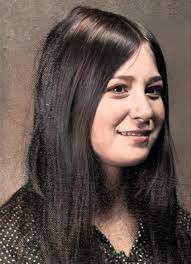

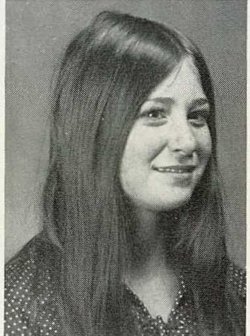


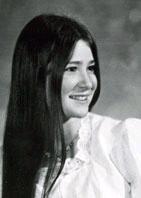
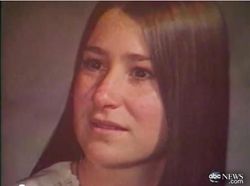
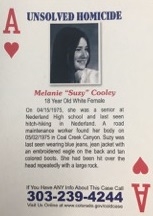


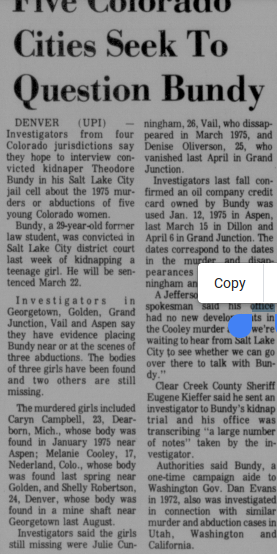

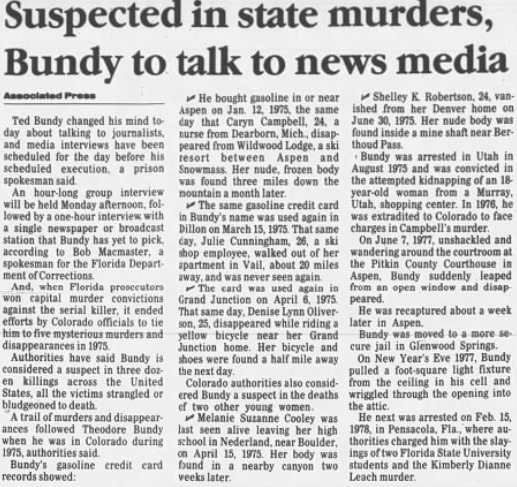
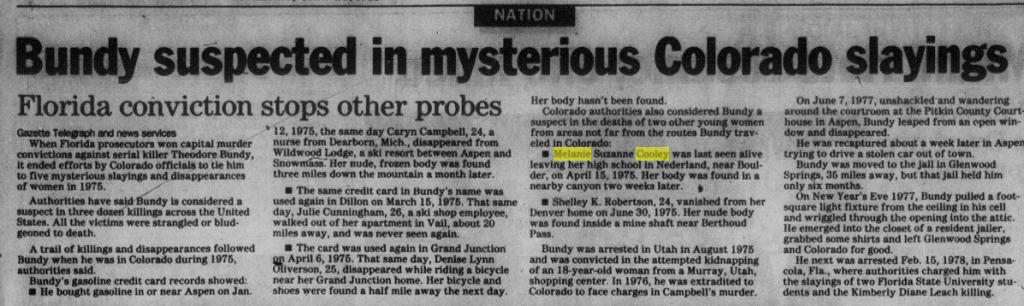
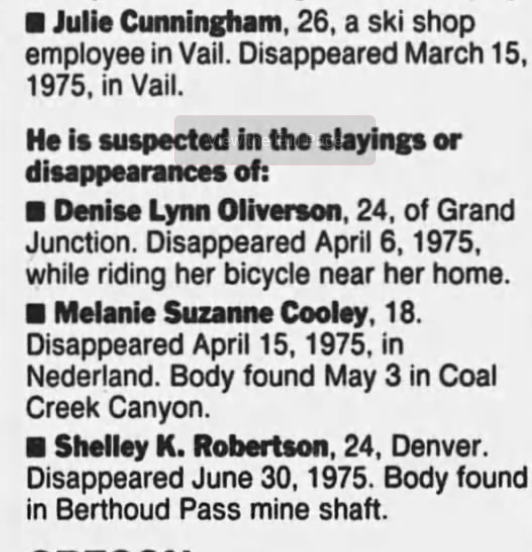
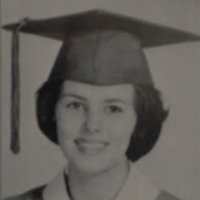


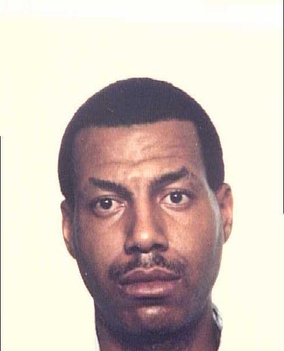
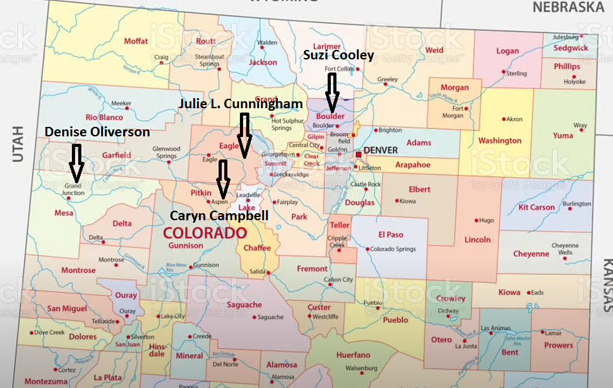

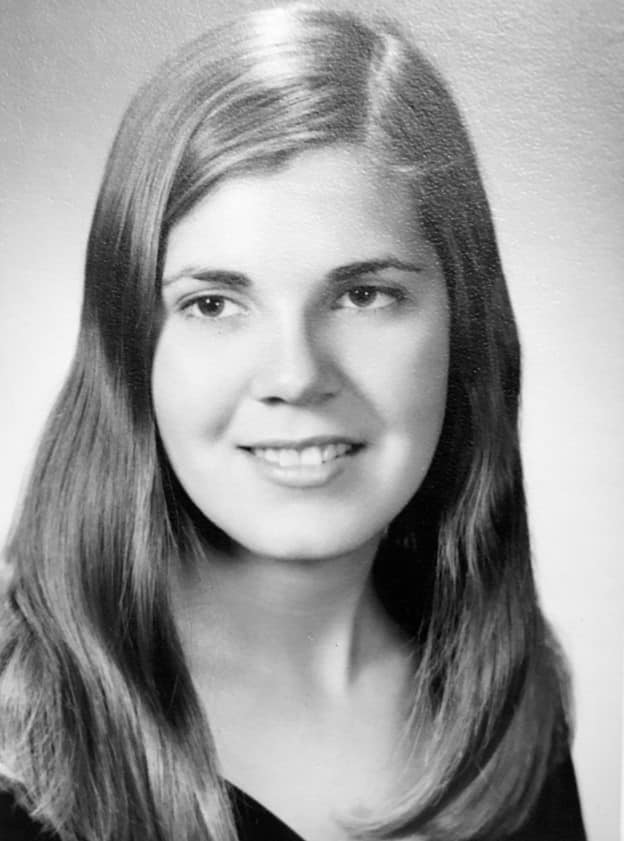
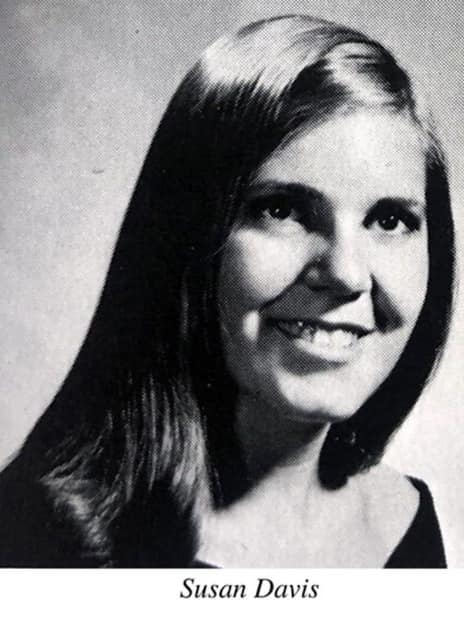
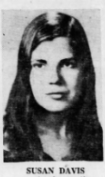

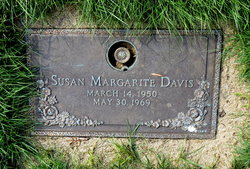



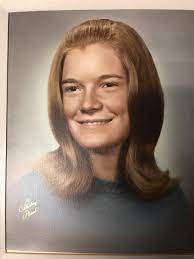

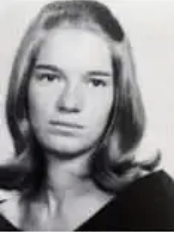
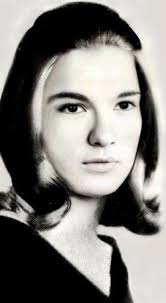


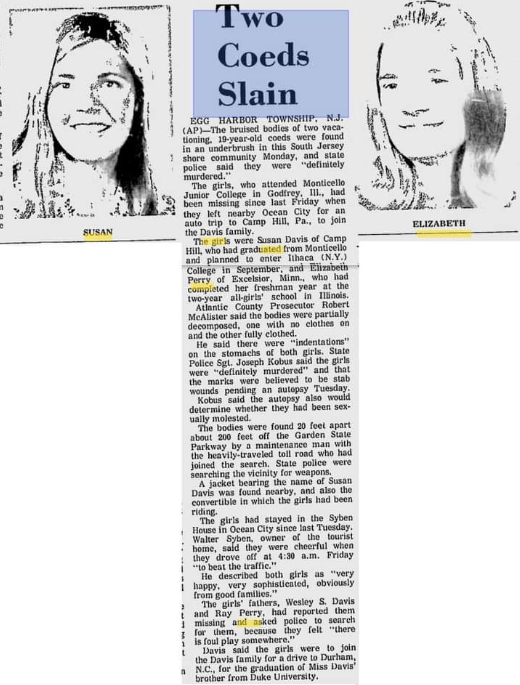
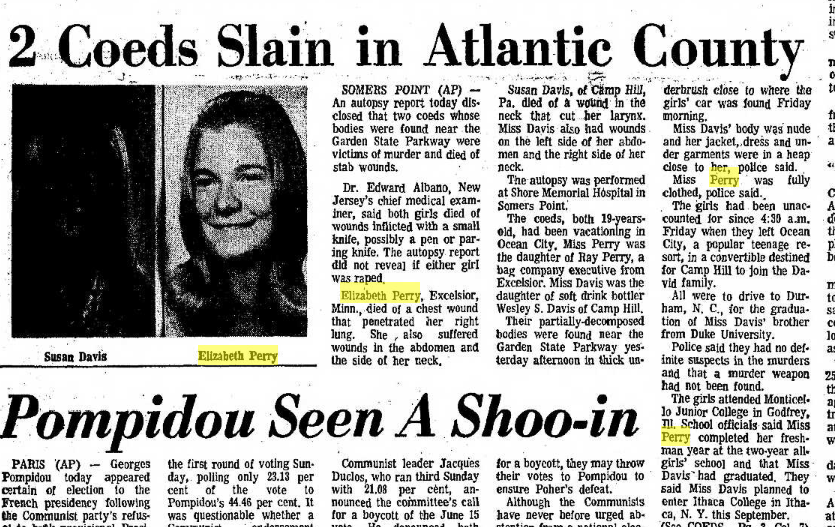


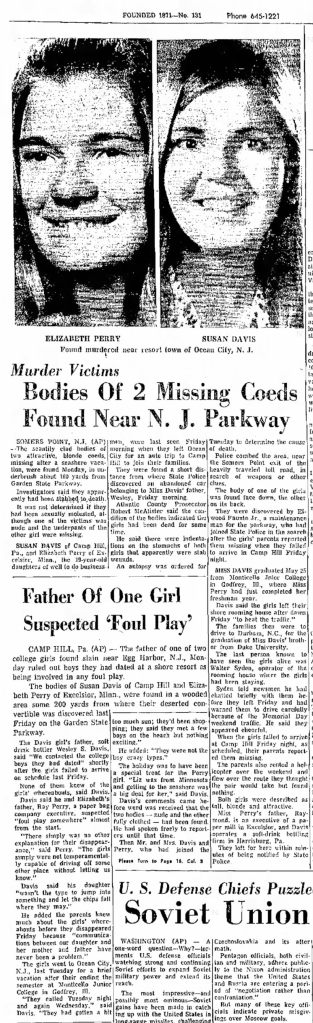


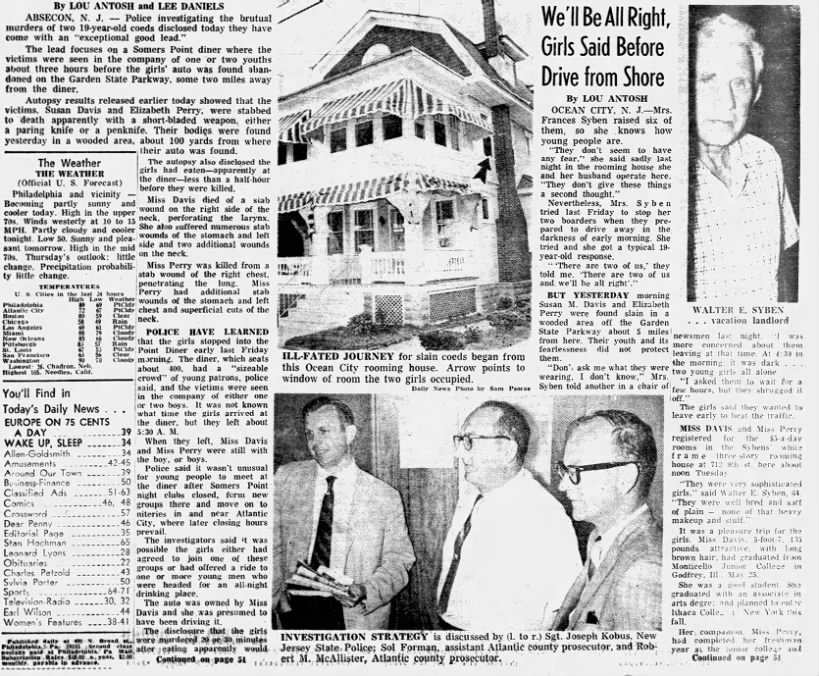
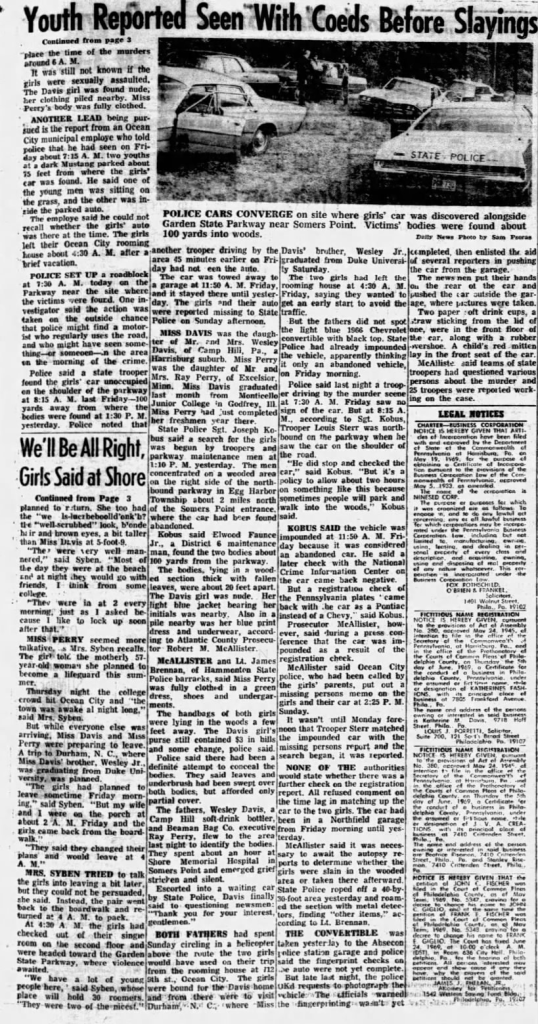
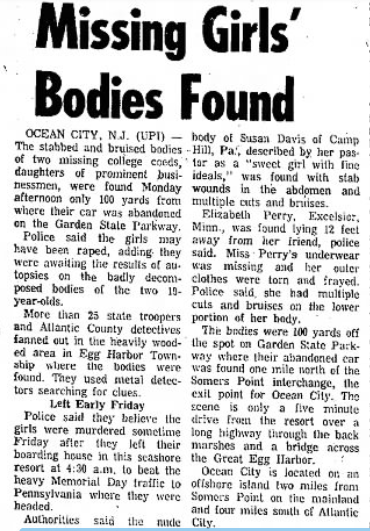


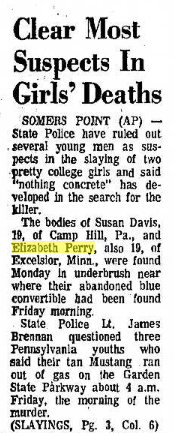


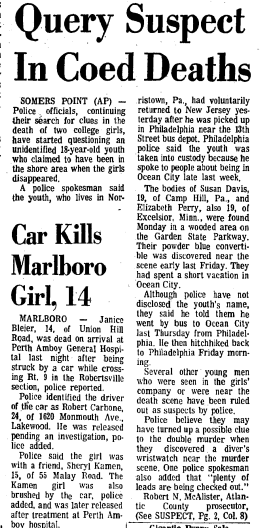


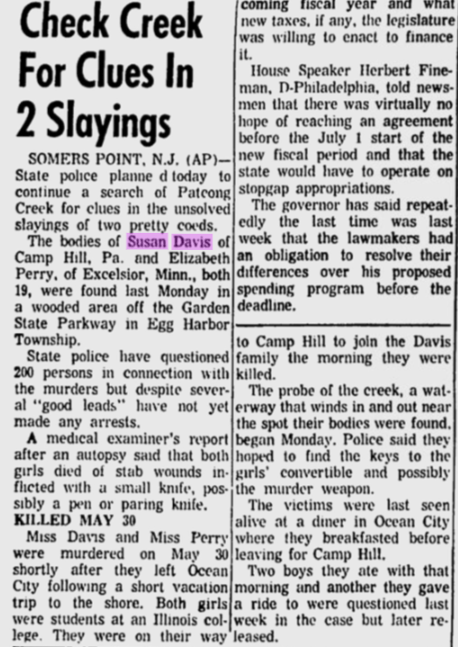
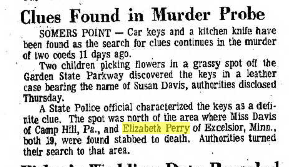

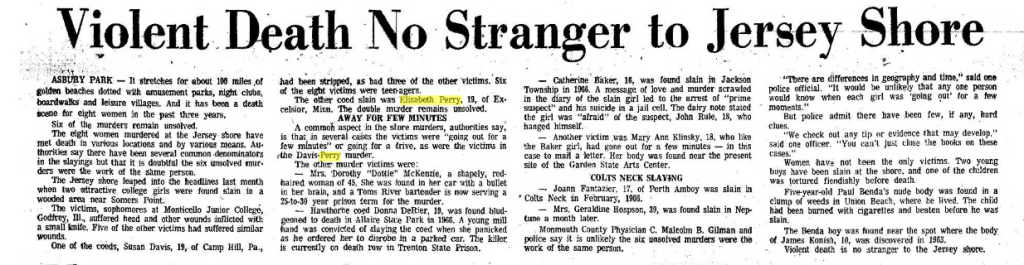


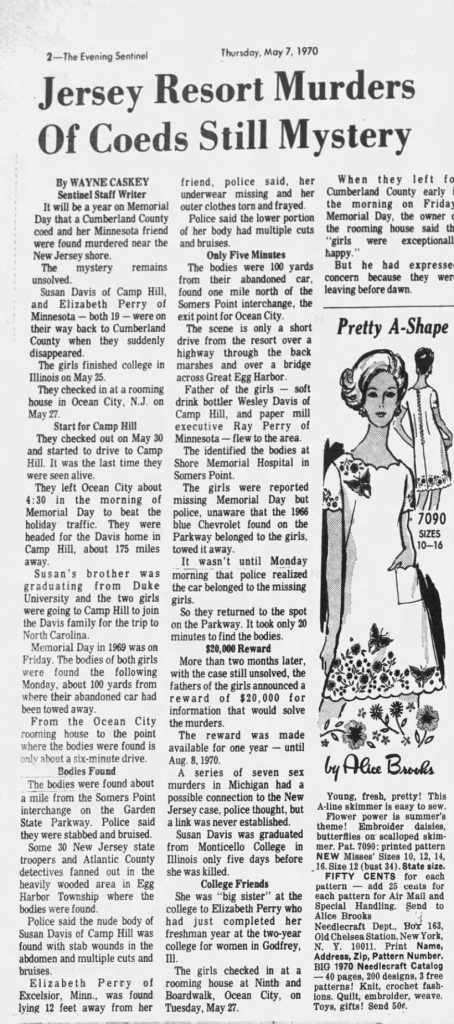
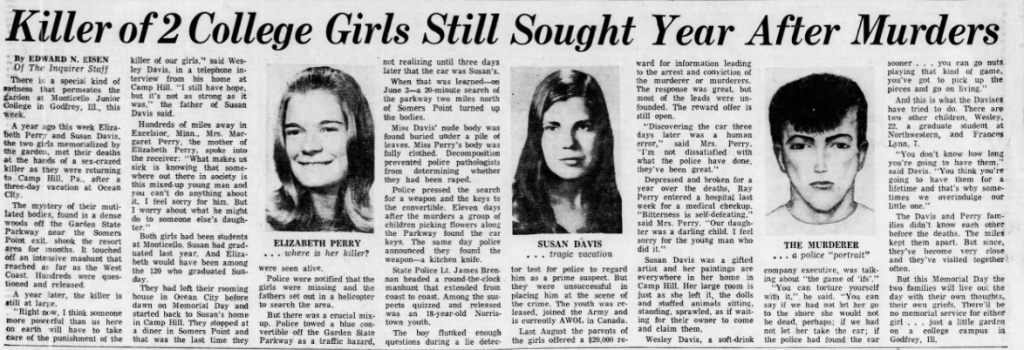
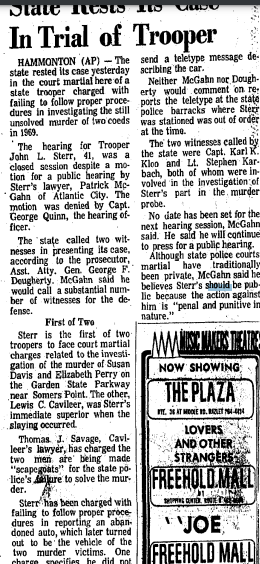
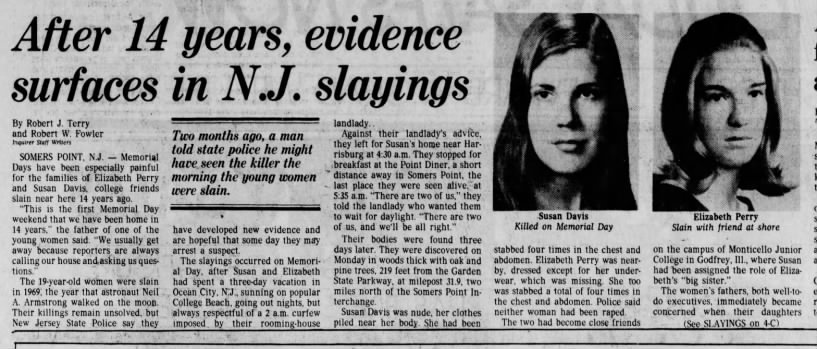

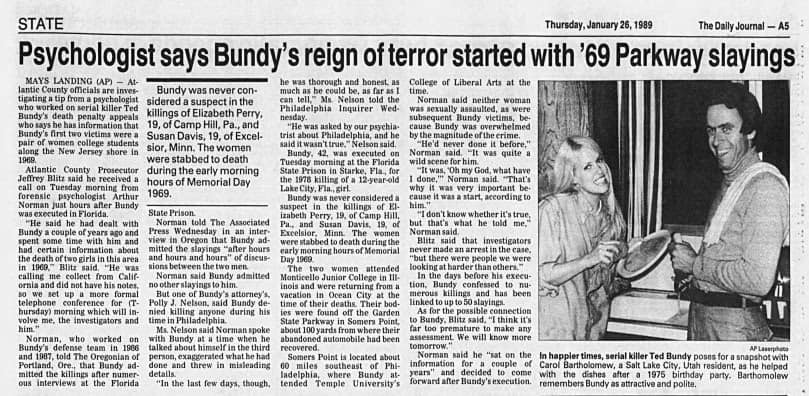

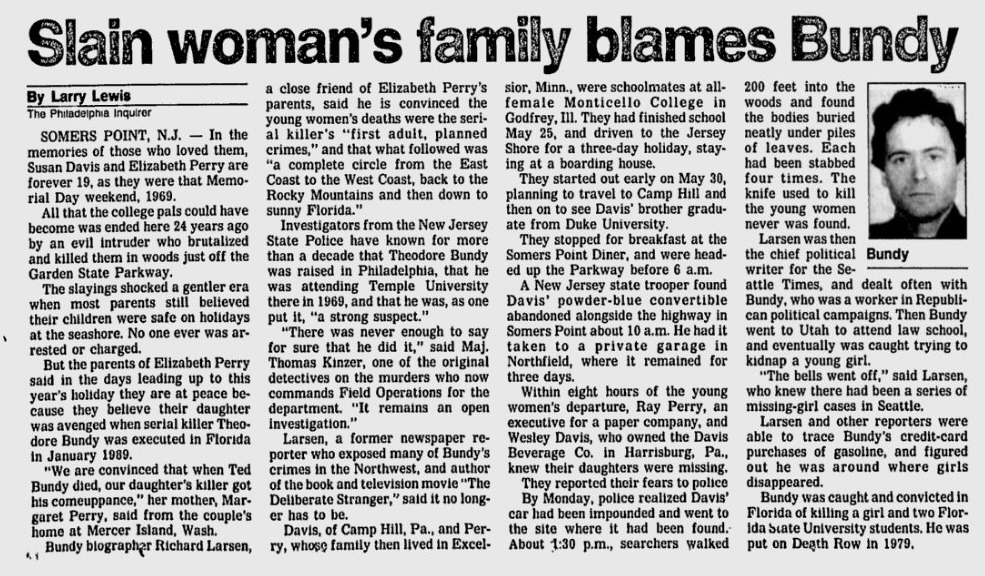

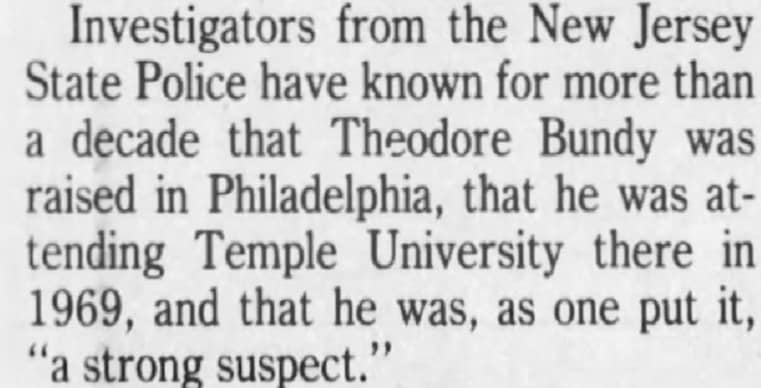
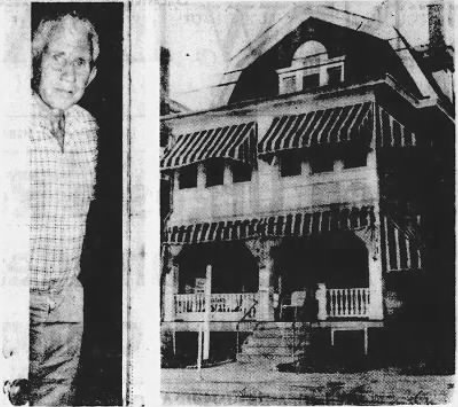

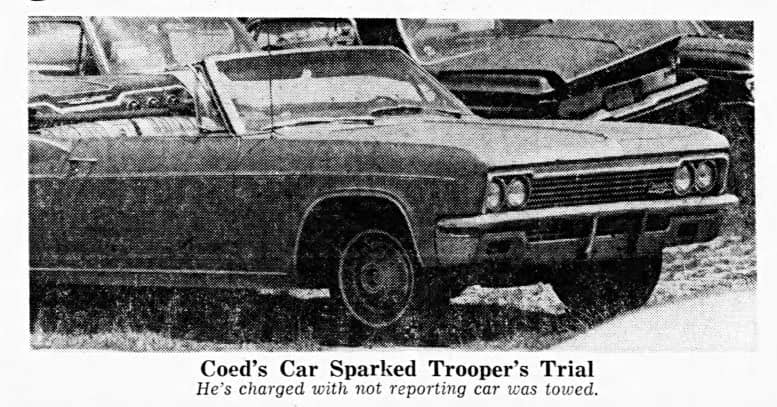

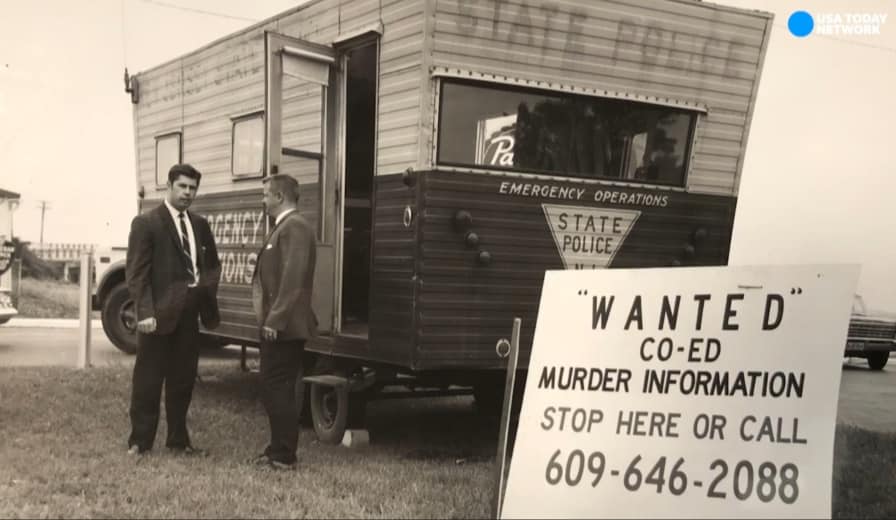


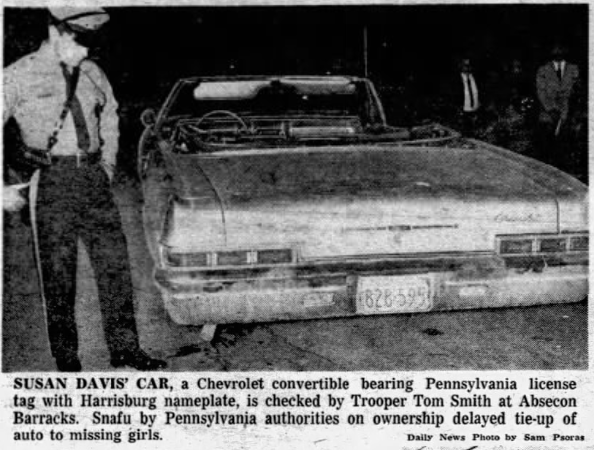

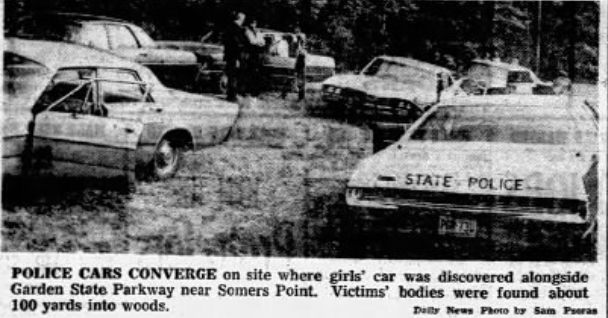

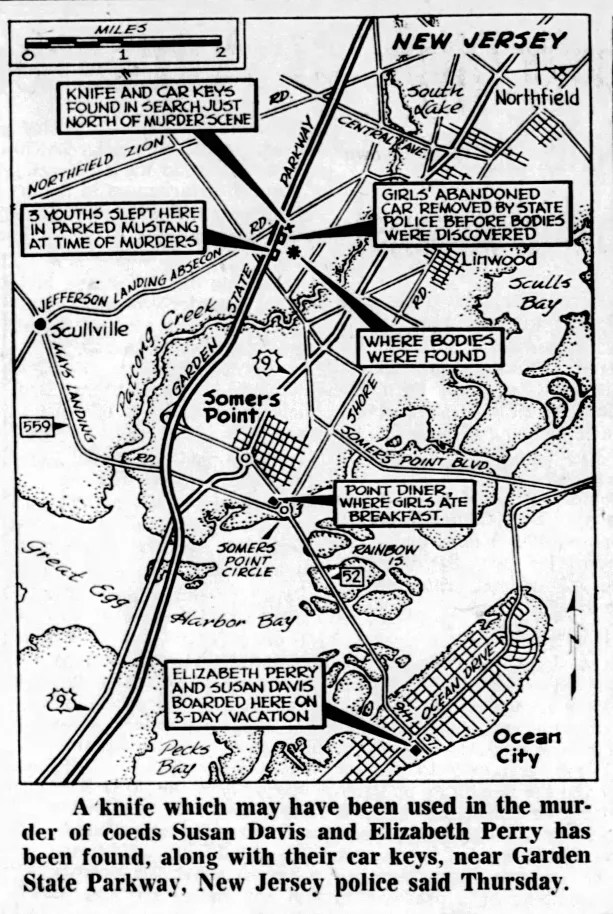


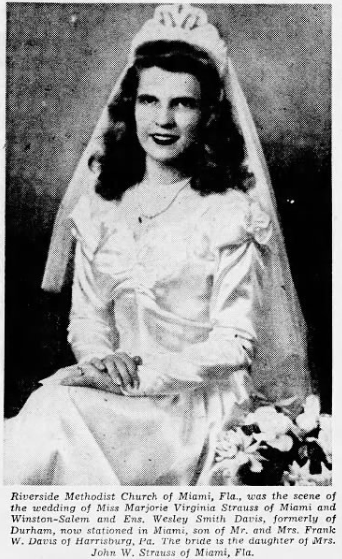

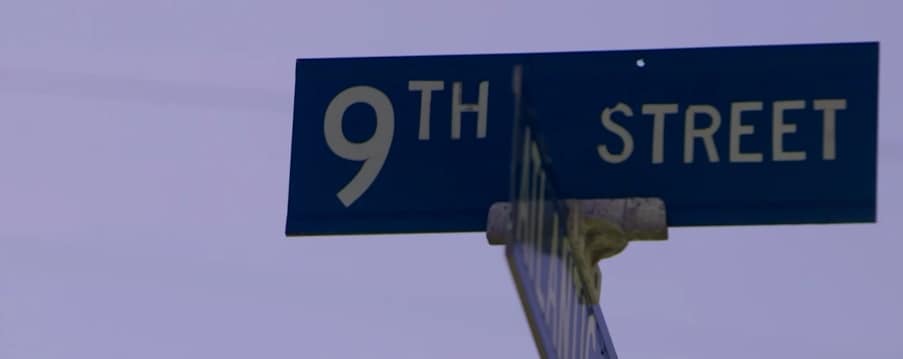


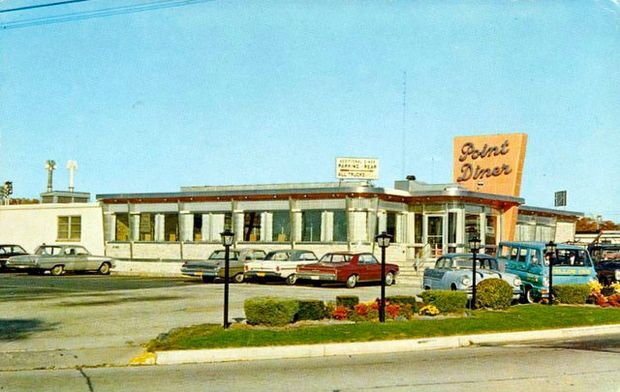


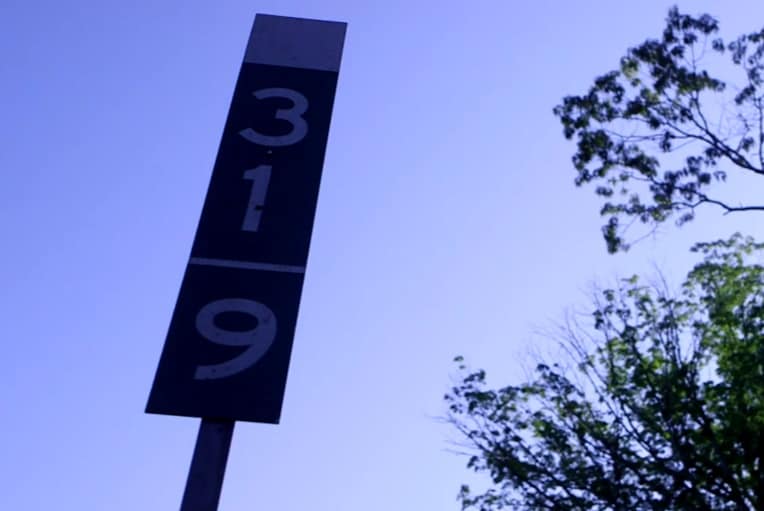


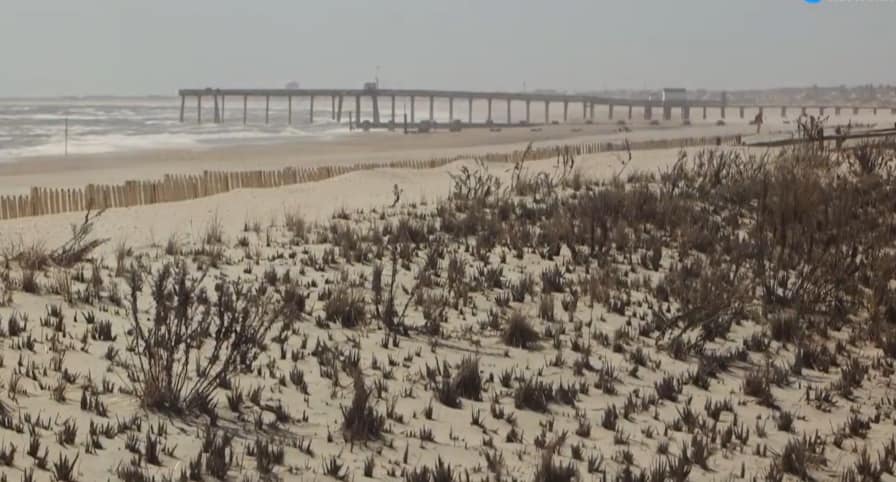
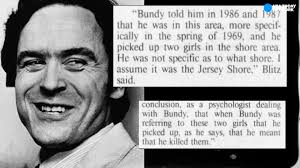

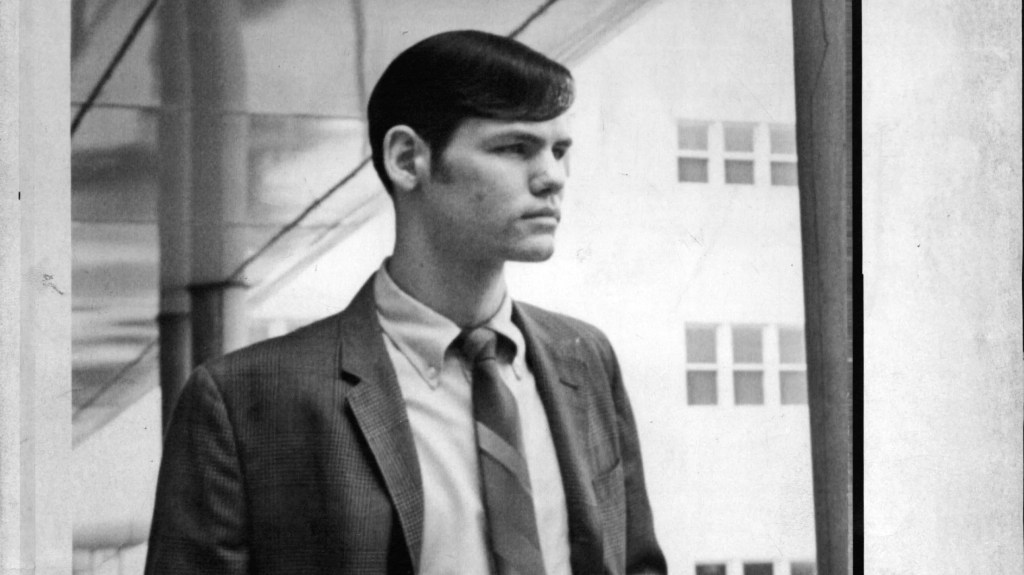
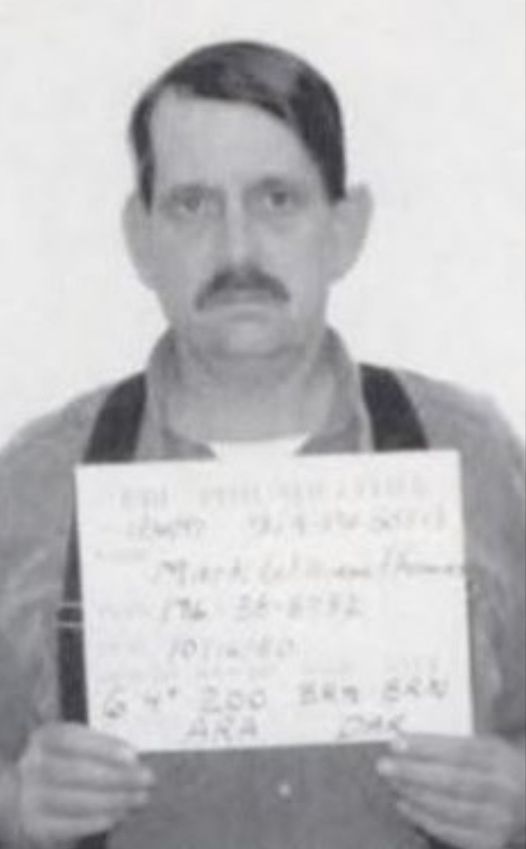

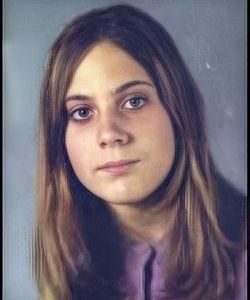
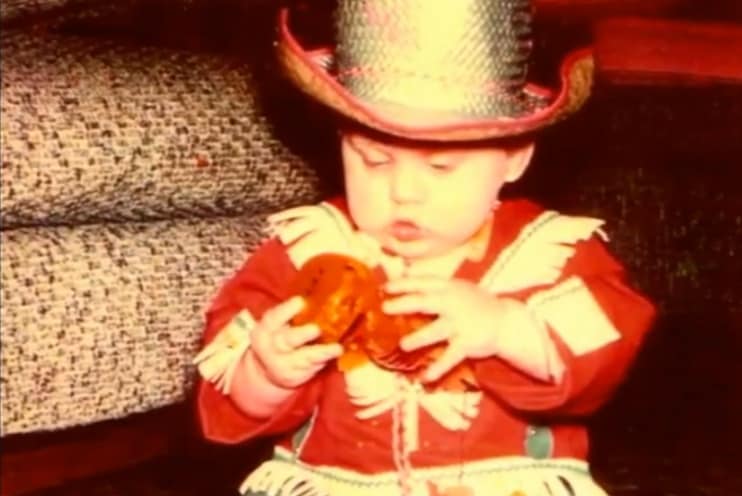

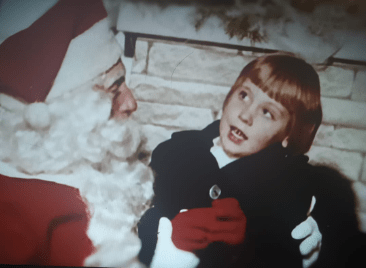
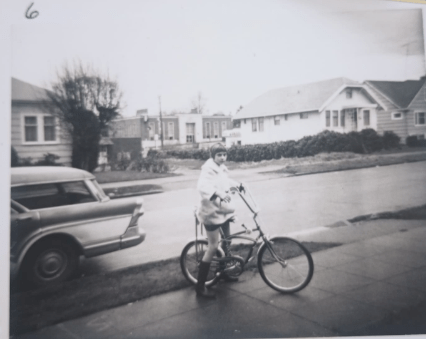



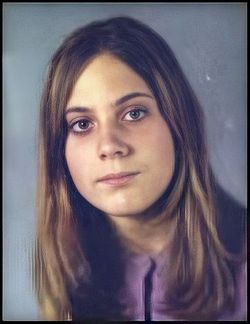
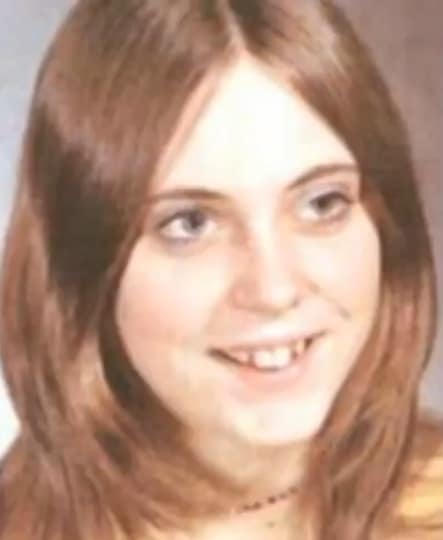

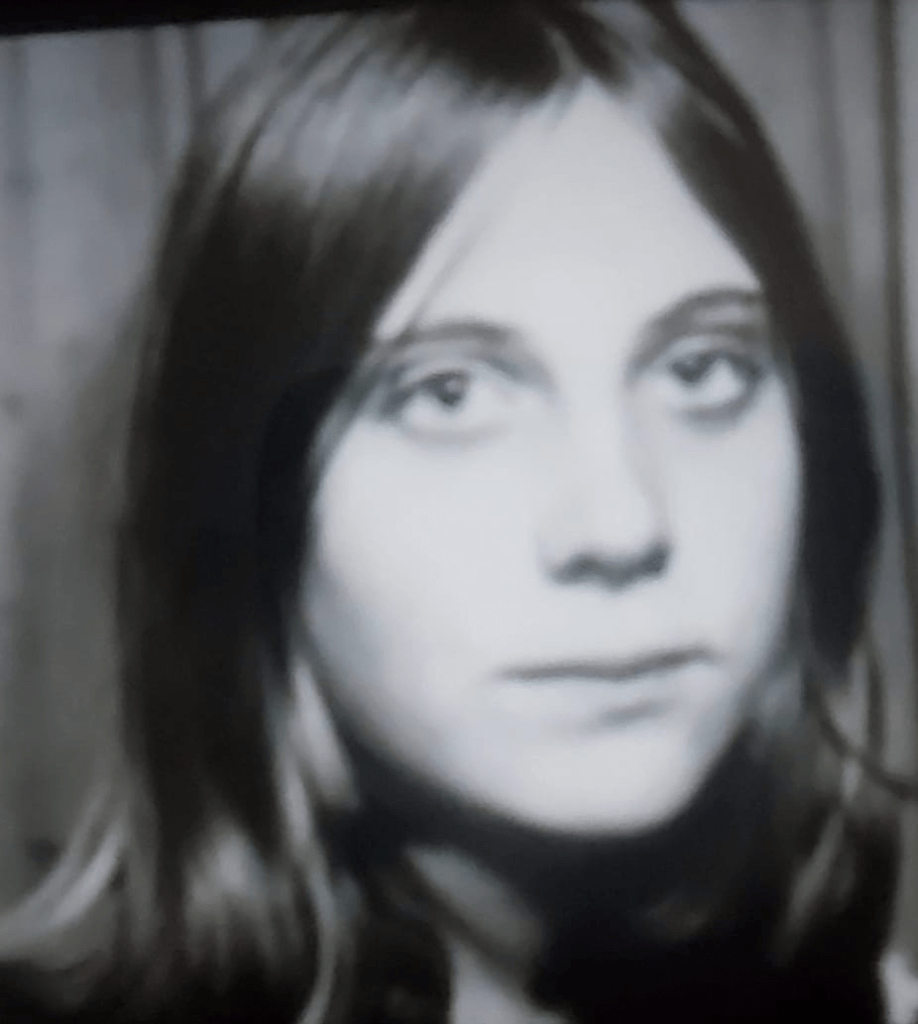
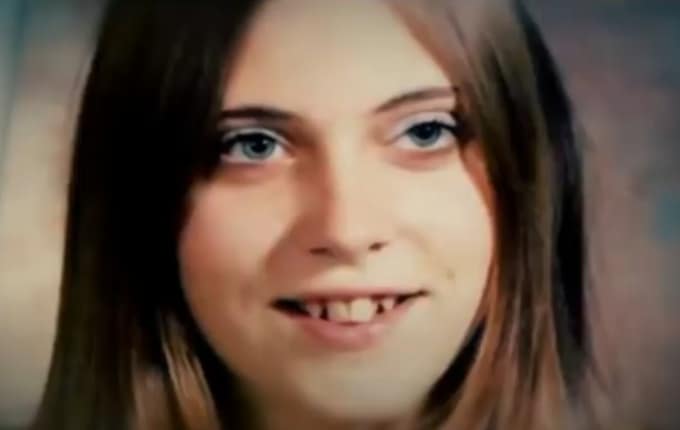
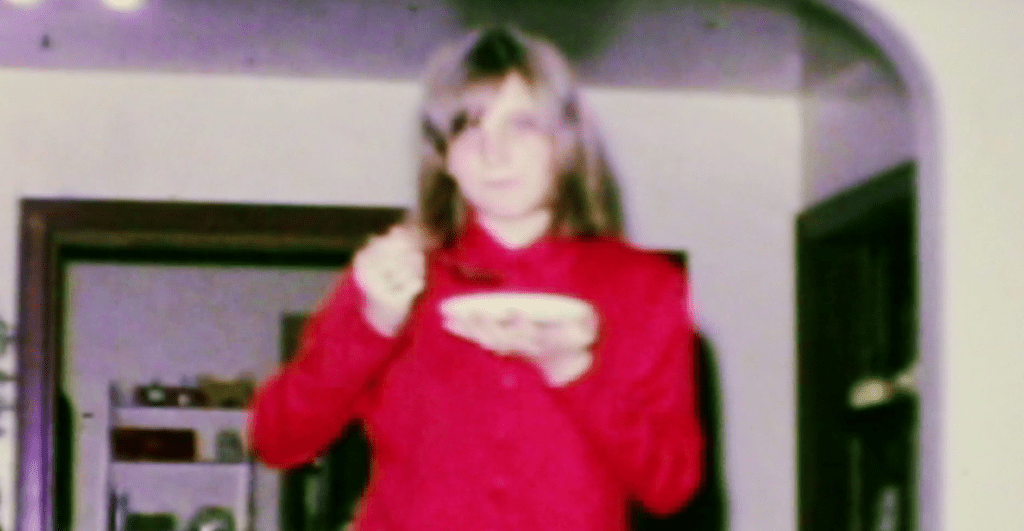










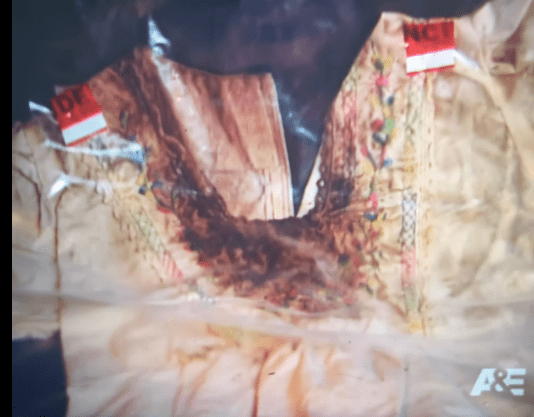
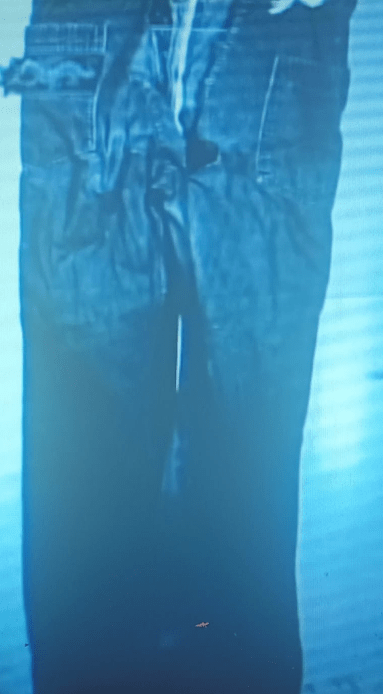
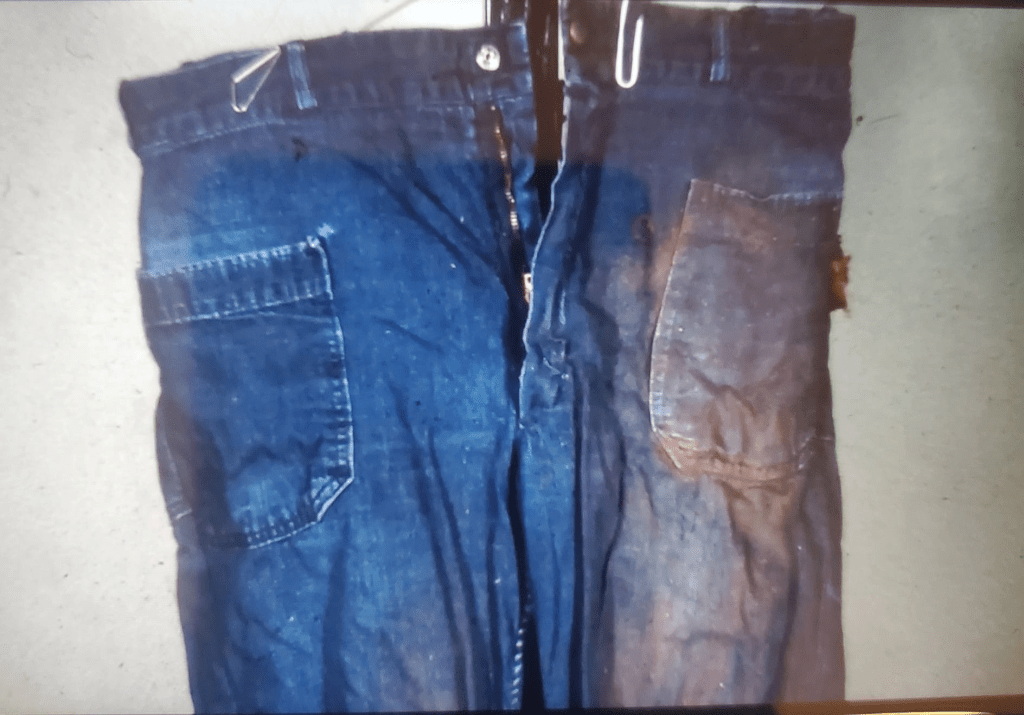

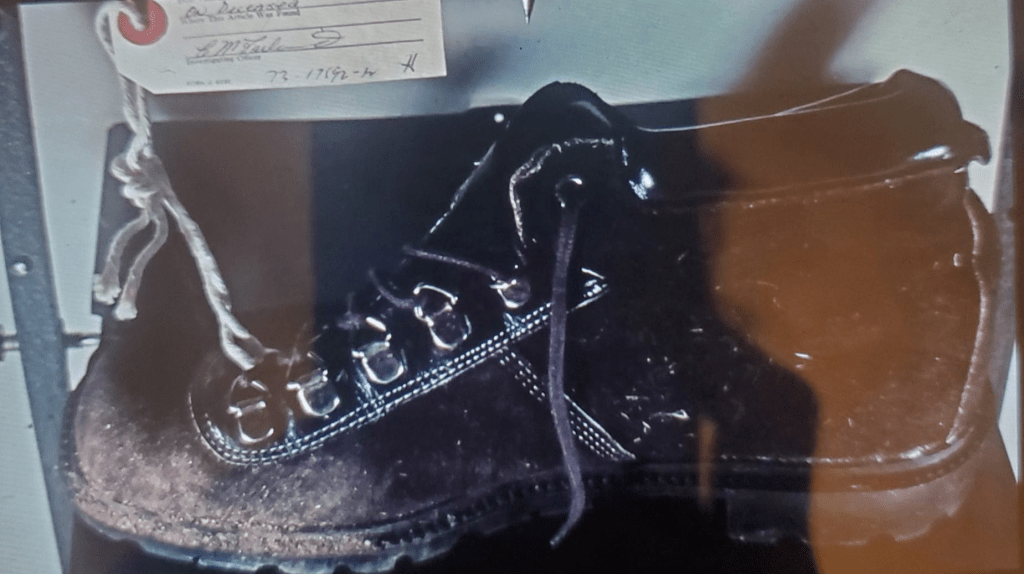


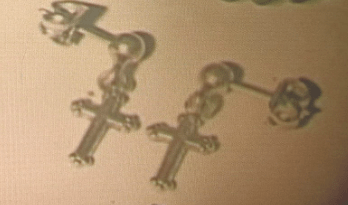





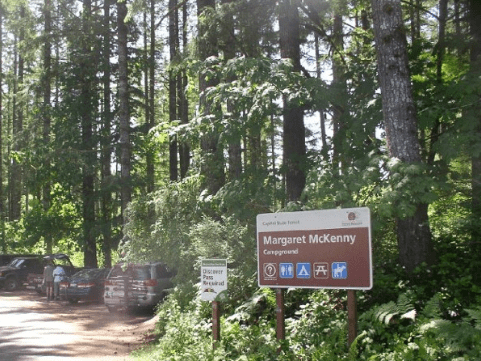

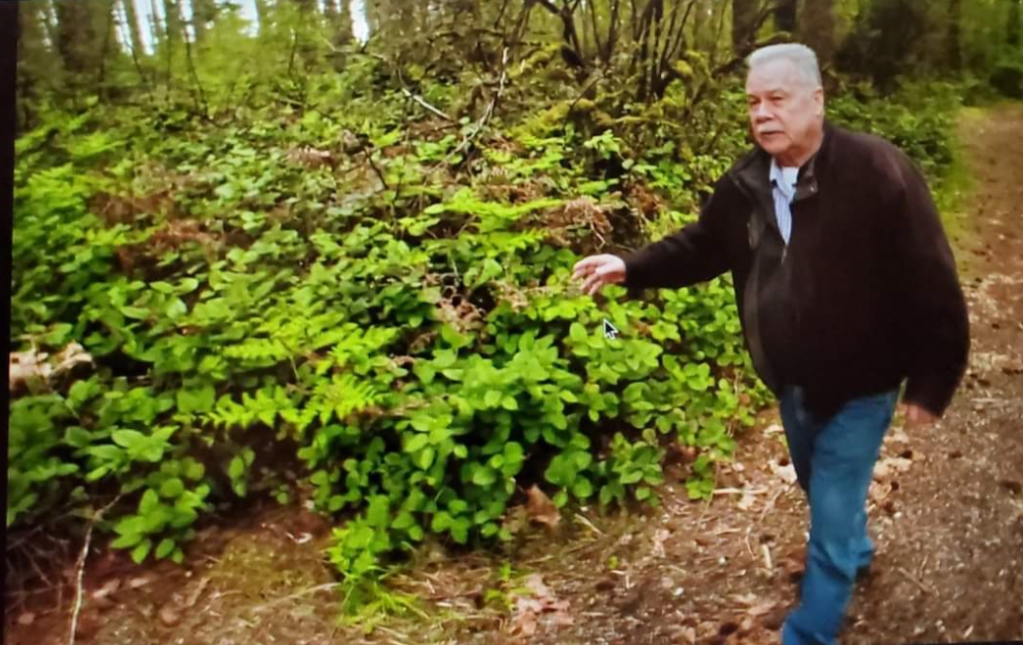
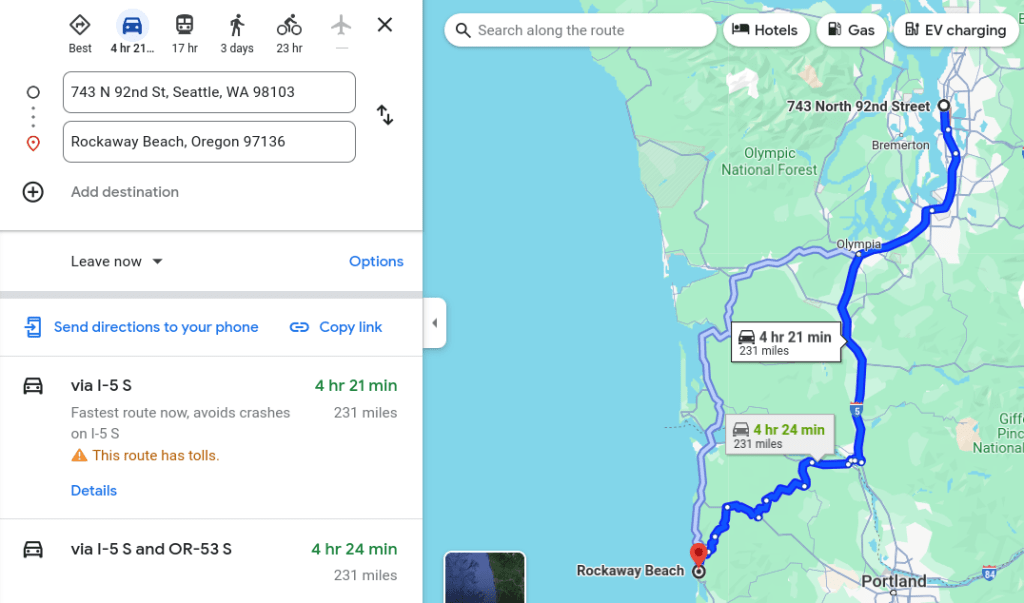
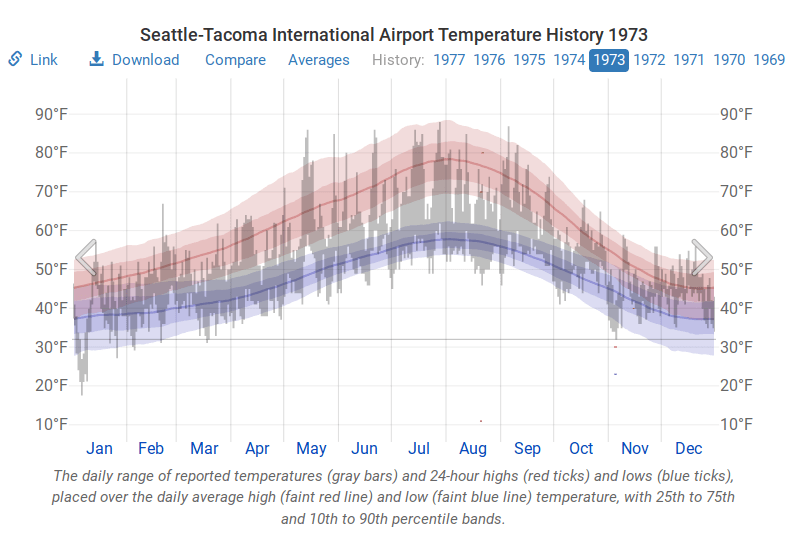


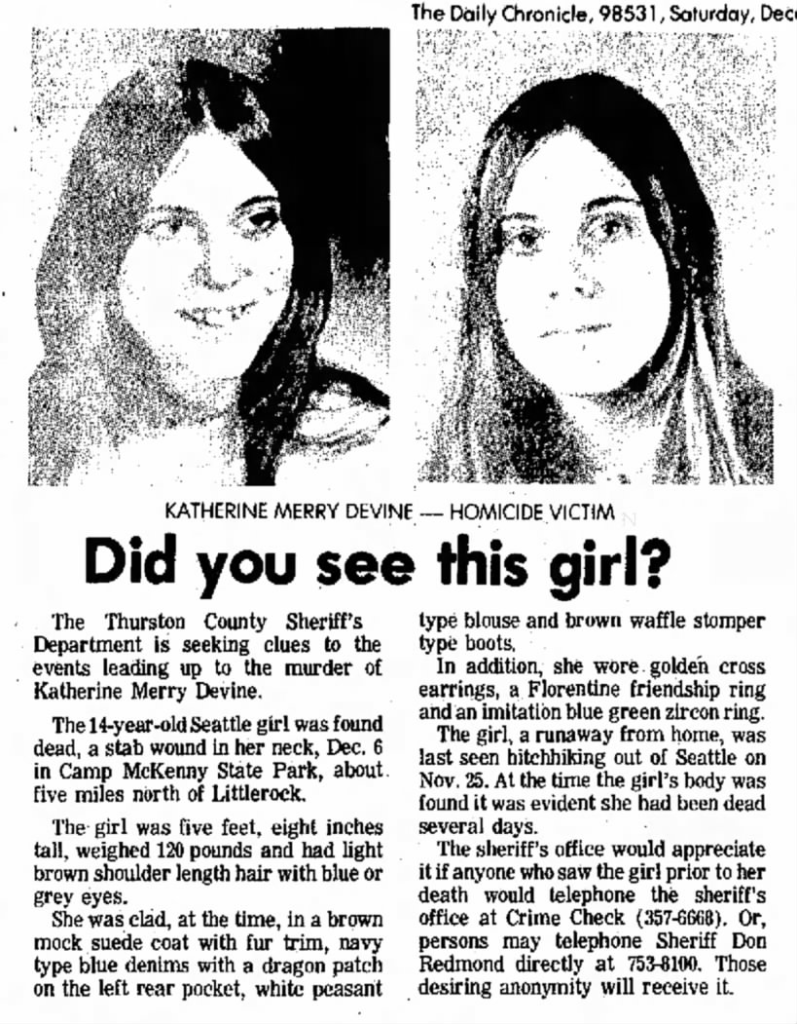
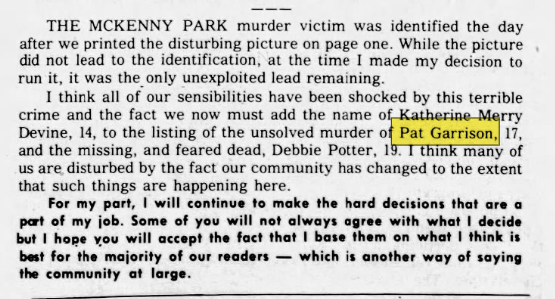


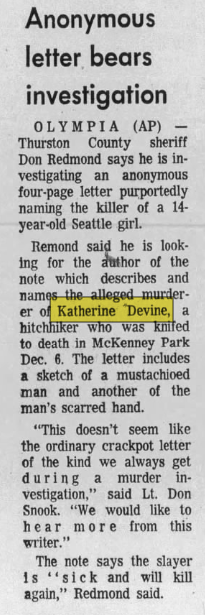
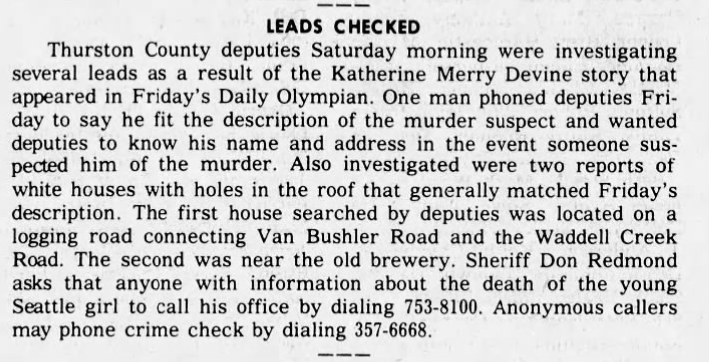


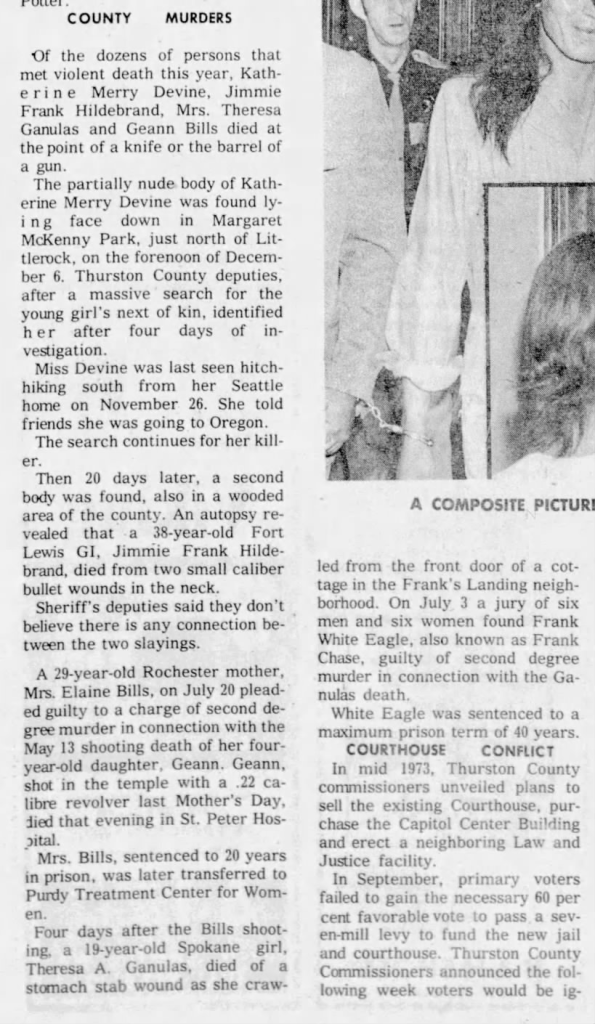
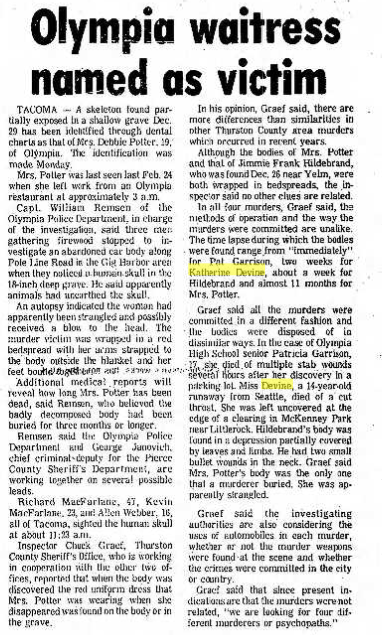


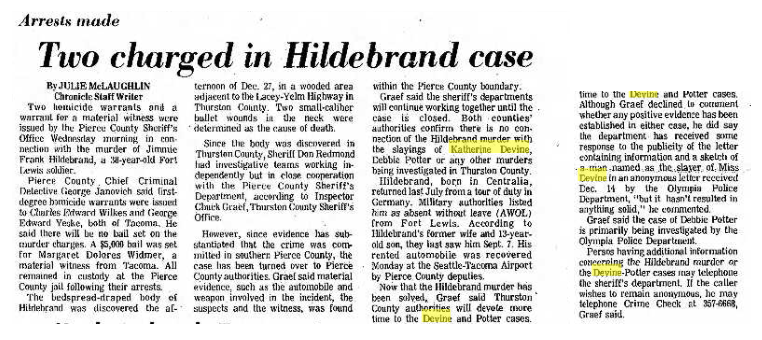
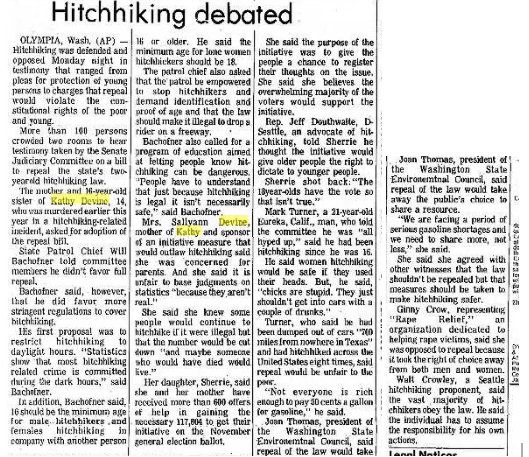
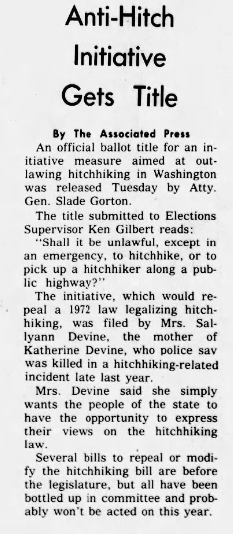
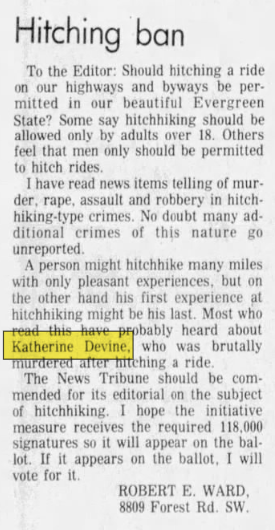



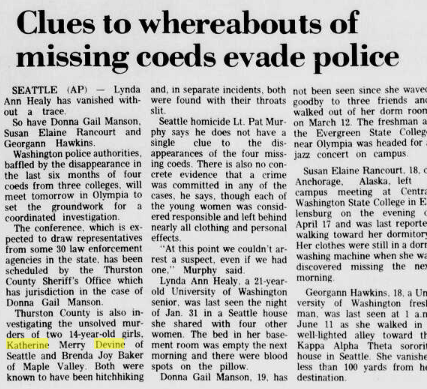

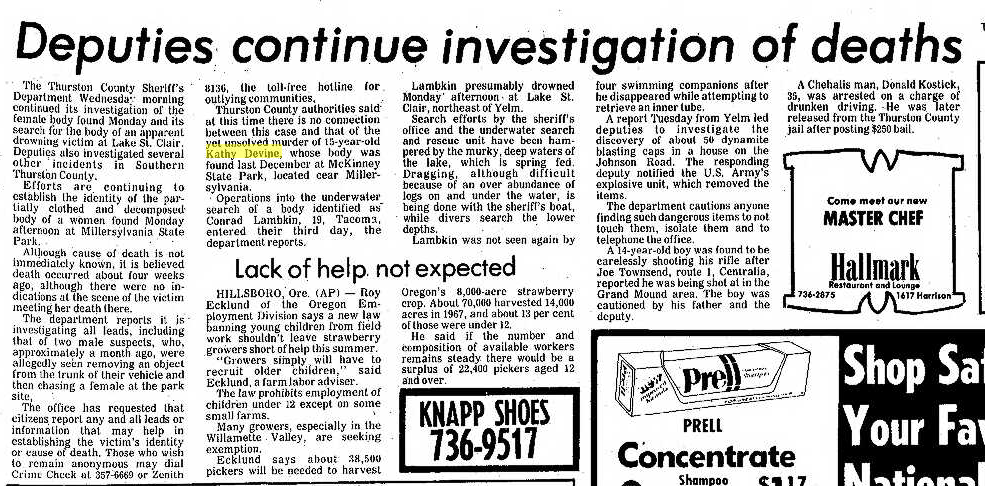
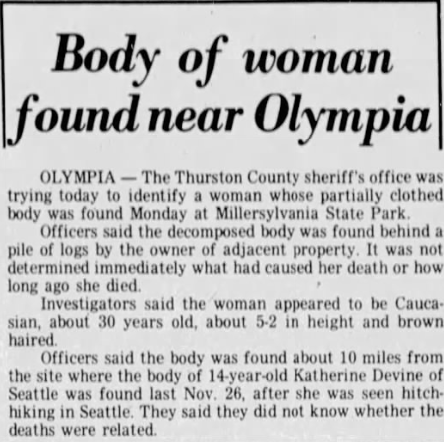


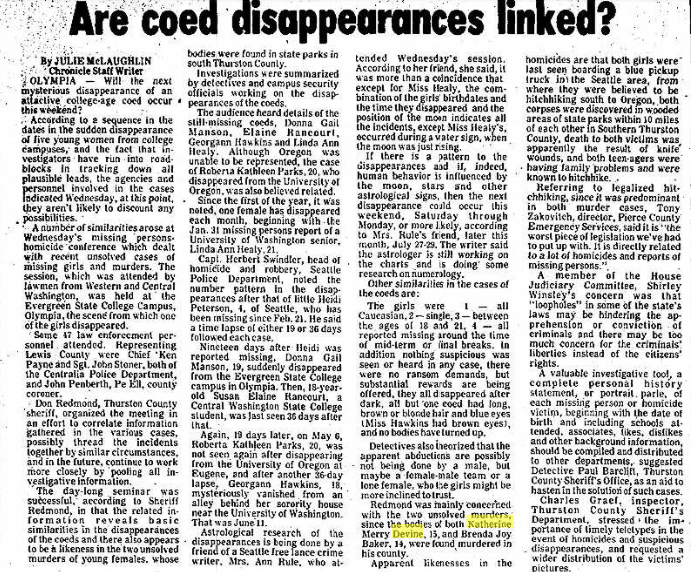


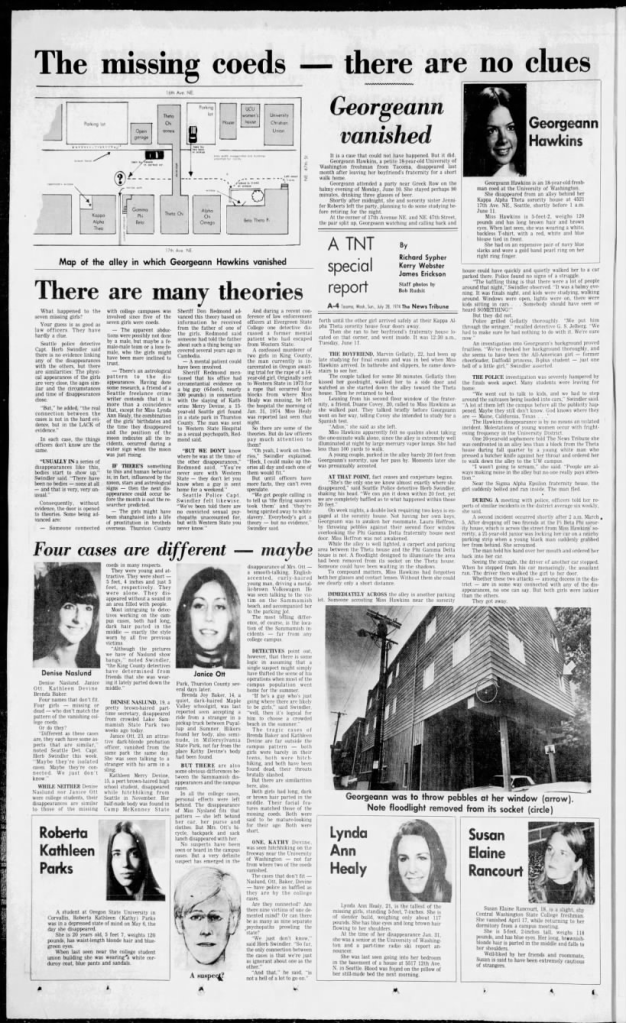
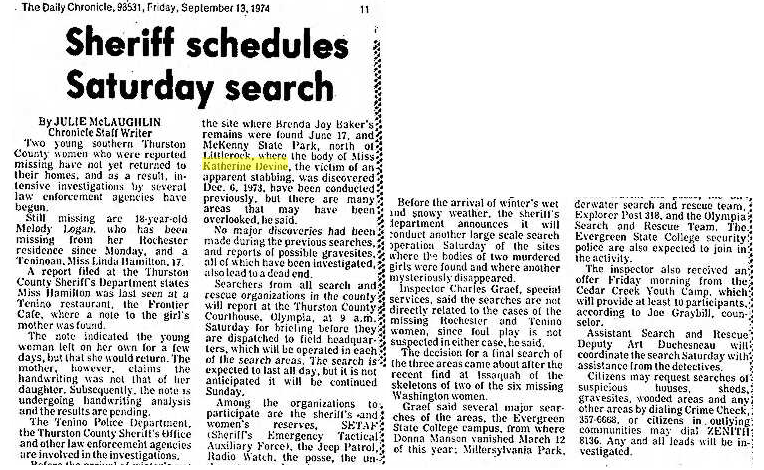
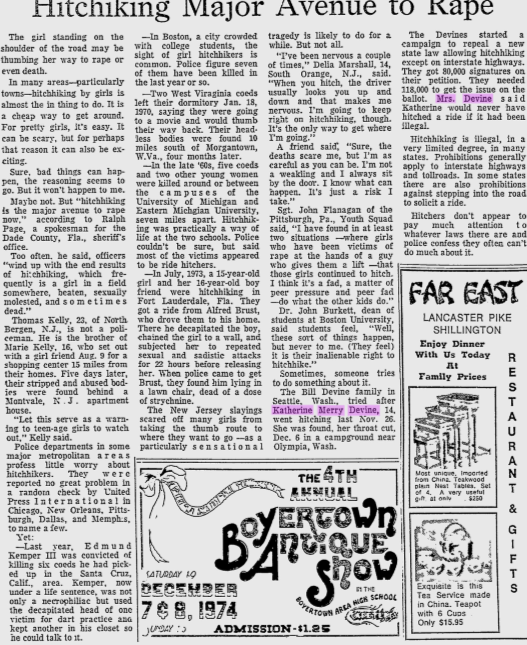
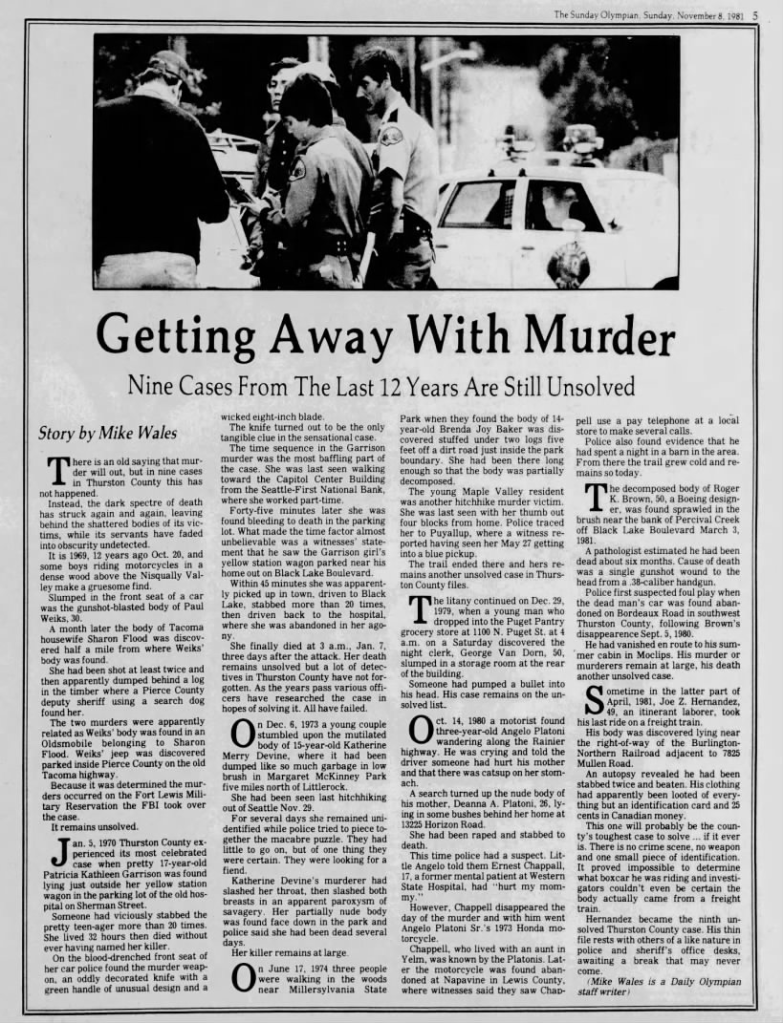
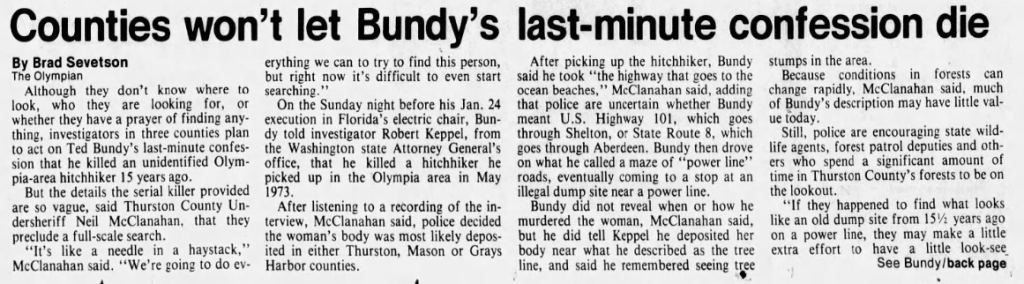
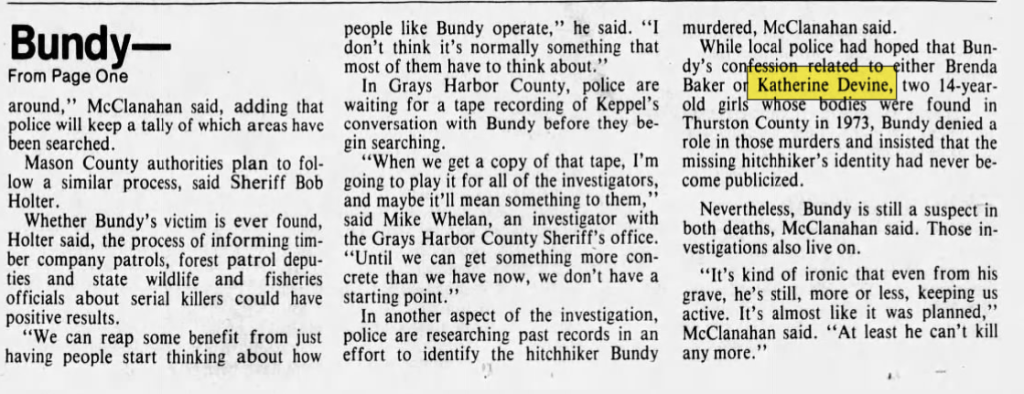


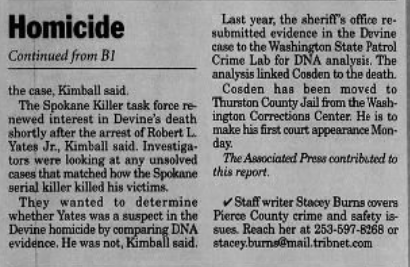
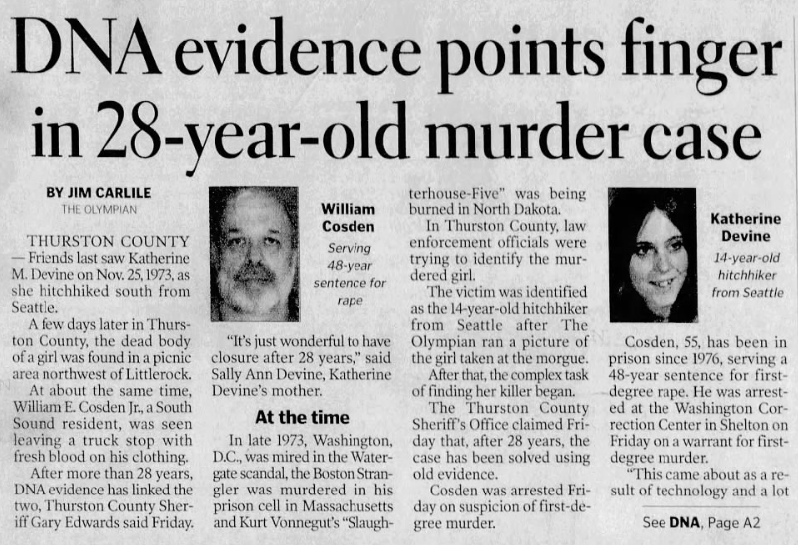
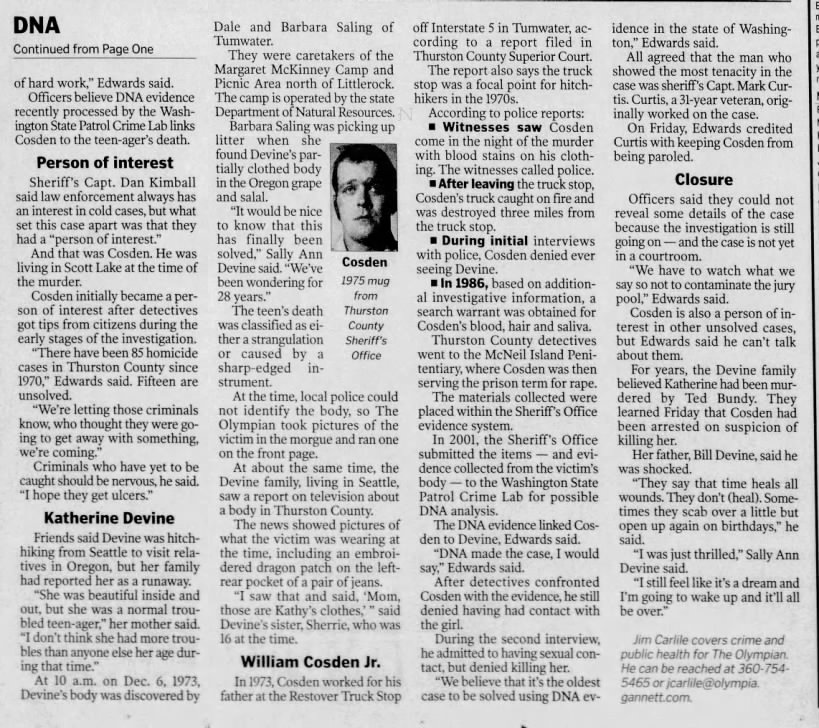


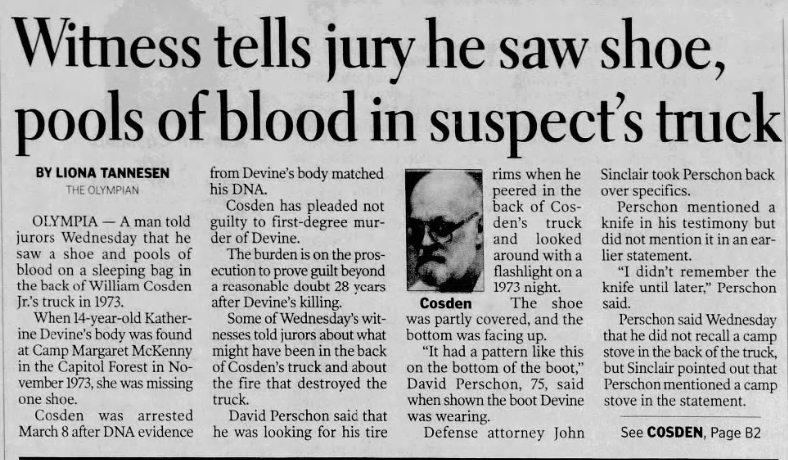
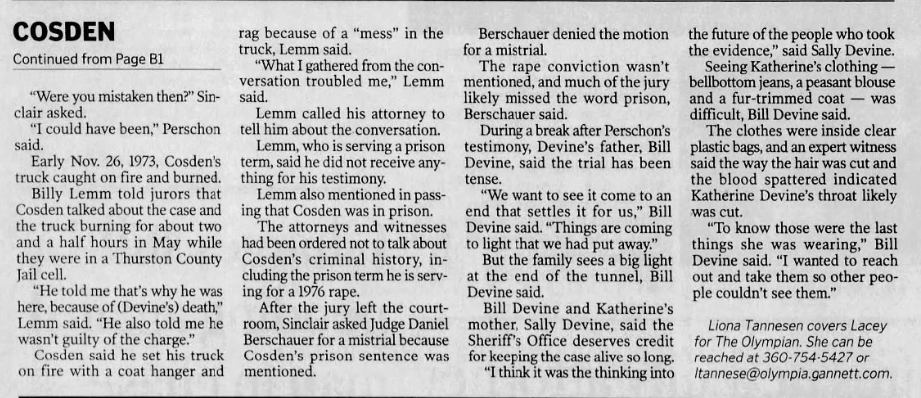
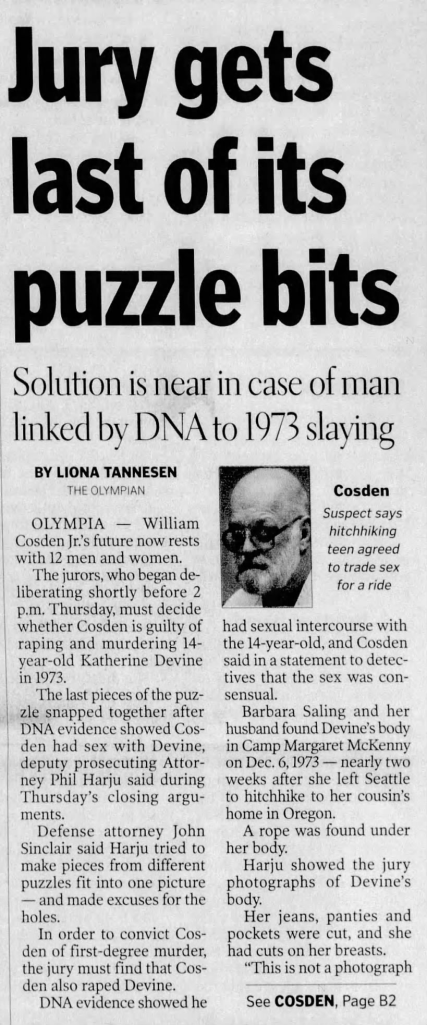
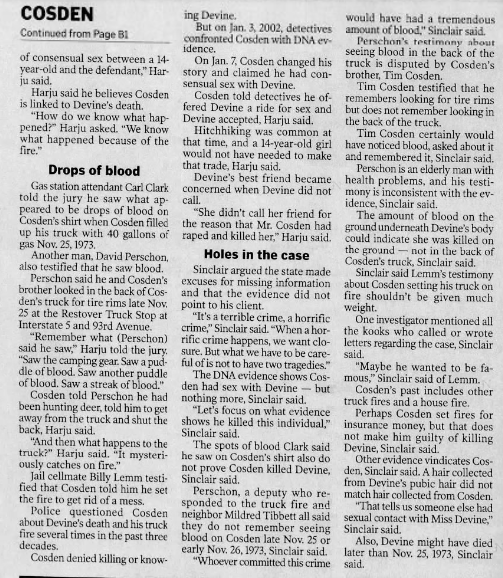
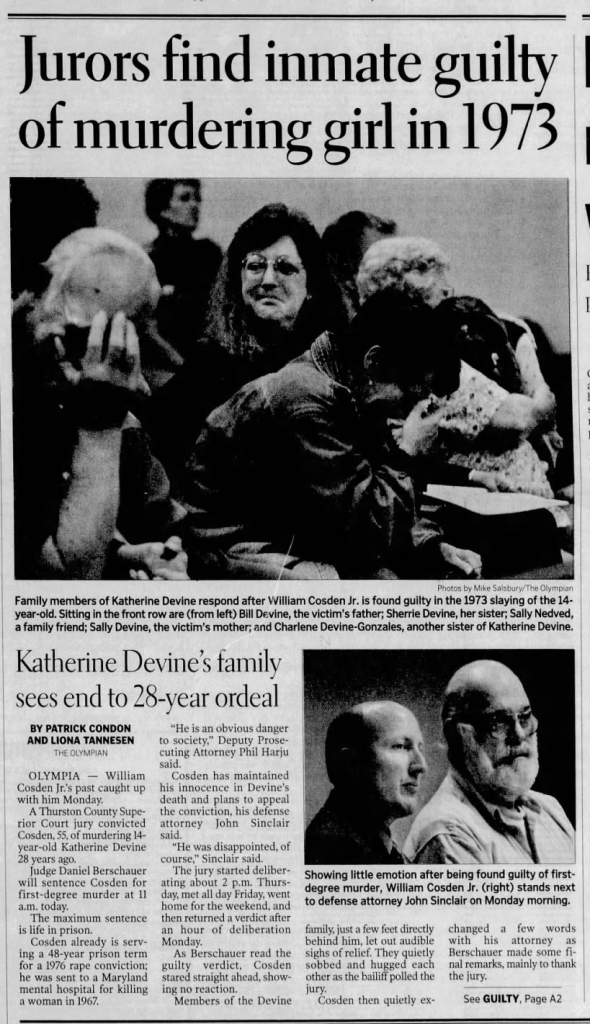


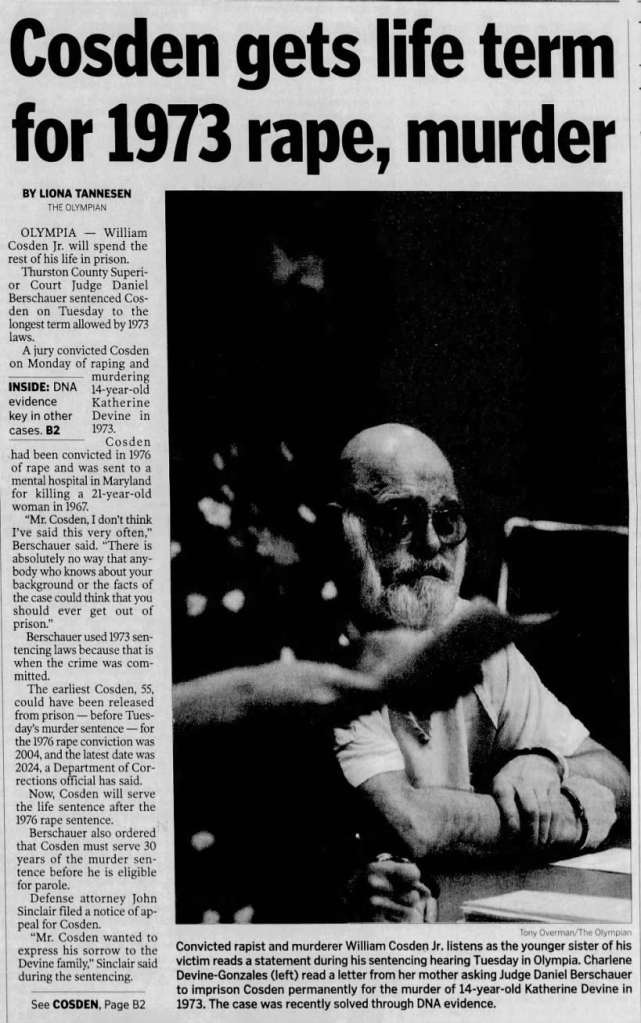
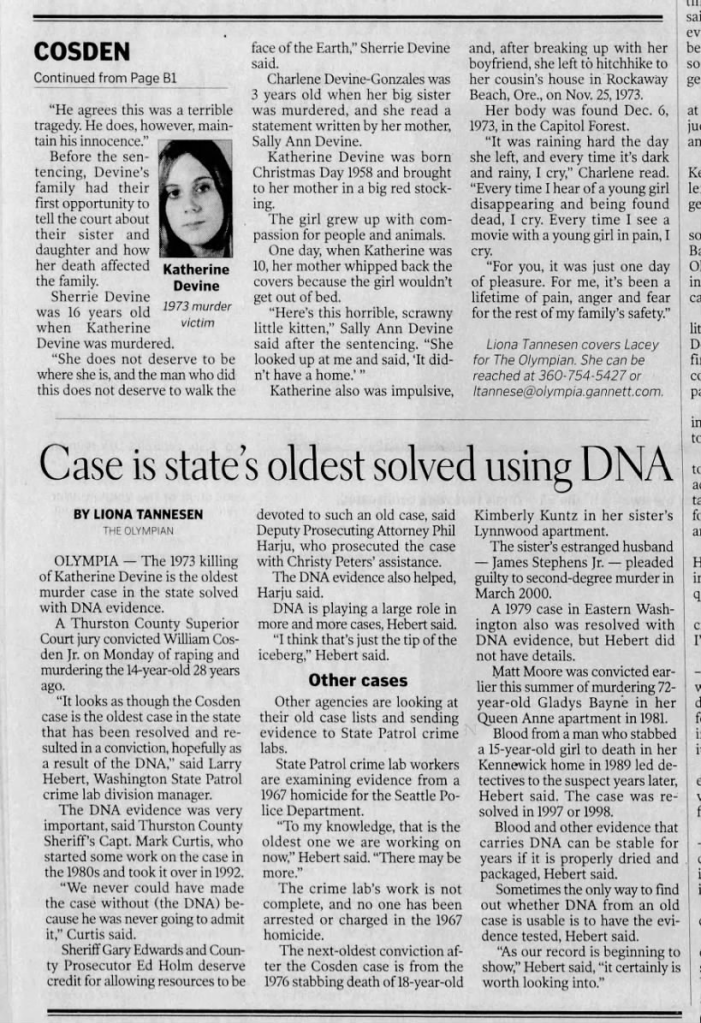

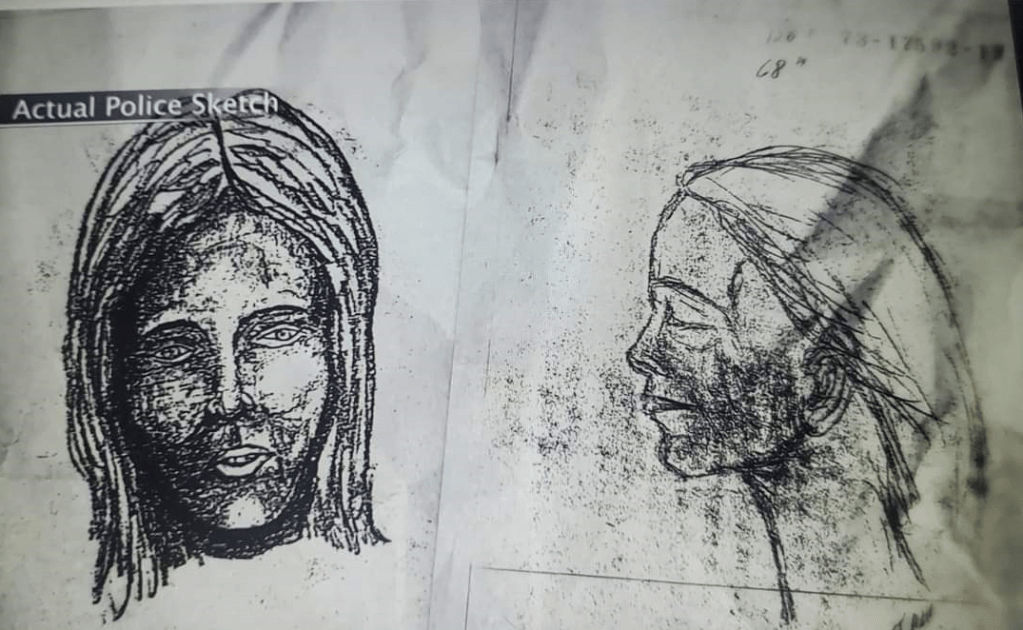


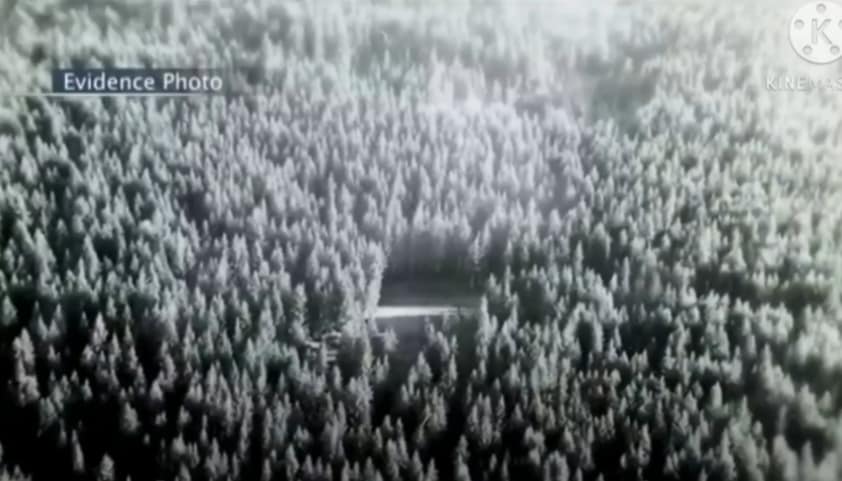

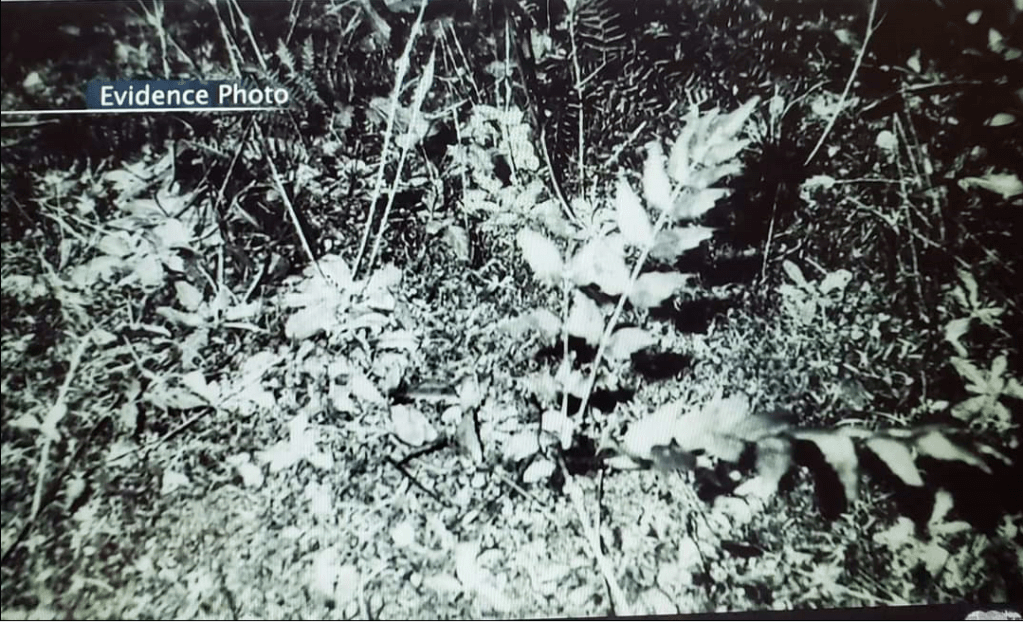
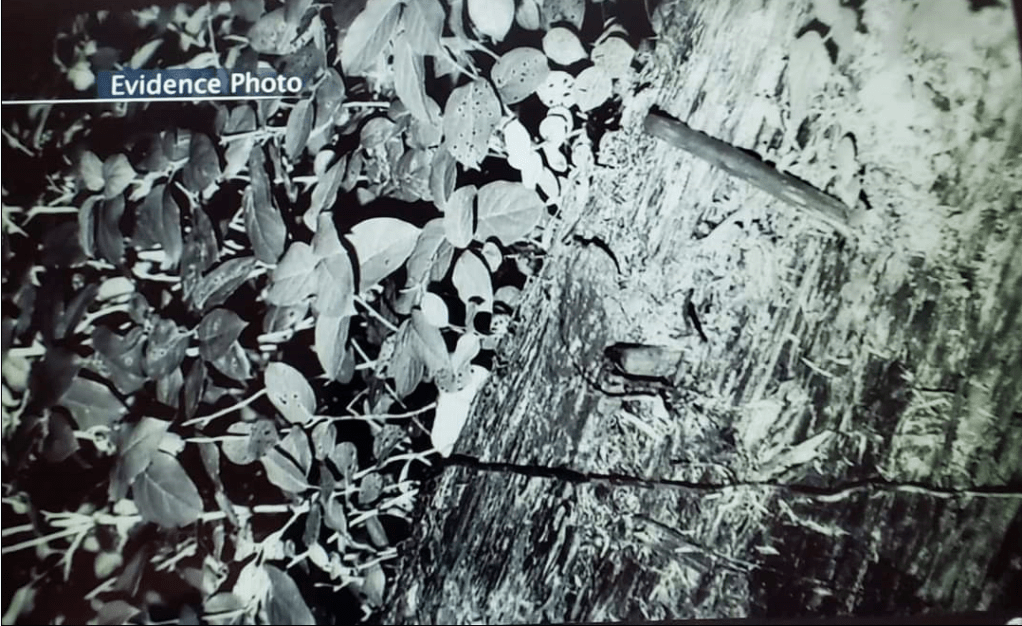



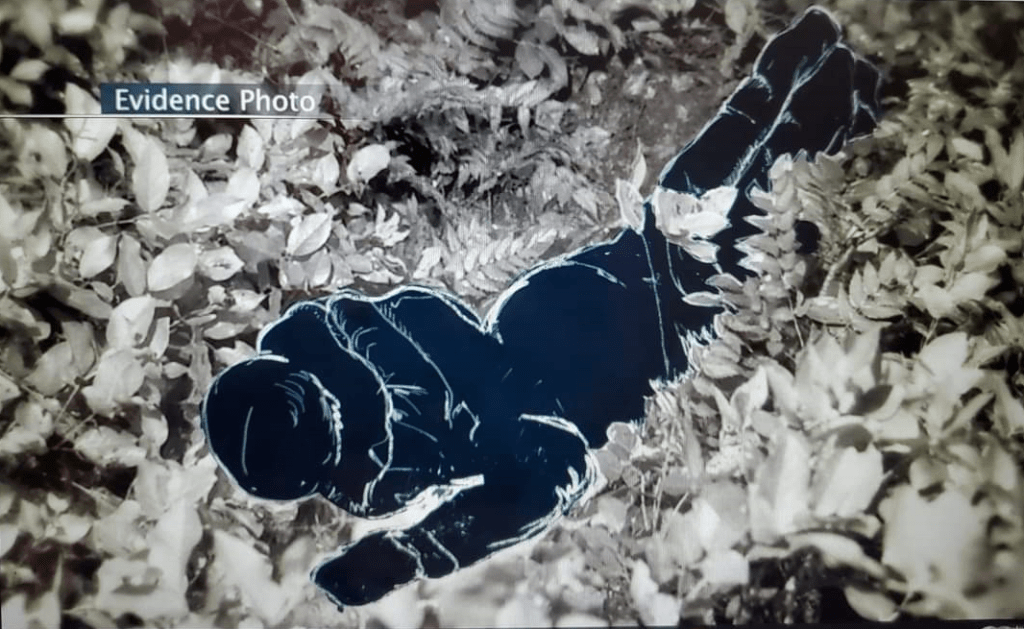


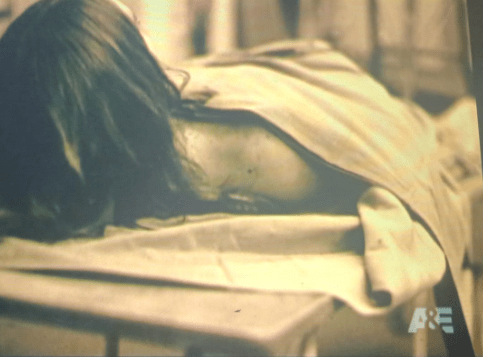


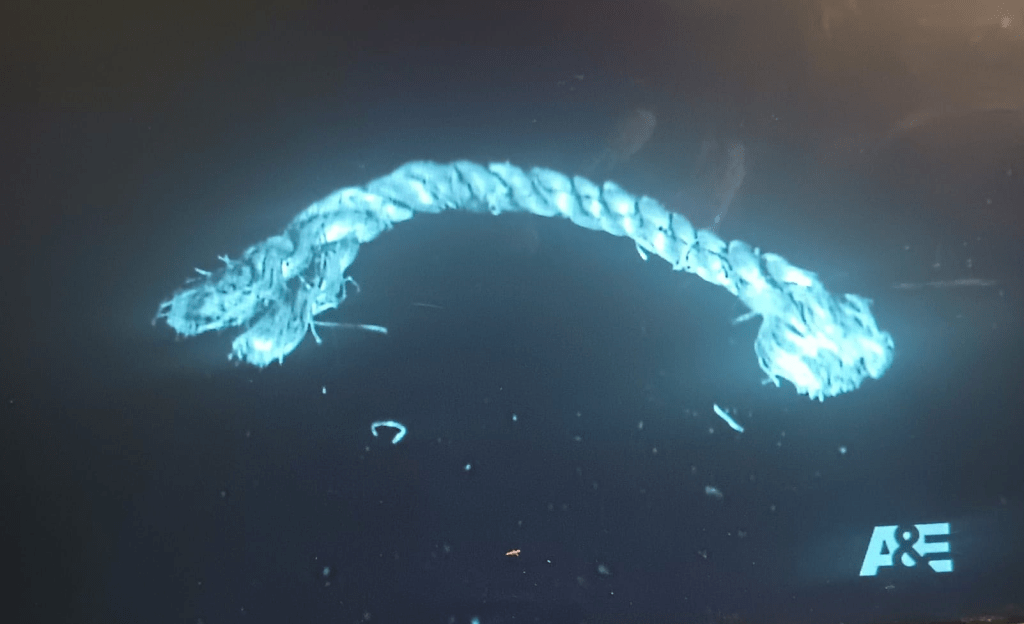


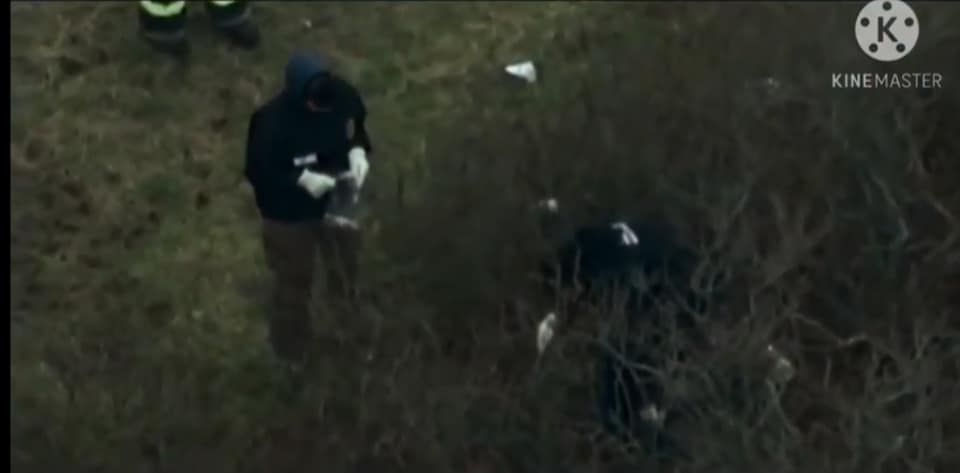


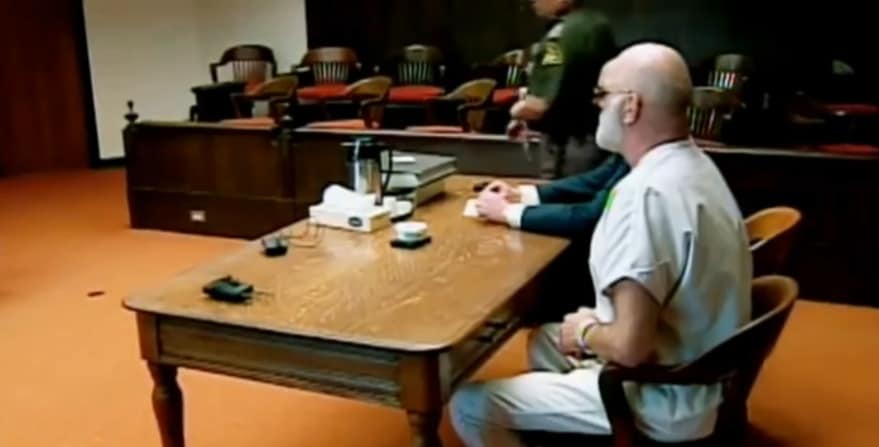
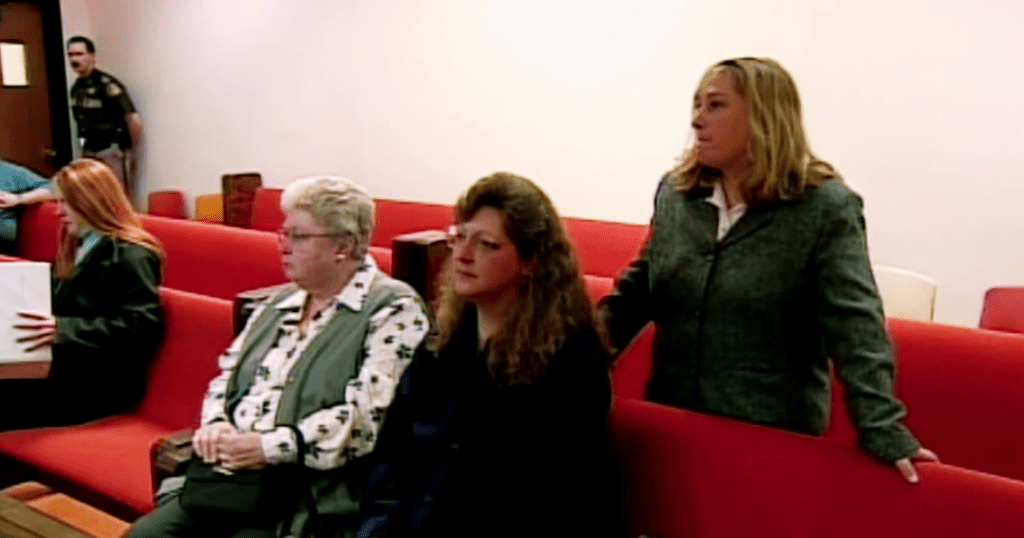



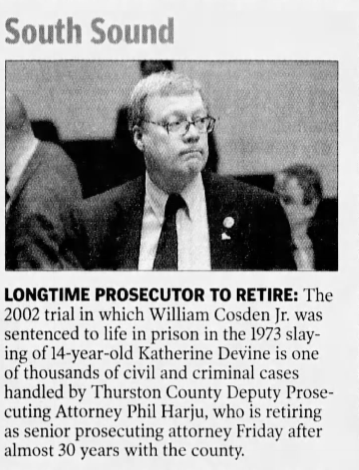


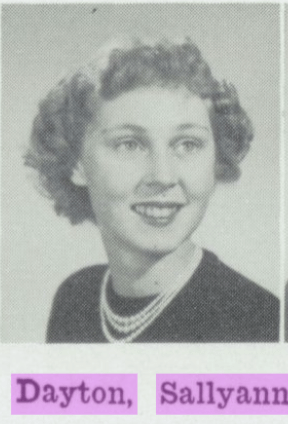

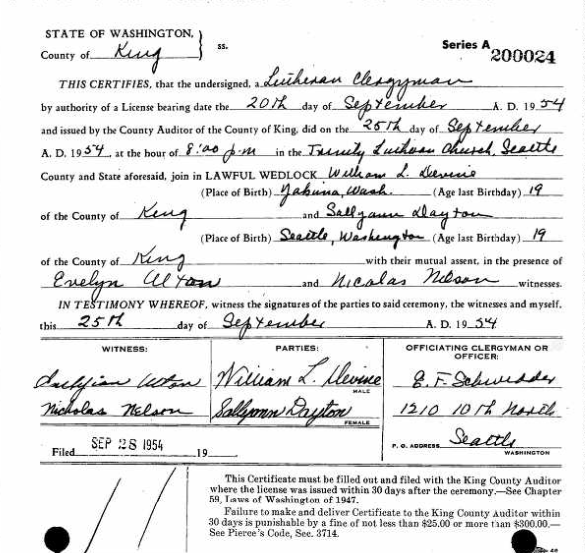
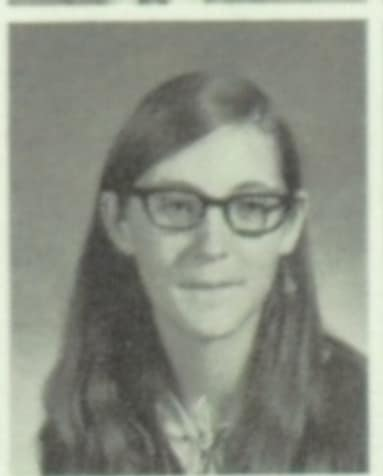

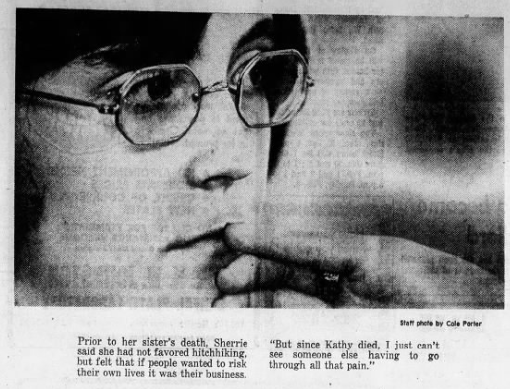
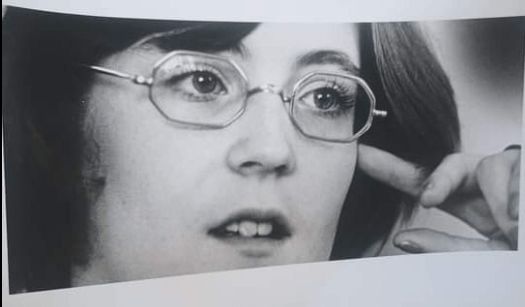


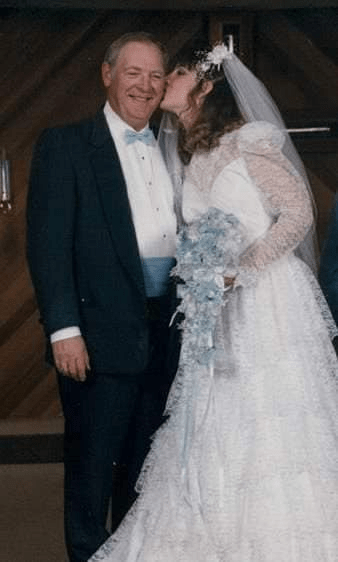


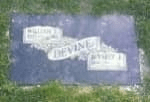





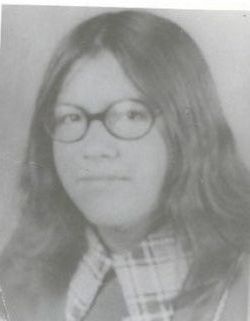
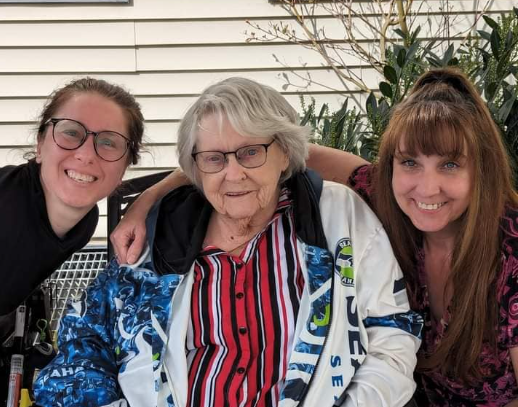
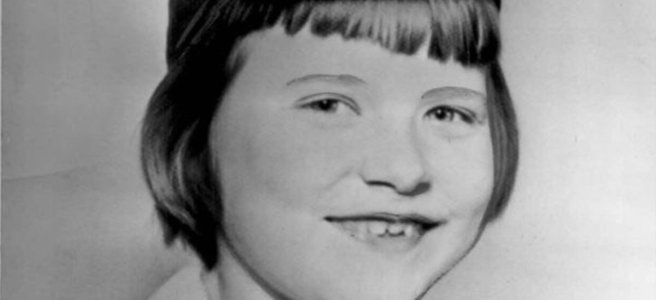



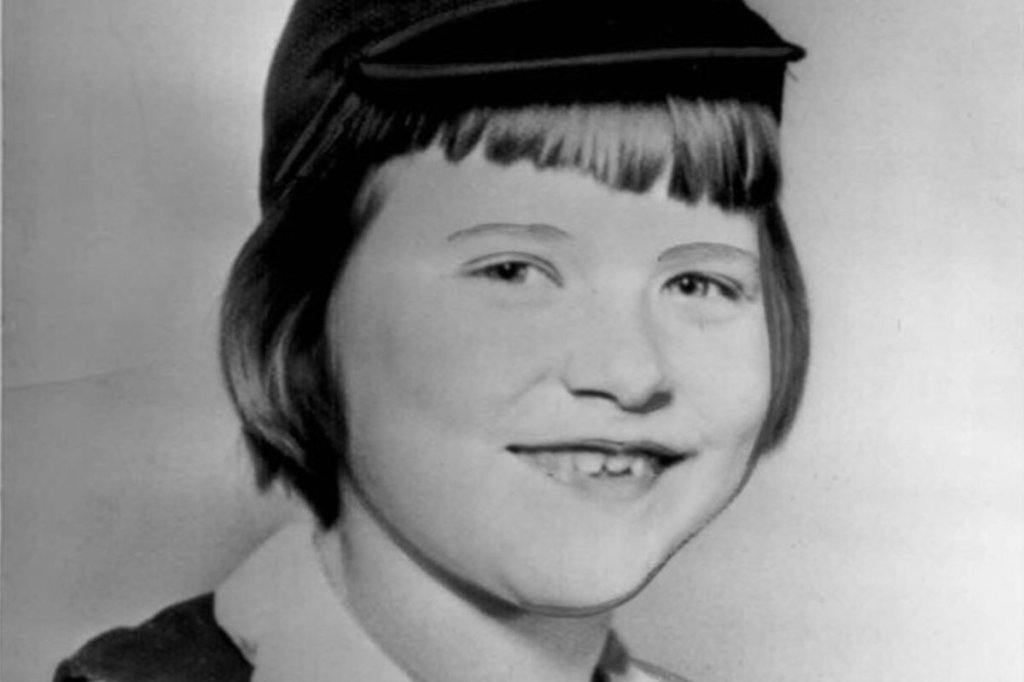

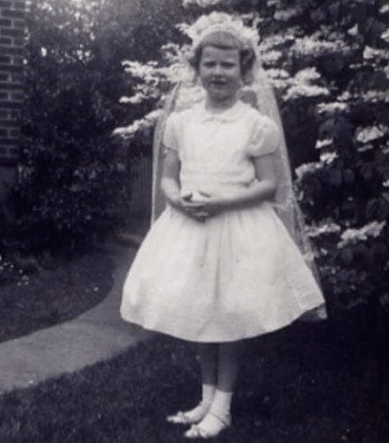
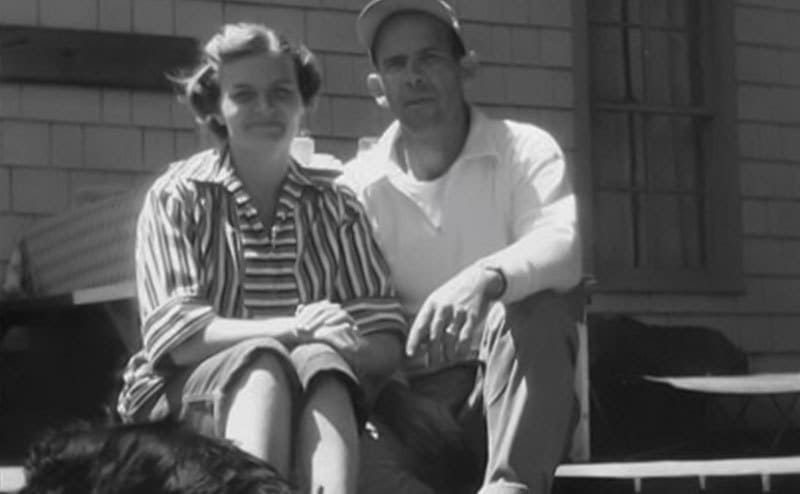



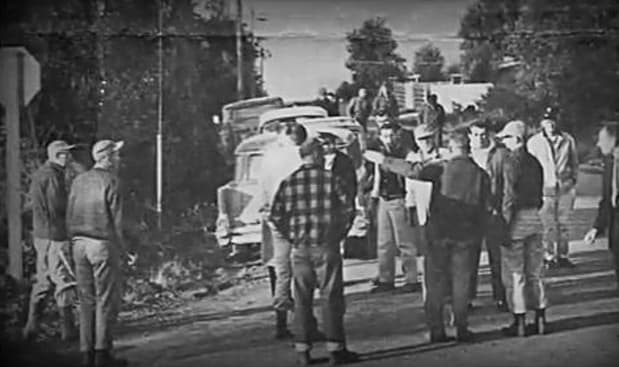
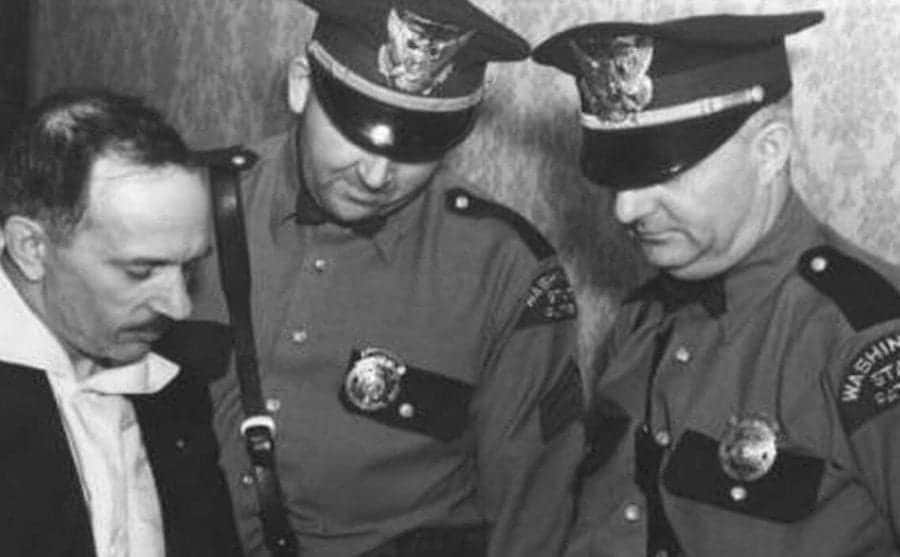




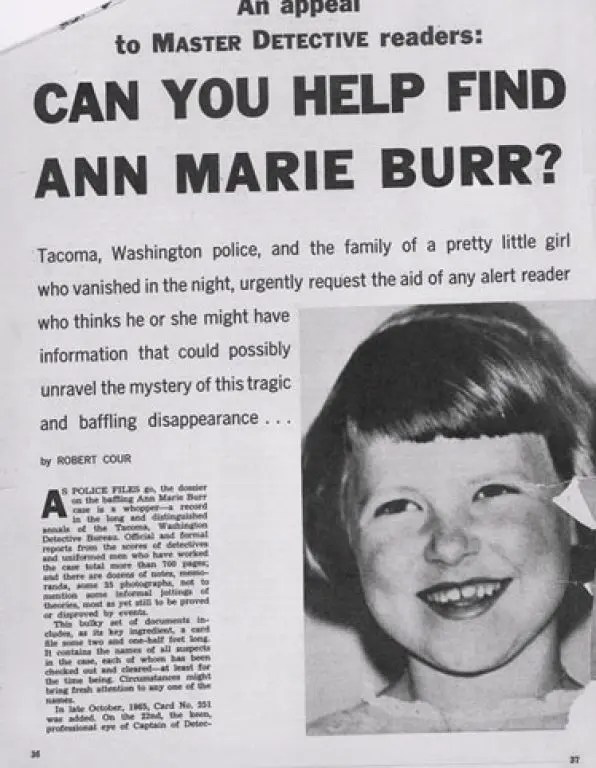
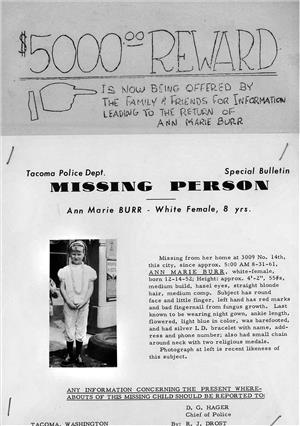
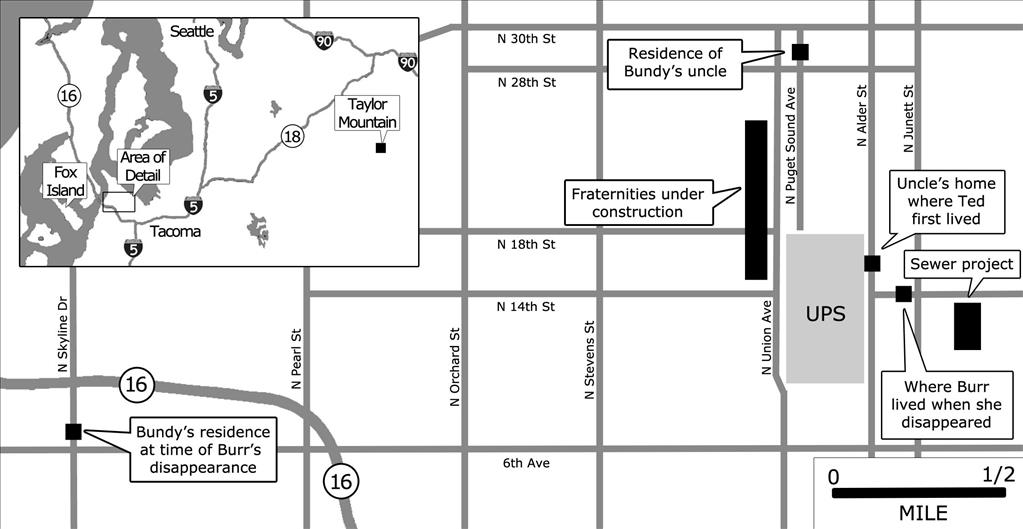
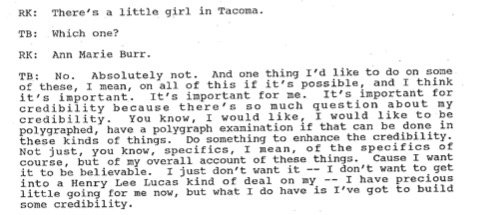

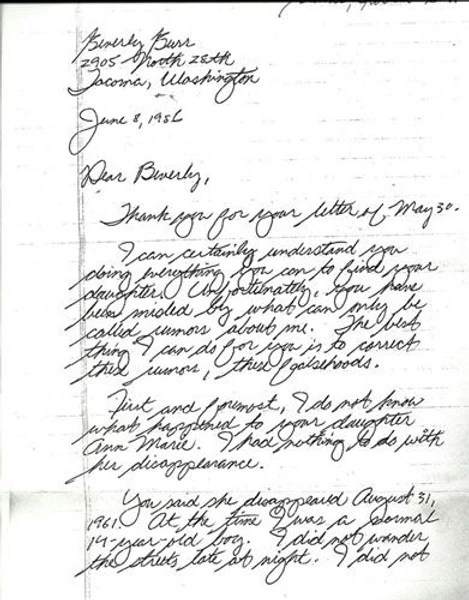
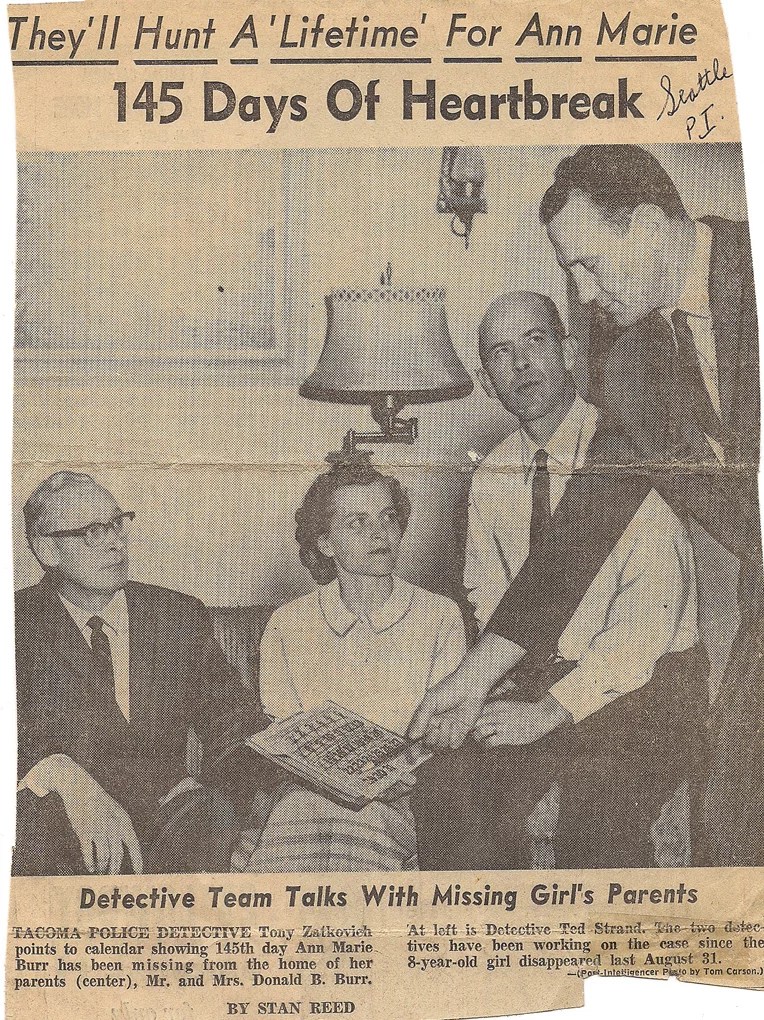



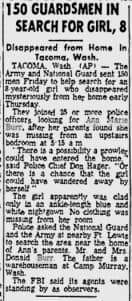

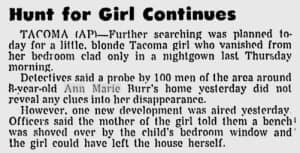

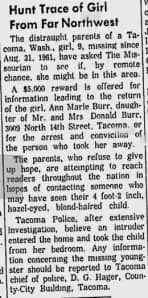

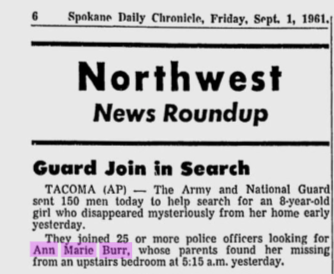

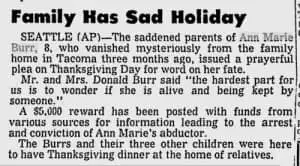
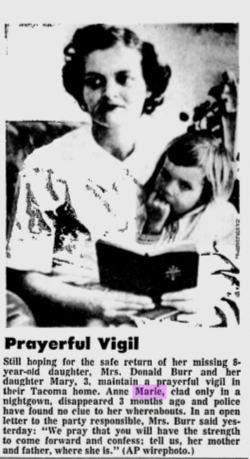
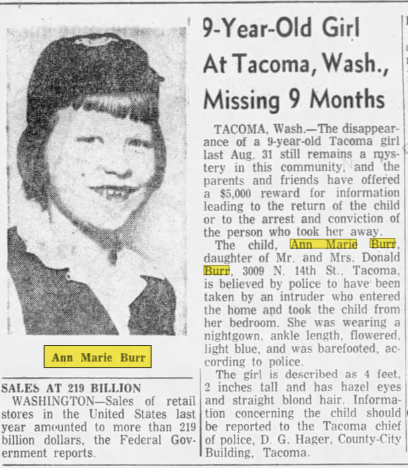
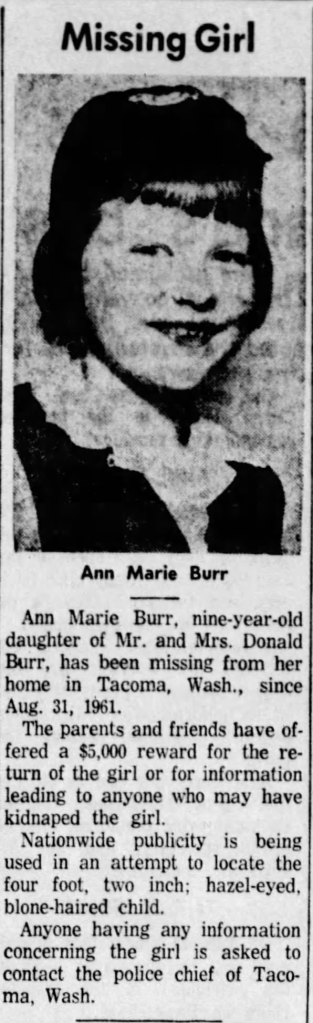
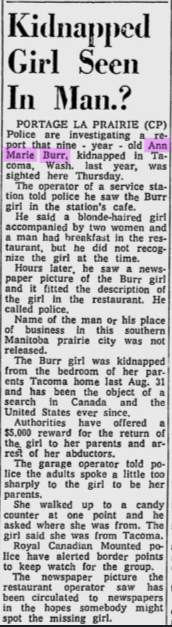
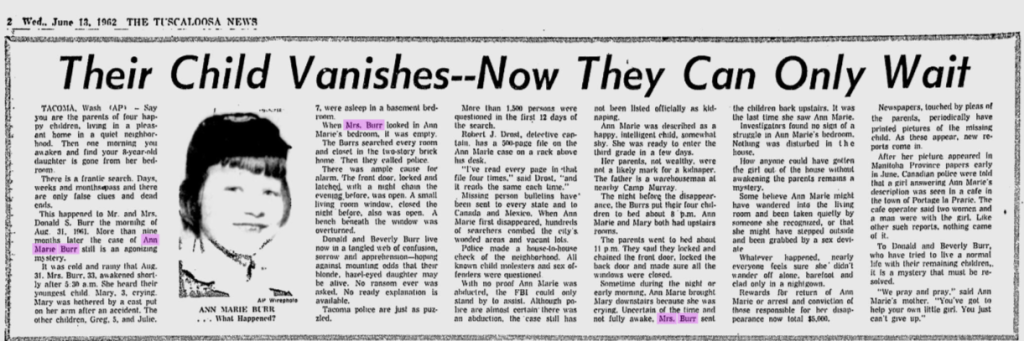

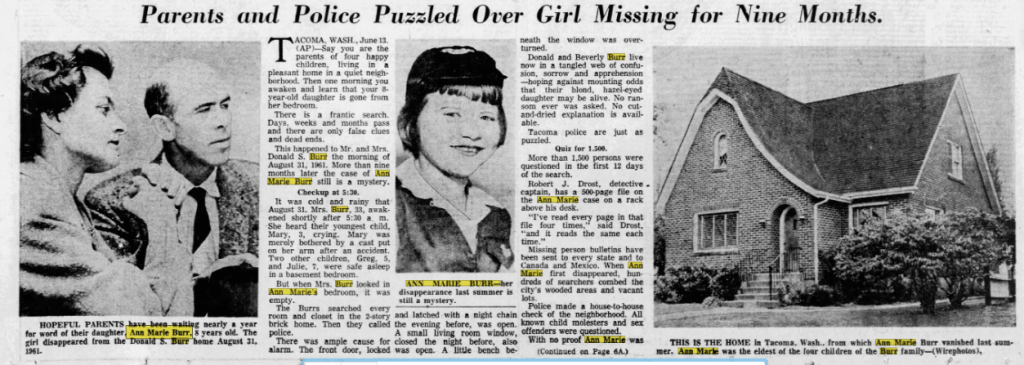

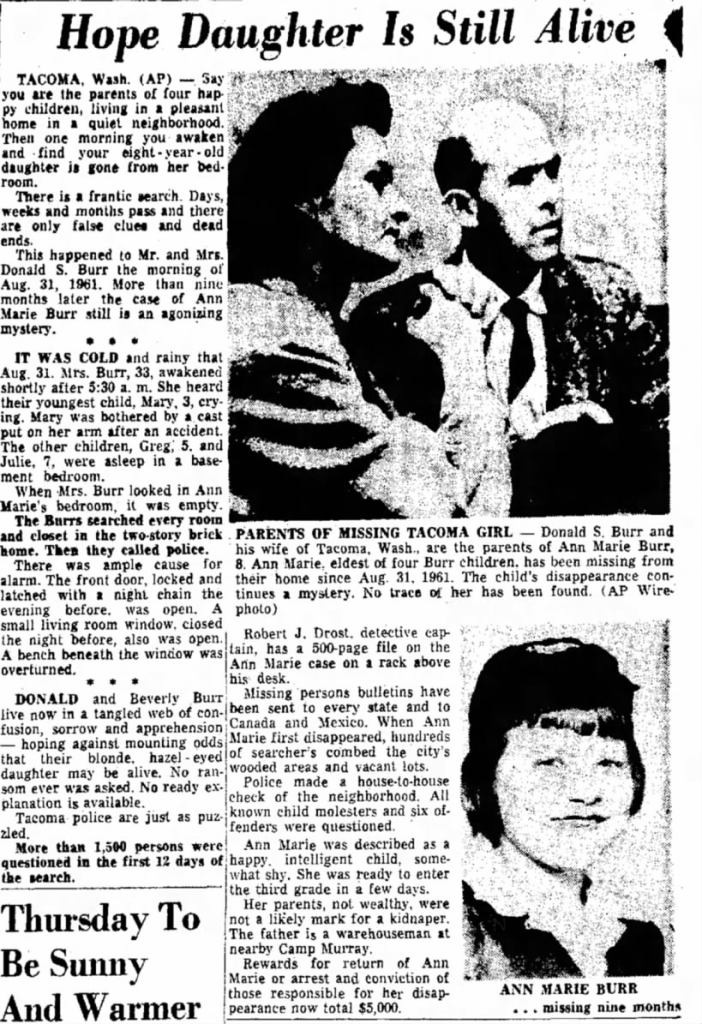

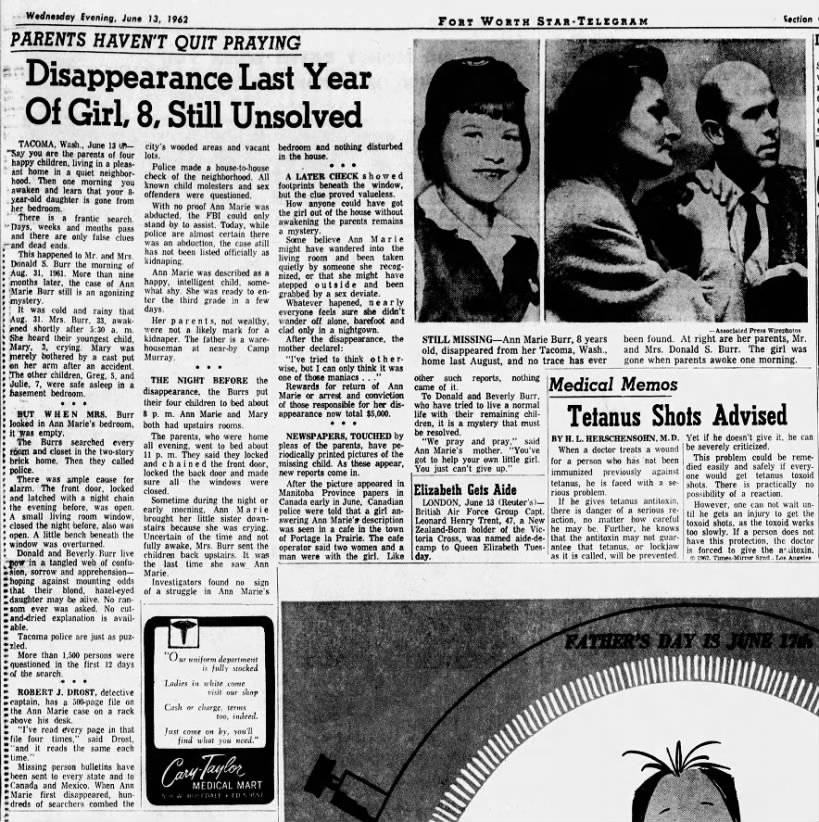
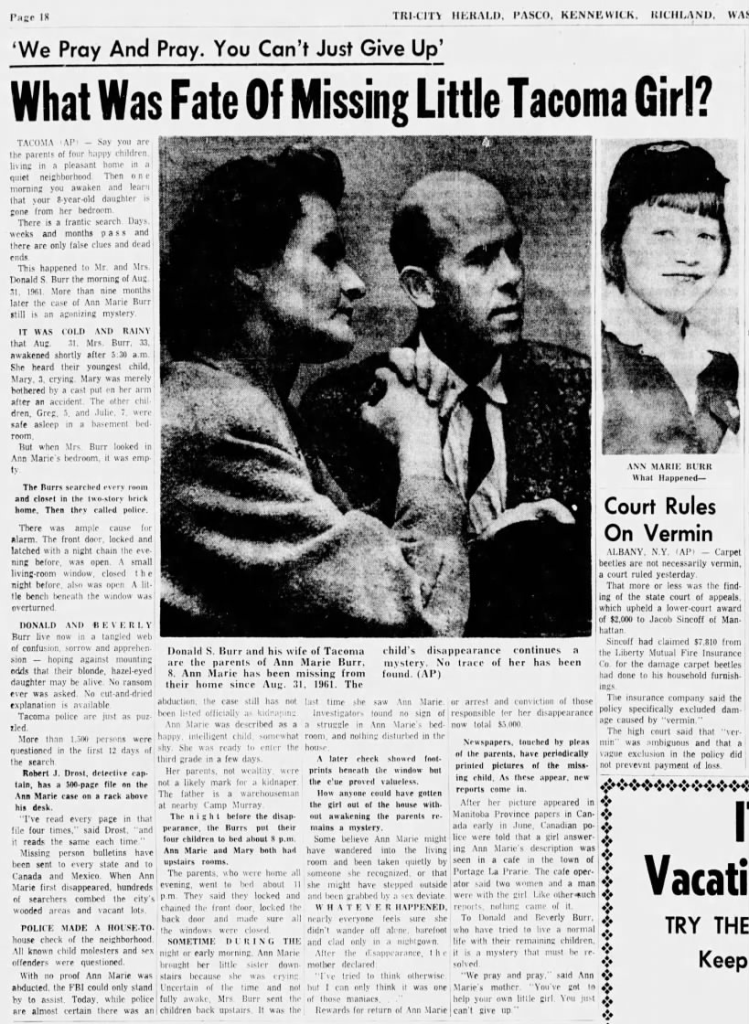




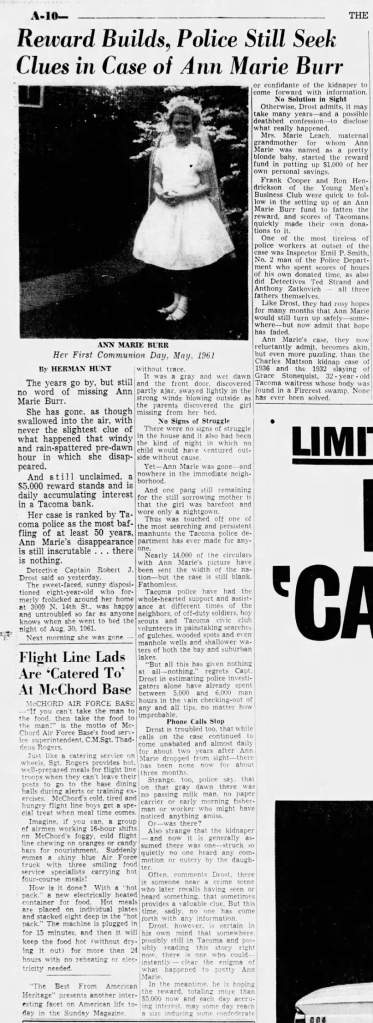

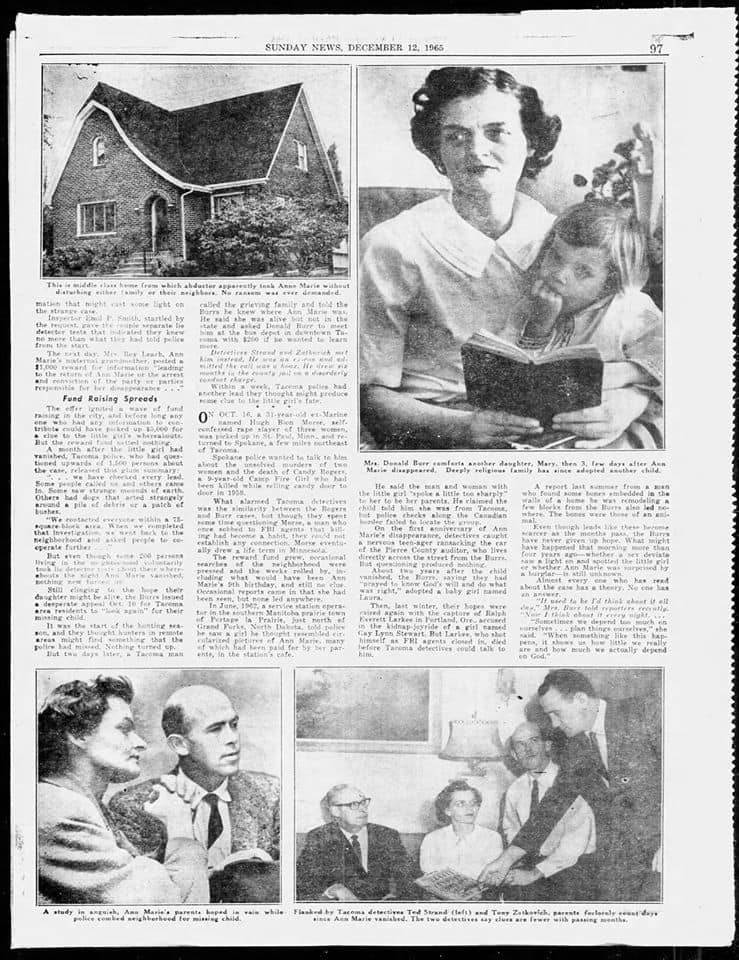
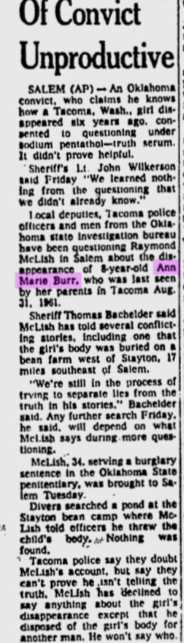


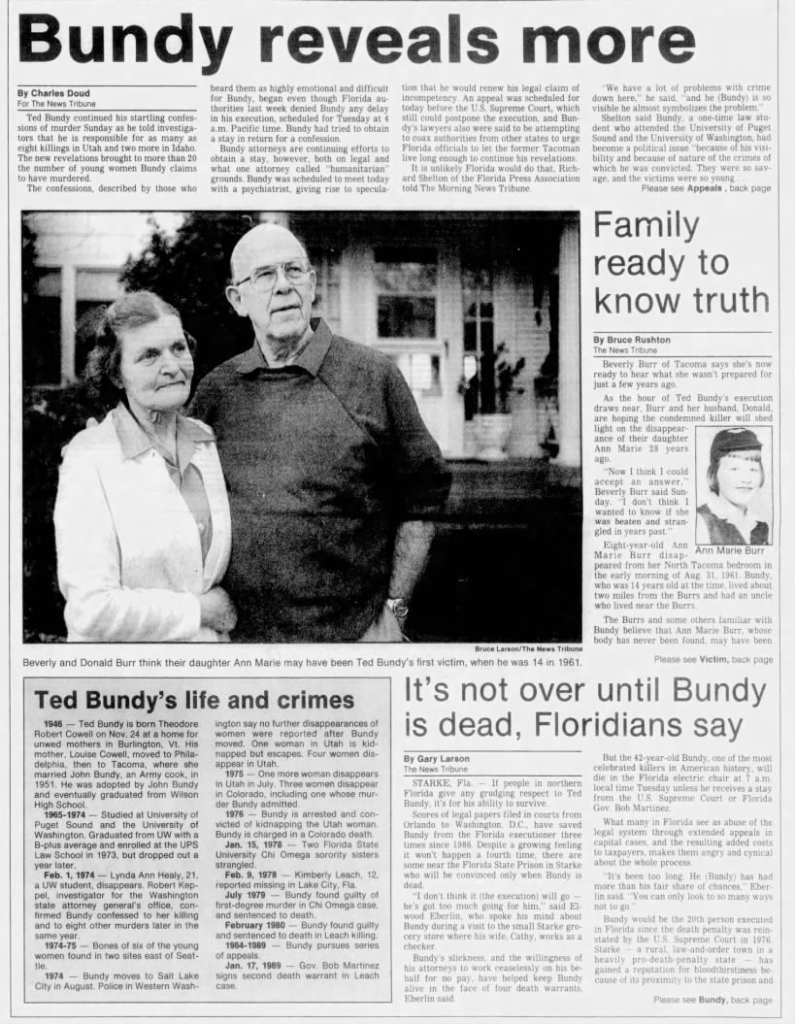

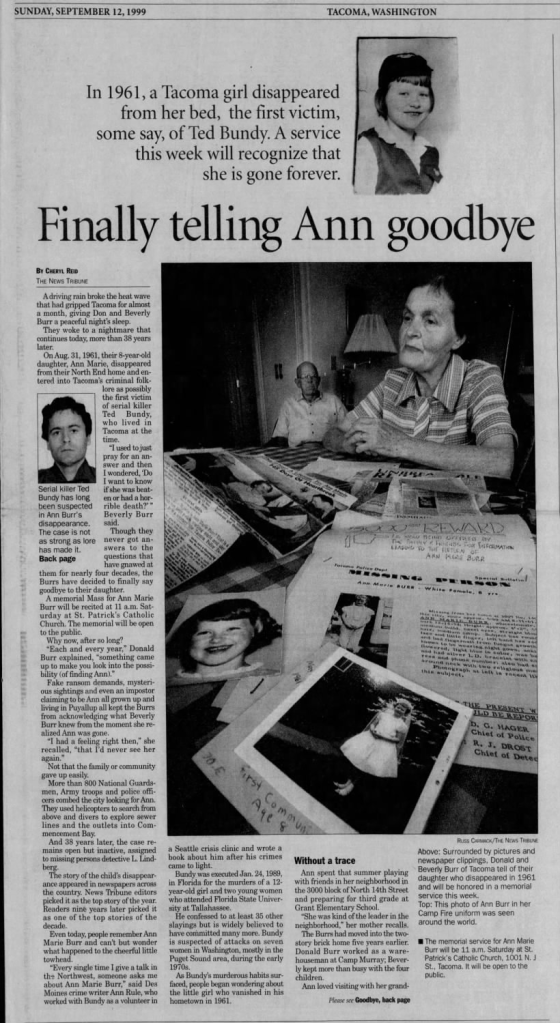
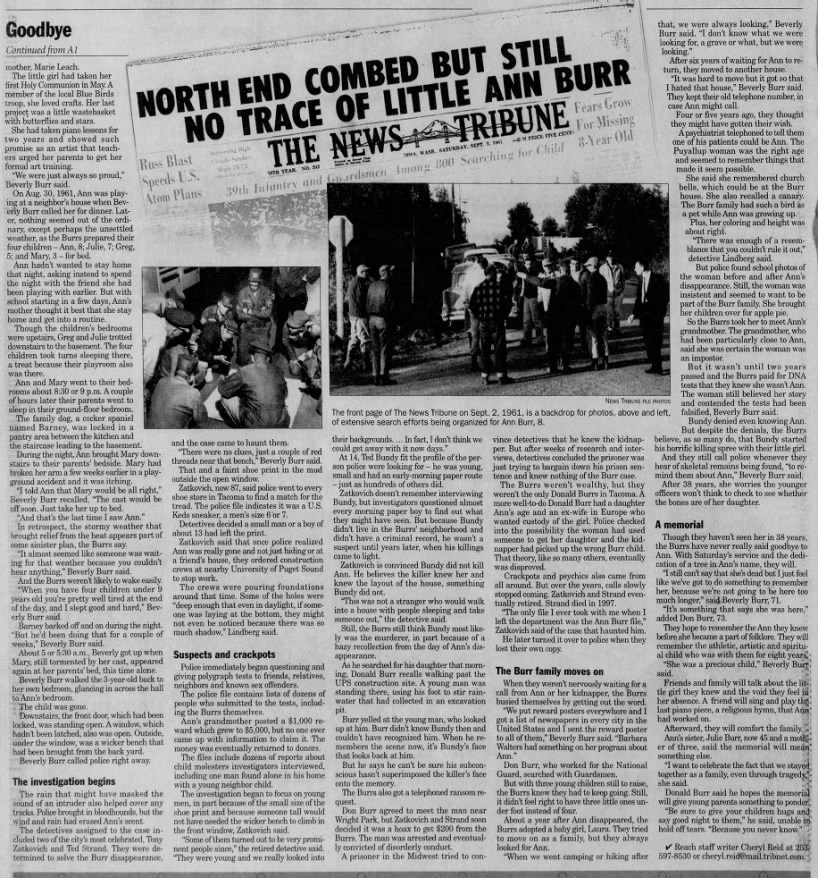

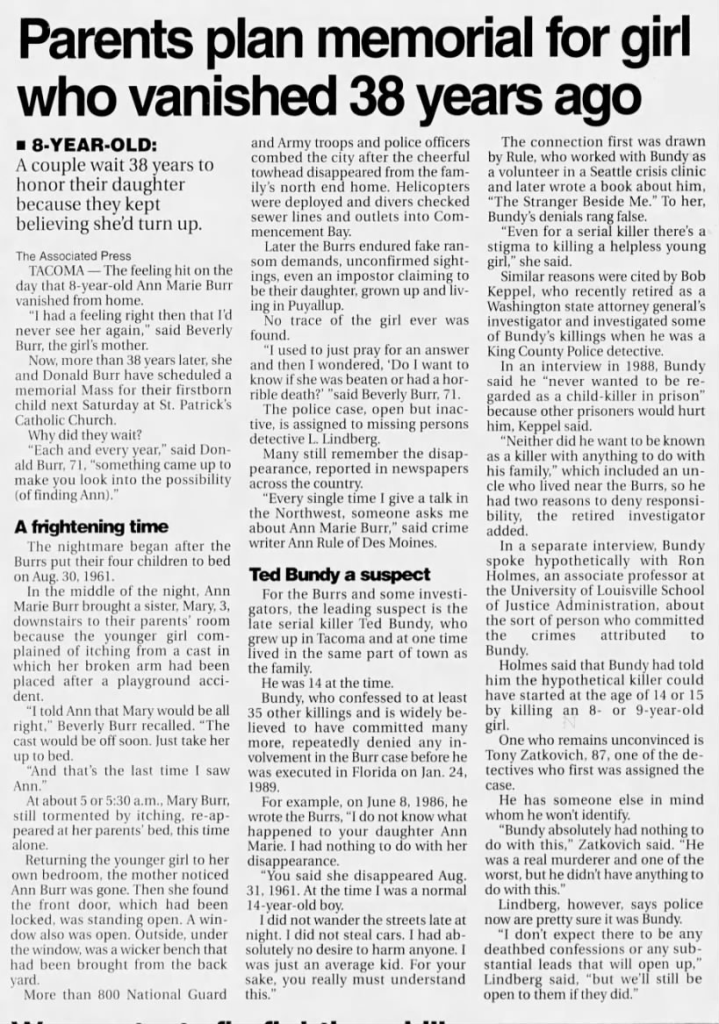



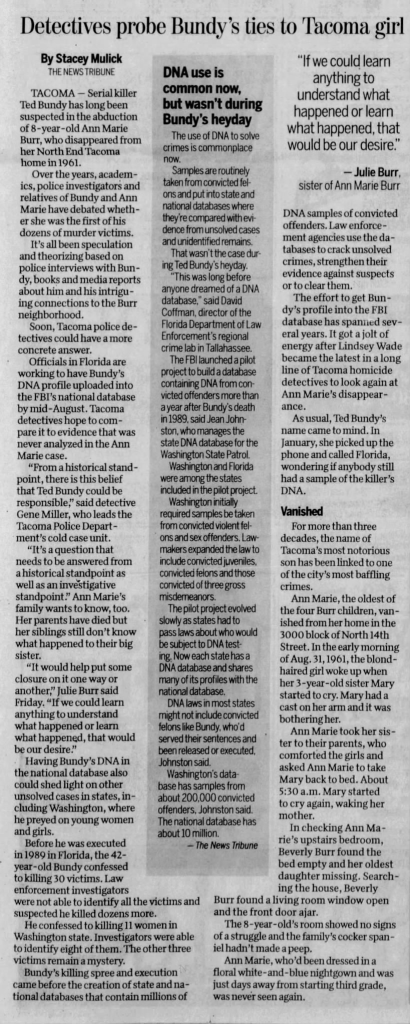





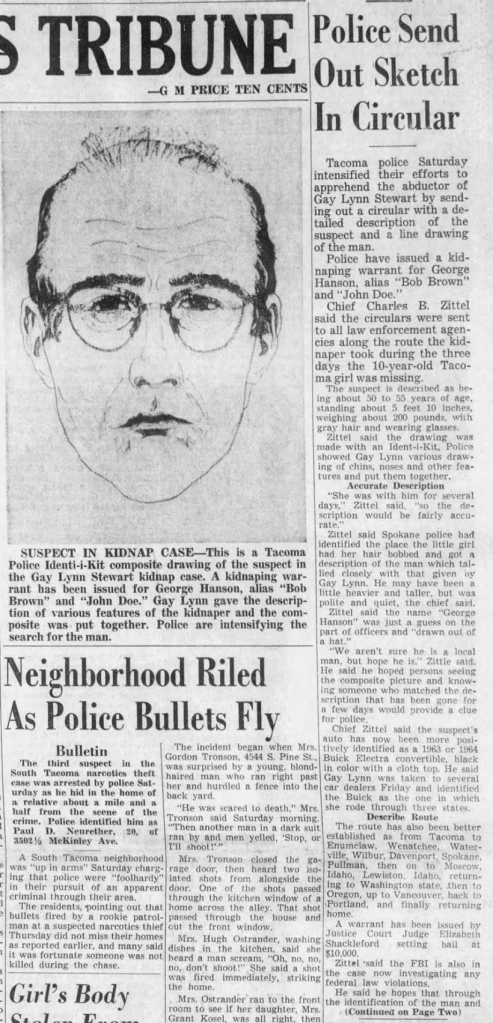


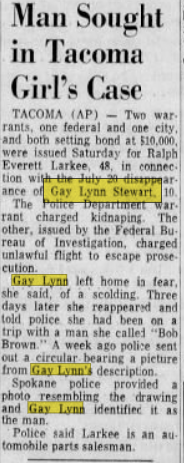


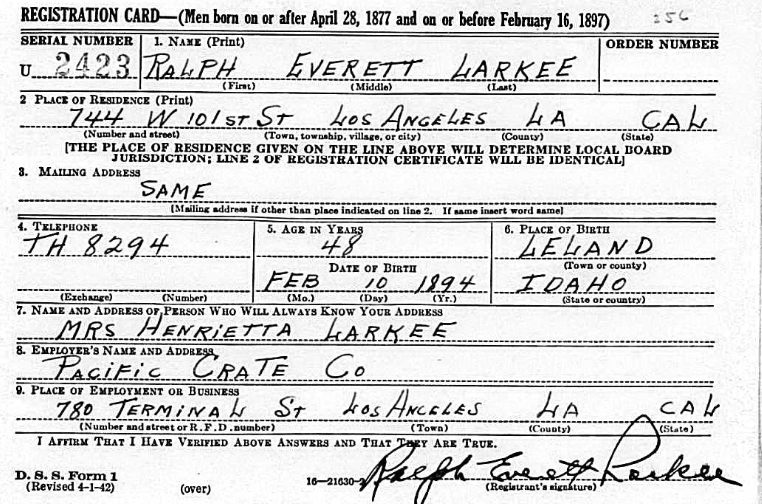

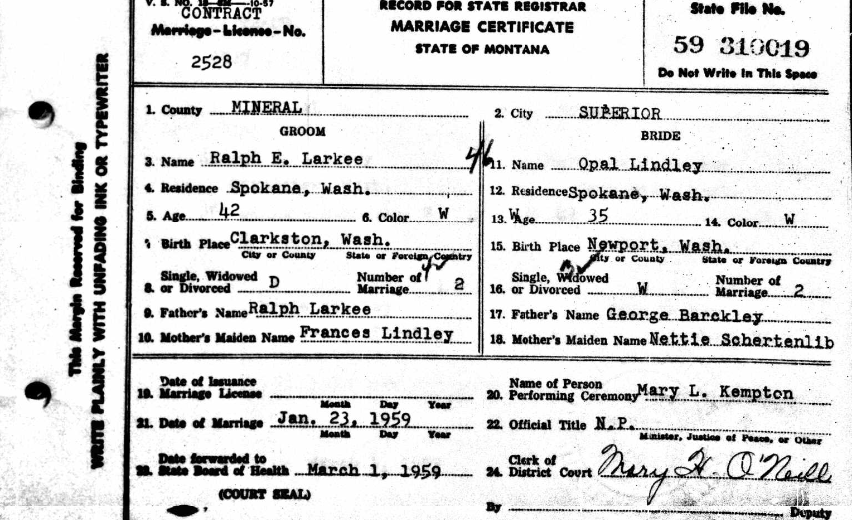

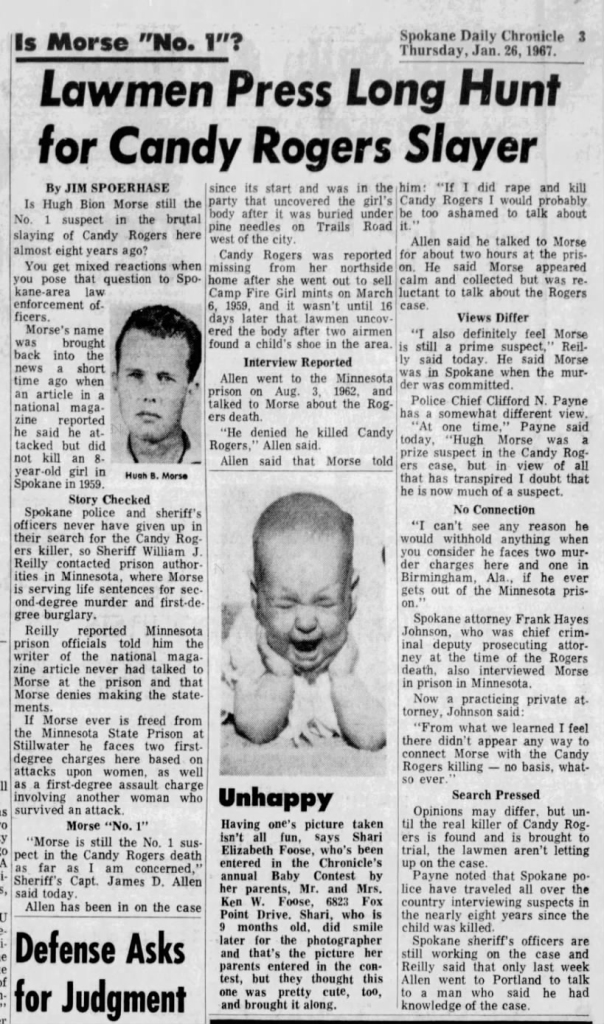
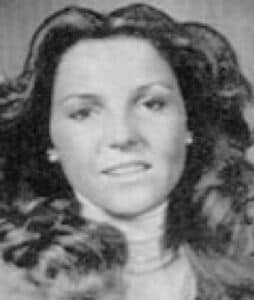


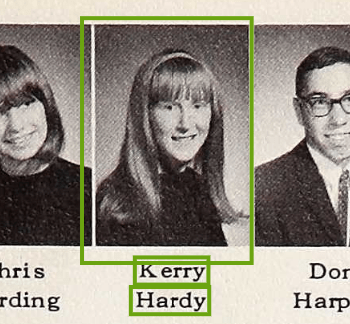


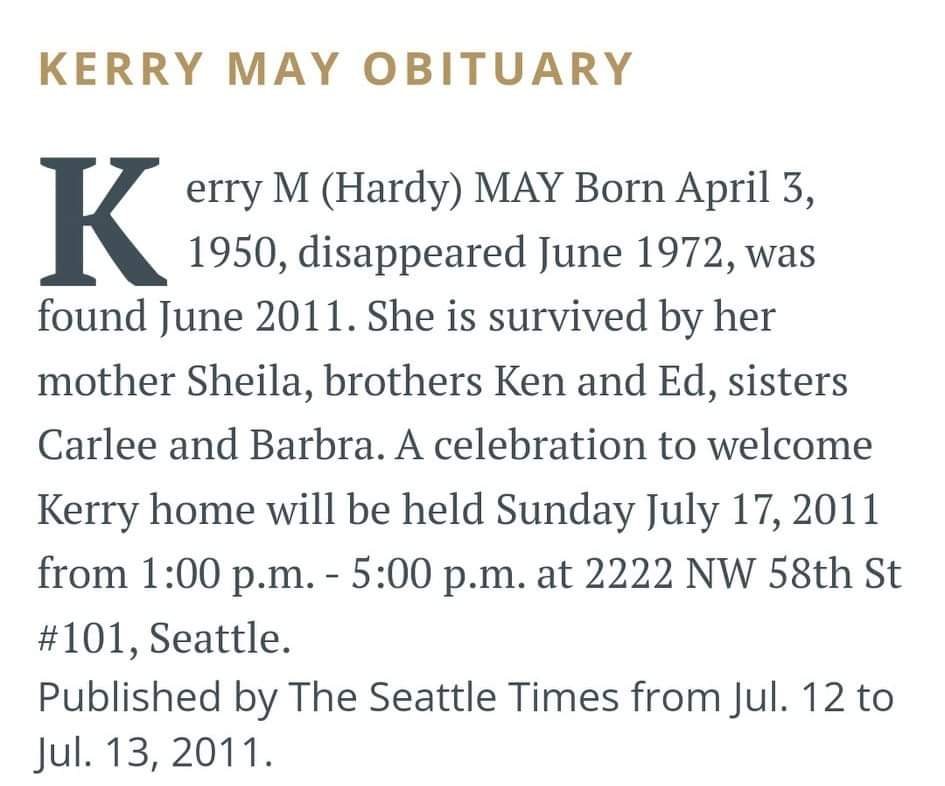

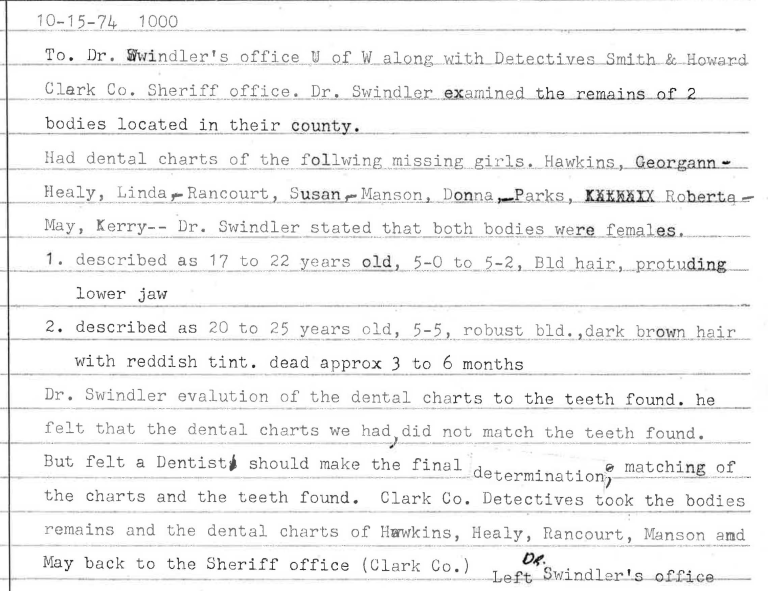
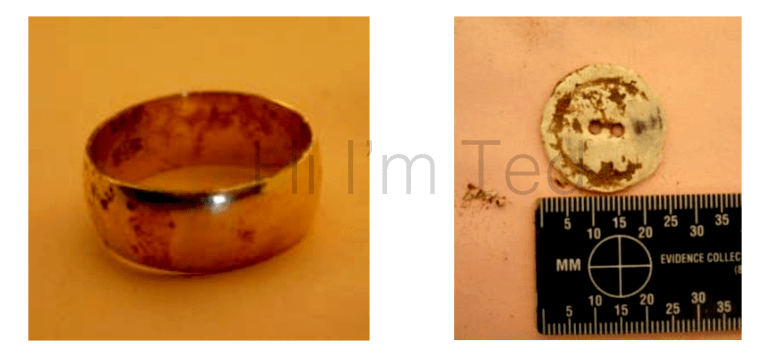
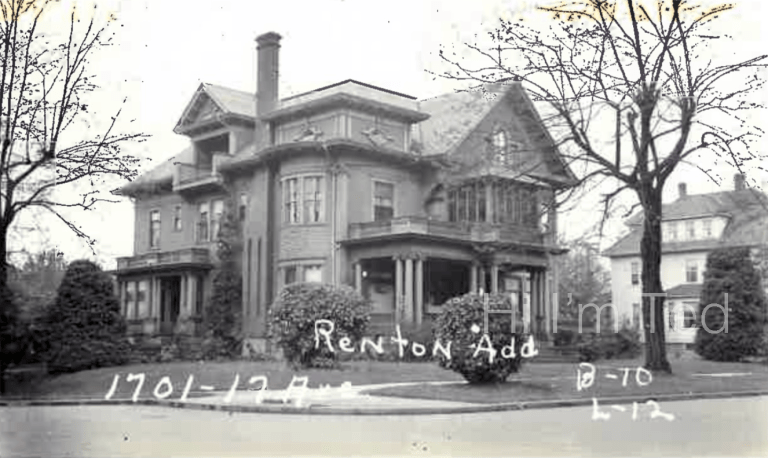


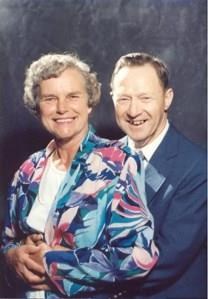



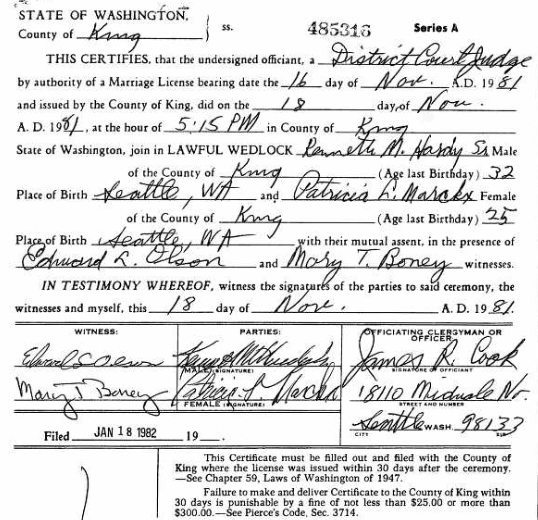
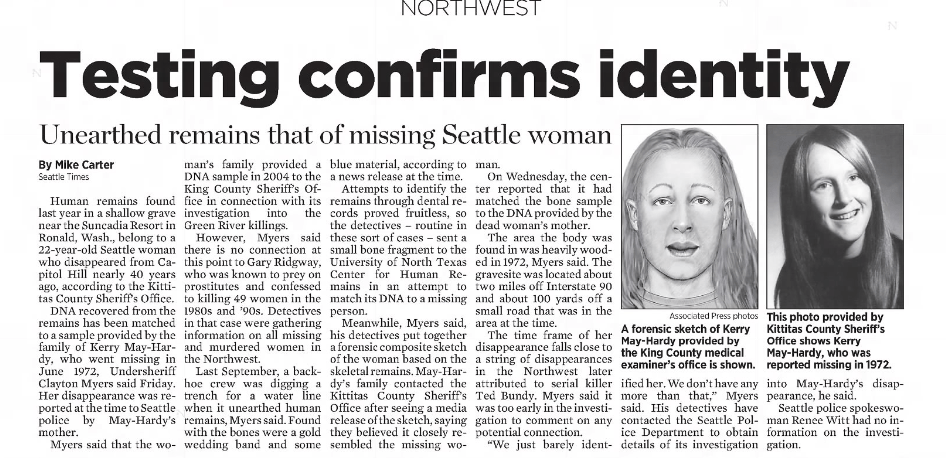


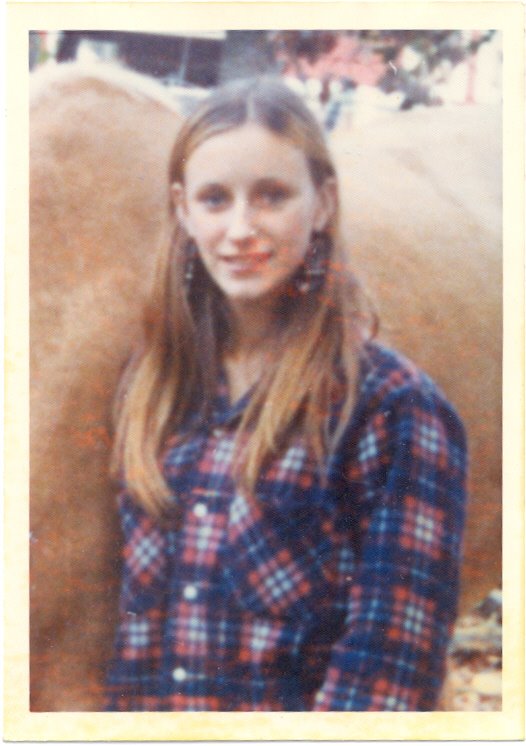
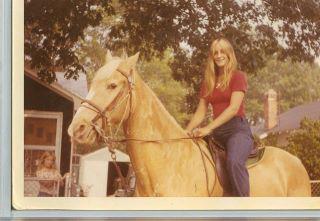


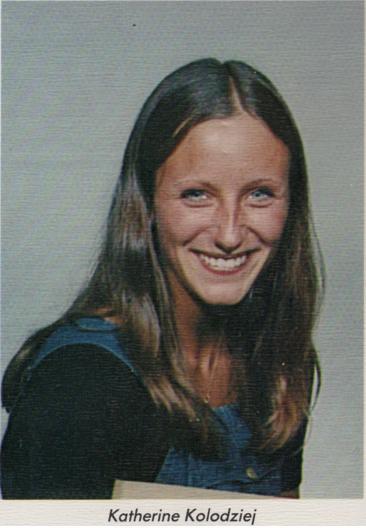

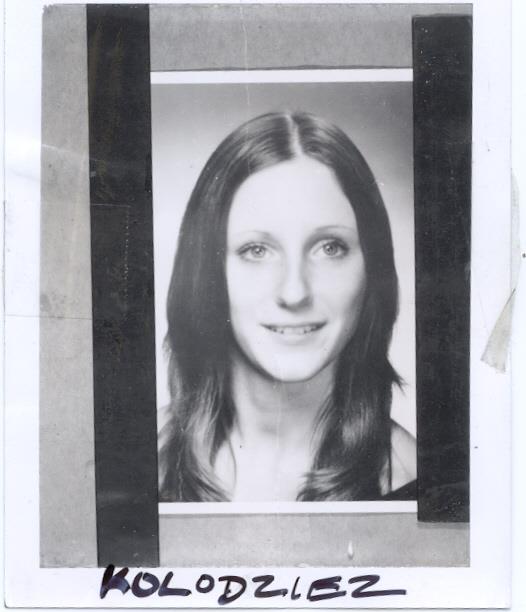
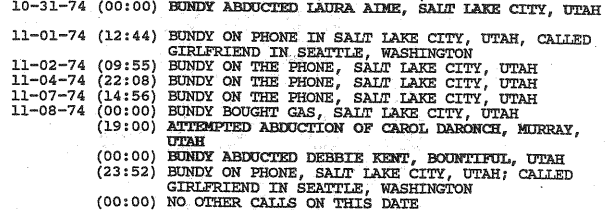
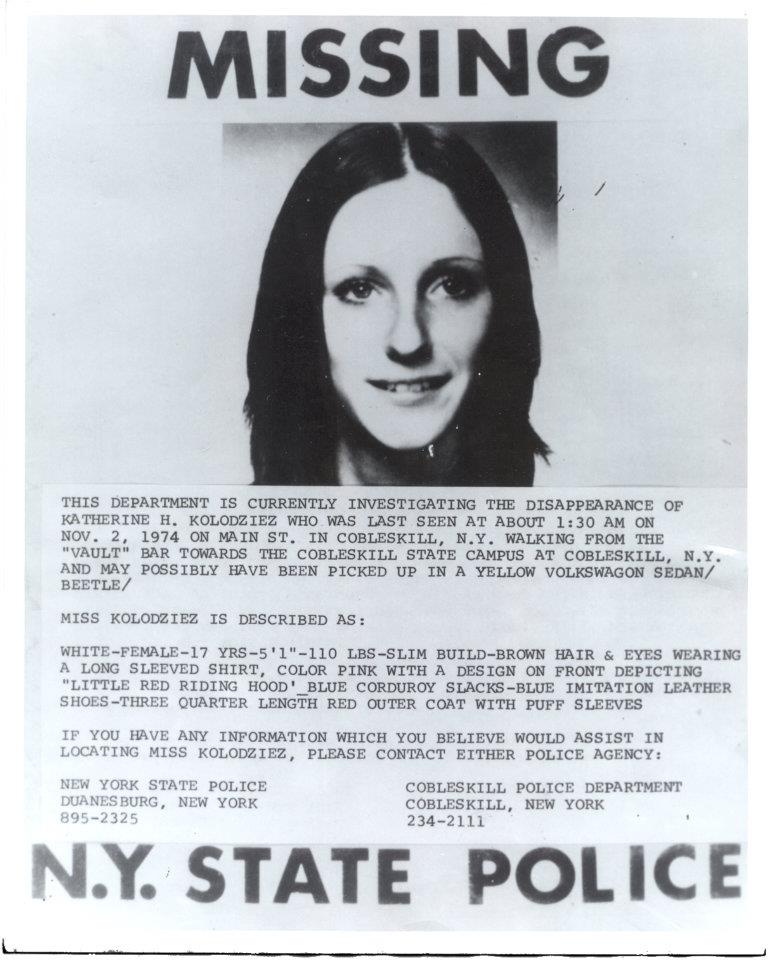
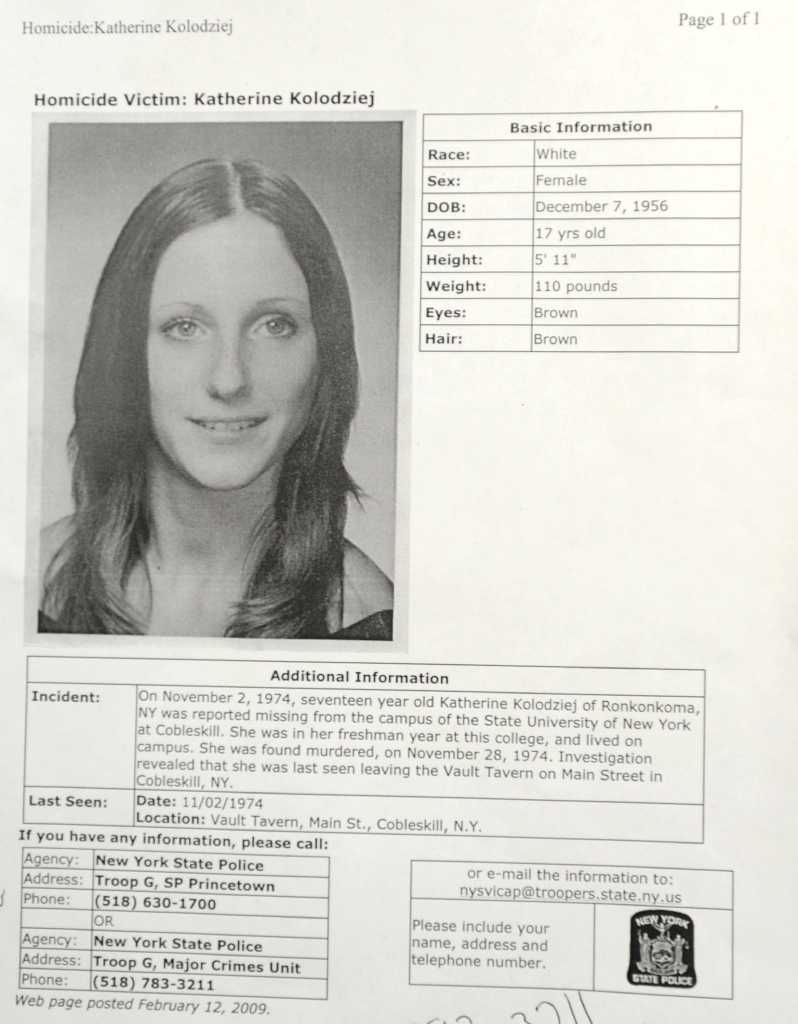
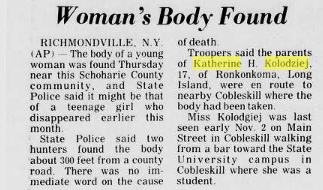

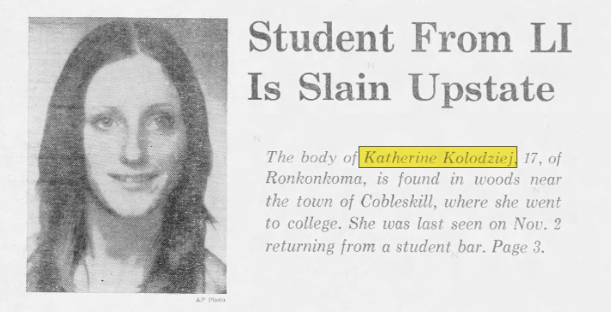


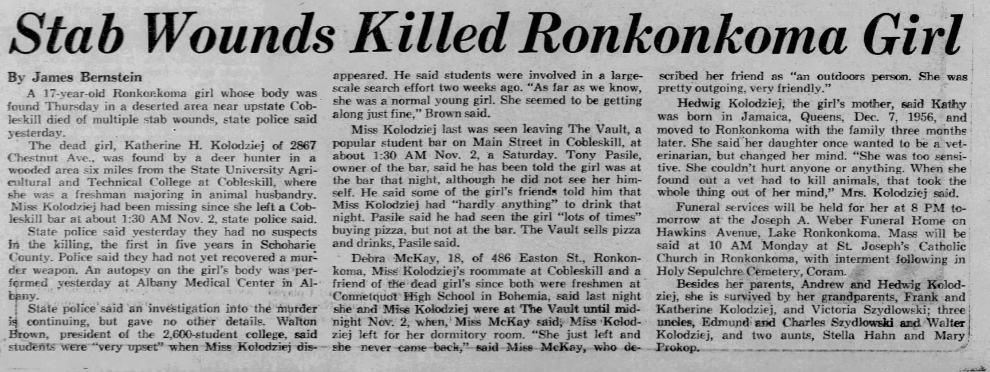
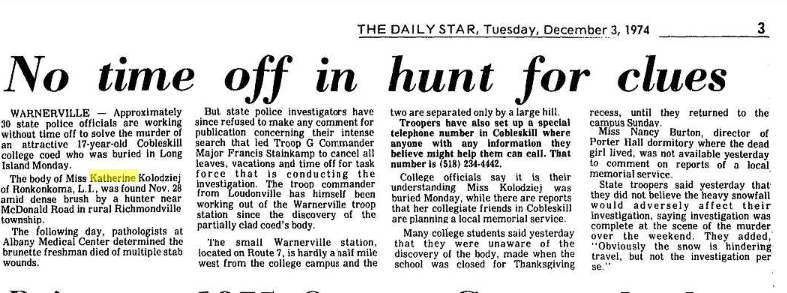


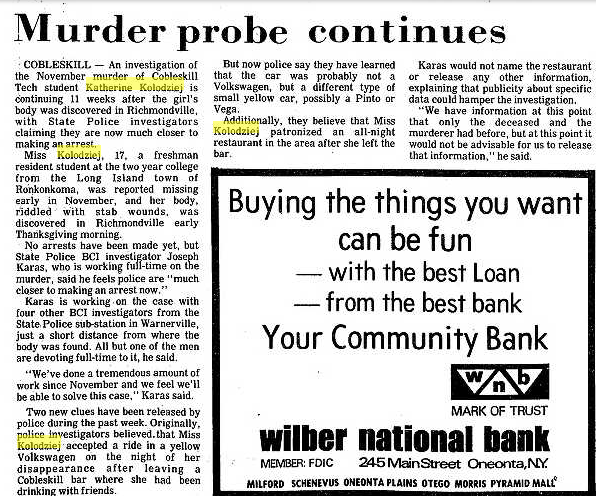
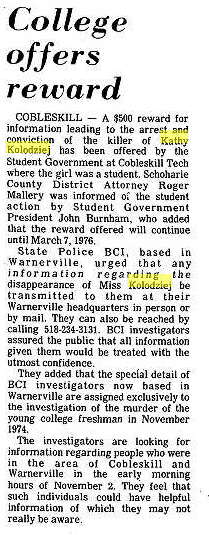

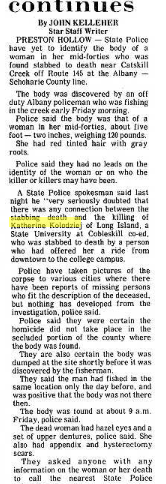
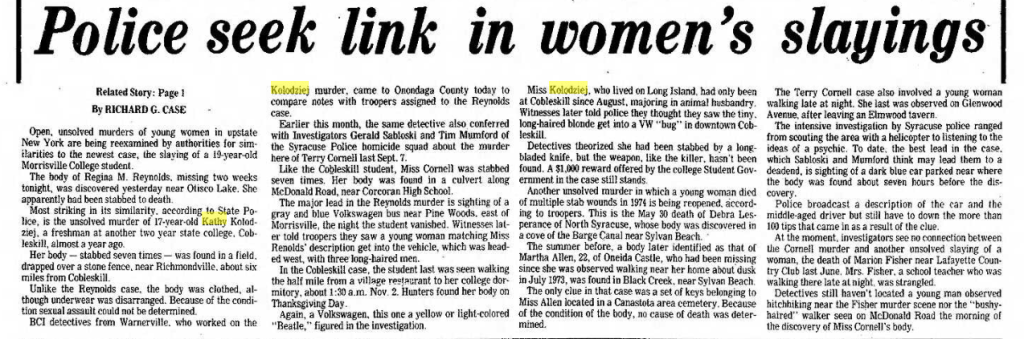
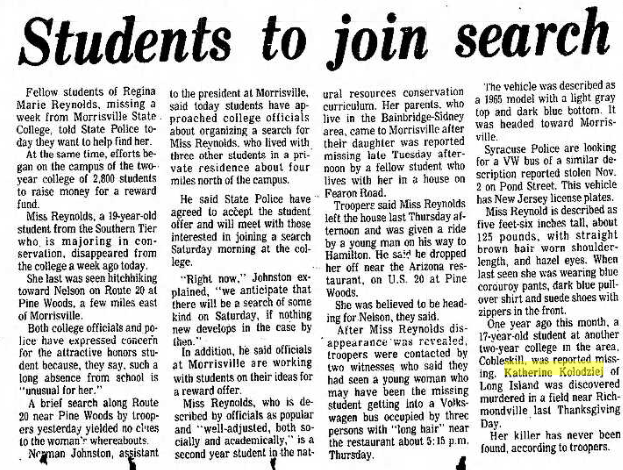

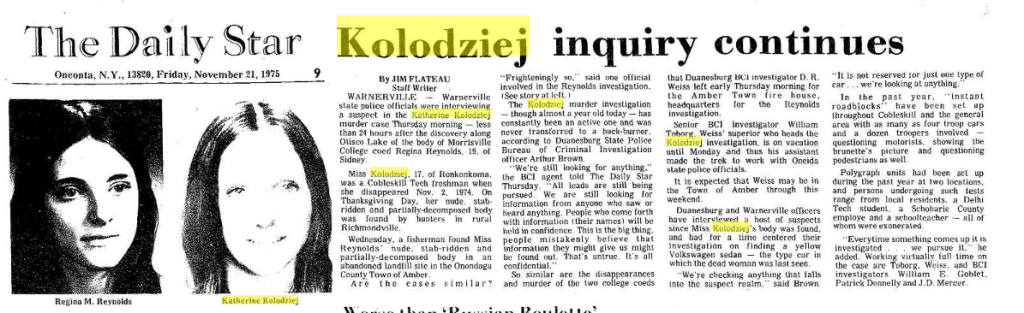

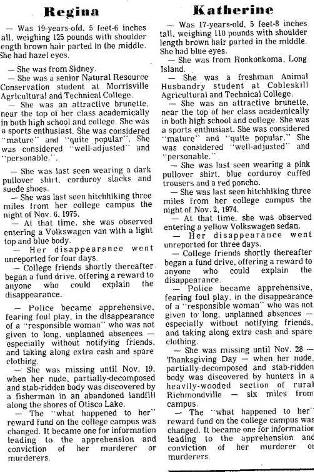
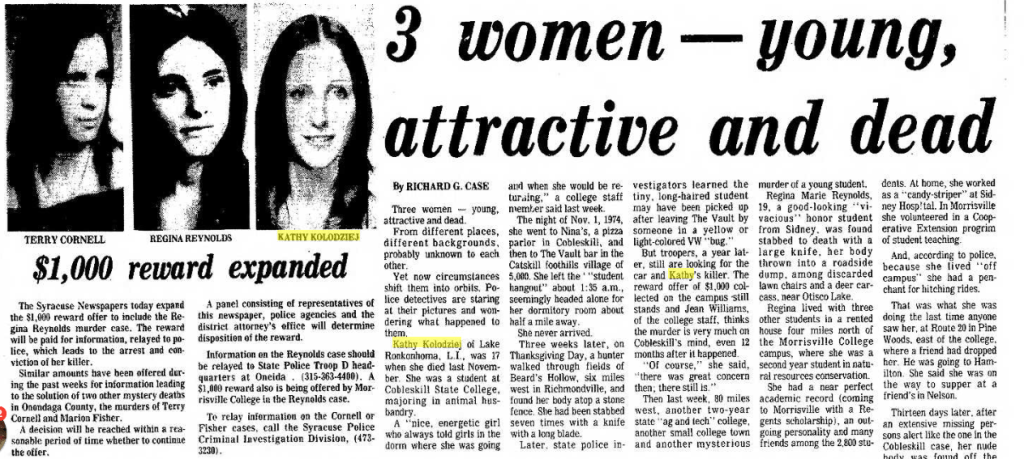




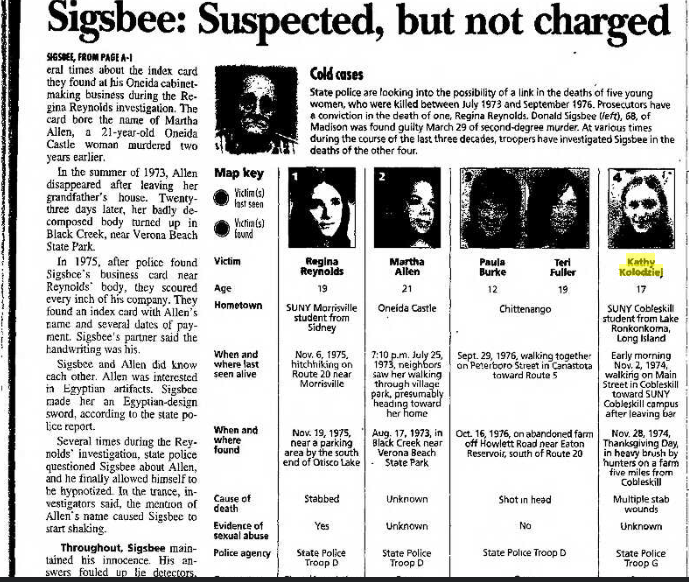


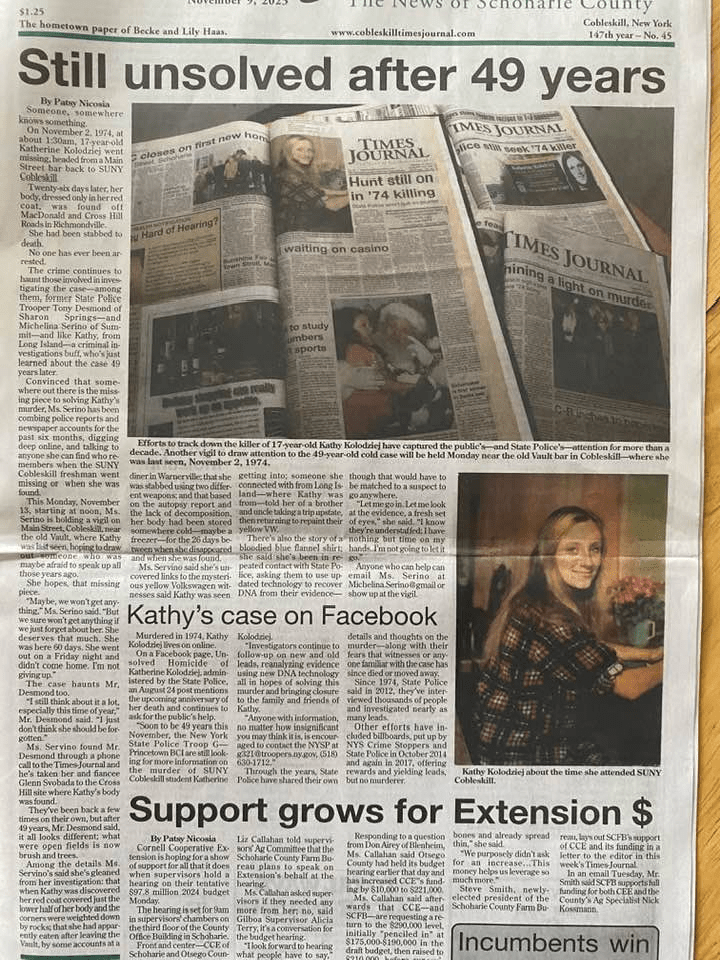


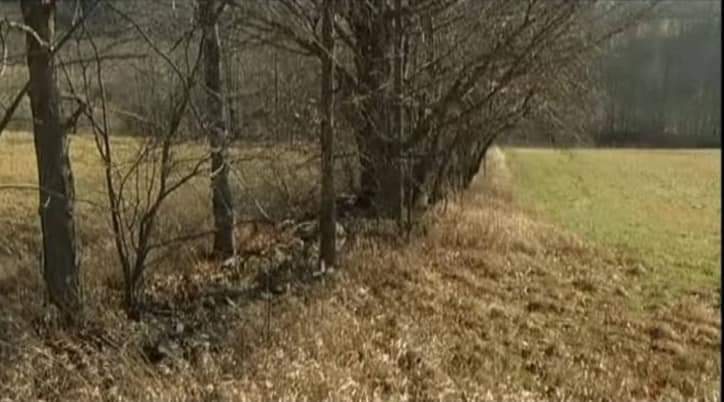


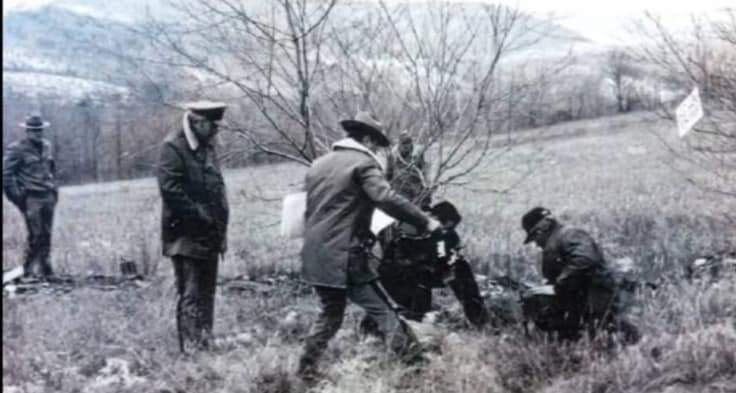
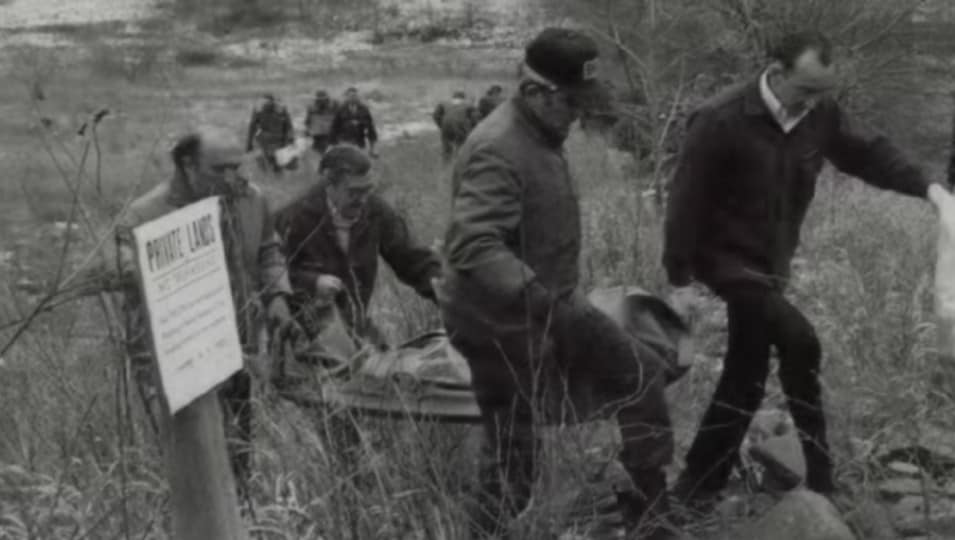

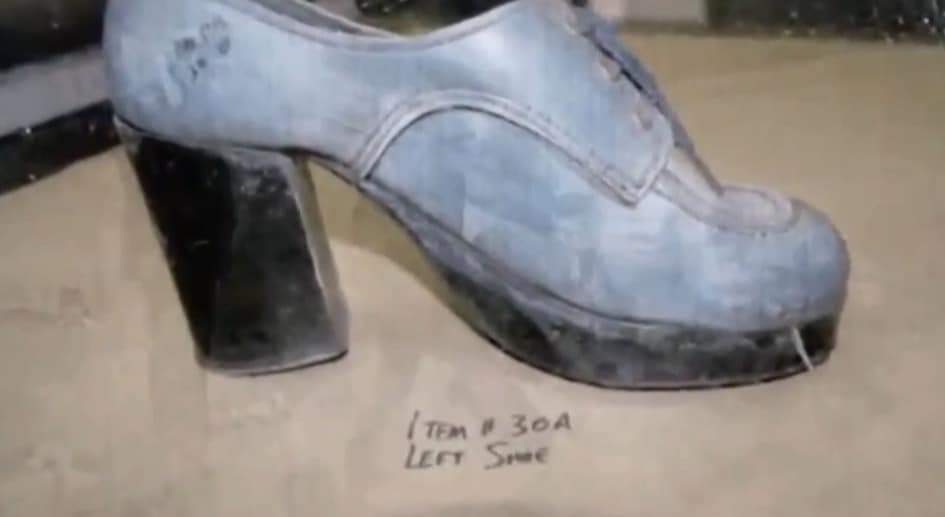
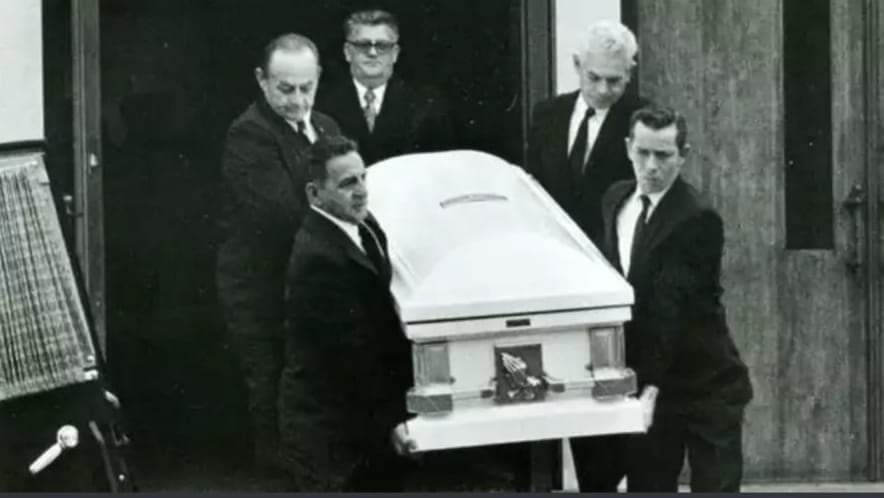
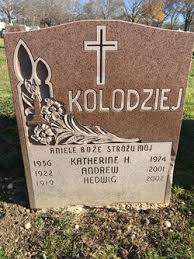

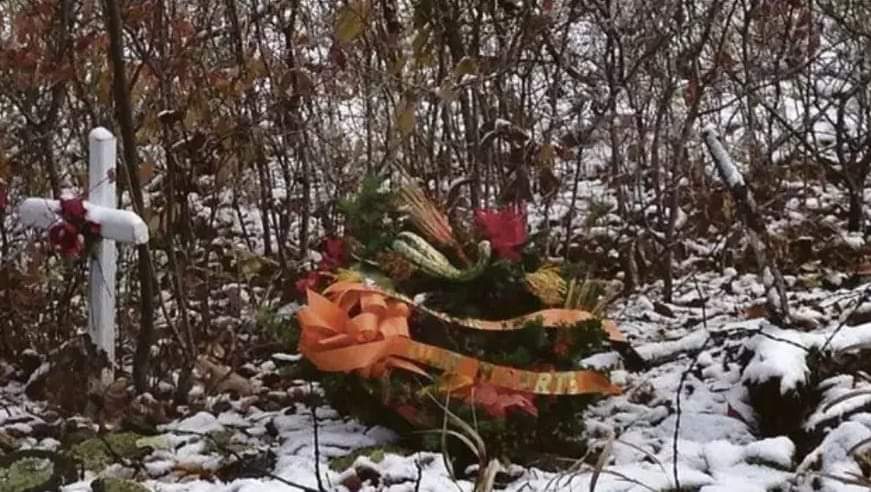

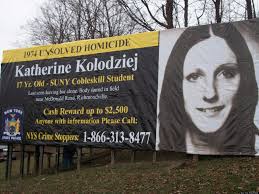
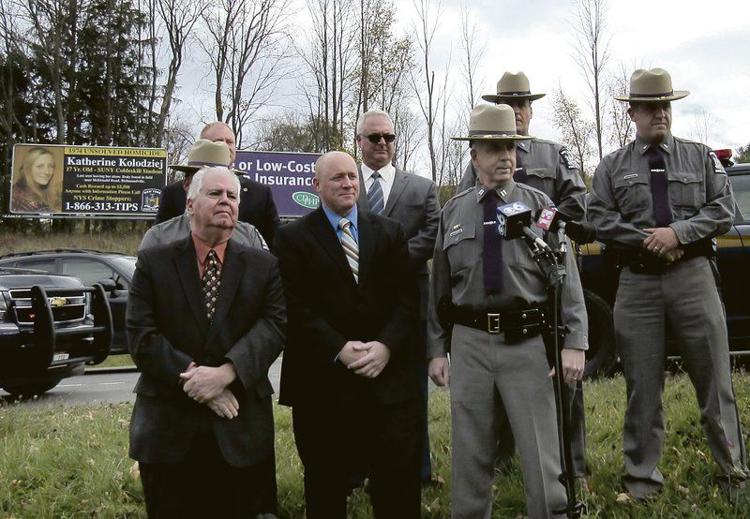


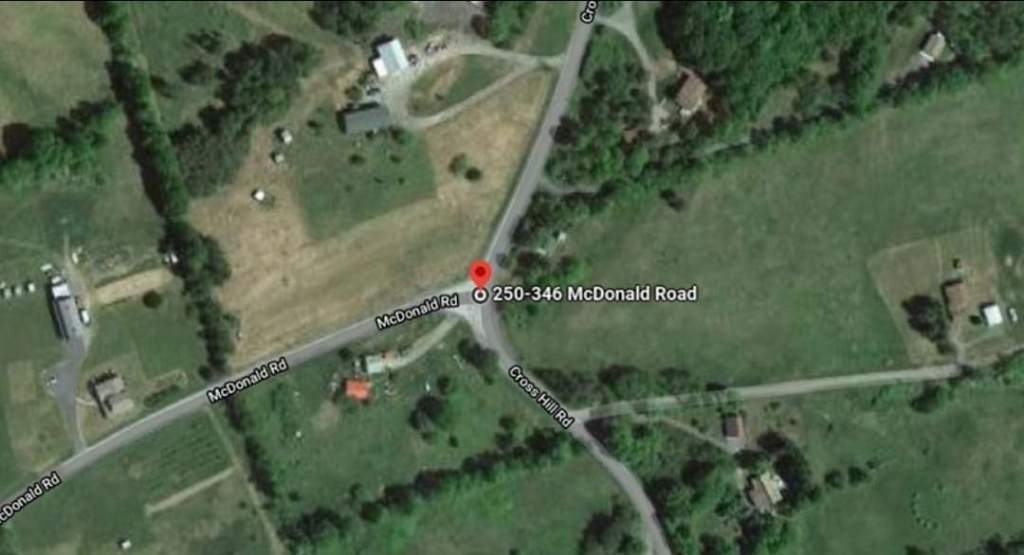


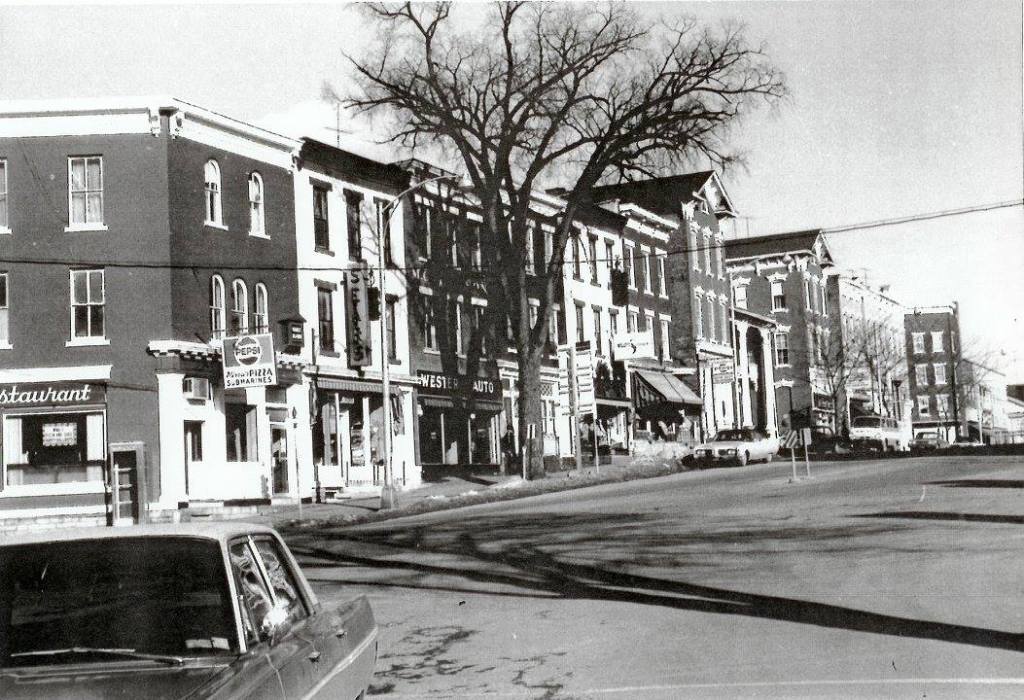
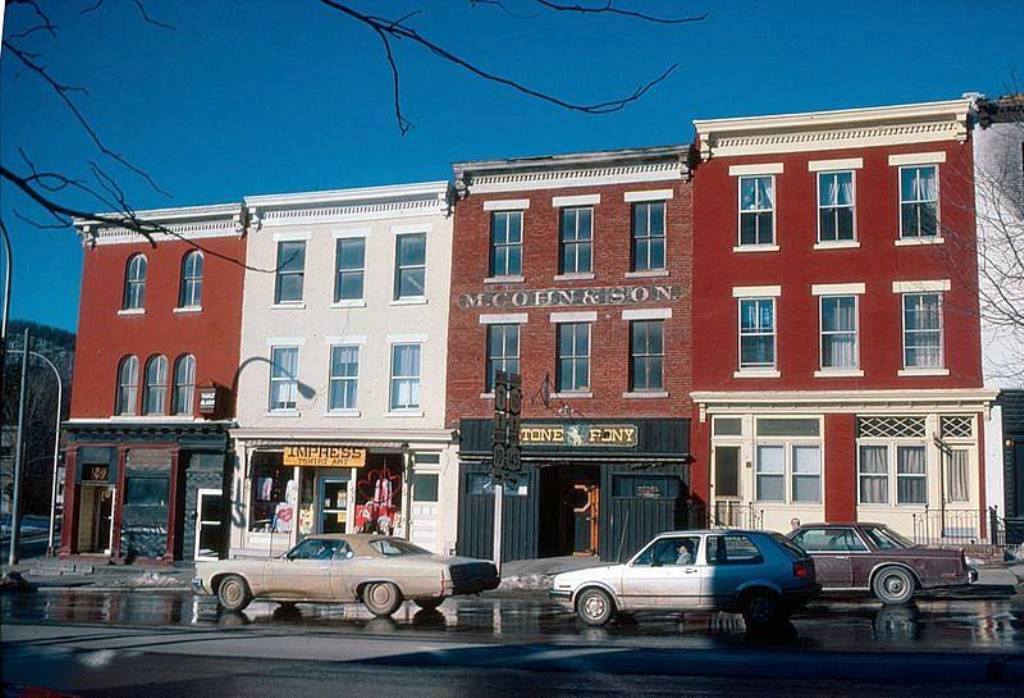


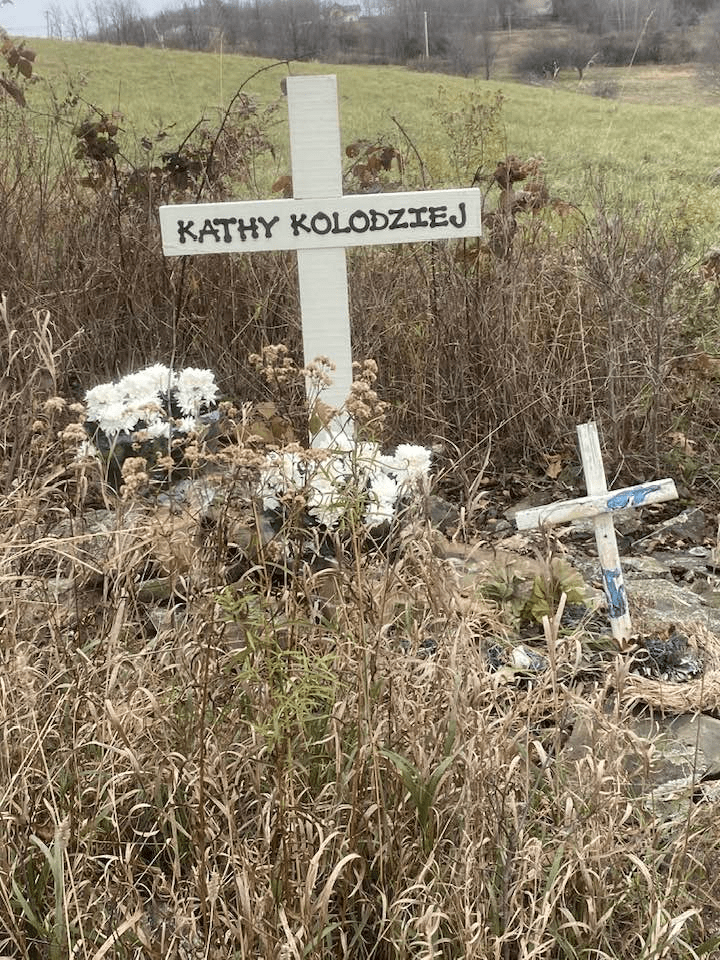
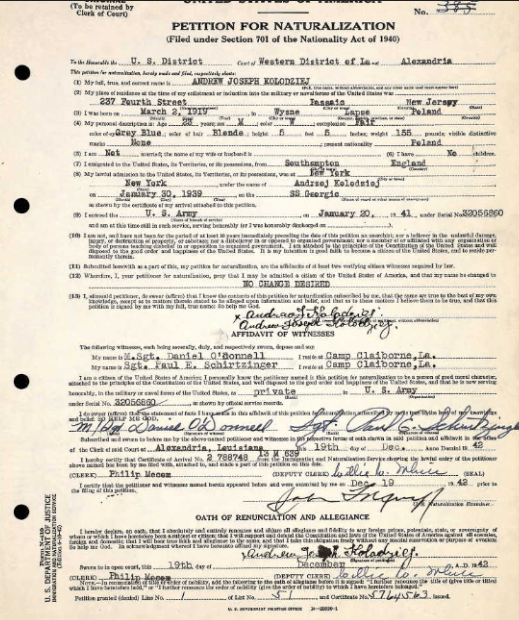


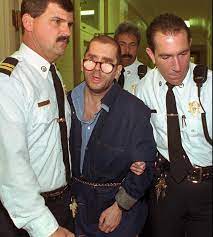


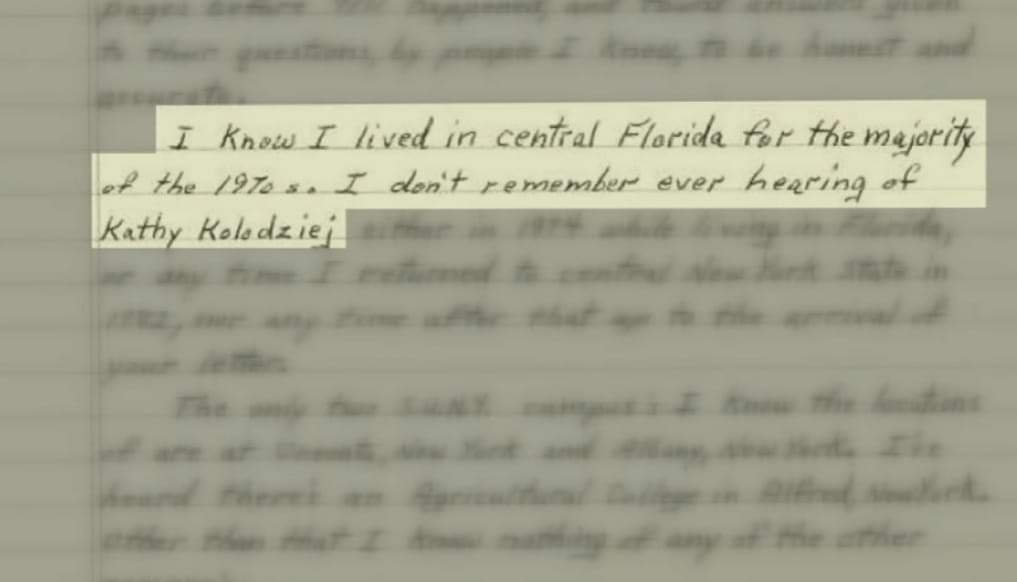
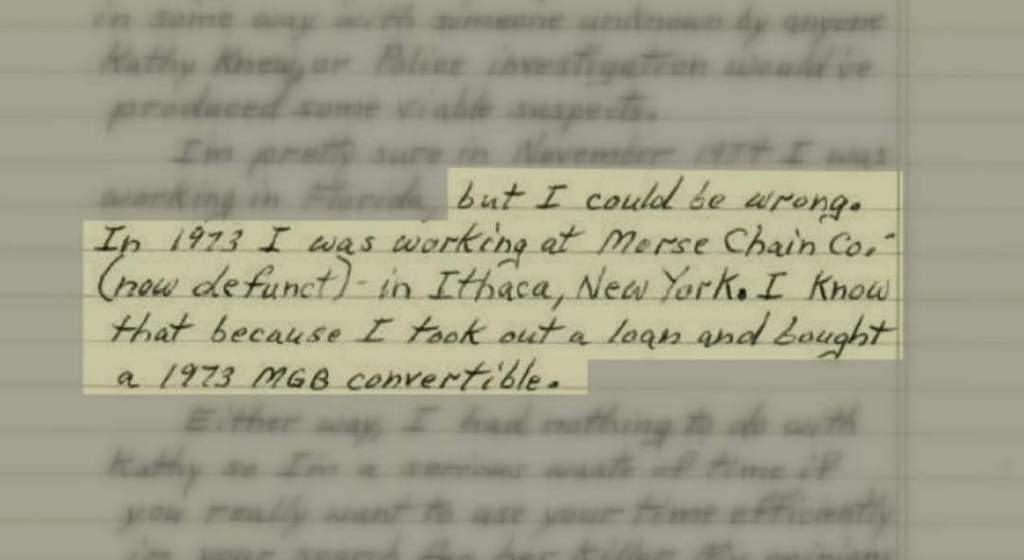










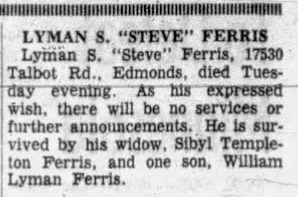
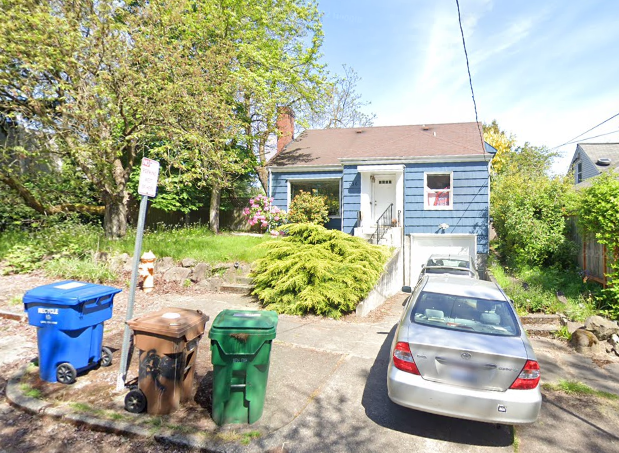
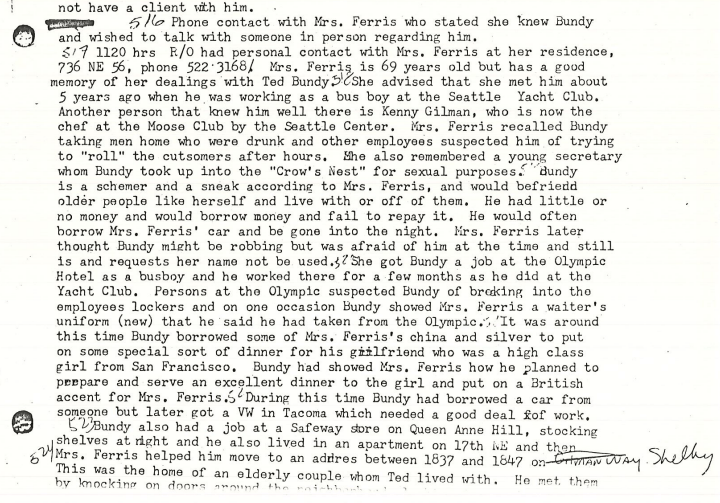




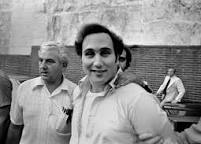

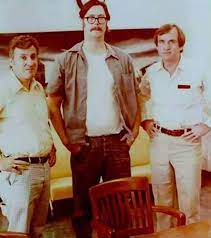


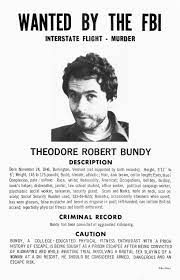




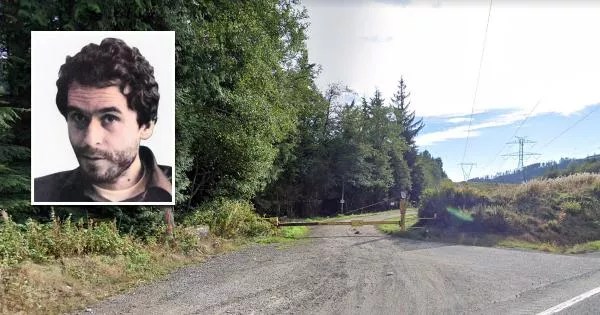

 Another Bundy Blog.