The Lake Sammamish files (police reports) merged into one single PDF document, courtesy of Rob Dielenberg/Maria Serban.
Lake Sammamish Files.

The Lake Sammamish files (police reports) merged into one single PDF document, courtesy of Rob Dielenberg/Maria Serban.

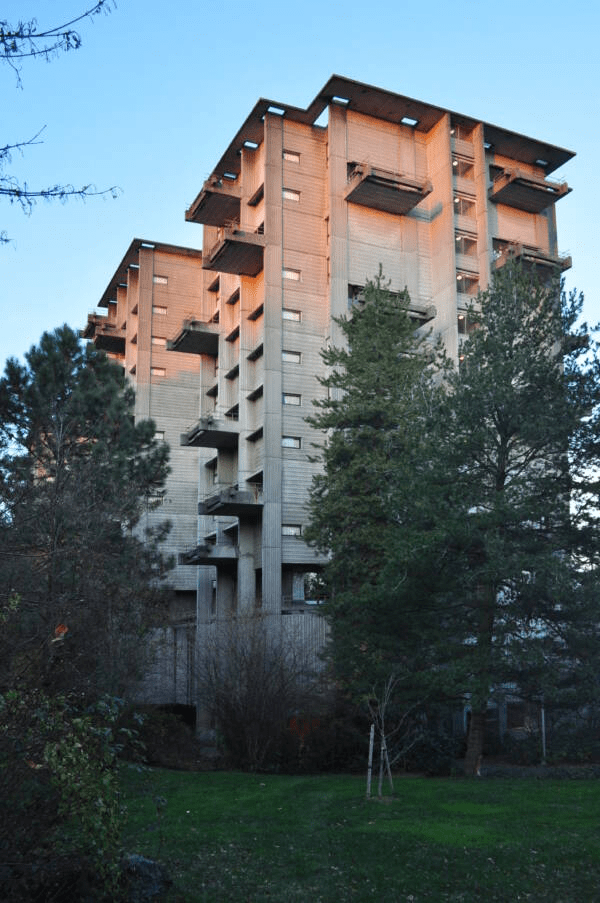
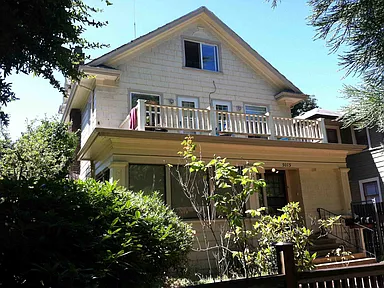
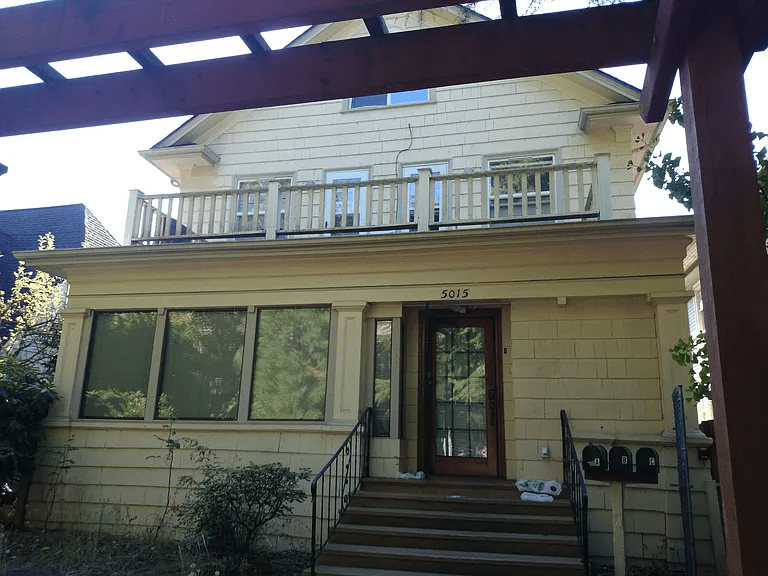
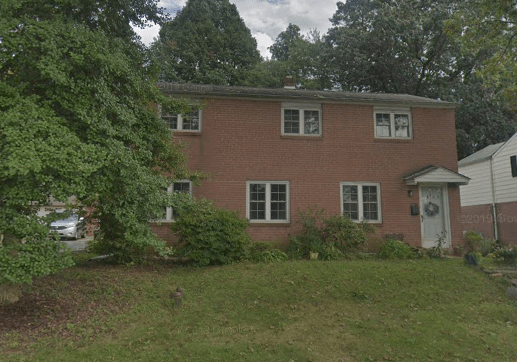
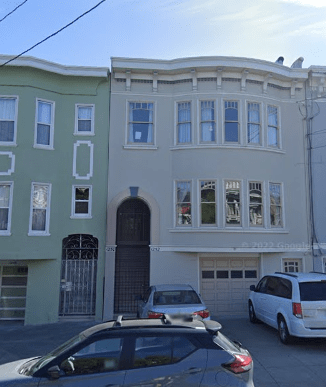
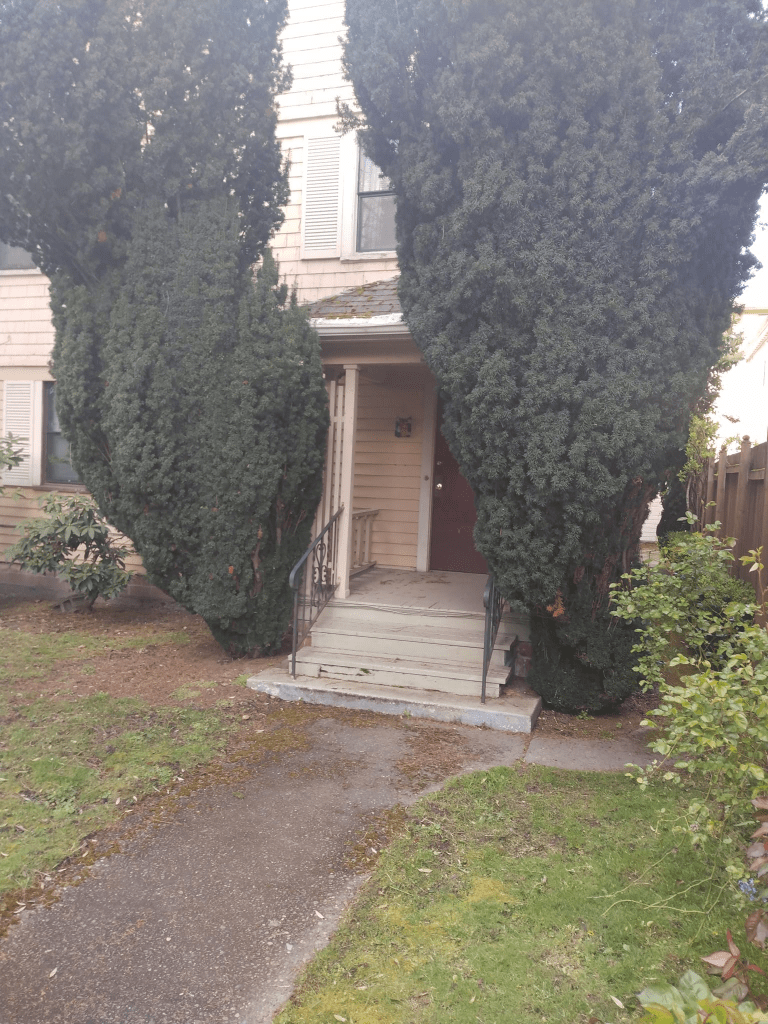
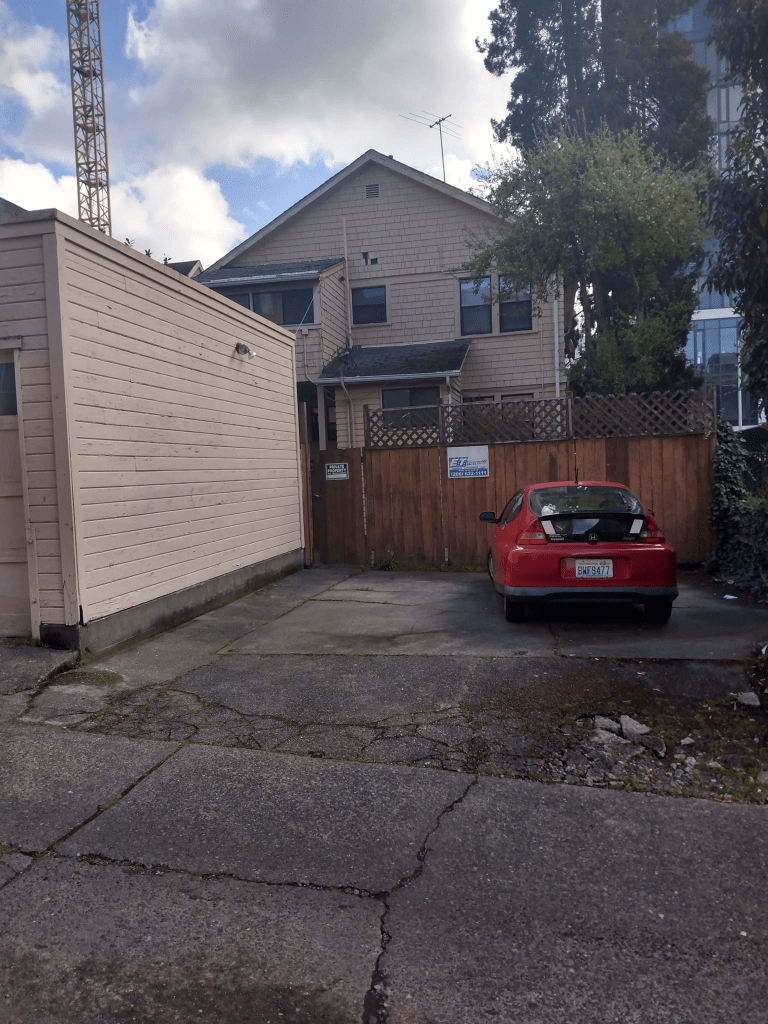
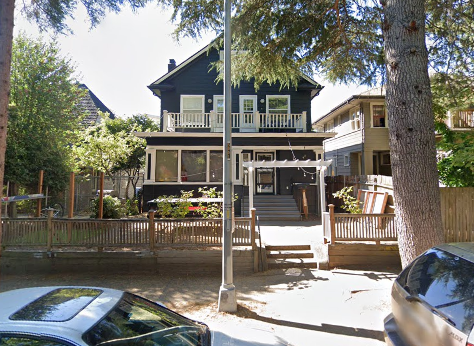
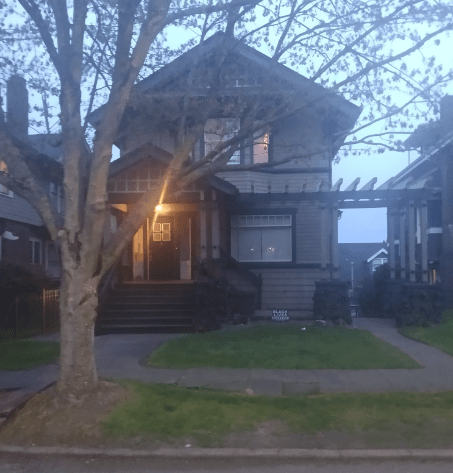
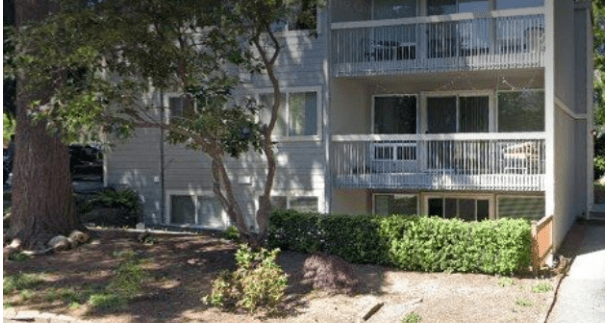
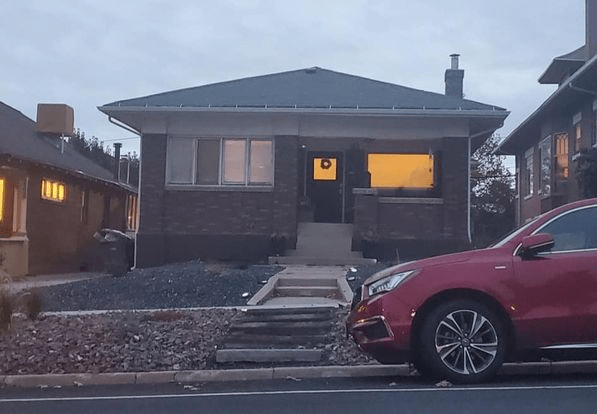
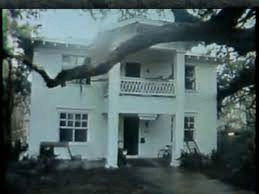
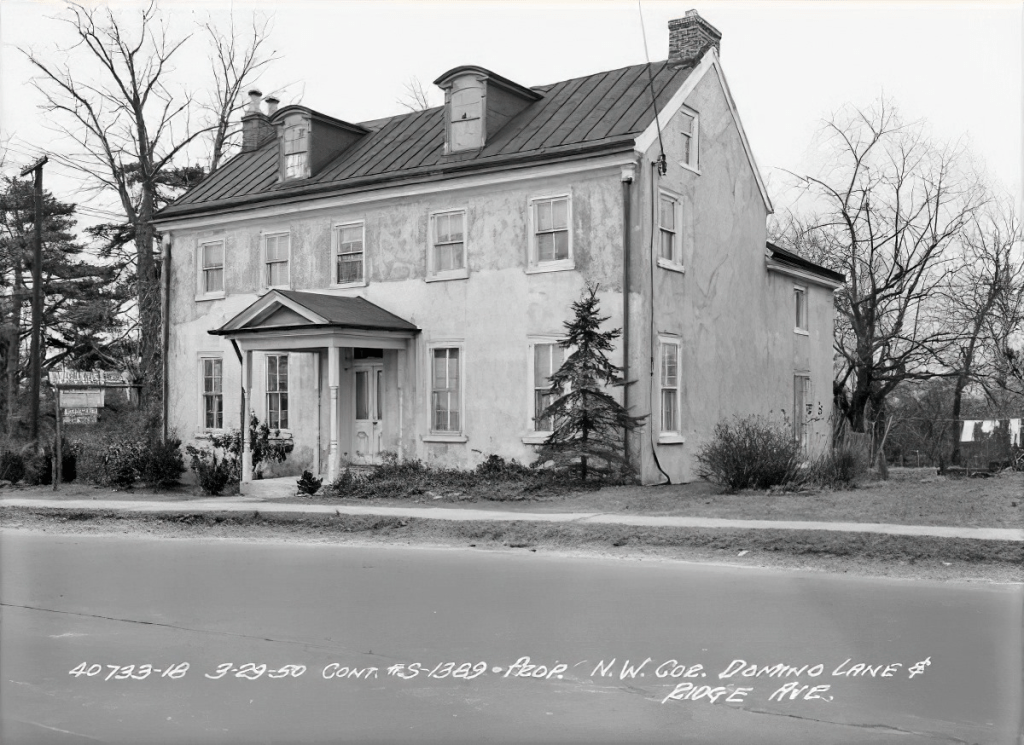
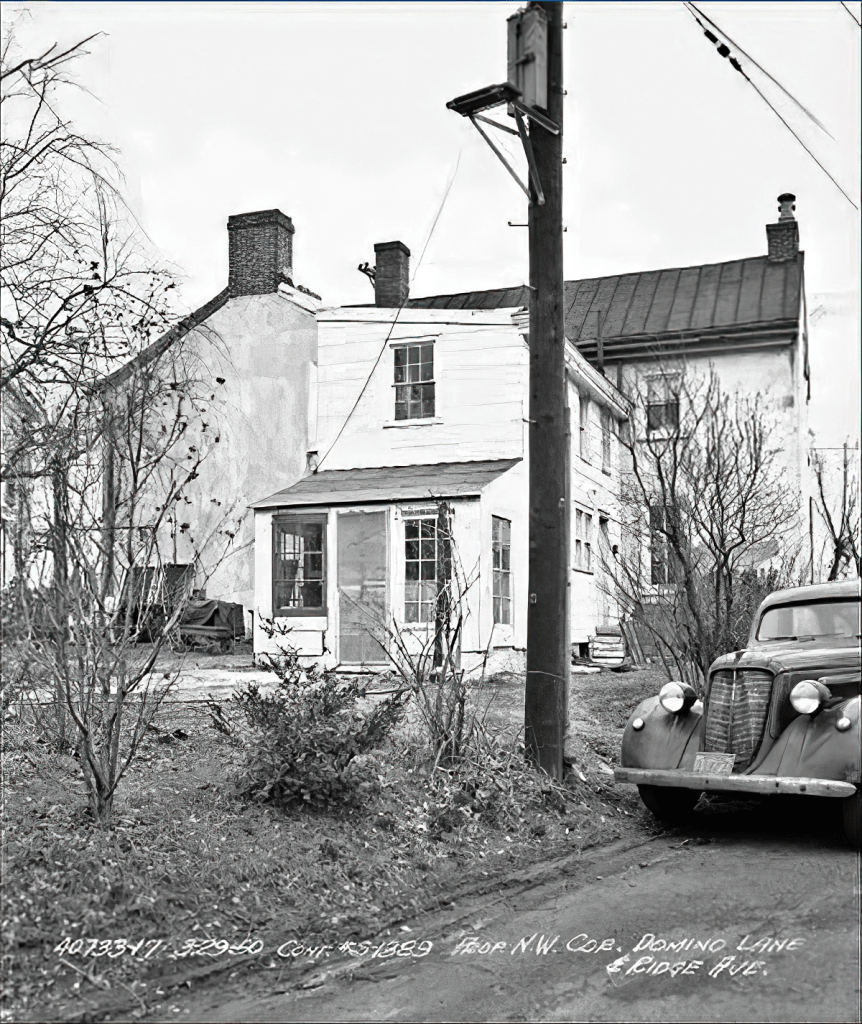
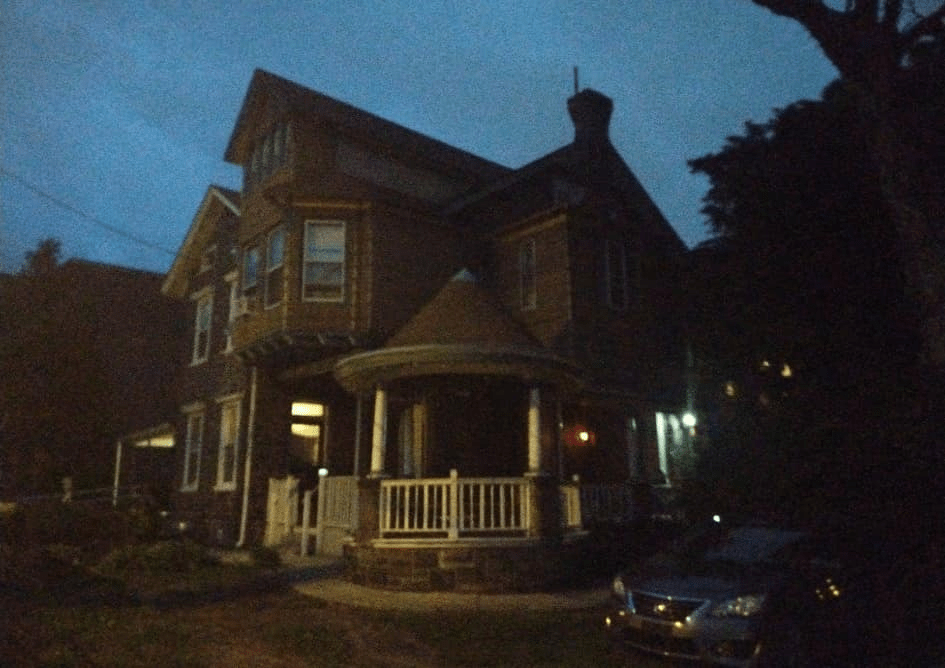
I listed the addresses in order of how they were on the ‘Ted Bundy Multiagency Investigative Team Report 1992’; for obvious reasons I left the Palo Alto address out, as there wasn’t anything to it (despite how much I looked into it).
* Some places where Bundy lived in his earlier days were left out of the report. I added the following:


























A treasure trove of Bundy related information including documents related to his escape in Colorado then again in Florida as well as the strange case of Janla Carr.
Documents thanks to https://vault.fbi.gov/Ted%20Bundy%20/Ted%20Bundy%20Part%2001%20of%2003/view

As I come across them I’ve been putting my old Facebook posts onto my WordPress page (the one came way before the other). I saw this post about Richie Bundy as I was researching an article about Ted’s girlfriends.
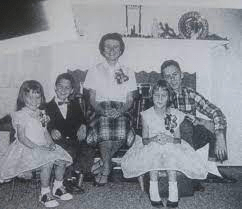
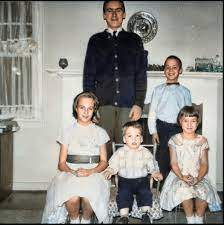
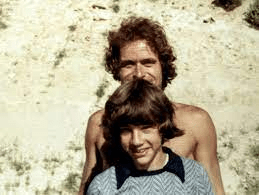
“Richard Bundy is Ted Bundy’s half-brother, and was born to Ted’s mother, Louise, and his step-father, Johnny Bundy. Rich was born in 1961, in Tacoma, Washington, the place where Ted spent most of his childhood. The two had an age difference of around 15 years, but were considered to be extremely close.
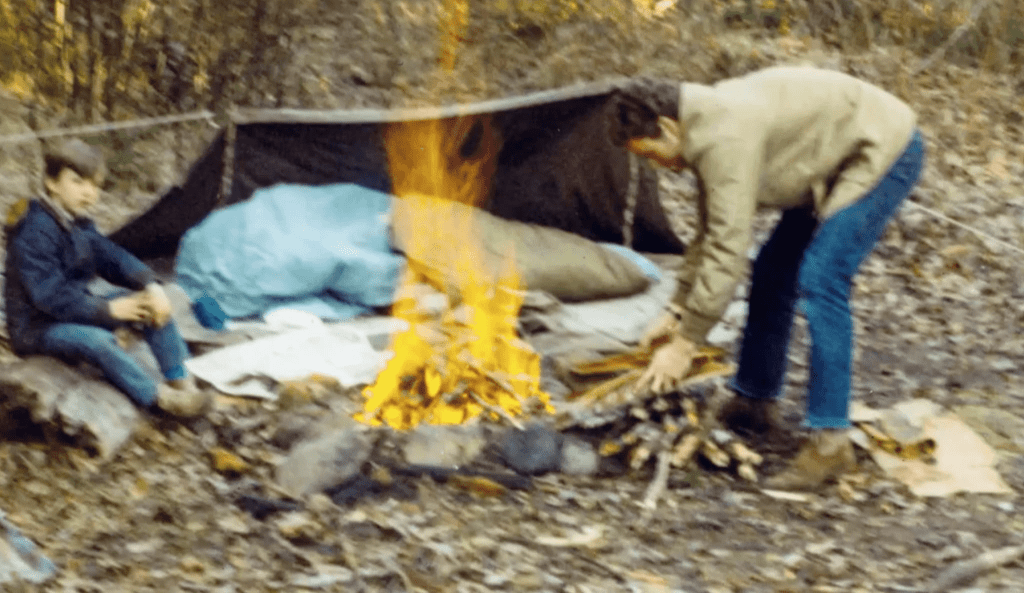
In fact, in the docuseries (Amazons ‘Falling for a Killer’), Rich speaks of how he looked forward to spending most of his summers and vacations with Ted in Seattle. He looked up to Bundy as he was a positive influence in Rich’s life. Ted was well-educated and well-groomed, and gave a lot of attention to Rich. He often took Rich out for camping trips, or rafting in the lake. According to Richard, Ted seemed to have been the man who had his life figured out.
But Rich also realized in retrospect that there were moments where Ted would just act strange. One such moment is including in ‘Falling for a Killer’. Rich had paid a visit to Ted during a holiday, and the two were meant to go to the lake together. But Ted cancelled their plans suddenly at the last-minute, and got Rich to go back home. In hindsight, Rich realized that it was around the same time Ted began abducting and killing people. Perhaps, he got rid of Rich before his blood lust took over him.”
Datta, Tejasvani. ‘Where is Ted Bundy’s Brother Now?’ The Cinemaholic. January 31, 2020.









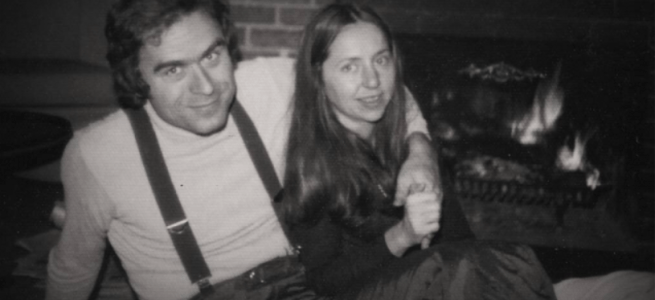
A Comprehensive List of Ted Bundy’s Girlfriends:

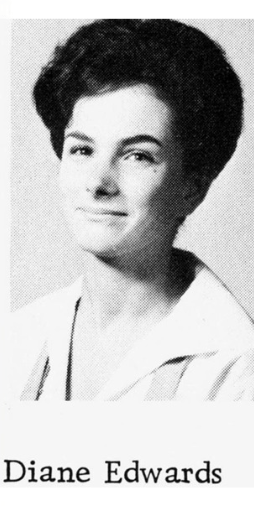


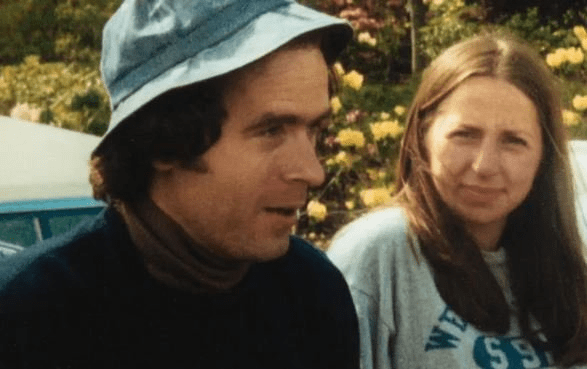
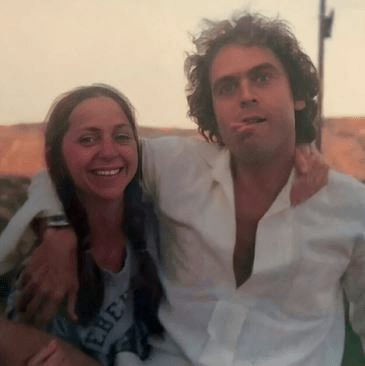



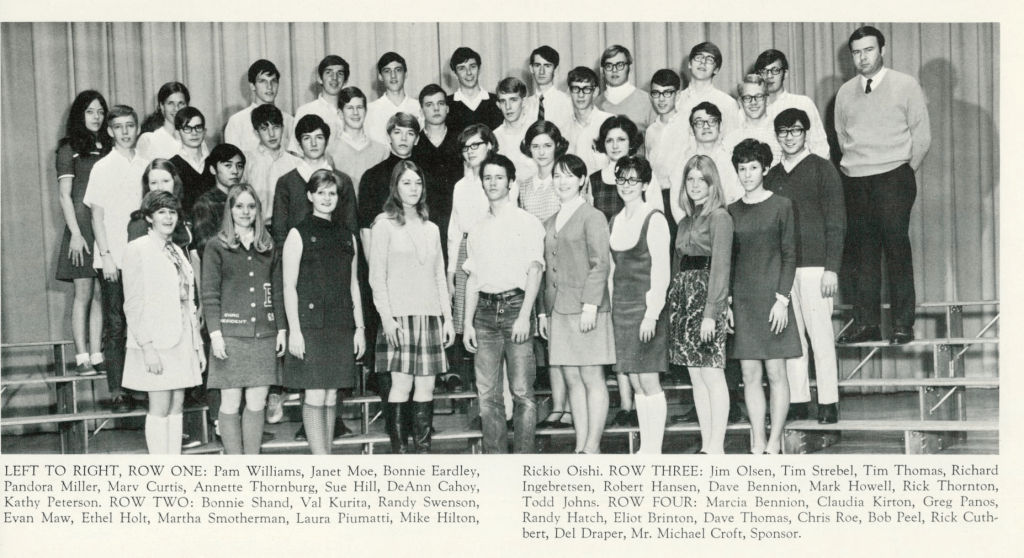
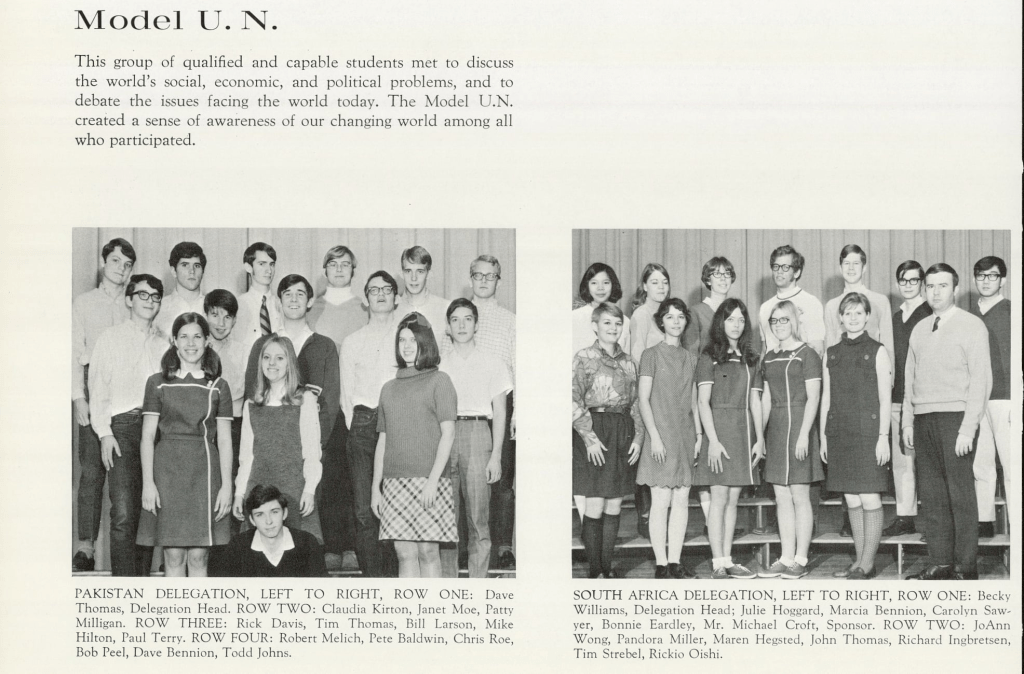

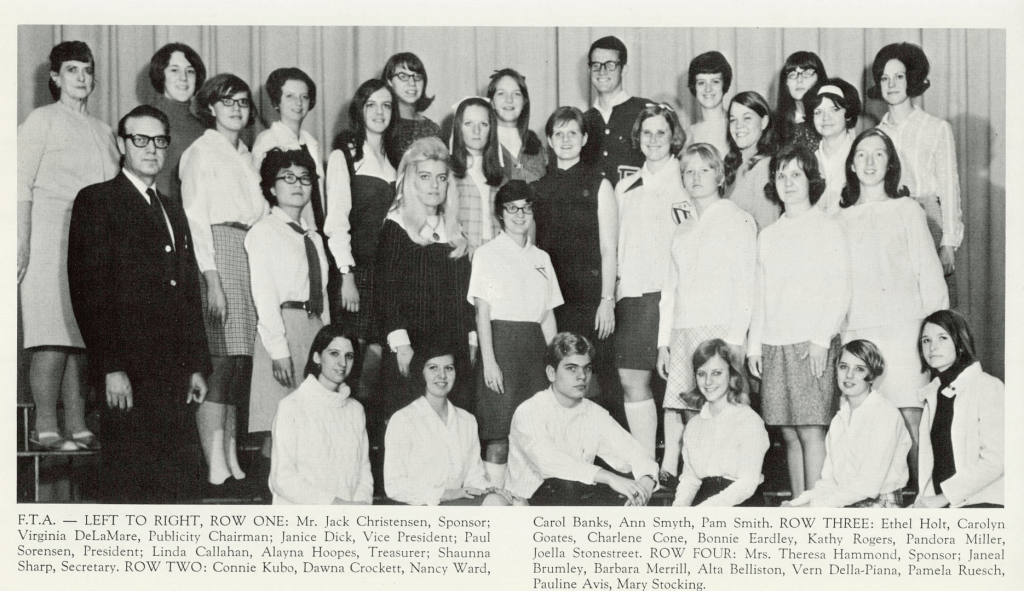




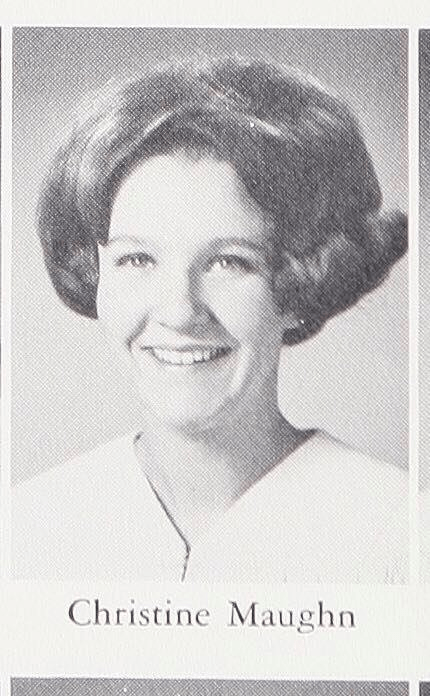
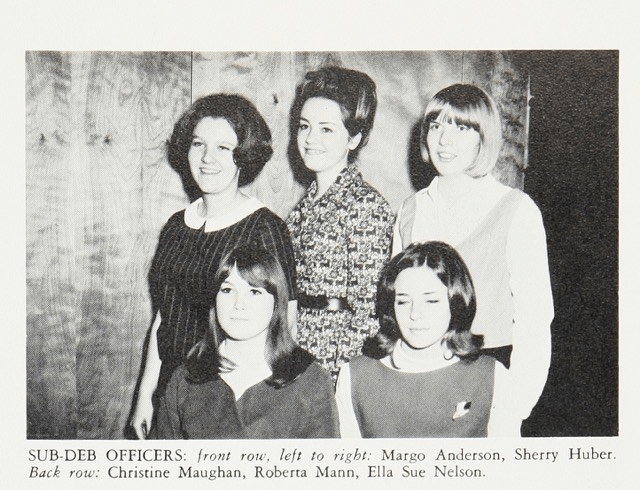







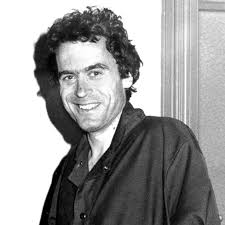
The following is a wealth of miscellaneous Bundy-related information including receipts, victim pictures, and other various documents not frequently seen. Courtesy of internetarchives.
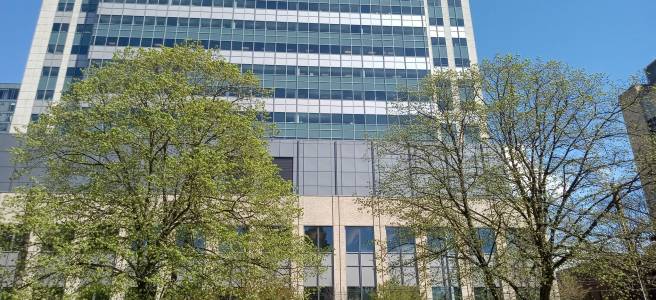
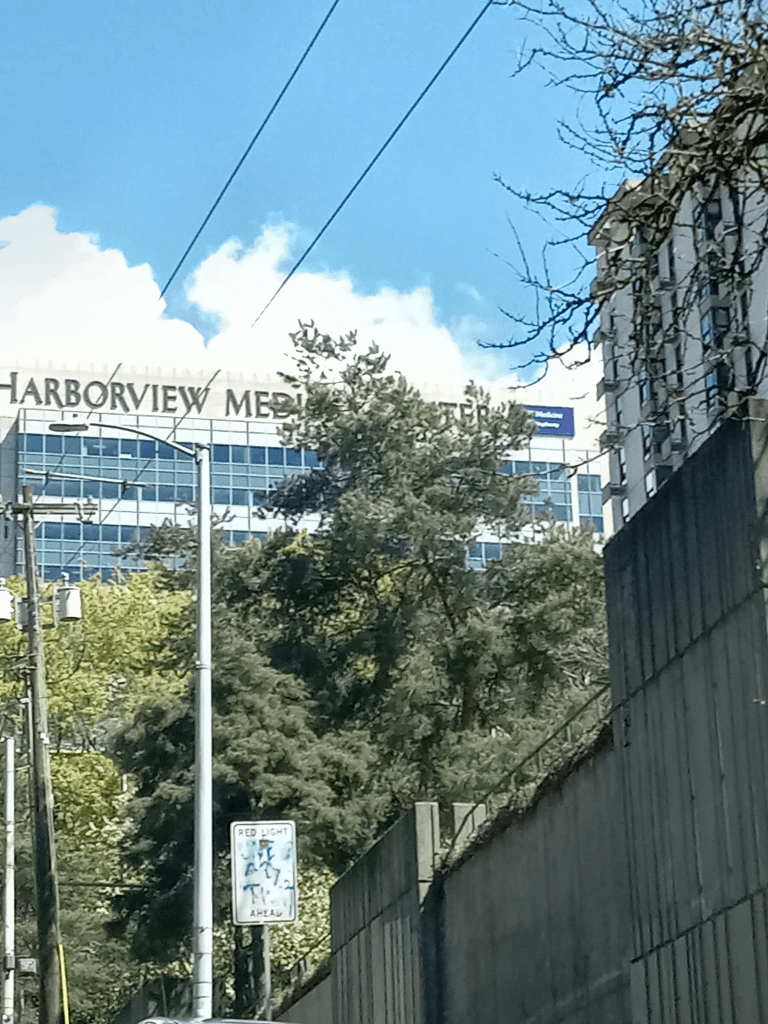
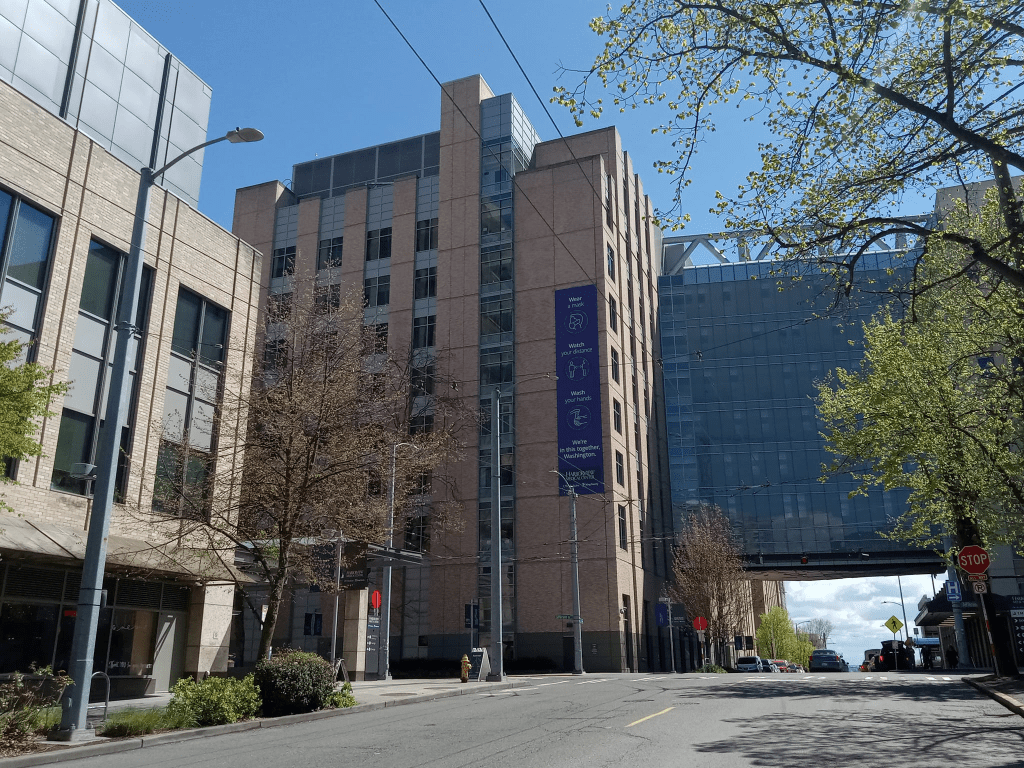
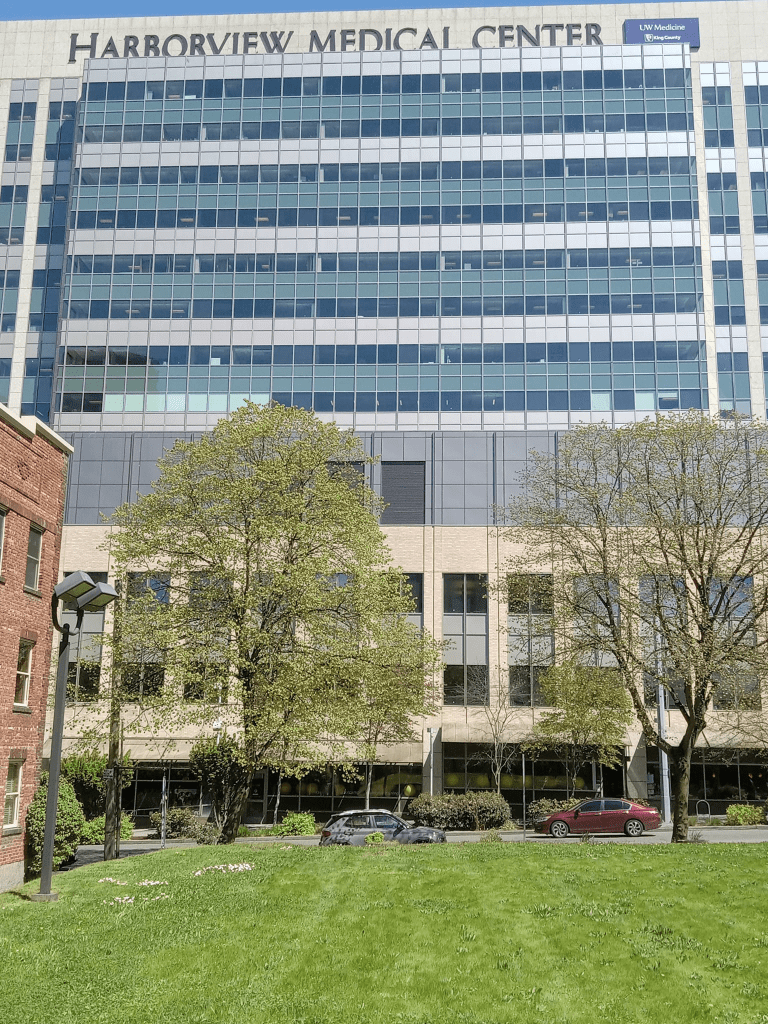
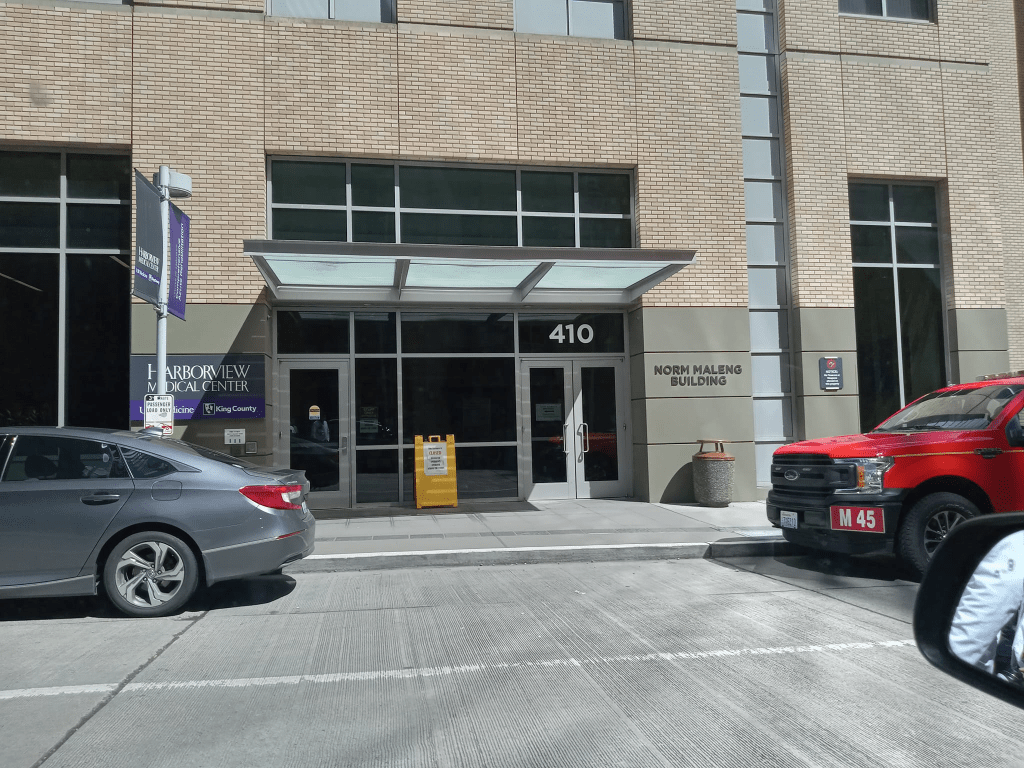
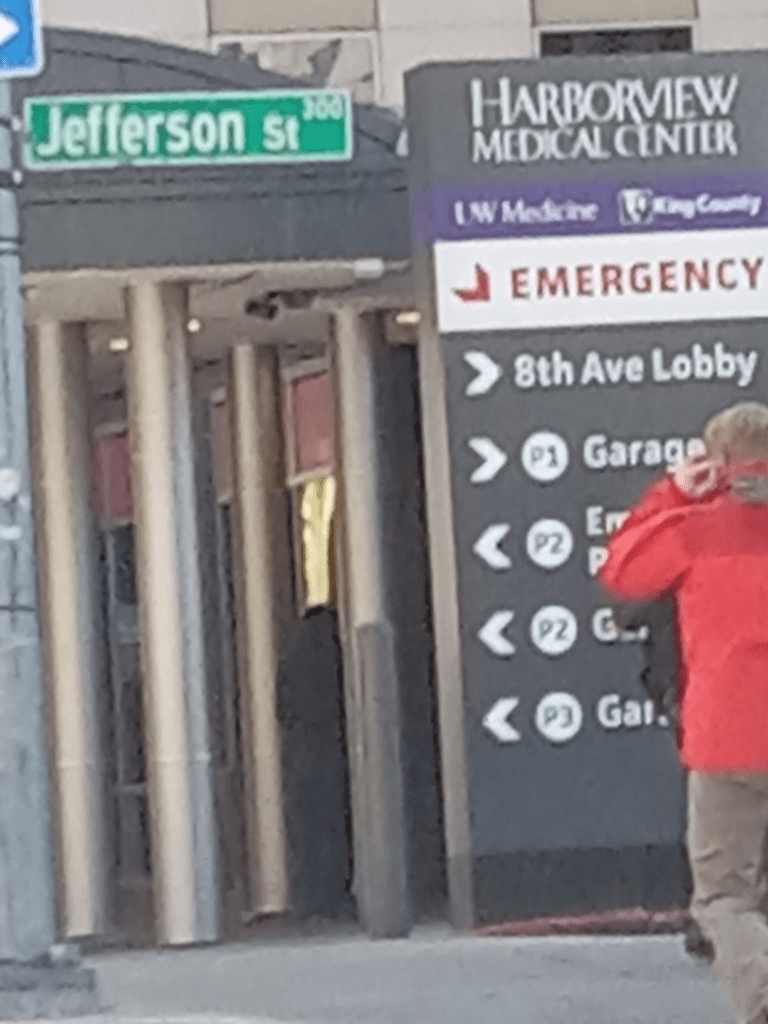
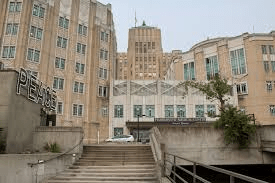
In April 2022 when I went to Seattle I arrived very late in the evening, maybe around 11:30 PM or so. I was far too excited to go to bed (despite not sleeping well the night before and flying across the country) so I explored the neighborhood I was staying in and found a 7/11. While Ubering from the Sea-Tac Airport to my Air BnB one of the places we drove past was the Harborview Medical Center and I knew right then and there that I made the right choice in coming (traveling alone across the country is completely out of character for me and I was hoping my husband would talk me out of it).
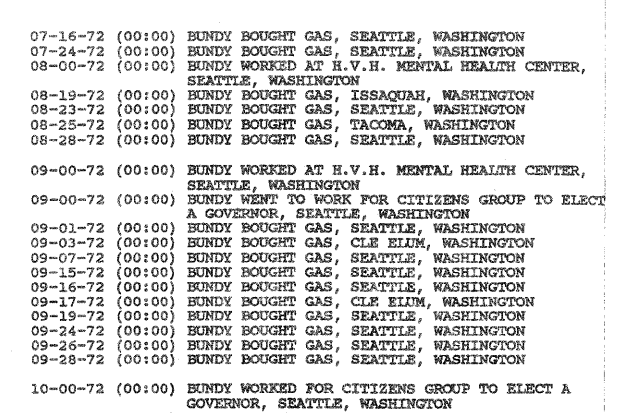
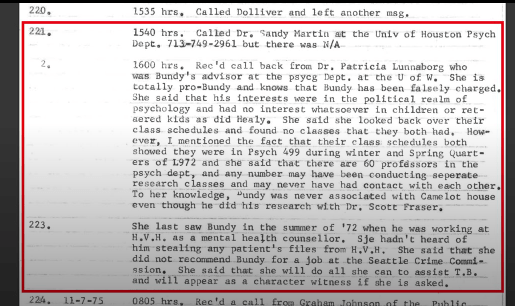
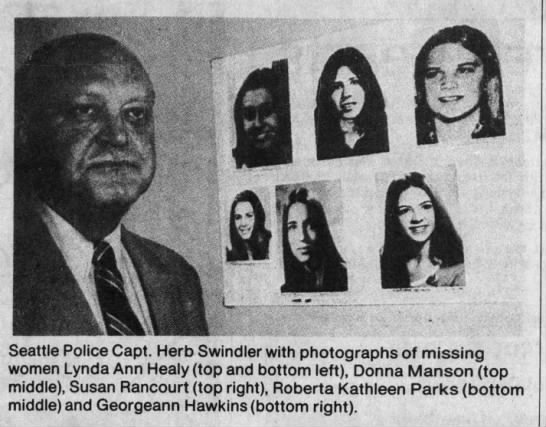
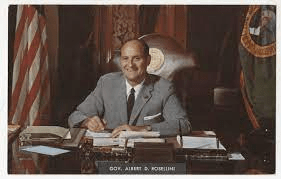
An interesting tidbit about Bundy’s time at Harborview: he interned there as a mental health counselor from June 1972 to September 1972 with Kathy Swindler (daughter of the former Captain of the Seattle Police Department), who may have introduced him to her good friend Kerry May-Hardy (an unconfirmed TB victim that disappeared from Seattle on June 24, 1972). Wow, that was the longest run-on sentence ever. Additionally during his brief stint there he stole some patient files from Dr. Jim McDermott (who was the losing Democratic primary opponent of Albert Rosellini) with zero repercussions.










In the Bundy community children are usually considered “off-limits,” meaning (the handful of us that do know) about adult Rosa don’t share what they know (I’m loyal to who told me and I’ll never tell a soul) and we blur out her face in any early childhood pictures. After Amazon’s “Falling for a Killer” I had hopes that there’d be a season two featuring Carole Ann and Rosa… little did I know she passed away and Rosa completely dropped out of the public eye (good for her).
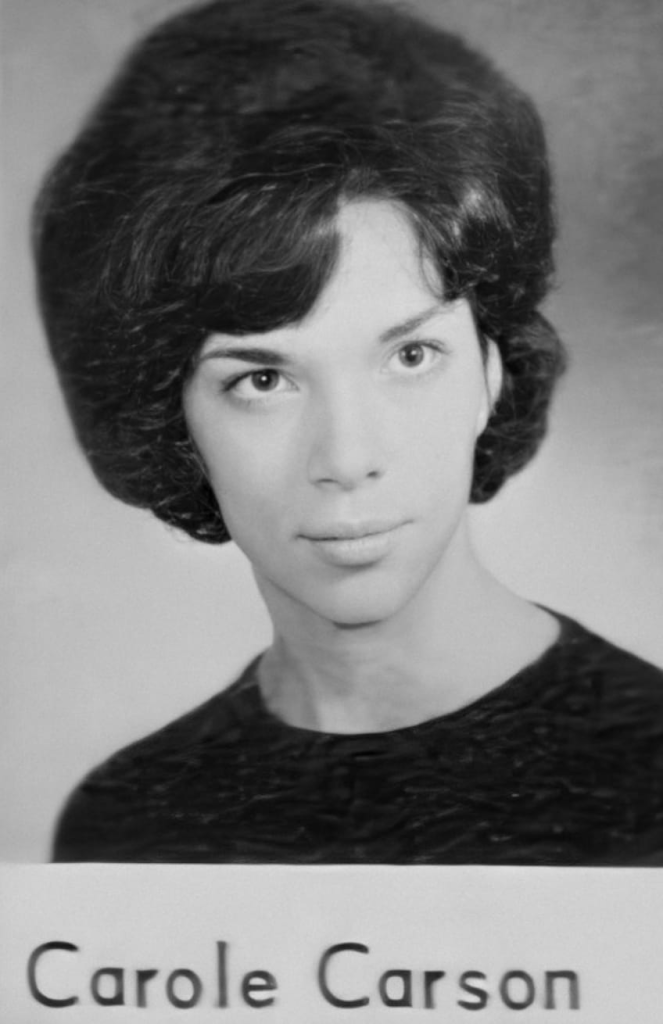
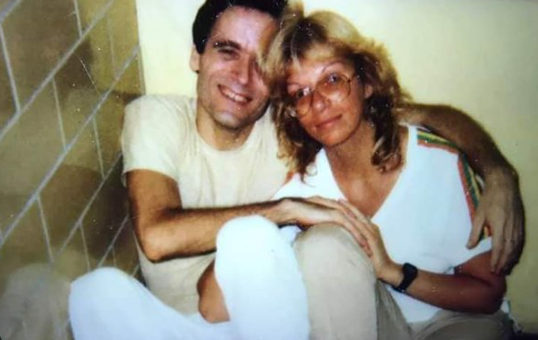
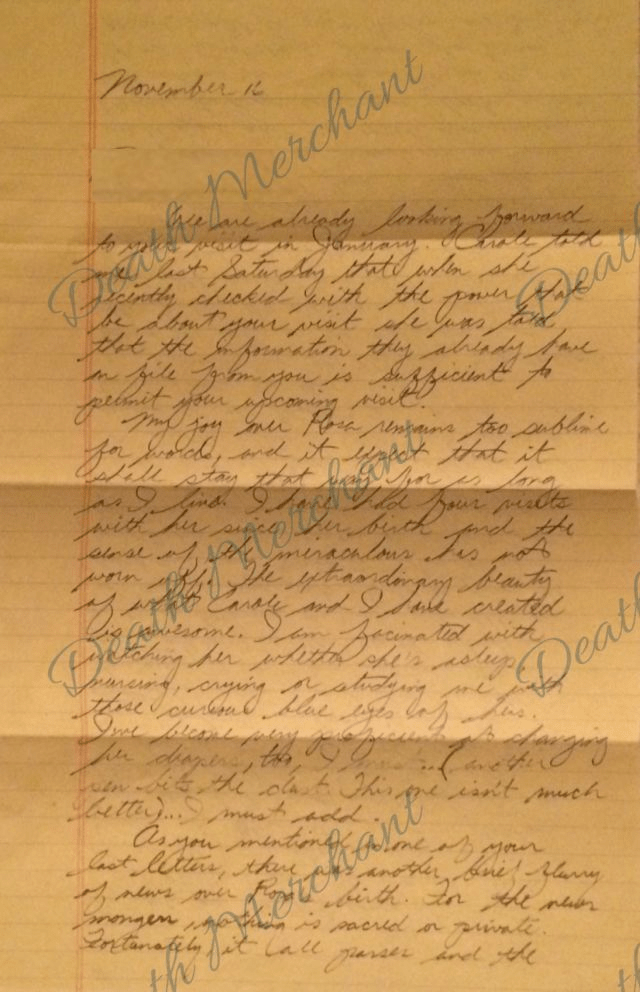
Ted met Carole Ann in 1974 in Olympia, WA when they were employed at the Washington State Department of Emergency Services. When the pair first met she was newly divorced, working full time and was raising her teenage son, Jamey/James; additionally one of her uncles had just recently died. Carole’s one time colleagues said she was very maternal, and often acted like a sister/mother figure to the department. Although competent, smart, and good at her job, the young Mother still reportedly had a goofy side and often would engage in office pranks and antics with her work friends (such as starting a rubber-band war or going on a three-hour bender in the middle of the afternoon at the Voodoo Room at the nearby Bailey Motor Inn). Bundy’s brief employment with the DES (he was only there from May 3, 1974 to August 28, 1974) caused quite a commotion with both men and women, as most people employed there found him charming and intriguing. As for Carole Ann, she was immediately dazzled by him: she felt Ted was an introvert and that he carried himself with “a certain dignity.” At the time she was reportedly in a complicated relationship with “a large, unpleasant man” and Ted was still with Liz Kloepfer (although that didn’t seem to stop him from straying); their relationship didn’t turn romantic until Bundy’s Florida’s trials started in 1978. The couple famously wed in January 1980 while Ted was on trial for the murder of Kim Leach. She got pregnant with Rosa while Bundy was on death row and the pair started a very unconventional family (she gave birth in October 1982); that didn’t last long as she divorced him in 1986. About Rosa, Ted said in a letter dated November 16, 1981: “my joy over Rosa remains too sublime for words, and it” …. “that it shall stay that way for as long as I live. I have had four visits with her since her birth and the sense of the miraculous had not worn off. The extraordinary beauty of what Carole and I have created is awesome. I am fascinated with watching her whether she’s asleep, nursing, crying or studying me with those curious blue eyes of her. I’ve become very proficient at changing her diapers, too. (another pen bites the dust. This one isn’t much better) I must add.”
Carole Ann was born on April 12, 1947 in Seattle, and sadly passed away at the age of 70 on January 13, 2018. After Bundy was executed she lived under an assumed name and eventually ran into some considerable health problems (it is speculated she had multiple sclerosis and in later years was confined to a wheelchair). She checked herself into a retirement community/nursing home in Seattle, where no one knew who she was. Carole’s friends there said she “enjoyed knitting and watching soccer,” and that she “she had attitude. She loved nature programs, especially ones about sharks.”







Instead of another in-depth deep dive here’s a brief summarization of each girls case along with a few pictures of Bundy’s more frequently discussed unconfirmed victims. I’ve written about multiple other “suspected” victims (like Kathy Kolodziej or Rita Curran) but those I didn’t include in this list as they are “easily debunked” (obviously Bundy didn’t kill Kolodziej as he was in Seattle at the time and she was in school in Cobleskill, NY and William DeRoos killed Rita Curran in Vermont).
Ann Marie Burr, 8, August 31, 1961 (disappeared). Tacoma, WA
Ann Marie Burr was born on December 14, 1952, in Del Morte County, California, to Donald and Beverly Ann (nee Leach) Burr. Eight year old Ann Marie Burr vanished from her bed without a trace on a stormy night in late August 1961. She lived a little over 3 miles away from Ted and contrary to popular belief, he was not her paperboy and his Uncle Jack did not give Ann Marie piano lessons.


Lisa Wick (20) (survived) & Lonnie Trumbull (20), June 23, 1966. Seattle, WA.
Early in the morning on June 23, 1966, roommates Lonnie Trumbull and Lisa Wick were brutally attacked as they slept in their basement apartment in the Queen Anne Hill region of Seattle. Both victims were originally from Portland, Oregon and were employed with United Airlines as flight attendants; they had only been living in the apartment for a month and (for some reason) had intentions to move into another unit in the complex later that week. Trumbull and Wick had a third roommate (Joyce Bowe), who came home around 9:30 AM to find her roommates brutally beaten. Thankfully Wick was wearing large hair curlers which helped cushion the blows of the assailant that probably saved her life. Sadly Trumbull wasn’t so lucky and she succumbed to her injuries.


Susan Perry (19) & Elizabeth Davis (19), May 39, 1969. Ocean City, New Jersey.
On May 30, 1969, 19 year-old co-eds Susan Davis and Elizabeth Perry were stabbed to death near mile marker 31.9 of the New Jersey Parkway in Somers Point, NJ. The young women visited the Jersey Shore on vacation for Memorial Day since the Tuesday before. Susan had just completed her degree at an all-girls school in Godfrey, Illinois called Monticello Junior College and was set to graduate on May 25 with an associates of arts degree; Elizabeth started after her friend so she still had a ways to go in her studies before she graduated. Around 4:30 AM they left their boarding house to head back to Camp Hill, Pennsylvania in hopes of beating the holiday traffic, and before they hit the road stopped to grab a bite to eat at The Somers Point Diner. No one is really certain what happened after the girls left the restaurant roughly an hour later: A NJ trooper found their light blue 1966 Chevrolet convertible abandoned on the side of the Turnpike around noon that day and had it towed. On June 2 at about 1:30 PM, the bodies of the friends were discovered by a Garden State Parkway maintenance worker named Elwood “Woody” Faunce Jr. who searched the area of the parkway where the convertible was found. Their remains were found hidden under piles of leaves in dense woods roughly 200 yards away from the Parkway and about 150 yards from the abandoned Chevy. Davis was found completely naked and her clothes were found neatly folded in a pile nearby; Perry was fully clothed except her underwear was missing. There’s varying reports on whether or not the girls were sexually assaulted: some sources say that Perry was not raped but no determination could be made for Davis. Others claim that both girls remains were too decomposed to be able to tell, and still others that said there was “some evidence of sexual assault” but didn’t go any further in their explanation. Later news reports claim that neither girl had been sexually assaulted.


Kerry May-Hardy, 22, June 24, 1972. Seattle, Washington.
Kerry May-Hardy was born on April 3, 1950 in Seattle, Washington to John and Sheila (most recently Olson) Hardy. She grew up in the Capitol Hill district of Seattle, and attended Lincoln High School in Seattle before she dropped out her senior year. Kerry married James Garvey May on May 15, 1971 at Central Lutheran Church in the Capitol Hill area of Seattle but by the time she disappeared the couple were reportedly separated. The evening before Kerry disappeared in June of 1972 she spent the night at a girlfriends house in the Woodland Park area of Washington and from there (per a note she left behind) was going to a second girlfriends house roughly ten miles away on Beacon Hill. Years into the investigation Seattle cold case detective Mike Clestnski said that at some point it was reported she was last seen alive hitchhiking around the Woodland Park area on June 13, 1972 (a day after what was initially reported). Her remains were discovered at a golf course in September 2010 after her burial site was disturbed. May-Hardy physically fit Bundy’s victim profile, however he was executed in 1989 and never mentioning her name or claimed responsibility for her murder. Additionally Gary Ridgway has reportedly not commented on her case either.


Vicki Lynn Hollar, 23, August 20, 1973 (disappeared). Eugene, OR.
Vicki Lynn Hollar was born in Illinois on March 8, 1949, and after graduating from Southern Illinois University she moved to Eugene, OR in June 1973. At 5:00 PM on August 20, 1973 Hollar was last seen getting into her 1965 black Volkswagen Beetle with the running boards removed; she was leaving her job at Bon Marche (she was a seamstress) at 8th Avenue and Washington Street in Eugene, Oregon. Vicki and her supervisor walked out to their vehicles together after work and it’s suspected she may have been on her way to her apartment located in the 6600 block of West 27th Avenue. She had plans to attend a neighborhood party with a friend at 8:00 PM but she never came home. Vicki was never seen or heard from again. Her friends reported that she did have a habit of picking up hitchhikers and all of her possessions and clothes were found at her residence; she also never picked up her last paycheck. Vicki’s parents said that their daughter was a happy girl that was content with her life: she liked her new job and had no reason to just up and leave.


Rita Lorraine Jolly, 17, June 29, 1973(disappeared). West Linn, OR.
Rita Lorraine Jolly was born on December 6th, 1955 to Donald and Mary Elizabeth (nee Horner) Jolly of West Linn, Oregon. Jolly left her residence on Horton Road in West Linn, Oregon at 7:15 PM on June 29, 1973 to go for a nightly walk and vanished without a trace. The 17 year-old was last seen between 8:30 and 9:00 PM walking uphill on Sunset Avenue. Like so many other Bundy victims she was slender and had long, dark brown hair and hazel eyes. Jolly walked with a slight limp after a horse she was riding fell over and crushed her leg. Rita’s front teeth may have overlapped slightly and she had a small scar above her right eye just below the eyebrow.


Joyce LePage, 21, July 22, 1974 (disappeared). Pullman, WA.
Joyce Margaret LePage was born to Walter and Florence Ethelyn (nee Ham) LePage on December 4, 1949 in Pullman, Washington. Described by her family as an athletic and intelligent student, after graduating from high school she decided to attend Washington State University, which wasn’t a surprise to the LePage’s as they had a history at the school and her grandfather taught there. Despite having an off campus apartment, Joyce enjoyed sneaking into Stevens Hall, a vacant dormitory on WSU’s campus (which was also under construction at the time in the summer): she hung out on the first floor and enjoyed the quiet atmosphere and would study, write letters to her long distance boyfriend, and play the baby grand piano when the stress from the vigorous, quick-paced semester became too much. At 21 years-old, she was last seen on the schools campus on July 22, 1971. Her remains were discovered nine months later in a deep ravine south of Pullman, Washington wrapped in military blankets and a piece of missing (stolen??) carpet from Stevens Hall bound with rope. Multiple suspects have never been cleared.


Brenda Joy Baker, 14, May 25, 1974 (disappeared). Puyallup, WA.
Bespectacled Brenda Joy Baker was born on July 13, 1959, to Benjamin and Margaret (Stephens) Baker in Enumclaw, WA. Fourteen-year-old Baker was attending Tahoma Junior High School when she ran away from home on May 25, 1974; despite her young age, Baker was a frequent hitchhiker. She was last seen near Puyallup, WA on May 2, 1974 trying to thumb a ride “south” to Fort Lewis; her remains were found 31 days later on the outskirts of Millersylvania State Park not far from the Restover Truck Stop. Before she vanished, the young lady told her friends she was “planning to meet a soldier.” Baker had a long history of running away from home, even living in a foster home for an unknown period of time. However, this time the young child’s absence was immediately noticed by her family, and a missing person’s report was filed the same day. On June 17, 1974, Bakers body was found on a small road located on the outskirts of Millersylvania State Park by hikers. The young girl was positively identified as Brenda Joy Baker by Thurston County sheriff’s investigators in part due to a police report filed by her parents with King County Police as well as dental records, clothing, and jewelry (two bracelets, an earring, and a ring) found with the body. Brenda seems to come from a tragic roots, having two brothers who also passed away extremely young: Benjamin was born in 1956 and passed away at the age of 25 in 1982 and Victor who was born in 1960 but sadly died in 1981 at the age of 21.


Sandra Jean Weaver, 19, July 1, 1974 (disappeared). Salt Lake City, UT.
Sandra Jean Weaver (who went by Sandy) was born on August 5, 1955 to Bruno and Marlene of Arcadia, Wisconsin. An investigator for Mesa County Colorado Sheriff’s office said that Sandra left Wisconsin in the summer of 1974 and moved to Salt Lake City; she hitchhiked the whole way there with a girlfriend and a male friend. After the friends arrived they went to Toole and either stayed with ‘a girlfriend and a couple boys in a trailer’ or in an apartment (I read conflicting reports). She got a job roughly forty miles away in Salt Lake and hitchhiked everyday back and forth to work. Sandra was last seen leaving the “Wycoff Building” from the Salt Lake area on her lunch hour around 10/11 AM on Monday, July 1, 1974 after two individuals picked her up at her residence around 8 AM and dropped her off at her place of employment. The body of Sandra Weaver was discovered the next day on July 2, 1974 around 4:00 PM by tourists hiking in the area near DeBeque, CO by the Colorado River about sixteen to eighteen miles east of Grand Junction. Her naked body was found beaten and strangled off a service road in the Palisades Canyon (some sources say it was DeBeque Canyon) in Colorado. She had been sexually assaulted and died by suffocation due to strangulation; her fingernails were freshly manicured shortly before her death. Unfortunately her body wasn’t identified until January 1975: according to an article titled “Services Pending for Murder Victim,” she was identified through a nationwide check of persons reported missing. Law enforcement also found a very particular type of contact lens on the victims remains, and using optemetric tests forensic experts were able to determine that lens belonged to Weaver; dental records were also used.


Laurie Partridge, 17, December 4, 1974 (disappeared). Spokane WA.
Laura ‘Laurie’ Lynn Partridge was born on May 31, 1957 to Ken and Mary Partridge of Santa Monica, California. The family relocated to Spokane from Fountain Valley, CA when Mr. Partridge was transferred by the outdoor advertising firm that he worked for in August of 1974. At first Laurie was incredibly upset about the move to Washington state and had hopes of going back to California as soon as possible but she quickly settled into her new life. She even broke up with her old boyfriend in CA and started dating a new guy in Spokane. At roughly 12:30 PM on December 4, 1974 Laurie went to the administrative offices at her school after telling friends she was starting to experience menstrual cramps; she wanted to go home and lay down before her shift at work later. She didn’t have a car of her own so she called both of her parents for a ride, but they were working and told her to just hang out and wait for the bus (I read in a news article that it was rainy that day). Not willing to sit around and hoping the walk and some fresh air might help soothe her cramps, Laurie decided to trek the two miles home. She was never seen or heard from again.


Debbie Diane Smith, 17, birth date unknown. February 1975 (disappeared), SLC International Airport.
Not much is known about Deborah Diane Smith. Her stats on ‘bci.utah.gov’ website list her as 6’7” tall and 180 pounds but I wonder if this is a typo. Additionally the website says “the victim was located deceased in an open pasture located North/West of the Salt Lake International Airport. The victim was located by a Utah Power and Light worker checking on poles.”


Melanie ‘Suzi’ Cooley, 18, April 15, 1975 (disappeared). Nederland, CO.
Melanie Suzanne Cooley (also called Suzi by family and friends) was born on October 27, 1956 to Bob and Nina Cooley in Boulder, Colorado. The middle child in a family of six, Ms. Cooley was 18 years old when she disappeared close to the high school she attended in Nederland (which is about 50 miles away from Denver) on April 15, 1975. After classes were over on Tuesday, April 15, 1975, Melanie left the high school she attended in Nederland, Colorado where she was a senior and was never seen or heard from again. She was last seen by friends hitchhiking nearby campus, and it’s unclear where or when exactly she got picked up; no one saw the vehicle the young girl climbed into that day. On Friday, May 2, 1975 the body of Melanie Suzanne Cooley was discovered fully clothed and frozen by a maintenance worker on Twin Spruce Road near Coal Creek Canyon about 20 miles away from where she was last seen. Of the discovery, Jefferson County Sheriff Brad Leach said: “she had been bludgeoned, perhaps with a stone. Her hands were tied in front with a yellow nylon cord; many, many feet of it, wrapped around and around. She died from a blow to the head and strangulation. Her face had been beaten repeatedly with a rock … One contact lens was missing. The body was in pretty bad shape. What with freezing and thawing, and the wild things, two weeks lying there.”


Shelley Kay Robertson, 23, July 1, 1975 (disappeared). Golden, CO.
Shelley Kay Robertson was born on July 24, 1951 to Roberta and Elmer Robertson of Arvada, Colorado. She graduated from Arvada High School in Colorado in 1969 then spent a year doing missionary work for the United Church of Christ in Biloxi, Mississippi. After returning she attended Red Rocks Community College where she majored in Spanish. I’ve read varying reports that say she disappeared on either June 29 or July 1, 1975… what I’m deducing is she was last seen on June 29 and failed to show up to work on July 1, 1975 (I could be wrong). Seven weeks later her body was discovered in a mine shaft near Georgetown by mining students. Clear Creek County investigator Bob Denning went to Salt Lake City to discuss Robertson’s disappearance with Bundy and when asked about Robertson he said “I don’t want to talk about that.” Denning said he is 99% sure that it was Bundy who murdered Shelley.


Nancy Perry-Baird, 23, July 4, 1975 (disappeared). East Layton, UT.
Nancy Perry-Baird was born on January 14, 1952 to Kenneth and Elna (nee Dee) Perry of Provo, Utah. Nancy was divorced and had a young son when she disappeared on July 4, 1975. She was working a 3-11 PM shift (some sources say it was until midnight) as an attendant at the Fina self-service gas station in East Layton, Utah. A little after five o’clock Officer David Anderson stopped and chatted with Nancy for a bit during her shift; he bought a soda water before leaving a few minutes later to investigate a potential alcohol violation at the Shamrock gas station on the other side of the highway. When Nancy’s manager Bonnie Peck popped in to get some soda water at around 5:30 she came into a line of customers and no cashier. What happened between Officer Anderson leaving and Bonnie Peck arriving? Somehow in that 15-20 minute time frame Nancy had vanished off the face of the earth. All of her personal belongings including her car, purse, and cashed paycheck were left behind. The only thing out of the ordinary was that $10 worth of gas on a pump that hadn’t been paid for. Nancy has never been recovered.


Edit, November 2023: One thing I routinely try to do is go through my resources and update my articles when I find more information. When I was in Florida this past May I came across a 59 page document from the Trempealeau County Sheriff’s Department in Wisconsin regarding the case of Sandra Jean Weaver. At first, I thought about putting the new information in a simple addendum, but there’s so much that I’m just going to rewrite the entire piece. The report is broken down into four parts: the first is a write up (almost like a report) that Detective Daryl L. McBride had with Weaver’s friend, Joan Elkins at the LaCrosse Police station on January 11, 1975. The second is a verbatim interview between Glade Gamble and the Toole County Sheriff’s Department, Detective Jerry Thompson from the Salt Lake County Sheriff’s department, and Officer Milo Vig from the Mesa Co. Sheriff’s Department on January 22. The third is an interview between Ken Jones and the same members of LE as the Gamble interview that took place on January 22, 1975, and the last portion is an interview with the same officers and Phillip Quintana on January 21, 1975.
Sandra ‘Sandy’ Jean Weaver was born on August 5, 1955 to Bruno and Marlene of Arcadia, Wisconsin. She had two brothers (Randy and Billy) and two sisters (Nancy and Julie); the Weavers also had a son named Joseph who sadly passed away two days after he was born in 1961. Sandy had blue eyes, was 5’7” and weighed 120 pounds; she wore her brown hair long and parted down the middle. She attended Arcadia High School, and during her time there was on the drill team, participated in the Future Homemakers of America, Girls Athletic Association, worked PT as a librarian and was the junior editor of the newspaper. After graduating in 1973, she studied commercial art at Western Wisconsin Technical Institute in La Crosse, WI.
Sandra left home in the summer of 1974 and moved to Salt Lake City, hitchhiking the entire way there with her two friends, Joan Elkins and Jeffrey L. Skarboszewski. According to an investigator for the Mesa County Sheriff’s office, after arriving in Utah the friends went to Toole, where they stayed in a canyon for a few days. It was there they met a guy named Ken Jones, who invited them to come stay in his trailer near Toole. Jeff got a job part time working with Jones father and both girls found employment full time for the Manpower program. Looking into it, Manpower appears to be sort of on the job training program based out of SLC. For their first week the girls took inventory of motion picture products, and the second week they were sent to the Wycoff warehouse (which was a trucking company); Weaver had been on the job for a little over a week when she was murdered. The position was roughly forty miles away from Jones’ trailer, and the friends hitchhiked back and forth everyday. In a conversation with her mother in June 1974, Sandra said she was planning on going home for her sister Nancy’s wedding on July 27th, but didn’t specify an exact date she planned on being back. It’s known that Weaver was a frequent, heavy drug user and had a tendency to ‘sleep around’ (oh good Lord, weren’t we all young once?). The guy she was with the night before her disappearance (a young man named Glade Gamble) said that they engaged in intercourse the night before she vanished (but more on him later)…
On Friday, June 28 Sandra and Joan bought some groceries in SLC then hitchhiked back to Jones’ trailer, arriving around 7 PM. At around 11:00 that evening a friend from their new job named Phillip Quintana (aka Phillip Martinez) showed up with the intention of spending the weekend with them (he arrived with a random friend). In addition, Jones had a friend that was staying with him that was between 18 to 20 years old and was an ‘athletic freak.’ That night, Sandra slept with Ken and Joan slept with Phill (his friend spent the night in a chair). The following day, Weaver left the residence and went to a friend named Jeanine’s trailer in Toole. There, Weaver met Glade Gamble and the two took a drive through the canyon in Jeanine’s blue VW Beetle.
At roughly 7 PM on June 29th, Weaver returned to Jones’ trailer and picked up Joan, Phillip, and his friend. From there, the group got dinner then went to a party at Jeanine’s trailer. At the gathering, Weaver introduced Elkins to a guy named Bruce Bolinder, who she had met that afternoon while driving around with Gamble. According to Weaver, Bolinder was supplying Gamble with THC. It is speculated Sandy snorted some THC and used some phenobarbital (and possibly Nembutal) at some point in the evening. There were roughly 25 people at the gathering and most of them were imbibing in some form of drug use. At some point early in the evening Phillip fell asleep on the floor of the trailer, and after a while Joan woke him up to go sleep outside in Gambles VW van. Around midnight she woke Phillip up for a second time to let him know they could catch a ride back to Jones’ trailer with Bolinder. Weaver stayed behind at Jeanine’s trailer. At some point in the conversation with law enforcement Elkins mentioned that when she left her friends trailer with Phillip, there were four vehicles in the driveway: Bruce Bolinders gold Cadillac, Glades red and white VW Bus, Jeanine’s VW Bug, and a fourth vehicle (she wasn’t sure of the make and model or its owner).
At some point during the day, Weaver purchased $15 worth of phenobarbital from Bolinder. Joan said Sandy used some the night of the party as well as on June 30 and July 1, and during this time she stayed at Jeanine’s trailer. At some point on Sunday, June 30 Elkins called Jeanine’s trailer and talked to Gamble, asking to speak to Sandy. He told her she was sleeping but that he would take them to work the next morning. On Monday, July 1, 1974 Sandra returned to Ken’s trailer to change her clothes and wake up Joan for work. Elkins told her she wasn’t feeling well and wasn’t going in that day. Weaver asked to borrow some cash, and she gave her $5 from her purse (which at some point during the day Elkins noticed was missing). Joan said Sandy was wearing blue corduroy shorts and a halter top, and this was the last time she saw her friend. The next day on July 2, she received a call from the secretary at Manpower asking why either of them hadn’t come into work. Joan told her that she was sick, to which the secretary replied, ‘yes I know, Sandy told me.’ She went on to tell her that Weaver had worked until 11:30 in the morning the day before then left and never returned.
The body of Sandra Weaver was discovered the next day on July 2, 1974 around 4:00 PM by tourists hiking in the area near DeBeque, CO by the Colorado River about sixteen to eighteen miles east of Grand Junction. Her naked body was beaten and strangled, found off a service road in the Palisades Canyon (some sources say it was DeBeque Canyon) in Colorado; the only item found on her body was ‘a tiny wooden cross on a gold chain around her neck’ (which she was most likely wearing when she was last seen). I know I’m jumping the gun a bit here but something odd is jumping out at me: two other Utah victims (Laura Ann Aime and Melissa Smith) were also both found the same way: naked only wearing a ‘small necklace.’ Additionally, both girls were strangled in the same fashion as Weaver. Sheriff Haywood has ‘no doubt’ that the killer of Aime and Smith killed Sandra as well. Additionally, Salt Lake City Detective Jerry Thompson said that the facts in the Weaver case ‘are very similar’ to the ones surrounding those of the Smith and Aime murders. She had been sexually assaulted and died by suffocation due to strangulation; her fingernails were also freshly manicured shortly before her death. Because there were no footprints or drag marks found anywhere near Weaver’s remains it’s speculated she was killed somewhere else then dumped off at the top of the canyon, and she just sort of rolled down it. Unfortunately her body wasn’t identified until January 1975: according to an article titled ‘Services Pending for Murder Victim, Weaver was identified through a nationwide check of persons reported missing. Law enforcement also found a very particular type of contact lens on the victim, and using optometric tests forensic experts were able to determine that it belonged to Weaver; dental records were also used.
In a conversation with detectives on January 11, 1975, Elkins said that Sandra was ‘pretty doped up’ when she returned to Jones’ trailer on the morning of July 1, 1974. She suspects this may have been the reason that she showed up to work without shoes on. Later in the day on July 2nd, Bolinder came to Jones’ home and visited a bit with Joan. He came to see her a few more times in the next few days and eventually invited her to move in with him, which she did a little over two weeks later in the latter part of July 1974 (bringing Glade Gamble with her). Joan finally reported Weaver as missing to the SLC police around the 5th or 6th of July; they advised her to call the Toole County Sheriff’s as well. She also shared the news with Sandra’s mother in Wisconsin. She told LE that she asked Bolinder to help her locate Weaver, but he just pushed her request off. Elkins stayed with him for about three weeks then moved in with another friend named Danny Quinn. She eventually left SLC and returned home to LaCosse on August 15, 1974. She brought all of Sandra’s belongings back with her, returning them to her parents.
Seventeen year old Dick Pehrson was a former employee of the Wycoff warehouse and a friend of the girls. He told Joan that Phillip Quintana got dropped off with Sandra the morning she disappeared but he didn’t know who was driving. He also told her that Quintana told a secretary at Manpower that Weaver had been talking to a truck driver the morning she disappeared. Additionally, the same secretary told Marlene Weaver that Quintana told her that her daughter had been seen on a bus headed for Idaho.
Bruno Weaver traveled from Arcadia to Salt Lake and Toole in November 1974 and got in touch with a number of his daughter’s friends/acquaintances; he also spoke with Quintana on the phone around the same time. During that conversation, Phillip denied going to Jeanine’s party the night of July 29 but said that his friend ‘Martinez’ was there. Mr. Weaver also spoke with Bruce Bolinder, who shared with him that a friend named Steve Symonds gave Sandra and Phillip a ride to Salt Lake City the morning of July 1st. The police report stated that ‘all of the men seemed uncooperative and hesitant to talk to Mr. Weaver.’ Jones did tell Mr. Weaver that he had a pair of Sandra’s shoes at his trailer despite both Joan and Jeff telling him she only brought two pairs with her (which were already accounted for). Skarboszeski told LE that to the best of his memory he never saw Sandra go to work without shoes on and didn’t think she would ever go to her POE barefoot.
Elkins admitted to using some of the phenobarbital Weaver bought on June 30 and July 1, but couldn’t explain how the drugs got back to Jones residence because her friend hadn’t been back to his trailer at that point (she briefly came back the morning of July 1 to borrow money and change her clothes before leaving right away for work). Strangely enough, the blue corduroy shorts that Joan claims she last saw Sandy wearing were found amongst her belongings that were returned to the Weavers.
In the second portion of the document from the Trempealeau County Sheriff’s Department, Glade Gamble sat down with members of law enforcement (specifically, the Toole County Sheriff’s Department, Jerry Thompson, and Milo Vig). The interview began at 1:35 in the afternoon on January 22, 1975 and lasted for 45 minutes. In the beginning, Gamble is shown a picture of Weaver and was asked if it resembled the individual he spent time with in June of the previous year. He said yes it did and that she was ‘a good looking girl.’ I mean, most of the ‘interview’ is traditional back and forth between suspect and police, however one particularly interesting portion jumped out at me: investigators questioned, ‘within hours of leaving you, she was murdered brutally, and I am not kidding you when I say brutally. I probably shouldn’t do this but there is a little difference isn’t there? As you can see, I don’t think many human lives deserve that kind of treatment. So if you can help me for God’s sake, give me some information. I don’t care if any drugs were involved, cause we’re not here or have no interest at all in petty crimes or drugs at this time, I am interested in that.’ In response to that, Glade said that he told them everything he knew the first time they spoke except for dates, which he didn’t elaborate on so I don’t know if he meant he forgot them or was purposely withholding information. He said the only phone number Sandra probably had was Ken Jones’ at his trailer.
Some of the key points I took away from this interview are as follows: Mr. Weaver met with Gamble at his house sometime in November 1974. He said the majority of the time he saw the two friends they were wearing shorts, although he thinks he remembers Sandy wearing pants the last time he saw her (since she was on her way to work). He made it clear to the detectives that he didn’t remember if she was wearing shoes or not the last time he saw her and had to be told by a friend that she showed up at work barefoot later that morning. Gamble was able to tell LE that he remembered she normally wore a pair of slip-on clogs but she left them behind at Jeannine’s (if she’s anything like me she probably figured she’d be back there soon enough and it was no big deal). He also speculated that Elkins may have picked the clogs up with the rest of Sandra’s belongings before she returned home to WI. He left Jeanine’s trailer at around 6 AM and speculated that Weaver was stopping back at Jones’ residence before going into work and that she would just pick up another pair of shoes there. He did share that he remembers someone saying that Joan’s purse got stolen, and wondered if it happened at the party the Saturday before Sandy disappeared. He also said that he took off the Tuesday after she disappeared but couldn’t remember the reason why.
When LE asked Gamble how Elkins felt about Bruce Bolinder he replied that she may have been a bit afraid of him in the sense that she worried he might kick her out and send her home. Apparently, he had a bit of a reputation as a ‘ladies man’ and speculated that Joan was probably aware of this and was nervous that he might get sick of her and move on; he didn’t remember the two ever arguing or fighting in any way. Also on the topic of Bruce being a ladies man, Gamble said that he thought that girls in general seemed to like him but didn’t get close with him. He also said that he thought Sandra and Joan met him on June 29th (which was the night of the party) and that he asked Sandy out a time or two but nothing ever came of it. When asked if Bollinder had a violent temper, Gamble replied that he ‘heard of him fighting but had never been there.’ He also allegedly had deep contacts in the local drug world that neither girl was aware of. When Glade was questioned on whether or not he knew of anyone that would have a reason to kill Weaver, he said he had no idea why anyone would want to ‘brutally murder a girl like this.’ and that ‘nobody really argued with her that he knew about.’ He speculated that Joan probably left them to go back to Kenny’s trailer with Phillip because she most likely ‘just got tired of Bruce.’
The detective repeated the question: why would anyone want to brutally murder a girl like Sandra, asking: ‘you certainly couldn’t say it was a sexual act because she certainly would have given in (gross).’ Gamble told them that the only thing about Weaver that upset him was that she was kind of ‘slow mentally’ and wasn’t very quick to react to things, but that he would never act on his frustrations and didn’t know how anyone could do that. When questioned about when he became aware that Sandy may have either been abducted or murdered, he said that he quickly grew suspicions after no one heard from her and that both him and Joan almost immediately wondered if she was dead after she stopped coming around: ‘I didn’t know why anyone would kill her or how or anything else but I figured she would have gotten ahold of somebody sooner or later.’ He also told detectives that he was aware that Joan had some minor drug charges but nothing major and he had some minor charges as well as a drunk driving arrest. He told them that he had no contact with Elkins in any capacity after Sandy disappeared.
Per Gamble, Sandy had taken two downers he gave her on Friday night, and that he wasn’t sure if Joan ever reported her friend as missing as he never witnessed her make a call to Toole LE. He also said he wasn’t sure if he was there when she talked to Sandy’s parents on the phone but that he was there when she made some calls to Wisconsin regarding her friend. The last time he claimed to have sex with Weaver was sometime after midnight on Sunday night/early Monday morning, but wasn’t sure what the exact time was. When asked if they engaged in anal intercourse Gamble didn’t respond to the question. To the best of his knowledge he said that he wasn’t sure if Sandy had slept with anyone else in that Friday/Saturday/Sunday time frame other than him, and that he ‘wasn’t with her all the time,’ but did clarify that he spent two nights with her. The last time he saw her she was getting into a car with Steve Simons and Scott Williams to go to SLC for work around 6 AM on Monday, July 1. He said that he learned of Weaver’s death after seeing it on the news but didn’t know when she died. By the time of the interview in early 1975 Gamble sold his VW bus and purchased a 1972 Grand Prix. He shared that even though he didn’t know her very well he knew that Joan wasn’t overly fond of cops and wasn’t sure if she would hold anything back for that reason. The interview ended with Gamble agreeing to take a voluntary polygraph examination.
The third interview took place with the same members of law enforcement and Kenneth H. Jones on January 22, 1975. He told the detectives that he met all three friends when they were ‘up hitchhiking up in Settlement Canyon’ around June 10/11, 1974 and that somehow turned into them coming and staying with him. He further shared that Glade Gamble met the girls at his trailer and that he didn’t know Bruce Bolinder very well. In the beginning of the conversation LE told him that the reason they are speaking to him for a second time is because it was determined that Sandra had been murdered shortly after leaving his trailer. There’s a lot of back and forth between the officers and the suspect, with LE saying they ‘needed to get some answers if we can. I realize this was six months ago and it is hard to remember, and I don’t expect you to remember everything. We have had a chance to go over this and some other things that have come up that need to be answered, and I was hoping that you could help me or hide me to the right person. Now correct me if I’m wrong. I understand that Sandy left the trailer on Monday morning, July 1st to go to work with a Mexican kid by the name of Phillip Quintana, who had stayed at the trailer that night with Joan. Is that correct?’ To this, Jones simply answered, ‘ah huh.’ He said that he didn’t attend the party at Jeanine’s trailer the Saturday before Sandy disappeared and wasn’t home when Joan and Phillip got back early Sunday morning. He also shared that he wasn’t sure who was left behind at the trailer when Sandy and Quintana departed for Salt Lake around 7/7:30 AM the Monday morning she disappeared. He did say that when he came home from work around 4 PM Elkins was still there and ‘it wasn’t right away but she couldn’t figure out why she didn’t come back. You know she figured maybe she would come back later, and she never did. She was worried about her.’ … ‘Well right at first, you now she thought she might have had a pretty good excuse and then after she didn’t show up for a day or so, well then she was getting worried.’ When detectives inquired, ‘I don’t know how much attention you paid, but this is a really critical point in the line of clothing, I understand both these girls had very little clothing when they lived here, is that correct?’ .. ‘ As far as you seen, give me an idea, five or six changes, one of two? Can you give me an idea? Did they wear shorts much of the time, a lot?’ He replied, ‘yeah, they wore shorts,’ but did specify that Elkins had a home made dress made out of Levi’s jean material.
Like with the other interviews, the investigators were very focused on the girl’s footwear and asked Jones if Weaver had a lot of shoes, to which he replied she had a pair of sandals and some clogs and that Elkins took them with her when she went home to Colorado. About a week after Sandy disappeared Elkins left Ken’s trailer and moved in with a guy named Danny Quinn; she didn’t give an explanation as to why she left but it was on her own accord and he didn’t ask her to leave. Jones told LE that he was aware that the girls mainly hitch hiked to get around and frequently caught rides with both friends and strangers. He also shared that at no point after her friend disappeared did Elkins ever mention that she was going to go look for her, but that she ‘contacted Sandra’s parents and they decided to put it in the paper, her picture, and I think she turned it in, she said she turned it in.’ Jones said that when Joan finally got around to notifying the Toole County Sheriff’s department about Weaver’s disappearance they told her to also get in touch with SLC LE as well. When asked if he thought Sandy and Elkins were ‘close’ he replied, ‘yes, they were real close.’ He also commented that she seemed to be almost smitten with Bruce Bolinder and talked about him a lot. He said the weekend before Sandra disappeared she wasn’t at his trailer at all but that she most likely came back early Monday morning to get Joan and get ready to go to work. When asked if he knew of anyone that had ‘heard if Sandy came back into town that Monday morning after she left and went back to work that morning,’ Jones simply said ‘no.’
According to Ken, Sandy’s father came to see him about a month and a half before the interview (so November/December 1974). When asked what he thought happened to Weaver he replied that if she made it to work that day then it must have been someone from her POE that she ‘decided to go with.’ Ken said he felt it ‘must have been somebody she didn’t know or she just met that day or somebody she just went with. Maybe they told her they would give her a ride home or take her out somewhere else overnight or something.’ He also shared that Joan had no idea what happened to her friend and she thought that maybe she left with somebody from work or ‘something like that.’ When Ken was confronted with ‘well like I said, we realize the drug traffic. We are not here to bother anyone, that we are not trying to make a case. Did she know anything about any major drug deals and somebody thought she knew too much that you know of?;’ he again replied with a simple, ‘no.’ When the detectives inquired, ‘you wouldn’t have to kill her to rape her, correct?,’ Jones answered ‘uh huh’ and that she would probably just go along with it.
Ken said that when he returned home from work at 4:30 around that Monday, Joan was there (she was sick and didn’t go into work) and the last time he saw Sandy was on Friday the night before she left for the party. When the investigators commented that they understood he told Mr. Weaver that he had a pair of his daughter’s shoes, he clarified ‘after she had left and it was either that night or the next day she didn’t show up Joan said something about ‘that is the only pair of shoes or something.’ And she left them and she ain’t got no shoes or something. She couldn’t figure out why she would leave without shoes.’ There was a lot of back and forth about the missing footwear, with the investigators trying to make Jones admit that he had them (which he vehemently denied). When they asked if Weaver’s last paycheck ever got mailed to his trailer or if Joan ever mentioned what happened to it he said that Elkins had it but he wasn’t certain if she cashed it or not (but he strongly suspects that she did). Jeff Skarboszewski left SLC about a week before Sandra disappeared and went to Phoenix. About the trios mystery friend, Jones said that Jeff seemed to treat both girls real good and always wanted to do what was best for them. At the end of the interview he agreed to a voluntary polygraph examination.
In between the third and fourth parts is a photocopy of Bruce Bolinder’s drivers license.
The fourth part of the document is an interview between investigators and Phillip Quintana that took place on January 25, 1975 (this is where things get interesting). The conversation starts out strong right from the get go, with LE asking if he remembers telling a friend named Dirk that Sandra had gone to Idaho or someplace out of state, and where he got that information from. To this, Phillip said it was one of two hitchhiking incidents that took place in the second half of 1974 in which Weaver’s name came up: ‘this guy that picked her up hitchhiking, but I can’t remember his name. He said he saw her and she was supposed to be living with this guy that she was living with in Memory Grove she was supposed to leave with him to Idaho.’ … ‘I was just asking if he knew Joan and Sandy from Toole and he said yeah, that Sandy was supposed to be living in Memory Grove with some guy.’ Quintana said the man was driving a newer model white Ford and was around 21/22 years of age, between 6’2″/6’3” tall, and had shaggy brown hair. One of the detectives told him it was a man named Danny Brumfield that picked him up that day and the event took place sometime around August/September of 1974.
The second hitchhiking incident took place around Halloween 1974 and involved a 23/24 year old man driving an older model light red/dark orange GMC pickup truck. When asked by this mysterious stranger if he wanted to go to a party that both Joan and Sandy would be at, Phillip told him that he had just been to one and had no interest in attending another: ‘well, I was hitchhiking. He picked me up then asked if I wanted to go to a party, he said do you smoke dope, I said yeah, and he said do you want to go to a party, and I said no, and he lit up a joint, and he asked me if I wanted to go to a party out in Toole and said no, and he said, and then I said who is going to be out there, do you know a lot of people out there and he said, ‘I know a chick named Joan and one named Sandy and this dude named Glade, that Glade was supposed to be having it,’ and I told him no I was, and he just dropped me off.’ … ‘They said Sandy and Joan, I don’t know if they were the same chicks but he said Sandy and Joan. Might be two different chicks, I don’t know.’ When questioned about the day Sandra disappeared Phillip said that he ‘thought she was going back to work, she was going to work, and anyway they didn’t want me back over there and so I just went down to my moms’ and that he never saw either girl again after July 1st (I deduced that he was briefly employed with Manpower but was terminated). He acknowledged to LE that he was aware that Elkins was trying to get in contact with him around the 13th of July but wasn’t successful in her attempts. When asked if he knew that Weaver was missing at this point in time Phillip said no and that he didn’t know she was gone until the month before (which would have been December 1974).
Quintana said that he and Joan went back to Jones’ trailer at around 3 or 4 in the morning and crashed immediately; they woke up around 6 PM the following evening. He said Monday morning Sandy called Joan at Ken’s trailer and asked if she was going to go to work, and he told her that Joan wasn’t going to but he was getting a ride to SLC and could bring her along. He reported that Manpower attempted to get in touch with him about Sandra’s disappearance around the 1st or 2nd week of December but that he never talked to Bruno Weaver. In response to that, investigators said that ‘he claims he did, how about him calling you on the phone Phillip. I am going to try to refresh your memory. And you told him: ‘he asked you if you were at a party with his daughter in Toole, and you said no not me but my friend Martinez.’ Do you recall that?’ … ‘see, I talked to Mr. Weaver, Sandra’s Dad and he said he called you on the phone, I have the date written down and I will be getting it; him and his attorney was out here and he called you on the phone and he asked you, he talked to Phillip Quintana, he asked about the party, you said, or this Quintana said that he knew Sandra, that he didn’t attend the party in Toole but a friend Martinez did. You don’t recall him saying that to you?’ In response to the third degree, Phillip said, ‘I don’t even remember talking to him, I am pretty sure I didn’t.’
This is when he talked about his two last names, clarifying that his legal name is Quintana and it’s the one he always went by: ‘I guess you came out to my moms, she said that you were looking for me, she said that you asked for Phillip Martinez, or a Phillip Quintana, and she asked me if I was using another name and I told her no. Because I found well, when my Dad got married when he first married my mother I was on probation and I started using his last name and it took them six months to find me, and when they did they told me if I used it again they would stick me in state school because I was using an illegal name.’ When asked what the illegal name he used was he responded with ‘Gurule,’ but that he has used his real name ever since and that he now has a clean record. Later in the interview he repeated himself that he never spoke with Bruno Weaver and when asked if anyone at the party went by the last name of Martinez he said he wasn’t sure because people mostly only went by their first names.
When the investigators asked how the girls got to work everyday Phillip said that after the first day they all drove in together, and ‘when Manpower had a job for them they have them a call out in Toole and they hitchhiked to the job. The very first day they started Manpower called them about 8:00 I guess, they got there around 10:00 10:30.’ When asked if he recalled what time Sandra arrived back at the trailer the Monday morning she disappeared Phillip responded that ‘she had to be to work at 8:00 AM so it was around 7:00 AM;’ he also shared that after she left for the day he wasn’t sure who was left behind in the trailer. Also in the vehicle were two other guys, Steve Simons and Scott Williams; they dropped Weaver off near the Wyckoff building at 3rd West but that she wanted to stop at the store before her shift started to buy some cigarettes. The boys dropped Phillip off at his moms, which wasn’t far from Weaver’s POE. He commented that on their drive Williams and Simons mostly talked to each other and didn’t really seem interested in chatting with him or Sandy. When LE asked him if ‘Sandy gave him any indication when she got off that she was going to come back at noon, or that she didn’t feel well, or that she was going to go back and see Joan or anything like that,’ Quintana responded that ‘she said that cause she didn’t feel well that morning she was kind of burned she said that if she still felt that way at lunch she was just going to go back to Toole’ but didn’t elaborate on how she was going to get there. The detectives shared with him that they knew she took some speed that morning before she left for work and that he took some as well (she gave him five and a friend named Danny another five). To that Phillip responded that he thought she took downers and had a baggie of about 50 of them with her (apparently she purchased 100 of them at the beginning of the weekend but was going through them pretty quickly).
After Phillip mentioned that Joan wasn’t feeling well and had menstrual cramps the detectives asked if she started her period the day before. He replied that he thought ‘she started it that day because the night she was starting to get them bad’ and that she might have gotten her monthly on Sunday night (but he ‘didn’t check’). In response to this, the officers replied: ‘oh Jesus, you know you got me almost to think I am going to send you out to the nut farm and have you checked out there. Was she pretty well smashed out, Joan, that Monday morning or was it mainly from her cramps.’ (wow). To this, he responded it was ‘mainly from her cramps.’ When asked if Joan had a thing for Glade Gamble, Quintana replied that he wasn’t sure but it wouldn’t have surprised him because she ‘acted kind of funny towards him.’ When asked how she may have felt about Bruce Bolinder he said that it seemed as if she wanted nothing to do with him and when they all got in the car together she made a comment about Gamble sitting next to him, and seemed irritated when he refused. When the investigators asked him how the girls may have felt about Kenny Jones he said that ‘they said they liked him, he was a pretty nice guy, but they were just staying because of their relationship, just a place to stay I guess. I guess they were giving him something to say there, some money or something to stay with him but they never did say. He said that he showed up at the party but ‘came a little later.’ When the investigators asked Phillip if Elkins was afraid of any of the guys that they hung around with he answered ‘no, not that I know of, she didn’t tell me’ and when they asked the same question about Weaver he said ‘well they got along real good with everybody out there as far as I know.’
When asked if any of the guys Weaver hung out with ‘would kill that girl,’ Phillip’s initial answer was ‘I can’t really say… I don’t know them, but I know what kind of people they are.’ However he quickly changed his tune and said that the owner of the gold Cadillac (Bruce Bolinder) was the only person he could think of that ‘looked like he could do something like that.’ He elaborated that he didn’t talk much and was kind of mean; Bolinder was also where Gamble was getting his dope from. There’s something interesting that jumps out at me at the end of page 56: the detectives ask Phillip if he remembers telling anyone that ‘he saw Sandy talking to a Wycoff truck driver at about 11:30 on the 1st of July,’ to which there is no verbal (or written) answer. Quintana later stated that the last time he saw her was when she was dropped off at her POE and doesn’t remember ever seeing her talk to a truck driver. He also shared that he didn’t hear from Joan at all after she left for CO and that he knew she lived in WI but wasn’t exactly sure where. Just like with the other gentleman, LE asked if he was willing to undergo a polygraph examination, to which he responded sure and that he had nothing to hide.
As far as the confirmed victims go, Bundy killed 18 year-old Georgeann Hawkins on June 11, 1974 after abducting her from the University District in Seattle (just eleven days earlier he murdered Brenda Ball on June first). Almost two weeks after Weaver was abducted and killed on July 14, 1974 he abducted both Janice Ott and Denise Naslund from Lake Sammamish State Park in Issaquah. When it comes to the unconfirmed victims, Brenda Joy Baker disappeared on May 27, 1974 from Puyallup and on August 2, 1974 Carol Valenzuela was last seen hitchhiking near Vancouver, WA. At the time of Weavers murder Ted was living at the Rogers Rooming house on 12th Ave in Seattle and was employed with the Department of Emergency Services in Olympia (he was there from May 3, 1974 to August 28, 1974). Obviously the drive to SLC wasn’t exactly impossible, as he eventually moved there for law school, but it definitely wasn’t just a quick jaunt down the street. The route Ted would have driven to SLC from Seattle then to DeBeque, Colorado where her remains were found was roughly 1,150 miles ONE WAY (he obviously would have had to take the same trip BACK to Seattle). This is a lot of driving. He was in between schooling at the time, as he graduated from the University of Washington in 1972 and didn’t move to Salt Lake City for law school (part deux) until September 2, 1974. Did Bundy kill Weaver on a trip to Utah to do something for his upcoming education (maybe he had to fill out something at the bursar’s office or check out an apartment)? According to the ‘TB Multiagency Investigative Team Report 1992,’ Ted went on leave (without pay) from the Department of Emergency Services in Seattle, WA on July 1, 1974 (the same day of Weavers abduction); additionally, gas receipts put him in Seattle the same day. Lets not also forget he was in a relationship at the time with Liz Kloepfer, which was just one more thing taking up his time.
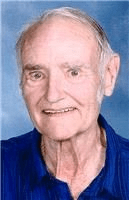
This is a rare instance where the more I researched the more information I found, which I know sounds fairly obvious but I have run into countless dead ends writing about some of these girls. For example, I can’t even find Deborah Lee Tomlinson on Ancestry, so I tried to think outside the box and joined a few Facebook groups related to her hometown of Creswell OR, in hopes that maybe I would find a relative or an old friend of hers that could help fill in the gaps surrounding her background… but again, I got nothing. Right before I was about to re-publish this I found even more information about Weaver on cavdef.org… nothing huge or ground breaking, just a few small details. In a comment on the website ExecutedToday.com, an individual going by the name of Philip Conrad commented that he ‘knew Sandra Weaver, the Colorado detectives talked to me and my x wife in lacrosse wi because we thought the guy that left with her might have had something with her death. I do believe Ted Bundy killed her.’ Additionally I found Glade Gambles obituary (which I included below).
In an article written by a Salt Lake journalist after Bundy was executed, Pete Haywood said that authorities placed Bundy in Utah as early as 1970 when he was only 23, which ‘certainly widens the window of time we are looking at in terms of unsolved cases.’ There’s conflicting reports that say the serial killer mentioned Weavers during his death row confessions: some sources say he did, others say he didn’t. Former Mesa County Sheriff said two different television stations ran stories claiming that Bundy took responsibility for Weavers death, and the Salt Lake Tribune ran a story saying the same.


 Another Bundy Blog.