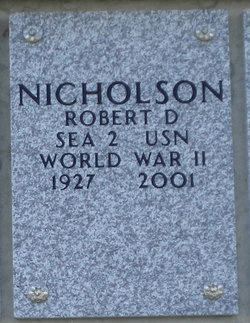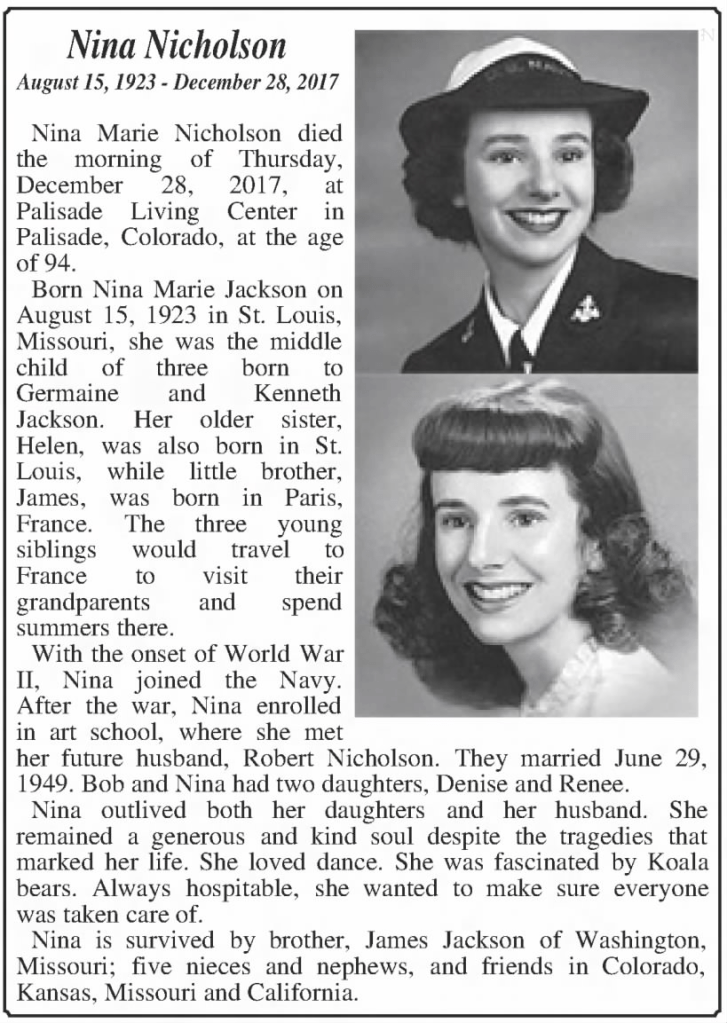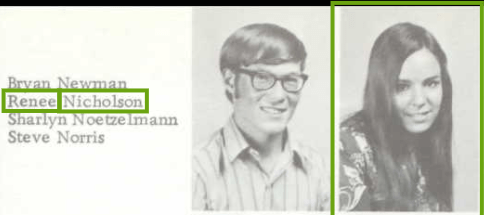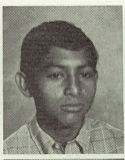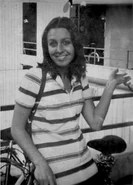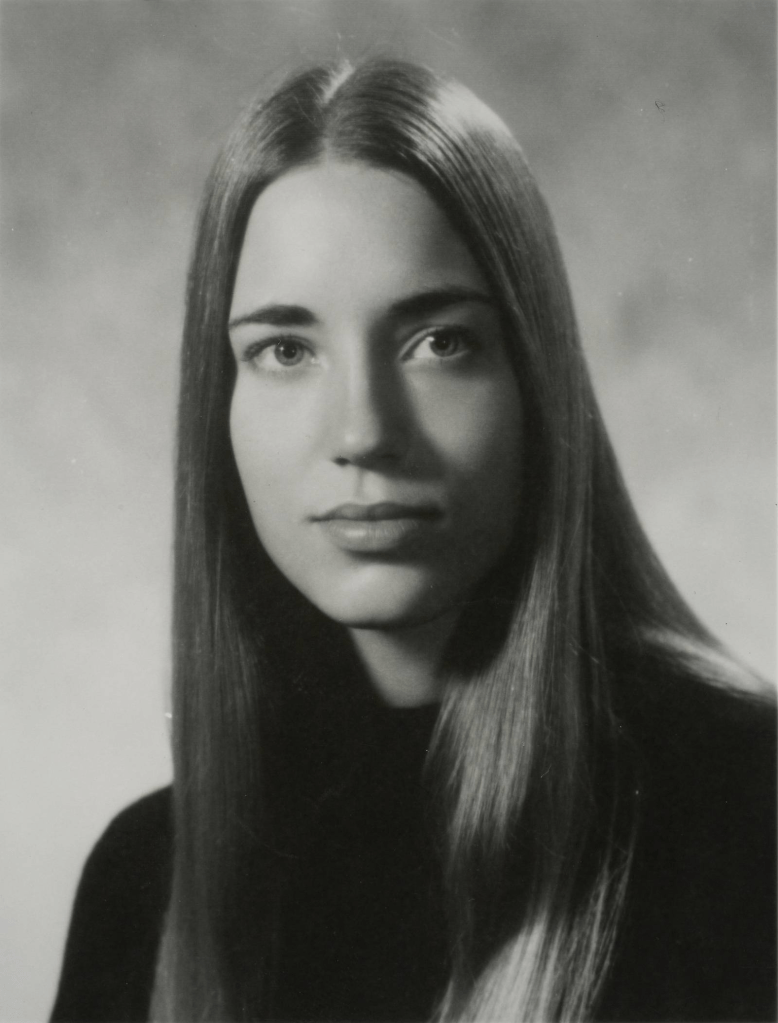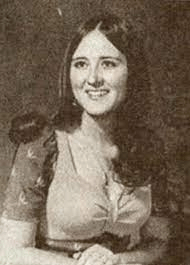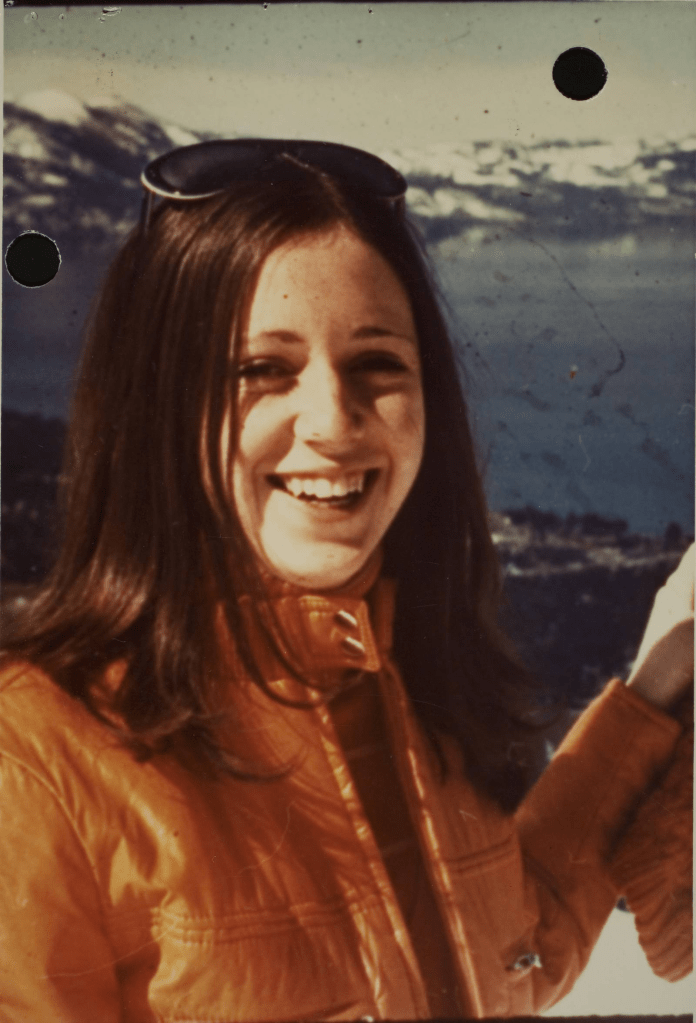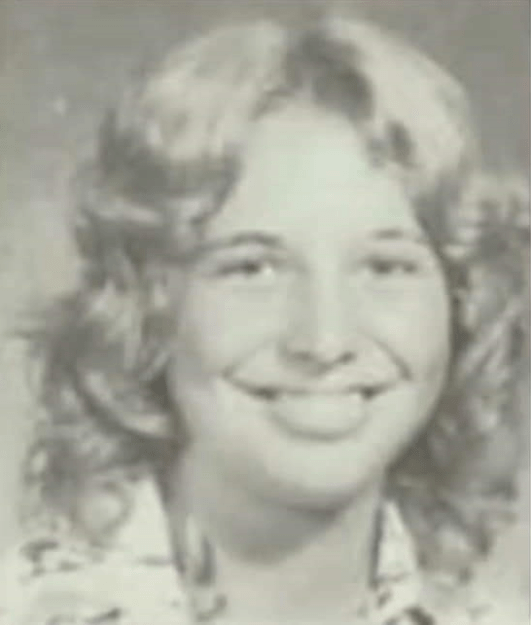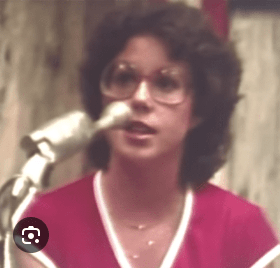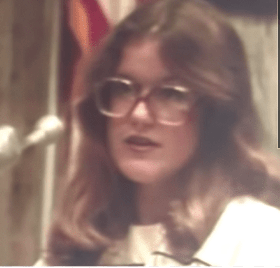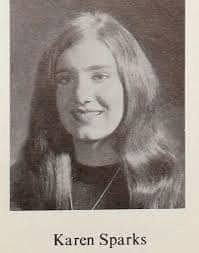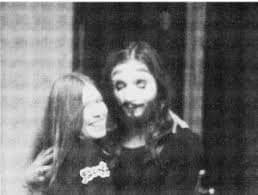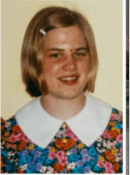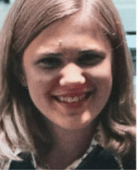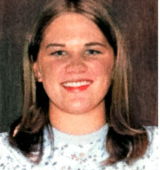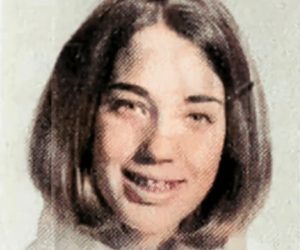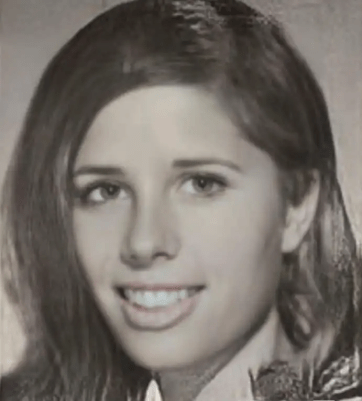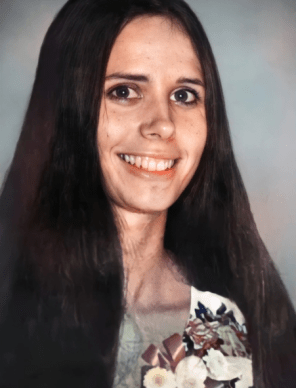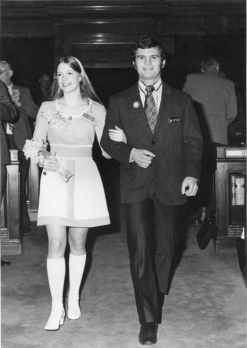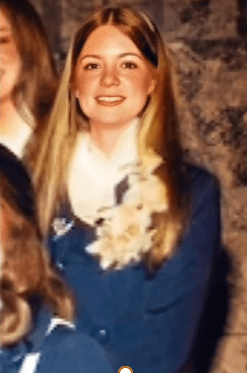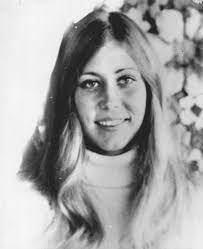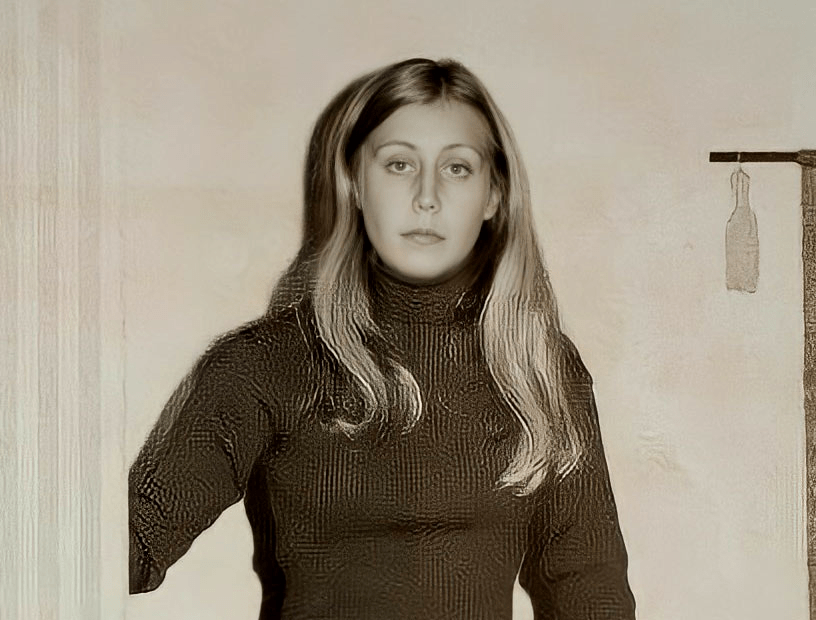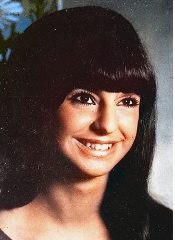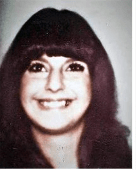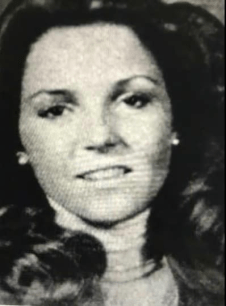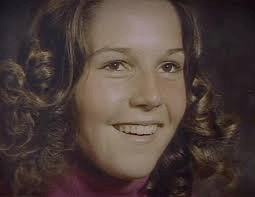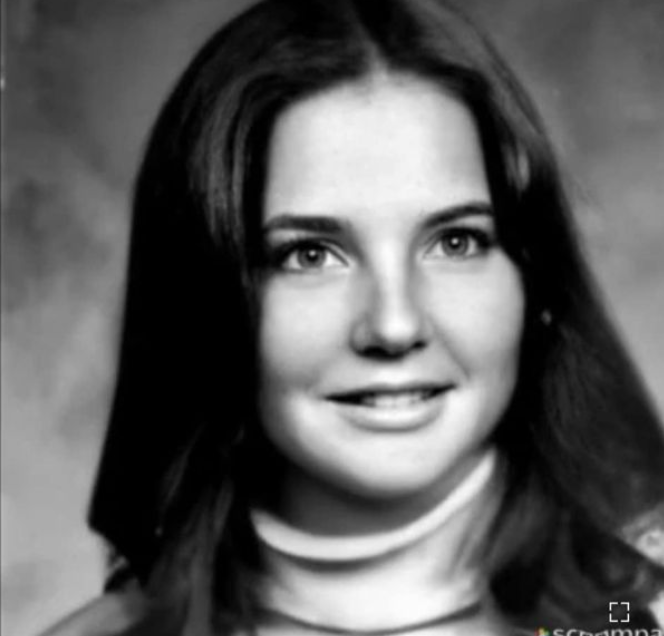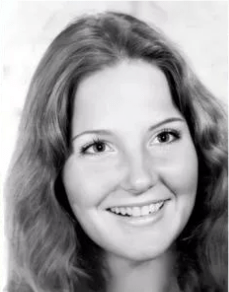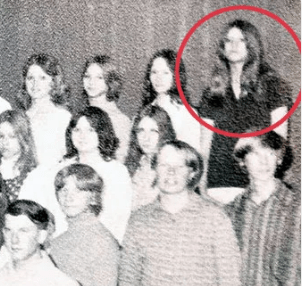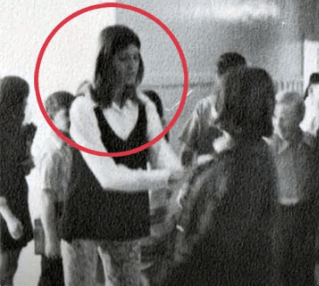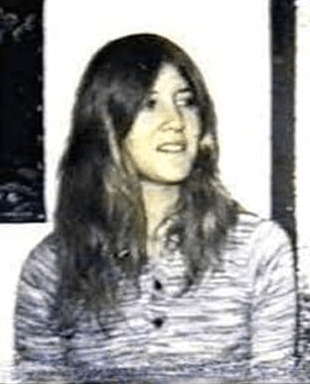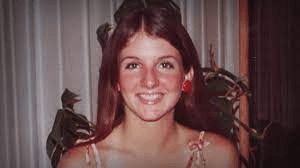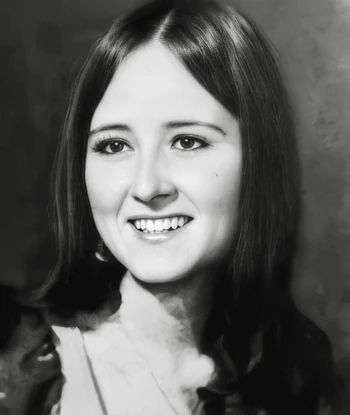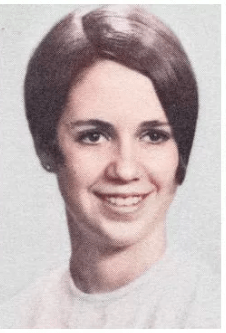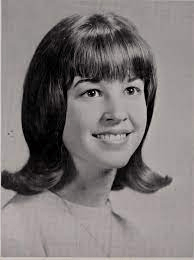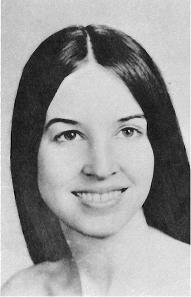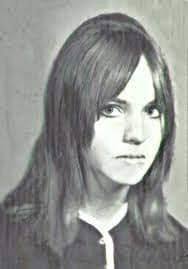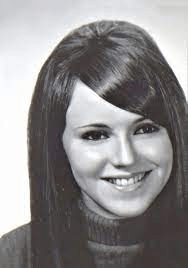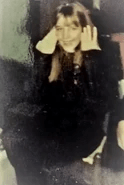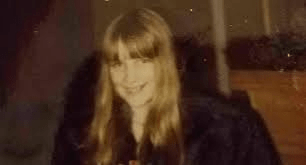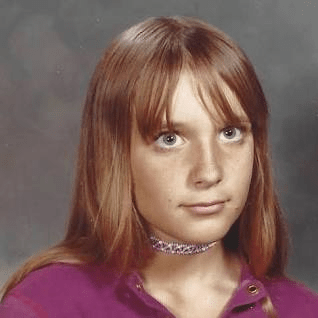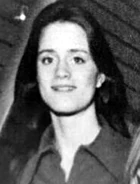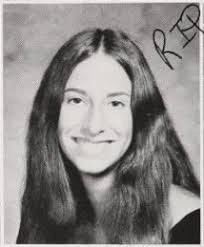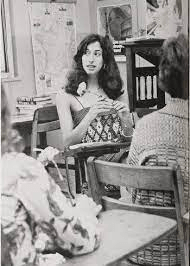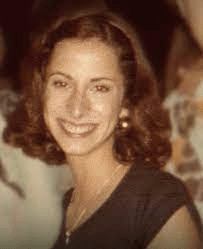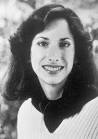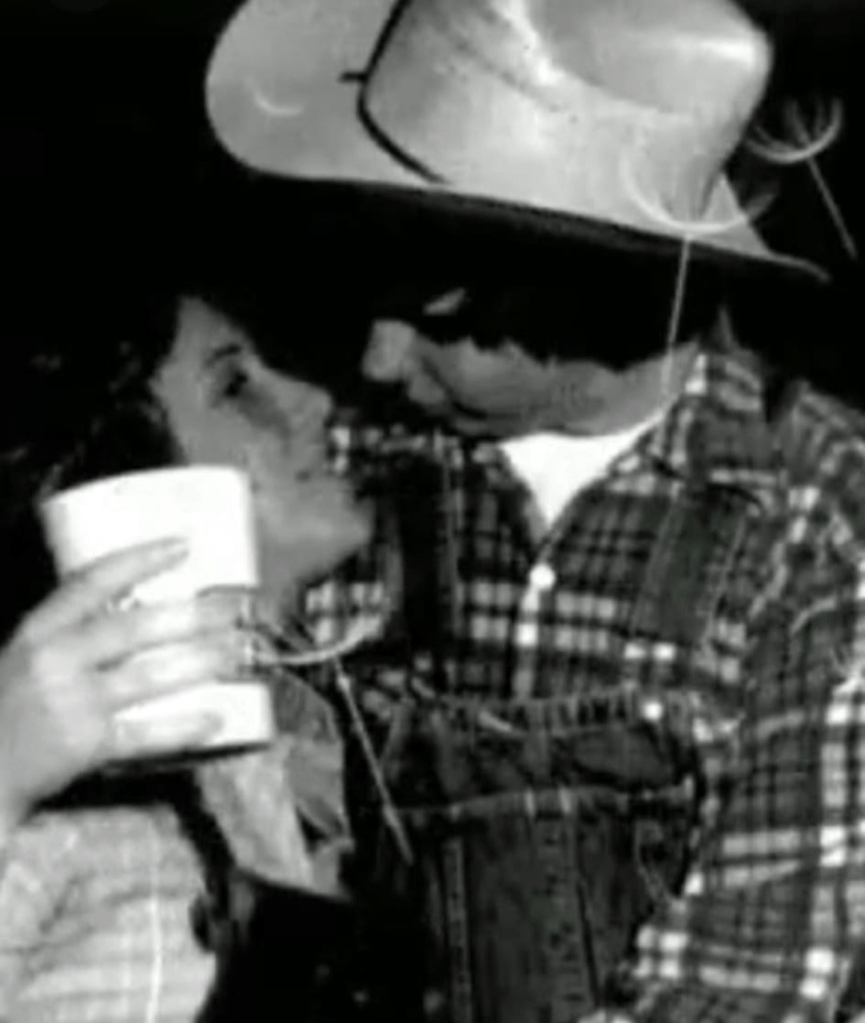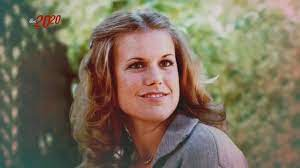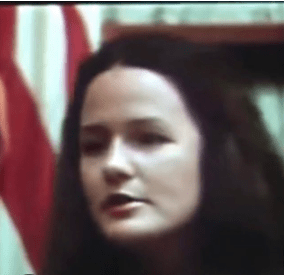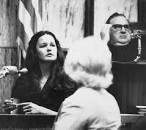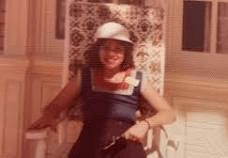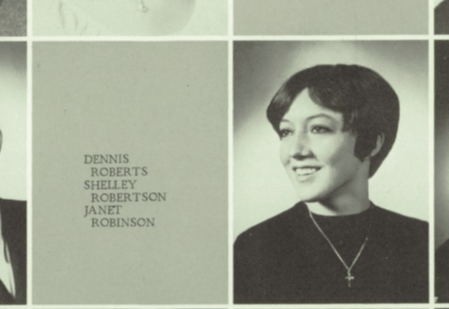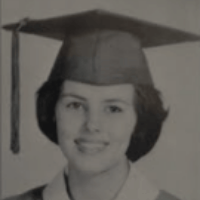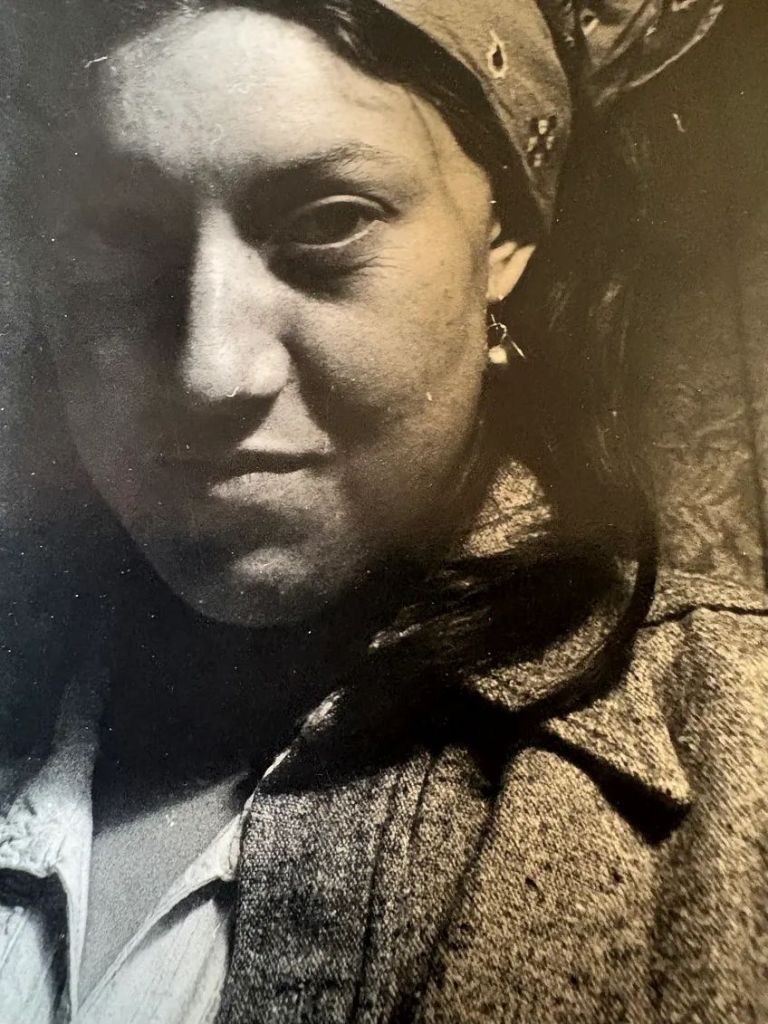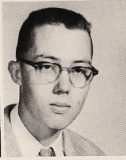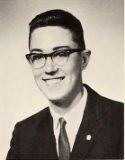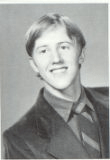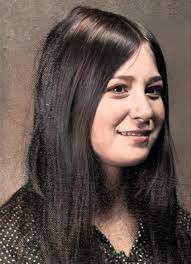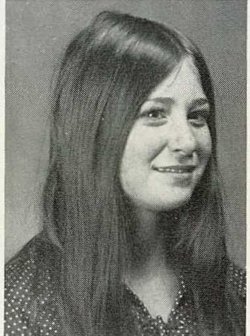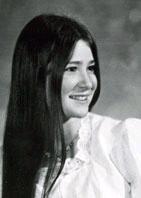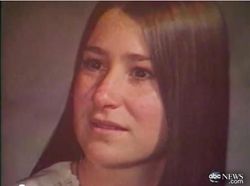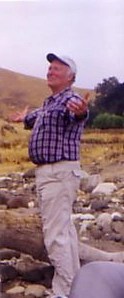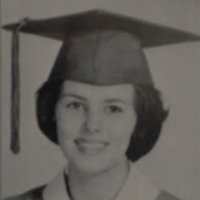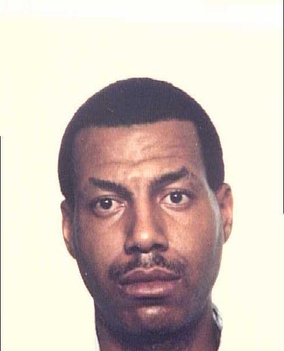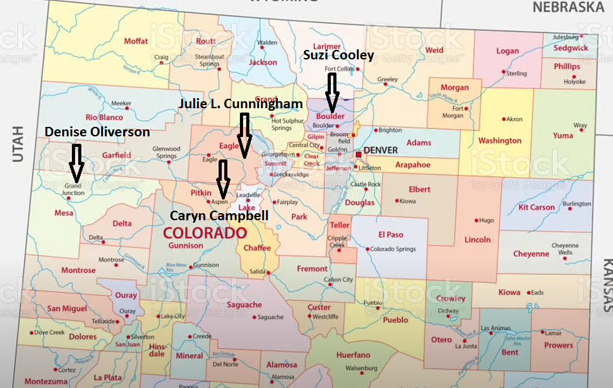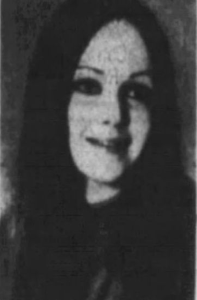
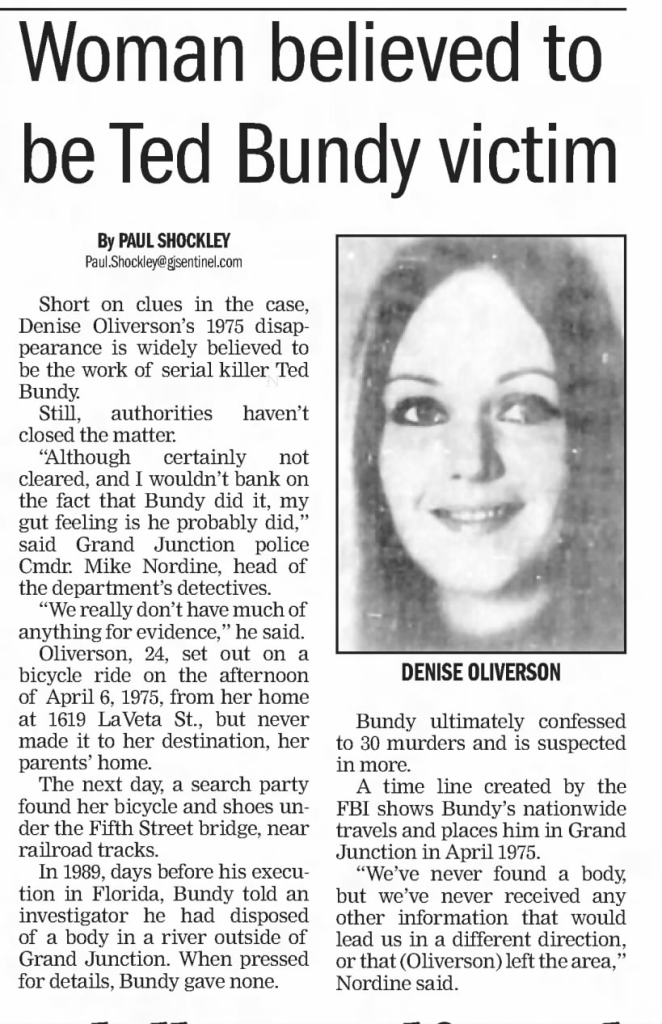
Denise Lynn Oliverson (née Nicholson) was born on August 10, 1950 to Robert ‘Bob’ Dale and Nina Marie (nee Jackson) Nicholson in Missouri. Mr. Nicholson was born on June 12, 1927 in Saint Joseph, MO and served in the US Navy during WWII. Denise’s mother was born in St. Louis, Missouri on August 15, 1923 and after graduating from high school enlisted in the US Navy. When the war ended, Nina enrolled at Denver Art Institute, where she met her future husband. The two got married on June 29, 1949 and had two daughters: Denise and her younger sister, Renee. The couple eventually relocated to Colorado and Robert got a job as a commercial artist at The Daily Sentinel. The family settled down in Grand Junction in 1963 after moving from Colorado Springs; after Denise was murdered Mr. Nicholson said he regretted moving there and said that it was ‘a mistake.’
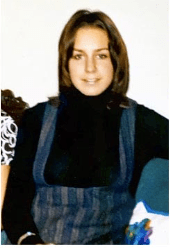
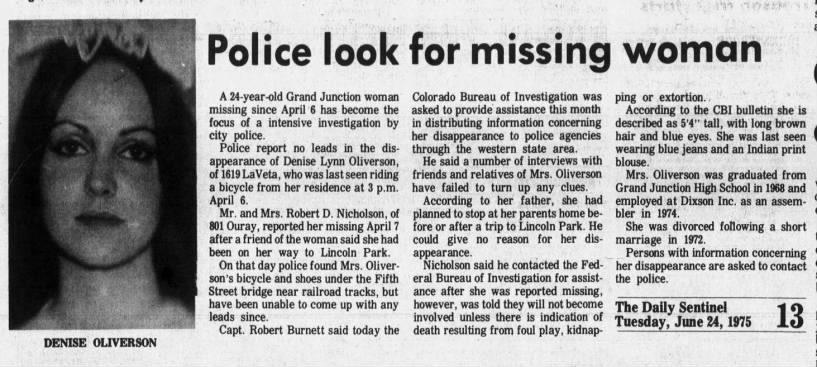
Oliverson had blue eyes, brown hair that she wore long and parted down the middle, and stood at 5’4” tall. She had some lingering facial acne, pierced ears, and a discolored lump on the back of her right hand; she was petite, and only weighed around 105 pounds. After graduating from Grand Junction High School in 1968 she got a job with a company called Ultronix (at least, according to her engagement announcement published in The Daily Sentinel on May 20, 1970). Looking into them, Ultroni was a manufacturing plant that produces electronic resistors, components and log converters but they have since left the Colorado area and moved out of state.
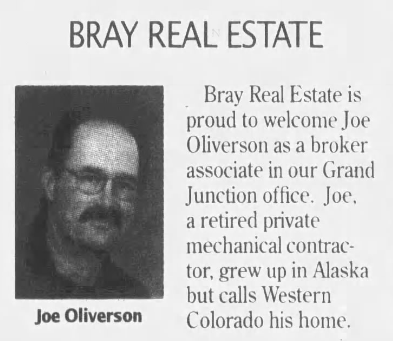
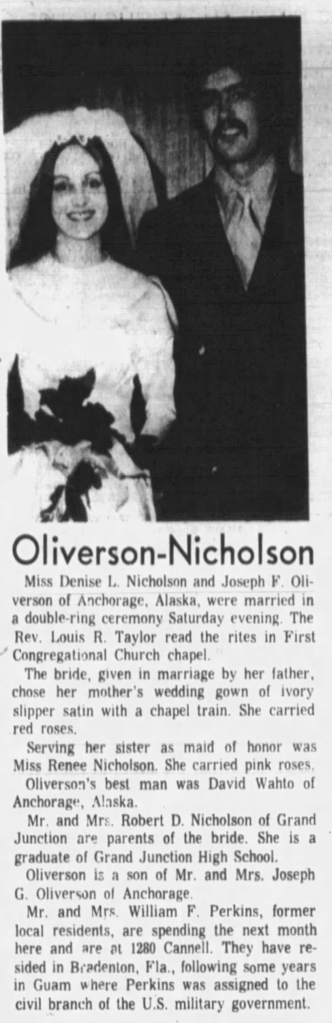
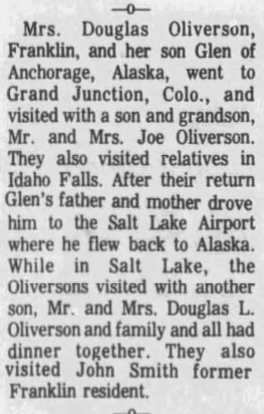
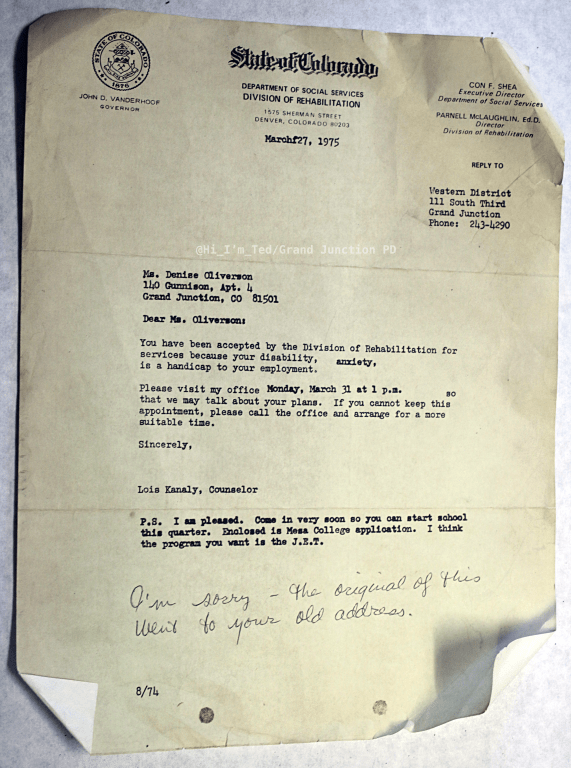
In 1969 Denise was charged with a misdemeanor after being arrested in GJ for marijuana possession, and at some point in the early 1970’s she lived in Spokane, WA with an individual named JC Harrison. Described by her friends and loved ones as being a ‘great, kind person,’ she married Joseph Franklin Oliverson on September 26, 1970. Joe was born in March 1950 in Idaho but his family relocated to Alaska; he was a 1968 graduate of Dimond High School in Anchorage, where he grew up. Oliverson attended Mesa College and when the couple first got married he was employed in Alaska; he eventually relocated to Grand Junction to be with his wife and got a job in insurance and real estate. After going through a rough patch the couple divorced on March 13, 1972. When she was killed Denise was in a new relationship with a man named Raymundo Esteban Romero (who simply went by ‘Steve’). According to her dad, Denise was a frequent drug user and in the early stages of her disappearance he suspected that she may have imbibed in some sort of illegal substances and taken off. Despite a history of running away (she would always return after a few days), Oliversons history in the year prior to her disappearance hinted that she changed a lot and didn’t participate in that behavior anymore. In a letter to Denise dated March 27, 1975 sent from her behavioral health counselor, Lois Kanaly shared that the young divorcee was accepted by the Division of Rehabilitation for services because of her disability, and her anxiety diagnosis was considered ‘a handicap to her employment.’ From there, the letter stated that she had an upcoming therapy appointment on March 31 at 1 PM. At the bottom was a postscript that read: ‘I am pleased. Come in very soon as you can start school this quarter. Enclosed is the Mesa College application.’ Kanaly also advised Denise to look into the schools J.E.T. program. So, obviously Oliverson was in the process of making some big changes in her life, and seemed to be in the process of applying to go to college.
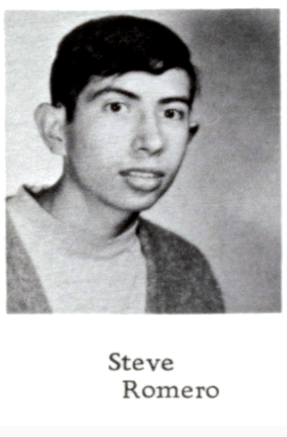
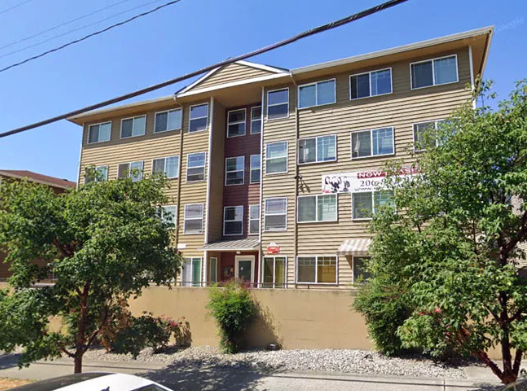
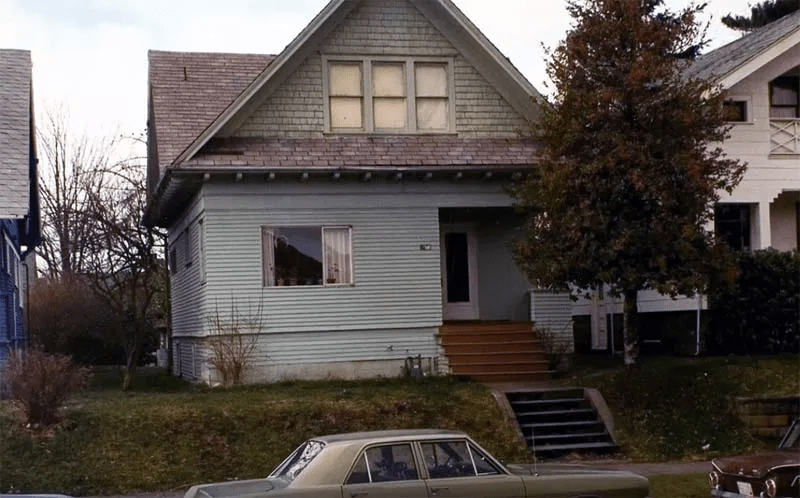
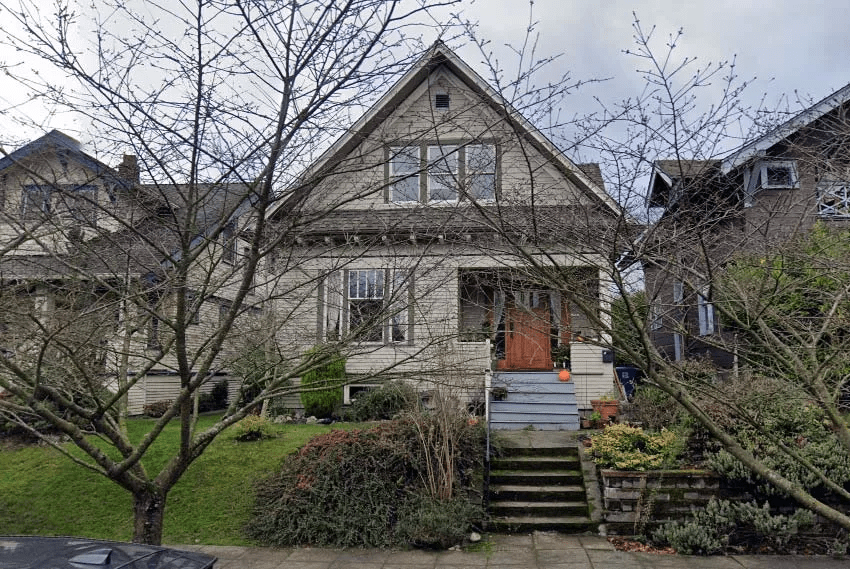
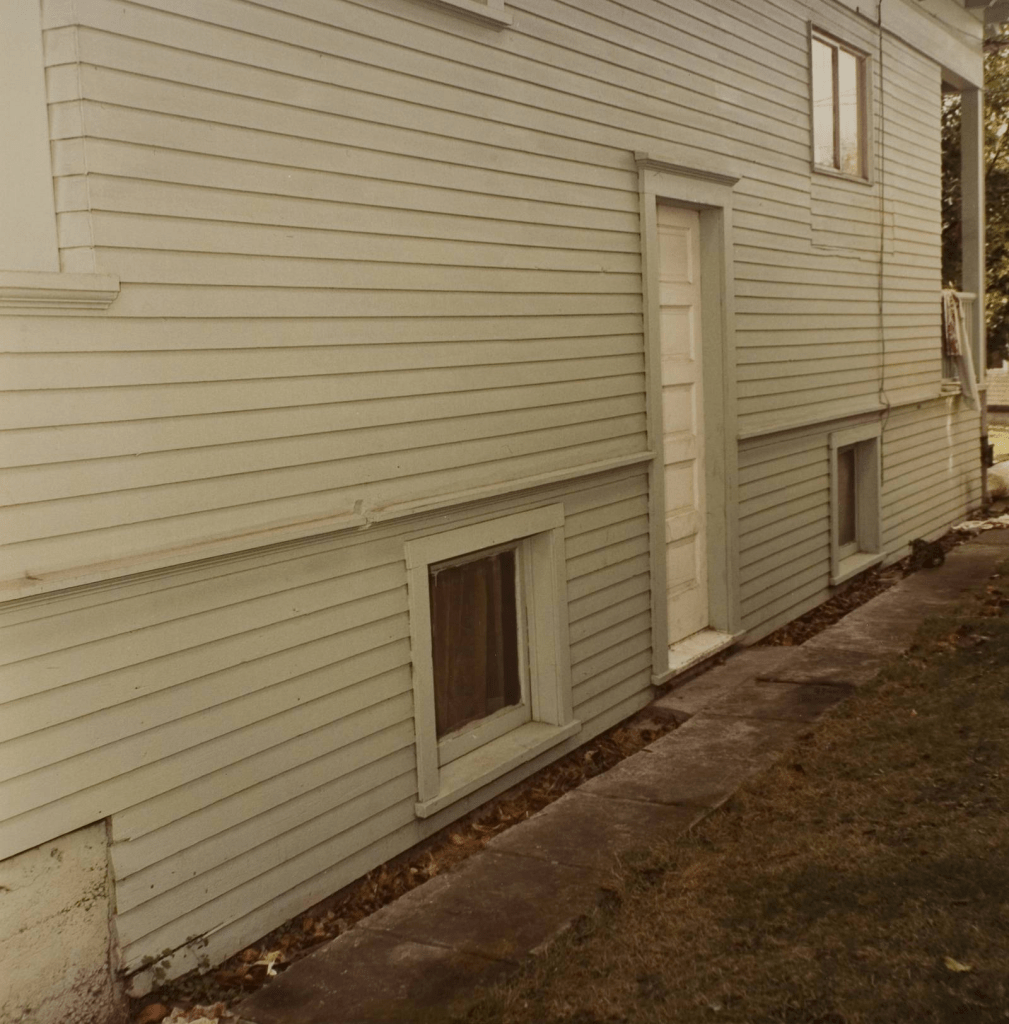
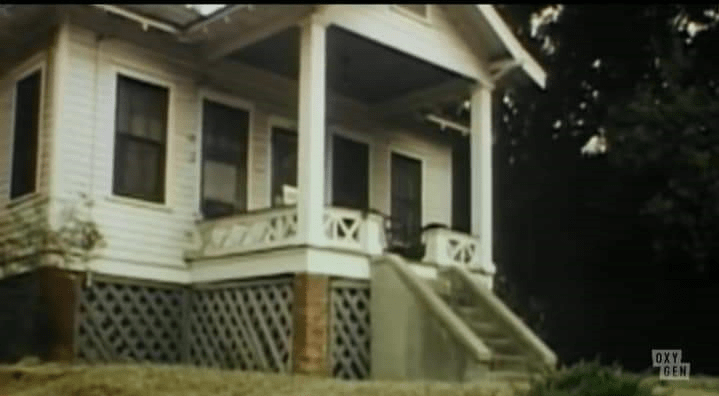
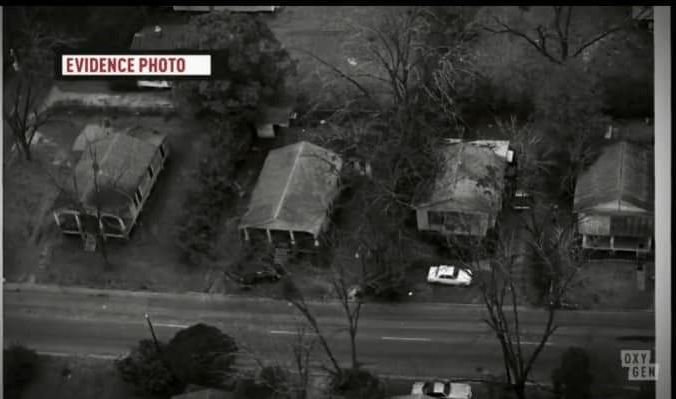
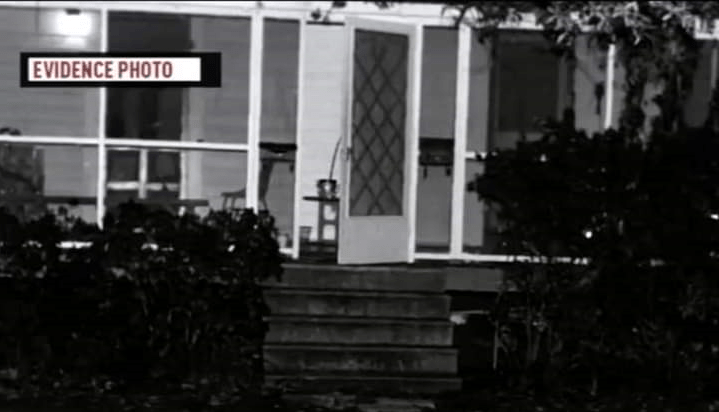
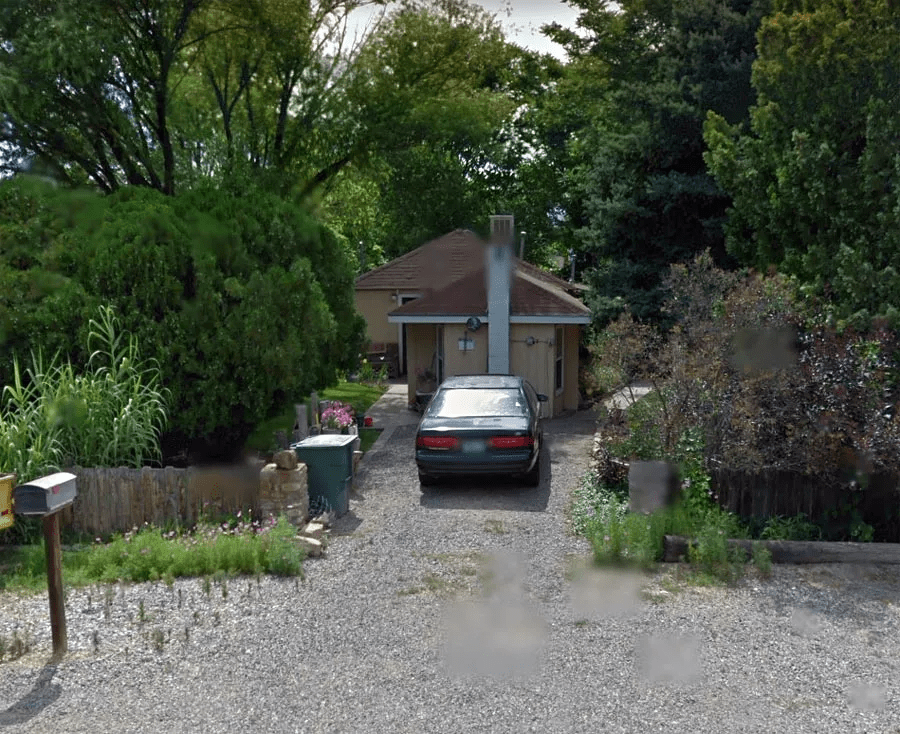
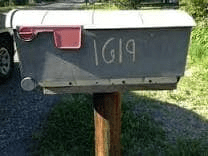
Denise and Steve weren’t together for very long, and seemed to have a healthy relationship at first, however cracks were beginning to show and according to Oliversons friend from high school Marie Parish she wanted him out of her house. At first it appears that she lived at her one bedroom house located on LaVeta Street in GJ alone, but was pressured by Romero to move in with her as a ‘safety precaution’ because of a dangerous former flame. It appears that he was a very jealous and controlling boyfriend and it’s speculated that his motives weren’t entirely gentlemanly and he did it more to get in her house so he could keep an eye on her versus doing it for her safety. Oliverson had a dog named Toma.
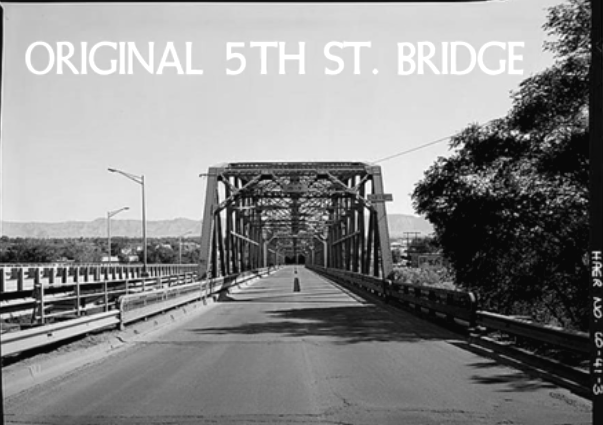
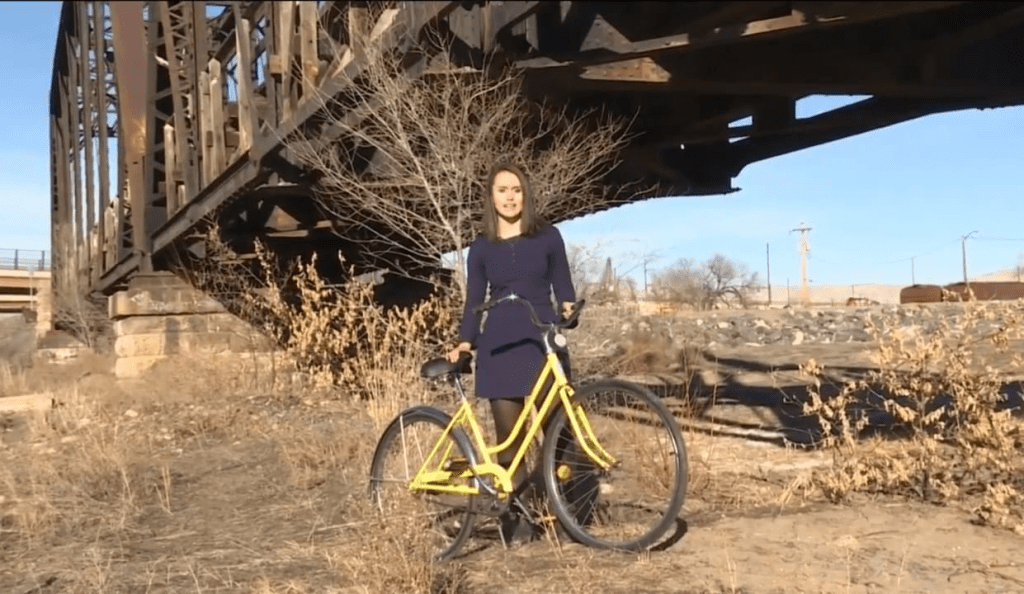
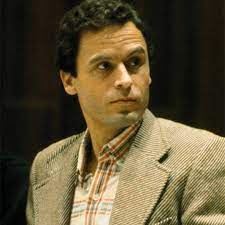
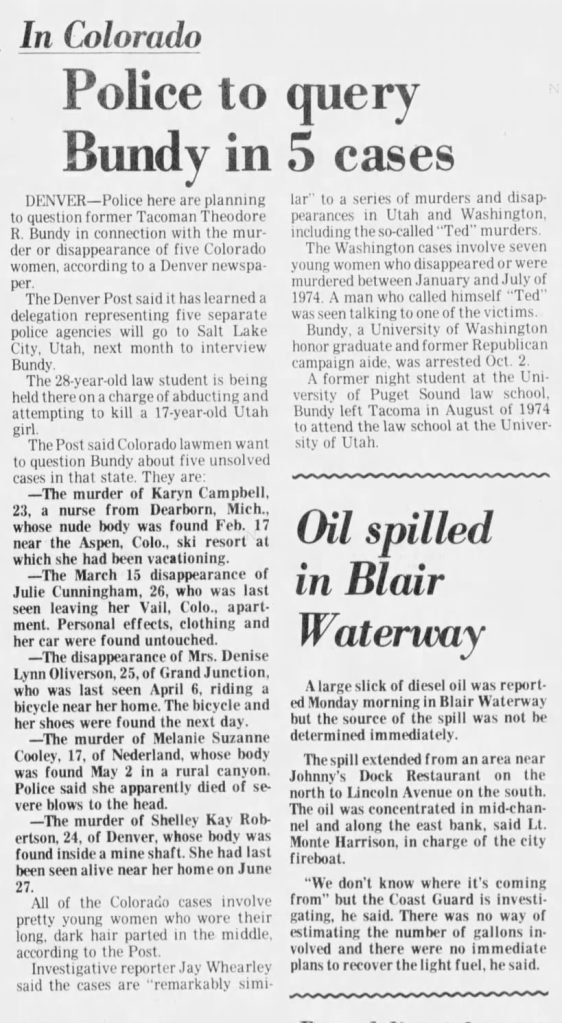
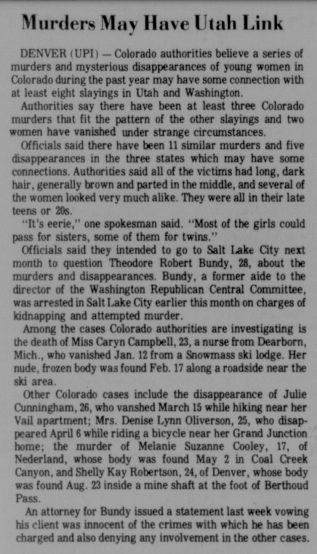
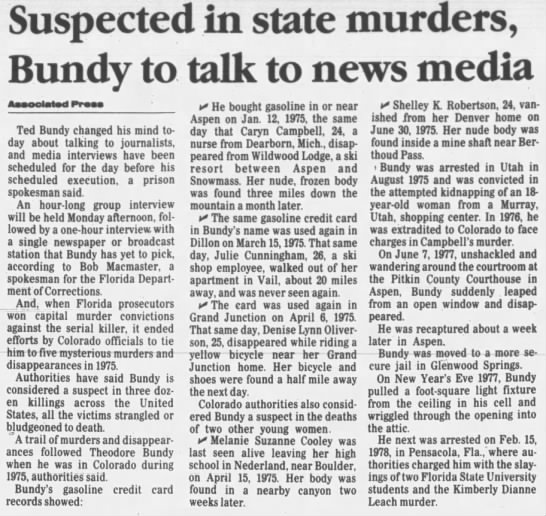
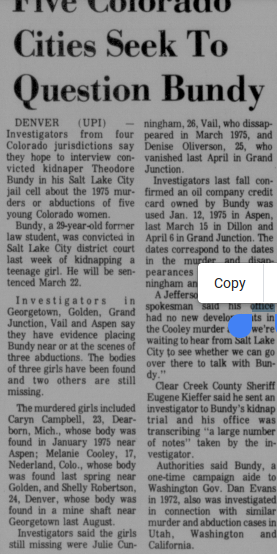
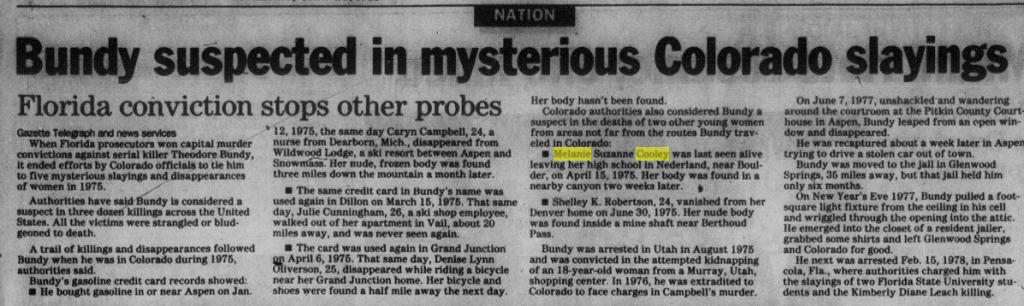
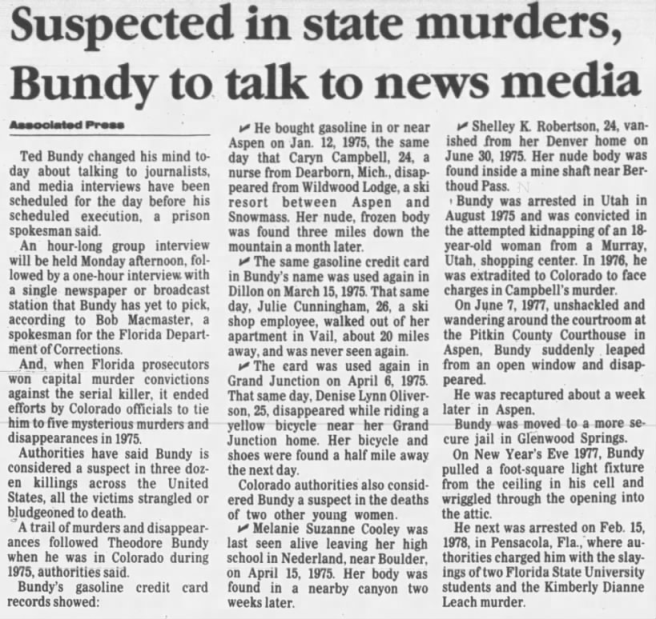
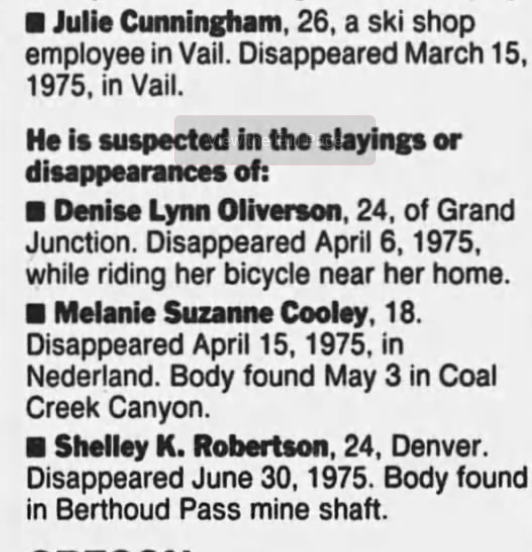
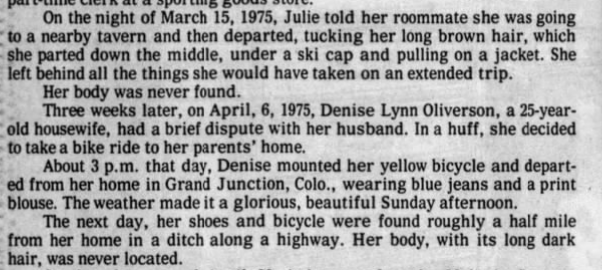
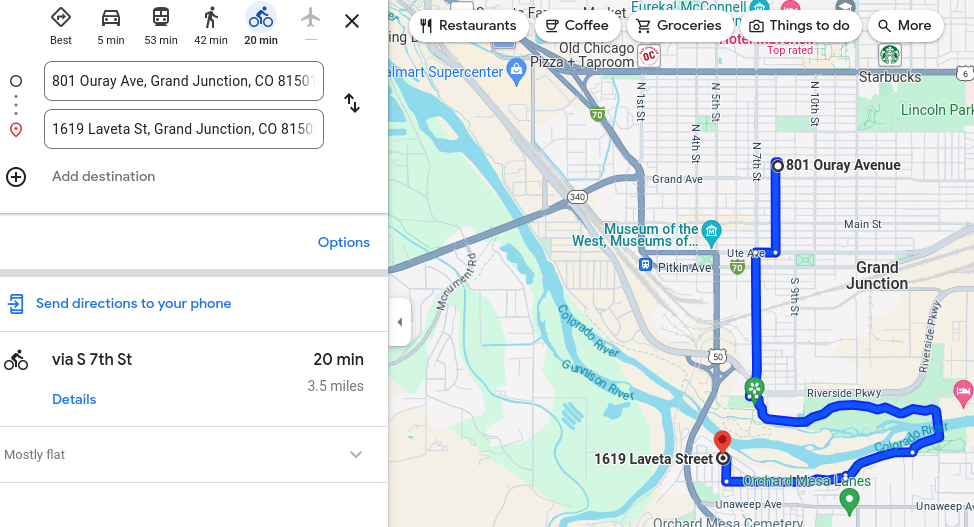
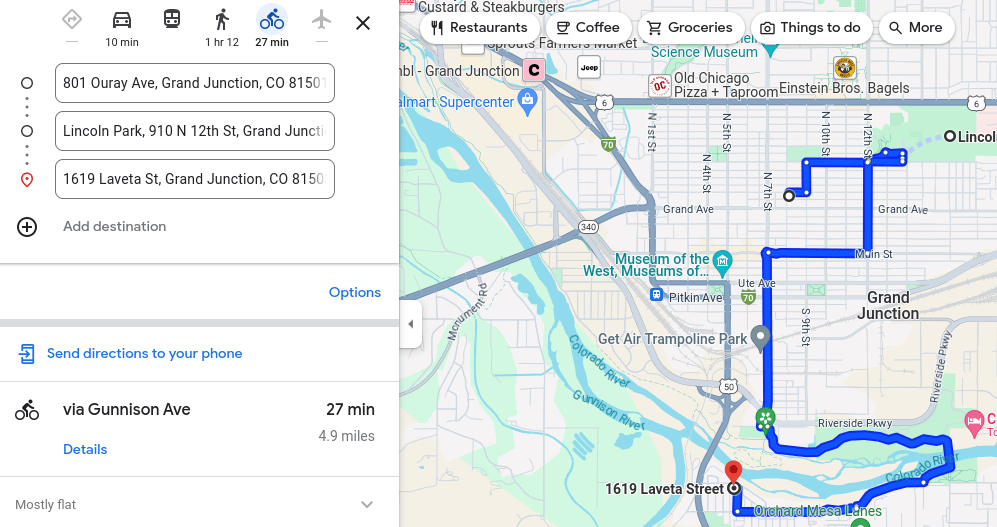
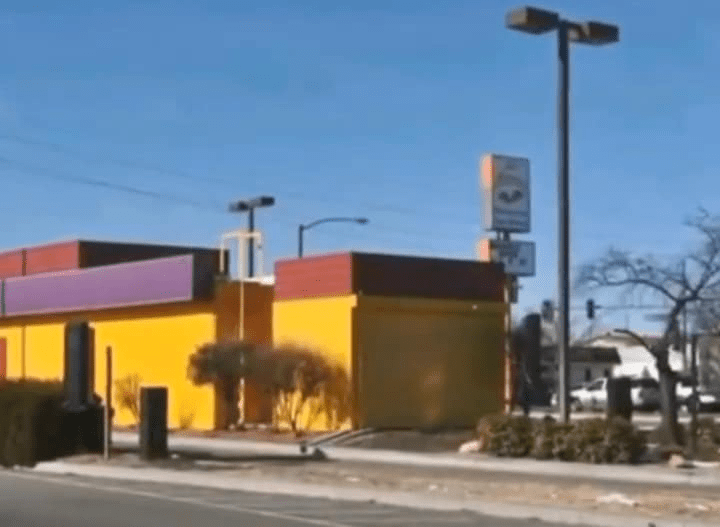
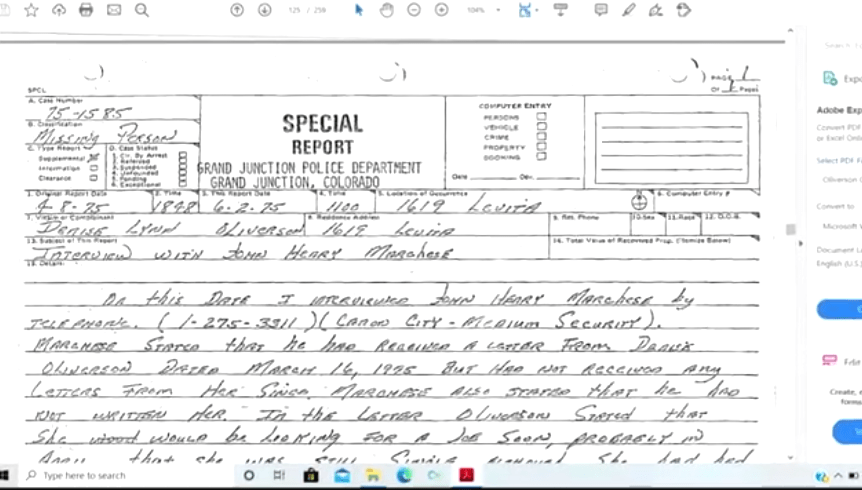
On Sunday, April 6th, 1975 Ted Bundy abducted Denise Oliverson at the South 5th Street Bridge in Grand Junction, Colorado. According to the missing persons report dated April 8, 1975, Mr. Nicholson said that the day that his daughter disappeared she stopped by his house with Steve at roughly 1:00 in the afternoon, and from there they went to Lincoln Park. They were taking advantage of a beautiful spring day and were enjoying being outside. Denise saw a friend at the park named Fred Gallegos, but the two didn’t interact. The couple then explored Grand Junction for a bit before returning home. That’s when they got into an argument and around 3 PM Denise said that she was going to ride her bike to her parents house. She left with no coat or personal possessions and Steve said that it’s possible she went back to the park to see her friend. Detectives strongly felt that she was biking down a short path on the east side of the South 5th Street Bridge in Grand Junction when she encountered Ted, which was about 1.7 miles away from her home on LaVeta Street. According to Kevin Sullivans ‘The Encyclopedia of the Ted Bundy Murders,’ several stories about what Denise was doing before she was abducted have emerged or the years since she disappeared, but authorities are certain that she had an argument with her boyfriend and left the one bedroom home she shared with him to go to her parents house, on her a yellow Coast to Coast 10 speed bicycle, serial number 2C174568 to go to her parents house. She never made it.
When Oliverson didn’t come home that night Romero just assumed she spent the night at her parents, as that was a typical occurrence when they had a disagreement. But he immediately became concerned the next day when he called her parents’ house to talk to Denise about coming home and he was told she wasn’t there. Consequently, Mr. Nicholson contacted law enforcement at some point early on April 7, 1975 and reported his daughter as missing; Denise’s parents gave them pictures of her but let them know that they wanted them back. Police didn’t wait to investigate and immediately sprang into action, mapping out the route Oliverson most likely would have taken and searching the road along it. They spoke with members of her family, friends, coworkers, and acquaintances and were told nothing of value. Oliverson’s Dad contacted the FBI for further assistance but was told that they wouldn’t be able to assist in the case unless there was indication that she had been kidnapped or was killed as a result of foul play. At the time she disappeared Denise was employed with Dixson Inc. as an assembler; she wasn’t there for long and only got the position the year before.
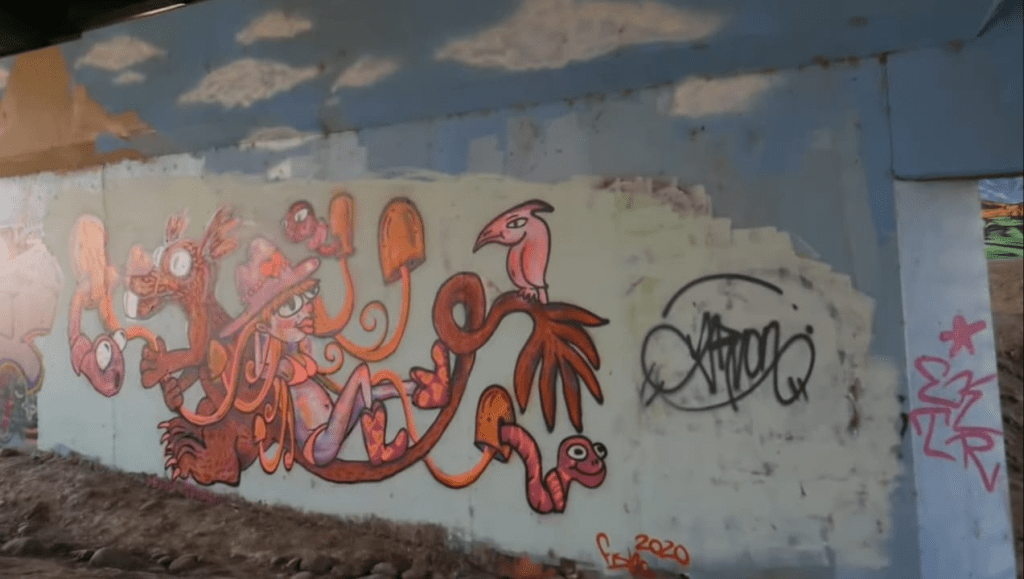
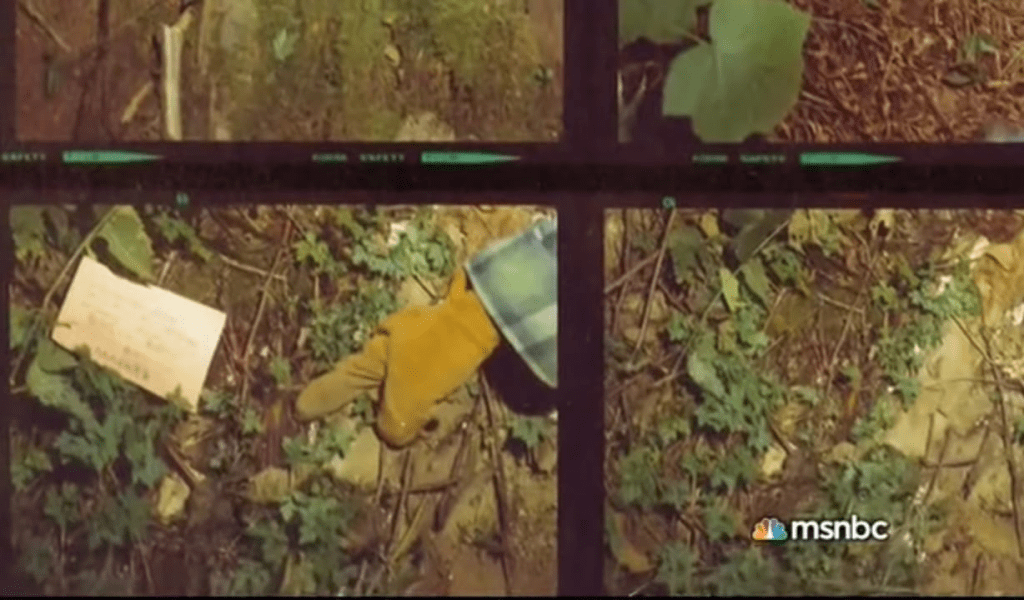
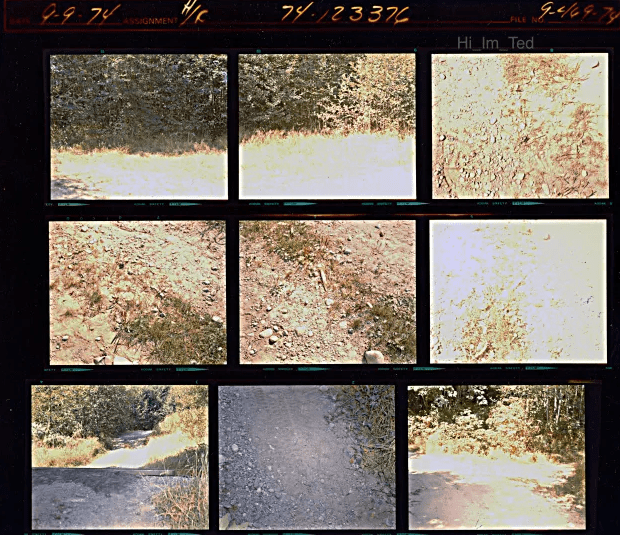
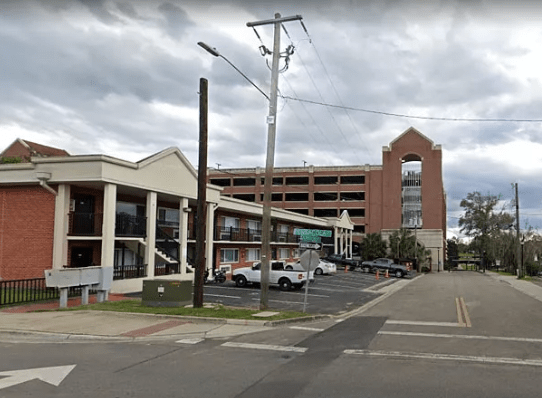
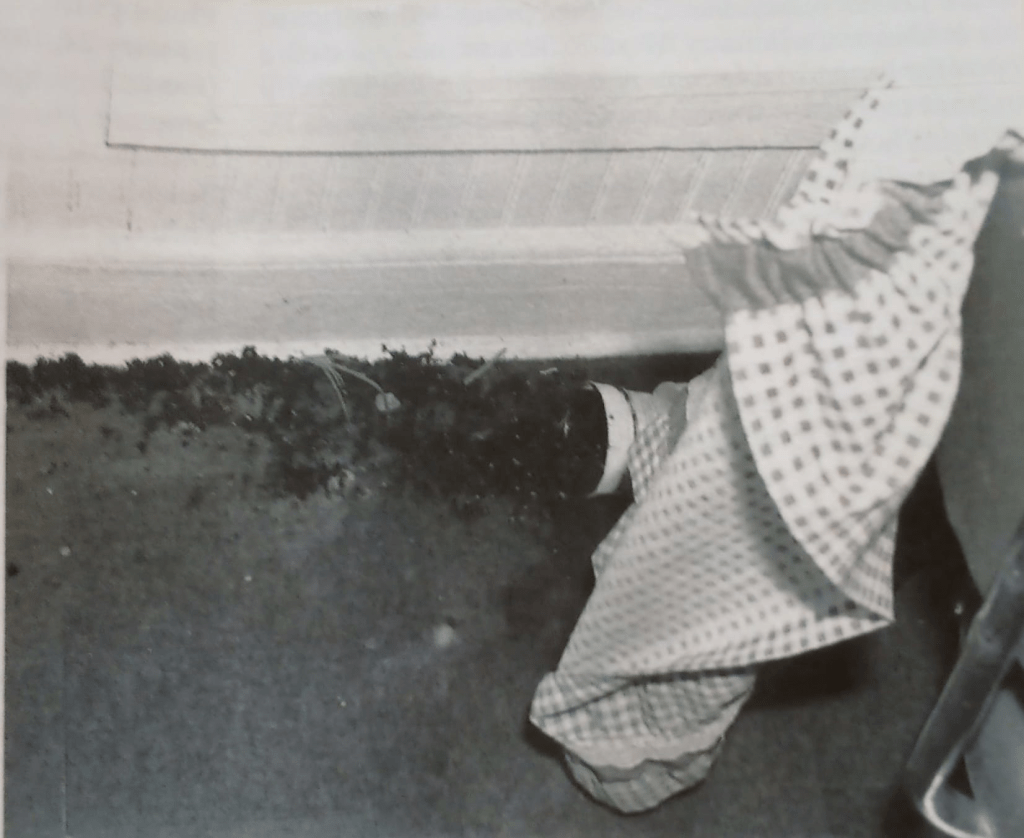
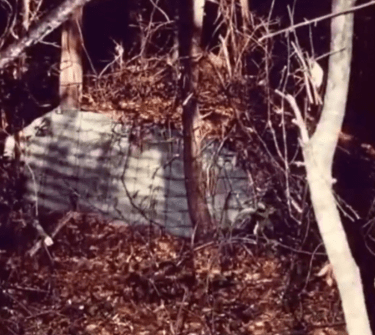
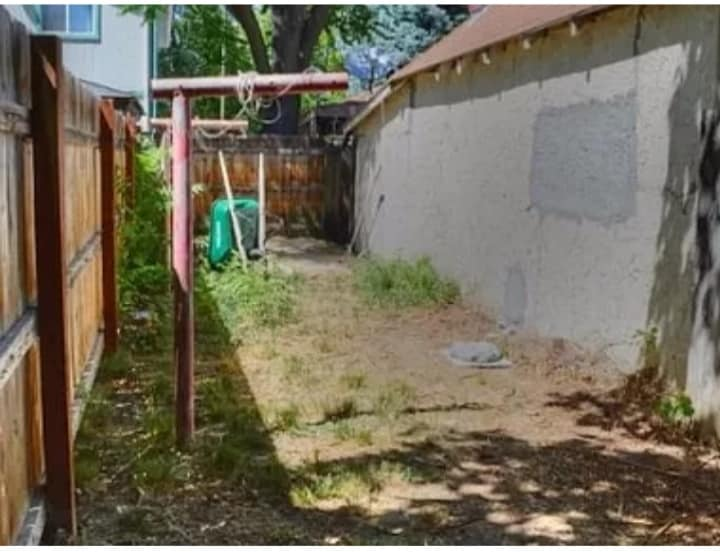
On April 7, 1975 an unknown caller from the Denver and Rio Grande Railroads got in contact with the Grand Junction Police Department and told them about an abandoned yellow bicycle that was leaning against a pillar underneath the 5th Street viaduct near the railroad tracks. Retired GJ police officer Lew Fraser was dispatched to the scene at 8:48 AM, and upon arriving he met up with railroad engineer Wilbur M. Class, who shared with him that it had snowed the night before and he had seen what looked like sandals as well as some additional things sitting on the bike’s seat. According to a second railroad employee, the items were scattered haphazardly all over the tracks before he neatly set them out of the way (more on that later). According to Officer Lew there was nothing strange or unusual about the scene that jumped out at him, and it was just another lost bicycle to him. He made a property report, tagged it with a ‘lost and found’ sticker then turned it into the Grand Junctions ‘Old City Shop,’ classifying it as abandoned. When it was eventually determined that the items belonged to Oliverson, LE immediately suspected that foul play was involved but were unable to come up with much else. According to a deep dive by Bundy archivist Tiffany Jean, the investigating officer said in his report that ‘as I was checking it an engineer in a passing locomotive hollered at me and said it had been there since yesterday and that there were some clothes on it and it could have been stolen or something. I checked the immediate area and all I found was a light brown rolled up women’s belt. I checked the bike for stolen and it had not been stolen. Brought the bike to old city shop and filed an abandoned property report and put a found property tag on bike. No further investigation at this time.’
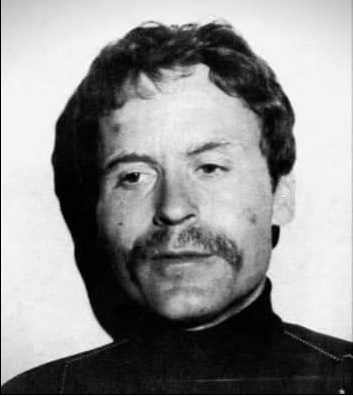
In the early stages of Denise’s disappearance the Grand Junction PD considered Romero a suspect due to his strange and suspicious manner, but nothing conclusive tied him to her disappearance and he was never charged. Law enforcement deemed that he was an unbalanced person but gave him the benefit of the doubt and said that maybe he acted that way because of his girlfriends disappearance. Unfortunately for Oliversons family they were forced to sit back and watch as her case grew cold, and there don’t seem to be any reports of any tips or leads until Bundy confessed on death row in 1989.
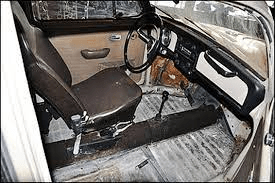
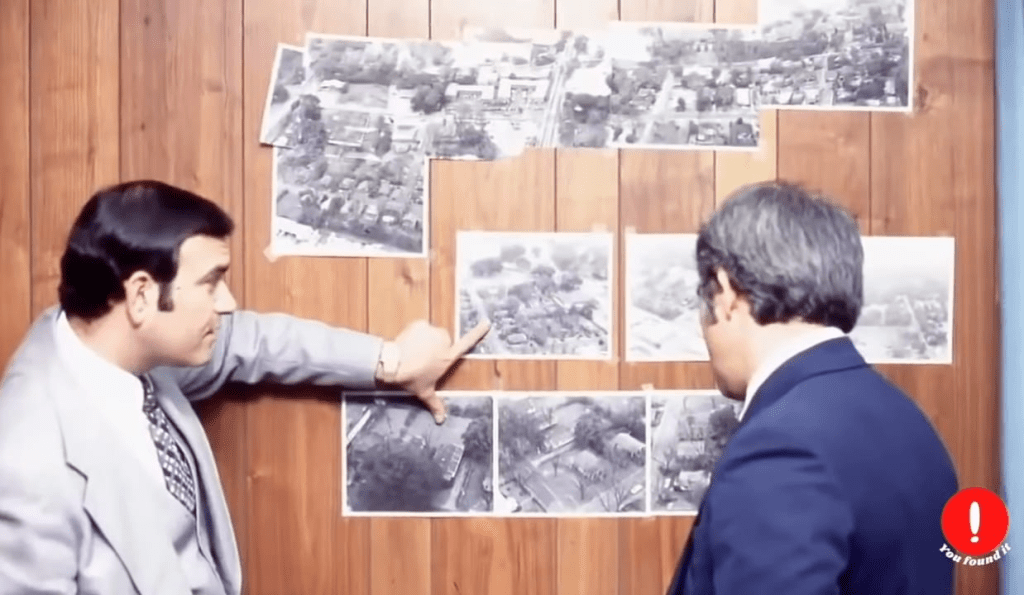
After Bundy was thrown into the spotlight because of his arrest in Granger, (retired) GJ Police Chief Ed VanderTook admitted that he was hesitant at first to acknowledge that Bundy was responsible for Oliverson’s disappearance, however after it was proven that credit card receipts placed him in the area he quickly changed his tune. I mean, thinking about it logically, it wasn’t like he could have easily hit her over the head with a crowbar and dragged her away: she was abducted in the middle of the afternoon. I’m leaning towards him using some sort of ruse to lure her back to his car and then he pounced. It’s strongly speculated that Bundy parked his VW underneath the overpass on South 5th Street, as it was a relatively secluded spot in the mid 1970’s. Did he fake a broken arm and tell her he needed help carrying something back to his car? Or perhaps a broken leg, somehow? Did he ask her to place his briefcase in his car then whack her over the head, shove her in then sped off? Or, was he fearless and blitzed her by the bridge, then dragged her back to his Bug, which was waiting nearby? The possibilities are endless, and we’ll never know what actually happened. There’s yet another theory that maybe Denise was experiencing mechanical problems with her bike and that Ted may have come to her assistance.
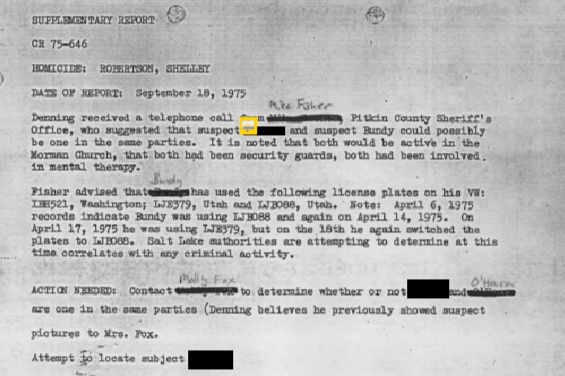
Oliverson was last seen wearing a long-sleeved green Indian-print blouse, a pair of Levi’s, sandals and a silver ring on her right pinky finger. According to (retired) GJPD Homicide Investigator Doug Rushing and his then partner Jim Fromm, many of Denise’s personal possessions didn’t make it to the evidence file: her purse, a light brown rolled up belt, and additional personal items were stolen by a Grand Junction officer, who gave the items to his girlfriend because of their high market value and the fact that they were considered ‘nice items.’ In addition to her personal things and handbag, Denise’s bike was taken to Grand Junctions ‘Old City Shops’ with the intent of being stored under ‘unknown owner,’ but unfortunately (according to journalist Steven Winn and multiple other sources), it vanished from police custody; it was also never dusted for prints. About it disappearing, a Grand Junction LEO commented that ‘kids had access to those racks,’ and in response to this, Denise’s father snapped back that it ‘was ‘the only piece of evidence that they had’ (I will discuss this in depth more later). Also according to Winn, shortly after Oliverson disappeared retired chief criminal investigator for the ninth Judicial District in the State of Colorado Mike Fisher received a call from police in Roseburg, OR about a man named Jake Teppler who he was interested in speaking with about her disappearance. After multiple interviews and a polygraph examination, it was eventually determined that Teppler had nothing to do with her case, and his alibi’s were successfully verified.
At around 11:00 AM on July 16, 1976, a sergeant from the Grand Junction PD was contacted by Robert Nicholson, who told him that he and his wife wanted their daughter’s bicycle returned to them, if at all possible. After some back and forth between internal departments in the Grand Junction PD, it was determined that the bike had been removed from the ‘City Shops’ and it was seemingly common knowledge that it was missing (and most likely had been stolen). After it vanished Mr. Nicholson was never informed of the incident nor was a report ever written and upon further investigation the theft took place sometime between April 7 and May 25, 1975. At approximately 4:00 PM later that same day the sergeant reached back out to Mr. Nicholson and shared with him that his daughters bike was missing and had been for some time. After hearing this Robert became very depressed and said that he should have been told about the theft immediately after it happened. He was given a formal apology from the GJ Chief of Police for not keeping him informed and in the loop and was promised that if the bicycle was ever found it would be immediately returned to him.
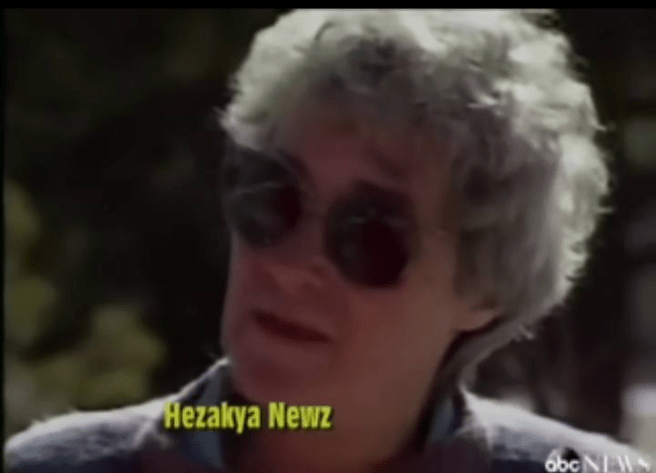
Early in the morning a few weeks after Denise disappeared on April 19, 1975 an officer from the GJPD was dispatched to Oliverson’s residence to look into a noise complaint: when they arrived at 5:18 AM, he spoke with the complainant, another resident of LaVeta Street (a Mr. Jeff Burns), who said he heard what sounded like a loud gunshot roughly 15 to 20 minutes before reaching out to LE. Upon first hearing the unusual noise, Burns looked out the window but saw nothing out of the ordinary and went back to bed. A few minutes later he heard a voice whimpering and groaning, and when he looked out his window for a second time he saw a man lying in Romero’s driveway, rocking back and forth while groaning; it was then that he decided to call 911. When arriving on the scene, the responding LEO first checked out the driveway as well as the yard in front of the residence but didn’t find anything out of the ordinary. When they peered in the front door and looked in, he noticed a light on and a dog that immediately got up and started barking at him; it was then that he noticed a man of Spanish descent sleeping on the floor.
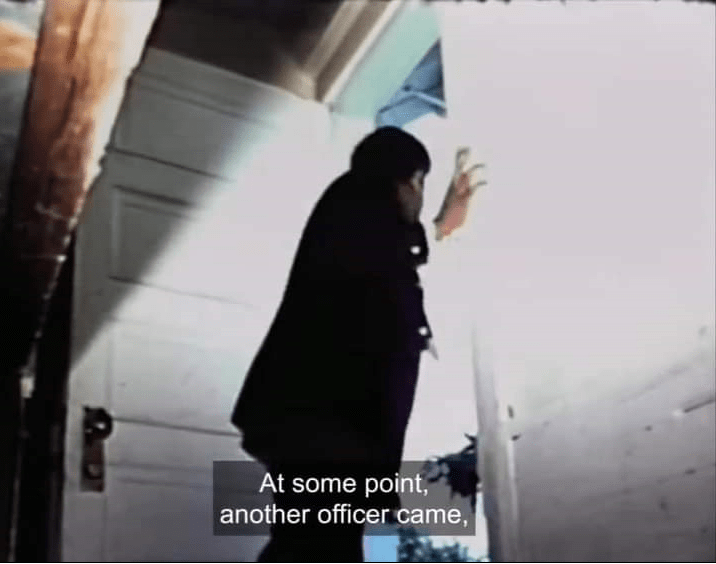
The policeman knocked on the door several times and it took a couple attempts to wake Romero up. When he finally opened the door he appeared to be crying and distressed, and the officer explained that he was investigating a reported gunshot as well as an individual lying in his driveway. The man replied that he didn’t know anything about a gunshot but that he was the crying man that was lying in the driveway. When the officer asked if there was anything he could do to help he said no, because the police were unable to find his girlfriend, who was missing and he feared might never be found, and was even possibly dead. The LEO asked why he felt that way, and he replied that it was just ‘a feeling he had.’ Throughout the entire conversation Romero was upset and crying, and overall seemed very disturbed. After being given permission to look around the residence the policeman walked around; he saw nobody else and nothing out of the ordinary. Despite being allowed admittance on this occasion, in a separate event on a different day detectives reached out and asked him if they could look through the house for something that might help aid them in their investigation, but he refused them admittance. Although the LEO did feel that it was most likely Romero that shot off the gun they didn’t see a weapon in the house or feel that he was a threat in any way.
On May 25, 1975 that same officer was requested to do a follow-up visit with Romero after Denise’s father called the department asking if there was any movement on his daughters case. Investigators also spoke with a good friend of hers named Marie Parish, who last saw Oliverson on April 4, 1975. Parish told detectives that she reached out to Romero on April 27, 1975 and asked if there was anything she could do to help with the investigation. She reported that he got angry and said that it was none of her business but if she did learn anything new that she better get in contact with him, and not the Nicholsons. On May 18 she saw Steve riding a yellow boys 10 speed bike roughly three blocks from his house but he refused to look at her; she wondered if it was the same bicycle that Oliverson was last seen riding. She also shared that Romero seemed very possessive and jealous of her friend and the few times they did interact he seemed very angry and had a bad temper. Parish told investigators that Denise was recently hung up on by the young man named Fred that she ran into at the park earlier on the day she disappeared. A few days before she disappeared Oliverson had learned that he had recently gotten married, which greatly upset her. Marie also shared that she had mentioned his name a few times in front of Steve, and it made him very upset.
On May 29, 1975, Grand Junction investigators sat down with another one of Oliversons friends Lynn Kaufman, who shared that on occasion Denise would take off for a while but always came back after a few days. She said at the very least she would contact her mother to let her know she was ok. When asked if she knew where Oliverson might have gone to she replied that she didn’t know why but thought it possible that she may have wound up in California, and she had been there once before and enjoyed it there. Kaufman also said that she never learned how to drive and didn’t have a driver’s license.
On May 27, 1975 investigators spoke with Mr. Nicholson, who shared that his daughters friend Marie would probably be the best person to speak with about details regarding her life. By the time Denise disappeared she hadn’t lived at home for quite a few years and he wasn’t always aware of what she was up to, although she did have the habit of coming to visit every Friday and Sunday. He further told investigators that on the day his daughter disappeared it was on a Sunday and she got there after seeing ‘Tim and Fred Gallegos at Lincoln Park.’ After her sister disappeared Renee Nicholson turned herself in to Pueblo State Hospital ‘for treatment of an unknown ailment’ (I got the impression it was most likely mental health and/or depression related due to Denise vanishing without a trace). The officer reached out to Parish and asked if she knew if Oliverson showed up at the hospital to visit her, and was told no (Jean, 2019). I got the impression that Mr. Nicholson and Steve didn’t get along but it appeared that he was friendly and in contact with Renee. Thanks to Captain Borax (Chris Mortenson) I was able to find a copy of a letter he sent her which was basically just generic, filler sentences (you know, like ‘how are you. I hope you’re doing great, I don’t have a lot to say but I’ll write to you again soon’), but he did attempt to offer her some reassuring words and let her know that he would take care of her house and cats while she was away (it looks like it was sent while she was in the hospital).
On May 28, 1975 law enforcement sat down with Steve Romero, who volunteered that by that date in time Denise had been missing for 52 days. He told investigators that the afternoon she vanished they had gone to a local park and he witnessed her acknowledge a man that he didn’t know and became upset when he refused to talk to her. Oliverson appeared to have developed feelings for this individual, as she became visibly upset when she learned he had gotten married. At one point in the past the two apparently had a sexual relationship, but I don’t know if it went beyond that or if they dated at all. Romero said when they were done at the park (I’m not sure if they were walking or biking) they moved onto exploring the downtown area of Grand Junction before returning home. After the couple got home from their excursion Denise told Romero that she was going out for a bicycle ride and was going to stop at her parents house before coming home; He said it was the last time he ever saw her alive.
The following is an interview that took place on June 3, 1975 between former Grand Junction Police Officer James Fromm and Oliverson’s boyfriend at the time she disappeared, Steve Romero:* (I went ahead and put the important parts in bold).
Officer Fromm: Steve the day that Denise disappeared do you remember what day of the week it was?
Steve Romero: It was Sunday.
JF: It was definitely a Sunday?
SR: Definitely… at 3:30, about 3:30 pm.
JF: There was no possible way it could have been a Saturday?
SR: No sir, it was a Sunday.
JF: Did she take any money with her when she left?
SR: She might have had about $8, cause we went to go get her some shampoo for her hair, but that’s all if anything, that’s all, no identification at all.
JF: Was she wearing earrings?
SR: No she wasn’t, she was wearing only… all the jewelry that I can think she was wearing and maybe I’m not for sure, she was wearing a small band ring. It’s a silver ring. She was wearing it on her… I think it was her right hand. And she might have had a St. Christopher medal on.
JF: Around her neck?
SR: Yeah, she might have, I don’t know. She had a long shirt. She might have had it on, because it was mine you see and it had my name on it. It was gold. The whole thing is gold, the chain and the St. Christopher medal.
JF: It is my understanding that you and Denise were living in the same house is that right?
SR: Yes we were.
JF: Did you ever go to bed with her?
SR: No.
JF: Did you ever make a pass at her?
SR: Sure.
JF: Did you ever go out and get drunk together?
SR: Yeah.
JF: Party together?
SR: Yeah.
JF: Did you have another girlfriend Steve?
SR: Yeah, I know a lot of girls you know. I don’t know how to say it, I know she wanted someone to help her out with the rent so, and I didn’t want to stay at home anymore, so I moved over there.
JF: Are you actively seeing any doctor right now?
SR: Not since I got out of the service. I had a foot injury and that was about it.
JF: When you were in the service did you see any psychiatrist or psychologist or anything like that? Are you actively seeing one now?
SR: No, never, never, never. Never have.
JF: Did Denise entertain any boyfriends while you were living with her?
SR: I don’t know. I don’t know how to answer that really. She liked other people, she liked other dudes. We’re just good friends. She didn’t like me in particular, you know, not as a boyfriend. We had a mutual understanding. We could communicate with each other.
JF: When you were living with her, were there any guys who came over and spent the night?
SR: No, but there were some who wanted to. You see, that’s why she wanted me to move in. There was a cat that was bothering her and he was scaring her pretty bad I guess.
JF: While you were over there was there anyone going to bed with her that you know of?
SR: No, she wasn’t like that.
JF: Can you think of anybody she might have taken off with?
SR: No. I thought the guy from Delta (Gallegos), but it wasn’t.
JF: Did Denise take any other clothes with her when she left?
SR: No, just what she had on.
JF: Do you remember what kind of day it was?
SR: Yeah, it was a nice day then all of a sudden it was really cloudy and ugly. I didn’t report it for about three days because you know, we got into a hassle one time. She went out and told me she was coming home that night and I got worried about her when she didn’t come home that night. So I says, okay, you know, this chick took off on her bicycle and I figures she is 24 years old so she knows what she is doing. So I didn’t bother to report her until the third day. Then I went and told her parents.
JF: Did she take off with her girlfriends often and not come back at night?
SR: It happened before. I never knew her that well. I didn’t spend that much time with her but she did do it that one time so I figured I won’t call in because she… you know… she might get mad at me.
JF: Ok Steve, that will do for now.
SR: I’ll be glad to help you out, cause I’m concerned too. If there is anything I can do for you, let me know.
To summarize: it’s strange, in this interview the narrative he tells police seems to completely contradict everything else I heard about this guy. I mean, he denied him and Denise were a couple, and said that they never had sex, and according to every other source I read about this guy and their relationship, that is a complete and utter lie. Romero also said that he only moved in with her because ‘some cat was bothering her’ and he knew she needed help with paying rent, and that he wasn’t seeing anyone and that she wasn’t dating anyone else either.
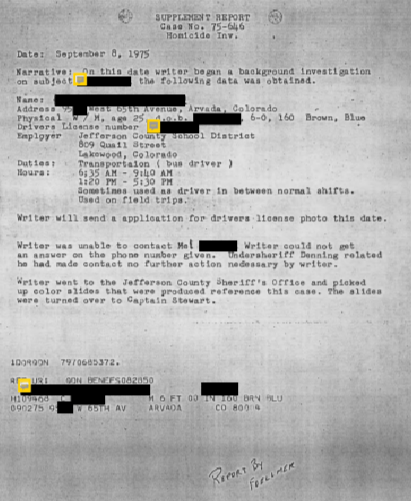
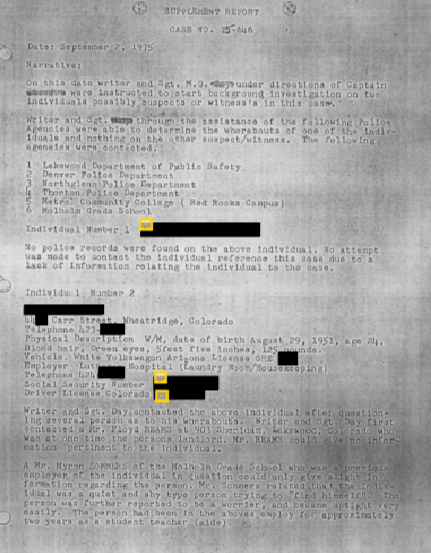
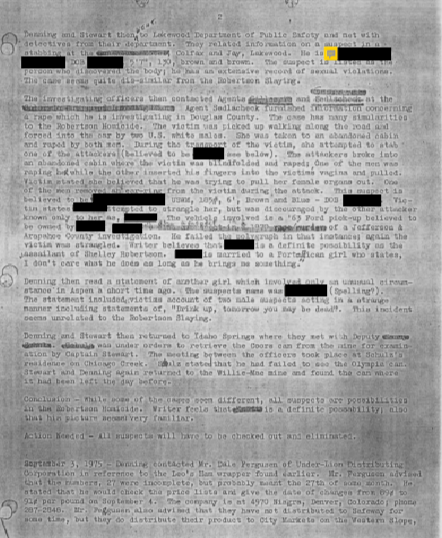
In the beginning of the investigation authorities originally felt that Oliverson’s boyfriend had murdered her and hid her body in a crime of passion, but witness testimonies claim that they saw Oliverson leave his house and he did not go after her. The Colorado Bureau of Investigation conducted a polygraph examination on Romero on July 21, 1975 in an attempt to determine if he knew what happened to Denise, her location at that current time, or if he knew whether or not she was harmed in any way (by either him or someone he knew). He said that on Sunday, April 6, 1975 he went to the store with Denise to buy more shampoo from a drug store on North Avenue, and from there they went to the park and visited with several of their friends. Romero then said from there they ‘just messed around town’ then went home, and it was then that she told him she was leaving to go for a bike ride. Denise got her yellow ten speed bicycle out from the front room (where she kept it) and left at approximately 3:30 in the afternoon. She said that she was going to swing by her parents house before returning home, and that was the last time he ever saw her. Romero told police that he didn’t know what happened to Denise but that he didn’t harm her in any way but he strongly felt that something bad happened to her. The officer that administered the polygraph said that it was in their expert opinion that the subject was being truthful. After this, the leads went dry and the case quickly went cold.
In an anonymous letter from an unidentified ‘psychic friend,’ postmarked February 10, 1976, they claimed they saw in a vision that, in addition to being kidnapped, raped, murdered and her remains thrown in river in Dubuque Canyon, Oliverson suffered a violent head wound (by a weapon made of either steel or iron) and her hands were bound in some way (again, using some form of steel or iron) when she was thrown into a river. The psychic also said that a car was also somehow involved in her murder and that her remains would not be found for a very long period of time, if ever. She also said that Denise’s body traveled a long ways downstream from where it was originally thrown in.
Joe Oliverson sat down with Grand Junction law enforcement on May 29, 1975 to go over some details about his ex-wife’s disappearance. He shared that he married Denise in late September 1970 but had divorced her by mid-March 1972; he remarried shortly after it was finalized. In April 1975, Oliverson was employed at a company called Steel Fabricating and the last time he had heard from Denise was about a year prior. He said after their split she always seemed to be in some sort of relationship and always appeared to have a boyfriend, and he knew that she was seeing a guy from either Portland or Seattle but wasn’t sure if he was ever told his name. Joe knew that his ex-wife had a few close friends in Grand Junction and was incredibly trusting, almost to the point of being gullible. He also said that she was a very independent person and was exactly the type that would ‘just take off’ (which strangely enough is the exact opposite of what her friend said about her).
Law enforcement was able to track down Fred Gallego and spoke with him by telephone on May 29, 1975. In the beginning of the conversation when he was asked about Oliverson at first he denied knowing her, then said that he didn’t recall her name (or at least her surname). After the officer refreshed his memory a bit he finally admitted that he did remember her and their fling. Gallego said that when they were together he saw her once or twice every two or three weeks and talked to her for the last time a few months prior to her disappearance in February 1975. He shared that the last time he saw her was the day that she disappeared in the park, but clarified that he had not interacted with her in any capacity. Gallego also said that the reason why he cut off all contact with her was that he had recently gotten married and didn’t want to encourage any future contact with her. When he was questioned if Oliverson had gone back to the park later that day that he last saw her to see him he said no because he never saw her again. Gallego told investigators that he was aware that she had fairly major mental health concerns and always seemed to be looking for an escape from her problems, but he knew that she was talking to a counselor and trying to work through her issues.
Early in the morning on the day his daughter disappeared an unidentified male called his residence and asked if Denise was there. When he answered ‘no’ and asked who was calling, they immediately hung up without answering. The morning after that (Tuesday, April 7) Mr. Nicholson said the same person called again and asked ‘if Denise Oliverson was there.’ Once again, he replied, ‘no, she is not’ and asked who was calling, and it was then that the caller finally answered, ‘this is Steve.’ Later that same day Romero told Robert in a separate phone call that Denise had ‘been hurt by a car.’ Considering this wasn’t true, it’s speculated that Steve said that because he was still incredibly distraught and upset about Denise missing and wanted to make her dad feel pain as well (as if he wasn’t already).
On June 2, 1975 GJ investigators sat down for an interview with railroad engineer Wilbur M. Class, who is one of the employees that found Oliverson’s bike at around 7:30 AM on April 7, 1975. When investigators showed Class the sandals that were found near Denise’s ten speed he positively ID’d them as the ones he saw. Steve Romero also identified them as the pair that belonged to Denise. Mr. Class told LE that the yellow bike wasn’t there the previous day, meaning there was a possibility that he may have overlooked it (which he felt surely was something he would not do). He strongly speculated that someone may have placed the bike there in the dark, late night/early morning hours of April 6th or 7th.
Investigators spoke with a second employee of the railroad named Fidel Lopez that took place on June 25, 1975. Lopez said that while he was switching an engine he noticed a yellow bike and a pair of red sandals laying across the railroad tracks, under the overpass; he retrieved the bicycle then leaned it against a pillar underneath the viaduct, and placed the sandals and other items on its seat. When asked to describe the items and events, Lopez responded that he remembers the bike being yellow and that the shoes were sandals however he didn’t recall on what day he found them (but records within the railroad department showed that he had reported finding the items on April 6, 1975). He specified that he found the bike laying across one rail of the far south railroad track with its front wheel pointing north. Both shoes were found between the two rails on the same track: one was on the east side of the bicycle and the other was on its west side. In his opinion, when he stumbled upon the items they weren’t on the tracks for very long, as they would have probably been noticed right away and removed by someone else. Lopez said he didn’t notice anything that would have made him think a struggle took place in the area and he had not seen anyone in the immediate area.
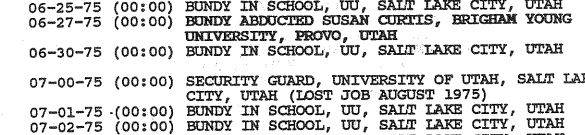
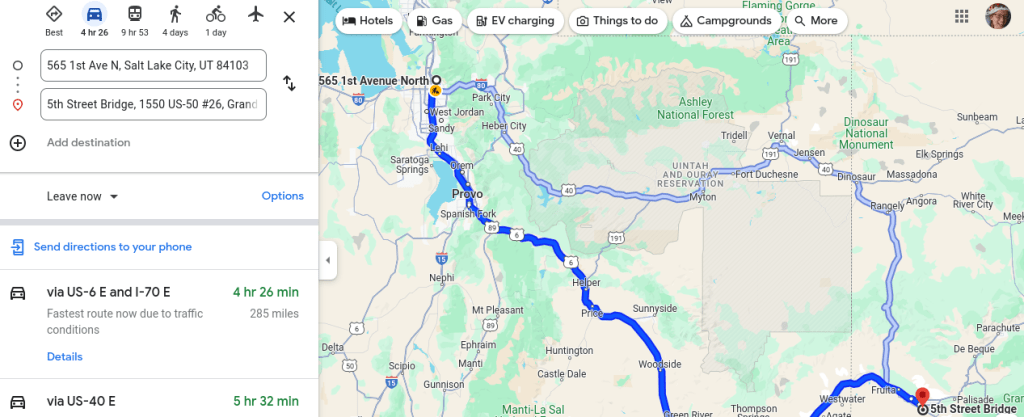
At the time of Oliverson’s abduction Bundy was a law student at the University of Utah and was living at 565 1st Avenue North in SLC. It looks like it’s roughly 285 miles away from his boarding house to the 5th Street Bridge in Grand Junction, which is about a four hour and forty minute drive, one way. Per my ‘handy dandy TB job chart,’ it appears he was unemployed in April 1975: the last place he worked was at the Department of Emergency Services in Olympia. He resigned on August 28, 1974. Bundy remained without a job until June of the following year, when he became the night manager in charge of Bailiff Hall at the University of Utah (he was fired the next month after coming in drunk). He was still in a long-distance relationship with Liz Kloepfer, although things were getting ready to fizzle out for the final time (they officially broke up after Ted went to prison for the attempted kidnapping of Carol DaRonch in 1976).
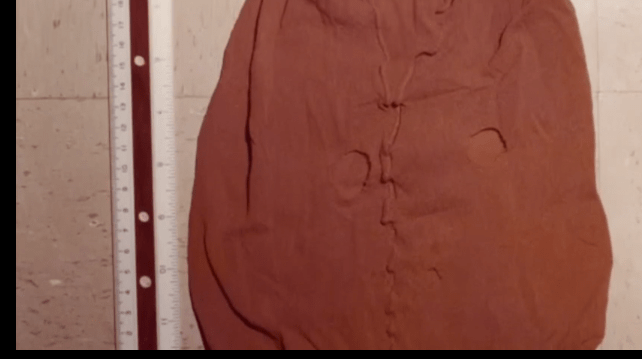
When Denise was murdered in April 1975 Bundy wasn’t on the run for much longer: Utah Highway Patrol Sergeant Bob Hayward pulled him over in Granger at around 2:30 AM on August 16, 1975 after he saw his unfamiliar tan VW Beetle pass by him while he was out on patrol. The officer knew the neighborhood and its residents well and had no memory of ever seeing that particular vehicle before. When Hayward turned on his lights to get a better view of its license plate, the driver turned off their headlights and attempted to flee. The Sergeant began to follow the car, which went through two stop signs and eventually pulled into a gas station. When he asked the driver why he was out driving around so late, Bundy replied that he was on his way home from the Redwood Drive-In after seeing the Towering Inferno but lost his way. Two more officers arrived on the scene, and after noticing that the passengers seat was missing they searched the car (with Bundy’s permission) and discovered some incredibly unusual items: a black duffle bag that contained a pair of handcuffs, an ice pick, rope, a crowbar, a flashlight, a ski-mask, a pair of gloves, wire, a screwdriver, large green plastic bags, strips of cloth, and a pantyhose mask.
In addition to his ‘kill kit,’ LE also found maps, brochures of ski resorts, and gas receipts in Bundy’s glove compartment box. When asked why he had such strange items in his car, Ted told the officers that he was in law school and was studying how to arrest criminals. While they weren’t completely convinced the law student was the ‘crazed mass murderer of young women’ that they were looking for, investigators did know he wasn’t completely innocent and arrested him for possession of burglary tools; they didn’t have enough evidence to detain him and he was ROR’ed.
It didn’t take long after his first arrest that investigators began to connect the dots between the attempted kidnapping of Carol DaRonch and the other Utah and Colorado abductions that were taking place during the same time, and they quickly began to suspect that the young law student was responsible. Perhaps one of the most damning pieces of evidence against Bundy were the handcuffs that were found in his car, which were the same style and brand as the ones found on DaRonch’s wrist after her attack. Additionally, the crowbar that officers found in his ‘murder kit’ was identical to the weapon used to threaten her the previous November, and his tan car matched the description of the one her abductor was driving. There were too many similarities for the police to ignore, but they also knew they needed more evidence to help support their case. A few days after Ted’s arrest on August 21, investigators searched his apartment and found various brochures from the areas where some of the women were missing from, however they failed to search the building’s utility room. Years later, the killer revealed to his lawyer Polly Nelson that he had kept a box of Polaroids of his victims inside that room in a shoebox, which he later destroyed.
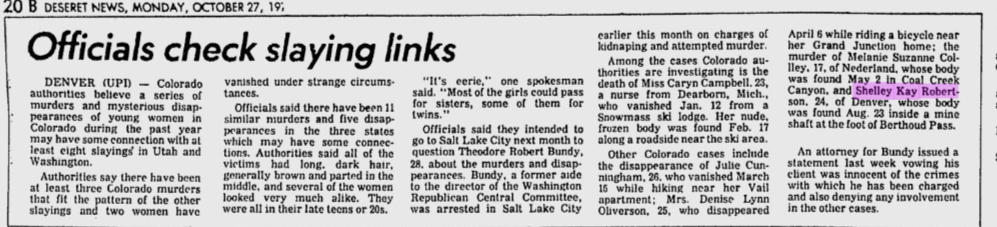
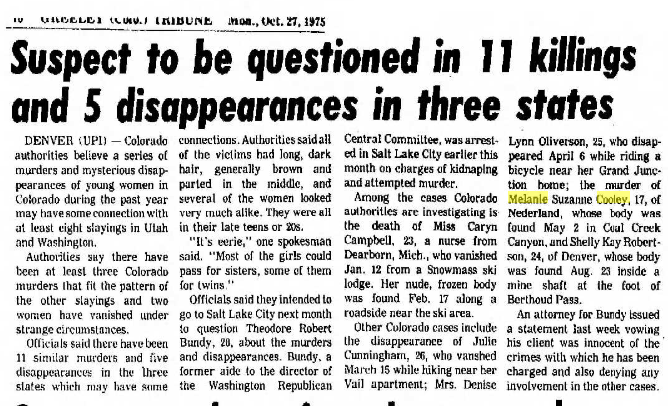
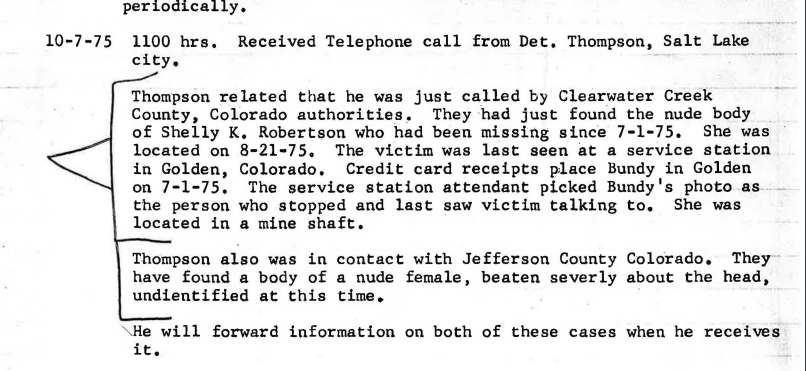
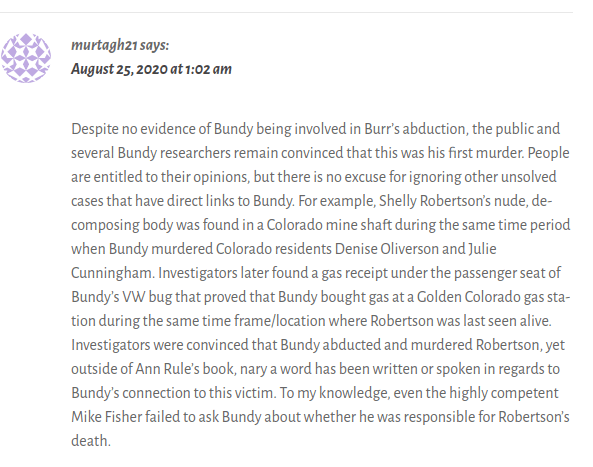
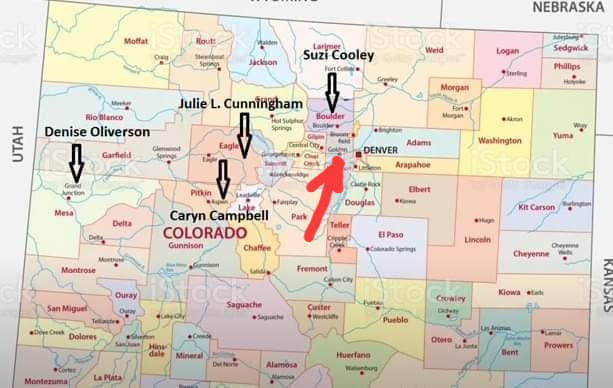
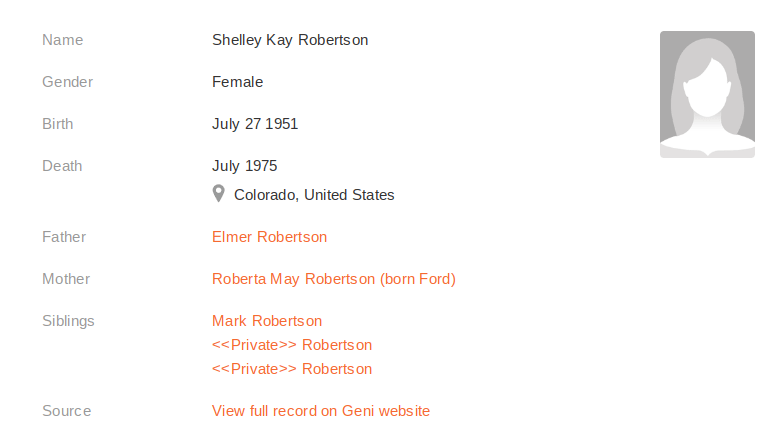
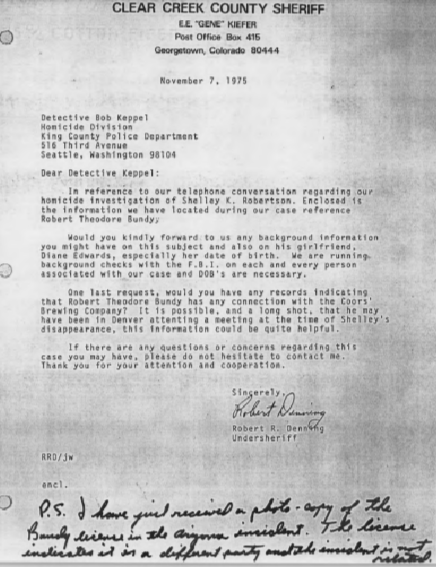
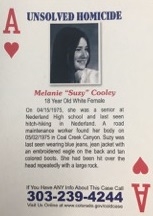
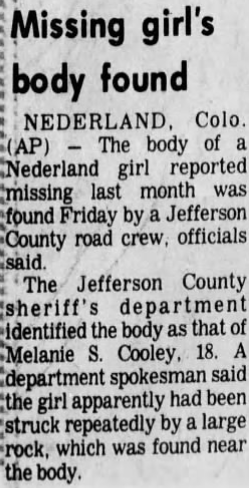
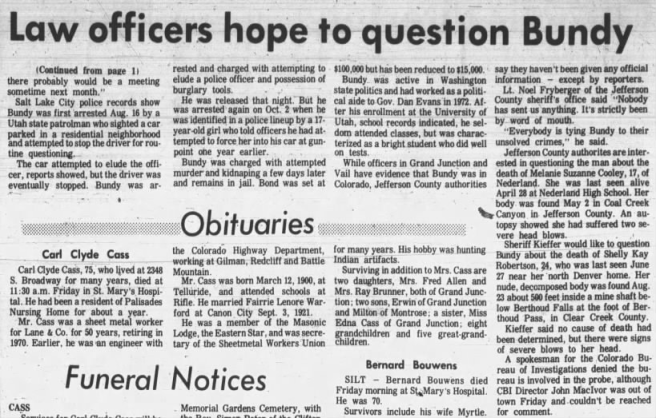
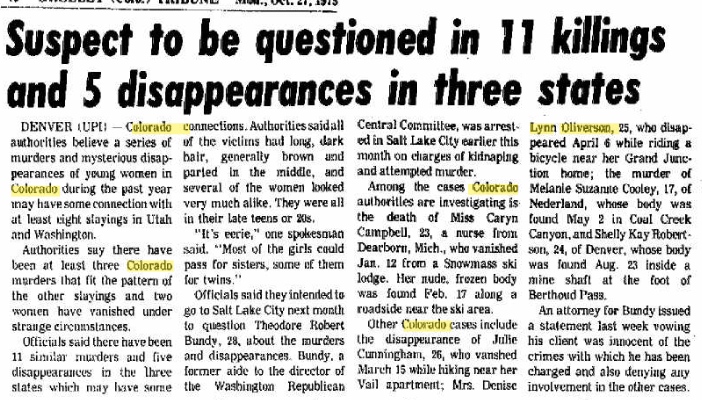
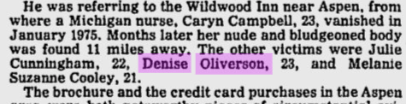
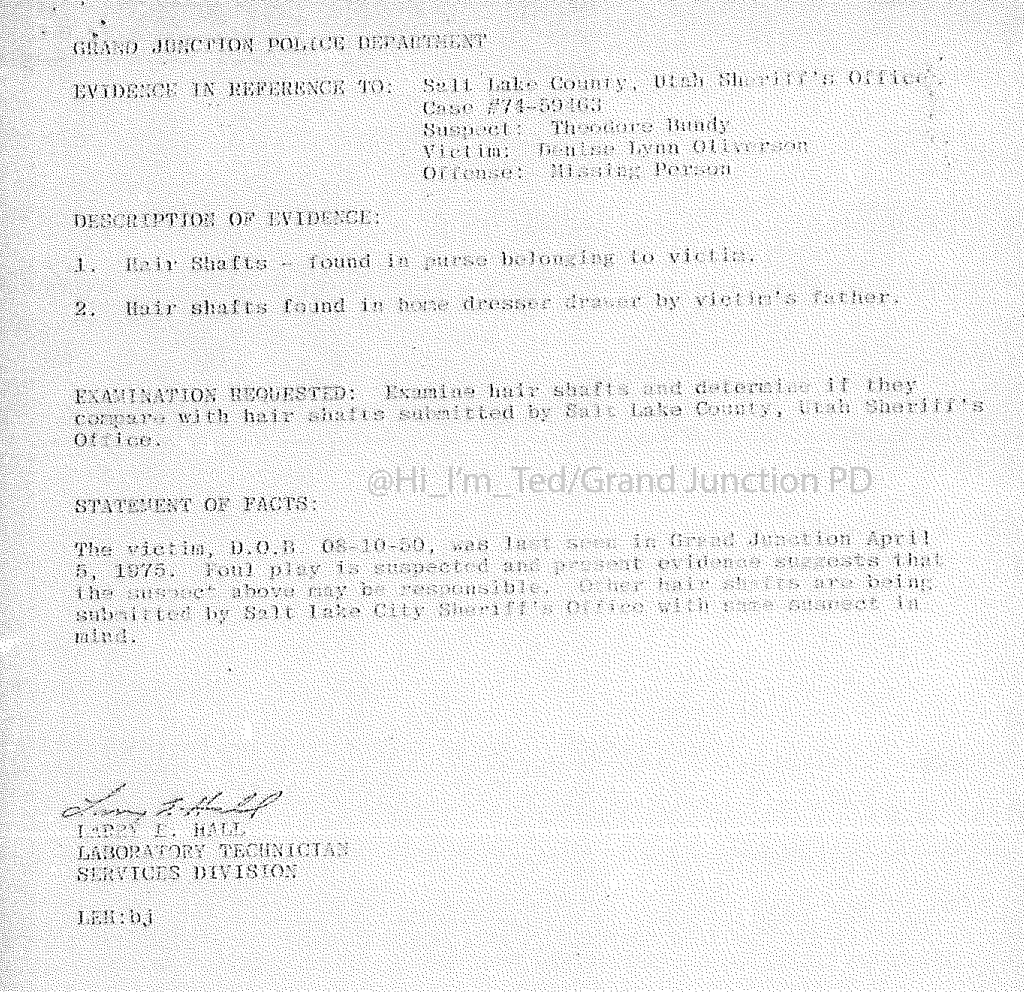
On February 19, 1976 FBI forensics laboratories sent a letter confirming that they received a sample of Oliverson’s hair for comparison to evidence taken from Bundy’s Bug but nothing came back a match. She is Ted’s second to last confirmed victim (Sue Curtis was his last) until his second escape in late 1977 (although there are some suspected/unconfirmed victims that disappeared after, including Melanie Cooley, Sandra Weaver, Nancy-Perry-Baird, Shelley Kay Robertson, and Debbie Smith). Less than two weeks after Denise vanished on Tuesday, April 15, 1975 eighteen year old Melanie ‘Suzi’ Cooley disappeared out of Nederland, CO. After class was over for the day Cooley left the high school she attended where she was a senior and was never seen or heard from again. She was last seen by friends hitchhiking nearby campus, and it’s unclear where or when exactly she got picked up as no one saw the vehicle the young girl climbed into that day. Just a few weeks later on May 2, the body of Cooley was discovered fully clothed and frozen by a maintenance worker on Twin Spruce Road near Coal Creek Canyon about twenty miles away from where she was last seen.
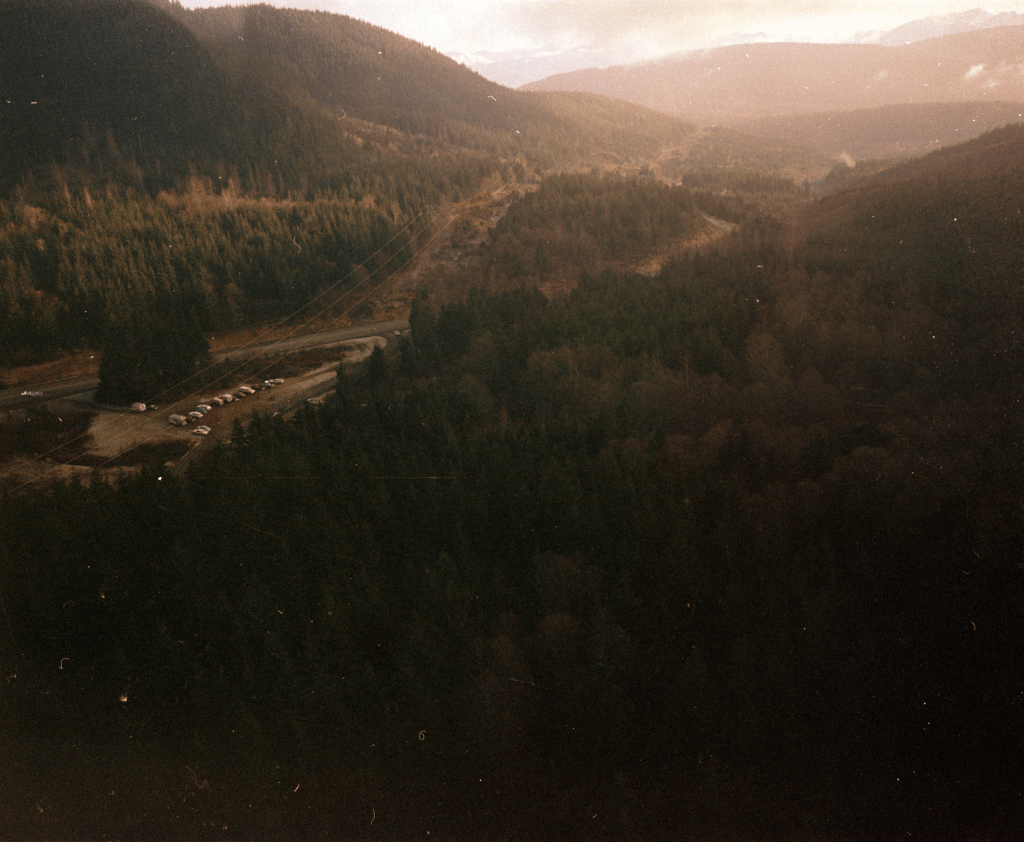
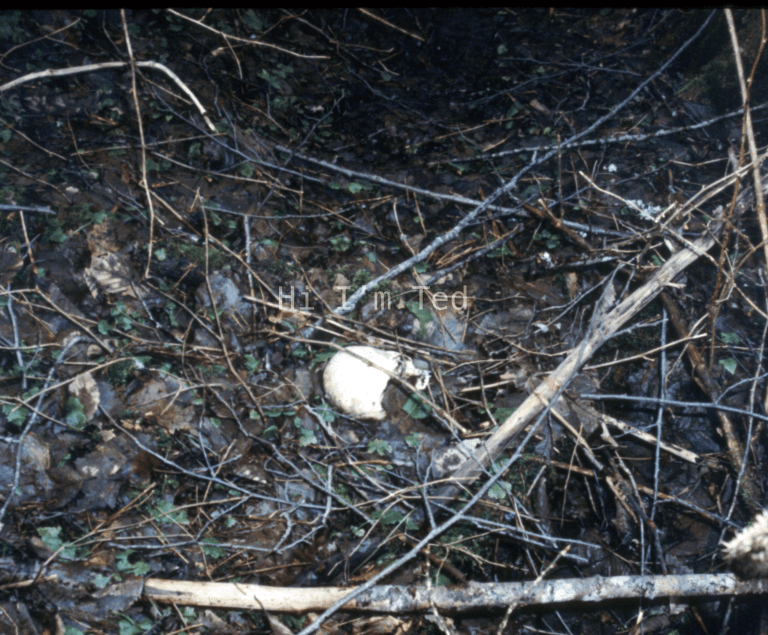
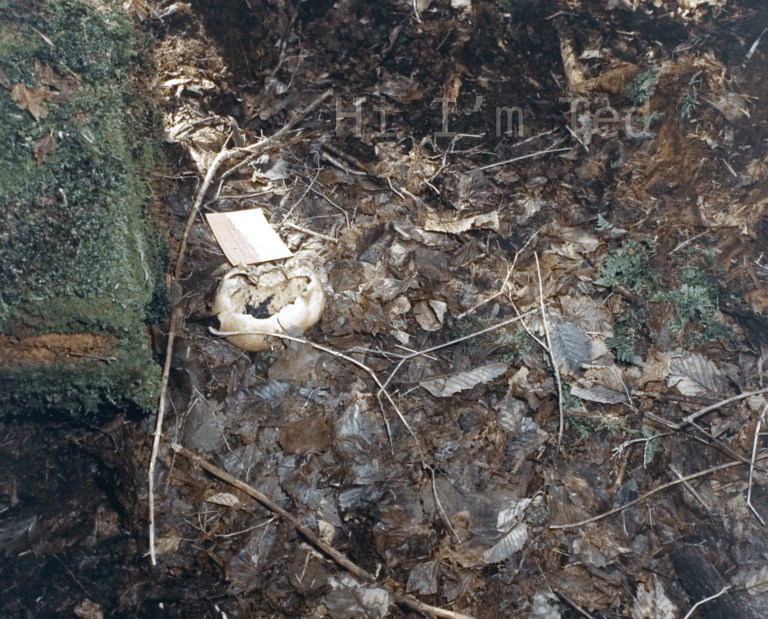
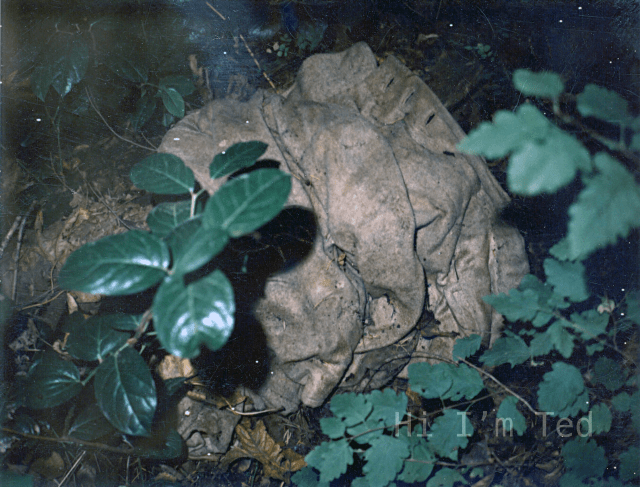
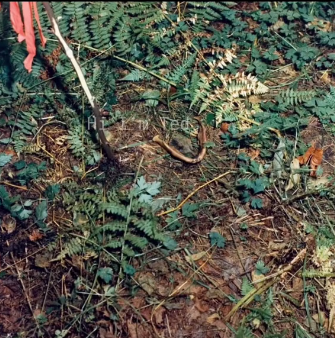
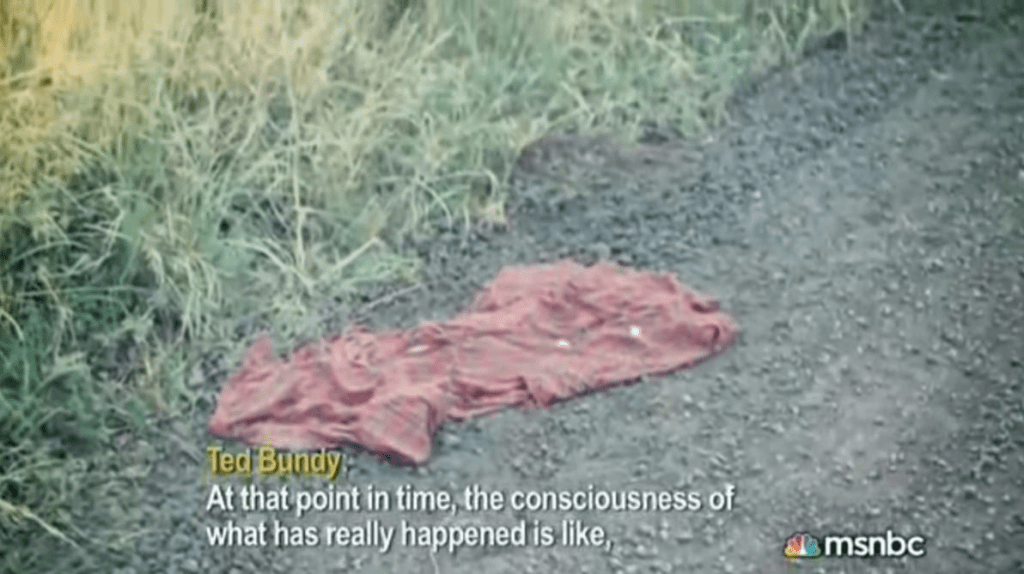
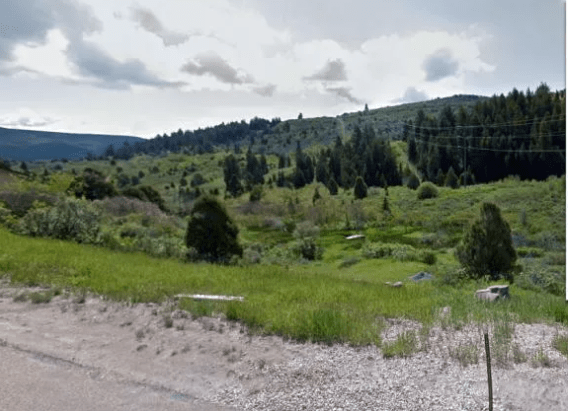
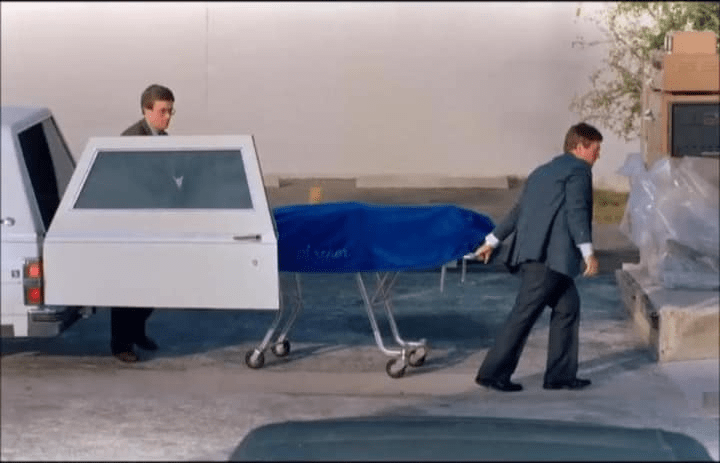
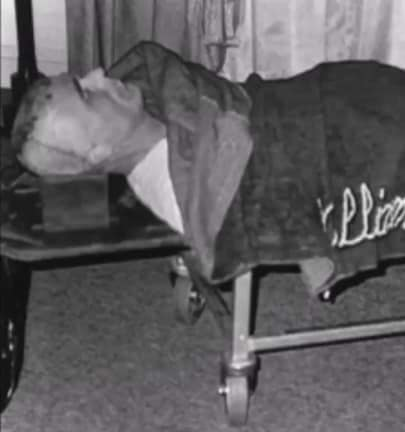
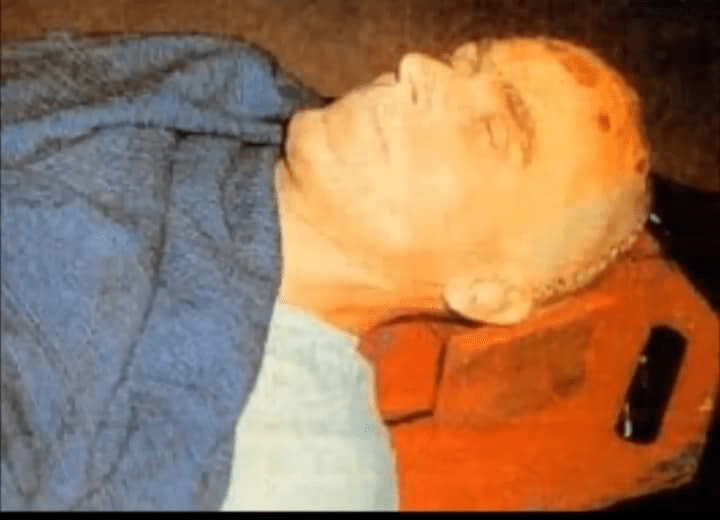
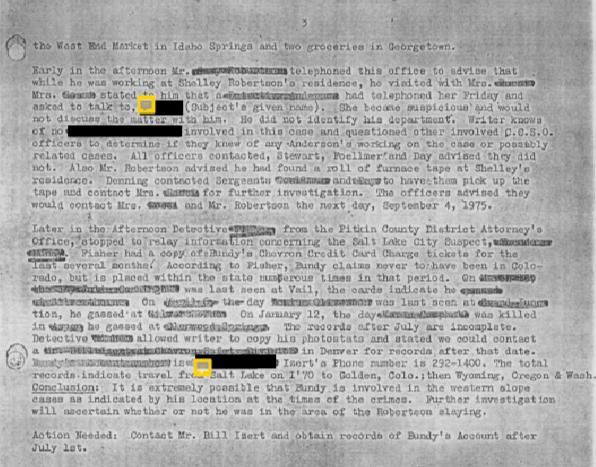
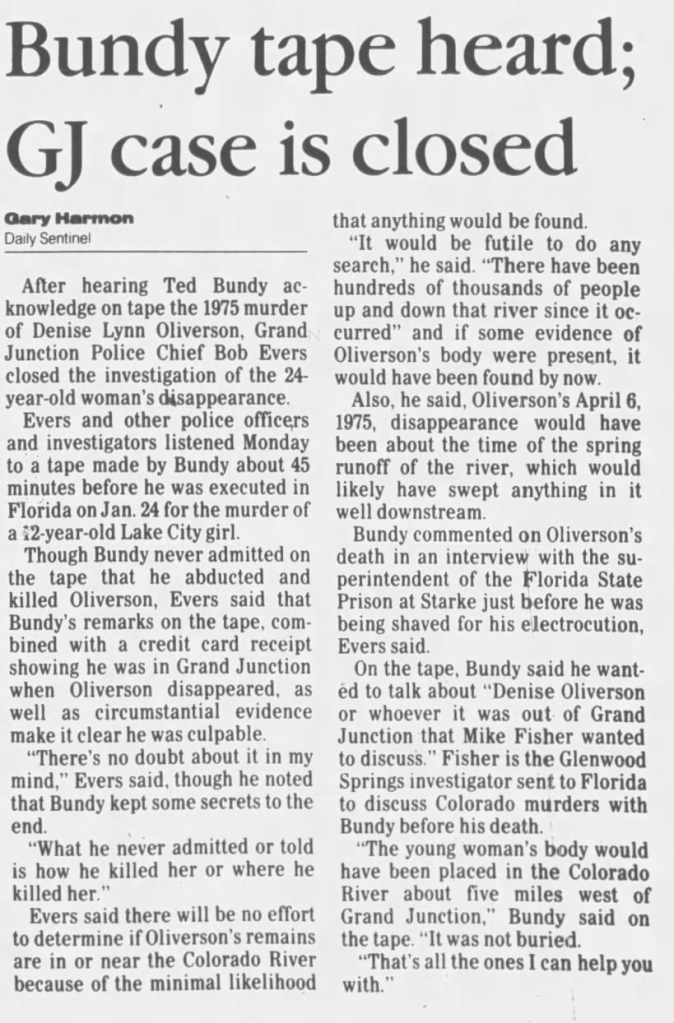
According to Kevin Sullivan’s true crime classic, ‘The Bundy Murders,’ when Ted was asked about his possible involvement in Oliverson’s disappearance during his death row confessions by Detective Fisher, he ‘told me again of his tiredness and his wanting to get back to his cell to rest. I explained simply that he had promised to resolve all the questioned murder cases and now at the last minute he wasn’t keeping his side of the deal.’ As Fisher was walking out of the room the condemned man told him, ‘I’ll get back to you on that, I promise.’ The two men never spoke again. In a last minute, taped confession that took place less than an hour before he was put to death at 6:16 AM, Bundy confessed to Florida State Prison Superintendent Thomas Barton that he killed Denise Oliverson (it’s also listed on her ‘Charlie Project’ page that Dr. Robert D. Keppel, PhD was present as well). He said that he killed her in his car then transported her to the state border between Colorado and Utah and discarded her body in the Colorado River, about five miles west of Grand Junction. We don’t know if she was sexually assaulted, and he never shared exactly how he abducted her or took her life, but he specified that she ‘was not buried.’ In a sad, semi-related note, shortly after she disappeared Oliversons dad shared that she didn’t like water and wasn’t a big fan of swimming.
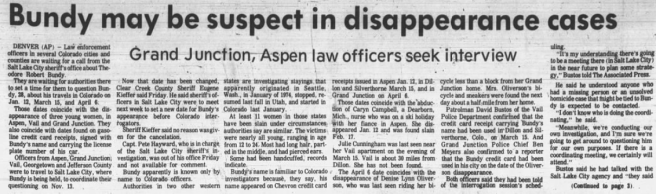
Bundy also shared that he came across Oliverson when he was returning from his second round of dumping Julie Cunninghams remains. Per Tiffany Jean in her case file of Denise, ‘Bundy claims that he encountered Oliverson as he passed through Grand Junction after he had buried Cunningham about 50 miles to the east’ (I have the link to the webpage below in my works cited). The twenty-six-year-old ski instructor was last seen the evening of March 15, 1975, after she left her apartment in the Apollo Park neighborhood in Vail. She was on her way to a local bar, and was last seen wearing jeans, a ski cap, brown suede jacket, and boots. On crutches and faking a ski injury, Bundy told investigators that he asked her for help carrying his ski boots to his VW, and when they arrived, he knocked her unconscious, drove her to a remote area about eighty miles west of Vail and sexually assaulted her. He then strangled her to death then dumped her body in a shallow grave in a high desert area near Rifle, Colorado. Although Ted confessed to killing her on the morning he was executed, Cunningham’s remains have never been found, and her missing persons case still is considered open with the Vail Police Department.
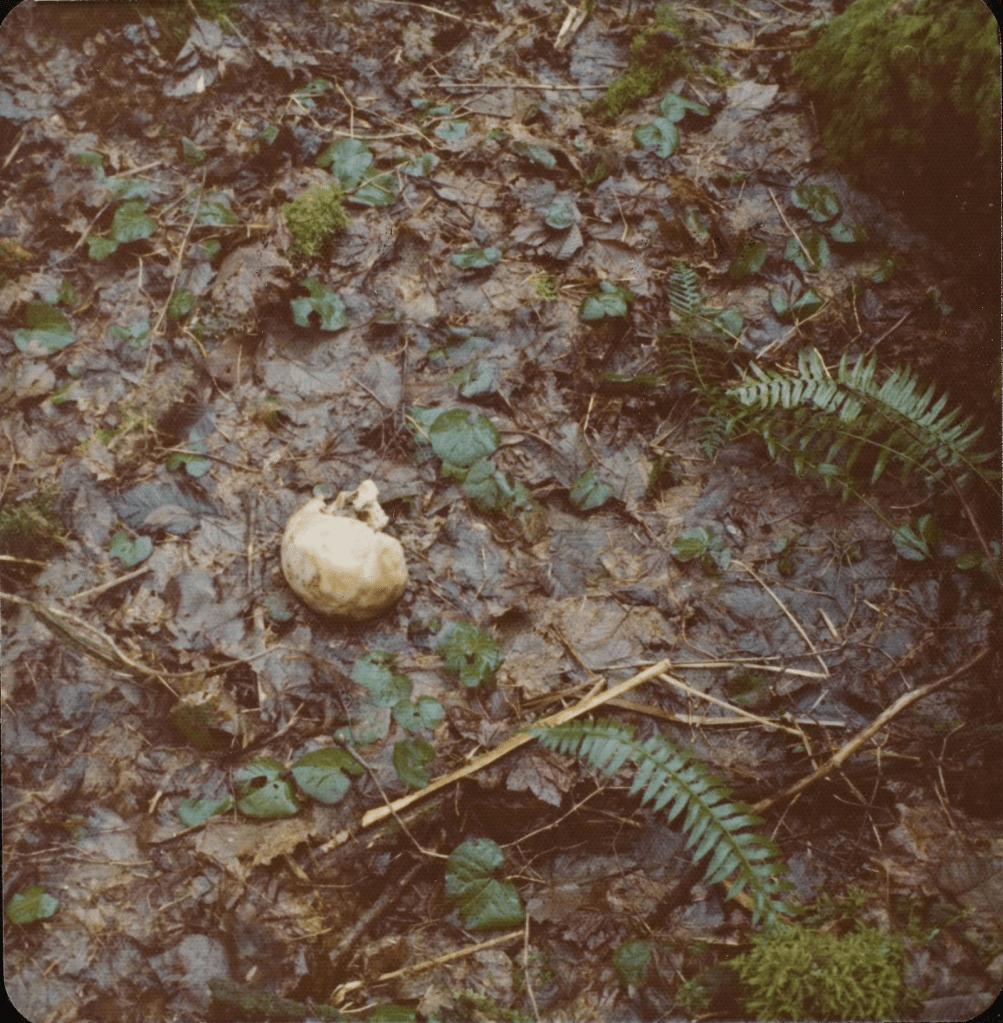
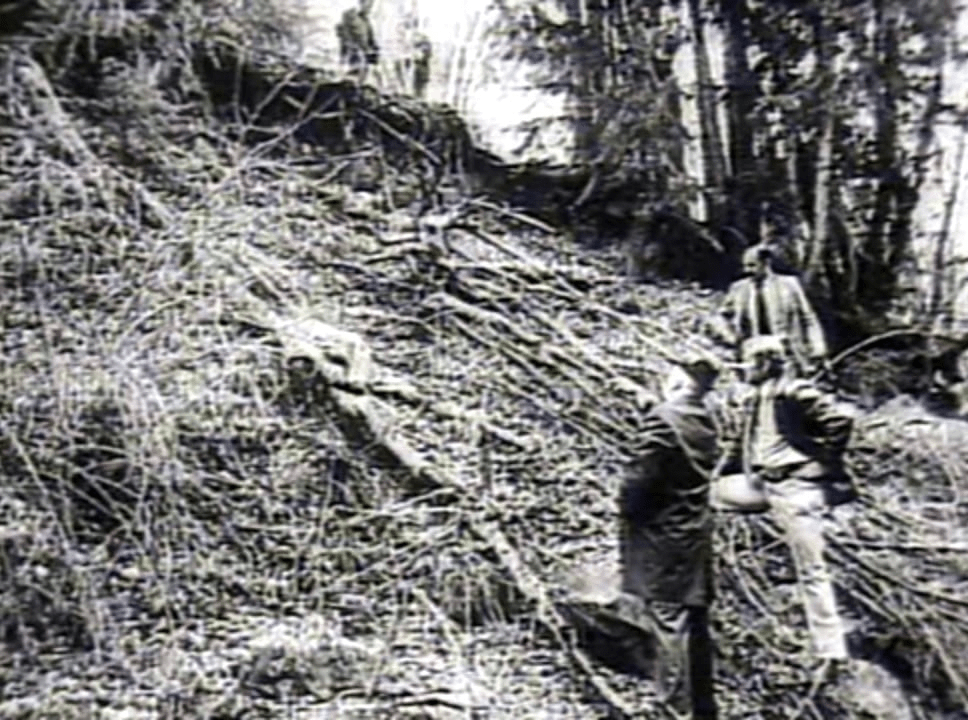
After Bundy’s confession police said that they didn’t bother going to check out the potential burial site, as fourteen years had passed by and upwards of hundreds of thousands of people have walked through the area, trampling through evidence and destroying anything of possible value. Oliverson disappeared in early April, and according to environmental experts that is the time of year that the ‘runoff of the river would most likely have swept anything in it well downstream.’ It also gave local wildlife a good amount of time to pick apart her bones and disperse them throughout the area. Experts determined that if any trace of Denise were to turn up it would have happened by then.
The following is the transcript of a recording by Bundy regarding Denise Oliverson, dated the day of his death on January 24, 1989 at Florida State Prison; it took place in a five minute conversation roughly 45 minutes before his execution: ‘To the ah… Mike Fisher and the, the Colorado detectives ah… the last girl they wanted to talk about, Denise Oliverson, I believe, I’m not sure… out of Grand Junction that Mike Fisher wanted to discuss… ah, I believe that the date was in April 1975. Ah… the young woman’s body would have been placed in the Colorado River about five miles west of Grand Junction. It was not buried. That’s all the uh… the ones that I can help you with… it’s all the ones that I know about that uh… no missing ones outstanding that we haven’t talked about.’
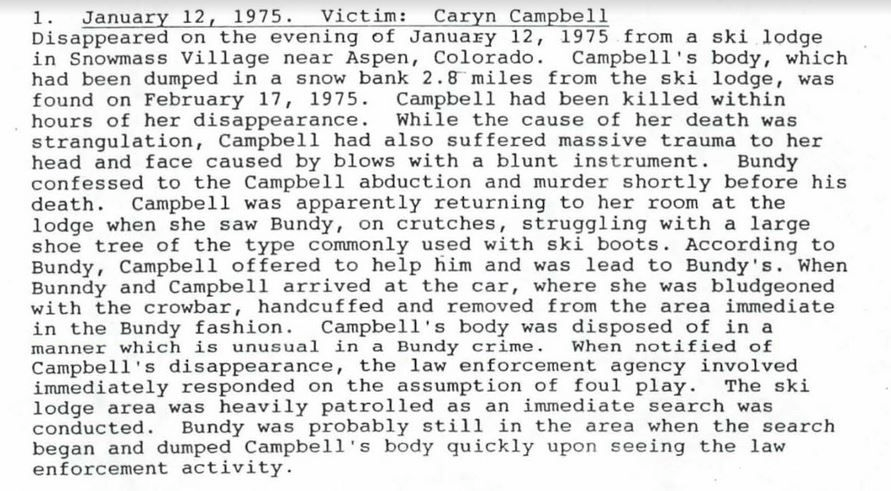
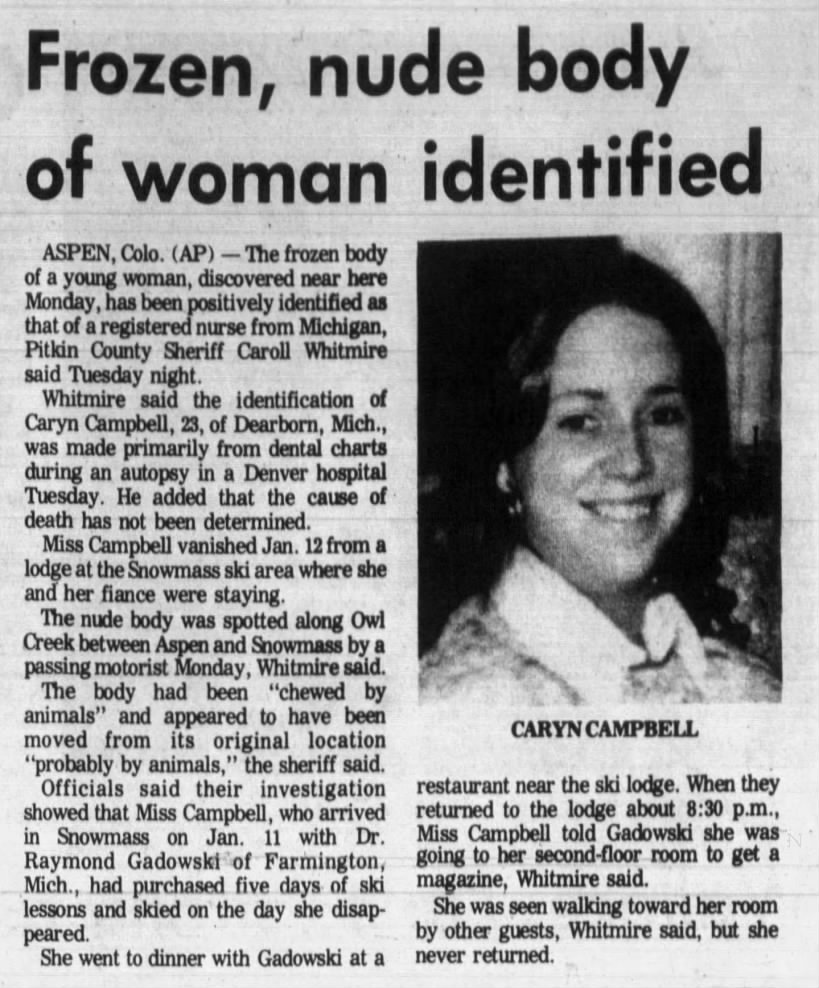
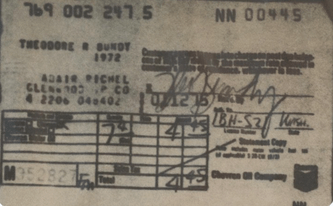
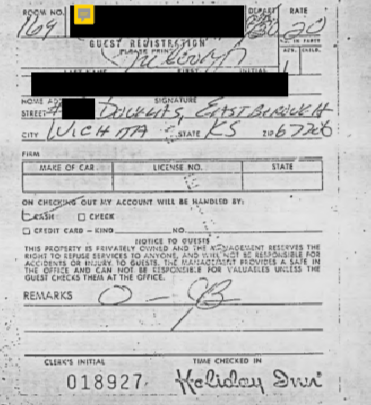
In the same conversation Ted also volunteered that he abducted Susan Curtis from BYU on June 27, 1975 and gave investigators information as to where they would be able to find her body. Gas receipts placed Bundy in Grand Junction on the day that Denise disappeared: he put $3.16 in fuel at a gas station in Grand Junction on his Chevron card right before he abducted her. That same credit card was used to pay for fuel in Aspen and Vail on days his other victims Caryn Campbell and Julie Cunningham (respectively) were abducted as well. It was FBI agent Bill Hagmaier that Bundy confessed his total kill count to: eleven young women in Washington state, eight in Utah, three each in Colorado and Florida, two each in Idaho and Oregon, and one in California. The Oliverson family found out with the rest of the world that their daughter was murdered by the serial killer: they heard it on the news after he was executed.
In May 2019, the Grand Junction PD changed Denise’s disappearance from a missing persons case to a homicide after they reviewed Bundy’s confession tapes and talked to investigators that spoke with him while he was on death row.
In an interview with The Coloradoan in 2019, former Grand Junction detective Jim Fromm said ‘at the initial time we started the investigation, we didn’t believe that she was anything other than a missing person. And the more people we interviewed, the more concerned we got. It just, it did not make sense.’ With the news of Oliverson’s case closing, Julie Cunningham’s murder is now the only unsolved case directly linked to Bundy in the state of Colorado. A friend of Oliversons from high school named Linda Pantuso told the Coloradoan in the same article that she remembered hearing about her disappearance from Nina Nicholson, who she worked with: ‘We were just in the bathroom one day and I asked how Denise was doing. She went, ‘You haven’t heard? She’s been missing.’ I was just in shock. She was just a really great person.’
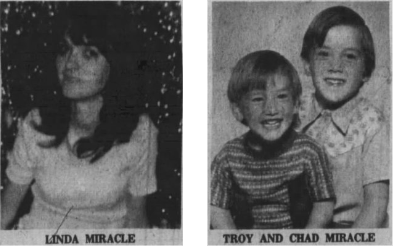
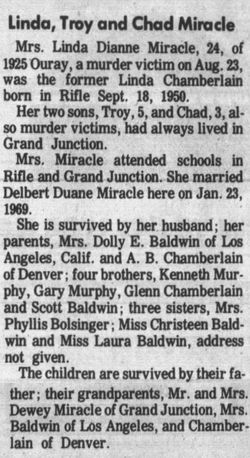
Dubbed by locals as ‘The Year of Fear,’ 1975 was a rough period for Grand Junction when it came to missing and murdered women: in addition to Oliverson, on July 28 twenty-four year old Linda Benson and her five year old daughter Kellie were brutally murdered in their residence at the Chateau Apartments. Just as a (strange) side note, according to the website cavdef.org, there is also a possibility that Bundy was present when the young mom and her child were killed: when a neighbor of Benson named Steve Goad saw him on TV after he was arrested in August 1975 he recognized him as a man that was in the apartment complex’s parking lot the evening Benson was murdered. In 2009 DNA linked serial rapist Jerry Nemnich to their murders. Strangely enough, she was friends with another Grand Junction woman that got murdered on August 23 in 1975: Linda Miracle. Twenty-four year old Miracle and her two young sons were killed by a neighbor, Ken Botham Jr. after he killed his wife at the home they shared. On December 27, Deborah Kathleen Tomlinson (not to be confused with Deborah Lee Tomlinson, who disappeared with a friend on her 16th birthday in October 1973 from Creswell, Oregon) was killed in her apartment complex in the 1000 block of Belford Avenue in GJ. She was found lying partially nude in her bathtub and had been sexually assaulted, bound and strangled. In December 2020 using DNA technology investigators identified Jimmie Dean Duncan as the man who killed Tomlinson.
In 2013, the Grand Junction PD collected DNA samples from Denise’s mother just in case they ever found remains. About his daughter missing, in 1986 Mr. Nicholson said ‘people need to finalize it in their minds, otherwise they’ll be bouncing back and forth. You don’t have a funeral, you can’t have a funeral. When the body is never found. A tragedy like this just tears the whole family up. I’ll never be the same. You raise a child, of course she wasn’t a child anymore. She was a young woman. It’s quite obvious when he got away from Glenwood Springs that he’s sick There’s something wrong up in the attic. There’s always the possibility that he’ll get out and do it again. They say he’s an intelligent young man, but it was channeled in the wrong direction. In the worst way’ Robert Nicholson also felt that Bundy ‘definitely’ should have been executed, and he was ‘just happy he’s been executed because it should have happened a long time ago.’
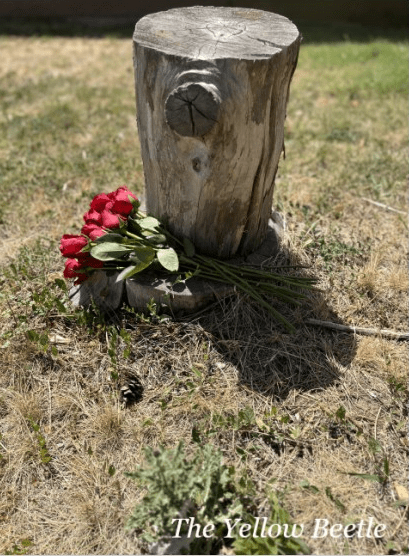
Denise’s father died at the age of 74 on October 2, 2001 in Grand Junction. Her mother passed away at the age of 94 on December 28, 2017. Nina remained a generous and kind woman despite the plethora of tragedies that took place during her life, and she loved to dance and was fascinated by Koala bears. Always hospitable, she wanted to make sure everyone around her was taken care of. Sadly, right before she passed Denise’s sister Renee died in the summer of 2017. Described in her obituary as a ‘gentle and loving soul,’ as a young woman Renee studied to be a dancer but was very ill in the final few years of her life, which restricted her activities. She died at HopeWest and Hospice Care Center on August 24, 2017. It looks like Steve Romero married a woman named Sandra on February 17, 1982 but they divorced just a few years later on May 22, 1984. He remarried a woman named Wilma on August 17, 1977 and died on November 3, 1996. Although her case has officially been closed, as of January 2024 no trace of Denise Lynn Oliverson has ever been found.
* Thank you to Archivist and Bundy researcher Tiffany Jean for the transcript of this interview.
Jean, Tiffany. November 20, 2019. ‘Case File: Denise Lynn Oliverson, 1975.’ Retrieved January 17, 2024 from https://archive.ph/2020.07.02-052035/https://hiimted.blog/2019/11/20/case-file-denise-lynn-oliverson-1975/#selection-211.0-211.38
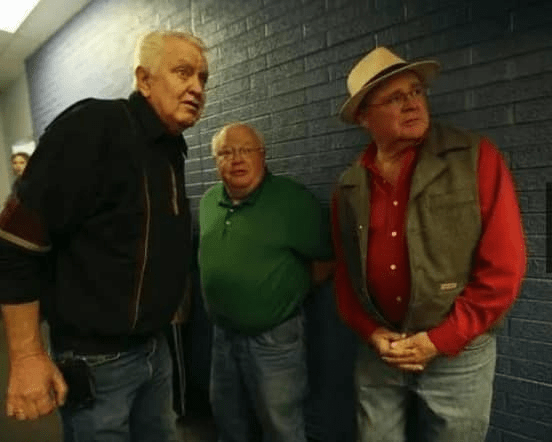
Mortenson, Chris. July 16, 2020. ‘Ted Bundy Location/Denise Oliverson Tour With GJPD Homicide Investigator Doug Rushing (2020 Update). Taken January 19, 2024 from https://www.youtube.com/watch?v=wBVac81zFZY
Sulivan, Kevin. August 12, 2009. ‘The Bundy Murders: A Comprehensive History.’
Sulivan, Kevin. 2020. ‘The Encyclopedia of the Ted Bundy Murders.’
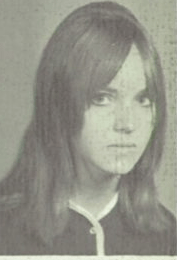

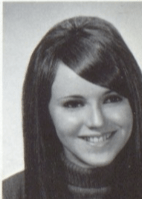
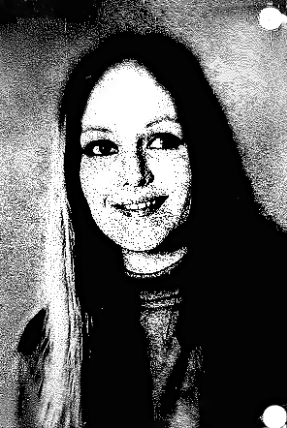
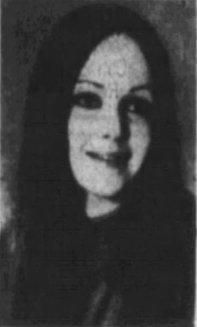


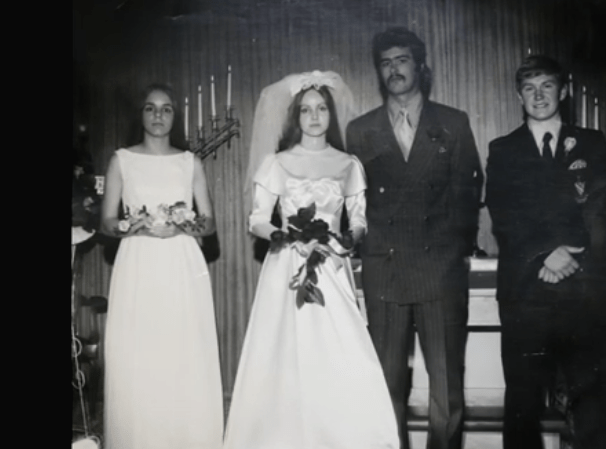

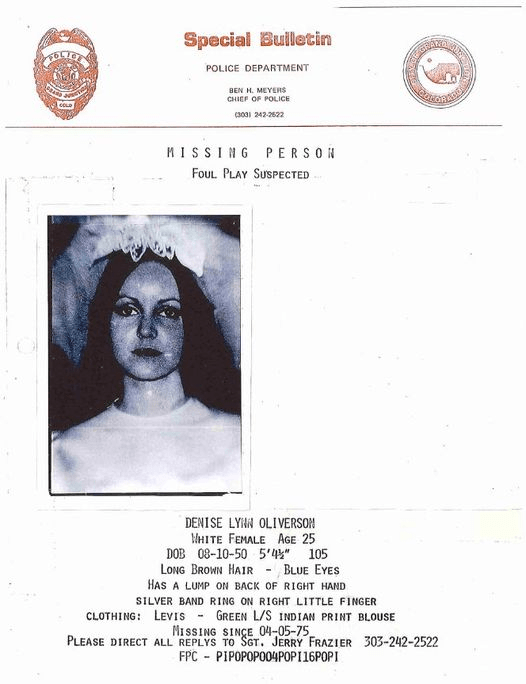



















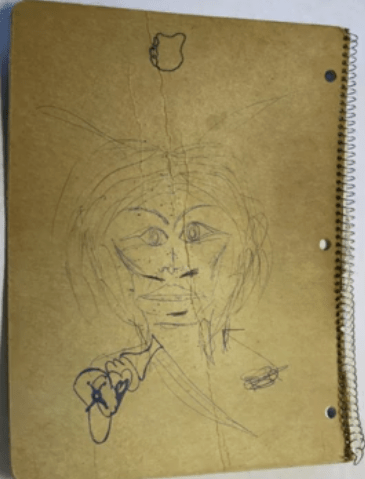

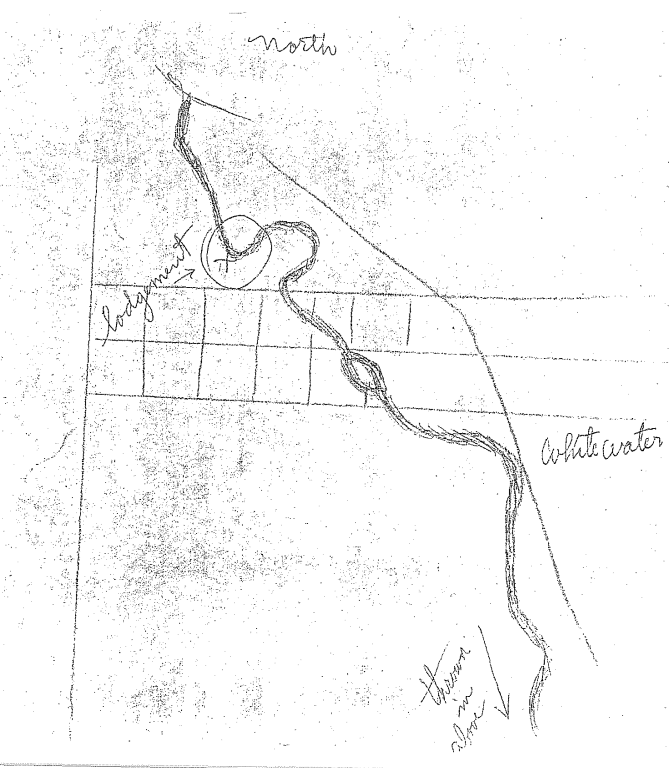
Courtesy of the Grand Junction PD/Tiffany Jean.