Carol Louise was born on December 30, 1955 to William and Barbara (nee Johnson) Platt in Bemidji, Minnesota. The couple had five children: Carol, David, Gary, Robert, and Gail. After high school Bill Platt attended Bemidji State University and worked in general construction before entering the US Navy during World War II. He returned to the Turtle River area of Minnesota after he was discharged and married Barbara on April 10, 1950. After the couple got hitched, Mr. Platt worked in the local mines, on the iron range, and was self-employed in his later years; Mrs. Platt was a trained cook and worked various jobs including at the Lake Julia Nursing Home, Markham Hotel, Viking Supper Club, and the Turtle Club. Carol eventually relocated to Camas, Washington. Like so many of the other unconfirmed victims I wasn’t able to find much about her background.
Seventeen-year-old Carol married Robert Valenzuela on August 17, 1973 and shortly after the couple became the parents of twins (they were ten months old when she was murdered). The couple were only married for about a year when on August 2, 1974 Carol disappeared after hitchhiking from Camas to Vancouver: she apparently made it to her intended destination and was last seen at a welfare office in Vancouver. At 11:00 AM a case worker told her to come back later that same afternoon at 1 PM to receive food stamps, however she never returned to the office and was never seen from again. Robert reported her missing two days later on August 4; she was eighteen years old. Ms. Valenzuela was not known to be involved in prostitution and had no criminal record. The case quickly went dry.
On the morning of October 12, 1974 a deer hunter stumbled upon a mass of hair in a heavily wooded area roughly fourteen miles northeast of Vancouver not far from the Oregon border. He thought it was an unusual place to find a wig and after investigating the mass with the shank of his gun quickly realized it was attached to a skull and that it wasn’t a wig at all. After law enforcement arrived they quickly realized there wasa second victim and their skeletal remains were scattered throughout the area. According to lab reports, the bones had not completely oxidized and it was determined that their deaths most likely did not occur suddenly, and possibly took place as a result of suffocation. Thebodies were discovered within a mile or so of where 16-year-old Jamie Grissim’s ID was found (she vanished on December 7, 1971 and to this day her remains have never been recovered). It was determined that the second woman’s death took place roughly six weeks before Valenzuela’s. Former Clark County Sheriff Gene Cotton reported that Robert Valenzuela was initially held as a ‘material witness’ although no charges were ever filed against him.
Eventually it was determined that the physical characteristics of the first skeleton matched those of Valenzuela.Former Curator of the Physical Anthropology department at the Smithsonian J. Lawrence Angel said that the second victim was ‘white, between 17 and 23 years old, and was of slender build, weighing about 125 or 130 pounds.’ … he also said that ‘the woman probably had a small face and long, dark brown hair which was coarse, thick and probably with a natural curl.’ He also commented that her upper teeth were ‘noticeably decayed’ and she had a ‘splayed back, protruding buttocks and had apparently given birth.’ When the two bodies were initially found their dental charts were sent to Bemidji, Minnesota as part of a routine check of missing persons in the area, which resulted in the identification of Mrs. Valenzuela. The remains of the second victim were sent to the FBI laboratory in Washington, DC but went unidentified for many years.
Martha Morrison resided in Portland, Oregon and vanished without a trace on September 1, 1974. She grew up in foster care while living in Lane County, Oregon and had a history of substance abuse and running away from home (both her biological and foster families). Morrison was last seen leaving the apartment she rented with a boyfriend; they had reportedly gotten into an argument. DNA was obtained from Morrison’s sister and half-brother, which helped develop a genetic profile to compare to potential matches. After the testing was complete, it was compared to the currently unidentified remains, whose DNA profile was developed in 2012. Similarities in the genetic material were noted, however a definite match was not immediately established. It didn’t help that Morrison’s skull and some other bones were mislabeled as Valenzuela’s while they were sitting in storage (which was one of the reasons why the remains were unidentified for so long). The National Center for Missing and Exploited Children paid to have Morrison’s Fathers body exhumed so they could obtain his DNA to compare it to the unidentified remains, which resulted in a positive identification that the remains were those of Martha Morrison on July 17, 2015. After her body was successfully ID’d, police went to the public, encouraging them to submit tips to help solve the case. In August 2017, law enforcement matched her blood with remnants on a pistol owned by Warren LeslieForrest, who was a longtime suspect. Before Forrest was named as their killer both Ted Bundy and RandallWoodfield (the I-5 Killer) were both considered as ‘people of interest’ in both women’s murders. Forrest was officially charged with Morrison’s homicide in 2020.
At the time Valenzuela disappeared in the summer of 1974 Bundy was still in a long term relationship with Liz Kloepfer and was residing in the Rogers Rooming House on 12th Avenue in Seattle. He was getting ready to move to Salt Lake City to begin his second attempt at law school and was employed with The Department of Emergency Services in Olympia (he worked there just for a few months from May 3, 1974 until August 28). Bundy told law enforcement that he wasn’t responsible for the death of Valenzuela, which is one of the only murders from the Pacific Northwest that he was suspected of that he denied. Most likely because Ted was a habitual liar he remained a suspect of Valenzuela’s murder for quite a few years, as he told investigators before he was executed he may or may not be responsible for additional murders other than the ones he was convicted of.
Enter Warren Leslie Forrest. Forrest apparently liked to pose as a Seattle University photography student and liked to approach women asking if they’d like to pose for pictures for a fee of thirty to forty dollars. The victims would leave with him in his blue murder van where he quickly subdued them and bound them with rope at the ankles and wrists. Forrest was a government employee with the Parks Department which gave him access to a lot of restricted areas in local recreation areas. One of his victims managed to escape after he kidnapped and brutally raped her, and thankfully she was able to get away and flag down a passing motorist who took her to the police. Forrest was eventually tracked down and although law enforcement couldn’t place him in the area at the time of Valenzuela’s disappearance detectives were intrigued by the recurring pattern of victims that were dumped in the woods. They were also struck by the testimony of Forrest’s friends, who were shocked at his actions and claimed he was just a normal, regular guy (which is similar to the way psychologists predicted Bundy acted with his friends).
Warren Leslie Forrest has been in prison on a single murder count since 1974, when he was charged with the murder of nineteen year old Krista Kay Blake. In 2014, detectives began taking another look at physical evidence related to Forrest’s criminal history to help link him to any possible unsolved crimes, but it wasn’t until 2019 that DNA evidence helped link him to the murder of Morrison. Forensic experts from the Washington State Police Crime Lab isolated a partial DNA profile from bloodstains found on Forrest’s dart gun and cross-referenced it with Morrison’s DNA, which led to the positive identification of her remains. As a result, Forrest was identified as her killer. In January 2020 Forrest was extradited to Clark County to await charges in Martha Morrison’s murder. For the first time in 40 years he appeared in court on February 7, 2020, pleading not guilty. The trial was originally scheduled to begin on April 6 2020, but was delayed several times due to the COVID pandemic. The trial finally resumed in early 2023 and on February 1, 2023 a jury found him guilty of the murder of Martha Morrison. Sixteen days later, Forrest was given another life sentence. During the proceedings, he was still apprehensive about admitting hisguilt, but freely gave his opinion that ‘girls from socially disadvantaged environments should not hitchhike or get into cars with strangers due to their vulnerable disposition.’
Sadly, Carols father Bill and her brother David died on January 2, 1986 in a car accident north of Bemidji; Bill was 58 and David was 28. Barbara Platt passed away on February 9, 1993 at the age of 61 in Fargo, ND. It does seem that Robert Valenzuela did eventually remarry. I’m respecting Carols family and will not disclose anything about her twins.
* In October 2024 one of Carol’s grandchildren reached out to me to not only point out some things that were incorrect in my piece but to also voice concern that her grandmothers article didn’t belong on a website about Ted Bundy. After a bit of back and forth I told her I would not remove the article but would add a disclaimer that Carol was not a victim of the serial murderer and more likely was killed by the hands of Warren Leslie Forrest. This blog may have Ted Bundy in the title but it’s turned into so much more than that. And I also want to add that I didn’t pay someone to go find me secret files about Ms. Valenzuela: everything I found was in the public domain and was literally at my fingertips. Where I do understand that it must be incredibly invasive to do a Google search and find an entire article written about your grandmother that was murdered in an incredibly brutal way, but everything I found was either in a newspaper article or from some sort of historical website, like Ancestry/MyHeritage. Also, if something is misspelled (like a name), that is information I pulled from another source, so if it’s not correct in my article it’s also incorrect in the original. I didn’t pull it out of thin air, it came from somewhere. Instead of Googling someone and having to go through 7-8 websites to get everything you need, I’m trying my hardest to be a complete resource. All of this information was easily found, and was free.
Carol Valenzuela.Carol (middle).Carol with her twins; they were ten months old when she disappeared.William Platts WW2 draft card.Carol Valenzuela’s death certificate. An announcement about Robert and Carol published by The Pioneer on April 24, 1974.A clipping about the murder of Carol. Published by The Ellensburg Daily Record on October 24, 1974.A clipping about the murder of Carol published by The Corvallis Gazette-Times on October 24, 1974.An article about the identification of Carol Valenzuela published by the Eugene Register-Guard on October 23, 1974.An article about the identification of Carol Valenzuela published by The Columbian on October 23, 1974.An article about the identification of Carol Valenzuela published by The Albany Democrat-Herald on October 23, 1974.An article about the identification of Carol Valenzuela published by The Longview Daily News on October 23, 1974.An article about the identification of Carol Valenzuela published by The Spokesman-Review on October 24, 1974.An article about the identification of Carol Valenzuela published by The Capital Journal on October 24, 1974.An article about the identification of Carol Valenzuela published by The Capital Journal on November 30, 1974.An article about the identification of Carol Valenzuela published by The News Tribune on November 30, 1974.A picture about of the unidentified victim (that turned out to be Martha Morrison) in an article about the identification of Carol Valenzuela published by the Eugene Register-Guard on November 30, 1974.An article about Carol published by The Columbian on November 29, 1974.An article about the identification of Carol Valenzuela published by the Eugene Register-Guard on November 30, 1974.An article about the identification of Carol Valenzuela published by the Columbian on December 2, 1974.An article about Bundy’s King County victims and their possible relation to Valenzuela’s published by The Columbian on March 12, 1975.An article mentioning Valenzuela published by The Columbian on July 20, 1975.An article mentionong Carol published by The Columbian on July 30, 1978.An article about the possible finding of the remains of plane hijacker DB Cooper that mentions Carol Valenzuela published by the Eugene Register-Guard on February 27, 1980.An article about Bundy’s victims that mentions Carol, published by The Ellensburg Daily Record on January 19, 1989.An article about Bundy’s WA state victims that mentions Carol Valenzuela, published by The Telegraph on January 23, 1989.Part two of an article about a possible stay for Bundy’s January 1989 execution that mentions Carol Valenzuela, published by The Ellensburg Daily Record on January 23, 1989.An article about Bundy’s victims that mentions Carol, published by The Gainesville Sun on January 23, 1989.An article about Bundy’s suspected victims that mentions Carol, published by The Pittsburgh Post-Gazette on January 24, 1989.An article about Bundy’s suspected victims that mentions Carol, published by The Gainesville Sun on January 25, 1989.An article that mentions Carol, published by The Columbian on January 27, 1994.An article mentioning Valenzuela published by The Statesman Journal on August 25, 2017.An article mentioning Valenzuela published by The Longview Daily News on January 20, 2020.The house where Carol was living at the time she was abducted, located at 825 Northwest Ivy Street in Camas, Washington.Carol’s grave stone.Ted’s whereabouts on August 2, 1974 when Carol Valenzuela disappeared according to the ‘TB Multiagency Investigative Team Report 1992.’Bundy’s possible route from his room at the Rogers Boarding House to Vancouver, where Carol was last seen.It’s important to keep in mind that Warren Leslie Forrest didn’t always look like the old, ragged dirtbag he is today: at one time he was young and handsome. Some mugshots of a younger Warren Leslie Forrest.A more recent picture of Warren Leslie Forrest.Warren Leslie Forrest’s blue murder van. A picture of Warren Leslie Forrest victim Martha Morrison.Jamie Grissim.Some suspected victims of Warren Leslie Forrest.Randall Woodfield, an American serial killer nicknamedthe I-5 Killer after the highway he hunted his prey (which ran from Washington to California). Originally from Oregon, Woodfield was convicted of three murders and is suspected of killing up to eighteen people. He is currently incarcerated at the Oregon State Penitentiary.
Edit, November 2023: One thing I routinely try to do is go through my resources and update my articles when I find more information. When I was in Florida this past May I came across a 59 page document from the Trempealeau County Sheriff’s Department in Wisconsin regarding the case of Sandra Jean Weaver. At first, I thought about putting the new information in a simple addendum, but there’s so much that I’m just going to rewrite the entire piece. The report is broken down into four parts: the first is a write up (almost like a report) that Detective Daryl L. McBride had with Weaver’s friend, Joan Elkins at the LaCrosse Police station on January 11, 1975. The second is a verbatim interview between Glade Gamble and the Toole County Sheriff’s Department, Detective Jerry Thompson from the Salt Lake County Sheriff’s department, and Officer Milo Vig from the Mesa Co. Sheriff’s Department on January 22. The third is an interview between Ken Jones and the same members of LE as the Gamble interview that took place on January 22, 1975, and the last portion is an interview with the same officers and Phillip Quintana on January 21, 1975.
Sandra ‘Sandy’ Jean Weaver was born on August 5, 1955 to Bruno and Marlene of Arcadia, Wisconsin. She had two brothers (Randy and Billy) and two sisters (Nancy and Julie); the Weavers also had a son named Joseph who sadly passed away two days after he was born in 1961. Sandy had blue eyes, was 5’7” and weighed 120 pounds; she wore her brown hair long and parted down the middle. She attended Arcadia High School, and during her time there was on the drill team, participated in the Future Homemakers of America, Girls Athletic Association, worked PT as a librarian and was the junior editor of the newspaper. After graduating in 1973, she studied commercial art at Western Wisconsin Technical Institute in La Crosse, WI.
Sandra left home in the summer of 1974and moved to Salt Lake City, hitchhiking the entire way there with her two friends, Joan Elkins and Jeffrey L. Skarboszewski. According to an investigator for the Mesa County Sheriff’s office, after arriving in Utah the friends went to Toole, where they stayed in a canyon for a few days. It was there they met a guy named Ken Jones, who invited them to come stay in his trailer near Toole. Jeff got a job part time working with Jones father and both girls found employment full time for the Manpower program. Looking into it, Manpower appears to be sort of on the job training program based out of SLC. For their first week the girls took inventory of motion picture products, and the second week they were sent to the Wycoff warehouse (which was a trucking company); Weaver had been on the job for a little over a week when she was murdered. The position was roughly forty miles away from Jones’ trailer, and the friends hitchhiked back and forth everyday. In a conversation with her mother in June 1974, Sandra said she was planning on going home for her sister Nancy’s wedding on July 27th, but didn’t specify an exact date she planned on being back. It’s known that Weaver was a frequent, heavy drug user and had a tendency to ‘sleep around’ (oh good Lord, weren’t we all young once?). The guy she was with the night before her disappearance (a young man named Glade Gamble) said that they engaged in intercourse the night before she vanished (but more on him later)…
On Friday, June 28 Sandra and Joan bought some groceries in SLC then hitchhiked back to Jones’ trailer, arriving around 7 PM. At around 11:00 that evening a friend from their new job named Phillip Quintana (aka Phillip Martinez) showed up with the intention of spending the weekend with them (he arrived with a random friend). In addition, Jones had a friend that was staying with him that was between 18 to 20 years old and was an ‘athletic freak.’ That night, Sandra slept with Ken and Joan slept with Phill (his friend spent the night in a chair). The following day, Weaver left the residence and went to a friend named Jeanine’s trailer in Toole. There, Weaver met Glade Gamble and the two took a drive through the canyon in Jeanine’s blue VW Beetle.
At roughly 7 PM on June 29th, Weaver returned to Jones’ trailer and picked up Joan, Phillip, and his friend. From there, the group got dinner then went to a party at Jeanine’s trailer. At the gathering, Weaver introduced Elkins to a guy named Bruce Bolinder, who she had met that afternoon while driving around with Gamble. According to Weaver, Bolinder was supplying Gamble with THC. It is speculated Sandy snorted some THC and used some phenobarbital (and possibly Nembutal) at some point in the evening. There were roughly 25 people at the gathering and most of them were imbibing in some form of drug use. At some point early in the evening Phillip fell asleep on the floor of the trailer, and after a while Joan woke him up to go sleep outside in Gambles VW van. Around midnight she woke Phillip up for a second time to let him know they could catch a ride back to Jones’ trailer with Bolinder. Weaver stayed behind at Jeanine’s trailer. At some point in the conversation with law enforcement Elkins mentioned that when she left her friends trailer with Phillip, there were four vehicles in the driveway: Bruce Bolinders gold Cadillac, Glades red and white VW Bus, Jeanine’s VW Bug, and a fourth vehicle (she wasn’t sure of the make and model or its owner).
At some point during the day, Weaver purchased $15 worth of phenobarbital from Bolinder. Joan said Sandy used some the night of the party as well as on June 30 and July 1, and during this time she stayed at Jeanine’s trailer. At some point on Sunday, June 30 Elkins called Jeanine’s trailer and talked to Gamble, asking to speak to Sandy. He told her she was sleeping but that he would take them to work the next morning. On Monday, July 1, 1974 Sandra returned to Ken’s trailer to change her clothes and wake up Joan for work. Elkins told her she wasn’t feeling well and wasn’t going in that day. Weaver asked to borrow some cash, and she gave her $5 from her purse (which at some point during the day Elkins noticed was missing). Joan said Sandy was wearing blue corduroy shorts and a halter top, and this was the last time she saw her friend. The next day on July 2, she received a call from the secretary at Manpower asking why either of them hadn’t come into work. Joan told her that she was sick, to which the secretary replied, ‘yes I know, Sandy told me.’ She went on to tell her that Weaver had worked until 11:30 in the morning the day before then left and never returned.
The body of Sandra Weaver was discovered the next day on July 2, 1974 around 4:00 PM by tourists hiking in the area near DeBeque, CO by the Colorado River about sixteen to eighteen miles east of Grand Junction. Her naked body was beaten and strangled, found off a service road in the Palisades Canyon (some sources say it was DeBeque Canyon) in Colorado; the only item found on her body was ‘a tiny wooden cross on a gold chain around her neck’ (which she was most likely wearing when she was last seen). I know I’m jumping the gun a bit here but something odd is jumping out at me: two other Utah victims (Laura Ann Aime and Melissa Smith) were also both found the same way: naked only wearing a ‘small necklace.’ Additionally, both girls were strangled in the same fashion as Weaver. Sheriff Haywood has ‘no doubt’ that the killer of Aime and Smith killed Sandra as well. Additionally, Salt Lake City DetectiveJerry Thompson said that the facts in the Weaver case ‘are very similar’ to the ones surrounding those of the Smith and Aime murders. She had been sexually assaulted and died by suffocation due to strangulation; her fingernails were also freshly manicured shortly before her death. Because there were no footprints or drag marks found anywhere near Weaver’s remains it’s speculated she was killed somewhere else then dumped off at the top of the canyon, and she just sort of rolled down it. Unfortunately her body wasn’t identified until January 1975: according to an article titled ‘Services Pending for Murder Victim, Weaver was identified through a nationwide check of persons reported missing. Law enforcement also found a very particular type of contact lens on the victim, and using optometric tests forensic experts were able to determine that it belonged to Weaver; dental records were also used.
In a conversation with detectives on January 11, 1975, Elkins said that Sandra was ‘pretty doped up’ when she returned to Jones’ trailer on the morning of July 1, 1974. She suspects this may have been the reason that she showed up to work without shoes on. Later in the day on July 2nd, Bolinder came to Jones’ home and visited a bit with Joan. He came to see her a few more times in the next few days and eventually invited her to move in with him, which she did a little over two weeks later in the latter part of July 1974 (bringing Glade Gamble with her). Joan finally reported Weaver as missing to the SLC police around the 5th or 6th of July; they advised her to call the Toole County Sheriff’s as well. She also shared the news with Sandra’s mother in Wisconsin. She told LE that she asked Bolinder to help her locate Weaver, but he just pushed her request off. Elkins stayed with him for about three weeks then moved in with another friend named Danny Quinn. She eventually left SLC and returned home to LaCosse on August 15, 1974. She brought all of Sandra’s belongings back with her, returning them to her parents.
Seventeen year old Dick Pehrson was a former employee of the Wycoff warehouse and a friend of the girls. He told Joan that Phillip Quintana got dropped off with Sandra the morning she disappeared but he didn’t know who was driving. He also told her that Quintana told a secretary at Manpower that Weaver had been talking to a truck driver the morning she disappeared. Additionally, the same secretary told Marlene Weaver that Quintana told her that her daughter had been seen on a bus headed for Idaho.
Bruno Weaver traveled from Arcadia to Salt Lake and Toole in November 1974 and got in touch with a number of his daughter’s friends/acquaintances; he also spoke with Quintana on the phone around the same time. During that conversation, Phillip denied going to Jeanine’s party the night of July 29 but said that his friend ‘Martinez’ was there. Mr. Weaver also spoke with Bruce Bolinder, who shared with him that a friend named Steve Symonds gave Sandra and Phillip a ride to Salt Lake City the morning of July 1st. The police report stated that ‘all of the men seemed uncooperative and hesitant to talk to Mr. Weaver.’ Jones did tell Mr. Weaver that he had a pair of Sandra’s shoes at his trailer despite both Joan and Jeff telling him she only brought two pairs with her (which were already accounted for). Skarboszeski told LE that to the best of his memory he never saw Sandra go to work without shoes on and didn’t think she would ever go to her POE barefoot.
Elkins admitted to using some of the phenobarbital Weaver bought on June 30 and July 1, but couldn’t explain how the drugs got back to Jones residence because her friend hadn’t been back to his trailer at that point (she briefly came back the morning of July 1 to borrow money and change her clothes before leaving right away for work). Strangely enough, the blue corduroy shorts that Joan claims she last saw Sandy wearing were found amongst her belongings that were returned to the Weavers.
In the second portion of the document from the Trempealeau County Sheriff’s Department, Glade Gamble sat down with members of law enforcement (specifically, the Toole County Sheriff’s Department, Jerry Thompson, and Milo Vig). The interview began at 1:35 in the afternoon on January 22, 1975 and lasted for 45 minutes. In the beginning, Gamble is shown a picture of Weaver and was asked if it resembled the individual he spent time with in June of the previous year. He said yes it did and that she was ‘a good looking girl.’ I mean, most of the ‘interview’ is traditional back and forth between suspect and police, however one particularly interesting portion jumped out at me: investigators questioned, ‘within hours of leaving you, she was murdered brutally, and I am not kidding you when I say brutally. I probably shouldn’t do this but there is a little difference isn’t there? As you can see, I don’t think many human lives deserve that kind of treatment. So if you can help me for God’s sake, give me some information. I don’t care if any drugs were involved, cause we’re not here or have no interest at all in petty crimes or drugs at this time, I am interested in that.’ In response to that, Glade said that he told them everything he knew the first time they spoke except for dates, which he didn’t elaborate on so I don’t know if he meant he forgot them or was purposely withholding information. He said the only phone number Sandra probably had was Ken Jones’ at his trailer.
Some of the key points I took away from this interview are as follows: Mr. Weaver met with Gamble at his house sometime in November 1974. He said the majority of the time he saw the two friends they were wearing shorts, although he thinks he remembers Sandy wearing pants the last time he saw her (since she was on her way to work). He made it clear to the detectives that he didn’t remember if she was wearing shoes or not the last time he saw her and had to be told by a friend that she showed up at work barefoot later that morning. Gamble was able to tell LE that he remembered she normally wore a pair of slip-on clogs but she left them behind at Jeannine’s (if she’s anything like me she probably figured she’d be back there soon enough and it was no big deal). He also speculated that Elkins may have picked the clogs up with the rest of Sandra’s belongings before she returned home to WI. He left Jeanine’s trailer at around 6 AM and speculated that Weaver was stopping back at Jones’ residence before going into work and that she would just pick up another pair of shoes there. He did share that he remembers someone saying that Joan’s purse got stolen, and wondered if it happened at the party the Saturday before Sandy disappeared. He also said that he took off the Tuesday after she disappeared but couldn’t remember the reason why.
When LE asked Gamble how Elkins felt about Bruce Bolinder he replied that she may have been a bit afraid of him in the sense that she worried he might kick her out and send her home. Apparently, he had a bit of a reputation as a ‘ladies man’ and speculated that Joan was probably aware of this and was nervous that he might get sick of her and move on; he didn’t remember the two ever arguing or fighting in any way. Also on the topic of Bruce being a ladies man, Gamble said that he thought that girls in general seemed to like him but didn’t get close with him. He also said that he thought Sandra and Joan met him on June 29th (which was the night of the party) and that he asked Sandy out a time or two but nothing ever came of it. When asked if Bollinder had a violent temper, Gamble replied that he ‘heard of him fighting but had never been there.’ He also allegedly had deep contacts in the local drug world that neither girl was aware of. When Glade was questioned on whether or not he knew of anyone that would have a reason to kill Weaver, he said he had no idea why anyone would want to ‘brutally murder a girl like this.’ and that ‘nobody really argued with her that he knew about.’ He speculated that Joan probably left them to go back to Kenny’s trailer with Phillip because she most likely ‘just got tired of Bruce.’
The detective repeated the question: why would anyone want to brutally murder a girl like Sandra, asking: ‘you certainly couldn’t say it was a sexual act because she certainly would have given in (gross).’ Gamble told them that the only thing about Weaver that upset him was that she was kind of ‘slow mentally’ and wasn’t very quick to react to things, but that he would never act on his frustrations and didn’t know how anyone could do that. When questioned about when he became aware that Sandy may have either been abducted or murdered, he said that he quickly grew suspicions after no one heard from her and that both him and Joan almost immediately wondered if she was dead after she stopped coming around: ‘I didn’t know why anyone would kill her or how or anything else but I figured she would have gotten ahold of somebody sooner or later.’ He also told detectives that he was aware that Joan had some minor drug charges but nothing major and he had some minor charges as well as a drunk driving arrest. He told them that he had no contact with Elkins in any capacity after Sandy disappeared.
Per Gamble, Sandy had taken two downers he gave her on Friday night, and that he wasn’t sure if Joan ever reported her friend as missing as he never witnessed her make a call to Toole LE. He also said he wasn’t sure if he was there when she talked to Sandy’s parents on the phone but that he was there when she made some calls to Wisconsin regarding her friend. The last time he claimed to have sex with Weaver was sometime after midnight on Sunday night/early Monday morning, but wasn’t sure what the exact time was. When asked if they engaged in anal intercourse Gamble didn’t respond to the question. To the best of his knowledge he said that he wasn’t sure if Sandy had slept with anyone else in that Friday/Saturday/Sunday time frame other than him, and that he ‘wasn’t with her all the time,’ but did clarify that he spent two nights with her. The last time he saw her she was getting into a car with Steve Simons and Scott Williams to go to SLC for work around 6 AM on Monday, July 1. He said that he learned of Weaver’s death after seeing it on the news but didn’t know when she died. By the time of the interview in early 1975 Gamble sold his VW bus and purchased a 1972 Grand Prix. He shared that even though he didn’t know her very well he knew that Joan wasn’t overly fond of cops and wasn’t sure if she would hold anything back for that reason. The interview ended with Gamble agreeing to take a voluntary polygraph examination.
The third interview took place with the same members of law enforcement and Kenneth H. Jones on January 22, 1975. He told the detectives that he met all three friends when they were ‘up hitchhiking up in Settlement Canyon’ around June 10/11, 1974 and that somehow turned into them coming and staying with him. He further shared that Glade Gamble met the girls at his trailer and that he didn’t know Bruce Bolinder very well. In the beginning of the conversation LE told him that the reason they are speaking to him for a second time is because it was determined that Sandra had been murdered shortly after leaving his trailer. There’s a lot of back and forth between the officers and the suspect, with LE saying they ‘needed to get some answers if we can. I realize this was six months ago and it is hard to remember, and I don’t expect you to remember everything. We have had a chance to go over this and some other things that have come up that need to be answered, and I was hoping that you could help me or hide me to the right person. Now correct me if I’m wrong. I understand that Sandy left the trailer on Monday morning, July 1st to go to work with a Mexican kid by the name of Phillip Quintana, who had stayed at the trailer that night with Joan. Is that correct?’ To this, Jones simply answered, ‘ah huh.’ He said that he didn’t attend the party at Jeanine’s trailer the Saturday before Sandy disappeared and wasn’t home when Joan and Phillip got back early Sunday morning. He also shared that he wasn’t sure who was left behind at the trailer when Sandy and Quintana departed for Salt Lake around 7/7:30 AM the Monday morning she disappeared. He did say that when he came home from work around 4 PM Elkins was still there and ‘it wasn’t right away but she couldn’t figure out why she didn’t come back. You know she figured maybe she would come back later, and she never did. She was worried about her.’ … ‘Well right at first, you now she thought she might have had a pretty good excuse and then after she didn’t show up for a day or so, well then she was getting worried.’ When detectives inquired, ‘I don’t know how much attention you paid, but this is a really critical point in the line of clothing, I understand both these girls had very little clothing when they lived here, is that correct?’ .. ‘ As far as you seen, give me an idea, five or six changes, one of two? Can you give me an idea? Did they wear shorts much of the time, a lot?’ He replied, ‘yeah, they wore shorts,’ but did specify that Elkins had a home made dress made out of Levi’s jean material.
Like with the other interviews, the investigators were very focused on the girl’s footwear and asked Jones if Weaver had a lot of shoes, to which he replied she had a pair of sandals and some clogs and that Elkins took them with her when she went home to Colorado. About a week after Sandy disappeared Elkins left Ken’s trailer and moved in with a guy named Danny Quinn; she didn’t give an explanation as to why she left but it was on her own accord and he didn’t ask her to leave. Jones told LE that he was aware that the girls mainly hitch hiked to get around and frequently caught rides with both friends and strangers. He also shared that at no point after her friend disappeared did Elkins ever mention that she was going to go look for her, but that she ‘contacted Sandra’s parents and they decided to put it in the paper, her picture, and I think she turned it in, she said she turned it in.’ Jones said that when Joan finally got around to notifying the Toole County Sheriff’s department about Weaver’s disappearance they told her to also get in touch with SLC LE as well. When asked if he thought Sandy and Elkins were ‘close’ he replied, ‘yes, they were real close.’ He also commented that she seemed to be almost smitten with Bruce Bolinder and talked about him a lot. He said the weekend before Sandra disappeared she wasn’t at his trailer at all but that she most likely came back early Monday morning to get Joan and get ready to go to work. When asked if he knew of anyone that had ‘heard if Sandy came back into town that Monday morning after she left and went back to work that morning,’ Jones simply said ‘no.’
According to Ken, Sandy’s father came to see him about a month and a half before the interview (so November/December 1974). When asked what he thought happened to Weaver he replied that if she made it to work that day then it must have been someone from her POE that she ‘decided to go with.’ Ken said he felt it ‘must have been somebody she didn’t know or she just met that day or somebody she just went with. Maybe they told her they would give her a ride home or take her out somewhere else overnight or something.’ He also shared that Joan had no idea what happened to her friend and she thought that maybe she left with somebody from work or ‘something like that.’ When Ken was confronted with ‘well like I said, we realize the drug traffic. We are not here to bother anyone, that we are not trying to make a case. Did she know anything about any major drug deals and somebody thought she knew too much that you know of?;’ he again replied with a simple, ‘no.’ When the detectives inquired, ‘you wouldn’t have to kill her to rape her, correct?,’ Jones answered ‘uh huh’ and that she would probably just go along with it.
Ken said that when he returned home from work at 4:30 around that Monday, Joan was there (she was sick and didn’t go into work) and the last time he saw Sandy was on Friday the night before she left for the party. When the investigators commented that they understood he told Mr. Weaver that he had a pair of his daughter’s shoes, he clarified ‘after she had left and it was either that night or the next day she didn’t show up Joan said something about ‘that is the only pair of shoes or something.’ And she left them and she ain’t got no shoes or something. She couldn’t figure out why she would leave without shoes.’ There was a lot of back and forth about the missing footwear, with the investigators trying to make Jones admit that he had them (which he vehemently denied). When they asked if Weaver’s last paycheck ever got mailed to his trailer or if Joan ever mentioned what happened to it he said that Elkins had it but he wasn’t certain if she cashed it or not (but he strongly suspects that she did).Jeff Skarboszewski left SLC about a week before Sandra disappeared and went to Phoenix. About the trios mystery friend, Jones said that Jeff seemed to treat both girls real good and always wanted to do what was best for them. At the end of the interview he agreed to a voluntary polygraph examination.
In between the third and fourth parts is a photocopy of Bruce Bolinder’s drivers license.
The fourth part of the document is an interview between investigators and Phillip Quintana that took place on January 25, 1975 (this is where things get interesting). The conversation starts out strong right from the get go, with LE asking if he remembers telling a friend named Dirk that Sandra had gone to Idaho or someplace out of state, and where he got that information from. To this, Phillip said it was one of two hitchhiking incidents that took place in the second half of 1974 in which Weaver’s name came up: ‘this guy that picked her up hitchhiking, but I can’t remember his name. He said he saw her and she was supposed to be living with this guy that she was living with in Memory Grove she was supposed to leave with him to Idaho.’ … ‘I was just asking if he knew Joan and Sandy from Toole and he said yeah, that Sandy was supposed to be living in Memory Grove with some guy.’ Quintana said the man was driving a newer model white Ford and was around 21/22 years of age, between 6’2″/6’3” tall, and had shaggy brown hair. One of the detectives told him it was a man named Danny Brumfield that picked him up that day and the event took place sometime aroundAugust/September of 1974.
The second hitchhiking incident took place around Halloween 1974 and involved a 23/24 year old man driving an older model light red/dark orange GMC pickup truck. When asked by this mysterious stranger if he wanted to go to a party that both Joan and Sandy would be at, Phillip told him that he had just been to one and had no interest in attending another: ‘well, I was hitchhiking. He picked me up then asked if I wanted to go to a party, he said do you smoke dope, I said yeah, and he said do you want to go to a party, and I said no, and he lit up a joint, and he asked me if I wanted to go to a party out in Toole and said no, and he said, and then I said who is going to be out there, do you know a lot of people out there and he said, ‘I know a chick named Joan and one named Sandy and this dude named Glade, that Glade was supposed to be having it,’ and I told him no I was, and he just dropped me off.’ … ‘They said Sandy and Joan, I don’t know if they were the same chicks but he said Sandy and Joan. Might be two different chicks, I don’t know.’ When questioned about the day Sandra disappeared Phillip said that he ‘thought she was going back to work, she was going to work, and anyway they didn’t want me back over there and so I just went down to my moms’ and that he never saw either girl again after July 1st (I deduced that he was briefly employed with Manpower but was terminated). He acknowledged to LE that he was aware that Elkins was trying to get in contact with him around the 13th of July but wasn’t successful in her attempts. When asked if he knew that Weaver was missing at this point in time Phillip said no and that he didn’t know she was gone until the month before (which would have been December 1974).
Quintana said that he and Joan went back to Jones’ trailer at around 3 or 4 in the morning and crashed immediately; they woke up around 6 PM the following evening. He said Monday morning Sandy called Joan at Ken’s trailer and asked if she was going to go to work, and he told her that Joan wasn’t going to but he was getting a ride to SLC and could bring her along. He reported that Manpower attempted to get in touch with him about Sandra’s disappearance around the 1st or 2nd week of December but that he never talked to Bruno Weaver. In response to that, investigators said that ‘he claims he did, how about him calling you on the phone Phillip. I am going to try to refresh your memory. And you told him: ‘he asked you if you were at a party with his daughter in Toole, and you said no not me but my friend Martinez.’ Do you recall that?’ … ‘see, I talked to Mr. Weaver, Sandra’s Dad and he said he called you on the phone, I have the date written down and I will be getting it; him and his attorney was out here and he called you on the phone and he asked you, he talked to Phillip Quintana, he asked about the party, you said, or this Quintana said that he knew Sandra, that he didn’t attend the party in Toole but a friend Martinez did. You don’t recall him saying that to you?’ In response to the third degree, Phillip said, ‘I don’t even remember talking to him, I am pretty sure I didn’t.’
This is when he talked about his two last names, clarifying that his legal name is Quintana and it’s the one he always went by: ‘I guess you came out to my moms, she said that you were looking for me, she said that you asked for Phillip Martinez, or a Phillip Quintana, and she asked me if I was using another name and I told her no. Because I found well, when my Dad got married when he first married my mother I was on probation and I started using his last name and it took them six months to find me, and when they did they told me if I used it again they would stick me in state school because I was using an illegal name.’ When asked what theillegal name he used was he responded with ‘Gurule,’ but that he has used his real name ever since and that he now has a clean record. Later in the interview he repeated himself that he never spoke with Bruno Weaver and when asked if anyone at the party went by the last name of Martinez he said he wasn’t sure because people mostly only went by their first names.
When the investigators asked how the girls got to work everyday Phillip said that after the first day they all drove in together, and ‘when Manpower had a job for them they have them a call out in Toole and they hitchhiked to the job. The very first day they started Manpower called them about 8:00 I guess, they got there around 10:00 10:30.’ When asked if he recalled what time Sandra arrived back at the trailer the Monday morning she disappeared Phillip responded that ‘she had to be to work at 8:00 AM so it was around 7:00 AM;’ he also shared that after she left for the day he wasn’t sure who was left behind in the trailer. Also in the vehicle were two other guys, Steve Simons and Scott Williams; they dropped Weaver off near the Wyckoff building at 3rd West but that she wanted to stop at the store before her shift started to buy some cigarettes. The boys dropped Phillip off at his moms, which wasn’t far from Weaver’s POE. He commented that on their drive Williams and Simons mostly talked to each other and didn’t really seem interested in chatting with him or Sandy. When LE asked him if ‘Sandy gave him any indication when she got off that she was going to come back at noon, or that she didn’t feel well, or that she was going to go back and see Joan or anything like that,’ Quintana responded that ‘she said that cause she didn’t feel well that morning she was kind of burned she said that if she still felt that way at lunch she was just going to go back to Toole’ but didn’t elaborate on how she was going to get there. The detectives shared with him that they knew she took some speed that morning before she left for work and that he took some as well (she gave him five and a friend named Danny another five). To that Phillip responded that he thought she took downers and had a baggie of about 50 of them with her (apparently she purchased 100 of them at the beginning of the weekend but was going through them pretty quickly).
After Phillip mentioned that Joan wasn’t feeling well and had menstrual cramps the detectives asked if she started her period the day before. He replied that he thought ‘she started it that day because the night she was starting to get them bad’ and that she might have gotten her monthly on Sunday night (but he ‘didn’t check’). In response to this, the officers replied: ‘oh Jesus, you know you got me almost to think I am going to send you out to the nut farm and have you checked out there. Was she pretty well smashed out, Joan, that Monday morning or was it mainly from her cramps.’ (wow). To this, he responded it was ‘mainly from her cramps.’ When asked if Joan had a thing for Glade Gamble, Quintana replied that he wasn’t sure but it wouldn’t have surprised him because she ‘acted kind of funny towards him.’ When asked how she may have felt about Bruce Bolinder he said that it seemed as if she wanted nothing to do with him and when they all got in the car together she made a comment about Gamble sitting next to him, and seemed irritated when he refused. When the investigators asked him how the girls may have felt about Kenny Jones he said that ‘they said they liked him, he was a pretty nice guy, but they were just staying because of their relationship, just a place to stay I guess. I guess they were giving him something to say there, some money or something to stay with him but they never did say. He said that he showed up at the party but ‘came a little later.’ When the investigators asked Phillip if Elkins was afraid of any of the guys that they hung around with he answered ‘no, not that I know of, she didn’t tell me’ and when they asked the same question about Weaver he said ‘well they got along real good with everybody out there as far as I know.’
When asked if any of the guys Weaver hung out with ‘would kill that girl,’ Phillip’s initial answer was ‘I can’t really say… I don’t know them, but I know what kind of people they are.’ However he quickly changed his tune and said that the owner of the gold Cadillac (Bruce Bolinder) was the only person he could think of that ‘looked like he could do something like that.’ He elaborated that he didn’t talk much and was kind of mean; Bolinder was also where Gamble was getting his dope from. There’s something interesting that jumps out at me at the end of page 56: the detectives ask Phillip if he remembers telling anyone that ‘he saw Sandy talking to a Wycoff truck driver at about 11:30 on the 1st of July,’ to which there is no verbal (or written) answer. Quintana later stated that the last time he saw her was when she was dropped off at her POE and doesn’t remember ever seeing her talk to a truck driver. He also shared that he didn’t hear from Joan at all after she left for CO and that he knew she lived in WI but wasn’t exactly sure where. Just like with the other gentleman, LE asked if he was willing to undergo a polygraph examination, to which he responded sure and that he had nothing to hide.
As far as the confirmed victims go, Bundy killed 18 year-old Georgeann Hawkins on June 11, 1974 after abducting her from the University District in Seattle (just eleven days earlier he murdered Brenda Ball on June first). Almost two weeks after Weaver was abducted and killed on July 14, 1974 he abducted both Janice Ott and Denise Naslund from Lake Sammamish State Park in Issaquah. When it comes to the unconfirmed victims, Brenda Joy Baker disappeared on May 27, 1974 from Puyallup and on August 2, 1974 Carol Valenzuela was last seen hitchhiking near Vancouver, WA. At the time of Weavers murder Ted was living at the Rogers Rooming house on 12th Ave in Seattle and was employed with the Department of Emergency Services in Olympia (he was there from May 3, 1974 to August 28, 1974). Obviously the drive to SLC wasn’t exactly impossible, as he eventually moved there for law school, but it definitely wasn’t just a quick jaunt down the street. The route Ted would have driven to SLC from Seattle then to DeBeque, Colorado where her remains were found was roughly 1,150 miles ONE WAY (he obviously would have had to take the same trip BACK to Seattle). This is a lot of driving. He was in between schooling at the time, as he graduated from the University of Washington in 1972 and didn’t move to Salt Lake City for law school (part deux) until September 2, 1974. Did Bundy kill Weaver on a trip to Utah to do something for his upcoming education (maybe he had to fill out something at the bursar’s office or check out an apartment)? According to the ‘TB Multiagency Investigative Team Report 1992,’ Ted went on leave (without pay) from the Department of Emergency Services in Seattle, WA on July 1, 1974 (the same day of Weavers abduction); additionally, gas receipts put him in Seattle the same day. Lets not also forget he was in a relationship at the time with Liz Kloepfer, which was just one more thing taking up his time.
This is a rare instance where the more I researched the more information I found, which I know sounds fairly obvious but I have run into countless dead ends writing about some of these girls. For example, I can’t even find Deborah Lee Tomlinson on Ancestry, so I tried to think outside the box and joined a few Facebook groups related to her hometown of Creswell OR, in hopes that maybe I would find a relative or an old friend of hers that could help fill in the gaps surrounding her background… but again, I got nothing. Right before I was about to re-publish this I found even more information about Weaver on cavdef.org… nothing huge or ground breaking, just a few small details. In a comment on the website ExecutedToday.com, an individual going by the name of Philip Conrad commented that he ‘knew Sandra Weaver, the Colorado detectives talked to me and my x wife in lacrosse wi because we thought the guy that left with her might have had something with her death. I do believe Ted Bundy killed her.’ Additionally I found Glade Gambles obituary (which I included below).
In an article written by a Salt Lake journalist after Bundy was executed, Pete Haywood said that authorities placed Bundy in Utah as early as 1970 when he was only 23, which ‘certainly widens the window of time we are looking at in terms of unsolved cases.’ There’s conflicting reports that say the serial killer mentioned Weavers during his death row confessions: some sources say he did, others say he didn’t. Former Mesa County Sheriff said two different television stations ran stories claiming that Bundy took responsibility for Weavers death, and the Salt Lake Tribune ran a story saying the same.
Weaver in her freshman year photo from the 1970 Arcadia High School yearbook. Weaver in a group picture for the drill team from the 1970 Arcadia High School yearbook. She’s the first girl in the first row. Sandra Weaver in a group picture for the Future Homemakers of America from the 1970 Arcadia High School yearbook. Sandra Jean Weaver’s sophomore year picture from the 1971 Arcadia High School yearbook.Sandra Jean Weaver in a group shot for the Future Homemakers of America from the 1971 Arcadia High School yearbook.Weaver in a group picture from the Drill Team from the 1971 Arcadia High School yearbook.Weaver in a group picture from the 1972 Arcadia High School yearbook. Weaver in a group picture for the newspaper from the 1972 Arcadia High School yearbook.Weaver in a group picture for the Girls Athletic Association from the 1972 Arcadia High School yearbook.Sandra Jean Weaver’s senior picture from the 1973 Arcadia High School yearbook.I pulled this from ‘Classmates.com;’ it looks like Weaver signed above her picture in the 1973 Arcadia High School yearbook.Weaver in a group picture for the school play from the 1973 Arcadia High School yearbook.Another shot of Weaver in a group picture for the school play from the 1973 Arcadia High School yearbook. It looks like she is in the middle row, second from the right.Weaver’s senior year activities from the from the 1973 Arcadia High School yearbook.Sandra Jean Weaver.Sandra Jean Weaver.A caricature of Sandra Weaver drawn by John Krupa (from the ‘Freedom to Draw Unsolved Mysteries’ YouTube page).An announcement that Bruno Weaver was going to serve in the Korean War, published by The Winona Daily News on February 29, 1952.Bruno and Marlene Weaver’s marriage announcement, published in The Winona Daily News on July 14, 1954.An article about Bruno and Marlene Weaver’s son, who was born in March 1961 but passed away shortly after; death notice published in The Winona Daily News on March 29, 1961.Nancy Weaver from the 1971 Arcadia High School yearbook. Cheryl Weaver’s freshman year picture from the 1972 Arcadia High School yearbook.Randall Weaver’s picture from the 1973 Arcadia High School yearbook.Bryan Weaver’s picture from the 1978 Arcadia High School yearbook.Marlene Weavers picture fro the 1974 Arcadia High School yearbook. It looks like she worked there as a cook.A more recent picture of Marlene Weaver, courtesy of Facebook.A more recent picture of Nancy Weaver, courtesy of Facebook.Bruno Weaver’s death notice from by The Winona Daily News published on June 17, 1996.Some notes about Sandra Weaver from a document titled ‘Bundy History’ on the Internet Archives (it’s a document from the Pitkin County Sheriff’s Department that was released on November 24, 1975).Page two of a document pertaining to Weavers murder from the SLC PD.Page three of a document pertaining to Weavers murder from the SLC PD.An article about Sandra Jean Weaver, published by the Wisconsin Rapids Daily Tribune on January 11, 1975. An article about Sandra Jean Weaver, published by The La Crosse Tribune on January 11, 1975. An article titled ‘Services Pending for Murder Victim’ about Sandra Jean Weaver, published by the Eau Claire Leader Telegram on January 11, 1975. An article about Sandra Jean Weaver, published by The Sheboygan Press on January 11, 1975. An article about Sandra Jean Weaver, published by The Daily Sentinel on January 11, 1975. An article about Sandra Jean Weaver, published by the Stevens Point Daily Journal on January 11, 1975. An article about Sandra Jean Weaver, published by The Ironwood Globe on January 11, 1975.An article about Sandra Jean Weaver, published by The Janesville Gazette on January 11, 1975. An article about Sandra Jean Weaver, published by the Racine Journal Times on January 11, 1975.An article titled ‘Murder Victim may be Arcadia Girl’ about Sandra Jean Weaver, published by the Winona Daily News on January 12, 1975. An article about Sandra Jean Weaver, published by The Daily Sentinel on January 13, 1975.An article about Sandra Jean Weaver, published by the Winona Daily News on January 13, 1975. An article about Sandra Jean Weaver, published by the Madison Capital Times on January 13, 1975.An article about Sandra Jean Weaver, published by the Winona Daily News on January 14, 1975.An article titled ‘Services Pending for Murder Victim’ about Sandra Weaver, published by the Winona Daily News on January 16, 1975. Part one of an article titled ‘Services Pending for Murder Victim’ about Sandra Jean Weaver, published by the Winona Daily News on January 16, 1975. An article about Sandra Jean Weaver, published by the Winona Daily News on January 17, 1975. An article about Sandra Jean Weaver, published by The Daily Sentinel News on January 17, 1975. An article about Sandra Jean Weaver, published by The Desert News on January 20, 1975.An article about Sandra Jean Weaver, published by The Daily Sentinel on January 21, 1975.An article about Sandra Jean Weaver, published by The Logan Herald Journal on January 21, 1975. An article about the murder of Sandra Jean Weaver published in The Daily Herald on January 21, 1975.An article about Sandra Jean Weaver, published by The Salt Lake Tribune on January 21, 1975.An article about Sandra Jean Weaver, published by The Ogden Standard-Examiner on January 21, 1975.An article about Sandra Jean Weaver, published by the La Crosse Tribune on July 2, 1975.An article about Sandra Jean Weaver, published by The Daily Sentinel on October 3, 1975.An article about Sandra Jean Weaver, published by The Daily Sentinel on October 13, 1975.An picture mentioning Sandra Jean Weaver, published by The Salt Lake Tribune on January 23, 1989 before Bundy was executed.An picture mentioning Sandra Jean Weaver, published by The Salt Lake Tribune on January 23, 1989 before Bundy was executed.An article about Sandra Weaver published by the La Crosse Tribune on January 24, 1989.An article about Bundy possibly being linked to the murder of Sandra Weaver published by The Winona Daily News on January 25, 1989.An article mentioning Sandra Weaver after Bundy was executed in 1989.An article mentioning Sandra Weaver after Bundy was executed in 1989.An article mentioning the possible discovery of the remains of Sandra Weaver published by The Salt Lake Tribune on November 9, 1996.Photo courtesy of journal6other.files.wordpress.com.A picture of Sandra’s friend Joan Elkins from the 1971 Logan High School yearbook.Another picture of Joan Elkins from the 1971 Logan High School yearbook.A picture of Sandra’s friend Jeff Skarboszewski from the 1970 Central High School yearbook.Bruce L. Bolinder from the 1965 Grantsville High School yearbook.Bruce L. Bolinder’s wedding announcement published in The Tooele Bulletin on April 11, 1967.Bruce Bolinder’s divorce announcement published in The Transcript-Bulletin on September 12, 1969.A photocopy of Bruce L. Bolinder’s ID pulled from the investigative documents regarding her murder from the Trempealeau County Sheriffs Department.Glade A. Gamble obituary published in The Tooele Transcript-Bulletin on January 21, 1997.A map of the (one way) route Ted would have had to drive to SLC from Seattle then to DeBeque,Colorado. He obviously would have had to take the same trip BACK to the Rogers Rooming house. This is a lot of driving. I tried finding a picture of the old Manpower building Sandra worked at but wasn’t successful. Weavers grave site. Notice her brother that passed away in March 1961 is buried next to her.
I’m going to preface this by saying I decided to split this article into two parts: the first will be about Sara A. Survivors background (whose real, legal name is Susan Lorrayne Roller) and her supposed relationship with Ted Bundy. The second piece will be a breakdown and review of her second book, ‘Reflections on Green River: The Letters of, and Conversations with Ted Bundy.‘
The tl;dr version of Ms. Survivors story is (whose real name is easily found in police documents so the need to publish under a pseudonym doesn’t make any sense): she isa surviving victim of Ted Bundy and over a four year period while in high school and college he repeatedly stalked, kidnapped, and sexually assaulted her. Survivor further claims that Seattle based law enforcement purposefully left out evidence in Bundy related reports (specifically related to the Taylor Mountain dump site), and even goes so far as to suggest there were additional victims that law enforcement refuses to investigate or even acknowledge. In a letter written to former Seattle Police Chief Kathleen O’Toole dated July 18, 2017, Survivor said that ‘there has been a cover up of the Ted Bundy cases in general and in particular relative to the findings at Taylor Mountain. Victims were left behind and never investigated and evidence at the crime scene of both Issaquah and Taylor Mountain are not protected. People were allowed to profit from the case and too much information was released and other evidence was simply lost, destroyed and discounted.’
Susan Lorrayne Rollerwas born on September 13, 1954 to Gilbert and Lois (nee Moore) in Portsmouth, Virginia; the family eventually relocated to Lakewood, Washington. She graduated from Clover Park High School in 1972, the same year she was elected to represent her high school as Daffodil Princess in the Pierce County Daffodil Festival (an event to help support the flower bulb business). She went on to attend the University of Washington in Seattle, where she was a member of the KappaKappa Gamma sorority; Roller graduated with her Bachelor of Science in Medical Sciences in 1976. At first, I wasn’t able to find a great deal of information on her background (not having access to her memoir put me at a huge disadvantage), however once I discovered her real name I was able to find quite a bit more information. Well, let me clarify: I only found a handful of websites with useful information BUT this is one of those instances where quality is more important than quantity because the few sources I found were VERY helpful (I will include all links in the works cited section at the bottom)… Personally, I’d rather have 3-4 informative, high-quality resources than twenty crappy ones rehashing the same information over and over.
Beginning in 2016, a woman going by the name of ‘Sara A. Survivor’ published a trilogy of books about the Ted Bundy case. Her first release, ‘ReconstructingSara: The Lost Victim of Ted Bundy,‘ is (for the most part) a memoir that is currentlyout of circulation waiting to be rewritten by a professional writer (as of May 2023). I tried my hardest to get my hands on a copy (I searched many websites, used bookstores, and even asked my sister the bookworm to check her local library but sadly she was unsuccessful). For that reason, I heavily relied on information from a variety of different sources including Erin Banks’ extremely well written book ‘Ted Bundy: Examining the Unconfirmed Survivor Stories.’ On the ‘Google Books’ page for Survivors first novel is the blurb: ‘what happened to Sara, both with Ted Bundy and with law enforcement, needs to be publicly reviewed. Bullying, cover up of materials (moving them into sealed areas during the time Sara was coming forward), and deciding who gets access to the justice system and who doesn’t are not elements of a democracy. They do not represent what the justice system of the United States was intended to be.’ Ms. Survivors second book is the one I’m reading, ‘Reflections on Green River: The Letters of, and Conversations with Ted Bundy.‘ The is composed of never before released interviews, transcripts, and information that took place between 1984 and 1988 related to Ted’s Washington state murders while he was on death row in Florida.
Last is the transcript of Bundy’s Final Prison Interview with Bob Keppel in January 1989: ‘In Defense of Denial: Ted Bundy’s Florida ConfessionInterview.’ Right before Ted was strapped into ‘Ol’ Sparky’ he met with Dr. Keppel in what would be his final interview with law enforcement regarding his atrocities in Washington. Nearly all of his confessions have been published in full through a variety of different mediums, however ‘Ms. Survivors’ final book is the transcript of it in full (as provided by her FOIA request originally made in June of 2015). In 2014 and 2015, she requested (and was granted) over 1,000 pages of original documents related to the Bundy case never before released to the public in their entirety as well as over 12 hours of original audio files. Upon reviewing the newly obtained files, she came to the conclusion that the case out of Washington state was ‘peppered with problems,’ and there was evidence that was purposefully misplaced. She elaborated that ‘documents couldn’t be found in some instances, and witness statements were not factored into the entire spectrum of the case in a consistent cohesive manner.’ The FOIA, or the ‘Freedom of Information Act’ was created in 1966 and states that any person has the right to request access to federal agency records. Survivor claims that the transcript is proof that information was purposefully withheld by law enforcement in relation to crimes Bundy committed before 1974 (when his ‘official’ reign of terror began with the brutal assault of Karen Sparks). On her website, ‘Sara discusses her concern that law enforcement withheld information about the Bundy case to the public (she specifically called it ‘incomplete information), elaborating that: ‘questions need to be raised as to why Bundy cases were released publicly with so much information put out when girls were still missing and not all was known. The case was never protected in the event future witnesses and victims came forward.’ The book (or more specifically, the transcribed original document) was not changed or altered in any way from how it was released to her (aside from taking out some names not directly related to the case). Perhaps I’ll read it after ‘Reflections on GRK.’
One of Sara’s more shocking revelations (for what I think are obvious reasons) is that detectives deliberately left important information out of case files, including the fact that they found ‘additional heads were found on Taylor Mountain.’ She claims the information released to her is proof that ‘158 items of evidence were found that included: skeletal remains, women’s clothing, evidence the killer spent time there; jewelry; signs of bondage and weapons (shotgun casings, gun shells, snug tie, etc) animal trails indicating animals had scattered the remains and human remains (female) who were not identified as being with the known victims there. There was also an abandoned home nearby and the ME statement states that the girls known and found there were not decapitated as has been claimed publicly. At Issaquah, there were also findings of women’s clothing, jewelry and a bicycle shift cable (labeled with a question mark). Much of this evidence was significant enough that at the time it was forwarded on to the Superior Court so why was it publicly denied? Evidence supports Sara and her contentions: her memories time and date stamped contained details which at the time the memories emerged as far back as 2001 had never been publicly released. They also contain details that are still not publicly released.’ I included the document in full below, and for this particular portion please refer to pages 12-15 of the Susan L. Roller document from cavdef.org.
In her first book, Ms. Survivor admits that she isn’t 100% certain when exactly she became acquainted with Bundy, however feels it most likely happened sometime in her junior year of high school in the winter months of 1970/71. One way that Survivor speculated she could have met him was on a ski trip to the Washington Cascade Mountains with her friend ‘Robert.‘ While there, she attracted the attention of Ted, who just happened to be there at the same time; she alleges to remember the two men fighting over her at some point. Sadly, Robert died about a year and a half after the incident in a waterskiing accident. Regarding the circumstances surrounding her friends death, Sara can’t help but wonder if somehow Ted was involved (whether it was from screwing around with his jet skis or boat), and despite having absolutely no tangible proof of this her inner voice ‘felt something was wrong back then…’ I’m sorry, but why would Bundy give one single crap about some guy he randomly met a year and a half earlier, one time? Was he so obsessed with Survivor that he jealously killed any other man that showed any sort of interest in her? Keep in mind at this timeTed was in a committed, long-term relationship with Liz (in fact this was towards the beginning of their romance, where Kloepfer reported they spent a lot of time together). He was also a student at the University of Washington as well and from June 5, 1970 to December 31, 1971 was employed as a delivery driver for Pedline Supply Company (a small, family-owned medical supply company). This is obviously a busy, vigorous schedule and his life was pretty busy at this time… so, let me get this straight: Survivor is saying Ted had all this extra time to follow her around AND was still able to go about his normal, everyday routine? Although I don’t believe Bundy had anything to do with Roberts death, in her book Ms. Banks does point out that one’s of his Seattle based attorneys John Henry Browne wrote in his book ‘TheDevils Defender‘ that Ted allegedly confessed to him (and conveniently onlyhim) that his first murder victim was a male (although it’s widely speculated Browne often embellished and wasn’t always truthful in his storytelling).
A second scenario Sara said she could have possibly become acquainted with Bundy was through her modeling job, and that he was stalking her while at shoots across various states. In her book, Ms. Banks points out that Survivor ‘repeatedly points out in her memoir how beautiful and petite she was at the time. This seems to hold particular meaning to her, as though it validated her claim that Bundy had targeted her. Bundy, she writes, came to stalk her at her tearoom, runway, and photography modeling jobs, yet she neither recognized him as the person who’d previously dated a friends sister in California nor as the man who had approached her during a prior ski trip (Banks, 81).’ Survivor claims their relationship started off innocently enough (like most do): movies, late night walks, skiing trips (you know… normal, nonthreatening dates). It didn’t take long before the date part of their meet-ups disappeared, only to turn into walks in the dark alone, which eventually led to the first time Ted sexually assaulted her. He apologizedafter, saying he had been drinking before their date and she forgave him. In an email to true crime writer and Bundy bff (kidding) Ann Rule, Susan said that ‘the relationship was not about fear. There were many times on many walks and nights on the phone, where we just talked in the beginning of 1974, he was asking me out skiing, to movies, to do things. I canceled a skiing date due to weather, but shortly after that he stopped asking for the traditional dating things and we wound up basically just on walks and talks. But, he had overpowered me in Tacoma when I knew him (when I was in high school) and he had raped me there, this was the violent time that hurt me physically and I never said anything because I blamed myself and he had been drinking and he was apologetic about it afterwards, to at least claimed to be that I forgave him.’ Survivor then claims that she began dating Bundy again in 1974 but couldn’t get past the sexual assault as well as his increasing possessiveness of her, to the point she suspected he was following her late at night and was slowly isolating her from her friends. Further on in the same email to Rule, Survivor said her ‘injuries were done in Tacoma and they were bad: I never went to a hospital but probably should have. I developed severe endometriosis (normally only seen in seat belt injury or violent rape) on nearly ever organ and space in the abdomen as well as on my lungs. Doctors said it was the worst case they had ever seen.’
Ms. Survivor said she remembers Bundy coming to her house at some time in late 1970/early 71 (despite the fact she didn’t know or recognize him in any capacity) to play with her pet raccoon (I want one). She further alleges he pulled up to her house driving a cream-colored VW Beetle BUT… a damning piece of evidence against her story is that Bundy drove a light blue VW Beetle at that time in the early 70’s: he didn’t purchase his yellow (or cream/tan/gold/bronze/ beige) roving death machine until sometime in the spring of 1973. Sara also claims that in 1971 Bundy started calling her family home despite not knowing her name, phone number, or where she lived. She further claims that one of the reasons he contacted her was to offer up his counseling services to her, and I mean… Why would he do that when he didn’t have his Psychology degree until 1973? Obviously Survivor took him up on the offer (I mean, who wouldn’t accept help from some stranger on the phone?) and began freely sharing all of her deepest, most personal secrets with this mystery man, such as her feelings about her parents splitting up, the fact that she was frequently left home alone, and that she was suffering from extreme loneliness as a result of the whole situation. It’s worth mentioning that Sara freely admits she was drinking quite a bit at this time, which would most likely affect her memory in some capacity.
In ‘Reconstructing Sara,’ Survivor claims she was so terribly victimized by the serial killer that a Stockholm Syndrome type relationship began taking place. Stockholm Syndrome is defined as a condition where hostages develop a psychological bond with their captors and occurs when a specific set of circumstances or criteria occur. In most situations, it’s directly related to the power imbalances that take place in hostage-taking/kidnapping/abusive relationships. Survivor often referred to herself as Teds ‘secret friend’ and even made a promise to him that she wouldn’t tell anyone about their ‘relationship.’ In an email to ‘BlueZinnia9@aol.com,’ Sara said that a friend named ‘Anne’ can confirm the time frames of Survivors ‘secret friend,’ and that ‘it started slowly after we moved into the annex which she believes was in October and which I think was more than likely November, but sometime in here. She also told me that she remembered it gradually escalating from the point until becoming more intense right before we left for California.’ Ms. Survivor also claims that sometime in 1971 Bundy began aggressively stalking her, even claiming he broke into her childhood bedroom (while her entire family was home). On page 16 of the cavdev.org document, Survivor said that ‘Ted lived in Tacoma; I lived in a nearby suburb Lakewood. Ted’s parents lived less than one mile from my fathers home in Tacoma in 1974 and prior to that even closer to my fathers apartment at the time (he was separated from my mother in summer of 1971 when Ted was actively stalking me). Phone records would prove contact with him if they still exist. There are other facts as well that would prove what I am saying. I think he was using me as a blueprint for his killing, he stated to FBI he was abducting a woman and releasing her to test his skill as a ‘dry run.’ A dry run is against a target by definition.’ Additionally, Survivor is fairly certain that he followed her and some friends while they were on a walk one night into a secluded, wooded area. She said that the violence Bundy inflicted on her was so extreme that it left her with permanentpsychological and structural brain damage: psychological because of the incredible amount of stress, trauma, and grief he inflicted on her and structurally because of repeated violent head injuries she sustained by him. Ms. Survivor further alleges the memory loss she experienced before Bundy came into her life was the result of being sexually abused by multiple other men during her childhood and adolescence.
Now, I could be totally off base so forgive me if I get too far off track but I’ve been studying Bundy for quite a few years now, and it wasn’t until I was in Seattle in April 2022 that I stumbled upon Ms. Survivors story (I’ve spent MANY nights in the past few years going down the Ted Bundy rabbit hole at 3 AM)… on a side note, has anyone ever really looked into ‘Bundy isinnocent‘ theories or that he was somehow involved with the ‘MKUltra’project? I’m not saying I believe he’s innocent (he obviously wasn’t) or that I think the government had a hand in Bundy killing innocent young girls (I don’t)… I’m just saying, there is some really weeeeeeeeeeeeird shit out there. Anyways, I digress… back to Sara. There was a night I literally didn’t sleep a single wink while in Washington and while surfing the interwebs I stumbled upon Sara’s story (I didn’t do very well being away from my new husband and leaving my Wellbutrin at home really messed with my mental health). I did buy Erin’s book back when it was first published in 2021 and read it right away but to be truthful, at the time I was more interested in the confirmed victims just because I was still learning the basics (I felt like I was reading a masterclass level text while at a beginners skill level, to be truthful). When I picked it up again while researching this story (I can’t even call it a case because technically it isn’t) it was like, 11:30 at night and as I was flipping through it I sat up in bed and said ‘OH MY GOD!’ really loudly, to which my husband said ‘you’re not staying up all night reading, we’re going to bed.’ Just… I know I made a post about it already on my FB page but wow! What a wealth of information. If you haven’t read it yet you’re missing out. Anyways, I had zero knowledge of Survivors story before my trip in April 2022 and I’ve read many (many many) books on Bundy (I’ll post a picture of my collection below), but for the life of me I don’t recall ever seeing anything about this victim before (even under her ‘real name’). Maybe I’m wrong but if there is anything written about her it must be very short and concise because I can’t for the life of me remember anything. Anyways, her first book is said to be written in ‘fragmented, confused and repetitive order in which most of these events and the emotions that are associated to them still exist in her mind.’ Sara claims she blocked out all of her traumatic memories until ‘recently’ (for reference, her first book was published on September 13, 2016) and she regained only partial ones from the damaged regions of her brain: all of the memories she experienced with Bundy during that four-year period in her youth came back to her in pieces between 2001 and 2009. The book/website said that ‘her memory fragments documented in emails back and forth between Sara and law enforcement over a fourteen-year period dating back to 2001 containing specific details of the Bundy case that were never publicly released. Her physical features, locations, travels and proximity to Bundy in high school and in college also line up to the case overall.’
In a letter to Kathleen O’Toole, Survivor started out by apologizing for being so ’emotional and disorganized,’ and that she can’t help it: ‘I am a professional writer and I work from home due to the trauma of what happened to me decades ago and I am organized in most aspects of my life but I struggle still to this day in trying to communicate all that happened and why it’s relevant. There has been a cover up of the Ted Bundy cases in general and in particular relative to the findings at Taylor Mountain. Victims were left behind and never investigated and evidence at the crime scene of both Issaquah ad Taylor Mountain was not protected. People were allowed to profit from the case and too much information was released and other evidence was simply lost, destroyed and discounted.’ Common sense should tell you (plus it’s still widely discussed in the true crime community) that law enforcement is still looking to solve all unsolved Ted-related cases and put them to bed. Despite this, Survivor claims that for over 14 years they refused to investigate any of her claims (that they admitted to her anyways, remember how police were still investigating Bundy despite telling Liz they cleared him?), acknowledge her as a victim (or even talk to her), or even assign her a case number. It is worth noting that people in general have trouble remembering events that happened a long time ago (I think I’ve said that in my last few articles when discussing Bundy’s family attempting to answer questions about Teds activities as a youth). Ms. Survivor heavily implies that Ann Rule helped plant false memories into her head and that was why she gave contradictory statements and false memories (which could be why she pulled her book from publication and is rewriting parts of it); I am including some screen shots of these emails below (Banks, 80).
Something really interesting Erin touched on in her book was that Ms. Survivor claimed that after spending time in Modesto, California she realized she looked strikingly similar to many of the Santa Rosa Hitchhiking victims (which were at one time also thought to be committed by Bundy)… now, why she felt this way we’ll probably never know, as the girls had a broad range of hair colors (light/dark… black, blonde, and brunettes) and were ‘Caucasian, Polynesians, South-East Asians, Hispanic Americans, and those of mixed ethnicity (Banks, 82).’ Why did she feel she somehow looked like this very broad range of women? The SRH murders took place in 1972 and 1973 throughout both Sonoma and Santa Rosa counties in the North Bay region of California. There are seven unsolved homicides related to the case and involve femalehitchhikers, all of which were discovered completely naked in rural areas close to steep embankments or creek beds close to roadways. The case remains unsolved to this day; Bundy was strongly suspected in relation to these cases after he was taken into custody for the final time in 1978 (it’s proven he had spent some time in nearby Marin County in California). Ted was eventually ruled out a suspect by Sonoma County detectives twice: once in the 1970’s then again in 1989 thanks to credit card receipts and Bundy being placed in Washington state at the times of some of the disappearances. However, in 2011 ‘The San Francisco Chronicle’ published an article looking into the logistics of Ted’s potential trips from Seattle to California and after comparing the dates and times of his credit card receipts to the where the murders took place it was determined he would have been enough time to drive to California, commit the murders, then hightail it back to Seattle in time for his alibi (it would have taken slightly over 12 hours to drive from the Rogers Rooming House on 12th Ave in Seattle to Santa Rosa County, one-way). Some law enforcement officials feel Ted was a poor suspect in the SRH murders because they strongly felt the killer was native to the Santa Rosa area… perhaps someone who worked as a rural letter carrier or utility worker that would have been familiar with the remote areas where the bodies were dumped. However, about his relation to the case, Bob Keppel said that ‘Bundy is definitely a good suspect.The killings in Santa Rosa would fit his methods, he spent time in the area, and I’m sure he started killing well before 1974. It was an open market for Bundy.’
From page 28 of ‘Citizens Complaint: SLR June 2017’: ‘also, I know Georgann and Ted started with her in his confessions. She was important to him because she was important to me: she was my friend. He was dropping one of his hints to police at the time and being superior to them as was typical of him because he knew what they didn’t: that he had been catching and releasing a victim over and over (me) and that I had been the target all along.’ I mean, this just sounds like the ramblings of a person suffering from delusions: why wouldn’t he just talk about Roller? Why would he be so insistent on keeping his relationship with her a secret? If I can be completely honest, I was almost ready to completely write off Ms. Survivors claims that she knew Georgann Hawkins in any sort of capacity. And where I couldn’t find actual proof of their friendship I did discover that Sara was a Daffodil Princess in 1972… It’s fairly common knowledge in the Bundy community that Georgann was Pierce County’s Daffodil Princess the following year in 1973… now, I scoured the internet to find any pictures/videos of them together and came up with absolutely nothing. Perhaps this isn’t the groundbreaking proof I originally thought it was, however it does make me wonder if they were at the very least acquaintances through events with the flower bulb business. It definitely makes me wonder…
The severe PTSD and ‘fragmentedmemory’ Ms. Survivor claims to suffer from is due to the severe head trauma she experienced from multiple head fractures inflicted on her by Bundy and previous assailants. In her memoir she claims the only reason Bundy even abducted Georgann was because she was trying to stop him from pursuing his frequent attacks, assaults, and abductions on her. Survivor claimed that Hawkins walked through the pathway by the Theta house when she was talking to Ted: he was mad at her for avoiding him (she said it had been going on for a few weeks). During her freshman year, Hawkins joined the sorority Kappa Alpha Theta and lived in their house on campus, where Sara was a sister and resident at the Kappa Kappa Gamma house. Ted told Survivor that he ‘wanted her to carry the briefcase and go out for a drive with him to talk but Manfred (who I’m assuming is a dog) was pacing at the door to go in and I was not supposed to have him in the annex and he could get in trouble so I told him that I would go later to talk. George volunteered to help Ted, she was my friend, we were close and had been in Daffodil and she was like another little sister to me (similar to Anne) and I think she could tell that there was tension between us and she was trying to help me. They walked me to the annex door, which was only a short distance with George having to stop and wait for Ted several times as he kept trying to get me to go with him. I went in and left the light off to go to bed and put my pajamas on and shortly thereafter I heart the noise outside my window. It sounded like a body falling. I kept telling myself I was imagining things. I was also alarmed because the lot was big and rarely did anyone park outside of my window at night unless it was Ted. I was alarmed as I had not seen the lights of his car and if he was indeed parked outside of my window then he had broken his routine and not put his lights on and that frightened me. I snuck to the window and peeked out the side, lower edge of it. He did not see me. All I saw was him, standing by his VW, with the door open staring into my window. I never saw George, but just the actions and the sound terrified me. I tried to call the police as I stated, but I had nothing to go on but a noise.’ Additionally, per the ‘Citizens Complaint: SLR June 2017,’ on the evening that Georgann Hawkins was abducted Survivor said that she: ‘heard Bundy but I did not see him, knock Georgann out and I peeked out the window to see what the sound was as I was terrified of him (related to what happened with me, I did not realize at the time all else he was doing).’ … ‘I saw him drive away that night but did not know he had George. I also wasn’t processing anything very well at that time. Repeated captivity with rape, head trauma, and unrecognized and untreated rape syndrome from high school was taking a serious toll on me.’
One of the biggest parts of Survivors story that I don’t understand is why Bundy would keep her alive. I mean, this is the first time I ever heard about him leaving a victim alive like this, and a part of me feels like an asshole picking apart a possible sexual assault victims story but immediately after looking into her background Sotria Kritsonis and Rhonda Stapley came to my mind, and I’m sorry, I don’t believe either one of them. Rhonda because she’s… Rhonda and Ms. Kritsonis because of her claim that Bundy LET HER GO BECAUSE OF HER HAIR/the missing door handle lie. Just off the top of my head, Kim Leach had shorter hair at the time she was killed and I’m sorry, the long brown hair parted down the middle was simply NOT an absolute requirement when Bundy picked his victims. Quite a few of them had light hair even on the medium length side. Anyways, I digress…
Ms. Banks points out that in Sara’s ‘memoir,’ roughly 1/3 of the text is simply a list of discovered items not properly cataloged in relation to the Bundy dump sites. Survivor claims that King County law enforcement purposefully kept this information from the community and that ‘what was put before the public for decades by Keppel and others especially early on has been incomplete, misrepresented, fabricated and blatant lies.’ This part I pulled directly from ‘Reflections on Green River’ (from the ‘table of contents’): ‘There were additional audio tapes noted in the files beyond the ones given here but they were designed ‘unplayable.’ Where are the transcripts of those tapes? What did those tapes contain in information? Why were records allowed to be held privately?’ … ‘Keppel set the tone of the case from the beginning and made sure he was the face of it but his positioning of the case was inaccurate at best and self-serving. He made every effort he could for years even after he ‘retired’ to use his connections to the justice system and to media to silence me and continue to control the case as the ‘expert’ but from what I see in the records some of his maneuverings in the case files were illegal. His statements to press were false and misleading about the case in general in WA.’ She further claims that there were many additional, never before released to the public items found at both dump sites that law enforcement never even bothered cataloging. I’m again citing Erin Banks, who very eloquently commented: ‘anyone who read Bob Keppel’s ‘TheRiverman,’ knowing how meticulously the young Detective and his team combed Taylor Mountain and its surrounding area for skeletal remains and any evidence that could have been relevant to solving the case. Thousands of items were collected, thousands of items were collected thousands of callers reported their boyfriends, co-workers, family members and suspicious neighbors to the police tip line.’ Despite a massive amount of data collected from law enforcement in relation to the Bundy case that translated into a massive amount of physical documentation… Sara still claimed they (for whatever reason) purposefully left out items found at crime scenes (like skeletal human remains) in official reports. Not willing to take into account that perhaps if anything were to be missing it was more likely due to human error instead of being done purposefully. Banks also points out that ‘The Ted Task Force consisted of relatively few members. And, untoward as it may be, even investigators make mistakes, including misspelling names and losing evidence. If it looks like a duck, and quacks like a duck, it most likely is a duck.’ I’m going to have to agree with her, 100%. Sara seemed to have a particular disdain for Dr. Keppel, even going so far as to suggest or hint that he had some sort of collaborative type-relationship with Bundy, which was why certain things were left off the record.
Survivor further claims that investigatorsinSeattle were in communication with other states where Bundy was active (even though they said to have had no awareness of his general activities during that period in the 1970’s)… in fact, there are quite a few documents that prove law enforcement was keeping tabs on him at the time (for example, they were aware he worked for the Seattle Crime Commission studying rape, the WA state Republican Party, the Olympic Hotel, The Seattle Yacht Club, and Pedline Medical Company). In her blog, Survivor said: ‘his sites in WA had multiple bodies each (skeletal remains) and over 100 pieces of evidence at both locations including clothing that matched the description of what at least some missing girls were wearing. This evidence found on site appears per record sheets at the time to have been earmarked for Superior Court of WA. Why was it denied as existing by Keppel? Missing girls found at WA state sites of Bundy were even from out of King County jurisdiction (Rancourt and Parks) and out of WA State (Parks). Yet the public claim for decades was that this never existed. That evidence from one site was lost and per Keppel nothing existed at the other site. Interstate abduction of a young girl (Parks) and FBI was never called in when her remains were found? Multiple bodies at two major crime sites? Private ownership and profit off a multiple serial case by one cop who works the media while still under color of law to the detriment of the cases and families and victims?? There needs to be some answers and accountability. I firmly believe having seen so many of these records that Keppel attacked me publicly and behind the scenes as a ‘consensual’ survivor knowing full well that I was a victim because he didn’t want anyone in law enforcement to review the case and realize all that he had done that was not only unethical but also in my opinion appears to be illegal.’ Personally, I think that Keppel didn’t buy Survivors stories and didn’t attempt to hide it, which is why she most likely writes about him in a very negative light.
As I said earlier, I didn’t read ‘Reconstructing Sara’ (although I did notice the Amazon site said it’s available for ‘professional use only,’ but I feel I don’t quite apply) so I can’t give it any sort of review. I read through her write up in Erin Banks book multiple times when preparing for this piece, who said a good portion of what was in it could be found on her WordPress page (I included that in the works cited portion). When I first stumbled upon Sara’s story in April 2022 her website was fully operational and all of her blog posts and articles were still available (the page is also titled ‘Reconstructing Sara: The Lost Victim of Ted Bundy’). However, now (or as of May 2023) it appears that most articles have been pulled and are no longer available. When I clicked on numerous articles it took me to a page that said ‘Oops! That page can’t be found. It looks like nothing was found at this location.’ The pieces had names such as: ‘Ted Bundy Evidence Taylor Mountain: 158 items: Denied, Destroyed, Discounted for Decades,’ ‘Ted Bundy & The Public Image The Authorities Initially Created Of Him To Create Their Own ‘Super Cop’ Scenarios,’ ‘Ted Bundy & Pornography: He talked of it years before the execution,’ ‘Refuting Riverman: Doesn’t Match Original Case Files In Multiple Places,’ and ‘1989 Ted Bundy Final Confession: Was it Planned and Rehearsed?’ I wonder if this is possibly because Survivor is working on a rewrite of the book (per her Amazon page). Oddly enough, only one remains; it’s titled ‘Ted Bundy: WA Crime Sites Itemized’ and discusses how she thinks Bob Keppel purposefully tainted the Bundy investigation in Seattle and goes over the 158 items related to the Taylor Mountain evidence list. She starts it with the intro: ‘this website isn’t as much about me anymore as about justice process in the Bundy case. Keppel’s original efforts to become the face of the case suppressed important case information that should have been worked – his suppression of Bundy’s comments about Rule’s book sending it to psychiatrists instead of into evidence and suppression of Bundy’s comments about Michaud’s interview being possibly not all fact [Bundy claimed some was done by Bundy for effect] shows his willingness to protect his buddies behind the scenes and also to lessen any evidentiary probe into possible facts that were included in Bundy’s complaints [its not always just psychology – Bundy claimed Hawkins was found at Taylor Mountain with Ott and Naslund and the records appear to support that]; even the attack on me over the years as to my character was an effort to redirect any investigation away from the facts of my experiences versus what actually happened: a psychological behind the scenes gas lighting of me – no one was evaluating the correlations and facts of my experiences objectively. Keppel walked the line between ‘author’ and ‘expert’ for decades, ‘updating’ as ‘new’ what was already in evidence years earlier, using the inherent protections of both roles to cover up his original transgressions. This type of loophole in current justice system standards needs new laws.’
I had a fairly tough time getting through parts of Sara’s writing. I found it to be very wordy and almost made a point of being elegant on purpose (I hope this makes sense, in my opinion Bundy oddly wrote the same way). I found my eyes glazing over whenever I attempted to read it (on multiple occasions) and I quickly grew bored with what I was trying to process.
As I said earlier, Ms. Survivor claims that Bundy stalked and followed her while in school (both at Clover Park High School in Tacoma and the University of Washington), even going so far as to follow her when she traveled for modeling jobs throughout the western part of Washington state and beyond… she said that wherever she went, Bundy was there, waiting… but WHY? And how? I hopefully don’t need to say this took place way before the days of social media. Yes, I definitely think Bundy stalked his prey before he went in for the kill but how did he track her from states away? Logically, it makes absolutely no sense and timewise… how would he have been able to pull something that time consuming off and not have anyone notice this incredibly erratic behavior? Survivor claimed that what Bundy did to her back in the 1970’s is still being looked into by law enforcement. On page 28 of ‘Citizens Complaint: SLR June 2017, ‘if I am ever given an honest chance at having what I am saying evaluated it will not only make sense to the cases as a while but it will help solve a few also that I know he did such as Georgann’s, possibly one in Oregon and CA as well.’
Per her website, ‘what happened to me back then is being investigated and so too I hope is the behind the scenes maneuvering that favored the killer instead of the victims and for now I am going to defer to, and trust in, those who have committed their time and expense to giving what happened back then the comprehensive, objective investigation it warrants. I am grateful the investigation is being done for my own sense of closure, but in addition to that for a lot of reasons, including reviewing the maneuverings back then that allowed critical evidence to be denied, moved about without chain of custody and destroyed. The Bundy cases were never an example of good police work though some did do their jobs faithfully. In my opinion, having healed enough to process some of this it was about politics. And those politics continued into the present day and the stalking, threats, and intimidation tactics used against me to prevent any of this from coming into public awareness. It makes me sad and upset that politics back then over-rode common decency and that politics continued to influence the silencing that occurred decades later. The Bundy cases deserved a new investigation. It needed to be done.’
Roller currently resides in Oneida, WI. Per her ‘classmates’ page, she said: ‘I am living in the midwest now after many years in Washington. I am very happy here. I am still actively working and enjoying life. The older I become the more I appreciate the journey and the intangibles in life. The updated photo is from Christmas 2019. I have a collie now that is my constant companion at home and at work, always by my side. She is a blessing as keeps me active walking her at least 2 miles a day even when I wish I didn’t have to such as in the snow or rain. I love the Midwest storms, the approaching thunderstorms, and the hard wood forests. I grew up in the Midwest. For me, this region is like coming home.’ After completing her degree at the University of Washington, Roller got a job as the Director Medical Programming for the Omnia Corporation from 1980 to 1982. After leaving them she got a position with Golle & Holmes in Minneapolis as a program developer; she left the following year. In 1983 Susan was briefly employed as the Director of Marketing for The Santal Corporation in St. Louis. In 1984 she started a company called ‘Fine Line, Ltd.’ based out of Reno, Nevada; her position is the President. Additionally under the ‘career’ section of her website ‘independent film producer and writer’ is listed as well. Under the ‘achievements’ portion is: ‘screenwriting, cowboy poetry, skiing, art FC.’ Roller is also a member of the Reno Chamber of Commerce, is a practicing Episcopalian, and sides with the Republican party.
Works Cited: Banks, Erin. ‘Ted Bundy: Examining The Unconfirmed Survivor Stories.’ Published March 7, 2021. Survivor, Sara A. ‘Reflections on Green River: The Letters of, and Conversations with, Ted Bundy.’ Published on April 5, 2016. archive.org/details/953-32-10-bundy-notes-keppel-redacted/page/n44/mode/2up (Opinion at the end of document is that of Maria Serban). http://www.sfgate.com/news/article/Ted-Bundy-a-suspect-in-Sonoma-County-cold-cases-2355670.php books.google.com/books/about/Reconstructing_Sara.html?id=TGhYvgAACAAJ reconstructingsara.com
Page 154 from the Downey High School 1969 yearbook.Susan’s education background, photo courtesy of classmates.A photo of Sara A. Survivor, photo courtesy of Erin Banks/CrimePiper.A photo of Sara A. Survivor.Page 44 from the Clover Park High School 1972 yearbook.Page 56 from the Clover Park High School 1972 yearbook.Page 78 from the Clover Park High School 1972 yearbook.Page 169 from the Clover Park High School 1972 yearbook, photo courtesy of classmates.com.Page 177 from the Clover Park High School 1972 yearbook, photo courtesy of classmates.com.Page 214 from the Clover Park High School 1972 yearbook, photo courtesy of classmates.com.Page 228 from the 1972 Clover Park High School yearbook.A write up from page 215 of the Clover Park High School 1972 yearbook, photo courtesy of classmates.com.Page 234 from the Clover Park High School 1972 yearbook, photo courtesy of classmates.com.Page 263 from the Clover Park High School 1972 yearbook, photo courtesy of classmates.com.Page 263 from the Clover Park High School 1972 yearbook, photo courtesy of classmates.com.A photo from the 1972 Daffodil Parade.Photo courtesy of classmates.com.Photo courtesy of Facebook.Sara A. Survivor.A photo of a 15 year old Sara A. Survivor, photo courtesy of Erin Banks/The CrimePiper.A photo of Sara A. Survivor while in nursing school at the University of Washington, photo courtesy of Erin Banks/The CrimePiper.A photo of Sara A. Survivor with some confirmed Bundy victims, photo courtesy of Erin Banks/The CrimePiper.An article about the Daffodil Princesses that mentions Susan Roller published in The News Tribune on December 26, 1971.Susan and some fellow Daffodil Princesses in an article published by The News Tribune on February 20, 1972.Susan and some fellow Daffodil Princesses in an article published by The News Tribune on March 26, 1972.Susan and some fellow Daffodil Princesses in an article published by The News Tribune on April 2, 1972.Susan and some fellow Daffodil Princesses in an article published by The News Tribune on April 9, 1972.A post card from Bundy to Detective Keppel. Per Maria Serban’s write up on ‘archives.org’ (I’ll leave the link in the works cited section): ‘Awhile ago I received from the King County archivists a .pdf file with Robert Keppel’s notes, related to Ted Bundy. The notes in this pdf file basically contain Keppel’s early 80’s correspondence from people about Bundy, also notes from experts who claimed they might help Keppel decipher Ted’s personality based on his handwriting (bogus claim, in my opinion), and also a postcard that was signed ‘Ted B’ (Bundy himself never signed his letters to Keppel ‘Ted B,’ but usually he would sign them ‘ted’ – lower case). The postcard also spelled ‘Raiford’ wrongly, and it had a taunting tone, very different from the tone Bundy was using with Keppel in the 80’s, and the handwriting wasn’t Bundy’s either. I dare say I’m 100% persuaded that the postcard was a phony one, not sent by Bundy himself. Almost all of Bundy’s letters to Keppel have been transcribed in the book ‘Reflections on Green River: The Letters of, and Conversations with, Ted Bundy’ by ‘Sara: A Survivor.’ The tone in those letters was professional, sober, never taunting, unlike the tone in the phony postcard included in Keppel’s files. Bundy’s correspondence with Keppel started when Bundy sent the Green River Task Force (Dave Reichert and Robert Keppel) a letter, on October 2, 1984, offering his help in solving the Green River serial murders. He signed that first letter ‘ted’ (lower case), and sent it via Tom Swayze, a Republican superior court judge in Tacoma whom Bundy knew from his campaigning days. On October 15, 1984, Bundy sent the Green River Task Force a second letter, this time via his former attorney John Henry Brown, again offering his help in solving the Green River serial murders. He signed this second letter, ‘Sincerely, Ted Bundy.’ Photo courtesy of Maria Serban.Part one of an article about Susan Roller published by The News Tribune on November 30, 1971.Part two of an article about Susan Roller published by The News Tribune on November 30, 1971.The cover of Sara’s first book.This is what you see when you try to read the majority of the articles on the ‘ReconstructingSara’ web page.Some of the articles on the ‘ReconstructingSara’ web page that have been pulled.Some of the articles on the ‘ReconstructingSara’ web page that have been pulled.A hand drawn map at the beginning of the only article remaining on Sara’s page, titled ‘Ted Bundy: WA Crime Sites Itemized.’ The second portion of the introduction for the only article remaining on Sara’s page, titled ‘Ted Bundy: WA Crime Sites Itemized.’ Page one of a document regarding Susan L. Roller from cavdef.org.Page two of a document regarding Susan L. Roller from cavdef.org.Page three of a document regarding Susan L. Roller from cavdef.org.Page four of a document regarding Susan L. Roller from cavdef.org.Page five of a document regarding Susan L. Roller from cavdef.org.A letter from Susan Roller to the Seattle police chief on 7/18/2017 claiming that there was ‘a cover up of the Ted Bundy cases in general and in particular relative to the findings at Taylor Mountain,’ asserting that crime scenes were unprotected and evidence was ignored or destroyed while people ‘were allowed to profit from the case.’ Page six of a document regarding Susan L. Roller from cavdef.org.Page seven of a document regarding Susan L. Roller from cavdef.org.Page eight of a document regarding Susan L. Roller from cavdef.org.Communication between Survivor and Ann Rule. Page nine of a document regarding Susan L. Roller from cavdef.org.Page ten of a document regarding Susan L. Roller from cavdef.org.Survivor discussing possible or imagined memories with a man using crutches. Page eleven of a document regarding Susan L. Roller from cavdef.org.Page twelve of a document regarding Susan L. Roller from cavdef.org.Page thirteen of a document regarding Susan L. Roller from cavdef.org.Page fourteen of a document regarding Susan L. Roller from cavdef.org.Page fifteen of a document regarding Susan L. Roller from cavdef.org.Page sixteen of a document regarding Susan L. Roller from cavdef.org.Page seventeen of a document regarding Susan L. Roller from cavdef.org.Page eighteen of a document regarding Susan L. Roller from cavdef.org.Page nineteen of a document regarding Susan L. Roller from cavdef.org.Page twenty of a document regarding Susan L. Roller from cavdef.org.Page twenty-one of a document regarding Susan L. Roller from cavdef.org.Page twenty-two of a document regarding Susan L. Roller from cavdef.org.Page twenty-three of a document regarding Susan L. Roller from cavdef.org.Page twenty-four of a document regarding Susan L. Roller from cavdef.org.Page twenty-five of a document regarding Susan L. Roller from cavdef.org.Page twenty-six of a document regarding Susan L. Roller from cavdef.org.Page twenty-seven of a document regarding Susan L. Roller from cavdef.org.Page twenty-eight of a document regarding Susan L. Roller from cavdef.org.Page twenty-nine of a document regarding Susan L. Roller from cavdef.org.Page thirty of a document regarding Susan L. Roller from cavdef.org.Page thirty-one of a document regarding Susan L. Roller from cavdef.org.Page thirty-two of a document regarding Susan L. Roller from cavdef.org.A drawing and recollection of Susans first hand testimony of what happened the night Georgann Hawkins was abducted. Page thirty-three of a document regarding Susan L. Roller from cavdef.org.Above is a drawing (from memory) of Sara’s recollection of where her dorm room was in comparison to Liz Kloepfer’s apartment. Page thirty-four of a document regarding Susan L. Roller from cavdef.org.Page thirty-five of a document regarding Susan L. Roller from cavdef.org.Page thirty-six of a document regarding Susan L. Roller from cavdef.org.Page thirty-seven of a document regarding Susan L. Roller from cavdef.org.Page thirty-eight of a document regarding Susan L. Roller from cavdef.org.Page thirty-nine of a document regarding Susan L. Roller from cavdef.org.Page forty of a document regarding Susan L. Roller from cavdef.org.Page forty-one of a document regarding Susan L. Roller from cavdef.org.Page forty-two of a document regarding Susan L. Roller from cavdef.org.Page forty-three of a document regarding Susan L. Roller from cavdef.org.Page forty-four of a document regarding Susan L. Roller from cavdef.org.Page forty-five of a document regarding Susan L. Roller from cavdef.org.Page forty-six of a document regarding Susan L. Roller from cavdef.org.Page forty-seven of a document regarding Susan L. Roller from cavdef.org.Page forty-eight of a document regarding Susan L. Roller from cavdef.org.Page forty-nine of a document regarding Susan L. Roller from cavdef.org.Page fifty of a document regarding Susan L. Roller from cavdef.org.Page fifty-one of a document regarding Susan L. Roller from cavdef.org.Page fifty-two of a document regarding Susan L. Roller from cavdef.org.Page fifty-three of a document regarding Susan L. Roller from cavdef.org.Page sixty-seven of a document regarding Susan L. Roller from cavdef.org.Page seventy of a document regarding Susan L. Roller from cavdef.org.Page seventy-one of a document regarding Susan L. Roller from cavdef.org.Page seventy-two of a document regarding Susan L. Roller from cavdef.org.Page seventy-three of a document regarding Susan L. Roller from cavdef.org.Page seventy-four of a document regarding Susan L. Roller from cavdef.org.Page seventy-five of a document regarding Susan L. Roller from cavdef.org.Page seventy-six of a document regarding Susan L. Roller from cavdef.org.Page seventy-seven of a document regarding Susan L. Roller from cavdef.org.Page seventy-eight of a document regarding Susan L. Roller from cavdef.org.Page seventy-nine of a document regarding Susan L. Roller from cavdef.org.Page eighty of a document regarding Susan L. Roller from cavdef.org.Page eighty-one of a document regarding Susan L. Roller from cavdef.org.Page eighty-three of a document regarding Susan L. Roller from cavdef.org.Page eighty-four of a document regarding Susan L. Roller from cavdef.org.Page eighty-five of a document regarding Susan L. Roller from cavdef.org.Page eighty-six of a document regarding Susan L. Roller from cavdef.org.Page eighty-seven of a document regarding Susan L. Roller from cavdef.org.Page eighty-eight of a document regarding Susan L. Roller from cavdef.org.Page eighty-nine of a document regarding Susan L. Roller from cavdef.org.Photo courtesy of ‘CrimePiper.’A photo of Georgann Hawkins at Pierce County’s 1973 Daffodil Festival.A photo of Georgann Hawkins from her Lakes High School yearbook in 1973.Friend of Georgann Hawkins, Phyllis Armstrong from her 1973 yearbook. Armstrong was also featured on Amazon’s ‘Falling for a Killer.’ Photo courtesy of ‘CrimePiper.’A picture of the where Georgann Hawkins was abducted.A map of the alley that Hawkins walked the night she disappeared. Photo courtesy of King County Archives.A Google Maps image of Georgann’s sorority house compared to where Rollers sorority house is.I took this picture of the alley where Georgann Hawkins was abducted in April 2022. The pathway above is where Georgann was walking when Bundy approached her. While she was leaving the Beta Theta Pi House, she stopped for a moment to talk to her boyfriends friend Duane Covey.The University of Washington Greek Row, also the alley where Georgann Hawkins disappeared on June 13, 1974. Photo courtesy of Greg Gilbert from ‘The Seattle Times.’Susan’s father, Gilbert John Roller.
Nancy Wilcox was born on July 4, 1958 to Herbert and Constance (nee Mouritsen) Wilcox of Holladay, Utah; she was one of six kids and had four brothers and a sister (David Michael, Richard Stephen, Thomas Brent, James Patrick and Susie Wilcox-Nelson). The Wilcox family were devout Latter-day Saint’s and Nancy was very active in the LDS community; she was described as being incredibly kind, very pretty, funny, and it seemed that everyone who knew her liked her. She was said to have a small, close-knit group of friends, was a straight shooter, and didn’t drink, do drugs, or party. The young girl had medium length strawberry-blondish hair, brown eyes, stood roughly 5’6” and weighed around 120 pounds; she used minimal make-up, had a small scar on the side of her face, wore a size 6.5 shoe and a size 9 dress. At the time of her disappearance in early October 1974, Nancy was sixteen years old and a junior at Olympus High School. It’s commonly reported that she was a cheerleader however according to her best friend Louisa Paulson-Graves, it was her that participated in that extracurricular activity, not Nancy. In September and October 1974, Wilcox worked part time at a small coffee shop called the Arctic Circle Drive-In near her home but was fired prior to her murder. When she disappeared she was in a healthy, committed relationship with a guy from her high school named John Hood.
Wilcox was last seen by some classmates near her high school in the passengers seat of a tan VW Beetle close to her home on Arnette Drive in Holladay, Utah on October 2, 1974. The young lady was on her way to the store to purchase a pack of gum, and it’s speculated that from there she was on her way to her high school to see her boyfriend, who was a football player and may have been somewhere on campus. Salt Lake County Sheriff’s Detective Jerry Thompson said she was last seen wearing a blouse of unknown color, blue corduroy pants, a silver chain necklace with beads and a turquoise ring; she wasn’t wearing a coat. In an interview with YouTuber ‘Captain Borax,’ Susie Nelson said that on the day she went missing her sister left the house in a huff after getting into a fight with her Dad about John’s pick-up truck leaking oil on the families driveway (oh my gosh my Dad would be the same way!). Both Mr. and Mrs. Wilcox said because of this initially law enforcement deemed her to be a runaway, however it was glaringly obvious to her loved ones that she had no intention of leaving home and had no troubles whatsoever in her personal life. Nancy left all of her personal belongings behind including some expensive jewelry that held deep sentimental value to her.
From January to July 1974, young women in Washington state were disappearing at an alarming rate, and even though most residents of Utah were somewhat aware of what was happening it still seemed too far away to really affect them. After all, it was Seattle’s problem, not theirs. At the time in the mid-70’s, law enforcement felt so strongly that the killer was going after young coeds in the general Seattle area that they were even hesitant to link ‘Ted’ to the disappearance of Kathy Parks out of Corvallis, Oregon. I probably don’t need to say that Nancy was the first of many young women to vanish without a trace from the Salt Lake City area in 1974. The juvenile division of the sheriff’s department did not release a public appeal for information related to her disappearance until December of 1974, three months after she vanished (and even then they stressed that she ‘might still be a runaway’). On the day after Ms. WIlcox’s case first made the news a waitress from Lake Point contacted the Sheriff’s Department and told them she had seen a girl matching Wilcox’s description at the restaurant where she worked. She further claimed that the young girl was with a ‘tall young man who had a mustache’ and when they were done with their meal drove off in a ‘light-colored Volkswagen.’
I hope I don’t need to point out that we live in different times now and back in 1974 there was no internet scroll with news constantly updating itself. Additionally, at that time police jurisdictions didn’t like to share information with one another, and Utah wasn’t on high alert like Washington state was about missing young females: Nancy was the first (known) of Bundy’s Utah victims to go missing. After Wilcox vanished, Utah law enforcement were unable to find very many helpful clues that would help them locate her (they had few leads and not much to go on). During the course of the investigation they spoke with at least 45 of her family, friends, school mates and acquaintances, however none of them knew anything about her disappearance. Several of her loved ones were also given polygraph tests but passed. On November 30, 1974, Utah police began a two day search of the canyons around Salt Lake City but were unable to find any trace of Nancy.
It’s speculated that Bundy may have been grooming Nancy Wilcox: family members said she mentioned an older man who would come into the drive-in that she briefly worked at and flirt with her. As I said earlier, she was employed at an Arctic Circle located on 3300 South and shared with her cousin Jamie Hayden that while there she had met an ‘older guy in law school.’ Susie told a similar story: one time Nancy became visibly excited when she saw this same older gentleman drive by their family home, and said something like, ‘oh my gosh, that’s the guy who has been coming into my work!’ During his final interviews with law enforcement, Ted didn’t share that he knew Wilcox beforehand nor did he elaborate or give any intimate details about her murder. Ted did admit he remembered Nancy’s case vividly because it took a fair amount of time for her name to appear in the news after she disappeared: ‘because nothing came out in the paper about it for some time, as I recall, in this particular case. Which I later would associate with Wilcox.’ This shows he was paying close attention to the media coverage surrounding his atrocities.
On September 2nd, 1974 Bundy left Washington and moved to Salt Lake City to attend the University of Utah School of Law. After Nancy’s mysterious disappearance on October 18, 1974, he abducted 17-year-old Melissa Smith from Midvale, Utah; her naked body was discovered nine days later by two deer hunters on a hillside in Summit Park, UT. A stocking was found tied around her neck and she had sustained multiple blows to the head. Less than two weeks later on the evening of October 31, 1974, 17-year-old Laura Ann Aime vanished after leaving a cafe in Lehi, Utah. Almost a month later on November 27th two hikers stumbled upon her remains in American Fork Canyon. A little over a week later on November 8, 1974, Bundy attempted to kidnap 18-year-old Carol DaRonch from the Fashion Place Mall on South State Street in Murray but was unsuccessful. After DaRonch escaped, Bundy quickly realized he’d need a new victim and drove roughly 25 miles away to Bountiful to abduct 17 year-old Debra Kent. Kent and her parents were at a play at Viewmont High School when it went later than expected. She volunteered to take the family car and pick up her two younger brothers at a nearby roller skating rink. On her way out to the parking lot, Bundy abducted then killed her and dumped her body roughly 50 miles away in American Fork Canyon. Upon realizing that a worrying pattern was emerging, the Salt Lake County Sheriff’s Office began a review of all their cases involving missing girls. Subsequently, they determined that Nancy Wilcox and Debra Kent were the only girls who were still unaccounted for.
Before Bundy was put to death in Florida, he confessed to killing Nancy on January 22, 1989 in a 90-minute confession with Salt Lake City Detective Dennis Couch. It’s not surprising: she fits the physical profile of one of his victims and it was established he was in the Holliday, Utah area at the time of her disappearance. During his confession, Ted said that he was driving on a ‘main roadway’ south of the University of Utah when he saw Wilcox walking along the side of the road, forcibly abducted her at knife point then ‘ushered’ her into a nearby orchard; he elaborated that it was dark at the time, the lighting in the area wasn’t the greatest, and that the area was ‘small’ and ‘residential’). Bundy then ‘restrained’ her, put her in his waiting VW then drove her back to his apartment (at 565 1st Avenue), where he sexually assaulted her; he kept her alive for a day. He then killed her and dumped her body in Capitol Reef National Park, located roughly 216 miles away; he specifically told law enforcement that he remembered disposing of Nancy’s body after driving south on I-15 then onto U-89. He had trouble giving them an exact location, claiming ‘we need better maps. That would help. We need just a clearer picture of what it looks like. I do not remember this Capitol Reef National Park. But I don’t imagine that it looks any different from the rest of it, except its name.’ Now, there’s two schools of thought here: either he couldn’t recall exactly where he dumped her body or he purposefully withheld information using the excuse about the map as an excuse. It is worth noting that Bundy claimed Nancy was never in his car which to me is just bizarre. Now, let me get this straight: he abducted her, killed her, then took her body over 200 miles away to dispose of it but she never was in his vehicle? That just doesn’t make any sense. And at first I thought maybe he had Liz’s car or a family members, then I quickly remembered she was a Utah victim not a Washington one and that Bundy is a notorious fucking liar.
During one of Bundy’s third-person ‘pseudo-confessions’ with StephenMichaud, he suggested that ‘the killer’ parked his car further down the road then ran up behind Nancy and forced her to go into the orchard. He elaborated that they right then and there that he planned on raping her but didn’t intend on killing her. In his mind, avoiding murder might help bring less attention to the crime; obviously, this plan didn’t work when she began to struggle against him. At that point he started to get paranoid that someone nearby might hear Nancy’s cries of distress and decide to investigate so out of pure fear he wrapped his hands around her throat and strangled her until she passed out (or so he thought). Once she was unconscious, he then took off her clothes and sexually assaulted her. After he was finished he realized that she had stopped moving, which panicked him so much that he dragged her body into a corner and then left. However, once ‘the killer’ had returned to his apartment he began to worry that he had left behind physical evidence so he decided to return to the orchard and see if her remains were still there.
According to Ted, ‘the killer’ was so inebriated when he killed Nancy that it took him some time afterwards to piece together exactly what happened so he could locate the orchard again. Once he finally found it, he realized that her body was still there, completely undisturbed. He then swiftly loaded her into his Bug along with her discarded clothing and took her body back to his apartment. He waited ‘a day or two’ before finally dumping her body somewhere near Capitol Reef National Park, but was not able to provide an exact location. I don’t know, I don’t buy Bundy bringing her back to his apartment in any capacity, it just doesn’t sound plausible (unless she was dead but even that’s incredibly risky). Getting caught carrying an unconscious or dead girl in and out of your rooming house in the middle of the night is a bit of a red flag, in my opinion. Also, if she wasn’t dead and regained consciousness she could have screamed or made noise and getting caught was the last thing Bundy wanted. Obviously there are giant discrepancies between his third person ‘confession’ and what he shared with law enforcement before he was executed in 1989. Who knows what to believe.
After Bundy confessed to Nancy’s murder and the Wilcox family was informed their daughter was gone, Herbert Wilcox commented: ‘the sheriff’s office has advised us that the case is closed. The whereabouts of Nancy’s earthly remains are known only to her Heavenly Father.’ Sadly her older brother, David Michael passed away from a kidney disease four months after she vanished. In a 1984 letter to Belva Kent, Mrs, Wilcox wrote of their daughters deaths: ‘I compare my feelings in the loss of both of the children. Knowing that we buried (David’s) body is sad but peaceful and I have had some wonderful dreams wherein I have talked to him, and I know he is happy. I have never had a pleasant or comforting feeling about Nancy. It is a constant pain. Even now when the phone rings on Mother’s Day, Christmas or her birthday, for a split second I think she might be calling (I cannot imagine losing two children so young, so tragically).’ At Nancy’s memorial service on June 30, 1990, Robert Carlyle Stephens of the West Valley Utah Stake of The Church of Jesus Christ of Latter-Day Saints said she ‘has been at peace for 16 years, but there has been turmoil in our minds because we did not know what happened to her until recently. Now all those who knew and loved Nancy can be at peace and know that she left home happy and died quickly.’ … ‘When Nancy died, so white, so splendid, so fine, so beautiful and so innocent, she was received immediately into the Savior’s arms.’ He further said that the memorial service was ‘a final act to settle our minds and thoughts and remember her for who she was and how she was rather than what happened to her.’
On March 19, 1989, the Deseret News reported that after Ted confessed his crimes to law enforcement they searched Capitol Reef National Park and found bones along with the tattered remnants of an old, tan blouse with lace: ‘it was deteriorated to the point that it could have been 14.5 years ago, that they say may have belonged to Nancy.’ They found bones in three different areas during a 2.5 square mile search located one mile east of the park: it was from the location Bundy confessed to dumping her body roughly two months earlier. Forensic experts felt that most of the bones belonged to animals and at the time of the discovery former Wayne County Sheriff Kerry Ekker claimed that the bones found in one area could possibly have been human and that: ‘they were of the size that alarmed us to the point that it could have been human.’ … ‘he (Bundy) claimed that he buried her, but in past victims he didn’t bury them. The information that we got on this is very vague.’…’We didn’t extricate any of the bones.’ … ‘He thought the word `Notom’ meant something to him when he left the highway.’ Sheriffs found a ‘shoulder blade that would have to be off of a small animal or a human of approximately Nancy’s size.’ Shortly after they were found the bones were sent off to be tested and unfortunately none were a match to Wilcox. The only human bone found after Ted gave his death row confessions was a patella (knee cap) in Fairview Canyon a little over 130 miles away from Capitol Reef National Park; it was assumed to have been Debra Kent’s and was given to her family. However, because investigators were unable to get DNA from the remains they were unable to 100% confirm the identification until 2015. After going through the missing persons report, it was noted that Kent’s mother had the kneecap, which authorities at the time didn’t know about. Bountiful Police Sergeant Shane Alexander said: ‘Belva Kent was very hesitant at first, but eventually she agreed, believing that it would be a good thing to know and have that confirmation. I sent the patella to the University of North Texas as well as the samples that were collected, and then they were able to determine that the patella matched the family DNA that was collected.’
Steven Kuick has a different theory about Nancy’s death: ‘Just found a new one, so he said he remembers driving Nancy Wilcox through Scipio, Fillmore, and Beaver Utah, which is about 2.5 hours west from Capitol Reef National Park, and the road through the mountains would have been way too much at the time. Bundy spoke of being worried about driving the speed limit because a cop may be trying to reach his quota, and said (he drove through Beaver, which is 2.5 hours south of his apartment, and Capitol Reef National Park is another 2.5 hours east through a mountainous road at night, I just do not believe he did all of that, I do not. If he feels he went east out of Beaver towards the National Park, he very well could have, that would have been HWY 153 East towards Junction, Utah. Drive east off Highway 153 east heading towards Junction, it’s a 40.5 mile journey, and about 10 miles down 153 east there is a road that heads north, and it goes nowhere, it is not a named road on the map that I have, and it looks like it would be a perfect spot for Bundy, and it looks like a spot he could confuse with Capitol Reef National Park. I do not think he went down the road very far either once he went North on that road off of 153. He wanted to hurry up at that point and just get rid of her. Jim Reed Creek follows the road I am talking about, and there looks to be a gravel road that breaks off of there as well, which could truly be where Nancy Wilcox is located.’
Both Mr. and Mrs. Wilcox have both passed away as well as two of Nancy’s brothers. As of 1987, the orchard where Bundy took Wilcox no longer exists; it is now occupied by Summerspring Court, a housing development.
A picture of the Wilcox family in 1966. l to r: David, Nancy, Herbert, Connie, Richard, Tom, and Susie. Photo courtesy of Tiffany Jean/Chris Mortenson.The Wilcox’s.Nancy Wilcox from 1972. Photo courtesy of Tiffany Jean.Nancy Wilcox (far left) with her mother and cousins Jeff and Jamie Hayden, October 1973. Photo courtesy of Tiffany Jean/Jamie Hayden via KSL News.Nancy Wilcox. Photo courtesy of Tiffany Jean.Nancy Wilcox.Nancy Wilcox.Nancy Wilcox.In Remembrance of Nancy Wilcox, photo courtesy of Captain Borax.From left: Jamie Hayden, Jimmy Wilcox, Nancy. Photo courtesy of ‘TB: Beyond the Headlines.’From left: Nancy’s Uncle Roger, Aunt Georgia, Nancy, Jamie Hayden, and her first bf, Steve.Nancy Wilcox, David Wilcox, David’s wife Jan, Nancy’s grandfather Homer Mouritsen (Connie Wilcox is in the back). Photo courtesy of ‘TB: Beyond the Headlines.’From left to right: Nancy’s cousin Heidi, Nancy, and Jamie Hayden. Photo courtesy of ‘TB: Beyond the Headlines.’The Wilcox family, from left: Tom, Susie, Richard, Herb, Nancy, and Connie. Photo courtesy of ‘TB: Beyond the Headlines.’The Wilcox brothers (from left to right): Tom, Richard, and David. Photo courtesy of ‘TB: Beyond the Headlines.’The hook Jamie found in the cellar of Ted Bundy’s first SLC apartment. Photo courtesy of ‘TB: Beyond the Headlines.’A missing poster for Nancy Wilcox, photo courtesy of Captain Borax.At the time of Nancy’s murder there was an orchard roughly 500 feet south of Nancy’s house; it was right next to Olympus High School on 3900 South, photo courtesy of thisinterestsme.com.An aerial image that shows how close Wilcox’s house was to the orchard in Millcreek. As of 1987 the orchard no longer exists and the land is currently occupied by a housing development called Summerspring Court, photo courtesy of oddstops.com.A picture of where the orchard was in comparison to Nancy’s house, photo courtesy of oddstops.com.A map of Bundy’s 8 mile drive to the Wilcox residence from his apartment, photo courtesy of Google Maps.If Bundy was telling the truth and dumped Nancy’s body in Fairview Canyon then it means he drove about four hours to dispose of her body, photo courtesy of thisinterestsme.com.The entrance of Summerspring Court, which was built roughly 13 years after Wilcox disappeared. Photo from November 2022.Olympus High School.Olympus High School.The football field from Olympus High School.The suspected location where Nancy was abducted.The house where Nancy Wilcox lived when she was abducted and killed by Bundy. It’s located at 2409 Arnette Drive in Salt Lake City, is 1,482 square feet in size and was built in 1957. I took this picture in November 2022.A 1989 aerial shot of the Fairview Canyon search area, photo courtesy of the Bountiful PD.A 1989 aerial shot of the Fairview Canyon search area, photo courtesy of the Bountiful PD.Arctic Circle Drive-In in Holladay, Utah.Arctic Circle Drive-In in Holladay, Utah.A photo of where the formed Arctic Circle Drive-In stood; it’s now called Higher Ground Coffee, courtesy of Captain Borax.Herb and Connie Wilcox with two of their children, Susie and Jimmy. Photo courtesy of ‘TB: Beyond the Headlines.’John Hood, Nancy’s boyfriend at the time of her disappearance, photo courtesy of Captain Borax.A picture of Nancy’s bother Richard Wilcox, photo courtesy of findagrave.com.A picture of Richard Wilcox, photo courtesy of findagrave.com.A picture of Nancy’s Dad Herbert Wilcox, photo courtesy of findagrave.com.The gravestone for Nancy Wilcox, photo courtesy of findagrave.A picture of the gravestone of Herbert and Connie Wilcox, photo courtesy of findagrave.com.A picture of the gravesite for David Wilcox, photo courtesy of findagrave.com.The memorial card from Mr. Wilcox’s funeral, photo courtesy of Captain Borax.A screen grab of Connie Wilcox, photo courtesy of Captain Borax.Connie Wilcox.Nancy’s parents. Photo courtesy of Tiffany Jean.A picture of Connie Wilcox, photo courtesy of legacy.com. What a beautiful woman. She looked kind.A handwritten note inside the cover of the 1974 Olympus High School yearbook to a sophomore named Ann, from Nancy. Nancy’s cousin Jamie Hayden identified this as Nancy Wilcox’s tone and handwriting in September, 2024. Photo courtesy of Tiffany Jean.A newspaper mentioning Nancy Wilcox.A newspaper article about Nancy Wilcox.Newspaper article from ‘The Ogden Standard-Examiner’ published on December 3, 1974. Newspaper article from ‘The Deseret News’ published on September 7, 1978.A newspaper article mentioning Wilcox from the Deseret News published on September 16, 1985.The second part of a newspaper article mentioning Wilcox published by the Deseret News on January 23, 1989.Photo courtesy of the Spokesman-Review published on March 23rd, 1989.An article about Nancy Wilcox published by the The Deseret News on May 16, 1989.An article about Nancy Wilcox courtesy of the The Deseret News published on August 26, 1989.Newspaper article from The Daily Herald published on July 2, 1990.A newspaper article about Nancy Wilcox.Some notes written by Dr. Robert Keppel about the Nancy Wilcox case. Photo courtesy of Tiffany Jean.A pic from the 1974/75 Olympus High School yearbook, photo courtesy of Captain Borax.A pic from the 1974/75 Olympus High School yearbook, photo courtesy of Captain Borax.A pic from the 1974/75 Olympus High School yearbook, photo courtesy of Captain Borax.A pic from the 1974/75 Olympus High School yearbook, photo courtesy of Julia Larina.Some of the cases law enforcement were able to close after Bundy confessed before he was executed.
One of the things that has always gotten under my skin about Ted Bundy (aside from his crimes against humanity) was how little he confessed to during his time on death row. He essentially used his secrets as a bargaining chip to extend his life right up until the very end. So, he could have killed the neat and tidy 30 women he confessed to, or he may have murdered over 100 as he told his attorney John Henry Browne… as I said in a previous article, unless someone discovers his long-lost diary where he candidly spoke of his dastardly deeds no one will ever truly know the full extent of Bundy’s crimes. There’s so many murdered and missing women he could possibly be responsible for but little to no concrete evidence to prove it. In my cross-country tour of anything related to Ted, I’ve already been to Washington and Pennsylvania with hopes of going to Colorado in December (edit, November 2023: I’ve been to Florida and Utah since, I have Oregon, Idaho, and Colorado left).
Whenever you hear the run-down of states Bundy had any possible activity to, New York is usually brought up last and is followed with, ‘but he was quickly ruled out as a suspect.’ The possible murder in question is that of KatherineKolodziej. Kathy was only seventeen-years-old at the time of her homicide in early November of 1974, and was a SUNY Cobleskill student majoring in animal husbandry. The attractive young student was last seen in the early morning hours of Saturday, November 2, 1974 walking out of a local tavern called ‘The Vault’ in the village of Cobleskill. She went out dancing with a few girlfriends but turned down a ride back to campus, saying wanted to stay out a bit longer and was going to be getting a ride home from someone else. According to her cousin Vicki Szydlowski, Kathy spoke to her mother just a few hours before her night out, and Mrs. Kolodziej asked her to stay at her dorm that night and study. Kathy was responsible and a good student, not a partier by any means, but this time she disregarded her moms request because she wanted to go out with her college friends. I probably would have done the same thing when I was 17. About her cousin, Vicki said: ‘she was a good kid, but it was a Friday night and she wanted to go out with her friends to the local bar. It was a small community; everybody knew everybody and that’s just what we all did back then.’
Katherine ‘Kathy’ Kolodziej was an only child born to Andrew and Hedwig (nee Szydlowski) Kolodziej on December 7, 1956 in Ronkonkoma, New York. Hedwig was born on April 10, 1919 in Jamaica, NY; Andrew was born on April 12, 1922 in Wysne Lapse Poland and emigrated to the United States in the early 1940’s. Despite the fact that Kathy’s case went cold nearly 50 years ago, NYS Police investigator David Ayers told Andrea Cavallier from Dateline in December 2020 he isn’t about to let the young girl’s killer get away: ‘it’s a very tough case, and a lot of time has passed. But let’s just say, anything is possible. It’s not hopeless.’ Ayers went on to tell Cavallier that Ms. Kolodziej was last seen at roughly 1:30 AM leaving the bar wearing a red coat and crossing the street, most likely beginning her walk back to campus, which was only about a mile away ( I made the drive myself earlier today and it was indeed very short). It was the last time she was seen alive. It wasn’t until the weekend was coming to an end that her loved ones knew something was very wrong: she’d never just disappear without telling anyone where she was going. After Kathy’s story made the local news, a witness came forward claiming they saw a young woman get into a yellow Volkswagen Beetle around 1:45 AM the morning she vanished; to this day it has not been confirmed by authorities whether or not it was her.
Twenty-five long days went by. Law enforcement, Cobleskill campus security, and volunteers spent thousands of combined man hours combing the area looking for any trace of the missing girl. Finally, on November 23, 1974 law enforcement received a tip that hunters found a single blue shoe at the intersection of McDonald and Cross Hill Road in Richmondville, NY; Police later found its pair up the road. That same day Kolodziej’s remains were found by a group of deer hunters in a field on McDonald Road in Richmondville. Detective Ayers informed Dateline a man (who thankfully was aware of the missing co-ed in the area) had noticed a piece of red cloth in the distance through his binoculars and immediately notified the police. Upon arriving at the scene, state police discovered the badly decomposing body of Kathy Kolodziej discarded on a low rock wall; she was naked from the waist down but the lower part of her body was covered up by her red coat that was draped over her like a blanket. According to an autopsy performed at the Albany Medical Center, she had been stabbed seven times with two different weapons.
There would be no Thanksgiving celebration that year for the Kolodziej family. Instead of gathering together for a happy meal, Kathy’s parents started to prepare to bury their only child. Vicki Szydlowski said of that day: ‘we were supposed to go to Aunt Hattie’s at their home in Ronkonkoma that day for Thanksgiving. But then they got the call about Kathy. Nothing was ever the same.’ She went on to say that she and her siblings were close to her in their younger years however as they grew older and went to different colleges they eventually drifted apart, ‘but we always came back together at family gatherings; we had that cousin bond.’ Vicki described her cousin as a kind, good person who always made them laugh, especially with her different accents: Kathy had perfected her father’s thick Polish accent, which made everyone laugh when she pretended to speak like him.
Vicki shared a story with Dateline that when Kathy begged her parents for a horse her father built a stable in the backyard of their Lake Ronkonkoma home, and that: ‘she loved all animals, was always bringing them home. But she really loved horses, loved riding them, caring for them. It was her passion. And it led to what would have been her career.’ In her senior year of high school Kolodziej attended BOCES, majoring in ‘Horse Care & Horse Training.’ After graduating in 1974, she decided to turn her love for horses into a career and enrolled at the State University of New York at Cobleskill majoring in animal husbandry in hopes of becoming a veterinarian one day.
In a 1979 news interview, Kathy’s uncle Charles Szydlowski (a retired New York State police detective) recalled the phone call he got from his sister about his niece’s disappearance: ‘She said, ‘Charlie, Kathy is laying on the side of the road somewhere dead, I know it.’’ He attempted to tell her that her only child would turn up safe: ‘I said, ‘Heddy, there are 13 million people in New York State. What are the chances this is going to affect us this way? But she was right. Her first thought was that her daughter was dead, and she was right … I told Hattie… I told her that she’ll be all right. But my sister was so upset. She kept saying that Kathy was dead. Dead on the side of the road somewhere. Turns out, she was right.’ In the years that followed Kathy’s death, Andrew and Hedwig Kolodziej tirelessly worked next to law enforcement in hopes of helping them solve their daughter’s murder. Of her aunt and uncle, Vicki said: ‘they mourned their daughter for so many years, but they died before knowing who did this to her. It’s heartbreaking.’ After the death of Mr. and Mrs. Kolodziej, Vicki and Charles have taken on the duty of reaching out to investigators about any developments or updates about Kathy’s case. Mr. Szydlowski said that he’s hopeful his niece’s case will be solved soon: ‘our family would like closure. I would like to know. And one day, I’ll be able to tell my sister what happened.’
In addition to the New York State Police, many other investigating agencies have helped interview thousands of people about Kathy’s murder over the past almost 50 years. Friends, family, classmates, casual acquaintances… if anyone so much as walked by Kathy on Cobleskill’s campus, law enforcement spoke with them. However, with each year that goes by the chances of catching the coed’s killer becomes less and less likely as witnesses (and the killer themselves) are growing old and passing away. Detective Ayers inherited the cold case in 2016 and shared with Dateline that while he is unable to disclose specifics regarding DNA findings in Kathy’s case: ‘it’s an investigative avenue we continue to explore due to the advancements made with DNA technology. I do believe that any developments made with DNA evidence will be a huge step towards getting answers and possibly solving the investigation.’ HE also said that investigating LE agencies have reached out to the public on multiple occasions, encouraging them to report any information that could potentially help lead to an arrest: ‘individuals who may have had information of what happened are older now, some have even passed away, but we’re still hoping to track someone down who we missed before. We received numerous tips over the years, but the more time that passes, the harder it becomes.’
TomCioffi was the NYS Detective in charge of the case before Ayers took over; in 2012 he put up billboards in the Cobleskill area regarding Kathy’s disappearance and made requests for information through the media in an attempt to keep her murder on the public radar. The most recent one was put up in the fall of 2017 by Detective Ayers on Route 7 in Cobleskill: on it was a photo of Kolodziej along with a plea to the public that anyone with information regarding her homicide to call authorities. In addition to the well-placed billboards there’s also a Twitter handle and a police-run Facebook page titled ‘@Justice4Kathy Facebook Page.’ Its purpose is to provide the public with updates on the case and invites those who knew her or lived in the area to share stories and submit information. About the Facebook page, Ayers said that ‘we hope that by sharing Kathy’s story, and photos of the local bar and the area of Cobleskill, it will jog someone’s memory and they’ll have the information we need. There’s always somebody we might have missed, or someone who was reluctant to talk. We hope now is the time they come forward.’ He hopes that the billboards combined with the social media page will help put a renewed buzz in the case, and hopefully Kolodziej’s killer can finally be brought to justice. ‘We’re coming up on 50 years since Kathy’s murder, but we haven’t given up. There’s always a chance for closure. There’s always hope.’
The young student only lived in the area for about two months before she was murdered, which really didn’t give her a lot of time to form a lot of intimate and meaningful relationships (especially ones off campus). This is worth mentioning because Kathy was found in such an intimate way: her assailant was very careful to cover up the lower part of her body (despite being the one responsible for taking her clothes off in the first place). The fact that the killer seemed to know the ins and outs of the close knit area makes me speculate that maybe at one point they lived locally and weren’t just a drifter passing through. If (and this is a BIG if), she was held captive for any amount of time before she was killed then I would think she was murdered by someone that most likely lived alone and away from a lot of people (possibly in the country or a more remote area).
After the grim discovery investigators interviewed not only members of the student body at SUNY Cobleskill but also patrons of the bar she was last seen at. In addition, because of the report that Kathy was last seen getting into a yellow Volkswagen, law enforcement also tracked down and interviewed Bug owners in the area as well as anybody that may have had a connection to the murders of young women in the Northeast area. Despite the countless number of police interviews conducted over the years not a single serious suspect can be identified. Quite a few serial killers were investigated for the murder, including TedBundy, Lewis Lent, DonaldSigsbee, and John William Hopkins but all were eventually cleared.
So, we all know that Bundy didn’t kill this girl. In fact, I (very) briefly spoke with Detective Ayers on the phone and he flat-out told me he wasn’t guilty either (I’m an insurance agent with no police training, I will never pretend I know more than a trained law enforcement officer does). We know that on August 30, 1974 Bundy moved to Utah to start law school (ahem, again), and on October 31st he abducted and murdered Laura Ann Aime after she attended a Halloween party at Brown’s Café with friends in Lehi, Utah. Now, the café is 2,191 miles away from The Vault in Cobleskill and takes well over a full day to drive to (straight through, no stops). This means if Bundy did kill Kathy, he would have had to kill Aime then immediately get in his car to make the one day, nine hour drive to NYS to kill Kathy, who disappeared early in the morning on November 2nd. I mean, I suppose it’s plausible, but I just don’t think it happened. I listened to Dr. Keppels book ‘Terrible Secrets: Ted Bundy on Serial Murder’ on Audible while driving to Cobleskill and one of my biggest takeaways related to this case was that Bundy apparently made a real attempt to attend a good amount of classes his first semester back at law school. So the idea of him driving to NYS to commit a single murder just doesn’t make sense. Especially since on November 8th, just 6 days after Katherine Kolodziej was abducted, Bundy hit twice in Utah (Carol DaRonch then Debra Kent): The Fashion Place Mall in Murray Utah is 2,170 miles away from SUNY Cobleskill (and a 32-hour drive). We also must keep in mind the fact that law enforcement said that they had evidence that Kathy was most likely kept alive until the day before her body was discovered… I’m sorry, it’s just completely improbable that Bundy made this trip and committed this murder.
The serial killer Donald Sigsbee lived in Madison, NY (roughly 61 miles away from Cobleskill) and in March, 2004 he was convicted on two counts of second-degree murder for the 1975 death of 19-year-old SUNY Morrisville student Regina Reynolds. Ms. Reynolds was last seen hitchhiking at the intersection of Route 20 and 46 in Morrisville, NY. It is also speculated that he is responsible for the death of 21-year-old Martha Louise Allen, whose body was found by a boater on Black Creek on July 25, 1973 in the area of Verona Beach State Park. An index card with Ms. Allen’s name on it was discovered with paperwork related to Sigsbee’s cabinet business two years after her death. Law enforcement briefly considered him as a suspect in Ms. Kolodziej’s murder but he was eventually ruled out. In 2004, Sigsbee was found guilty of second-degree murder for the stabbing death of Reynolds and he died of natural causes on October 26, 2009 in Mohawk Valley Correctional Facility in Rome, NY.
WOW: I never heard of Lewis Lent but boy am I glad I looked him up… he reminds me of the wish.com version of Ed Kemper. I know it’s insensitive to make light of a murderer but come on… it’s a bit obvious. Anyways, Lent was a former Massachusetts janitor that murdered two children (but possibly more). Despite living in a different state at the time of the murders his childhood home was in Newfield, NY which is only about a 2.5 hour drive from Cobleskill. He claimed to be the subject of blackouts and memory lapses, and in one AP interview he blamed it on a close encounter with UFO occupants while in Virginia. It’s worth noting that his victims were much younger than Kathy (two were only twelve years old). It’s speculated that Lent didn’t act alone and that his accomplice(s) are still at large.
JohnWilliamHopkins’ first confirmed victim was the last he was officially linked to: Joanne Pecheone was a 19-year-old St. Francis de Sales School student when she was murdered on January 12, 1972. The school is located in Utica, NY, which is roughly 60 miles away from Cobleskill. Next was 17-year-old Cecelia Genatiempo, who Hopkind killed on July 24/25, 1976 in Gloversville, NY. His third and final confirmed victim was Sherrie Anne Carville, a 17-year-old high school student he kidnapped from a bar in her hometown of Johnstown, NY on October 22, 1978. Because of some striking similarities in the Hopkins murders and Kathy’s case, Tom Cioffi and Schoharie County Sheriff Tony Desmond (also a NYS Trooper) believe Hopkins could have possibly had some sort of role in Katherine’s murder. When he was arrested in 1979, he admitted to the murder of three young women total, but would only name and discuss two of them: for unknown reasons he refused to discuss anything related to his third victim. In relation to the homicide of Kathy Kolodziej, Sheriff Desmond said that ‘three of the victims were the same age as Kathy, and if you look at some of the pictures of these victims, the hairstyle parted in the center, long and combed down, it’s similar. And they were all college students.’ However, NYS Trooper senior investigator William John said evidence linking John to Kathy’s homicide was still minimal, and that: ‘we’re not sure if it was Hopkins. We’re looking at means and opportunities.’ He went on to say that Hopkins raped his victims and there was no evidence that Katherine was sexually assaulted in any way (despite the young girl being found naked from the waist down). I feel it’s worth mentioning that Hopkins appeared to have an unhealthy obsession with knives, and would often carry several of them on him in various sheaths (Kathy was stabbed eight times with two different weapons). The mystery of his third victim was a secret the killer thought he took he took with him to the grave: on June 3, 2000 while incarcerated at the Great Meadow Correctional Facility in Comstock, NY Hopkins committed suicide by slashing the back of his legs and wrists with a razor. After a cold case review, in 2011 the Oneida County DA Scott McNamara announced in a press release that police in Utica finally closed the case of Joanne Pecheone, naming Hopkins as her killer. There have been some speculations that he may have had additional victims on top of the three he was convicted of (including Kathy’s), however authorities have been unable to successfully link him to anything as of November 2023.
Redditor ‘whiskeyandtea’ had a lot of interesting insights regarding Ms. Kolodziej’s tragic murder, saying: ‘I’ve been researching this case for about a year and a half now. Some of my opinions are:
It was probably someone local.
As others have said, this road is not exactly easy to stumble upon.
In a recent interview the investigator assigned to the case said that a forensics report at the time suggested she was killed within a day of her body being discovered. Her body was discovered 3 weeks after she vanished. If this piece of information is true, where was she being held this whole time? Granted this piece of evidence contradicts what previous investigators have suggested (they believe she was killed almost immediately after being taken). Still, it’s a consideration.
It was someone she trusted.
No one reported hearing screaming, to my knowledge. In Cobleskill, at that time of night, if someone forces a person into a car, someone will likely hear the scream. So she probably got into the car willingly.
She turned down a ride home and said she was going to be getting a ride home from someone else. She probably did, and that person is probably the person who killed her. Why would you turn down a ride home from someone you know to catch a ride with some one you don’t?
The way the body was covered and carefully placed on the wall in the field seems like it might be a demonstration of remorse, to a degree, which you might expect from someone who knew her.
It was probably someone from the college, although it may also have been a townie from a bar.
She was only in town for 2 months. That’s not enough time to meet that many people, especially outside of campus, especially when you are acclimating to a new environment. Again, because it seems likely that she took a ride from someone she knows and trusts. How many people would you know and trust after living somewhere for only 2 months. If, and this is a BIG if, she was in fact held captive for a duration of time before being killed: it was probably someone who lived alone. This would eliminate most students, which means this should be cautiously evaluated, because there is probably a decent chance it was a fellow student.’
In a comment on an ‘Unsolved Mysteries’ Reddit post about Kolodziej’s disappearance, ‘TheEvilWoman‘ commented that they ‘live only a few miles from where her body was found. McDonald Rd is a really small road. You can hardly see it in the dark. I seriously doubt it was a random murderer. My guess is that it was someone local to the area. Someone she knew from hanging out in the bars. As for the Sheriff’s dept in this county, they are a joke. I ask the state troopers if I need the police. I doubt they will solve Kathy’s murder unless someone confesses. Her killer ‘most likely still lives in the county, probably in Richmondville.’ In response to that, a second Redditor by the handle Amj9412 commented, ‘you’re right it would be a weird spot to leave someone if you didn’t know your way around. Creepy to think he could still live around town!’ I will say, this past weekend I went to Cobleskill and did some exploring in the area and they are absolutely right: McDonald Road is extremely short, and is absolutely located in an odd, secluded spot ‘off the beaten track.’ Therefore, my educated assumption is someone must have known the area fairly well to leave the remains of the young lady in such a particular spot.
In the offices of the Princetown State Police Station located in Schenectady, NY the files related to the Katherine Kolodziej case are split into three cardboard boxes, her last name scribbled on the sides in dark black permanent black marker. Two of them can be found at the Trooper barracks in Rotterdam, and the third at their station in Cobleskill. Inside is information related to the case, including photos of Kathy, her autopsy report, information pertaining to leads, and crime scene photos. Currently, the only consistent phone calls law enforcement receive regarding the cold case are the twice-yearly inquiries from a former college classmate of Kolodziej’s who lives in Florida (Barbara Rose Lanieri). Despite many years going by since the murder took place, NY State Police remain hopeful that Kathy’s case can still be solved. Regarding the murder, Tom Cioffi said, ‘I still think this case can be solved. I really do.’
Andrew Kolodziej passed away on February 13, 2001 in Ronkonkoma at the age of 78; Mrs. Kolodziej died less than a year later on January 9, 2002 in Ronkonkoma at the age of 82. They’re buried in the same plot as their daughter at Holy Sepulchre Cemetery in Coram, New York.
New York State Crime Stoppers is offering a cash reward of up to $2,500 for information that directly leads to the arrest and conviction of the person(s) responsible for the homicide of Katherine Kolodziej. If you have any information in this case, please contact Investigator David Ayers at (518) 337–1223 and/or 24 hours (518) 234–3131. You can also leave an anonymous tip through Crime Stoppers. Use the ‘leave a tip’ tab on the Facebook profile or call their hotline at 1–866–313-TIPS (8477).
A photo of Kathy with her cousins.A photo of Kathy with her cousin, courtesy of Maria Kolodziej.Kathy Kolodziej eating a meal with family. A photo of Kathy with her horse, Sandy.A second photo of Kathy with her horse, Sandy.Another photo of Kathy with her beloved horse, Sandy.Kathy.A photo of Kathy with her cousins.A photo of Kathy, courtesy of Maria Kolodziej.Kathy Kolodziej. A yearbook photo of Kathy.A photo of Kathy with her Cobleskill dorm mates.Kathy.TB’s whereabouts on November 2, 1974 according to the ‘Ted Bundy Multiagency Investigative Team Report 1992.’Original missing persons flyer from November 1974.Case information sheet on Homicide Victim Katherine Kolodziej.The house Kathy grew up in located at 2867 Chestnut Avenue in Ronkonkoma, NY.An article about Kathy published by The Glens Falls Post Star on November 29, 1974.An article about Kathy published by The Daily Star on November 29, 1974.Part one of an article on Kathy’s death published by Newsday on November 29, 1974.Part two of an article on Kathy’s death published by Newsday on November 29, 1974.Part three of an article on Kathy’s death published by Newsday on November 29, 1974.An article about Kathy published by The Daily News on November 29, 1974.An article about Kathy published by The Glens Falls Post Star on November 30, 1974.An article about Kathy published by Newsday on November 30, 1974.An article about Kathy published by The Daily Star on December 3, 1974.An article about Kathy published by The Daily Star on December 9, 1974.An article about Kathy published by Newsday on December 2, 1974.An article about Kathy published by The Daily Star on January 2, 1975.An article about Kathy published by The Daily Star on February 15, 1975.An article mentioning Kathy published by the New York Oneonta Daily Star on March 15, 1975.An article about Kathy published by The Daily Star on March 18, 1975.An article about Kathy published by The Daily Star on July 8, 1975.An article about Kathy published by the Syracuse Herald Journal on November 2, 1975.An article about Regina Reynolds mentioning Kathy published by the Syracuse Herald Journal on November 13, 1975.An article mentioning Kathy titled ‘Missing Sidney Girl found Dead’ published by The Daily Star on November 20, 1975.Part one of an article mentioning Kathy published by The Daily Star on November 21, 1975.Part two of an article mentioning Kathy published by The Daily Star on November 21, 1975.Part three of an article mentioning Kathy published by The Daily Star on November 21, 1975.Part one of an article mentioning Kathy in high school published by the Syracuse Herald American on November 23, 1975.Part two of an article mentioning Kathy in high school published by the Syracuse Herald American on November 23, 1975.An article about Kathy published by The Daily Star on April 27, 1976.An article mentioning Kathy published by The Bangor Daily News on January 4, 1978.An article mentioning Kathy published by The The Journal News on January 4, 1978.An article mentioning Kathy published by The Star-Gazette on January 4, 1978.An article about Kathy published by Newsday on May 19, 1999.An article mentioning Kathy published by Newsday on October 6, 1999.Part one of an article mentioning Kathy’s murder published by Press and Sun-Bulletin on June 12, 2002.Part two of an article mentioning Kathy’s murder published by Press and Sun-Bulletin on June 12, 2002.Part one of an article about Kathy published by the Syracuse Post Standard on April 4, 2004.Part two of an article about Kathy published by the Syracuse Post Standard on April 4, 2004.Part three of an article about Kathy published by the Syracuse Post Standard on April 4, 2004.An article mentioning Kathy published by Newsday on April 25, 2006.An article reexamining Kathy’s case published by Newsday on February 19, 2011.An article reexamining Kathy’s case published by The Daily News on September 9, 2018.An article mentioning Kathy published by the Syracuse Post Standard on May 6, 2021.An article about the 49th anniversary of the murder of Kathy Kolodziej published by The News of Schoharie County on November 9, 2023. Courtesy of my friend, Michelina Serino.An article about the 49th anniversary of the murder of Kathy Kolodziej published by The News of Schoharie County in November of 2023. Courtesy of my friend, Michelina Serino.A photograph from the crime scene of the murder of Kathy Kolodziej taken on November 23, 1974.A photograph from the crime scene of the murder of Kathy Kolodziej in November 1974. The scene of where Kathy Kolodziej’s body was found in November 1974.The rock wall where Kathy Kolodziej’s body was found in November 1974.A photograph from the crime scene of the murder of Kathy Kolodziej taken on November 23, 1974.A photograph from the crime scene of the murder of Kathy Kolodziej taken on November 23, 1974.A photograph from the crime scene of the murder of Kathy Kolodziej taken on November 23, 1974.A photograph from the crime scene of the murder of Kathy Kolodziej taken on November 23, 1974.A photo from the crime scene.Kathy’s discarded blue shoe found by hunters.The coffin bearing the body of Katherine Kolodziej is carried from St. Joseph’s Roman Catholic Church in Lake Ronkonkoma on December 2, 1974. Photo courtesy of Walter del Toro.The gravesite of Kathy and her parents.Kathy’s uncle Charles Szydlowski, a retired New York State police detective.A memorial close to where Kathy’s remains were found on McDonald Road.A memorial close to where Kathy’s remains were found on McDonald Road.The latest billboard from 2017 regarding Kathy’s 1974 unsolved homicide.Schoharie County District Attorney James Sacket, (front left) Investigator Dave Ayers and New York State Police Captain Richard J. O’Brien speak to reporters in front of a billboard asking for information about the murder of Kathy Kolodziej in Cobleskill.A photo of the original investigators of the Kolodziej case in more recent years.Tom Coiffi with evidence boxes containing information about Kathy Kolodziej’s case.A Google Maps image of the area where Kathy was discovered. View of SUNY Cobleskill during the 1980’s.An aerial shot of SUNY Cobleskill taken in the 1980’s.An older B&W snapshot of ‘The Vault’ in Cobleskill in the early 80’s.An older color snapshot of ‘The Vault’ in Cobleskill.The Vault as it stands today in 2022.Please ignore my dirty car. Another shot of The Vault as it stands today, August 2022.The entrance to SUNY Cobleskill, August 2022.SUNY Cobleskill Equestrian Center.A 2022 map of SUNY Cobleskill.Part of the SUNY Cobleskill campus where Kathy would have taken courses for her major in Animal Husbandry.McDonald Road, where Kathy’s remains were found.The best shot I could get of the rock wall where Kathy’s remains were found without trespassing. 2022.Another shot of the rock wall, 2022.Another shot of the rock wall, August 2022.Some friends gathering at the site of where the remains of Kathy Kolodziej were found at a memorial service on November 13, 2023. Photo courtesy of Michelina Serino.Some friends gathering at the site of where the remains of Kathy Kolodziej were found at a memorial service on November 13, 2023. Photo courtesy of Michelina Serino.A cross marks the spot where the remains of Kathy Kolodziej were found at a memorial service on November 13, 2023. Photo courtesy of Michelina Serino.The Naturalization Records for Andrew Joseph Kolodziej from when he emigrated to the US from Poland. Mr. Kolodziej’s WW2 draft card. Hedwig Kolodziej’s senior picture from the 1938 John Adams High School yearbook.Kathy’s parents, Andrew and Kathy Kolodziej. Lewis Lent, a janitor from Massachusetts, confessed to kidnapping, sexually assaulting, and killing 12 year-old Sara Wood in August 1993, however he refused to tell law enforcement where he buried her body. He had also plead guilty to the 1990 kidnapping and murder of 12-year-old Pittsfield, MA native Jimmy Bernardo. Lent abducted Jimmy from the Pittsfield movie theater where he worked as a janitor. Lent was sentenced to life without parole for the Bernardo murder and sentenced to 25 years to life for the Wood murder and is currently in prison in Massachusetts. He is also suspected in a number of other child kidnapping cases. Lent recanted his confession and refuses to disclose the location of Sara’s body. Lent has said that he can’t say where her body is because she is not buried alone. It has been speculated that Lent did not act alone and that his accomplice(s) are still at large.Joanne Pecheone.Correspondence between murderer Lewis Lent and reporter Christine O’Donnell discussing the murder of Kathy Kolodziej; he denied any involvement in her murder.Correspondence between murderer Lewis Lent and reporter Christine O’Donnell discussing the murder of Kathy Kolodziej; he denied any involvement in her murder.Donald Sigsbee. He was convicted in March 2004 on two counts of second-degree murder in the death of Regina Reynolds in Onondaga County Court. Reynolds was a 19 year-old SUNY Morrisville student, killed in 1975. She was last seen alive hitchhiking at the intersection of state Route 20 and Route 46 in Morrisville. NY. He died on October 26, 2009 in Mohawk Valley Correctional Facility in Rome, NY.John William Hopkins, AKA The Mohawk Valley Ripper.
When I went to Seattle my schedule was jam packed: I was there for EIGHT DAYS and barely had enough time to do everything (no wonder why I came home exhausted). I briefly considered taking a day trip to Oregon so I could retrace the last steps of Roberta Kathleen Parks and take some snapshots of Oregon State… but I couldn’t find the time. I’ll probably do a deep dive on her eventually and tie it into Taylor Mountain somehow but for now here’s a short piece from Kevin Sullivan about Ms. Parks along with some pictures.
“In 1974, Kathy Parks (1954-1974), originally from California, was a student at Oregon State University in Corvallis, Oregon. And it would be here, a little before 11:00 PM on May 6, 1974, that she would encounter Ted Bundy in the Memorial Union Commons cafeteria. And because it was closing at 11:00, besides a worker or two milling about, Bundy and Parks may have been the only two people still there. It seems certain no one noticed them. And her disappearance would remain a bit of a mystery for a number of years until Bundy conveyed to a writer in the third-person that Parks may have encountered her abductor in the cafeteria. He then spoke of convincing her to leave with him, and once the opportunity presented itself, he took control of her.
Later, investigators would interview Lorraine Fargo who stopped to speak with Kathy on the corner that is just across the narrow side street that runs beside the Memorial Union Commons. Lorraine was aware of the issues Kathy was having with her boyfriend (he wanted to settle down, she didn’t), and she asked her to come back to her room in Sackett Hall, but Kathy didn’t want to just yet. She wanted to walk around the campus, she told Lorraine, but promised to come over in a little while. As Lorraine watched Kathy cross the narrow street, she dropped a letter in the mailbox. That letter, postmarked May 7, 1974, was addressed to her boyfriend, Christy McPhee, telling him that she loved him and was looking forward to seeing him. She ended it by saying:
I’m feeling down right now, due to a combination of things, I suppose. To tell you the truth, I don’t even feel like finishing this letter. I think I’ll go for a walk outside a while. I’m sorry this is such a bum letter. I really am. But, after all, everyone has their ups and downs. This day has especially had its share of bad news. Well- I’m looking forward to seeing you – very much. When you come, please put your arms around me and make me feel like everything is OK. I really miss you. I’m needing the comfort of your presence now. I love you, Kathy
Bundy most likely kept Parks alive, tied up and gagged, for the 250-mile trip back to Washington State, where he soon killed her and dumped her remains on Taylor Mountain.”
An except from Kevin Sullivans, “The Encyclopedia of the Ted Bundy Murder” published in 2020.
Roberta is on second on the left, photo courtesy of ‘Ted Bundy: I was Trying to Think Like an Elk.’A picture of a young Kathy Parks, courtesy of ‘Ted Bundy: I was Trying to Think Like an Elk.’A picture of a young Kathy Parks.Kathy Parks in her school yearbook.Kathy Parks. Roberta Kathleen Parks. Kathy Parks. Kathy Parks yearbook.Another picture of Kathy showcasing her long, flowing locks. Kathy Parks. Kathy Parks. Kathy Parks. Kathy Parks and her boyfriend.Another picture of Kathy Parks and her boyfriend.Kathy holding a baby.A missing persons poster for Kathleen Parks.Kathy Parks father.A picture of Kathy’s Mom in her youth.Mrs. Parks before she passed away. An article about the disappearance of Kathy Parks.
In the early morning hours of January 4th, 1974, Ted Bundy brutally assaulted college student Karen Sparks at 4325 8th Avenue NE in the University District of Seattle; she was his first known victim. Miraculously, he didn’t kill her, but he did leave her with numerous long-term injuries that she still struggles with to this day. The house she used to reside in no longer exists as it was torn down sometime in 1985 to make way for a new four-story apartment block called ‘Westwood Apartments.’
Karen Sparks in high school. Karen Sparks. Karen Sparks.Karen Sparks.Karen Sparks.Karen Sparks. Karen Sparks.Karen Sparks.Karen Sparks. Karen Sparks bedroom after she was attacked.Karen Sparks bedroom after she was attacked.Karen Sparks bedroom after she was attacked.Karen Sparks bedroom after she was attacked. Karen Sparks bedroom after she was attacked. The original apartment Karen Sparks was assaulted, photo courtesy of Tiffany Jean.A photo of where Karen Sparks old apartment was, April 2022.A photo of where Karen Sparks old apartment was, April 2022.A photo of where Karen Sparks old apartment was, April 2022.A photo of where Karen Sparks old apartment was, April 2022.
On July 14th, 1974, Ted Bundy abducted two women from Lake Sammamish state park in Issaquah, Washington. That bright and cheerful afternoon, Bundy approached Janice Ann Ott and Denise Marie Naslund in broad daylight and asked them to assist him unload a sailboat at his parent’s house. Bundy donned a fake sling and explained that his arm was injured and that he was unable to unload it by himself. He also claimed that his parent’s house was ‘just up the hill.’
The abductions of Ott and Naslund occurred separately, just four hours apart. On both of these occasions, he convinced his victim to get into his Volkswagen Bug and accompany him to his sailboat, which in reality did not exist. Once his victims got into his car, it is likely that he immediately drove them to a secluded dump site in Issaquah known as Taylor Mountain and murdered them. This is the same site where Ott and Naslund’s skeletal remains were discovered roughly two months later.
Janice Ann Ott was abducted at around 12.30 PM; three and a half hours after her abduction Bundy returned to look for a second victim, Denise Naslund. At roughly 4:30 PM, he approached Denise Naslund by the restrooms and, using the same technique he used with Ott, was able to convince her to help him as well.
During the investigation into the disappearance of Ott and Naslund, it emerged that a man calling himself ‘Ted’ had approached multiple women at Lake Sammamish that afternoon in 1974. Bundy’s decision to kidnap two women within four hours of each other was a brazen deviation from the norm. Because of this, many Bundy Scholars have speculated that he was attempting to ‘increase his high’ by attacking two women at the same time. In other words, it is speculated that he may have incapacitated Janice Ott, gagged her (not killing her) and then returned to the park to search for a second victim. Although Bundy did insinuate that one had to watch the other die, this ‘confession’ was during one of his third-person pseudo-confessions to Stephen Michaud. We also know that Ted was a narcissist and a habitual liar who loved to paint himself as a bold and highly-intelligent serial killer. Therefore, we need to be extremely careful about taking his word as fact.
It has been hypothesized that Bundy tied Ott to a tree and then left her there. The area in question was pretty secluded and it is fairly unlikely that someone would have stumbled upon her, especially if she was gagged. Another plausible theory is that Bundy murdered Ott before he returned to Lake Sammamish with his second victim. There is a noticeable gap between the abduction of Ott at 12.30 PM and Bundy’s return to the park at around 4 PM and if we take into account the length of the journey between the park and the dump site, then it means that he was with Ott for 2-3 hours. That seems like a lot of time if the original plan was to kidnap two women and then attack them at the same time. His decision to hunt for a second victim may have also been driven by other factors. For example, an event may have occurred during the murder of Janice Ott which prevented Bundy from achieving sexual gratification. At this point in time we’ll most likely never really know.
Janice Blackburn-OttJanice Blackburn-OttJanice Ott and her husband Jim.1974 was an eventful time for 23 year old Janice: she not only graduated from Eastern Washington State College, but she also had to come to terms with her husband moving away to California for school. She remained in Issaquah and worked as a probation case worker at the King County Youth Service Center in Seattle.Denise Marie Naslund.An old, aerial photograph of Lake Sammamish State Park, photo courtesy of King County Archives.This aerial map of Lake Sammamish state park shows the exact locations where Bundy approached Janice Ott and Denise Naslund. It also pinpoints the general area where Bundy’s VW Beetle was parked. Bundy approached Ott at 12.30 PM while she was sunbathing on the beach. Then, four hours later, he lured Naslund away from the restrooms by the parking lot. In 2022, the restroom in question no longer exists, photo courtesy of OddStops.The afternoon of the abduction Bundy parked his VW Beetle in the middle of the car park, photo courtesy of thisinterestsme.com.This aerial image of Lake Sam shows where Denise and her friends were sitting. Additionally it highlights the location of the restrooms, photo courtesy of thisinterestsme.com.On July 14th, 1974, Ted Bundy abducted two women from Lake Sammamish state park in Issaquah, Washington, photo courtesy of OddStops.An aerial photograph of the park from 1977; not much about it has changed, photo courtesy of OddStops.This map from the King County Sheriff’s Office shows the exact locations where Bundy approached several women, photo courtesy of OddStops. A Google Maps Street View image of the parking lot at the park; during the abduction of Ott, Bundy’s VW was parked beyond the cars that are circled in red, photo courtesy of thisinterestsme.com.It would have taken roughly 10-15 minutes to drive between Lake Sam and the dump site at Issaquah. The route in question is about four miles long. Driving this exact same route yesterday it was eerily close, he truly was fearless.A newspaper article about the disappearance of Ott and Naslund.Following Ott and Naslund’s disappearance, the police released a composite sketch of the suspect. After Liz saw it in the newspaper along with the name ‘Ted’ she immediately began to suspect that it was him, photo courtesy of OddStops.An off-duty DEA agent named Kelly Snyder was at Lake Sammamish that day. He was close enough to witness Bundy approaching Janice Ott. ‘I noticed a guy that was walking down the beach. A young man. Probably in his mid-to-late twenties. He was wearing white shorts and they had a red stripe, which immediately caught my eye. When he got close, I noticed he had really curly hair and his left arm was in a sling. It piqued my interest because every time he approached a woman, or a group of two or three women, he was getting turned down. And I just kept watching him and he eventually ended up being right in front of me, where he approached a young girl. She was a young and attractive blonde girl. And he asked her… words to the effect of… ‘I need some help.’ She’s saying that she just got here… So obviously, going through her mind is ‘I’d like to help you out, but I’m here to relax.’ He kept on and on and on, and he talks her into whatever he talked her into. He said something about a catamaran. And ultimately, she gets up… reluctantly… because her head is down and she is like ‘I can’t believe I’m doing this.’ And then she started walking back past me. She had this frown on her face, like, ‘I’m helping this guy when I should be enjoying myself on the beach.’ And the end the result is she’s no longer with us because she was a nice person.’ Photo courtesy of OddStops.A picture of a younger Eleanor Rose, Denise’s Mother.Mrs. Eleanor Rose, Mother of Denise Naslund taken on July 28, 1974. Denise was studying to become a computer programmer and worked part time to help pay her way through night school. Mrs. Rose said Denise had the kind of helpful nature that could place her in danger with the man who called himself ‘Ted.’This is Eleanor Rose, the mother of Denise Naslund. Ms. Rose left her daughters bedroom the same as it was in 1974 for many years after her abduction. Regarding her daughters abduction Ms. Rose has said, ‘I don’t think anything will ever been the same again or anywhere near it. Part of me is gone and I don’t know what I’m going to do.’ Denise was the last of the known eight ‘Ted’ victims in Washington state.Dr. DE Blackburn and his wife while in Seattle looking for their daughter, taken on July 28, 1974.James Ott is showed here on August 18, 1974 posting the first of hundreds of missing posters asking for information about Janice, who had been missing for five weeks at that point. He posted this it in front of the King County Juvenile Court, which had offered office space as well as the part time help of a probation officer, Carol Hasman, to the ‘Janice Ott Committee to find the Missing Woman.’Police arrive at Lake Sammamish, photo courtesy of OddStops.A still image from a video taken at Lake Sam the day Ott and Naslund were abducted from. Just about 40,000 people visited the state park the afternoon of Ott and Naslund’s disappearance. It was sunny and the temperature ranged between 80 to 90 degrees, photo courtesy of OddStops.At around 4:30 PM, Denise Naslund went to the bathroom by the parking lot and never came back. It wasn’t long before her boyfriend and friends realized that something was wrong. Don’t forget that only four hours earlier Janice Ott went missing at the same park. Due to the fact that a few other women had recently gone missing in the Seattle area, everyone was well aware that a predator was on the loose, so the authorities immediately responded to the scene, photo courtesy of OddStops.A Picture of a VW parked in the front row of cars at Lake Sammamish on Sunday, July 14, 1974. Behind it is a line of police vehicles blocking it, as they dealt with a problem pertaining to a biker gang that was taking place close to where the car was parked. The photo appears to have been taken in the afternoon, obviously before Denise Naslund was led away by Bundy. Years later, when Bob Keppel questioned Bundy about the photo (Keppel believed it was Bundy’s Bug), Bundy recognized the scene and said ‘law-breakers,’ insinuating that he knew what was happening there. What follows is from the record: Keppel: ‘Is that you? It’s Lake Sammamish State Park, 1974. The tree, cops roll in and take care of the …’ Bundy: ‘Law breakers.’ Keppel: ‘Ya?’ Bundy: ‘Well, I mean, we’re in the ballpark.’ By saying ‘law breakers’ and telling Keppel he was in the ballpark, Bundy was admitting he had personal knowledge concerning what was taking place. When Keppel asked him about the car, believing it was his and wanting him to admit it, Bundy responded ‘Well, I—is it?’ Bundy knew that wasn’t his car, but he was telling the investigator he was in the ballpark, meaning hid own Beetle was nearby. Photo courtesy of OddStops.One picture taken at the park that day Ott and Naslund vanished that shows a light colored VW Bug in the background, photo courtesy of OddStops.The police showed up at the park to deal with a group of bikers, photo courtesy of OddStops.A sign at the entrance of Lake Sammamish Park, April 2022.Beach at Lake Sammamish Park, 2022.Beach at Lake Sammamish Park, 2022.Beach at Lake Sammamish Park, 2022.Beach at Lake Sammamish Park, 2022.Concession stand at Lake Sammamish Park, 2022.A sign at Lake Sammamish Park, 2022.Beach at Lake Sammamish Park, 2022.Beach at Lake Sammamish Park, 2022.Lake Sammamish Park, 2022.Lake Sammamish Park, 2022.Lake Sammamish Park, 2022.Lake Sammamish Park, 2022.Lake Sammamish Park, 2022.
Georgann Hawkins was born on August 20, 1955 in Sumner, Washington to Warren and Edith Hawkins. She had an older sister named Patti and both girls were brought up in an upper middle class, Episcopalian household. Affectionately nicknamed ‘George’ by family and friends, Mrs. Hawkins described her daughter as a ‘wiggle worm’ because she was always full of energy and was unable to sit still. Georgann seemed to be universally adored by everyone around her, and she was always surrounded by a close-knit group of friends. At one point in her early childhood Hawkins went through a bout of Osgood-Schlatter Disease, which is described as painful inflammation found just below the knee that is made worse with physical activity and made better with lots of bed rest. One or both knees can be affected by this disease and flare-ups may occur after the initial episode has passed. Thankfully it never came back after George’s initial bout (although she was left with several small, barely noticeable bumps just below her patellae).
Despite her health challenges, Georgann went on to become a star athlete at Lakes High School in Lakewood, Washington: she was on the swim team in her early years but eventually gravitated towards cheerleading, winning numerous medals and competitions while on her high schools cheerleading squad (where she cheered all four years). In addition to her impressive athletic accomplishments, Hawkins was also a straight A student throughout the entirety of her academic career. During her senior year in 1973, Georgann was awarded with the title of princess to the royal court of the annual Washington Daffodil Festival. As Daffodil Princess, she traveled around Washington State with the other court members and their ‘duties’ involved being interviewed by newspapers, meeting children, riding in parades, attending concerts, and signing autographs at charity events. Georgann even gave a speech in the spring of 1973 addressing lawmakers at the Washington State Legislature.
Patti Hawkins went to Central Washington University in Ellensburg, which is the same school that Susan Rancourt attended before she was abducted by Bundy in April 1974. Georgann originally planned on following in her sisters footsteps and attending CWU as well, however her mother was strongly against it; she wanted her younger daughter to attend college at the University of Washington Seattle Campus, which was only about 30 minutes away from Sumner. Agreeing to this arrangement, Mr. and Mrs. Hawkins paid for Georgann’s tuition, books, room and board. To earn some extra spending money, she worked in Seattle throughout the summer, occasionally returning to her family home on weekends. The final time Georgann saw her parents was on Mother’s Day weekend of 1974.
Georgann’s freshman year at the University of Washington was a busy one: she joined the Kappa Alpha Theta sorority and decided to major in either broadcast journalism or reporting. Despite having some troubles with a Spanish course she maintained a straight A GPA and found love with a Beta Theta Pi fraternity brother named MarvinGellatly. Georgann planned to return to her parents house for the summer on June 13th and had plans to start a summer job on Monday, June 17th.
At the time of her disappearance in spring 1974, Georgann stood at a petite 5’2” and weighed a mere 115 pounds. She has long chestnut hair that went down her back and big, doe-like brown eyes. Earlier on the day on June 10th, Hawkins called her mother to tell her she was going to study as hard as she possibly could for her next days Spanish final so she wouldn’t have to retake it later. But before hitting the books she went to a party, even imbibing in a few mixed cocktails. But, because she needed to study didn’t stay long; Hawkins did mention to a sorority sister that she was planning on swinging by the Beta Theta Pi House to pick up some Spanish notes from her boyfriend. She arrived at the frat at 12:30 AM on June 11 and stayed for approximately thirty minutes. After getting the notes and saying goodnight to her beau, Georgann left the fraternity house for her sorority house, which was only about 350 feet away.
Although typically a very safe and cautious young woman, Georgann thought nothing of this short walk that she took hundreds of times before, as it was in a well lit and busy area. While on her way of what should have been just a quick jaunt home, a friend called out to her from his window and she stopped to chat for a few minutes. She said goodnight to him and continued her short walk back to her dorm. Hawkins sorority sisters knew something wasn’t right when the typically reliable George didn’t arrive home two hours later. One of them even called her boyfriend, who informed her that she left his place at around 1 AM. After hearing this, the sister woke the housemother, and together they waited up for Georgann until morning. When morning came and she still didn’t arrive home they called Seattle police, and because of the recent disappearance of fellow University of Washington student Lynda Ann Healy, they immediately sprung to action. They later were informed that one of the other housemothers had awoken that night to a high pitched scream: she thought it was some people joking around and went back to sleep. Bundy confessed to Georganns murder moments before his execution, and though he was foggy on some of the more specific details he distinctly remembered how kind and trusting she was. He went on to say that he asked her for assistance carrying his briefcase to his car (because of his prop cast), and she happily obliged. As Bundy was approaching the young coed he pretended to fumble with the briefcase he was carrying. This was a common practice Bundy used in order to gain his victims trust and get them to lower their defenses; he later switched things up a bit and used an arm sling during his Lake Sammamish abductions (most likely because he couldn’t drive with a ‘broken leg’). As she bent over to put the briefcase in his vehicle, Ted grabbed a conveniently placed crowbar and knocked her out with a single blow to the head. He then put George’s tiny body in the passengers seat of his car and drove off into the night, never to be seen again. Haewkins briefly regained consciousness and in her confused state asked Bundy if he was there to help study for her Spanish exam. He then knocked her unconscious again, pulled his VW Bug over to the side of the road near to Lake Sammamish State Park and strangled her using a piece of rope. Before his execution he claimed that part of her remains were included in those found at his Issaquah dump site.
The day after her brutal murder, Bundy returned to check on Georgann’s body and discovered that one of her shoes was missing. He immediately began to worry that it had fallen off in the parking lot during the abduction and that someone might remember seeing his car parked in the area. Ted was also worried people were going to piece things together because just two weeks prior he had attempted the exact same abduction technique on a different young woman, but something spooked him and he decided against it. He was terrified that this unknown woman might come forward and mention the strange encounter if Hawkins belongings were discovered in the same parking lot. The morning after Hawkins abduction, law enforcement taped off the alley and searched it thoroughly for any evidence… but they left the parking lot where Bundy first approached her untouched. Because of this oversight, he was able to return at roughly 5 PM the next evening and retrieve the missing shoe as well as both of Georgann’s earrings that were misplaced as well.
Bundy also claimed he returned to Hawkins body again on June 14th, and at that point made the decision to cut off her head. His third (and final) post-mortem visit to her remains occurred about a week or two later, when he came back to ‘see what was going on.’ During his death row confession, Ted also hinted at acts such as necrophilia, so who knows what he meant when he said he went back to ‘see what was going on’ with poor Georgann’s corpse. While going through the bones recovered from the Issaquah dump site, forensic experts found a femur they strongly thought to be Hawkins but is considered ‘impossible to identify.’ It’s also been said that Bundy himself admitted that one of her femur bones discovered at the Issaquah dump site was Georgann’s, but this statement has never been confirmed.
I’ve always wondered about Georgann Hawkins’ family and how they coped with the loss of their daughter. Many family members of other Bundy victims have been vocal with their opinions regarding Bundy’s fate and what happened to their loved ones (specifically Lynda Healy’s sister (Laura) was active in the Amazon mini-series “Falling for a Killer” as well as Susan Rancourts Mom and Sister) but it was tough for me to find anything about Mr. and Mrs. Hawkins. I did stumble across an article Georgann’s mother did with “Green Valley News” titled “Georgann Hawkins died at the hands of Ted Bundy, but that’s not how her mom wants her remembered” that was published on June 11, 2014. In it, Mrs. Hawkins fondly remembers her daughter, saying that “she was a very self-confident little girl … she wasn’t vain, she wasn’t arrogant and she wasn’t snooty. That’s why kids liked her.” She went on to say that her daughter was an avid swimmer who was active in the Brownies (however swimming eventually fell to the wayside once she discovered boys). Years after Theodore Robert Bundy was executed for his crimes against humanity by the State of Florida Georgann’s friends held a memorial for her at their alma matter: Lakes High School. Warren and Edie Hawkins did not attend. She explained, ‘my feeling at the time was, ‘What was it for,’ you know? It wasn’t going to help me any.’ She went on to elaborate that she didn’t keep in touch with anyone in her daughters life nor did she want to. Over the years many newspapers and magazines reached out to the Hawkins family for interviews about their beloved daughter but they turned them all down (aside from a single sentence Edie gave to the associated press after Bundy was executed, saying ‘I’ve never, ever, ever dwelt on how she died. I didn’t want to know how she died’). She didn’t like the idea of anyone making money off the death of her daughter.
THIS was an incredibly eerie experience for me. I felt a lot of sadness and fear at this particular site. When my Google Maps alerted me when I came to the supposed exact location (figured right down to latitude and longitude) I didn’t linger long, plus there was a cop just sitting there, watching the area.
Georgann Hawkins sophomore picture from the 1971 Lakes High School yearbook.Georgann Hawkins junior picture from the 1972 Lakes High School yearbook.Georgann Hawkins in a group cheerleading picture from the 1972 Lakes High School yearbook.Georgann Hawkins and a friend from the 1972 Lakes High School yearbook.Georgann Hawkins senior picture from the 1973 Lakes High School yearbook.A photo of George from the 1973 Washington State Daffodil festival.As Hawkins had previously lost her key to the house, Dee Nichols, Hawkins’ roommate, had been waiting for the familiar rattling sound of small stones hitting the window, signaling her to run downstairs to let Hawkins into the house. When Hawkins failed to return by 3:00 AM, Nichols became concerned, and informed the housemotherPhoto courtesy of ‘hi: I’m Ted.’Georgeann Hawkins from her high school cheerleading days.Georgeann and her pom poms, Lakes High school.Georgeann Hawkins and the Lakes High School cheerleading squad pose for a yearbook photo.Photo courtesy of the Lakewood Historical Society.A photo of Georgeann Hawkins for her high school yearbook.Georgeann Hawkins top left, 1972.A black and white picture of Hawkins during her time as daffodil Princess.Bundy’s statement regarding the identity of the partial skeletal remains being those of Georgann Hawkins has never been confirmed. Although Hawkins is presumed dead, she is still officially listed as a missing person and no public records indicate that she has been declared legally dead.During his death row confessions, Bundy claimed he decapitated Hawkins and buried her head 25-50 yards from the rest of her body, and buried it roughly 10 yards from the roadside on a rocky hillside. He stated that a leg bone and vertebrae found with two other victims belonged to Georgann. However, Bundy’s confession has never been confirmed and Hawkins’ case remains open.Georgann and Phyllis Armstrong.Georgann Hawkins, 1973 (I’m not sure why but this is my favorite picture of Georgann. She seems so confidant and sure of herself, I’m envious of people like that).Phyllis Armstrong and Georgann Hawkins (the two in the front). Bundy went on to tell Seattle Detective Robert Keppel that Georgann was quite lucid in the car, and that ‘she thought she had a Spanish test the next day, and she thought I had taken her to help tutor me for a Spanish test. It was kind of odd. An odd thing to say.’Phillis Armstrong and Georgann Hawkins, 1973.The 1973 Daffodil Royal Court visit the WA Senate (Georgann is at the top right).Georgann Hawkins in the Seattle Police Files.Hawkins.Georgann and her Father, Warren.At the time of her abduction (because of Hawkins’ near-sightedness) Seattle Police theorized that if the perpetrator of her abduction had been surreptitiously lurking in the shadows of the alleyway and had overheard Hawkins’ name after overhearing her friend refer to her by her nickname ‘George,’ that he could have easily called to her using her nickname as means to lure her in his direction. This would have given her abductor the chance to overpower and silence her. However, no witnesses reported seeing or hearing any signs of a struggle at the time of her disappearance. As Georgann was walking the 350 foot walk home from her boyfriends fraternit, Ted Bundy approached her using crutches and faking a limp. He often used this technique to appear more vulnerable and less dangerous, thus helping garner sympathy from his victims and earn their trust.Hawkins was nearsighted, and typically wore eyeglasses or contact lenses to correct her vision, although she had neither in her possession at the time of her disappearance. Her roommate told police that the reason why Hawkins did not have her eyeglasses or contact lenses with her that evening was because ‘she’d worn her contacts all day to study, and after you’ve worn contact lenses for a long time, things look blurry when you put glasses on, so she wasn’t wearing them either.Georgeann Hawkins at a party during her freshman year at the University of Washington in 1974.Georgann Hawkins with Phyllis Armstrong (fellow Daffodil Princess and student at the University of Washington). Photo of Georgann Hawkins and friends from the Seattle Police Files.Photo courtesy of ‘hi: I’m Ted.’A photo of Georgann Hawkins from the Seattle Police Files.Newspaper clipping of photographs of Ted Bundy victim Georgann Hawkins and her father. Photo courtesy of the Seattle Police Files.A copy of the last check Georgann Hawkins wrote before her death, for $10 to the University of Washington bookstore.A B&W photo of the alley where Georgann was abducted, 1974.A photograph of where Georgann stopped to briefly chat with a friend through his window minutes before her abduction.A B&W photo of Georgann Hawkins dorm room taken in 1974.Alley where Georgann Hawkins was abducted from in B&W, 1974.The morning after Georgann’s abduction, students and news crews started to gather at Greek Row.A photo taken at Taylor Mountain upon the discovery of Bundy’s dump site, courtesy of Tiffany Jean.Taylor Mountain, courtesy of Tiffany Jean.Taylor Mountain, courtesy of Tiffany Jean.A photo of the possible burial site of Georgann Hawkins, courtesy of Tiffany Jean.A photo of the possible burial site of Georgann Hawkins, courtesy of Tiffany Jean.A computer generated map of the crime scene of Georgeann Hawkins in 1974.A newspaper clipping about the abduction of Georgann Hawkins.Diagram of the crime scene surrounding the abduction of Georgann Hawkins as it was in 1974, photo courtesy of King County Archives.A 1965 map of Issaquah, photo courtesy of King County Archives. This aerial photograph is from 1977: the blue line shows the route that Bundy and Georgann walked the night of her abduction. Photo courtesy of OddStops.1. Georgann leaves her boyfriends fraternity, the Beta Theta Pi House. 2. As Hawkins is walking back to her sorority house, Bundy approaches her on crutches and asks for help carrying his briefcase to his car. 3. Once they are in the parking lot, he hits her over the head with a crowbar and kidnaps her. Photo courtesy of OddStops.A map of the Issaquah crime scene from King County Archives.A hand drawn map of the Issaquah dump site with the alleged location of Georgeann’s body labeled. This was drawn by Bundy in 1989 before he was executed. From ‘Terrible Secrets’ by Bob Keppel and Michaud.Hand-written notes surrounding Georgann Hawkins murder case. During Bundy’s abduction of Hawkins he misplaced both of her hoop earrings as well as one of her shoes. Luckily for him, he was able to retrieve all three items the next evening while the police was busy investigating other crime scenes.Georgann Hawkins Missing Persons Photo.News Bulletin released by the Seattle Police Department regarding the mysterious disappearance of Georgann Hawkins.An article about Georgann published by The News Tribune on December 12, 1972.A photo of Georgann (front row to the far left) published in The Tacoma News Tribune on February 18, 1973. Photo courtesy of Julia Larina and her group ‘The Study of the material for educational purposes and research: TRB.’ Georgann featured in The Tacoma News Tribune on February 22, 1973.An article about Georgann published by The Tacoma News Tribune on March 4, 1973. Photo courtesy of Maria Serban.A newspaper article about the disappearance of Georgann Hawkins.An article about Georganns disappearance from the Statesman Journal (a local paper from Salem, Oregon), published in June 1974.A newspaper article about the disappearance of Georgann Hawkins.A newspaper article mentioning the disappearance of Georgann Hawkins.A newspaper article about the disappearance of Georgann Hawkins.An article about Georganns disappearance published by The Tacoma News Tribune on June 13, 1974.A newspaper article mentioning Georgann Hawkins published by The Ellensburg Daily Record on July 24, 1974.A newspaper article mentioning Georgann Hawkins published by The Vancouver Sun on July 25, 1974.A newspaper article mentioning Georgann Hawkins published by The Bulletin on August 7, 1974.A newspaper article mentioning Georgann Hawkins published by The Spokane Chronicle on August 7, 1974.A newspaper article mentioning Georgann Hawkins published by The Daily News on September 8, 1974.A newspaper article mentioning Georgann Hawkins published by The Ellensburg Daily Record on September 10, 1974.A newspaper article about the disappearance of Georgann Hawkins published by The Bulletin on September 11, 1974. A newspaper article about the disappearance of Georgann Hawkins published by The Ellensburg Daily Record on September 11, 1974. A newspaper article mentioning Georgann Hawkins published by The Spokane Chronicle on September 25, 1974.A newspaper article mentioning Georgann Hawkins published by The Lodi News-Sentinel on September 25, 1974.A newspaper article mentioning Georgann Hawkins published by The Ellensburg Daily Record on September 25, 1974.fA newspaper article mentioning Georgann Hawkins published by The Ellensburg Daily Record on October 16, 1974.
A newspaper article mentioning Georgann Hawkins published by The Spokane Chronicle on October 16, 1974.
A newspaper article about Kathy Parks that mentions Georgann Hawkins published by The Eugene Register-Guard on March 7, 1975.A newspaper article about Kathy Parks that mentions Georgann Hawkins published by The Spokane Chronicle on March 7, 1975.A newspaper article mentioning Georgann Hawkins published by The Lewiston Tribune on March 8, 1975.A newspaper article mentioning Georgann Hawkins published by The Eugene Register-Guard on March 10, 1975.A newspaper article mentioning Georgann Hawkins published by The News Tribune on March 18, 1975.A newspaper article mentioning Georgann Hawkins published by The Spokane Chronicle on August 28, 1978.A newspaper article mentioning Georgann Hawkins published by The Spokane Chronicle on August 28, 1978.A newspaper article mentioning Georgann Hawkins published by The Spokesman-Review on August 28, 1978.A newspaper article mentioning Georgann Hawkins published by The Deseret News on August 28, 1978.A newspaper article mentioning Georgann Hawkins published by The Lewiston Tribune on August 28, 1978.A newspaper article mentioning Georgann Hawkins published by The Spokesman-Review on August 19, 1979.A newspaper article mentioning Georgann Hawkins published by The Edmonton Journal on September 8, 1979.A newspaper article mentioning Georgann Hawkins published by The Ellensburg Daily Record on July 2, 1986.A newspaper article mentioning Georgann Hawkins published by The Spokesman-Review on July 2, 1986.A newspaper article mentioning Georgann Hawkins published by The Longview Daily News on July 2, 1986.A newspaper article mentioning Georgann Hawkins published by The Corvallis Gazette-Times on July 2, 1986.A newspaper article mentioning Georgann Hawkins published by The St. Petersburg Times on January 26, 1989.A newspaper article mentioning Georgann Hawkins published by The Ocala Star-Banner on February 6, 1989.A newspaper article mentioning Georgann Hawkins published by The Spokesman-Review on August 7, 1995.A newspaper article about a memorial service for Georgann Hawkins published by The Spokesman-Review on February 6, 1989.Gravel roadway at the Issaquah dump site, September 1974. Photo courtesy of King County Archives.The ‘little dirt road that went up the hill, across some railroad tracks’ and entrance to the dump site in Issaquah, from September 1974. Photo courtesy of King County Archives.Sight of Georgann Hawkins Abduction, 2022.Photo of the alley where Georgann was abducted, April 2022. Photo of the alley where Georgann was abducted, April 2022. Photo of the alley where Georgann was abducted, April 2022. Photo of the alley where Georgann was abducted, April 2022. Photo of the alley where Georgann was abducted, April 2022. Ted Bundy lured Georgann Hawkins to this parking lot, hit her over the head then abducted her. During the attack, he hit her head with such force that both of her hoop earrings flew off as well as one of her shoes. However, Bundy was able to retrieve these the next evening while the police were busy investigating the alley and searching local parks. According to his confession in 1989, he observed the police from afar and watched as they cordoned off the alley but completely overlooked the parking lot. The following quote from Bundy’s confession in 1989 confirms the location of this lot: ‘About halfway down the block I encountered her (Georgann) and asked her to help me carry the brief case, which she did. We walked back up the alley, across the street, turned right on the sidewalk in front of the fraternity house on the corner, rounded the corner to the left, going north on 47th. Well, midway in the block there used to be a… y’know… one of those parking lots they used to make out of burned-down houses in that area. The university would turn them into parking lots… instant parking lots. There was a parking lot there… (it had a) dirt surface, no lights, and my car was parked there.’Georgeann’s dormitory, photo taken in April 2022. Georgeann’s dormitory, photo taken in April 2022. Silvia Storaasli, left, Jamie Mayberry Rogers, right, and Sarah Williams, foreground, share tearful memories of Georgann Hawkins at a tribute at Lakes High School in suburban Tacoma on February 5, 1989.A photo of Mrs. Edie Hawkins taken for the Green Valley News in 2014, who commented: ‘I haven’t thought about forgiving him. How could you forgive somebody who hurts your child? I’m not that gracious an individual.’
This is the residence where Ted Bundy attacked and abducted his first known murder victim, Lynda Ann Healy in February of 1974. Healy was born in 1952 to James and Joyce Healy and resided in an upper middle class Newport Hills neighborhood in Bellevue, Washington (a suburb of Seattle). The Healy’s had three children: Lynda was the oldest, then Laura, then youngest brother Robert. Lynda was a slender 115 pounds, with long brown hair, blue eyes, and a strong personality to compliment her kind nature. According to the book “The Only Living Witness,” by Hugh Aynesworth and Stephen Michaud, Lynda was 21 years old at the time of her murder and was a student at the University of Washington, majoring in Psychology. She also loved volunteering and working with children with disabilities. Lynda was an above average student who loved learning; she was also a talented musician and photographer, and was rarely seen without her camera.
On Thursday, January 31st, 1974, Lynda borrowed her roommates car to go shopping for a family dinner she was preparing the next night and returned with her groceries at roughly 8:30 PM. Shortly after, Lynda and her roommates went drinking at a popular bar called Dante’s Tavern located at 5300 Roosevelt Way NE in Seattle. The bar was a five minute walk from Lynda’s apartment, and the friends ordered two pitchers of beer between the four of them; however they didn’t stay out too late because Lynda needed to be up at 5:30 AM to be at her job giving the ski report for a local radio station. A number of sources report that Bundy used to go to the bar often and it is hypothesized that he first saw Lynda there then followed her home. In the early morning hours of February 1, 1974, Bundy broke into Healy’s basement room. He beat her, took off her bloody nightgown (making sure to neatly hang it up in her closet), dressed her in blue jeans, a white blouse, and boots, then carried her off into the night, never to be seen again. It is theorized that Bundy only took clothes to make it appear as if Lynda left on her own, and we’ll most likely never know the truth.
A few hours later, Lynda’s alarm clock went off at 5:30 AM and continued to buzz for another half hour until her roommate Karen Skavlem woke up. Upon inspection, Karen could see that the room was completely normal and nothing looked out of place, so she turned off Lynda’s alarm clock and left.
Later that day, Lynda’s boss called the house asking where she was: his model employee didn’t show up to the station that morning for work. It was at that point that the roommates started to become concerned that something could be wrong. When Lynda’s parents showed up for dinner that evening and were informed about their missing daughter Mrs. Healy immediately called the police.
During a search of the room, police noted that everything was extremely neat and tidy, including her bed being perfectly made, hospital corners and all. Lynda’s roommates found this incredibly strange, as she usually didn’t make her bed when she had to leave early for work. It wasn’t until after police lifted up the bedspread that they spotted blood on the pillow and parts of the bed sheets. The location of the blood on the upper part of Lynda’s bed and nightgown suggests that Bundy incapacitated her by hitting her over the head with a blunt object, most likely while she was sleeping. It is not known if Lynda was dead or alive when her attacker took her from the house. At this point in the investigation, it was very clear that something terrible had happened to Lynda Ann Healy.
For the next 13 months, Lynda’s case remained unsolved. Then, in March of 1975, two forestry students from the Green River Community College discovered her skull and mandible on Taylor Mountain, where Bundy frequently went hiking. During a search of the site, police discovered the partial remains of four women, including the mandible of Lynda Ann Healy. The police were able to confirm her identity by comparing the lower jaw bone to her dental records.
By now, the police were well aware that there was a sadistic killer targeting women in the Seattle area. It wasn’t until Theodore Robert Bundy was arrested in November of 1975 for the attempted kidnapping of Utah resident Carol DaRonch outside of a bookstore in a shopping mall that the pieces of the puzzle all came together and he became the chief suspect in Healy’s murder.
The former apartment where Lynda Healy lived, photo courtesy of oddstops.com.A photo of some of the Healy children.Lynda with a very large cat.A photo of some of the Healy’s with their dog.A photo of some of the Healy children.Some B&W pictures of the Healy family.Lynda Ann Healy.Lynda Ann Healy.Lynda Ann Healy and a fish she caught.Lynda Ann Healy.Lynda Ann Healy.Lynda Ann Healy.Lynda Ann Healy and her Mother.Lynda with her mother and some of her siblings.Lynda and some of her brothers, photo courtesy of Amazon Prime.Lynda with her brother unboxing Christmas presents, photo courtesy of Amazon Prime.Lynda and one of her brothers at Christmas, photo courtesy of Amazon Prime.A young Lynda Healy, photo courtesy of Amazon Prime.A picture of Lynda with a camera; her friends and family said she was an avid photographer and rarely left home without it.Lynda painting her apartment.Lynda’s bedroom in her apartment in Seattle. A photo of the crime scene of blood on Lynda’s bed.Bloodstains were visible on Lynda’s pillow.The side door provided quick and easy access to the basement.The Old Dante’s Tavern.Dantes Tavern before it caught fire and was demolished.The inside of the old Dante’s Tavern.The infamous “Bundy booth” at Dante’s.Dante’s in flames. The parking lot where Dante’s once stood, April 2022.A search team at Taylor Mountain.Captain Mackie.A chart of Bundy’s Seattle victims.A still image from a news story investigating Lynda’s disappearance.Lynda’s roommates.Lynda read the ski report for a local radio station.A clipping from The News Tribune published on July 28th, 1974, photo courtesy of thisinterestsme.com.The basement window to Lynda Healy’s bedroom.An aerial map that shows the quickest route between Dante’s Tavern and Lynda Healy’s house; she lived about two blocks away, photo courtesy of thisinterestsme.com.The Taylor Mountain dump site where Bundy dumped Lynda’s body; a search team discovered her lower jaw bone in the area circled in red, photo courtesy of thisinterestsme.com.An aerial image of Lynda’s apartment compared to where Liz Kendall lived, photo courtesy of thisinterestsme.com.Lynda Ann Healy’s old apartment, April 2022.Lynda Ann Healy’s old apartment, April 2022.Lynda Ann Healy’s old apartment, April 2022.Lynda Ann Healy’s old apartment, 1974.It’s strongly suspected Bundy carried Healy out this side door.An article about the disappearance of Lynda Ann Healy, published by The Seattle Times.A newspaper about the disappearance of Lynda Healy.The gravestone of Lynda Healy.


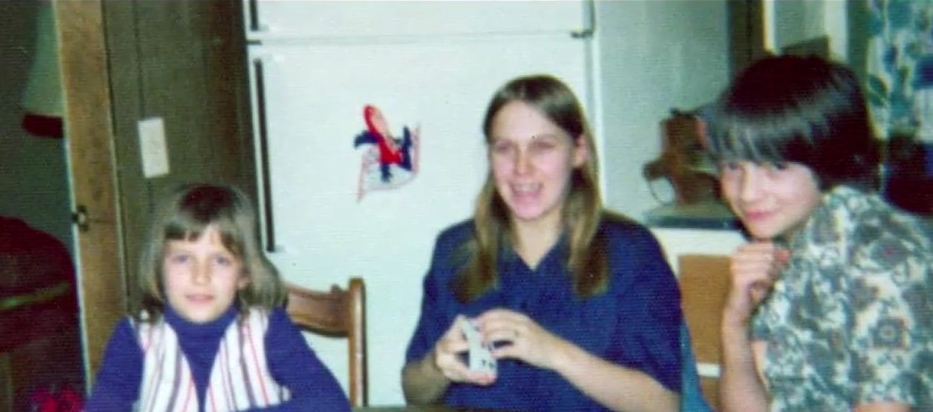


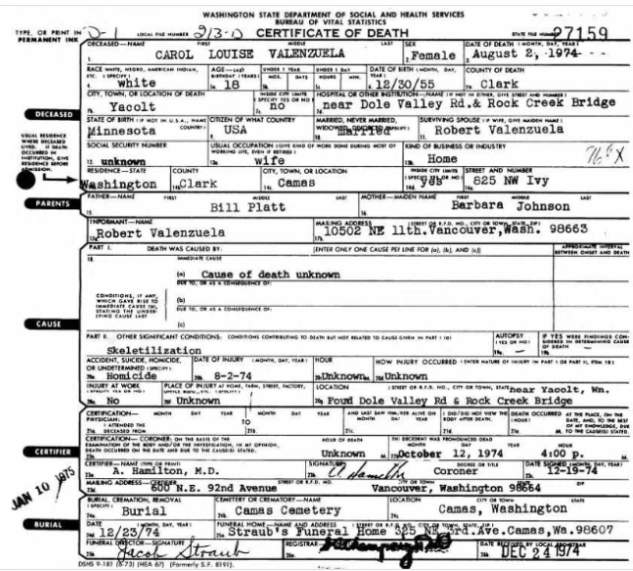
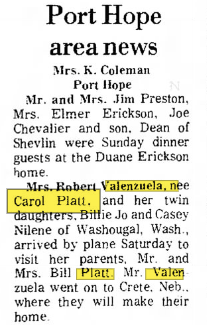
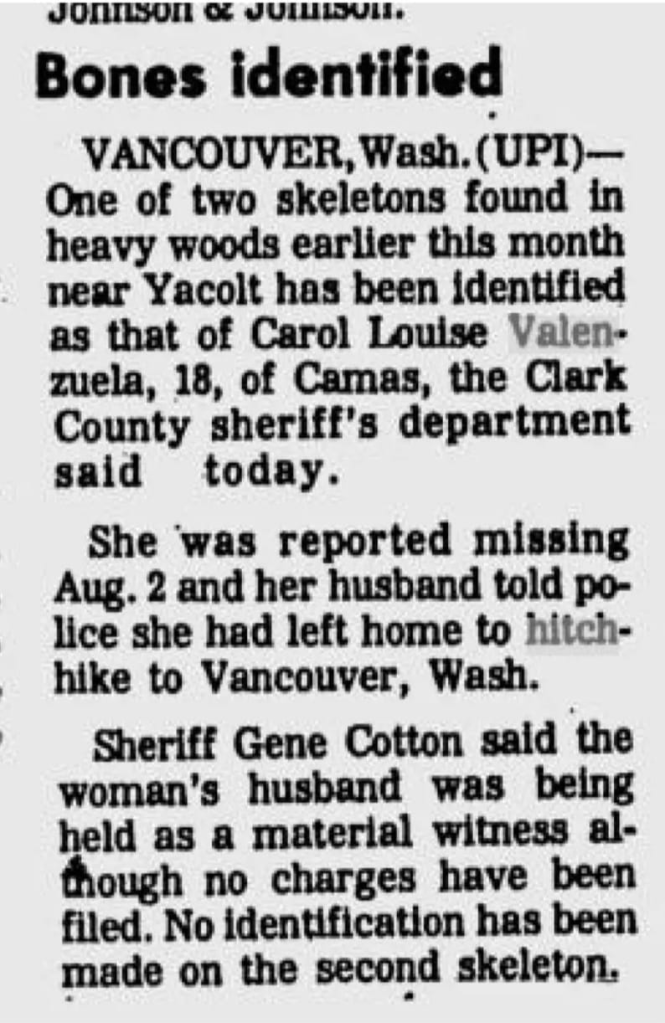


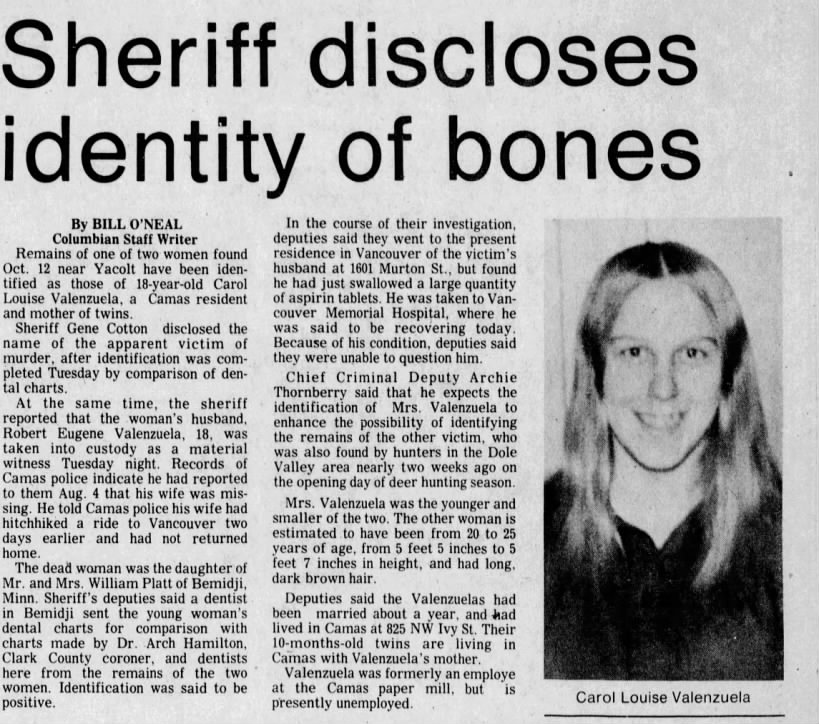

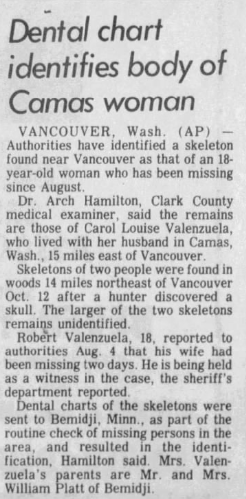
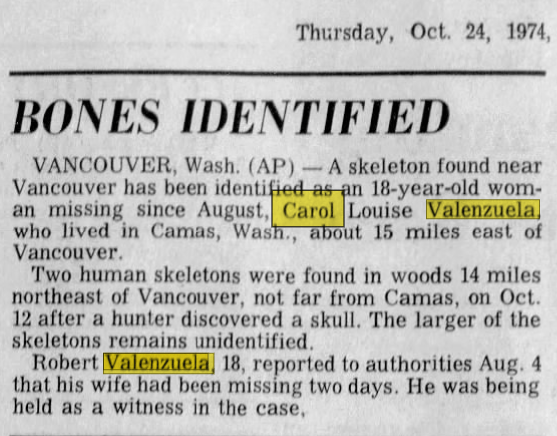
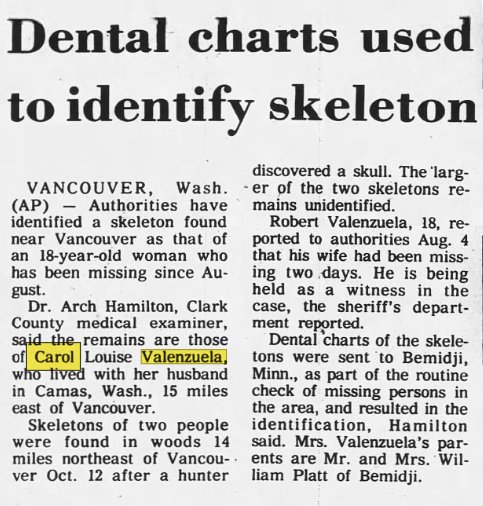


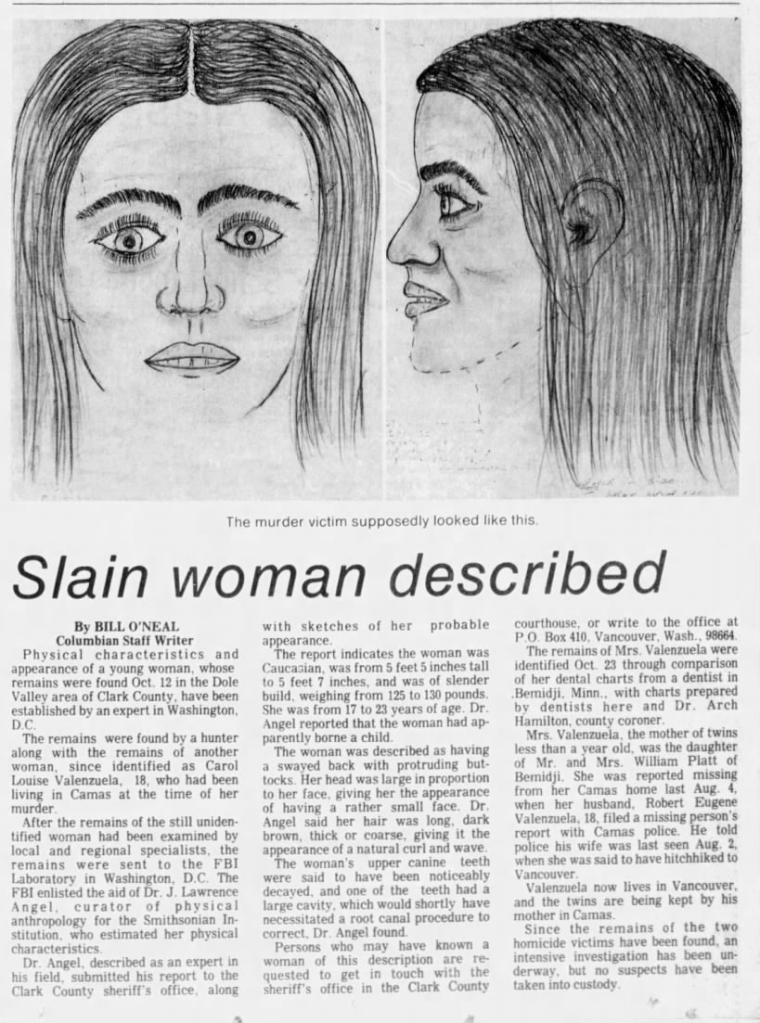



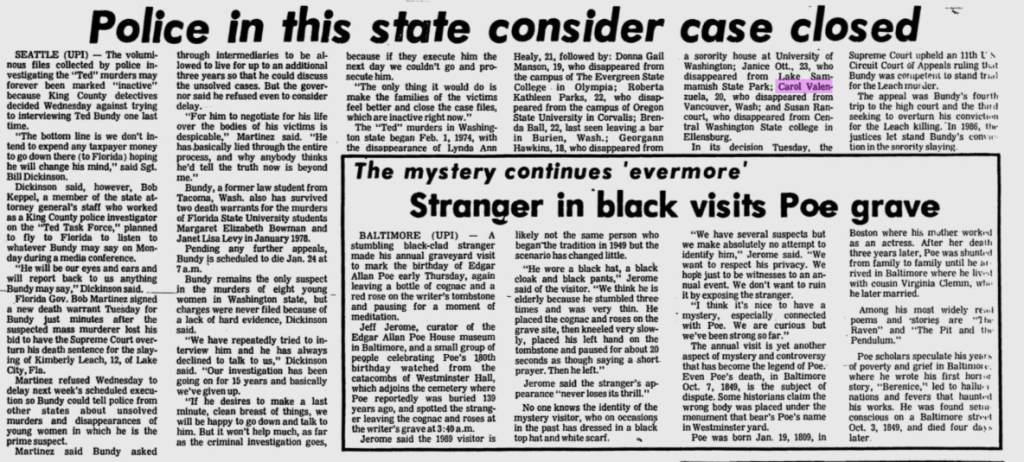
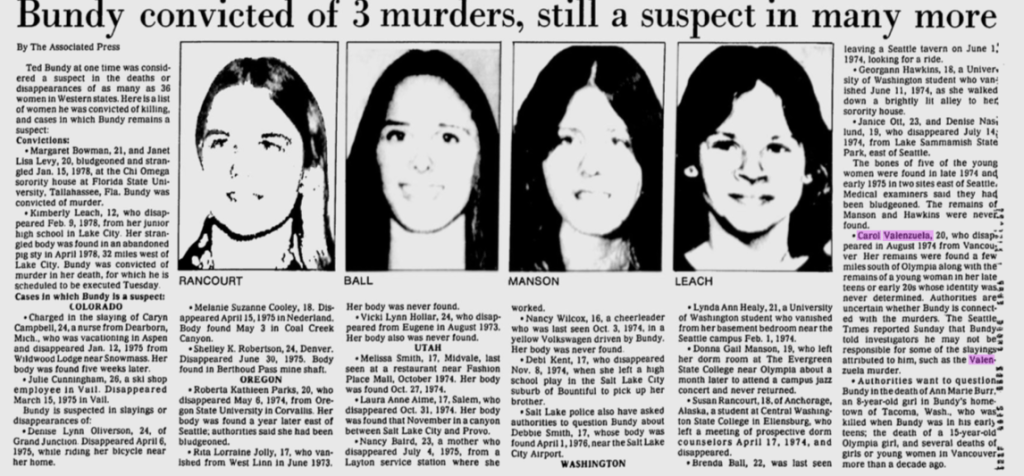

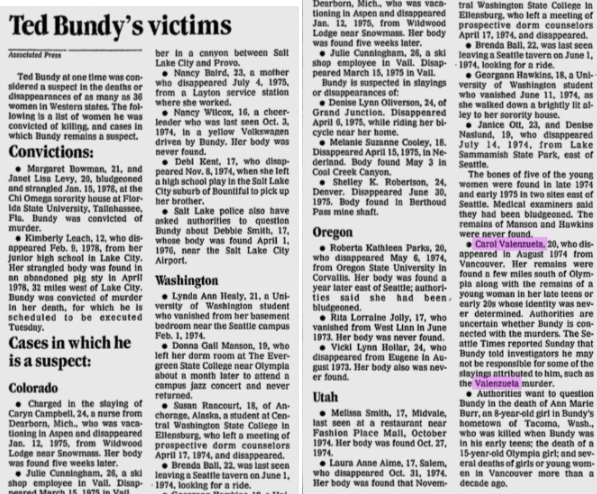

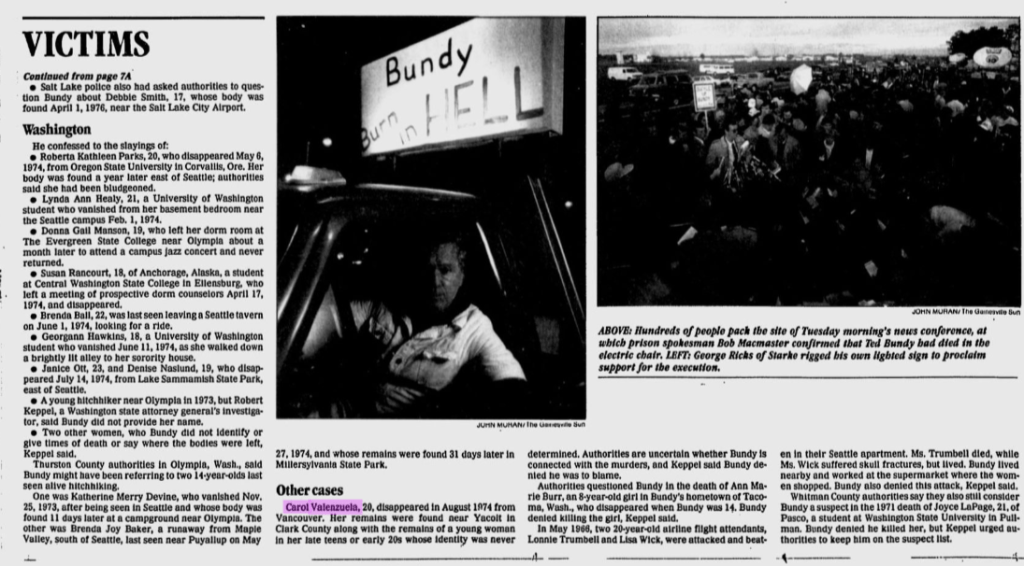
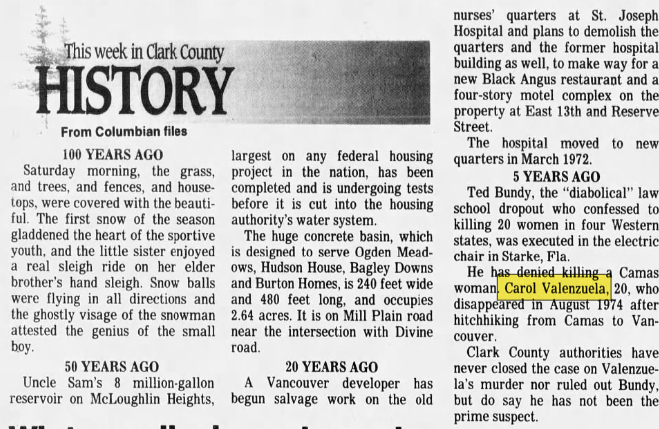
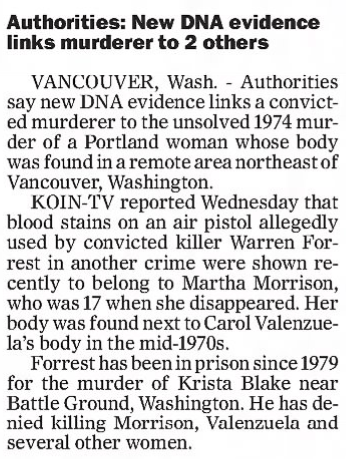
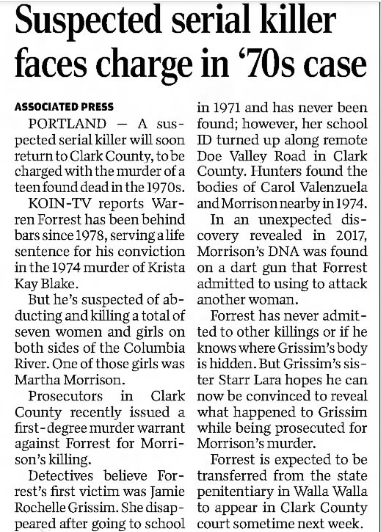
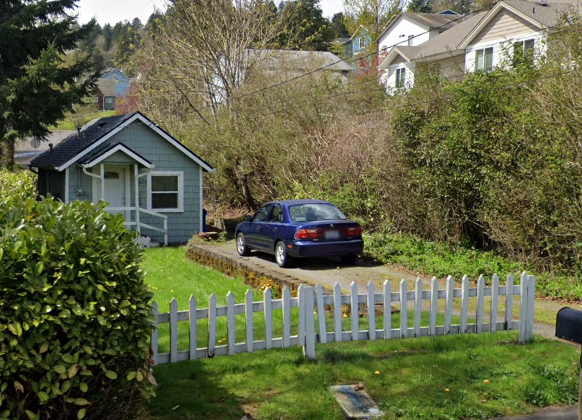
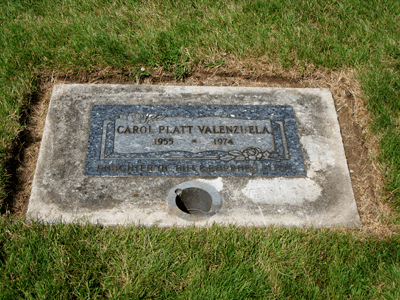

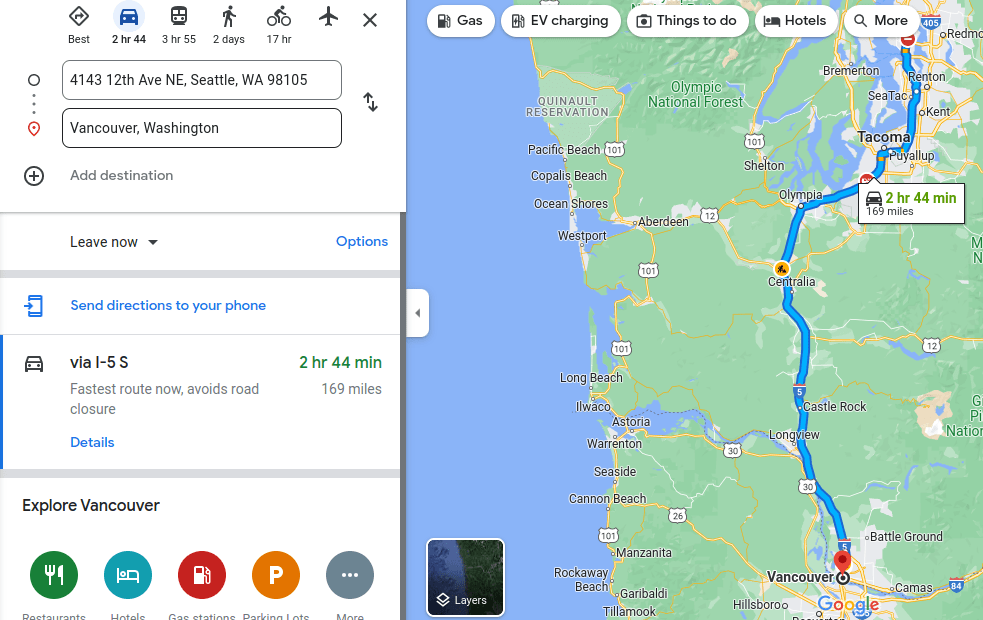



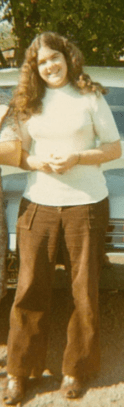
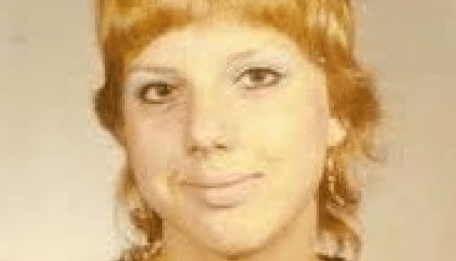
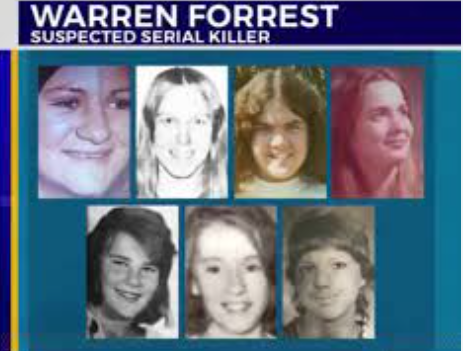
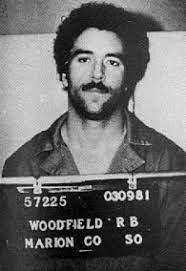




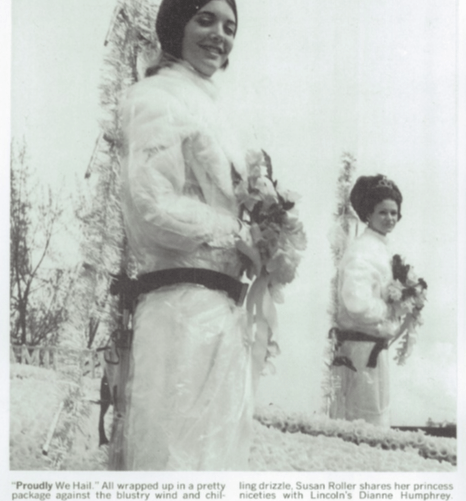
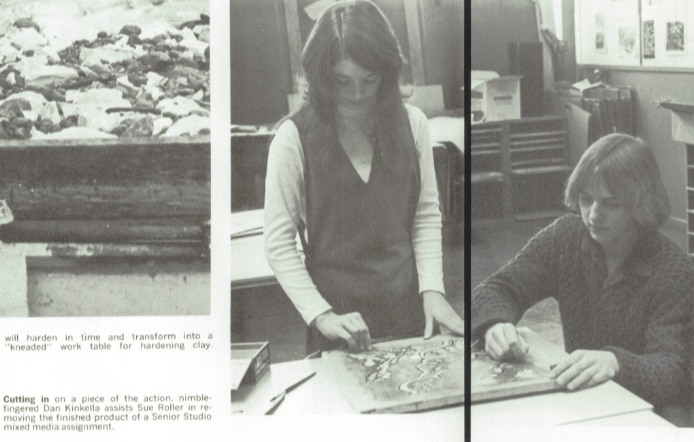


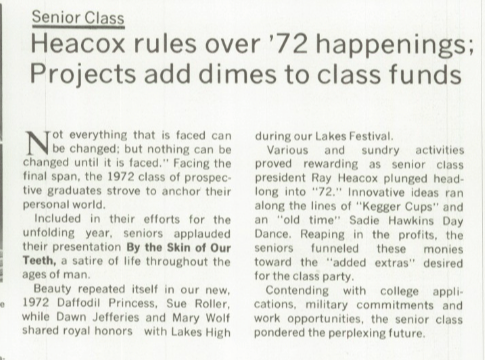

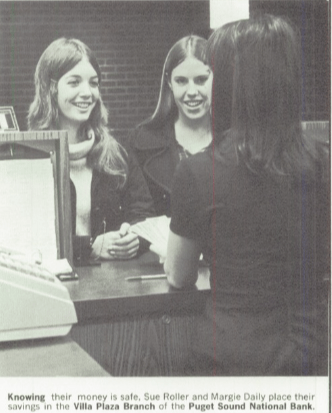


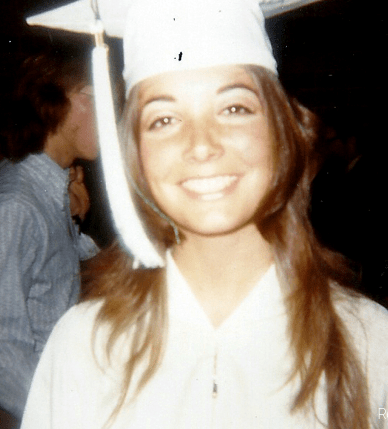
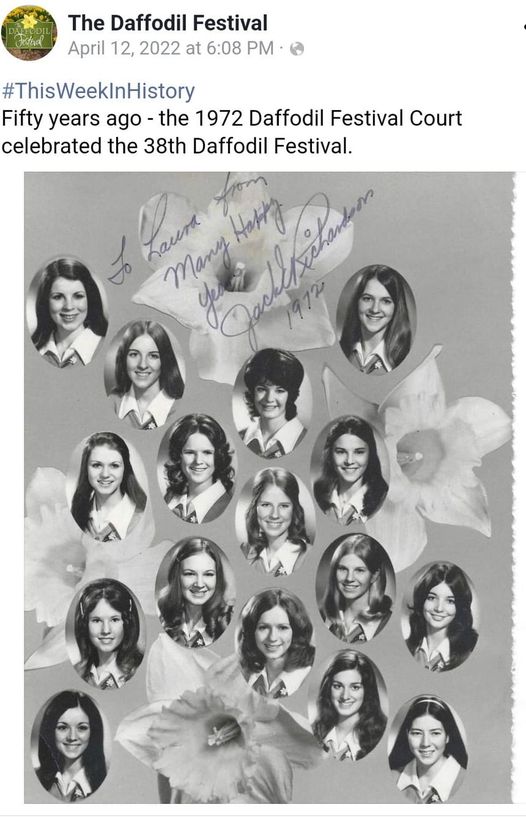
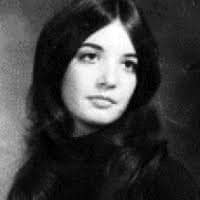


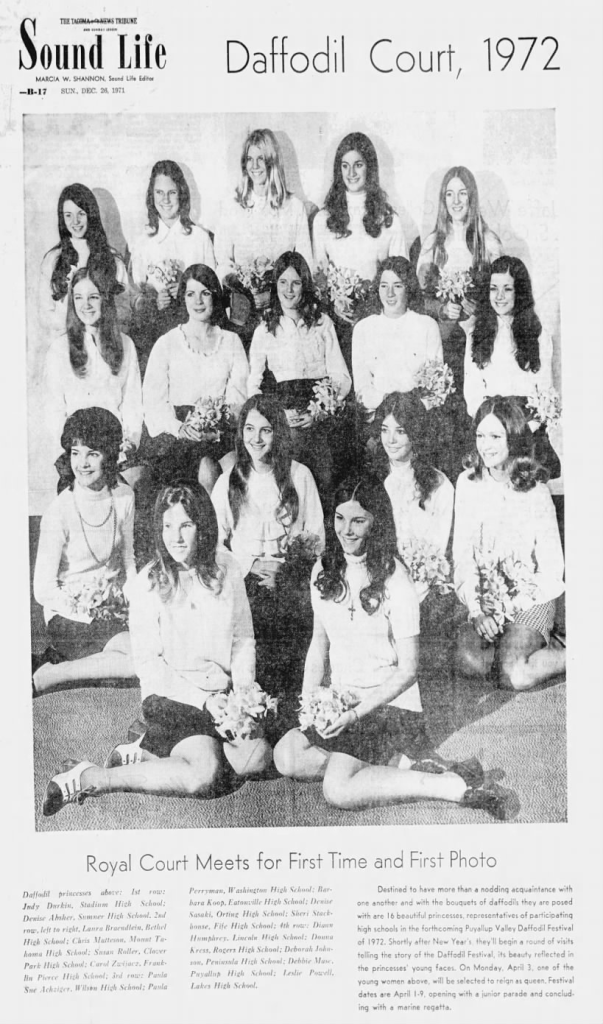

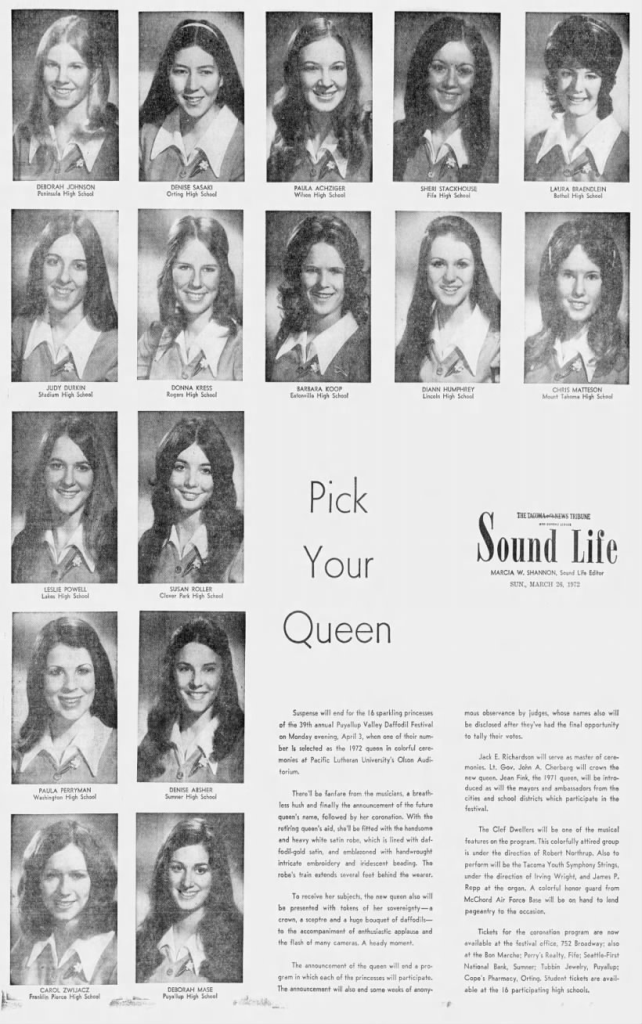

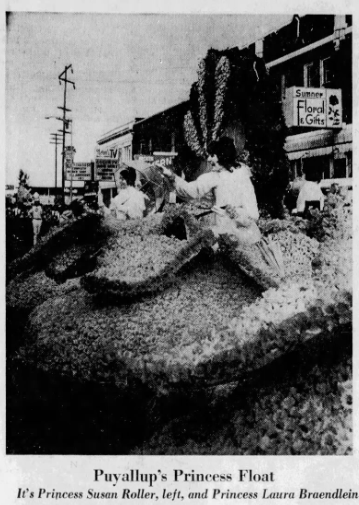
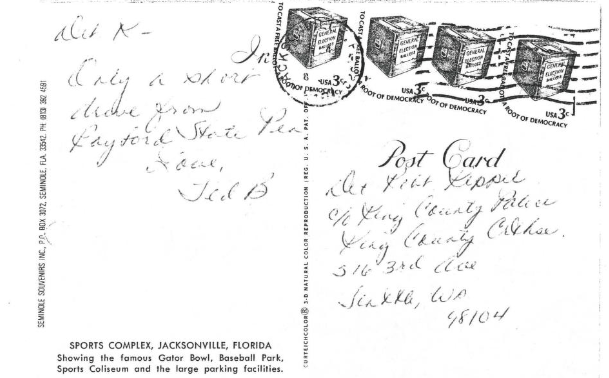





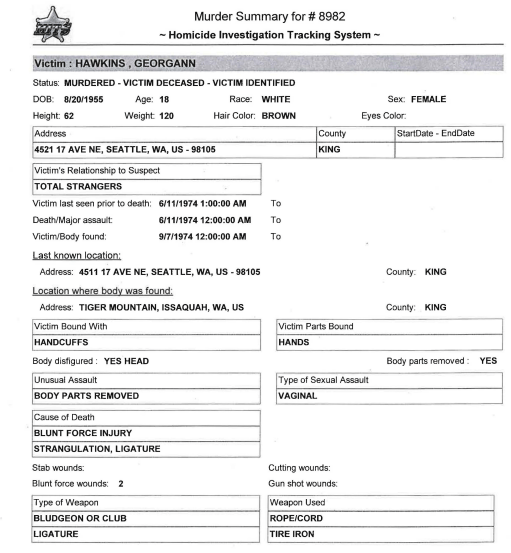



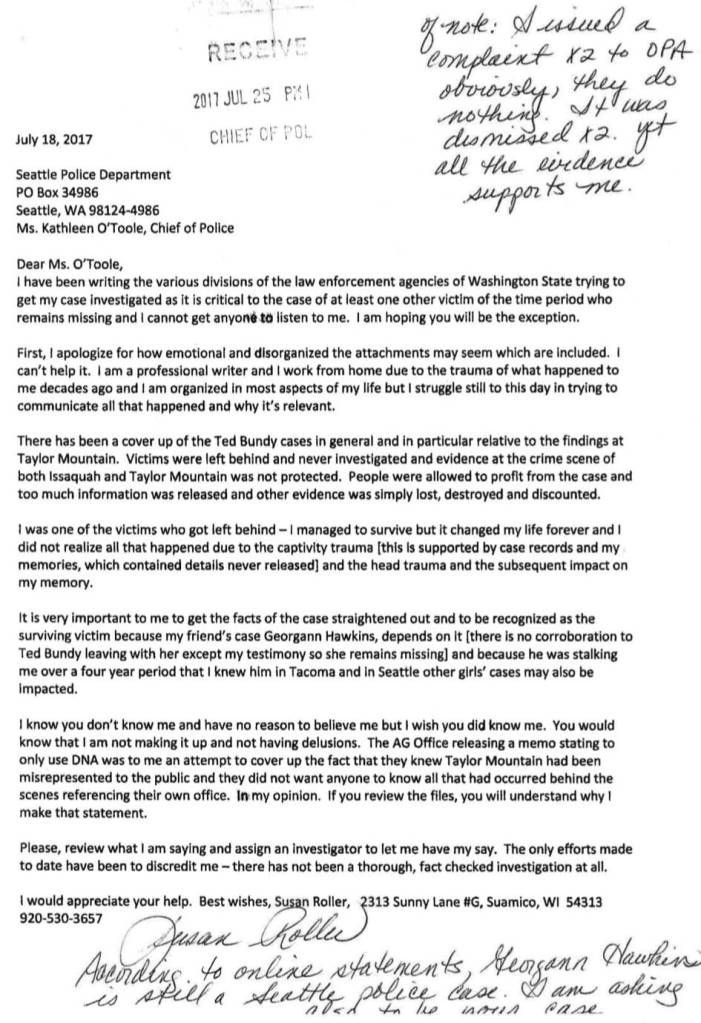
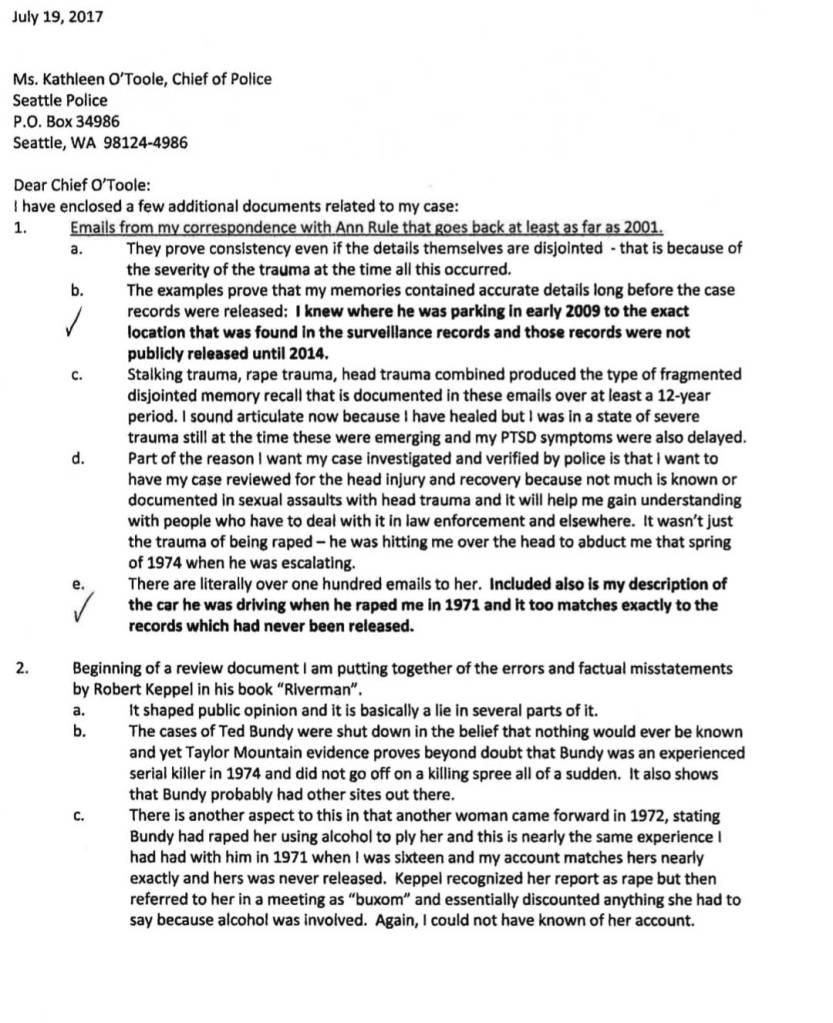


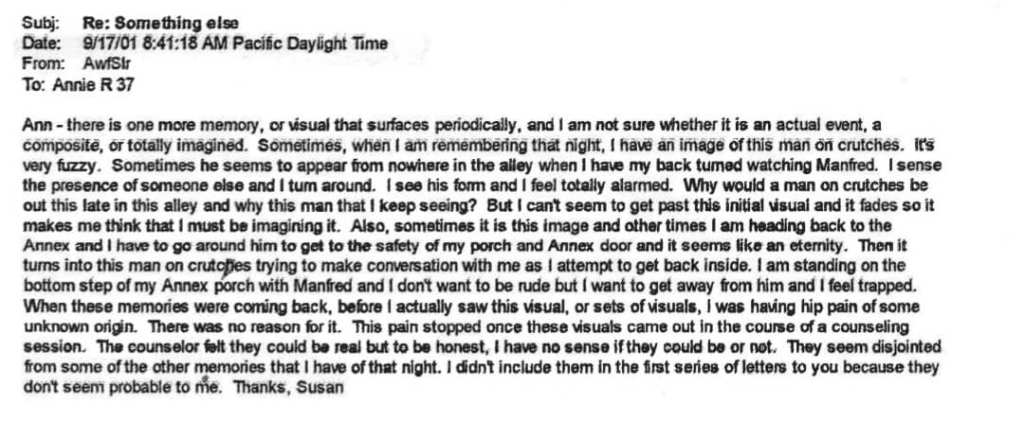

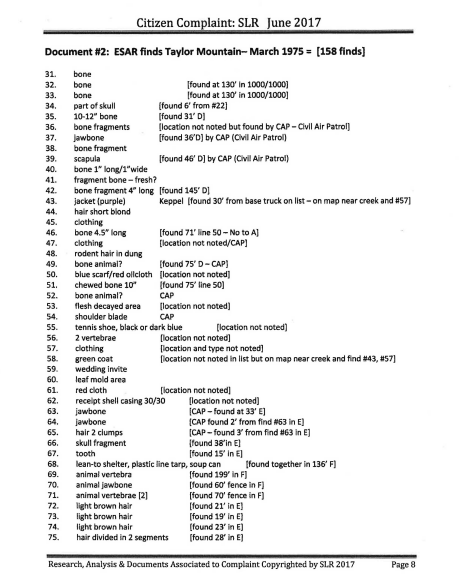
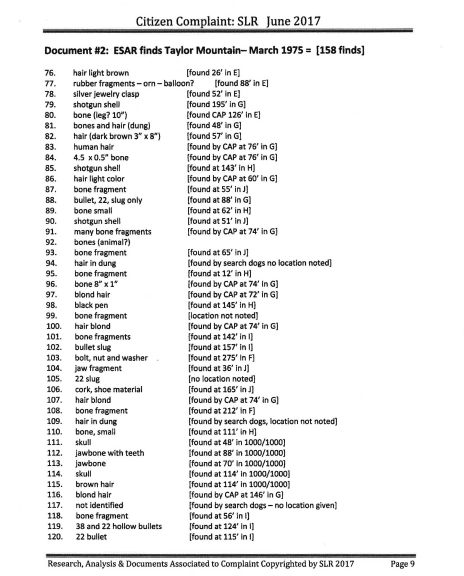


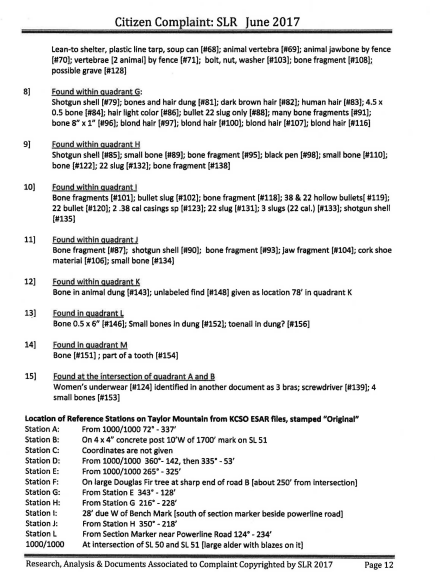
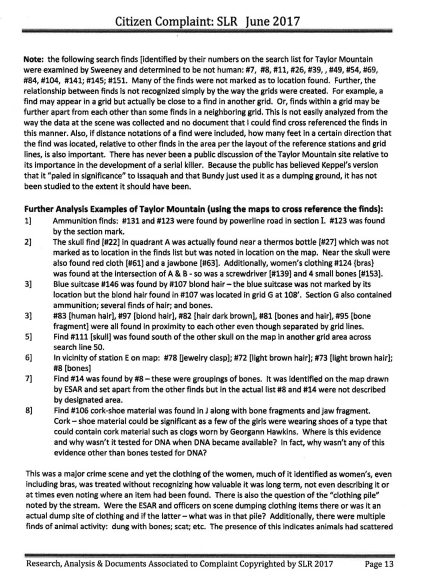

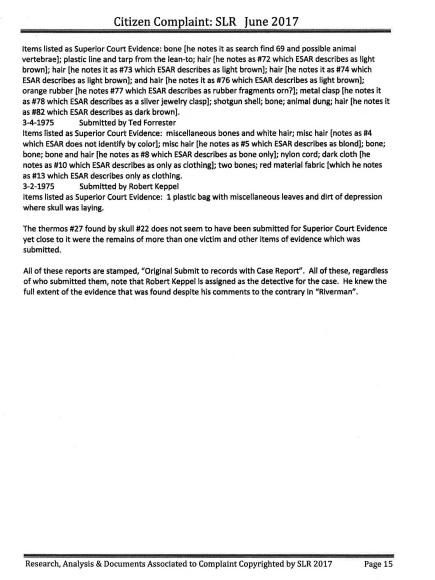
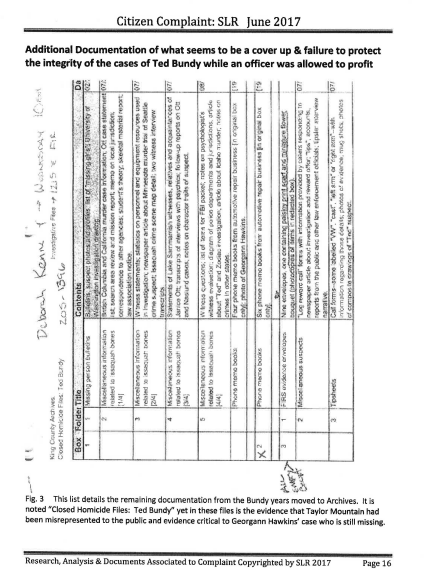
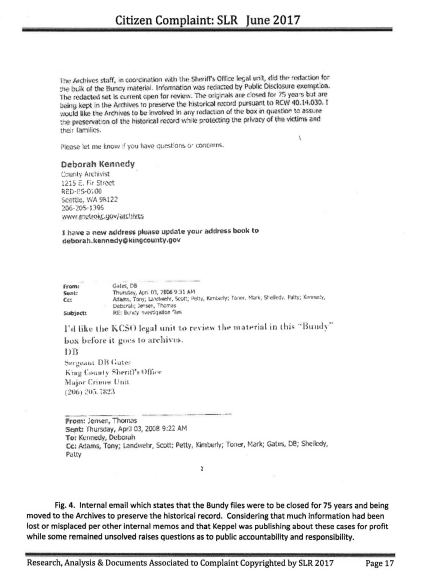


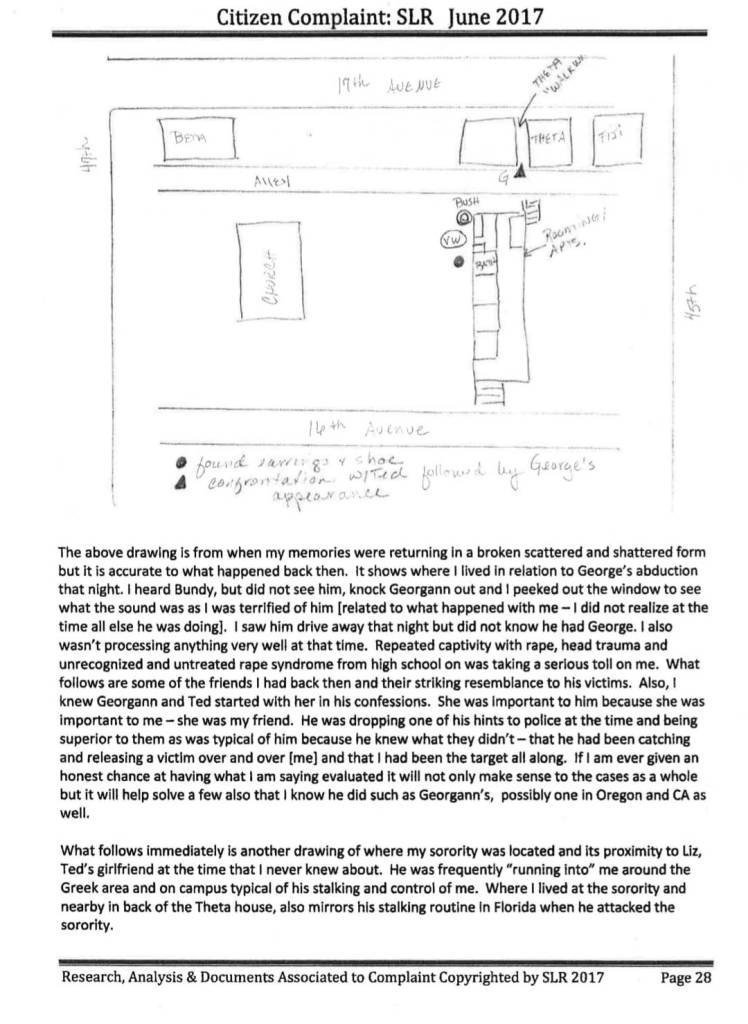


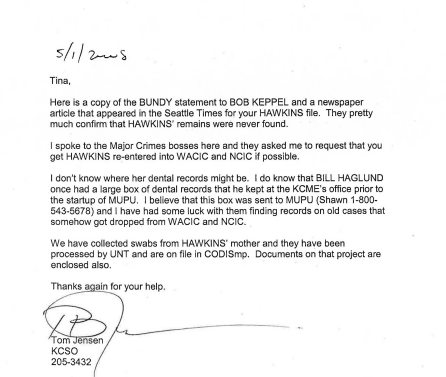
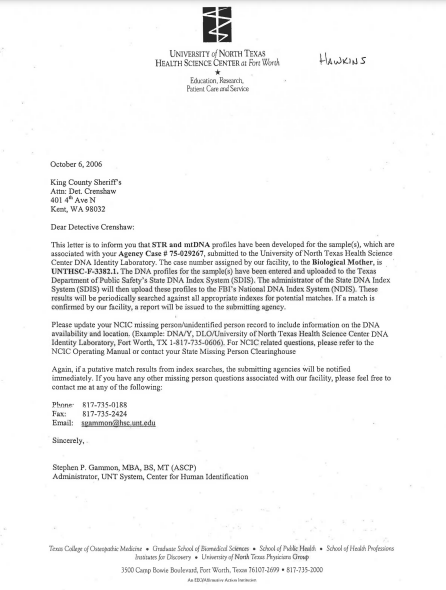
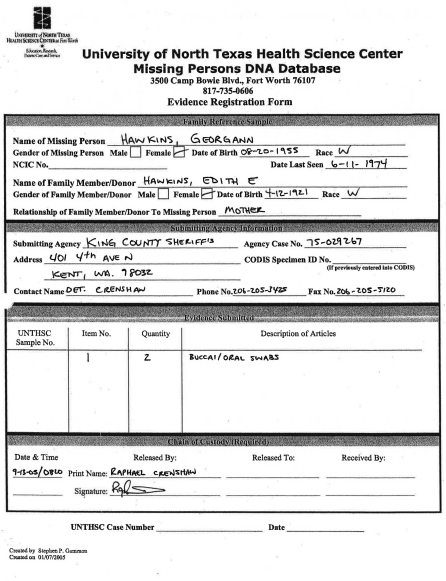


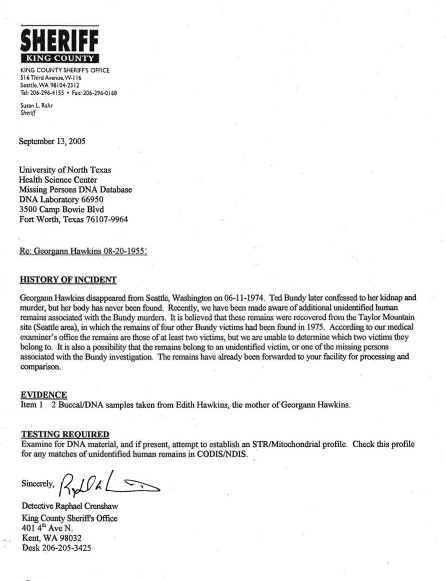


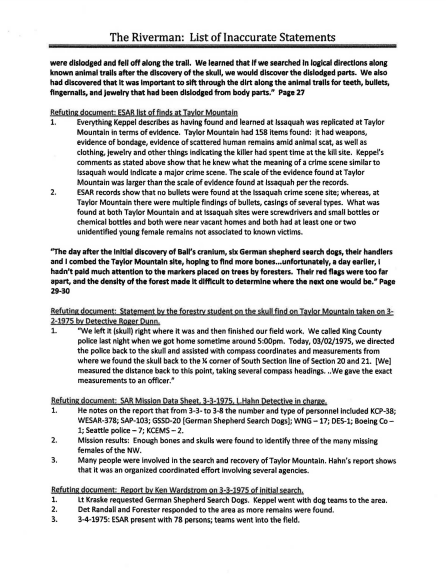


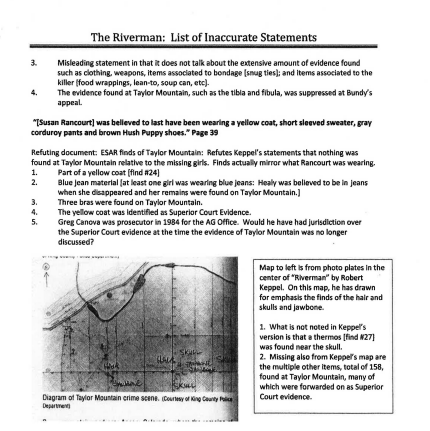
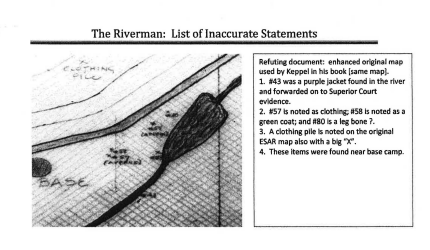
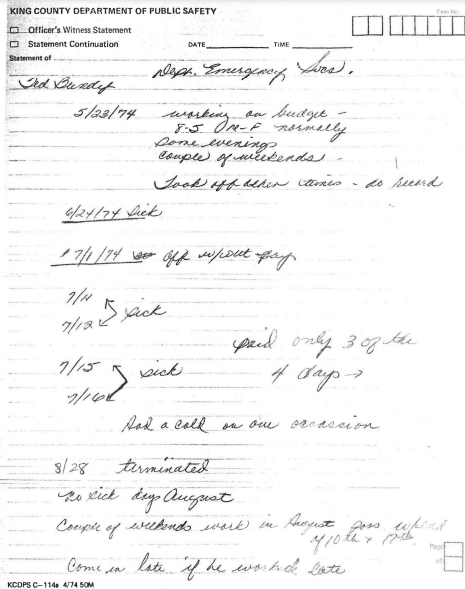
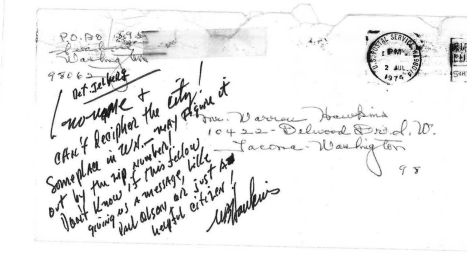

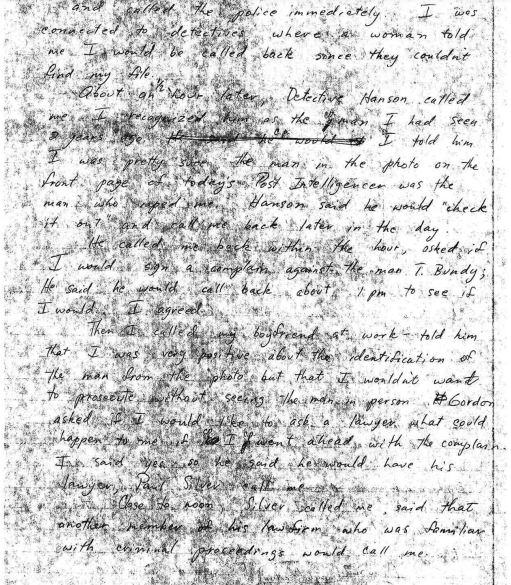


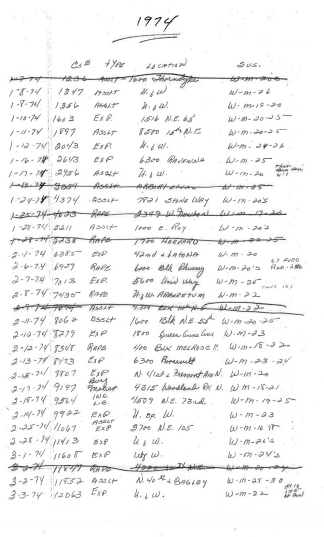
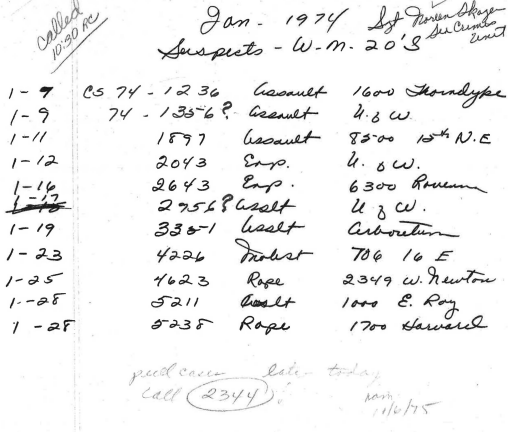


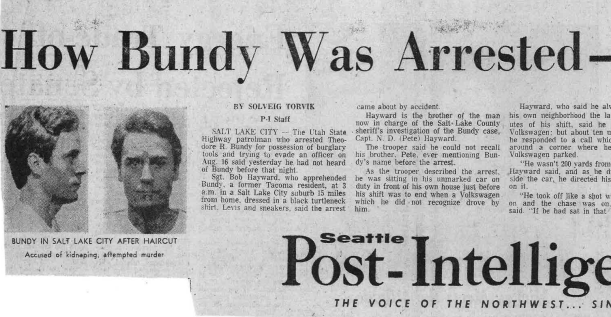
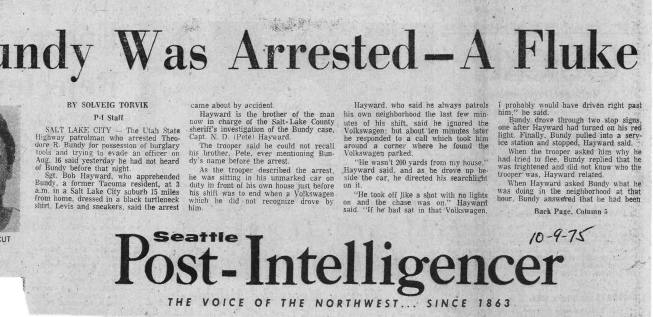





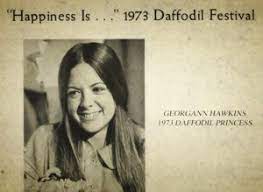
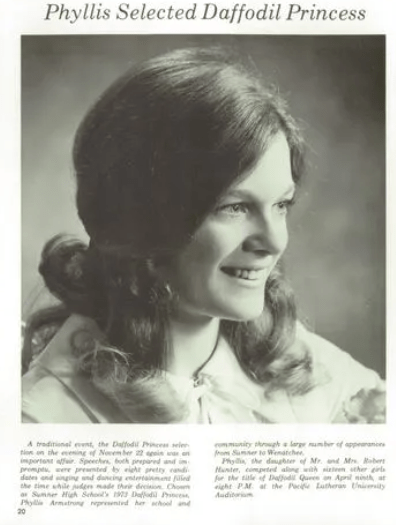
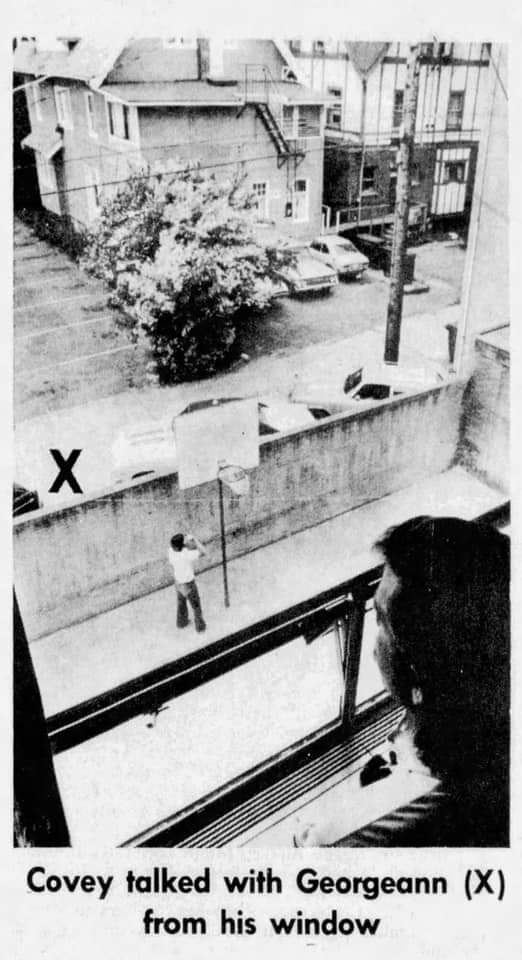
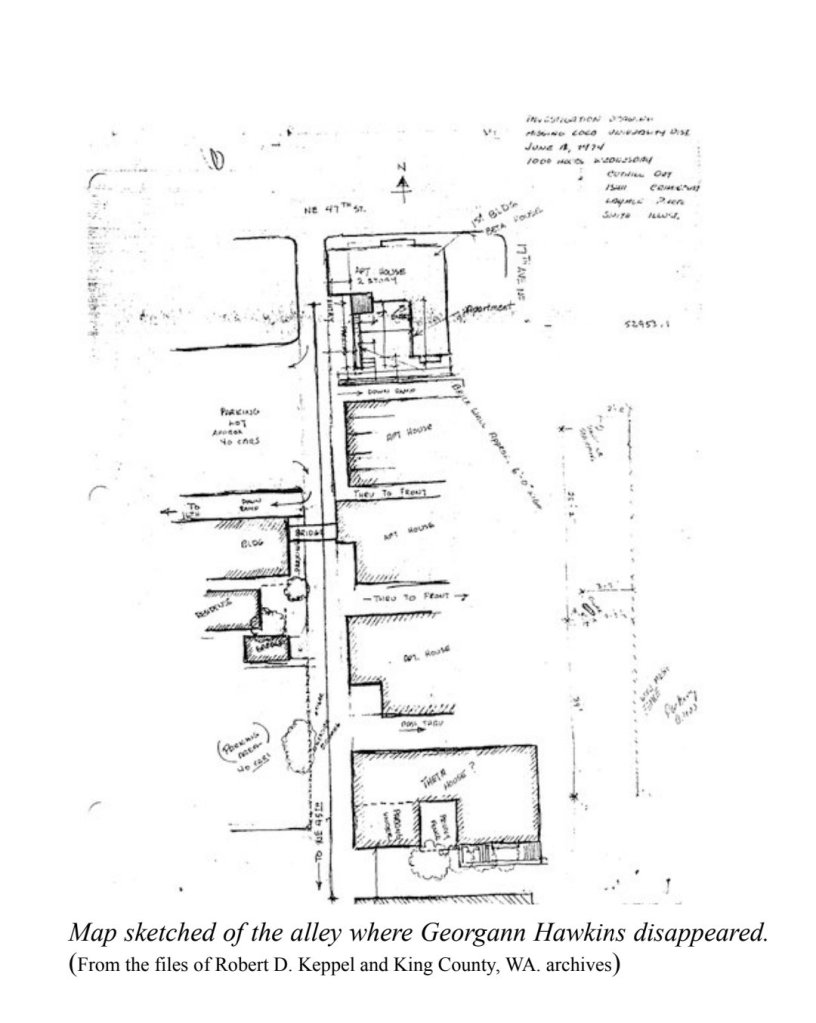
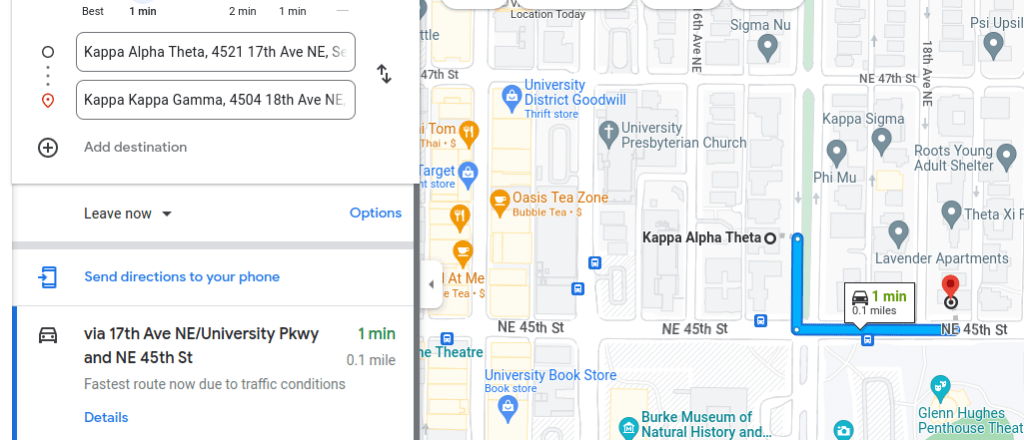
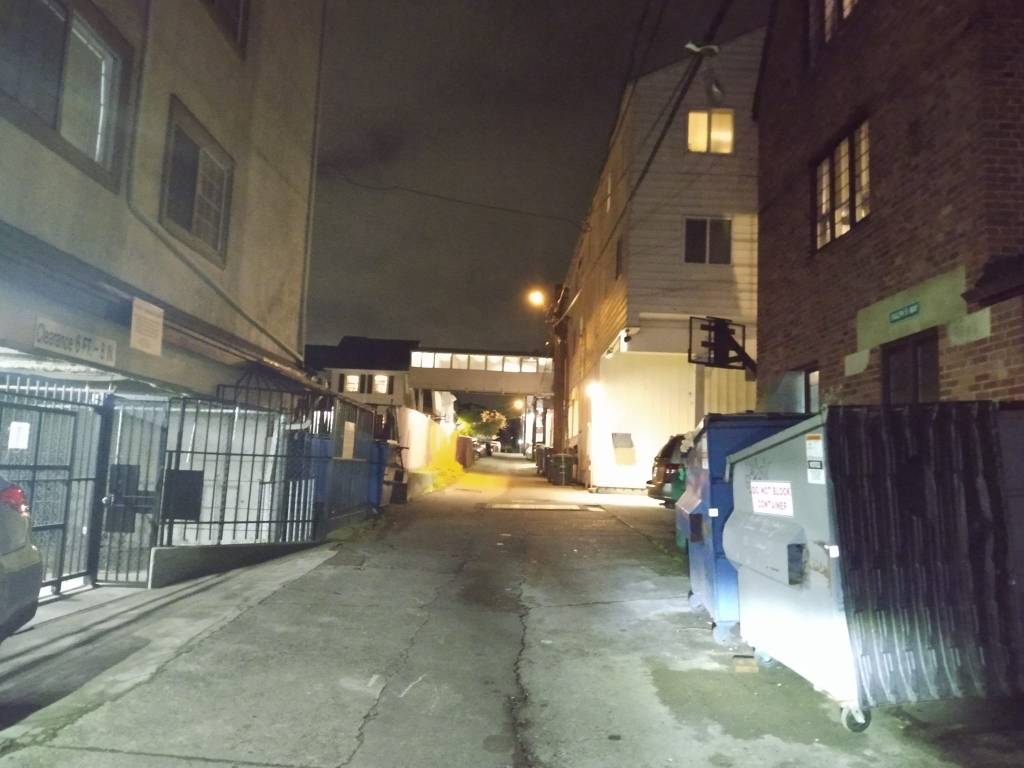
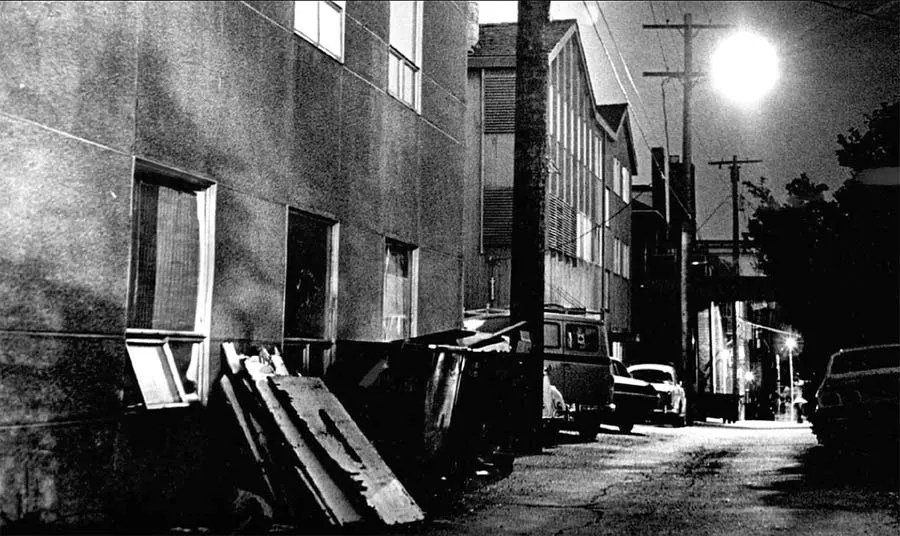


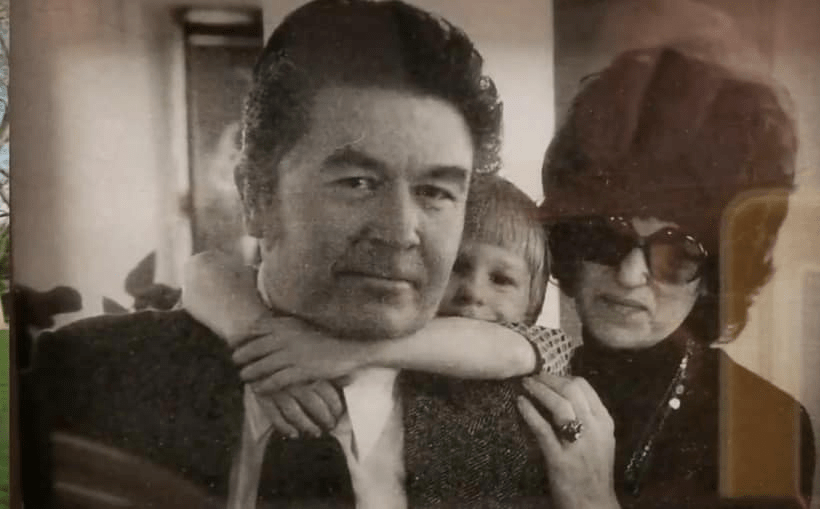


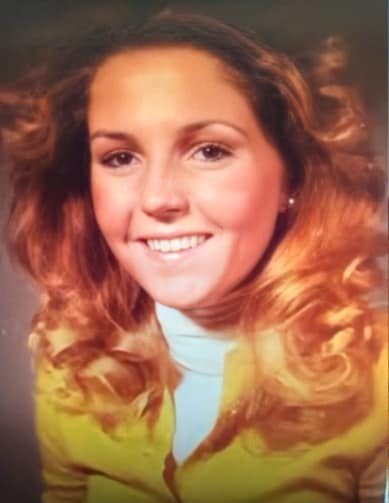

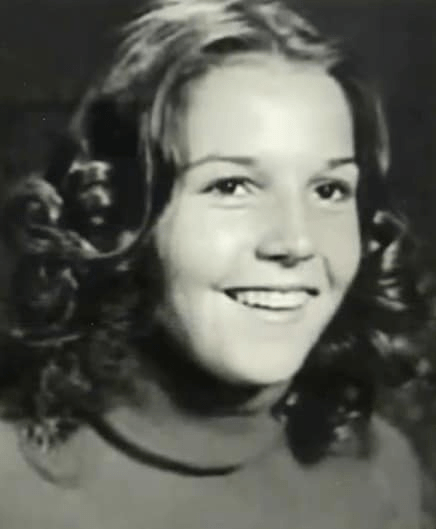

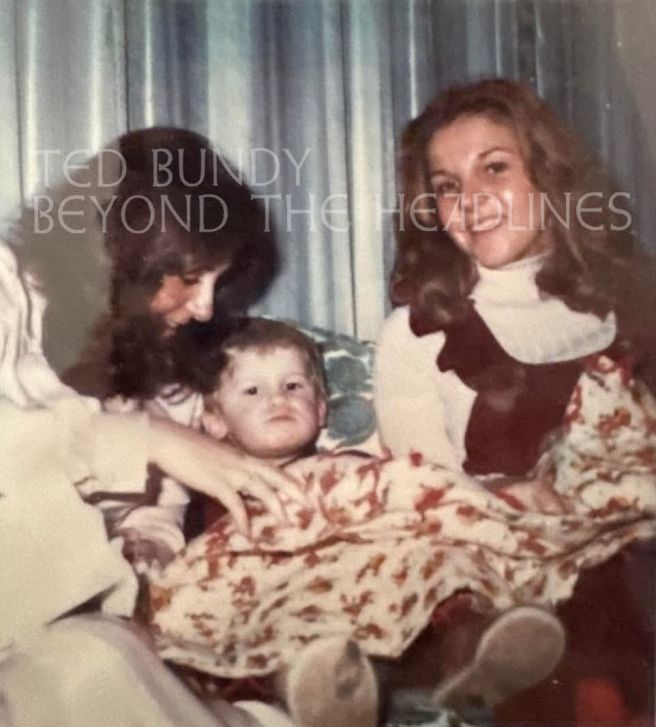

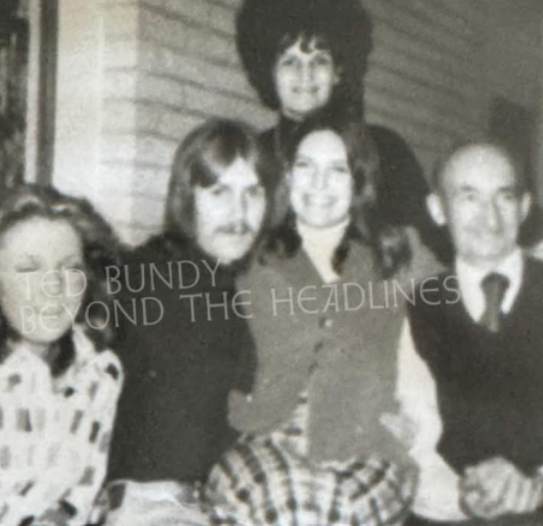
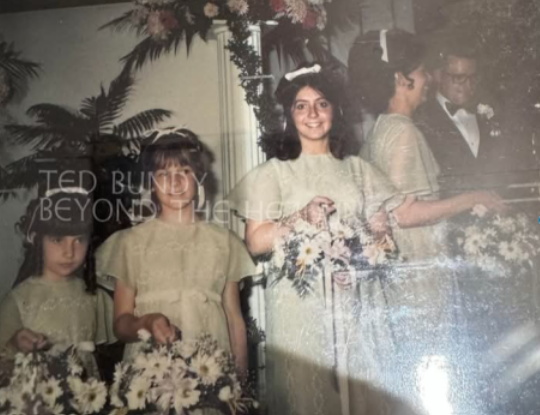
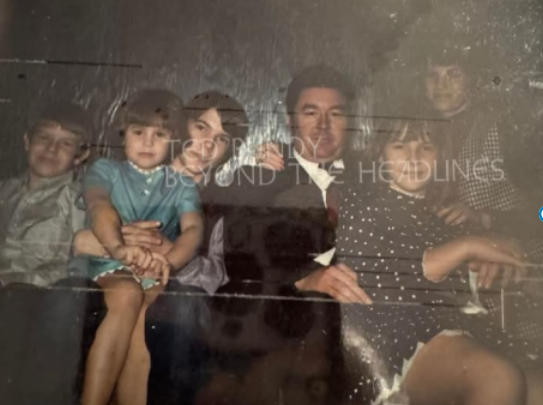
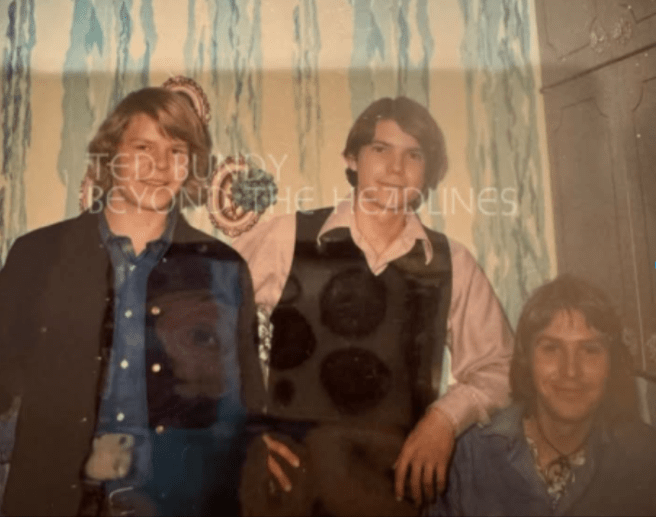
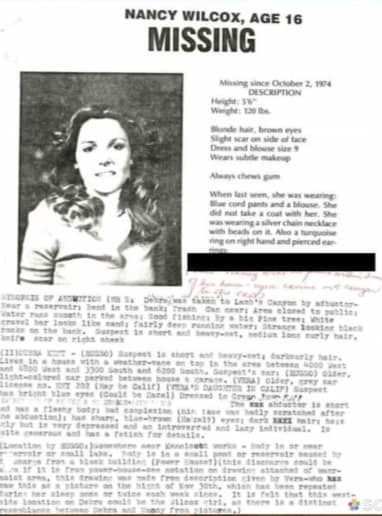
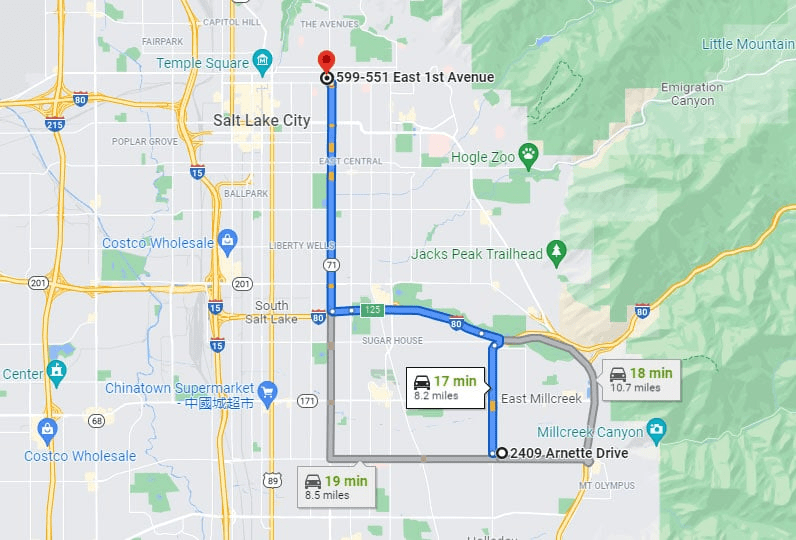







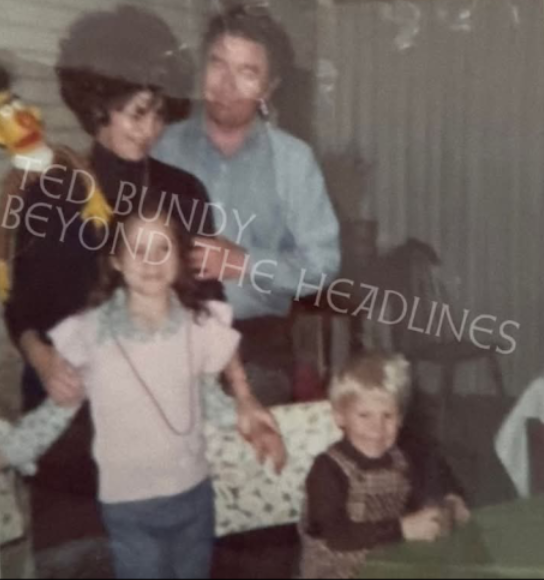

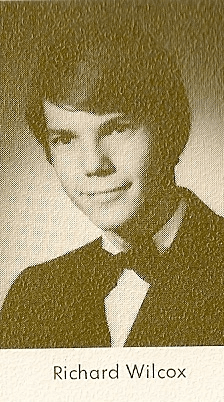
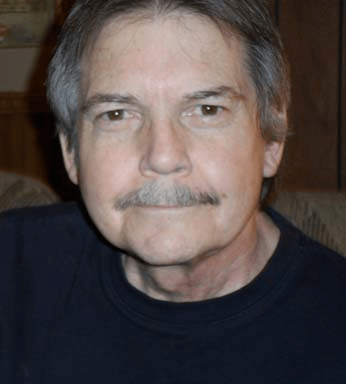


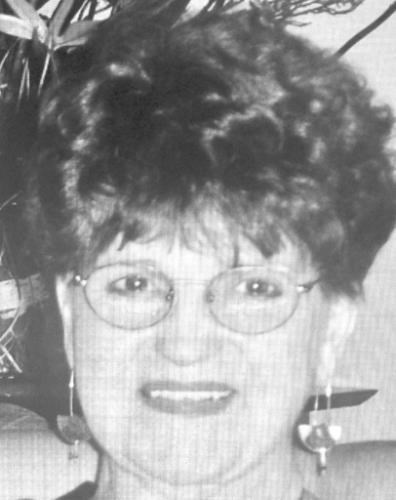

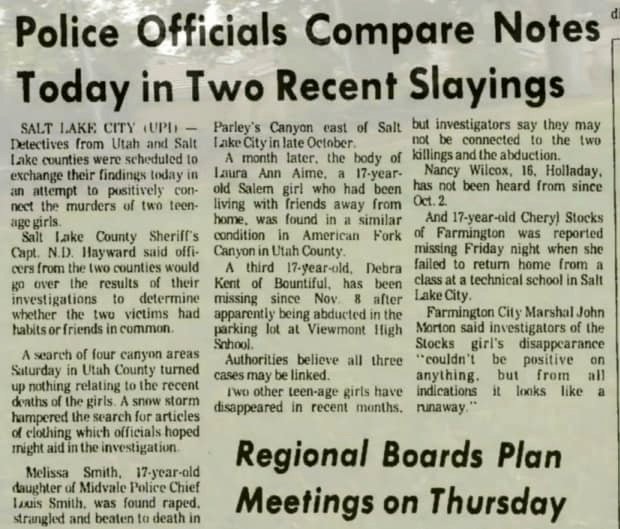

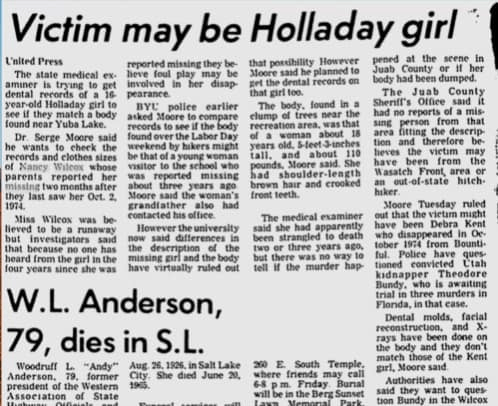

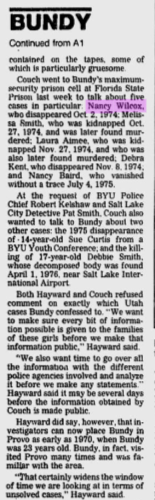
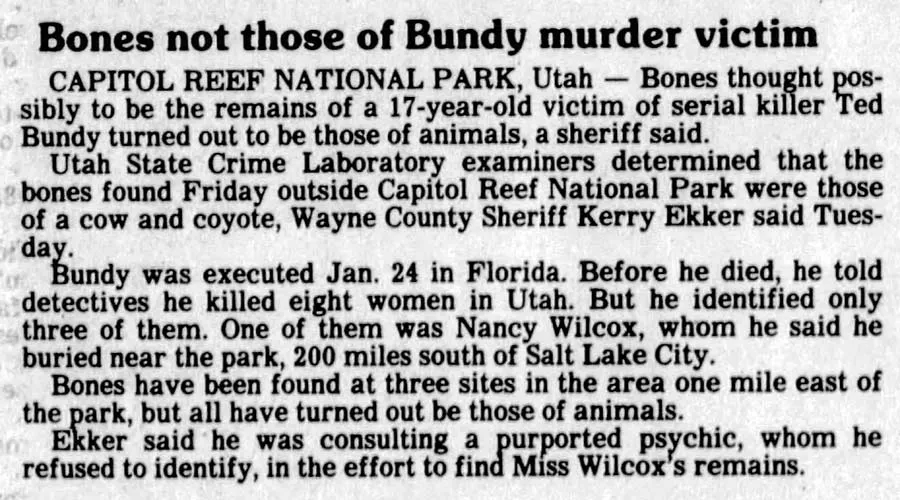
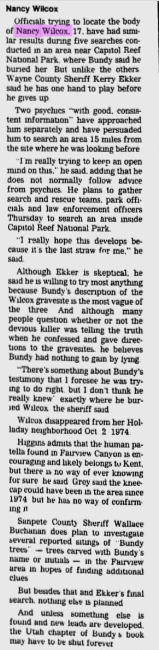


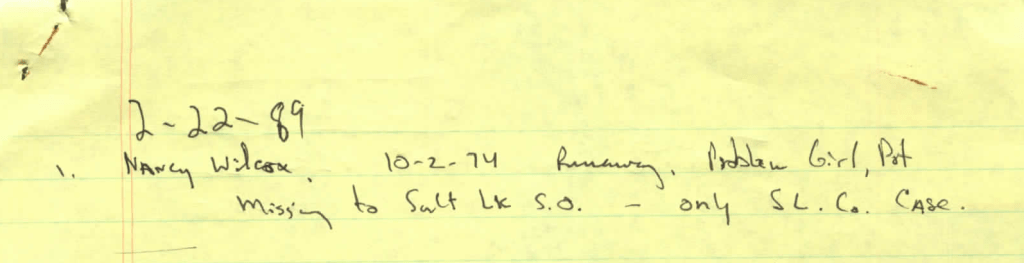
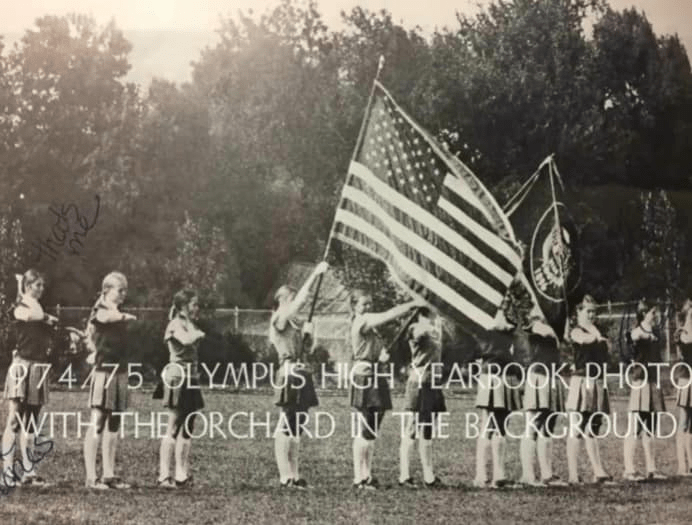



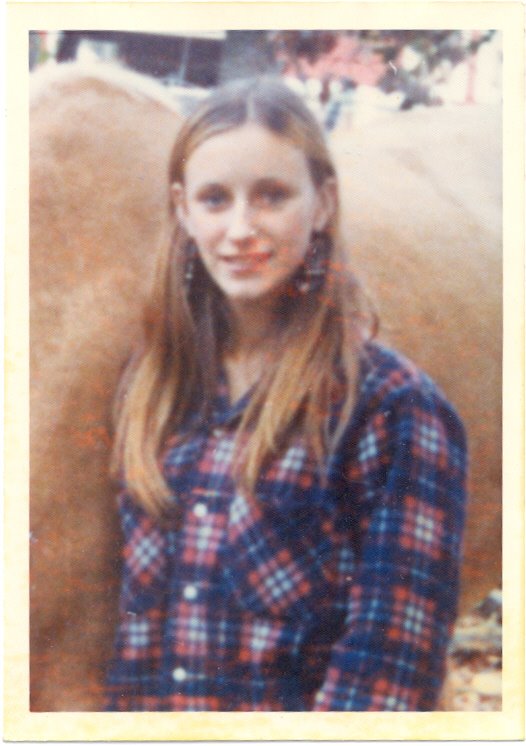



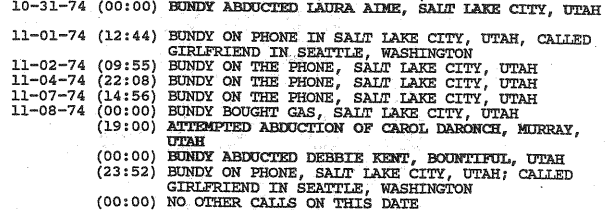








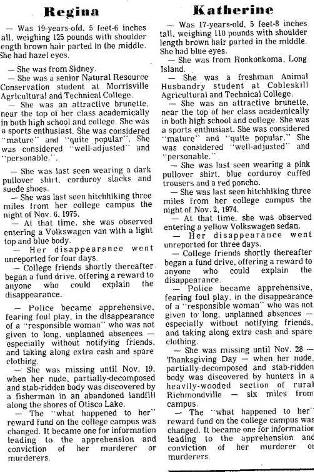
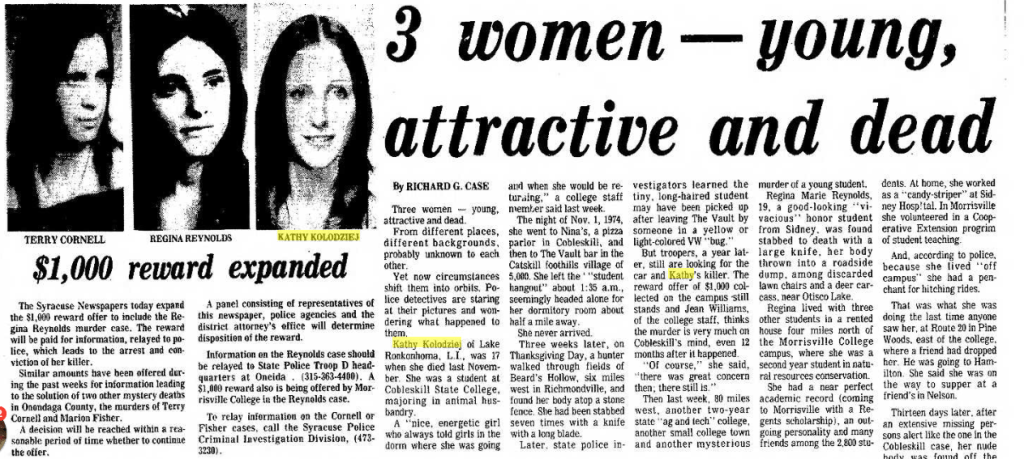



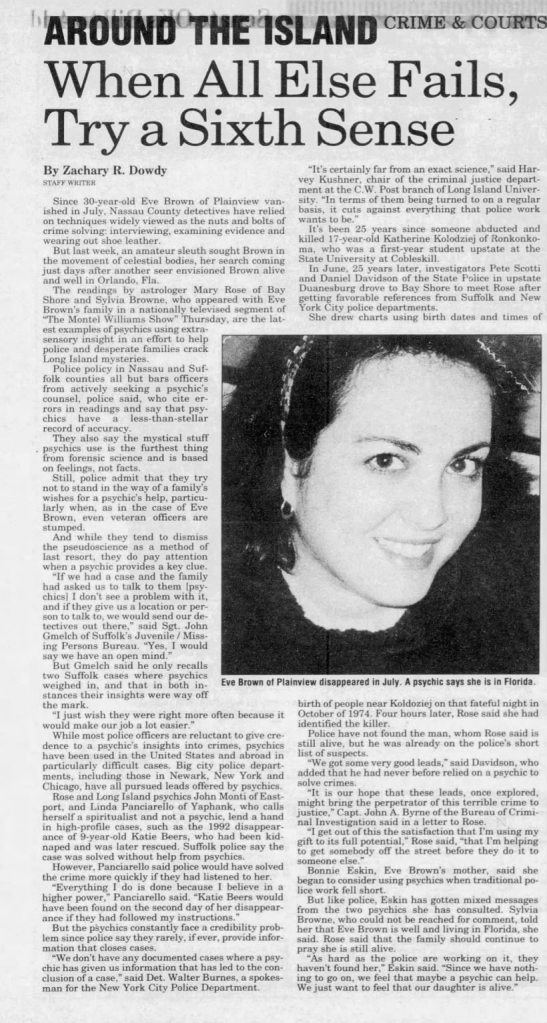

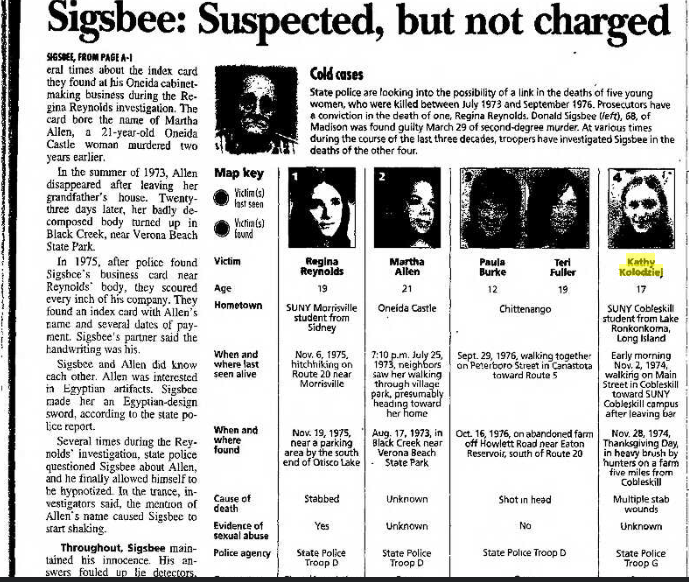




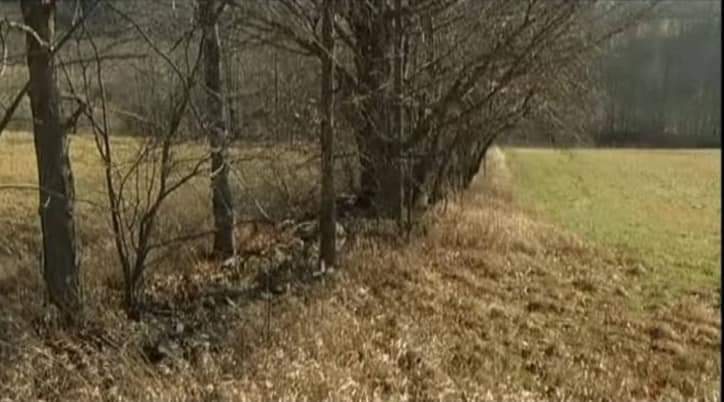


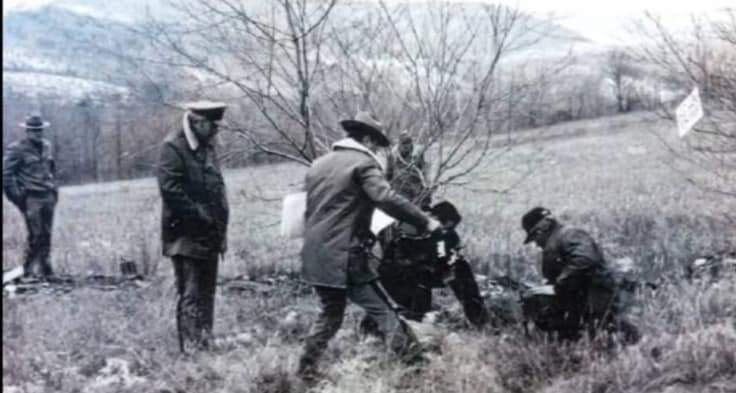
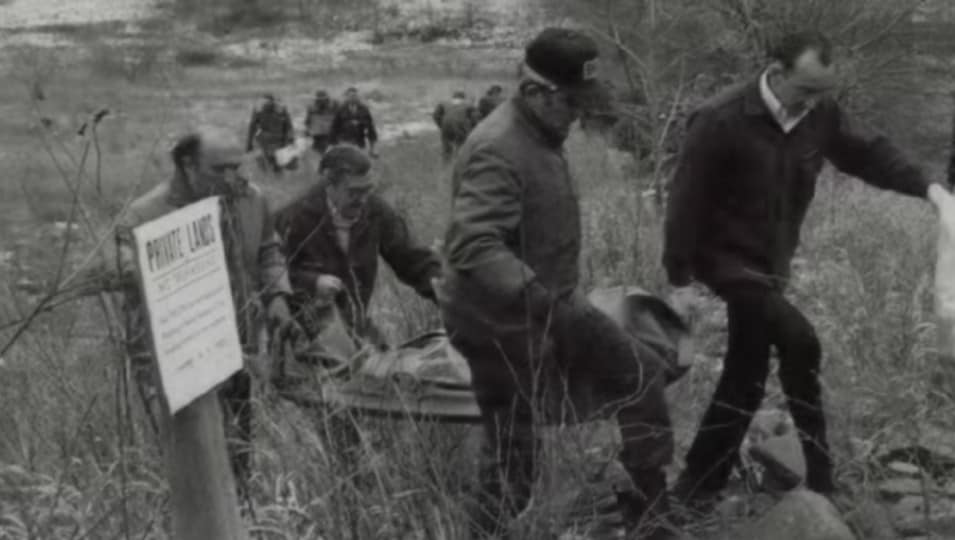

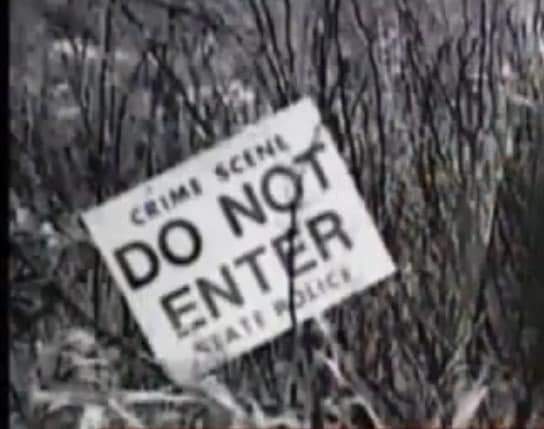
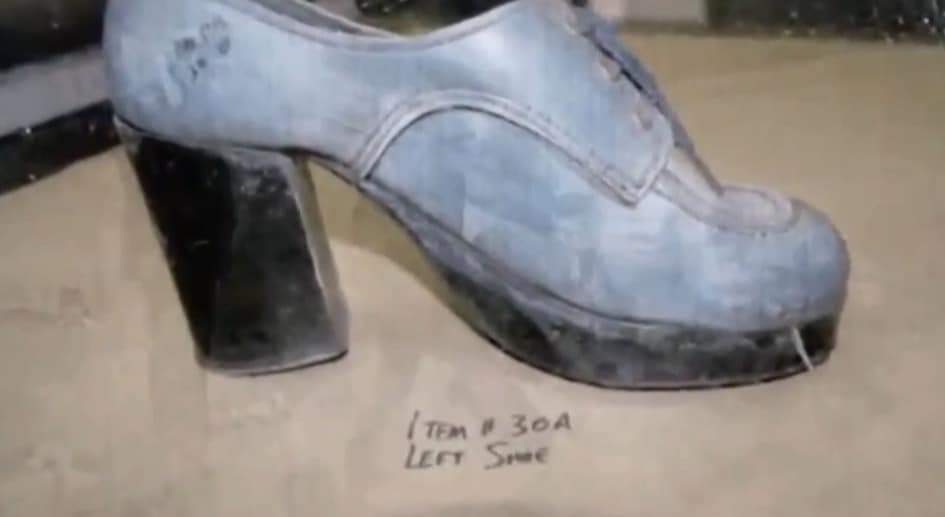
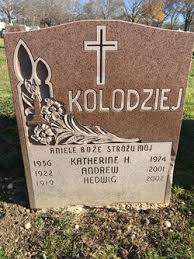

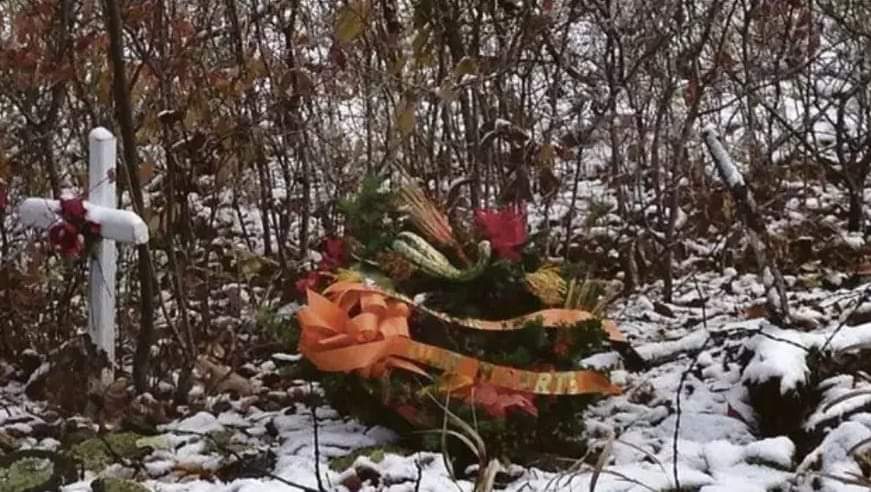

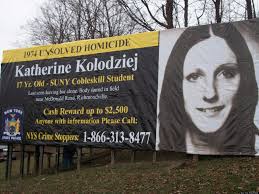
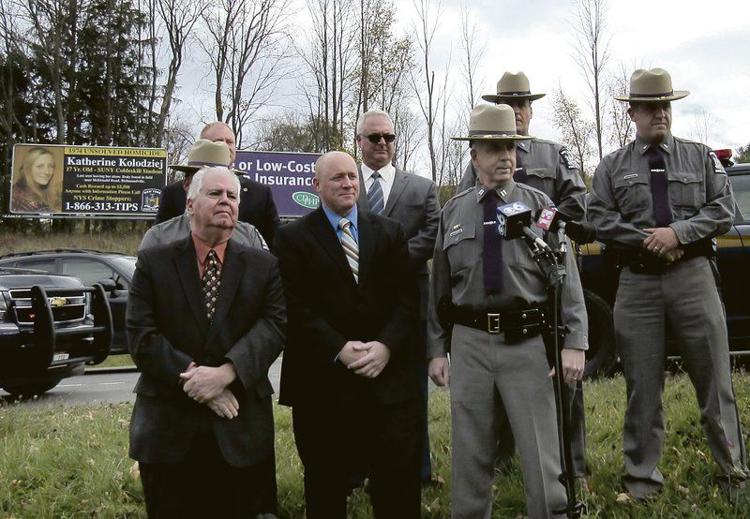


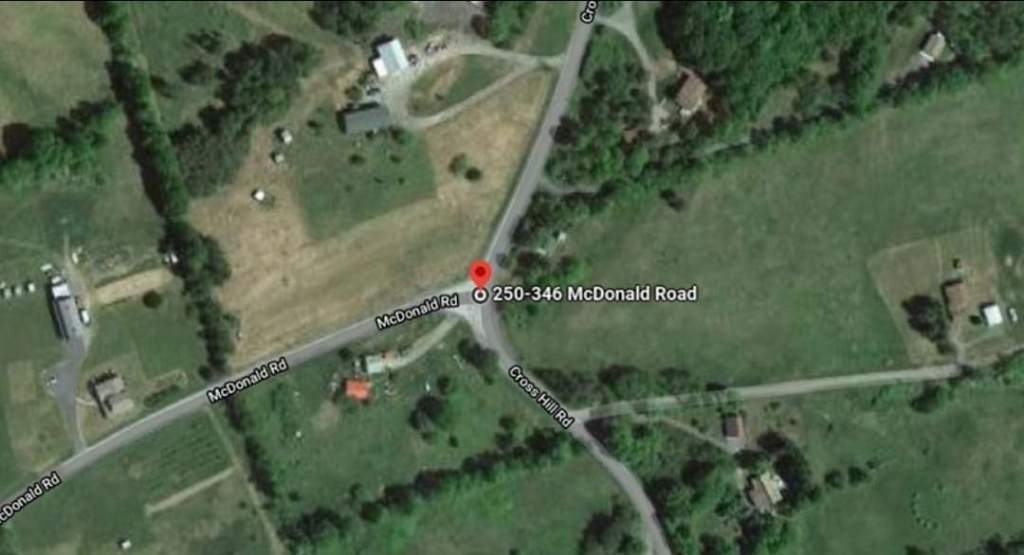




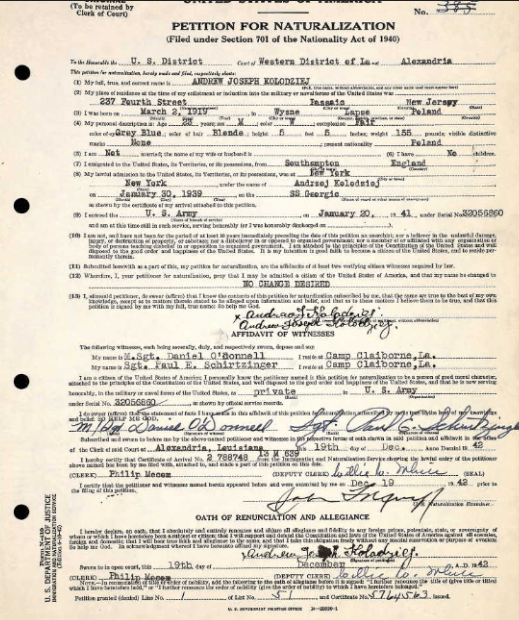







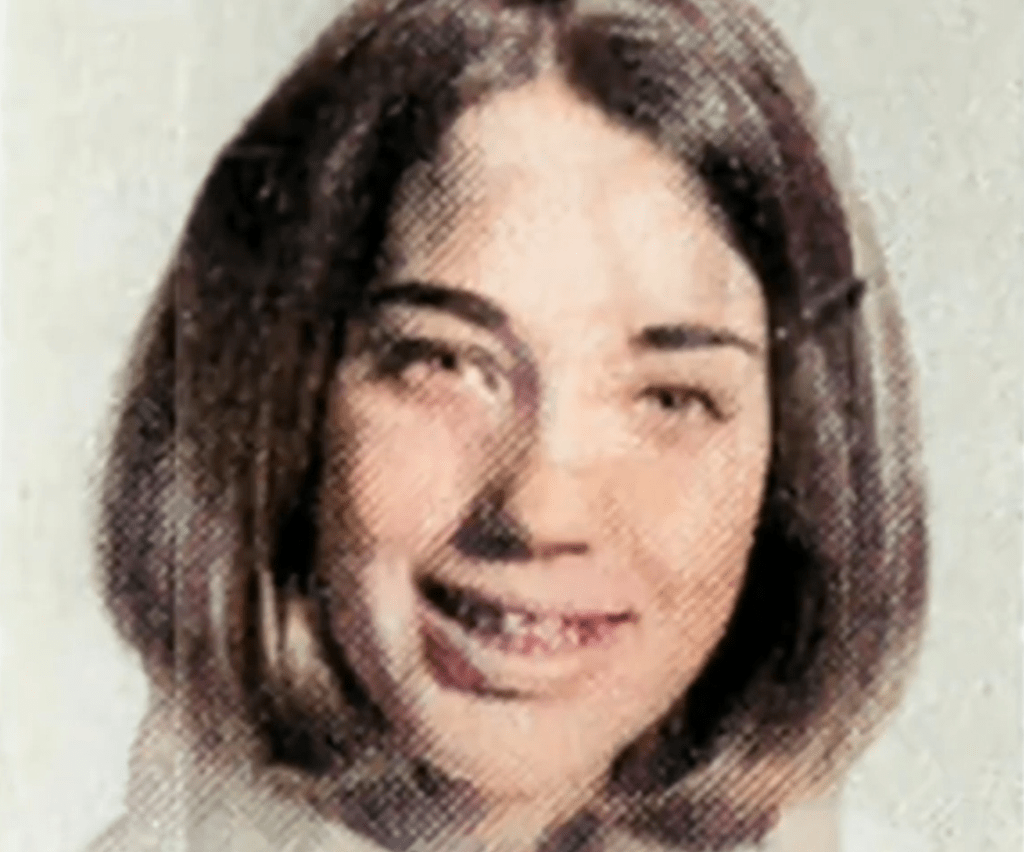
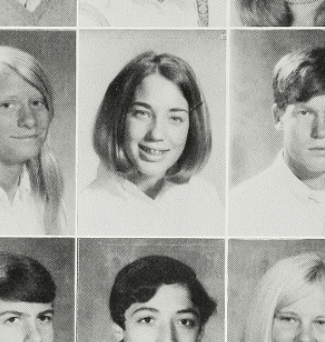

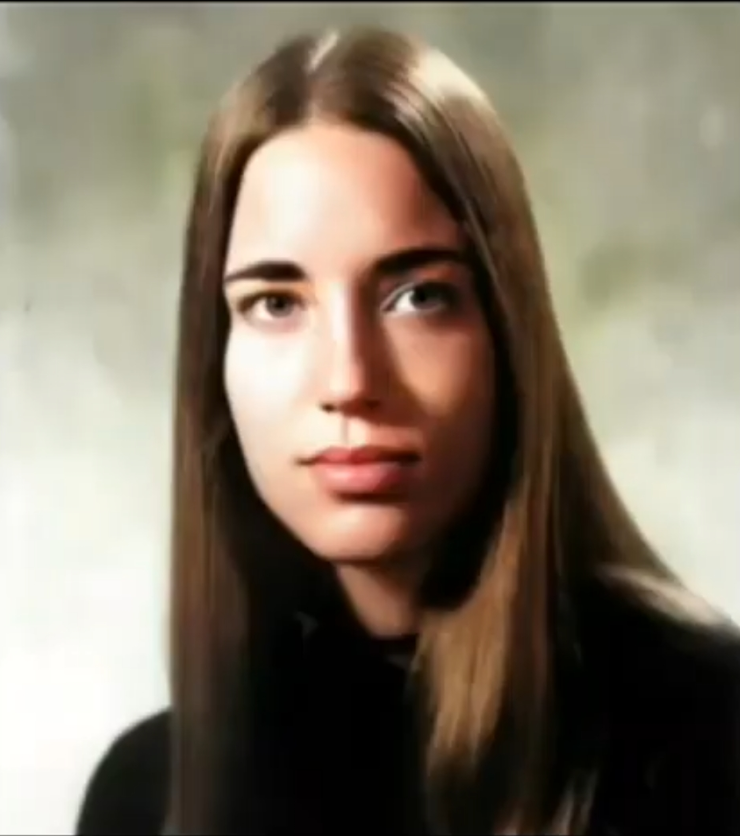
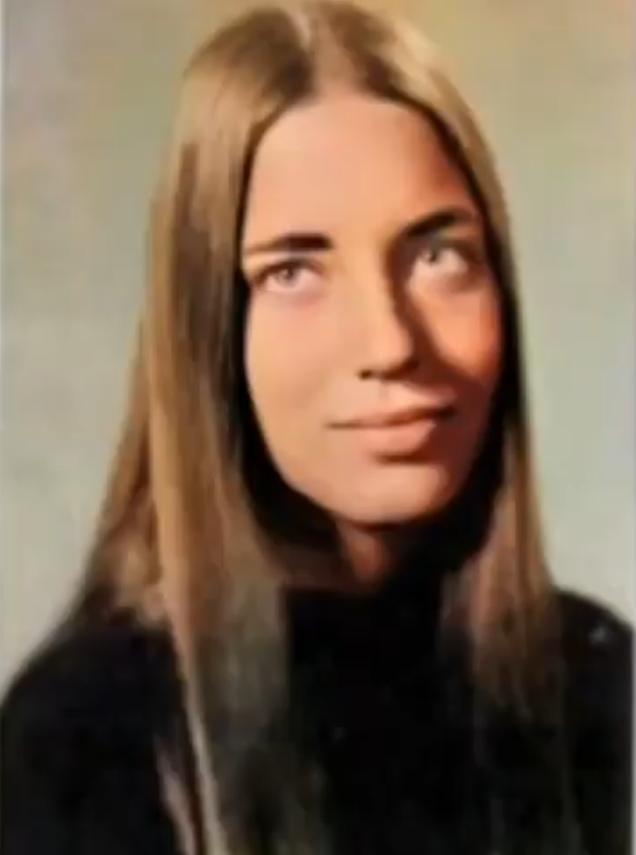
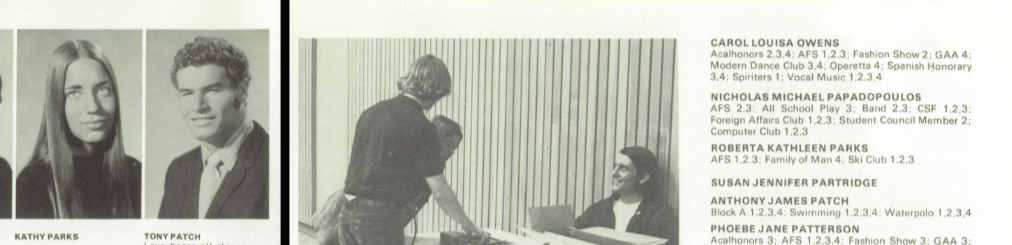
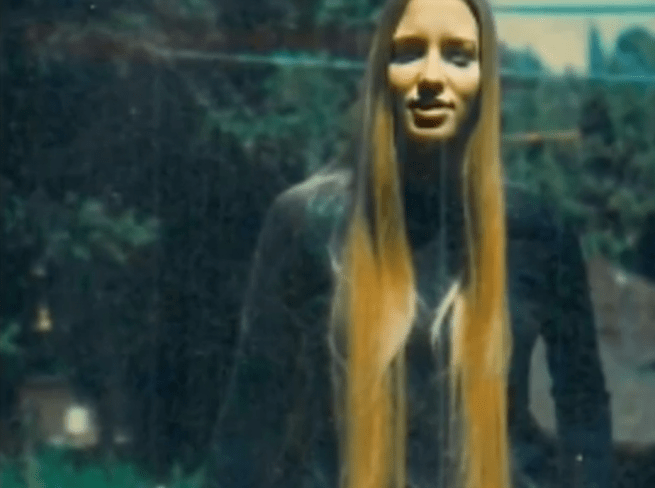


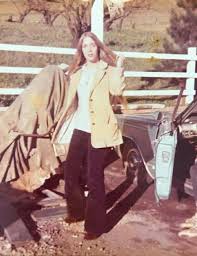

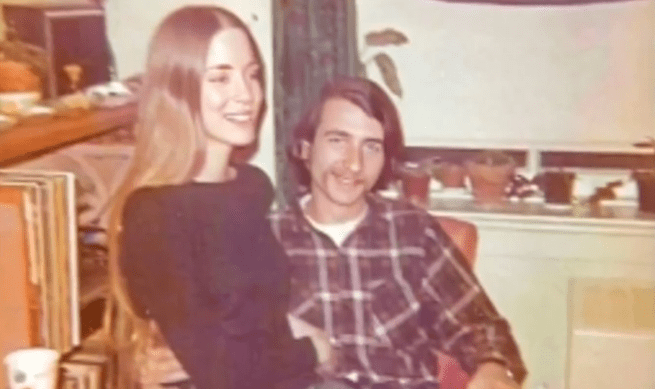

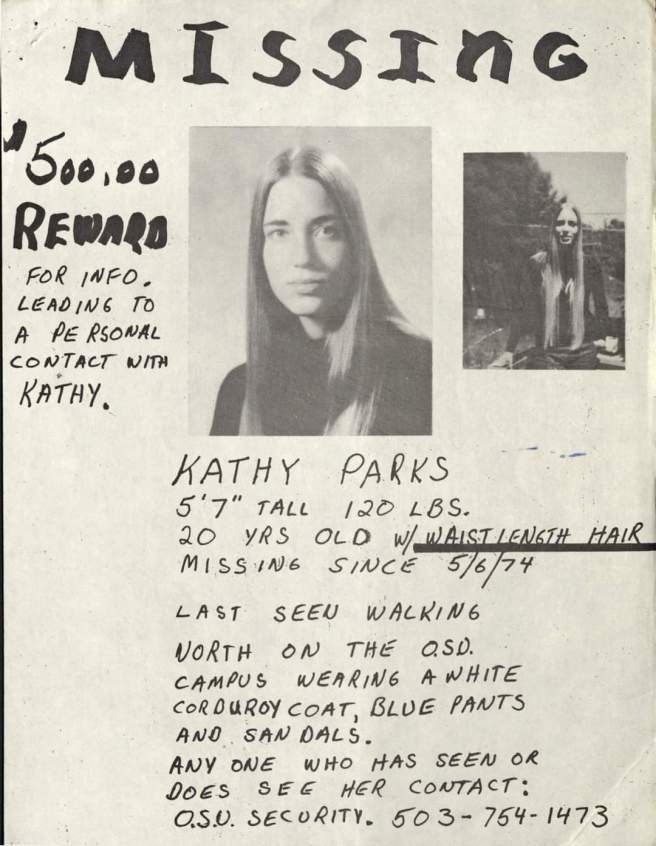

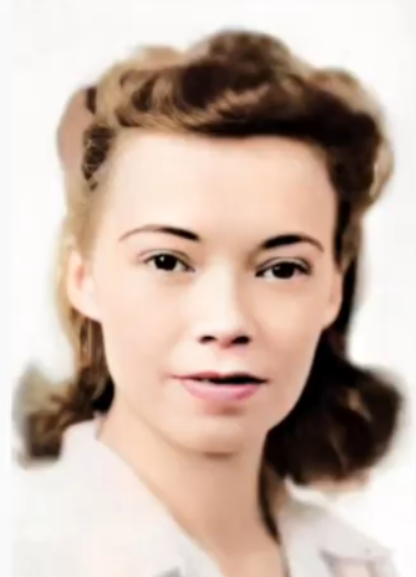

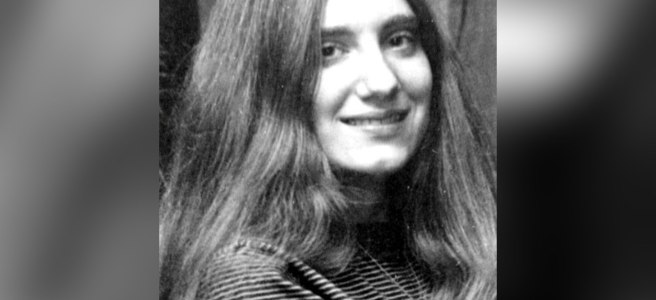


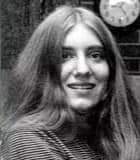


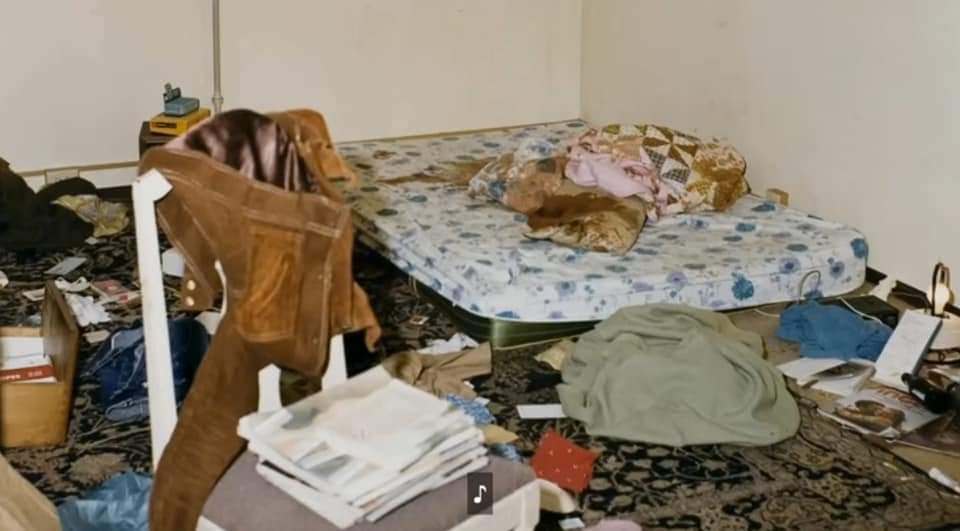


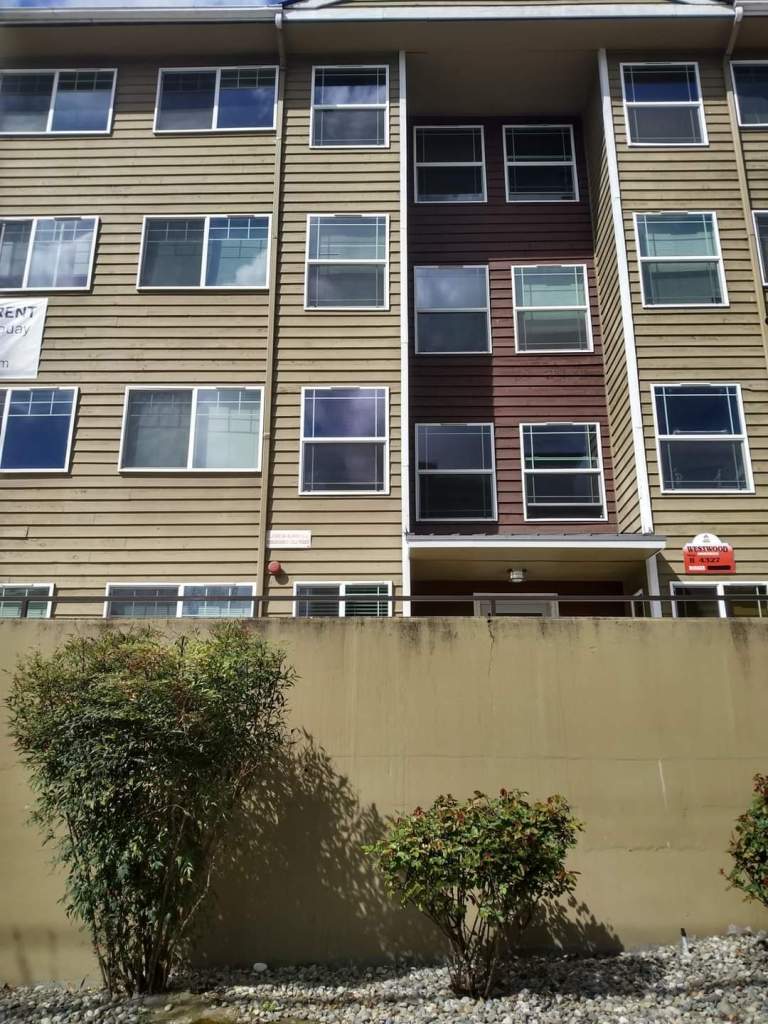


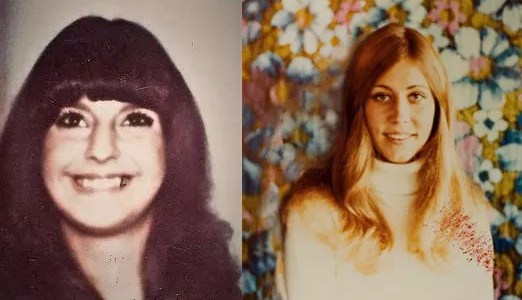
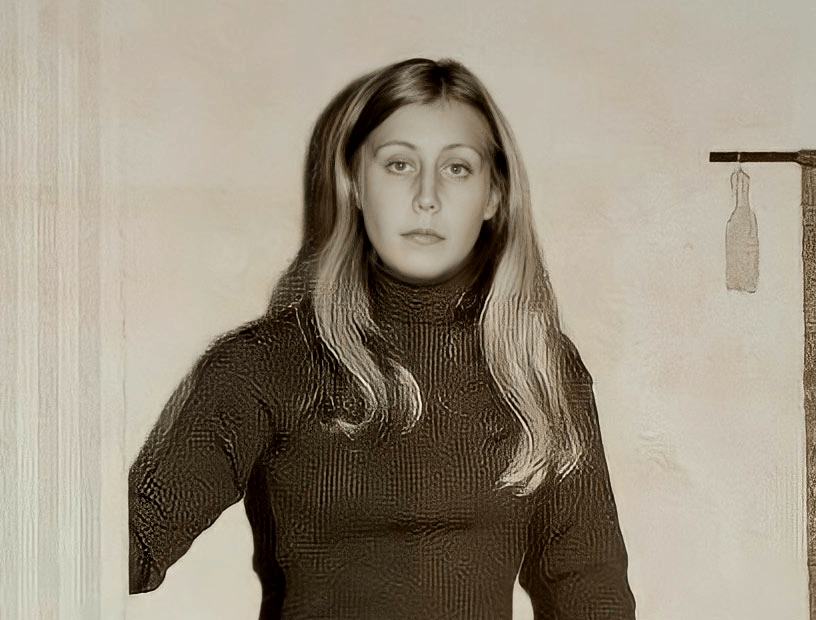

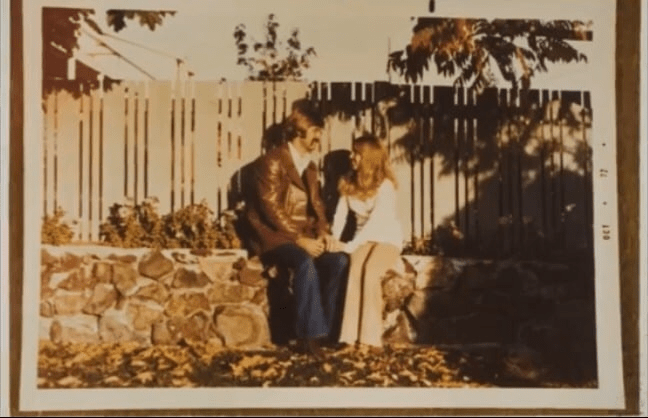
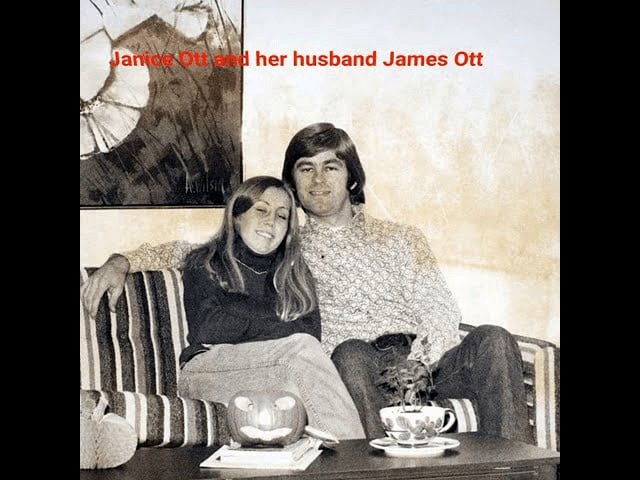


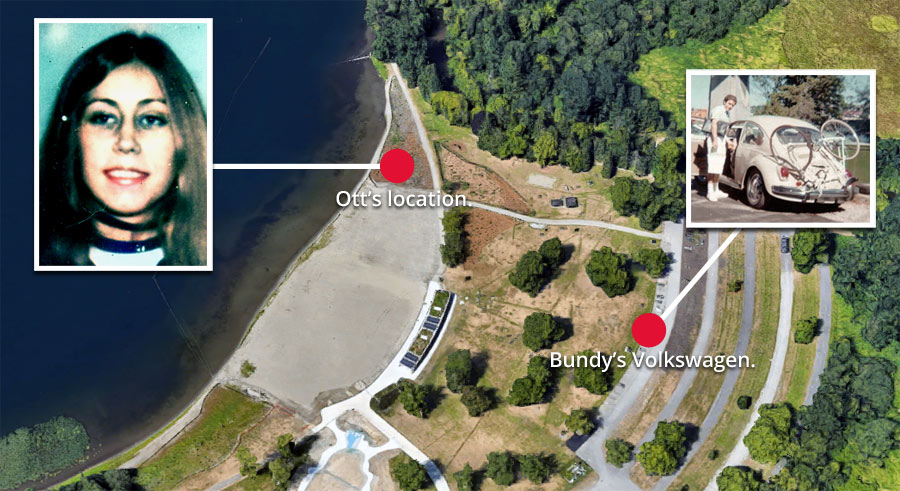
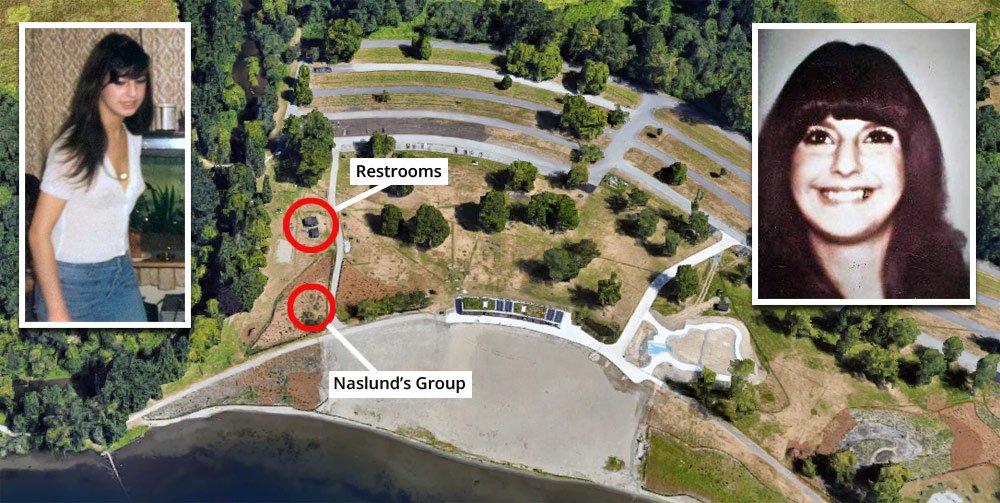


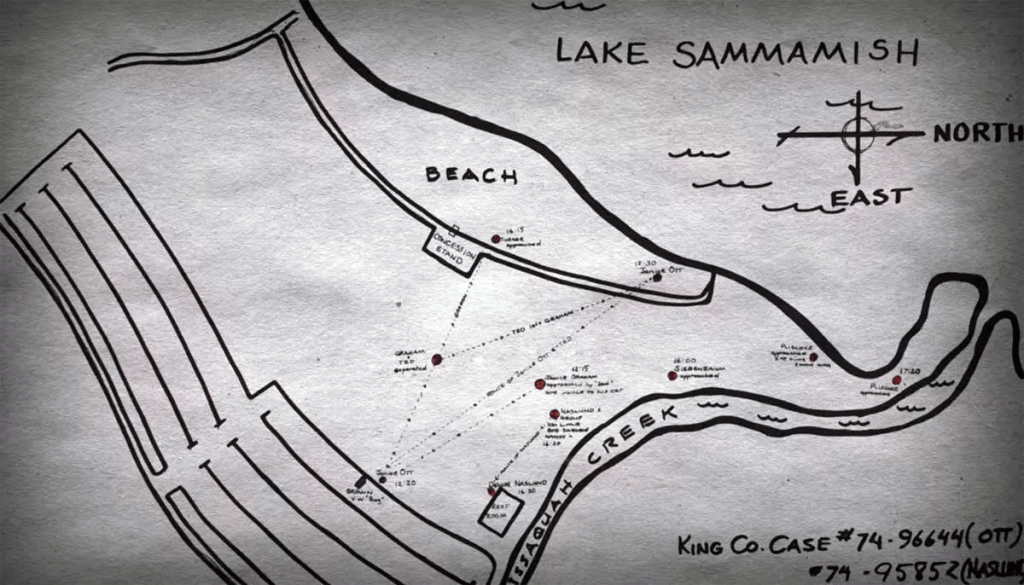


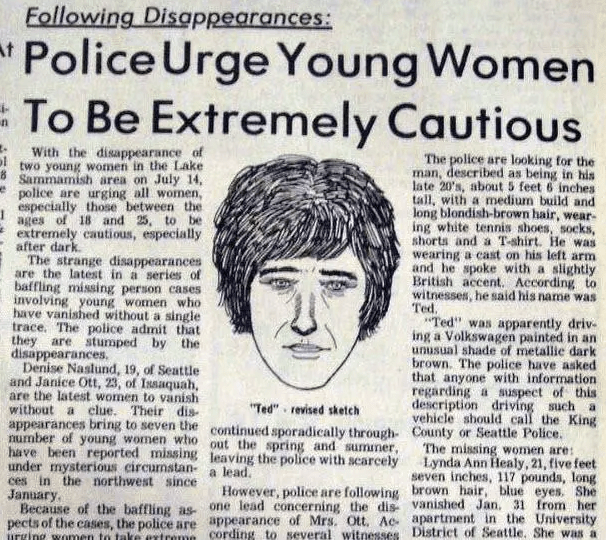


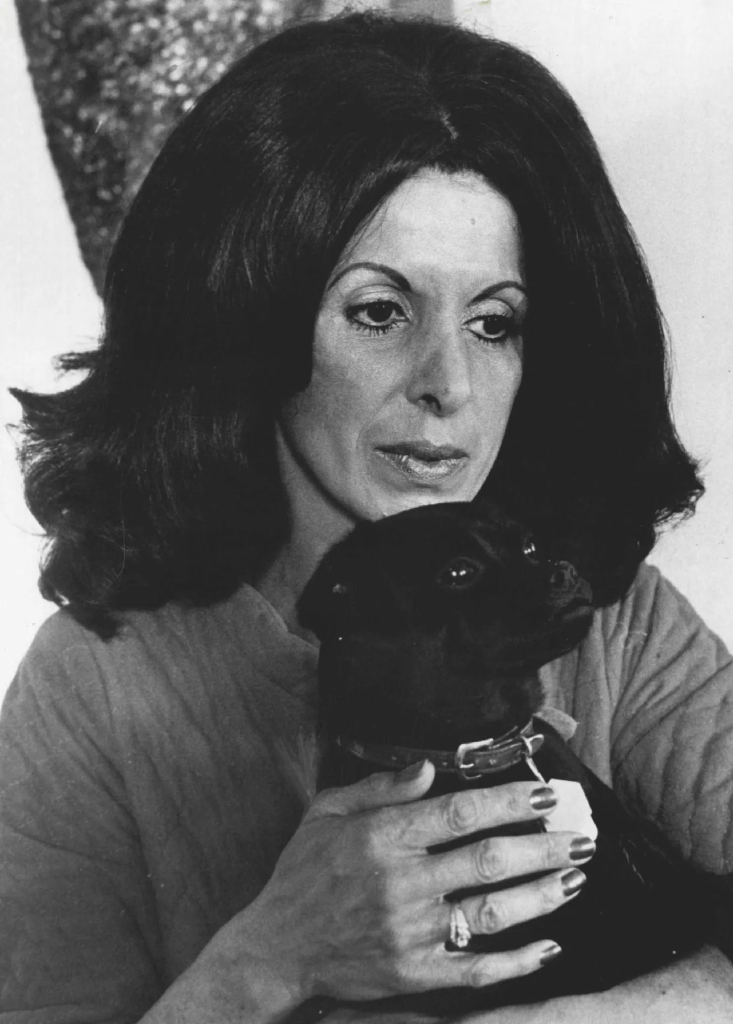


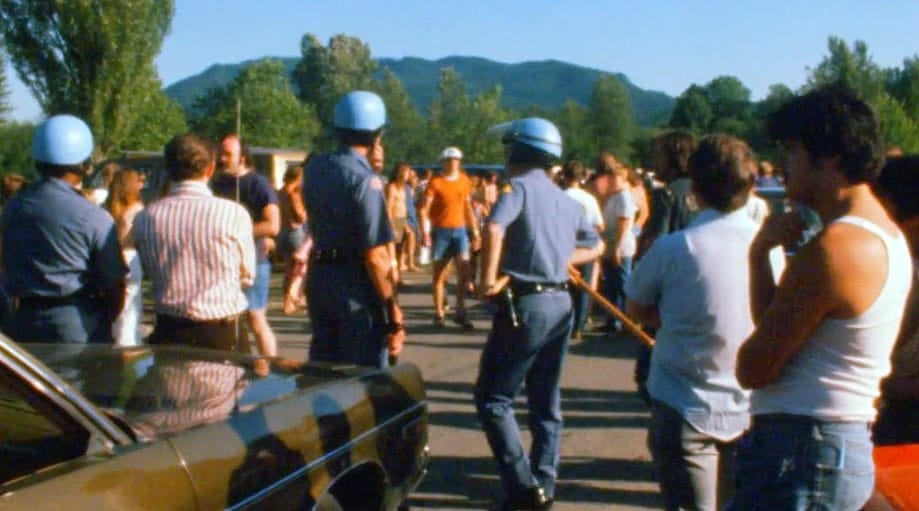


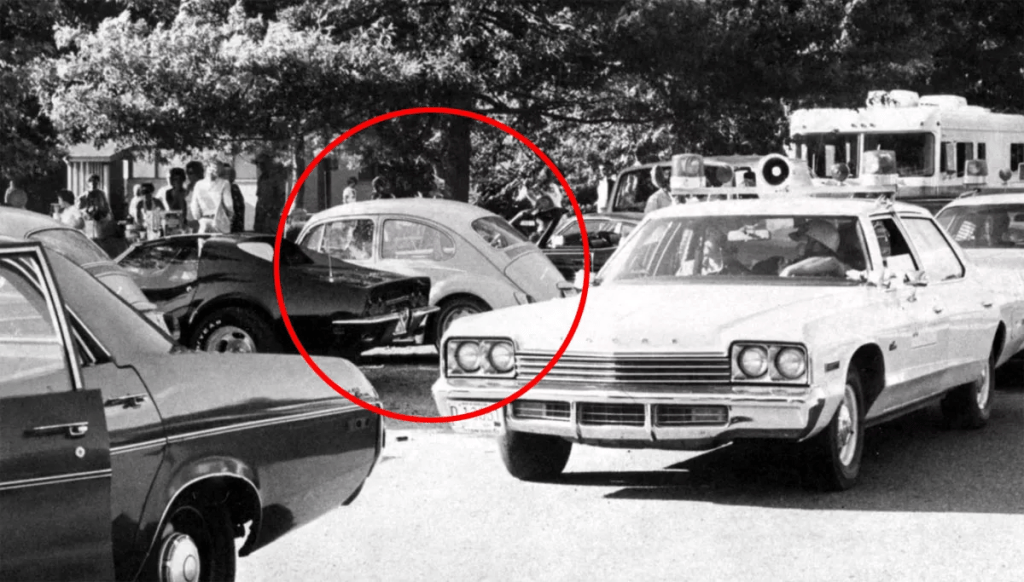
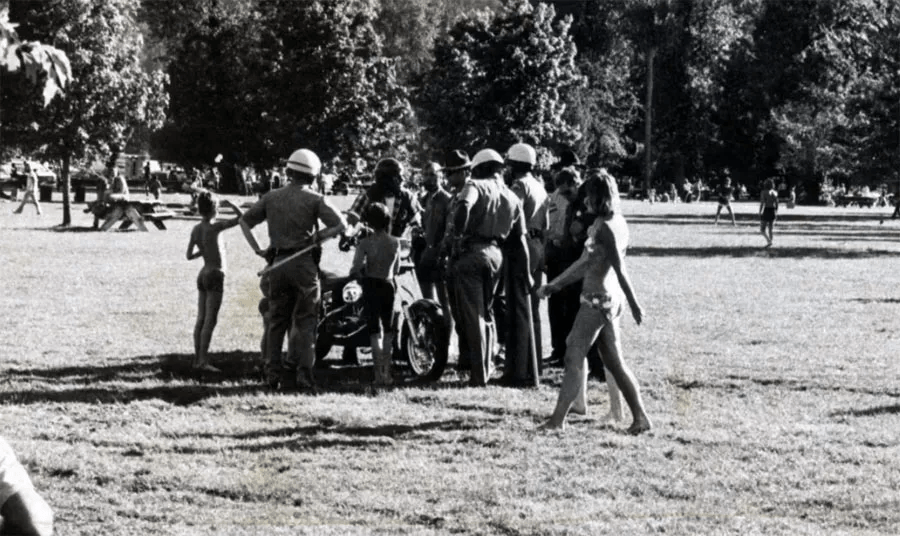


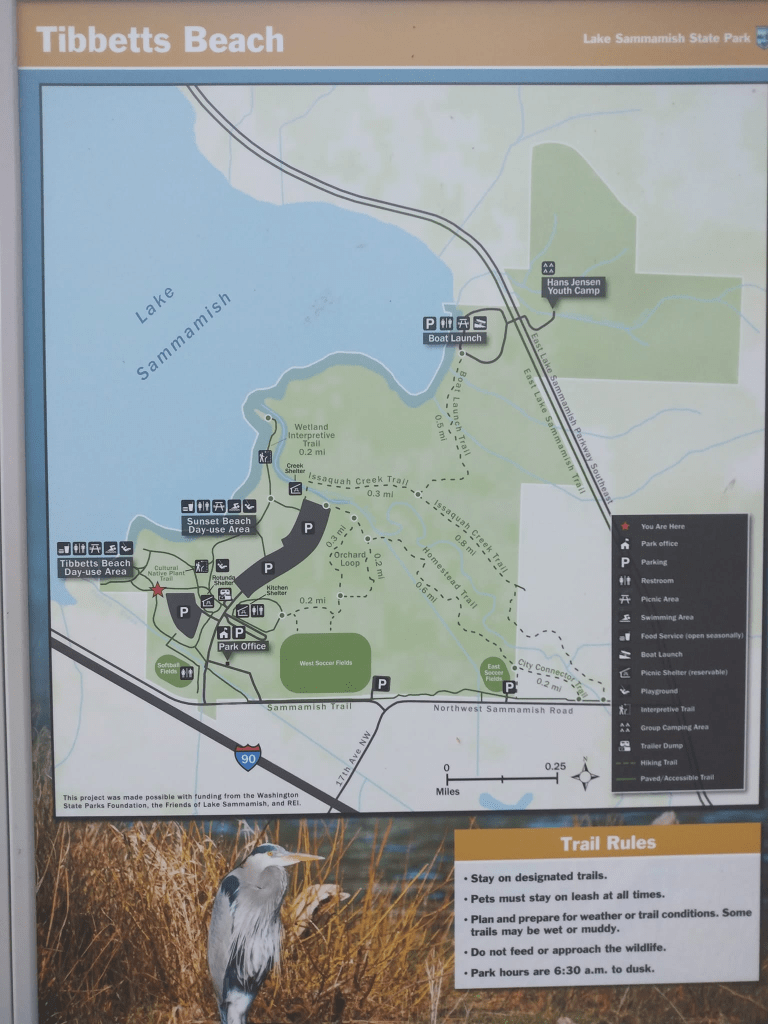
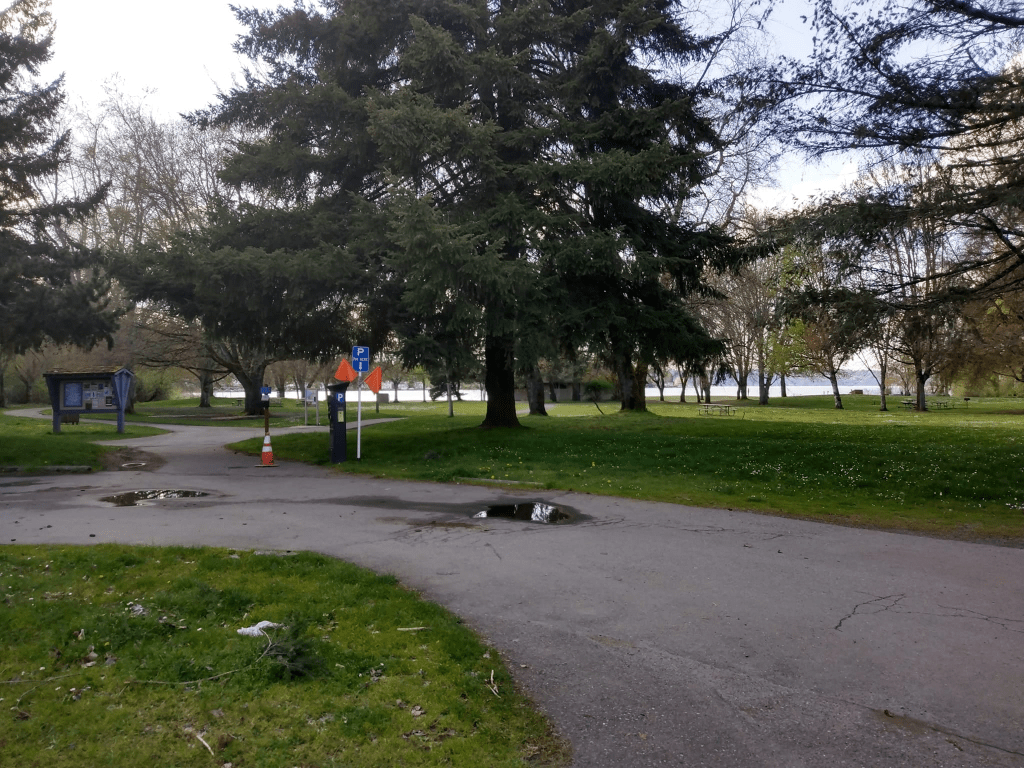
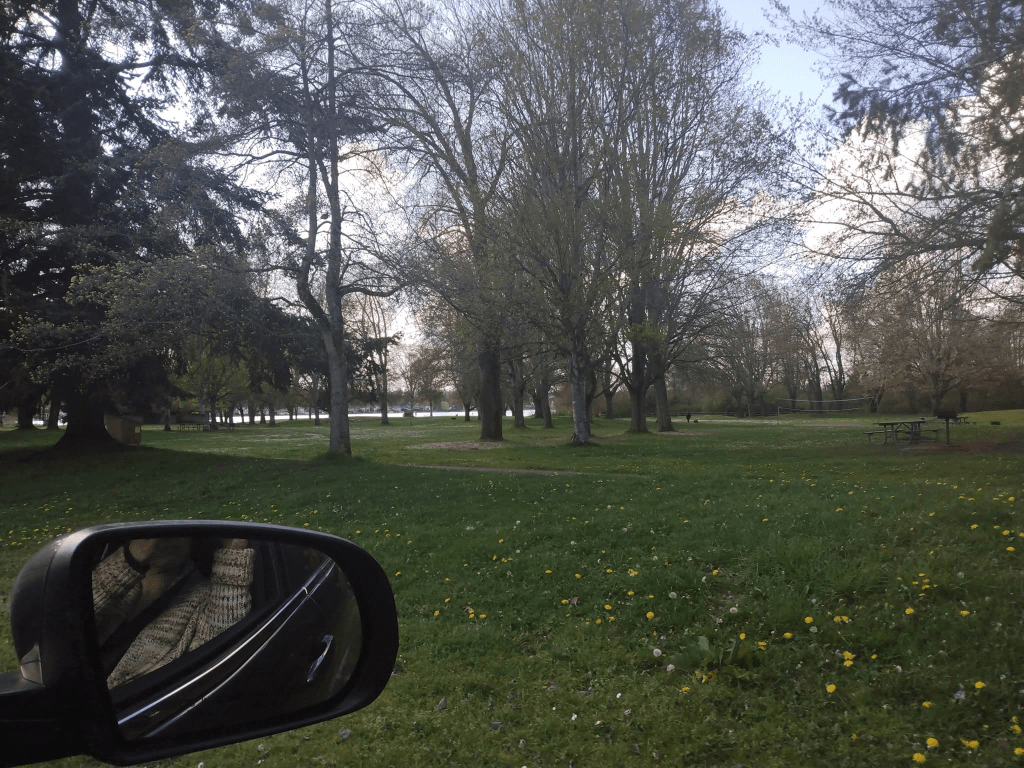
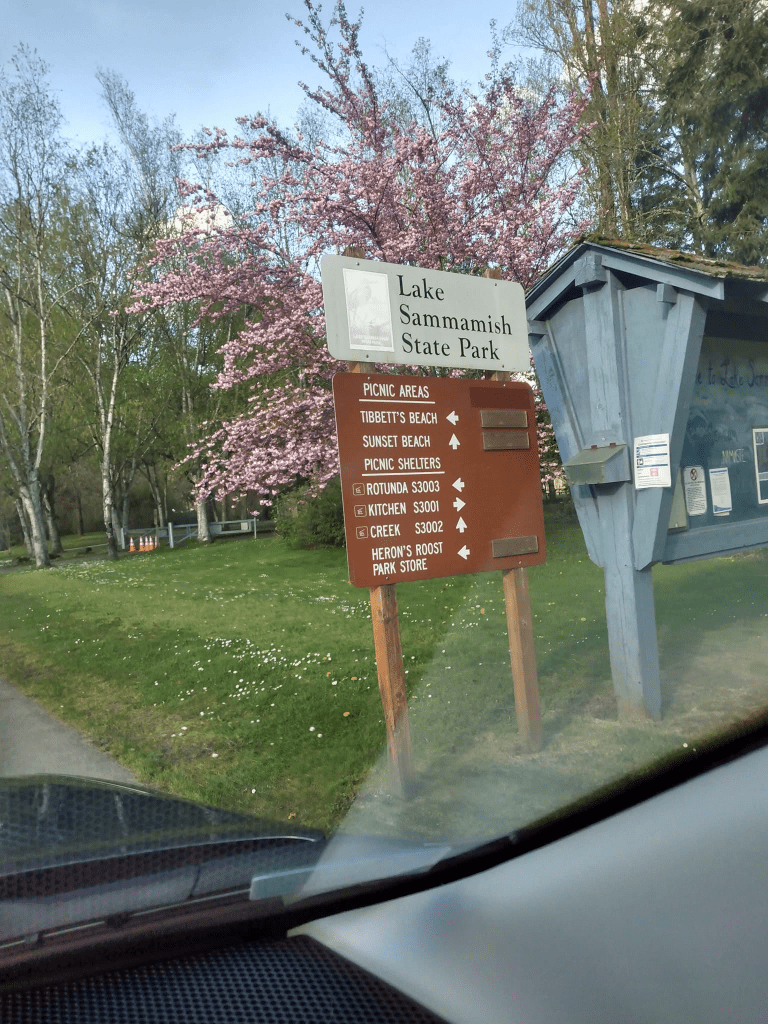


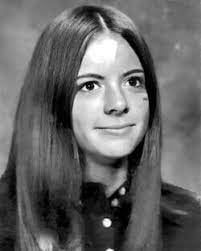



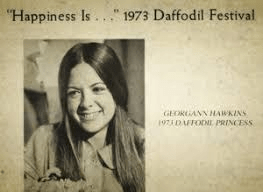
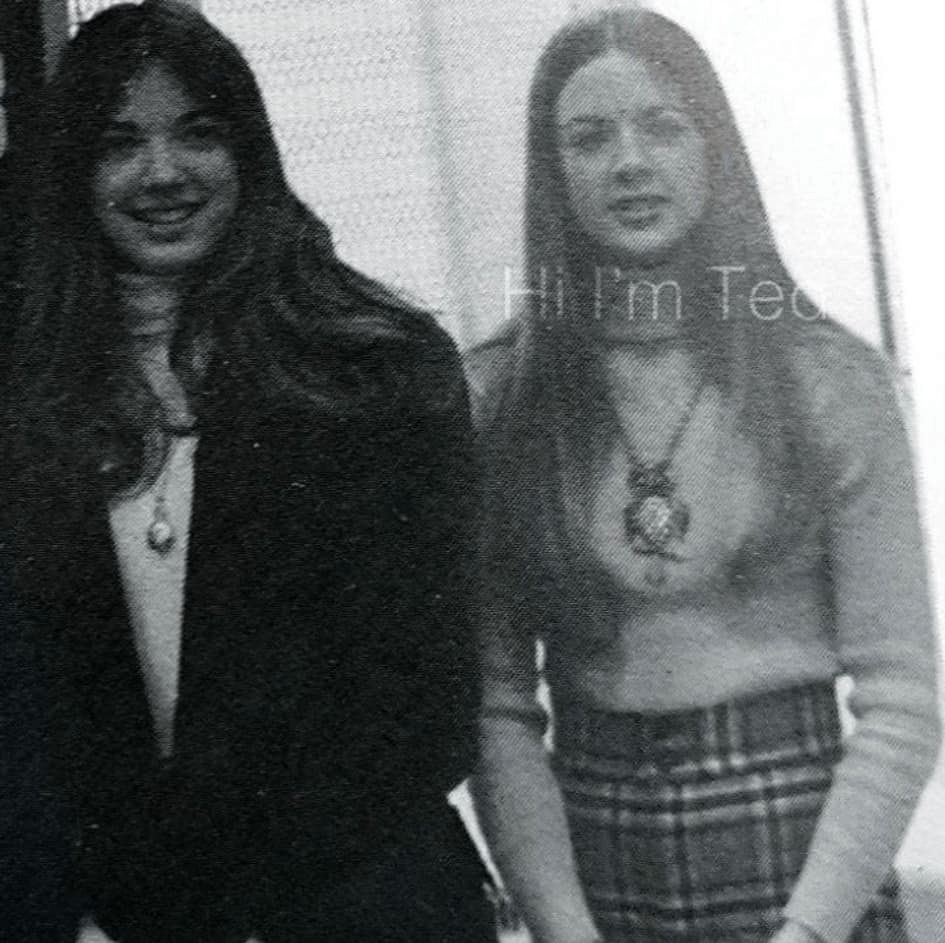

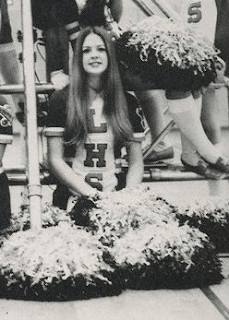


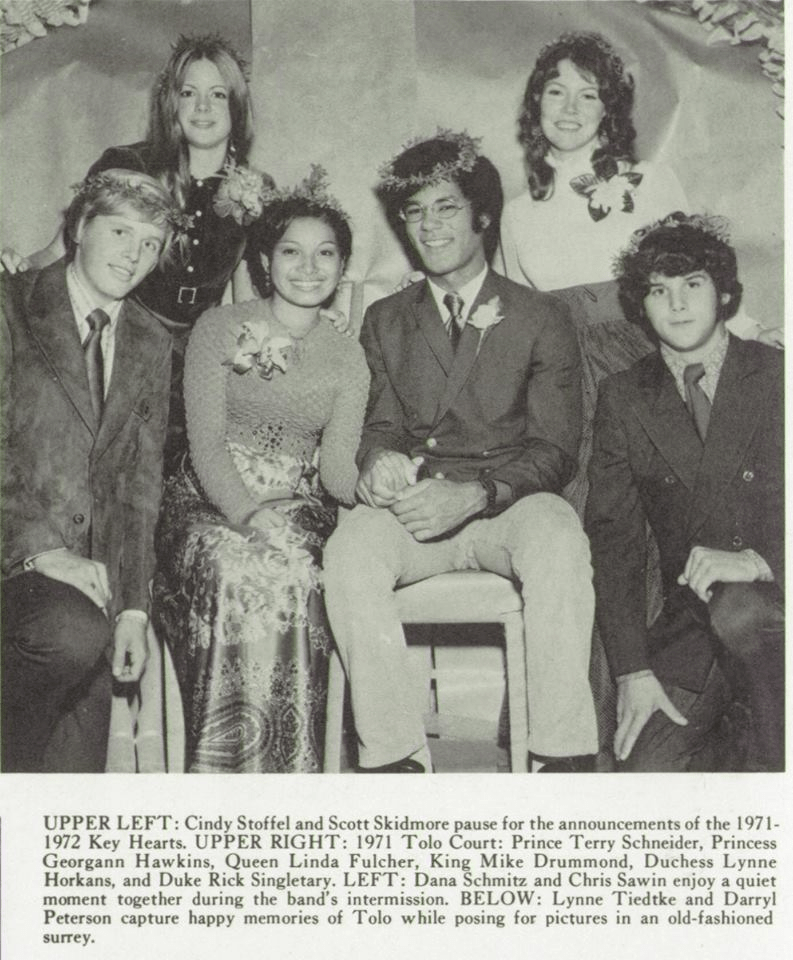
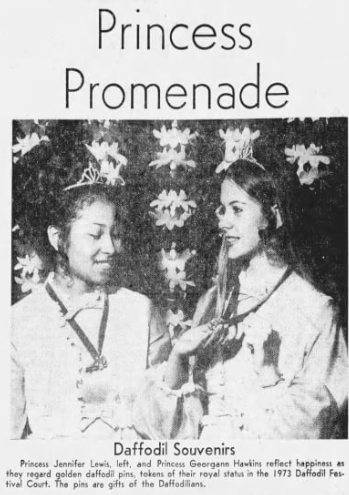

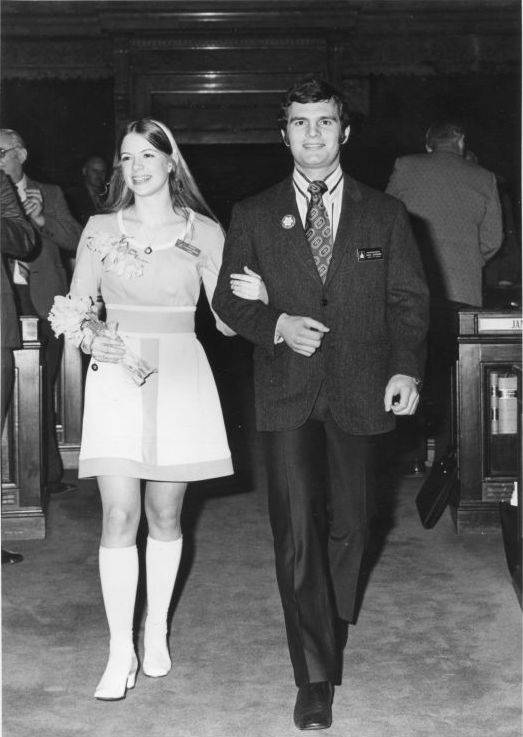
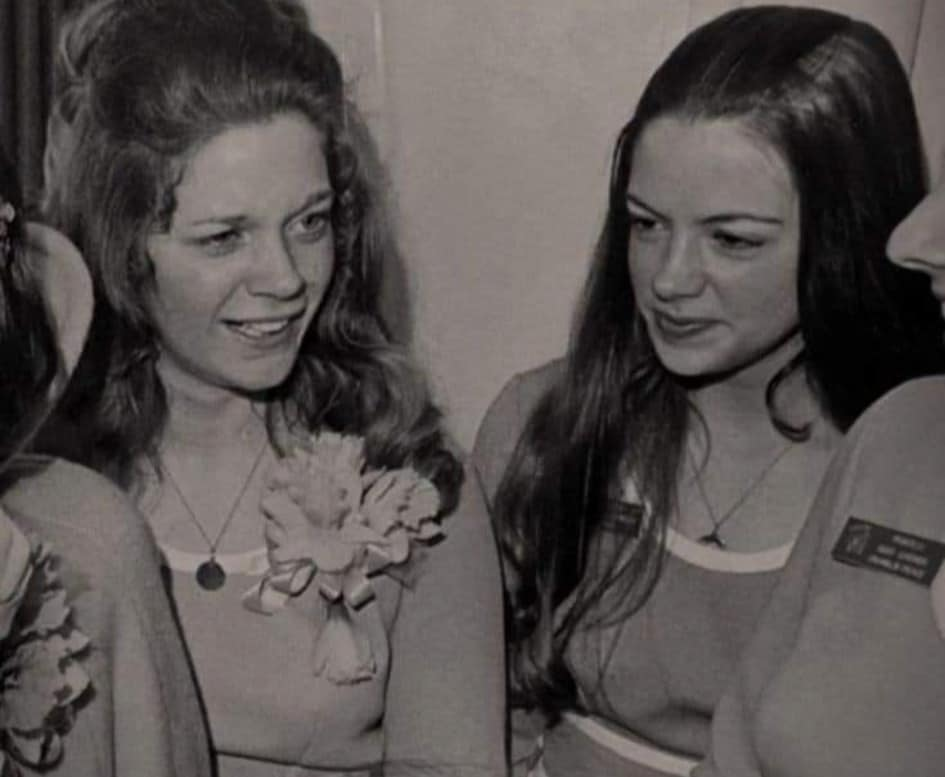
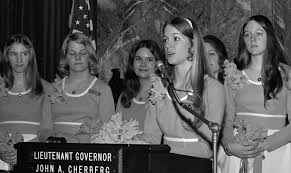



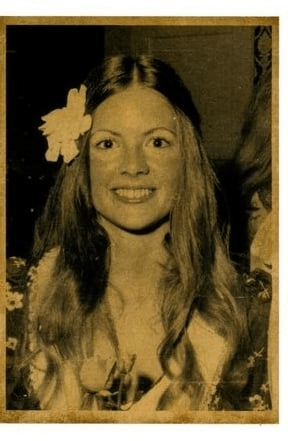
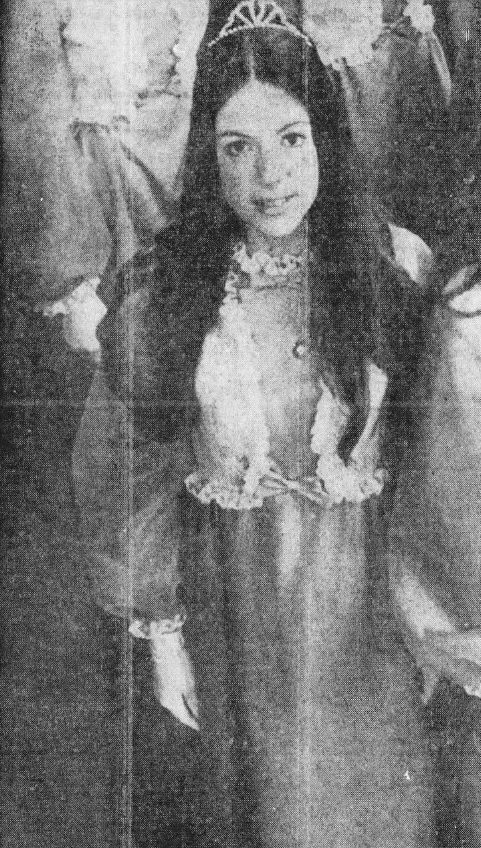


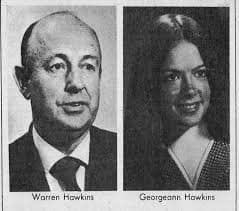
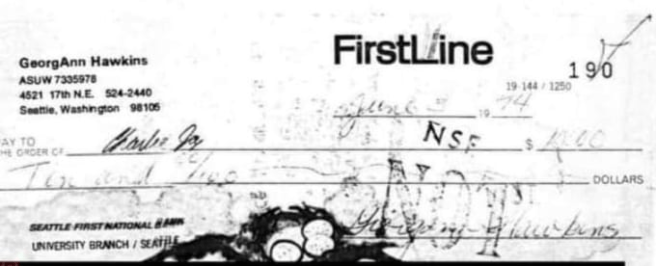
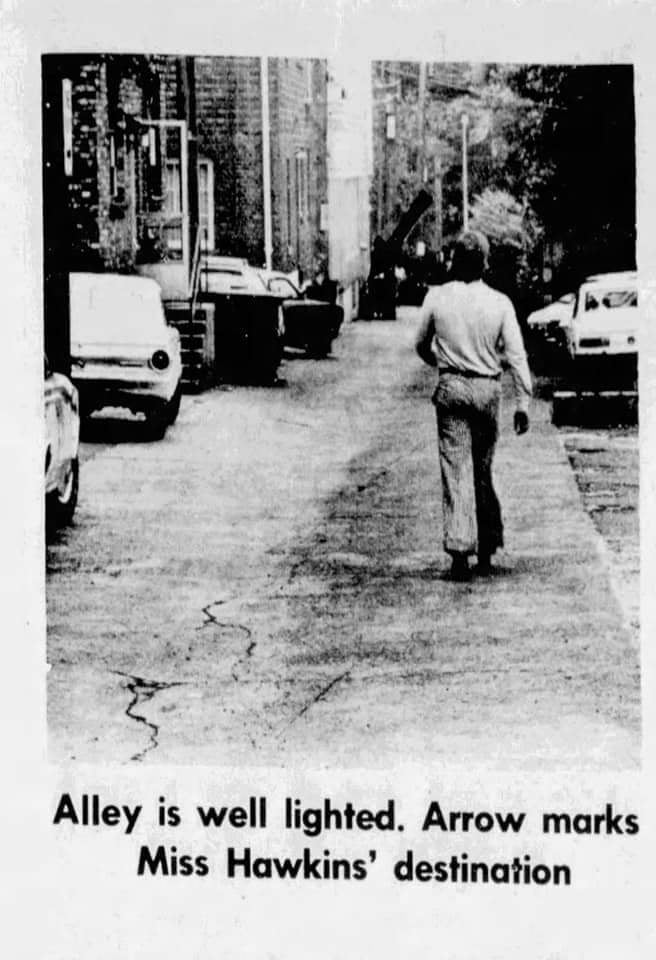


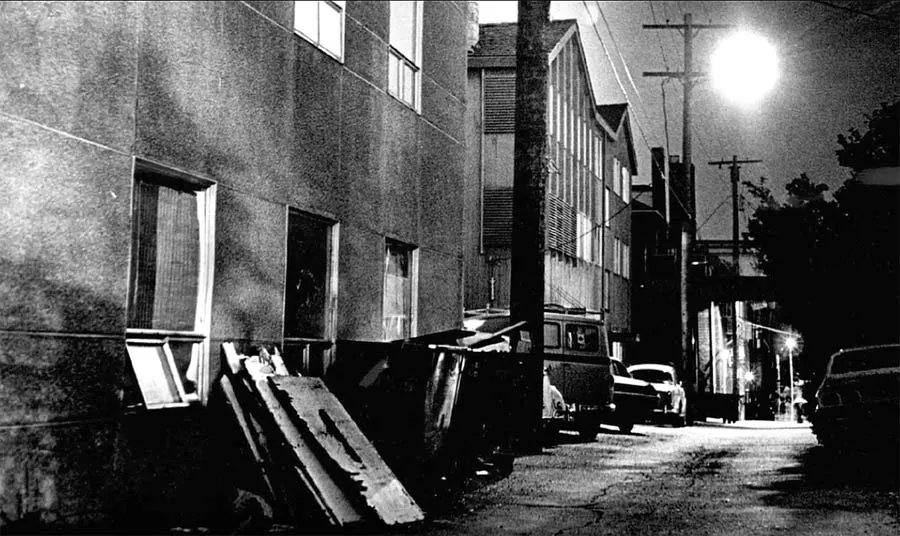


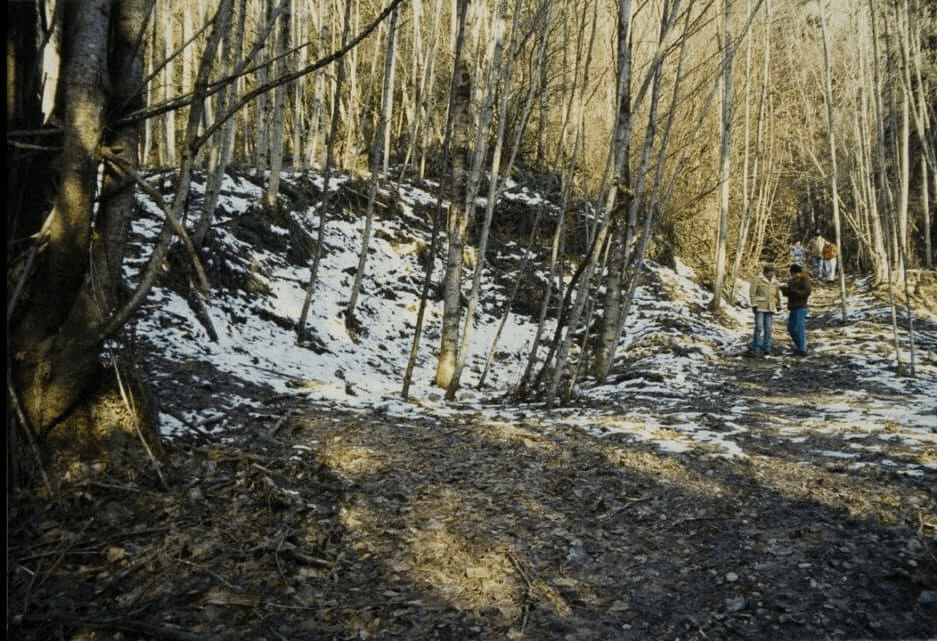
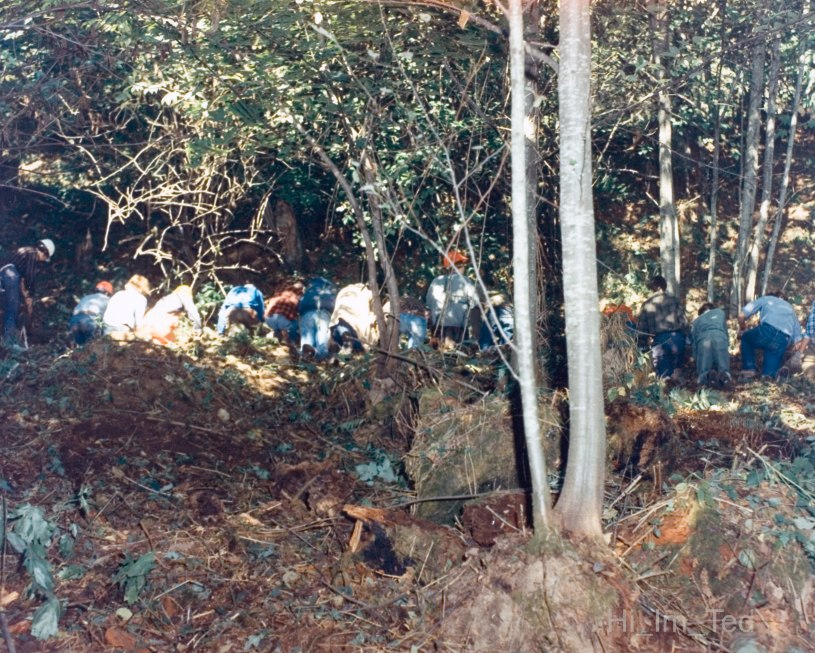

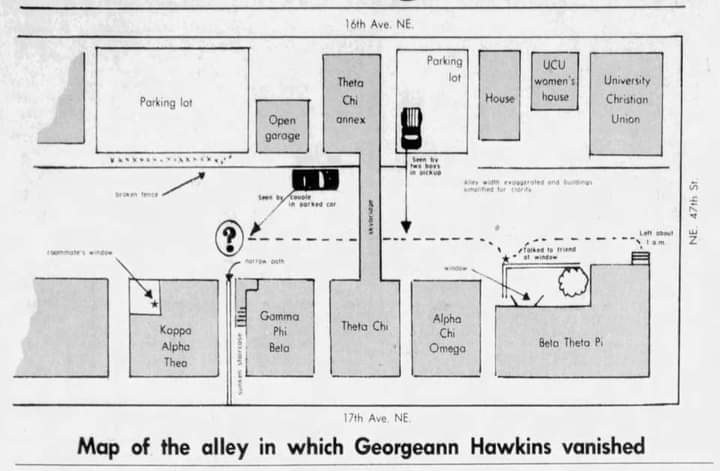


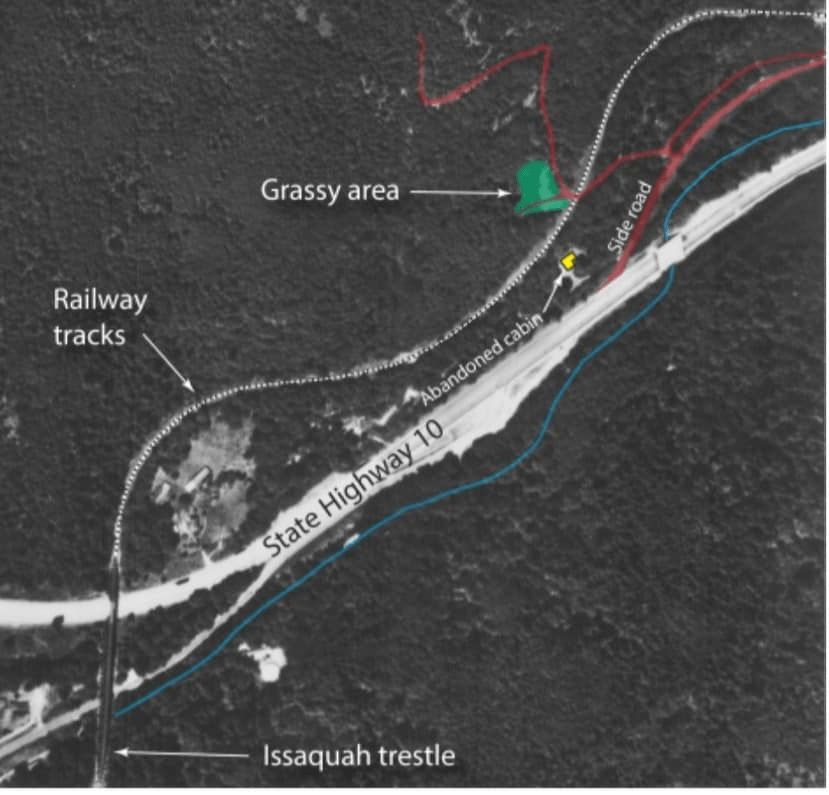
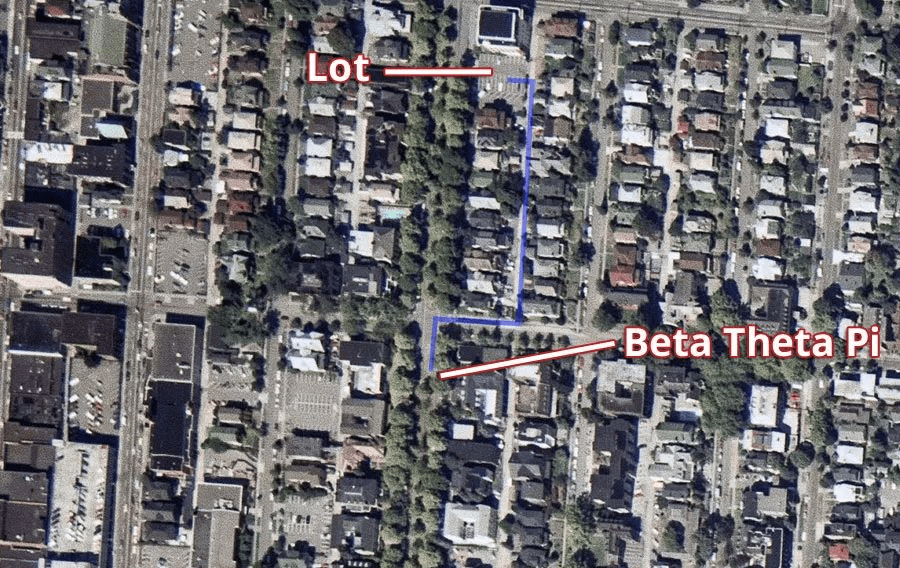


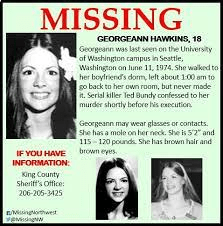
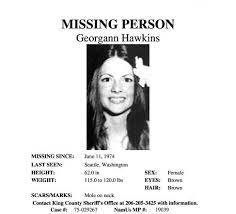

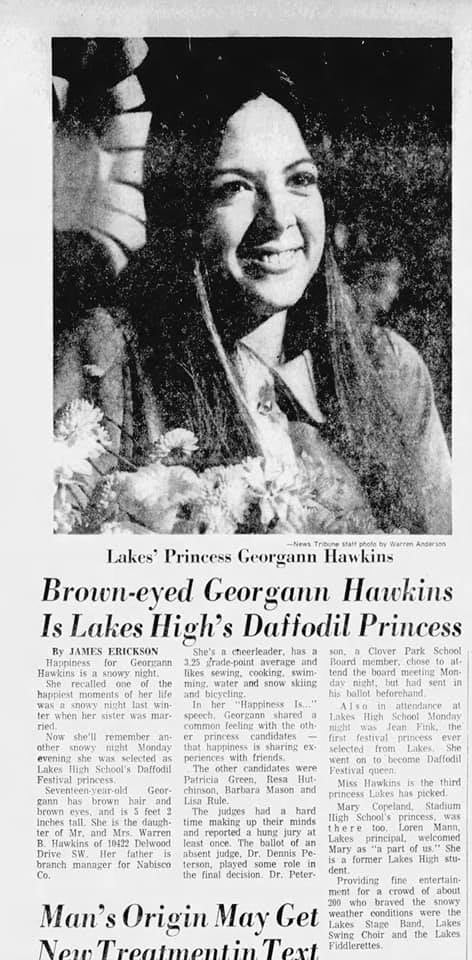
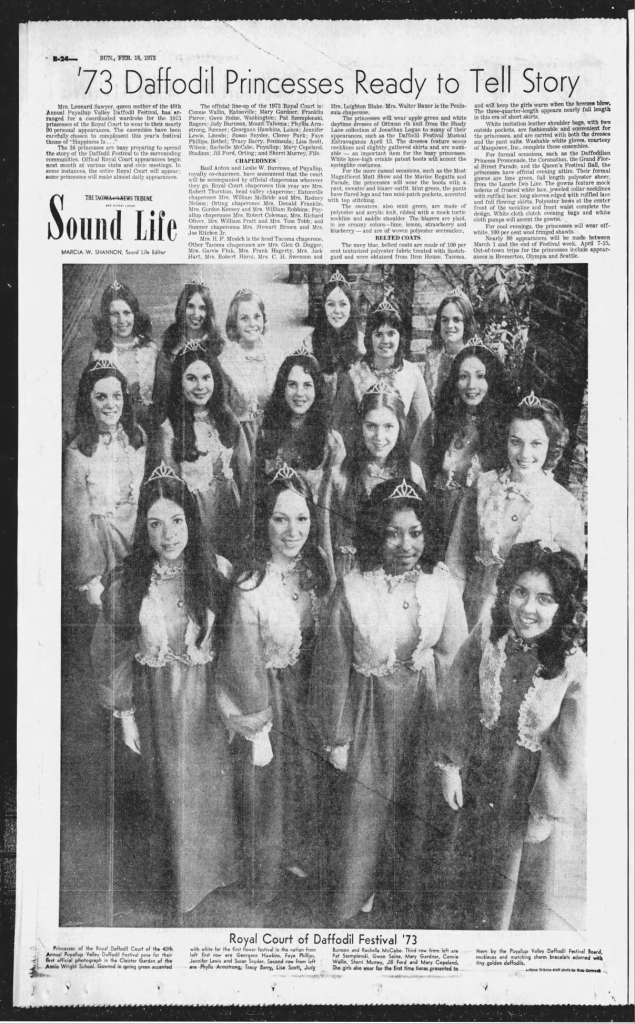
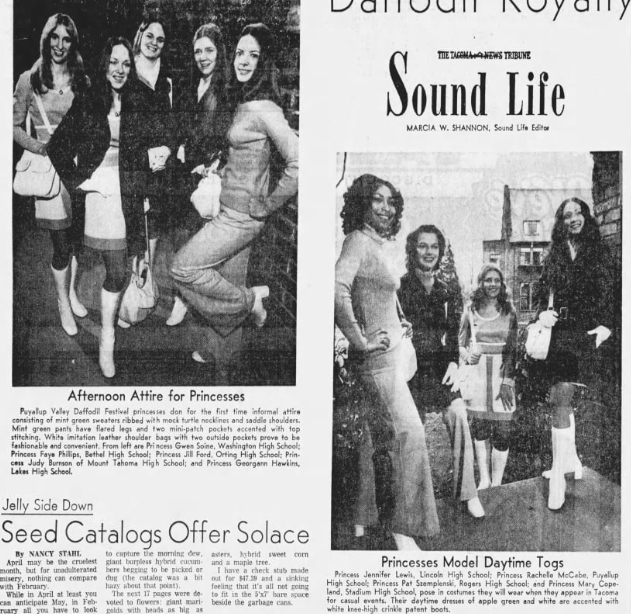

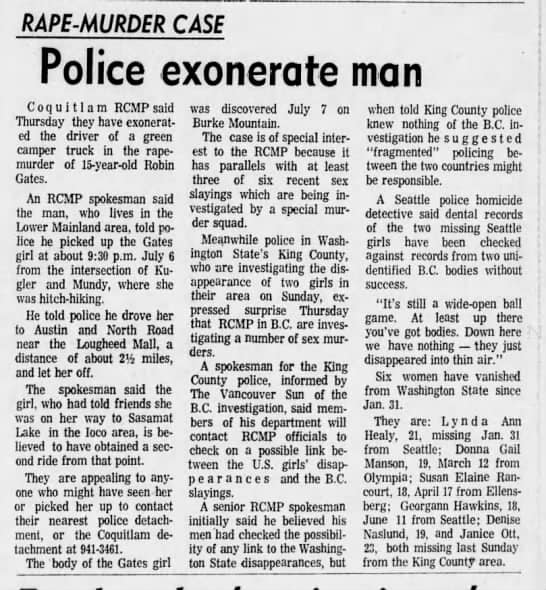
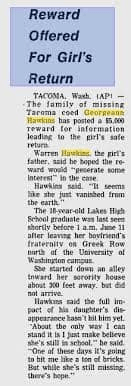
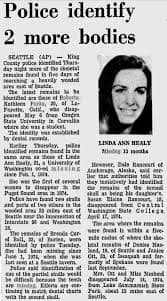
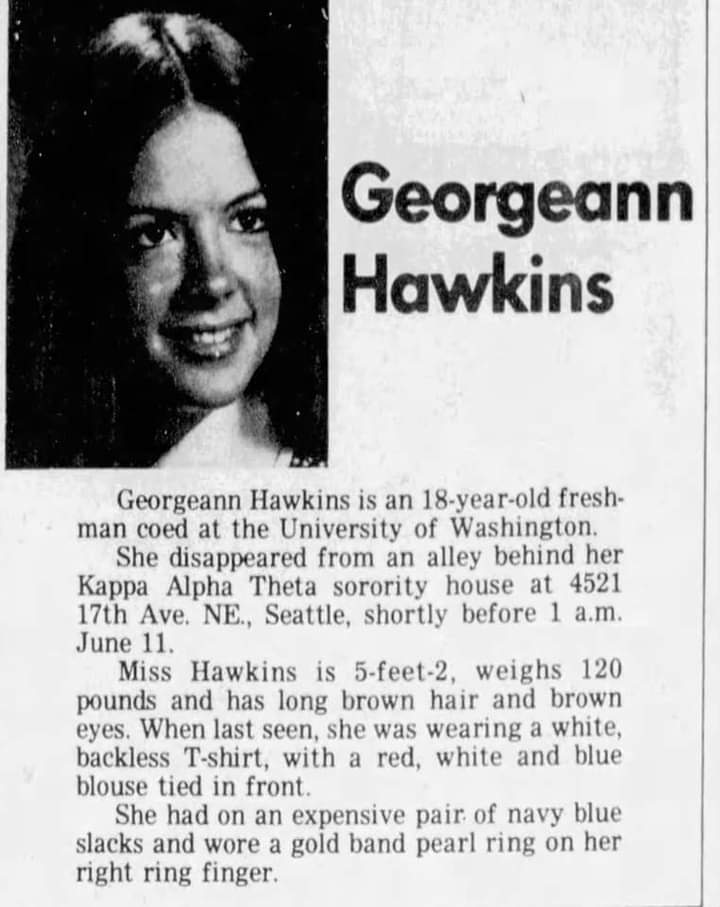


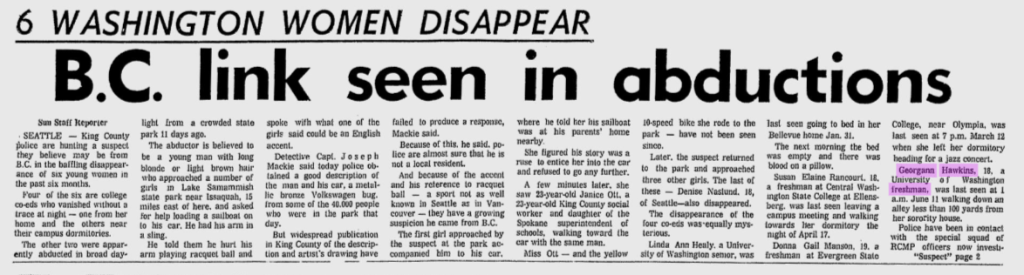
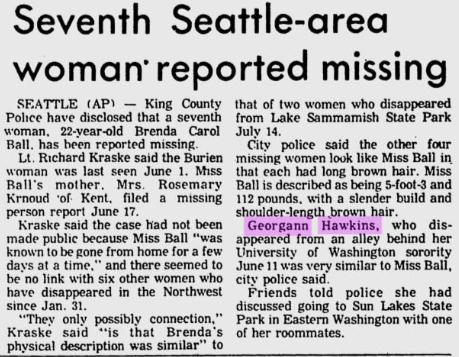


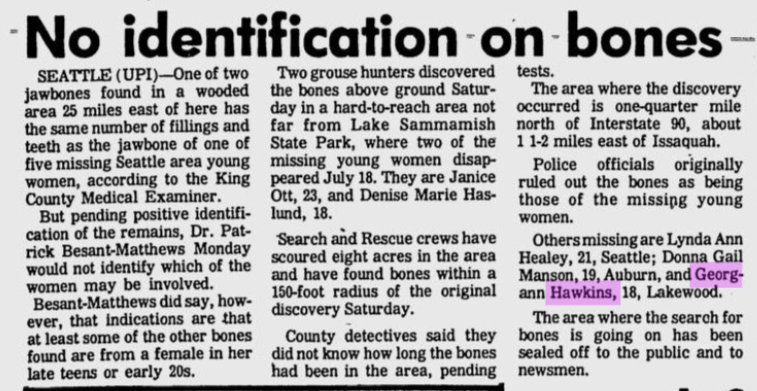
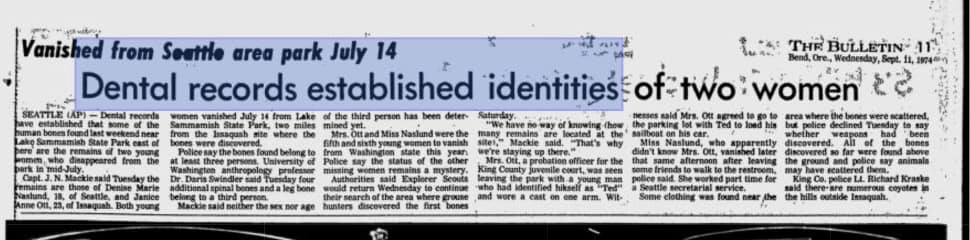
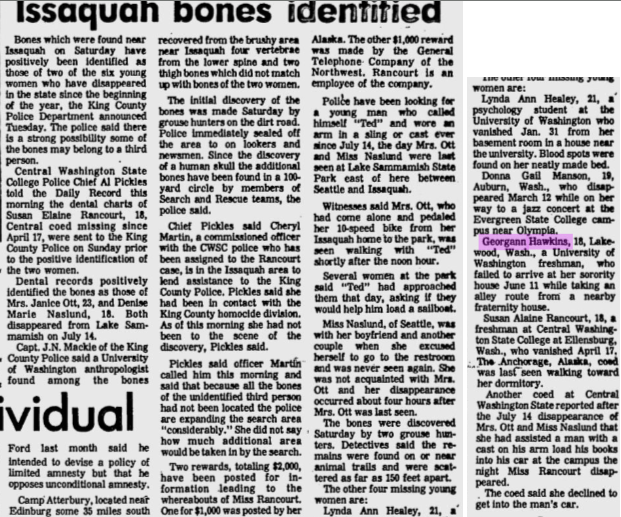
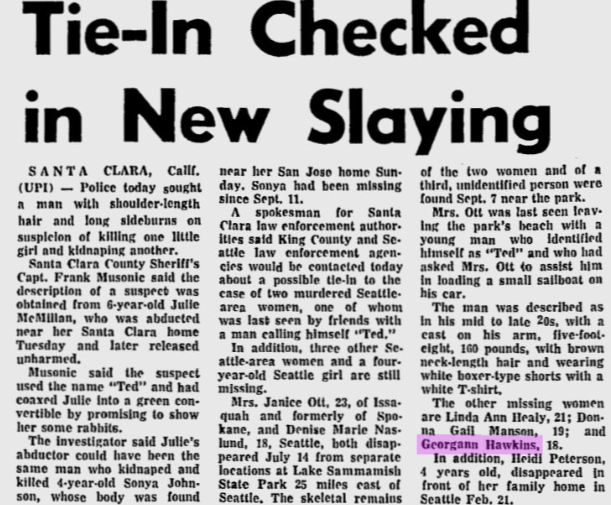
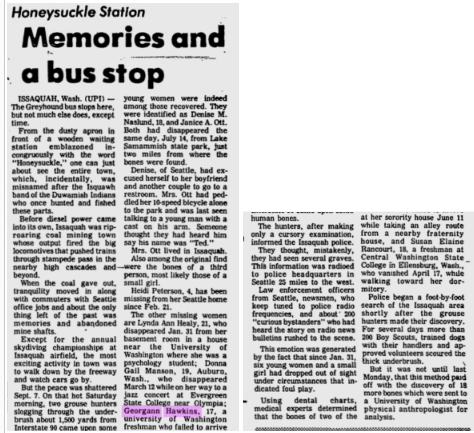
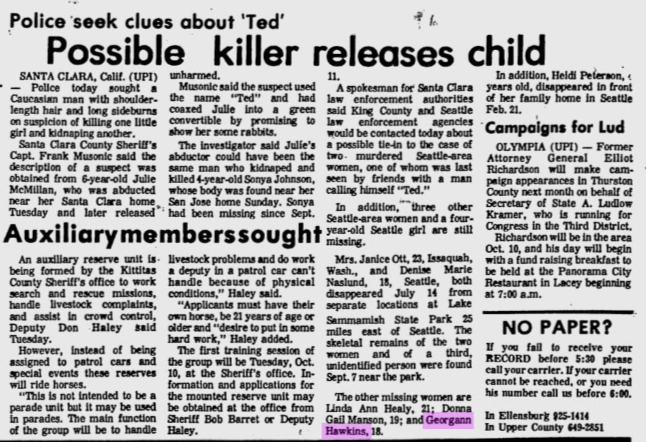


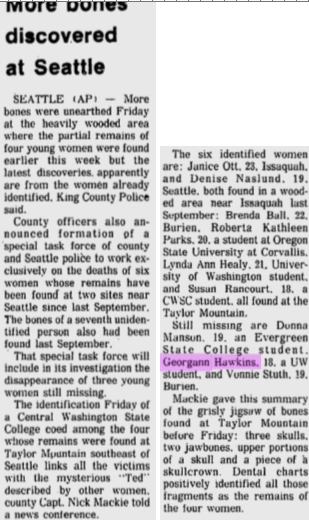
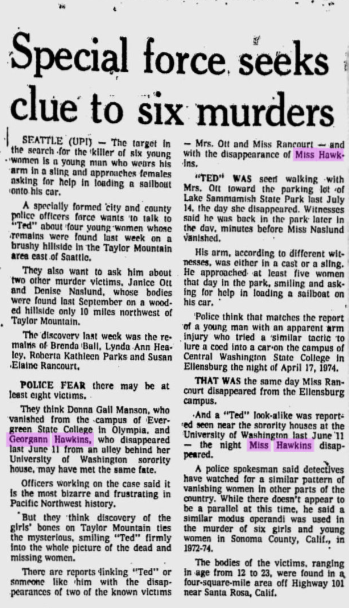


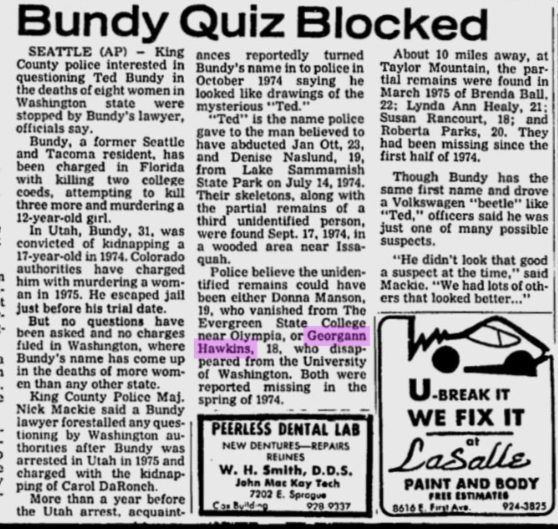
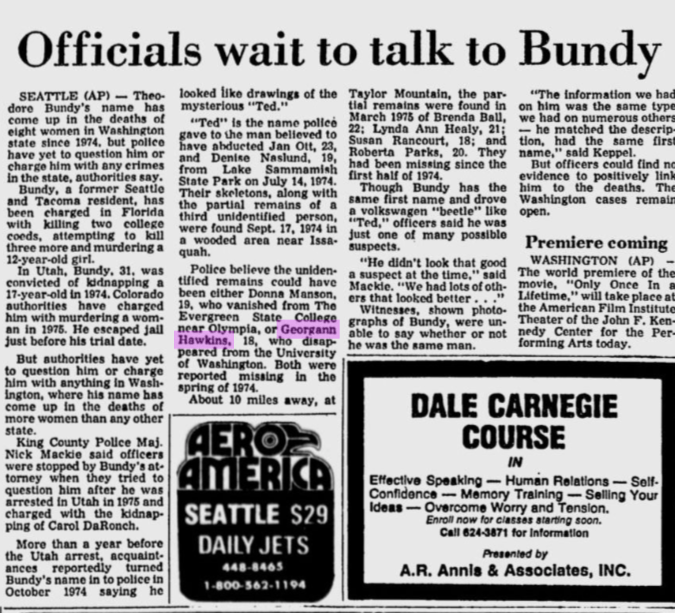
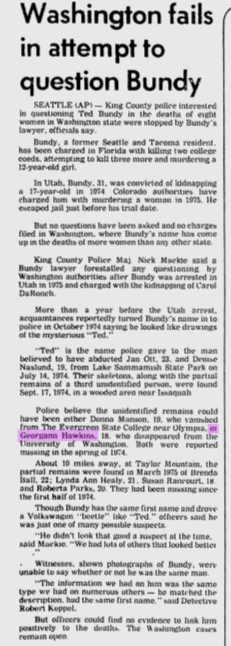


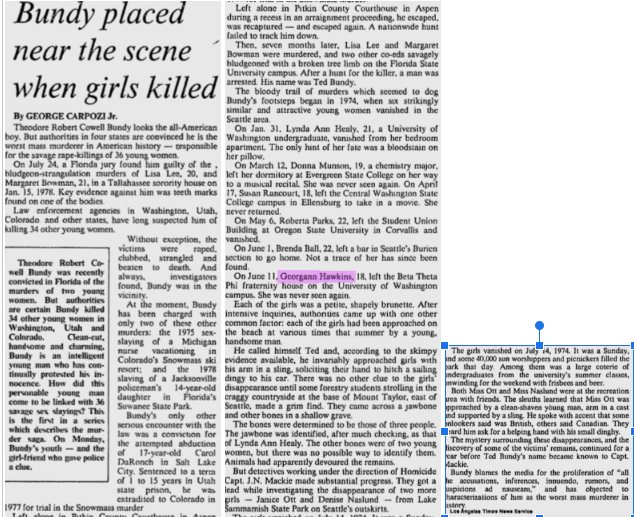

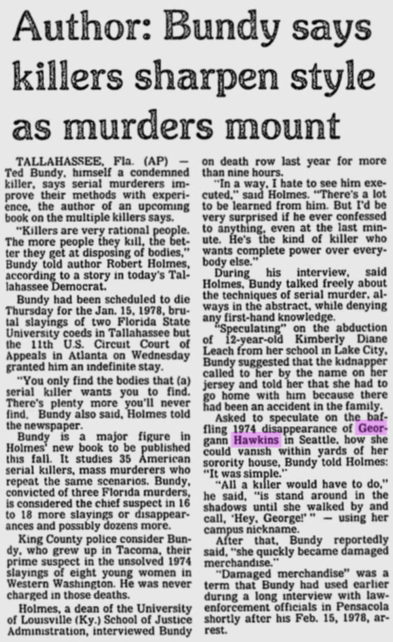


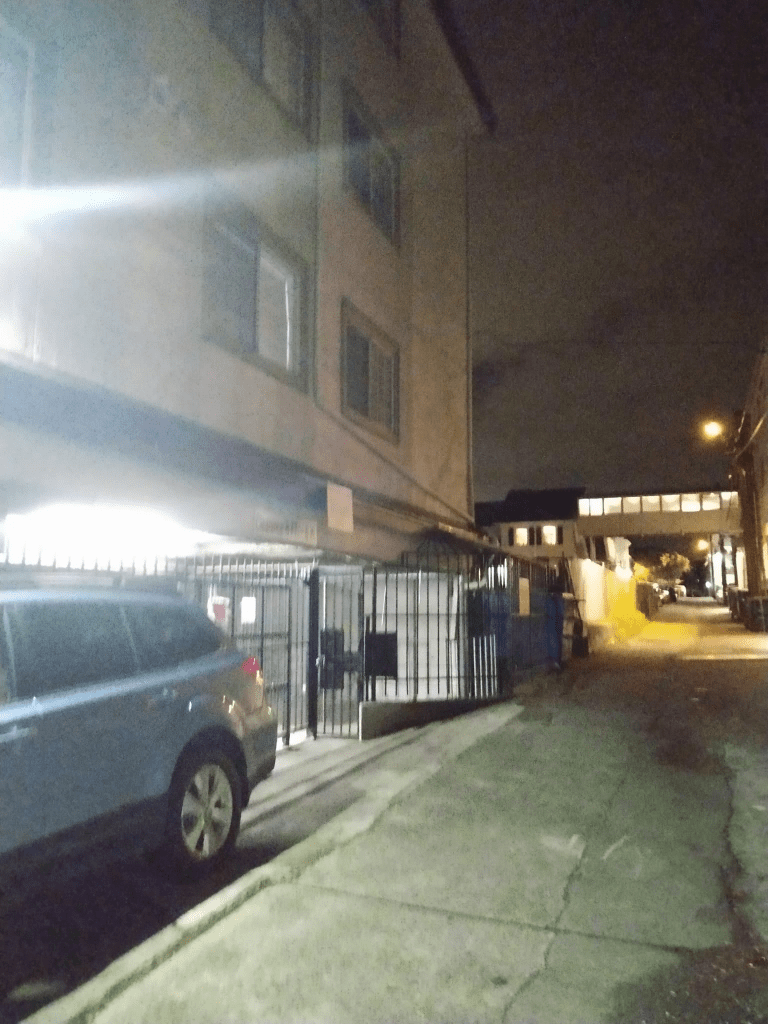
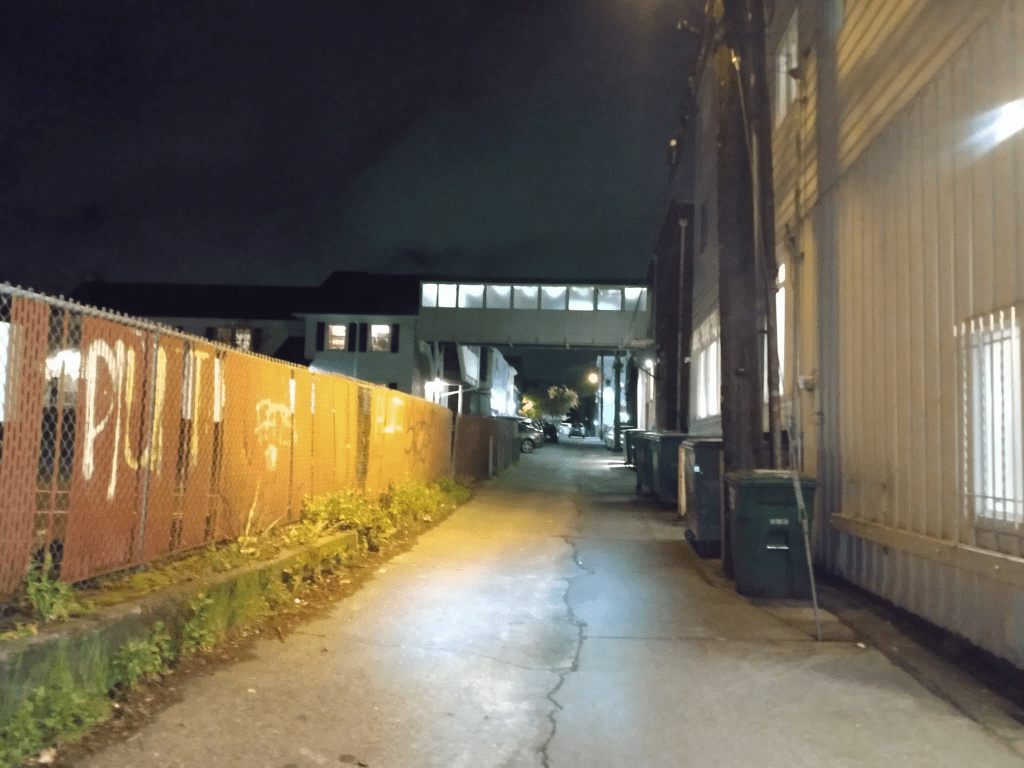



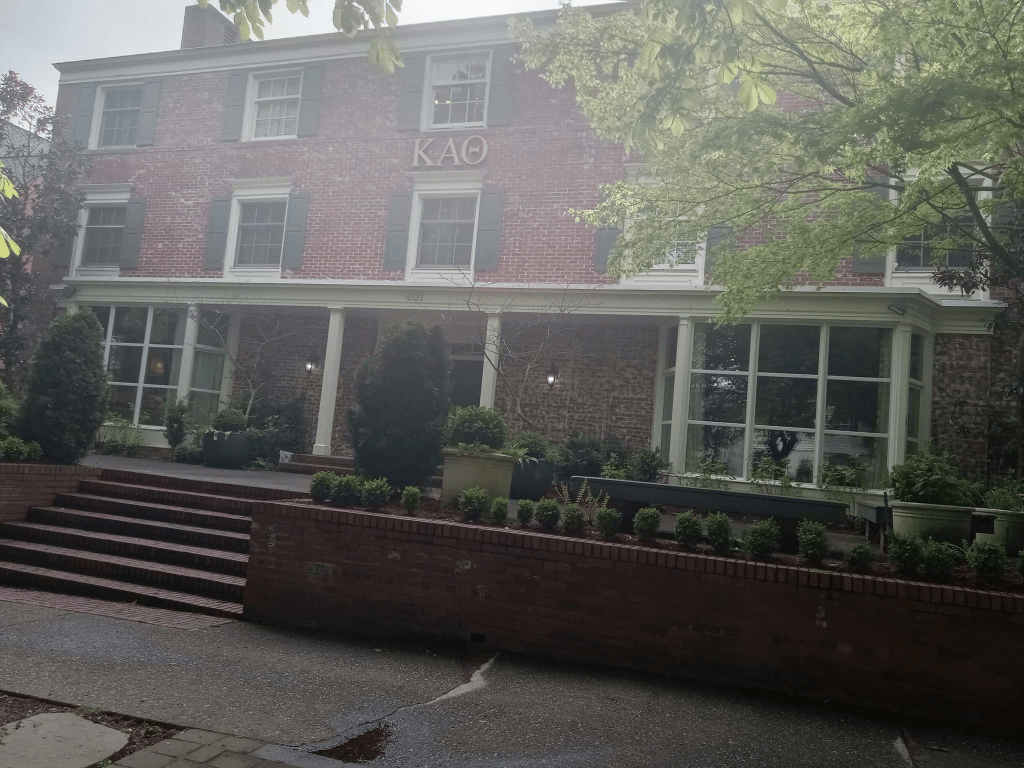





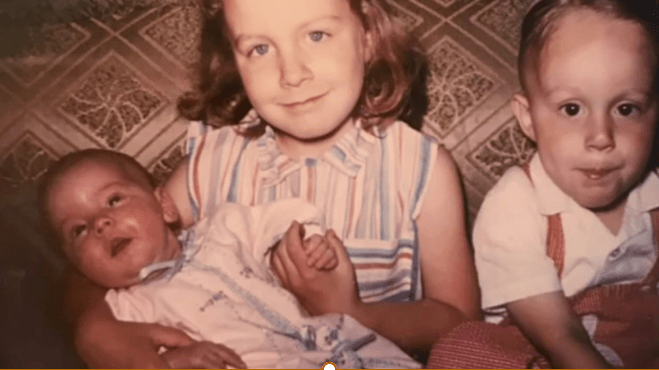

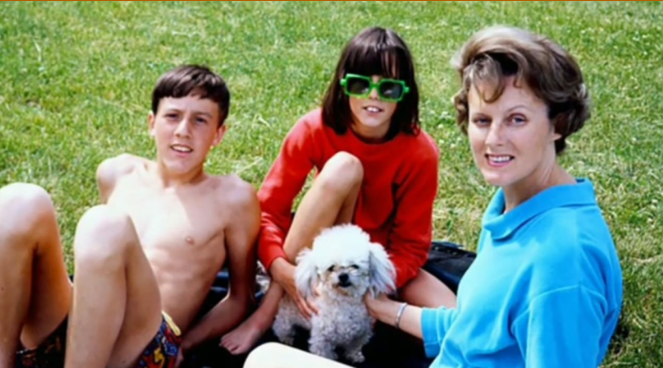
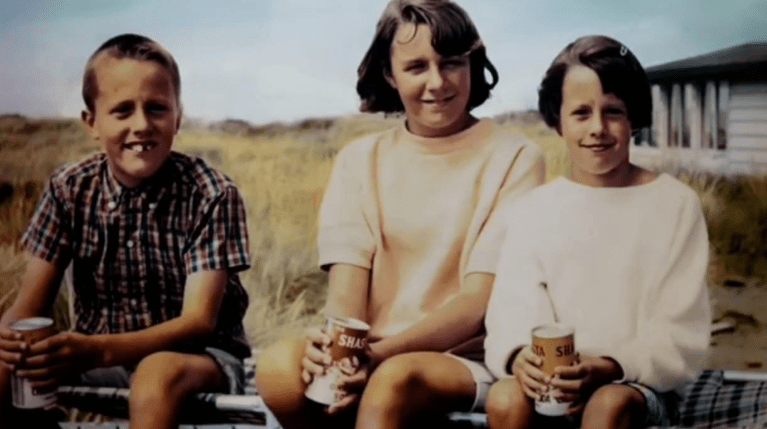


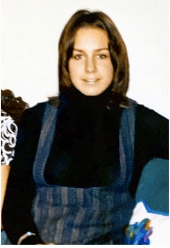


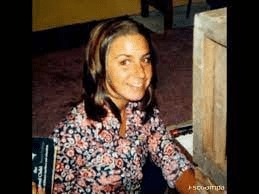




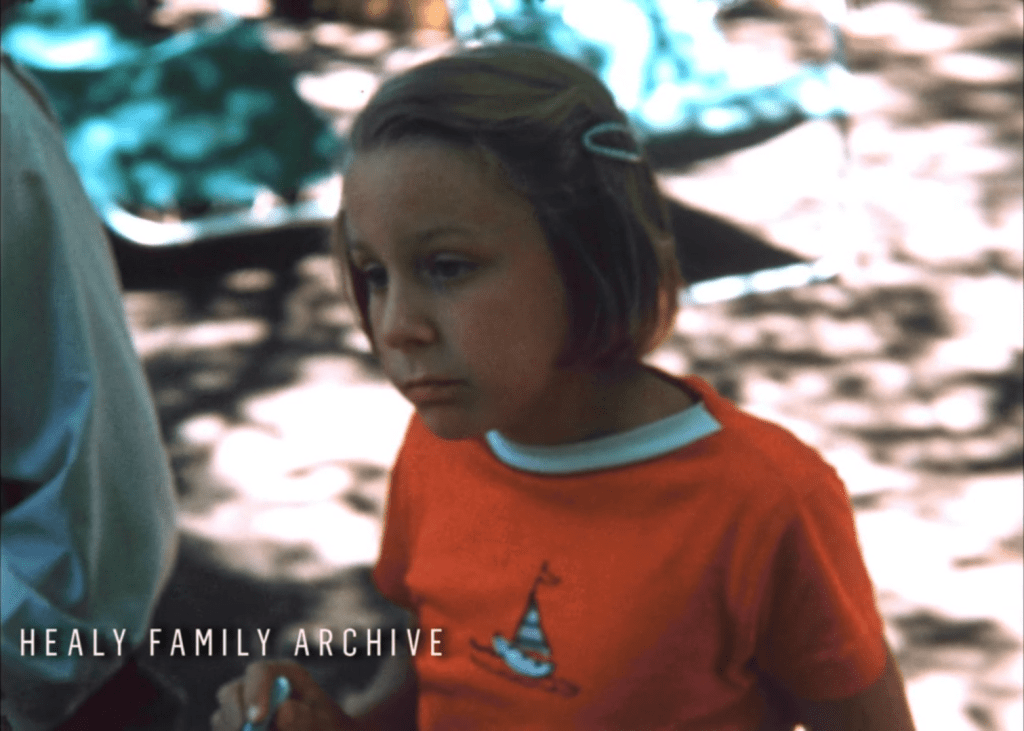






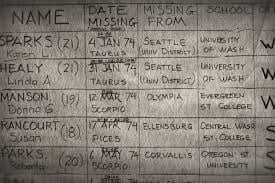

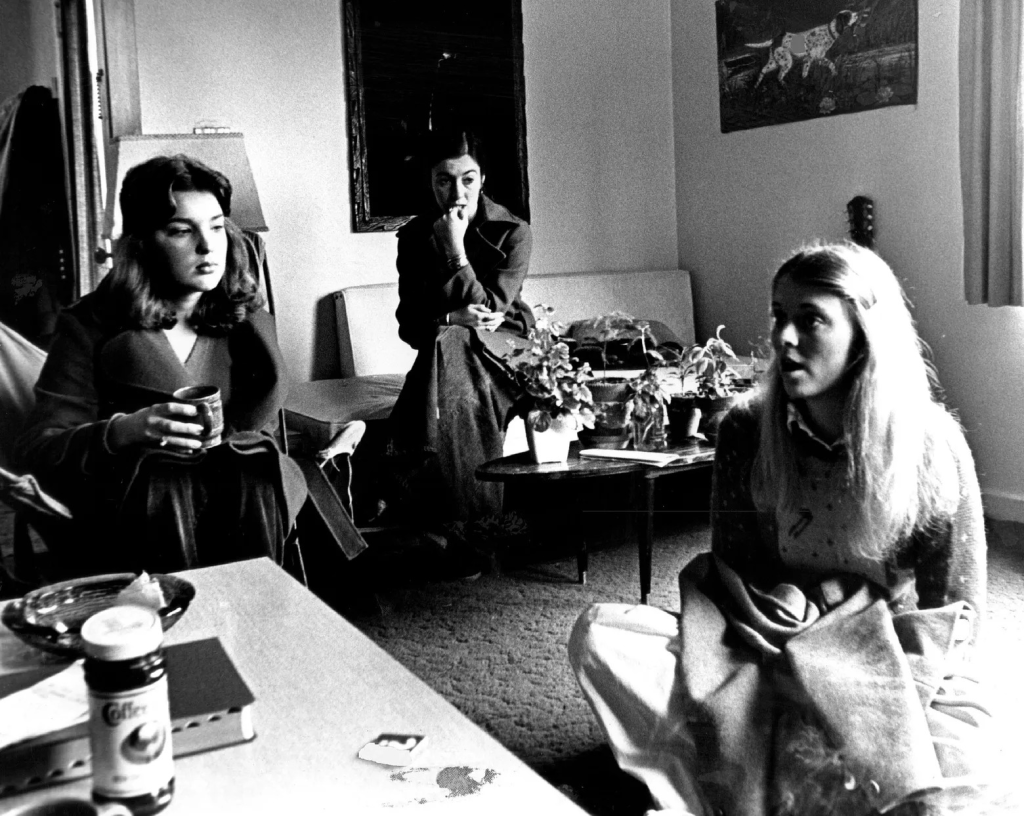


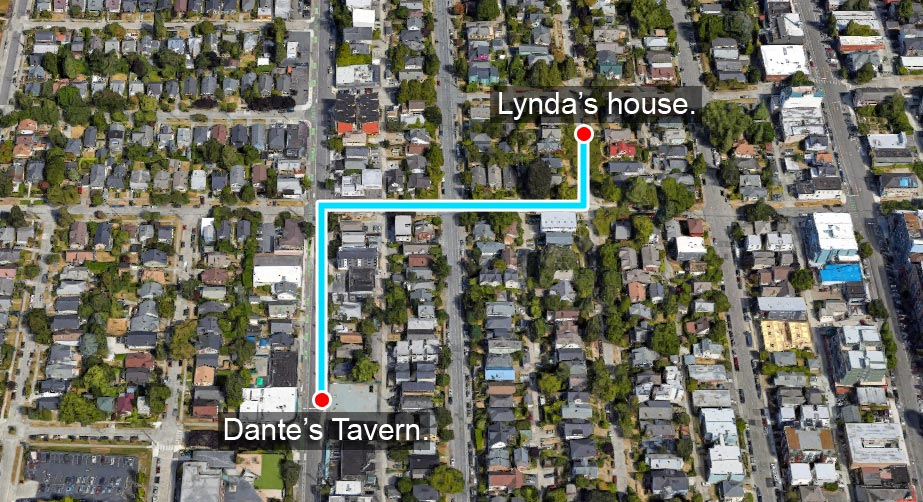


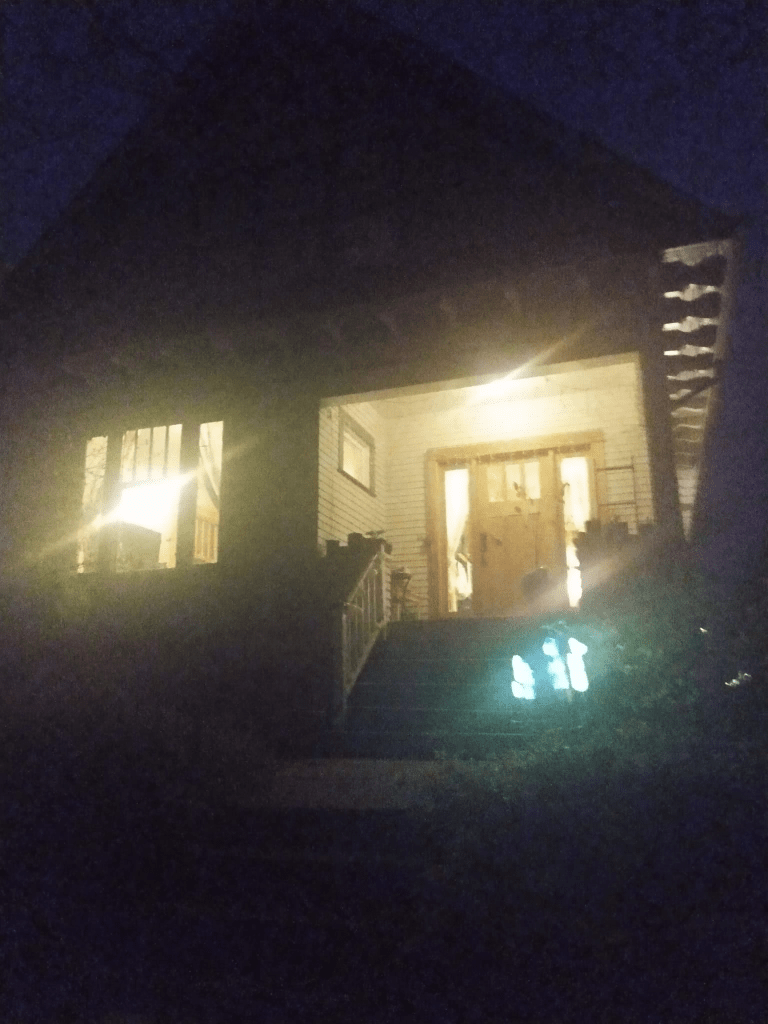

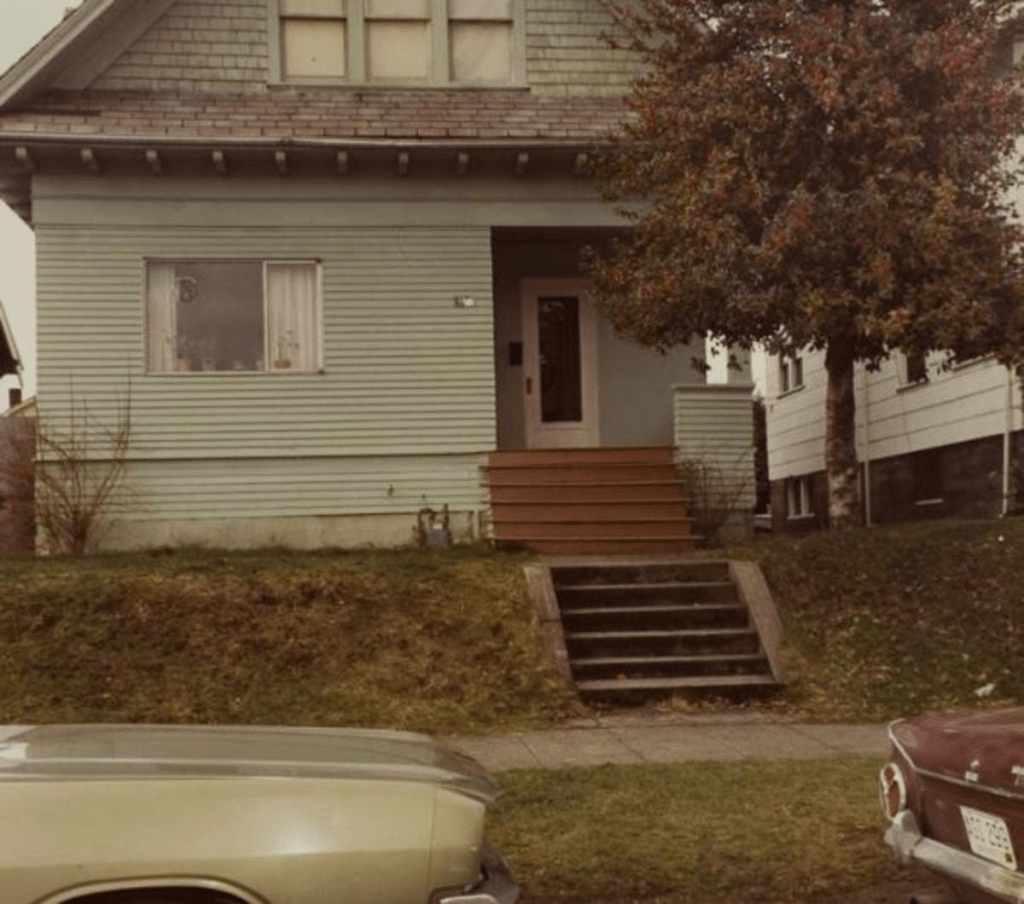
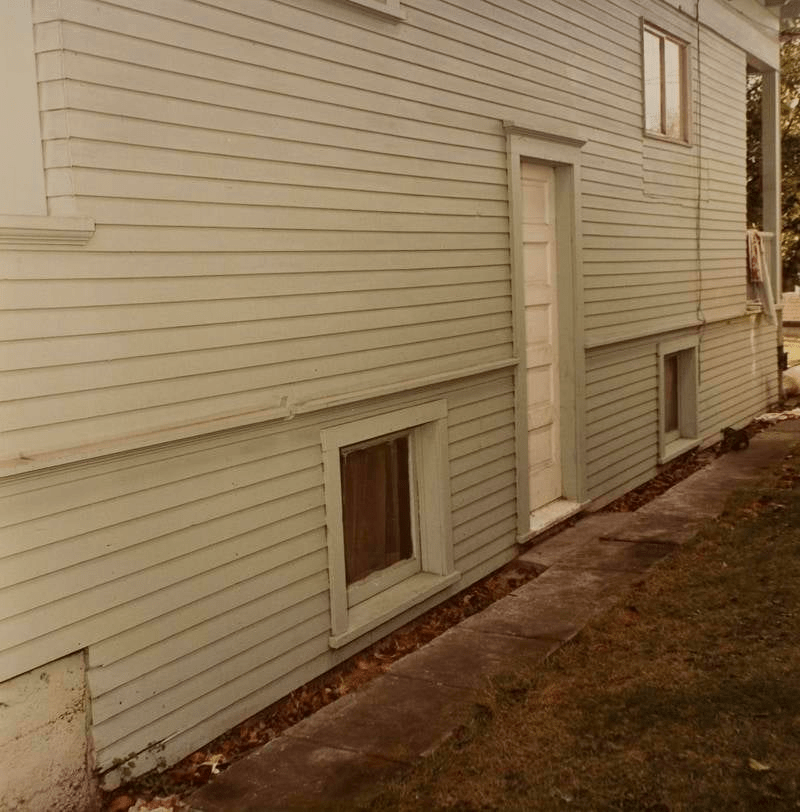


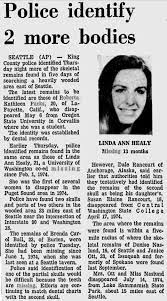

 Another Bundy Blog.