When I went to Seattle in April 2022 I really tried to focus on going to locations related to the confirmed victims (largely because I was new at writing and was just sort of getting my bearings about me). However, I did find a few cases that were particularly intriguing to me and that didn’t seem to have any other real suspects worth looking into other than Bundy. I already wrote about the United Airlines flight attendants Lisa Wick and Lonnie Trumbull that were attacked in their Queen Anne Hill neighborhood in Seattle (Trumbull didn’t survive), but there’s another much younger victim I now want to focus on: Brenda Joy Baker. I can’t seem to find much on her background or tragic death AT ALL, not just information related to TB’s involvement.
Bespectacled Brenda Joy Baker was born on July 13, 1959, to Benjamin and Margaret (nee Stephens) Baker in Enumclaw, WA. The couple had seven children: three boys (Larry, Victor, and Randall) and four girls (Brenda, Margaret, Leslie, and Tina). Mr. Baker was born on March 1, 1924 in Bay County, Florida and Mrs. Baker was born on January 29, 1920 in Sedalia, Missouri. Margaret (who went by Maggie) was previously married to a man named John Beard Jr. (who passed on October 11, 1969). Brenda seems to come from a tragicroots, having two brothers that also passed away extremely young: Benjamin was born in 1956 and died at the age of 25 in 1982 and Victor (who was born in 1960) sadly died in 1981 at the age of 21. Her sister Tina passed away at the age of 51 on June 27, 2009.
Mr. and Mrs. Benjamin Baker raised their family at 21907 237th Ave SE in Maple Valley, Washington. At the time she was murdered, fourteen-year-old Brenda was attending Tahoma Junior High School and despite her young age, she was a frequent hitchhiker and liked to run away from home. She was last seen roughly four blocks away from her home near Puyallup, WA on May 25, 1974tryingto thumb a ride ‘south’ to Fort Lewis. Before she disappeared, Brenda shared with her friends that she was ‘planning to meet a soldier.’ Baker had a history of running away from home and even lived in a foster home for an unknown period of time. However, this time her absence was immediately noticed by her family and a missing person’s report was filed the same day. This was the second runaway report submitted by the Bakers: she was apprehended by Olympia police in one prior incident. The body of Brenda Joy Baker was found 31 days later on the outskirts of Millersylvania State Parknot far from the Restover Truck Stop.**
When her body was first found, Tacoma based pathologist Dr. Charles P. Larson thought the individual was between 28-32 years old, approximately 5’2″ and was ‘slightly overweight.’ She also had a surgical scar located somewhere on her body. Dr. Larson was summoned from Tacoma after two local Pathologists were unavailable. He said the victim appeared as if she had been dead for about four weeks and there were no clues found on or around the body. They were found dressed in brown leather alligator shoes, white socks, bright red stretch knit bell-bottom pants and a large tan corduroy mid-waist jacket.
On June 17, 1974 the body of Brenda Joy Baker was found on a small road in an inaccessible area located on the outskirts of Millersylvania State Park just outside of Seattle. Her remains were covered by two logs as well as some brush and it appeared that some attempts were made to try to conceal her body.She was almost completely decomposed from the waist up. Her body was found slightly after noon by Tom Albert Ismay and his two friends, Mary Etta Rinehart and May Harnit. According to Sergeant Mike Celund, Ismay owned 195 acres west of Millersylvania State Park and told officers he came across the young girl’s remains about five feet off the roadway as he was walking down a dirt pathway off McCorkle Road at the north end of the park. He immediately called the sheriff’s department, who in turn summoned Deputy Coroner WW Frazier and Captain Harold Bade. Ismay told law enforcement that ten days before the discovery he placed an old tree across the road to keep trespassers off his property and was checking the effectiveness of his roadblock when he stumbled upon the remains, which were about 25 feet away. Despite some discrepancies in the possible age of the victim by medical experts in the beginning, the body was quickly identified as Brenda Joy Baker by Thurston County Sheriff’s investigators; this most likely happened so quickly because of a missing persons report her parents filed with King County Sheriff’s Department. Law enforcement also compared the body to Bakers dental records, the clothes she was last seen wearing, and the jewelry found with the body (specifically two bracelets, an earring, and a ring); everything came back a match. Her father also said that the body belonged to his daughter as well. Despite the body’s advanced decomposition it was determined tat the victim’s throat had been cut. Anything beyond that is unknown, as detectives admitted they couldn’t find any additional physical evidence or foreign DNA on (or near) her remains because it had been in a state of decomp for far too long.
Following a preliminary autopsy, Dr. Larson and his two assistants, Dr. Harvey Snyder and Dr. Jack Bohanan felt the victim’s age was somewhere between 28 and 34 years. In a separate, unrelated study using X-ray waves and other ‘extensive examinations,’ radiologist Dr. William Veach determined the body to be between 14 to 19 years old. Even though age is not the most important factor when attempting to identify an unknown victim, Undersheriff Jack Crawford did point out that the discrepancy helped to create a wider search field and it’s not abnormal to have extensive variances in age assumptions: ‘it’s not abnormal to have such a discrepancy in age. Right now we are working on the theory this woman is anywhere between the ages of 12 and 50. We are working on names not ages. We will try to identify her by her clothing and the like. Besides that, one man says one age, another is sure it’s another age. It’s only an opinion on their part. What we are doing is working as fast as we can, as accurately as we can to get this person identified, then worry about the age. … ‘Both are experts, but that’s only their opinion. We will continue to work on the 12 to 50 age bracket.’ … ‘There are many people who are worried sick now that it might be their relatives we might have. If we lower the age to 14 or so we open the door for a whole bunch more people.’ Crawford also cited King County missing persons and runaway statistics as 10,000 people in the age category of 14 to 19: ‘we have 40 of 50 here in Thurston county alone.’ … ‘ We are working around the clock because the sooner we come up with a name, the sooner we will see the case through. It’s critical to identify the dead person as soon as possible.’ Obviously they did something right because it was eventually determined the body was Bakers.
In a joint announcement between County Fultzand the Thurston County Sheriff‘s Department, there was no doubt that the body belonged to Brenda Joy Baker. Fultz listed her death as a homicide and that she most likely died either by strangulation or knife wounds. Regarding the 48 hour identification process, Crawford said it was ‘like the spokes on a wheel. All the clues we had seemed to lead back to one hub and that hub was Brenda Joy Baker.’ He also said that the King County runaway report helped lead deputies to the final conclusion and that the clothing found with the body was sent to an FBI laboratory for analysis. Fultz released the body to the Baker family to bury. After the ID was made, Crawford said that they had no material witnesses in Brenda’s death but they ‘had a lot of people to talk to.’ On Thursday June 20, 1974, the Thurston County sheriff’s department traveled to Seattle in an attempt to retrace the last steps of the child. Because both girls were last seen hitchhiking, there was a brief period of speculation that Baker’s disappearance was somehow linked to the murder of 14 year-old Kathy Devine (also from the Seattle area): about six months before Baker disappeared on November 25, 1973 Devine was last seen hitchhiking near Olympia. Her body was found in the Capitol State Forest on December 6, 1973 after a young couple stumbled upon her remains. It was eventually determined that Bundy had nothing to do with the young girls murder: on March 7, 2002 Thurston County authorities revealed that recently discovered DNA evidence cleared him and pointed to a different man as her killer: WilliamE. Cosden Jr. (who coincidentally was already in prison for rape).
In an article about the Baker case published in the Olympian on June 23, 1974,an anonymous male called the Thurston County Sheriff’s Department and told them he had been grouse hunting in late November 1973 when he came across a shack in the woods, where he saw a male with two girls, around 12 to 14 years old at a time that roughly corresponded with the murders of Kathy Devine and Brenda Baker. He returned to the secluded shack on the Black River in January 1974 and found it abandoned, but scattered around the structure were the carcasses of six dogs and one cat, all of which had been skinned with the bones removed. The shack apparently remained vacant until the beginning of June 1974, when the caller said he returned and saw the same man. The mystery caller returned for a final time on June 20th with a friend, but on this occasion he said they were ‘fired upon.’ He told law enforcement that the time he saw the man at the shack was very close to the time of the two homicides. Additionally, the same article reported that a Seattle man and his wife told police they saw a girl matching Bakers description hitchhiking near the Scott Lake interchange on the I-5 in May. Additionally, a man named Bill Sullivan (also from Seattle) reported that he stopped with his wife at a truck stop at the Scott Lake interchange and saw a young girl matching Bakers description. She was hitchhiking and had gotten into an older model, light colored panel truck driven by a bearded man that came from the direction of Scott Lake.
According to the ‘TB Multiagency Investigative Team Report 1992,’ Bundy was in Seattle the day Brenda disappeared, which wasn’t that far away from Puyallup and Millersylvania State Park (it was about an hour and a half one way, I made the drive with no problems). In May 1974, he was living at the Rogers Rooming House in Seattle on 12th Avenue and was employed at the Department of Emergency Services in Olympia (he was there from May 3, 1974 to August 28, 1974). Ted was in between schooling at the time and didn’t start at the University of Utah School of Law until September 1974; he was also dating LizKloepfer at the time.
There has been an effort to tie Bakers murder to Ted Bundy, however during his death row confessions he told Dr. Robert Keppel that he had no knowledge of the girl or her murder. I mean, who knows if he was telling the truth or not (Lord knows he didn’t do it often). Since he went to the electric chair in Florida on January 24, 1989 we’ll probably never know what really happened to young Brenda Baker (unless some unearthed, long lost evidence comes to light). Her murder is still treated as a cold case. I wish I had more time to hike through Millersylvania State Park when I was in Seattle, because the little of it I did see was beautiful. Ted committed SO MANY atrocities in Washington state alone that I barely had enough time to cram everything into my eight-day trip (I literally finished at 8 PM the night before I went home). When I told my husband about all the states I need to go to for my ‘little writing project, he was absolutely shocked. His exact words: ‘what a monster.’ I married a smart man.
Sadly both of Brenda’s parents passed away before her murder was solved: Mr. Baker died on January 18, 1979 at only 54 years old in King County, WA; he was cremated and per his last request his ashes were scattered in the Gulf of Mexico. Margaret Baker passed away on January 18, 1989 (just a few days before Bundy was executed) at the age of 68.
* Edit, July 2024: I had someone in Washington state that was in touch with the Baker family reach out and tell me that a good amount of information out there on Brenda’s case was wrong, including the most commonly used picture of her. However she didn’t elaborate beyond that and I’m unsure what I needed to fix.
**Edit, October 23, 2023. The Restover Truck Stop is oddly enough where William Cosden Jr. worked (it was owned by his father. I was chatting with Kathy Devine’s sister Charlene the other day and we talked about the idea that Cosden killed Brenda, and it was like a light bulb went off in my head. The more I think about the more it makes sense.
One of the very few photos I could find of Brenda Joy Baker that according to her family isn’t even her.One of the very few photos I could find of Brenda Joy Baker.The grave site for Brenda Joy Baker, photo courtesy of FindAGrave.Bennie Baker and his first cousin, Christine Williams. Mr. Baker was born on March 1, 1924 in Panama City, Florida to Victor (26) and Elizabeth (20) Baker. In 1976 he married Margaret ‘Maggie’ Frances (nee Stephens) and relocated to Washington state. He passed away at the age of 54 on January 18, 1979 in Maple Valley.Bennie Baker receiving his brother Victor’s Silver Star awarded posthumously, published by The Panama City News Herald on September 26, 1951.Margaret Baker.Margaret Baker is the second from the right and Bennie Baker is on the far left.Margaret Baker and family.Margaret Baker and family.The grave site for Brenda’s mother, Margaret Frances ‘Maggie’ Stephens Baker, photo courtesy of FindAGrave.Brenda’s sister Margaret and her son, John.Tina Louise Baker’s freshman picture from the 1974 Tahoma High School yearbook. Tina was born on April 16, 1958 in Enumclaw and died at the age of 51 on June 27, 2009 in Maple Valley.Tina Louise Baker’s sophomore picture from the 1975 Tahoma High School yearbook.Tina Louise Baker’s senior picture from the 1978 Tahoma High School yearbook.Randy Baker’s sophomore picture from the 1978 Tahoma High School yearbook.Leslie Baker’s freshman picture from the 1994 Tahoma High School yearbook.Leslie Baker’s junior picture from the 1996 Tahoma High School yearbook.This is the only picture I could find of Brenda’s brother, Benjamin Lawrence ‘Larry’ Baker, photo courtesy of FindAGrave. Baker was born on December 4, 1956 in Enumclaw and died on January 13, 1982 in Grants Pass, OR. He was buried in Auburn, Washington.The Baker family tree, screen shot courtesy of myheritage.Margaret Bakers first marriage application.Margaret Bakers first marriage certficate.The home the Baker family resided in located at 21907 237th Ave SE in Maple Valley, WA.A map from the Rogers Rooming House where Bundy was living at the time to Millersylvania State Park where Brenda was dumped. Bundy absolutely could have made that drive from Seattle, where the ‘Ted Bundy Multiagency Investigative Team Report 1992’ places him the day Brenda was abducted (she was found 2 days later in Millersylvania State Park. A possible route Bundy took the day he abducted Brenda Joy Baker, from the Rogers Rooming House to Puyallup to Millersylvania State Park. Bundy’s whereabouts the day Brenda Joy Baker disappeared according to the ‘Ted Bundy Multiagency Investigative Team Report 1992.’Brenda Bakers death certificate.An article about a found body that turned out to be Brenda Baker, published by The Olympian on June 18, 1974.An article about a found body that turned out to be Brenda Baker, published by The Olympian on June 19, 1974.An article about Brenda Baker, published by The Tri-City Herald on June 20, 1974.An article about Brenda Baker, published by The Ellensburg Daily Record on June 20, 1974.An article about Brenda Baker, published by The Longview Daily News on June 20, 1974.An article about Brenda Baker published by The Spokane Chronicle on June 20, 1974.An article about Brenda Joy Baker, published by The Centralia Daily Chronicle on June 20, 1974.An article about Brenda Joy Baker, published by The Olympian on June 20, 1974.An article about Baker, published by The Kitsap Sun on June 20, 1974.An article about Brenda Joy Baker, published by The Columbian on June 20, 1974.An article about Brenda’s murder published by The Olympian on June 21, 1974.An article about Brenda’s murder published by The News Tribune on June 21, 1974.An article about Brenda’s disappearance published by The News Tribune on June 21, 1974.An article about Brenda Baker published in the Daily Chronicle on June 22, 1974.An article about Brenda Baker published in the Olympian on June 23, 1974.An article mentioning Brenda Baker published in The Daily Chronicle on June 26, 1974.An article mentioning Brenda Baker published in The Daily Chronicle on June 28, 1974.An article about Brenda Baker published in The Olympian on June 30, 1974.An article about Brenda Joy Baker, published by The Walla Walla Union Bulletin on July 1, 1974.An article about Brenda Joy Baker, published by the Centralia Daily Chronicle on July 2, 1974.An article about Baker published by The News Tribune on July 2, 1974.An article about Brenda Joy Baker, published by The Daily Chronicle on July 2, 1974.An article about Brenda Joy Baker, published by the Daily Sitka Sentinel on July 2, 1974.An article about Brenda Joy Baker, published by The News Tribune on July 3, 1974.An article about the missing Seattle victims mentioning Brenda Joy Baker, published by The Olympian on July 4, 1974.An article about the missing Seattle victims mentioning Brenda Joy Baker, published by The Spokesman-Review on July 4, 1974.An article mentioning Baker, published by the Albany Democrat-Herald on July 4, 1974.An article about Brenda Joy Baker, published by The Columbian on July 4, 1974.An article about the missing Seattle girls that mentions Brenda’s disappearance published by The Daily Chronicle on July 5, 1974.An article about the missing Seattle girls that mentions Brenda’s disappearance published by The News Tribune on July 28, 1974.The first part of an article that mentions Brenda Baker published by the Cooper Point Journal on August 11, 1974, photo courtesy of the Evergreen State College Archives.The second part of an article that mentions Brenda Baker published by the Cooper Point Journal on August 11, 1974, photo courtesy of the Evergreen State College Archives.An article mentioning Brenda Baker, but if you look at the far right column you’ll see a short blurb about the Issaquah dump site published by The Daily Chronicle on September 19, 1974.An article about Brenda Baker published published on June of 1974.An article about the missing Seattle girls that mentions Brenda’s disappearance.An article mentioning Brenda Baker.An article mentioning Brenda Baker.An article about Ted regarding his execution mentioning Brenda Baker at the bottom.A mugshot of William Cosden Jr. in his younger days. A photo of William Cosden Jr.’s burnt truck, which coincidentally caught fire a little after midnight the day after Kathy Devine disappeared on November 26, 1974. An eyewitness reported seeing blood inside the truck.Millersylvania State Park, April 2022.Millersylvania State Park, April 2022.Millersylvania State Park, April 2022.Millersylvania State Park, April 2022.Millersylvania State Park, April 2022.Millersylvania State Park, April 2022.Millersylvania State Park, April 2022.Millersylvania State Park, April 2022.Millersylvania State Park, April 2022.Millersylvania State Park, April 2022.Millersylvania State Park, April 2022.Millersylvania State Park, April 2022.Millersylvania State Park, April 2022.Millersylvania State Park, April 2022.Millersylvania State Park, April 2022.Millersylvania State Park, April 2022.Millersylvania State Park, April 2022.Millersylvania State Park, April 2022.Millersylvania State Park, April 2022.Millersylvania State Park, April 2022.
Janice Ann Blackburn-Ott was born on February 14, 1951 in McMinnville, Oregon to Dr. Donald Edwin and Ferol Lorraine (nee Hunter) Blackburn. Donald was born on May 14, 1922 in Lovell, WY, andduring WWII he was in the US Navy; when he was done serving his country he continued with his education and earned his PhD from the University of Idaho. Ferol was born on August 2, 1921 in Moscow, ID and the couple were wed on July 18 1946. They had two children together: Janice and her older sister, Illona Lynn (who was born in February 1949). Dr. Blackburn was a high school teacher and coach in Idaho before the family relocated to Washington state, where he became a counselor and administrator for the Spokane School District (specifically at school #81).
Well-liked by her peers, Janice was bright and bubbly (this trait even earned her the nickname ‘Sunshine Girl’ at her job), and had a very busy schedule while she was a student at Shadle Park High School: she was a member of the ‘Hi-Lassies’ (which looks like some sort a cheerleading squad), the ski club, the ‘Eldah Tra Art Club,’ and helped out in the library. In a strange twist of fate, she was high school sweethearts with Susan Rancourt’s (another Bundy victim) older brother, Dennis. She graduated from high school in 1969 with high honors and went on to earn her Bachelor’s degree in social work from Eastern Washington State University.
Janice was a petite girl, and only stood at 5’1” tall and was estimated to weigh less than 100 pounds; she had long blonde hair that she wore long and parted down the middle and had smokey green eyes. Affectionately nicknamed ‘Jan’ by her loved ones, she married James Douglass Ott on December 15, 1972 and at the time of her murder worked as a probation case worker for the King County Youth Service Center.After her car was broken into while living in Seattle, Janicefelt that living in a smaller community would be safer and moved in with a roommate in nearby Issaquah (located just two doors down from ‘The Issaquah Press’). At the time of his wife’s disappearance, Jim Ott was in graduate school in California (some articles reported that he was in medical school, where others said he was earning ‘an advanced degree in prosthetics’).
On the morning of Sunday, July 14, 1974 Janice spent a few hours washing her clothes at the laundromat, and from there she had a cup of coffee with a friend. After her chores and errands were finished, she went home and put on her black bikini, cut-off shorts, and a white blouse she wore tied at her midriff. Before leaving she made sure to leave a note for her roommate, one that read, ‘I’ll be at Lake Sammamish sunin’ myself. See ya.’ The park is still a popular destination for Issaquah locals, which is a suburb located right outside of Seattle. It contains several beaches and is known to get very crowded during the hot summer months. Ott then hopped on her yellow 10-speed Tiger bicycle and rode to the park; when she arrived at roughly around 12:00-12:30 PM, many beachgoers noticed the attractive young woman, and some even said they remembered her stripping down to her bathing suit and applying a layer of cocoa butter to her skin. That day at the park, Rainier Beer Company was hosting its annual summer picnic, and it was said that there were upwards of 40,000 people there. In addition to happy park goers, Theodore Robert Bundy was there as well, prowling for his next victim (or in this case, victims).
Before Bundy abducted Ott, he approached a young park goer named Janice Graham at the bandstand area. After he said hello and introduced himself to her as Ted, he asked the 22-year-old if she would be able to help him load a sailboat onto the top of his car. She initially agreed, however once the pair reached his vehicle she quickly noticed there was no sailboat, andit was then that her new friend shared that it was actually at his parents’ house that was ‘just up the hill.’ Realizing it was going to be more than just a quick favor, Janice told Ted that she was unable to help him because she was supposed to meet up with her husband and parents shortly. Bundy replied ‘Oh, that’s OK. I should have told you that it wasn’t in the parking lot.’ He then walked the young woman back to the bandstand area, apologized one last time then took off to his right. Graham later reported to law enforcement that the man was wearing a ‘beige sling’ and on three separate times during their short walk from the bandstand to the VW he stopped to rub his ‘injured’ arm, claiming it was from a racquetball injury. Immediately after he parted ways with Graham was when he ran into Janice Ott, as she lay in her black bikini soaking up the rays on Lake Sammamish’s Tibbett’s Beach.
Before Bundy abducted Ott, he approached a young woman named Janice Graham at the bandstand area, and after he said hello and introduced himself to her, he asked the 22-year-old if she would be able to help him load a sailboat onto the top of his car. She initially agreed, however once the pair reached his vehicle she quickly noticed there was no sailboat, and it was then that her new friend shared that it was actually at his parents’ house that was ‘just up the hill.’ Realizing it was going to be more than just a quick favor, Janice told Ted that she was unable to help him because she was supposed to meet up with her husband and parents shortly. Bundy replied ‘Oh, that’s OK. I should have told you that it wasn’t in the parking lot.’ He then walked the young woman back to the bandstand area, apologized one last time then took off to his right. Graham later reported to law enforcement that the man was wearing a ‘beige sling’ and on three separate times during their short walk from the bandstand to the VW he stopped to rub his ‘injured’ arm, claiming it was from a racquetball injury. Immediately after he parted ways with Graham was when he ran into Janice Ott, as she lay in her black bikini soaking up the rays on Lake Sammamish’s Tibbett’s Beach.
Janice was only at Lake Sammamish for about twenty minutes before she was approached by a tall, dark-haired man dressed in tennis shorts (white with a red stripe on the side), a white shirt, and tennis shoes. People nearby that overheard small pieces of their exchange reported that he asked Ott for her assistance with putting a sailboat on his car, which was ‘just down the road’ at his parents’ house in Issaquah. She invited the handsome stranger to sit down next to her so they could ‘talk about it,’ and he did. Fellow beach goers heard Jan say to Bundy that she always had an interest in sailing but never really tried to learn, and flirtatiously asked if she could ‘have a ride in the boat;’ she seemingly agreed to help if he would take her out for a ride afterwards. People also overheard her tell the man that she had her bike with her and she didn’t want to leave it behind out of fear that it would get stolen. He assured her that there was lots of room in his trunk for it, and she then said to him, ‘OK, I’ll help you.’ As the pair walked away, one witness overheard Ott say, ‘hi, I’m Jan,’ to which the man responded, ‘hi, I’m Ted.’ She was never seen alive again.
There were a few people that were sitting close to Ted and Ott that had a first hand account as to what happened: Jerry/Kelly Snyder is a retired DEA agent that was sitting roughly 30 feet away when the exchange occurred, and hehas said that he noticed Bundy was only asking women for help, and that he appeared to be ‘trying to find someone who met certain qualifications.’
About the exchange, Snyder said: ‘I noticed a guy that was walking down the beach. A young man. Probably in his mid-to-late twenties. He was wearing white shorts and they had a red stripe, which immediately caught my eye. When he got close, I noticed he had really curly hair and his left arm was in a sling. It piqued my interest because every time he approached a woman, or a group of two or three women, he was getting turned down. And I just kept watching him and he eventually ended up being right in front of me, where he approached a young girl. She was a young and attractive blonde girl. And he asked her… words to the effect of… ‘I need some help.’ She’s saying that she just got here… So obviously, going through her mind is ‘I’d like to help you out, but I’m here to relax.’ He kept on and on and on, and he talks her into whatever he talked her into. He said something about a catamaran. And ultimately, she gets up… reluctantly… because her head is down and she is like ‘I can’t believe I’m doing this.’ And then she started walking back past me. She had this frown on her face, like, ‘I’m helping this guy when I should be enjoying myself on the beach.’ And the end, the result is, she’s no longer with us because she was a nice person.’
Theresa Marie Sharpe was much closer to Ott than Snyder, and thankfully she was able to give investigators a detailed description about the exchange between the two strangers and what exactly they said. Sharpe also shared with LE that she ‘didn’t feel his arm was really hurt. I do remember he took his arm out of the sling and moved it around.’A second young woman named Sylvia Valint was sitting closest to the pair, and where she was incorrect about his height (she said he was roughly 5’6” to 5’7”) she got the rest of his physical description correct. The fifteen-year-old was also able to tell detectives what was said between the two almost verbatim and provided them with details that no other witness was able to. Per a police report, ‘at about 12:30 hours, Sylvia Valint was laying on the beach at the park with her two friends. Jerry Snyder was about 15 feet from Valint with his wife. Theresa Sharp was with her family about 10 feet from Valint. They were all on the beach, about 200 yards directly in front of the east restroom. The above three witnesses all observed Janice Ott arrive on the beach and position herself between them.’
As we know, Bundy returned only four hours later and abducted Denise Naslund from the same park at around 4:30 PM, and it is the first time that he drastically switched up his MO and took two victims in the same day. It is strongly speculated that he abducted Ott, incapacitated and gagged her, then returned to Lake Sammamish to hunt again. Many TB scholars have theorized that by doing so he was attempting to increase the ‘high’ by taking one woman and returning to the scene only a few hours later to take a second one.
Although Bundy did (sort of) admit to journalists Hugh Aynesworth and Stephen Michaud what happened on July 14, 1974, it was during one of his third person, pseudo-confessions that didn’t directly incriminate him. When asked about Ott and Naslund, the killer theorized that ‘one of the women would probably have watched the other die; he lateradmitted that it was true while speaking to FBI Agent Bill Hagmaier during his time on death row. Despite finally (maybe… possibly??) telling the truth about how the two women were killed he refused to tell investigators the exact location of where he held them, or if the murders took place indoors or outside in a wooded area. We know that Ted was a liar and a narcissist, so we really need to be careful about taking his word as fact. It’s also possible that Ted tied Ott to a tree somewhere and left her there while he went and hunted for Naslund, and since the area he took the women to was most likely secluded and off the beaten track, it was highly unlikely that anyone would have stumbled upon her, especially if she was silenced (gagged).
Another possible theory is that Bundy lied completely, and he murdered Ott right away, then returned to Lake Sammamish to abduct Denise. Logically, there is a large chunk of time between when she was abducted at 12:30 PM and Ted’s return to Lake Sam at around 4 PM, and if we consider the length of the journey (12 miles, each way) between the park and the Issaquah dump site it means that he was most likely with poor Ott for a good 2-3 hours. If the original plan was to kidnap two women then attack them at the same time, it seems like a lot of time to spend with just one victim. I am including this thought while editing this article in July 2024, but I wonder if he did unspeakable horrors to the poor young woman for the entire 2-3 hours, and brought her to the brink of death over and over… only to revive her each time, so that she was alive when he brought Naslund back. Or, maybe Bundy took a second victim that day because something happened during Otts murder that prevented him from achieving complete sexual gratification. Or… perhaps the event wasn’t planned out at all, and he just wanted to try something brand new, right then and there. We will most likely never know.
A few hours later (at roughly 4 PM), Bundy returned to the same parking lot that he parked in earlier and began his ruse all over again. He approached Sindi Siebenbam and asked her for help getting his sailboat. The 19-year-old was on her way back from the bathroom when a visibly nervous Ted approached her asking for help. She immediately asked what happened to his arm, and he told her that he sprained it. Siebenbam also said that the man used his injured arm to gesture with his elbow, and even tugged on her arm in a way that somehow seemed to point her in the direction of his car. When she looked into his cold, dark eyes, she finally had enough of him and firmly told him, ‘no, I’m sorry. I’ve got people waiting.’ Even still, Ted almost seemed reluctant to accept her answer, and even tried a few more times to get her to go with him. The last time she saw him he was wandering towards the restrooms.
Patricia Ann Turner reported a very similar encounter with a stranger that matched Bundy’s description: at around 4:15 PM a tall, dark haired man with his arm in a sling approached her on her way to the concession stand. They chatted briefly and it didn’t take long for him to ask ‘a really big favor.’ Turner told him that she was in a hurry and wasn’t able to help and after that he just sort of wandered away. Approximately five minutes later, Jacqueline Plischke arrived at Lake Sam wearing a bikini and cut-offs, and as she was locking up her bike she noticed a man just staring at her from a short distance away. He quickly walked up to her and asked for help, but she was quick to tell him that she wasn’t very strong and was waiting for someone. Plischke also advised him that he might be better off if he asked someone that was alone (as she was waiting for a friend). Not willing to waste time on someone unwilling to help him, Ted quickly moved on and approached Naslund, who (as we all know) unfortunately agreed to help him.
I’m not going to get super in-depth about Denise Naslund’s background because I’m going to write a separate piece on her (but for obvious reasons, it’s important to discuss her in some capacity as she plays an important role in the murder of Jan Ott). Naslund was a 19-year-old student studying software development at night school. She worked in an office setting during the day to make money to help pay for college, and at the time of her abduction she was living with her mother and seeing a man named Ken Little.
At around 1 PM, Denise and Little arrived at Lake Sammamish along with her dog and another couple, Bob Sargent and Nancy Battema. The small group of friends decided to sit on the lawn on the east side of the park, roughly 200 feet north of the restrooms. According to Battema, Naslund took four Valium tablets when they arrived, and at some point in the afternoon she and her boyfriend got into an argument. Shortly after 4 PM, Ken and Bob fell asleep after the group had eaten hot dogs and potato chips and Denise then told her friend that she was ‘feeling high’ and after a short discussion about the time, she got up and walked towards the restrooms. It was the last time Battema ever saw her. Naslund had driven her friends to the park in her car, and as it got later and later in the day her vehicle stood out in the lot by itself. Over the next couple of days, it started to dawn on investigators that not one but two women had gone missing from Lake Sammamish on the exact same day, just hours apart from each other. Denise was well known for her sweet nature and friendly personality, and her family said she would have most likely agreed to help any person that was in need without a second thought, especially if they were hurt or handicapped.
After Bundy killed Ott and Naslund, he dumped their bodies along the side of a service road near Issaquah. Roughly eight weeks after their abduction on September 6, 1974,a pair of grouse hunters stumbled across their remains scattered amongst a grassy patch in a wooded area near Issaquah, roughly seventeen miles east of Seattle and two miles from Lake Sammamish. The hunters reported to police that they ‘found two shallow graves, and there’s one with long, black hair.’ King County police immediately sealed off the area and after a three-day search found two skulls as well as some other bones, teeth, and tufts of reddish blonde and dark brown hair. By that time, the remains had fully decomposed and had been dispersed throughout the area by forest critters. An absence of clothing and jewelry on or near the victims made investigators believe that the bodies were left at the scene completely naked. Using dental records as well as hair samples (taken from the victims hairbrushes), the skulls were identified to be those of Janice Ott and Denise Naslund. In addition, there was a third set of remains discovered in the form of a femur as well as several vertebrae believed to have belonged to Georgann Hawkins, but sadly they were impossible to identify.
As the investigation heated up investigators learned that Ted had scoped out the park the weekend before the murders, which would have been July 6/7, 1974. They were also able to place him in Issaquah on July 14 by matching up his credit card receipts, and it has been confirmed thathe filled up his car at a gas station located at the northwest corner of Front Street and Sunset Way, where the Issaquah Library now stands. Before he murdered Ott it’s speculated that Bundy may have stopped at ‘The Issaquah Press,’ and after his mugshot was released to the public, their bookkeeper insisted that she had sold him a copy of the newspaper (if you recall, I brought this business up earlier as it was two doors down from where Janice was living at the time).
By this time in the summer of 1974 most Washington residents were aware there was a predator targeting young women in the Pacific Northwest, butdespite this the abductions at Lake Sammamish still came as a huge shock to locals. But thankfully, because Bundy had asked several women for help before finding Ott and Naslund, for the first-time law enforcement was able to put together a composite sketch of the infamous ‘Ted:’ Fliers were hung up throughout the Seattle/Issaquah area and women were told to be cautious of men matching the description.
A little over six months after the Issaquah dump site was discovered on March 1, 1975 forestry students from Green River Community College stumbled upon the skull of Brenda Ball on Taylor Mountain while doing field work; this is approximately thirty miles away from the Flame Tavern, where she was last seen. Two days later, King County Detective Bob Keppel found the skull of Susan Rancourt, who had vanished from Central Washington State University in Ellensburg on April 17, 1974, roughly eighty-seven miles away from where she was recovered; like Ball, her skull had been fractured from blunt force trauma. Roberta ‘Kathy’ Parks was found next: the twenty year old was abducted from the campus of Oregon State University, which is 265 miles (or a 4.5 hour drive) away from the Issaquah dump site. Like the others, her skull showed signs of trauma. The last of the remains found on Taylor Mountain were those of Lynda Ann Healy, and unlike the previous victims only her mandible was found, which was later identified through dental records. No remains of Donna Manson or Georgann Hawkins were ever recovered.
Because of the distance between them, Janice and Jim Ott would frequently write to each other, and after her death he received a letter she had sent right before her abduction. In it, she complained about how long it took for mail to be delivered from Washington to California, saying: ‘five days! Isn’t that a drag? Someone could expire before you ever got wind of it.’ Jim waited by the phone all evening on July 14, 1974, and after dozing off a bit he woke up around 10:45 PM, claiming he heard her voice calling his name over and over in his head, begging him to come help her; the following day, he woke up to learn that she was missing. In the true crime classic ‘The Stranger Beside Me,’ Ann Rule tells of a conversation she had with Ott regarding Jan’s disappearance, and in his last letter to her he begged her to be careful: ‘And then I wrote at the bottom (and I don’t know why I choose those words) ‘please take care of yourself. Be careful about driving. Be careful of people you don’t know. I don’t want anything to happen to you. You’re my source of peace of mind.’’
On January 24, 1989 Bundy was put to death by Florida’s ‘Old Sparky’ electric chair, and he confessed to both Ott and Naslunds murders less than 24 hours before his execution: hetold FBI Agent Bill Hagmaier that he drove an unconscious Jan to a secluded cabin 2-3 miles from Lake Sammamish and repeatedly raped her before knocking her out again and tying her up, and when he returned with a second victim, he said she at some point regained consciousness. He then raped and murdered Denise in front of her before eventually taking her life as well. After this confession came to light Dr. Blackburn said that he would have rather not known what happened to Janice, saying ‘would you like to hear the story of what happened to your daughter?
While doing research into Dr. and Mrs. Blackburn in the years following their daughter’s murder, I discovered there was an ongoing legal battle between them and the King County Sheriff’s department over Janice’s remains: police told the Ott and Naslund families that their remains could not be turned over for burial because they were needed as evidence but unfortunately, this wasn’t true and it turned out that they were misplaced. Bothfamilies filed a lawsuit against the county in 1984, and where a trial had been set for December a settlement was reached on November 2: Denise’s mother Eleanor Rose originally sought $750,000 (she got roughly $112,500), and James Ott and the Blackburns sought $2 million each (in the end they received about the same amount as Rose, which was divided equally between the two parties). Additionally, Denise’s father Robert sought $750,000 but the county refused to settle with him (although they gave her brother Bob about $5,000).
Dr. and Mrs. Blackburn were married for 64 years at the time of his death on June 3, 2010; he was 88.Ferol Blackburn died at the age of 97 on December 8, 2018 in Spokane, WA and is buried in Fairmount Memorial Park in Spokane. Janice’s sister Illona married a man named Gary Clark in 1971 and relocated to Lompoc, CA; the couple have two children together.
* Edit, July 2024: I would like to thank an individual named Anna, who was kind enough to reach out and let me know that I included a picture of the wrong Jim Ott’s grave stone on here. Looking at it I can’t believe I made such a glaringly obvious mistake, and I’m now even more confident in my decision to put off writing any new articles until I go back and make sure that my old stuff is up to snuff. Also, thank you for being so kind about it. So many people would have publicly blasted me, via a comment at the end of the post pointing out all of my errors. Reaching out through email was very classy, and I appreciate you.
A photo of Janice Ott from high school. Jan’s sophomore year picture the 1967 Shadle Park High School yearbook.Janice Blackburn in a group picture from the “ASB Fall Council,’ taken from the 1967 Shadle Park High School yearbook.Jan’s junior year picture the 1968 Shadle Park High School yearbook.A photo of Janice Blackburn from the 1968 Shadle Park High School yearbook.Jan Blackburn’s senior year pic from the 1968 Shadle Park High School yearbook.A blurb from the 1969 Shadle Park High School yearbook that mentions Jan Blackburn.A picture of Jan in a group shot for the “Hi-Lassies’ from the 1969 Shadle Park High School yearbook.A photo of Janice Blackburn from the 1969 Shadle Park High School yearbook.A photo of Janice Blackburn from the 1969 Shadle Park High School yearbook (she is in the top row in the middle).A photo of Janice Blackburn from the 1969 Shadle Park High School yearbook.A photo of Janice Blackburn from the 1969 Shadle Park High School yearbook (she is on the bottom row, far right).A photo of Janice Blackburn from the 1969 Shadle Park High School yearbook.A shot of Janice Blackburn in a group photo for the dance committee from the 1969 Shadle Park High School yearbook (she is in the middle row, second from the right).A shot of Janice Blackburn in a group photo for the ski club from the 1969 Shadle Park High School yearbook (she is in the bottom row, far right).Photo taken on June 16, 1974. Janice is wearing the same pair of shorts from the day of her abduction and she is standing next to her Volkswagen.A picture of Janice Ott and Dennis Rancourt. Photo courtesy of Tiffany Jean.Janice Ott. Photo courtesy of Tiffany Jean.Jan Ott. Photo courtesy of Tiffany Jean.Janice Ann Ott, July 1974.A candid picture of Jan Ott.Janice and Jim Ott.Janice and Jim Ott.James and Janice Ott in the Fall of 1972.A photo of Janice Ott from October 1972.A photo of Jim and Janice Ott from October 1972.James and Janice Ott. After Janice passed he got remarried Angela (Reed) Ott.Some photos of Jim and Janice Ott from October 1972.An excerpt from Ann Rule’s ‘The Stranger Beside Me’ that mentions Ott, published in 1980.James Ott sitting in a motel room waiting on word regarding the search for his missing wife. James Ott.A photo of James Ott posting the first of hundreds of missing posters asking for information about his wife.James and Janice Ott’s marriage certificate. Photo courtesy of Erin Banks/CrimePiper.A picture of a young Dr. Blackburn published in The Spokesman-Review on February 23, 1938. He was on the track team at the University of Idaho, where he earned all three of his degrees including his doctorate.A picture of Dr. Donald Blackburn, courtesy of Legacy. Don and his father owned and operated a Pepsi Cola Bottling Company in McMinnville, OR, and at some point during his career he was also employed with the local Welfare Department and Board of Prison Terms and Parole for the state of Washington. A screen shot of Dr. Donald Blackburn pleading for the safe return of his daughter.An article mentioning Dr. Blackburn titled ‘Safer, More Creative Playgrounds Stressed’ that was published in The Spokesman-Review on December 19, 1974.This is the house Janice Ott lived in Issaquah when she disappeared, located at 75 Front Ave. It’s only a five minute drive away from where her remains were discovered.This is the house Janice Ott grew up in located at 2337 West Longfellow Avenue in Spokane. Photo courtesy of Google Earth from August 2023.A description of the different accessories of the Tiger model bike Janice Ott was riding the day of her abduction.A photo of the same model Tiger bike Janice Ott rode.It would have taken roughly 10-15 minutes to drive from Lake Sam and the dump site at Issaquah; the drive is about four miles long.It would have taken Jan little more than 15 minutes to ride her bike to Lake Sam from her home on Front Street in Issaquah.This aerial map of Lake Sammamish shows the locations where Bundy approached Janice Ott and Denise Naslund and also points out the general area where his VW was parked. Photo courtesy of OddStops.That afternoon, Ted Bundy parked his VW Bug in the middle of the car park. Photo courtesy of ThisInterestsMe.An aerial photograph of the park from 1977; the layout of the park has remained the same. Photo courtesy of ThisInterestsMe.Early in the afternoon on the day of the Lake Samammish abductions Bundy approached Janice Graham at the bandstand area wearing a beige colored sling. After politely introducing himself as Ted, he asked the 22-year-old if she could help him load a sailboat onto his car. After agreeing to help, they walked towards the parking lot, but once they reached the car she quickly realized there was no boat and got spooked and rescinded her offer. Photo courtesy of OddStops.Roughly 40,000 people visited Lake Sammamish state park on the afternoon of Ott and Naslunds abduction. It was sunny and the temperature ranged between 80 and 90 degrees Fahrenheit. This nice weather provided people with a much-needed break from the typical damp and gloomy climate of the Pacific Northwest. Photo courtesy of the Kings County Sheriffs Department.An older map of the Lake Sammamish/Issaquah area. Photo courtesy of the Kings County Sheriffs Department.Another aerial image of the dump site from September of 1972. Photo courtesy of OddStops.An old map of Issaquah from 1950. Bundy’s dump site was north of an abandoned cabin, on the north side of the railway (that no longer exists), and its exact location is just a hair to the left of the red dot. Photo courtesy of OddStops.An aerial photograph of the Issaquah dump site where they found the remains of Janice Ott from 1977. Photo courtesy of OddStops.The area in red is where the Issaquah dump site is located. Photo courtesy of OddStops.A labeled police photograph of the Issaquah dump site. Ted left the women’s bodies at a clearance right before the trees. The location of the red dots probably isn’t too precise as the remains were strewn around the location by wildlife. Photo courtesy of OddStops.On the left is an older map showing the exact location of the dump site, and on the right is a recent aerial photograph of the area. Photo courtesy of OddStops.A hand drawn map of Lake Sammamish. Photo courtesy of the Kings County Sheriffs Department.A wide view of Lake Sammamish Park.Off duty DEA agent Jerry (or Kelly Snyder) was at Lake Sam on the day of Ott and Naslund’s abductions and was close enough to see Bundy approach Jan. Photo courtesy of OddStops.A news anchor giving a report regarding the abductions from Lake Sammamish, 1974. Photo courtesy of OddStops.A picture taken at Lake Samammish on July 14, 1974. Photo courtesy of OddStops.A picture snapped of a police car with what looks like Bundy’s VW Bug in the background.A B&W picture snapped of a police car with what looks like Bundy’s VW Bug in the background.If you take a screen shot from these stop slides, you can make out the license plate in the shadow of the young man. I will leave that up to you, but no combinations are associated with any plate Bundy ever had. He even told Bob Keppel he didn’t park there.After the girls were reported missing every picture and video that was turned over to police was meticulously analyzed. If you look closely behind this group of people you can see a yellowish/tan VW Bug.If you take a screen shot from these stop slides, you can make out the license plate in the shadow of the young man. I will leave that up to you, but no combinations are associated with any plate Bundy ever had. He even told Bob Keppel he didn’t park there.A pic of Lake Sam the day of Ott and Naslund’s disappearance.A member of the search team goes through the Issaquah dump site looking for remains of the missing Seattle girls.Once the remains were discovered, an extensive search was carried out.Some of the remains found at the Issaquah dump site on September 6, 1974 by two grouse hunters.The skull of Bundy’s ninth victim, Denise Naslund, discovered by two grouse hunters close to Issaquah, Washington.Some of the remains found at the Issaquah dump site on September 6, 1974 by two grouse hunters.Ott’s death certificate.A 1974 Rainer Beer advertisement.A 1974 Rainer Beer advertisement.An article mentioning Ott standing up in a friends wedding published by The Spokesman-Review on June 5, 1970.Janice and Jim Ott’s wedding announcement published by The Spokane Daily Chronicle on January 17, 1973. An article mentioning Ott published in The Tacoma News Tribune on July 17, 1974.An article on Jan Ott published on The Times on July 26, 1974.An article mentioning Ott published in The News Tribune on July 28, 1974.The Spokane Chronicle on July 31, 1974.An article mentioning Ott published in The News Tribune on July 31, 1974.An article about the disappearance of Janice Ott published by The Albany Democrat-Herald on August 27, 1974.An article about the disappearance of Janice Ott published by The Daily Olympian on August 28, 1974.An article about the disappearance of Janice Ott published by The Daily News on September 8, 1974.An article about the identification of Janice Ott published by The Spokane Chronicle on September 10, 1974.The Capital Journal on September 10, 1974.An article about the disappearance of Janice Ott published by The Albany Bellingham Herald on September 11, 1974.An article about the disappearance of Janice Ott published by The Enterprise-Record on September 11, 1974.An article about the disappearance of Janice Ott published by The News Tribune on September 11, 1974.An article about the disappearance of Janice Ott published by The Napa Valley Register on September 11, 1974.An article about the disappearance of Janice Ott published by (my hometown newspaper) The Buffalo News on September 11, 1974.Part one of an article about the disappearance of Janice Ott published by The Albany Lexington Herald on September 12, 1974.Part two of an article about the disappearance of Janice Ott published by The Albany Lexington Herald on September 12, 1974.An article mentioning Ott published in The News Tribune on September 12, 1974.An article about the disappearance of Janice Ott published by The News Tribune on September 13, 1974.Ott’s obituary published by The Spokesman-Review on September 13, 1974.Part one of an article mentioning Ott published by The Bradenton Herald on September 15, 1974.Part two of an article mentioning Ott published by The Bradenton Herald on September 15, 1974.An article mentioning Ott published in The Olympian on September 16, 1974.An article mentioning Ott published by The Philadelphia Inquirer on September 17, 1974.An article mentioning Ott published by The Spokane Chronicle on September 18, 1974.An article about Jan Ott published by The News Tribune on September 22, 1974.An article about the disappearance of Janice Ott published by The Fort Worth Star-Telegram on September 27, 1974.An article mentioning Ott published in The Capital Journal on October 14, 1974. The killer they’re talking about is Warren Leslie Forrest. An article on another missing girl, Nellie Davis published by The Daily Herald on January 30, 1975.The Spokesman-Review on February 2, 1975.An article mentioning Ott published in The Spokane Chronicle on March 4, 1975.An article mentioning Ott published by The Coeur d’Alene Press on March 5, 1975.An article mentioning Ott published in The News Tribune on March 6, 1975.An article mentioning Ott published in The News Tribune on March 9, 1975.An article mentioning Ott published in The San Francisco Examiner on March 9, 1975.An article mentioning Ott published in The Albany Democrat-Herald on March 11, 1975.An article mentioning Ott published in The Playground Daily News on March 13, 1975.An article mentioning Ott published in The News Tribune on March 18, 1975.An article mentioning Ott published in The News Tribune on March 26, 1975.An article mentioning Ott published in The Daily Herald on March 27, 1975.An article mentioning Ott published in The News Tribune on July 1, 1976.This is an interesting find I came across while doing my research on Ott: an article published by The Detroit Free Press on August 29, 1975 that suggests the killer from the Pacific Northwest also killed two women in Florida. This is obviously well before Bundy’s second escape in late 1977.The News Tribune on February 17, 1978.Part one of an article mentioning Ott after Teds arrest in Florida published in The Daily Sentinel on February 21, 1978.Part two of an article mentioning Ott after Teds arrest in Florida published in The Daily Sentinel on February 21, 1978.Part one of an article written about Ted’s first Florida trial that mentions Ott published in The Pensacola News on July 9, 1979.Part two of an article written about Ted’s first Florida trial that mentions Ott published in The Pensacola News on July 9, 1979.An article mentioning Ott published in The Santa Fe New Mexican on July 11, 1979.An article mentioning Ott published in The Vancouver Sun on September 8, 1979.An article about Bundy killing Ott after he was already incarcerated published by The News Journal on January 6, 1980.An article about Ann Rule’s true crime classic, ‘The Stranger Beside Me’ that mentions Ott published in The Miami News on October 23, 1980.A police sketch of Ted after the Lake Sammamish abductions in July 1974.The unibrow could definitely use some work, but this composite sketch of Bundy after the Lake Sammamish murders is pretty good. Even his coworkers and a professor at his college recognized the sketch as Bundy, however police weren’t so sure. It was hard to believe that a law student with no record could be responsible. As a result, Bundy kept on killing.A colorized composite sketch of ‘Ted,’ seen at Lake Sammamish State Park on July 14, 1974.On Monday, July 22, the Seattle Times ran a sketch (above) of a man named ‘Ted,’ who had been observed by witnesses talking to both the young women who disappeared from Lake Sammamish the previous week. A co-worker of Ted’s GF Liz showed her the drawing, saying, ‘Do you think this looks like someone you know? … Doesn’t your Ted drive a VW?’ She knew he was joking, but had to admit the sketch did resemble her BF. The only clue to the baffling disappearance is this police sketch of ‘Ted,’ who was seen with at least one of the missing girls.Some of the cleared suspects from the July 14, 1974 murder of Janice Ott and Denise Naslund.A magazine piece about the missing Seattle girls…Denise Naslund, who was Bundy’s second Lake Sam victim on July 14, 1974.A special news bulletin about the abduction of Denise Naslund.This is Eleanor Rose, the mother of Denise Naslund. After her daughter was murdered she suffered from severe agoraphobia to the extent of where she could not leave her house. Until the day she died, Eleanors grief consumed her and it was as if her life stopped the day her daughter was murdered.A photo of Bundy’s VW, sitting in police lock up.Donald Blackburn’s WWII draft card.The back of Donald Blackburn’s WWII draft card.Donald and Ferol Blackburn’s wedding certificate.Illona (‘Lonnie’) Lynn Blackburn’s junior year photo from the 1966 Shadle Park High School yearbook.Janice’s sisters wedding announcement published by The Spokane Daily Chronicle on September 9, 1970.Dr. Donald & Mrs. Ferol Blackburn, parents of Janice Anne Ott. Photo courtesy of The Yakima Herald.Dr. Donald & Mrs. Ferol Blackburn, parents of Janice Anne Ott. Photo courtesy of The Yakima Herald.Dr. Donald & Mrs. Ferol Blackburn, parents of Janice Anne Ott. Photo courtesy of The Yakima Herald.Ferol Lorraine Blackburn. Photo courtesy of Legacy.I thought these two memories for Mrs. Blackburn on the website ‘We Remember,’ and I thought they were so sweet that I had to include them. Screenshots courtesy of Legacy.A memorial site for Ferol, Donald, and Janice Ott.A close up of the memorial site for Ferol, Donald, and Janice Ott.After Janice’s murder James Ott got remarried to a woman named Angela. This is his daughter, Casie Rebecca Ott, born on June 13, 1983 and she passed away on July 22, 2006 at age 24 after a long battle with heart disease.
This (short) article is mostly going to be about the memorial garden that Central Washington University in Ellensburg, Washington dedicated to Susan Rancourt in October of 2012; I will focus on her life and murder in a separate article at a different point in time.
The life of Ted Bundy victim Susan Rancourt was memorialized on Friday, October 12, 2012 during the grand opening of the newly renovated Barto Hall at Central Washington University. Rancourt attended the university in 1973 and 1974 before she was abducted on campus and later killed; a beautiful garden was planted near the newly renovated dormitory and dedicated to her memory. While attending CWU as a Biology major, Sue lived at Barto Hall, a dormitory named after the schools’ former registrar, Harold Peter ‘Pete’ Barto. In addition to serving as registrar, Barto also taught history PT and eventually left the role to teach full time (and served as chair of the Division of Social Work for roughly a year). He retired from teaching in 1961 and sadly passed away just a few years later. After his death, CWU built a three-story dormitory and named it after him; it fit 174 beds and opened in 1962.
In attendance at the ribbon cutting ceremony was Susan’s mother Vivian and her husband Bob Winters from Ephrata, WA (unfortunately Susan’s father Theodore ‘Dale’ Rancourt passed away in August, 1990); her sister Judy and (her husband) Tom Zimmerman from La Conner, WA; her brother Dennis Rancourt from Orcas Island, WA; two of Judy’s daughters and Rancourt’s niece, Elena Carter. Mrs. Winters proudly cut the bright red ribbon outside the newly updated Barto Hall, where the beautiful, horseshoe-shaped garden was built in memory of her beautiful Susan. Judy said a few words on behalf of the family during the ribbon cutting ceremony:
‘In the late ’60s my brother, Dennis, played football for the Wildcats and graduated with a teaching degree. Four years later my sister, Susan, told my parents she was attending Central.’ … ‘My folks lived in Alaska at that time, my husband and I lived in La Conner.’ … ‘We brought her to Ellensburg and moved her into Barto Hall.’
Zimmerman said that it was a ‘day of celebration,’ and that her little sister really loved life while attending CWU. ‘On April 18, 1974, Sue’s roommate at Barto Hall phoned me to tell me Susan had not come home from a dorm-leaders meeting the previous evening.’ … ‘My brothers and sisters, my mom and dad, Tom and I immediately came to Ellensburg from all points’ … ‘We were supported in every way by this campus family in the following days’ … ‘We would not find Susan’s body until the following year.’/ She said that during this incredibly hard time for them, the staff at Central Washington University took very good care of them, putting the family up in dorms and giving them food vouchers for the dining hall on campus. This must have been especially convenient for Dale and Vivian, as they were living in Alaska at the time of their daughters abduction.
‘Eighteen years later our son, Tyler, announced to us that he wanted to become a CWU student. My heart froze,’ Judy said. But while attending a parent session, any anxiety or fear she felt quickly dissipated, and both of her sons went on to attend the school. It was the right environment, both boys said, and it ‘felt like home.’ Coincidentally, the day of the garden dedication ceremony would have been Susan’s 56th birthday: ‘It’s just dumb coincidence that this is the day,’ Judy said. She went on to thank her niece for helping organize the event: at the time Elena Carter was a senior at CWU and played soccer for the school. ‘My family is thrilled that you are honoring Susan today. We really are. We humbly thank you for helping us remember our beautiful young Susan, happy and healthy and in her element on this great campus,’ Judy said.
The associate dean of students for Student Living Richard DeShields said he hoped that many of Rancourt’s traits would be emulated in today’s students, such as her love for CWU, her passion for learning, and her helpful and kind nature. Sue was premed, majoring in Biology with plans to attend medical school after undergrad. Not only did Sue do very well academically but she also was very active in extracurricular activities around campus: she would sew patches on the uniforms of campus police officers and even went running with them after class. She was also an avid baker and tutored struggling students in German and Biology. About Rancourt, university President James Gaudino said, ‘she was taken from us too soon.’ … ‘We are honored today to celebrate her life in this memorial.’
On March 2nd, 1975, two forestry students discovered the skull of Brenda Ball while doing field work over 90 miles away from CWU on Taylor Mountain… a day later, King County detective Robert Keppel was combing the area when he fell over a branch and stumbled across the skull of Susan Rancourt. After this gruesome discovery, it immediately became clear to law enforcement that they were dealing with another one of ‘Ted’s’ dump sites: six months prior (and only 12 miles away), two grouse hunters discovered Ted’s Issaquah dump site.
On January 24, 1989 Theodore Robert Bundy was put to death for his heinous crimes against humanity, including the murder of Susan Elaine Rancourt. That morning, Seattle based news station KOMO-TV invited Susan Rancourt’s mom, Mrs. Vivian Winters to appear on TV through satellite from her home to share memories of her daughter as well as her feelings regarding Ted Bundy’s impending death. Just two days earlier, Bundy confessed to her daughters murder and I can only imagine the raw emotion she must have been feeling that morning of his execution. On top of Mrs. Rancourt being live on air, KOMO-TV reporter Dana Middleton Silberstein went to the Bundy family home in Tacoma and asked the emotionally fragile Mrs. Bundy if she would like to talk to one of the mothers of the victims (live, while on air of course). The reporter said that ‘John Bundy’ was surprisingly easy to locate in the Tacoma phone book (despite the family having to change their number multiple times over the years due to threats and obscene calls). Surprisingly, Louise said yes and agreed to talk to Vivian live on air later that morning. On air, Mrs. Rancourt said to the timid Mrs. Bundy: ‘First of all, we send hugs to her, too’ … ‘It has to be terrible for her. Our suffering is over, our answers are all there, and I think hers are probably just beginning.’ When asked if she would like to say anything in response to Vivian, Louise hesitated then says, ‘I’m glad to be able to say it directly to one of the moms’ … ‘We don’t know why this happened, we feel so desperately sorry for you. We didn’t want our son to do these things. We have two beautiful daughters of our own, and we know how we would feel. I am sorry.’ In that moment, they were just two mothers who lost a child.
Despite this being slightly off topic I’m including it anyways (just because this only helps show what a monster Ted actually was, not the handsome, clean cut law student Bundyphiles drool over): When Dana Middleton-Silberstein went to visit Mrs. Bundy the morning of her son’s execution, she made a comment that he was ‘popular.’ Middleton-Silberstein thought to herself that this ‘popular’ man bit one of his victims nipples off during an attack, had sex with their dead corpses, and eventually dismembered them. One of his own lawyers described him as ‘the very definition of heartless evil.’
I would like to finish this short piece with a quote from Susan’s Mom: she pointed out that many of the women that became Bundy’s victims attempted to help assist him in some way (he was known to have frequently worn an arm sling or leg cast when hunting for victims). ‘They did not invite him into their lives.’ … ‘The worst thing most of them did was to try and do a good thing. They offered him help. And it turned out to be the worst mistake they made in their lives.’
I wish I got the see the garden in spring, when the flowers were in bloom. 2022.The Susan Rancourt Memorial Garden, April 2022.The Susan Rancourt Memorial Garden, April 2022.The Susan Rancourt Memorial Garden, April 2022.The Susan Rancourt Memorial Garden, April 2022.One thing I loved about going to Seattle was how many bookstores I got to go to! I love this placard I found at CWU: it took me 38 years to figure myself out. I’m glad I stuck it out.A quick shot of Barto Hall (my rental car is slightly out of shot)…Surrounded by family, Vivian Winters cuts a ribbon for a garden at Barto Hall dedicated to the memory of her daughter, Susan Rancourt. Photo courtesy of Brian Myrick.Vivian Winters looks at her daughter Susan’s name in the concrete of a Memorial bench in front of Central Washington University’s new Barto Hall on Fridau, October 12, 2012. Susan, who was a former CWU student and a resident of the original Barto Hall, was murdered by serial killer Ted Bundy in 1974. Photo courtesy of Brian Myrick.A painting of former Central Washington University student and original Barto Hall resident Susan Rancourt sits in front of the room as CWU president James Gaudino speaks during a dedication ceremony at the new Barto Hall, on Friday October 12, 2012. Photo courtesy of Brian Myrick.What you see as you’re driving up to CWU in Ellensburg, WAI had a little bit of trouble finding the memorial garden so I stopped and asked some students. They had NO idea what I was talking about, and there were three people there too. Thankfully a super helpful gal at res life helped me out and pointed me in the right direction. Something else I noticed in Seattle: no one cares about Ted Bundy anymore. I actually got the impression he is a bit of a stain on the city.One big theme I noticed while doing my Bundy-hunting in Seattle was safety: This is what we used to call ‘blue rape phones’ (which are really just an automatic line to campus safety). It’s found right outside of Barto Hall, where Sue used to live. Outside of where Georgann Hawkins was abducted was a Seattle police officer just watching the area. Also, a dog was chained to a tree in front of Gary Ridgway’s old home, almost like it belonged there simply to guard the house.An article about the disappearance of Susan Rancourt.Mr. and Mrs. Rancourt pleading with the public for the safe return of their daughter.A missing poster for Susan Rancourt after her mysterious disappearance in 1974.
Donna Gail Manson was born on June 9, 1954 to Lyle Edward and Marie Elizabeth (nee Nilson) Manson in Olympia, WA. Mr. Manson was born on August 29, 1917 in Marion, Iowa and Mrs. Manson was born on May 9, 1923 in Auburn, WA. The couple were wed on December 4, 1952 and had two children together: Donna and her younger brother, James. An eagle scout and troop leader, Mr. Manson served in the Navy during World War II (he was a Pearl Harbor survivor), and upon returning home he continued with his education and graduated with his BA in music education from Coe College in June 1949; he went on to earn his Masters from Central Washington University in 1952 (which is the same college Susan Rancourt was abducted from), and after graduating he got a position as a music teacher for the Seattle school district. Marie Manson graduated from the University of Washington in 1949 with a BA in music education, and worked PT as a legal secretary; she was also the choir director at Auburn First United Methodist. Both Mr. and Mrs. Manson spent two years performing with the Seattle Philharmonic Orchestra.
Donna Manson is Ted Bundy’s third (known) victim. It was said by those that knew her that at the time she disappeared Donna was going through a rough time and was struggling with depression, but she showed interest in overcoming these obstacles. Despite suffering from bouts of melancholy and anxiety, Donna’s loved ones called her a ‘free spirit’ and said that she was known to hitchhike and frequently ‘couch surfed’ among friends. She was an intelligent young woman and earned good grades over the course of her academic career, and was working towards a Bachelors degree in English. Much like her parents, she loved music and the arts and was an accomplished flutist.Manson graduated from Auburn Senior High School in 1972 and attended Green River Community College for a short period of timebeforetransferring toEvergreen State College. She had pale blue eyes and chocolate brown hair that she wore long and parted down the middle; she was small in stature and stood at only five feet tall, and weighed a mere 100 pounds.
The campus at Evergreen State College is less than ten miles east of Olympia and was built in an isolated, remote spot surrounded by a dense forest of evergreen trees. A small, liberal arts school, in the fall of 1974 its enrollment wasn’t even at 3,000, and some of the more conservative Washington state residents complained about its high per-student cost of operation and ‘hippie-like atmosphere.’ One lawmaker even complained during a speech about how the students’ dogs were peeing on the expensive carpets in the schools library (which was ironically named the Daniel J. Evans Library, after the state governor that Bundy worked for).
On the day of her abduction, Donna planned on going to a folk dancing class at her schools activities building, and later that same night, she made plans to go to a jazz concert at the Daniel J. Evans Library (which was also on school grounds), which was scheduled to start at 8 PM. She lived in room 206 of the C building on Evergreens campus, and according to her roommates earlier in the evening Donna played her flute a bit and ate some beef vegetable soup (she even left some of it out in a pot on the stove). They also noticed that she seemed unusually focused on her appearance that evening, going so far as to switch outfits several times before eventually settling on a red, orange, and green striped shirt, blue (or green) slacks, a fuzzy black full-length coat (that used to belong to her grandmother), an oval-shaped brown agate ring, and a Bulova Caravell wrist watch. Despite this detail, Manson did not share any details about a date or meet-up with her friends. The night prior to her disappearance Donna spoke with her mother on the phone, and the two discussed her idea of taking a trip to the ocean during her upcoming spring recess. Regarding this, Marie Manson said it sounded like a good idea that they get away for a few days, and despite the ongoing gas shortage of the 70’s said that the family would ‘find a way.’
Donna departed her dormitory shortly after 7 PM on March 12, 1974 and set out for the dance class, which should have been just a two minute walk across campus. However, despite how close the College Activities Building was to her dormitory no one recalled seeing her at either the class or the jazz recital, meaning it is highly unlikely that she ever made it that far. She left behind all of her personal effects, money, and clothing.
Perhaps it was because of her free spirit and habit of hitchhiking and leaving for days at a time, but when Manson didn’t return home that night no one seemed very alarmed: it took her roommates a full six days to report her missing to the authorities, which is why newspapers didn’t start reporting on her disappearance until March 22, 1974, a full ten days after she was last seen. Several days after her disappearance some local police officers went to the Manson family home in Auburn to tell them that Donna had run away from school, news that made her mother immediately feel uneasy, and she immediately knew that: ‘she hasn’t run away, something’s happened to her.’
Perhaps it was because of her free spirit, her habit to leave for days at a time, or her habit to hitchhike but when Manson didn’t come back that night no one was very alarmed. In fact, it took her roommates a full six days to report her missing to the authorities, which is why newspapers didn’t start reporting about her disappearance until March 22, a full ten days later. Following Donna’s disappearance, on four different occasions search teams of up to 200 people combed the 990 acre college campus with the assistance of tracking dogs. Despite their best efforts, investigators were unable to find not one single trace of the missing girl: she had literally vanished out of thin air.
After he got the news that his daughter was missing, Lyle Manson immediately drove to the Evergreen campus to see if he could find out more information about what may have happened to her. When he arrived, Thurston County Detective Paul Barclift tried to reassure him by saying: ‘maybe she just went off somewhere with some boyfriend. That’s the way these things usually turn out around here.’ Manson’s stern Scotsman’s face showed cold disagreement, and in response he said: ‘no, Donna had no need to run away. We’ve always given her freedom.’ He and the detective walked from the parking lot to her residence hall, and together they looked through the items in her bedroom: she had left behind all her clothes, toiletries, and other personal items one would need if leaving for any period of time, and amongst her belongings Mr. Manson found her camera and flute, and it was then that he knew that something was seriously wrong. Following Donna’s disappearance, search teams of up to 200 people combed the 990 acre college campus with the assistance of tracking dogs on four separate occasions, but despite their best efforts not one trace of her was ever recovered: she had literally vanished out of thin air.
The guard also told investigators that he remembered seeing Donna around campus prior to her disappearance and recalled that when he last saw her she was wearing a long fur coat, a fact that her roommates corroborated. This strongly hints that he wasn’t mistaken and did in fact see Manson on the night she was abducted, meaning that she either got sidetracked by something (or someone, like a man with his arm in a sling asking for help) on her way to the dance class, or she lied to her roommates about what her plans were. Many Bundy sleuths believe that Ted approached the 19-year-old asking for help as she was walking toward the library, where others strongly feel that the two may have been acquainted previously (somehow) and that they had made plans to meet up that night. He liked to frequent college campuses, did he go to Evergreen at an earlier time and run into Donna? Maybe the two planned a secret rendezvous and she told her roommates that she was going somewhere else in an attempt to get them off her back? Obviously they would have started asking questions had they known she was going out with a guy, and when they found out she had plans to meet up with a 27 year old that she barely knew, then surely they would have persuaded her to not go.
Donna was into many things that would typically be considered ‘mysterious and dark,’ and had an interest in topics like death, the occult, and alchemy; when investigators searched her room they found severalclass listings on positive thinking and mind discipline from a local Olympia business called ‘The Institute of Insight’ (casual Bundy acquaintance Ann Rule incorrectly referred to it as the ‘Institute of the ESP’ in her 1980 book ‘The Stranger Beside Me’). It was mostly because of Manson’s unconventional interests that detectives initially wondered if maybe she had killed herself, and it wasn’t until a psychiatrist read through her journals and said that it was in his professional opinion that she wasn’t suicidal and most likely did not take her own life that they changed their minds. Donna’s habit of hitchhiking put her in a higher risk pool compared to other coeds, and it was very concerning to detectives, who felt that there was a possibility that she was picked up by the individual that killed her. Because her roommates did not see her take a backpack or a change of clothes with her on the evening she disappeared, LE deduced that she was not planning on going anywhere that evening and had no plans on hitchhiking.
The most widely believed theory was that Bundy grabbed Donna in a Georgann Hawkins-esque grab as she was on her way to the dance class that evening in March 1974: the route that she most likely took from her dormitory to the folk dancing class was only 350 yards away, and should have only been about a two minute walk, and because of the short distance involved it has been theorized that Ted grabbed Manson almost immediately after she left. One possible scenario could be that he may have approached her (perhaps while using crutches or an arm sling) in a nearby parking lot (lot F) and asked her to assist him with carrying something to his car. Another idea is that Bundy parked his car on Hidden Springs Drive, which is close to the c-dormitory and connects the area around the library with Driftwood Road, and is incredibly close to the route that Donna would have walked to get to the folk dancing class. But because traffic on campus was unusually high that evening because of three different events taking place, it stands to reason that both areas would have been pretty busy at the time, and a careful Bundy wouldn’t have taken the chance of getting caught. But at the same time… he was a known risk taker, especially while under the influence of alcohol and marijuana, so we can’t completely rule it out (and keep in mind that it worked out for him).
Mostly because Olympia is over an hour away from where Bundy’s other Washington state victims were abducted from, Manson’s case was not immediately connected to the other Seattle disappearances, and it wasn’t until more women started to disappear that it became clear that her case was a part of a much bigger puzzle. There was a (brief) period where (former) Thurston County Sheriff Don Redmond wondered if maybe there was a slavery ring nabbing young women from the area, butthis was quickly ruled out. Unfortunately, we will never know exactly what happened to Donna on the evening she disappeared, as there are very few confirmed details regarding her disappearance. Due to the abduction taking place right before spring break detectives were not able to interview many of the eyewitnesses until weeks later, after their memories were dulled by time (maybe if her roommates reported her abduction earlier LE would have stood a chance of getting some worthwhile information).
In his previous two abductions/murders, Bundy broke into his victims’ houses and assaulted them while they were sleeping, but in the case of Donna Manson he completely switched up his MO and took her from a public place… I also wonder if perhaps this was the first time that he used the fake injury ruse? The dates of credit card receipts that were listed in the ‘TB Multiagency Report 1992’ prove that Bundy frequented the Olympia area at least 25 times in 1973 alone, so it would be reasonable to assume that he knew the area fairly well; this also falls in line with the theory that (most) serial killers prefer to operate in places that they are familiar with, and feel comfortable being in.
On August 29, 1978 two fishermen that were walking on Highway 7 southwest of Eatonville, WA discovered a human skull in the foothills of Mount Rainier; further searches by local investigators turned up additional bones, hair, and clothes that matched the description of the ones that Donna Manson was last seen wearing four years prior. Unfortunately, law enforcement lost everything before a positive ID could be made (although apparently color photographs were taken) and to this day she is classified as a missing person. Bundy confessed to her murder as a last ditch effort to avoid the electric chair in January 1989 and told investigators that he buried her remains at Taylor Mountain but burned her skull to ashes in his then-girlfriends Liz’s fireplace. He also told Robert Keppel that he didn’t remember much about the event because he was so drunk but did recall that it was ‘nightmarish, blurry, and incoherent.’
Retired Pierce County detective Roy Durham said that he felt the bones did not appear to go back as far as 1974 and did not appear to suffer from any blunt force trauma to the head (which is common in Bundy victims). Unfortunately, the skeletal remains were destroyed after being examined by a forensic dentist (who determined there was a strong possibility that the skeleton belonged to Manson) and most additional information (such as x-rays) related to the case were lost during a ‘routine purge’ of the Pierce County Sheriff’s Department. Personally, I wonder if the remains found in 1978 belonged to a different (unknown) Bundy victim. I know people will argue that he was in prison by that time and wouldn’t have been able to commit a murder in his home state, but even law enforcement admitted they weren’t sure when victim was killed, just that it probably wasn’t in 1974.
During Ted’s interview with Dr. Keppel he claimed that he left Manson’s body ‘up in the mountains,’ and although it was the same place where he disposed of Brenda Ball, Lynda Ann Healy, Susan Rancourt and Roberta Parks, he specified that he left her in a slightly different place than the others:
Keppel: ‘OK. How about Donna Manson? The girl from Thurston County, Olympia. Where is she?’ B: ‘Where is she? She should be… on Taylor Mountain.’ K: ‘Was she dumped out along the power line too or on a different road?’ B: ‘That was different. That was different.’ K: ‘What was different about it?’ B: ‘Well, where she was, relative to the power line road.’ K: ‘You told me before that Donna might be buried.’ B: ‘Yea. Do you have any pictures of the site?’
Bundy then pointed out a spot on a map where he thinks he left Donna’s remains, but clarified that search teams would never find her skull because it was ‘nowhere’ (Bundy’s words, not mine). When Keppel pressed Ted about that he claimed to have completely incinerated it then vacuumed up the ash that remained behind. Later searches of that area failed to find anything related to a human skeleton (keep in mind he admitted to being inebriated at the time of the abduction so he probably directed them to the wrong place). He explained: ‘it’s a lot of work and certainly very risky, under the circumstances. I mean, the kids come home from school and there’s a roaring fire in the fireplace and it’s warm outside.’
Now, there are holes in that story so big I can drive my VW Beetle through them: throughout the duration of his murder spree Bundy was (surprisingly) good about avoiding detection (although I firmly believe he may never have been caught if he wasn’t such a shitty driver), so I have a really hard time believing that he smuggled an entire HUMAN HEAD into his girlfriend’s apartment (which goes without saying is a huge risk). Additionally, burning a skull in a residential fireplace would not have been an easy feat: in order to transform human bone into ash, the fire would need to get to somewhere between 1,500 and 2,000 degrees Fahrenheit (which can be done with the use of an accelerant), and even if he was able to get it that hot, there would still be pieces of bone left behind.
What I think most likely happened: Ted attempted to burn Donna’s skull in Liz’s apartment but partway through realized how difficult of an ordeal it was (plus, burnt hair smells ABSOLUTELY HORRIBLE, and at the time of her murder she had a lot of it) and took the pieces that didn’t turn to ash and disposed of them in a different way (as awful as this sounds, perhaps they were so small he was able to put them in the household garbage?). Another reason to doubt Bundy’s story is that he said it was ‘warm outside’ when be burned the skull, and according to records the temperature range during the week after Mansons disappearance in Seattle was between 49°F to 57°F, and it remained on the cooler side until March 26th. So, that makes me think Ted was either lying about the weather or he got his dates mixed up and the event took place roughly two weeks after the murder. It is often wondered if Bundy made up the incident entirely just to hurt Kloepfer, who had cut all ties with him by the time he shared that information… but, at the end of the day, he was a habitual liar that rarely told the truth. And let’s say this ONE TIME Ted wasn’t lying: he has evaded telling anyone what really happened for so long, why would anyone actually believe him (especially when he was trying to avoid the electric chair). Keep in mind that only minutes before he told Keppel about incinerating Manson’s skull, he cracked a ‘joke’ about how much press his confession would generate.
The following is a conversation between Bundy and Robert Keppel regarding Manson: Robert Keppel: ‘What about Donna Mason?’ Bundy: ‘I won’t beat around the bush with you anymore because I’m just tired and want to get back to sleep. So let me tell you, I know part of her is buried up there, the head however, wouldn’t be there.’ RK: ‘Where is it now?’ TB: ‘It’s nowhere. I’m not trying to be flippant. It’s in a category all by itself. It was incinerated. It was an exception, a strange exception.’ RK: ‘Where did you incinerate it?’ TB: ‘I promised myself I’d never tell this. In her fire place. That’s not really that humorous , but I mean , the fireplace at her house… that was the twist . It’s a lot of work and certainly very risky, under the circumstances. I mean, the kids come home from school, there’s a roaring fire in the fireplace, and it’s warm outside.’
On August 28th, 1978, two fishermen discovered the skeleton of a young female in the foothills of Mount Rainier near Eatonville, about 60 miles away from Bundy’s Taylor Mountain dump site. Despite multiple newspapers reporting that the missing skeleton belonged to Manson, the facts do not seem to line up: ‘The News Tribune’ reported that the skeleton Pierce County sheriffs discovered was 5’7”, and Donna was only 5 feet tall. Also, the remains were discovered wearing blue jeans, where Donna’s roommates said she was wearing a pair of green (or blue) pants the night she disappeared. Investigators also showed photographs of the clothing found on the skeleton to Manson’s parents and her mother was quick to say that she didn’t recognize the top as belonging to her daughter. The report also said the victim was somewhere between 12 and 17 years old where Donna was 19 at the time she disappeared.
Mr. Manson passed away on December 31, 2007; Donna’s mother died on May 26, 2014 in Auburn, WA. James Manson is still alive and currently lives in Seattle; he is the owner of ‘Axis Stainless Fabrication,’ and works with metal, and just by doing some quick research it appears that he is an expert in his field and has his work on display at the Seattle Art Museum. It doesn’t surprise me that Donna’s brother turned into a successful artist, it’s in his genes.
Donna Manson, clad in the long black coat that she was last seen wearing. Photo courtesy of the Thurston County Sheriff’s Department.Donna Manson.Donna Manson’s student identification photo from 1973.Donna Manson.Donna Manson.A picture of Donna Manson. Photo courtesy of the Thurston County Sheriff’s Department.Donna Manson.Donna Manson and an unknown male friend. Photo courtesy of the Thurston County Sheriff’s Department.A picture of a friend that Donna Manson took. Photo courtesy of the Thurston County Sheriff’s Department.Another picture of a friend that Donna Manson took. Photo courtesy of the Thurston County Sheriff’s Department.Another picture that Manson took of a friend. Photo courtesy of the Thurston County Sheriff’s Department.Some pictures Donna Manson took. Photo courtesy of the Thurston County Sheriff’s Department..A hand-written note card from Donna Manson to her parents. Photo courtesy of Erin Banks/CrimePiper.A typed letter from Donna to a friend named Sally W. in Indonesia; it was found on her desk but never mailed. Photo courtesy of Erin Banks/CrimePiper.A letter to Marie Manson from Donna’s friend, Megan Ellis. Photo courtesy of the Thurston County Sheriff’s Department/’hi: I’m Ted.’ A note found in Donna’s room. Photo courtesy of the Thurston County Sheriff’s Department/’hi: Im Ted.’A newspaper clipping about Donna Manson’s disappearance.The front of an article published by the Cooper Point Journal on July 11, 1974; as you can see, Donna is featured on the front. Photo courtesy of the Evergreen State College Archives.A blurb on the jazz concert that Donna was planning on attending from the Evergreen State College newsletter published on March 8, 1974. Photo courtesy of OddStops.The Evergreen State College Newsletter from the week of March 11, 1974 mentioning the jazz concert Donna was planning on attending. Photo courtesy of the Evergreen State College Archives.An excerpt from Donna Manson’s police report. Photo courtesy of ThisInterestsMe.Thurston County Sheriff Don Redmond floated the theory that Donna’s disappearance was related to a white slavery ring. Photo courtesy of ThisInterestsMe.A page from Donna Manson’s missing persons report.A blurb from Donna’s missing persons report.A memo from Evergreen Campus Security Chief Rod Marrom to Thurston County Detective Paul Barclift. Photo courtesy of the Thurston County Sheriff’s Department/’hi: I’m Ted.’A letter to the Thurston County Sheriff’s Department related to the Manson case.A handwritten report about Donna’s disappearance from the Thurston County Sheriffs Department.An aerial view of the Evergreen State College campus from 1974. A: Residence halls. B: Library. C: C&N Road. Photo courtesy of the Evergreen State College Archives.An old 1970’s b&w picture of Evergreen State College.An old 1970’s b&w picture of Evergreen State College.A path to residence halls from the 1970’s. Photo courtesy of the Evergreen State College Archives.A more rural area of the Evergreen State campus. Photo courtesy of the Evergreen State College Archives.Evergreen State College. A security booth at Evergreen State College. One of the entrances to Evergreen State College.Evergreen State College. Evergreen State College. A sign for the Daniel J. Evans Library at Evergreen State College.The Daniel J. Evans Library at Evergreen State College.The Daniel J. Evans Library at Evergreen State College; the concert took place on the first floor.The entrance of the Daniel J. Evans Library at Evergreen State College.The Daniel J. Evans Library at Evergreen State College. The windows at the Daniel J. Evans Library at Evergreen State College.A student reading outside Dorm C from the 1970’s. Photo courtesy of the Evergreen State College Archives.The entrance to the dorms at Evergreen State College; Donna lived in the ‘C-building,’ and her exact mailing address was ‘4319 Indian Pipe Loop NW / ℅ Evergreen State College / Olympia WA, 98505.The dorms at Evergreen State CollegeThe dorms at Evergreen State College. The C-dorm at Evergreen State College where Donna Manson lived when she was murdered.A trail at Evergreen State College.A trail behind the dorms at Evergreen State College.A trail behind the dormitories at Evergreen State College.The bridge on Madrona Beach Road at Perry Creek from November 2018. Photo courtesy of Google Maps.A display of the trails available to walk on the Evergreen State College campus.A display at Evergreen State College.A display at Evergreen State College.A map of Evergreen State College.A map of Evergreen State College.A map of Evergreen State College.This old map of the Evergreen State College campus is from the 1975–1977 course catalog; the relevant locations are notated with red dots. Photo courtesy of OddStops.The News Tribune broke the story about the missing skeletons on December 2nd, 1996. Photo courtesy of ‘ThisInterestsMe.’At the time of her disappearance Donna lived in room 206 in the C building. Photo courtesy of ‘ThisInterestsMe.’This satellite map shows the most likely route that Donna Manson took while she was walking between her dorm room and the library area. Photo courtesy of OddStops.This aerial image shows the College Activities Building and the library. Photo courtesy of OddStops.Another theory surrounding Donna Manson’s abduction is that Bundy parked his car on Hidden Springs Drive, which connects the area around the library with Driftwood Road to the north. It is also very close to the route she would have taken the night she vanished. Photo courtesy of OddStops.This aerial image illustrates how close Manson’s dorm building was to Parking Lot F; its roughly a five minute walk. Photo courtesy of OddStops.This route is only 0.1 miles long: less than two minute walk. Photo courtesy of ‘ThisInterestsMe.’This aerial map shows Donna’s dorm, Parking Lot F, and the C&N road that she was seen walking along (the buildings above the C&N road were digitally removed because they did not exist at the time of Donna’s disappearance). Photo courtesy of OddStops.In police reports, the road is labelled as C&N Road and on Google Maps it is called Overhulse Place. Photo courtesy of ‘ThisInterestsMe.’This is a section of the pathway between Donna’s dorm and the library; the red arrow points in the direction she would have been walking in. Photo courtesy of OddStops.When she wasn’t staying at her college dorm Donna lived at this home at 124 O St NE in Auburn with her parents at the time of her disappearance.Taylor Mountain, April 2022.An article about Donna’s disappearance published in The News Tribune. It was published on March 22, 1974, ten days after she disappeared.An article on Donna from The Daily Olympian published on March 24, 1974.An article about the search for Donna Manson published in The Olympian on March 24, 1974.An article about Donna’s disappearance published in The Daily Herald on March 30, 1974.An article about Donna Manson published in The Daily Olympian on March 30, 1974.An article about Donna Manson published in The Daily Chronicle on March 30, 1974.An article on Donna Manson’s disappearance from The Daily Olympian published on April 2, 1974.A newspaper blurb about a reward for any information leading to the discovery of Donna Manson published in The Daily Chronicle on April 3, 1974.An article mentioning Donna’s disappearance published in The Daily Chronicle on April 6, 1974.The first part of an article about Donna Manson published by The Auburn Globe-News on April 17, 1974.The second part of an article about Donna Manson published by The Auburn Globe-News on April 17, 1974.An article about the missing Washington state coeds that mentions Donna published in The News Tribune on May 29, 1974.An article about Donna’s disappearance published in The Olympian on June 18, 1974.An article about mentioning Donna published in The Spokane Chronicle on June 19, 1974; the victim they’re referring to is actually Brenda Joy Baker.An article mentioning Donna’s disappearance published in The Olympian on July 2, 1974.An article about the missing Washington state coeds mentioning Donna published in The Columbian on July 3, 1974.An article mentioning Donna’s disappearance published in The News Tribune on July 5, 1974.An article mentioning Donna’s disappearance published in The News Tribune on July 28, 1974.The first part of an article published by the Cooper Point Journal on August 11, 1974. Photo courtesy of the Evergreen State College Archives.The second part of an article published by the Cooper Point Journal on August 11, 1974. Photo courtesy of the Evergreen State College Archives.An article about the missing Seattle woman published in The Longview Daily News on August 27, 1974.An article about the Issaquah dump site mentioning Donna Manson that was published in The News Tribune on September 13, 1974.An article mentioning the disappearance of Donna Manson published by The Kitsap Sun on September 14, 1974.An article about a murdered coed from Evergreen State that mentions Donna Manson published in The News Tribune on•October 4, 1974.An article about Donna’s disappearance in The Daily-Herald-Tribune on March 5, 1975.An article about Donna’s disappearance in The Spokesman-Review on March 8, 1975.An article about Donna’s disappearance in The Daily Chronicle on March 14, 1975.An article that mentions the disappearance of Donna Manson published in The News Tribune on March 18, 1975.An article mentioning Donna’s disappearance in The Spokesman-Review on October 16, 1975.An article about the remains that were found in the foothills of Mount Rainier in August 1978 that mentions Donna Manson.Seven of the eight Seattle Bundy victims… notice anyone missing? Detectives were hesitant to include Brenda Ball in with the other girls because she was a little older than them and not a college student (also she was away from a college setting and was a known hitchhiker). Ironically hers was the first skull found on Taylor Mountain.A map of where the missing Washington women went missing compared to one another. Picture courtesy of the King County Archives.An picture of the suspect from an article published by The Cooper Point Journal on August 8, 1974. Photo courtesy of the Evergreen State College Archives.A missing poster for Donna Manson. Photo courtesy of ‘hi: I’m Ted.’A missing poster for Donna Manson. photo courtesy of ‘Ted Bundy: I was Trying to Think like an Elk.’
A missing poster for Donna Manson. Photo courtesy of ‘hi: I’m Ted.’Photo courtesy of the Thurston County Sheriff’s Department/’hi: I’m Ted.’A photo of Ted and Liz cuddling in front of the fireplace he may have used to incinerate Donna Manson’s skull. Photo courtesy of Liz Kloepfer.A graph of the temperature range in Seattle from March 1974. Photo courtesy of OddStops.Information about ‘The Institute of Insight,’ photo courtesy of Captain Borax.Information about classes offered at ‘The Institute of Insight,’ photo courtesy of Captain Borax.Information about classes offered at ‘The Institute of Insight,’ photo courtesy of Captain Borax.A World War II Bonus Case File related to Lyle Edward Manson.Donna’s parents marriage certificate from December 1952.A short newspaper blurb about Lyle Manson published in The Gazette on November 9, 1941.Mr. Manson from the 1953 Auburn High School yearbook.Donna Manson’s father Lyle in 1956, sadly he passed away in December of 2007 after a long battle with Parkinson’s disease. Photo courtesy of Erin Banks.Donna Manson’s father Lyle. Photo courtesy of Erin Banks.A newspaper blurb from a Seattle fishing club mentioning Lyle Manson. The gravestone of Lyle Manson.Marie Manson’s junior year photo from the 1940 Auburn High School yearbook.Donna’s parents wedding announcement published in The Gazette on November 30, 1952.A picture of Donna Manson’s Mother, Marie Elizabeth (nee Nilson) Manson was born on May 9, 1923 and passed on May 6, 2014 at the age of 91. Photo courtesy of findagrave.Donna’s Mother, Marie Elizabeth (nee Nilson) Manson. Photo courtesy of FindaGrave.James Manson’s senior year picture from the 1978 Auburn High School yearbook.A more recent picture of James Manson. Photo courtesy of Facebook.Some of Jim Manson’s artwork. Photo courtesy of Facebook.Ted Bundy and a dog.A Google Maps view of how to get from the Rogers Rooming House to Evergreen State College. An article published by the Cooper Point Journal on October 16, 1975 after Bundy’s arrest. Photo courtesy of the Evergreen State College Archives.Bundy’s activities on March 12, 1974 according to the ‘TB Multiagency Investigative Team Report.’
Before I started this piece all I really knew about Brenda Ball was that she had recently dropped out of college and disappeared from a dive bar just outside of Seattle (which I went to during my visit in April 2022); she (obviously) also fit his typical victim profile: she was young, thin, and beautiful, with dark chocolate eyes and brown hair that she wore long and parted down the middle.
Brenda Carol Ball is Theodore Robert Bundy’s fifth (confirmed) murder victim. She was born on November 4, 1952, to Duane Kaye and Rosemary (nee Rupp) Ball; Mr. Ball was born on April 12, 1930 in Seattle, and Rosemary was born in September 1930; the couple were wed on March 31, 1953 and Brenda was their only child. They parted ways in November 1971 and the reason listed on their divorce certificate is ‘cruelty.’
Brenda was twenty-two years old, 5’3” tall, and weighed a mere 112 pounds at the time of her disappearance… just a short side note, most of Bundy’s victims were incredibly ‘dainty’ and petite women: both GeorgannHawkins (5’2”) and Lynda Ann Healy (5’6”) only weighed 115 pounds, Donna Gail Manson was 5’ even and 100 pounds, and Janice Ott was 5’1” and 105 pounds. I wonder if this was due to his sexual preference or because smaller women (in theory) would be easier to subdue.
In 1970 Ball graduated from Mount Rainier High School in Des Moines, WA and at the time she disappeared in 1974 was taking classes at Highline Community College but mysteriously dropped out roughly two weeks before she vanished. She lived with two roommates in a five-bedroom house in Normandy Park, and according to them, she was content and happy regarding her decision to leave school, but was beginning to ‘party a lot.’
In the early morning hours of June 1, 1974,Brenda Ball seemingly vanished into thin air after seeing a band play at The Flame Tavern in Burien, WA. The topless dive bar had a seedy reputation for being a bit rough back in the 1970’s (it definitely isn’t in the greatest of neighborhoods), and has changed hands/names a few times since that fateful night in 1974: at one point it was called ‘El Baron’ before most recently being named ‘Fiesta del Mar.’ As of April 2022 the building sits abandoned (complete with multiple mattresses conveniently located in the back parking lot, for relaxation purposes). The night Brenda disappeared she was wearing blue jeans, a turtleneck with long sleeves, a ‘shirt-style’ jacket, and brown clog-like wedge-heeled shoes; she arrived at the establishment alone to see the band play and stayed until last call.
Immediately following Ball’s disappearance no one seemed overly concerned: her roommates said that she was an adventurous person and would often disappear on trips for days at a time without telling anyone (this reminds me so much of Donna Manson). I further feel that the two young women were similar in the sense that their almost nomadic lifestyles, casual drug use, and frequent habit of hitchhiking put them both in a higher risk pool. However, as time passed by it was glaringly obvious that something very serious was wrong, as Brenda wouldn’t leave for weeks on end without reaching out to somebody. Only adding to the mystery: all of her clothes and personal belongings were left behind, and eventually her roommates decided to reach out to her bank to inquire if there had been any recent activity related to her account. When they learnedthat there was none, alarm bells started to go off, and it was at this point they called her parents in nearby Kent. They told them that they hadn’t heard from their daughter either, and upon hearing that no one had heard or seen from her daughter, Mrs. Ball immediately called the police. This is why she was not reported missing until June 17, 1974: two and a half weeks later.
According to police reports, the day before she disappeared at roughly 2 PM on Friday, May 31, 1974 Brenda did tell friends that she was thinking about catching a ride to go camp with some friends at Sun Lakes-Dry Falls State Park in the eastern part of the state the Memorial Day weekend after her night at The Flame. The park is located a little over two hundred miles away, and is roughly a four hour drive from Normandy Park.
At first, police didn’t link Balls disappearance to the other missing Seattle girls: by this time in mid-1974, Lynda Ann Healy, Donna Gail Manson, Susan Rancourt and Roberta Kathleen Parks were all abducted from places directly related to a college campus (except Healy who technically lived in an off-campus apartment, but I’m being nitpicky and I think you understand what I’m getting at). Brenda, on the other hand, was a bit older than the other victims (at a whopping 22 years old) and had disappeared from a seedy dive bar. She also had a well-established history of disappearing then reappearing, usually for days at a time.Former King County Detective Bob Keppel claimed that her disappearance didn’t have anything in common with the other missing women, and because of this law enforcement didn’t release any information about her case to the media until August 7, 1974. The police weren’t the only ones that were hesitant to publicly connect the dots between Brenda and the other missing girls: it was incredibly challenging to find newspaper articlesrelated to her, andmaybe if her disappearance was treated the same as Lynda Ann Healy’s or Georgann Hawkins they would have caught Bundy sooner.
Although not calling Brenda by name, Seattle based paper ‘The Sunday News’ published an article about her disappearance roughly one month after her case became public. She wasn’t brought up again until the gruesome discovery of her skull at Taylor Mountain in March of 1975 (I’ll talk more about that shortly).
Towards the end of the night after the band wrapped up their set, Ball asked one of its members that she knew for a ride home back to her shared house, but he told her that he was heading in the opposite direction and couldn’t. Now, there are two conflicting possibilities regarding how Ms. Ball possibly left the tavern on the night she disappeared: the first being that she left alone with plans of hitching a ride home, and the second one is that she left with an unidentified man wearing an arm sling.
It was reported by an employee at the Flame Tavern that Brenda was seen talking to a good-looking man that had his arm in a sling towards the end of the evening on May 31, 1974. It is worth mentioning that this statement was probably made at some point later in time (most likely after the initial police report was made in mid-June), because if the witness told law enforcement about the assailant using an arm sling at the beginning of the investigation, then it is highly likely that they would have immediately made the connection between Brenda’s disappearance and the other missing Seattle girls. By August of 1974, King County law enforcement knew that the man they were looking for was using a fake injury ruse, and because of this, it would make one think that any report of Brenda talking to a good-looking man with his arm in a sling would have been more important or prioritized.
On May 31, 1974 Ted was spending the evening with his girlfriend Liz Kloepfer, her daughter Molly, and her parents that were visiting Seattle from Utah. Kloepfer said that Bundy took everyone out for a pizza dinner but was reportedly in a hurry to leave and get out of there at the end of the night. The following is a transcript from one of her interviews: ‘it was a Saturday night, and my parents came out from Utah. The tradition in the Mormon faith is that when you’re eight years old, you get baptized. And so I was going to have my daughter Molly baptized, and my father was going to do the baptism. We went out to dinner the night before, and Ted treated us all to pizza. He was in a big hurry to go after we were done with pizza. The next day, he didn’t show up. He completely missed the baptism. He was probably two hours late. And after it was all done, he showed up at the church. I forget what he said was the excuse. Car trouble or something like that. I was mad because he was making me look bad in front of my parents. But, you know, never in our wildest dreams did we think he was out abducting people.’
Personally, I think Ted was practically giddy at the thought of committing another murder and wanted to get out of there as soon as possible. The last time that he killed was on May 6, whenhe drove almost four and a half hours to Oregon State College in Corvallis to abduct Kathy Parks. Furthermore, the fact that he was late for Molly’s baptism the following morning citing ‘car troubles’ almost makes one think he was held up trying to get rid of Ball’s body and clean up any lingering mess and simply lost track of time… or, maybe he went back to the body that morning for sexual reasons and his girlfriend was the absolute furthest thing from his mind. We’ll never know.
I think I own every single piece of literature ever written about Ted Bundy (I’m joking, but I do have quite a few and between two jobs, school, and my husband I may one day get through them all). In Michaud and Aynesworth book ‘Conversations with a Killer,’ Ted would frequently speculate about what ‘may have’ happened to the victims while talking in the third-person, and according to him ‘the killer’ may have intentionally changed his modus operandi slightly in Balls case by picking up a hitchhiker. Also, going after a victim that was in a slightly different population helped him fly under the radar a bit as missing young women on college campuses were getting a lot of attention at the time. He furthered that in his journey that night, the killer stumbled upon Brenda, who was looking for a ride home from a bar and after picking her up the two got friendly, and her assailant attempted small talk in an attempt to help keep her distracted and unafraid. When he learned that she didn’t have any plans for the rest of the night/early morning he asked if she wanted to go to a party back at his place, an invitation that she accepted. The drive back to his rooming house may have seemed casual on the outside but it was coldly calculated on the inside: her killer wanted to appear friendly and jovial so as not to alarm and frighten her, as he wanted to keep her relaxed and at ease. But of course, when they arrived there was no gathering, and he then concocted a story about why it was just the two of them. Bundy said that at first Ball seemed slightly hesitant on coming in, however the boredom and drunkenness eventually took over and she went inside. He went on to say that they continued drinking until she was ‘exceptionally intoxicated’ and apparently the two had a ‘consensual’ sexual encounter.
Unfortunately for Ms. Ball, a night of drinking and sex that was ‘more or less’ consensual was not enough to completely squash her killer’s dark desires, and because of this, he waited until she was asleep then strangled her to death. Many members of law enforcement and true crime scholars doubt this pseudo-confession (for obvious reasons): if we pretend Ted is telling the truth then it means that he brought Brenda back to his room at the Rogers Rooming House, and considering that he had lived there for quite a few years by then and was in a well-established relationship with Liz Kloepfer, this would have been an incredibly risky move on his part. What if he ran into another resident, or Ernst and Frieda? I mean… It was 2:00 AM, and Ted lived there for quite a few years by then so I’m sure he knew the nocturnal patterns of his fellow tenants (especially since he was such a night owl himself). But… When you think about the fact that Bundy was often drunk and/or high during his murders, it makes me lean towards him being an impulsive person that didn’t seem to think through his attacks very well. I’m sure for the most part Bundy scholars are overthinking things a bit: drunk Ted didn’t think, he acted… therefore, I think he most likely had a tough time keeping his shit together during the 15-minute drive back to his room from The Flame, and it would have made more sense that he drove Ball to a remote location then killed her.
The following is a quick but super interesting snippet from Michaud and Aynesworth’s book ‘Conversations with a Killer’ regarding Balls disappearance: Michaud: ‘He’d take her home?’ Bundy: ‘Sure.’ Michaud: ‘It would seem terribly risky.’ Bundy: ‘If you live with someone. But he had his own house.’
Obviously, we know part of this ‘confession’ isn’t true if Bundy is talking about himself: he obviously lived with the Rogers as well as MULTIPLE other people at the time of Brenda’s murder, not in a house, alone. Now what would have happened if he wasn’t perfect in his attempt to kill Ball and she put up a struggle, and let’s say (just a theoretical) she started kicking and screaming while trying to put up a fight? That would have drawn a LOT of attention to him and probably would have gotten him caught, and I think that was the very last thing that he wanted. During interviews while on death row, Bundy told investigators that he cut off the heads of twelve of his victims, and according to Dr. Robert Keppel, he told FBI Agent Bill Hagmaier once that he kept ‘as many as four heads’ in his room on 12th Avenue in Seattle. Was Brenda’s one of them?
I’m not exactly sure why but I absolutely adore Phyllis Armstrong from Netflix’s ‘Falling for a Killer.’ I found her very sweet and easy to like, and I could tell she genuinely loves Georgann, and misses her. In one of her segments during the documentary, Armstrong said that at around 11 PM on May 31, 1974 (roughly three hours before Ms. Ball disappeared) a man using crutches asked her for help carrying a can of gas to his VW Bug on the campus at the University of Washington. She said yes, and when they reached his vehicle he asked her to get inside and push a button located underneath the steering wheel, starting it. At this point Phyllis was starting to get the willies, and after making up an excuse and apologizing she quickly dropped the can got the heck out of there. That gut instinct probably saved her life.
Now think about it: this encounter took place just a few hours before Brenda Ball went missing, which means if the man Bundy was talking about was indeed himself, then his confession about ‘the killer’ changing up his MO to hunt an ‘older woman’ in order to avoid getting caught was just another lie. Meaning, he didn’t switch it up as part of a well thought out plan: he just bombed out with Phyllis and needed to find another girl to kill. I mean, look at what happened when he crapped-out with Carol DaRonach in SLC? He drove to a high school roughly twenty miles away and abducted Deb Kent. After Balls abduction Ted went back to taking his victims from a school setting: Georgann Hawkins was next, and her abduction took place not even two weeks later on June 11th, 1974. She was taken early in the morning on her way home from a party outside of her sorority house at the University of Washington.
It’s also worth bringing up that Ball’s skull had a large fracture in the back of it when it was found on Taylor Mountain, and the King County Medical Examiner determined that she was missing one of her temporal bones, suggesting that her assailant may have struck her in the head with a blunt object (like a crowbar, as TB was known to have used). Bundy never mentioned this during his ‘confession,’ so if he really strangled her to death, then why was a large part of the right side of her skull missing? This injury completely contradicts the statement he made that he strangled her until she expired.
However, thinking in an ‘outside the box’ sort of way, what about foraging animals? Could they have been responsible for the giant hole that was found in Brenda’s skull? The wildlife population in Washington state is pretty diverse… It’s home to bobcats, lynxes, multiple types of bears, wolverines, deer and many other large animals. Could a large outdoor creature have stepped on her skull after Bundy dumped her in the forest, causing the fracture, maybe a bear? The area is home to both grizzly and black bears: an average sized adult male grizzly weighs anywhere from 300-650 pounds, and a male black bear can exceed 600 pounds. Well, apparently I wasn’t the only person that thought of this: according to the King County ME, there is a zero chance that Ball’s skull fracture occurred because of local wildlife. This means that if Bundy was telling the truth about strangling the young woman to death, then it is difficult to see why he would have also needed to inflict such a traumatic injury upon her as well.
The following is a short excerpt regarding Brenda Ball from ‘The Riverman: Ted Bundy and I Hunt for the Green River Killer,’ written by Dr Robert Keppel: ‘The dentition of the skull contained a pattern of silver fillings that were familiar to me. I had memorized the dental work detailed on [victim’s dental] charts and easily recognized the jawless expression of Brenda Carol Ball. My crude on-site identification was to be confirmed by a forensic odontologist three days later. We photographed the cranium from all angles and measured its position to two temporary triangulation stakes. We carefully picked up the skull and preserved it in the position in which it was resting. Since dusk was setting in, we decided to wait until the next day to resume our search for the remainder of the skeleton.’
Despite the fact that LE was hesitant to link Ball to the other missing Washington state girls, ironically it was because of her that they were discovered in the first place: on Sunday, March 1st, 1975, two forestry students from a nearby community college were doing a project at Taylor Mountain when they spotted her skull lying among the damp, moss-covered trees. Shortly after, investigators unearthed the craniums of Lynda Ann Healy, Susan Elaine Rancourt, and Kathy Parks; in addition to skulls, search parties also found clumps of hair as well as an array of human bones, including a mandible and a femur that is strongly believed to have belonged to Georgann Hawkins (however they had nothing else to compare it to and it was eventually misplaced).
The following is an excerpt from the ‘SurivingSara’ GoodReads blogspot; I will include the direct link below if anyone is interested in reading all of it. Just as a side note, I wrote an article about ‘Sara A. Survivor,’ which is a pseudonym for her real name of Susan Roller. She reportedly is a surviving Bundy victim and claims that she suffered from long term abuse by him, and by this I mean she said they had a relationship (of sorts) and she sustained repeated physical and psychological abuse as a result, trauma that she alleges that she still suffers from today. I won’t go too far into her as there’s an entire separate article written about her, but she’s a real piece of work and REALLY has it out for the King County Sheriff’s, specifically Bob Keppel: ‘Skeletal remains at the scene, marked with evidence numbers, were sent to Superior Court, then returned back to the King County Sheriff Office and then sent to the ME: all the evidence numbers of the skeletal remains line up and those numbers verify they were found on site in March of 1975 at the time of the discovery of Taylor Mountain. Further, those remains were sent to Texas in 2005 and identified via DNA three of the four girls found on Taylor Mountain and another who could not be identified. In addition, records show that at least 1-2 individuals besides Ott and Naslund were found at Issaquah and at least 1 individual not matching the four girls found at Taylor Mountain was found at Taylor Mountain. Both crime scenes had girls’ clothing, jewelry, and other evidence. None of this appears to have been preserved.’
On Memorial Day weekend of 2022 I went on an overnight trip to explore Bundy’s former hood in Philadelphia, PA, and I made the drive from Attica, NY which was about a 6.5 hour drive, one way. Making that drive two days in a row was a bit nuts, but I absolutely LOVED it because I renewed my Audible subscription, put on ‘The Phantom Prince,’ and just drove… and I’m really glad I did that because it provided me with a lot of smaller details regarding Balls murder that I wasn’t aware of previously… Because Liz’s Mom kept a detailed journal, there is a detailed account as to exactly what happened on the evening of May 31, 1974:(as I said earlier), Ted treated everyone to dinner at Pizza & Pipes, however she mentioned that the meal seemed rushed and it only lasted for roughly an hour and a half. She went on to say that after everyone was finished eating, Bundy dropped them all off at Liz’s house and said that he was going home.
I am absolutely flabbergasted by how fearless Bundy was: for a good amount of his atrocities he operated VERY close to home, and when I was in Seattle I saw first hand just how close in proximity everything was to one another. When I went to the site of where Karen Sparks once lived (the residence was torn down to make room for apartment buildings) I literally looked up and there was The (former) Sandpiper! Also, The Flame Tavern is only 4.2 miles away from the Rogers Rooming House, which is less than a 15-minute drive. Plus he lived in the general Seattle area since he was a young boy: HOW DID HE NOT RUN INTO ANYONE HE KNEW??! I know if I was going to feign injury while committing multiple felonies I would at least do it in an area where I was positive that I wouldn’t be recognized. Piggybacking off that, the fact that he killed women from the same university that he attended further amazes me. He must have had gigantic stones.
As far as the truth goes… I really think Bundy liked screwing with his audience, whoever it was. Journalists. Members of law enforcement. Carole Ann Boone. He’d tell one person one thing then turn around and tell another something completely different. He would literally change his story for his audience, and lied so frequently about so much… Obviously, like so many other Ted related things, we’re going to have to take his pseudo-confession with a grain of salt, and unless someone discovers his long-lost diary, we’ll probably never know what happened to Brenda Ball. However, one thing is for certain: her life was cut short because of Ted Bundy.
Thanks to the website OddStops (which is amazing, and if you haven’t checked it out yet you totally should), I found some interesting facts about the former Flame Tavern, most recently called ‘El Baron Rojo:’ the building was built in 1928 and in 2007 it sold for $990,000. During the 1970’s, the tavern was known for its live music, anddrunken brawls would frequently break out in their parking lot. Denise Naslund (another confirmed victim of Ted’s that he would go on to abduct then kill exactly one month and two weeks later from Lake Sammamish)was a frequent patron of the bar. In addition to Brenda Ball’s abduction, in 1977 twenty-one year-old Rhonda Louise Burse was last seen getting into a car in the tavern’s parking lot and was never seen or heard from again. At one point the watering hole went by the name ‘MVP Sports Bar,’ and in 2008 a man was shot and killed somewhere on the premises with an AK-47 assault rifle, and in 2020, former owner Sonia Olvera Jimenez was arrested for the murder of a gentleman that was renting a room in her house.
Mr. Ball passed away on August 13, 1988 somewhere in Pierce County, WA. Brenda’s mother remarried a man named Donald Arnaud on March 9, 1974 and despite looking EVERYWHERE (Google, Ancestry, MyHeritage, etc…) I was unable to find any record of her passing away (even though she would currently be in her 100’s, but it’s not completely unheard of). According to an Associated News article regarding Bundy’s execution: ‘Rosemary Arnaud, mother of 22-year-old Brenda Ball, who disappeared outside a Burien, Wash., tavern in 1974, said Bundy’s death will be a relief only in the knowledge that he will never be able to kill again.’
Brenda Ball’s sophomore picture from the 1968 Mount Rainier High School yearbook.Brenda Ball’s junior picture from the 1969 Mount Rainier High School yearbook.Brenda Ball’s senior picture from the 1970 Mount Rainier High School yearbook.A grab from Ball’s 1970 Mount Rainier High School yearbook of her senior activities.A barefoot Brenda.Brenda Ball’s ID card.Brenda Ball.Brenda Carol Ball.A missing persons bulletin about the disappearance of Brenda Carol Ball.An article about the disappearance of Brenda Ball published by The Olympian on August 7, 1974.An article mentioning Brenda Ball published in The Daily Herald-Tribune on March 5, 1975.An article about the murder of Brenda Ball published in The Spokane Chronicle on March 5, 1975.An article about Brenda Ball published in The Sun Post News on March 5, 1975.An article about Brenda Ball published in The Corpus Christi Times on March 5, 1975.An article about Brenda Ball published in The Lewiston Tribute on March 5, 1975.An article about Brenda Ball published in The Spokesman-Review on March 6, 1975.An article about Brenda Ball published in The Daily Herald on March 6, 1975.An article about Brenda Ball published in The Middlesboro Daily News on March 7, 1975.An article about Brenda Ball published in The Corpus Christi Caller-Times on March 7, 1975.An article mentioning Brenda Ball published in The Minneapolis Star on March 8, 1975.An article mentioning Brenda Ball published in The Herald on March 8, 1975.An article mentioning Brenda Ball published in The Statesman Journal News on March 9, 1975.An article mentioning Brenda Ball published in The San Francisco Examiner on March 9, 1975.An article about Brenda Ball published in The Longview Daily News on March 11, 1975.An article about Brenda Ball published in The Statesman Journal on March 11, 1975.An article about Brenda Ball published in The Gazette on March 12, 1975.An article about Brenda Ball published in The Idaho State Journal on October 3, 1975.An article about Bundy that mentions Brenda Ball published in Florida Today on July 9, 1979.An article about Ann Rule’s true crime classic ‘The Stranger Beside Me’ that mentions Brenda Ball, published in The Miami News on October 22, 1980.In his statement to the media, Lt. Richard Kraske said that there seemed to be no link between Brenda’s case and the other women. Photo courtesy of ThisInterestsMe.In the days leading up to Bundy’s execution, Brenda’s mother Rosemary Arnaud said that his death will be a relief because it means that he will never be able to kill again. Photo courtesy of ThisInterestsMe.The Sunday News published this article one month after Brenda’s case became public; it did not mention her nor feature her picture among the missing. Photo courtesy of ThisInterestsMe.Brenda Ball’s death certificate.The prayer card for Brenda Balls funeral service.Brenda Balls grave. I apologize it’s not a better quality picture, it was the only l one could find. When I go back to Seattle next year I’ll get a better one.An older image of a sign for the tavern from the 1970’s. Photo courtesy of OddStops.The band ‘Child Jam’ performing at The Flame Tavern in the 1970’s.The former Flame Tavern as it looked in the 1970’s’; it’s located at 12803 Ambaum Boulevard in Burien, WA.An older image of the tavern from the 1970’s. Photo courtesy of OddStops.This Google Street View image of the bar was taken in 2011. Photo courtesy of OddStops.The former Flame Tavern as it looked in April 2022; it’s located at 12803 Ambaum Boulevard in Burien, WA. I stopped by as I was on my way to Gary Ridgway’s house (which is shockingly close to where Bundy operated).The front sign from former Flame Tavern as it looked in April 2022.The back parking lot of the former Flame Tavern as it looked in April 2022.The former Flame Tavern as it looked in April 2022.The former Flame Tavern as it looked in April 2022.Pizza and Pipes Restaurant, where Bundy took Liz and her family before he killed Brenda Ball.A Google map route from The Flame Tavern to Taylor Mountain.Google Maps directions route from The Flame Tavern to Taylor Mountain.The old Rogers Rooming House on 12th Ave in Seattle in April 2022.Highline Community College.Ted Bundy’s Taylor Mountain dump site.Ted Bundy’s Taylor Mountain dump site.Taylor Mountain, April 2022.Brenda Balls skull. Photo courtesy of Tiffany Jean.Brenda Balls skull. Photo courtesy of Tiffany Jean.Brenda Balls skull. Photo courtesy of Tiffany Jean.Brenda Balls skull. Photo courtesy of Tiffany Jean.Brenda Balls skull. Photo courtesy of Tiffany Jean.A grid of skulls testifies to the changing nature of the case police faced. Theirs was no longer a missing persons investigation. Photo courtesy of Tiffany Jean.A grid of skulls testifies to the changing nature of the case police faced. Theirs was no longer a missing persons investigation. Photo courtesy of Tiffany Jean.A Google Earth image of the layout of the Taylor Mountain site. Photo courtesy of OddStops.A map of the skulls found on Taylor Mountain. Photo courtesy of OddStops.Molly, Liz and her parents on the day of Molly’s Christening, the day after Ted abducted then killed Brenda Ball.Duane Ball’s senior year picture from the 1948 West Seattle High School yearbook.Brenda’s mother, Rosemary Arnaud.Rosemary Arnaud.Donald Arnaud’s WWII draft card.A newspaper blurb mentioning Brenda’s mother Rosemary joining the Spokane naval reserve published in The Spokesman-Review on October 21, 1949.Mr. and Mrs. Ball’s marriage certificate. Mr. and Mrs. Ball’s divorce certificate. Brenda’s mothers second marriage certificate.Rhonda Louise Burse, who was last seen at The Flame Tavern in Burien, Washington on August 8, 1977.

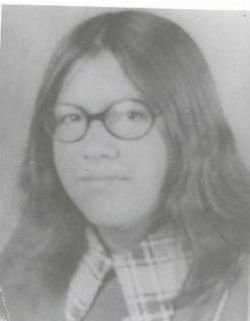

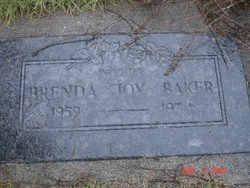




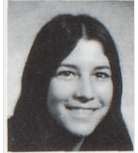
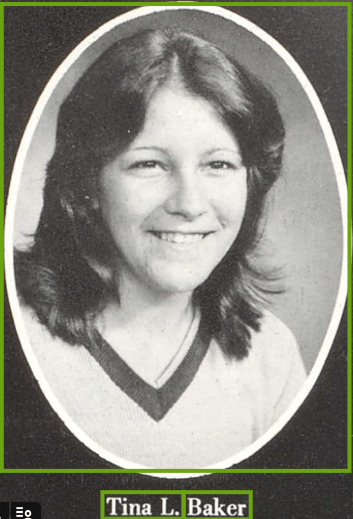


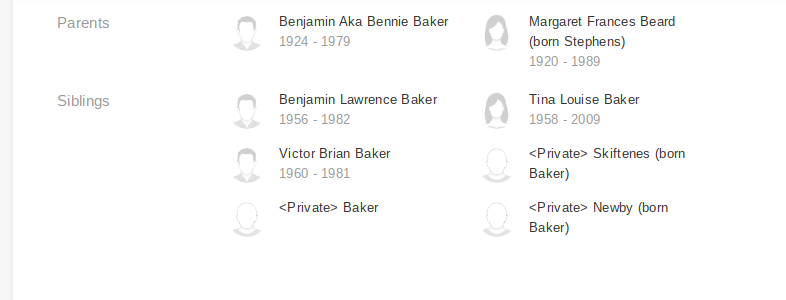
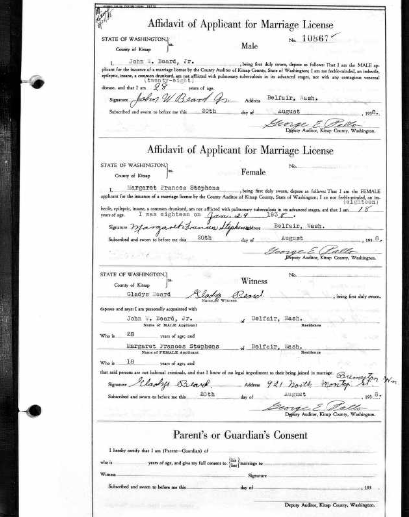


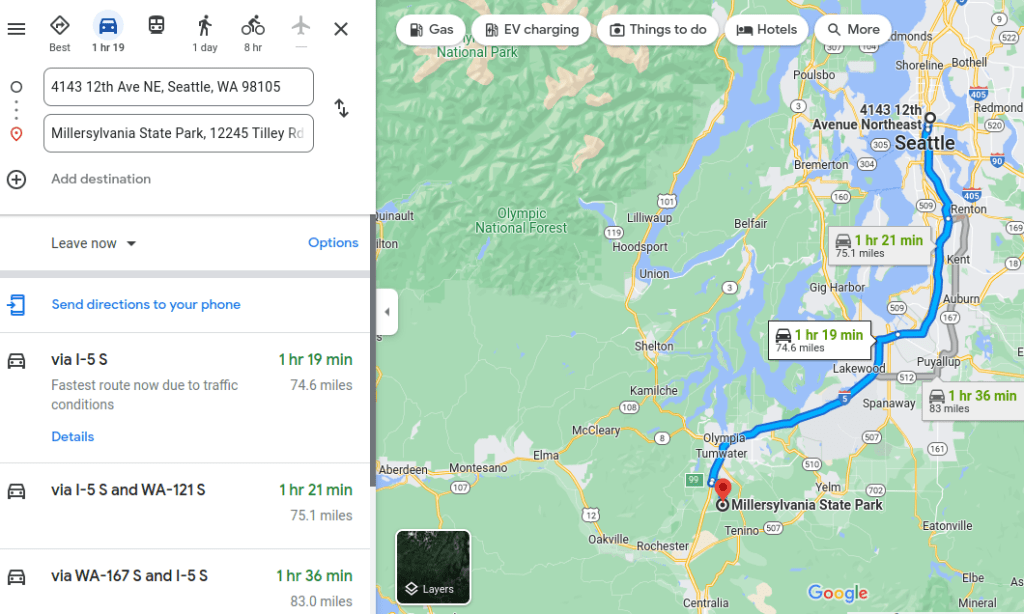
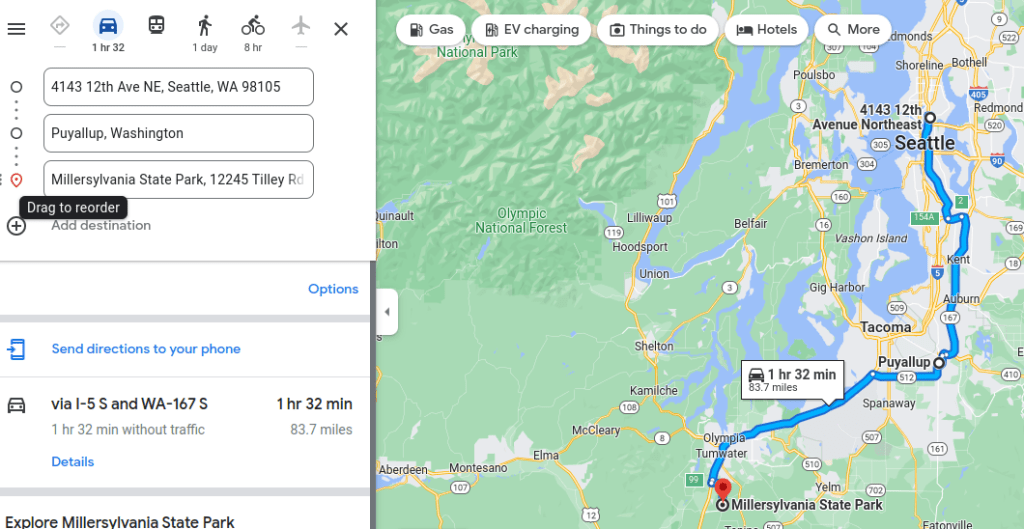


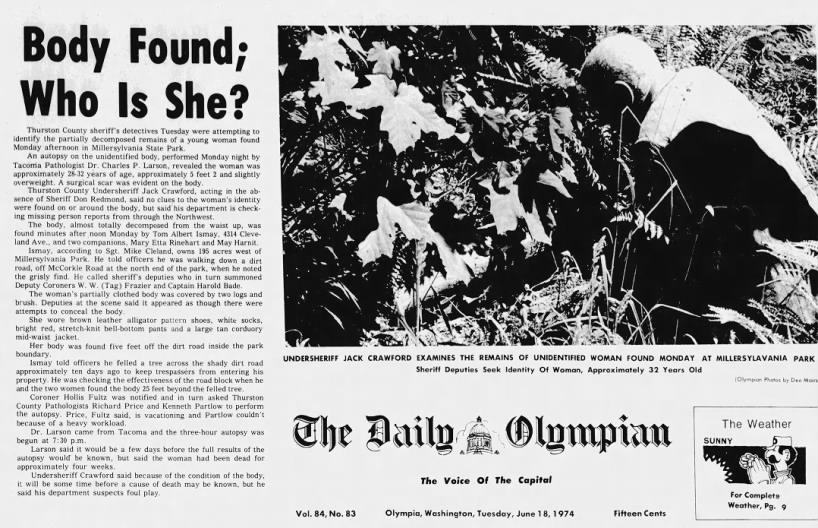


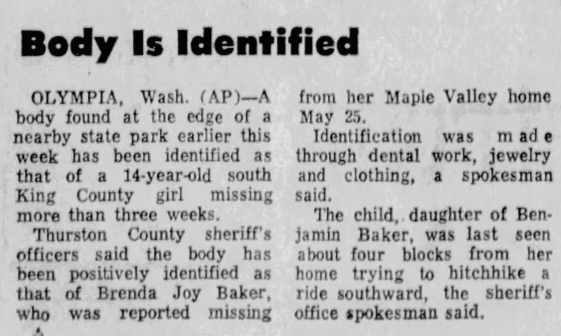


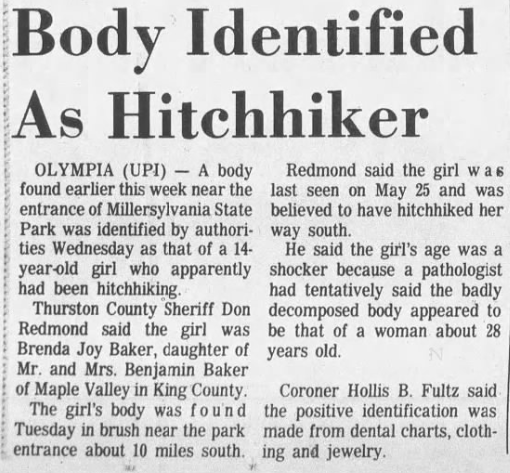

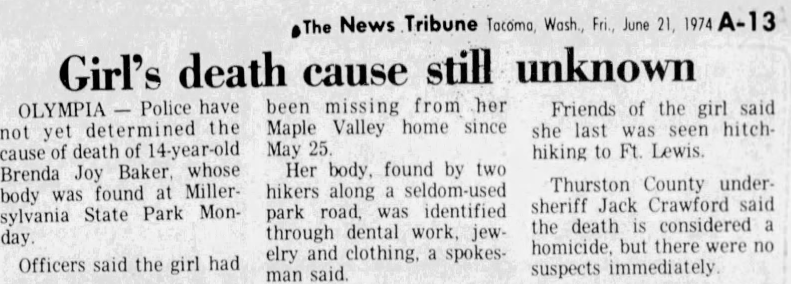

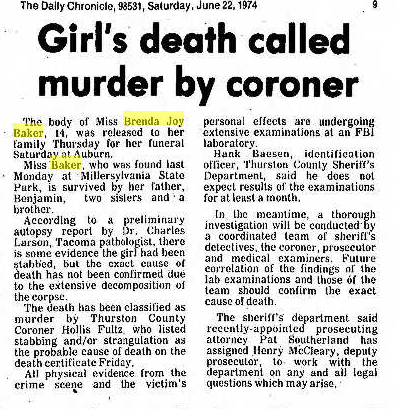


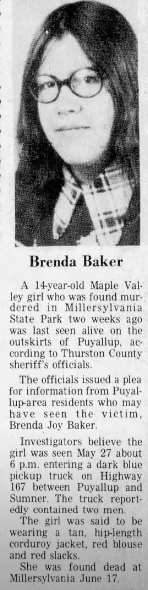


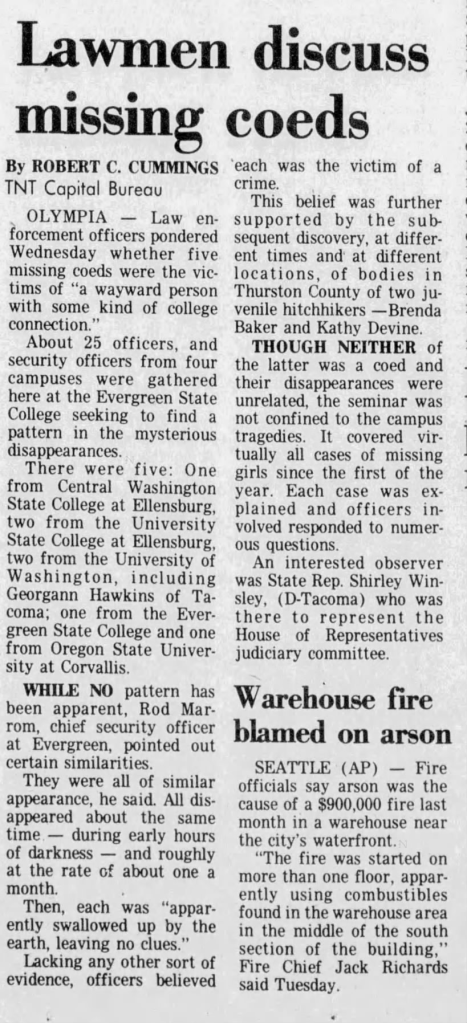


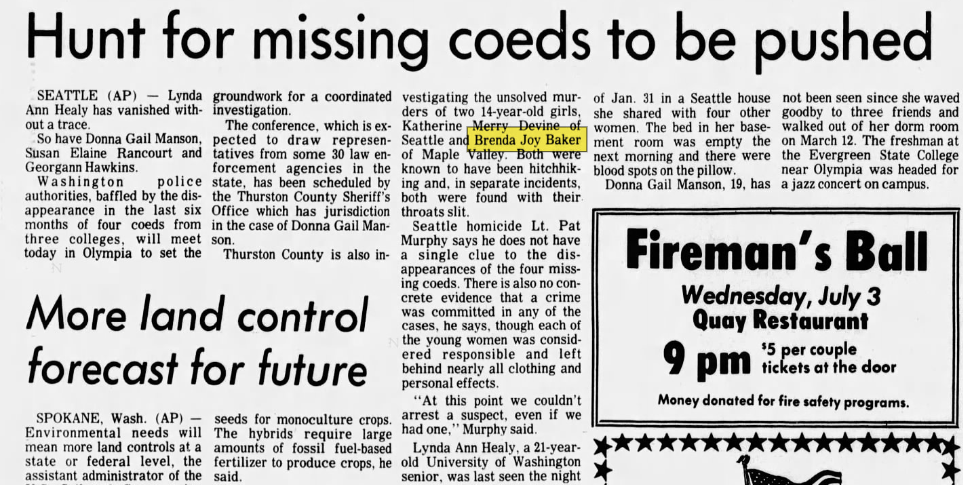
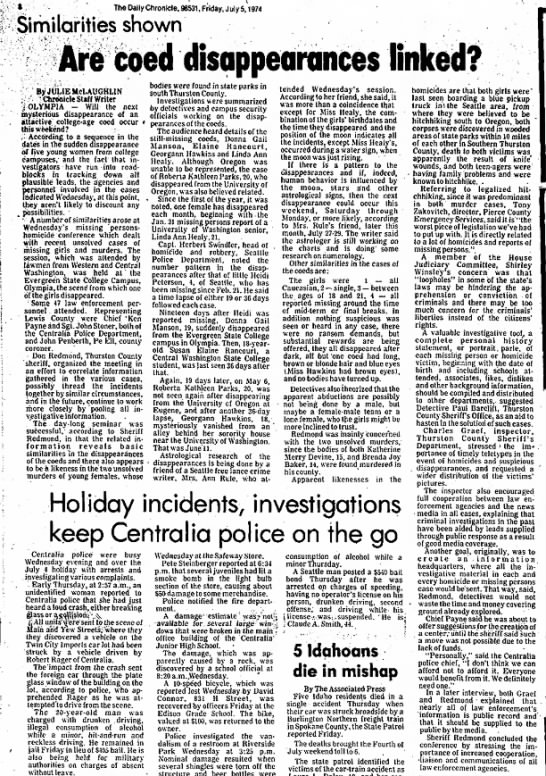


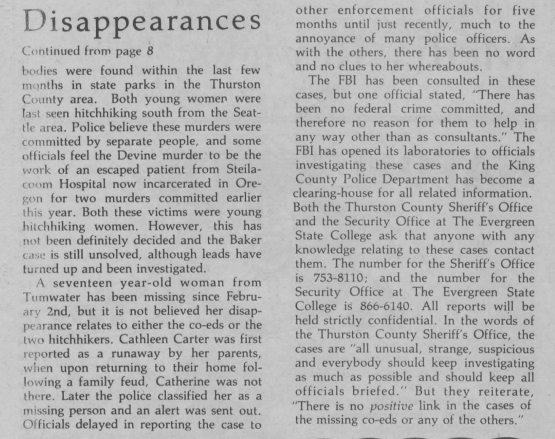


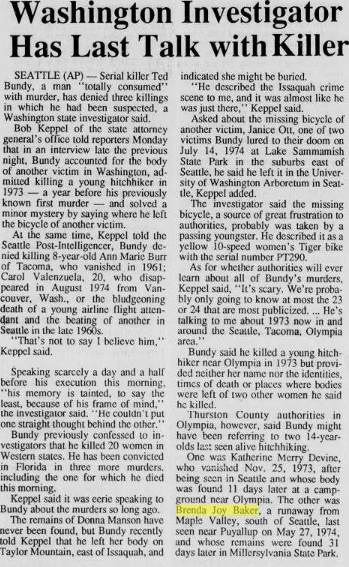

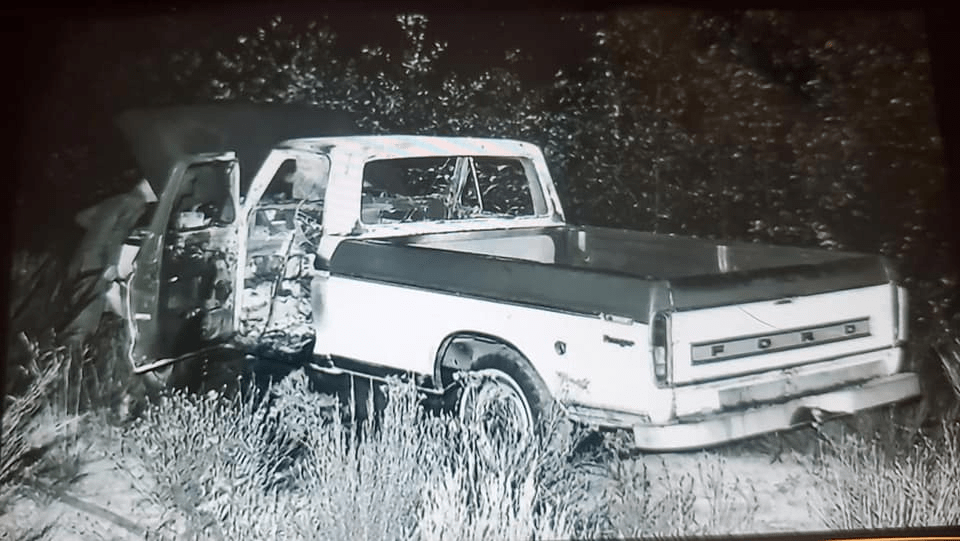





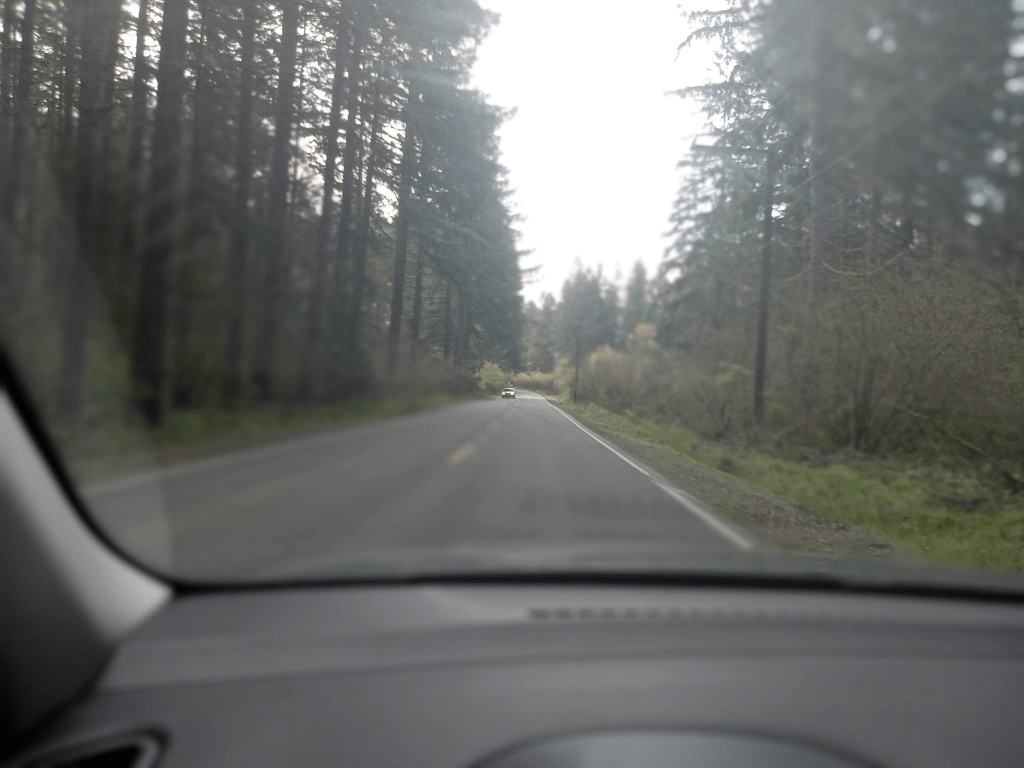

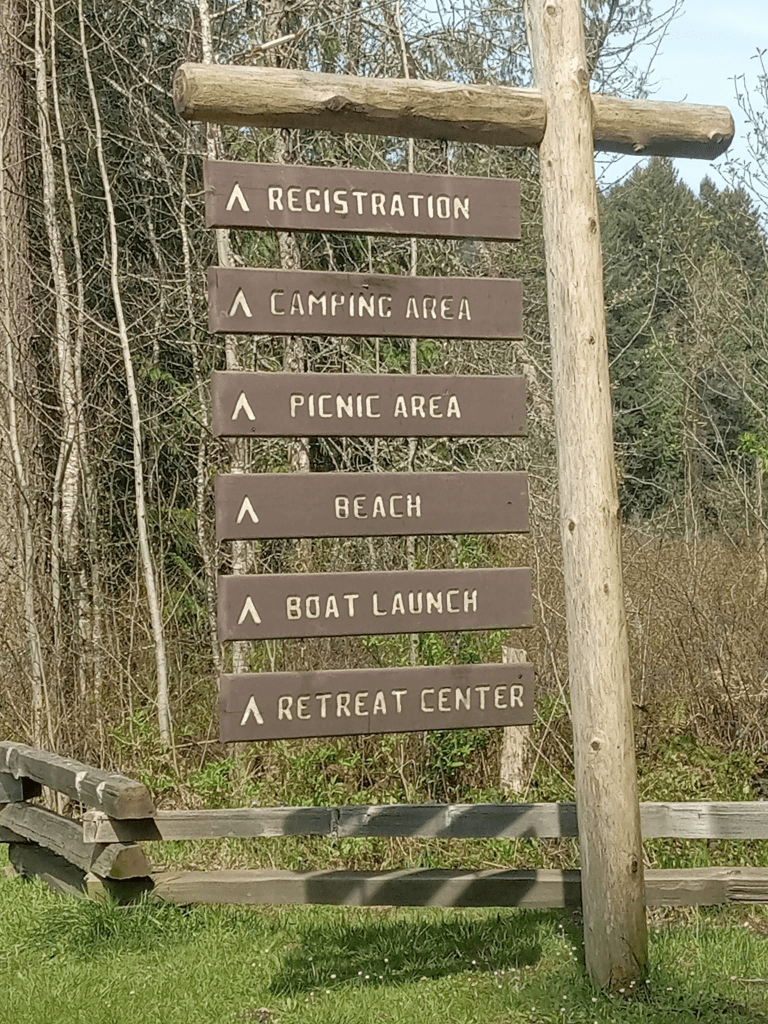

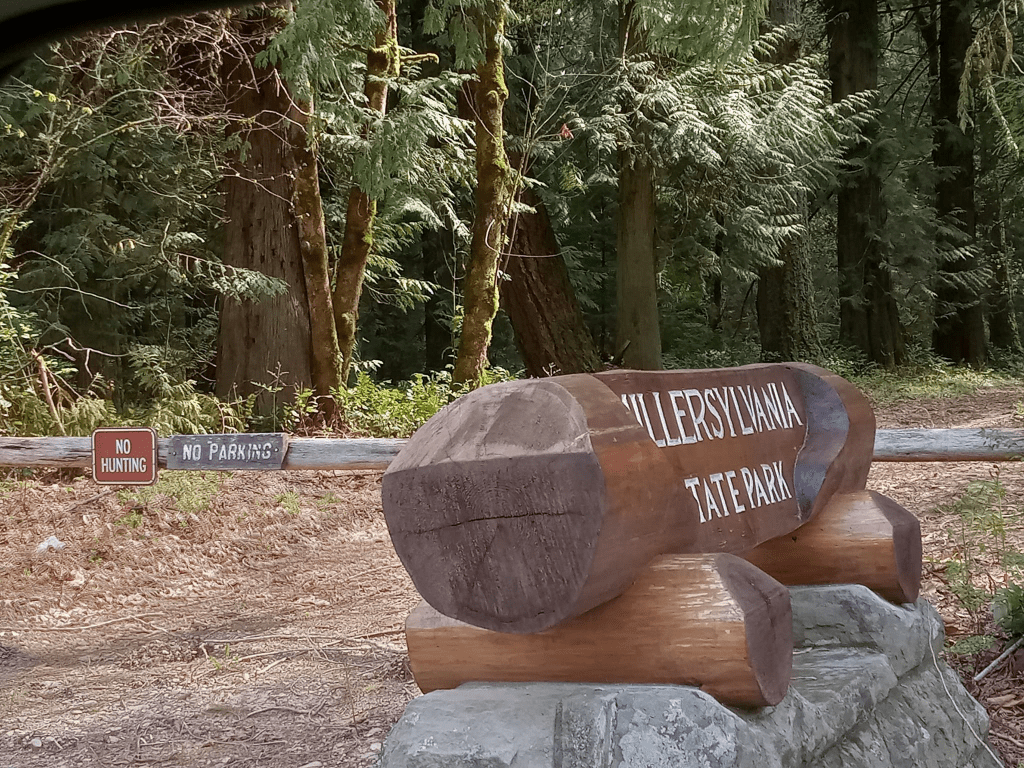

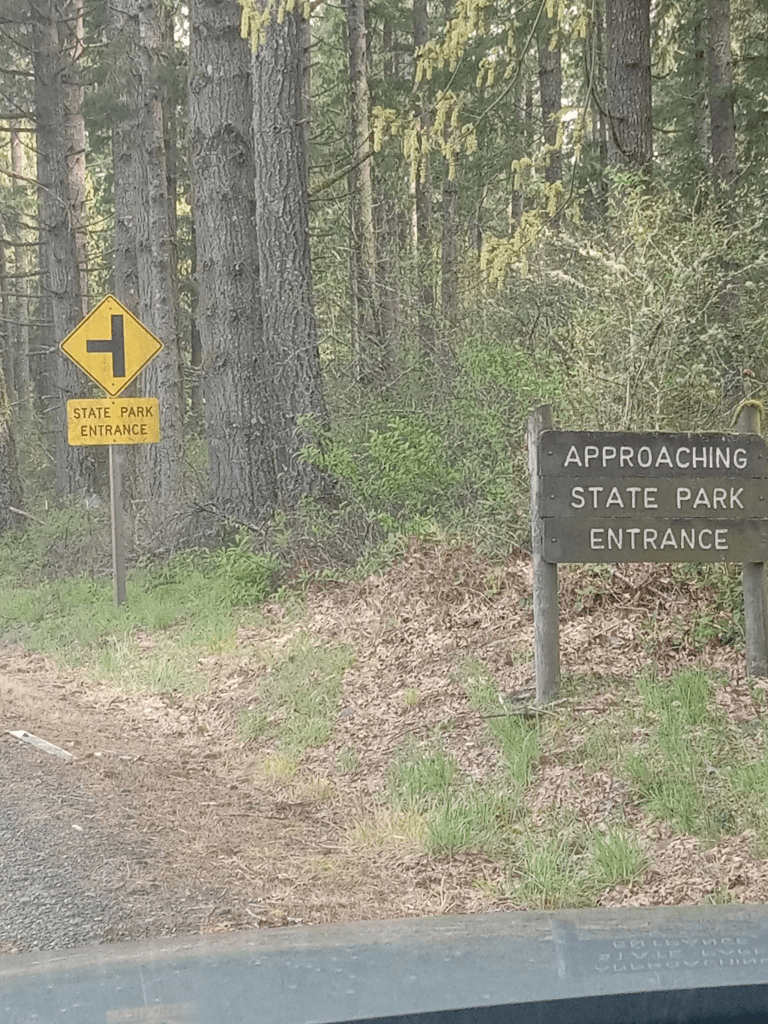


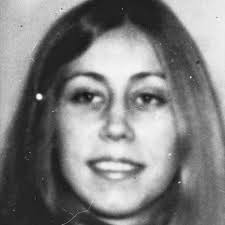


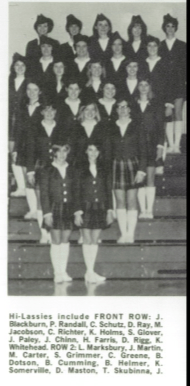


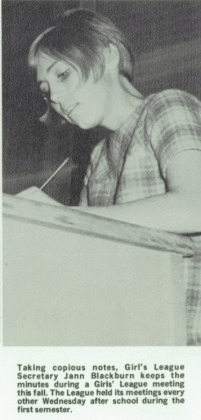
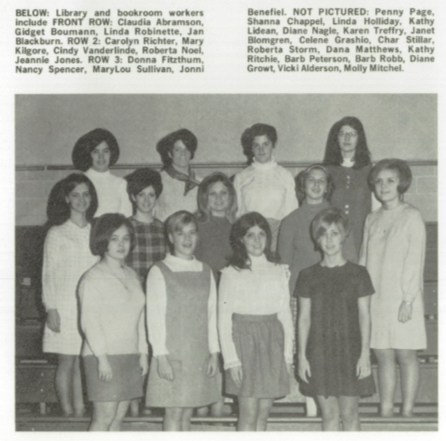
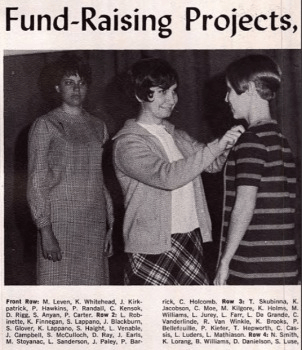


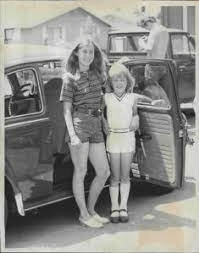
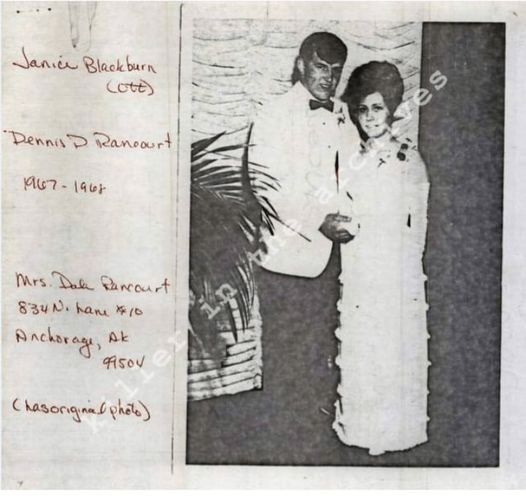
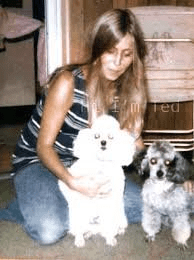

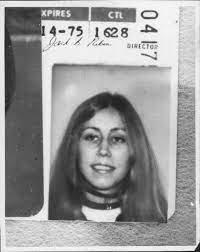
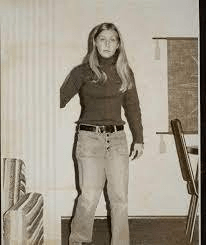


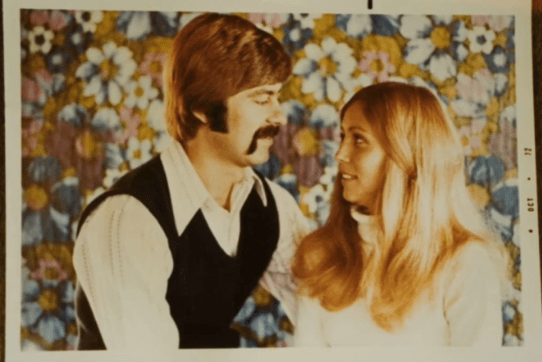
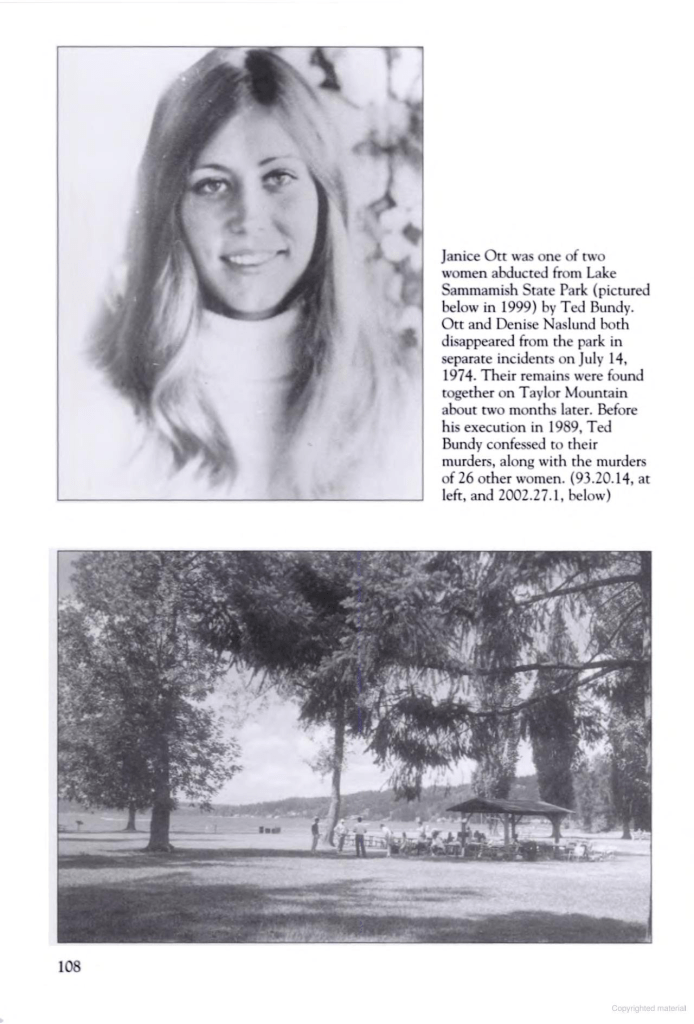

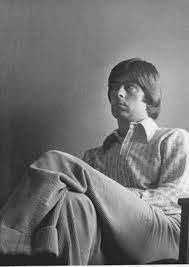


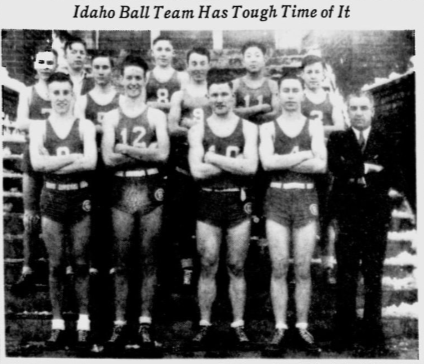


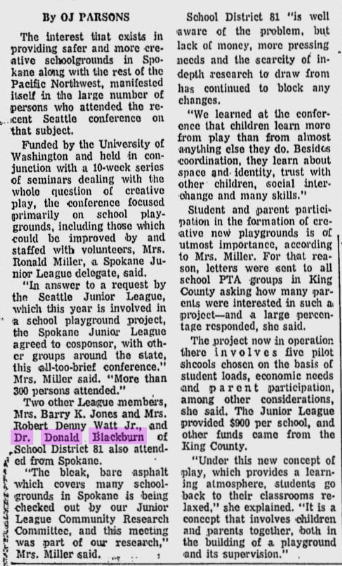

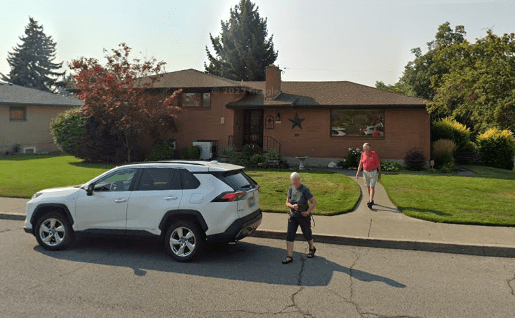


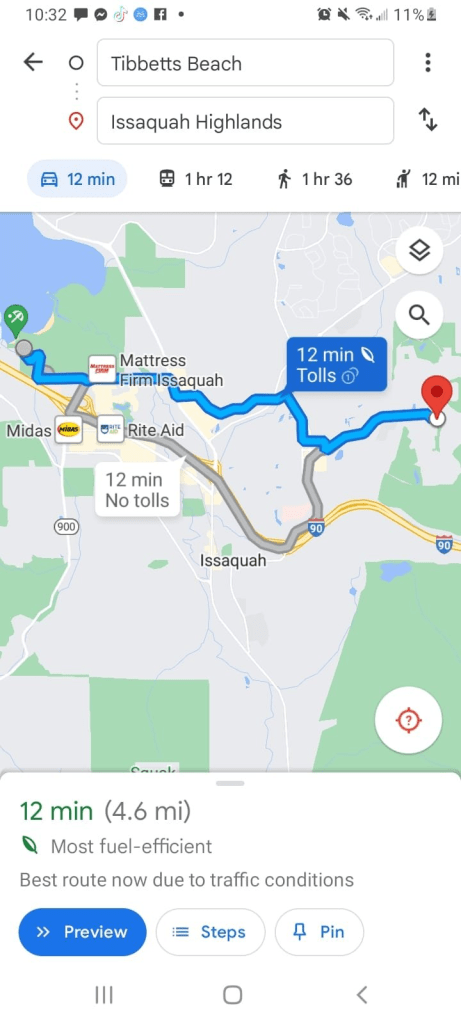

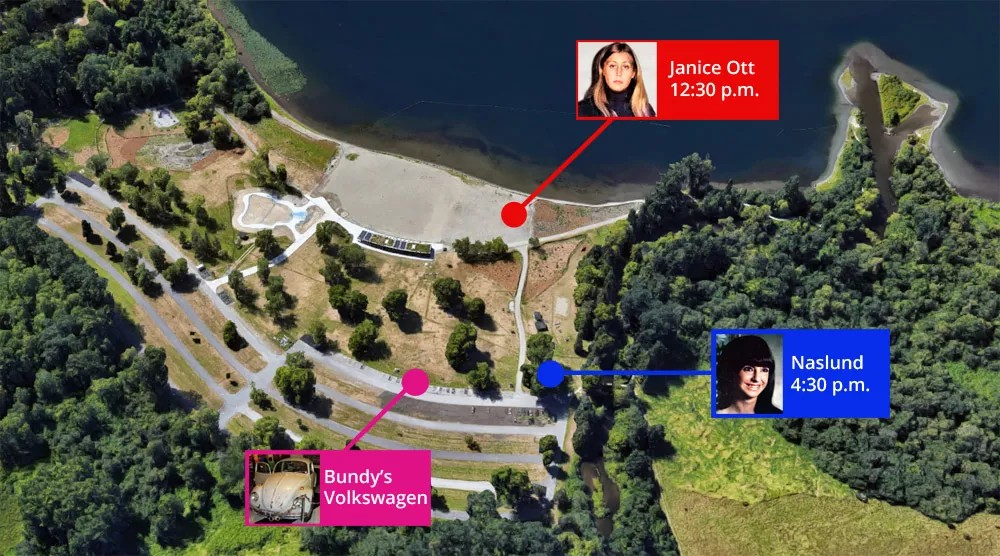

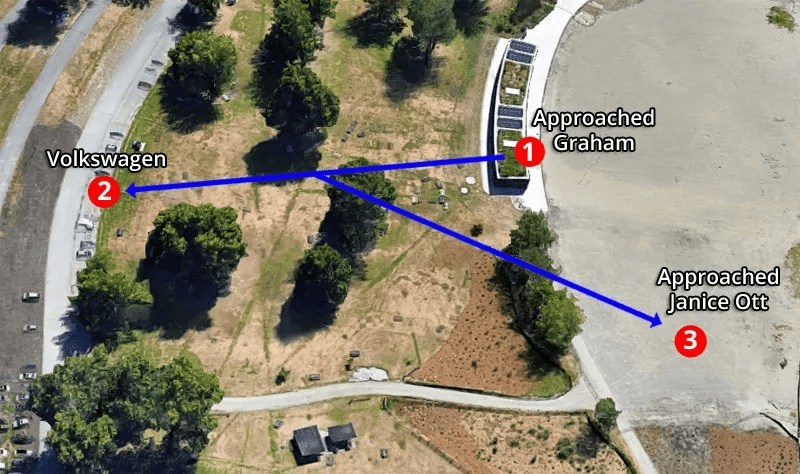


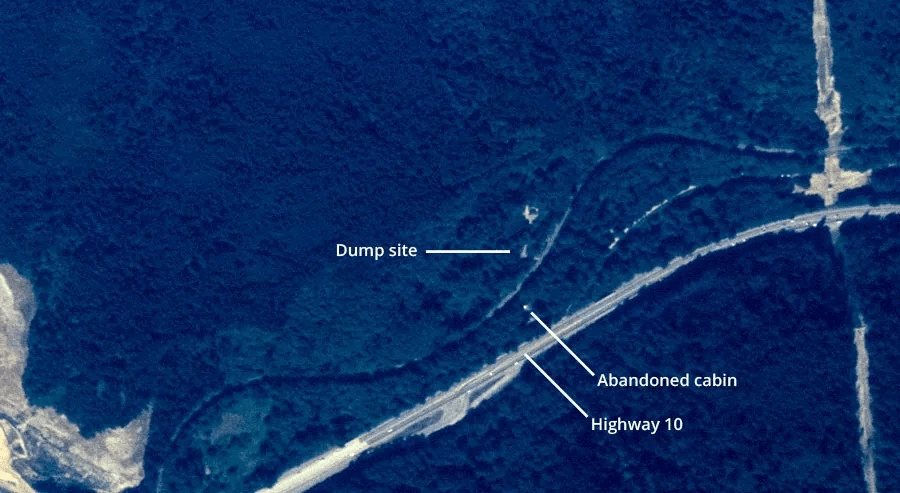
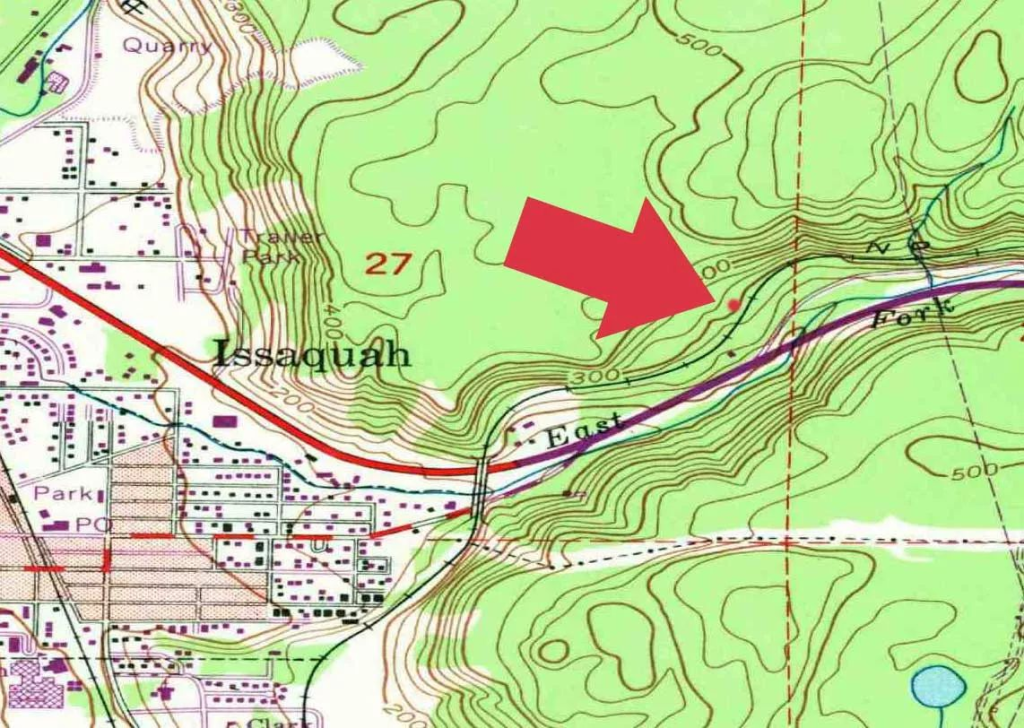

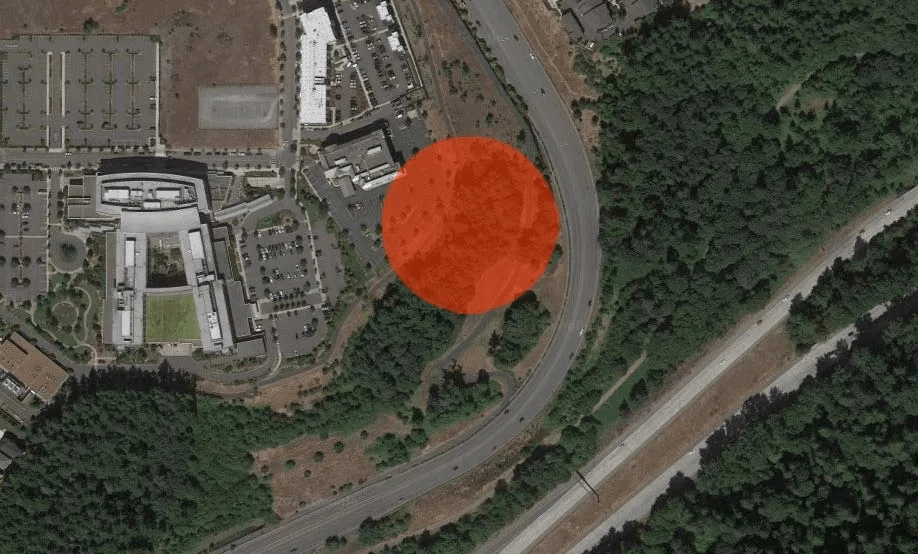


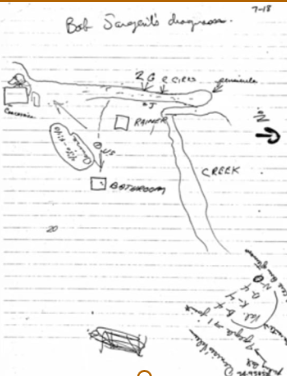


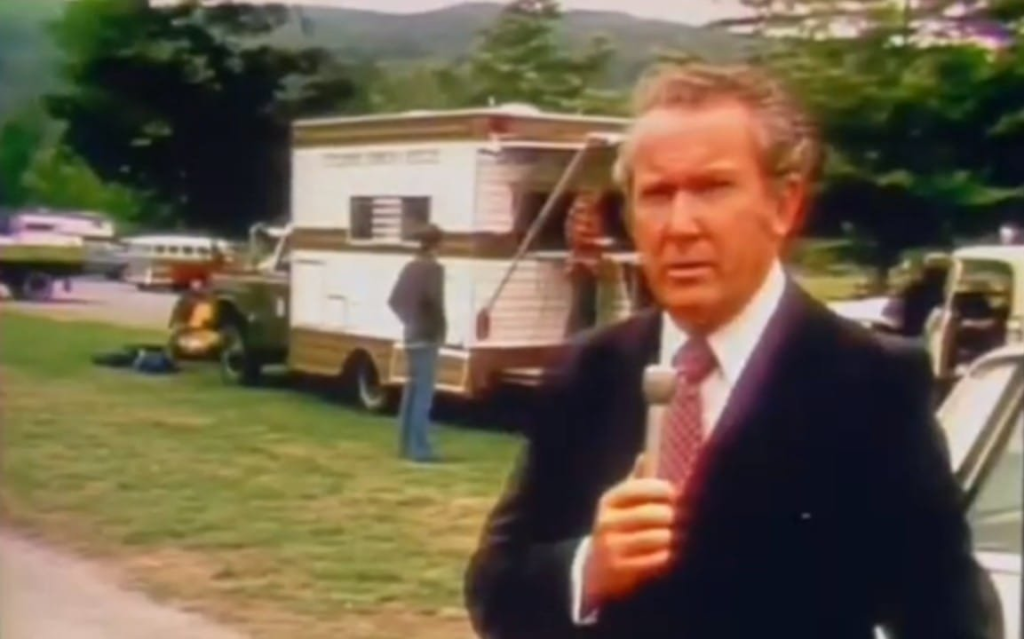
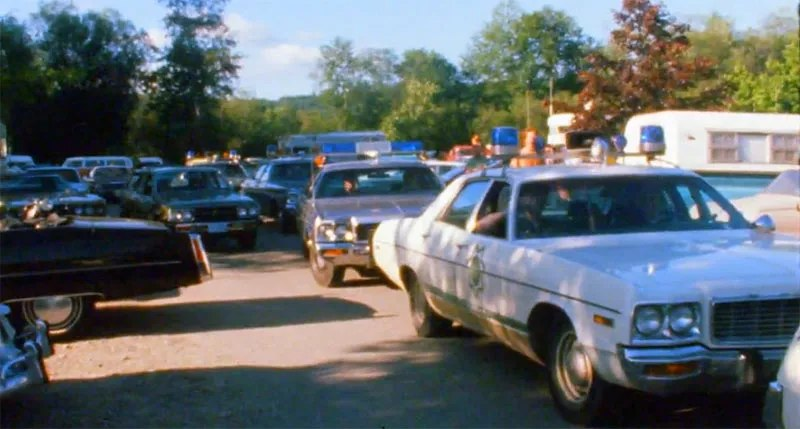



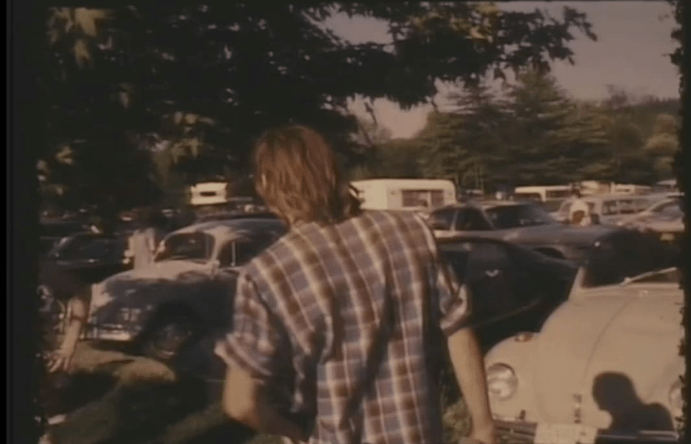

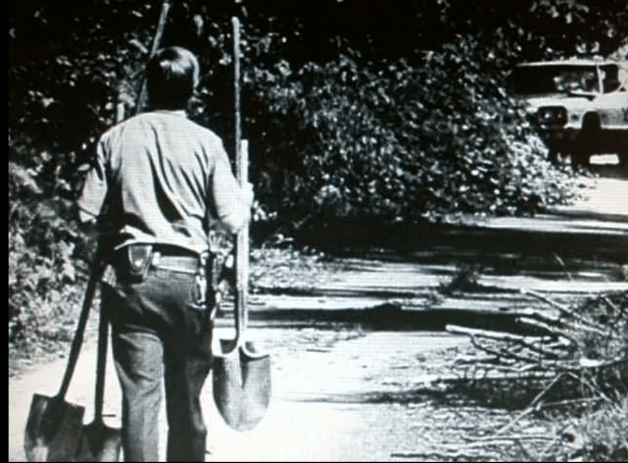
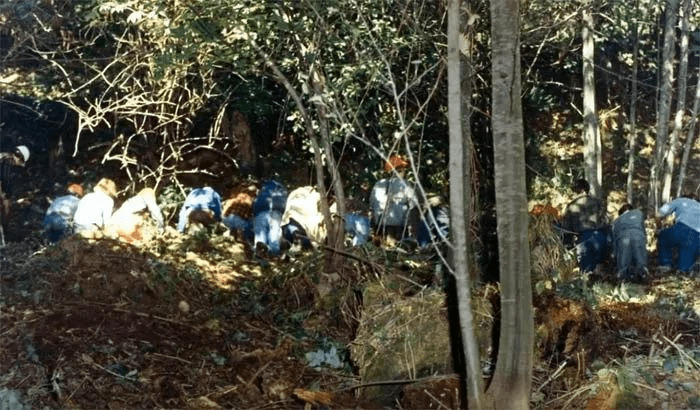
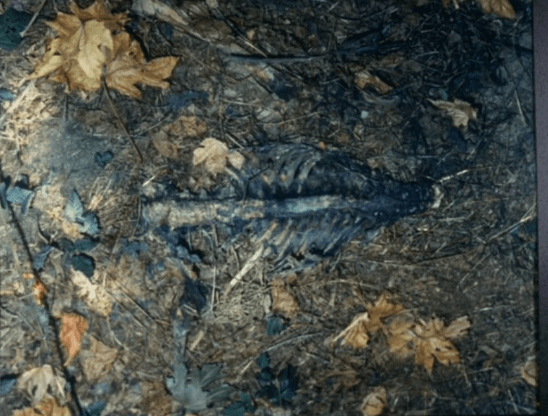

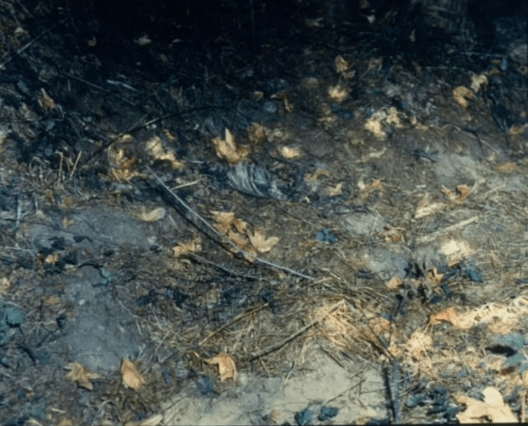


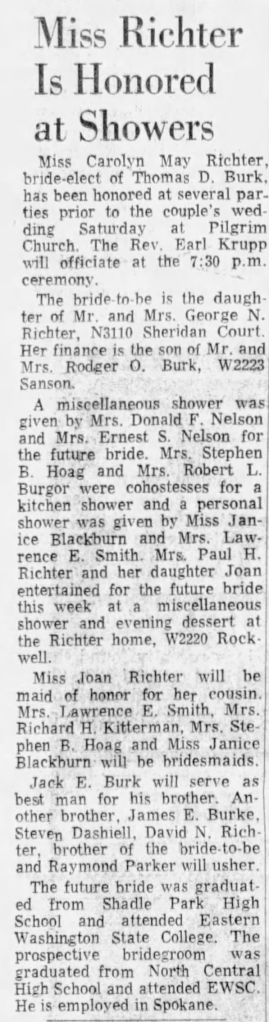
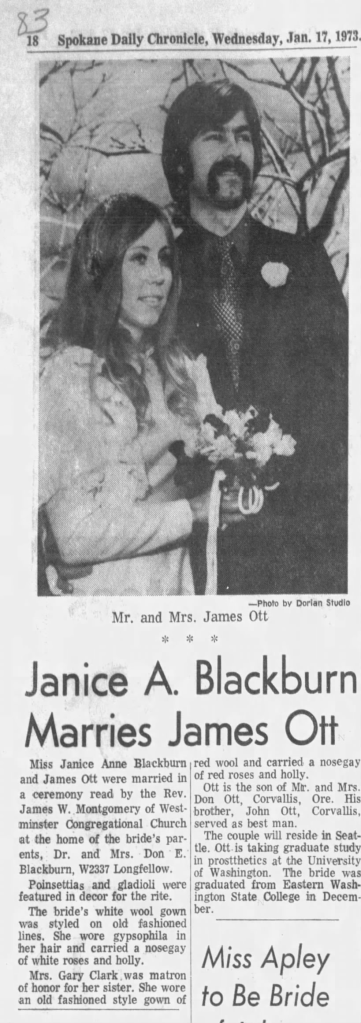
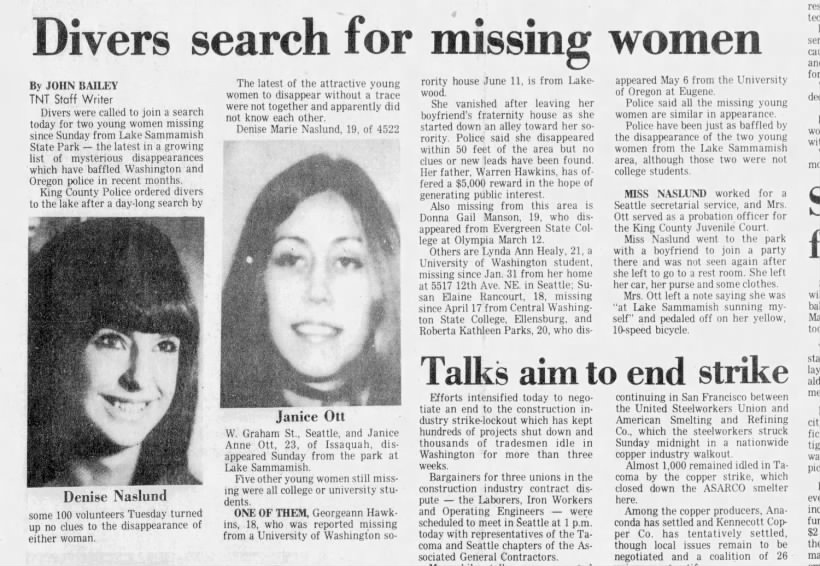

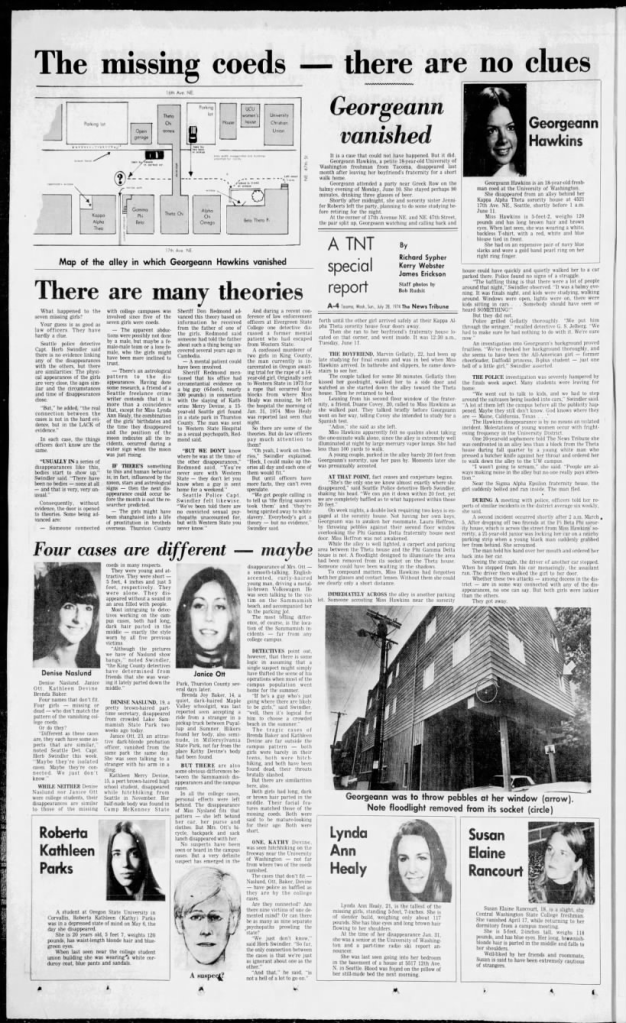
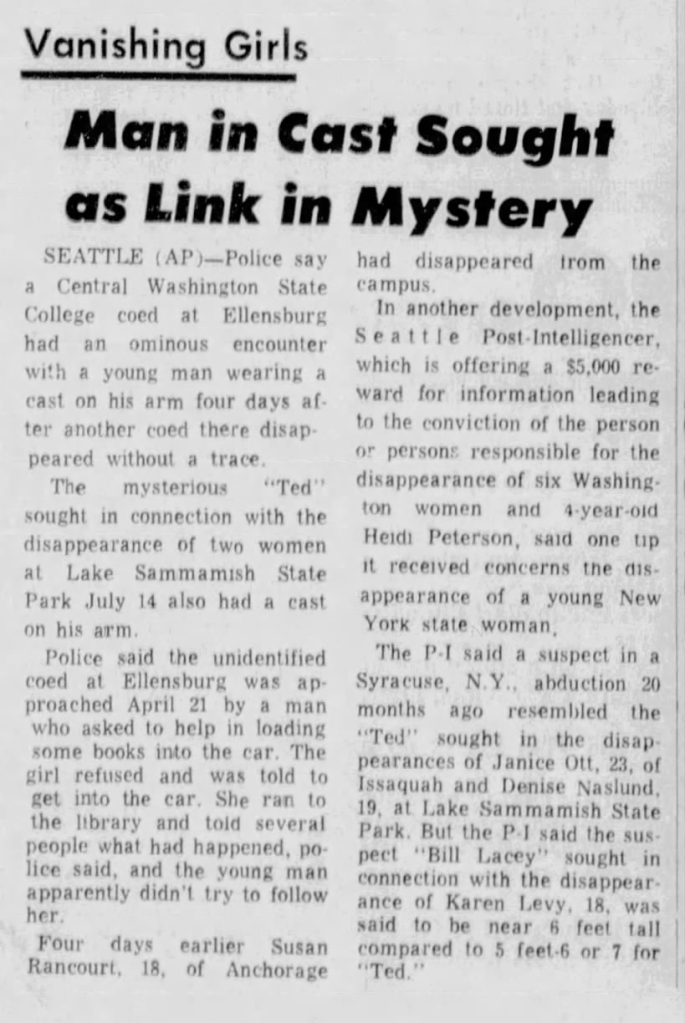


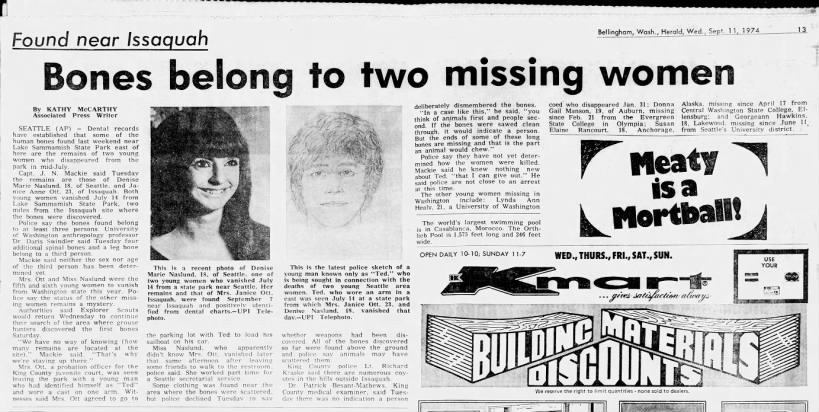
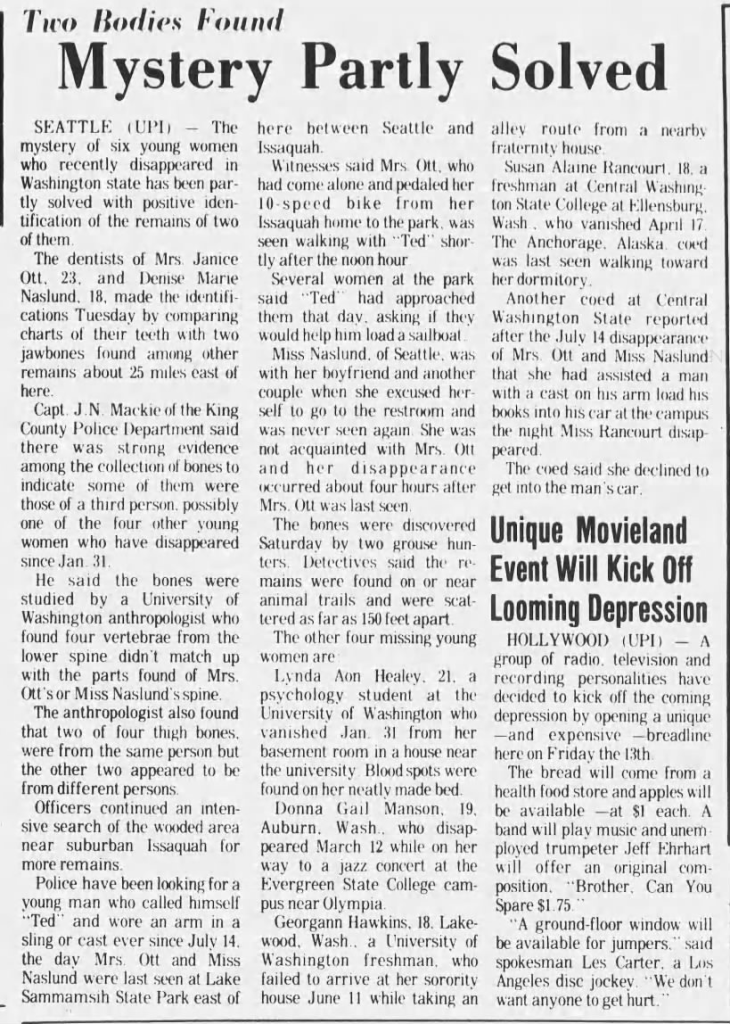
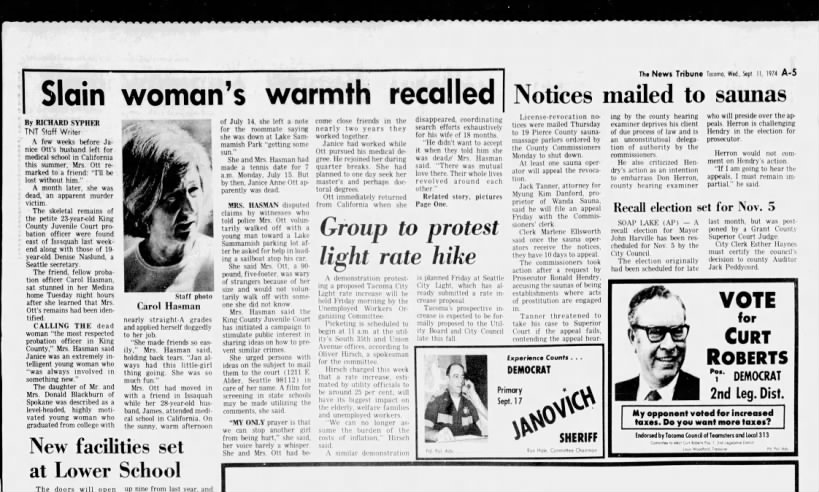


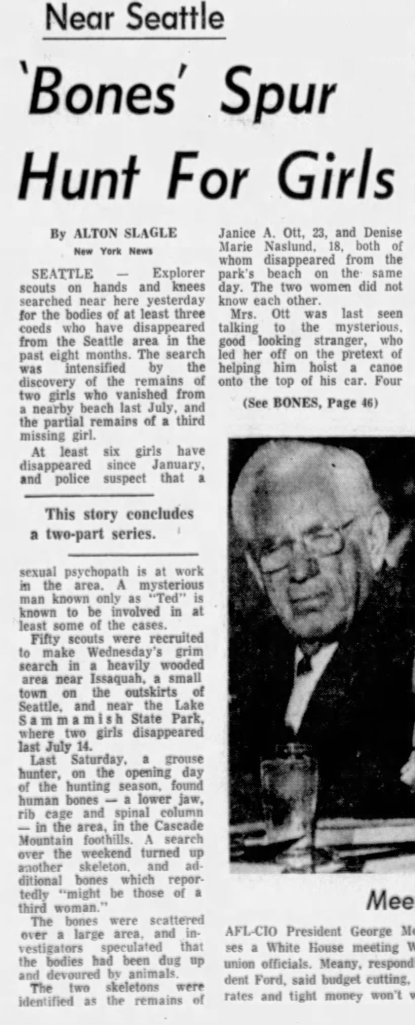
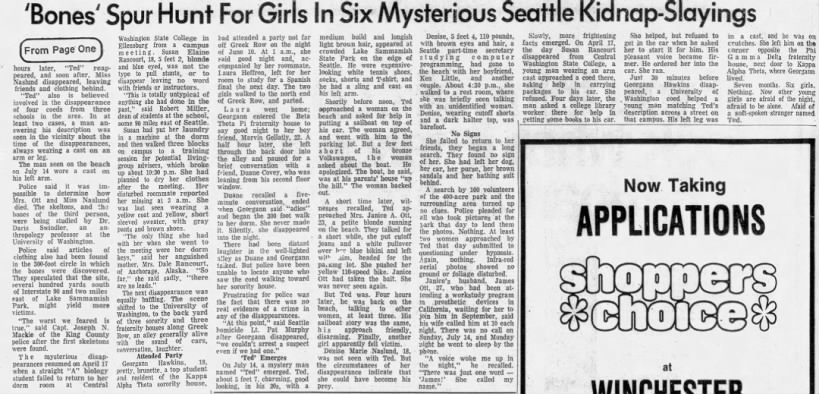
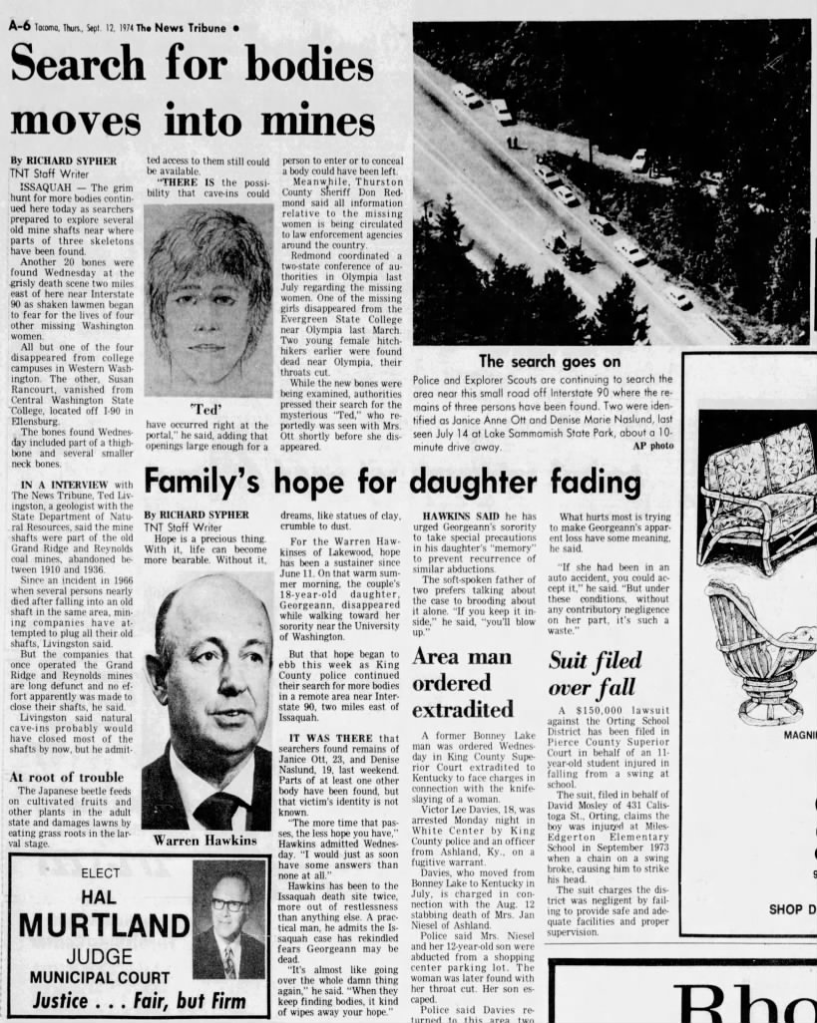
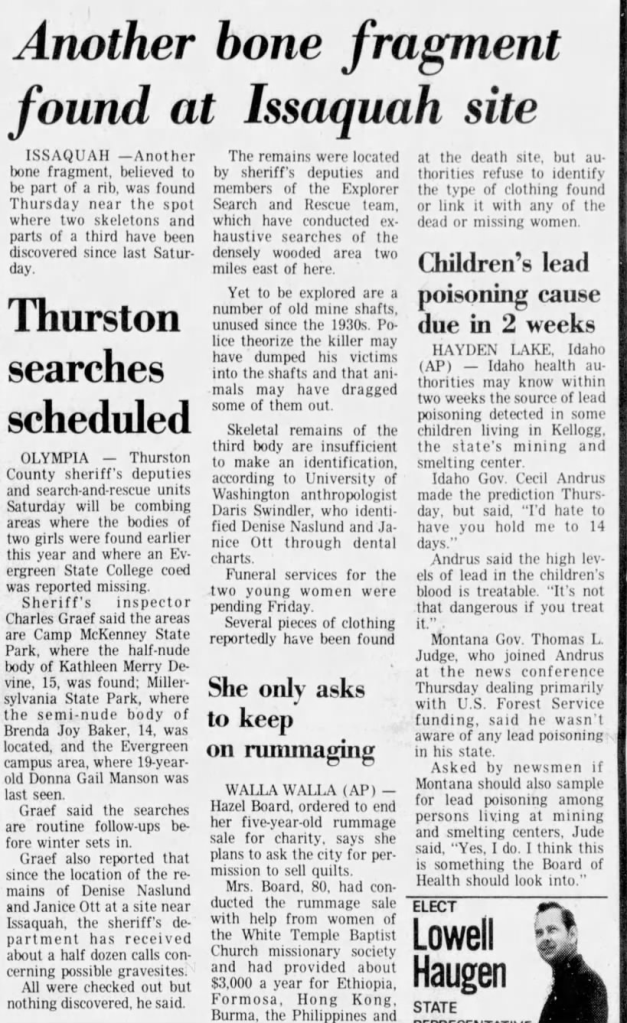

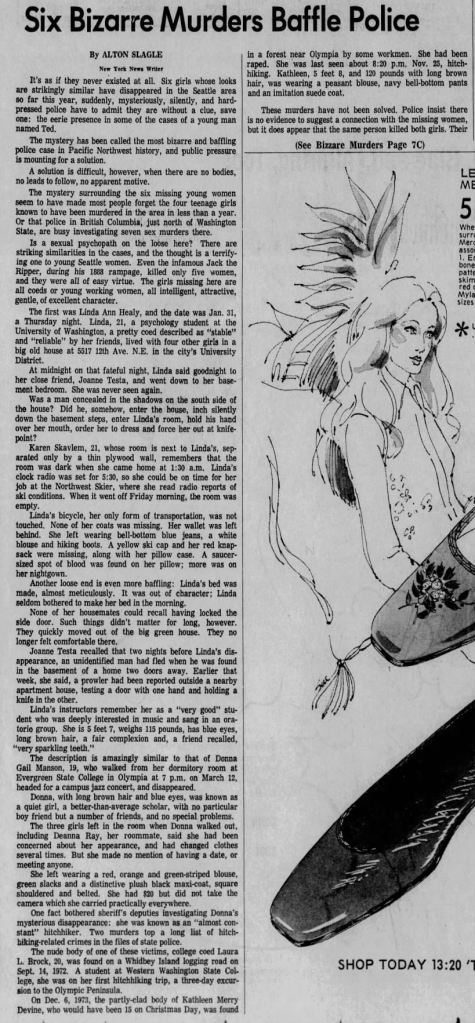


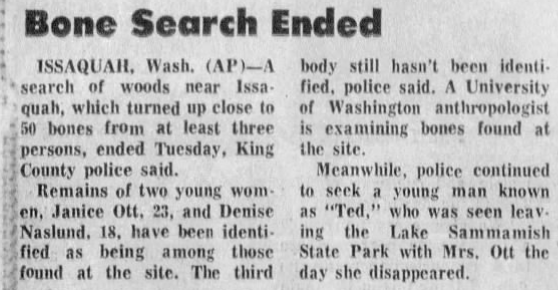

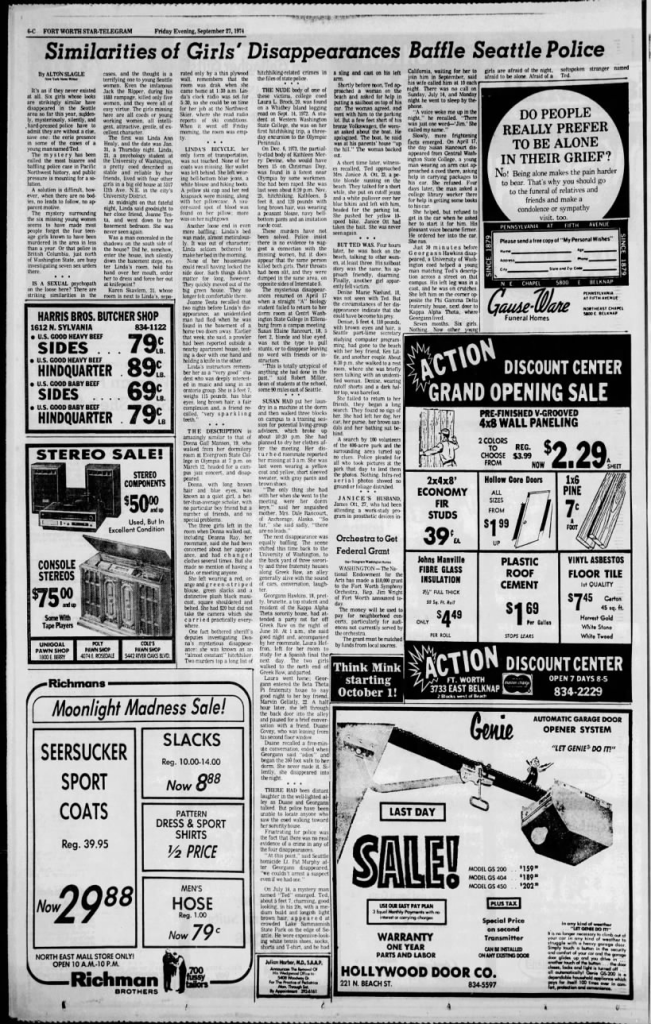


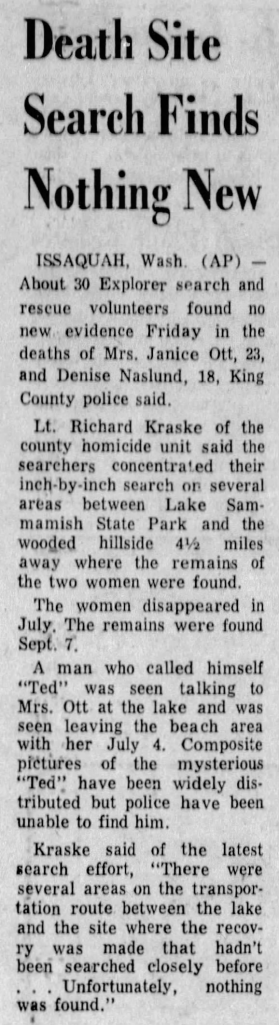

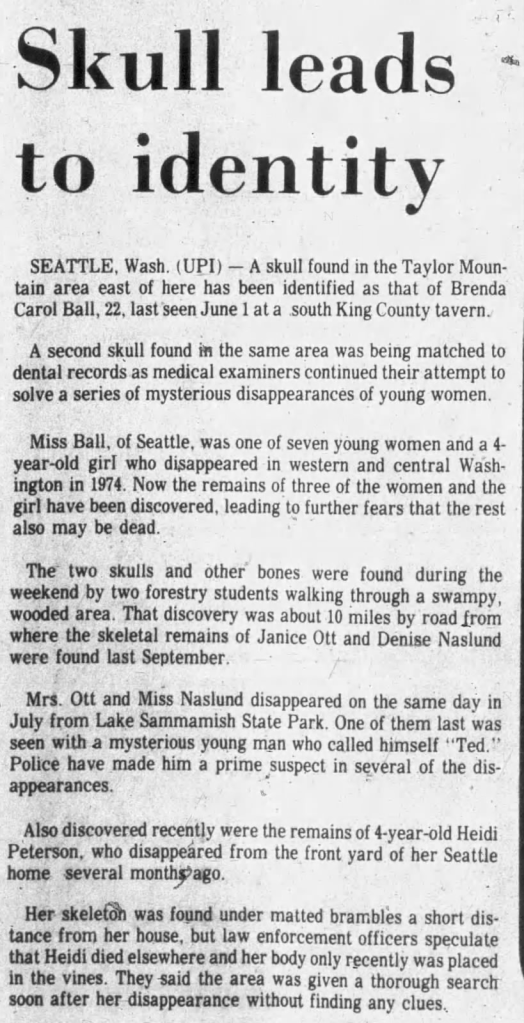

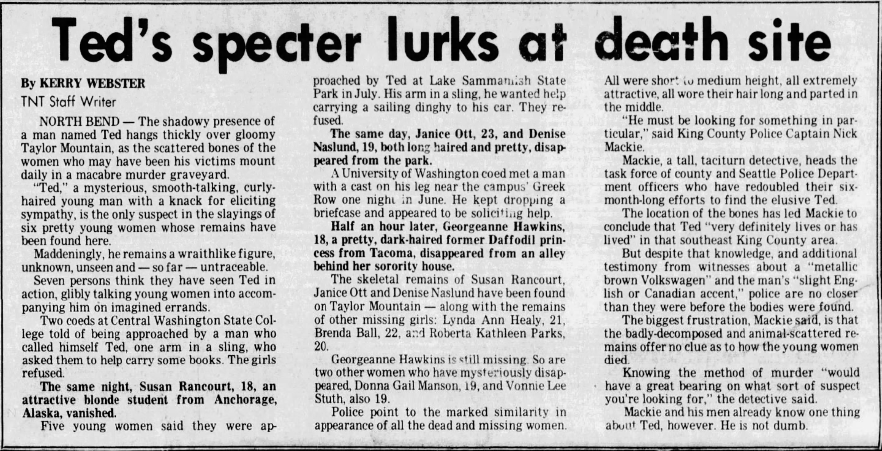

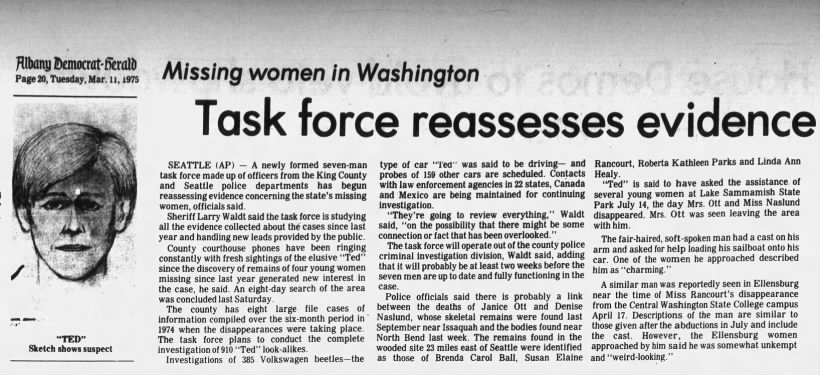



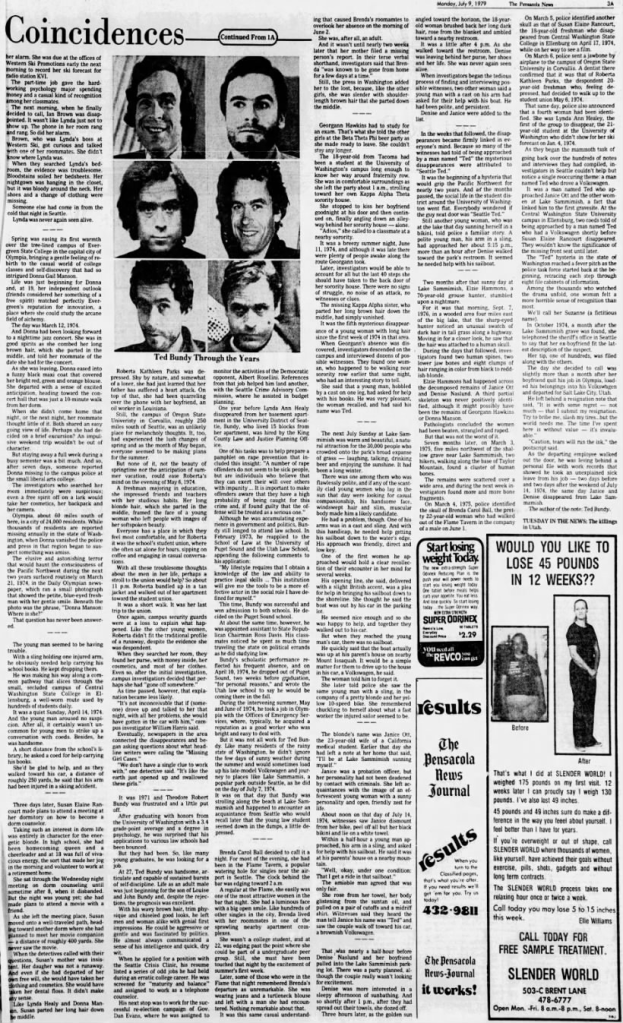
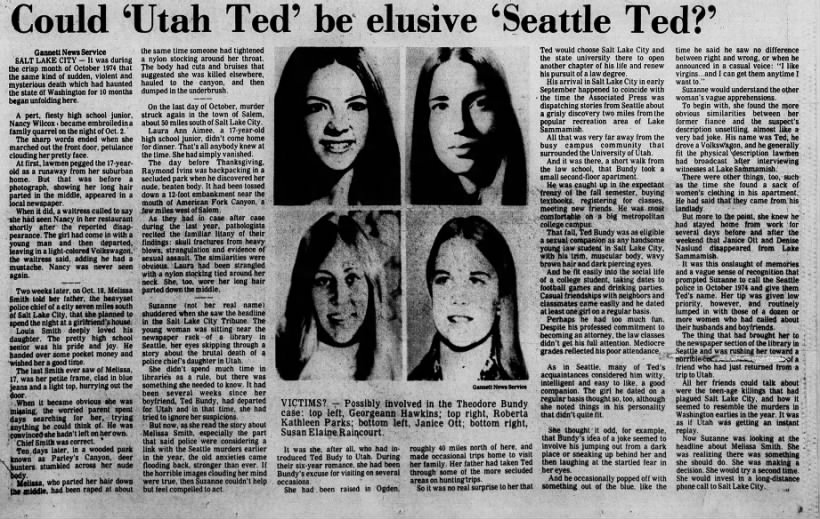
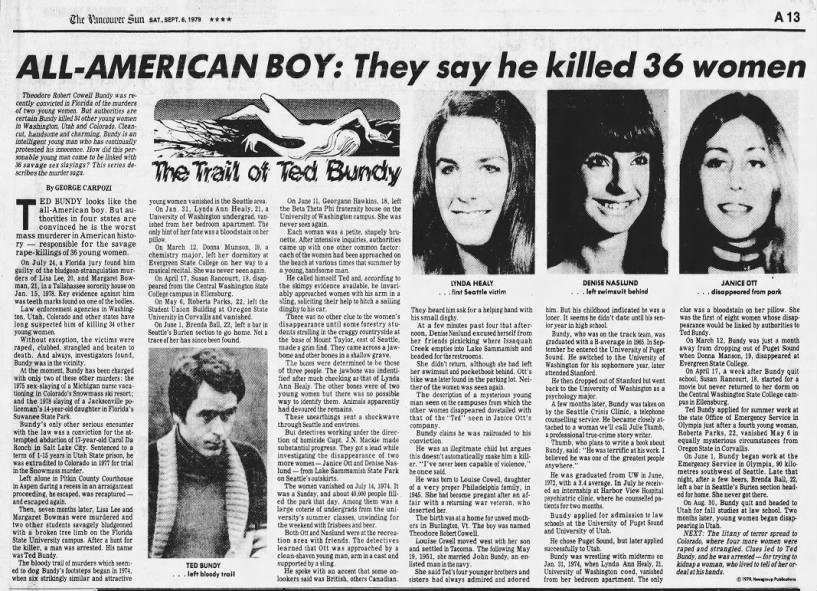

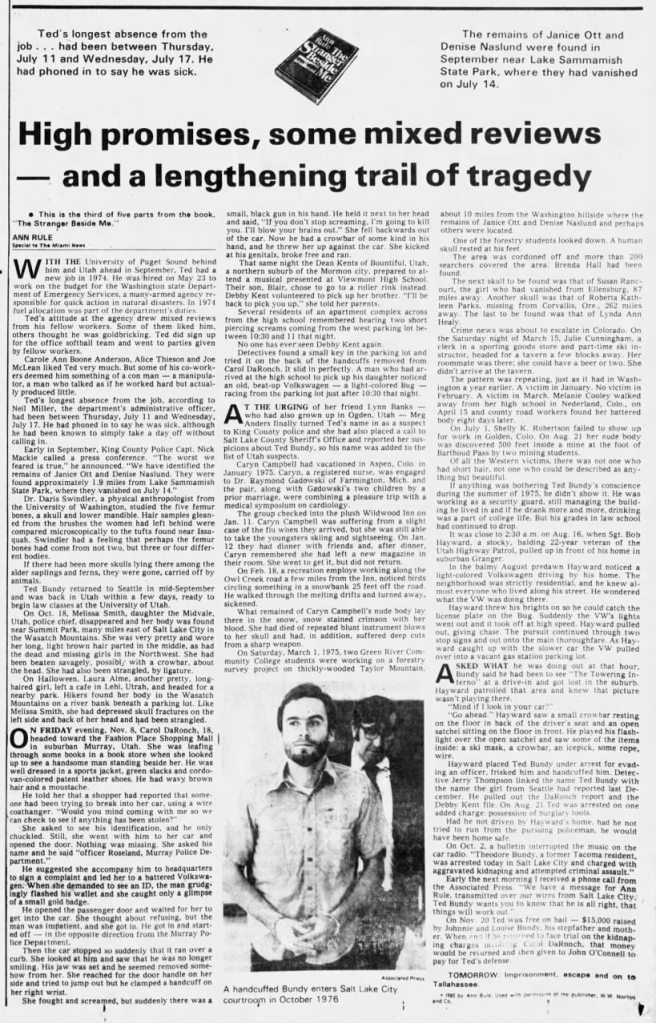


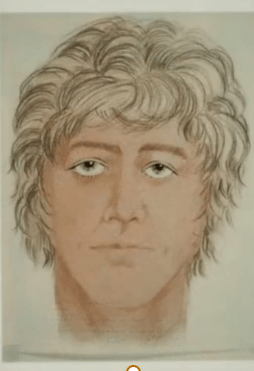

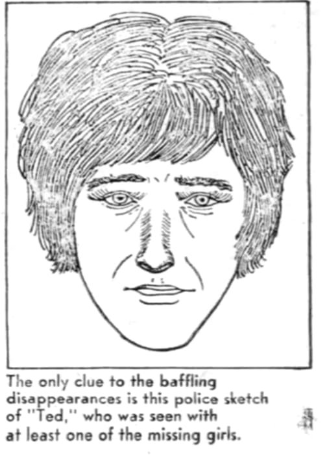
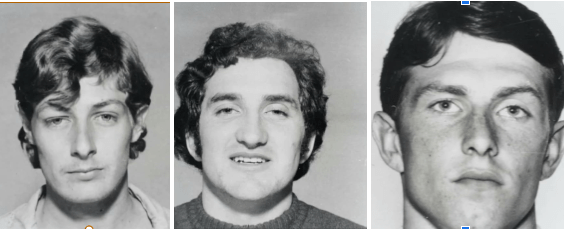
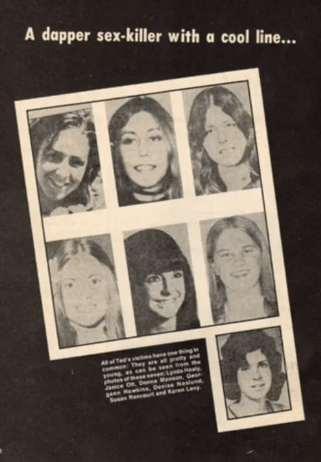

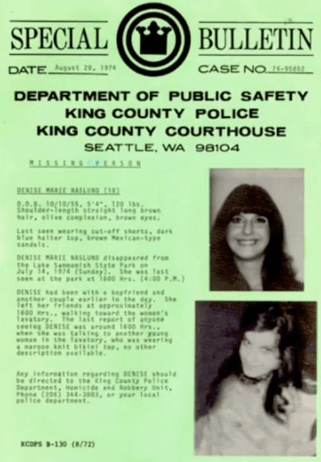

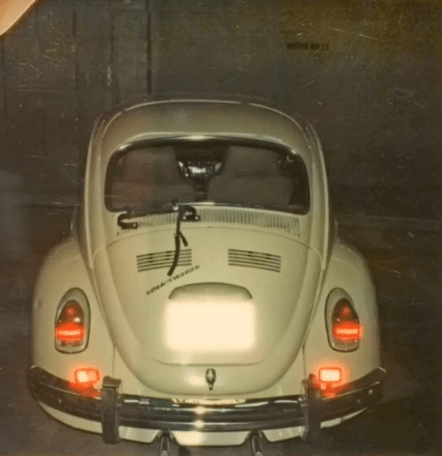

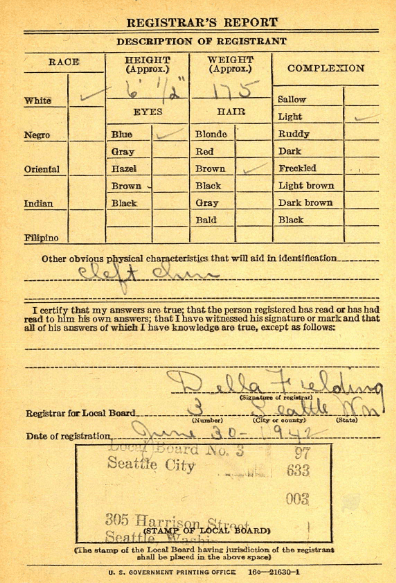

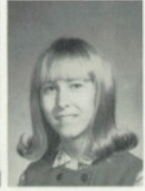
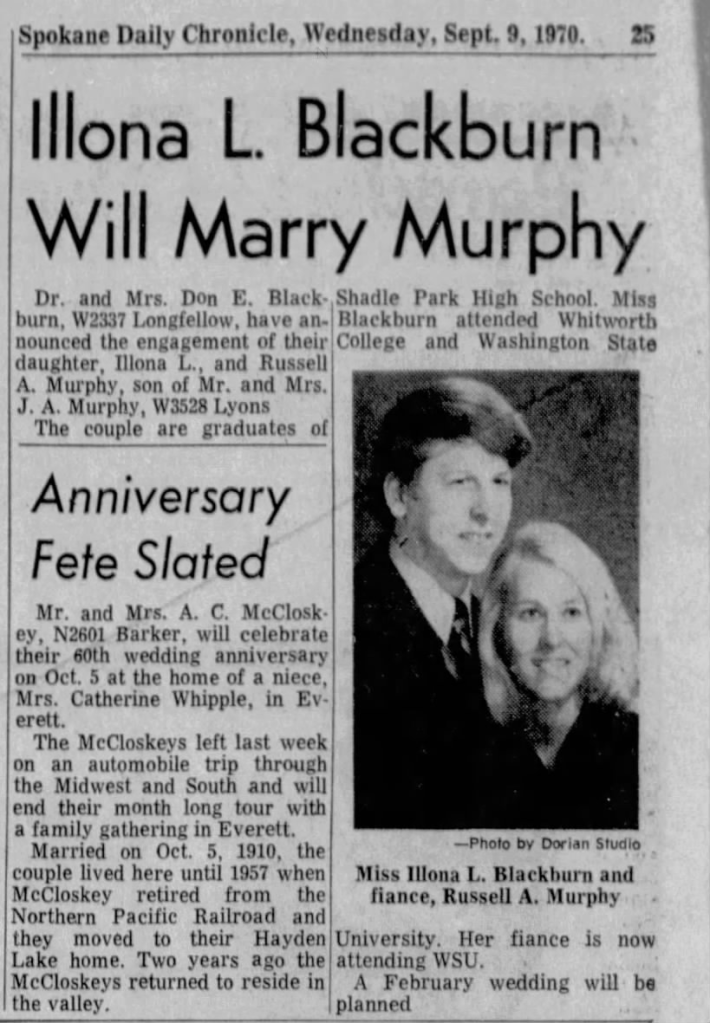


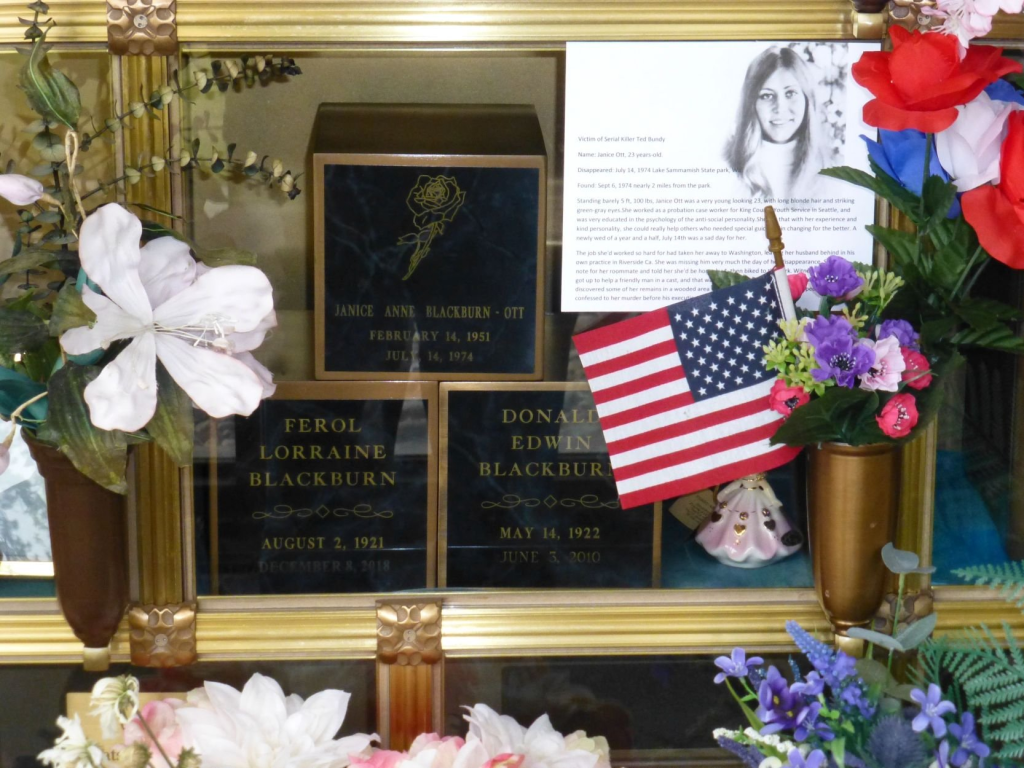

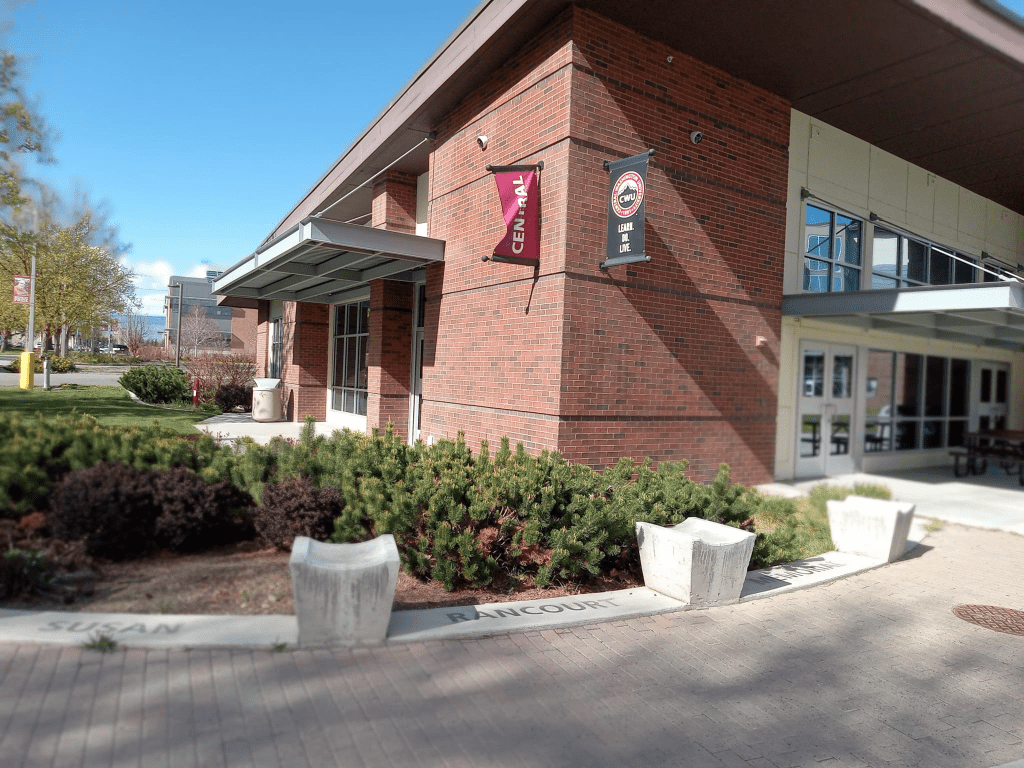

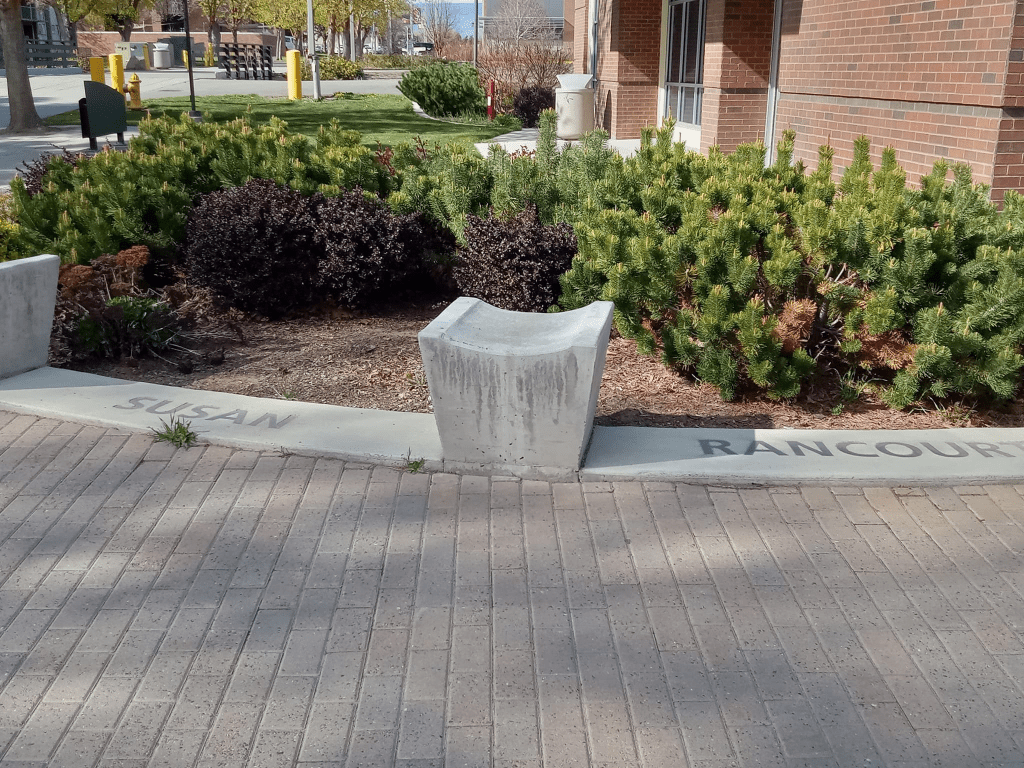

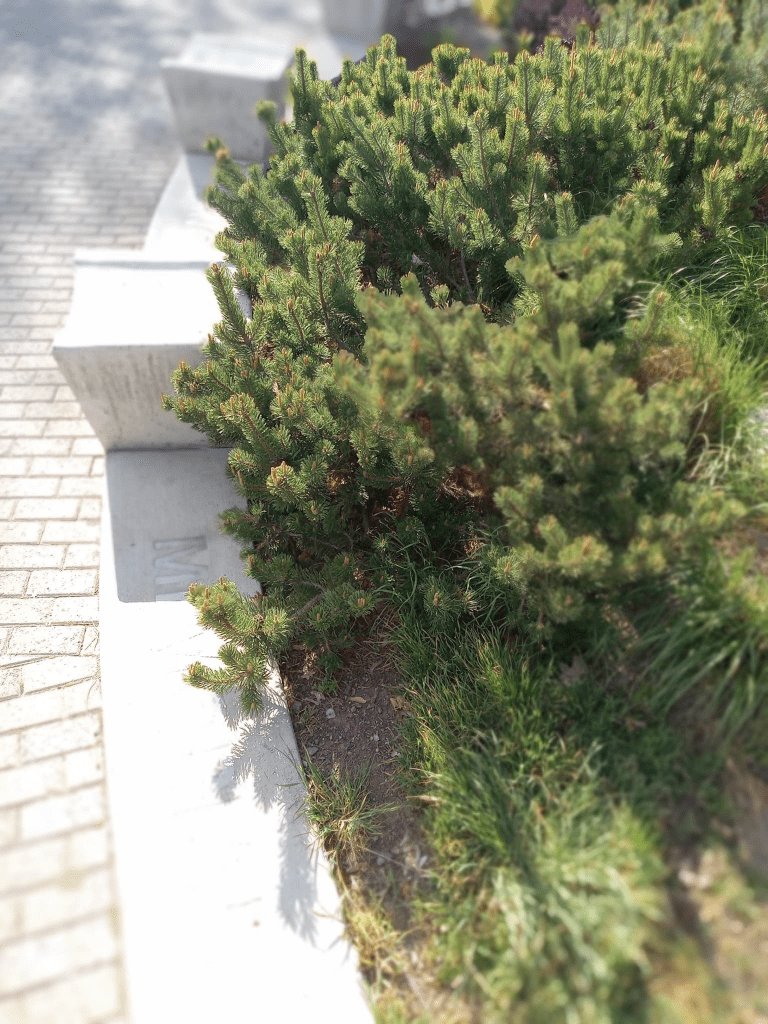
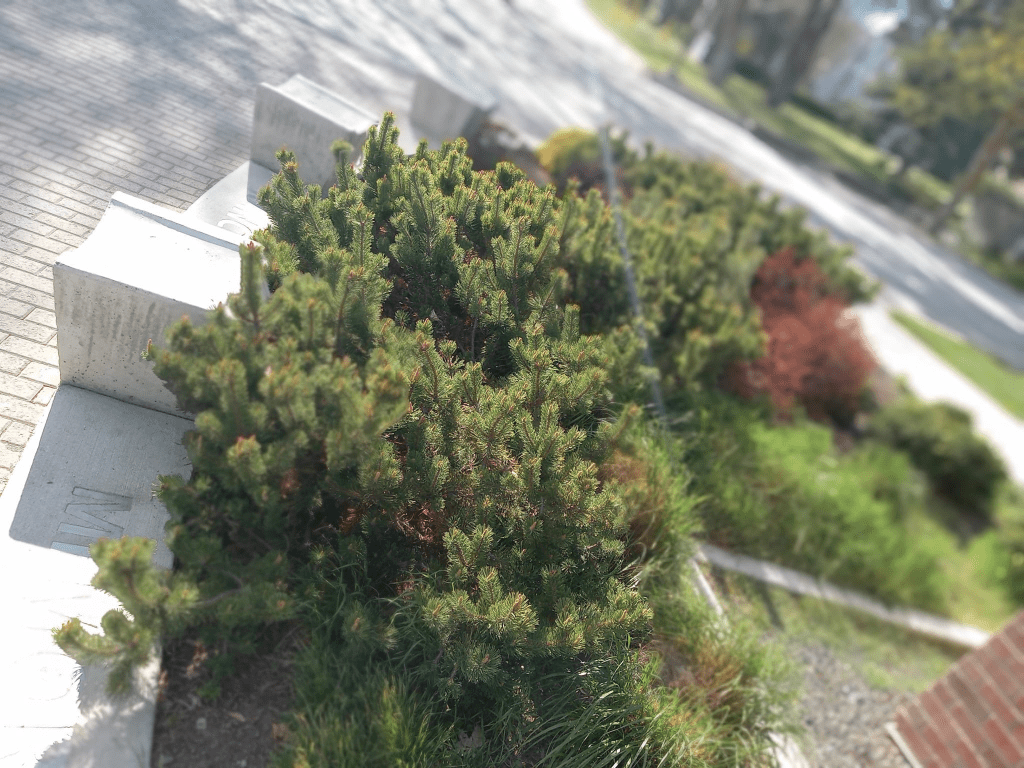



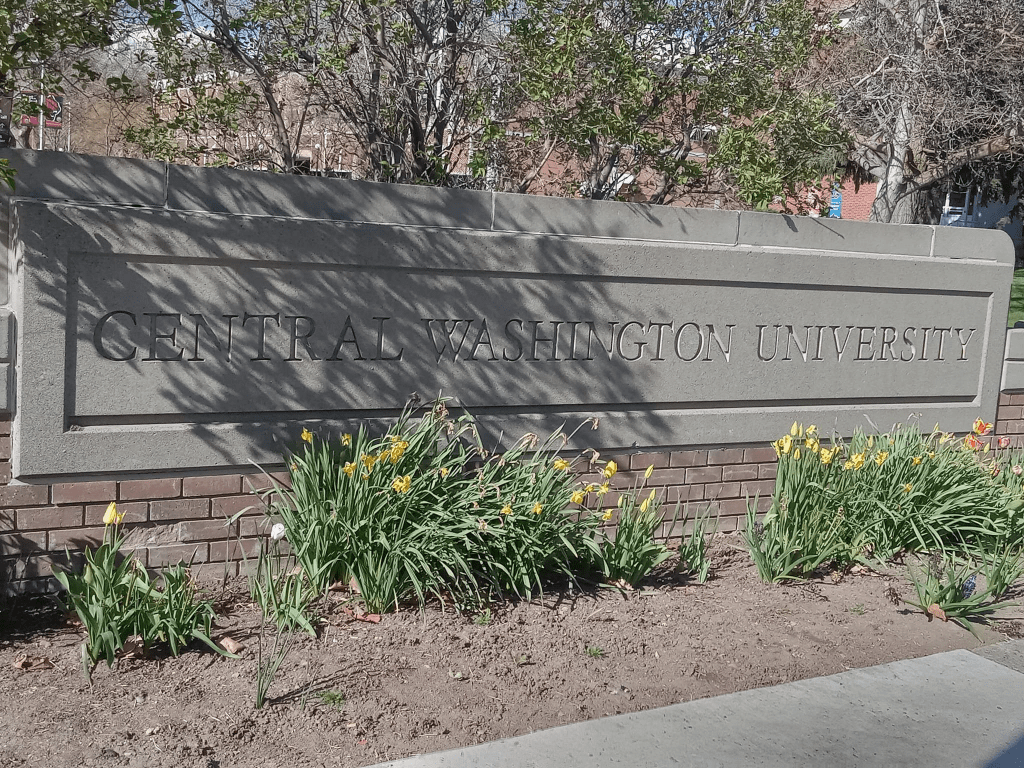

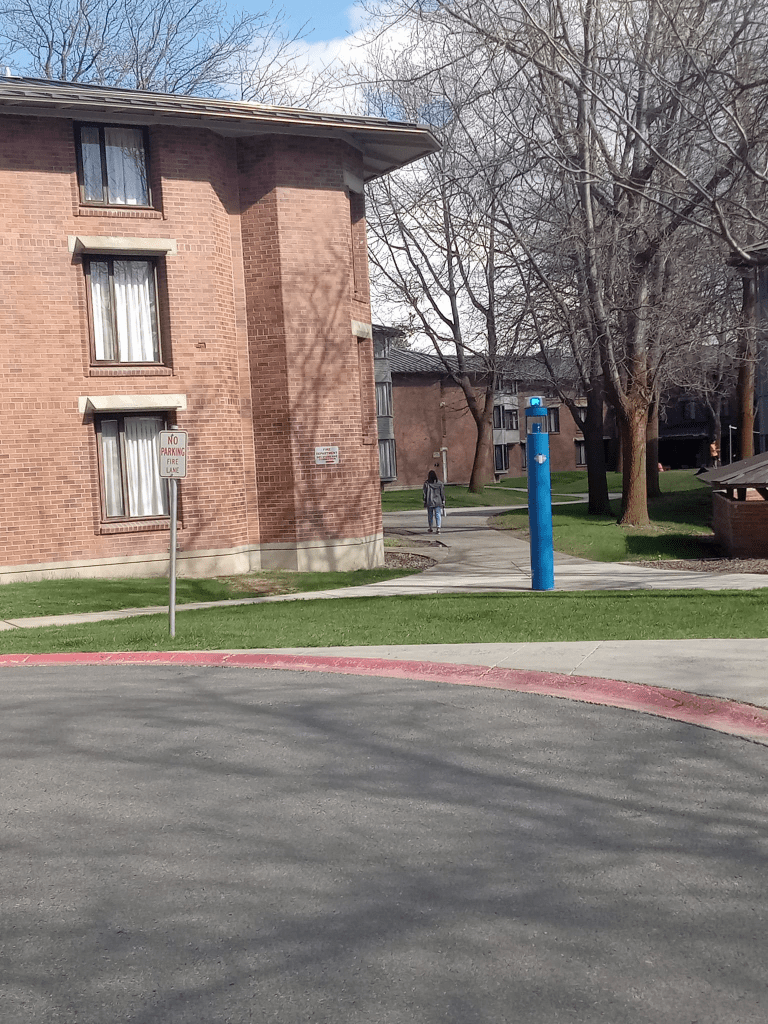
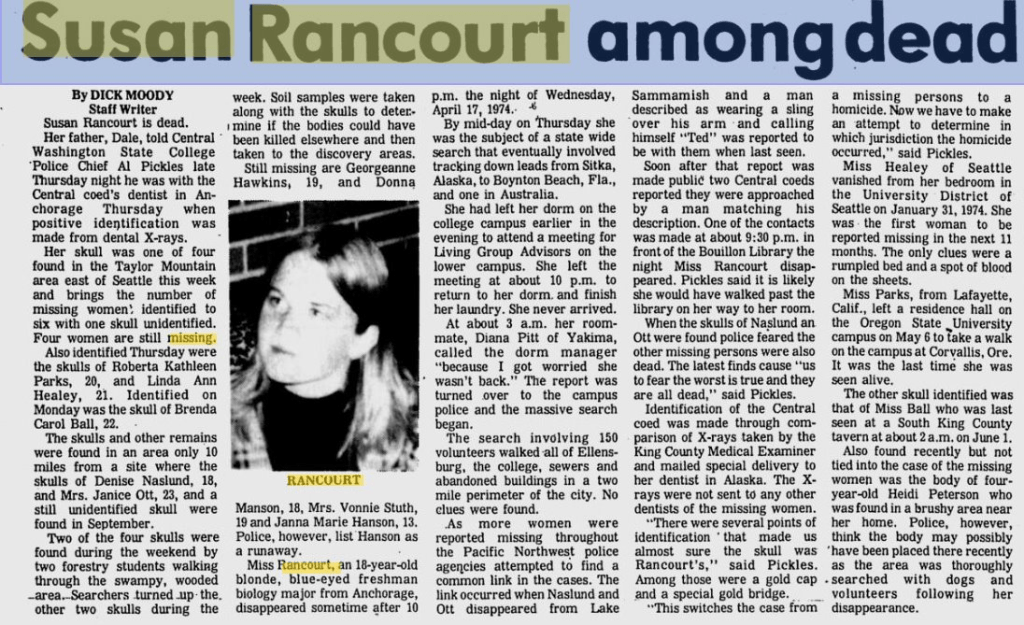
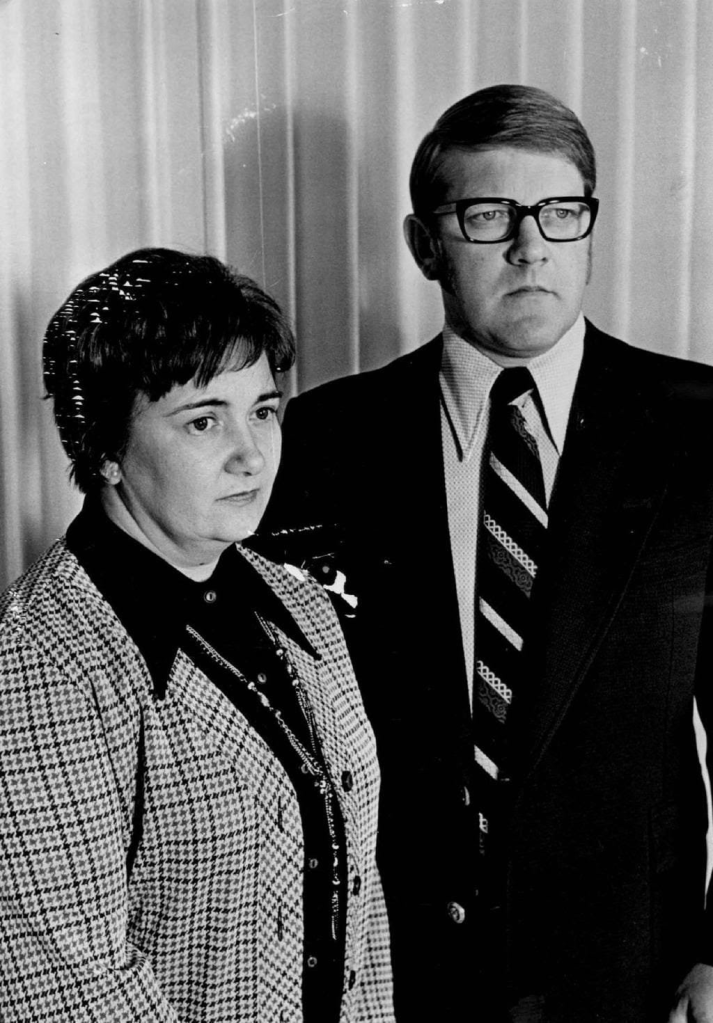

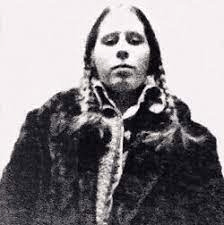


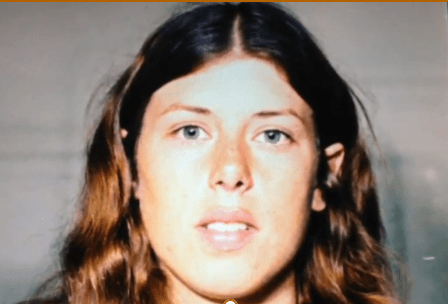

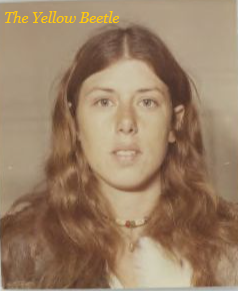





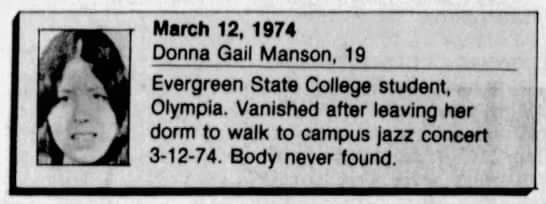

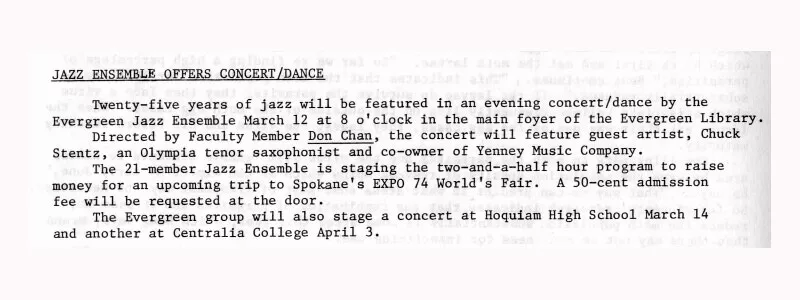

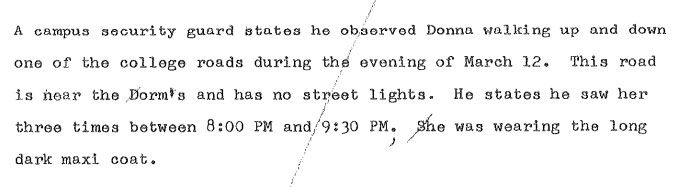
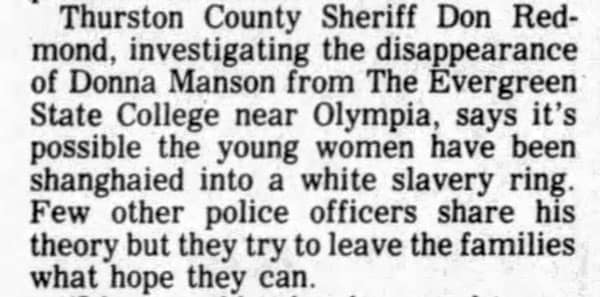


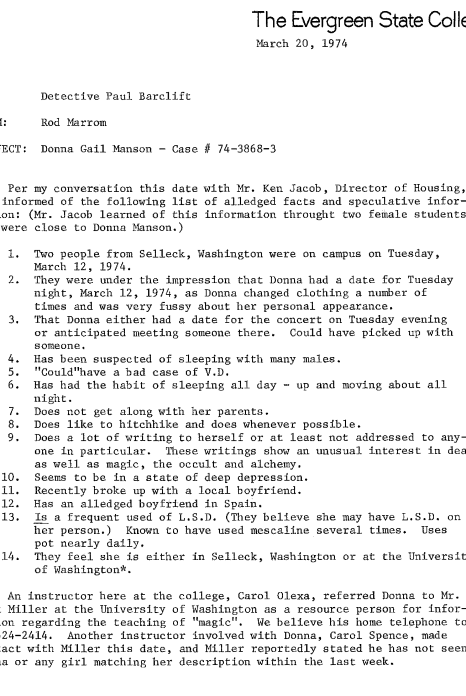

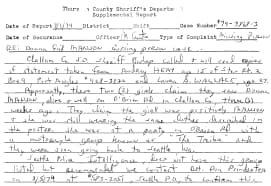





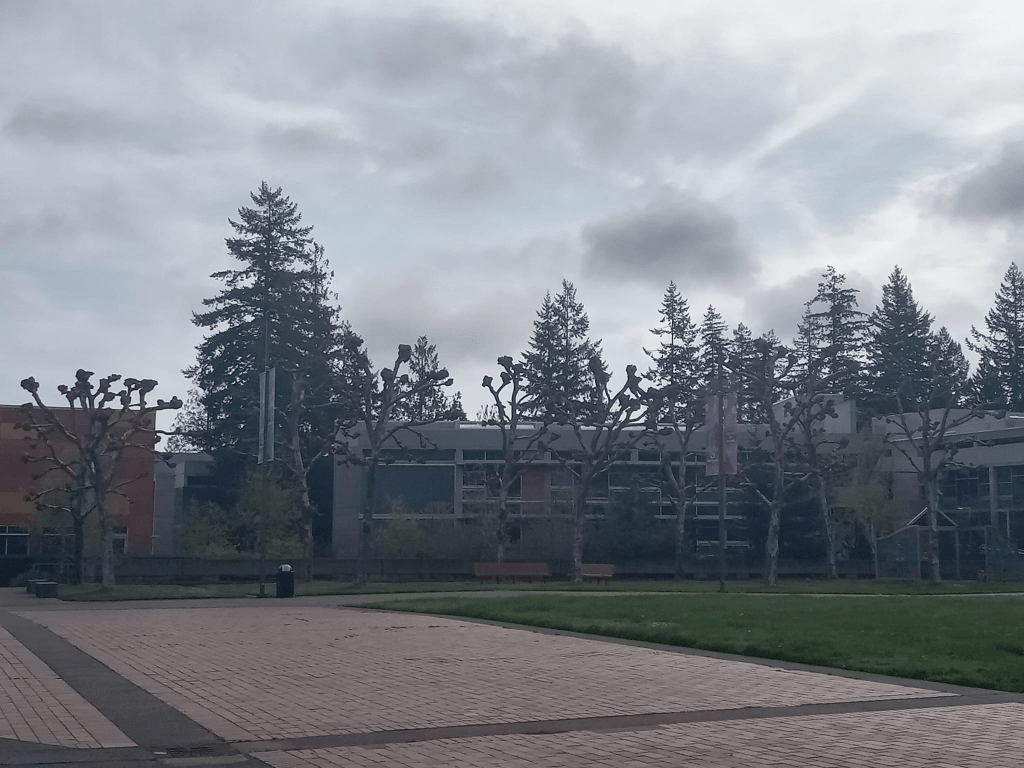

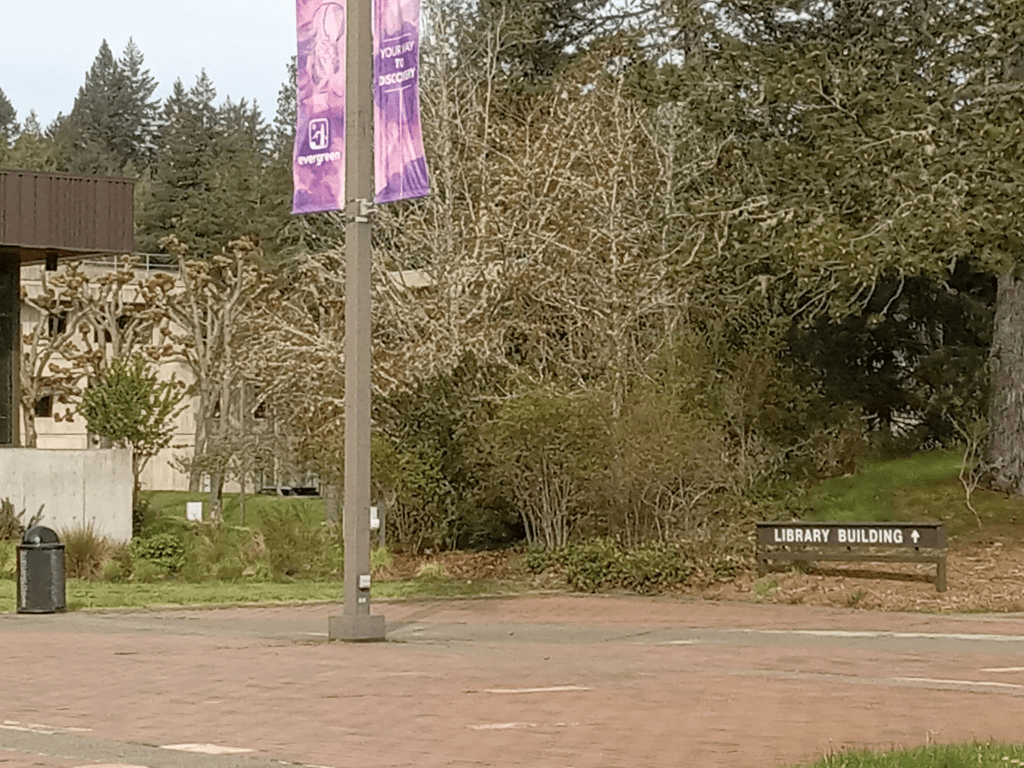


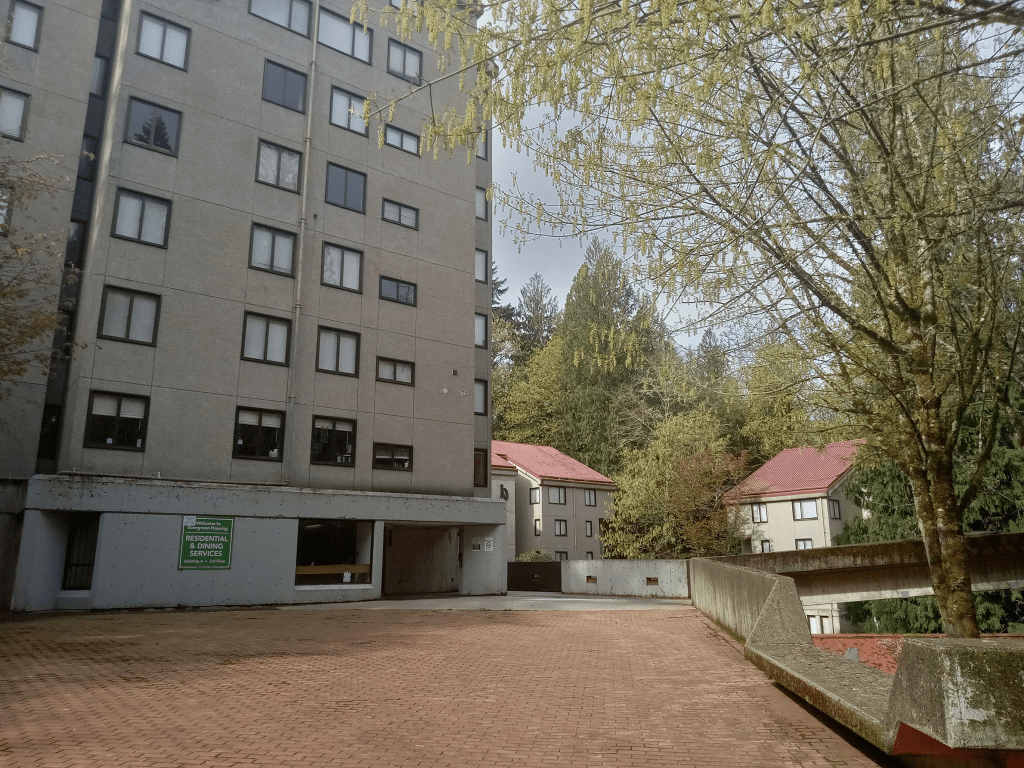

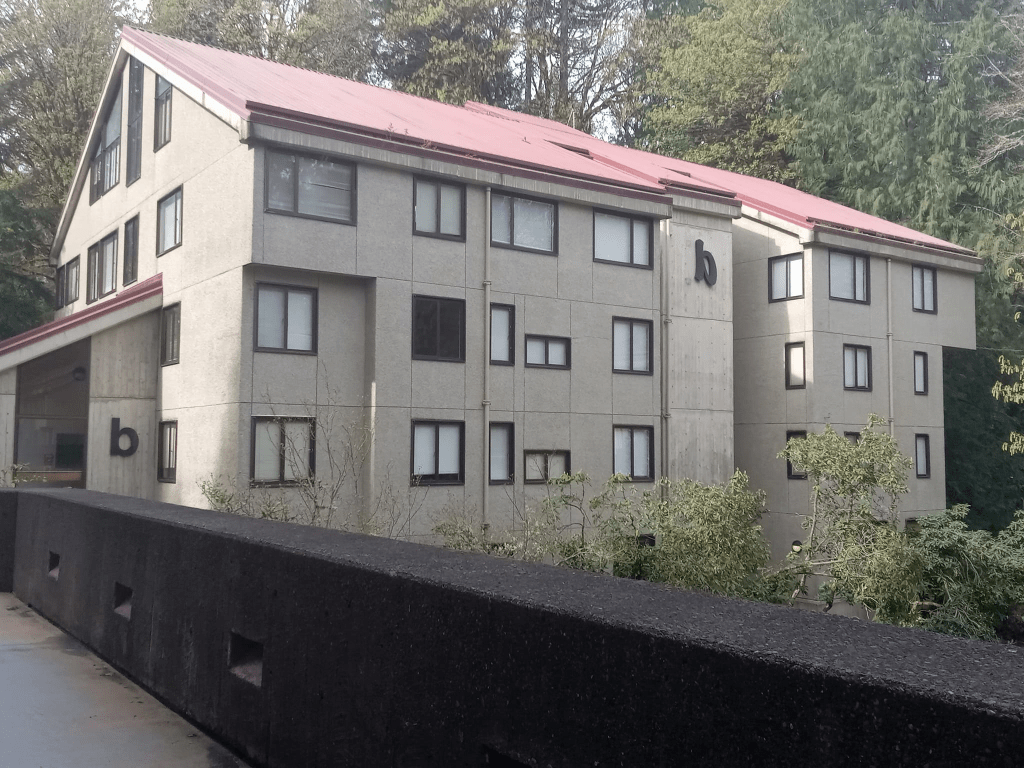

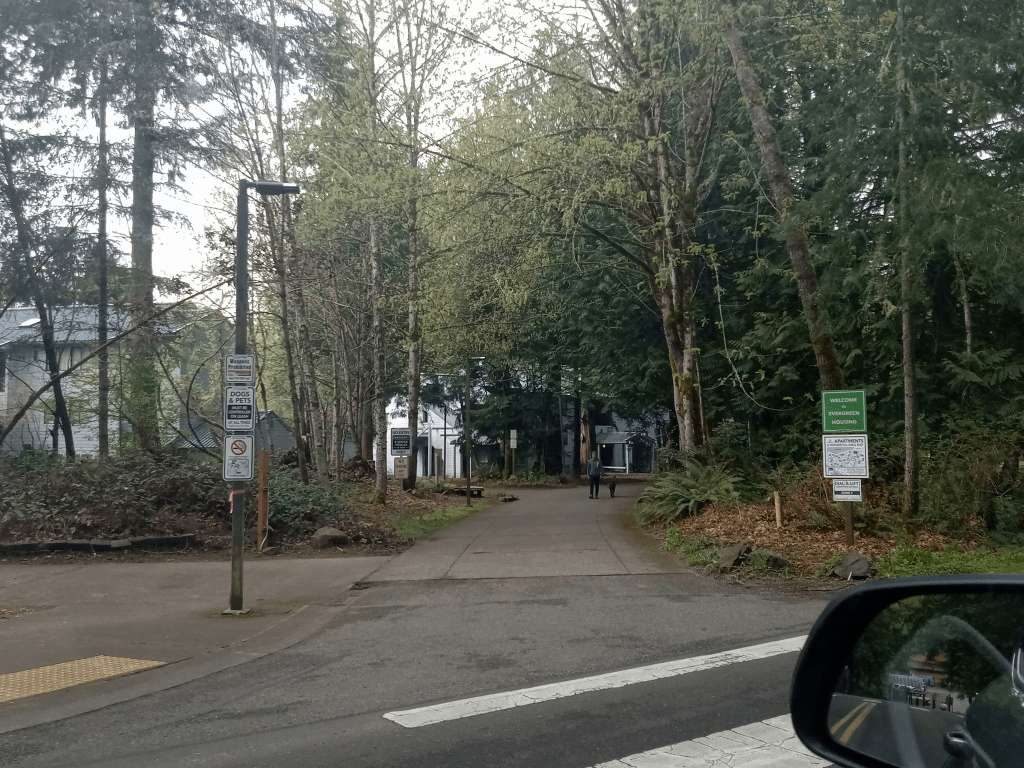
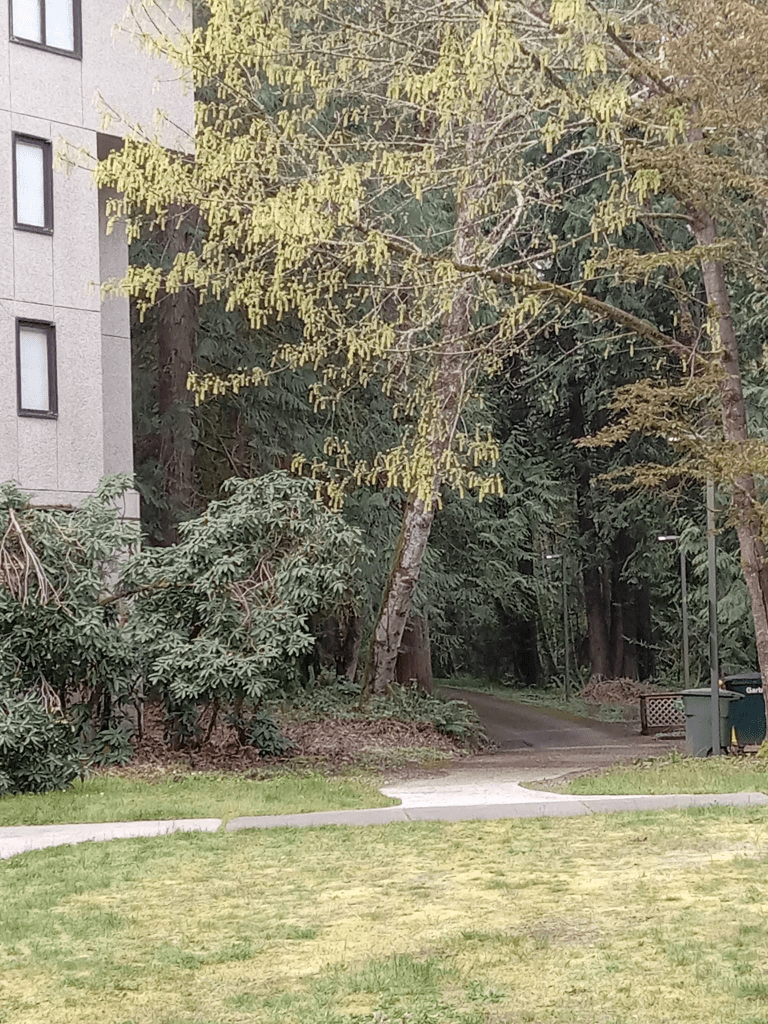
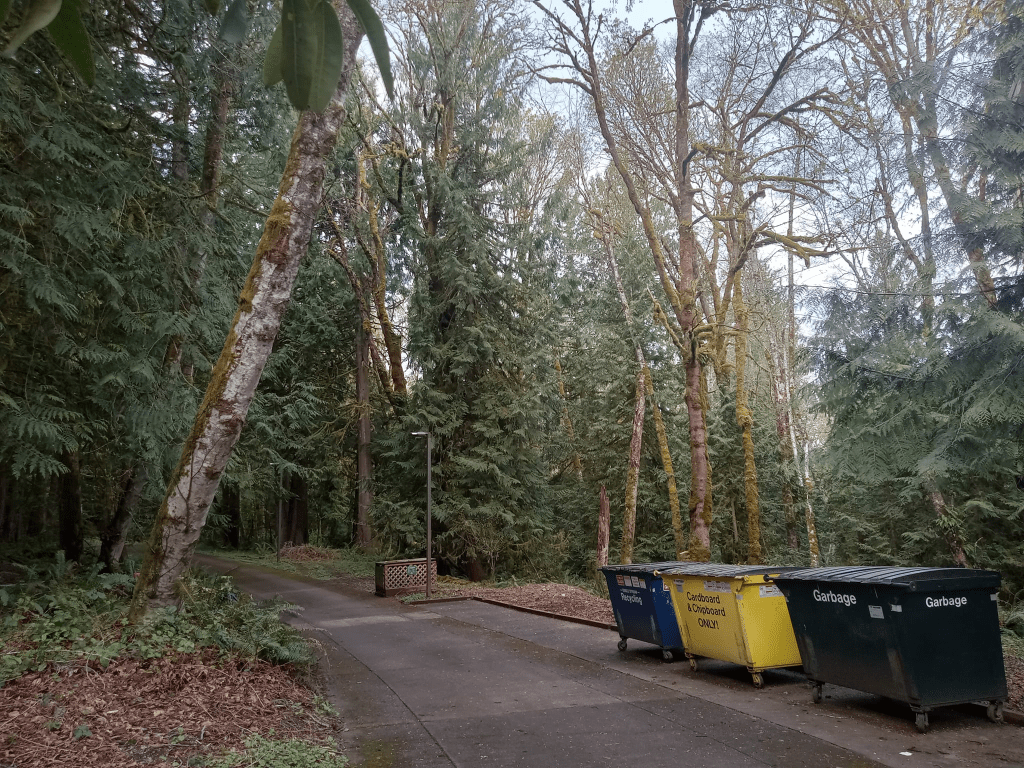


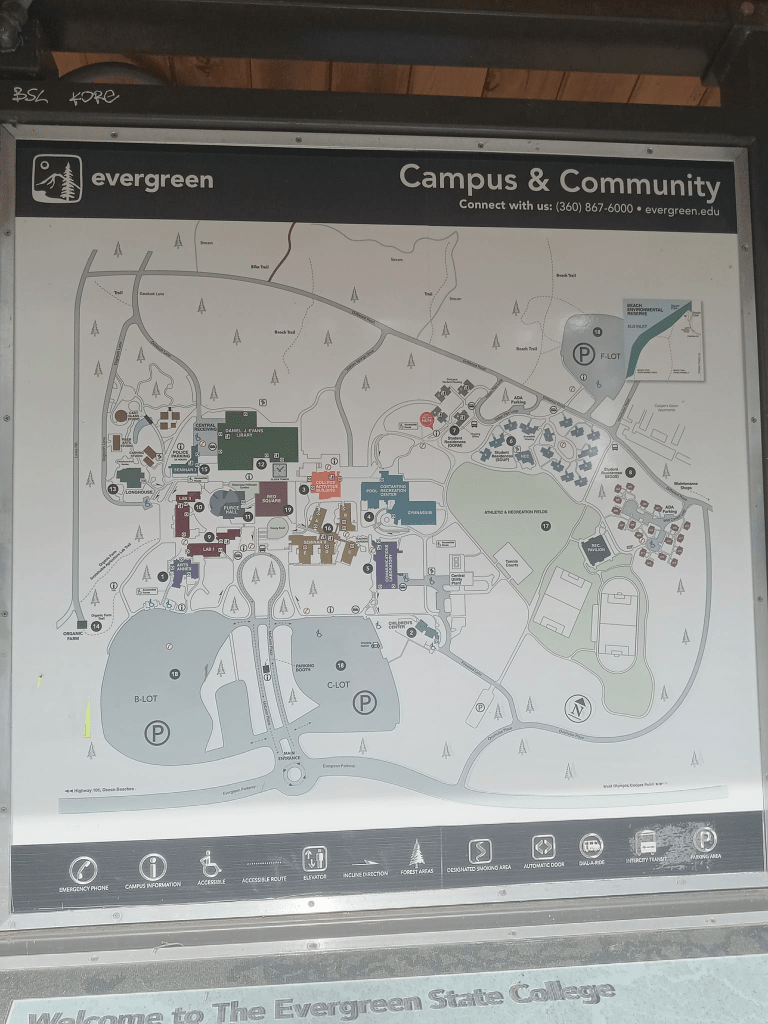

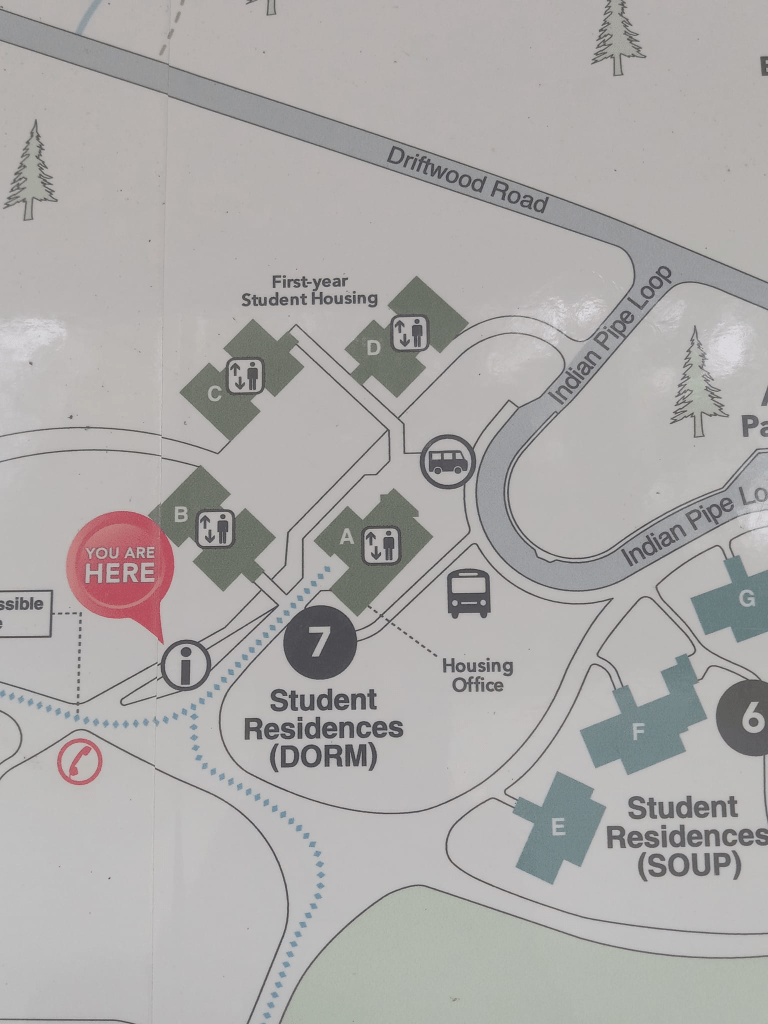
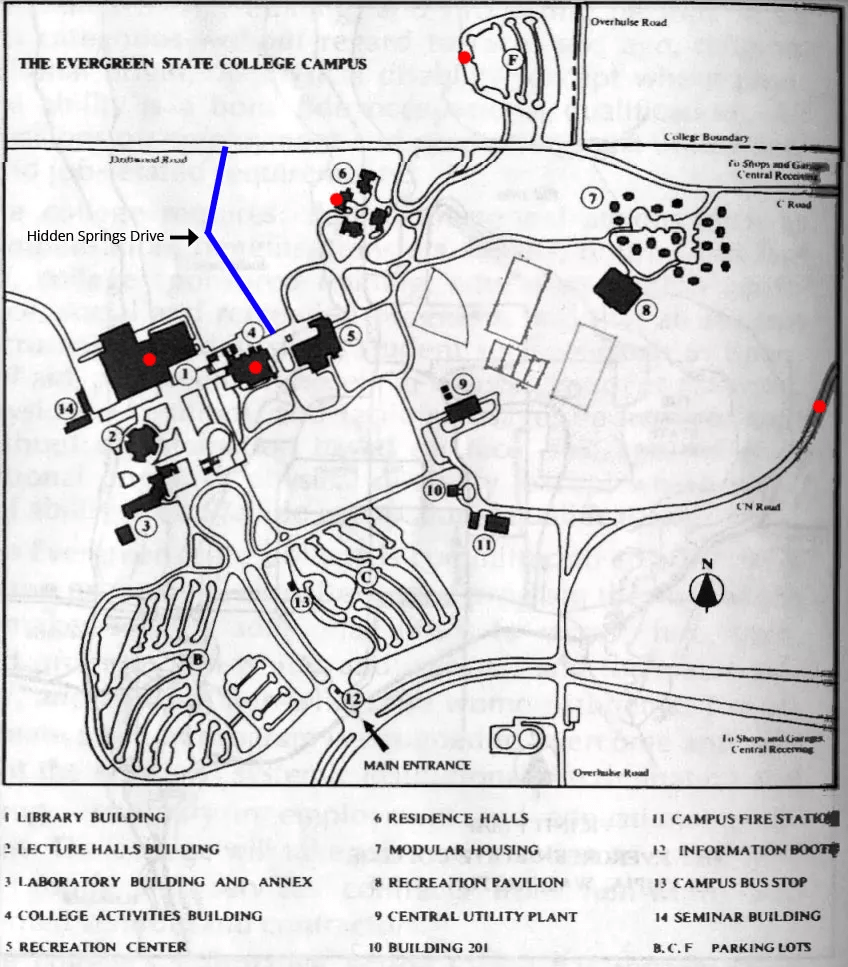
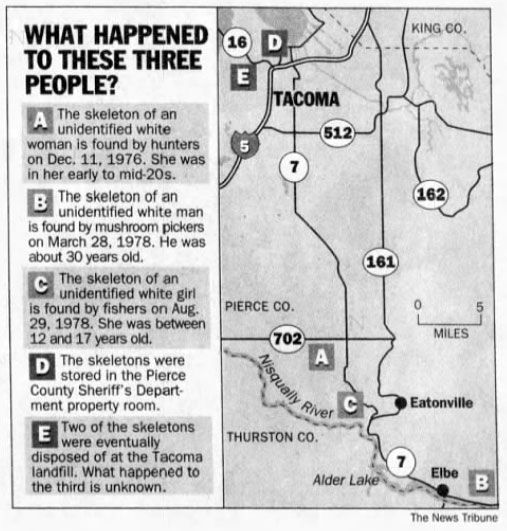

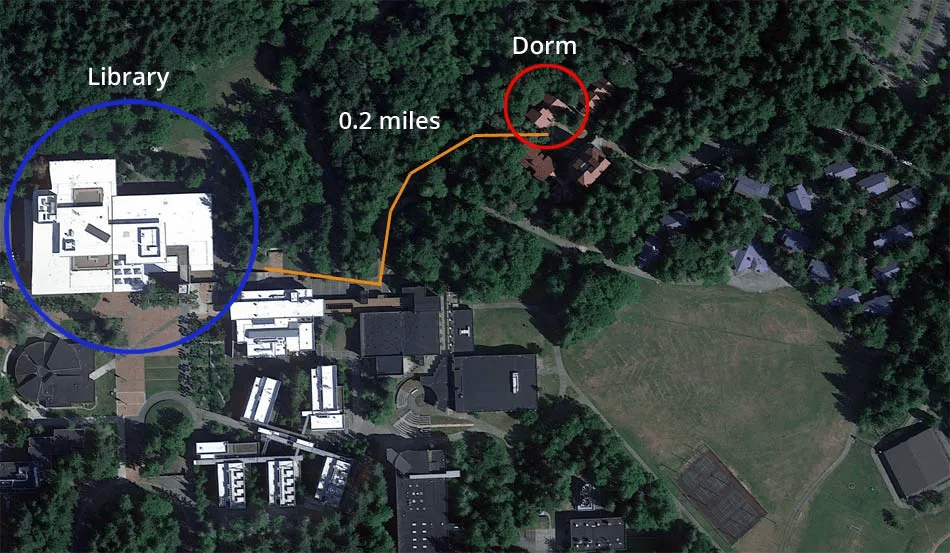


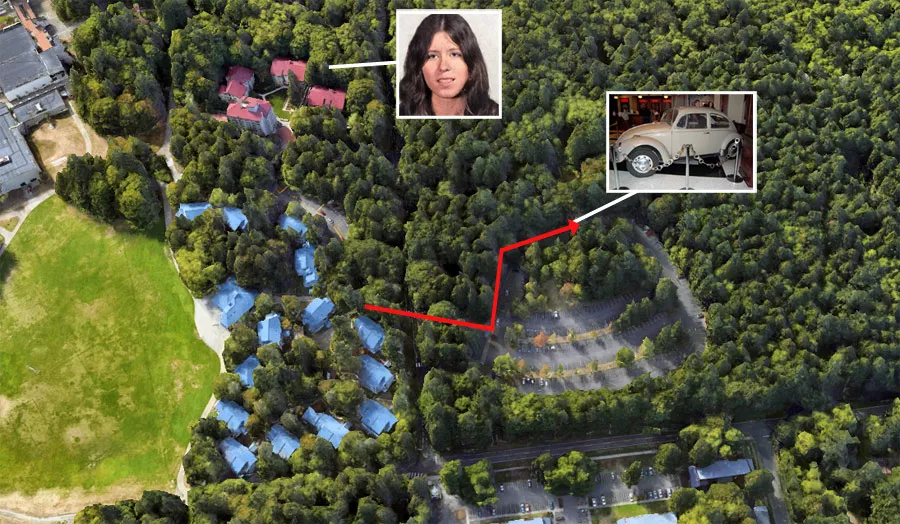
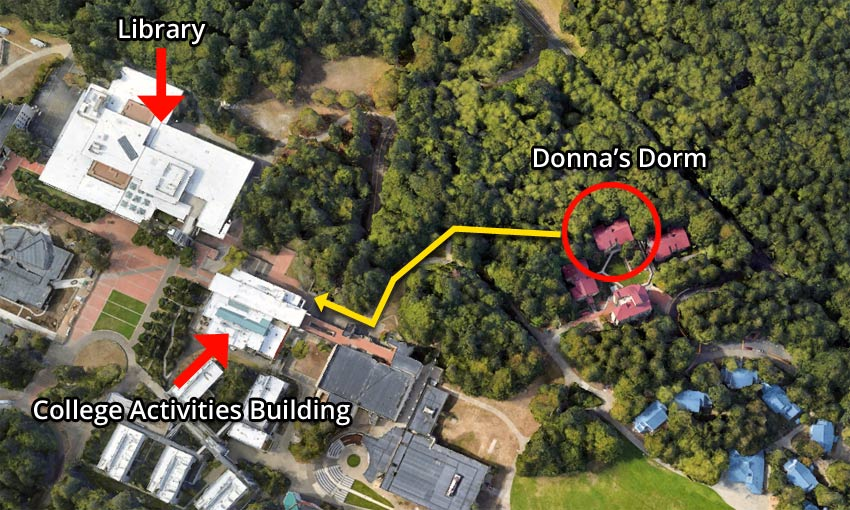


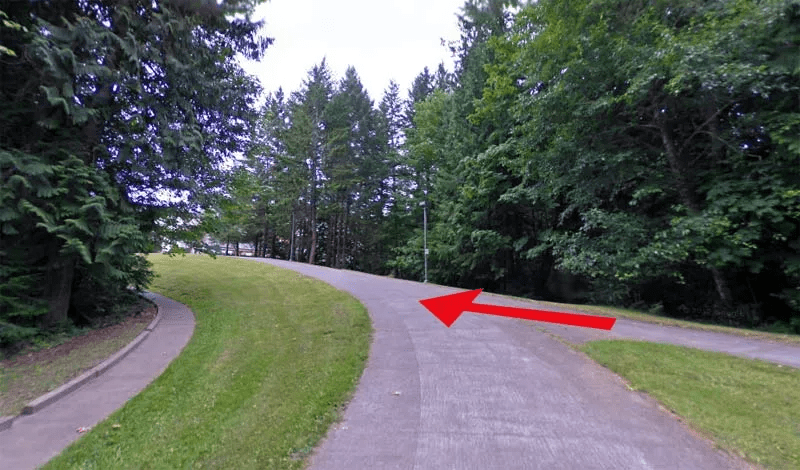
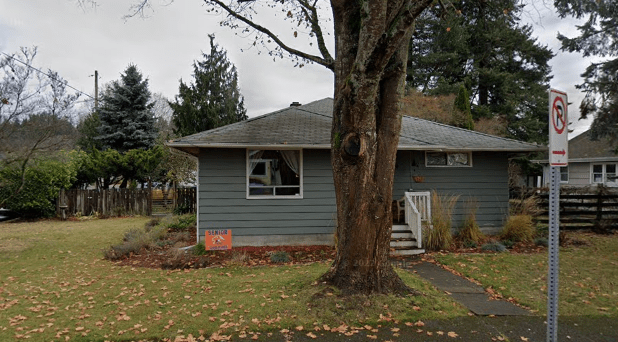

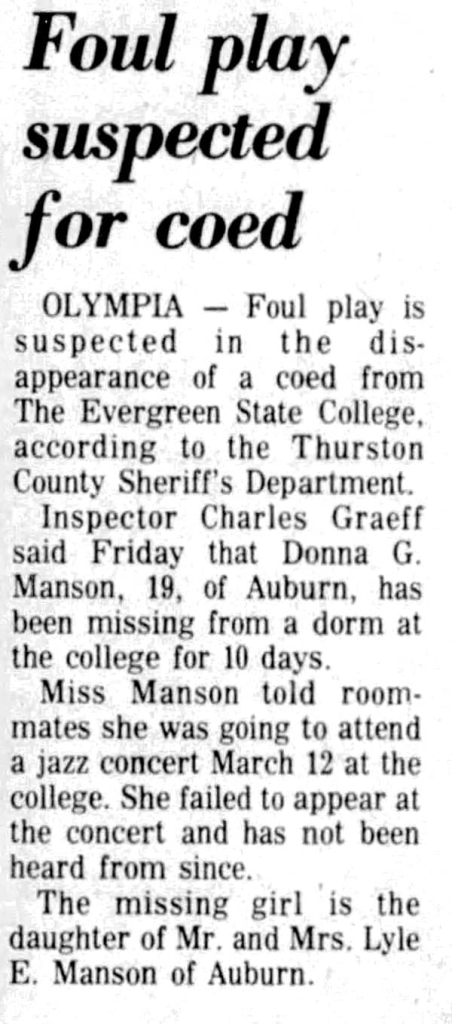

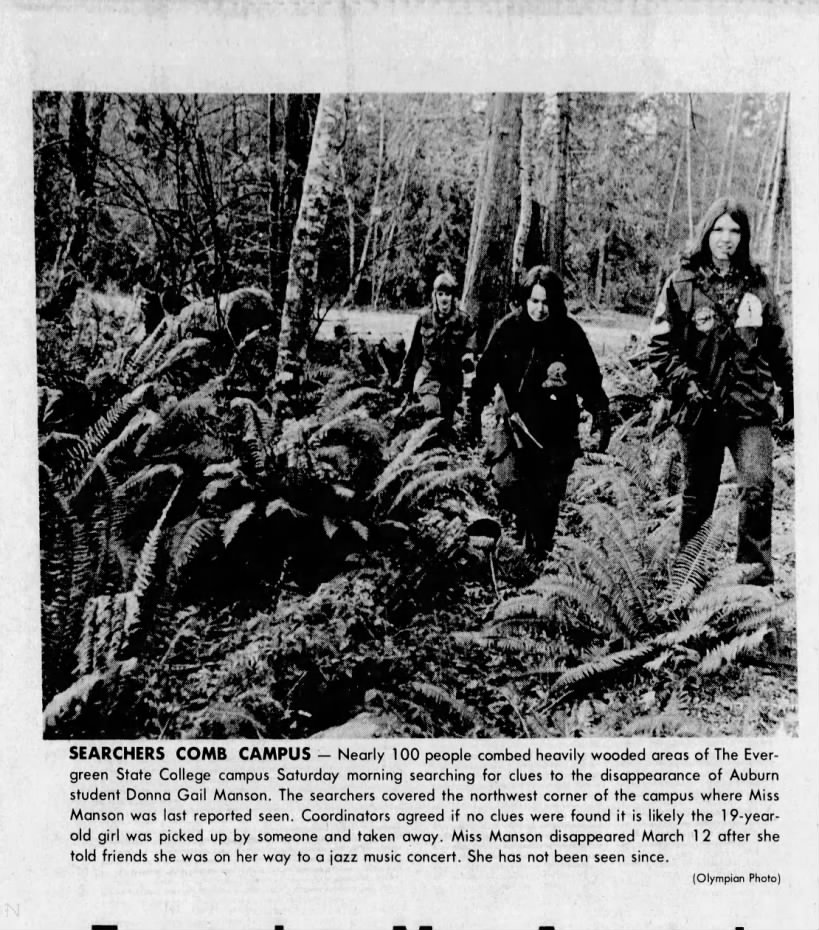


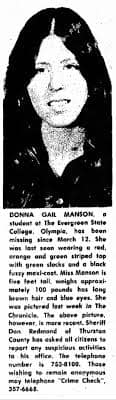
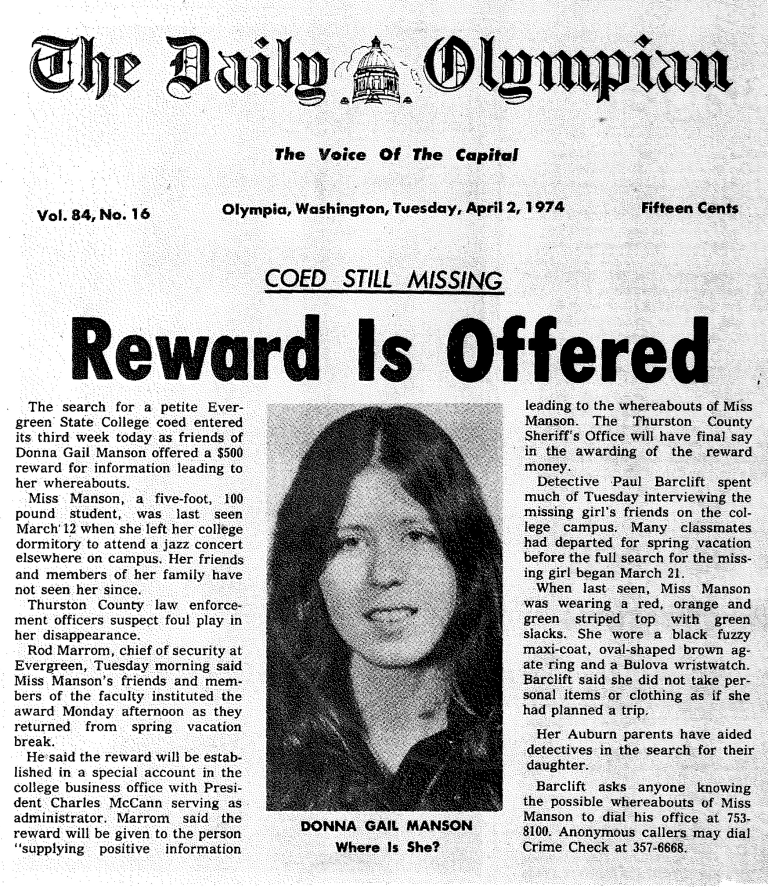


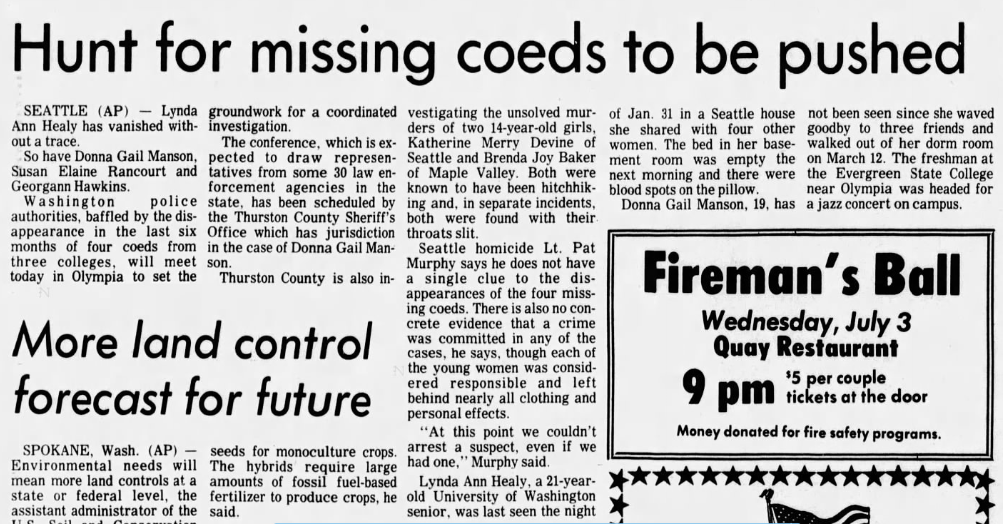

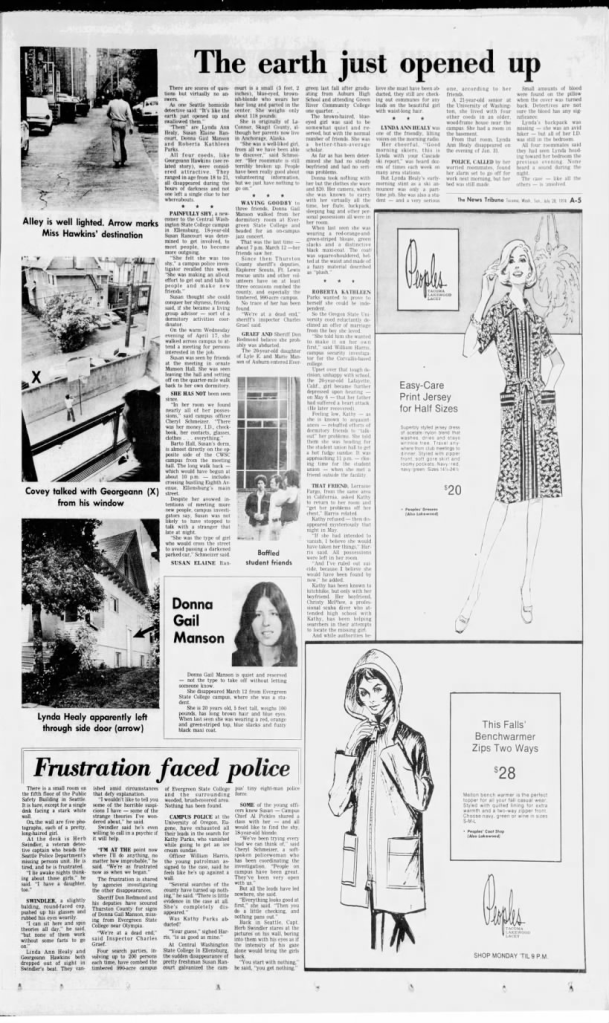
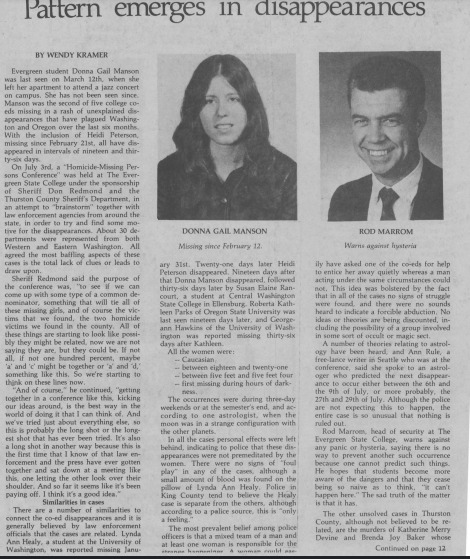


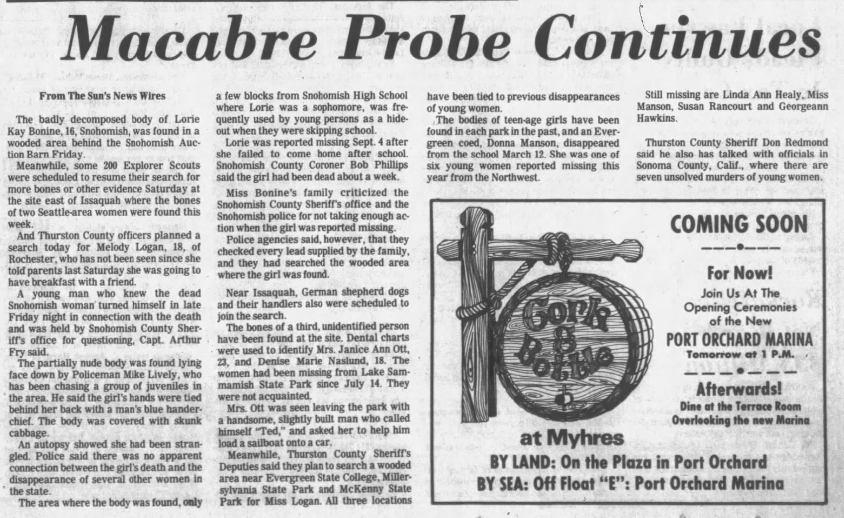
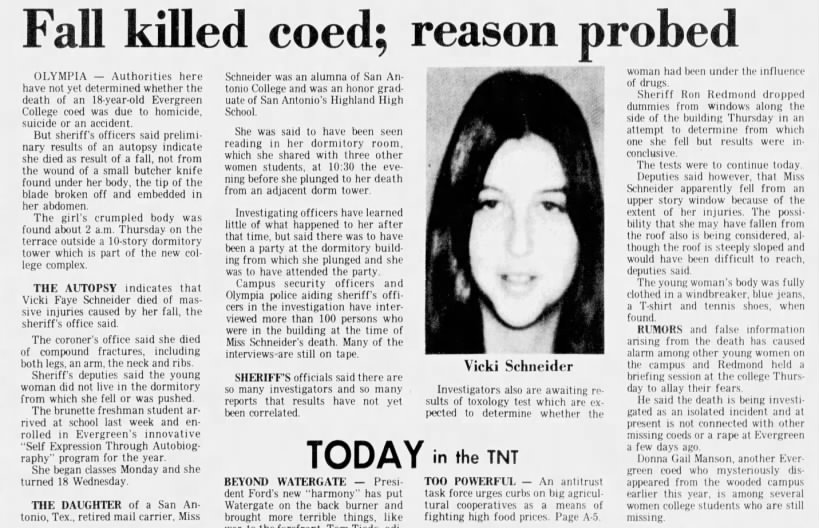
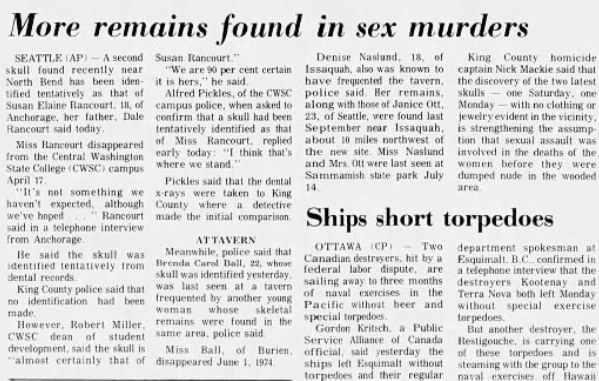

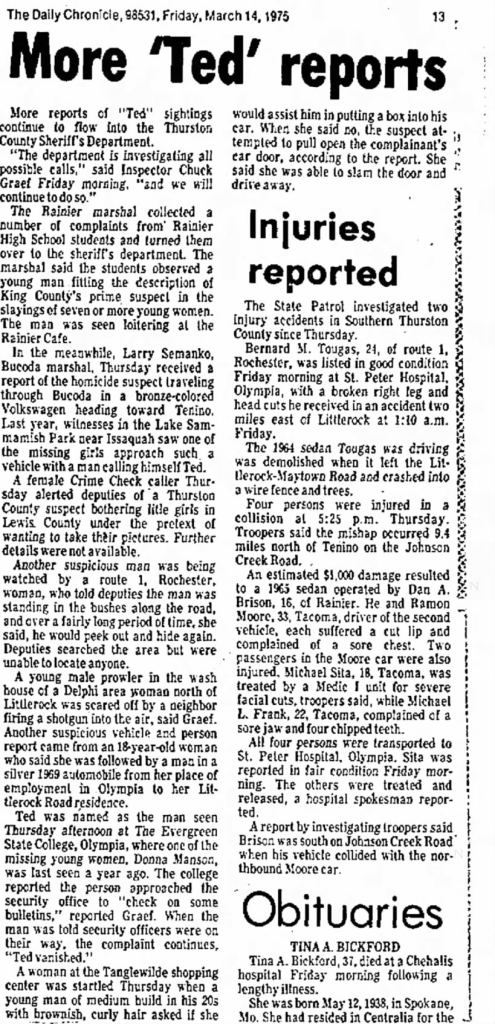
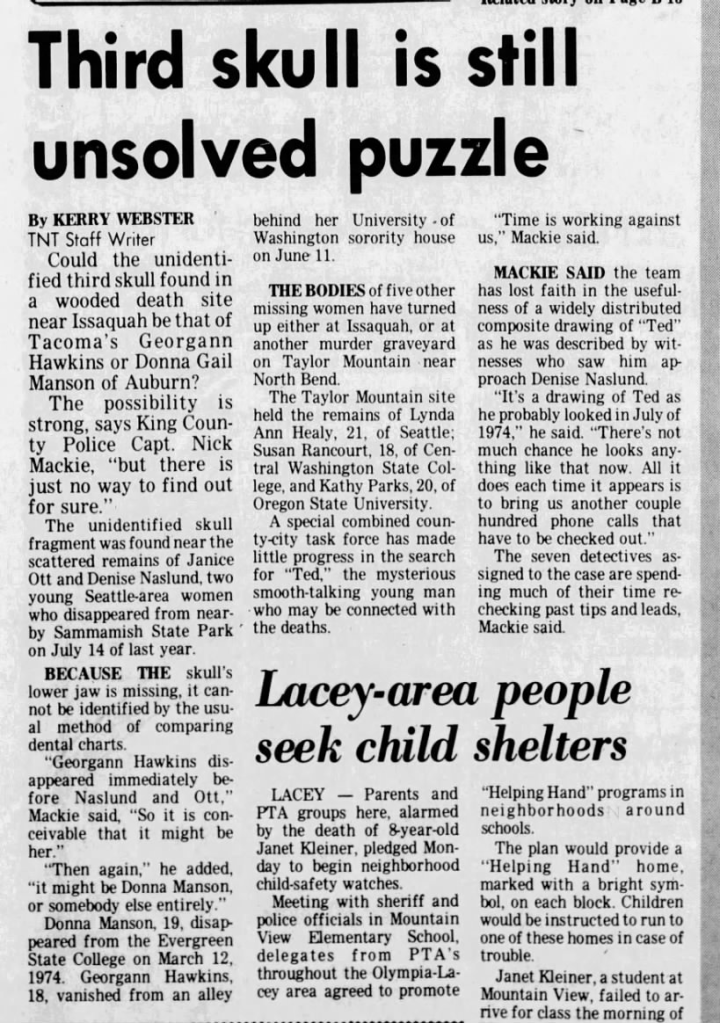
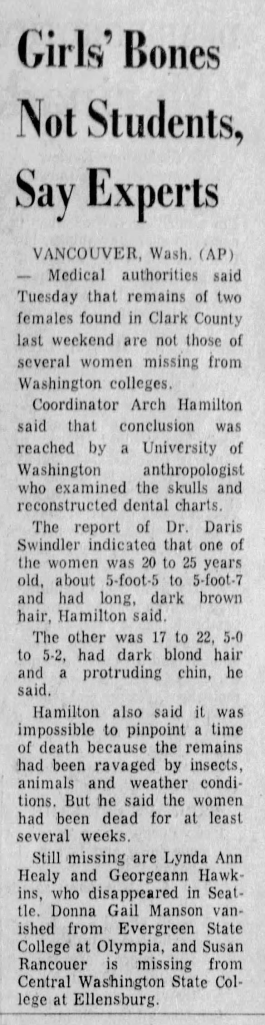
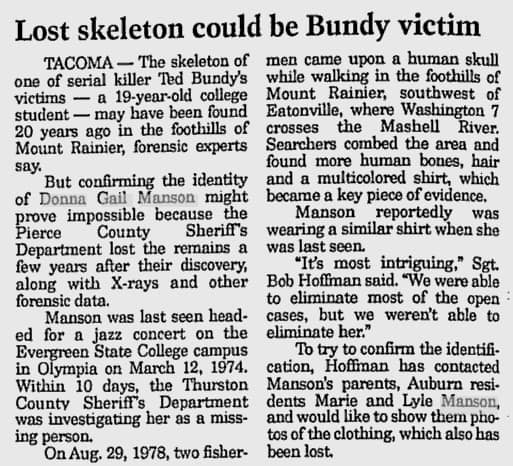

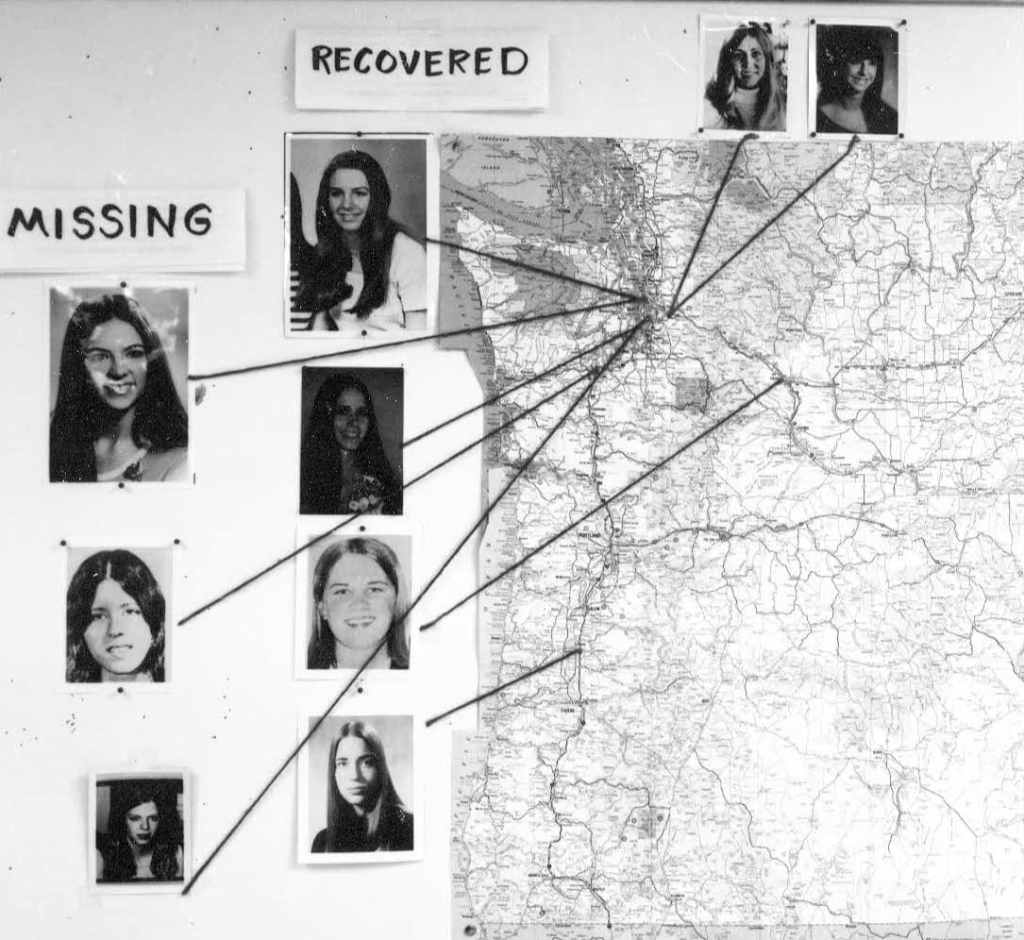
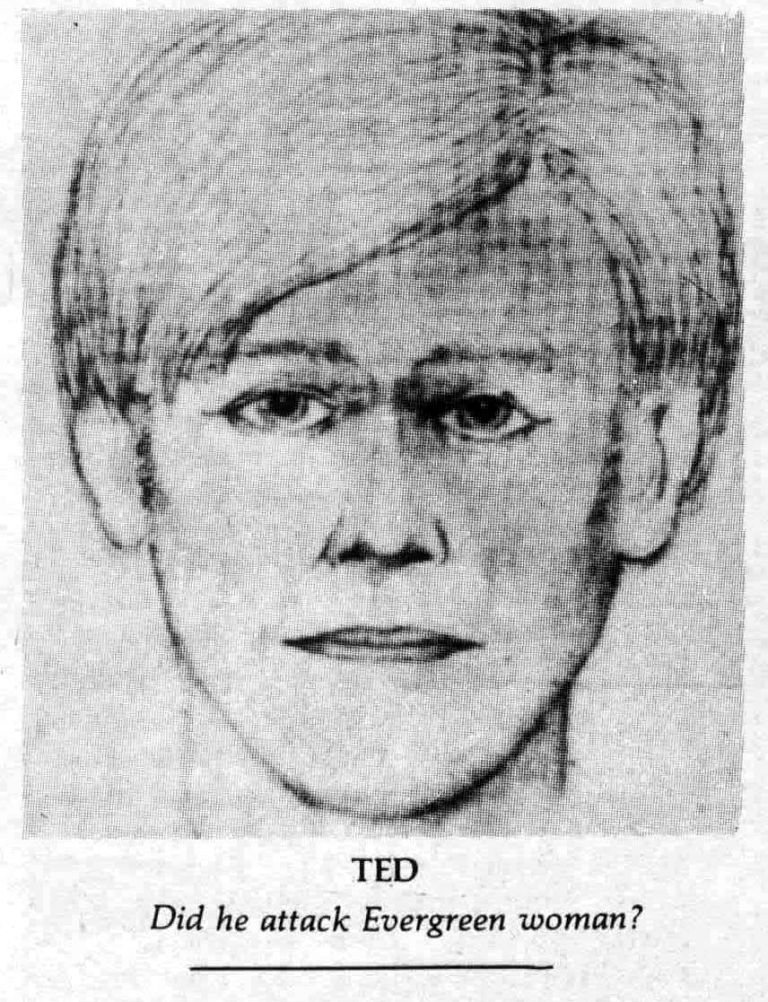
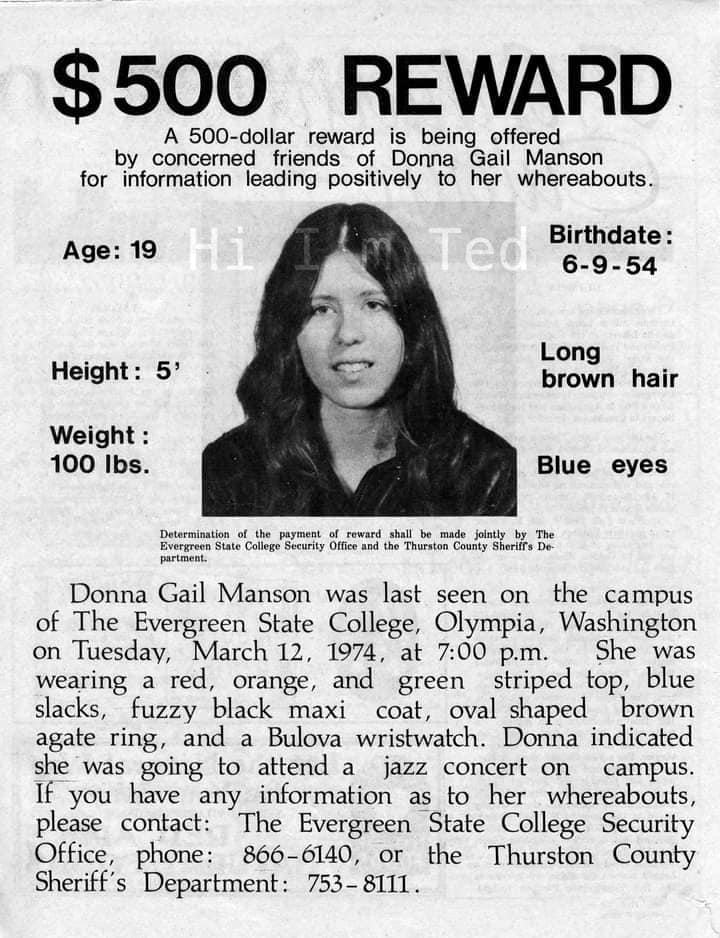


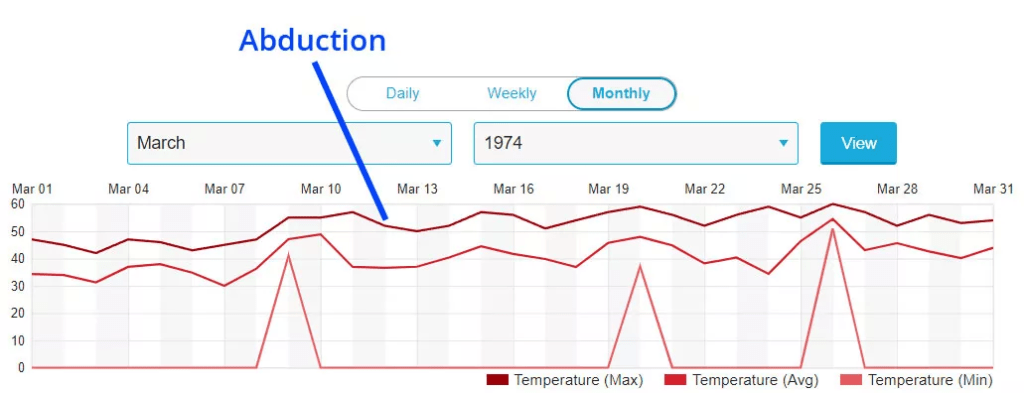


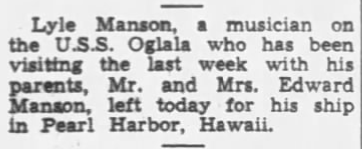



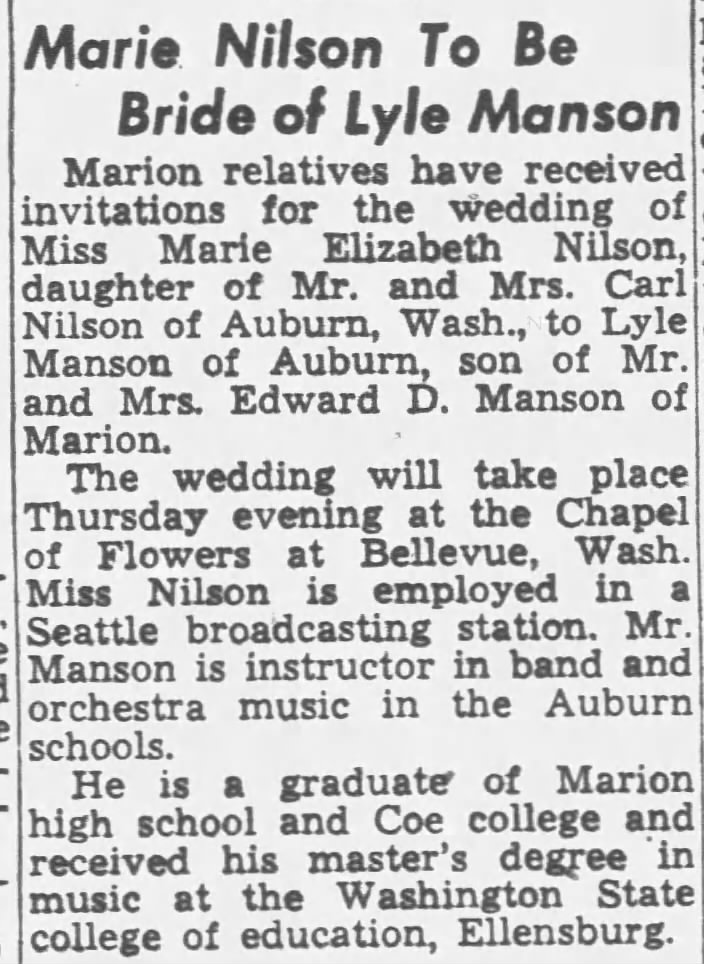
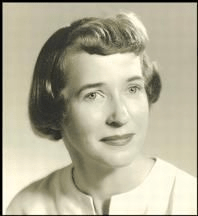

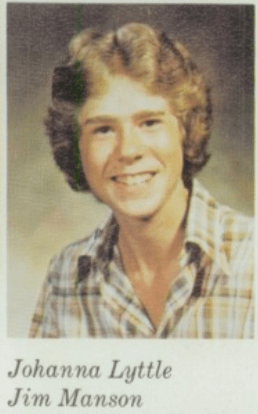


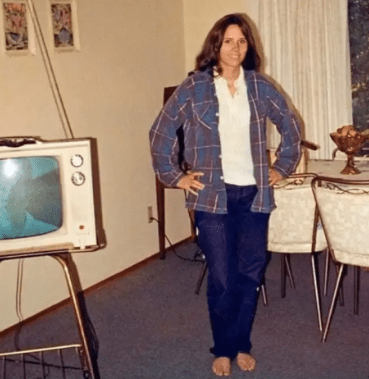
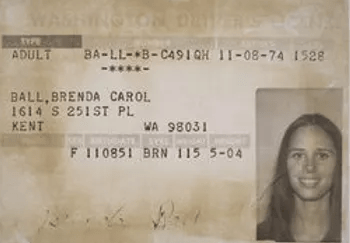
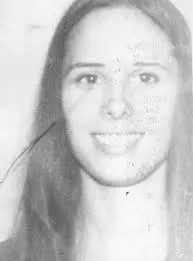
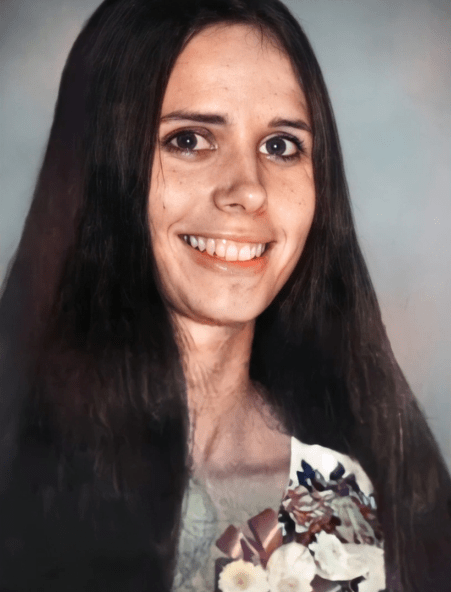
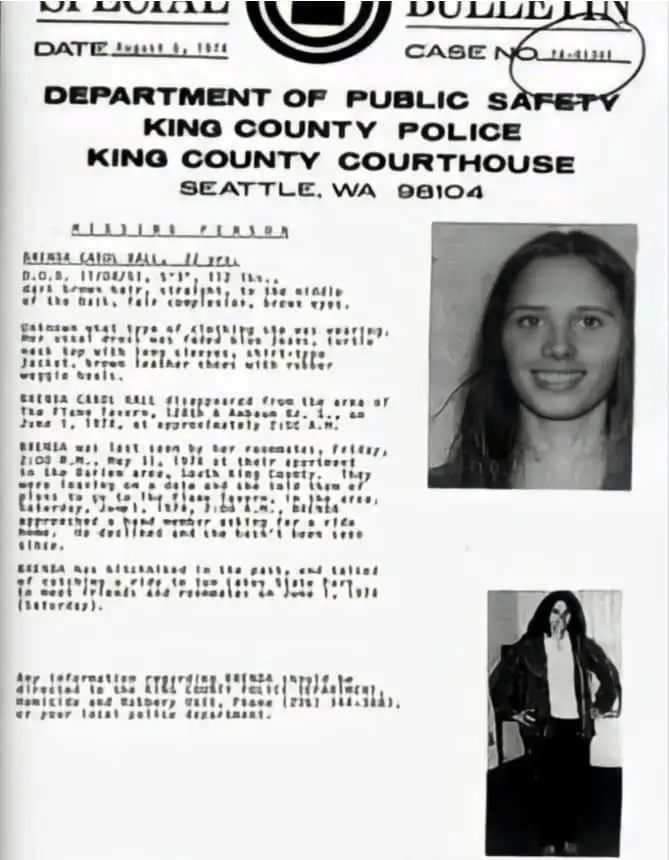

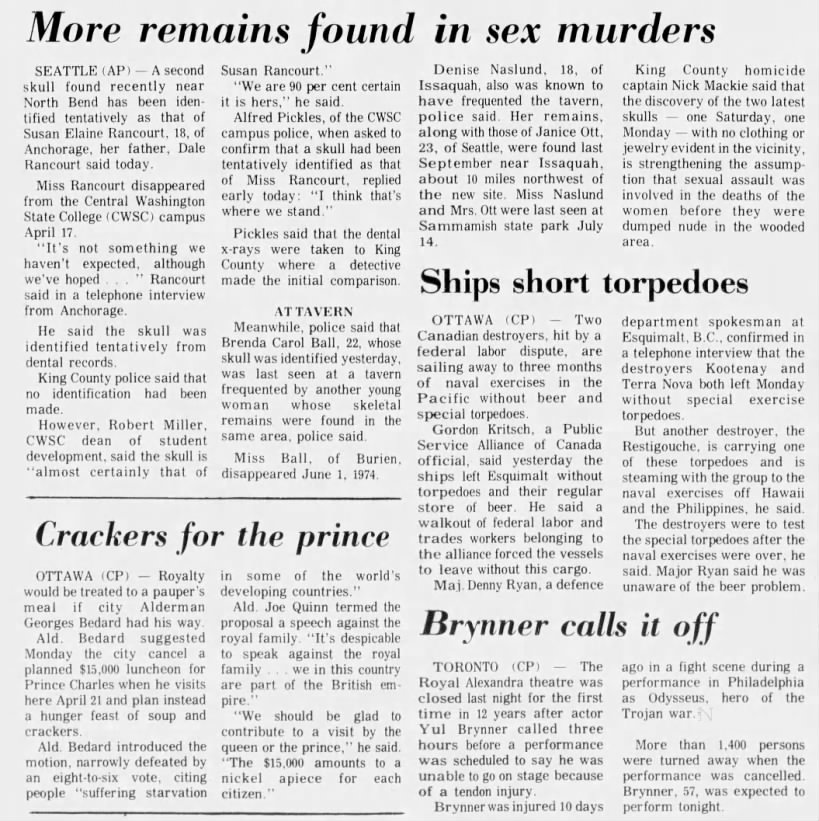

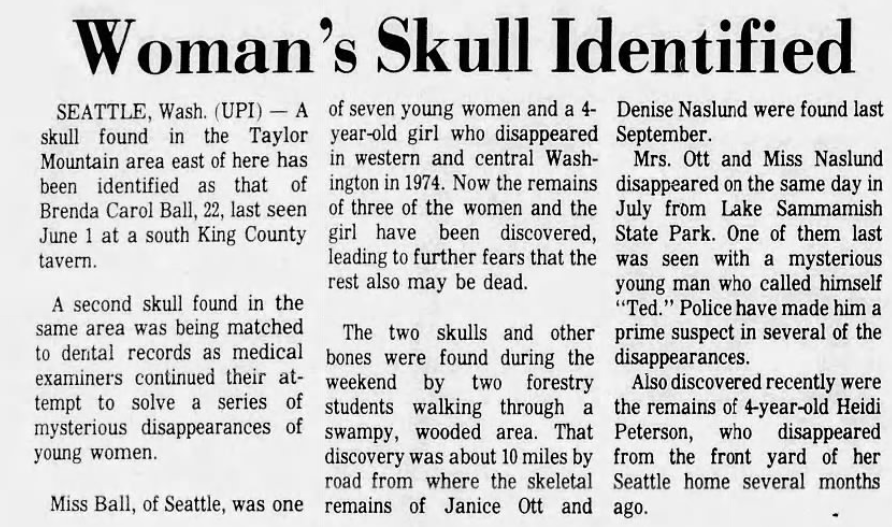


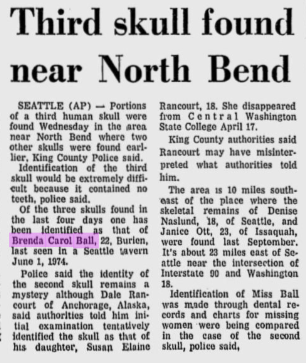

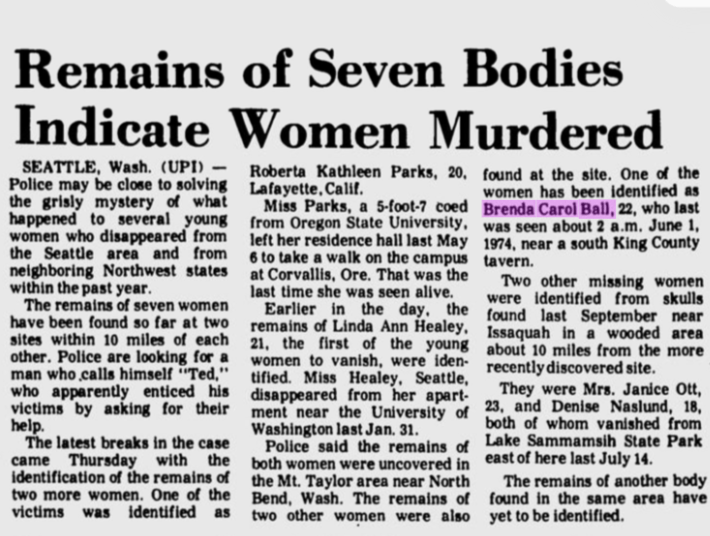
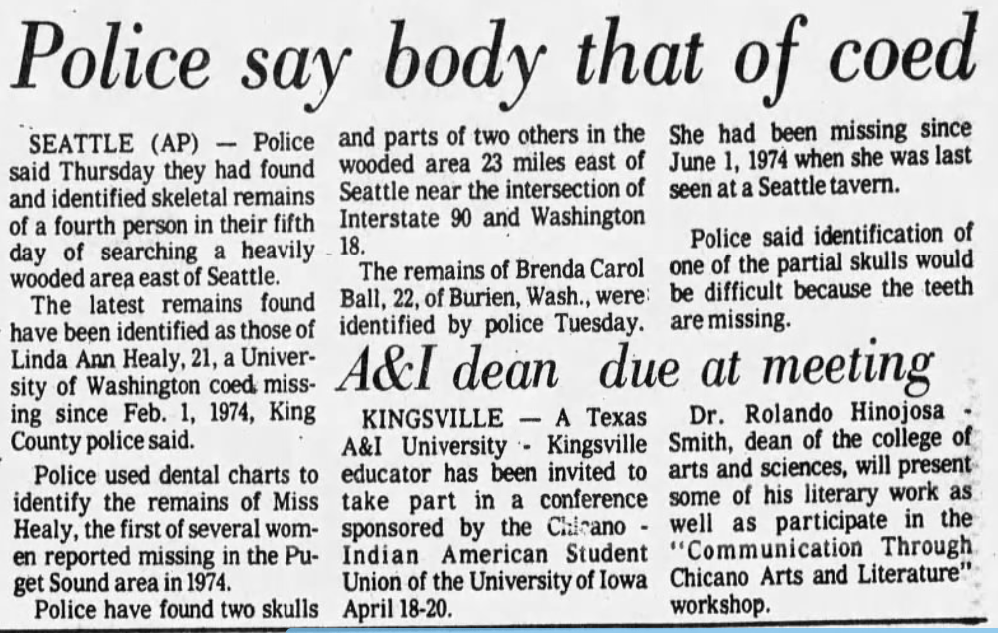
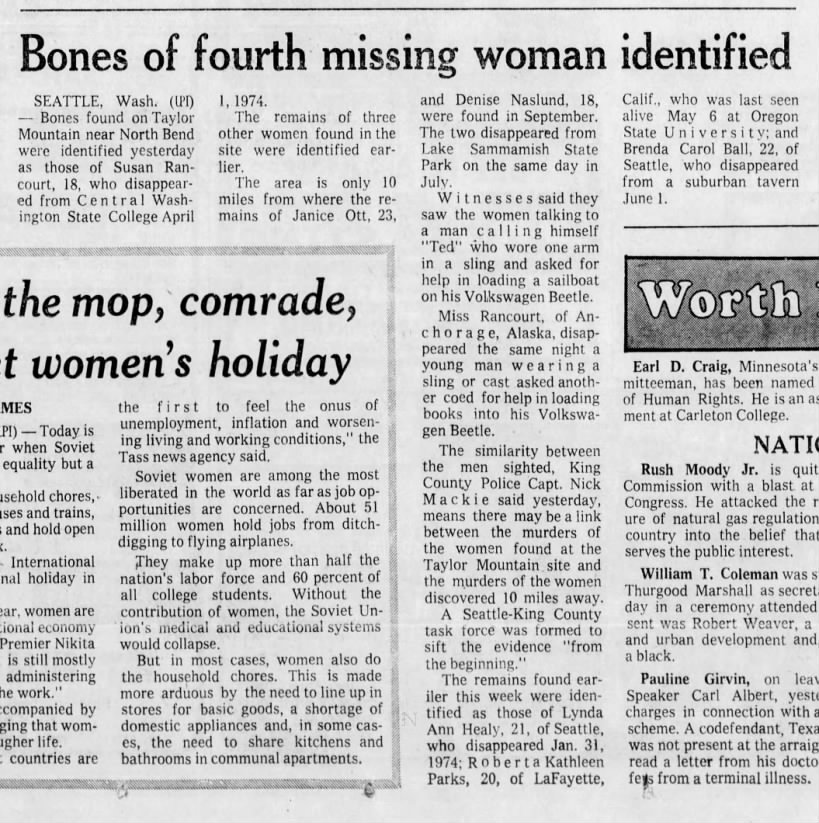
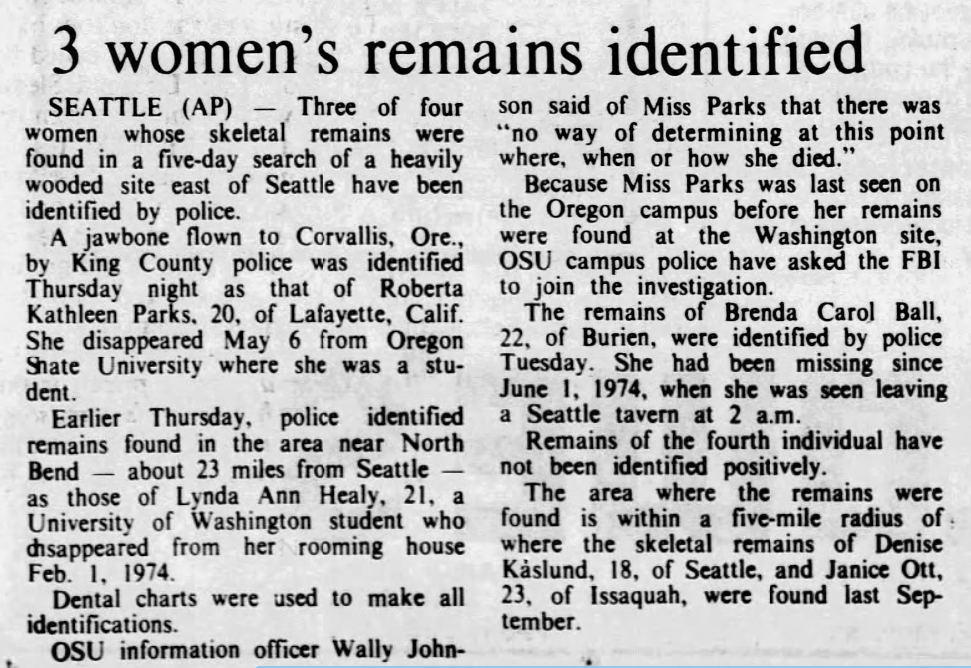

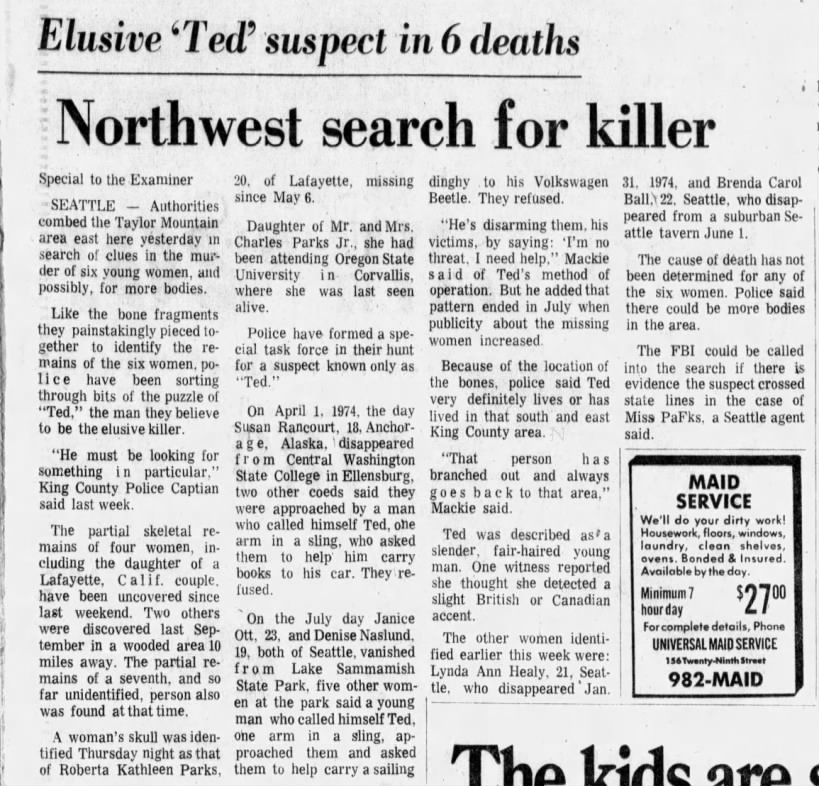

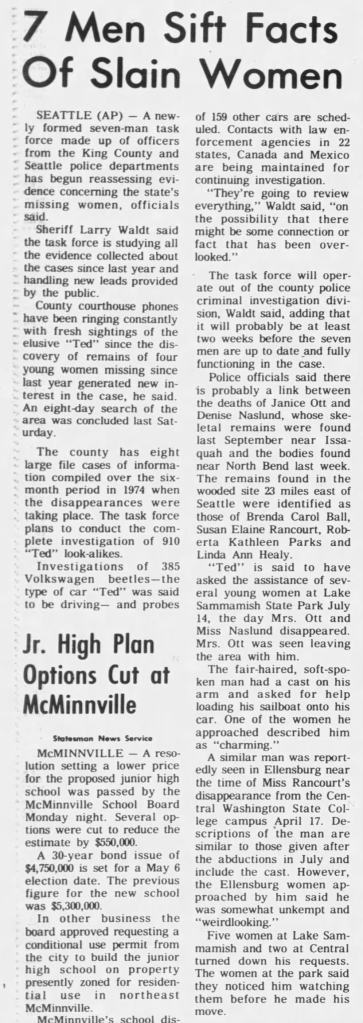

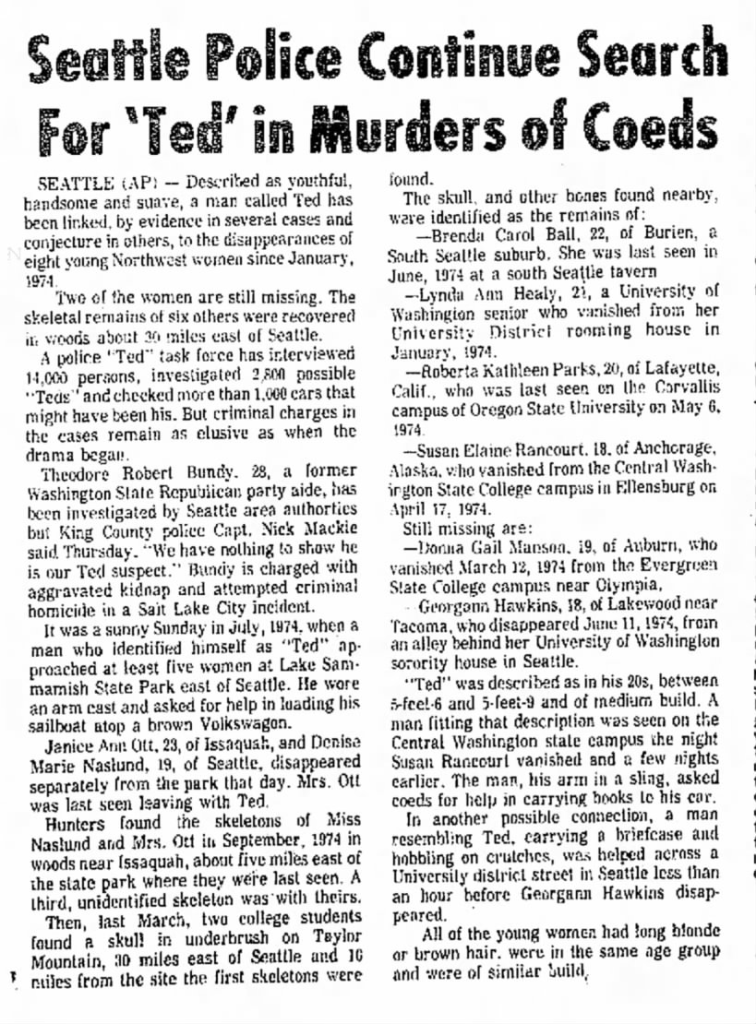
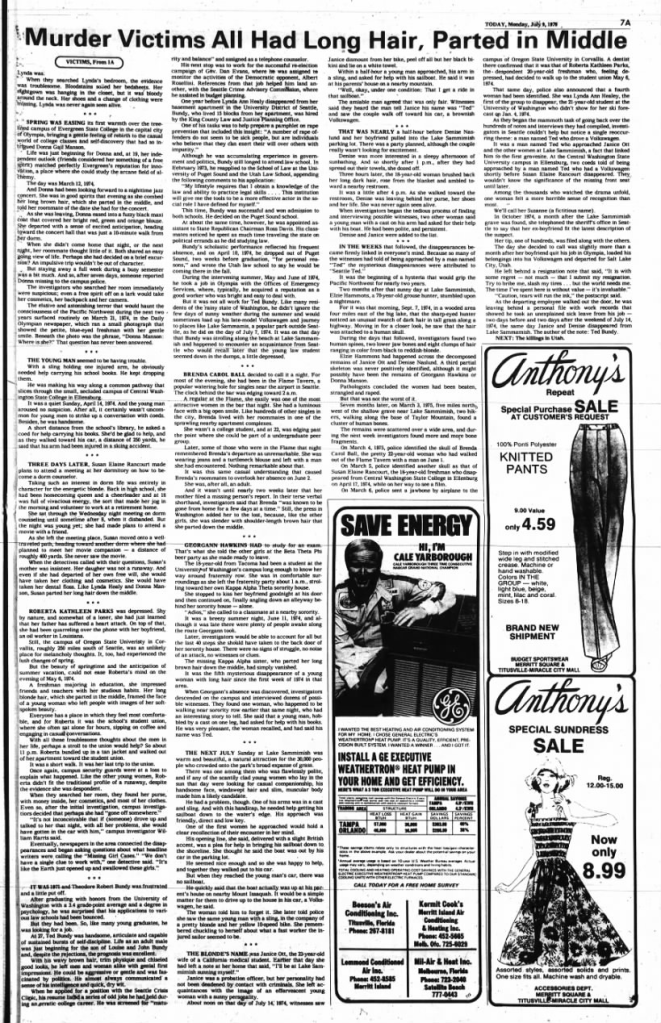

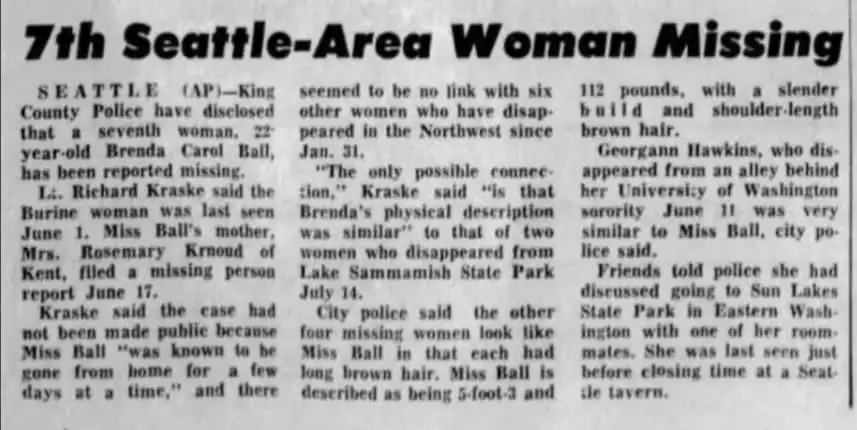
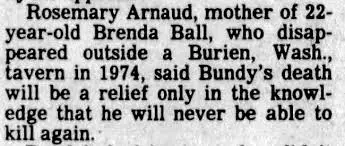
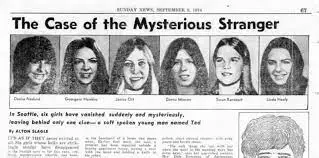
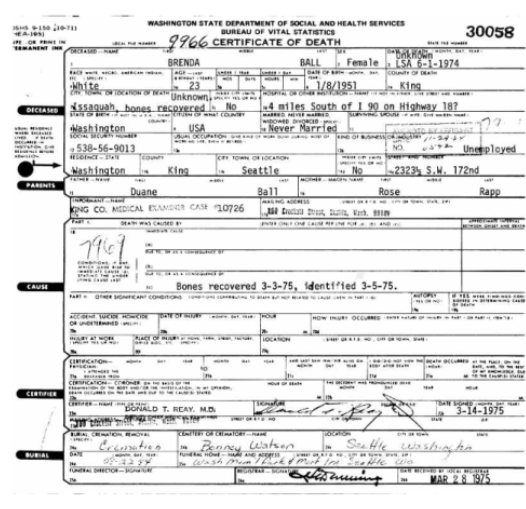
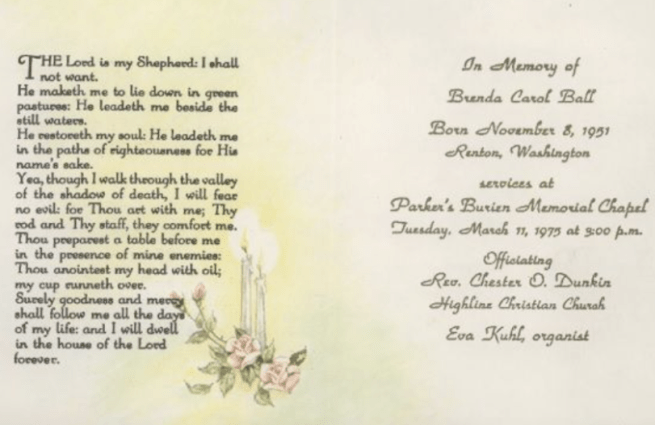



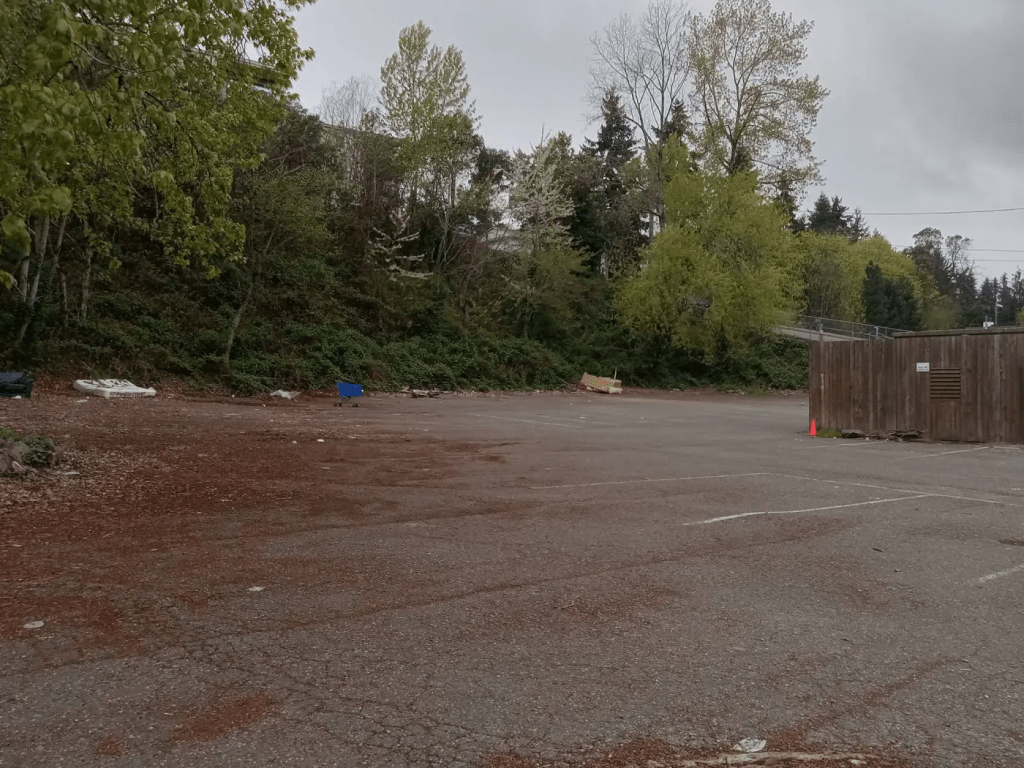

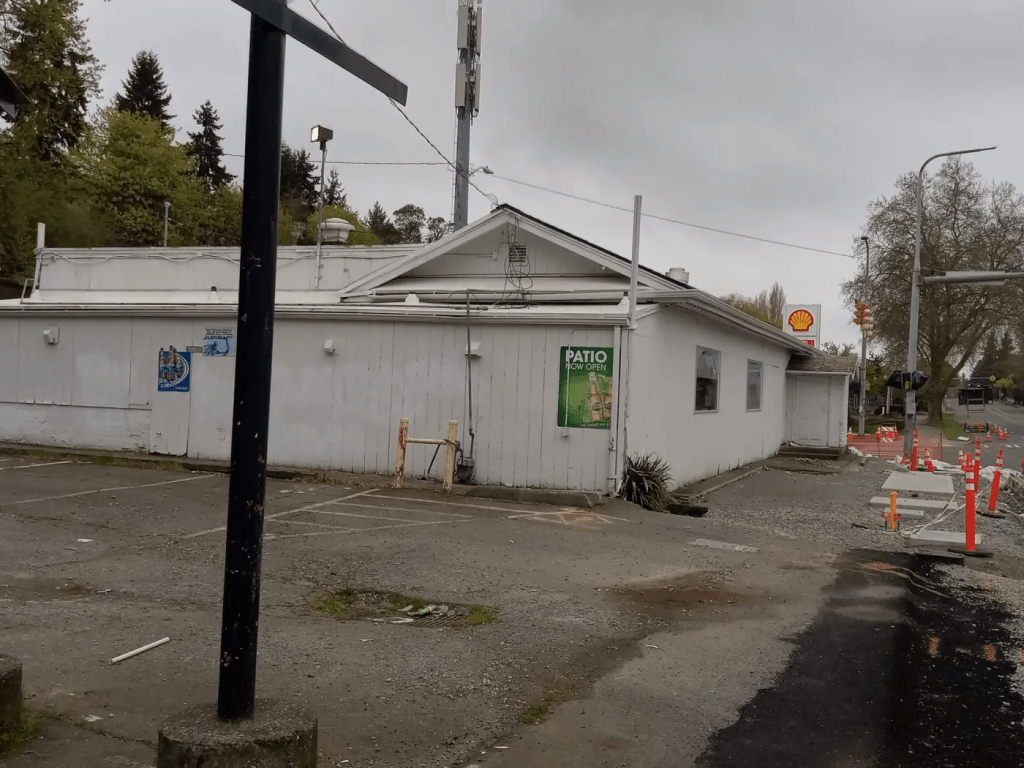
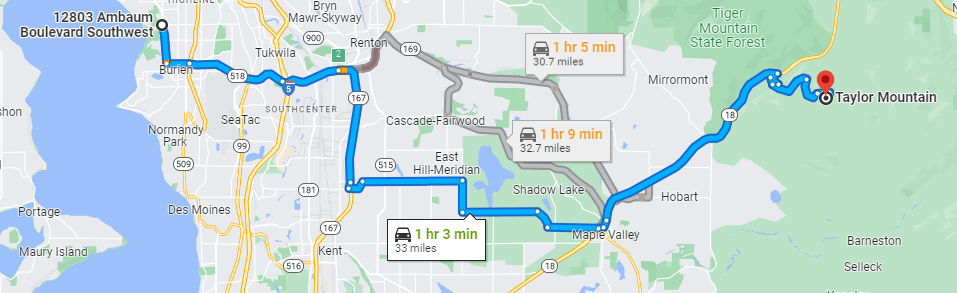




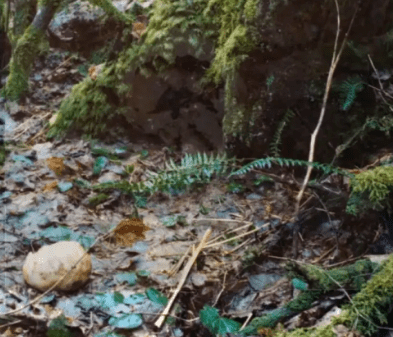


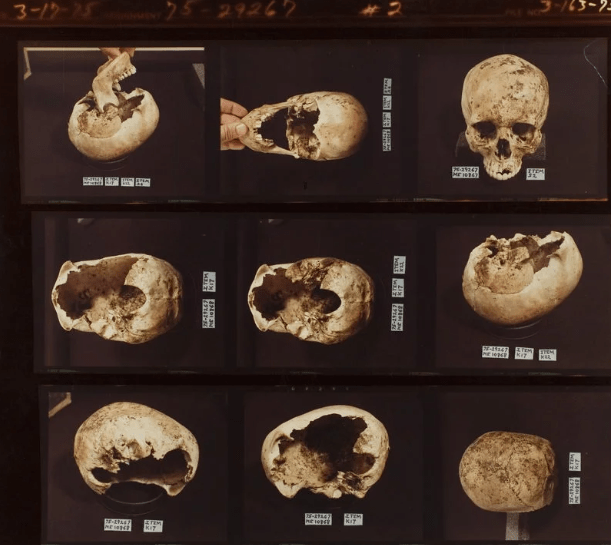


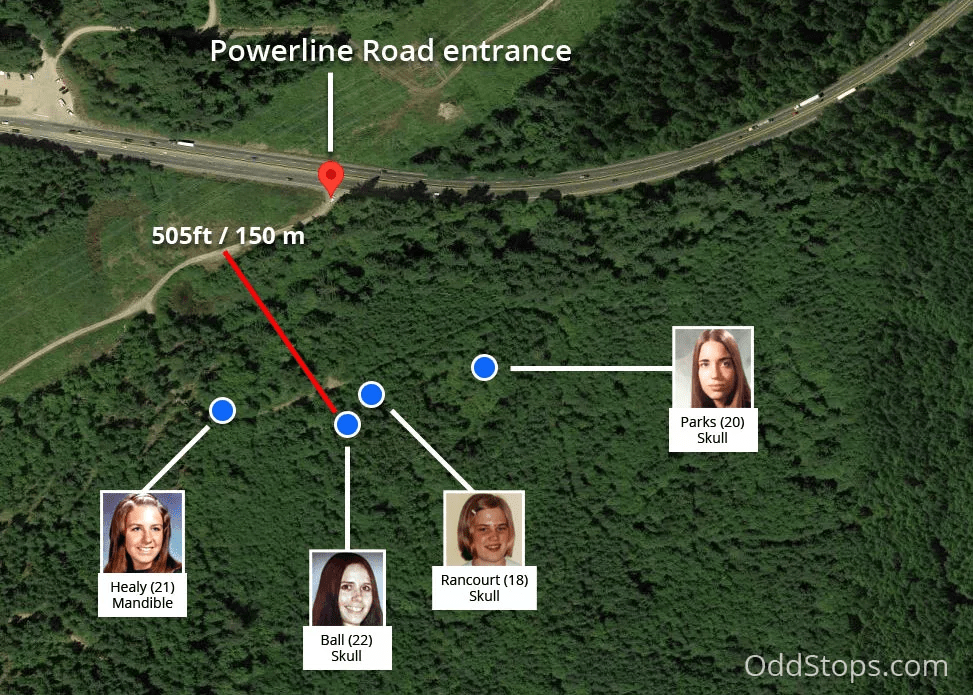
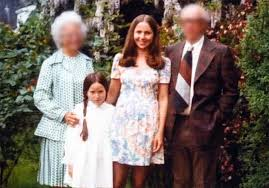

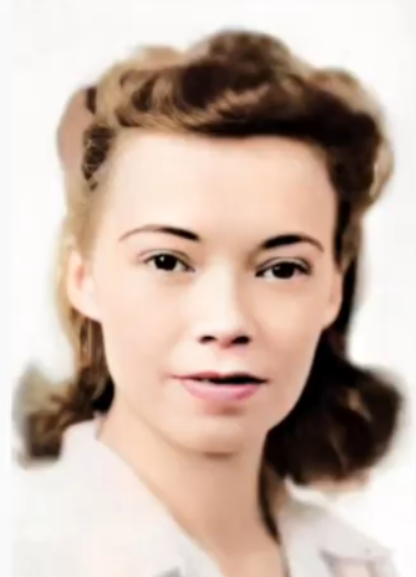
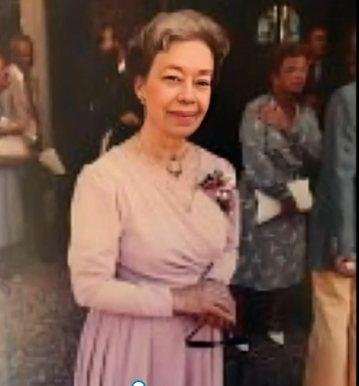

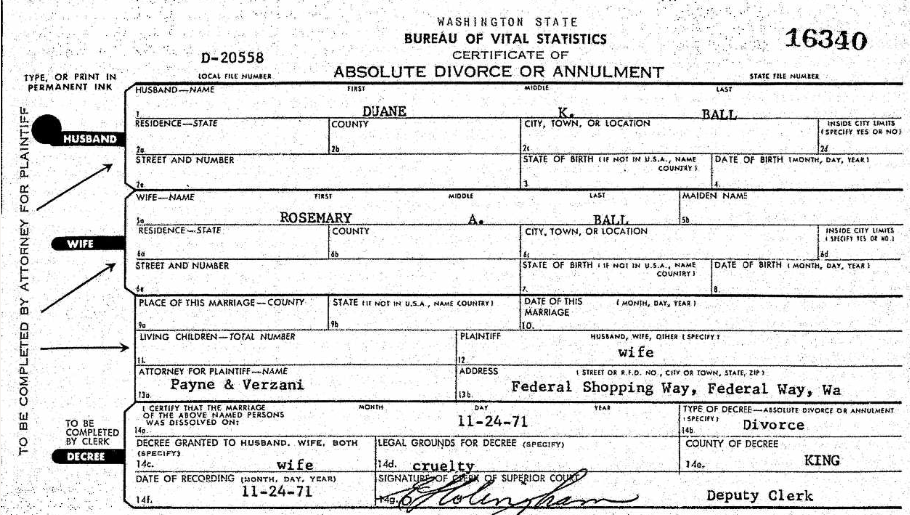


 Another Bundy Blog.