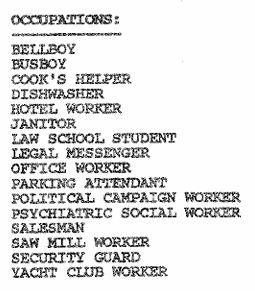
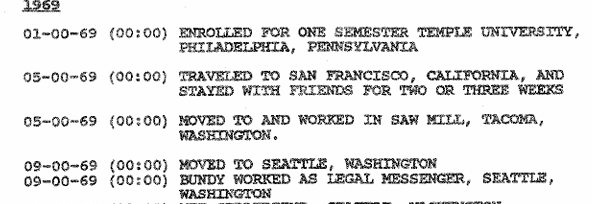
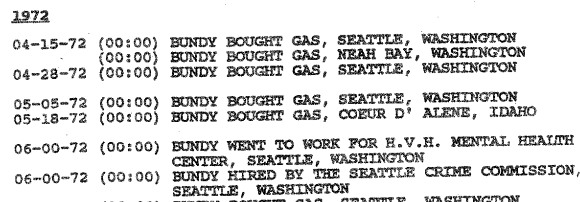
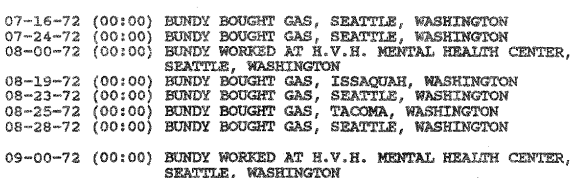
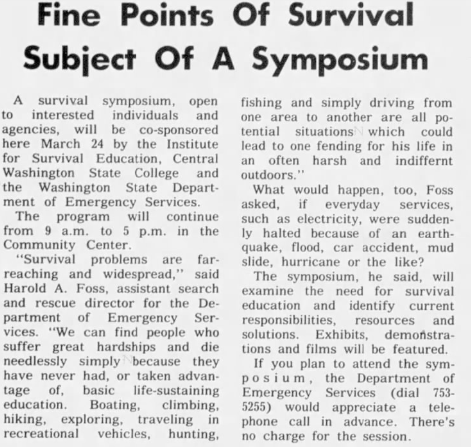
Bundy’s occupations listed in the ‘1992 TB FBI Multiagency Team Report.’
During his time at Woodrow Wilson High School in Tacoma, Bundy had a grass cutting business with three friends; I couldn’t find anything else about it.
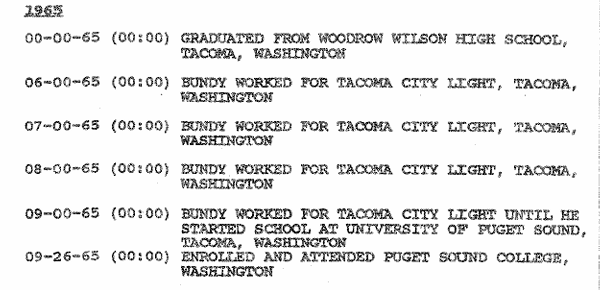
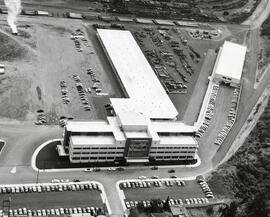
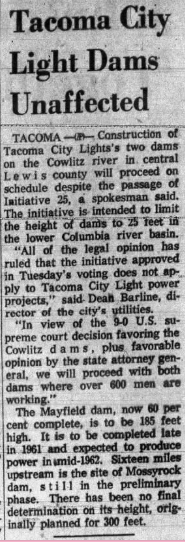
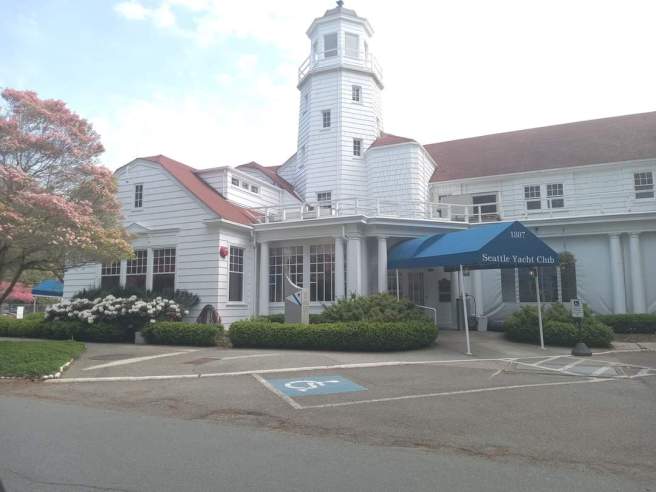
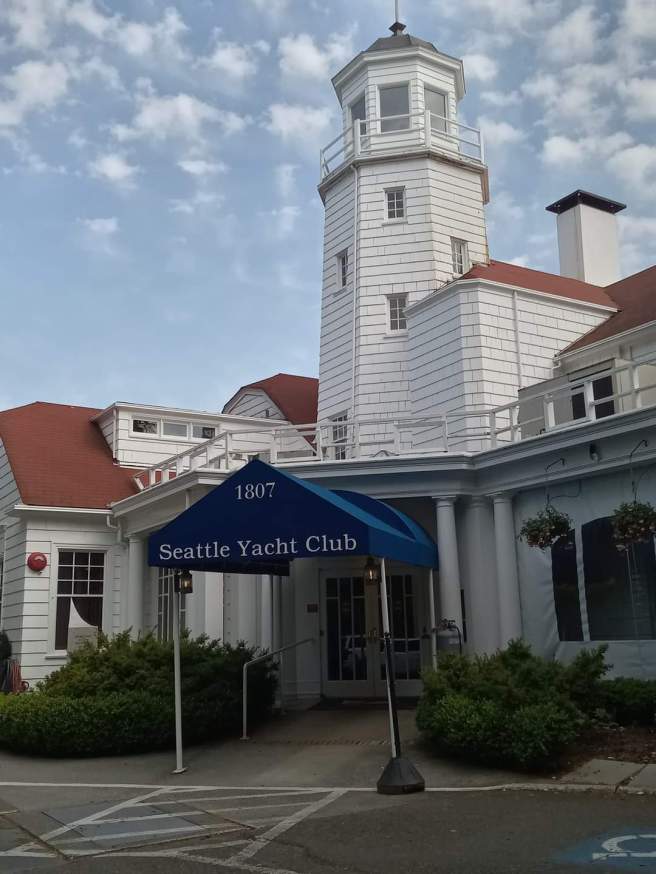
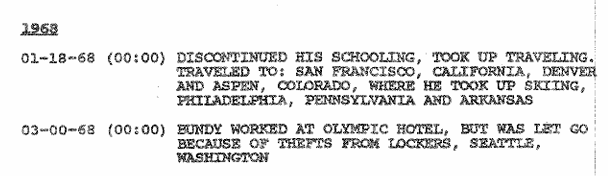
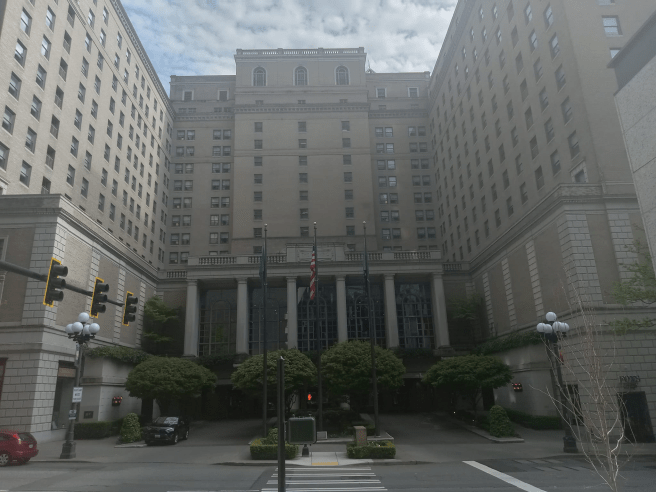
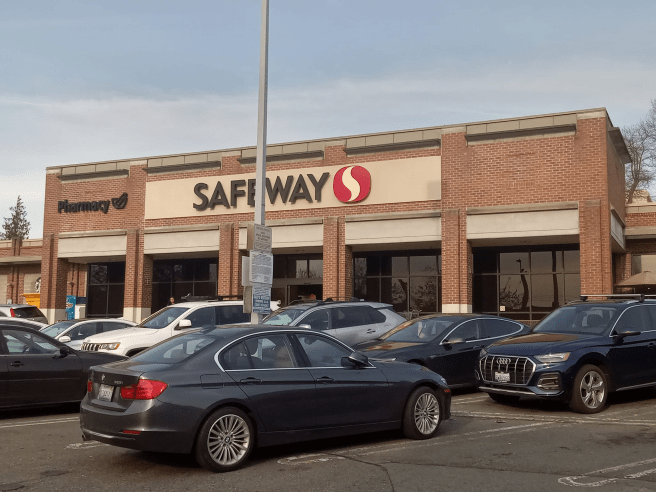
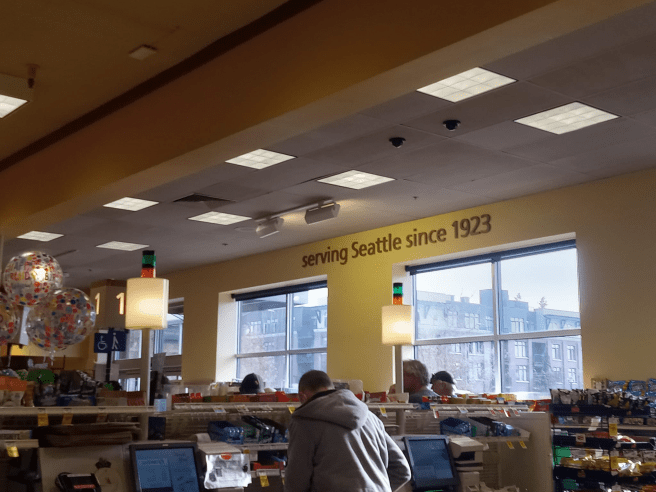
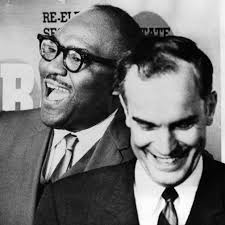
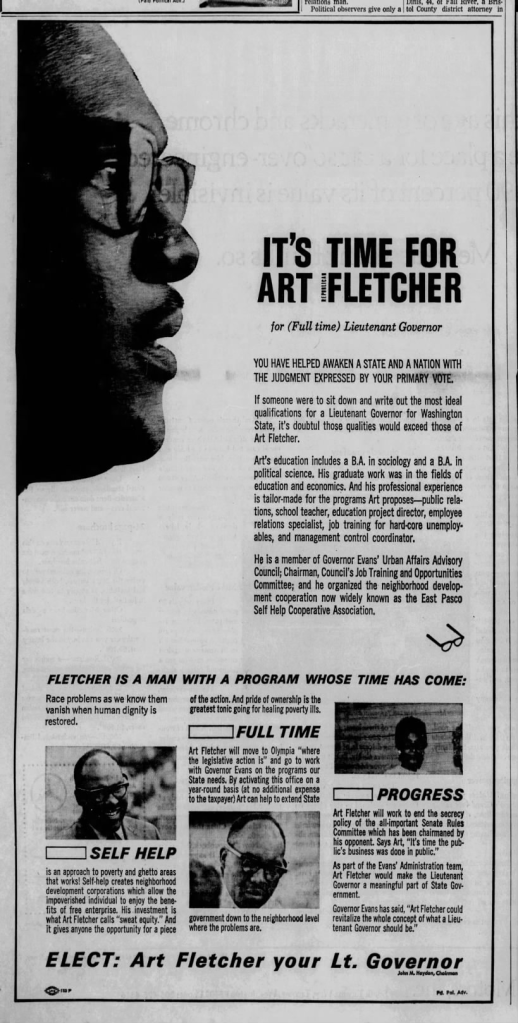
According to the ‘1992 TB FBI Multiagency Team Report,’ Bundy’s first job was at Tacoma City Light: he was there from June 1965 to September 1965 and was as a forklift operator.The Tacoma City Lights Administration Building, picture taken on June 19, 1955.A newspaper article about the construction of two damns built by Tacoma City Light published in The Kitsap Sun on November 10, 1960.Per the ‘1992 TB FBI Multiagency Team Report,’ Ted worked at The Seattle Yacht Club as a busboy beginning in September 1967; there is some uncertainty as to exactly how long he worked there, some reports say four to six weeks, others say six months, however according to Seattle police files, he ceased emp[lpoyment on January 13, 1968. The Seattle Yacht Club, April 2022. According to his friend Sybil Ferris, he was fired for stealing food. The Seattle Yacht Club, April 2022.According to the ‘1992 TB FBI Multiagency Team Report,’ in March 1968 Bundy was employed at the Olympic Hotel in Seattle; he was terminated for stealing from lockers.The Fairmont Olympic Hotel, picture taken in April 2022.According to the ‘1992 TB FBI Multiagency Team Report,’ from April 12, 1968 to July 26, 1968 Ted worked at the Queen Anne Safeway in Seattle as a stock boy. According to Mrs. Ferris, ‘I helped him get a job at Safeway for a short while and he just quit, not even going back to work to tell them he was leaving.’The Safeway Ted Bundy worked at, which was located at 2100 Queen Anne Ave North in Seattle, WA; the store no longer exists and was demolished sometime in 2022.The inside of the Safeway Ted Bundy worked at; picture taken in May 2022.Although I could not find it anywhere in the ‘1992 TB FBI Multiagency Team Report,’ according to the blogger ‘tedbundy069063.wordpress.com,’Bundy worked as a driver for Art Fletcher, a Republican nominee for lieutenant governorinSeptember 1968; here he is standing with former Governor Dan Evans (who Bundy would later work for).A political ad for Art Fletcher published in The News Tribune on November 4, 1968.
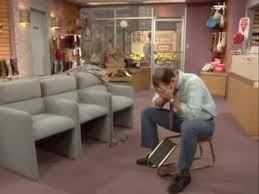
I just want to make a note: although I can’t find it listed in the ‘TB FBI Multiagency Team Report,’ the blogger ‘tedbundy069063.wordpress.com’ said that from ‘September/November 1968: Ted ‘worked in a Seattle shoe store.’ I don’t know how accurate this is, and all I could find while researching were memes about Al Bundy from ‘Married with Children’ (who coincidentally did work at a woman’s shoe store).
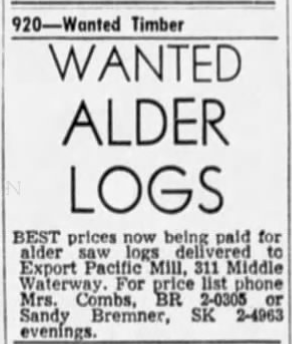
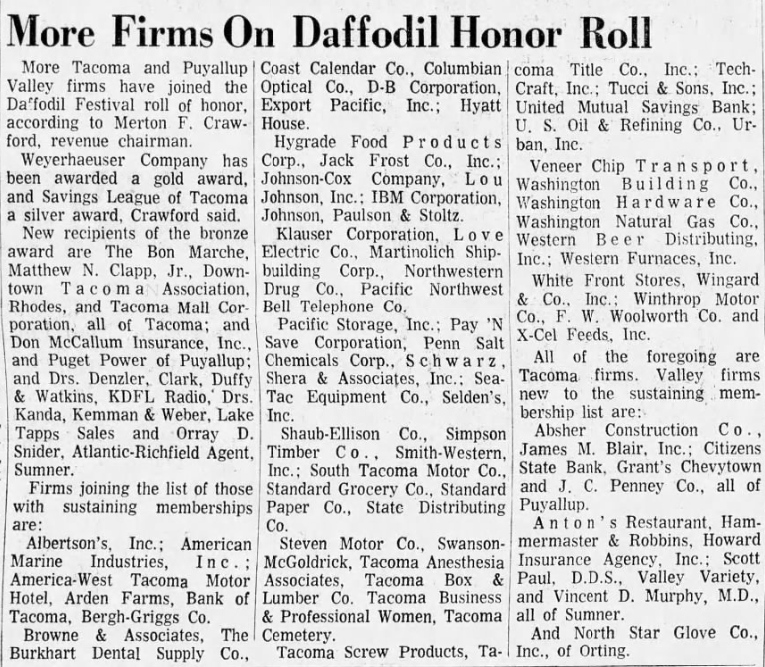
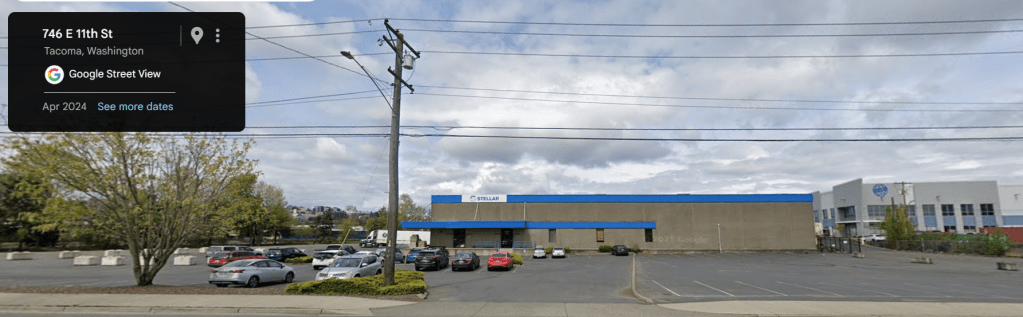
Al Bundy sitting inside of his POE: a shoe store; ‘Married with Children’ took place in a ‘fictional suburb’ outside of Chicago, IL.Although not mentioned by name in the ‘1992 FBI TB Multiagency Team Report,’ the blog ‘tedbundy069063.wordpress.com’ says in May 1969 Ted worked at Export Pacific, a lumber mill in Tacoma.A want ad asking that anyone looking to sell alder logs to reach out to Export Pacific published in The News Tribune on June 6, 1969.I found a newspaper article that mentions the company ‘Export Pacific’ from the same year Bundy worked there published in The News Tribune on February 16, 1969 (it also mentions Pierce County’s Daffodil Festival, which one of his victims Georgann Hawkins was a part of in 1972/1973).Where Export Pacific once stood, located at 311 Middle Waterway located in Tacoma, WA.
Although not mentioned in the ‘1992 FBI TB Multiagency Team Report,’ according to ‘tedbundy069063.wordpress.com’ from September 1969 to May 1970 Ted worked as an ‘Attorney Messenger and Process Servicer’ for a company called ‘Legal Messengers, Inc; in Seattle: he was a file clerk and courier but was fired for unjustified absences (he claimed that he was baby-sitting Liz’s daughter).
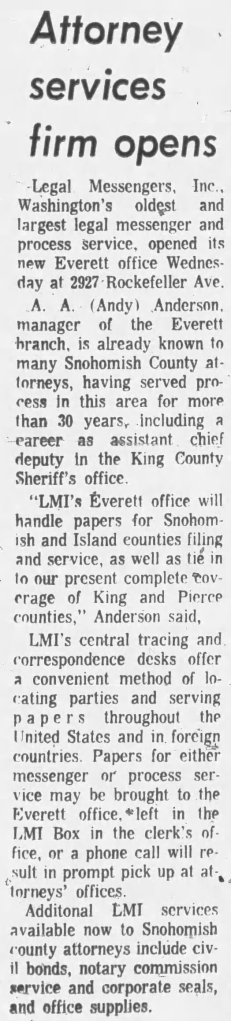
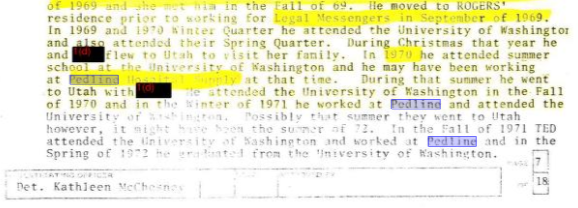
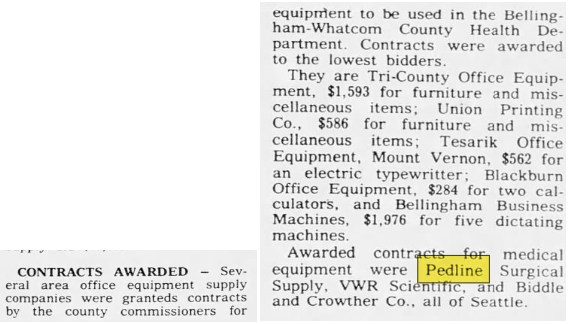
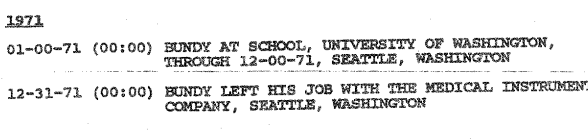
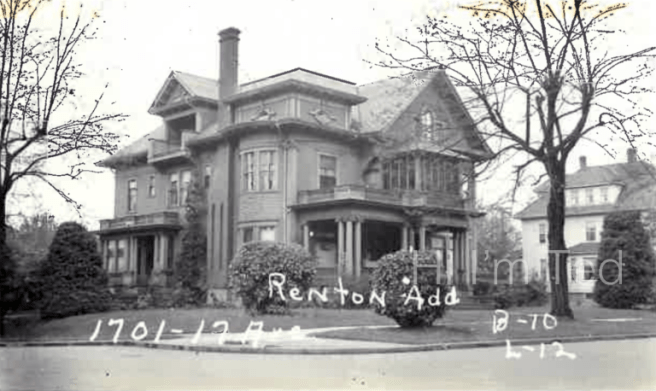
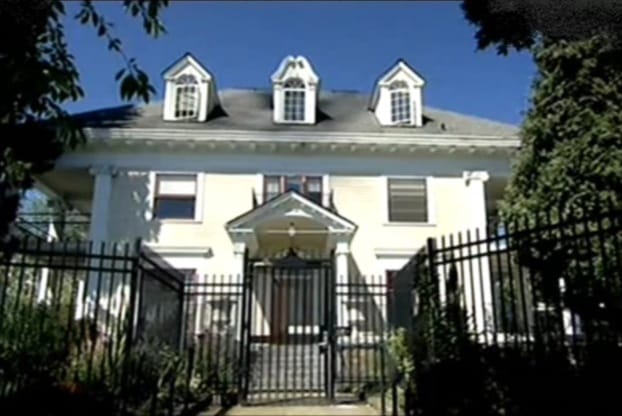
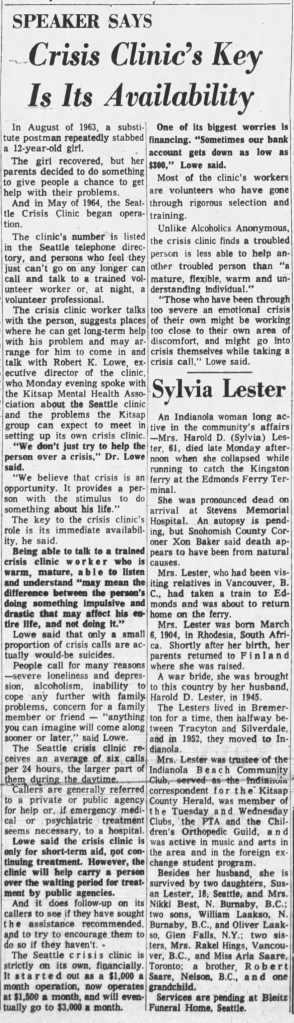
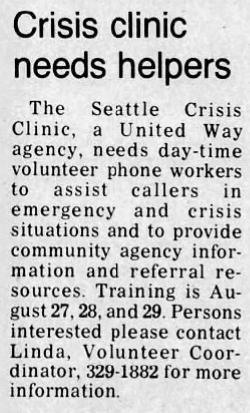
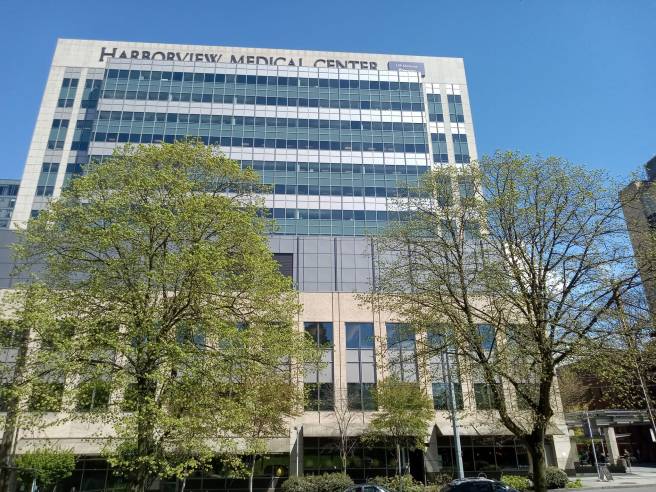
An article about Legal Messengers, Inc published in The Daily Herald on November 1, 1972.According to the ‘1992 FBI TB Multiagency Team Report,’ on June 5, 1970 Ted started a job as a delivery driver for Pedline Supply Company, a family-owned medical supply company; he was once caught stealing a photograph from a doctor’s office but got off with a simple lecture. Bundy’s employment with Pedline is mentioned in the ‘Ted Bundy and File 1004 documents from Seattle PD’ document I found on ‘archive.org.’ A newspaper article that mentions Bundy’s former POE, Pedline Surgical Supply published in The Bellingham Herald on July 18, 1976.Bundy left Pedline Supply Company on December 31, 1971, when they moved their office to another part of Seattle.Although it isn’t listed in the ‘1992 TB FBI Multiagency Team Report,’ it’s a well-known fact that from September 1971 to May 1972 Bundy worked one night a week at the Seattle Crisis Clinic with Ann Rule (who was an unpaid volunteer). Above is a picture taken in 1937 of the Victorian mansion on Capitol Hill that was later converted into the clinic, photo courtesy of Tiffany Jean.The second location of the Seattle Crisis Clinic, located on the second story.A newspaper clipping about The Seattle Crisis Clinic published in The Kitsap Sun on August 24, 1965.A newspaper clipping announcing the Seattle Crisis Clinic was looking for volunteers published in The West Seattle Herald on August 11, 1976.According to the ‘1992 TB FBI Multiagency Team Report,’ from June 1972 to September 1972Ted interned as a counselor at Harborview Mental Health Center in Seattle; additionally, in June 1972 he was hired as the Assistant Director of the Seattle Crime Prevention Advisory Commission, where he was employed from September 1972 to April 1973. While there, he helped draft Washington state’s new hitchhiking law and wrote a rape‐prevention pamphlet directed towards women. From June 1972 to September 1972, Ted interned as a counselor at Harborview Mental Health Center in Seattle.Harborview Medical Center, picture taken in April 2022.
A Seattle PD Memorandum dated October 9, 1975 inquiring about the rape study Bundy wrote in 1972, courtesy of Tiffany Jean.
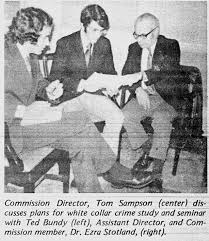
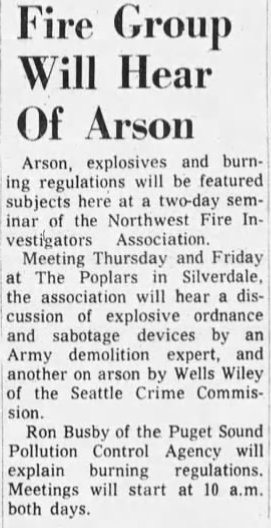
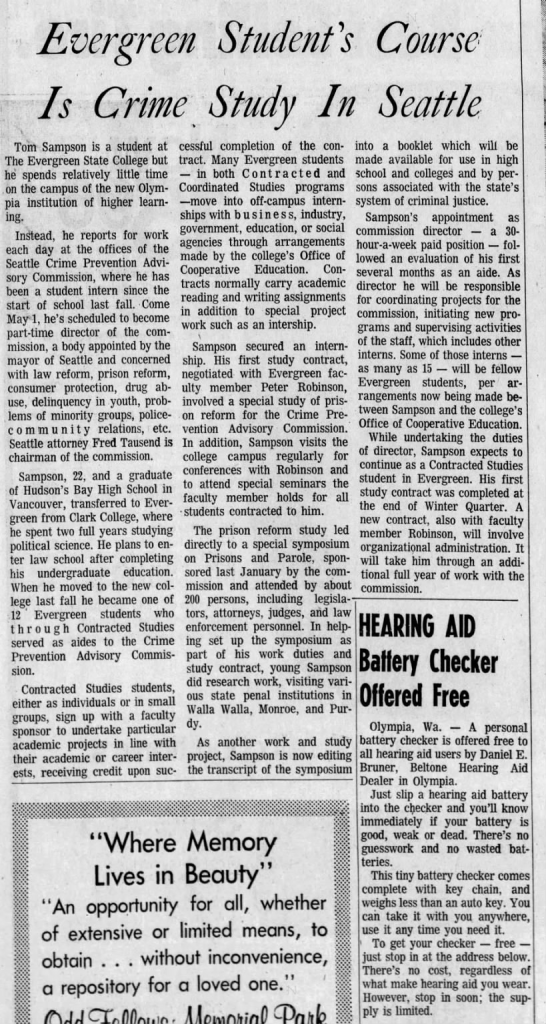
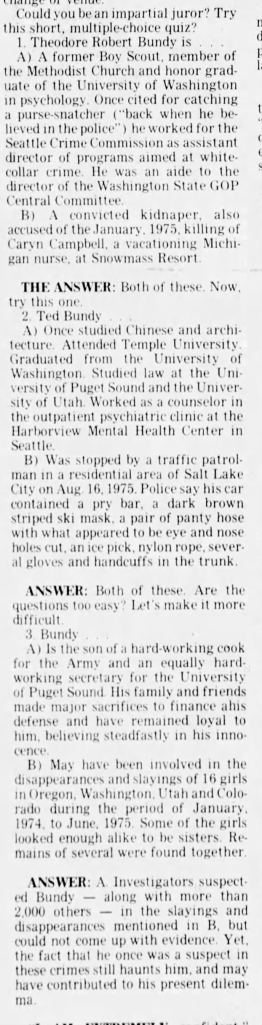
Ted sitting with the Director of the Seattle Crime Commission Tom Sampson and Dr. Ezra Stotland. Photo courtesy of Tiffany Jean.The Seattle Crime Commission is mentioned in an article about a two-day conference that was published by The Kitsap Sun on September 23, 1970.An article about the director of The Seattle Crime Commission that was published in The Olympian on March 26, 1972.A three question ‘quiz’ about Ted Bundy that mention his time in the Seattle Crime Commission published in The News Tribune on August 7, 1977.
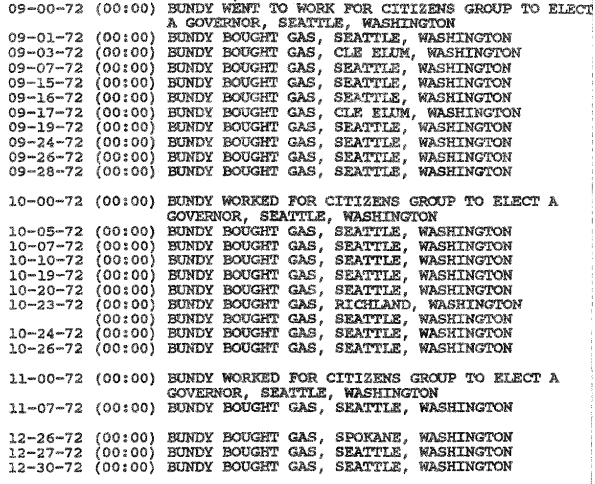
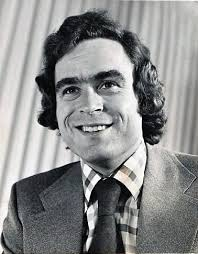
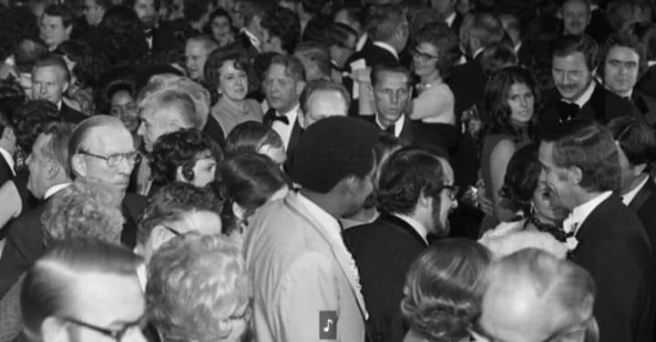
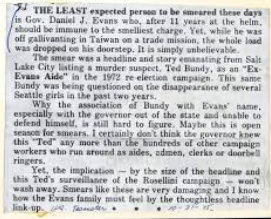
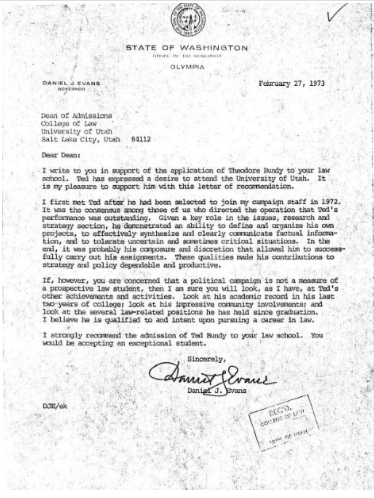
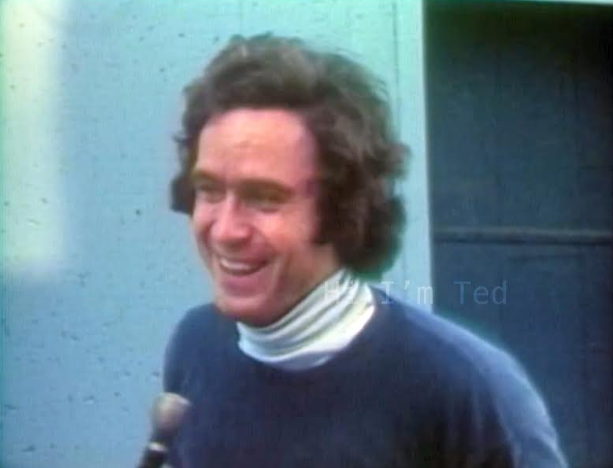
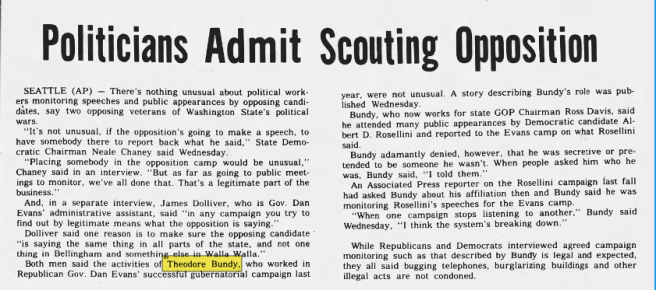
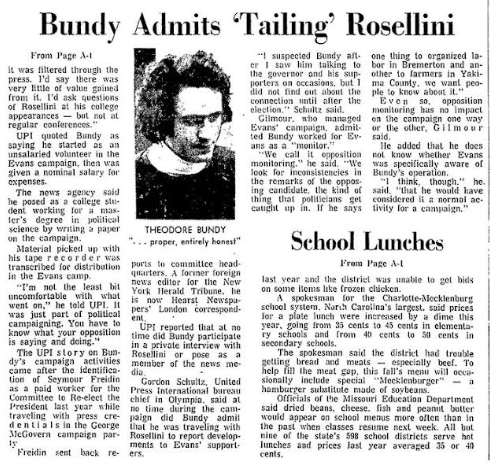
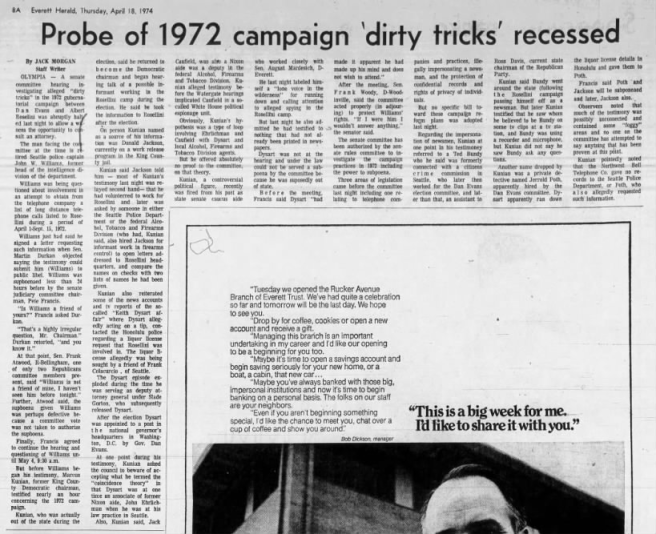
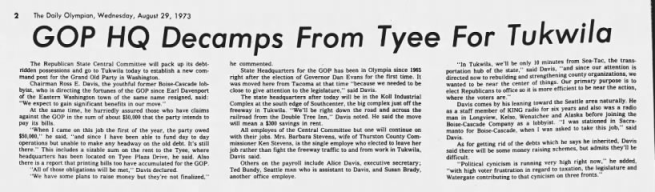
According to the ‘1992 TB FBI Multiagency Team Report,’ from September 1972 to November 1972 Bundy was employed for Governor Dan Evans’ re-election campaign.A picture of Bundy taken in September 1972 while he was employed as a campaign worker for Dan Evans. Photo courtesy of Tiffany Jean.Bundy at the Governor’s Ball, if you look on the outskirts of the pictures you will see him.A newspaper article about Governor Evans that mentions Ted Bundy, courtesy of Tiffany Jean.A letter of recommendation written by Dan Evans for Ted Bundy dated February 27, 1973.Ted being interviewed on local TV in regard to the part he played in ‘opposition monitoring’ in the campaign to re-elect Dan Evans in 1972. Screenshot courtesy of Tiffany Jean.An article mentioning Bundy spying on Dan Evans Democratic opponent before his 1975 arrest published by The Olympian on August 29, 1973.An article about Bundy admitting that he ‘tailed Rosellini’ that was published in The Seattle Post-Intelligencer on August 30, 1973.A newspaper article pre-Bundy’s August 1975 arrest that discusses his trickery in the Republican party published in The Daily Herald on April 18, 1974.
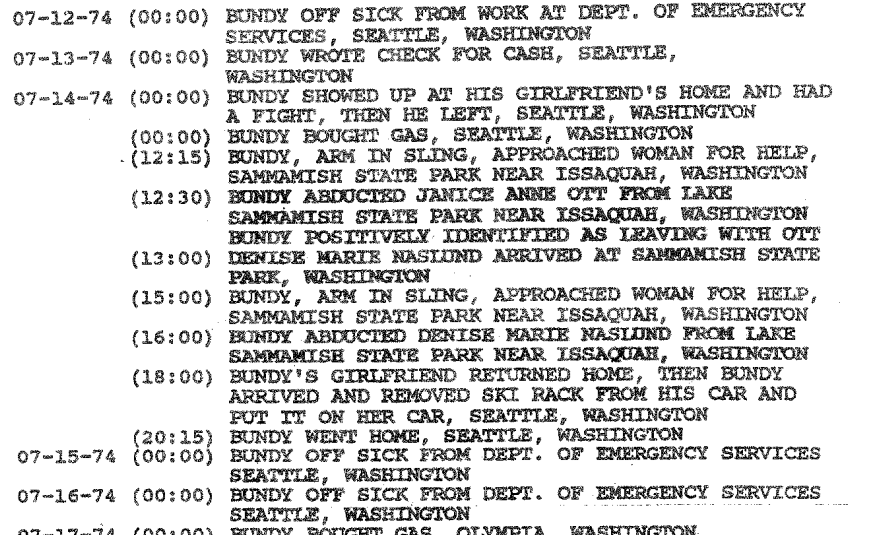
According to ‘tedbundy069063.wordpress.com,from September 1972 to January 1973 Ted worked for ‘Seattle’s Department of Law & Justice Planning.’
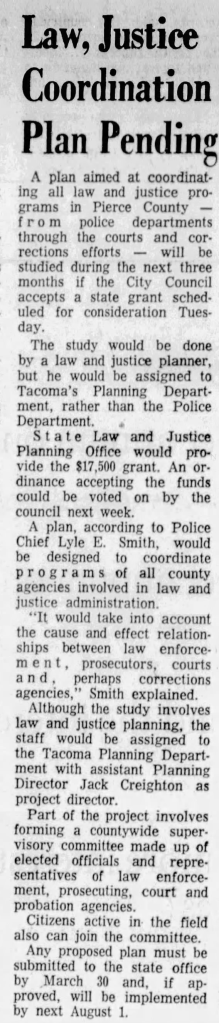
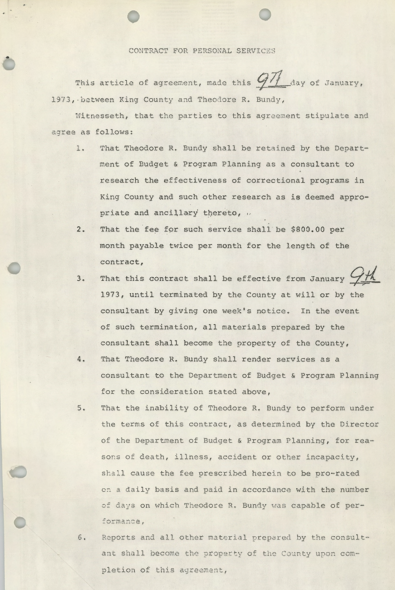
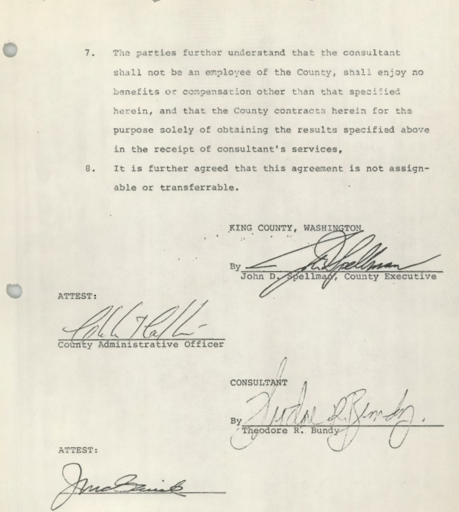
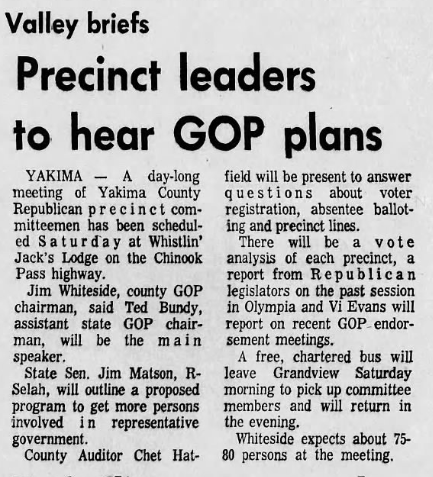
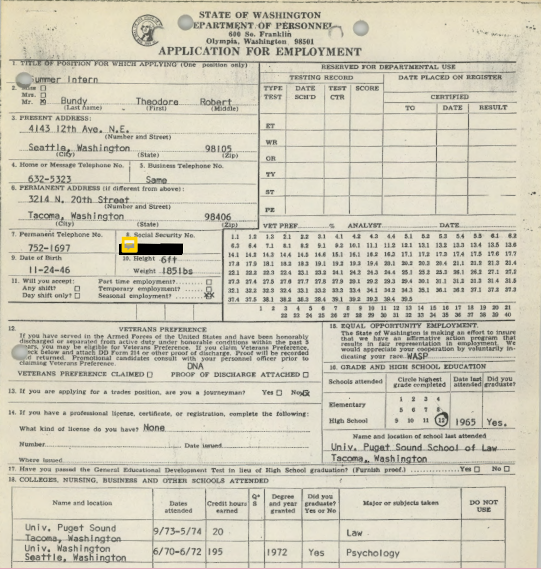
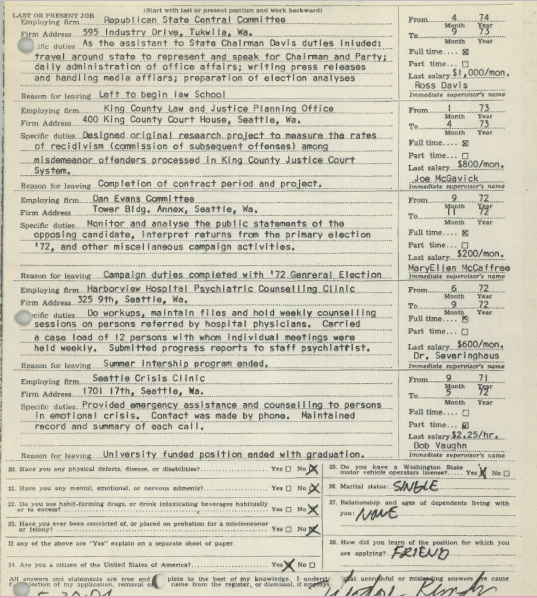
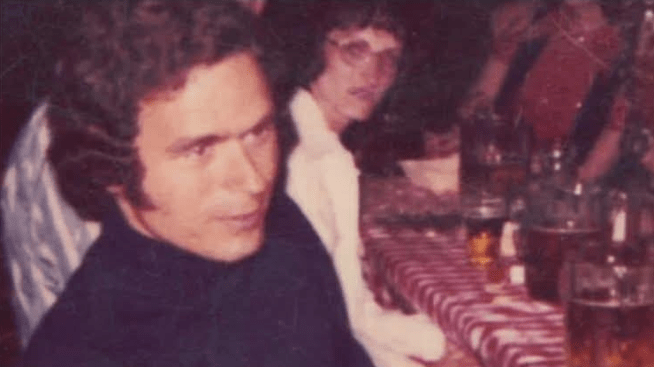
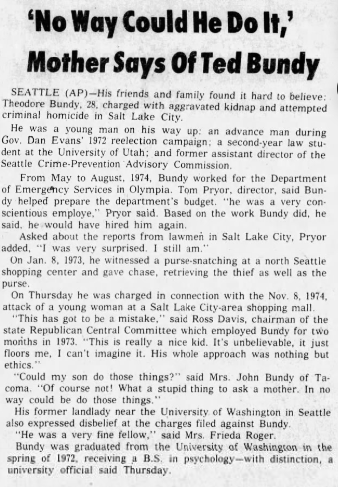
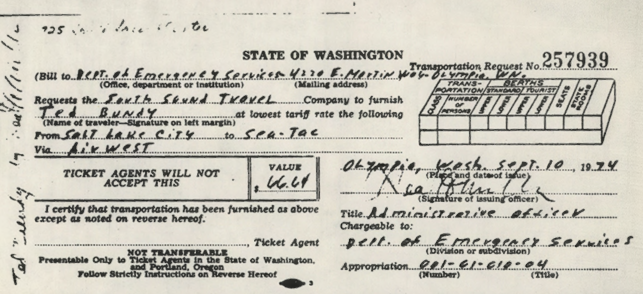
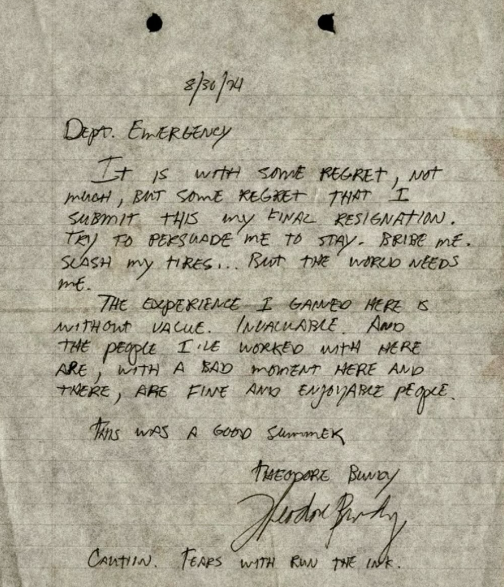
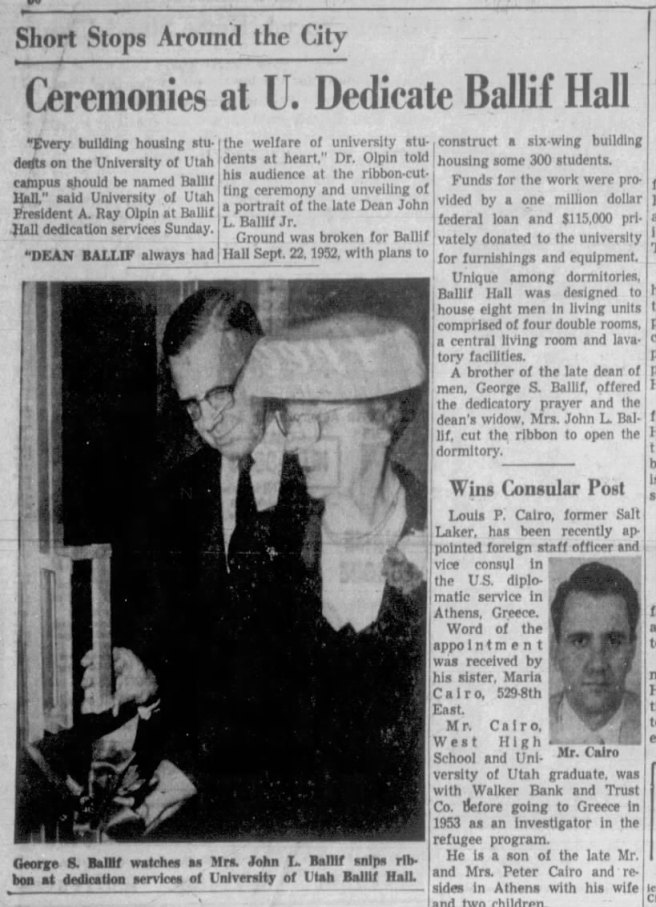
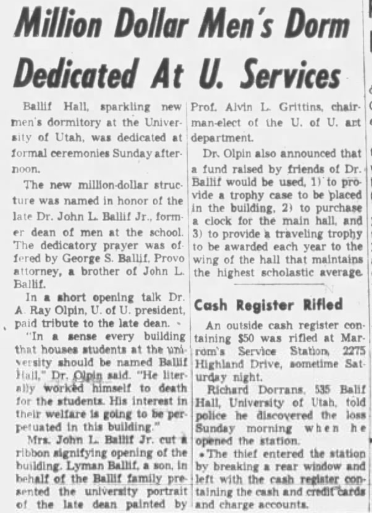
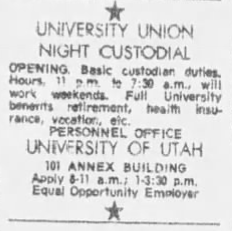
A newspaper article about Seattle’s Law & Justice Planning Office published in The News Tribune on January 8, 1973.According to the ‘1992 TB FBI Multiagency Team Report,’ in January 1973 Ted was ‘on contract’ with ‘criminal justice planning’ under the company name ‘T.R.B.’ located in Seattle, WA. February/April 30, 1973 – King County Program Planning.The first page of Ted’s contract for ‘personal services’ with King County’s Department of Budget and Program Planning, where he was brought on as a consultant.The second page of Ted’s contract for ‘personal services’ with King County’s Department of Budget and Program Planning, where he was brought on as a consultant.An article mentioning Bundy speaking in a daylong meeting of the Yakima County Republican precinct (before his August 1975 arrest) that was published by The Tri-City Herald on May 17, 1973.Bundy is mentioned in an article about being on the GOP payroll published in The Olympian on August 29, 1973.Ted in a picture with some law school friends in 1973 during his time at the University of Puget Sound School of Law.Bundy was unemployed from October 1973 to May 3, 1974.According to the ‘1992 TB FBI Multiagency Team Report,’ Bundy was unemployed from October 1973 to May 3, 1974.Bundy was unemployed from October 1973 to May 3, 1974.According to the ‘1992 TB FBI Multiagency Team Report,’ Bundy was unemployed from October 1973 to May 3, 1974.According to the ‘1992 TB FBI Multiagency Team Report,’ Bundy was unemployed from October 1973 to May 3, 1974.According to the ‘1992 TB FBI Multiagency Team Report,’ from May 3, 1974 to August 28, 1974 Ted was employed at the Department of Emergency Services in Olympia.Page one of an employment application with the state of Washington dated signed on May 20, 1974 that Ted filled out that had his job history on it, courtesy of the King County Sheriff’s Department.Page two of an employment application with the state of Washington dated signed on May 20, 1974 that Ted filled out that had his job history on it, courtesy of the King County Sheriff’s Department.From May 3, 1974 to August 28, 1974, Ted was employed at the Department of Emergency Services in Olympia, WA. It is notated here that he went out ‘on unpaid leave’ on July 1, 1974 and there is no notation of when he officially returned to work From May 3, 1974 to August 28, 1974, Ted was employed at the Department of Emergency Services in Olympia, WA.From May 3, 1974 to August 28, 1974, Ted was employed at the Department of Emergency Services in Olympia; he left to go to law school in Utah.Ted at an event with what sort of looks like Carole Ann Boone sitting in the background (although I may be wrong). Photo courtesy of my friend, Hakim Attar.The Department of Emergency Services is mentioned in an article published by The Olympian on March 15, 1973.Olympia’s Department of Emergency Services is mentioned in an article about Ted Bundy published by The Olympian on October 3, 1975.What looks like a request for ‘the lowest tariff rate’ for a flight Bundy took that was related to work, courtesy of the King County Sheriff’s Department; notice, his job title is ‘Administrative Officer.’ On August 30, 1974, Ted Bundy submitted his letter of resignation to the Department of Emergency Services in Olympia, WA.According to the ‘1992 TB FBI Multiagency Team Report,’ in June and July 1975 Ted was the night manager of Ballif Hall, a men’s residence hall at the University of Utah; he was fired for showing up drunk.A newspaper article about the opening of Ballif Hall at the University of Utah that was published in The Salt Lake Tribune on May 21, 1956.A newspaper article about the opening of Ballif Hall at the University of Utah that was published in The Deseret News on May 21, 1956. Sadly, the building was deemed ‘unusable’ in March 2003 due to severe maintenance issues and an extreme mold infestation; it was eventually demolished.According to the ‘1992 TB FBI Multiagency Team Report,’ in July/August 1975 Ted worked PT as a security guard at the University of Utah; his job was terminated due to budget cuts.According to the ‘1992 TB FBI Multiagency Team Report,’ in September and October 1975 Ted was part of the custodial staff in plant operation at the University of Utah; his position was terminated after he was jailed in Salt Lake County.A newspaper clipping saying that The University of Utah is looking for a night custodian published in The Salt Lake Tribune on September 27, 1975.
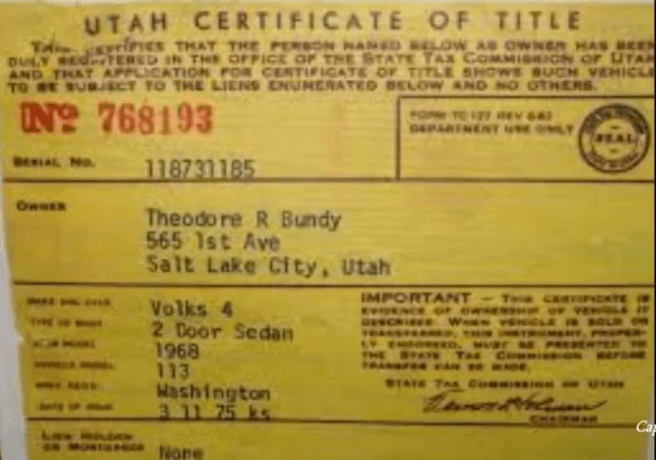
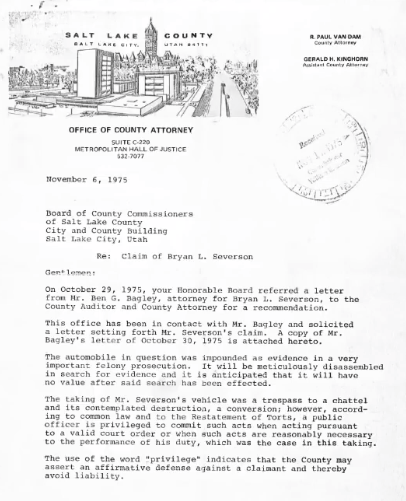
On September 17, 1975, in an attempt to ditch the vehicle to keep it out of the hands of the Salt Lake County Sheriff’s Department (who were interested in searching it for evidence linked with his multi-state murder spree), Ted Bundy sold his beige 1968 Volkswagen sedan to eighteen-year-old Bryan Severson: titled ‘Bill of Sale’ and written on what appears to be a yellow legal pad, the receipt is hand-written in red ink and states that on that date, Bryan Severson ‘has bought and paid for in full the sum of $800 (eight hundred dollars),’ signed Theodore R. Bundy. Hairs from three of Bundy’s victims were later found in the VW, according to reports. Bryan was born on February 5, 1958 and currently lives in Bountiful, Utah. Over the years Severson’s memory may have gotten a bit hazy in regards to the encounter: in October 2022 he did an interview with true crime researcher Chris Mortenson, who said that Bundy immediately ‘took off’ after he paid him for that car, but in a different interview conducted in front of Ted’s rooming house, he said he had driven Ted back to his rooming house after the purchase was completed… so, who knows? Interesting fact: he went to the same high school as Melissa Smith, and was a year below her.
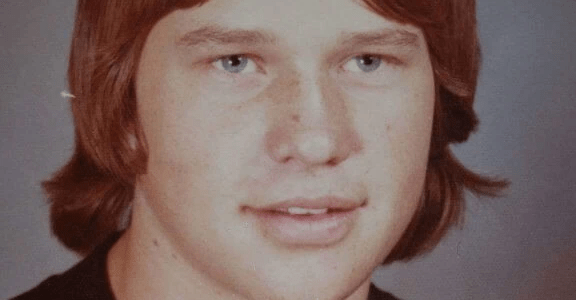
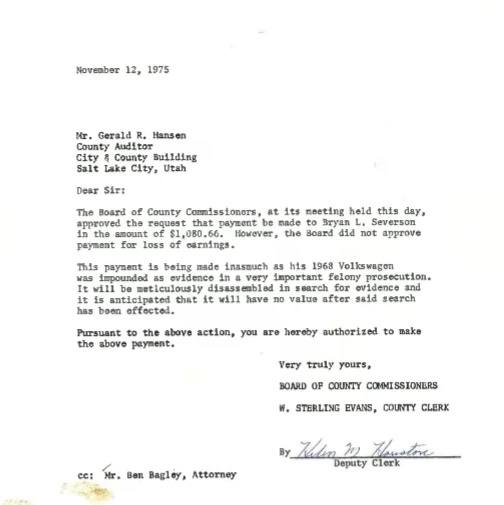
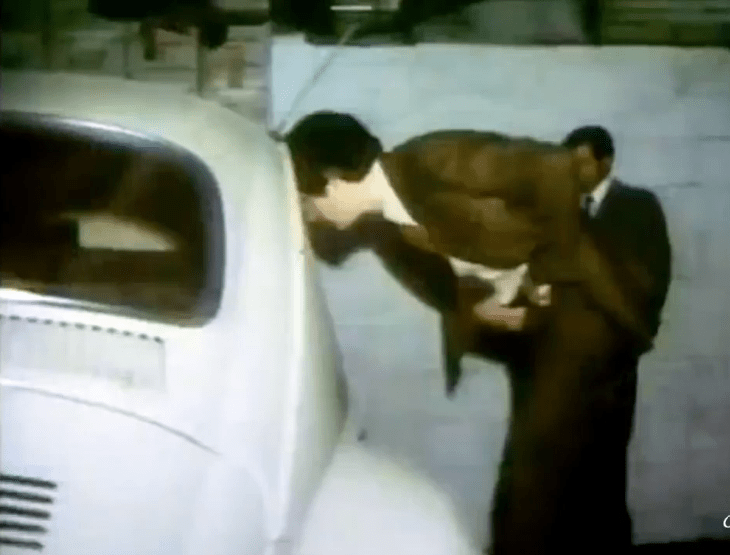
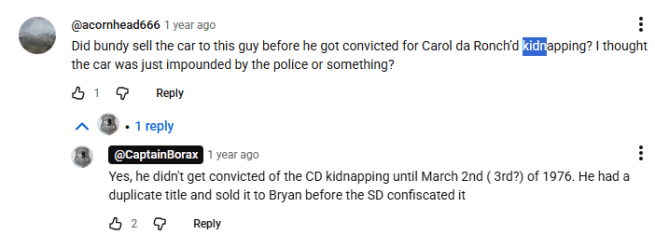
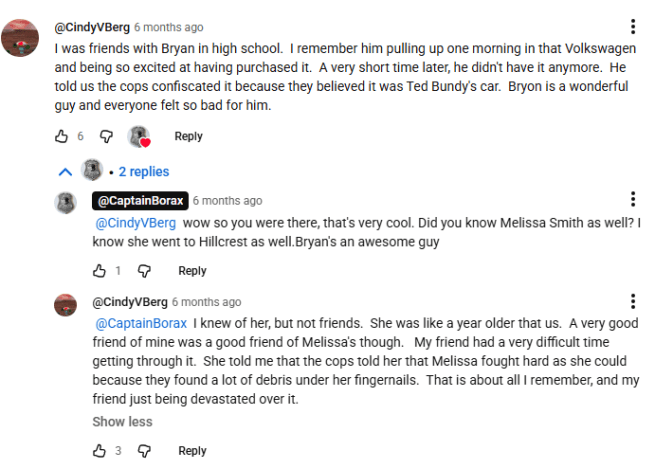
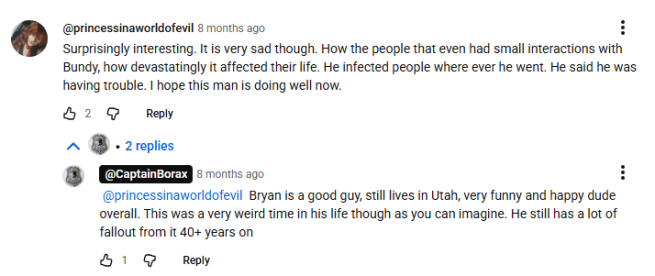
Bryan Severson.Bryan Severson from the 1974 Hillcrest High School yearbookBryan Severson as he looks today.Severson in front of Bundy’s former rooming house.The title for Bundy’s Volkswagen.Bundy’s car listed for sale in The Deseret News on September 10, 1975.Some notes related to Bryan Severson. A letter to the Board of County Commissioners of Salt Lake County dated November 6, 1975 in relation to the transaction Bundy made with Bryan Severson. A letter dated November 12, 1975 from W. Sterling Evans, County Clerk of the Board of County Commissioners to Gerald R. Hansen, Salt Lake County Auditor in regards to the money Bryan Severson lost after his new car was impounded and taken from him.A subpoena to testify issued to Bryan Severson in relation to Ted’s murder trial in Aspen, CO (he never had to report, he had escaped and was in Florida by the time January 4, 1978 rolled around).Ted’s VW after he was incarcerated.A comment left on Chris Mortenson’s YouTube video on Bryan Severson.More comments left on Chris Mortenson’s YouTube video on Bryan Severson.More comments left on Chris Mortenson’s YouTube video on Bryan Severson.More comments left on Chris Mortenson’s YouTube video on Bryan Severson.Where Severson lived at the time he bought Bundys car, located at 1161 East Serpentine Way in Sandy, Utah.
Court records for the Ted Bundy case in Utah, contained in one lengthy file, around 165 scanned pages. I got the file from the Utah State Archives, and I was told it’s a “working” file that the Attorney General’s office was putting together to take the case to the Utah Supreme Court. Courtesy of the Utah State Archives.
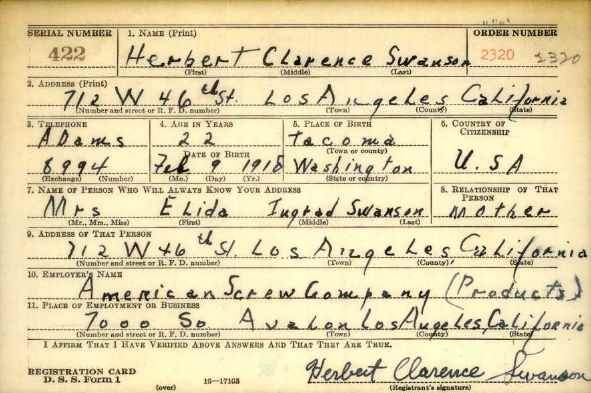
Susanne Arlette Swanson was born in May 1955 to Herbert and Blanche (nee Haynes) Swanson in Rancho Palos Verdes, California. Blanche Ethel Haynes was born on July 12, 1916 in Mason, MI, and Sue’s father Herbert Clarence Swanson was born February 9, 1918 in Tacoma, WA. The couple were married in Flagstaff, Arizona on October 13, 1948 and had two daughters together: Susanne and her sister, Holly. After serving in WWII Herb went to school and got a degree in engineering, and after he graduated he got a position with the LA Department of Water and Power, and would frequently talk about how much he loved going to work every single day, not just for his love of engineering but also because of the wonderful people that he worked with.
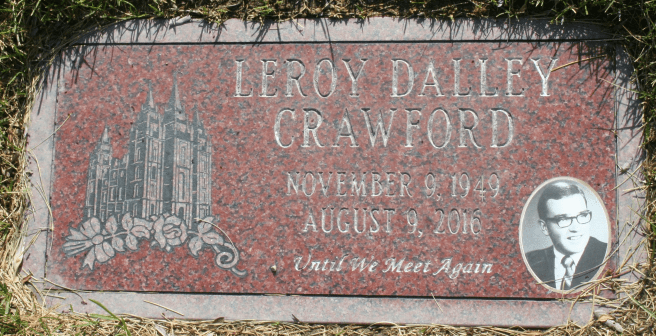
Sue was a strong student and while she was attending Palos Verdes Peninsula High School in Los Angelas she was in Spanish Club, Advanced Girls Ensemble, and concert choir. After she graduated in 1973 she relocated to Salt Lake City and enrolled in Brigham Young University. Susanne married LeRoy Crawford on May 23, 1975 in their temple in SLC and the couple had four children together: Kristi , Jaden, Glen, and David. Leroy Dalley Crawford was born on November 9, 1949 in Summit, Utah.
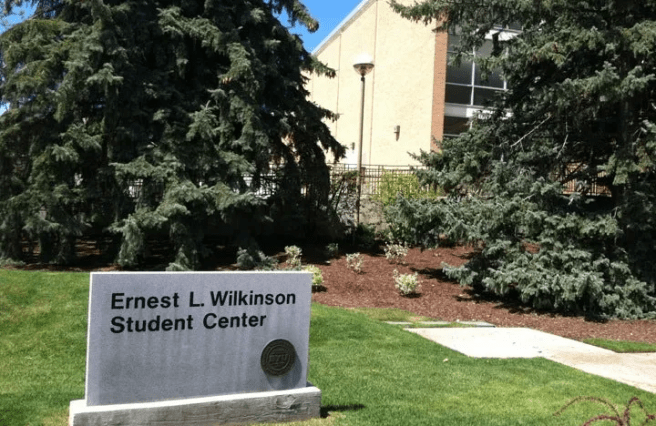
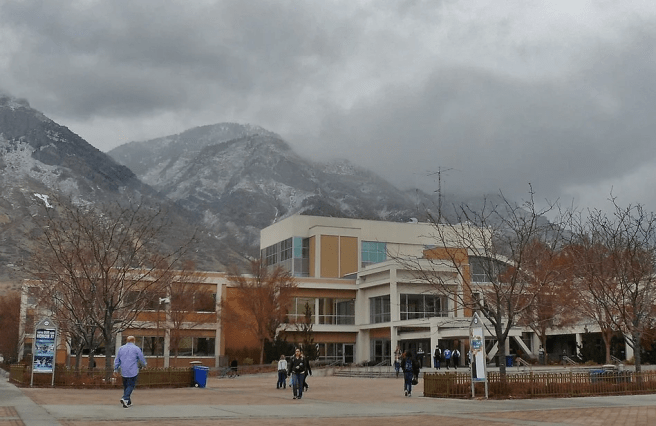
One hot day in early August 1975 after registering for a Spanish class for the upcoming semester at BYU, Crawford made a quick call on a pay phone in the Wilkinson Center. After she hung up, she nearly ran into ‘a handsome, curly haired man in his early 30’s’ that had ‘mesmerizing clear green eyes,’ ones that she had felt for sure were fixated on her as she finished up with her phone call moments before. The young newlywed softly apologized and quickly walked off, but the attractive stranger stayed with her and placed himself between her and the exit; she said that his voice was ‘deep’ and ‘rhythmic,’ and it ‘sounded poetic’ to her… she also thought to herself that his smile was perfect and his ‘handsome dimples’ drew her to every word that came out of her mouth. He told her: ‘you have such long, beautiful hair. You really are a pretty woman…. I love your eyes, they are captivating.’ Then came the question that stuck with her for the next forty years: ‘may I walk you to your car?’
Crawfordlied, and told him: ‘thank you, but my husband is going to pick me up shortly,’ then flashed her diamond ring at him (which she pointed out had been in plain sight during the entire interaction). She said in response the man said nothing, but quickly turned and darted out of the building. At the time she thought the encounter was unusual and he offered her no explanation to his quick departure, like ‘I’m sorry, I didn’t realize you were married,’ or ‘it was nice talking to you.’ He simply turned away from her then fled.
She later concluded that he probably was anxious to go and: ‘find his next victim, to captivate her with his charm, wit, intelligence and charisma. I had no idea who this evil man was until many years later. ’She said that fourteen years later (which would have been roughly around the time of his 1989 execution) she was watching the news and a story about none other than Ted came on and it dawned on her who it was that she had run into in August of 1975: ‘I saw him for the first time after all those years in three-dimensional form, walking and talking as I had remembered.’ Crawford said that even though she had seen Bundy’s face ‘multiple times over the years’ in the newspaper and on newscasts she didn’t realize it was him because he ‘had so many different faces, each captivating with an array of hairstyles and looks. His eyes seemed to mutate from green to brown and then back to a hue of green again while we were talking that day in 1975.’
Sue said she’ll obviously never know what would have happened if she had never gotten married only six months prior, and strongly believes that she ‘would have allowed him to walk me to my car if I had not been married’ because she ‘sensed no danger in his presence.’ Thinking about it, she realized that she ‘fit into his pattern of victims: young, tall and thin, with long brown hair parted in the middle.’ ‘It had to be him,’ she thought to herself. At that time in early 1989 she was stuck in an unhappy marriage and remembered that the man was the only person in the past fourteen years that had bothered to pay her a single compliment.
At the time Crawford claimed she had her encounter with Ted in early August 1975 he had been a law student at the University of Utah and was in the final stages of his relationship with Elizabeth Kloepfer (although by then we knew he was being unfaithful to her). According to her, ‘Bundy was arrested two weeks after my meeting him when police finally caught up with him on August 16, 1975. It was also a little more than a month after the abduction and murder of Susan Curtis, a 16-year-old girl attending a youth conference at BYU.’ This statement is at the very least confirmed to be true: According to the ‘1992 FBI TB Multiagency Team Report,’ on June 27, 1975 after she left the Wilkenson Student Center to go back to her room during a youth conference but she was never seen or heard from again.
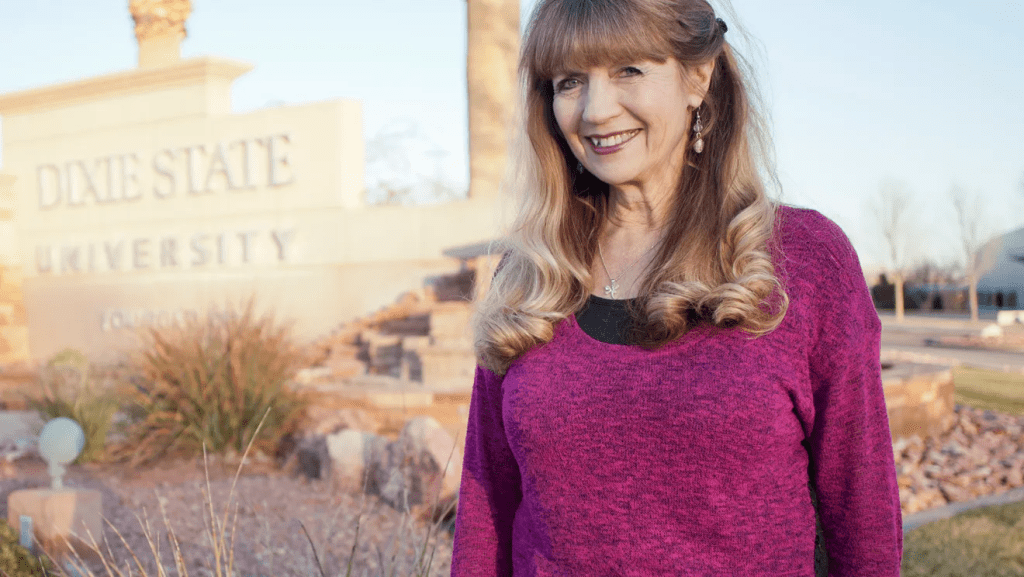
At the time she wrote her article for Spectrum, Crawford was a resident of Ivins City, UT (according to her FB page she still lives there) and was a student at Dixie State University; she is a grandmother to six and concluded her article by saying: ‘these days I can count four wonderful children and six darling grandchildren. They never would have been born had I accepted Ted Bundy’s offer.’
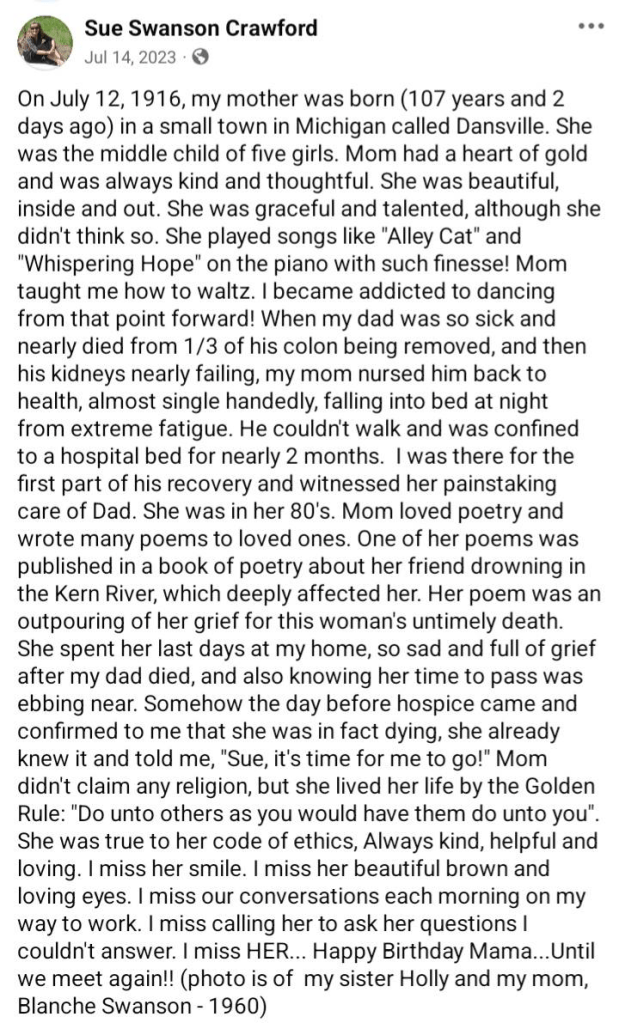
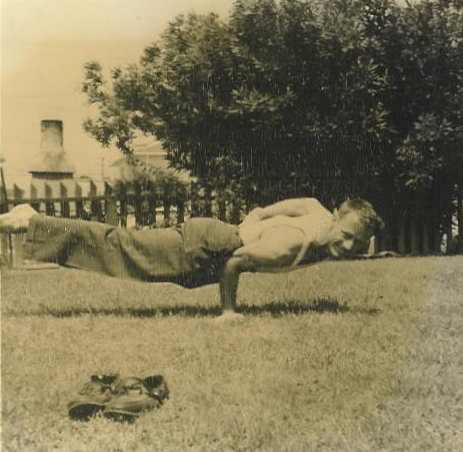
Herbert Clarence Swanson passed away on February 15, 2008, and at the time of his death, he had been married to Blanche for close to sixty years. According to his obituary, Herb was a gifted gymnast in his youth and loved to roller skate, go camping, and go out flying with his brother, Fred (who was a pilot). Sue’s mother died only ten months after her husband on December 24, 2008. Blanche was gifted in music (she excelled at the piano) and poetry, and in her younger days taught at a small school in the country. Her obituary said that: ‘her greatest gift, and most beloved of her family, was her kind and gracious heart and the sweetness which she radiated to all who knew her. Her greatest passion in life was dancing, and we as her family in our mind’s eye, can see her dancing once again as she once used to!’ During Herb and Blanche’s time together, they enjoyed traveling through the continental United States (including Canada and Alaska).
Leroy Dalley Crawford passed away suddenly on August 9, 2016 at the age of sixty-six of Richfield, Utah. According to his obituary, he was a huge fan of music, and knew how to play the piano, the organ, and a variety of different wind instruments (his favorite being the tuba, which he played in the Utah Valley Symphony while he attended BYU). He was called to the Southwest Indian Mission in 1969 where he served the Navajo Native Americans in the four corners area of the US (where Arizona, Colorado, Utah and New Mexico meet), and while there he learned how to speak Navajo fluently.
Works Cited: Crawford, Susanne. ‘A chance encounter with serial killer Ted Bundy.’ (March 8, 2015). Taken December 11, 2025 from http://www.spectrum.com
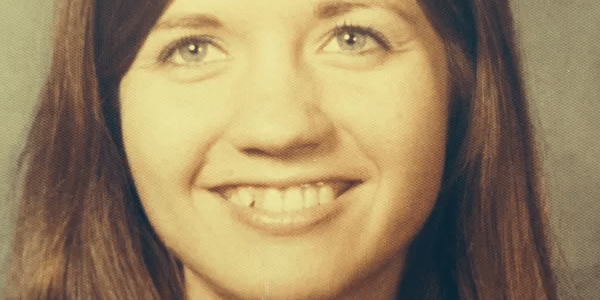
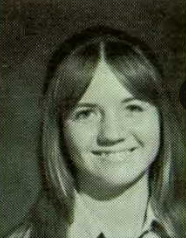
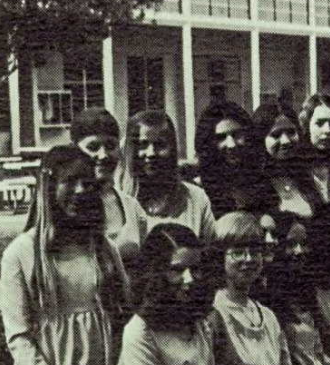
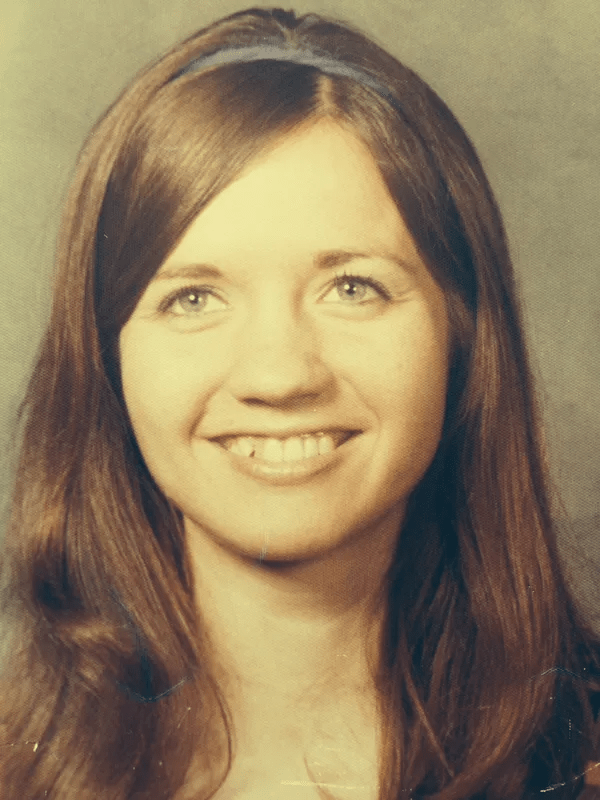
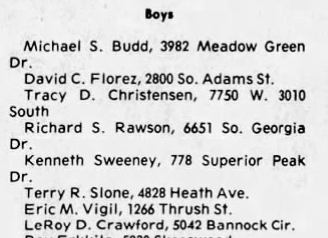
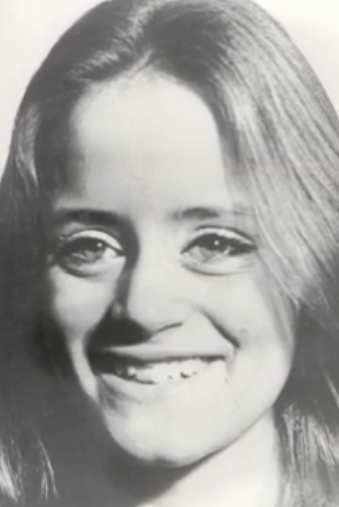
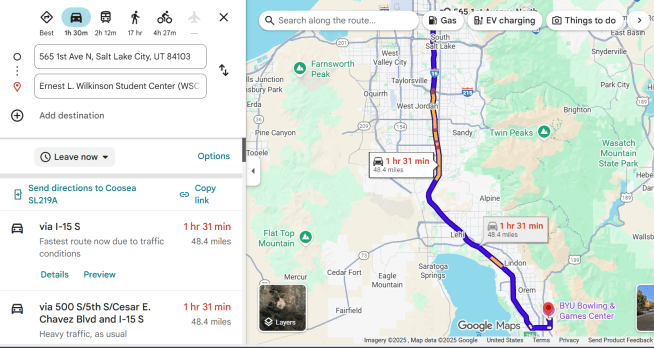
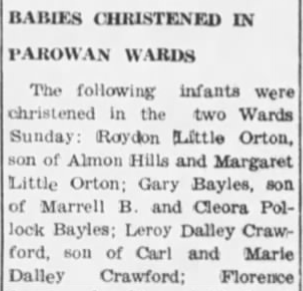
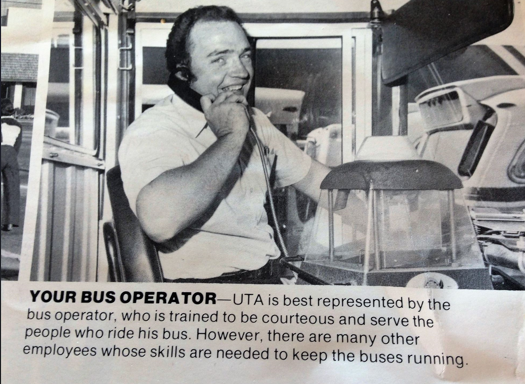
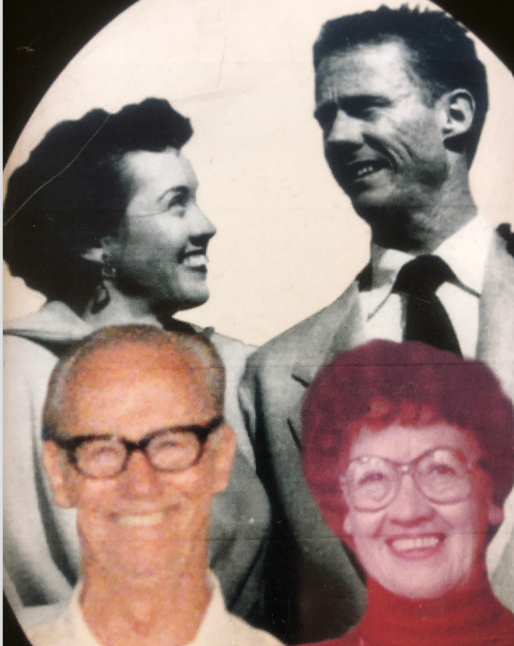
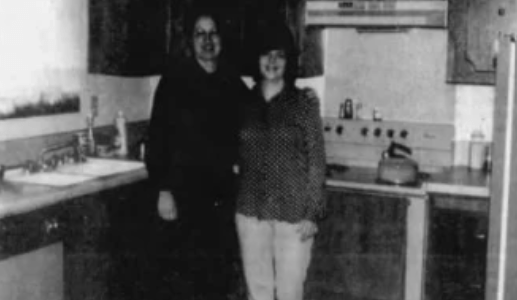
Susanne and her mother, Blanche.Sue and her father Herb poising together with a horse.Blanche Swanson and her two daughters, Holly and Sue.Susanne’s sophomore year picture from the 1971 Palos Verdes Peninsula High School yearbook.Susanne’s junior year picture from the 1972 Palos Verdes Peninsula High School yearbook.A picture of Susanne in a group shot for girls choir ensemble from the 1972 Palos Verdes Peninsula High School yearbook (she is in the top row ion the far right).Susanne’s senior year picture from the 1973 Palos Verdes Peninsula High School yearbook.Crawford.Crawford on her 1973/1974 student ID card at Brigham Young University.A photo of Sue in front of Dixie State University.Sue.Leroy and Sue in the list of people that applied for marriage licenses published in The Daily Herald on May 12, 1975.The announcement of one of Sue and Leroy’s children published in The Salt Lake Tribune on February 14, 1983.The announcement of one of Sue and Leroy’s children published in The West Valley View: The Green Sheet on February 17, 1983.A FB post Sue made for what would have been her father’s 99th birthday.A FB post Sue made for what would have been her mother’s 107th birthday.A FB post Sue made for what would have been her father’s 99th birthday.Bundy’s whereabouts in August 1975 according to the ‘1992 FBI TB Multiagency Report.’ Notice he was apprehended on August 16th so this would make me think if Crawford’s enocunter did happen it was in the first hald of the month. Ted’s first apartment located at 565 1st Ave in SLC, where he was living at the time Sue claims she had her encounter with the killer.Sue Curtis, who was never seen or heard from again after she left the Wilkenson Student Center at BYU to go back to her room during a youth conference.Bundy’s whereabouts on June 27, 1975 when Sue Curtis was abducted from BYU according to the ‘1992 FBI TB Multiagency Report.’The outside of the Wilkinson Student Center at Brigham Young University. Picture courtesy of OddStops.The outside of the Wilkinson Student Center at Brigham Young University. Picture taken in November 2022.The route from Bundy’s apartment on 1st Ave in SLC to the Wilkinson Student Center at BYU.An announcement that LeRoy Crawford was Christened published in The Parowan Times on December 9, 1949.Leroy Dalley Crawford.A picture of Leroy Crawford driving a bus, an occupation Sue said he did for many years.The Magna Times on December 18, 1980.Sue’s ex-husband, Leroy Dalley Crawford.LeRoy’s obituary.A comment Glen Crawford left on his fathers Legacy page.The final resting place of LeRoy Dalley Crawford.Herbert Clarence Swanson’s WWII draft card.Sue’s father, Herb.Sue’s mother, Blanche.Herb Swanson. Blanche Ethel Haynes.Herbert and Blanche Swanson, 1938 versus 1985.Holly Swanson’s freshman year picture from the 1975 Palos Verdes Peninsula High School yearbook.Sue’s mother Blanche.Sue’s four children: Jaden, Glen, Dave, and Kristi at Glen’s wedding in 2009.
This is a rare occasion I was unable to find out any background information about the woman I was writing about: typically, I can come up with some helpful tidbit that helps me dig up more information about them, however I was unable to do that with Ms. Griswold. If anyone knows anything more than what I have here and would like to reach out to me about it, I will give you credit for your help.
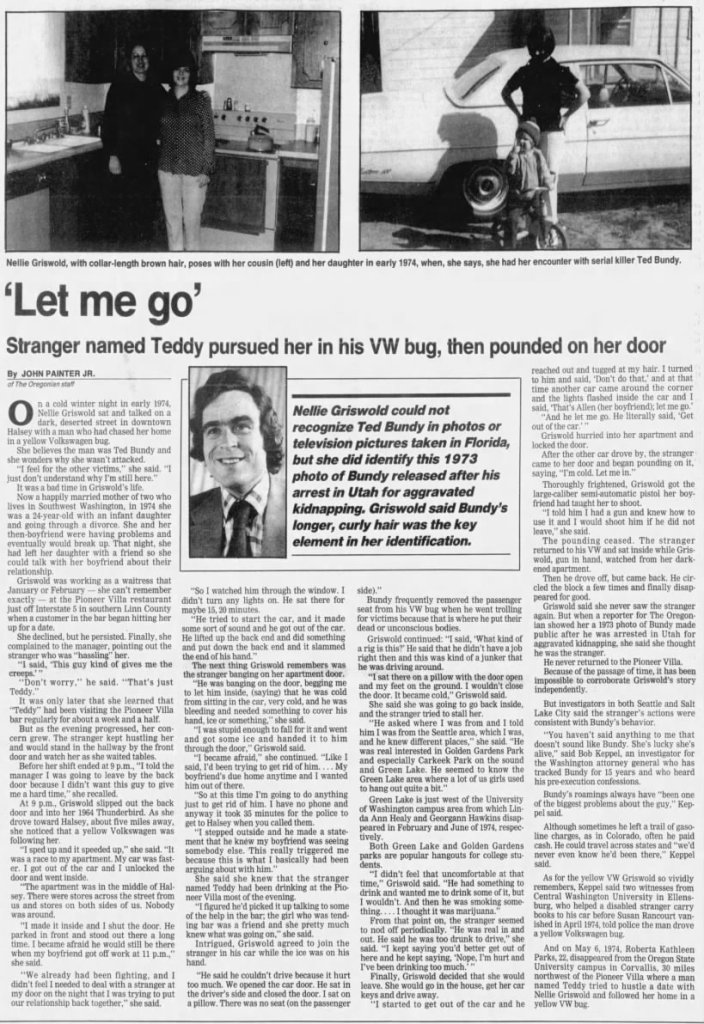
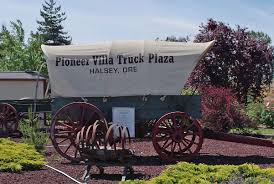
While I was driving to Michigan with my husband last week I stumbled across an article posted by another true crime Facebook Group called, ‘TB: I was Trying to Think Like an Elk’ that included an article published in February 1989 from The Oregonian discussing an encounter that Nellie Griswold may have had with Ted Bundy: Griswold, who lived in Halsey, Oregon in the early part of 1974, worked as a waitress in the restaurant part of The Pioneer Villa truck stop, located right off the I-5 in the southern part of Linn County.
In early 1974 (she wasn’t sure if it was January or February) Griswold was twenty-four years old, and one evening as she was working she noticed a man that matched Bundy’s description lingering around her POE: she told her boss ‘this guy kind of gives me the creeps,’ to which he replied, ‘don’t worry, that’s just Teddy’ and went on to tell her that he had been hanging around The Pioneer Villa’s bar semi-regularly for about a week and a half. Nellie said that she was going through a bad time in her life and at the time was newly divorced with an infant and was having relationship issues with her current-boyfriend (they eventually broke up); that night, she left her daughter with a friend so she could talk with her significant other about their relationship problems after she got out of work.
But as Nellie’s shift went on her worry only grew: the stranger kept trying to hustle her and repeatedly asked her out on a date (an offer that she politely declined) and stood in the hallway near the front door, just watching her. Before her workday ended at 9 PM she ‘told the manager I was going to leave by the back door because I didn’t want this guy to give me a hard time.’ A little after nine she left out the restaurants back door and got her 1964 Thunderbird and began the five mile drive to her apartment…. but as she made her way to Halsey she noticed a yellow VW Beetle trailing behind her: ‘I sped up and it speeded up. It was a race to my apartment. My car was faster. I got out of the car and unlocked the door and went inside. There were stores across the street from us and stores on both sides of us. Nobody was around. I made it inside and I shut the door.’
During an interview with reporter ‘John Painter Jr.’ with the newspaper ‘The Sunday Oregonian,’ Griswold said the strange man parked his car in front of her apartment building and stood out there a long time, just staring towards her residence: ‘I became afraid he would still be there when my boyfriend got off work at 11 PM. We already had been fighting, and I didn’t feel I needed to deal with a stranger at my door on the night that I was trying to put our relationship back together.’
According to Nellie, when she arrived home: ‘I watched him through the window. I didn’t turn any lights on. He sat there for maybe fifteen, twenty minutes. He tried to start the car, and it made some sort of sound and he got out of the car. He lifted up the back end and did something and put down the back end and it slammed the end of his hand.’
She went on to say that the next thing she remembered was the stranger frantically knocking on her apartment door: ‘he was banging the door, begging me to let him inside, (saying) that he was cold from sitting in the car, very cold, and he was bleeding and needed something to cover his hand, ice or something. I was stupid enough to fall for it and went and got some ice and handed it to him through the door. I became afraid. Like I said, I’d been trying to get rid of him… My boyfriend’s due home anytime and I wanted him out of there. So at this time I’m going to do anything just to get rid of him.’
Griswold went on: ‘I have no phone and anyway it took thirty-five minutes for the police to get to Halsey when you called them. I stepped outside and he made a statement that he knew my boyfriend was seeing somebody else. This really triggered me because this is what I basically had been arguing about with him.’
She also clarified that she was aware ‘Teddy’ had been drinking at bar most of the evening. “I figured he’d picked it up talking to some of the help in the bar; the girl who was tending bar was a friend and she pretty much knew what was going on.’ Intrigued, she agreed to go with him while the ice was on his hand: ‘he said he couldn’t drive because it hurt too much. We opened the car door. He sat in the driver’s side and closed the door. I sat on a pillow. There was no seat on the passenger’s side.’
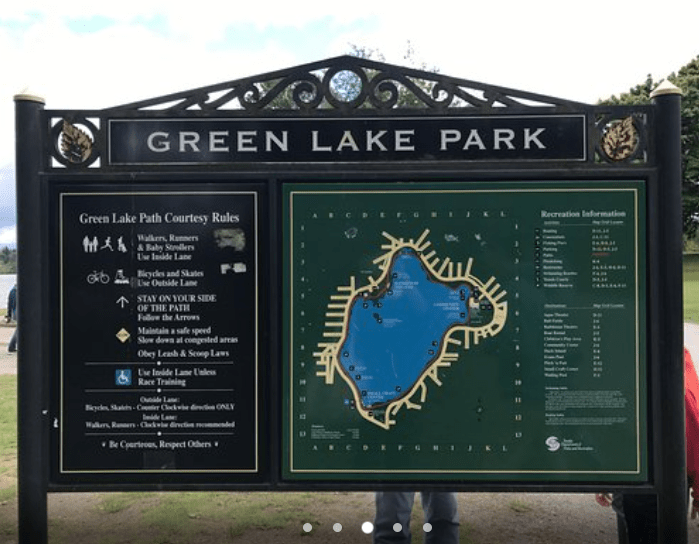
Griswold went on to say: “I said, ‘What kind of a rig is this?,’ to which he replied that he didn’t have a job at the moment and it was the only option he had to get around: ‘I sat there on a pillow with the door open and my feet on the ground. I wouldn’t close the door. It became cold.’ When she announced that she was going to go back inside the stranger tried to stall her: ‘he asked where I was from and I told him I was from the Seattle area, which I was, and he knew different places. He was real interested in Golden Gardens Park and especially Carkeek Park on the sound and Green Lake. He seemed to know the Green Lake area where a lot of us girls used to hang out quite a bit.’ At the time in the 1970’s both Green Lake Park and Golden Gardens Park were popular hangouts for college kids.
Nellie continued: ‘I didn’t feel that uncomfortable at that time. He had something to drink and wanted me to drink some of it but wouldn’t. And then he was smoking something… I thought it was marijuana.’ After that, the man immediately appeared to become inebriated, and even nodded off periodically: ‘he was real in and out. He said he was too drunk to drive. I kept saying you’d better get out of here and he saying, ‘nope, I’m hurt and I’ve been drinking much.’’
Finally, the attractive young mother made the choice to finally leave, and ‘started to get out of the car and he reached out and tugged at my hair. I turned to him and said, ‘don’t do that,’ and at that time another car came around the corner and the lights flashed inside the car and I said, ‘that’s Alan (her boyfriend), let me go. And he let me go. He literally said, ‘get out of the car.’’
Griswold quickly ran to into her apartment and locked the door behind her, and after the other vehicle drove by, the man returned to her apartment and began pounding on the door, saying loudly, ‘I’m cold. Let me in.’ Thoroughly spooked, she went back to her bedroom and got her boyfriend’s large semi-automatic pistol that he had also taught her to shoot: ‘I told him I had a gun and knew how to use it and would shoot him if he did not leave.’ The pounding immediately stopped.
Looking out the window, Nellie said that the man went back to his Bug and just sat there for a while then circled the block a few times before he eventually disappeared for good; she never saw him again, and he never returned to The Pioneer Villa. Because of how much time had passed her story was impossible to corroborate, however investigators in SLC and Seattle said the man’s actions were consistent with Ted’s behavior. According to Dr. Robert Keppel, ‘you haven’t said anything to me that doesn’t sound like Bundy. She’s lucky she’s alive.’
It would be fair to say that at the time of Nellie’s attack Bundy had a lot of spare time on his hands: he was taking a break from school (he didn’t begin law school for the second time until later that September) and happened to be in between jobs at the time (in September 1973 he was the Assistant to the Washington state Republican chairman, and remained unemployed until May 3, 1974 when he started at the Department of Emergency Services in Olympia). He was still in a (fairly) committed relationship with Elizabeth Kloepfer at the time and was residing in the Roger’s Rooming House on 12th Avenue NE in Seattle.
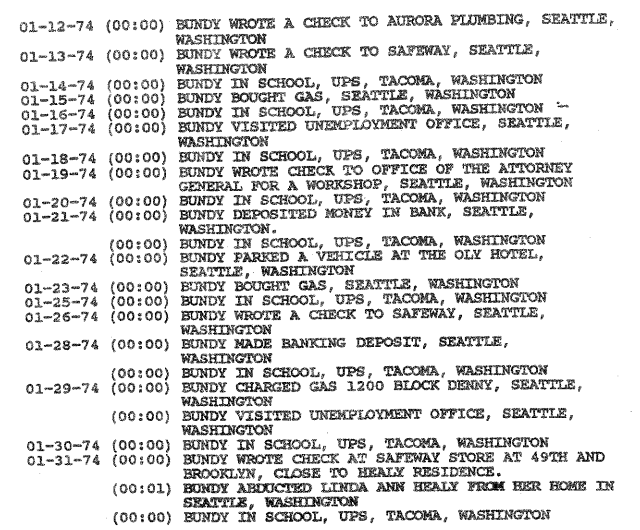
As we know, Ted’s first confirmed attack took place on January 4, 1974 when he brutally assaulted Karen Sparks in her basement apartment near the University of Washington in Seattle. Additionally, he abducted and killed Lynda Ann Healy not far away on January 31, 1974… so its safe to say Bundy was definitely active at the time Griswold claims she was hassled by him.
According to Dr. Keppel, Bundy’s habit of roaming across the Pacific Northwest had always been ‘one of the biggest problems about the guy,’ and despite there being a trail of credit card receipts for gas there were many times that he paid for fuel in cash: meaning, he could travel across multiple state lines and investigators ‘never even know he’d been there.’ As for the yellow VW that Griswold so vividly remembers, Keppel said two witnesses from Central Washington University in Ellensburg told police about a man that drove a similar vehicle that tried to pick them up; also, on May 6, 1974 Roberta Parks vanished without a trace from the Oregon State University campus in Corvallis, which is only thirty miles northwest of the Pioneer Villa. I know there’s a lot of back and forth as to EXACTLY what color Ted’s car is… but I don’t think it’s a coincident that Death from Family Guy drove a bright yellow Beetle.
When showed a picture of the serial killer, Nellie was unable to ID Bundy, but she was able to identify a photo of him taken in 1973 that was released after his arrest two years later in Granger, Utah for the aggravated kidnapping of Carol DaRonch. She said that Ted’s ‘longer, curly hair’ was the most important part of her identification. Griswold told Painter that she felt ‘for the other victims. I just don’t understand why I’m still here.’ At the time of the interview in February 1989 Griswold said that she was a happily married mother of two and was living with her husband and kids in Southwest Washington.
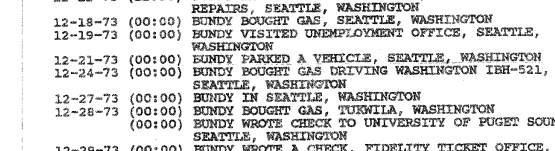
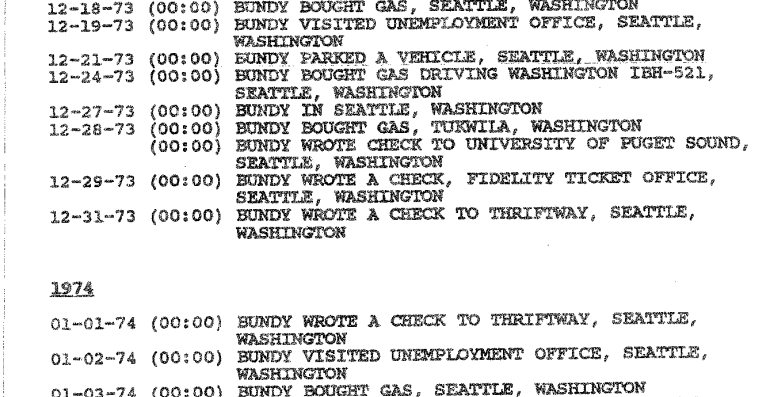
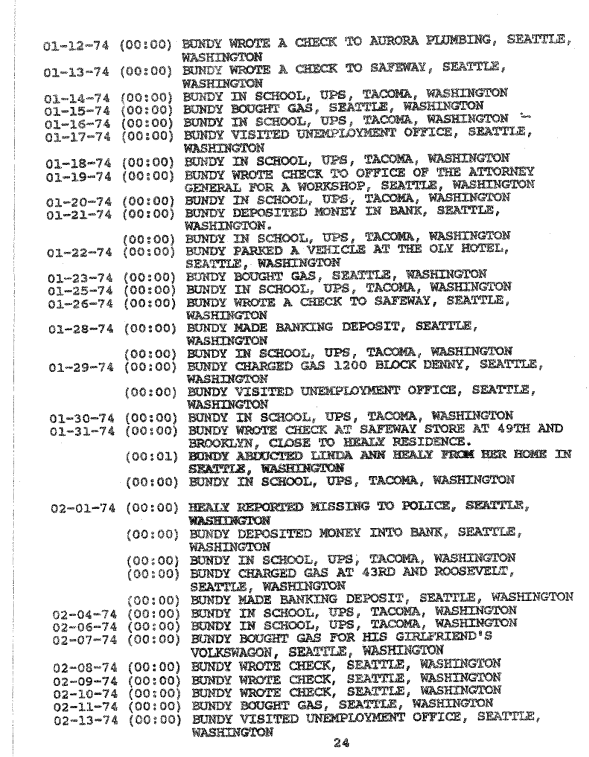
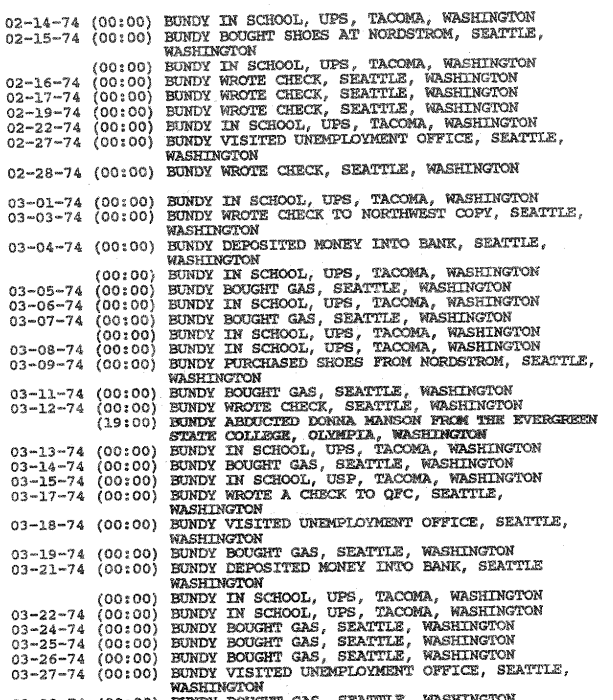
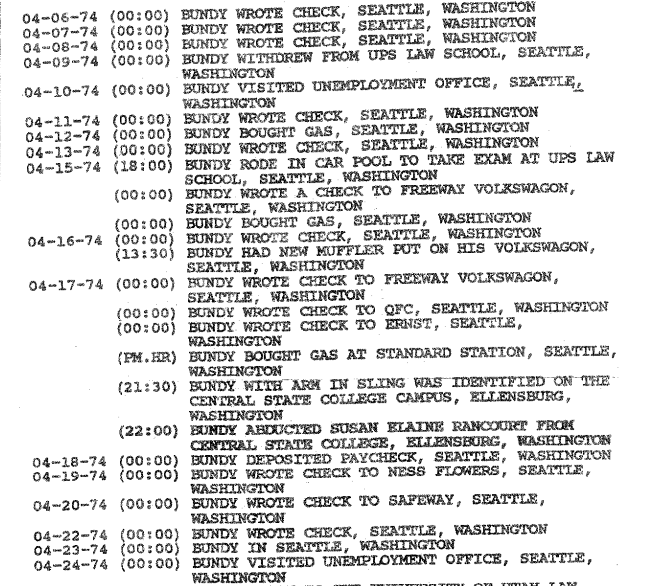
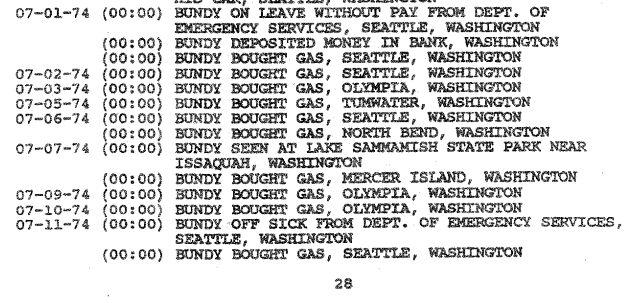
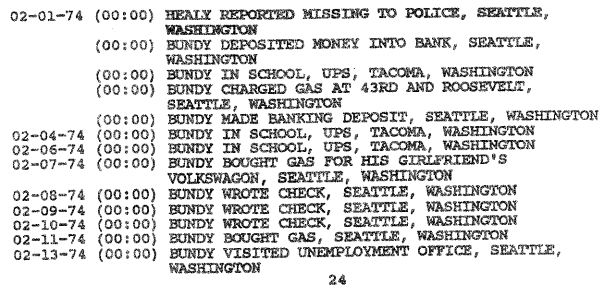
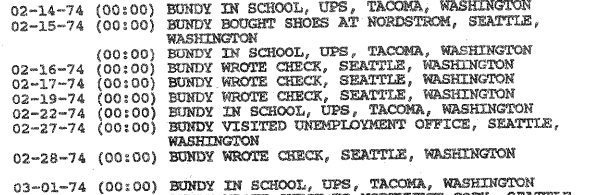
The beginning part of Griswold’s story published in The Sunday Oregonian on February 12, 1989.The only article I could find about Nellie Griswolds claim about Ted Bundy, published in The Sunday Oregonian on February 12, 1989.Bundy’s route from the Roger’s Rooming House to Pioneer Villa Truck Stop in Halsey, Oregon.Bundy’s whereabouts in early 1974 according to the 1992 FBI TB Multiagency Team Report.Bundy’s whereabouts in early 1974 according to the 1992 FBI TB Multiagency Team Report.Bundy’s whereabouts in early 1974 according to the 1992 FBI TB Multiagency Team Report.A drawing for the Pioneer Villa Truck Plaza in Halsey, Oregon.A horse and buggy themed advertisement for the Pioneer Villa Truck Plaza in Halsey, Oregon where Nellie Griswold worked at the time she had her encounter with Ted Bundy.A Google Maps view of where Green River Park and Carkeek Park are in relation to one another.A map of Carkeek Park in Seattle.A sign for Green Lake Park in Seattle, Washington.









































 Another Bundy Blog.