Document courtesy of the Pitkin County Sheriff’s Department.
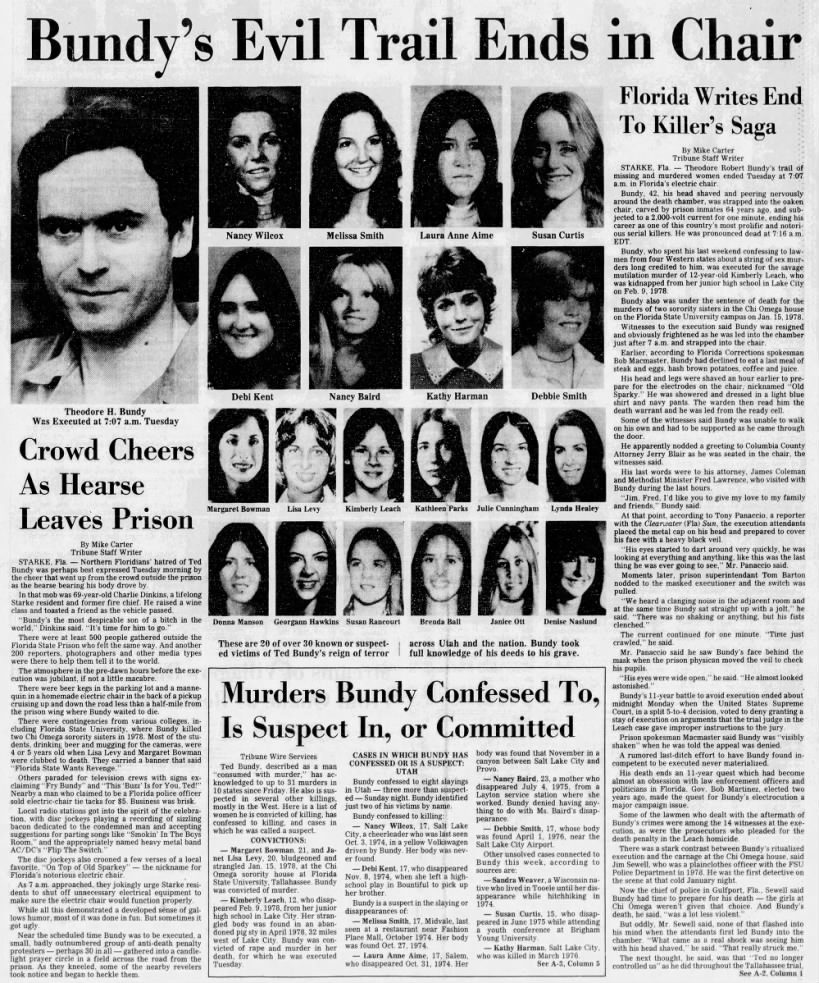
Surveillance Notes in Relation to the Debra Kent & Melissa Smith Investigations.

Document courtesy of the Pitkin County Sheriff’s Department.
Courtesy of the Pitkin County Sheriff’s Department.
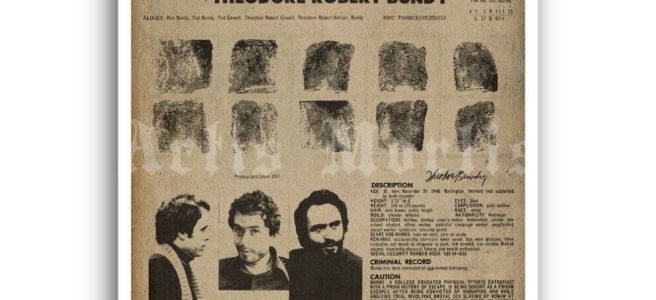
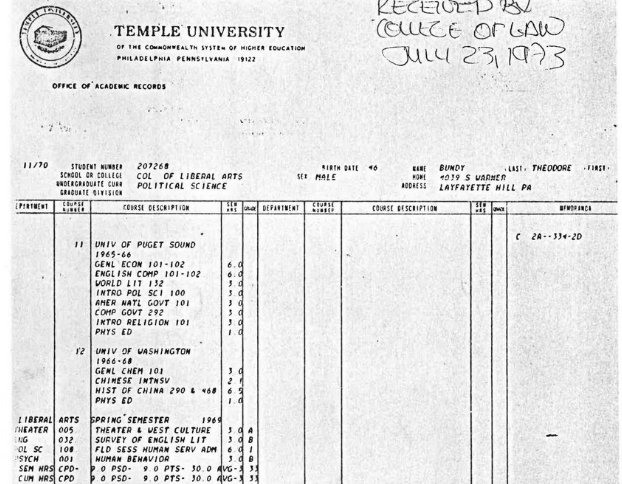
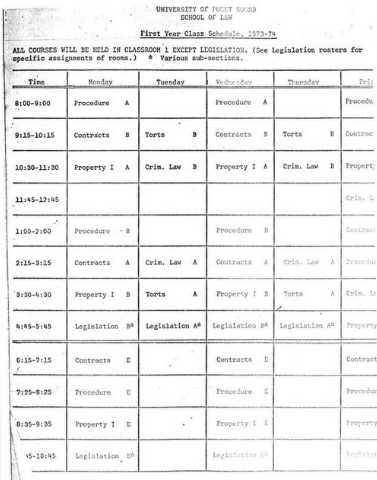
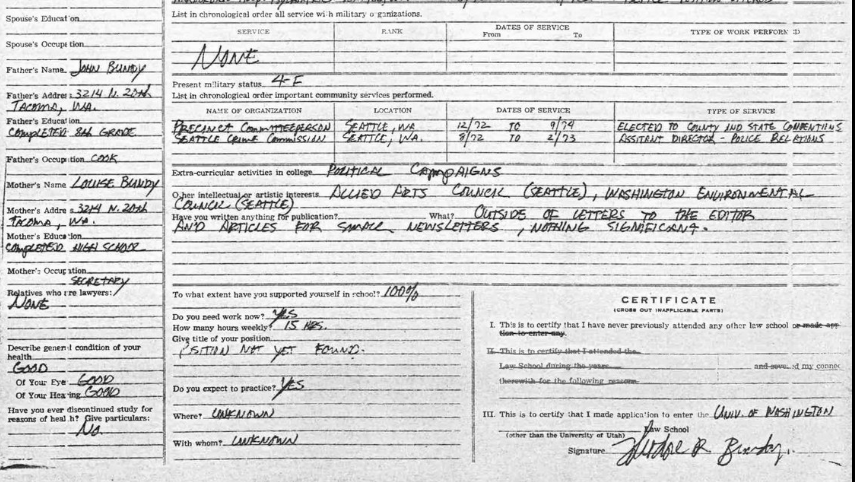
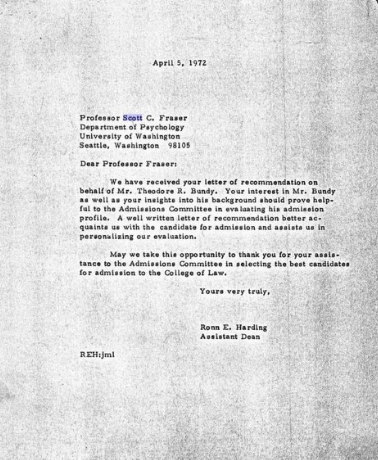
Document courtesy of Brigham Young University School of Law.
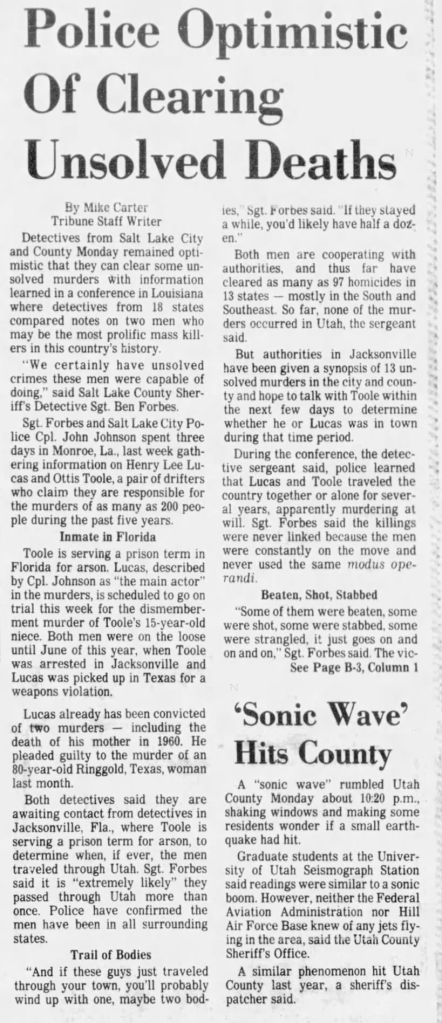
Information related to the 1992 TB Multi-Agency Investigative Team Report Conference that was held at Quantico between February 20 and February 24, 1992.

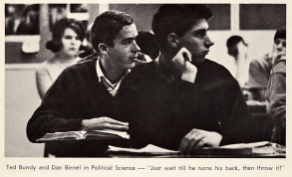


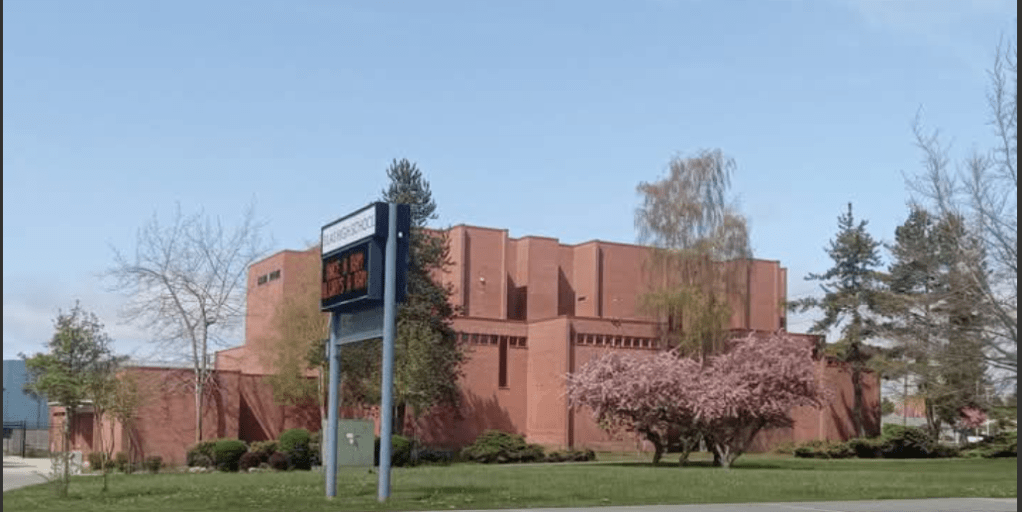
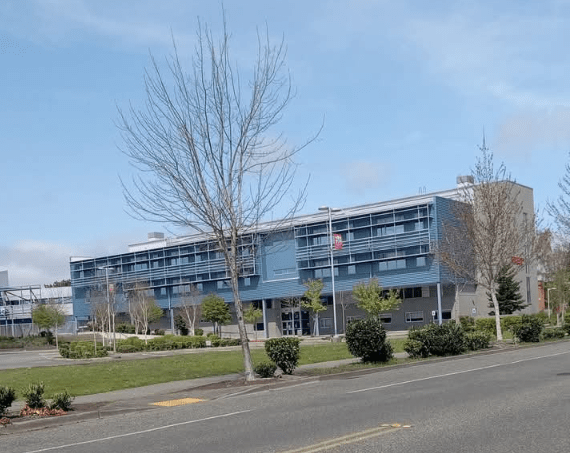

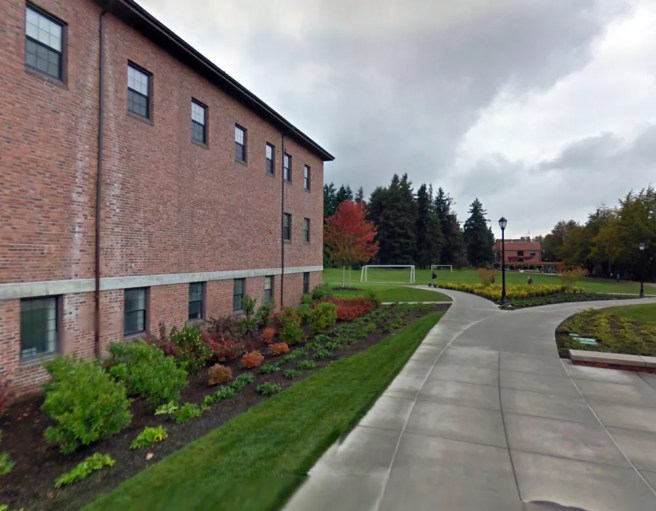

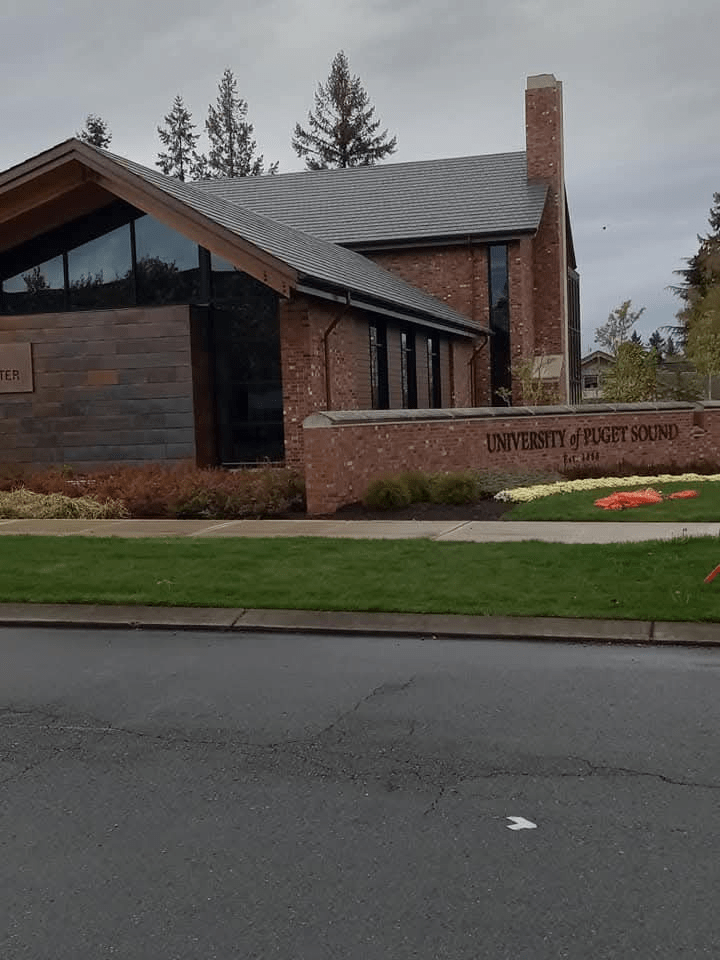


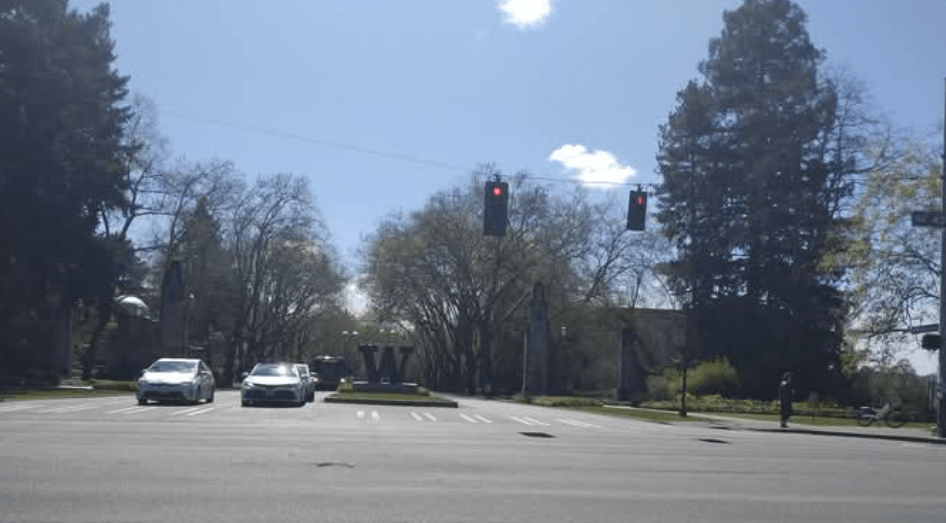









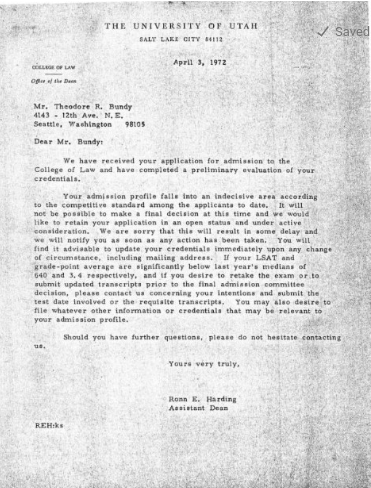


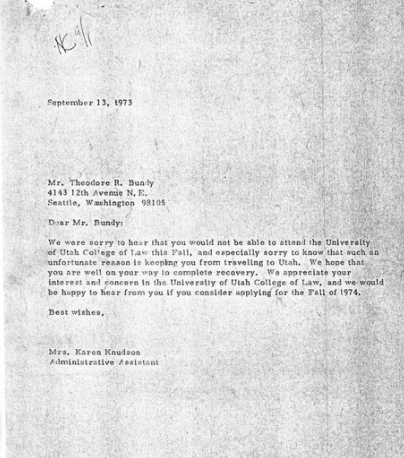


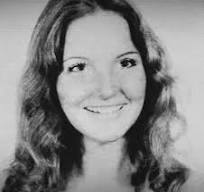
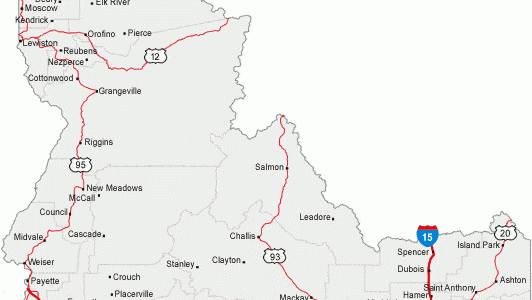
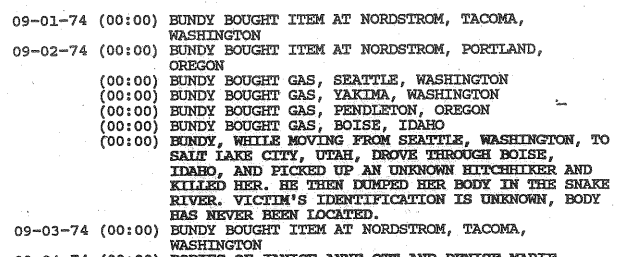
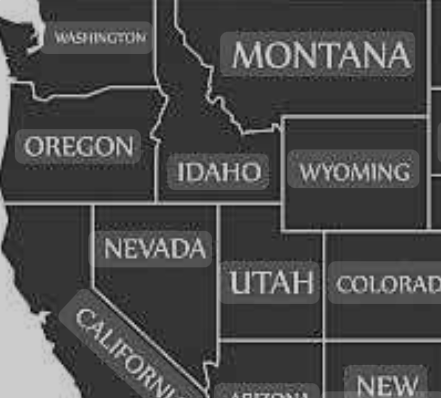
During his death row interviews in January 1989 Ted Bundy confessed to Idaho Investigators Randy Everitt and Russ Reneau that he killed a young hitchhiker in Idaho on September 2, 1974 near Treasure Valley by the Eisenmann exit on the I- 84 on the outskirts of Boise. The handsome twenty-seven-year-old was in the process of relocating from Seattle to Salt Lake City for his second attempt at law school when he stumbled upon the girl who he said had light brown hair, was between 16 and 18 years old, around 5’6″ tall; she was carrying a green backpack and wore a ‘simple beaded necklace with black and light-colored beads resembling spaghetti.’ Bundy said he strongly suspected that she was a runaway from Boise and was making her way to Montana or Wyoming, but he never gave investigators her name as he claimed to not know it.
Upon leaving the I-84 (as he remembered it) in ‘the outskirts of Boise’ Bundy noticed a young woman hitchhiking at the top of the on ramp of the 1-84, which ran through a neighborhood he said was filled with ‘ranch style suburban houses.’ Ada County Sheriff’s deputy Tim Cooper said that he initially felt there were some inconsistencies regarding the description he gave of the area and 84 but eventually realized the area was under construction at the time he would have passed through in early September 1974. Judging from Ted’s recollection of ‘ranch styled houses’ on the edge of Boise, Cooper strongly feels that he picked up his young victim by the Eisenmann Rd exit located southeast of the Boise airport.
Many investigators believe that Bundy’s confession about the unknown Idaho hitchhiker is legitimate and may be one of his more honest moments, as he was largely truthful when discussing other confirmed homicides during his final days, including Lynette Culver, who is the killers only confirmed Idaho victim and whose remains have also never been recovered. During the hour long conversation, he told LE that the young girls green backpack did not go into the river like everything else that belonged to her, and it went with him to SLC, where he tossed it out his VW’s window near some garbage dumps (as it wasn’t strange to see discarded items scattered around the area). While being questioned by Idaho investigators, Bundy said that he could no longer remember her name and after he killed her he burned her identification card.
There’s some discrepancy in what happened immediately after the murder took place: the ‘TB MultiAgency Team Report’ says nothing about Ted returning to the area to dispose of the body on September 3rd, as it was never mentioned to Everitt and Reneau during their interview on January 22, 1989. However, according to Polly Nelson, the following day her client returned to the body and took Polaroids of the remains then dismembered her and dumped the pieces in a nearby river that is strongly believed to be the Snake River, a major waterway in the Pacific Northwest that is about 1,080 miles long.
Elizabeth Kendall gave some details about her personal recollection surrounding when Bundy left for law school on September 2, 1974 in early September 1974 in her 1981 book, ‘The Phantom Prince:’ that morning, her friend Mary Lynn Chino made everyone a big breakfast on her houseboat before he left for Utah, and during his drive Ted called her in the late afternoon/early evening from Nampa, ID to tell her that he loved her. She mentions that they had picnicked there on one of their vacations to Utah: ‘he called me again from outside of Salt Lake City to tell me where he was, and he called me from his apartment to tell me how much he loved the place I had found for him. We talked several hours a week, running up huge phone bills.’ Nampa was slightly over twenty-two miles from Boise, which would have put Bundy in the middle of the city in slightly over thirty minutes after he spoke with Kendall.
It’s worth noting that according to the ‘1992 TB Multiagency Team Report,’ Bundy stopped for gas the fourth time on September 2, 1974 somewhere within the city of Boise, although I do want to point out that Kevin Sullivan refers to different locations that Ted got gas that don’t quite match the 1992 TB MultiAgency Report: he said that he stopped for fuel the third time within ‘the Boise city limits’ and got fuel for the fourth and last time in the early hours of September 3rd in Burley, Idaho.
According to Russ Reneau, when he showed up to talk to Bundy in Starke, Florida ‘it was the first time I’ve ever been invited by a serial killer himself to come talk with him.’ … ‘It was clear that he was fatigued. I saw signs of stress and, through all of that, he was polite and actually amiable.’ … ‘In spite of his friendly persona, it was clear to me that we were dealing with an evil, a truly evil man.’ During their conversation the condemned man also gave very precise details about how he raped then killed Lynette Culver of Pocatello on May 6, 1975 and volunteered details that only her killer would have known. Regarding Culvers murder Reneau said that he strongly believed Bundy was responsible: ‘I feel like what we came away from out of that interview was able to bring closure to one Idaho family. That is always a good outcome.’ About both girls murders Tim Cooper commented that: ‘it begs the question why would he lie about our Jane Doe case and then tell the truth about Lynette Culver.’
Lynette Culver was born on July 31, 1962 in Renton, WA and was killed by Ted Bundy on May 6, 1975 in Pocatello, ID. She was last seen leaving Alameda Junior High School during her lunch period boarding a bus, and after abducting her he brought the 12-year-old back to his room at the Holiday Inn, where he sexually assaulted then drowned her in the bathtub before eventually disposing of her body in a river north of Pocatello (possibly the Snake). In the time following her disappearance, police assumed she was a runaway, however as time went by, they received no reports of any sightings of her they began to lean towards foul play. During his Idaho confession in January 1989 Bundy confessed to killing a young girl that matched Culver’s general description. According to (retired) Idaho Attorney General Jim Jones, he was ‘frankly astounded by the detail that he was able to provide with respect to Lynette, and of course we had a total absence of detail on the other one he confessed to the hitchhiker.’
After looking into the confession Idaho investigators determined there was no missing person report that matched his supposed victim and nobody was ever recovered. Of the confession of the Idaho hitchhiker, Reneau wondered ‘did he fabricate it? I’m not sure, or was he simply withholding information in the hopes that we would extend his life? I’ve never been able to resolve that in my mind over the years.’ … ‘I was expecting someone that I could read better. He was not nervous at all during the interview I had with him, much different from any other homicide suspect I’ve ever interviewed.’
In a podcast with Ada County Sheriffs department, Deputy Lauren Monte sat down with Cold Case Investigator Detective Tim Cooper and went over details related to the Snake River Jane Doe. About the necklace the victim was wearing, Detective Cooper clarified that the ‘kinds of whatever it was they were more like long, little sections of spaghetti with a with a strings F through it and they were black and well black and a lighter color.’
About the Snake River Jane Doe, Tim Cooper said that what Bundy ‘had to say about Jane is credible, and a lot of that has been that we have from the audio is her description and again what sparse details that he could recall. He said that he thought she was from Boise, from Ada County, and hat she was maybe trying to get to Montana. He estimated her age to be younger, maybe not even 18 yet. He provided a clothing description and description of her. Mr. Bundy indicated that he was traveling eastbound on Interstate 84 in what he believed to be Ada County or the Boise area, on the outskirts. It sounded like, from what he said of Boise, when he first encountered our Jane, who appeared to be hitchhiking or standing alongside the highway as if she needed a ride. I picked up a young woman who was hitchhiking, traveling. Well, I was traveling east at the time. She was standing… it wasn’t downtown, but it was further out of the city. It seems like they were like ranch style suburban houses. He pulled over and offered her a ride, which she accepted and she got into his notorious yellow Volkswagen Beetle and away they went, eastbound on I-84. Based on the description that Mr. Bundy provided, and this isn’t 100%, but we have to go off of what details we have. I’ve looked at old maps and old photos of the interstate from that era and have tried as diligently as I can to form an idea of where she was picked up, and I think the closest that I’ve been able to get to is possibly in the vicinity of Eastbound 84 at Eisenman Road. In that area, this is on the outskirts of Boise, there were and still are in fact some ranch style homes that are visible from that particular exit, and this would not have been the case at many of our other exits that would have been considered outskirts, like Vista or Broadway. So that seems to fit very closely, but again it’s not for sure but this may be where he picked up Jane Doe. It sounds like his confessions have come under quite a bit of scrutiny. … ‘I do believe the confession is reliable, and I understand why his confession may come under scrutiny, or may have in the past. I think it’s likely because some felt that Bundy was lying to get a state of execution at that time. The problem with that is, the Governor of Florida was publicly adamant that no stay would be given in the weeks leading up to Bundy’s execution date, which is actually I think what prompted Mr. Bundy to talk about these unsolved cases, as he stated he wanted to absolve himself of sin before his death.’
The following is an excerpt from Polly Nelson’s book, ‘Defending the Devil’ about how Ted confused to her killing the unknown Idaho hitchhiker, and where I’d normally paraphrase large sections like this I decided to include it in its entirety: ‘he had been driving around in the hills of Idaho, getting to know the area, looking for safe sites to take a victim. He was a meticulous researcher. It was an important part of a ritual so elaborate that, when I asked him about reports that he had killed over one hundred people, he actually chuckled and shook his head at the naivete of non-murderers: ‘They have no idea what it takes to do one, what it takes out of you.’ I asked him if the figure of thirty-five, which I’d seen in other accounts, was correct. He paused, stared at me, and scanned his censor to decide whether to admit to such a detail, because that was where he had always drawn the line before. He had freely implied everything, but never outright admitted one detail, like some superstitious child’s idea of what could be held against him. He finally nodded and mumbled, ‘yes.’ While driving, he spotted a hitchhiker, a girl around fifteen years old. He had not planned to do anything while scouting, but there she was. He checked the rearview mirror for other cars. None. She got in and started talking to him. He had to act fast: he did not like his victims to talk, he did not want to get to know them, he did not want to know they were real. He reached back for his tire iron and hit her over the head. She slumped in the seat, but awoke soon afterward, moaning. He knocked her out again. I noticed for the first time how strong Ted’s arms were. He had his elbows on the table and his forearms outstretched toward me as he talked. His arms were firm and sinewy, with bulging veins. His hands were large and bony. I looked at his face. Ted’s skin was darkening as he spoke. He was on a roll now, in a sort of trance, recalling every detail as he reviewed the fifteen-some-year-old film in his head, frame by frame. No detail was too small to recall, everything was important, everything had meaning. He was like a reverent disciple describing a spiritual revelation. Ted was no longer censoring himself; he had slipped into a warm wave of memory and was transported. For the first time ever, I was afraid of him, acutely aware of how swiftly he could reach me with his hands if he wanted to, of how it would be too late by the time the guards on the other side of the glass reacted. It was the absolute misogyny of his crime that stunned me, his manifest rage against women, that left me no place to retreat to. He had no compassion for this victim at all. It wasn’t that Ted took sadistic pleasure in telling his story, it was just that he was totally engrossed in the details. His murders were his life’s accomplishments. To him, each recollection was a profound illustration of his skill, his willingness to go forward, his good luck. There had been no guarantees — to Ted, each completed murder had seemed like a small miracle. He drove across the state line to a secluded place in the woods that he was already familiar with. He led the girl out of the car, assuring her that no harm would come to her. He made her strip and kneel on her hands and knees while he took Polaroid pictures of her. (For Ted, another small miracle had been that when his apartment had been searched upon his first arrest in Utah, the investigators had failed to check the building’s utility room. When he was released on bail for the attempted abduction of Carol DeRonch he retrieved the shoebox of photos he’d hidden there and destroyed the most graphic and conclusive evidence of the true depth of his depravity). She cried. He could see the look of terror in her eyes, her eyes begging for mercy. He kept reassuring her. He didn’t like to see their hurt, he said, he didn’t like to see his victim as a person: he wasn’t the kind of person who would harm another. On several occasions, Ted had told me, ‘believe me, Polly, I am not the kind of person who would hurt a fly. I never even hit a man. Except once, on the playground at grade school, and I didn’t even want to do that, but the other kid forced me. I felt terrible afterward, disgusted with myself.’ Then he got behind her, slung a noose around her neck, and strangled her as he raped her. He’d continued to reassure her he would let her go, and she had seemed to believe him. He said he’d felt a little sad that he could not let her go, that he had to kill her, but she would be able to identify him, of course. Afterward, he pulled her body deeper into the woods and, the next day, drove back to take more pictures and to cut her body into pieces (Defending the Devil, 257-259).’
It is important to point out that Bundy’s retelling of events taken from Nelson’s book is dramatically different from the one he told Idaho investigators on January 22, 1989 in Starke, Florida. For example, Nelson states that her client confessed to her that he’d been ‘driving around the hills of Idaho, getting to know the area, looking for safe sites to take a victim,’ however this is not what he told Russ Reneau. Also, during his hour-long conversation with Reneau, he made no mention of coming back to the body the next day, and said that he immediately placed her in the river.
In the days after Bundy’s death row confessions, Pocatello police strongly felt that he was responsible for Lynette’s murder, however more recently investigators have challenged this, as they feel she was the first of a string of abductions and homicides that occurred in the area between 1978 and 1983. After Lynette disappeared Patricia Campbell and Tina Anderson were both taken in July 1978, and their bodies were found in October 1981 in Malad City, Idaho. Christina White was last seen on April 28, 1979 during the Asotin County Fair in Asotin, WA. At 2:30 PM, she called her mother from a friend’s house to say she was feeling sick from the heat and was last seen sometime between 7:00 and 10:00 PM, and when her mom went to pick her up she wasn’t there. Twenty-two year old Kristin Noel David was last seen alive on June 26, 1981, while bicycling southward on US Highway 95 towards Lewiston, Idaho. A little over a week later on July 4, her dismembered remains started to turn up along the Snake River roughly six miles west of Clarkston, Washington. The next young woman that vanished was twelve year old Linda Smith, who was taken from her bedroom on June 14, 1981; her remains were found in May 1982 below Hospital Way in a hilly area near East Center Street in Pocatello. On September 12 ,1982 eighteen year old Brandy Miller and her stepsister twenty-one year old Kristina Nelson vanished after leaving Nelson’s apartment to walk to a nearby grocery store. On March 19, 1984, the remains of both women were found down a hillside off Highway 3, roughly forty miles outside of Lewiston. The last (female) murder was 14-year-old Cindy Bringhurst, who vanished in June 1983 and was discovered deceased the next month. While some sleuths strongly believe the abductions and murders to be related, the idea has failed to gain any steam.
In June 1982, the remains of a man were discovered in the Snake River near the mouth of the Grand Ronde River in Nez Perce County, Idaho. The Nez Perce County Coroner estimated that the indivudual was between eighteen and twenty-two years old, 5’11” tall, and weighed between 145 and 160 pounds. It was also noted that he had straight dark brown/black hair that was 3-4 inches long, a 2-inch scar on his right ankle, and calluses on both palms, pointing that he had had a job involving physical labor. The details of the case were entered into the National Missing and Unidentified Persons System (NamUs) as UP3041 in December 2008, and the man became known as Snake River John Doe. In 2023, the Nez Perce County Sheriff’s Office and Idaho State Police Forensic Services submitted genetic evidence to Othram Laboratories in The Woodlands, Texas to determine if DNA testing could help identify the unidentified subject, which led to the positive identification of the man, who was determined to be Dewayne Surls.
I strongly suspect that Bundy was mistaken that the unknown young woman he abducted and killed from Idaho was from Boise, and wonder if maybe she was just passing through and was ready to move on when she ran into him. When Ted said he burned her identification, did he insinuate that he looked at it and at the very least remembered where she was from? I strongly suspect the young woman he abducted wasn’t from Idaho at all, and was from a surrounding state and just happened to be passing through when he killed her.
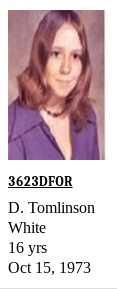
Deborah Lee Tomlinson was last seen on her sixteenth birthday on October 15, 1973 in Creswell or Eugene Oregon. The brunette had brown eyes, was 5’5” tall, weighed 140 pounds and had left home with an unnamed teenage girlfriend; she has never been seen or heard from again. Another good fit is Peggy Ann Reed, who was last seen possibly hitchhiking on March 28, 1974 in Santa Rosa, CA in the area of Guerneville Road and Coddling Town Mall. The fifteen year old was 5’2,” weighed 110 pounds, blue eyes and brown hair that was frosted at the time of her disappearance. A young woman that is possibly a good fit for the Idaho Hitchhiker is Charlotte Ann Erdman, who was 15 years old when she disappeared from Watertown, Wisconsin on July 18, 1974. She had light brown hair, blue eyes, was somewhere between 5′ 7″ and 5′ 9″ tall and weighed somewhere between 125 and 165 pounds.
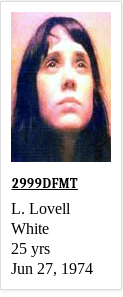
Twenty-five year old Linda Lee Lovell and her male friend Stephen Locke Packard disappeared in June/July 1974 from Stinson Beach, California. Lovell was a resident of Missoula Montana, and eighteen year old Stephen was originally from New Jersey, and where it is unknown how the two knew each other or for how long it was determined that they were traveling along the California coast, hiking and possibly hitchhiking their way around and planned to make their way to Washington State for the world’s fair, before returning home. On June 10, 1974, Stephen called his family from Stinson Beach, and postcards were received by their respective families from the area in California as well, and on June 20 a travelers check in his name was cashed at a store in Westport, which is about a four hour drive away from Stinson Beach.
Deborah Rae Meyer lived in Red Lodge, Montana at the time of her disappearance on August 4, 1974 however she and her family were visiting relatives in Rawlins, Wyoming at the time she went missing. Meyer was last seen leaving a family member’s house near Seventh and Spruce Streets and was planning to walk to a nearby movie theater, but never arrived; she was never seen or heard from again. At the time she disappeared Deb was 14 years old, stood at 5’4” tall, weighed 115 pounds, and had brown hair; she also had a small circle shaped growth roughly the size of a pencil eraser on her left ear and wore a full set of dentures. Three other young women disappeared in July and August 1974 in the Rawlins area: nineteen year old Carlene Brown and her 19-year-old friend Christy Gross disappeared from the Rawlins fairgrounds on July 4, 1974; ten-year-old Jayleen Dawn Banker vanished from the area on August 23, 1974.
Seventeen year old Susan Rhonda Labbe was last seen hitchhiking in Lawrence, Massachusetts on August 7, 1974; she was 5’5” tall, weighed around 120 pounds and had green eyes. Belinda VanLith was last seen house-sitting for a neighbor around 8 AM on June 15, 1974 located on Little Eagle Lake, Minnesota. The seventeen year olds parents were expecting her home for her sister’s graduation party, but she never arrived, and they reported her missing the following day. She was 5’5” tall and weighed 110 pounds.
About the Snake River Jane Doe, ACSO Cold Case Investigator Tim Cooper said ‘I think this is one of those cases where we’re fifty years down the road, where the public is going to be a big part in solving this.’ If you remember someone who went missing around September 1974, or if anything in this description rings any bells, please contact ACSO at 208-577-3102 or lmontague@adacounty.id.gov.
Works Cited:
‘ACSO Seeks Public’s Help to Identify Teen Abducted by Ted Bundy in 1974.’ (November 1, 2024). Taken February 14, 2025 from adacounty.id.gov
Bertel, Steve & Darrow, Lacey. ‘Idaho investigator speaks of interviewing Ted Bundy.’ (2016). Taken February 15, 2025 from kivitv.com/
Blanchard, Nicole. ‘Serial Killer Ted Bundy said girl in Boise was a victim, Officials want to identify her.’ (2024). Taken February 16, 2025 from idahostatesman.com
Cavallier, Andrea. November 8, 2024). Serial killer Ted Bundy claimed he killed a girl while driving through Idaho in 1974. An investigator is determined to ID her.’ Taken February 13, 2025 from ‘theindependent.com’
Kendall, Elizabeth. ‘The Phantom Prince: My Life With Ted Bundy.’ (1981).
Mortenson, Chris. ‘Idaho AG Investigator On Ted Bundy’s Confession.’ (September 26, 2021). Taken February 14, 2025 from YouTube.com
Nelson, Polly. ‘Defending the Devil: My Story As Ted Bundy’s Last Lawyer.’ (1994).
Sullivan, Kevin M. ‘The Bundy Murders: A Comprehensive History.’ (2009).
Tuttle, Zoe. (November 1, 2024). ‘Sheriff seeking identity of Ted Bundy’s Idaho victim known as ‘Snake River Jane Doe.’’ Taken February 13, 2025 from ktvb.com





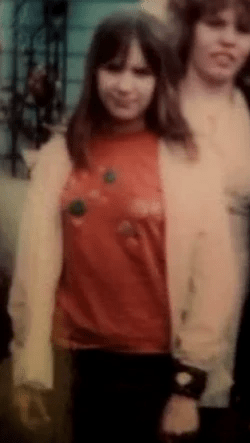
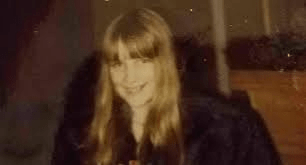


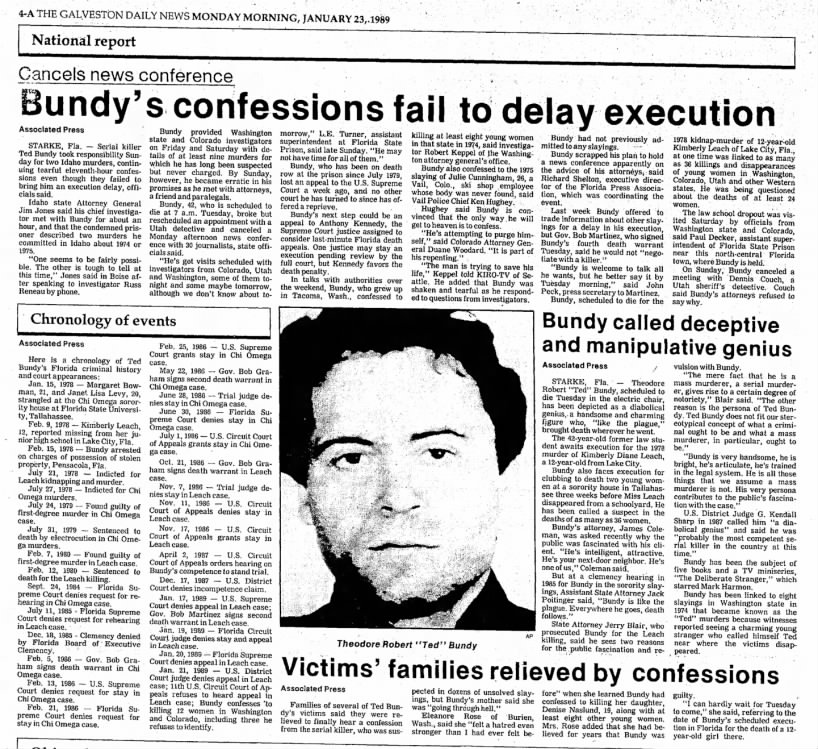


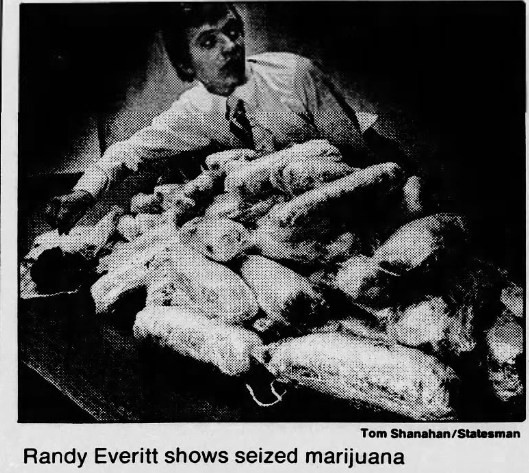

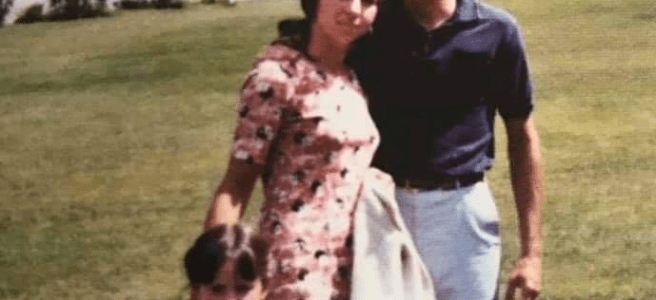
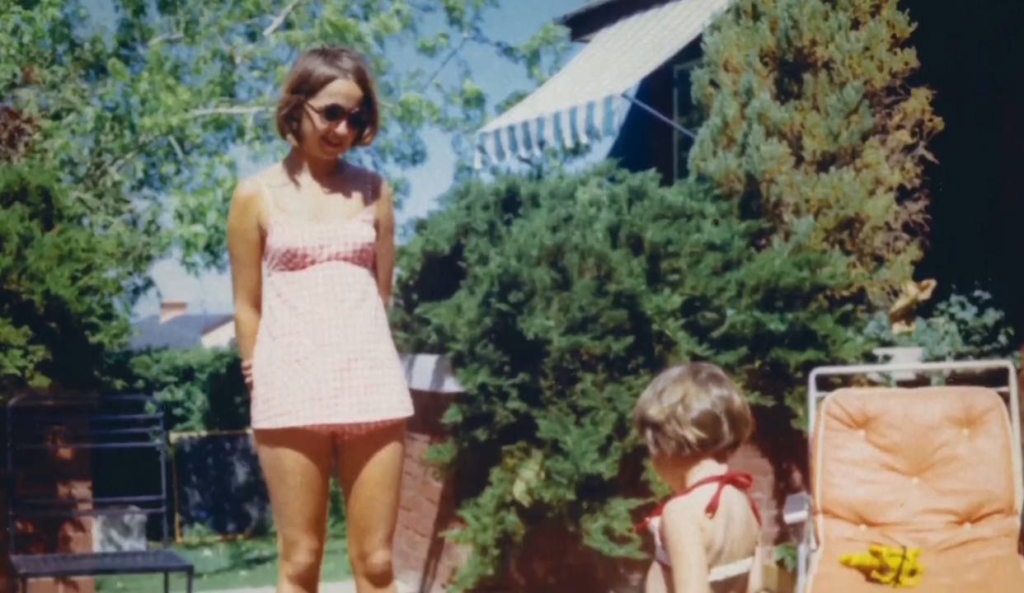
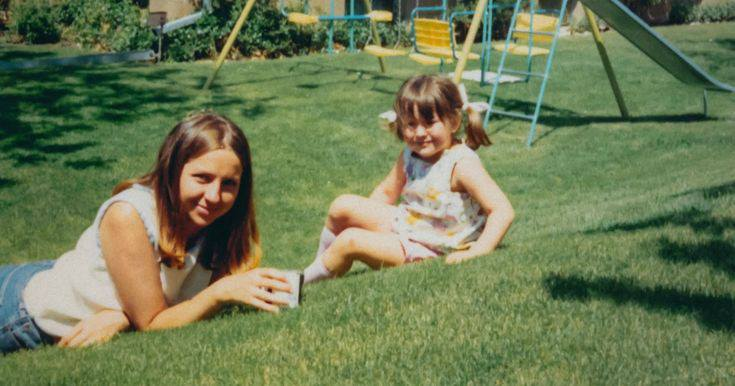
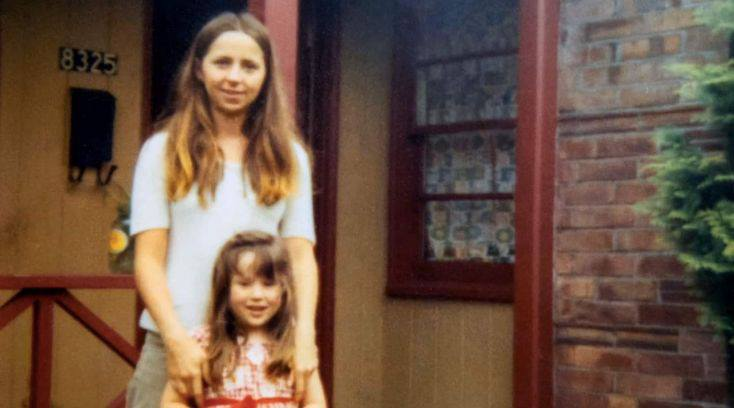
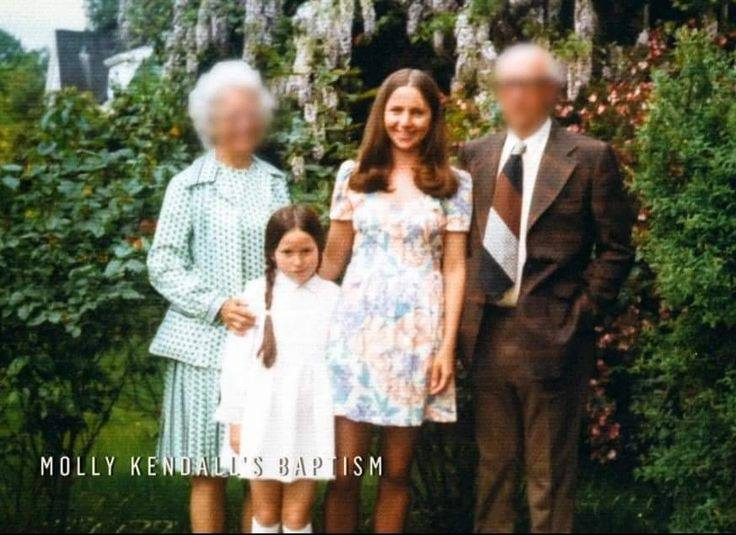
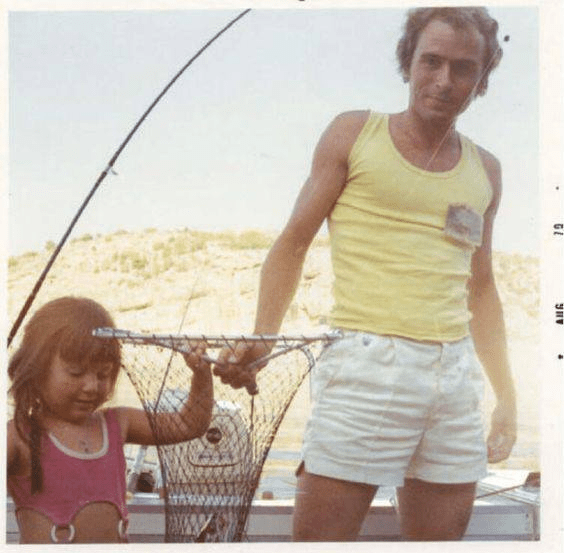
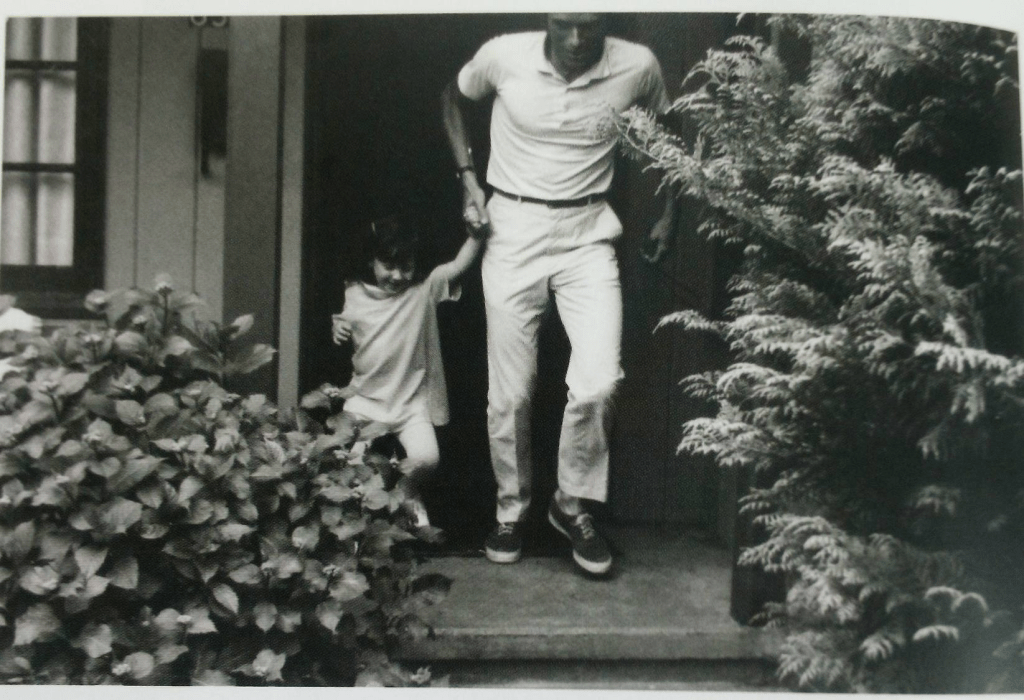
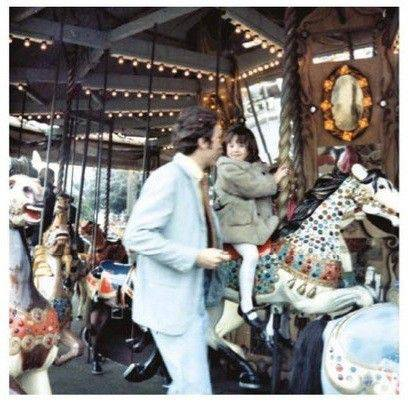
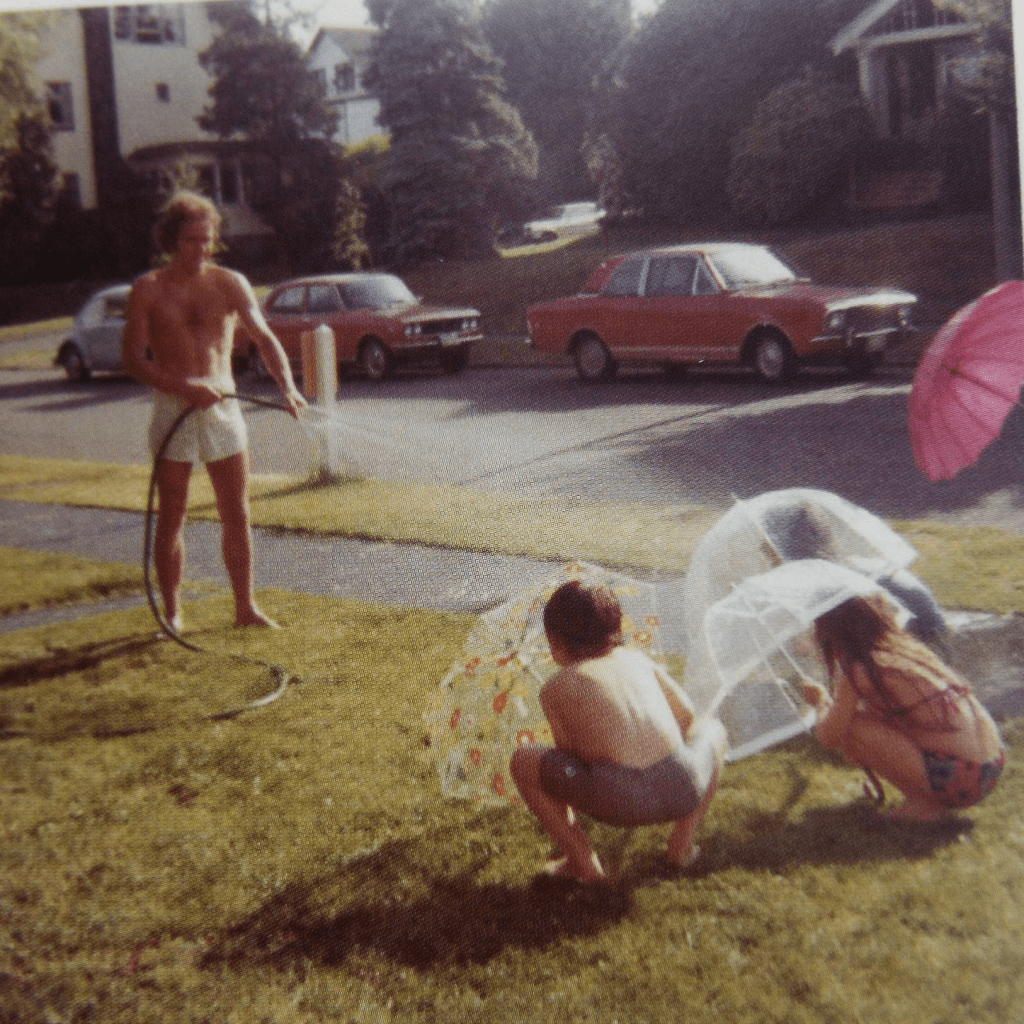
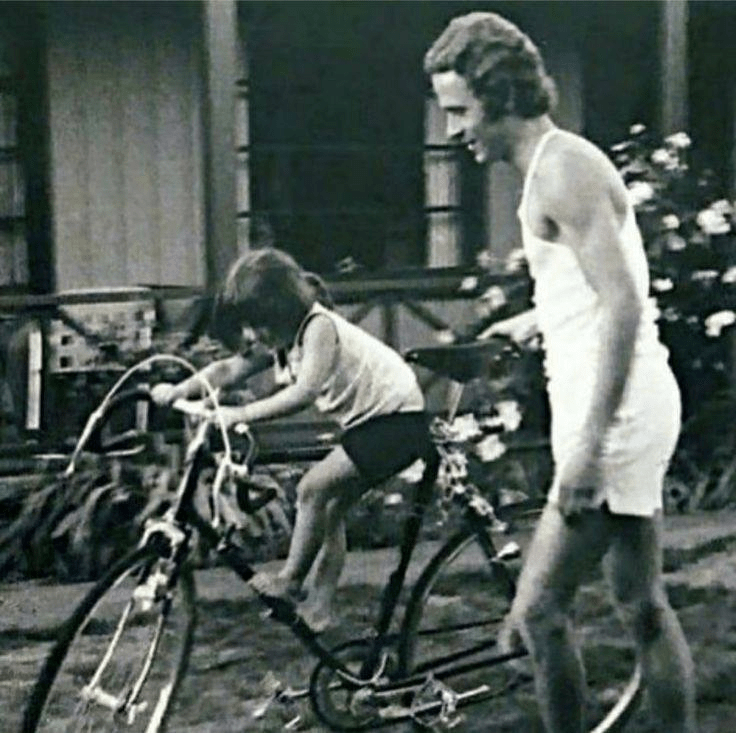
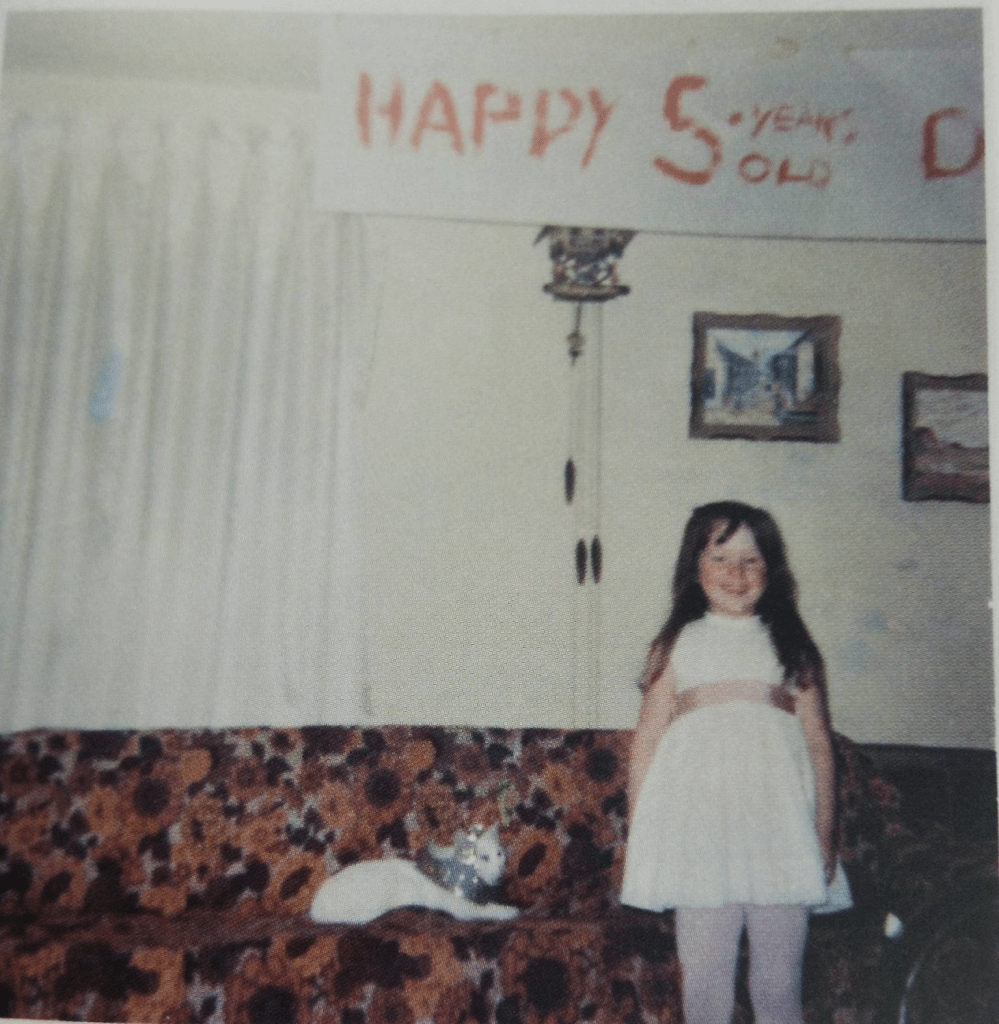
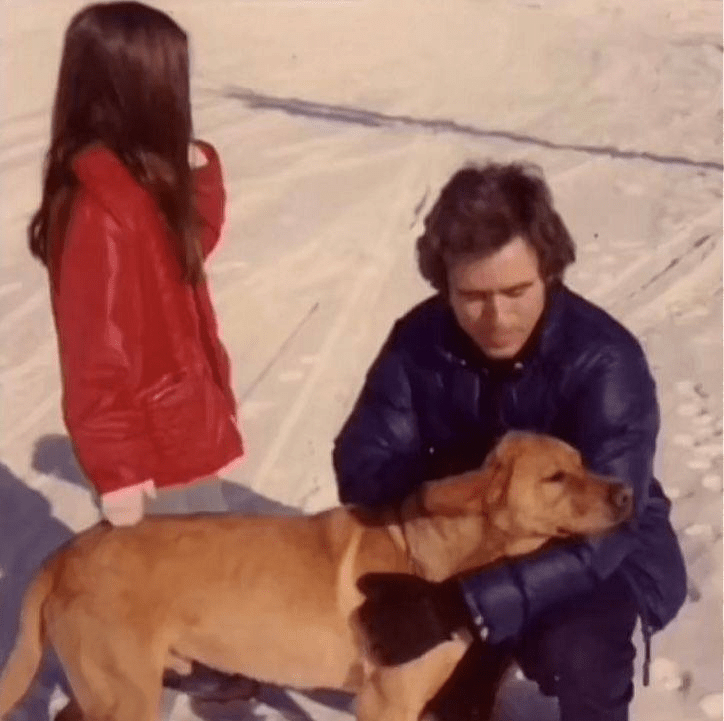
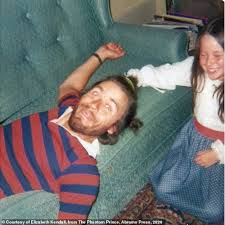
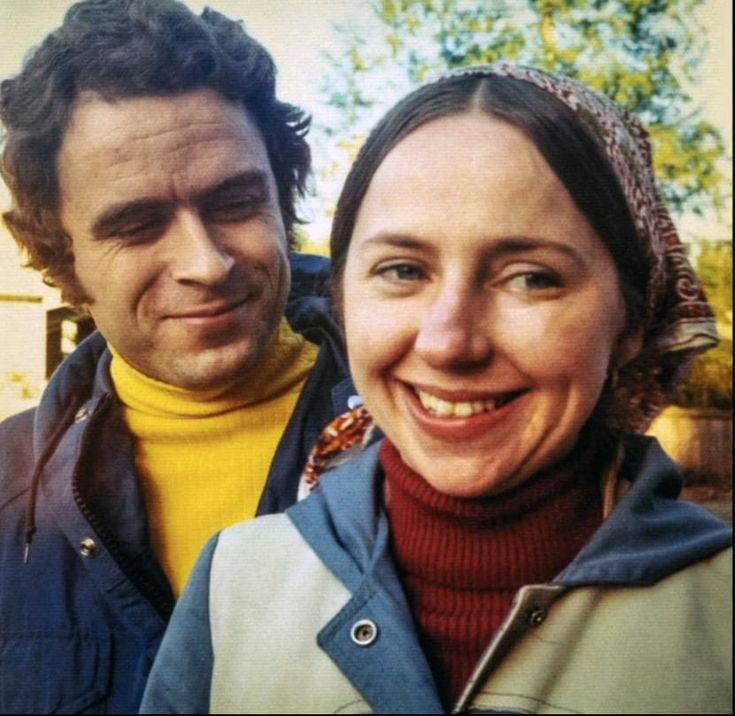
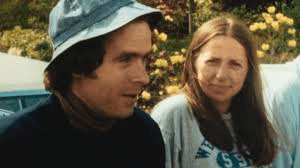
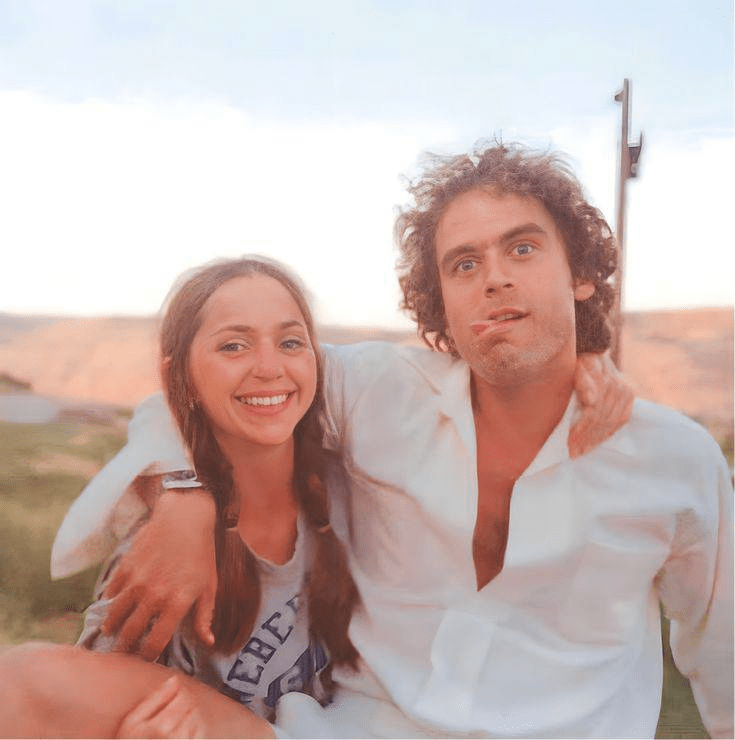
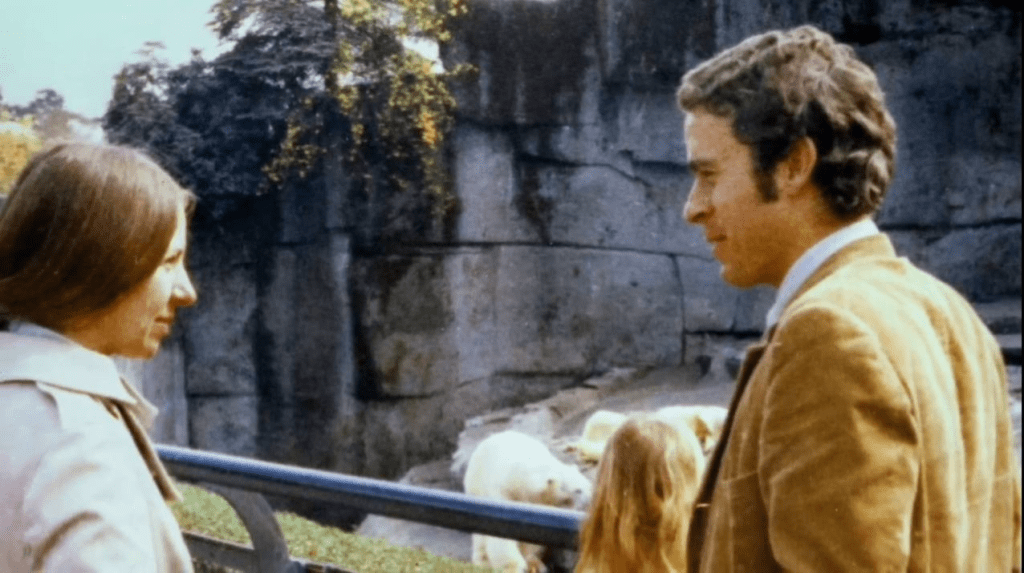
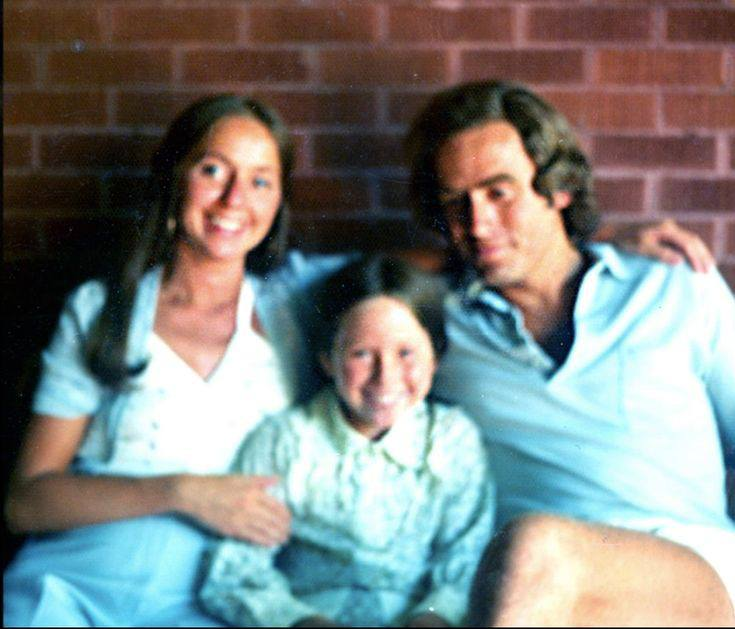
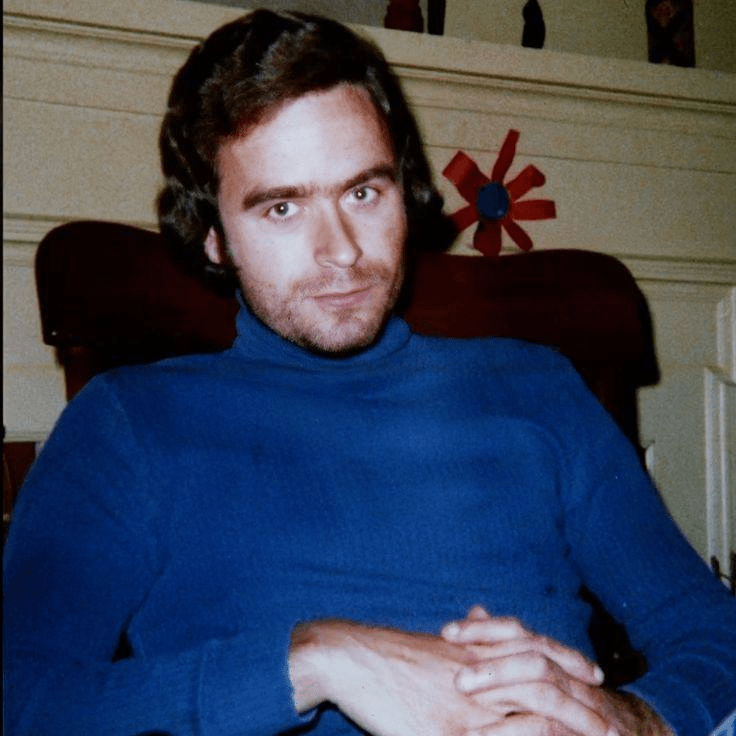
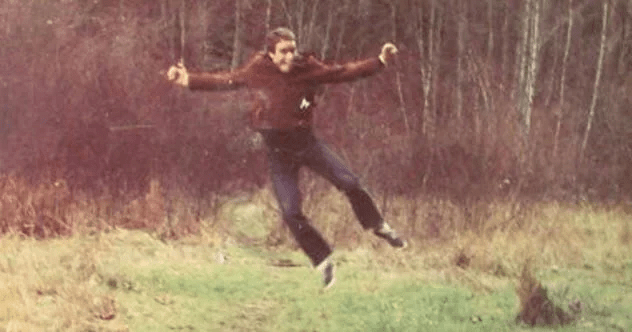
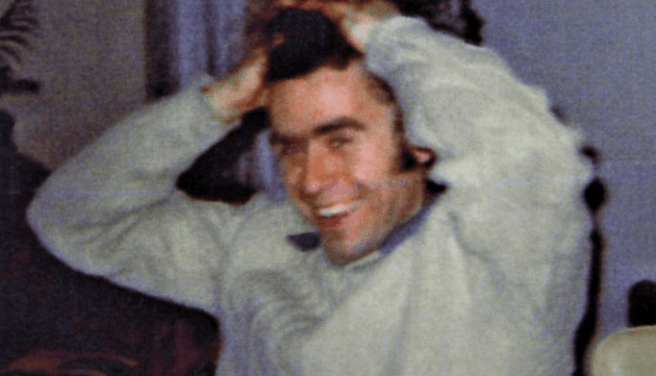
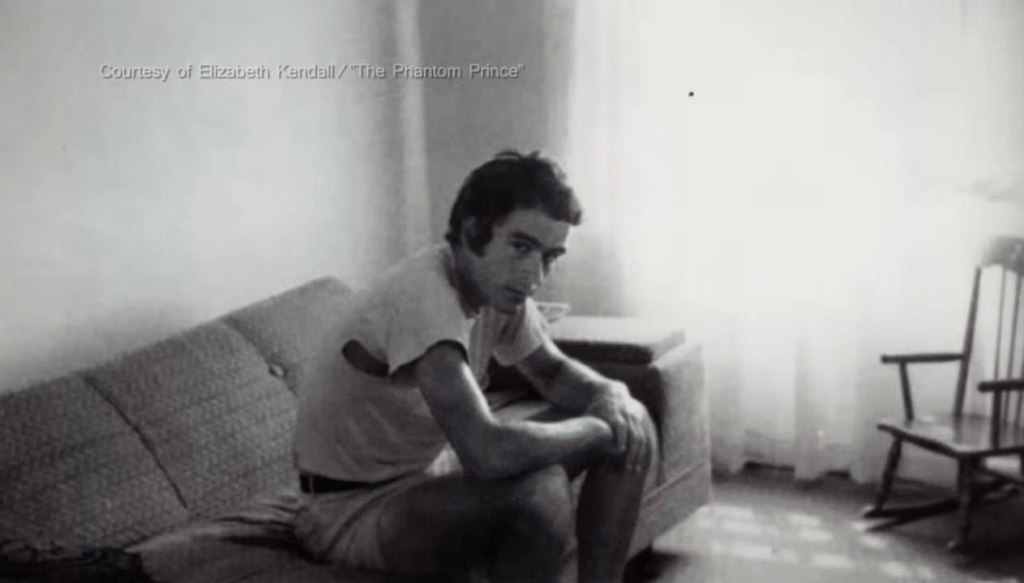
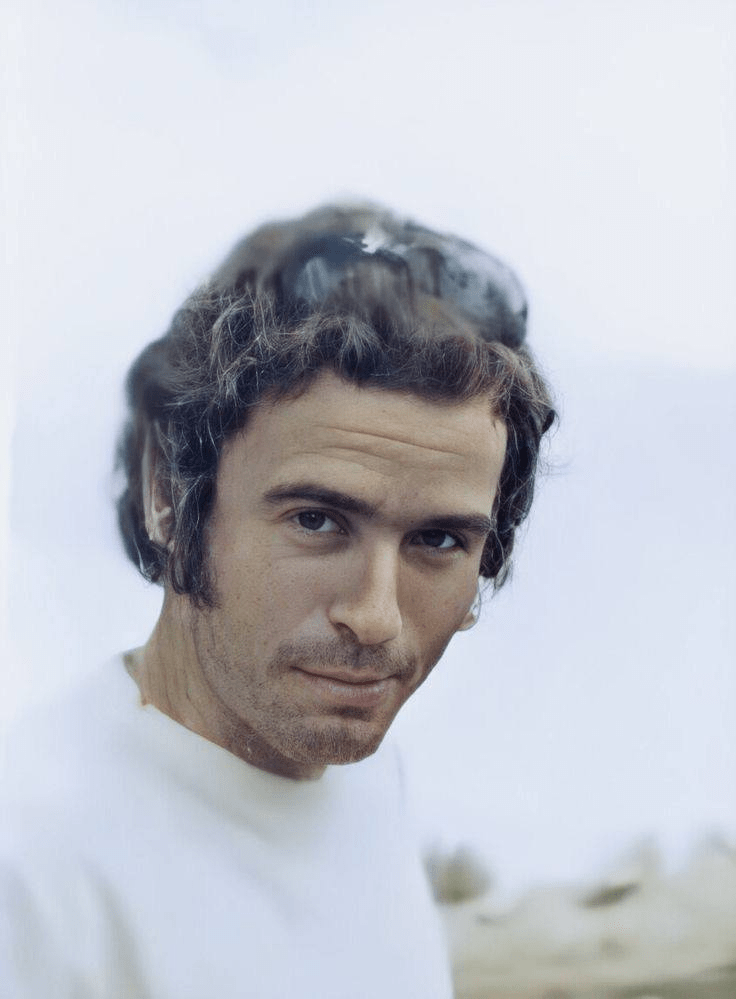
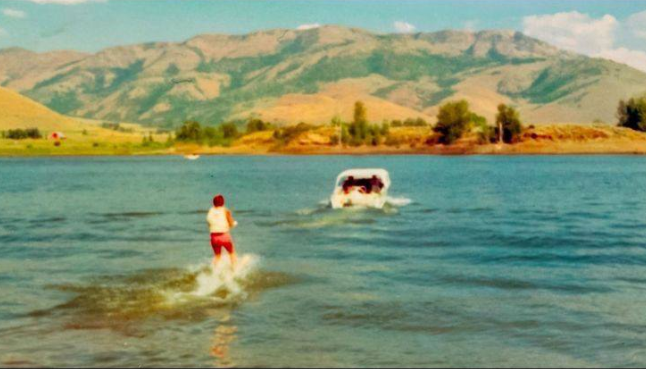
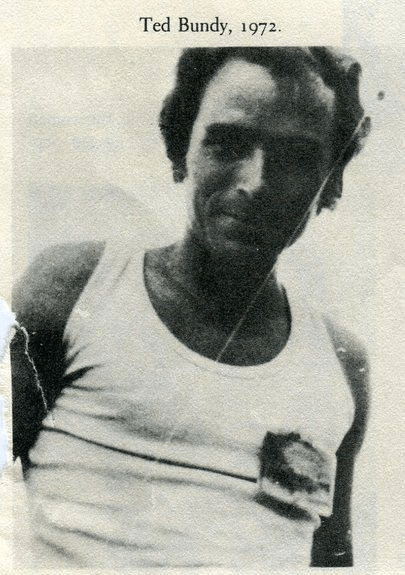
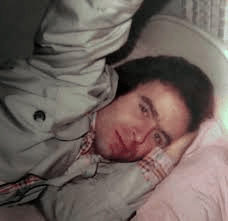
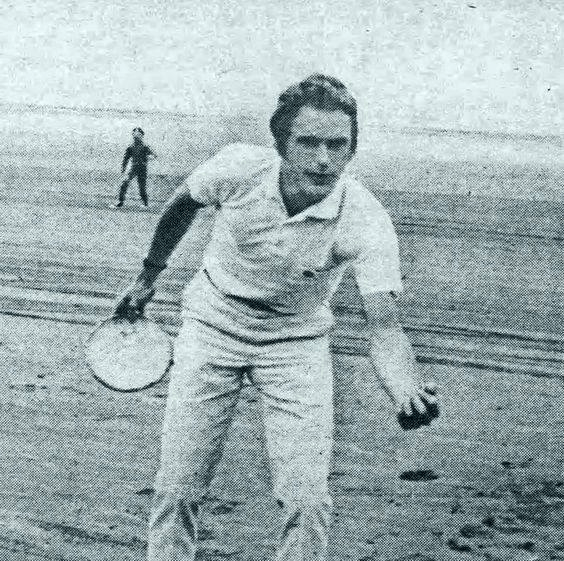
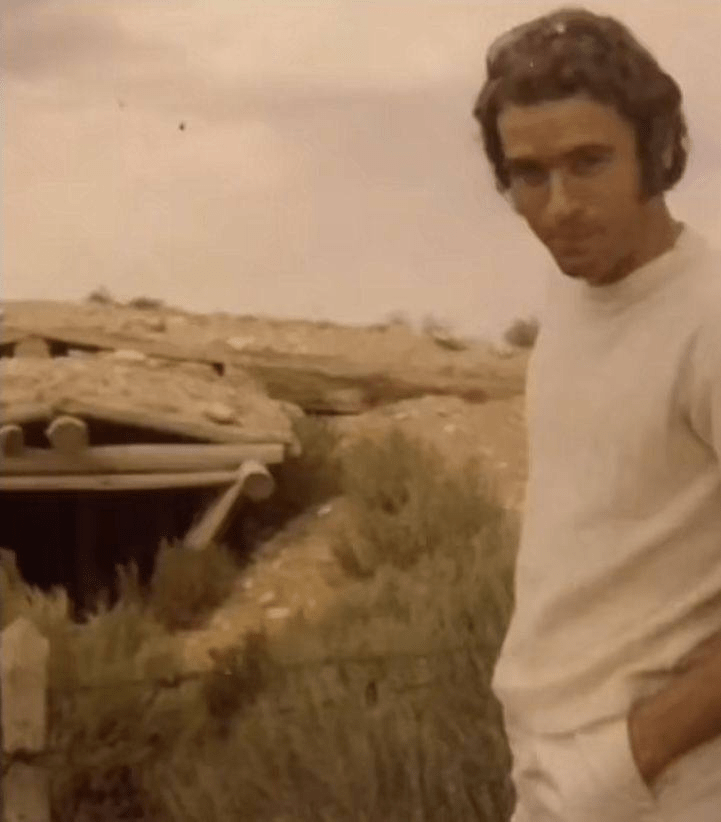
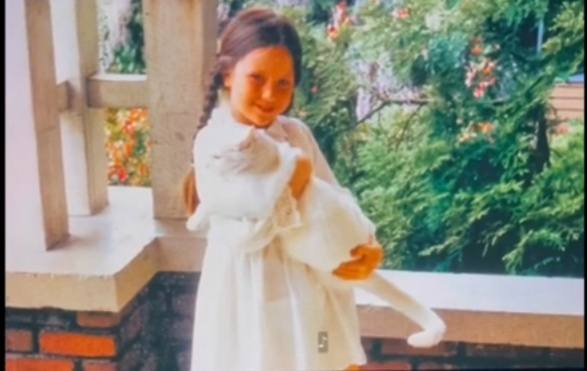
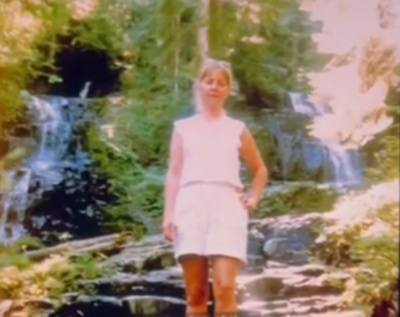
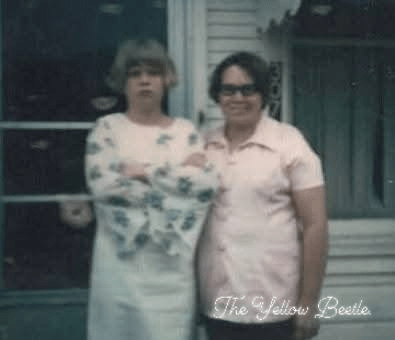
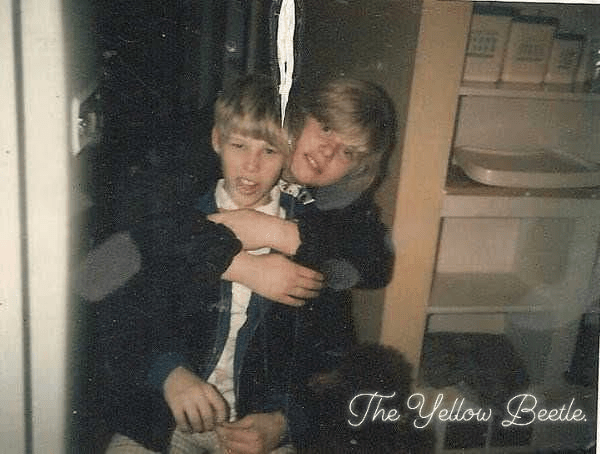
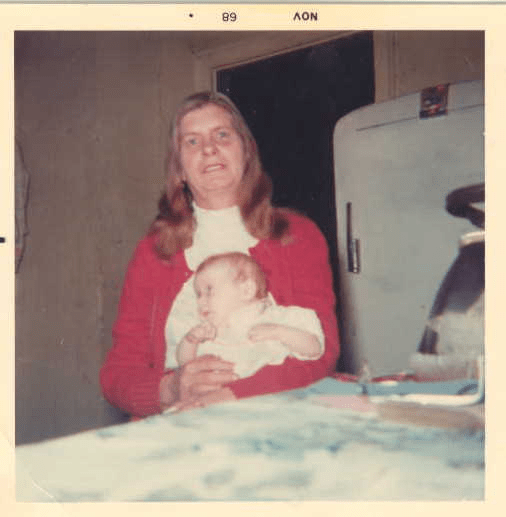
I was able to find a few pictures of Ted, Liz, and Molly these past few days and I wanted to share them here. Ted and Liz had a tumultuous relationship that began in September 1969 and eventually fizzled out after his kidnapping conviction in 1976. Both Liz and Molly are alive as of December 2024 and they reside in Seattle, Washington.
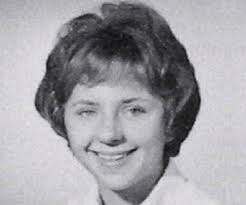


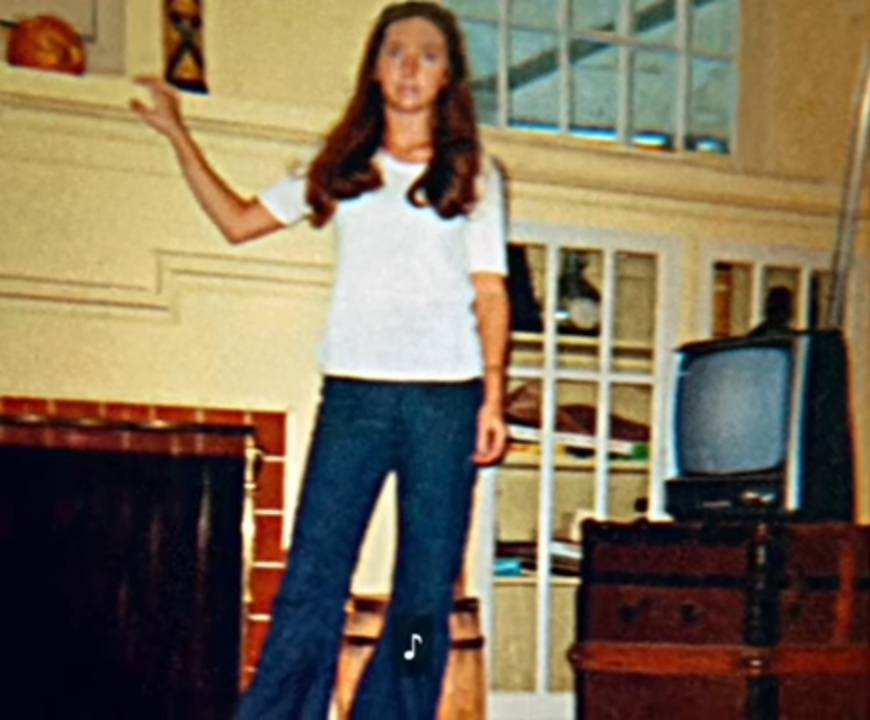


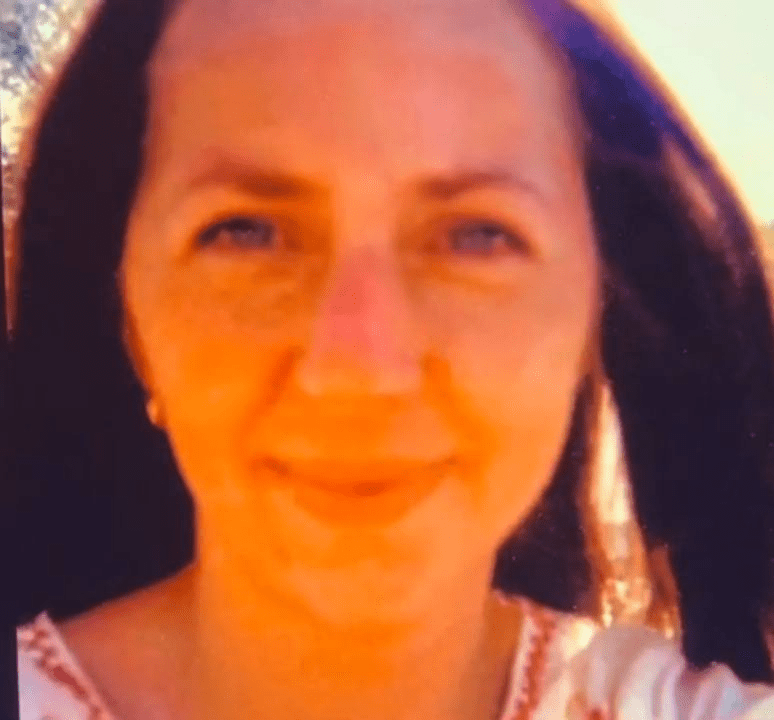




























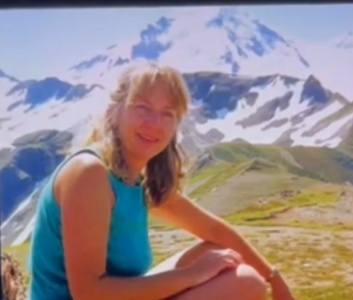

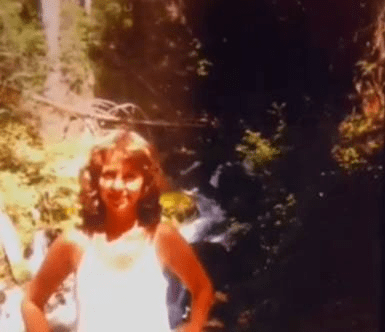

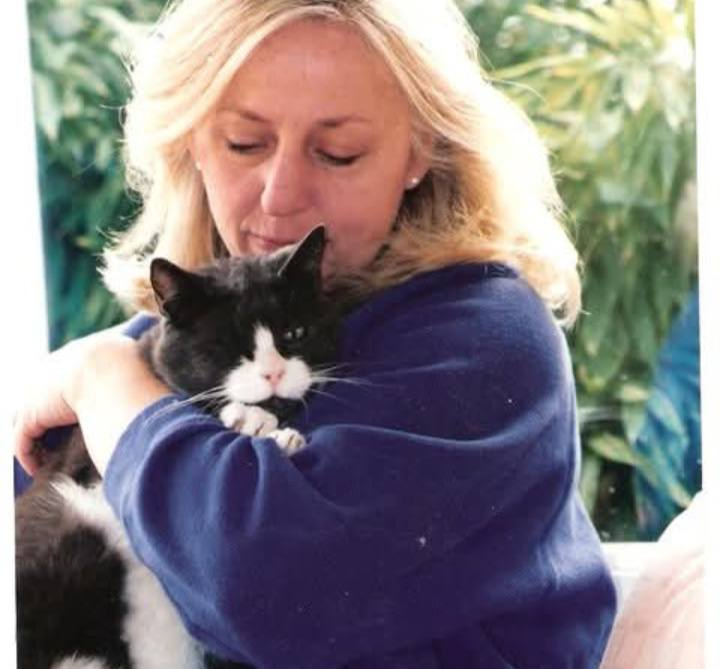


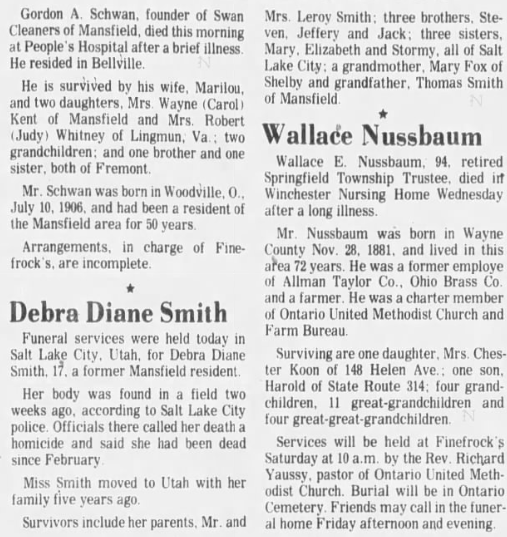
Debra Diann Smith was born on December 26, 1958 to Thomas Leroy and Thelma Lorene (nee Hoover) Smith in Mansfield, OH. Mr. Smith was born on December 14, 1938 in Lucasville, OH, and I wasn’t able to find when Thelma was born but the couple were wed in October 1957. They had seven children together but eventually divorced, and in 1971 Debra relocated with her family to Salt Lake City. According to the Utah Department of Public Safety website, Debbie Smith had brown eyes, brunette hair, was 6’7″ tall and weighed 180 lbs… but considering the picture that the website used is wrong, I’m only going to assume those stats are incorrect as well.
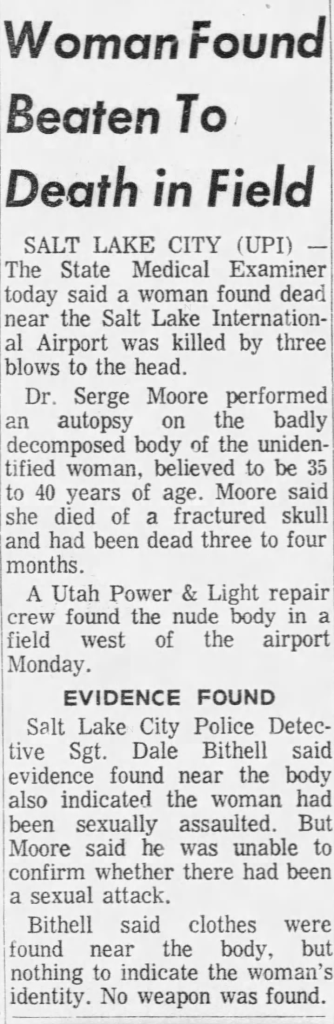
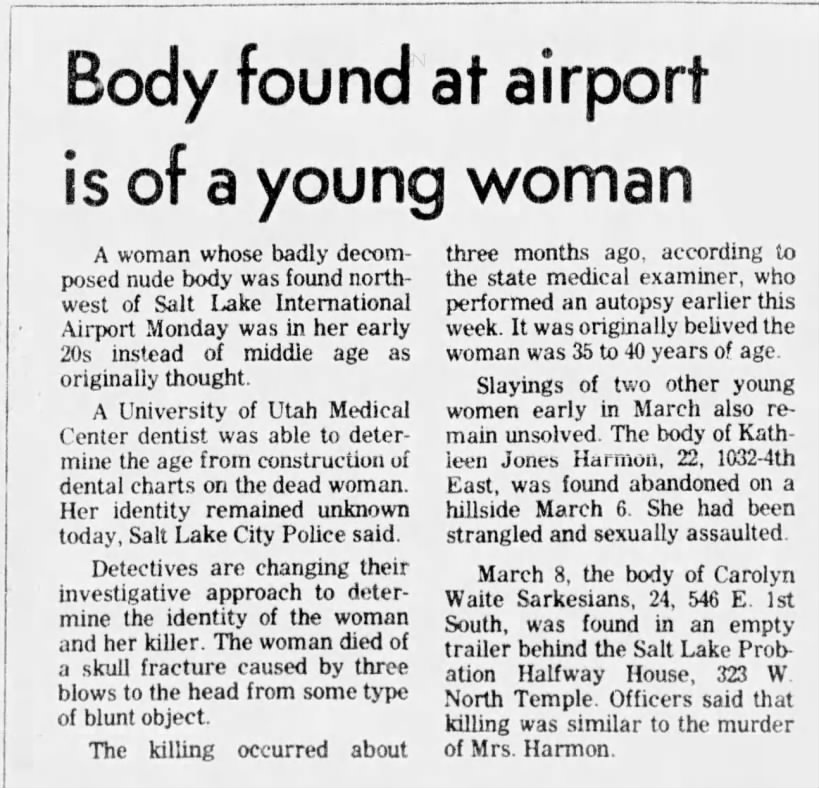
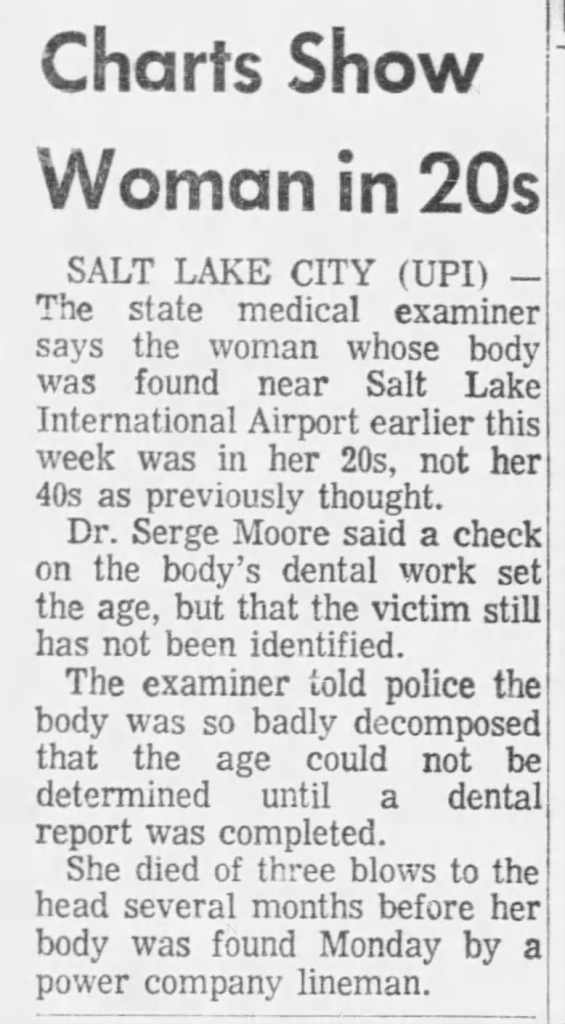
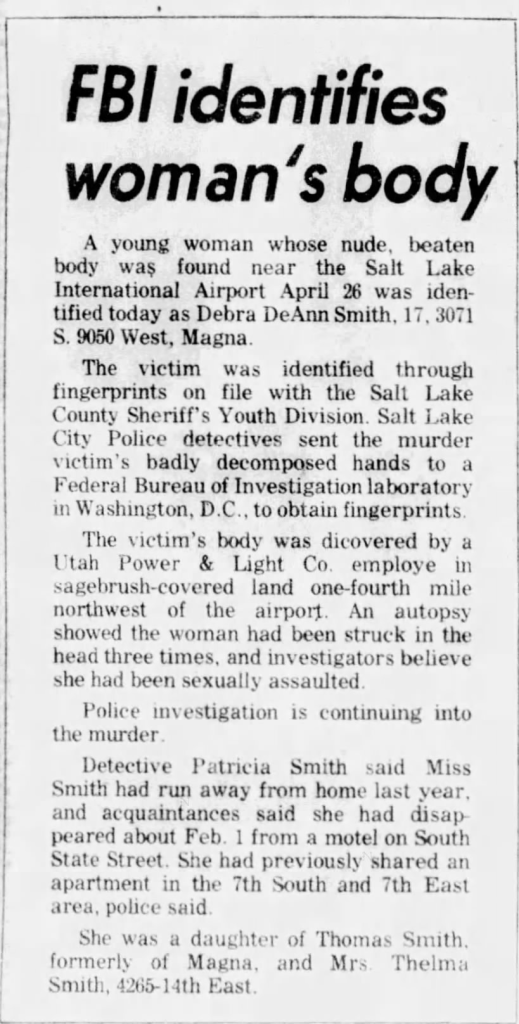
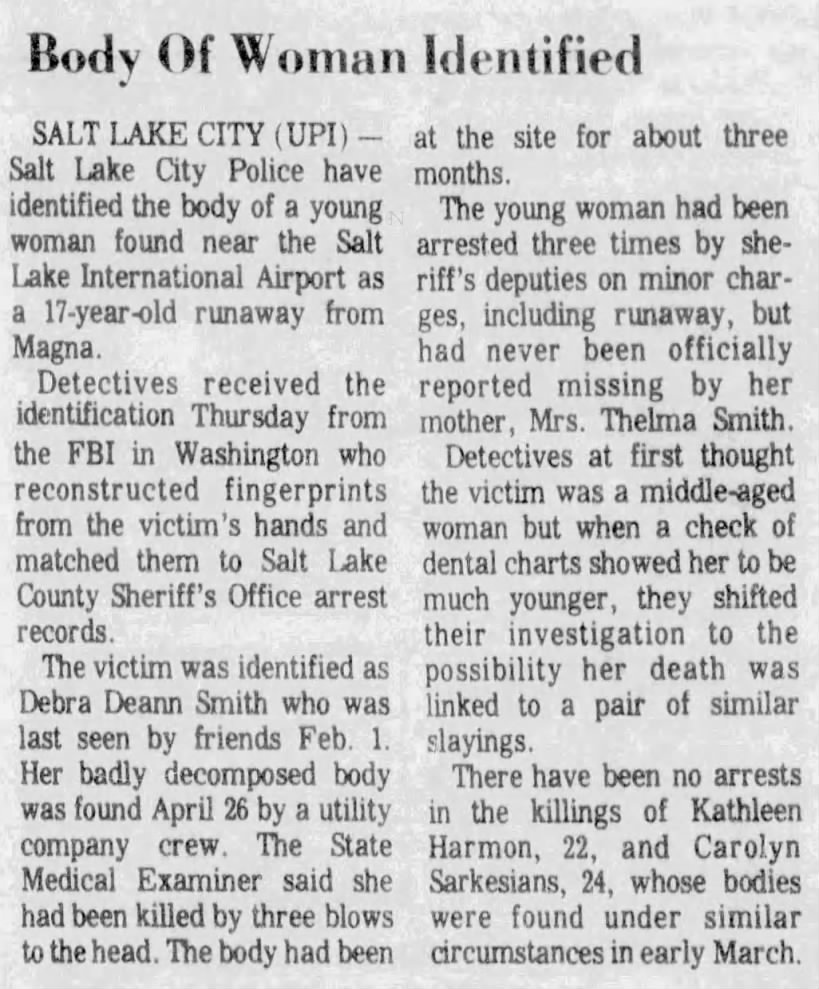
According to reports Smith was a frequent runaway before she was killed, and left home for the final time in early February 1976. According to an article published in The Bellingham Herald on December 5, 1998, Thelma Smith said that she never reported her daughter as missing because she figured she would just change her mind about leaving and would eventually just come home on her own. On Monday, April 26, 1976 her badly decomposed and nude remains were found by a Utah Power and Light worker checking on poles in an open pasture in some ‘sagebrush covered land’ located one quarter mile NW of the Salt Lake International Airport. It’s often incorrectly reported that Smith was discovered on April 1, however according to newspaper reports it was April 26, 1976.
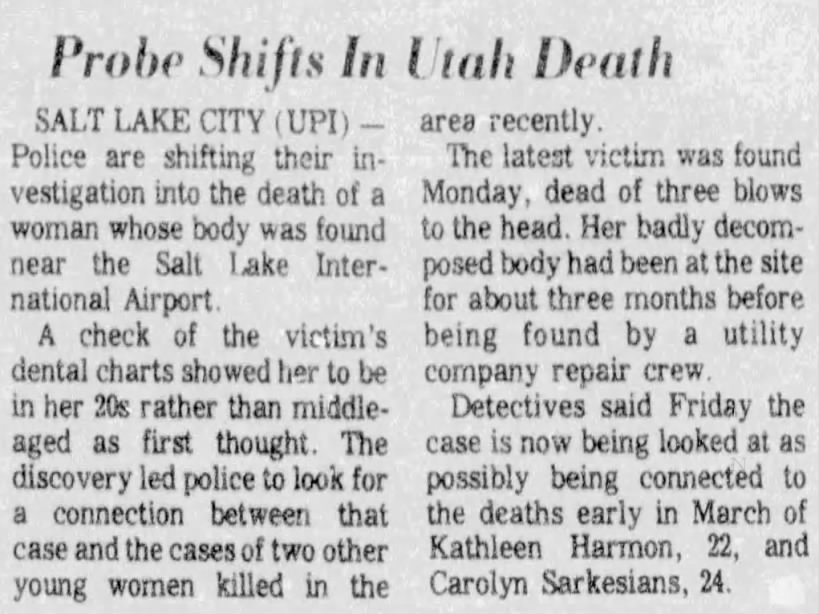
In the beginning of the investigation forensic experts incorrectly estimated the victim to be ‘middle aged’ and was anywhere from 35 to 45 years old, but when they studied her teeth they realized she was much younger. SLC Coroner Serge Moore performed Smith’s autopsy, and he determined that she suffered from three blows to the head and died from a fractured skull. He also said that she had been deceased for three to four months by the time her remains were discovered. SLC Detective Sergeant Dale Bithell said that evidence found near the scene of the crime indicated that she had been sexually assaulted and clothes were found near the body. Her identity remained a mystery until May 13, 1976, and it was only when Smith’s degraded fingerprints were reconstructed by the FBI that a positive identification was able to be made. The seventeen year olds prints were on file with the SLC Sheriff’s Department after she was arrested three separate times on minor charges.
In the early spring of 1976 when Debra Smith was killed Ted was still with Liz Kloepfer (although they were getting towards the end of their rocky romance) and he was living at his third SLC residence, located at 413 B Street East (which he moved into at some point before March 22nd, 1976). According to the ‘1992 TB FBI Multiagency Report,’ Bundy was in Seattle on January 12, 13, 30 and was in SLC on February 23, which is when his kidnapping trial started. Although he was heavily under police surveillance around the time Smith was killed, on the report his whereabouts are mostly unaccounted for and he was remanded into custody on March 1, 1976, where he remained until he escaped in June 1977.
In the early stages of the investigation law enforcement thought that Smith’s murder could be linked to two other homicides in the SLC area: Kathy Harmon and Carolyn Sarkessian, who were both found dead on March 6, 1976. Harmon was a newlywed, and was last seen at the Better Days Bar four days before she disappeared. A University of Utah student out walking his dog found Kathy’s half nude remains between Parley’s Canyon and Emigration Canyon north of the Interstate-80. She had been raped, beaten, and strangled. As of December 2024 Harmons murder remains unsolved.
Also on March 6, 1976 SLC police discovered the remains of 24 year old Carolyn Sarkessian, brutally beaten and sexually assaulted; her cause of death is listed as strangulation and she suffered from a broken neck. In July 2004 it was determined that Gayle G. Benavidez was responsible for Sarkessian’s murder after a state-issued mouth swab destroyed his long-standing alibi; he was brought up on murder charge and took a plea deal of life imprisonment. Prior to his conviction of the murder of Carolyn he had two prior rape charges on his record.
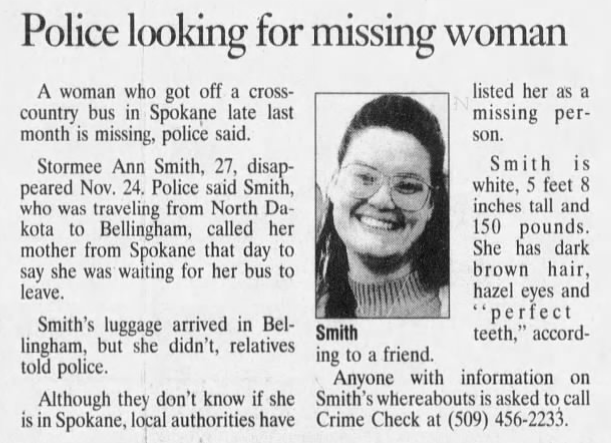
In an article published in the Bellingham Herald on December 5, 1998, Debra’s sister Stormee also disappeared briefly, much to the horror of her mother. At the time she vanished Stormee was in recovery from alcohol addiction, and had recently relocated to Fargo, ND where she completed a treatment program and was working on her sobriety. According to Thelma Smith, she had always managed to stay in touch with her (even ‘while drunk’), because she knew her mother worried about her after already losing one other daughter to murder: ‘the first time it happens to you, it’s totally devastating. because it was such a shock. I’m always concerned when I don’t hear from my girls. She (Stormee) knows that I worry and that’s why she’s so good about calling in.’ Mrs. Smith said that Stormee was outgoing and was comfortable in the company of strangers. and “she doesn’t seem to have a fear, even though her sister was killed.’ … ‘She’s never gone this long without giving me a call. She’s always called to let me know she’s ok. We haven’t heard anything this time. It’s fairly nerve wracking. But we’re holding up pretty well.’ Ms. Smith eventually turned up a few days later on December 9. Also in that same article, it confirms Debra as a Bundy victim and claims that he even confessed to her murder during his death row confessions in January 1989.
Stormee Ann Smith died at the age of forty-one in 2012 in Lynden, WA. Her brother Jeffrey Thomas passed away on March 7, 2020 at the age of thirty-eight. Wendy Jo Smith died at the age of fifty-five on April 5, 2019, and just two months later her twin Mary Francis passed away on July 21, 2019. Thomas Smith died at the age of 82 in January 2021 in Canada. As far as I can tell, Thelma Smith is still alive. As of December 2024 the murder of Debra Diann Smith remains unsolved.
* I have seen not only Debs first but also her middle name spelled a variety of different ways, and I decided to go with the spelling that is on her gravestone. I’ve also seen her middle name listed as DeAnn.
Works Cited:
bci.utah.gov/coldcases/deborah-diane-smith/
victims-of-serial-killers.fandom.com/wiki/Debbie_Smith

















 Another Bundy Blog.