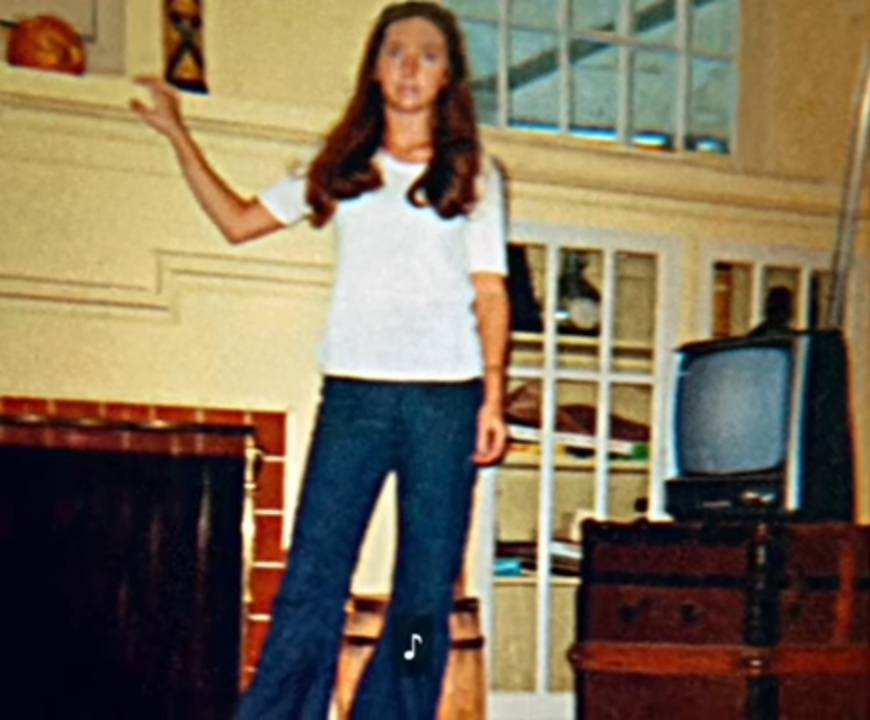
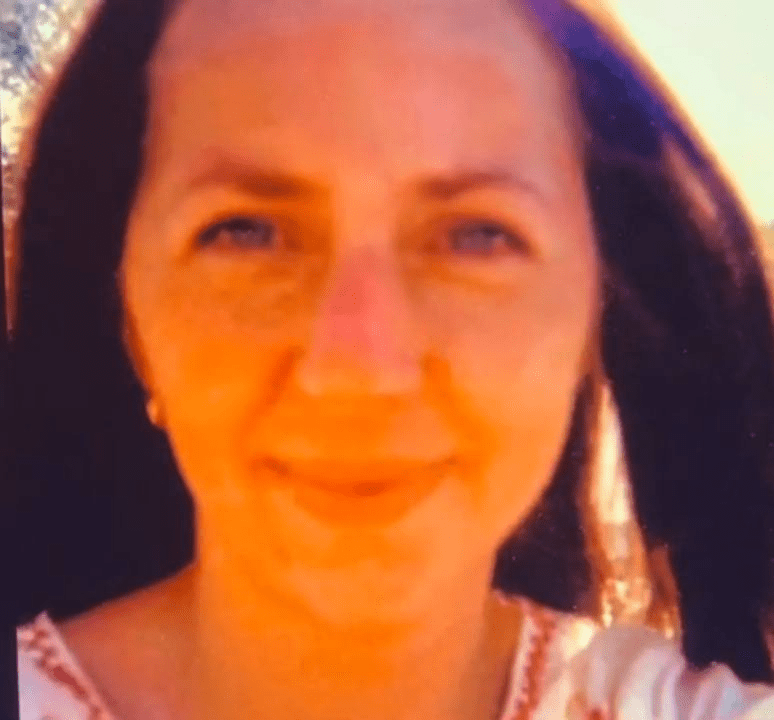
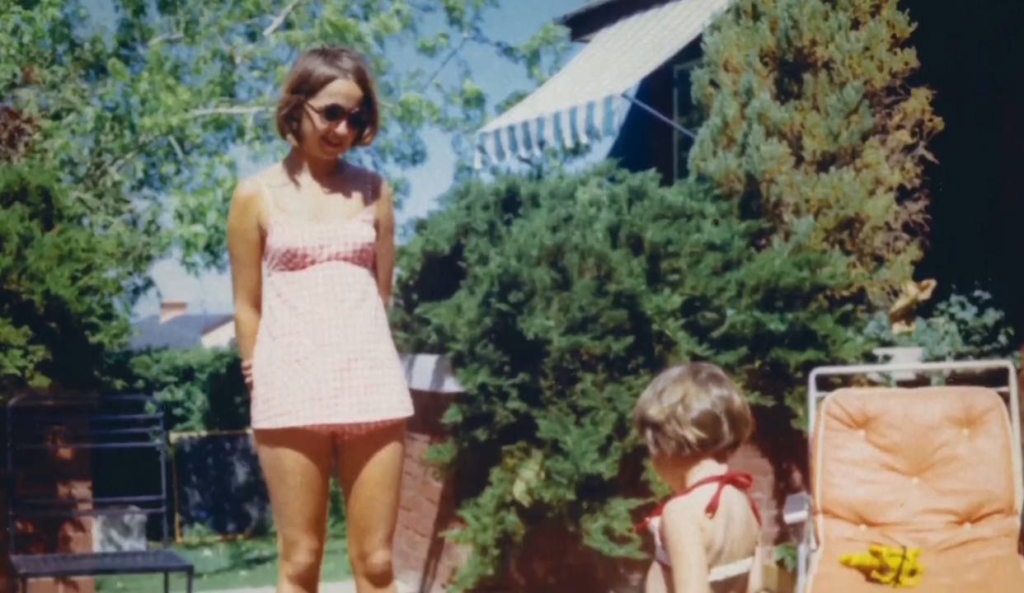
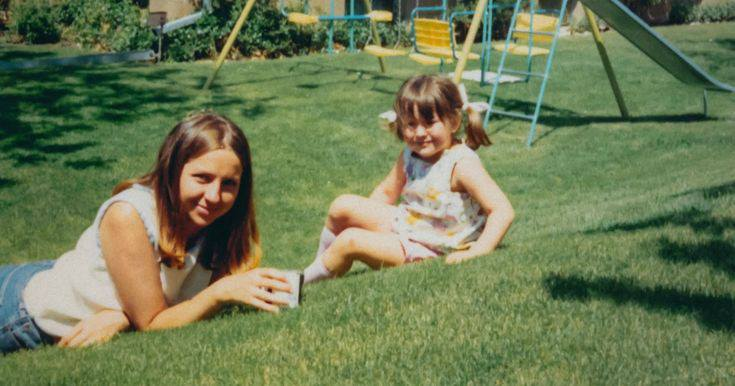
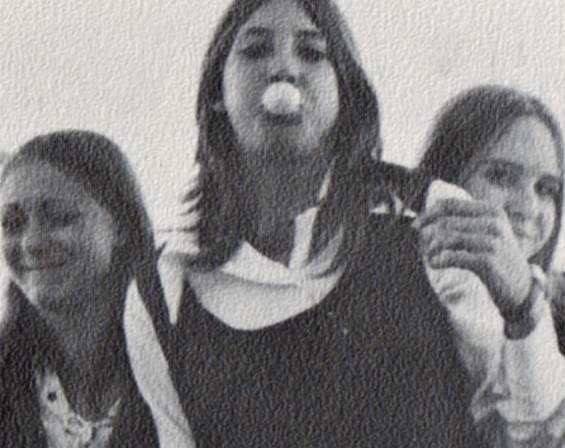
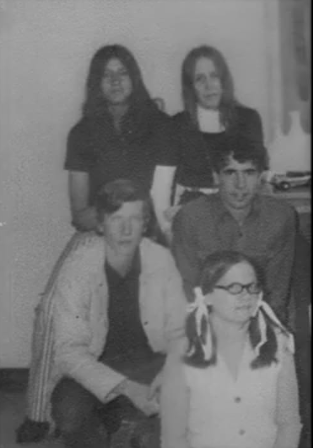
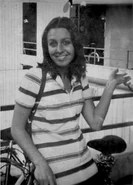
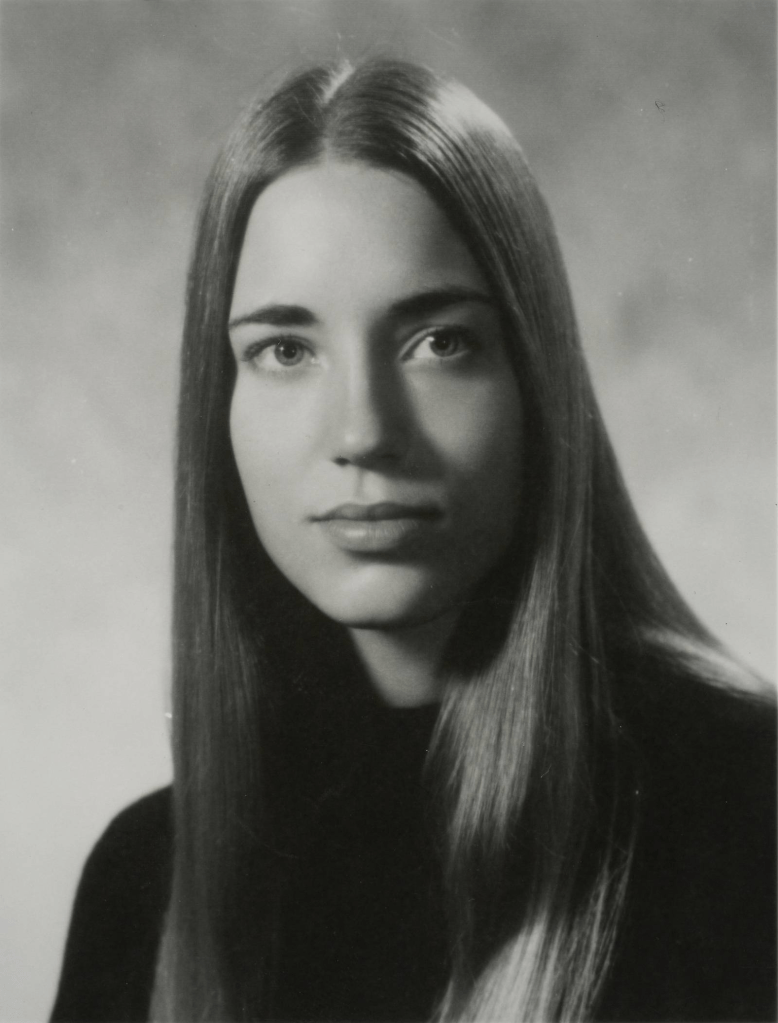
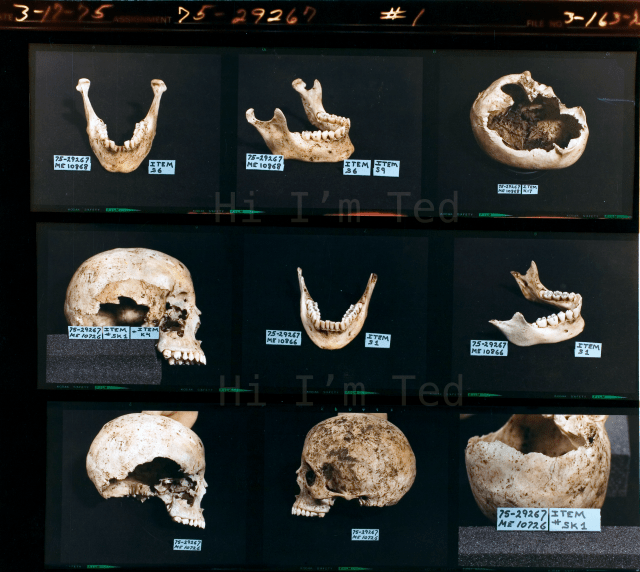
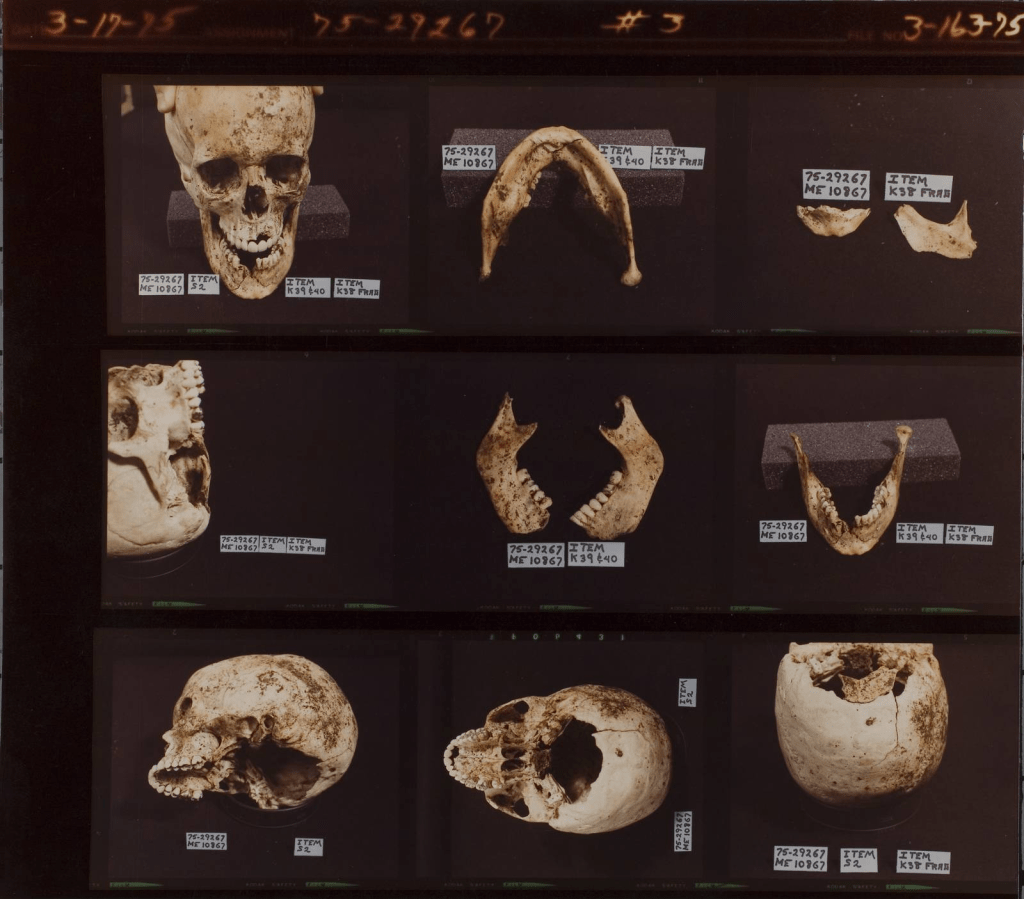
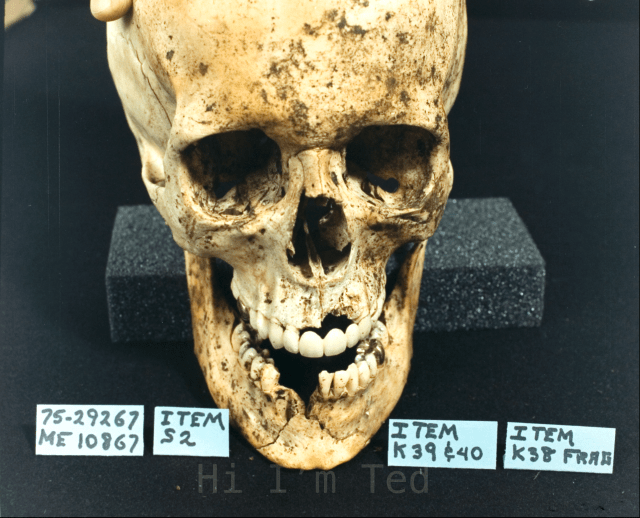
Ruth Marie Terry, AKA ‘the Lady of the Dunes.’

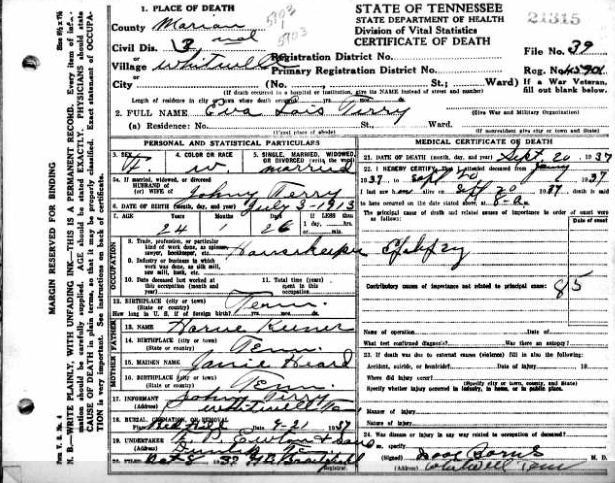
Ruth Marie Terry was born to John D. ‘Johnny Red’ and Eva Lois (nee Keener) on September 8, 1936 in a mountainside shack in Whitwell, Tennessee. The couple had three children together: Johnnie Lois (b. 1933), James Ray (b 1934) and Ruth. Eva was born on July 3, 1913 and died on September 20, 1937 at the age of 24 when Ruth was only one; her father eventually remarried a woman named Stel19la and they went on to have three children together.

On October 21, 1956 when she was twenty Ruth got married to Korean War vet Billy Ray Smith in Marion, Tennessee but the pair quickly divorced.* The daughter of a coal miner and housewife, Ruth wanted more than what Whitwell had to offer, so after leaving her husband she left home and got a job at a Fisher Body automotive plant in Livonia, Michigan.

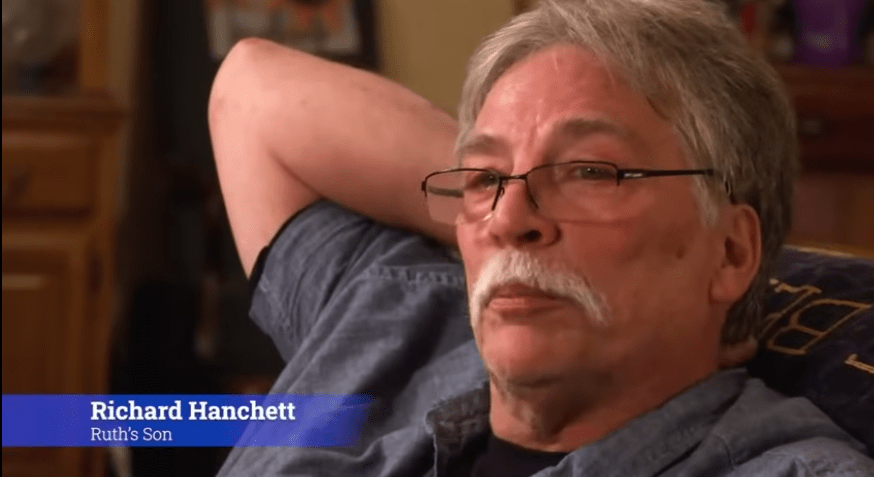
Ruth gave birth to a son named Richard in 1958 (according to records, his father is unknown), but due to financial strain was unable to care for him and he was adopted by the superintendent of her workplace, Richard Hanchett Sr. (in exchange for him paying off her expenses). After the adoption was finalized, Ruth left Livonia and moved to California. She reached out to Richard in 1972, but at the time he was unavailable.  

On February 16, 1974, Terry married an antiques dealer in Reno named Guy Rockwell Muldavin, who went by multiple pseudonyms, including Guy Muldavin Rockwell and Raoul Guy Rockwell; at the time of their marriage she was using an alias, and went by the name Teri Marie Vizina. Muldavin’s biological parents are unknown (but are confirmed to be from Russia), and his adoptive father Abram Albert Zadworanski Muldavin was born on July 2, 1894 in Wasilków, Poland, and his adoptive mother Sylvia ‘Lily’ Silverblatt was born on June 22, 1902 in Brooklyn. The couple had one biological son together named Michael and eventually divorced. Scandal seemed to follow the family everywhere, as his brother was disbarred and banned from practicing law in the state of New Mexico after being charged with misconduct for accepting $3,200 and ‘commingling the same with his own funds, contrary to the canons of professional ethics of the State of New Mexico.’

According to his obituary, Muldavin was born in Santa Fe, New Mexico on October 26th 1923, but there are records that show his birth date was later the same year in December, and in New York. During his early years he traveled extensively across the world with his family, and spent a significant amount of time living in various locations in and around Germany, Cuba, and California. He was married five times over the course of his life and was with his fifth wife Phyllis for almost fifty years before his death.

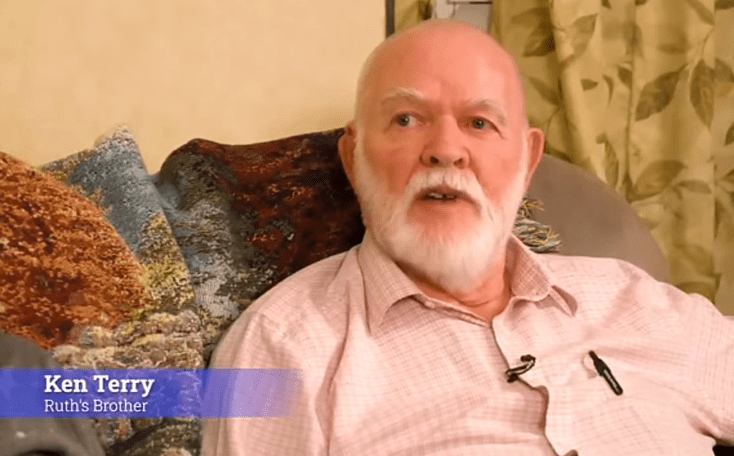
Cape & Islands District Attorney Robert Galibois said that after Terry and Muldavin got married in February 1974 they traveled around the US, and stopped in Whitwell to visit with her family. Ruth’s grand-niece Brittanie Novonglosky later told investigators that she thought Guy was ‘possessive and demanding,’ and that her aunt ‘wasn’t herself’ while in his presence. After leaving Whitwell they couple went to Chattanooga to visit her half-brother, Kenneth and his wife Carole, who later recalled them saying they were going to drive across the United States looking for antiques to buy (then sell), specifically mentioning they were going to stop in Massachusetts.

When Muldavin returned home to California from that trip, he was driving what is believed to be her vehicle and told acquaintances that his new bride had sadly passed away. The Terry family was immediately suspicious of the news, and Ruth’s brother James went to her home to confront his new brother-in-law. Upon arriving he was told that the two had gotten into a fight during their honeymoon and she got out of the car in a huff, and he had not heard from his wife since.

James Terry hired a PI to investigate his sister’s disappearance, who learned that Muldavin sold off all of her personal belongings and had left him ‘of her own will’ after getting involved with a religious cult. Prior to the identification of her remains, Ruth was listed as ‘deceased’ in family obituaries, and she was never officially reported as missing. Her SIL Carole wondered if maybe she was in a witness protection program and because of that couldn’t reach out to anyone.

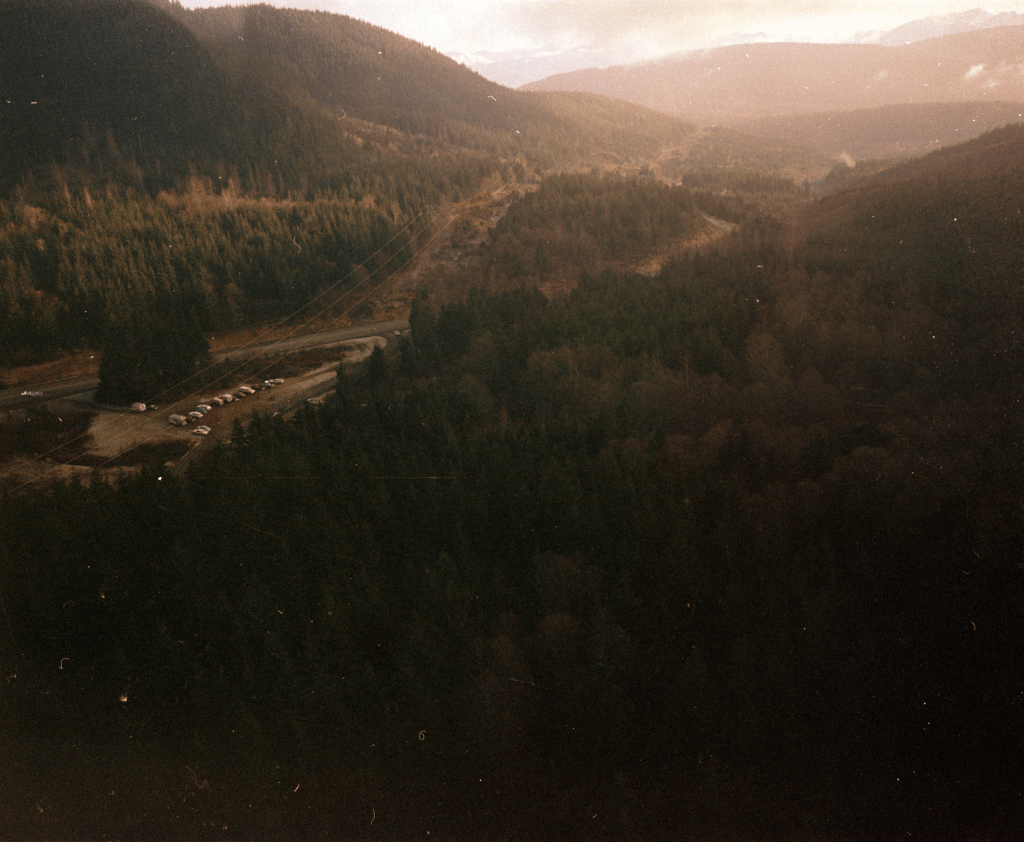
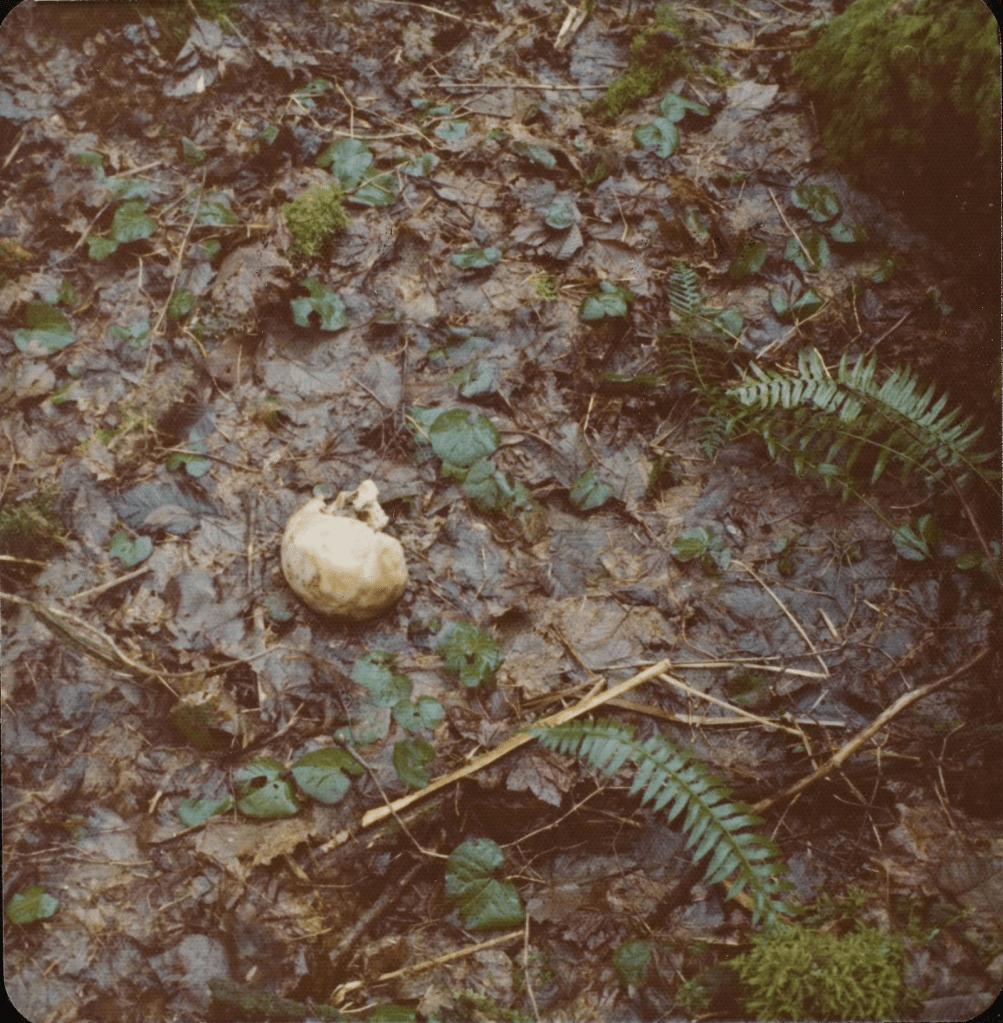
I’ve come across varying details about how Ruth’s body was discovered, but it is agreed upon that she was found in Provincetown, Massachusetts on July 26, 1974 roughly 800 feet away from the Seascape Dune Shack in a clump of overgrowth by 12-year-old Sandra Metcalfe-Lee, just yards away from a busy road with a lot of insect activity. The first version is that Lee and her sister followed a barking dog (some sources say it was a stray, others say it was their family beagle) to the decomposing remains on July 24, 1974 but later told investigators that it took them two days to file the report because ‘the discovery had traumatized them.’ The second report (that is more commonly told) is that Lee and her parents were hiking back to the Province Lands Visitor Center after a day at the C-Scape Dune Shack when they came across Ruth, and they immediately went to park rangers. Getting to the area where the remains were found would have required a vehicle with four-wheel drive, as there was a great deal of sand to get through, and longtime DA on the Cape Michael O’Keefe felt it would have been incredibly difficult to carry a body out to the dunes. Sandra grew up and became a true crime writer and wrote a book about the case titled ‘The Shanty: Provincetown’s Lady in the Dunes.’

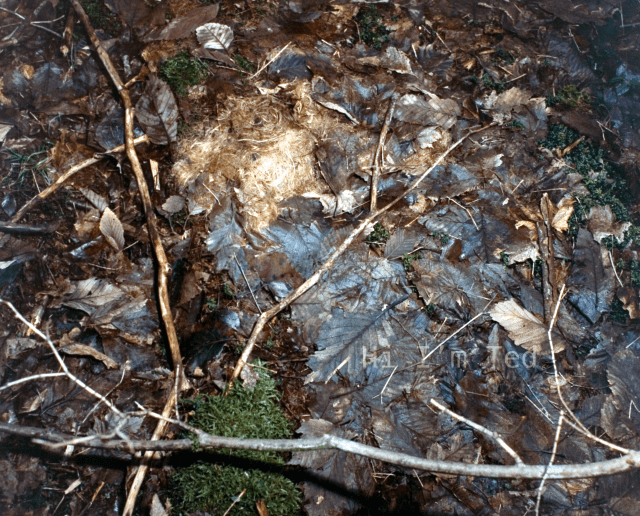
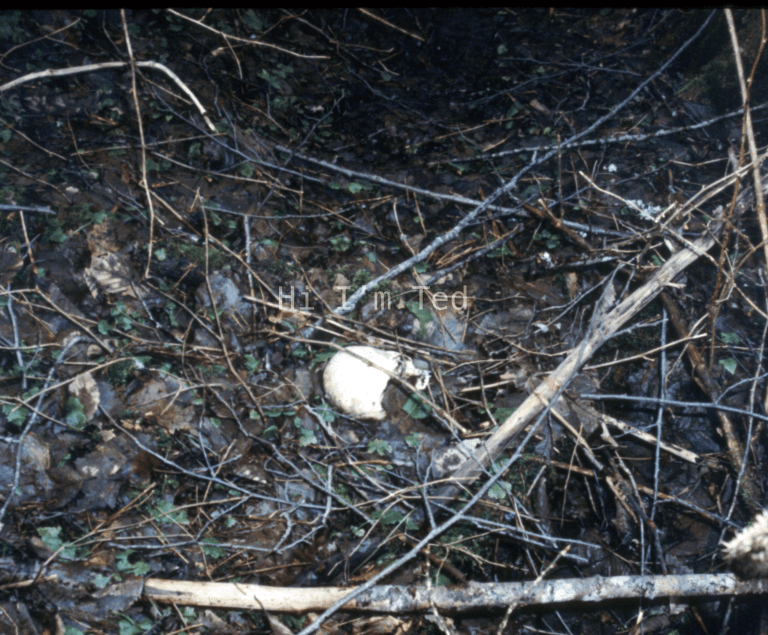
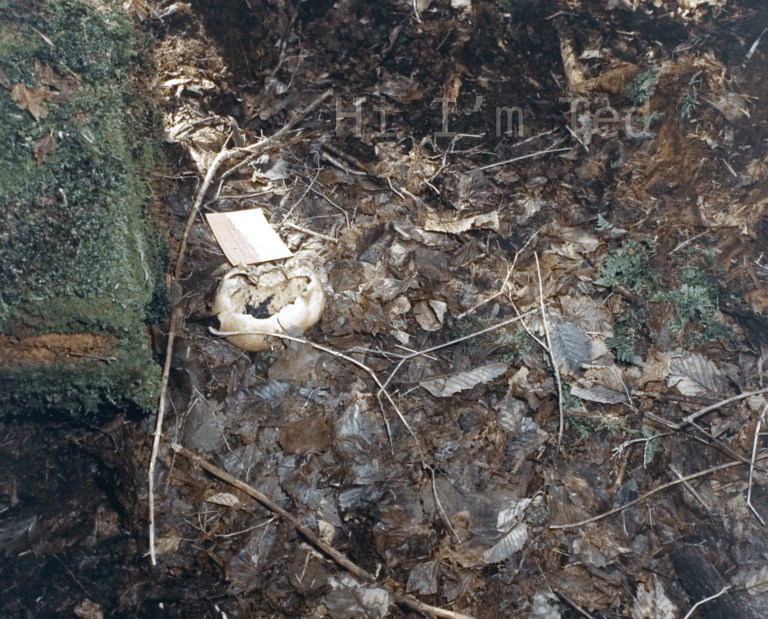
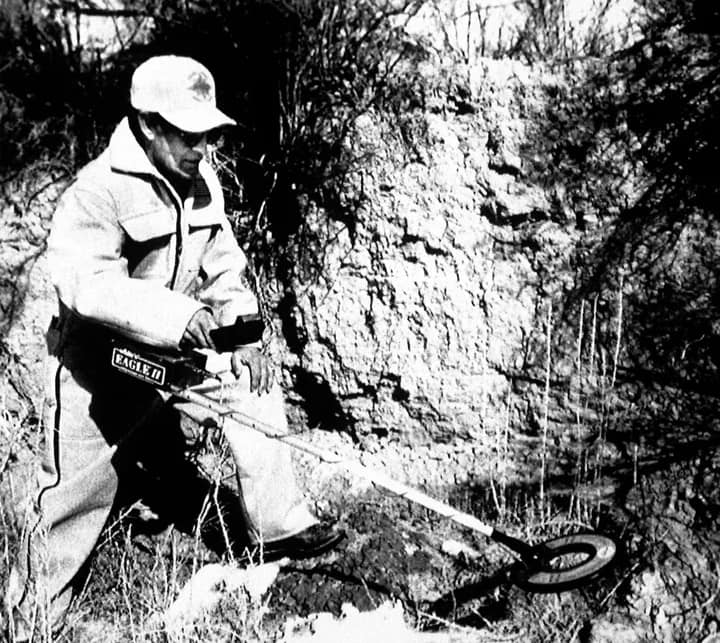
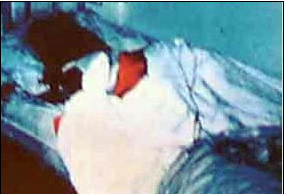
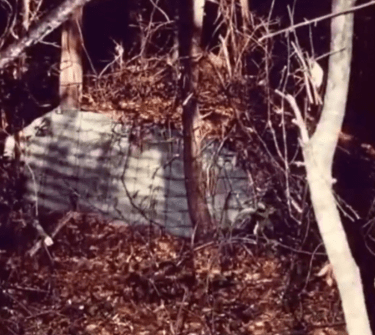
Investigators found two sets of size ten footprints in the sand leading to the body as well as tire tracks roughly fifty yards away, and forensic experts speculate that the remains had been there for about two weeks. The victim was found face-down on half of a green beach blanket, almost ‘as if she’d been sharing it with a companion,’ and investigators wondered if maybe she either knew her killer or had been asleep when she was attacked, as there were no signs of a struggle.

An official police report described the victim as a white female, roughly 140 pounds, and between 5’6” to 5’8,”  with the discrepancy in height due to the neck, as it was almost severed. According to former Provincetown Police Chief James J. Meads, her age was estimated to be between ‘25 to 45′ but she was probably not older than 35. At the scene a blue bandanna and a pair of Wrangler jeans were found neatly folded under her head and her long, auburn/red hair was pulled back into a ponytail by a gold-flecked elastic band; her toenails were painted pink.

Both of the victims hands had been removed as well as one of her forearms, and several of her teeth had been pulled out. She had a large amount of expensive ‘New York style’ dental work done, including $3,000 to $5,000** worth of gold crowns, which is usually as conclusive as fingerprints when it comes to making an identification and is (usually) relatively easy to trace. Thousands of dentists were sent information regarding the crowns, but no one ever came forward with any information.

Mead suspected that Terry’s killer was a man she was familiar with and that he drove her to the scene of the murder in a four wheel drive vehicle under the pretense of sunbathing. In the beginning of the investigation, Chief Mead followed standard police procedures: bloodhounds were brought in to comb through the murder area. Missing persons bulletins were studied. Registers of all Provincetown hotels, motels, and rooming houses were checked. Anyone who had a permit to take a vehicle into the National Seashore was checked. In the years following the murder Mead received thousands of leads, phone calls, and tips regarding the Lady of the Dunes, and he investigated every single last one of them; sadly he died before the murder was solved.

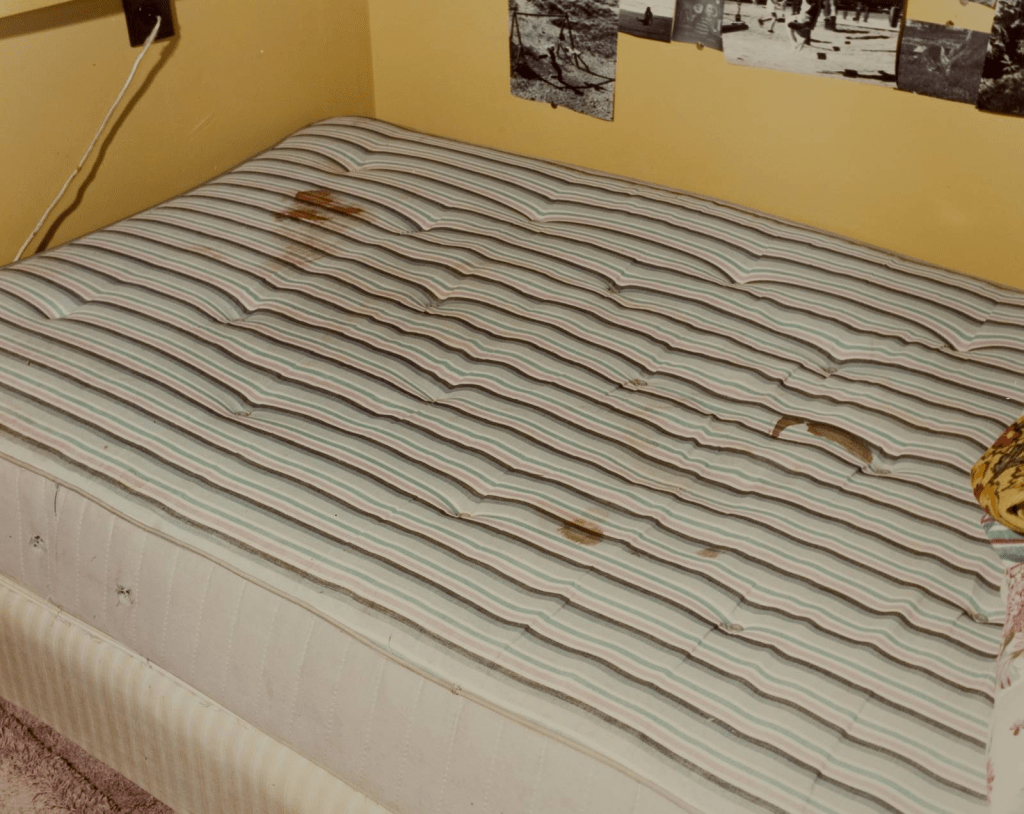
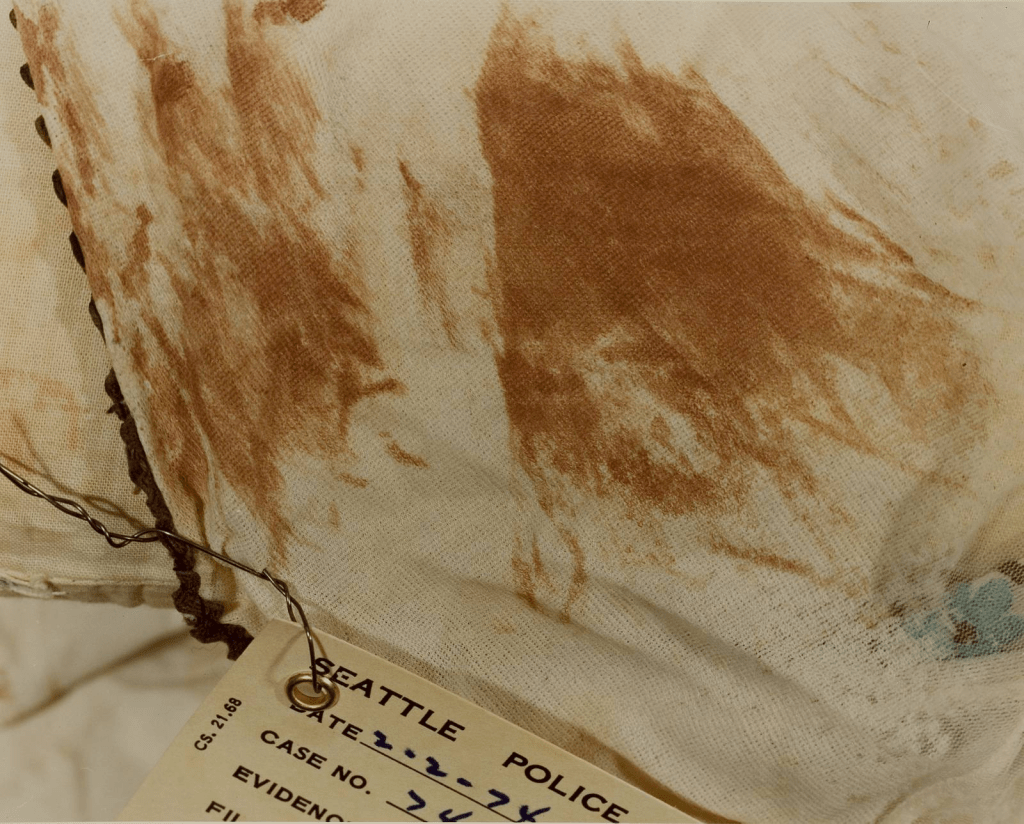
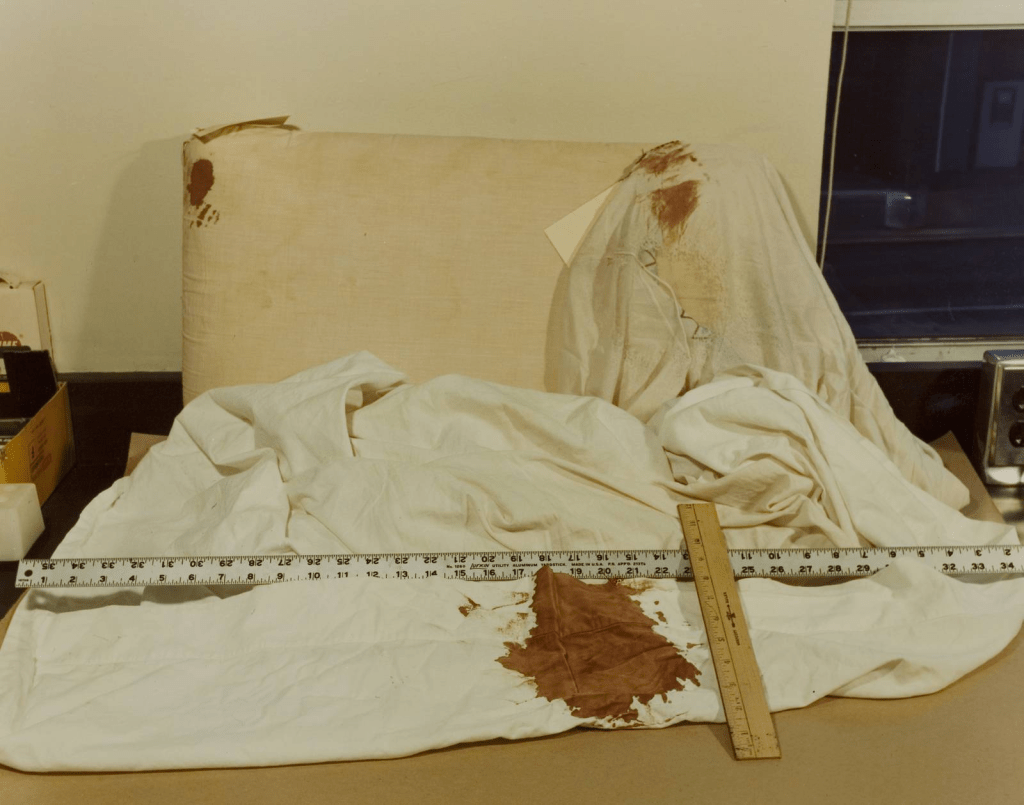
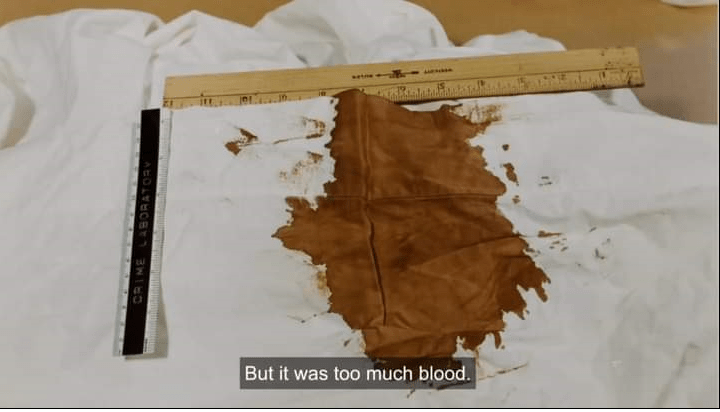
The town’s police department had taken over the case immediately after the murder, however it was turned over to Massachusetts State Police Detectives Unit for the Cape and Islands District in 1982. In the early stages of the investigation, law enforcement entertained the possibility that the killer brought the remains to the Dunes from nearby Boston, but they eventually determined that the murder took place at the scene (despite a lack of blood). They also theorized that maybe the killer was a transient, especially when taking into consideration the inability to identify the victim.

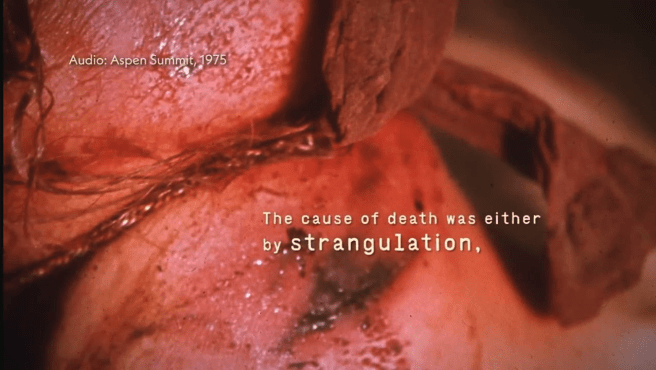
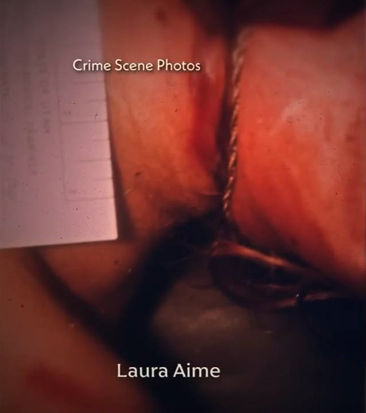
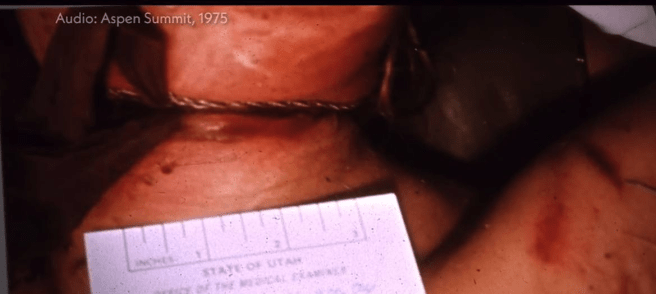
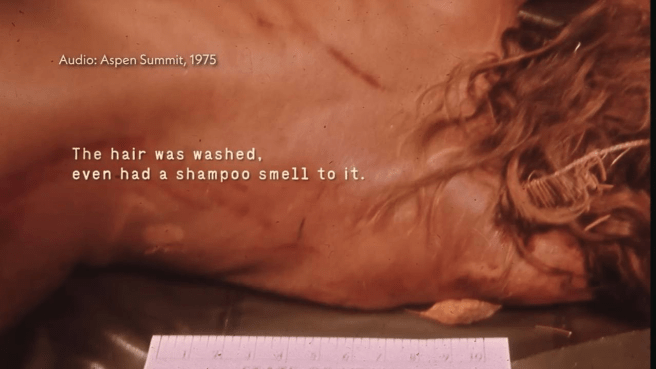
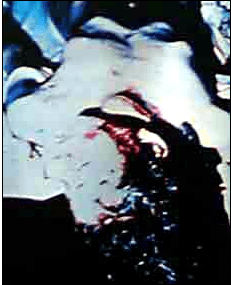
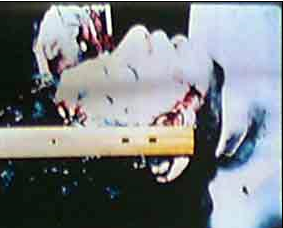
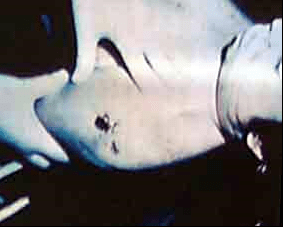
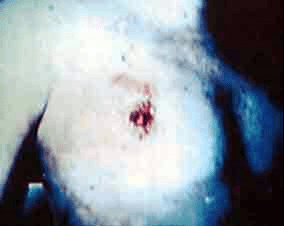
According to her autopsy the victim had nearly been decapitated and the left side of her head had been crushed, an injury that had possibly been inflicted by a military-type entrenching tool. Despite being strangled, it was determined that she had died from the blow to the head, and she showed signs of sexual assault that most likely occurred postmortem. Some investigators believe that the missing teeth, hands and forearm pointed towards the killer either attempting to hide the identity of the victim or themselves.

Detectives sent a description of the victim out over teletype (which is a machine that sent and received messages via a typewriter-style keyboard where the reply was printed on paper) to the FBI and the Royal Canadian Mounted Police. Investigators were at a complete loss as to who she could be. Was she a girlfriend of Whitey Bulger? Or a showgirl from New York City? Barnstable County records show that in the late 1940’s to mid-50’s Muldavin’s parents bought land and properties in Provincetown, MA.

In October 1974 the remains of the Lady of the Dunes were finally laid to rest in a state issued metal casket and, the case went cold. In 2014, one of the investigators that worked the murder in 1974 helped raise the money to buy her a new coffin, as the one she was originally buried in was poorly made and had rusted through and deteriorated.

She was laid to rest in Provincetown’s St. Peter’s Cemetery, and her stone marker read ‘Unidentified Female Body.’ In 1979 the first facial reconstruction of the woman was created using clay as a medium, and the following year her remains were exhumed for the first time, but no new clues were found. In 2000 a woman came forward claiming to be the daughter of the Lady of the Dunes and the body was exhumed again that March for DNA testing; nothing ever came of it. The remains were dug up for a third time in May 2003 and it was then that experts performed a CT scan of her skull that resulted in images that were used by the National Center for Missing and Exploited Children for another facial reconstruction. In 2006 law enforcement released age progression photos using to help with the search and a 3D composite image was created in 2010.

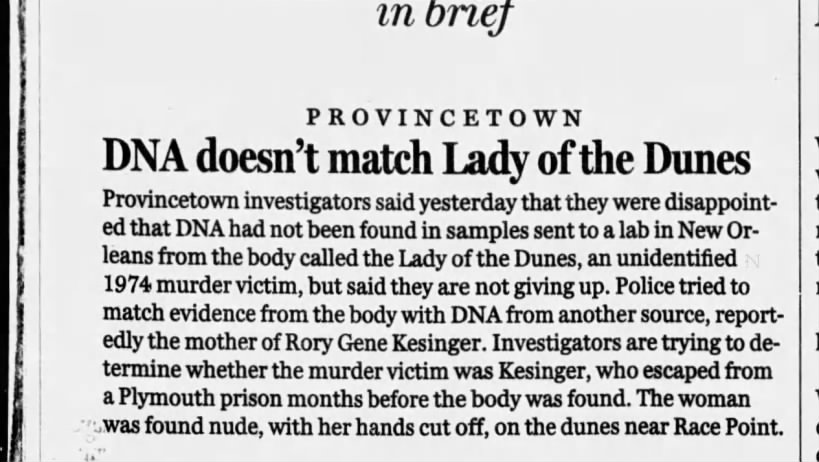
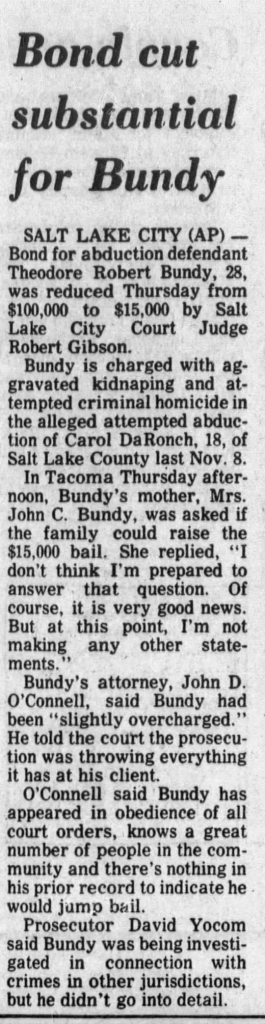
In 1987, a Canadian resident came forward claiming that she saw her dad strangle a woman in Massachusetts around 1974; investigators tried to look into the allegations but were unsuccessful. A second woman told detectives that the reconstruction strongly resembled her sister, who had disappeared in Boston in 1974.  Provincetown police also chased a lead that involved Rory Gene Kesinger disappeared in 1973 after breaking out of a Plymouth, MA jail. Investigators saw a strong resemblance between Kesinger and the victim, but DNA from her mother did not match the victim. Two additional missing women were also ruled out: Francis Ewalt and Vicke Lamberton.

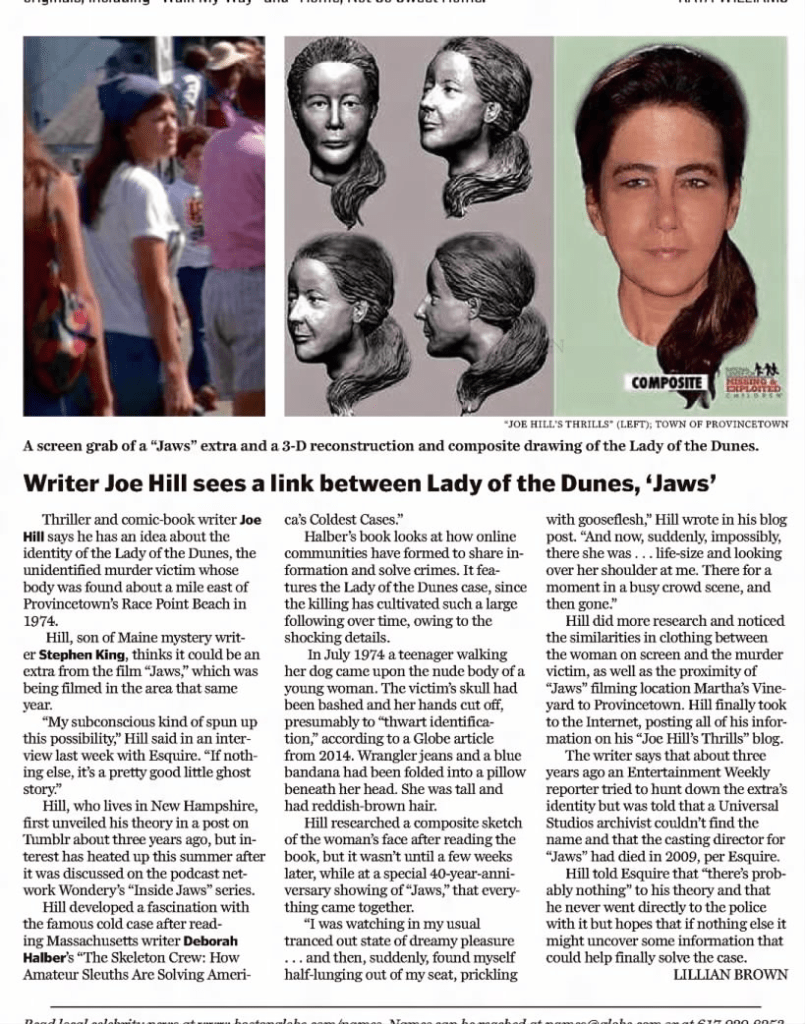
In August 2015, rumors started to swirl that the Lady of the Dunes may have been an extra in the 1975 cinematic classic Jaws, which had been shot in the village of Menemsha in Martha’s Vineyard between May and October 1974, which is located 100 miles south of Provincetown. Just weeks prior, Joe Hill (son of Stephen King) spotted a woman in the crowd during the Fourth of July beach scene that was wearing a blue bandanna and jeans that looked nearly identical to the ones found with the Lady of the Dunes. Hill brought this to the attention of police after reading a book called ‘The Skeleton Crew: How Amateur Sleuths are Solving America’s Coldest Case’ but nothing ever came of this tip.

Unfortunately, evidence from the crime scene had been thrown away by MA state police (including the victim’s clothing and the blanket she was found with), and as time passed by and the chances that the case would be solved faded science and DNA analysis evolved, and investigators were finally given the break they needed. In 2022 the body was exhumed one final time, and a portion of the victims’ skull was sent to Othram Laboratories along with genetic samples of members of the Terry family. From this, a DNA profile was created that helped identify distant relatives and eventually lead to the identification of the victim and on October 31, 2022 the FBI field office in Boston announced that the ‘Lady of the Dunes’ had officially been identified as Ruth Marie Terry.

According to FBI Special Agent Joseph Bonavolonta, Terry’s identity was discovered using investigative genealogy, which is a blend of traditional DNA analysis and genealogical research that can generate new leads for unsolved homicides, as well as help identify unknown victims: ‘This is, without a doubt, a major break in the investigation that will hopefully bring us all closer to identifying the killer. Now that we have reached this pivotal point, investigators and analysts will turn their attention to conducting logical investigative steps that include learning more about her, as well as working to identify who is responsible for her murder.’

On November 2, 2022, the Massachusetts State Police went to the public asking for information related to Terry’s one-time husband Guy Rockwell Muldavin, and on August 28, 2023 he was officially named as Terry’s killer. In a press release from the FBI, ‘for nearly five decades, investigators have worked tirelessly to identify this victim through various means, including neighborhood canvasses; reviews of thousands of missing-person cases; clay model facial reconstruction, and age-regression drawings.’ Friends of Muldavin were shocked when they learned who he really was, with one saying ‘he was great. I really loved him. I mean, he was terrific. And I was very close to him. I’m speechless, because none of it makes any sense.’

Known around Greenwich Village for his nightly parties with ‘beatniks, art lovers, celebrities and celebrity hunters,’ Muldavin charmed everyone he met with his magnetism and offbeat philosophy. He was disqualified from joining the military during World War II due to a mastoid infection, and in 1942 he was living in Manhattan and was going to school at The American Academy of Dramatic Arts. On May 11, 1946 while working as a professor in Bellevue, Pennsylvania he married former beauty pageant contestant and model Joellen Mae Loop. The newlyweds moved all over the US, and briefly lived in California where Muldavin got a job as a disk jockey at KIEM radio station Monday through Friday at 5 o’clock. They eventually settled down in Seattle, where he took a job in the furniture department at Bon Marche. The couple had one daughter together named Towers Joy and went on to purchase a large antique shop that ‘rarely opened before 6 PM.’ They were married for ten years before calling it quits, and divorced on July 16th, 1956.

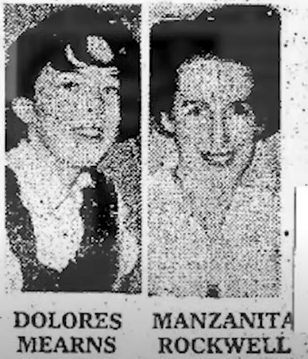
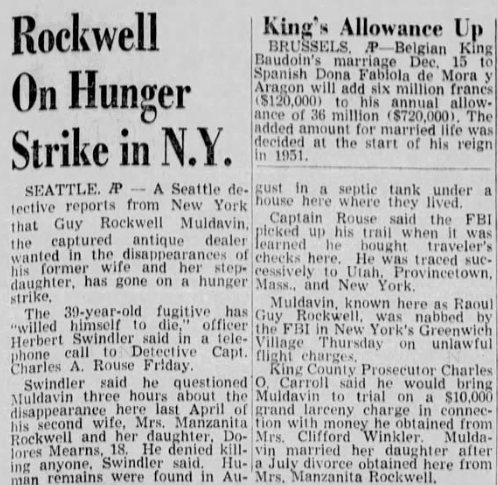
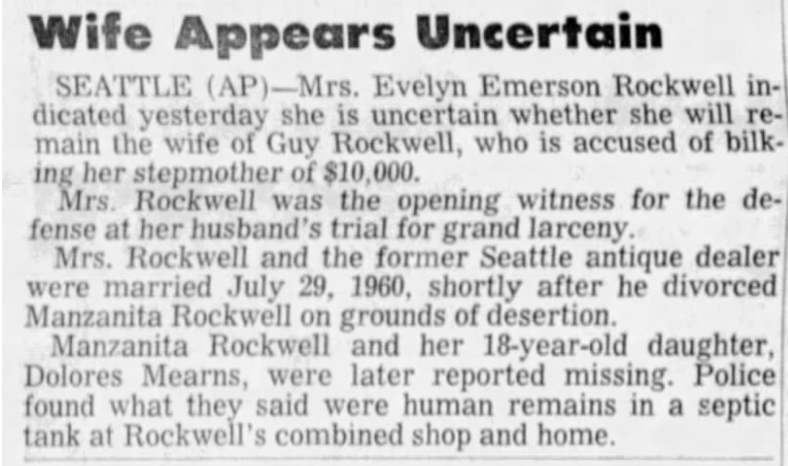
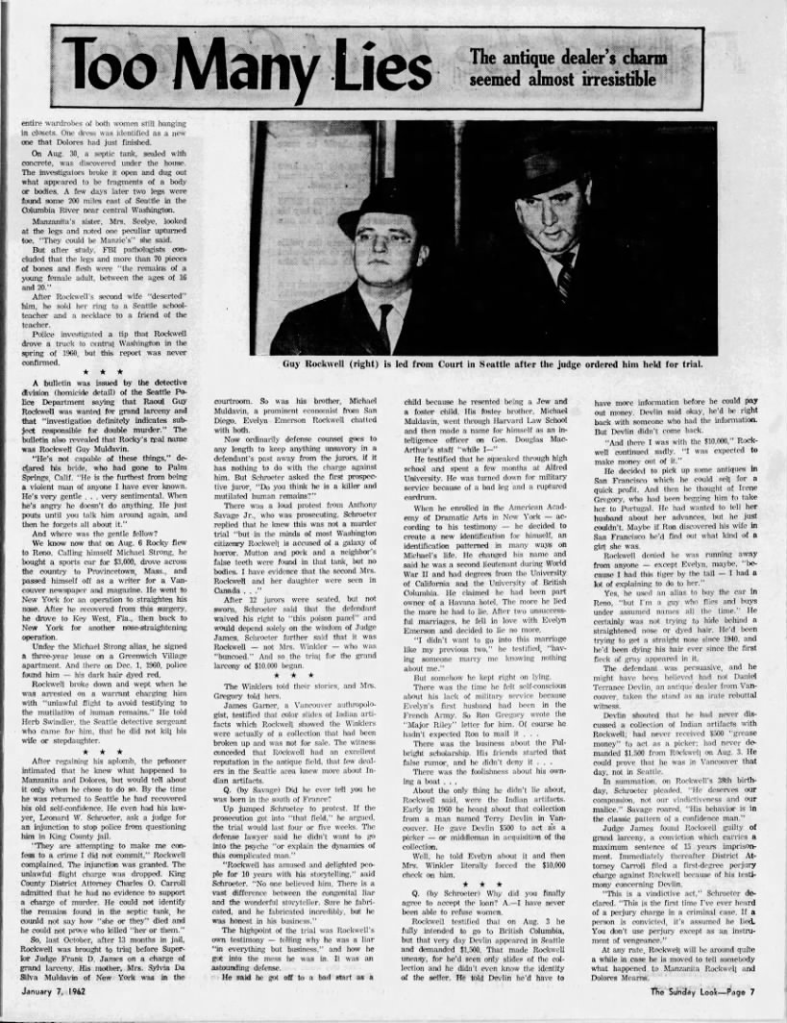
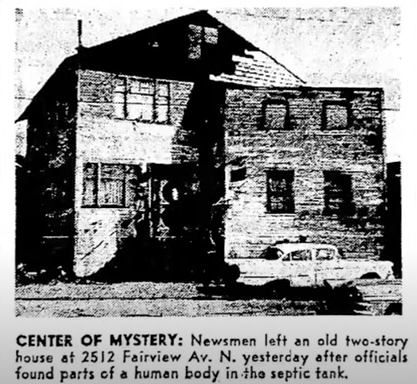
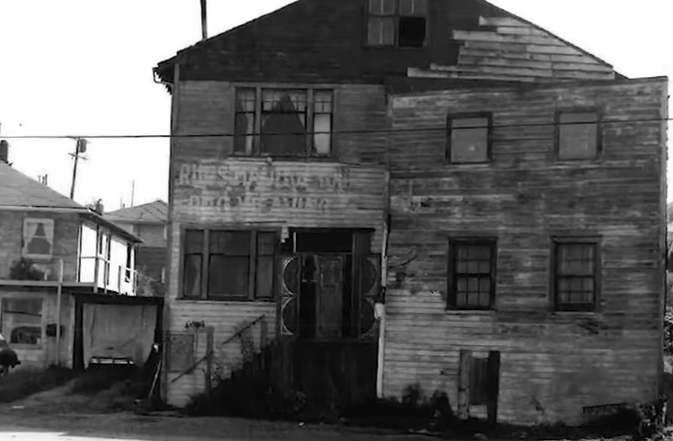
But Muldavin wasn’t single for long, and only two years later married Manzanita Aileen Ryan in Kootenai, Idaho on September 30, 1958. According to an article published in The Evansville Press on January 7, 1962, his first marriage ended shortly after ‘Manzy’ and her then-husband, William Mearns, walked into his antique shop. His new bride had an eighteen-year-old daughter named Dolores Ann Mearns, who was attending college at the time and moved into a second floor bedroom in Muldavin’s antique shop on Seattle’s Lake Union waterfront. Maybe once a month, Manzy and Doloreswould travel to Vancouver to visit with her younger children and ex-husband, but on April 1, 1960 both mother and daughter disappeared without a trace. After Manzanita’s ex-husband reported the two as missing Muldavin immediately became the prime suspect. He had a motive to kill his wife, as he was cheating on her and was struggling with financial difficulties at the time. He was also the last person to see them alive and had access to the attic and septic tank, where bone fragments were later found.

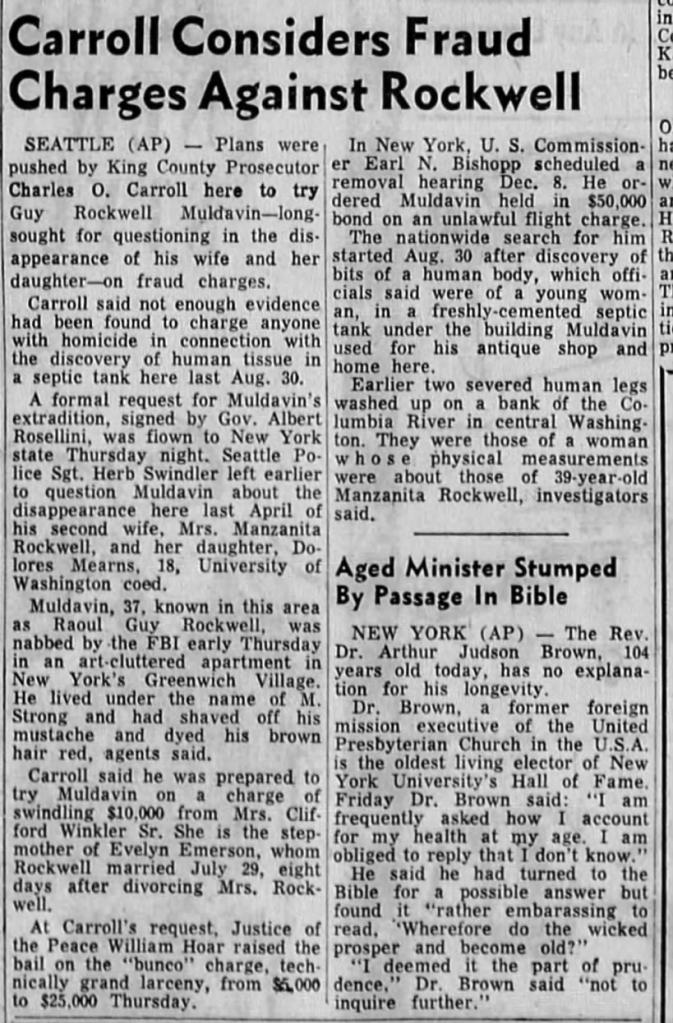
Police quickly zeroed in on Muldavin, and got a warrant to search his combined antique store/ home. In the attic detectives discovered a large amount of blood, and they theorized that he had dragged their dead bodies up the stairs where he dismembered and disposed of them. After combing through the contents of the building’s newly sealed septic tank, investigators found human tissue as well as bone fragments, all of which matched Manzanita and Dolores’ shared blood type. Manzy’s legs eventually turned up in a body of water and were identified as belonging to her by her ex-husband, who recognized her ‘thick ankles.’ At some time in the early days of the investigation Muldavin up and left town, leaving behind his antiques business and no forwarding address.

In the early stages of the investigation, it was theorized that Manzy and Dolores fled to Canada, cutting their ties to Guy completely, and according to him the two had plenty of money as before they left they completely cleaned out his bank account. After his wife vanished he immediately filed for divorce, on the grounds of ‘cruelty and desertion’ in Seattle, and in WA state an uncontested divorce is finalized after three months, and he was officially single again by July 26, 1960.

Guy changed his story multiple times, on one occasion saying ‘she doesn’t love me anymore, and Manzy closed out our joint bank account. She took every penny I’ve saved for the shop and to buy more antiques. She even burned all my business records before she left! I’m having a terrible time trying to figure out my income tax return.’ But, he told others that she had run off with another man and took her daughter with her.

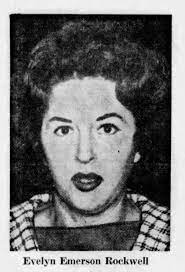
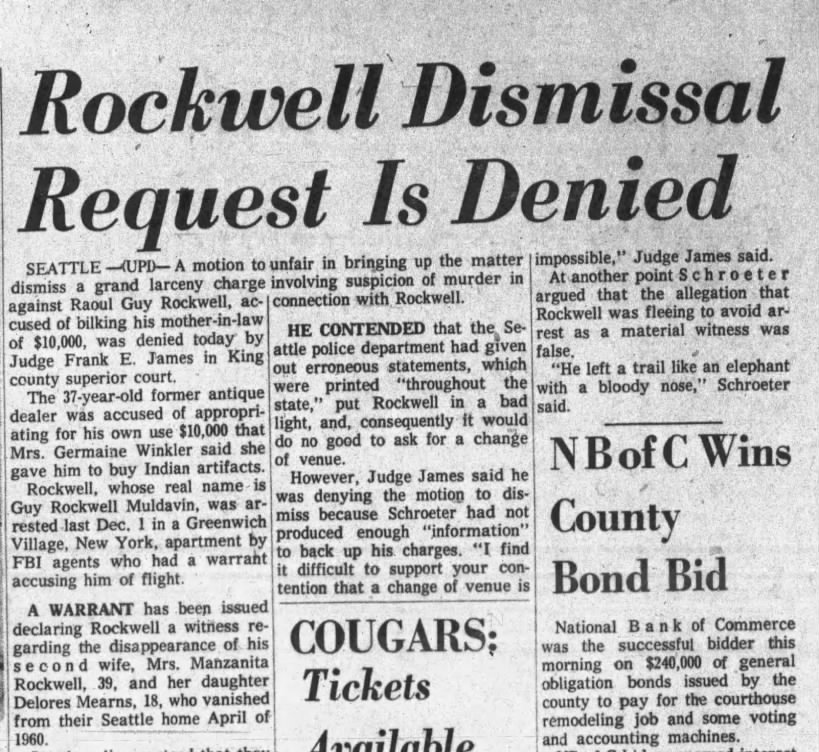
Just three days after his divorce was finalized on July 29, 1960, Muldavin got married for the third time to fellow antiques dealer Evelyn Marie Emerson in King County, WA. Emerson came from a prestigious Seattle family and was the step-daughter of wealthy socialite Caroline Winkler, who was impressed by her new SIL’s ‘cosmopolitan air and business sense.’ He told his new in-laws that he had won a Fulbright Scholarship to Portugal and Africa, and had recently tried to finance a yacht that would allow them to sail to their destination but his funds were ‘tied up’ after his ex-wife stole all of his ‘liquid assets.’ Evenyln sold her antiques business and planned on giving all of the money to her new husband, and just five days after the two said ‘I do’ Muldavin accepted a cashiers check from her stepmother for $10,000 (I’ve seen it listed as little as $6,000 and as much as $16,000); he told his wife’s family that he needed to buy antiques in Canada, but he took the money and ran away to NYC.

While looking into Muldavin, people that knew him told investigators that he was an ‘oddball and a pathological liar’ that left home in his late teens and falsely paraded around as a war hero. In December 1960 he was finally tracked down in an apartment in Greenwich Village by the FBI, however Seattle police determined that they didn’t have enough evidence to charge him with murder.

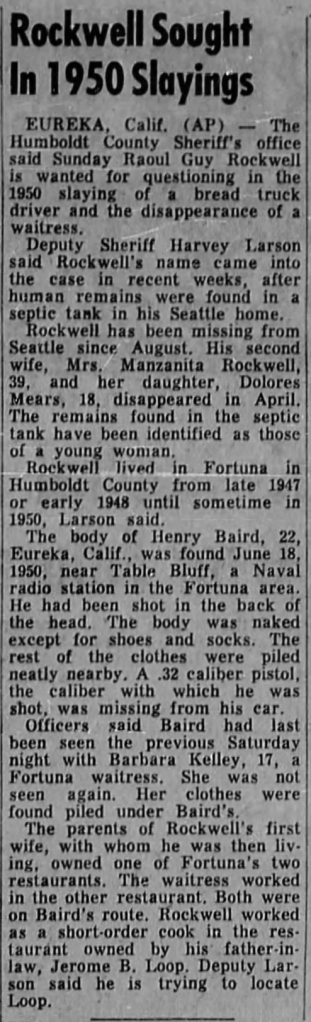
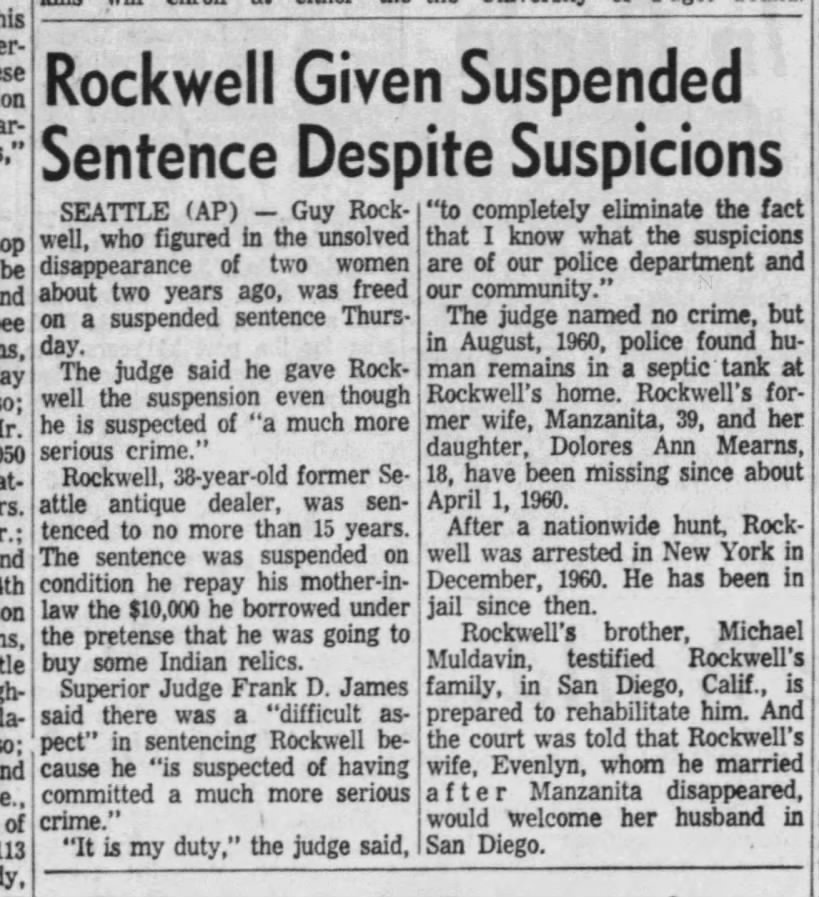
Muldavin did, however face larceny charges for swindling Emerson’s family and was convicted in 1961; despite being sentenced to fifteen years in prison in March 1962 a judge suspended the term provided that he pay his former in-laws back the money. He is also the main suspect in the homicide of 28-year-old bread truck driver Henry Lawrence ‘Red’ Baird and the disappearance of his girlfriend, seventeen-year-old waitress Barbara Joe Kelley. The two had worked together at a restaurant that was owned by the family of Muldavins first wife, Jo Ellen. Kelley was last seen in Humboldt County, California, on June 17, 1950 when she left to go on a date with her beau. Sans his socks and shoes, Baird’s nude remains were found face down on the beach near Table Bluff the following morning; he had been shot in the back of the head and his clothes were found nearby, neatly folded with Barbara’s tucked underneath (only her stockings and shoes were missing). No trace of Kelley was ever found.

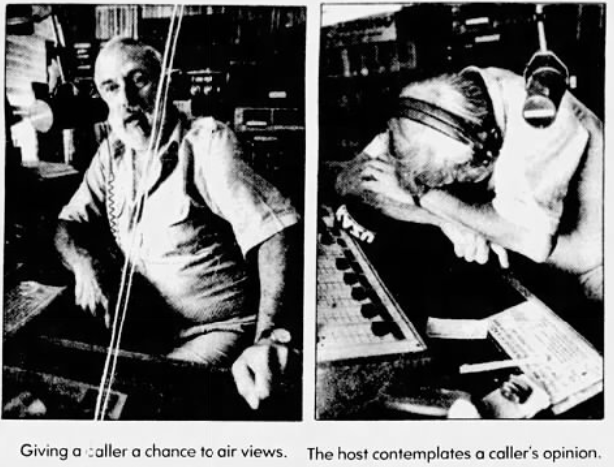
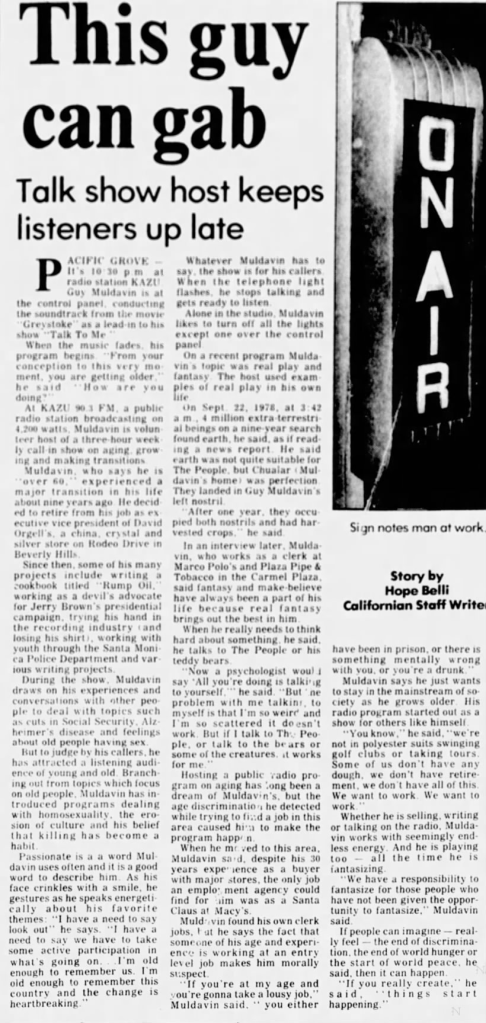
Around 1976 Muldavin moved to Chualar, a small community near Salinas, CA, and according to an article published in The Californian on July 5, 1985, he retired from his position as an executive VP of a silver store on Rodeo Drive in Beverly Hills. He then got a volunteer position at the KAZU radio station as a host of a 3-hour weekly call-in show on ‘aging, growing and making transitions.’ It was also reported that he did some work with at-risk youths through the Santa Monica Police Department and worked at a tobacco shop in Carmel.

Police questioned the local mob scene and motorcycle gangs, but nothing ever came of it. In 1981, investigators learned that a woman that strongly resembled Terry was seen with mobster Whitey Bulger around the time that she presumably died. An American organized crime boss , Bulger led the Irish mob group ‘the Winter Hill Gang’ in Somerville, MA, and he was known for removing his victims’ teeth. No evidence has ever been found that officially linked Bulger to Terry, and he was killed in prison in 2018.

A serial killer in Truro, MA named Tony Costa was briefly considered a suspect in the early stages of the investigation, but was quickly eliminated as he died before Terry’s murder on May 12, 1974.

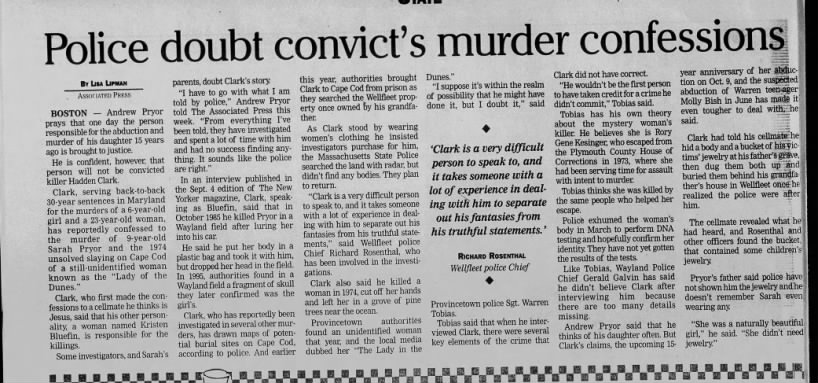
Hadden Clark confessed to the murder of the Lady of the Dunes, stating ‘I could have told the police what her name was, but after they beat the shit out of me, I wasn’t going to tell them shit.’ … ‘This murder is still unsolved and what the police are looking for is in my grandfather’s garden.’ Clark was born on July 1, 1952 and is currently serving two 30-year sentences at Eastern Correctional Institution in Westover, MD. His first sentence is related to the 1986 murder of 6-year-old Michele Lee Dorr, and the second is for 23-year-old Laura Houghteling that took place in 1992. Clark was given an additional ten years for robbery after stealing from a former landlord. Authorities claim that he suffers from paranoid schizophrenia, which is a condition that may lead one to confess to crimes that they never committed.

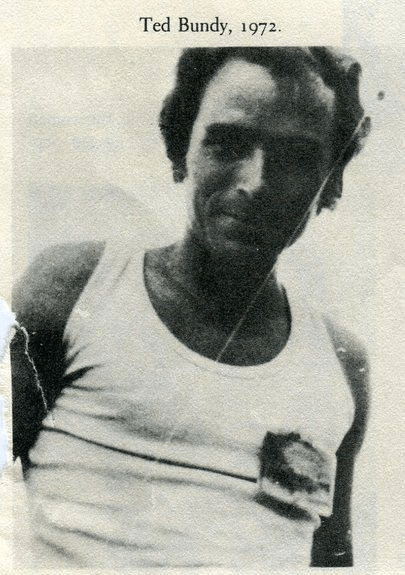
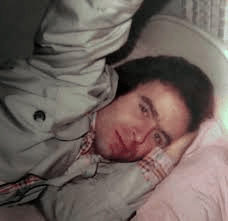
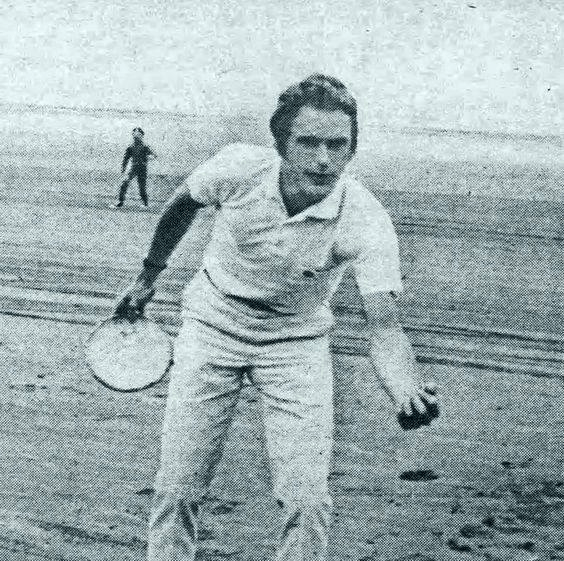
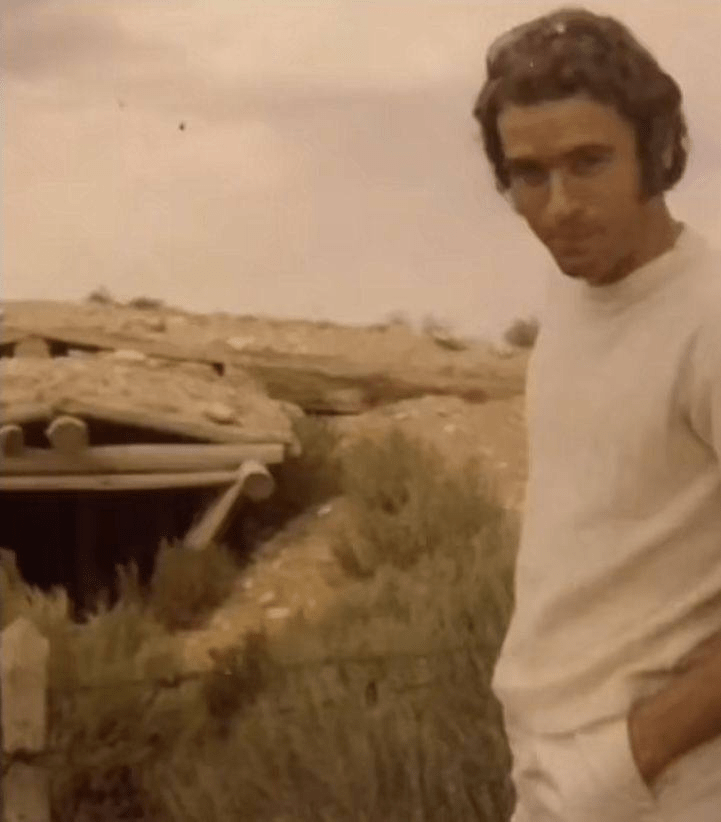
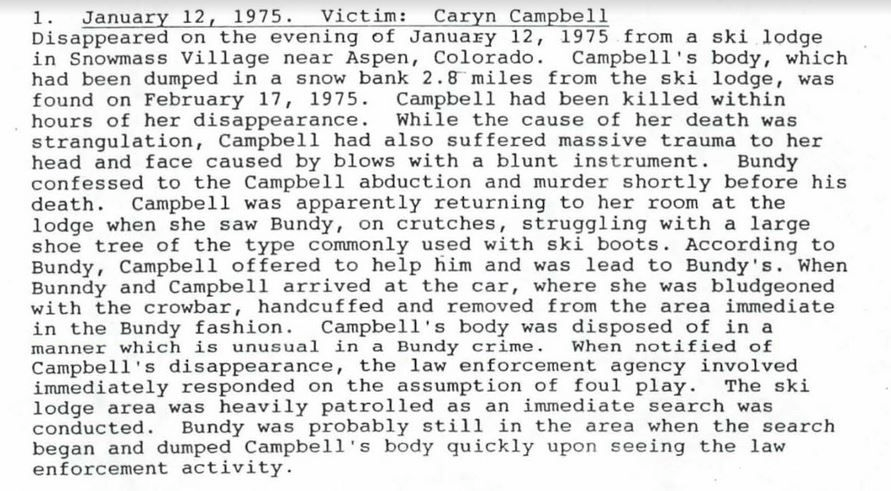
When the news broke that the ‘Lady of the Dunes’ had been identified in June 2022 , I found a few people that suspected that she was a victim of Ted Bundy. I mean… the general time frame fits, as he was (very) active in mid-1974. But it was pretty easy to rule him out, as the ‘1992 FBI Bundy Multiagency Team Report’ placed him all over the general Seattle area in July. He was also getting ready to leave for his second attempt at law school and was still in a long-term, fairly committed relationship with Elizabeth Kloepfer.

After graduating from high school Ruth’s son Richard went on to attend Central Michigan University, and he retired from General Motors as a Service Engineer in 2015. Her first husband Billy Ray died at the age of 75 on February 22, 2007 in Chattanooga, Tennessee. In 1994 he was the recipient of a liver transplant, and he retired from CSX Railroad after 35 years of employment. Ruth’s dad Johnny died at the age of 71 on November 22, 1981, and her half-sister Vera passed away on February 3, 2017. Her brother James Ray died on Halloween in 2005 in Whitwell, and her sister Johnnie died on August 12, 2010.

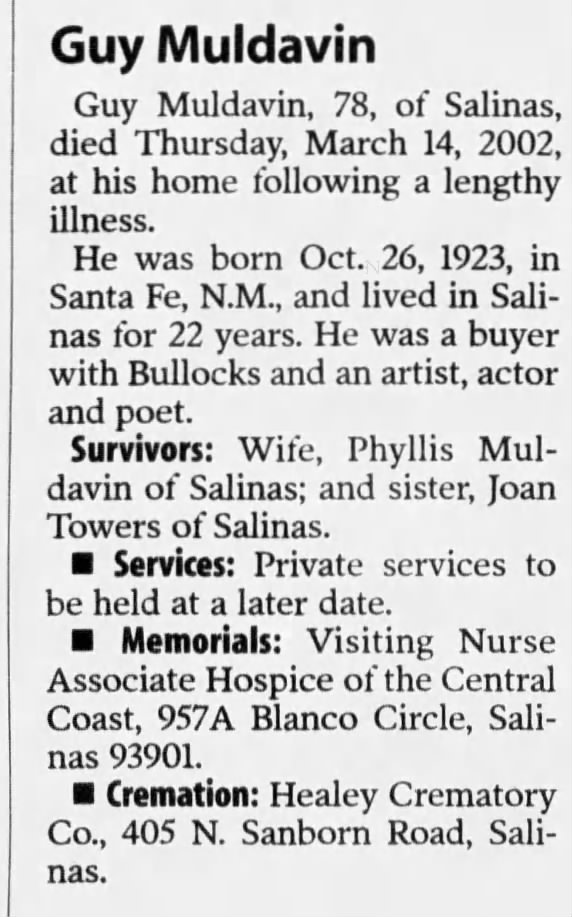
Muldavin married for the fifth and final time on October 18, 1975, to Phyllis Georgina Smirle, a well-respected art professor at LA City College that he was with until his death on November 17, 2021. According to his obituary, he died at his home following a lengthy illness and was survived by his wife as well as a ‘sister,’ Joan Towers. A family friend shared with The Independent in November 2023 that Towers was not a blood relation to Muldavin, but the pair affectionately called each other siblings after a short lived romantic relationship turned platonic.

Guy Rockwell Muldavin died at the age of 78 on March 14, 2002 in Salinas, CA and was never held accountable for killing any of his five victims. His wife Phyllis Georgina died at the age of 86 on November 17, 2021 in LA, and his first wife Jo Ellen died just two months before he did in January 2002. Guy and Jo Ellen’s daughter Towers Joy died at the age of 71 in 2021.

* I’ve seen it reported that Ruth was only 13 when she got married but this is incorrect.
** Over the course of my research, this dollar amount was as high as $10,000.

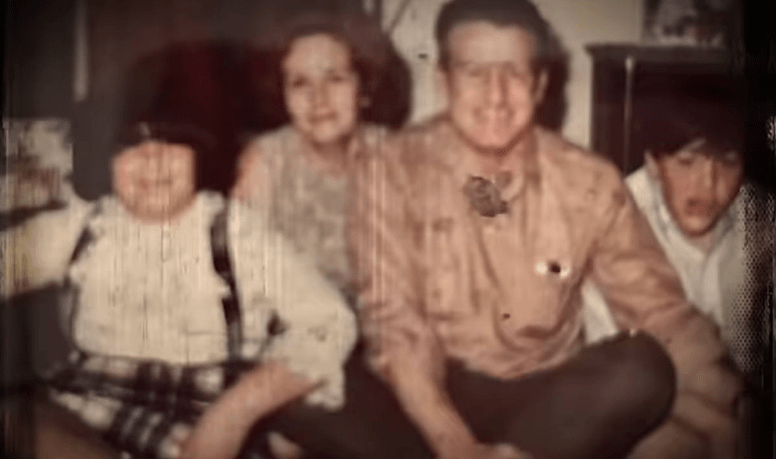
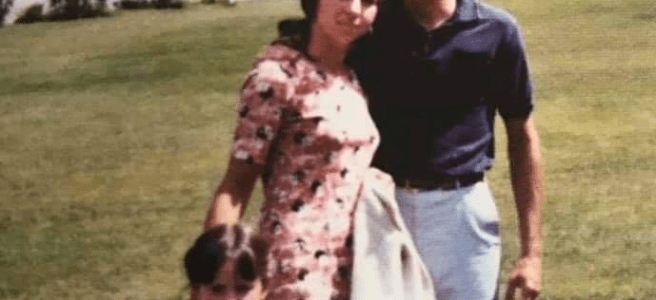
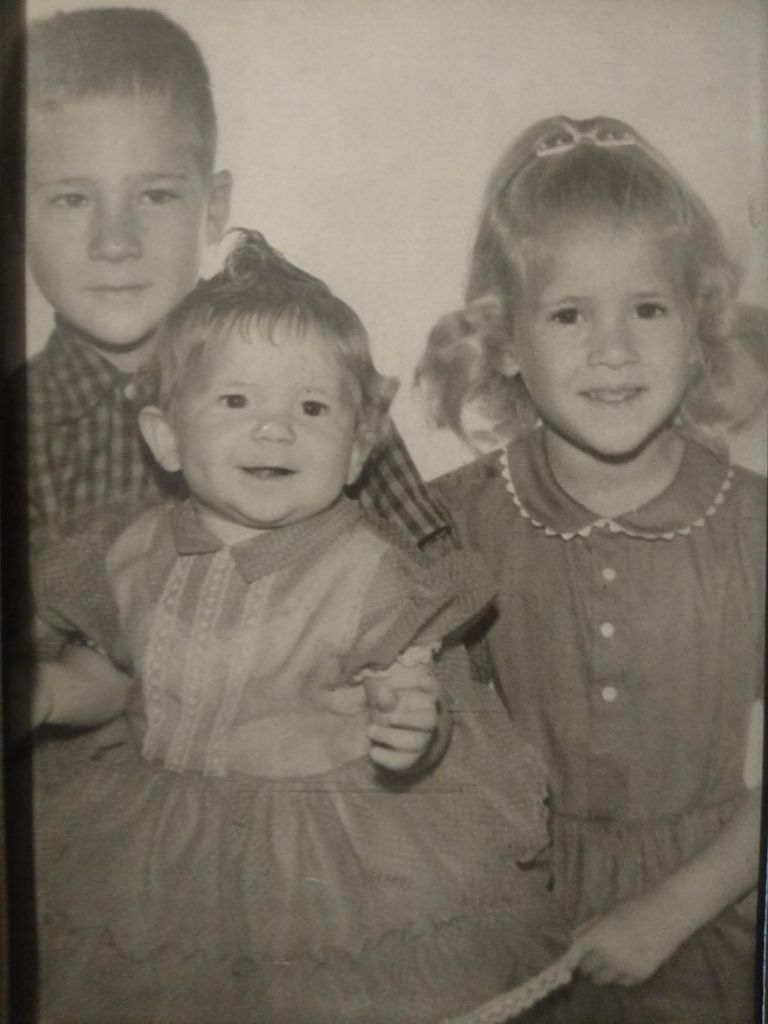
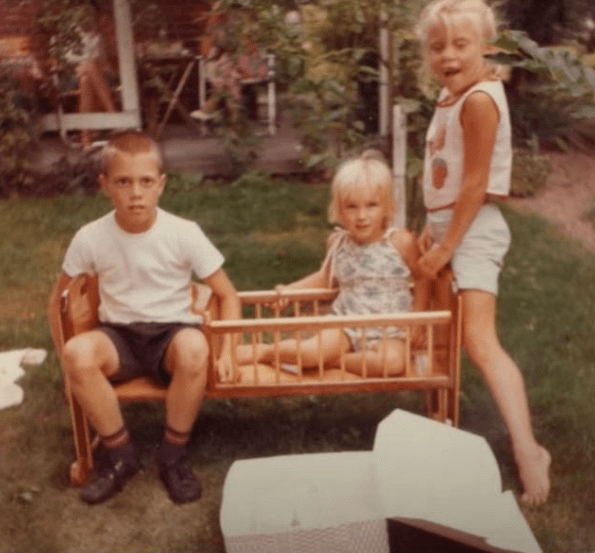
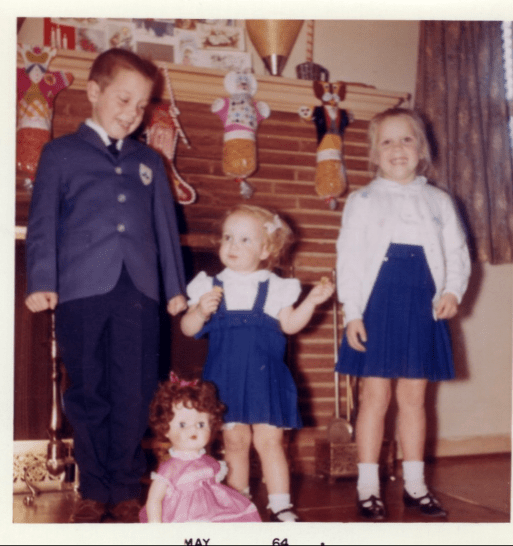
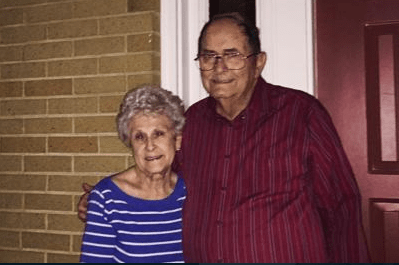
A picture of Ruth (middle) with her dad and siblings. I apologize for the poor quality, it was the only copy I could find.
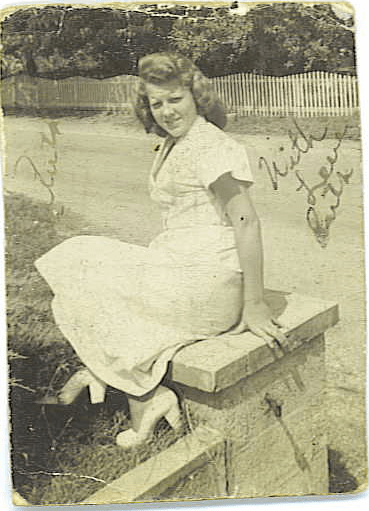
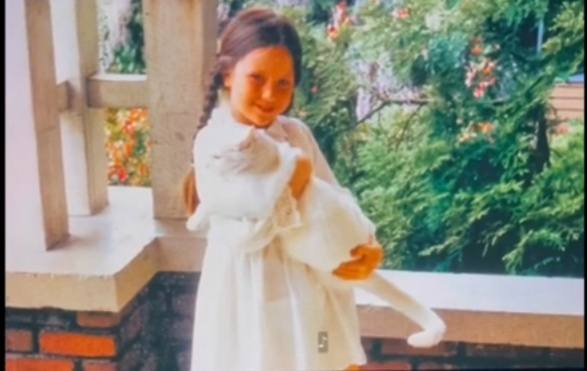
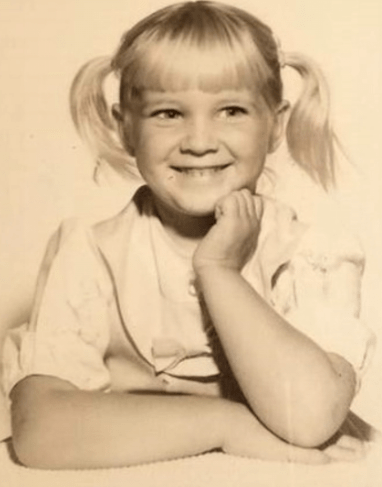
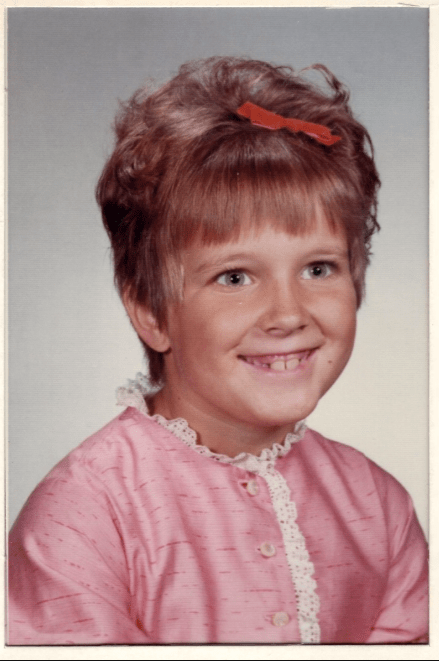
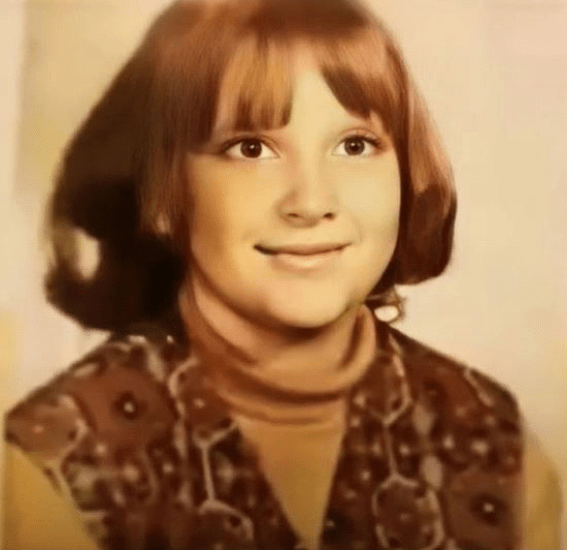
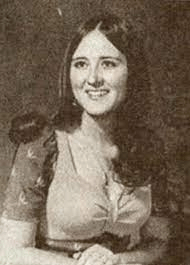
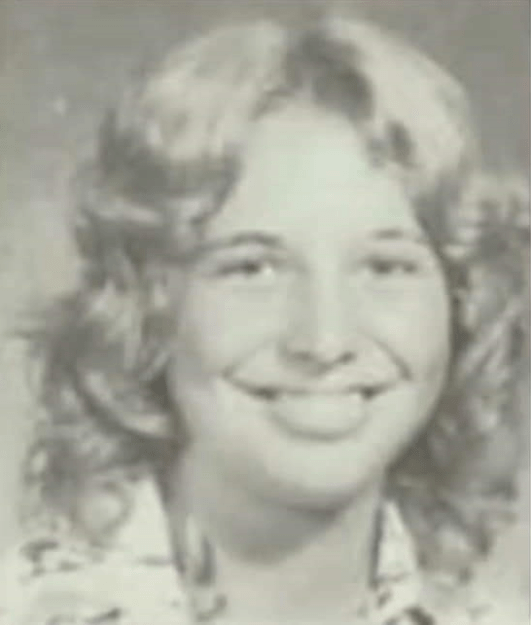
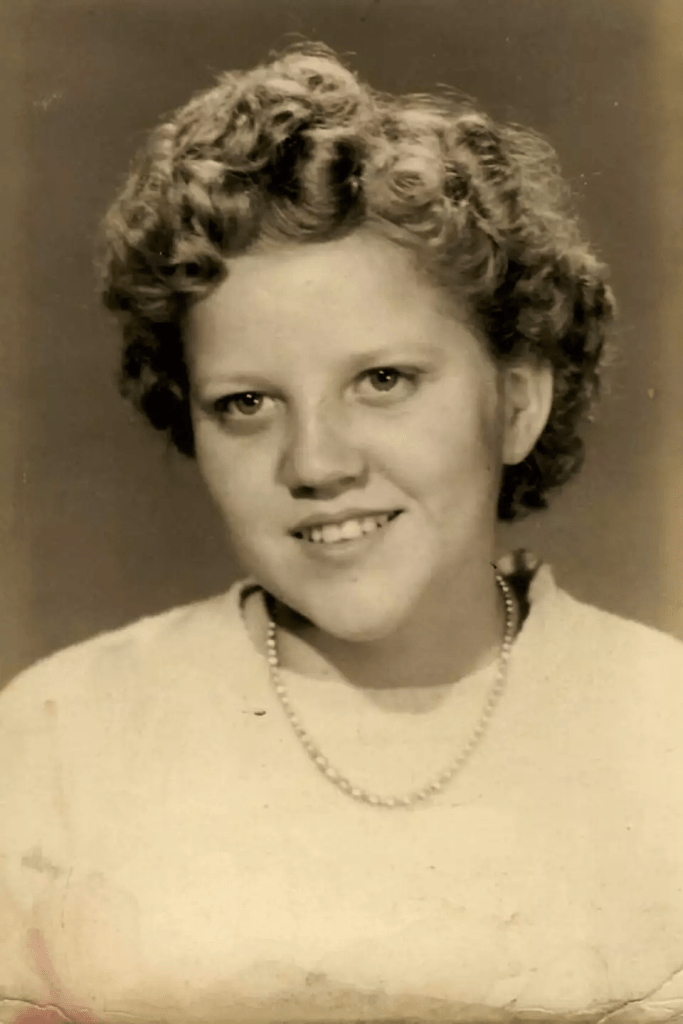
Ruth as a teenager.
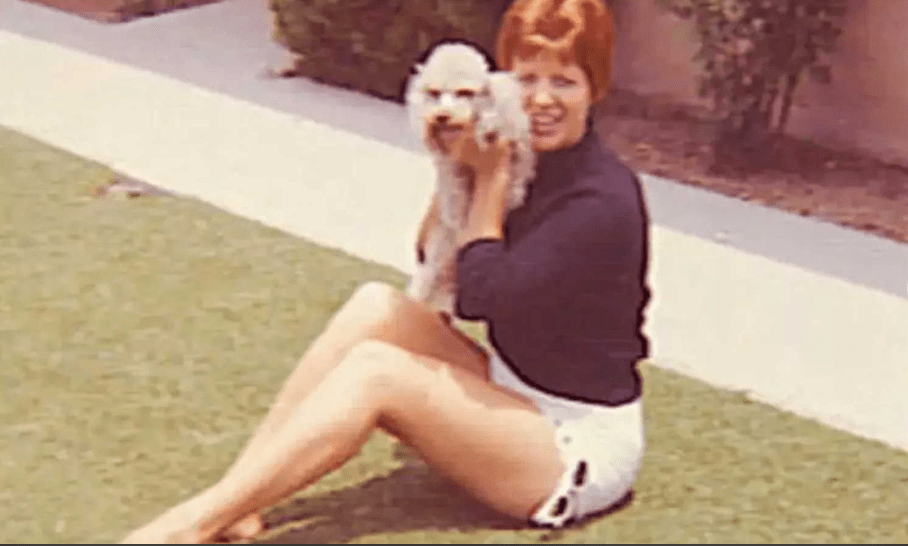
Ruth Marie Terry.
Terry.
Ruth Marie Terry.
Terry at a slot machine.
A stone for the one-time unknown ‘Lady of the Dunes.’
A memorial stone with Ruth’s name on it.
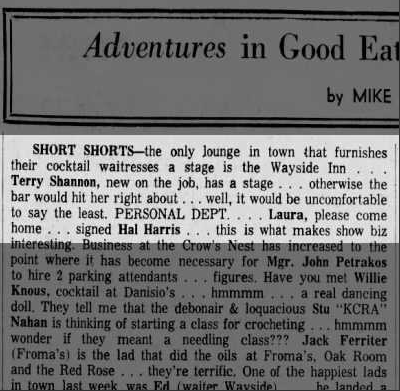
An article mentioning Ruth with one of her alias’s published in The Sacramento Union on April 3, 1964.
A newspaper clipping about Terry’s possessions going up for public auction in California published in The Simi Valley Star on June 1, 1969.
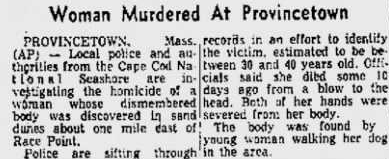
A newspaper article about the Lady of the Dunes published by The Daily Sentinel on July 30, 1974.
A newspaper clipping about the Lady of the Dunes published by The Boston Globe on December 22, 1974.
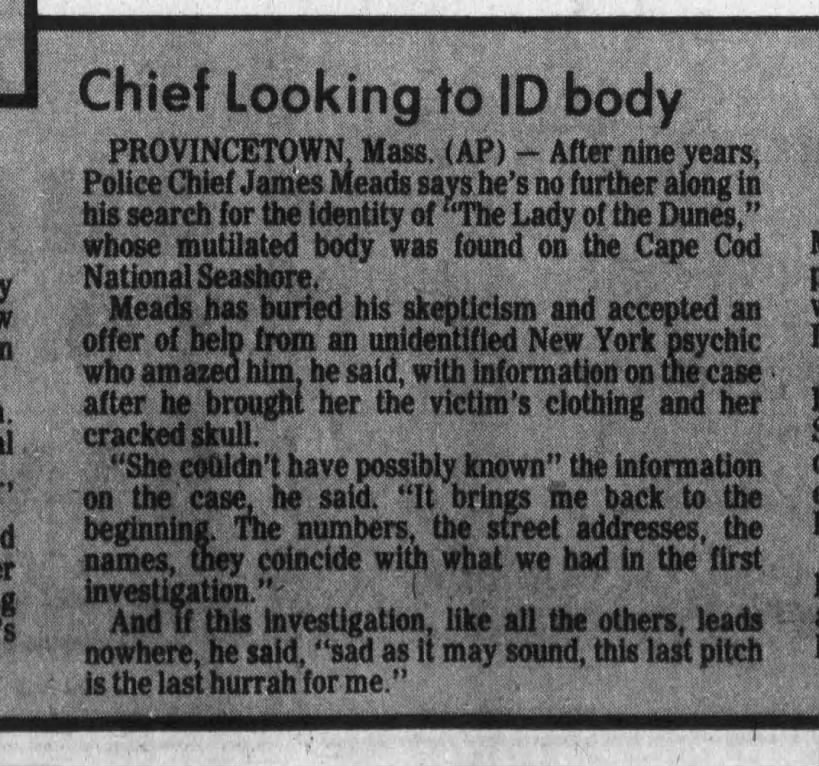
A newspaper clipping about the Provincetown Police Chief looking to identify the Lady of the Dunes published by The North Adams Transcript on May 30, 1983.
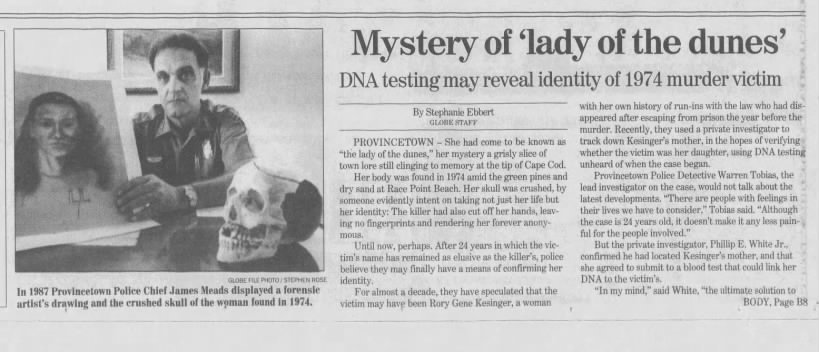
An article about the case involving the Lady of the Dunes published in The Boston Globe on September 6, 1987.
An article about the case involving the Lady of the Dunes published in The Boston Globe on April 19, 1993.
Part one of an article about the case involving the Lady of the Dunes published in The Boston Globe on August 23, 1998.
Part two of an article about the case involving the Lady of the Dunes published in The Boston Globe on August 23, 1998.
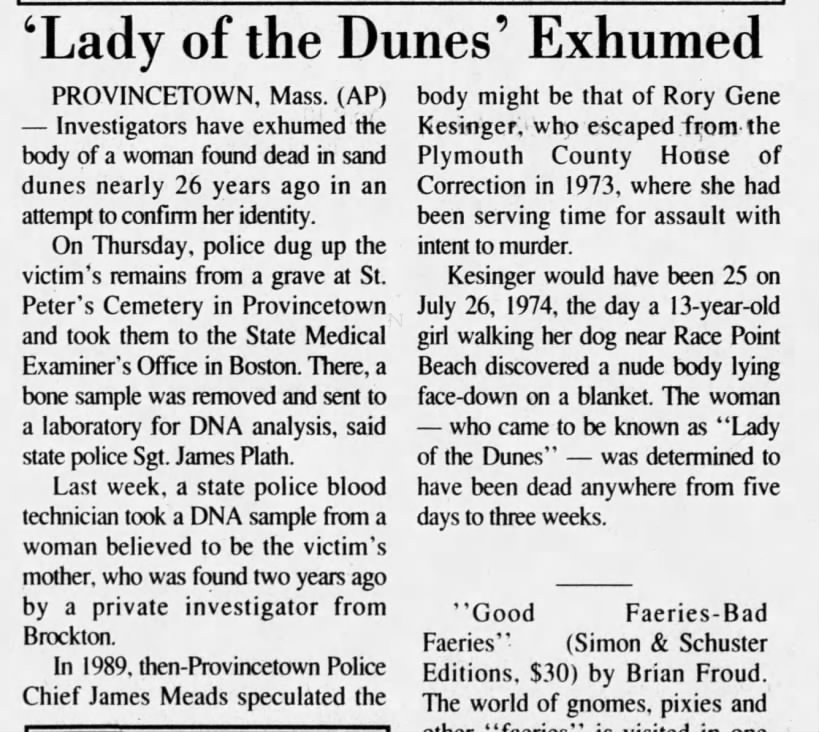
An article about the remains of the Lady of the Dunes being exhumed published in The Recorder on March 25, 2000.
An article about the Lady of the Dunes published in The Boston Globe on April 2, 2000.
An article mentioning the Lady of the Dunes published in The North Adams on September 7, 2000.
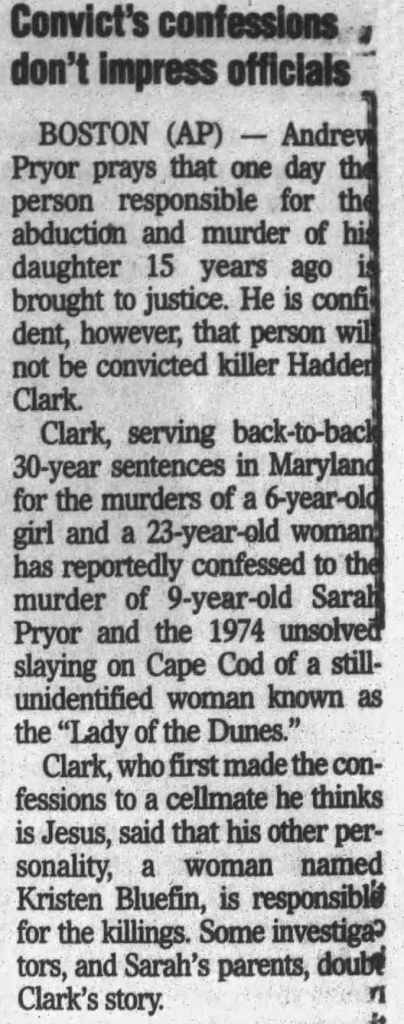
An article about Hadden Clark confessing to the murder of the Lady of the Dunes published in The Daily Item on September 7, 2000.
An article about the Lady of the Dunes published in The Boston Globe on December 17, 2000.
An article about new images of the Lady of the Dunes being released published in The Athol Daily News on May 6, 2010.
A newspaper article about internet sleuthing that mentions the Lady of the Dunes published in The Boston Globe on September 14, 2014.
Part one of a newspaper article about The Lady of the Dunes published in The The Boston Globe on April 9, 2022.
Part two of a newspaper article about The Lady of the Dunes published in The The Boston Globe on April 9, 2022.
A newspaper article about The Lady of the Dunes published in The Boston Globe on August 9, 2018.
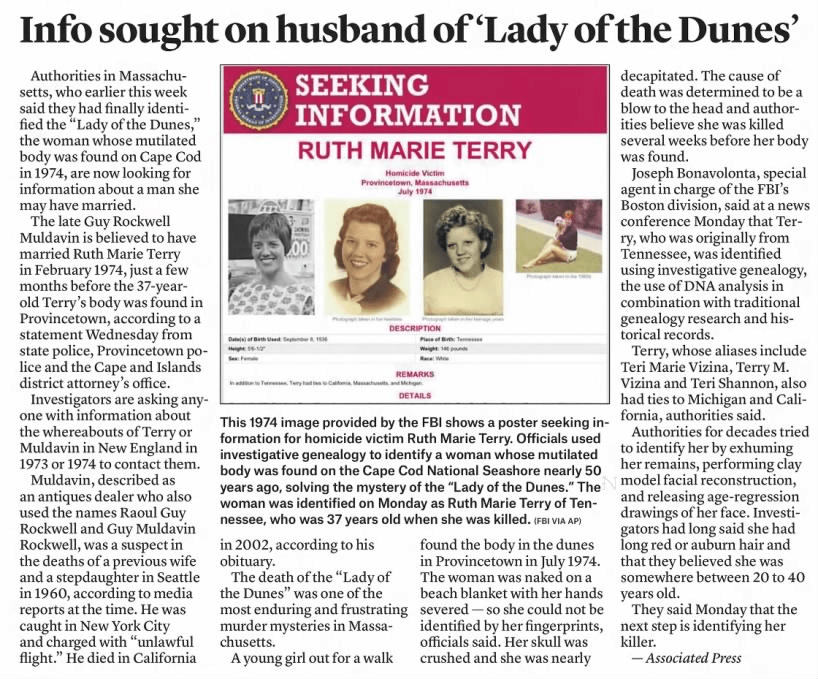
A newspaper article asking the public for more information about Guy Muldavin published in The Republican on November 4, 2022.
Part one of an article about The Lady of the Dunes published in The Tennessean on December 12, 2022.
Part two of an article about The Lady of the Dunes published in The Tennessean on December 12, 2022.
An article about The Lady of the Dunes published in The Daily News on August 29, 2023.
A screen grab of the extra from Jaws that resembled Ruth Terry next to a 3D composite sketch of her.
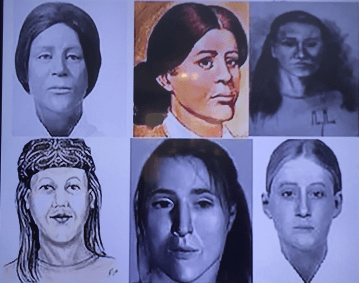
Some composite sketches of the Lady of the Dunes that were drawn and released over the years.
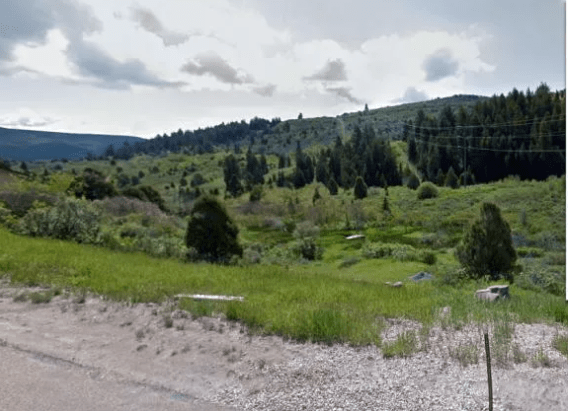
An aerial shot of the C-Scape Dune Shack in Provincetown, Massachusetts.
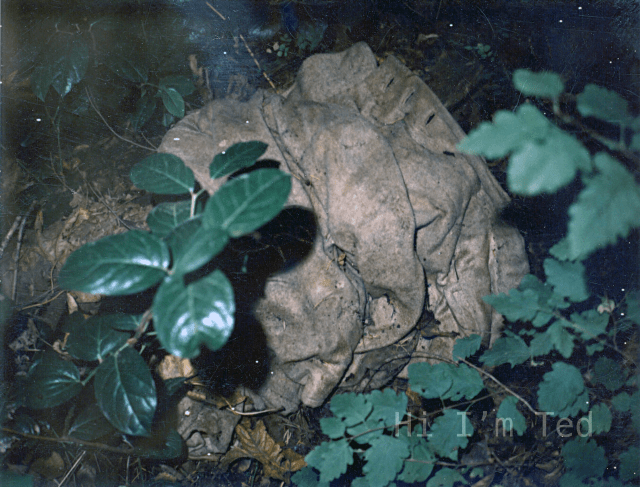
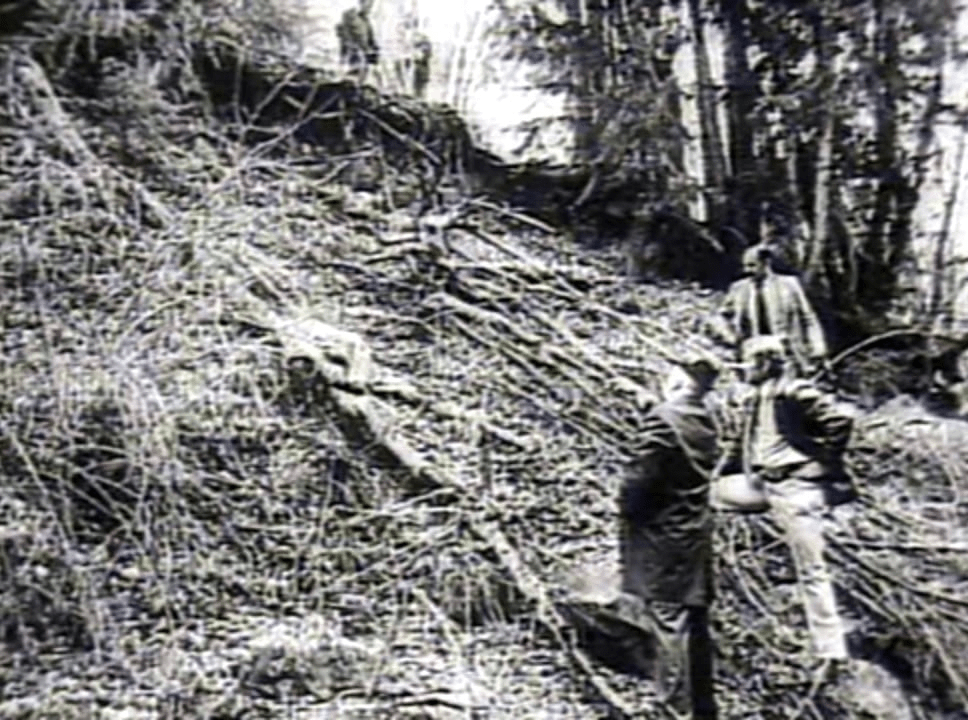
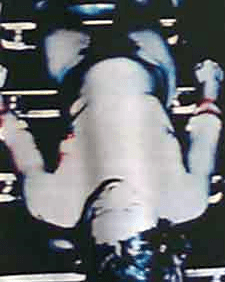
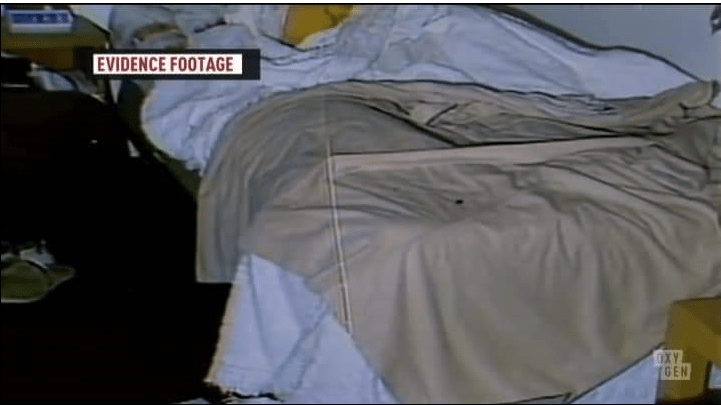
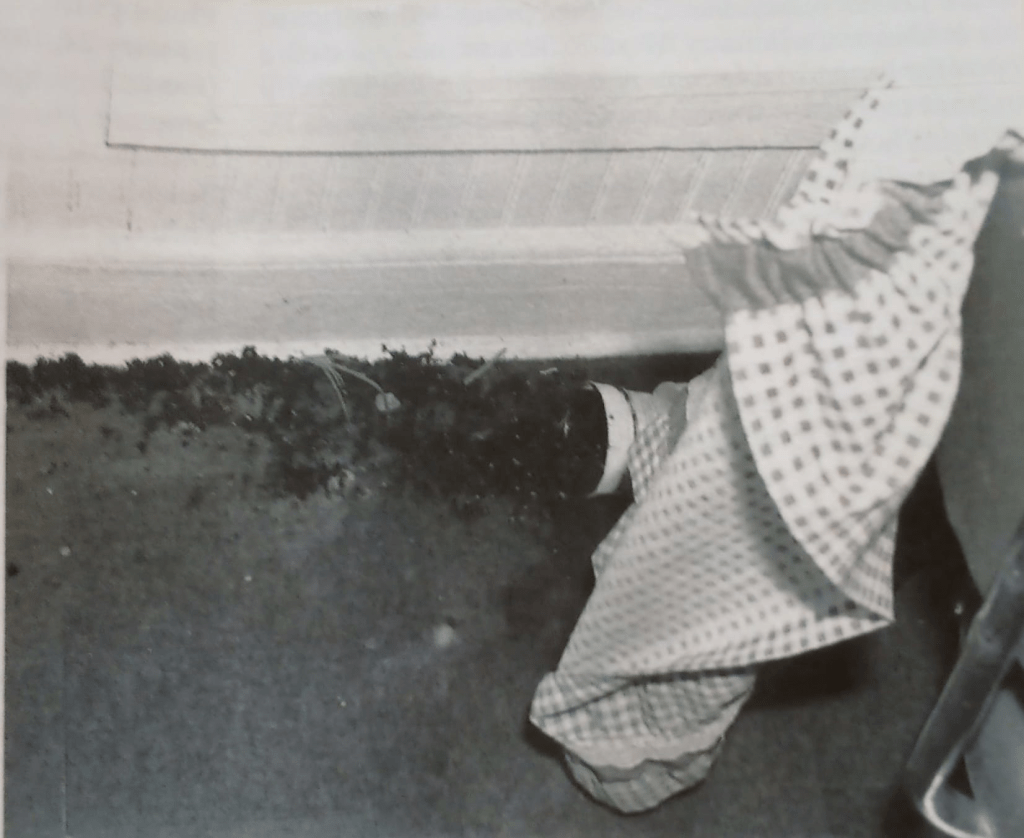
A photo of the scene of the crime on July 26, 1974.
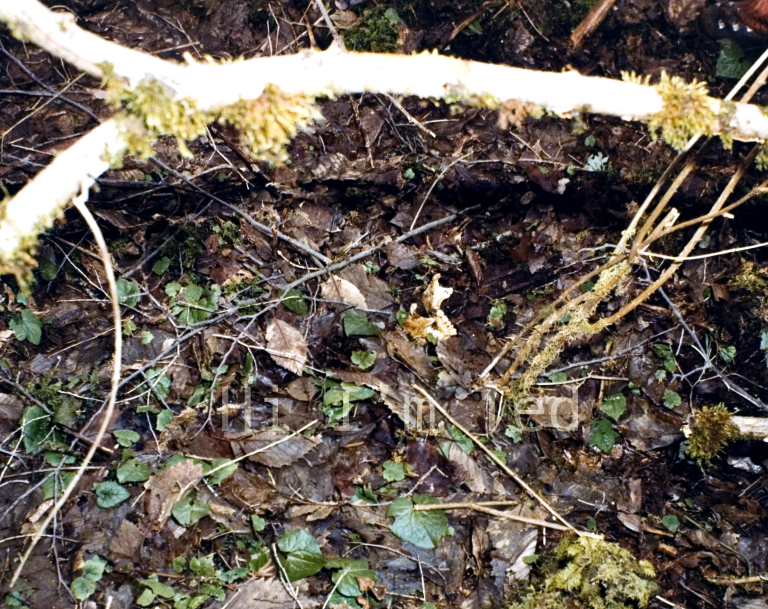
A blurred photo of the scene of the crime on July 26, 1974.
A photo of the Terry’s legs taken at the crime scene on July 26, 1974.
Another shot of Terry’s lower body taken on the day her remains were discovered on July 26, 1974.
A photo taken at the scene of Ruth Terry’s murder on July 26, 1974.
A blurred photo taken at the scene of Ruth Terry’s murder on July 26, 1974.
Another blurred photo taken related to Ruth Terry’s murder taken on July 26, 1974.
A picture of the fractured skull of the Lady of the Dunes.
Billy and Ruth’s marriage certificate.
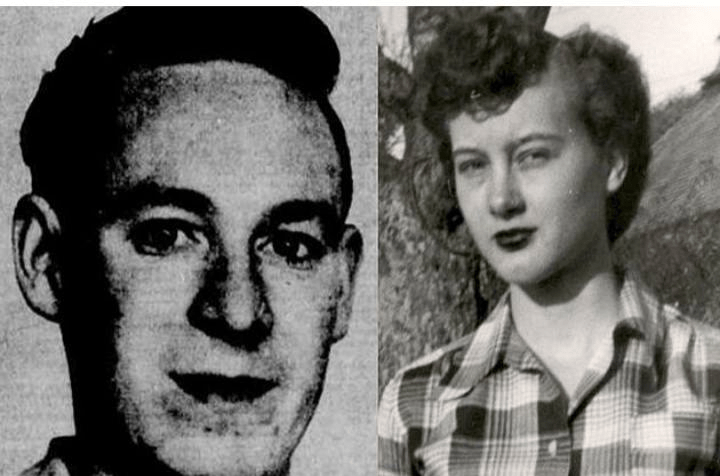
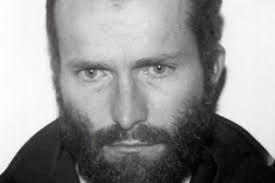
Ruth’s first husband, Billy Ray Smith.
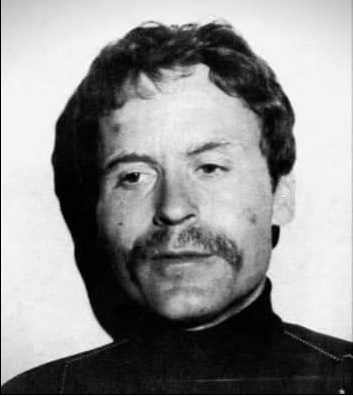
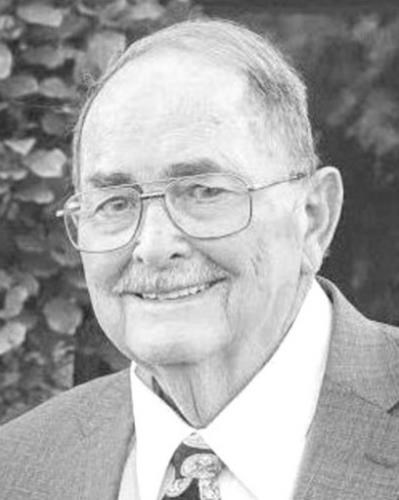
Guy Muldavin.
A picture of Guy Muldavin being led around by an FBI agent.;
Guy Muldavin.
Guy Muldavin.
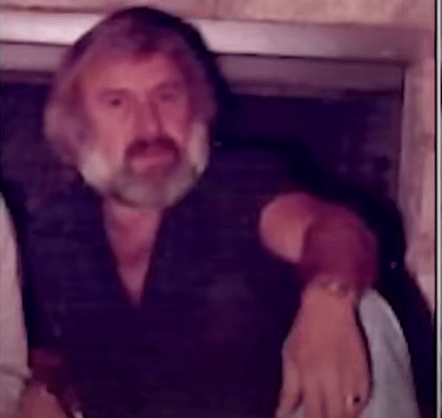
Guy Muldavin in his later years.
Guy Muldavin in pictures related to a 1985 article about his time as a radio show host published in The Californian.
More shots of Muldavin from a 1985 article about his time as a radio show host published in The Californian.
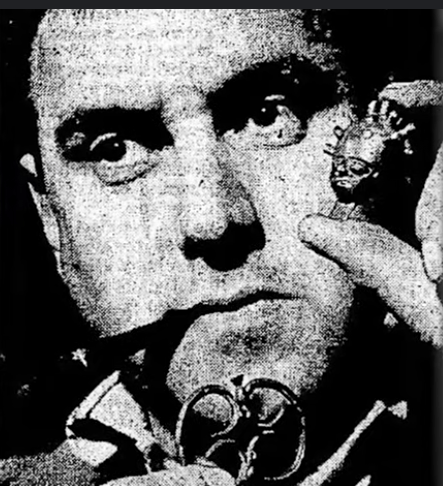
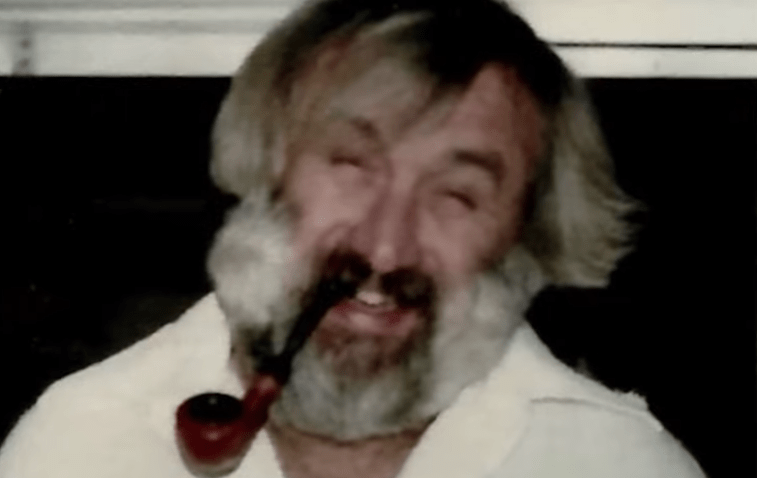
Muldavin smoking a pipe.
Muldavin’s WWII draft card.
Muldavin’s first wife, Jo Ellen Loop.
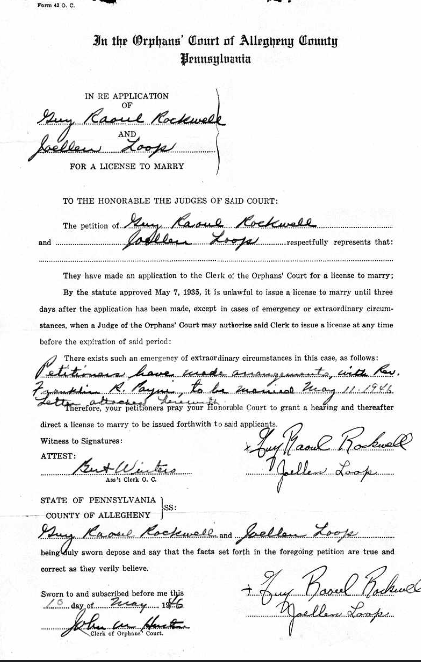
Muldavin and Jo Ellen Loops marriage certificate from 1946.
A newspaper article about Muldavin and Loops honeymoon published in The Pittsburgh Press on April 30, 1946.
Jo Ellen Loops obituary published in The Bellingham Herald on January 12, 2002.
Muldavin and Manzy’s marriage certificate from 1958.
Muldavin and his second wife, Manzy.
Muldavin (middle) and his second wife, Manzy.
Guy’s wife Manzanita and her daughter from a previous marriage, Dolores.
Muldavin and his third wife’s marriage certificate.
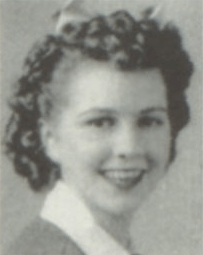
Evelyn Rickard’s picture from the 1941 Auburn High School yearbook, which is the same school Donna Manson went to.
Evelyn Emerson.
A newspaper want-ad for a salesperson submitted by Guy Muldavin published in The LA Times on December 12, 1971.
Information related to Muldavin’s possible involvement for the murder of Barbara Kelly and Henry Lawrence ‘Red’ Baird.
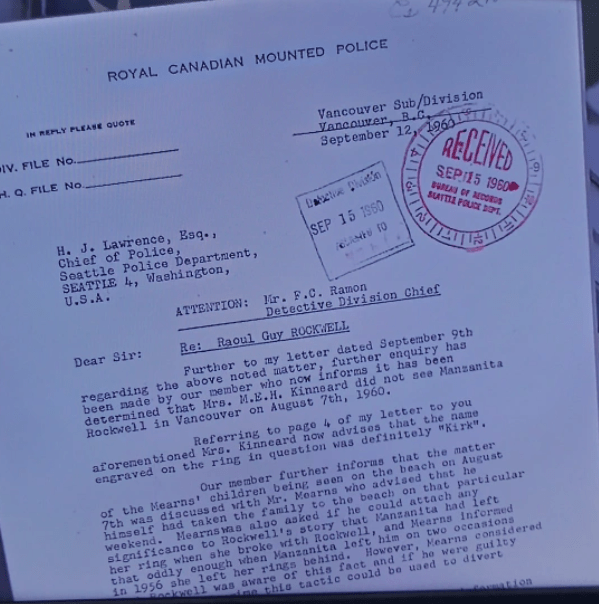
A screen grab of a bulletin Seattle PD sent to Vancouver regarding Guy Muldavin.
An article about Guy Muldavin published in The Tri-City Herald on August 31, 1960.
An article about the disappearance of Muldavin’s second wife and her college age daughter published in The Sentinel on September 1, 1960.
An article about Muldavin being wanted for questioning for the 1950 murder of Henry Baird and the disappearance of his girlfriend, Barbara Kelley published in The News-Review on September 26, 1960.
A newspaper article about the crimes of Guy Muldavin published in The Oregon Daily Journal on December 1, 1960.
A newspaper article about the crimes of Guy Muldavin published in The La Grande Observer on December 1, 1960 ·
A newspaper article about the crimes of Guy Muldavin published in The Omaha World-Herald on December 2, 1960.
A newspaper article about the crimes of Guy Muldavin published in The Philadelphia Daily News on December 2, 1960.
A newspaper article about the crimes of Guy Muldavin published in The News Tribune on December 3, 1960.
A newspaper article about the crimes of Guy Muldavin published in The News-Review on December 5, 1960.
A newspaper article about the crimes of Guy Muldavin published in The Peninsula Daily News on December 6, 1960.
An article about Muldavin’s desire to be released from prison published in The Kitsap Sun on August 9, 1961.
A newspaper article about larceny charges against Guy Muldavin published in The The Kitsap Sun on October 16, 1961.
A newspaper article about the crimes of Guy Muldavin published in The Spokane Chronicle on October 20, 1961.
A newspaper article about the crimes of Guy Muldavin published in The Herald and News on October 25, 1961.
A newspaper article about the many crimes of Guy Muldavin published in The Evansville Press on January 7, 1962.
A newspaper article about Muldavin receiving a suspended sentence published in The Longview Daily News on March 23, 1962.
A picture of Guy Muldavin published in The Valley Times on June 12, 1969.
An article about Guy Muldavin that was written at roughly the same time he killed his third wife, published in The Seattle Daily Times on June 27, 1974.
A notice in the The LA Times that mentions Guy Muldavin doing a local radio show for KCRW-FM published on February 1, 1977.
A want-ad in newspaper submitted by Muldavin published in The Californian on January 31, 1985.
An article about Muldavin and the new life he created for himself after killing at least five people published in The Californian on July 5, 1985.
A newspaper blurb written by Muldavin’s alleged sister published in The Californian on December 23, 1999.
Muldavin’s obituary published in The Californian on March 15, 2002.
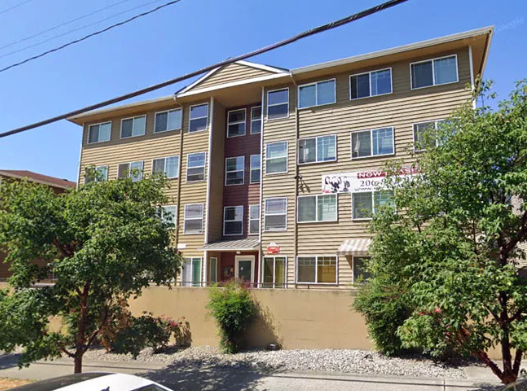
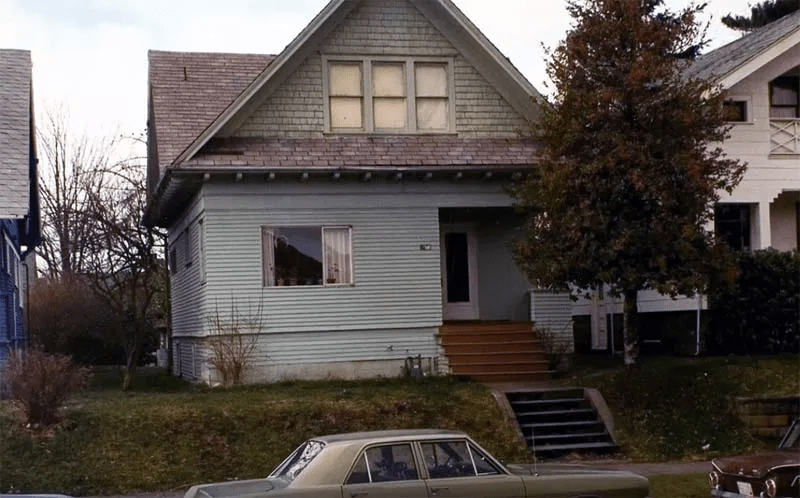
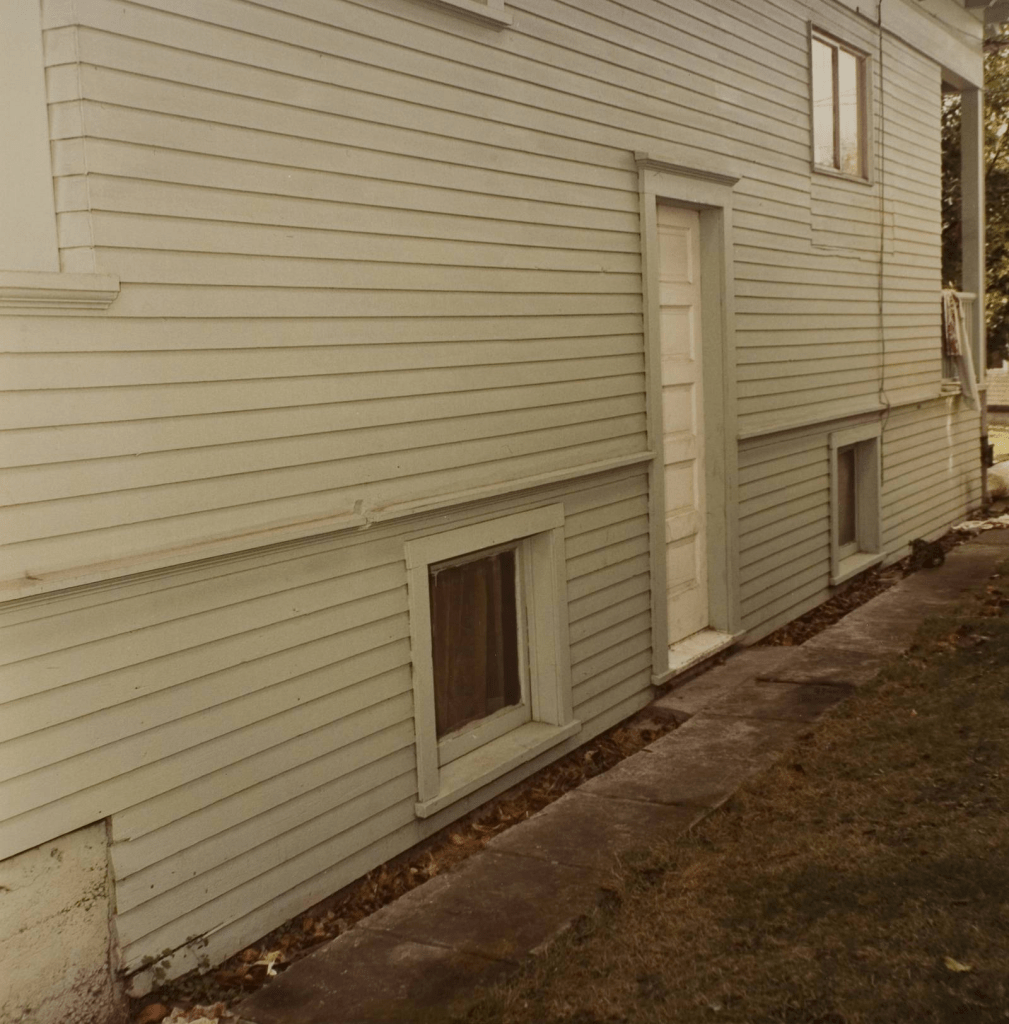
A picture of Muldavin’s antique’s shop and residence, located at 2512 Fairview Avenue North in Seattle.
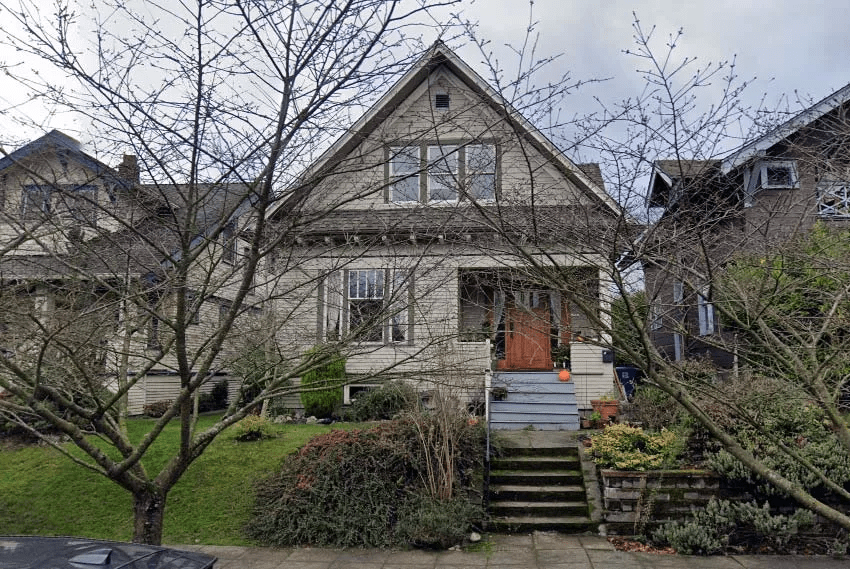
Another picture of Muldavin’s residence/antique shop in Seattle.
A picture of Muldavin’s attic in his dual antiques shop/residence after his wife and stepdaughter went missing. Photo courtesy of the Seattle Police Department.
A picture of blood on the floor of Muldavin’s attic after his wife and stepdaughter went missing. Photo courtesy of the Seattle Police Department.
A close-up picture of blood on the floor of Muldavin’s attic after his wife and stepdaughter went missing. Photo courtesy of the Seattle Police Department.
Another close-up shot of the floor of Muldavin’s attic after his wife and stepdaughter went missing. Photo courtesy of the Seattle Police Department.
Some notes related to Muldavin’s grand larceny case.
Some additional notes related to Muldavin’s grand larceny case.
Some notes that were taken after Seattle police searched Muldavin’s residence during the investigation of the disappearance of his third wife and stepdaughter.
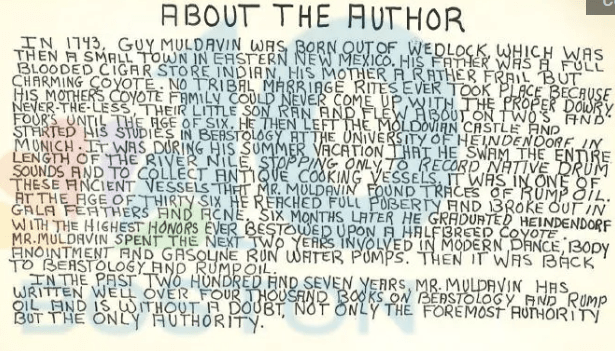
The ‘about the author’ page from Guy Muldavin’s book, ‘Cooking with Rump Oil.’
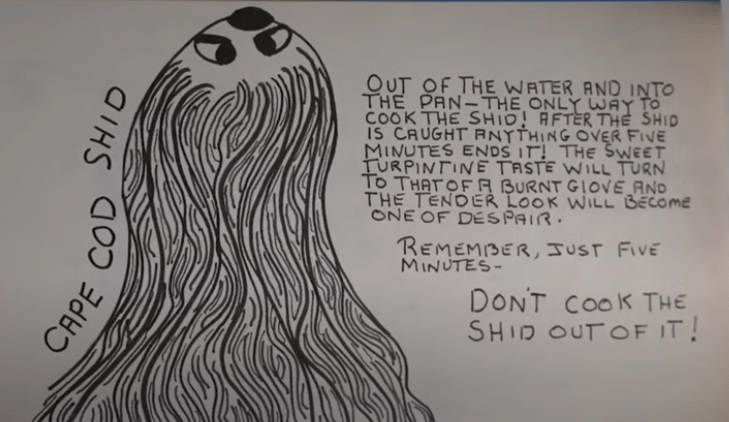
A drawing from Guy Muldavin’s book, ‘Cooking with Rump Oil.’ According to Retired FBI profiler Julia Cowley, ‘the way he’s drawn her hair here, I know she had flowing auburn hair and that was significant to him. What I do wonder, especially the last line, ‘the tender look will become one of despair,’ you have to think that perhaps was the moment he watched the life go out of her eyes and when she realized, ‘He’s going to kill me.’ It’s really horrifying.’
Henry Lawrence ‘Red’ Baird and his girlfriend, seventeen-year-old waitress Barbara Joe Kelley.
Guy’s parents’ passport photo, Sylvia ‘Lily’ Silverblatt and Abram Albert Zadworanski Muldavin.
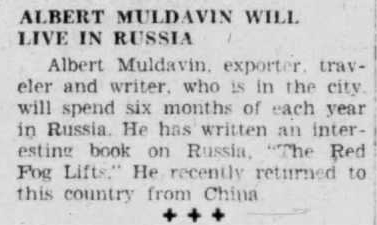
A newspaper clipping about Guy’s father moving to Russia published in The Santa Fe New Mexican on September 23, 1935.
Michael Semyon Muldavin.
An article about Michael Muldavin being banned from practicing law in the state of New Mexico published in The Albuquerque Journal on January 4, 1963.
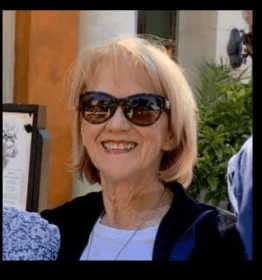
Phyllis Muldavin.
Phyllis Muldavin’s obituary.
Mobster Whitney Bulger.
Tony Costa.
Hadden Clark.
Bundy’s whereabouts in July 1974 according to the ‘1992 FBI Bundy Multiagency Team Report.’
The drive from Bundy’s boarding house to Provincetown
Eva holding Ruth’s sister, Johnny.
Ruth’s mom, Eva.
Ruth’s mother’s death certificate.
Ruth’s Dad, Johnny Red.
Ruth’s brother James, who was a heavy equipment operator in the US Army.
Baby Richard.
Richard and his adoptive parents.
Ruth’s son Richard (far right) with his adoptive family.
Richard Hanchett’s senior picture from the 1972 Edsel Ford High School yearbook.
A prayer card for Ruth’s sister Johnnie.
A still of Ruth’s son Richard Hanchett from a documentary on the Lady of the Dunes.
A still of Ruth’s SIL Jan from a documentary on the Lady of the Dunes.
A still of Ruth’s brother Ken from a documentary on the Lady of the Dunes.
Ruth’s son Richard standing with his wife and members of the Terry family.
Members of the Terry family.

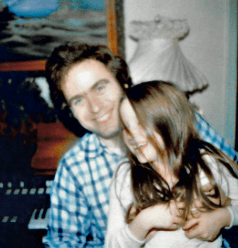
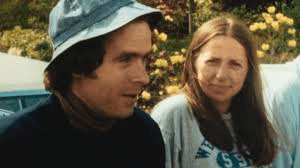
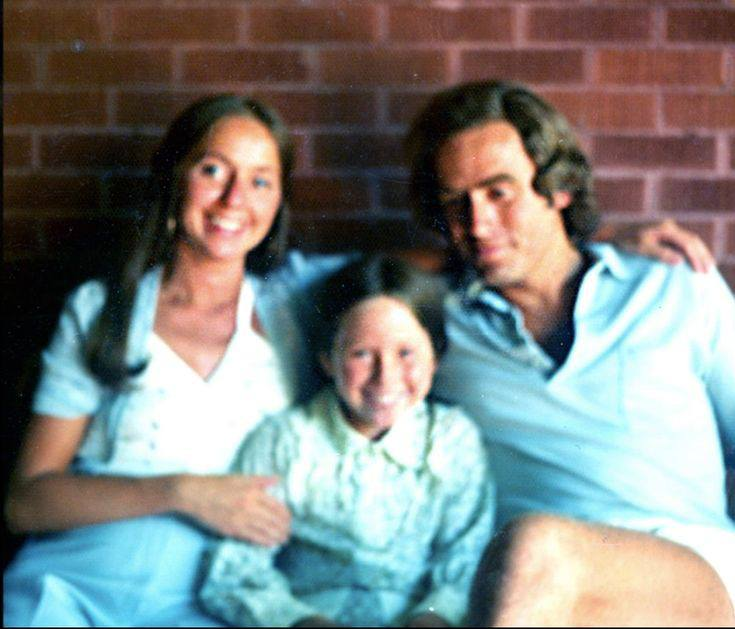
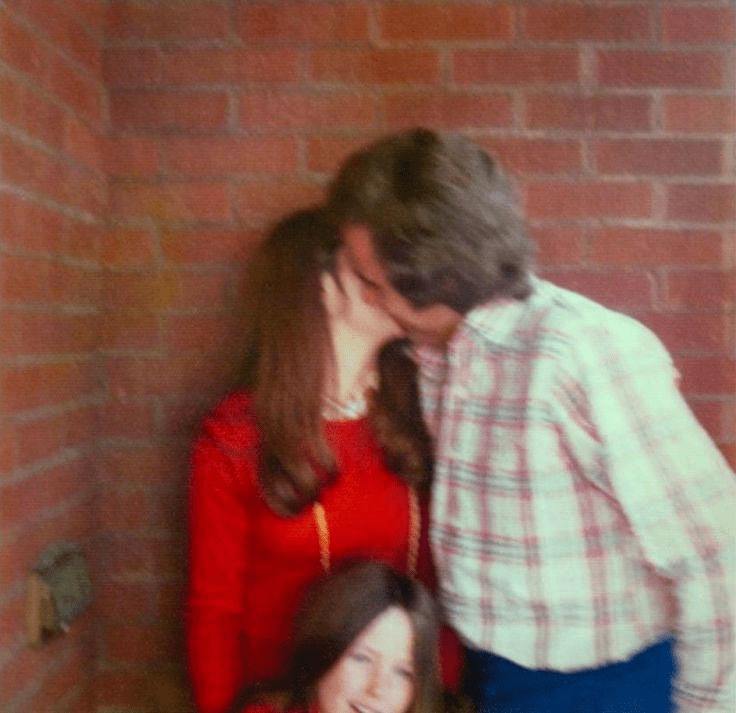
Ted, Liz, and Molly.

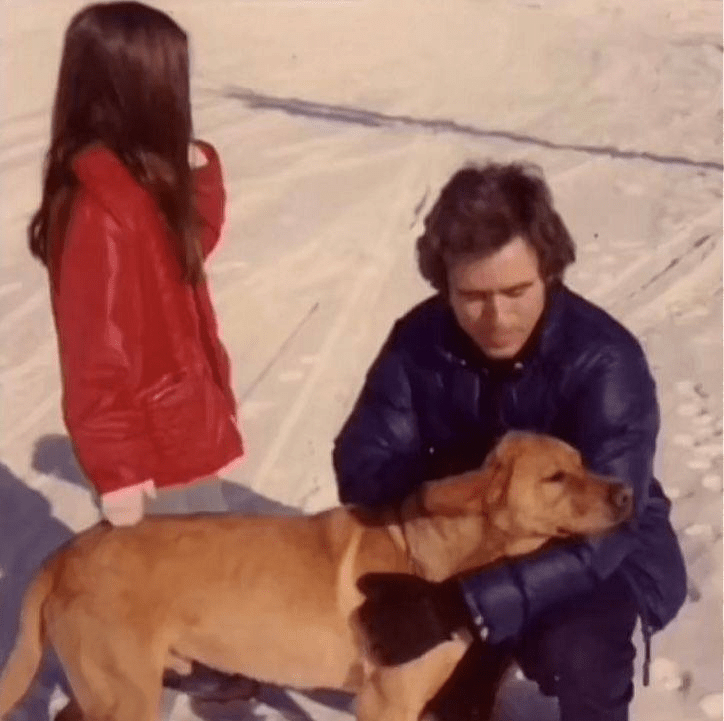
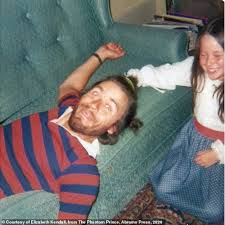
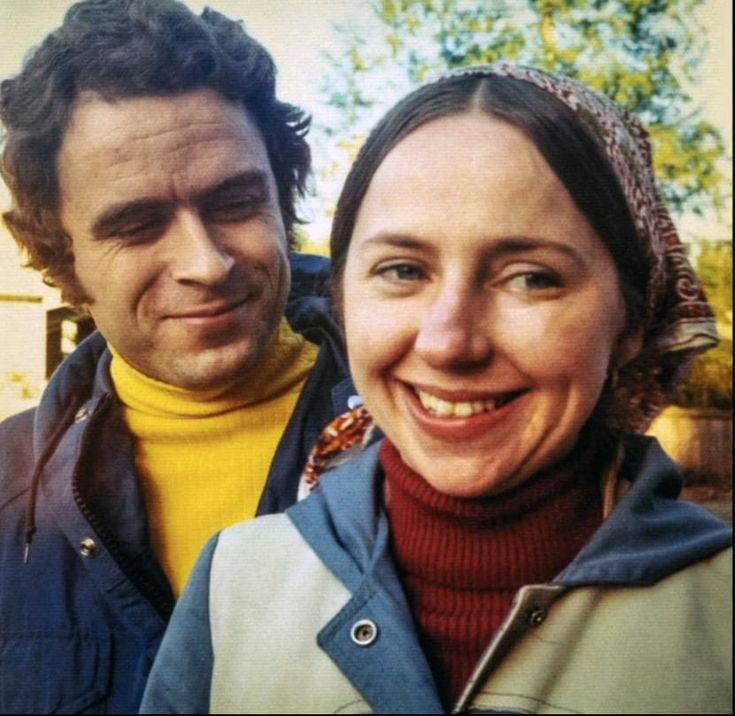
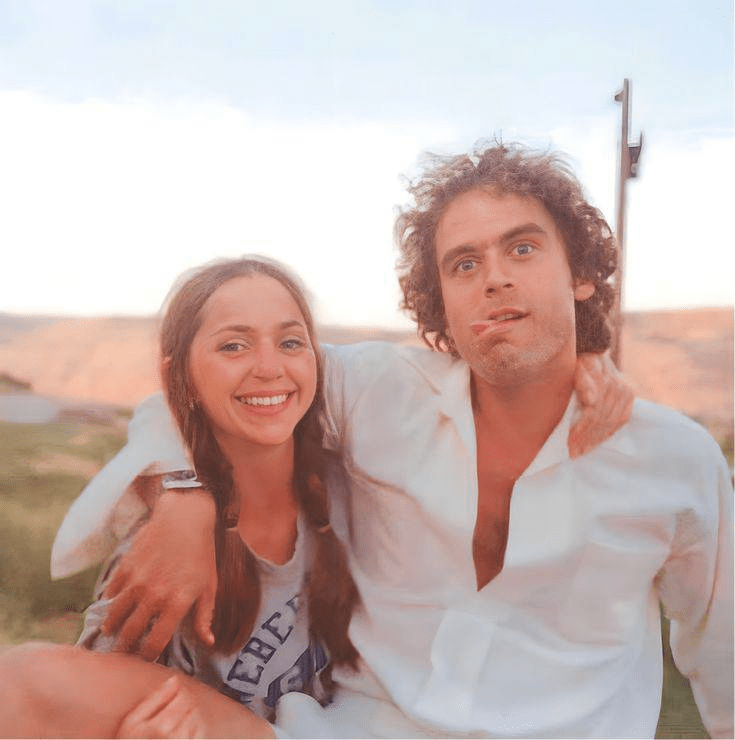
I was able to find a few pictures of Ted, Liz, and Molly these past few days and I wanted to share them here. Ted and Liz had a tumultuous relationship that began in September 1969 and eventually fizzled out after his kidnapping conviction in 1976. Both Liz and Molly are alive as of December 2024 and they reside in Seattle, Washington.

A young Elizabeth.
A young Elizabeth Kendall.
Liz at her college graduation from the University of Utah, taken in 1968.
Liz standing in front of her fireplace in her University District apartment.
A picture of Liz taken at he POE, at the University of Washington in Seattle.
Liz at work.
A young Liz.
Liz.
Liz and a young Molly.
Another shot of Liz and Molly taken outside in the sunshine.
Liz and Molly.
A picture of Liz and Molly taken at the Pacific Science enter in Seattle, 1970.
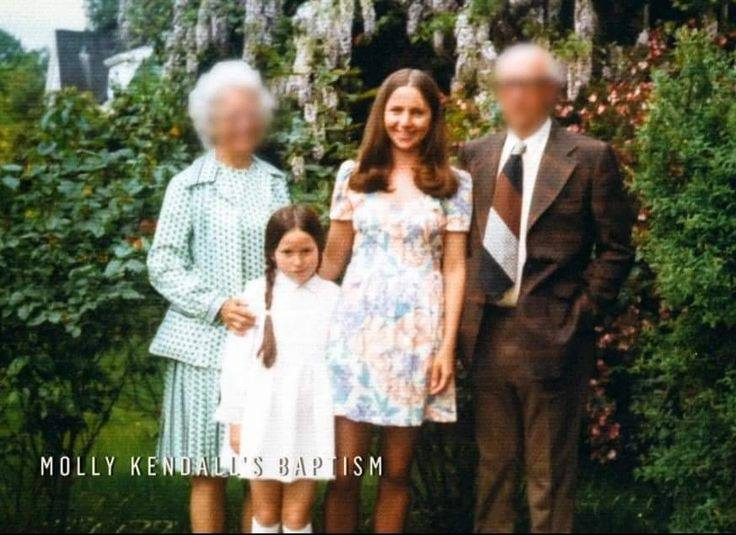
Liz and Molly at Molly’s baptism. Ted was late because the night before he abducted Brenda Ball.
Ted and Molly watching the ‘veg-o-matic man’ at the Washington State Fair in Puyallup, 1970.
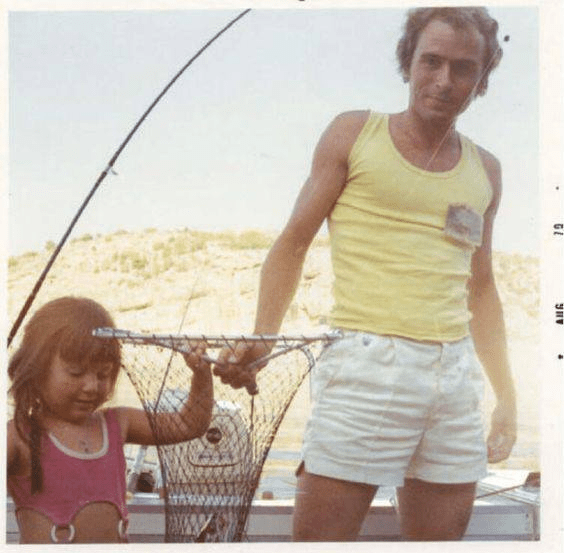
Ted and Molly fishing for rainbow trout in Flaming Gorge, UT in 1970.
Molly playing with the hose with Ted in the background; picture taken in July 1970 in Green Lake, Seattle.
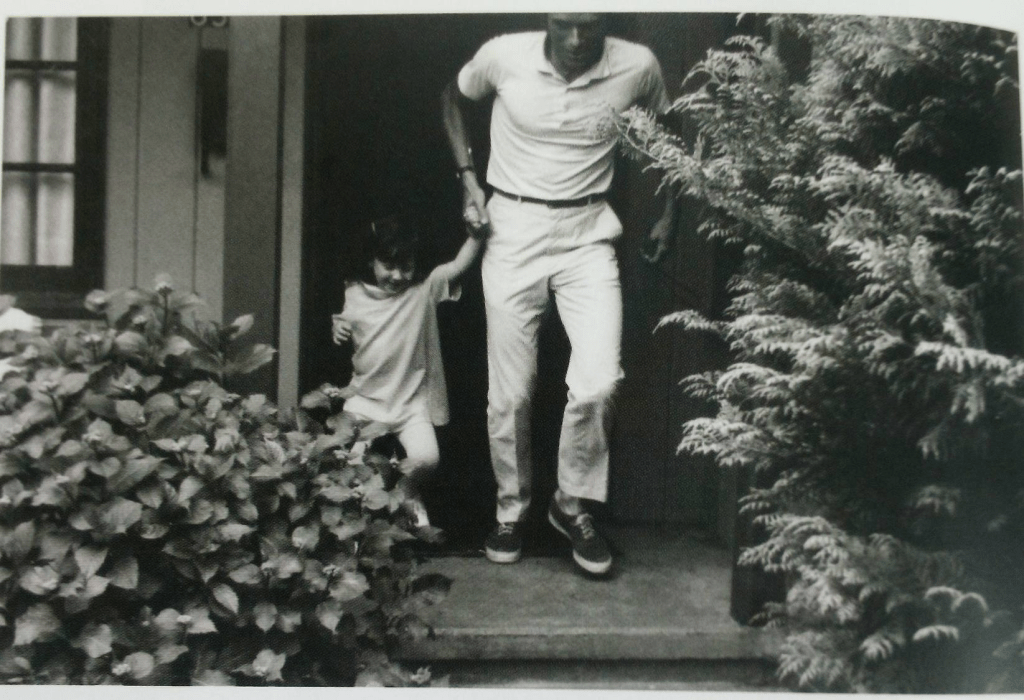
Molly and Ted walking out of his parents cabin in Green Lake, Seattle; picture taken in July 1970.
Ted and Molly baking cookies at Green Lake in Seattle, 1970.
Ted swinging Molly around in Flaming Gorge, UT; picture taken in 1970. The Flaming Gorge is a popular recreation area that spans Utah and Wyoming that features a reservoir, dam, and scenic landscape.
Ted and Molly driving a boat.
I couldn’t find another copy of this, I don’t know why Molly’s face is covered up and the other childs isn’t.
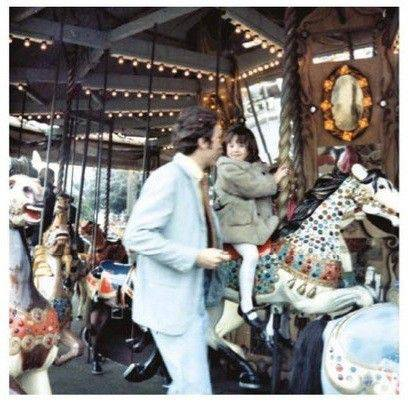
Ted and Molly on a carousel at the Seattle Center, 1970.
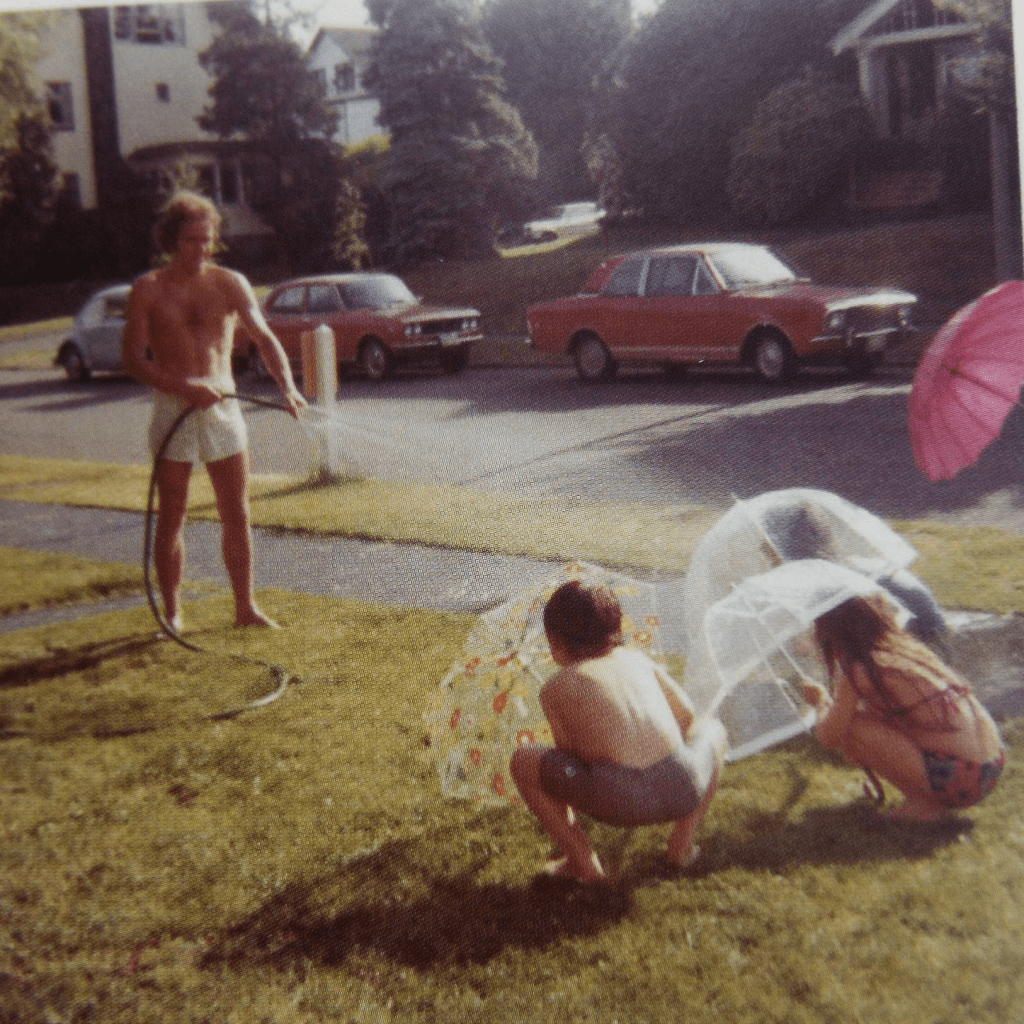
Ted spraying water on Molly and the neighborhood children.
Ted. Photo courtesy of ‘Ted Bundy: I was Trying to Think Like an Elk.’
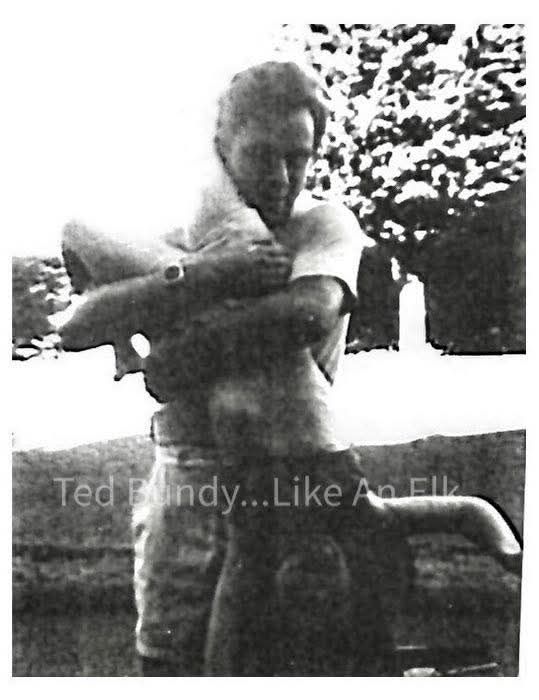
Ted playing with Molly. Photo courtesy of ‘Ted Bundy: I was Trying to Think Like an Elk.’
Ted. Photo courtesy of ‘Ted Bundy: I was Trying to Think Like an Elk.’
Another picture of Ted. Photo courtesy of ‘Ted Bundy: I was Trying to Think Like an Elk.’
Ted, Molly, and Liz. Photo courtesy of ‘Ted Bundy: I was Trying to Think Like an Elk.’
Photo courtesy of ‘Ted Bundy: I was Trying to Think Like an Elk.’
Ted and Molly playing by the water. Photo courtesy of ‘Ted Bundy: I was Trying to Think Like an Elk.’
Ted and Molly playing outside.
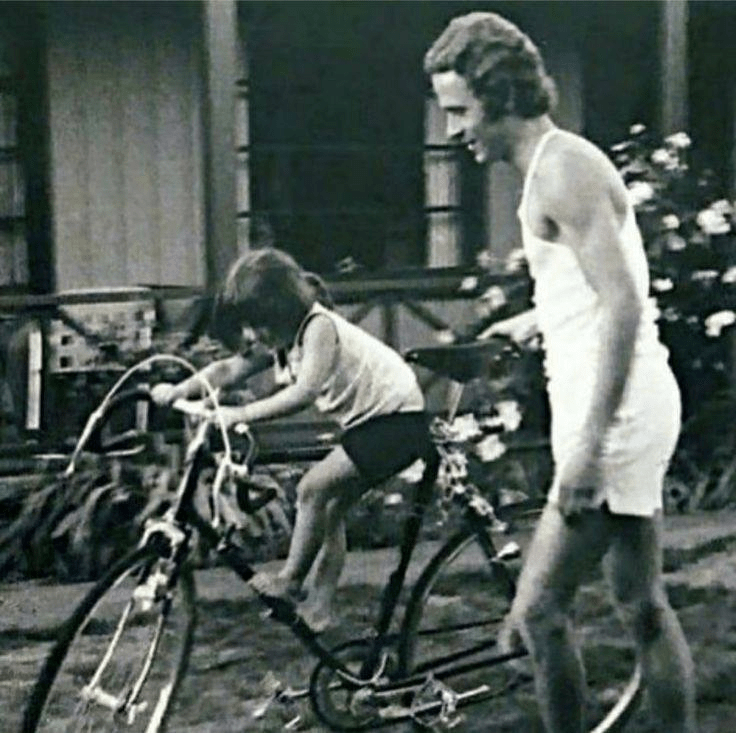
Ted teaching Molly how to ride his bike, picture taken in Green Lake in 1970.
Ted teaching Molly how to ride a bike.
Another picture of Ted teaching Molly how to ride a bike.
Ted and Molly at Christmastime in Ogden in 1970.
Another shot of Ted and Molly in Ogden at Christmastime in 1970.
Ted and Molly celebrating Christmas at Green Lake in 1970.
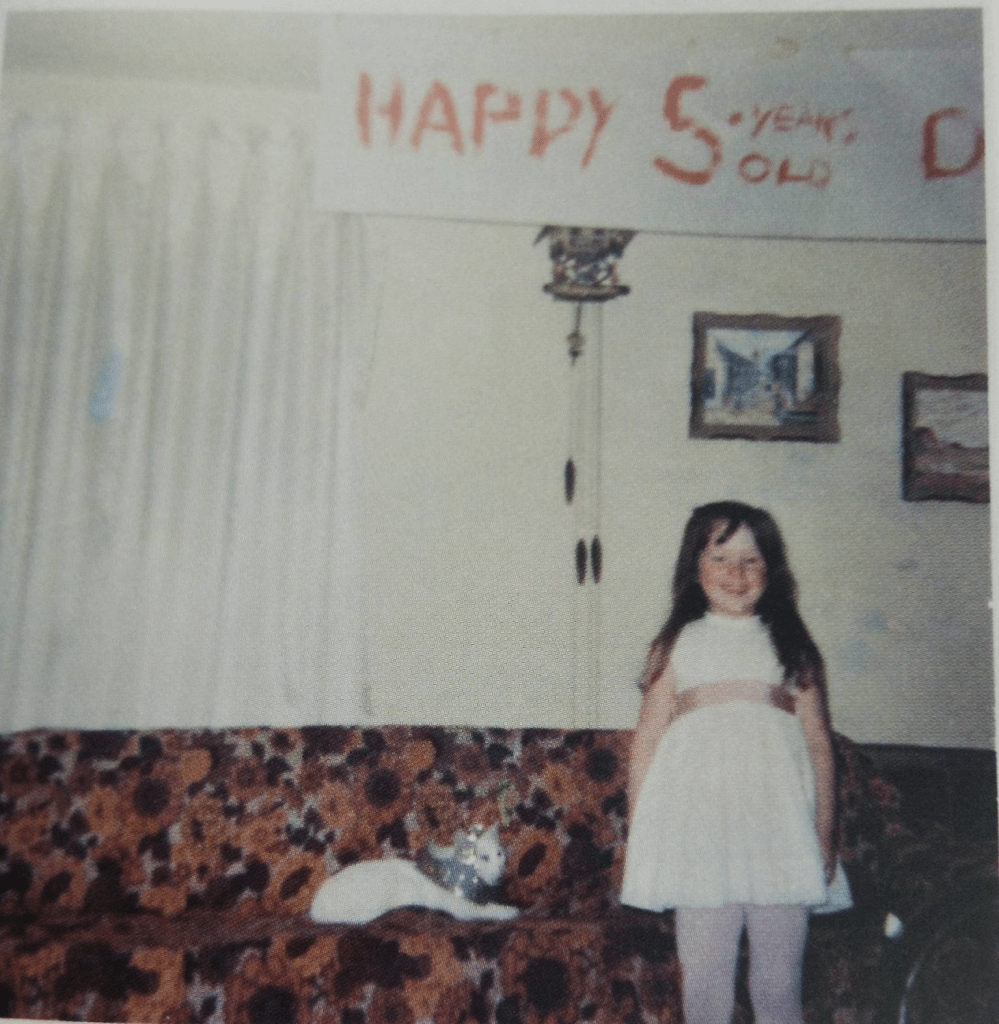
A picture from Molly’s fifth birthday. Ted made the banner. Taken at Green Lake in Seattle, 1971.
Christmas Day in Utah, 1974.
Ted and Molly around Christmas in 1974. Picture taken at the Hardware Ranch in Utah.
Ted and Molly in their ‘hippie clothes; picture taken in Seattle’s University District in 1975.
Ted swinging Molly around in the University DIstrict in 1975.
Molly putting barrettes in Teds hair during a visit to Seattle. Taken in June 1975 at Liz’s apartment in the University District.
Ted and Molly outside of Liz’s residence in the Universtiy disctict in Seattle, 1975.
Ted and Liz on the lake, about to go waterskiiing, picture taken at Flaming Gorge, UT in 1970. Flaming Gorge is a 91-mile-long reservoir created by damming the Green River in 1958, and is known for its sapphire blue water and is a top destination for boating, fishing, and other water activities.
Ted, Liz, and Molly visiting family in Ogden, UT. Picture taken in 1970.
Ted and Liz at Hood Canal in Washington. Picture taken in 1973.
Ted carrying Liz on his back.
Liz hugging Ted from the back. Does that sweater look familiar? It was the one he wore during his first escape in 1977.
A picture of Ted and Liz; her father is on the other side of her.
Liz and Ted sunbathing.
Ted and Liz.
Ted and Liz in front of a fireplace, picture taken in Ogden, UT in December 1974.
Ted and Liz in Flaming Gorge, Utah in 1975.
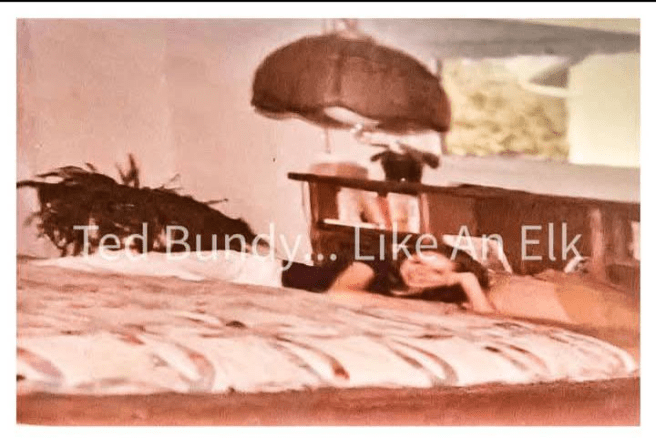
Liz laying on Ted’s waterbed in his room at the Rogers Rooming House in Seattle. Photo courtesy of ‘Ted Bundy: I was Trying to Think Like an Elk.’
Liz, Ted, and Molly on a vacation visiting Liz’s family in Ogden, taken in 1970.
The trio on horses outside of the Liz’s childhood home in Ogden, UT.
Ted tickling Molly, picture taken in December 1974.
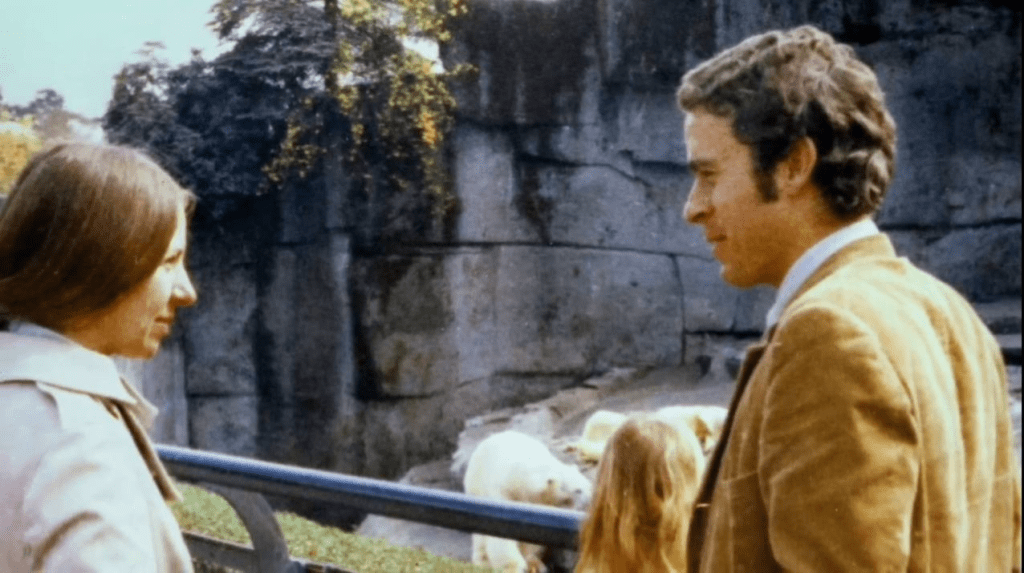
Ted and Liz on a trip to the zoo with Molly.
Ted, Liz, and Molly.
Ted and Liz sharing a kiss.
Ted and his little brother Richie on a camping trip.
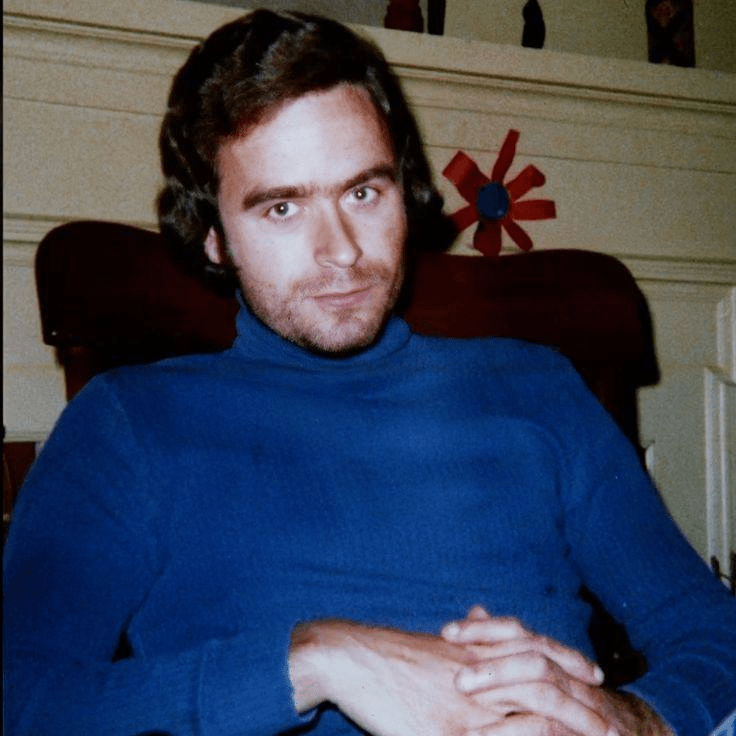
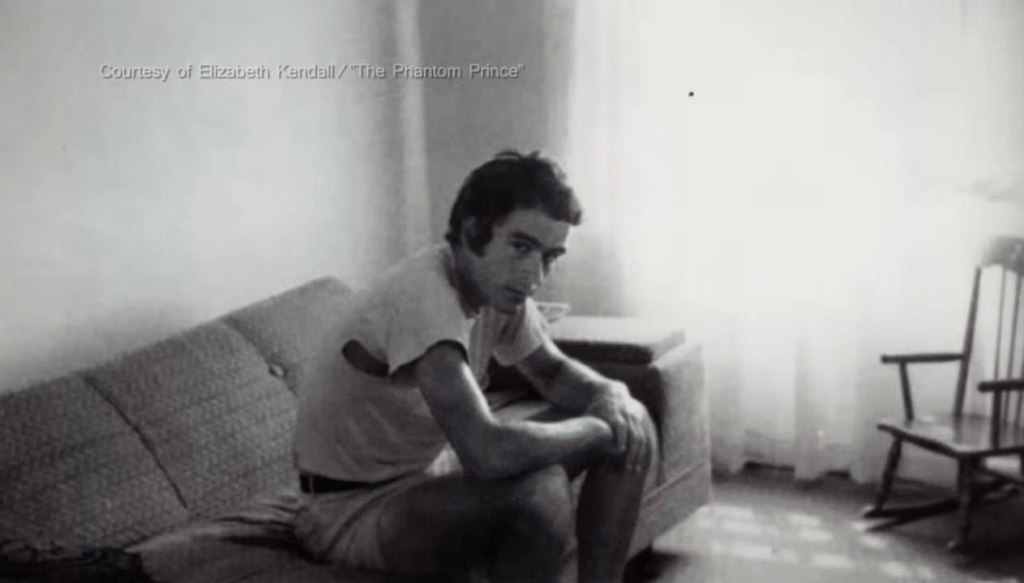
Ted sitting in front of Liz’s fireplace.
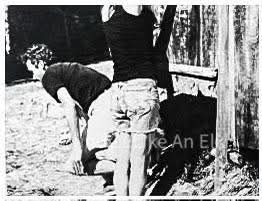
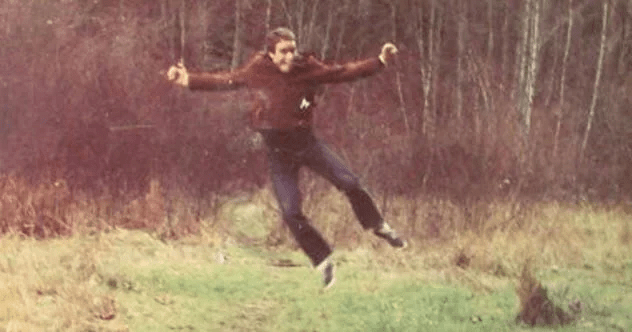
Ted jumping for joy and his first camping trip with Liz; picture taken in 1970 at what would later turn out to be his Issaquah dump site.
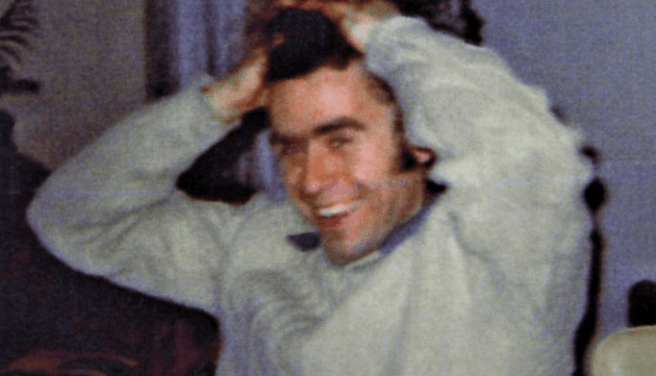
Ted playing with his hair.
Ted waking up from a nap at Green Lake in Seattle, 1971.
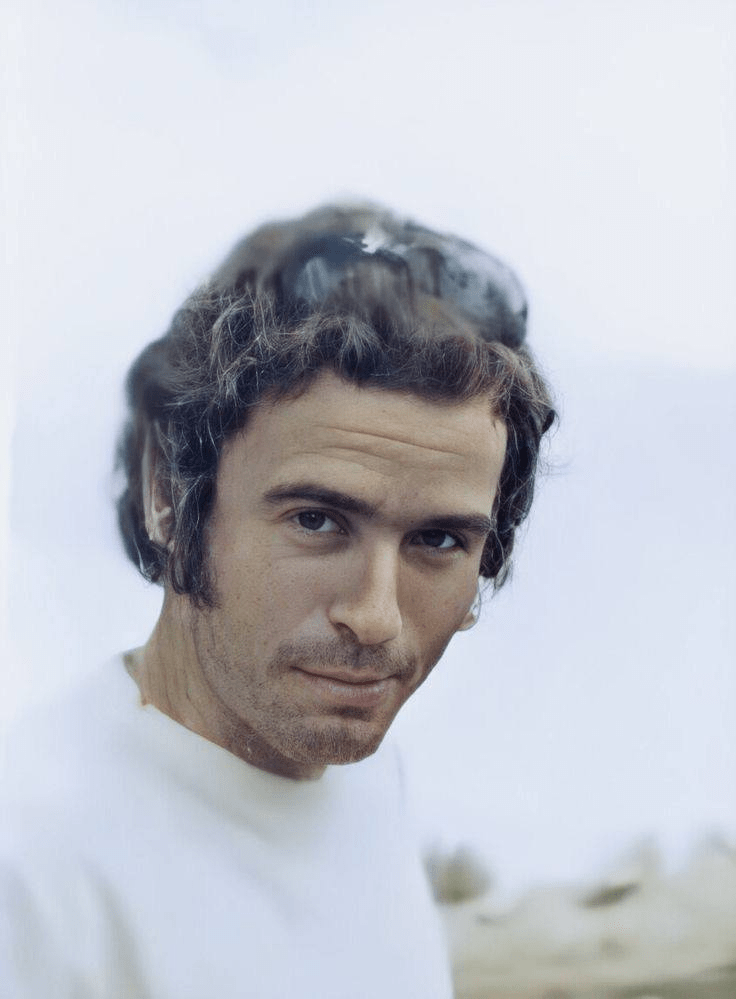
Ted in 1972.
Ted at Hood Canal, WA in 1973.
A young Ted wearing a suit.
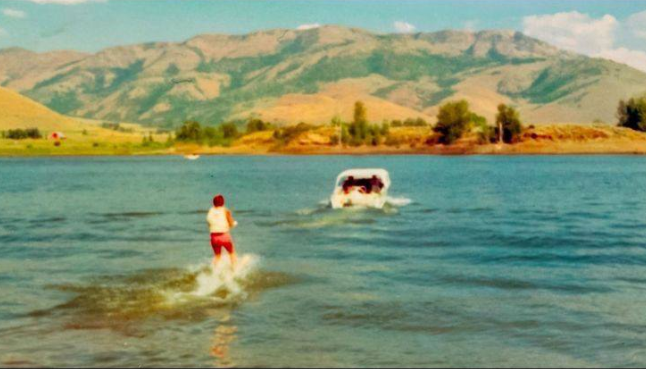
Ted waterskiing.
Ted holding a dog.
A picture of Ted taken in 1972.
Ted taking a nap on Liz’s childhood bed at Christmastime in Utah, 1974.
Ted playing Frisbee on the beach.
An action shot of Ted playing Frisbee on the beach.
Ted in Wyoming on his way to Flaming Gorge, UT.
Ted, smoking. Photo courtesy of ‘Ted Bundy: I was Trying to Think Like an Elk.’
Molly with her biological dad.
A young Molly.
A picture of Molly from high school.
Molly.
Liz Kloepfer.
Liz featured in a news special about Bundy.
Liz after her relationship with Bundy, taken in the 1980’s.
Liz.
Liz.
Liz Kloepfer.
Liz Kloepfer after her relationship with Bundy.
Elizabeth Kloepfer.
Elizabeth Kloepfer.
Liz and Molly in a promotion photo for Amazon’s, ‘Falling for a Killer.’

Donna Gail Manson, Case Files.

Back in April I began the process of requesting the case files related to the murder of Katherine Merry Devine from the Thurston Co. Sheriff’s Department out of Washington state. I found the entire ordeal to be not only simple but also incredibly inexpensive, so logically I thought to myself, ‘what else can I get from these fine people?,’ and after looking into it I realized that confirmed Bundy victim Donna Gail Manson was also abducted from the same county. These are the documents that they sent me. Last night I registered with neighboring King County and requested some documents from them as well. This is outstanding.

Ted Bundy’s Issaquah Dump Site.

When I went to Seattle in April 2022 there were a few places I never got around to seeing, one of them being Bundy’s Issaquah dump site… but it certainly wasn’t for lack of trying: I drove around the same three mile area for almost two hours one day trying to find it (Google Maps really dropped the ball with that one, IMO). I finally had to give up because it was taking precious time away from other places I needed to see, and as I was driving away I remember thinking to myself that I’d never get back there again and I blew it. But, thankfully in May 2024 I was able to spend a few days in Washington state during my vacation to Oregon and I was finally able to locate it, with a little help with my friend Cole Kaiser, who is awesome and deserves recognition for his help.

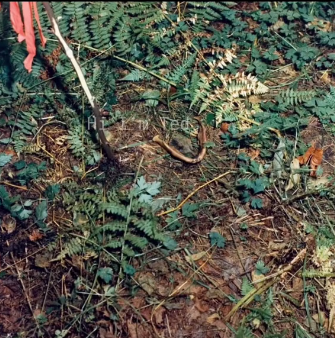
Issaquah is a small city located about fifteen miles east of Seattle. Back in 1974, it was much (much) less populated than it is today, going from 4,500 residents to roughly 40,000. The Issaquah dump site is where Ted Bundy dumped the bodies of Janice Ann Ott, Denise Marie Naslund, and (most likely) Georgann Hawkins (despite her body never positively being identified). A University of Washington student, Hawkins was last seen in the early morning hours of June 11, 1974 after leaving a party early and stopping by her boyfriend’s dormitory room to get some Spanish notes for an upcoming final she was worried about. She stopped and chatted with a male friend named Duane (who was a Beta Theta Pi fraternity brother, like her bf) out his window then walked off into the night and was never seen again. Twenty-three year old Ott and nineteen year old Naslund both disappeared on July 14th, 1974 from Lake Sammamish State Park, which is located just ten minutes away from the dump site. All three girls vanished without a trace until later that year on September 6th, when two hunters discovered what they strongly suspected were human skeletal remains while out looking for grouse.

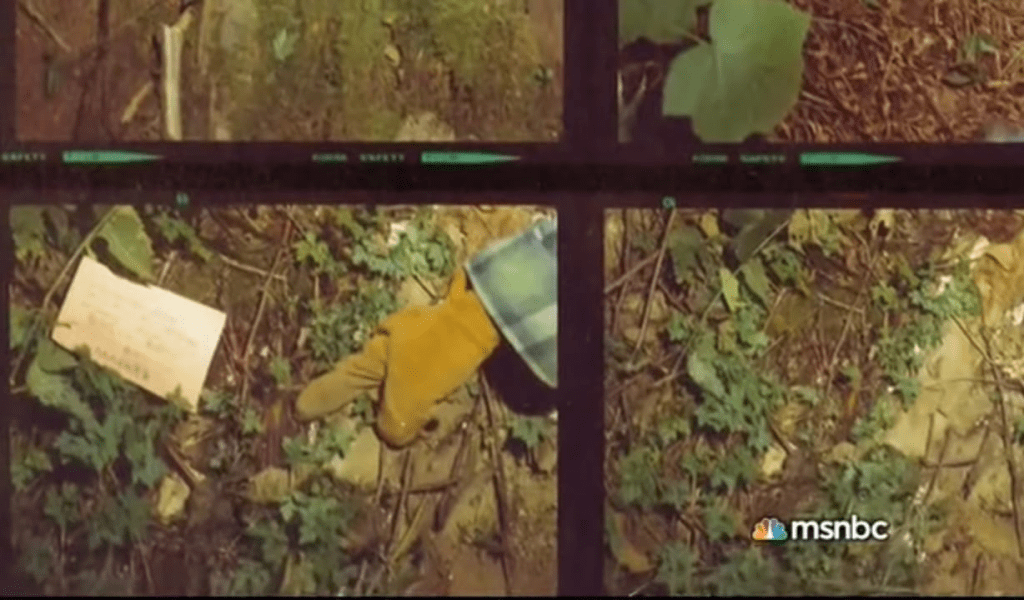
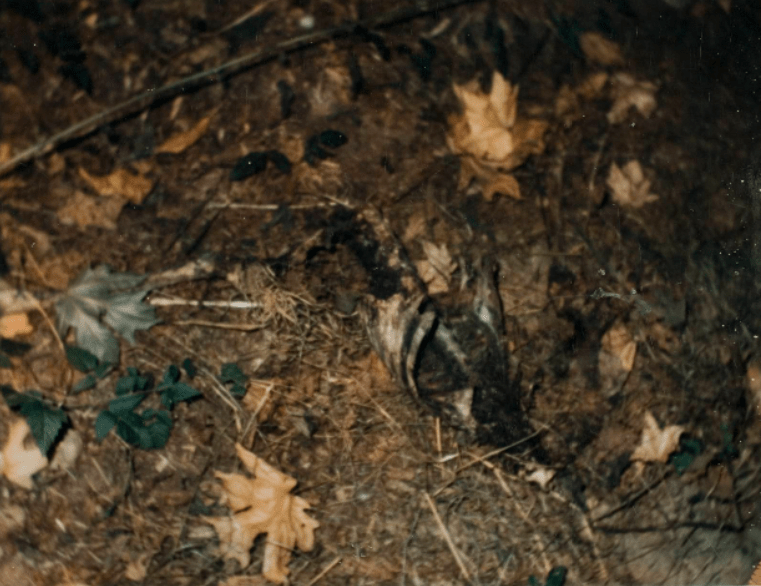
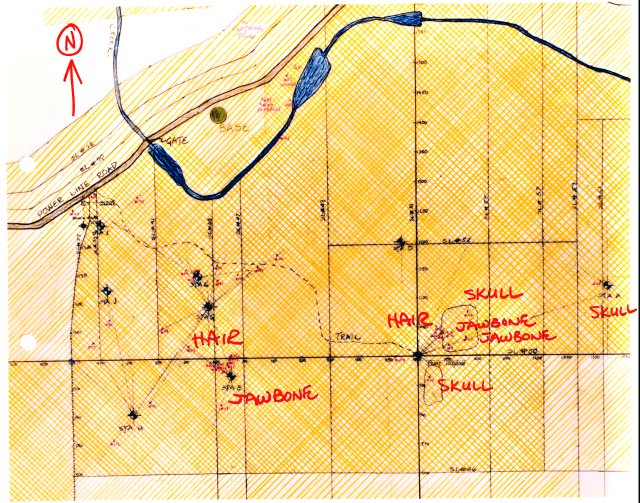
Upon arrival Seattle based LE discovered a variety of human bones, most of which had been dispersed throughout the wooded area thanks to local wildlife (including, but not limited to, bobcats, bears, coyotes, and cougars). Among the bones found were teeth, a jawbone, pelvis, a skull, five femurs, and a spine, and investigators quickly determined that some of them belonged to Ott and Naslund. During Bundy’s death row confessions he also claimed that he buried Hawkins at the site as well, but investigators were never able to positively confirm this.

At the time of the murders in the mid-1970’s forensic experts (in most cases) needed either a mandible or skull to make a positive ID, as they often relied on matching teeth against dental records due to the fact that DNA testing wasn’t a ‘thing’ back then. Some of the bones that were found at the site were cremated and as a result were never able to be tested, as it was apparently ‘department policy’ to incinerate bones that were left unidentified in storage for too long. As I said earlier, the search team recovered five femur bones from the area, which retired King County Detective Dr. Robert D. Keppel said proved that Bundy dumped at least three victims there.

Looking at the pictures that I included below (of the site from the 1970’s to now), it’s obvious the area has undergone quite a transformation over the past fifty years. For example, Highlands Drive wasn’t there at all, and the Swedish Issaquah Campus wasn’t built until over 30 years after the murders took place. Additionally, back in 1974 the area could only be accessed through a narrow and winding dirt pathway, and the railway line that ran through the city’s Olde Town neighborhood was taken out and replaced by the Rainier and Issaquah-Preston walking trails that are still there today.

Despite The Issaquah dump site being the first one that was found it wasn’t the first one that Bundy utilized: six months after its discovery in March 1975 a second dumping ground of bodies was discovered at nearby Taylor Mountain when two forestry students from nearby Green River Community College stumbled upon skeletal remains while marking trees for a school project. I wonder what Bundy’s logic was for switching up his dump sites, moving from Taylor Mountain (where he left Lynda Healy, Brenda Ball, Kathy Parks, and Sue Rancourt) to Issaquah. Did he want to move somewhere else in an attempt to throw off law enforcement? We also know that he was impulsive and often made decisions quickly and without much thought: did he just stumble across this location one day and decide to utilize it? Or did Ted maybe have a close call at Taylor Mountain, possibly running into other (late night) hikers or even a policeman out on patrol?

During his January 1989 confession Ted told Dr. Keppel that he buried Georgann’s head in an area that was very close to the dump site, roughly 25–50 yards north parallel to the dirt road before turning left and walking about ten years ‘through the trees, eventually coming across an area he described as ‘very rocky’ and ‘very rocky.’ Investigators didn’t wait long to go looking for Hawkin’s remains after Bundy was put to death, and on February 15, 1989 search teams combed through the Issaquah dump site once again, but were unable to find any trace of the young co-ed. We do know that Ted was known to imbibe during his murders, and very well could have been drunk, high, or both. When you consider that and the fact that the murder was committed nearly fifteen years prior to his confession it might explain why no trace of George was ever found. Or… was Bundy purposefully giving investigators the bare minimum in an attempt to get another stay of execution. Or, was it all just another lie?

Jan Ott, Bundy’s first Lake Sam victim.
Denise Naslund, who Bundy abducted roughly four hours after Jan Ott.
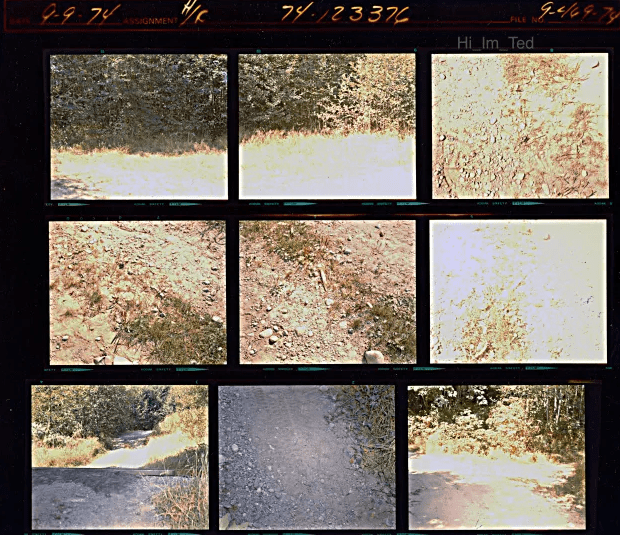
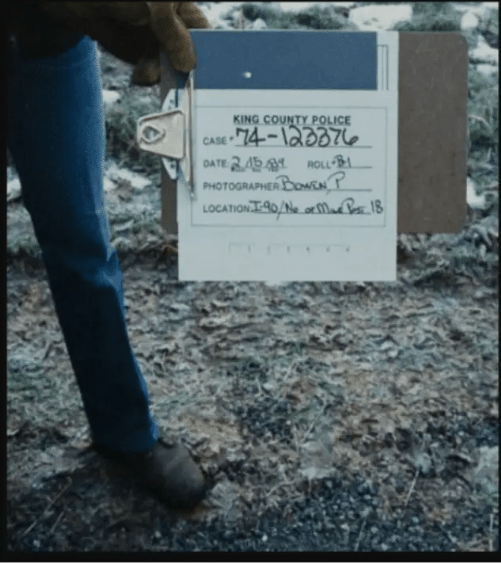
Nine different shots of the dirt road leading to the Issaquah dump site in September 1974. Photo courtesy of the King County Archives/Tiffany Jean.
A photo of the search of the Issaquah dump site. Picture courtesy of OddStops.
Denise Naslund’s skull found in the dump site, was found by two hunters on a hillside just east of Issaquah less than ten miles from Lake Sammamish. Photo courtesy of KIRO-7.
Denise Naslund’s hair at the Issaquah dump site. Photo courtesy of the King County Archives.
Another shot of Denise Naslund’s hair at the Issaquah dump site. Photo courtesy of the King County Archives.
A rib cage at the Issaquah dump site. Photo courtesy of the King County Archives.
Another shot of the rib cage at the Issaquah dump site. Photo courtesy of the King County Archives.
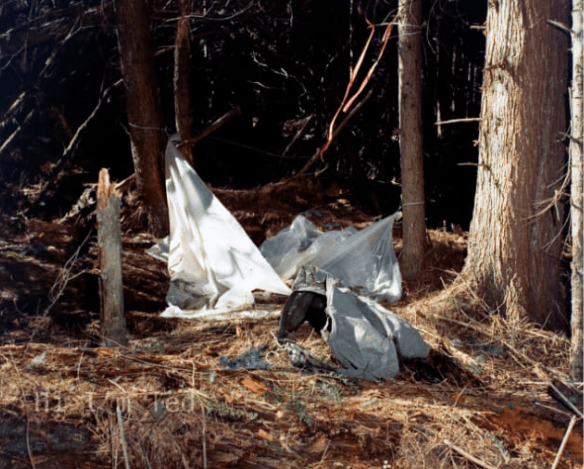
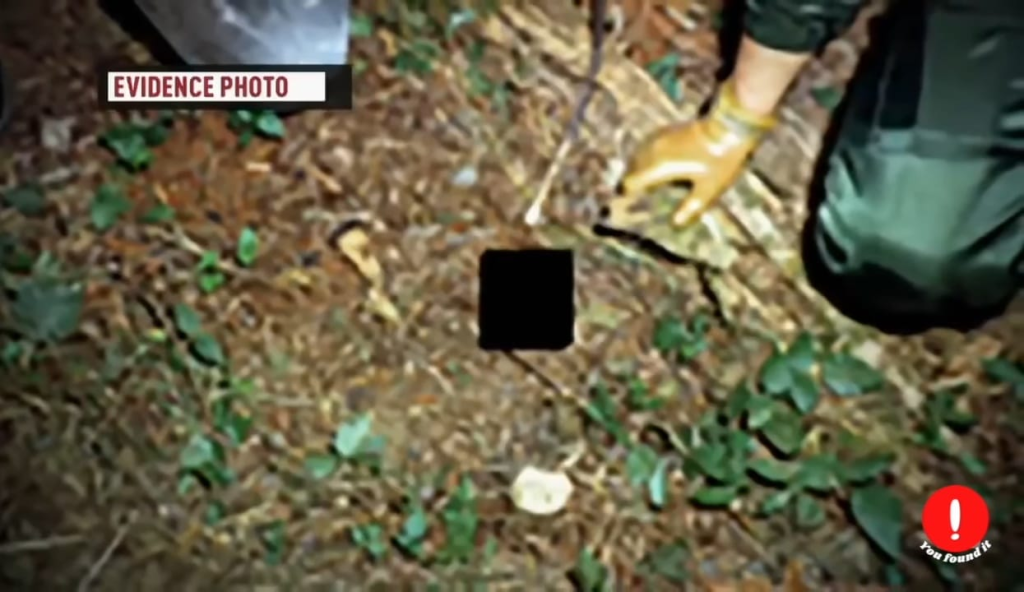
A picture from the Issaquah dump site. Photo courtesy of Oxygen.
A mapping of where the different bones were found at the Issaquah dump site.
Ted at the Issaquah dump site; he was there with Liz that day.
This aerial photo was taken roughly two years before Bundy started using it as a dump site in September 1972. Picture courtesy of OddStops.
An aerial photo taken of the dump site by the United States Geological Survey in 1977. Picture courtesy of OddStops.
This is an aerial photograph taken by police of Bundy’s Issaquah dump site. Picture courtesy of OddStops.
A map of map of Issaquah from 1950. Bundy’s dump site is just north of an abandoned cabin on the north side of the railway. Picture courtesy of OddStops.
On the left is an older map that pinpoints the exact location of the dump site taken from ‘Ted Bundy: A Visual Timeline’ by Rob Dielenberg. On the right is a recent aerial photograph of the area. As of June 2024 the region was turned into a walking trail.
The dump site as it looks today. Photo courtesy of OddStops.
A snapshot taken at the Issaquah dump site on February 15, 1989 when investigators were looking for the remains of Georgann Hawkins after Bundy discussed her murder during his death row confessions. Photo courtesy of the King County Archives.
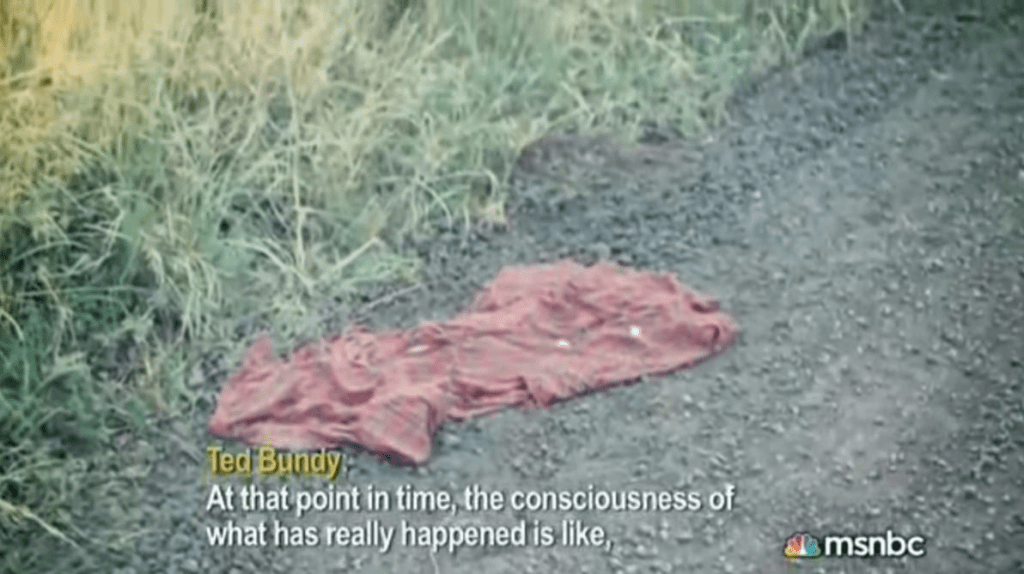
Another picture taken at the Issaquah dump site on February 15, 1989. Photo courtesy of MSNBC.
A picture of the possible dump site of Georgann Hawkins taken in February 1989. Photo courtesy of MSNBC.
A screen grab of the map Cole Kaiser sent me that helped me get to the Issaquah dump site. Thanks homie.
Driving by the Issaquah dump site as it looks today.
A photo I took of the Issaquah Dump Site in May 2024.

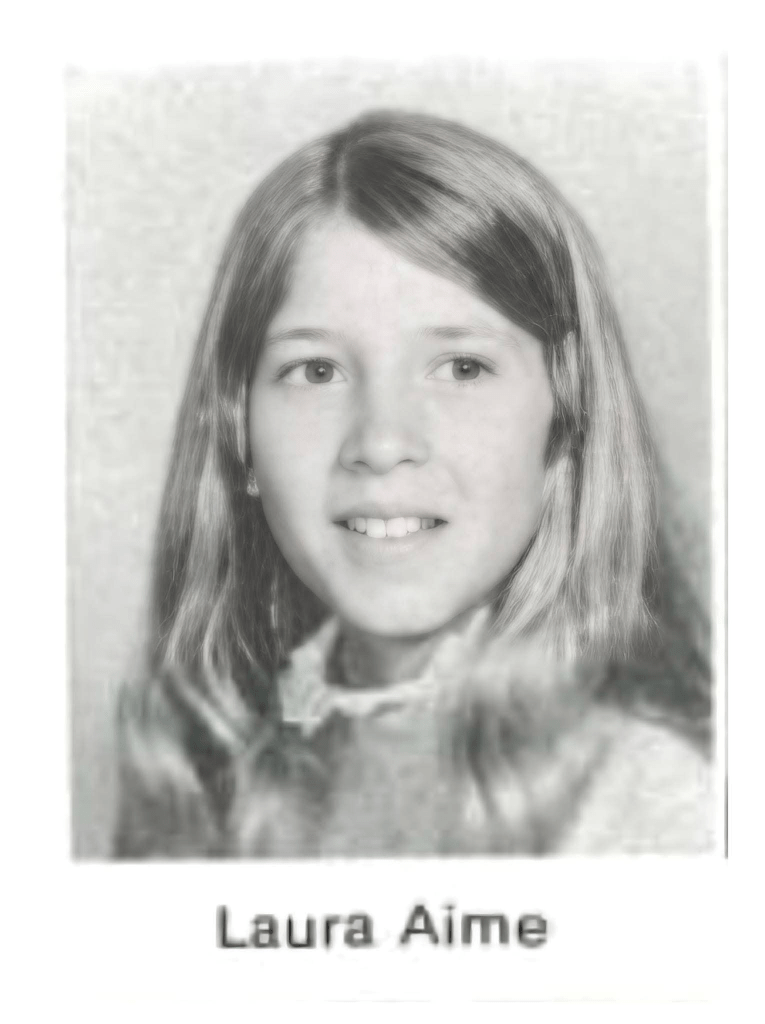
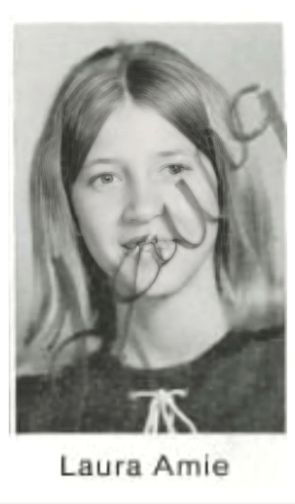
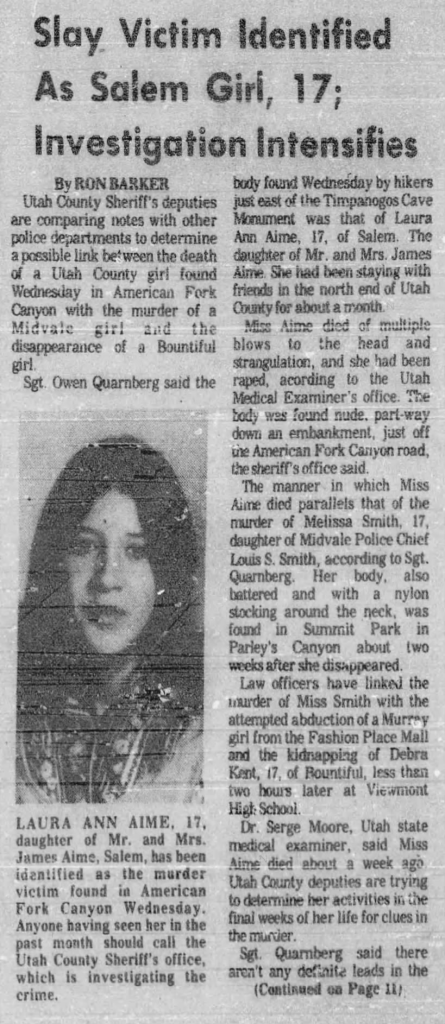
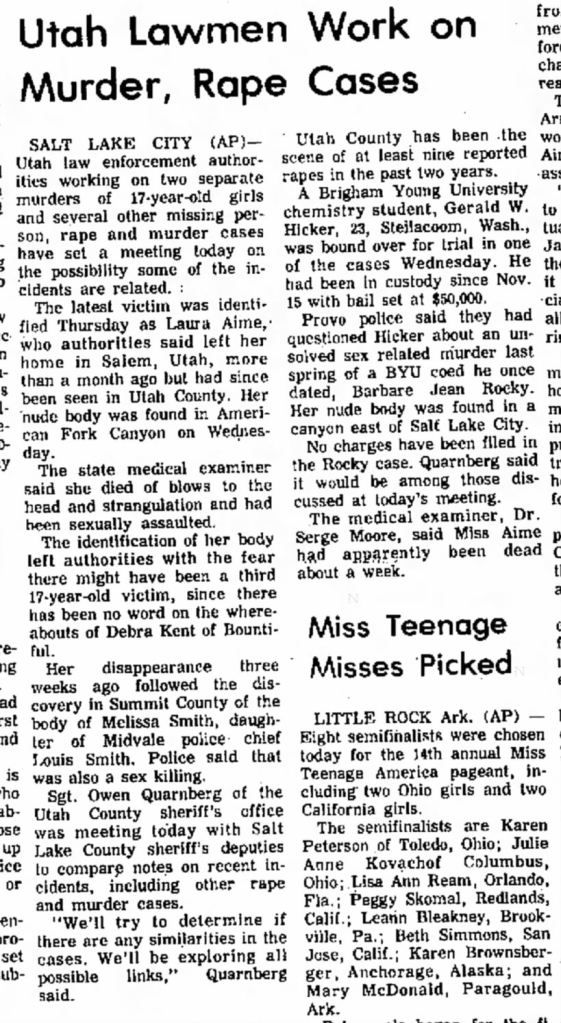
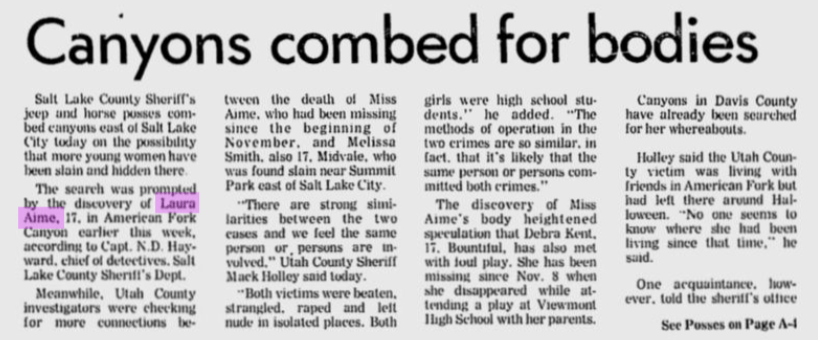
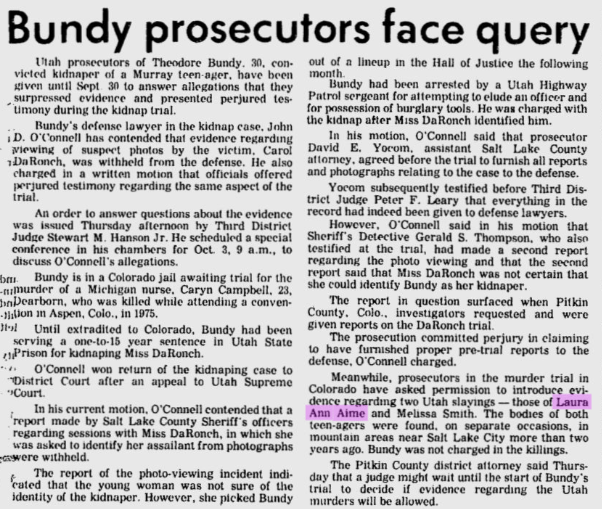
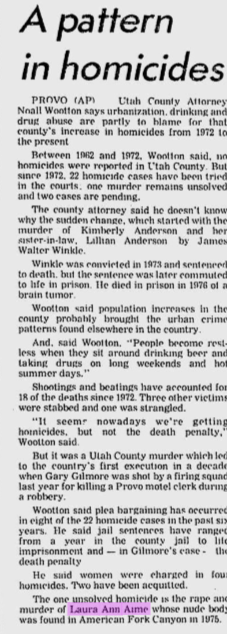
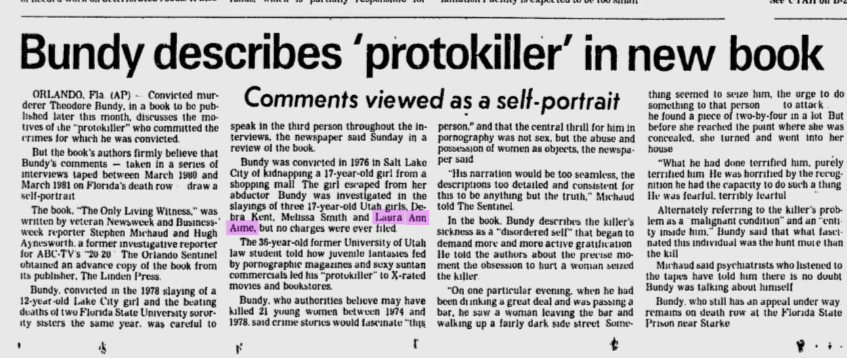
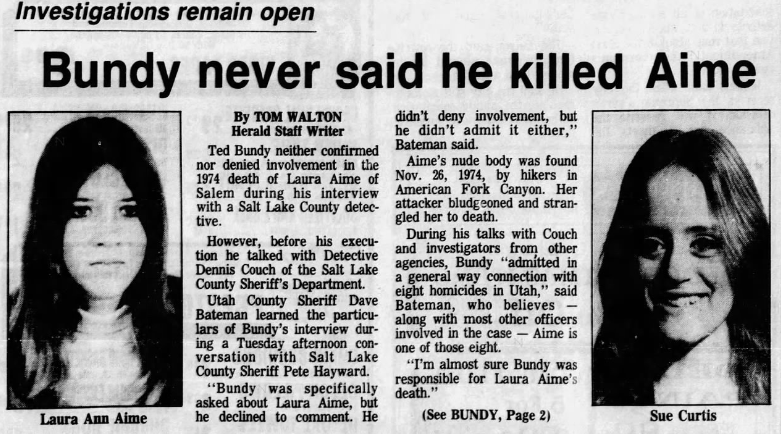
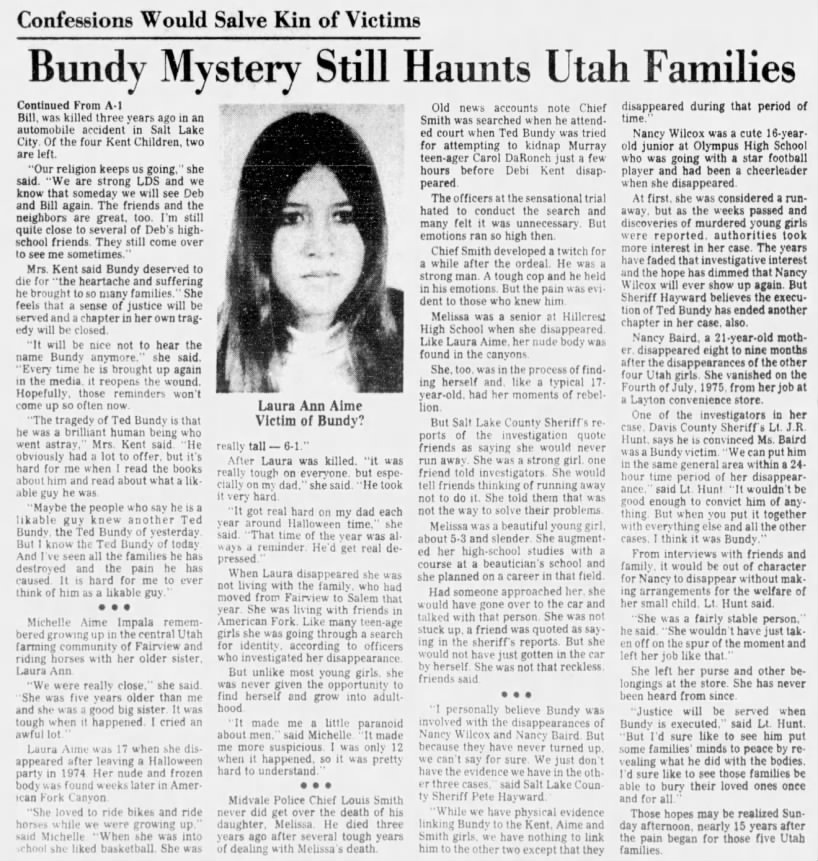
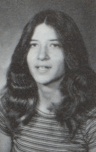
Laura Ann Aime.

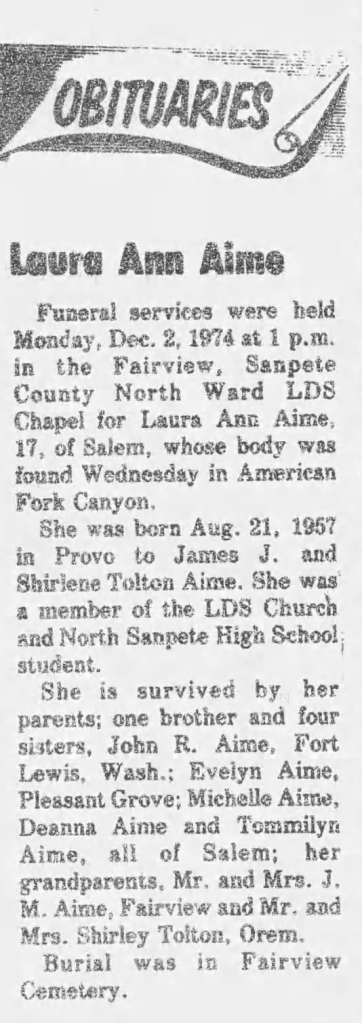
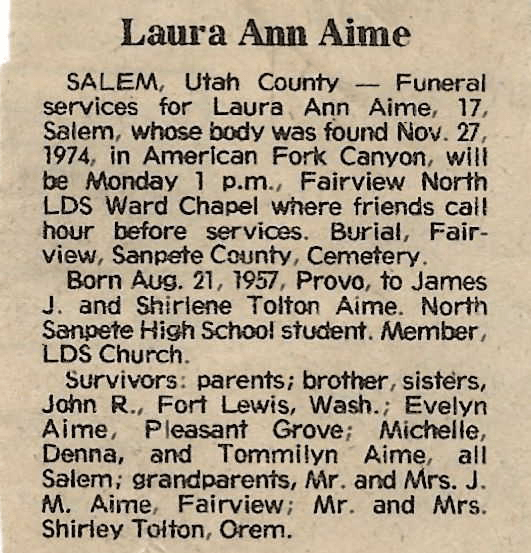
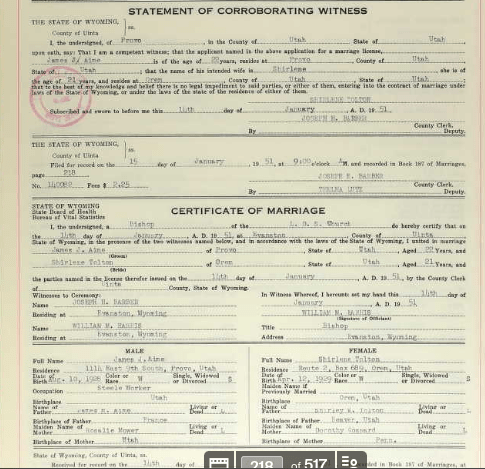
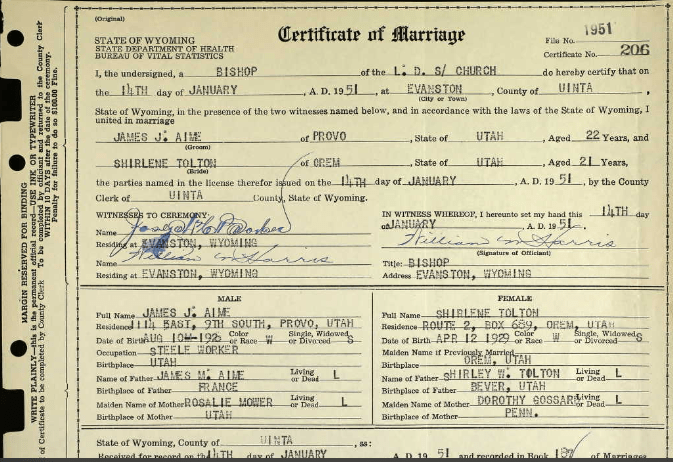
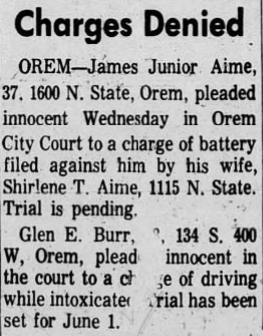
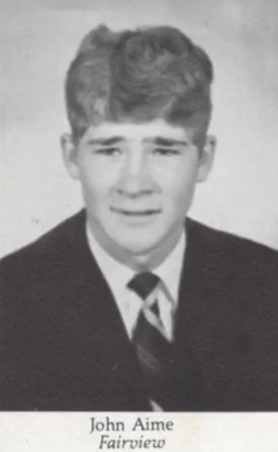
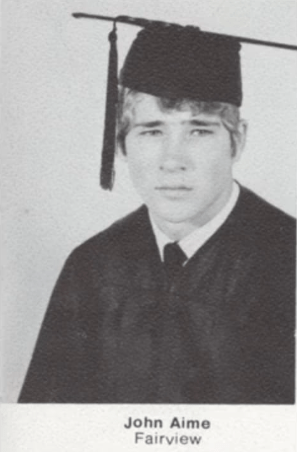
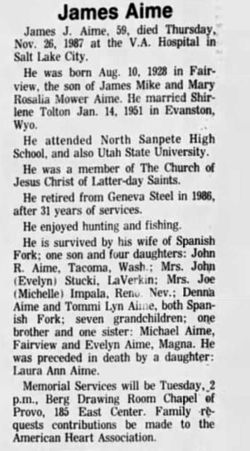
Laura Ann Aime was born on August 21, 1957 to James and Shirlene (nee Tolton) Aime in Lehi, Utah. Mr. Aime was born on August 10, 1928 in Fairview, Utah, and after completing high school he joined the US Navy; after getting out of the military he went on to attend the University of Utah. Shirlene was born on April 12, 1934 in Orem, and the couple were married on January 14, 1951. According to the Aime’s marriage certificate, Jim worked as a steelworker for Geneva Steel. Laura was Jim and Shirlene’s second child, and she had four younger sisters (Evelyn, Michelle, Denna, and Tommi lyn) and an older brother named John. Mrs. Aime filed domestic abuse charges against her husband in April 1966, but they must have worked out their issues because they never divorced.

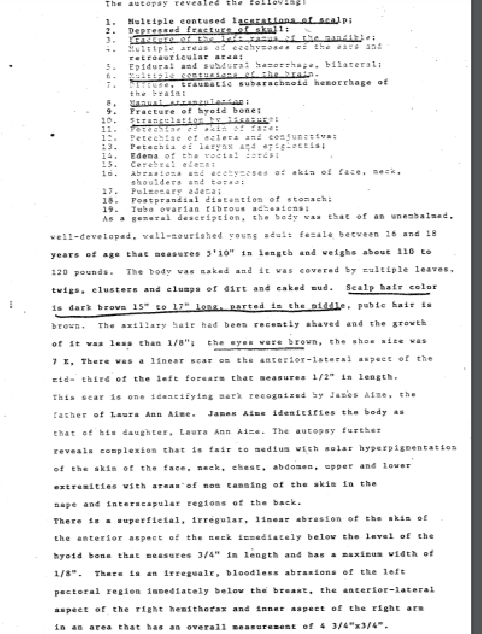
According to her autopsy, Laura had blue eyes, medium length blonde hair, was 5’10” tall, and weighed around 140 pounds. Before Aime dropped out she was a student at North Sanpete High School, and was at one-time a member of the Laurel Class in the Fairview North Ward. She loved animals, and one time a wild deer wandered out of the canyon and she began feeding it, and eventually was able to convince the creature into becoming a family pet. When Laura was eleven she was thrown into a barbed wire fence by her horse, injuring her ring finger, forearm, and upper arm. Jim Aime liked to take his daughter hunting, and she even helped him bag the first prize deer in a Utah hunting contest at the age of ten. Before she was killed Aime somehow seemed to show awareness that she knew her life was going to end soon in a tragic way: Mrs. Aime said one day out of the blue just a few weeks before her daughter died she told her: ‘at my funeral, I don’t want to be buried in a dress.’ Additionally, Evelyn Aime said that her older sister mentioned that she wanted the 1974 Terry Jacks classic, ‘Seasons in the Sun’ to play during the service as well.

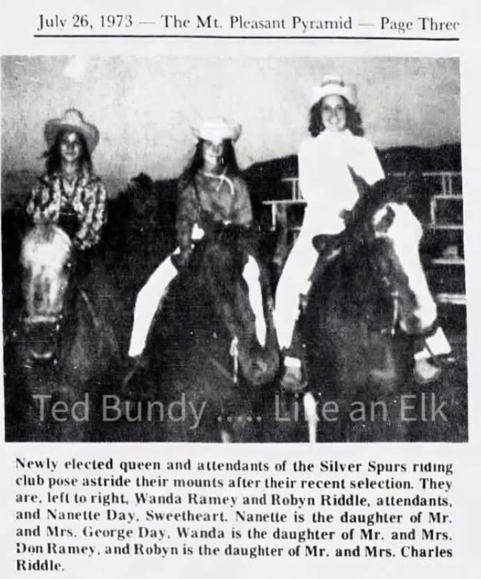
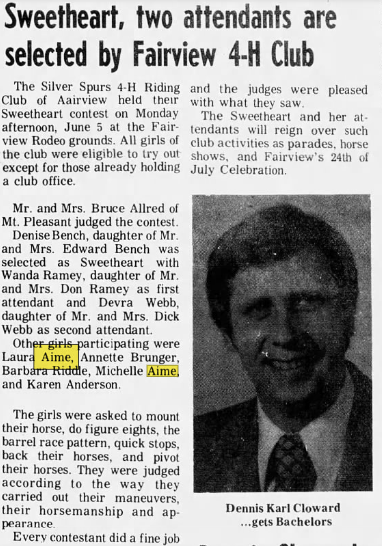
Immediately before she disappeared Laura had been staying with her girlfriend Marin Beveridge, who didn’t live far from her childhood home. Despite being raised in a Mormon family, after leaving home she quickly fell in with the latter-day counter-cultural life, and with her long blonde locks and ‘hippie look’ she already had the stereotypical appearance of a runaway. Although the Aimes didn’t care for their daughter’s  choice in friends they were just beginning to come to terms with her ‘nomadic’ lifestyle. Often teased about her height, Laura was given nicknames like ‘Wilt the Stilt,’ which greatly upset her, and her Aime’s suspected that the relentless mocking was what made her leave school. She was used to tough work as the family at one time lived in an old farm house in Mount Pleasant, where they kept a plethora of animals, including chickens, cows, peacocks, turkeys, hogs, goats, sheep, dogs and ‘dozens of cats.’ She was also a tomboy (especially during her early years), and she loved playing softball, and played on competitive teams as well as her families LDS ward, even going so far as to winning the 1972 state championship. Growing up, Laura loved horses and was an experienced rider; she even spent several of her teenage years in an all-girls horseback riding club called ‘The Silver Spurs,’ and participated in several competitions with them at different fairs and parades across Utah.

Before she disappeared Laura had been staying with her girlfriend Marin Beveridge, who didn’t live far from her childhood home. Despite being raised in a Mormon family, after leaving home she quickly fell in with the latter-day counter-cultural life, and with her long blonde hair and hippie look she already had the appearance of a runaway. Although the Aimes didn’t care for their daughter’s friends they were just beginning to come to terms with her ‘nomadic’ lifestyle. Often teased about her height, Laura was given nicknames like ‘Wilt the Stilt,’ which greatly upset her, and the Aime’s suspected that the relentless mocking was what made her leave school. Laura was used to tough work as the family at one time lived in an old farm house in Mount Pleasant, where they kept a plethora of animals, including chickens, cows, peacocks, turkeys, hogs, goats, sheep, dogs and ‘dozens of cats.’ She was also a tomboy (especially during her early years), and she loved playing softball, and played on competitive teams as well as her families LDS ward, even going so far as to winning the 1972 state championship. Growing up Laura loved horses and was an experienced rider. She spent several of her teenage years in an all-girls horseback riding club called ‘The Silver Spurs” in SanPete County, and participated in several competitions at different fairs and parades across Utah. Those that knew her remember her as a kind and loving person.

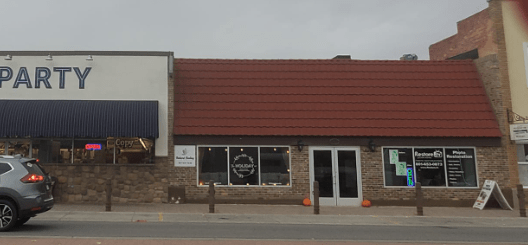
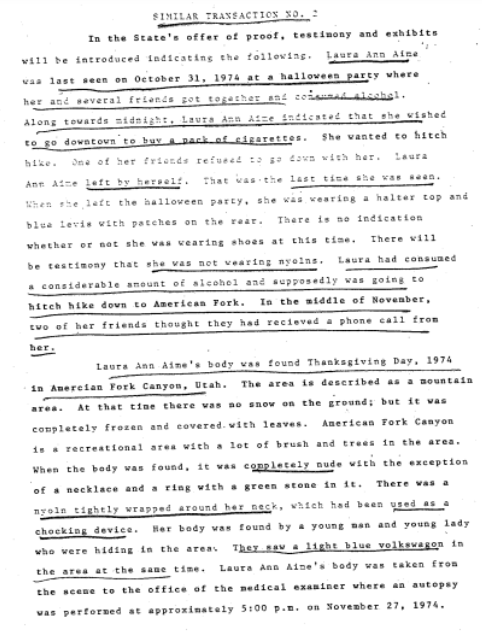
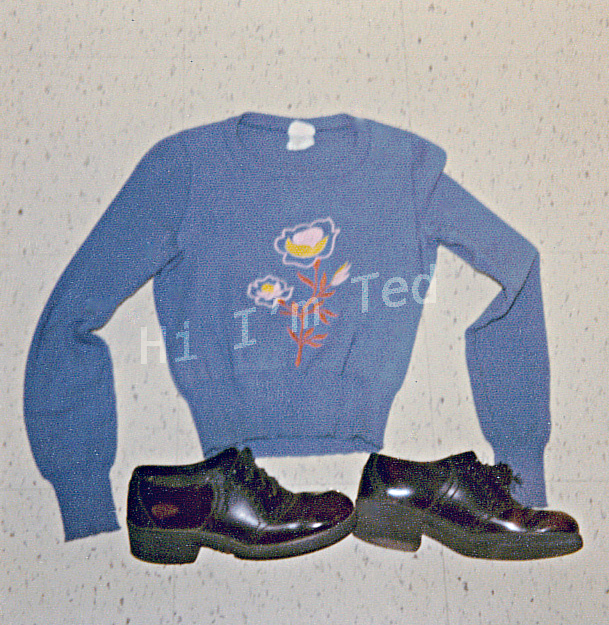
Laura Ann Aime was seventeen when she was abducted by Ted Bundy on Halloween night in 1974: the party she was at never really got going, and she left by herself around ten to get some cigarettes. About a half hour later she was picked up by an acquaintance named George Alley, who later told investigators that he dropped her off at The Knotty Pine in Lehi just after midnight (although according to Captain Borax, Browns as it was called by the locals closed at eleven, so perhaps it was closer to 11:00 versus 12:00). Quick Lehi factoid: ‘The Knotty Pine’ as it was once called was referred to as ‘Mo Browns’ because the gentleman that owned it was named Leon Brown and he reportedly had ‘a huge mole on his face’ (very clever). Alley also shared that Aime complained that before he picked her up a bunch of ‘cowboys’ ignored her outstretched thumb and drove right past her. From Browns, Aime again got bored and walked to Robinson Park. She was last seen wearing silver cross shaped earrings, a tan sleeveless turtleneck-style sweater with white horizontal stripes, a Navy Pea coat with a hood, light brown lace up shoes, and blue Levi’s with ‘patches on the rear;’ various sources report her wearing a halter top as well. Laura was wearing a ring with a yellow stone and had a rubber band around her wrist; her nails were adorned with black polish with silver flakes.

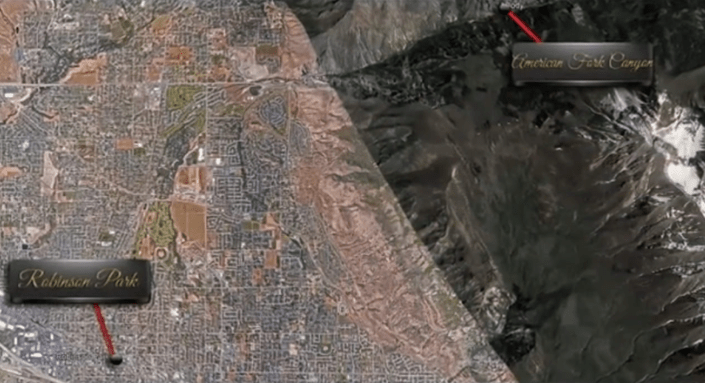
Although it’s (mostly) agreed on that Laura was last seen trying to hitchhike, there’s a few different possible narratives when it comes to where she was right before she disappeared. The most common theory I’ve seen is that she attended a house party at a mobile home in the suburbs of nearby Orem; a second says the party was in Lehi. The third possibility is that the party took place at the Knotty Pine Cafe in Lehi… (although there’s a FOURTH that says there was no party at all). BUT… every single one of these possibilities consistently placed her at the Knotty Pine Cafe for some period of time before she left to hitchhike to Robinson Park. One eyewitness came forward and shared with investigators that they saw Laura at the park in American Fork at around midnight, which is the last time that anyone reported seeing her alive. Robinson Park is about a 3.2 mile drive from the (former) Knotty Pine Cafe, and if she did walk it would have taken her roughly an hour (give or take) to do so. Due to the dropping temperatures (dipping as low as 45 °F) and the distance involved, it’s very likely that she tried to hitchhike back to Lehi after she was done hanging out at the park. Did Bundy see her there then pull up and offer her a ride? There’s also a possibility that he spotted Aime from a distance then crept up behind her and blitzed her, much like he did to Nancy Wilcox. As I mentioned earlier, Laura was in regular contact with her family after leaving home, and at first they weren’t too alarmed when they didn’t hear from her and figured it was only a matter of time before she got in contact with them. It wasn’t until Laura didn’t come home for a planned hunting trip with her father that the Aime’s knew that something was seriously wrong, as that wasn’t something she would miss without a good reason. After she disappeared her story didn’t make the news until her remains were discovered (like so many of the other case’s I’ve written about, for example Brenda Joy Baker out of Maple Valley, WA), which may have partially been due to her transient nature and nomadic lifestyle.

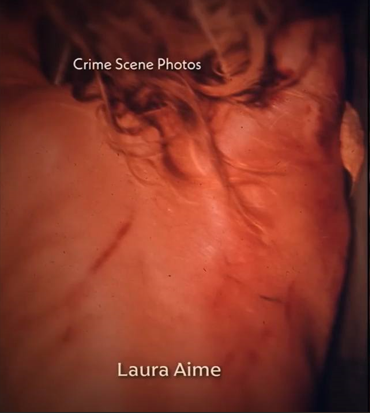
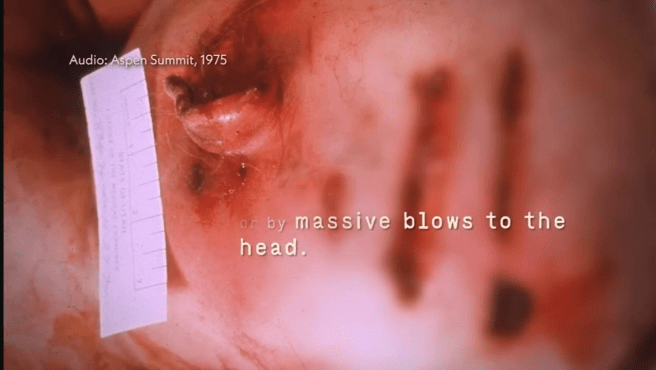
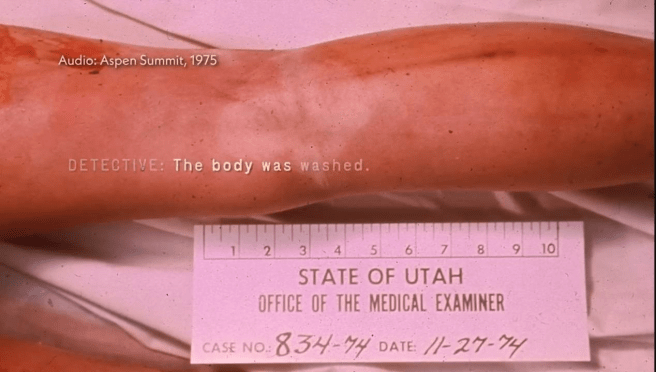
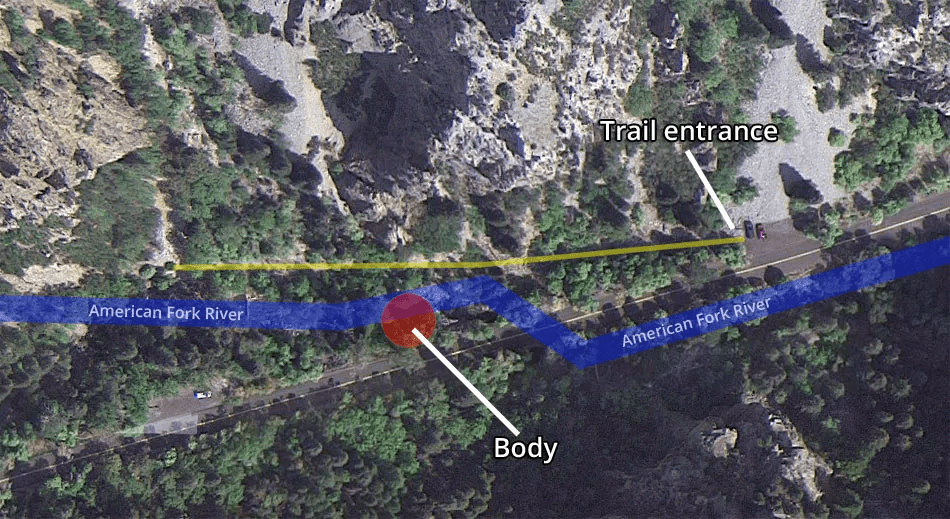
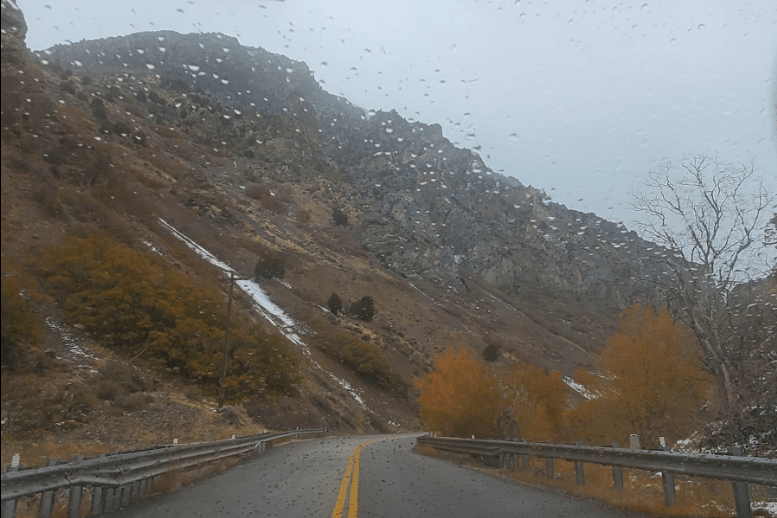
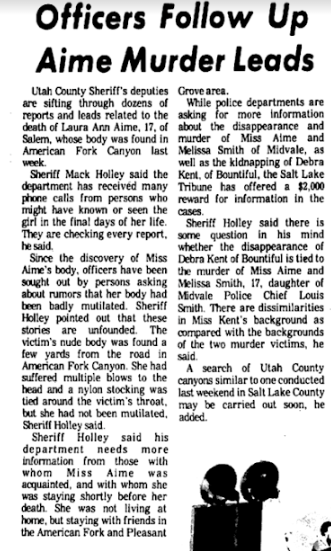
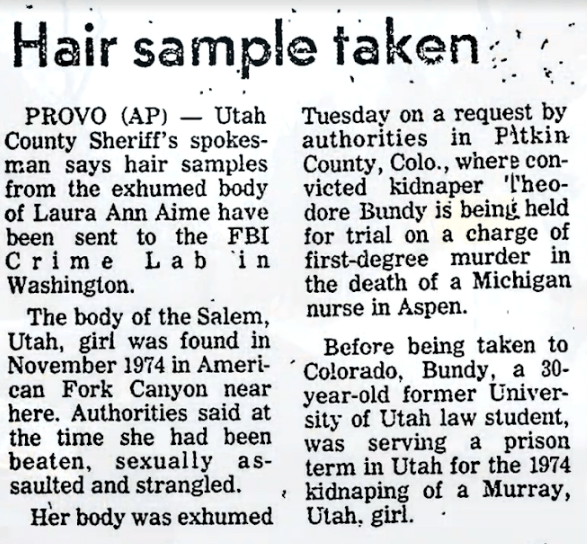
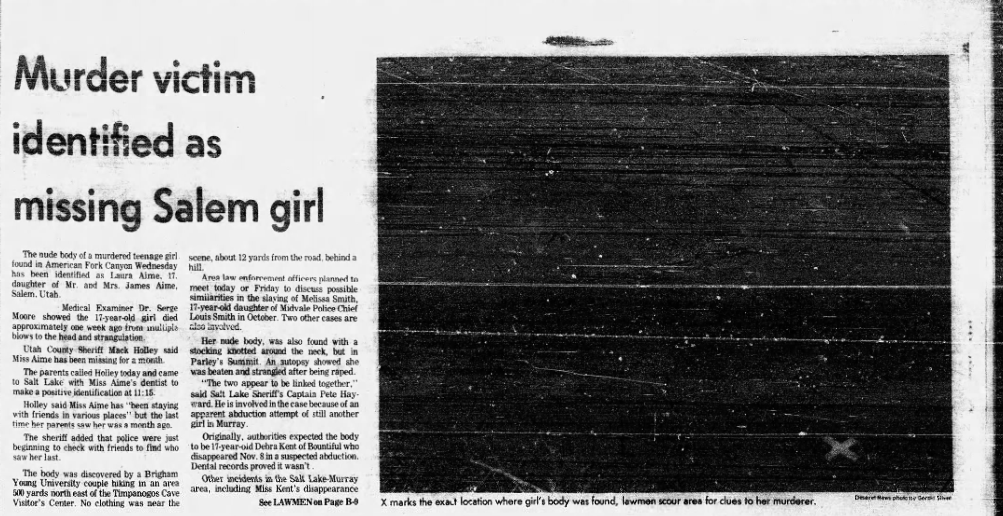
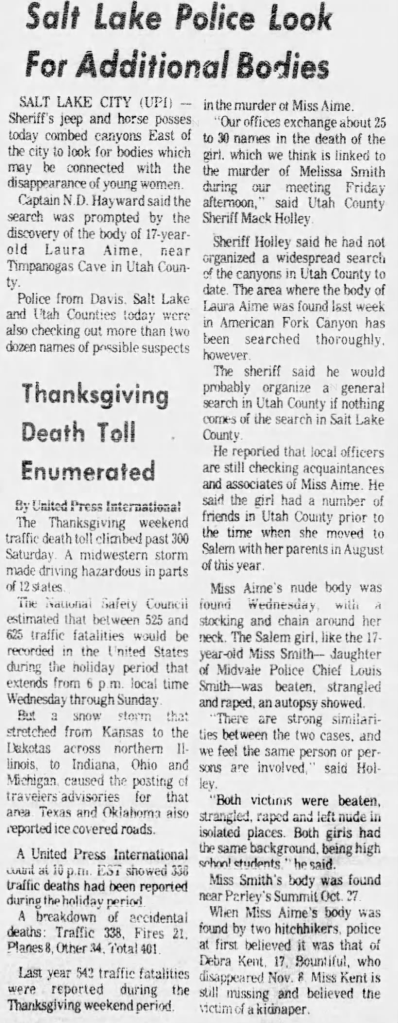
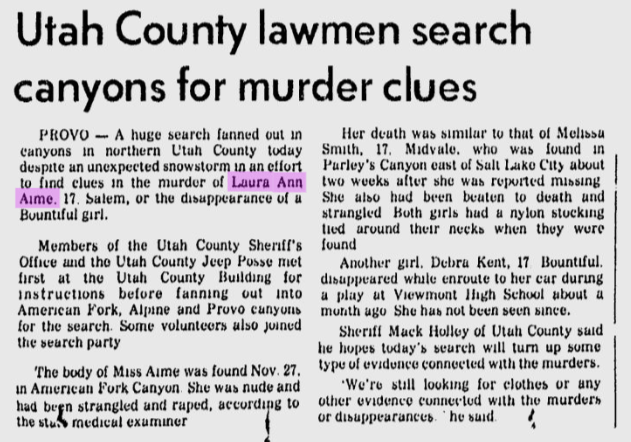
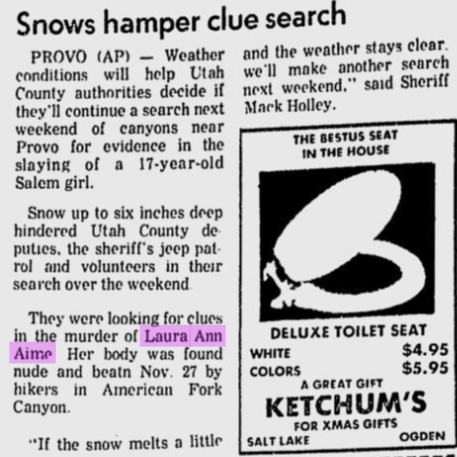
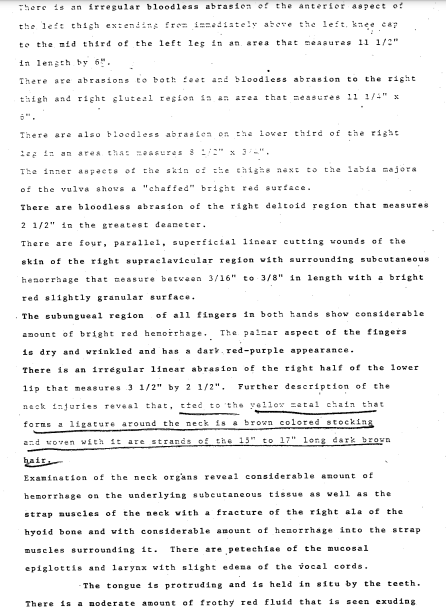
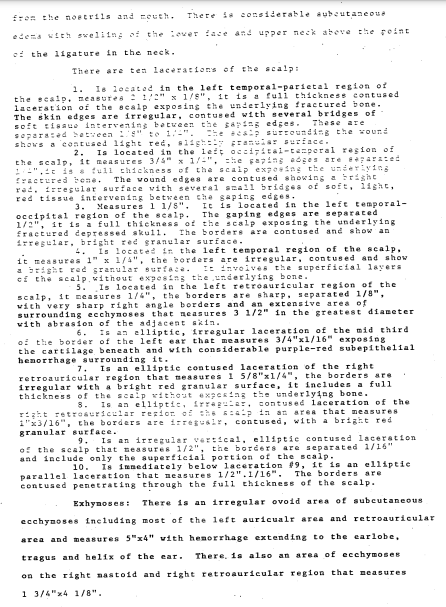
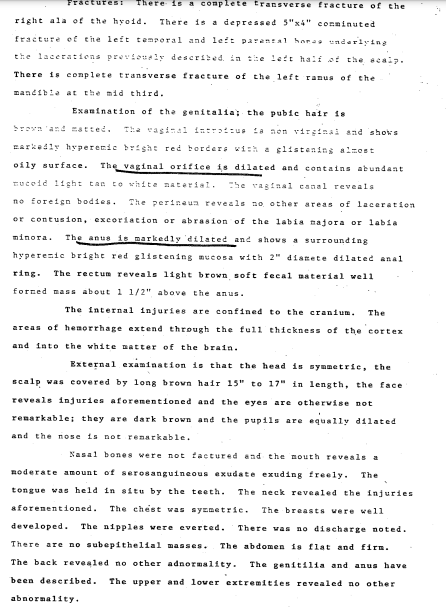
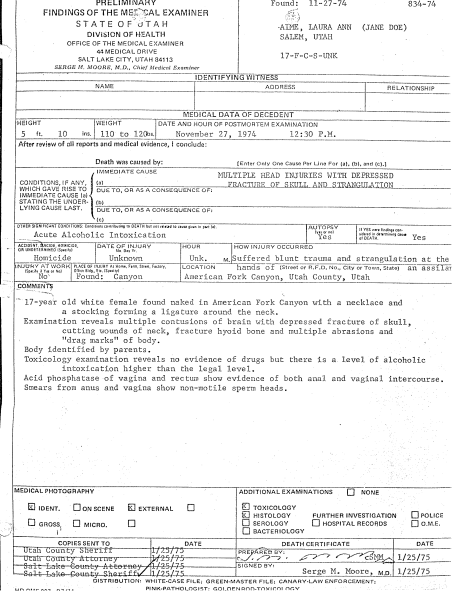
The remains of Aime were found less than a month after she vanished on Thanksgiving Day next to a stream in American Fork Canyon in the Wasatch Mountains by two BYU students that were looking for fossils for their Geology class (Raymond Ivins and Christine Shelly). Fearing that the murderer may still have been lurking in the area, the couple immediately went to the nearest ranger station and reported their discovery. Aime’s body was covered in leaves, twigs, and brush; she had been raped, sodomized, beaten then strangled to death with a pair of stockings. According to her autopsy report done by former Utah State Medical Examiner Dr. Serge Moore*, Laura had depressed skull fractures on the left side and back of her head and the necklace she was last seen wearing was tangled up in the pair of nylons that were cinched around her beck. She had numerous facial wounds (almost too many to count), and her body had deep wounds from where it had been dragged. LE deduced that the weapon used to inflict such brutal injuries was most likely either a pry bar or metal crowbar; her face was incredibly swollen and her tongue was hanging from her mouth. Aime had also suffered a vaginal puncture that may have been made by a weapon of some sort (perhaps an ice pick, and some have also wondered if it was a speculum which is what it’s thought Karen Sparks was assaulted with). Tire patterns that were found in the immediate area were said to be a match with Bundy’s Volkswagen Bug. *Just as a side note (per Kevin Sullivan), Dr. Moore never properly investigated either the temperature or the level of snow during the period that Smith and Aime were abducted. After complaints of sloppy work from Utah law enforcement Moore was investigated, and he officially lost his license in 1979 after he failed to produce any proof that he graduated from a University in Mexico City.

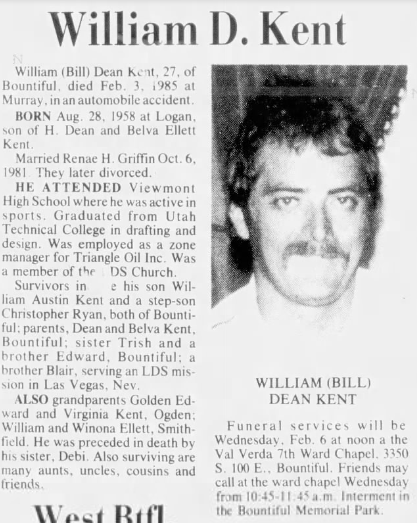
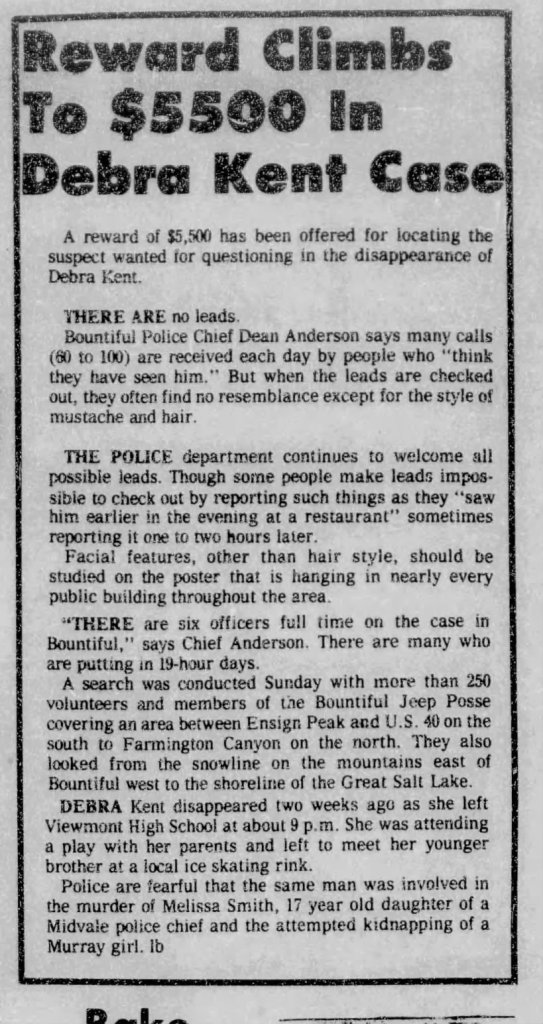
Laura’s cause of death was listed as multiple head injuries with a skull fracture and strangulation. Also, I do want to point out that I’ve seen the date incorrectly listed as both November 26 and 27th, but according to my research, Thanksgiving Day in 1974 was on the 28th. About the discovery, Ivins said: ‘I looked and I thought, you know, it was a deer or something and … it was a girl … It looked like she had been …she was dead. It was really grotesque. There was blood around her neck and breasts and she was naked and lying on that hill and it was a freak-out and I lost it. I thought maybe the guy was still somewhere around and I just panicked, worrying about my girlfriend . . . and we ran down the trail …Came down and ran right through the creek and got in the car and just drove like a maniac, I guess as fast as I could, down to the ranger station and I reported it.’ Swabs taken from Aime’s vagina and anus showed the presence of non-motile sperm, and blood tests showed no signs of substance use aside from alcohol. In the early stages of the investigation it was suspected that her remains belonged to Debra Kent, who had gone missing from Viewmont High School in Bountiful nineteen days earlier.

Several days before she was killed Laura spoke with her mother on the phone: Mrs. Aime begged her daughter not to hitchhike, and told her that she was afraid that she would meet a fate like that of Melissa Smith from nearby Midvale, who had recently been brutally murdered. She assured her she would be ok and told her mom not to worry; it was the last time they would ever speak. After Laura disappeared Mrs. Aime said that ‘she was missing and she had no purse coat, no nothing. I called the sheriff’s office and they said, ‘What do you want us to do about it?’’ On Sunday, November 3 Shirlene reached out to Judy Olsens’ mom, who was confused by her call, saying ‘isn’t she with you? We haven’t seen her since Thursday when she and Judy and Mark left for the Halloween party?’ Two days later on November 5, 1974 Mrs. Aime called the local police to notify them that her daughter was missing, and when she pleaded with them to look for her she told that there were too many ‘young runaways to pursue each one, and after a couple of weeks I just knew she was dead.’ After the remains of a young woman were discovered on a nearby river bank Shirlene reached out to the sheriff’s for a second time, and was again told ‘there’s no way it’s her, it couldn’t be her’ and that the victim was closer to twenty-five and wasn’t as tall as Laura. However the next morning a story in the newspaper mentioned the young woman was wearing a ‘ring with a green stone,’ which happened to be a peridot, which was Laura’s birthstone. Mrs. Aime immediately ran to look in her daughter’s jewelry box, to see if her peridot ring was still there. It was, however, the rest of the coincidences were just too much for her to bear.

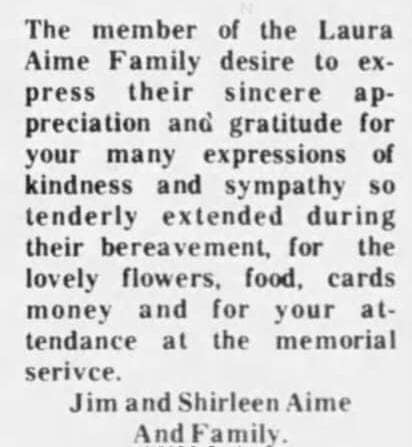
Within an hour both Mr. and Mrs. Aime were on their way to the University of Utah morgue, accompanied by Sheriff Mack Hollet and a copy of Laura’s dental charts. Jim said that she had been beaten so severely that he ‘didn’t even recognize her,’ was only able to positively ID her by the scars on her forearm from the horse injury that I mentioned earlier. When he realized that he was looking at his precious little girl, he let out a loud, gut wrenching wail. Shirlene said that she ‘couldn’t believe it had come from a human being.’ Additionally, the dental records that the Aime’s brought with them further verified that it was Laura. Her autopsy revealed a broken jaw, a fractured skull, bruises and lacerations to her head and shoulders, a deep cut to the back of the head, and injuries to the vagina and anus. The ME determined that she had died on November 20, which was roughly twenty days after she disappeared. Many years after his daughter’s murder, Mr. Aime was driving near the spot where her remains were discovered with a friend, and he shared: ‘my little baby was up there all by herself and there was nothing I could do to help her.’

Captain Borax was able to locate a copy of the Lehi Free Press from the night Laura was abducted, and it was apparently an election period in local county government: Mack Holley was running for Utah County Sheriff, and Noall Wootton was running for County Attorney. Wootton was busy promoting his stance on crime prevention while Sheriff Mack Holley was preoccupied with communicating his belief in strong family values, but both men openly discussed the need for increased protection against the dangers that lurked in the night. Together, Wootton and Holley wrestled with a real, live boogeyman that slithered through the shadows of Lehi and American Fork, but at the same time they had no problems with hiding information away from one another. Mack Holley was known to keep information to himself and refuse to share it, and about him Jerry Thompson said ‘all I kept getting was a runaround, so I basically said, ‘to hell with them.’ As early as December 3, 1974 (which is only six days after Aime was found), retired Utah County Sheriff’s Sergeant Owen Quarnery wrote to the FBI crime lab in DC about the case, saying: ‘The MO is similar in many respects to the Smith case. The victims in both cases were beaten, sexually assaulted and strangled. Also many of the wounds were similar in appearance.’

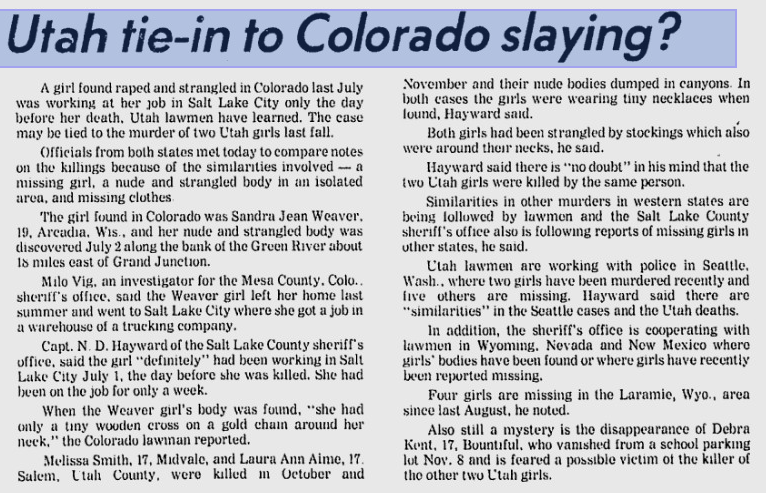
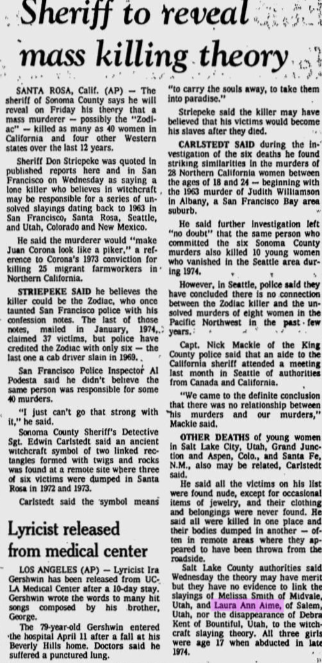
Despite Laura disappearing on the last day in October it was determined she had only been dead for roughy a week when her body was discovered. According to Kevin Sullivans book ‘The Enigma of Ted Bundy,’ her remains showed a very small decomposition, which strongly hints that her killer may have kept her alive after abducting her. Looking into SLC temperatures during November 1974, it was a relatively warm fall and wasn’t very cold meaning the body wouldn’t have preserved because of low temps. Less than two weeks before Aime disappeared on October 18, 1974 Melissa Anne Smith disappeared from nearby Midvale after leaving a pizza parlor at around 9:30 PM. Nine days later her naked remains were found in a nearby mountainous area, and just like with Aime the only thing found on her body was a cross on a delicate chain necklace. One strange commonality I wanted to point out is that unconfirmed Bundy victim Sandra Weaver was also found the same way.

According to David McGowans book ‘Programmed to Kill,’ Melissa Smith’s body was found almost entirely drained of blood, and revealed a somewhat strange abnormality: like Laura, she had not been murdered immediately and had been kept alive for possibly a week after she was abducted. Additionally, her make-up was applied neatly and none of her nails were broken. Strangely there were no signs of restraints or ligatures, so if she was held against her will before her life was taken, there was next to no signs of it (perhaps he kept her in a locked room of sorts?). Retired Colorado investigator Mike Fisher strongly felt that Bundy brought both Smith and Aime back to his first SLC apartment (located at 565 1st Ave), and further elaborated that on occasion other tenants would hear him going down to the cellar in the middle of the night and making noise.

Sullivan feels that Bundy could have kept Aime alive in two possible scenarios: the first one being he kept her in the basement of his rooming house, which was in the rear of the building and that he could keep locked, and because he was the apartment manager he had a key for the area. The second involves him pulling what he calls a ‘reverse Lynda Ann Healy,’ and he carried her into his room in the middle of the night when no one was awake to see (then down and out again when he disposed of her remains). Thinking about it, carrying the body of a young woman out of your room in the middle of the night sounds awfully bold (even if she was alive), but by that time he had lived there for a few months and had most likely gotten familiar with the behaviors of his fellow tenants. We know he didn’t admit to anything related to Laura Aime during his confessions however he did admit to keeping Deb Kent alive in his residence for a period of time before he took her life, so it’s fairly likely that he did the same with Aime (and Smith). Laura’s autopsy report states that in the middle of November 1974 two or three of her friends told LE they think they got phone calls from her but weren’t 100% certain if it was actually her or not.

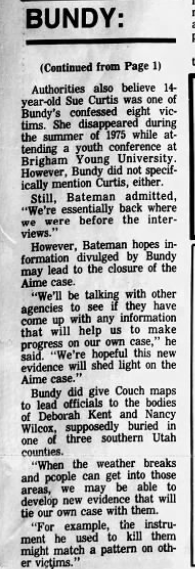
In the summer of 1974 Sheriff Mack Holley created Utah County’s first Detective Division, and Laura Aime’s murder was their first investigation. Strangely enough, in an interview between (retired) Chief Investigator for Utah County Brent Bollock and True Crime blogger and creator Captain Borax, Bollock said that (former) Utah County Sheriff Mack Holley never believed that Bundy was responsible for Aimes murder, and even wrote about it in one of his books (which I was unable to locate online). In fact, Holley strongly felt that another man was responsible for her murder, one that was later convicted of killing his girlfriend, even going so far as telling a member of the team of investigating detectives: ‘Bundy had nothing to do with our case, so forget him. That man didn’t do our case. I wish you’d get that through your head.’

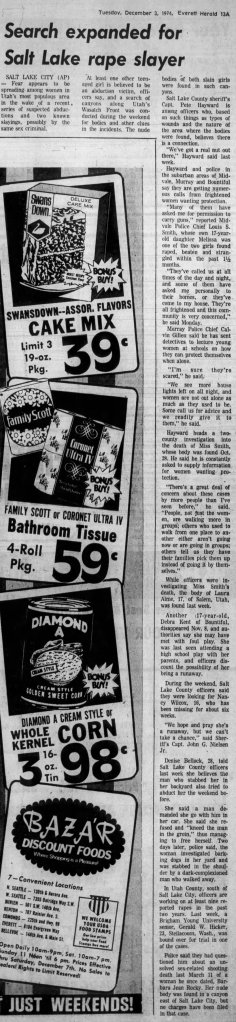
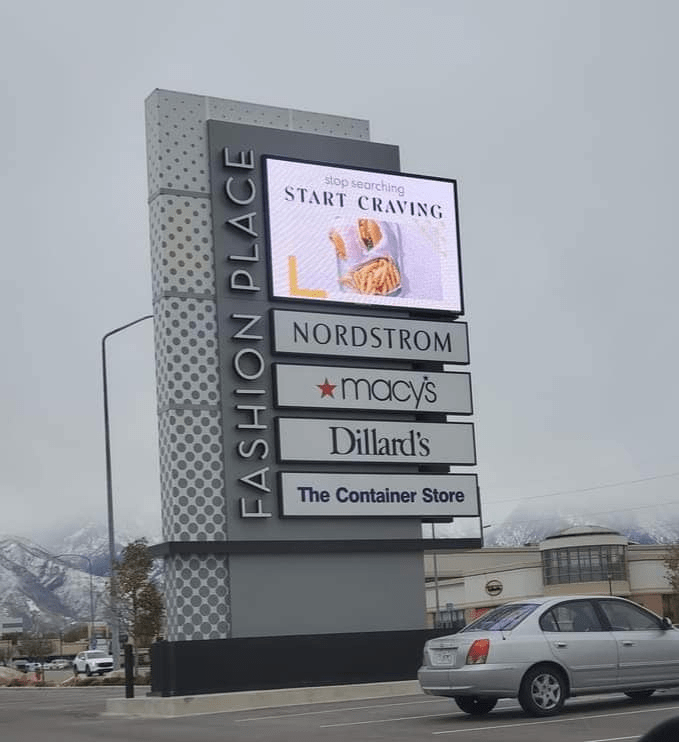
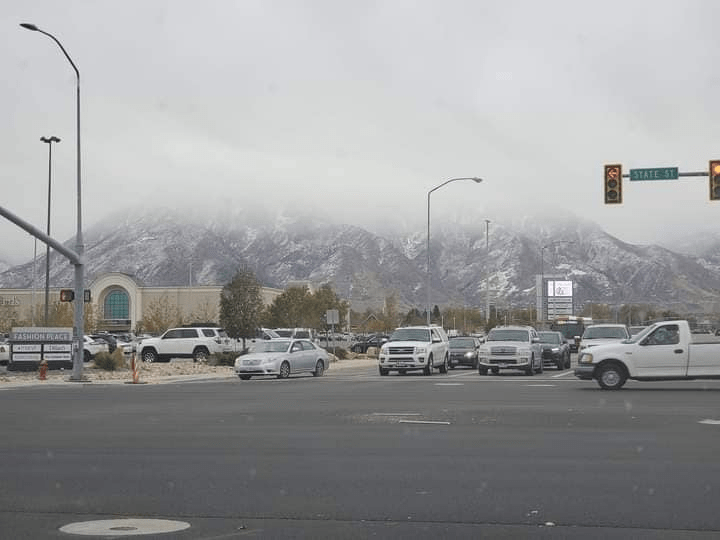
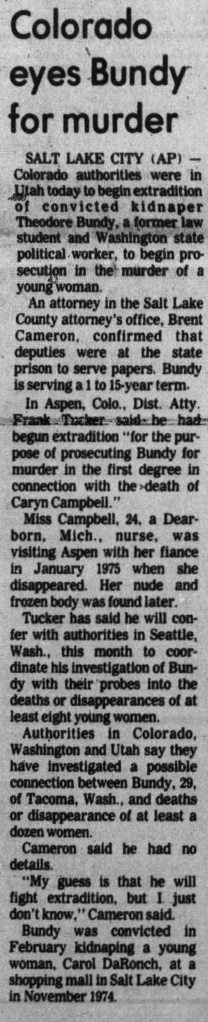
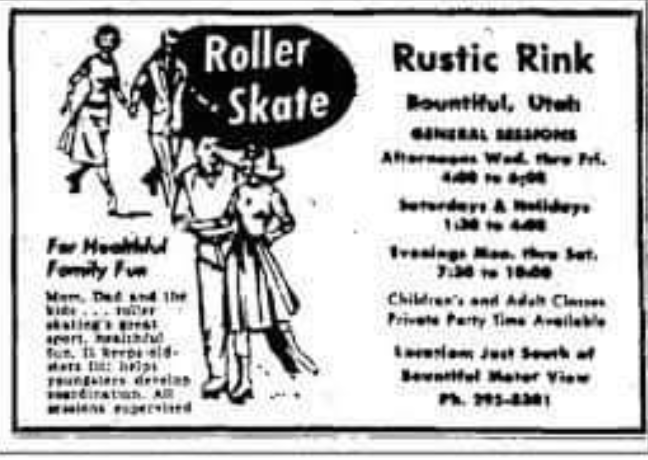
A little over a week after Aime disappeared on November 8, 1974, Bundy tried (but failed) to kidnap Carol DaRonch from the Fashion Place Mall on South State Street in Murray. After the 18-year-old telephone operator escaped, Ted quickly realized that he needed a new victim, so he drove roughly 25 miles away to Bountiful and abducted 17 year-old Debra Kent (this will also be important later). The family was attending a showing of ‘The Redhead’ at Viewmont High School that went later than expected and Deb volunteered to take the family car and pick up her two younger brothers at a nearby roller skating rink. On her walk out to the parking lot, Bundy abducted her, then killed her and dumped her body roughly 50 miles away in American Fork Canyon.

In 1977 investigators took a second look into Aime’s murder, and they spoke with her girlfriend Marin Beverige, who positively identified Bundy as an individual that was at Brown’s on the night she disappeared. In fact, Marin’s sister worked at the establishment and even claimed to see Ted pull up and pick up Laura the night she disappeared. Beverige told detectives that she first noticed him one day in September 1974, and remembered that he drove a Volkswagen and told her he was a student at the local university. She also recalled one occasion where she was sitting in the sunshine with Laura and a group of friends near a local high school and the man joined them. When a young guy teased Aime by putting some grass down her halter top, he objected, and ‘this guy came unglued and told him Laura was his. He was really weird.’ Marin said that the attractive young man kept randomly showing up all around Lehi, and always seemed to be looking for Laura. She recalled an event that took place one night at The Knotty Pine, where: ‘he came in and was sitting there talking and I got up…..When Laura said, ‘I’m ready to go,’ this guy said, ‘You can’t. I’m going to rape you.’ Laura just laughed and pushed him away.’’

Beverige informed detectives that she had seen the man on multiple occasions, and one evening he even knocked on her front door and asked to speak to Aime privately. She agreed and after the two went outside to speak alone: ‘Laura was really shook up. But she wouldn’t say what happened.’ About the events surrounding her friend’s disappearance, Marin had a completely different account of what happened that night, one that differed greatly from the one gathered by the Utah County Sheriff’s Department: according to Beverige, her, Laura, and a bunch of their friends had gathered at her house for a Halloween party, and some guys had brought a large amount of vodka and Laura had gotten pretty drunk: ‘It was about midnight or so, and she was pretty well drunk. And she wanted me to walk downtown with her to get some cigarettes.’ She said no, and as Aime walked away into the darkness it was the last time Marin ever saw her friend. ‘Around three or four o’clock some of us went to town to look for her, but we couldn’t find her.’ When Beverige was shown a lineup she immediately picked out Bundy; a female clerk employed at Brown’s picked him out as well. She was also asked to take a polygraph test which she agreed to, and passed. 

Mrs. Aime called the early stages of her daughter’s murder investigation ‘damned frustrating,’ and said it was filled with ‘blunders, omissions and political jealousies,’ elaborating that two of the detectives working the case were incredibly uncoordinated: ‘one would come and ask me a question, and a couple hours later the other would come and ask me the same thing. Neither of them would tell the other anything.’ On one occasion a political rival of the (then current) sheriff came to speak with the family to ask them questions for his own personal investigation, and because the Utah County Sheriff’s Department was so unwilling to share information the Aimes would frequently receive phone calls from other police agencies, asking for information about their daughters murder. Not satisfied with how local LE were handling Laura’s murder, the Aime’s desperately wanted the experienced homicide detectives in Salt Lake City to help with the investigation, but they were turned down and told by (local) officers, ‘if we can’t solve it, no one else can.’ Mr. and Mrs. Aime felt that Laura’s murder had become somewhat coveted politically, and that whoever was able to solve it ‘could have written their own ticket politically.’ But unfortunately it went unsolved, and months went by without investigators learning anything new, and it wasn’t until August 1975, when a handsome young law student was arrested that everything started to come together, and Ted became the first decent suspect in her murder. It was at that point that a highly skilled investigator became involved in the case, Brent Bullock of the Utah County attorney’s office, who the family was incredibly pleased with, and was impressed and encouraged by his ‘professionalism, his relentless search for evidence, and his questioning of witnesses.’

When Bundy escaped prison for the first time in Aspen on June 7, 1977, Jim Aime ‘exploded in anger,’ and he ‘would have gone down there and searched for him myself, if I could have afforded to lay off work.’ Thankfully the father of five remained home with his family (he still had four daughters at home), but because Shirlene was so afraid for the safety of their other girls he bought her a .38-caliber pistol. As we all know Bundy was recaptured just a few days later on June 13, 1977, but he escaped for a second time later that same year on December 30 from the Garfield County jail in Glenwood Springs. By this time in the year they had ‘hocked’ the weapon as they were reportedly ‘hard-pressed financially,’ and by his second escape Jim had become even more angry and bitter, and said that his wife was ‘just scared to death. She quit her job so she can stay home and watch the kids. She won’t let those girls out of her sight.’

Laura’s murder wasn’t the only time that the Aime family had to deal with the ‘keystone cops:’ After graduating from high school John joined the military and became a radar specialist in the Army, but after his sister was killed it was as if the entire family’s lives fell apart. After leaving the service he began working in construction in Tacoma, and on April 28, 1975 at around 10 PM he reportedly approached a young woman on a street, briefly spoke with her, then physically accosted her. She testified that she was ‘grabbed by Aime and dragged toward a brushy area and that the defendant ran when she fell to the ground and screamed,’ (she also said that he tried to ‘drag her’), and after letting out an ear piercing scream he fled, but a passerby caught him and held him at gunpoint until police arrived. Aime later said that he had no intention of harming or molesting the young woman, and his wife Lynn was completely puzzled by that incident and couldn’t provide any explanation for her husband’s actions. John was taken to jail and investigators began digging into his past; a probation officer wrote: ‘he and his family have suffered as a result of his sister being raped and killed in Utah.’ While in jail in Tacoma Aime got married to a medical technician and an Air Force vet; it was an unusual ceremony that took place without the guards’ knowledge. After a two-day trial in June 1977, he was convicted of a misdemeanor assault and was sentenced to a five-year term at Washington’s Western State Hospital at Steilacoom for the rehabilitation of sex-offenders. For obvious reasons, this devastated both of his parents, and about the incident Mr. Aime said that he ‘was just a scared kid from the country.’

Before Bundy was put to death in Florida, he confessed to killing Laura Ann Aime on January 22, 1989 in a 90-minute confession with (retired) SLC Detective Dennis Couch. The following is an excerpt from Dick Larsen’s ‘The Deliberate Stranger:’ ‘Y’know, there’s always been something about that Laura Aime case, that one in particular, that’s really bothered Theodore. When several case files were given to Bundy in his jail cell, under the discovery procedure …. the first one he went for … and really tore into … was the Aime case…. ‘ When asked about his involvement in Aime’s murder, Ted lowered his head and refused to talk about it. Strangely enough, I’ve heard that he washed some of his victims’ hair and manicured some of their nails as well, but this is the first time I’ve written about a woman that he actually did it to. After Aime’s remains were found, law enforcement determined that her hair had been recently shampooed, making them believe her killer had returned to her corpse on multiple occasions to engage in acts of necrophilia. About this act is a passage from Michaud and Aynesworths book, ‘The Only Living Witness:’ ‘Bundy also indirectly touched on some old mysteries, such as Laura Aime’s freshly-washed hair, and Melissa Smith’s make-up: ‘If you’ve got time,’ he told Hagmaier, ‘they can be anything you want them to be.’’

According to an article published by The Salt Lake Tribune right before Bundy was executed, investigators had to exhume Aime’s remains in order to get another hair sample because the first one they obtained after her remains were initially discovered were misplaced. Jim Aime wept at the mere thought of it, but relented, saying ‘why not? They can’t hurt her any more. It seems like these things just couldn’t happen.’ About her daughter’s disappearance, Mrs. Aime commented that ‘there’s no way of putting it out of your mind…’

According to Ann Rule’s true crime classic, ‘The Stranger Beside Me,’ Laura’ toxicology report came back just over 0.1, which is obviously an indicator of impairment (at least from a legal standpoint), but at the same time wasn’t so extreme or outrageous that she wouldn’t have been able to defend herself (or at the very least scream or try to run away). Now, if she really was kept alive up until a week before her death, and she wasn’t murdered immediately after the Halloween party… Was Bundy plying her with alcohol up until her final moments? Another thing that is jumping out at me as being weird is… if Laura Aime was kept alive until roughly a week before her body was discovered, that would put her murder date sometime in between November 17-20 (roughly, give or take)… Did he somehow keep multiple victims alive at the same time (somewhere)? Were Aime and Deb Kent somehow kept alive together in an unknown location for a period of time? Did he kill the one in front of the other, like with the Lake Sammamish murders of Denise Naslund and Jan Ott?

Despite the way she was killed was very similar to Bundy’s MO and she fit the physical description of  one of his victims, he initially denied any responsibility for Aime’s murder and refused to talk about her when he was questioned. However, (most likely) in an attempt to delay his execution in the days leading up to his death Ted finally confessed to the murder of Laura Ann Aime.

Mr. Aime died at the age of 59 on November 26, 1987. It appears that in 1980 Shirlene Aime adopted her granddaughter Danika, who was given the middle name of Laura after the aunt that she never had the chance to meet. Mrs. Aime died on November 1, 2011 in Reno, Nevada at the age of 77. Laura’s only brother John died at the age of 56 on November 29, 2010 in Gunnison, Utah but it appears that all of her sisters are still alive. Because it’s’ strongly suspected that Bundy kept her alive for a period of time after abducting her, the Aime family chose to list ‘November 1974’ as her official date of death on her gravestone.

Update: On April 1, 2026 the Utah County Sheriff’s Office officially confirmed that Ted Bundy was the individual responsible for the murder of Laura Ann Aime: while he had previously confessed to the murder just prior to his 1989 execution, investigators simply didn’t have the physical evidence to definitively close the case until recently. Using new forensic technology acquired in 2023, the Utah state crime lab was able to extract a single male DNA profile from evidence from the original 1974 crime scene; this profile provided an irrefutable match to Ted Bundy.

The Aime children: Laura (right ), John (left), and Evelyn (middle).
A picture of Laura from Elementary School, courtesy of ‘Ted Bundy: I was Trying to Think Like an Elk.’
A picture of Laura from the 1971 North Sanpete Junior High School yearbook, courtesy of ‘Ted Bundy: I was Trying to Think Like an Elk.’
Laura in a picture from her time in the ‘Silver Spurs Riding Club,’ courtesy of ‘Ted Bundy: I was Trying to Think Like an Elk.’
Laura Ann Aime. Her mother said she had ‘hell inside her’ after watching her ride her shining blue Arabian horse at top speed.
Laura Ann Aime.
Laura Aime.
Laura Ann Aime.
Laura Aime, blowing a bubble.
A group picture from Laura’s time at North Sanpete High School; Laura is in the back row on the far right.
Laura in a group photo.
Photo courtesy of OddStops.
The Aime’s residence. Photo courtesy of ‘Crimes Forgotten by Time.’
Investigators at the site where two students found the remains of Laura Ann Aime. Photo courtesy of OddStops.
Investigators at the site where two students found the remains of Laura Ann Aime. Photo courtesy of ‘Ted Bundy: I was trying to Think like an Elk.’
Investigators at American Fork Canyon carrying out the remains of Laura Aime.
A picture from Laura Aime’s autopsy, courtesy of the series: ‘Hunting Ted Bundy.’
A labeled aerial map of the dump site of Laura Aime in American Fork Canyon. The yellow line shows the trail the students took when they found her remains. Photo courtesy of OddStops.
A labeled map of where Robinson Park is located compared to the dump site of Laura Aime in American Fork Canyon.
A chart of the average temperatures in SLC in November 1974 when Laura was missing and possibly being kept alive somewhere.
Aime’s gravesite at the Fairview Cemetery in Utah.
Where ‘The Knotty Pine’ once stood in Lehi, UT, in the left hand side of the building. Picture taken in November 2022.
Where ‘The Knotty Pine’ once stood in Lehi, UT. Picture taken in November 2022.
Laura walked down this street the night she disappeared to go to the Knotty Pine. Photo courtesy of Captain Borax.
An old advertisement for the Knotty Pine Cafe. Photo courtesy of Captain Borax.
William S. Robinson Park in American Fork, Utah. Picture taken in November 2022.
A statue at William S. Robinson Park in American Fork, Utah. Picture taken in November 2022.
The entrance the American Fork Canyon. Picture taken in November 2022.
A building at the entrance the American Fork Canyon. Picture taken in November 2022.
A gate at the entrance the American Fork Canyon. Picture taken in November 2022.
A sign for the Timpanogos Cave at the entrance the American Fork Canyon. Picture taken in November 2022.
A sign for the Uinta National Forest at the entrance the American Fork Canyon. Picture taken in November 2022.
This white SUV is where the PD coordinates took me from the OddStops website.
Former Utah County Attorney, Noall T. Wootton. Photo courtesy of Captain Borax.
An article about an antler contest that Mr. Aime won, published by The Pyramid on November 8, 1968.
A picture of Mr. Aime with his award winning buck. Photo courtesy of Captain Borax.
An newspaper blurb mentioning some of the Aime sisters, published by The Pyramid on September 9, 1971.
A newspaper blurb mentioning some of the Aime girls, published by The Pyramid on June 8, 1972.
An article about the murder of Laura Aime.
An undated article about the murder of Laura Aime.
An undated article about the disappearance of Laura Aime.
Part one of an article on Aime published by The Deseret News on November 28, 1974.
Part two of an article on Aime published by The Deseret News on November 28, 1974.
An article on Aime published by The Idaho Statesman on November 29, 1974.
An article about the disappearance of Laura Aime published by The Daily Herald on November 29, 1974.
Part one of an article about the disappearance of Laura Aime published by The Daily Herald on November 29, 1974.
Part two of an article about the disappearance of Laura Aime published by The Daily Herald on November 29, 1974.
An article about Bundy mentioning Laura Aime published by The Daily Sitka Sentinel on November 29, 1974.
An article about the disappearance of Laura Aime published by The Deseret News on November 30, 1974.
An article about Laura Aime published by The Daily Herald on December 1, 1974.
An article about Laura Aime published by The Daily Herald on December 3, 1974.
An article about Laura Aime published by The Spanish Pyramid on December 5, 1974.
An article about the disappearance of Laura Aime published by The Deseret News on December 7, 1974.
An article about Aime published by The Deseret News on December 9, 1974.
An article about Aime published by The Deseret News on February 7, 1975.
An article about Aime published by The Del Rio News Herald on March 14, 1975.
An article about Aime published by The Salt Lake Tribune on March 15, 1975.
An article about Aime published by The Daily Herald on March 21, 1975.
An article mentioning Aime published by The Eugene Register-Guard on April 24, 1975.
An article mentioning Aime published by The Bulletin on October 3, 1975.
An article mentioning Aime published by The Spokesman-Review on October 3, 1975.
An article mentioning Aime published by The Fairbanks Daily News-Miner on October 4, 1975.
An article about Bundy mentioning Laura Aime published by The Spokane Chronicle on October 22, 1975.
An article about Bundy mentioning Laura Aime published by The Kitsap Sun on October 31, 1975.
An article about Bundy being freed on bail that mentions Laura Aime published by The Ogden Standard-Examiner on November 21, 1975.
An article about Bundy mentioning Laura Aime published by The Daily Herald on November 21, 1975.
An article about Bundy mentioning Laura Aime published by The Spokesman-Review on March 4, 1976.
An article about Bundy mentioning Laura Aime published by The Deseret News on September 9, 1977.
An article about Bundy mentioning Laura Aime published by The Deseret News on December 16, 1977.
An article mentioning Aime published by The Deseret News on April 3, 1978.
An article mentioning Aime published by The Evening Independent on July 25, 1979.
An article mentioning Aime published by The Deseret News on February 14, 1983.
Part one of an article mentioning Aime published before Bundy was executed by The Daily Herald on January 5, 1989.
Part two of an article mentioning Aime published before Bundy was executed by The Daily Herald on January 5, 1989.
An article mentioning Laura Aime published just before Bundy was executed on January 22, 1989.
An article mentioning Laura Aime after Bundy was executed published by The Deseret News Tribune on February 28, 1989.
A funeral card for Aime. Courtesy of Captain Borax.
Laura Aime’s obituary published by The Daily Tribune on December 1, 1974.
Laura Aime’s obituary published by The Spanish Fork Press on December 4, 1974.
Another obituary for Aime.
A thank you to the local community from the Aime family regarding their kindness surrounding Laura being killed published by The Pyramid on December 26, 1974.
Page one of Laura Aime’s autopsy report. Document courtesy of Erin Banks/CrimePiper.
Page two of Laura Aime’s autopsy report. Document courtesy of Erin Banks/CrimePiper.
Page three of Laura Aime’s autopsy report. Document courtesy of Erin Banks/CrimePiper.
Page four of Laura Aime’s autopsy report. Document courtesy of Erin Banks/CrimePiper.
Page five of Laura Aime’s autopsy report. Document courtesy of Erin Banks/CrimePiper.
Page six of Laura Aime’s autopsy report. Document courtesy of Erin Banks/CrimePiper.
Page seven of Laura Aime’s autopsy report. Document courtesy of Erin Banks/CrimePiper.
Page eight of Laura Aime’s autopsy report. Document courtesy of Erin Banks/CrimePiper.
Page nine of Laura Aime’s autopsy report. Document courtesy of Erin Banks/CrimePiper.
James and his sister, Evelyn Aime.
James and Shirlene Aime’s application for a marriage license.
James and Shirlene’s marriage certificate.
James and Shirlene Aime’s marriage certificate.
A newspaper blurb about a domestic incident featuring the Aime’s published by The Daily Herald on April 29, 1966.
James Aime’s WWII registration card.
The second part of James Aime’s WWII registration card.
John Aime.
John Aime.
Mrs. Aime and her family when she was a kid.
Mrs. Aime. Photo courtesy of Ancestry.
Shirlene Aime (left). Photo courtesy of Ancestry.
Evelyn Aime from the 1977 American Fork High School yearbook.
Michelle Aime from the 1977 American Fork High School yearbook.
Michelle Aime from the 1978 American Fork High School yearbook.
An article about Laura’s brother published by The News Tribune on May 1, 1977.
An article about Laura’s brother published by The News Tribune on June 17, 1977.
An article mentioning Aime published by The Orem-Geneva Times on August 7, 1980.
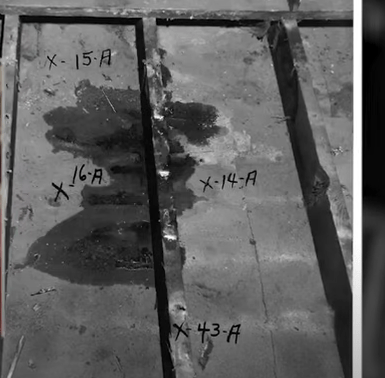
A notice about Mrs. Aime adopting her granddaughter published in The Orem-Geneva Times on August 21, 1980.
Mrs. Aime with the granddaughter she adopted, Danika.
James Aime’s obituary published in The Daily Herald on November 29, 1987.
A note about James Aime’s memorial service published in The Daily Herald on November 29, 1987.
A screenshot of Evelyn Aime from an interview she did with Captain Borax, whose real name is Chris Mortenson. I keep calling him Captain Borax as if its the name his parents gave him that’s listed on his birth certificate.
Marin Beverige.
A screenshot of Sheriff Mack Holley’s published memoirs, ‘From the Journal of Sheriff Mack Holley, Utah County Sheriff’s Department Events, 1960 to 1985, BYU Basketball, Football, Personal Observations,’ published on January 1, 1986.

William Earl Cosden Jr.: Part Two, Victims.

Written by Teri Phillips-Offield.

Intro: Jessica told you about the monster behind these heinous crimes, and now, I am going to tell you about the victims. I think it is important to know about their lives and not the fact that they died, but that they lived. The victims are the ones who should be remembered.
I feel that his sisters were among his first victims along with Helen Pilkerton. They suffered abuse at his hand and also were used to lure unsuspecting victims. To my utter disbelief, there were not much information for the beautiful lost souls, and none for the hitchhikers they fell victim to him. I want them to know that I, a complete stranger, do not know who you are or where you are, did not forget you.
I also feel that if his parents would have not covered for him and turned him in, many lives would have been saved. This is my opinion but after hearing the whole story from his sisters, my opinion is that they didn’t protect them and then did not protect the poor innocent girls from this monster.
Ted Bundy was suspected of Kathy’s death, but DNA proved to be William Cosden Jr. He was in prison for attacking Beverly Pearson already hiding right under their nose. It took 28 years and DNA evidence to find the truth. Here is the havoc this man created and the grief he inflicted on the families of his victims. I will start with his earliest victims, his sisters, and then go on to victims he raped, and killed, and finally Kathy Devine, his final known victim. A story full of senseless killings that never should have happened if he would have stayed in jail where he belonged.

Early Victim, Helen Pilkerton: Cosden was sent to a mental hospital in Maryland for killing a woman in 1967 and was serving a three to four-year term at the McNeil Island Corrections Center near Tacoma for a 1976 rape and murder conviction.  Her name was Helen Patricia Pilkerton.  She was an employee of the Lexington Park Motel and was just 20 years old.  Helen Patricia Pilkerton was born on May 24th, 1945, in St. Mary’s, Maryland, her father, John was 22 and her mother Helen was 21.  She had one brother and four sisters.  She died on April 16, 1967, at the age of 21, and was buried in Hollywood, Maryland.  

Helen was found in a stream by two teenage girls and her body was badly beaten.  Cosden had just returned from active duty in Vietnam where he was discharged due to violent behavior. The family of the victim had to sue the Military because of the outrageous leniency of the sentence. To my utter disbelief, Cosden was free after 6 years to rape and kill again. Deputy Prosecutor Philip Harju said, “He is an obvious danger to society.”  Yet, he was released to rape and kill again.  The story should have ended here, better yet not allowed at all.

His sisters, Karen and Susan: They were told their brother was away at a hospital and so his sisters thought he was all better when he came home. There was no warning from their parents whatsoever. They never told them why he was away and never took steps to protect them. He would get in constant trouble at home and in school almost like he invited the punishment. He always had to be in control. His sisters wished their parents were more aware. He loved to torment his sisters and animals. He got pleasure in making his sisters cry. When Karen was 4, he started sexually abusing her. He warned her he would hurt the whole family if she told. The same thing happened to Susan in a few years. He took steps to encourage them to not be close.
When Susan was 8, her brother can downstairs all dressed up to go out. The next morning, she woke to find the sheriff at the kitchen table. They came for her brother. He had confessed to his father that he had killed a woman the night before. The sisters were beginning to see just how evil he was. He did four years in a mental hospital. Four years. His parents told the girls he had went to get well and he was well. That very night he came home, he sexually assaulted his sister.
He was also a firebug and burned down the family home. His mother suspected it was him but did nothing. Again. The cause of the fire was listed as electrical. A house down the block burned too. He seemed to get away with everything. He would also burn his truck to cover evidence.
Then one day the paper was showing about a body found. He got more and more agitated as the paper was read and screamed at them to stop reading. This turned out to be Kathy. He would go to “help” people on snow days when in fact he was looking for prey. One day after a snow day he was arrested for rape.
In 1986, Susan came across his file that showed he was going to be released, she freaked out. She went to the police department to talk about her abuse. The detective she talked to said he believed her brother killed Kathy and would not retire until he found out. Susan told her story and wanted to make sure he didn’t get out. DNA tests were done, and he was convicted. She even flipped him the bird as they were sentencing him. Her family was actually mad at her for doing this. Susan, you are a hero to me.
In 2015, he died alone of a heart attack. They had to deal with the effects of their traumatic past as adults, with one of the sisters even nearing death. Despite the difficulties, the sisters band together to discuss the harm done to them and make an effort to make things right. About a week after filming, Sisters in Silence, Karen Harris passed away following a battle with lung cancer. RIP Karen.

Hitchhikers: Restover Truck Stop in Tumwater, just off Interstate 5, focal point for hitchhikers where he worked there, and his father owned. As I pointed out, Susan says her brother Williams Cosden Jr. would use her as bait to pick up women hitchhikers. The women would feel safe getting into his truck with a little girl there. He would tell his mom he was taking Susan to get ice cream and then take her to pick up hitchhikers. Once the girls were in the truck, he would lock Susan in the back. Many hitchhikers would disappear during this time. We may never know all his victims and which ones were Bundy’s. I apologize for not finding any names of the hitchhiker victims, it makes me wonder how many girls are in unmarked graves all over because of men like Cosden. I wonder if these families ever knew what happened to their daughters. My heart goes out to these families. I hope they found some kind of closure.

Beverly Pearson: On November 30th, 1975, 24-year-old Beverly Pearson stopped to get gas. As she was filling up, she encountered Willian Cosden Jr. She recognized him, but finished getting gas and drove away. On her way home, she lost control of her truck and pulled over. She noticed that Cosden pulled over right behind her. She told him she was fine, but when she went to get back in her truck, he hit her with a rubber mallet. He then forced her into his truck and kept threatening her and she kept saying to not hit her again.
He pulled over at a wooded area and sexually assaulted her. She remembers thinking to try to get him to talk. Her step father was a police commissioner and taught her to try and get anyone who attacks you to talk. She asked him personal questions and told him if he let her go, he could come visit her at home. It worked and he took her back to her truck. She immediately called the police and Cosden was picked up Cosden was found guilty and was sentence to serve a 49-year sentence. Because of her bravery, he was off the streets.

Kathy Devine: I got most of Kathy’s story from Jessica because she wrote it better than any article I read. According to Jessica, Katherine Devine was born to Sally and William L. Devine in Seattle in King County, Washington, on December 25, 1958. She was a Christmas baby. Her family remembered how the kind-hearted teen thought she was destined to become a Minister after being born on Christmas Day. Kathy regularly brought home stray animals and homeless children living on the streets to take care of them. She had a big heart and always sought to help the less fortunate and helpless individuals.
Witnesses last saw the 14-year-old teen hitchhiking in Seattle near North 91st Street and Aurora Avenue North. Her mother stared Kathy had just broken up with her boyfriend and was headed south to visit relatives in Rockaway, Oregon. Her family had reported her to the authorities as a runaway. Little did they know that was the last time their daughter would be seen alive. On December 6, 1973, a young couple stumbled across the remains of the 14-year-old girl in Margaret McKenny Campground in Thurston County.
The victim’s throat had been slashed, and she was lying face down. An examination further revealed she had been brutally sodomized and strangled to death. According to police reports, the officers found the victim’s pants were deliberately torn. Authorities figured that since the place was deserted and it would take a local to know their way around the campground, the killer must be local. The decomposed remains were not immediately identified until Kathy’s sister Sherrie Devine, then 16, saw a television news program in Seattle of the discovery and recognized an embroidered patch on the pair of jeans the victim was reported wearing.
Witnesses saw Cosden come in the night of the murder with stains on his clothing. The witnesses called police. After leaving the truck stop, Cosden’s truck caught fire and was destroyed three miles from the truck stop. During initial interviews with police, Cosden denied ever seeing Kathy Devine.”
Kathy was first thought to be a victim of Ted Bundy. When Ms. Devine disappeared in 1973 Ted was attending the University of Puget Sound Law School and lived within two miles from where she was last seen. Everyone knows he drove the yellow, cream-colored Beetle for years before his arrest, but supposedly his brother owned a white pickup truck. During his death row confessions before his execution in 1989, Bundy told law enforcement that he picked up a hitchhiker in 1973, killed her then left her body close to where Kathy’s remains were found in Olympia, however he couldn’t remember the exact location. He denied having any involvement with Devine’s murder. But this makes me wonder if he did indeed kill Kathy. Cosden was surprised to be convicted and Bundy admitted to killing a hitchhiker and they only found Kathy at that site.
Kathy’s ex-boyfriend was a suspect but passed the polygraph. Another man said he saw the whole thing but was very uncooperative with police. While searching his house, a lot of newspaper articles about Kathy were found along with a blood-stained knife. When they brought him in, he denied all charges and said he could explain. He said the knife was for hunting and after testing, the knife did indeed have animal blood on it. He was cleared of the charges.
An anonymous man called detectives and suggested they investigate Cosden. The man said he looked in the back of Cosden’s truck and found a blood-soaked sleeping bag along with a single shoe. He was looking in Cosden’s truck because he claimed he was a co-worker and Cosden was stealing from him. Before the police had a chance to investigate Cosden’s truck “mysteriously” caught in fire. Remember, Kathy was found missing a shoe. The shoe found on Kathy matched what the man described but they never got the evidence since it burned.
The police went to the jail to confront Cosden and he denied it even though they have DNA proof found on Kathy. Luckily, they had enough to convince a jury and his sister, Susan helped, and he was convicted.
He lived in the area at the time of Kathy’s disappearance and murder. According to witnesses, William was seen wearing bloodstained clothes at the Truck Stop on November 26, 1973. He worked at the truck shop owned by his father and was reportedly working an early morning shift. After leaving the truck stop, Cosden’s truck caught fire and was destroyed three miles from the truck stop.
Additionally, witnesses claimed to find what appeared to be bloodstains inside William’s truck late on November 25, the very day Kathy was last seen alive.

William Cosden was already in prison for sexually assaulting Beverly Pearson when he was convicted of Kathy’s death. it was be the oldest open murder case in the state to have been solved by DNA “fingerprinting,” authorities said.
After Cosden was finally convicted of his daughter’s murder, Mr. Devine said: ‘It’s finished. There’s a justice system, and it works.″ ‘It doesn’t bring Kathy back, but it sure does help. “It was very creepy,” Sherrie Devine, the victim’s older sister, said of the court appearance. Devine’s mother, Sally, said she was nervous about seeing Cosden for the first time. “It would have been worse if we would have had to look directly at him,” I cannot help thinking that if the justice system kept this monster behind bars after his first murder and rape in 1967, Kathy would still be alive. And why weren’t his sisters protected from this monster? They were just little girls.

Conclusion: It took many years to finally catch her killer, but finally the family has answers and hopefully a little bit of peace. Such an unnecessary waste of her and of  the beautiful souls who left this world too soon. My heart goes out to everyone whose life was touched by William Cosden Jr. I want to thank Jessica for not letting these girls be forgotten and reminding us they did live and not only die. And Charlene and Sherrie, you should have never had to endure this kind of horror in your family. My heart goes out to you and much respect for coming out the other side of this tragedy. A long as Jessica and I are here, we will not let her be forgotten.

McNeil Prison.
William E. Cosden Jr.
Cosden.
Kathy Devine.
Kathy Devine.
Devine.
Kathy and one of her sisters.
The remains of Kathy Devine.
The bell-bottom blue jeans with a dragon patch on the pocket that Kathy was wearing when her remains were recovered.
The mock-suede coat with fur trim that Kathy Devine was wearing when her remains were recovered.
The ‘waffle-stomper” boots Kathy was wearing when her remains were recovered.
Beverly Pearson.

Cites:

Katherine Devine Murder: Where is William Cosden Jr Today? Update (thecinemaholic.com)
Life term for man whom DNA linked to murder (seattlepi.com)
Closing ceremony, tour of McNeil Island prison (seattlepi.com)
Evil Lives Here, Sisters in Silence. Season 13, Episode 10.
Katherine Devine Murder: Where is William Cosden Jr Today? Update (thecinemaholic.com)
Katherine Merry “Kathy” Devine. | Another Bundy Blog. (wordpress.com)
Most pictures were taken from Another Bundy Blog: Kathy Devine
Facebook page Cowards ad Killers
Man sentenced to life in prison for 1973 murder | The Seattle Times
Historical Newspapers from 1700s-2000s – Newspapers.com
On the case with Paul Zahn, Season 12, Ep 4, Waving Goodbye.
Other info, Another Bundy Blog. (wordpress.com)
https://www.heraldnet.com/news/rapist-charged-in-1973-killing/

Lynnette Dawn Culver, Complete Police File.

A young Lynette.
Lynette with her brother and sister.
Lynette and her siblings in May 1964.
Lynette in elementary school (I love this picture of her).
Lynette Culver.
Lynette Culver.
Culver.
Lynette.
A commonly used picture of Lynette.
A newspaper clipping about Lynette’s disappearance.

Thank you to Erin Banks/CrimePiper for this document.

Theodore Robert Bundy, Crime Scene Photos.

Over the years I’ve only come across a few pictures from Bundy’s crime scenes, for the simple fact that there’s not many of them. This is because he usually left little to no trace of himself behind, and there were no bodies recovered until they were completely decomposed (well, until the end in 1978). I came across a website last night on TikTok (as silly as that sounds), and it contained a bunch of pictures I’ve never seen before, I was pretty amazed. So, here they are. I also went through my own collection and found some additional crime-scene related pictures and included those as well. Because, why not? If anyone has more, please feel free out reach out to me. I will give you credit.

Edit: I wanted to thank Tiffany Jean for all of the hard work she does on the Bundy case. Because of her we have information never before accessible, and she is a wonderful educator and TB resource. Thank you for all that you do.

TB’s kill kit.
Some more items from Bundy’s kill kit. Photo courtesy of Kevin Sullivan.
The outside of Bundy’s VW Beetle. It’s confirmed that at least eighteen of his victims were transported in this vehicle.
The inside of Ted’s VW Beetle. Bundy took out the cars passenger seat so that his victims could lie vertically without being seen by others.
Another shot of the inside of Bundy’s VW.
Bundy’s VW Beetle notes from the ‘Ted Bundy Multiagency Investigative Team Report 1992.’ He bought the infamous tan Bug in the spring of 1973 from a woman named Martha Helms.
First confirmed Bundy victim, Karen Sparks-Epley (formerly known as Joni Lenz).
Karen Sparks-Epley’s residence where was attacked by Ted Bundy on January 4, 1974. This is a police photograph of 4325 8th Avenue NE, Sparks’ bedroom is circled in white. The house was torn down at some time in 1985.
These days the site of the house is now home to the Westwood apartments, which were built in 1985.
The window at Karen Sparks apartment Bundy used to break in.
The bedroom of Karen Sparks after her assault. Photo courtesy of KIRO-7.
The close-up of Sparks bed after her assault. Photo courtesy of Amazon.
The bedroom of Karen Sparks after her assault. Photo courtesy of KIRO-7.
The doorway of Karen Sparks bedroom after her assault. Photo courtesy of KIRO-7.
The floor of Karen Sparks bedroom after her assault. Photo courtesy of KIRO-7.
The bedroom of Karen Sparks after her assault.
The bedding of Sparks. Photo courtesy of Amazon.
A crime scene photo from the assault of Karen Sparks.
Lynda Ann Healy, TB’s first confirmed kill. Healy was born on July 3,1952 in Seattle and was abducted on January 31, 1974.
Healy’s house as it looked in the 1970’s.
Healy’s apartment in 2021.
A photo of the trail behind Lynda Ann Healy’s apartment; her house is circled in red. Photo courtesy of OddStops.
A King County Detective walking out of the side door of Healy’s apartment. Photo courtesy of Amazon.
The entrance of Healy’s apartment, via the side door of the house. Photo courtesy of KIRO-7.
The side door of Healy’s apartment. Photo courtesy of KIRO-7.
Lynda’s roommates standing around her bed. Photo courtesy of Amazon.
The entrance of Healy’s bedroom and the stairs leading outside. Photo courtesy of KIRO-7.
Another shot of the entrance of Lynda Healy’s bedroom. Photo courtesy of KIRO-7.
One side of Healy’s bedroom. Photo courtesy of KIRO-7.
Another shot of Healy’s bedroom. Photo courtesy of KIRO-7.
A shot of Healy’s mattress. Photo courtesy of KIRO-7.
A close-up of the blood stain on Lynda Ann Healy’s mattress. Photo courtesy of KIRO-7.
The blood stain on Lynda Ann Healy’s bedding. Photo courtesy of Amazon.
A close-up of the blood stain on Lynda Ann Healy’s bedding. Photo courtesy of Amazon.
The blood stain at the crime scene of Healy. Photo courtesy of Amazon.
A close-up of the blood stain at the crime scene of Lynda Healy. Photo courtesy of Amazon.
Susan Elaine Rancourt.
Roberta Kathleen Parks.
Brenda Ball’s drivers license. Photo courtesy of KIRO-7.
The following is borrowed from Dr. Robert Keppel’s true crime classic ‘The Riverman: Ted Bundy and I Hunt for the Green River Killer:’ ‘The final tally of remains for Taylor Mountain paled in comparison to Issaquah: three crania, three mandibles, two small pieces of a skull, one tooth, and a small blond hair mass. Not one other remnant of a human skeleton was discovered. The remains of four women were identified from the sparse skeletal remains we had recovered: Susan Rancourt, who disappeared April 17, 1974, from the library at Central Washington State College; Kathy Parks, last seen May 5, 1974, at Oregon State University, over 260 miles from Taylor Mountain; Brenda Ball, who was last seen May 31, 1974, at the Flame Tavern in Seattle; and Lynda Healy, who was reported missing from her basement bedroom at the University of Washington on January 31, 1974.’
Powerline Road on Taylor Mountain. Photo courtesy of KIRO-7.
Another shot of the Taylor Mountain dump site. Photo courtesy of KIRO-7.
An aerial shot of Taylor Mountain. Photo courtesy of KIRO-7.
The skull of Brenda Ball at the Taylor Mountain dump site. Photo courtesy of KIRO-7.
Another shot of the skull of Brenda Ball at the Taylor Mountain dump site. Photo courtesy of KIRO-7.
A close-up shot of the skull of Brenda Ball. Photo courtesy of the KIRO-7.
A shot of Lynda Ann Healy’s mandible with teeth taken from about 15 feet away. Photo courtesy of the King County Archives.
A shot of Lynda Ann Healy’s mandible taken from roughly four feet away. Photo courtesy of the King County Archives/Tiffany Jean.
Susan Rancourt’s beautiful blonde hair. Photo courtesy of the King County Archives/Tiffany Jean.
Susan Rancourt’s skull. Photo courtesy of the King County Archives/Tiffany Jean.
Kathy Parks’ skull. Photo courtesy of the King County Archives/Tiffany Jean.
One of the skulls recovered from Taylor Mountain. Photo courtesy of the King County Archives/Tiffany Jean.
LE pointing out something at the Taylor Mountain dump site. Photo courtesy of Oxygen.
A member of law enforcement pointing something out at the Taylor Mountain dump site.
Members of law enforcement at the Taylor Mountain dump site. Photo courtesy of KIRO-7.
A green, military-style type coat, item #K-35. Photo courtesy of the King County Archives/Tiffany Jean.
Dense underbrush at the Taylor Mountain dump site. Photo courtesy of the King County Archives/Tiffany Jean.
A shot from the Taylor Mountain dump site. Photo courtesy of the King County Archives/Tiffany Jean.
A shot from the Taylor Mountain dump site. Photo courtesy of MSNBC.
The tattered remains of a sloppily made, lean-to shelter found at Taylor Mountain. Photo courtesy of the King County Archives/Tiffany Jean.
Clockwise from the top left: Parks mandible, Parks mandible, Parks skull, Healy mandible, Ball skull, Ball skull, Ball skull, Ball skull, Healy mandible center. Photo courtesy of the King County Archives/Tiffany Jean.
Clockwise from top left: Parks skull and mandible, Parks skull and mandible, Rancourt skull, Parks skull, Parks skull, Parks skull, Parks skull, Parks skull, Parks skull at center. Photo courtesy of the King County Archives/Tiffany Jean.
Another group of bones found at Taylor Mountain. Photo courtesy of KIRO-7. I believe these are all bones in Susan Rancourts skull.
Brenda Ball’s skull. Photo courtesy of the King County Archives/Tiffany Jean.
Susan Rancourt’s skull. Photo courtesy of the King County Archives/Tiffany Jean.
Kathy Parks’ skull. Photo courtesy of the King County Archives/Tiffany Jean.
Janice Ott.
Denise Naslund.
TB’s Issaquah dump site as it looks today.
The entryway to Ted’s Issaquah dump site as it looks today.
The Issaquah dirt road and grassy area in September 1974. Photo courtesy of the King County Archives/Tiffany Jean.
Denise Naslunds hair at the Issaquah dump site. Photo courtesy of the King County Archives.
Another shot of Denise Naslunds hair at the Issaquah dump site. Photo courtesy of the King County Archives.
A rib cage at the Issaquah dump site. Photo courtesy of the King County Archives.
Another shot of the rib cage at the Issaquah dump site. Photo courtesy of the King County Archives.
Denise Naslunds skull from the Issaquah dump site. It was found by two hunters on a hillside just east of Issaquah, less than ten miles from Lake Sammamish where she was abducted. Photo courtesy of KIRO-7.
A picture from the Issaquah dump site. Photo courtesy of Oxygen.
A mapping of where the different bones were found at the Issaquah dump site.
Ted at the Issaquah dump site; he was there with Liz that day.
Georgann Hawkins.
A snapshot taken at the Issaquah dump site on February 15, 1989. Investigators were looking for the remains of Georgann Hawkins, after Bundy confessed to her murder during his death row confessions. Photo courtesy of the King County Archives.
Another picture taken at the Issaquah dump site on February 15, 1989.
A picture of the possible dump site of Georgann Hawkins taken in February 1989.
The ESAR map Keppel brought with him to the Florida State Prison for his final interview with Bundy. Photo courtesy of the King County Archives/Tiffany Jean.
Susan Curtis.
Joe Ruden from the Carbon County Search and Rescue team uses a metal detector to search for the burial site of Susan Curtis, who disappeared from the BYU campus in Utah in the summer of 1975. Bundy confessed to killing Curtis during his death row confessions and that he buried her about ten miles south east of Price, UT.
Jim Simone from the Carbon County Search and Rescue team sets out in search for the remains of Sue Curtis.
Debra Kent.
Deb Kent’s patella. Photo courtesy of Tiffany Jean. Right before he was put to death in January 1989, Bundy finally confessed to killing Deb Kent. He said that he brought her back to his apartment and after ‘keeping her for a while’ murdered her. He then put her body in his car and drove 105 miles away to Fairview Canyon, where he buried her remains about 3 feet deep, under some heavy rocks. After searching the Canyon, law enforcement found a patella (kneecap), and it is likely that her other bones were scavenged and spread around by wildlife over time. Although the ME’s office determined that the bone was human, they weren’t able to test it beyond that until 2015, when a cold-case detective stumbled across Kent’s DNA that had never been entered into the NamUs database. At that point, he reached out to Mrs. Kent, who held onto the only piece of her daughter she had left and asked if he could take the bone for genetic testing. Although she gave the detective the patella, Mrs. Kent told him that she didn’t want to know the results. In her mind, it belonged to Debra and didn’t want to be told otherwise. Thankfully her fears were put to rest five months later, when the results came back that the bone belonged to Debra.
Melissa Smith.
Where the remains of Melissa Smith were found, on Kilby Road in Park City, Utah.
Investigators at the scene where the remains of Laura Ann Aime were found.
Caryn Campbell. Photo courtesy of KIRO-7.
A shot of the remains of Caryn Campbell in the snow. Photo courtesy of Vanessa West.
The skull of Caryn Campbell. Photo courtesy of Vanessa West.Thank you to my friend Samantha Shore for letting me know the identity of this victim.
Vince Lahey holding a crowbar over Campbells autopsy photo. Photo courtesy of Erin Banks.
Caryn Campbell, Bundy’s MO. Photo courtesy of Erin Banks.
An article about the discovery of Caryn Campbell’s remains, published by The Daily Sentinel on February 19, 1975.
A photo of Bundy’s shoe print in the snow after his second escape on December 30, 1977. Photo courtesy of The Coloradoan.
Margaret Bowman, a victim of Bundy’s 1978 Florida rampage.
Lisa Levy, a victim of Bundy’s 1978 Florida rampage.
Kathy Kleiner testifying at Bundy’s trial.
Kathy Kleiner, today.
Karen Ann Chandler testifying at Bundy’s trial.
Karen Chandler, today.
The crime scene of Chi Omega victim, Margaret Bowman. Photo courtesy of Vanessa West.
Margaret Bowman, who was murdered while defenseless in her bed. Photo courtesy of Vanessa West.
Chi Omega victim, Margaret Bowman. Photo courtesy of Vanessa West.
A photo of Chi Omega victim, Lisa Levy. Photo courtesy of Vanessa West.
A bite mark on Chi Omega victim, Lisa Levy. Photo courtesy of Vanessa West.
Another shot of Bundy’s bite mark on Lisa Levy’s buttock. Photo courtesy of Vanessa West.
The layout of the rooms at the Chi Omega sororiety house.
The Chi Omega House right after the murders took place in 1978. Twenty year old Lisa Levy and twenty-one year old Margaret Bowman were brutally murdered in their beds by Bundy. He also viciously attacked and left for dead Karen Ann Chandler and Kathy Kleiner, but thankfully both women survived. Photo courtesy of Oxygen.
Another shot of the Chi Omega House right after the murders. Photo courtesy of Oxygen.
Another shot of the Chi Omega House right after the murders. I love the old LE vehicle parked out front. Photo courtesy of Oxygen.
The unlocked door of the Chi Omega House that Bundy snuck into. Photo courtesy of Oxygen.
An area outside of the Chi Omega house. Photo courtesy of Oxygen.
A shot of the logs outside of the Chi Omega house Bundy used to attack the four sleeping co-eds. Photo courtesy of Oxygen.
Another shot of the logs outside the Chi Omega house. Photo courtesy of Oxygen.
One of the beds in the Chi Omega house. Photo courtesy of Oxygen.
Another one of the beds from the Chi Omega house. Photo courtesy of Oxygen.
Another bed from the Chi Omega house. Photo courtesy of Oxygen.
Another one of the beds from the Chi Omega house. Photo courtesy of Oxygen.
Another bed at Chi Oh.
A picture of one of the bedrooms in the Chi Omega house after Bundy’s murders.
A picture of a hallway at the Chi Omega house after Bundy’s murders.
A photo related to Bundy’s January 1978 Tallahassee crime scene. Photo courtesy of Oxygen.
Cheryl Thomas. Bundy used the same log to attack Thomas that he used in the Chi Omega assaults. Photo courtesy of Oxygen.
A photo of the house on Dunwoody Street Cheryl Thomas shared with friends from FSU. Photo courtesy of Oxygen.
Another shot of the house that Cheryl Thomas shared with friends from FSU. Photo courtesy of OddStops.
An aerial shot of where Cheryl Thomas lived and was attacked, located at 431 Dunwoody Street in Tallahassee; the house has since been torn down. Photo courtesy of Oxygen.
What the area on Dunwoody Street looks like in 2023.
The door at the residence of Cheryl Thomas in Tallahassee. Photo courtesy of Oxygen.
The open window in Cheryl Thomas’s kitchen that Bundy climbed into. Photo courtesy of Oxygen.
The fly screen on Thomas’ window that Bundy knocked loose when he climbed into her kitchen the night of her assault. Photo courtesy of Rob Dielenberg.
The flower pot that Bundy knocked over when he broke into Cheryl Thomas’ apartment. Photo courtesy of Rob Dielenberg.
The window in Thomas’s kitchen that Bundy crawled through.
The back door at Cheryl Thomas’s apartment. Law enforcement took chunks out of the doors of both sides of the house; the perpetrator left his fingerprints behind on both. Photo courtesy of Oxygen.
The crime scene of Cheryl Thomas. Photo courtesy of Oxygen.
Pantyhose found in Cheryl Thomas’ apartment. According to court documents, a knotted pair of pantyhose was found in her bedroom with holes cut into the nylon to create a mask. Photo courtesy of Oxygen.
The lath that Thomas used to prop her bedroom window open. Photo courtesy of Rob Dielenberg.
The pantyhose mask found in Cheryl Thomas’ apartment. 
An expert holding up the pantyhose mask found in Cheryl Thomas’ apartment at Bundy’s Chi Omega trial. 
Kimberly Dianne Leach.
The white van Bundy stole from FSU. It’s the vehicle he used to abduct Kim Leach with.
The inside of the van Bundy stole from FSU.
Another shot of the inside of the van Bundy stole from FSU.
The hog shed Bundy used to dispose of Leach’s body.
A screen shot from Leach’s crime scene. This was all could find, I apologize for the poor quality.
The first three rows of butts were found discarded on the ground in Suwannee River State Park, and the single column on the right were the ones ground discarded in the FSU van. Photo courtesy of Rob Dielenberg.
Bundy’s final mug shot from February 1978 after he was arrested in Jacksonville. The bruise on his face occurred after he got into a brief tussle with the arresting officer, who hit him in the cheek with his gun.
Former Leon County Sheriff Ken Katsaris looking at pictures related to the Bundy case.
A dentist taking a mold of Bundys teeth. Photo courtesy of Oxygen.
Another shot of a dentist taking a old of Bundys teeth. Photo courtesy of Oxygen.
Molds of Bundy’s teeth. Photo courtesy of Oxygen.
Bundy’s teeth. Photo courtesy of Vanessa West.
Bundy’s gross teeth.
Bundy’s bite mark. Photo courtesy of Vanessa West.
A photo of Ted arriving at the Medical Examiners office after his execution.
A B&W of Bundy after his execution.
Bundy after his execution.
A picture of Bundy, post-mortem. Photo courtesy of the Florida state Department of Corrections.
Bundy after his execution.
The top of Bundy’s head after his execution.

Bundy’s Activities on November 8, 1974.

On November 8th, 1974, 27 year old Ted Bundy left his apartment on 1st Avenue North in Salt Lake City and drove to the Fashion Place Mall on South State Street in Murray. From there, he attempted to kidnap 18 year-old phone operator Carol DaRonch, who was there doing some shopping after parking her maroon 1974 Camaro on the southern side of the mall’s parking lot. At the time, the storefront was occupied by Sears but today is a Dillard’s.

That evening at around 7 PM, DaRonch was standing outside a WaldenBooks when a man approached her. He identified himself as ‘Officer Roseland’ and asked if she parked by the Sears entrance of the mall. She said the man was polite and sounded well-educated. After Carol confirmed that she did, the ‘policeman’ told her that he witnessed someone attempting to break into her vehicle and requested that she go with him to assess the damage and see if anything was taken. DaRonch agreed, thinking Bundy was a real officer of the law, but once they arrived immediately realized her car was untouched and nothing at all was missing.

Despite assuring ‘Officer Roselund’ that everything was fine, Bundy was able to convince Carol to go with him back inside the mall and file an official complaint. Once inside, he began poking around the hallways, almost as if he were searching for someone. He then told Carol that ‘they’ must have taken the suspect to the nearby ‘police substation,’ then proceeded to walk her across the street to a closed laundromat on East St. South. The building was in a small, nondescript retail space and once there Ted tried to open its side door, which was conveniently locked (as the laundromat was closed). It was at that moment that DaRonch became suspicious of the ‘officer,’ and asked him for some identification. Almost as if he was waiting for the request, Ted pulled out his wallet and quickly flashed her a silver police badge. Carol immediately felt reassured and agreed to go with him to the main police station. Bundy then walked her back across the street to his waiting VW, and despite thinking it was an odd choice of vehicle for a police officer, she wondered that maybe he was working undercover and just went with it.

Once in Bundy’s Bug, the ‘officer’ immediately began heading in the opposite direction of the station. About driving for about a half-mile, he abruptly pulled the car over and onto a curb in front of McMillan Elementary School. Quickly realizing that something was wrong, Carol began panicking and demanded to know where they were going. Her captor seemed completely removed from the situation and just stared at her, not saying a word. While she tried to open the door to escape, Ted suddenly sprang to life, grabbed her left arm and slapped a handcuff on her wrist. During the struggle, DaRonch clawed and hit Bundy with such force that it prevented him from being able to get the handcuff on her other wrist.

In an effort to scare Carol, Bundy pulled out a small black pistol and threatened her with it. But instead of submitting, she continued to scream and fight against him until she was finally able to escape out of the passengers side door. Ted also got out of the car and pursued her with a crowbar, but thankfully Carol was able to flag down a passing motorist and get away.

Bundy took advantage of a hysterical and preoccupied DaRonch to quickly flee, and jumped back into his Beetle and drove off, furious that he had just let a potential victim get away. He then drove twenty-one miles away to Bountiful, where Debra Jean Kent and her parents were attending a play at Viewmont High School. When the performance went longer than expected, Debra volunteered to take the family car and pick up her two younger brothers at a local skating rink. It was only three miles away, and if traffic was light it should have been only a twenty minute round trip. Eventually an hour passed and Deb never returned to the auditorium. As more and more time went by, Mr. and Mrs. Kent grew anxious and decided to go outside and find a payphone.

After exiting the school, they were met with a sight that filled them with pure terror: in the parking lot was the family car. The Kent’s quickly realized that not only was their daughter missing, but their sons were still at the roller rink. Later that same evening, a search of the schools grounds took place, and classrooms were opened to make sure that Deb hadn’t accidentally been locked inside somehow. The Kent family and friends also searched some of the hills and canyons around Bountiful, but unfortunately they found no trace of the missing teenager.

The police initially told Belva Kent that 24 hours needed to pass before they were able to organize a search for the missing girl. In the beginning of the investigation law enforcement strongly speculated that the seventeen year old was just another runaway, but they were soon pressured into taking action. The next day, police and forensic experts combed Viewmont High School’s parking lot, and despite not finding any signs of a struggle they did find a discarded handcuff key outside of the auditorium on the western part of the school grounds. It didn’t take long for experts to determine it was a perfect fit to the handcuffs that had been used during the attempted kidnapping of Carol DaRonch earlier that same day. It was now glaringly obvious that after DaRonch’s kidnapper fled the scene he quickly made the drive north to Bountiful, where he successfully abducted Debra Kent.

A man matching Bundy’s description was seen that evening lurking around the school, asking young women to help him ID a car in the parking lot. Raelynn Shepherd was a drama teacher at Viewmont High School who Ted repeatedly tried to lure outside. Shepherd said that he had a ‘nervousness’ about him that made her feel uncomfortable and didn’t care for the way he was looking at her. Because of that, she told him that she was too busy to help; when she saw him again at around 10:45 PM his hair was messed up and he was breathing heavily. This was about 20–30 minutes after Kent had left the school to pick up her brothers, which means Bundy returned to Viewmont after abducting her. His motivations for doing this are unclear: he may have been trying to establish an alibi by appearing in public immediately after the abduction. Or, perhaps he was looking for a second victim. We’ll never know. Additional eyewitnesses reported hearing a woman screaming in the parking lot at roughly the same time that Kent left the auditorium. Another individual came forward and reported that they saw a VW Beetle driving away from the high school.

Bundy became the prime suspect behind Deb’s disappearance after he was arrested for the attempted kidnapping of Carol DaRonch. However, law enforcement didn’t have enough evidence to charge him with the abduction. As the years passed by, it seemed less and less likely that Kents’ remains would ever be recovered. The family lived at 23 East 3500 Street South in Bountiful, and after she disappeared her mother left their porch light on for years in hopes that it would somehow bring her home. Right before he was put to death in January 1989, Bundy finally confessed to killing Deb Kent. He said that he brought her back to his apartment and after ‘keeping her for a while’ murdered her. He then put her body in his car and drove 105 miles away to Fairview Canyon, where he buried her remains about 3 feet deep, under some heavy rocks. After searching the Canyon, law enforcement found a patella (kneecap), and it is likely that her other bones were scavenged and spread around by wildlife over time. Although the ME’s office determined that the bone was human, they weren’t able to test it beyond that until 2015, when a cold-case detective stumbled across Kent’s DNA that had never been entered into the NamUs database. At that point, he reached out to Mrs. Kent, who held onto the only piece of her daughter she had left and asked if he could take the bone for genetic testing.

Although she gave the detective the patella, Mrs. Kent told him that she didn’t want to know the results. In her mind, it belonged to Debra and didn’t want to be told otherwise. Thankfully her fears were put to rest five months later, when the results came back that the bone belonged to Debra. Mrs. Kent said that her daughters murder destroyed her family: her younger son, Bill blamed himself for his sister’s death and died in an alcohol-related car accident on February 3rd, 1985. Shortly after Deb’s disappearance, Dean Kent quit his job as an oil executive, began drinking, walked out on his marriage, and fathered a child. He died from cancer at the age of 78 on January 2nd, 2016. In a 1989 interview, Belva Kent said that Ted Bundy was a ‘cancer’ that tore her family apart. She passed away on June 22, 2023.

What the Fashion Place Mall looked like in the 1970’s. Photo courtesy of OddStops.
When Bundy approached his ‘target,’ she was standing outside of this Walden Books. Photo courtesy of OddStops.
The Fashion Place Mall, located at 6191 South State Street in Murray, UT. Photo taken in November 2022.
A sign for the Fashion Place Mall. Photo taken in November 2022.
Bundy brought DaRonch from the Fashoin Place Mall to this building located at 139 E 6100 Street and pretended that it was a police substation. In reality, it was just a closed laundromat. Photo taken in November 2022.
The side view of the ‘police substation’ as it looks today. Photo taken in November 2022.
Photo taken in November 2022.
The ‘police substation.’ Photo taken in November 2022.
A beautiful shot in front of The Fashion Place Mall in Murray, where Carol DaRonch was abducted from. Photo taken in November 2022.
Where my rental car sits is where DaRonch fled Bundy’s car. It’s on the western side of McMillan Elementary School, close to the intersection between South Fashion Boulevard and 5900 South. Photo taken in November 2022.
Viewmont High School, located at 120 West 1000 North in Bountiful, UT. Photo taken in November 2022.
The parking lot of Viewmont High School. Photo courtesy of Jacob Barlow.
The auditorium of Viewmont High School as it looks today.
Ted’s first SLC apartment located at 565 1st Avenue. Photo taken in November 2022.
A broader shot of the entrance to Fairview Canyon, where Deb Kent’s remains were found. It’s about an hour and a half outside of Salt Lake City. Photo taken in November 2022.
The entrance to Fairview Canyon, where Deb Kent’s remains were found. It’s about an hour and a half outside of Salt Lake City. Photo taken in November 2022.
Another shot of the entrance to Fairview Canyon, where Deb Kent’s remains were found. Photo taken in November 2022.
A broader shot of the entrance to Fairview Canyon, where Deb Kent’s remains were found. It’s about an hour and a half outside of Salt Lake City. Photo taken in November 2022.
A Google maps route that Bundy may have taken from his apartment in SLC to Murray then eventually to Viewmont High School, where he abducted Deb Kent from.
The route from McMillian Elementary School to Viewmont High School.
Carol DaRonch.
DaRonch walking into court.
Carol sitting in court during Ted’s Florida trial.
DaRonch and her son.
A maroon, 1974 Camero.
Debra Jean Kent.
Deb (who is in the back row in the middle) in a family photograph, photo courtesy of the Facebook group, ‘Ted Bundy: I was trying to think like an Elk.’
Deb is 3rd right in this photograph from a dance group, photo courtesy of the Facebook group, ‘Ted Bundy: I was trying to think like an Elk.’
Deb Kent and friends. Photo courtesy of the Facebook group, ‘TB: I was Trying to Think like an Elk.’
Deb Kent and some school mates. Photo courtesy of the Facebook group, ‘TB: I was Trying to Think like an Elk.’
An obituary for Deb’s brother, Bill Kent published by The Davis County Clipper on February 6, 1985,
Belva Kent as a child.
Belva Kent.
Belva Kent.
Mr. Dean Kent.
Deb Kent’s patella, photo courtesy of Tiffany Jean.
Bundy’s whereabouts on November 8, 1974 according to the ‘TB Multiagency Investigative Team Report 1992.’
An article related to the DaRonch trial published by The Ogden Standard-Examiner on October 3, 1975.
An article related to the DaRonch trial published by The Spokesman-Review on October 31, 1975.
An article mentioning DaRonch published by The Albany Democrat-Herald on October 22, 1976.
An article about a reward for Kent published by The Davis County Clipper on November 22, 1974.
An article about Deb Kent published by The Deseret News on November 27, 1974.
An article about Deb Kent published by The Salt Lake Tribune on April 24, 1975.
An article about Deb Kent published by The Ogden Standard-Examiner on November 13, 1977.
The Kent’s on the front page of The Tampa Bay Times on July 8, 1986.
Raelynne Shepherd.
Raylynne Shepherd. Photo courtesy of the Facebook group, ‘TB: I was Trying to Think like an Elk.’
Raelynne Shepherd.
The clothes Kent was wearing when she was abducted. Photo courtesy of Tiffany Jean/Bountiful Police Department.
An advertisement for ‘Rustic Rink,’ where Kent was on her way to the night she was abducted.