Documents courtesy of the King County Sheriff’s Department.
Gary Leon Ridgway, Case Files: Part Three.

Documents courtesy of the King County Sheriff’s Department.
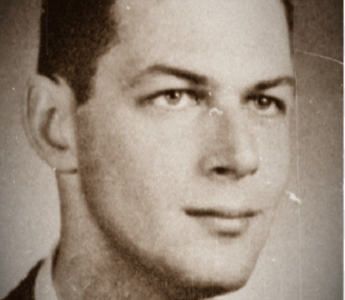
Haefner v. Lancaster County, Pa., 520 F. Supp. 131 (E.D. Pa. 1981).
Citation: 520 F. Supp. 131, docket Number: 81-0922, August 11, 1981.
U.S. District Court for the Eastern District of Pennsylvania – 520 F. Supp. 131 (E.D. Pa. 1981)
Richard D. Haefner versus the County of Lancaster, PA. et al. Civ. A. No. 81-0922.
Harvey S. Miller, Christopher W. Mattson, Lancaster, Pa., Richard R. Galli, Philadelphia, Pa., for defendants.
MEMORANDUM AND ORDER, District Judge Troutman:
The policies supporting the Civil Rights Act of 1871, 42 U.S.C. § 1983,[1] include compensating individuals deprived of federal rights by action taken under color of state law.[2] Claims for injury must be presented in a timely fashion.[3] Congress did not establish a federal statute of limitations for actions brought in federal court under Section 1983, and, therefore, the state statute of limitations for the cause of action most nearly analogous thereto must be “borrowed”.[4]
In the case at bar, plaintiff alleges unlawful arrest, physical and mental abuse during police custody and prosecution of criminal charges against him without probable cause, claims which most nearly resemble state tort actions for assault and battery, false arrest and imprisonment and malicious prosecution.[5] Pennsylvania law requires institution of suit for such claims within two years of accrual.[6] Federal law *133 determines when a federal claim “accrues”[7] and identifies the date as that point in time when the injured party knows or has reason to know of the injury forming the basis of the action.[8]
In the case at bar, plaintiff knew of the injury inflicted by the alleged assault and battery and false arrest and imprisonment when those events occurred in August 1975 and arguably continuing through February 1976. His failure to press these claims within two years bars prosecution irrespective of their merit.[9]
Plaintiff’s claim for malicious prosecution must also be dismissed. To recover therefor, plaintiff must establish that the prior state prosecution terminated in his favor.[10] That is, plaintiff must show that the prior action disposed of the charges in a manner inconsistent with guilt.[11] An indecisive disposition, such as a hung jury, will not suffice, for a prosecution based on probable cause does not deprive a defendant of civil rights within the meaning of Section 1983. No federal claim can exist without proof that the prior state criminal prosecution ended in a manner inconsistent with guilt.[12]
In the case at bar, the state court declared a mistrial after the jury could not reach a verdict. Ultimately, on appeal, the Superior Court of Pennsylvania held that the trial court’s premature discharge of the jury prevented defendant’s retrial in light of the Double Jeopardy Clause of the Fifth Amendment.[13] The prior state action, therefore, did not terminate in a manner inconsistent with defendant’s guilt.[14]
Finally, plaintiff has also failed to state a claim under 42 U.S.C. § 1985(2).[15] This subsection affords a remedy to the *134 victim of a conspiracy to impede or obstruct the “due course of justice” with the intent to deny him the equal protection of the laws. Plaintiff has alleged that defendants’ conspiracy denied him of due process and equal protection of the laws, but he has not alleged that defendants conspired against him because of his membership in a class defined in an invidiously discriminatory manner. Claims under Section 1985(2) must allege a racial or invidiously discriminatory class-based animus.[16] Accordingly, defendants’ motion to dismiss the complaint will be granted.[17]
NOTES
[1] This section provides that
[e]very person who, under color of any statute, ordinance, regulation, custom, or usage, of any State or Territory, subjects, or causes to be subjected, any citizen of the United States or other person within the jurisdiction thereof to the deprivation of any rights, privileges, or immunities secured by the Constitution and laws, shall be liable to the party injured in an action at law, suit in equity, or other proper proceeding for redress.
[2] Parratt v. Taylor, _ U.S. _, 101 S. Ct. 1908, 68 L. Ed. 2d 420 (1981), Robertson v. Wegmann, 436 U.S. 584, 98 S. Ct. 1991, 56 L. Ed. 2d 554 (1978), Carey v. Piphus, 435 U.S. 247, 98 S. Ct. 1042, 55 L. Ed. 2d 252 (1978).
[3] Railroad Telegraphers v. Railway Express Agency, 321 U.S. 342, 64 S. Ct. 582, 88 L. Ed. 788 (1944).
[4] Board of Regents v. Tomanio, 446 U.S. 478, 100 S. Ct. 1790, 64 L. Ed. 2d 440 (1980), Johnson v. Railway Express Agency, 421 U.S. 454, 95 S. Ct. 1716, 44 L. Ed. 2d 295 (1975).
[5] See, for example, Polite v. Diehl, 507 F.2d 119 (3d Cir. 1974), Hileman v. Knable, 391 F.2d 596 (3d Cir. 1968), and Onley v. Simms, 476 F. Supp. 974 (E.D.Pa.1979); Specifically, plaintiff contends that defendants conspired to secure a criminal prosecution against him on charges known to them as false. Additionally, defendants induced plaintiff to submit to a lie detector test, urged other individuals to persuade plaintiff to enter a plea of guilty, gathered background information on prospective jurors, threatened and intimidated various witnesses which plaintiff called in his defense, paid money to witnesses for favorable testimony, and isolated plaintiff in a prison cell known as the “hole”, allegedly designed to cause occupants severe emotional trauma.
[6] 42 Pa.Cons.Stat.Ann. § 5524(1).
[7] Singleton v. City of New York, 632 F.2d 185 (2d Cir. 1980), cert. denied, 450 U.S. 920, 101 S. Ct. 1368, 67 L. Ed. 2d 347 (1981).
[8] See, United States v. Kubrick, 444 U.S. 111, 100 S. Ct. 352, 62 L. Ed. 2d 259 (1979). Cf. Bayless v. Philadelphia National League Club, 579 F.2d 37 (3d Cir. 1978) (under Pennsylvania law the statute of limitations for personal injury actions begins to run when the plaintiff knows or reasonably should have known of the cause of the injury). See also Grabowski v. Turner & Newall, 516 F. Supp. 114 (E.D.Pa.1980), aff’d, 651 F.2d 908 (3d Cir. 1981) and Anthony v. Koppers Co., _ Pa.Super. _, 425 A.2d 428 (1981).
[9] Pangrazzi v. United States, 511 F. Supp. 648 (E.D.Pa.1981).
[10] Everett v. City of Chester, 391 F. Supp. 26 (E.D.Pa.1975). See also Davis v. Chubb/Pacific Indemnity Group, 493 F. Supp. 89 (E.D.Pa. 1980), in which the court suggested several “indecisive” terminations which would not support a malicious prosecution claim: a charge withdrawn pursuant to an agreement with the accused or withdrawn out of mercy requested or accepted by the accused, the entry of a plea of nolo contendere or a pardon by the executive. The court held that a termination through an Accelerated Rehabilitative Disposition Program (ARD) was similarly “indecisive”.
[11] Thomas v. E. J. Korvette, Inc., 329 F. Supp. 1163 (E.D.Pa.1971), rev’d on other grounds, 476 F.2d 471 (3d Cir. 1973).
[12] Singleton v. City of New York, supra.
[13] See Commonwealth v. Haefner, 264 Pa.Super. 144, 399 A.2d 707 (1979).
[14] Formal abandonment of charges by the prosecutor as the necessary consequence of a procedural error committed by the trial judge and barring re-prosecution because of the Double Jeopardy Clause cannot be considered as termination inconsistent with guilt.
[15] This subsection provides that: [i]f two or more persons in any State or Territory conspire to deter, by force, intimidation, or threat, any party or witness in any court of the United States from attending such court, or from testifying to any matter pending therein, freely, fully and truthfully, or to injure such party or witness in his person or property on account of his having so attended or testified, or to influence the verdict, presentment, or indictment of any grand or petit juror in any such court, or to injure such juror in his person or property on account of any verdict, presentment, or indictment lawfully assented to by him, or of his being or having been such juror; or if two or more persons conspired for the purpose of impeding, hindering, obstructing, or defeating, in any manner, the due course of justice in any State or Territory, with intent to deny to any citizen the equal protection of the laws, or to injure him or his property for lawfully enforcing, or attempting to enforce, the right of any person, or class of persons, to the equal protection of the laws;
[16] Jones v. United States, 536 F.2d 269 (8th Cir. 1976), cert. denied, 429 U.S. 1039, 97 S. Ct. 735, 50 L. Ed. 2d 750 (1977); Cf. Griffin v. Breckinridge, 403 U.S. 88, 91 S. Ct. 1790, 29 L. Ed. 2d 338 (1971) (under 42 U.S.C. § 1985(3) plaintiff must allege a class-based discrimination).
[17] Plaintiff’s failure to state any claim under §§ 1983 and 1985(2) justifies dismissal of the complaint as to all defendants. Carey v. Beans, 500 F. Supp. 580 (E.D.Pa.1980), aff’d, 659 F.2d 1065 (3d Cir. 1981), Dezura v. Firestone Tire & Rubber Co., 470 F. Supp. 121 (E.D. Pa.1979), aff’d, 612 F.2d 571 (3d Cir. 1980); Jurisdiction over plaintiff’s pendent state claims will be declined. Plaintiff can assert no right thereto. Gibbs v. United Mine Workers of America, 383 U.S. 715, 86 S. Ct. 1130, 16 L. Ed. 2d 218 (1966). See also, Gallo v. Yamaha Motor Corp., USA, 488 F. Supp. 502 (E.D.Pa. 1980).
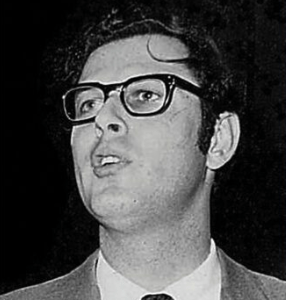
Full Name: Richard Charles Haefner; Citations: 291 Pa. Super. 604, 436 A.2d 665
Date: October 30, 1981, 291 Pa. Superior Ct. 604 (1981); 436 A.2d 665.
In re Expungement Petition of Richard Charles HAEFNER. Appeal of Richard Charles Haefner.
Superior Court of Pennsylvania, argued December 5, 1980 and filed on October 30, 1981.
John Kenneff, Assistant District Attorney, Lancaster, for Commonwealth, participating party, before HESTER, CAVANAUGH and VAN der VOORT, JJ.
HESTER, Judge: This is an appeal from an order of the Court of Common Pleas of Lancaster County refusing to grant expungement of an arrest record. The procedural history and facts relevant to the issues on appeal are as follows:
Appellant was charged with corruption of minors at Information No. 3218 of 1975, involuntary deviate sexual intercourse at No. 3219 of 1975, and corruption of minors at No. 3220 of 1975. The charge at No. 3218 of corruption of minors was nolle prossed by the Commonwealth on March 7, 1980 after five years of inactivity for lack of evidence.
*606 Appellant was tried before a jury on the other two criminal Informations in a trial which began on January 27, 1976 and ended on February 3, 1976 when the trial judge sua sponte declared a mistrial. The trial judge ordered a mistrial when the jury foreman indicated that the jury would not be able to reach a verdict. Our Court granted a motion to quash the Information because appellant’s retrial was barred by his Fifth Amendment right not to be placed in double jeopardy. Commonwealth v. Haefner, 264 Pa.Super. 144, 399 A.2d 707 (1979).
A hearing was held on the petition to expunge on January 25, 1980 at which time the Commonwealth presented no evidence. The trial court granted expungement as to criminal Information No. 3218, and denied expungement as to the two Informations on which appellant was tried. This timely appeal followed.
Appellant contends the trial court erred in imposing upon him the burden of affirmatively demonstrating his non-culpability under the facts herein.
We have held that the right of an accused to seek expungement of an arrest record is an adjunct to due process. Commonwealth v. Malone, 244 Pa.Super. 62, 366 A.2d 584 (1976). We have further held that where the Commonwealth has made out a prima facie case but the prosecution was terminated because of a procedural irregularity or legal technicality unrelated to questions of guilt or innocence, the accused has the burden of affirmatively demonstrating nonculpability. Upon such a showing, the trial court then had to weigh the Commonwealth’s interest in retaining the arrest record against the accused’s interest in freedom from harm ancillary to the arrest record. Commonwealth v. Mueller, 258 Pa.Super. 219, 392 A.2d 763 (1978); Commonwealth v. Rose, 263 Pa.Super. 349, 397 A.2d 1243 (1979). Mueller dealt with a dismissal pursuant to Rule 1100, a procedural rule, and not an inability to produce sufficient evidence to convict on the part of the Commonwealth at a trial on the merits.
*607 One of the basic tenets of our system of criminal justice is that the accused is presumed innocent until proven guilty beyond a reasonable doubt. Here, unlike Mueller, supra, although a prima facie case was made out, following a lengthy trial on the merits the jury was unable to agree on a verdict demonstrating the Commonwealth’s inability to prove appellant’s guilt beyond a reasonable doubt. Then, not because of any procedural irregularity, but rather because of appellant’s Fifth Amendment right not to be placed in double jeopardy, the Information against him was quashed and appellant was not retried. Thus, the prosecution of appellant was terminated because the Commonwealth was unable to produce sufficient evidence to convince a jury of his peers of his guilt beyond a reasonable doubt and a second trial was constitutionally prohibited. We therefore distinguish Mueller, supra, and refuse to impose the burden of showing non-culpability upon the appellant. We will not, nor will we permit the trial court to engage in an independent evaluation of the evidence presented at trial which already proved to be insufficient to prove appellant’s guilt beyond a reasonable doubt. Commonwealth v. Capone, 282 Pa.Super. 458, 422 A.2d 1383 (1980).
We next must balance the competing interests in determining whether appellant is entitled to expungement. The Commonwealth presented no evidence whatsoever justifying the retention of appellant’s arrest record.
On the other hand, appellant testified that he holds a Ph.D. in geology from Penn State University and had been an assistant professor at two colleges. He testified that he lost his position after the charges were instituted and has been unable to obtain new employment. He has applied at approximately 100 institutions seeking a teaching position. He stated that he had never been arrested before, nor after these charges were filed. He further stated that his arrest record has interfered with his ability to obtain employment and has affected his reputation. Finally, he testified he was not guilty of any of the offenses with which he was charged.
*608 Our review of the record indicates the appellant has shown substantial reasons why he should be free of an arrest record, while the Commonwealth has failed to submit a compelling reason, to maintain the record.
Accordingly, the Order of the trial court is reversed and the case remanded with directions to enter an order granting expungement.
VAN der VOORT, J., files a dissenting opinion.
VAN der VOORT, Judge, dissenting:
I respectfully dissent. In Commonwealth v. Mueller, 258 Pa.Super. 219, 223, 392 A.2d 763, 765 (1978), a majority of our Court sitting en banc vacated the lower court’s expungement order, holding that “where the record shows that the Commonwealth made out a prima facie case of guilt on the part of an accused, he will then have the burden to affirmatively demonstrate non-culpability at a hearing, otherwise his petition to expunge will be denied.” In the case before us, as in Mueller, the Commonwealth made out a prima facie case against the accused at the preliminary hearing, and the prosecution was terminated for reasons not related to guilt or innocence. In Mueller the prosecution was terminated because of the Commonwealth’s failure to proceed with the case within 180 days of filing of the complaint; in the case before us it was terminated because the trial judge impetuously and improperly declared a mistrial. Unlike the accused persons in Commonwealth v. Rose, 263 Pa.Super. 349, 397 A.2d 1243 (1979), and Commonwealth v. Capone, 282 Pa.Super. 458, 422 A.2d 1383 (1980), cited in the majority opinion, appellant in the case before us was not found to be innocent. The majority equates a mistrial caused by the court with a finding of innocence. This appears to me to be clearly a non sequitur.
I believe that Mueller is controlling in this situation, and I would therefore affirm the lower court’s order refusing to expunge appellant’s arrest record.\
 Another Bundy Blog: My Adventures around the Pacific Northwest (and everywhere else).