




Directed by Amber Sealy and written by C. Robert Cargill (under the pseudonym of Kit Lesser), ‘No Man of God’ stars Elijah Wood (as Bill Hagmaier), Luke Kirby (as Ted Bundy), Aleksa Palladino (as Ted’s final attorney Carolyn Lieberman/Diana Weiner), and James Patrick of Terminator fame (Roger Depue). The film had its premiere at the Tribeca Film Festival on June 11, 2021 and was officially released by RLJE Films on August 27, 2021. In my opinion, this movie is unlike any other Bundy production that’s out there because it takes place (almost) completely inside the walls of Florida State Prison after his murders and trials took place. Set between 1985 and 1989, it’s based on conversations between the FBI Agent (Hagmaier) and serial killer during his time on death row in the sunshine state. In the opening scene some information about what you’re about to watch appears on the screen: ‘in the late 1970’s, a team of FBI researchers proposed that, by understanding the psychology of violent serial offenders, investigators could more effectively combat serial rapes and homicides. The process was called profiling. In 1984, President Ronald Reagan announced the establishment of the National Center for the Analysis of Violent Crime, creating the first five full-time positions for FBI profilers. Special Agent Bill Hagmaier was picked as one. The following is inspired by FBI transcripts, recordings, and the recollections of Bill Hagmaier.’
The movie begins in 1985, where an group of FBI agents from the elite Behavior Science Unit are sitting in on a meeting with Supervisory Special Agent Roger Depue, who shares with them that he needs them to gather case studies on violent offenders, including serial rapists and killers (by ‘begins’ I mean the plot of the movie, in literal terms it actually begins with a real-life broadcast announcing Bundy’s execution). Names like Charles Manson, Ed Kemper, and David Berkowitz are thrown around… and when the other agents laughed and passed on Ted, newcomer William Hagmaier accepted the challenge despite being aware of the killers deep distrust of the Bureau. Initially through snail mail, Bundy expressed interest in communicating with Hagmaier, who eventually traveled to the condemned man’s final home for an interview. Over the next couple of years, the two men developed an unusual ‘friendship’ of sorts while discussing pornography and detective magazines as a possible catalyst for violent serial offenders. Despite some hesitation at first from the agent, during these conversations Bundy was able to cajole personal details about his personal life out of him, under the guise of establishing trust between them.
The following year the two men met again. This time, Ted is shown some crime scene photos related to the recent Green River murders and gives Hagmaier his opinion on them, and through the agents sly questioning the killer accidentally volunteers some details about his own diabolical history. At one point during their chat Bundy asks Bill if he thinks he could kill someone, and when the agent responds that, due to his being an FBI agent it could in theory happen, it’s not exactly the answer he was seeking. Back at Quantico, FBI Unit Chief Depue cautioned his agent not to get too close to someone like Bundy, and that he ‘didn’t want someone like him getting inside his head.’ Despite this warning, while sharing stories about their children during their next visit in 1987, Ted senses that his new friend is getting too deep inside of his head and taunts him to wonder outloud what he might do if he ever escaped from prison. In response, Hagmaier describes it with (most likely) a good amount of accuracy, which makes him furious and he verbally attacks him. After calming down a bit Bundy begins to disclose more intimate details of his life and what may have led him to murder, but along the way he also dispelled many of the popular myths about him (such as going after women with long, dark hair). The killer also shared that in an alternate reality Bill could be the one sitting in prison and he could be an FBI agent, a statement that deeply affected the agent.
Thanks to IMDB, I learned quite a few interesting facts about the movie I was unaware about before writing this article: in the first conversation between Bundy and Agent Hagmaier the SK asks why the Bureau didn’t send Douglas, and by that he meant John Douglas, who was the criminal profiler that wrote ‘Mindhunter’ on which the TV series is based. Also, when Bill is talking to Bundy about confessing he mentions Henry Lee Lucas, another serial killer that (along with his partner/lover Otis Toole) frequently lied and fabricated stories about his criminal history, hinting at him to tell the truth. Lastly, in 1987 Ted mentions that they should co-author a book together and name it ‘The Bill and Ted Show,’ alluding to the 1989 movie ‘Bill & Ted’s Excellent Adventure’ which was released less than a month after he was executed. This is one of the few errors, as the movie wasn’t released for two years after this conversation took place.
The final half of the movie (roughly) takes place in the last few days of Bundy’s life in January 1989, after (then) Florida state Governor Bob Martinez signed his death warrant and he was trying to weasel his way out of getting executed. Ted (of course) said that the determination of only being granted seven days was done by the governor in a pathetic attempt to gain the favor of the people of Florida in the hopes of getting reelected (spoiler alert, he did not). Hearing of the killers quickly approaching doom, individuals from all over the US as well as members of the media began to gather outside the prison. At this time, we meet his civil attorney Carolyn Lieberman, who is deeply against Hagmaiers involvement in anything related to Ted due to his ties to ‘law enforcement,’ however the killer is insistent that he be there, saying Bill is his ‘best friend.’
Hagmaier was sent to Florida not to fight for Bundy’s life but to simply be there and act as his scheduling coordinator: Ted is finally ready to confess and spill all of his secrets, and because he is a complete narcissist it’s all being done on his terms. He tells Bill of his plan to only give detectives the bare minimum in order to bait them and make them want more, which he hoped would grant him more time to live. In response, the agent urges Bundy not to play games with the governor of Florida, advice that he mostly ignores. Members of law enforcement agencies from all over the US poured into Florida: Idaho, California, Oregon, Colorado, and Utah; where I didn’t hear representatives from NJ or Vermont mentioned I recall Bundy also being questioned about the 1969 New Jersey Parkway murders (Susan Davis and Elizabeth Perry) as well as the 1971 homicide of schoolteacher Rita Curran (in VT).
During interviews with investigators across multiple states, Bundy is purposefully vague and evasive with his answers, only sharing small tidbits of information with them. Additionally, he completely disregarded Bill’s concerns about media coverage and Carolyn scheduled an interview with Christian Psychologist, creator of ‘Focus on the Family,’ and straight up douchebag Dr. James Dobson the day before he was executed in hopes that he would petition the governor on behalf of Ted in hopes of getting a stay… But of course, the sleazebag waited until after the interview to reveal that he never planned on talking to Martinez, as he felt the killer would never be granted a pardon. It was really almost spooky watching Kirby’s performance as Bundy during his interview: not only was the dialogue nearly identical but so were the facial expressions made by the killer. It was as if he somehow channeled Bundy’s spirit during that scene.
Later that day after the interview the warden informed Hagmaier that Bundy was to undergo a last-minute sanity hearing, and where multiple conversations were to be conducted the decision to put the killer to death would ultimately fall completely on his testimony to a psychiatric board; as we know, they ultimately declare Bundy sane.
When the men speak for the last time on January 23, 1989 Bill brings up a conversation they had a few years prior, about being ‘brought under the water:’ through violent, horrifying details, Bundy finally opened up and shared how he lured and killed one of his victims, leaving the agent completely overwhelmed and in tears. After this interaction Ted asked his friend why this is happening to him, proving he was still completely remorseless. Infuriated, as Bill prepares to leave the condemned man asks if he had any idea why he did what he did, to which he simply said, ‘because you wanted to.’ Just moments before Bundy was scheduled to die, Hagmaier is told by a prison official that he had been taken off the list to sit in on the execution so that someone else could fill his spot. The movie wraps up with Agent Hagmaier alone in the warden’s office, answering the telephone and talking to his wife and son. As he is catching up with his son, the crowd outside erupts in spirited cheers as it was announced that Ted was officially declared dead.
Just some quick background on Diana: she was a civil attorney, which is a type of lawyer that mainly works on civil lawsuits (such as, a personal injury case or contract dispute) and represents their clients in non-criminal areas of the law. Weiner (whose maiden name was Acevedo) got her BA from Houghton College (which is a Christian school close to where I live) in NY in 1969 and went on to earn her Juris Doctorate from Georgetown in 1982. She has been married to her husband Nevin for over forty years, who also worked as an attorney before retiring.
Diana first met Ted Bundy in October 1986 through psychologist Art Norman, who was brought on earlier in the year to interview him for a clemency proceeding. Dr. Norman was in the same social circle as Weiner and her husband, and he felt that Bundy would be more open and honest if there was an ‘intelligent, attractive attorney, and a woman who could be very open and would have the personality to open up and would not be threatened by whatever he says.’ Well, he was definitely on the right track: almost immediately, Diana’s presence prompted Ted to talk more honestly and intensely about his feelings towards violence and women, which were ‘things he has difficulty talking about with a man.’ All of this was being done by Dr. Norman in an attempt to figure out whether the killer had been ‘mentally competent’ to stand trial when he was convicted in the early 1980’s. Shortly after their meeting, Weiner officially became Bundy’s civil attorney and represented him (along with other death row inmates) in a civil rights lawsuit surrounding the poor ‘exercise conditions’ at Raiford Prison.
There seemed to be quite a bit of whispering about the nature of hers and Bundy’s relationship before he was put to death, but there is no proof that anything inappropriate ever took place between the two. About Bundy, Weiner said they had ‘an attorney-client relationship, but I also, as an attorney and client do, developed a congenial relationship with the client.’ The idea is strongly hinted at in ‘No Man of God’ as well: in the movie the warden asked Hagmaier why a civil attorney needed to visit a death row inmate 80 times in three years, and where I don’t know how accurate that estimation is, in reality she spent roughly seventy hours with him during his time on death row.
According to the website ‘yourtango’ (just for the record, I don’t know how accurate this information is), Bundy’s feelings for Weiner were so glaringly obvious that they became a bit of annoyance to the rest of his legal team, including his defense attorney Polly Nelson. At one point she even confronted Ted about his feelings, which she was beginning to suspect were making her own job more difficult. In her book ‘Defending the Devil,’ Nelson wrote about her experience, and at one point said: ‘Ted, quit giving me this ‘Ms. Weiner’ stuff. I know why you see her, and it has nothing to do with any lawsuit. She’s beautiful, she’s interested, she can come during lawyer’s visiting hours, and you can have unsupervised visits with her.’ In response to this, Ted paused briefly, smiled then said, ‘that about sums it up.’
In one of the few interviews she did after Ted’s execution, Weiner said she the man she knew wasn’t a killer, or a rapist: while she made it clear that she wasn’t in any way minimizing what he did, she remembers a man that became a born-again Christian that seemed genuinely remorseful for what he did and was sincere when he said he wanted to confess in hopes to ease the pain of his victims’ families: “I think the public is unwilling to accept that there could be a commonality between Ted Bundy and the rest of humanity or that Ted Bundy could have at the end of his life sought to tell the truth, confess or have had any moral compunction to do so.’
According to the legal paperwork that was left behind by the killer, Bundy left Weiner all of his worldly possessions, including his wedding ring, roughly $700, and his ashes. Regarding the latter of the three, she was instructed by her client to spread them across one of his dumpsites at Taylor Mountain, which never took place; a family member of Ted’s is currently in possession of them.
One thing I wonder about is the scene towards the end of the movie when Ted said he would rather slit his wrists then be killed by the state of Florida, an act he was easily talked out of by Hagmaier. I mean, it was no secret that Bundy was absolutely terrified of dying, and personally I think he would never have committed suicide because I honest to God think he fully expected a call from the governor granting him another stay of execution at the very last possible moment (like, as he was being strapped into the Ol’ Sparky). I mean… I just don’t think Bundy had it in him to take his own life. It’s ironic, in a really sad way: he had no problem killing potentially dozens upon dozens of girls and young women, but when it came to himself he was scared shitless.
One thing I was incredibly impressed by was how accurate this movie was when it came to the smaller details about Bundy’s life as well as his timeline. In quite a few Ted related movies, the creators changed the names of victims and family members, but that didn’t happen with ‘No Man of God.’ They even called his daughter by the correct name, which surprised me a bit as I know she has tried her hardest to stay out of the limelight regarding her fathers case (I hope that was able to continue); it’s even mentioned that that he hadn’t seen Rosa for a long stretch of time after he told Carole Ann Boone his plans of confessing (she stopped visiting in 1986). Additionally, when Bill talks about how his son pulled his pants down while pretending to be an elephant while crab-walked around his preschool classroom… Well, he really does have a son named Bryan, who followed in his fathers footsteps and became an officer with the NYPD (and I’m sure he loved that story being involved in the movie).
Other popular names related to Bundy were also used, like Liz Kloepfer, true crime legend Ann Rule, and his first love Diane Edwards. Rule is briefly brought up in conversation, when Ted denied her theory that Edwards was the main catalyst for his drive to kill and declared that being dumped by her had nothing to do with why he committed such atrocities. One name did jump out at me as being wrong but it was the way it was done that surprised me: Hagmaier questioned Bundy about ‘Diane Leach,’ and where the details were mostly correct they called her by her middle name and completely left out her first (Kimberly). Another identity that was changed was Carolyn Leiberman, and it wasn’t until after I spent a solid half-hour trying to figure out who she was that I realized the name was changed from Diana Weiner. My educated guess as to why: Ms. Weiner is still alive and the creators of the movie didn’t want people looking her up and harassing her.
And now I’m just going to go through and point out various things that interested me about this movie (thrilling, I know):
I know that Ted once told a story that he was in the library at Michigan State University and was flipping through college catalogs while contemplating his next move… he knew he wanted to go somewhere warm that was near water and close to a college campus. The movie features a scene where Ted tells Bill that he didn’t want to get caught, and honestly I’m going to have to lean towards that. Did he go to Florida in hopes of living out the rest of his life in anonymity, or did he go there purposefully to get a death sentence? Or, did he simply not want to live the rest of his life behind bars? I mean… I’m sure he was aware that if he stayed in Colorado there would be a good chance that he would die of natural causes while living out his final days in prison. If you really think about it, the Chi Omega murders (and the attack of Cheryl Thomas on Dunwoody Street) were incredibly reckless almost to a point they would be considered careless. It was as if he was begging to get caught. Why was he so sloppy if he wanted to avoid detection?
Over the years there have been many movies made about Ted Bundy, and that isn’t taking into account the dozens upon dozens of documentary-type television shows and mini-series that have been produced as well. Personally, my favorite is the oldest one starring Mark Hammon titled, ‘The Deliberate Stranger.’ Made in 1986, it’s a (fairly) accurate retelling of a book by the same name that was written by Seattle Times reporter Richard W. Larsen in 1980. The book was adapted into a two-part made for TV movie that originally aired on NBC on May 4 and 5, 1986. What I think is interesting about this is that TB was still alive when it was made, even though he claimed he had no interest in seeing it. Surprisingly, there wasn‘t another film about the SK made until 2002 (things really seem to pick up after that), when Michael Reilly Burke played the serial killer in the movie simply named ‘Ted Bundy;’ it was universally panned (as it should have been because it’s a total of crap) and was deemed ‘exploitative’ by critics. The following year Ann Rule’s classic ‘The Stranger Beside Me’ was made into another made for TV movie starring Billy Campbell and Barbara Hershey. Next up: on July 21, 2008 Parker Lewis himself Corin Nemec starred in ‘Bundy: An American Icon’ (which is also called ‘Bundy: A Legacy of Evil’) and to be honest, I thought this and the MRB movie were one in the same. I only recently realized that they’re two separate films. Then of course in 2019 we have another favorite of mine, the Zac Efron/Lily Collins Netflix movie titled, ‘Extremely Wicked, Shockingly Evil And Vile,’ and where it wasn’t entirely accurate it was pretty well-made and entertaining. Lastly, in 2021 one-time teen heart throb Chad Michael Murray played the titular character in ‘Ted Bundy: American Boogeyman;’ it was a cinematic abortion and I don’t think I ever finished it.
There’s also been multiple films about Bundy’s involvement in the investigation of the Green River/Gary Ridgway killings that took place near Bundy’s hometown of Tacoma: in 2004 Cary Elwes portrayed Ted in ‘The Riverman,’ followed by ‘The Capture Of The Green River Killer’ in 2008 then ‘Bundy And The Green River Killer’ in 2019.
On the movie review website ‘Rotten Tomatoes,’ ‘No Man of God’ currently has an approval rating of 80% based of 81 reviews; the film has an IMDB rating of 6.4/10. According to ‘Metacritic,’ it has a weighted score of 67/100 and a user score of 7.1 (based off 21` reviews); this is considered by them to be ‘highly favorable.’ As of July 2024 ‘No Man of God’ earned $216,000 at the worldwide box office.
Works Cited:
bundyphile.com/2021/11/05/no-man-of-god-movie-review/
yourtango.com/2019321781/who-is-diana-weiner-ted-bundys-lawyer-and-final-love-interest












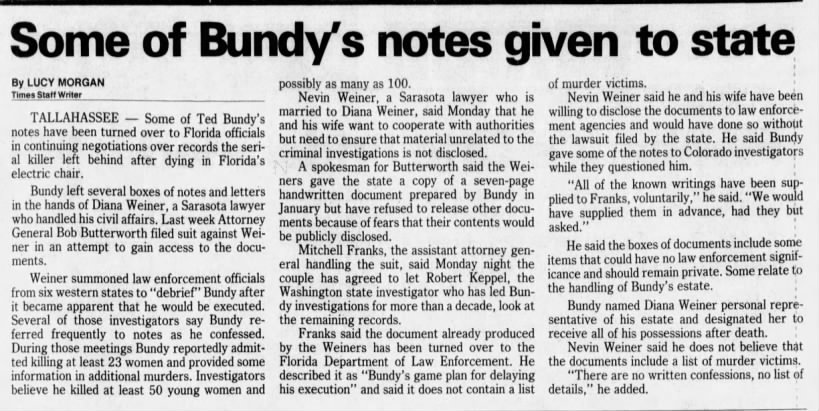


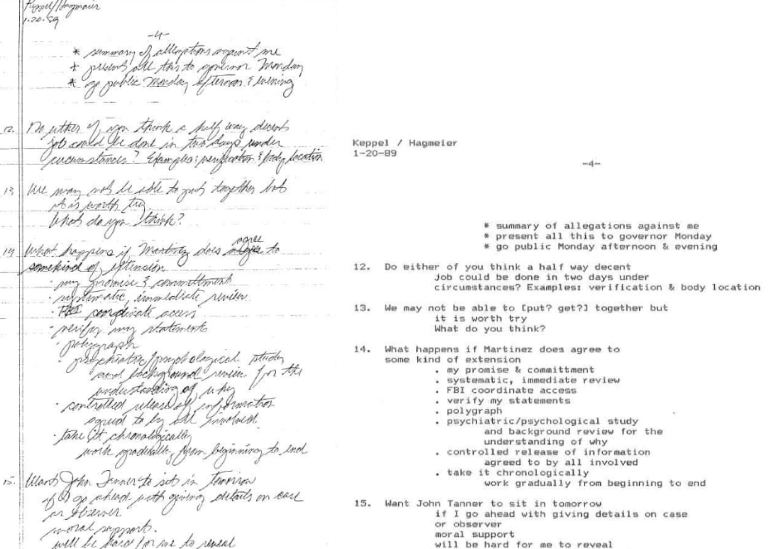

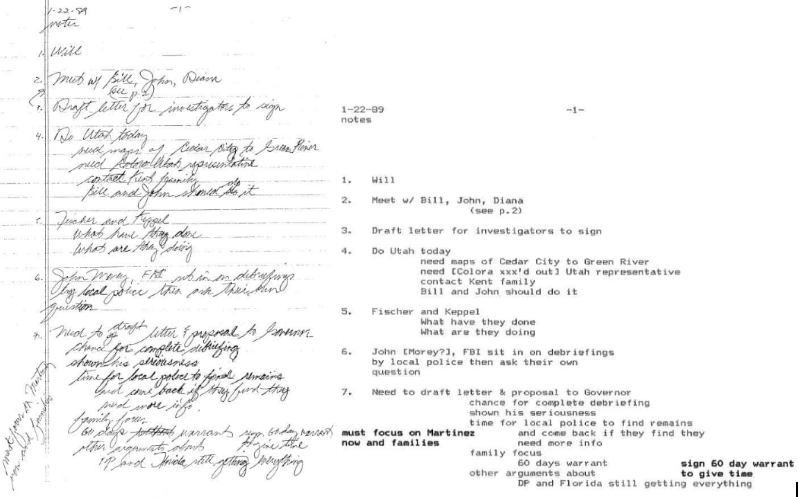


In late April 2024 I requested the files related to the murder of Kathy Devine from the Thurston County Sherrif’s department in Washington state, and they finally got around to getting them to me at the end of June. I shouldn’t be so salty, I’m very thankful they were willing to send them to me. Included in the information was a bunch of newspaper articles about Kathy, and I almost didn’t include them because most of them I found on newspapers.com (and are in my article), but it was important that I release Kathy’s case file in it’s entirety. They did tell me that sometime in August additional information will be ‘made available’ so… that’s also exciting.
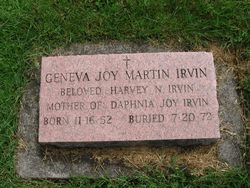
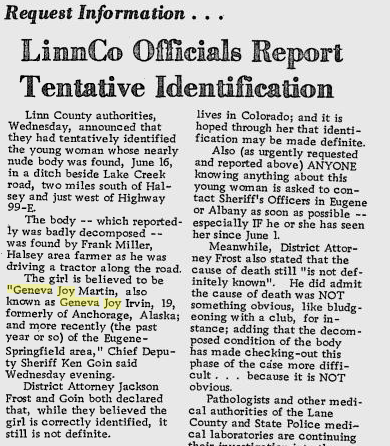
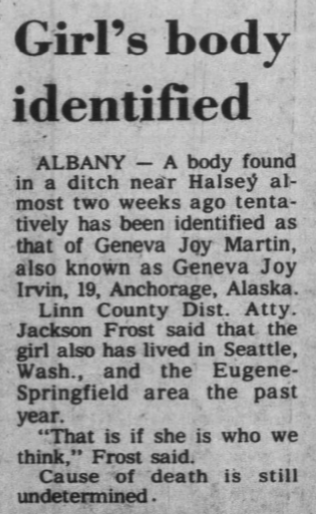
Geneva Joy Martin was born on November 16, 1952 to Robert Eugene and Florence (nee Boldt) Martin in Hastings, MI. Mr. Martin was born on August 7, 1930 and Florence was born on March 16, 1914 in Hutchinson, Minnesota; her occupation is listed as ‘secretary’ in her ‘geni’ profile, and the couple had two daughters but eventually divorced. In 1942 Florence moved her family to Anchorage, Alaska, where she would eventually get remarried to a man named Maurice Green, who worked for the state railroad. The couple would have two daughters together: Lynella Faith (Grant) and Madelon Grace (Mottet). Aside from a DOB and where she was born I couldn’t find any more details about Ms. Martins childhood.
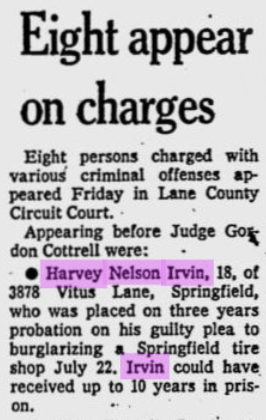
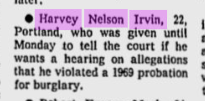
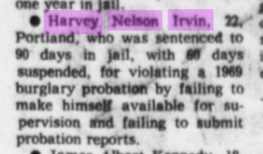
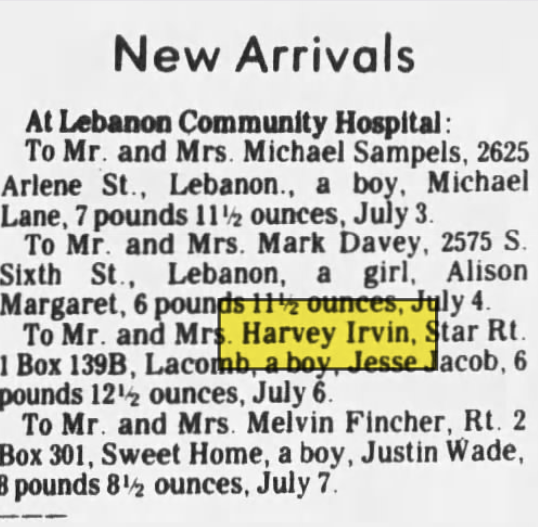
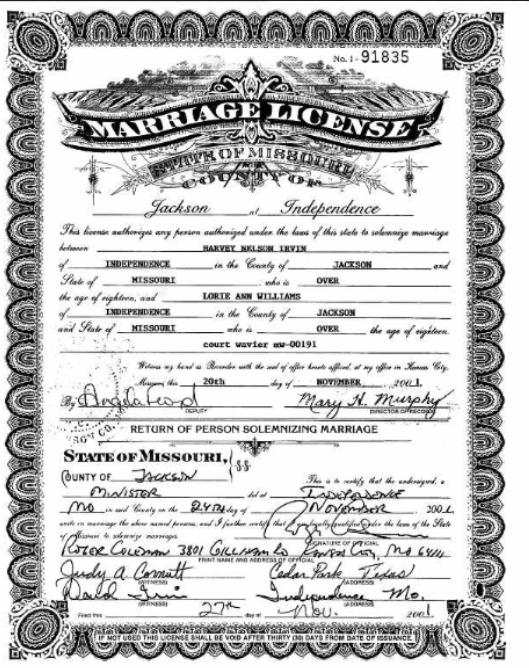
At some point before her death Geneva married Harvey ‘Stormy’ Nelson Irvin … or, at least that’s what it says on her tombstone. I could find no record of their nuptials anywhere and he isn’t mentioned once in any articles about her aside from the fact that she used his last name on occasion ‘as an alias…’ I did, however, find four other marriage certificates for Mr. Irvin on Ancestry. The couple had a daughter named Daphnia Joy that was two months old when nineteen year old Geneva was found deceased, and in the year prior to her disappearance she briefly lived in Seattle and the Eugene/Springfield, OR area. Harvey was born on February 15, 1950, and after Geneva was killed he wasn’t single for very long: he married Patricia Connelly less than three years later on May 22, 1975 in Reno, Nevada.
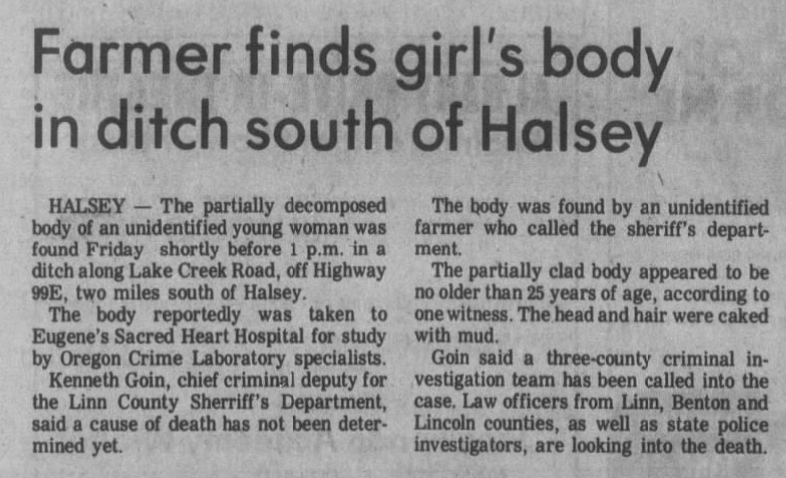
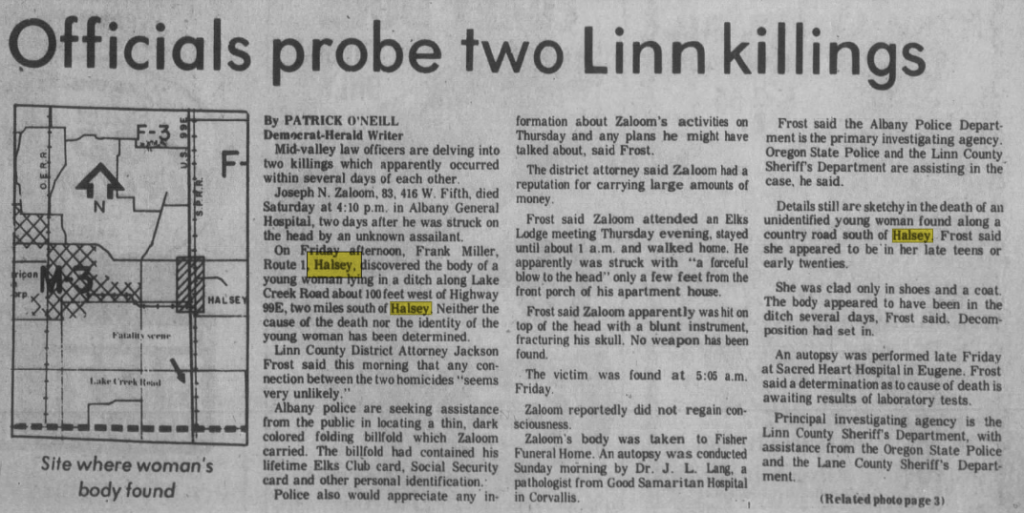
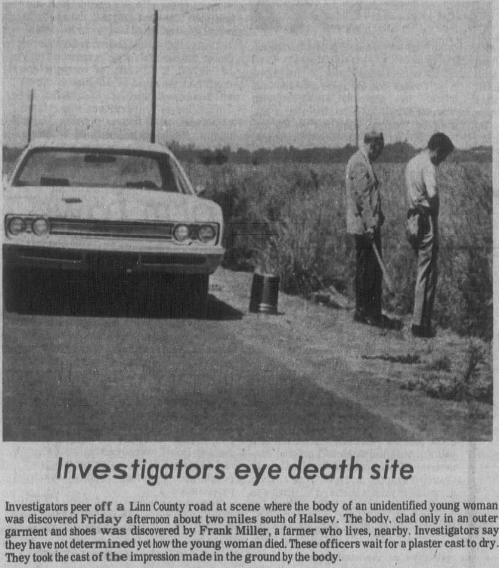
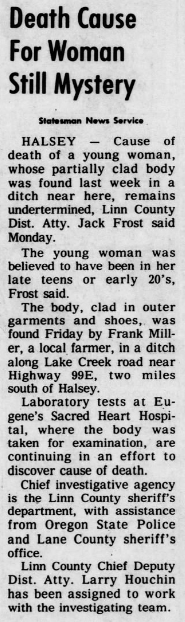
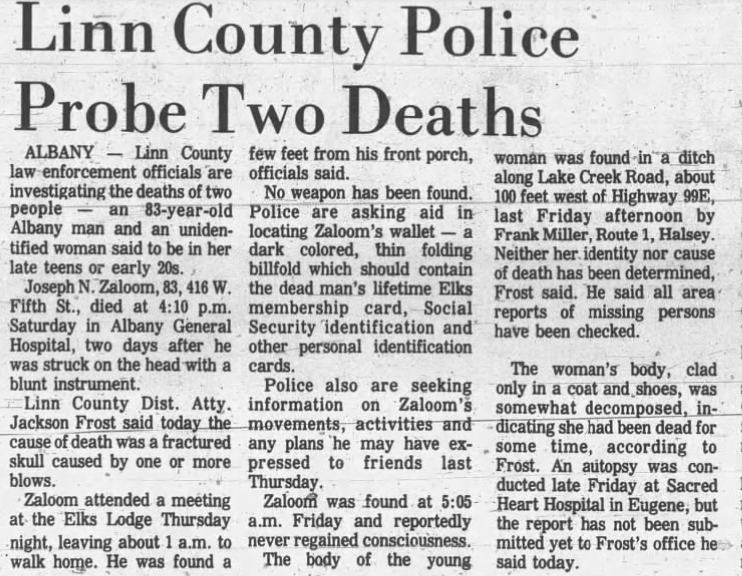
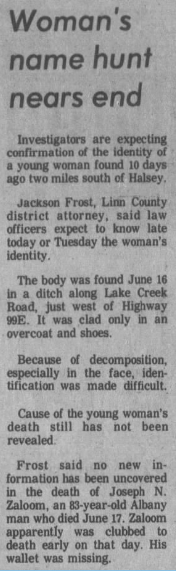
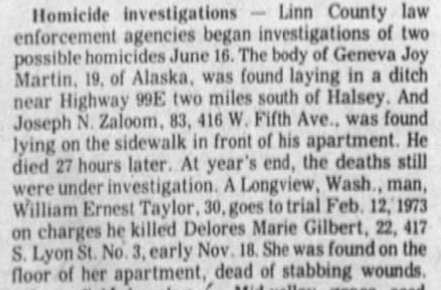
At roughly 1 PM on June 16, 1972 the remains of a decomposed, ‘partially clad young woman’ were found face down in a ‘woody, roadside ditch’ by Frank Miller, a local farmer. She was only wearing a coat and shoes, and her hair was caked with dried mud and sediment; she remained unidentified for roughly ten days while detectives searched for clues. At the scene investigators made a plaster cast of where the victim was found in the ditch in hopes to further aid in the investigation… and this is where not having a background in policing/criminology/forensics hurts me because I didn’t know that was a thing. Looking into it, ‘casting’ is when experts preserve impressions from crime scenes (for example larger, 3D impressions such as tire marks or footprints). The process works almost the same way an orthodontist makes a mold of a patient’s teeth, and forensic experts and LE use an array of materials to help create the ‘casts.’
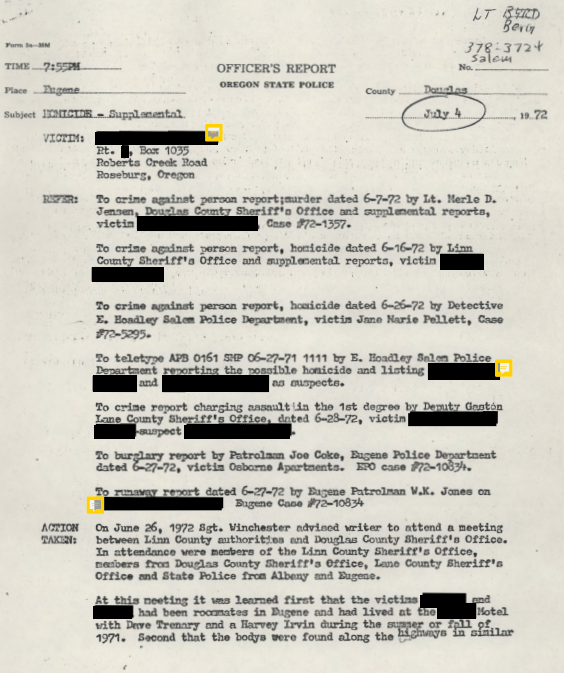
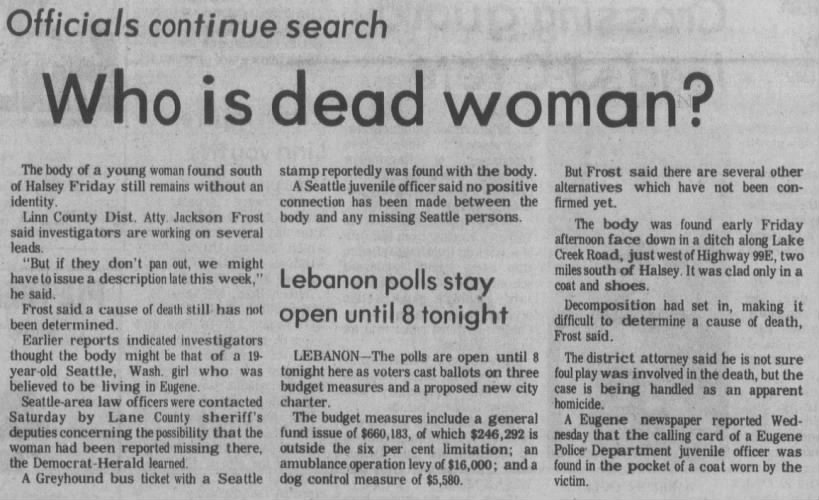
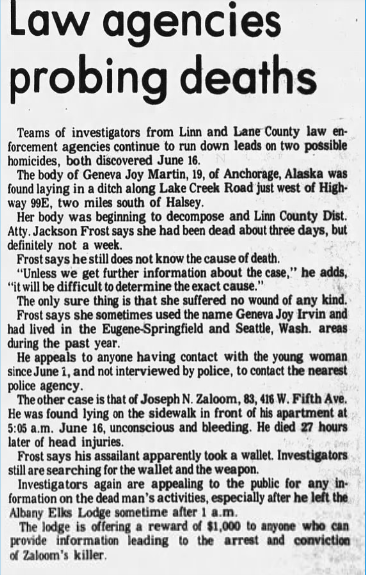
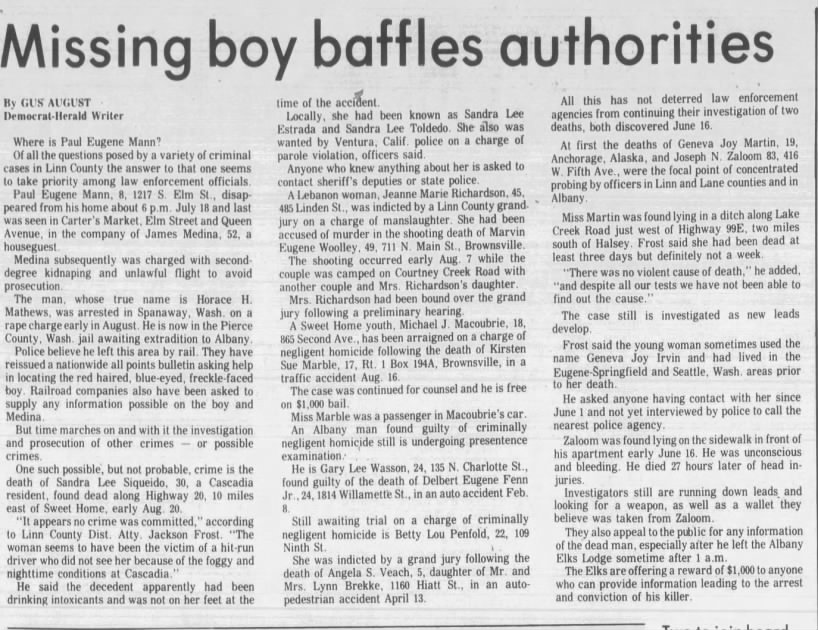
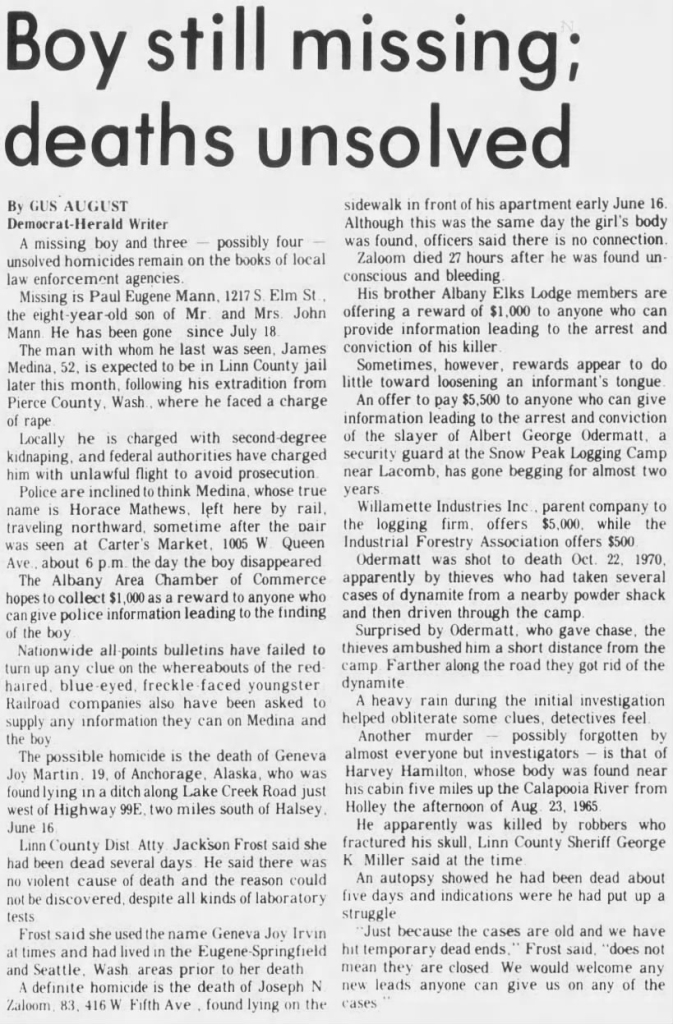
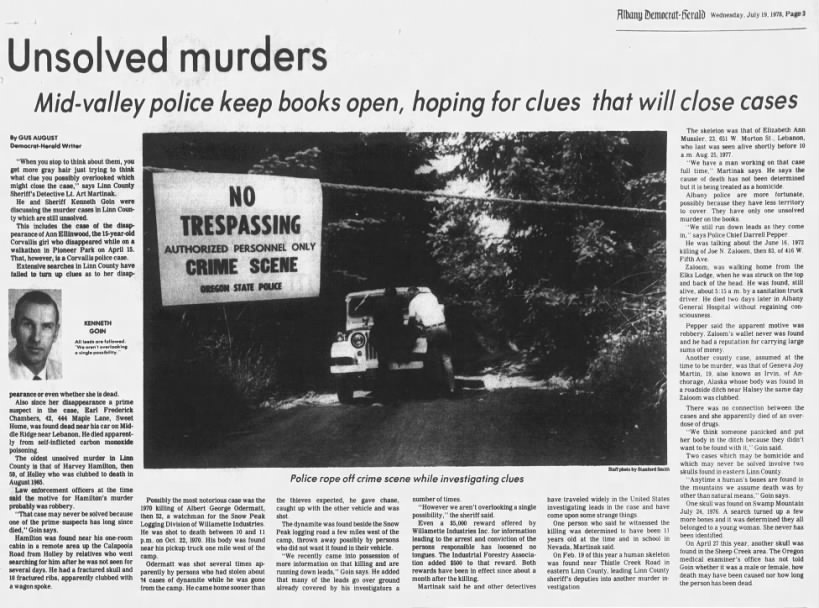
The young victim was taken to Eugene’s Sacred Heart Hospital, where specialists from the Oregon Crime Laboratory got to work on identifying her. According to (retired) Linn County DA Jackson Frost, they were able to tell that she was in the ditch for ‘about three days, but definitely not a week,’ and were immediately able to determine that she was no older than 25. Thanks in part to an advanced stage of facial decomp, it took thirteen days and $162 worth of long distance phone calls to Alaska (where Martin received care) before dental experts were able to make a near positive identification; a sister living in Colorado helped make an absolute positive ID. Despite an autopsy as well as ‘all kinds of lab tests,’ investigators were never able to pinpoint Martin’s exact cause of death due to her having ‘no violent wounds;’ I also found no mention of sexual assault. In the beginning of the investigation medical examiners thought they detected drugs in her system however it was later determined that the advanced state of decomp produced a chemical that masked the presence of narcotics. Despite there being 150 pages worth of notes in Martins case file, there is next to no information out there on her.
In the end of an article published in The Greater Oregon on June 30, 1972, DA Frost commented that ‘the young woman apparently was living under circumstances where she might not want to use her true name, thus the alias.’ In an article published by The Albany Democrat-Herald on June 28, 1973, Frost said that Martin was a known drug user and had recently been in treatment for ‘drug related mental problems’ in Eugene. At the time of her death detectives learned she had been living in Eugene for several months and a week before she was last seen had cashed her monthly welfare check then quietly slipped out of sight; it was the last time she was seen alive.
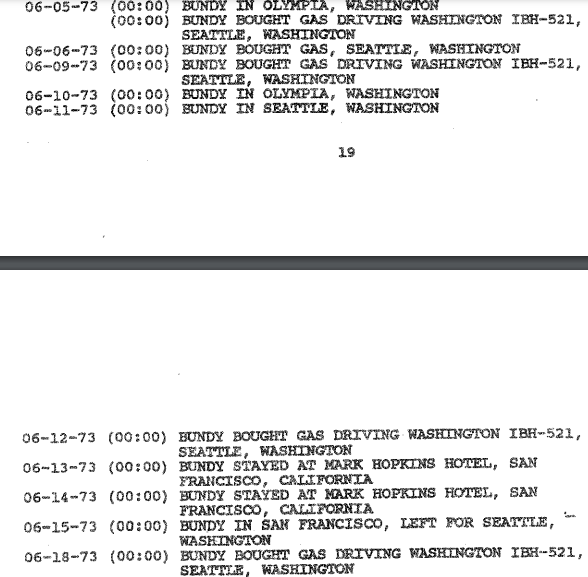
At the time Geneva was murdered Ted Bundy was living in Seattle at the Rogers Rooming House on 12th Avenue, and was in the middle of a long term relationship with Elizabeth Kloepfer. He had just finished his undergraduate psychology degree from the University of Washington and was getting ready for his first (unsuccessful) attempt at law school at the University of Puget Sound (which he began the following year). At the time Ted was interning as a counselor at Harborview Mental Health Center in Seattle (he was only there from June to September 1972), and according to the ‘TB MultiAgency Report 1992,’ Bundy was mostly in Seattle the week before she was found dead but made a trip to San Francisco on June 13 and stayed until the 15th; his whereabouts are then unaccounted for until June 18 when he bought gas in Seattle. As I’ve said in multiple other articles, its Bundy cannon that the serial murderer began killing in early January 1974 with his brutal attack of fellow University of Washington student Karen Sparks in her basement apartment, but during his confessions before his execution he hinted to Dr. Robert Keppel that he may have started as early as 1972 with a young girl in Seattle (but of course didn’t elaborate further than that).
I didn’t know Bundy was ever actually suspected in any additional Oregon murders on top of Roberta Parks (for sure) and (possibly) Vicki Hollar/Rita Jolly/Sue Justis, but according to an article published by The Eugene Register-Guard on February 24, 1989, Martin was at one time considered a possible victim of his as well as Beverly May Jenkins, Allison Lynn Caufman, Laurie Lee Canaday, Tina Marie Mingus, and Floy Jean Bennet. Now, I am in no way saying these women are really possible victims of Ted Bundy, I’m just saying they were in the very least in the correct place at the right (or wrong) time (well sort of, as some if the dates are completely off). Sixteen year old Beverly May Jenkins was from Roseburg, OR and in June 1972 her remains were found just off the I-5 roughly ten miles outside of Cottage Grove; she had been strangled to death. Fifteen year old Portland native Allison Lynn Caufman died as a result of head injuries after being shoved from a car moving at a high rate of speed in July 1973. I think the last two girls can be quickly debunked, as Bundy was in prison when both victims were killed. Tina Marie Mingus was only 16 years old when her body was found in Salem, OR in October 1975, and Flow Joy Bennet was 37 (and obviously a bit out of Bundy’s preferred age range) when she vanished in February 1978. What’s strange is I couldn’t find any more information about any of these women out there. It’s almost as if they never existed.
But there’s more dead and missing women, on top of that article. Twenty year old Faye Ellen Robinson was found deceased from multiple stab wounds in the upper part of her body in March 23, 1972. Like most Bundy victims, she was educated and had a good job working in county government: she graduated from the University of Oregon in 1970 and was employed by the Lane County Welfare Department. Also on March 23 Alma Jean Barra was last seen after leaving the Copper Penny Tavern in the company of an unknown man driving southbound on 92nd Avenue between 11 and 11:30 PM. The 28-year-old’s body was found in an area of heavy brush of the Willamette National Cemetery, roughly forty feet off of Mount Scott Boulevard; she had been strangled and showed no signs of sexual assault. Next is 17 year old Susan Wickersham, who disappeared from Bend, OR on July 11, 1973 after dropping off the family car at her mom’s POE after joyriding around town with a gf (some conflicting reports say she was at a party). Wickershams remains were found on January 20, 1976 and her skull had a bullet hole behind the right ear with no exit wound. Gayle LeClair was murdered in her rental house on August 23, 1973; a clerk/typist at the Eugene Municipal Library, she had been found by her supervisor stabbed to death after she failed to come in for her scheduled shift. Lastly, Deborah Lee Tomlinson vanished without a trace after running away from Creswell, OR with an unnamed friend on her sixteenth birthday on October 15, 1973.
I tried my hardest to find some sort of link between Ms. Martin and any other victims from the area, but not having a cause of death makes it really hard to compare. What I (personally) think happened: she met up with some undesirable friends and together they used some illegal substances, then Geneva overdosed and they panicked then got rid of her body in the most convenient and easiest way they could think of. I mean, to me it sounds plausible that they dumped her on the side of the road (possibly in the middle of the night) because they got scared and didn’t want to be held responsible for her death. In 1972 ‘Good Samaritan’ laws didn’t exist, so if anyone was present when she died then most likely they would have been held responsible in some capacity.
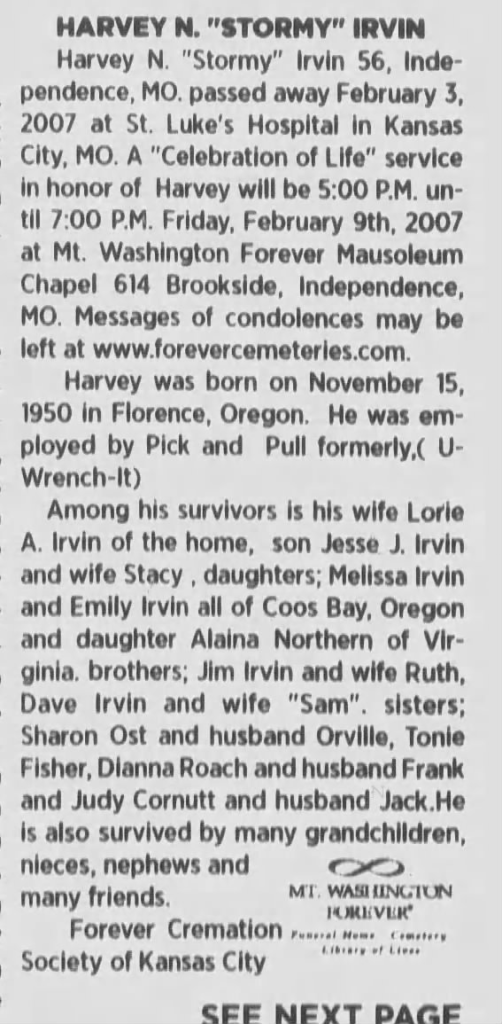
After the death of her mother Daphnia was sent to live with relatives out of state. Per the Green family’s myheritage site, she got married and had a son. Harvey went on to marry (and divorce) numerous times and had four more children; he passed away on February 3, 2007 at the age of 56. Geneva’s father passed away at the age of 84 in 2014 in Garibaldi, OR, and Mrs. Green died January 13, 1994 at the age of 79 due to a smoking related illness. Both of her half-sisters have led incredibly remarkable lives: Dr. Lynella Faith Grant is a psychologist, statistician, lawyer, personnel director, inventor, marketer, publisher, and author; Dr. Madelon Green-Mottet got her PhD in Fisheries from the University of Washington in Seattle and taught classes on aquaculture at a small college in Sitka, Alaska.


























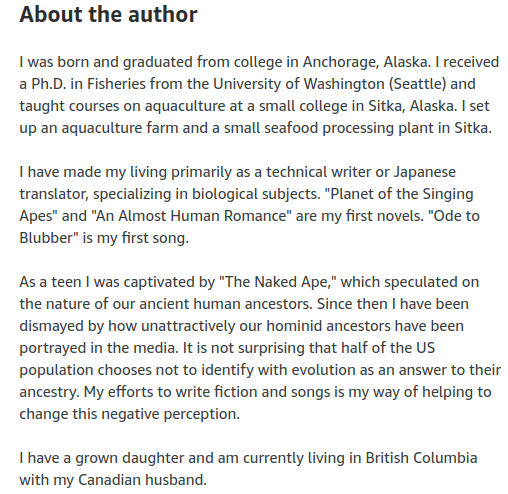

Dr. Lynella Grant.

When I went to Seattle in April 2022 there were a few places I never got around to seeing, one of them being Bundy’s Issaquah dump site… but it certainly wasn’t for lack of trying: I drove around the same three mile area for almost two hours one day trying to find it (Google Maps really dropped the ball with that one, IMO). I finally had to give up because it was taking precious time away from other places I needed to see, and as I was driving away I remember thinking to myself that I’d never get back there again and I blew it. But, thankfully in May 2024 I was able to spend a few days in Washington state during my vacation to Oregon and I was finally able to locate it, with a little help with my friend Cole Kaiser, who is awesome and deserves recognition for his help.
Issaquah is a small city located about fifteen miles east of Seattle. Back in 1974, it was much (much) less populated than it is today, going from 4,500 residents to roughly 40,000. The Issaquah dump site is where Ted Bundy dumped the bodies of Janice Ann Ott, Denise Marie Naslund, and (most likely) Georgann Hawkins (despite her body never positively being identified). A University of Washington student, Hawkins was last seen in the early morning hours of June 11, 1974 after leaving a party early and stopping by her boyfriend’s dormitory room to get some Spanish notes for an upcoming final she was worried about. She stopped and chatted with a male friend named Duane (who was a Beta Theta Pi fraternity brother, like her bf) out his window then walked off into the night and was never seen again. Twenty-three year old Ott and nineteen year old Naslund both disappeared on July 14th, 1974 from Lake Sammamish State Park, which is located just ten minutes away from the dump site. All three girls vanished without a trace until later that year on September 6th, when two hunters discovered what they strongly suspected were human skeletal remains while out looking for grouse.
Upon arrival Seattle based LE discovered a variety of human bones, most of which had been dispersed throughout the wooded area thanks to local wildlife (including, but not limited to, bobcats, bears, coyotes, and cougars). Among the bones found were teeth, a jawbone, pelvis, a skull, five femurs, and a spine, and investigators quickly determined that some of them belonged to Ott and Naslund. During Bundy’s death row confessions he also claimed that he buried Hawkins at the site as well, but investigators were never able to positively confirm this.
At the time of the murders in the mid-1970’s forensic experts (in most cases) needed either a mandible or skull to make a positive ID, as they often relied on matching teeth against dental records due to the fact that DNA testing wasn’t a ‘thing’ back then. Some of the bones that were found at the site were cremated and as a result were never able to be tested, as it was apparently ‘department policy’ to incinerate bones that were left unidentified in storage for too long. As I said earlier, the search team recovered five femur bones from the area, which retired King County Detective Dr. Robert D. Keppel said proved that Bundy dumped at least three victims there.
Looking at the pictures that I included below (of the site from the 1970’s to now), it’s obvious the area has undergone quite a transformation over the past fifty years. For example, Highlands Drive wasn’t there at all, and the Swedish Issaquah Campus wasn’t built until over 30 years after the murders took place. Additionally, back in 1974 the area could only be accessed through a narrow and winding dirt pathway, and the railway line that ran through the city’s Olde Town neighborhood was taken out and replaced by the Rainier and Issaquah-Preston walking trails that are still there today.
Despite The Issaquah dump site being the first one that was found it wasn’t the first one that Bundy utilized: six months after its discovery in March 1975 a second dumping ground of bodies was discovered at nearby Taylor Mountain (also called Tiger Mountain) when two forestry students from nearby Green River Community College stumbled upon skeletal remains while marking trees for a school project. I wonder what Bundy’s logic was for switching up his dump sites, moving from Taylor Mountain (where he left Lynda Healy, Brenda Ball, Kathy Parks, and Sue Rancourt) to Issaquah. Did he want to move somewhere else in an attempt to throw off law enforcement? We also know that he was impulsive and often made decisions quickly and without much thought: did he just stumble across this location one day and decide to utilize it? Or did Ted maybe have a close call at Taylor Mountain, possibly running into other (late night) hikers or even a policeman out on patrol?
During his January 1989 confession Ted told Dr. Keppel that he buried Georgann’s head in an area that was very close to the dump site, roughly 25–50 yards north parallel to the dirt road before turning left and walking about ten years ‘through the trees, eventually coming across an area he described as ‘very rocky’ and ‘very rocky.’ Investigators didn’t wait long to go looking for Hawkin’s remains after Bundy was put to death, and on February 15, 1989 search teams combed through the Issaquah dump site once again, but were unable to find any trace of the young co-ed. We do know that Ted was known to imbibe during his murders, and very well could have been drunk, high, or both. When you consider that and the fact that the murder was committed nearly fifteen years prior to his confession it might explain why no trace of George was ever found. Or… was Bundy purposefully giving investigators the bare minimum in an attempt to get another stay of execution. Or, was it all just another lie?


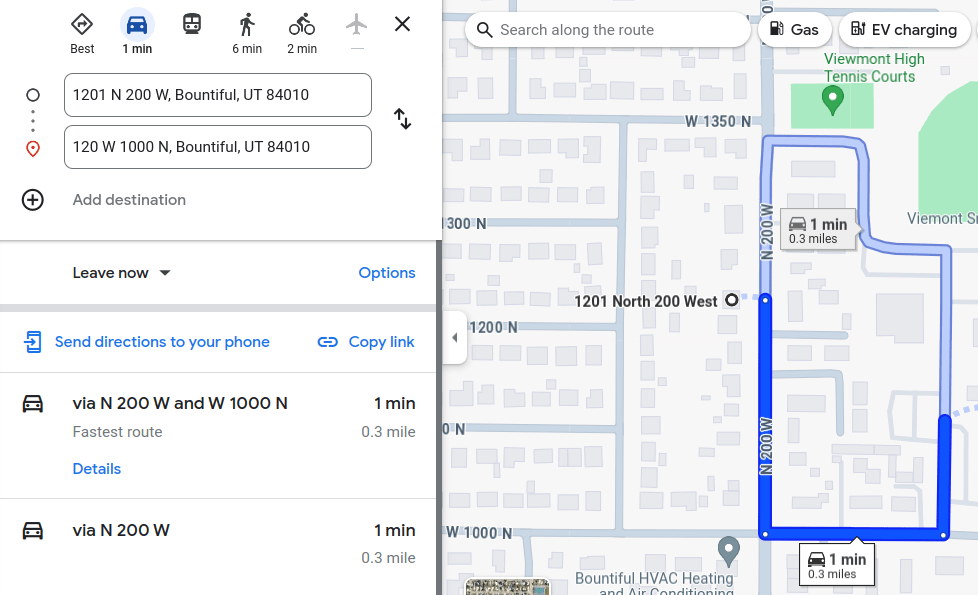
When I went to Utah in November 2022 there was one location I was completely unaware existed that I wish I (somehow) knew to include in my list: the supposed ‘Ted Bundy Ritual House’ just outside of SLC in Bountiful. The duplex-style residence is located at 1201 North 200 West, and is said to be ‘just across the street’ from Viewmont High School, which is where Deb Kent was abducted by Bundy on November 8, 1974 after his botched kidnapping attempt of Carol DaRonch just 45 minutes away in Murray. Kent was last seen at roughly 10:30 PM after leaving a showing of ‘The Redhead’ to go and pick up her brother from the nearby Rustic Roller Rink. According to eyewitnesses, there were loud screams heard from the parking lot at roughly the same time that she was last seen, and after the Kents realized that the family car had never left the parking lot they immediately contacted the police.
Before Bundy was executed in January 1989, he confessed to killing then 17 year-old Kent and pointed investigators to where he dumped her body. Upon searching Fairview Canyon later that May the only human remains that search crews located was a patella, which was found among the ten bags of animal bones that were collected. The kneecap was presumed to belong to Debra and was given to her family to hold onto, and it remained unidentified until 2015 when DNA testing confirmed that it belonged to her. After the positive ID the Bountiful PD returned the bone to Belva Kent along with her daughter’s official death certificate.
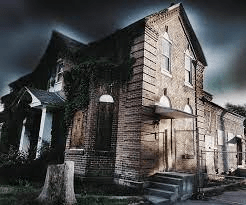
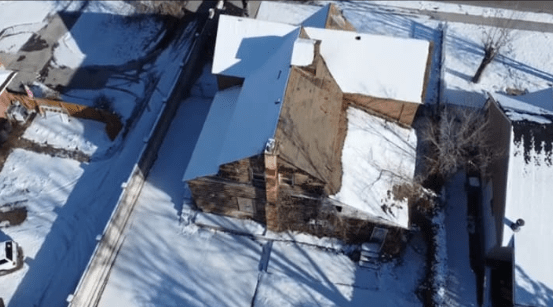
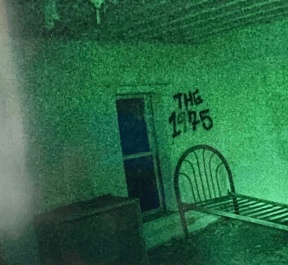
According to Redditor ‘je-m-en-fiche,’ Bountiful residents that lived in the area referred to it as the ‘Viewmont House’ because of its close proximity to the local high school. Looking into the residence, it’s in no way ‘close’ (in my opinion, anyways) to Viewmont HS, nor should it be considered just across the street (it’s actually 0.2 miles away, and is about a five minute walk). It was featured on the Travel Channel television show Ghost Adventures, ‘starring’ Zak Bagans and his group of cronies (including Aaron Goodwin and Nick Groff), specifically for the limited spin-off mini-series ‘Serial Killer Spirits.’ The episode, titled ’The Ted Bundy Ritual House,’ aired on October 26, 2019, and focused on the abandoned structure that has been uninhabited since a gas leak led to an explosion on July 4, 1997. The show’s creator and ‘lead investigator’ Zak Bagans claims that Bundy took Debra Kent there after abducting her after she left a showing of ‘The Red Head’ to go pick up her brothers from a nearby roller skating rink.
In addition to the TB ritual house, Ghost Adventures did episodes on HH Holmes (he killed a nine year old kid in a house in Irvington, Indiana and the current owner felt that dark and sinister forces had ‘overtaken the property’), Joliet Prison in Illinois (where John Wayne Gacy spent only a small amount of time), and an episode titled ‘Axe Killer Jail,’ where the team investigated a prison in Council Bluffs, IA, where SK Jake Bird was once housed.
Because the events of the episode are so ridiculously absurd, I’m not going to spend much time on a synopsis of it. In a nutshell, it began with some little ginger-haired boy that supposedly lived next door to the house (knowing Bagans it’s probably his own kid) peeing on a log on the front steps (Zak tells one of his cronies to smell it ‘for research,’ and he does), and of course the GA’s crew followed him home and gave him (and his mother) the third degree and told them exactly what they wanted to hear… and the guys ate it up like a piece of fucking cheesecake. When asked how he felt about the house the kid told Bagans that there were ten mean child-aged spirits that lived there and were trying to kill him and they ‘better not go in there because they might kill you.’
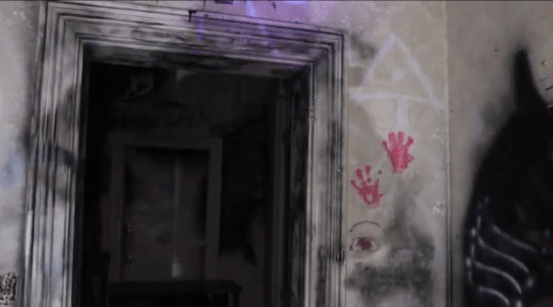
In the beginning of the episode, a one-time resident of the home named Peter Kingston claimed that when they first moved in his family found weird, mysterious satanic symbols drawn on the walls, including various ‘devils signs’ (including a ‘big pentagram’ on the wall) and ‘666’s all over the place.’ At some point during the episode some guy named Vincent (who does not appear to be with Bagans’ crew and I don’t care enough about him to do any additional research) said that when he was in the house prior to the episode he was pushed down the stairs and almost went through the side railings. As the show progresses, the ghost hunters break out all their fancy bullshit equipment meant to detect supernatural activity, and of course everything they do results in some sort of captured phenomenon (I mean, no one would watch it if nothing happened), and plenty of jump scares and ‘sledgehammers of evil’ (Zak’s words, not mine) ensues.
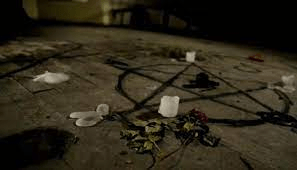
One of the first things the GA team does upon entering the residence is attempt to open a portal on the floor near a pentagram using what Bagans calls a ‘geophone device,’ which he said ‘measures temperature and electromagnetic energy.’ However, according to the website HiggyPop that’ ‘isn’t strictly true. A geophone doesn’t detect heat or electromagnetic energy, as the name suggests it’s to do with geological movement and it actually detects vibration. The gadget Zak is using is called an EDI meter which has several functions built in, including EMF and thermometer as well as a geophone. Ironically the geophone is the one function of the device that Zak is not using.‘
In addition to the ‘geophone’ (that really isn’t a geophone), Bagans used night vision cameras, digital recorders, and a spirit box, which is a device that rapidly scans AM/FM radio frequencies in an attempt to pull paranormal messages out of the static and white noise. Two additional pieces of equipment the team used (that I have also never heard of before) is the Ovilus V (which is a tool that supposedly allows spirits to communicate with the living by selecting words from a internal database using their ‘energy’) and a TriField meter, which measures EMF in the form of radio-frequency, magnetic, and electric fields.
Zak and Aaron used an SLS camera in the upstairs part of the house, which is a device which ‘looks for’ human-like shapes in the darkness and supposedly can capture images in the absence of light that the human eye can’t see. According to the investigators, while using the camera in a hallway they captured what they described as a ‘mind-blowing figure,’ which was shown in the form of a ‘glitching and dancing stickman on the camera’s screen for a brief moment’ (I cannot make this up, they pulled it out of thin air).
After doing some research into the history of the structure, Bagans was wrong: Bundy never could have brought Deb Kent to this house, because it was actually occupied by two different families at the time of her abduction in November 1974. In an interview with KSNV, the Peterson family had five daughters residing there at the time Kent was abducted in November 1974, and ‘people have said that Ted Bundy took women over here and killed them in this house at the time that Debbie Kent got taken. We were living here. Two families were living here and never saw anything like that happen.’ … ‘I think it’s ridiculous because Ted Bundy never came over here. Nothing like that ever happened here.’ Cindy’s mother Rolean did share that she felt the residence was haunted (just not by Ted Bundy), and that the family experienced several strange things during their time in the house: on one occasion they were sitting in a front room and a white ball flew out the wall, seemingly out of nowhere.
Despite Bundy never having any actual ties to their former residence, Mrs. Peterson said that as mother of five young girls she made sure to always keep the doors locked, and ‘it was a really terrifying time for everybody here.’ She also commented that linking Bundy to the old residence only further exploits his victims, and that ‘he was a monster. And I don’t think he should be glorified in any manner at all. If they’re going to tell a story, they need to get their facts straight.’ KUTV out of Salt Lake reached out to Mrs. Belva Kent about the Travel Channel’s episode on the residence and she said that every time a movie or TV special is made about her daughter’s killer her family is forced to relive their pain and that the show only glorified the man that killed Debra.
According to a ‘deseret.com’ article published on July 5, 1997, the duplex went up in flames the day before after gas accumulated underneath the basement ceiling from a leak which caused the explosion (which was most likely ignited after the water heater kicked on). After an assessor was able to investigate the fire it was determined there was nearly $100K worth of damage done to the structure, with the first-floor apartment suffering the majority of it.
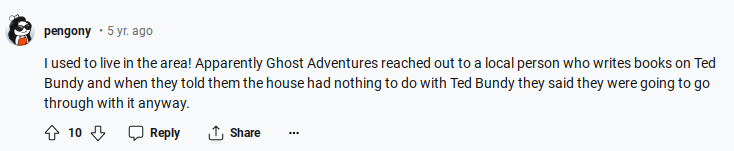
According to Redditor ‘OatyBisc,’ ‘I grew up in Bountiful (I even went to Viewmont HS where the abduction happened!) and this house has nothing to do with Ted Bundy other than proximity. I was excited to see an episode from my hometown but there were so many inaccuracies it drove me crazy! Debbie Kent’s body was never found, but they did find a patella at a site where they found bones from other murder victims and a few years ago they verified it was hers through DNA. This was maybe 20 miles or so from Bountiful, not 100 miles. Her headstone is in the city cemetery, but her body is not there. When she disappeared this house was occupied. It only looks bad now. I drive past it occasionally and it’s pretty worn and clearly burnt on the North end, but the fire was much later. It’s a spooky looking house and they have ghost tours there occasionally, but the Ted Bundy angle is a stretch.’ In addition to this, a Redditor going by the handle ‘pengony’ pointed out that when Bagans was told by locals that the house was completely unrelated to Bundy he told them that he didn’t care and was going to film there anyway.
Just as a side note, the episodes IMDB page gives a completely different narrative and outright fabrication of the truth: ‘Zak and the crew investigate an abandoned house in Bountiful, Utah, where locals claim notorious serial killer Ted Bundy murdered one of his victims. Overloaded with satanic rituals and violence, the home is drenched in a dark, sinister energy.’
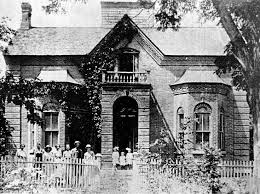
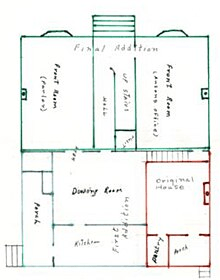
Now… this isn’t just some old, dilapidated house with a possible (but, not really) link to Ted Bundy: referred to as the ‘Anson Call House,’ the residence was built by a pioneer of the Mormon faith (Anson Call, obviously) in the early days of Bountiful when it was known as Session’s Settlement (or North Canyon). The building, which began as a one-room cabin, was initially constructed in 1855 and the first additions to the home were made two years later when a dining room and kitchen area were built as well as a basement. Over the years a second floor was added, and it eventually turned into the structure you see today (or, before it blew up).
Interestingly enough though, Ted Bundy isn’t the house’s only murderous link: In Adam Call-Roberts blog post titled, ‘Mary & Anson Call: Hosts to a Killer,’ in October of 1857, Anson and Mary Call hosted then Utah Congressman John Doyle Lee overnight, blissfully unaware that just one month prior their guest participated in the ‘Mountain Meadows massacre.’ In September 1857 an emigrant group from Arkansas known as the Baker–Fancher party set up camp in Utah’s Mountain Meadows, which was a staging area in the southern part of the state that was used to get ready for the long crossing of the Mojave Desert by groups that were going west to California.
In the early morning hours of September 7, 1857 a group of Paiute Indian and Mormon militia men that were dressed as Native Americans attacked the circled wagons without warning. The party fought off their aggressors the best they could and the conflict went on for four days; in the process fifteen emigrant men were killed either in battle or while attempting to escape. Congressman Lee didn’t get involved in the dispute until the third day, when he approached the wagon party and convinced them to surrender their possessions and weapons in return for safe passage to nearby Cedar City. The emigrants (who were low on ammunition and supplies) accepted his offer and surrendered, and it was then that roughly 120 people from the Baker–Fancher party were then slaughtered, leaving only 17 small children behind. In 1874, Lee was arrested for leading the massacre: his first trial ended with a hung jury and two years later a second one took place in which the prosecuting attorneys put the blame solely on his shoulders. He was convicted and sentenced to death. On March 23, 1877, Lee was executed by firing squad at the very site of the massacre that took place twenty years before.
In conclusion, there’s a lot of different videos and podcasts on this residence, but one thing is for certain: Ted Bundy had absolutely nothing to do with this house.
Works Cited:
Deseret.com/1997/7/5/19321700/fiery-4th-home-goes-up-in-flames/
Roe, Ginna. (October 25, 2019). ‘Travel Channel links Bountiful house to Ted Bundy, former residents say ‘it’s ridiculous.’’ Taken May 22, 2024 from https://kutv.com/news/local/travel-chanel-links-bountiful-house-to-ted-bundy-former-residents-say-its-ridiculous
utah.com/things-to-do/attractions/mormon/mountain-meadows/















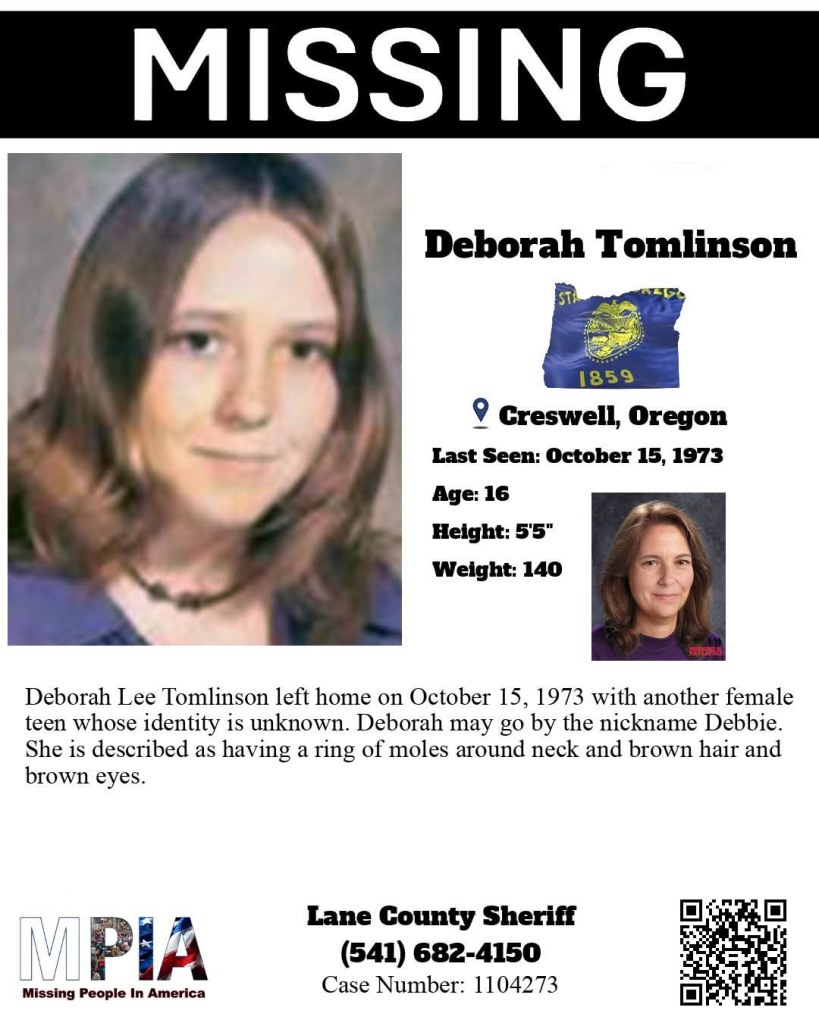
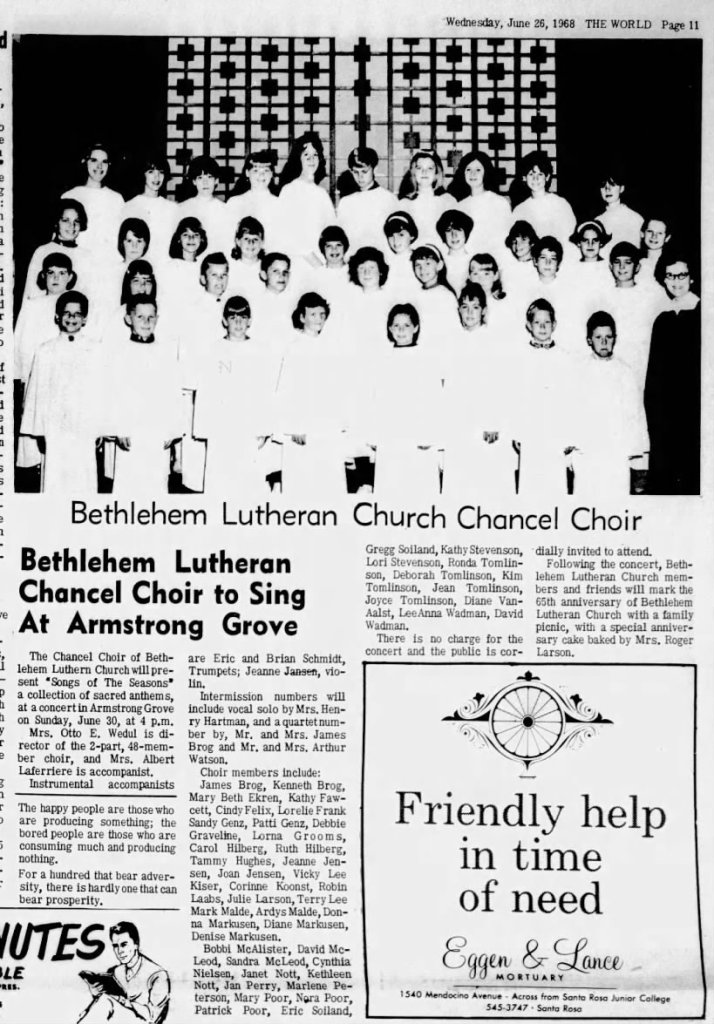
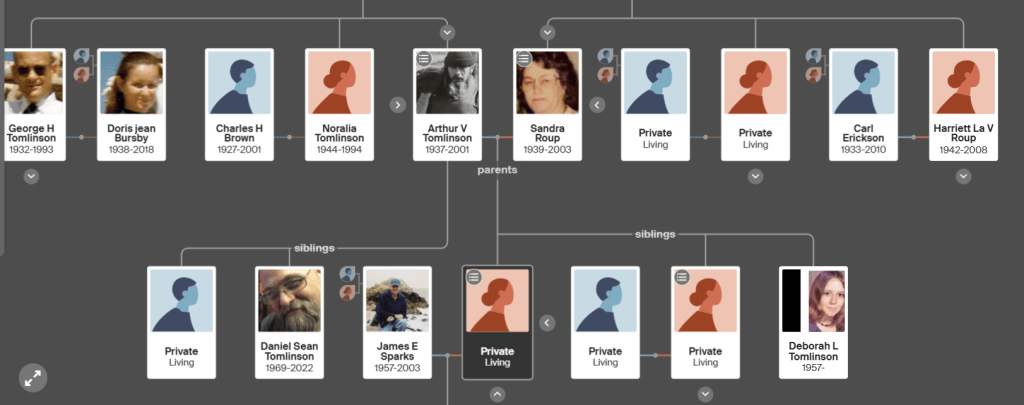
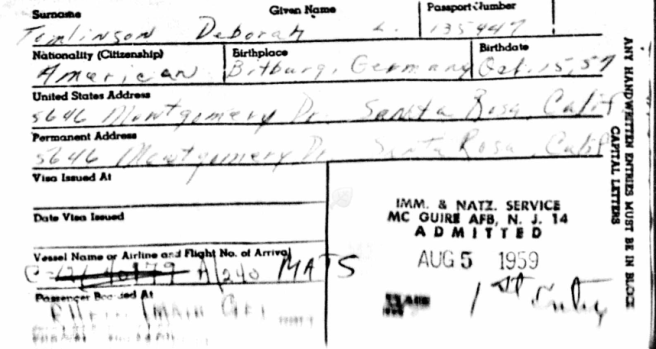
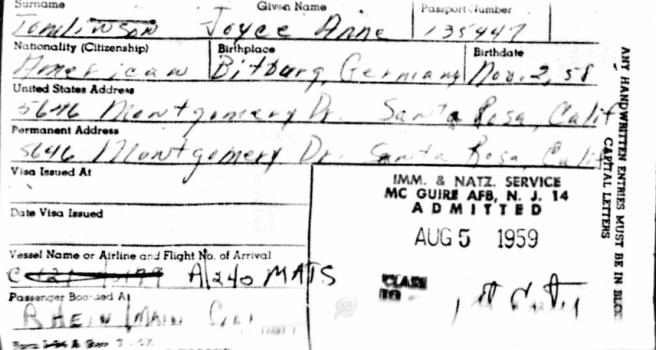
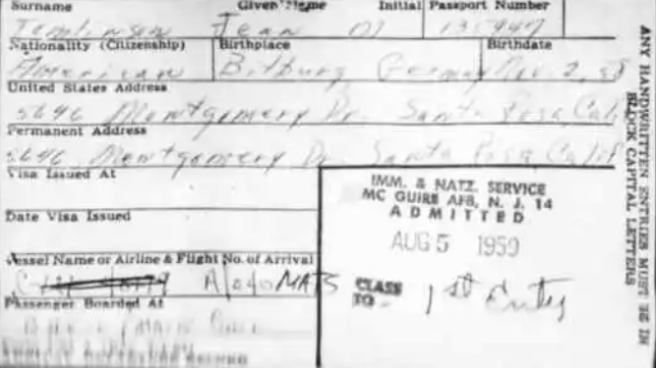
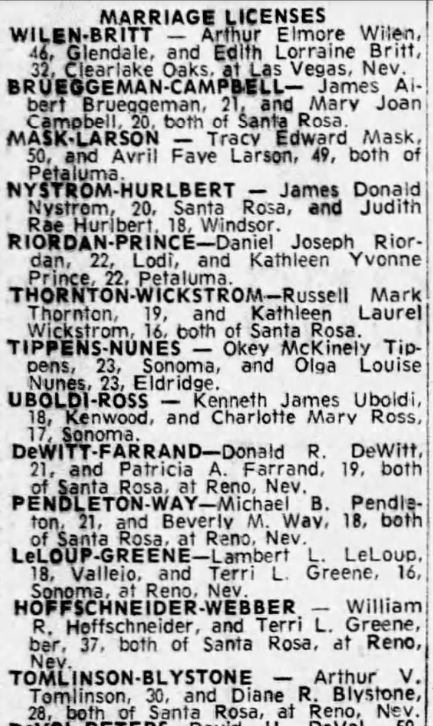
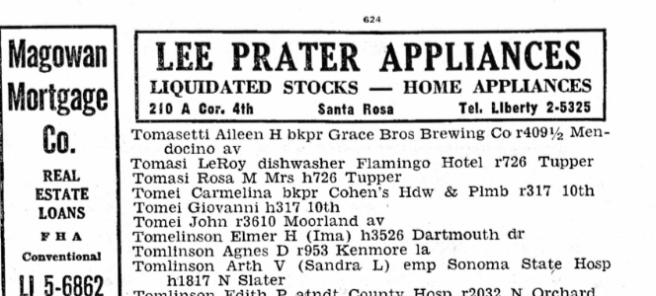
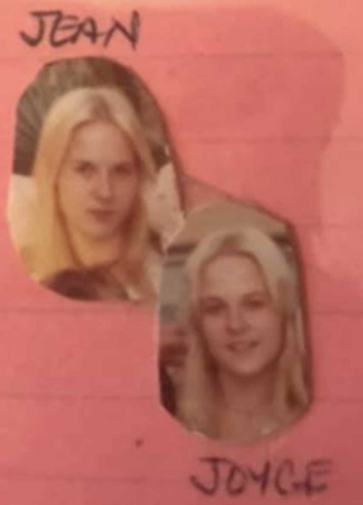
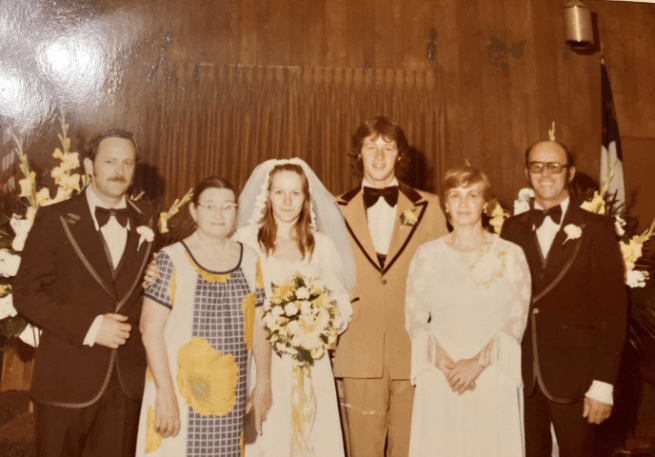
Deborah Lee Tomlinson was born on October 15, 1957 in Bitburg, Germany to Arthur and Sandra (nee Roup) Tomlinson. Arthur Vernon Tomlinson was born on September 22, 1937 in Modesto, California, and Sandra Lee Roup was born on December 31, 1939 in Livingston, Montana. According to the Tomlinson family tree, the couple had three daughters together: Deborah and her twin sisters, Jean and Joyce (b. 1958). At some point they divorced, and Mr. Tomlinson was briefly married again in 1968 (they quickly parted ways; he went on to have a relationship with Sally Morphis and in 1969 they had a son together named Daniel. He got married to Shelley Williams on August 30, 1975 in Orange, CA but their union also didn’t last long, and they split up in February of the following year. Mr. Tomlinson was married for a fourth time, and the couple had a son together. Sandra got remarried to Henry Nelson on May 10, 1963 in Billings, Montana.
After their parents parted ways Deborah, Jean, and Joyce went to live with their father and stepmother in California, and Sandra relocated to Oregon. Because of their parents’ divorce the girls were separated from their mother at a very young age, which Joyce felt prevented them from forming a strong bond because she wasn’t given a chance to raise her own babies.
According to most reports online, Deborah Lee Tomlinson disappeared from Creswell, Oregon** on her sixteenth birthday on October 15, 1973. Creswell is an incredibly small town with only one high school, and according to the 1970 census the reported population was made up of a mere 1,199 people (it went up to 5,031 in 2010). Referred to as ‘Debbie’ by family and friends (per Joyce, she hated being called ‘Deb’), Tomlinson had brown eyes, stood at 5’5” tall, and weighed 140 pounds (Joyce felt she may have been slightly heavier); she wore her golden-brown hair at her shoulders and had a ring of moles around her neck. In the initial days following her disappearance investigators strongly believed that she was a runaway, which most likely explains why I couldn’t find any newspaper reports or media coverage on her. One of the only other real takeaways I could find regarding her case was that she disappeared with an ‘unidentified teenage friend.’
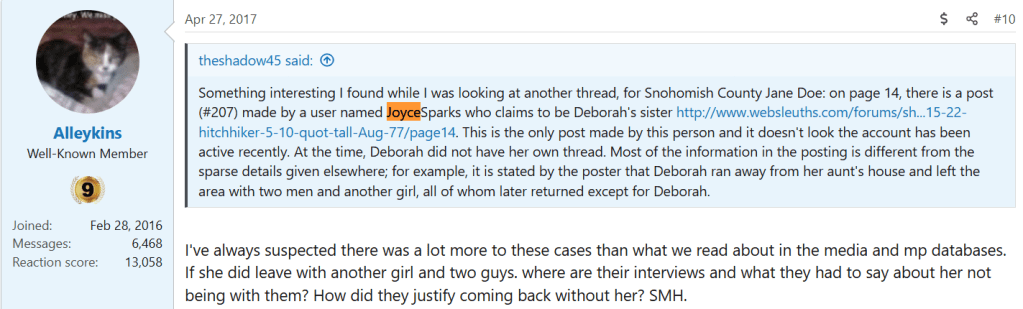
** After I initially wrote the article on Deborah in April 2024 I was contacted by her sister Jean, and more recently Joyce. Both sisters were kind enough to help fill in some of the gaps in their family background and were able to provide me with some of their thoughts regarding her disappearance. According to Jean, their Aunt Helen told them in more recent years that Deborah had ran away from Eugene, not Creswell, and at one point the family had been contacted by a friend that claimed they had seen her in Santa Rosa, CA with ‘a black guy,’ which was a big deal as their father didn’t approve of people of color (Joyce also said she was there visiting a friend named Lyn). The family member also volunteered that they thought she may have been pregnant at the time as well, but nothing ever came out of that. About this alleged sighting, Joyce doesn’t feel it’s true, as that’s where their grandmother lived and Deborah would never have left the area without paying her a visit, especially if she had been pregnant (the two were especially close).
According to Jean, after their parents split up the girls were raised by their father in California, but because Deborah’s didn’t get along very well with their stepmother she had moved to Oregon to live with their mother (who she also clashed with). She also said that at the time her sister disappeared she seemed mostly happy but had been in a bit of a transition period in her life and may have been under the impression that moving out of state may have resulted in more lenient rules, but that wasn’t the case.
According to Joyce, Debbie was simply acting like any other teenager, doing things like sneaking out at night and smoking: one evening in a quick moment of anger their dad announced that he was pulling a ‘Pontious Pilot’ and was ‘washing his hands of her.’ When she left home Joyce said somehow she knew it would be the last time that she ever saw her, and to this day she struggles with her feelings towards her father about that event. Additionally, she strongly suspects that a missing person’s report was never filed in the days after she was last seen, as she never came across one after contacting local Oregon law enforcement. Because of this, I strongly feel that Debbie didn’t disappear exactly on October 15, 1973, and most likely vanished sometime around it.
Jean shared with me that in the years following her sister’s disappearance neither one of their parents wanted to talk much about her, as it brough up too many painful memories. Because of this she told me that she doesn’t know as much about her as she would like to, but she does know that Debbie loved rock n ’roll music and had gotten caught sneaking out at night several times while she still lived with them in California.
Shortly after Deborah disappeared Joyce told me that their stepbrother had reached out to let her know about a formerly missing woman had been found murdered that happened to have some moles around her neck in a pattern similar to Debbie’s (which she said appeared to be ‘almost like a spaced apart, like a necklace’); it obviously turned out not to be her.
When I asked if perhaps Debbie had run off with a guy, Jean shared with me that was what most likely happened, despite the fact the sisters weren’t allowed to date until they were sixteen. Regarding her feelings on the recent ‘genetic genealogy’ craze and if she thought it could help solve the mystery of what happened to her sister, she said that she has never been contacted by LE about it, however at one point she was told by the National Center for Missing & Exploited Children that any records possibly related to Deborah were destroyed in a fire.
In 1984 Joyce and her husband took a road trip with their grandkids to visit their great-grandmother and Hank, and while there her stepfather shared that he caught Debbie sneaking out one night and she had been smoking marijuana. He told them that this freaked him out and he tried to do a ‘scared straight’ type intervention and had reached out to the local county sheriff (who had happened to be a friend of his), who had come to the house and had a conversation with his teenage stepdaughter; Debbie disappeared shortly after that.
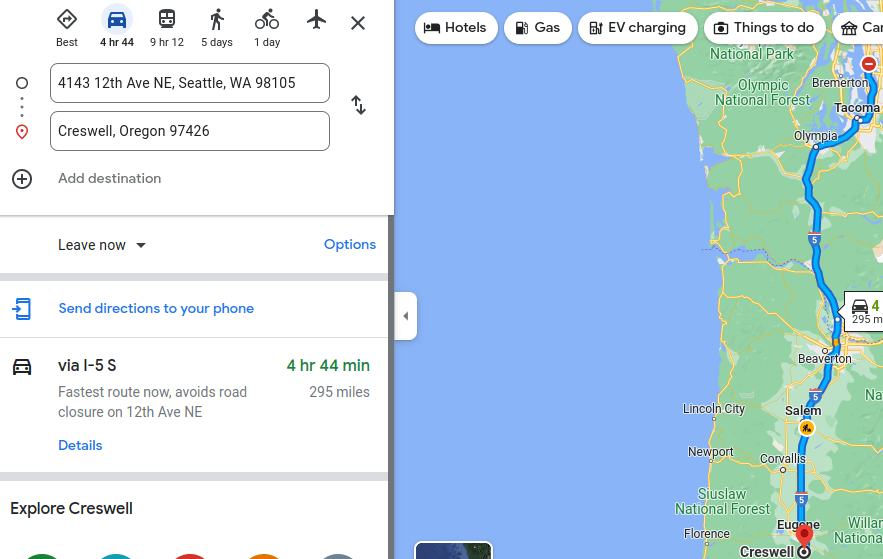
At the time Tomlinson disappeared in October 1973, Ted Bundy was living at the Rogers Rooming House on 12th Avenue Northeast in Seattle, and where it was a five-hour drive (one way) from his residence to Eugene/Creswell, we know he had no problem with traveling long distances to look for prey. Despite being in a long term, (supposedly) monogamous relationship with Liz Kendall, while on a business trip with the Republican Party to California in the summer of 1973 he rekindled his romance with one time girlfriend Diane Edwards. Ted’s former flame visited him in Seattle on multiple occasions in the latter part of the year, and the couple at one point were even briefly engaged… but the happy times didn’t last long, and in January 1974 he abruptly and without reason cut off all contact with her.
On top of juggling two women, in September 1973 Ted enrolled in law school at the University of Puget Sound, and according to the ‘TB MultiAgency Investigative Team Report 1992,’ on Monday, October 15, 1973 when Tomlinson disappeared, he was in class. Additionally, at the time he was in between employment: in September 1973 he was the Assistant to the Washington state Republican chairman and remained unemployed until May 3 of the following year when he got a position with the Department of Emergency Services in Olympia.
In addition to Ted Bundy multiple other serial killers roamed the Pacific Northwest in the early to middle 1970’s: the first one (aside from Ted) that popped in my head was Warren Leslie Forrest, a double murderer that has been sentenced to two life terms in prison for the murders of Krysta Blake and Martha Morrison in 1974; he is also considered the prime suspect in at least five additional murders and disappearances going back as far as 1971. He has been in police custody since 1974 and on February 4, 2023 he was convicted on another murder count after DNA linked him to the murder of Martha Morrison.
On June 8, 1961, Portland police received a call from a housewife whose dog had returned home with a human foot in a paper bag, and when detectives went to her home the animal came back with a hand. Upon investigating, LE found several additional body parts around the woman’s neighborhood, and all of the appendages were deemed to be fresh and were completely drained of blood. Police went through local missing people’s reports and came across the file of twenty-three year old Joan Caudle, a housewife and mother of two that had recently been reported missing by her husband (who of course was an immediate suspect).
Joan’s husband told detectives that where she wasn’t normally a big drinker she had been a bit depressed recently because her mother had been sick, therefore there was a chance she had been at a bar having a few. Police then tracked down a barfly that had a string of arrests for public drunkenness and she told them she had been in a bar on the night of June 7 and met a man going by the name Marquette. The pair had seemingly hit it off when a woman approached them and stole his attention away, and when detectives showed the eyewitness a photograph of Joan Caudle, she said that was definitely the same woman from the bar.
Upon his arrest Marquette admitted that he raped and murdered the Portland housewife then he drained her blood, dismembered her body, and left her head to rot in the woods. Despite being found guilty of first degree murder the jury recommended leniency, and Marquette was sentenced to life in prison.After serving only eleven years of his sentence (during which he was described as a model prisoner), he was released on parole in 1973.
Not even two and a half years after Marquette was released on parole in April 1975, a fisherman discovered a mutilated corpse floating in a Willamette River slough in Marion County, Oregon; it had been bled dry and had been dismembered. Detectives determined the remains were those of thirty-seven-year-old Betty Lucille Wilson (one report said she was thirty-five), a North Carolina native who led a life of extreme poverty and had seven children since marrying her abusive husband at the age of 16. At the time she was killed she was living in an abandoned school bus.
While he was confessing to Wilson’s murder, Marquette also shared with detectives that he killed a second woman in a similar fashion sometime in 1974, and he led them to two shallow graves where he had disposed of the bulk of the remains. Unfortunately because the head was never found, there was no way the victim could be identified, and Marquette admitted that he didn’t know who she was. Her identity remains unknown.
Within a five-month period in the latter part of 1973 five young women went missing in Oregon, and three more were found murdered: first was Rita Lorraine Jolly, who disappeared on June 29 while taking a nightly walk in her West Linn neighborhood; her remains have never been found. On July 9, 1973 the body of Laurie Lee Canaday was recovered in the middle of the road at the intersection of Southeast Scott Street and McLoughlin Boulevard in Milwaukee, OR. Next was seventeen-year-old Susan Wickersham from Bend on July 11; her body was discovered in January 1976, only five miles south of her hometown; she had suffered a gunshot wound to the head. Additionally, sometime in July 1973 fifteen-year-old Allison Lynn Caufman of Portland died as a result of head injuries after she was shoved from a car moving at a high rate of speed.
On August 20, 1973 twenty-four-year-old Illinois transplant Vicki Lynn Hollar was last seen getting in her black 1965 Volkswagen Beetle (with the running boards removed) after she left her place of employment at the Bon Marché in Eugene, where she had been working as a seamstress for about two weeks. It’s thought that she was headed home to her apartment, as she had plans of meeting up with a friend to attend a party in her neighborhood later that evening (she never showed up). Friends shared with police that she had a habit of picking up hitchhikers; her VW and personal belongings have also never been recovered. Just three days later on August 23, 1973, Gayle LeClair was found stabbed in her apartment in Eugene, OR. The twenty-two year old had recently moved to the area after she got a job at the Eugene City Library.
Just six days after Deborah Tomlinson was reportedly last seen, thirty-two-year-old Virginia Erickson disappeared from Sweet Home on October 21, 1973; although it’s never been proven, evidence points towards her husband being her killer and that it most likely took place while the two were ‘out on a hunting trip.’ Lastly, we have twenty-three-year-old divorcee Suzanne Justis, who went missing on November 5, 1973. From Eugene, Justis had hitchhiked to Portland (despite owning her own car), and had called her mom from a payphone outside of the Veterans Memorial Coliseum to let her know that she would be home the next day to pick up her son from school; she never showed up. Not one case has been solved.
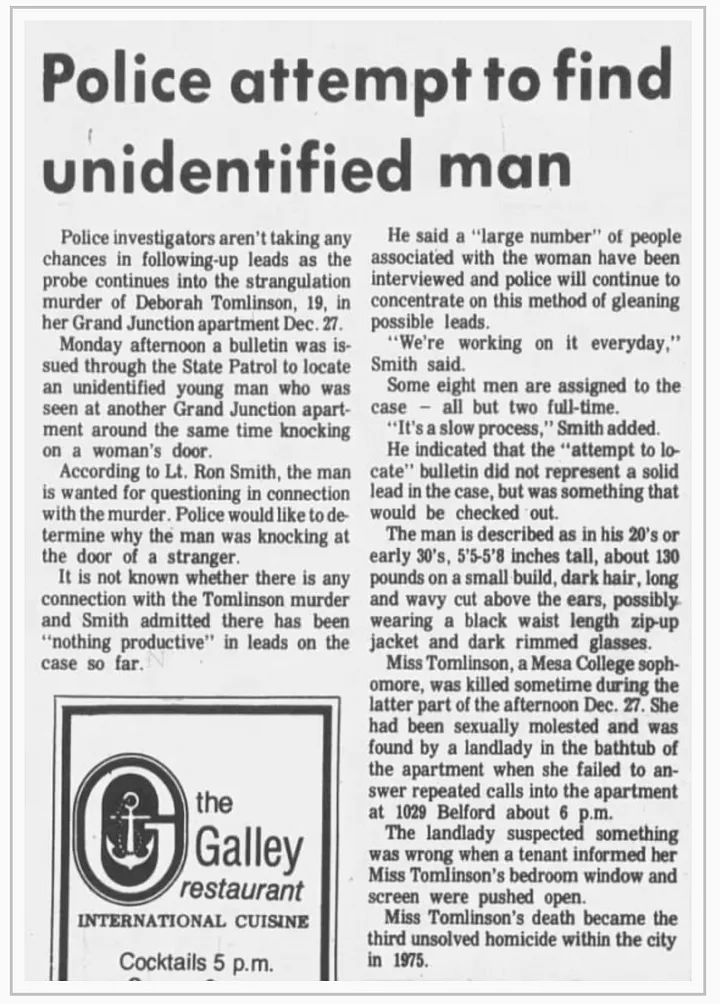
Strangely enough, there was another young woman with the same first and last name as Deborah that had been brutally killed a little over two years after she was last seen in Colorado: nineteen-year-old Deborah Kathleen Tomlinson was murdered in her apartment complex on Belford Ave in Grand Junction on December 27, 1975. In the days that followed her murder, detectives quickly exhausted all leads and the investigation quickly went cold. Forty-five long years went by. In an article published on December 3, 2020 by the website ‘WesternSlopeNow,’ the Grand Junction PD announced a break in the case: they had partnered with a DNA Technology Company called Parabon to analyze the unknown semen and blood that had been found with the victim at the original 1975 crime scene.
About the process, Parabon’s Chief Genetic Genealogist CeCe Moore said that they analyze ‘the DNA, so we can look at 850,000 genetic markers that will allow us to predict relationships that are distant.’ Also, just as a side note, Moore is the scientist that helped solve the 1971 murder of Roman Catholic schoolteacher Rita Curran out of Vermont (who up until recently was also an unconfirmed Bundy victim). After the samples that were collected from the original 1975 crime scene were processed, Parabon built a family tree using public records in an attempt to identify the unknown person-of-interest, and it was concluded that a man named Jimmy Dean Duncan killed Deborah K. Tomlinson. As of April 2024, law enforcement has found no connection between Duncan and Tomlinson, but found that he had a family member that lived close to the college she was attending at the time of her death. Detective Sean Crocker from the Grand Junction Police Department commented that ‘we believe Mr. Duncan visited this relative, and that’s how possibly he could’ve encountered Ms. Tomlinson.’ Jimmy Dean Duncan passed away in 1987.
Arthur Tomlinson died at the age of sixty-four on January 29, 2001 in Las Vegas, NV. Deborah’s mother Sandra Lee Nelson passed away from lung cancer at the age of sixty-three on February 2, 2003, and according to her death certificate, she had been the owner/operator of a café. Sandy’s husband Henry died on March 16, 1994 at the age of 54, most likely in a medical facility in Spokane, WA. Deborah’s brother Daniel Sean Tomlinson died in 2022 at the age of fifty-three in California.
Deborah’s sister Jean retired after almost twenty years in the RV Business in November 2023, and she currently lives in Henderson, Nevada with her husband of almost twenty years, Dave. In 2019 Joyce retired from the Bureau for Child Support Enforcement with the State of West Virginia, and was married to the love of her life until he passed away on May 26, 2003. She currently resides in St Thomas, Pennsylvania. If Deborah was anything like her sisters, she was a kind, compassionate person that would have done a lot of good in this world.
In the years following Deborah’s disappearance the twins remain close, although Jean admitted her disappearance has been incredibly hard on their family. She also confessed that a small part of her always thought her big sister would reach out to one of them when they were adults, after everyone had grown up. More than anything they want closure, and at the very least wish they had a body to properly lay to rest so their sister could be with the rest of their family. Debbie would have been an aunt and great aunt multiple times over, and it’s heartbreaking to think of her never getting to meet either of her brother-in-laws, or nieces and nephews. As of October 2025, Deborah Lee Tomlinson’s case remains open and she would be 68 years old. Joyce said that the family’s DNA is on file with the NCMEC website.
* In October 2025 I finally came across the Tomlinson family’s Ancestry page, which helped give me a lot of background into Deborah’s family life and background. I also updated the article with information from an interview that I did with her sister Jean in February 2025 as well.
Works Cited:
Namus. Retrieved April 3, 2024 from namus.nij.ojp.gov/case/MP11096
Websleuths. ‘OR – Deborah Tomlinson, 16, Creswell, 16 Oct 1973.’ Retrieved April 3, 2024 from https://www.websleuths.com/forums/threads/or-deborah-tomlinson-16-creswell-16-oct-1973.319290/
Westernslopenow. December 3, 2020. ‘Cold case murder of Deborah Tomlinson solved after 45 years.’ Retrieved April 3, 2024 from https://www.westernslopenow.com/news/local-news/cold-case-murder-of-deborah-tomlinson-solved-after-45-years/















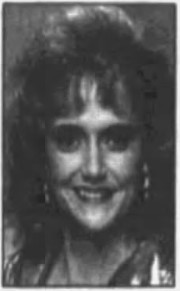



Laura Ann Aime was born on August 21, 1957 to James and Shirlene (nee Tolton) Aime in Lehi, Utah. Mr. Aime was born on August 10, 1928 in Fairview, Utah, and after completing high school he joined the US Navy; after getting out of the military he went on to attend the University of Utah. Shirlene was born on April 12, 1934 in Orem, and the couple were married on January 14, 1951. According to the Aime’s marriage certificate, Jim worked as a steelworker for Geneva Steel. Laura was Jim and Shirlene’s second child, and she had four younger sisters (Evelyn, Michelle, Denna, and Tommi lyn) and an older brother named John. Mrs. Aime filed domestic abuse charges against her husband in April 1966, but they must have worked out their issues because they never divorced.
According to her autopsy, Laura had blue eyes, medium length blonde hair, was 5’10” tall, and weighed around 140 pounds. Before Aime dropped out she was a student at North Sanpete High School, and was at one-time a member of the Laurel Class in the Fairview North Ward. She loved animals, and one time a wild deer wandered out of the canyon and she began feeding it, and eventually was able to convince the creature into becoming a family pet. When Laura was eleven she was thrown into a barbed wire fence by her horse, injuring her ring finger, forearm, and upper arm. Jim Aime liked to take his daughter hunting, and she even helped him bag the first prize deer in a Utah hunting contest at the age of ten. Before she was killed Aime somehow seemed to show awareness that she knew her life was going to end soon in a tragic way: Mrs. Aime said one day out of the blue just a few weeks before her daughter died she told her: ‘at my funeral, I don’t want to be buried in a dress.’ Additionally, Evelyn Aime said that her older sister mentioned that she wanted the 1974 Terry Jacks classic, ‘Seasons in the Sun’ to play during the service as well.
Immediately before she disappeared Laura had been staying with her girlfriend Marin Beveridge, who didn’t live far from her childhood home. Despite being raised in a Mormon family, after leaving home she quickly fell in with the latter-day counter-cultural life, and with her long blonde locks and ‘hippie look’ she already had the stereotypical appearance of a runaway. Although the Aimes didn’t care for their daughter’s choice in friends they were just beginning to come to terms with her ‘nomadic’ lifestyle. Often teased about her height, Laura was given nicknames like ‘Wilt the Stilt,’ which greatly upset her, and her Aime’s suspected that the relentless mocking was what made her leave school. She was used to tough work as the family at one time lived in an old farm house in Mount Pleasant, where they kept a plethora of animals, including chickens, cows, peacocks, turkeys, hogs, goats, sheep, dogs and ‘dozens of cats.’ She was also a tomboy (especially during her early years), and she loved playing softball, and played on competitive teams as well as her families LDS ward, even going so far as to winning the 1972 state championship. Growing up, Laura loved horses and was an experienced rider; she even spent several of her teenage years in an all-girls horseback riding club called ‘The Silver Spurs,’ and participated in several competitions with them at different fairs and parades across Utah.
Before she disappeared Laura had been staying with her girlfriend Marin Beveridge, who didn’t live far from her childhood home. Despite being raised in a Mormon family, after leaving home she quickly fell in with the latter-day counter-cultural life, and with her long blonde hair and hippie look she already had the appearance of a runaway. Although the Aimes didn’t care for their daughter’s friends they were just beginning to come to terms with her ‘nomadic’ lifestyle. Often teased about her height, Laura was given nicknames like ‘Wilt the Stilt,’ which greatly upset her, and the Aime’s suspected that the relentless mocking was what made her leave school. Laura was used to tough work as the family at one time lived in an old farm house in Mount Pleasant, where they kept a plethora of animals, including chickens, cows, peacocks, turkeys, hogs, goats, sheep, dogs and ‘dozens of cats.’ She was also a tomboy (especially during her early years), and she loved playing softball, and played on competitive teams as well as her families LDS ward, even going so far as to winning the 1972 state championship. Growing up Laura loved horses and was an experienced rider. She spent several of her teenage years in an all-girls horseback riding club called ‘The Silver Spurs” in SanPete County, and participated in several competitions at different fairs and parades across Utah. Those that knew her remember her as a kind and loving person.
Laura Ann Aime was seventeen when she was abducted by Ted Bundy on Halloween night in 1974: the party she was at never really got going, and she left by herself around ten to get some cigarettes. About a half hour later she was picked up by an acquaintance named George Alley, who later told investigators that he dropped her off at The Knotty Pine in Lehi just after midnight (although according to Captain Borax, Browns as it was called by the locals closed at eleven, so perhaps it was closer to 11:00 versus 12:00). Quick Lehi factoid: ‘The Knotty Pine’ as it was once called was referred to as ‘Mo Browns’ because the gentleman that owned it was named Leon Brown and he reportedly had ‘a huge mole on his face’ (very clever). Alley also shared that Aime complained that before he picked her up a bunch of ‘cowboys’ ignored her outstretched thumb and drove right past her. From Browns, Aime again got bored and walked to Robinson Park. She was last seen wearing silver cross shaped earrings, a tan sleeveless turtleneck-style sweater with white horizontal stripes, a Navy Pea coat with a hood, light brown lace up shoes, and blue Levi’s with ‘patches on the rear;’ various sources report her wearing a halter top as well. Laura was wearing a ring with a yellow stone and had a rubber band around her wrist; her nails were adorned with black polish with silver flakes.
Although it’s (mostly) agreed on that Laura was last seen trying to hitchhike, there’s a few different possible narratives when it comes to where she was right before she disappeared. The most common theory I’ve seen is that she attended a house party at a mobile home in the suburbs of nearby Orem; a second says the party was in Lehi. The third possibility is that the party took place at the Knotty Pine Cafe in Lehi… (although there’s a FOURTH that says there was no party at all). BUT… every single one of these possibilities consistently placed her at the Knotty Pine Cafe for some period of time before she left to hitchhike to Robinson Park. One eyewitness came forward and shared with investigators that they saw Laura at the park in American Fork at around midnight, which is the last time that anyone reported seeing her alive. Robinson Park is about a 3.2 mile drive from the (former) Knotty Pine Cafe, and if she did walk it would have taken her roughly an hour (give or take) to do so. Due to the dropping temperatures (dipping as low as 45 °F) and the distance involved, it’s very likely that she tried to hitchhike back to Lehi after she was done hanging out at the park. Did Bundy see her there then pull up and offer her a ride? There’s also a possibility that he spotted Aime from a distance then crept up behind her and blitzed her, much like he did to Nancy Wilcox. As I mentioned earlier, Laura was in regular contact with her family after leaving home, and at first they weren’t too alarmed when they didn’t hear from her and figured it was only a matter of time before she got in contact with them. It wasn’t until Laura didn’t come home for a planned hunting trip with her father that the Aime’s knew that something was seriously wrong, as that wasn’t something she would miss without a good reason. After she disappeared her story didn’t make the news until her remains were discovered (like so many of the other case’s I’ve written about, for example Brenda Joy Baker out of Maple Valley, WA), which may have partially been due to her transient nature and nomadic lifestyle.
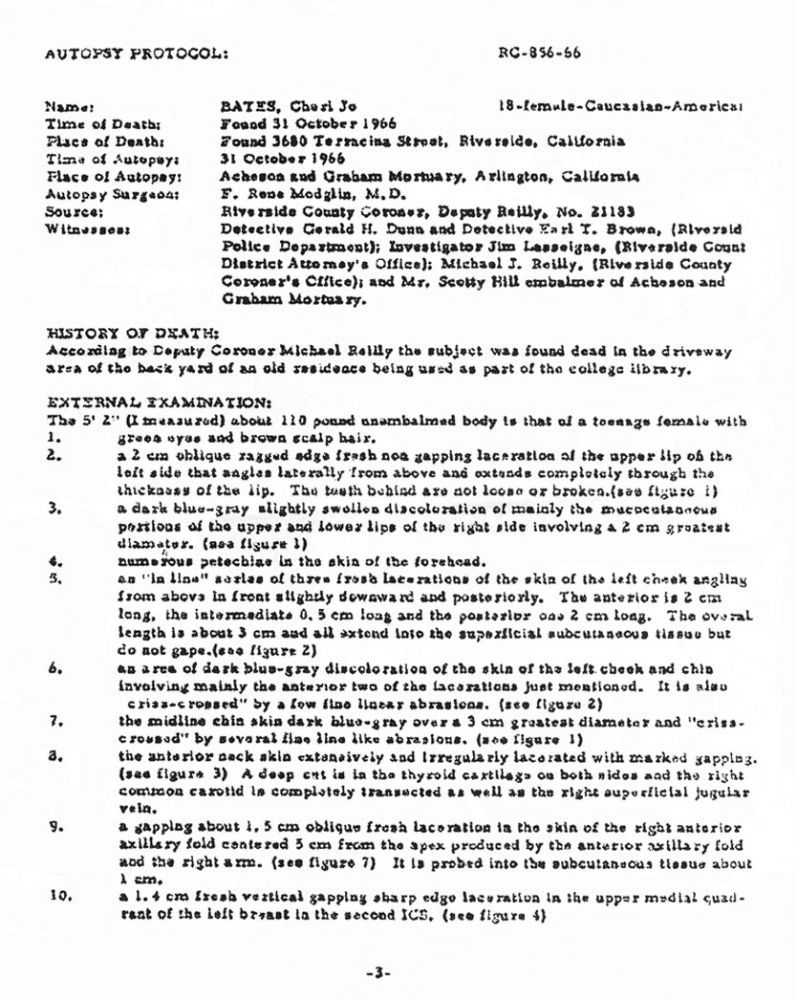
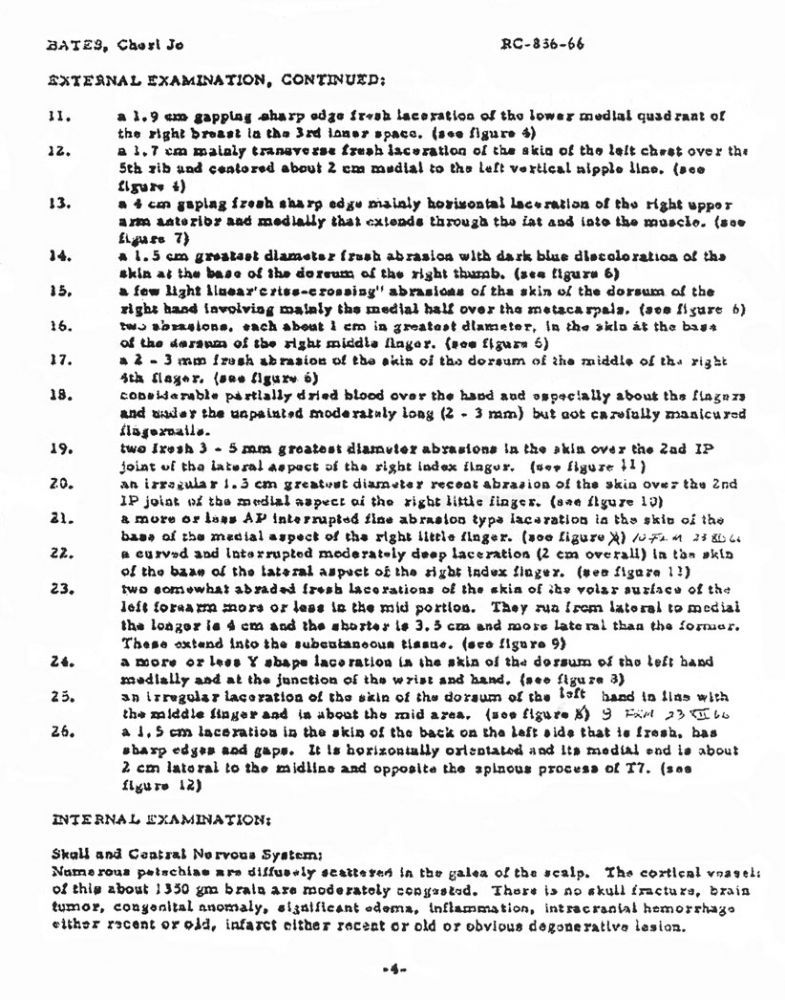
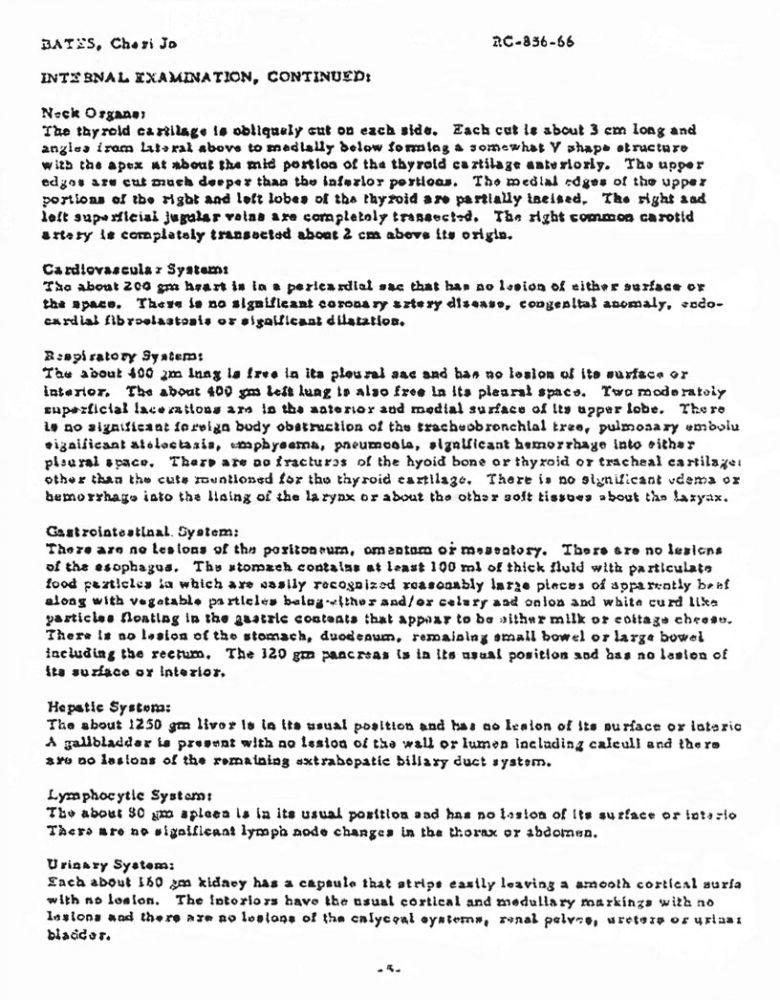
The remains of Aime were found less than a month after she vanished on Thanksgiving Day next to a stream in American Fork Canyon in the Wasatch Mountains by two BYU students that were looking for fossils for their Geology class (Raymond Ivins and Christine Shelly). Fearing that the murderer may still have been lurking in the area, the couple immediately went to the nearest ranger station and reported their discovery. Aime’s body was covered in leaves, twigs, and brush; she had been raped, sodomized, beaten then strangled to death with a pair of stockings. According to her autopsy report done by former Utah State Medical Examiner Dr. Serge Moore*, Laura had depressed skull fractures on the left side and back of her head and the necklace she was last seen wearing was tangled up in the pair of nylons that were cinched around her beck. She had numerous facial wounds (almost too many to count), and her body had deep wounds from where it had been dragged. LE deduced that the weapon used to inflict such brutal injuries was most likely either a pry bar or metal crowbar; her face was incredibly swollen and her tongue was hanging from her mouth. Aime had also suffered a vaginal puncture that may have been made by a weapon of some sort (perhaps an ice pick, and some have also wondered if it was a speculum which is what it’s thought Karen Sparks was assaulted with). Tire patterns that were found in the immediate area were said to be a match with Bundy’s Volkswagen Bug. *Just as a side note (per Kevin Sullivan), Dr. Moore never properly investigated either the temperature or the level of snow during the period that Smith and Aime were abducted. After complaints of sloppy work from Utah law enforcement Moore was investigated, and he officially lost his license in 1979 after he failed to produce any proof that he graduated from a University in Mexico City.
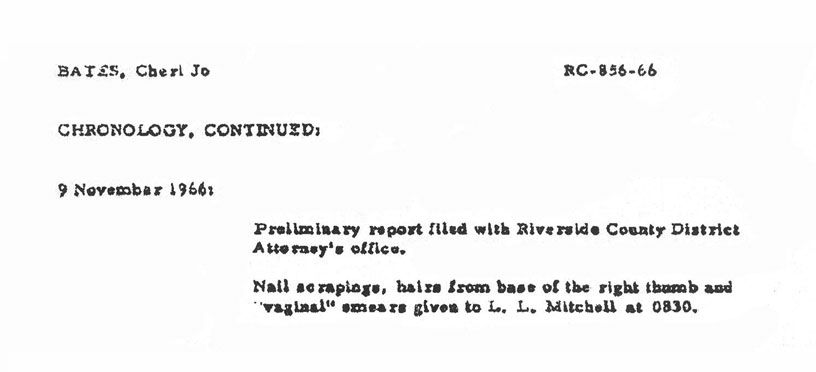
Laura’s cause of death was listed as multiple head injuries with a skull fracture and strangulation. Also, I do want to point out that I’ve seen the date incorrectly listed as both November 26 and 27th, but according to my research, Thanksgiving Day in 1974 was on the 28th. About the discovery, Ivins said: ‘I looked and I thought, you know, it was a deer or something and … it was a girl … It looked like she had been …she was dead. It was really grotesque. There was blood around her neck and breasts and she was naked and lying on that hill and it was a freak-out and I lost it. I thought maybe the guy was still somewhere around and I just panicked, worrying about my girlfriend . . . and we ran down the trail …Came down and ran right through the creek and got in the car and just drove like a maniac, I guess as fast as I could, down to the ranger station and I reported it.’ Swabs taken from Aime’s vagina and anus showed the presence of non-motile sperm, and blood tests showed no signs of substance use aside from alcohol. In the early stages of the investigation it was suspected that her remains belonged to Debra Kent, who had gone missing from Viewmont High School in Bountiful nineteen days earlier.
Several days before she was killed Laura spoke with her mother on the phone: Mrs. Aime begged her daughter not to hitchhike, and told her that she was afraid that she would meet a fate like that of Melissa Smith from nearby Midvale, who had recently been brutally murdered. She assured her she would be ok and told her mom not to worry; it was the last time they would ever speak. After Laura disappeared Mrs. Aime said that ‘she was missing and she had no purse coat, no nothing. I called the sheriff’s office and they said, ‘What do you want us to do about it?’’ On Sunday, November 3 Shirlene reached out to Judy Olsens’ mom, who was confused by her call, saying ‘isn’t she with you? We haven’t seen her since Thursday when she and Judy and Mark left for the Halloween party?’ Two days later on November 5, 1974 Mrs. Aime called the local police to notify them that her daughter was missing, and when she pleaded with them to look for her she told that there were too many ‘young runaways to pursue each one, and after a couple of weeks I just knew she was dead.’ After the remains of a young woman were discovered on a nearby river bank Shirlene reached out to the sheriff’s for a second time, and was again told ‘there’s no way it’s her, it couldn’t be her’ and that the victim was closer to twenty-five and wasn’t as tall as Laura. However the next morning a story in the newspaper mentioned the young woman was wearing a ‘ring with a green stone,’ which happened to be a peridot, which was Laura’s birthstone. Mrs. Aime immediately ran to look in her daughter’s jewelry box, to see if her peridot ring was still there. It was, however, the rest of the coincidences were just too much for her to bear.
Within an hour both Mr. and Mrs. Aime were on their way to the University of Utah morgue, accompanied by Sheriff Mack Hollet and a copy of Laura’s dental charts. Jim said that she had been beaten so severely that he ‘didn’t even recognize her,’ was only able to positively ID her by the scars on her forearm from the horse injury that I mentioned earlier. When he realized that he was looking at his precious little girl, he let out a loud, gut wrenching wail. Shirlene said that she ‘couldn’t believe it had come from a human being.’ Additionally, the dental records that the Aime’s brought with them further verified that it was Laura. Her autopsy revealed a broken jaw, a fractured skull, bruises and lacerations to her head and shoulders, a deep cut to the back of the head, and injuries to the vagina and anus. The ME determined that she had died on November 20, which was roughly twenty days after she disappeared. Many years after his daughter’s murder, Mr. Aime was driving near the spot where her remains were discovered with a friend, and he shared: ‘my little baby was up there all by herself and there was nothing I could do to help her.’
Captain Borax was able to locate a copy of the Lehi Free Press from the night Laura was abducted, and it was apparently an election period in local county government: Mack Holley was running for Utah County Sheriff, and Noall Wootton was running for County Attorney. Wootton was busy promoting his stance on crime prevention while Sheriff Mack Holley was preoccupied with communicating his belief in strong family values, but both men openly discussed the need for increased protection against the dangers that lurked in the night. Together, Wootton and Holley wrestled with a real, live boogeyman that slithered through the shadows of Lehi and American Fork, but at the same time they had no problems with hiding information away from one another. Mack Holley was known to keep information to himself and refuse to share it, and about him Jerry Thompson said ‘all I kept getting was a runaround, so I basically said, ‘to hell with them.’ As early as December 3, 1974 (which is only six days after Aime was found), retired Utah County Sheriff’s Sergeant Owen Quarnery wrote to the FBI crime lab in DC about the case, saying: ‘The MO is similar in many respects to the Smith case. The victims in both cases were beaten, sexually assaulted and strangled. Also many of the wounds were similar in appearance.’
Despite Laura disappearing on the last day in October it was determined she had only been dead for roughy a week when her body was discovered. According to Kevin Sullivans book ‘The Enigma of Ted Bundy,’ her remains showed a very small decomposition, which strongly hints that her killer may have kept her alive after abducting her. Looking into SLC temperatures during November 1974, it was a relatively warm fall and wasn’t very cold meaning the body wouldn’t have preserved because of low temps. Less than two weeks before Aime disappeared on October 18, 1974 Melissa Anne Smith disappeared from nearby Midvale after leaving a pizza parlor at around 9:30 PM. Nine days later her naked remains were found in a nearby mountainous area, and just like with Aime the only thing found on her body was a cross on a delicate chain necklace. One strange commonality I wanted to point out is that unconfirmed Bundy victim Sandra Weaver was also found the same way.
According to David McGowans book ‘Programmed to Kill,’ Melissa Smith’s body was found almost entirely drained of blood, and revealed a somewhat strange abnormality: like Laura, she had not been murdered immediately and had been kept alive for possibly a week after she was abducted. Additionally, her make-up was applied neatly and none of her nails were broken. Strangely there were no signs of restraints or ligatures, so if she was held against her will before her life was taken, there was next to no signs of it (perhaps he kept her in a locked room of sorts?). Retired Colorado investigator Mike Fisher strongly felt that Bundy brought both Smith and Aime back to his first SLC apartment (located at 565 1st Ave), and further elaborated that on occasion other tenants would hear him going down to the cellar in the middle of the night and making noise.
Sullivan feels that Bundy could have kept Aime alive in two possible scenarios: the first one being he kept her in the basement of his rooming house, which was in the rear of the building and that he could keep locked, and because he was the apartment manager he had a key for the area. The second involves him pulling what he calls a ‘reverse Lynda Ann Healy,’ and he carried her into his room in the middle of the night when no one was awake to see (then down and out again when he disposed of her remains). Thinking about it, carrying the body of a young woman out of your room in the middle of the night sounds awfully bold (even if she was alive), but by that time he had lived there for a few months and had most likely gotten familiar with the behaviors of his fellow tenants. We know he didn’t admit to anything related to Laura Aime during his confessions however he did admit to keeping Deb Kent alive in his residence for a period of time before he took her life, so it’s fairly likely that he did the same with Aime (and Smith). Laura’s autopsy report states that in the middle of November 1974 two or three of her friends told LE they think they got phone calls from her but weren’t 100% certain if it was actually her or not.
In the summer of 1974 Sheriff Mack Holley created Utah County’s first Detective Division, and Laura Aime’s murder was their first investigation. Strangely enough, in an interview between (retired) Chief Investigator for Utah County Brent Bollock and True Crime blogger and creator Captain Borax, Bollock said that (former) Utah County Sheriff Mack Holley never believed that Bundy was responsible for Aimes murder, and even wrote about it in one of his books (which I was unable to locate online). In fact, Holley strongly felt that another man was responsible for her murder, one that was later convicted of killing his girlfriend, even going so far as telling a member of the team of investigating detectives: ‘Bundy had nothing to do with our case, so forget him. That man didn’t do our case. I wish you’d get that through your head.’
A little over a week after Aime disappeared on November 8, 1974, Bundy tried (but failed) to kidnap Carol DaRonch from the Fashion Place Mall on South State Street in Murray. After the 18-year-old telephone operator escaped, Ted quickly realized that he needed a new victim, so he drove roughly 25 miles away to Bountiful and abducted 17 year-old Debra Kent (this will also be important later). The family was attending a showing of ‘The Redhead’ at Viewmont High School that went later than expected and Deb volunteered to take the family car and pick up her two younger brothers at a nearby roller skating rink. On her walk out to the parking lot, Bundy abducted her, then killed her and dumped her body roughly 50 miles away in American Fork Canyon.
In 1977 investigators took a second look into Aime’s murder, and they spoke with her girlfriend Marin Beverige, who positively identified Bundy as an individual that was at Brown’s on the night she disappeared. In fact, Marin’s sister worked at the establishment and even claimed to see Ted pull up and pick up Laura the night she disappeared. Beverige told detectives that she first noticed him one day in September 1974, and remembered that he drove a Volkswagen and told her he was a student at the local university. She also recalled one occasion where she was sitting in the sunshine with Laura and a group of friends near a local high school and the man joined them. When a young guy teased Aime by putting some grass down her halter top, he objected, and ‘this guy came unglued and told him Laura was his. He was really weird.’ Marin said that the attractive young man kept randomly showing up all around Lehi, and always seemed to be looking for Laura. She recalled an event that took place one night at The Knotty Pine, where: ‘he came in and was sitting there talking and I got up…..When Laura said, ‘I’m ready to go,’ this guy said, ‘You can’t. I’m going to rape you.’ Laura just laughed and pushed him away.’’
Beverige informed detectives that she had seen the man on multiple occasions, and one evening he even knocked on her front door and asked to speak to Aime privately. She agreed and after the two went outside to speak alone: ‘Laura was really shook up. But she wouldn’t say what happened.’ About the events surrounding her friend’s disappearance, Marin had a completely different account of what happened that night, one that differed greatly from the one gathered by the Utah County Sheriff’s Department: according to Beverige, her, Laura, and a bunch of their friends had gathered at her house for a Halloween party, and some guys had brought a large amount of vodka and Laura had gotten pretty drunk: ‘It was about midnight or so, and she was pretty well drunk. And she wanted me to walk downtown with her to get some cigarettes.’ She said no, and as Aime walked away into the darkness it was the last time Marin ever saw her friend. ‘Around three or four o’clock some of us went to town to look for her, but we couldn’t find her.’ When Beverige was shown a lineup she immediately picked out Bundy; a female clerk employed at Brown’s picked him out as well. She was also asked to take a polygraph test which she agreed to, and passed.
Mrs. Aime called the early stages of her daughter’s murder investigation ‘damned frustrating,’ and said it was filled with ‘blunders, omissions and political jealousies,’ elaborating that two of the detectives working the case were incredibly uncoordinated: ‘one would come and ask me a question, and a couple hours later the other would come and ask me the same thing. Neither of them would tell the other anything.’ On one occasion a political rival of the (then current) sheriff came to speak with the family to ask them questions for his own personal investigation, and because the Utah County Sheriff’s Department was so unwilling to share information the Aimes would frequently receive phone calls from other police agencies, asking for information about their daughters murder. Not satisfied with how local LE were handling Laura’s murder, the Aime’s desperately wanted the experienced homicide detectives in Salt Lake City to help with the investigation, but they were turned down and told by (local) officers, ‘if we can’t solve it, no one else can.’ Mr. and Mrs. Aime felt that Laura’s murder had become somewhat coveted politically, and that whoever was able to solve it ‘could have written their own ticket politically.’ But unfortunately it went unsolved, and months went by without investigators learning anything new, and it wasn’t until August 1975, when a handsome young law student was arrested that everything started to come together, and Ted became the first decent suspect in her murder. It was at that point that a highly skilled investigator became involved in the case, Brent Bullock of the Utah County attorney’s office, who the family was incredibly pleased with, and was impressed and encouraged by his ‘professionalism, his relentless search for evidence, and his questioning of witnesses.’
When Bundy escaped prison for the first time in Aspen on June 7, 1977, Jim Aime ‘exploded in anger,’ and he ‘would have gone down there and searched for him myself, if I could have afforded to lay off work.’ Thankfully the father of five remained home with his family (he still had four daughters at home), but because Shirlene was so afraid for the safety of their other girls he bought her a .38-caliber pistol. As we all know Bundy was recaptured just a few days later on June 13, 1977, but he escaped for a second time later that same year on December 30 from the Garfield County jail in Glenwood Springs. By this time in the year they had ‘hocked’ the weapon as they were reportedly ‘hard-pressed financially,’ and by his second escape Jim had become even more angry and bitter, and said that his wife was ‘just scared to death. She quit her job so she can stay home and watch the kids. She won’t let those girls out of her sight.’
Laura’s murder wasn’t the only time that the Aime family had to deal with the ‘keystone cops:’ After graduating from high school John joined the military and became a radar specialist in the Army, but after his sister was killed it was as if the entire family’s lives fell apart. After leaving the service he began working in construction in Tacoma, and on April 28, 1975 at around 10 PM he reportedly approached a young woman on a street, briefly spoke with her, then physically accosted her. She testified that she was ‘grabbed by Aime and dragged toward a brushy area and that the defendant ran when she fell to the ground and screamed,’ (she also said that he tried to ‘drag her’), and after letting out an ear piercing scream he fled, but a passerby caught him and held him at gunpoint until police arrived. Aime later said that he had no intention of harming or molesting the young woman, and his wife Lynn was completely puzzled by that incident and couldn’t provide any explanation for her husband’s actions. John was taken to jail and investigators began digging into his past; a probation officer wrote: ‘he and his family have suffered as a result of his sister being raped and killed in Utah.’ While in jail in Tacoma Aime got married to a medical technician and an Air Force vet; it was an unusual ceremony that took place without the guards’ knowledge. After a two-day trial in June 1977, he was convicted of a misdemeanor assault and was sentenced to a five-year term at Washington’s Western State Hospital at Steilacoom for the rehabilitation of sex-offenders. For obvious reasons, this devastated both of his parents, and about the incident Mr. Aime said that he ‘was just a scared kid from the country.’
Before Bundy was put to death in Florida, he confessed to killing Laura Ann Aime on January 22, 1989 in a 90-minute confession with (retired) SLC Detective Dennis Couch. The following is an excerpt from Dick Larsen’s ‘The Deliberate Stranger:’ ‘Y’know, there’s always been something about that Laura Aime case, that one in particular, that’s really bothered Theodore. When several case files were given to Bundy in his jail cell, under the discovery procedure …. the first one he went for … and really tore into … was the Aime case…. ‘ When asked about his involvement in Aime’s murder, Ted lowered his head and refused to talk about it. Strangely enough, I’ve heard that he washed some of his victims’ hair and manicured some of their nails as well, but this is the first time I’ve written about a woman that he actually did it to. After Aime’s remains were found, law enforcement determined that her hair had been recently shampooed, making them believe her killer had returned to her corpse on multiple occasions to engage in acts of necrophilia. About this act is a passage from Michaud and Aynesworths book, ‘The Only Living Witness:’ ‘Bundy also indirectly touched on some old mysteries, such as Laura Aime’s freshly-washed hair, and Melissa Smith’s make-up: ‘If you’ve got time,’ he told Hagmaier, ‘they can be anything you want them to be.’’
According to an article published by The Salt Lake Tribune right before Bundy was executed, investigators had to exhume Aime’s remains in order to get another hair sample because the first one they obtained after her remains were initially discovered were misplaced. Jim Aime wept at the mere thought of it, but relented, saying ‘why not? They can’t hurt her any more. It seems like these things just couldn’t happen.’ About her daughter’s disappearance, Mrs. Aime commented that ‘there’s no way of putting it out of your mind…’
According to Ann Rule’s true crime classic, ‘The Stranger Beside Me,’ Laura’ toxicology report came back just over 0.1, which is obviously an indicator of impairment (at least from a legal standpoint), but at the same time wasn’t so extreme or outrageous that she wouldn’t have been able to defend herself (or at the very least scream or try to run away). Now, if she really was kept alive up until a week before her death, and she wasn’t murdered immediately after the Halloween party… Was Bundy plying her with alcohol up until her final moments? Another thing that is jumping out at me as being weird is… if Laura Aime was kept alive until roughly a week before her body was discovered, that would put her murder date sometime in between November 17-20 (roughly, give or take)… Did he somehow keep multiple victims alive at the same time (somewhere)? Were Aime and Deb Kent somehow kept alive together in an unknown location for a period of time? Did he kill the one in front of the other, like with the Lake Sammamish murders of Denise Naslund and Jan Ott?
Despite the way she was killed was very similar to Bundy’s MO and she fit the physical description of one of his victims, he initially denied any responsibility for Aime’s murder and refused to talk about her when he was questioned. However, (most likely) in an attempt to delay his execution in the days leading up to his death Ted finally confessed to the murder of Laura Ann Aime.
Mr. Aime died at the age of 59 on November 26, 1987. It appears that in 1980 Shirlene Aime adopted her granddaughter Danika, who was given the middle name of Laura after the aunt that she never had the chance to meet. Mrs. Aime died on November 1, 2011 in Reno, Nevada at the age of 77. Laura’s only brother John died at the age of 56 on November 29, 2010 in Gunnison, Utah but it appears that all of her sisters are still alive. Because it’s’ strongly suspected that Bundy kept her alive for a period of time after abducting her, the Aime family chose to list ‘November 1974’ as her official date of death on her gravestone.
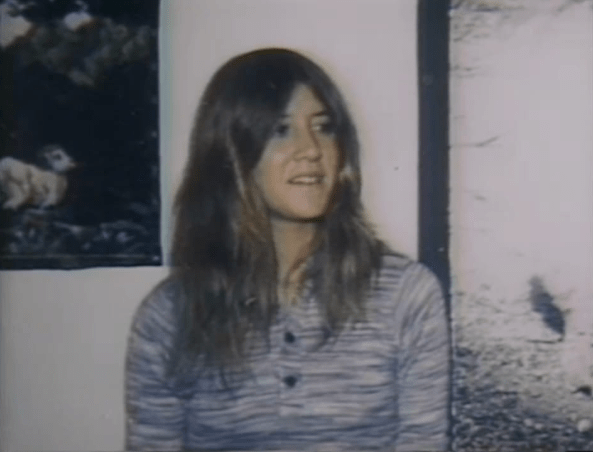






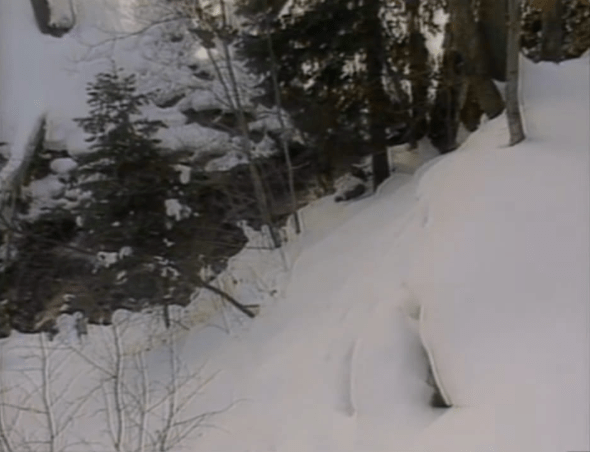

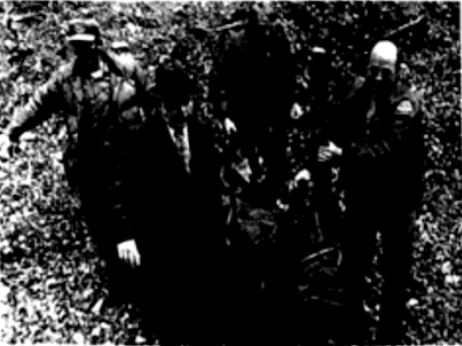
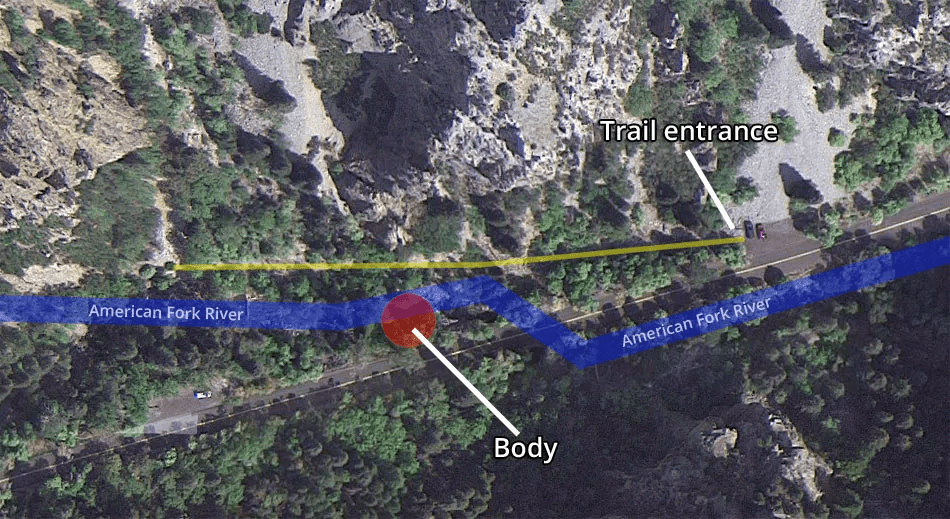
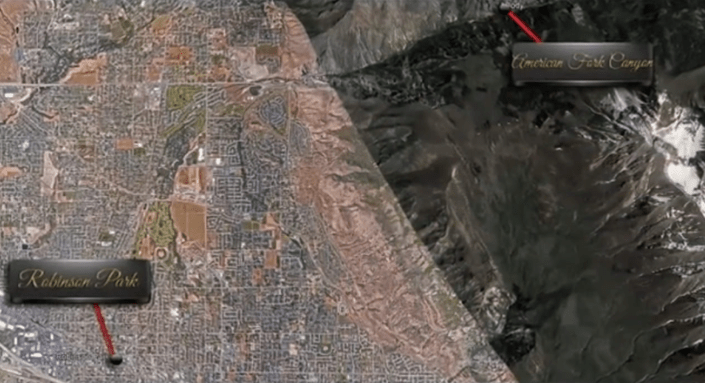


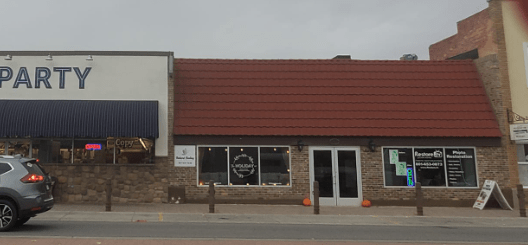


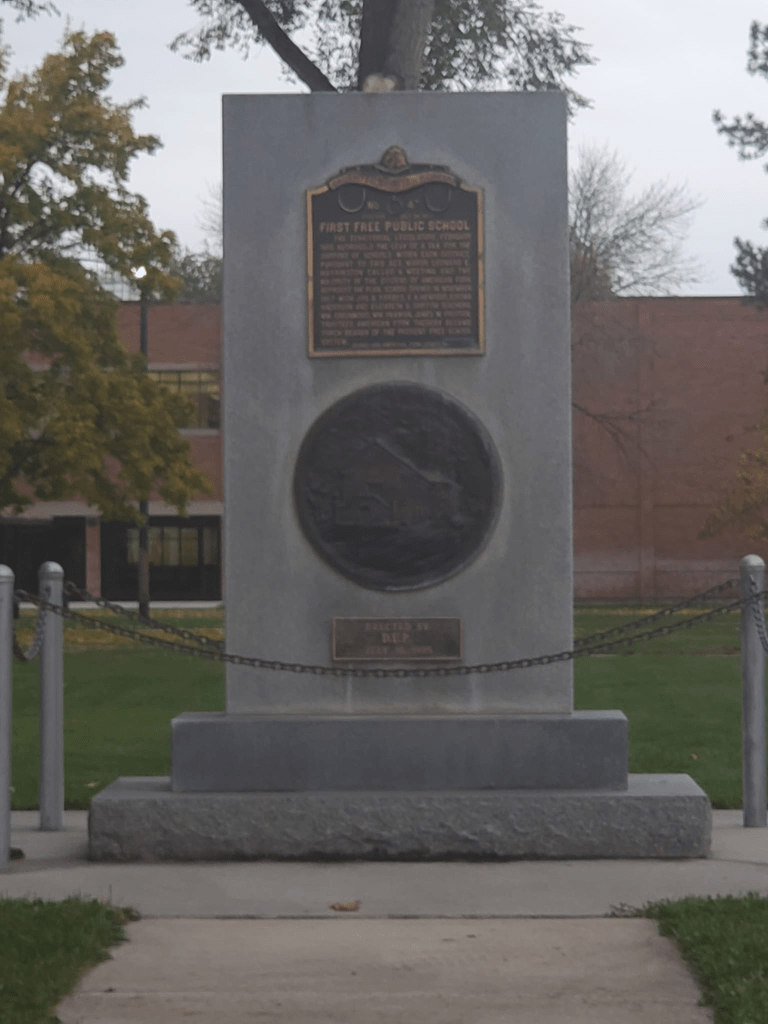

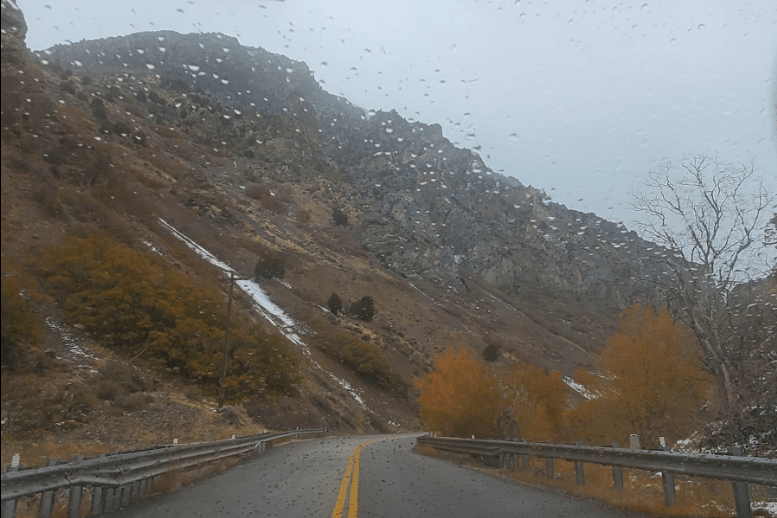

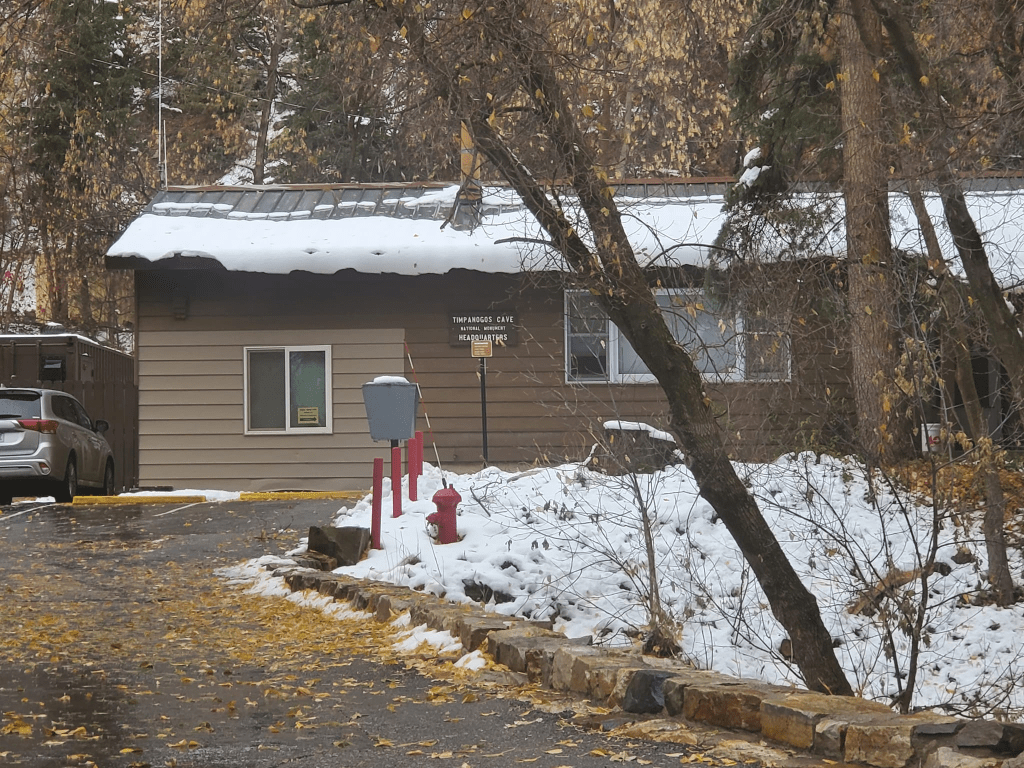


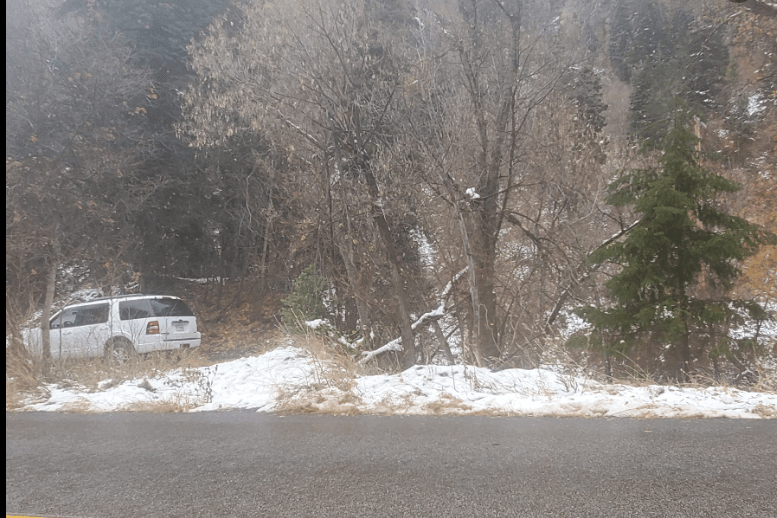


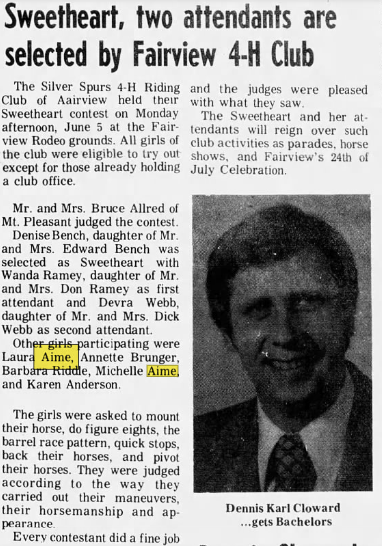

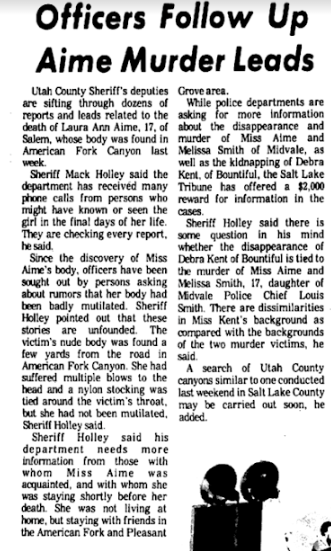

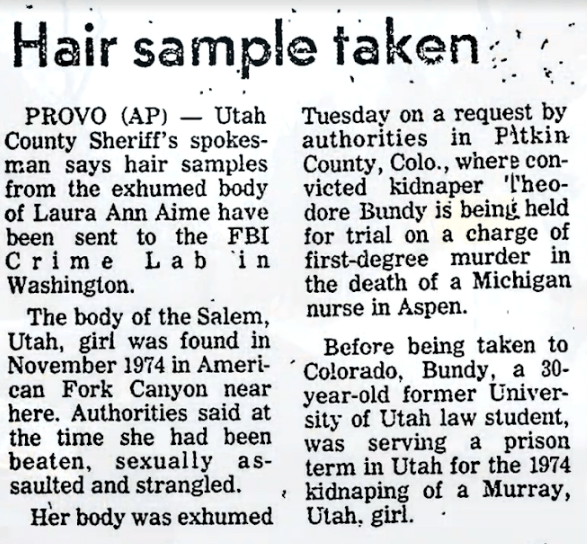
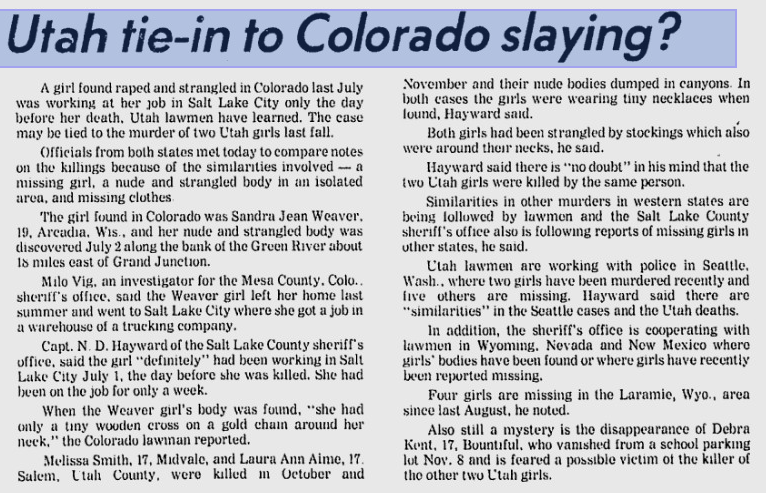
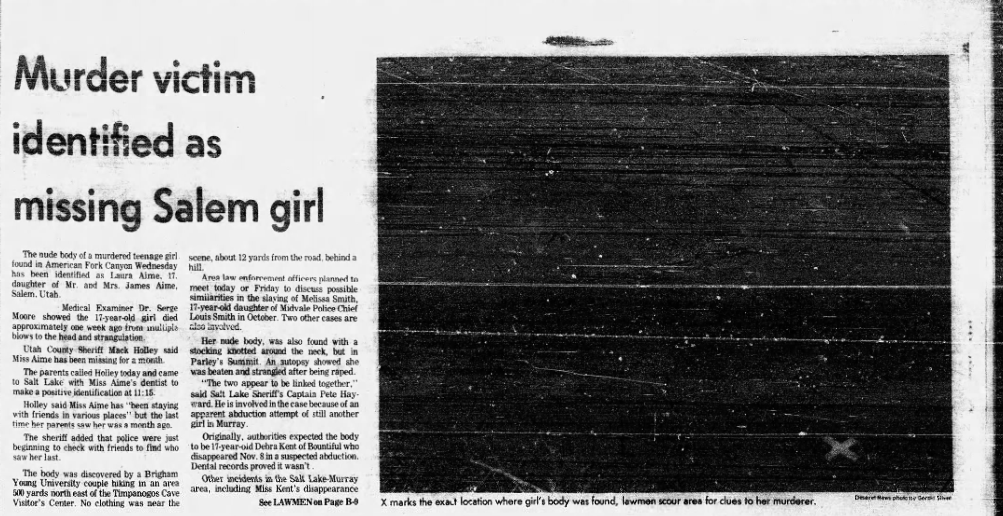


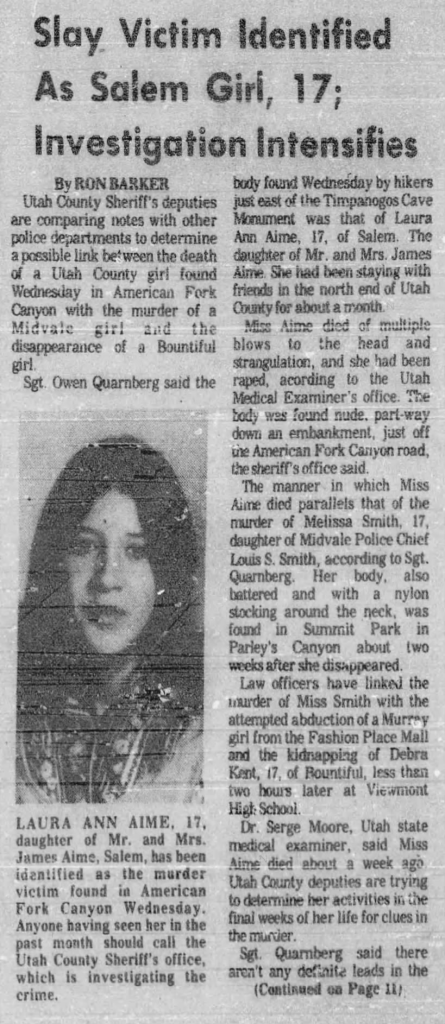

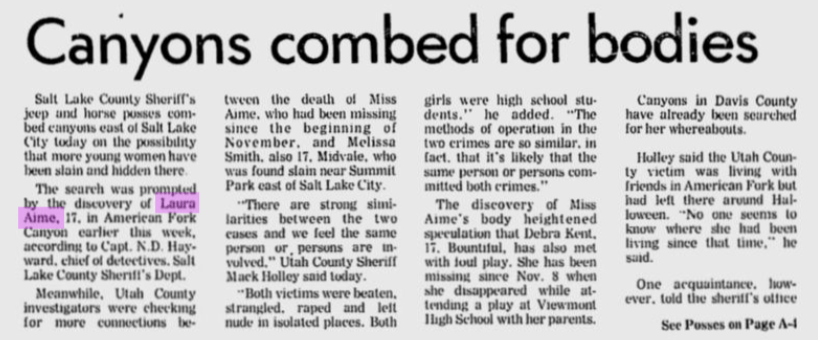
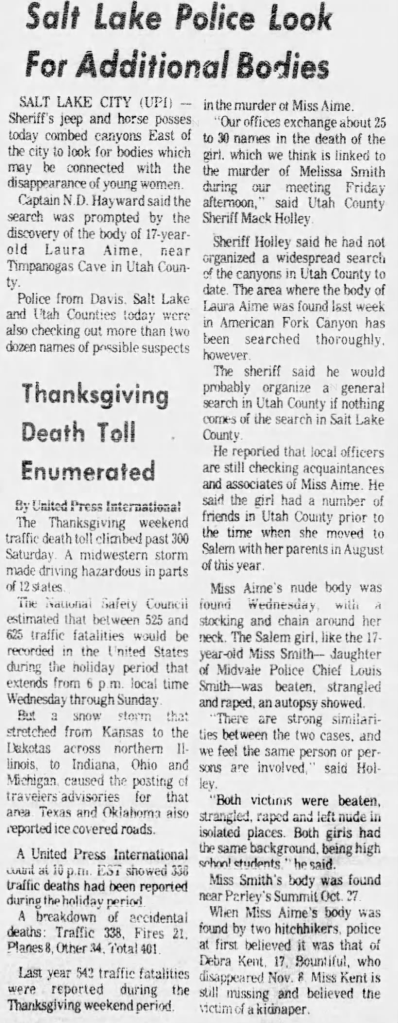

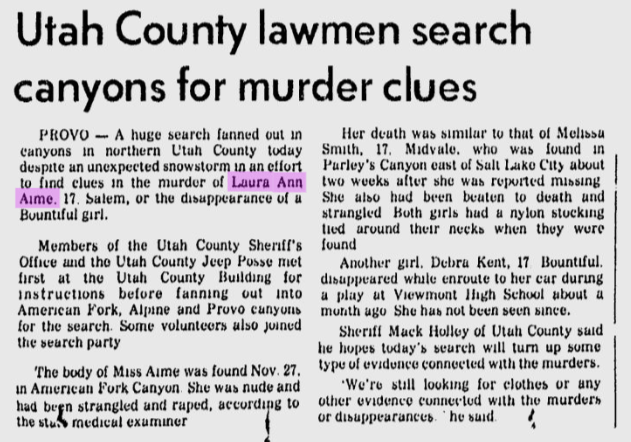
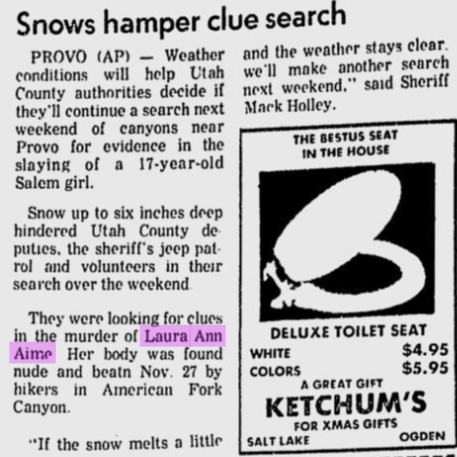

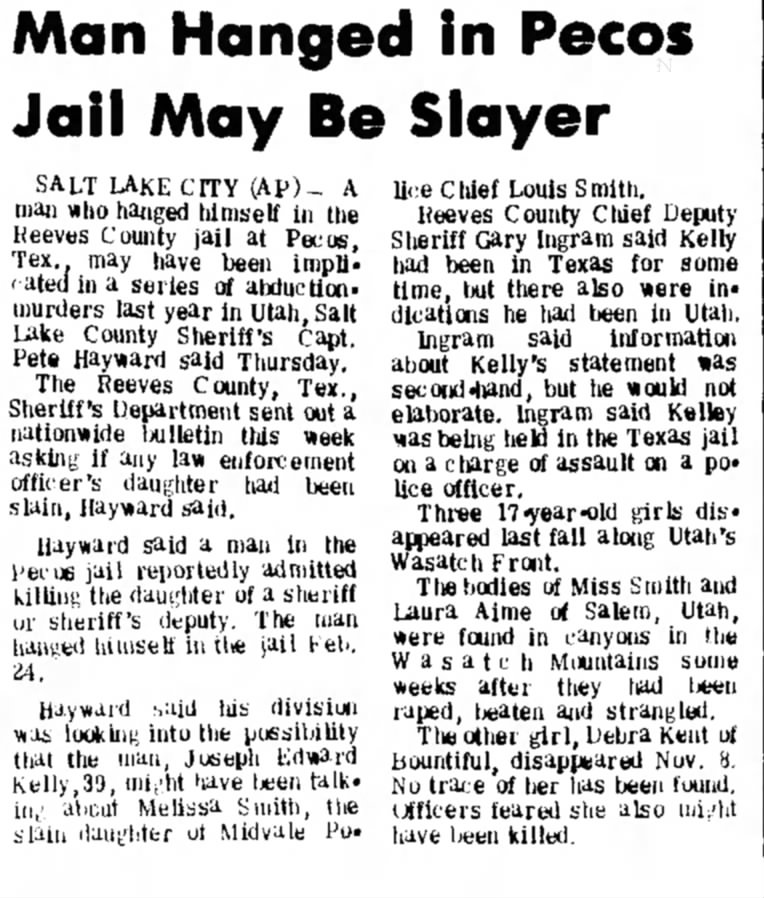


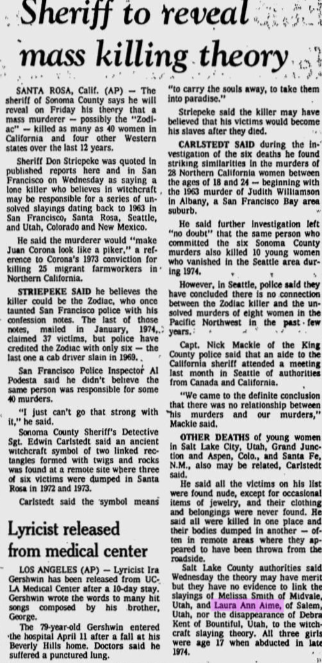




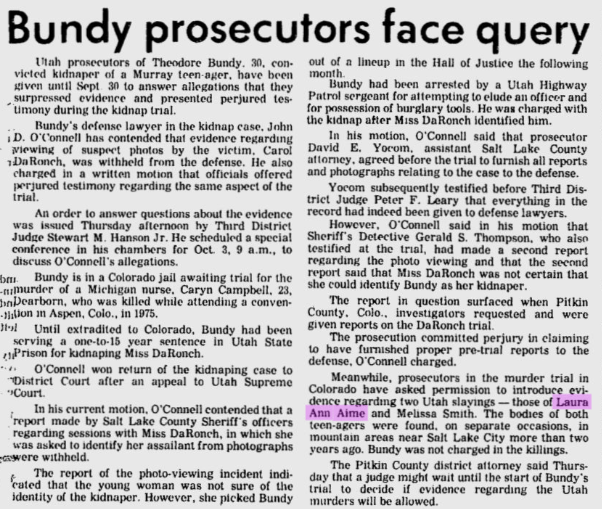

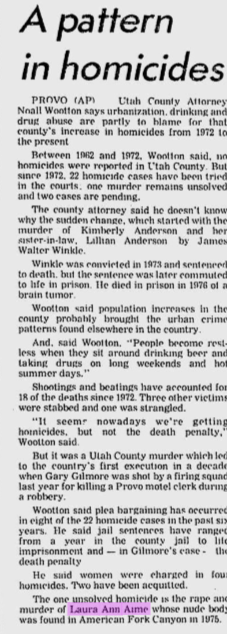

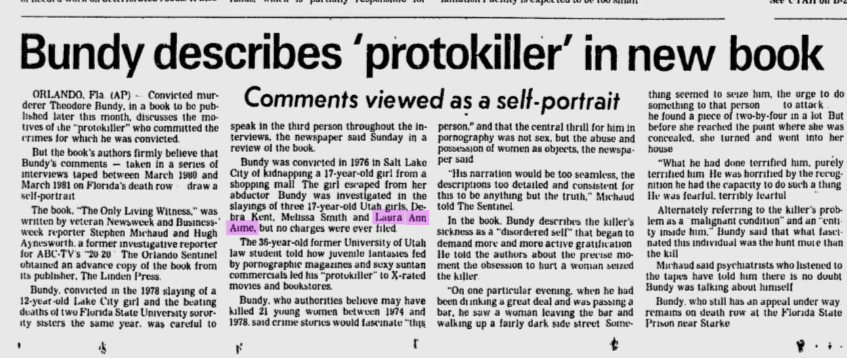
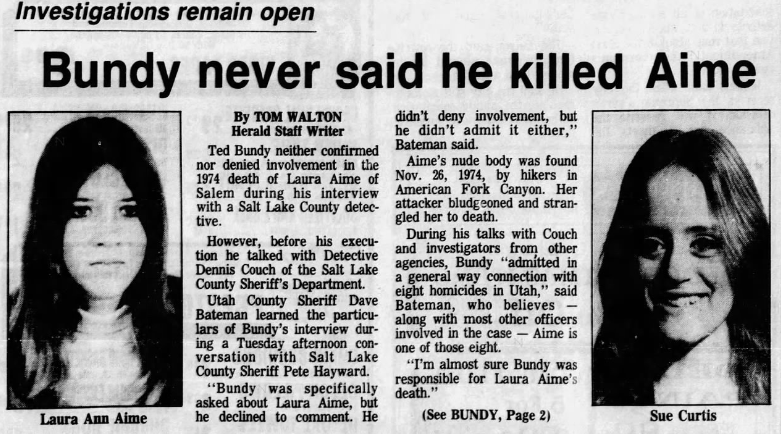
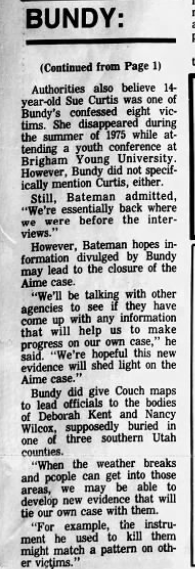
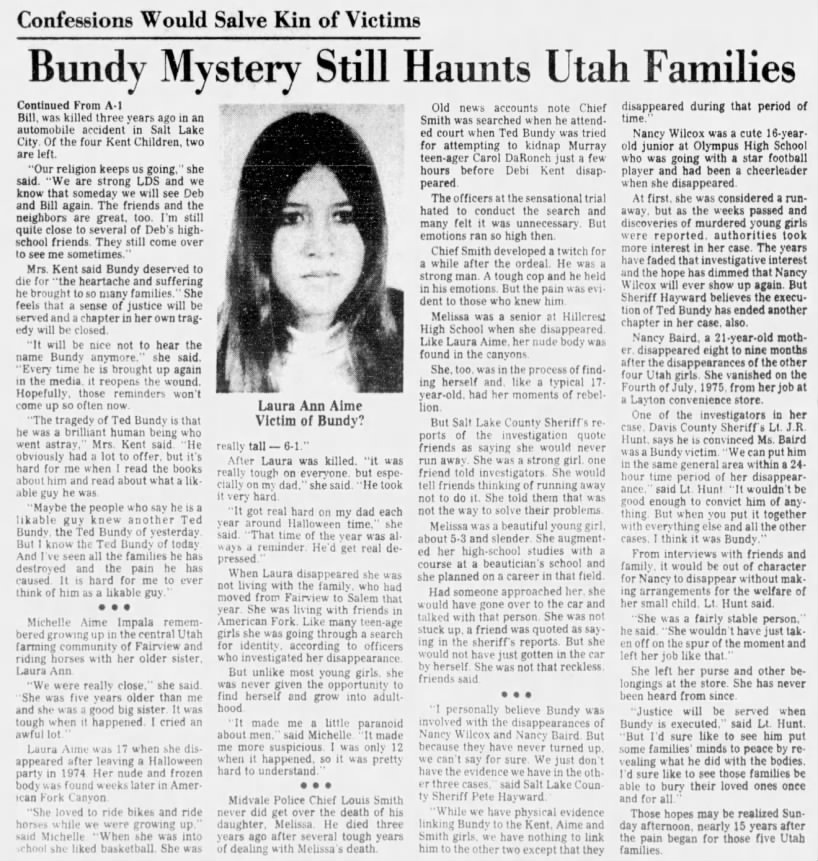


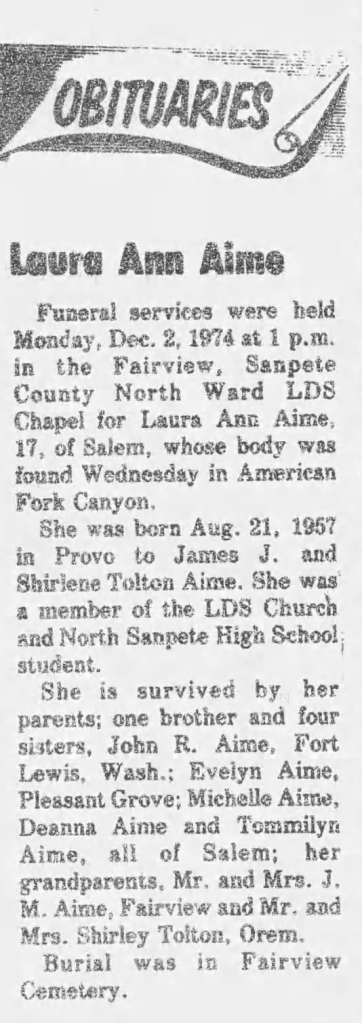
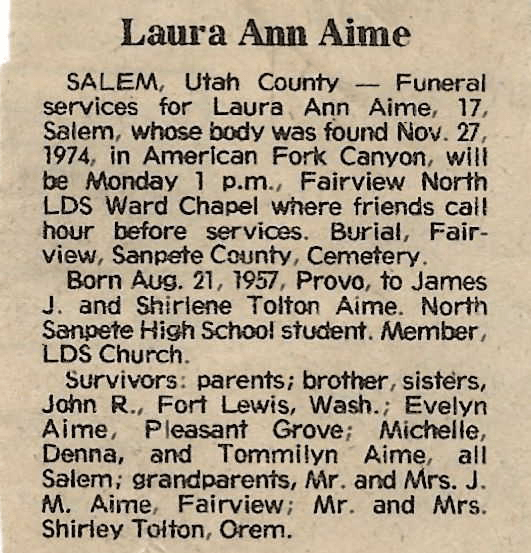
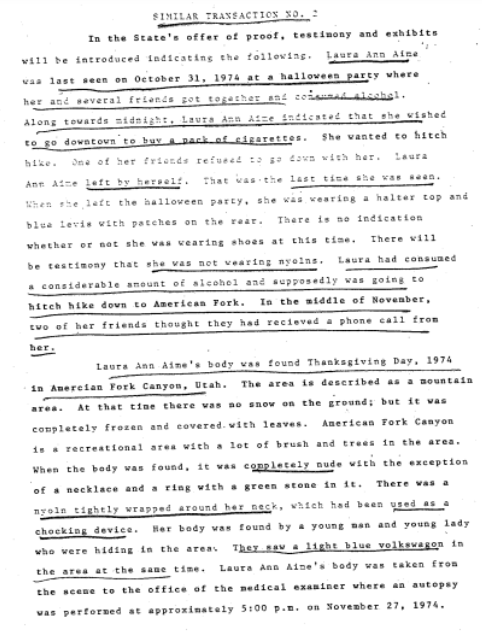
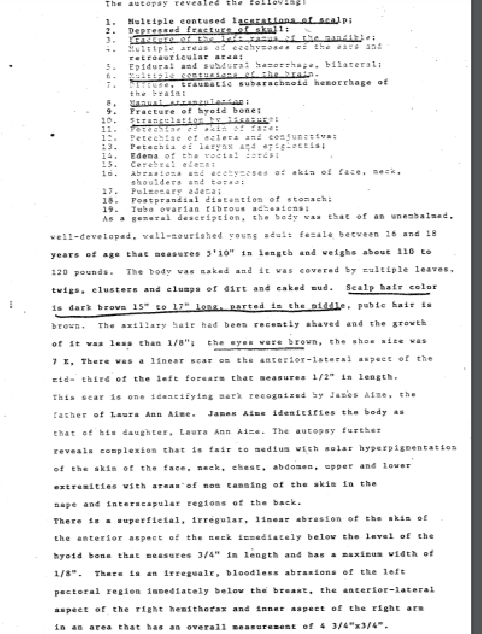
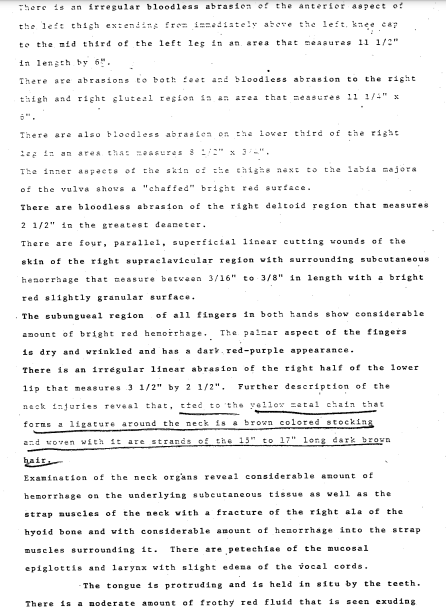
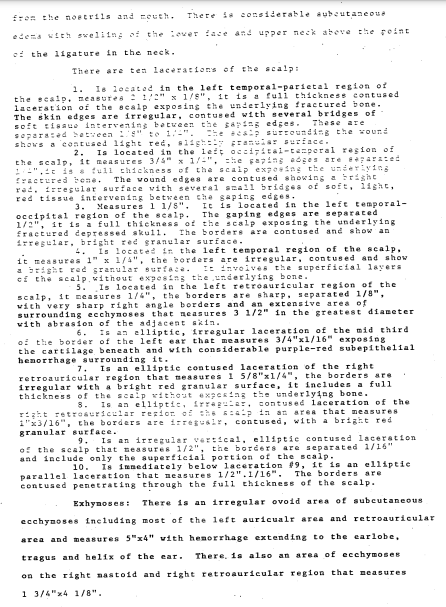
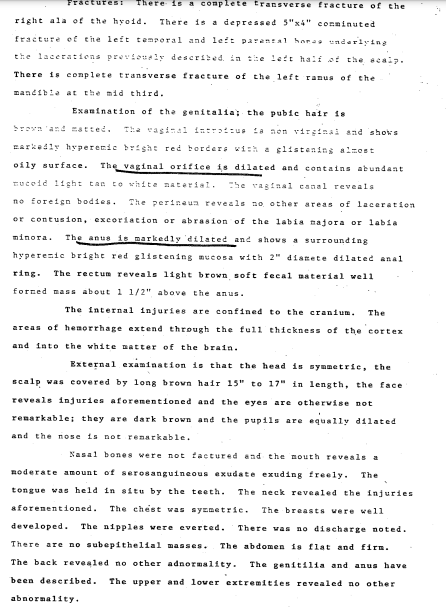


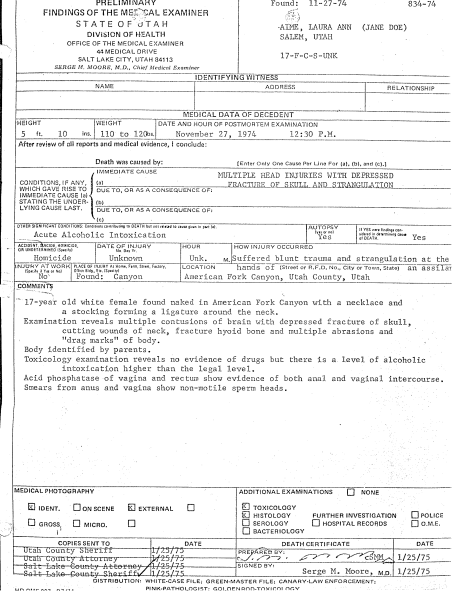


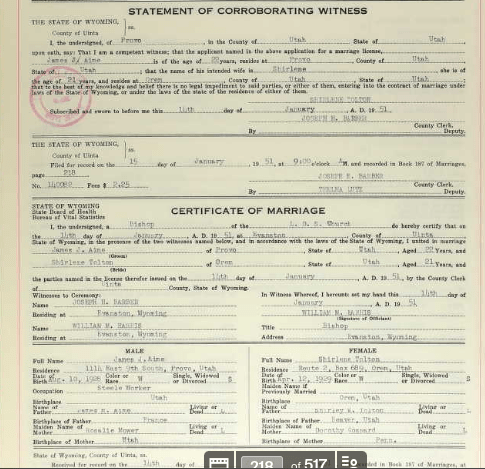
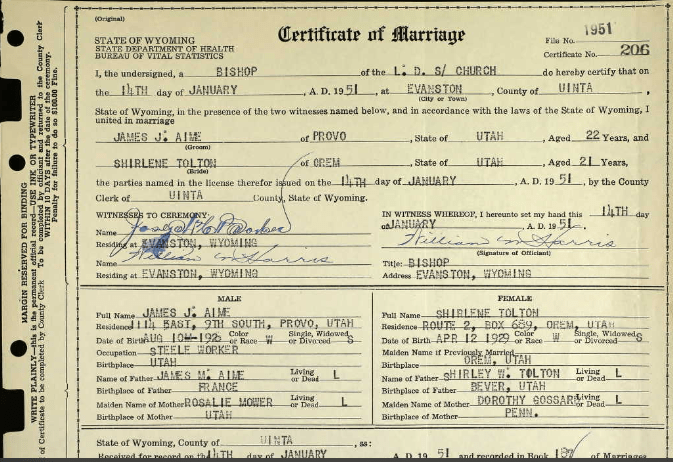
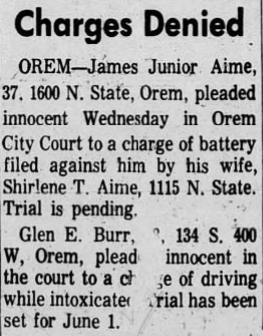


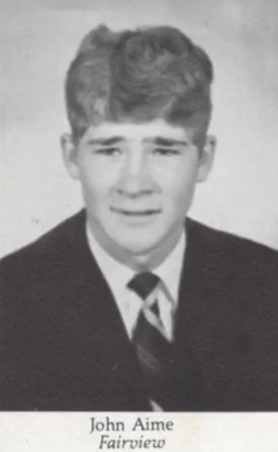
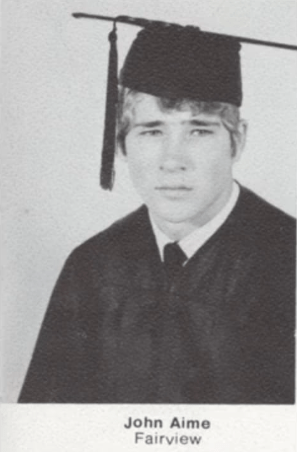









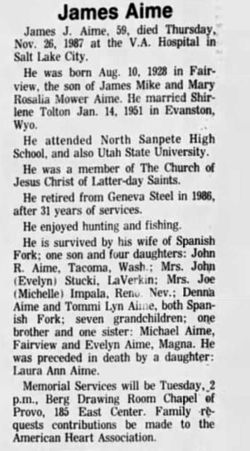
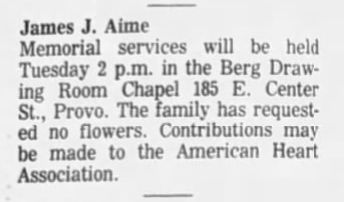

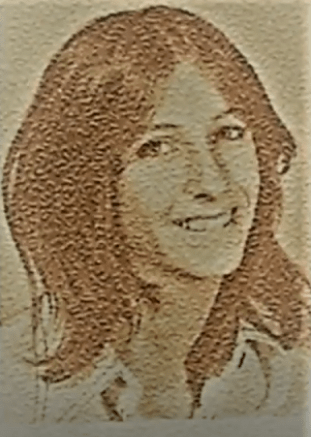

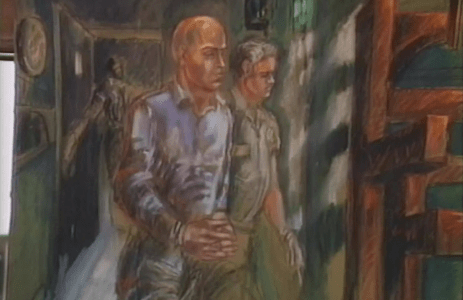
Theodore Robert Bundy was executed in Florida’s Prison’s electric chair on January 24, 1989 after brutally raping and killing dozens of young women between 1974 and 1978 (most likely earlier than that). The infamous serial killer was sentenced to capital punishment after brutally killing three young women in Florida (and countless others across the Pacific Northwest) and had been given the death penalty three times before he was finally killed. Bundy sat on death row for almost a decade when he was finally executed at 7:16 AM EST, and the event became a celebration of sorts for Floridians. On January 23, as the condemned man was spilling his guts in a last ditch effort to push off his execution, a crowd of almost 500 gathered outside the Florida Prison chanting phrases such as ‘die, Bundy, die’ and ‘burn Bundy, burn,’ drinking drank beer and holding signs that read ‘watch Ted fry, see Ted die!’ But not everyone was excited, there was also a small group of anti-death penalty protesters that didn’t want to see the event take place.


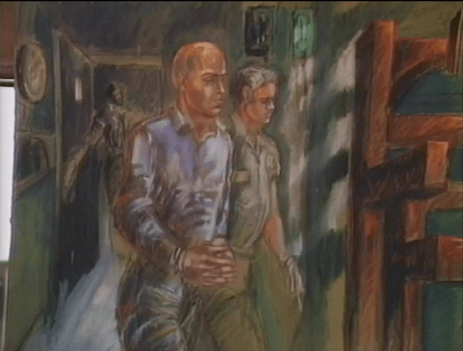

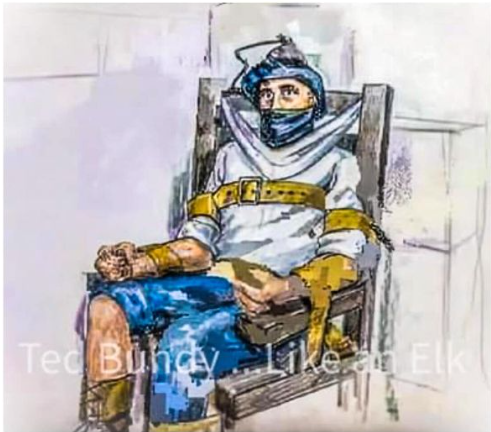

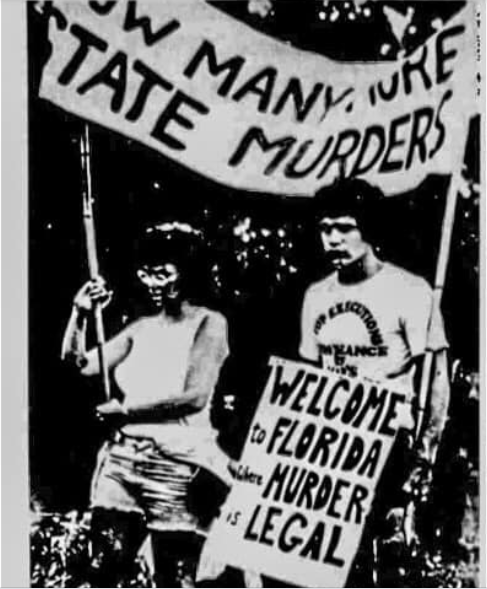


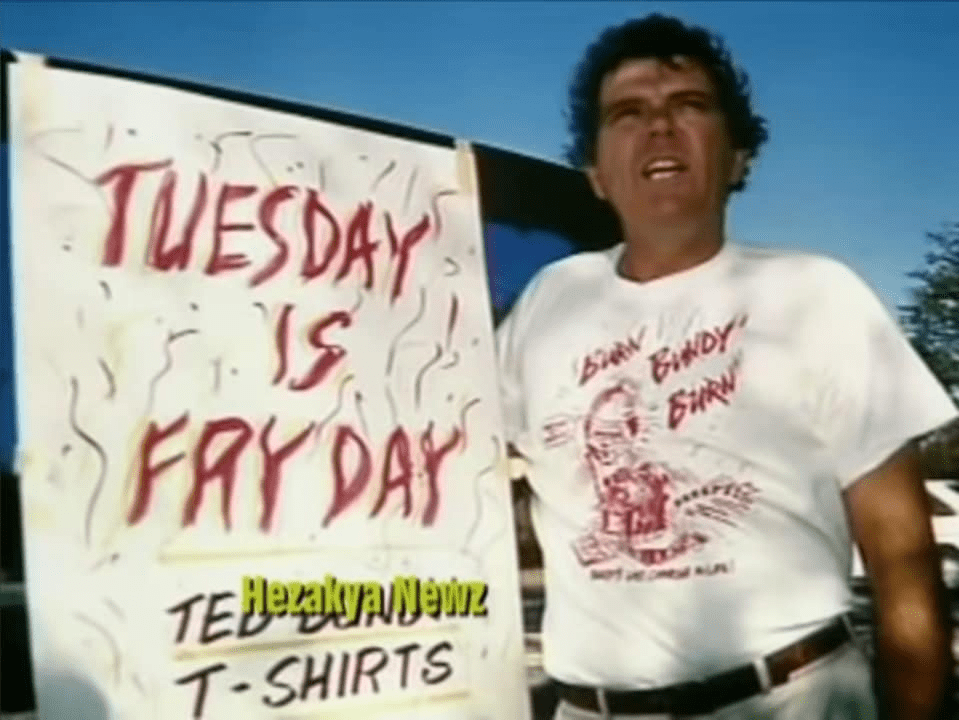


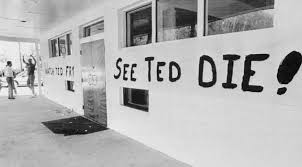


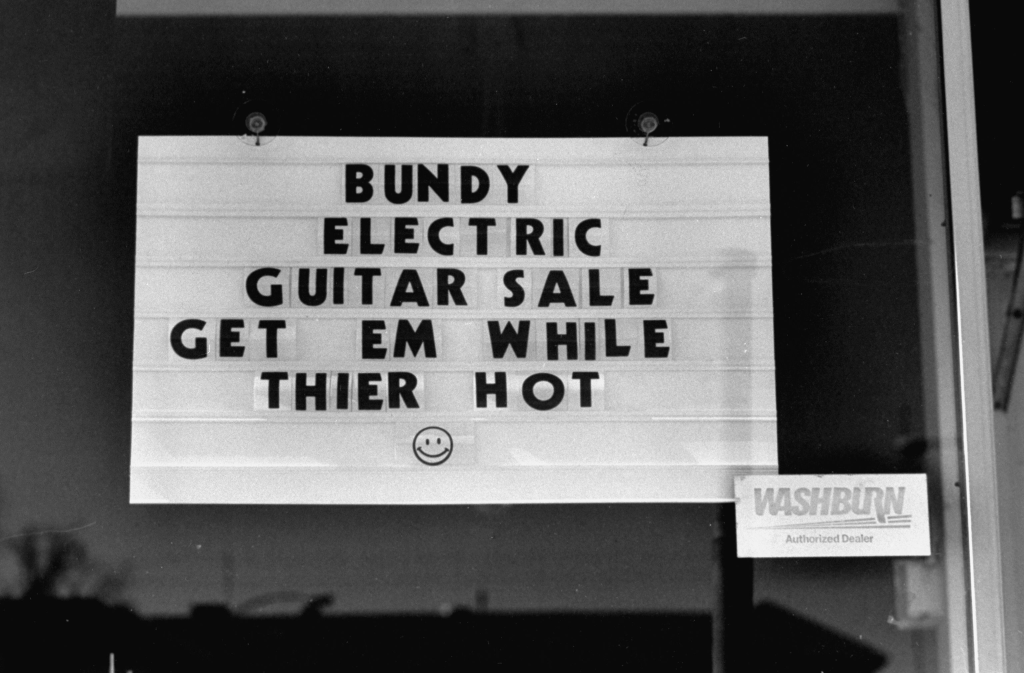
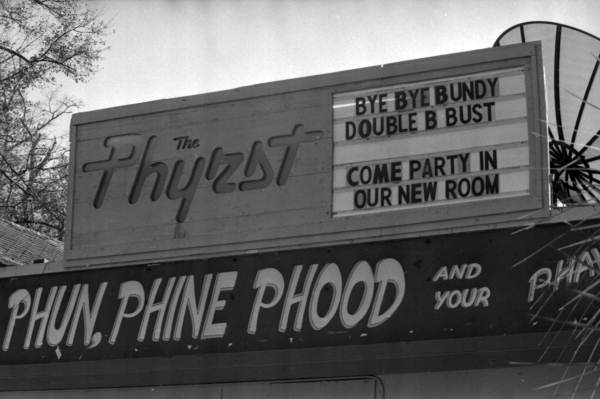
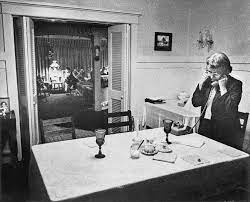


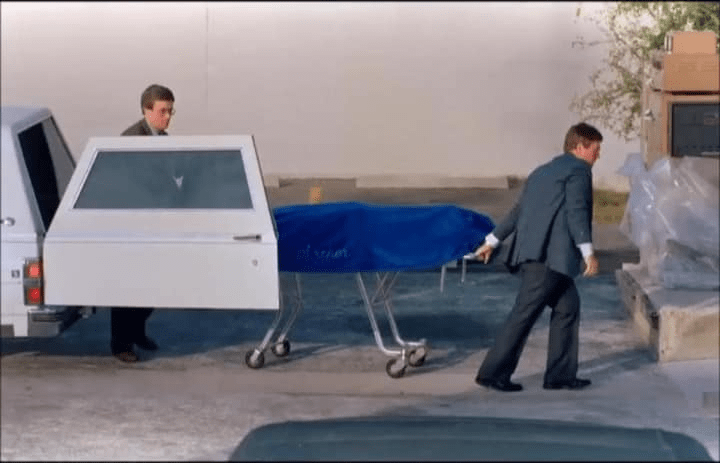

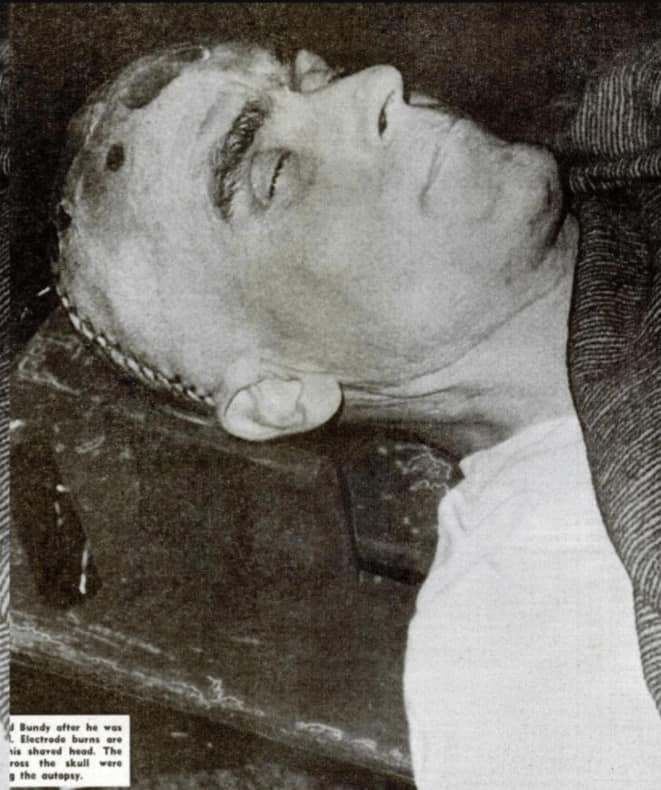
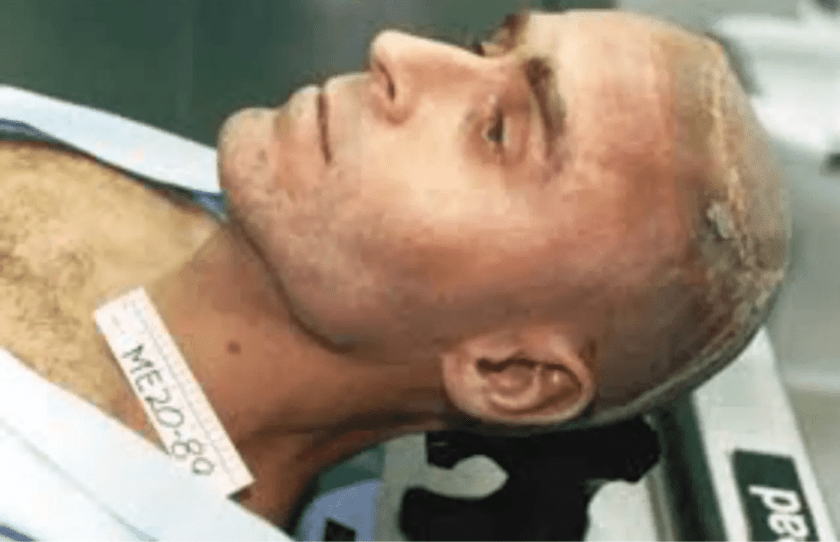


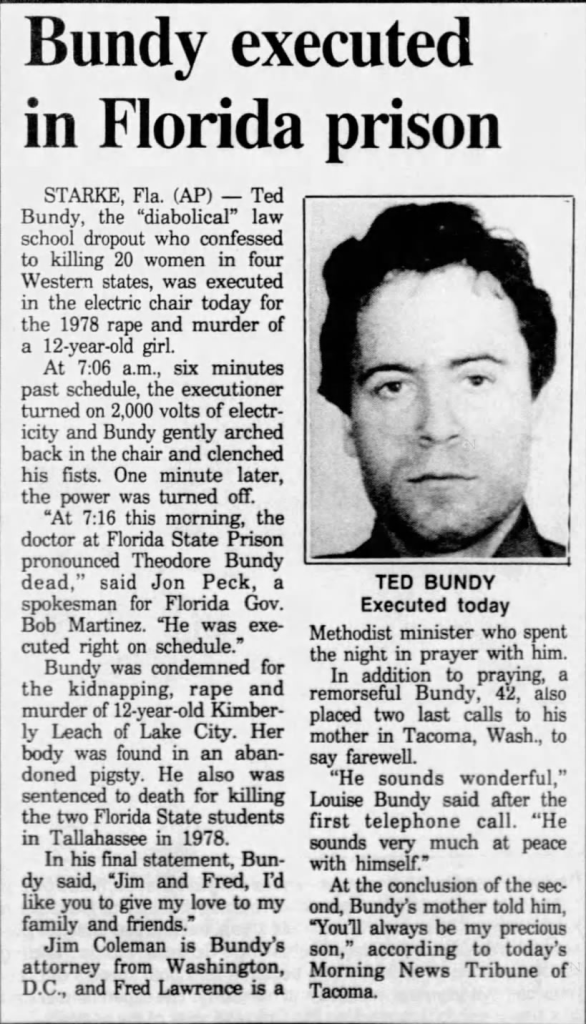


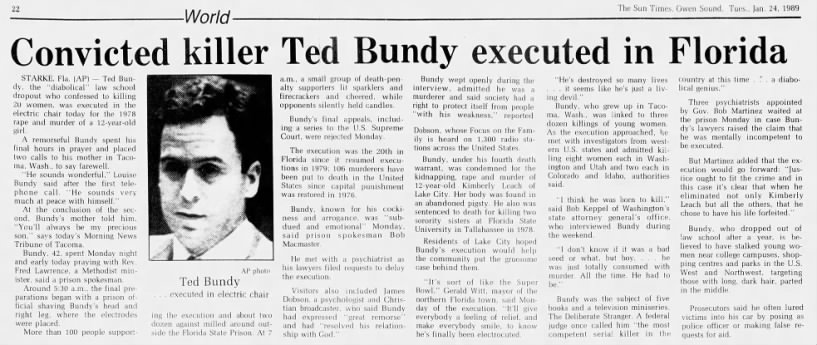
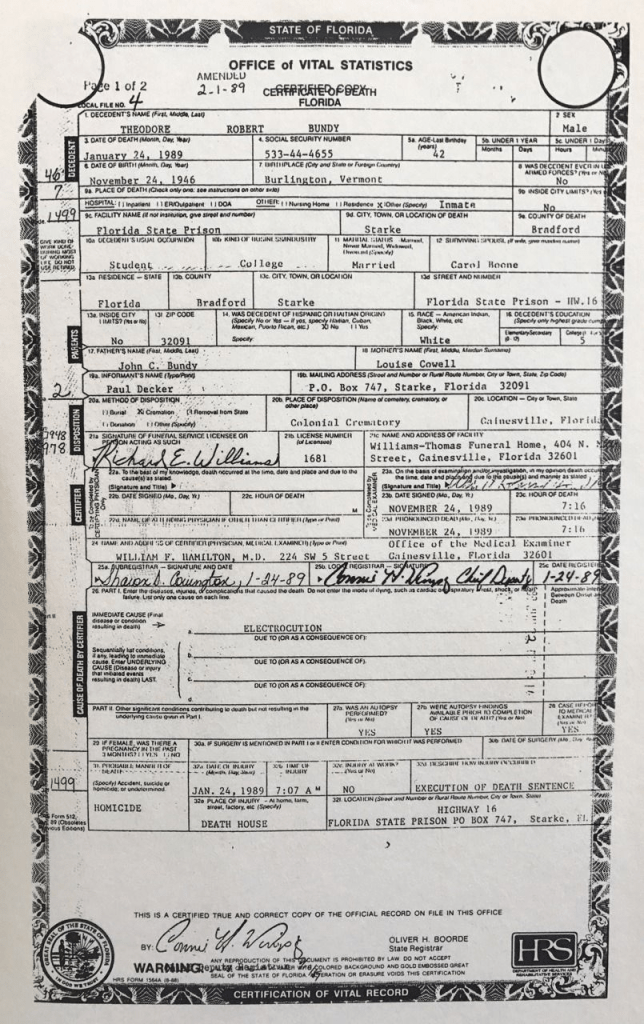





 Another Bundy Blog.