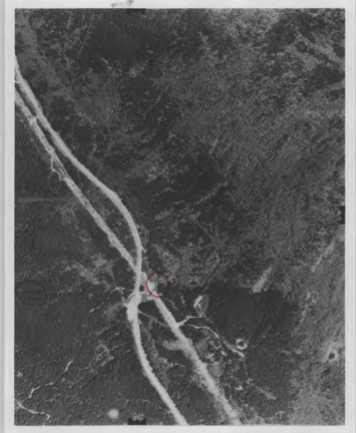
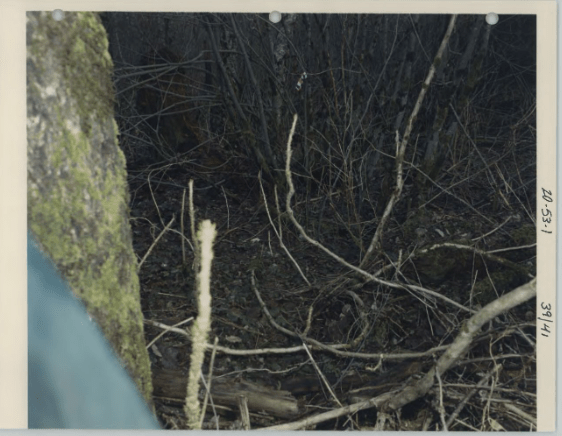
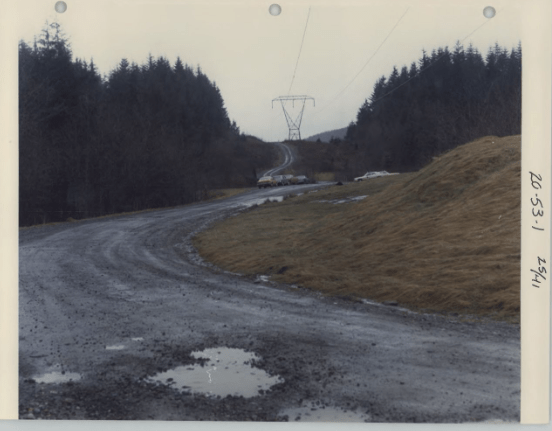
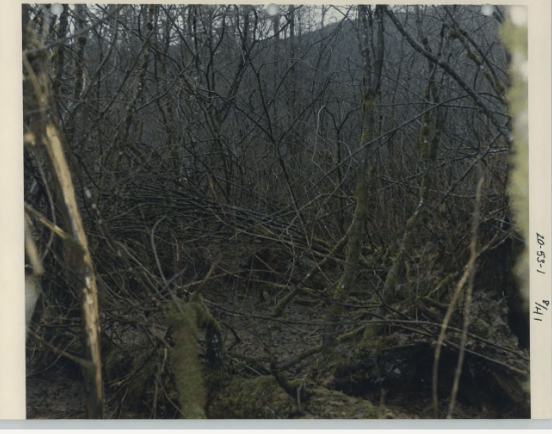
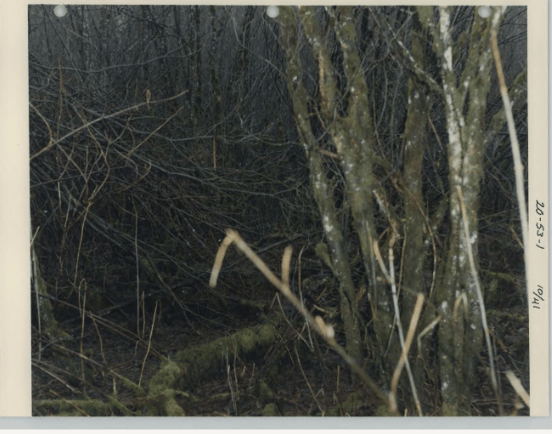
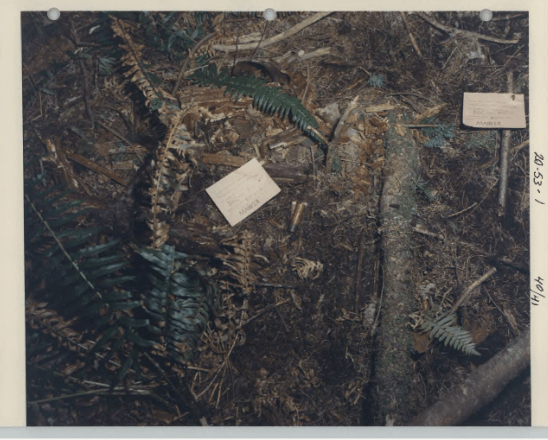
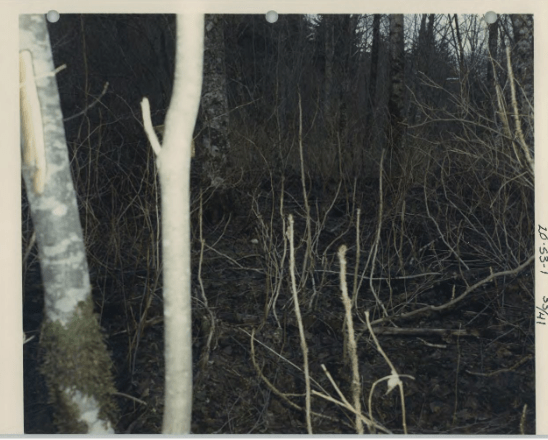
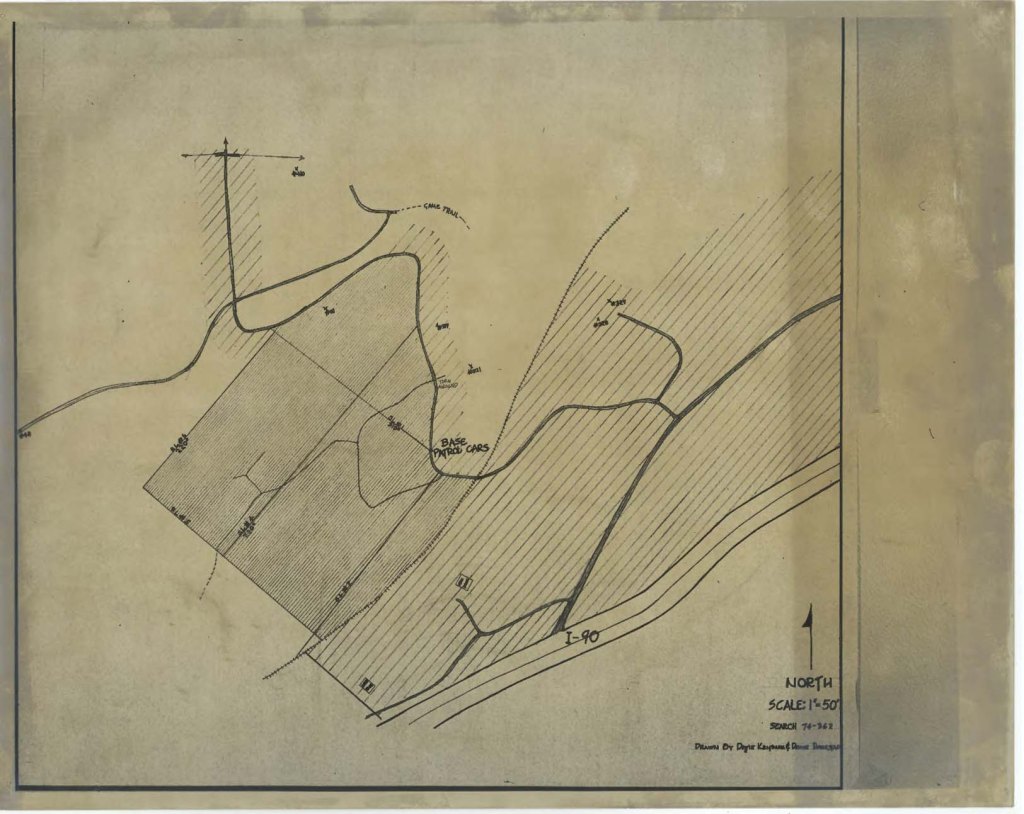
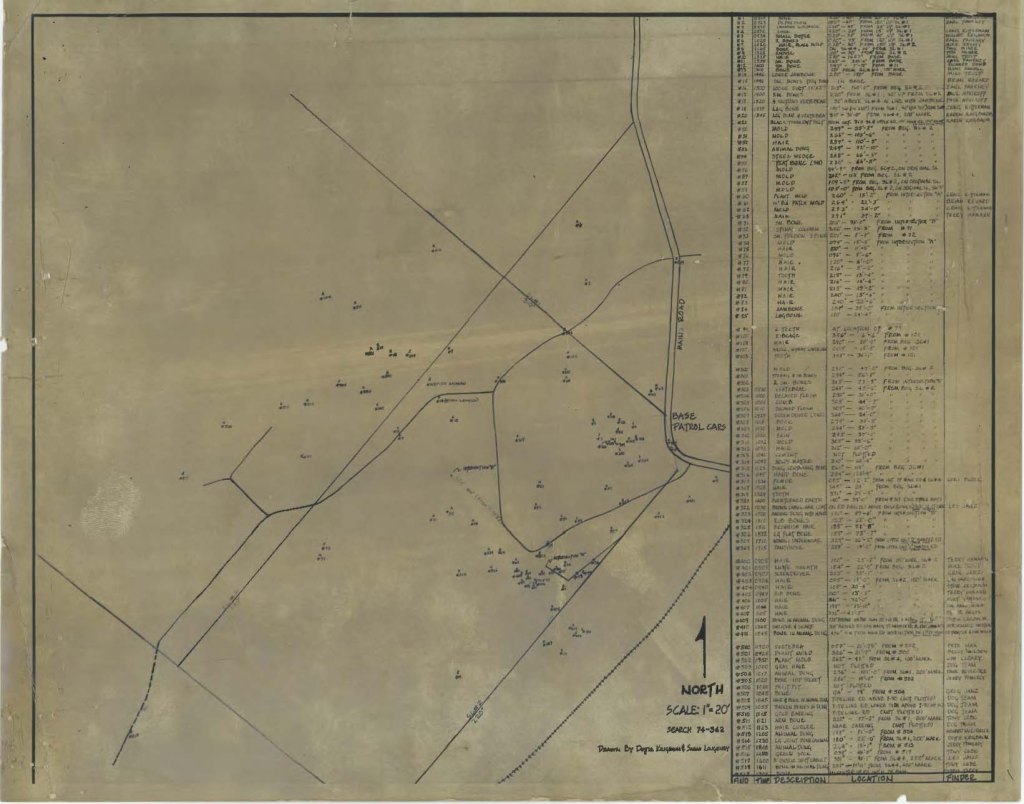
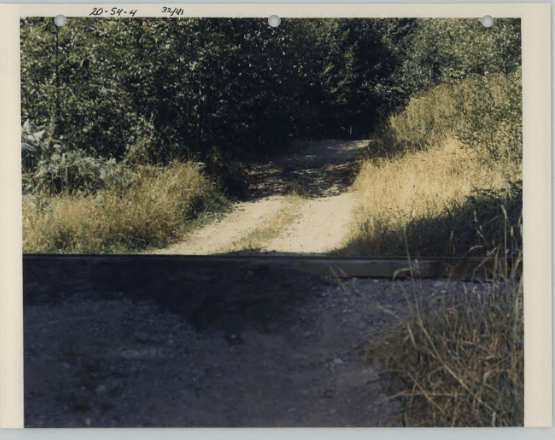
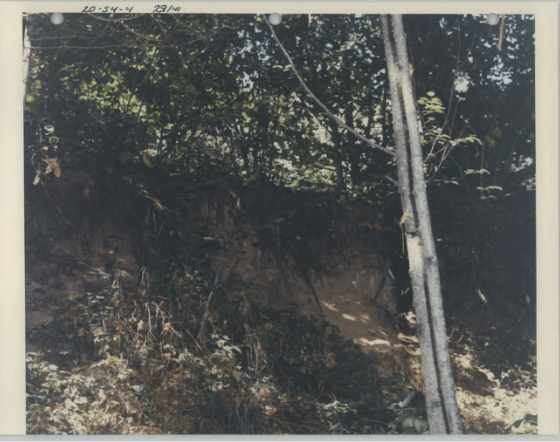
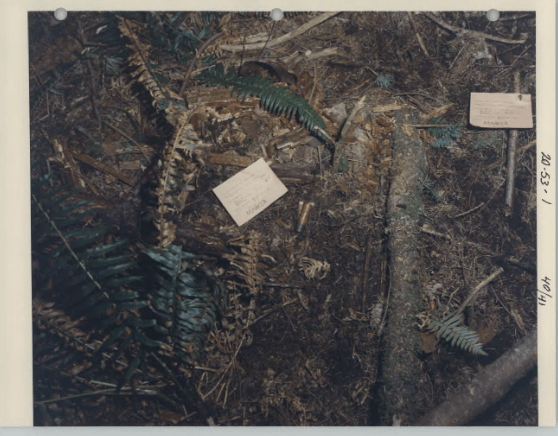
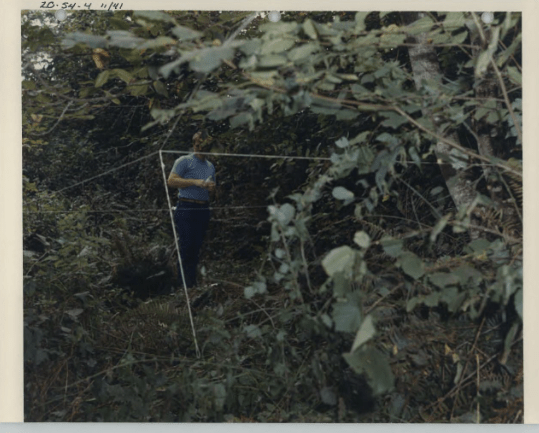
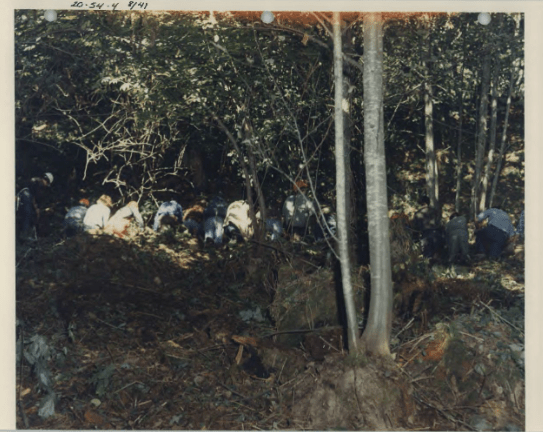
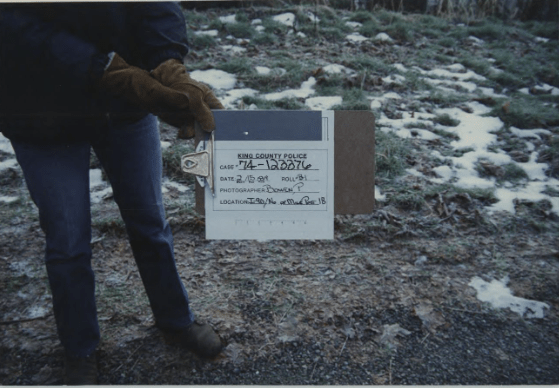
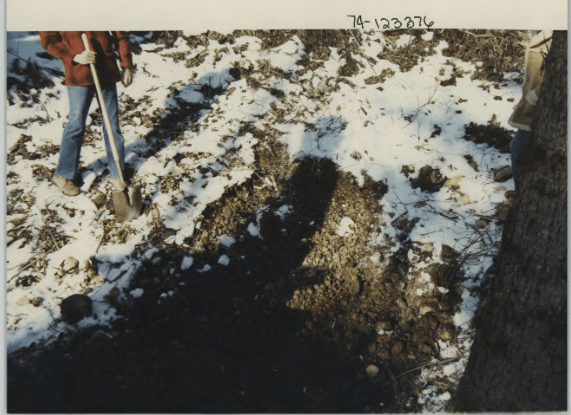
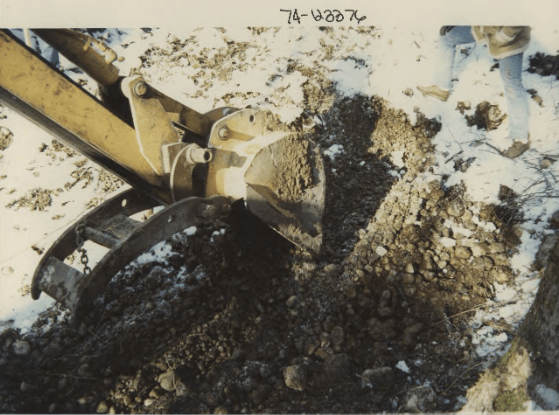
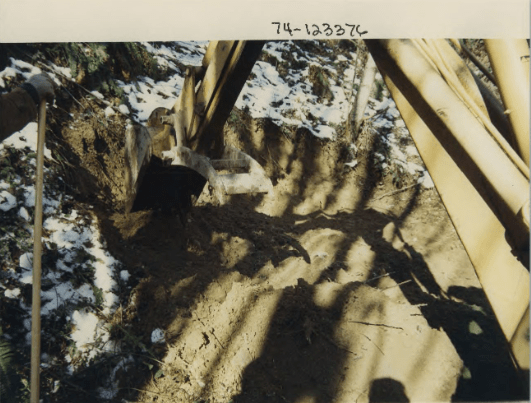
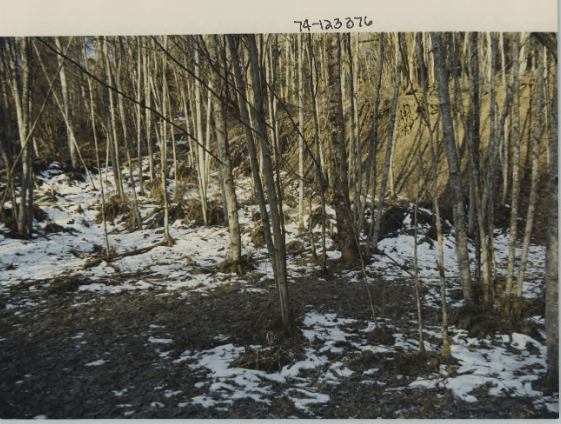
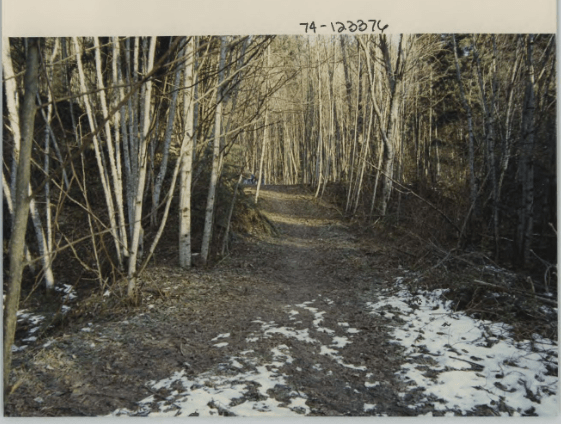
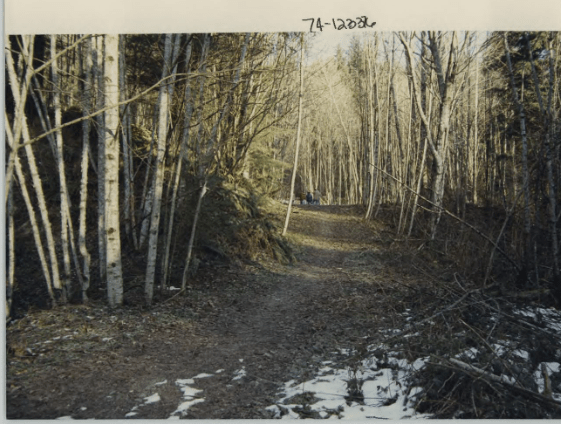
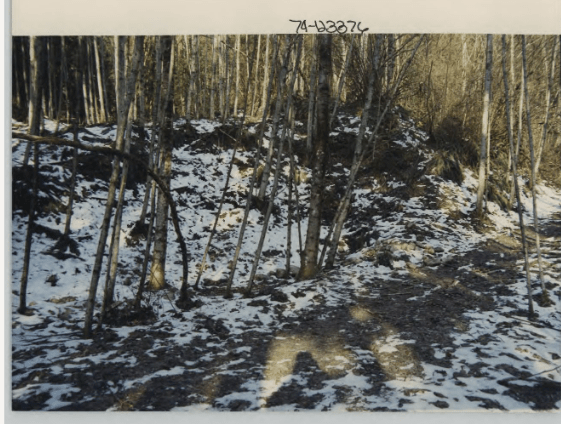
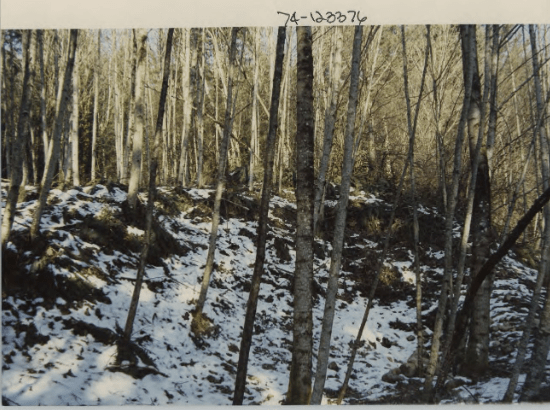
Thurston County Sheriff’s Office, documents related to their investigation into William Earl Cosden Jr., Part Three.
I recently put in a request with the King County Sheriff’s Department for information related to the Bundy investigations, and they’ve sent me a lot of stuff and will most likely send a lot more int he future. I’m working on putting the pictures in a blog post, and it’s proving to be exhausting due to the fact that there are SO many of them (I’m working as fast as I can with two jobs and a needy husband). Here are some interesting documents they sent me that are worth a read. I’ve never encountered them out in ‘the wild.’
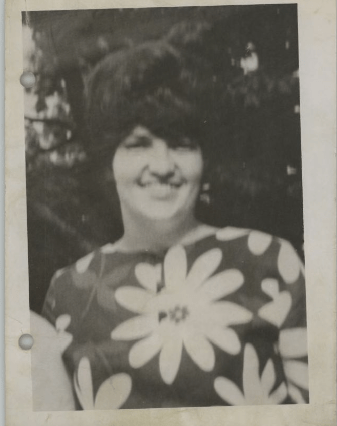
Background: Pamela Lorraine Darlington was born on October 21, 1954 to Frank and Rosella Shirley (nee Hilleren) Darlington in British Columbia, Canada. Frank Thomas Darlington was born on July 4, 1926 in Vancouver, and Rosella was born on June 11, 1928 in Calder, Saskatchewan. The couple were wed on November 8, 1952 at St. Michael’s Church in Vancouver, and had three children together: Pamela, Joseph, and Tara. Sadly, Mrs. Darlington passed away at the age of thirty-three on June 14, 1961; Frank remarried a woman named Arlene Ilvi Moisio and the couple had a son together named Thomas. At the time of her murder, Pamela wore her blonde hair at her shoulders and according to an article published in a British Columbia based newspaper, she weighed 120 pounds and stood at 5’5″ tall; she had been employed as an operator at BC Telephone for roughly one year.
According to an (unidentified) newspaper article published in November 1973, Ms. Darlington was last seen hitchhiking towards Kamloops on Tranquille Road in front of the Village Hotel at around 10:30 PM on Tuesday, November 6, 1973. While investigating, I learned that there is a bit of uncertainty surrounding her final few hours of life: according to her sister Laurel, when she realized her car wouldn’t start she decided to hitchhike into town to meet up with some friends, as it was common back thing to do at that time and everyone did it. However, in an interview with true crime blogger ‘Eve Lazarus,’ Pam’s cousin Sharon said that friends told the Darlington family that she was at The David Thompson Pub sometime in the evening in the company of an attractive (but unknown) gentleman with ‘shaggy hair.’ She added that her ‘cousin Joe (Pam’s brother) always thought it was someone who Pam knew, who was infatuated with her, who committed suicide a year after she died.’
Murder: at roughly 3:30 in the afternoon on Wednesday, November 7th, 1973 Darlington’s remains were discovered in shallow water on the south bank of the Thompson River by seventeen-year-old Frank Almond, who had been out walking with his dog at a nearby park when the animal veered off towards the river that flowed nearby: ‘The dog kinda ran up to something and it looked like a body, so I kinda got a little nervous.’ Almond immediately returned home and told his father what he had seen, and together they went back to where the young woman was lying face down in the riverbed: ‘he came back, he was kinda white as a ghost and he said, ‘Yup that’s a body.’ So we went back and called the police.’ Investigators said that the young woman had been brutally beaten and had been sexually assaulted, and according to an article published in The Times on October 15, 1974, she had been hit in the head with rocks but ultimately died of drowning, and was found with bite marks on her breasts.
About her cousin, Sharon Darlington said that she was an outgoing person that loved her friends and family and was always laughing: ‘it was many years ago, but I remember it like yesterday.’ … ‘When we were little, I was shy and reserved. Pam wasn’t scared of anything,’ In the initial years following the murder Ms. Darlington said that her family were told by the Royal Canadian Mounted Police that they suspected that none other than Ted Bundy had murdered Pamela, and they were ‘relieved when he was put to death;’ it wasn’t until years later that they learned her case was a small part of an investigation being conducted by the RCMP’ E-Pana Task Force that was set up to look into the eighteen murders and disappearances of female victims along the ‘Highway of Tears,’ a stretch of highway in BC that is notorious for disappearances and murders of women (particularly Indigenous ones) beginning in 1969. Darlington met all three of the task force’s criteria for a victim: she was hitchhiking (which they considered to be ‘high risk activity’), was found near Highway 16/97/5, and was most likely killed by a stranger.
Retired RCMP Constable David Sabean said that Pam’s case remains a priority among unsolved cases, and that ‘there was a big list of suspects, never anyone who came out of it, though.’ At approximately 4:30 AM on the morning that her remains were found a late 1950’s, off-white, four-door sedan in poor working condition was seen leaving the boat launch area near to where her remains were discovered; the male driver was described as having long brown or blond hair and he may have been passengers with him. The vehicle nor its driver have ever been identified and as of April 2025 remain of interest.
Gale Ann Weys: Less than three weeks before Pam Darlington’s murder, on October 19, 1973 the body of nineteen-year-old Gale Weys was recovered after she disappeared while hitchhiking to her parents’ house in Kamloops from her residence in Clearwater after she finished her shift as an attendant at a local gas station; her remains were discovered six months later in a ditch along Highway 5.
On the evening Weys disappeared a local banker named Ron Hagerman told investigators that he ate a meal at The Thompson Hotel where she worked, and she shared with him her plans to hitchhike the more than 75 miles to her parents house in Kamloops. He also reported that he observed she had been asking around the bar if anyone would have been able to give her a ride: ‘I know that night she was asking around for someone to drive her to Kamloops because her parents lived there. No one was going to Kamloops, and so she just walked outside and stuck out her thumb.’ It is strongly speculated that she may have instead went north of Quesnel after some reports claimed that she had been trying to hook up with the staffing agency ‘Canada Manpower Centre,’ but nothing ever came of this. Her remains were discovered in a water-filled ditch on April 6, 1974 off Highway 5, roughly seventy-eight miles north of Kamloops; according to law enforcement, her clothing was never recovered.
The second of nine brothers and sisters, Gale’s siblings recall her as being an independent, funny, and protective big sister that spent her time spare time working as a lifeguard and Girl Guide leader. She had recently moved to Clearwater and was working two jobs at the time of her murder to help save for college, and volunteered at a local school helping care for special-needs children. According to her mother Rowena, she was also a swimming instructor and often took trips with the scout group that she helped lead, and at the time of her death was saving for a vacation to Mexico. Mrs. Weys recalled that her daughter was a wonderful and upbeat young woman, and her Uncle Ted said that she was kindhearted, and: ‘was a hell of a nice girl, very outgoing and friendly.’ He also commented that his niece and Colleen MacMillen looked so similar that they could have been mistaken for sisters (more on Colleen in a bit).
Both the Weys’ family as well as the Darlington’s felt that their daughters’ murders were not ‘personal,’ and were more ‘crimes of opportunities’ versus passion; they also felt that there could have been some connection in the murders due to some striking similarities in the girls’ appearance as well as the circumstances surrounding their deaths. Shortly after Pam’s death Frank Darlington said he strongly believed they were more than just murders in a city by a lone psychopath, and ‘for all we know, this could be a Manson-type murder,’ and that the slayings were most likely committed by ‘a psychopath.’
Colleen MacMillen: On September 4, 1974 the remains of sixteen year old Colleen Rae MacMillen were discovered roughly thirteen miles south of 100 Mile House, a district municipality located in the South Cariboo region of central British Columbia. MacMillen was born on April 11, 1958 in Kamloops, BC and had left home on August 9 with plan to hitchhike to a friend’s house a few miles away; she was reported missing by a member of her family two days later when they realized she never made it to her destination. Although newspapers said MacMillen was going to see a girlfriend, ‘The 100 Mile Press’ reported that she was on her way to meet up with her boyfriend when she disappeared.
MacMillen’s clothes were discovered at Mile 102 on Highway 97 on August 25, 1974 by a tourist even though her nude body wasn’t discovered until early September (she was completely naked except for her socks). One of seven brothers and sisters, her father knew that she would never run away because she ‘wasn’t that type of girl:’ ‘She was a quiet sort of girl, not what you would call a bubbly effervescent type of girl but very friendly.’ Retired Staff Sergeant Fred Bodnaruk with the North Vancouver RCMP said that hair samples were taken from a suspicious 1966 Meteor Montcalm that was found abandoned near 100 Mile that did not match MacMillen’s, and the vehicle had a crumpled right fender that may have been the result of an accident that took place after it was stolen. Although no cause of death could be determined, (retired) RCMP Constable Mel Weisgerber said that there was blood in MacMillen’s inner ear which is ‘indicative of a drowning victim.’
At the time of her death, MacMillen had a twenty-one year old boyfriend named Ron Musfelt, who came out in recent years and said that he ‘lived under a cloud of suspicion for many years:’ ‘I was going out with Colleen, and one night I phoned her, and I was talking to her, and she said ‘meet me down Lac Le Hache.’ So I went down the highway to wait by K&D General Store. I went back up to the house, and phoned her house and they said she had already left. And I waited and waited and waited and waited, and she never showed up.’ For years after Colleen’s death Musfelt was a key suspect in her murder, and he ‘was taken into town and they interrogated me, and they did everything to me. Lie detector tests, everything like you wouldn’t believe, and to this day it’s always bothered me, never knowing who did it. I remember back then there were probably people who thought I had something to do with it.’ … ‘The thing that really bothers me is knowing I was standing on the highway, waiting for her to come through town, and she probably came past me in this vehicle, with this guy, wanting to get out of his vehicle.’
About the death of his sister, Shawn MacMillen said that Colleen was ‘a lovely, sweet, innocent sixteen-year-old kid and there are no words to express how terribly she was wronged.’ Regarding Colleen, Pam, and Gale’s death, Frank Darlington said he believed that it was more than just a murder in a city by a lone psychopath, and that ‘for all we know, this could be a Manson-type murder,’ and he feels sure the killings were done by a psychopath. On September 25, 2012, it was announced by the RCMP that DNA taken from MacMillen’s clothes matched with a man named Bobby Jack Fowler, who managed to fly under the radar until his arrest in 1995.
Barbara Joan Statt: A name that only came up once during my research is Barbara Joan Statt, who was only seventeen when she was last seen hitchhiking in Vancouver on July 26, 1973. Her remains were discovered three days later on the side of a mountain in Northern Vancouver; she had been sexually assaulted and had been hit on the head with a rock (that was found nearby). Friends told law enforcement that right before she was killed, Statt told them that she’d met a new male friend, but they referred to him as the ‘creepy man that lives in a car.’
Statt’s homicide was investigated in relation to the three others (Darlington/Weys/MacMillen) that took place along Highway 5 in BC in 1973/74. Sergeant Bodnaruk described the killer as a ‘murdering psychopath that would hit and run,’ and in the beginning stages of the investigation it made sense that she was included with the other victims: like two of the three others, Barbara was sexually assaulted and was of similar height and build, however I quickly learned that there was a good reason why she wasn’t included more frequently: it was quickly determined that a Toronto resident named Paul Cecil Gillis was responsible for her death, who was apprehended for her murder in 1974. He was also convicted of killing fifteen-year-old Robin Gates of Coquitlam, and thirty-three-year-old Lavern Johnson.
Gloria Moody: Another name I came across is Gloria Moody, who was only twenty-seven when she was killed during a weekend away with her family on October 25, 1969. A member of the Bella Coola Indian Reserve with the Nuxalk Nation in British Columbia, Moody’s body was found a day after she disappeared by hunters on a cattle trail roughly six miles west of Williams Lake. Her autopsy report said that she bled to death after being beaten and was sexually assaulted, and she is the oldest unsolved murder in Project E-Pana.
The ’Trail of Tears:’ Pamela Darlington, Gale Weys, and Colleen MacMillen are just three of (at least) eighteen missing and murdered women that are being investigated by the Royal Canadian Mounted Police ‘E-Pana Task Force’ that focused on the infamous ‘Highway of Tears,’ a 447-mile stretch of Highway 16 between Prince George and Prince Rupert in British Columbia beginning in 1969. On that list is a disproportionately high number of Indigenous women, hence its association with the ‘Missing and Murdered Indigenous Women Movement.’ The exact number of missing and murdered women varies depending on the source: according to RCMP’s E-Pana task force, the count is around eighteen, where Aboriginal organizations estimate the number to be over forty. Wikipedia lists seventy-nine victims, including a family of four so technically that would be eighty-two.
Proposed explanations for the years-long span of disappearances and homicides (along with the limited progress in the case) include poor economic conditions, substance abuse, domestic violence, the foster care system, and Canadian Indian residential school system. Thanks to the high rate of poverty in the area many people were unable to buy a car, and as a result hitchhiking was a common way to travel large distances. There was also a lack of public transportation at one time, and it didn’t help that the area is remote and largely uninhabited; also, it wasn’t until December 2024 that much of the roadway didn’t have cellular telephone signal. Along the highway, soft soil in many areas made discarding a body incredibly easy, and local wildlife only helped.
Bobby Jack Fowler: Convicted serial killer and rapist Bobby Fowler was born on June 12, 1939 to Selva ‘Mutt’ and Oma Lee (nee Hathaway) Fowler, and was active in the US and Canada between 1973 to 1995. On March 6, 1959, he married Theresa Patton and they had five children together: Johnny, Janey, Pam, Loretta and Randell. After he was arrested twice in 1969, Theresa decided that she had enough of his shenanigans and the couple divorced on May 17, 1971, shortly before he moved to British Columbia.
For the most part Fowler was a transient, and worked menial construction jobs all over North America and Canada, and it is confirmed he spent time in Florida, British Columbia, Iowa, Texas, Washington, South Carolina, Arizona, Tennessee Louisiana, and Oregon. An addict in many regards (he was known to abuse a variety of substances, including alcohol, amphetamines, and methamphetamines), Fowler had a criminal record a mile long that included a firearms offense, sexual assault, and attempted murder.
In 1969, Fowler was charged with killing a couple in Texas but was only convicted of ‘discharging a firearm within city limits.’ He did spend some time in a prison in Tennessee for sexual assault and attempted murder because (in the words of the investigating attorney), ‘he tied a woman up, beat the hell out of her with her own belt, covered her with brush and left her to die.’
Bobby was known to drive long distances and enjoyed traveling in ‘beat-up old cars,’ and often picked up transients and hitchhikers along the way. He also spent a lot of time in seedy bars and motels and believed that the young women that he picked up wanted to be hurt, and were somehow asking for it. According to Deputy Commissioner Craig Callens, ‘he believed that the vast majority of women he came in contact with… Women that hitchhike and went to taverns and bars, desired to be sexually assaulted and violently sexually assaulted.’
In addition to Darlington, MacMillen, and Weys, The Royal Canadian Mounted Police also believe that Fowler is either suspected or is considered a ‘person of interest’ in (at least) an additional ten murders (possibly upwards of twenty) between British Columbia and Oregon going as far back as 1969. It’s important to keep in mind that quite a few of the ‘Trail of Tears’ murders took place after he was incarcerated in 1996, and geographic profiler Kim Rossmo said that (in his educated opinion) Fowler is not responsible for any of the deaths along Highway 16 that took place between 1989 and his arrest in 1995. Additionally, it’s worth mentioning that the only thing linking the killer to the area is the fact that he worked for a local roofing company in 1974, called ‘Happy’s Roofing.’
Fowler was arrested on June 28, 1995 after an incident in Newport, Oregon involving a woman jumping out of a second floor window at the Tides Inn Motel with a rope tied to her ankle. Luckily she survived and reported the incident to the local police, and he was arrested and charged. On January 8, 1996 Bobbly Fowler was convicted of kidnapping in the first degree, attempted rape in the first degree, sexual abuse in the first degree, coercion, assault in the fourth degree, and menacing; he was sentenced to 195 months in prison with the possibility of parole.
On September 25, 2012, the Royal Canadian Mounted Police along with Lincoln County DA Rob Bovett named Bobby Jack Fowler as a suspect in the murders of Pam Darlington, Colleen MacMillen, and Gale Weys after it was determined that his DNA was found on MacMillens’ remains. Unfortunately, in May 2006 Fowler died from lung cancer at the age of 66 in Oregon State Penitentiary before he was able to be held accountable for his actions. Colleen’s brother Shawn commented that his family was ‘comforted by the fact he was in prison when he died, and he can’t hurt anyone else.’
In the mid-1970s, newspapers reported that Pams clothes were never found, however Sharon remembers that her dad told her they were discovered folded up near her body. If that’s true, then they are most likely long gone, which is tragic because DNA evidence found on the fabric could have confirmed that Fowler murdered her (or that he didn’t). Despite what the RCMP called ‘similar fact evidence,’ there wasn’t enough direct evidence to conclusively link the killer to the murders of Pam Darlington and Gale Weys, a fact that’s heartbreaking for both families because the cases will most likely remain forever unsolved.
Ted Bundy: In November 1973 when Pam Darlington was killed Theodore Robert Bundy was living in Ernst and Frieda Roger’s rooming house on 12th Avenue NE in Seattle and was in a long-term relationship with Elizabeth Kloepfer. At the time he was in between jobs, and in September he had been the Assistant to the Washington State Republican Chairperson and remained unemployed until May 3 of the following year when he started a position with the Department of Emergency Services in Olympia (he was only there until August 28, most likely because he left for law school in SLC a few days later). At the time he was attending the University of Puget Sounds law school, and according to the ‘TB FBI Multiagency Report 1992′ on November 7 he visited the unemployment office in Seattle.
In her 1981 book ‘The Phantom Prince’ Liz Kloepfer wrote that Vancouver was a ‘favorite playground’ for her one-time beau, and when the two went there in October 1969 he ‘showed her all of his favorite places,’ specifically the saloon ‘Oil Can Harry’s,’ and after spending the night at the former ‘Devonshire Hotel’ they walked through Chinatown as well as a German neighborhood before returning home to Seattle. According to retired RCMP Inspector Bruce Terkelsen, ‘one of the significant pieces of evidence with Darlington was the bite marks on her breasts and other parts of the body.’ As we know, Bundy was known to bite some of his victims, and Terkelsensaid ‘it was a loose piece of evidence at the time. But when we were well into the Highway Murders, the name Ted Bundy came up. It became clear that he was in the habit of crossing the border and coming to Vancouver on numerous occasions.’ He also said that the killer had ‘long ago’ been a suspect in the murders but ‘it became clear that he was in the habit of crossing the border and coming to Vancouver on numerous occasions.’ … ‘At this time Bundy was not a hot suspect, but it was troublesome to us. We spent considerable time trying to track his movements in Canada.‘ Sergeant Bodnaruk also said that King County police placed Ted at several gas stations in the area, which proved he had traveled through Kamloops ‘either a week to ten days before or after Darlington disappeared.’
Living incredibly close to the Canadian border in Buffalo, I immediately wondered about the logistics of Bundy sneaking in and out of Canada to murder young women: I know how strict and regulated things are today (and that’s not even factoring all of this Trump nonsense into the equation), but how hard was it to leave the US in the early 1970’s and go into British Columbia (and return)? After some simple internet sleuthing (and asking my Dad, who was alive and dating my mother in 1973), in the early 1970’s crossing the US-Canada border in Washington state (particularly on the American side going into Canada) was considered relatively easy and straightforward, and there were few (if any) requirements to get over (my dad said he remembers showing them his Erie County Sheriff’s card). Obviously, security has gotten significantly tighter since the days of Ted Bundy, with the introduction of passports/enhanced drivers licenses/real ID’s, enhanced screenings, and stricter identification requirements.
Clifford Robert Olson Jr.: Another serial killer that was investigated for the murder of Pamela Darlington is Clifford Olson, who operated out of Canada in the early 1980’s and confessed to killing eleven children between the ages of nine and eighteen. He was arrested on August 12, 1981 on suspicion of attempting to kidnap two girls, and was later charged with the murder of Judy Kozma, a fourteen-year-old from New Westminster that he raped then strangled to death. Olson eventually came to an unusual and controversial deal with the RCMP: he agreed to confess to the eleven murders and give investigators the location of his victims that were not yet found, and in return for each one that he confessed to they would put $10,000 into a trust for his (then) wife, Joan Hale (who he was with from 1981 to 1985) and their infant child. As a result, Hale and her child received $100,000, as he gave them the eleventh victim as a ‘freebie.’
In January 1982, Clifford Olson pleaded guilty to eleven counts of murder, and was given as many concurrent life sentences to be served out in the Special Handling Unit of the ‘Regional Reception Centre’ in Sainte-Anne-des-Plaines, Quebec. According to forensic psychiatrist Stanley Semrau, who interviewed the killer at great length in prison, Olsen scored a 38/40 on the Psychopathy Checklist; he died from terminal cancer at the age of seventy-one on September 30, 2011.
Miscellaneous Suspects: Another suspect that was investigated for the murder of Pam Darlington is Jerry Baker, who had a history of sex crimes (including rape) and subsequently spent time in prison. On September 19, 1990 it was reported that he had eight convictions for various sexual assault and weapons offenses, as well as a rape conviction in 1970 (for which he received five years) and two separate convictions in 1990 for assault (which drew suspended sentences). His record also notes that he violated his parole conditions in June 1972.
After he was released, Baker returned to the Williams Lake area around the same time that Colleen MacMillen was killed. In late June 1989 seventeen-year-old Norma Tashoots had been visiting family in 100 Mile House, British Columbia and shared with them her plans of hitchhiking her way back to Vancouver. She was last seen by relatives on June 25, 1989 and her body was found in a wooded area near 100 Mile House on July 10; she had been shot in the head.
In October of 1989 an anonymous resident of 100 Mile House came forward and suggested that Baker be investigated for Tashoots’ murder, and law enforcement quickly learned that he had reported his .44 caliber Ruger handgun as stolen the day after she was last seen alive. On February 1, 2002, he was arrested and charged with the first-degree murder of Norma Tashoots, and later that May police recovered the ‘lost’ handgun from 1989 in a sewage lagoon near Forest Grove: it was in excellent condition and was registered to Jerry Baker. On March 2, 2018, a jury in Williams Lake found him guilty of first-degree murder and he was sentenced to life in prison with no chance of parole.
Additionally, In an article published by ‘The Daily News’ on December 19, 2009, it was disclosed that a man named Edwin Henry Foster confessed to detectives that he was responsible for the murder of Pam Darlington while he was serving an eight year prison sentence for a gas station robbery, however this wound up being bogus and he hung himself in a Washington state prison in 1976.
Sharon Darlington is now retired from Canada’s Border Services Agency, and during her long career she worked closely with various law enforcement agencies, and ‘tried hard to find out why Pam’s case remained open, even after they identified Bobby Fowler as her ‘probable murderer.’ I have never understood why DNA would not solve the case. I pursued this for many years, only to hear that the case had many problems with preservation of evidence and I am convinced that evidence was not properly maintained or even kept.’ About her cousin, Sharon said, ‘we were very close. We had plans to move out, get an apartment and start our young lives together. Everyone truly wanted to know the truth about Pam, but my uncle, aunt, father and mother are now all dead.’
Frank Darlington died at the age of seventy-five on May 20, 2002 in Victoria, BC, and Arlene died at the age of 79 on June 17, 2013 in Victoria. Laurel Darlington-Feal still lives in Kamloops with her husband, Gregory. As of March 2025 the RCMP considers Bobby Jack Fowler a ‘strong suspect’ in the murders of Pamela Darlington and Gale Weys despite there being no DNA evidence linking him to their remains, and as a result both homicides are considered unsolved.
Works Cited:
Blackburn, Mark. (September 25, 2012). ‘US serial killer Bobby Jack Fowler linked to 3 Highway of Tears murders.’ Taken April 1, 2025 from aptnnews.ca
Bujold, Dani. ‘Two Cold Cases And A Solved Homicide: Gale Weys, Pamela Darlington and Colleen MacMillen (1973–1974).’ Taken March 20, 2025 from medium.com
Lazarus, Eve. ‘The Pamela Darlington Murder.’ (November 6, 2022). Taken March 20, 2025 from evelazarus.com
LaRosa, Paul. (May 27, 2016). Crime Mystery of missing, murdered women along Highway of Tears.’ Taken April 1, 2025 from cbsnews.com
Martell, Allison. (September 25, 2012). ‘Canadian Mounties solve 1974 murder of 16-year-old girl.’ Retrieved February 17, 2024, from reuters.com


It’s a story most Bundy fans know well: in September 1969 Elizabeth Kloepfer was new in Seattle, and one night along with her friend and fellow Utah transplant Mary Lynn Chino went to a small college bar called The Sandpiper, where she met Ted Bundy. The two went on to have a tumultuous, on again/off again six year relationship, and Ted played a big part in raising Kloepfer’s young daughter, Molly. Over the years The SandPiper Tavern has changed hands (and names) a few times, and most recently has been dubbed ‘Ladd & Lass Brewing.’


Up until about five years ago I lived paycheck to paycheck, and after getting two really good jobs I banked quite a bit of money and decided to start traveling. In April 2022 I went to Seattle and since then have been to Florida, Philadelphia, Salt Lake City, Colorado, Cobleskill (in NY, for a suspected Bundy victim) and Portland (on that trip I also went back to Seattle). I’ve been retracing the steps of Ted Bundy and taking pictures along the way.


Sherry Rae-Deatrick was born on September 12, 1956 to James and Mary (nee Fetz) Deatrick in New Albany, Indiana. Mr. Deatrick was born on August 20, 1931 and Mary was born on November 28,1935 in New Albany, IN. The couple were wed on March 16, 1956 and had two children together: Sherry and her brother, Timothy. James was employed as a computer operator for the corporate offices of Colgate-Palmolive Corporation and was a member of the Louisville Baseball Veterans Association, and the family was active at the Main Street United Methodist Church.
Sherry graduated from New Albany High School in 1976 and went on to earn her BA in Psychology from the University of Louisville, graduating magna cum laude. She briefly lived in NYC, where she was employed with Brooklyn Legal Services and at an insurance defense law firm while she was attending graduate school. At some point she married a man named Donald Paul Breitfield Kaler, and when she returned home to Indiana in 1992 she enrolled in night classes at the Louis D. Brandeis School of Law at the University of Louisville, and worked full time while maintaining top grades. In Deatricks first year of law school she earned the Marilyn Meredith Memorial Award for top female student, and she was a member of the Journal of Family Law.
After graduating from law school in 1997 Deatrick worked at various law firms across the United States, and according to her ‘Linked In’ profile, she has worked as an attorney for herself since 2008, and specializes in both Social Security disability and Department of Veterans Affairs appeals. From November 2004 to 2008 she worked as a Project Manager for Tichenor & Associates, where she was responsible for several government contracts, bankruptcy debtor audits, and state healthcare programs. From 1999 to 2002 she worked as General Counsel under Governor Paul Patton in Frankfort, KY.
On her law practice’s (public) Facebook page, ‘Sherry R. Deatrick, Attorney,’ on February 23, 2012 she announced: ‘I am now admitted to practice in the US District Court, Southern District of Indiana. Looking for office space in my hometown of New Albany.’ And almost ten years later on October 14, 2021 she said; ‘I’m back! I have relocated back home from Florida and I’m re-establishing my solo law practice again. My main focus is on social security disability law and bankruptcy. Serving Kentucky and Southern Indiana.’
Deatrick claims that she had an encounter with prolific serial killer Ted Bundy in the summer of 1974, and although she doesn’t provide an exact date that rough time frame fits perfectly into when he was active. I do want to say that on two separate occasions I tried to reach out to Sherry for clarification on this, but she didn’t see either of my messages. One day during summer school Sherry had gotten into an argument with her fiance and stormed away from him in a fit of anger, and as she was walking she was offered a ride from none other than Ted: “I’d had an argument with my fiancé and as he usually gave me a lift home from summer school, I set off home on foot. Then this cute guy pulled up and asked if I wanted a ride.’ She hesitated briefly, as she wasn’t one to take rides from strangers but after the man reassured her that she was safe, and he ‘was an assistant professor at the local school’ and ‘acting out of anger at my fiancé, I got in.’
Sherry told the man her address, which was roughly three miles away from where he picked her up in New Albany, Indiana, but instead of driving her directly home he stopped at a store to buy some beer: ‘he hadn’t asked my age and I wasn’t going to tell him how young I was. As we drank the beers, he said, ‘Why don’t we go for a ride?’’ She agreed. As the pair crossed the Ohio River and drove into a different state she began to feel nervous, and ‘felt a little worried but things were different in the 70’s. People were a lot more free sexually and I was no exception. It was all quite exciting and I decided to follow his lead though that seems pretty stupid now.’
At the time, Deatrick said that she was titillated at the thought of a romantic encounter with a handsome stranger, and called Bundy ‘handsome and hypnotic,’ which are words that are frequently used to describe him. After cruising around for about thirty minutes or so they arrived in Louisville, Kentucky, and the young man suddenly pulled off the main drag and into a parking lot: ‘it’s clear Bundy knew exactly where he was headed when he’d started driving. He must have scoped it out before picking me up. At the time I thought the location was a bit weird as the new housing estate wasn’t finished but I was quite adventurous.’ ‘Ted’ then led Sherry into a house that was under construction and “I thought it was nice that he was kissing me. I was still mad at my boyfriend and wanted to get back at him so I was up for it. Then all of a sudden, his hands were both going around my throat. I started to say, ‘Wait. Hold on.’
It was at that moment that they heard construction workers calling out nearby: they had returned from a break. About how things played out, Sherry said that ‘he was clearly rattled when he heard the voices and it was like he’d been shaken out of a trance.’ The man immediately took her back to his Beetle, thus ending their brief encounter: ‘I didn’t understand what had gone wrong. Why had he driven us all this way to make out, and then stopped suddenly? I worried I’d done something wrong?’ After driving back to New Albany in complete silence, ‘Ted’ dropped Deatrick off near her parents’ house then drove away into the night. She never saw him again.
Sherry kept the event to herself, and didn’t tell anyone about what happened to her. It wasn’t until the 1980’s that she read a book about Bundy and strongly felt there was a ‘good chance’ he was the man that she shared a brief romantic entanglement with in the summer of 1974. She speculates that maybe he was in the area looking at law schools to possibly attend: ‘maybe Bundy had gone there to scout it out and happened across me walking home. Later I heard Bundy say there were women in Kentucky who were lucky to be alive. I am certain I was one of those women. I fit the profile for most of his victims, walking alone, upset.’ Only in recent years did Deatrick tell her mother, who has since passed away: ‘she was so shocked but grateful I hadn’t been harmed. I hope young girls who read my story now will be more cautious than I was at that age. I was so naive and trusting and it almost cost me my life.’
In addition to being an attorney Deatrick has worn many hats over the duration of her career: she’s been a playwright, gallery curator, theatre critic, award-winning journalist, and (according to one blogger/artist) ‘a creator of whimsical and mysterious artistic creations.’ According to the website ‘annenberg.usc.edu,’ Sherry was at one time an ‘affiliated freelancer’ with the ‘Louisville Eccentric Observer’ that is based out of Kentucky (she was their theatre critic and won three awards three years in a row for her contributions to the paper). During her time at LEO, she largely focused on the arts and wrote pieces about celebrities like John Waters and local curiosities like Specific Gravity Ensemble (a group known for putting on micro-plays in elevators). Also, according to blogger and artist Jeffrey Scott Holland, Sherry at one time had her own art studio called the ‘Deatrick Gallery,’ which was located in Louisville; her medium included mosaics, crochet amigurumi, and ‘paper-mache miniature heads.’ According to the galleries ‘Geocities’ website, Deatrick’s gallery housed the work of several artists, including Jefferey Holland, Lila Afiouni, and Steve Rigot. She also put on a ‘one-woman performance’ named ‘Heads’ at her gallery in 2004, where she also sold her paper-mache heads that were painted bright colors.
I included Ted’s whereabouts in the summer of 1974 below, and nowhere in it does it say he visited the state of Indiana at any point in time. I understand that not every single one of his movements was recorded, but Indiana is many states away from the Rogers Rooming House in Seattle (where he was living at the time), and was a whopping thirty five hour drive away (and that’s just one way, without stops!). One would think he would have used a credit card to purchase gas at some point in the trip, and therefore would have been listed in the ‘1992 TB Multi agency Team Report.’
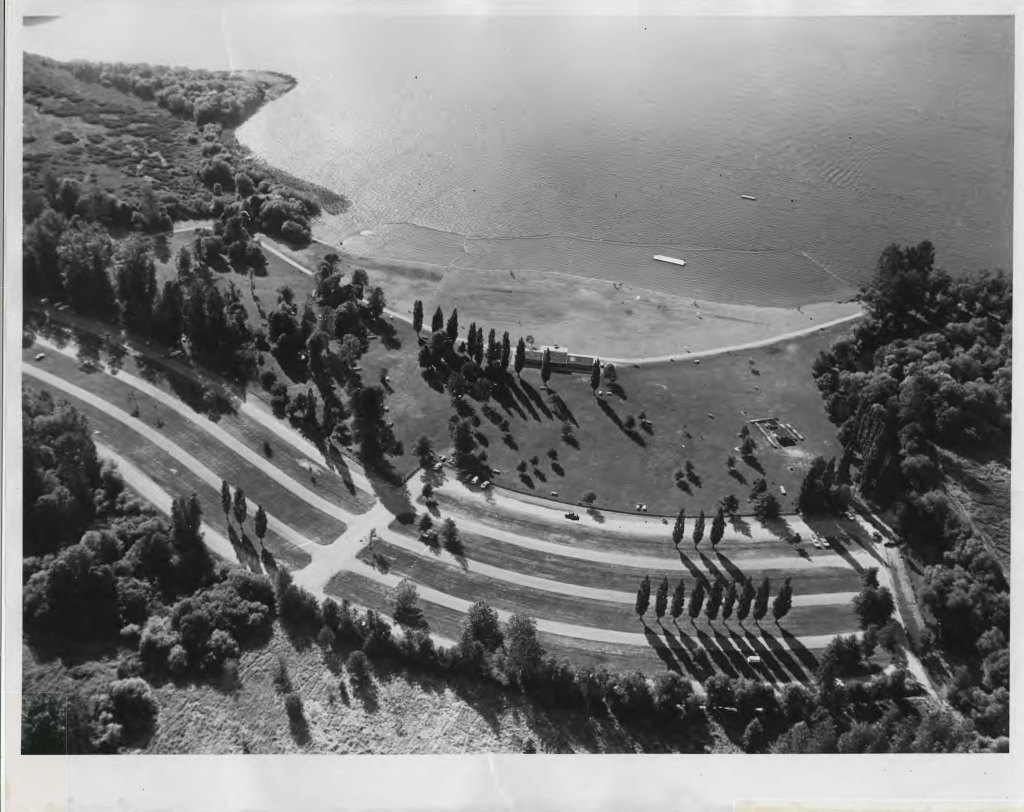
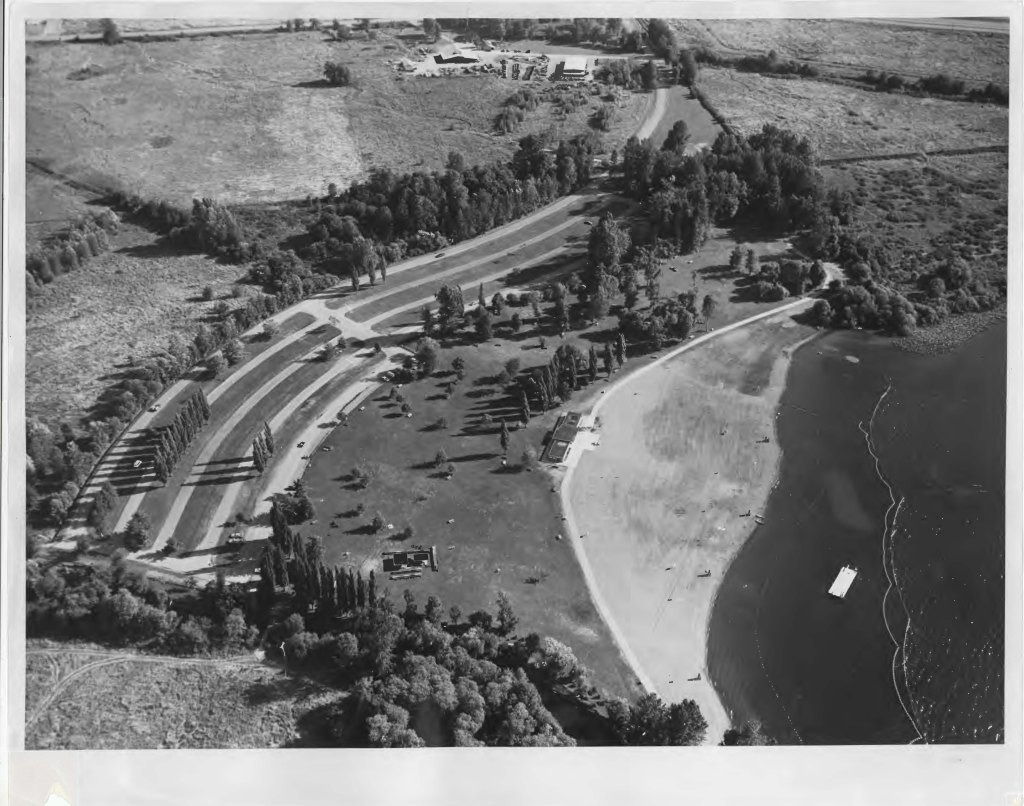
The summer of 1974 was a busy time for Bundy: in the late spring/early summer on May 30/June 1, 1974 he abducted and killed Brenda Carol Ball after she saw a band play at The Flame Tavern in Burien, WA. On June 11, 1974 Ted abducted then killed Georgann Hawkins from outside her sorority house at the University of Washington in Seattle. A little over a month later on July 14 he abducted and killed both Jan Ott and Denise Naslund from Lake Sammamish Park in Issaquah, and in late summer/early fall on September 2, 1974 he abducted and killed the unknown Idaho hitchhiker during his move from Seattle to SLC. At the time Bundy was also in a fairly committed, long term relationship with Elizabeth Kloepfer and was gearing up for his second attempt at law school in Salt Lake City. He also worked from May 3, 1974 to August 28, 1974 at the Department of Emergency Services in Olympia, WA.
Sherry Deatrick is the fourth living victim I’ve written about since I started writing about Ted Bundy (I briefly forgot about Susan Roller/’Sara A. Survivor’). The first was Sotria Kritsonis, who claims she escaped an encounter with Ted in the winter of 1972 after he asked if she wanted a ride while she was waiting at a bus stop on Rainer Street. The two drove around for a while, and after he realized she got her hair cut short he got angry and threw her out of his car. Kritsonis claims she saw him the following year on TV and immediately knew it was him… but it couldn’t have been Ted, because he wasn’t arrested for his crimes against women until August 1975, and he didn’t purchase his tan VW until the spring of 1973. Now, I suppose it’s possible she saw the news story about how he got caught wearing a disguise while infiltrating an event for the Washington state Democratic party, but I highly doubt it.
Rhonda Stapley is one of the more ‘out there’ living Bundy victims, and by this I mean she has been featured in various television specials and mini-series about the serial killer. Stapley was a twenty-one -year-old pharmacy student at the University of Utah when she claims Ted pulled over and asked if she wanted a ride back to her dormitory after a painful dental surgery in the fall of 1974. Like Kritsonis, she was sitting at a bus stop, and not long into the drive he looked at her and said, ‘do you know what? I am going to kill you now.’ He then knocked her unconscious and drove to a secluded canyon just outside of the city, where he beat and sexually assaulted her over and over again for hours before she was finally able to escape by jumping in a nearby stream. She eventually made her way back to the University of Utah, and because she was worried that her mother would pull her from school Rhonda kept the event to herself until 2011,: ‘I imagined people whispering, ‘that’s that girl who was raped.’ I didn’t want attention. I still don’t.’
Susan Lorrayne Roller (who writes under the pseudonym Sara A. Survivor) is an alleged repeat victim and long-time acquaintance of Bundy during the time he was active (and possibly before) in Washington state. She claims that she was friends with Georgann Hawkins as well, and where I couldn’t find any proof of any friendship (as in, pictures of them together) they were Pierce County Daffodil Princesses a year apart (Susan in 1972, Georgann in 1973). Roller claims that she dated Ted briefly before he began to routinely mentally and physically abuse her, and that he also stalked her during their time together at the University of Washington.
Roller has published three books about Bundy: the first is a memoir published in July 2016 and only a limited number of copies were printed (it has since been completely pulled to be ‘rewritten’); her website has disappeared as well because the domain wasn’t properly maintained. The second and third books are more based in facts, and are directly related to the Bundy investigation. In ‘Defense of Denial: Ted Bundy’s Final Prison Interview, 1989’ (published on April 5, 2016), Sarah released some interviews between Ted and Bob Keppell that supposedly provides evidence there were additional victims, and shows proof that police kept information related to the case from the public. Her third book, ‘Reflections on Green River: The Letters of, and Conversations with, Ted Bundy,’ was also published on April 5, 2016 and is ‘a collection of actual documents related to the interviews that took place between WA State authorities in 1984 and 1988 that were released to Roller after years of coming forward.’
James E. Deatrick died at the age of fifty-four on November 24, 1985, and Sherry’s mother Mary died at the age of 78 on March 26, 2014 at Floyd Memorial Hospital in New Albany, IN. Sherry is 67 years old (as of February 2025), and is a widow currently living in Largo, Florida. Her husband Donald Paul Breitfield Kaler died on January 30, 2000 at the age of forty-four, and according to his obituary, he was a US Army Veteran and a licensed attorney; he worked as a commercial insurance underwriter for the Kentucky Farm Bureau. Her brother Timothy A. Deatrick lives in Port Saint Lucie, Florida with his wife, Sandra.
Works Cited:
Deatrick, Sherry. (April 2, 2020). ‘Hypnotised by a Handsome Stranger.’ Taken February 25, 2025 from vtfeatures.co.uk
Deatrick, Sherry. (April 2, 2020). ‘True Life Lucky Escape: Hypnotised by a Handsome Stranger.’ Taken February 24, 2025 from vtfeatures.com
‘Deatrick Law Firm: Sherry R. Deatrick, Attorney at Law.’ Taken February 25, 2025 from piattorneylist.com/online/memberDetail38461.htm
Holland, Jeffrey Scott. ‘Unusual Kentucky: Sherry Deatrick.’ (June 7, 2010). Taken February 25, 2025 from unusualkentucky.blogspot.com
Punteha van Terheyden. (July 27, 2019). ‘Hitching a ride with handsome stranger Ted Bundy nearly cost me my life.’ Taken February 24, 2025 from ‘The Mirror.’
geocities.ws/deatrickgallery/deatrick.html


During his death row interviews in January 1989 Ted Bundy confessed to Idaho Investigators Randy Everitt and Russ Reneau that he killed a young hitchhiker in Idaho on September 2, 1974 near Treasure Valley by the Eisenmann exit on the I- 84 on the outskirts of Boise. The handsome twenty-seven-year-old was in the process of relocating from Seattle to Salt Lake City for his second attempt at law school when he stumbled upon the girl who he said had light brown hair, was between 16 and 18 years old, around 5’6″ tall; she was carrying a green backpack and wore a ‘simple beaded necklace with black and light-colored beads resembling spaghetti.’ Bundy said he strongly suspected that she was a runaway from Boise and was making her way to Montana or Wyoming, but he never gave investigators her name as he claimed to not know it.
Upon leaving the I-84 (as he remembered it) in ‘the outskirts of Boise’ Bundy noticed a young woman hitchhiking at the top of the on ramp of the 1-84, which ran through a neighborhood he said was filled with ‘ranch style suburban houses.’ Ada County Sheriff’s deputy Tim Cooper said that he initially felt there were some inconsistencies regarding the description he gave of the area and 84 but eventually realized the area was under construction at the time he would have passed through in early September 1974. Judging from Ted’s recollection of ‘ranch styled houses’ on the edge of Boise, Cooper strongly feels that he picked up his young victim by the Eisenmann Rd exit located southeast of the Boise airport.
Many investigators believe that Bundy’s confession about the unknown Idaho hitchhiker is legitimate and may be one of his more honest moments, as he was largely truthful when discussing other confirmed homicides during his final days, including Lynette Culver, who is the killers only confirmed Idaho victim and whose remains have also never been recovered. During the hour long conversation, he told LE that the young girls green backpack did not go into the river like everything else that belonged to her, and it went with him to SLC, where he tossed it out his VW’s window near some garbage dumps (as it wasn’t strange to see discarded items scattered around the area). While being questioned by Idaho investigators, Bundy said that he could no longer remember her name and after he killed her he burned her identification card.
There’s some discrepancy in what happened immediately after the murder took place: the ‘TB MultiAgency Team Report’ says nothing about Ted returning to the area to dispose of the body on September 3rd, as it was never mentioned to Everitt and Reneau during their interview on January 22, 1989. However, according to Polly Nelson, the following day her client returned to the body and took Polaroids of the remains then dismembered her and dumped the pieces in a nearby river that is strongly believed to be the Snake River, a major waterway in the Pacific Northwest that is about 1,080 miles long.
Elizabeth Kendall gave some details about her personal recollection surrounding when Bundy left for law school on September 2, 1974 in early September 1974 in her 1981 book, ‘The Phantom Prince:’ that morning, her friend Mary Lynn Chino made everyone a big breakfast on her houseboat before he left for Utah, and during his drive Ted called her in the late afternoon/early evening from Nampa, ID to tell her that he loved her. She mentions that they had picnicked there on one of their vacations to Utah: ‘he called me again from outside of Salt Lake City to tell me where he was, and he called me from his apartment to tell me how much he loved the place I had found for him. We talked several hours a week, running up huge phone bills.’ Nampa was slightly over twenty-two miles from Boise, which would have put Bundy in the middle of the city in slightly over thirty minutes after he spoke with Kendall.
It’s worth noting that according to the ‘1992 TB Multiagency Team Report,’ Bundy stopped for gas the fourth time on September 2, 1974 somewhere within the city of Boise, although I do want to point out that Kevin Sullivan refers to different locations that Ted got gas that don’t quite match the 1992 TB MultiAgency Report: he said that he stopped for fuel the third time within ‘the Boise city limits’ and got fuel for the fourth and last time in the early hours of September 3rd in Burley, Idaho.
According to Russ Reneau, when he showed up to talk to Bundy in Starke, Florida ‘it was the first time I’ve ever been invited by a serial killer himself to come talk with him.’ … ‘It was clear that he was fatigued. I saw signs of stress and, through all of that, he was polite and actually amiable.’ … ‘In spite of his friendly persona, it was clear to me that we were dealing with an evil, a truly evil man.’ During their conversation the condemned man also gave very precise details about how he raped then killed Lynette Culver of Pocatello on May 6, 1975 and volunteered details that only her killer would have known. Regarding Culvers murder Reneau said that he strongly believed Bundy was responsible: ‘I feel like what we came away from out of that interview was able to bring closure to one Idaho family. That is always a good outcome.’ About both girls murders Tim Cooper commented that: ‘it begs the question why would he lie about our Jane Doe case and then tell the truth about Lynette Culver.’
Lynette Culver was born on July 31, 1962 in Renton, WA and was killed by Ted Bundy on May 6, 1975 in Pocatello, ID. She was last seen leaving Alameda Junior High School during her lunch period boarding a bus, and after abducting her he brought the 12-year-old back to his room at the Holiday Inn, where he sexually assaulted then drowned her in the bathtub before eventually disposing of her body in a river north of Pocatello (possibly the Snake). In the time following her disappearance, police assumed she was a runaway, however as time went by, they received no reports of any sightings of her they began to lean towards foul play. During his Idaho confession in January 1989 Bundy confessed to killing a young girl that matched Culver’s general description. According to (retired) Idaho Attorney General Jim Jones, he was ‘frankly astounded by the detail that he was able to provide with respect to Lynette, and of course we had a total absence of detail on the other one he confessed to the hitchhiker.’
After looking into the confession Idaho investigators determined there was no missing person report that matched his supposed victim and nobody was ever recovered. Of the confession of the Idaho hitchhiker, Reneau wondered ‘did he fabricate it? I’m not sure, or was he simply withholding information in the hopes that we would extend his life? I’ve never been able to resolve that in my mind over the years.’ … ‘I was expecting someone that I could read better. He was not nervous at all during the interview I had with him, much different from any other homicide suspect I’ve ever interviewed.’
In a podcast with Ada County Sheriffs department, Deputy Lauren Monte sat down with Cold Case Investigator Detective Tim Cooper and went over details related to the Snake River Jane Doe. About the necklace the victim was wearing, Detective Cooper clarified that the ‘kinds of whatever it was they were more like long, little sections of spaghetti with a with a strings F through it and they were black and well black and a lighter color.’
About the Snake River Jane Doe, Tim Cooper said that what Bundy ‘had to say about Jane is credible, and a lot of that has been that we have from the audio is her description and again what sparse details that he could recall. He said that he thought she was from Boise, from Ada County, and hat she was maybe trying to get to Montana. He estimated her age to be younger, maybe not even 18 yet. He provided a clothing description and description of her. Mr. Bundy indicated that he was traveling eastbound on Interstate 84 in what he believed to be Ada County or the Boise area, on the outskirts. It sounded like, from what he said of Boise, when he first encountered our Jane, who appeared to be hitchhiking or standing alongside the highway as if she needed a ride. I picked up a young woman who was hitchhiking, traveling. Well, I was traveling east at the time. She was standing… it wasn’t downtown, but it was further out of the city. It seems like they were like ranch style suburban houses. He pulled over and offered her a ride, which she accepted and she got into his notorious yellow Volkswagen Beetle and away they went, eastbound on I-84. Based on the description that Mr. Bundy provided, and this isn’t 100%, but we have to go off of what details we have. I’ve looked at old maps and old photos of the interstate from that era and have tried as diligently as I can to form an idea of where she was picked up, and I think the closest that I’ve been able to get to is possibly in the vicinity of Eastbound 84 at Eisenman Road. In that area, this is on the outskirts of Boise, there were and still are in fact some ranch style homes that are visible from that particular exit, and this would not have been the case at many of our other exits that would have been considered outskirts, like Vista or Broadway. So that seems to fit very closely, but again it’s not for sure but this may be where he picked up Jane Doe. It sounds like his confessions have come under quite a bit of scrutiny. … ‘I do believe the confession is reliable, and I understand why his confession may come under scrutiny, or may have in the past. I think it’s likely because some felt that Bundy was lying to get a state of execution at that time. The problem with that is, the Governor of Florida was publicly adamant that no stay would be given in the weeks leading up to Bundy’s execution date, which is actually I think what prompted Mr. Bundy to talk about these unsolved cases, as he stated he wanted to absolve himself of sin before his death.’
The following is an excerpt from Polly Nelson’s book, ‘Defending the Devil’ about how Ted confused to her killing the unknown Idaho hitchhiker, and where I’d normally paraphrase large sections like this I decided to include it in its entirety: ‘he had been driving around in the hills of Idaho, getting to know the area, looking for safe sites to take a victim. He was a meticulous researcher. It was an important part of a ritual so elaborate that, when I asked him about reports that he had killed over one hundred people, he actually chuckled and shook his head at the naivete of non-murderers: ‘They have no idea what it takes to do one, what it takes out of you.’ I asked him if the figure of thirty-five, which I’d seen in other accounts, was correct. He paused, stared at me, and scanned his censor to decide whether to admit to such a detail, because that was where he had always drawn the line before. He had freely implied everything, but never outright admitted one detail, like some superstitious child’s idea of what could be held against him. He finally nodded and mumbled, ‘yes.’ While driving, he spotted a hitchhiker, a girl around fifteen years old. He had not planned to do anything while scouting, but there she was. He checked the rearview mirror for other cars. None. She got in and started talking to him. He had to act fast: he did not like his victims to talk, he did not want to get to know them, he did not want to know they were real. He reached back for his tire iron and hit her over the head. She slumped in the seat, but awoke soon afterward, moaning. He knocked her out again. I noticed for the first time how strong Ted’s arms were. He had his elbows on the table and his forearms outstretched toward me as he talked. His arms were firm and sinewy, with bulging veins. His hands were large and bony. I looked at his face. Ted’s skin was darkening as he spoke. He was on a roll now, in a sort of trance, recalling every detail as he reviewed the fifteen-some-year-old film in his head, frame by frame. No detail was too small to recall, everything was important, everything had meaning. He was like a reverent disciple describing a spiritual revelation. Ted was no longer censoring himself; he had slipped into a warm wave of memory and was transported. For the first time ever, I was afraid of him, acutely aware of how swiftly he could reach me with his hands if he wanted to, of how it would be too late by the time the guards on the other side of the glass reacted. It was the absolute misogyny of his crime that stunned me, his manifest rage against women, that left me no place to retreat to. He had no compassion for this victim at all. It wasn’t that Ted took sadistic pleasure in telling his story, it was just that he was totally engrossed in the details. His murders were his life’s accomplishments. To him, each recollection was a profound illustration of his skill, his willingness to go forward, his good luck. There had been no guarantees — to Ted, each completed murder had seemed like a small miracle. He drove across the state line to a secluded place in the woods that he was already familiar with. He led the girl out of the car, assuring her that no harm would come to her. He made her strip and kneel on her hands and knees while he took Polaroid pictures of her. (For Ted, another small miracle had been that when his apartment had been searched upon his first arrest in Utah, the investigators had failed to check the building’s utility room. When he was released on bail for the attempted abduction of Carol DeRonch he retrieved the shoebox of photos he’d hidden there and destroyed the most graphic and conclusive evidence of the true depth of his depravity). She cried. He could see the look of terror in her eyes, her eyes begging for mercy. He kept reassuring her. He didn’t like to see their hurt, he said, he didn’t like to see his victim as a person: he wasn’t the kind of person who would harm another. On several occasions, Ted had told me, ‘believe me, Polly, I am not the kind of person who would hurt a fly. I never even hit a man. Except once, on the playground at grade school, and I didn’t even want to do that, but the other kid forced me. I felt terrible afterward, disgusted with myself.’ Then he got behind her, slung a noose around her neck, and strangled her as he raped her. He’d continued to reassure her he would let her go, and she had seemed to believe him. He said he’d felt a little sad that he could not let her go, that he had to kill her, but she would be able to identify him, of course. Afterward, he pulled her body deeper into the woods and, the next day, drove back to take more pictures and to cut her body into pieces (Defending the Devil, 257-259).’
It is important to point out that Bundy’s retelling of events taken from Nelson’s book is dramatically different from the one he told Idaho investigators on January 22, 1989 in Starke, Florida. For example, Nelson states that her client confessed to her that he’d been ‘driving around the hills of Idaho, getting to know the area, looking for safe sites to take a victim,’ however this is not what he told Russ Reneau. Also, during his hour-long conversation with Reneau, he made no mention of coming back to the body the next day, and said that he immediately placed her in the river.
In the days after Bundy’s death row confessions, Pocatello police strongly felt that he was responsible for Lynette’s murder, however more recently investigators have challenged this, as they feel she was the first of a string of abductions and homicides that occurred in the area between 1978 and 1983. After Lynette disappeared Patricia Campbell and Tina Anderson were both taken in July 1978, and their bodies were found in October 1981 in Malad City, Idaho. Christina White was last seen on April 28, 1979 during the Asotin County Fair in Asotin, WA. At 2:30 PM, she called her mother from a friend’s house to say she was feeling sick from the heat and was last seen sometime between 7:00 and 10:00 PM, and when her mom went to pick her up she wasn’t there. Twenty-two year old Kristin Noel David was last seen alive on June 26, 1981, while bicycling southward on US Highway 95 towards Lewiston, Idaho. A little over a week later on July 4, her dismembered remains started to turn up along the Snake River roughly six miles west of Clarkston, Washington. The next young woman that vanished was twelve year old Linda Smith, who was taken from her bedroom on June 14, 1981; her remains were found in May 1982 below Hospital Way in a hilly area near East Center Street in Pocatello. On September 12 ,1982 eighteen year old Brandy Miller and her stepsister twenty-one year old Kristina Nelson vanished after leaving Nelson’s apartment to walk to a nearby grocery store. On March 19, 1984, the remains of both women were found down a hillside off Highway 3, roughly forty miles outside of Lewiston. The last (female) murder was 14-year-old Cindy Bringhurst, who vanished in June 1983 and was discovered deceased the next month. While some sleuths strongly believe the abductions and murders to be related, the idea has failed to gain any steam.
In June 1982, the remains of a man were discovered in the Snake River near the mouth of the Grand Ronde River in Nez Perce County, Idaho. The Nez Perce County Coroner estimated that the indivudual was between eighteen and twenty-two years old, 5’11” tall, and weighed between 145 and 160 pounds. It was also noted that he had straight dark brown/black hair that was 3-4 inches long, a 2-inch scar on his right ankle, and calluses on both palms, pointing that he had had a job involving physical labor. The details of the case were entered into the National Missing and Unidentified Persons System (NamUs) as UP3041 in December 2008, and the man became known as Snake River John Doe. In 2023, the Nez Perce County Sheriff’s Office and Idaho State Police Forensic Services submitted genetic evidence to Othram Laboratories in The Woodlands, Texas to determine if DNA testing could help identify the unidentified subject, which led to the positive identification of the man, who was determined to be Dewayne Surls.
I strongly suspect that Bundy was mistaken that the unknown young woman he abducted and killed from Idaho was from Boise, and wonder if maybe she was just passing through and was ready to move on when she ran into him. When Ted said he burned her identification, did he insinuate that he looked at it and at the very least remembered where she was from? I strongly suspect the young woman he abducted wasn’t from Idaho at all, and was from a surrounding state and just happened to be passing through when he killed her.
Deborah Lee Tomlinson was last seen on her sixteenth birthday on October 15, 1973 in Creswell or Eugene Oregon. The brunette had brown eyes, was 5’5” tall, weighed 140 pounds and had left home with an unnamed teenage girlfriend; she has never been seen or heard from again. Another good fit is Peggy Ann Reed, who was last seen possibly hitchhiking on March 28, 1974 in Santa Rosa, CA in the area of Guerneville Road and Coddling Town Mall. The fifteen year old was 5’2,” weighed 110 pounds, blue eyes and brown hair that was frosted at the time of her disappearance. A young woman that is possibly a good fit for the Idaho Hitchhiker is Charlotte Ann Erdman, who was 15 years old when she disappeared from Watertown, Wisconsin on July 18, 1974. She had light brown hair, blue eyes, was somewhere between 5′ 7″ and 5′ 9″ tall and weighed somewhere between 125 and 165 pounds.
Twenty-five year old Linda Lee Lovell and her male friend Stephen Locke Packard disappeared in June/July 1974 from Stinson Beach, California. Lovell was a resident of Missoula Montana, and eighteen year old Stephen was originally from New Jersey, and where it is unknown how the two knew each other or for how long it was determined that they were traveling along the California coast, hiking and possibly hitchhiking their way around and planned to make their way to Washington State for the world’s fair, before returning home. On June 10, 1974, Stephen called his family from Stinson Beach, and postcards were received by their respective families from the area in California as well, and on June 20 a travelers check in his name was cashed at a store in Westport, which is about a four hour drive away from Stinson Beach.
Deborah Rae Meyer lived in Red Lodge, Montana at the time of her disappearance on August 4, 1974 however she and her family were visiting relatives in Rawlins, Wyoming at the time she went missing. Meyer was last seen leaving a family member’s house near Seventh and Spruce Streets and was planning to walk to a nearby movie theater, but never arrived; she was never seen or heard from again. At the time she disappeared Deb was 14 years old, stood at 5’4” tall, weighed 115 pounds, and had brown hair; she also had a small circle shaped growth roughly the size of a pencil eraser on her left ear and wore a full set of dentures. Three other young women disappeared in July and August 1974 in the Rawlins area: nineteen year old Carlene Brown and her 19-year-old friend Christy Gross disappeared from the Rawlins fairgrounds on July 4, 1974; ten-year-old Jayleen Dawn Banker vanished from the area on August 23, 1974.
Seventeen year old Susan Rhonda Labbe was last seen hitchhiking in Lawrence, Massachusetts on August 7, 1974; she was 5’5” tall, weighed around 120 pounds and had green eyes. Belinda VanLith was last seen house-sitting for a neighbor around 8 AM on June 15, 1974 located on Little Eagle Lake, Minnesota. The seventeen year olds parents were expecting her home for her sister’s graduation party, but she never arrived, and they reported her missing the following day. She was 5’5” tall and weighed 110 pounds.
About the Snake River Jane Doe, ACSO Cold Case Investigator Tim Cooper said ‘I think this is one of those cases where we’re fifty years down the road, where the public is going to be a big part in solving this.’ If you remember someone who went missing around September 1974, or if anything in this description rings any bells, please contact ACSO at 208-577-3102 or lmontague@adacounty.id.gov.
Works Cited:
‘ACSO Seeks Public’s Help to Identify Teen Abducted by Ted Bundy in 1974.’ (November 1, 2024). Taken February 14, 2025 from adacounty.id.gov
Bertel, Steve & Darrow, Lacey. ‘Idaho investigator speaks of interviewing Ted Bundy.’ (2016). Taken February 15, 2025 from kivitv.com/
Blanchard, Nicole. ‘Serial Killer Ted Bundy said girl in Boise was a victim, Officials want to identify her.’ (2024). Taken February 16, 2025 from idahostatesman.com
Cavallier, Andrea. November 8, 2024). Serial killer Ted Bundy claimed he killed a girl while driving through Idaho in 1974. An investigator is determined to ID her.’ Taken February 13, 2025 from ‘theindependent.com’
Kendall, Elizabeth. ‘The Phantom Prince: My Life With Ted Bundy.’ (1981).
Mortenson, Chris. ‘Idaho AG Investigator On Ted Bundy’s Confession.’ (September 26, 2021). Taken February 14, 2025 from YouTube.com
Nelson, Polly. ‘Defending the Devil: My Story As Ted Bundy’s Last Lawyer.’ (1994).
Sullivan, Kevin M. ‘The Bundy Murders: A Comprehensive History.’ (2009).
Tuttle, Zoe. (November 1, 2024). ‘Sheriff seeking identity of Ted Bundy’s Idaho victim known as ‘Snake River Jane Doe.’’ Taken February 13, 2025 from ktvb.com