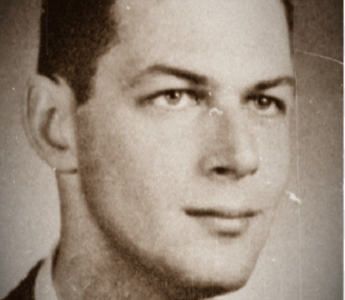
Richard Charles Haefner versus the County of Lancaster, PA, August 11, 1981.

Haefner v. Lancaster County, Pa., 520 F. Supp. 131 (E.D. Pa. 1981).
Citation: 520 F. Supp. 131, docket Number: 81-0922, August 11, 1981.
U.S. District Court for the Eastern District of Pennsylvania – 520 F. Supp. 131 (E.D. Pa. 1981)
Richard D. Haefner versus the County of Lancaster, PA. et al. Civ. A. No. 81-0922.

Harvey S. Miller, Christopher W. Mattson, Lancaster, Pa., Richard R. Galli, Philadelphia, Pa., for defendants.

MEMORANDUM AND ORDER, District Judge Troutman:

The policies supporting the Civil Rights Act of 1871, 42 U.S.C. § 1983,[1] include compensating individuals deprived of federal rights by action taken under color of state law.[2] Claims for injury must be presented in a timely fashion.[3] Congress did not establish a federal statute of limitations for actions brought in federal court under Section 1983, and, therefore, the state statute of limitations for the cause of action most nearly analogous thereto must be “borrowed”.[4]

In the case at bar, plaintiff alleges unlawful arrest, physical and mental abuse during police custody and prosecution of criminal charges against him without probable cause, claims which most nearly resemble state tort actions for assault and battery, false arrest and imprisonment and malicious prosecution.[5] Pennsylvania law requires institution of suit for such claims within two years of accrual.[6] Federal law *133 determines when a federal claim “accrues”[7] and identifies the date as that point in time when the injured party knows or has reason to know of the injury forming the basis of the action.[8]

In the case at bar, plaintiff knew of the injury inflicted by the alleged assault and battery and false arrest and imprisonment when those events occurred in August 1975 and arguably continuing through February 1976. His failure to press these claims within two years bars prosecution irrespective of their merit.[9]

Plaintiff’s claim for malicious prosecution must also be dismissed. To recover therefor, plaintiff must establish that the prior state prosecution terminated in his favor.[10] That is, plaintiff must show that the prior action disposed of the charges in a manner inconsistent with guilt.[11] An indecisive disposition, such as a hung jury, will not suffice, for a prosecution based on probable cause does not deprive a defendant of civil rights within the meaning of Section 1983. No federal claim can exist without proof that the prior state criminal prosecution ended in a manner inconsistent with guilt.[12]

In the case at bar, the state court declared a mistrial after the jury could not reach a verdict. Ultimately, on appeal, the Superior Court of Pennsylvania held that the trial court’s premature discharge of the jury prevented defendant’s retrial in light of the Double Jeopardy Clause of the Fifth Amendment.[13] The prior state action, therefore, did not terminate in a manner inconsistent with defendant’s guilt.[14]

Finally, plaintiff has also failed to state a claim under 42 U.S.C. § 1985(2).[15] This subsection affords a remedy to the *134 victim of a conspiracy to impede or obstruct the “due course of justice” with the intent to deny him the equal protection of the laws. Plaintiff has alleged that defendants’ conspiracy denied him of due process and equal protection of the laws, but he has not alleged that defendants conspired against him because of his membership in a class defined in an invidiously discriminatory manner. Claims under Section 1985(2) must allege a racial or invidiously discriminatory class-based animus.[16] Accordingly, defendants’ motion to dismiss the complaint will be granted.[17]

NOTES
[1] This section provides that

[e]very person who, under color of any statute, ordinance, regulation, custom, or usage, of any State or Territory, subjects, or causes to be subjected, any citizen of the United States or other person within the jurisdiction thereof to the deprivation of any rights, privileges, or immunities secured by the Constitution and laws, shall be liable to the party injured in an action at law, suit in equity, or other proper proceeding for redress.

[2] Parratt v. Taylor, _ U.S. _, 101 S. Ct. 1908, 68 L. Ed. 2d 420 (1981), Robertson v. Wegmann, 436 U.S. 584, 98 S. Ct. 1991, 56 L. Ed. 2d 554 (1978), Carey v. Piphus, 435 U.S. 247, 98 S. Ct. 1042, 55 L. Ed. 2d 252 (1978).

[3] Railroad Telegraphers v. Railway Express Agency, 321 U.S. 342, 64 S. Ct. 582, 88 L. Ed. 788 (1944).

[4] Board of Regents v. Tomanio, 446 U.S. 478, 100 S. Ct. 1790, 64 L. Ed. 2d 440 (1980), Johnson v. Railway Express Agency, 421 U.S. 454, 95 S. Ct. 1716, 44 L. Ed. 2d 295 (1975).

[5] See, for example, Polite v. Diehl, 507 F.2d 119 (3d Cir. 1974), Hileman v. Knable, 391 F.2d 596 (3d Cir. 1968), and Onley v. Simms, 476 F. Supp. 974 (E.D.Pa.1979); Specifically, plaintiff contends that defendants conspired to secure a criminal prosecution against him on charges known to them as false. Additionally, defendants induced plaintiff to submit to a lie detector test, urged other individuals to persuade plaintiff to enter a plea of guilty, gathered background information on prospective jurors, threatened and intimidated various witnesses which plaintiff called in his defense, paid money to witnesses for favorable testimony, and isolated plaintiff in a prison cell known as the “hole”, allegedly designed to cause occupants severe emotional trauma.

[6] 42 Pa.Cons.Stat.Ann. § 5524(1).

[7] Singleton v. City of New York, 632 F.2d 185 (2d Cir. 1980), cert. denied, 450 U.S. 920, 101 S. Ct. 1368, 67 L. Ed. 2d 347 (1981).

[8] See, United States v. Kubrick, 444 U.S. 111, 100 S. Ct. 352, 62 L. Ed. 2d 259 (1979). Cf. Bayless v. Philadelphia National League Club, 579 F.2d 37 (3d Cir. 1978) (under Pennsylvania law the statute of limitations for personal injury actions begins to run when the plaintiff knows or reasonably should have known of the cause of the injury). See also Grabowski v. Turner & Newall, 516 F. Supp. 114 (E.D.Pa.1980), aff’d, 651 F.2d 908 (3d Cir. 1981) and Anthony v. Koppers Co., _ Pa.Super. _, 425 A.2d 428 (1981).

[9] Pangrazzi v. United States, 511 F. Supp. 648 (E.D.Pa.1981).

[10] Everett v. City of Chester, 391 F. Supp. 26 (E.D.Pa.1975). See also Davis v. Chubb/Pacific Indemnity Group, 493 F. Supp. 89 (E.D.Pa. 1980), in which the court suggested several “indecisive” terminations which would not support a malicious prosecution claim: a charge withdrawn pursuant to an agreement with the accused or withdrawn out of mercy requested or accepted by the accused, the entry of a plea of nolo contendere or a pardon by the executive. The court held that a termination through an Accelerated Rehabilitative Disposition Program (ARD) was similarly “indecisive”.

[11] Thomas v. E. J. Korvette, Inc., 329 F. Supp. 1163 (E.D.Pa.1971), rev’d on other grounds, 476 F.2d 471 (3d Cir. 1973).

[12] Singleton v. City of New York, supra.

[13] See Commonwealth v. Haefner, 264 Pa.Super. 144, 399 A.2d 707 (1979).

[14] Formal abandonment of charges by the prosecutor as the necessary consequence of a procedural error committed by the trial judge and barring re-prosecution because of the Double Jeopardy Clause cannot be considered as termination inconsistent with guilt.

[15] This subsection provides that: [i]f two or more persons in any State or Territory conspire to deter, by force, intimidation, or threat, any party or witness in any court of the United States from attending such court, or from testifying to any matter pending therein, freely, fully and truthfully, or to injure such party or witness in his person or property on account of his having so attended or testified, or to influence the verdict, presentment, or indictment of any grand or petit juror in any such court, or to injure such juror in his person or property on account of any verdict, presentment, or indictment lawfully assented to by him, or of his being or having been such juror; or if two or more persons conspired for the purpose of impeding, hindering, obstructing, or defeating, in any manner, the due course of justice in any State or Territory, with intent to deny to any citizen the equal protection of the laws, or to injure him or his property for lawfully enforcing, or attempting to enforce, the right of any person, or class of persons, to the equal protection of the laws;

[16] Jones v. United States, 536 F.2d 269 (8th Cir. 1976), cert. denied, 429 U.S. 1039, 97 S. Ct. 735, 50 L. Ed. 2d 750 (1977); Cf. Griffin v. Breckinridge, 403 U.S. 88, 91 S. Ct. 1790, 29 L. Ed. 2d 338 (1971) (under 42 U.S.C. § 1985(3) plaintiff must allege a class-based discrimination).

[17] Plaintiff’s failure to state any claim under §§ 1983 and 1985(2) justifies dismissal of the complaint as to all defendants. Carey v. Beans, 500 F. Supp. 580 (E.D.Pa.1980), aff’d, 659 F.2d 1065 (3d Cir. 1981), Dezura v. Firestone Tire & Rubber Co., 470 F. Supp. 121 (E.D. Pa.1979), aff’d, 612 F.2d 571 (3d Cir. 1980); Jurisdiction over plaintiff’s pendent state claims will be declined. Plaintiff can assert no right thereto. Gibbs v. United Mine Workers of America, 383 U.S. 715, 86 S. Ct. 1130, 16 L. Ed. 2d 218 (1966). See also, Gallo v. Yamaha Motor Corp., USA, 488 F. Supp. 502 (E.D.Pa. 1980).
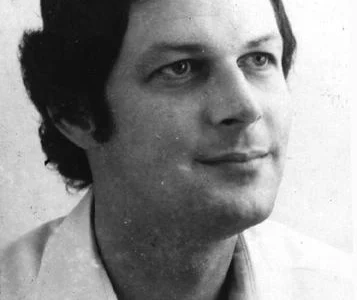
Richard Charles Haefner versus the County of Lancaster, PA, June 25, 1982.

Haefner v. County of Lancaster, PA, 543 F. Supp. 264 (E.D. Pa. 1982). Citation: 543 F. Supp. 264, Docket Number: 82-1018.
Date: June 25, 1982, US District Court for the Eastern District of Pennsylvania.
Richard C. Haefner versus the county of Lancaster, PA.; the Lancaster County Prison. Police Department: Jerry P. Crump, individually and as a Police Officer of the City of Lancaster Police Department; Howard H. Snyder, individually and as a Police Officer of the City of Lancaster Police Department; James Burkey; Kevin Burkey; Thomas Dommel, individually and as Captain of the Guard at Lancaster County Prison; Randy Klivansky and Kathleen V. Mumma, individually and as an employee of the County of Lancaster, Court of Common Pleas.
Civ. A. No. 82-1018, US District Court, ED Pennsylvania.

Richard R. Galli, Philadelphia, Pa., for Dommel and Mumma; Christopher W. Mattson, Lancaster, Pa., for City of Lancaster; J. Richard Gray, Lancaster, Pa., for Klivansky.

MEMORANDUM AND ORDER, District Judge Troutman:

Res judicata rests upon considerations of “economy of judicial time and public policy favoring the establishment of legal relations”. Sea-Land Services v. Gaudet, 414 U.S. 573, 578, 94 S. Ct. 806, 811, 39 L. Ed. 2d 9 (1974), quoting Commissioner v. Sunnen, 333 U.S. 591, 597, 68 S. Ct. 715, 719, 92 L. Ed. 898 (1948). Described as a “fundamental rule of substantial justice” rather than a “mere matter of practice or procedure inherited from more technical times” it should be “cordially regarded and enforced by the courts”. Federated Department Stores, Inc. v. Moitie, 452 U.S. 394, 401, 101 S. Ct. 2424, 2429, 69 L. Ed. 2d 103, 111 (1981) (quotations omitted). Res judicata serves the salutary purposes of “encourag[ing] reliance on judicial decisions [and], bar[ring] vexatious litigation [while] free[ing] courts to resolve other disputes”. Brown v. Felsen, 442 U.S. 127, 131, 99 S. Ct. 2205, 2209, 60 L. Ed. 2d 767 (1979). In order to successfully invoke its protections, three prerequisites need be established: the parties to the instant suit must be the same or in privity with those in the prior litigation; a court of competent jurisdiction must have entered a valid, final judgment on the merits; and the present action must concern the same subject-matter or cause of action as the prior suit. Coggins v. Carpenter, 468 F. Supp. 270, 280 (E.D.Pa.1979). Finding that these conditions have been met, we grant defendants’ motions to dismiss.

Plaintiff originally instituted suit against a plethora of Lancaster City and County public officials and private citizens and charged them with violations of The Civil Rights Act of 1871, 42 U.S.C. § 1983, 42 U.S.C. § 1985(2) and state claims based upon tortious conduct. Specifically, plaintiff’s first suit alleged that in his business as a rock collector he had employed, and then fired, defendant K. Burkey. In retaliation for his firing, K. Burkey allegedly conspired with co-defendants J. Burkey and Klivansky to secure a criminal prosecution of plaintiff. The three defendants then supposedly met and conspired with law enforcement officials who arrested plaintiff and charged him with corruption of a minor, and involuntary deviate sexual intercourse. Thereafter, defendant law enforcement officials subjected plaintiff to harassment, intimidation and abuse and, along with other defendants, maliciously prosecuted plaintiff for crimes which they knew he did not commit. To effectuate their illegal conspiratorial goal, various defendants committed perjury at plaintiff’s preliminary hearing and subsequent trial, sought to illegally pressure plaintiff into tendering a guilty plea, improperly investigated and interviewed potential jurors and threatened and intimidated defense witnesses. Upon completion of plaintiff’s trial, which ended in a hung jury, he was sentenced to prison this for contemptuous conduct. While in the county prison, plaintiff was allegedly subjected to various abuses and forced to reveal information critical to and necessary for his defense at re-trial.

*266 The Commonwealth’s attempt to re-try plaintiff was successfully blocked by decision of the Pennsylvania Superior Court, grounded upon double jeopardy considerations. See Commonwealth v. Haefner, 264 Pa.Super. 144, 399 A.2d 707 (1979). We dismissed plaintiff’s first suit because it was time-barred. See Haefner v. County of Lancaster, 520 F. Supp. 131 (E.D.Pa.1981), aff’d, 681 F.2d 806 (3d Cir. 1982).

Plaintiff’s current suit is predicated upon the same general events outlined above; they commenced in August, 1975. Additional allegations are contained in the instant suit, which, plaintiff urges, assert a new dimension to the prior suit and obstruct or exclude application of res judicata. Specifically, plaintiff now informs the Court that he was subjected to multiple prosecutions. The first lawsuit was predicated upon false charges inspired by defendant K. Burkey. The case at bar, plaintiff asserts, is grounded in false charges inspired by defendant Klivansky. Unlike the “Burkey-inspired” charges, the “Klivansky-inspired” charges were not the subject of the mistrial which eventually resulted in litigation before the Pennsylvania Superior Court. Moreover, plaintiff now argues that the “Klivansky-inspired” charges were outstanding until March 7, 1980, at which time they were nolle prossed on the basis of insufficient evidence. The unlawful conspiracy now alleged and relating to the “Klivansky-inspired” charges includes defendants’ supposed failure to comply with a Court order requiring them to expunge plaintiff’s arrest record. See Commonwealth v. Haefner, 291 Pa.Super. 604, 436 A.2d 665 (1981).

We turn now to our analysis of the issue involved. The first element necessary to establishment of a res judicata bar, the requirement that the subsequent action be brought against the same parties as the initial action, is met here. The presence of defendant Mumma, the only defendant not named in the first suit, does not compel a contrary result. Coggins v. Carpenter, 468 F. Supp. at 280.

We have equally little trouble finding that the second required element, a final, valid judgment on the merits, is met. A dismissal for failure to state a claim is a “judgment on the merits”. Federated Department Stores, Inc. v. Moitie, 452 U.S. at 399, 101 S. Ct. at 2428, n. 3, 69 L. Ed. 2d at 109, n. 3; Hubicki v. ACF Industries, Inc., 484 F.2d 519, 523 (3d Cir. 1973); Hayes v. New England Millwork Distributors, Inc., 485 F. Supp. 459, 461 (D.Mass.1980); Coggins v. Carpenter, 468 F. Supp. at 280. Likewise, dismissal of a suit as time-barred establishes a res judicata bar. Wachovia Bank & Trust Co., N.A. v. Randell, 485 F. Supp. 39 (S.D.N.Y.1979).

The third element, whether this suit concerns the same subject-matter as the first one, is the final subject of inquiry. Plaintiff argues that the factual predicate of this suit is grounded in the “Klivansky-inspired” charges while the basis of the first suit was the “Burkey-inspired” charges. Moreover, since the “Klivansky-inspired” charges were not terminated until some time after the “Burkey-inspired” ones and because they included the improper failure to expunge plaintiff’s arrest record, plaintiff asseverates that this suit is a separate cause of action. Finally, plaintiff points to Fed.R. Civ.P. 18(a) which provides that “[a] party asserting a claim to relief as an original claim … may … join … as many claims … as he has against an opposing party” (emphasis added), and urges that he was not required to bring all claims against all parties in the first suit. We disagree.

A res judicata bar is erected against suits which seek to relitigate issues which “were or could have been raised” in the first action. Kremer v. Chemical Construction Corp., _ U.S. , , n. 6, 102 S. Ct. 1883, 1889, n. 6, 72 L. Ed. 2d 262 (1982). In determining what was or could have been raised in the first suit and whether the same claim is again raised, courts are required to determine the degree of consanguinity between the two suits.

Numerous formulae, each attempting to make that determination, have developed. Some courts consider whether the “same *267 evidence supports both claims and whether the essential facts in the second [suit] were present in the first”. Tucker v. Arthur Anderson & Co., 646 F.2d 721, 727 (2nd Cir. 1981). Others hold that “different legal theories” spawned by a “single alleged wrong” may not form the basis of a second suit. Cemer v. Marathon Oil Co., 583 F.2d 830, 832 (6th Cir. 1978).

The Third Circuit has articulated this standard:

If the second suit relates to the same cause of action as the first … it can be said that the first judgment dismissing the previous suit “with prejudice” bars a later suit on the same cause of action.
Gambocz v. Yelencsics, 468 F.2d 837, 842 (3d Cir. 1972) (emphasis added) (quotations omitted). Another way of expressing the focus of the court’s inquiry requires reference to whether the claims “arose out of the same transaction” Cramer v. General Telephone & Electronics Corp., 582 F.2d 259, 267 (3d Cir. 1978), cert. denied, 439 U.S. 1129, 99 S. Ct. 1048, 59 L. Ed. 2d 90 (1979), or are predicated upon the same “liability creating conduct”. Ley v. Boron Oil Co., 454 F. Supp. 448, 450 (W.D.Pa.1978). See also Borough of Lansdale v. Philadelphia Electric Co., 517 F. Supp. 218, 222 (E.D.Pa.1981); Coggins v. Carpenter, 468 F. Supp. at 280; Sims v. Mack Trucks, Inc., 463 F. Supp. 1068, 1069 (E.D.Pa.1979).

The “liability creating conduct” complained of in the first suit appeared, at that time, to relate to a series of charges allegedly motivated and inspired by defendants K. Burkey and Klivansky. For example, the first complaint charged that both defendants worked for plaintiff and conspired inter se to willfully subject him to false criminal charges. First Complaint ¶¶ 17, 19. Without any attempt to distinguish between the conduct of defendants K. Burkey and Klivansky, it alleged that both of them filed false charges with law enforcement officers. First Complaint ¶¶ 20, 21. The next allegation of joint K. Burkey/Klivansky misconduct asserted that plaintiff was arrested due to the false information which both defendants knowingly provided. First Complaint ¶ 22. Continuing, Klivansky and K. Burkey, along with other defendants, knowingly continued to conspire to have plaintiff maliciously prosecuted. First Complaint ¶ 28. Thereafter, K. Burkey and Klivansky agreed to give false testimony against plaintiff. First Complaint ¶ 32. Specific allegations of joint K. Burkey/Klivansky misconduct are no longer alleged after paragraph 32 of plaintiff’s first complaint. However, Klivansky was separately charged with accepting an undisclosed sum of cash in exchange for testimony favorable to the Commonwealth. First Complaint ¶¶ 35, 36. Finally, Klivansky committed perjury. First Complaint ¶ 38.

Plaintiff, as outlined supra, now alleges that separate charges were spawned by defendants Klivansky and K. Burkey and that the “Klivansky-inspired” conspiracy still may not have terminated in that plaintiff’s arrest record may not have been expunged. These current assertions are insufficient to defeat the application of res judicata because both suits arise out of the same core of “liability creating conduct”. A fair reading of the two complaints demonstrates that plaintiff’s “core complaint” is the same in both suits. True, the outer periphery of the second suit is not exactly co-extensive with the first. However, it complains of conduct which “was or could have been” litigated in the first suit.

Both suits charge a conspiracy by defendants to knowingly subject plaintiff to false and unwarranted criminal prosecutions for specified crimes. The core of operative facts alleged in both suits commenced in the summer of 1975, and continued thereafter.

Plaintiff is now attempting to engage in a post-hoc redrafting of his initial complaint by explaining that, contrary to a plain reading thereof, it only charged a “Burkey-inspired” conspiracy. As such, plaintiff seeks to impermissibly limit and narrow the scope of his first complaint. However, the requirement of notice pleading mandates a broad, generous reading of complaints. Conley v. Gibson, 355 U.S. 41, 78 S. Ct. 99, 2 L. Ed. 2d 80 (1957). This rule is *268 not altered when considering the breadth of a complaint for res judicata purposes. Blair v. City of Greenville, 649 F.2d 365, 368 (5th Cir. 1981).

Finally, plaintiff’s valiant attempts to distinguish the scope of the two suits are unsuccessful because plaintiff was aware of defendants’ “liability creating conduct” with regard to the “Klivansky-inspired” charges when he filed his initial suit. As such, he was required to allege its existence therein. Accord, Id. (res judicata bars suit based upon conduct which antedated final judgment in the first suit); Crowe v. Leeke, 550 F.2d 184, 187 (4th Cir. 1977) (res judicata precludes litigation of defendants’ conduct which occurred prior to entry of the first judgment).

An appropriate order will issue granting defendants’ motion to dismiss.