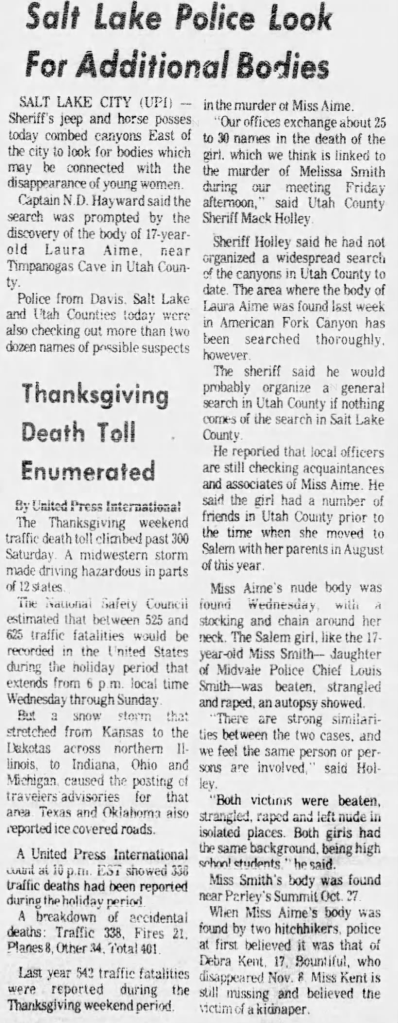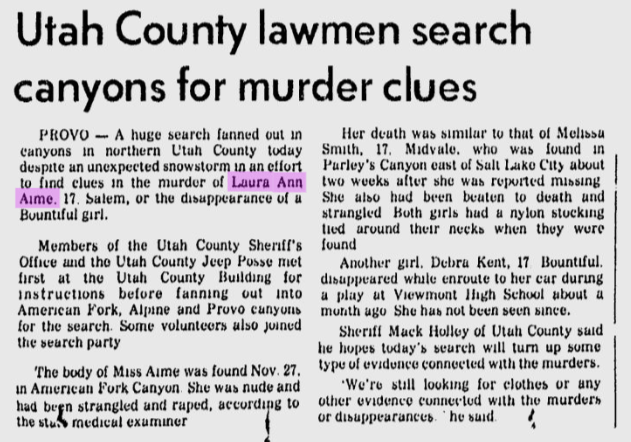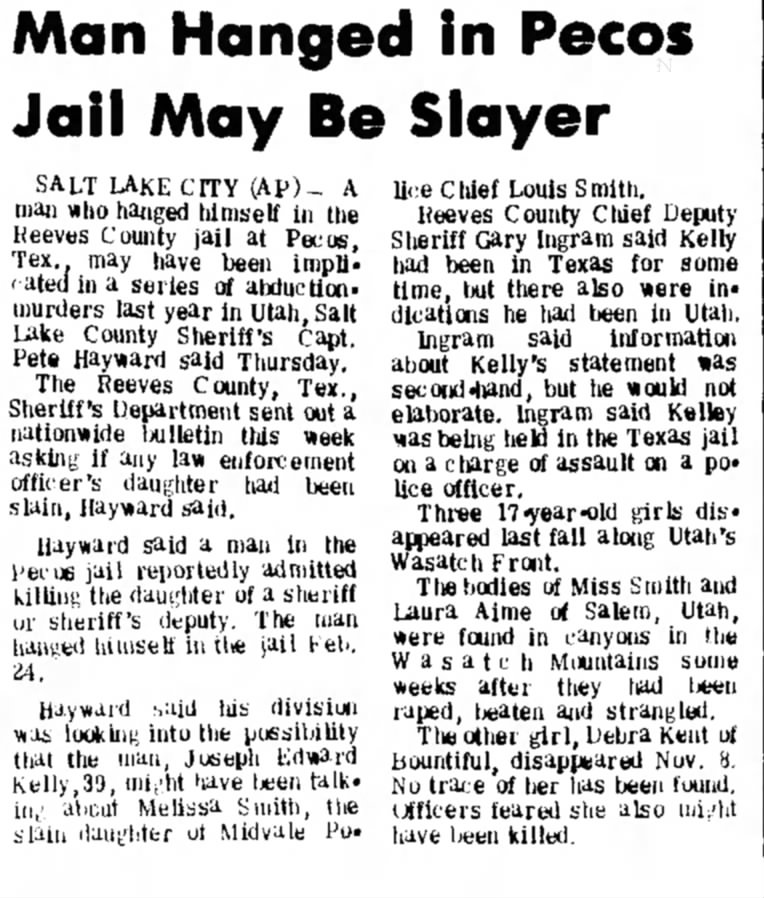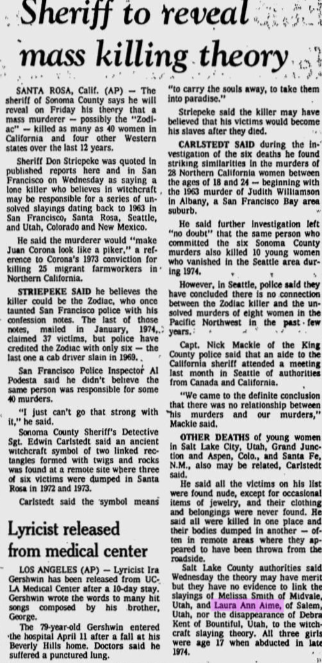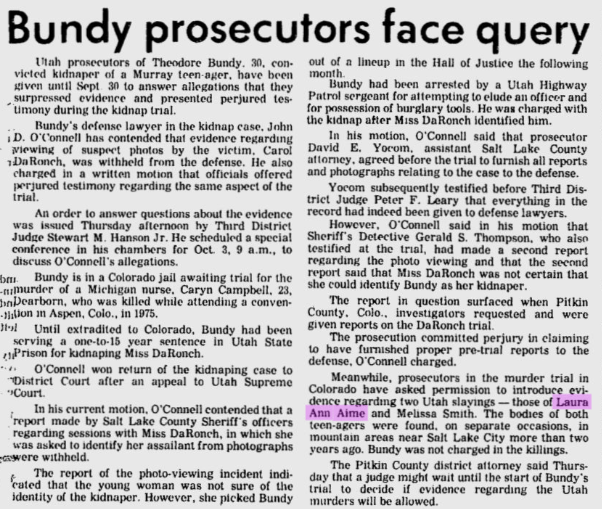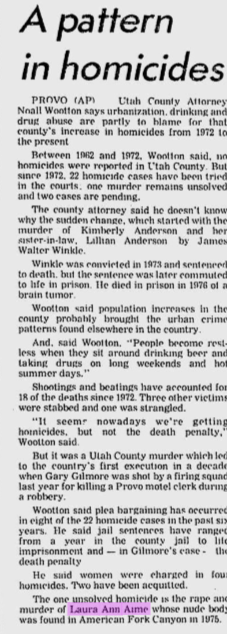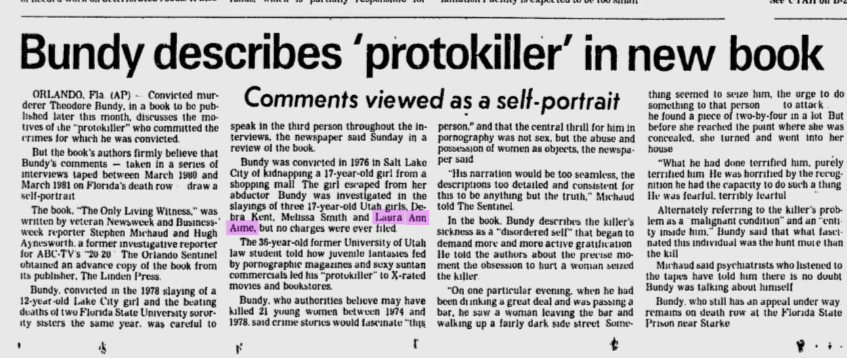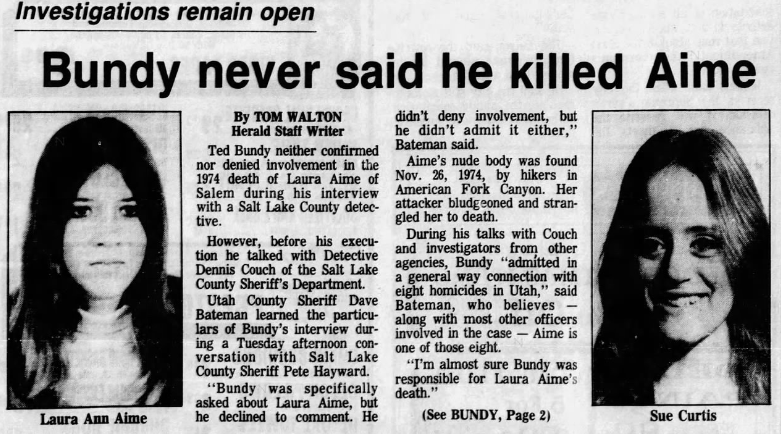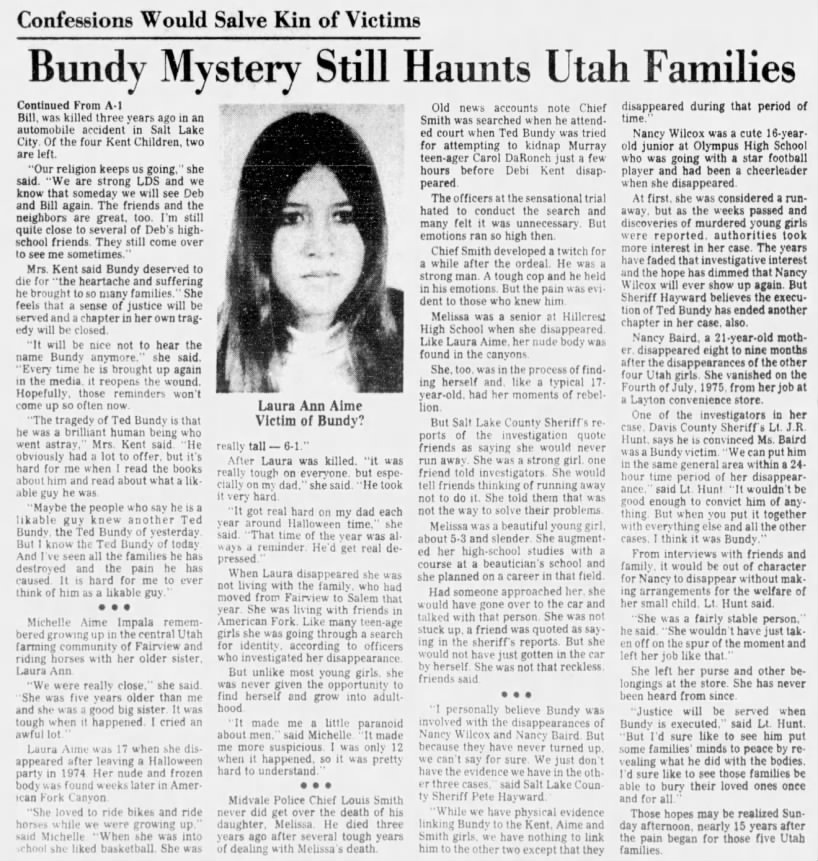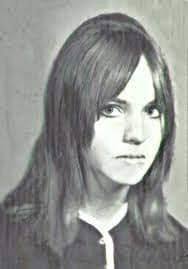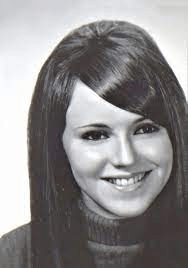
Trial Transcript: Carol Ann DaRonch, February 23, 1976.

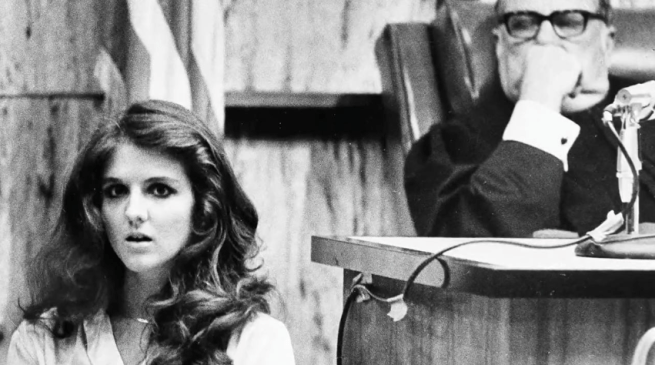
Tiffany Jean transcribed the following testimony of Carol DaRonch under direct examination by Deputy County Attorney David Yocom and is from the transcript of Case No. 28629 in the Third District Court of SLC, The State of Utah vs. Theodore Robert Bundy.

Q. Will you state your name and address, please.

A. Carol Ann DaRonch, 5456 South Seventh West.

Q. Carol, I am going to ask you to keep your voice up–the acoustics in here are not the best in the world—so the Judge and counsel can hear. Okay?

A: Okay.

Q: How old are you, Carol?

A: Nineteen.

Q: And what is your birth date?

A: June 8th, 1956.

Q: And how old were you on the 8th day of November, 1974?

A: Eighteen.

Q: And where did you reside at that time, Carol?

A: With my parents.

Q: At the same address?

A: Yes.

Q: Did you own an automobile at that time?

A: Yes.

Q: Would you describe for the Court the type of car you owned?

A: It’s a ’74 maroon Camaro.

Q: Where did you work at that time, if you did?

A: Mountain Dell.

Q: Where is that located?

A: 205 East Second South.

Q: What did you do there?

A: Typist.

Q: Have you had an opportunity, Carol, to check the record with your employer to determine what hours you worked on the 8th day of November, on Friday, 1974?

A: Yes.

Q: And when did you work?

A: I worked from 9:00 to 6:00.

Q: And where did you go after you got off work at 6:00 p.m. that day?

A: I went straight home.

Q: Do you know how long it takes you to get home from Mountain Bell?

A: About 20 minutes.

Q: Do you recall what you did at home?

A: No.

Q: Do you recall the next thing you did?

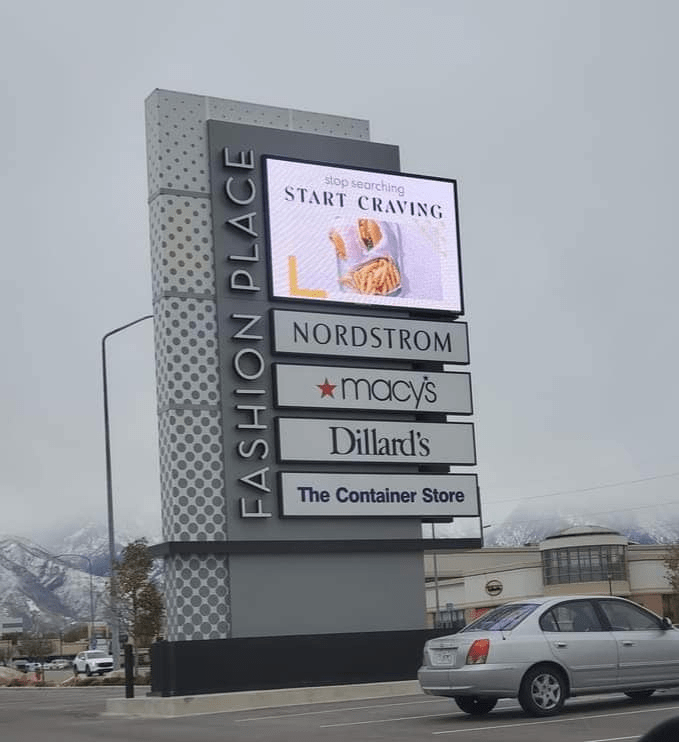
A: I went to Fashion Place Mall.

Q: And why did you go there?

A: I just went there shopping. I was looking for a birthday present.

Q: Anyone go with you?

A: No.

Q: And not long after you got home did you park at Fashion Place Mall?

A: About 15 to 20 minutes.

Q: Do you recall when, approximately, you arrived at the mall?

A: About 7:00.

Q: Where did you go after you arrived at the Mall— the parking lot, specifically?

A: I parked in Sears’ parking lot.

Q: And where is that located in relationship to the Sears store itself?

A: On the west side of Sears.

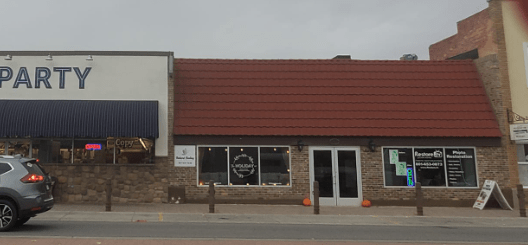
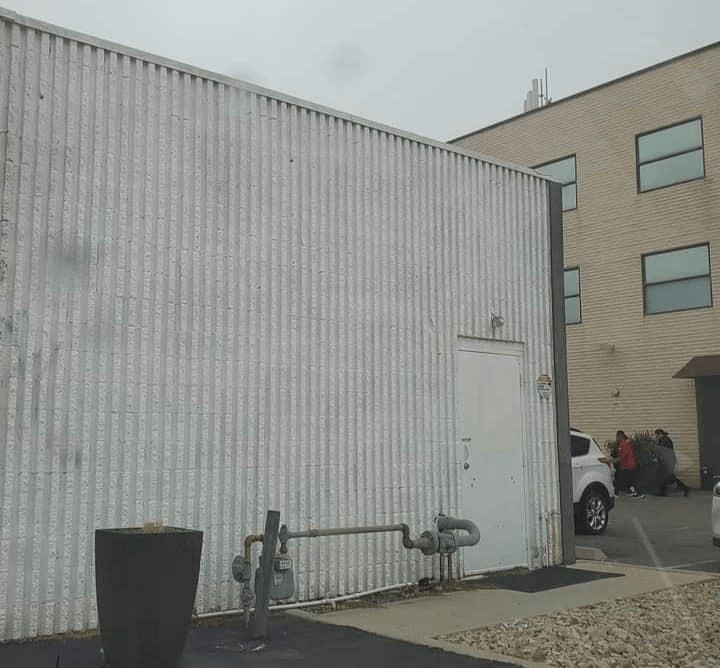
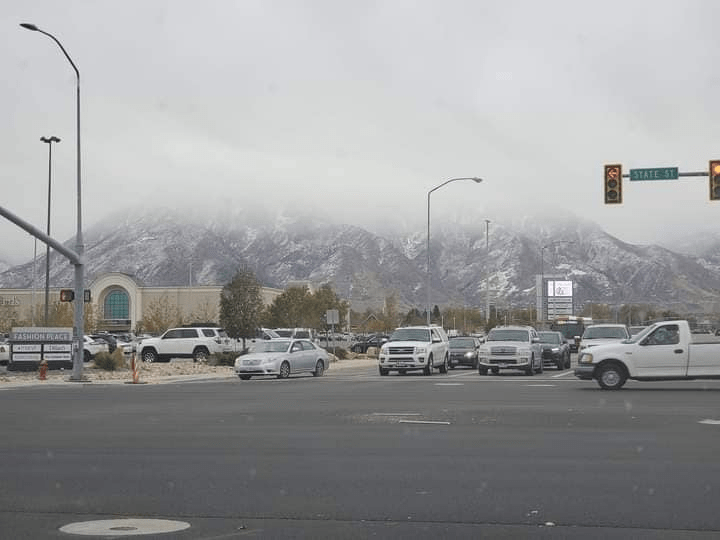
Fashion Place Mall Salt Lake City Utah Carol DaRonch Ted Bundy

Sears west parking lot, Fashion Place Mall, 1976.

Q: What did you do after you parked your vehicle there?

A: I got out of my car, and I walked into the Sears store.

Q: Did you stay in the Sears store any length of time?

A: No. I walked through it.

Q: And where did you exit the Sears store?

A: Where it goes into the mall.

Q. You entered and exited the Sears store and proceeded along the main part of the Mall?

A: Yes.

Q: And then you went west in the Mall?

A: Yes.

Q: How far west did you go?

A: To the Castleton’s store.

Q: After you made a left-hand turn and turned down the mall, how far did you go there?

A: Almost to Auerbach’s. To Walden’s Book Store.

Q: During this period of time, did you have any period of conversation or see anyone you knew?

A: Yes.

Q: And who was that?

A: My cousin.

Q: And what is her name?

A: Joanne DaRonch.

Q: And where did that discussion take place, and conversation? About midway in the corridor?

A: Yes.

Q: Was anyone with your cousin?

A: Yes.

Q: Who was that?

A: Jolynne Turner.

Q: And how long did that conversation last?

A: Just a couple of minutes.

Q: What did you do then?

A: Walked down toward Walden’s Book Store.

Q: What did you do at Walden’s?

A: I stopped and looked in the window of the book store.

Q: Did anything happen then?

A: Yes. I turned around, and a man approached me.

Q: Approached you from which direction?

A: I’m not sure.

Q: How long had you been at the window when you first noticed this man?

A: A couple minutes. It wasn’t until I turned around that he came to me.

Q: Did you see him right in front of you, or behind you, or how?

A: Face to face.

Q: How were you dressed at that time, Carol?

A: Had Levi’s on, and a leather coat with fur around it.

Q: How long had you had that coat?

A: A couple weeks.

Q: Was it relatively new then?

A: Yes.

Q: Okay. As best you recall Carol, what were the first words spoken to you by this man?

A: He asked me if I had a car parked in the Sears parking lot.

Q: Parking lot?

A: Yes.

Q: Is that man present in court today, Carol?

Q: Yes.

A: Where is he seated?

Q: Right there (indicated).

A: Will you tell me what he is wearing?

Q: A blue-gray suit.

A: You are referring to the counsel table?

A: Yes.

MR. YOCOM: May the record show the identification of Mr. Bundy?

MR. O’CONNELL: It may.

THE COURT: It will.

MR. YOCOM: Take your time, Carol. Let’s go through it slowly, okay? Now, he asked you if you had a car parked in the Sears parking lot?

A: Yes.

Q: What did you say?

A: I told him yes, I did.

Q: What did he say?

A: He said someone was seen trying to break into it.

Q: Go on, what happened then?

A: He asked me what the license plate number was, and I told him—

Q: What did you tell him the number was?

A: KTO 32.

Q: Did he respond to that?

A: He said yes, that’s the one.

Q: What happened then?

A: Then he asked me if I wanted to go out to the car with him to see if anything was missing. So we walked out the doors between Auerbach’s and Roper’s, out to my car.

Q: Let’s go back a little bit. Did he mention any official capacity that he had? What he was doing and why he was interested in your car?

A: I don’t remember.

Q: Did he say anything about being a police officer at that time?

A: I think so.

Q: Did he say what police department or agency he worked for?

A: No.

Q: Then you say you proceeded away from Walden’s Book Store and went out in the parking lot, is that right?

A: Yes.

Q: As best you can recall, Carol, what were the lighting conditions inside the mall in front of the Walden’s Book Store?

A: It was well lit.

Q: And the area from Walden’s to the exit by Auerbach’s, how was the lighting there?

A: Very bright.

Q: Now, as you were walking to the car, was there any conversation between yourself and Mr. Bundy?

MR. O’CONNELL: Your Honor, I object to Mr. Yocom referring to this man as “Mr. Bundy.” I realize she has identified him, and I suppose if she wants to do it, that’s all right. All the way through these proceedings he, whenever he is talking to this lady, refers to the person as “Mr. Bundy,” and is reinforcing in her mind the identification. I object to it.

THE COURT: Alright, well the objection is sustained for the purposes that Mr. O’Connell has based the objection on.

MR. YOCOM: I don’t understand the Court’s ruling. She has so identified him, and he has admitted that is his name in this courtroom today. He is the Defendant and I think I’m entitled to refer to him by his name, your Honor.

THE COURT: The objection is sustained.

MR. YOCOM. Thank you.

Q: As you proceeded to the car, did you have any conversation with this man?

MR. O’CONNELL: Well, I object to that for the same reason. It’s leading, and he keeps suggesting to her, and that’s what these officers have been doing for the last six months.

MR. YOCOM: There’s no jury here, John. Let me rephrase the question.

Q: Did you have a conversation with the man?

MR. O’CONNELL: That’s why I have an objection.

THE COURT: I understand.

Q: Did you have any conversation with the man, Carol?

A: No.

Q: And do you recall who walked in front or behind, or how you walked to your car?

A: No.

Q: Where was he at this time.

A: He was walking alongside of me.

Q: Do you recall on your right or left?

A: I don’t recall.

Q: When you got to the car, what did you do?

A: I opened my side of the door and got in— I didn’t get all the way in; I just looked in to see if anything was missing.

Q: Is it a two door or a four-door automobile?

A: Two.

Q: And which door did you open?

A: The driver’s side.

Q: And was the car locked at that time?

A: Yes.

Q: Did you notice anything unusual about the car?

A: No.

Q: And when you looked in, did you notice anything unusual?

A: No.

Q: Now, where was this individual at the time you opened the door?

A: Standing by the door.

Q: Which door?

A: The driver’s side.

Q: Across from you?

A: No. He was standing next to me by the car door that I opened.

Q: What happened then?

A: Then I told him nothing was missing, and he walked around to the passenger’s side of the car, and he tried to open the door.

Q: Go on?

A: He said— He asked me if I was sure nothing was gone, and I said no, nothing was. So I shut the door.

Q: The driver’s side door?

A: Yes.

Q: Was the passenger’s side door ever opened?

A: No.

Q: Did he say anything to you about that?

A: No.

Q: What happened then?

A: And then he said they had a man inside that was seen trying to break into my car, and they were holding him inside the mall. So he came back around the side of the car, and we walked back in towards the mall between Sears and the mall, the exit that goes between there.

Q: Did he say who “they” were?

A: No.

Q: How were the lighting conditions in the parking lot at that time?

A: There were street lights that are in the parking lot.

Q: What were the weather conditions that evening? Do you remember?

A: It was a little bit rainy.

Q: When you walked back in the mall, what entrance did you go in?

A: I went in between Sears and the mall.

Q: What happened at that point, Carol?

A: He looked up towards Sears and down towards the mall, and he said they must have taken him down to the substation.

Q: Again, did he say who “they” were?

A: I don’t recall.

Q: Had he mentioned any time up til then why he was with you?

A: I believe he said he was a police officer.

Q: Do you recall at what time he said that?

A: No.

Q: Were you aware at that time whether or not there was a substation in Fashion Place Mall?

A: No.

Q: Now, after you stopped where did he go from there?

A: Walked out the exit straight across from where we just walked in.

Q: And you walked outside?

A: Yes.

Q: What happened then?

A: We walked around the building over by Castleton’s.

Q: He did or you did?

A: We both did. And he talked to me, asked me two things: He asked me how old I was, and if I was doing anything later that night, why I wouldn’t be able to come down, go over there with him and sign a complaint against the man who was trying to break into my car.

Q: And were these conversations while you were walking?

A: Yes.

Q: Was he in front of you or you to the side of him or behind him?

A: I was a little behind him.

Q: Did you have a chance to observe him as you were walking?

A: Yes.

Q: What did you observe?

A: The way he walked.

Q: Anything else?

A: His pants.

Q: What did you notice about those?

A: They were green.

Q: Anything else?

A: No.

Q: When he talked to you, was he looking forward or at you?

A: He was looking sideways at me.

Q: How close were you to him while you were walking?

A: Right next to each other.

Q: On which side?

A: I was on the left side, and he was on the right side.

Q: Is there any lighting as you walk along there that you noticed, Carol?

A: No.

Q: Could you see his facial features as you were walking?

A: Yes.

Q: After you reentered the mall, what happened then?

A: We walked back out through the other exit on the west side.

Q: Do you know what is located in that area, what stores?

A: Farnell’s and Broadway.

Q: Farnell’s Ice Cream store?

A: Yes.

Q: Did you have any conversation with him while you were inside the mall between entering and exiting again?

A: No.

Q: What sort of pace were you walking, how fast?

A: I don’t know.

Q: Did you notice anything unusual about it?

A: No.

Q: How would you describe it as far as your normal pace of walking?

A: Fast.

Q: Fairly fast?

A: Yes.

Q: After you exited the mall, where did you go then?

A: Walked down toward Skaggs.

Q: Did you stop there?

A: No.

Q: Where did you go from there?

A: To the laundromat on the other side of the street.

Q: Okay. Now, what is that street you have indicated there?

A: 6100 South.

Q: Where did you go when you got to that laundromat?

A: To a door that was on the side of the laundromat.

Q: Where did he go?

A: He walked to the door and tried to open it, and it was locked. So he walked down the alley between this building and the laundromat.

Q: Where did you remain at that time?

A: Where I was, out in front on the sidewalk.

Q: You stayed on the sidewalk?

A: Yes.

Q: How far down the alley did he go?

A: He walked about halfway down.

Q: Then what happened?

A: Then he turned around and came back.

Q: What happened then, Carol?

A: I didn’t know what he was doing, so I asked if I could see his badge or some identification.

Q: Where did that take place?

A: Right where I was standing in front of the laundromat.

Q: Why did you ask him at that time, Carol?

A: Because I didn’t know why he walked down the alley and walked back, and why the door wouldn’t be open if it was a substation.

Q: What did he do?

A: Took a wallet out and showed me a badge that was inside the wallet he had.

Q: Did you see where he got that wallet from?

A: No.

Q: Did he have any sort of jacket or coat on?

A: He had a jacket on.

Q: Do you recall the color of that jacket?

A: No.

Q: Did he say anything to you when he produced the wallet?

A: I can’t remember.

Q: Can you describe the badge that he showed you?

A: I think it was silver.

Q: Was it in the wallet itself?

A: Yes.

Q: How large was it?

A: It wasn’t really big. It was kind of oval-shaped.

Q: Did you notice any printing on the badge?

A: No.

Q: Any further conversation take place at that time?

A: He asked me if I would come down to the station with him, because they probably had him down there, and fill out a complaint against him.

Q: Did you respond to that?

A: Yes.

Q: What did you say?

A: I said, “all right.”

Q: How were the lighting conditions at this time on the sidewalk in front of the laundromat?

A: There were street lights and there were lights from the laundromat.

Q: Could you see his facial features at that time?

A: Yes.

Q: How close were you to him?

A: He was right in front of me when he was showing me the badge.

Q: At that time did you get an impression of how tall he was?

A: Yes.

Q: And what was that impression?

A: About six feet.

Q: How did you determine that, Carol?

A: By my own height.

Q: How tall are you?

A: Five seven.

Q: Do you have occasion to be around people about six foot tall very often?

A: Yes.

Q: How about his physical build, his weight, structure? Did you get an impression as to that by then?

A: Yes.

Q: How much would you say that he weighed at that time, or how was he built?

A: He was slim.

Q: An idea or an estimate of how much he weighed?

A: 160 or so— I don’t know.

Q: Anything about his facial features that you noticed at that time?

A: The way his hair was. Greased back off his forehead.

Q: Did you notice any foreign substance on the hair?

A: Oil.

Q: Anything else about his facial features?

A: No.

Q: Did you notice whether he had any facial hair?

A: Yes. A mustache.

Q: Describe that for us.

A: Whether big or bushy?

Q: Just your impression of it.

A: I don’t know, it was just an average-looking mustache?

Q: Light or dark? Heavy?

A: It was dark.

Q: How long?

A: It came about down to here.

Q: You are indicating above the corners of the mouth?

A: Yes.

Q: After your conversation with him there on the sidewalk, what happened then?

A: We walked over to his car.

Q: Where was his car parked?

A: It was parked across the street from the lobby.

Q: How far?

A: I’m not sure of that.

Q: What direction was the car headed while it was parked there?

A: East.

Q: That would be east on 6100 South?

A: Yes.

Q: And what kind of car was it, Carol?

A: It was a Volkswagen.

Q: When you got to the car, what did you do?

A: Got in the car, and he got in the car.

Q: Where did you get in, and where did he gt in?

A: He got in on the driver’s side. I got in on the passenger’s side.

Q: Now did you notice anything unusual about the vehicle at the time you got in it?

A: Yes. It had— the top of the back seat was ripped. Before I got in it, I noticed that it had rust spots on the front. It didn’t have a license plate.

Q: Anything else?

A: No.

Q: Was there any lighting in the area where you got into the vehicle?

A: No.

Q: Were there any lights coming from the Fashion Place Mall parking lot?

A: Yes, from Skaggs.

Q: What was your impression as to the color of the car at that time, Carol?

A: It was a light color. White or beige.

Q: Did you notice anything further about the interior of the car?

A: Just that it had a ripped top of the back seat.

Q: How far did that rip go, or cover, in the back seat of the car?

A: Almost all the way across it. Not quite.

Q: After you got into the car, was there any conversation that took place between you and him at that time?

A: He put on a seat belt and told me that, you know, he would like me to put on my seat belt. I told him no, I didn’t want to. He said, “okay.”

Q: Was there any particular reason why you refused to put on the seat belt?

A: I just didn’t want to.

Q: What was your attitude toward him at this time, Carol?

A: I didn’t know what to think.

Q: What do you mean? Let me ask you this, Carol: Were you frightened at that time?

MR. O’CONNELL: I object to the leading.

THE COURT: Sustained.

Q: What was going through your mind at this time, Carol?

MR. O’CONNELL: I object now. He asked her the question, she couldn’t think of the answer. Since I objected because it’s leading now he asks the question again. I think he ought to drop the matter.

THE COURT: The objection is overruled.

Q: What was going through your mind at that time, Carol?

A: I wasn’t sure about it.

Q: What do you mean by that?

A: He was a stranger.

Q: Okay. After you got into the car and you had this conversation about the seat belts, what happened then?

A: He made a U-turn. The car was facing west. He made a U-turn going east?

Q: You originally said the car was facing east. Was it facing west towards State Street?

A: Yes.

Q: And he made a U-turn in the opposite direction?

A: Yes.

Q: Which would have been east, is that correct?

A: Yes.

Q: Where did the car go then?

A: To the end of the street, then it turned left.

Q: Were there any lights inside the car?

A: I don’t remember.

Q: Could you see him at that time?

A: Yes.

Q: How close were you to him?

A: Sitting in the next seat.

Q: How far away would that be?

A: I don’t know.

Q: Have you ever been in a VW before?

A: Yes.

Q: How far away are the seats in a VW?

A: They are close. They are next to each other.

Q: Are they bucket type seats?

A: Yes.

Q: Okay. When you made the U-turn and proceeded east—

A: Yes.

Q: —where did he go from there?

A: He turned left and crossed a street and pulled over by McMillan School.

Q: Did the car stop for any reason on that trip that you have described?

A: No.

Q: For any stop signs that you noticed?

A: Yes.

Q: Where were they located?

A: Right here.

Q: You are indicating here which is the intersection of 300 East and 5900 South?

A: Yes.

Q: Did the car stop here at this corner?

A: Yes.

Q: Is there a stop sign there?

A: Yes.

Q: Was there any conversation between you and him while you were in the vehicle up until the time it stopped?

A: No.

Q: Could you describe how that stop occurred?

A: He pulled up on the curb a little bit and came back down, then stopped.

Q: What do you mean, “pulled up on the curb”?

A: Two wheels went up over the curb.

Q: Which wheels? Which side of the car?

A: On the right side.

Q: After he brought the car to a stop, what happened next?

A: I started— I asked him what he was doing, this wasn’t the police station. I just wanted to know what he was doing, why he was stopping. He didn’t say anything. He grabbed my arm and put a handcuff around it.

Q: Did you see where he got the handcuff from?

A: No.

Q: Had you noticed those handcuffs prior to this time?

A: Yes. In his jacket.

Q: Where in the course of the events did you notice it? Where were you located?

A: Back at the Sears parking lot.

Q: Where did you see it at that time on his person?

A: In his jacket.

Q: Interior or exterior pocket?

A: Interior.

Q: Breast pocket, like I am indicating here?

A: Yes.

Q: How did you happen to see them back in the Sears parking?

A: When he tried to open the door, his jacket came open.

Q: Now, if you can Carol, describe how he grabbed you when he put the handcuffs on your arm.

A: He grabbed my left arm, I think it’s with his right arm, and put the handcuffs on with his left hand.

Q: Where did he have ahold of your arm?

A: By the wrist, right here.

Q: Did he say anything at that time?

A: No.

Q: What happened then?

A: Then I put my right hand on the door to open it, and he grabbed me by the arm around the neck this way.

Q: Which arm around the neck?

A: I think it was his right arm.

Q: Around your neck?

A: Yes.

Q: What were you doing at this time, Carol?

A: I think I had the door open, and my foot was out of it.

Q: Were you saying anything?

A: I just kept screaming, asking him what he was doing, and he never said anything.

Q: What happened then?

A: And then he pulled the gun out and said he was going to blow my head off.

Q: Did you see where he got the gun?

A: No.

Q: Did you see what hand he had it in?

A: No.

Q: What did you see of the gun?

A: That it was small and black.

Q: Did you see where it was pointed?

A: At me.

Q: What part of your body?

A: I’m not sure.

Q: Did he have ahold of you at that time?

A: Yes.

Q: Where?

A: By the arm.

Q: What were you doing at this time?

A: Trying to get out of the car door.

Q: Okay. What happened then?

A: I got out of the car door, and he came out after me across the seat.

Q: Did he still have ahold of you at any time you got out?

A: I think so.

Q: How did he get out of the car?

A: Came across the passenger’s side out the same door I got out of.

Q: Were you then both outside the vehicle?

A: Yes.

Q: What’s the next thing you recall happening?

A: We were facing each other. I was fighting with him. I tried to get loose. I remember grabbing hold of his arm and his hand and feeling that he had a bar in his hand.

Q: You were fighting with him?

A: Yes.

Q: What were you doing?

A: I was screaming as loud as I could. I was turning away and pulling, scratching.

Q: You have fairly long fingernails today, Carol. Were they that length then?

A: Longer.

Q: Where were you scratching?

A: His arm.

Q: Did he at any time get his arm around you?

A: No.

Q: Behind your head?

MR. O’CONNELL: I object to that. He’s leading, and counsel just motioned to her.

THE COURT: Sustained.

Q: What arm were you scratching him?

A: I’m not sure.

Q: Now, you say you felt a bar?

A: Yes.

Q: Will you describe it for us?

A: Had four sides or six sides.

Q: And where was that?

A: In his hand.

Q: What hand?

A: His right hand.

Q: Where did you feel it?

A: In his hand, around it.

Q: Would you show me how he had that?

A: He had it in his hand, and I had my hand around it, keeping it from coming down on me.

Q: Would you show me how he had it and where you were at the time?

A: He had it up in  the air, and I had my hand up like that.

Q: With one hand or two?

A: One.

Q: Did you get the impression of how large the object was?

A: No.

Q: How big around it was?

A: Yes.

Q: How big was it?

A: About this big.

MR. O’CONNELL: Indicating what, about a half inch?

THE COURT: Approximately.

MR. YOCOM: Thereabouts.

Q: Did you get an impression as to what that object was, Carol?

A: Yes.

Q: What?

A: My impression was that it was a crowbar.

Q: Why did you get that impression.

A: Because I know what they feel like.

Q: How do you know that?

A: Because my dad has one.

Q: Have you felt his crowbar before?

A: Yes.

Q: What was your impression at that time, Carol, as to what he was doing with that crowbar?

MR. O’CONNELL: I object, your Honor. In the first place, I think I should have objected when he asked about the impression and various things. I don’t know what that means. Does that mean he is asking her to guess? Now he is asking her for an opinion as to what somebody’s intent was. I think that is totally improper.

THE COURT: The objection is sustained as to that question.

Q: What was he doing with the crowbar?

A: He was trying to hit me with it.

Q: What made you believe that?

A: Because he was pushing it down on me.

Q: Did you ever have ahold of the crowbar with more than one hand?

A: No.

Q: Which hand did you have ahold of it with?

A: My left hand.

Q: What was he doing with his other hand?

A: I am not— I don’t know. I guess he just had hold of me.

Q: What happened next, Carol?

A: And then I finally broke loose and ran around the front of the car, ran out to the street.

Q: Broke loose from his hold?

A: Yes.

Q: In which direction did you run?

A: Out in front of the car.

Q: The VW?

A: Yes.

Q: Did you see anything at that point?

A: Just that a car was coming.

Q: How did you determine that?

A: I could see its lights.

Q: Did you look back at all?

A: No.

Q: What did you do?

A: I was waving and jumping up and down, and they stopped. I got in the car.

Q: Who opened the door to the car?

A: I don’t remember.

Q: What did you do when you opened the car door— when the door opened, excuse me?

A: I jumped in.

Q: Was there anyone in the car on the passenger’s side?

A: Yes.

Q: Is that the side you got into?

A: Yes.

Q: Who was that?

A: A man and a lady.

Q: What did you do after you got inside?

A: I don’t remember much.

Q: How would you describe your condition at that time?

A: I was hysterical.

Q: Where did you go in this car?

A: I remember asking them to take me to the police station.

Q: Did they?

A: Yes.

Q: What police station did they take you to?

A: Murray.

Q: Did you at any time look back for the car, the VW?

A: When we were driving off, I was in the car with the man and lady.

Q: Did you see it?

A: Yes.

Q: Where was it?

A: It was still parked in the same place, and it was— and he turned around and went back from the same direction he came, and turned left.

Q: Turned left on what street?

A: 5900 South.

Q: So it would have been a left-hand turn on 5900 South?

A: Yes.

Q: Carol, you said you had gotten in the vehicle, then you proceeded somewhere. Where did you go? Not the exact route you took. Where did you end up, I should say?

A: By McMillan School.

MR. O’CONNELL: I think she’s talking— make it clear, the police station. Go ahead, lead her.

MR. YOCOM: Thank you, Mr. O’Connell. I will make it clear.

Q: After you got into the car that stopped for you in the street, where did those people take you?

A: To the police station.

Q: Murray Police Station?

A: Yes.

Q: Do you know where that is located?

A: No, not exactly.

Q: When you arrived there, what is the first thing you recall happening?

A: They asked me what happened.

Q: Do you remember having the handcuffs removed from your arm?

A: Yes.

Q: Do you know what officer did that?

A: No.

Q: Did you give a statement to the officer at that time?

A: Yes.

Q: Do you recall how many different Murray Police officers you talked to that evening?

A: No.

Q: Do you recall the description you gave to them of this man you were with?

A: Yes.

Q: Do you remember telling them anything further about his appearance than what you have already testified to, what he was wearing?

A: No.

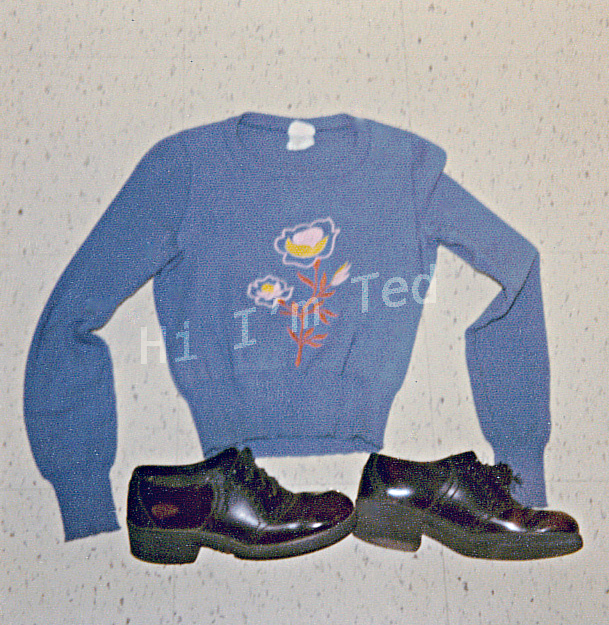
Q: Do you recall during any time in walking around the mall of seeing the type of shoes he was wearing?

A: Yes.

Q: Will you describe those for us?

A: They were patent leather.

Q: And the color?

A: They were a dark color.

Q: Why do you remember the shoes, Carol?

A: Because I was watching him walk, and I noticed his shoes and his pants.

Q: Were you looking down?

A: Yes.

Q: While you were in the Murray police station that night, did you observe any photographs?

A: Yes.

Q: And what sort of photographs did you look at?

A: Ones in a book, I think one book, and just some pictures they had.

Q: And how many did you look at?

A: I’m not sure.

Q: Did you look at any other photographs after that time, the next few days following this incident?

A: Yes.

Q: Do you recall where you were at when you looked at them?

A: Yes.

Q: Where was that?

A: At work.

Q: And how many did you see then?

A: About eight or nine.

Q: Did you look at any other photographs after that time?

A: Yes.

Q: About how many times, separate times, did the officer show you photographs?

A: About three or four times.

Q: Do you recall seeing the photograph of a vehicle, a car?

A: Yes.

Q: Do you recall who showed you that photograph?

A: I think it was Jerry Thompson.

Q: Carol, do you recall when Officer Thompson showed you those photographs, the approximate date?

A: No.

Q: I show you what’s been marked for identification purposes as State’s Proposed Exhibit 20, and ask you if you have ever seen that photograph before?

A: Yes.

Q: Is that the photograph that Officer Thompson showed you?

A: Yes.

Q: Likewise with State’s Proposed Exhibit 21, did you observe that photograph at the same time?

A: Yes.

Q: About how long ago did this occur, Carol?

A: I’m not sure.

Q: A month?

A: October, November.

Q: How does Exhibit 20 with regard to content of that photograph compare with what you observed about the Defendant’s vehicle, particularly the back seat, on November 8, 1974?

A: The way it’s ripped and the way the stuffing is coming out.

Q: How does that compare with what you saw?

A: Looks exactly like it.

Q: And with regard to Exhibit 21, showing a VW automobile, how does that compare with the vehicle that you saw on November 8, 1974.

A: The dent in the door and the side.

Q: Did you observe such a dent at that time?

A: Yes.

Q: Carol, did you have an occasion to observe any other photo displays by any other officers?

A: Yes.

Q: Do you recall when or what officers showed you photo displays?

A: Jerry Thompson showed me some. The Bountiful Police showed me some.

Q: Did you ever observe what is commonly known as “mug shots” at the Salt Lake County Sheriff’s Office on the ninth floor?

A: Yes.

Q: Would you give me a rough estimate of about how many photographs you were asked to look at during this period of time from November 8th, say, until around August 1st?

A: How many individual ones I have seen altogether?

Q: Yes, including those in the mug books.

A: I don’t know. A lot.

Q: Closer area than “a lot”?

A: No.

Q: Would it be more than a hundred?

A: Yes.

Q: Less than a thousand?

A: Yes.

Q: Prior to August of 1975, Carol, had you ever identified anyone in those photographs as being your assailant on November 8, 1974?

A: No.

Q: When was the first time that you saw a picture of the Defendant in this action, Mr. Bundy?

A: I think it was Jerry Thompson who showed me.

Q: Do you recall the date of that?

A: No.

Q: Now, speaking generally, when you were asked to look at these photographs, Carol, what would the officers tell you before they gave you photographs to look at?

A: Just that they had some photographs for me to look at, if I saw anything that looked anything like this man, to pick it out; if I didn’t, not to pick one out.

Q: Approximately how many photographs did they show you each time?

A: About eight or nine.

Q: When Jerry Thompson showed you the photographs which contained Mr. Bundy’s photograph, how many photographs did you look at then?

A: About nine.

Q: Do you recall what you told him on that occasion with regard to Mr. Bundy’s photograph?

A: No.

Q: Where were you when this took place?

A: At work.

Q: Do you recall generally how the conversation went? First of all, when he handed you the photographs, what did he say to you?

A: Just to look through them.

Q: Do you recall what you did when you got to Mr. Bundy’s photograph?

A: I think I put it aside and put it in my lap. On my knee.

Q: Then what happened?

A: What do you mean?

Q: After you put the photograph on your lap, did you go through the rest of the photographs?

A: Yes.

Q: And when you got through all of them, what did you do?

A: I handed him the one.

Q: The one back?

A: Yes.

Q: What was said then?

A: I don’t remember.

Q: Do you remember what you told him?

A: No.

Q: Had you at any time up until that time ever seen a photograph of the man sitting at counsel table here, Mr. Theodore Bundy?

A: No.

Q: Had you ever picked out what we refer to as “look-alikes”?

A: Yes.

Q: Do you remember how many times you told the officer that a particular picture looked like the man or had a similar characteristic?

A: No.

Q: Was it a lot or a few?

A: It was a few.

Q: Just a few?

A: Yes.

Q: When is the next time you remember seeing a photograph of Mr. Bundy?

A: I’m not sure.

Q: How long after you saw the photograph that Jerry Thompson had?

A: About two weeks.

Q: Do you remember who showed you that photograph?

A: I think it was the Bountiful Police.

Q: Do these photographs differ in any way from the photographs that you saw that Officer Thompson had? Were they different kinds of photographs?

A: Yes.

Q: What kind were they?

A: Driver’s license.

Q: Do you remember how many that officer showed you?

A: No.

Q: Did you see a picture of Mr. Bundy in that photograph display?

A: I don’t remember.

Q: Do you remember picking someone out?

A: I think so.

Q: Did you have an occasion on the 2nd day of October, 1975, to appear at the Metropolitan Hall of Justice at what is commonly referred to as a lineup, Carol?

A: Yes.

Q: Let me ask you this: did you see a number of participants in that lineup at that time?

A: Yes.

Q: What were you told before the lineup in regard to what was going to happen and what you were supposed to do, if anything?

A: I was supposed to watch them, what they did, not talk to anyone, if I thought— if I saw the man, if I did, to write the number down.

Q: Can you remember how the lineup was conducted, what took place?

A: They walked and they had them talk.

Q: Each one of the members of the lineup?

A: Yes.

Q: Was the Defendant in that lineup?

A: Yes.

Q: Did you have an opportunity to hear him speak at that time?

A: Yes.

Q: Did you have an opportunity to see him walk?

A: Yes.

Q: And did you pick out an individual as being the man that was— and you were in his car on November 8, 1974?

A: Yes.

Q: What number did you pick?

A: Seven.

Q: What time during the course of the lineup did you recognize that individual?

A: When he walked out.

Q: “Walked out,” what do you mean?

A: When they first walked out.

Q: Walked out onto the stage in the lineup room, you mean?

A: Yes.

Q: Were you at that time able to identify him from your recollection of him on November 8th, Carol?

A: Yes.

Q: Did you have any trouble?

A: No.

Q: Did he appear any different then than he did on November 8th?

A: Yes.

Q: In what way?

A: He looked more clean-cut. His hair was shorter. He didn’t have a mustache.

Q: Did you notice anything about his appearance that was identical to the way you observed him on November 8th?

A: The way he walked.

Q: Anything else?

A: His face.

Q: Any particular part of his face?

A: No.

Q: Do you remember any distinctive features, anything about his voice? Do you recall going back to November 8th and hearing it?

A: No.

Q: How would you describe his manner of speaking, to use that term on November 8th, Carol?

A: What do you mean?

Q: Well, was there any particular thing about his voice that stood out in your mind or the way he spoke, the words he used?

A: He was polite, sounded like he was well educated, by the way he talked.

Q: Carol, I show you now what has been marked as State’s Proposed Exhibit 23. Do you recognize that jacket?

A: Yes.

Q: And is that the jacket you were wearing on November 8, 1974?

A: Yes.

Q: After you got home that evening Carol, did you notice anything unusual about that jacket?

A: Yes.

Q: Can you explain to the Court what you noticed at that time?

A: It had blood around one of— the fur of one of the sleeves and around the collar.

Q: Would you show us on the coat where that was located?

A: Up on here. I don’t remember what sleeve it was on, which one.

Q: You are indicating which would be to the back of the jacket?

A: Yes.

Q: On the fur collar?

A: Yes.

Q: What did you do after you noticed that? Did you tell anyone about it?

A: It wasn’t until Monday— the Monday that, when the officer Joel Riet came up to show me some pictures that I told him there was some blood on my coat, and he told me to go get it for him, and I got him the coat, and he cut the fur off some of it.

Q: Cut the fur off the coat collar and the sleeve where the blood was located?

A: Yes.

MR. YOCOM: No further questions.

Part II:

CROSS EXAMINATION BY MR. JOHN O’CONNELL:

Q: Miss DaRonch, did you tell the police on the evening of November 8th, 1974, when you talked to them, that there was anything in particular about the way the man walked?

A: No.

Q: Did you tell them there was anything about the way he talked that was unusual?

A: No.

Q: You said he was just average, didn’t you?

A: Yes.

Q: When did you decide that he sounded like he was well educated?

A: I have told them that before.

Q: When?

A: I don’t know when exactly, but I told them that before.

Q: Before September, ’75?

A: Yes.

Q: Who did you tell?

A: I think it was someone from the Bountiful Police.

Q: Did someone from the Bountiful Police talk to you about the suspect they had up in Bountiful?

A: No.

Q: Did you testify previously about looking at a sketch and saying that it didn’t look like the person because the mustache was different?

A: What sketch?

Q: Well did you look at the sketch of any individual?

A: One.

Q: Who showed it to you?

A: A security guy at Mountain Bell.

Q: Nobody from the Bountiful Police ever showed you their sketch?

A: I don’t know if he got the sketch from Bountiful.

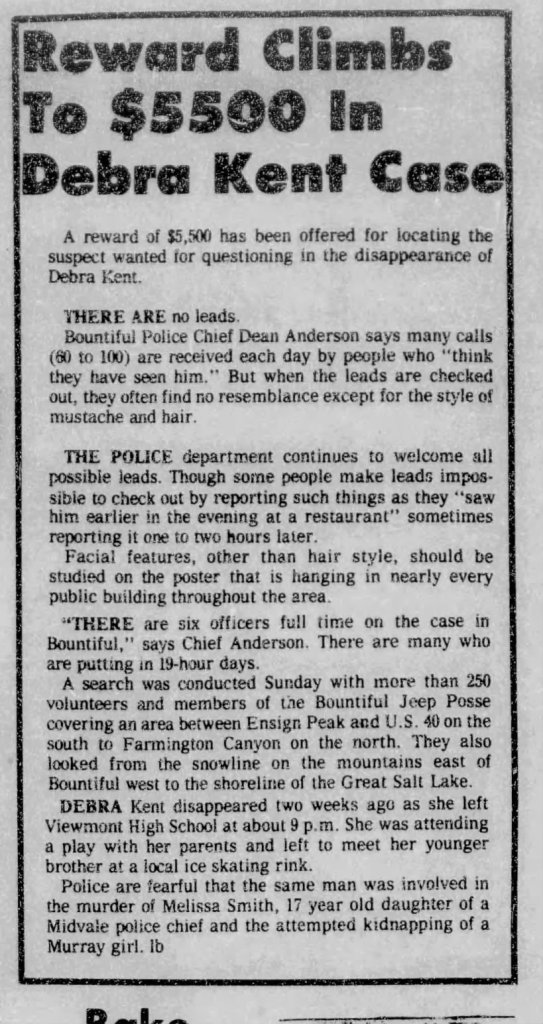
A direct scan of the original composite sketch in the Debra Kent case, 1974. Courtesy Bountiful Police Department.

Q: Showing you what has been marked as Defendant’s Proposed Exhibit 24, is that the sketch you were shown?

A: Yes.

Q: Did you see this brochure?

A: No.

Q: Just the sketch?

A: Yes.

Q: Did it have the description underneath it?

A: No.

Q: You didn’t think that was the man?

A: I didn’t think it looked like him.

Q: Now, you have testified in Court about this incident on two different occasions before this, haven’t you?

A: Yes.

Q: And those times Mr. Bundy was present, wasn’t he?

A: Yes.

Q: I was present?

A: Yes.

Q: Mr. Yocom?

A: Yes.

Q: And you described the incident both those times, didn’t you?

A: Yes.

Q: Did you cry during those times?

A: No.

Q: Is it the crowd here that is making you nervous?

A: Yes.

Q: And you noticed the blood on this coat you say, that night?

A: Yes.

Q: Now, the policemen looked at the coat that night. Didn’t they look to see if there was any blood on it?

A: No.

Q: Didn’t they discuss whether or not there was any blood on you?

A: No. They asked me if I was hurt. I said no.

Q: Do you want to describe the badge the man showed you again?

A: I said it was silver and oval shaped.

Q: Do you recall being asked that at the preliminary hearing?

A: Yes.

Q: Do you know what you said there?

A: Probably that it was silver or gold.

MR. O’CONNELL: I’d ask that her testimony in that regard, in fact, her testimony generally, be published at this time, of the preliminary hearing.

THE COURT: Any objection?

MR. YOCOM: No objection.

THE COURT: The testimony of the witness at the preliminary hearing will be published.

Q: I will just read it, then. Line 5 of page 24:

“Question: Could you describe the badge and where you got it from?”

“Answer: It was silver and blue, or else gold and blue. And it wasn’t a star. It was kind of round, kind of oval-shaped.”

Do you have any explanation for why you said it was blue and silver or blue and gold then?

A: Because it had a symbol on it or writing or something, but I couldn’t see what it was.

Q: Well, you were asked by the police officers on the night this occurred what color it was, weren’t you?

A: Yes.

Q: And that time you said it was all silver or all gold, didn’t you?

A: Did I?

Q: Well, did you?

A: I can’t—

Q: You don’t remember?

A: No.

Q: Was it blue? Did it have blue on it?

A: I think it had a little blue on it, whatever was on it, the symbol or the writing.

Q: Now, when the police officers were questioning you about this, they showed you their badge, didn’t they?

A: Yes.

Q: And you said it was different?

A: Yes.

Q: And how did you tell them it was different?

A: Their badges were bigger.

Q: And what else?

A: Theirs weren’t the same shape.

Q: And what else?

A: I don’t know.

Q: You told them that the badge the man used didn’t have any blue on it, didn’t you, that the badge that the man showed you was like theirs, only it was half as big, and the badge the kidnapper had didn’t have any blue on it like the Murray Police officers, right?

A: Theirs had a lot of blue on it.

Q: That’s right, and that’s what you were describing when you described it at the preliminary hearing, wasn’t it?

A: No.

Q: Well, do you think you told the police officers on November 8th that the badge that the man had had blue on it?

A: I don’t remember.

Q: Now, the wallet the man had the badge in was a wallet like mine, wasn’t it?

A: Similar.

Q: I mean, what I meant was it folds so that the money folds in half?

A: Yes.

Q: Rather than folding it so the money stays straight?

A: Yes.

Q: And the badge was attached to it somehow so that he flipped it open like this, and you could see the badge, right?

A: Yes.

Q: Now, going to the car that was used on the night of November 8th that you took a ride in, what color was it?

A: I said it was a light beige, white.

Q: You said it was a light beige. Could it have been blue?

A: I could have said it was.

Q: I am asking you now, could it have been blue?

A: No.

But you have described it, in fact, on November 8th you described it as a light blue car, didn’t you?

A: I might have.

Q: When did you decide that it was beige? When Jerry Thompson showed you those photos?

A: No.

Q: When?

A: I was really shook up that night. There’s a lot of things I didn’t exactly tell them.

Q: Well, they asked you what color the car was several times, didn’t they?

A: And later on I said it could have been a white or beige, too.

Q: But now you have decided it couldn’t be blue. Why is that?

A: I don’t understand.

Q: Well, on the night it happened, you said that it was light blue or white. Now you say it couldn’t have been blue. What made you come to that conclusion that it couldn’t be blue now when on November 8th you were saying it was light blue.

A: Or beige or white.

Q: All right. When did you eliminate light blue as a possibility? Do you know?

A: No.

Q: Today you testified that when you were walking with this man over to the laundromat, you were walking on his left side. Is that your testimony now?

A: Over to the laundromat?

Q: Yes.

A: No.

Q: Where were you walking?

A: I was walking on his left side outside of the mall, not over to the laundromat.

Q: Where were you walking in relation to him when you were walking over to the laundromat?

A: I don’t remember.

Q: You have testified previously that you were walking a few feet behind him?

A: Yes.

Q: Now, when you were at the laundromat, you said that you were quite suspicious of him, he was a stranger. You indicated to Mr. Yocom that—I don’t know whether you said it or he was just implying it—that you were at that point concerned. Is that true?

A: Yes.

Q: Why did you go?

A: Because he showed me a badge. I thought it was all right.

Q: I see. You also said that you didn’t have to go, right?

A: Right.

Q: It was entirely up to you?

A: Yes.

Q: And so at that point you were reassured that it really was a policeman, or you wouldn’t have gone, right?

A: Yes.

Q: I mean, you wouldn’t have gotten into some strange man’s car and driven off with him if you didn’t think he was a policeman, would you?

A: No.

Q: Did he smell of alcohol?

A: Yes.

Q: Now, you said you saw some rust spots on the car. Where did you see the rust spots?

A: On the very front of it.

Q: Anywhere else?

A: On the side, maybe.

Q: Pardon?

A: On the side.

Q: Where on the side?

A: On the door.

Painted over rust spots on the VW door, October 1975. Courtesy Bountiful PD.

Q: On the door? Do you remember Mr. Yocom at the preliminary hearing asking you the same questions?

Line 10, page 27:

“Question: Now, when you say there were spots on the vehicle, rust spots; where were they located on the vehicle itself, Carol?”

“Answer: On the front, on the hood that opens up.”

“Question: Any other place?”

“Answer: No.”

Do you know why you said that?

A: No.

Q: Have you been looking at these photos of Mr. Bundy’s car recently?

A: No.

Q: Other than in court, have you ever looked at them?

A: No.

Q: Did Mr. Thompson show them to you? Other than Mr. Thompson showing them to you while you were on the witness stand, have you ever looked at the photos of the car with Jerry Thompson?

A: No.

Q: Did you tell Murray Police officers on November 8th about seeing rust on a door?

A: No. I don’t remember.

Q: They questioned you quite thoroughly about that automobile, didn’t they?

A: I don’t remember.

Q: Well, they wanted to know if there was anything unusual about that car, didn’t they?

A: Yes.

Q: And you didn’t tell them about seeing any—in fact, you told them that you couldn’t remember any particular dents or rust spots, didn’t you?

A: I don’t remember.

Q: Do you have a memory, though, of that car not having a license plate on?

A: That night I told them, I was very shook up.

Q: But no license plate would have been something unusual, wouldn’t it?

A: Yes.

Q: More unusual than rust spots on the hood, isn’t it?

A: No.

Q: Don’t practically all old Volkswagens have rusty spots in the front on the hood?

A: I don’t know. Do they?

Q: Now, when did you notice this rip in the upholstery of the car? When you climbed into the car the first time?

A: When we were walking toward the car; when I climbed in the car.

Q: You saw the rip. Now, you did tell the police about that rip, didn’t you?

A: Yes.

Q: What color was the upholstery?

A: I don’t remember.

Q: Did you notice anything else about the interior other than the fact that it had seat belts and it had a rip in the back seat?

A: There was stuff on the floor of the passenger’s side.

Q: Do you have any idea how many light-colored Volkswagen bugs there are with ripped seats?

A: No.

Q: There is quite a few, aren’t there?

A: Probably.

Q: In fact, most of them have ripped seats, don’t they?

A: Most old cars, very old ones.

Q: Particularly Volkswagens?

A: Yes.

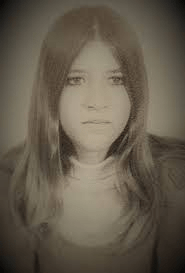
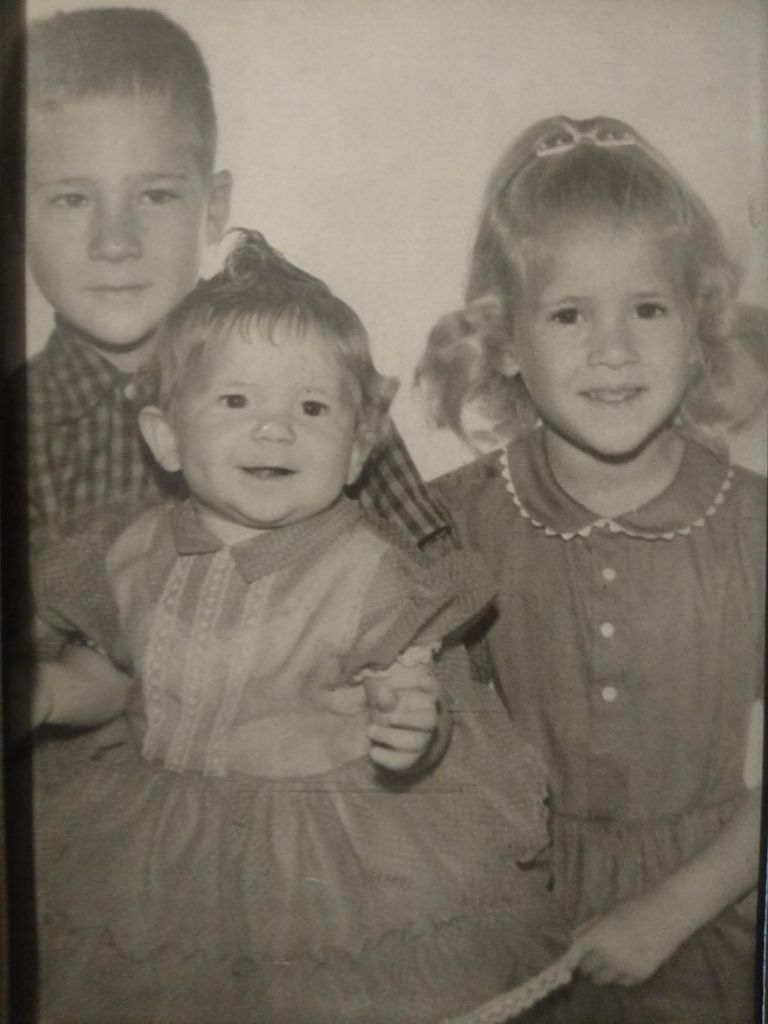
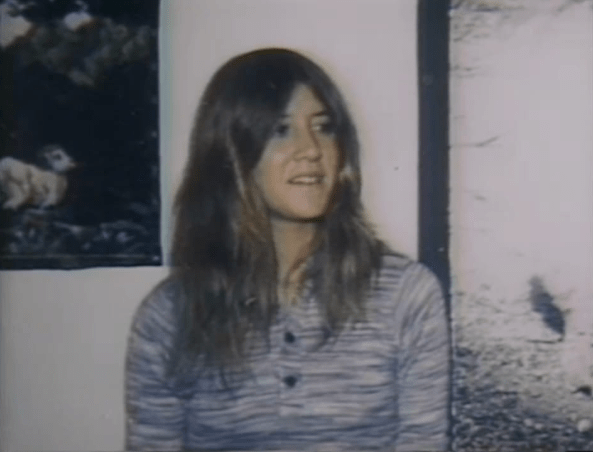
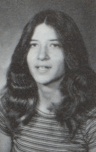
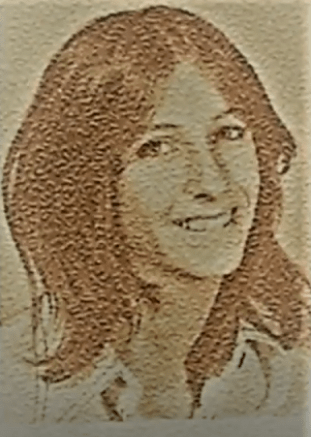
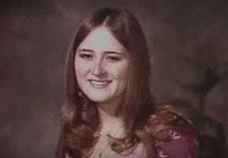
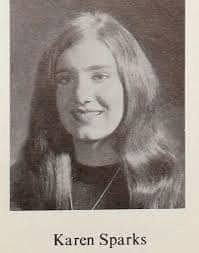
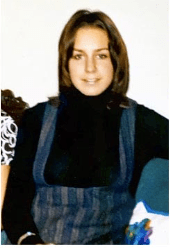
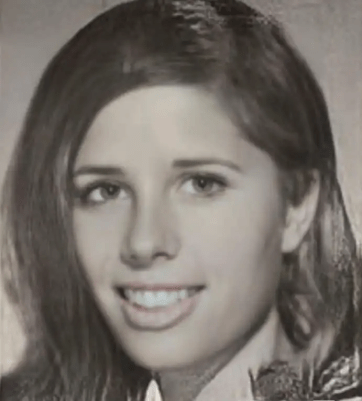
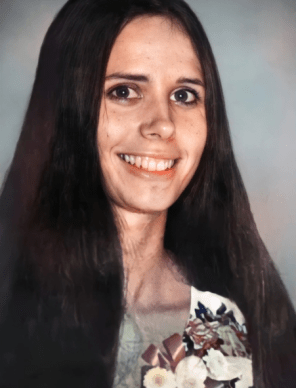
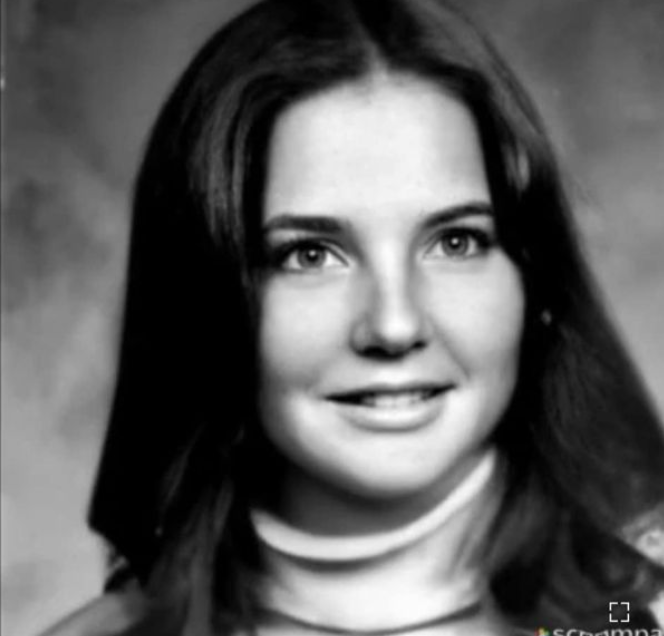
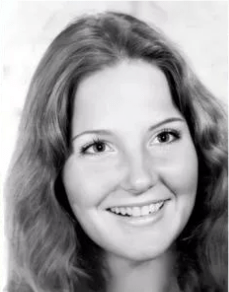
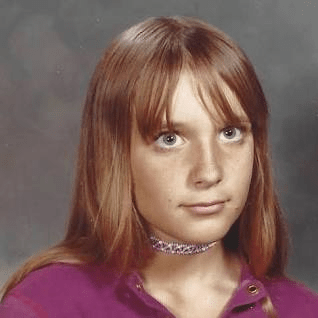
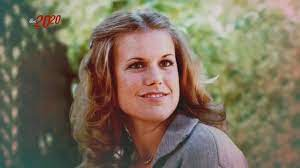
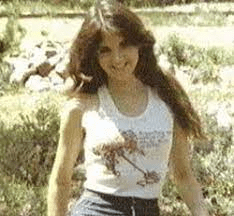
Carol DaRonch

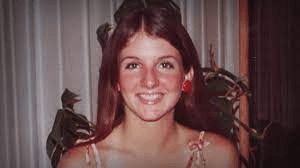
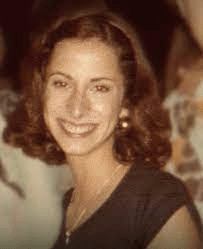
Carol DaRonch, circa 1970s. Courtesy Carol DaRonch/Amazon Studios.

Q: You already testified you are 5’7, right?

A: Yes.

Q: How much do you weigh?

A: 108.

Q: And that was roughly your size on November 8th?

A: Yes.

Q: Do you participate in any sports?

A: No.

Q: Ever had any self-defense training?

A: Once.

Q: Was that training, or someone just telling you about it?

A: Someone just telling me about it.

Q: Do you recall how you managed to get away from that man on November 8th?

A: No.

Q: It is your testimony now he was trying to hit you with that iron bar?

A: Yes.

Q: How did you keep him from doing it?

A: I don’t know.

Q: Remember talking to the police officer, I believe it was Joel Riet, about whether or not he was really trying to hurt you on November 8th, 1974?

A: No.

Q: Didn’t you have a little discussion with him where you both decided that he probably wasn’t since he was so much bigger than you were?

A: No.

Q: How tall am I? Do you want to stand up?

A: I have heels on.

Q: What were you wearing that night?

A: Loafers.

Q: Well, can you give a guess how tall I am?

A: No.

Q: Do you have any idea how much I weigh?

A: No.

Q: It is your testimony now that you did scratch this man, is that right?

A: Because my fingernails were all broken.

Q: Going to page 38 of the preliminary hearing, do you recall Mr. Yocom asking this question of you:

“Do you recall ever scratching him with your fingernails?”

And your answer: “No.”

Do you have an explanation for that?

A: No.

Q: In fact, the officers on November 8th asked you if you remembered if you hurt the man in any way, and you told them no too, didn’t you?

A: I don’t remember.

Q: Okay. Let’s go to these green pants. Can you describe them further than that?

A: They were straight legs.

Q: They didn’t have any flare to them?

A: Right.

Q: Did they have a cuff on them?

A: I don’t remember.

Q: Did you tell the police that they did not have a cuff on?

A: Yes.

Q: What kind of jacket?

A: A dress jacket.

Q: Did you tell the police that he had a dress jacket on?

A: I don’t remember.

Q: Or did you tell them you couldn’t remember the jacket?

A: I said it was a jacket, though.

Q: You said it was a jacket. Was it Mr. Yocom who asked you if it was a suit jacket at the preliminary hearing, and you first said that it was a suit jacket, isn’t that true?

A: But it was.

Q: What color was it?

A: I don’t remember.

Q: What kind of shirt did he have on?

A: I don’t remember.

Q: Was he wearing a tie?

A: No.

Q: Now, on the night of November 8th, you couldn’t answer any of these questions, you said you didn’t remember; right?

A: Right.

Q: And you say he was wearing a mustache?

A: Yes.

Q: Shortly after the incident you told Joel Riet that you thought it over and decided the man didn’t have a mustache, didn’t you?

A: Yes.

Q: And sometime later you decided he did, right?

A: Yes.

Q: When did you make that decision?

A: Right after I decided that he didn’t have one.

Q: Did you tell Officer Riet right then that you had changed your mind again that he had a mustache?

A: I don’t remember.

Q: Taking a photo out of what was at the earlier motion Defendant’s Exhibit 13, and it’s a mug shot with the number 63660, 11-1-73, Sheriff’s Office, Salt Lake County. Wasn’t it in regard to looking at this photo that you told Mr. Riet that you didn’t think the man had a mustache?

A: I don’t remember.

Q: Didn’t you say that this looks just like the man only he wasn’t wearing a mustache?

A: I don’t remember.

Q: Do you remember seeing this photo before?

A: No.

Q: You picked out several photos at different times as looking like the man—showing you again from Defendant’s Exhibit 13, which is an envelope full of photographs—and that number, Exhibit 13, is the one from the earlier motion, your Honor, rather than this—showing you Driver’s License A 664002, you said that that looked generally like the man, didn’t you, at one time?

A: The hair.

Q: The hair looked like that?

A: Sort of.

Q: If that what you mean by “greased”? Or was it shiny like that?

A: Yes.

Q: You described on the night of November 8th the man’s hair as being dark brown and black, did you not?

A: Yes.

Q: You just don’t recall all the photos that you picked out that you said looked like the man?

A: Not looked like, just things about them, the way they had their hair cut or their mustache or—

Q: Well, there was one photo that Bountiful showed you that you made an identification of and said it looked quite a bit like the man, and got him in quite a bit of trouble, didn’t you?

A: I don’t know. Did I?

Q: Well, didn’t you say it looked like him?

A: I don’t know what picture you’re talking about.

MR. O’CONNELL: Well, the problem is, I can’t find it. It was one of the photos we used in the last hearing. It was in one of those folders, your Honor, and it’s not there now. Whether it fell out or what.

Q: Now, as far as viewing photographs went, you viewed an awful lot during the first month after this incident, and then quite a period of time went by before they showed you photos again, is that true?

A: Yes.

Q: How many times before the lineup did you see Mr. Bundy’s photo?

A: Twice.

Q: You have testified previously that you saw it three or four times?

A: I might have.

Q: Were you mistaken then?

A: Yes.

Q: And since the lineup, you have seen it some more times, haven’t you? Well, you have seen it in court, for example, haven’t you?

A: Yes.

Q: And you have been reading newspaper stories about this case, haven’t you?

A: No.

Q: You haven’t?

A: No.

Q: You’ve testified at the preliminary hearing you have been reading the Deseret News stories about this case?

A: But not recently.

Q: But you were—between the lineup and the preliminary hearing you were reading the stories in the paper, though?

A: Some.

Q: And they would have had his picture in the paper, wouldn’t they?

A: One.

Q: Just had it in once?

A: I only remember seeing it once.

Q: Now, you don’t remember when Mr. Thompson showed you his picture the first time, right?

A: No.

Q: Well, do you remember him coming to your place of employment on September 1st of 1975 with the pictures of the automobile?

A: Yes.

Q: And they were just ordinary Polaroid size photos at that time, weren’t they, or were they big ones like this?

A: I don’t know.

Q: Referring to State’s Exhibits 20 and 21?

A: I don’t remember if they were big or small.

MR. O’CONNELL: Your Honor, if I may straighten up the record, the photo which I previously identified as coming from Defendant’s Exhibit 13 at the previous hearing and as having number 663660: I said Sheriff, but that is Salt Lake City Police Department and is now Defendant’s Exhibit 25; is that correct Mr. Yocom?

MR. YOCOM: That’s correct.

MR. O’CONNELL: And that’s the photograph I believe you said that you didn’t recall much about, is that correct?

MISS DARONCH: Yes.

MR. O’CONNELL: All right. I will move—I guess she didn’t identify it, so I can’t. I will have to wait on that.

Q: Defendant’s Proposed Exhibit 26 is the photo you said looks something like the man, particularly the hair?

A: Yes.

Q: All right. And you picked that out for Officer Riet? Do you know?

A: I don’t know.

Q: Now, when Officer Thompson showed you the photos of the car—you previously identified State’s Exhibits 20 and 21—he showed you four photos at that time, didn’t he?

A: Yes.

Q: And you told him that that was the car that had been used in the kidnapping, didn’t you?

A: I said it looked a lot like it.

Q: You said, “That’s the car,” right?

A: I might have.

Q: How could you tell from looking at these photos?

A: The rip’s identical to what I saw.

Q: What else?

A: It didn’t have a license plate.

Q: Now, will you please look at Defendant’s Exhibit 29. Do you see the license plate in that photo?

A: No.

Q: Can you see it in Exhibits 28, 20, or 21?

A: No.

Q: So you didn’t recognize that car and the photos because it didn’t have a license plate on it, did you?

A: I don’t know if I said that, even.

Q: Well, you just said it two minutes ago, didn’t you?

A: No. You asked me if that’s what I said.

MR. O’CONNELL: Well, can you go back and read the record, Mrs. Price?

(The record was read)

Q: And we went through the same thing at the preliminary hearing, did we not?

A: Yes.

Q: Where you said the way you told that the car in the photos was the car that you saw November 8th was because it didn’t have a license plate? You said that at the preliminary hearing too, didn’t you? Do you recall?

A: No.

Q: All right. On page 65:

“Question: Now, so you had, I take it, then looked at the car in pictures and said ‘That’s the car’; is that right?”

“Answer: Yes.”

“Question: And how could you tell it was the car?”

“Answer: It didn’t have a license plate on the front, and it was real beat up, the back seat was ripped exactly—”

“Question: But it didn’t have a license plate on the front and because the back seat was torn?”

“Answer: Yes.”

Q: Really, what you are recalling, then, was not the photos but the car you saw up on the Avenues with Officer Collard, is that right?

Ted Bundy Volkswagen VW 1975

The Volkswagen as viewed by Carol DaRonch, September 1975. Courtesy Bountiful PD

A: No.

Q: When did you ever see a car without a license plate other than your statement that you saw it on November 8th, 1974?

A: Just on November 8th.

Q: Okay. So how did you tell that these pictures were the car on November 8th, just because of the rip?

A: Yes.

Q: And the rip only appears in State’s Exhibit 20 and Defendant’s Exhibit 28, right?

A: Right.

Q: In fact, they can be any Volkswagen, couldn’t they?

A: Yes.

Q: Are you telling us that you can look at State’s Exhibit 20 and say that that is the exact same tear that you saw when you climbed into a car on whatever that street was in Murray in November of 1974? You can say that?

A: No. I said it looks a lot like it.

Q: Now, just after you looked at these car photos for Jerry Thompson, he gave you a pack of photos and asked you to look through them, didn’t he?

A: Yes.

Q: And that was the time that you picked out a photo and put it in your lap and went through the rest of the photos, then you gave the photos back to Jerry Thompson and said “He’s not in there,” didn’t you?

A: Did I?

Q: You don’t know?

A: I don’t remember.

Q: And didn’t he say, “Well, what about that photo,” referring to Mr. Bundy’s photo that was in your lap? And it was at that time you said, “I don’t know, I guess it looks more like him—or it looks closer to him than any of the other photos”; isn’t that the way that particular selection went?

A: I don’t remember.

Q: You don’t remember. Well, you remembered at the preliminary hearing, didn’t you? That was a little closer to the incident, wasn’t it? Closer to the time he showed you the photos at the preliminary hearing, wasn’t it?

A: Yes, it was.

Q: Okay. Publishing preliminary hearing, page 79, starting, I guess, at the bottom of the page, line 24:

“BY MR. O’CONNELL:

“Question: And that was when you looked through and said—exactly what happened on that occasion? Was it that you gave them back and that you had took Mr. Bundy’s photograph out from the pack and then you gave the pack back and said there wasn’t anybody there of the person, and they asked, well, why did you take that one out, and you said, ‘Well, that one looks more like him than any other picture.’ Isn’t that how it happened?”

“Answer: Yes.”

“Question: In fact, your first statement was that the man’s picture—that the man who had done it wasn’t in there, but that Mr. Bundy was closer than other people?”

“Answer: Yes.”

I don’t know whether I’m that inarticulate or whether the reporter got it wrong.

Q: Do you remember when the next time was that you saw Mr. Bundy’s photo?

A: I think it was two weeks later.

Q: Wasn’t it on September 4th when the officers from Bountiful came up to get you to go look at a car?

A: No. I don’t think it was that same day.

Q: You don’t think it was that soon after?

A: No, that same day. I don’t remember exactly what day it was.

Q: It was sometime after Officer Thompson had shown you the first pack, right?

A: Yes.

Q: You think it was a couple weeks?

A: I think.

Q: It could have been, say, three or four days?

A: No.

Q: Well, it was on a day that they came up to take you to go see if you could see the car, right?

A: No.

Q: It wasn’t?

A: It might have been.

Q: Well, in fact, you went through the pack of pictures they showed you once, and then you went through it again, and you picked out Mr. Bundy’s photo, and you said, “I think that may be the man,” or something to that effect, didn’t you?”

A: I don’t remember.

Q: Well, let’s put it this way: You never made a positive identification of a photograph, did you?

A: Right.

Q: That’s correct. Well, do you recall the Bountiful officers coming on several occasions to try to take you to see the car itself?

A: Yes.

Q: There were a couple of attempts that weren’t successful, then on September 8th Sgt. Collard took you up and showed you a car on the Avenues, didn’t he?

A: Yes.

Q: Did that car have a license plate on it?

A: No.

Q: And that’s when you remembered, isn’t it, when you were talking about how you identified the photograph because it didn’t have a license plate?

A: I was thinking of the car that night.

Q: Well, obviously, you were thinking of the car that night, because you were trying to see if the car in the photo or the car in the street matched it. But when I asked you how you could tell on two different occasions in two different court proceedings, you said it was because the car and the picture didn’t have the license plate on it. Now, my question was: Were you just confusing the car that you saw in the pictures with the car you saw on the street? You were just wrong, is that it?

A: I don’t know.

Q: Did you tell Officer Collard that the car you saw up on the Avenues was the car you were kidnapped in?

A: I might have, because it didn’t have a license plate. But it looked completely different.

Q: Well, at the preliminary hearing you said you didn’t identify it, right?

A: (No answer).

Q: What else about it made you think it was the car, other than it didn’t have a license plate? It looked completely different, but you identified it anyway, isn’t that true?

A: Because it was supposed to be the car in the pictures.

Q: That’s right, and that’s why you identified it, because it was supposed to be the car?

A: Because it didn’t have a license plate, and I knew it had been changed.

Q: That was your testimony also at the preliminary hearing, was the reason that you identified it was because it was supposed to be the car that was in the picture, and you knew the officers weren’t taking you up to see the wrong car, right?

A: Right.

Q: You pretty well identify what the law enforcement officers want you identify, don’t you?

A: No.

Q: You did at that time, didn’t you?

A: No.

Q: Let’s go to another time. Showing you Defendant’s Exhibit 28. Now, can you identify that? Have you seen that photograph before?

A: Yes.

Q: And at the preliminary hearing, didn’t you on two occasions say—identify that as a picture of the rip in the car that you saw on November 8th, 1974?

A: Yes.

Q: And then I pointed out to you that—or asked you whether or not you had ever seen the car from the back on November 8th, 1974, right?

A: Right.

Q: So how did you identify it at that time?

A: By the flap part that was sticking down.

Q: What flap part? The sponge rubber?

A: Yes.

Q: All right. This is State’s Exhibit 20. This is the way it looked from the front?

A: I could see this part from standing on the side of the car, not directly from the back.

Q: From standing on the side? You get a better shot—this picture is taken from the side, isn’t it?

A: Yes.

Q: In fact, it’s taken from the rear quarter window, isn’t it?

A: Yes.

Q: Okay. Now, show me in this picture what you—you got a better view, more of a view to the back on November 8th than this picture shows?

A: No.

Q: In fact, you were more from the front, weren’t you?

A: Yes.

Q: All right. Now, show me in this picture what there is that you saw that you could remember at the preliminary hearing so that you could identify that rip as the one you saw?

A: Just this top portion.

Q: Well, you can’t see this part, can you, from the front, or even from the side?

A: But it is curving over here.

Q: Well, don’t all Volkswagens curve over?

A: I don’t know. Do they?

Q: Well, you identified that just because Mr. Yocom handed it to you and asked you if you could identify it, didn’t you?

A: And you were pushing it in my face.

Q: Well, let’s go back to when Mr. Yocom was pushing it in your face, young lady.

MR. YOCOM: Your Honor, I think counsel ought to be cautioned—

THE COURT: All right, no argumentation with the witness. On the other hand, I want the witness to just answer the questions.

MR. O’CONNELL: Page 116, this is Mr. Yocom:

“Question: With Exhibit B, do you recognize that photograph?”

“Answer: Yes.”

“Question: And what is that?”

“Answer: It’s the ripped part of the top of the back seat.”

“Question: And in what way, if any, does that resemble the vehicle you were in on November 8, 1974?”

“Answer: It had a rip just like this one.”

BY MR. O’CONNELL:

“Question: I’m showing you State’s Exhibit B. Looking at that, you can say that that’s the ripped seat you saw on November 8, 1974?”

“Answer: Yes.”

“Question: How can you tell?”

“Answer: It just looks like it.”

“Question: Well, do you remember any particular little dents or tears or pieces hanging out or anything like that?”

“Answer: Just the way it’s ripped.”

“Question: Did you ever look at that car on November 8th from the back?”

“Answer: No.”

Have you ever viewed any other Volkswagen automobile, other than the one with Officer Collard up on the Avenues, with a police officer to see if it was the car used on the night?

A: No.

Q: You never have?

A: No.

Q: Didn’t you view one with Officer Paul Forbes shortly after the incident?

A: Yes.

Q: You decided it wasn’t the car?

A: Yes.

Q: Why? What was different about it, do you remember?

A: The rip in the back seat wasn’t the same.

Q: Anything else?

A: I don’t remember.

Q: Remember being taken to the University of Utah to see if you could identify somebody?

A: Yes.

Q: When did you go, do you recall?

A: No.

Q: Well, roughly when, say, in relation to being shown those pictures or the lineup or anything?

A: It was before the lineup.

Q: It was the day before the lineup, wasn’t it?

A: Was it?

Q: I don’t know.

A: I don’t know.

Q: I’m asking you.

A: I don’t know, either.

Q: Do you recall where you went up there?

A: I don’t know what building it was, exactly.

Q: Was it the law school?

A: I’m not familiar with up there.

Q: Well, who all was up there with you?

A: I don’t know their names.

Q: There were a number of police officers and a number of county attorneys, weren’t there?

A: Not a whole lot.

Q: And you hung around a little while with Jerry Thompson inside the building and didn’t see anyone, right?

A: Right.

Q: And Officer Thompson told you the man wasn’t there, right?

A: Yes.

Q: What man did you think he was talking about?

A: I don’t know. He never told me his name.

Q: You knew it was the man whose pictures you had picked and whose car you picked, right?

A: I didn’t know it was the man in the pictures I picked. They never told me anything about anything.

Q: Well, I know, but you gathered it, didn’t you? Didn’t you gather that before the lineup?

A: Well, yes.

Q: All right. Before the lineup, you knew that the man you were looking to see if you could identify was a law student, and that he had a beige Volkswagen, didn’t you.

A: I didn’t know if he was a law student.

Q: Well, you testified previously that you knew that he was a law student and had a beige Volkswagen, didn’t you?

A: (No answer.)

Q: You associated the pictures of the man you had picked with the automobile, hadn’t you?

A: Yes.

Q: And you associated the trip up to the law school or up to the building at the University with the man you had picked, whose photos you had tentatively picked, hadn’t you?

A: Yes.

Q: You knew that these policemen were closing in on a hot suspect, didn’t you?

A: I guess.

Q: Well, weren’t they acting that way, coming and seeing you every couple days and driving you around town and having officers out following somebody around so that you could try to find out where he was to look at him; do you recall all that?

A: Yes.

Q: It was a pretty extensive activity there during the first—or, in fact, all through September, wasn’t it? With Bountiful and with the County Sheriffs?

A: I really don’t know what they were doing.

Q: You knew they were doing something, didn’t you?

A: Yes.

Q: In fact, you were quite frightened at the lineup, weren’t you?

A: Yes.

Q: Because you were pretty certain that the man who kidnapped you was going to go in that lineup and he might see you, weren’t you?

A: No.

Q: Now, in that lineup you could have recognized Mr. Bundy from seeing his pictures even if you hadn’t seen him before, couldn’t you?

A: Yes.

Q: I mean, nobody else in that lineup looked like his picture, did it?

A: No.

Q: Now, do you have separate images in your mind of what the man looked like on November 8, 1974, and what each of the pictures of Mr. Bundy looked like and what Mr. Bundy looked like at the lineup and what he looks like today? Can you flick through your mind and have those images come out?

A: Yes.

Q: Have you ever seen Mr. Bundy in a mustache?

A: I don’t remember.

Q: Have you ever seen his picture in a mustache or a beard?

A: I don’t remember.

Q: Showing you what has been marked Defendant’s Exhibit 27, referring to Driver’s License C 124012, have you ever seen that before?

A: Yes.

Q: Did you pick that picture out and say that that looked a lot like him–the man that abducted you—except for the hair?

A: Yes.

Q: And you said that the officer was showing you these pictures, in fact, I believe he showed you 27 and 27-A at the same time, he said, “Look through these and pick out the hair that looks the most like him,” and you picked Drivers License C 90747, didn’t you?

A: Yes.

Q: He had that kind of hair, you said?

A: Sort of.

MR. O’CONNELL: I will move the introduction of Defendant’s Exhibit 31 as being a transcript of her statement to the police officers, to Officer Joel Riet on November 8, 1974.

MR. YOCOM: No objection.

THE COURT: Exhibit 31 is received.

Q: Showing you a group of photographs 30-A through S, I will ask, you to look through there and see if any of those are photos of ripped back seats, and see if any of those are like the rip that you saw on November 8th, or for that matter, the rip you saw in Mr. Bundy’s car?

A: I really can’t see it too good in some of these pictures.

Q: Do you know if it’s in there?

A: No.

MR. O’CONNELL: That’s all.

MR. YOCOM: You mean that’s all the questions?

MR. O’CONNELL: Yes. That’s all the questions.

REDIRECT EXAMINATION BY MR. YOCOM:

Q: Carol, at any time when you observed photographs shown to you by police officers, did any of them ever—let me rephrase that—what did they tell you each time you were shown photographs?

A: Just to look through them, if I saw anyone that reminded me of the man, to pick it out and show them what reminded me about it; or if I saw the man, to pick it out, or if l didn’t see anything that I liked, I didn’t have to pick out anything.

Q: And was that all that was ever said to you at any time?

A: Yes.

Q: Did anyone ever suggest to you that the suspect’s picture, or a suspect’s picture, was contained in those photographs?

A: No.

Q: Did you know on September 1st when Officer Thompson showed you a group of photographs that there would be a suspect in those photographs?

A: No.

Q: Did you know on the 4th day of September when Officer Beal from Bountiful showed you a group of photographs whether or not the man would be in those photographs?

A: No.

Q: Did you, when you went to the lineup, know that the man that assaulted you—kidnapped you on November 8th—was going to be there?

A: No.

Q: Did anyone tell you he was going to be there?

A: No.

Q: Did you know his name?

A: No.

Q: Did you know his occupation?

A: No.

Q: Did you know anything about Theodore Bundy on October 2nd at the lineup?

A: I don’t think so.

Q: Counsel asked you on cross-examination if you could have identified Mr. Bundy at the lineup without seeing his picture.

MR. O’CONNELL: No. Excuse me. I will call for the record on that. I asked her if—she might object to this even more—I asked her if she could have identified him just from his pictures without having seen him on November 8th, 1974. She said she could have.

THE COURT: Yes. That was the testimony.

MR. YOCOM: Sorry. I must have written it down wrong.

MISS DARONCH: I thought he said the other way too.

Q: What question did you think you were asked?

A: If—what you thought. I mean, I couldn’t from the picture, is what I mean, for sure.

Q: You couldn’t tell if he was the man strictly from the pictures?

A: Yes.

Q: When you saw him in the lineup, could you tell?

A: Yes.

Q: Did you associate the lineup at all with seeing pictures?

A: No.

Q: Seeing Mr. Bundy at the lineup when he first walked into the lineup room, whatdid you associate that with, Carol?

A: When he first walked in was the way he walked on that night.

Q: What night?

A: November 8th.

Q: Did you know immediately?

A: Yes.

Q: And you are positive today?

A: Yes.

MR. YOCOM: No further questions.

RECROSS-EXAMINATION BY MR. O’CONNELL:

Q: Well as to being able to pick him out just from the pictures, we. have gone through that twice, haven’t we? Once at preliminary hearing and once this afternoon? And both times, you said that you could pi.ck him out even if you hadn’t seen him, you could pick him out—and I would follow it up with the question, “Well, nobody else in the lineup looked like his pictures?” And both times, both this afternoon and at the preliminary hearing, you agreed. Is that right?

A: I thought you said the other way around.

Q: Both times you thought—

A: I don’t remember the first time.

Q: Or did you and Mr. Yocom discuss that with regard to the preliminary hearing testimony, is maybe why you made that mistake at preliminary hearing?

A: No.

Q: Now you are saying that you didn’t think the man who kidnapped you was in the lineup, is that right? You didn’t know that he was?

A: No.

Q: You didn’t even suspect that he was, strongly?

A: Yes.

Q: That’s why you testified that you were afraid, wasn’t it? You were worried that he’d see you?

A: I don’t remember.

Q: You said that you associated the man with the car and the pictures and the going to the Law school, and you testified to that two or three times, haven’t you? Haven’t you?

A: (No answer.)

Q: Well, yes or no?

A: Will you say that again?

Q: Haven’t you on two or three times now testified that you associated the man in the lineup, prior to the lineup, going in the lineup, with the pictures, with the viewing of the car, and with the law school; that you knew that the man that you were looking for was a law student and had a tan car? Haven’t you testified that that’s true several times?

A: Yes.

Q: And it is true, isn’t it?

A: Yes.

MR. O’CONNELL: That’s all.

MR. YOCOM: No further questions.

THE COURT: All right. Miss DaRonch, you may step down.

Ted Bundy Ritual House.

When I went to Utah in November 2022 there was one location I was completely unaware existed that I wish I (somehow) knew to include in my list: the supposed ‘Ted Bundy Ritual House’ just outside of SLC in Bountiful. The duplex-style residence is located at 1201 North 200 West, and is said to be ‘just across the street’ from Viewmont High School, which is where Deb Kent was abducted by Bundy on November 8, 1974 after his botched kidnapping attempt of Carol DaRonch just 45 minutes away in Murray. Kent was last seen at roughly 10:30 PM after leaving a showing of ‘The Redhead’ to go and pick up her brother from the nearby Rustic Roller Rink. According to eyewitnesses, there were loud screams heard from the parking lot at roughly the same time that she was last seen, and after the Kents realized that the family car had never left the parking lot they immediately contacted the police.

Before Bundy was executed in January 1989, he confessed to killing then 17 year-old Kent and pointed investigators to where he dumped her body. Upon searching Fairview Canyon later that May the only human remains that search crews located was a patella, which was found among the ten bags of animal bones that were collected. The kneecap was presumed to belong to Debra and was given to her family to hold onto, and it remained unidentified until 2015 when DNA testing confirmed that it belonged to her. After the positive ID the Bountiful PD returned the bone to Belva Kent along with her daughter’s official death certificate.

According to Redditor ‘je-m-en-fiche,’ Bountiful residents that lived in the area referred to it as the ‘Viewmont House’ because of its close proximity to the local high school. Looking into the residence, it’s in no way ‘close’ (in my opinion, anyways) to Viewmont HS, nor should it be considered just across the street (it’s actually 0.2 miles away, and is about a five minute walk). It was featured on the Travel Channel television show Ghost Adventures, ‘starring’ Zak Bagans and his group of cronies (including Aaron Goodwin and Nick Groff), specifically for the limited spin-off mini-series ‘Serial Killer Spirits.’ The episode, titled ’The Ted Bundy Ritual House,’ aired on October 26, 2019, and focused on the abandoned structure that has been uninhabited since a gas leak led to an explosion on July 4, 1997. The show’s creator and ‘lead investigator’ Zak Bagans claims that Bundy took Debra Kent there after abducting her after she left a showing of ‘The Red Head’ to go pick up her brothers from a nearby roller skating rink.

In addition to the TB ritual house, Ghost Adventures did episodes on HH Holmes (he killed a nine year old kid in a house in Irvington, Indiana and the current owner felt that dark and sinister forces had ‘overtaken the property’), Joliet Prison in Illinois (where John Wayne Gacy spent only a small amount of time), and an episode titled ‘Axe Killer Jail,’ where the team investigated a prison in Council Bluffs, IA, where SK Jake Bird was once housed.

Because the events of the episode are so ridiculously absurd, I’m not going to spend much time on a synopsis of it. In a nutshell, it began with some little ginger-haired boy that supposedly lived next door to the house (knowing Bagans it’s probably his own kid) peeing on a log on the front steps (Zak tells one of his cronies to smell it ‘for research,’ and he does), and of course the GA’s crew followed him home and gave him (and his mother) the third degree and told them exactly what they wanted to hear… and the guys ate it up like a piece of fucking cheesecake. When asked how he felt about the house the kid told Bagans that there were ten mean child-aged spirits that lived there and were trying to kill him and they ‘better not go in there because they might kill you.’

In the beginning of the episode, a one-time resident of the home named Peter Kingston claimed that when they first moved in his family found weird, mysterious satanic symbols drawn on the walls, including various ‘devils signs’ (including a ‘big pentagram’ on the wall) and ‘666’s all over the place.’ At some point during the episode some guy named Vincent (who does not appear to be with Bagans’ crew and I don’t care enough about him to do any additional research) said that when he was in the house prior to the episode he was pushed down the stairs and almost went through the side railings. As the show progresses, the ghost hunters break out all their fancy bullshit equipment meant to detect supernatural activity, and of course everything they do results in some sort of captured phenomenon (I mean, no one would watch it if nothing happened), and plenty of jump scares and ‘sledgehammers of evil’ (Zak’s words, not mine) ensues.

One of the first things the GA team does upon entering the residence is attempt to open a portal on the floor near a pentagram using what Bagans calls a ‘geophone device,’ which he said ‘measures temperature and electromagnetic energy.’ However, according to the website HiggyPop that’ ‘isn’t strictly true. A geophone doesn’t detect heat or electromagnetic energy, as the name suggests it’s to do with geological movement and it actually detects vibration. The gadget Zak is using is called an EDI meter which has several functions built in, including EMF and thermometer as well as a geophone. Ironically the geophone is the one function of the device that Zak is not using.

In addition to the ‘geophone’ (that really isn’t a geophone), Bagans used night vision cameras, digital recorders, and a spirit box, which is a device that rapidly scans AM/FM radio frequencies in an attempt to pull paranormal messages out of the static and white noise. Two additional pieces of equipment the team used (that I have also never heard of before) is the Ovilus V (which is a tool that supposedly allows spirits to communicate with the living by selecting words from a internal database using their ‘energy’) and a TriField meter, which measures EMF in the form of radio-frequency, magnetic, and electric fields.

Zak and Aaron used an SLS camera in the upstairs part of the house, which is a device which ‘looks for’ human-like shapes in the darkness and supposedly can capture images in the absence of light that the human eye can’t see. According to the investigators, while using the camera in a hallway they captured what they described as a ‘mind-blowing figure,’ which was shown in the form of a ‘glitching and dancing stickman on the camera’s screen for a brief moment’ (I cannot make this up, they pulled it out of thin air).

After doing some research into the history of the structure, Bagans was wrong: Bundy never could have brought Deb Kent to this house, because it was actually occupied by two different families at the time of her abduction in November 1974. In an interview with KSNV, the Peterson family had five daughters residing there at the time Kent was abducted in November 1974, and ‘people have said that Ted Bundy took women over here and killed them in this house at the time that Debbie Kent got taken. We were living here. Two families were living here and never saw anything like that happen.’ … ‘I think it’s ridiculous because Ted Bundy never came over here. Nothing like that ever happened here.’ Cindy’s mother Rolean did share that she felt the residence was haunted (just not by Ted Bundy), and that the family experienced several strange things during their time in the house: on one occasion they were sitting in a front room and a white ball flew out the wall, seemingly out of nowhere.

Despite Bundy never having any actual ties to their former residence, Mrs. Peterson said that as mother of five young girls she made sure to always keep the doors locked, and ‘it was a really terrifying time for everybody here.’ She also commented that linking Bundy to the old residence only further exploits his victims, and that ‘he was a monster. And I don’t think he should be glorified in any manner at all.  If they’re going to tell a story, they need to get their facts straight.’ KUTV out of Salt Lake reached out to Mrs. Belva Kent about the Travel Channel’s episode on the residence and she said that every time a movie or TV special is made about her daughter’s killer her family is forced to relive their pain and that the show only glorified the man that killed Debra.

According to a ‘deseret.com’ article published on July 5, 1997, the duplex went up in flames the day before after gas accumulated underneath the basement ceiling from a leak which caused the explosion (which was most likely ignited after the water heater kicked on). After an assessor was able to investigate the fire it was determined there was nearly $100K worth of damage done to the structure, with the first-floor apartment suffering the majority of it.

According to Redditor ‘OatyBisc,’ ‘I grew up in Bountiful (I even went to Viewmont HS where the abduction happened!) and this house has nothing to do with Ted Bundy other than proximity. I was excited to see an episode from my hometown but there were so many inaccuracies it drove me crazy! Debbie Kent’s body was never found, but they did find a patella at a site where they found bones from other murder victims and a few years ago they verified it was hers through DNA. This was maybe 20 miles or so from Bountiful, not 100 miles. Her headstone is in the city cemetery, but her body is not there. When she disappeared this house was occupied. It only looks bad now. I drive past it occasionally and it’s pretty worn and clearly burnt on the North end, but the fire was much later. It’s a spooky looking house and they have ghost tours there occasionally, but the Ted Bundy angle is a stretch.’ In addition to this, a Redditor going by the handle ‘pengony’ pointed out that when Bagans was told by locals that the house was completely unrelated to Bundy he told them that he didn’t care and was going to film there anyway.

Just as a side note, the episodes IMDB page gives a completely different narrative and outright fabrication of the truth: ‘Zak and the crew investigate an abandoned house in Bountiful, Utah, where locals claim notorious serial killer Ted Bundy murdered one of his victims. Overloaded with satanic rituals and violence, the home is drenched in a dark, sinister energy.’

Now… this isn’t just some old, dilapidated house with a possible (but, not really) link to Ted Bundy: referred to as the ‘Anson Call House,’ the residence was built by a pioneer of the Mormon faith (Anson Call, obviously) in the early days of Bountiful when it was known as Session’s Settlement (or North Canyon). The building, which began as a one-room cabin, was initially constructed in 1855 and the first additions to the home were made two years later when a dining room and kitchen area were built as well as a basement. Over the years a second floor was added, and it eventually turned into the structure you see today (or, before it blew up).

Interestingly enough though, Ted Bundy isn’t the house’s only murderous link: In Adam Call-Roberts blog post titled, ‘Mary & Anson Call: Hosts to a Killer,’ in October of 1857, Anson and Mary Call hosted then Utah Congressman John Doyle Lee overnight, blissfully unaware that just one month prior their guest participated in the ‘Mountain Meadows massacre.’ In September 1857 an emigrant group from Arkansas known as the Baker–Fancher party set up camp in Utah’s Mountain Meadows, which was a staging area in the southern part of the state that was used to get ready for the long crossing of the Mojave Desert by groups that were going west to California.

In the early morning hours of September 7, 1857 a group of Paiute Indian and Mormon militia men that were dressed as Native Americans attacked the circled wagons without warning. The party fought off their aggressors the best they could and the conflict went on for four days; in the process fifteen emigrant men were killed either in battle or while attempting to escape. Congressman Lee didn’t get involved in the dispute until the third day, when he approached the wagon party and convinced them to surrender their possessions and weapons in return for safe passage to nearby Cedar City. The emigrants (who were low on ammunition and supplies) accepted his offer and surrendered, and it was then that roughly 120 people from the Baker–Fancher party were then slaughtered, leaving only 17 small children behind. In 1874, Lee was arrested for leading the massacre: his first trial ended with a hung jury and two years later a second one took place in which the prosecuting attorneys put the blame solely on his shoulders. He was convicted and sentenced to death. On March 23, 1877, Lee was executed by firing squad at the very site of the massacre that took place twenty years before.

In conclusion, there’s a lot of different videos and podcasts on this residence, but one thing is for certain: Ted Bundy had absolutely nothing to do with this house.

Works Cited:
Deseret.com/1997/7/5/19321700/fiery-4th-home-goes-up-in-flames/
Roe, Ginna. (October 25, 2019). ‘Travel Channel links Bountiful house to Ted Bundy, former residents say ‘it’s ridiculous.’’ Taken May 22, 2024 from https://kutv.com/news/local/travel-chanel-links-bountiful-house-to-ted-bundy-former-residents-say-its-ridiculous
utah.com/things-to-do/attractions/mormon/mountain-meadows/

A picture of the Anson Call House taken around 1920 with attached ‘milk diet’ sanitarium on the south side of the residence. Photo courtesy of Lewis and Jean Call.
The Anson Call house around 1940 after the Sardoni remodel. Photo courtesy of Lewis and Jean Call.
Another shot of the Anson Call House, showing the southeast corner.
An older shot of the Anson Call House before the fire.
The front of Anson Call home showing picket fence and old enclosed brick entrance and balcony.
A side view of the house after the 1997 fire.
The Anson Call House as it looks today.
The entrance to those house, notice the ‘private property’ signs posted everywhere. Photo courtesy of news3lv.com.
The side of the Anson Call House in its more recent years. Photo courtesy of The Travel Channel.
An aerial view of the Anson Call House. Photo courtesy of The Travel Channel.
The houses front porch light. Photo courtesy of news3lv.com.
A drawing of the layout of the first floor of the Anson Call House. Photo courtesy of Lewis and Jean Call.
The back entrance to the house as it looks today.
The best screenshot I could get of the no trespassing sign on the Anson Call House. Screenshot courtesy of YouTube Channel ‘Lazarus Unknown.’
Zak Bagans standing in the kitchen of the Anson Call House. Screenshot courtesy of The Travel Channel.
A recent view of the kitchen in the Anson Call House. Screenshot courtesy of YouTube Channel ‘Lazarus Unknown.’
Another shot of the kitchen in the Anson Call House. Screenshot courtesy of YouTube Channel ‘Lazarus Unknown.’
A pentagram drawn on the living room floor of the Anson Call House. Screenshot courtesy of The Travel Channel.
Some satanic drawings on the first floor walls in the Anson Call House. The GA team used UV flashlights to capture ‘hidden’ messages drawn on the walls of the Anson Call House. Screenshot courtesy of The Travel Channel.
Some satanic drawings on the first floor walls in the Anson Call House. Screenshot courtesy of The Travel Channel.
One of the living rooms in the duplex in the Anson Call House as it looks today. Screenshot courtesy of YouTube Channel ‘Lazarus Unknown.’
Another shot of one of the living rooms in the duplex in the Anson Call House as it looks today. Screenshot courtesy of YouTube Channel ‘Lazarus Unknown.’
Another shot of some ‘hidden’ messages drawn on the walls of the Anson Call House. Screenshot courtesy of The Travel Channel.
Some more ‘hidden’ messages drawn on the walls of the Anson Call House. Screenshot courtesy of The Travel Channel.
Some spray painted artwork on the wall in the Anson Call House. Screenshot courtesy of YouTube Channel ‘Lazarus Unknown.’
A bedroom in the Anson Call House as it looks today. Screenshot courtesy of YouTube Channel ‘Lazarus Unknown.’
A comment on a Reddit post about the TB Ritual House from the user ‘penogy.’
A comment on a Reddit post about the TB Ritual House from the user ‘Coleyb23.’
A comment on a Reddit post about the TB Ritual House from the user ‘lordglo.’
Deb Kent.
Deb Kent’s patella, which remained unidentified until 2015. Photo courtesy of Tiffany Jean.
Viewmont High School, located at 120 West 1000 North in Bountiful, UT. Photo taken in November 2022.
The parking lot at Viewmont High School where Deb Kent was abducted from.
A possible route from the Anson Call House to Viewmont High School in Bountiful, Utah.
Anson and Mary Call.
A picture of John D. Lee taken in December 1857. Photo courtesy of Adam Call Roberts.
A picture of Congressman Lee just prior to his execution sitting next to his own coffin; how dark but appropriate for what he did.

Laura Ann Aime.

Laura Ann Aime was born on August 21, 1957 to James and Shirlene (nee Tolton) Aime in Lehi, Utah. Mr. Aime was born on August 10, 1928 in Fairview, Utah, and after completing high school he joined the US Navy; after getting out of the military he went on to attend the University of Utah. Shirlene was born on April 12, 1934 in Orem, and the couple were married on January 14, 1951. According to the Aime’s marriage certificate, Jim worked as a steelworker for Geneva Steel. Laura was Jim and Shirlene’s second child, and she had four younger sisters (Evelyn, Michelle, Denna, and Tommi lyn) and an older brother named John. Mrs. Aime filed domestic abuse charges against her husband in April 1966, but they must have worked out their issues because they never divorced.

According to her autopsy, Laura had blue eyes, medium length blonde hair, was 5’10” tall, and weighed around 140 pounds. Before Aime dropped out she was a student at North Sanpete High School, and was at one-time a member of the Laurel Class in the Fairview North Ward. She loved animals, and one time a wild deer wandered out of the canyon and she began feeding it, and eventually was able to convince the creature into becoming a family pet. When Laura was eleven she was thrown into a barbed wire fence by her horse, injuring her ring finger, forearm, and upper arm. Jim Aime liked to take his daughter hunting, and she even helped him bag the first prize deer in a Utah hunting contest at the age of ten. Before she was killed Aime somehow seemed to show awareness that she knew her life was going to end soon in a tragic way: Mrs. Aime said one day out of the blue just a few weeks before her daughter died she told her: ‘at my funeral, I don’t want to be buried in a dress.’ Additionally, Evelyn Aime said that her older sister mentioned that she wanted the 1974 Terry Jacks classic, ‘Seasons in the Sun’ to play during the service as well.

Immediately before she disappeared Laura had been staying with her girlfriend Marin Beveridge, who didn’t live far from her childhood home. Despite being raised in a Mormon family, after leaving home she quickly fell in with the latter-day counter-cultural life, and with her long blonde locks and ‘hippie look’ she already had the stereotypical appearance of a runaway. Although the Aimes didn’t care for their daughter’s  choice in friends they were just beginning to come to terms with her ‘nomadic’ lifestyle. Often teased about her height, Laura was given nicknames like ‘Wilt the Stilt,’ which greatly upset her, and her Aime’s suspected that the relentless mocking was what made her leave school. She was used to tough work as the family at one time lived in an old farm house in Mount Pleasant, where they kept a plethora of animals, including chickens, cows, peacocks, turkeys, hogs, goats, sheep, dogs and ‘dozens of cats.’ She was also a tomboy (especially during her early years), and she loved playing softball, and played on competitive teams as well as her families LDS ward, even going so far as to winning the 1972 state championship. Growing up, Laura loved horses and was an experienced rider; she even spent several of her teenage years in an all-girls horseback riding club called ‘The Silver Spurs,’ and participated in several competitions with them at different fairs and parades across Utah.

Before she disappeared Laura had been staying with her girlfriend Marin Beveridge, who didn’t live far from her childhood home. Despite being raised in a Mormon family, after leaving home she quickly fell in with the latter-day counter-cultural life, and with her long blonde hair and hippie look she already had the appearance of a runaway. Although the Aimes didn’t care for their daughter’s friends they were just beginning to come to terms with her ‘nomadic’ lifestyle. Often teased about her height, Laura was given nicknames like ‘Wilt the Stilt,’ which greatly upset her, and the Aime’s suspected that the relentless mocking was what made her leave school. Laura was used to tough work as the family at one time lived in an old farm house in Mount Pleasant, where they kept a plethora of animals, including chickens, cows, peacocks, turkeys, hogs, goats, sheep, dogs and ‘dozens of cats.’ She was also a tomboy (especially during her early years), and she loved playing softball, and played on competitive teams as well as her families LDS ward, even going so far as to winning the 1972 state championship. Growing up Laura loved horses and was an experienced rider. She spent several of her teenage years in an all-girls horseback riding club called ‘The Silver Spurs” in SanPete County, and participated in several competitions at different fairs and parades across Utah. Those that knew her remember her as a kind and loving person.

Laura Ann Aime was seventeen when she was abducted by Ted Bundy on Halloween night in 1974: the party she was at never really got going, and she left by herself around ten to get some cigarettes. About a half hour later she was picked up by an acquaintance named George Alley, who later told investigators that he dropped her off at The Knotty Pine in Lehi just after midnight (although according to Captain Borax, Browns as it was called by the locals closed at eleven, so perhaps it was closer to 11:00 versus 12:00). Quick Lehi factoid: ‘The Knotty Pine’ as it was once called was referred to as ‘Mo Browns’ because the gentleman that owned it was named Leon Brown and he reportedly had ‘a huge mole on his face’ (very clever). Alley also shared that Aime complained that before he picked her up a bunch of ‘cowboys’ ignored her outstretched thumb and drove right past her. From Browns, Aime again got bored and walked to Robinson Park. She was last seen wearing silver cross shaped earrings, a tan sleeveless turtleneck-style sweater with white horizontal stripes, a Navy Pea coat with a hood, light brown lace up shoes, and blue Levi’s with ‘patches on the rear;’ various sources report her wearing a halter top as well. Laura was wearing a ring with a yellow stone and had a rubber band around her wrist; her nails were adorned with black polish with silver flakes.

Although it’s (mostly) agreed on that Laura was last seen trying to hitchhike, there’s a few different possible narratives when it comes to where she was right before she disappeared. The most common theory I’ve seen is that she attended a house party at a mobile home in the suburbs of nearby Orem; a second says the party was in Lehi. The third possibility is that the party took place at the Knotty Pine Cafe in Lehi… (although there’s a FOURTH that says there was no party at all). BUT… every single one of these possibilities consistently placed her at the Knotty Pine Cafe for some period of time before she left to hitchhike to Robinson Park. One eyewitness came forward and shared with investigators that they saw Laura at the park in American Fork at around midnight, which is the last time that anyone reported seeing her alive. Robinson Park is about a 3.2 mile drive from the (former) Knotty Pine Cafe, and if she did walk it would have taken her roughly an hour (give or take) to do so. Due to the dropping temperatures (dipping as low as 45 °F) and the distance involved, it’s very likely that she tried to hitchhike back to Lehi after she was done hanging out at the park. Did Bundy see her there then pull up and offer her a ride? There’s also a possibility that he spotted Aime from a distance then crept up behind her and blitzed her, much like he did to Nancy Wilcox. As I mentioned earlier, Laura was in regular contact with her family after leaving home, and at first they weren’t too alarmed when they didn’t hear from her and figured it was only a matter of time before she got in contact with them. It wasn’t until Laura didn’t come home for a planned hunting trip with her father that the Aime’s knew that something was seriously wrong, as that wasn’t something she would miss without a good reason. After she disappeared her story didn’t make the news until her remains were discovered (like so many of the other case’s I’ve written about, for example Brenda Joy Baker out of Maple Valley, WA), which may have partially been due to her transient nature and nomadic lifestyle.

The remains of Aime were found less than a month after she vanished on Thanksgiving Day next to a stream in American Fork Canyon in the Wasatch Mountains by two BYU students that were looking for fossils for their Geology class (Raymond Ivins and Christine Shelly). Fearing that the murderer may still have been lurking in the area, the couple immediately went to the nearest ranger station and reported their discovery. Aime’s body was covered in leaves, twigs, and brush; she had been raped, sodomized, beaten then strangled to death with a pair of stockings. According to her autopsy report done by former Utah State Medical Examiner Dr. Serge Moore*, Laura had depressed skull fractures on the left side and back of her head and the necklace she was last seen wearing was tangled up in the pair of nylons that were cinched around her beck. She had numerous facial wounds (almost too many to count), and her body had deep wounds from where it had been dragged. LE deduced that the weapon used to inflict such brutal injuries was most likely either a pry bar or metal crowbar; her face was incredibly swollen and her tongue was hanging from her mouth. Aime had also suffered a vaginal puncture that may have been made by a weapon of some sort (perhaps an ice pick, and some have also wondered if it was a speculum which is what it’s thought Karen Sparks was assaulted with). Tire patterns that were found in the immediate area were said to be a match with Bundy’s Volkswagen Bug. *Just as a side note (per Kevin Sullivan), Dr. Moore never properly investigated either the temperature or the level of snow during the period that Smith and Aime were abducted. After complaints of sloppy work from Utah law enforcement Moore was investigated, and he officially lost his license in 1979 after he failed to produce any proof that he graduated from a University in Mexico City.

Laura’s cause of death was listed as multiple head injuries with a skull fracture and strangulation. Also, I do want to point out that I’ve seen the date incorrectly listed as both November 26 and 27th, but according to my research, Thanksgiving Day in 1974 was on the 28th. About the discovery, Ivins said: ‘I looked and I thought, you know, it was a deer or something and … it was a girl … It looked like she had been …she was dead. It was really grotesque. There was blood around her neck and breasts and she was naked and lying on that hill and it was a freak-out and I lost it. I thought maybe the guy was still somewhere around and I just panicked, worrying about my girlfriend . . . and we ran down the trail …Came down and ran right through the creek and got in the car and just drove like a maniac, I guess as fast as I could, down to the ranger station and I reported it.’ Swabs taken from Aime’s vagina and anus showed the presence of non-motile sperm, and blood tests showed no signs of substance use aside from alcohol. In the early stages of the investigation it was suspected that her remains belonged to Debra Kent, who had gone missing from Viewmont High School in Bountiful nineteen days earlier.

Several days before she was killed Laura spoke with her mother on the phone: Mrs. Aime begged her daughter not to hitchhike, and told her that she was afraid that she would meet a fate like that of Melissa Smith from nearby Midvale, who had recently been brutally murdered. She assured her she would be ok and told her mom not to worry; it was the last time they would ever speak. After Laura disappeared Mrs. Aime said that ‘she was missing and she had no purse coat, no nothing. I called the sheriff’s office and they said, ‘What do you want us to do about it?’’ On Sunday, November 3 Shirlene reached out to Judy Olsens’ mom, who was confused by her call, saying ‘isn’t she with you? We haven’t seen her since Thursday when she and Judy and Mark left for the Halloween party?’ Two days later on November 5, 1974 Mrs. Aime called the local police to notify them that her daughter was missing, and when she pleaded with them to look for her she told that there were too many ‘young runaways to pursue each one, and after a couple of weeks I just knew she was dead.’ After the remains of a young woman were discovered on a nearby river bank Shirlene reached out to the sheriff’s for a second time, and was again told ‘there’s no way it’s her, it couldn’t be her’ and that the victim was closer to twenty-five and wasn’t as tall as Laura. However the next morning a story in the newspaper mentioned the young woman was wearing a ‘ring with a green stone,’ which happened to be a peridot, which was Laura’s birthstone. Mrs. Aime immediately ran to look in her daughter’s jewelry box, to see if her peridot ring was still there. It was, however, the rest of the coincidences were just too much for her to bear.

Within an hour both Mr. and Mrs. Aime were on their way to the University of Utah morgue, accompanied by Sheriff Mack Hollet and a copy of Laura’s dental charts. Jim said that she had been beaten so severely that he ‘didn’t even recognize her,’ was only able to positively ID her by the scars on her forearm from the horse injury that I mentioned earlier. When he realized that he was looking at his precious little girl, he let out a loud, gut wrenching wail. Shirlene said that she ‘couldn’t believe it had come from a human being.’ Additionally, the dental records that the Aime’s brought with them further verified that it was Laura. Her autopsy revealed a broken jaw, a fractured skull, bruises and lacerations to her head and shoulders, a deep cut to the back of the head, and injuries to the vagina and anus. The ME determined that she had died on November 20, which was roughly twenty days after she disappeared. Many years after his daughter’s murder, Mr. Aime was driving near the spot where her remains were discovered with a friend, and he shared: ‘my little baby was up there all by herself and there was nothing I could do to help her.’

Captain Borax was able to locate a copy of the Lehi Free Press from the night Laura was abducted, and it was apparently an election period in local county government: Mack Holley was running for Utah County Sheriff, and Noall Wootton was running for County Attorney. Wootton was busy promoting his stance on crime prevention while Sheriff Mack Holley was preoccupied with communicating his belief in strong family values, but both men openly discussed the need for increased protection against the dangers that lurked in the night. Together, Wootton and Holley wrestled with a real, live boogeyman that slithered through the shadows of Lehi and American Fork, but at the same time they had no problems with hiding information away from one another. Mack Holley was known to keep information to himself and refuse to share it, and about him Jerry Thompson said ‘all I kept getting was a runaround, so I basically said, ‘to hell with them.’ As early as December 3, 1974 (which is only six days after Aime was found), retired Utah County Sheriff’s Sergeant Owen Quarnery wrote to the FBI crime lab in DC about the case, saying: ‘The MO is similar in many respects to the Smith case. The victims in both cases were beaten, sexually assaulted and strangled. Also many of the wounds were similar in appearance.’

Despite Laura disappearing on the last day in October it was determined she had only been dead for roughy a week when her body was discovered. According to Kevin Sullivans book ‘The Enigma of Ted Bundy,’ her remains showed a very small decomposition, which strongly hints that her killer may have kept her alive after abducting her. Looking into SLC temperatures during November 1974, it was a relatively warm fall and wasn’t very cold meaning the body wouldn’t have preserved because of low temps. Less than two weeks before Aime disappeared on October 18, 1974 Melissa Anne Smith disappeared from nearby Midvale after leaving a pizza parlor at around 9:30 PM. Nine days later her naked remains were found in a nearby mountainous area, and just like with Aime the only thing found on her body was a cross on a delicate chain necklace. One strange commonality I wanted to point out is that unconfirmed Bundy victim Sandra Weaver was also found the same way.

According to David McGowans book ‘Programmed to Kill,’ Melissa Smith’s body was found almost entirely drained of blood, and revealed a somewhat strange abnormality: like Laura, she had not been murdered immediately and had been kept alive for possibly a week after she was abducted. Additionally, her make-up was applied neatly and none of her nails were broken. Strangely there were no signs of restraints or ligatures, so if she was held against her will before her life was taken, there was next to no signs of it (perhaps he kept her in a locked room of sorts?). Retired Colorado investigator Mike Fisher strongly felt that Bundy brought both Smith and Aime back to his first SLC apartment (located at 565 1st Ave), and further elaborated that on occasion other tenants would hear him going down to the cellar in the middle of the night and making noise.

Sullivan feels that Bundy could have kept Aime alive in two possible scenarios: the first one being he kept her in the basement of his rooming house, which was in the rear of the building and that he could keep locked, and because he was the apartment manager he had a key for the area. The second involves him pulling what he calls a ‘reverse Lynda Ann Healy,’ and he carried her into his room in the middle of the night when no one was awake to see (then down and out again when he disposed of her remains). Thinking about it, carrying the body of a young woman out of your room in the middle of the night sounds awfully bold (even if she was alive), but by that time he had lived there for a few months and had most likely gotten familiar with the behaviors of his fellow tenants. We know he didn’t admit to anything related to Laura Aime during his confessions however he did admit to keeping Deb Kent alive in his residence for a period of time before he took her life, so it’s fairly likely that he did the same with Aime (and Smith). Laura’s autopsy report states that in the middle of November 1974 two or three of her friends told LE they think they got phone calls from her but weren’t 100% certain if it was actually her or not.

In the summer of 1974 Sheriff Mack Holley created Utah County’s first Detective Division, and Laura Aime’s murder was their first investigation. Strangely enough, in an interview between (retired) Chief Investigator for Utah County Brent Bollock and True Crime blogger and creator Captain Borax, Bollock said that (former) Utah County Sheriff Mack Holley never believed that Bundy was responsible for Aimes murder, and even wrote about it in one of his books (which I was unable to locate online). In fact, Holley strongly felt that another man was responsible for her murder, one that was later convicted of killing his girlfriend, even going so far as telling a member of the team of investigating detectives: ‘Bundy had nothing to do with our case, so forget him. That man didn’t do our case. I wish you’d get that through your head.’

A little over a week after Aime disappeared on November 8, 1974, Bundy tried (but failed) to kidnap Carol DaRonch from the Fashion Place Mall on South State Street in Murray. After the 18-year-old telephone operator escaped, Ted quickly realized that he needed a new victim, so he drove roughly 25 miles away to Bountiful and abducted 17 year-old Debra Kent (this will also be important later). The family was attending a showing of ‘The Redhead’ at Viewmont High School that went later than expected and Deb volunteered to take the family car and pick up her two younger brothers at a nearby roller skating rink. On her walk out to the parking lot, Bundy abducted her, then killed her and dumped her body roughly 50 miles away in American Fork Canyon.

In 1977 investigators took a second look into Aime’s murder, and they spoke with her girlfriend Marin Beverige, who positively identified Bundy as an individual that was at Brown’s on the night she disappeared. In fact, Marin’s sister worked at the establishment and even claimed to see Ted pull up and pick up Laura the night she disappeared. Beverige told detectives that she first noticed him one day in September 1974, and remembered that he drove a Volkswagen and told her he was a student at the local university. She also recalled one occasion where she was sitting in the sunshine with Laura and a group of friends near a local high school and the man joined them. When a young guy teased Aime by putting some grass down her halter top, he objected, and ‘this guy came unglued and told him Laura was his. He was really weird.’ Marin said that the attractive young man kept randomly showing up all around Lehi, and always seemed to be looking for Laura. She recalled an event that took place one night at The Knotty Pine, where: ‘he came in and was sitting there talking and I got up…..When Laura said, ‘I’m ready to go,’ this guy said, ‘You can’t. I’m going to rape you.’ Laura just laughed and pushed him away.’’

Beverige informed detectives that she had seen the man on multiple occasions, and one evening he even knocked on her front door and asked to speak to Aime privately. She agreed and after the two went outside to speak alone: ‘Laura was really shook up. But she wouldn’t say what happened.’ About the events surrounding her friend’s disappearance, Marin had a completely different account of what happened that night, one that differed greatly from the one gathered by the Utah County Sheriff’s Department: according to Beverige, her, Laura, and a bunch of their friends had gathered at her house for a Halloween party, and some guys had brought a large amount of vodka and Laura had gotten pretty drunk: ‘It was about midnight or so, and she was pretty well drunk. And she wanted me to walk downtown with her to get some cigarettes.’ She said no, and as Aime walked away into the darkness it was the last time Marin ever saw her friend. ‘Around three or four o’clock some of us went to town to look for her, but we couldn’t find her.’ When Beverige was shown a lineup she immediately picked out Bundy; a female clerk employed at Brown’s picked him out as well. She was also asked to take a polygraph test which she agreed to, and passed. 

Mrs. Aime called the early stages of her daughter’s murder investigation ‘damned frustrating,’ and said it was filled with ‘blunders, omissions and political jealousies,’ elaborating that two of the detectives working the case were incredibly uncoordinated: ‘one would come and ask me a question, and a couple hours later the other would come and ask me the same thing. Neither of them would tell the other anything.’ On one occasion a political rival of the (then current) sheriff came to speak with the family to ask them questions for his own personal investigation, and because the Utah County Sheriff’s Department was so unwilling to share information the Aimes would frequently receive phone calls from other police agencies, asking for information about their daughters murder. Not satisfied with how local LE were handling Laura’s murder, the Aime’s desperately wanted the experienced homicide detectives in Salt Lake City to help with the investigation, but they were turned down and told by (local) officers, ‘if we can’t solve it, no one else can.’ Mr. and Mrs. Aime felt that Laura’s murder had become somewhat coveted politically, and that whoever was able to solve it ‘could have written their own ticket politically.’ But unfortunately it went unsolved, and months went by without investigators learning anything new, and it wasn’t until August 1975, when a handsome young law student was arrested that everything started to come together, and Ted became the first decent suspect in her murder. It was at that point that a highly skilled investigator became involved in the case, Brent Bullock of the Utah County attorney’s office, who the family was incredibly pleased with, and was impressed and encouraged by his ‘professionalism, his relentless search for evidence, and his questioning of witnesses.’

When Bundy escaped prison for the first time in Aspen on June 7, 1977, Jim Aime ‘exploded in anger,’ and he ‘would have gone down there and searched for him myself, if I could have afforded to lay off work.’ Thankfully the father of five remained home with his family (he still had four daughters at home), but because Shirlene was so afraid for the safety of their other girls he bought her a .38-caliber pistol. As we all know Bundy was recaptured just a few days later on June 13, 1977, but he escaped for a second time later that same year on December 30 from the Garfield County jail in Glenwood Springs. By this time in the year they had ‘hocked’ the weapon as they were reportedly ‘hard-pressed financially,’ and by his second escape Jim had become even more angry and bitter, and said that his wife was ‘just scared to death. She quit her job so she can stay home and watch the kids. She won’t let those girls out of her sight.’

Laura’s murder wasn’t the only time that the Aime family had to deal with the ‘keystone cops:’ After graduating from high school John joined the military and became a radar specialist in the Army, but after his sister was killed it was as if the entire family’s lives fell apart. After leaving the service he began working in construction in Tacoma, and on April 28, 1975 at around 10 PM he reportedly approached a young woman on a street, briefly spoke with her, then physically accosted her. She testified that she was ‘grabbed by Aime and dragged toward a brushy area and that the defendant ran when she fell to the ground and screamed,’ (she also said that he tried to ‘drag her’), and after letting out an ear piercing scream he fled, but a passerby caught him and held him at gunpoint until police arrived. Aime later said that he had no intention of harming or molesting the young woman, and his wife Lynn was completely puzzled by that incident and couldn’t provide any explanation for her husband’s actions. John was taken to jail and investigators began digging into his past; a probation officer wrote: ‘he and his family have suffered as a result of his sister being raped and killed in Utah.’ While in jail in Tacoma Aime got married to a medical technician and an Air Force vet; it was an unusual ceremony that took place without the guards’ knowledge. After a two-day trial in June 1977, he was convicted of a misdemeanor assault and was sentenced to a five-year term at Washington’s Western State Hospital at Steilacoom for the rehabilitation of sex-offenders. For obvious reasons, this devastated both of his parents, and about the incident Mr. Aime said that he ‘was just a scared kid from the country.’

Before Bundy was put to death in Florida, he confessed to killing Laura Ann Aime on January 22, 1989 in a 90-minute confession with (retired) SLC Detective Dennis Couch. The following is an excerpt from Dick Larsen’s ‘The Deliberate Stranger:’ ‘Y’know, there’s always been something about that Laura Aime case, that one in particular, that’s really bothered Theodore. When several case files were given to Bundy in his jail cell, under the discovery procedure …. the first one he went for … and really tore into … was the Aime case…. ‘ When asked about his involvement in Aime’s murder, Ted lowered his head and refused to talk about it. Strangely enough, I’ve heard that he washed some of his victims’ hair and manicured some of their nails as well, but this is the first time I’ve written about a woman that he actually did it to. After Aime’s remains were found, law enforcement determined that her hair had been recently shampooed, making them believe her killer had returned to her corpse on multiple occasions to engage in acts of necrophilia. About this act is a passage from Michaud and Aynesworths book, ‘The Only Living Witness:’ ‘Bundy also indirectly touched on some old mysteries, such as Laura Aime’s freshly-washed hair, and Melissa Smith’s make-up: ‘If you’ve got time,’ he told Hagmaier, ‘they can be anything you want them to be.’’

According to an article published by The Salt Lake Tribune right before Bundy was executed, investigators had to exhume Aime’s remains in order to get another hair sample because the first one they obtained after her remains were initially discovered were misplaced. Jim Aime wept at the mere thought of it, but relented, saying ‘why not? They can’t hurt her any more. It seems like these things just couldn’t happen.’ About her daughter’s disappearance, Mrs. Aime commented that ‘there’s no way of putting it out of your mind…’

According to Ann Rule’s true crime classic, ‘The Stranger Beside Me,’ Laura’ toxicology report came back just over 0.1, which is obviously an indicator of impairment (at least from a legal standpoint), but at the same time wasn’t so extreme or outrageous that she wouldn’t have been able to defend herself (or at the very least scream or try to run away). Now, if she really was kept alive up until a week before her death, and she wasn’t murdered immediately after the Halloween party… Was Bundy plying her with alcohol up until her final moments? Another thing that is jumping out at me as being weird is… if Laura Aime was kept alive until roughly a week before her body was discovered, that would put her murder date sometime in between November 17-20 (roughly, give or take)… Did he somehow keep multiple victims alive at the same time (somewhere)? Were Aime and Deb Kent somehow kept alive together in an unknown location for a period of time? Did he kill the one in front of the other, like with the Lake Sammamish murders of Denise Naslund and Jan Ott?

Despite the way she was killed was very similar to Bundy’s MO and she fit the physical description of  one of his victims, he initially denied any responsibility for Aime’s murder and refused to talk about her when he was questioned. However, (most likely) in an attempt to delay his execution in the days leading up to his death Ted finally confessed to the murder of Laura Ann Aime.

Mr. Aime died at the age of 59 on November 26, 1987. It appears that in 1980 Shirlene Aime adopted her granddaughter Danika, who was given the middle name of Laura after the aunt that she never had the chance to meet. Mrs. Aime died on November 1, 2011 in Reno, Nevada at the age of 77. Laura’s only brother John died at the age of 56 on November 29, 2010 in Gunnison, Utah but it appears that all of her sisters are still alive. Because it’s’ strongly suspected that Bundy kept her alive for a period of time after abducting her, the Aime family chose to list ‘November 1974’ as her official date of death on her gravestone.

Update: On April 1, 2026 the Utah County Sheriff’s Office officially confirmed that Ted Bundy was the individual responsible for the murder of Laura Ann Aime: while he had previously confessed to the murder just prior to his 1989 execution, investigators simply didn’t have the physical evidence to definitively close the case until recently. Using new forensic technology acquired in 2023, the Utah state crime lab was able to extract a single male DNA profile from evidence from the original 1974 crime scene; this profile provided an irrefutable match to Ted Bundy.

The Aime children: Laura (right ), John (left), and Evelyn (middle).
A picture of Laura from Elementary School, courtesy of ‘Ted Bundy: I was Trying to Think Like an Elk.’
A picture of Laura from the 1971 North Sanpete Junior High School yearbook, courtesy of ‘Ted Bundy: I was Trying to Think Like an Elk.’
Laura in a picture from her time in the ‘Silver Spurs Riding Club,’ courtesy of ‘Ted Bundy: I was Trying to Think Like an Elk.’
Laura Ann Aime. Her mother said she had ‘hell inside her’ after watching her ride her shining blue Arabian horse at top speed.
Laura Ann Aime.
Laura Aime.
Laura Ann Aime.
Laura Aime, blowing a bubble.
A group picture from Laura’s time at North Sanpete High School; Laura is in the back row on the far right.
Laura in a group photo.
Photo courtesy of OddStops.
The Aime’s residence. Photo courtesy of ‘Crimes Forgotten by Time.’
Investigators at the site where two students found the remains of Laura Ann Aime. Photo courtesy of OddStops.
Investigators at the site where two students found the remains of Laura Ann Aime. Photo courtesy of ‘Ted Bundy: I was trying to Think like an Elk.’
Investigators at American Fork Canyon carrying out the remains of Laura Aime.
A picture from Laura Aime’s autopsy, courtesy of the series: ‘Hunting Ted Bundy.’
A labeled aerial map of the dump site of Laura Aime in American Fork Canyon. The yellow line shows the trail the students took when they found her remains. Photo courtesy of OddStops.
A labeled map of where Robinson Park is located compared to the dump site of Laura Aime in American Fork Canyon.
A chart of the average temperatures in SLC in November 1974 when Laura was missing and possibly being kept alive somewhere.
Aime’s gravesite at the Fairview Cemetery in Utah.
Where ‘The Knotty Pine’ once stood in Lehi, UT, in the left hand side of the building. Picture taken in November 2022.
Where ‘The Knotty Pine’ once stood in Lehi, UT. Picture taken in November 2022.
Laura walked down this street the night she disappeared to go to the Knotty Pine. Photo courtesy of Captain Borax.
An old advertisement for the Knotty Pine Cafe. Photo courtesy of Captain Borax.
William S. Robinson Park in American Fork, Utah. Picture taken in November 2022.
A statue at William S. Robinson Park in American Fork, Utah. Picture taken in November 2022.
The entrance the American Fork Canyon. Picture taken in November 2022.
A building at the entrance the American Fork Canyon. Picture taken in November 2022.
A gate at the entrance the American Fork Canyon. Picture taken in November 2022.
A sign for the Timpanogos Cave at the entrance the American Fork Canyon. Picture taken in November 2022.
A sign for the Uinta National Forest at the entrance the American Fork Canyon. Picture taken in November 2022.
This white SUV is where the PD coordinates took me from the OddStops website.
Former Utah County Attorney, Noall T. Wootton. Photo courtesy of Captain Borax.
An article about an antler contest that Mr. Aime won, published by The Pyramid on November 8, 1968.
A picture of Mr. Aime with his award winning buck. Photo courtesy of Captain Borax.
An newspaper blurb mentioning some of the Aime sisters, published by The Pyramid on September 9, 1971.
A newspaper blurb mentioning some of the Aime girls, published by The Pyramid on June 8, 1972.
An article about the murder of Laura Aime.
An undated article about the murder of Laura Aime.
An undated article about the disappearance of Laura Aime.
Part one of an article on Aime published by The Deseret News on November 28, 1974.
Part two of an article on Aime published by The Deseret News on November 28, 1974.
An article on Aime published by The Idaho Statesman on November 29, 1974.
An article about the disappearance of Laura Aime published by The Daily Herald on November 29, 1974.
Part one of an article about the disappearance of Laura Aime published by The Daily Herald on November 29, 1974.
Part two of an article about the disappearance of Laura Aime published by The Daily Herald on November 29, 1974.
An article about Bundy mentioning Laura Aime published by The Daily Sitka Sentinel on November 29, 1974.
An article about the disappearance of Laura Aime published by The Deseret News on November 30, 1974.
An article about Laura Aime published by The Daily Herald on December 1, 1974.
An article about Laura Aime published by The Daily Herald on December 3, 1974.
An article about Laura Aime published by The Spanish Pyramid on December 5, 1974.
An article about the disappearance of Laura Aime published by The Deseret News on December 7, 1974.
An article about Aime published by The Deseret News on December 9, 1974.
An article about Aime published by The Deseret News on February 7, 1975.
An article about Aime published by The Del Rio News Herald on March 14, 1975.
An article about Aime published by The Salt Lake Tribune on March 15, 1975.
An article about Aime published by The Daily Herald on March 21, 1975.
An article mentioning Aime published by The Eugene Register-Guard on April 24, 1975.
An article mentioning Aime published by The Bulletin on October 3, 1975.
An article mentioning Aime published by The Spokesman-Review on October 3, 1975.
An article mentioning Aime published by The Fairbanks Daily News-Miner on October 4, 1975.
An article about Bundy mentioning Laura Aime published by The Spokane Chronicle on October 22, 1975.
An article about Bundy mentioning Laura Aime published by The Kitsap Sun on October 31, 1975.
An article about Bundy being freed on bail that mentions Laura Aime published by The Ogden Standard-Examiner on November 21, 1975.
An article about Bundy mentioning Laura Aime published by The Daily Herald on November 21, 1975.
An article about Bundy mentioning Laura Aime published by The Spokesman-Review on March 4, 1976.
An article about Bundy mentioning Laura Aime published by The Deseret News on September 9, 1977.
An article about Bundy mentioning Laura Aime published by The Deseret News on December 16, 1977.
An article mentioning Aime published by The Deseret News on April 3, 1978.
An article mentioning Aime published by The Evening Independent on July 25, 1979.
An article mentioning Aime published by The Deseret News on February 14, 1983.
Part one of an article mentioning Aime published before Bundy was executed by The Daily Herald on January 5, 1989.
Part two of an article mentioning Aime published before Bundy was executed by The Daily Herald on January 5, 1989.
An article mentioning Laura Aime published just before Bundy was executed on January 22, 1989.
An article mentioning Laura Aime after Bundy was executed published by The Deseret News Tribune on February 28, 1989.
A funeral card for Aime. Courtesy of Captain Borax.
Laura Aime’s obituary published by The Daily Tribune on December 1, 1974.
Laura Aime’s obituary published by The Spanish Fork Press on December 4, 1974.
Another obituary for Aime.
A thank you to the local community from the Aime family regarding their kindness surrounding Laura being killed published by The Pyramid on December 26, 1974.
Page one of Laura Aime’s autopsy report. Document courtesy of Erin Banks/CrimePiper.
Page two of Laura Aime’s autopsy report. Document courtesy of Erin Banks/CrimePiper.
Page three of Laura Aime’s autopsy report. Document courtesy of Erin Banks/CrimePiper.
Page four of Laura Aime’s autopsy report. Document courtesy of Erin Banks/CrimePiper.
Page five of Laura Aime’s autopsy report. Document courtesy of Erin Banks/CrimePiper.
Page six of Laura Aime’s autopsy report. Document courtesy of Erin Banks/CrimePiper.
Page seven of Laura Aime’s autopsy report. Document courtesy of Erin Banks/CrimePiper.
Page eight of Laura Aime’s autopsy report. Document courtesy of Erin Banks/CrimePiper.
Page nine of Laura Aime’s autopsy report. Document courtesy of Erin Banks/CrimePiper.
James and his sister, Evelyn Aime.
James and Shirlene Aime’s application for a marriage license.
James and Shirlene’s marriage certificate.
James and Shirlene Aime’s marriage certificate.
A newspaper blurb about a domestic incident featuring the Aime’s published by The Daily Herald on April 29, 1966.
James Aime’s WWII registration card.
The second part of James Aime’s WWII registration card.
John Aime.
John Aime.
Mrs. Aime and her family when she was a kid.
Mrs. Aime. Photo courtesy of Ancestry.
Shirlene Aime (left). Photo courtesy of Ancestry.
Evelyn Aime from the 1977 American Fork High School yearbook.
Michelle Aime from the 1977 American Fork High School yearbook.
Michelle Aime from the 1978 American Fork High School yearbook.
An article about Laura’s brother published by The News Tribune on May 1, 1977.
An article about Laura’s brother published by The News Tribune on June 17, 1977.
An article mentioning Aime published by The Orem-Geneva Times on August 7, 1980.
A notice about Mrs. Aime adopting her granddaughter published in The Orem-Geneva Times on August 21, 1980.
Mrs. Aime with the granddaughter she adopted, Danika.
James Aime’s obituary published in The Daily Herald on November 29, 1987.
A note about James Aime’s memorial service published in The Daily Herald on November 29, 1987.
A screenshot of Evelyn Aime from an interview she did with Captain Borax, whose real name is Chris Mortenson. I keep calling him Captain Borax as if its the name his parents gave him that’s listed on his birth certificate.
Marin Beverige.
A screenshot of Sheriff Mack Holley’s published memoirs, ‘From the Journal of Sheriff Mack Holley, Utah County Sheriff’s Department Events, 1960 to 1985, BYU Basketball, Football, Personal Observations,’ published on January 1, 1986.

Bundy’s Activities on November 8, 1974.

On November 8th, 1974, 27 year old Ted Bundy left his apartment on 1st Avenue North in Salt Lake City and drove to the Fashion Place Mall on South State Street in Murray. From there, he attempted to kidnap 18 year-old phone operator Carol DaRonch, who was there doing some shopping after parking her maroon 1974 Camaro on the southern side of the mall’s parking lot. At the time, the storefront was occupied by Sears but today is a Dillard’s.

That evening at around 7 PM, DaRonch was standing outside a WaldenBooks when a man approached her. He identified himself as ‘Officer Roseland’ and asked if she parked by the Sears entrance of the mall. She said the man was polite and sounded well-educated. After Carol confirmed that she did, the ‘policeman’ told her that he witnessed someone attempting to break into her vehicle and requested that she go with him to assess the damage and see if anything was taken. DaRonch agreed, thinking Bundy was a real officer of the law, but once they arrived immediately realized her car was untouched and nothing at all was missing.

Despite assuring ‘Officer Roselund’ that everything was fine, Bundy was able to convince Carol to go with him back inside the mall and file an official complaint. Once inside, he began poking around the hallways, almost as if he were searching for someone. He then told Carol that ‘they’ must have taken the suspect to the nearby ‘police substation,’ then proceeded to walk her across the street to a closed laundromat on East St. South. The building was in a small, nondescript retail space and once there Ted tried to open its side door, which was conveniently locked (as the laundromat was closed). It was at that moment that DaRonch became suspicious of the ‘officer,’ and asked him for some identification. Almost as if he was waiting for the request, Ted pulled out his wallet and quickly flashed her a silver police badge. Carol immediately felt reassured and agreed to go with him to the main police station. Bundy then walked her back across the street to his waiting VW, and despite thinking it was an odd choice of vehicle for a police officer, she wondered that maybe he was working undercover and just went with it.

Once in Bundy’s Bug, the ‘officer’ immediately began heading in the opposite direction of the station. About driving for about a half-mile, he abruptly pulled the car over and onto a curb in front of McMillan Elementary School. Quickly realizing that something was wrong, Carol began panicking and demanded to know where they were going. Her captor seemed completely removed from the situation and just stared at her, not saying a word. While she tried to open the door to escape, Ted suddenly sprang to life, grabbed her left arm and slapped a handcuff on her wrist. During the struggle, DaRonch clawed and hit Bundy with such force that it prevented him from being able to get the handcuff on her other wrist.

In an effort to scare Carol, Bundy pulled out a small black pistol and threatened her with it. But instead of submitting, she continued to scream and fight against him until she was finally able to escape out of the passengers side door. Ted also got out of the car and pursued her with a crowbar, but thankfully Carol was able to flag down a passing motorist and get away.

Bundy took advantage of a hysterical and preoccupied DaRonch to quickly flee, and jumped back into his Beetle and drove off, furious that he had just let a potential victim get away. He then drove twenty-one miles away to Bountiful, where Debra Jean Kent and her parents were attending a play at Viewmont High School. When the performance went longer than expected, Debra volunteered to take the family car and pick up her two younger brothers at a local skating rink. It was only three miles away, and if traffic was light it should have been only a twenty minute round trip. Eventually an hour passed and Deb never returned to the auditorium. As more and more time went by, Mr. and Mrs. Kent grew anxious and decided to go outside and find a payphone.

After exiting the school, they were met with a sight that filled them with pure terror: in the parking lot was the family car. The Kent’s quickly realized that not only was their daughter missing, but their sons were still at the roller rink. Later that same evening, a search of the schools grounds took place, and classrooms were opened to make sure that Deb hadn’t accidentally been locked inside somehow. The Kent family and friends also searched some of the hills and canyons around Bountiful, but unfortunately they found no trace of the missing teenager.

The police initially told Belva Kent that 24 hours needed to pass before they were able to organize a search for the missing girl. In the beginning of the investigation law enforcement strongly speculated that the seventeen year old was just another runaway, but they were soon pressured into taking action. The next day, police and forensic experts combed Viewmont High School’s parking lot, and despite not finding any signs of a struggle they did find a discarded handcuff key outside of the auditorium on the western part of the school grounds. It didn’t take long for experts to determine it was a perfect fit to the handcuffs that had been used during the attempted kidnapping of Carol DaRonch earlier that same day. It was now glaringly obvious that after DaRonch’s kidnapper fled the scene he quickly made the drive north to Bountiful, where he successfully abducted Debra Kent.

A man matching Bundy’s description was seen that evening lurking around the school, asking young women to help him ID a car in the parking lot. Raelynn Shepherd was a drama teacher at Viewmont High School who Ted repeatedly tried to lure outside. Shepherd said that he had a ‘nervousness’ about him that made her feel uncomfortable and didn’t care for the way he was looking at her. Because of that, she told him that she was too busy to help; when she saw him again at around 10:45 PM his hair was messed up and he was breathing heavily. This was about 20–30 minutes after Kent had left the school to pick up her brothers, which means Bundy returned to Viewmont after abducting her. His motivations for doing this are unclear: he may have been trying to establish an alibi by appearing in public immediately after the abduction. Or, perhaps he was looking for a second victim. We’ll never know. Additional eyewitnesses reported hearing a woman screaming in the parking lot at roughly the same time that Kent left the auditorium. Another individual came forward and reported that they saw a VW Beetle driving away from the high school.

Bundy became the prime suspect behind Deb’s disappearance after he was arrested for the attempted kidnapping of Carol DaRonch. However, law enforcement didn’t have enough evidence to charge him with the abduction. As the years passed by, it seemed less and less likely that Kents’ remains would ever be recovered. The family lived at 23 East 3500 Street South in Bountiful, and after she disappeared her mother left their porch light on for years in hopes that it would somehow bring her home. Right before he was put to death in January 1989, Bundy finally confessed to killing Deb Kent. He said that he brought her back to his apartment and after ‘keeping her for a while’ murdered her. He then put her body in his car and drove 105 miles away to Fairview Canyon, where he buried her remains about 3 feet deep, under some heavy rocks. After searching the Canyon, law enforcement found a patella (kneecap), and it is likely that her other bones were scavenged and spread around by wildlife over time. Although the ME’s office determined that the bone was human, they weren’t able to test it beyond that until 2015, when a cold-case detective stumbled across Kent’s DNA that had never been entered into the NamUs database. At that point, he reached out to Mrs. Kent, who held onto the only piece of her daughter she had left and asked if he could take the bone for genetic testing.

Although she gave the detective the patella, Mrs. Kent told him that she didn’t want to know the results. In her mind, it belonged to Debra and didn’t want to be told otherwise. Thankfully her fears were put to rest five months later, when the results came back that the bone belonged to Debra. Mrs. Kent said that her daughters murder destroyed her family: her younger son, Bill blamed himself for his sister’s death and died in an alcohol-related car accident on February 3rd, 1985. Shortly after Deb’s disappearance, Dean Kent quit his job as an oil executive, began drinking, walked out on his marriage, and fathered a child. He died from cancer at the age of 78 on January 2nd, 2016. In a 1989 interview, Belva Kent said that Ted Bundy was a ‘cancer’ that tore her family apart. She passed away on June 22, 2023.

What the Fashion Place Mall looked like in the 1970’s. Photo courtesy of OddStops.
When Bundy approached his ‘target,’ she was standing outside of this Walden Books. Photo courtesy of OddStops.
The Fashion Place Mall, located at 6191 South State Street in Murray, UT. Photo taken in November 2022.
A sign for the Fashion Place Mall. Photo taken in November 2022.
Bundy brought DaRonch from the Fashoin Place Mall to this building located at 139 E 6100 Street and pretended that it was a police substation. In reality, it was just a closed laundromat. Photo taken in November 2022.
The side view of the ‘police substation’ as it looks today. Photo taken in November 2022.
Photo taken in November 2022.
The ‘police substation.’ Photo taken in November 2022.
A beautiful shot in front of The Fashion Place Mall in Murray, where Carol DaRonch was abducted from. Photo taken in November 2022.
Where my rental car sits is where DaRonch fled Bundy’s car. It’s on the western side of McMillan Elementary School, close to the intersection between South Fashion Boulevard and 5900 South. Photo taken in November 2022.
Viewmont High School, located at 120 West 1000 North in Bountiful, UT. Photo taken in November 2022.
The parking lot of Viewmont High School. Photo courtesy of Jacob Barlow.
The auditorium of Viewmont High School as it looks today.
Ted’s first SLC apartment located at 565 1st Avenue. Photo taken in November 2022.
A broader shot of the entrance to Fairview Canyon, where Deb Kent’s remains were found. It’s about an hour and a half outside of Salt Lake City. Photo taken in November 2022.
The entrance to Fairview Canyon, where Deb Kent’s remains were found. It’s about an hour and a half outside of Salt Lake City. Photo taken in November 2022.
Another shot of the entrance to Fairview Canyon, where Deb Kent’s remains were found. Photo taken in November 2022.
A broader shot of the entrance to Fairview Canyon, where Deb Kent’s remains were found. It’s about an hour and a half outside of Salt Lake City. Photo taken in November 2022.
A Google maps route that Bundy may have taken from his apartment in SLC to Murray then eventually to Viewmont High School, where he abducted Deb Kent from.
The route from McMillian Elementary School to Viewmont High School.
Carol DaRonch.
DaRonch walking into court.
Carol sitting in court during Ted’s Florida trial.
DaRonch and her son.
A maroon, 1974 Camero.
Debra Jean Kent.
Deb (who is in the back row in the middle) in a family photograph, photo courtesy of the Facebook group, ‘Ted Bundy: I was trying to think like an Elk.’
Deb is 3rd right in this photograph from a dance group, photo courtesy of the Facebook group, ‘Ted Bundy: I was trying to think like an Elk.’
Deb Kent and friends. Photo courtesy of the Facebook group, ‘TB: I was Trying to Think like an Elk.’
Deb Kent and some school mates. Photo courtesy of the Facebook group, ‘TB: I was Trying to Think like an Elk.’
An obituary for Deb’s brother, Bill Kent published by The Davis County Clipper on February 6, 1985,
Belva Kent as a child.
Belva Kent.
Belva Kent.
Mr. Dean Kent.
Deb Kent’s patella, photo courtesy of Tiffany Jean.
Bundy’s whereabouts on November 8, 1974 according to the ‘TB Multiagency Investigative Team Report 1992.’
An article related to the DaRonch trial published by The Ogden Standard-Examiner on October 3, 1975.
An article related to the DaRonch trial published by The Spokesman-Review on October 31, 1975.
An article mentioning DaRonch published by The Albany Democrat-Herald on October 22, 1976.
An article about a reward for Kent published by The Davis County Clipper on November 22, 1974.
An article about Deb Kent published by The Deseret News on November 27, 1974.
An article about Deb Kent published by The Salt Lake Tribune on April 24, 1975.
An article about Deb Kent published by The Ogden Standard-Examiner on November 13, 1977.
The Kent’s on the front page of The Tampa Bay Times on July 8, 1986.
Raelynne Shepherd.
Raylynne Shepherd. Photo courtesy of the Facebook group, ‘TB: I was Trying to Think like an Elk.’
Raelynne Shepherd.
The clothes Kent was wearing when she was abducted. Photo courtesy of Tiffany Jean/Bountiful Police Department.
An advertisement for ‘Rustic Rink,’ where Kent was on her way to the night she was abducted.

Bundy’s Confirmed Victims: A List.

I’ve been spending a good chunk of my time writing about the unconfirmed victims so in this installment of ‘All Things Bundy,’ I’m going over his confirmed kills.

Karen Sparks-Epley (18). January 4, 1974. Survived, Seattle, WA.

Also referred to as ‘Joni Lenz,’ Sparks was brutally assaulted by Ted Bundy while asleep in her basement apartment in the University District of Seattle. She was his first known victim. Thankfully Bundy didn’t kill her, however she was badly beaten with a metal rod, sexually assaulted, and left unconscious for hours before her roommates discovered her later that night. Ted left her with a number of serious long-term injuries she still struggles with to this day.

This image has an empty alt attribute; its file name is image-28.png
Karen Sparks.
This image has an empty alt attribute; its file name is image-29.png
Karen Sparks.
This image has an empty alt attribute; its file name is image-30.png
Karen Sparks.
This image has an empty alt attribute; its file name is image-31.png
Karen Sparks in the Amazon documentary, ‘Falling for a Killer.’

Lynda Ann Healy (21). February 1, 1974. Murdered, Seattle, WA.

On January 31st, 1974, Healy borrowed a friends car to go shopping for a family dinner she was preparing the next night and returned with her groceries at roughly 8:30 PM. Shortly after, Lynda and her roommates went drinking at a popular bar called Dante’s Tavern located at 5300 Roosevelt Way NE. The establishment was a five minute walk from her apartment but the friends didn’t stay out long because Lynda needed to be up at 5:30 AM to be at her job giving the ski report for a local radio station. A number of sources report that Bundy used to go to Dante’s often and it is hypothesized that he first saw Lynda there then followed her home. In the early morning hours of February 1, 1974, he broke into Healy’s basement room, beat her, took off her bloody nightgown (making sure to neatly hang it up in her closet), dressed her then carried her off into the night. It is theorized that Ted only took clothes to make it appear as if Lynda left on her own but obviously we’ll most likely never know the truth. Her body found in March 1975 on Taylor Mountain, near Issaquah outside of Seattle.

This image has an empty alt attribute; its file name is image-26.png
Lynda Healy, in the middle holding her little sister.
This image has an empty alt attribute; its file name is image-27.png
Lynda Ann Healy (middle) with her siblings.
This image has an empty alt attribute; its file name is image-24.png
Lynda Ann Healy.
This image has an empty alt attribute; its file name is image-25.png
Lynda Ann Healy.

Donna Gail Manson (19). March 12, 1974. Murdered, Olympia, WA.

On the day of her abduction, Donna planned on going to a folk dancing class at the College Activities Building at Evergreen State College (where she attended). Later that same night, she made plans to go to a jazz concert at the Daniel J. Evans Library (also on campus), which was scheduled to start at 8 PM. Donna departed her dormitory just after 7 PM and set out for the dance class, which was just a two minute walk away. Despite how close the College Activities Building was to her dorm, no one recalls seeing her at either the dancing class or the jazz recital, making it highly unlikely that she ever made it that far. Manson was never seen alive again. After confessing to her murder, Bundy said he burned her skull in Liz Kendall’s fireplace.

This image has an empty alt attribute; its file name is image-36.png
Donna Gail Manson.
This image has an empty alt attribute; its file name is image-34.png
Donna Gail Manson.
This image has an empty alt attribute; its file name is image-33.png
Donna Gail Manson.
This image has an empty alt attribute; its file name is image-32.png
Donna Manson.

Susan Elaine Rancourt (18). April 17, 1974. Murdered, Ellensburg, WA.

Shortly before 8 PM the evening she disappeared from her college campus at Central Washington University, Susan Rancourt put some clothes in a washing machine in Barto Hall (her dorm building). She then went to a meeting about becoming a Residential Advisor at Munson Hall. When it ended at 10 PM Sue left to walk back to her dorm to switch out her laundry but was never seen alive again. She had plans later that night to watch a movie with a friend but never showed up. Rancourts skull was later found near Taylor Mountain, where Bundy placed several bodies during his reign of terror.

This image has an empty alt attribute; its file name is image-39.png
Susan Elaine Rancourt.
This image has an empty alt attribute; its file name is image-38.png
Susan Elaine Rancourt.
This image has an empty alt attribute; its file name is image-37.png
Sue Rancourt.
This image has an empty alt attribute; its file name is image-40.png
The Susan Rancourt Memorial Garden at CWU. Photo taken in April 2022.

Roberta Kathleen Parks (20). April 17, 1974. Corvallis, OR.

A student at Oregon State University in Corvallis, Parks was abducted from her college campus, which is over a four and a half hour drive for Bundy (who was living at the Rogers Rooming House on 12th Ave NE in Seattle at the time). Shortly before 11:00 PM the night she disappeared, Parks encountered Bundy in the Memorial Union Commons cafeteria at OSU. During Teds interviews with journalists Hugh Aynesworth and Stephen Michaud, he ‘confessed’ in the third-person that Kathy may have encountered her killer while in the cafeteria. Bundy then said he was able to convince her to leave with him and as soon as the opportunity presented itself he immediately overpowered her. He most likely bound and gagged Parks during the 250-mile trip back to Seattle, where then killed her and dumped her body on Taylor Mountain.

This image has an empty alt attribute; its file name is image-43.png
Roberta Parks, second from the left.
This image has an empty alt attribute; its file name is image-41.png
Roberta ‘Kathy’ Parks.
This image has an empty alt attribute; its file name is image-42.png
Kathy Parks.
This image has an empty alt attribute; its file name is image-44.png
One of the more frequently used pictures of Kathy Parks.

Brenda Carol Ball (22). June 1, 1974. Murdered, Burien, WA.

In the wee hours of June 1st, 1974, Brenda Ball seemingly vanished into thin air after seeing a band play at The Flame Tavern located at 12803 Ambaum Boulevard in Burien, WA. She arrived at the bar alone and stayed until closing. As the act was wrapping up their set at the end of the night Brenda asked one of the members she knew for a ride home back to her house but he was heading in the opposite direction so he couldn’t help out. There are two conflicting reports about how she could have left the bar that night: one is that she left by herself and was planning on hitchhiking home, and the other claims that she left with an unidentified man wearing an arm sling. Despite law enforcement being hesitant to officially say her disappearance was related to the other missing girls in Seattle, her skull was the first discovered on Taylor Mountain in March of 1975.

This image has an empty alt attribute; its file name is image-48.png
Brenda Ball’s senior picture from the 1970 Mount Rainier High School yearbook.
This image has an empty alt attribute; its file name is image-47.png
A barefoot Brenda Ball.
This image has an empty alt attribute; its file name is image-46.png
Brenda Carol Ball.
This image has an empty alt attribute; its file name is image-45.png
Brenda Ball.

Georgeann Hawkins (18). June 11, 1974. Murdered, Seattle, WA.

A student at the University of Washington, Georgann Hawkins disappeared from an alley behind her sorority house in June 1974. The night before she vanished, Hawkins went to a party, where she had a few mixed cocktails. Because she had a Spanish final coming up that she needed to study she didn’t stay long; she did mention to a sorority sister that she was planning on swinging by the Beta Theta Pi House to pick up some Spanish notes from her boyfriend. Hawkins arrived at the frat at approximately 12:30 AM on June 11 and stayed for approximately thirty minutes. After getting the notes and saying goodnight to her beau, Georgann left the fraternity house for her sorority house, Kappa Alpha Theta. Before he was executed, Ted told law enforcement that he approached her in an alley on her way home, feigning injury with a hurt leg (using his crutches as a ruse) while dropping his briefcase. Bundy asked Hawkins for help carrying the prop to his VW Bug, which was waiting in a parking lot roughly 160 yards north of the alley. She agreed and as she bent over to put the briefcase in his vehicle, Ted grabbed a conveniently placed crowbar and knocked her out with a single blow to the head. He then pushed George into his car and drove off into the night. Bundy claimed that while driving she regained consciousness and started to incoherently babble about her upcoming final, thinking he was her Spanish tutor. He again knocked her out with his crowbar. Once at his intended location, Ted took her unconscious body out of his car and strangled her with an old piece of rope. According to him, the parts of Georgann’s body he had not buried were recovered in Issaquah with the bodies of Janice Ott and Denise Naslund. He confessed to murdering Hawkins shortly before his 1989 execution.

This image has an empty alt attribute; its file name is image-51.png
Georgeann and her pom poms, from her time at Lakes High School, in Lakewood, WA.
This image has an empty alt attribute; its file name is image-52.png
A photo of George from the 1973 Washington State Daffodil festival.
This image has an empty alt attribute; its file name is image-50.png
A b&w photo of Georgeann Hawkins.
This image has an empty alt attribute; its file name is image-49.png
Georgann Hawkins.

Janice Ann Blackburn-Ott (23). July 14, 1974. Murdered, Issaquah, WA.

At the time she was murdered, Janice Ott worked as a probation case worker at the King County Youth Service Center in Seattle, WA. In December of 1973, she married Jim Ott, who at the time of her death was in California for graduate school. After her car was broken into while living in Seattle, she moved in with a roommate to 75 Front Street in Issaquah (she felt the smaller community would be safer). The morning she disappeared, Janice spent a few hours at doing laundry and having a cup of coffee with a friend. After her errands and chores were completed, she rewarded herself with a trip to Lake Sammamish. Ott was abducted by Bundy at around 12.30 PM, and just a mere three and a half hours later he returned to the same park and abducted Denise Naslund.

Janice Ott and her younger sister standing outside her VW Bug.
Janice Ott.
Janice and Jim Ott.
This image has an empty alt attribute; its file name is image-54.png
Janice Ott.

Denise Marie Naslund (18). July 14, 1974. Murdered, Issaquah, WA.

On a beautiful, picture perfect sunny day, Naslund disappeared from a very busy Lake Samammish State Park (that day was Rainier Beer’s annual picnic, there were over 40,000 people there). She was there with her boyfriend and another couple, and after telling them she was going to the restroom Denise was never seen alive again. Naslund lived with her mother in Seattle and was studying to become a computer programmer. Eleanor Rose said her daughter had the kind of helpful nature that would easily place her in danger. Denise’s remains were found on a hillside near Issaquah roughly two months later in September 1974, only two miles away from Lake Samammish. Bundy confessed to her murder shortly before his execution.

This image has an empty alt attribute; its file name is image-56.png
Denise Marie Naslund.
This image has an empty alt attribute; its file name is image-53.png
Denise Marie Naslund.
This image has an empty alt attribute; its file name is image-55.png
Denise Naslund.

Nancy Wilcox (16). October 2, 1974. Murdered, Holladay, UT.

The first of Teds confirmed Utah victims, Wilcox went missing after she went on a walk to buy a pack of gum (it’s also speculated that from there she was on her way to her high school to visit her boyfriend). She left the house in a huff after getting into a fight with her Dad about her bf’s pick-up truck leaking oil on the families driveway. Both Mr. and Mrs. Wilcox said that because of this law enforcement initially considered her to be a runaway even though they knew their daughter would never voluntarily leave home and had no troubles whatsoever in her personal life. Nancy left all of her personal belongings behind including some expensive jewelry that held deep sentimental value to her. Before he was executed Bundy confessed to sexually assaulting and strangling her, then burying her body about 200 miles away near Capitol Reef National Park. Sadly her body has never been found.

This image has an empty alt attribute; its file name is image-59.png
Nancy Wilcox.
This image has an empty alt attribute; its file name is image-58.png
Nancy Wilcox.
This image has an empty alt attribute; its file name is image-57.png
Nancy Wilcox.

Melissa Smith (17). October 26, 1974. Murdered, Midvale, UT.

Bundy abducted Smith shortly after she left a pizza parlor on West Center Street in Midvale at around 9.30 PM on October 26, 1974. One unconfirmed report suggests that he may have been asking women in the area to help him with a car issue. Melissa was the daughter of Midvale Police Chief Louis Smith, and her murder took place just sixteen days after Nancy Wilcox vanished from the nearby city of Holladay (and five days before Laura Aime). On the night she disappeared, Smith was supposed to sleep over at a girlfriend’s house but those plans fell through after she didn’t answer the phone. After realizing she had been stood up, she decided to leave the pizzeria and walk back to her house on Fern Drive. At some point during her walk, its speculated that Bundy grabbed Melissa off the street and killed her. She never made it home.

This image has an empty alt attribute; its file name is image-65.png
Melissa Smith.
This image has an empty alt attribute; its file name is image-64.png
Melissa Smith.
This image has an empty alt attribute; its file name is image-60.png
Melissa Smith.

Laura Aime (17). October 31, 1974. Murdered, Lehi, UT.

Shortly before she disappeared Aime dropped out of high school, left home (she frequently couch surfed at various friends’ homes), and worked a few menial part-time jobs. Surprisingly she still remained in contact with her family and according to her parents, they were just beginning to accept her ‘nomadic lifestyle.’ So, when she first disappeared no one really seemed overly concerned. Thanks to my newspapers.com subscription it didn’t take long for me to realize there were no news articles mentioning Laura Aime’s disappearance at first, and her name only began to appear in ink after two hikers discovered her remains in American Fork Canyon. Additionally, when her body was first discovered, law enforcement first speculated it belonged to Deborah Kent.

This image has an empty alt attribute; its file name is image-76.png
Laura Ann Aime, photo courtesy of ThisInterestsMe.
This image has an empty alt attribute; its file name is image-77.png
Laura Ann Aime, photo courtesy of ThisInterestsMe.
This image has an empty alt attribute; its file name is image-78.png
Laura Ann Aime.
This image has an empty alt attribute; its file name is image-79.png
Laura Ann Aime.

Carol DaRonch (18). November 8, 1974. Survived, Murray, UT.

The evening she was abducted Carol DaRonch parked her maroon 1974 Camaro on the southern side of The Fashion Place Mall in Murray, UT. As she was window shopping outside Walden Books, DaRonch was approached by Bundy, who was posing as a police officer. He said that her car had been broken into and asked her to drive down ‘to the station’ with him to file a report with him. However as they were on their way he attempted to subdue and handcuff her but was unsuccessful: she was able to fend him off and escape. Of the encounter, DaRonch said that she ‘thought he was kind of creepy … I thought he was a lot older than he was.’ She also commented that she could smell alcohol on his breath.

This image has an empty alt attribute; its file name is image-80.png
Carol DaRonch.
This image has an empty alt attribute; its file name is image-81.png
Carol DaRonch.
This image has an empty alt attribute; its file name is image-83.png
Carol DaRonch.
This image has an empty alt attribute; its file name is image-82.png
DaRonch as she looks today.

Debra Jean Kent (17). November 8, 1974. Murdered, Bountiful, UT.

After Bundy was unsuccessful in his attempts to kidnap Carol DaRonch he quickly realized he was going to need a new victim. So he made the twenty-two minute drive away to Viewmont High School, where he successfully abducted Debbie Kent. Kent was watching a play with her family but left the school at approximately 10:30 PM to pick up her brother from the nearby Rustic Roller Rink. She never made it to the rink and was most likely abducted in the parking lot. According to an eyewitnesses, there was loud screaming coming from the area at roughly the time that Debra was last seen, and another person saw a light-colored VW Beetle speeding away from the school. After the Kent’s realized their daughter hadn’t even made it out of the parking lot, they found a handcuff key on the ground by their car. Bundy confessed to killing Deb and burying her body in the same area as Nancy Wilcox.

This image has an empty alt attribute; its file name is image-86.png
Debra Kent.
This image has an empty alt attribute; its file name is image-85.png
Debra Kent.
This image has an empty alt attribute; its file name is image-84.png
Debra Kent.

Caryn Campbell (23). January 12, 1975. Murdered, Estes Park, CO.

Bundy abducted the 23-year-old nurse from the Wildwood Inn in Snowmass Village. While staying at the inn with her fiance and his children, Campbell went missing after going upstairs to her room to retrieve a magazine. Although we will never know for certain how exactly Ted managed to abduct the attractive young woman, it is highly likely he feigned an injury and asked her to help him carry something back to his vehicle. After he lured her away from the hotel to a darkened parking lot he hit her over the head then quickly snuck her into his Bug. Roughly five weeks after Campbell disappeared her body was found less than three miles away from the Wildwood Inn. Someone driving by her remains noticed a large amount of birds flying over the area. Using dental records, police determined that the remains belonged to Caryn. The postmortem examination revealed that her skull had sustained three heavy blows. Before Ted’s run in with Ol’ Sparky, he confessed to Campbells murder.

This image has an empty alt attribute; its file name is image-103.png
The day before Bundy was executed Campbell’s father Robert did an interview with the Free Press saying that ‘you never really forgive someone for something like that,’ Robert Campbell said. ‘You just try to put it behind you. … The thing I’d like to have back, I can’t have.’ … ‘I’m not a vindictive person, but certainly you can’t go around killing people. I suppose I approve of his execution reluctantly, but I don’t think executing Bundy will be a deterrent. People will keep killing.’
This image has an empty alt attribute; its file name is image-90.png
Caryn Campbell.
This image has an empty alt attribute; its file name is image-89.png
Caryn Campbell.

Julie Cunningham (26). March 15, 1975. Murdered, Vail, CO.

Cunningham disappeared early in the evening on March 15, 1975 after leaving her Apollo Park apartment in Vail to go a nearby bar to meet up with a friend. Bundy told law enforcement that he pretended to be an injured skier on crutches that needed help carrying a pair of ski boots to his car. According to Ted, the pair walked over half a mile together before they finally reached his vehicle. Once there, Bundy knocked her unconscious, put her in his car then drove to a remote area roughly eighty miles west of Vail and sexually assaulted her. When finished, he strangled her to death and dumped her remains in a shallow grave near Rifle, CO. Julie’s body has never been recovered.

This image has an empty alt attribute; its file name is image-93.png
Julie Cunningham.
This image has an empty alt attribute; its file name is image-92.png
Julie Cunningham.
This image has an empty alt attribute; its file name is image-91.png
Julie Cunningham.

Denise Oliverson (24). April 6, 1975. Murdered, Grand Junction, CO.

On April 6, 1975, Denise Oliverson set out on a bike ride to her parents house but was never seen alive again. The next day, a search party found her bicycle and shoes under the Fifth Street Bridge by some railroad tracks. Just days before he was executed in January 1989, Bundy told law enforcement he abducted Oliverson then disposed of her body in a river about five miles West of Grand Junction. Her remains have never been found.

This image has an empty alt attribute; its file name is image-95.png
Denise Oliverson.
This image has an empty alt attribute; its file name is image-97.png
Denise Oliverson.
This image has an empty alt attribute; its file name is image-96.png
Denise Oliverson on her wedding day.

Lynette Dawn Culver (12). May 6, 1975. Murdered, Pocatello, ID.

Although the details surrounding Culvers murder seem to vary between sources, it’s strongly speculated she was last seen at Alameda Junior High School. It’s worth mentioning, this was a two and a half hour drive from where Bundy was living at the time in Salt Lake City to Pocatello, Idaho. Some places say that she left campus during her lunch period, where others claim Lynette was last seen getting on a bus. When considering her healthy and happy relationship with family and friends as well as and her stellar academic performance, she most likely was taken against her will. In his death row interviews, Bundy confessed to killing Lynette then dumping her body in the Snake River. He also said he raped and drowned the 12 year old child in a hotel room after abducting her. Law enforcement didn’t fully accept his confession despite providing some convincing details.

This image has an empty alt attribute; its file name is image-102.png
Lynette Dawn Culver. 
This image has an empty alt attribute; its file name is image-101.png
Lynette Dawn Culver. 
This image has an empty alt attribute; its file name is image-99.png
Lynette Dawn Culver.
This image has an empty alt attribute; its file name is image-104.png
Lynette Dawn Culver.

Susan Curtis (15). June 27, 1975. Murdered, Provo, UT.

At the time she was murdered, Susan was a freshman at Woods Cross High School. She had a history of running away from home for days at a time but never was gone for very long. Susan was originally from Bountiful, Utah but at the time of her disappearance was attending a youth conference at Brigham Young University in Provo. A natural athlete, Curtis had ridden her bicycle 50 miles from Bountiful to Provo to attend the conference. She vanished on the first evening of the conference after a formal banquet: she left her friends to make the quarter mile walk back to her dormitory to brush her teeth but was never seen or heard from again. As Bundy walked down to the hall to be executed Curtis was his last death row confession. Since her body has not been recovered she is still regarded as a missing person.

This image has an empty alt attribute; its file name is image-108.png
Susan Curtis.
This image has an empty alt attribute; its file name is image-107.png
Susan Curtis.
This image has an empty alt attribute; its file name is image-110.png
Susan Curtis.
This image has an empty alt attribute; its file name is image-109.png
Susan Curtis.
This image has an empty alt attribute; its file name is image-106.png
Susan Curtis.

Margaret Bowman (21). January 15, 1978. Murdered, Tallahassee, FL.

In the early morning hours of January 15, 1978, a group of young women residing at the Chi Omega house at Tallahassee’s Florida State University were asleep in their beds when evil crept in… Margaret Bowman was born in Honolulu and moved to Florida in 1973 after her father retired from the US Air Force. Bowman was one of four women Bundy attacked when he broke into the sorority house at around 3 AM on January 15, 1978. He beat her with a piece of firewood as well as a telescope and strangled her to death with her own tights. Despite the violent nature of the crime, the initial investigation failed to produce any evidence of sexual assault or struggle. The severity of the beating was so extreme that part of Bowman’s brain was visible.

This image has an empty alt attribute; its file name is image-117.png
A picture of Margaret Bowman from high school. I hate that it has ‘RIP’ on it but I couldn’t find another copy.
This image has an empty alt attribute; its file name is image-114.png
Margaret Bowman.
This image has an empty alt attribute; its file name is image-113.png
Margaret Bowman.
This image has an empty alt attribute; its file name is image-111.png
Margaret Bowman.

Lisa Janet Levy (20). January 15, 1978. Murdered, Tallahassee, FL.

Lisa was born in St Petersburg, FL and attended Dixie Hollins High School, where she played flute in the band for two years. At FSU, she majored in fashion merchandising and worked at the Colony Shop near campus. When law enforcement got to the crime scene Levy’s was the first sister that officers found dead. Medical Pathologists discovered that she had been beaten on the head with a log, sexually assaulted with a hair spray bottle then strangled. Additionally, they found bite marks on her buttocks and one of her nipples had been so savagely bitten that it was almost completely severed from the rest of her breast.

This image has an empty alt attribute; its file name is image-118.png
Levy.
This image has an empty alt attribute; its file name is image-119.png
Lisa Levy.
This image has an empty alt attribute; its file name is image-123.png
Levy.
This image has an empty alt attribute; its file name is image-121.png
Lisa Levy and her boyfriend.
This image has an empty alt attribute; its file name is image-122.png
Lisa Levy and her boyfriend.

Kathy Kleiner-Rubin (20). January 15, 1978. Survived, Tallahassee, FL.

Kathy Kleiner-Rubin and Karen Chandler shared a room at the Chi Omega sorority house. That night she was attacked Kathy went to bed first, with Chandler following shortly after. After Bundy attacked and murdered Lisa Levy, he went into the room next door and brutally assaulted Kleiner-Rubin and Chandler. In an interview, Kathy said that was awoken that morning by the sound of her bedroom door opening. The assailant then tripped over a chest that was in-between the girls twin beds. Ted then assaulted her with a piece of firewood, which left her with a broken jaw, concussion, skull fracture, broken arm and finger. Miraculously, she survived her injuries and testified against Bundy in his death penalty trial.

This image has an empty alt attribute; its file name is image-115.png
Kathy Kleiner-Rubin at Bundy’s trial.
This image has an empty alt attribute; its file name is image-125.png
Kathy Kleiner-Rubin.
This image has an empty alt attribute; its file name is image-124.png
Kathy Kleiner-Rubin as she looks today.
This image has an empty alt attribute; its file name is image-116.png
Kathy Kleiner-Rubin as she looks today.

Karen Chandler (22). January 15, 1978. Survived, Tallahassee, FL.

As I said earlier, Karen Chandler was Kathy Kleiner-Rubin’s roommate in the Chi Omega house. After Bundy was done brutally assaulting Kathy he moved onto Chandler. Bundy knocked out four of her teeth and beat her so severely that he broke her jaw and right arm. Somehow Chandler survived. She took the rest of the academic quarter off, but later returned to the Chi Omega house at FSU.

This image has an empty alt attribute; its file name is image-134.png
Karen Chandler.
This image has an empty alt attribute; its file name is image-128.png
Karen Chandler.
This image has an empty alt attribute; its file name is image-127.png
Karen Chandler.
This image has an empty alt attribute; its file name is image-129.png
Karen Chandler.
This image has an empty alt attribute; its file name is image-126.png
Karen Chandler as she looks today.

Cheryl Thomas (21). January 15, 1978. Survived, Tallahassee, FL.

After Bundy was finished with his atrocities at the Chi Omega sorority house, he wandered a few blocks over and climbed into an open kitchen window in Cheryl Thomas’ apartment. He attacked her and Thomas barely escaped with her life: her jaw was broken in two places, her shoulder dislocated, and she had five skull fractures, which left her permanently deaf in her left ear. In 1978 Thomas was a student at FSU and a member of the schools dance team. The night she was attacked was alone in her apartment but thanks to some attentive neighbors who heard the assault her life was saved.

This image has an empty alt attribute; its file name is image-135.png
Cheryl Thomas.
This image has an empty alt attribute; its file name is image-133.png
Cheryl Thomas.
This image has an empty alt attribute; its file name is image-136.png
Cheryl Thomas.
This image has an empty alt attribute; its file name is image-131.png
Cheryl Thomas.
This image has an empty alt attribute; its file name is image-132.png
A more recent picture of Thomas.

Kimberly Dianne Leach (12). February 9, 1978. Murdered, Lake City, FL.

In 1978, Kim Leach was a 12-year-old seventh-grader at Lake City Junior High School, where she was a straight-A student and the runner-up Valentine Queen. Leach was one of Bundy’s youngest and his last victim. On the morning of February 9, 1978, Kimberly arrived at Lake City Junior high School on time. Just before 9 AM, she left her first period class to go and pick up her purse that she had accidentally left behind in her homeroom. After she recovered the purse she headed back towards her classroom in the pouring rain but never arrived. That afternoon, Kimberly’s parents became concerned when their daughter didn’t come home after school. They called everybody they knew, but nobody could account for Kimberly. Their concern escalated to fear when they learned she had been at her first period class but then never returned. They immediately called law enforcement to report their daughter missing. A search party quickly formed and concentrated on Suwannee River State Park for weeks. Kims remains were eventually found on April 7, 1978 in an abandoned hog pen with a small metal lead-to. She was nude other than for a pullover jumper, her clothes were piled up beside her body. She was in an advanced state of decomposition, but she was identified thanks to dental records. Leach had suffered homicidal violence about the neck region.

This image has an empty alt attribute; its file name is image-138.png
Kim Leach.
This image has an empty alt attribute; its file name is image-137.png
Kim Leach.
This image has an empty alt attribute; its file name is image-120.png
Kim Leach.

Miscellaneous:

There is no consensus as to when or where Bundy began killing. He told different people varying stories to and refused to give the specifics of his earlier crimes, even as he shared in graphic detail to dozens of later murders in the days before he was his executed. He told one of his attorneys Polly Nelson that he attempted his first kidnapping in 1969 in Ocean City, NJ, however did not kill anyone until sometime in 1971 in Seattle. He told Portland forensic psychologist Dr. Art Norman that he murdered two women in Atlantic City while visiting family in Philadelphia in 1969. Bundy hinted to former homicide detective Dr. Robert Keppel that he committed a murder in Seattle in 1972 and another murder in 1973 that involved a hitchhiker near Tumwater, but he refused to elaborate. Rule and Keppel both believed that he might have started killing as a teenager. Bundy’s earliest documented homicides were committed in 1974, when he was 27 years old. By his own admission, he had by then mastered the necessary skills to leave minimal incriminating forensic evidence at crime scenes.

On September 2, 1974, Bundy drove through Boise while moving from Seattle to Salt Lake City and during that trip, he picked up a still unknown hitchhiker and killed her. Ted returned the next day to photograph and dismember the corpse then dumped her remains in the Snake River. Reports from Gonzaga University’s student newspaper ‘The Gonzaga Bulletin’ claim that Bundy stopped by a campus dorm for a party in the 1970’s and drove a female student to Pullman. She miraculously survived.

Bundy confessed to detectives from Idaho, Utah, and Colorado that he had committed numerous additional homicides, including several that were unknown to the police. He explained that when he was in Utah he could bring his victims back to his apartment, ‘where he could reenact scenarios depicted on the covers of detective magazines.’ A new ulterior strategy quickly became apparent: he withheld many details, hoping to parlay the incomplete information into yet another stay of execution. ‘There are other buried remains in Colorado,’ he admitted, but refused to elaborate. The new strategy (which was referred to as ‘Ted’s bones-for-time scheme’) served only to deepen the resolve of authorities to see Bundy executed on schedule, and yielded little new detailed information. In cases where he did give details, nothing was found. Colorado detective Matt Lindvall interpreted this as a conflict between his desire to postpone his execution by divulging information and his need to remain in ‘total possession, and the only person who knew his victims true resting places.’

  • in Oregon, 2 (both unidentified)
  • in Idaho, 2 (1 unidentified)
  • in California, 1 (unidentified)

After being sentenced to death, Bundy spent 11 years on death row, before he was executed by electric chair on 24 January 1989.