Aubrey Dennis Adams Jr. vs. State of Florida, May 3, 1989.
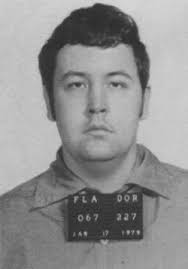
Adams v. State, Citation: 412 So. 2d 850, February 11, 1982.
Docket Number: 56134, 412 So. 2d 850 (1982).
Aubrey Dennis ADAMS, Jr., Appellant, v. STATE of Florida, Appellee.
No. 56134.
Supreme Court of Florida.
Rehearing Denied May 5, 1982.
*851 Jim Smith, Atty. Gen., and David P. Gauldin, Asst. Atty. Gen., Tallahassee, for appellee.
Michael M. Corin, Asst. Public Defender, Second Judicial Circuit, Tallahassee, for appellant.
ADKINS, Justice.
This is a direct appeal from a judgment adjudging defendant guilty of murder in the first degree and sentence of death.
The victim, eight years of age, left school on January 23, 1978, at about 2:30 P.M. Her body was found on March 15, 1978, in a wooded area near Ocala, Florida, by three men who were gopher hunting. The defendant’s involvement in the disappearance and death of the victim was shown through circumstantial evidence and by statements, both written and oral, made by him to officers of the Ocala police department.
In his written statements, the defendant stated that he saw the victim walking home from school about a block and a half from her house and offered to give her a ride home. She got in the car and defendant drove away with her. The defendant remembered “being stopped somewhere and she was screaming and I put my hand over her mouth”, and she quit breathing. In his oral statement the defendant said he had removed the clothes from the victim and used some cord which he carried in his car to tie her up so that she would fit into plastic bags. He also said that he tried to have sexual relations with her, but couldn’t bring himself to do it. He denied having sexual relations with her.
Two expert witnesses testified that the cause of death was strangulation, but one of the experts stated that the child could have died from manual suffocation. One expert rendered an opinion that the victim’s wrists had been taped prior to death. The defendant, in his oral statement, said that he had removed the victim’s clothes, but *852 there was an indication from this statement that the clothes were removed after she quit breathing. However, the state argues that as a matter of logic, the clothes were removed prior to the time the wrists were bound, and, at that time, the victim was still alive.
The jury found the defendant guilty of murder in the first degree, and, after hearing evidence in the penalty phase of the trial, recommended that the defendant be sentenced to death.
The defendant argues that the trial court committed reversible error in failing to instruct the jury on the elements of the underlying felonies of sexual battery and kidnapping. The instructions of the court contained the following:
The killing of a human being in committing, or in attempting to commit any arson, rape, robbery, burglary, abominable and detestable crime against nature or kidnapping is murder in the first degree, even though there is no premeditated design or intent to kill. If a person kills another while he is trying to do or commit any arson, rape, robbery, burglary, abominable and detestable crime against nature or kidnapping, or while escaping from the immediate scene of such crime the killing is in the perpetration of or in the attempt to perpetrate such arson, rape, robbery, burglary, abominable and detestable crime against nature or kidnapping and is murder in the first degree.
Defendant correctly points out that the instruction included references to two crimes which do not exist, to wit: rape and an abominable and detestable crime against nature. Defendant argues that it is an indispensable requisite to a fair trial to instruct the jury on all essential elements of a crime, but the jury was not instructed on the essential elements of sexual battery and kidnapping, the only possible applicable felonies with which the state could have sought a conviction for felony murder. He relies on Robles v. State, 188 So. 2d 789 (Fla. 1966).
The indictment alleged that defendant murdered the victim, unlawfully, from a premeditated design by strangling. Under this charge, the state could prosecute under both a theory of premeditation and a theory of felony-murder. Barton v. State, 193 So. 2d 618 (Fla.2d DCA 1966), cert. denied, 201 So. 2d 459 (1967).
The record shows that defendant had visited in the home of the victim and she voluntarily accompanied defendant during the fatal ride. The evidence is sufficient to sustain a finding that the death was caused by strangulation, not by the defendant placing his hand over the mouth of the victim so as to keep her from screaming or yelling. Her hands were tied and taped behind her head, and a rope was around her neck. “Premeditation, like other factual circumstances, may be established by circumstantial evidence.” Larry v. State, 104 So. 2d 352, 354 (Fla. 1958).
The final argument of the state was geared toward the single question of whether or not the evidence was sufficient to show a premeditated design on the part of defendant to murder the victim.
In Knight v. State of Florida, 394 So. 2d 997, 1002 (Fla. 1981), we considered that question:
The first issue concerns the trial judge’s failure to instruct the jury on the elements of the underlying felony. The petitioner contends that our decision in Robles v. State, 188 So. 2d 789 (Fla. 1966), is determinative and that a trial court’s failure to give an adequate instruction on the underlying felony is a fatal error even when such instruction has not been requested by the defendant. Subsequent to our opinion on the initial appeal in this cause, we decided State v. Jones, 377 So. 2d 1163 (Fla. 1979), which reaffirmed our decision in Robles v. State. The record in the instant case reflects that the trial judge gave the general definitive instructions for homicide but did not specifically instruct upon the elements of the underlying felony of kidnapping or robbery. There was no request or objection by petitioner’s trial counsel to this failure to give these instructions. *853 It is clear that in both Robles and Jones the primary charge was felony murder and the state in neither case contended the evidence was sufficient to establish premeditated murder. We expressly noted in Jones that there was no contention that there was sufficient evidence to establish premeditated murder. We conclude that where there is sufficient evidence of premeditation, the failure to give the underlying felony instruction, where it has not been requested, is not error which mandates a reversal absent a showing of prejudice. See Frazier v. State, 107 So. 2d 16 (Fla. 1958). … . [T]he record in this cause, and in particular the final argument of counsel, demonstrates that the state, although it mentioned felony murder, strongly argued premeditated murder to the jury. The record reflects that there is not only sufficient but overwhelming evidence of premeditated murder. We find that under the circumstances of this case and our review of the record that neither Robles nor Jones applies, but Frazier does apply. We are satisfied beyond a reasonable doubt that the failure to give the instruction at issue was not prejudicial and did not contribute to the petitioner’s conviction. See Chapman v. California, 386 U.S. 18, 87 S. Ct. 824, 17 L. Ed. 2d 705 (1967).
See also McKennon v. State, 403 So. 2d 389 (Fla. 1981).
Although an erroneous or uninvited felony murder instruction was given, the evidence of premeditation was sufficient to render the erroneous instruction harmless.
Of course, it may have been defendant’s counsel’s strategy to avoid, at all costs, any unnecessary reference to the underlying felonies committed by the defendant during the perpetration of the murder. Perhaps that explains his failure to make any objection to the instruction. Request for an instruction or an objection to a failure to give an instruction is a prerequisite to raising an alleged error on appeal. Alford v. State, 280 So. 2d 479 (Fla. 3d DCA), cert. denied, 284 So. 2d 218 (1973); Flagler v. State, 198 So. 2d 313 (Fla. 1967).
Defendant says that the trial court committed reversible error in admitting into evidence, over defendant’s objection, two photographs of the victim. One photograph in color, was taken at the scene where the body was discovered. The other photograph, apparently taken somewhere else, is of the body and shows the victim’s hands taped together with adhesive tape. The guidelines to be followed in determining the admissibility of photographic evidence were set forth by this Court in State v. Wright, 265 So. 2d 361, 362 (Fla. 1972), as follows:
[T]he current position of this Court is that allegedly gruesome and inflammatory photographs are admissible into evidence if relevant to any issue required to be proven in a case. Relevancy is to be determined in the normal manner, that is, without regard to any special characterization of the proffered evidence. Under this conception, the issues of “whether cumulative”, or “whether photographed away from the scene,” are routine issues basic to a determination of relevancy, and not issues arising from any “exceptional nature” of the proffered evidence.
If the photograph meets the guidelines set forth above, the fact that the evidence is gruesome and offensive does not bar the admissibility. Foster v. State, 369 So. 2d 928 (Fla.), cert. denied, 444 U.S. 885, 100 S. Ct. 178, 62 L. Ed. 2d 116 (1979). This is consistent with the reasoning in Mardorff v. State, 143 Fla. 64, 196 So. 625, 626 (1940), where the Court said:
Counsel contends that the pictures tended “to inflame the minds of the jury to a state of passion” and to “prejudice them against” the defendant rendering the evidence inadmissible. That this proof was prejudicial to the defendant there can be no doubt, but, as was so aptly stated in Wharton’s Criminal Evidence, 11th Ed., Sec. 773, p. 1321: “Where they are otherwise properly admitted, it is not a valid objection to the admissibility of photographs that they *854 tend to prejudice the jury. Competent and material evidence should not be excluded merely because it may have a tendency to cause an influence beyond the strict limits for which it is admissible.” In Lindberg v. State, 134 Fla. 786, 184 So. 662, we quoted the above authority and approved exhibition to the jury of a picture showing the body of the murder victim.
The colored photograph was relevant to show the crime scene and premeditation. The other photograph, showing the tying of the hands and the tape on the victim’s hands, was relevant to show premeditation and the circumstances of death.
At trial the state sought to introduce two other photographs which were excluded by the trial judge upon the objection of the defendant. The trial judge exercised reasoned judgment and prohibited the introduction of duplicitous photographs. See Alford v. State, 307 So. 2d 433 (Fla. 1975), cert. denied, 428 U.S. 912, 96 S. Ct. 3227, 49 L. Ed. 2d 1221 (1976). The trial court did not commit error in admitting these photographs into evidence.
We now turn to the propriety of the death sentence. The trial court found three aggravating circumstances: 1) that the capital felony was committed while defendant was engaged in or attempting to engage in, or in the flight after committing or attempting to commit rape and/or kidnapping; 2) that the capital felony was committed for the purpose of avoiding or preventing a lawful arrest; 3) that the capital felony was especially heinous, atrocious, or cruel.
The trial judge found three mitigating circumstances: 1) that the defendant had no significant history of prior criminal activity; 2) that the capital felony was committed while the defendant was under the influence of extreme mental or emotional disturbance; 3) that the defendant’s age (20) was of significance.
The jury recommended death and the trial judge concurred in that recommendation.
In support of his finding of fact that the capital felony was committed while the defendant was engaged in or attempting to commit or flight after committing or attempting to commit a rape or kidnapping (Fla. Stat. § 921.141(5)(d)), the judge stated:
That the capital felony was committed while the Defendant was engaged in or attempting to engage in or in the flight after committing kidnapping, is proven beyond and to the exclusion of a reasonable doubt by Defendant Adams’ admission, States Exhibit # 49, in which he says: After getting off from work as a prison guard at Lowell Prison, he went to check his mail at his old residence, which is approximately two blocks from the residence of the victim, Trisa Gail Thornley, age 8, and saw her walking home from school about one and a half blocks from her home. He knew the victim and offered to give her a ride home. She got into Defendant’s car and he started towards her home, then turned away towards the Pine Street Shopping Center; then out State Road 200 towards the Central Florida Community College. He remembered being stopped somewhere when she started screaming and he put his hand over her mouth and she stopped breathing. The above fact of kidnapping is also supported by the testimony at the trial of the Defendant by police officers S.H. Stephenson, John E. Fluno and W.R. Fugitt regarding the written statements made by the Defendant and the oral statements concerning her death and her disappearance that he gave the three officers. Kidnapping is also evidenced by the testimony of Trisa Gail Thornley’s third grade school teacher, Carolyn Andrews, who observed the victim leave school at approximately 2:20 P.M. on January 23, 1978, and by Trisa Gail Thornley’s aunt and uncle, Lawson and Theresa Hopper, and the victim’s sister, Tracy Thornley, who stated that the victim, Trisa Gail *855 Thornley, did not return home from school that day as she usually did. For additional support that 921.141(6) sic, Florida Statutes, is proved beyond and to the exclusion of a reasonable doubt, is the evidence proving that the capital felony was committed while the Defendant was engaged in or attempting to engage in or flight after committing rape is proven beyond and to the exclusion of a reasonable doubt by the testimony of Officer Stephenson who was present at the Defendant’s interview, who stated that Defendant Adams said that he thought he tried to but couldn’t do it, or couldn’t bring himself to do it, and that her body was found nude with her hands taped behind her back, such tape applied to the victim, by sworn testimony of pathologist, Doctor Gertrude Warner of Ocala, Florida, as being applied around the wrists while the victim, Trisa Gail Thornley, was still alive.
Defendant argues that these findings do not prove that the victim’s death occurred during or after the commission of a kidnapping. The state replies that the evidence is sufficient to show the crime of kidnapping was committed and cites Miller v. State, 233 So. 2d 448 (Fla. 1st DCA 1970).
In Brown v. Wainwright, 392 So. 2d 1327, 1331 (Fla.), cert. denied, _ U.S. _, 102 S. Ct. 542, 70 L. Ed. 2d 407 (1981), we described our function in reviewing a death sentence:
This Court’s role after a death sentence has been imposed is “review,” a process qualitatively different from sentence “imposition.” It consists of two discrete functions. First, we determine if the jury and judge acted with procedural rectitude in applying section 921.141 and our case law. This type of review is illustrated in Elledge v. State, 346 So. 2d 998 (Fla. 1977), where we remanded for resentencing because the procedure was flawed in that case a nonstatutory aggravating circumstance was considered. See also Brown v. State, 381 So. 2d 690 (Fla. 1980); Kampff v. State, 371 So. 2d 1007 (Fla. 1979). The second aspect of our review process is to ensure relative proportionality among death sentences which have been approved statewide. After we have concluded that the judge and jury have acted with procedural regularity, we compare the case under review with all past capital cases to determine whether or not the punishment is too great. Proffitt v. Florida, 428 U.S. 242 96 S. Ct. 2960, 49 L. Ed. 2d 913; State v. Dixon, 283 So. 2d 1 (Fla. 1973), cert. denied, 416 U.S. 943 94 S. Ct. 1951, 40 L. Ed. 2d 295. In those cases where we found death to be comparatively inappropriate, we have reduced the sentence to life imprisonment. See Malloy v. State, 382 So. 2d 1190 (Fla. 1979); Burch v. State, 343 So. 2d 831 (Fla. 1977); Jones v. State, 332 So. 2d 615 (Fla. 1976). Neither of our sentence review functions, it will be noted, involves weighing or reevaluating the evidence adduced to establish aggravating and mitigating circumstances. Our sole concern on evidentiary matters is to determine whether there was sufficient competent evidence in the record from which the judge and jury could properly find the presence of appropriate aggravating or mitigating circumstances. If the findings of aggravating and mitigating circumstances are so supported, if the jury’s recommendation was not unreasonably rejected, and if the death sentence is not disproportionate to others properly sustainable under the statute, the trial court’s sentence must be sustained even though, had we been triers and weighers of fact, we might have reached a different result in an independent evaluation.
(Footnote omitted.) There appears to be sufficient competent evidence in the record from which the judge could properly find that the capital felony was committed while the defendant was engaged in the commission of, or an attempt to commit, or flight after committing or attempting to commit, a rape or kidnapping.
Defendant argues that there is no crime of rape in Florida and that the *856 trial judge used a non-statutory aggravating factor in imposing the death sentence. The statute penalizing rape, section 794.01, Florida Statutes (1972), was repealed by chapter 74-121, section 1, Laws of Florida. Acts which would have constituted rape or attempted rape would constitute a sexual battery or attempt to commit sexual battery by virtue of section 794.011, Florida Statutes (1977). The word “rape” in section 921.141(5)(d) had not yet been changed to “sexual battery”. Due process requires only that the law give sufficient notice so that men may conform their conduct so as to avoid that which is forbidden. The act itself, rather than its nomenclature, constitutes the aggravating circumstances. The trial judge did not err in finding defendant’s acts constituted an aggravating factor.
Defendant next argues that the trial judge erred in finding that the capital felony was committed for the purpose of avoiding or preventing a lawful arrest or effecting an escape from custody. § 921.141(5)(e), Fla. Stat. The trial judge made the following finding of fact:
That the capital felony was committed for the purpose of avoiding or preventing a lawful arrest or effecting an escape from custody is proven beyond and to the exclusion of a reasonable doubt by the facts stated above proving kidnapping and rape by the additional fact that Trisa Gail Thornley was found dead on March 15, 1978, which prevented any testimony on her part concerning kidnapping and rape some seven weeks after her disappearance while walking home from school.
The record shows that the victim knew and could have identified defendant; that he encased the body in white plastic garbage bags and tied it with rope; that he disposed of the body in a desolate area; that he concealed his crime effectively for a period of time from January 23, 1978, to March 15, 1978.
In Riley v. State, 366 So. 2d 19 (Fla. 1978), the robbery victim, who knew and could identify the defendant, had been bound and gagged. He was then shot in the head after one of the perpetrators expressed a concern for subsequent identification. This Court concluded that the aggravating circumstance existed because the defendant had killed the victim to avoid identification and arrest. See also Hoy v. State, 353 So. 2d 826 (Fla. 1977), cert. denied, 439 U.S. 920, 99 S. Ct. 293, 58 L. Ed. 2d 265 (1978); Jackson v. State, 366 So. 2d 752 (Fla. 1978), cert. denied, 444 U.S. 885, 100 S. Ct. 177, 62 L. Ed. 2d 115 (1979).
There was sufficient competent evidence in the record from which the judge could find that defendant committed this capital felony in an effort to avoid or prevent a lawful arrest.
Defendant also says that the trial court erred in finding that the capital felony was especially heinous, atrocious, or cruel. The trial judge made the following finding of fact:
That the capital felony was especially heinous, atrocious or cruel is proven beyond and to the exclusion of a reasonable doubt by expert medical testimony that the autopsy, performed by Doctors Gertrude Warner and William Shutze, showed a bruise on one arm, inflicted prior to death, that the autopsy showed swelling in the hands induced by tight binding with tape prior to death, State Exhibit # 17, that the autopsy showed that the body was a nude body of an eight year old girl whose hands were tightly taped behind her back prior to death, which showed that Trisa Gail Thornley had time to anticipate her murder and that the autopsy and photographs showed seven coils of rope with a circumference of nine and three-fourths inches around the neck of Trisa Gail Thornley as shown in evidence by State Exhibit # 16, and that the child’s body was placed in a plastic garbage bag and thrown in a wooded area some three miles from her home.
Defendant argues that this aggravating circumstance is devoid of factual and legal support. We disagree.
*857 The fear and emotional strain preceding a victim’s almost instantaneous death may be considered as contributing to the heinous nature of the capital felony. Knight v. State, 338 So. 2d 201 (Fla. 1976). A homicide committed through strangulation has been held to be especially heinous, atrocious, and cruel. Alvord v. State, 322 So. 2d 533 (Fla. 1975), cert. denied, 428 U.S. 923, 96 S. Ct. 3234, 49 L. Ed. 2d 1226 (1976). From defendant’s statement we find that the victim was “screaming” prior to death. A frightened eight-year-old girl being strangled by an adult man should certainly be described as heinous, atrocious, and cruel. There was sufficient competent evidence in the record from which the trial judge could find the presence of this aggravating circumstance.
Although the trial judge found, as a mitigating factor, that the capital felony was committed while defendant was under the influence of extreme mental or emotional disturbance, the defendant says that there should be an independent determination and finding that at the time the crime was committed the defendant’s capacity to appreciate the criminality of his conduct or to conform it to the requirements of law was substantially impaired. The defendant says that his deteriorating marital situation and his wife’s apparently blatant infidelity with one of his friends led to his extreme mental or emotional disturbance and clearly hampered his capacity to appreciate the criminality of his conduct or to conform it to the requirements of law. There is little, or no, causal relationship between defendant’s marital problems and an eight-year-old little girl. There was no testimony that defendant had suffered from mental illness in the past. An expert witness testifying for the defense said that, in his opinion, the defendant knew the difference between right and wrong on the date of the commission of the offense. The trial court did not err in failing to find that the capacity of defendant to conform his conduct to requirements of law was substantially impaired as a result of his marital distress.
The findings of the trial judge were sufficient to show that the sentence of death resulted from reasoned judgment. This reasoned judgment comports with our consideration of other cases and the sentence of death was appropriate under the circumstances. There being no reversible error, the judgment and sentence of the trial judge are affirmed.
It is so ordered.
SUNDBERG, C.J., and OVERTON and ALDERMAN, JJ., concur.
BOYD, J., concurs in part and dissents in part with an opinion.
McDONALD, J., concurs as to conviction and dissents as to sentence.
BOYD, Justice, concurring in part and dissenting in part.
I concur in that part of the majority opinion affirming appellant’s conviction of murder in the first degree.
One of the principal functions of this Court in considering cases in which the death penalty has been ordered is to review the aggravating and mitigating circumstances to assure that similar punishment is given for similar crimes.
The trial judge found three mitigating circumstances: (1) that the defendant had no significant history of prior criminal activity; (2) that the capital felony was committed while the defendant was under the influence of extreme mental or emotional disturbance; (3) that the defendant’s age (20) was of significance.
In weighing the aggravating and mitigating circumstances of this case, and comparing it with prior similar crimes of violence, it is my opinion that the law requires this Court to order a reduction in the sentence to life imprisonment without eligibility for parole for twenty-five years.

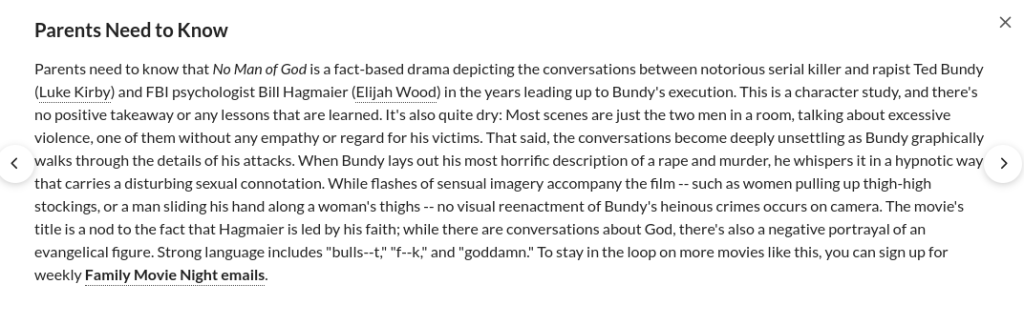
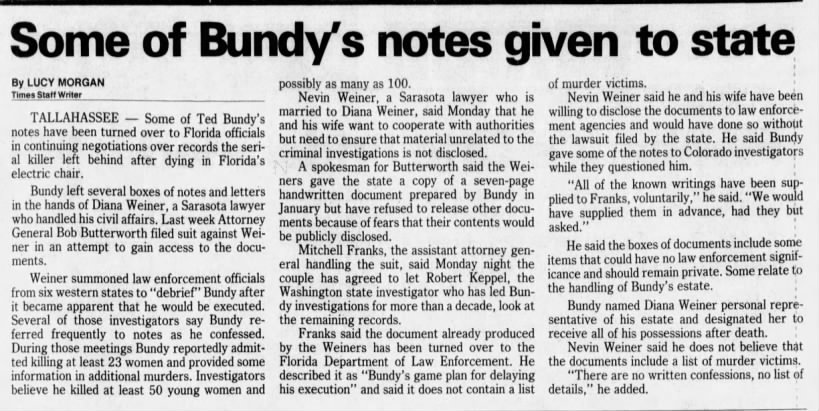
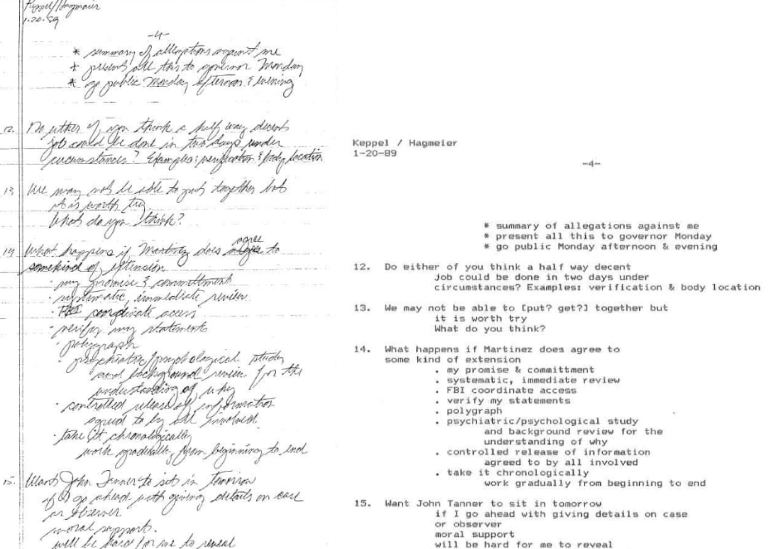
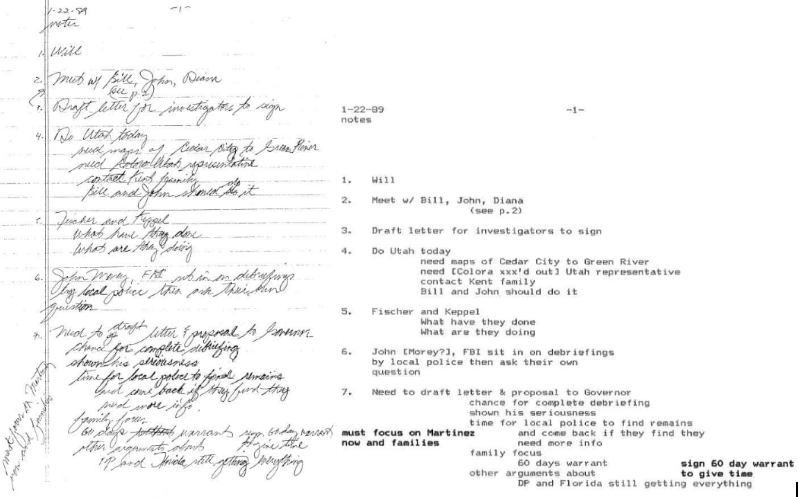
Notes from TB’s final days, as well as Fred Lawrence’s notes from the night before his execution; Lawrence was the Reverend that sat with Ted on the night before his death. Document courtesy of Maria Serban.

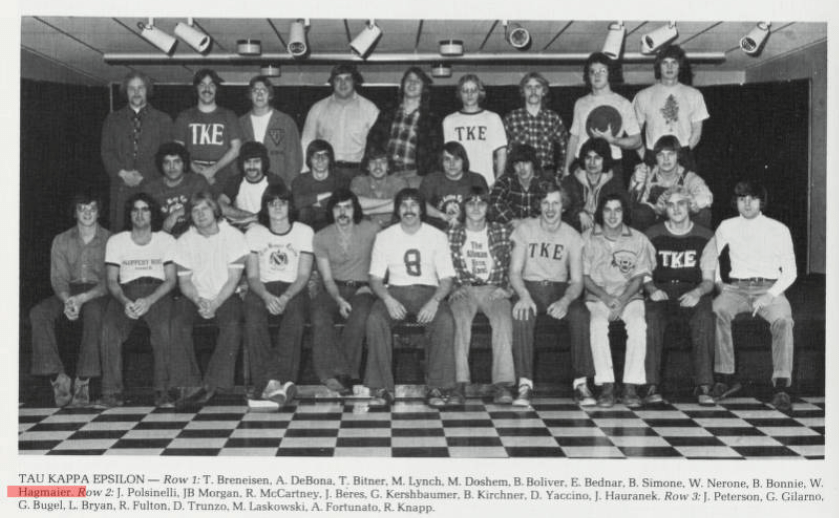
Directed by Amber Sealy and written by C. Robert Cargill (under the pseudonym of Kit Lesser), ‘No Man of God’ stars Elijah Wood (as Bill Hagmaier), Luke Kirby (as Ted Bundy), Aleksa Palladino (as Ted’s final attorney Carolyn Lieberman/Diana Weiner), and James Patrick of Terminator fame (Roger Depue). The film had its premiere at the Tribeca Film Festival on June 11, 2021 and was officially released by RLJE Films on August 27, 2021. In my opinion, this movie is unlike any other Bundy production that’s out there because it takes place (almost) completely inside the walls of Florida State Prison after his murders and trials took place. Set between 1985 and 1989, it’s based on conversations between the FBI Agent (Hagmaier) and serial killer during his time on death row in the sunshine state. In the opening scene some information about what you’re about to watch appears on the screen: ‘in the late 1970’s, a team of FBI researchers proposed that, by understanding the psychology of violent serial offenders, investigators could more effectively combat serial rapes and homicides. The process was called profiling. In 1984, President Ronald Reagan announced the establishment of the National Center for the Analysis of Violent Crime, creating the first five full-time positions for FBI profilers. Special Agent Bill Hagmaier was picked as one. The following is inspired by FBI transcripts, recordings, and the recollections of Bill Hagmaier.’
The movie begins in 1985, where an group of FBI agents from the elite Behavior Science Unit are sitting in on a meeting with Supervisory Special Agent Roger Depue, who shares with them that he needs them to gather case studies on violent offenders, including serial rapists and killers (by ‘begins’ I mean the plot of the movie, in literal terms it actually begins with a real-life broadcast announcing Bundy’s execution). Names like Charles Manson, Ed Kemper, and David Berkowitz are thrown around… and when the other agents laughed and passed on Ted, newcomer William Hagmaier accepted the challenge despite being aware of the killers deep distrust of the Bureau. Initially through snail mail, Bundy expressed interest in communicating with Hagmaier, who eventually traveled to the condemned man’s final home for an interview. Over the next couple of years, the two men developed an unusual ‘friendship’ of sorts while discussing pornography and detective magazines as a possible catalyst for violent serial offenders. Despite some hesitation at first from the agent, during these conversations Bundy was able to cajole personal details about his personal life out of him, under the guise of establishing trust between them.
The following year the two men met again. This time, Ted is shown some crime scene photos related to the recent Green River murders and gives Hagmaier his opinion on them, and through the agents sly questioning the killer accidentally volunteers some details about his own diabolical history. At one point during their chat Bundy asks Bill if he thinks he could kill someone, and when the agent responds that, due to his being an FBI agent it could in theory happen, it’s not exactly the answer he was seeking. Back at Quantico, FBI Unit Chief Depue cautioned his agent not to get too close to someone like Bundy, and that he ‘didn’t want someone like him getting inside his head.’ Despite this warning, while sharing stories about their children during their next visit in 1987, Ted senses that his new friend is getting too deep inside of his head and taunts him to wonder outloud what he might do if he ever escaped from prison. In response, Hagmaier describes it with (most likely) a good amount of accuracy, which makes him furious and he verbally attacks him. After calming down a bit Bundy begins to disclose more intimate details of his life and what may have led him to murder, but along the way he also dispelled many of the popular myths about him (such as going after women with long, dark hair). The killer also shared that in an alternate reality Bill could be the one sitting in prison and he could be an FBI agent, a statement that deeply affected the agent.
Thanks to IMDB, I learned quite a few interesting facts about the movie I was unaware about before writing this article: in the first conversation between Bundy and Agent Hagmaier the SK asks why the Bureau didn’t send Douglas, and by that he meant John Douglas, who was the criminal profiler that wrote ‘Mindhunter’ on which the TV series is based. Also, when Bill is talking to Bundy about confessing he mentions Henry Lee Lucas, another serial killer that (along with his partner/lover Otis Toole) frequently lied and fabricated stories about his criminal history, hinting at him to tell the truth. Lastly, in 1987 Ted mentions that they should co-author a book together and name it ‘The Bill and Ted Show,’ alluding to the 1989 movie ‘Bill & Ted’s Excellent Adventure’ which was released less than a month after he was executed. This is one of the few errors, as the movie wasn’t released for two years after this conversation took place.
The final half of the movie (roughly) takes place in the last few days of Bundy’s life in January 1989, after (then) Florida state Governor Bob Martinez signed his death warrant and he was trying to weasel his way out of getting executed. Ted (of course) said that the determination of only being granted seven days was done by the governor in a pathetic attempt to gain the favor of the people of Florida in the hopes of getting reelected (spoiler alert, he did not). Hearing of the killers quickly approaching doom, individuals from all over the US as well as members of the media began to gather outside the prison. At this time, we meet his civil attorney Carolyn Lieberman, who is deeply against Hagmaiers involvement in anything related to Ted due to his ties to ‘law enforcement,’ however the killer is insistent that he be there, saying Bill is his ‘best friend.’
Hagmaier was sent to Florida not to fight for Bundy’s life but to simply be there and act as his scheduling coordinator: Ted is finally ready to confess and spill all of his secrets, and because he is a complete narcissist it’s all being done on his terms. He tells Bill of his plan to only give detectives the bare minimum in order to bait them and make them want more, which he hoped would grant him more time to live. In response, the agent urges Bundy not to play games with the governor of Florida, advice that he mostly ignores. Members of law enforcement agencies from all over the US poured into Florida: Idaho, California, Oregon, Colorado, and Utah; where I didn’t hear representatives from NJ or Vermont mentioned I recall Bundy also being questioned about the 1969 New Jersey Parkway murders (Susan Davis and Elizabeth Perry) as well as the 1971 homicide of schoolteacher Rita Curran (in VT).
During interviews with investigators across multiple states, Bundy is purposefully vague and evasive with his answers, only sharing small tidbits of information with them. Additionally, he completely disregarded Bill’s concerns about media coverage and Carolyn scheduled an interview with Christian Psychologist, creator of ‘Focus on the Family,’ and straight up douchebag Dr. James Dobson the day before he was executed in hopes that he would petition the governor on behalf of Ted in hopes of getting a stay… But of course, the sleazebag waited until after the interview to reveal that he never planned on talking to Martinez, as he felt the killer would never be granted a pardon. It was really almost spooky watching Kirby’s performance as Bundy during his interview: not only was the dialogue nearly identical but so were the facial expressions made by the killer. It was as if he somehow channeled Bundy’s spirit during that scene.
Later that day after the interview the warden informed Hagmaier that Bundy was to undergo a last-minute sanity hearing, and where multiple conversations were to be conducted the decision to put the killer to death would ultimately fall completely on his testimony to a psychiatric board; as we know, they ultimately declare Bundy sane.
When the men speak for the last time on January 23, 1989 Bill brings up a conversation they had a few years prior, about being ‘brought under the water:’ through violent, horrifying details, Bundy finally opened up and shared how he lured and killed one of his victims, leaving the agent completely overwhelmed and in tears. After this interaction Ted asked his friend why this is happening to him, proving he was still completely remorseless. Infuriated, as Bill prepares to leave the condemned man asks if he had any idea why he did what he did, to which he simply said, ‘because you wanted to.’ Just moments before Bundy was scheduled to die, Hagmaier is told by a prison official that he had been taken off the list to sit in on the execution so that someone else could fill his spot. The movie wraps up with Agent Hagmaier alone in the warden’s office, answering the telephone and talking to his wife and son. As he is catching up with his son, the crowd outside erupts in spirited cheers as it was announced that Ted was officially declared dead.
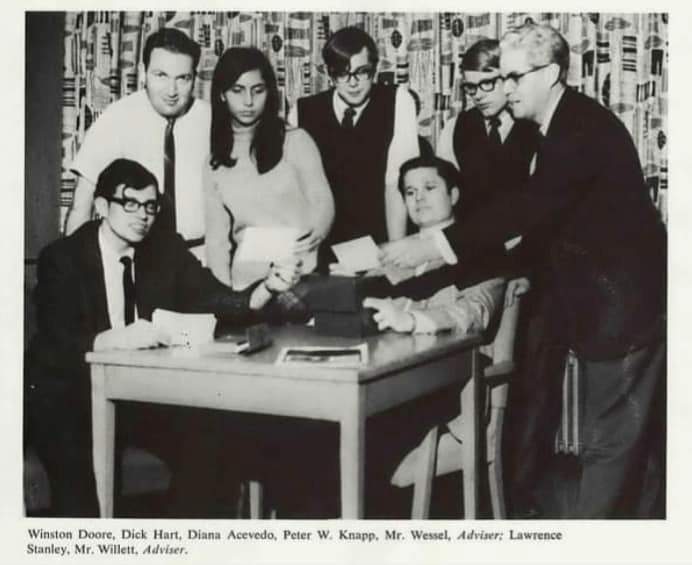
Just some quick background on Diana: she was a civil attorney, which is a type of lawyer that mainly works on civil lawsuits (such as, a personal injury case or contract dispute) and represents their clients in non-criminal areas of the law. Weiner (whose maiden name was Acevedo) got her BA from Houghton College (which is a Christian school close to where I live) in NY in 1969 and went on to earn her Juris Doctorate from Georgetown in 1982. She has been married to her husband Nevin for over forty years, who also worked as an attorney before retiring.
Diana first met Ted Bundy in October 1986 through psychologist Art Norman, who was brought on earlier in the year to interview him for a clemency proceeding. Dr. Norman was in the same social circle as Weiner and her husband, and he felt that Bundy would be more open and honest if there was an ‘intelligent, attractive attorney, and a woman who could be very open and would have the personality to open up and would not be threatened by whatever he says.’ Well, he was definitely on the right track: almost immediately, Diana’s presence prompted Ted to talk more honestly and intensely about his feelings towards violence and women, which were ‘things he has difficulty talking about with a man.’ All of this was being done by Dr. Norman in an attempt to figure out whether the killer had been ‘mentally competent’ to stand trial when he was convicted in the early 1980’s. Shortly after their meeting, Weiner officially became Bundy’s civil attorney and represented him (along with other death row inmates) in a civil rights lawsuit surrounding the poor ‘exercise conditions’ at Raiford Prison.
There seemed to be quite a bit of whispering about the nature of hers and Bundy’s relationship before he was put to death, but there is no proof that anything inappropriate ever took place between the two. About Bundy, Weiner said they had ‘an attorney-client relationship, but I also, as an attorney and client do, developed a congenial relationship with the client.’ The idea is strongly hinted at in ‘No Man of God’ as well: in the movie the warden asked Hagmaier why a civil attorney needed to visit a death row inmate 80 times in three years, and where I don’t know how accurate that estimation is, in reality she spent roughly seventy hours with him during his time on death row.
According to the website ‘yourtango’ (just for the record, I don’t know how accurate this information is), Bundy’s feelings for Weiner were so glaringly obvious that they became a bit of annoyance to the rest of his legal team, including his defense attorney Polly Nelson. At one point she even confronted Ted about his feelings, which she was beginning to suspect were making her own job more difficult. In her book ‘Defending the Devil,’ Nelson wrote about her experience, and at one point said: ‘Ted, quit giving me this ‘Ms. Weiner’ stuff. I know why you see her, and it has nothing to do with any lawsuit. She’s beautiful, she’s interested, she can come during lawyer’s visiting hours, and you can have unsupervised visits with her.’ In response to this, Ted paused briefly, smiled then said, ‘that about sums it up.’
In one of the few interviews she did after Ted’s execution, Weiner said she the man she knew wasn’t a killer, or a rapist: while she made it clear that she wasn’t in any way minimizing what he did, she remembers a man that became a born-again Christian that seemed genuinely remorseful for what he did and was sincere when he said he wanted to confess in hopes to ease the pain of his victims’ families: “I think the public is unwilling to accept that there could be a commonality between Ted Bundy and the rest of humanity or that Ted Bundy could have at the end of his life sought to tell the truth, confess or have had any moral compunction to do so.’
According to the legal paperwork that was left behind by the killer, Bundy left Weiner all of his worldly possessions, including his wedding ring, roughly $700, and his ashes. Regarding the latter of the three, she was instructed by her client to spread them across one of his dumpsites at Taylor Mountain, which never took place; a family member of Ted’s is currently in possession of them.
One thing I wonder about is the scene towards the end of the movie when Ted said he would rather slit his wrists then be killed by the state of Florida, an act he was easily talked out of by Hagmaier. I mean, it was no secret that Bundy was absolutely terrified of dying, and personally I think he would never have committed suicide because I honest to God think he fully expected a call from the governor granting him another stay of execution at the very last possible moment (like, as he was being strapped into the Ol’ Sparky). I mean… I just don’t think Bundy had it in him to take his own life. It’s ironic, in a really sad way: he had no problem killing potentially dozens upon dozens of girls and young women, but when it came to himself he was scared shitless.
One thing I was incredibly impressed by was how accurate this movie was when it came to the smaller details about Bundy’s life as well as his timeline. In quite a few Ted related movies, the creators changed the names of victims and family members, but that didn’t happen with ‘No Man of God.’ They even called his daughter by the correct name, which surprised me a bit as I know she has tried her hardest to stay out of the limelight regarding her fathers case (I hope that was able to continue); it’s even mentioned that that he hadn’t seen Rosa for a long stretch of time after he told Carole Ann Boone his plans of confessing (she stopped visiting in 1986). Additionally, when Bill talks about how his son pulled his pants down while pretending to be an elephant while crab-walked around his preschool classroom… Well, he really does have a son named Bryan, who followed in his fathers footsteps and became an officer with the NYPD (and I’m sure he loved that story being involved in the movie).
Other popular names related to Bundy were also used, like Liz Kloepfer, true crime legend Ann Rule, and his first love Diane Edwards. Rule is briefly brought up in conversation, when Ted denied her theory that Edwards was the main catalyst for his drive to kill and declared that being dumped by her had nothing to do with why he committed such atrocities. One name did jump out at me as being wrong but it was the way it was done that surprised me: Hagmaier questioned Bundy about ‘Diane Leach,’ and where the details were mostly correct they called her by her middle name and completely left out her first (Kimberly). Another identity that was changed was Carolyn Leiberman, and it wasn’t until after I spent a solid half-hour trying to figure out who she was that I realized the name was changed from Diana Weiner. My educated guess as to why: Ms. Weiner is still alive and the creators of the movie didn’t want people looking her up and harassing her.
And now I’m just going to go through and point out various things that interested me about this movie (thrilling, I know):
I know that Ted once told a story that he was in the library at Michigan State University and was flipping through college catalogs while contemplating his next move… he knew he wanted to go somewhere warm that was near water and close to a college campus. The movie features a scene where Ted tells Bill that he didn’t want to get caught, and honestly I’m going to have to lean towards that. Did he go to Florida in hopes of living out the rest of his life in anonymity, or did he go there purposefully to get a death sentence? Or, did he simply not want to live the rest of his life behind bars? I mean… I’m sure he was aware that if he stayed in Colorado there would be a good chance that he would die of natural causes while living out his final days in prison. If you really think about it, the Chi Omega murders (and the attack of Cheryl Thomas on Dunwoody Street) were incredibly reckless almost to a point they would be considered careless. It was as if he was begging to get caught. Why was he so sloppy if he wanted to avoid detection?
Over the years there have been many movies made about Ted Bundy, and that isn’t taking into account the dozens upon dozens of documentary-type television shows and mini-series that have been produced as well. Personally, my favorite is the oldest one starring Mark Hammon titled, ‘The Deliberate Stranger.’ Made in 1986, it’s a (fairly) accurate retelling of a book by the same name that was written by Seattle Times reporter Richard W. Larsen in 1980. The book was adapted into a two-part made for TV movie that originally aired on NBC on May 4 and 5, 1986. What I think is interesting about this is that TB was still alive when it was made, even though he claimed he had no interest in seeing it. Surprisingly, there wasn‘t another film about the SK made until 2002 (things really seem to pick up after that), when Michael Reilly Burke played the serial killer in the movie simply named ‘Ted Bundy;’ it was universally panned (as it should have been because it’s a total of crap) and was deemed ‘exploitative’ by critics. The following year Ann Rule’s classic ‘The Stranger Beside Me’ was made into another made for TV movie starring Billy Campbell and Barbara Hershey. Next up: on July 21, 2008 Parker Lewis himself Corin Nemec starred in ‘Bundy: An American Icon’ (which is also called ‘Bundy: A Legacy of Evil’) and to be honest, I thought this and the MRB movie were one in the same. I only recently realized that they’re two separate films. Then of course in 2019 we have another favorite of mine, the Zac Efron/Lily Collins Netflix movie titled, ‘Extremely Wicked, Shockingly Evil And Vile,’ and where it wasn’t entirely accurate it was pretty well-made and entertaining. Lastly, in 2021 one-time teen heart throb Chad Michael Murray played the titular character in ‘Ted Bundy: American Boogeyman;’ it was a cinematic abortion and I don’t think I ever finished it.
There’s also been multiple films about Bundy’s involvement in the investigation of the Green River/Gary Ridgway killings that took place near Bundy’s hometown of Tacoma: in 2004 Cary Elwes portrayed Ted in ‘The Riverman,’ followed by ‘The Capture Of The Green River Killer’ in 2008 then ‘Bundy And The Green River Killer’ in 2019.
On the movie review website ‘Rotten Tomatoes,’ ‘No Man of God’ currently has an approval rating of 80% based of 81 reviews; the film has an IMDB rating of 6.4/10. According to ‘Metacritic,’ it has a weighted score of 67/100 and a user score of 7.1 (based off 21` reviews); this is considered by them to be ‘highly favorable.’ As of July 2024 ‘No Man of God’ earned $216,000 at the worldwide box office.
Works Cited:
bundyphile.com/2021/11/05/no-man-of-god-movie-review/
yourtango.com/2019321781/who-is-diana-weiner-ted-bundys-lawyer-and-final-love-interest