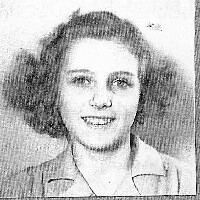
Courtesy of Laurel Darlington.
Pamela Lorraine Darlington, .PDF document.
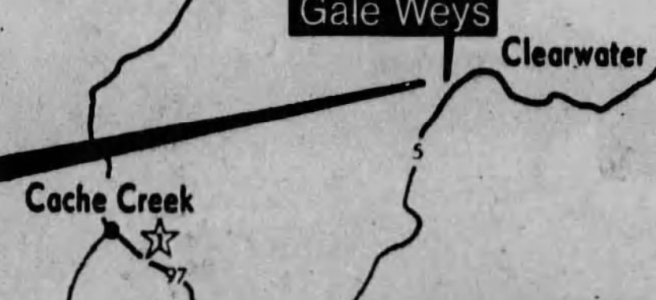

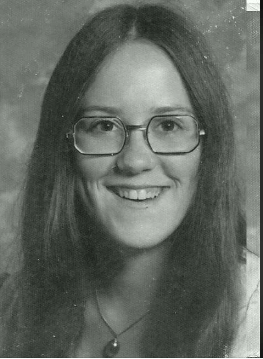
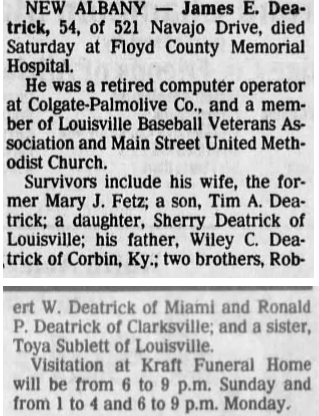
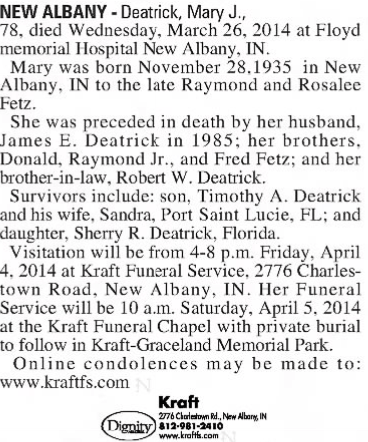
Sherry Rae-Deatrick was born on September 12, 1956 to James and Mary (nee Fetz) Deatrick in New Albany, Indiana. Mr. Deatrick was born on August 20, 1931 and Mary was born on November 28,1935 in New Albany, IN. The couple were wed on March 16, 1956 and had two children together: Sherry and her brother, Timothy. James was employed as a computer operator for the corporate offices of Colgate-Palmolive Corporation and was a member of the Louisville Baseball Veterans Association, and the family was active at the Main Street United Methodist Church.
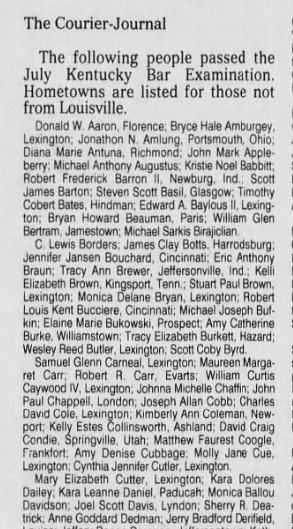
Sherry graduated from New Albany High School in 1976 and went on to earn her BA in Psychology from the University of Louisville, graduating magna cum laude. She briefly lived in NYC, where she was employed with Brooklyn Legal Services and at an insurance defense law firm while she was attending graduate school. At some point she married a man named Donald Paul Breitfield Kaler, and when she returned home to Indiana in 1992 she enrolled in night classes at the Louis D. Brandeis School of Law at the University of Louisville, and worked full time while maintaining top grades. In Deatricks first year of law school she earned the Marilyn Meredith Memorial Award for top female student, and she was a member of the Journal of Family Law.
After graduating from law school in 1997 Deatrick worked at various law firms across the United States, and according to her ‘Linked In’ profile, she has worked as an attorney for herself since 2008, and specializes in both Social Security disability and Department of Veterans Affairs appeals. From November 2004 to 2008 she worked as a Project Manager for Tichenor & Associates, where she was responsible for several government contracts, bankruptcy debtor audits, and state healthcare programs. From 1999 to 2002 she worked as General Counsel under Governor Paul Patton in Frankfort, KY.
On her law practice’s (public) Facebook page, ‘Sherry R. Deatrick, Attorney,’ on February 23, 2012 she announced: ‘I am now admitted to practice in the US District Court, Southern District of Indiana. Looking for office space in my hometown of New Albany.’ And almost ten years later on October 14, 2021 she said; ‘I’m back! I have relocated back home from Florida and I’m re-establishing my solo law practice again. My main focus is on social security disability law and bankruptcy. Serving Kentucky and Southern Indiana.’
Deatrick claims that she had an encounter with prolific serial killer Ted Bundy in the summer of 1974, and although she doesn’t provide an exact date that rough time frame fits perfectly into when he was active. I do want to say that on two separate occasions I tried to reach out to Sherry for clarification on this, but she didn’t see either of my messages. One day during summer school Sherry had gotten into an argument with her fiance and stormed away from him in a fit of anger, and as she was walking she was offered a ride from none other than Ted: “I’d had an argument with my fiancé and as he usually gave me a lift home from summer school, I set off home on foot. Then this cute guy pulled up and asked if I wanted a ride.’ She hesitated briefly, as she wasn’t one to take rides from strangers but after the man reassured her that she was safe, and he ‘was an assistant professor at the local school’ and ‘acting out of anger at my fiancé, I got in.’
Sherry told the man her address, which was roughly three miles away from where he picked her up in New Albany, Indiana, but instead of driving her directly home he stopped at a store to buy some beer: ‘he hadn’t asked my age and I wasn’t going to tell him how young I was. As we drank the beers, he said, ‘Why don’t we go for a ride?’’ She agreed. As the pair crossed the Ohio River and drove into a different state she began to feel nervous, and ‘felt a little worried but things were different in the 70’s. People were a lot more free sexually and I was no exception. It was all quite exciting and I decided to follow his lead though that seems pretty stupid now.’
At the time, Deatrick said that she was titillated at the thought of a romantic encounter with a handsome stranger, and called Bundy ‘handsome and hypnotic,’ which are words that are frequently used to describe him. After cruising around for about thirty minutes or so they arrived in Louisville, Kentucky, and the young man suddenly pulled off the main drag and into a parking lot: ‘it’s clear Bundy knew exactly where he was headed when he’d started driving. He must have scoped it out before picking me up. At the time I thought the location was a bit weird as the new housing estate wasn’t finished but I was quite adventurous.’ ‘Ted’ then led Sherry into a house that was under construction and “I thought it was nice that he was kissing me. I was still mad at my boyfriend and wanted to get back at him so I was up for it. Then all of a sudden, his hands were both going around my throat. I started to say, ‘Wait. Hold on.’
It was at that moment that they heard construction workers calling out nearby: they had returned from a break. About how things played out, Sherry said that ‘he was clearly rattled when he heard the voices and it was like he’d been shaken out of a trance.’ The man immediately took her back to his Beetle, thus ending their brief encounter: ‘I didn’t understand what had gone wrong. Why had he driven us all this way to make out, and then stopped suddenly? I worried I’d done something wrong?’ After driving back to New Albany in complete silence, ‘Ted’ dropped Deatrick off near her parents’ house then drove away into the night. She never saw him again.
Sherry kept the event to herself, and didn’t tell anyone about what happened to her. It wasn’t until the 1980’s that she read a book about Bundy and strongly felt there was a ‘good chance’ he was the man that she shared a brief romantic entanglement with in the summer of 1974. She speculates that maybe he was in the area looking at law schools to possibly attend: ‘maybe Bundy had gone there to scout it out and happened across me walking home. Later I heard Bundy say there were women in Kentucky who were lucky to be alive. I am certain I was one of those women. I fit the profile for most of his victims, walking alone, upset.’ Only in recent years did Deatrick tell her mother, who has since passed away: ‘she was so shocked but grateful I hadn’t been harmed. I hope young girls who read my story now will be more cautious than I was at that age. I was so naive and trusting and it almost cost me my life.’
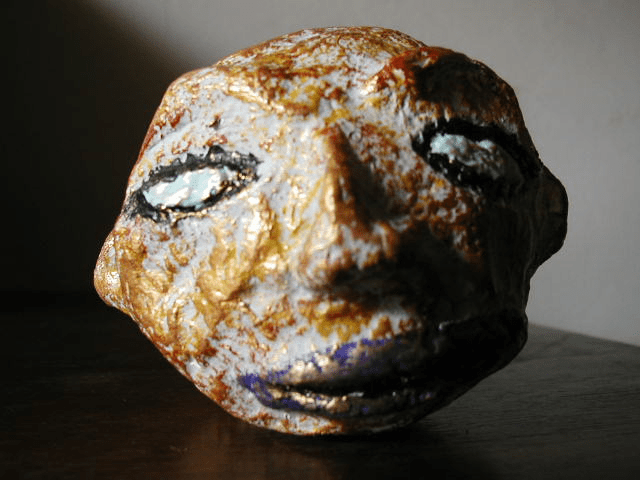
In addition to being an attorney Deatrick has worn many hats over the duration of her career: she’s been a playwright, gallery curator, theatre critic, award-winning journalist, and (according to one blogger/artist) ‘a creator of whimsical and mysterious artistic creations.’ According to the website ‘annenberg.usc.edu,’ Sherry was at one time an ‘affiliated freelancer’ with the ‘Louisville Eccentric Observer’ that is based out of Kentucky (she was their theatre critic and won three awards three years in a row for her contributions to the paper). During her time at LEO, she largely focused on the arts and wrote pieces about celebrities like John Waters and local curiosities like Specific Gravity Ensemble (a group known for putting on micro-plays in elevators). Also, according to blogger and artist Jeffrey Scott Holland, Sherry at one time had her own art studio called the ‘Deatrick Gallery,’ which was located in Louisville; her medium included mosaics, crochet amigurumi, and ‘paper-mache miniature heads.’ According to the galleries ‘Geocities’ website, Deatrick’s gallery housed the work of several artists, including Jefferey Holland, Lila Afiouni, and Steve Rigot. She also put on a ‘one-woman performance’ named ‘Heads’ at her gallery in 2004, where she also sold her paper-mache heads that were painted bright colors.
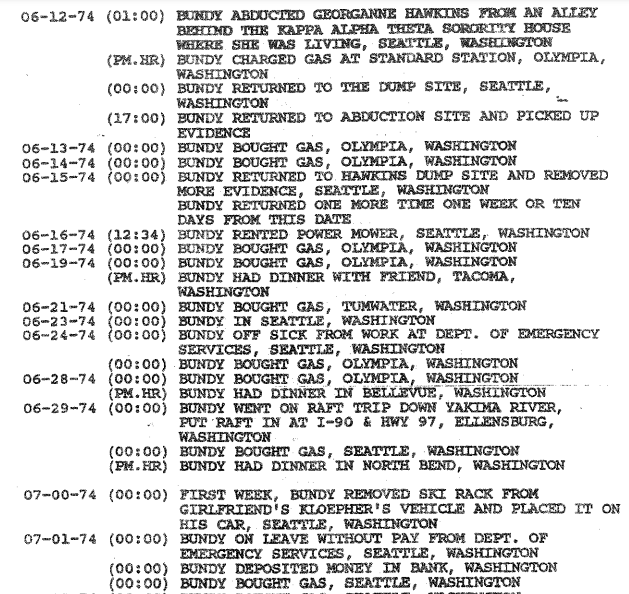
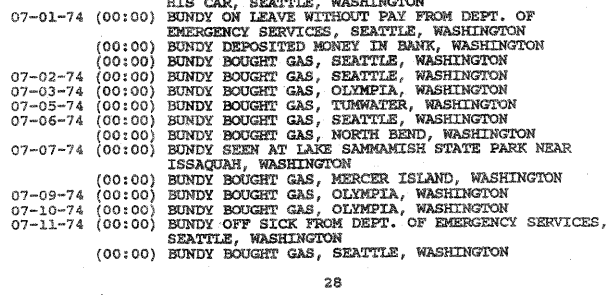
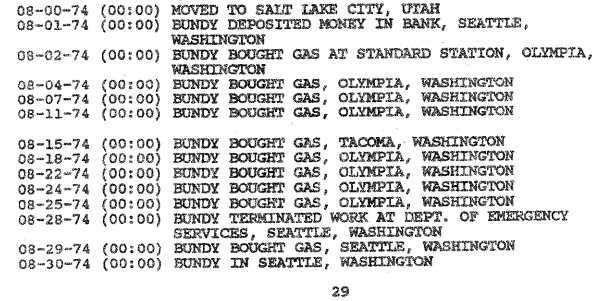
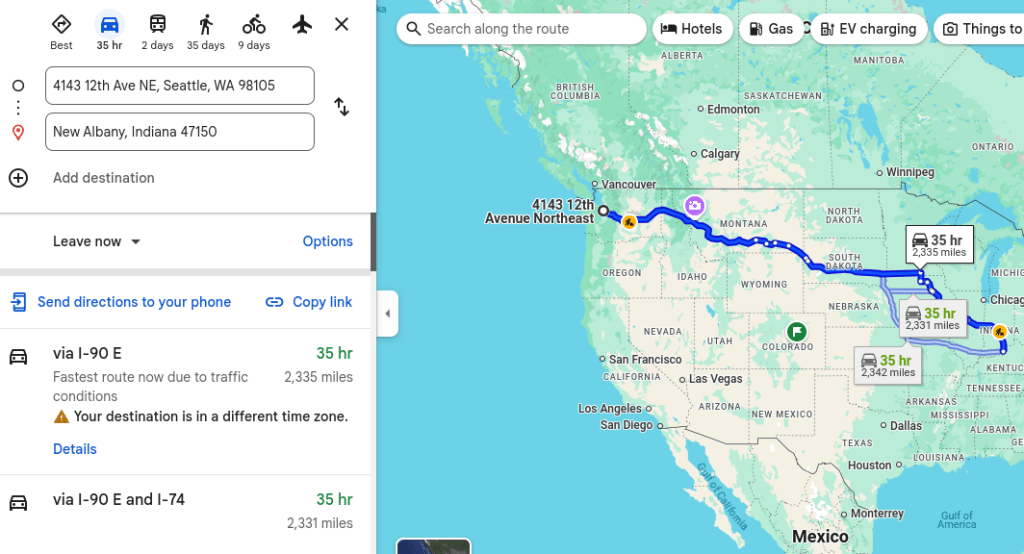
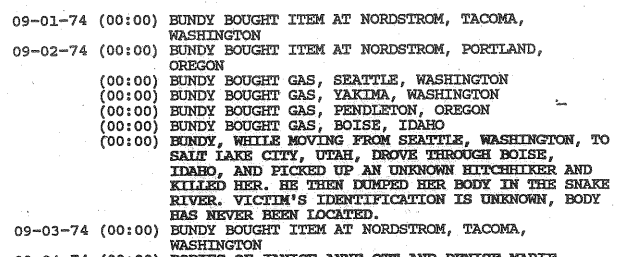
I included Ted’s whereabouts in the summer of 1974 below, and nowhere in it does it say he visited the state of Indiana at any point in time. I understand that not every single one of his movements was recorded, but Indiana is many states away from the Rogers Rooming House in Seattle (where he was living at the time), and was a whopping thirty five hour drive away (and that’s just one way, without stops!). One would think he would have used a credit card to purchase gas at some point in the trip, and therefore would have been listed in the ‘1992 TB Multi agency Team Report.’
The summer of 1974 was a busy time for Bundy: in the late spring/early summer on May 30/June 1, 1974 he abducted and killed Brenda Carol Ball after she saw a band play at The Flame Tavern in Burien, WA. On June 11, 1974 Ted abducted then killed Georgann Hawkins from outside her sorority house at the University of Washington in Seattle. A little over a month later on July 14 he abducted and killed both Jan Ott and Denise Naslund from Lake Sammamish Park in Issaquah, and in late summer/early fall on September 2, 1974 he abducted and killed the unknown Idaho hitchhiker during his move from Seattle to SLC. At the time Bundy was also in a fairly committed, long term relationship with Elizabeth Kloepfer and was gearing up for his second attempt at law school in Salt Lake City. He also worked from May 3, 1974 to August 28, 1974 at the Department of Emergency Services in Olympia, WA.
Sherry Deatrick is the fourth living victim I’ve written about since I started writing about Ted Bundy (I briefly forgot about Susan Roller/’Sara A. Survivor’). The first was Sotria Kritsonis, who claims she escaped an encounter with Ted in the winter of 1972 after he asked if she wanted a ride while she was waiting at a bus stop on Rainer Street. The two drove around for a while, and after he realized she got her hair cut short he got angry and threw her out of his car. Kritsonis claims she saw him the following year on TV and immediately knew it was him… but it couldn’t have been Ted, because he wasn’t arrested for his crimes against women until August 1975, and he didn’t purchase his tan VW until the spring of 1973. Now, I suppose it’s possible she saw the news story about how he got caught wearing a disguise while infiltrating an event for the Washington state Democratic party, but I highly doubt it.
Rhonda Stapley is one of the more ‘out there’ living Bundy victims, and by this I mean she has been featured in various television specials and mini-series about the serial killer. Stapley was a twenty-one -year-old pharmacy student at the University of Utah when she claims Ted pulled over and asked if she wanted a ride back to her dormitory after a painful dental surgery in the fall of 1974. Like Kritsonis, she was sitting at a bus stop, and not long into the drive he looked at her and said, ‘do you know what? I am going to kill you now.’ He then knocked her unconscious and drove to a secluded canyon just outside of the city, where he beat and sexually assaulted her over and over again for hours before she was finally able to escape by jumping in a nearby stream. She eventually made her way back to the University of Utah, and because she was worried that her mother would pull her from school Rhonda kept the event to herself until 2011,: ‘I imagined people whispering, ‘that’s that girl who was raped.’ I didn’t want attention. I still don’t.’
Susan Lorrayne Roller (who writes under the pseudonym Sara A. Survivor) is an alleged repeat victim and long-time acquaintance of Bundy during the time he was active (and possibly before) in Washington state. She claims that she was friends with Georgann Hawkins as well, and where I couldn’t find any proof of any friendship (as in, pictures of them together) they were Pierce County Daffodil Princesses a year apart (Susan in 1972, Georgann in 1973). Roller claims that she dated Ted briefly before he began to routinely mentally and physically abuse her, and that he also stalked her during their time together at the University of Washington.
Roller has published three books about Bundy: the first is a memoir published in July 2016 and only a limited number of copies were printed (it has since been completely pulled to be ‘rewritten’); her website has disappeared as well because the domain wasn’t properly maintained. The second and third books are more based in facts, and are directly related to the Bundy investigation. In ‘Defense of Denial: Ted Bundy’s Final Prison Interview, 1989’ (published on April 5, 2016), Sarah released some interviews between Ted and Bob Keppell that supposedly provides evidence there were additional victims, and shows proof that police kept information related to the case from the public. Her third book, ‘Reflections on Green River: The Letters of, and Conversations with, Ted Bundy,’ was also published on April 5, 2016 and is ‘a collection of actual documents related to the interviews that took place between WA State authorities in 1984 and 1988 that were released to Roller after years of coming forward.’
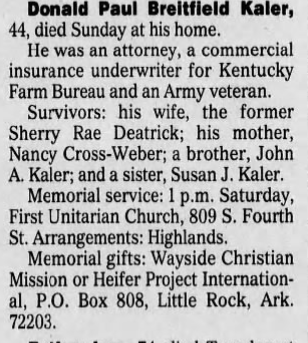
James E. Deatrick died at the age of fifty-four on November 24, 1985, and Sherry’s mother Mary died at the age of 78 on March 26, 2014 at Floyd Memorial Hospital in New Albany, IN. Sherry is 67 years old (as of February 2025), and is a widow currently living in Largo, Florida. Her husband Donald Paul Breitfield Kaler died on January 30, 2000 at the age of forty-four, and according to his obituary, he was a US Army Veteran and a licensed attorney; he worked as a commercial insurance underwriter for the Kentucky Farm Bureau. Her brother Timothy A. Deatrick lives in Port Saint Lucie, Florida with his wife, Sandra.
Works Cited:
Deatrick, Sherry. (April 2, 2020). ‘Hypnotised by a Handsome Stranger.’ Taken February 25, 2025 from vtfeatures.co.uk
Deatrick, Sherry. (April 2, 2020). ‘True Life Lucky Escape: Hypnotised by a Handsome Stranger.’ Taken February 24, 2025 from vtfeatures.com
‘Deatrick Law Firm: Sherry R. Deatrick, Attorney at Law.’ Taken February 25, 2025 from piattorneylist.com/online/memberDetail38461.htm
Holland, Jeffrey Scott. ‘Unusual Kentucky: Sherry Deatrick.’ (June 7, 2010). Taken February 25, 2025 from unusualkentucky.blogspot.com
Punteha van Terheyden. (July 27, 2019). ‘Hitching a ride with handsome stranger Ted Bundy nearly cost me my life.’ Taken February 24, 2025 from ‘The Mirror.’
geocities.ws/deatrickgallery/deatrick.html



















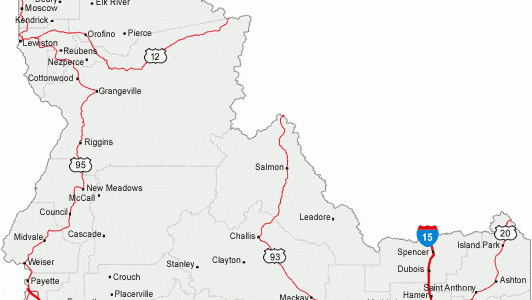
During his death row interviews in January 1989 Ted Bundy confessed to Idaho Investigators Randy Everitt and Russ Reneau that he killed a young hitchhiker in Idaho on September 2, 1974 near Treasure Valley by the Eisenmann exit on the I- 84 on the outskirts of Boise. The handsome twenty-seven-year-old was in the process of relocating from Seattle to Salt Lake City for his second attempt at law school when he stumbled upon the girl who he said had light brown hair, was between 16 and 18 years old, around 5’6″ tall; she was carrying a green backpack and wore a ‘simple beaded necklace with black and light-colored beads resembling spaghetti.’ Bundy said he strongly suspected that she was a runaway from Boise and was making her way to Montana or Wyoming, but he never gave investigators her name as he claimed to not know it.
Upon leaving the I-84 (as he remembered it) in ‘the outskirts of Boise’ Bundy noticed a young woman hitchhiking at the top of the on ramp of the 1-84, which ran through a neighborhood he said was filled with ‘ranch style suburban houses.’ Ada County Sheriff’s deputy Tim Cooper said that he initially felt there were some inconsistencies regarding the description he gave of the area and 84 but eventually realized the area was under construction at the time he would have passed through in early September 1974. Judging from Ted’s recollection of ‘ranch styled houses’ on the edge of Boise, Cooper strongly feels that he picked up his young victim by the Eisenmann Rd exit located southeast of the Boise airport.
Many investigators believe that Bundy’s confession about the unknown Idaho hitchhiker is legitimate and may be one of his more honest moments, as he was largely truthful when discussing other confirmed homicides during his final days, including Lynette Culver, who is the killers only confirmed Idaho victim and whose remains have also never been recovered. During the hour long conversation, he told LE that the young girls green backpack did not go into the river like everything else that belonged to her, and it went with him to SLC, where he tossed it out his VW’s window near some garbage dumps (as it wasn’t strange to see discarded items scattered around the area). While being questioned by Idaho investigators, Bundy said that he could no longer remember her name and after he killed her he burned her identification card.
There’s some discrepancy in what happened immediately after the murder took place: the ‘TB MultiAgency Team Report’ says nothing about Ted returning to the area to dispose of the body on September 3rd, as it was never mentioned to Everitt and Reneau during their interview on January 22, 1989. However, according to Polly Nelson, the following day her client returned to the body and took Polaroids of the remains then dismembered her and dumped the pieces in a nearby river that is strongly believed to be the Snake River, a major waterway in the Pacific Northwest that is about 1,080 miles long.
Elizabeth Kendall gave some details about her personal recollection surrounding when Bundy left for law school on September 2, 1974 in early September 1974 in her 1981 book, ‘The Phantom Prince:’ that morning, her friend Mary Lynn Chino made everyone a big breakfast on her houseboat before he left for Utah, and during his drive Ted called her in the late afternoon/early evening from Nampa, ID to tell her that he loved her. She mentions that they had picnicked there on one of their vacations to Utah: ‘he called me again from outside of Salt Lake City to tell me where he was, and he called me from his apartment to tell me how much he loved the place I had found for him. We talked several hours a week, running up huge phone bills.’ Nampa was slightly over twenty-two miles from Boise, which would have put Bundy in the middle of the city in slightly over thirty minutes after he spoke with Kendall.
It’s worth noting that according to the ‘1992 TB Multiagency Team Report,’ Bundy stopped for gas the fourth time on September 2, 1974 somewhere within the city of Boise, although I do want to point out that Kevin Sullivan refers to different locations that Ted got gas that don’t quite match the 1992 TB MultiAgency Report: he said that he stopped for fuel the third time within ‘the Boise city limits’ and got fuel for the fourth and last time in the early hours of September 3rd in Burley, Idaho.
According to Russ Reneau, when he showed up to talk to Bundy in Starke, Florida ‘it was the first time I’ve ever been invited by a serial killer himself to come talk with him.’ … ‘It was clear that he was fatigued. I saw signs of stress and, through all of that, he was polite and actually amiable.’ … ‘In spite of his friendly persona, it was clear to me that we were dealing with an evil, a truly evil man.’ During their conversation the condemned man also gave very precise details about how he raped then killed Lynette Culver of Pocatello on May 6, 1975 and volunteered details that only her killer would have known. Regarding Culvers murder Reneau said that he strongly believed Bundy was responsible: ‘I feel like what we came away from out of that interview was able to bring closure to one Idaho family. That is always a good outcome.’ About both girls murders Tim Cooper commented that: ‘it begs the question why would he lie about our Jane Doe case and then tell the truth about Lynette Culver.’
Lynette Culver was born on July 31, 1962 in Renton, WA and was killed by Ted Bundy on May 6, 1975 in Pocatello, ID. She was last seen leaving Alameda Junior High School during her lunch period boarding a bus, and after abducting her he brought the 12-year-old back to his room at the Holiday Inn, where he sexually assaulted then drowned her in the bathtub before eventually disposing of her body in a river north of Pocatello (possibly the Snake). In the time following her disappearance, police assumed she was a runaway, however as time went by, they received no reports of any sightings of her they began to lean towards foul play. During his Idaho confession in January 1989 Bundy confessed to killing a young girl that matched Culver’s general description. According to (retired) Idaho Attorney General Jim Jones, he was ‘frankly astounded by the detail that he was able to provide with respect to Lynette, and of course we had a total absence of detail on the other one he confessed to the hitchhiker.’
After looking into the confession Idaho investigators determined there was no missing person report that matched his supposed victim and nobody was ever recovered. Of the confession of the Idaho hitchhiker, Reneau wondered ‘did he fabricate it? I’m not sure, or was he simply withholding information in the hopes that we would extend his life? I’ve never been able to resolve that in my mind over the years.’ … ‘I was expecting someone that I could read better. He was not nervous at all during the interview I had with him, much different from any other homicide suspect I’ve ever interviewed.’
In a podcast with Ada County Sheriffs department, Deputy Lauren Monte sat down with Cold Case Investigator Detective Tim Cooper and went over details related to the Snake River Jane Doe. About the necklace the victim was wearing, Detective Cooper clarified that the ‘kinds of whatever it was they were more like long, little sections of spaghetti with a with a strings F through it and they were black and well black and a lighter color.’
About the Snake River Jane Doe, Tim Cooper said that what Bundy ‘had to say about Jane is credible, and a lot of that has been that we have from the audio is her description and again what sparse details that he could recall. He said that he thought she was from Boise, from Ada County, and hat she was maybe trying to get to Montana. He estimated her age to be younger, maybe not even 18 yet. He provided a clothing description and description of her. Mr. Bundy indicated that he was traveling eastbound on Interstate 84 in what he believed to be Ada County or the Boise area, on the outskirts. It sounded like, from what he said of Boise, when he first encountered our Jane, who appeared to be hitchhiking or standing alongside the highway as if she needed a ride. I picked up a young woman who was hitchhiking, traveling. Well, I was traveling east at the time. She was standing… it wasn’t downtown, but it was further out of the city. It seems like they were like ranch style suburban houses. He pulled over and offered her a ride, which she accepted and she got into his notorious yellow Volkswagen Beetle and away they went, eastbound on I-84. Based on the description that Mr. Bundy provided, and this isn’t 100%, but we have to go off of what details we have. I’ve looked at old maps and old photos of the interstate from that era and have tried as diligently as I can to form an idea of where she was picked up, and I think the closest that I’ve been able to get to is possibly in the vicinity of Eastbound 84 at Eisenman Road. In that area, this is on the outskirts of Boise, there were and still are in fact some ranch style homes that are visible from that particular exit, and this would not have been the case at many of our other exits that would have been considered outskirts, like Vista or Broadway. So that seems to fit very closely, but again it’s not for sure but this may be where he picked up Jane Doe. It sounds like his confessions have come under quite a bit of scrutiny. … ‘I do believe the confession is reliable, and I understand why his confession may come under scrutiny, or may have in the past. I think it’s likely because some felt that Bundy was lying to get a state of execution at that time. The problem with that is, the Governor of Florida was publicly adamant that no stay would be given in the weeks leading up to Bundy’s execution date, which is actually I think what prompted Mr. Bundy to talk about these unsolved cases, as he stated he wanted to absolve himself of sin before his death.’
The following is an excerpt from Polly Nelson’s book, ‘Defending the Devil’ about how Ted confused to her killing the unknown Idaho hitchhiker, and where I’d normally paraphrase large sections like this I decided to include it in its entirety: ‘he had been driving around in the hills of Idaho, getting to know the area, looking for safe sites to take a victim. He was a meticulous researcher. It was an important part of a ritual so elaborate that, when I asked him about reports that he had killed over one hundred people, he actually chuckled and shook his head at the naivete of non-murderers: ‘They have no idea what it takes to do one, what it takes out of you.’ I asked him if the figure of thirty-five, which I’d seen in other accounts, was correct. He paused, stared at me, and scanned his censor to decide whether to admit to such a detail, because that was where he had always drawn the line before. He had freely implied everything, but never outright admitted one detail, like some superstitious child’s idea of what could be held against him. He finally nodded and mumbled, ‘yes.’ While driving, he spotted a hitchhiker, a girl around fifteen years old. He had not planned to do anything while scouting, but there she was. He checked the rearview mirror for other cars. None. She got in and started talking to him. He had to act fast: he did not like his victims to talk, he did not want to get to know them, he did not want to know they were real. He reached back for his tire iron and hit her over the head. She slumped in the seat, but awoke soon afterward, moaning. He knocked her out again. I noticed for the first time how strong Ted’s arms were. He had his elbows on the table and his forearms outstretched toward me as he talked. His arms were firm and sinewy, with bulging veins. His hands were large and bony. I looked at his face. Ted’s skin was darkening as he spoke. He was on a roll now, in a sort of trance, recalling every detail as he reviewed the fifteen-some-year-old film in his head, frame by frame. No detail was too small to recall, everything was important, everything had meaning. He was like a reverent disciple describing a spiritual revelation. Ted was no longer censoring himself; he had slipped into a warm wave of memory and was transported. For the first time ever, I was afraid of him, acutely aware of how swiftly he could reach me with his hands if he wanted to, of how it would be too late by the time the guards on the other side of the glass reacted. It was the absolute misogyny of his crime that stunned me, his manifest rage against women, that left me no place to retreat to. He had no compassion for this victim at all. It wasn’t that Ted took sadistic pleasure in telling his story, it was just that he was totally engrossed in the details. His murders were his life’s accomplishments. To him, each recollection was a profound illustration of his skill, his willingness to go forward, his good luck. There had been no guarantees — to Ted, each completed murder had seemed like a small miracle. He drove across the state line to a secluded place in the woods that he was already familiar with. He led the girl out of the car, assuring her that no harm would come to her. He made her strip and kneel on her hands and knees while he took Polaroid pictures of her. (For Ted, another small miracle had been that when his apartment had been searched upon his first arrest in Utah, the investigators had failed to check the building’s utility room. When he was released on bail for the attempted abduction of Carol DeRonch he retrieved the shoebox of photos he’d hidden there and destroyed the most graphic and conclusive evidence of the true depth of his depravity). She cried. He could see the look of terror in her eyes, her eyes begging for mercy. He kept reassuring her. He didn’t like to see their hurt, he said, he didn’t like to see his victim as a person: he wasn’t the kind of person who would harm another. On several occasions, Ted had told me, ‘believe me, Polly, I am not the kind of person who would hurt a fly. I never even hit a man. Except once, on the playground at grade school, and I didn’t even want to do that, but the other kid forced me. I felt terrible afterward, disgusted with myself.’ Then he got behind her, slung a noose around her neck, and strangled her as he raped her. He’d continued to reassure her he would let her go, and she had seemed to believe him. He said he’d felt a little sad that he could not let her go, that he had to kill her, but she would be able to identify him, of course. Afterward, he pulled her body deeper into the woods and, the next day, drove back to take more pictures and to cut her body into pieces (Defending the Devil, 257-259).’
It is important to point out that Bundy’s retelling of events taken from Nelson’s book is dramatically different from the one he told Idaho investigators on January 22, 1989 in Starke, Florida. For example, Nelson states that her client confessed to her that he’d been ‘driving around the hills of Idaho, getting to know the area, looking for safe sites to take a victim,’ however this is not what he told Russ Reneau. Also, during his hour-long conversation with Reneau, he made no mention of coming back to the body the next day, and said that he immediately placed her in the river.
In the days after Bundy’s death row confessions, Pocatello police strongly felt that he was responsible for Lynette’s murder, however more recently investigators have challenged this, as they feel she was the first of a string of abductions and homicides that occurred in the area between 1978 and 1983. After Lynette disappeared Patricia Campbell and Tina Anderson were both taken in July 1978, and their bodies were found in October 1981 in Malad City, Idaho. Christina White was last seen on April 28, 1979 during the Asotin County Fair in Asotin, WA. At 2:30 PM, she called her mother from a friend’s house to say she was feeling sick from the heat and was last seen sometime between 7:00 and 10:00 PM, and when her mom went to pick her up she wasn’t there. Twenty-two year old Kristin Noel David was last seen alive on June 26, 1981, while bicycling southward on US Highway 95 towards Lewiston, Idaho. A little over a week later on July 4, her dismembered remains started to turn up along the Snake River roughly six miles west of Clarkston, Washington. The next young woman that vanished was twelve year old Linda Smith, who was taken from her bedroom on June 14, 1981; her remains were found in May 1982 below Hospital Way in a hilly area near East Center Street in Pocatello. On September 12 ,1982 eighteen year old Brandy Miller and her stepsister twenty-one year old Kristina Nelson vanished after leaving Nelson’s apartment to walk to a nearby grocery store. On March 19, 1984, the remains of both women were found down a hillside off Highway 3, roughly forty miles outside of Lewiston. The last (female) murder was 14-year-old Cindy Bringhurst, who vanished in June 1983 and was discovered deceased the next month. While some sleuths strongly believe the abductions and murders to be related, the idea has failed to gain any steam.
In June 1982, the remains of a man were discovered in the Snake River near the mouth of the Grand Ronde River in Nez Perce County, Idaho. The Nez Perce County Coroner estimated that the indivudual was between eighteen and twenty-two years old, 5’11” tall, and weighed between 145 and 160 pounds. It was also noted that he had straight dark brown/black hair that was 3-4 inches long, a 2-inch scar on his right ankle, and calluses on both palms, pointing that he had had a job involving physical labor. The details of the case were entered into the National Missing and Unidentified Persons System (NamUs) as UP3041 in December 2008, and the man became known as Snake River John Doe. In 2023, the Nez Perce County Sheriff’s Office and Idaho State Police Forensic Services submitted genetic evidence to Othram Laboratories in The Woodlands, Texas to determine if DNA testing could help identify the unidentified subject, which led to the positive identification of the man, who was determined to be Dewayne Surls.
I strongly suspect that Bundy was mistaken that the unknown young woman he abducted and killed from Idaho was from Boise, and wonder if maybe she was just passing through and was ready to move on when she ran into him. When Ted said he burned her identification, did he insinuate that he looked at it and at the very least remembered where she was from? I strongly suspect the young woman he abducted wasn’t from Idaho at all, and was from a surrounding state and just happened to be passing through when he killed her.
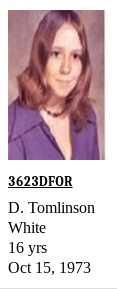
Deborah Lee Tomlinson was last seen on her sixteenth birthday on October 15, 1973 in Creswell or Eugene Oregon. The brunette had brown eyes, was 5’5” tall, weighed 140 pounds and had left home with an unnamed teenage girlfriend; she has never been seen or heard from again. Another good fit is Peggy Ann Reed, who was last seen possibly hitchhiking on March 28, 1974 in Santa Rosa, CA in the area of Guerneville Road and Coddling Town Mall. The fifteen year old was 5’2,” weighed 110 pounds, blue eyes and brown hair that was frosted at the time of her disappearance. A young woman that is possibly a good fit for the Idaho Hitchhiker is Charlotte Ann Erdman, who was 15 years old when she disappeared from Watertown, Wisconsin on July 18, 1974. She had light brown hair, blue eyes, was somewhere between 5′ 7″ and 5′ 9″ tall and weighed somewhere between 125 and 165 pounds.
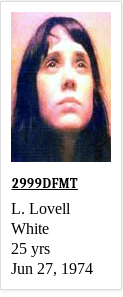
Twenty-five year old Linda Lee Lovell and her male friend Stephen Locke Packard disappeared in June/July 1974 from Stinson Beach, California. Lovell was a resident of Missoula Montana, and eighteen year old Stephen was originally from New Jersey, and where it is unknown how the two knew each other or for how long it was determined that they were traveling along the California coast, hiking and possibly hitchhiking their way around and planned to make their way to Washington State for the world’s fair, before returning home. On June 10, 1974, Stephen called his family from Stinson Beach, and postcards were received by their respective families from the area in California as well, and on June 20 a travelers check in his name was cashed at a store in Westport, which is about a four hour drive away from Stinson Beach.
Deborah Rae Meyer lived in Red Lodge, Montana at the time of her disappearance on August 4, 1974 however she and her family were visiting relatives in Rawlins, Wyoming at the time she went missing. Meyer was last seen leaving a family member’s house near Seventh and Spruce Streets and was planning to walk to a nearby movie theater, but never arrived; she was never seen or heard from again. At the time she disappeared Deb was 14 years old, stood at 5’4” tall, weighed 115 pounds, and had brown hair; she also had a small circle shaped growth roughly the size of a pencil eraser on her left ear and wore a full set of dentures. Three other young women disappeared in July and August 1974 in the Rawlins area: nineteen year old Carlene Brown and her 19-year-old friend Christy Gross disappeared from the Rawlins fairgrounds on July 4, 1974; ten-year-old Jayleen Dawn Banker vanished from the area on August 23, 1974.
Seventeen year old Susan Rhonda Labbe was last seen hitchhiking in Lawrence, Massachusetts on August 7, 1974; she was 5’5” tall, weighed around 120 pounds and had green eyes. Belinda VanLith was last seen house-sitting for a neighbor around 8 AM on June 15, 1974 located on Little Eagle Lake, Minnesota. The seventeen year olds parents were expecting her home for her sister’s graduation party, but she never arrived, and they reported her missing the following day. She was 5’5” tall and weighed 110 pounds.
About the Snake River Jane Doe, ACSO Cold Case Investigator Tim Cooper said ‘I think this is one of those cases where we’re fifty years down the road, where the public is going to be a big part in solving this.’ If you remember someone who went missing around September 1974, or if anything in this description rings any bells, please contact ACSO at 208-577-3102 or lmontague@adacounty.id.gov.
Works Cited:
‘ACSO Seeks Public’s Help to Identify Teen Abducted by Ted Bundy in 1974.’ (November 1, 2024). Taken February 14, 2025 from adacounty.id.gov
Bertel, Steve & Darrow, Lacey. ‘Idaho investigator speaks of interviewing Ted Bundy.’ (2016). Taken February 15, 2025 from kivitv.com/
Blanchard, Nicole. ‘Serial Killer Ted Bundy said girl in Boise was a victim, Officials want to identify her.’ (2024). Taken February 16, 2025 from idahostatesman.com
Cavallier, Andrea. November 8, 2024). Serial killer Ted Bundy claimed he killed a girl while driving through Idaho in 1974. An investigator is determined to ID her.’ Taken February 13, 2025 from ‘theindependent.com’
Kendall, Elizabeth. ‘The Phantom Prince: My Life With Ted Bundy.’ (1981).
Mortenson, Chris. ‘Idaho AG Investigator On Ted Bundy’s Confession.’ (September 26, 2021). Taken February 14, 2025 from YouTube.com
Nelson, Polly. ‘Defending the Devil: My Story As Ted Bundy’s Last Lawyer.’ (1994).
Sullivan, Kevin M. ‘The Bundy Murders: A Comprehensive History.’ (2009).
Tuttle, Zoe. (November 1, 2024). ‘Sheriff seeking identity of Ted Bundy’s Idaho victim known as ‘Snake River Jane Doe.’’ Taken February 13, 2025 from ktvb.com










I’ve never posted anything about Brian Laundrie and Gabby Petito before, but I feel that this belongs here.

This is the second installments of documents from the Thurston County Sheriff’s Department related to William Cosden Jr.
Below is a copy of a letter that Ted Bundys one time girlfriend Liz Kloepfer sent his probation officer Don Hull, voicing her annoyance that detectives were prying into his personal life. It is part of Judge Stewart Hanson’s private collection and was digitized and sent to Maria Serban by Sean Papanikolas, Stewart’s grandson.
The third installment of documents from the Thurston County Sheriff’s Department related to the murder of Brenda Joy Baker from Maple Valley, WA.
Growing up near Amherst, NY the ‘bike path rapist’ was my families version of ‘the boogeyman.’ I remember when he reemerged in 2006 my mom came into my bedroom and told me ‘not to go running by myself’ after class (I was at Daemen University at the time, and if you knew me then you’d know how laughable the thought of that was), but I understand her fear. Coincidentally when Joan Diver was killed I was dating her husbands (who was a Chemistry PhD at the University of Buffalo) lab assistant, and it gave me a fairly unique perspective into it all.

These past few months I’ve had an uptick in the amount of feedback I’ve received from victims family members and loved ones, and I’ve had the pleasure of chatting with Deborah Lee Tomlinson’s sister Jean, who was kind enough to answer some questions for me.
Tell me about your sister, what was she like? What do you remember most about her?
I remember she seemed happy to go live with our biological Mother, she thought she could do whatever she wanted with no limits. She found out that wasn’t true.
How many siblings did she/you have? Do you happen to know where she went to high school?
There were at the time 4 of us and two step brothers. My Aunt Helen recently told me she ran away from Eugene and not Creswell, then we were told she was spotted in Santa Rosa, CA. With a black guy ( our Dad didn’t like people of color) they think she was maybe pregnant. But who knows.
What did your parents say about Deborah, and how would they describe her? By that I mean, what was she like? What was her favorite book, or band?
They absolutely refused to talk about her at all, with either me or my twin Joyce. I know she loved Rock and Roll. She got caught several times sneaking out at night and didn’t get along with our step mother.
How was the relationship she had with your parents? Were they close?
Our father raised us with a step mother at the time and they didn’t get along.
It’s often reported that Deb ran away with an unidentified friend. Do you know who it was?
I have no idea if its true or who she was.
What do you know about the circumstances surrounding Deborah’s disappearance? Is there anything important that stands out to you that you feel is important?
Just that she was spotted in Santa Rosa with a guy.
I know she was young but did your sister date often, that you know of?
Not allowed to date until we were 16.
There were quite a few murders and disappearances in Oregon around the time Deb disappeared. Do you think any of the cases could be related?
I’m not sure but that’s how I found your blog.
What are your current feelings or emotions regarding your sisters disappearance? The new “big thing” in the world of forensics is genetic genealogy. Have the Eugene police been in touch with you at all recently about your sister?
Never a word, but the NCMEC (or the National Center for Missing & Exploited Children) said all records were destroyed in a fire.
What do you hope to see happen in regard to the investigation? How did your sisters disappearance affect your family dynamics?
Joyce and have always been close and Debbie running away was hard for many years. We always thought once we all grew up she would make contact.
I learned about Deborah’s disappearance only because her name was included in a list of young women that could possibly be linked to Ted Bundy. Do you think he had anything to do with her disappearance?
I wish I knew, but like I said she was spotted in Santa Rosa by a close family friend but I was never told by who. Our Grandmother lived there.
I think it’s a shame that Deborah’s disappearance isn’t discussed more publicly, and that she didn’t get any news time. Do you think if it was handled differently by police the case might be solved by now?
I always thought so.
What do you think happened to your sister?
I think she fell in love with the guy and ran off with him.
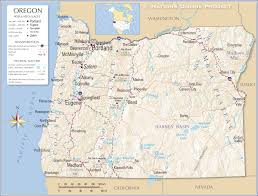
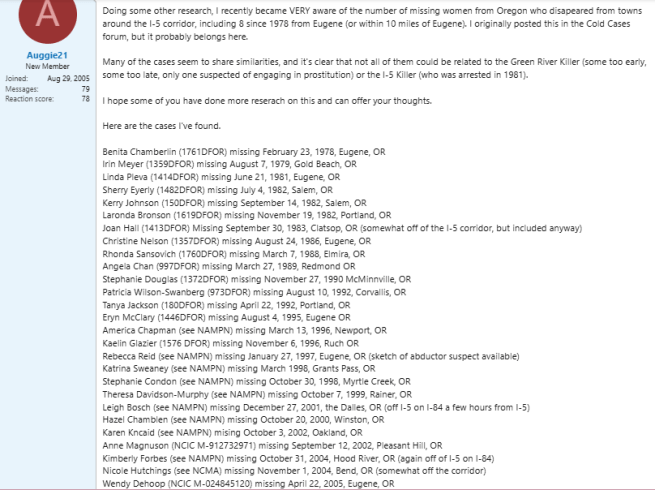
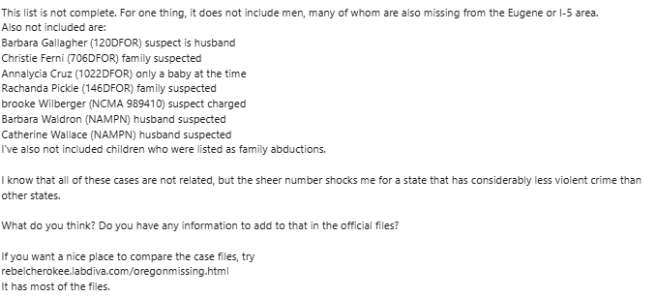
I’ve been compiling a list of missing and murdered young women from the 1970’s in Oregon in a notebook, and I figured why not also include it here. As I learn of new victims I will update the list… over the years I’ve found dozens of names on various websites and newspaper articles about other missing and murdered women, but they’re scattered all over the internet in a million different sources… why not put them all here?
Faun Moulton Moon: (March 1, 1969, Eugene). Distraught over her recent divorce, the fifty-year-old put her financial affairs in order, sent letters of good bye to her daughters, and walked away from her home and family. She was never seen or heard from again.
Janet Lynn Karin-Shanahan: (April 23, 1969, Eugene). Twenty-two-years-old. Strangled and found in the trunk of her own car.
Beverly Annette Gayley: (June 15, 1969, Deschutes County). Her remains were found in a wind cave covered with a bedspread and rocks; she had a ligature wrapped around her neck. A significant amount of blood was found in Gayley’s home, as well as in the trunk of her car.
Niki Diane Britten: (July 16, 1969, Albany). Fifteen-years-old. Frequent run away.
Julie Dade: (January 21, 1970, Junction City). Twenty-Year-Old. Julie’s husband, Terry was later found deceased in the couple’s Maple Street apartment. At about 4:20 AM, neighbors in the area of the Maple Street Apartments heard a female yelling and a witness saw a man dragging a screaming woman into a vehicle before leaving the area. A nearby neighbor woke to the sound of an explosion, saw the car on fire and tried to put it out but it was too late.
Sandra Young: (February. 23, 1970, Sauvie Island). Her remains were found on Sauvie Island in 1970 but were not identified until February 2024; her murder remains unsolved.
Joyce Cross: (Remains were discovered on February 11, 1971, Klamath Falls). Her bludgeoned body was found in the Lost River Diversion Channel near the Spring Lake Road crossing. It was later determined Lavon Granville Owens killed the nineteen-year-old after Oregon State Police linked his DNA to evidence from the crime scene in April 2010.
Barbara Katherine Cunningham: (May 25, 1971, Eugene). Thirty-four-years-old. Found deceased in her apartment by her mother.
Barbara Ann Bryson: (July 29, 1971, Stayton). Nineteen-years-old. Was last known to be attending a party.
Anne Marie Lehman: (found on August 19, 1971, Josephine County). Seventeen-years-old. Disappeared from Aberdeen, Washington in the winter or spring of 1971; the circumstances surrounding her case are unclear, although it is rumored she was a victim of human trafficking. Her remains were found by a man and his son while they were out mushroom hunting off the Redwood Highway, close to mile marker thirty-five; it is unclear as to why she was in Oregon.
Josephine County ‘Jane Doe’ (who is also known as ‘Annie Doe): (remains found on August 19, 1971). Body found near the California border; believed to be female victim somewhere between fourteen and twenty-five-years-old.
Fay Ellen Robinson: (March 12, 1972, Eugene). Found deceased in apartment.
Alma Jean Barra: (March 23, 1972, Happy Valley). Twenty-eight-years-old. Found deceased in Willamette National Cemetery.
Beverly May Jenkins: (May 25, 1972, Cottage Grove). Sixteen-years-old. Her remains were found in June 1972 just off the I-5 roughly ten miles outside of Cottage Grove; she had been strangled to death.
Jane Pellett: (June 7, 1972, Salem). Twenty-eight-years-old. Found deceased on a busy roadside on June 26, 1972.
Geneva Joy Martin: (June 16, 1972, Eugene). Nineteen-years-old. Found deceased on the side of the road by a farmer.
Rita Lorraine Jolly: (June 29, 1973, West Linn). Seventeen-years-old. Disappeared while out on a routine nightly walk.
Allison Lynn Caufman: (July 1973, Portland). Fifteen-years-old. Died as a result of head injuries after being shoved from a car moving at a high rate of speed.
Laurie Lee Canaday: (July 9, 1973, Milwaukee). Her remains were recovered on the pavement at the intersection of Southeast Scott Street and McLoughlin Blvd in Milwaukee, OR.
Susan Ann Wickersham: (July 11, 1973, Bend). Seventeen-years-old. Was found deceased from a gunshot wound on January 20, 1976.
Vicki Lynn Hollar: (August 20, 1973, Eugene). Twenty-four-years-old. Disappeared along with her 1965 VW black VW Beetle with IL plates and the running boards removed.
Gayle LeClair: (August 23, 1973, Eugene). Twenty-two-years-old. Found stabbed in her apartment.
Delores Thompson and Gwendolyn Fulce: (September 8, 1973, Portland). A double homicide, twenty-four-year-old Thompson and twenty-one-year-old Fulce were found deceased in a home on North Ivy Street.
Deborah Lee Tomlinson: (October 15, 1973, Creswell/Eugene). Fifteen-years-old. Disappeared along with a friend on her sixteenth birthday. According to her sister (and my friend) Jean she was seen in California after she disappeared).
Virginia Erickson: (October 21, 1973, Sweet Home). Thirty-two years old, mother of six. Disappeared, most likely killed by her husband.
Suzanne Rae Seay-Justis: (November 5, 1973, Portland). Twenty-three-years-old. Was from Eugene, hitchhiked to Portland despite having a car of her own.
Martha Marie Morrison: (September 1, 1974, Portland). Seventeen-year-old Martha was last seen leaving an apartment in Portland. Her murder was eventually tied to Warren Leslie Forrest.
Belinda Cowden, along with her husband Richard and two children, David and Melissa: (September 1, 1974, Copper). The family were the victims of a still unsolved mass murder after they vanished from their campsite near Carberry Creek in the Siskiyou Mountains of Oregon; they were last seen on September 1, 1974, when Richard and David bought milk at the Copper General Store. When they never showed up for dinner at Belinda’s mother’s house later that day, their campsite was found deserted, with their truck, wallets, and a half-full carton of milk left behind. On April 12, 1975, two gold prospectors found their bodies roughly seven miles from the campsite: Richard was found tied to a tree on a steep hillside, and Belinda, David, and baby Melissa were hidden inside a nearby small cave that had been sealed up with rocks. Autopsies later revealed that Belinda and David had been shot with a .22 caliber weapon, while Melissa died from severe blunt force head trauma; Richard’s cause of death could not be determined due to the condition of his remains.
Joyce C. Hess: (October 18, 1974). Fifty-four-years-old.
Marion Vinetta Nagle-McWhorter: (October 1974, Tigard). Twenty-one-years-old. According to McWhorter’s sister, she had been traveling before she disappeared around the Western part of the US. Her body was finally identified in September 2025, but the case remains unsolved.
Becky Rae Martin: (February 15, 1975, Junction City). Twenty-two-years-old. Throat cut.
Leslie Michelle (seven-years-old) and Geoffrey Lyman (five-years-old) Brown. Murders took place on February 22, 1975 and both victims were found on March 12, 1975 in McIver Park, Estacada.
Margo Nerline Ascencio-Castro: (March 1, 1975, Eugene). Twenty-two-years-old. Found stabbed in a motel room, possibly involved with a local motorcycle gang.
Ceceilia Louise Hostetler: (March 26, 1975, Eugene). Last seen leaving the Embers restaurant getting into a vehicle with another person whom she appeared to know. On October 30, 1998, an unidentified deceased female was found burned and stabbed in the forest near 24243 Bolton Hill Road in Lane County, Oregon; it was later identified through dental records as Ceceilia Hostetler.
Caroletta Spencer: (May 20, 1975, Sauvie Island). Seventeen-years-old. Spencer’s was a sex worker whose body was found on a gravel road on Sauvie Island in Oregon. She had been shot four times and most likely had been killed earlier that morning, as she was last seen at Fred’s Place Bar in Portland around 2:20 AM.
Wanda Ann Herr: (June 1, 1976, Government Camp). Nineteen-years-old. Few details about Herr’s life are available, but according to family members, she grew up in Gresham, Oregon, but did not live with her siblings and reportedly ran away from home multiple times as an adolescent. Herr was last seen alive sometime around June 1976 and may have been living in a group home when she disappeared; her upper skull and some miscellaneous bones were discovered on August 2, 1986, near two roads off of Highway 26.
Shirley Anita Wallace: (July 21, 1975, Eugene). Thirty-one years-old. Found, shot.
Tina Marie Mingus: (October 1975, Salem). Sixteen-years-old. Murdered, body recovered.
Cherril Sue Miller: (October 12, 1975, Portland). Twenty-eight-years-old. Few details are available in Miller’s case, but she had two children, whom she had left in a neighbor’s care that evening. One of her teeth in the front of her mouth is discolored or capped and she wears eyeglasses with thin bone rims.
Camille Karen Covert-Foss: (October 17, 1975, Hillsboro). Twenty-five-years-old. Found shot in her vehicle at her POE, in a Southwest Portland-area shopping center.
Deborah McNoise-James: (October 28, 1975, Klamath County). Found deceased at the 97 Trailer Court with lacerations to her head, neck, arms, and leg, as well as trauma to her larynx.
Betty Johnson: (November 1975, Estacada). Nineteen-years-old. Not much is known, I only happened to stumble upon her name when searching for a different Oregon woman (Marion McWhorter).
Kim Charleson: (January 7, 1976, Cannon Beach). The twenty-two-year-old had been in college and may have been carrying a small amount of Canadian currency when she disappeared.
Cordelia Sheehan McMinn: (May 1, 1976, Portland). Twenty-six-years-old.
Julie Ann Beardslee: (June 30, 1976, Astoria). After Beardslee failed to attend a regularly scheduled Bible study class in Astoria her vehicle was found on July 1, 1976, at Fort Stevens State Park. Her body was discovered by hikers on July 12, 1976 near Coffenbury Lake in Clatsop County, Oregon; she had been stabbed, and her throat had been cut.
Patricia Otto (August 31, 1976, Lewuston): Patty’s body has never been recovered and she was last seen by her husband and two daughters.
Sharon Ryan: (December 16, 1976, Portland): Seventeen-year-old. Vanished going to buy eggs, her body was found near a parking lot in Portland.
Roxanne Marie Sims: (January 1, 1977, Portland). Eighteen-years-old.
Sandra Renee ‘Sandy’ Morden: (1977) Approx sixteen-years-old, her partial skeleton was found in Washington in 1980 and it’s believed that she died in the late 1970’s; she was identified in October 2019.
Karen Jean Lee: (last seen alive, May 26, 1977, Cornelius). Lee ran away with a male companion, fourteen-year-old Rodney L. Grissom. Her possessions and clothes were found by a logging crew sometime in November 1977 however her remains were never recovered. Grissom’s clothes and belongings found in same area, roughly a quarter mile away from Lee’s in November 1982; his remains have also never been found. (Thank you to my friend Ryan AuClair for this information).
Lliana Gay Adank: (June 1977). Sixteen years-old. Was found shot to death along with seventeen-year-old Eric Shawn Goldstrand at the remote Broken Bowl Picnic Grounds near the Fall Creek Dam located about twenty-five miles southeast of Eugene.
Cindy Irene King: (July 19, 1977, Grants Pass). Fifteen-years-old. Disappeared.
Elizabeth ‘Lisa’ Ann Roberts: (July 25, 1977, Roseburg). Found August 9, 1977, formerly known as ‘Precious Jane Doe.’ Roberts was identified on June 16, 2020.
Margie Ann Fernette: (January 24, 1978). Fifteen-years-old. Found in Fairfield Elementary School.
Benita Gay Chamberlin: (February 23, 1978, Eugene). Twenty-four-years-old.
Floy Joy/Jean Bennett: (February 23, 1978, Beaverton). Thirty-seven-years-old.
Karen Etta Whiteside: (March 22, 1978). Sixteen-years-old.
Ann Marie Ellinwood: (April 15, 1978, Corvallis). Twelve-years-old, last seen walking alone ‘during daylight hours.’ Possibly a victim of Earl Patrick Chambers.
Stephanie Ann Newsom: (April 19, 1978, West Salem). Eleven-years-old. Remains found on April 25, 1978 near the Ankeny Wildlife Refuge: possibly a victim of Earl Patrick Chambers.
Elana Jacobs and Teresa Krause: (May 21, 1978, Astoria). Both girls were enrolled in the Tongue Point Job Corp. They were known to go into town to ‘party and socialize,’ which is most likely why they left the compound the night they were last seen alive; their remains were found near Del Rey Beach, Krause’s on December 3, 1978, and two days later Jacobs were discovered; they were most likely stabbed and/or strangled to death.
Finley Creek Jane Doe: (found August 27, 1978, Elgin). The remains of a pregnant woman between the ages of fourteen and twenty-five-years-old; detectives strongly believe she died between 1970 and 1975 and was six to eight months pregnant at the time of her death; fetal remains were found with her. She was found buried face down under a log, and evidence at the scene, including a coaxial cable, suggests she may have been strangled.
Diana Marie Kuhn*: (December 10, 1978, Portland). Twenty-years-old. Remains found in in West Linn, OR.* Thank you for Diana’s cousin Donna Mollema for informing me about her.
Christie Lynn Farni: (December 14, 1978, Medford). Six-years-old.
Pem Michelle Yates-Briggs: (January 1, 1979). Fifteen-years-old.
Janie Landers: (March 9, 1979, Salem). Eighteen-years-old; she slipped away from the Fairview Training Center in Salem, a residential facility for those with developmental disabilities and mental health problems.
Mary Jo Templeton: (April 1979, remains found on April 30, 1979, Redmond). Forty-nine-years-old. In April 1979, she was renting a room at the El-Rancho Motel when she disappeared; her remains were uncovered in several parts over the time period of a month in Mirror Pond and near the Newport Avenue Dam in Bend. The first remains (a thigh) were found by a utility worker raking intake grates at a dam on April 30, 1979. She had been dismembered with what detectives called a ‘surgical precision,’ leading to theories that her killer may have had experience as a hunter, butcher, or surgeon, butcher (or a combination of the three); she was eventually identified through dental records.
Daisy Motley: (May 8, 1979, Portland). Motley was a sixty-four-year-old, unemployed female who lived alone that had no apparent enemies. Someone anonymously called the manager of her apartment complex to her death and asked them to check on her because they heard a ‘disturbance’ coming from her residence. The last time Daisy was known to be alive was when she talked to her daughter at approximately 9 PM on May 7th.
Lisa Danein Boggs: (June 13, 1979, Salem). Boggs and her boyfriend, Randolph Robertson, left their home state of Missouri on May 7, 1979 and arrived in Salem, Oregon, on May 9, 1979, and lived at a transient camp on property near the KOA at 1595 Lancaster Drive. On June 7, 1979, Salem police were called to the KOA for a homicide, where they discovered that Randolph Robertson, had been killed by two shotgun blasts; Boggs was nowhere to be found. On June 13, 1979, her’ body was discovered in a creek 17.5 miles up Little North Fork Road off Highway 22E in Marion County, Oregon. Her cause of death was drowning, even though she had also sustained a blunt-force injury to the skull behind her left ear. She was found lying on her back, with her head submerged in eleven inches of water; it had been held in place by a large rock
Irin Marie Meyer: (July 20, 1979, Brookings). Twenty-nine-years-old.
Sheryl Wright: (no additional information at this time).
 Another Bundy Blog: My Adventures around the Pacific Northwest (and everywhere else).