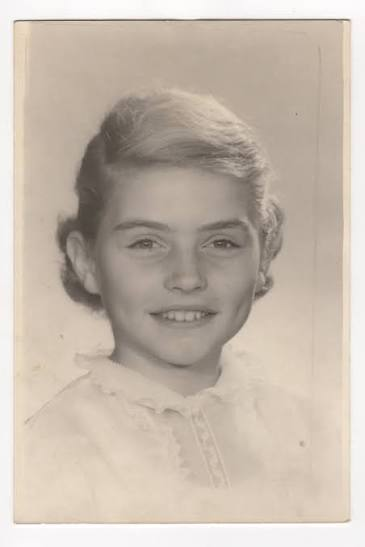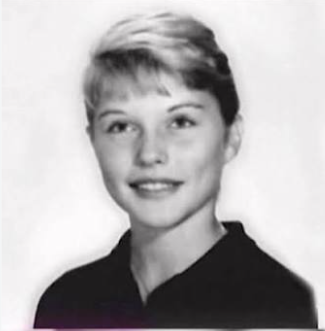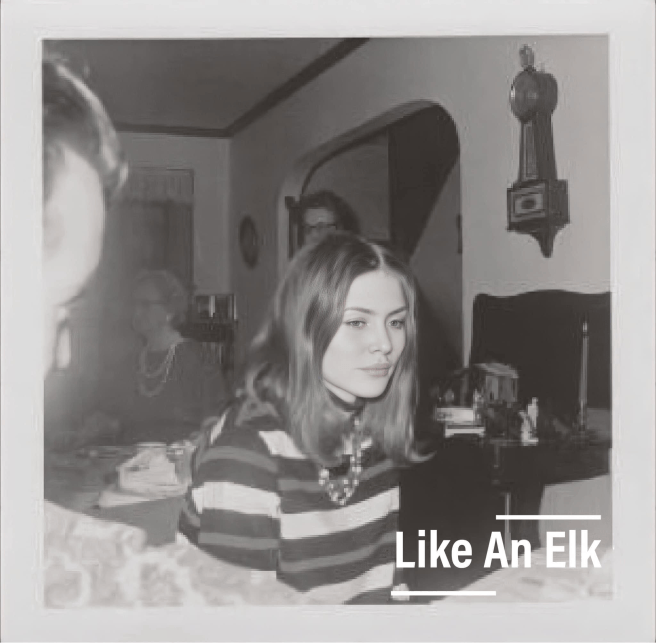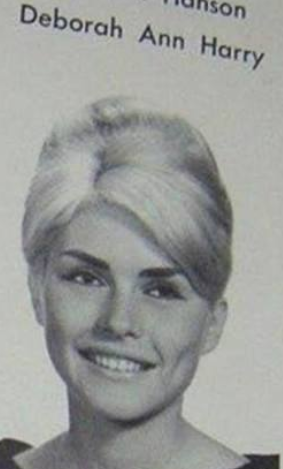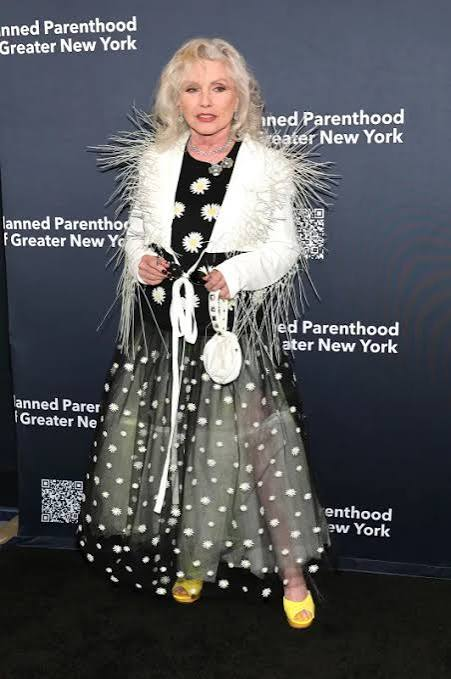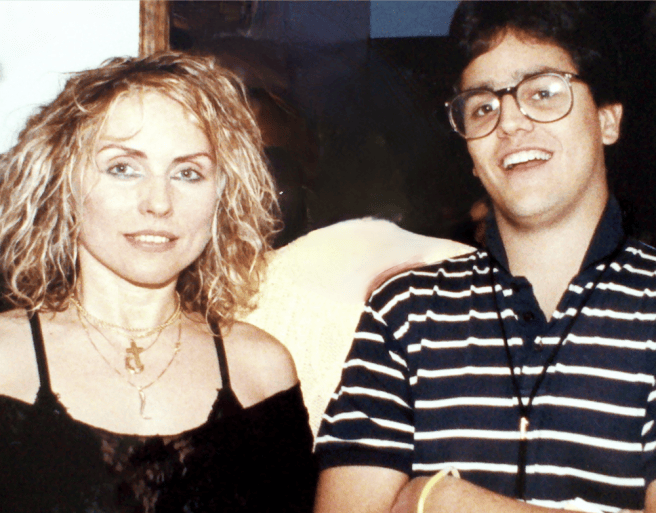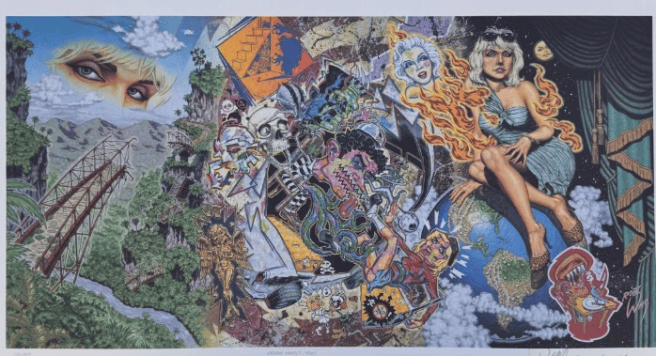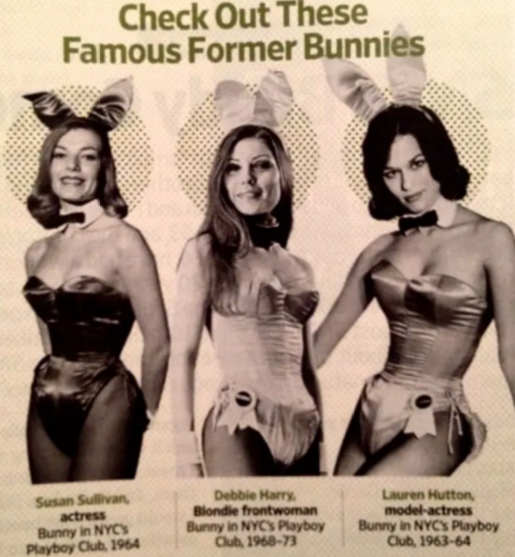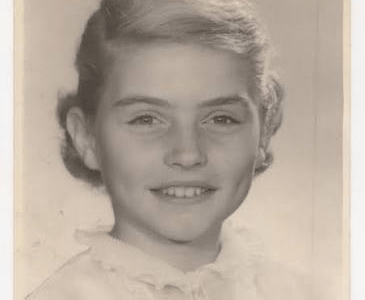
Introduction: Angela Trimble was born on July 1, 1945, in Miami, FL but was given up by her mother shortly after birth; she was adopted at three months old by Richard and Catherine Harry and renamed Deborah Ann Harry (she learned about the event through a bedtime story at the age of four). She grew up in Hawthorne, New Jersey and came from a modest, working-class background (her parents owned and operated a gift shop), though it was shaped by a lingering subconscious fear of abandonment from being adopted.
Nicknamed ‘Blondie’ as a child, Harry started bleaching her dark hair blonde at a young age and would often daydream that Marilyn Monroe was her biological mother. She sang in her local church choir and customized her own clothes and adjusted her style and stayed away from the preppy outfits that her mother preferred. A self-described ‘wild-child’ and tomboy, she described her youth as a ‘middle class idyll’ with the kind of minor parental neglect that allowed her to roam the woods freely, play in the dirt, and explore the world around her; she especially loved books, fashion, listening to the radio (specifically big band music), and science fiction.
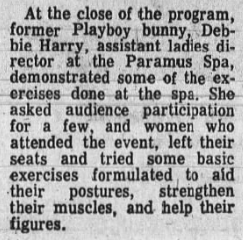
Harry graduated from Hawthorne High School in 1963, where she was voted the ‘prettiest girl’ in her graduating class and went on to attend Centenary College in Hackettstown, NJ, where she graduated with an AA degree in 1965. Shortly after college, she moved to NYC to pursue an ‘artistic life,’ and before she made it big in music, she spent nearly a decade working a wide array of jobs in order to make ends meet, including positions as a beautician, a go-go dancer, a model, a dancer at the New York Playboy Club, and a waitress at Max’s Kansas City (a legendary Manhattan night club/restaurant that served as a central hub for the underground music, art, and glam rock scenes and operated from December 1965 until November 1981); additionally, Harry worked as a secretary for the BBC’s radio offices in New York City.
The Music Scene: Harry spent most of her early twenties getting her feet wet in the New York music scene: in the late 1960’s, she was a backing vocalist for ‘The Wind in the Willows,’ a folk-rock group that released one self-titled album on Capitol Records in 1968. In the early 1970’s, she joined a three-woman-fronted glam punk/rock group called ‘The Stilettos;’ it was around this time that she met the bands guitarist Chris Stein, and the pair eventually left the group to co-found ‘Blondie’ in 1974, when Harry was twenty-nine-years-old.
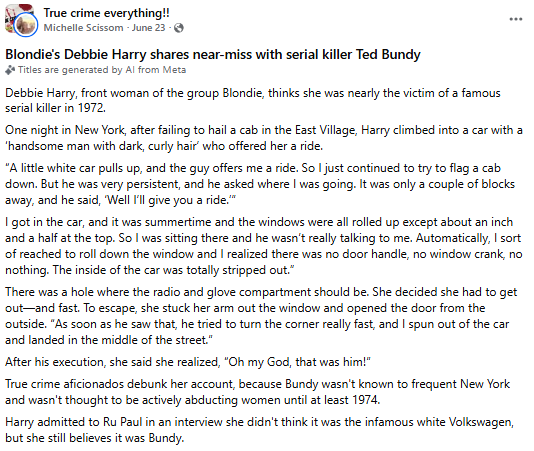
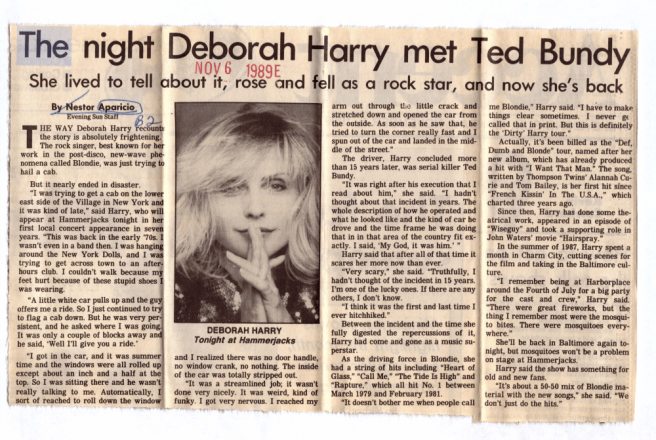
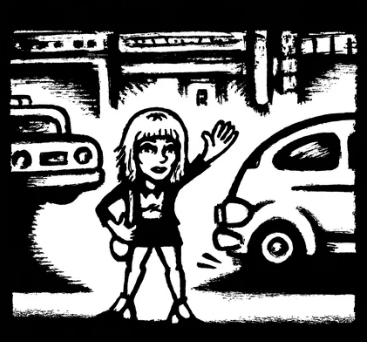
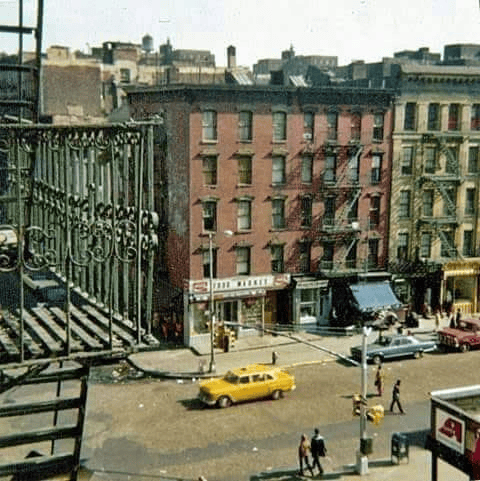
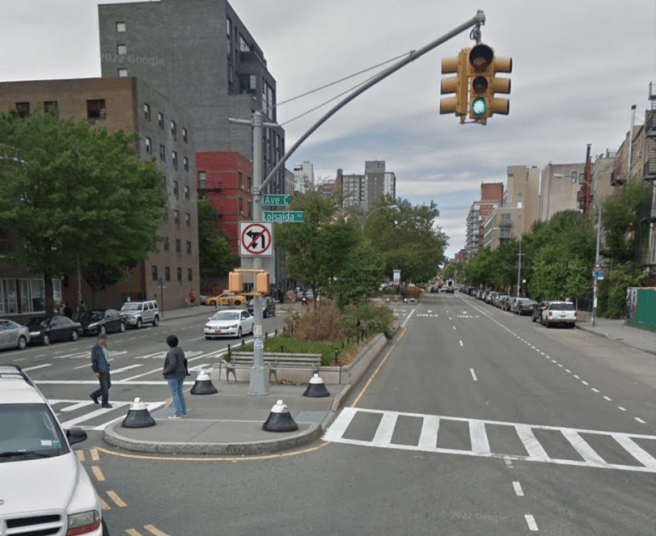
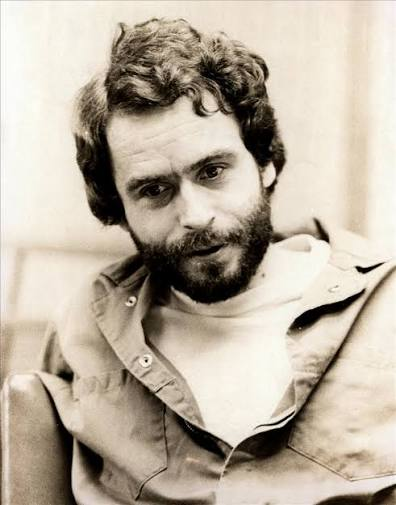
Beauty and the Beast, Blondie and Bundy: in a 1989 newspaper article, Harry recounted for the first time the details of what happened with her alleged encounter with Ted Bundy, after she had seen a photograph from a magazine article about him in the news (after he weas executed) and recognized him as a man she had once encountered sometime in the early 1970’s (she originally referred to the event as taking place ‘in the early 70s’, then specifically in 1972): ‘I was trying to get across town to an after-hours club, and a little white car pulls up, and the guy offers me a ride. So, I just continued to try and flag a cab down. But he was very persistent, and he asked me where I was going. It was only a couple of blocks away, and he said, ‘well I’ll give you a ride.’’ Harry clarified that the driver was a well-dressed man with ‘with gorgeous, curly dark hair’ and she was only looking for a ride because after a night out, her shoes made it difficult to walk: ‘I had on max platforms … max! I was way over by Avenue C and Houston. In those days, there was broken glass everywhere. I couldn’t take my shoes off to walk. I tried, that was impossible. So, I kept trying to get a cab.’
She went on to say that she ‘got in the car, and it was summertime and the windows were all rolled up except about an inch and a half at the top. So I was sitting there and he wasn’t really talking to me. Automatically, I sort of reached to roll down the window and I realized there was no door handle, no window crank, no nothing. The inside of the car was totally stripped out.’ Harry also said the man had a distinct, putrid, terrible smell, and that there was a hole where the radio and glove compartment box should have been, and she immediately felt unsafe and realized she needed to get out of there: to escape, she thrust her arm out of the window and tried to open the door using the exterior handle. When the driver noticed what she was doing, he swerved sharply around a corner, which caused the door to fly open, casting Harry out into the middle of the street: ‘As soon as he saw that, he tried to turn the corner really fast, and I spun out of the car and landed in the middle of the street.’
Harry didn’t initially know who the driver was and later clarified that ‘it was right after his execution that I read about him. I hadn’t thought about that incident in years. The whole description of how he operated and what he looked like and the kind of car he drove and the time frame he was doing that in that area of the country fit exactly. I said, ‘My God, it was him.’’ … ‘I had not thought about that night for maybe fifteen years, it was him.’ The article additionally described his appearance, modus operandi, and his white Volkswagen Beetle, and Debbie quickly became convinced that the man who had trapped her indeed Ted Bundy.
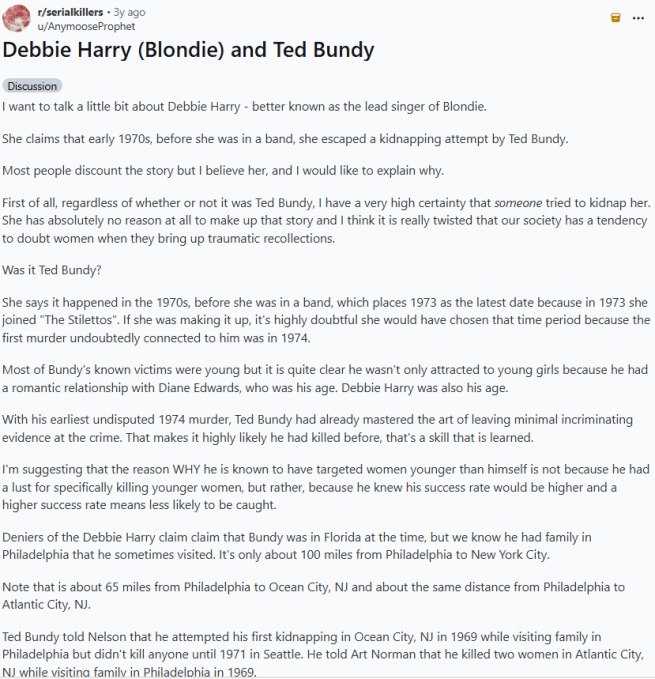
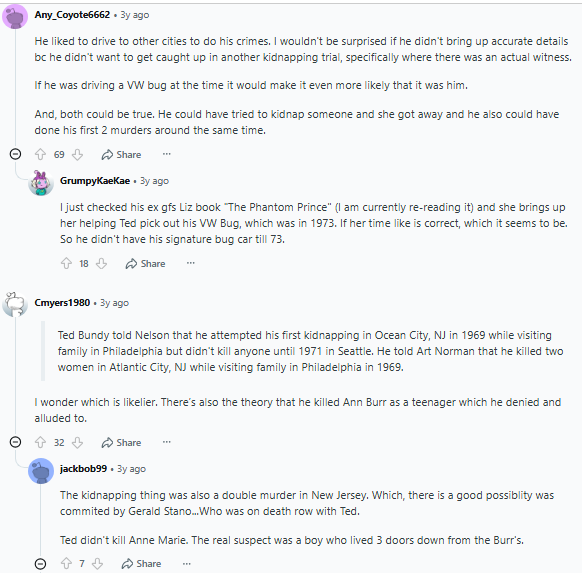
Blondie, DeBunked: from the beginning, true crime biographers, experts, and timeline records have heavily disputed Harry’s claim that she ran into Ted Bundy in NYC in the early 1970’s: according to the ‘1992 FBI Ted Bundy Multiagency Team Report,’ the killer was never placed in New York City at the time and was largely in the Pacific Northwest, and as we all know he didn’t begin abducting and killing women until (officially) the beginning of 1974 (although investigators have speculated that his crimes may have started earlier than that, as early as 1961).
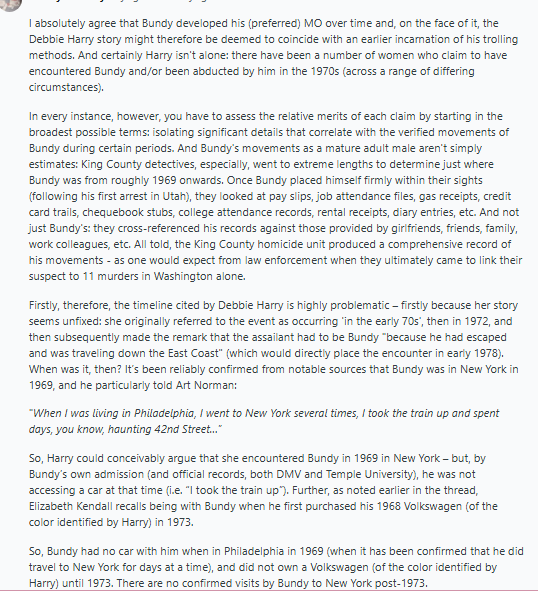
Additionally, the timeline provided by Harry is highly problematic, largely because her story seems unorganized, and unfixed: originally, she referred to the event as taking place ‘in the early 70s’, then specifically that it was in 1972; she also made the remark that the assailant had to be Bundy ‘because he had escaped and was traveling down the East Coast,’ which would have meant the encounter would have taken place sometime in early 1978.
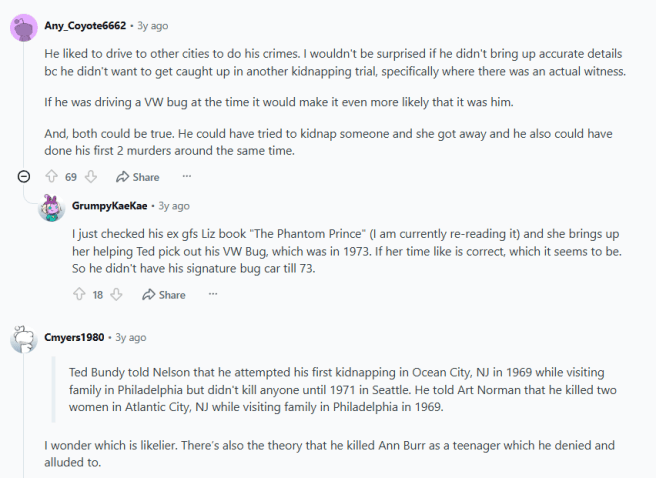
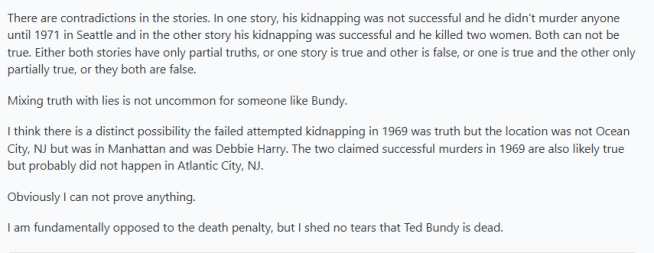
According to Dr. Art Norman (a forensic psychologist that spent around one hundred hours interviewing Bundy while he was on death row), the killer shared that he was in New York in 1969 and said: ‘when I was living in Philadelphia, I went to New York several times, I took the train up and spent days, you know, haunting 42nd Street…’ So, logically the Blondie singer could argue that she encountered Ted in 1969 in New York, not the 1970’s: but, by Ted’s own admission (and official DMV and Temple University records), he did not have a car at that time he was there.
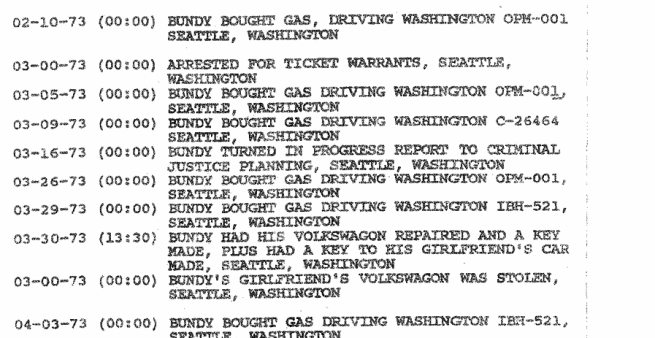
It’s (fairly) common knowledge that Ted not own a Volkswagen (of the color identified by Harry) until 1973, and I do want to mention that before he bought his infamous ‘Savannah Beige’ Beetle, he owned a different VW Bug: in April 1966 he sold his 1933 Plymouth Coupe to put money towards a pale blue 1958 VW Bug. Harry herself even admits in an episode of RuPaul’ podcast that the car she was picked up in didn’t match Bundy’s Volkswagen, saying: ‘I’m pretty sure that it wasn’t Bundy’s Volkswagen. It didn’t have the same dashboard. It was squarer.’
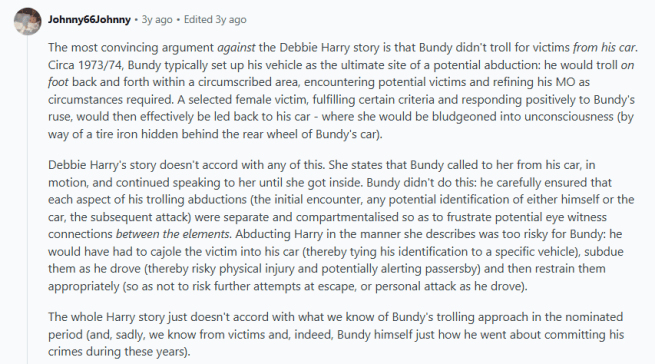
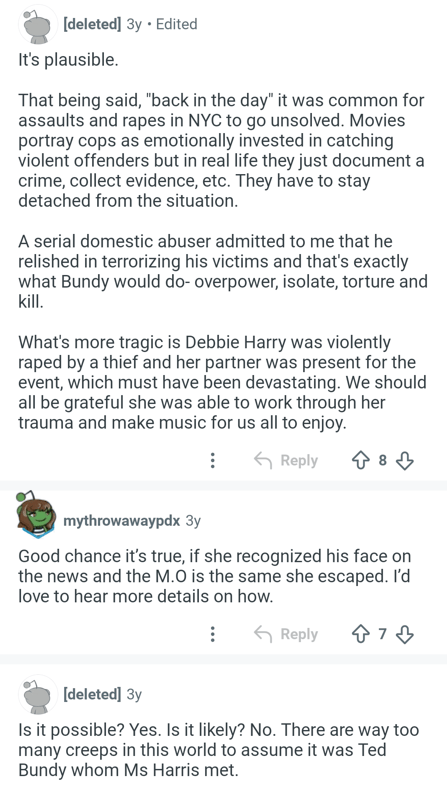
Most Bundyphiles note that Ted typically targeted women while on foot by either faking an injury or pretending to be an authority figure to lure them toward his parked vehicle, and he was not known to drive through city streets picking up hitchhikers or women attempting to hail cabs. In my opinion: I do think Debbie Harry survived a terrifying, attempted abduction by a crazed man in early 1970’s NYC, I do not think that individual was Ted Bundy.
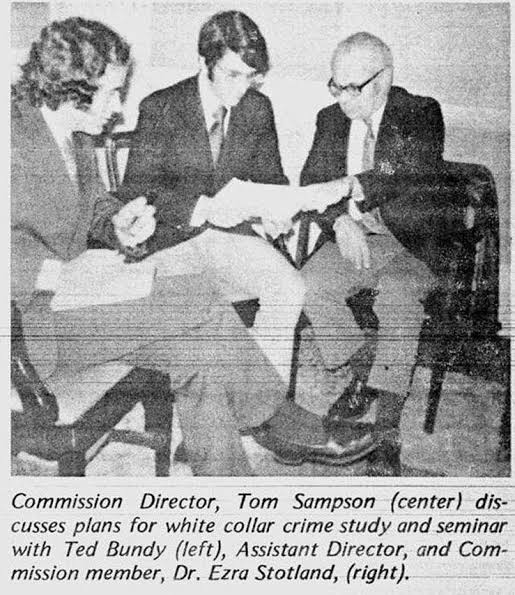
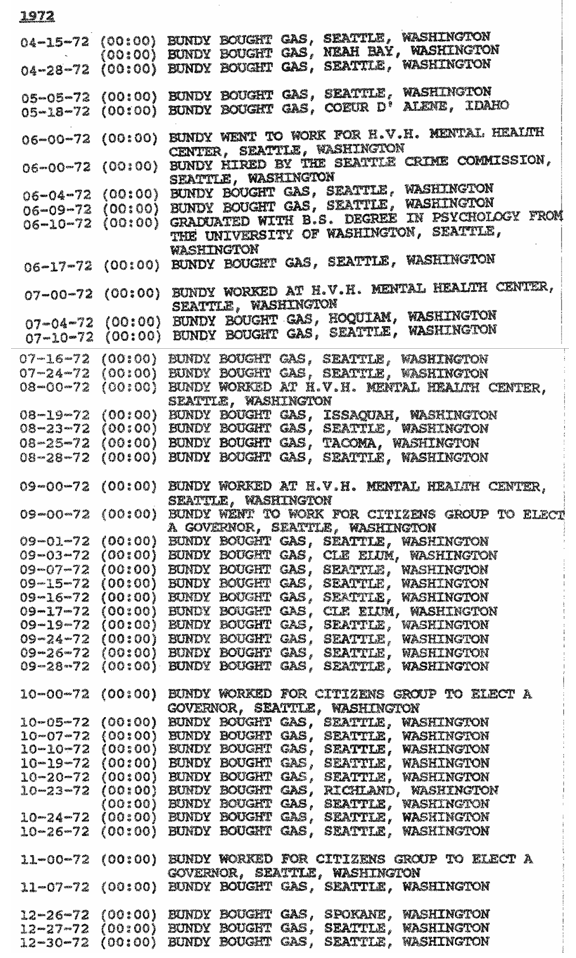
Key Activities and Location in 1972: in 1972, Ted Bundy was living in Washington state, where he graduated from the University of Washington in June with a BS degree in psychology. It was also in that year that he began working for the Seattle Crime Prevention Advisory Commission, where he helped write a rape-prevention pamphlet for women and even helped draft a state hitchhiking law (he was there from September 1972 to April 1973). In September 1972 he also became actively involved in Washington state Republican politics and started volunteering for political campaigns (such as Daniel Evans’ gubernatorial reelection) and it was around this time that he started building a respectable, charismatic public image that helped mask his underlying deviant pathologies. He also volunteered at the Seattle Crisis Clinic (he was there from September 1971 to May 1972), where he usually worked one night a week.
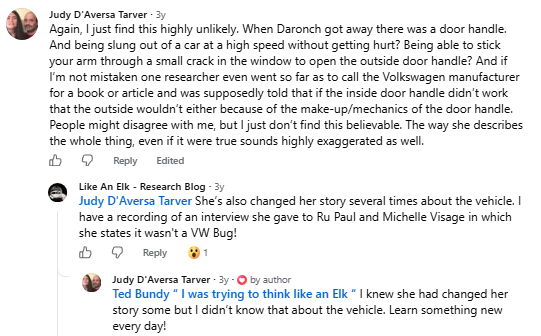
Ted’s VW Door Handle Myth: in recent years (specifically in April of 2016), a Utah pharmacist named Rhonda Stapley came forward and claimed she was a victim of Ted Bundy in October 1974: at the time she was a pharmacy student at the University of Utah, and on the afternoon of the incident she accepted a ride from a good-looking stranger (after some dental surgery) after her bus was late. In her book, ‘I Survived Ted Bundy,’ Stapley recalled that the very first thing she noticed when she got in his VW was that the inside passenger’s door handle was missing. Additionally, in 1972 (which is notably the same year Harry had her encounter) college student Sotria Kritsonis came forward and claimed she had been lured into a VW Bug by a man that matched Bundy’s description, and during an interview with KIRO-7 News on February 9, 2018, she also stated that the inside passenger door handle had been removed.
I do want to mention that when the only confirmed survivor Carol DaRonch (who Stapley had the audacity to say wasn’t ‘really assaulted’ because she ‘managed to get away) came forward about her run in with Ted on November 8, 1974, she did not report a missing door handle and told detectives she was able to open the door and get out.
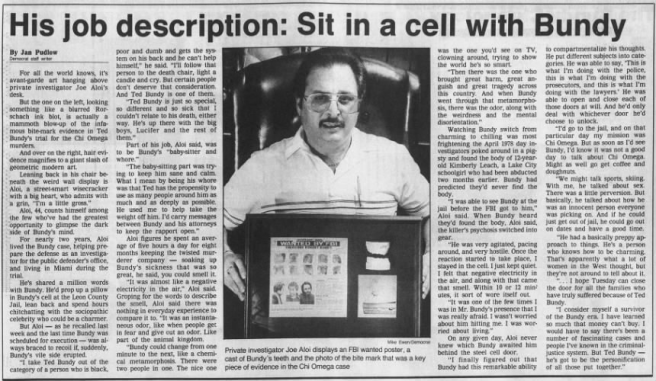
Ted Bundy’s Smell: on numerous occasions Ted Bundy was reported to emit a foul or unpleasant odor during specific moments of intense stress, rage, or crime recollection, which was reported by investigator for the defense Joe Aloi: he reported a strong, unpleasant odor accompanied by physical contortions and a sense of ‘negative electricity’ surrounding the killer when interacting with him during conversations about his violent mindset. Psychologists suggest this response was tied to the sympathetic nervous system’s ‘fight or flight’ activation, where a surge of adrenaline and norepinephrine during extreme excitement or aggression can trigger a sudden, sharp change in body odor.
Conclusion: as of October 2026 Debbie Harry is eighty-one years old and resides in the Chelsea neighborhood in New York City, where she manages her ongoing creative projects while taking care of her four beloved dogs. She is preparing for the launch of Blondie’s upcoming thirteen-track studio album, ‘High Noon’ (which is scheduled for release on February 26, 2027) which marks the band’s first major album release in nearly a decade. In an interview with Vanity Fair, Harry hinted that Blondie will most likely never perform live again following the death of longtime drummer Clem Burke. Additionally, she is slated to star as Pamela Anderson’s mother in an upcoming comedy film titled Maitreya, which is described as an indie comedy film about a rising star in the New Age healing community who takes her dysfunctional family on a chaotic trip to India.
Works Cited:
Solis, Jorge. ‘Blondie’s Debbie Harry Sets the Record Straight About Her Connection to Ted Bundy.’ (March 11, 2020). Taken October 1, 2026 from newsweek.com
‘Staff, @FarOutMagazine.’ ‘How Blondie’s Debbie Harry once Escaped Serial Killer Ted Bundy.’ (March 18, 2021). Taken October 1, 2026 from faroutmagazine.co.uk
Standen, Alex. ‘Debbie Harry still claims she escaped serial killer Ted Bundy.’ (May 30, 2019). Taken October 1, 2026 from dazeddigital.com