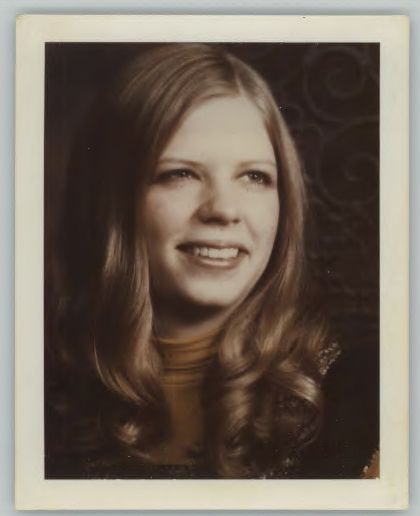
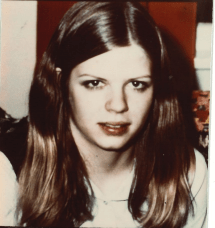
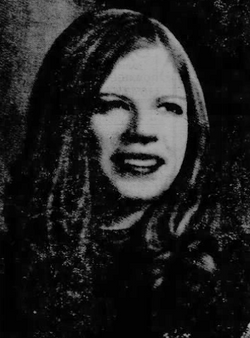
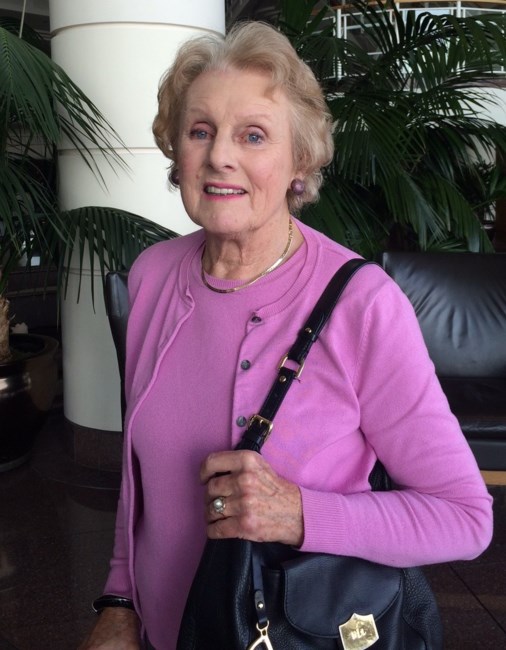
Vonnie Joyce Van Driel-Stuth.

Vonnie Joyce Van Driel* was born on April 4, 1955 in Sioux City, Iowa to Leland and Lola (nee Brandt) Van Driel. Leland Fredrick Van Driel was born on July 29, 1920 in Sioux, Iowa, and Lola June Brandt was born on a farm in Nebraska on June 17, 1932. Leland was married once before Lola to a woman named Betty, and they divorced in May 1950 due to ‘cruel and inhumane treatment.’ The couple were married on June 17, 1952 and had four daughters together: Phyllis, Vonnie, Alicia, and Shirley. They relocated to Seattle when Leland got a job at Boeing, and Mrs. Van Driel was a stay at home wife and mother, and loved caring for her family. She filed for divorce in 1970, which was granted on June 6 and got married for a second time to Kenneth J. Linstad on June 19, 1972. * I have seen the family’s last name as VanDriel as well as Van Driel.

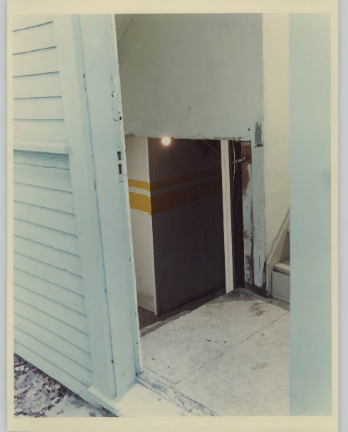
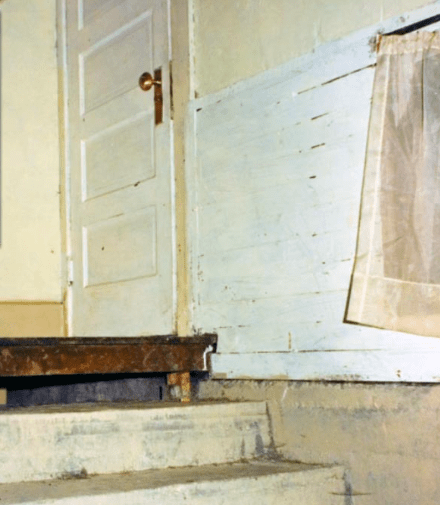
Vonnie graduated from Sealth High School in 1973, and married Todd Stuth on May 4, 1974; according to her marriage certificate, she was a housewife and volunteered at the Youth Service Center in Seattle. The newlyweds moved into a basement apartment located at 14215 24th Street South in Burien, which was roughly twenty miles away from the University of Washington. Todd Elliott Stuth was born on August 10, 1953 in Kent, WA, and graduated from Lincoln High School in 1971. At the time of his wife’s death he was a criminal law major at Highland Community College in Des Moines (which is the same school Brenda Ball attended before she dropped out), and worked the swing shift at Pacific Car & Foundry.

Late in the day on November 27, 1974 Vonnie kissed her husband goodbye in their Burien apartment and sent him off to work: twenty-one year old Todd began his day in the late afternoon and got home after midnight, and she had gotten used to spending her evenings alone. It was the evening before Thanksgiving, and the beautiful young newlywed told her family that her contribution that year was going to be a Jell-O salad, and she had just placed the ingredients on the kitchen counter and dissolved the package of gelatin when her thirteen year old sister Alicia called her at around 10:20/10:25 PM, and the two chatted for roughly a half hour.

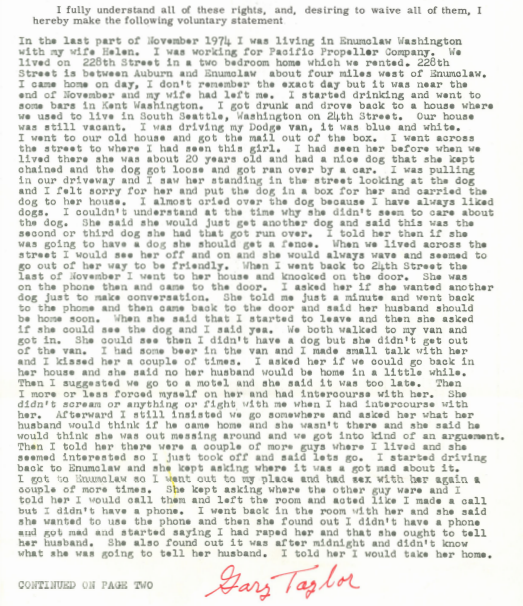
Alicia said at one point during their chat, her sister put the phone down to answer a knock at the front door, and when she came back she said that ‘a man from across the street wanted to give us a dog (as they were moving), but I told him he’d have to come back tomorrow when Todd was home.’ Around 11 PM Vonnie’s half-brother stopped over to get something out of one of the family cars parked in the driveway: after looking in the window he saw she was on the phone, and since he knew what he needed and where it was he didn’t bother her.

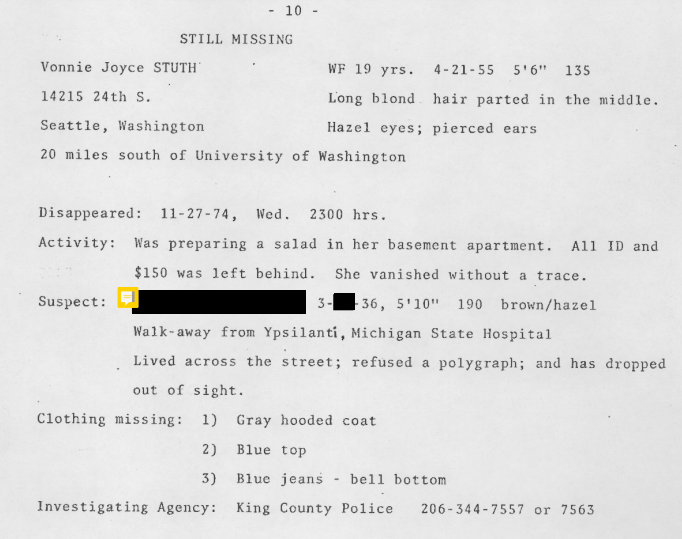
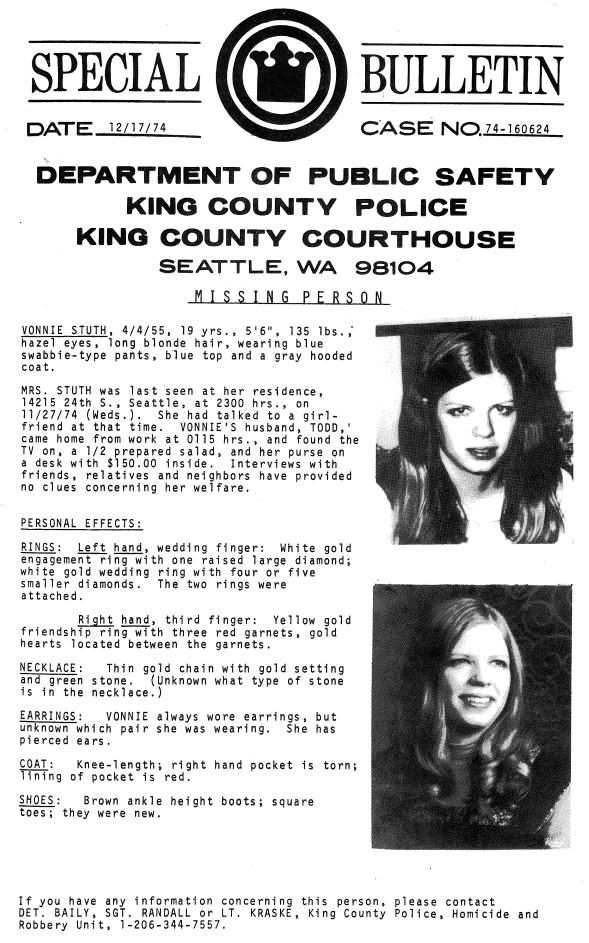
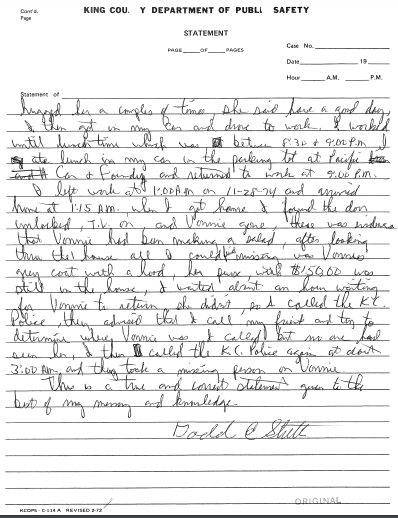
When Todd arrived home around 1:15 AM on November 28, 1974 he came home to an empty house: the front door was unlocked (which was unusual for his wife), the TV was on, and all of the ingredients for the Jello-O salad were left out on the kitchen counter. All of his wife’s belongings were present and accounted for, and her keys, drivers license, cigarettes, and $150 were found in her purse, which was left behind on the counter. Vonnie left no note, and missing from her wardrobe was a blue shirt, a pair of bell-bottoms, and her grey-hooded coat. Todd immediately started calling around to her family and friends, but they hadn’t heard from her; after an hour of waiting he called the King County Sheriff’s Department and tried to report her as missing, but was told by the dispatcher that he needed to wait the standard 48 hours until a missing person’s report could be filed.

The Van Driels/Stuth’s had a grim Thanksgiving with no news about Vonnie, and after the standard forty-eight hours passed Todd was finally able to file a report with the sheriff’s department. King County Detective Sergeant Len Randall and Detective Mike Baily almost immediately designated it as a ‘missing person’ case, and the only real lead they had to work with was ‘the man from across the street that had offered her a dog’ (and even that was vague).

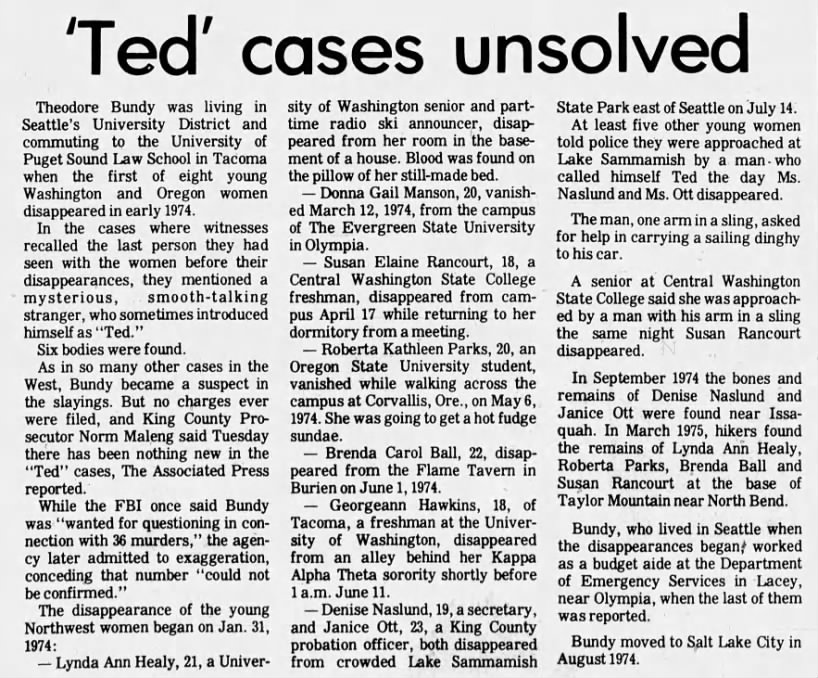
Ted Bundy: In the early part of the investigation Vonnie was thought to be a victim of the mysterious ‘Ted of the Northwest,’ and she was often included in his list of Washington state victims: in the first seven months of 1974, eight young women had vanished in and around the Seattle area, and the news had been filled with their stories. At the time Stuth went missing in November 1974 Ted was living in his first SLC apartment and was a full-time law student at the University of Utah; he was still in a relationship with Elizabeth Kloepfer and the two were trying the long distance thing (despite the fact that he was unfaithful to her on multiple occasions). He was in between jobs at the time, as he left the Department of Emergency Services in Olympia on August 28, 1974 and remained unemployed until June of the following year when he got a position as the night manager of Bailiff Hall at the University of Utah (he was fired the next month for showing up drunk).

Over time, detectives were unable to establish any connection between Stuth and Bundy, and her case helped to highlight systemic flaws in the missing-persons reporting system at the time. Strangely enough, Vonnie had ties to both of Ted’s victims that were taken from Lake Sammamish State Park on July 14, 1974: Denise Naslund was in the same graduating class as her at Sealth High School, and she worked as a volunteer case aide in the Youth Service Center at the King County Juvenile Hall, where Janice Ott had been a caseworker.

After canvassing the neighborhood, the detectives quickly learned that the man with the dog had already moved Enumclaw, which makes the situation even more unusual since he no longer lived in the area. None of the Stuth’s neighbors recalled talking to Vonnie on the evening of November 27th, but one of them told investigators that he had seen a former resident’s 1972 Dodge van parked in the driveway of the home they had once rented, but ‘it was only there for 10 or 15 minutes.’

The detectives searched the abandoned home, and went through a ‘small mountain’ of trash that had been left behind by the former tenants and found a large number of torn up pictures; when reassembled one of them was of a beautiful, dark haired woman dressed in a bikini that one of the neighbors identified as Helen, who was half of the couple that had just moved out. The investigating officers also found mail addressed to a man named ‘Gary A. Taylor,’ and they were able to trace him through a former landlord and utility bills to a quiet farm on the edge of the Muckleshoot Indian Reservation, close to Enumclaw.

The Taylors’ new neighbors said the couple had moved into the white frame house with a van and U-Haul trailer shortly before Thanksgiving; the property was located next to the Newaukun Creek and one neighbor commented that Gary seemed to do a lot of target shooting aimed at the water, but other than that they could tell detectives nothing. Officers Randall and Baily put in a few ‘information wanted’ requests on Gary A. Taylor through the National Crime Information Center (whose computer programs all data on requests, warrants and escapees), but he came back clean and with no warrants.

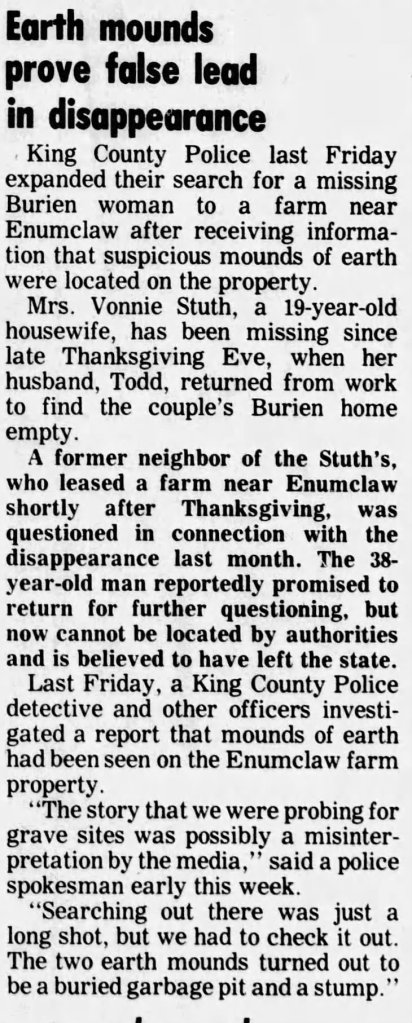
Investigators were brought to a farm in Burien that had been rented by the Taylor’s after receiving reports of ‘unusual mounds of dirt’ found on the property, and according to a King County detective, ‘the story that we were probing for grave sites was possibly a misinterpretation by the media. Searching out there was just a long shot, but we had to check it out. The two earth mounds turned out to be a buried garbage pit and a stump.’

After Detectives Baily and Randall tracked them down, the Taylor’s were brought in for questioning, but they refused to answer any questions, and Gary denied ever knowing Vonnie. The officers got him a public defender and he was booked on December 6, 1974 but was released after a few hours, as their ‘gut feeling’ to a suspect’s guilt had no legal clout, and they had no body, no proof of a crime, and no lawful reason to hold Taylor. He promised King County Sheriff’s that he would come in on Monday, December 9, 1974 for another conversation (and a polygraph), but he never showed up.

After the Taylor’s skipped town detectives searched their residence and the surrounding property: there were many outbuildings, sheds, and lean-to’s where they could have left a body that were all hidden by trees and underbrush. Directly behind the house, the land fell away to the Newaukum Creek, which was immediately dragged for a body but with no luck, and because it was the middle of winter the ground was frozen solid, and short of digging up the entire three acres of property, there was no way to establish that any remains had been buried there; additionally, they found shell casings in one of the buildings next to the main house.

Detectives Randall and Baily tracked the Taylors to Portland and learned that Helen had rented an apartment in her name from December 6 to the 16th, but by the time they learned this, the couple had already left and their van was found abandoned. When the vehicle was processed for evidence, forensic experts found a long blonde hair much like Vonnie Stuth’s, which meant it was ‘probable’ she had been in the vehicle at one point in time… but when? It was rumored that Gary Taylor was to have left Portland driving a Ford Pinto, and he was also sighted in several small Oregon towns (alone).

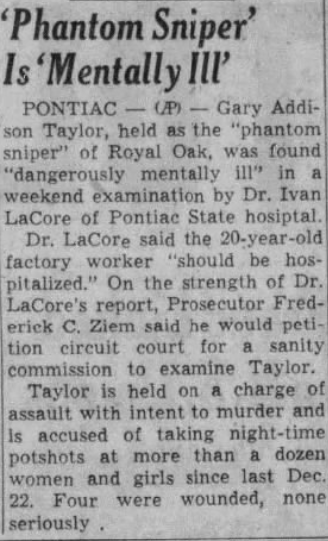
Gary Addison Taylor was born in Howell, Michigan in March 1936, and childhood friends recall that he was a physical fitness enthusiast that had a hair-trigger temper, but was also an accomplished trumpet player. Despite his outbursts, he had no real juvenile criminal record aside from one incident in Howell when he shot out of the windows of stores along Main Street with a pellet gun. In 1951 when Gary was fifteen the family moved to St. Petersburg, where his parents managed a motel.

While in Florida, he was responsible for ‘the bus stop phantom attacks,’ where he bludgeoned about a dozen women at bus stops during the late 1940’s and early 1950’s; his standard MO involved loitering around bus terminals at night and waiting for someone that was alone to walk by, which was when he pounced and would attack them with a hammer. His first arrest took place at the age of eighteen on Christmas Eve in 1954 after he nearly beat a 39-year-old woman to death with a wrench as she got off of a bus.

Despite investigators in the Sunshine State speculating that he was responsible for seventeen additional attacks on women where the same MO had been used, he was tried on a single assault charge with intent to kill but was acquitted by a jury; he later told three Michigan psychiatrists that he ‘felt lucky’ that he didn’t kill the woman, because he ‘might have.’ After their son’s acquittal the Taylors moved to Royal Oak, Michigan in 1951, where they opened a dry goods store and Gary joined the Navy… but it wasn’t long before he fell back into his old habits and began shooting women on the streets after dark. He was dubbed the ‘Royal Oak Sniper’ and shot sixteen women, but thankfully none of his victims were fatally wounded.

Two days before Christmas in 1956, Taylor shot and wounded a teenage girl in a drive-by attack in Royal Oak, and over the next few months he shot at several more females in a similar manner but thankfully missed every target. Several witnesses came forward and told police that the sniper was driving a two-toned black-and-white ’55 Chevrolet, and after they located the vehicle the suspect led them on a high-speed chase that ended in his arrest. Upon searching the car detectives discovered a .22 rifle, and Taylor couldn’t give them any particular explanation for his actions other than he wanted to shoot women and had these urges since he was a child, saying ‘it’s a sex drive compulsion.’

During Taylor’s trial, a psychiatrist testified that he was ‘unreasonably hostile toward women, and this makes it very possible that he might very well kill a person,’ and he was declared insane and was committed to Michigan’s Ionia State Hospital; three years later was transferred to the Lafayette Clinic in Detroit. While out on a work pass to attend a welding class, he talked his way into a woman’s home then raped and robbed her; the following year while out on another furlough he threatened a rooming-house manager and her daughter with an 18-inch butcher knife. He was not held responsible for either incident and was simply sent back to Ionia.

Even though he never stopped his violence against the opposite sex and had a self-proclaimed ‘compulsion to hurt women,’ Taylor was rated by prison staff as a ‘safe bet’ for out-patient treatment ‘as long as he reports in to receive medication.’ In 1970 he was transferred to an outpatient care facility after the director of the clinic determined that Taylor ‘was no longer mentally ill and would be dangerous only if he failed to take his medication,’ and drank alcohol.

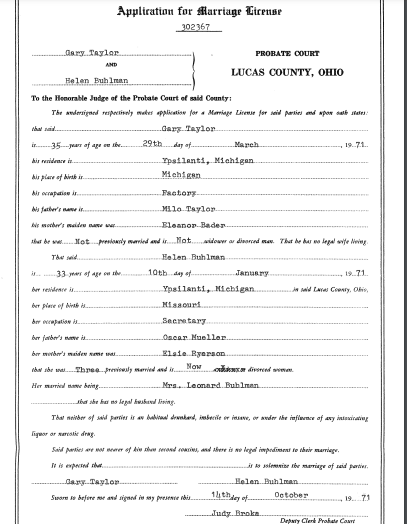
In 1972**, Taylor was released from the Michigan Center for Forensic Psychiatry in Ypsilanti thanks to a highly controversial state law: a person that had been acquitted of a crime by reason of insanity cannot be kept indefinitely in a mental institution and must be periodically declared mentally ill and deemed to be dangerous to himself or the community by a competent medical professional. Before his release, the center’s director Dr. Ames Robey diagnosed him with a character disorder (which is not a treatable mental illness), and felt that he was no longer dangerous as long as he was properly medicated and didn’t drink. Almost immediately after his release, Taylor married a secretary named Helen Buhlman, and the two moved first to Onsted, MI and later to the Seattle suburbs. **There may be some discrepancy as to exactly when he was released, as he was married on March 29, 1971 and another source said it was on November 3, 1973.

The state reported that in the two years after his release Taylor violated the conditions of his parole five times but was never recommitted by the Doctor, and after growing weary of reporting to treatment in late 1973 he completely stopped showing up altogether. When he failed to come in for scheduled check-in’s he wasn’t reported as an escaped mental patient for three months, and it wasn’t submitted into the national law enforcement communication system in Washington DC until January 13,1975. Plus, to make matters worse, when Michigan LE realized their mistake, the urgent bulletin they intended to release on November 6, 1974 never was and it slipped through the cracks.

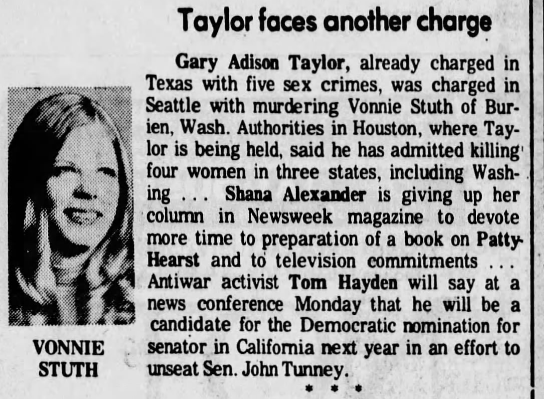
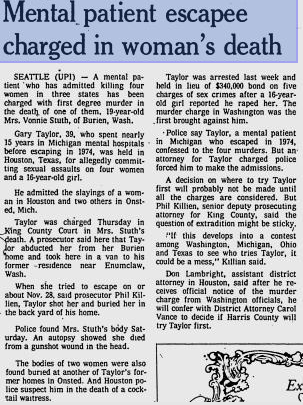
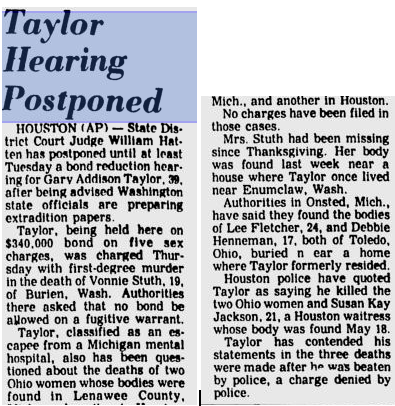
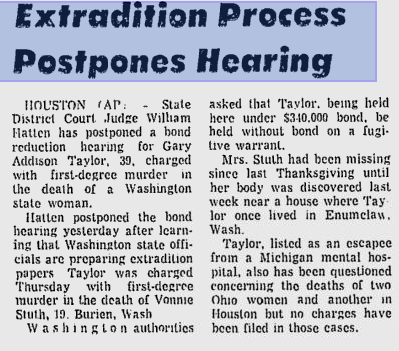
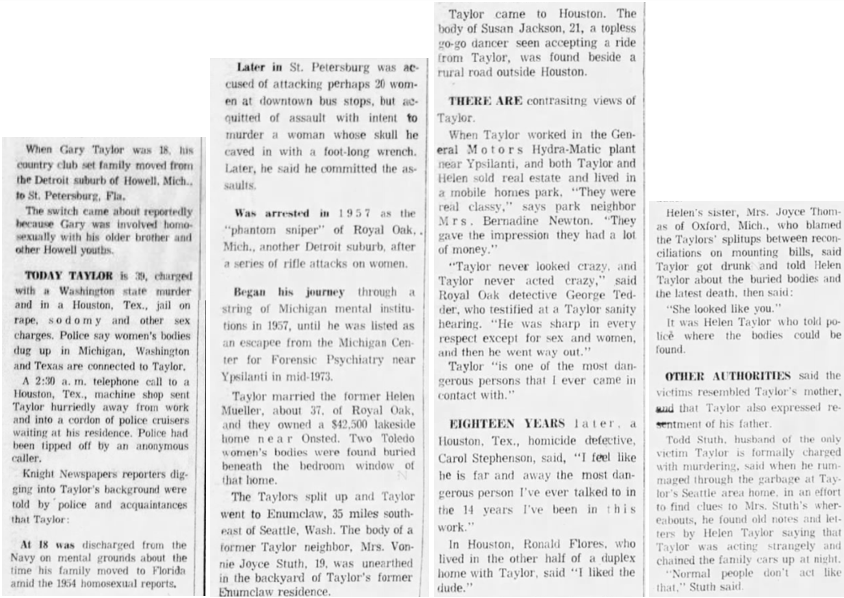
In December 1974 after separating from his wife, Taylor settled down in Houston, and Helen Taylor was last seen in January 1975 driving the couple’s Chrysler when she showed up at her FIL’s home in Tucson by herself. On May 20, 1975 Gary Addison Taylor was arrested in Houston for three counts of aggravated sexual abuse, one count of attempted aggravated rape, the rape of a 16-year-old pregnant girl, and the murder of a 21-year-old go-go dancer.

Discovery: According to an article published in The Times-Union on May 23, 1975, when news of her ex-husband’s arrest reached Helen (by that time she was in San Diego), she called Texas LE and told them that Gary had buried four bodies (three women and one man) underneath their bedroom window in a home they rented for three months in Michigan.

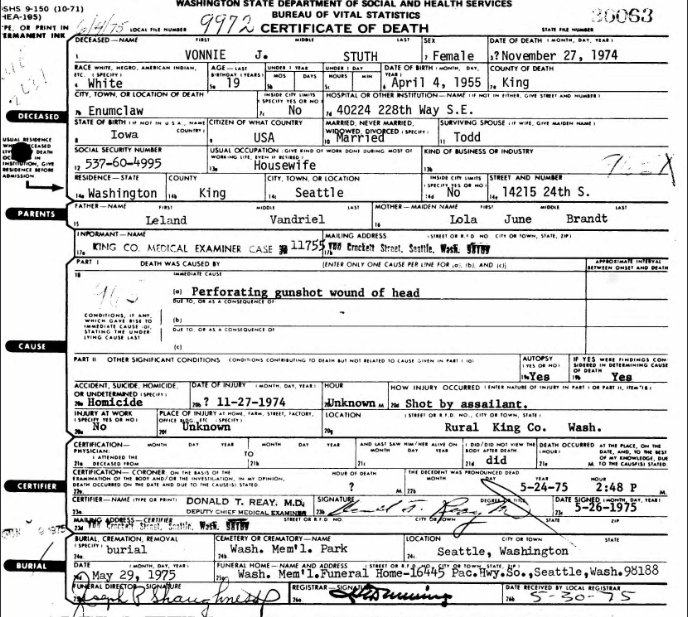
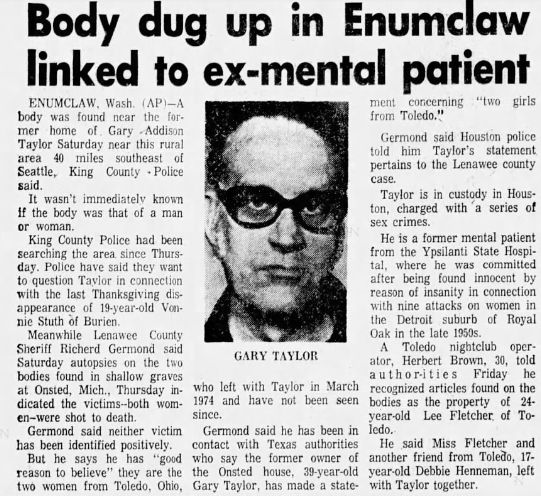
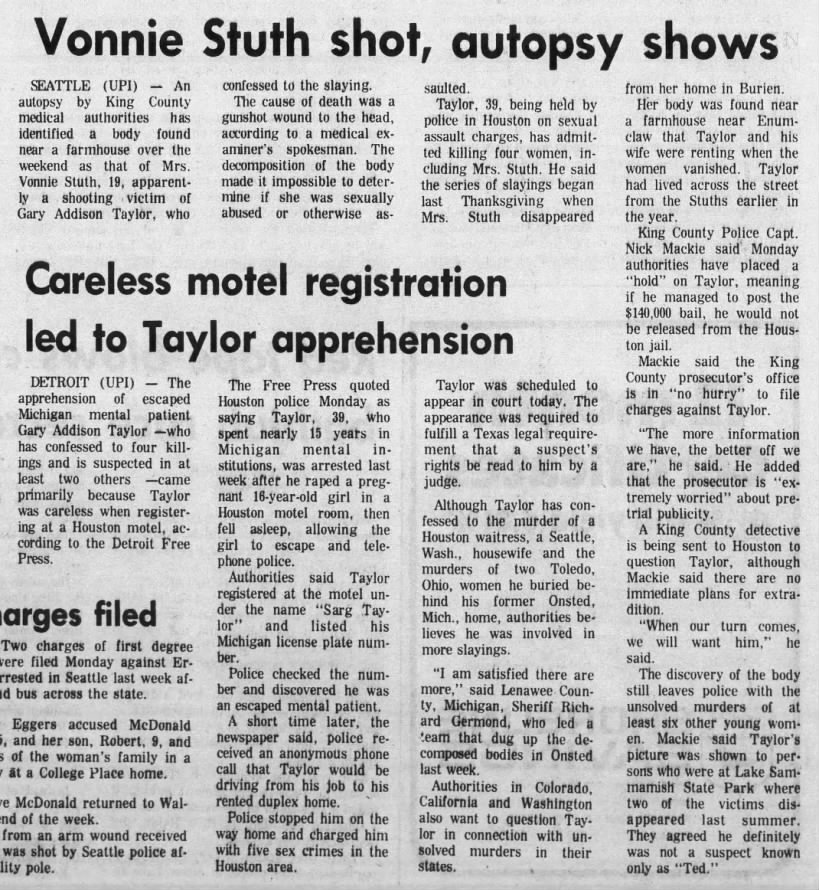
On May 18, 1975 the bodies of Vonnie Stuth and twenty-one year old Houston native Susan Jackson were found by detectives in a shallow grave along Neuwaukum Creek, roughly four to five miles northwest of Enumclaw; Stuth was ID’ed through dental records, and was still wearing the jeans, boots, and gray coat that were missing from her home the evening she disappeared. According to the King County ME, her exact cause of death is listed as a ‘perforating gunshot wound of the head,’ and detectives said she had been shot twice with a 9 mm pistol most likely during a desperate attempt to flee. They also said that due to the advanced level of decomposition it was impossible to tell if she had been sexually assaulted. Detectives said Jackson was last seen alive four days prior to the discovery leaving a Houston bar with Taylor, and her body had been bound with a dog leash and stuffed into a plastic garbage bag.

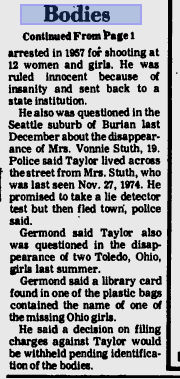
Tipped off by the Texas detectives, four days after the discovery of Stuth and Jackson investigators in Onsted discovered the remains of twenty-five year old Lee Fletcher and twenty-three year old Deborah Heneman from Toledo, wrapped in plastic bags, buried exactly where Helen said they were. After their discovery the remains were sent to the state police laboratory for analysis and autopsies were performed. Retired Sheriff Richard L. Germond said one of the victims was tied up with a piece of rope and the other had been bound with an electrical cord.

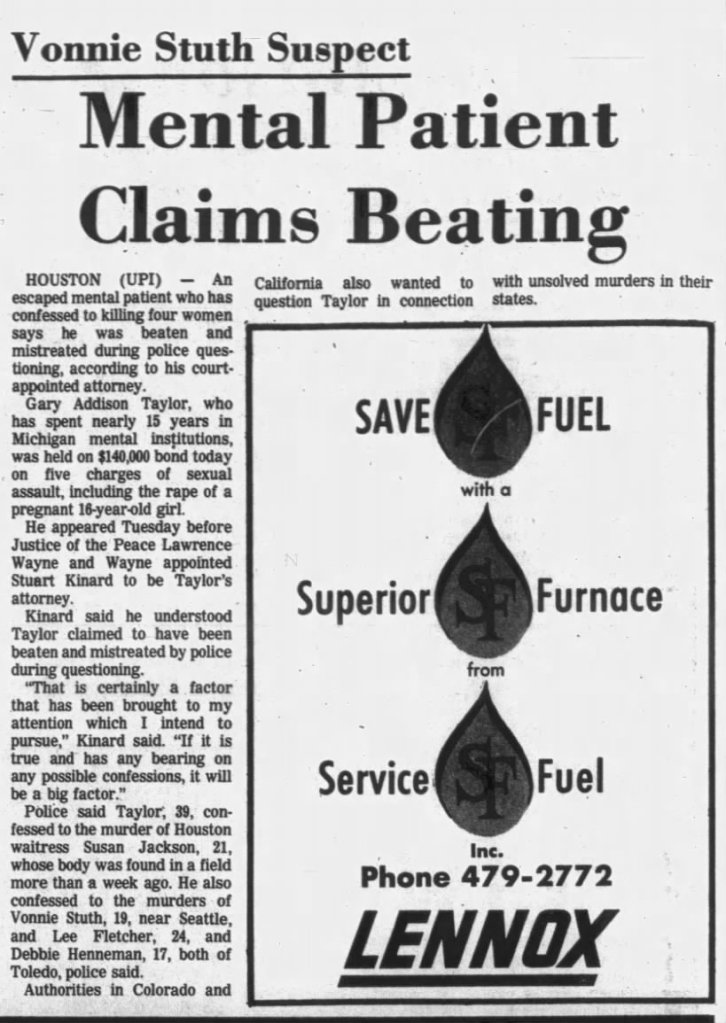
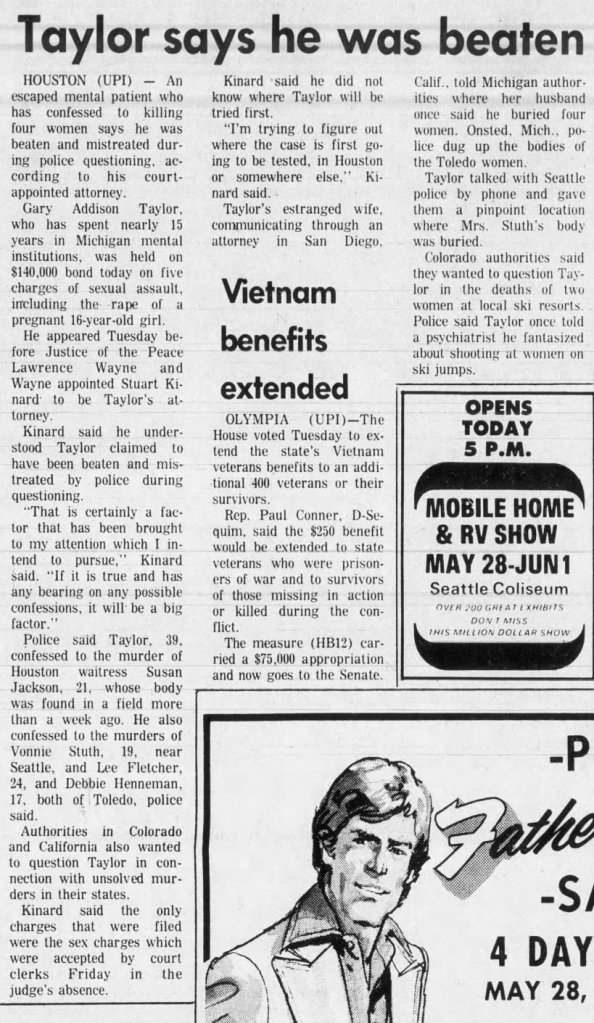
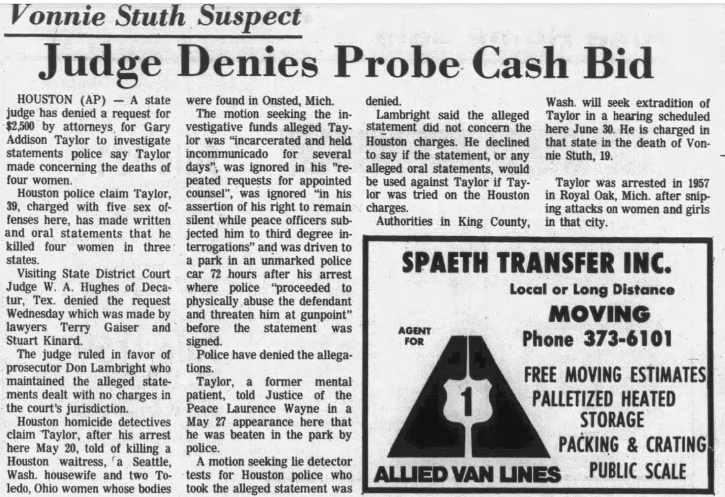
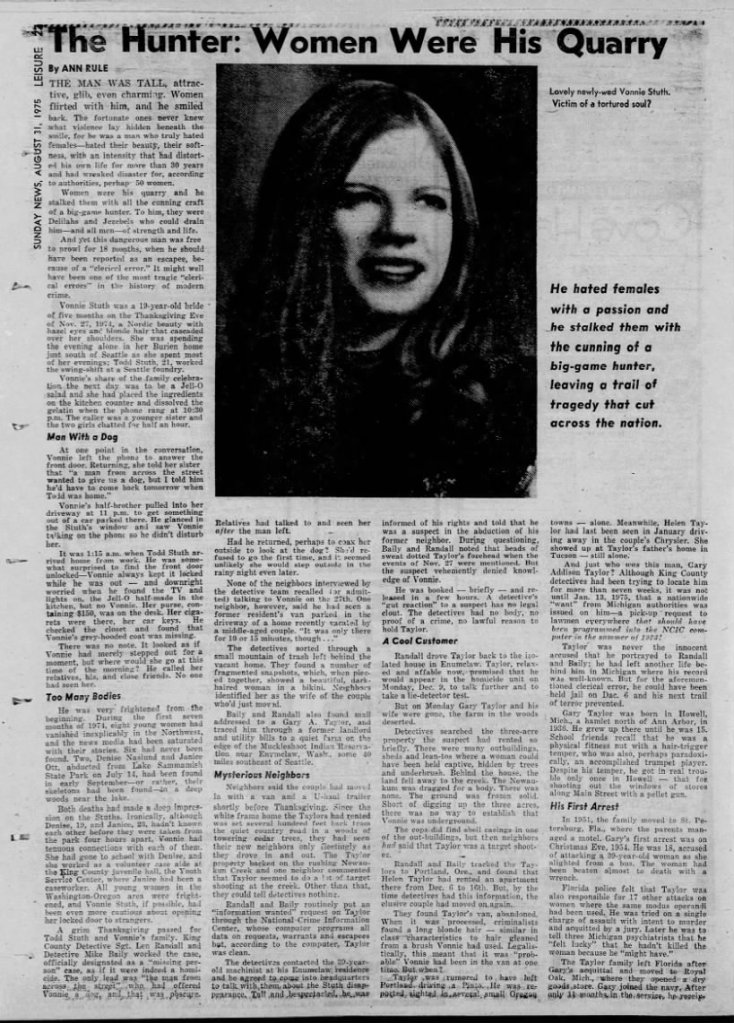
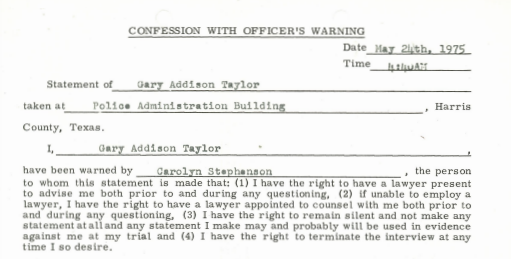
After his apprehension Taylor confessed to four murders (including Vonnie Stuth), however detectives were certain he wouldn’t have told them about any new women that they hadn’t already connected him to, meaning the actual number of his victims is unknown. After he admitted to killing Stuth, Taylor claimed that the detectives in Houston had beaten him into confessing and that there was no attorney present, which made the Texas and Michigan cases problematic. In an article published by The Daily News on August 31, 1975, Taylor was briefly a suspect in the death of Caryn Campbell (who wasn’t physically in Michigan when she disappeared but was from the state) and Julie Cunningham, who were both eventually tied to Ted Bundy. Further investigation cleared him of six additional murders in Washington state.

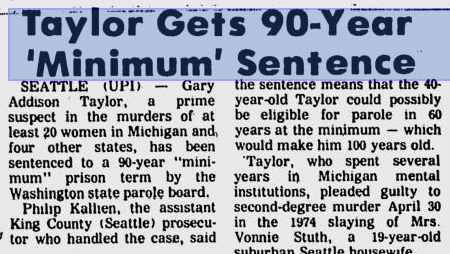
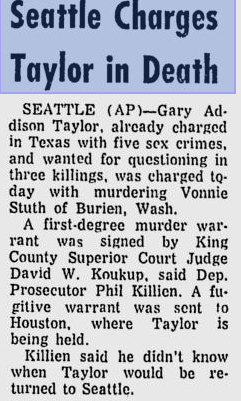
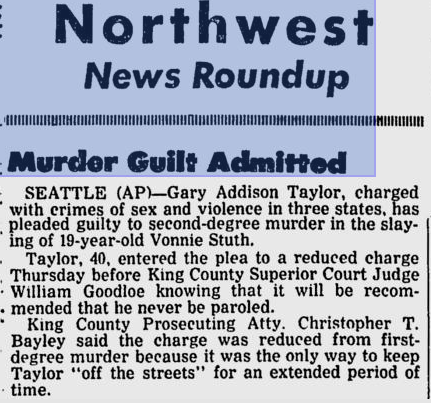
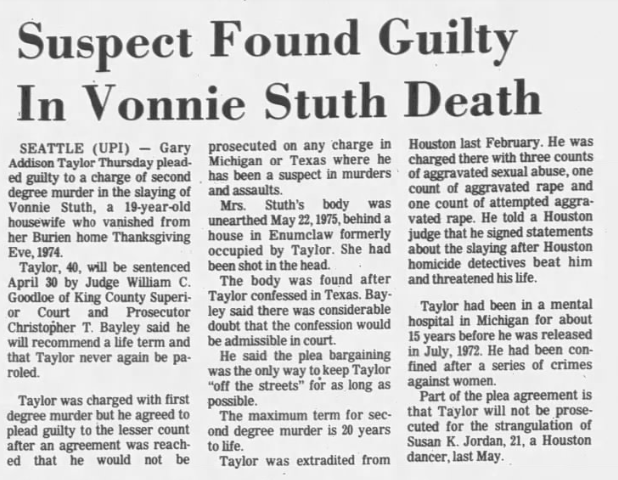
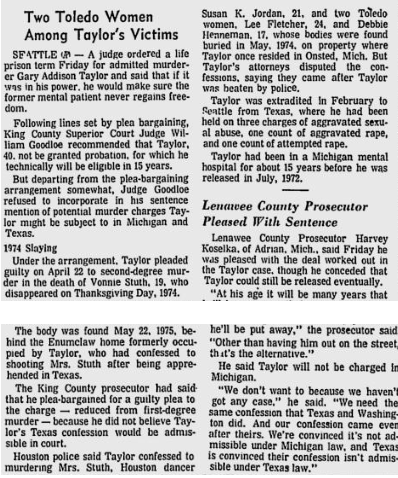
After his confession in Texas Taylor was extradited to Washington, where he was charged with first degree murder for the murder of Vonnie Stuth. On April 30, 1978 he pled guilty to second degree murder after an agreement was reached that both Texas and Michigan would not prosecute him for his crimes and he was sentenced to a ninety-year ‘minimum’ prison term by the Washington state parole board. Years after the conviction one of Vonnie’s sisters provided a victim impact statement to the Indeterminate Sentence Review Board, and Taylor’s parole was denied; his next parole date was set in 2035 when he will be 100 years old.

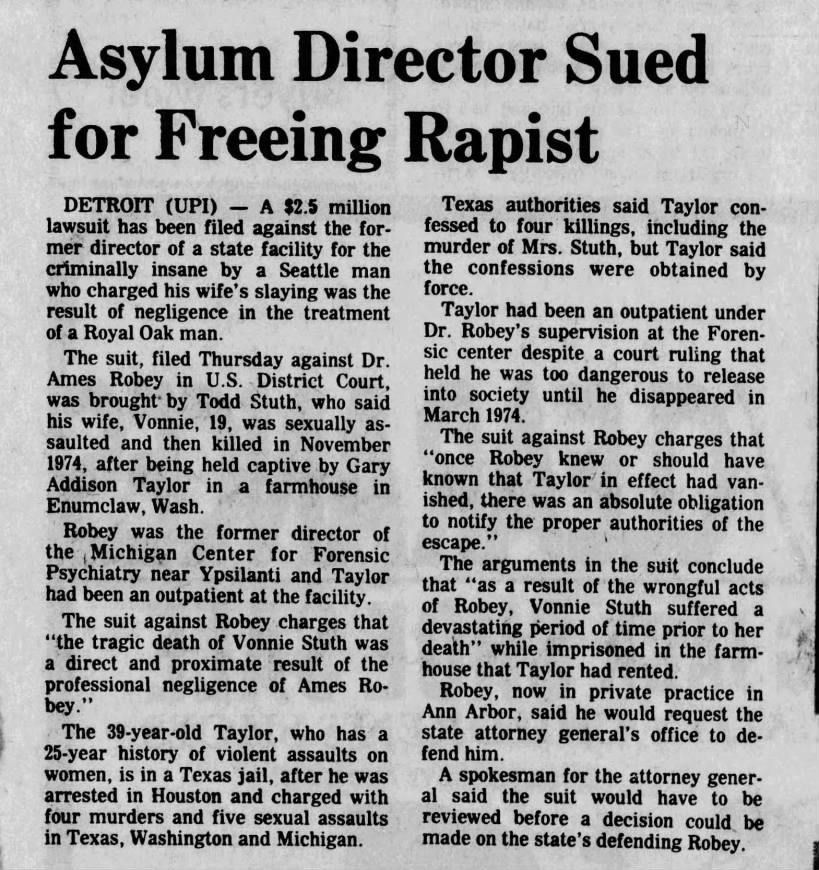
Todd Stuth: According to an article published in The Tri-City Herald on January 23, 1976, Vonnie’s widower Todd sued Gary Taylor’s former Psychiatrist Dr. Ames Robey for $2.5 million, as he was technically the one responsible for Taylor and he escaped under his watch. The former director of Michigan’s Center for Forensic Psychiatry, after the murders came to light Dr. Robey was suspended from his position and was eventually fired by the Michigan Department of Health after an inquiry into why his patient was free at the time of Stuth’s murder. In regard to the court case, Dr. Robey said in an interview: ‘I knew it was going to come.’

VSS/Victim Support Services: Lola ran a day care center out of her home and lived two blocks away from a woman named Linda Barker-Lowrance, and the two met when Linda needed someone to watch her kids when she went to PTA meetings. While waiting for answers as to what had happened to Vonnie, one evening when Linda arrived to pick up her children she said, ‘I am sorry my house is a mess but my daughter is missing.’ … ‘I wonder what the other mothers are doing?’

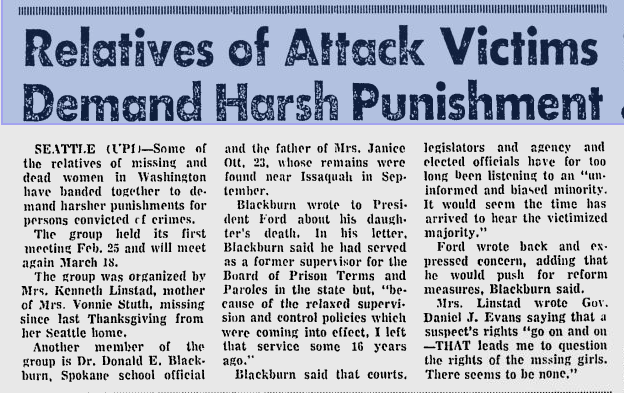
Despite over a fifteen year age gap between the two (and the fact that they hadn’t known each other for very long), Barker-Lowrance immediately responded, ‘let’s find out.’ The two women reached out to a Seattle-based newspaper reporter, who was able to give them phone numbers and addresses of several other families that had missing or murdered daughters and on February 25, 1975 thirteen families gathered in the social hall of a Catholic church in White Center. The group, officially dubbed ‘the Families and Friends of Violent Crime Victims***’ became one of the first victim advocacy groups in the US. *** It is now simply VSS.

Also a member of the group was Dr. Donald Blackburn, father of Bundy’s Lake Sammamish victim, Janice Ott. In a letter he wrote to President Ford about his daughter, Dr. Blackburn said that he had previously worked as a supervisor for the Board of Prison Terms and Paroles in Washington state, but ‘because of the relaxed supervision and control policies which were coming into effect, I left that service some sixteen years ago.’ President Ford wrote back saying he expressed concern about his daughter’s death and that he would try his hardest to push for reform.

Mrs. Linstad wrote to Bundy buddy Governor Daniel J. Evans in regards to the rights of a murder suspect, saying they ‘go on and on, that leads me to question the rights of the missing girls. There seems to be none.’ Lola’s baby now operates out of a two-story house on Colby Avenue and is staffed by eight full-time employees (including mental health professionals), and volunteers help to operate the crisis line after hours.

Mr. Van Driel died at the age of sixty-five on July 29, 1985 in Seattle, and Vonnie’s mother Lola died on October 1, 2024 in Sweet Home, Oregon. According to her obituary, at the age of eighteen she enrolled in secretarial college and after she got married and started her family they packed up and relocated to Seattle. She did a lot of fund raising for an organization called ‘The Healing Garden’ at Samaritan Hospital in Lebanon, Oregon and volunteered with a local soup kitchen and FISH food distribution pantry. She also taught Sunday school for many years and was a PTA mother and a Girl Scout Leader.

Over the course of her life Lola had two careers: she worked as a licensed daycare provider for fifteen years and after her daughters grew up she took classes to update her skills and became a family court clerk at the King County courthouse in downtown Seattle. After retiring at the age of sixty-five, she moved to Oregon to be closer to her two daughters. Sadly while in her 80’s Lola lost her ability to walk and was diagnosed with Parkinson’s disease, Meniere’s disease (hearing loss), and glaucoma (vision loss), but despite these challenges, she was always good natured and lived to be ninety-two.

Phyllis Van Driel-Clem is married and currently resides in Friday Harbor, WA; she retired from Compass Health (which is a community-based, non-profit organization in Washington that provides a wide range of behavioral health related services) in 2017. Vonnie’s sister Shirley Byrd relocated to Oregon and earned her RN from Linn-Benton Community College in June 2002; she is a passionate advocate for those struggling with substance abuse. Vonnie’s youngest sister Alicia lives in Federal Way, WA with her husband, who she has been married to since 1986. Todd Stuth remarried and lives in Kent, WA; he is currently employed as a flight instructor at Crest Airpark.

Gary Taylor is currently 89 years old and is still incarcerated in the Washington State Penitentiary in Walla Walla. Michigan investigators strongly suspect that he is also responsible for the disappearance of thirty-three year old Ann Arbor mother of three Sandra Horwath, who vanished without a trace on October 1, 1973. In 2002 detectives went to the prison Taylor was housed at and tried to speak to him about Horwath, but he refused to answer any questions.

Works Cited:
Barber, Mike, ‘Serial killers prey on ‘the less dead.’ (February 19, 2003). The Seattle Post-Intelligencer Reporter.
Gore, Donna. (March 14, 2014). ‘Two Desperate Housewives, First Support Group.’ Taken August 27, 2025 from ‘herewomentalk.com’
Hefley, Diana. (April 18, 2015). ‘For 40 years, group has been there in darkest times for crime victims.’ Taken August 9, 2025 from heraldnet.com

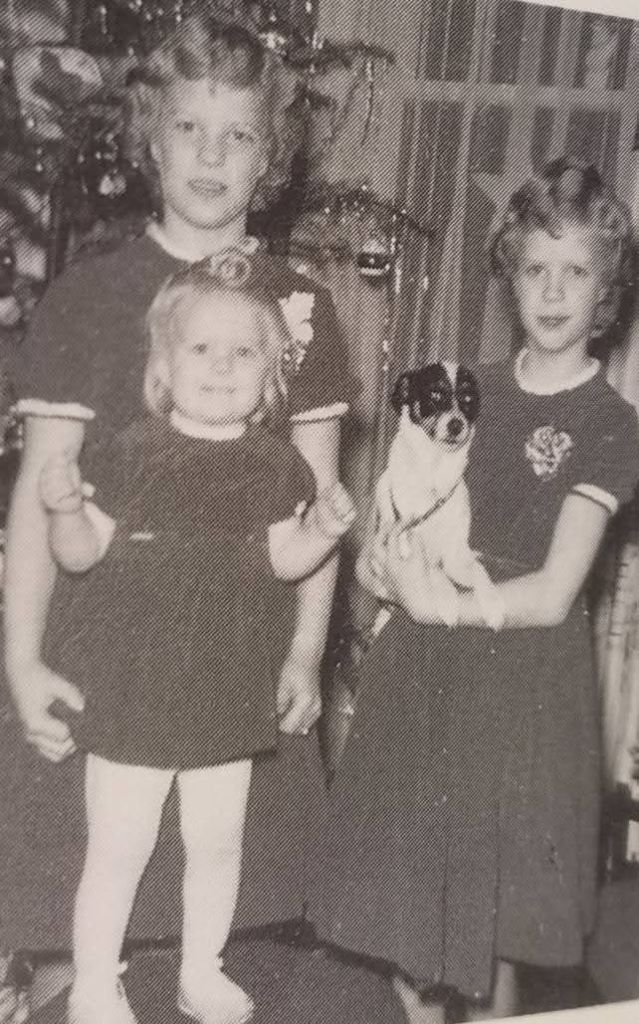
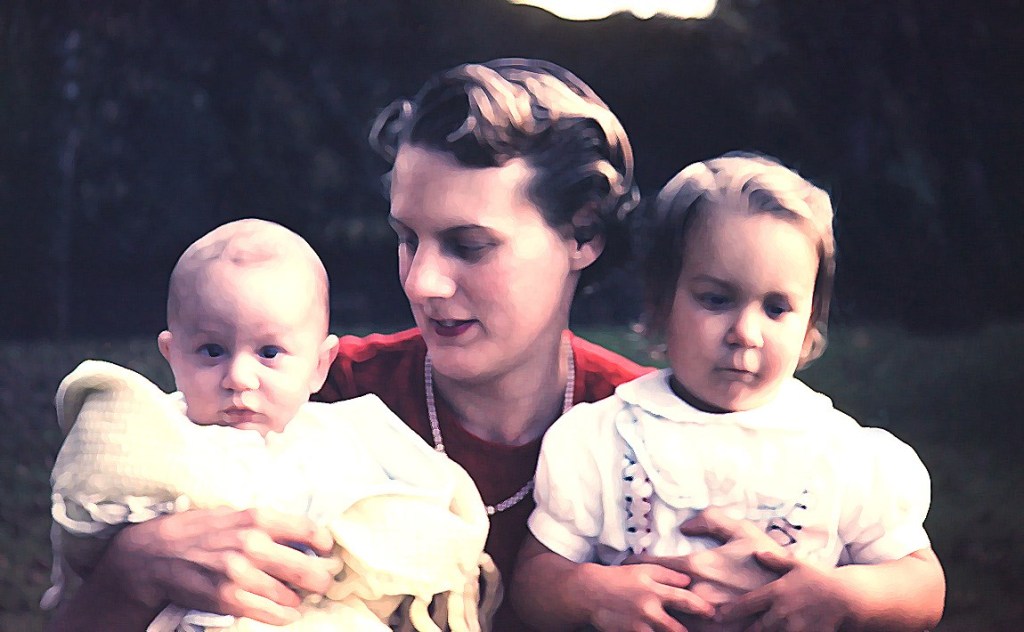
Mr. and Mrs. Van Driel and their first three daughters.
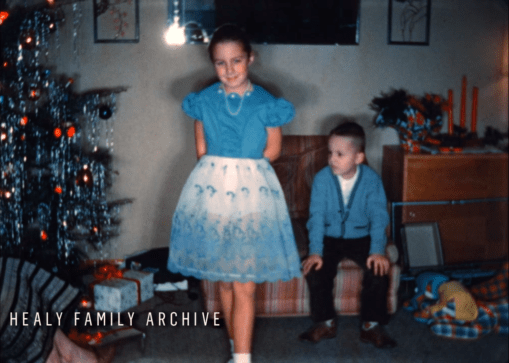
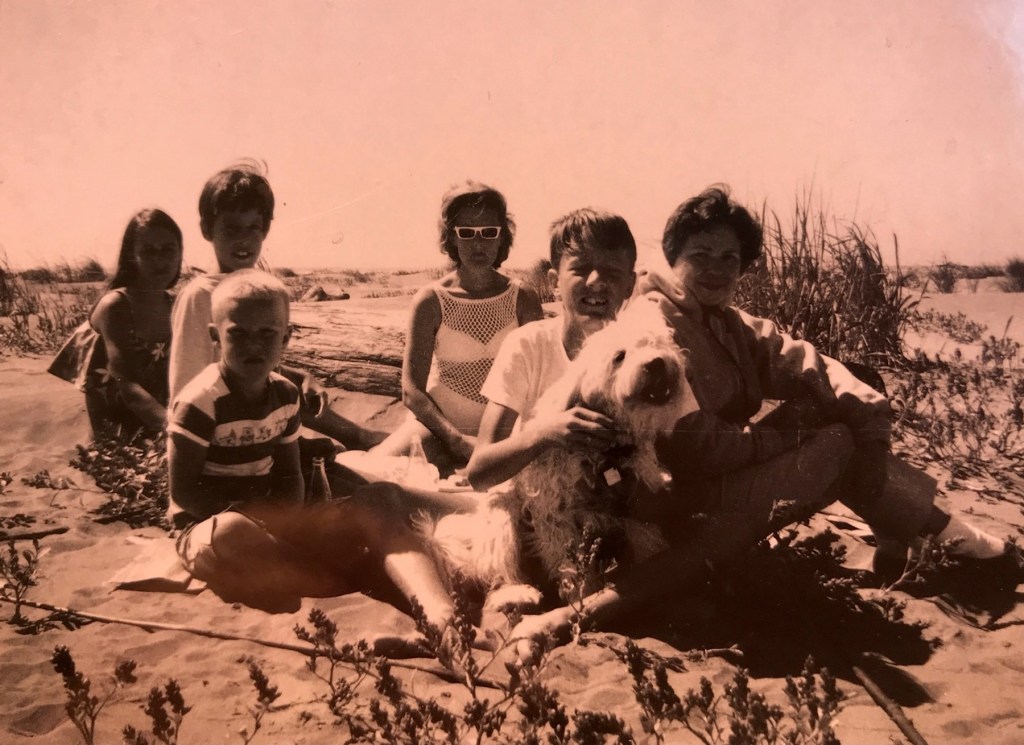
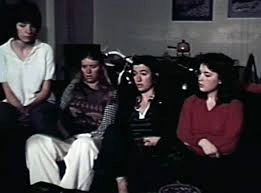
Vonnie with her sisters and the family dog.
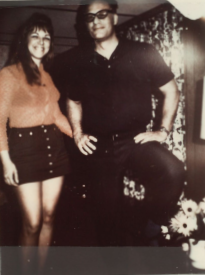
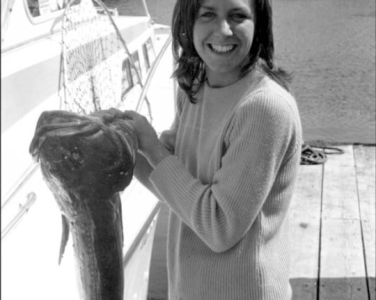
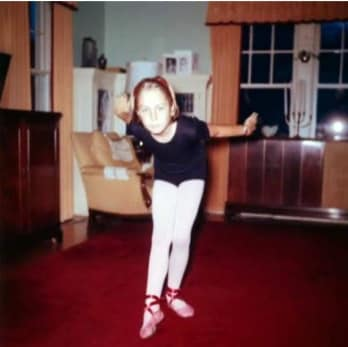
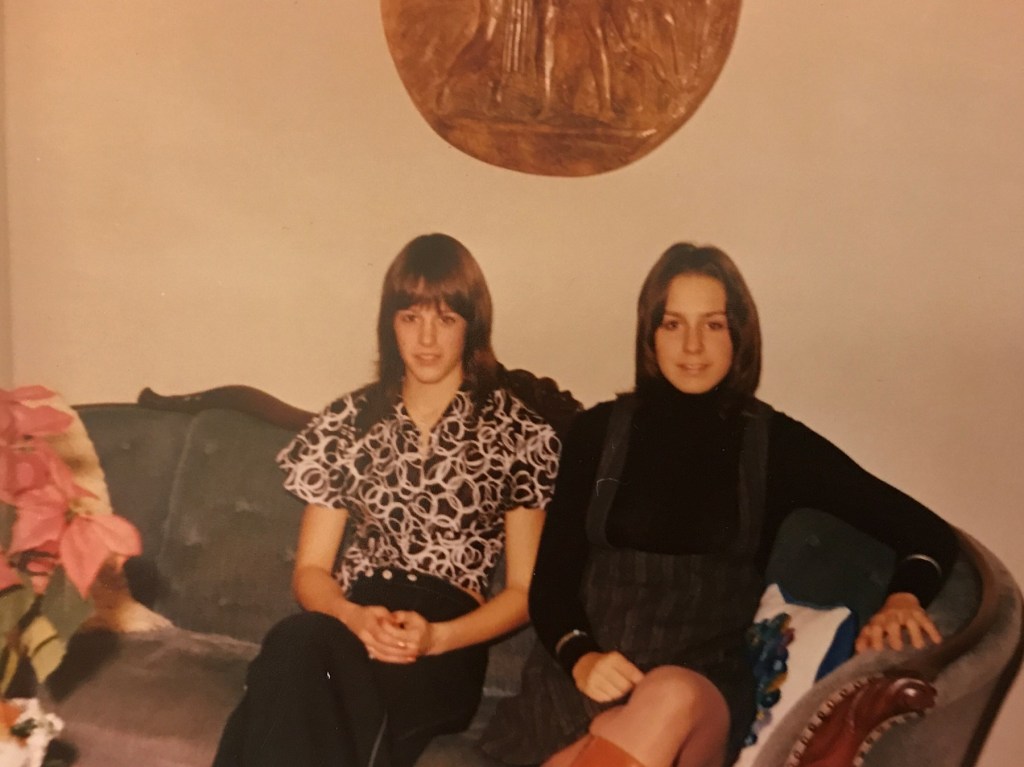
Vonnie Stuth.
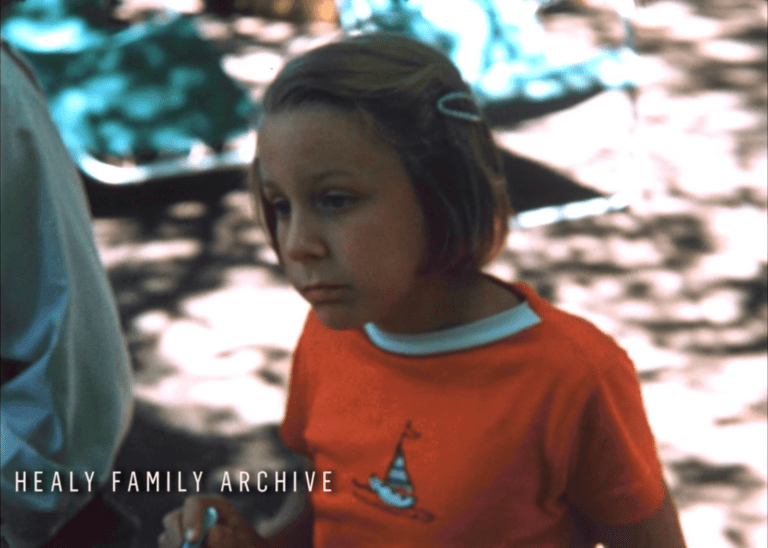
Vonnie.
The back of one of Vonnie’s pictures, courtesy of the King County Sheriff’s Department.
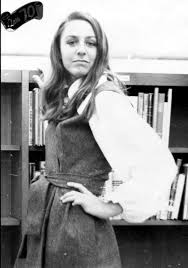
Vonnie Stuth.
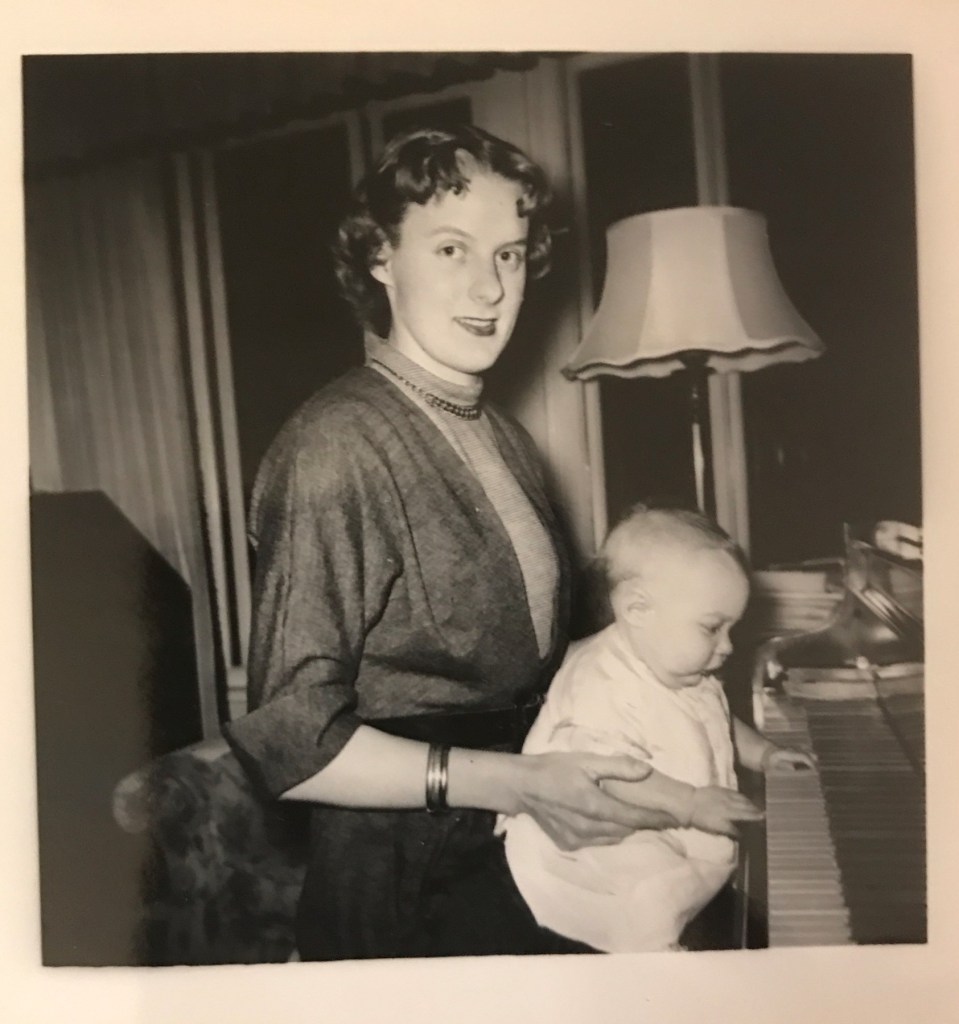
Vonnie and her mother on her wedding day.
Vonnie.
Vonnie Stuth.
Vonnie Stuth.
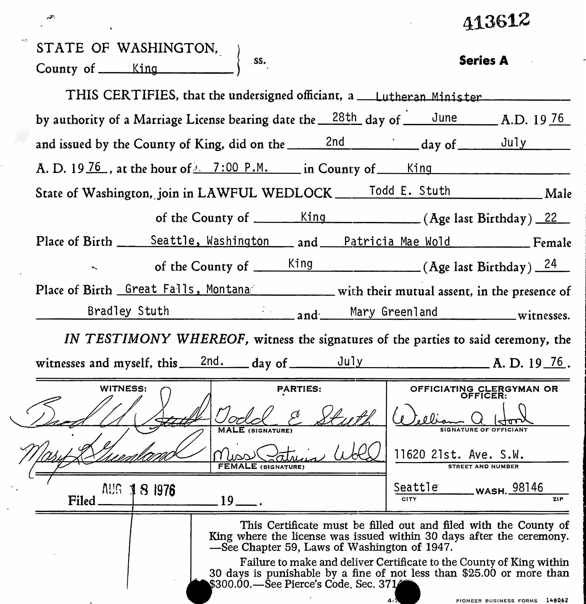
Todd and Vonnie Stuth’s marriage certificate.
Vonnie Stuth’s death certificate.
A map of Bundy’s eight Seattle victims that also includes Vonnie Stuth, photo courtesy of the King County Sheriff’s Department.
Some notes about Bundy’s Seattle victims that includes some information about Vonnie Stuth, photo courtesy of the King County Sheriff’s Department.
Some notes about Bundy’s Seattle victims that also includes some information about Vonnie Stuth, photo courtesy of the King County Sheriff’s Department.
Some notes about Vonnie Stuth, photo courtesy of the King County Sheriff’s Department.
Vonnie Stuth’s missing persons flyer.
The grave stone for Vonnie Stuth.
Vonnie Stuth’s missing persons report.
Another page of Vonnie Stuth’s missing persons report.
The first page of Todd Stuth’s statement in relation to his wife’s disappearance.
The second page of Todd Stuth’s statement in relation to his wife’s disappearance.
The first page of Alicia Van Driel’s statement in relation to his wife’s disappearance.
The second page of Alicia Van Driel’s statement in relation to his wife’s disappearance.
The first page of Vonnie’s half-brother’s statement in relation to his wife’s disappearance.
The second page of Vonnie’s half-brother’s statement in relation to his wife’s disappearance.
A note about Vonnie Stuth being in the same graduating class as Denise Naslund.
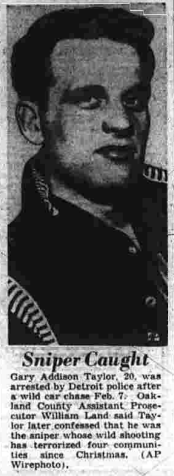
Gary Taylor after his 1957 arrest.
The Manchester Evening Hearld on February 8, 1957.
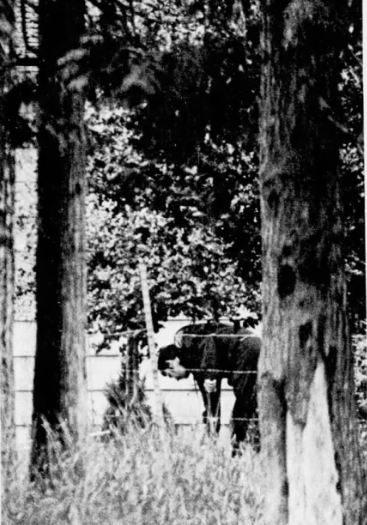
Vonnie Stuth’s body was found in a shallow grave close to this residence the Taylor’s lived in.
Another shot of the Taylor’s house.
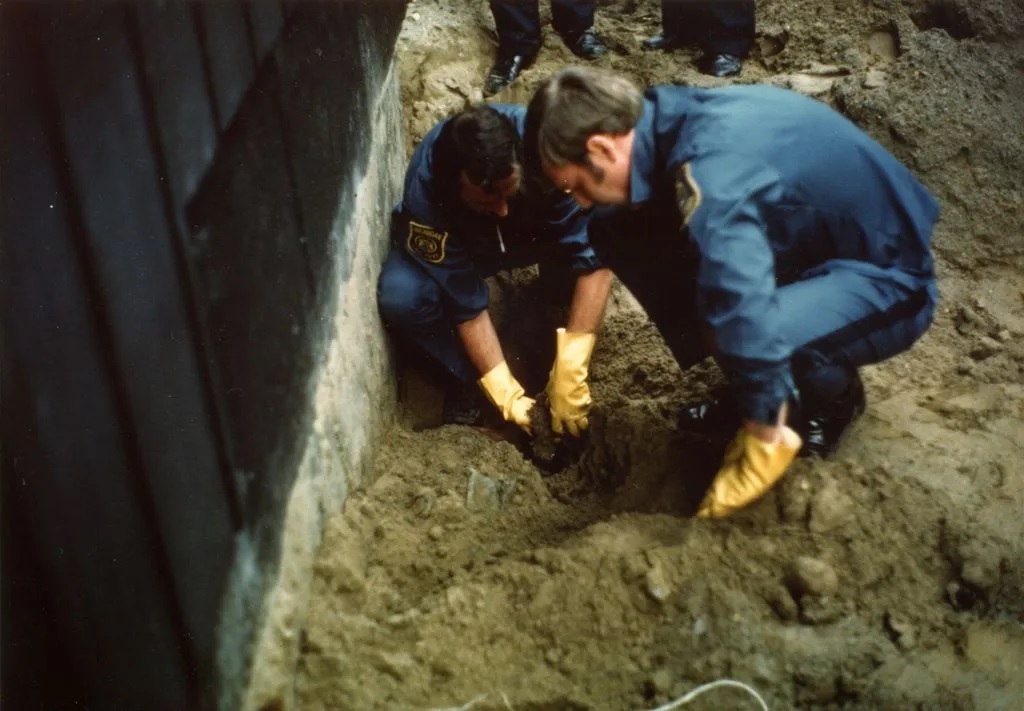
A police office searching for signs of a gave at the Taylor’s former residence.
A picture from an article related to the investigation of Gary Taylor that mentions Vonnie Stuth published in The Tri-City Herald on May 25, 1975.
Investigators digging up Loch Ness looking for victims of Gary Taylor published, photo courtesy of The Daily Telegram.
In
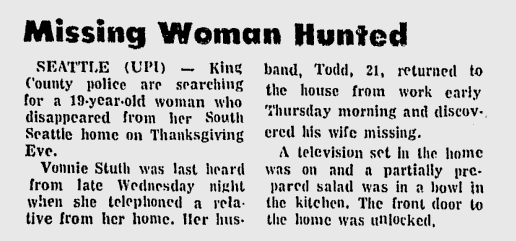
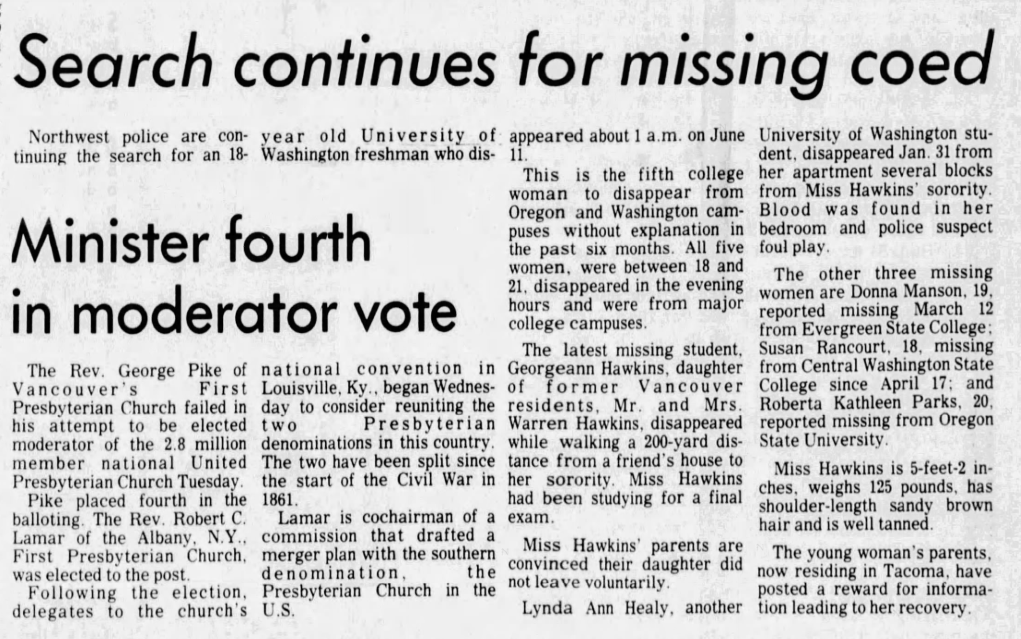
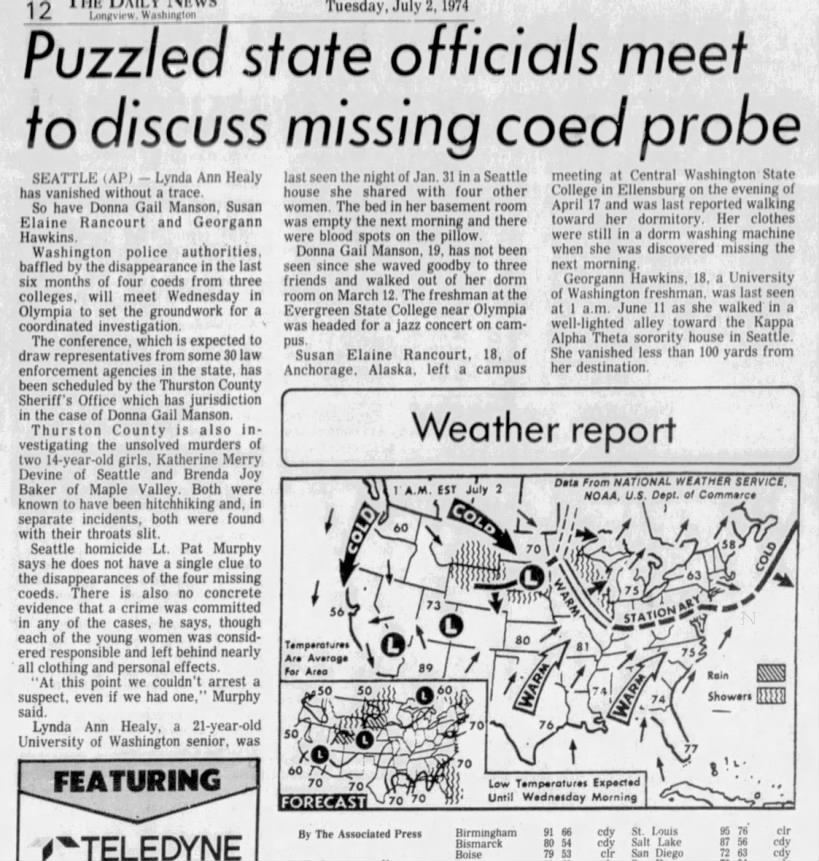
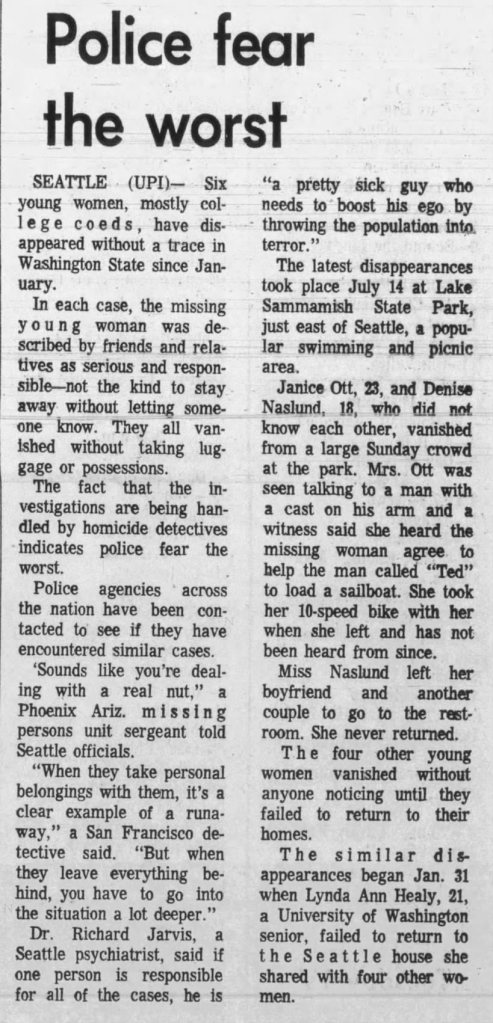
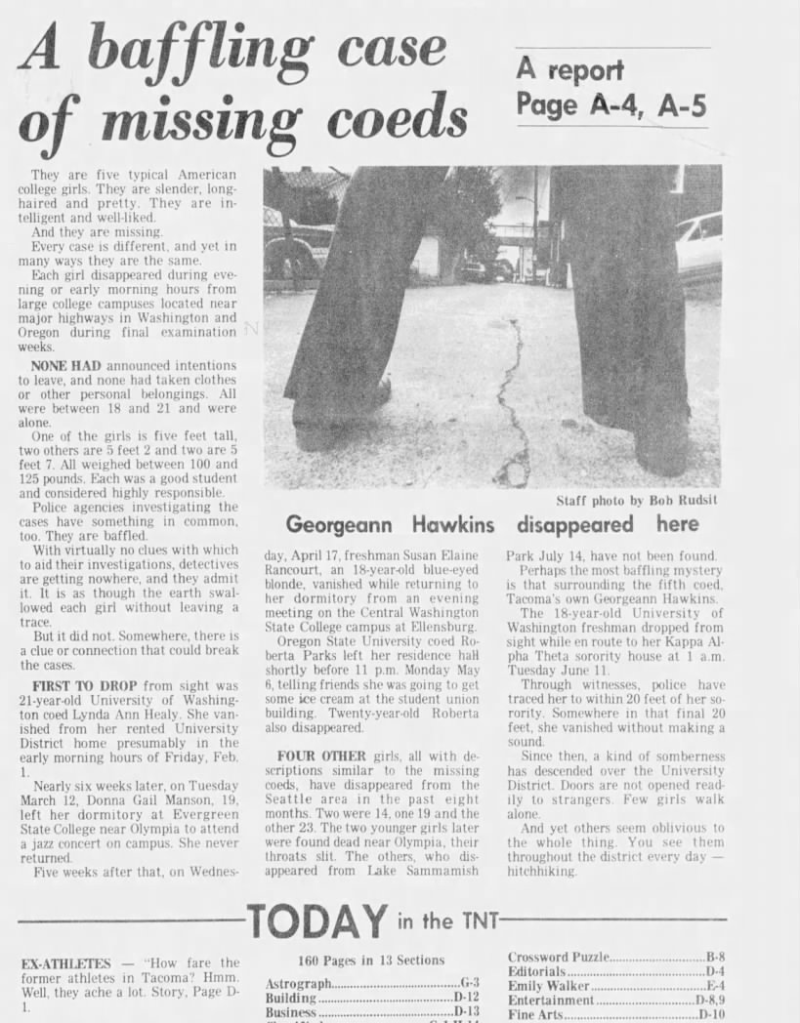
An article bout the disappearance of Vonnie Stuth published in The Spokane Chronicle on December 2, 1974.
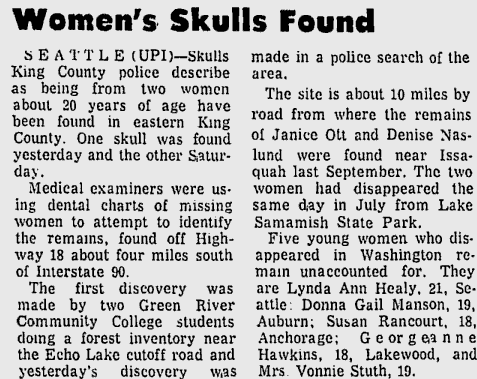
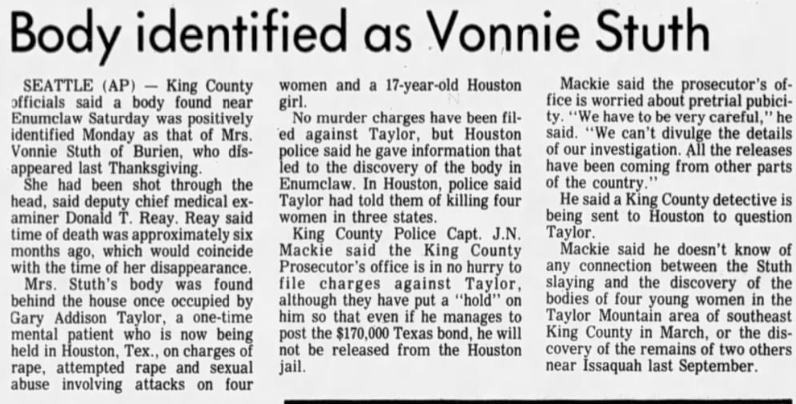
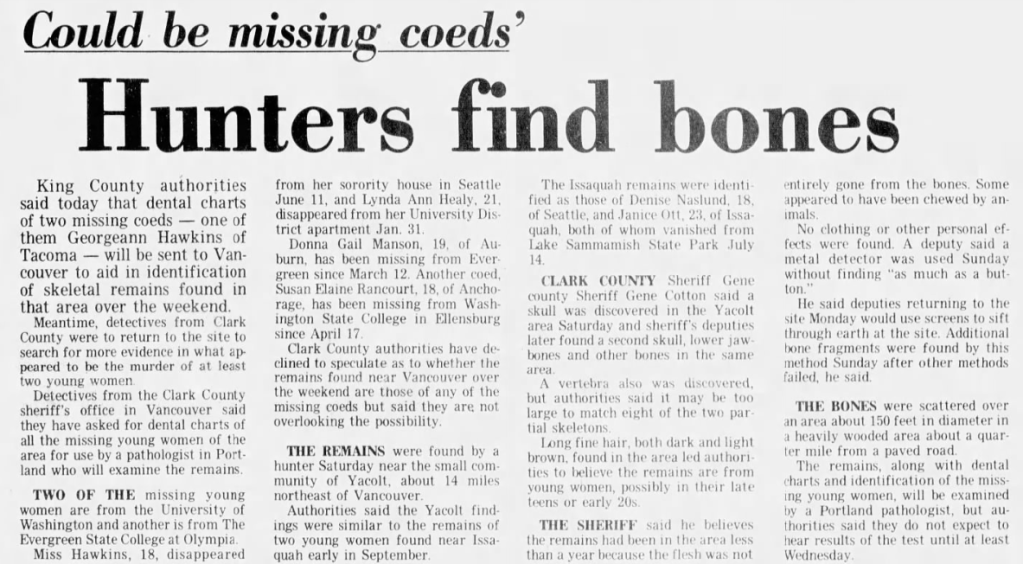
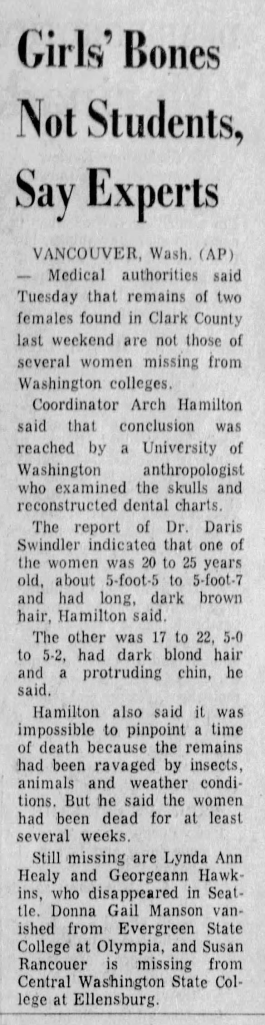
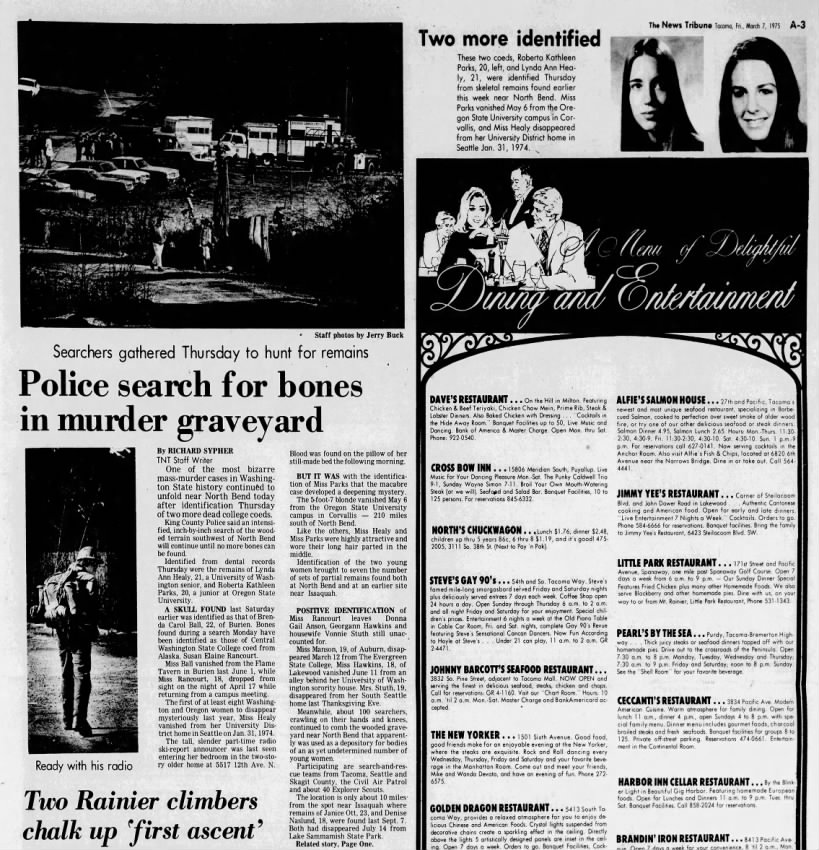
An article about the discovery of the remains of Vonnie Stuth published in The News Tribune on December 4, 1974.
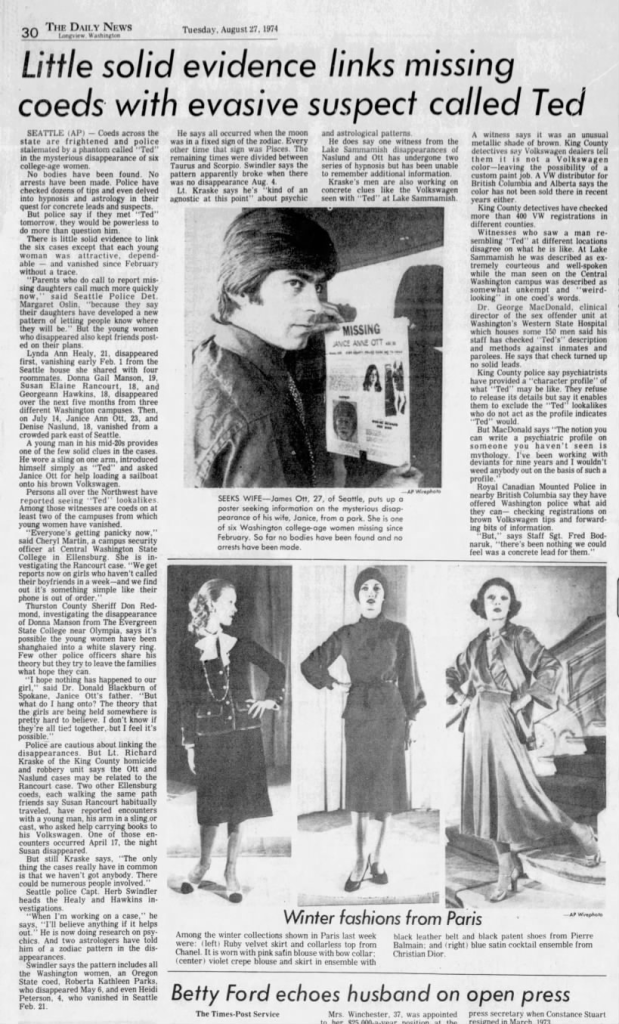
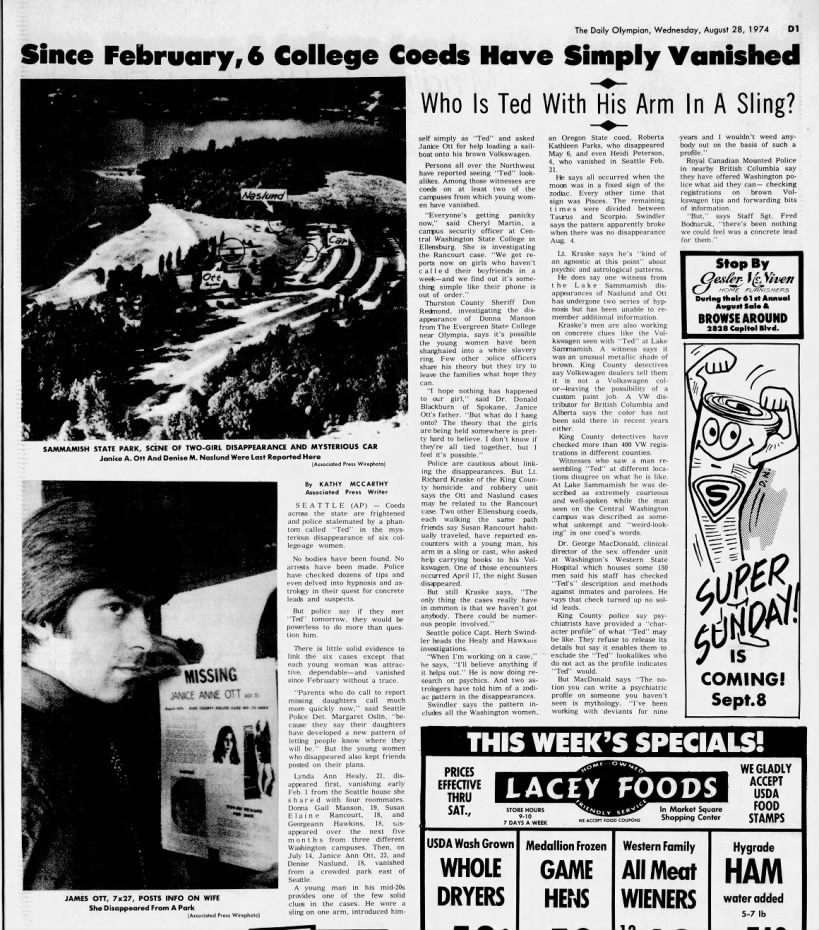
In the initial stages of Vonnie's murder investigation detectives strongly suspected she was a victim of Ted Bundy, and she was often included in his list of Washington state victims.
An article about Gary Taylor that mentions Vonnie Stuth published in The Daily Herald on January 4, 1975.
An article about Gary Addison Taylor that mentions Vonnie Stuth published in The Enumclaw Courier-Herald on January 9, 1975.
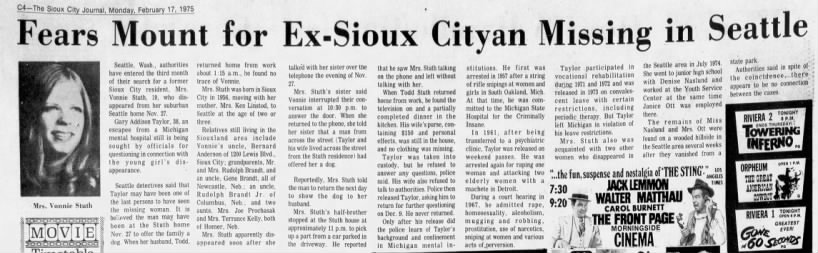
An article about the murder of Vonnie Stuth published in The Sioux City Journal on February 17, 1975.
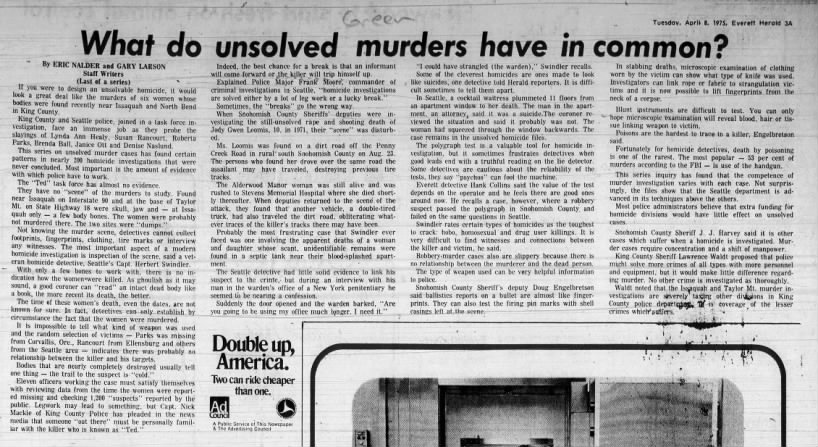
An article about Gary Taylor that mentions Stuth published in The Spokane Daily Chronicle on March 4, 1975.
An article about Gary Addison Taylor that mentions Vonnie Stuth published in The Daily Herald on March 5, 1975.
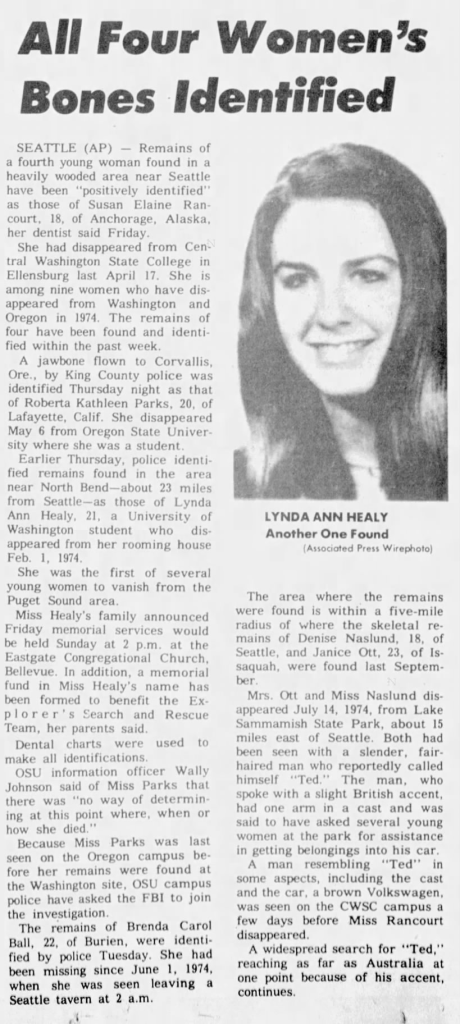
An article about the murder of Susan Rancourt that mentions Vonnie Stuth published in The Ellensburg Daily Record on March 7, 1975.
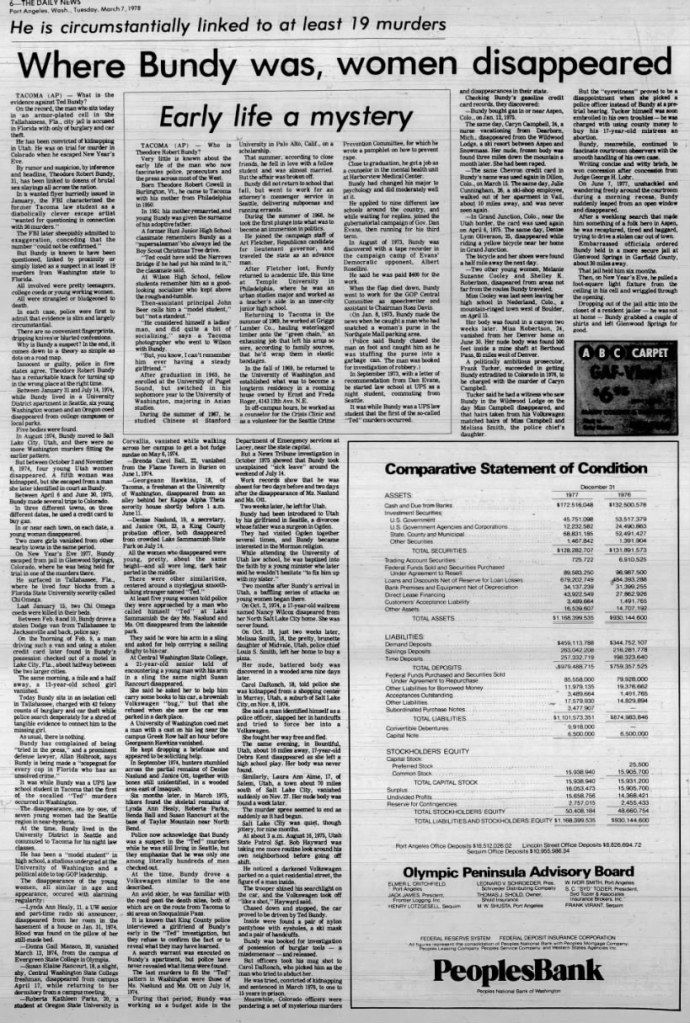
An article about Gary Addison Taylor that mentions Vonnie Stuth published in The Spokane Daily Chronicle on March 7, 1975.
An article about Gary Addison Taylor that mentions Vonnie Stuth published in The Lewiston Morning Tribune on March 8, 1975.
An article about Gary Addison Taylor that mentions Vonnie Stuth published in The Spokane Daily Chronicle on May 16, 1975.
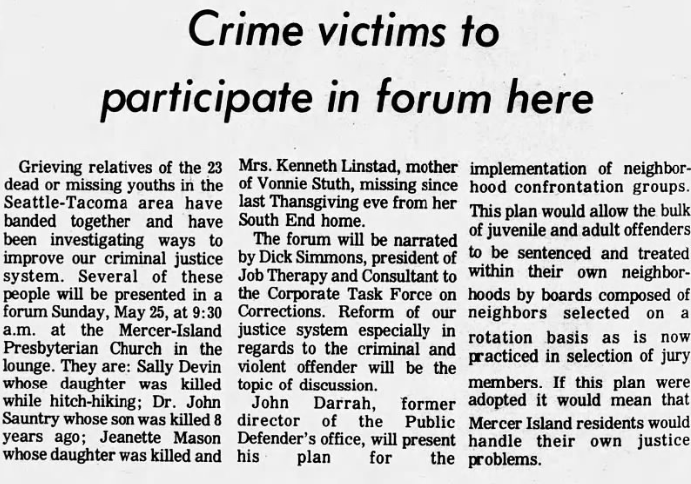
An article about grieving relatives in Washington mentions Vonnie Stuth published in The Mercer Island Reporter on May 22, 1975.
An article about Gary Taylor that mentions Stuth published in The Middlesboror Daily News on May 23, 1975.
An article about Gary Addison Taylor that mentions Vonnie Stuth published in The Times-Union on May 23, 1975.
An article about Gary Addison Taylor that mentions Vonnie Stuth published in The Middlesboro Daily News on May 23, 1975.
An article about Gary Taylor that mentions Vonnie Stuth published in The Daily Herald on May 24, 1975.
An article about Gary Taylor that mentions Vonnie Stuth published in The News Tribune on May 24, 1975.
An article about the murder of Vonnie Stuth published in The Daily Nonpareil on May 25, 1975.
An article about Gary Taylor that mentions Vonnie Stuth published in The Tri-City Herald on May 25, 1975.
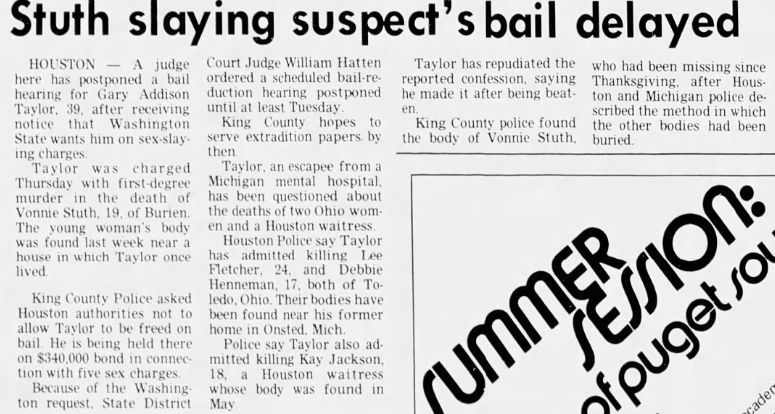
An article about Gary Addison Taylor that mentions Vonnie Stuth published in The Gazette on May 27, 1975.
An article about Gary Addison Taylor that mentions Vonnie Stuth published in The Ellensburg Daily Record on May 27, 1975.
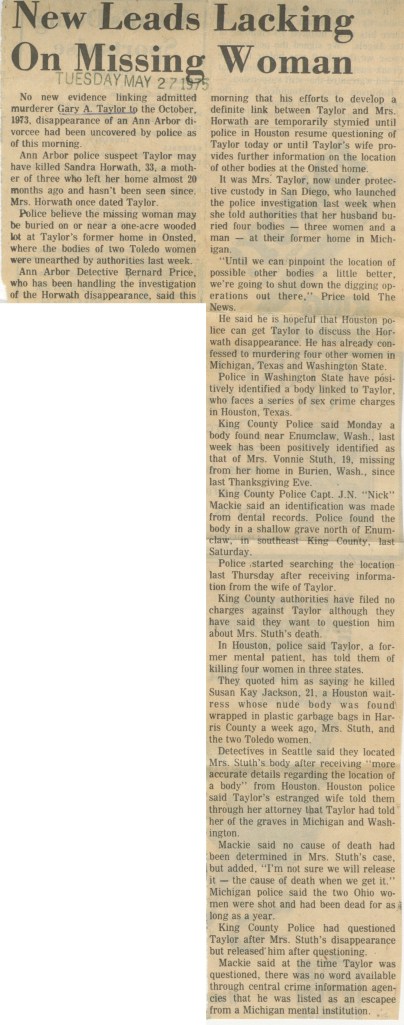
An article about Gary Addison Taylor that mentions Vonnie Stuth published in The Ann Arbor News on May 27, 1975.
An article about Gary Addison Taylor that mentions Vonnie Stuth published in The Toledo Blade on May 27, 1975.
An article about Gary Taylor that mentions Vonnie Stuth published in The Longview Daily News on May 27, 1975.
An article about Gary Taylor that mentions Vonnie Stuth published in The Olympian on May 27, 1975.
An article about the discovery of the remains of Vonnie Stuth published in The Longview Daily News on May 27, 1975.
An article about the autopsy of Vonnie Stuth published in The Daily Herald on May 27, 1975.
An article about Gary Taylor that mentions Vonnie Stuth published in The Kitsap Sun on May 28, 1975.
An article about Gary Taylor that mentions Vonnie Stuth published in The Daily Herald on May 28, 1975.
An article about Gary Addison Taylor that mentions Vonnie Stuth published in The Spokane Daily Chronicle May 29, 1975.
An article about Gary Taylor that mentions Stuth published in The Oregonian on May 30, 1975.
An article about the murder of Vonnie Stuth published in The Fort Worth Star-Telegram on May 30, 1975.
An article about Gary Taylor that mentions Stuth published in The Eugene Register-Guard on May 30, 1975.
An article about Gary Taylor that mentions Stuth published in The Portsmouth Times on May 31, 1975.
An article about Gary Addison Taylor that mentions Vonnie Stuth published in The Spokane Daily Chronicle on May 31, 1975.
An article about Gary Addison Taylor that mentions Vonnie Stuth published in The Spokane Daily Chronicle on May 31, 1975.
An article about Gary Taylor that mentions Vonnie Stuth published The News Tribune on May 31, 1975.
An article about Gary Taylor that mentions Stuth published in The Sioux City Journal on June 1, 1975.
An article about the murder of Vonnie Stuth published in The Mercer Island Reporter on June 5, 1975.
An article about Gary Taylor that mentions Vonnie Stuth published in The Kitsap Sun on June 19, 1975.
An article about Gary Taylor that mentions Stuth published in The Spokesman-Review on July 1, 1975.
An article about Gary Addison Taylor that mentions Vonnie Stuth published in The Kitsap Sun on July 1, 1975.
An article about Gary Taylor that mentions Vonnie Stuth published in The Daily Herald on July 2, 1975.
An article about the murder of Vonnie Stuth published in The Akron Beacon Journal on July 20, 1975.
An article about Gary Taylor that mentions Vonnie Stuth published in The Kitsap Sun on July 29, 1975.
Part one of an article about the murder of Vonnie Stuth published in The Daily News on August 31, 1975.
Part two of an article about the murder of Vonnie Stuth published in The Daily News on August 31, 1975.
An article about the murder of Vonnie Stuth published in The Times-Tribune on August 31, 1975.
An article published in
An article about Gary Addison Taylor that mentions Vonnie Stuth published in The Kitsap Sun on September 11, 1975.
An article about Dr. Ames obey being sued for freeing Gary Taylor published in The Bay City Times
on January 23, 1976.
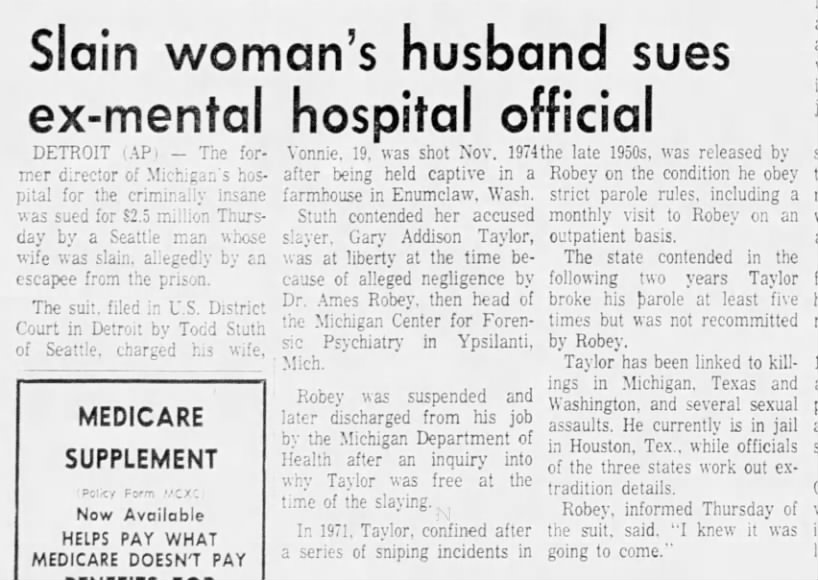
An article about Gary Addison Taylor that mentions Vonnie Stuth published in The Tri-City Herald on January 23, 1976.
An article about Gary Taylor that mentions Vonnie Stuth published inThe Enumclaw Courier-Herald on March 4, 1976
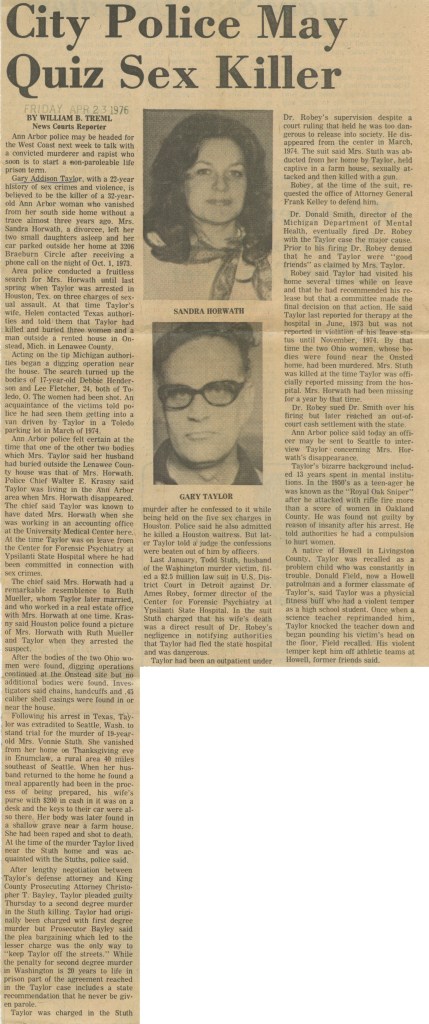
An article about Gary Addison Taylor that mentions Vonnie Stuth published in The Spokane Daily Chronicle on April 23, 1976.
An article about Gary Addison Taylor that mentions Vonnie Stuth published in The Ann Arbor News on April 23, 1976.
An article about Gary Taylor that mentions Vonnie Stuth published in The Kitsap Sun on April 23, 1976.
Part one of an article about Gary Taylor that mentions Vonnie Stuth published in The Enumclaw Courier-Herald on April 29, 1976.
Part two of an article about Gary Taylor that mentions Vonnie Stuth published in The Enumclaw Courier-Herald on April 29, 1976.
An article about Gary Addison Taylor that mentions Vonnie Stuth published in The Toledo Blade on May 1, 1976.
Part one of an article about Gary Taylor that mentions Vonnie Stuth published in The Enumclaw Courier-Herald on May 6, 1976.
Part two of an article about Gary Taylor that mentions Vonnie Stuth published in The Enumclaw Courier-Herald on May 6, 1976.
An article about Gary Addison Taylor that mentions Vonnie Stuth published in The Ann Arbor News on August 5, 1976.
An article about the committee founded by Vonnie’s mother Lola published in The Sioux City Journal on April 7, 1977.
An article about Gary Taylor that mentions Vonnie Stuth published in The Ann Arbor News on May 15, 1979.
An article about the lawsuit Todd Stuth filed in relation to his wife’s death published in The News Tribune on May 18, 1979.
A map of the US with some of Taylor’s victims pointed out (its missing the two from Toledo, and includes two from Vail, Colorado).
Gary Addison Taylor.
One of the more commonly used pictures of Gary Addison Taylor.
A BOLO for Gary Taylor, courtesy of the King County Sheriff’s Department.
Gary Taylor and his wife, Helen Marie (nee Mueller), who was born on January 10, 1938 in Japan, Missouri and died on Christmas day in 2001. She was married five times over the course of her life.
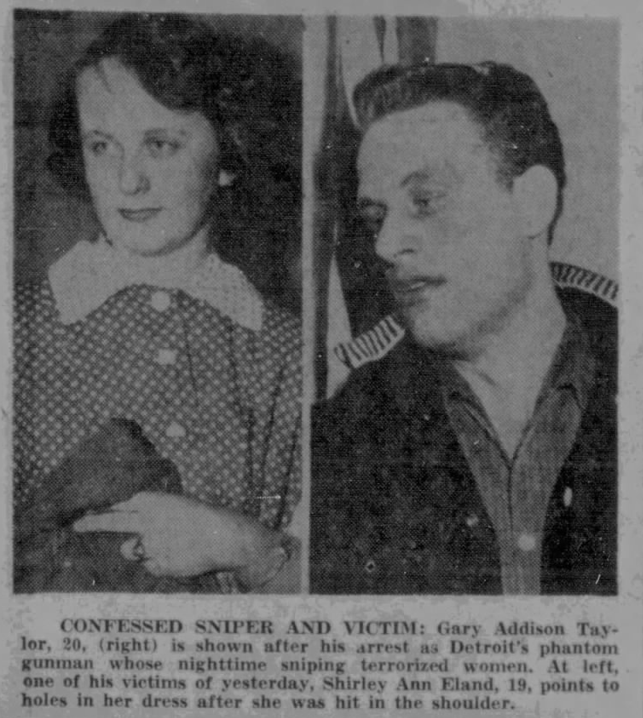
Side-by-side pictures of Gary Taylor and one of his victims related to his Royal Oak Sniper attacks published in The Ann Arbor News on February 8, 1957.
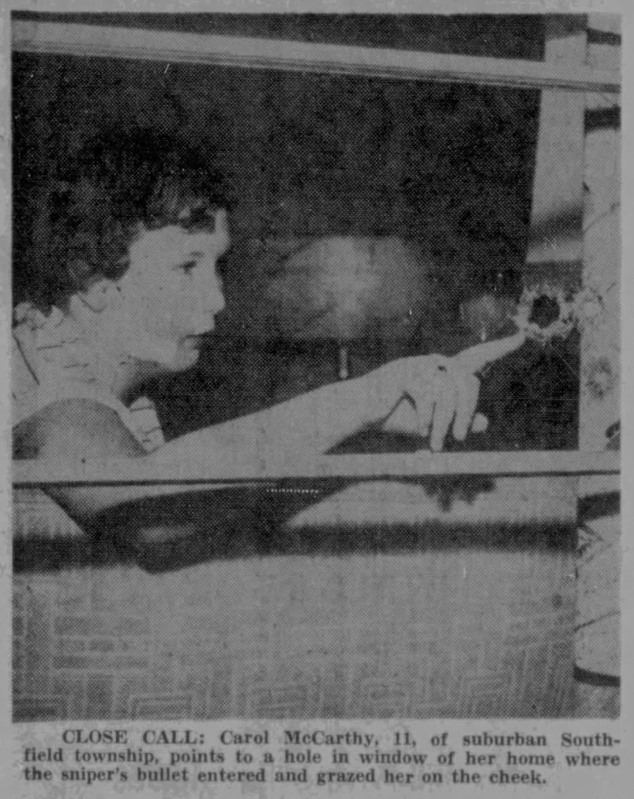
A picture of a victim related Gary Taylor’s Royal Oak Sniper attacks published in The Ann Arbor News on February 8, 1957.
An article about Gary Taylors Royal Oak Sniper attacks published in The Times Herald on February 9, 1957.
An article about Gary Taylors Royal Oak Sniper attacks published in The Tampa Bay Times on February 10, 1957. 
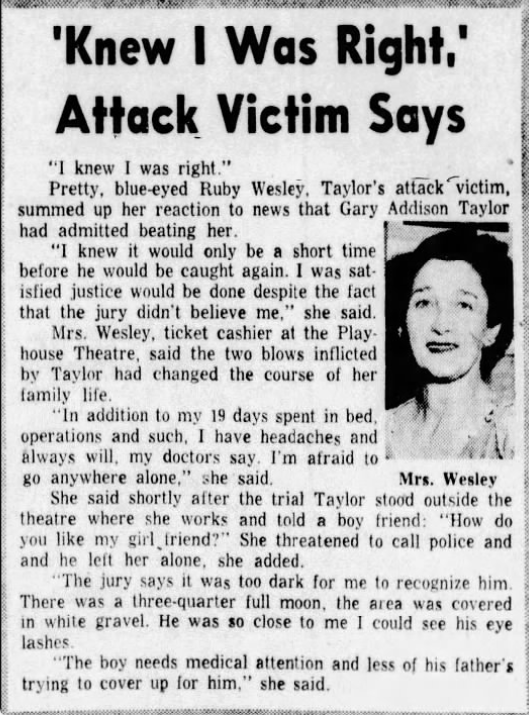
An article about Gary Taylors Royal Oak Sniper attacks published in The Bay City Times on February 18, 1957.
Gary and Helen’s marriage license application.
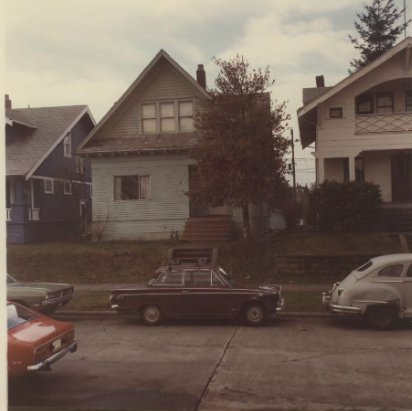
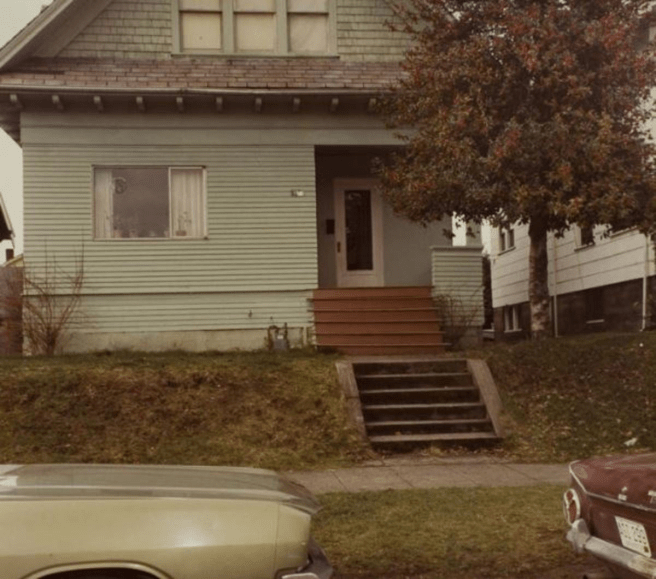
The house Gary Taylor rented across the street from the Stuth’s located st 14216 24th Avenue South in Seatac, WA.
The first part of Gary Taylor’s confession.
The second part of the first page of Gary Taylor’s confession.
The second page of Gary Taylor’s confession.
Vonnie’s fathers WWII card.
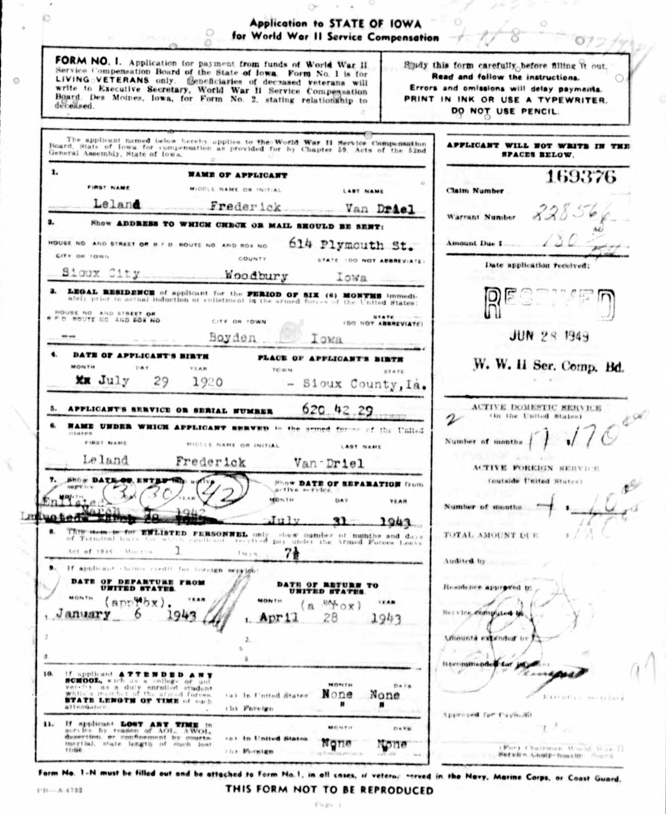
The first page of Leland Van Driel’s WWII service compensation paperwork.
The second page of Leland Van Driel’s WWII service compensation paperwork.
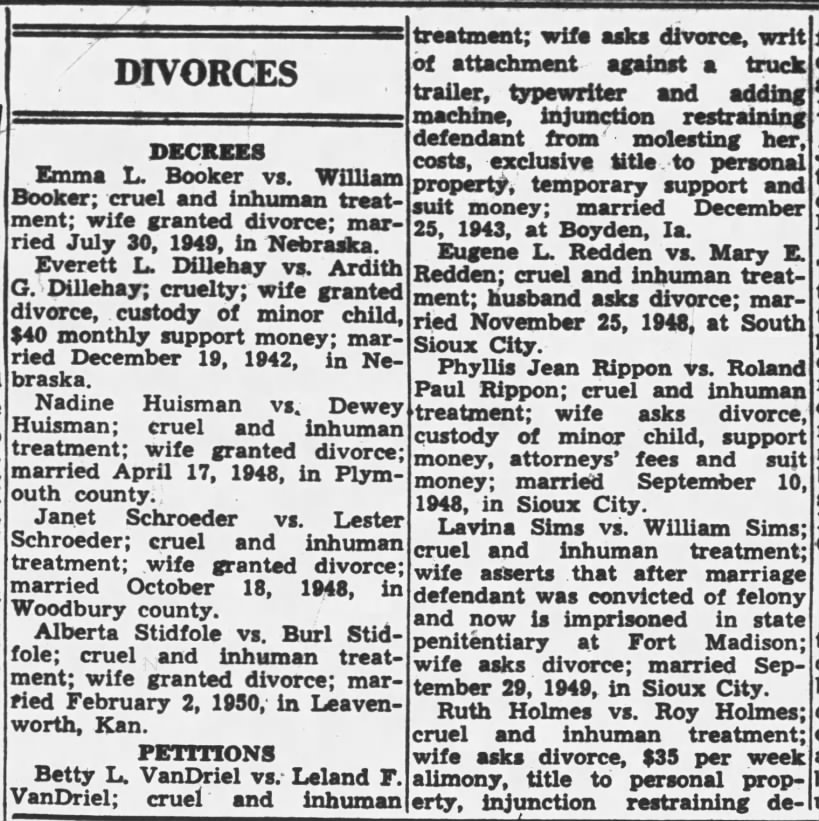
Information related to Leland Van Driel’s first marriage.
A notice that a divorce decree was granted between Vonnie’s parents published in The Sioux City Journal on May 5, 1950.
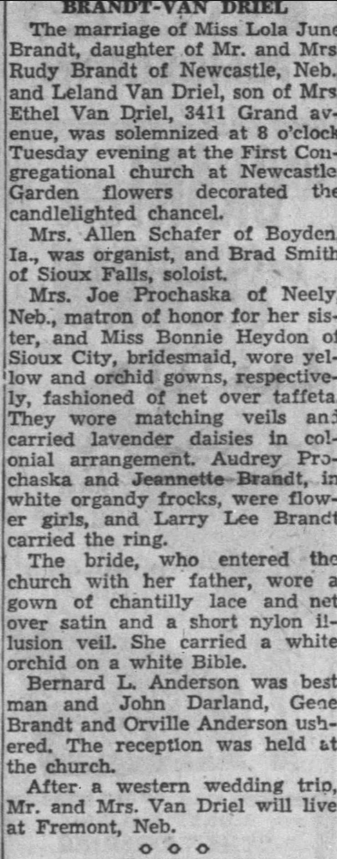
The Van Driel’s wedding announcement published in The Sioux City Journal on June 19, 1952.
Lola Brandt’s wedding announcement to Leland Van Driel published in The Sioux City Journal on June 22, 1952.
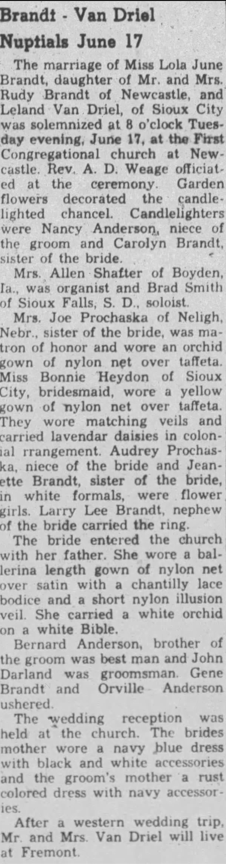
The Van Driel’s wedding announcement published in The Nebraska Journal-Leader on June 26, 1952.
A newspaper clipping about Vonnie’s parents wedding published in The Plainview News on August 14, 1952.
Leland and Lola listed in the state of Nebraska marriage index.
A picture of Vonnie’s mother, Lola.
Leland and Lola Van Driel’s divorce certificate.
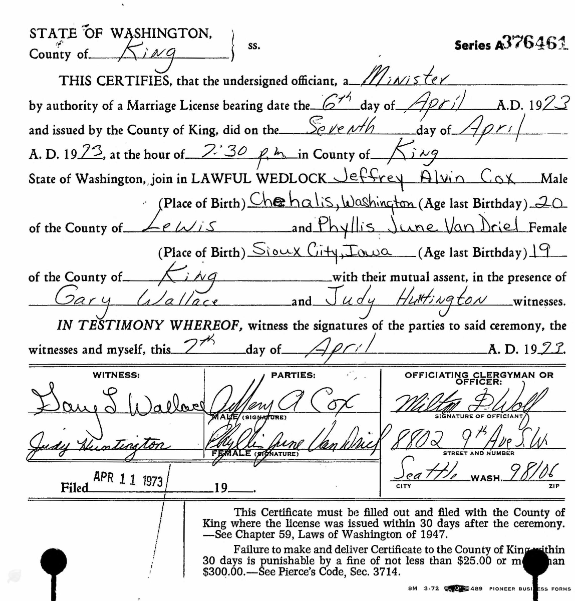
Lola and her second husbands marriage certificate.
An article about Vonnie’s grandparents celebrating their fiftieth wedding anniversary that mentions her published in The Sioux City Journal on August 13, 1975.
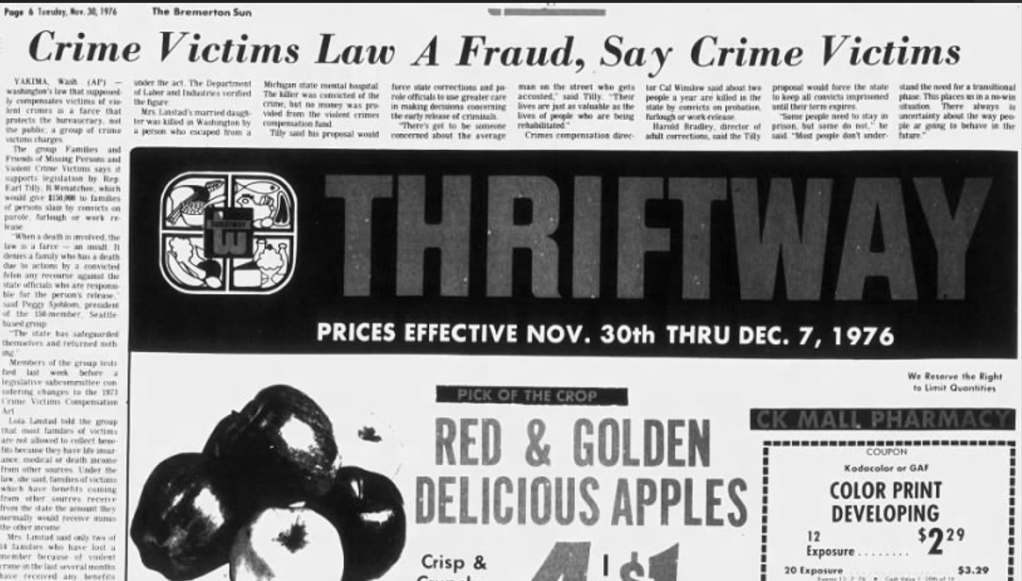
An article about a victim compensation law that mentions Vonnie Stuth published in The Kitsap Sun on November 30, 1976.
An article about a victim compensation law that mentions Vonnie Stuth published in The Daily News on December 1, 1976.
An article about a victim compensation law that mentions Vonnie Stuth published in The Daily Herald on December 1, 1976.
An article about VSS published in The Daily Herald on April 19, 2015.The Lebanon Express on October 4, 2006.
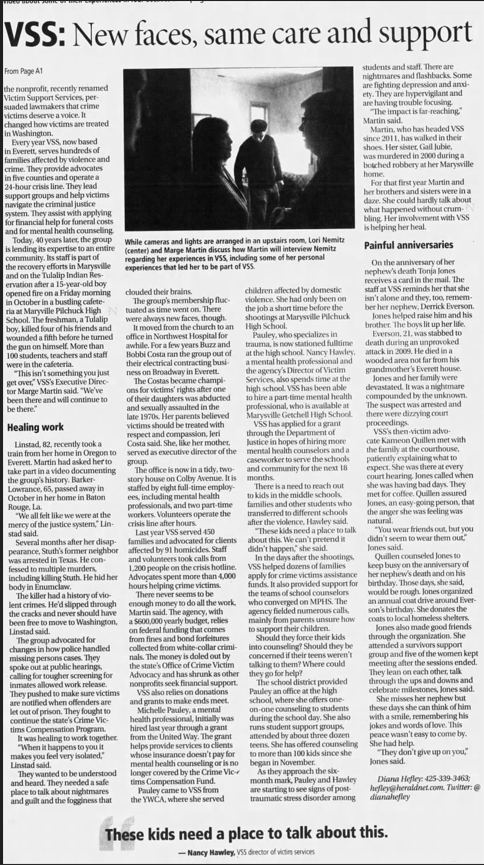
The first part of an article about VSS published in The Daily Herald on April 19, 2015.
The second part of an article about VSS published in The Daily Herald on April 19, 2015.
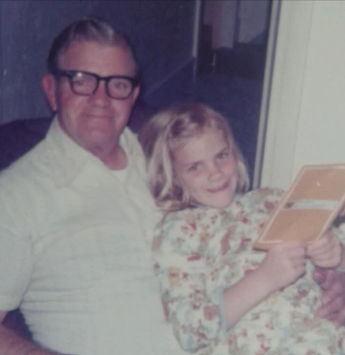
Shirley and Leland.
Phyllis Van Driel’s junior year picture from the 1971 Chief Sealth High School yearbook.
A picture of Phyllis Van Driel taken from the Chief Sealth High School yearbook.
Phyllis Van Driel’s marriage certificate.
Alicia Van Driel from the 1977 Chief Sealth High School yearbook.
A picture of VSS founded by Vonnie Stuth’s mother published in The Daily Herald on April 19, 2015.
A second picture of VSS published in The Daily Herald on April 19, 2015.
A quote made by Linda Barker about VSS.
Phyllis Van Driel and her pugs, photo courtesy of Facebook.
Vonnie’s sister, Shirley.
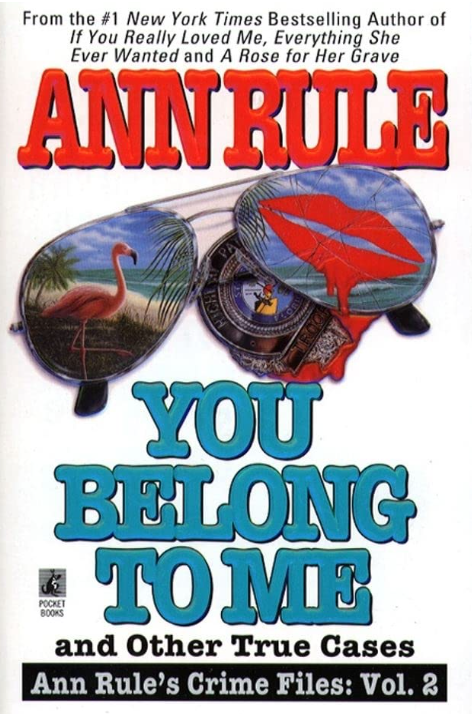
The cover of Ann Rule’s book ‘You Belong to Me, and Other True Crime Cases’ that was published in September 1994 and features a story about Vonnie Stuth.
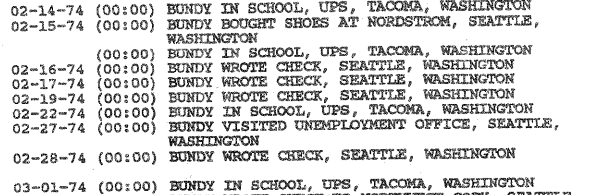
Bundy’s whereabouts in late November 1974 according to the 1992 FBI TB Multiagency Team Report.
A possible route from Bundy’s residence on 12th Avenue NE in Seattle to the Stuth’s apartment on 24th Avenue South (which doesn’t exist anymore).
Todd Stuth’s second marriage certificate.
Todd Stuth.

Caryn Campbell & Ted Bundy: Michigan Related Pictures & Information.

The entrance to Trinity Health Livonia Hospital, located at 36475 Five Mile Road in Livonia, MI. Caryn worked here when she disappeared in 1975.
According to a document I received from the King County Sheriffs Department, Caryn was employed here on an ‘as needed’ basis and had only worked a single shift at the time of her murder.
This residence was listed as Mr. Campbell’s residence on his WWII draft card, located on Monroe Ave in Dearborn, MI (he was married to Caryn’s mom at the time).
The side of Mr. And Mrs. Campbell’s first house, located at 805 Monroe Avenue in Deerborn, MI.
This is where Caryn’s parents lived at the time of her murder located at 22423 Beech Streey in Dearborn, MI.
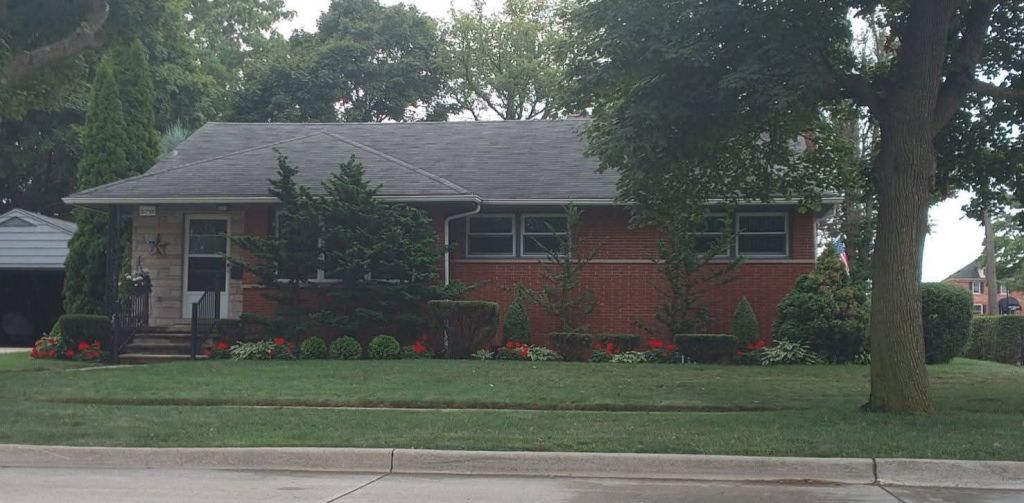
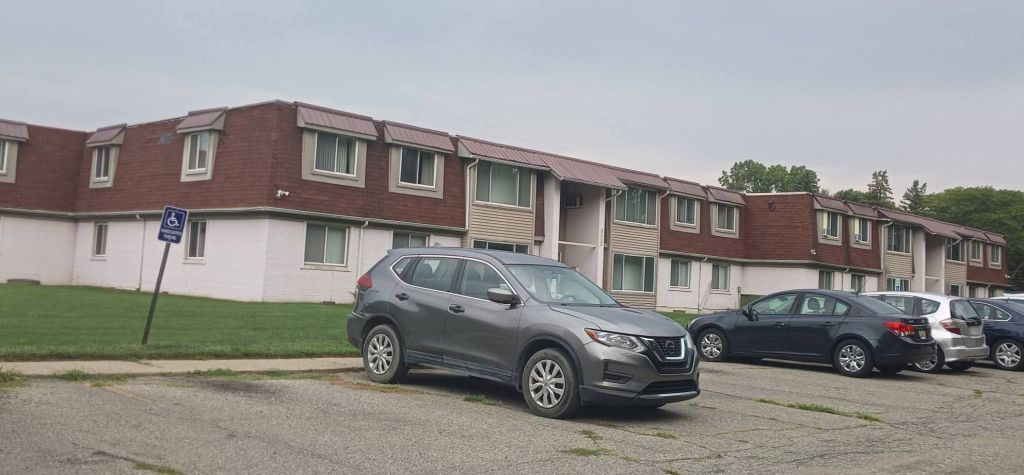
The apartment building where Dr. Gadowski and Caryn Campbell lived at the time of her murder. It’s located at 27600 Gateway Drive (they lived in apartment E) in Farmington Hills, Michigan.
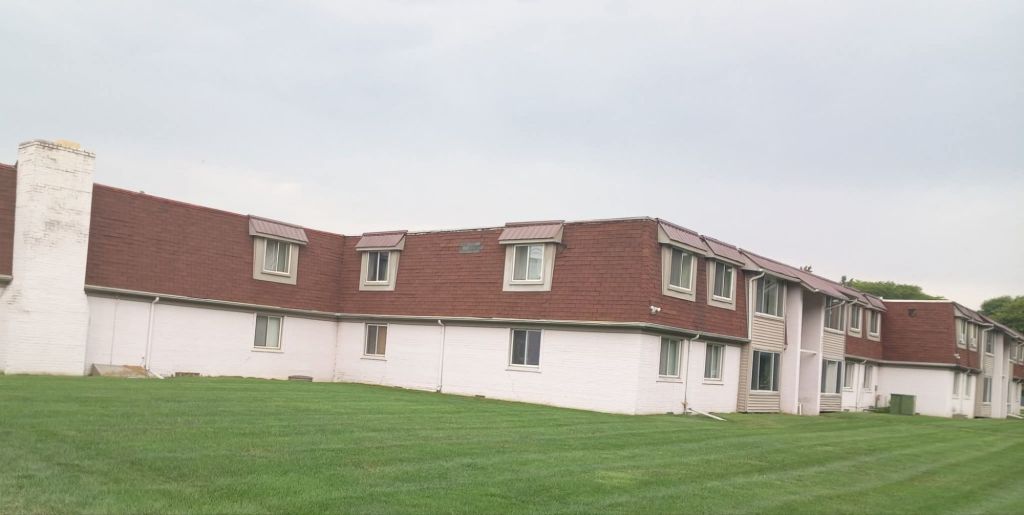
The rental office and recreational area at Caryn’s and Dr. Gadowski’s apartment complex.
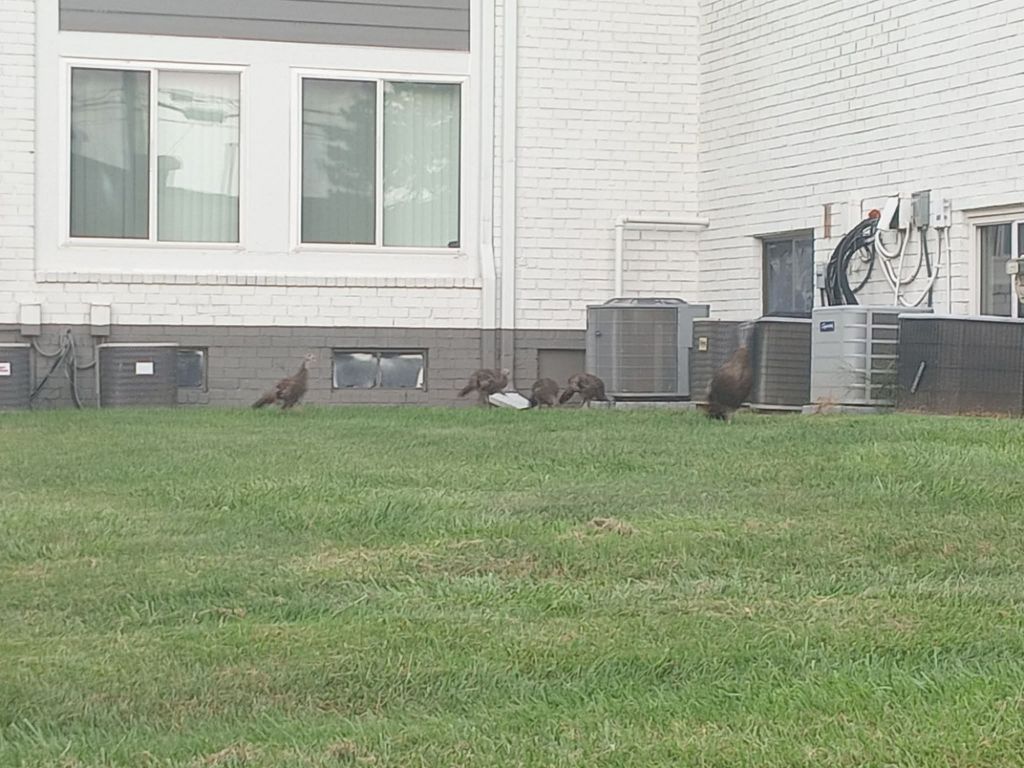
Some turkey’s outside Caryn and Dr. Gadowski’s former residence.
More turkey’s.
This is where Caryn’s ex-boyfriend Dr. Alan Rosenthal lived at the time of her murder, located at 21347 Colwell Street, Apartment 22 in Farmington Hills, MI; it’s right next to the hospital that they worked at.
A side shot of Dr. Rosenthals apartment.
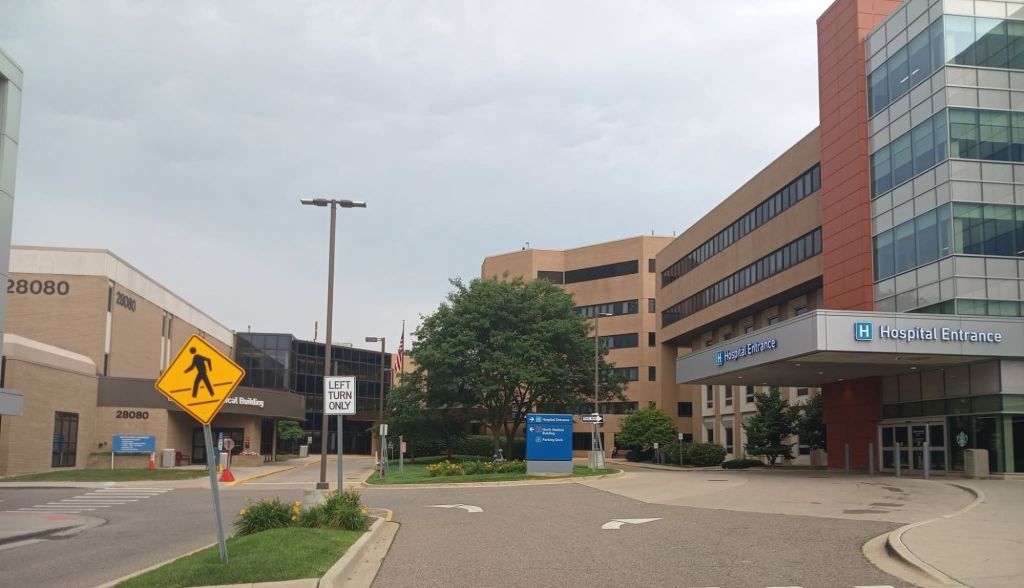
The former Botsford Hospital, where Caryn Campbell and Dr. Gadowski worked at the time of her murder. It’s now The Corewell Health Farmington Hills Hospital Cancer Care Center.
The former Botsford Hospital, located at 27900 Grand River Avenue in Farmington Hills, Michigan.
The former Botsford Hospital.
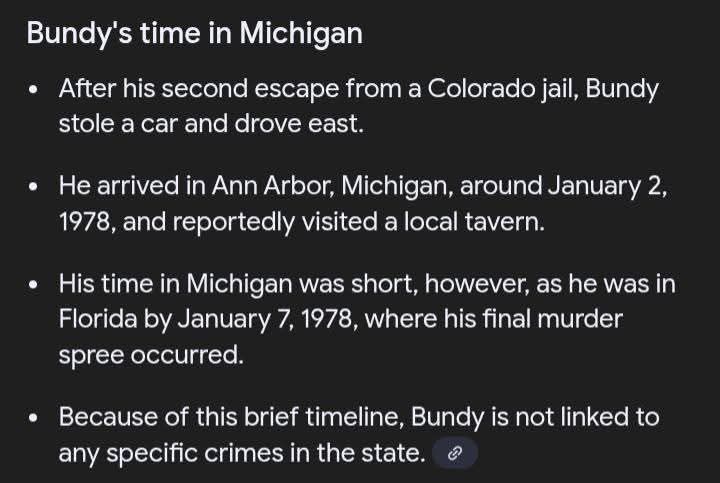
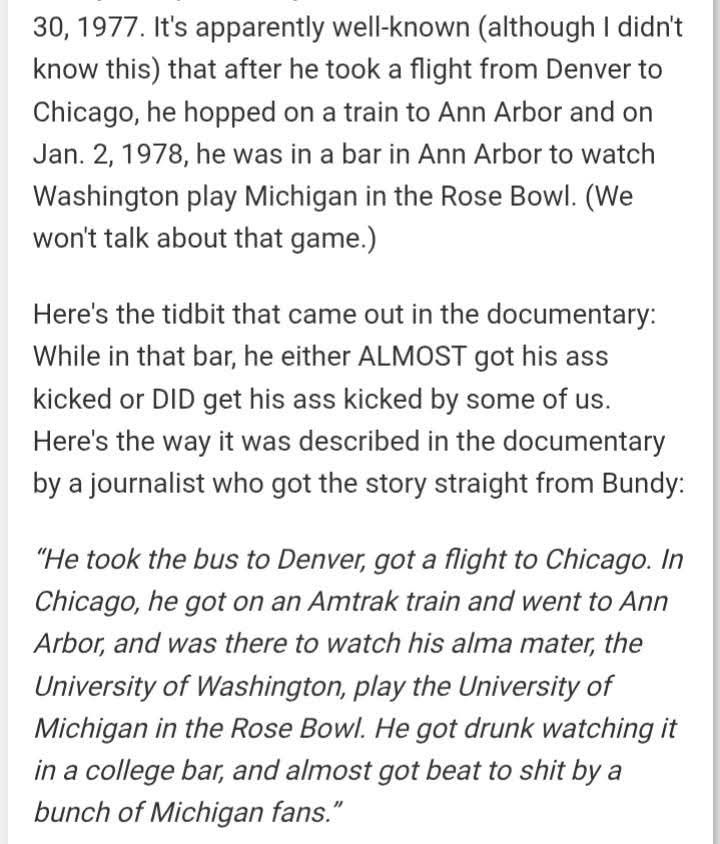
Some information about Bundy’s time in Michigan.
Some information related to Bundy’s time in Michigan, per Stephen Michaud in the 2019 Netflix documentary.
The Amtrak Station in Ann Arbot
The Ann Arbor YMCA that Bundy stayed at for $12 a night after his second escape, located on South Fifth Avenue. Picture taken in May 1979.
The Ann Arbor YMCA, located on South Fifth Avenue.
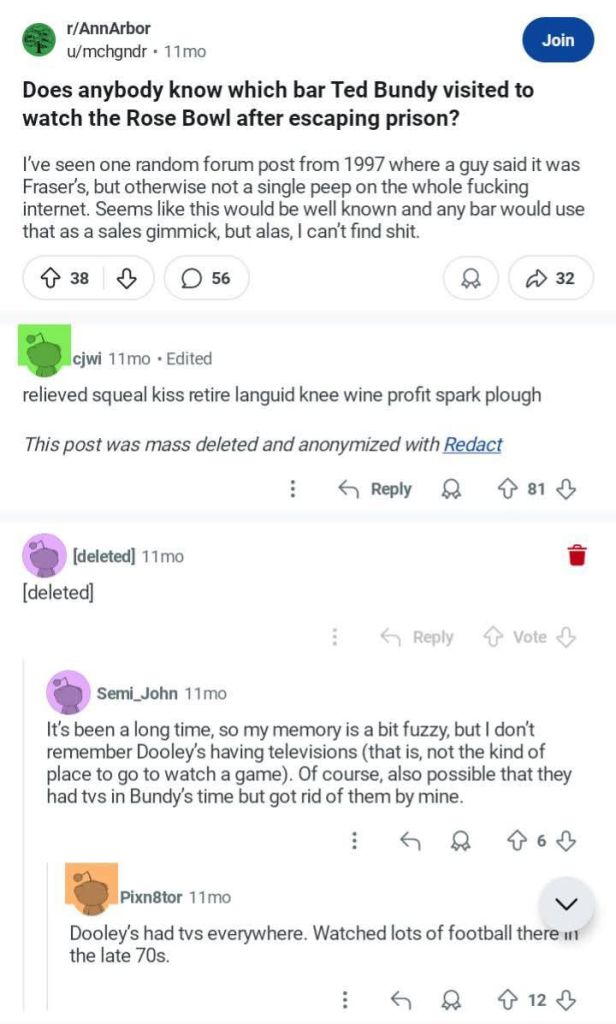
Some information I found on Reddit about Ted’s time in Michigan and (possibly) the name of the bar he went to.
A comment on a blog post about the bar Bundy may have visited during his brief time in Michigan.
Information related to the 1978 Rose Bowl.
An article that mentions Ted’s time in Ann Arbor, MI after his second escape published in The Times on July 19, 1979.
An article that mentions Ted’s time in Ann Arbor, MI after his second escape published in The Daily Spectrum on November 15, 1986.
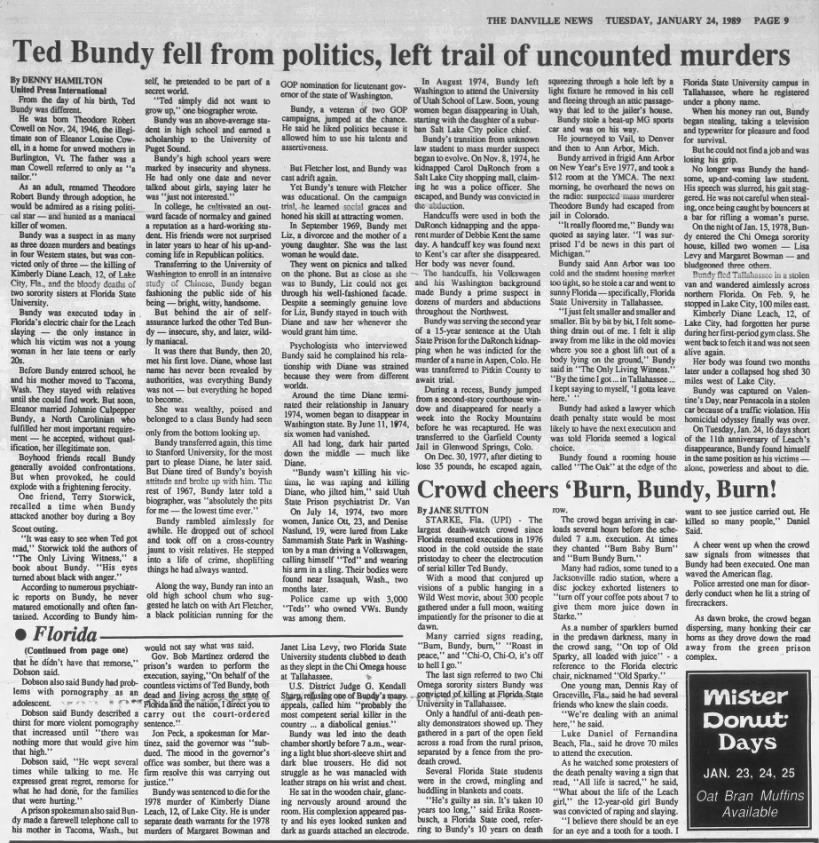
An article that mentions Ted’s time in Michigan published in The Danville News on January 24, 1989.

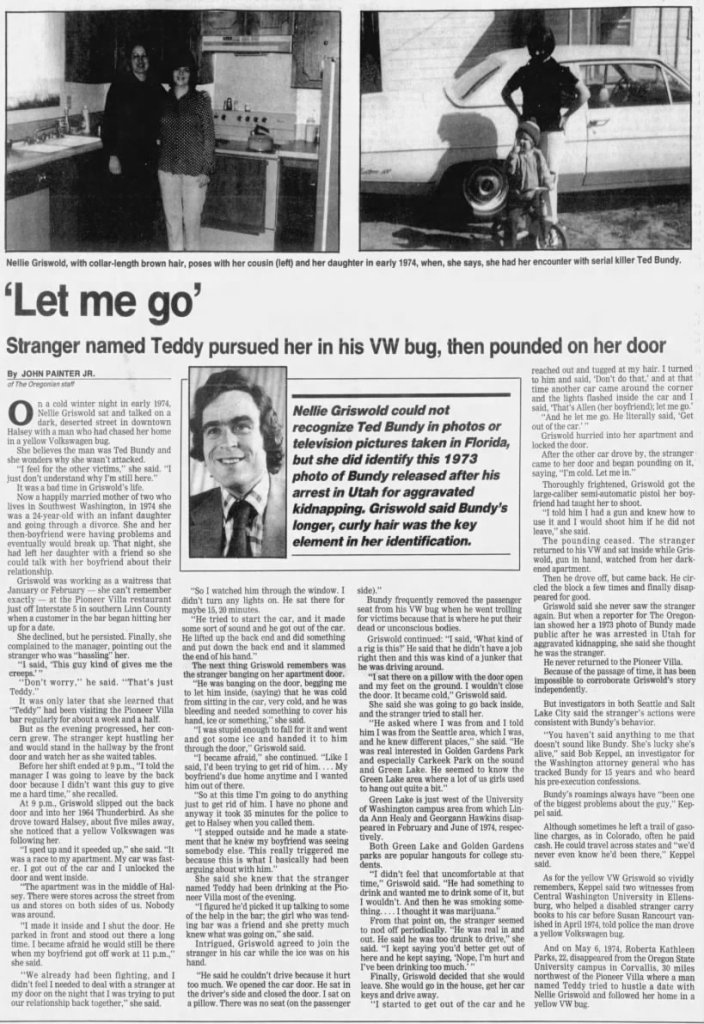
Nellie Griswold.

This is a rare occasion I was unable to find out any background information about the woman I was writing about: typically, I can come up with some helpful tidbit that helps me dig up more information about them, however I was unable to do that with Ms. Griswold. If anyone knows anything more than what I have here and would like to reach out to me about it, I will give you credit for your help.

While I was driving to Michigan with my husband last week I stumbled across an article posted by another true crime Facebook Group called, ‘TB: I was Trying to Think Like an Elk’ that included an article published in February 1989 from The Oregonian discussing an encounter that Nellie Griswold may have had with Ted Bundy: Griswold, who lived in Halsey, Oregon in the early part of 1974, worked as a waitress in the restaurant part of The Pioneer Villa truck stop, located right off the I-5 in the southern part of Linn County.

In early 1974 (she wasn’t sure if it was January or February) Griswold was twenty-four years old, and one evening as she was working she noticed a man that matched Bundy’s description lingering around her POE: she told her boss ‘this guy kind of gives me the creeps,’ to which he replied, ‘don’t worry, that’s just Teddy’ and went on to tell her that he had been hanging around The Pioneer Villa’s bar semi-regularly for about a week and a half. Nellie said that she was going through a bad time in her life and at the time was newly divorced with an infant and was having relationship issues with her current-boyfriend (they eventually broke up); that night, she left her daughter with a friend so she could talk with her significant other about their relationship problems after she got out of work.

But as Nellie’s shift went on her worry only grew: the stranger kept trying to hustle her and repeatedly asked her out on a date (an offer that she politely declined) and stood in the hallway near the front door, just watching her. Before her workday ended at 9 PM she ‘told the manager I was going to leave by the back door because I didn’t want this guy to give me a hard time.’ A little after nine she left out the restaurants back door and got her 1964 Thunderbird and began the five mile drive to her apartment…. but as she made her way to Halsey she noticed a yellow VW Beetle trailing behind her: ‘I sped up and it speeded up. It was a race to my apartment. My car was faster. I got out of the car and unlocked the door and went inside. There were stores across the street from us and stores on both sides of us. Nobody was around. I made it inside and I shut the door.’

During an interview with reporter ‘John Painter Jr.’ with the newspaper ‘The Sunday Oregonian,’ Griswold said the strange man parked his car in front of her apartment building and stood out there a long time, just staring towards her residence: ‘I became afraid he would still be there when my boyfriend got off work at 11 PM. We already had been fighting, and I didn’t feel I needed to deal with a stranger at my door on the night that I was trying to put our relationship back together.’

According to Nellie, when she arrived home: ‘I watched him through the window. I didn’t turn any lights on. He sat there for maybe fifteen, twenty minutes. He tried to start the car, and it made some sort of sound and he got out of the car. He lifted up the back end and did something and put down the back end and it slammed the end of his hand.’

She went on to say that the next thing she remembered was the stranger frantically knocking on her apartment door: ‘he was banging the door, begging me to let him inside, (saying) that he was cold from sitting in the car, very cold, and he was bleeding and needed something to cover his hand, ice or something. I was stupid enough to fall for it and went and got some ice and handed it to him through the door. I became afraid. Like I said, I’d been trying to get rid of him… My boyfriend’s due home anytime and I wanted him out of there. So at this time I’m going to do anything just to get rid of him.’

Griswold went on: ‘I have no phone and anyway it took thirty-five minutes for the police to get to Halsey when you called them. I stepped outside and he made a statement that he knew my boyfriend was seeing somebody else. This really triggered me because this is what I basically had been arguing about with him.’

She also clarified that she was aware ‘Teddy’ had been drinking at bar most of the evening. “I figured he’d picked it up talking to some of the help in the bar; the girl who was tending bar was a friend and she pretty much knew what was going on.’ Intrigued, she agreed to go with him while the ice was on his hand: ‘he said he couldn’t drive because it hurt too much. We opened the car door. He sat in the driver’s side and closed the door. I sat on a pillow. There was no seat on the passenger’s side.’

Griswold went on to say: “I said, ‘What kind of a rig is this?,’ to which he replied that he didn’t have a job at the moment and it was the only option he had to get around: ‘I sat there on a pillow with the door open and my feet on the ground. I wouldn’t close the door. It became cold.’ When she announced that she was going to go back inside the stranger tried to stall her: ‘he asked where I was from and I told him I was from the Seattle area, which I was, and he knew different places. He was real interested in Golden Gardens Park and especially Carkeek Park on the sound and Green Lake. He seemed to know the Green Lake area where a lot of us girls used to hang out quite a bit.’ At the time in the 1970’s both Green Lake Park and Golden Gardens Park were popular hangouts for college kids.

Nellie continued: ‘I didn’t feel that uncomfortable at that time. He had something to drink and wanted me to drink some of it but wouldn’t. And then he was smoking something… I thought it was marijuana.’ After that, the man immediately appeared to become inebriated, and even nodded off periodically: ‘he was real in and out. He said he was too drunk to drive. I kept saying you’d better get out of here and he saying, ‘nope, I’m hurt and I’ve been drinking much.’’

Finally, the attractive young mother made the choice to finally leave, and ‘started to get out of the car and he reached out and tugged at my hair. I turned to him and said, ‘don’t do that,’ and at that time another car came around the corner and the lights flashed inside the car and I said, ‘that’s Alan (her boyfriend), let me go. And he let me go. He literally said, ‘get out of the car.’’

Griswold quickly ran to into her apartment and locked the door behind her, and after the other vehicle drove by, the man returned to her apartment and began pounding on the door, saying loudly, ‘I’m cold. Let me in.’ Thoroughly spooked, she went back to her bedroom and got her boyfriend’s large semi-automatic pistol that he had also taught her to shoot: ‘I told him I had a gun and knew how to use it and would shoot him if he did not leave.’ The pounding immediately stopped.

Looking out the window, Nellie said that the man went back to his Bug and just sat there for a while then circled the block a few times before he eventually disappeared for good; she never saw him again, and he never returned to The Pioneer Villa. Because of how much time had passed her story was impossible to corroborate, however investigators in SLC and Seattle said the man’s actions were consistent with Ted’s behavior. According to Dr. Robert Keppel, ‘you haven’t said anything to me that doesn’t sound like Bundy. She’s lucky she’s alive.’

It would be fair to say that at the time of Nellie’s attack Bundy had a lot of spare time on his hands: he was taking a break from school (he didn’t begin law school for the second time until later that September) and happened to be in between jobs at the time (in September 1973 he was the Assistant to the Washington state Republican chairman, and remained unemployed until May 3, 1974 when he started at the Department of Emergency Services in Olympia). He was still in a (fairly) committed relationship with Elizabeth Kloepfer at the time and was residing in the Roger’s Rooming House on 12th Avenue NE in Seattle.

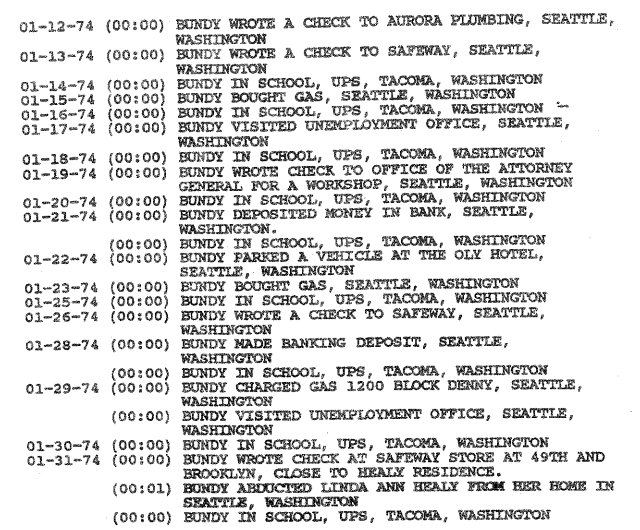
As we know, Ted’s first confirmed attack took place on January 4, 1974 when he brutally assaulted Karen Sparks in her basement apartment near the University of Washington in Seattle. Additionally, he abducted and killed Lynda Ann Healy not far away on January 31, 1974… so its safe to say Bundy was definitely active at the time Griswold claims she was hassled by him.

According to Dr. Keppel, Bundy’s habit of roaming across the Pacific Northwest had always been ‘one of the biggest problems about the guy,’ and despite there being a trail of credit card receipts for gas there were many times that he paid for fuel in cash: meaning, he could travel across multiple state lines and investigators ‘never even know he’d been there.’ As for the yellow VW that Griswold so vividly remembers, Keppel said two witnesses from Central Washington University in Ellensburg told police about a man that drove a similar vehicle that tried to pick them up; also, on May 6, 1974 Roberta Parks vanished without a trace from the Oregon State University campus in Corvallis, which is only thirty miles northwest of the Pioneer Villa. I know there’s a lot of back and forth as to EXACTLY what color Ted’s car is… but I don’t think it’s a coincident that Death from Family Guy drove a bright yellow Beetle.

When showed a picture of the serial killer, Nellie was unable to ID Bundy, but she was able to identify a photo of him taken in 1973 that was released after his arrest two years later in Granger, Utah for the aggravated kidnapping of Carol DaRonch. She said that Ted’s ‘longer, curly hair’ was the most important part of her identification. Griswold told Painter that she felt ‘for the other victims. I just don’t understand why I’m still here.’ At the time of the interview in February 1989 Griswold said that she was a happily married mother of two and was living with her husband and kids in Southwest Washington.

The beginning part of Griswold’s story published in The Sunday Oregonian on February 12, 1989.
The only article I could find about Nellie Griswolds claim about Ted Bundy, published in The Sunday Oregonian on February 12, 1989.
Bundy’s route from the Roger’s Rooming House to Pioneer Villa Truck Stop in Halsey, Oregon.
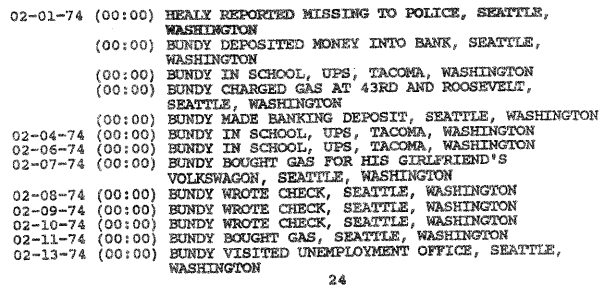
Bundy’s whereabouts in early 1974 according to the 1992 FBI TB Multiagency Team Report.
A drawing for the Pioneer Villa Truck Plaza in Halsey, Oregon.
A horse and buggy themed advertisement for the Pioneer Villa Truck Plaza in Halsey, Oregon where Nellie Griswold worked at the time she had her encounter with Ted Bundy.
A Google Maps view of where Green River Park and Carkeek Park are in relation to one another.
A map of Carkeek Park in Seattle.
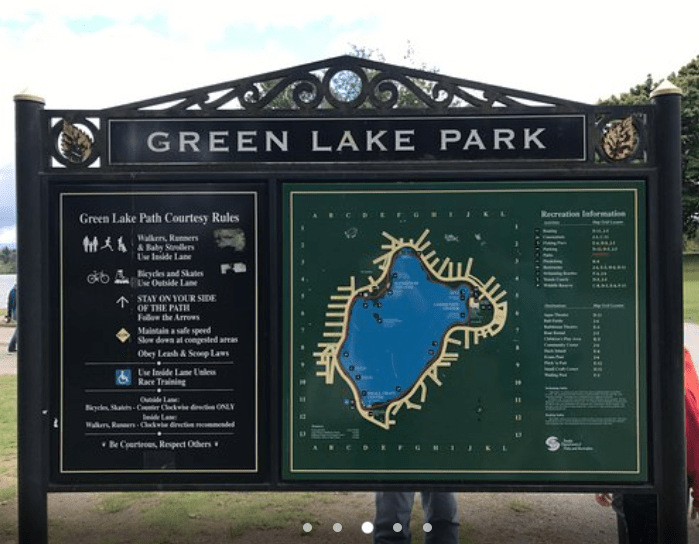
A sign for Green Lake Park in Seattle, Washington.

Ted Bundy, FBI Files: Court Documents, Confession-Interview Recordings, Research Documents.

Includes 339 pages of files that were copied directly from FBI headquarters, the 1992 FBI TB Multiagency Investigative Team Report, 71 pages of a FBI Report Serial Murder Multi-Disciplinary Perspectives for investigators (from 2005), 79 pages of FBI Report Serial Murder Pathways for Investigations (from 2011), and over 1,000 pages of information over seven appellate court cases from Florida and Utah, as well as some Bundy-related Congressional Hearings, Reports, and Transcripts

Deborah Kathleen Tomlinson, Case File.

A document related to the murder of Deborah Kathleen Tomlinson that took place on December 27, 1975, courtesy of the Grand Junction Police Department and ‘archives.org’ user ‘MarioNumber1.’ Tomlinson was definitely not a Ted Bundy victim, but she was killed at roughly the same time that he was active (in a state where he was active). Her murder was possibly part of an ongoing crime spree in Grand Junction that targeted individuals that may have known too much about the area’s drug activities in relation to corrupt law enforcement, such as police Chief Ben Meyers. Not to be confused with Deborah Lee Tomlinson from Oregon.

Lynda Ann Healy.

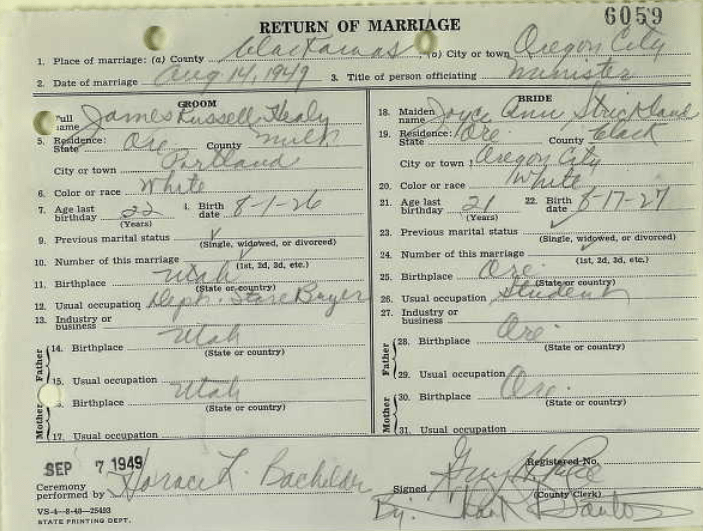
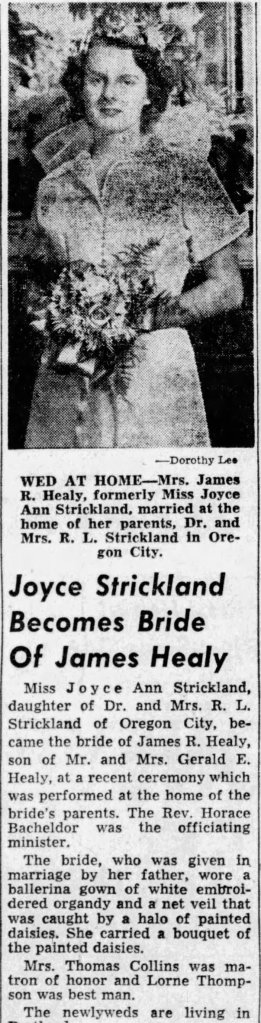
Background: Lynda Ann Healy was born on July 3, 1952 to James and Joyce (nee Strickland) Healy in Portland, Oregon. James Russell Healy was born on August 1, 1926 in Logan, Utah, and after graduating from Grant High School he went on to attend Notre Dame University, where he earned a degree in military sciences. At some point he went to the University of Oregon, where he met his future wife. The daughter of a prominent physician, Joyce Ann Strickland was born on August 17, 1927 in Forest Grove, OR and after high school attended the University of Oregon, where she was a member of the Alpha Phi sorority and graduated with a business degree in 1949. James and Joyce were married at her parents’ house in Oregon City on August 14, 1949, and in their early years as husband and wife lived in a house on Siskiyou Street in the northwest part of Portland. Before her kids were born, Mrs. Healy was employed at ‘Meier & Frank’ (a prominent department store chain that operated primarily in Oregon, Washington, and Utah) for several years before she left the workforce and became a dedicated stay at home mother. The couple had three children together: Lynda, Robert (b. 1954), and Laura (b. 1957). 

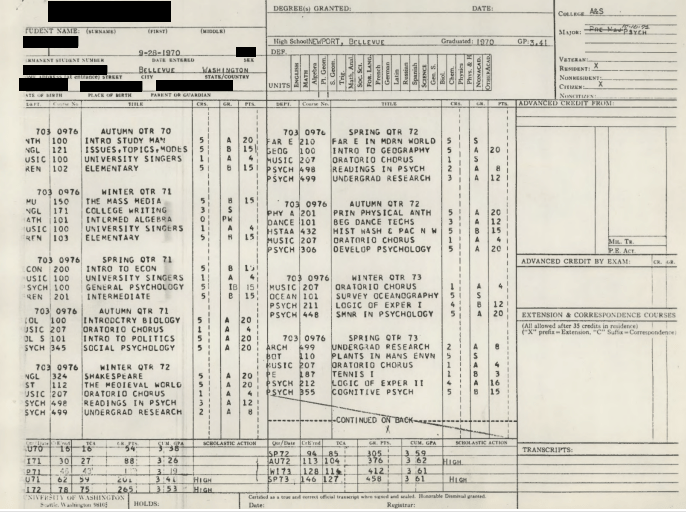
In 1962 the Healy’s moved to Washington state and bought a house in the Newport Hills area of Bellevue, located just five miles away from Seattle and Lynda grew up in a happy, middle-upper class home. According to those that were close with her, she was a talented musician, excellent singer, and was ‘full of life’ as well as self-confidence, and was looking forward for her future. Lynda stood at 5″7″ tall and wore her brown hair long and parted down the middle; she had blue eyes and had a 1/2 inch long scar on the bridge of her nose. An above-average student, she enjoyed school and had dreams of one day working with children with disabilities. After she graduated from Newport High School in Bellevue in 1970, Healy went on to attend the University of Washington in Seattle, and during her first few years lived in residence halls on campus (she even resided in McMahon Hall at one point, which is where Bundy lived years prior) before she eventually moved to a house off campus towards the end of her education.

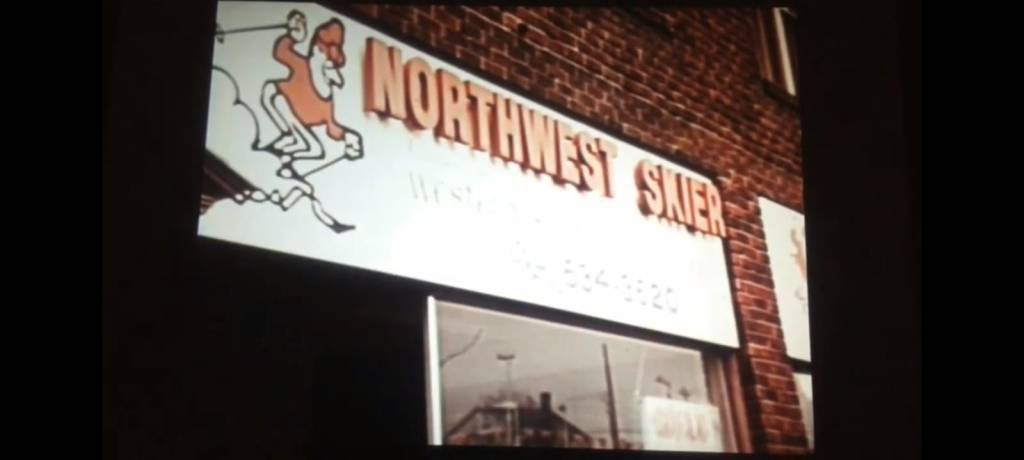
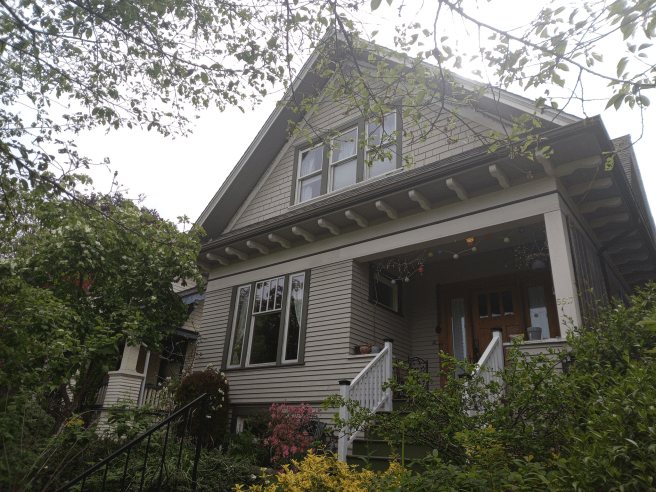
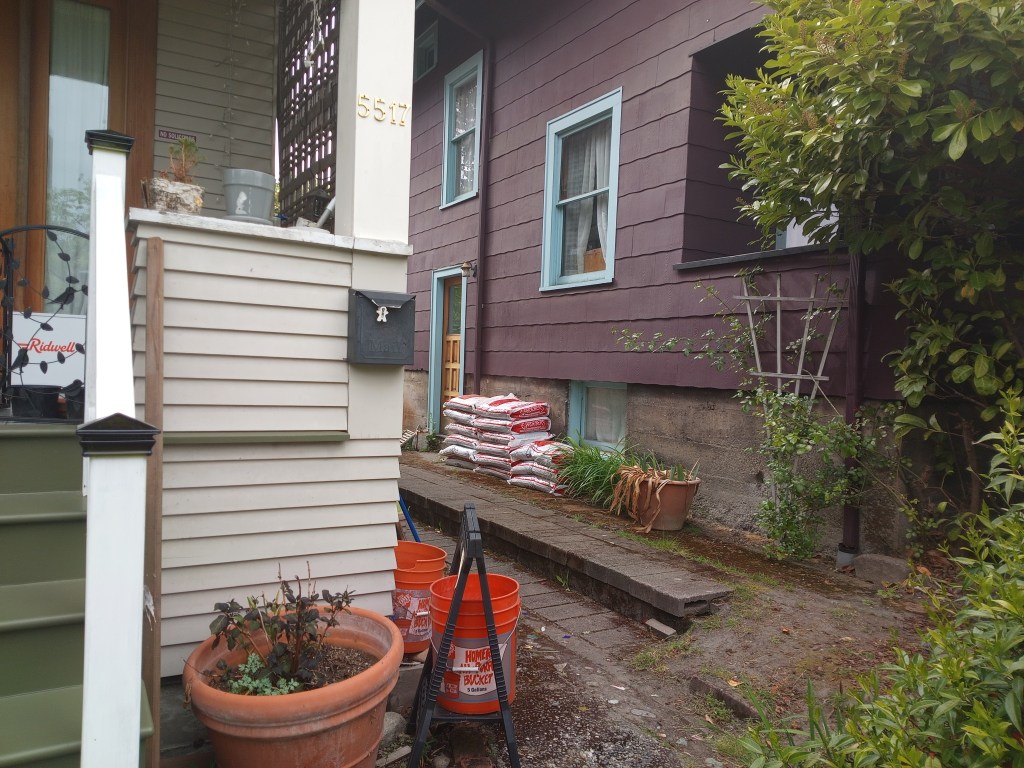
University of Washington: In early 1974, the 21-year-old psychology major lived in a pale green house that wasn’t very far from the University of Washington campus on 12th Avenue Northeast in the northern end of the ‘U-District, with four other women: Joanne Testa, Ginger Heath, Karen Skaviem, and Monica Sutherland. Lynda shared the basement with one of her roommates, their designated spaces separated only by a thin piece of plywood, and she worked part-time for ‘Western Ski Promotions’ broadcasting the ski condition report that was played on twenty different radio stations across Washington and Oregon; she concluded each sixty-second spot with her catchphrase: ‘this has been Lynda with your Cascade ski report.’

January 31, 1974: The day started out like any other normal day for Lynda Ann Healy: in the morning she woke up to her alarm at 5:30 AM, got dressed, then hopped on her bike and rode over to the ski report office, located just a few blocks away. After work she went on to spend the day in class, and attended chorus practice on campus sometime in the afternoon. 

At one point in the day Healy wrote a quick note to a good friend, describing how she was going to make what her mother called ‘company casserole’ for dinner for her parents and brother the following evening on February 1. It was an upbeat, happy letter, and in it she shared with her girlfriend how happy she was with life lately and how great things were going for her.

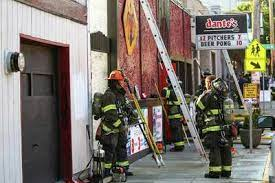
According to Ann Rule’s true crime classic, ‘The Stranger Beside Me,’ at 5 PM that evening her roommate ‘Jill Hodges’ (which is a pseudonym, and really Joann Testa) picked Lynda up on campus and and they went home and ate dinner with their other roommates; when Lynda was finished eating she borrowed one of the girls cars and ran to a nearby Safeway, returning home around 8:30 PM. From there, Lynda, along with Joanne, Ginger, and a young man named Pete Neil, went to Dante’s Tavern, which was only a five-minute walk away. Because Pete had to catch the 9:41 bus home, the friends shared some beers and called it an early night and left shortly after 9:30 PM. When the group of friends arrived back at Healy’s house, Neil grabbed some of his records and left to catch the bus. 

At some point after Pete left Heath’s brother and one of his friends stopped by for a visit, and as everyone settled down in front of the TV Lynda left the room to call her boyfriend, and the two talked for about an hour. Even though everyone hadn’t returned home yet the atmosphere in the house was beginning to settle down, and the girls started to get ready for bed.  

According to Kevin Sullivan’s 2009 book, ‘The Bundy Murders: A Comprehensive History,’ in an odd foreshadowing of events, it has been reported that one of the young women saw a ‘shadow’ that night which ‘moved’ just outside a window on the side of the house, but apparently thought little else about it. Karen Skaviem, who had been out studying at the library before she went out with her boyfriend for a few drinks, returned home around midnight, and noticed that ‘a single living room light was on,’ When she got inside Karen notices that Joann’s light was still on and stopped by her room for a chat, and around 12:45 PM the two women said goodnight and Skaviem went to the basement, where she had the room next to Healy’s. As she walks down the steps she didn’t check to make sure the door leading out of the basement was locked, and noticed that the only light that was on was in the storage area, and as Karen walked by, she noticed that Healy’s lights were off and she assumed she was asleep. She would later tell detectives that she had some problems settling down that night and didn’t fall asleep until around 1:30 AM; she heard nothing out of the ordinary the rest of the night. 

In the time that the girls lived in the mint green house on 12th Avenue Northeast, they had lost a few sets of keys for their front door, and although they intended to get replacement sets made they usually just left it open ‘as a courtesy to those coming and going late at night. This would prove to be a fatal mistake, for the killer of young woman, long before anyone had gone to bed that evening, would place his hand on the doorknob and turn it ever so gently until the door gave way and he was free to enter the house, something he chose not to do. No, he reasoned, he could return later when everyone was in a deep sleep and explore the dwelling at that time (Sullivan, ‘The Bundy Murders, 17-18).’ 

At 5:30 AM on February 1, 1974 Skavien woke to her roommates alarm going off, but stayed in bed until her own clock went off at 6 AM. This was unusual. Karen got up and turned off both alarms and immediately noticed that Lynda’s room had been cleaned and was near spotless and that her bed was made, which was unusual as it was something that she usually waited to do when she got back from work. Even though the partition between the girls rooms was thin, Karen said that she hadn’t heard any disturbances during the night.

Skavien said ‘I got up, Lynda’s alarm was still going. I went past her room and heard the radio but thought she was lying in bed listening to it and didn’ have to go to work. At 6:30 the phone rang, it was Northwest Ski Promotions asking why Lynda wasn’t at work. I went to her room and called her. When she didn’t answer I turned on the light and went in. Her radio was still going and her bed was made, perfectly. I was concerned she hadn’t slept in it because there were no wrinkles and the spread was ticked neatly under the pillow.’ As Karen slowly began to assess the situation she realized that the back door was left open, which was out of character for Lynda: typically she would leave her bicycle parked inside of the house in the hallway just next to the side door ‘on the landing,’ and would make sure the door was locked behind her.

Skavien said she then called up the stairs to see if any of the other girls knew where Lynda may have been, but they told her that no one had seen her. Monica responded that perhaps she was out somewhere with her boyfriend, a suggestion that was immediately shot down by the others because it was atypical of their friend, as she wouldn’t blow off her responsibilities like that. Around 6:30 AM the Northwest Ski Promotions called and asked where Lynda was, as she never made it into work. They quickly realized that her bike was still in the basement, which caused fear and panic among the girls who were beginning to suspect the worst, as Lynda was very dependable and had never missed a day of work. One of the housemates said that the last time that she saw her was at midnight on Thursday before, and ‘it just isn’t like Lynda. She was just 15 minutes late once, and she felt terrible about it.’’

At around 4 PM Joann started calling around to Healy’s friends and acquaintances to see if anyone could provide an explanation as to where she may have been. No one had heard from her, and she hadn’t been seen around campus all day. When Jim and Robert arrived for dinner at 6 PM on the evening of February 1st (Joyce was supposed to meet them shortly after) they were told that Lynda was missing, and right away the family knew that the situation was serious. Mr. Healy called his wife and told her their daughter was gone, and where Jim wanted to wait a little longer to see if she would eventually show up, Mrs. Healy immediately called the police. 

Two members of the Seattle PD showed up shortly after 6 PM and spoke with the roommates and Mr. Healy, and took down some general information about Lynda and took a brief look inside of her bedroom. When the officers and the Healy’s left Monica said they received a strange telephone call with nobody on the other end, clarifying the ‘line was open but the caller ‘refused to speak’ and she could hear only the faint sound of breathing.’ After that incident the roommates received two more phone calls of a similar nature, and despite telling police nothing ever came of it.

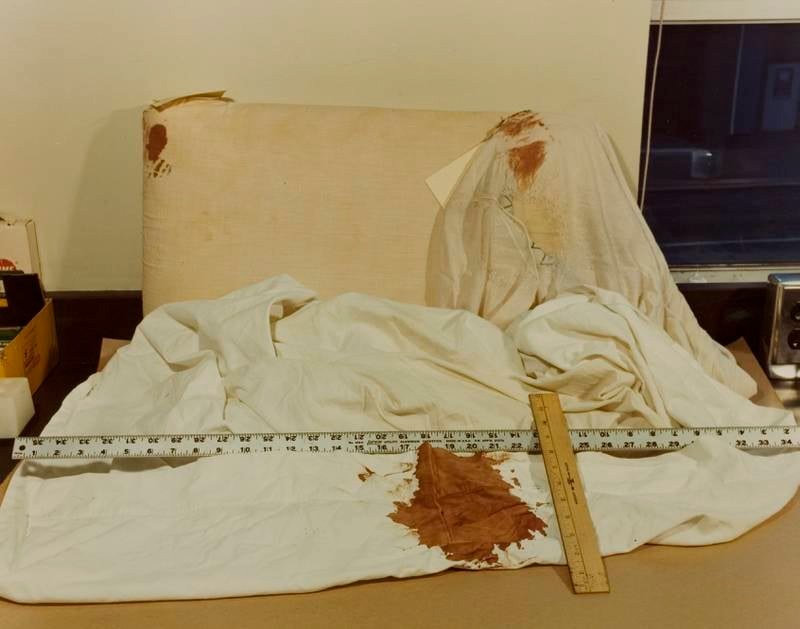
A few hours later around midnight a Seattle homicide detective stopped by the house and did a walk through of the residence, and when he pulled back Lynda’s bed sheets to the girls horror they found a blood soaked pillow and blood soaked sheets; missing from the scene was her pink satin pillowcase, house keys, and red backpack (that possibly contained a yellow ski cap and some random books). When they looked in her closet, they discovered the nightgown she had been wearing earlier, which had dried blood on the neckline. They also noticed that the clothes she had worn the day prior were missing, which included a pair of jeans, a blue-trimmed white smock, waffle stomper boots, a belt, several turquoise rings; this suggests her abductor took off her pj’s and dressed her before he stole her away into the night. One of Healy’s roommates also commented that her bed was made up in an unusual manner, and that she never ‘tucked the blanket with the pillow underneath,’ and always placed it on top. According to Joann Testa, she ‘a policeman pulled back the spread for the first time. I saw that the pillowcase was gone and that there were blood stains on the pillow as well as one fairly large blood stain on the sheet near the pillow. As far as I know, Lynda always kept a pillowcase on her pillow.’ 

In the early stages of the investigation it was briefly suspected that maybe Lynda had gotten a nosebleed, and had taken off her nightgown, changed back into her clothes then ran to seek medical attention. According to Lieutenant Pat Murphy with the Seattle Police Department: ‘the room was very neat. There was no signs of foul play in the rooms except some blood on the pillow and head area of the sheets of Lynda’s bed;’ he also noted that her bed had been ‘made up neatly.’

According to Kevin Sullivan’s book, ‘Ted Bundy’s Murderous Mysteries: The Many Victims of America’s Most Infamous Serial Killer,’ in the weeks prior to her disappearance, Healy had talked to her roommates about some acute stomach pain she was having that were so bothersome that she scheduled a Doctors appointment for… but that night they said she was ‘lively, talkative and feeling good. Their conversation was light, from psychology to music, not focusing on any specific subject.’

The police searched every inch of Lynda’s room, but came up with no explanation as to where she could have gone. Several days after Lynda was last seen alive on February 4, 1974 a call was received by 911 from an unknown male caller that told the operator, ‘listen, and listen carefully: the person who attacked that girl on 8th last month and the person who took Lynda Healy are one and the same. He was outside both houses. He was seen.’ When the 911 operator asked who was calling, the man said, ‘no way are you going to get my name,’ and immediately hung up; nothing further came from the incident.

In the days that immediately followed, Healy’s disappearance barely made the news: the very first story about her was buried on the 35th page of the February 4, 1974 edition of The Seattle Times. Almost immediately after their daughter disappeared Jim and Joyce Healy hired a private investigator to look into the case, and the family initially wondered if maybe she ran off to live with family in Oregon. After some time, the PI came back to the Healy’s and told them that all the leads he received hit ‘dead ends.’ A reward was offered for information leading to her safe return, and it didn’t take long for Seattle investigators to strongly suspect foul play.

‘The Seattle Eight’ (or nine, officially):’ Before Lynda Ann Healy vanished Bundy’s first confirmed, ‘on-the-record’ victim was Karen Sparks, who had been asleep in her basement bedroom when he attacked her in the residence that she shared with three male friends located near the University of Washington campus. According to Sparks, who was a dance major that miraculously survived the attack and went on to get married and have a family: ‘he took some metal thing and he rammed it up my vagina and it split my bladder.’ In the days prior to the assault, she told detectives that she remembered seeing an older man staring at her in a nearby laundromat, and ‘I’d look at him, he’d look away. I didn’t really think too much about it.’

Sparks lived on 8th Avenue Northwest, which was only eleven blocks away from 12th Avenue NE where Lynda lived. After Karen fell asleep, Bundy attacked her and relentlessly beat her in the head with a metal rod from her bed frame, which he also used to penetrate her vagina so brutally that she experienced severe internal damage: ‘he took some metal thing and he rammed it up my vagina and it split my bladder.’ I’ve also seen it reported that her assailant used a speculum and it is worth mentioning that Ted did at one time work as a delivery driver for Pedline Supply Company (which is a family-owned medical supply company), however one was not found left behind at the scene of the crime. 

Sparks lived on 8th Northwest, just eleven blocks away from Lynda Ann Healy. After Karen fell asleep, Bundy attacked her and relentlessly beat her in the head with a metal rod from her bed frame, which he used to penetrate her vagina so brutally that she experienced severe internal damage: ‘he took some metal thing and he rammed it up my vagina and it split my bladder.’ I’ve also seen it reported that the assailant used a speculum, and Bundy did at one time work as a delivery driver for Pedline Supply Company, a family-owned medical supply company, however one was not found behind the scene of the crime. 

Thankfully, before Bundy could take the attack to the point of no return he got spooked and fled Karen’s bedroom. Sparks was left beaten, unconscious, and bleeding until around 7:00 PM the following evening when one of her roommates checked on her: ‘Bob came down and he saw blood on my pillow, and he called 911 right away and then called my mother.’ The attack had been so severe that she was unconscious for ten days, and when she came to, she had no memory of what happened and was not able to give detectives any details about her assailant. When Lynda disappeared less than a month later Karen’s father immediately connected the dots between her and the attack on his daughter, although LE was much slower to make the connection.

A little over five weeks after Healy vanished into thin air nineteen-year-old Donna Gail Manson was last seen waving goodbye to her roommates early in the evening on March 12, 1974. The Evergreen State College student had plans to attend a jazz concert on campus, and had changed her outfit a few times before eventually settling on a red/orange/green striped top, blue or green slacks, and a black fuzzy maxi-coat.Manson was a highly intelligent young woman, but not great at school and only a ‘better-than-average’ student, however she was incredibly creative and was an accomplished flautist, that always had her camera with her (just like Lynda Healy did).  Donna never made it to the concert, and as the months passed by more and more young college aged women around Washington state began to go missing.

After Donna, on April 17, 1974 eighteen-year-old student Susan Elaine Rancourt was the next to disappear. Rancourt was a straight-A student at Central Washington University in Ellensburg where she studied biology, and in order to afford school she worked full time hours over two different jobs. From the get-go, the Rancourt’s knew that something terrible had happened to their daughter, and according to her father, Dale: ‘she always knew what she wanted, and was a very logical person, very predictable.’ 

After Sue Rancourt the next to vanish was Brenda Carol Ball, a recent college drop-out that was last seen leaving The Flame Tavern in Burien after seeing  band play late on May 31, 1974. The 22-year-old seemed to be at a crossroads in her life, and roughly two weeks before had stopped attending class at Highline Community College. Her sister told reporters that her family hadn’t given up hope after she went missing, and when her remains were eventually recovered they: ‘thought we were prepared for it, but we weren’t.’

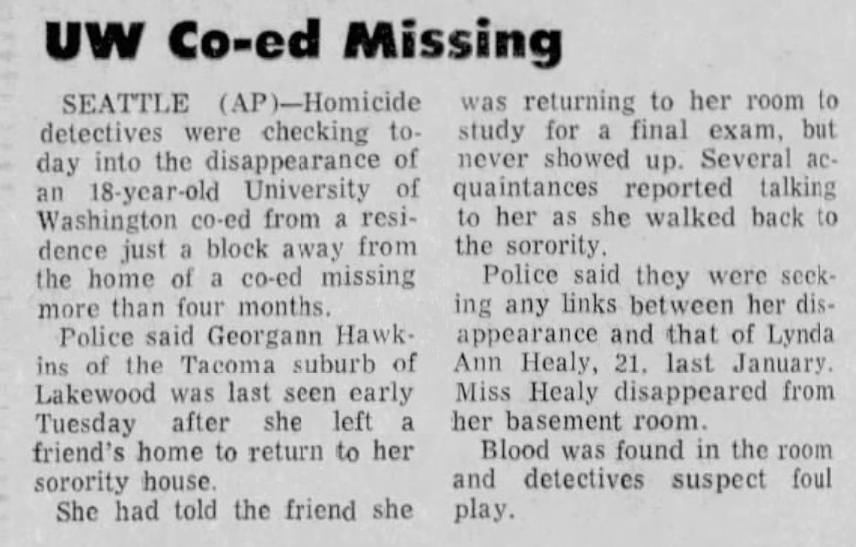
Less than two weeks later on June 11, 1974 eighteen-year-old Georgann Hawkins disappeared from an alleyway outside of her Kappa Alpha Theta Sorority house on the University of Washington campus. She had left a party early (and by herself) but before returning home had stopped by her boyfriend’s frat house to pick up some Spanish notes for her final that was the next day. In the days that followed, Warren and Edith waited by the phone waiting for word that their daughter was safe, which never came, and according to her father: ‘it doesn’t look very good.’ 

After George was the two infamous Lake Sammamish murders that took place on July 14, 1974 in Issaquah, WA: Twenty-three-year-old newlywed Janice Ann Blackburn-Ott lived in Issaquah and worked as a caseworker for King County’s Youth Services Center, while her husband Jim was away attending graduate school in California. In the early afternoon before she left her shared house on her yellow Tiger bicycle, Jan scribbled a note for her roommate letting them know that she was going sunbathing at Lake Sam, and at the bottom had drawn a sun. Two eyewitnesses that were at Lake Sam that afternoon reported seeing her at roughly 12:30 PM leaving with an attractive young man whose arm was in a cast. 

Only four hours later that same young man returned to Lake Sammamish, and abducted eighteen year old computer programming student Denise Marie Naslund, who was enjoying an afternoon at the beach with her boyfriend and another couple. She had had a few beers and taken a few valiums, and disappeared after she went off to the restroom by herself at roughly 4:30 PM; her mother Eleanore Rose said Denise had the kind of ‘helpful nature’ that would directly place her in the line of danger. Just as with Ott, witnesses that were at Lake Sam that afternoon reported that they saw a young man with his arm in a cast at roughly the time that Naslund went missing.

(Now deceased) Seattle Police Captain Herb Swindler was assigned to work the Healy investigation and eventually the other missing Seattle women. In July 1974 he publicly stated that there was no evidence that pinpointed any of the disappearances with the others, however he did admit that there were some similarities: ‘but, the real connection between the cases is not in the hard evidence, but in the lack of evidence. Usually in a series like this, bodies start to show up. There have been no bodies, none at all, and that is very unusual.’ About the disappearances, Captain Swindler said there were many theories about what may have happened to the young women, and that they ‘get people calling in to tell us ‘the flying saucers took them’ and ‘they’re being spirited away to white slavery’. Everybody’s got a theory, but no evidence.’

Well over a year after Healy was last seen alive, on March 1, 1975 two Green River College students found human remains in a thick wooded area on Taylor Mountain, located just outside of Seattle. A skull uncovered by detectives would later be identified as belonging to Brenda Ball, which is a tad ironic because police initially were hesitant on linking her to the other missing women because she was a bit older than them, was not (technically) a college student, and was abducted from a bar and not an academic type setting. A further search of the area uncovered more bones, and just two days later on March 3, 1975 they came across Lynda Healy’s lower mandible as well as parts of Susan Rancourt and Roberta Parks.

Upon further examination by the Medical Examiner, it was noted that Healy’s skull bore marks that hinted that she had suffered a brutal beating in her final moments of life; Sue Rancourts decapitated skull was also found to be severely fractured. 

Third-Person Confession: While Ted was on death row in Florida on April 4, 1980 he had his first sit down with journalists Hugh Aynesworth and Stephen G. Michaud, and during their time together they discussed the abduction and murder of Lynda Ann Healy: Bundy said that earlier in the afternoon on January 31, 1974 the killer had stalked the young coed and followed her to a Safeway store, and even claims that he broke ‘into her home whilst she was out running errands.’ He also told them that the killer had plans of returning later that evening, unsure if she would be home and what situation he would walk into. During this pseudo-confession, Ted clarified that Healy was ‘battered unconscious’ in her bed then carried out of her bedroom and placed her in his waiting Volkswagen; he also volunteered that he had already taken out the front passenger seat of his car so he could better transport his ‘cargo.’

From 12th Avenue NE, Bundy took the unconscious Lynda to Taylor Mountain, located roughly twenty miles east of Seattle, where he forced her to remove her pajama’s (not clothes?) and raped her. When he was finished, he bludgeoned her to death and left her body only partially buried, where scavengers quickly dispersed it throughout Taylor Mountain. Both journalists said Ted briefly appeared to show some remorse over killing Healy, but it didn’t last very long. He then tried to justify the murder by telling himself. ‘well, listen you, you fucked up this time, but you’re never going to do that again. So let’s just stay together, and it won’t ever happen again.’

Ted told the journalists that he was stuck in a position where he couldn’t just let the young woman go out of fear of getting caught, and told them that he had to kill her; both men later said that although he was ‘mostly confident,’ he did stutter a few times when he got nervous, which was something they noticed happened when he talked about aspects of the murders which made him feel uncomfortable.

However, Ted said that he eventually HAD to do it again, and after a brief period of inactivity his urge to possess, to control and kill another young woman would soon come back to him and he would begin to think about killing another victim. He also explained that with each murder, he would feel less confusion, fear, and apprehension and the dormancy period in between victims would become shorter and shorter as he got over the feeling of remorse and self-loathing over what he had done at a faster rate as time went by.

Dr. Bob Keppel, who at that time was a fresh faced detective with the King County Sheriff’s Department, said that the crime scene related to the disappearance of Lynda Healy was ‘unique,’ and stood out in his memory for a long time: ‘I had never seen a crime committed before and that’s where I got my start.’ … ‘We couldn’t do anything except sit and man a telephone. It was pretty bad.’ He elaborated that it almost seemed that someone had broken into Lynda’s residence, brutally bludgeoned her, took her pj’s off then put her street clothes back on her, neatly made the bed, then carried her off into the night without leaving behind a trace. In the days after she vanished, detectives spoke with over sixty-five of her friends, acquaintances, family members, schoolmates, and former boyfriends, but didn’t come up with anything helpful.

In January 1974 Bundy had been living in a second story room at the Rogers Boarding house located on 12th Avenue NE, which was only three blocks away from where Lynda Healy lived. At the time of her disappearance, Ted had been attending night law school at the University of Puget Sound, and according to his schedule he had class late on Monday’s, Wednesday’s, and Friday’s, however on Tuesday’s and Thursday’s things wrapped up for him early. Lynda went missing after midnight on a Thursday night, so Bundy wouldn’t have been tied up with school. Also, according to his long-term girlfriend Elizabeth Kloepfer, he often went to the bar that Healy went to with her friends the evening she was last seen alive. Additionally, Ted was in between jobs at the time: his previous position as the Assistant to the Washington State Republican Chairman ended in September 1973, and he remained unemployed until May 3, 1974 when he got a job at the Department of Emergency Services in Olympia (he was there until August 28, 1974).

A Frightening Incident: According to Lynda’s roommate Monica Sutherland, roughly two months before she disappeared she was alone in the laundromat on the avenue close to their home when she noticed a man in an orange pickup truck stop and begin to stare at her. He then parked the truck and came in without any clothing and briefly fooled around with a washing machine before proceeding to check the back door of the building as he was leaving. He never said a word to Lynda, but the incident was unusual and she said that it frightened her.

Sutherland also told detectives about another incident that took place only a month before Lynda vanished: she had come home and was by herself inside the residence when suddenly she heard the neighbor’s dog start barking, and when she looked outside the front door she saw a young man standing on the bottom step. He had been holding a little dog firmly around the neck, and had been roughly shaking it. Sutherland remembered that she ran outside and heard neighbors yelling at the man, who had claimed that the dog had attacked him, put it down, then fled from the scene.

A coincidence that is not widely discussed (and only recently made public with the release of the book, ‘Dark Tide’) is that Ted’s cousin, Edna Cowell had once lived with two previous roommates of Lynda Healy while she was attending the University of Washington; it is unknown if he ever had been introduced to Healy through these channels. Also strange: in 1972, both Ted and Lynda were both Psychology majors at the University of Washington, however no evidence exists proving that they had any sort of class or seminar together.

Jim Healy passed away at the age of 72 on June 22, 1998 in Bellevue WA, and Joyce Ann Healy died from complications of COVID at the age of ninety-three on December 27, 2020 in Redmond, WA. According to her obituary, Joyce loved the beach, and the family would often vacation in Ocean Shores, WA where they spent their time beachcombing, riding dune buggies, and roasting hotdogs. After her children flew the nest she went back to school and got a BS in Computer Science from Bellevue College; she learned Cobol (or Common Business Oriented Language) and Fortran (Formula Translation) and went on to have an incredibly successful second career as a computer programmer.

Joyce enjoyed ballroom dancing, and when her husband was alive the two often took cruises together and went just about everywhere; they even became ‘Gold Members’ on several Cruise Lines. In 2012, Mrs. Healy moved into the Emerald Heights Retirement Community in Redmond, where she made lots of new friends and continued to have many adventures while living there.

Lynda’s siblings Robert and Laura Healy-Friedman both still reside in Washington, along with their spouses and children. In the days prior to his execution in January 1989, Ted told Seattle detectives about quite a few unsolved murders across Washington, Utah, Oregon, Colorado, California, and Idaho, and he finally claimed responsibility for killing Lynda Ann Healy, who he said was his ‘first victim.’

Works Cited:
Pasqualini, Kym L. ‘Ted Bundy’s First Victims: Lynda Ann Healy’ (December 16, 2020). Taken June 12, 2025 from https://kympasqualini.medium.com/ted-bundys-first-victims-lynda-ann-healy-9bdb3177c3c4
Sullivan, Kevin M. ‘The Bundy Murders: A Comprehensive History.’ (2009).
Winn, Stephen. ‘Ted Bundy: The killer next Door.’ (1979).

Joyce Healy giving baby Lynda a bath. Picture courtesy of the Healy family archives.
Joyce holding baby Lynda. Picture courtesy of the Healy family archives.
Another shot of Joyce holding Lynda. Picture courtesy of the Healy family archives.
A picture of Joyce holding Lynda and her baby brother Robert. Picture courtesy of the Healy family archives.
Another shot of Joyce holding Lynda and baby Robert. Picture courtesy of the Healy family archives.
Joyce, Lynda, and Robert playing outside. Picture courtesy of the Healy family archives.
The three Healy children. Picture courtesy of the Healy family archives.
Lynda holding a rather large cat. Picture courtesy of the Healy family archives.
Lynda dressed in her ballet outfit. Picture courtesy of the Healy family archives.
A screenshot of Lynda Healy from the Amazon special, ‘Falling for a Killer.’
A screenshot of Lynda and Robert Healy from the Amazon special, ‘Falling for a Killer.’
A screenshot of Lynda Healy and her brother Robert around Christmastime from the Amazon special, ‘Falling for a Killer.’
Another screenshot of Lynda Healy and her brother Robert around Christmastime from the Amazon special, ‘Falling for a Killer.’
Lynda Ann Healy from her days at Newport High School.
Lynda Healy. She always reminded me a bit of Lacey Peterson in this picture.
Lynda Healy and her mother, Joyce.
A casual Lynda.
Another b&w of Lynda.
Nice catch.
Beautiful Lynda.
Lynda, on the right.
The Healy’s.
A picture of Joyce, Laura, and Robert Healy.
Joyce and James Healy, the couple on the right.
Joyce and Laura Ann Healy.
Joyce and her three kids.
Lynda and her camera, which her family said she never went anywhere without.
Another picture of Lynda by the water.
Lynda Ann Healy’s missing persons flier.
Lynda Ann Healy’s death certificate.
A sign for Linda’s POE: the Northwest Skier.
What Dante’s Tavern looked like, before it burned down in 2015.
The inside of Dante’s Tavern before it burned down.
The ‘Bundy Booth’ at Dante’s Tavern in Seattle, WA.
Firefighters putting out the electrical fire at Dante’s Tavern in 2015. Photo courtesy of OddStops.
What Dante’s looks like today, located at 5300 Roosevelt Way in Seattle; in 2015 the building was destroyed by an electrical fire. Picture taken in May 2025.
A statement from Dr. Bob Keppel in regards to Bundy’s schedule and Lynda Ann Healy, who were both taking Psych 498 and 499 in the winter and spring quarter of 1972.
Lynda Ann Healy’s school schedule from the semester she was killed.
Part one of Lynda Healy’s University of Washington transcript.
Part two of Lynda Healy’s University of Washington transcript.
Lynda Ann Healy’s one-time residence. Picture courtesy of the King County Sheriff’s Department.
The home at 5517 12th Street NE in Seattle, where Lynda resided with her roommates. Picture courtesy of the King County Sheriff’s Department.
The front yard of Lynda Healy’s one-time residence. Picture courtesy of the King County Sheriff’s Department.
The side yard of Lynda Healy’s one-time house. Picture courtesy of the King County Sheriff’s Department.
The side door to Lynda Healy’s one-time residence. Picture courtesy of the King County Sheriff’s Department.
The side of Lynda Healy’s one-time house. Picture courtesy of the King County Sheriff’s Department.
The side door showing the stairwell leading to Lynda Healy’s basement bedroom. Picture courtesy of the King County Sheriff’s Department.
The door and stairs that lead to Lynda Healy’s bedroom. Picture courtesy of the King County Sheriff’s Department.
The stairs leading to Healy’s basement bedroom. Picture courtesy of the King County Sheriff’s Department.
A vacuum at the bottom of the stairs at Healy’s shared residence. Picture courtesy of the King County Sheriff’s Department.
The stairs leading down to Lynda Healy’s basement bedroom. Picture courtesy of the King County Sheriff’s Department.
Another picture of Healy’s bedroom. Picture courtesy of the King County Sheriff’s Department.
Lynda Healy’s basement bedroom. Picture courtesy of the King County Sheriff’s Department.
Some blood on Lynda Healy’s mattress. Picture courtesy of the King County Sheriff’s Department.
Crime scene photo of the inside of Lynda’s bedroom, note blood on the mattress. Picture courtesy of the King County Sheriff’s Department.
Lynda’s bloody bedding. Picture courtesy of the King County Sheriff’s Department.
Picture of the blood found on Lynda’s bedding. Picture courtesy of the King County Sheriff’s Department.
Lynda Healy’s house, located at 5517 12th Ave NE in Seattle. Picture taken in May 2025.
The porch at Lynda Healy’s one-time residence. Picture taken in May 2025.
The side yard of Lynda Healy’s one-time residence. Picture taken in May 2025.
The side of Lynda Healy’s one-time residence. Picture taken in May 2025.
The roadway located in the back of Healy’s former residence. Picture taken in May 2025.
The narrow roadway located in the back of Lynda Healy’s former residence, picture taken in May 2025.
The back of Lynda Healy’s former residence, picture taken in May 2025.
The trail on the side of Lynda Healy’s former residence, picture taken in May 2025.
A VW bus that was sitting outside of Healy’s residence in May 2025.
An article about the disappearance of Georgann Hawkins that mentions Lynda Healy published in The Daily Herald on June 13, 1974.
An article about the disappearance of Georgann Hawkins that mentions Lynda Healy published in The Spokane Chronicle on June 13, 1974.
An article about the disappearance of Georgann Hawkins that mentions Lynda Healy published in The Tri-City Herald on June 13, 1974.
An article about the missing Seattle women that mentions Lynda Healy published in The Columbian on June 19, 1974.
An article about the missing Seattle women that mentions Lynda Healy published in The Kitsap Sun on July 2, 1974.
An article about the missing Seattle women that mentions Lynda Healy published in The Daily News on July 2, 1974.
An article about the missing Seattle women that mentions Lynda Healy published in The The Columbian on July 3, 1974.
An article about divers searching for the remains of Jan Ott and Denise Naslund that mentions Lynda Ann Healy published in The Tri-City Herald on July 17, 1974.
An article about the missing Seattle women that mentions Lynda Ann Healy published in The Daily Herald on July 22, 1974.
An article about the reward fund for the missing Seattle women that mentions Lynda Healy published in The Kitsap Sun on July 27, 1974.
An article about the missing Seattle women that mentions Lynda Ann Healy published in The News Tribune on July 28, 1974.
An article about the missing Seattle women that mentions Lynda Ann Healy published in The News Tribune on July 28, 1974. 
An article about the missing Seattle women that mentions Lynda Ann Healy published in The News Tribune on July 28, 1974.
An article about the missing Seattle women published in The Kitsap Sun on July 29, 1974.
An article about the discovery of Ted’s Issaquah burial site that mentions Lynda Healy published in The News Tribune on October 14, 1974.
An article about the King County police turning to ‘occult clues’ in an attempt to solve the case of the missing Seattle women published in The Daily Herald on August 15, 1974.
An article about the missing Seattle women that mentions Lynda Healy published in The Longview Daily News on August 27, 1974.
An article about the missing Seattle women that mentions Lynda Ann Healy published in The Olympian on August 28, 1974.
An article about the missing Seattle women that mentions Lynda Ann Healy published in The Daily Herald on August 31, 1974.
An article about the missing Seattle women that mentions Lynda Ann Healy published in The Daily Herald on September 11, 1974.
An article about the missing Seattle women that mentions Lynda Ann Healy published in The News Tribune on October 6, 1974.
An article about the discovery of some skeletal remains that mentions Lynda Ann Healy published in The Spokesman-Review on October 16, 1974.
An article about the discovery of the Taylor Mountain burial site that mentions Lynda Healy published in The News Tribune on March 7, 1975.
An article about the discovery of the Taylor Mountain burial site that mentions Lynda Ann Healy published in The Olympian on March 7, 1975.
An article about the discovery of the Taylor Mountain burial site that mentions Lynda Ann Healy published in The Daily Herald on March 7, 1975.
An article about the unsolved Seattle disappearances that mentions Lynda Ann Healy published in The Daily Herald on April 8, 1975.
An article written after Bundy’s Chi Omega massacre and second escape that mentions Lynda Healy published in The Daily News on March 7, 1978.
An article written after Bundy’s Chi Omega massacre and second escape that mentions Lynda Healy published in The Daily News on July 25, 1979.
An article written on the day of Bundy’s execution that mentions Lynda Healy published in The Daily Herald on January 24, 1989.
Herb Swindler standing next to pictures of the missing Seattle women.
Lynda Healy painting her basement bedroom with Joann in the background.
A b&w shot of Lynda’s roommates doing an interview in relation to her disappearance.
A screenshot of Lynda’s roommates doing an interview in relation to her disappearance.
Bundy’s whereabouts on January 31, 1974 according to the ‘1992 FBI Bundy Multiagency Team Report.’
Ted Bundy’s first year schedule at law school at the University of Puget Sound, 1973 to 1974.
Joyce Healy as a baby.
A young Joyce Healy.
A young Joyce with her family.
Joyce Haly ast her first college graduation from the University of ORegon in 1949.
A young Joyce Healy.
Joyce Healy.
Jim Healy from the1943 Grant High School yearbook.
James and Joyce Healy’s marriage certificate.
James Russell Healy.
The Healy’s marriage announcement published in The Oregon Daily Journal on September 5, 1949.
Laura Healy’s sophomore year picture from the 1973 Newport High School yearbook.
Robert Healy’s senior year picture from the 1973 Newport High School yearbook.
Joyce Healy.
This is my favorite picture of Mrs. Healy.
The final resting place of James, Joyce, and Lynda Healy.