Introduction: 1975 in Grand Junction, Colorado was marked by a sudden and shocking wave of violent crimes, which included multiple murders (and disappearances) of young women (and children), which traumatized the local community. In the beginning stages of the investigations (long before modern DNA profiling was available), local suspicion frequently fell on acquaintances or family members of the victims, and all cases have been solved in subsequent years thanks to advanced scientific methods as well as dedicated cold case investigators.
The key cases include Denise Oliverson (April 1975), mother and daughter Linda and Kelley (Ketchum) Benson (July 1975), Patricia Botham, Linda Miracle and her two young sons, five-year-old Troy and three-year-old Chad (August 1975), and nineteen-year-old college student Deborah Tomlinson (December 1975).
Isaac Carmickle: on January 27, 1975, thirty-year-old Virgil Carmickle shot and killed his father, fifty-five-year-old Isaac Carmicle after an argument they had in the family home, located at 3047 F Road in Grand Junction. He was raised in Colorado but had lived in California before he returned to Rangely in March/April 1974; as a child he spent some time at Lookout Mountain School for Boys (a state run juvenile center for wayward youth) because of ‘inappropriate conduct,’ and despite having a residence in Rangely, Virgil was saying at his parents’ house at the time. Virgil’s mother Elsie called police after the shooting, who (along with his twelve-year-old sister, Mary) had witnessed the entire incident; they both were taken to St. Mary’s Hospital, where they were treated for shock. When Virgil was taken into custody, Sheriff’s Deputy Mike Martsolf also confiscated a 30-30 rifle as well as a box of ammunition from his vehicle.
In April 1975 he was found innocent by reason of insanity under the ‘irresistible impulse’ clause in the state’s mental defect statute,’ which states if a person is criminally insane if suffering ‘such an impairment of the mind by disease or defect as to destroy the willpower and render him in capable of choosing the right and refraining from doing the wrong;‘ he was committed to the Colorado Mental Health Institute in Pueblo, Colorado for ‘an indefinite period of time.’ About the plea, Mesa County District Attorney Terrance Farina said: ‘the people are not going to resist,’ and an investigation into Carmickle’s background indicated ‘a severe mental disorder.’ Since his release Virgil has had numerous run-ins with LE, the most serious being in June 2020 when he stabbed a truck driver (while highly intoxicated) who had been unloading merchandise outside of a store in Vernal, UT; he was charged with attempted murder he stabbed a truck driver unloading merchandise at a store.
Denise Lynn Oliverson: the pretty twenty-four-year-old brunette disappeared on April 6, 1975 while riding her bicycle to her parents’ house after getting into a fight with her boyfriend (it is a popular misconception that she was still married at the time of her abduction, but she was not); she never arrived at her intended destination and her ten-speed bicycle and sandals were discovered the following day under the Fifth Street Bridge near the Colorado River.
Ted Bundy: though long suspected to be a victim of Theodore Robert Bundy, Denise’s disappearance remained an official mystery for over four decades; investigators later found a gas receipt that placed the killer in Grand Junction on the same day that she disappeared, and during his January 1989 confession, he told investigators he that he abducted the young divorcee (although he did not give her name), killed her in his car near the Utah state line, then dumped her body in the Colorado River (about five miles west of the city). As of September 2026, her remains have never been recovered, but the Grand Junction PD officially closed the cold case in August 2019 after they uncovered an overlooked audio recording originally obtained by the Vail Police Department where Bundy explicitly referenced killing Denise Oliverson and discarding her body in the river.
Linda, Miles, and Knolly Clark: on June 6, 1975 twenty-four-year-old Linda Lee Clark shot her two children then turned the weapon on herself in an apparent ‘murder/suicide’: she killed four-year-old Miles, and her eight-month-old son Knolly sustained life-threatening injuries before she shot herself in the head. The three lived with Linda’s mom (Virginia Snyder) and her two younger brothers (sixteen-year-old Fred and thirteen-year-old Leonard) in her house in Whitewater. It was the older boy that made the gruesome discovery at around 6 PM when he found his sister and nephews in one of the back rooms of the house: the baby had been lying in his crib, and Miles was in his bed. Linda was lying next to Miles’s bed. A .38 caliber pistol was lying on the floor and sheriff’s deputies found three .38 caliber bullets in the vicinity of the bedroom.
None of Linda’s neighbors reported hearing gunshots, and one reported the young mother and her sons moved in about a month before the incident, and that they lived in Denver until about a year prior. She also said both Linda and Virginia were separated from their respective spouses, and both men were suspected to be living in the Denver area. The owner of the house said the last time her tenant stopped by to pay rent she seemed very ‘discouraged and down,’ and that she ‘wished she had made a harder try at marriage. Regarding the incident, Sheriff Dick Williams said there was ‘nothing to lead me to believe Mrs. Clark did not shoot her sons and then kill herself.’
Another neighbor of Clark’s said her marriage situation was ‘something ‘she didn’t talk about much,’ and marriage was a ‘part of her life she’d like to forget.’ A third neighbor named Edna Lawler babysat for her on occasion, and she said Linda ‘treated her kids perfectly,’ and had told her once, ‘if I give anything to my children, it would be their health.’ It is worth noting that, according to the user ‘marionumber1’ on the website ‘zodiackillerhoax.freeforum.net’ website, Linda’s mother disputes the fact that her daughter shot her children then herself and believes they were all murdered; additionally, Clark happened to know future victims Linda Benson and Linda Miracle.’ Knolly Clark was adopted by his biological aunt Kathy and lived in Brighton, CO until his mom and sister Rose died, when he moved back to Grand Junction. He died on September 6, 2022 at the age of forty-seven at the HopeWest Hospice Care Center.
Francis ‘Jerry’ Gerald Romisch: although the nineteen-year-old US Army soldier at Fort Carson wasn’t technically killed in Grand Junction, Jerry Romisch was born and raised in the area and was there the day prior to his death (he left GJ around 7 PM on June 16, 1975). As an adolescent he attended St. Joseph’s Immaculate Heart and Palisade High School, where he was a varsity wrestler; he was also a member of St. Ann’s Catholic Church. Romisch was shot ‘multiple times’ while in his vehicle (his autopsy report stated only that he suffered ‘multiple gunshot wounds’ and didn’t specify how many), which was a white two-door international brand pickup truck with license number NJ-379; the vehicle’s windshield had been ‘sprayed with bullets,’ and there were seventeen holes in total found scattered across it. It is believed he was shot while at a rest stop along Highway 115, south of Colorado Springs and it appears he tried to drive away afterwards only but made it a few hundred feet down the road (where his truck came to a stop against a barbed wire fence). His body was found lying on the ground outside the driver’s side door when he was discovered by a passing motorist. He had been wearing blue jeans, a brown belt, a brown shirt and green socks; the cowboy boots he had been wearing were not on his feet but were found close by. It’s also worth noting that Jerry’s brother Richard was also stationed at Fort Carson and was it rumored he had been working on a narcotics squad there. As of September 2026, the murder of Jerry Romisch remains an active and open cold case.
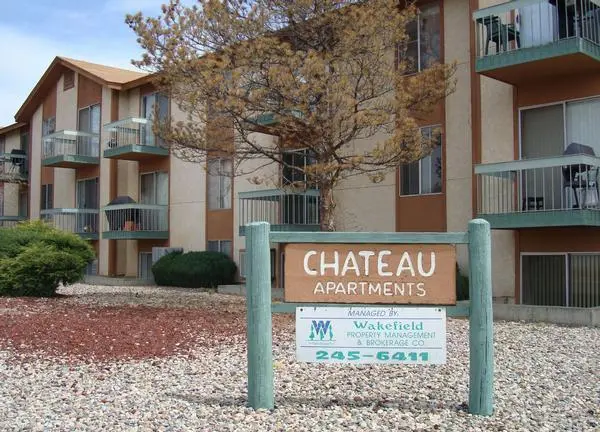
Linda Benson and her daughter Kelley Ketchum: on the evening of July 25, 1975, twenty-four-year-old Linda Benson and her five-year-old daughter Kelley Ketchum were found stabbed multiple times inside their residence at the Chateau Apartments in Grand Junction; they were found by Linda’s ‘common-law husband,’ Steve Benson, who had returned home from a multi-day work trip in Hayden (where he was working as a pipe fitter), and discovered their bodies inside their apartment. Linda had been nude on the floor of the master bedroom (one report said she was found at the foot of the bed), and though investigators noted the scene pointed to a sexually motivated crime, there were no clinical signs of rape; she had been stabbed multiple times. Kelley also suffered multiple stab wounds and was found in the hallway floor between two bedrooms (one source said she was specifically on the floor of a connecting bathroom).
Due to an extreme lack of evidence at the scene of the crime, the case quickly went cold, and for over three decades Linda and Kelley’s family were left desperately seeking answers. In 2007, the Grand Junction PD’s cold case unit re-examined the preserved physical evidence using modern forensic technology, and experts successfully isolated foreign DNA from underneath Linda’s fingernails as well as from blood spatter found in eight different spots across the apartment. Deputy District Attorney Jim Alvillar saw the apartment after the murders took place and described it as ‘a horrific scene.’ … ‘It was tragic. There was a young woman who had obviously fought, and then there was a dead little girl.’ According to reports, Steve Benson fled Colorado due to the judgment and rumors of possibly being involved with his wife and daughter’s death.
Jerry Louis Nemnich: there was a break in the case in April2009, when detectives entered DNA that had been collected from the crime scene into CODIS (Combined DNA Index System), which returned a perfect match for Jerry Nemnich, a convicted serial rapist with a long and violent criminal history dating back to the age of sixteen in 1960. He was convicted of first-degree sexual assault in 1977 and served a long prison sentence from 1978 until 1992. After his release he got a job as a long-haul trucker and he was arrested for the murders on April 9, 2009 at the Utah-Colorado border. At the time of his 2009 arrest, authorities were also looking into him regarding potential links to three or four additional unsolved murders in the Grand Junction area.
On October 27, 2010, a jury of his peers found Nemnich guilty of first-degree murder, and he was sentenced to two consecutive life terms without the possibility of parole. His subsequent appeals to the Colorado Court of Appeals and the Colorado Supreme Court were denied, ensuring he would spend the remainder of his life in prison. During his October 2010 trial, he took the stand in a surprise move and offered a highly improbable defense, claiming he had entered Linda’s apartment complex to buy marijuana when he was suddenly attacked by a mysterious, knife-wielding stranger, and he managed to wrestle the weapon away, and it was only then that he discover the bodies. The prosecution successfully dismantled his story as pure fiction, using advanced forensic techniques to prove that Nemnich’s blood was spattered directly onto Linda’s chest, and that his DNA under her fingernails, which proved she had fought him directly for her life.
Many Rumors Surround Linda’s Death: I took the following passage from a post about former Grand Junction Police Ben Meyers from the website ‘zodiackillerhoax1986.freeforums.net (made by user ‘marionuimber1’): ‘Linda Benson and her 5-year-old daughter Kelly Ketchum are brutally murdered in a grisly scene at her apartment. It was found that ‘a cross was carved into her sternum, between her breasts’ (l.376 of The Killing Season by Alex French), which happens to be one of the alleged markers of Hand of Death cult murders. Rumors swirled that Linda’s ex-husband Steve Benson was in the drug and gun trafficking scene (l.710 of French), and at one point Benson’s mother Barbara Himmerite offered up a suspicion to police that Steven and Ted Bundy ‘ran dope together.‘ It is clear that Benson herself was a member of that scene; a member of a local church said to police (l.710 of French): ‘I’ll tell you what, though. Linda was into the drug scene. I believe she had knowledge of the numerous heavy pushers around the Valley and that put her into considerable danger. Once she said to me, ‘If you only knew who the dealers are . . . big shots.’ So Linda Benson was in a position to have known too much, and to top it off, she was friends with future victim Linda Miracle. A bizarre side note (l.913 of French): Steve Goad, who lived in the same apartment complex as Linda, was adamant that he saw Ted Bundy (!) there on the night of her murder. But ultimately, the case was closed through an apparent DNA hit, matching to Colorado serial rapist Jerry Nemnich. That does not, needless to say, rule out others from involvement.’
Linda Miracle, her two young sons, Troy (age five) and Chad (age three), and Patricia Botham: it’s worth noting that on June 15, 1975, it was reported that somebody tried to strangle Linda Miracle, but she survived the ordeal. On the evening of August 22, 1975, twenty-four-year-old Linda Miracle and her two young sons vanished from their home under highly unusual circumstances, and she even left a meal behind, still sitting on the kitchen table; oddly enough, their neighbor across the street, twenty-five-year-old Patricia Botham, also vanished. Weeks later, on September 26, 1975 the bodies of Linda, Patricia, Troy and Chad were recovered from the Gunnison River. The coroner determined both women had been suffocated, where Troy and Chad had been shot in the head with a .22-caliber weapon; post-mortem, he weighed their bodies down with railroad iron then threw them into the river.
Unlike most of the other murders that took place in Grand Junction in 1975, the Miracle/Botham slayings were solved relatively quickly: Patricia Botham’s twenty-eight-year-old husband, Kenneth Botham Jr. (a former electronics executive) was arrested on November 8, 1975 on four counts of first-degree murder for the deaths of his wife, Linda Miracle, and her two sons (authorities believed he killed the two boys because they would have been able to identify him). In December 1976 he was found guilty of first-degree murder for his wife’s death and three counts of second-degree murder for the deaths of Linda Miracle and her children.
The prosecution’s case relied heavily on circumstantial details, including the fact that the state argued Botham wanted to avoid paying alimony due to marriage difficulties, something that established a supposed motive; additionally, investigators found a .22-caliber pistol in a crawl space under his residence months after the murders, however, forensic testing by the Colorado Bureau of Investigation could never definitively tie that specific gun to the bullets that killed the Miracle children. Botham’s defense also strongly maintained that logistically, the timeline of events prevented him from being in Grand Junction when the murders took place because he had been somewhere else at the time.
Despite the lack of direct forensic evidence or eyewitness proof, a Mesa County jury convicted Botham of first-degree murder for his wife and three counts of second-degree murder for Linda Miracle and her sons, and he was sentenced to die in the gas chamber. In 1981, the Supreme Court of Colorado completely overturned Botham’s conviction when the high court ruled that pervasive, prejudicial pretrial publicity (such as local newspapers publishing unverified headlines about the .22 pistol before the trial) had fundamentally denied him a fair trial.
In 1982 he was retried, and because Colorado changed its statutes surrounding capital punishment during that window, Botham was instead sentenced to life in prison without the possibility of parole, where he has remained ever since. He has maintained his innocence for over fifty years, and in recent decades, independent true crime researchers and his family have championed his case, most notably via true-crime websites and podcasts like ‘the investigative podcast, ‘Junction’ and kenbotham.com.
Interestingly enough, on a forum about Ben Meyers on the website ‘zodiackillerhoax1986.freeforums.net,’ the user ‘marionumbner1’ on said the following about the Miracle/Botham murders: ‘an aborted podcast on the case (soundcloud.com/junctionpodcast/welcome-to-junction) interviewed a couple who was friends with Botham and Miracle, and they said they were ‘told by Patricia that her and Linda were going to come forward with some news that was going to shock the whole town.’ What could they have been in a position to reveal? Both women were romantically involved with local law enforcement officers: Miracle was dating a Mesa County sheriff’s deputy named Truman Haley, and Botham was having an affair with Grand Junction PD officer Tom Montgomery. Also bizarrely, Haley stole several of Miracle’s diaries, one of which (per SUSPECTS: The Botham / Miracle Murders by Marti Talbott) was said to have recorded sexual liaisons that Miracle had with a large number of Grand Junction cops. Sounds like the town would have been left very shocked indeed if this information came out. The murders were ultimately pinned on Pat’s husband Ken Botham, although his sons believe he is innocent and run the aforementioned website on his case: kenbotham.com/overview.htm’ Later on in the same post about Ben Meyers, the same user points out that Linda Miracle knew Linda Miracle, and the two women had been friends since high school (drugs did play a role in their friendship).
Donald, Harlin, and Eva Sparks: on November 21, 1975 twenty-one-year-old Donald Lee Sparks shot and killed his parents Harlin and Eva (both forty-nine) while they were asleep in their beds in their home (located at 2107 Zion Road). Donald called Grand Junction PD around 12:320 AM to inform them he shot and killed both of his parents in the family residence, and upon hanging up turned the gun on himself. Upon entering the residences deputies found him dead on the living room floor from a self-inflicted gunshot wound, and his father and mother died of a gunshot wound to the head. According to Sheriff Don Williams, ‘ a .357 magnum revolver was lying underneath Don’s back near his hand; three bullets had been fired from the weapon, and there were three left.‘ and ‘at this time we feel Don apparently shot his parents called police and then shot himself. The parents were sleeping when they were shot. ‘No motive for the murders was known and there were no suicide notes left behind by any parties.
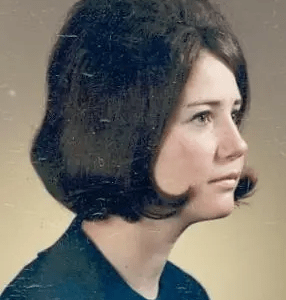
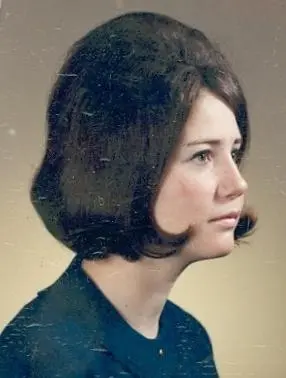
Deborah ‘Debi’ Tomlinson: nineteen-year-old Deborah Kathleen Tomlinson was a student at Mesa College that was found bound and strangled in her off-campus apartment on the 1000 block of Belford Avenue on December 27, 1975 by the apartment manager after her family reported multiple unanswered phone calls. Upon entry, she discovered Tomlinson’s bedroom window was open and her toilet was running. She had been partially clothed and was found in the bathtub. Investigators found that Deborah had been bound, sexually assaulted, and strangled; she also had a gash on her forehead, which was proof she most likely tried to fight off her attacker. Police found no evidence that a weapon was used in the murder.
Local detectives interviewed neighbors and potential suspects in 1975 and 1976 but ran out of leads by April 1976, and the case quickly went cold. For decades, Deb’s murder tore the Tomlinson family apart, because initial suspicion wrongfully swirled around her Uncle Tim, who was eventually excluded as a suspect via DNA evidence when the case was briefly revived in 2008.
Jimmie Dean Duncan: in 2019, the Grand Junction PD (along with Parabon NanoLabs), took a fresh look at the evidence in relation to the murder of Tomlinson, and the following year DNA allowed them to identify career criminal Jimmie Dean Duncan as the killer of the pretty young college student (I have also seen his first name spelled ‘Jimmy’). Duncan was twenty-six at the time of the murder, and by the time this discovery was made he was already dead, as he died of unknown causes on December 24, 1987, in Denver at the age of thirty-eight. Opinions on Reddit’s Unresolved Mysteries thread are mixed regarding the possible motives: some people feel it was related to a burglary, where others feel it was simply a crime of opportunity (given Duncan’s transient background). Jimmie Dean Duncan was born on April 24, 1949, in Monte Vista, Colorado, and before Tomlinson’s murder in 1975, he had been involved in an armed robbery and a separate shooting incident in Florida.
Donald Robert Laabs: twenty-eight-year-old Detective Sergeant Donald Robert Laabs with the Manitou Springs Police Department was shot and killed on December 18, 1975, the same day he was promoted to detective sergeant. It’s highly suspected that Laabs (a US Army and undercover narcotics officer) was on his way home from work, as eyewitnesses saw him exit the highway in the direction of his residence. Approximately two hours after he was last seen alive, he was found deceased inside his police cruiser parked along Interstate 25 near the Arvada Street exit in Colorado Springs; he had been shot eight times with a .22 caliber handgun.
Despite intensive investigations and interviews with dozens of personal and professional associates in the months that followed the murder, authorities never established a motive or identified any viable suspects. At the time of Laabs death, he was survived by his wife and two young sons, and the investigation into his death remains an active, open case monitored by the Colorado Springs Police Department Cold Case Files
Ben Meyers in Relation to ‘The Year of Fear:’ Ben Meyers served as the Chief of Police in Grand Junction for the entirety of 1975 (he led the department from 1973 to 1976, when he was succeeded by Ed VanderTook); he had previously served as the police chief in Salem, Oregon, for eight years before he relocated to Colorado. However, his tenure at the Grand Junction Police Department was short-lived and highly controversial amidst rumors of corruption and a personal scandal following the murder of Deborah Tomlinson when he faced intense scrutiny over how his department handled the homicides in 1975, which created intense public and political pressure for a change in leadership. His administration was continually plagued by rumors of institutional misconduct, and there were additional (unproven) allegations that linked some of his officers to illicit narcotics and vice rings. The final catalyst occurred after Meyers reportedly threatened one of his subordinate officers that caught him buying drinks for his nineteen-year-old girlfriend at a local bar, which sparked an intense internal dispute, and he was forced to step down.
In addition to shady practices regarding women less than half his age, Meyers was rumored to be involved in drug trafficking operations (despite being part of a Grand Junction ‘anti-drug’ task force), where he was rubbing shoulders with dope dealers; it was discovered that he had two separate bank accounts where many large deposits were made throughout his time as police chief, but a District Attorney and a Judge blocked any release of these records.
According to George from the website CAVDEF.org, Meyers ‘possible involvement makes sense considering Campbell was the sister of a Florida police officer, so there is the chance of her death involving threats related to drugs traffickers. Perhaps Temos* was his hit man. Meyers resigned as undersheriff after Bundy’s jail break. But the department claims his resignation was not related to that, and he left over disagreements with the Sheriff on some unknown ‘law enforcement philosophy.’ Meyers was found to have several ‘extra’ bank accounts with untraceable money. Cleared bank accounts and left Grand Junction in December 1976. Went to Telluride as Chief of Police. Alleged connections to the drug/traffic/prostitution community.’ * George is referring to Hugh Joseph Michael Temos, who was an alternative suspect in the murder of Caryn Campbell before Bundy was caught.
In addition to shady practices regarding women less than half his age, Meyers was rumored to be involved in drug trafficking operations (despite being part of a Grand Junction ‘anti-drug’ task force), where he was rubbing shoulders with drug dealers; it was discovered that he had two separate bank accounts where many large deposits were made throughout his time as police chief, but a District Attorney and a Judge blocked any release of these records. Unofficial accounts and cold case files from the era suggest a broader crime spree in the area, which may have targeted individuals who knew too much about drug activities tied to corrupt law enforcement. It’s also a belief by some people that Meyers framed Pat Botham for the murder of Linda Miracle, who was rumored to have been in sexual relationships with several members of the Grand Junction police department.
Upon leaving Grand Junction, Meyers moved to Aspen and took a job as the Undersheriff of Pitkin County, and in a strange twist during a 1977 Aspen preliminary court hearing for serial killer Ted Bundy, a star eyewitness named Lizabeth Harter was asked to identify Bundy in the courtroom, and instead of pointing to the killer, she mistakenly singled out Meyers thinking he was the man she had seen near the victim. But as usual with Bundy case testimony, Harter changed her version of events from ’nothing unusual,’ to ‘two men,’ to only Bundy in the span of 3 years, however she did admit she didn’t get a good look at the man due to poor lighting before Cambell’s disappearance; this mix-up fueled conspiracy theories and rumors regarding Meyers’ background and any overlap with the 1975 Colorado crimes.

The first is the 5th Street Bridge, where Denise Oliverson was abducted from.
The second location is where Linda Benson and her daughter Kelley were killed.
The third is where Patricia Botham and her neighbors Linda, Chad, and Troy Miracle were abducted from.
The fourth location is the apartment complex where Deborah Kathleen Tomlinson was killed.


spl.cde.state.co.us.