Richard Charles Haefner versus the State of Delaware; Date Submitted: February 28, 2000, Date Decided: February 28, 2000.
Geologic Setting:
Within the Black Mountains block of the Death Valley region of eastern California is a terrane composed primarily of Cenozoic intrusive and extrusive rocks, which covers an area of about 1,300 sq km. The volcanic rocks of this terrane are predominantly rhyolitic but also include dacitic, andesitic, and basaltic units. They appear to be genetically related to the Cenozoic deformational features of the block (Noble and Wright, 1954; Wright and Troxel, 1971a, 1971b). The extrusive rocks that have been mapped thus far are mostly lava flows and air-fall tuffs, but ash-flow tuffs form much of the lower part of the volcanic sequence in the southern part of the field (L. A. Wright, personal commun.). Included within the rhyolitic rocks is an accumulation of lava flows and tuffs, as much as 900 m thick, to which the name “Shoshone Volcanics” is here applied and which is the subject of this summary report.
 |
| High-altitude imagery of southern and central Death Valley. Image NASA ERTS 1125-17554 band 7, 25 November 1972; copy produced by Drew P. Smith, California Division of Mines and Geology. |
Although the field is incompletely explored, it appears to consist dominantly of acid intrusive and extrusive rocks; rocks of intermediate to basic composition are also present but subordinate,
Clastic sediments derived from the igneous rocks, together with evaporites, were deposited in local basins (Drewes, 1963). Some of these rocks contain commercial borate deposits. Two major sediment accumulations have been named Copper Canyon Formation (Curry, 1941; Drewes, 1963, p. 32) and Furnace Creek Formation (Noble, 1941, p. 956).
DESCRIPTION
The Shoshone Volcanics are exposed almost continuously in a belt about 26 km long, which extends northward (Fig. 1). They also are exposed in more westerly parts of the Greenwater Range and in the Black Mountains.
 |
| Figure 1. Distribution of the Shoshone Volcanics in southeast Greenwater Range (Eagle Mountain quadrangle) and Dublin Hills (Shoshone quadrangle). |
In the area of Figure 1, the Shoshone Volcanics overlie Cambrian sedimentary rocks, Cenozoic quartz monzonite plutons, and older acid volcanic rocks with an erosional unconformity. The contact between the two accumulations of volcanic rock shows marked angular discordance. Southwest of the area shown in Figure 1, the Shoshone Volcanics also overlie ash-flow tuffs and andesite lava flows. The eroded surface of the Shoshone Volcanics is in turn overlain by air-fall tuffs and lava flows of the Greenwater Volcanics. This contact commonly also shows angular discordance. As the dip direction of all three volcanic accumulations is generally eastward, the angular unconformities suggest continued eastward tilting of fault blocks during emplacement of the volcanic rocks. Dark colored lava flows of basaltic and andesitic composition overlie the Shoshone Volcanics in some places.
The Shoshone Volcanics are prominently layered, the layers producing a striped landscape colored in various shades of pink, yellow, and gray. A regular sequence of layers is obvious, even from a distance. A yellow layer is generally overlain successively by a gray layer, a pink layer, locally a second gray layer, and another yellow layer (Table 1). At many localities, three or four of these sequences are exposed in layer-cake fashion on a single slope, individual sequences being 45 to 120 m thick. The sequences on steeper slopes produce cliffs (gray and pink layers), alternating with benches (yellow layers).
TABLE 1. TERMINOLOGY AND INTERPRETATION OF LAYERING IN SHOSHONE VOLCANICS
As the volcanic rocks dip eastward, the best views of the layer sequences are from the west side of the mountains. The sequences in the Dublin Hills are among the best exposed (Chesterman, 1973) and are also easily accessible. These dominate the view eastward as one travels toward Salsberry Pass from Greenwater Valley.
CORRELATION AND AGE
The Shoshone Volcanics are equivalent to a part of Drewes’s “older volcanics” in the Funeral Peak quadrangle to the west of the area shown in Figure 1 (Drewes, 1963). This unit is lithologically similar to the Shoshone Volcanics even to the zones within individual lava flows, and it also overlies eroded quartz monzonite plutons and underlies Greenwater Volcanics.
A tentative age for the Shoshone Volcanics may be inferred from isotope ages of rock units elsewhere in the volcanic field. Fleck (1970, p. 2810) reported seven K-Ar ages for “older volcanics” from the Funeral Peak quadrangle: three from Dante’s View and four from Hidden Springs, The dates from Dante’s View (6.32 ± 0.13, 6.34 ± 0.13, 6.49 ± 0.13) are clearly younger than those from Hidden Spring (8.02 ± 0.16, 7.60 ± 0.30, 7.77 ± 0.15, 8,02 ± 0.16). These yield an early Pliocene age for Hidden Spring and a middle Pliocene age for Dante’s View, based on the time scale of Evernden and others (1964). Although the “older volcanics” of Drewes include more than the equivalent of the Shoshone Volcanics, the early to middle Pliocene dates fit the permissible interval allowed the Shoshone Volcanics by radiometric dating of the quartz monzonite plutons and the Greenwater Volcanics. The former have yielded middle to late Miocene K-Ar dates (Stern and others, 1966; Armstrong, 1966). The Greenwater Volcanics, on the other hand, have yielded late Pliocene K-Ar dates (Fleck, 1970). The early to middle Pliocene age for the Shoshone Volcanics thus indicated may be refined when more detailed correlations of volcanic units are made, and when the age of the volcanic rocks underlying the Shoshone Volcanics is better known.
PETROGRAPHY
The Shoshone Volcanics consist primarily of four lithotypes: (1) gray perlitic vitrophyre, (2) red-brown to pinkish-gray felsophyre, (3) yellow felsophyre, and (4) yellow devitrified tuff (Table 1).
Phenocrysts of the Vitrophyre and Felsophyre. Phenocrysts comprise 3 to 20 percent of the total rock volume (Table 2); the remainder is glass or cryptocrystalline groundmass. Some of the layer sequences are crystal rich, others are crystal poor (Haefner, 1972). The Dublin Hills sequences are crystal poor. Crystal-rich sequences overlie crystal-poor sequences in the vicinity of Brown Peak.
TABLE 2. APPROXIMATE MODAL COMPOSITIONS, BY CONVENTIONAL POINT COUNTING
| Crystal-poor eruptive unit* (4,200 points) (%) | Crystal-rich eruptive unit&dagg;er (2,000 points) (%) | |
| Groundmass (glass) | 97.75 | 81.8 |
| Plagioclase | 2.02 | 11.7 |
| Biotite | 0.12 | 0.6 |
| Hornblende | 0.07 | 4.7 |
| Opaques | 0.02 | 1.2 |
| Augite/hypersthene | 0.02 | tr. |
| Total | 100.00 | 100.0 |
| *Dublin Hills, average of 21 vitrophyre thin sections from one lava flow. †West of Brown Peak, average of 10 vitrophyre thin sections from one lava flow. | ||
Plagioclase, the only feldspar, forms the largest (4 mm) and most abundant phenocrysts. Most crystals are andesine, but the composition ranges from oligoclase to labradorite.
Hornblende forms euhedral prisms to 1.5 mm long. It occurs as ordinary hornblende (pleochroic in green and brown), and as the varieties variously known as oxyhornblende, lamprobolite, or basaltic hornblende (pleochroic in red, green, and brown). Crystals of the latter variety are commonly rimmed with opaque minerals. Oxyhornblende occurs only in the pink felsophyre; ordinary hornblende occurs in the vitrophyre and yellow felsophyre.
Biotite occurs as euhedra to 1.5 mm in maximum dimension. It, too, occurs as two varieties: ordinary biotite (pleochroic in green and brown), and a type which, by analogy with hornblende, may be called oxybiotite (pleochroic in red, green, and brown). Oxybiotite is commonly rimmed with opaques, and it occurs exclusively with oxyhornblende in the pink felsophyre.
Opaque minerals, largely magnetite, occur as small anhedral to euhedral grains from dust size to 0.3 mm, and as larger masses partly to completely replacing oxyhornblende and oxybiotite. Orthopyroxene and clinopyroxene form euhedral phenocrysts that may be as large as the hornblende and biotite but are much less common.
A xenocrystic character is inferred for some grains that are rounded or embayed. Quartz grains as much as 1 mm in diameter occur in a few thin sections and are consistently rounded or embayed. Species that occur as phenocrysts also commonly show such outlines.
Groundmass of the Vitrophyre and Felsophyre. The glass groundmass of the vitrophyre commonly is gray to black. Brown glass occurs as a local variation that is mixed in swirls and patches with gray glass. The glass contains abundant pyroxene crystallites of several habits. Perlitic structure is nearly ubiquitous. In thin section, concentric fractures outline spheres with centers spaced at intervals of 0.5 to 1.0 mm and associated with a boxwork of planar fractures. Spherulites, 0.1 to 30 cm, occur in the glass but are confined to the several meters of vitrophyre along the margins of the red felsophyre (Fig. 2). Some spherulites are hollow and contain quartz crystals, agate, or opal.
 |
| Figure 2. Features of typical eruptive unit in Shoshone Volcanics. |
The groundmass of the yellow felsophyre is cryptocrystalline. The presence of the alteration mineral jarosite is indicated by x-ray diffraction analysis. Magnetite commonly is absent. Relict perlitic fractures are locally present, indicating that the yellow felsophyre groundmass was originally glass, and that it acquired its present crystallinity through devitrification.
The groundmass of the red felsophyre is cryptocrystalline. The red to pink color, which is particularly conspicuous around magnetite microphenocrysts and around the opacitized rims of oxyhornblende and oxybiotite, is produced by abundant patches of hematite. In contrast to the vitrophyre and yellow felsophyre, the red felsophyre is vesicular; small vesicles to 2 mm are nearly ubiquitous, but large vesicles to 1 cm also occur, most of them adjacent to the vitrophyre (Fig. 3).
 |
| Figure 3. Distribution of megascopic vesicles in red felsophyre. |
Devitrified Yellow Tuff. The same phenocryst species as found in the vitrophyre and felsophyre are found in the tuff matrix. The matrix has been devitrified and is now cryptocrystalline, with only rare traces of the original glass shards. Magnetite appears to be absent in the matrix, whereas jarosite is present. Essential pumice lapilli (devitrified) and accidental lapilli and blocks of volcanic rocks are the most common clasts; clasts of sedimentary and metamorphic rocks are rare. Vitrophyre clasts are absent nearly everywhere, but yellow and red felsophyre clasts are common.
Two localities have been found where the tuff is not devitrified. The most accessible of these is the lowest tuff exposed on the west side of the Dublin Hills where vitrophyre lapilli and glass shards are abundant, and jarosite does not occur in the matrix.
Paleomagnetic Properties of the Rocks. Ninety-six determinations of paleomagnetic direction were made on vitrophyre and red felsophyre of the layer sequences only because yellow felsophyre and tuff commonly are not magnetically susceptible. In each case, strike and plunge of the remanant magnetization was determined. As the rocks are relatively young, the orientation of the remanant magnetization should approximately parallel the magnetic direction of the Earth’s present field, after correcting for postcooling deformation.
All the layer sequences examined exhibit normal polarity, except for specimens from exposures of one layer sequence, which are reversed (NW1/4 sec. 3, T. 22 N., R. 5 E.).
All the vitrophyre samples, including those from the reversed sequence, have directions of remanant magnetization which parallel that predicted from the present field (Fig. 4). However, among specimens from the red felsophyre zone, fewer than half have remanant directions that parallel the predicted direction; the remainder have remanant directions with widely varying strikes and plunges. It appears that only the vitrophyre can be relied upon to be a faithful recorder of the Earth’s magnetic field at the time of emplacement.
 |
| Figure 4. Determination of paleomagnetic direction. |
INTERPRETATION OF THE LAYER SEQUENCES
Types of Deposits. Within each yellow layer is a deposit, about 9 m thick, of well-stratified tuff. The remainder of the layer is yellow felsophyre (Table 1). The tuffs, which consist of interbedded lapilli-rich and lapilli-poor strata, are interpreted as air-fall tuffs. The tuff deposits divide the yellow color bands into additional mappable units, or zones (Table 1).
The sequence of zones between tuff deposits is interpreted as a single rhyolite lava flow (Fig. 2; Haefner, 1969). Glass shards, fiamme, and other characteristics of ash-flow deposits are absent in these zones. In addition, laminae in the red felsophyre zone are locally warped into folds, indicating that the magma flowed as a coherent mass. That this sequence of zones constitutes only one lava flow is evidenced by exposures of flow margins. Four flow margins are exposed in the Dublin Hills; at such localities, the red felsophyre constitutes a core, around which are wrapped the upper vitrophyre and yellow felsophyre zones to become the lower vitrophyre and yellow felsophyre zones (Fig. 5).
 |
| Figure 5. Cross-section sketch of lava flow margin in exposure of Shoshone Volcanics near Miller Spring. Flow margin overlain by another eruptive unit of Shoshone Volcanics. Not drawn to scale; length of section approximately 250 ft. |
Alteration. The yellow felsophyre is interpreted as altered vitrophyre (Haefner, [969, 1973). Evidence for this inference is the presence of relict perlitic fractures and the observation that yellow felsophyre merges with unaltered vitrophyre inward from both the upper and lower flow surfaces. Thus, a lava flow appears to consist essentially of a red felsophyre core encased in a vitrophyre sheath; the outer portions of the sheath have been altered, as have adjacent tuff deposits. Alteration is expressed as devitrification, the growth of jarosite, and the disappearance of magnetite.
Altered acid volcanic rocks are usually distributed about centers of fumarolic or hydrothermal activity. The Shoshone lava flows are unusual in that the altered rock occurs as a sheet like body at the glassy top and at the glassy base of each lava flow. However, such alteration may not be unique to Death Valley; there are at least two localities in the Soviet Union from which apparently similar altered lava flows of acid composition have been described (Nasedkin, 1963).
A hypothesis for the origin of this alteration in the Shoshone Volcanics, which involves the interaction of magmatic with meteoric volatiles during the cooling of the flows, has been presented elsewhere (Haefner, 1969, 1973).
EMPLACEMENT OF A TYPICAL ERUPTIVE UNIT
Crust of the Active Lava Flow. At the top of each lava flow that is overlain by a tuff deposit, veinlets of tuff extend downward into the flow, outlining individual blocks of yellow felsophyre (altered vitrophyre); locally, the blocks are pumiceous. These blocks apparently constituted a rubble crust formed by the chilling and breaking of lava on the upper surface of the active flow. The crust, about 4.5 m thick, composes only 3 to 9 percent of the total flow thickness; furthermore, crustal thickness does not depend on the thickness of the lava flow (Fig. 6).
 |
| Figure 6. Thickness of upper crust of rubble in six lava flows of Shoshone Volcanics. |
Evidence of a rubble crust at the base of the lava flow would be generally difficult to detect, because tuff veinlets do not outline the rubble blocks. Nevertheless, ghostly remnants of angular blocks in the yellow felsophyre (altered vitrophyre) are observable at some localities and apparently originated as rubble. The lower crust is relatively thin, and massive, unaltered vitrophyre composes most of the part of the flow that underlies the red felsophyre zone (Fig. 2). If the lower crust was about as thick as the upper crust, then 80 to 95 percent of the lava flow remained liquid while the flow was active.
This large proportion of liquid magma contrasts with that inferred for many other acid lava flows, which are block lavas. These contained a much higher proportion of rubble during their active stage than do the flows of the Shoshone Volcanics. The overlying flows of the Greenwater Volcanics, exposed near Brown Peak, are block lavas. One measured section shows a flow to have been 70 percent rubble and only 30 percent liquid during its active stage.
Formation of Massive Vitrophyre. Adjacent to the rubble crusts are thick layers of massive gray vitrophyre and massive yellow felsophyre (altered vitrophyre). Together they form a sheath that encases the red felsophyre core of the flow. Patches of gray vitrophyre within the massive altered vitrophyre resemble rubble crust (Fig. 2), but they are not, because flow laminae or layers of spherulites can be traced across the patches into the adjacent vitrophyre, thus demonstrating that the patches are not rotated blocks.
The massive vitrophyre, fresh and altered, represents lava which must have chilled to a glassy rock only after movement of the lava ceased. Otherwise, the chilled glassy rock would have been broken and become part of the rubble crust. This chilling took place at least in part after the flow margin stopped advancing, because the massive vitrophyre sheath extends to the flow margin (Fig. 5), The chilling to form vitrophyre could have begun in less mobile parts of the flow during the active stage, particularly in portions of the flow near the vent (Fig. 7).
 |
| Figure 7. Interpretation of emplacement of an eruptive unit. Massive vitrophyre may have formed in stable crust areas of active lava flow but also formed after lava flow ceased advancing. Not drawn to scale. |
Formation of the Felsophyre Core. An emplaced and cooling lava flow consisted of a molten core surrounded by a vitrophyre sheath (Fig. 7). The layers of massive vitrophyre must have continued to thicken as cooling proceeded, until conditions favored creation of features that characterize the lava flow core, namely, vesicularity, hematite stain, oxyhornblende and oxybiotite, and primary cryptocrystallinity, as contrasted with crystallinity caused by devitrification.
Except for local pumiceous rock in the rubble crust, only the felsophyre core is vesicular. This indicates that the lava, instead of degassing completely when it reached the Earth’s surface, retained an appreciable quantity of gas in solution until after the flow was emplaced and had cooled for some time.
Lava flows of basic composition are generally devoid of evidence of delayed vesiculation, probably because they have a lower melt viscosity. The proportion of acid lava flows that display evidence of delayed vesiculation, is unknown, because detailed descriptions of the interiors of acid lava flows are rare. The delayed vesiculation probably is responsible for the other characteristic features of the red felsophyre, based on the following evidence: On heating in air to about 750°C, ordinary hornblende changes to oxyhornblende (Belovsky, 1891; Kozu and others, 1927; Barnes, 1930). This process is one of oxidation and is accompanied by resorption around the crystal margins, the products generally including iron oxides and pyroxene (Deer and others, 1962).
The conversion of ordinary hornblende to oxyhornblende and of biotite to oxybiotite in the flow interior probably occurred with vesiculation, the exsolved gases providing the necessary oxidizing environment. Because hematite, the colorant of the lava flow core, is concentrated around oxyhornblende and oxybiotite crystals, it probably formed as a resorption product.
Because oxidation is an exothermic process, additional heat probably was generated in the molten lava flow core upon vesiculation. The oxidation of hornblende, experimentally, suggests that the temperature of the molten core was at least 750°C when the oxidation began. The additional heat provided by the oxidation apparently was sufficient to maintain the vesiculating molten core in a liquid state long enough for ions to migrate through the miscous melt and organize themselves as minute crystals. Thus the cryptocrystallinity of the red felsophyre groundmass also appears to have been favored by the delayed vesiculation.
Vesicle Collapse in the Felsophyre Core. The walls of vesicles are more coarsely crystalline than the rest of the ground mass. Streaks of similar material, observed in thin section, demonstrate the partial to complete collapse of vesicles (Fig. 8). Collapsing may have occurred when exsolving gases became depleted in the melt, or when the falling temperature caused a reduction in gas pressure to the point where it could no longer support the vesicle walls. The relatively large vesicles, which occur at the top and base of the red felsophyre zone, may have become “frozen” in highly viscous lava close to the chilled vitrophyre.
 |
| Figure 8. A. Photomicrograph of collapsed vesicles in red felsophyre (crossed nichols). Coarsely crystalline walls of vesicles show as light streaks. Arrows point to tridymite, which filed in partially collapsed vesicles, Light streak above tridymite patch on right is completely collapsed vesicle, without tridymite filling. Length of photo, 3 mm. B. Large vesicles in red felsophyre near bottom of zone. Vesicles are lined with druses of silica minerals. |
The peculiar paleomagnetic properties of the red felsophyre may be related to vesicle collapse. About 40 percent of determinations on red felsophyre yield magnetic directions that parallel the predicted directions of the rocks. The red felsophyre, even though it has been oxidized by exsolved gases, evidently can be a faithful recorder of the Earth’s magnetic field, just as the vitrophyre can. Thus, the remaining determinations that do not yield the predicted magnetic direction seem best explained by mechanical rotation of mineral grains perhaps related to vesicle collapse. No other rotation is apparent as the paleomagnetism of the massive vitrophyre, particularly in the flow margins, demonstrates that the Curie point in the outer part of the lava flow was crossed only after the lava flow had stopped advancing. If this interpretation is correct, then the collapse of vesicles in the red felsophyre took place below 580°C, the measured Curie point of the rock.
Mechanism of Lava Flow Advance. Since freshly fallen tuff is notoriously susceptible to erosion but is conformable with the overlying flows, the lava flows must have moved over the tuff immediately after the tuff was deposited. Therefore, tuff is taken to represent deposits of explosions that cleared the vent just prior to a flow effusion.
The tuff deposits, which were unconsolidated lapilli and ash at the times the lava flows moved over them, are virtually undisturbed. Typically, the tuff fragments that are mixed into the overlying lava flow rock occur within 10 cm of the contact. In addition, the surfaces of the tuff layers apparently are unscoured by the overlying flows. Individual layers at the tops of tuff deposits can be traced for nearly 1 km. Therefore, a typical lava flow advanced without disturbing the underlying loose tuff. The nature of the flow margins and the existence of rubble crust at the base of the typical flow indicate that it advanced with a simple rolling tractor-tread motion, the crust that formed at the upper surface being dragged beneath the flow as it advanced (Fig. 7).
Although the areal extent of individual lava flows is obscured by abundant faults, individual flows have been traced continuously for as much as 5.5 km. A lava flow in the Dublin Hills that contains distinctive fragments of basaltic rock may be correlative with a similar lava flow exposed as far as 19.3 km north of the Dublin Hills.
Considered as a group, the lava flows of the Shoshone Volcanics appear to have filled the valleys. A map of the area near Brown Peak in the Eagle Mountain quadrangle, for example, shows flows accumulated which filled an ancient valley that possessed a relief of about 300 m (Haefner, 1972, Pl. 2).
The tractor-tread motion, the large proportion of liquid lava in the active flows, and the apparent extensiveness of some lava flows suggest a high fluidity for the Shoshone lava flows. This might be an effect of high initial temperature (Gibbon, 1964), but the presence of phenocrysts of the lava suggests a limited temperature range comparable to the range of the relatively viscous lava assumed for the porphyritic flows of block rhyolite. Thus, apparently high fluidity of the Shoshone rhyolite lava flows is more likely an effect of a high content of dissolved volatiles than of a high initial temperature, the volatiles being largely retained in solution during the advance of the flows.
REFERENCES CITED
Armstrong, R. L., 1966, K-Ar dating using neutron activation for Ar analysis: Granitic plutons of the eastern Great Basin, Nevada and Utah: Geochim. et Cosmochim. Acts, v. 30, no. 6, p. 565-600.
Barnes, V. E., 1930, Changes in hornblende at about 800°C: Am. Mineralogist, v. 15, p. 393.
Belovsky, Max, 1891, Über die Anderungen, welche die Optischen Verhältnisse der gemeinen Hornblende beim Glühen erfahren: Neues Jahrb. Mineralogie, Bd. 1, p. 291-292.
Chesterman, Charles w., 1973, Geology of the northeast quarter of Shoshone quadrangle, Inyo County, California: California Div. Mines and Geology, Map Sheet 18.
Curry, H. D., 1940, Mammalian and avian ichnites in Death Valley [abs.]: Geol. Soc. America Bull., v. 52, no. 12, p. 1979.
Deer, W. A., Howie, R. A., and Zussman, J., 1962, Rock-forming minerals, Vol. 2: New York, John Wiley & Sons,
Drewes, Harald, 1963, Geology of the Funeral Peak quadrangle, California, on the east flank of Death Valley: U.S. Geol. Survey Prof. Paper 413, 78 p.
Evernden, J. F., Savage, D. E., Curtis, G. H., and James, G. T., 1964, Potassium-argon dates and the Cenozoic mammalian chronology of North America: Am. Jour, Sci., v. 262, p. 145-098.
Fleck, R. J., 1970, Age and tectonic significance of volcanic rocks, Death Valley area, California: Geol. Soc. America Bull., v. 81, p. 2807-2816.
Gibbon, D. L., 1964, Origin and development of the Star Mountain rhyolite [Ph.D. dissert.]: Houston, Rice Univ., 119 p.
Haefner, Richard, 1969, Emplacement and cooling history of a rhyolite lava flow and related tuff at Deudman Pass, near Death Valley, California [M.S. thesis]: University Park, Pennsylvania State Univ., 82 p.
______ 1972, Igneous history of a rhyolite lava flow series near Death Valley, California [Ph.D. dissert]: University Park, Pennsylvania State Univ., 281 p.
______ 1973, Alteration of rhyolite near Death Valley, California: A newly recognized phenomenon: Geol. Soc. America, Abs. with Programs (Ann. Mtg.), v. 5, no. 7, p. 647,
Kozu, S., Yoshiki, B., and Kani, K., 1927, Notes on the study of the transformation of common hornblende into basaltic hornblende at 750°C: Tohoku Univ. Sci. Repts., 3d ser., v. 3, no. 2, p. 143-159.
Nasedkin, V. V., 1963, Water-bearing volcanic glasses of acid composition—Their genesis and alteration: Acad. Sci. USSR (text not translated).
Noble, L. F., 1941, Structural features of the Virgin Spring area, Death Valley, California: Geol. Soc. America Bull., v. 52, no, 7, p. 941-1000.
Noble, L. F., and Wright, L. A., 1954, Geology of the central and southern Death Valley region, California, in Jahns, R. H., ed., Geology of southern California: California Div. Mines and Geology Bull. 170, p. 143-160.
Stern, T. W., Newell, M. F., and Hunt, C. B., 1966, Uranium-lead and potassium-argon ages of parts of the Amargosa thrust complex, Death Valley, California: U.S. Geol. Survey Prof. Paper 550—B, p. 142-147.
Wright, L. A., and Troxel, B. W., 1971a, Thin-skinned megaslump model of Basin Range structure us applicable to the southwestern Great Basin: Geol. Soc. America, Abs. with Programs (Ann. Mtg.), v. 3, no, 7, p. 758.
______ 1971b, Evidence for tectonic control of volcanism, Death Valley: Geol. Soc. America, Abs. with Programs (Cordilleran Sec.), v. 3, no. 2, p. 221.
 |
| High-altitude vertical aerial photograph near southeastern end of Greenwater Range. Pale-colored racks in left of center of photograph are marine Tertiary volcanic rocks described by Haefner [see preceding article]. The rocks also crop out on northwest [left] side of Dublin Hills [right of center]. Amargosa River flows south across photograph. Pale-colored area on right is underlain by flat-lying lake sediments deposited during an interval when the flow of the Amargosa River was blocked. Part of photo U.S. Air Force 374V 197, 6 September 1968; courtesy of the U.S. Geological Survey. |
Full Name: Haefner v. Burkey
Citations: 534 Pa. 62, 626 A.2d 519
Date: May 28, 1993
534 Pa. 62 (1993).
Richard Haefner, Appellant, v. James BURKEY; Kevin Burkey; Randy Klivansky; Jerry P. Crump; Edward H. Snyder; Kathleen V. Mumma; and Barbara A. Dommel, Administratrix of the Estate of Thomas G. Dommel, Appellees.
Supreme Court of Pennsylvania, submitted April 6, 1993. decided May 28, 1993.
Robert D. Beyer, Lancaster, for J. and K. Burkey. George C. Werner, Kristina M. Kurjiaka, Lancaster, for J.P. Crump & Edw. H. Snyder. Christopher S. Underhill, Lancaster, for (Disinterested). Stephen W. Cody, Lancaster, for R. Klivansky.
Before NIX, C.J., and LARSEN, FLAHERTY, ZAPPALA, PAPADAKOS and CAPPY, JJ.
OPINION OF THE COURT. Justice Larson: Appellant Richard Haefner appeals from the order of the Superior Court affirming the grant by the Court of Common Pleas of Lancaster County of preliminary objections in the nature of a demurrer 415 Pa.Super. 662, 601 A.2d 376 (1991). This appeal stems from a malicious prosecution action commenced by appellant in which he contends that appellees James Burkey, Kevin Burkey and Randy Klivansky, who were minors at the time, conspired with appellees Jerry P. Crump and Edward H. Snyder, local law enforcement officials, to charge appellant falsely with morals offenses. Appellant also contends that the appellees harassed him, interfered with his defense, intimidated witnesses and jurors, bribed witnesses and jurors, and committed perjury.
Appellant was arrested and charged with corruption of minors and involuntary deviate sexual intercourse based on *64 allegations made by appellees Kevin Burkey and Randy Klivansky. Appellant’s first trial, which involved the alleged criminal conduct against appellee Kevin Burkey, resulted in a mistrial declared prematurely by the trial judge following the jury’s announcement that it could not reach a unanimous verdict after several hours of deliberation. Although the Commonwealth attempted to try appellant again, the Superior Court quashed the indictment because a retrial would have violated appellant’s double jeopardy rights. Commonwealth v. Haefner, 264 Pa.Super. 144, 399 A.2d 707 (1979). Subsequently, the Commonwealth nolle prossed the remaining charges against appellant, which involved the alleged criminal conduct against appellee Randy Klivansky, based on insufficient evidence.
Appellant then commenced the first of two federal civil rights actions alleging unlawful arrest, physical and mental abuse during police custody and prosecution of criminal charges against him without probable cause. Appellant also included pendent state claims for intentional infliction of emotional distress and malicious prosecution. The federal court dismissed the complaint and held that the federal claims were either time barred or failed to state a claim upon which federal relief could be granted. Haefner v. County of Lancaster, 520 F. Supp. 131 (E.D.Pa.1981), aff’d, 681 F.2d 806 (3d Cir.1982), cert. denied, 459 U.S. 874, 103 S. Ct. 165, 74 L. Ed. 2d 136 (1982) (Haefner I).
Subsequently, appellant brought a second federal action based on essentially the same facts. The court dismissed the federal civil rights claims because Haefner I acted as res judicata to bar reconsideration. The court then granted appellant’s request to transfer the pendent state claims of intentional infliction of emotional distress and malicious prosecution to the Court of Common Pleas of Lancaster County. Haefner v. Lancaster County, 543 F. Supp. 264 (E.D.Pa.1982), aff’d, 707 F.2d 1401 (3d Cir.1983) (Haefner II).
In the Court of Common Pleas, appellees filed inter alia preliminary objections in the nature of a demurrer. The trial court granted the preliminary objections because it found that *65 the intentional infliction of emotional distress claim was barred by the statute of limitations and because Haefner I and Haefner II acted as res judicata to bar consideration of the malicious prosecution claim. As a result, the trial court dismissed appellant’s complaint.
On appeal, the Superior Court concluded that the intentional infliction of emotional distress claim was indeed time barred. The court also concluded that the federal court did not exercise jurisdiction over appellant’s malicious prosecution claim, and therefore, the trial court erred in dismissing appellant’s malicious prosecution claim because of res judicata.
The Superior Court, however, affirmed the dismissal of appellant’s malicious prosecution claim because it held, sua sponte, that appellant failed to establish a right to recovery as a matter of law. The court based its decision on the fact that neither of the initial criminal actions against appellant terminated in a manner consistent with his innocence. This appeal followed.[1]
In order to subject a person to liability for malicious prosecution, the criminal proceedings must have terminated in favor of the accused. Restatement (Second) of Torts § 658 (1977). Appellant argues that the declaration of a mistrial in the first criminal proceeding against him and the subsequent quashing of the indictment by the Superior Court represents a termination in favor of appellant. We agree.
The Restatement (Second) of Torts specifically delineates what constitutes termination in favor of the accused:
§ 659. Manner of Termination Criminal proceedings are terminated in favor of the accused by (a) a discharge by a magistrate at a preliminary hearing, or (b) the refusal of a grand jury to indict, or *66 (c) the formal abandonment of the proceedings by the public prosecutor, or (d) the quashing of an indictment or information, or (e) an acquittal, or (f) a final order in favor of the accused by a trial or appellate court.
Restatement (Second) of Torts § 659 (emphasis added).
In the case herein, appellant’s criminal trial ended in the declaration of a mistrial. When the Commonwealth later attempted to retry appellant, he filed a pretrial motion to quash the indictment. The trial court denied the motion, and appellant appealed to the Superior Court, which granted appellant’s motion to quash because a second trial would be violative of his right not to be placed in double jeopardy. See Commonwealth v. Haefner, 264 Pa.Super. 144, 399 A.2d 707 (1979). Because appellant’s indictment was quashed, the criminal action terminated in favor of appellant pursuant to Restatement (Second) of Torts § 659(d). Therefore, the Superior Court erred in finding that appellant did not establish any right to recovery as a matter of law as to the first criminal action against appellant.
We likewise find that the Superior Court erred in finding that the second criminal action against appellant, which ended in the entry of a nolle pros by the Commonwealth, did not terminate in favor of appellant. The prosecution formally abandoned the criminal proceedings against appellant when it nolle prossed the remaining charges because of insufficient evidence.[2] As such, the proceedings terminated in favor of the appellant pursuant to Restatement (Second) of Torts § 659(c). “[I]f the defendant is discharged after abandonment of the charges by the prosecutor, or the charges are withdrawn by the prosecutor, this is sufficient to satisfy the requisite element of prior favorable termination of the criminal action.” Woodyatt v. Bank of Old York Road, 408 Pa. 257, 259, 182 A.2d 500, 501 (1962).
*67 Accordingly, we reverse the decision of the Superior Court and remand to the Court of Common Pleas for proceedings consistent with this opinion.
MONTEMURO, J., did not participate in the consideration or decision of this case.
CAPPY, J., files a concurring opinion.
CAPPY, Justice, concurring.
I concur only in the result reached by the majority.
I agree with the learned court below that termination of the criminal proceedings in favor of the plaintiff means more than mere termination. “Proceedings are `terminated in favor of the accused,’ [for purposes of a malicious prosecution action], only when their final disposition is such as to indicate the innocence of the accused.” Restatement (Second) of Torts § 660 Comment a (1977). See also Junod v. Bader, 312 Pa.Super. 92, 458 A.2d 251 (1983). However, contrary to the Superior Court, and consistent with the majority’s holding herein, I conclude that where the criminal charges lodged by a private complainant are “nolle prossed” for lack of sufficient evidence or are withdrawn by the private complainants particularly where the statute of limitations has expired without the charges being reinstated the termination is consistent with innocence. Compare Woodyatt v. Bank of Old York Road, 408 Pa. 257, 182 A.2d 500 (1962) (discharge after abandonment of charges by the prosecutor or charges being withdrawn by the prosecutor, although not a determination of merits, is sufficient to satisfy element of favorable termination of the criminal action).
I disagree, however, with the majority’s holding that the proceedings on the other charges against Appellant terminated in his favor. I agree with the Superior Court that discharge of a criminal prosecution as a result of a mistrial is not a termination that is consistent with innocence. See Singleton v. City of New York, 632 F.2d 185, 193-194 (2d Cir.1980), cert. denied, 450 U.S. 920, 101 S. Ct. 1368, 67 L. Ed. 2d 347 (1981). I believe that the majority opinion improperly focuses its inquiry *68 upon the subsequent quashing of the indictment upon the Commonwealth’s attempt to retry Appellant. I also point out that the indictment was quashed on double jeopardy grounds, and not for a reason consistent with Appellant’s innocence. Thus, I am constrained to concur only in the result.
NOTES
[1] On appeal to this Court, appellant does not challenge the Superior Court’s determination that his intentional infliction of emotional distress claim was time barred.
[2] We note that the charges were never reinstated, and the statute of limitations has since expired.
COMMONWEALTH of Pennsylvania v. Richard Charles Haefner, Appellant. 264 Pa. Superior Ct. 144 (1979), 399 A.2d 707.
Argued December 6, 1977, decided March 9, 1979.
*145 Richard A. Sprague, and with him, Pamela W. Higgins and Michael K. Simon, Philadelphia, for appellant.
D. Richard Eckman, District Attorney, and with him, John A. Kenneff, Assistant District Attorney, Lancaster, for Commonwealth, appellee.
Before WATKINS, President Judge, and JACOBS, HOFFMAN, CERCONE, PRICE, VAN der VOORT and SPAETH, JJ.
VAN der VOORT, Judge: The appellant, Richard Charles Haefner, was charged with involuntary deviate sexual intercourse and corruption of the *146 morals of a minor. A jury trial commenced on January 27, 1976, in Lancaster County and on February 3, 1976, the presentation of evidence having concluded, the case was submitted to the jury. As more fully detailed below, the trial judge, on the latter date, sua sponte declared a mistrial, based upon the jury’s failure to arrive at a verdict.
Thereafter, the appellant was scheduled to be tried again on the same charges. Inter alia, he filed a pretrial motion to quash indictments, based upon the argument that the trial court erred in its declaration of a mistrial, and that a second trial on the same charges would therefore be violative of his right to not be placed in double jeopardy. The lower court denied this motion and the appellant, on June 29, 1976, appealed that denial to our Court. The Commonwealth filed a motion to quash the appeal, contending that the order denying the appellant’s motion to quash the indictments was interlocutory. This Court granted the Commonwealth’s motion.
Appellant thereafter filed an appeal to the Pennsylvania Supreme Court. That Court, by a Per Curiam Opinion, on June 3, 1977, held that a denial of a pre-trial motion to quash an indictment, where the motion alleges that a second trial will violate a defendant’s right not to be placed twice in jeopardy, is a final order, immediately subject to appellate review upon an appeal. Commonwealth v. Haefner, 473 Pa. 154, 373 A.2d 1094 (1977) (Former Chief Justice Jones not participating; Dissenting Opinion filed by Justice O’Brien, in which Justice Nix joined). Thus, the case was remanded to our Court for a determination of the appeal on the merits.
The record shows that appellant was tried before a Lancaster County jury from January 27, 1976 through February 3, 1976 on charges that he had engaged in indecent sexual contacts with a minor. Twenty-nine (29) witnesses testified during the course of the five days of trial. We need only highlight some of the most salient evidence and events of the trial for purposes of this Opinion.
The alleged victim was a twelve year old boy who claimed that the appellant, who employed him and other youths in a *147 small family business, had engaged in sexual contacts in a garage which was part of the business premises. The incident was not reported to anyone by the boy until a month and a half after it allegedly took place. The appellant, who completely denied the charge, was an educator of some standing who had no prior criminal record.
After the trial court charged the jury on the morning of February 3, 1976, it retired at 11:50 A.M., to begin deliberations. A luncheon recess in these deliberations was observed. At 5:10 P.M., the jury returned to the courtroom, whereupon the following colloquy evolved:
THE COURT: Mr. Foreman, has the jury reached a verdict? BY THE FOREMAN: No, sir. THE COURT: Well, members of the jury, as I stated and as you fully realize, this trial started last Tuesday, and I know you’ve been deliberating all afternoon, I know that the charge to the jury was completed about ten minutes of eleven. I understand that you returned from your lunch about 1:00, and have been deliberating since then. And under these circumstances, I’m going to direct that you return to the room for further deliberation, and I want to say to you that in order to return a verdict, each juror must agree thereto, that jurors have a duty to talk with another and to deliberate with a view to reaching an agreement, if it can be done without violence to individual judgments. Each juror must decide the case for himself, but only after an impartial consideration of the evidence with his fellow jurors. In the course of deliberations, a juror should not hesitate to re-examine his own views and change his opinion if convinced he should do this. No juror should surrender his honest conviction as to the weight or effect of the evidence solely because of the opinion of his fellow jurors or for the mere purpose of returning a verdict. And, having stated that to you, members of the jury, I’m going to direct that you now return for further deliberation.
*148 The jurors retired again at 5:10 P.M., to resume their deliberations. However, at 5:35 P.M., the jury returned to the courtroom, whereupon the record shows the following:
THE COURT: Mr. Foreman, the Court has been informed that the jury has a question, and the question is written out, is that correct? BY THE FOREMAN: Yes, Your Honor. THE COURT: Will you hand it to the Clerk, so he can hand it to me, please, Sir? (Whereupon, the Court examines the question, at this point.) THE COURT: Will counsel approach the bench? (Whereupon, a discussion ensued off the record, at this point.) THE COURT: A question which has been addressed to The Court is: Your Honor, we the jury would like to hear the testimony of Sergeant Crump and Sergeant Snyder pertaining to the events which took place in the police station when questioning the Defendant. Also, the cross examination of the prosecuting officers. Members of the jury, the conduct of a trial requires that it is your recollection of the testimony which will be used in your deliberations. You have heard the testimony from the witness stand, you have heard the arguments of counsel, and you have heard The Court’s instructions as to the law and the responsibility of the jury and so, it will be necessary for you in your continuing deliberations, to rely solely on your recollection of the testimony which was given. Now, it’s The Court’s understanding, you are ready to go for dinner and it is twenty of six, so you will be taken by the Tipstaff for your dinner and then, you can deliberate further after dinner.
The jury then left the courtroom for supper and at 6:38 P.M., resumed deliberations. When they next returned to the courtroom it was 9:15 P.M., and the following colloquy took place:
*149 THE COURT: Mr. Foreman, the jury has been deliberating since I imagine about 1:00, the charge was completed about a quarter of twelve, and I understand that you went to lunch and your returned about 1:00, and were here until about 6:30, and then I understand you came back between 7:30 and a quarter of eight. It’s now after 9:15, which means that you have been deliberating about seven hours, and viewing your best recollection to the deliberations, the conversations, discussions, the vote that you had, and the discussion you’re presently having, I want to ask you, Mr. Foreman, whether in your opinion, if there is further deliberation, it is your belief that this jury will be able to arrive at a verdict in these cases. BY THE FOREMAN: Your Honor, I believe we may. THE COURT: You believe you may? BY THE FOREMAN: I believe we may. THE COURT: You may reach a verdict and therefore, I direct that you return to your jury room to further deliberate. I wanted to inquire in view of the time that has transpired, so you go back to your room and deliberate further. Thank you.
The jury retired again at 9:20 P.M., to deliberate, but less than one hour later, at 10:15 P.M., the jurors again returned to the courtroom. The record sets forth further discussion:
THE COURT: Mr. Foreman, I have received a message which causes me to ask you whether it is your belief at this time, the jury will reach a verdict? BY THE FOREMAN: No, Your Honor, I don’t think we will ever reach a verdict. THE COURT: You feel you’ve explored every possibility? BY THE FOREMAN: Yes, Sir. THE COURT: And you feel you’ve had sufficient time? BY THE FOREMAN: Yes, Sir. THE COURT: And you feel the jury will not be able to reach a verdict? BY THE FOREMAN: I have been informed of that, yes, sir. *150 THE COURT: The Court then declares a mistrial of these two cases.
The sole issue for this Court’s determination is whether the lower court erred in its declaration of a mistrial in all of the circumstances of this case. The basic constitutional precept which must guide us is the prohibition against double jeopardy set forth in the Fifth Amendment of the United States Constitution, which has been held applicable to state trials under the Fourteenth Amendment. Benton v. Maryland, 395 U.S. 784, 89 S. Ct. 2056, 23 L. Ed. 2d 707 (1969). There are no standardized guidelines nor any predetermined periods for juror deliberations prior to the time when a mistrial may be declared, so as to permit the retrial of a criminal defendant. Commonwealth v. Monte, 459 Pa. 495, 329 A.2d 836 (1974); Commonwealth v. Coleman, 235 Pa.Super. 379, 341 A.2d 528 (1975). The length of jury deliberations is left to the sound discretion of the trial judge (Commonwealth v. Campbell, 445 Pa. 488, 284 A.2d 798 (1971)), but any doubts concerning the existence of cause to support the declaration of a mistrial are to be resolved in favor of an accused defendant. Commonwealth v. Howard and Banks, 233 Pa.Super. 496, 335 A.2d 489 (1975). As to cause, really the crucial determination in any case such as this, it has long been established, that the jury should not be discharged in the absence of “manifest necessity” for the trial judge to do so. United States v. Perez, 22 U.S. (9 Wheat.) 579, 6 L. Ed. 2d 165 (1824); Commonwealth ex rel. Walton v. Aytch, 466 Pa. 172, 352 A.2d 4 (1976). If such manifest necessity does not exist, double jeopardy attaches and a retrial of the defendant is not permitted.
We have examined the record as a whole in the instant case and have some doubt as to the existence of a manifest necessity for the dismissal of the jury. In these circumstances, we must resolve this doubt in favor of the accused, and hold that a retrial of appellant is barred. Several factors coalesce in producing this conclusion.
The jury in this case was discharged, sua sponte, by the trial judge, at 10:15 P.M. The jurors had begun their *151 considerations just before noon the same day, after five days of trial, and after hearing the testimony of twenty-nine witnesses, arguments by counsel, and extensive instructions by the court. Their deliberations were abbreviated by luncheon and supper breaks, as well as by four separate return visits to the courtroom. On the first such visit, apparently at the request of the trial judge, the foreman, in response to the court’s questioning, stated that no verdict had been reached. The judge gave the jurors a short additional instruction.[1] Only a few minutes later, the jury returned with a request that they be permitted to review the testimony on direct and cross-examination of two witnesses. The trial judge declined to permit such a review and released the jurors for supper. The judge recalled the jurors again at 9:15 P.M., to ask if it was believed that a verdict would be possible. The foreman immediately replied in the affirmative, and the judge released them for further deliberations. The fourth visit by the jury to the courtroom, since beginning deliberations at midday, was fifty-five minutes after it had been announced by the foreman that a verdict could be achieved. However, on this last occasion, the foreman for the first time stated a belief that no verdict could be reached. After asking the foreman a few short questions, the court declared the mistrial. In these circumstances, especially including the complex and conflicting testimony and other evidence to be considered, and the length of the often interrupted jury deliberations, we cannot find that a manifest or absolute[2] necessity existed, at the time for the discharge of the jury. In reaching this conclusion, we find the facts of this case closely analogous to those established in Commonwealth v. Baker, 413 Pa. 105, 196 A.2d 382 (1964), where the Supreme Court reached a similar conclusion. See also United States ex rel. Webb v. Court of *152 Common Pleas of Philadelphia County, 516 F.2d 1034 (3rd Cir. 1975).
The dismissal of the jury in this case came less than one hour after the jury foreman expressed the feeling that a verdict could be reached. It also occurred at the first instance at which the court had any indication that the jurors were having difficulty in reaching an agreement. While it was not absolutely necessary to do so, the trial judge made no searching inquiry of each juror.[3] See Commonwealth v. Bartolomocci, 468 Pa. 338, 362 A.2d 234 (1976); Commonwealth v. Coleman, supra; Commonwealth v. Howard and Banks, supra, at footnote 5. Such a practice is preferred. Also, the trial court failed to solicit the views or consent of either the prosecution or the defense prior to the declaration of a mistrial, a procedure which is not mandated, but might have been helpful in resolving doubts about a discharge of the jury. See Commonwealth v. Baker, supra. Under all of these circumstances, and considering the record as a whole, we find an absence of the required absolute or manifest necessity for the discharge of the jury. A retrial, in these events, would violate the appellant’s double jeopardy rights under the Fifth Amendment.
Appellant’s motion to quash indictment is granted, and he is ordered discharged.
PRICE, J., files a dissenting opinion.
JACOBS and WATKINS, former President Judges, and HOFFMAN, J., did not participate in the consideration or decision of this case.
*153 PRICE, Judge, dissenting:
The pivotal question is whether the trial court properly exercised its discretion in finding manifest necessity to warrant declaring this mistrial. Since I believe that that discretion was properly exercised, I would affirm the denial of the motion to quash in the lower court.
I agree that doubt must be resolved in favor of appellant, however, I would not find a doubt under the circumstances here presented.
The trial judge did not assume a deadlock on the jury. The jury, through the foreman, stated the belief that the jury would never be able to reach a verdict. This was done in open court with all of the jurors present. The trial court had the benefit of the reactions of the jury. None of the jurors offered any contrary view when the foreman informed the court of the deadlock. Commonwealth v. Bartolomucci, 468 Pa. 338, 362 A.2d 234 (1976).
I find no requirement that each juror be questioned. Indeed, the court in Bartolomucci, supra, declined to express a view on such a procedure. And, in keeping with the discretion involved, I note the following excerpt from the trial judge’s remarks at the time the mistrial was declared:
“This has been a difficult case from many angles and in many respects and obviously, you have served very conscientiously, you have given to it your best, and I thank you very much for what you have done. Not every case is resolved by the jury, and you’ve not been able to resolve this one. But it’s written all over your faces that you’ve given it your real consideration, you’ve given it real effort, and I thank you and I congratulate you.” (NT 616) (Emphasis added).
Such a clear indication that the trial judge read the reaction of the jury as agreement with the foreman’s answers, as set forth in the majority opinion, leaves no doubt in my mind that the mistrial was properly declared.
Further, the record reveals no request by appellant to poll the jury, nor does it reveal an objection to the declaration of *154 a mistrial. Under Commonwealth v. Clair, 458 Pa. 418, 326 A.2d 272 (1974), errors not objected to at trial will not be reviewed on appeal. I believe appellant has waived his right to the relief the majority grants.
I would affirm the court below.
NOTES
[1] No issue is raised concerning the propriety of the additional instruction. Commonwealth v. Spencer, 442 Pa. 328, 275 A.2d 299 (1971).
[2] Our Supreme Court has declared that a “manifest necessity” in these circumstances is the equivalent of an “absolute necessity.” Commonwealth v. Baker, 413 Pa. 105, 196 A.2d 382 (1964).
[3] Such an inquiry would have been valuable here, where the jury foreman told the trial judge, when asked if he felt the jury would not be able to reach a verdict: “I have been informed of that, yes, sir.” (Emphasis supplied). Such a response raises questions of whether the foreman’s assessment of irreconcilable conflicts in juror’s attitudes was shared by all of the jurors. See United States ex rel. Webb v. Court of Common Pleas of Philadelphia County, supra, at 1043-1044, on this issue.

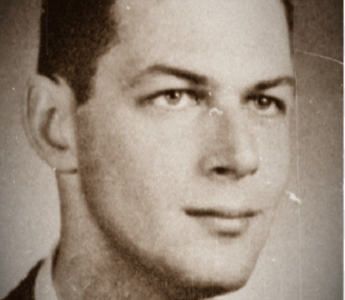
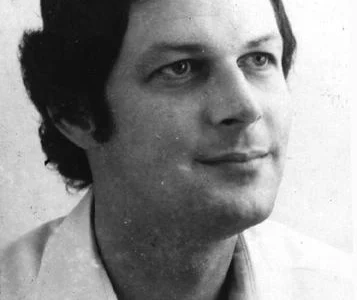
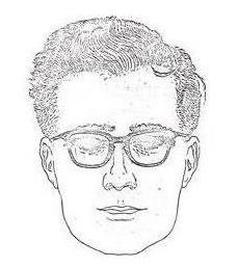
Dr. Richard Charles Haefner remains the chief suspect in the 1969 murder of twenty-two-year-old Penn State graduate student, Betsy Aardsma.
 Another Bundy Blog: My Adventures around the Pacific Northwest (and everywhere else).