Richard Charles Haefner versus the State of Delaware; Date Submitted: February 28, 2000, Date Decided: February 28, 2000.

Haefner v. City of Lancaster, PA, 566 F. Supp. 708, Docket Number: 83-604, June 22, 1983.
U.S. District Court for the Eastern District of Pennsylvania – 566 F. Supp. 708 (E.D. Pa. 1983).
566 F. Supp. 708 (1983)Richard HAEFNER versus the CITY OF LANCASTER, PA.; the City of Lancaster, Pa. Police Department, John Wertz, individually and as a Police Officer of the City of Lancaster, Pa. Police Department; Richard Shertzer, individually and as a Police Officer of the City of Lancaster, Pa. Police Department, and John Does 1-10.Civ. A. No. 83-604.
United States District Court, E.D. Pennsylvania.June 22, 1983.
George C. Werner, Lancaster, Pa., for defendants.
MEMORANDUM
District Judge Troutman: Plaintiff, in Haefner I, instituted suit against a host of Lancaster City and County public officials and private citizens and generally charged them with conspiring to illegally secure his conviction. We dismissed the suit because it was time-barred. Haefner v. City of Lancaster, 520 F. Supp. 131 (E.D.Pa.1981), aff’d, 681 F.2d 806 (3d Cir.), cert. denied _ U.S. _, 103 S. Ct. 165, 74 L. Ed. 2d 136 (1983). Subsequently, in Haefner II, plaintiff alleged that he was subjected to a series of illegal conspiracies and that the complaint then at bar inveighed against conduct not litigated in Haefner I. We disagreed and held that our disposition of Haefner I erected a res judicata bar to the allegations of Haefner II. Haefner v. County of Lancaster, 543 F. Supp. 264 (E.D.Pa.1982), aff’d, 703 F.2d 550 (3d Cir. 1983). Defendants, moving to dismiss, argue that res judicata also bars this action. We agree and grant the motion.
The complaint at bar alleges that [o]n or about February 6, 1981, plaintiff entered the lobby of the Lancaster Newspapers, Inc. building at 3 West King Street in the City of Lancaster, Pa., with the intent of conducting his lawful business, particularly of investigating some of the aforesaid policies, customs, or decisions of the defendant City and Police Department, and of arranging for publication of a news story concerning the same.
Complaint ¶ 13. Continuing, the complaint at bar also alleges that defendant police officer Wertz stopped plaintiff and requested that he produce proper identification even though he, Wertz, knew the plaintiff. Thereafter, Wertz began interrogating plaintiff and, when plaintiff sought to obtain a pen with which to record Wertz’s name, defendant Wertz arrested plaintiff for disorderly conduct. While in the illegal custody of Wertz and other defendants, plaintiff was purportedly subjected to abuse and torture from which he still suffers anguish, trauma and depression. Finally, plaintiff alleges that his trial for disorderly conduct was aborted on March 5, 1981, when the charges were dropped. See, Complaint ¶¶ 14-27.
Similar allegations of official misconduct were made in Haefner II. There plaintiff alleged that [o]n February 6, 1981, while plaintiff was engaged in an investigation related to his expungement petitions and appeals, members of defendant Police Department, in furtherance of a conspiracy to deprive plaintiff of his right to a fair and impartial criminal trial and other related proceedings, arrested plaintiff on a charge of disorderly conduct, took plaintiff to the defendant Police Department’s station house, where they verbally abused and physically beat plaintiff. As a result of this unlawful conduct, plaintiff abandoned his investigation.
Haefner II amended complaint, both Haefner II and the case at bar complain that on February 6, 1981, plaintiff, while investigating official misconduct, was subjected to a false arrest. Continuing, the two complaints allege that plaintiff was subjected to physical beatings, verbal and emotional abuse while suffering the illegal detention. Simply stated, the two actions complain of substantially similar conduct. The only distinction between Haefner II and the case at bar is that the current complaint highlights a portion of the allegations contained in Haefner II. The allegations contained in Haefner II closely tracked those of Haefner I; both suits alleged that numerous defendants subjected plaintiff to false and unwarranted criminal prosecutions for various sex offenses. Haefner II also charged that following *710 plaintiff’s acquittal on the criminal charges, defendants violated an order of the Lancaster County Court of Common Pleas and failed to expunge his arrest record. Most critically, Haefner II lodged allegations not made in Haefner I: it contended that on February 6, 1981, while investigating defendants’ failure to expunge his arrest record, plaintiff was verbally and physically abused. This same incident forms the basis of the current action.
Plaintiff, opposing defendants’ motion for summary judgment, argues primarily that Haefner II cannot support a res judicata bar to this action because our disposition of that case did not amount to a final judgment “on the merits”.[1] Specifically, plaintiff asserts that because our order of dismissal in Haefner II did not state that it was “with prejudice” it thereby was entered “without prejudice” pursuant to Fed. R.Civ.P. 41(b). Hence, plaintiff claims, we neither considered nor addressed the merits of Haefner II and the res judicata requirement of a judgment “on the merits” has not been met.
Resolution of whether our dismissal of Haefner II was “on the merits” is assertedly governed by Costello v. United States, 365 U.S. 265, 81 S. Ct. 534, 5 L. Ed. 2d 551 (1961). It held that a dismissal based upon plaintiff’s failure to comply with a “precondition requisite” does not create a res judicata bar to a subsequent suit. Id. at 285, 81 S. Ct. at 544. Therefore, when a complaint fails to meet a “condition for filing suit” its dismissal does not operate as an adjudication on the merits. Truvillion v. King’s Daughters Hospital, 614 F.2d 520, 524 (5th Cir.1980). Hence, such a dismissal cannot support a res judicata bar. Accord, McCarney v. Ford Motor Co., 657 F.2d 230, 233-34 (8th Cir.1981) (Prior dismissal for lack of standing does not erect a res judicata bar); Johnson v. Boyd Richardson Co., 650 F.2d 147, 148-49 (8th Cir.1981) (Failure to name a proper party does not erect a res judicata bar).
Haefner II was not dismissed, however, for any failure to comply with a jurisdictional “precondition requisite”. Rather, that case was dismissed on the strength of the res judicata bar created by Haefner I’s dismissal as being untimely. Such a dismissal in Haefner I created a res judicata bar to the second suit by this plaintiff. Chang v. Northwestern Memorial Hospital, 549 F. Supp. 90, 95 (N.D.Ill.1982); Waschovia Bank & Trust Co. v. Randell, 485 F. Supp. 39, 42 (S.D.N.Y.1979). Accord, Comer v. Marathon Oil Co., 583 F.2d 830 (6th Cir.1978).
Although the “outer periphery” of Haefner II was not “exactly co-extensive” with Haefner I, res judicata nevertheless barred the second suit because the “core complaint” of the two suits was the “same”. Haefner II, 543 F. Supp. at 267. See, Poe v. John Deere Co., 695 F.2d 1103, 1106 (8th Cir.1982) (Res judicata arises even though the parameters of the second suit do not track those in the first suit with “mathematical precision”.) We also held in Haefner II that plaintiff could not litigate the events of February 6, 1981, in that suit because he was aware of them prior to March 9, 1981, the date upon which he filed Haefner I. Moreover, plaintiff was also aware of the now plead February 6, 1981 events prior to the date of Haefner I’s dismissal. See, Haefner II, 543 F. Supp. at 268, citing, Blair v. City of Greenville, 649 F.2d 365, 368 (5th Cir.1981) and Crowe v. Leeke, 550 F.2d 184, 187 (4th Cir.1977). Plaintiff may not now attempt to relitigate a claim which could have been litigated in Haefner I and which was specifically plead in Haefner II.
Simply stated, Haefner I’s dismissal as being time-barred operated as an adjudication on the merits and foreclosed plaintiff’s complaint in Haefner II. The current action merely rehashes allegations which we *711 previously held are barred by the doctrine of res judicata. Even if we accepted plaintiff’s current assertion that Haefner II’s dismissal was not “on the merits” and that it cannot support a res judicata bar, litigation of this action is precluded by the res judicata bar created by Haefner I. We do not, however, accept plaintiff’s assertion that our dismissal of Haefner II was “without prejudice”. We believe that our dismissal of Haefner II must be accorded the same preclusive effect as the judgment upon which it was predicated. Accordingly, we will grant defendants’ motion for summary judgment.
NOTES: [1] The other elements of establishing a res judicata bar are, as we observed in Haefner II, that the parties to the instant suit must be the same or in privity with those in the prior litigation. 543 F. Supp. at 265. See also, Allen v. McCurry, 449 U.S. 90, 94, 101 S. Ct. 411, 414, 66 L. Ed. 2d 308 (1980). Plaintiff does not appear to contest the fact that defendants at bar are in privity with defendants in Haefner II.
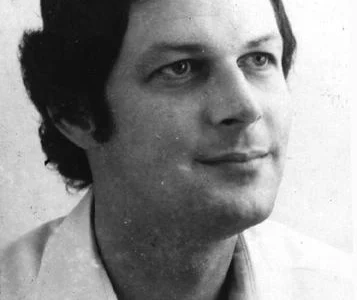
Full Name: Haefner v. Burkey
Citations: 534 Pa. 62, 626 A.2d 519
Date: May 28, 1993
534 Pa. 62 (1993).
Richard Haefner, Appellant, v. James BURKEY; Kevin Burkey; Randy Klivansky; Jerry P. Crump; Edward H. Snyder; Kathleen V. Mumma; and Barbara A. Dommel, Administratrix of the Estate of Thomas G. Dommel, Appellees.
Supreme Court of Pennsylvania, submitted April 6, 1993. decided May 28, 1993.
Robert D. Beyer, Lancaster, for J. and K. Burkey. George C. Werner, Kristina M. Kurjiaka, Lancaster, for J.P. Crump & Edw. H. Snyder. Christopher S. Underhill, Lancaster, for (Disinterested). Stephen W. Cody, Lancaster, for R. Klivansky.
Before NIX, C.J., and LARSEN, FLAHERTY, ZAPPALA, PAPADAKOS and CAPPY, JJ.
OPINION OF THE COURT. Justice Larson: Appellant Richard Haefner appeals from the order of the Superior Court affirming the grant by the Court of Common Pleas of Lancaster County of preliminary objections in the nature of a demurrer 415 Pa.Super. 662, 601 A.2d 376 (1991). This appeal stems from a malicious prosecution action commenced by appellant in which he contends that appellees James Burkey, Kevin Burkey and Randy Klivansky, who were minors at the time, conspired with appellees Jerry P. Crump and Edward H. Snyder, local law enforcement officials, to charge appellant falsely with morals offenses. Appellant also contends that the appellees harassed him, interfered with his defense, intimidated witnesses and jurors, bribed witnesses and jurors, and committed perjury.
Appellant was arrested and charged with corruption of minors and involuntary deviate sexual intercourse based on *64 allegations made by appellees Kevin Burkey and Randy Klivansky. Appellant’s first trial, which involved the alleged criminal conduct against appellee Kevin Burkey, resulted in a mistrial declared prematurely by the trial judge following the jury’s announcement that it could not reach a unanimous verdict after several hours of deliberation. Although the Commonwealth attempted to try appellant again, the Superior Court quashed the indictment because a retrial would have violated appellant’s double jeopardy rights. Commonwealth v. Haefner, 264 Pa.Super. 144, 399 A.2d 707 (1979). Subsequently, the Commonwealth nolle prossed the remaining charges against appellant, which involved the alleged criminal conduct against appellee Randy Klivansky, based on insufficient evidence.
Appellant then commenced the first of two federal civil rights actions alleging unlawful arrest, physical and mental abuse during police custody and prosecution of criminal charges against him without probable cause. Appellant also included pendent state claims for intentional infliction of emotional distress and malicious prosecution. The federal court dismissed the complaint and held that the federal claims were either time barred or failed to state a claim upon which federal relief could be granted. Haefner v. County of Lancaster, 520 F. Supp. 131 (E.D.Pa.1981), aff’d, 681 F.2d 806 (3d Cir.1982), cert. denied, 459 U.S. 874, 103 S. Ct. 165, 74 L. Ed. 2d 136 (1982) (Haefner I).
Subsequently, appellant brought a second federal action based on essentially the same facts. The court dismissed the federal civil rights claims because Haefner I acted as res judicata to bar reconsideration. The court then granted appellant’s request to transfer the pendent state claims of intentional infliction of emotional distress and malicious prosecution to the Court of Common Pleas of Lancaster County. Haefner v. Lancaster County, 543 F. Supp. 264 (E.D.Pa.1982), aff’d, 707 F.2d 1401 (3d Cir.1983) (Haefner II).
In the Court of Common Pleas, appellees filed inter alia preliminary objections in the nature of a demurrer. The trial court granted the preliminary objections because it found that *65 the intentional infliction of emotional distress claim was barred by the statute of limitations and because Haefner I and Haefner II acted as res judicata to bar consideration of the malicious prosecution claim. As a result, the trial court dismissed appellant’s complaint.
On appeal, the Superior Court concluded that the intentional infliction of emotional distress claim was indeed time barred. The court also concluded that the federal court did not exercise jurisdiction over appellant’s malicious prosecution claim, and therefore, the trial court erred in dismissing appellant’s malicious prosecution claim because of res judicata.
The Superior Court, however, affirmed the dismissal of appellant’s malicious prosecution claim because it held, sua sponte, that appellant failed to establish a right to recovery as a matter of law. The court based its decision on the fact that neither of the initial criminal actions against appellant terminated in a manner consistent with his innocence. This appeal followed.[1]
In order to subject a person to liability for malicious prosecution, the criminal proceedings must have terminated in favor of the accused. Restatement (Second) of Torts § 658 (1977). Appellant argues that the declaration of a mistrial in the first criminal proceeding against him and the subsequent quashing of the indictment by the Superior Court represents a termination in favor of appellant. We agree.
The Restatement (Second) of Torts specifically delineates what constitutes termination in favor of the accused:
§ 659. Manner of Termination Criminal proceedings are terminated in favor of the accused by (a) a discharge by a magistrate at a preliminary hearing, or (b) the refusal of a grand jury to indict, or *66 (c) the formal abandonment of the proceedings by the public prosecutor, or (d) the quashing of an indictment or information, or (e) an acquittal, or (f) a final order in favor of the accused by a trial or appellate court.
Restatement (Second) of Torts § 659 (emphasis added).
In the case herein, appellant’s criminal trial ended in the declaration of a mistrial. When the Commonwealth later attempted to retry appellant, he filed a pretrial motion to quash the indictment. The trial court denied the motion, and appellant appealed to the Superior Court, which granted appellant’s motion to quash because a second trial would be violative of his right not to be placed in double jeopardy. See Commonwealth v. Haefner, 264 Pa.Super. 144, 399 A.2d 707 (1979). Because appellant’s indictment was quashed, the criminal action terminated in favor of appellant pursuant to Restatement (Second) of Torts § 659(d). Therefore, the Superior Court erred in finding that appellant did not establish any right to recovery as a matter of law as to the first criminal action against appellant.
We likewise find that the Superior Court erred in finding that the second criminal action against appellant, which ended in the entry of a nolle pros by the Commonwealth, did not terminate in favor of appellant. The prosecution formally abandoned the criminal proceedings against appellant when it nolle prossed the remaining charges because of insufficient evidence.[2] As such, the proceedings terminated in favor of the appellant pursuant to Restatement (Second) of Torts § 659(c). “[I]f the defendant is discharged after abandonment of the charges by the prosecutor, or the charges are withdrawn by the prosecutor, this is sufficient to satisfy the requisite element of prior favorable termination of the criminal action.” Woodyatt v. Bank of Old York Road, 408 Pa. 257, 259, 182 A.2d 500, 501 (1962).
*67 Accordingly, we reverse the decision of the Superior Court and remand to the Court of Common Pleas for proceedings consistent with this opinion.
MONTEMURO, J., did not participate in the consideration or decision of this case.
CAPPY, J., files a concurring opinion.
CAPPY, Justice, concurring.
I concur only in the result reached by the majority.
I agree with the learned court below that termination of the criminal proceedings in favor of the plaintiff means more than mere termination. “Proceedings are `terminated in favor of the accused,’ [for purposes of a malicious prosecution action], only when their final disposition is such as to indicate the innocence of the accused.” Restatement (Second) of Torts § 660 Comment a (1977). See also Junod v. Bader, 312 Pa.Super. 92, 458 A.2d 251 (1983). However, contrary to the Superior Court, and consistent with the majority’s holding herein, I conclude that where the criminal charges lodged by a private complainant are “nolle prossed” for lack of sufficient evidence or are withdrawn by the private complainants particularly where the statute of limitations has expired without the charges being reinstated the termination is consistent with innocence. Compare Woodyatt v. Bank of Old York Road, 408 Pa. 257, 182 A.2d 500 (1962) (discharge after abandonment of charges by the prosecutor or charges being withdrawn by the prosecutor, although not a determination of merits, is sufficient to satisfy element of favorable termination of the criminal action).
I disagree, however, with the majority’s holding that the proceedings on the other charges against Appellant terminated in his favor. I agree with the Superior Court that discharge of a criminal prosecution as a result of a mistrial is not a termination that is consistent with innocence. See Singleton v. City of New York, 632 F.2d 185, 193-194 (2d Cir.1980), cert. denied, 450 U.S. 920, 101 S. Ct. 1368, 67 L. Ed. 2d 347 (1981). I believe that the majority opinion improperly focuses its inquiry *68 upon the subsequent quashing of the indictment upon the Commonwealth’s attempt to retry Appellant. I also point out that the indictment was quashed on double jeopardy grounds, and not for a reason consistent with Appellant’s innocence. Thus, I am constrained to concur only in the result.
NOTES
[1] On appeal to this Court, appellant does not challenge the Superior Court’s determination that his intentional infliction of emotional distress claim was time barred.
[2] We note that the charges were never reinstated, and the statute of limitations has since expired.
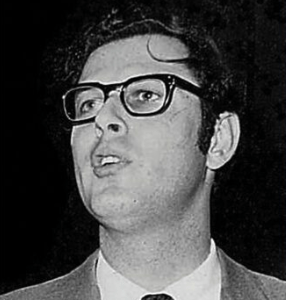
Full Name: Richard Charles Haefner; Citations: 291 Pa. Super. 604, 436 A.2d 665
Date: October 30, 1981, 291 Pa. Superior Ct. 604 (1981); 436 A.2d 665.
In re Expungement Petition of Richard Charles HAEFNER. Appeal of Richard Charles Haefner.
Superior Court of Pennsylvania, argued December 5, 1980 and filed on October 30, 1981.
John Kenneff, Assistant District Attorney, Lancaster, for Commonwealth, participating party, before HESTER, CAVANAUGH and VAN der VOORT, JJ.
HESTER, Judge: This is an appeal from an order of the Court of Common Pleas of Lancaster County refusing to grant expungement of an arrest record. The procedural history and facts relevant to the issues on appeal are as follows:
Appellant was charged with corruption of minors at Information No. 3218 of 1975, involuntary deviate sexual intercourse at No. 3219 of 1975, and corruption of minors at No. 3220 of 1975. The charge at No. 3218 of corruption of minors was nolle prossed by the Commonwealth on March 7, 1980 after five years of inactivity for lack of evidence.
*606 Appellant was tried before a jury on the other two criminal Informations in a trial which began on January 27, 1976 and ended on February 3, 1976 when the trial judge sua sponte declared a mistrial. The trial judge ordered a mistrial when the jury foreman indicated that the jury would not be able to reach a verdict. Our Court granted a motion to quash the Information because appellant’s retrial was barred by his Fifth Amendment right not to be placed in double jeopardy. Commonwealth v. Haefner, 264 Pa.Super. 144, 399 A.2d 707 (1979).
A hearing was held on the petition to expunge on January 25, 1980 at which time the Commonwealth presented no evidence. The trial court granted expungement as to criminal Information No. 3218, and denied expungement as to the two Informations on which appellant was tried. This timely appeal followed.
Appellant contends the trial court erred in imposing upon him the burden of affirmatively demonstrating his non-culpability under the facts herein.
We have held that the right of an accused to seek expungement of an arrest record is an adjunct to due process. Commonwealth v. Malone, 244 Pa.Super. 62, 366 A.2d 584 (1976). We have further held that where the Commonwealth has made out a prima facie case but the prosecution was terminated because of a procedural irregularity or legal technicality unrelated to questions of guilt or innocence, the accused has the burden of affirmatively demonstrating nonculpability. Upon such a showing, the trial court then had to weigh the Commonwealth’s interest in retaining the arrest record against the accused’s interest in freedom from harm ancillary to the arrest record. Commonwealth v. Mueller, 258 Pa.Super. 219, 392 A.2d 763 (1978); Commonwealth v. Rose, 263 Pa.Super. 349, 397 A.2d 1243 (1979). Mueller dealt with a dismissal pursuant to Rule 1100, a procedural rule, and not an inability to produce sufficient evidence to convict on the part of the Commonwealth at a trial on the merits.
*607 One of the basic tenets of our system of criminal justice is that the accused is presumed innocent until proven guilty beyond a reasonable doubt. Here, unlike Mueller, supra, although a prima facie case was made out, following a lengthy trial on the merits the jury was unable to agree on a verdict demonstrating the Commonwealth’s inability to prove appellant’s guilt beyond a reasonable doubt. Then, not because of any procedural irregularity, but rather because of appellant’s Fifth Amendment right not to be placed in double jeopardy, the Information against him was quashed and appellant was not retried. Thus, the prosecution of appellant was terminated because the Commonwealth was unable to produce sufficient evidence to convince a jury of his peers of his guilt beyond a reasonable doubt and a second trial was constitutionally prohibited. We therefore distinguish Mueller, supra, and refuse to impose the burden of showing non-culpability upon the appellant. We will not, nor will we permit the trial court to engage in an independent evaluation of the evidence presented at trial which already proved to be insufficient to prove appellant’s guilt beyond a reasonable doubt. Commonwealth v. Capone, 282 Pa.Super. 458, 422 A.2d 1383 (1980).
We next must balance the competing interests in determining whether appellant is entitled to expungement. The Commonwealth presented no evidence whatsoever justifying the retention of appellant’s arrest record.
On the other hand, appellant testified that he holds a Ph.D. in geology from Penn State University and had been an assistant professor at two colleges. He testified that he lost his position after the charges were instituted and has been unable to obtain new employment. He has applied at approximately 100 institutions seeking a teaching position. He stated that he had never been arrested before, nor after these charges were filed. He further stated that his arrest record has interfered with his ability to obtain employment and has affected his reputation. Finally, he testified he was not guilty of any of the offenses with which he was charged.
*608 Our review of the record indicates the appellant has shown substantial reasons why he should be free of an arrest record, while the Commonwealth has failed to submit a compelling reason, to maintain the record.
Accordingly, the Order of the trial court is reversed and the case remanded with directions to enter an order granting expungement.
VAN der VOORT, J., files a dissenting opinion.
VAN der VOORT, Judge, dissenting:
I respectfully dissent. In Commonwealth v. Mueller, 258 Pa.Super. 219, 223, 392 A.2d 763, 765 (1978), a majority of our Court sitting en banc vacated the lower court’s expungement order, holding that “where the record shows that the Commonwealth made out a prima facie case of guilt on the part of an accused, he will then have the burden to affirmatively demonstrate non-culpability at a hearing, otherwise his petition to expunge will be denied.” In the case before us, as in Mueller, the Commonwealth made out a prima facie case against the accused at the preliminary hearing, and the prosecution was terminated for reasons not related to guilt or innocence. In Mueller the prosecution was terminated because of the Commonwealth’s failure to proceed with the case within 180 days of filing of the complaint; in the case before us it was terminated because the trial judge impetuously and improperly declared a mistrial. Unlike the accused persons in Commonwealth v. Rose, 263 Pa.Super. 349, 397 A.2d 1243 (1979), and Commonwealth v. Capone, 282 Pa.Super. 458, 422 A.2d 1383 (1980), cited in the majority opinion, appellant in the case before us was not found to be innocent. The majority equates a mistrial caused by the court with a finding of innocence. This appears to me to be clearly a non sequitur.
I believe that Mueller is controlling in this situation, and I would therefore affirm the lower court’s order refusing to expunge appellant’s arrest record.\
 Another Bundy Blog: My Adventures around the Pacific Northwest (and everywhere else).