Jane Doe B-10: an unknown white female between twelve and nineteen that was discovered in 1984 close to the body of Cheryl Wims; she most likely was killed in the summer of 1983 and it’s suspected she had brown hair, stood around 5’5″ tall, and weighed 120 pounds. She was most likely left-handed and at one point in her adolescence had an injury to the front, left side of her head.
Jane Doe B-17: this victim most likely died in 1983 and their victims bones were found twice: some were found in 1984 and others were found in 1986. She was most likely a white female, aged 14-19, around 5’4”- 5’8” and average weight, around 120-140 lbs. Ridgway said she died in Spring or Summer 1983. Isotope testing shows she is possibly from the Northern United states (Alaska, Montana, Idaho, North Dakota) or Canada.
Jane Doe B- 20: discovered in 2003 after Ridgway led investigators to her remains, however her skull was never recovered so no composite sketch could be created (her race could also never be determined); it is known that she died some time in between 1973-1993 (but it most likely occurred sometime in the late 1970’s) and was most likely around thirteen to twenty-four years old. Ridgway confessed that he killed her sometime in the summer of either ’82 or ’83 and she was white and around twenty-years-old and had with brown or blonde shoulder length hair; he claimed to have started his crime spree in ’82 but it could have been earlier and doesn’t remember killing anyone in the 1970’s, but admitted it was possible.
Gary Ridgway’s first confirmed victim, sixteen-year-old Wendy Lee Coffield. Wendy briefly visited with her mother Virginia on the afternoon of July 8, 1982, and during their time together she said that her foster mother had given her permission to leave and spend the night at her grandfather’s house; it was later determined to have been a lie and she was only supposed to go out ‘for a walk.’ Coffield was never seen alive again and her remains were discovered on the banks of the Green River eight days later on July 15, 1982, underneath the Meeker Street Bridge.Seventeen-year-old Gisele Annette Lovvorn, who was a fun-loving Dead Head with an IQ of 145 (she had been a straight-A student before she dropped out). After traveling around the US with her boyfriend she eventually settled down in Washington at some point and became involved in sex work; while there she moved in with an older gentleman named John Tindal, who relied on her financially. Gisele was last seen around 1 PM on July 17,’1982 with plans of turning ‘three or four tricks,’ and even though Tindal was the one that reported her as missing in the initial stages of the investigation he was the King Country Sherrif’s Departments prime suspect. Her remains were discovered on September 25, 1982.Kasee Ann Lee, who was born on February 26, 1966 in Spokane, WA. I wasn’t able to find anything about her childhood but it has been established by the time she was sixteen she had began engaging in sex work and married a man (that was believed to be her pimp) only a few months before her murder. It’s strongly felt that she had someone in her life that was abusing her, as she often returned home with cuts and bruises, but when asked she would never share who was responsible. Lee was last seen by her husband on August 28, 1982 after she ran to the store to buy some ingredients for dinner and was last seen near the Sea-Tac International Airport at around 11:30 PM; her husband reported her missing two days later. After his arrest Ridgway confessed that he strangled Lee shortly after her disappearance and dumped her body near either a drive-in theatre or behind a bowling alley, and even though Ridgway told investigators the location of Kasee’s remains, they failed to locate them, and because they have never been found he has never been charged with Lee’s murder.Kelly Kay McGinnis, who was only eighteen when she was killed after checking into the ‘Three Bears Motel’ at South 216th Street and Pacific Highway South in Des Moines, WA; before she disappeared; she was employed as a prostitute and had been living on the streets of Seattle since she was fourteen, and at the time she went missing had a fourteen-month old daughter, that had been residing in a foster home. Immediately following her disappearance, it was presumed that Kelly was a victim of the Green River Killer, and sure enough Ridgway confessed to her murder in November of 2003 (in an attempt to avoid the death penalty). After he confessed to leaving her body near Lake Fenwick, investigators tried to locate her remains but were unsuccessful, and it was confirmed that she was last seen with him parked near a baseball field on Pacific Highway South. Gary Ridgway was never formally charged with McGinnis’ murder.Patricia ‘Patty’ Anne Osborn, who was born in Seattle on February 29, 1964. At some point, Patty began using hard drugs and got involved in sex work, and even though she left home at seventeen she was still in contact with her mother on a regular basis. She was last seen in Seattle on October 20, 1983 after she left her motel room and started walking down Aurora Avenue to a nearby restaurant, where she had plans to meet a John for ‘a date,’ but she never arrived. The exact date is unknown, but Patty was added to the list of possible Green River Killer victims sometime before August 1984, and after Ridgway was arrested he told detectives that he believed he was responsible for her death but didn’t remember any additional details. Due to the fact that little evidence existed and her remains were never found, he was never charged with Osborn’s murder.Mary-Jane Molina Malvar, who was born on April 1, 1965, in Manila in the Philippines. After her family relocated to the US, she somehow ended up in Washington state, where she became involved in sex work. She was last seen by her boyfriend along Pacific Highway South getting into a man’s truck, and after he became suspicious he got in his vehicle and attempted to follow it but was unsuccessful. Four days later, he contacted the King County Police and told them that he found the truck parked in front of a house, which happened to be owned by Gary Ridgway… Police brought him in for questioning, but he told them he knew nothing about Marie’s disappearance, and they were forced to release him due to lack of evidence. She was immediately suspected of being a victim of the Green River Killer, and her name was officially added to the list of suspected victims shortly after she vanished. After his confessed Ridgway led detectives to a ravine in Auburn, where a skull was found; dental records confirmed it was Marie’s.April Buttram, who was born in California on September 1, 1965. Details about Aprils childhood are unknown, but during her teenage years she was described as a ‘good kid’ but was turning into a troubled teenager. She was last seen on August 18, 1983 in Seattle and she was reported missing by her mother on an unknown date; she was added to the list of suspected GRK victim’s in July 1984. When asked about her remains, Ridgway took detectives to a wooded area near Snoqualmie, where they discovered a set of remains that were later determined to belong to April. On their way, he mistakenly ID’ed them as belonging to Keli McGinness, and told investigators that he frequently confused Kelly and April with one other, as he felt they had ‘similar physiques.’Patricia Ann Osborn, who was the oldest of ten children and was born in Havre, Montana on April 7, 1960; she was a member of the Chippewa-Cree Nation. Most of the details surrounding her childhood are not known, however her family eventually relocated to Seattle. The mother of three was a heavy drinker and a frequent drug user, and she was last seen between August 4 and 6, 1998; her body was discovered on the morning of August 6, 1998, near Des Moines Way South. Immediately after her death it was suspected she had suffered from an accidental overdose therefore it was not ruled a homicide. Patricia’s family was shocked when Ridgway confessed to her murder.Debra Lorraine Estes, who was born in Washington on September 12, 1967. As an adolescent, Debra loved horses, baseball, and riding her bicycle, and in her later teen years she ran away from home and became a sex worker. Deb was known to be friends with another victim of the GRK named Becky Marrero, and she was last seen at a Motel in SeaTac on September 20, 1982. On May 30, 1988 her remains were discovered at an apartment building in Federal Way, WA by workers digging post holes. While her cause of death couldn’t be determined, it was deemed to be a homicide. Little is known about the immediate aftermath of Debra’s disappearance. When her body was found, detectives immediately added her name to the list of victims.Rebecca R. ‘Becky’ Marrero, who was born in Seattle, Washington on August 4, 1962. She was killed by Gary Ridgway in Seattle, Washington on December 3, 1982 and was his fourteenth known murder victim. Details surrounding Marrero’s childhood are unavailable, but it was known that she had a three-year-old daughter at the time she was killed. She was last seen by her mother on December 3, 1982, at their home: she left after receiving a phone call, and when she got off the phone, she told her mother to watch her daughter and left all of her belongings at home. A year and a half after her disappearance in July 1984 she was officially connected to the Green River killer. Becky’s skull was discovered in a ravine in Auburn, Washington, on December 20, 2010 close to where the remains of Marie Malvar were discovered in 2003. While her cause of death couldn’t be determined, her case was deemed a homicide.Colleen Renee Brockman, who was born on December 4, 1967. During her childhood, Colleen lived with her father and brother but ran away from home in her early teenage years. She became involved in sex work and worked the SeaTac strip, and was last seen in Seattle on December 24, 1982 leaving a downtown motel. Her remains were discovered on May 26, 1984 and she was identified a month later after her father recognized descriptions of her braces, which were still on her teeth after her skull was found; a cause of death couldn’t be determined but her case was immediately deemed a homicide.Yvonne Shelly Antosh, who was born in Vancouver, British Columbia on April 8, 1964. Most of the details about her childhood are unavailable, but she moved to Washington shortly before her murder and quickly became involved in sex work. Shelly was last seen in the SeaTac area on Mary 31, 1983, along Pacific Highway South and her remains were found in Auburn on October 15, 1983. In a spot that was very close to those of Mimi Pitsor, Lori Razpotnik, and Sandra Major. Yvonne’s cause of death couldn’t be determined, and because of how close her remains were to other victims, her murder was immediately suspected to be linked to the Green River Killings; she was officially added to the list of victims in November 1983.Carol Ann Christensen, who was born on May 22, 1961, in Weippe, Idaho. At some point in her life, Carol Ann moved to Washington and at the time of her murder she had a five-year-old daughter and had been separated from her husband. She had been as a waitress at a local tavern and was last seen on May 3, 1983, in SeaTac leaving her POE after eating lunch with plans of returning later that evening to work her scheduled shift, but she never showed up. Her remains were found in Maple Valley by a family hunting for mushrooms: there had been a bag placed over her head and two clean fish had been placed on her body. Additionally, she had a bottle of wine in her hand and there was a raw sausage near her body. When investigators arrived, they determined she had been strangled and at one point had been completely undressed, splashed with water, then reclothed. The one shoe she had been found with had been put on the wrong foot, and her other one has never been recovered. She was also raped, as semen was found in her body; in 2001 it came back a match to Gary Ridgway.Linda Rule, who was born in Seattle on March 20, 1966. Details regarding her childhood are mostly unknown, but she is known to have gotten into some minor legal trouble after her parent’s divorce when she was a teenager. After she dropped out of high school she began engaging in drug use and its possible she was a sex worker. The sixteen year old had plans of getting married to her boyfriend at the time of her murder and had been last seen on September 26, 1982 leaving their shared motel room walking to the Kmart on Aurora Avenue north, to buy some clothes, and when she never came home her boyfriend had merely assumed that she had been arrested, but he couldn’t find her incarcerated at any of the local jails. The boyfriend (who is not thought to be Rule’s pimp) didn’t think she was working as it was rare to see girls working Aurora Avenue in the middle of the day and immediately filed a missing person’s report. Rule’s body was discovered on January 31, 1983 near a hospital in Seattle, and four days she was identified via dental records. Linda’s murder remained unsolved until Ridgway confessed to it in 2003.Kimi ‘Melinda’ Kai Pitsor, whjo was born on October 21, 1966 in Minneapolis, Minnesota. Details about her childhood are unavailable, though she likely moved to Washington sometime before her murder. She loved ‘glitter, unicorns, and the color purple,’ and left home at sixteen to move in with her boyfriend/pimp in downtown Seattle. Her boyfriend last saw her on April 17, 1983 talking to a date in a blue pickup and when she never returned home that evening he called LE and gave them a description of the vehicle. Mimi’s remains were found in Auburn just outside Mountain View Cemetery on December 14, 1983.Cheryl Lee Wims, who was born on May 23, 1964 in Washington. Most of the details about her youth are unknown, but as she grew older she gravitated towards drugs and at the time of her murder had been working at as busgirl in a Seattle restaurant. Wims was last seen on her eighteenth birthday on May 23, 1983, in Seattle and her body was recovered north of the SeaTac airport on March 22, 1984 during a search of the area after the remains of Wendy Stephens were found earlier in the same general area. Cheryl wasn’t connected to the Green River killings before her remains were found, but she was connected to the murders soon after her remains were recovered. Strangely enough, Chery’s sister, Deborah also disappeared on October 25, 1990 and she is also suspected of being a victim of the GRK. Her remains have never been recovered. It wouldn’t be until 2001 that her killer, Gary Ridgway, would be apprehended. Gary Ridgway was convicted of killing Cheryl however he denied murdering Deborah (although though LE strongly suspect he may be lying).Cindy Ann Smith, who was born on November 3, 1966 in Colorado. Smith ran away from her home in Seattle, Washington to California, when she began working as a topless dancer at the tender age of thirteen and shortly after began engaging in sex work. Right before her murder, Cindy’s mother bought her a plane ticket home to Seattle after she called her and told her she wanted to come home. and she disappeared mere hours after arriving home and she was last seen hitchhiking on the Pacific Highway South. On June 27, 1987 three boys were in a ravine behind the Green River Community College when they came across her partially buried remains; shortly after Smith was added to the list of confirmed GRK victims.Shawnda Leea Summers, who was born on June 28, 1965 in Akron, Ohio. Her family relocated to Bellevue, WA at some point in her childhood and she was known to have gotten involved in sex work in her teenage years. The seventeen-year-olds remains were discovered north of the SeaTac Airport on August 11, 1983, and she identified two months later in October 1983.Fifteen year old Patricia Ann Barczak, who was arrested on August 8, 1982 for being a sex worker. Barczak was placed in the custody of the Department of Social and Health Services and was sent to live in a youth shelter, and during an outing with DSHS on August 12, 1982 she ran away from her group and was never seen or heard from again. She was added to the list of suspected victims of the Green River Killer in May 1993, due to the location of her disappearance and her being a sex worker. When Ridgway was asked about Patti, he said he couldn’t recall any details about her, however Green River investigator Tom Jensen believes he is responsible for her disappearance.Shirley Marie Sherrill, who was born in Seattle on January 16, 1964. Details of her childhood are unavailable, but the eighteen year old is known to have become involved in sex work and she was last seen by a friend when they had lunch in Seattle’s International District sometime between October 20 and 22, 1982 in Seattle’s International District. Shirley was connected to the Green River killings in December 1983 and her skull was discovered in Tualatin, Oregon, on June 21, 1985; she was identified via dental X-rays three days later. Denise Darcel Bush, a twenty-three-year-old Portland resident that had relocated to the SeaTac strip after she heard that money was better there. Most of the details surrounding her childhood are unavailable other than that she had epilepsy and had become a sex worker at some point. A month before her murder in September 1982, she was arrested and charged with stealing at least six wheelchairs from a hospital (along with two other women); it’s unknown what became of the charges. She was last seen on October 8, 1982 crossing a street in Seattle to buy cigarettes and was never reported missing; her friends had assumed she had simply returned home to Portland. Her skull was discovered in Tualatin, Oregon, on June 12, 1985 (the body of Shirley Sherrill were later found in the same area), and on February 10, 1990 remains and teeth found in Tukwila were quickly tied to Denise. After Ridgway confessed to Denise’s murder in 2003, he told police he put Denise’s skull in Oregon to intentionally throw off the investigation.Andrea M. Childers, who was born on March 29, 1964 and spent most of her childhood in California but moved to Seattle to live with her father and stepmother when she was sixteen. At some point in her life, she became involved in sex work and had been arrested for it around a year before she was last seen alive. She was very close with her elderly grandmother and had dreams of becoming a dance teacher; she was last seen at a bus stop in Seattle on April 14, 1983, in Seattle. On October 11, 1989 her remains were discovered near the SeaTac Airport by a Port of Seattle worker that had been cutting brush in the area. Her missing persons report had been purged from police files after someone contacted law enforcement and told them they saw Andrea crossing the Canadian border, which is likely not true; the only file related to her disappearance that hadn’t been purged was one in possession of the GRK Task Force.Mary Bridget Meehan, who was born on May 16, 1964 in Washington. Mary was described as ‘very outgoing’ and was a talented artist and was a big lover of animals, however once she started middle school she began getting into trouble and started skipping class and was known to run away (although she would always return). Mary was also known to be a sex worker, however right before her murder she gotten pregnant by her boyfriend and started to turn her life around (she had also recently obtained her GED). Meehan was last seen in the SeaTac area on September 15, 1982 after she left the Western Six Motel to go for a walk; he remains were discovered in a shallow grave almost two months later by the Tyee Golf Course in the SeaTac area on November 13, 1983; she had been eight months pregnant at the time.Kelly Ware, who was born on November 19, 1960 in Washington. Details about her childhood are unavailable, but she is known to have become involved in sex work. She was last heard from by her mother on July 18, 1983 after she called home from a payphone in the Central District of Seattle; her remains were discovered in SeaTac on October 29, 1983, just south of the airport during a search of the area after the remains of Constance Naon were found nearby two days before. Because Kelly was never reported as missing in 1983 she was never added to the list of suspected GRK victims, which meant that after her remains were found she remained unidentified; Ware was officially reported as missing in late 1984, and because she was a sex worker, police immediately suspected that she was a victim of the GRK, which lead to the identification of her remains via dental records later in the year.Constance Naon, who was born on June 29, 1962 in Washington. Many details about her background are unavailable, but before her murder, she was semi-financially stable and had a job as a clerk in a retail store… but, the twenty-year-old had a nasty cocaine habit and had started to engage in sex work to help fund it. She was last seen leaving a friends house on June 8, 1983 and her car would later be found parked in SeaTac, near Pacific Highway South. Constance’s remains were discovered on October 27, 1983, just south of the airport; two days later the remains of Kelly Ware would be found in the same area (she remained unidentified until December 1984).Sandra K. Gabbert (or ‘Sand-e’ as she was known by her family), who was born on March 7, 1966 in Seattle. Her parents divorced when she was young and in her teenage years, she was the star of her high school basketball team but dropped out at seventeen before graduating. She moved in with her boyfriend and became involved in sex work on the SeaTac strip in an attempt to help make ends meet (she was known as ‘Smurf’ on the street). Despite the lifestyle she led Sandra maintained a close relationship with her mother, who she told one time made more turning one trick than she did working an entire week at KFC, and she understood her daughter’s desperation but still begged her to ‘be careful.’ Sandra was last seen in SeaTac on April 17, 1983, along Pacific Highway South and her body was found in April of 1984 at in an isolated spot in the Star Lake Road area around Auburn.Pammy Annette Avent, who was born on November 23, 1966 in Seattle. She was a sex worker and was known to travel between Portland and Seattle; she was last seen on October 26, 1983 leaving her home to go see a John and was reported missing by her mother on October 30, 1983. Pammy was added to the list of suspected victims of the Green River Killer in May 1984. Agfter his arrest when Ridgway was asked about where Avent’s remains may have been, he led detectives to Highway 410 (which was an old logging road) east of Enumclaw, where they discovered a skeleton that was identified as hers was found there; her family conducted a memorial service for their daughter on November 8, 2003.Roberta ‘Bobby Jo’ Hayes, who was born on June 9, 1966 in Seattle. She ran away from home when she was twelve and during her teenage years was featured in the 1984 Oscar-nominated film ‘Streetwise,’ that documented the lives of kids living on the streets of Seattle. Bobby Jo was working as a waitress at the time of her murder and was last documented leaving a Portland, Oregon jail on February 7, 1987; its strongly suspected that she had plans of hitchhiking back to Seattle, but it’s unknown what happened to her after that. Haye’s stepmother reported her missing in 1988 after not hearing from her and her remains were discovered along Highway 410 on September 11, 1991; they remained unidentified for many years and it wasn’t until King County Detective Tom Jensen did a routine check of the area’s unsolved missing persons cases that he came across Bobby Jo’s missing persons report. After he added her file to the to the National Crime Information Center database the system immediately came up with a match to her unidentified remains. The ME did a comparison of dental records and a match was quickly confirmed but King County detectives held fast to their belief that the young victim wasn’t a Green River victim; Gary Ridgway confessed to her murder after his arrest in 2001.Marta Reeves, who was born on April 11, 1953 in Hungary, and at some point before her murder she got married and had four children. She later got involved in the drug scene and developed a pretty serious cocaine habit and got involved in sex work to help pay for it. Marta was known to work in Seattle’s Central district, and was last seen either on March 5th or 6th, 1990. Her remains were discovered on September 20, 1990 by mushroom pickers along Highway 410, east of Enumclaw, WA. She was discovered wearing clothes, including pink size six running shoes, jeans with a 28-inch waist, a dark crew-neck sweater, and a single strand of white beads. Her husband tried to report as her missing to both Seattle and Edmonds police, but both agency’s believed that the case was the other one’s jurisdiction. Because of to this, Marta wasn’t reported missing for a prolonged period of time.Martina T. Authorlee, who was born on March 21, 1965, in Fürth, Germany after her father was stationed there in the US Army; the Authorlee family lived there until 1968, when they relocated to Tacoma in Washington, where it is believed she lived in numerous foster homes for an unknown reason. Martina’s interests included roller skating, basketball, baseball, and swimming and she after she graduated from high school she joined the National Guard, however she was discharged for medical reasons. Authoree reportedly became involved in sex work at the age of fifteen and she was last seen in SeaTac on May 22, 1983, along Pacific Highway South. Martina was reported missing by her mother on January 30, 1984 and her remains were discovered off Highway 410, near Enumclaw on November 14, 1984.Mary Sue Bello, who was born on December 22, 1957 in Seattle. Described by her family as intelligent but also very rebellious, Mary would help anyone that needed her, and was also an excellent cook. Despite all of her positive traits, Mary had a troubled life: at the age of thirteen she got involved in sex work, and began taking drugs and ran away to a different state in an attempt to meet her dad, who had one time tried to rape her. Mary was last seen in downtown Seattle on October 11, 1983 leaving her residence to engage in sex work. Mary’s mother reported her missing on November 17, 1983 and despite some confusion that she had been found safe and well in Odessa, her remains were recovered on October 12, 1984 and were identified via dental records.Debbie May Abernathy, who was born in Dallas, Texas on May 25, 1957. Most of the details about her childhood are unknown but she moved from Texas to Seattle only weeks before her murder with her boyfriend and son with hopes of a fresh start. After relocating, she turned to sex work and was last seen in Seattle on September 5, 1983 near the Rainier Avenue area. Debbie’s remains were discovered just east of Enumclaw on March 31, 1984.Kimberly Nelson (who also went by the alias, Tina Tomson), who was born on January 26, 1963 in Ann Arbor, Michigan. At some point during her adolescence, she moved to Seattle and along with the help of a pimp, got involved in sex work. She was last seen near a motel in SeaTac on November 1, 1983 and her remains were discovered by the GRK Task Force near North Bend on June 14, 1986. The alias that Nelson used led detectives to the identification of a previous victim, Tina Thompson, whose remains had been recovered in April 1984.Lisa L. Yates, who was born somewhere in Washington state on January 22, 1964. Most of the details surrounding her childhood are not known, however she was described by her family as ‘being gifted, loving and funny.’ At some point in her life, Yates became involved in sex work and she was last seen on December 23, 1983 in Seattle heading towards Rainier Avenue; her remains were discovered near North Bend on March 13, 1984. Lisa was not reported missing until her sister (who had been living in Hawaii) noticed reports of a woman that matched her description that had been found murdered near Lake Kapowsin on September 13, 1984. Fearing the remains belonged to Lisa, she got a friend to give investigators her sisters information. She was ruled out as being the then-unidentified body, however forensic experts tested her against the unidentified victims of the GRK and they came up with a match. The body found near Lake Kapowsin was later identified as twenty-one-year-old Lucille Kay Jones, who was last seen on August 11, 1984 and isn’t believed to be a victim of Gary Ridgway.Delise ‘Missy’ Louise Plager, who was born on May 16, 1961 and had been previously known as Jane Doe B-8 or Bones 8. After barely making it through her birth, Delise (who went by Missy) spent her early childhood being raised in a poor environment, and at the age of five her and her twin brother were removed from the home and adopted into separate families; to make matters worse, her brother’s new family forbade Missy from contacting him. At some time in her adolescence, Plager had been diagnosed with ADHD and by the time she vanished at the age of twenty-two she had given birth to three children. In 1977 when she was sixteen, had gotten into a car accident and suffered from a skull fracture as well as a broken jaw and hip. In 1982 a woman in Seattle’s Capitol Hill area approached Missy and said to her, ‘you know, you look enough like my boyfriend to be his twin,’ and as it turned out, she was; sadly, the reunion was anticlimactic and didn’t work out well for her. Later in the year she had tried to reconnect with her biological mother Patricia as well, but that went even worse: over the years Patricia’s alcoholism had gotten bad, and she was less than sympathetic to the hard life her daughter had, and at one point during their encounter (after having one too many cocktails) said something along the lines of: ‘you’ve got so many problems, maybe it would have been better if they hadn’t resuscitated you when you were born.’ After this cannon event Missy developed a drug problem and began to rely solely on sex work to support herself and had even tried to commit suicide at some point. She had been last seen at a bus stop in the Beacon Hill area of the Seattle suburbs on October 30, 1983, and had been on her way to deliver a Halloween costume to a friend’s child shortly before she was killed. Her remains were discovered near North Bend on February 14, 1984 but remained unidentified until April 1985 when they a match was made via dental records and X-rays.Maureen Sue Feeney, who was born on October 5, 1963 in Seattle, Washington. During her teenage years, Feeney suffered from low self-esteem and didn’t date much; she was also reportedly into self-harm and even hinted at suicide to one of her friends. In the months leading up to her murder, Feeney got a job as an assistant at a local daycare, and it was around the same time that her personality changed: she started drinking heavily and often went out to clubs. She also may have been dating a man that had ties to sex work (even though her family claimed she wasn’t) and may have had plans of quitting her job, as she was earning money through an unknown means. Maureen was last seen leaving her Seattle apartment on September 28, 1983 and she was was reported missing by her mother two days later; her remains were found near the intersection near Issaquah on May 2, 1986.Tina Marie Thompson, who was born in Oregon on October 26, 1960. Also known as Jane Doe B-14 or Bones 14 while unidentified, most of the details about her background are unknown, but at the time of her murder she was living in Portland, Oregon and was employed as a waitress (even though she was known to have been involved with in sex work). Tina was last seen in Seattle on July 25, 1983 after she was released from the King County Jail, the reasons that she was away from home remain unknown. Thompson’s remains were discovered near Highway 18 in Maple Valley and were supposedly found by a self-described psychic named Barbara Kubik-Patten that had been working the case’ independently’ (whatever that means). Because Tina wasn’t reported as missing her remains weren’t immediately identified, however they were linked to the Green River killings soon after their discovery. Her remains were identified in 1986 after King County investigators were looking into the aliases of Kimberly Nelson, and one of them happened to be ‘Tina Lee Tomson.’ When detectives realized that Tina shared many of Jane Doe B-14’s characteristics, they did a comparison of her dental records and in July 1986 a positive match was made.Carrie Ann Rois, who was born on February 15, 1968 in California but moved to Washington at some point in her adolescence. At some point before her murder fifteen-year-old Carrie began telling people that she was being abused at home, and for unknown reasons, she was placed in various group homes (although it was known that she was an established run away). She got along well with her peers in the state facilities and dreamed of one day becoming a model. She was known to have gotten involved in sex work only weeks before she disappeared and was last seen between May 31 and June 15, 1983; Carrie’s remains were discovered on March 10, 1985 in Auburn near Star Lake Road. She was connected to the GRK case on March 6, 1984, along with Carol Christensen.Delores Laverne Williams, who was born on June 29, 1965. Very little is known about her childhood, however she reportedly had many previous arrests on her record for being a sex worker. Ms. Williams was last seen walking along Pacific Highway South in the SeaTac area sometime between March 8 and 17, 1983. Her remains were discovered in Auburn close to Star Lake Road on March 31, 1984 at around the same time as three other sets of remains, those belonging to Alma Smith, Sandra Gabbert and Terri Milligan. It’s unlikely Delores’ case was immediately connected to the GRK in the days right after her disappearance, but all the remains found were connected shortly after. She remained unidentified until December 1984 when the GR Task Force came into possession of her missing persons report and dental records.Alma Ann Smith, who was born on August 1, 1964, in Walla Walla. When asked what she was like, Alma’s best friend said she was ‘extremely generous,’ but when she was a teenager, she began running away from home, often hitchhiking her way to Seattle. At some point in her teenage years, she became involved in sex work and was last seen walking along the Pacific Highway South on March 3, 1983 in SeaTac. Alma’s remains were discovered in Auburn near Star Lake Road, on April 2, 1984 at around the same time as Delores Williams, Sandra Gabbert and Terri Milligan. In 2001 Gary Ridgway confessed to luring Alma to his home and strangling her to death.Opal Charmaine Mills, who was born on April 12, 1966 in Washington. Her childhood nickname was ‘Little Opal,’ and she grew up with an abusive father (even though she was very close to her older brother, who said she ‘struggled to fit in in a racially divided world’); as she was moving through her teenage years, Opal frequently hitchhiked to get around, and was described as being ‘boy crazy’ and she dropped out of formal schooling sometime in her teenage years (but she did begin taking classes through a continuation school shortly before she was killed). It’s unknown whether Mills was a sex worker at the time of her murder and she was last heard from by her brother on August 12, 1982 when she reached out and asked him for a ride; she also told him in that same conversation that she was planning on doing a painting job near Angel Lake Park with her friend, Cynthia ‘Cookie’ Hinds. Opal Mills was identified as being one of three bodies pulled from the Green River on August 15, 1982, along with Marcia Chapman and Cynthia Hinds, who was coincidentally the same the friend Opal had plans meeting with when she disappeared; it’s unknown if the two friends ever crossed paths that fateful day and Cynthia was last heard from the day before Mills was last seen alive.Terry Renee Milligan, who was born in Seattle on January 26, 1966. When Terri was a child, she was described as being brilliant and had dreams of attending Yale University; she was also very active in her local church. After Milligan got pregnant in middle school she was forced to drop out, and at the time she was killed lived with her boyfriend in a motel; it’s unknown when, but the sixteen-year-old got involved in sex work at some point and was last seen on August 29, 1982 leaving her motel room. Her remains were discovered in Auburn on April 1, 1984 around the same time as three other victims (Delores Williams, Sandra Gabbert and Alma Smith).Cynthia Jean Hinds, who was born on February 23, 1965 in Seattle. Seventeen-year-old Cynthia frequently associated with the wrong people and had a long history of running away from home, however in the months leading up to her murder it was said that she was trying to turn her life around and she had a job as a cook at a barbecue restaurant in the Southern part of Seattle. Hinds was last seen on August 11, 1982 after she left her job and she was identified as being one of three bodies that had been pulled out of the Green River on August 15, 1982, (along with Marcia Chapman and Opal Mills, whom Cynthia was known to be friends with). All three women were either nude or partially clothed and had also been raped, as semen was found in their bodies. In 2001, it was determined that the semen collected from the three women matched that of Gary Ridgway.Gail Matthews, who was born on February 5, 1959 in Seattle and was known as Jane Doe B-2 or Bones 2 before she was unidentified. Most of the details surrounding her childhood are unknown but she had gotten divorced shortly before she was murdered. Matthews was last seen getting into a truck on Pacific Highway South in the SeaTac on April 10, 1983 and her remains were discovered in Auburn near Star Lake Road on September 19, 1983; Gail’s family reported her missing in April 1984. Around 1985, one of her cousins was reading a newspaper article about the GRK case that gave detailed descriptions of the killer’s unidentified victims, including Gail. After they read that one of the victims had a healed pelvis/shoulder from an injury that were consistent with the injuries Gail sustained from a boating accident in 1980; in February 1985 after the cousin submitted a tip to King County LE, Matthews was identified after some treatment records from the accident were compared to her remains.Tracy Ann Winston, who was born on September 29, 1963 and was also known as Jane Doe B-18 or Bones 18 while unidentified. In school, Winston played basketball and was on the boys little league team (at a time where few girls were allowed to join); by the time she got to her teenage years, Tracy began getting into trouble and according to her brother had also associating a man who was described as a ‘con man.’ She also became involved in sex work (which she was arrested for) and after spending a day in jail, she called her parents, saying the experience had affected her and she was going to turn her life around and earn her GED. Tracy was last seen near the Northgate Mall in Seattle on September 12, 1983; her partial remains were discovered on March 27, 1986 in Kent close to the Green River and on November 20, 2005, a skull was found by a hiker near Issaquah that was later identified as belonging to her.Marcia Chapman, who was born on July 9, 1951 somewhere in Arizona. At some point in her life, she relocated to Washington and at the time of her murder she was a single mother with three children; a detective that was familiar with Marcia described her as ‘a nice person with a kind heart.’ Because Chapman was unable to provide for her little ones with a traditional job, she turned to being a sex worker; she had once been approached by a man that offered to be her pimp for protection, but she denied his thoughtful offer as she wanted to bring home the most money possible for her children. Marcia was last seen leaving her apartment on August 1, 1982 which was very near to Pacific Highway South and was identified as being one of three victims pulled from the Green River on August 15, 1982 (the other victims being Cynthia Hinds and Opal Mills); all three women were either nude or partially clothed and had been raped, as semen was found inside of their bodies. In 2001, after he confessed the semen collected from the bodies of Chapman, Mills, and Hinds all matched that of Gary Ridgway.Debra Lynn Bonner, who was born on October 31, 1958 in Tacoma, Washington. One of three brothers and sisters, Debra dropped out of high school shortly before she was supposed to graduate and had become a sex worker to help make ends meet. At the time of her murder, Bonner was trying hard to turn her life around: she had been paying fines related to prior arrests, frequently checked in with her parents, was working on getting her GED, and had dreams of one day joining the US Navy; sadly only days before she disappeared she told a friend she was trying to escape an abusive boyfriend and had been last seen on July 25, 1982, leaving a motel on Pacific Highway South. Debra’s nude body was discovered floating in the Green River by an employee at the Kent slaughterhouse on August 12, 1982; she had been strangled to death. She was the second GRK victim to be discovered after Wendy Coffield.Wendy Stephens, who was born sometime in 1968; she was known as Jane Doe B-10 or Bones 10 while she remained unidentified. She initially disappeared from Colorado on February 6, 1983 and she was reported missing by her family shortly after; sand its strongly believed that she was killed shortly after arriving in Washington. The Jane Doe’s skeletal remains were found on March 21, 1984. Medical experts determined that she had died a year or more before the discovery, sometime in the early 1980s. Wendy’s remains were discovered close to the remains of another victim, Cheryl Wims (who was discovered a day later) on the north side of the SeaTac airport on March 21, 1984; her cause of death was determined to be from strangulation. Both Wendy and Cheryl were linked to the Green River killings very soon after they were found. In 2001, Gary Ridgway confessed murdering Wendy Stephens. In 2020, the DNA Doe Project announced they were using genetic genealogy to identify Stephens remains, and in January 2021 they announced that they had identified Wendy, and her case was finally solved. Her remains were cremated and scattered close to her mother’s home in Colorado.Lori Ann Ratzpotnik, who was born on November 13, 1967 and was formerly known as Jane Doe B-17 or Bones 17. Growing up, Lori was a straight-A student and her interests included horses, sports, cooking, and dogs. Described by her mother as a ‘firecracker’ and ‘just pure joy,’ as Lori grew older, she began to pick up some bad habits: skipping school, shoplifting, and running away from home. Lori ran away from her home in Lewis County sometime in 1982, after a particularly bad argument with her mother about getting a horse. During Thanksgiving in either 1982 or 1983, Lori called her mother one last time, saying she was happy living in Seattle and promised that she’d send presents home to them on Christmas… but she never did. On February 18, 1984, Lori’s partial remains were found in Federal Way, and not even two years later on January 2, 1986, more partial remains belonging to Lori were found in Auburn as it was determined they were determined to have come from the same person as the remains found in 1984. After Lori stopped contacting her mother, she hired a private investigator to try and find her, nothing ever panned out. After he got caught Ridgway said that confessed to killing her in the Spring or Summer of 1983. Due to this, it’s likely Lori last contacted her family on Thanksgiving 1982, not ’83. In December 2023, with assistance from Parabon Nanolabs, Jane Doe B-17 was identified as Lori. Isotope testing before her identification suggested she wasn’t native to the area, but Lori was actually from the area.Tammie Liles, who was also known as Jane Doe B-20 before her 2024 identification was born on May 9, 1967. In May 1983 sixteen-year-old Tammie ran away from her home in Tualatin, Oregon and she was last seen alive somewhere in Seattle on June 9, 1983. In the days that followed her disappearance, Tammie wasn’t immediately reported missing, most likely because she had ran away in the past, and it wasn’t believed that she had been met with foul play. Liles skull and partial remains were discovered near a golf course in Tualatin, Oregon on April 23, 1985 during a subsequent search of the area after the remains of Angela Girdner were recovered nearby the day before. Tammie remained unidentified until early 1988, when her parents finally reported their daughter as missing; and upon obtaining her dental records, detectives were able to make an identification of her remains later that March. After Ridgway was captured in 2003, he unknowingly led King County Detectives to Tammie’s remains as the scene that he took them to contained somewhere between twenty-five to thirty bones (some of which belonged to her). Sadly, Angela Girdner remained unidentified until 2009, when a positive match was made using dental records. When Ridgway was asked about Tammie and Angela’s he denied killing them both, and he was convicted of Tammie’s murder but not of Angela’s. After the rest of Lile’s remains were discovered in 2003, they were sent to Othram Labs in January 2024 and came back a match; she was Ridgway’s last victim to be unidentified after Lori Razpotnik in December 2023.
Note: While on vacation with my husband in the Adirondack Mountains this past October I came across the name ‘Gini McNair’ in relation to Ted Bundy on a website called ‘Bartleby;’ there’s no author credited, and I have no idea who wrote it or where it came from (Google was also incredible unhelpful). When I looked ‘Gini McNair’ up on multiple search engines the same (poorly written) essay came up three times (all with no author). After a little bit of research, I was able to find out more about McNair’s background (as well as her full first name), however because her story is short and mostly unremarkable (and most likely made up), I’m not going to go super deep into her background.
Background: Virginia Ingraham was born sometime in 1953 to Lowell ‘Bud’ Everett and Lillian Marie (nee Tasker) Ingraham in Binghamton, NY. Mr. Ingraham was born on September 13, 1915 in Binghamton, and Lillian was born on July 2, 1918 in Arlington, Virginia. The couple were married on July 21, 1940 in Binghamton and went on to have five children together: James, Martha, Margaret, Raymond, and Gini. After serving in the Army during WWII Bud went on to get a job with IBM, where he worked for twenty-nine years; the family relocated to Colorado in 1965 after he was transferred and they settled down in Boulder. In 1975 Gini graduated with a bachelor’s in fine arts from the University of Colorado and she married Bob McNair in 1977; the couple settled down in Hotchkiss, CO.
Ted Bundy?:One chilly afternoon in late 1977 (the description of the encounter is incredibly vague and there is no exact time frame given) the twenty-six-year-old newlywed had been dropped her off at her car on Sugarloaf Road near Boulder Canyon by her sister-in-law. After saying goodbye, Gini unlocked her ‘dusty red’ Volkswagen Beetle and got in, and as she sat there waiting for it to get warm she looked up and noticed a second VW almost identical to hers (except for the fact it was light blue in color) coming towards her.
As the vehicle got closer to her McNair was able to get a good look at the driver, who took the brief opportunity to size her up as well, and when his eyes met hers, she it was as if she had been punched in the gut. After the man drove by her, he continued along until he reached the bottom of the road, that’s when he briefly stopped then quickly made a U-turn and began making his way back to her. When he pulled up to the scene, he parked his own VW and got out, and as he confidently walked towards her window she started to roll it down, and he leaned in close and asked if she was ‘having car trouble?,’ to which she hastily replied, ‘no.’ In return, he loudly said back to her, ‘oh, well I am!’ Gini looked up at him with a surprised look on her face, and it was at that point that she knew she had to get away from him, and she quickly blurted out, ‘well, I’m sorry, but I don’t really know anything about cars. I don’t think that I would be able to help you!’ The man became angry and said to her: ‘well, maybe you COULD!’ McNair said ‘no’ for a second time then rolled up her window and sped away.
McNair said that in the days that immediately followed the event she didn’t tell many people about her strange encounter, and wondered if it had simply been one of those weird events that happened to people on occasion… But one night, a few months later, her and Bob were watching the news and a story about Ted Bundy came on: he had just been recaught in Florida, and as they were watching the station showed a picture of the killer and Gini’s mouth dropped to the floor in shock: it was the same man that claimed to have car problems that afternoon in late 1977. From that moment forward, McNair said that she always made a habit of trusting that little voice in the back of her head that had been with her that day.
If I can be candid, I think Mrs. McNair is mistaken in her identification of Ted Bundy that night in Boulder in late 1977: by that time his movements were incredibly well documented and tracked (as he was in police custody for most of the year), and in total was technically only ‘free’ for a total of seven days (although only one can really be considered as six of the seven days were in June). According to the ‘1992 FBI TB Investigative Report,’ from January 1-29, 1977 he was incarcerated in the Utah State Prison, and from January 29th to April 11, 1977 he was in the Pitkin County Jail; from April 11th to June 7th he was in the Garfield County Jail (with the occasional overnight trip to the Pitkin County Jail). Let’s not forget his daring escape where he was free between June 7th to the 13th, and after he was recaptured he was sent back to the facilities in both Garfield and Pitkin Counties until his second escape early in the morning on December 31, 1977… so unless McNair’s encounter happened on New Years Eve, (which one would think is a pretty memorable day), then it was most likely not Ted Bundy that needed car help. Also he was not said to have been in Boulder that day, only Glenwood Springs, Vail, and Denver; from there he took a plane to Chicago.
Gini is an established artist and ceramicist that has over forty-five years of experience in her field (she also makes fused glass jewelry); she has a physical storefront with her husband called ‘McNair Studios’ and most days you can find them in their respective studios or outside working in their garden. She opened ‘Fat Cat Pottery’ in Grand Junction (which is still open as of December 2025), which is described as a ‘successful, next door, do-it-yourself pottery studio,’ and has multiple storefronts across the internet (I was able to easily find her Etsy page). Bob is retired from a successful career of the field of custom home construction, and he now creates hand carved wooden spoons; in August 2006 the couple opened a coffee shop called ‘Doghouse Espresso.’ When she is not creating her art Gini enjoys gardening, spending time with her daughter and granddaughter, cooking, baking, entertaining friends, and enjoying the inspiring mountain view from her deck. I was unable to find anything related to McNair after 2021 online, and her Etsy shop is currently closed.
According to her Etsy page, Gini has ‘been fascinated by clay since I was a child. I grew up in the rural countryside of upstate New York and while most kids were content making ‘mud pies,’ I loved making complete sets of tiny dishes with the clay that I dug up near the pond in our backyard. That love was reawakened during my first year of college when I stumbled into my first pottery class at the University of Colorado in Boulder. I immersed myself in the study of ceramics and took many workshops with some of the best potters of that era; Warren MacKenzie, David Shaner, Ken Ferguson, John Reeve and others. I received a Bachelor of Fine Arts Degree in 1975 and have had a love affair with clay ever since.’
Mr. Ingraham died at the age of seventy-four on March 7, 1990 in Boulder, Colorado after a sudden illness. According to his obituary, he retired in 1972 and was a member of the Nederland Presbyterian Church and was active in the Nederland Lions Club as well as several other groups aimed for senior citizens, and in his spare time enjoyed gardening, fishing, and photography. Lillian Marie Ingraham died at the age of ninety-one on September 2, 2009 in Boulder. Gini’s brother Raymond Charles Ingraham passed away suddenly at the age of sixty-four on June 20, 2013; her sister Margaret Jean (Peg) Craven died at the age of seventy-nine on September 9, 2024, in Fort Lupton, Colorado.
A young Gini holding a cat.A young Gini on a riding horse.Gini on a tractor.Gini Ingraham from the 1968 Fairview High School yearbook.Gini Ingraham from the 1970 Fairview High School yearbook.Gini Ingraham from the 1969 Fairview High School yearbook.Gini and some friends.Gini.Gini standing next to some of her artwork.Gini and Bob McNair’s bio’s on her Etsy page.The ‘About Me’ portion on Gini’s Etsy page.The heading from the McNair Studio page on Etsy.The outside window of Doghouse Espresso in Delta, Colorado.The inside of ‘Doghouse Espresso’ located at 449 Main Street in Delta Colorado.Virginia listed in those second graders that made the honor role published in Press and Sun-Bulletin on July 31, 1955.A newspaper clipping about an opening reception for the creative works of Gini McNair published in The Daily Sentinel on October 1, 1986.A newspaper clipping about Bob and Gini McNair being artists in residence at Main Street Gallery in Cedaredge published in The Daily Sentinel on February 19, 1993 Ted Bundy’s whereabouts according to the ‘1992 FBI TB Multiagency Report.’Mr. Ingraham’s WWII draft card.Lillian Marie Ingraham.Lowell Everett Ingraham.Lowell Ingraham’s obituary published in The Daily Sentinel on March 10, 1990.Lowell Ingraham’s obituary published in The Press and Sun-Bulletin on March 15, 1990.A plaque created in loving memory of Lilian Marie In Graham after her death in 2009.Gini’s brother, Raymond Charles Ingraham. Raymonds memorial information on his ‘FindAGrave’ page.Margaret Jean ‘Peg’ Ingraham Craven.Margaret’s memorial information on her ‘FindAGrave’ page.
Deborah Wharton Beeler was born in Lawrence Memorial Hospital on October 6, 1946 to John and Elizabeth ‘Betty’ (nee Wharton) in New London, Connecticut. John Hall Beeler Sr. was born on August 3, 1918 in Baltimore, Maryland and according to MyHeritage, he graduated from John Hopkins University with a BS in civil engineering in 1938 and went on to serve in the Army during WWII, where he saw battle in Europe; upon his discharge from the military on April 10, 1944 he was employed at the Arundel Corporation and Consolidated Engineering Company’ and went on to become the president of the Precision Tool Company in Edgemont, Pennsylvania.Elizabeth Sergeant Wharton was born on November 15 1922 in Philadelphia, and graduated from the Agnes Irwin School in 1941; she made her debut later that same year. The Beeler’s were married on October 28. 1942 in the Thomas Virgin Islands and had three children together: Deborah, Edward (b. 1956) and John (b. 1944). After getting hitched the family moved around the US, and briefly lived in Stonington, CT and Maryland before eventually settling down in Pennsylvania.
According to an article published in The Times-Herald on February 26, 1970, the Beelers were ‘listed in the Social Register of Pennsylvania’ which is a directory of ‘prominent and elite families’ in the Philadelphia area and other regions of the state that (historically) focused on ‘old money’ and well-connected families (in more recent years they have expanded to include a more ‘diverse’ membership). In early 1970 the family lived in the Chester Hill area of Philadelphia, and Deborah’s brother John was a Captain in the Air Force and was serving in Vietnam, and her younger brother Edward was attending Chester Hills Academy in Philadelphia.
Deborah Beeler seemed to live an incredibly charmed life: described by a loved one as ‘vivacious,’ she was the daughter of a wealthy, high level business executive and graduated from Springside High School in 1964. Springside was an independent college preparatory school in the Chestnut Hill area of Philadelphia, and while there she excelled in academics and participated in drama club, glee club, and wrote for the newspaper. After graduating from high school Beeler went on to attend Smith College in Northampton, Massachusetts, and graduated in 1968; upon completion she relocated to Berkley, where she got a part time intern position teaching three reading classes a day at the Oakland Technical High School, and got her temporary teaching credentials in January 1970 after taking a class in the Golden State.
According to Deb’s boyfriend and Ted Bundy’s one time Seattle lawyer John Henry Browne (who Bundy actually sought out to be his attorney), at the time of her death she was a graduate student in English education at UC Berkeley, and in addition to teaching she volunteered PT at a halfway house that was close to the cottage that she rented (which was located in the front part of 477 Arlington Avenue). According to William H. Miller, the principal of the school Beeler taught at, she was ‘outstanding,’ and seemed to get along very well with her students, and friends of hers said she was in good spirits the week prior to her death and was an ‘outdoorsy’ type and enjoyed hiking and skiing.
Inspector Jack Houston with the Berkley PD also said that Beeler had gone to her teaching job on Friday, February 20, 1970 and that the following Monday was a holiday (Presidents’ Day), however she failed to report to work on Tuesday, February 24th. The Almeida county coroner said that the twenty-three year old had been found later that day in her cottage by her landlord Stanley Gould, who became worried after she didn’t pick up her mail; her autopsy would later determine she had been deceased for roughly 24 hours. Beeler had been dressed in a ‘slip over housecoat’ and a ‘shorty’ night gown, and was found lying face down on her living room floor; she had been strangled with an electric cord from a nearby hot plate (one source said it was from a lamp), which her killer had looped around her neck multiple times. A pair of pliers that may have been used to tighten the cord lay just within arm’s reach from the victim.
At first, Deputy Coroner David Hitchcock speculated that her death may have been a suicide, but this theory was disregarded (detectives thought this because of the pliers). The ME determined that she died of strangulations but had been hit on the side of the head; she had probably been unconscious when she was strangled. According to William H. Miller, the principal of the school Debbie taught at, she was ‘outstanding,’ and seemed to get along very well with her students. Friends of hers said she was in good spirits the week prior to her death and was an ‘outdoorsy” type, and enjoyed hiking and skiing.
At first, Deputy Coroner David Hitchcock speculated that Beeler’s death may have been a suicide, but this theory was quickly disregarded. The ME determined that she died of strangulation but had also been hit on the side of the head and may have been unconscious at the time she was killed. According to Inspector Houston, ‘there were no signs of a forced entry nor a struggle. I don’t think she would have let anyone in whom she didn’t know while she was wearing her nightclothes. I’m sure that whoever did her in was somebody she knew.’ He also said that she more than likely had let the man that took her life into her apartment willingly, and that she hadn’t been sexually assaulted and her residence showed no sign of a struggle. Detectives interviewed all known loved ones and acquaintances of Beeler: current and former boyfriends, friends, colleagues, family members, residents of the halfway house she volunteered at. No one gave them any helpful information.
I think what is most interesting about Deborah Beeler is, at the time of her murder she was in a relationship with John Henry Browne, who would later become Ted Bundy’s lawyer. While working and going to school in DC Browne made frequent trips to San Francisco, and he connected with Debbie through a friend he nicknamed ‘Punky,’ and the two began dating (an exact time wasn’t given or how long they were together, but I’m thinking it was around 1969). There are no good pictures of Deborah that I could find, however Browne described her in his book as ‘pretty, with brown eyes and long brown hair she parted down the middle.’ The night that they met, the two stayed up until 4 AM talking about a broad range of topics, ranging from war (I’m assuming Vietnam was going on during the time), the death penalty (both were ‘vehemently against it’), and prisoners rights.
According to Browne, ‘she lived in Heights-Ashbury, which in 1969 was the red-hot center of the hippie universe. I started to stay at her apartment, and we’d walked up and down the street, taking it all in. I was struck by her kindness towards strangers. If we came across a homeless man, she would stop and engage him in conversation. And if she had spare change, she would hand it over. It was almost alarming how open she was, how trusting. At Christmas she joined me for a holiday party at my parents house I have a photo from that party that my dad took of her sitting on my lap (Browne, 57)’
According to JHB, Beeler ‘was an angel, and so smart,’ and was as passionate about prisoners’ rights as he was. In the fall of 1969, he left his beloved in Berkeley, quit the band he was in and enrolled in law school at American University in Washington, DC. While there the two ‘maintained a long-distance relationship, talking on the phone, occasionally exchanging letters. When Debbie came out east to see her family, we connected in her hometown of Philadelphia. I met her parents, John and Elizabeth, who had a beautiful home in the tony neighborhood of Chestnut Hill. John, like my father, was an engineer, and was president of Precision Tool Company. Debbie and I talked a lot on that trip about what we wanted out of our relationship. We weren’t anywhere near where Audrey and I had been. We weren’t ready to get engaged, but we loved being around each other, even if we had to live on separate coasts. She was excited about the intern program she’d been accepted, teaching English at Oakland Technical High School. And I was excited about a new program I’d just started with my law school pal Allen Ressler in DC (Browne, 56-57).’
Browne said that some nights he would call her and tell her about the work he was doing with Law-Core, which he described as a ‘university-based prisoners’ rights project,’ and he said she ‘was proud of him.’ He also said that she had ‘recently began to volunteer at a nearby halfway house teaching ex-cons how to write and had recently moved into a cottage in the hills above Berkeley. The phone calls kept me tethered to the Bay area (Browne, 60).’ He also said that there were times that he ‘wouldn’t hear from Debbie for a week or more, or I wouldn’t call her. Our lives were both so busy. So I thought nothing of it until late February when I didn’t hear from her for several days (Browne, 60).’
In the early morning hours of February 26, 1970, Browne received a phone call from his dad from California (that he originally hoped was Debbie), who told him his girlfriend was dead and had been murdered: ‘he was home in Palo Alto and was holding that day’s newspaper: ‘Deborah Beeler had been found dead, lying face down on the living room floor of her Berkeley cottage.’ My whole body went cold, ‘Police said an electrical cord was looped several times around her neck,’ my dad had read to me from The Oakland Tribune: ‘Death was caused by strangulation, but there were indications she was struck on the side of the head. She had been dead for at least 24-hours.’’
After the murder Browne was thrown into a deep depression, and: ‘it really sent me through a loop. I withdrew a lot. I think I was really clinically depressed but didn’t know it.’ … ‘I fell into a deep depression. I didn’t leave my apartment. Didn’t eat. Didn’t answer the phone. I missed classes. I was confused and heartbroken (Browne, 62). He also said that where he had always been passionately against the death penalty he wanted Debbie’s killer to be executed if he was ever caught.
In the first page of Browne’s epilogue, he said that people often ask him if he thinks Bundy killed his one-time girlfriend, and to this he said, ‘the short answer is no. Aside from a few coincidences- both she and her manner of death fit the Bundy profile- there is no direct evidence that Ted was active in the Bay area in early 1970. But the question itself brings up all kinds of complicated thoughts. I’ve never been able to shake the knowledge that Ted knew about my loss before he sought me out as his counsel- and that he kept this secret from me for years. More complicated still is the fact that I defended Ted knowing he had killed countless of women just like Debbie. It was the ultimate test: how committed was I to this life of defending the rights and lives of others, even the most heinous, no matter how much their crimes personally impacted me (Browne, 215).’
In an interview with Washington reporter CR Brown with KCPQ-TV, Browne said that and Bundy had signed a document releasing him from attorney-client privilege and that he could disclose anything he wanted about his time as his lawyer: ‘Ted told me things that he’s never told anyone before… he told me his first victim was a man, and that he had killed over one-hundred people.’ … ‘And I was talking to people who kind of introduced me to Ted, and got me involved with Ted, and I now believe that Ted actually ‘chose me,’ and I found out that he had researched me. He knew where I lived, he knew what kind of clothes I had, what kind of cars I had…. and the women I was dating, they were the same kind of women that he was murdering. I kind of put this together recently, and that kind of creeps me out a lot. Because I had also lost a woman friend to a murderer: my girlfriend when I was in law school was murdered in Berkeley, and I was in DC. And so, he knew that.’ When asked if he thought Bundy had anything to do with his girlfriend’s death, he responded, ‘I pray to God that he didn’t, and I never even thought about that until recently because they reopened some of those cases in California.’ … ‘But it wasn’t in the area where he told me he had killed people.’
Browne said that to this day, he’s not entirely sure why he was willing to defend Bundy in court, but he said Deborah was always on his mind: ‘part of the reason involves my relationship with Debbie and her commitment to being anti-death penalty and her being active in anti-death penalty programs. After she was murdered, I became kind of a believer in the death penalty for a while. But then I had this very powerful dream. Debbie came to me and said, ‘don’t honor me by doing things I didn’t agree with.’ And so, I thought it was a good reminder. If she was around, she would want me to continue fighting against the death penalty. That’s why I’ve been doing this for 40 years now.’
According to his Wikipedia page, John Henry Browne was born on August 11, 1946 and he is a criminal defense attorney practicing in Seattle that is known for his ‘zeal’ in defending his clients, his flair for garnering media attention, and his habit to ‘plead guilty to avoid the death penalty.’ In addition to Bundy, he has represented a number of high-profile defendants, including Colton Harris-Moore (also known as The Barefoot Bandit, he was only a teenager when he was charged with the theft of hundreds of thousands of dollars in property), Benjamin Ng (who was partly responsible for The Wah Mee massacre, which was a multiple homicide that took place on February 18, 1983, in which Ng and two others gunned down fourteen people in the Wah Mee gambling club on Maynard Alley S. in Seattle’s Chinatown), and Martin Pang (an arsonist that served twenty-three years in a Walla Walla prison for the deaths of four Seattle firefighters). Browne has tried over 350 criminal cases and is particularly known for getting sympathetic treatment for his clients by shifting the focus away from the crimes they committed by arguing for consideration of their background, and the circumstances in which the events took place.
At the time Beeler was murdered Ted Bundy was in the early stages of his romance with his long-term girlfriend Elizabeth Kloepfer, and was residing at the Rogers Rooming House on 12th Avenue Northeast in Seattle. He was employed as a ‘messenger and process server’ for an Attorney’s office, and was there from September 1969 to May 1970 and was fired for ‘unjustifiable absences’ after claiming he had been babysitting Liz’s daughter.’ According to the ‘1992 TB FBI Multi agency Team Report,’ he wasn’t a student at that time and didn’t enroll at The University of Washington until June 1970, however he did spend some time in California when he attended Stanford University in 1967; the following year he quit school completely and started traveling around the US, and briefly spent some time in San Francisco.
Mrs. Beeler died at the age of ninety-eight on January 3, 2021, and her husband wasn’t too far behind her: John Hall Beeler Sr. died after having a stroke on April 13, 2001 in Hershey’s Mill, PA. According to John’s obituary, the couple had three grandchildren (two boys and a girl) and were residing at Dunwoody Village in Newtown Square before their death (which is a retirement community that provides nursing care, residential apartments, and wellness care to the elderly). In addition to working with Arundel Corp. and The Precision Tool Company, in his younger years Mr. Beeler was president of JM Schmidt Company in West Chester and retired in 1984 after twenty years of service; before working for Schmidt he oversaw the ‘finished products division’ of the former Dodge Steel Casting Company in the Tacony Section of Philadelphia, and was also there for twenty years. He enjoyed golf and at one time played with a ‘five-stroke handicap.’ At the time of Mrs. Beeler’s death the couple had been married for fifty-eight years, and they are buried next to one another and their daughter in Saint Andrew’s Episcopal Cemetery in Ludwigs Corner, PA. As of September 2025, Deborah’s case remains unsolved and open.
Deborah’s brother Ted attended the University of Utah for his undergraduate degree and went onto graduate school at the University of Michigan; he got married in August 1976. According to familysearch.org, John Beeler Jr. is deceased and passed away sometime in 2023.
Works Cited: Browne, John Henry. ‘The Devil’s Defender: My Odyssey through American Criminal Justice from Ted Bundy to the Kandahar Massacre.’ (2016). Gardner, James Ross. (July 18, 2012). ‘The Law and John Henry !*@#ing Browne.’ Taken August 28, 2025 from SeattleMet.com
The Beeler family in the 1950 census.A picture of Beeler from her school’s newspaper taken from the 1962 Springside High School yearbook (she is in the back row in the middle).A picture of Beeler from The Glee Club taken from the 1962 Springside High School yearbook (she is on the left side on the bottom).A picture of Beeler from drama club taken from the 1962 Springside High School yearbook (she’s directly in the center).A photo of Debbie Beeler, courtesy of Smith College.The back of Debbie’s photo from Smith College. Deborah Beeler.Deborah Beeler listed in the obituaries in the April 1970 edition of Smith Alumnae Quarterly.The final resting place of the Beelers.An article about Beeler’s murder published in The San Francisco Examiner on February 25, 1970.Part one of an article about Beeler’s murder published in The Oakland Tribune on February 25, 1970.Part two of an article about Beeler’s murder published in The Oakland Tribune on February 25, 1970.An article about Beeler’s murder published in The Independent on February 25, 1970.An article about Beeler’s murder published in The News Register on February 26, 1970.An article about Beeler’s murder published in The Philadelphia Daily News on February 26, 1970.An newspaper clipping about Beeler’s murder published in The Times-Herald on February 26, 1970.An article about Beeler’s murder published in The Berkeley Gazette on February 26, 1970.An article about Beeler’s murder published in The Nevada State Journal on February 26, 1970.An article about Beeler’s murder published in The Tulare Advance-Register on February 26, 1970.An article about the murder of Deborah Beeler published in The Philadelphia Daily News on February 26, 1970.An article about Beeler’s murder published in The Daily Independent Journal on February 26, 1970.An article about Beeler’s murder published in The Republican and Herald on February 26, 1970.An article about Beeler’s murder published in The Los Angeles Times on February 27, 1970.An article about Beeler’s murder published in The Danville News on February 27, 1970.Part one of an article about murders in California that mentions Deborah Beeler published in The Berkeley Gazette on February 27, 1970.Part two of an article about murders in California that mentions Deborah Beeler published in The Berkeley Gazette on February 27, 1970.An article about Beeler’s murder published in The Peninsula Times Tribune on February 27, 1970.A newspaper clipping mentioning Beeler’s funeral service published in The Philadelphia Inquirer on February 28, 1970 ·Part one of an article about murders in California published in The Berkeley Gazette on November 12, 1970.Part two of an article about murders in California published in The Berkeley Gazette on November 12, 1970.A picture of John Hall Beeler Sr. from the 1938 John Hopkins yearbook.John H. Beeler’s name in the list of graduates from the 1920 John Hopkins University commencement ceremony.Mr. Beelers WWII draft card. A clipping announcing Debbie’s parent’s engagement published in The Baltimore Sun on June 28, 1942.A newspaper article that mentions Debbie’s parent’s engagement published in The Philadelphia Inquirer on September 17, 1942.A newspaper article that mentions Debbie’s mother published in The Courier-Post on October 12, 1942.John and Elizabeth’s wedding announcement published in The Baltimore Sun on November 8, 1942.A newspaper clipping that mentions John Beeler’s time in the Army published in The Day on September 27, 1948.Deborah Beeler’s birth announcement published in The Day on October 7, 1946.A newspaper clipping that mentions Deborah Beeler having dinner with a friend that was published in The Philadelphia Inquirer on February 2, 1964.The first part of a newspaper clipping that mentions Debbie coming out party. The second part of a newspaper clipping that mentions Debbie coming out party. A picture of John Hall Beeler Jr’s senior year picture from the 1962 St. Andrew´s High School yearbook.A newspaper clipping about Debbie’s brother John published in The News and Advance on April 6, 1969.Ted Beeler from the 1970 Chestnut Hill Academy yearbook.Ted Beeler’s marriage announcement published in The Fort Lauderdale News on February 1, 1976.John Beeler’s obituary published in The Philadelphia Inquirer on April 17, 2001.John Hall Beeler Sr.’s obituary published in The Philadelphia Inquirer on April 19, 2001.Mr. and Mrs. Beeler.The Beeler family: in the back row, Jack and Ted Beeler; in the middle row is Jack’s son Benji and Ted’s daughter Katie and his son, Josh. In the front row is Ted’s wife Pam, John’s wife Bessie, and to the far right is Margy Hoadly.Bundy’s whereabouts in early 1970 according to the 1992 FBI TB Multiagency Team Report.Bundy’s route from his residence at the Roger’s Rooming House in Seattle to 477 Arlington Avenue in Berkeley California where Beeler was killed.Some questions John Henry Browne answered related to the murder of Deborah Beeler, screen shot courtesy of DailyJournal.comA comment about Beeler’s murder on a Websleuth’s post about her.A blurb from an article published in the Seattle Times on January 3, 2003 that mentions John Henry Browne’s sixth marriage.A screen shot of an Instagram post from John Henry Browne’s wife about their wedding.John Henry Browne.The accolades of John Henry Browne.
Vonnie Joyce Van Driel* was born on April 4, 1955 in Sioux City, Iowa to Leland and Lola (nee Brandt) Van Driel. Leland Fredrick Van Driel was born on July 29, 1920 in Sioux, Iowa, and Lola June Brandt was born on a farm in Nebraska on June 17, 1932. Leland was married once before Lola to a woman named Betty, and they divorced in May 1950 due to ‘cruel and inhumane treatment.’ The couple were married on June 17, 1952 and had four daughters together: Phyllis, Vonnie, Alicia, and Shirley. They relocated to Seattle when Leland got a job at Boeing, and Mrs. Van Driel was a stay at home wife and mother, and loved caring for her family. She filed for divorce in 1970, which was granted on June 6 and got married for a second time to Kenneth J. Linstad on June 19, 1972. * I have seen the family’s last name as VanDriel as well as Van Driel.
Vonnie graduated from Sealth High School in 1973, and married Todd Stuth on May 4, 1974; according to her marriage certificate, she was a housewife and volunteered at the Youth Service Center in Seattle. The newlyweds moved into a basement apartment located at 14215 24th Street South in Burien, which was roughly twenty miles away from the University of Washington. Todd Elliott Stuth was born on August 10, 1953 in Kent, WA, and graduated from Lincoln High School in 1971. At the time of his wife’s death he was a criminal law major at Highland Community College in Des Moines (which is the same school Brenda Ball attended before she dropped out), and worked the swing shift at Pacific Car & Foundry.
Late in the day on November 27, 1974 Vonnie kissed her husband goodbye in their Burien apartment and sent him off to work: twenty-one year old Todd began his day in the late afternoon and got home after midnight, and she had gotten used to spending her evenings alone. It was the evening before Thanksgiving, and the beautiful young newlywed told her family that her contribution that year was going to be a Jell-O salad, and she had just placed the ingredients on the kitchen counter and dissolved the package of gelatin when her thirteen year old sister Alicia called her at around 10:20/10:25 PM, and the two chatted for roughly a half hour.
Alicia said at one point during their chat, her sister put the phone down to answer a knock at the front door, and when she came back she said that ‘a man from across the street wanted to give us a dog (as they were moving), but I told him he’d have to come back tomorrow when Todd was home.’ Around 11 PM Vonnie’s half-brother stopped over to get something out of one of the family cars parked in the driveway: after looking in the window he saw she was on the phone, and since he knew what he needed and where it was he didn’t bother her.
When Todd arrived home around 1:15 AM on November 28, 1974 he came home to an empty house: the front door was unlocked (which was unusual for his wife), the TV was on, and all of the ingredients for the Jello-O salad were left out on the kitchen counter. All of his wife’s belongings were present and accounted for, and her keys, drivers license, cigarettes, and $150 were found in her purse, which was left behind on the counter. Vonnie left no note, and missing from her wardrobe was a blue shirt, a pair of bell-bottoms, and her grey-hooded coat. Todd immediately started calling around to her family and friends, but they hadn’t heard from her; after an hour of waiting he called the King County Sheriff’s Department and tried to report her as missing, but was told by the dispatcher that he needed to wait the standard 48 hours until a missing person’s report could be filed.
The Van Driels/Stuth’s had a grim Thanksgiving with no news about Vonnie, and after the standard forty-eight hours passed Todd was finally able to file a report with the sheriff’s department. King County Detective Sergeant Len Randall and Detective Mike Baily almost immediately designated it as a ‘missing person’ case, and the only real lead they had to work with was ‘the man from across the street that had offered her a dog’ (and even that was vague).
Ted Bundy: In the early part of the investigation Vonnie was thought to be a victim of the mysterious ‘Ted of the Northwest,’ and she was often included in his list of Washington state victims: in the first seven months of 1974, eight young women had vanished in and around the Seattle area, and the news had been filled with their stories. At the time Stuth went missing in November 1974 Ted was living in his first SLC apartment and was a full-time law student at the University of Utah; he was still in a relationship with Elizabeth Kloepfer and the two were trying the long distance thing (despite the fact that he was unfaithful to her on multiple occasions). He was in between jobs at the time, as he left the Department of Emergency Services in Olympia on August 28, 1974 and remained unemployed until June of the following year when he got a position as the night manager of Bailiff Hall at the University of Utah (he was fired the next month for showing up drunk).
Over time, detectives were unable to establish any connection between Stuth and Bundy, and her case helped to highlight systemic flaws in the missing-persons reporting system at the time. Strangely enough, Vonnie had ties to both of Ted’s victims that were taken from Lake Sammamish State Park on July 14, 1974: Denise Naslund was in the same graduating class as her at Sealth High School, and she worked as a volunteer case aide in the Youth Service Center at the King County Juvenile Hall, where Janice Ott had been a caseworker.
After canvassing the neighborhood, the detectives quickly learned that the man with the dog had already moved Enumclaw, which makes the situation even more unusual since he no longer lived in the area. None of the Stuth’s neighbors recalled talking to Vonnie on the evening of November 27th, but one of them told investigators that he had seen a former resident’s 1972 Dodge van parked in the driveway of the home they had once rented, but ‘it was only there for 10 or 15 minutes.’
The detectives searched the abandoned home, and went through a ‘small mountain’ of trash that had been left behind by the former tenants and found a large number of torn up pictures; when reassembled one of them was of a beautiful, dark haired woman dressed in a bikini that one of the neighbors identified as Helen, who was half of the couple that had just moved out. The investigating officers also found mail addressed to a man named ‘Gary A. Taylor,’ and they were able to trace him through a former landlord and utility bills to a quiet farm on the edge of the Muckleshoot Indian Reservation, close to Enumclaw.
The Taylors’ new neighbors said the couple had moved into the white frame house with a van and U-Haul trailer shortly before Thanksgiving; the property was located next to the Newaukun Creek and one neighbor commented that Gary seemed to do a lot of target shooting aimed at the water, but other than that they could tell detectives nothing. Officers Randall and Baily put in a few ‘information wanted’ requests on Gary A. Taylor through the National Crime Information Center (whose computer programs all data on requests, warrants and escapees), but he came back clean and with no warrants.
Investigators were brought to a farm in Burien that had been rented by the Taylor’s after receiving reports of ‘unusual mounds of dirt’ found on the property, and according to a King County detective, ‘the story that we were probing for grave sites was possibly a misinterpretation by the media. Searching out there was just a long shot, but we had to check it out. The two earth mounds turned out to be a buried garbage pit and a stump.’
After Detectives Baily and Randall tracked them down, the Taylor’s were brought in for questioning, but they refused to answer any questions, and Gary denied ever knowing Vonnie. The officers got him a public defender and he was booked on December 6, 1974 but was released after a few hours, as their ‘gut feeling’ to a suspect’s guilt had no legal clout, and they had no body, no proof of a crime, and no lawful reason to hold Taylor. He promised King County Sheriff’s that he would come in on Monday, December 9, 1974 for another conversation (and a polygraph), but he never showed up.
After the Taylor’s skipped town detectives searched their residence and the surrounding property: there were many outbuildings, sheds, and lean-to’s where they could have left a body that were all hidden by trees and underbrush. Directly behind the house, the land fell away to the Newaukum Creek, which was immediately dragged for a body butwith no luck, and because it was the middle of winter the ground was frozen solid, and short of digging up the entire three acres of property, there was no way to establish that any remains had been buried there; additionally, they found shell casings in one of the buildings next to the main house.
Detectives Randall and Baily tracked the Taylors to Portland and learned that Helen had rented an apartment in her name from December 6 to the 16th, but by the time they learned this, the couple had already left and their van was found abandoned. When the vehicle was processed for evidence, forensic experts found a long blonde hair much like Vonnie Stuth’s, which meant it was ‘probable’ she had been in the vehicle at one point in time… but when? It was rumored that Gary Taylor was to have left Portland driving a Ford Pinto, and he was also sighted in several small Oregon towns (alone).
Gary Addison Taylor was born in Howell, Michigan in March 1936, and childhood friends recall that he was a physical fitness enthusiast that had a hair-trigger temper, but was also an accomplished trumpet player. Despite his outbursts, he had no real juvenile criminal record aside from one incident in Howell when he shot out of the windows of stores along Main Street with a pellet gun. In 1951 when Gary was fifteen the family moved to St. Petersburg, where his parents managed a motel.
While in Florida, he was responsible for ‘the bus stop phantom attacks,’ where he bludgeoned about a dozen women at bus stops during the late 1940’s and early 1950’s; his standard MO involved loitering around bus terminals at night and waiting for someone that was alone to walk by, which was when he pounced and would attack them with a hammer. His first arrest took place at the age of eighteen on Christmas Eve in 1954 after he nearly beat a 39-year-old woman to death with a wrench as she got off of a bus.
Despite investigators in the Sunshine State speculating that he was responsible for seventeen additional attacks on women where the same MO had been used, he was tried on a single assault charge with intent to kill but was acquitted by a jury; he later told three Michigan psychiatrists that he ‘felt lucky’ that he didn’t kill the woman, because he ‘might have.’ After their son’s acquittal the Taylors moved to Royal Oak, Michigan in 1951, where they opened a dry goods store and Gary joined the Navy… but it wasn’t long before he fell back into his old habits and began shooting women on the streets after dark. He was dubbed the ‘Royal Oak Sniper’ and shot sixteen women, but thankfully none of his victims were fatally wounded.
Two days before Christmas in 1956, Taylor shot and wounded a teenage girl in a drive-by attack in Royal Oak, and over the next few months he shot at several more females in a similar manner but thankfully missed every target. Several witnesses came forward and told police that the sniper was driving a two-toned black-and-white ’55 Chevrolet, and after they located the vehicle the suspect led them on a high-speed chase that ended in his arrest. Upon searching the car detectives discovered a .22 rifle, and Taylor couldn’t give them any particular explanation for his actions other than he wanted to shoot women and had these urges since he was a child, saying ‘it’s a sex drive compulsion.’
During Taylor’s trial, a psychiatrist testified that he was ‘unreasonably hostile toward women, and this makes it very possible that he might very well kill a person,’ and he was declared insane and was committed to Michigan’s Ionia State Hospital; three years later was transferred to the Lafayette Clinic in Detroit. While out on a work pass to attend a welding class, he talked his way into a woman’s home then raped and robbed her; the following year while out on another furlough he threatened a rooming-house manager and her daughter with an 18-inch butcher knife. He was not held responsible for either incident and was simply sent back to Ionia.
Even though he never stopped his violence against the opposite sex and had a self-proclaimed ‘compulsion to hurt women,’ Taylor was rated by prison staff as a ‘safe bet’ for out-patient treatment ‘as long as he reports in to receive medication.’ In 1970 he was transferred to an outpatient care facility after the director of the clinic determined that Taylor ‘was no longer mentally ill and would be dangerous only if he failed to take his medication,’ and drank alcohol.
In 1972**, Taylor was released from the Michigan Center for Forensic Psychiatry in Ypsilanti thanks to a highly controversial state law: a person that had been acquitted of a crime by reason of insanity cannot be kept indefinitely in a mental institution and must be periodically declared mentally ill and deemed to be dangerous to himself or the community by a competent medical professional. Before his release, the center’s director Dr. Ames Robey diagnosed him with a character disorder (which is not a treatable mental illness), and felt that he was no longer dangerous as long as he was properly medicated and didn’t drink. Almost immediately after his release, Taylor married a secretary named Helen Buhlman, and the two moved first to Onsted, MI and later to the Seattle suburbs. **There may be some discrepancy as to exactly when he was released, as he was married on March 29, 1971 and another source said it was on November 3, 1973.
The state reported that in the two years after his release Taylor violated the conditions of his parole five times but was never recommitted by the Doctor, and after growing weary of reporting to treatment in late 1973 he completely stopped showing up altogether. When he failed to come in for scheduled check-in’s he wasn’t reported as an escaped mental patient for three months, and it wasn’t submitted into the national law enforcement communication system in Washington DC until January 13,1975. Plus, to make matters worse, when Michigan LE realized their mistake, the urgent bulletin they intended to release on November 6, 1974 never was and it slipped through the cracks.
In December 1974 after separating from his wife, Taylor settled down in Houston, and Helen Taylor was last seen in January 1975 driving the couple’s Chrysler when she showed up at her FIL’s home in Tucson by herself. On May 20, 1975 Gary Addison Taylor was arrested in Houston for three counts of aggravated sexual abuse, one count of attempted aggravated rape, the rape of a 16-year-old pregnant girl, and the murder of a 21-year-old go-go dancer.
Discovery: According to an article published in The Times-Union on May 23, 1975, when news of her ex-husband’s arrest reached Helen (by that time she was in San Diego), she called Texas LE and told them that Gary had buried four bodies (three women and one man) underneath their bedroom window in a home they rented for three months in Michigan.
On May 18, 1975 the bodies of Vonnie Stuth and twenty-one year old Houston native Susan Jackson were found by detectives in a shallow grave along Neuwaukum Creek, roughly four to five miles northwest of Enumclaw; Stuth was ID’ed through dental records, and was still wearing the jeans, boots, and gray coat that were missing from her home the evening she disappeared.According to the King County ME, her exact cause of death is listed as a ‘perforating gunshot wound of the head,’ and detectives said she had been shot twice with a 9 mm pistol most likely during a desperate attempt to flee. They also said that due to the advanced level of decomposition it was impossible to tell if she had been sexually assaulted. Detectives said Jackson was last seen alive four days prior to the discovery leaving a Houston bar with Taylor, and her body had been bound with a dog leash and stuffed into a plastic garbage bag.
Tipped off by the Texas detectives, four days after the discovery of Stuth and Jackson investigators in Onsted discovered the remains of twenty-five year old Lee Fletcher and twenty-three year old Deborah Heneman from Toledo, wrapped in plastic bags, buried exactly where Helen said they were. After their discovery the remains were sent to the state police laboratory for analysis and autopsies were performed. Retired Sheriff Richard L. Germond said one of the victims was tied up with a piece of rope and the other had been bound with an electrical cord.
After his apprehension Taylor confessed to four murders (including Vonnie Stuth), however detectives were certain he wouldn’t have told them about any new women that they hadn’t already connected him to, meaning the actual number of his victims is unknown. After he admitted to killing Stuth, Taylor claimed that the detectives in Houston had beaten him into confessing and that there was no attorney present, which made the Texas and Michigan cases problematic. In an article published by The Daily News on August 31, 1975, Taylor was briefly a suspect in the death of Caryn Campbell (who wasn’t physically in Michigan when she disappeared but was from the state) and Julie Cunningham, who were both eventually tied to Ted Bundy. Further investigation cleared him of six additional murders in Washington state.
After his confession in Texas Taylor was extradited to Washington, where he was charged with first degree murder for the murder of Vonnie Stuth.On April 30, 1978 he pled guilty to second degree murder after an agreement was reached that both Texas and Michigan would not prosecute him for his crimes and he was sentenced to a ninety-year ‘minimum’ prison term by the Washington state parole board. Years after the conviction one of Vonnie’s sisters provided a victim impact statement to the Indeterminate Sentence Review Board, and Taylor’s parole was denied; his next parole date was set in 2035 when he will be 100 years old.
Todd Stuth: According to an article published in The Tri-City Herald on January 23, 1976, Vonnie’s widower Todd sued Gary Taylor’s former Psychiatrist Dr. Ames Robey for $2.5 million, as he was technically the one responsible for Taylor and he escaped under his watch. The former director of Michigan’s Center for Forensic Psychiatry, after the murders came to light Dr. Robey was suspended from his position and was eventually fired by the Michigan Department of Health after an inquiry into why his patient was free at the time of Stuth’s murder. In regard to the court case, Dr. Robey said in an interview: ‘I knew it was going to come.’
VSS/Victim Support Services: Lola ran a day care center out of her home and lived two blocks away from a woman named Linda Barker-Lowrance, and the two met when Linda needed someone to watch her kids when she went to PTA meetings. While waiting for answers as to what had happened to Vonnie, one evening when Linda arrived to pick up her children she said, ‘I am sorry my house is a mess but my daughter is missing.’ … ‘I wonder what the other mothers are doing?’
Despite over a fifteen year age gap between the two (and the fact that they hadn’t known each other for very long), Barker-Lowrance immediately responded, ‘let’s find out.’ The two women reached out to a Seattle-based newspaper reporter, who was able to give them phone numbers and addresses of several other families that had missing or murdered daughters and on February 25, 1975 thirteen families gathered in the social hall of a Catholic church in White Center. The group, officially dubbed ‘the Families and Friends of Violent Crime Victims***’ became one of the first victim advocacy groups in the US. *** It is now simply VSS.
Also a member of the group was Dr. Donald Blackburn, father of Bundy’s Lake Sammamish victim, Janice Ott. In a letter he wrote to President Ford about his daughter, Dr. Blackburn said that he had previously worked as a supervisor for the Board of Prison Terms and Paroles in Washington state, but ‘because of the relaxed supervision and control policies which were coming into effect, I left that service some sixteen years ago.’ President Ford wrote back saying he expressed concern about his daughter’s death and that he would try his hardest to push for reform.
Mrs. Linstad wrote to Bundy buddy Governor Daniel J. Evans in regards to the rights of a murder suspect, saying they ‘go on and on, that leads me to question the rights of the missing girls. There seems to be none.’ Lola’s baby now operates out of a two-story house on Colby Avenue and is staffed by eight full-time employees (including mental health professionals), and volunteers help to operate the crisis line after hours.
Mr. Van Driel died at the age of sixty-five on July 29, 1985 in Seattle, and Vonnie’s mother Lola died on October 1, 2024 in Sweet Home, Oregon. According to her obituary, at the age of eighteen she enrolled in secretarial college and after she got married and started her family they packed up and relocated to Seattle. She did a lot of fund raising for an organization called ‘The Healing Garden’ at Samaritan Hospital in Lebanon, Oregon and volunteered with a local soup kitchen and FISH food distribution pantry. She also taught Sunday school for many years and was a PTA mother and a Girl Scout Leader.
Over the course of her life Lola had two careers: she worked as a licensed daycare provider for fifteen years and after her daughters grew up she took classes to update her skills and became a family court clerk at the King County courthouse in downtown Seattle. After retiring at the age of sixty-five, she moved to Oregon to be closer to her two daughters. Sadly while in her 80’s Lola lost her ability to walk and was diagnosed with Parkinson’s disease, Meniere’s disease (hearing loss), and glaucoma (vision loss), but despite these challenges, she was always good natured and lived to be ninety-two.
Phyllis Van Driel-Clem is married and currently resides in Friday Harbor, WA; she retired from Compass Health (which is a community-based, non-profit organization in Washington that provides a wide range of behavioral health related services) in 2017. Vonnie’s sister Shirley Byrd relocated to Oregon and earned her RN from Linn-Benton Community College in June 2002; she is a passionate advocate for those struggling with substance abuse. Vonnie’s youngest sister Alicia lives in Federal Way, WA with her husband, who she has been married to since 1986. Todd Stuth remarried and lives in Kent, WA; he is currently employed as a flight instructor at Crest Airpark.
Gary Taylor is currently 89 years old and is still incarcerated in the Washington State Penitentiary in Walla Walla. Michigan investigators strongly suspect that he is also responsible for the disappearance of thirty-three year old Ann Arbor mother of three Sandra Horwath, who vanished without a trace on October 1, 1973. In 2002 detectives went to the prison Taylor was housed at and tried to speak to him about Horwath, but he refused to answer any questions.
Works Cited: Barber, Mike, ‘Serial killers prey on ‘the less dead.’ (February 19, 2003). The Seattle Post-Intelligencer Reporter. Gore, Donna. (March 14, 2014). ‘Two Desperate Housewives, First Support Group.’ Taken August 27, 2025 from ‘herewomentalk.com’ Hefley, Diana. (April 18, 2015). ‘For 40 years, group has been there in darkest times for crime victims.’ Taken August 9, 2025 from heraldnet.com
Mr. and Mrs. Van Driel and their first three daughters.Vonnie with her sisters and the family dog.Vonnie Stuth.Vonnie.The back of one of Vonnie’s pictures, courtesy of the King County Sheriff’s Department.Vonnie Stuth.Vonnie and her mother on her wedding day.Vonnie.Vonnie Stuth.Vonnie Stuth.Todd and Vonnie Stuth’s marriage certificate. Vonnie Stuth’s death certificate.A map of Bundy’s eight Seattle victims that also includes Vonnie Stuth, photo courtesy of the King County Sheriff’s Department.Some notes about Bundy’s Seattle victims that includes some information about Vonnie Stuth, photo courtesy of the King County Sheriff’s Department.Some notes about Bundy’s Seattle victims that also includes some information about Vonnie Stuth, photo courtesy of the King County Sheriff’s Department.Some notes about Vonnie Stuth, photo courtesy of the King County Sheriff’s Department.Vonnie Stuth’s missing persons flyer.The grave stone for Vonnie Stuth.Vonnie Stuth’s missing persons report.Another page of Vonnie Stuth’s missing persons report.The first page of Todd Stuth’s statement in relation to his wife’s disappearance.The second page of Todd Stuth’s statement in relation to his wife’s disappearance.The first page of Alicia Van Driel’s statement in relation to his wife’s disappearance.The second page of Alicia Van Driel’s statement in relation to his wife’s disappearance.The first page of Vonnie’s half-brother’s statement in relation to his wife’s disappearance.The second page of Vonnie’s half-brother’s statement in relation to his wife’s disappearance.A note about Vonnie Stuth being in the same graduating class as Denise Naslund.Gary Taylor after his 1957 arrest.The Manchester Evening Hearld on February 8, 1957.Vonnie Stuth’s body was found in a shallow grave close to this residence the Taylor’s lived in.Another shot of the Taylor’s house.A police office searching for signs of a gave at the Taylor’s former residence.A picture from an article related to the investigation of Gary Taylor that mentions Vonnie Stuth published in The Tri-City Herald on May 25, 1975.Investigators digging up Loch Ness looking for victims of Gary Taylor published, photo courtesy of The Daily Telegram.An article bout the disappearance of Vonnie Stuth published in The Spokane Chronicle on December 2, 1974.An article about the discovery of the remains of Vonnie Stuth published in The News Tribune on December 4, 1974.An article about Gary Taylor that mentions Vonnie Stuth published in The Daily Herald on January 4, 1975.An article about Gary Addison Taylor that mentions Vonnie Stuth published in The Enumclaw Courier-Herald on January 9, 1975.An article about the murder of Vonnie Stuth published in The Sioux City Journal on February 17, 1975.An article about Gary Taylor that mentions Stuth published in The Spokane Daily Chronicle on March 4, 1975.An article about Gary Addison Taylor that mentions Vonnie Stuth published in The Daily Herald on March 5, 1975.An article about the murder of Susan Rancourt that mentions Vonnie Stuth published in The Ellensburg Daily Record on March 7, 1975.An article about Gary Addison Taylor that mentions Vonnie Stuth published in The Spokane Daily Chronicle on March 7, 1975.An article about Gary Addison Taylor that mentions Vonnie Stuth published in The Lewiston Morning Tribune on March 8, 1975.An article about Gary Addison Taylor that mentions Vonnie Stuth published in The Spokane Daily Chronicle on May 16, 1975.An article about grieving relatives in Washington mentions Vonnie Stuth published in The Mercer Island Reporter on May 22, 1975.An article about Gary Taylor that mentions Stuth published in The Middlesboror Daily News on May 23, 1975.An article about Gary Addison Taylor that mentions Vonnie Stuth published in The Times-Union on May 23, 1975.An article about Gary Addison Taylor that mentions Vonnie Stuth published in The Middlesboro Daily News on May 23, 1975.An article about Gary Taylor that mentions Vonnie Stuth published in The Daily Herald on May 24, 1975.An article about Gary Taylor that mentions Vonnie Stuth published in The News Tribune on May 24, 1975.An article about the murder of Vonnie Stuth published in The Daily Nonpareil on May 25, 1975.An article about Gary Taylor that mentions Vonnie Stuth published in The Tri-City Herald on May 25, 1975.An article about Gary Addison Taylor that mentions Vonnie Stuth published in The Gazette on May 27, 1975.An article about Gary Addison Taylor that mentions Vonnie Stuth published in The Ellensburg Daily Record on May 27, 1975.An article about Gary Addison Taylor that mentions Vonnie Stuth published in The Ann Arbor News on May 27, 1975.An article about Gary Addison Taylor that mentions Vonnie Stuth published in The Toledo Blade on May 27, 1975.An article about Gary Taylor that mentions Vonnie Stuth published in The Longview Daily News on May 27, 1975.An article about Gary Taylor that mentions Vonnie Stuth published in The Olympian on May 27, 1975.An article about the discovery of the remains of Vonnie Stuth published in The Longview Daily News on May 27, 1975.An article about the autopsy of Vonnie Stuth published in The Daily Herald on May 27, 1975.An article about Gary Taylor that mentions Vonnie Stuth published in The Kitsap Sun on May 28, 1975.An article about Gary Taylor that mentions Vonnie Stuth published in The Daily Herald on May 28, 1975.An article about Gary Addison Taylor that mentions Vonnie Stuth published in The Spokane Daily Chronicle May 29, 1975.An article about Gary Taylor that mentions Stuth published in The Oregonian on May 30, 1975.An article about the murder of Vonnie Stuth published in The Fort Worth Star-Telegram on May 30, 1975.An article about Gary Taylor that mentions Stuth published in The Eugene Register-Guard on May 30, 1975.An article about Gary Taylor that mentions Stuth published in The Portsmouth Times on May 31, 1975.An article about Gary Addison Taylor that mentions Vonnie Stuth published in The Spokane Daily Chronicle on May 31, 1975.An article about Gary Addison Taylor that mentions Vonnie Stuth published in The Spokane Daily Chronicle on May 31, 1975.An article about Gary Taylor that mentions Vonnie Stuth published The News Tribune on May 31, 1975.An article about Gary Taylor that mentions Stuth published in The Sioux City Journal on June 1, 1975.An article about the murder of Vonnie Stuth published in The Mercer Island Reporter on June 5, 1975.An article about Gary Taylor that mentions Vonnie Stuth published in The Kitsap Sun on June 19, 1975.An article about Gary Taylor that mentions Stuth published in The Spokesman-Review on July 1, 1975.An article about Gary Addison Taylor that mentions Vonnie Stuth published in The Kitsap Sun on July 1, 1975.An article about Gary Taylor that mentions Vonnie Stuth published in The Daily Herald on July 2, 1975.An article about the murder of Vonnie Stuth published in The Akron Beacon Journal on July 20, 1975.An article about Gary Taylor that mentions Vonnie Stuth published in The Kitsap Sun on July 29, 1975.Part one of an article about the murder of Vonnie Stuth published in The Daily News on August 31, 1975.Part two of an article about the murder of Vonnie Stuth published in The Daily News on August 31, 1975.An article about the murder of Vonnie Stuth published in The Times-Tribune on August 31, 1975.An article about Gary Addison Taylor that mentions Vonnie Stuth published in The Kitsap Sun on September 11, 1975.An article about Dr. Ames obey being sued for freeing Gary Taylor published in The Bay City Times on January 23, 1976.An article about Gary Addison Taylor that mentions Vonnie Stuth published in The Tri-City Herald on January 23, 1976.An article about Gary Taylor that mentions Vonnie Stuth published inThe Enumclaw Courier-Herald on March 4, 1976An article about Gary Addison Taylor that mentions Vonnie Stuth published in The Spokane Daily Chronicle on April 23, 1976.An article about Gary Addison Taylor that mentions Vonnie Stuth published in The Ann Arbor News on April 23, 1976.An article about Gary Taylor that mentions Vonnie Stuth published in The Kitsap Sun on April 23, 1976.Part one of an article about Gary Taylor that mentions Vonnie Stuth published in The Enumclaw Courier-Herald on April 29, 1976.Part two of an article about Gary Taylor that mentions Vonnie Stuth published in The Enumclaw Courier-Herald on April 29, 1976.An article about Gary Addison Taylor that mentions Vonnie Stuth published in The Toledo Blade on May 1, 1976.Part one of an article about Gary Taylor that mentions Vonnie Stuth published in The Enumclaw Courier-Herald on May 6, 1976.Part two of an article about Gary Taylor that mentions Vonnie Stuth published in The Enumclaw Courier-Herald on May 6, 1976.An article about Gary Addison Taylor that mentions Vonnie Stuth published in The Ann Arbor News on August 5, 1976.An article about the committee founded by Vonnie’s mother Lola published in The Sioux City Journal on April 7, 1977.An article about Gary Taylor that mentions Vonnie Stuth published in The Ann Arbor News on May 15, 1979.An article about the lawsuit Todd Stuth filed in relation to his wife’s death published in The News Tribune on May 18, 1979.A map of the US with some of Taylor’s victims pointed out (its missing the two from Toledo, and includes two from Vail, Colorado).
Gary Addison Taylor.One of the more commonly used pictures of Gary Addison Taylor.A BOLO for Gary Taylor, courtesy of the King County Sheriff’s Department.Gary Taylor and his wife, Helen Marie (nee Mueller), who was born on January 10, 1938 in Japan, Missouri and died on Christmas day in 2001. She was married five times over the course of her life.Side-by-side pictures of Gary Taylor and one of his victims related to his Royal Oak Sniper attacks published in The Ann Arbor News on February 8, 1957.A picture of a victim related Gary Taylor’s Royal Oak Sniper attacks published in The Ann Arbor News on February 8, 1957.An article about Gary Taylors Royal Oak Sniper attacks published in The Times Herald on February 9, 1957.An article about Gary Taylors Royal Oak Sniper attacks published in The Tampa Bay Times on February 10, 1957. An article about Gary Taylors Royal Oak Sniper attacks published in The Bay City Times on February 18, 1957.Gary and Helen’s marriage license application.The house Gary Taylor rented across the street from the Stuth’s located st 14216 24th Avenue South in Seatac, WA.The first part of Gary Taylor’s confession.The second part of the first page of Gary Taylor’s confession.The second page of Gary Taylor’s confession.Vonnie’s fathers WWII card.The first page of Leland Van Driel’s WWII service compensation paperwork.The second page of Leland Van Driel’s WWII service compensation paperwork.Information related to Leland Van Driel’s first marriage.A notice that a divorce decree was granted between Vonnie’s parents published in The Sioux City Journal on May 5, 1950.The Van Driel’s wedding announcement published in The Sioux City Journal on June 19, 1952.Lola Brandt’s wedding announcement to Leland Van Driel published in The Sioux City Journal on June 22, 1952.The Van Driel’s wedding announcement published in The Nebraska Journal-Leader on June 26, 1952.A newspaper clipping about Vonnie’s parents wedding published in The Plainview News on August 14, 1952.Leland and Lola listed in the state of Nebraska marriage index.A picture of Vonnie’s mother, Lola.Leland and Lola Van Driel’s divorce certificate.Lola and her second husbands marriage certificate.An article about Vonnie’s grandparents celebrating their fiftieth wedding anniversary that mentions her published in The Sioux City Journal on August 13, 1975.An article about a victim compensation law that mentions Vonnie Stuth published in The Kitsap Sun on November 30, 1976.An article about a victim compensation law that mentions Vonnie Stuth published in The Daily News on December 1, 1976.An article about a victim compensation law that mentions Vonnie Stuth published in The Daily Herald on December 1, 1976.An article about VSS published in The Daily Herald on April 19, 2015.The Lebanon Express on October 4, 2006.The first part of an article about VSS published in The Daily Herald on April 19, 2015.The second part of an article about VSS published in The Daily Herald on April 19, 2015.Shirley and Leland.Phyllis Van Driel’s junior year picture from the 1971 Chief Sealth High School yearbook.A picture of Phyllis Van Driel taken from the Chief Sealth High School yearbook.Phyllis Van Driel’s marriage certificate.Alicia Van Driel from the 1977 Chief Sealth High School yearbook.A picture of VSS founded by Vonnie Stuth’s mother published in The Daily Herald on April 19, 2015.A second picture of VSS published in The Daily Herald on April 19, 2015.A quote made by Linda Barker about VSS.Phyllis Van Driel and her pugs, photo courtesy of Facebook.Vonnie’s sister, Shirley.
The cover of Ann Rule’s book ‘You Belong to Me, and Other True Crime Cases’ that was published in September 1994 and features a story about Vonnie Stuth.Bundy’s whereabouts in late November 1974 according to the 1992 FBI TB Multiagency Team Report.A possible route from Bundy’s residence on 12th Avenue NE in Seattle to the Stuth’s apartment on 24th Avenue South (which doesn’t exist anymore).Todd Stuth’s second marriage certificate. Todd Stuth.






























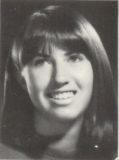


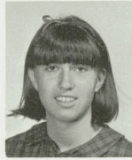
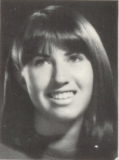


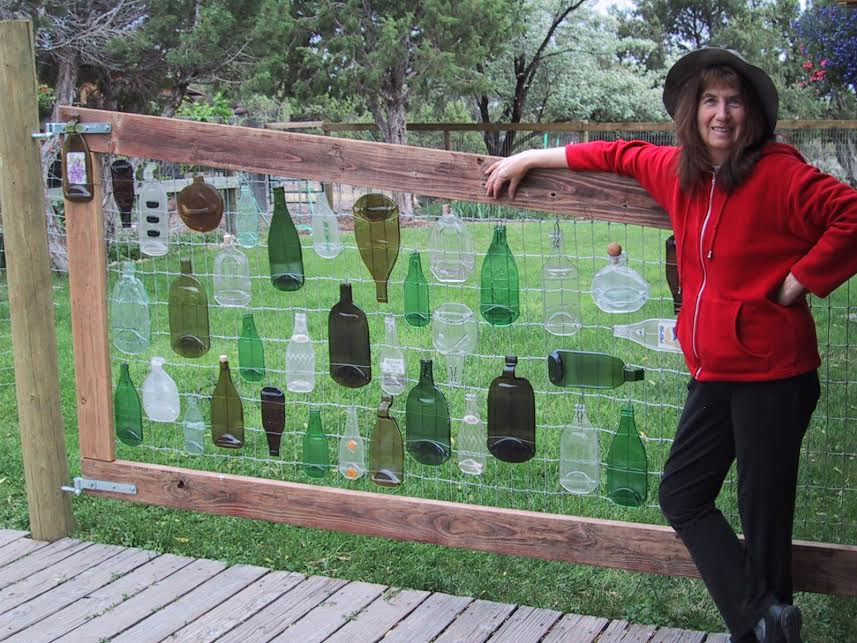





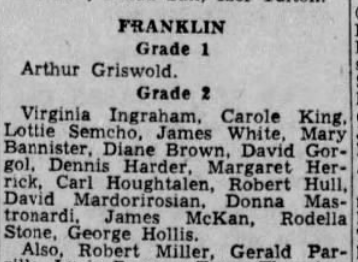
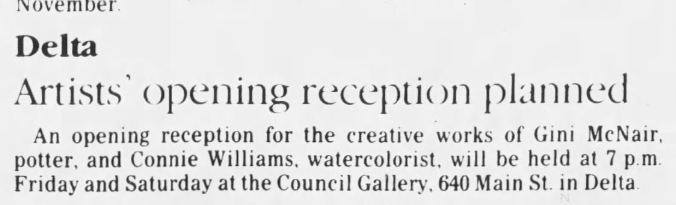
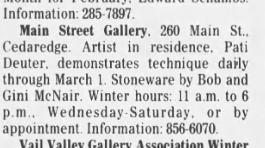
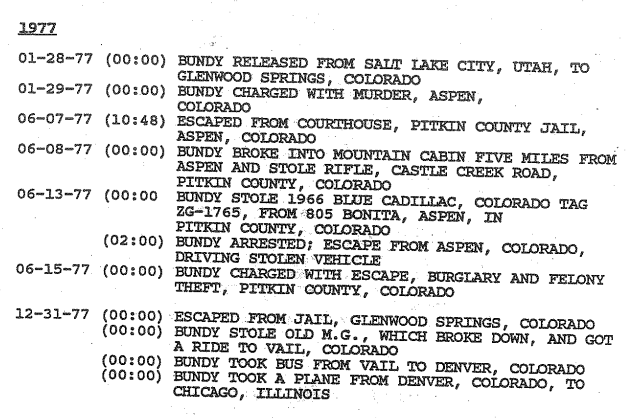

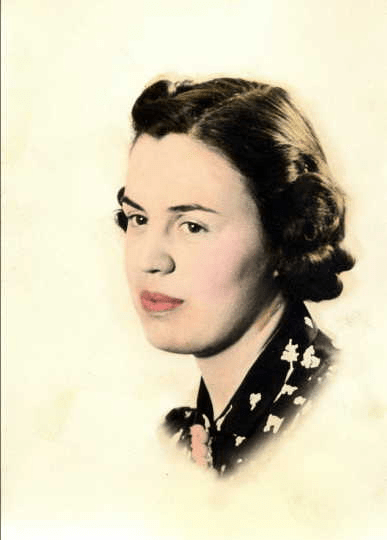


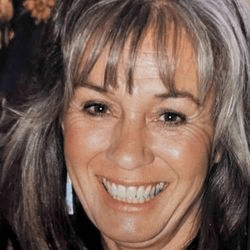
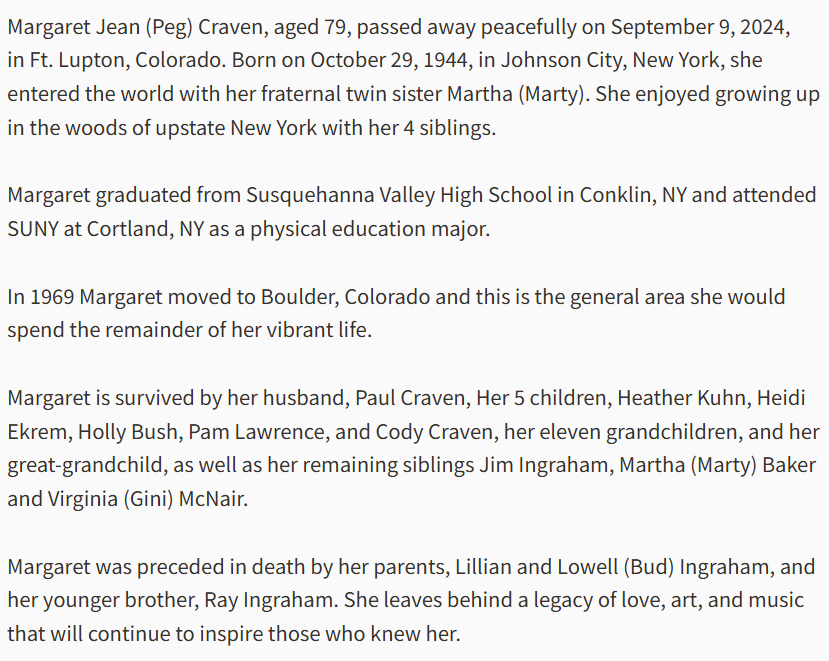

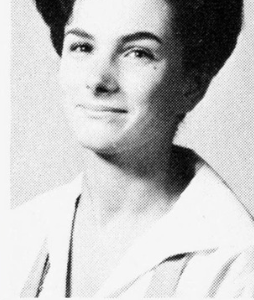

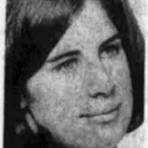


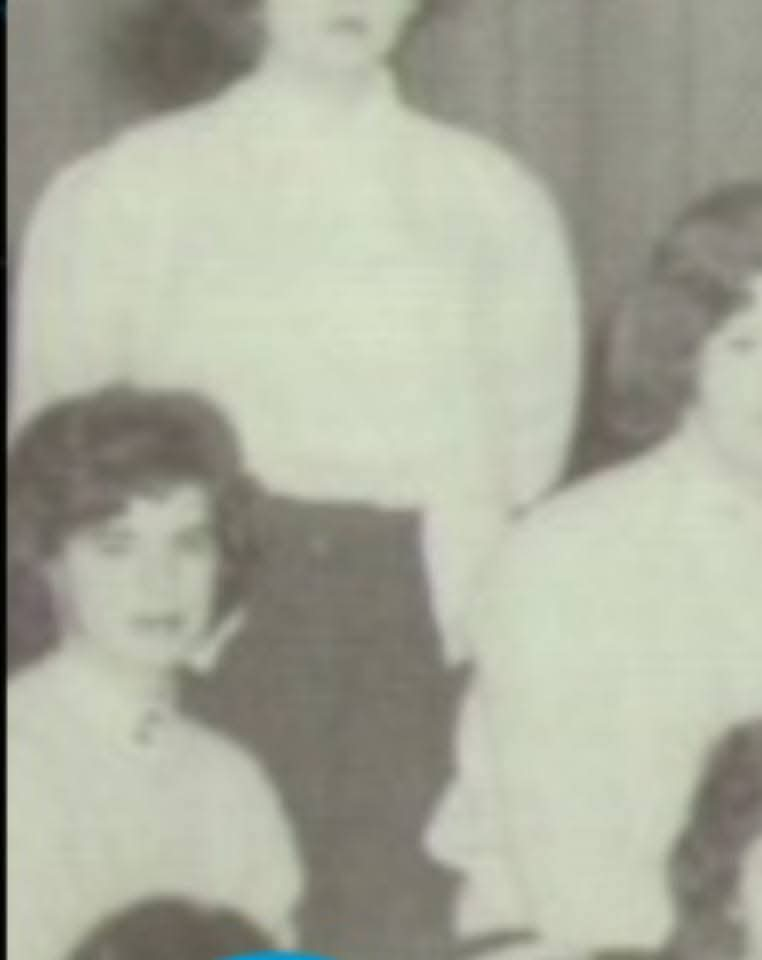
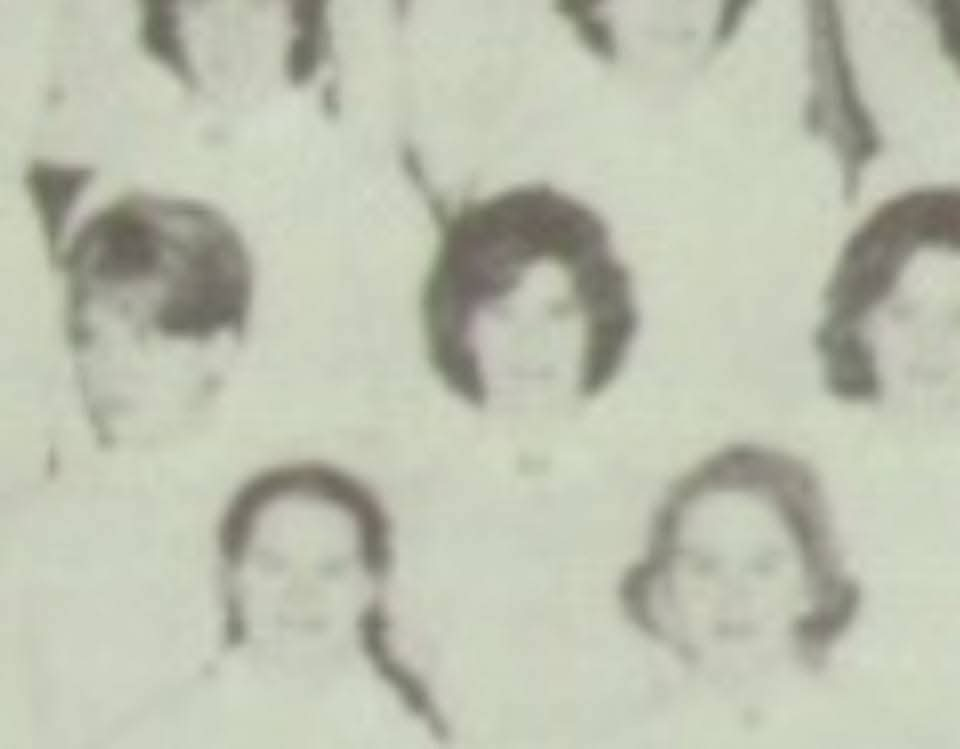

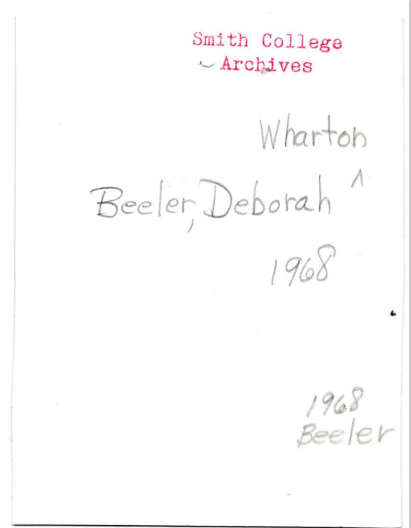


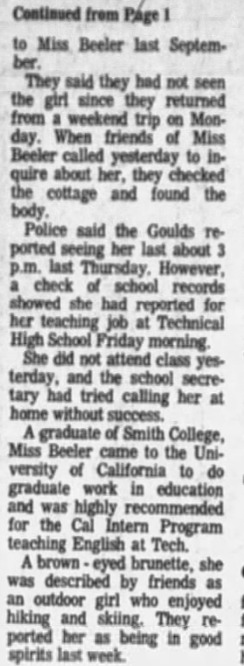
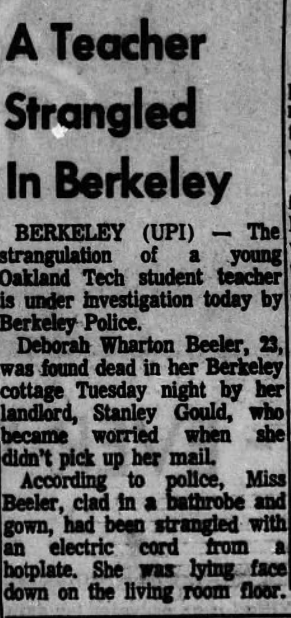

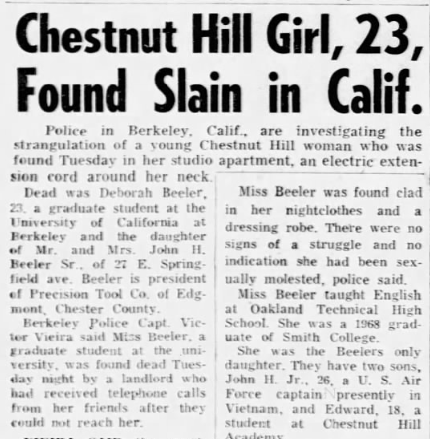

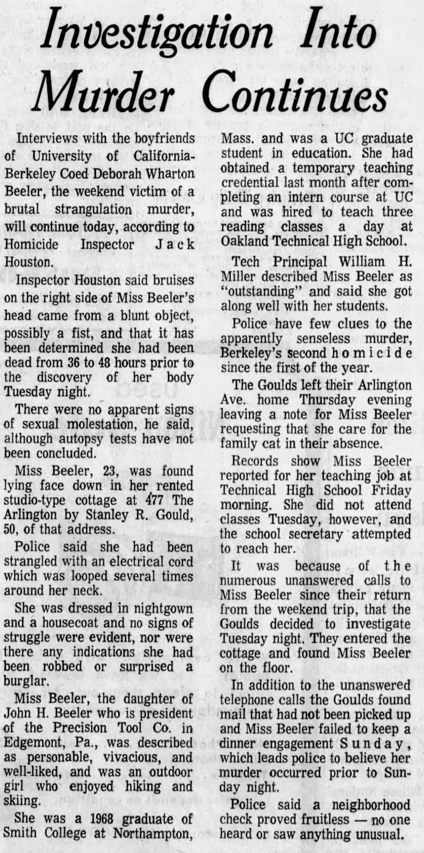

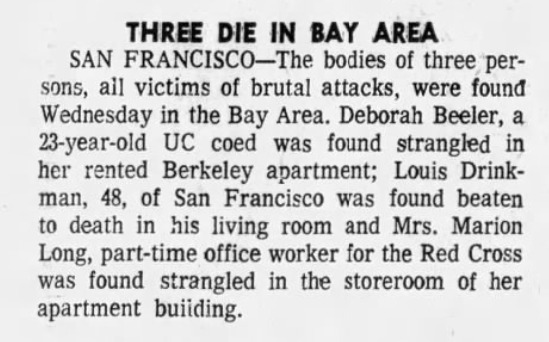
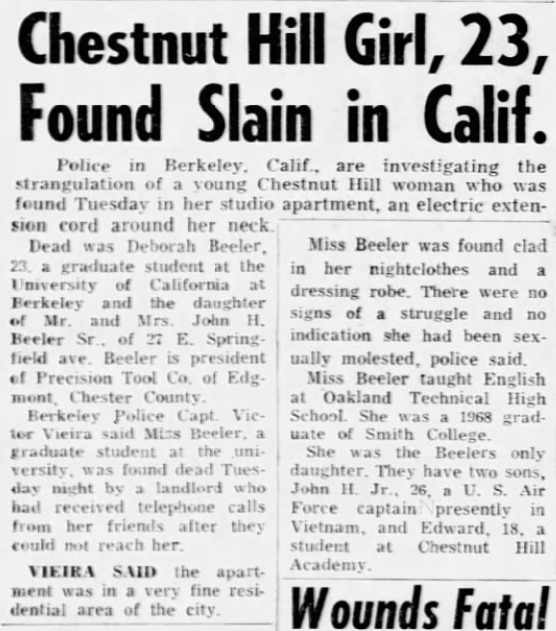
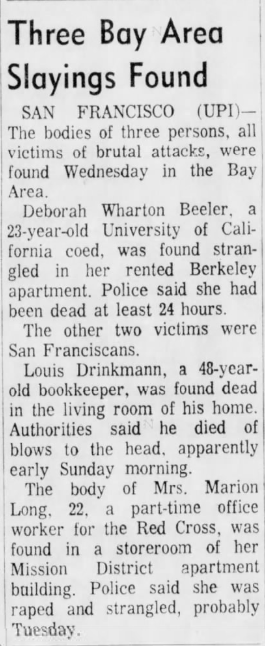

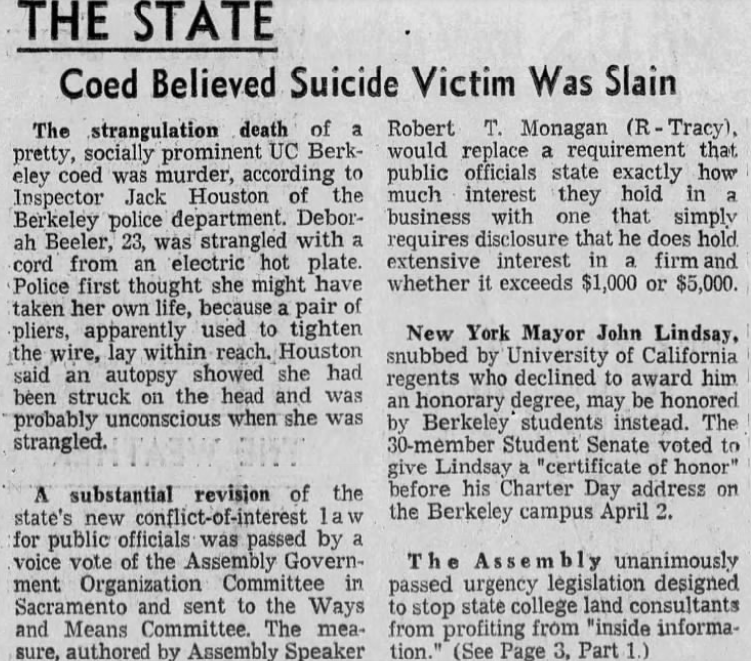

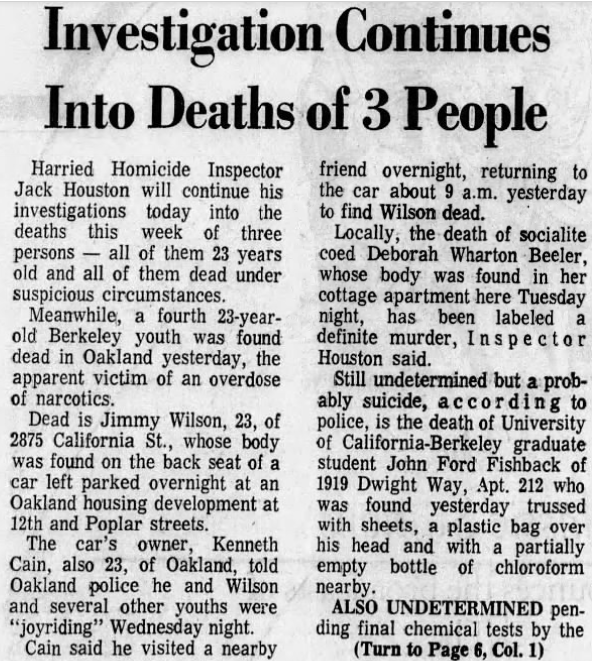
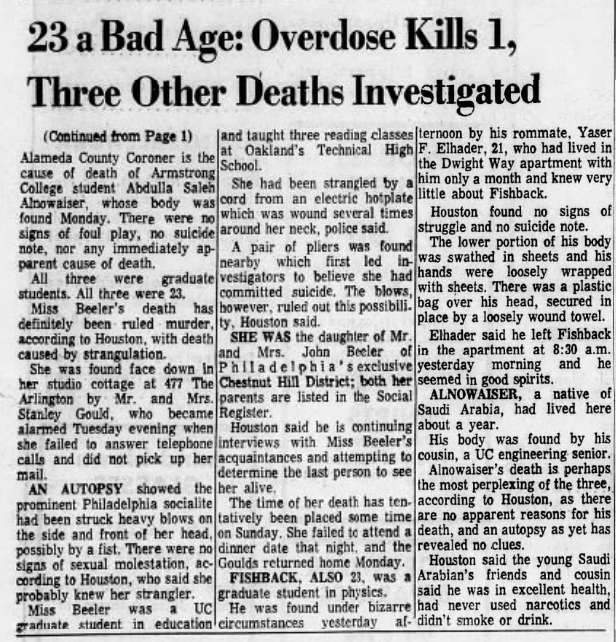

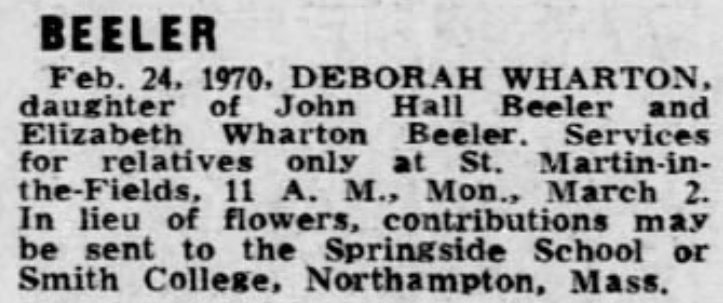
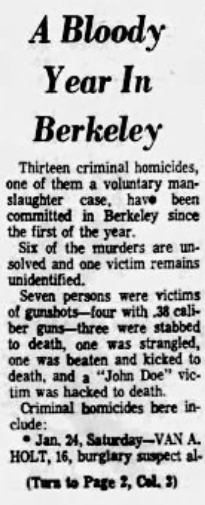
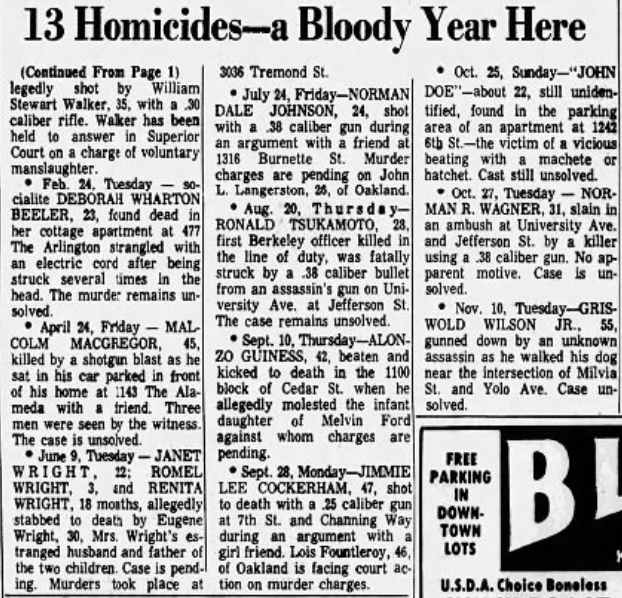




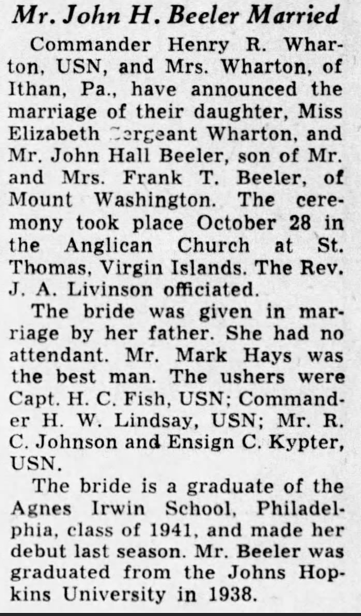
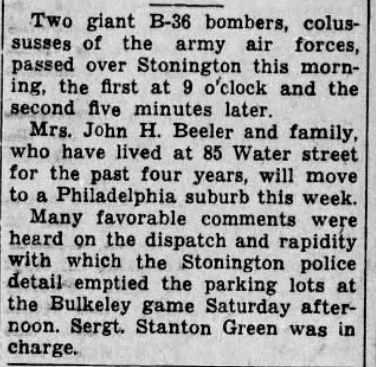


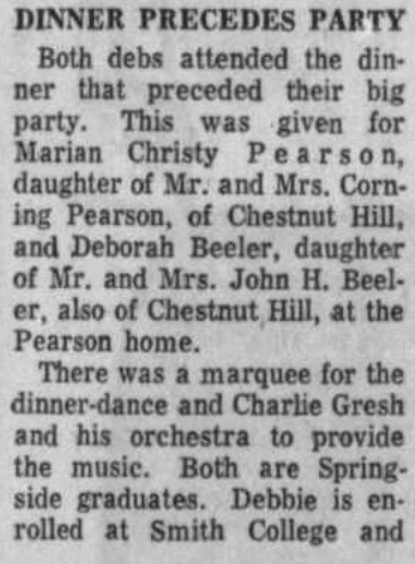
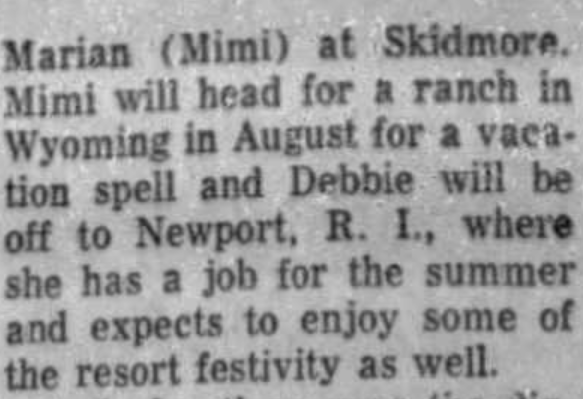

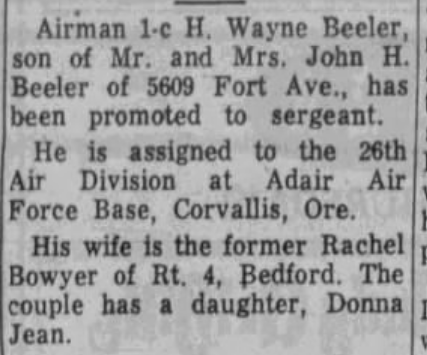
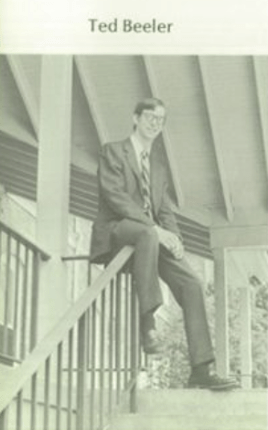

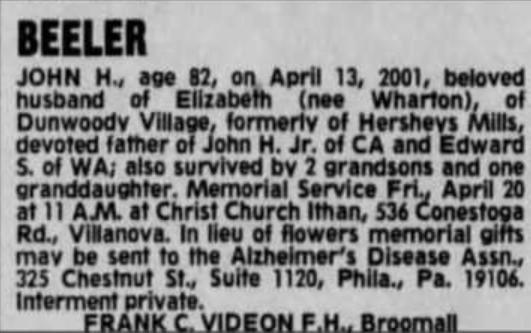
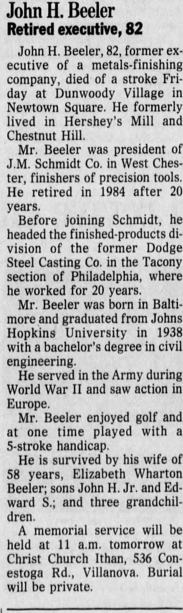


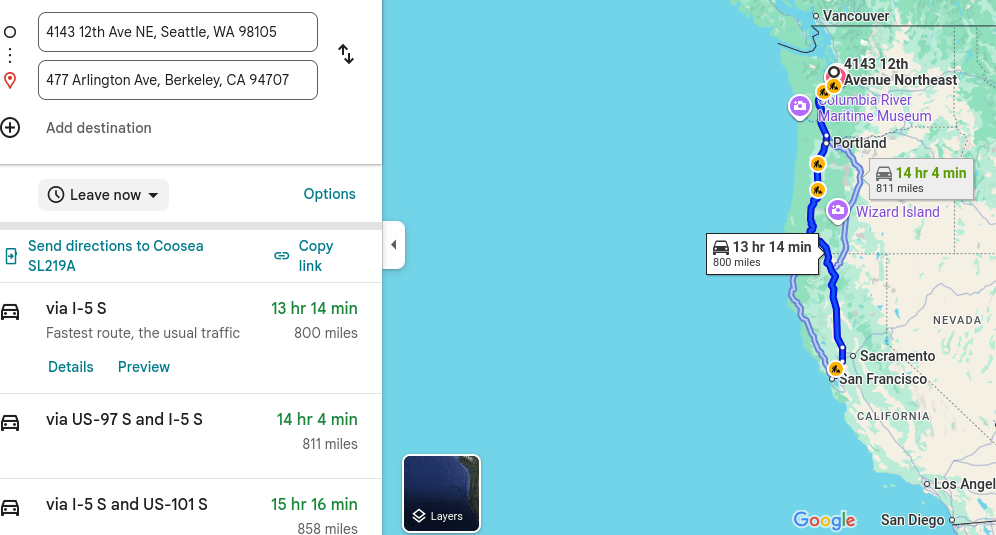


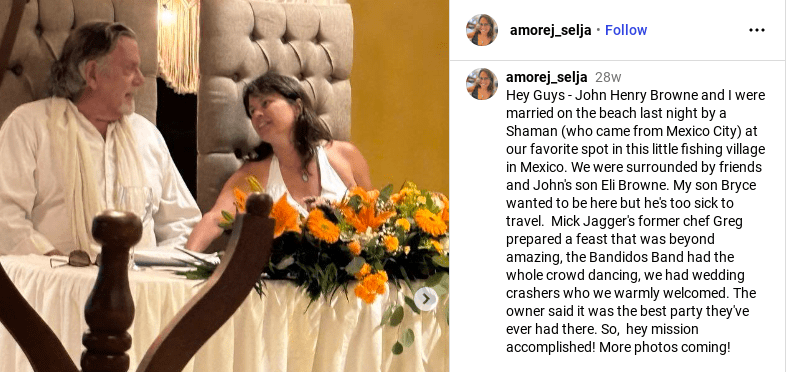


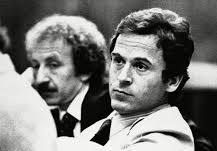


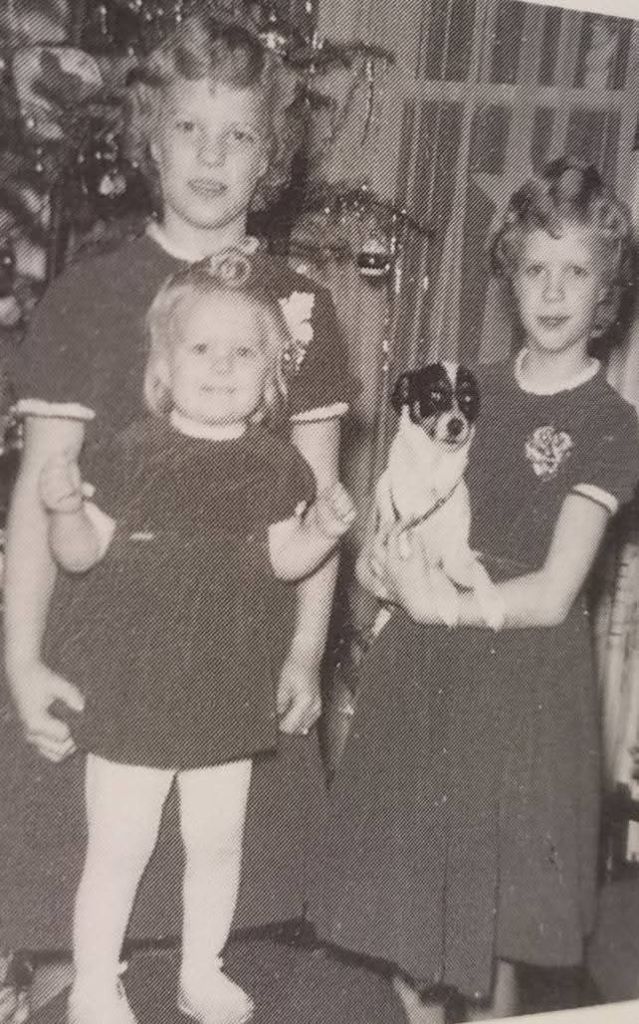
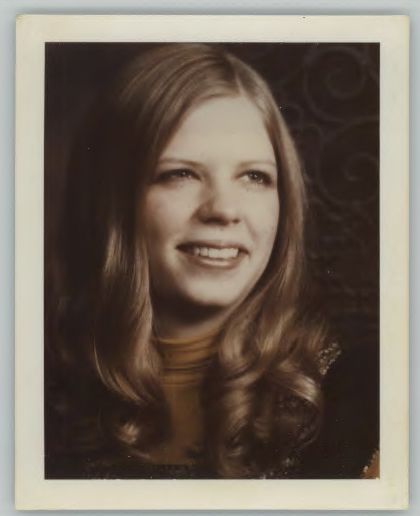






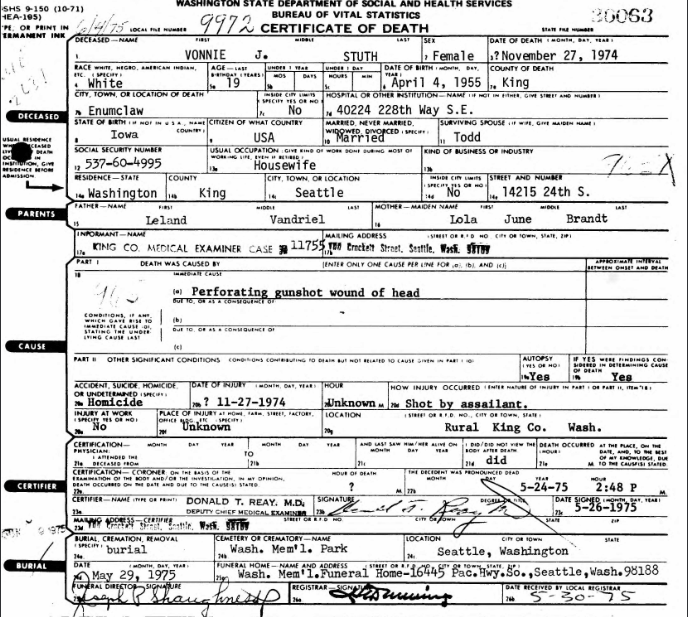


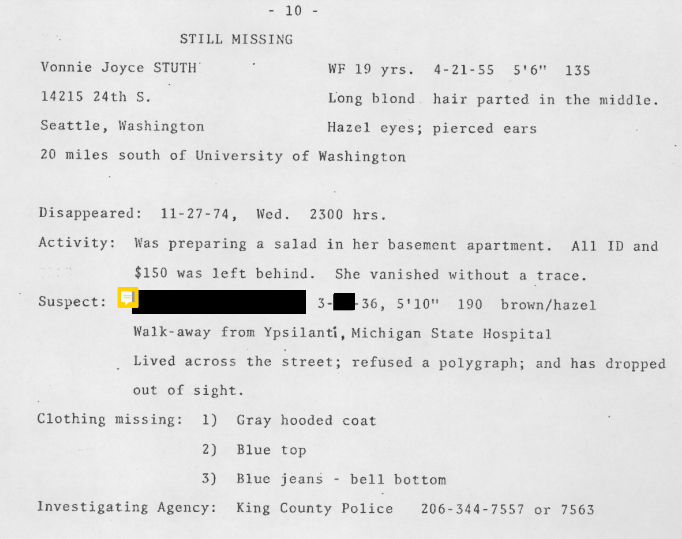
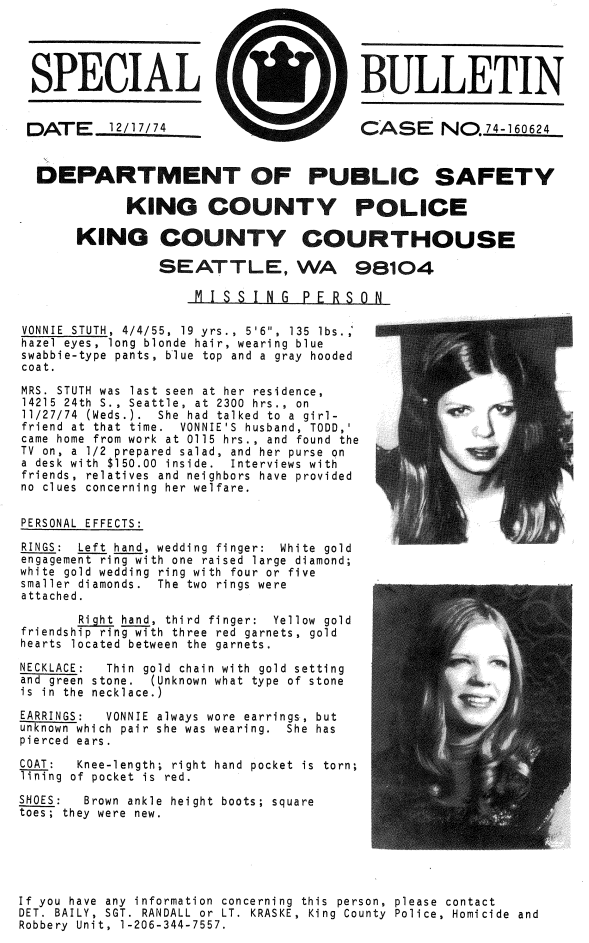


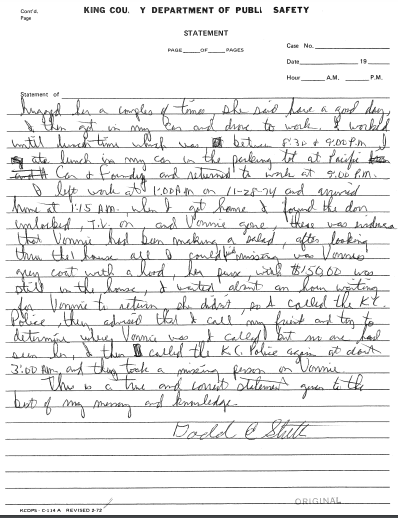


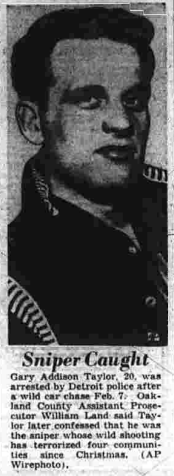



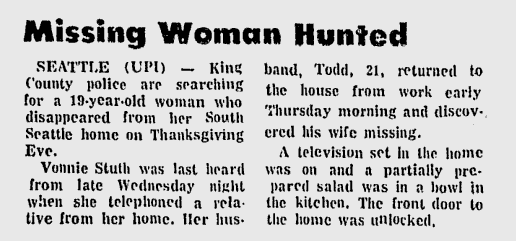


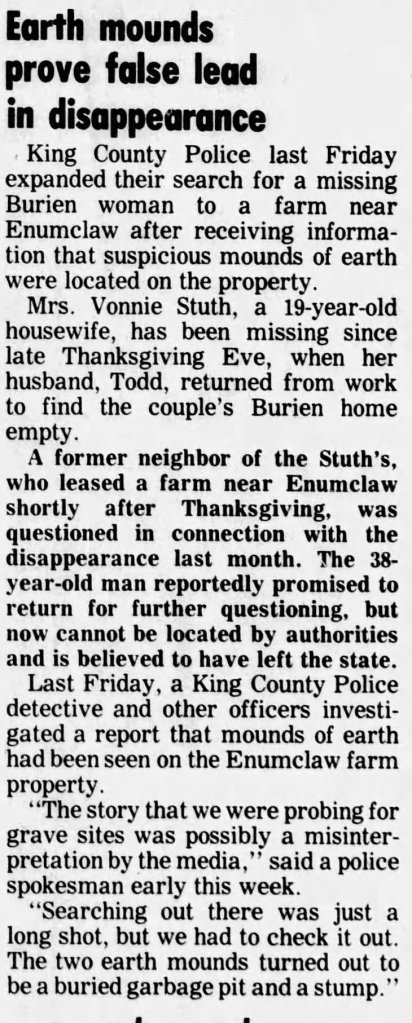
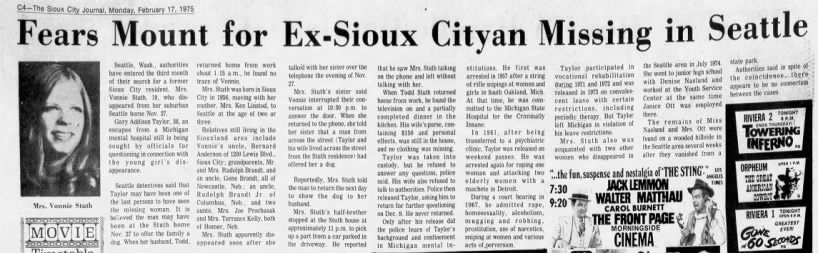
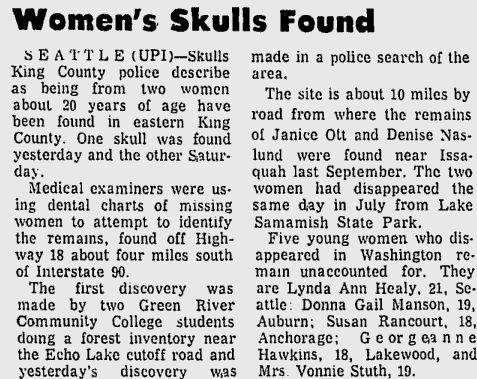


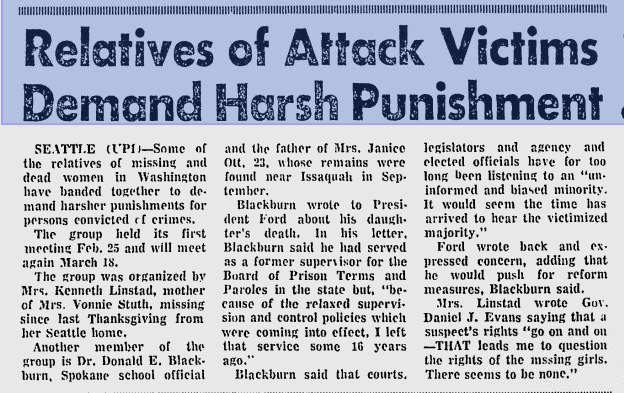


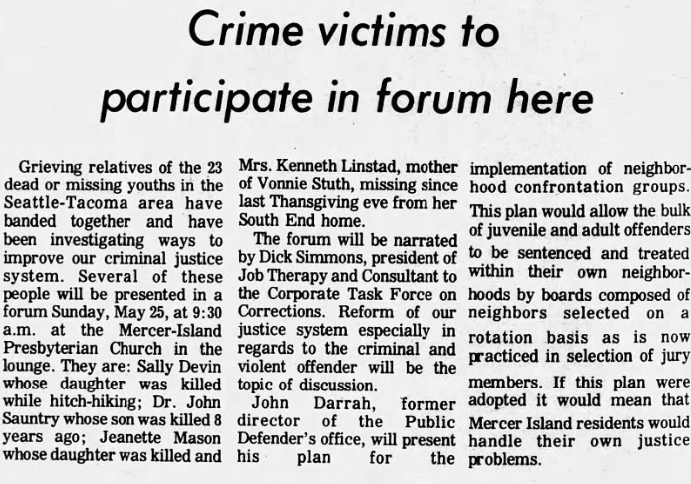
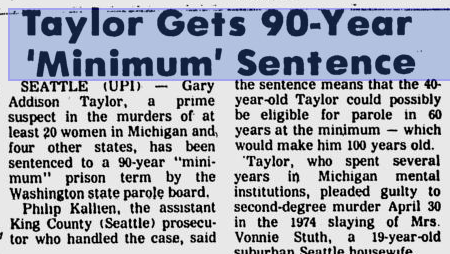

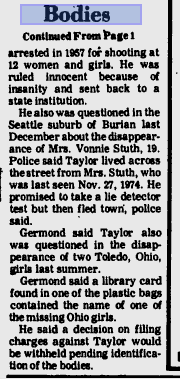


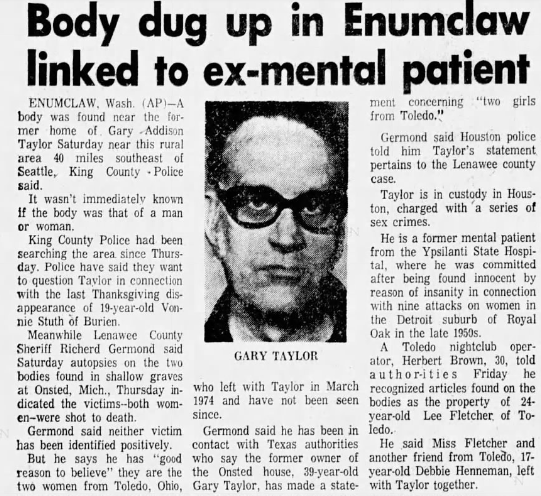


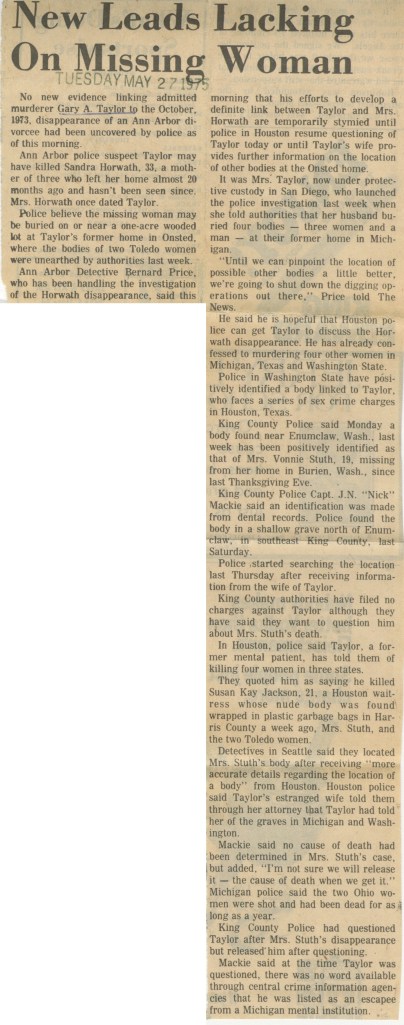


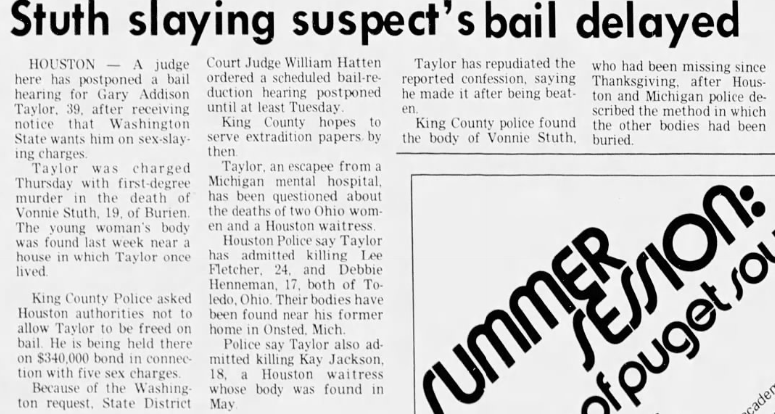
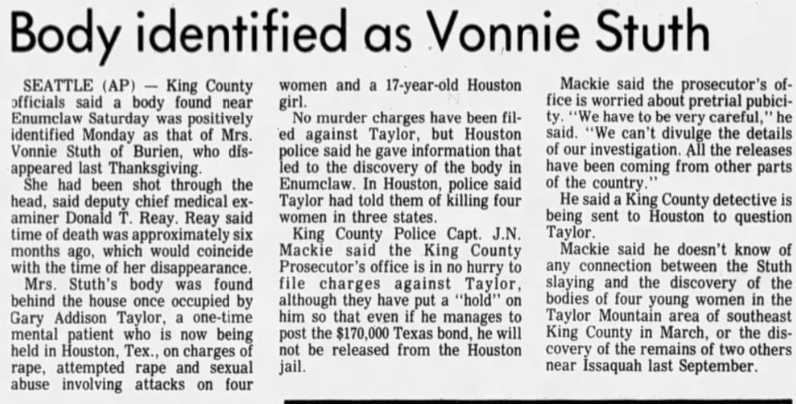
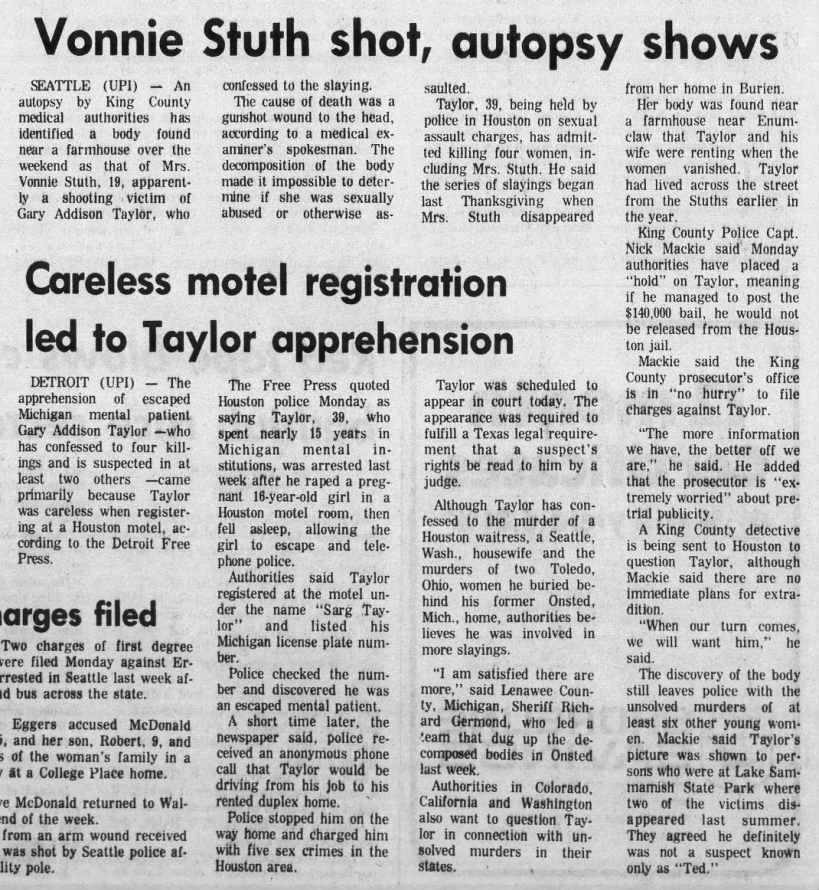
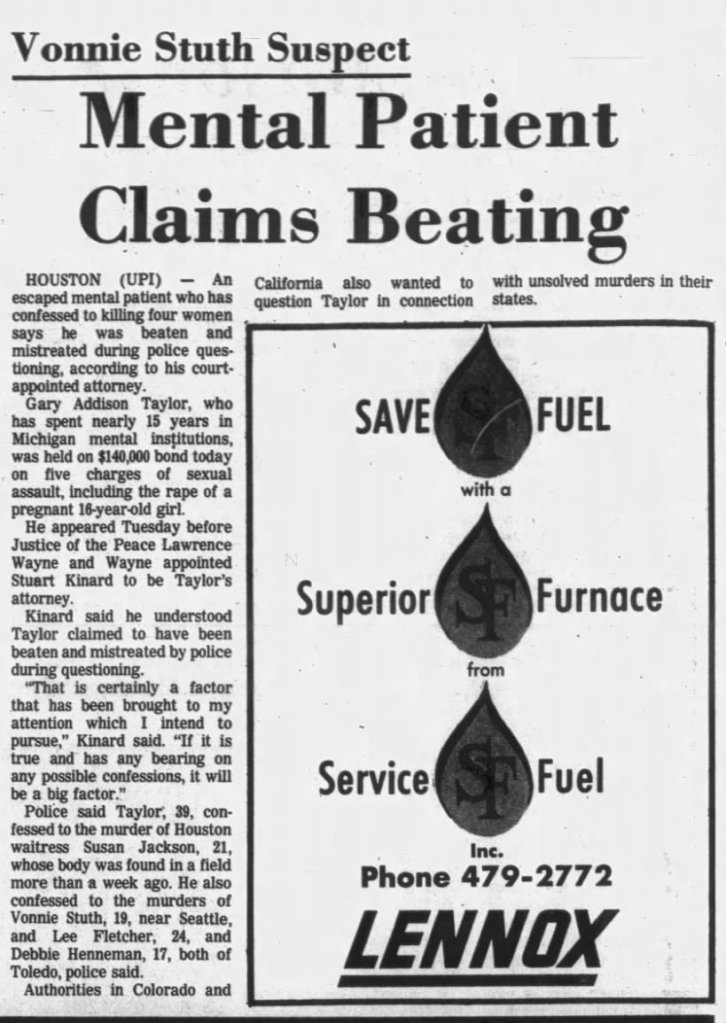
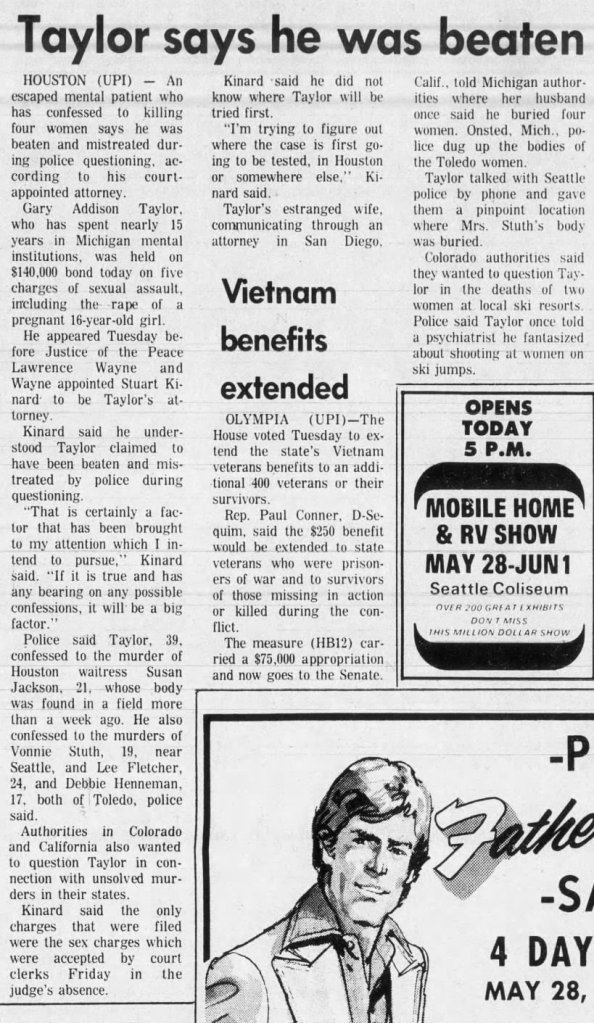

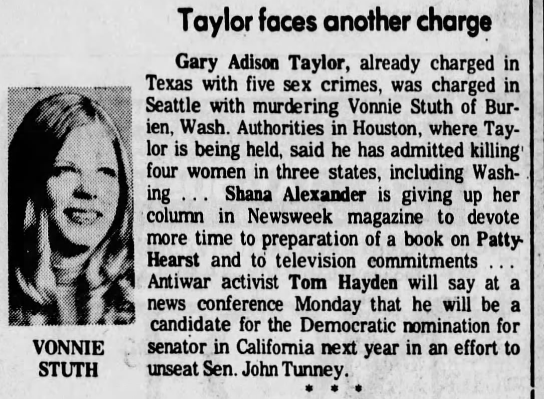
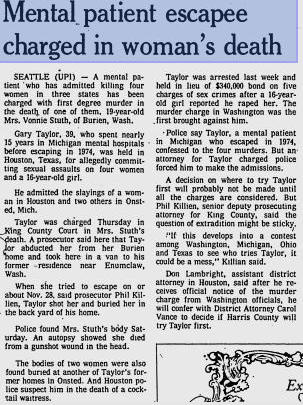
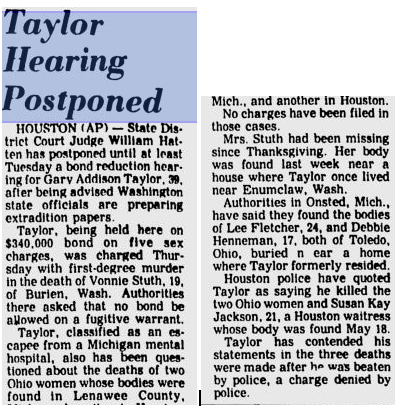

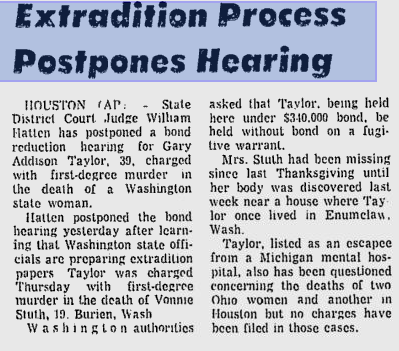


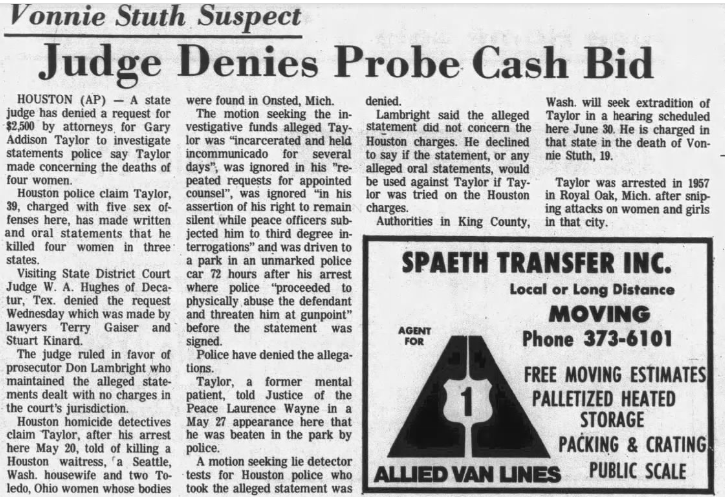



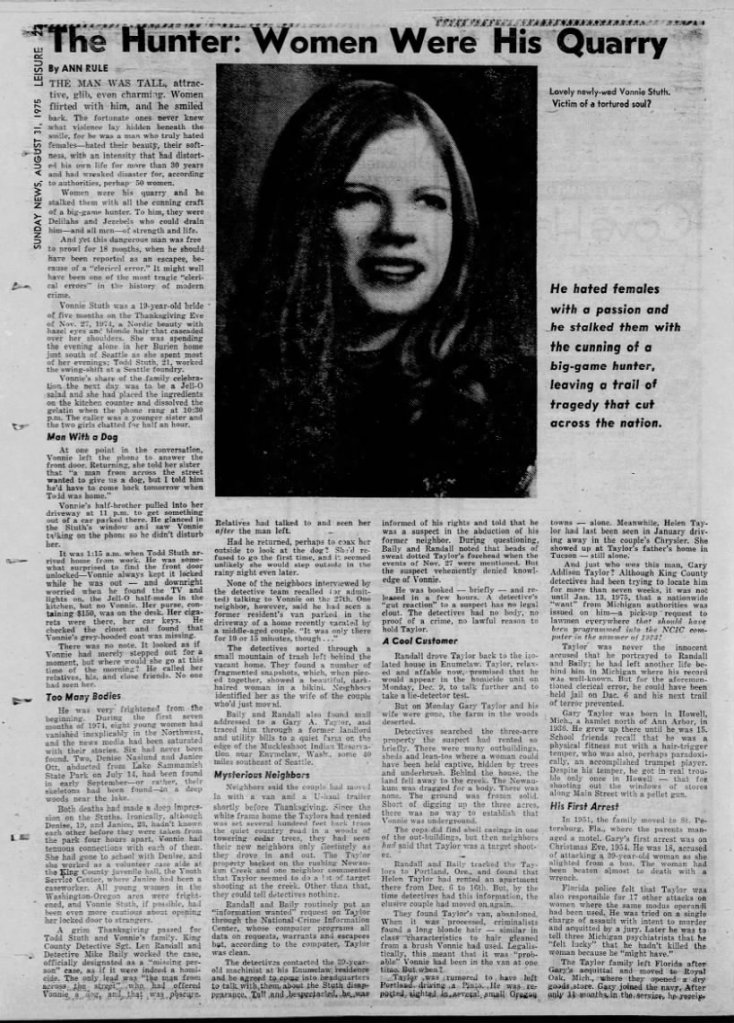



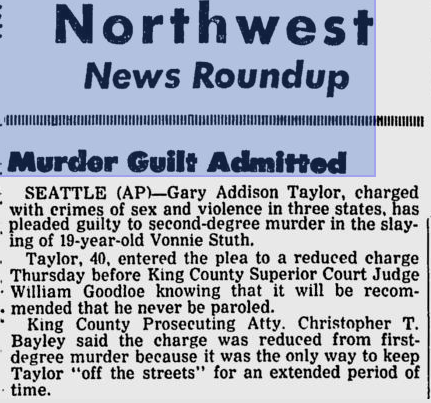
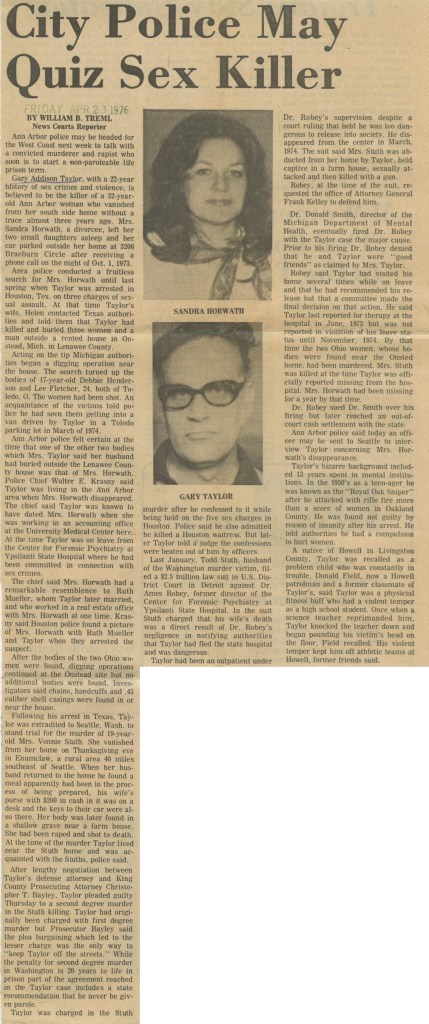
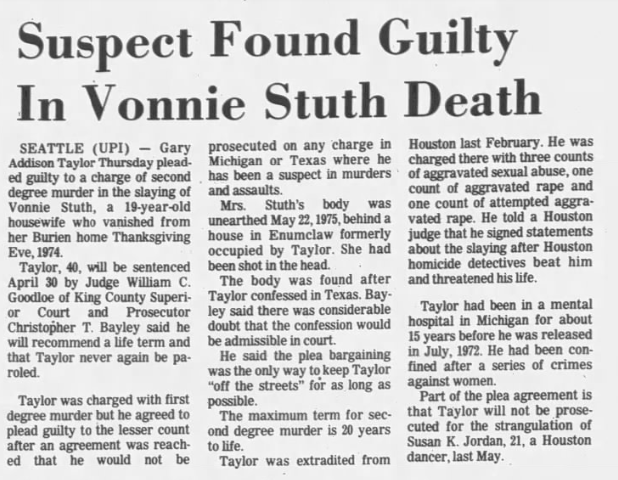


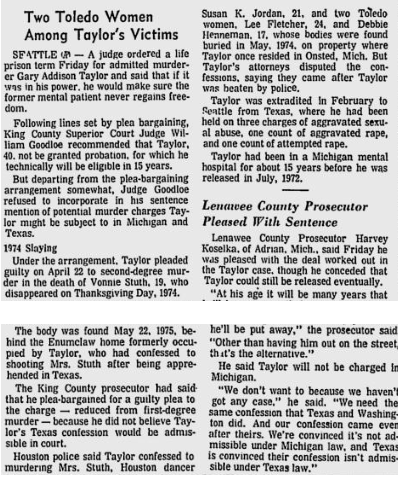


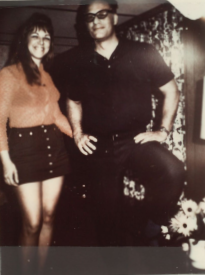

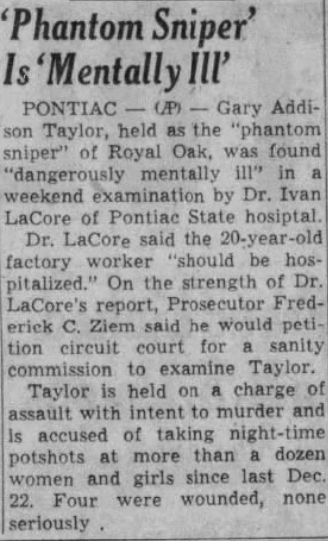
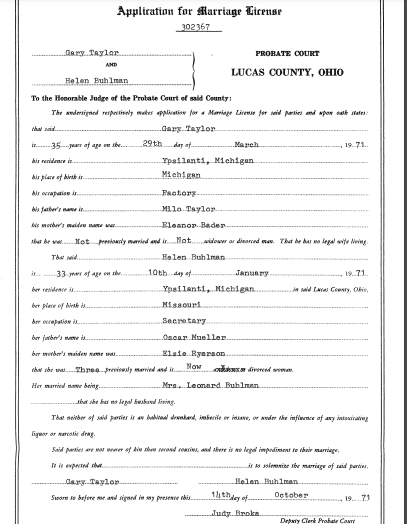

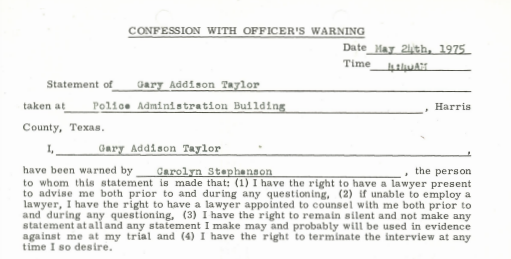
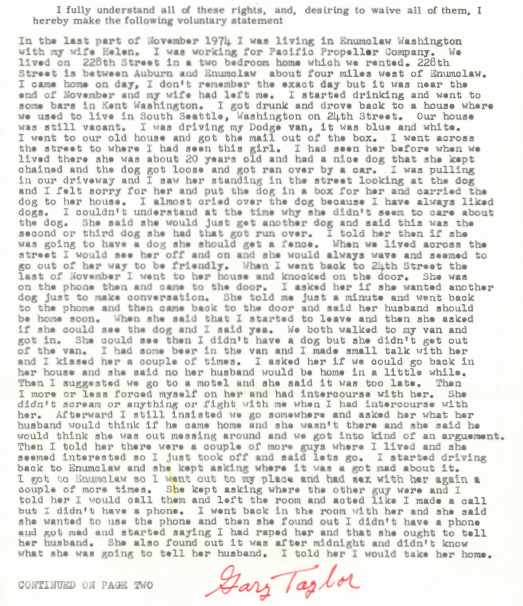


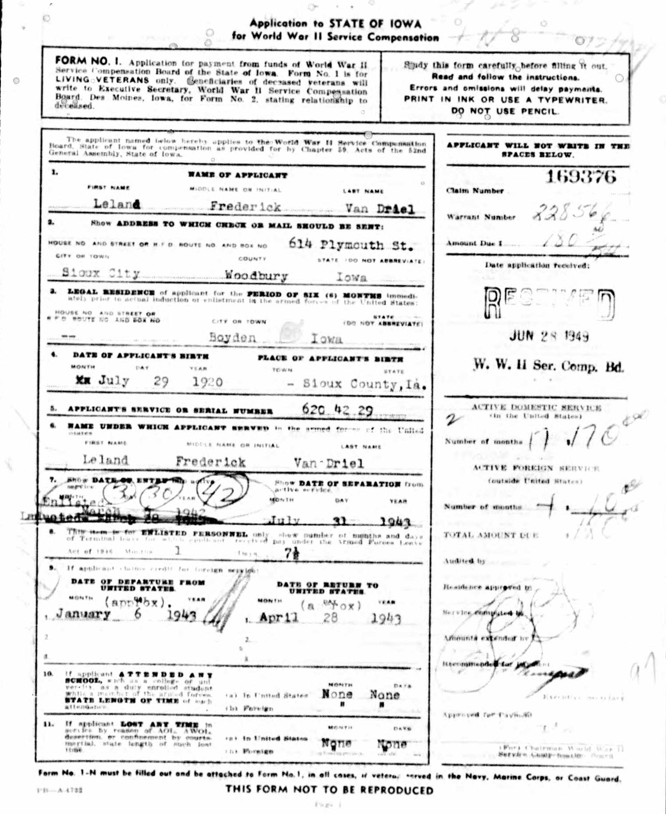


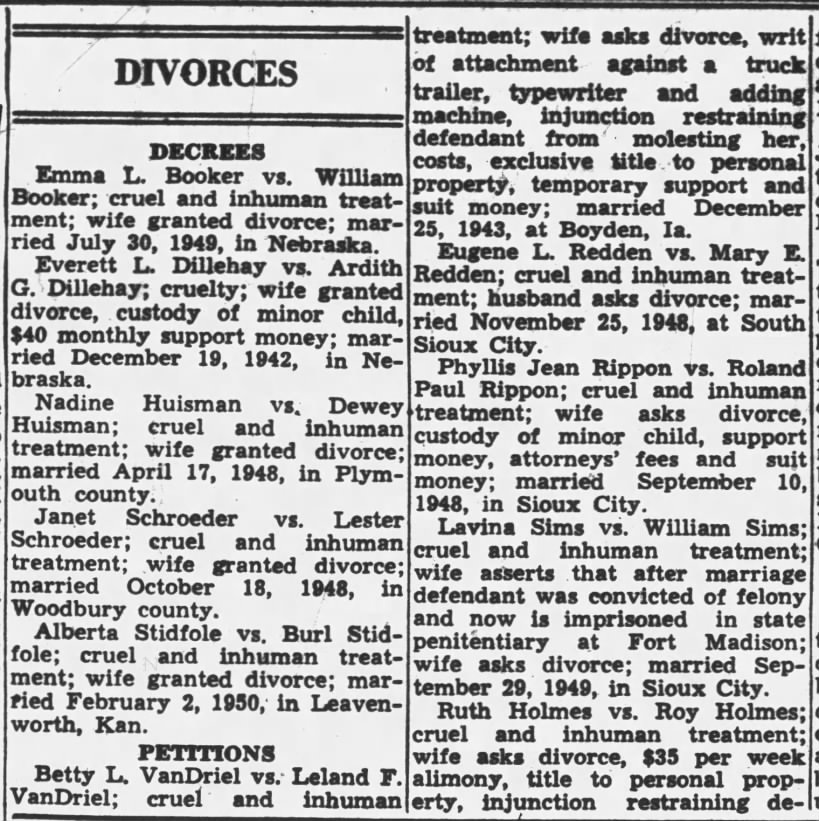
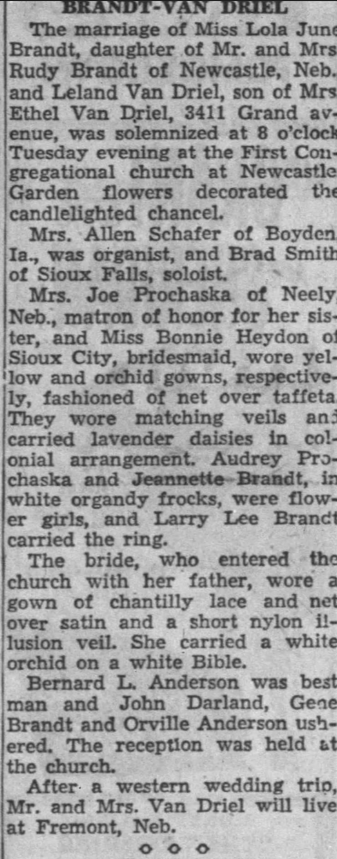

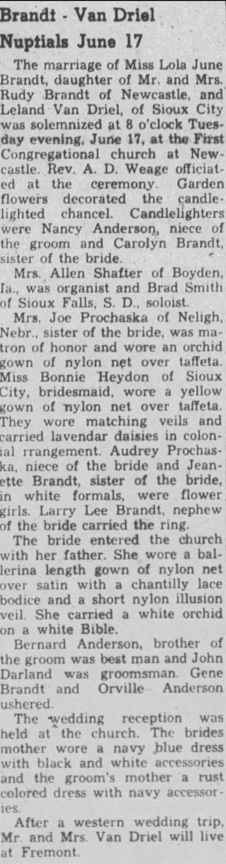




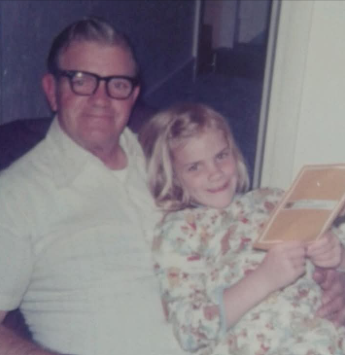


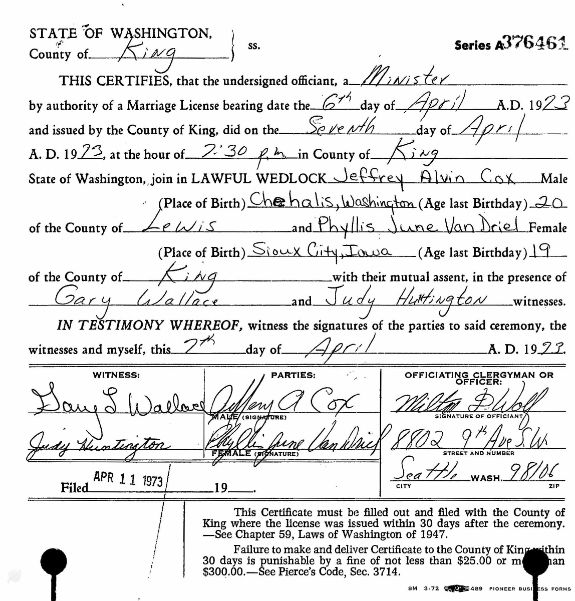






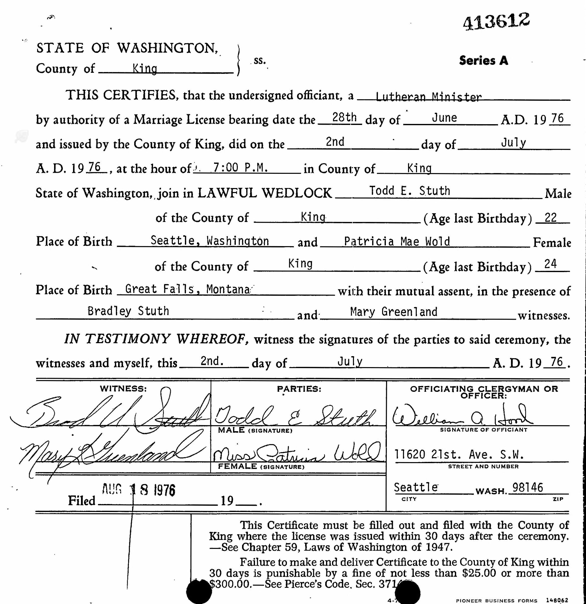

 Another Bundy Blog: My Adventures around the Pacific Northwest (and everywhere else).