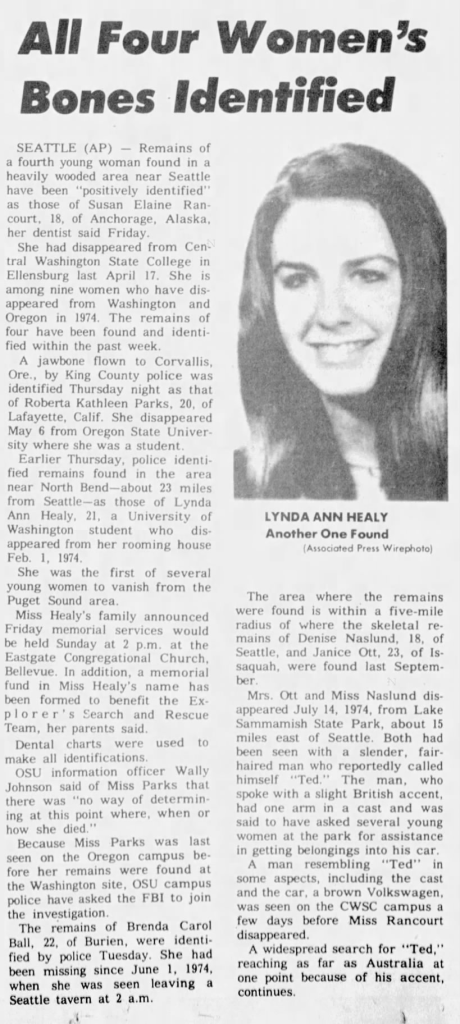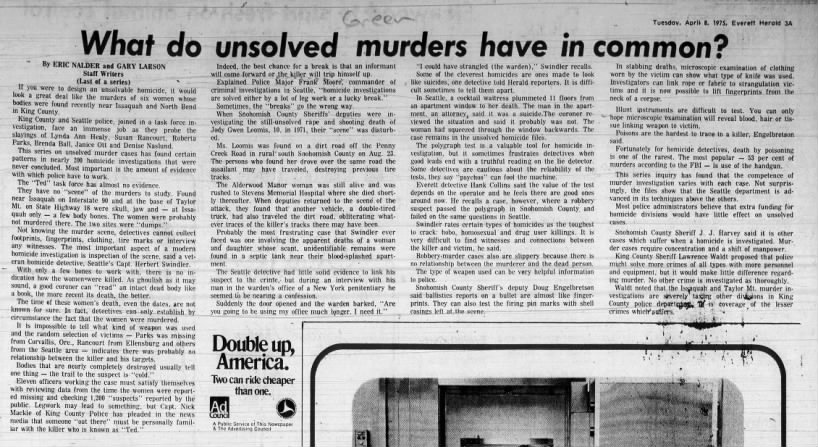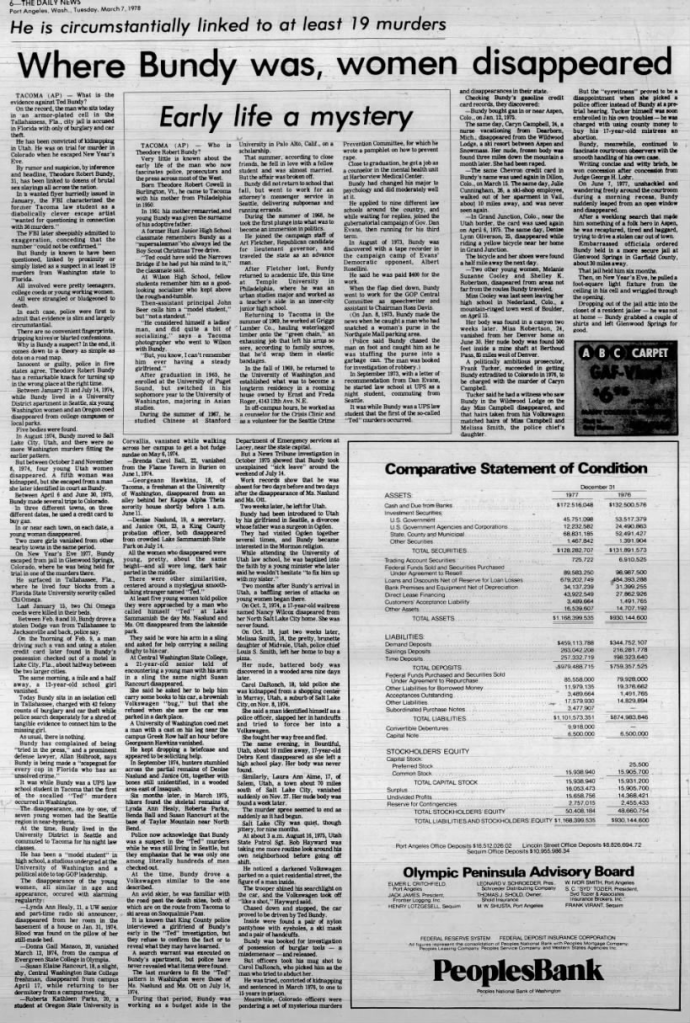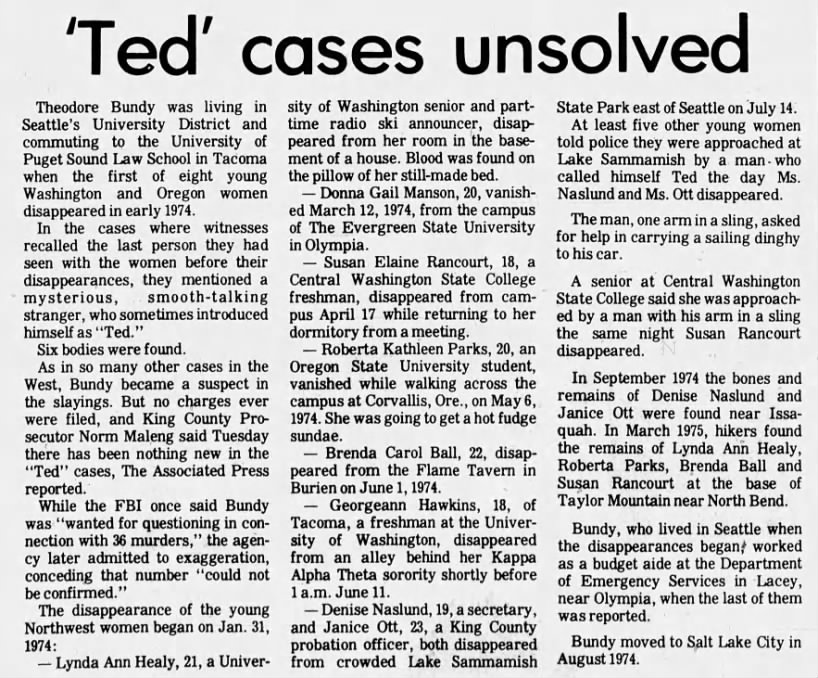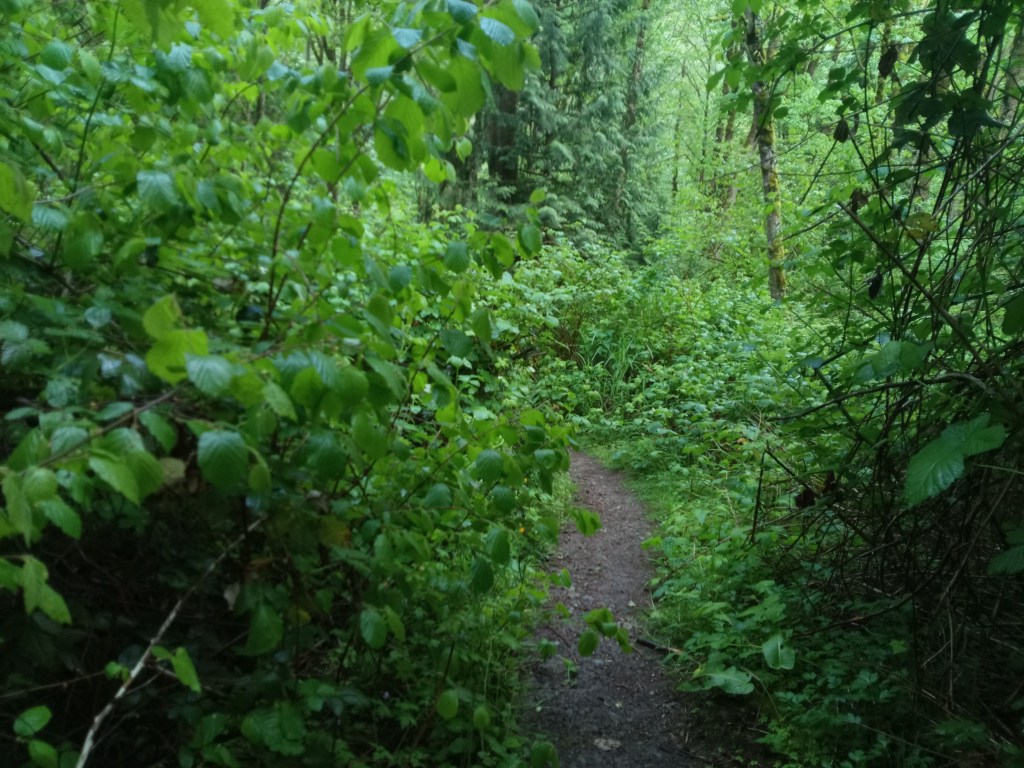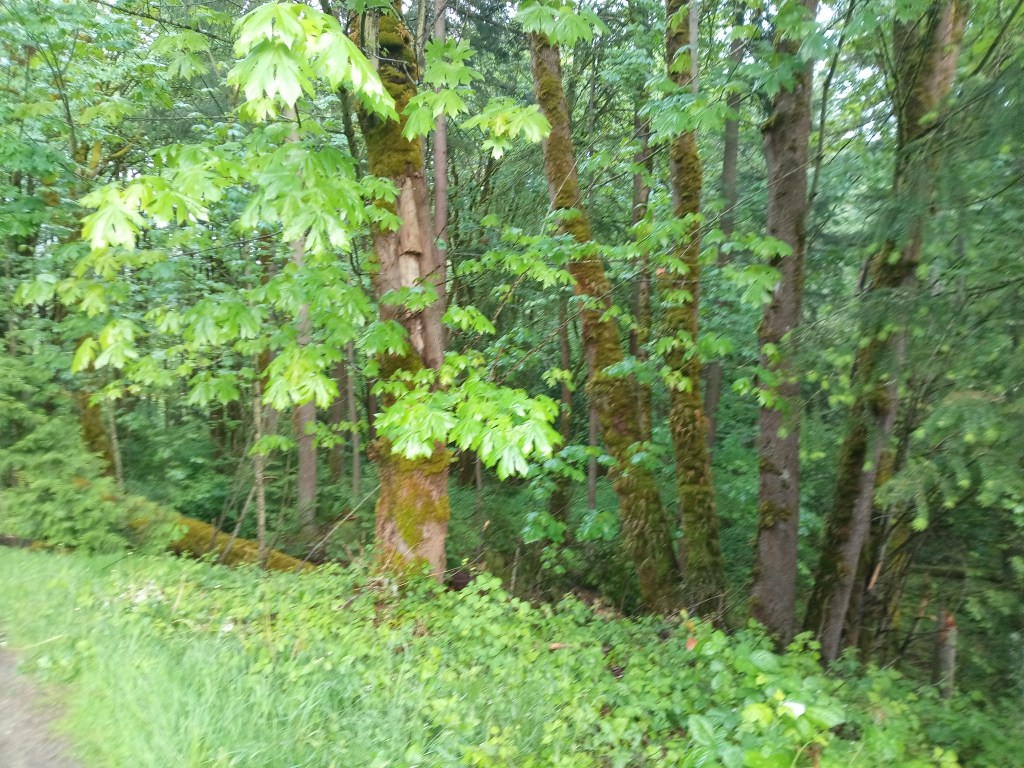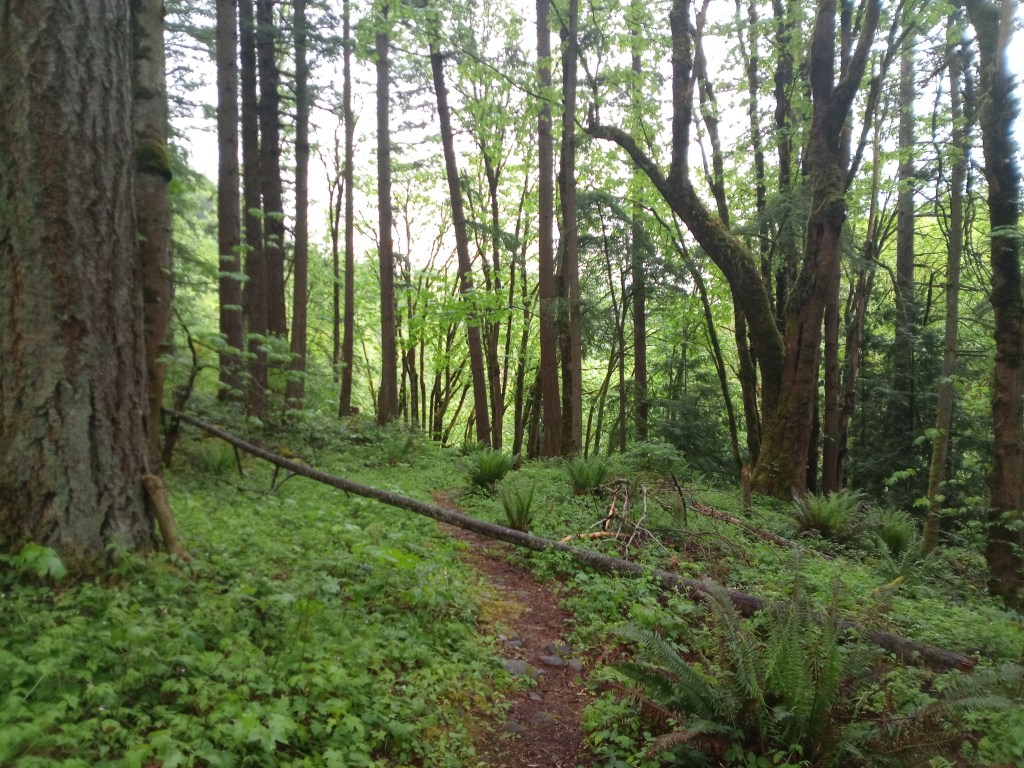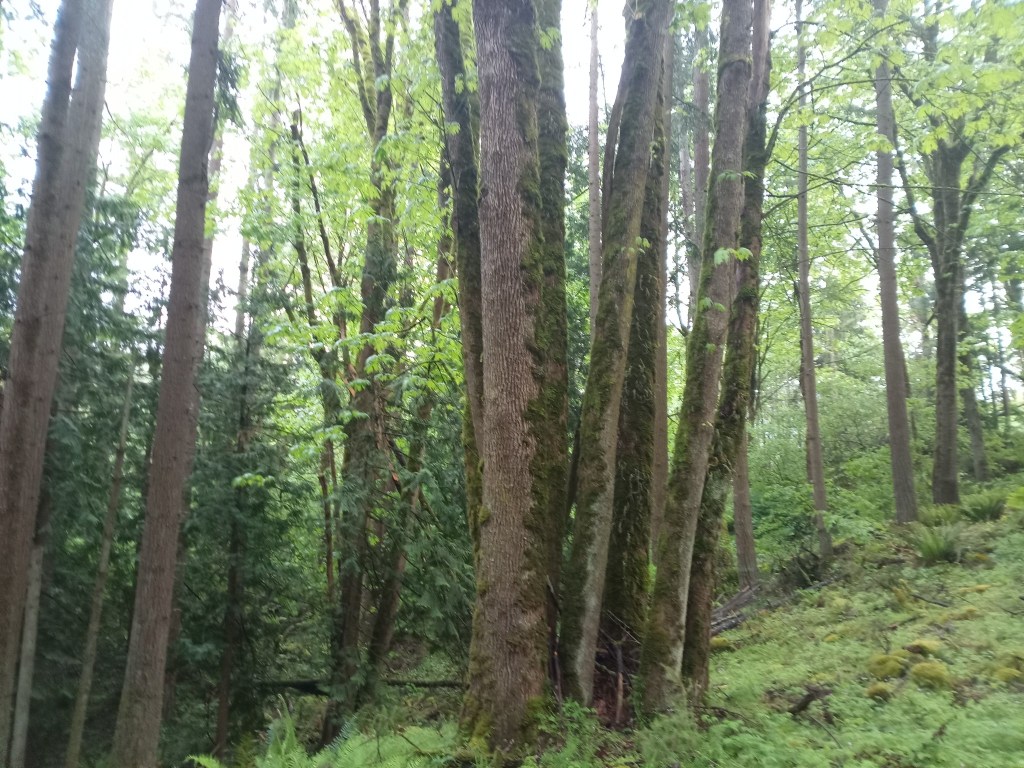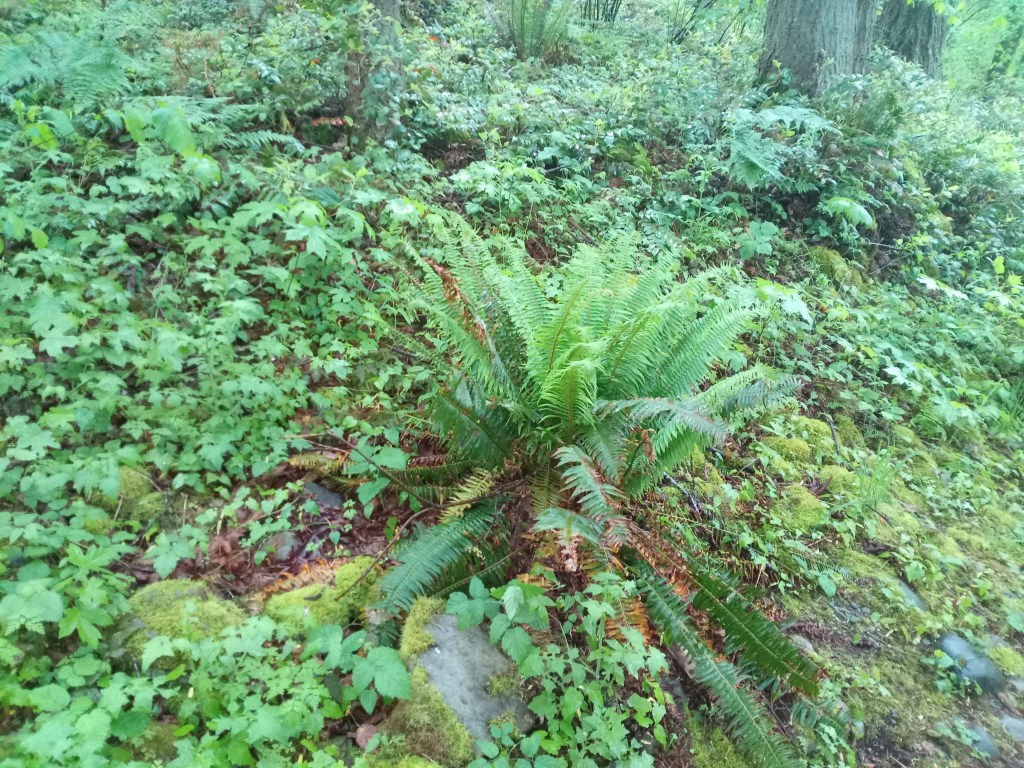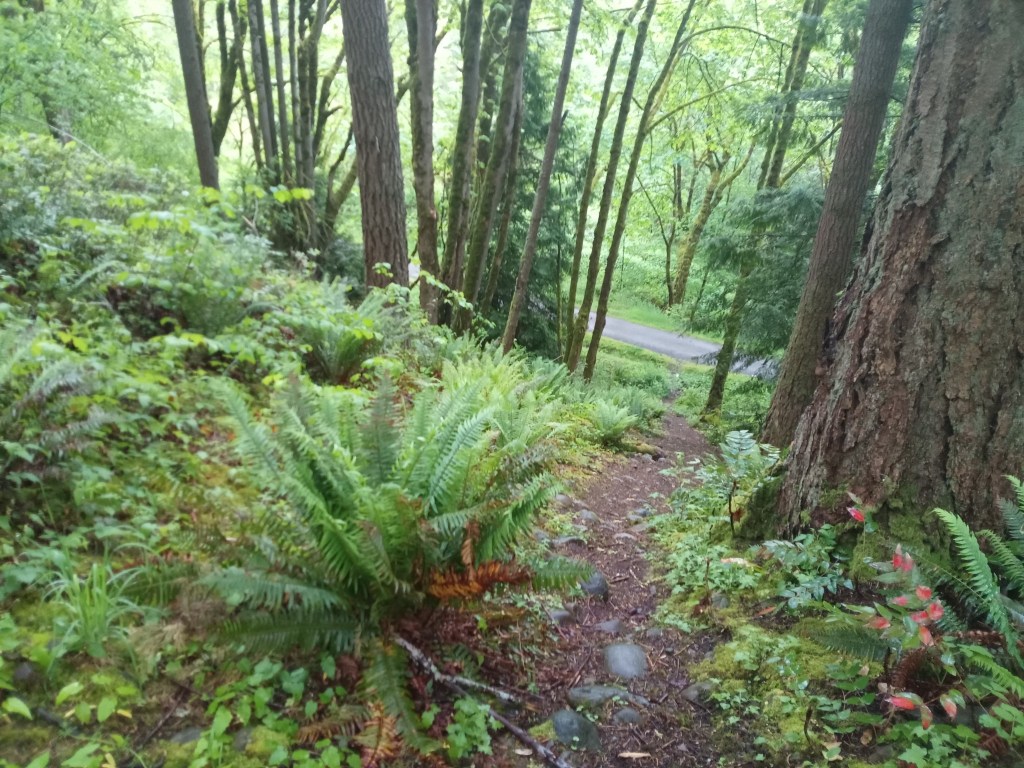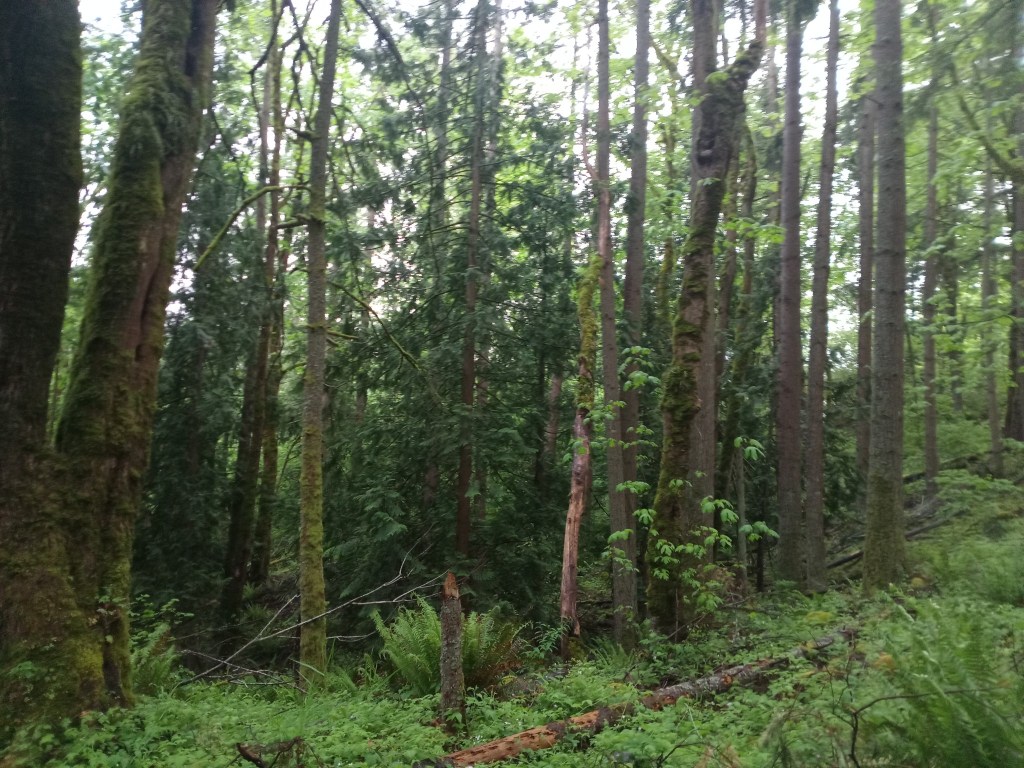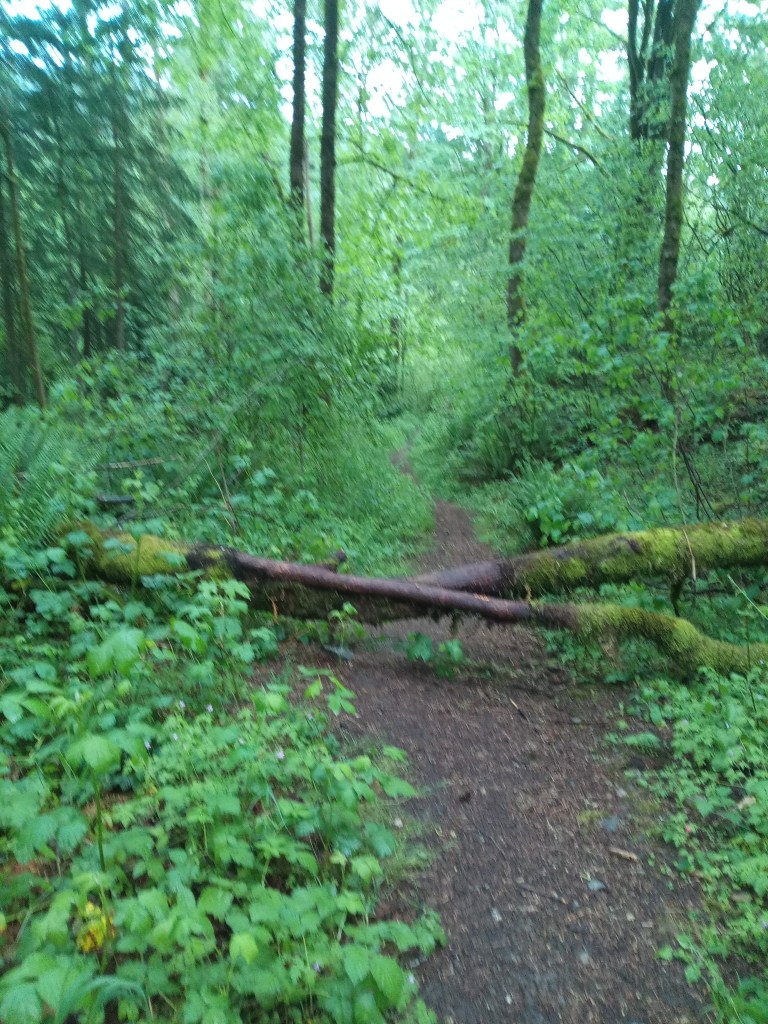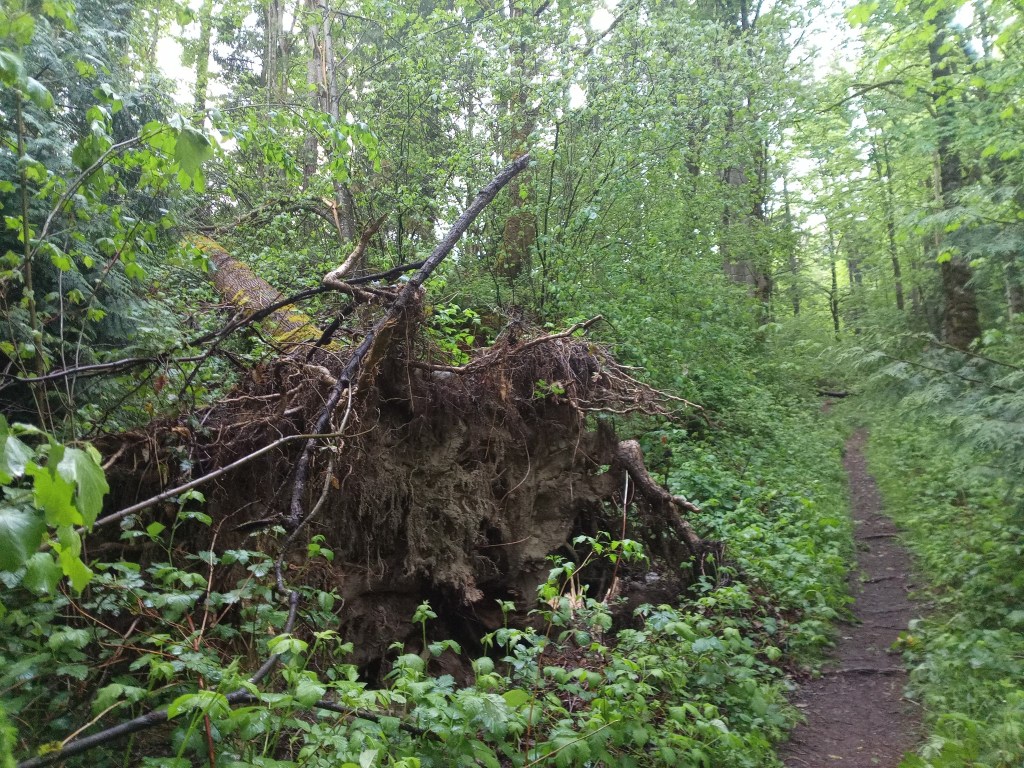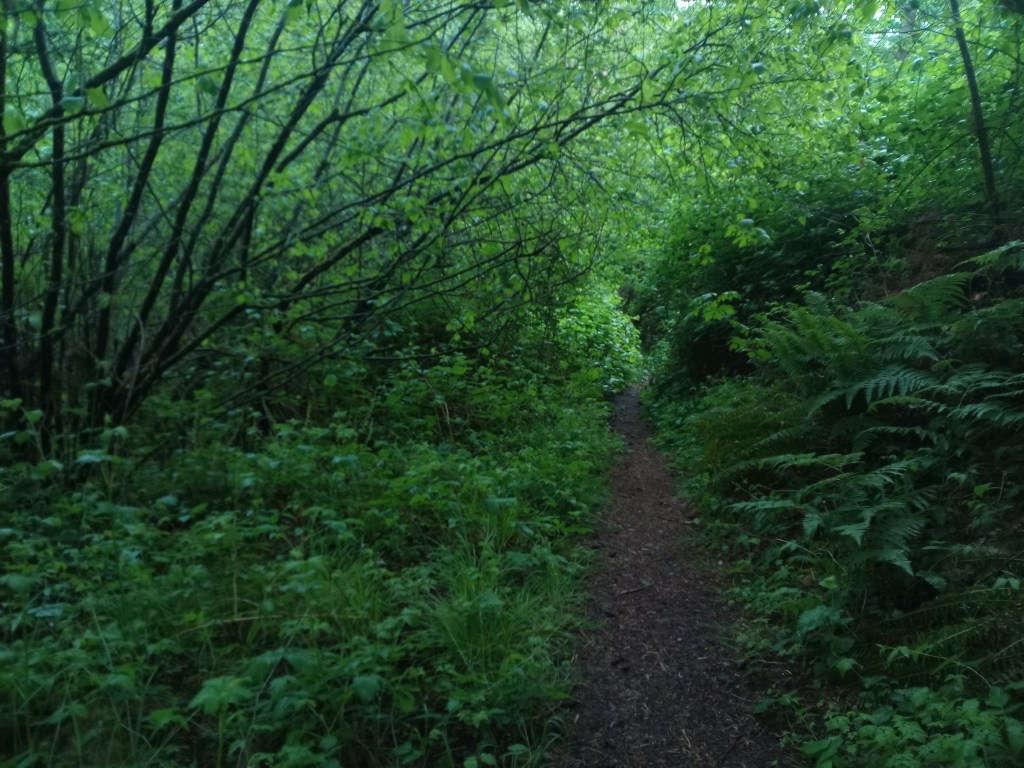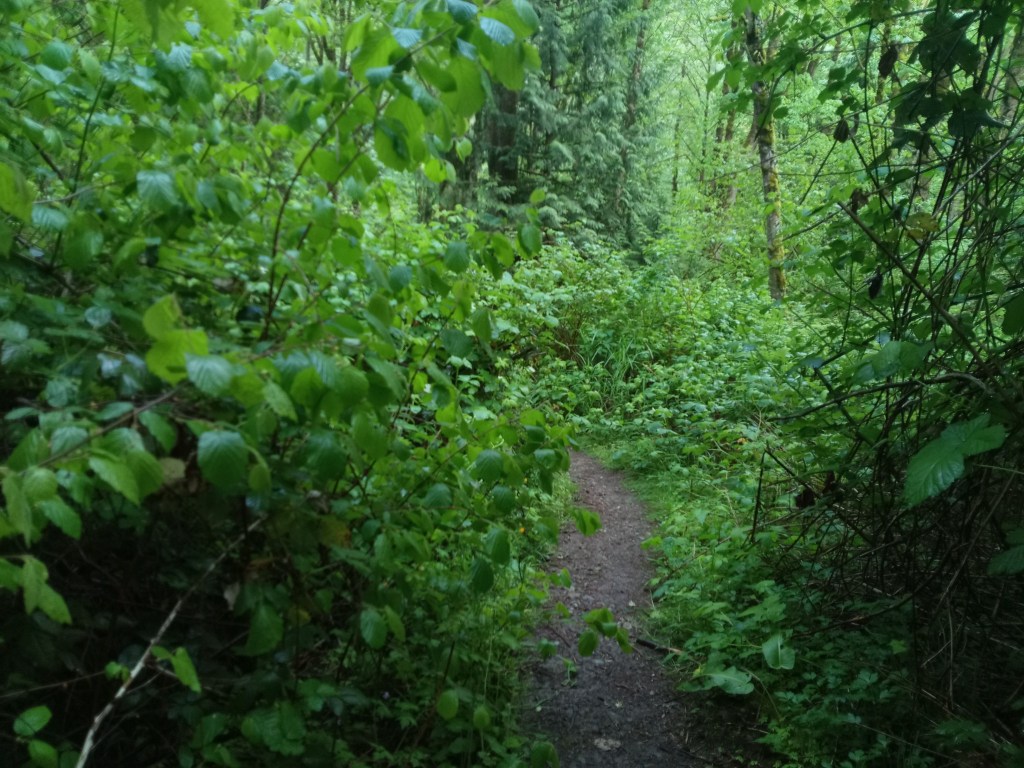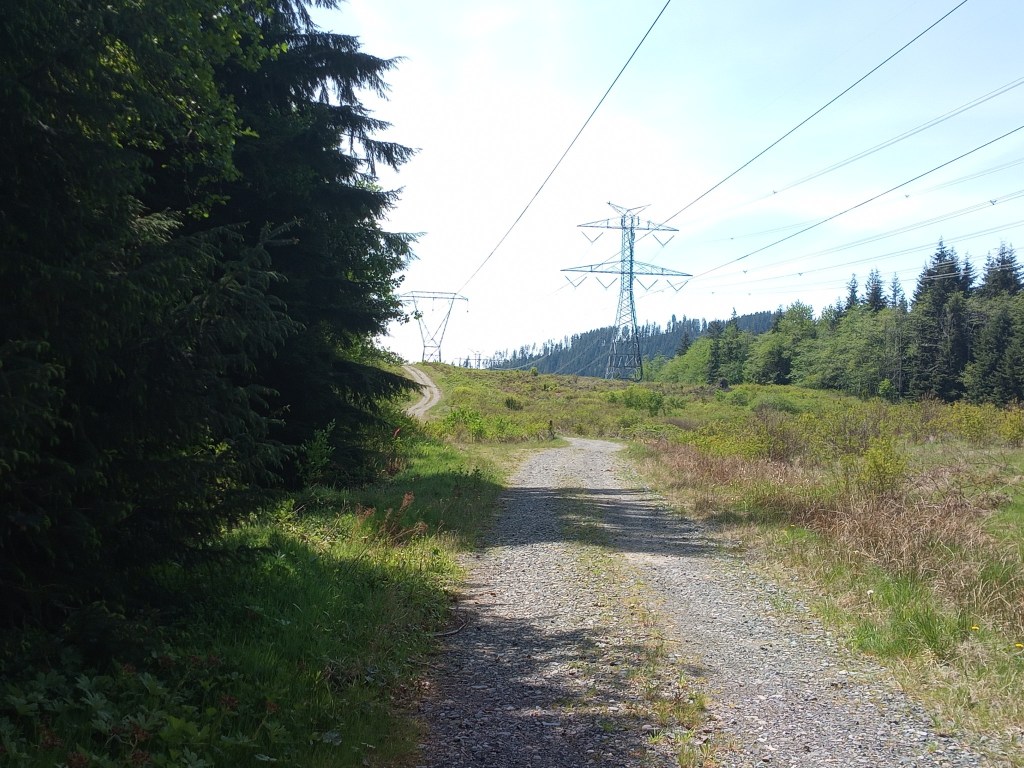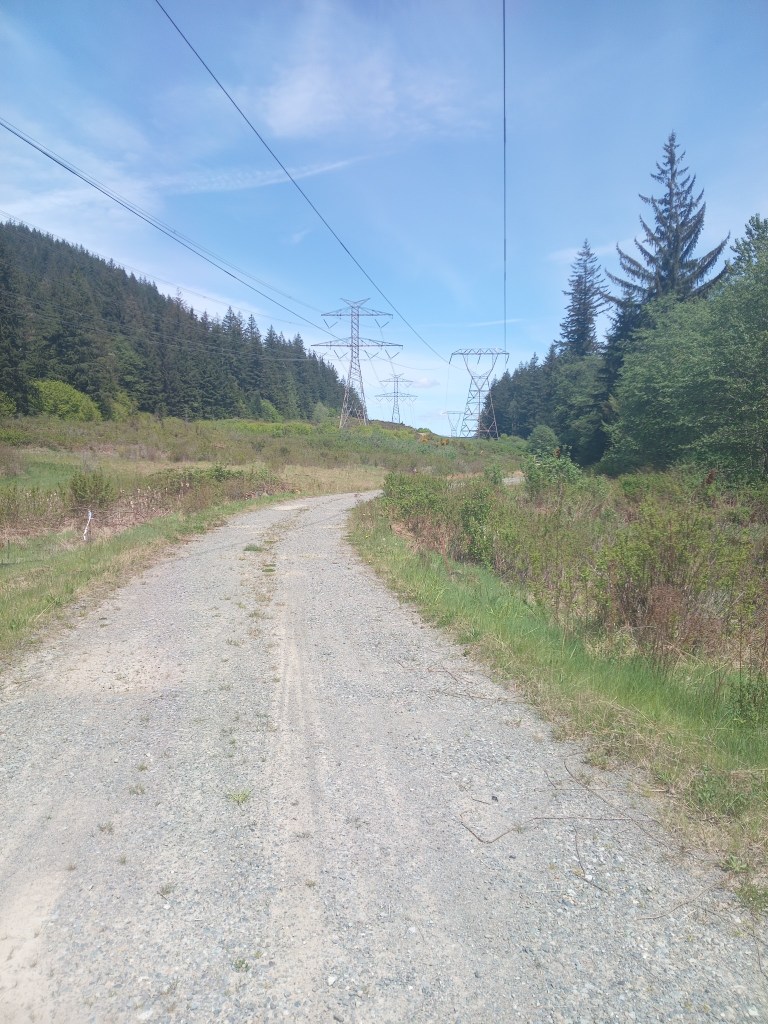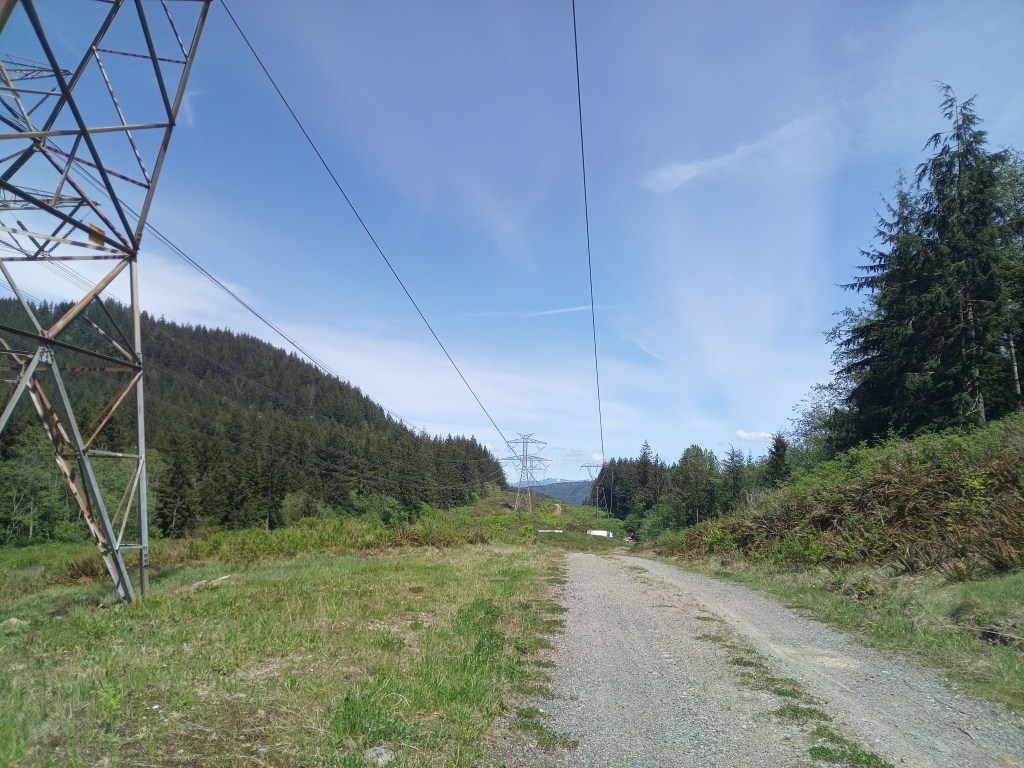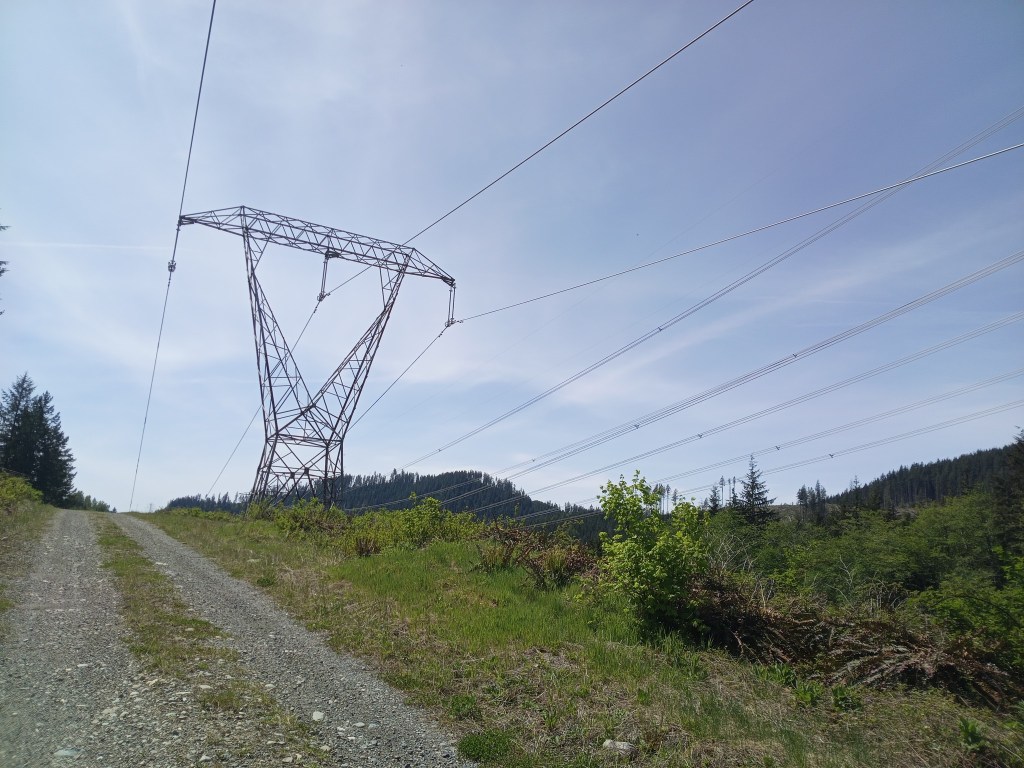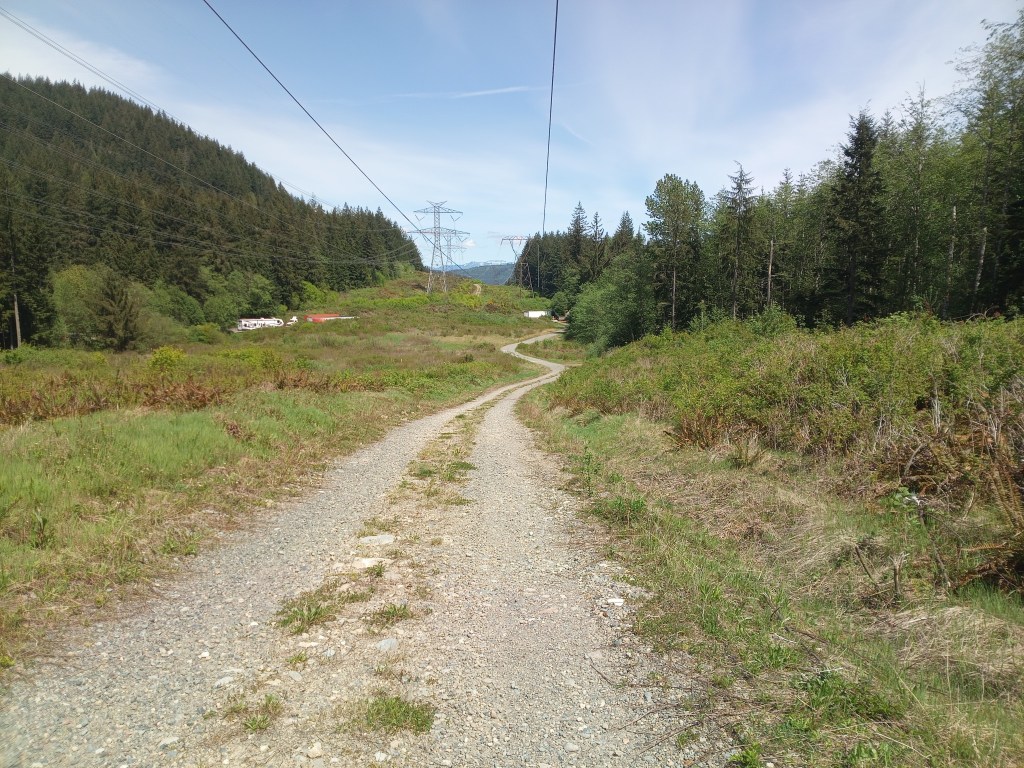
I needed to take a break from uploading the documents from the King County Sheriff’s Department and decided to post some pictures from my recent Seattle trip. Even before I checked in to my Air BnB, the first thing I did after leaving the Sea-Tac Airport was drive straight to Taylor Mountain, because I knew my time in Washington was limited and I wanted to make the most of it. When I went in 2022 and 2024 I didn’t venture in very far, and just took my pictures and left. This time I made sure to wear appropriate footwear and walked through the entire area, and I learned that it was much larger than I previously thought, and even had a lake and separate walking path.
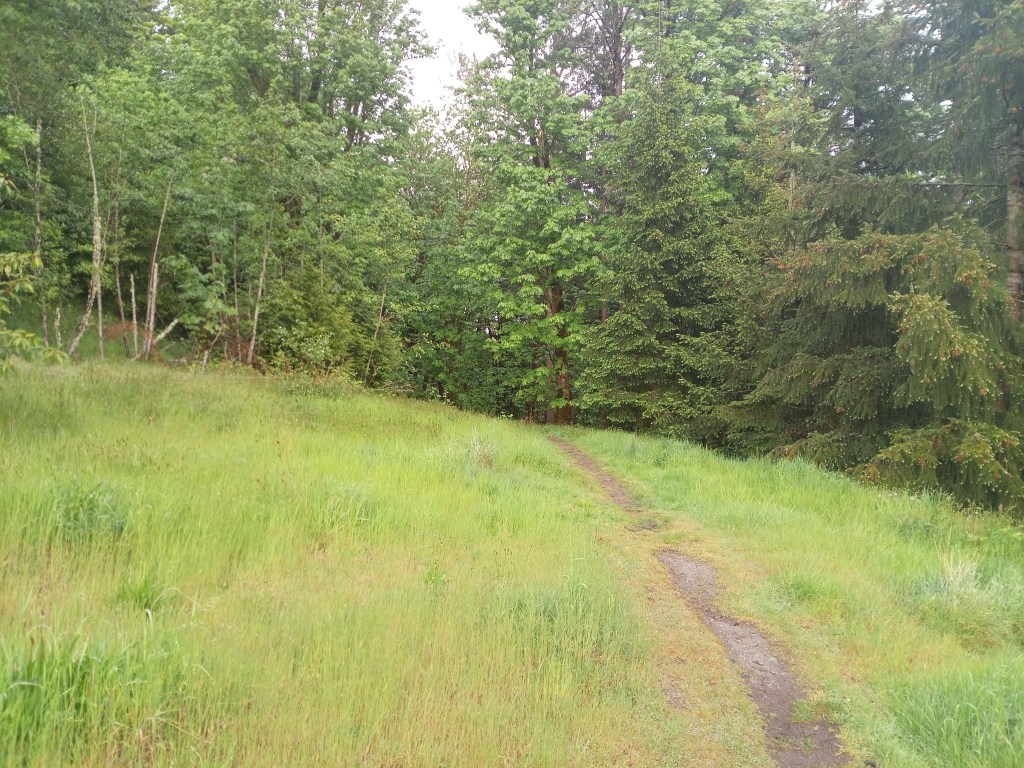
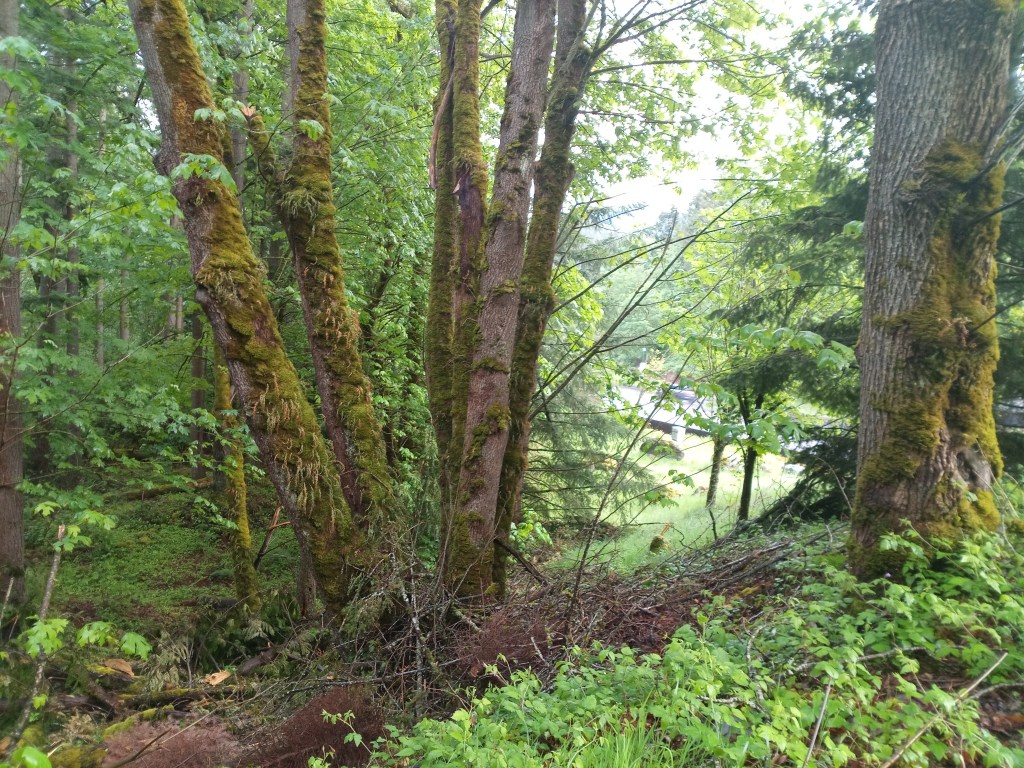
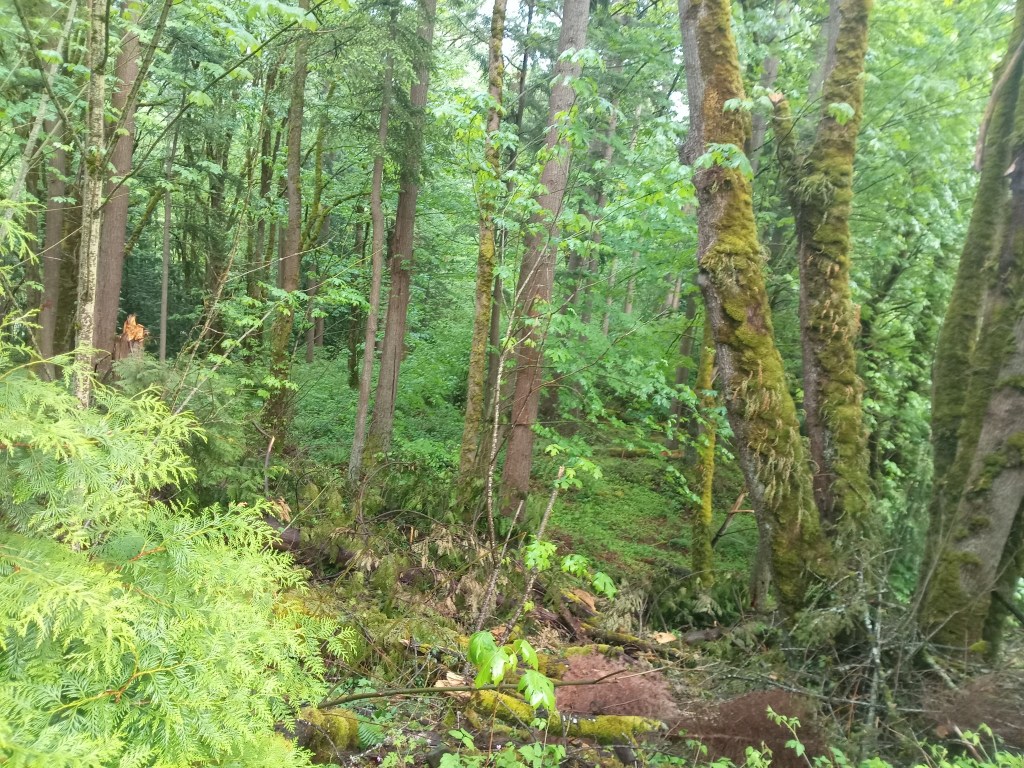
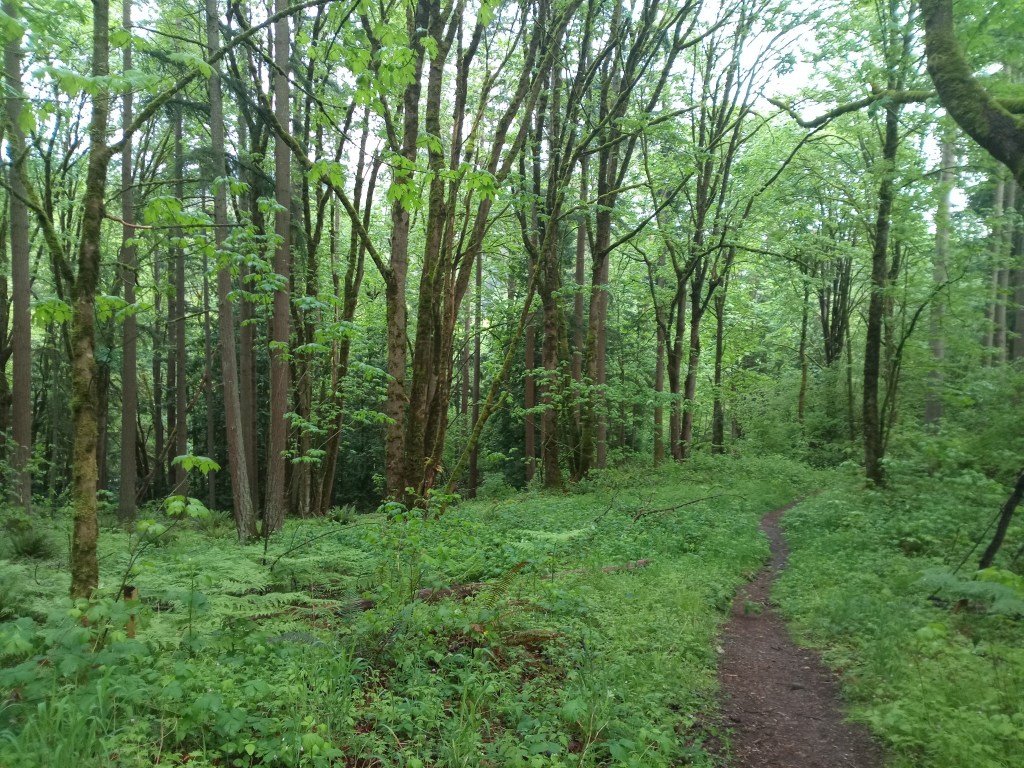
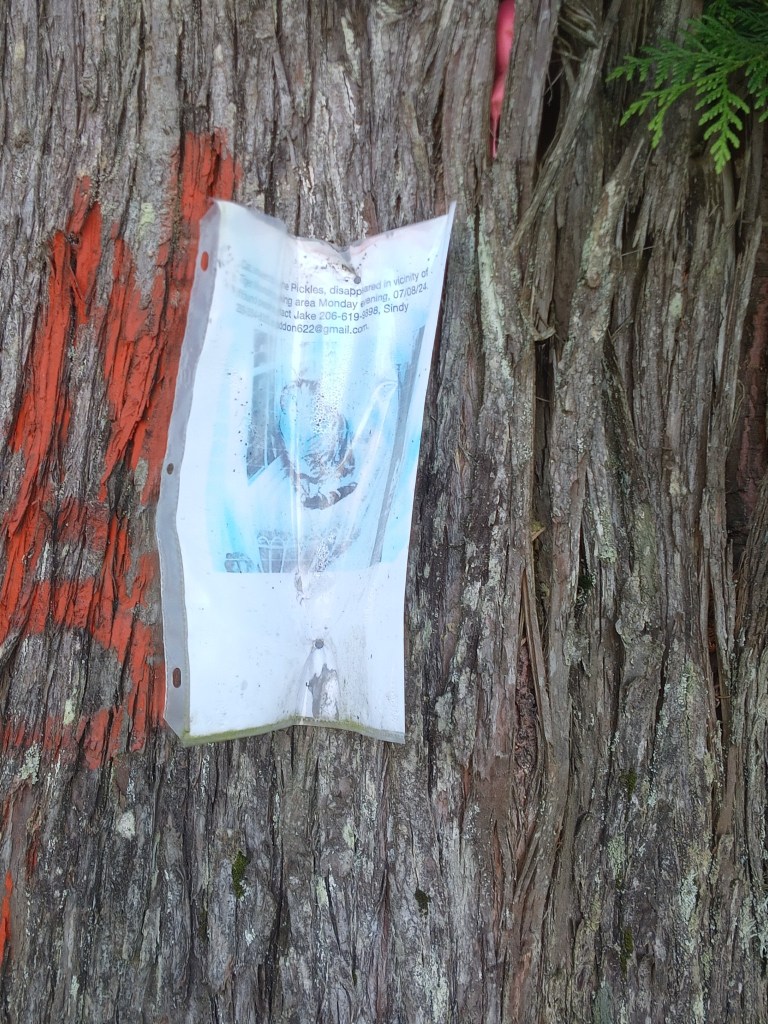
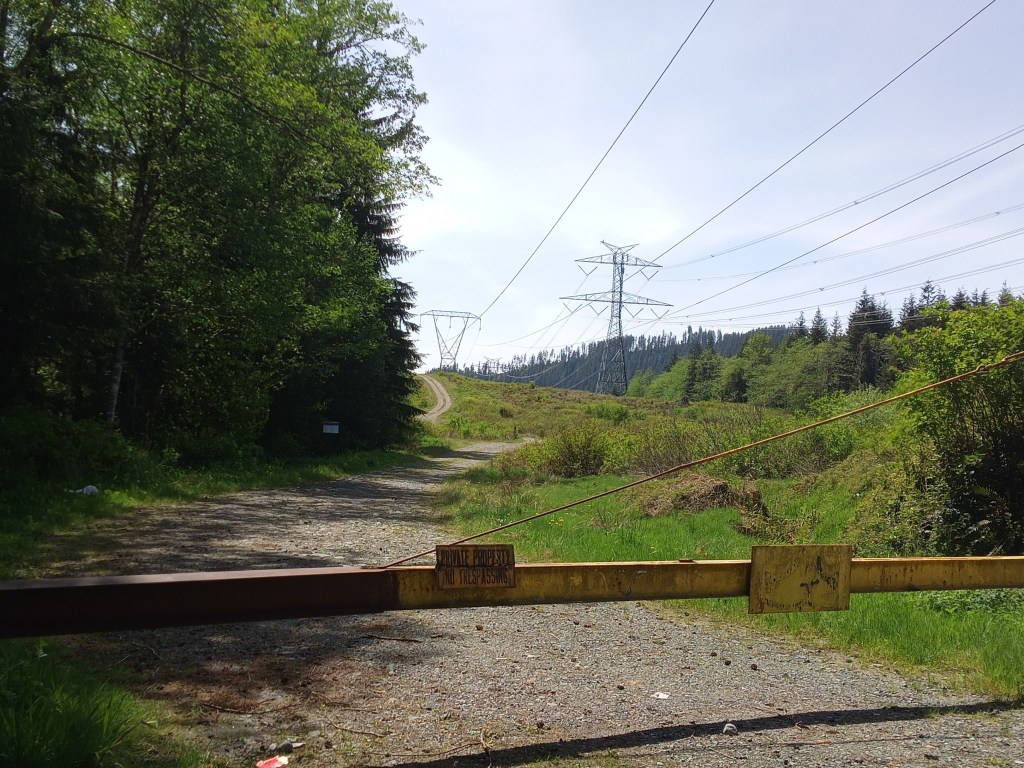
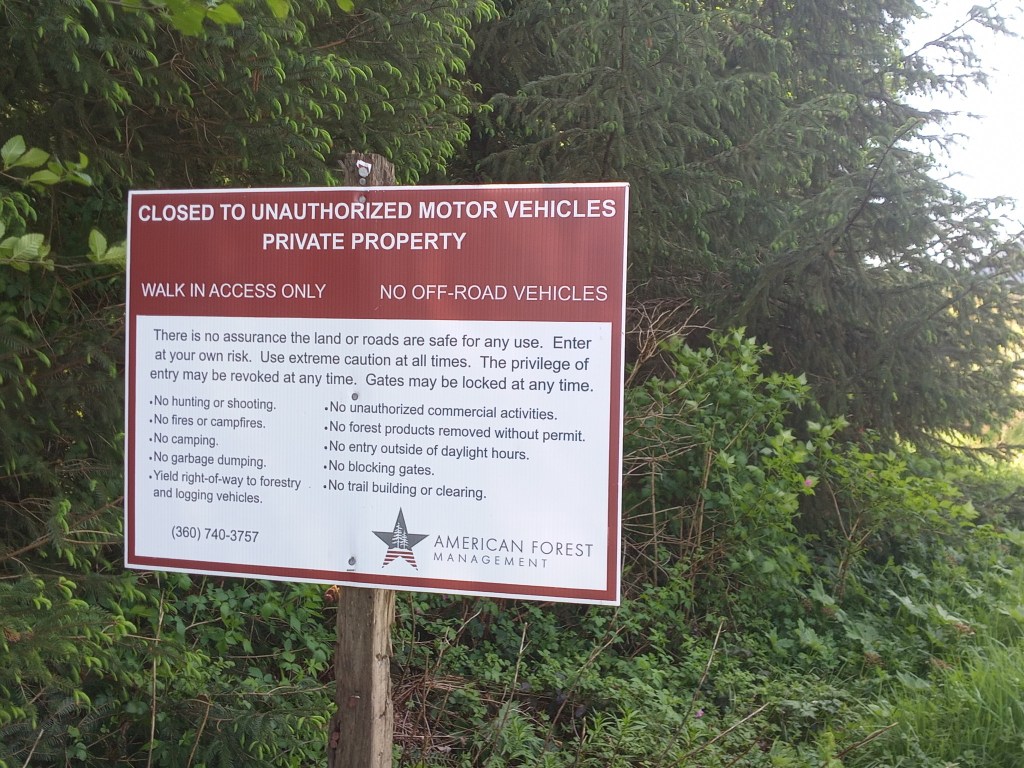
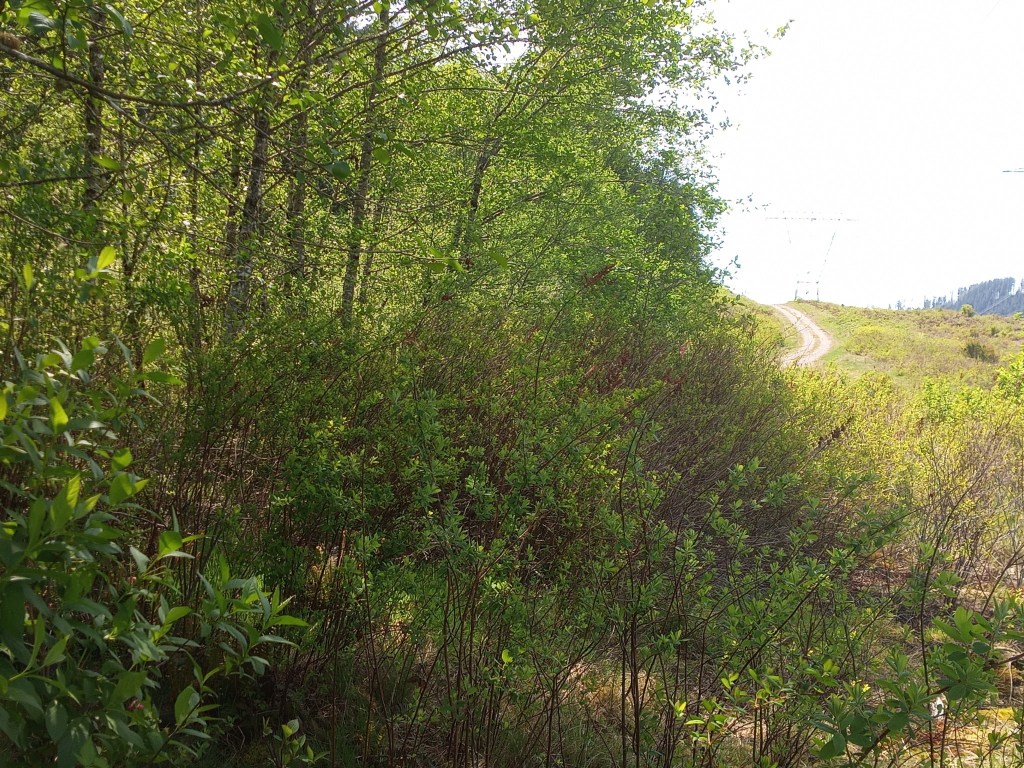
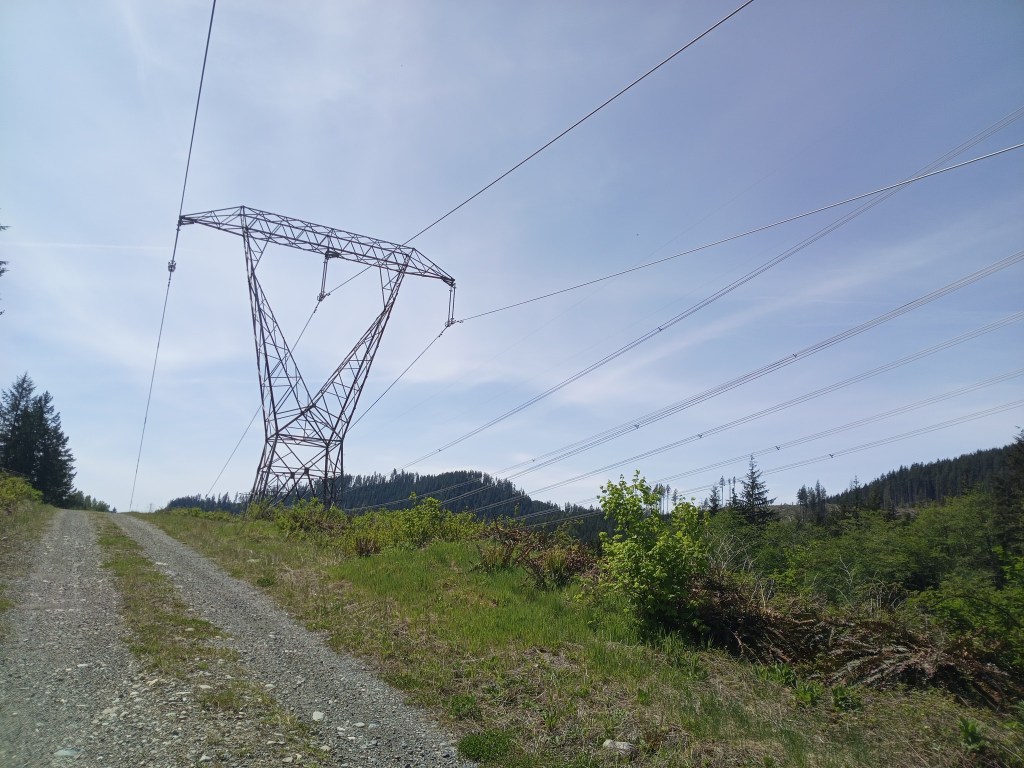
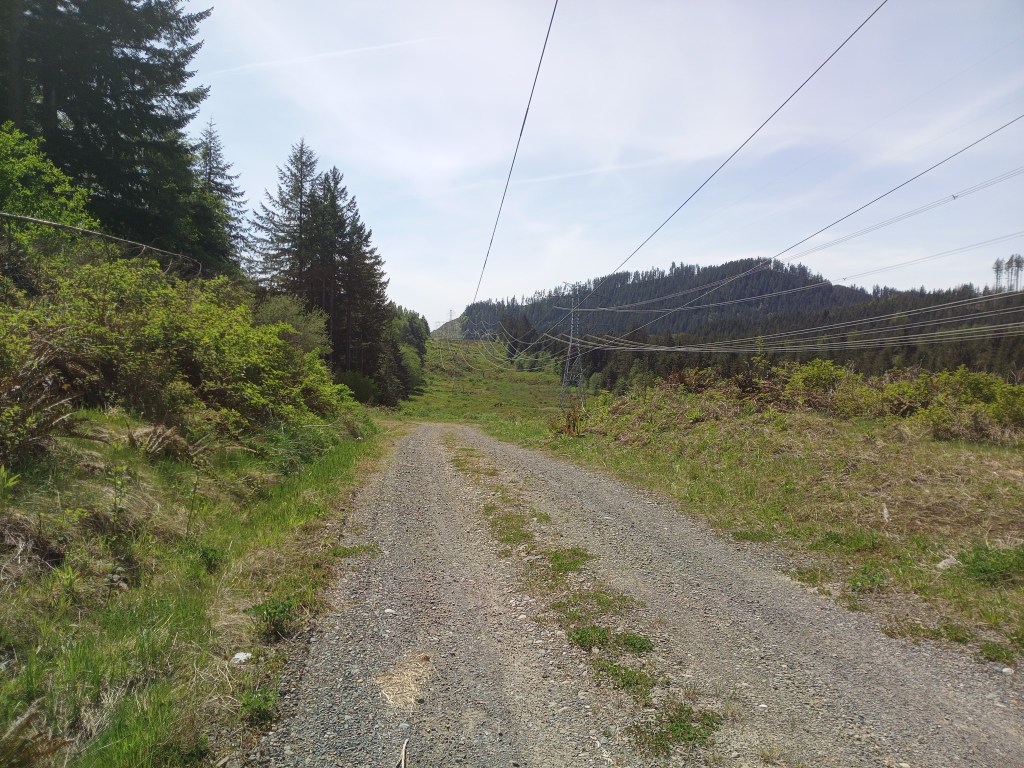
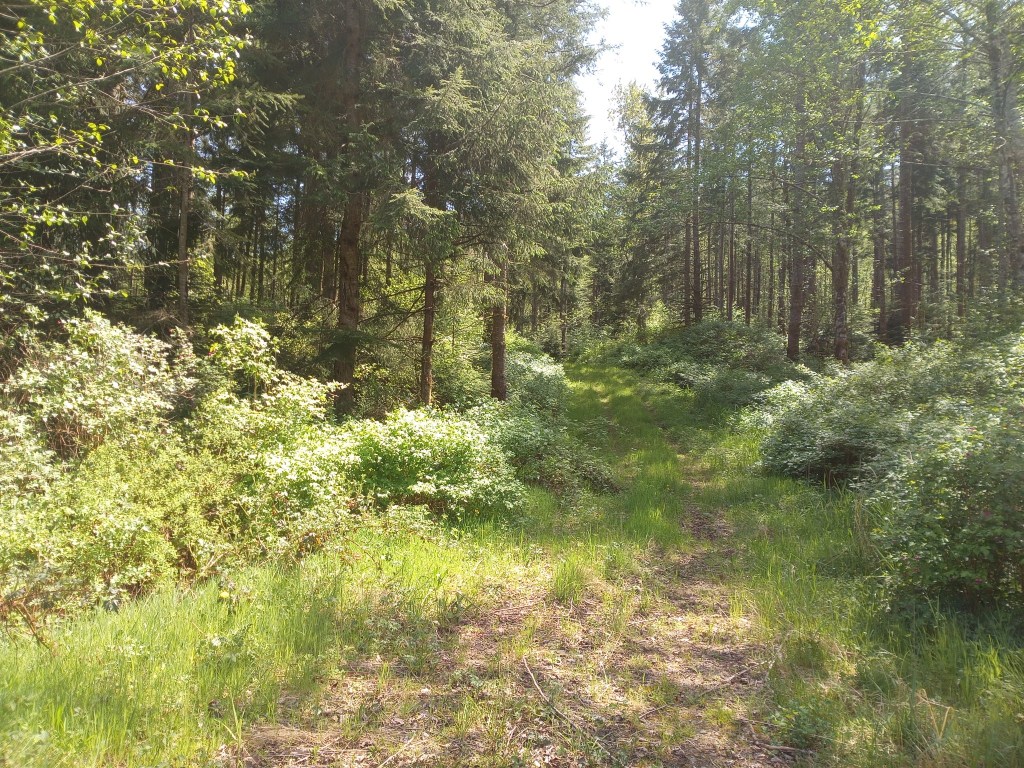
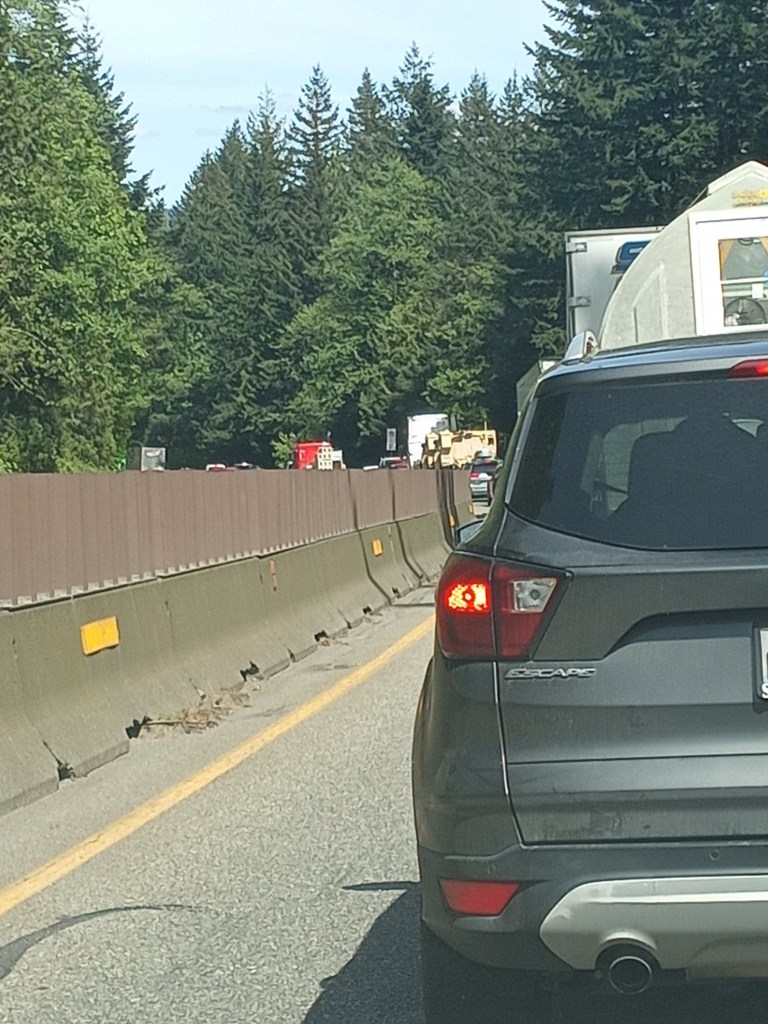
The sign for Tiger Mountain, which is very close to Taylor Mountain (I incorrectly thought they were one in the same, but they are not): while they are very close to one another and are considered to be ‘neighbors,’ they are two distinct geographical areas that are separated by the Raging River and offer ‘different trails and elevations.’ Picture from May 2025. The pull off for Taylor Mountain is almost right after this road sign.A sign for a missing dog at Taylor Mountain. Picture from May 2025.A close up of the entrance to Taylor Mountain. Picture from May 2025.Another shot of the entrance to Taylor Mountain. Picture from May 2025.Another shot of the entrance to Taylor Mountain. Picture from May 2025.A sign at the entrance to Taylor Mountain. Picture from May 2025.Taylor Mountain. Picture from May 2025.The main roadway on Taylor Mountain. Picture from May 2025.A lake at Taylor Mountain. Picture from May 2025.A lake at Taylor Mountain. Picture from May 2025.A trail at Taylor Mountain. Picture from May 2025.Taylor Mountain. Picture from May 2025.A plant at Taylor Mountain. Picture from May 2025.Taylor Mountain. Picture from May 2025.Taylor Mountain. Picture from May 2025.The main roadway at Taylor Mountain. Picture from May 2025.Taylor Mountain. Picture from May 2025.Taylor Mountain. Picture from May 2025.Taylor Mountain. Picture from May 2025.The roadway after the electric towers on Taylor Mountain. Picture from May 2025.Taylor Mountain. Picture from May 2025.A path at Taylor Mountain. Picture from May 2025.A path at Taylor Mountain. Picture from May 2025.A path at Taylor Mountain. Picture from May 2025.Taylor Mountain. Picture from May 2025.Another picture taken at Taylor Mountain. Picture taken in May 2025.One of the paths at Taylor Mountain. Picture taken in May 2025.The main roadway at Taylor Mountain. Picture from May 2025.Taylor Mountain. Picture taken in May 2025.Almost at the top of the main road at Taylor Mountain. Picture taken in May 2025.The view looking down on the top of the main road at Taylor Mountain. Photo taken in May 2025.Driving away from Taylor Mountain, if you look closely you can see an Army vehicle, (most likely) from the nearby Joint Base Lewis-McChord, which is just outside Lakewood, Washington and encompasses both Fort Lewis Army Base and McChord Air Force Base. Picture from May 2025.
In May 2025 I reached out to King County to see if there was a chance I could visit their archives to look at their information related to the Ted Bundy investigation. Where visiting didn’t work out they were kind enough to send me a link via Dropbox that contained tens of thousands of pages of information related to the investigation. Here is everything I could find related to Lynda Healy.
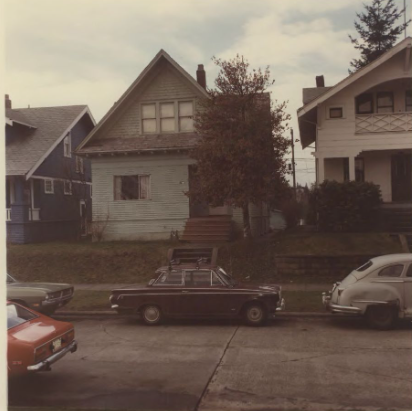
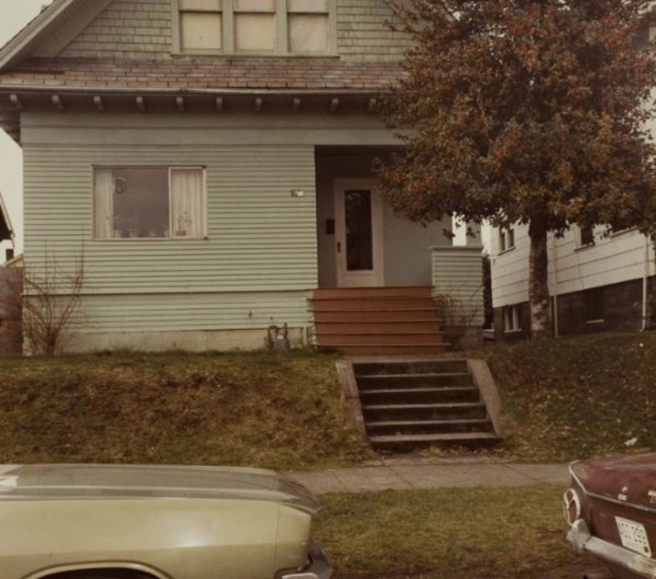
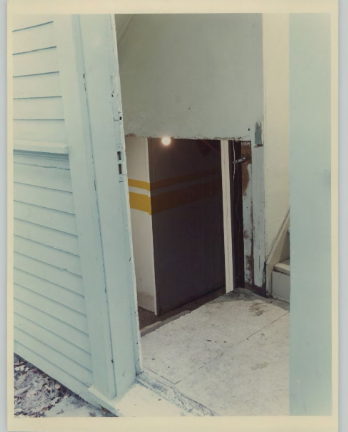
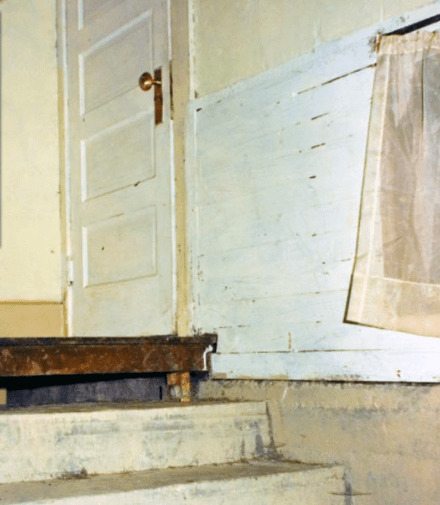
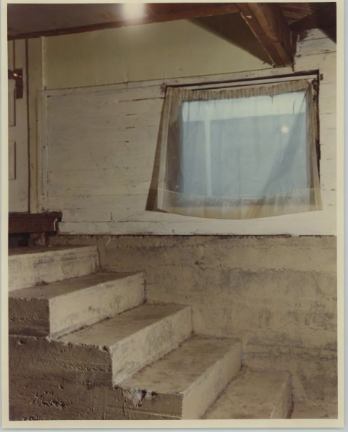
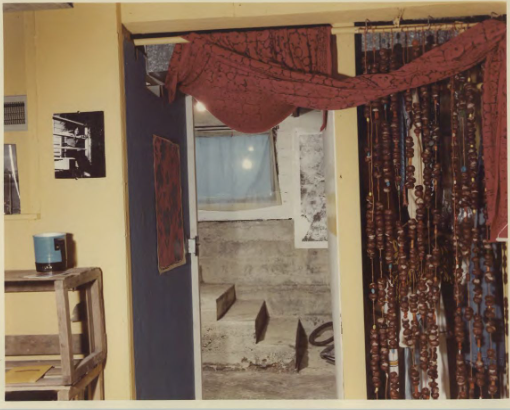
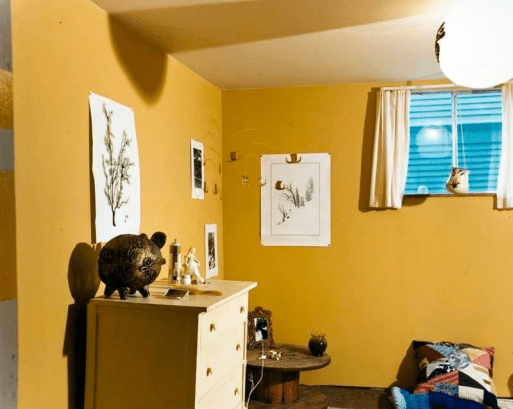
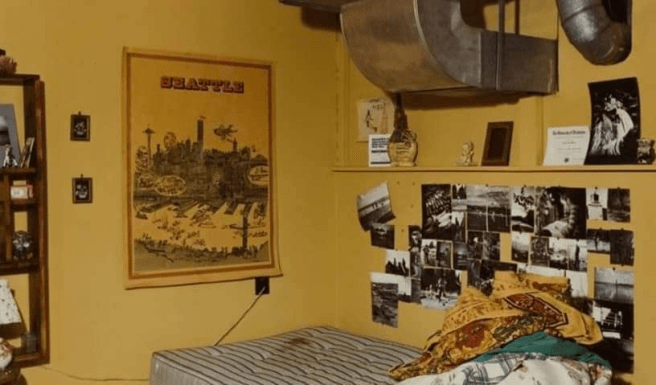
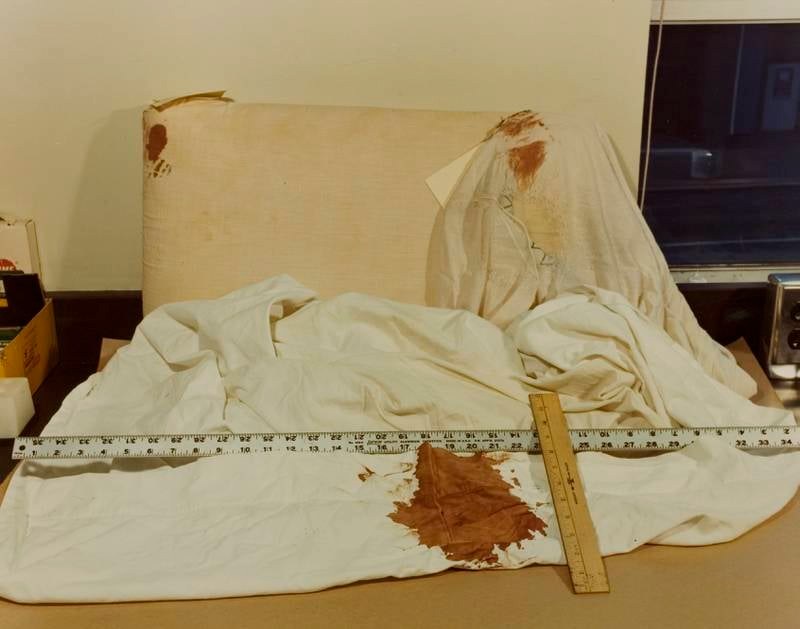
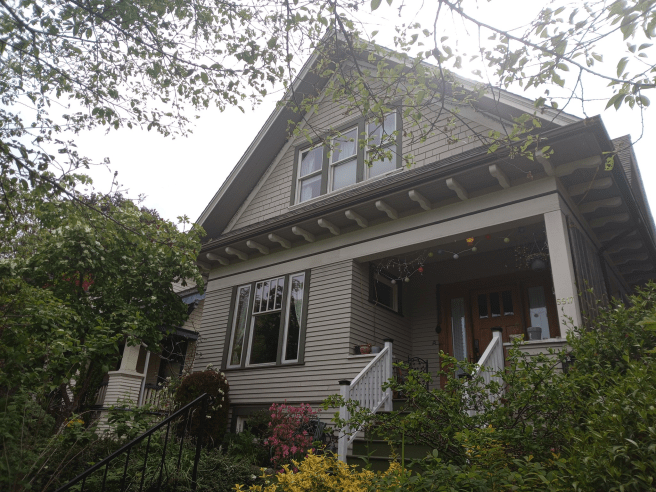
Lynda Ann Healy’s residence, photo courtesy of the King County Sheriff’s.The outside of Lynda Ann Healy’s residence, photo courtesy of the King County Sheriff’s.The front steps leading to Lynda Ann Healy’s residence, photo courtesy of the King County Sheriff’s.The outside door leading to Lynda Ann Healy’s room, photo courtesy of the King County Sheriff’s.The outside door leading to Lynda Ann Healy’s room, photo courtesy of the King County Sheriff’s.The side door leading to Lynda Ann Healy’s room, photo courtesy of the King County Sheriff’s.The stairs leading to Lynda Ann Healy’s room, photo courtesy of the King County Sheriff’s.The hallway leading to Lynda Ann Healy’s room, photo courtesy of the King County Sheriff’s.The stairs and doorway to Lynda Ann Healy’s room, photo courtesy of the King County Sheriff’s.The doorway of Lynda Ann Healy’s room, photo courtesy of the King County Sheriff’s.A shot of Lynda Ann Healy’s bed, photo courtesy of the King County Sheriff’s.The inside of Lynda Ann Healy’s room, photo courtesy of the King County Sheriff’s.
Caryn Eilene Campbell was born on September 20, 1951 to Robert and Audrian (nee Merryman) Campbell in Garden City, MI.Robert Campbell was born on on July 23, 1917 in Pana, Illinois, and Mrs. Campbell was born on April 16, 1918 in Kansas. The couple were married on October 22, 1937 and went on to have four children together: Sandra (b. 1938), Sandra (b. 1938), Caryn (b. 1951), and Robert ‘Bob.’ A petite woman, Caryn was 5’4” tall and weighed s mere 105 pounds; she had brown eyes, and at the time of her death wore her brown hair at her shoulders. She graduated from Dearborn High School in 1969, and according to the bio underneath her senior year picture, she was in skiclub, choir, and ‘intramurals.’ Ms. Campbell went on to attend nursing school, and eventually became a RN.
In early 1975 Caryn was working as a registered nurse at Hospital and was engaged to a co-worker named Ray Gadowski, a divorced cardiologist with two children, Gregory (eleven) and Jenny (nine). Dr. Raymond Francis Gadowski, DO was born on June 19, 1943, and despite the nine year age difference between the couple Caryn got along well with both children, and the couple seemed happy. Ray and ‘Car,’ as he called her (or on occasion ‘Cams’) had been living together for around a year when she was killed, and were residing in Farmington, MI (Winn, 63).
On Saturday, January 11, 1975 Caryn, along with Dr. Gadowski, Gregory, and Jenny, traveled from Michigan to The Wildwood Inn in Snowmass Village, Colorado for a medical conference turned impromptu ski vacation. Friends of the couple told investigators that she was looking forward to getting some skiing in, however other reports said they were arguing about their wedding date as well: unlike her, Gadowski was not particularly in any particular rush to get married, which upset her. Despite arriving with a slight case of the flu, she was still able to take the kids skiing and sightseeing the following day. According to an article published in The Ann Arbor News on January 25, 1975 the couple had ‘purchased five days worth of ski passes.’
On the evening of January 12, 1975 the quartet went to dinner at a restaurant down the slope from the lodge called ‘The Stew Pot,’ along with some other medical professionals they met at the conference (including Campbell’s one time boyfriend, Dr. Alan Rossenthal). At dinner, Caryn ordered beef stew, and while everyone else imbibed on beer and cocktails she was still feeling ‘queasy’ and stuck with milk. The meal ended around 6:30/6:45 PM, and despite the frigid temperatures they decided to walk back and forth from their hotel to the restaurant, leisurely walking the busy street window shipping on their way home, and the group stopped at a Walgreens to browse their magazine section, and according to Kevin Sullivan’s ‘The Bundy Murders:’ ‘apparently Brinkman (a pseudonym for Dr. Rosenthal) had a Playboy to keep him company on the trip, and as he and Caryn were joking about it, Caryn offered to switch with him what she insisted was a much better magazine, her current issue of Viva. With a laugh, Brinkman agreed to the offer.’
When they arrived back at about 8:30 PM everyone settled in front of a large fire in the front lounge: Dr. Gadowski read the evening paper, and it was then that Dr. Rosenthal reminded Caryn about the copy of Viva up in her room. With a sigh, and a small hope that her fiancé would offer to run up and get it (he declined), Campbell announced that she was returning to their room and would return shortly, taking with her the family’s only room key. Greg and Jenny trailed behind her and tried to tag along, but she left them at the elevator and told them to stay by the fire. As she left the lounge, so did Rosenthal, as he returned to his room to get that Playboy. It was the last time Dr. Gadowski ever saw her alive.
After getting off the elevator at the second floor, Campbell briefly chatted with several physicians that she’d met up with at the convention, including a nurse that she worked with at the hospital, and at the time, she had been wearing blue jeans, a light brown ‘wooly jacket,’ and boots. Two of her friends that were staying in the inn that night told investigators that they saw her walk out of the second-floor elevator going in the direction of her room, and was last seen in an open corridor overlooking the pool. According to court records (and Kevin Sullivan), a couple named Dr. and Mrs. Yoder ‘observed Caryn Campbell, with whom they were familiar, exit the elevator on the second floor of The Wildwood Inn. Miss Campbell told the Yoders that she was going to her room to get a magazine and that she would return immediately to the lobby, and they watched her walk down the hallway towards room 210.’ There may however, be some discrepancy as to the extent of the interaction that the couple had with Caryn: according to an article published in The Daily Sentinel on April 5, 1977: ‘Ida Yoder, whose husband is a Physician in Littlejohn, commented that she only saw Caryn and that they didn’t speak, and didn’t know what floor she got off of.’
Dr. Gadowski and the kids waited for Caryn to return in the lounge, and in the first few moments he wasn’t immediately concerned, however as the time passed by with no word from her he decided to go looking for her and returned to their room. As he didn’t have a key, upon arrival he knocked on the door, wondering if perhaps she was in the bathroom, as he knew that she wasn’t feeling well. After running to the front desk and getting a duplicate key, upon entering Gadowski found no signs of a struggle, and the room looked exactly as it did when they’d left earlier. Caryn’s purse was nowhere to be found, however the magazine that she’d intended to get was still on the nightstand next to their bed. Gadowski called the Aspen Police Department shortly after ten PM, and two Pitkin County Sheriff’s deputies arrived roughly an hour later.
When police arrived, they interviewed Dr. Gadowski, and almost immediately began searching the inn, inspecting elevator shafts and crawl spaces, but found no trace of Caryn. On January 13, 1975 uniformed members of the sheriff’s department conducted an extensive search of the buildings and grounds of The Wildwood Inn, including all 140 rooms. They came up with nothing. According to Kevin Sullivan’s ‘Ted Bundy’s Murderous Mysteries,’ ‘background information was obtained on all the employees of The Wildwood Inn and checked against the NCIC (National Crime Information Center) network for reported criminal records locally and out of state. No leads were developed (Sullivan, 158).’
In addition to staff, investigators obtained complete lists of registered lodgers in the general Aspen area around the time Campbell was last seen (starting on January 10), as well as the passenger manifests from Denver to Aspen (then back again) on the only two commercial airlines that served the area at the time. Chief Criminal Investigator for the Ninth Judicial District of the state of Colorado Michael Fisher and the other detectives did extensive background checks on Dr. Gadowski and Alan Rosenthal, as well as all of Campbell’s old boyfriends and male friends/co-workers/acquaintances, and came up with nothing (Sullivan, 158). Ultimately, Investigator Fisher interviewed more than 100 people in relation to the Caryn Campbell case, and he came across no evidence that would indicate that anyone was involved in her disappearance.
When Campbell disappeared it was well past sunset, and weather conditions had dropped significantly: according to historical records, the temperature in Snowmass Village on the evening of January 12, 1975 hovered around -2, therefore it stands to reason that the lot where Bundy parked his car was pretty deserted and absent of any people lingering. Additionally, in the days following her disappearance conditions were below freezing, and by January 15th detectives were fairly certain that the young nurse hadn’t left Colorado by any form of commercial transportation (plane, train, or bus). They also had checked out all of the area’s medical facilities and hotels/inns/resorts, and no unnamed young woman that matched Caryn’s description had been admitted or checked in. Airports and bus companies around the general Aspen area were notified of the missing young woman, and were given photos and a description of her (Sullivan, 159).
While staying in Colorado the couple did not rent a vehicle, and Caryn’s skis were found left behind in her room. It is strongly believed by those that knew her that she would never have never wandered away on her own, and because of the harsh weather Investigator Fisher said that ‘most people couldn’t walk more than 30 feet’ from the road.
In the early part of the investigation detectives focused on Dr. Gadowski, but he was quickly cleared. Additionally detectives did an extensive look into Dr. Rosenthal’s background as well, and he was also cleared of any wrongdoing. Both Gadowski and Dr. Rosenthal was polygraphed by Investigator Fisher (Raymond twice), and both men passed. According to Mike Fisher, ‘I’ve seen some gals take a quick walk on their boyfriends when they’ve got a beef, but this is another thing altogether.’ … ‘I’ve ruled out gypsies, flying saucers, occult people, and cattle rustlers.’
After Caryn disappeared, Dr. Gadowski stayed behind at The Wildwood Inn for a week with hopes that she would somehow return to him, but sadly that never happened and he returned home to Michigan. After weeks of combing the general Aspen area investigators determined that there was no evidence pointing towards Campbell having met with foul play, and called off their search. Almost immediately after her disappearance Investigator Fisher reached out to Campbells dentist and got a copy of her dental records and x-rays, a Dr. Richard H. Mentzer of Dearborn, MI.
Looking at the layout of The Wildwood Inn and its surroundings, at the time of Caryn’s abduction there were a number of smaller parking lots on the western side of the building, and when you consider Ted’s modus operandi (specifically the murders of Georgann Hawkins and Susan Rancourt) it is likely that he purposefully parked his Bug in the most out-of-the-way spot that he could find. After Bundy (somehow) convinced Campbell to come with him, he got her in his 1968 VW Bug and drove the 3.1 miles away to Owl Creek Road, which was (at the time) covered in snow and was most likely why he didn’t put a lot of effort into hiding her body. Although her body had been somewhat disrupted by scavenging animals, Caryn’s autopsy showed that she had died about two hours after she was abducted due to the level of digestion of the stew and milk in her stomach.
A little over a month since she was last seen alive, on February 17, 1975 Caryn Campbell’s frozen remains were found face down on a dirt road just outside Aspen on the south side of Owl Creek Road, just west of Sinclair Divide. A passing recreational employee stumbled upon her remains when the weather began to warm and he noticed birds of prey flying above her. The young victim had suffered extreme decomposition and damage to the upper body, most likely the result of animal predation (probably coyotes), which made immediate identification impossible. There were no footprints or tire tracks found at the scene, however according to Kevin Sullivan,’approximately three and a half feet from the south shoulder of the road was a deep depression which perfectly matched that of a body, which had laid on its side, head pointing west. It was also apparent that the body laid facing the open field (????) both earrings, small gold earrings for pierced ears, were found where the head had been positioned. Surrounding the depression were several coyote tracks. Leading from the depression were several coyote tracks. Leading from the depression (head position) were drag marks (Sullivan, TB’s Murderous Mysteries, 161).’ An extensive search of the area by law enforcement failed to locate Caryn’sclothing.
Upon arrival at the crime scene, Investigator Fisher spoke with Pitkin County DA Steve Waters, who told him, ‘Fish, you’ll never find out who did this. You’ve got nothing to work with’ (Sullivan, 124). According to her autopsy, Ms. Campbell had been badly beaten, and the back of her skull had sustained three heavy fractures. She had also suffered from deep cuts from an unknown sharp weapon, and her hyoid bone had been cracked; her left earlobe was slit. The ME was unable to determine if she had been strangled or sexually assaulted due to the advanced level of decomp, however the nude condition of her remains pointed to sexual gratification as a motive. Additionally, the pathologist was able to find phosphorus on the remains, however when interviewed Gadowski said that he and Caryn had sex on the evening of January 11th.
Almost immediately after her body was discovered Dr. Gadowski was interviewed by a reporter, and regarding the tentative identification, he said, ‘that’s kind of what we expected. We’ll have to wait and see what happens… This endless waiting has been very difficult for everyone involved. But I hope it’s not her.’ After a positive identification was made, Caryn’s remains were flown to Detroit for burial. In February and March 1975 Pitkin County investigators traveled to Michigan on multiple occasions in order to dig into Campbell’s background (as well as Dr. Gadowski and Dr. Rosenthals’).
The day after the discovery was made the remains were taken to Denver General Hospital, where Pathologist Dr. Donald Clark performed an autopsy and a positive ID was made thanks to dental records.* Also, Caryn’s dentist determined that ‘in his unqualified opinion, after comparing the dental charts and x-rays with the dental work on the body, that the body is in fact Caryn Eilene Campbell.’ *Just as a side note, Kevin Sullivan reported that she was flown to ‘Howards Mortuary,’ located in Denver.
After allowing the body to thaw out for roughly 24 hours, Caryn’s autopsy revealed that ‘the cause of death was blows to the back of the head with a blunt object combined with exposure to sub zero elements.’ She also had a cracked tooth, and suffered extreme tissue damage in her face, head, and one of her arms due to exposure to wildlife, and had bite marks on her cranium. She also had ligature marks on her wrists, which pointed towards her being tied up at one point. Based on the contents of her stomach, it’s strongly suspected that Campbell was killed within two to five hours after she disappeared, and according to (retired) Colorado DA Frank Tucker, ‘all indications are that this is a homicide.’
For some of the detectives that were familiar with the large amount of recent homicides in the general part of the US, it was suspected that Campbell had possibly fallen victim to a violent predatory killer who by that time had already claimed the lives of (at least) twelve other young women in the west. However when pressed about a possible connection in the cases FrankTucker said that he was ‘interested in convicting someone of this crime, not in hearing someone’s pipe dreams. We have no evidence to tie this murder to any other we’ve had in the West at all at this point.’
Seven months after the murder of Caryn Campbell, Utah Highway Patrol Sergeant Bob Hayward arrested twenty-eight-year-old law student Theodore Robert Bundy after a brief police chase. Inside Ted’s VW (which they were given verbal permission to do, a fact that Bundy later denied), officers found several items that commonly doubled as burglary tools, including a pantyhose mask, crowbar, (off-brand) handcuffs, and an ice-pick. While searching his apartment later that same day, detectives found a list of Aspen ski resorts with an x next to The Wildwood Inn, as well as a program from the play ‘The Redhead” that was performed at Viewmont High School, which is the school that Deb Kent was abducted from on November 8, 1974.Credit card receipts from January 12, 1975 seem to point towards Ted buying gas in Glenwood Springs, Colorado, which puts him in close proximity to The Wildwood Inn.
According to the ‘1992 TB Multiagency Team Report,’ on October 2, 1975 Bundy stood in a lineup in SLC for the attempted kidnapping of Carol DaRonch (which occurred earlier in the day that Deb Kent vanished), and after she picked him out he was arrested two hours later. Additionally, Ted’s Volkswagen matched the description of the vehicle that was used by the kidnapper.
At the time of Caryn’s murder in January 1975 Ted was a full-time law student at the University of Utah, and was living in his first SLC apartment located at 565 1st Avenue. He was unemployed at the time, and remained that way until June 1975 when he got the position of night manager of Bailiff Hall at the University of Utah (he was fired for showing up intoxicated). He was also in a long term relationship with Elizabeth Kloepfer, even though they were on the down swing of their romance.
Ted was bailed out of jail on November 20, 1975, and his trial for the kidnapping of Carol DaRonch began on February 23, 1976. During the trial Bundy decided to act as his own attorney, and openly admitted to having no accountability for his whereabouts on November 8, 1974, when DaRonch was abducted. Despite being adamant that he never met Carol DaRonch, he was ultimately found guilty and sentenced to between one and fifteen years in prison.
With a possible suspect behind bars, detectives in Washington and Colorado began to piece their cases together, and hunted for more proof that linked Bundy to the homicides in their state. Ted’s tan 1968 Volkswagen was impounded and picked apart by forensic technicians, and despite multiple deep cleanings he had missed important pieces of evidence. On January 29, 1976 investigators were told that a hair sample that was found in the vehicle matched that of Caryn Campbell, as well as three additional suspected victims. It was also determined that the wounds found in Campbell’s skull matched the pattern made by the crowbar that had been taken from Bundy’s vehicle on the night of his arrest.
On October 21, 1976 Ted was officially charged by Pitkin County for the murder of Caryn Campbell, and on January 28, 1977 he was transferred from custody in SLC to the Garfield County Jail in Glenwood Springs to stand trial. Once again, he decided to act as his own attorney, which allowed him access to the make-shift ‘law library’ located in the back of the second story courtroom, which he escaped from on June 6, 1977, and the rest is history… (in reality, I’ve already written about it a half dozen times before).
According to Kevin Sullivan’s 2016 book, ‘The Trail of Ted Bundy,’ a woman named Elizabeth Harter (who I’ve also seen called Lisbeth) was staying at The Wildwood Inn at the time of Caryn’s murder, and she said the evening she disappeared she happened to notice Ted standing next to a ‘outdoor service closet’ and across from an elevator because he looked so out of place, saying that he: ‘certainly wasn’t dressed for it (meaning the cold temperatures), as he was wearing dress slacks and a shirt. His appearance looked so odd that Elizabeth Herter noticed him and immediately wondered why he would be doing such a thing. He stood out, she later told police investigators, and she thought it was weird.’
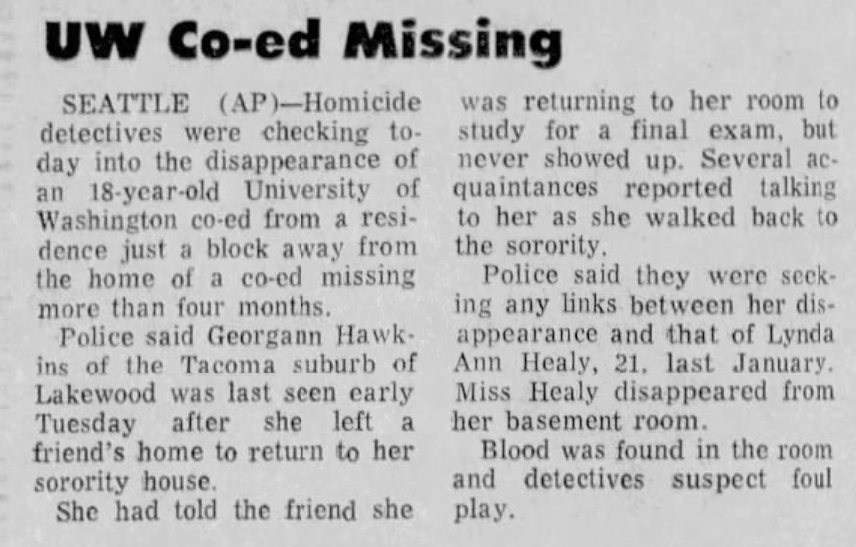
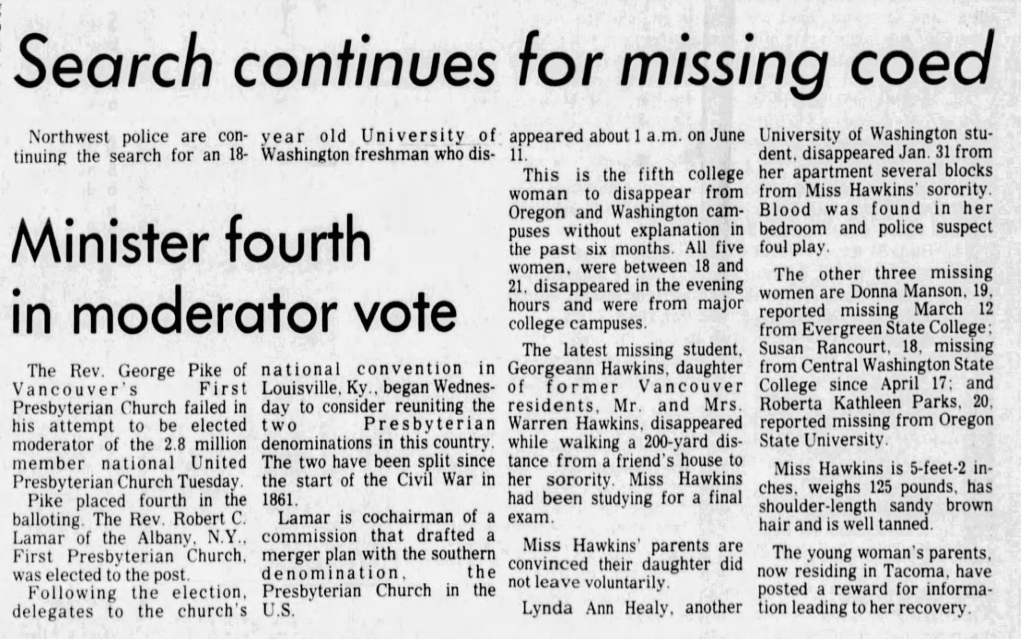
In a way there’s a lot of parallels to the Campbell murder and the disappearances of Georgeann Hawkins from the University of Washington in June of 1974 and Sue Rancourt from Central Washington University on April 17, 1974 in Ellensburg. Both young women were most likely approached by a man that was using an injury ruse looking for help, and were lured away to a secondary location that involved his waiting vehicle. Did Ted lure Campbell from the second-floor hallway of The Wildwood Inn, perhaps pretending to have a broken appendage…? But why would anyone be at a ski resort with a broken arm or leg? I guess it would have made for an interesting conversation starter.
According to a 1979 KOMO news report, in the early portion of the investigation there was another suspect that was looked at for the disappearance of Caryn Campbell: an individual Ruth Walsh dubbed ‘Jones’ (a pseudonym), who happened to be in the Aspen area for at least eleven days prior to her murder and one day after. After about thirty seconds of investigating (reading through the documents related to the case that were recently released by the Pitkin County Sheriff’s Department), Jones’ real name is Hugh Joseph Michael Temos.
Temo had been employed (and fired) as a maid/dishwasher at (at least) four hotels/reports in the general Aspen/Snowmass Village area, specifically at the Holiday Inn (for three days), The Pomegranate Inn (for three days), The Plum Tree Inn (for seven days), and ‘The Top of the Village’ (for one week). His former coworkers testified that he was disruptive, weird,’ a sexual deviant, athletic, ‘physically attractive,’ hyperactive, scary, not playing with a full deck, crazier than hell, and hostile towards women.’ On January 13, 1975, Temos picked up his final paycheck and walked out, leaving the Aspen area for good. The next time he surfaced was at the city jail in Roseburg, Oregon, where other inmates described him ‘bursting into spontaneous laughter at empty space,’ and drinking his own urine, with one man even admitting he was ‘terrified of him.’
Chris Haper, one of the managers at ‘The Top of the Village,’ told Pitkin County investigators that the day before Campbell’s disappearance on January 11, 1975 he had tried to fire Jones, who had consequently became aggressive, and turned into an incident that made him ‘fear for his life.’ On the 12th of January Haper said that when Jones left work at The Top of the Village he announced that he was going to go watch cross-country skiers, and perhaps it’s worth mentioning that the TotV is only one block away from The Wildwood Inn. A maid at The Wildwood testified that she saw Temos near the pool on the night Campbell vanished, and it was because of this tidbit that detectives brought him in for a polygraph. The results found no indication that he killed the pretty young nurse and he was officially cleared, however it was determined that the test was administered without a blood pressure cuff, which may have affected the results.
Seattle polygraph expert Lieutenant Joe Nicholas, while not directly commenting on Temo’s test specifically, took a ‘dim view’ in regards to the validity of a polygraph test administered without a blood pressure cuff, and when pressed by Walsh he admitted that if any one of the three key elements were omitted, it would definitely affect its accuracy despite there being other things to look at (breathing, for example).
Walsh also mentions that there was ‘a postscript’ in regards to this Jones individual: she said that he was living in Seattle during Bundy’s heyday in 1974, and on September 8, 1974 (a day after the discovery of Ted’s Issaquah dump site) he was arrested by the King County Sheriff’s on a charge of indecent exposure (he flashed a cops wife), and went on to serve 180 days in jail. After getting out, he made his way to Colorado, and it was around this time that he developed a reputation for violence, largely towards the opposite sex, and exhibited a large amount of mental instability. In an on-air interview with King County Sheriff Lieutenant Jim Harris, Walsh asked him about Temos and if he served time in the King County Jail on the dates she provided him with, which he did confirm.
In another report conducted by the FBI, Sergeant Ivan Beason commented that ‘in checking records, the Seattle area was having almost one missing girl per month, but after the suspect (Jones) was incarcerated, the missing girl stopped. In the opinion of the reporting detective, Jones looks good as a suspect.’ The missing girls referred to in this report are of course the eight confirmed Bundy victims from 1974.
But wait, it gets even weirder: Temos lived only two blocks away from the alley that Georgiana Hawkins disappeared from in June 1974, which is a murder that has a lot of parallels with Caryn Campbell. He also lived within two blocks of Lynda Ann Healy, who vanished without a trace in the early morning hours of February 1, 1974. At the end of the segment Walsh reported that at the time of the broadcast in July 1979 nobody knew what had happened to Jones, and he had seemingly dropped completely off the radar.
Another person that was investigated for the murder of Caryn Campbell is Pitkin County undersheriff Ben Meyers. The true crime website ‘CAVDEF’ pointed out something odd involving the eyewitness Lisbeth Harter took place at Bundy’s pretrial hearing, an event that Ann Rule detailed in ‘The Stranger Beside Me:’ ‘this time, the eyewitness was the woman tourist who had seen the stranger in the corridor of The Wildwood Inn on the night of January 12, 1975. Aspen Investigator Mike Fisher had shown her a lay-down of mug shots a year after that night and she’d picked Ted Bundy’s. Now, during the preliminary hearing in April of 1977, she was asked to look around the courtroom and point out anyone who resembled the man she’d seen. Ted suppressed a smile as she pointed, not to him, but to Pitkin County Undersheriff Ben Meyers (Rule, 230).’
The creator of the ‘CAVDEF’ web page seems to write around conspiracy theories, and the idea that Ted Bundy (at the very least) either had help with his murders or he wasn’t responsible for all of the ones that he is (or both). In a blog post written about Caryn Campbell, they creator mentions that at first Harter’s identification of Meyers was quickly dismissed as a mistake, however when one considers his rumored connection to several murders in Grand Junction later in 1975 it almost makes you wonder if he was the man that she saw at The Wildwood Inn on the evening of January 12, 1975. As the Grand Junction murders (including Denise Oliverson) seemed to center largely around local organized crime, this suggests that if Meyers was somehow involved, Campbell’s murder was then most likely a targeted hit. On that note, it is worth mentioning that Caryn’s brother Bob is a retired Fort Lauderdale police officer, which is an area that remains a major center for drug trafficking activity to this day.
Denise Oliverson was the first of many young women to either disappear or be murdered in Grand Junction in 1975. All of these crimes were suspected of revolving around the drugs and prostitution activity in the city, in which many officers including police chief Meyers were complicit.Oliverson was known to be a fairly heavy drug user, which put her in at least some contact with the local drug scene.
Vail Colorado ski instructor Julie Cunningham, who disappeared on March 15, 1975, also may not have been just a random victim: she was reportedly good friends with the daughter of Salem Oregon chief of detectives Jim Stovall, who worked directly under Ben Meyers when he was Salem’s chief of police. In fact, Stovall was the very first officer of the department that Meyers nominated for a national law enforcement award, and the two traveled together to Atlantic City in New Jersey for the ceremony. Eagle County, where Vail is located, was also a known center for the nationwide drug trade: Allen Riverbark, a known trafficker that operated in the area during the 1970’suntil he died in a plane crash in November 1981, owned the Black Mountain Guest Ranch, which was located thirty miles outside of Vail. It doubled as a hideout for East Coast mobsters, and served as a distribution point for Rivenbark’s network of drug dealers, a ring that was based in Fort Lauderdale. FL (CAVDEF, 2022).
Harter was obviously the foundation of the state’s case, and they had no other ‘proof’ that placed Bundy inside of The Wildwood Inn on the evening Caryn disappeared, and that evidence disappeared with her identification of somebody other than him. The only things that the prosecuting attorneys had left in their arsenal was the gas receipt linking him to the general Snowmass Village area on January 12, 1975, an inconclusive (and since-discredited) DNA analysis conducted by the FBI that placed Campbell’s hairs in his VW, and an attempt to introduce cases in other states that he was only suspected of but never even stood trial for.
In an old audiotape that had been recorded by Bundy on February 2, 1980 for journalists Steven Michaud and Hugh Aynesworth (provided by Maria Serban on behalf of Dr. Rob Dielenberg), the killer talked about Mike Fisher’s dedication to his conviction in regards to the murder of Caryn Campbell: ‘And while this doesn’t have anything to do with Fisher, I think it’s interesting if you read the transcript of the preliminary hearing in the Campbell case, how thoroughly he was discredited as an investigator. This is chiefly with respect to the rather amateurish way in which he handled Elizabeth Harter who was allegedly the kingpin of the case: she was a woman who said she saw a man or men standing by elevator one evening at Snowmass, Colorado, on the evening that Caryn Campbell disappeared. It was a year later, when she returned to Snowmass for the same type of conventionthey have, that a photo display was shown to her and she picked up my photo as being the man standing by the elevator.’
‘You have to compare, to really appreciate how badly Fisher handled this situation… you must compare the language and the information in the Campbell case with the testimony which actually came out at the preliminary hearing. Basically, unusually, I guess, Fisher grossly exaggerated the statements made by Mrs Harter with respect to her photo identification and the set of circumstances which gave rise to that identification. Of course, when Mrs Harter was called in Aspen to make an identification, she failed to identify me… She also said that she had never told Michael Fisher that she was sure of what she was seeing and what she had seen, it was dark, she never got a good look at the man she had seen, that she was some 40 ft away from the man she had seen, and that the photo she picked out, she picked out as only remotely resembling the man that she had seen and she could not form an opinion that the man in that photo was exactly the man she had seen…’
‘Of course, the representation Fisher must have made toward getting the information in the first place is far different.’ … ‘The embarrassment suffered by the prosecution at that preliminary hearing as a result of Fisher’s half-hazardous, vague investigations, is the worst I’ve seen in any case that I’ve been the object of. Plus the bottom line of that handling of Miss Harter was that she not only failed to identify me in the courtroom – that is she did not identify me in the courtroom, but in fact identified the under-sheriff who had accompanied me from Utah to Aspen just a few weeks before. The name of the under-sheriff was Ben Meyers by the way.’
‘Anyhow, a law enforcement official of questionable character, he had held a number of jobs, he had been in a variety of law enforcement agencies throughout his career, and there were a number of rumors, most probably unsubstantiated of course as far as I can say, concerning his conduct in the various agencies that had employed him.
‘Interestingly enough, the last position he held before coming to Aspen was… before coming to the Pitkin County Sheriff’s Office as under-sheriff… was of chief of police in Grand Junction, Colorado, where there had been a series of murders of young women… And my understanding is that it took a great deal of pressure… and there was a failure of his department to solve these murders… I don’t believe that was the sole reason of him leaving.’ … ‘Ben Meyers himself was not effective in the investigation in the prosecution of my case, other than the fact that he was identified as most resembling the man that Mrs Harter saw the night of Caryn Campbell’s disappearance.’
‘I saw Fisher on numerous occasions: most in the courtroom, in Aspen, during the many months that I attended the pre-trial hearing there… The only occasion when he testified that I can recall was the occasion of the preliminary hearing. But it seems as though he was always present, whispering in the ear of Frank Tucker, the district attorney delegated to try the case for Fisher… Or sitting somewhere in the front row of the courtroom. It was clear he had a personal interest in this case. And I had been told, although I can say this from personal experience, that he had developed something of a close friendship with the former fiancé of Caryn Campbell. I always got the feeling that despite his rather laidback manner, his rather non-law enforcement demeanor, that he was deeply, deeply devoted and dedicated to obtaining a conviction of me in this case.’
‘After the preliminary hearing in Aspen, of course, there were numerous contacts with Michael Fisher which I will relate to you as I go on this tape… In many ways… I don’t know… certainly I had something of a dislike for him, because obviously, from where I stood… he did not seem to be equipped to handle the job that he had taken on for himself. It’s hard for me to describe that feeling any further… I wouldn’t call what I felt for him as a form of pity… that’s just not what I’m trying to say, but I just felt when I looked at the man and listened to him and watched him, I couldn’t believe that he was actually someone who had been delegated with the serious responsibility of a serious investigation of a serious criminal case. Certainly appearances are deceiving, but in Fisher’s case, his appearance, I think was reflected in his ability…’
‘After the day that I arrived in Aspen, Fisher asked me if I wished to talk to him. He and I never spoke directly again until I had been captured after my escape from Aspen jail in June 1977… I never saw him back in the jail area at the Pitkin County Jail where I was being held. I rarely saw him in the sheriff’s office. Mainly because the prosecuting attorney’s office where he worked was in a building maybe 15 yards away from the courthouse itself. But there is no doubt that whether he was experienced or not, whether he had the ability or not, or whether he was a policeman or a law enforcement officer or just someone who fancied themselves as a law enforcement officer… There is no doubt he had an active and major role investigating the Caryn Campbell case.’
‘I believe he was present… a peeping-tom policeman… No, I believe he was present at the autopsy of Caryn Campbell, although I can’t say for sure… I wish I’d known if he was present at the scene shortly after her body was discovered… I know that he examined a number of items in evidence or trace materials… One time a vehicle rented by a friend of Campbell’s fiancé was examined for dirt and other debris, which may have indicated whether Campbell was in contact with that vehicle. I know for instance that he tried to track down a number of suspects other than myself, and this would be reflected in the reports that you’ll find.’
And Ted seemed to be concerned with the things Fisher was doing during the period of time before Ted became a suspect in the Campbell case: ‘I know that he took a hair sample, sat in my car… As far as I know he came to take my statement…’ ‘He did a great deal of investigation, specifics of which I’m not familiar, but I believe that one time he represented to me that he and another investigator checked every hotel and motel in the Aspen vicinity to see whether there was someone like me who fit my description who registered there.’ … ‘I wish I had known everything he had done and that might be of some value to me in that case.’
Bundy then also says that he knows that Fisher traced down his credit cards and came up with a credit card that Fisher believed placed Bundy in Glenwood Springs, Colorado on the day when Caryn Campbell was last seen [according to press reports, police had discovered that Bundy used a credit card on Jan. 12, 1975, in Aspen, the day Caryn Campbell disappeared from her hotel room].
And Bundy then says that he believed Fisher also traveled back to Michigan, to the area where Caryn Campbell was from, and that Bundy’s discovery records indicated that Fisher sent out hundreds of letters to different law enforcement agencies inquiring about the Campbell case… ‘Many many letters to agencies followed up the lead on different suspects. No question he was chief investigator and he engaged in enormous amount of work in that case, both before and after the time I became a suspect. This portion should be reflected in many of the documents I collected in Colorado. So one cannot fault him for being diligent, being amateurish but diligent in pursuit of solving the Caryn Campbell murder.’
Bundy is then also heard saying that Fisher had no substantial case in the Campbell murder, and Fisher had ‘expectations, the unrealistic belief that given enough pressure of some sort, that I’d give him the easy way out, that I would confess to whatever it was that he wanted me to confess to. I think it’s interesting to know that following my arrest in Pensacola, Florida, in February of 1978, that he and Milt Blakey, special prosecutor from Colorado assigned to the Campbell case, immediately flew to Pensacola and were present while I was being interrogated by the police in Pensacola. But he [Fisher] never showed his face, I never knew he was there… or whatever made me aware of his presence there. Later when I was transferred to Tallahassee he too went to Tallahassee and was present during…’
Bundy ends the tape by saying that Fisher was absolutely convinced, in his own mind, that he was responsible for Caryn Campbell’s murder. And he is also heard, right before the tape ends, teasing that the real him would not be captured on those tapes… I received this tape from Rob Dielenberg, who had obtained it from David Von Drehle’s archive.
Before Bundy was executed in January 1989 Investigator Fisher flew to Raiford Prison in Starke and spoke with him regarding his Colorado murders, and according to ‘Ted Bundy’s Murderous Mysteries,’ he did a news conference in Aspen the following day to go over his findings: according to an article published in The Aspen Times, ‘Bundy told Fisher that he drive around Aspen several hours before the murder and then headed up to Snowmass Village carrying ski boots… Bundy told Fisher he stopped at the edge of The Wildwood’s pool and was hoping a woman nearby would help him carry his ski boots to the car. But the woman ignored Bundy and he waited for several minutes until Campbell, his second choice, walked across a balcony and asked Bundy if he needed some help.’ As the article continues, Bundy admitted to Fisher that it wasn’t long before he hit Caryn ‘with the boots’ (just incapacitating and not killing her) then ‘stuffed her into his vehicle (Sullivan, 163-164).’
The final thing that Investigator Fisher was asked by reporters was whether or not Campbell had been sexually assaulted, which was a question he briefly hesitated on then refused to answer (probably for the sake of the Campbell family and Dr. Gadowski). It wasn’t until he was being interviewed for Kevin Sullivan’s book, ‘Ted Bundy’s Mysterious Murders’ in 2009 that he finally admitted that he told him that he took her life ‘just like the others (hitting her in the head) just once,’ before mentioning that he ‘did his thing right there in the car (Sullivan, 124).’ Fisher also mentioned that Ted did confirm that he did kill Caryn away from The Wildwood Inn.
Raymond Gadowski remarried a woman named Marvelyn (née Moser) in 1979 and died at the age of 69 on February 20, 2022. According to his obituary, he graduated from Southfield High School in 1961 then went on to attend Michigan State University, graduating in 1965. He attended medical school at Chicago College of Osteopathic Medicine, and after completing his cardiology fellowship in 1978 he went on to practice medicine for 44 years in the Greater Detroit area. He had another child with his second wife and his son Gregory went on to become a Doctor. In addition to working as a physician and teaching Dr. Gadowski had a very active life, and enjoyed fishing, skiing, and playing golf at his beloved Oakland Hills Country Club. He loved spending time with his grandchildren and always shared his ice cream with his dogs.
The day before the execution of his daughter’s killer, Robert Campbell did an interview with The Free Press, saying: ‘you never really forgive something like that. You just try to put it behind you… the thing I’d like to have back, I can’t.’ He went on to say that despite Caryn’s senseless murder that he didn’t feel strongly one way or another when it came to capital punishment, and that he was ‘not a vindictive person, but certainly you can’t go around killing people… reluctantly, but I don’t think executing Bundy will be a deterrent. People will keep killing.’
Audrian Campbell passed away at the age of 67 on March 10, 1986 in Detroit, and Mr. Campbell died at the age of 79 on July 28, 1996. Caryn’s sister Sandra Lee ‘Sandy’ Leabo died on September 27, 2017 in Northport, MI and Nancy Ann passed away at the age of eighty in Wyandotte on January 5, 2023.
Works Cited: Sullivan, Kevin, ‘The Bundy Murders: A Comprehensive History.’ (2009). Sullivan, Kevin. ‘Ted Bundy’s Murderous Mysteries: The Many Victims Of America’s Most Infamous Serial Killer.’ (2019). Winn, Steven. ‘The Killer Next Door.’ (1979).
Caryn Campbells sophomore year picture from the 1967 Dearborn High School yearbook.Caryn Campbells junior year picture from the 1968 Dearborn High School yearbook.Caryn Campbells senior year picture from the 1969 Dearborn High School yearbook.A picture of Caryn that was published in The Ann Arbor News on February 19, 1975.Caryn Campbell.Campbell.Caryn Campbell.Caryn and a family member.Campbell’s driver’s license.The remains of Caryn Campbell in the snow.Another picture of the remains of Caryn Campbell in the snow.Another picture of the remains of Caryn Campbell in the snow.Another picture of the remains of Caryn Campbell in the snow.A shot of the remains of Caryn Campbell lying in the snow. Photo courtesy of Vanessa West.Vince Lahey holding a crowbar over Campbells autopsy photo. Photo courtesy of Erin Banks.The skull of Caryn Campbell. Photo courtesy of Vanessa West.Thank you to my friend Samantha Shore for letting me know the identity of this victim.The Stew Pot restaurant, where Caryn dined before she was killed by Bundy.A sign for The Stew Pot, where Caryn had dinner with Dr. Gadowski and her kids the night that she was abducted and murdered.A picture of The Wildwood Inn, taken in the 1970’s.A sign for The Wildwood Hotel (formerly Inn) located in Snowmass Village, Colorado. I’m shocked at how squished together everything is, I imagined this beautiful, sprawling hotel… but it was all so close together. 2/10, would not recommend.The Wildwood Hotel (formerly Inn), where twenty-three-year-old Michigan nurse Caryn Campbell was staying with her fiancé when she disappeared on January 12, 1975; her body was found on February 17, 1975, less than three miles away on the side of Owl Creek in the outskirts of Aspen. Picture taken in March 2025.A picture of how Room 210 at The Wildwood Inn looked in the 1970’s. Photo courtesy of Chris Mortensen, 2016.This is the GPS coordination’s where Caryn Campbells remains were discovered on Owl Creek Road in Aspen. Picture taken in March 2025.An aerial image of the area where a local worker discovered Campbell’s frozen remains located exactly 3.1 miles away from The Wildwood Inn in Snowmass Village. Photo courtesy of OddStops.A sign for the entrance of The Wildwood Inn as it looked in the 1970’s.The entrance of The Wildwood Inn as it looked in the 1970’s.The hallway at The Wildwood Inn leading to room 210 that Caryn walked down the evening she was abducted.The pool area of The Wildwood Inn.One of the parking lots on the western side of The Wildwood Inn. Photo courtesy of OddStops.Bundy had a number of parking lots to choose from. Once Campbell agreed to help him, it would have been a relatively short walk to his vehicle. This would explain why she seemingly vanished into thin air. Photo courtesy of OddStops.The layout of rooms at The Wildwood Inn, taken from Detective Kathy McChesney’s notes.The layout of The Wildwood Inn, taken from Detective Kathy McChesney’s notes.The temperatures in Snowmass Village on January 12, 1975.The temperatures in Snowmass Village in January 1975.The temperatures in Snowmass Village in February 1975.An article about the disappearance of Caryn Campbell published in The Aspen Times on January 23, 1975.An article about the disappearance of Caryn Campbell published by The Ann Arbor News on January 25, 1975.Part one of an article about the disappearance of Caryn Campbell published in The Detroit Free Press on January 25, 1975.Part two of an article about the disappearance of Caryn Campbell published in The Detroit Free Press on January 25, 1975.An article about the disappearance of Caryn Campbell published in The Battle Creek Enquirer on January 26, 1975.An article about the disappearance of Caryn Campbell published in The Gallup Independent on January 27, 1975.A newspaper article about the discovery of the remains of Caryn Campbell published in The Ann Arbor News on February 19, 1975. An article about the discovery of the remains of Caryn Campbell published by The Bay City Times on February 19, 1975.An article about the murder of Caryn Campbell published in The Detroit Free Press on February 19, 1975.A newspaper article about the murder of Caryn Campbell published in The Ann Arbor News on February 20, 1975.An article about the murder of Caryn Campbell published in The Detroit Free Press on February 20, 1975.The obituary of Caryn Campbell published by The Detroit Free Press on February 20, 1975.A newspaper article about the discovery of Caryn Campbell published in The Kalamazoo Gazette on February 26, 1975.An article about the death of Caryn Campbell published in The Petoskey News-Review on February 27, 1975.An article about the murder of Caryn Campbell published by The Petoskey News-Review on February 27, 1975.Part one of an article about the murder of Caryn Campbell published in The Jackson Citizen Patriot on May 25, 1975.Part two of an article about the murder of Caryn Campbell published in The Jackson Citizen Patriot on May 25, 1975.An article about Ted Bundy that mentions Caryn Campbell published in The Greeley Daily Tribune on October 27, 1975.An article about Ted Bundy that mentions Caryn Campbell published in The Greeley Daily Tribune on October 31, 1975.An article about Ted Bundy that mentions Caryn Campbell published in The Daily Sentinel on November 2, 1975.An article about Bundy being investigated for the death of Caryn Campbell published in The Jackson Citizen Patriot on February 23, 1976.An article about Ted Bundy being charged for the murder of Caryn Campbell that was published in The Ironwood Daily Globe on February 23, 1976.An article about Ted Bundy that mentions Caryn Campbell published in The Herald-Palladium on October 23, 1976.A newspaper blurb about Ted Bundy that mentions Caryn Campbell published in The Ann Arbor News on November 26, 1976.An article about Ted Bundy that mentions Caryn Campbell published in The Jackson Citizen Patriot on November 26, 1976.An article about Ted Bundy that mentions Caryn Campbell published in The Flint Journal Flint on November 28, 1976.An article about Ted Bundy being charged with the murder of Caryn Campbell published in The Herald-Palladium on November 30, 1976.An article about Ted Bundy that mentions Caryn Campbell published in The Ann Arbor News on February 1, 1977.An article about the murder of Caryn Campbell published in The Daily Sentinel on April 5, 1977.An article about Ted Bundy’s first escape that mentions Caryn Campbell published in The Jackson Citizen on June 8, 1977.An article about Ted Bundy that mentions Caryn Campbell published in The Jackson Citizen Patriot on June 8, 1977.An article about Ted Bundy that mentions Caryn Campbell published in The Ann Arbor News on June 24, 1977.An article about the trial of Ted Bundy that mentions Caryn Campbell published in The Record-Eagle on November 17, 1977.An article about the recapture of Ted Bundy in Florida that mentions Caryn Campbell published in The Flint Journal on February 17, 1978.Part one of an article about Ted Bundy that mentions Caryn Campbell published by The Daily Sentinel on February 21, 1978Part two of an article about Ted Bundy that mentions Caryn Campbell published by The Daily Sentinel on February 21, 1978Part one of an article about Ted Bundy being charged in Florida published by The Grand Rapids Press on July 28, 1978.Part two of an article about Ted Bundy being charged in Florida published by The Grand Rapids Press on July 28, 1978.An article about Bundy that mentions Caryn Campbell that was published in The Detroit Free Press on October 4, 1978.An article about Ted Bundy that mentions Caryn Campbell published in The Daily Sentinel on August 1, 1979.An article about Bundy’s execution that mentions Caryn Campbell published in The Herald-Palladium on January 24, 1989.An article about Bundy’s execution that features a quote from Robert Campbell published in The South Florida Sun Sentinel on January 25, 1989.The ski brochure for ski country in Aspen, Colorado from the 1974/75 season that was found amongst Bundy’s belongings and was used in his trial.The ski brochure for ski country in Aspen that has an ‘x’ next to The Wildwood Inn that was found among Bundy’s trial and was used in his trial.A picture of the credit card receipt that places Bundy around the Glenwood Springs area around the time of Caryn Campbell’s murder, courtesy of Vince Lahey.An interesting bit of information about the layout of The Wildwood Inn, courtesy of Reddit and Cynthia Walker.A Reddit comment about a suspicious looking man loitering around The Wildwood Inn on the evening of January 12, 1975. A screenshot of some information related to the murder of Caryn Campbell taken from the TB Facebook group, ‘TB: I was Trying to Think Like an Elk.’A comment made by Vince Lahey attempting to get in contact with Dr. Gregory Gadowski, taken from Facebook.A picture of Ted’s first apartment, located at 565 1st Avenue in SLC; he lived here in January 1975 when he abducted and killed Caryn Campbell.A possible route from The Wildwood Inn to where Caryn’s remains were found on Owl Creek Road.Bundy’s drive from his apartment in SLC to The Wildwood Inn in Snowmass Village, Colorado. Proof that Bundy was coming to Aspen since 1968: an index card with research on it from the Pitkin County Sheriff’s Department, found by Vince Lahey.A picture of Dr. Alan Rosenthal (if interested, you can find more information about him in the document below).Ted’s activities in January 1975 listed in the ‘1992 TB Multiagency Team Report.’The discovery of Campbells remains listed in the ‘1992 TB Multiagency Team Report.’One of Bundy’s mug shots taken in Glenwood Springs on April 12, 1977. Photo courtesy of the Facebook group, ‘TB: I was trying to Think Like an Elk.’ Ruth Walsh, reporter for KOMO. Screenshot courtesy of Tiffany Jean.‘Jones,’ a main suspect in Campbell’s murder before Bundy was identified. Screenshot taken from the 1979 KOMO News Special on Caryn Campbell featuring reporter Ruth Walsh screenshot courtesy of Tiffany Jean.Another sketch of ‘Jones,’ screenshot taken from the 1979 KOMO News Special on Caryn Campbell featuring reporter Ruth Walsh, courtesy of Tiffany Jean. Here is a fun fact about the Ted Bundy case (courtesy of Tiffany): Ms. Walsh was the roommate of Carole Ann Boone while they were staying in a Miami motel for the trial. Another picture of ‘Jones’ taken from the 1979 KOMO news special, screenshot courtesy of Tiffany Jean.Seattle polygraph expert Lieutenant Joe Nicholas, screenshot courtesy of Tiffany Jean.Investigator Mike Fisher.Robert Campbell from the 1935 Dearborn High School yearbook.Audrian Merryman in the 1936 Dearborn High School yearbook.Mr. Campbell’s WWII draft card. Caryn’s parents marriage license.Caryn’s parents marriage certificate.Caryn’s brother Bob’s senior year picture from Dearborn High School.Caryn’s sister Nancy Campbell’s picture from the 1960 Dearborn High School yearbook.Sandy Campbell in the Dearborn High School yearbook.The write-up for Sandra Campbells (second) wedding published in The Abilene Reporter-News on July 16, 1967.A picture of Sandra Campbell on her (second) wedding day published in The Abilene Reporter-News on July 16, 1967.Audrian Campbell.An article that mentions Caryn’s brother Bob published in The Fort Lauderdale News on March 11, 1980.The obituary for Mrs. Campbell published in The Detroit Free Press on March 13, 1986.Caryn’s Father, Robert Campbell.Robert Campbell’s obituary published in The Detroit Free Press on July 31, 1996.Robert Campbell’s obituary published in The Detroit Free Press on August 1, 1996.The final resting place of Robert and Audrian Campbell.Sandra Lee Campbell.Nancy Ann Campbell.The final resting place of Caryn’s sister Sandy.Greg, Ray, and Jenny Gadowski from 1972.A younger picture of Dr. Raymond Gadowski.Dr. Raymond Francis Gadowski.Dr. Gadowski’s gravestone.Raymond Gadowski’s obituary published in The Detroit Free Press on February 27, 2022.Page one of Caryn Campbell’s autopsy.Page two of Caryn Campbell’s autopsy.Page three of Caryn Campbell’s autopsy.Page five of Caryn Campbell’s autopsy.Page six of Caryn Campbell’s autopsy.Page seven of Caryn Campbell’s autopsy.Page eight of Caryn Campbell’s autopsy.Page ten of Caryn Campbell’s autopsy.A court document mentioning Caryn Campbell’s hair being found in Bundy’s car.How Ted said he killed Caryn.
Margaret Elizabeth Bowman was born on January 6, 1957 to Jack and Runelle (nee Karnes) Bowman in Honokaa, Hawaii. Jackson Harrison Bowman III was born on October 26, 1930 in Chattanooga, TN and Mrs. Bowman was born on May 19, 1932 in Denton, TX. Margaret is also the great-great-granddaughter of Pinellas County pioneer Daniel McMullen and the great-niece of Donald C. Bowman (a prominent attorney). The couple were married on December 27, 1954 in Dallas TX and had two children together: Margaret and her younger brother, Jackson H. Bowman IV (b. May 12, 1961).
Mr. Bowman attended Southern Methodist University in Dallas, where he was a ROTC cadet. He joined the Air Force and became a pilot, and flew Trans-Pacific routes from bases in California, Hawaii, Utah and Japan; he also served his Country as an Operations Staff Officer in Saigon Vietnam where he flew combat missions, earning a Bronze Star. While ‘getting his wings,’ in 1953 he went on a blind date with Runelle, who was a Braniff Airways flight attendant at the time and the pair were together ever since. In December 1973 Jack retired from the US Air Force with the aeronautical rating of command pilot and the rank of lieutenant colonel. The following year he began his second career in the real estate business in St. Petersburg, where he served as president of the local Realtor Association and was an officer of the Florida Association of Realtors.
Always Margaret from the first grade on (never Peggy or Maggie), she always requested to be called by her full name. Tall and willowy, with chestnut hair and warm brown eyes, Bowman had her mother’s strong features as well as her delicate nose. As a little girl, she would sit in her father’s lap while he read her Peter Rabbit, and if he stopped for any reason she would pick up where he left off, reciting the book completely from memory, and when her grandparents gave her a copy of ‘The Secret Garden’ at the age of ten, she devoured it, and read it over and over again.
In Margaret’s early years the Bowman family moved around a lot, but in 1973 they settled down in St. Petersburg, FL during her time in high school and college. During her junior and senior years in high school Bowman was a member of the drama club, the Civinettes service club, the scuba diving club, and the tennis team, and in her senior year she served as the president of the French Club and the French National Honor Society, ‘Le Cercle Francais;’ she also enjoyed playing chess with her brother.
At the time of her murder, Bowman was 21 years old and a junior art history major (she had a deep love for classical civilizations) at Florida State University in Tallahassee and was a member of the Gamma Chapter of the Chi Omega sorority. She joined the Chi Omega’s because her grandmother (who was also named Margaret) had pledged there as well. She lived in room number nine in their house on West Jefferson Street, and was described by her sisters as ‘very religious’ but very sweet and easy to get along with. Margaret was rush chairman for the Chi Oh’s and was a member of the schools senate, and in January 1978, she was learning to sew and was working on making a green velveteen dress.
On the evening prior to their murders, both Bowman and her sorority sister Lisa Levy had been at Sherrod’s, a disco-like bar that was located right next door to their house, but whether Bundy saw them there is unknown. According to The Tallahassee Democrat on January 17, 1978, Margaret was invited to go out for a late night burger at an all-night diner on the evening she was killed but she turned them down, deciding to go to bed instead.
In the early morning hours of January 15, 1978, Bowman was attacked as she was asleep in her second story bedroom as well as three other coeds:Lisa Levy, Karen Chandler, and Kathy Kleiner were found brutally attacked in their beds. Kleiner and Chandler survived, but Margaret and Levy did not. Using blood samples from the four women, forensic serologist (which is a scientist that studies bodily fluids) Richard L. Stephens proved that Lisa Levy and Margaret Bowman were bludgeoned before Kleiner and Chandler.
According to author Steve Winn, responding Tallahassee police officer Bill Newkirk went into Margaret’s room first and he assessed the damage: the young coed laid on her bed in a limp, awkward pose and she had a pair of panty hose cinched around her neck (knotted at the windpipe); her lifeless eyes stared blankly in front of her, and her mouth was gaped open. She had experienced a substantial blow to the head and had a large puncture on the left side of her cranium as well. There was blood everywhere, which had largely accumulated around her shoulders and head and there was also a bloody palm print on the wall that had already started to dry. Despitethe massive head wound that Bowman had, the medical examiner concluded that both her and Levy died as a result of strangulation.
According to Officer Newkirk: ‘Ms. Bowman was lying on the bed in the south-west corner of the room with her head and feet pointing in the south-north direction, respectively. The bed spread was covering Ms. Bowman’s entire body with the exception of her head, which was tilted to the right lying on her pillow. Her face was facing the west wall. This writer pulled back the cover bedspread and observed Ms. Bowman had been strangled with a pair of nylon panty hose. Her legs were bent outwardly slightly and spread open. Ms. Bowman was lying on her stomach. Her right arm was extended down her side and her left arm was bent with her elbow facing east and her left hand resting on her back. Both palms of the hands were turned upward. This writer turned Ms. Bowman over onto her right side to check for a heartbeat or pulse and discovered neither. This writer looked at Ms. Bowman’s head and observed where Ms. Bowman had received a crushing blow to her right forehead coupled with what appeared to be puncture wounds in the same vicinity. Massive bleeding occurred from both the forehead and the right ear. Additionally Ms. Bowman’s neck appeared to be disjointed leading this writer to believe there was a possible neck fracture. Ms. Bowman’s body was relatively warm to the touch and her eyes were glassy with pupils dilated.’
As we all know, Margaret’s killer would later be identified as Ted Bundy, who was first arrested in Granger, Utah in August 1975. After being found guilty of attempted kidnapping on March 2, 1976, Bundy escaped (for the second time) from Glenwood Springs jail in Colorado on December 31, 1977, and over the course of a few days he slowly made his way to the sunshine state, arriving by bus on January 6, 1978. He secured housing at ‘The Oaks’ rooming house the following day, and was seen next to the Chi Omega house late in the day on January 14, 1978.
At 2:00 AM on January 15, 1978 Bundy left Sharrod’s Bar and approximately a half hour later entered the Chi Omega house and began his assault on the four sleeping coeds. It’s strongly believed that Margaret was attacked while in her bed at about 2:45 AM; she had been sexually assaulted and beaten with a piece of firewood, then strangled to death with a Hanes stocking. At 3:17 AM Nita Neary arrived home from a date when she heard unusual noises coming from the upstairs, and suddenly a man came running downstairs then out the door; police were immediately called and nine minutes later they arrived on the scene.
After fleeing the Chi Omega house Bundy made his way about eight blocks over to Dunwoody Street, where at 4:37 AM he broke into the basement apartment of Cheryl Thomas. He brutally attacked the 21-year-old dance major and left her for dead; her skull was broken in five places and she suffered from a dislocated shoulder and fractured jaw. Thomas survived, but due to the permanent loss of equilibrium that she suffered from the attack essentially ended her dance career.
Thankfully before the media broke the news the families of the victims were notified of what happened in the early morning hours of January 15, 1978. The attacks at Florida State shook the Tallahassee community, and the perpetrator remained unidentified for nearly a month. Bundy was arrested for the final time at 1:30 AM on February 15, 1978, but not before he killed 12 year old Kimberly Diane Leach in Lake City, Florida; he was identified two days later. On July 7, 1978 he was indicted for the Chi Omega attacks and after standing trial was given the death sentence for the murders; he was executed on January 24, 1989.
Margaret was one of the few victims whose murder Bundy was ever charged with, and in the days before his execution he confessed to thirty murders, including hers. After their daughter’s death the Bowman family found peace within their church, St. Thomas Episcopal on Snell Isle. Mrs. Bowman said: ‘We decided that the only acceptable way to continue on with our lives was to live life to the fullest and not become bitter old people that no one wanted to be around.’
If Margaret Bowman were alive in December 2024, she would be 67 years old. Her parents thought she would have found happiness working at a museum, possibly involving art or archaeology and would probably be married with children of her own. In 1987, Jack and Runelle Bowman donated a cross in their daughter’s name at St. Thomas’ Episcopal Church in St. Petersburg, where Margaret once belonged. Runelle said that God blessed her with ‘a non-feeling’ when it came to the man that killed her daughter, and she didn’t hate him or even think about him. Instead she turned to her faith, and went to church every Sunday, where she would look at the cross dedicated to Margaret and remember her memory. According to Mrs. Bowman, ‘we decided that the only acceptable way to continue on with our lives was to live life to the fullest and not become bitter old people that no one wanted to be around.’
After Margaret was murdered Runelle Bowman went back to school and earned her Bachelor’s degree in business from the University of South Florida in 1982. After graduating and getting a job in her field she never missed an opportunity to cook a good meal for someone she loved, and her ‘food offerings’ helped serve as a great reminder of how much she loved her family and friends.
On the morning of Bundy’s execution Jack Bowman couldn’t sleep, and as dawn crept near he and Runelle turned on their television set. As seven o’clock came and went, somewhere inside of Florida State Prison the last person to see Margaret alive was being strapped into the electric chair. According to an article published by The Tampa Bay Times, at 7:18 AM they were notified by Paul Freeman from the attorney general’s office that their daughter’s killer had finally been put to death. Freeman’s position had only recently been created mostly due to the efforts of Diane Cossin, a Chi Omega sorority sister who held Lisa Levy as she died.
Following the call, the couple heard horns and fireworks going off in the distance, and on the news saw crudely made signs supporting Bundy’s death and felt a little sickened. About the execution, Mrs. Bowman said: ‘I don’t understand. You don’t see any of the victims’ families acting that way.’ As they watched their TV theysaw an eyewitness to the execution describe Ted as looking scared, but that he had managed to retain a sense of dignity. Jack Bowman was glad to hear that, saying: ‘I didn’t have a motivation of vengeance. I had a motivation of justice.’ In the days following Bundy’s death, someone asked about his feelings regarding the execution, to which he replied, ‘I wanted him punished, This was not hard for me,’ and when asked to talk more about Margaret, he began to cry then shut his eyes, saying ‘I don’t think I can.’
After retiring Jack and Runelle decided to stay in Florida because of the kindness they had received from the community when they were on deployment. According to his son, Mr. Bowman was someone that never forgot a face or said an unkind word about anyone, and enjoyed a good meal at a fine restaurant with loved ones. About her husband, Runelle said ‘I was so blessed to have Jack as my husband. He made me a better person. He could connect with people and people loved him.’ The couple were married for over sixty years when Jack died of esophageal cancer at the age of 84 on May 31, 2015. Runelle Bowman passed away peacefully at the age of 88 on March 13, 2021.
The Bowman family.Margaret and her little brother.Margaret and a friend working on Red Cross friendship boxes published on The Tampa Bay Times on August 3, 1969.Margaret Bowman’s junior picture from the 1974 St. Petersburg High School yearbook.Margaret Bowman’s senior picture from the 1975 St. Petersburg High School yearbook.Margaret Bowman in a group picture for the Civigrams from the 1975 St. Petersburg High School yearbook.Margaret in a picture from her time on the tennis team at St. Petersburg High School.Margaret in high school.Bowman.Margaret Bowman.MargaretBowman and some friends.Bowman and some friends at FSU.Bowman at a dance, with a date.BowmanThe crime scene of Chi Omega victim, Margaret Bowman. Photo courtesy of Vanessa West. It’s speculated that the entire crime spree took Bundy less than fifteen minutes.Margaret Bowman, who was murdered while defenseless in her bed. Photo courtesy of Vanessa West.Chi Omega victim, Margaret Bowman. Photo courtesy of Vanessa West.Chi Omega victim, Margaret Bowman. Photo courtesy of Vanessa West.Chi Omega victim, Margaret Bowman. Photo courtesy of Vanessa West.Chi Omega victim, Margaret Bowman. Photo courtesy of Vanessa West.Lisa Levy.Bundy being read his indictment by Sheriff Ken Katsaris.The grave of Margaret Bowman.The Chi Omega House right after the murders took place in 1978. Photo courtesy of Oxygen.Another shot of the Chi Omega House right after the murders. Photo courtesy of Oxygen.Another shot of the Chi Omega House right after the murders. I love the old LE vehicle parked out front. Photo courtesy of Oxygen.The unlocked door of the Chi Omega House that Bundy snuck into. Photo courtesy of Oxygen.An area outside of the Chi Omega house. Photo courtesy of Oxygen.A shot of the logs outside of the Chi Omega house Bundy used to attack the four sleeping co-eds. Photo courtesy of Oxygen.Another shot of the logs outside the Chi Omega house. Photo courtesy of Oxygen.One of the beds in the Chi Omega house. Photo courtesy of Oxygen.Another one of the beds in the Chi Omega house. Photo courtesy of Oxygen.Another bed from the Chi Omega house. Photo courtesy of Oxygen.Another bed from the Chi Omega house. Photo courtesy of Oxygen.Another bed at Chi Oh.Another bed at Chi Oh.A picture of one of the bedrooms in the Chi Omega house after Bundy’s murders.A picture of a hallway at the Chi Omega house after Bundy’s murders.The layout of the rooms at the Chi Omega house in January 1978.An advertisement for Sherrod’s Disco published in the Florida Flambeau on January 28, 1978. Courtesy of Tiffany Jean.An article about Bundy’s attacks at FSU published in The Boca Raton News on January 16, 1978.An article about Bundy’s attacks at FSU published in The Miami Herald on January 16, 1978.An article about Bundy’s attacks at FSU published in The Fort Pierce Tribune on January 17, 1978.An article about Bundy’s attacks at Florida State University that mentions Bowman published in The Tallahassee Democrat on January 17, 1978.An article about Bundy’s attacks at FSU that mentions Margaret Bowman published in The Tampa Bay Times on January 20, 1978.An article about Bundy’s attacks at FSU published in The Pensacola News Journal on January 22, 1978.An article about stolen credit cards and student ID’s published in Florida Today on February 21, 1978.A newspaper article about Margaret Bowman published in The Tampa Bay Times on November 28, 1999.Ted’s whereabouts in January 1978 according to the TB 1992 FBI Multiagency Investigative Team Report.A comment on a YouTube video about Margaret Bowman.A newspaper blurb about Runelle Bowman being crowned the Bronco’s Basketball Sweetheart published in The Denton Record-Chronicle on February 15, 1948.Runelle’s Bowman’s junior year picture from the 1948 Denton High School yearbook.Runelle’s Bowman’s senior year picture from the 1949 Denton High School yearbookA picture of Margaret’s mom from the 1948 Denton High School yearbook.Jack and Runelle Bowman’s wedding announcement published in The Tampa Tribune on December 31, 1954.Mr. and Mrs. Bowman’s marriage license.Jackson Bowman IV in a picture from the 1976 St. Petersburg High School yearbook.Jackson Bowman IV in a picture published in the Tampa Bay Times on January 16, 1978Jackson Bowen IV’s wedding announcement published in The Miami Herald on March 4, 1990.A newspaper clipping about the Bowman’s joining the Dragon Club published in The Tampa Bay Times on April 15, 1983.A picture of Jack Bowman published in The Miami Herald on November 8, 1994.Jack Bowman.The Tampa Bay Times on June 3, 2015.Runelle Bowman.Mrs. Bowman’s obituary published in Tampa Bay Times on April 2, 2021.Jack Bowman’s grave stone.The first part of an article mentioning Jack Bowman published in The Tampa Bay Times on January 25, 1989.The second part of an article mentioning Jack Bowman published in The Tampa Bay Times on January 25, 1989A quote by Jack Bowman published in The Tampa Bay Times on January 25, 1989.An article about former Governor Martinez’s re-election campaign that mentions Jack Bowman published in The South Florida Sun Sentinel on April 21, 1990.A snippet of a newspaper that mentions Jack Bowman published in The Tampa Bay Times on June 5, 1997.An article about Bundy’s conduct in court that mentions Jack Bowman.A letter from Jack Bowman to Larry D. Simpson dated June 7, 1979. Courtesy of Tiffany Jean.A second letter from Jack Bowman to Larry D. Simpson dated June 7, 1979. Courtesy of Tiffany Jean.A letter from Jack Bowman to Judge Stewart Hanson dated July 2, 1979. Courtesy of Tiffany Jean.Jack Bowman (on the far right) at a 1986 conference on victim advocacy. Photo courtesy of Tiffany Jean.
Laura Ann Aime was born on August 21, 1957 to James and Shirlene (nee Tolton) Aime in Lehi, Utah. Mr. Aime was born on August 10, 1928 in Fairview, Utah, and after completing high school he joined the US Navy; after getting out of the military he went on to attend the University of Utah. Shirlene was born on April 12, 1934 in Orem, and the couple were married on January 14, 1951. According to the Aime’s marriage certificate, Jim worked as a steelworker for Geneva Steel.Laura was Jim and Shirlene’s second child, and she had four younger sisters (Evelyn, Michelle, Denna, and Tommi lyn) and an older brother named John. Mrs. Aime filed domestic abuse charges against her husband in April 1966, but they must have worked out their issues because they never divorced.
According to her autopsy, Laura had blue eyes, medium length blonde hair, was 5’10” tall, and weighed around 140 pounds. Before Aime dropped out she was a student at North Sanpete High School, and was at one-time a member of the Laurel Class in the Fairview North Ward. She loved animals, and one time a wild deer wandered out of the canyon and she began feeding it, and eventually was able to convince the creature into becoming a family pet. When Laura was eleven she was thrown into a barbed wire fence by her horse, injuring her ring finger, forearm, and upper arm. Jim Aime liked to take his daughter hunting, and she even helped him bag the first prize deer in a Utah hunting contest at the age of ten. Before she was killed Aime somehow seemed to show awareness that she knew her life was going to end soon in a tragic way: Mrs. Aime said one day out of the blue just a few weeks before her daughter died she told her: ‘at my funeral, I don’t want to be buried in a dress.’ Additionally, Evelyn Aime said that her older sister mentioned that she wanted the 1974 Terry Jacks classic, ‘Seasons in the Sun’ to play during the service as well.
Immediately before she disappeared Laura had been staying with her girlfriend Marin Beveridge, who didn’t live far from her childhood home. Despite being raised in a Mormon family, after leaving home she quickly fell in with the latter-day counter-cultural life, and with her long blonde locks and ‘hippie look’ she already had the stereotypical appearance of a runaway. Although the Aimes didn’t care for their daughter’s choice in friends they were just beginning to come to terms with her ‘nomadic’ lifestyle. Often teased about her height, Laura was given nicknames like ‘Wilt the Stilt,’ which greatly upset her, and her Aime’s suspected that the relentless mocking was what made her leave school. She was used to tough work as the family at one time lived in an old farm house in Mount Pleasant, where they kept a plethora of animals, including chickens, cows, peacocks, turkeys, hogs, goats, sheep, dogs and ‘dozens of cats.’ She was also a tomboy (especially during her early years), and she loved playing softball, and played on competitive teams as well as her families LDS ward, even going so far as to winning the 1972 state championship. Growing up, Laura loved horses and was an experienced rider; she even spent several of her teenage years in an all-girls horseback riding club called ‘The Silver Spurs,’ and participated in several competitions with them at different fairs and parades across Utah.
Before she disappeared Laura had been staying with her girlfriend Marin Beveridge, who didn’t live far from her childhood home. Despite being raised in a Mormon family, after leaving home she quickly fell in with the latter-day counter-cultural life, and with her long blonde hair and hippie look she already had the appearance of a runaway. Although the Aimes didn’t care for their daughter’s friends they were just beginning to come to terms with her ‘nomadic’ lifestyle. Often teased about her height, Laura was given nicknames like ‘Wilt the Stilt,’ which greatly upset her, and the Aime’s suspected that the relentless mocking was what made her leave school. Laura was used to tough work as the family at one time lived in an old farm house in Mount Pleasant, where they kept a plethora of animals, including chickens, cows, peacocks, turkeys, hogs, goats, sheep, dogs and ‘dozens of cats.’ She was also a tomboy (especially during her early years), and she loved playing softball, and played on competitive teams as well as her families LDS ward, even going so far as to winning the 1972 state championship. Growing up Laura loved horses and was an experienced rider. She spent several of her teenage years in an all-girls horseback riding club called ‘The Silver Spurs” in SanPete County, and participated in several competitions at different fairs and parades across Utah. Those that knew her remember her as a kind and loving person.
Laura Ann Aime was seventeen when she was abducted by Ted Bundy on Halloween night in 1974: the party she was at never really got going, and she left by herself around ten to get some cigarettes. About a half hour later she was picked up by an acquaintance named George Alley, who later told investigators that he dropped her off at The Knotty Pine in Lehi just after midnight (although according to Captain Borax, Browns as it was called by the locals closed at eleven, so perhaps it was closer to 11:00 versus 12:00). Quick Lehi factoid: ‘The Knotty Pine’ as it was once called was referred to as ‘Mo Browns’ because the gentleman that owned it was named Leon Brown and he reportedly had ‘a huge mole on his face’ (very clever). Alley also shared that Aime complained that before he picked her up a bunch of ‘cowboys’ ignored her outstretched thumb and drove right past her. From Browns, Aime again got bored and walked to Robinson Park. She was last seen wearing silver cross shaped earrings, a tan sleeveless turtleneck-style sweater with white horizontal stripes, a Navy Pea coat with a hood, light brown lace up shoes, and blue Levi’s with ‘patches on the rear;’ various sources report her wearing a halter top as well. Laura was wearing a ring with a yellow stone and had a rubber band around her wrist; her nails were adorned with black polish with silver flakes.
Although it’s (mostly) agreed on that Laura was last seen trying to hitchhike, there’s a few different possible narratives when it comes to where she was right before she disappeared. The most common theory I’ve seen is that she attended a house party at a mobile home in the suburbs of nearby Orem; a second says the party was in Lehi. The third possibility is that the party took place at the Knotty Pine Cafe in Lehi… (although there’s a FOURTH that says there was no party at all). BUT… every single one of these possibilities consistently placed her at the Knotty Pine Cafe for some period of time before she left to hitchhike to Robinson Park. One eyewitness came forward and shared with investigators that they saw Laura at the park in American Fork at around midnight, which is the last time that anyone reported seeing her alive. Robinson Park is about a 3.2 mile drive from the (former) Knotty Pine Cafe, and if she did walk it would have taken her roughly an hour (give or take) to do so. Due to the dropping temperatures (dipping as low as 45 °F) and the distance involved, it’s very likely that she tried to hitchhike back to Lehi after she was done hanging out at the park. Did Bundy see her there then pull up and offer her a ride? There’s also a possibility that he spotted Aime from a distance then crept up behind her and blitzed her, much like he did to Nancy Wilcox. As I mentioned earlier, Laura was in regular contact with her family after leaving home, and at first they weren’t too alarmed when they didn’t hear from her and figured it was only a matter of time before she got in contact with them. It wasn’t until Laura didn’t come home for a planned hunting trip with her father that the Aime’s knew that something was seriously wrong, as that wasn’t something she would miss without a good reason. After she disappeared her story didn’t make the news until her remains were discovered (like so many of the other case’s I’ve written about, for example Brenda Joy Baker out of Maple Valley, WA), which may have partially been due to her transient nature and nomadic lifestyle.
The remains of Aime were found less than a month after she vanished on Thanksgiving Day next to a stream in American Fork Canyon in the Wasatch Mountains by two BYU students that were looking for fossils for their Geology class (Raymond Ivins and Christine Shelly). Fearing that the murderer may still have been lurking in the area, the couple immediately went to the nearest ranger station and reported their discovery. Aime’s body was covered in leaves, twigs, and brush;she had been raped, sodomized, beaten then strangled to death with a pair of stockings. According to her autopsy report done by former Utah State Medical Examiner Dr. Serge Moore*, Laura had depressed skull fractures on the left side and back of her head and the necklace she was last seen wearing was tangled up in the pair of nylons that were cinched around her beck. She had numerous facial wounds (almost too many to count), and her body had deep wounds from where it had been dragged. LE deduced that the weapon used to inflict such brutal injuries was most likely either a pry bar or metal crowbar; her face was incredibly swollen and her tongue was hanging from her mouth. Aime had also suffered a vaginal puncture that may have been made by a weapon of some sort (perhaps an ice pick, and some have also wondered if it was a speculum which is what it’s thought Karen Sparks was assaulted with). Tire patterns that were found in the immediate area were said to be a match with Bundy’s Volkswagen Bug. *Just as a side note (per Kevin Sullivan), Dr. Moore never properly investigated either the temperature or the level of snow during the period that Smith and Aime were abducted. After complaints of sloppy work from Utah law enforcement Moore was investigated, and he officially lost his license in 1979after he failed to produce any proof that he graduated from a University in Mexico City.
Laura’s cause of death was listed as multiple head injuries with a skull fracture and strangulation. Also, I do want to point out that I’ve seen the date incorrectly listed as both November 26 and 27th, but according to my research, Thanksgiving Day in 1974 was on the 28th. About the discovery, Ivins said: ‘I looked and I thought, you know, it was a deer or something and … it was a girl … It looked like she had been …she was dead. It was really grotesque. There was blood around her neck and breasts and she was naked and lying on that hill and it was a freak-out and I lost it. I thought maybe the guy was still somewhere around and I just panicked, worrying about my girlfriend . . . and we ran down the trail …Came down and ran right through the creek and got in the car and just drove like a maniac, I guess as fast as I could, down to the ranger station and I reported it.’ Swabs taken from Aime’s vagina and anus showed the presence of non-motile sperm, and blood tests showed no signs of substance use aside from alcohol. In the early stages of the investigation it was suspected that her remains belonged to Debra Kent, who had gone missing from Viewmont High School in Bountiful nineteen days earlier.
Several days before she was killed Laura spoke with her mother on the phone: Mrs. Aime begged her daughter not to hitchhike, and told her that she was afraid that she would meet a fate like that of Melissa Smith from nearby Midvale, who had recently been brutally murdered. She assured her she would be ok and told her mom not to worry; it was the last time they would ever speak. After Laura disappeared Mrs. Aime said that ‘she was missing and she had no purse coat, no nothing. I called the sheriff’s office and they said, ‘What do you want us to do about it?’’ On Sunday, November 3 Shirlene reached out to Judy Olsens’ mom, who was confused by her call, saying ‘isn’t she with you? We haven’t seen her since Thursday when she and Judy and Mark left for the Halloween party?’ Two days later on November 5, 1974 Mrs. Aime called the local police to notify them that her daughter was missing, and when she pleaded with them to look for her she told that there were too many ‘young runaways to pursue each one, and after a couple of weeks I just knew she was dead.’ After the remains of a young woman were discovered on a nearby river bank Shirlene reached out to the sheriff’s for a second time, and was again told ‘there’s no way it’s her, it couldn’t be her’ and that the victim was closer to twenty-five and wasn’t as tall as Laura. However the next morning a story in the newspaper mentioned the young woman was wearing a ‘ring with a green stone,’ which happened to be a peridot, which was Laura’s birthstone. Mrs. Aime immediately ran to look in her daughter’s jewelry box, to see if her peridot ring was still there. It was, however, the rest of the coincidences were just too much for her to bear.
Within an hour both Mr. and Mrs. Aime were on their way to the University of Utah morgue, accompanied by Sheriff Mack Hollet and a copy of Laura’s dental charts.Jim said that she had been beaten so severely that he ‘didn’t even recognize her,’ was only able to positively ID her by the scars on her forearm from the horse injury that I mentioned earlier. When he realized that he was looking at his precious little girl, he let out a loud, gut wrenching wail. Shirlene said that she ‘couldn’t believe it had come from a human being.’ Additionally, the dental records that the Aime’s brought with them further verified that it was Laura. Her autopsy revealed a broken jaw, a fractured skull, bruises and lacerations to her head and shoulders, a deep cut to the back of the head, and injuries to the vagina and anus. The ME determined that she had died on November 20, which was roughly twenty days after she disappeared. Many years after his daughter’s murder, Mr. Aime was driving near the spot where her remains were discovered with a friend, and he shared: ‘my little baby was up there all by herself and there was nothing I could do to help her.’
Captain Borax was able to locate a copy of the Lehi Free Press from the night Laura was abducted, and it was apparently an election period in local county government: Mack Holley was running for Utah County Sheriff, and Noall Wootton was running for County Attorney. Wootton was busy promoting his stance on crime prevention while Sheriff Mack Holley was preoccupied with communicating his belief in strong family values, but both men openly discussed the need for increased protection against the dangers that lurked in the night. Together, Wootton and Holley wrestled with a real, live boogeyman that slithered through the shadows of Lehi and American Fork, but at the same time they had no problems with hiding information away from one another. Mack Holley was known to keep information to himself and refuse to share it, and about him Jerry Thompson said ‘all I kept getting was a runaround, so I basically said, ‘to hell with them.’ As early as December 3, 1974 (which is only six days after Aime was found), retired Utah County Sheriff’s Sergeant Owen Quarnery wrote to the FBI crime lab in DC about the case, saying: ‘The MO is similar in many respects to the Smith case. The victims in both cases were beaten, sexually assaulted and strangled. Also many of the wounds were similar in appearance.’
Despite Laura disappearing on the last day in October it was determined she had only been dead for roughy a week when her body was discovered. According to Kevin Sullivans book ‘The Enigma of Ted Bundy,’ her remains showed a very small decomposition, which strongly hints that her killer may have kept her alive after abducting her. Looking into SLC temperatures during November 1974, it was a relatively warm fall and wasn’t very cold meaning the body wouldn’t have preserved because of low temps.Less than two weeks before Aime disappeared on October 18, 1974 Melissa Anne Smith disappeared from nearby Midvale after leaving a pizza parlor at around 9:30 PM. Nine days later her naked remains were found in a nearby mountainous area, and just like with Aime the only thing found on her body was a cross on a delicate chain necklace. One strange commonality I wanted to point out is that unconfirmed Bundy victim Sandra Weaver was also found the same way.
According to David McGowans book ‘Programmed to Kill,’ Melissa Smith’s body was found almost entirely drained of blood, and revealed a somewhat strange abnormality: like Laura, she had not been murdered immediately and had been kept alive for possibly a week after she was abducted. Additionally, her make-up was applied neatly and none of her nails were broken. Strangely there were no signs of restraints or ligatures, so if she was held against her will before her life was taken, there was next to no signs of it (perhaps he kept her in a locked room of sorts?). Retired Colorado investigator Mike Fisher strongly felt that Bundy brought both Smith and Aime back to his first SLC apartment (located at 565 1st Ave), and further elaborated that on occasion other tenants would hear him going down to the cellar in the middle of the night and making noise.
Sullivan feels that Bundy could have kept Aime alive in two possible scenarios: the first one being he kept her in the basement of his rooming house, which was in the rear of the building and that he could keep locked, and because he was the apartment manager he had a key for the area. The second involves him pulling what he calls a ‘reverse Lynda Ann Healy,’ and he carried her into his room in the middle of the night when no one was awake to see (then down and out again when he disposed of her remains). Thinking about it, carrying the body of a young woman out of your room in the middle of the night sounds awfully bold (even if she was alive), but by that time he had lived there for a few months and had most likely gotten familiar with the behaviors of his fellow tenants. We know he didn’t admit to anything related to Laura Aime during his confessions however he did admit to keeping Deb Kent alive in his residence for a period of time before he took her life, so it’s fairly likely that he did the same with Aime (and Smith). Laura’s autopsy report states that in the middle of November 1974 two or three of her friends told LE they think they got phone calls from her but weren’t 100% certain if it was actually her or not.
In the summer of 1974 Sheriff Mack Holley created Utah County’s first Detective Division, and Laura Aime’s murder was their first investigation. Strangely enough, in an interview between (retired) Chief Investigator for Utah County Brent Bollock and True Crime blogger and creator Captain Borax, Bollock said that (former) Utah County Sheriff Mack Holley never believed that Bundy was responsible for Aimes murder, and even wrote about it in one of his books (which I was unable to locate online). In fact, Holley strongly felt that another man was responsible for her murder, one that was later convicted of killing his girlfriend, even going so far as telling a member of the team of investigating detectives: ‘Bundy had nothing to do with our case, so forget him. That man didn’t do our case. I wish you’d get that through your head.’
A little over a week after Aime disappeared on November 8, 1974, Bundy tried (but failed) to kidnap Carol DaRonch from the Fashion Place Mall on South State Street in Murray. After the 18-year-old telephone operator escaped, Ted quickly realized that he needed a new victim, so he drove roughly 25 miles away to Bountiful and abducted 17 year-old Debra Kent (this will also be important later). The family was attending a showing of ‘The Redhead’ at Viewmont High School that went later than expected and Deb volunteered to take the family car and pick up her two younger brothers at a nearby roller skating rink. On her walk out to the parking lot, Bundy abducted her, then killed her and dumped her body roughly 50 miles away in American Fork Canyon.
In 1977 investigators took a second look into Aime’s murder, and they spoke with her girlfriend Marin Beverige, who positively identified Bundy as an individual that was at Brown’s on the night she disappeared. In fact, Marin’s sister worked at the establishment and even claimed to see Ted pull up and pick up Laura the night she disappeared. Beverige told detectives that she first noticed him one day in September 1974, and remembered that he drove a Volkswagen and told her he was a student at the local university. She also recalled one occasion where she was sitting in the sunshine with Laura and a group of friends near a local high school and the man joined them. When a young guy teased Aime by putting some grass down her halter top, he objected, and ‘this guy came unglued and told him Laura was his. He was really weird.’ Marin said that the attractive young man kept randomly showing up all around Lehi, and always seemed to be looking for Laura. She recalled an event that took place one night at The Knotty Pine, where: ‘he came in and was sitting there talking and I got up…..When Laura said, ‘I’m ready to go,’ this guy said, ‘You can’t. I’m going to rape you.’ Laura just laughed and pushed him away.’’
Beverige informed detectives that she had seen the man on multiple occasions, andone evening he even knocked on her front door and asked to speak to Aime privately. She agreed and after the two went outside to speak alone: ‘Laura was really shook up. But she wouldn’t say what happened.’ About the events surrounding her friend’s disappearance, Marin had a completely different account of what happened that night, one that differed greatly from the one gathered by the Utah County Sheriff’s Department: according to Beverige, her, Laura, and a bunch of their friends had gathered at her house for a Halloween party, and some guys had brought a large amount of vodka and Laura had gotten pretty drunk: ‘It was about midnight or so, and she was pretty well drunk. And she wanted me to walk downtown with her to get some cigarettes.’ She said no, and as Aime walked away into the darkness it was the last time Marin ever saw her friend. ‘Around three or four o’clock some of us went to town to look for her, but we couldn’t find her.’ When Beverige was shown a lineup she immediately picked out Bundy; a female clerk employed at Brown’s picked him out as well. She was also asked to take a polygraph test which she agreed to, and passed.
Mrs. Aime called the early stages of her daughter’s murder investigation ‘damned frustrating,’ and said it was filled with ‘blunders, omissions and political jealousies,’ elaboratingthat two of the detectives working the case were incredibly uncoordinated: ‘one would come and ask me a question, and a couple hours later the other would come and ask me the same thing. Neither of them would tell the other anything.’ On one occasion a political rival of the (then current) sheriff came to speak with the family to ask them questions for his own personal investigation, and because the Utah County Sheriff’s Department was so unwilling to share information the Aimes would frequently receive phone calls from other police agencies, asking for information about their daughters murder. Not satisfied with how local LE were handling Laura’s murder, the Aime’s desperately wanted the experienced homicide detectives in Salt Lake City to help with the investigation, but they were turned down and told by (local) officers, ‘if we can’t solve it, no one else can.’ Mr. and Mrs. Aime felt that Laura’s murder had become somewhat coveted politically, and that whoever was able to solve it ‘could have written their own ticket politically.’ But unfortunately it went unsolved, and months went by without investigators learning anything new, and it wasn’t until August 1975, when a handsome young law student was arrested that everything started to come together, and Ted became the first decent suspect in her murder. It was at that point that a highly skilled investigator became involved in the case, Brent Bullock of the Utah County attorney’s office, who the family was incredibly pleased with, and was impressed and encouraged by his ‘professionalism, his relentless search for evidence, and his questioning of witnesses.’
When Bundy escaped prison for the first time in Aspen on June 7, 1977, Jim Aime ‘exploded in anger,’ and he ‘would have gone down there and searched for him myself, if I could have afforded to lay off work.’ Thankfully the father of five remained home with his family (he still had four daughters at home), but because Shirlene was so afraid for the safety of their other girls he bought her a .38-caliber pistol. As we all know Bundy was recaptured just a few days later on June 13, 1977, but he escaped for a second time later that same year on December 30 from the Garfield County jail in Glenwood Springs. By this time in the year they had ‘hocked’ the weapon as they were reportedly ‘hard-pressed financially,’ and by his second escape Jim had become even more angry and bitter, and said that his wife was ‘just scared to death. She quit her job so she can stay home and watch the kids. She won’t let those girls out of her sight.’
Laura’s murder wasn’t the only time that the Aime family had to deal with the ‘keystone cops:’ After graduating from high school John joined the military and became a radar specialist in the Army, but after his sister was killed it was as if the entire family’s lives fell apart. After leaving the service he began working in construction in Tacoma, and on April 28, 1975 at around 10 PM he reportedly approached a young woman on a street, briefly spoke with her, then physically accosted her. She testified that she was ‘grabbed by Aime and dragged toward a brushy area and that the defendant ran when she fell to the ground and screamed,’ (she also said that he tried to ‘drag her’), and after letting out an ear piercing scream he fled, but a passerby caught him and held him at gunpoint until police arrived. Aime later said that he had no intention of harming or molesting the young woman, and his wife Lynn was completely puzzled by that incident and couldn’t provide any explanation for her husband’s actions. John was taken to jail and investigators began digging into his past; a probation officer wrote: ‘he and his family have suffered as a result of his sister being raped and killed in Utah.’ While in jail in Tacoma Aime got married to a medical technician and an Air Force vet; it was an unusual ceremony that took place without the guards’ knowledge. After a two-day trial in June 1977, he was convicted of a misdemeanor assault and was sentenced to a five-year term at Washington’s Western State Hospital at Steilacoom for the rehabilitation of sex-offenders. For obvious reasons, this devastated both of his parents, and about the incident Mr. Aime said that he ‘was just a scared kid from the country.’
Before Bundy was put to death in Florida, he confessed to killing Laura Ann Aime on January 22, 1989 in a 90-minute confession with (retired) SLC Detective Dennis Couch. The following is an excerpt from Dick Larsen’s ‘The Deliberate Stranger:’ ‘Y’know, there’s always been something about that Laura Aime case, that one in particular, that’s really bothered Theodore. When several case files were given to Bundy in his jail cell, under the discovery procedure …. the first one he went for … and really tore into … was the Aime case…. ‘ When asked about his involvement in Aime’s murder, Ted lowered his head and refused to talk about it. Strangely enough, I’ve heard that he washed some of his victims’ hair and manicured some of their nails as well, but this is the first time I’ve written about a woman that he actually did it to. After Aime’s remains were found, law enforcement determined that her hair had been recently shampooed, making them believe her killer had returned to her corpse on multiple occasions to engage in acts of necrophilia. About this act is a passage from Michaud and Aynesworths book, ‘The Only Living Witness:’ ‘Bundy also indirectly touched on some old mysteries, such as Laura Aime’s freshly-washed hair, and Melissa Smith’s make-up: ‘If you’ve got time,’ he told Hagmaier, ‘they can be anything you want them to be.’’
According to an article published by The Salt Lake Tribune right before Bundy was executed, investigators had to exhume Aime’s remains in order to get another hair sample because the first one they obtained after her remains were initially discovered were misplaced. Jim Aime wept at the mere thought of it, but relented, saying ‘why not? They can’t hurt her any more. It seems like these things just couldn’t happen.’ About her daughter’s disappearance, Mrs. Aime commented that ‘there’s no way of putting it out of your mind…’
According to Ann Rule’s true crime classic, ‘The Stranger Beside Me,’ Laura’ toxicology report came back just over 0.1, which is obviously an indicator of impairment (at least from a legal standpoint), but at the same time wasn’t so extreme or outrageous that she wouldn’t have been able to defend herself (or at the very least scream or try to run away). Now, if she really was kept alive up until a week before her death, and she wasn’t murdered immediately after the Halloween party… Was Bundy plying her with alcohol up until her final moments? Another thing that is jumping out at me as being weird is… if Laura Aime was kept alive until roughly a week before her body was discovered, that would put her murder date sometime in between November 17-20 (roughly, give or take)… Did he somehow keep multiple victims alive at the same time (somewhere)? Were Aime and Deb Kent somehow kept alive together in an unknown location for a period of time? Did he kill the one in front of the other, like with the Lake Sammamish murders of Denise Naslund and Jan Ott?
Despite the way she was killed was very similar to Bundy’s MO and she fit the physical description of one of his victims,he initially denied any responsibility for Aime’s murder and refused to talk about her when he was questioned. However, (most likely) in an attempt to delay his execution in the days leading up to his death Ted finally confessed to the murder of Laura Ann Aime.
Mr. Aime died at the age of 59 on November 26, 1987. It appears that in 1980 Shirlene Aime adopted her granddaughter Danika, who was given the middle name of Laura after the aunt that she never had the chance to meet. Mrs. Aime died on November 1, 2011 in Reno, Nevada at the age of 77. Laura’s only brother John died at the age of 56 on November 29, 2010 in Gunnison, Utah but itappears that all of her sisters are still alive. Because it’s’ strongly suspected that Bundy kept her alive for a period of time after abducting her, the Aime family chose to list ‘November 1974’ as her official date of death on her gravestone.
Update: On April 1, 2026 the Utah County Sheriff’s Office officially confirmed that Ted Bundy was the individual responsible for the murder of Laura Ann Aime: while he had previously confessed to the murder just prior to his 1989 execution, investigators simply didn’t have the physical evidence to definitively close the case until recently. Using new forensic technology acquired in 2023, the Utah state crime lab was able to extract a single male DNA profile from evidence from the original 1974 crime scene; this profile provided an irrefutable match to Ted Bundy.
The Aime children: Laura (right ), John (left), and Evelyn (middle).A picture of Laura from Elementary School, courtesy of ‘Ted Bundy: I was Trying to Think Like an Elk.’A picture of Laura from the 1971 North Sanpete Junior High School yearbook, courtesy of ‘Ted Bundy: I was Trying to Think Like an Elk.’ Laura in a picture from her time in the ‘Silver Spurs Riding Club,’ courtesy of ‘Ted Bundy: I was Trying to Think Like an Elk.’ Laura Ann Aime. Her mother said she had ‘hell inside her’ after watching her ride her shining blue Arabian horse at top speed.Laura Ann Aime.Laura Aime.Laura Ann Aime.Laura Aime, blowing a bubble.A group picture from Laura’s time at North Sanpete High School; Laura is in the back row on the far right.Laura in a group photo.Photo courtesy of OddStops.The Aime’s residence. Photo courtesy of ‘Crimes Forgotten by Time.’ Investigators at the site where two students found the remains of Laura Ann Aime. Photo courtesy of OddStops.Investigators at the site where two students found the remains of Laura Ann Aime. Photo courtesy of OddStops.Investigators at the site where two students found the remains of Laura Ann Aime. Photo courtesy of ‘Ted Bundy: I was trying to Think like an Elk.’Investigators at American Fork Canyon carrying out the remains of Laura Aime.A picture from Laura Aime’s autopsy, courtesy of the series: ‘Hunting Ted Bundy.’A picture from Laura Aime’s autopsy, courtesy of the series: ‘Hunting Ted Bundy.’A picture from Laura Aime’s autopsy, courtesy of the series: ‘Hunting Ted Bundy.’A picture from Laura Aime’s autopsy, courtesy of the series: ‘Hunting Ted Bundy.’A picture from Laura Aime’s autopsy, courtesy of the series: ‘Hunting Ted Bundy.’A picture from Laura Aime’s autopsy, courtesy of the series: ‘Hunting Ted Bundy.’A picture from Laura Aime’s autopsy, courtesy of the series: ‘Hunting Ted Bundy.’A labeled aerial map of the dump site of Laura Aime in American Fork Canyon. The yellow line shows the trail the students took when they found her remains. Photo courtesy of OddStops.A labeled map of where Robinson Park is located compared to the dump site of Laura Aime in American Fork Canyon. A chart of the average temperatures in SLC in November 1974 when Laura was missing and possibly being kept alive somewhere.Aime’s gravesite at the Fairview Cemetery in Utah.Where ‘The Knotty Pine’ once stood in Lehi, UT, in the left hand side of the building. Picture taken in November 2022.Where ‘The Knotty Pine’ once stood in Lehi, UT. Picture taken in November 2022.Laura walked down this street the night she disappeared to go to the Knotty Pine. Photo courtesy of Captain Borax. An old advertisement for the Knotty Pine Cafe. Photo courtesy of Captain Borax.William S. Robinson Park in American Fork, Utah. Picture taken in November 2022.William S. Robinson Park in American Fork, Utah. Picture taken in November 2022.William S. Robinson Park in American Fork, Utah. Picture taken in November 2022.A statue at William S. Robinson Park in American Fork, Utah. Picture taken in November 2022.The entrance the American Fork Canyon. Picture taken in November 2022.The entrance the American Fork Canyon. Picture taken in November 2022.The entrance the American Fork Canyon. Picture taken in November 2022.A building at the entrance the American Fork Canyon. Picture taken in November 2022.A gate at the entrance the American Fork Canyon. Picture taken in November 2022.A sign for the Timpanogos Cave at the entrance the American Fork Canyon. Picture taken in November 2022.A sign for the Uinta National Forest at the entrance the American Fork Canyon. Picture taken in November 2022.This white SUV is where the PD coordinates took me from the OddStops website. This white SUV is where the PD coordinates took me from the OddStops website. Former Utah County Attorney, Noall T. Wootton. Photo courtesy of Captain Borax.An article about an antler contest that Mr. Aime won, published by The Pyramid on November 8, 1968.A picture of Mr. Aime with his award winning buck. Photo courtesy of Captain Borax.An newspaper blurb mentioning some of the Aime sisters, published by The Pyramid on September 9, 1971.A newspaper blurb mentioning some of the Aime girls, published by The Pyramid on June 8, 1972.An article about the murder of Laura Aime. An article about the murder of Laura Aime. An undated article about the murder of Laura Aime. An undated article about the murder of Laura Aime. An undated article about the disappearance of Laura Aime.Part one of an article on Aime published by The Deseret News on November 28, 1974.Part two of an article on Aime published by The Deseret News on November 28, 1974.An article on Aime published by The Idaho Statesman on November 29, 1974.An article about the disappearance of Laura Aime published by The Daily Herald on November 29, 1974.Part one of an article about the disappearance of Laura Aime published by The Daily Herald on November 29, 1974.Part two of an article about the disappearance of Laura Aime published by The Daily Herald on November 29, 1974.An article about Bundy mentioning Laura Aime published by The Daily Sitka Sentinel on November 29, 1974.An article about the disappearance of Laura Aime published by The Deseret News on November 30, 1974. An article about Laura Aime published by The Daily Herald on December 1, 1974.An article about Laura Aime published by The Daily Herald on December 3, 1974.An article about Laura Aime published by The Spanish Pyramid on December 5, 1974.An article about the disappearance of Laura Aime published by The Deseret News on December 7, 1974.An article about Aime published by The Deseret News on December 9, 1974.An article about Aime published by The Deseret News on February 7, 1975.An article about Aime published by The Del Rio News Herald on March 14, 1975.An article about Aime published by The Salt Lake Tribune on March 15, 1975.An article about Aime published by The Daily Herald on March 21, 1975.An article mentioning Aime published by The Eugene Register-Guard on April 24, 1975.An article mentioning Aime published by The Bulletin on October 3, 1975.An article mentioning Aime published by The Spokesman-Review on October 3, 1975.An article mentioning Aime published by The Fairbanks Daily News-Miner on October 4, 1975.An article about Bundy mentioning Laura Aime published by The Spokane Chronicle on October 22, 1975.An article about Bundy mentioning Laura Aime published by The Kitsap Sun on October 31, 1975.An article about Bundy being freed on bail that mentions Laura Aime published by The Ogden Standard-Examiner on November 21, 1975.An article about Bundy mentioning Laura Aime published by The Daily Herald on November 21, 1975.An article about Bundy mentioning Laura Aime published by The Spokesman-Review on March 4, 1976.An article about Bundy mentioning Laura Aime published by The Deseret News on September 9, 1977.An article about Bundy mentioning Laura Aime published by The Deseret News on December 16, 1977.An article mentioning Aime published by The Deseret News on April 3, 1978.An article mentioning Aime published by The Evening Independent on July 25, 1979.An article mentioning Aime published by The Deseret News on February 14, 1983.Part one of an article mentioning Aime published before Bundy was executed by The Daily Herald on January 5, 1989.Part two of an article mentioning Aime published before Bundy was executed by The Daily Herald on January 5, 1989.An article mentioning Laura Aime published just before Bundy was executed on January 22, 1989.An article mentioning Laura Aime after Bundy was executed published by The Deseret News Tribune on February 28, 1989.
A funeral card for Aime. Courtesy of Captain Borax.Laura Aime’s obituary published by The Daily Tribune on December 1, 1974.
Laura Aime’s obituary published by The Spanish Fork Press on December 4, 1974.Another obituary for Aime.A thank you to the local community from the Aime family regarding their kindness surrounding Laura being killed published by The Pyramid on December 26, 1974.Page one of Laura Aime’s autopsy report. Document courtesy of Erin Banks/CrimePiper.Page two of Laura Aime’s autopsy report. Document courtesy of Erin Banks/CrimePiper.Page three of Laura Aime’s autopsy report. Document courtesy of Erin Banks/CrimePiper.Page four of Laura Aime’s autopsy report. Document courtesy of Erin Banks/CrimePiper.Page five of Laura Aime’s autopsy report. Document courtesy of Erin Banks/CrimePiper.Page six of Laura Aime’s autopsy report. Document courtesy of Erin Banks/CrimePiper.Page seven of Laura Aime’s autopsy report. Document courtesy of Erin Banks/CrimePiper.Page eight of Laura Aime’s autopsy report. Document courtesy of Erin Banks/CrimePiper.Page nine of Laura Aime’s autopsy report. Document courtesy of Erin Banks/CrimePiper.James and his sister, Evelyn Aime.James and Shirlene Aime’s application for a marriage license.James and Shirlene’s marriage certificate.James and Shirlene Aime’s marriage certificate.A newspaper blurb about a domestic incident featuring the Aime’s published by The Daily Herald on April 29, 1966.James Aime’s WWII registration card.The second part of James Aime’s WWII registration card.John Aime.John Aime.Mrs. Aime and her family when she was a kid.Mrs. Aime. Photo courtesy of Ancestry.Shirlene Aime (left). Photo courtesy of Ancestry.Evelyn Aime from the 1977 American Fork High School yearbook.Michelle Aime from the 1977 American Fork High School yearbook.Michelle Aime from the 1978 American Fork High School yearbook.An article about Laura’s brother published by The News Tribune on May 1, 1977.An article about Laura’s brother published by The News Tribune on June 17, 1977.An article mentioning Aime published by The Orem-Geneva Times on August 7, 1980.A notice about Mrs. Aime adopting her granddaughter published in The Orem-Geneva Times on August 21, 1980.Mrs. Aime with the granddaughter she adopted, Danika.James Aime’s obituary published in The Daily Herald on November 29, 1987.A note about James Aime’s memorial service published in The Daily Herald on November 29, 1987.A screenshot of Evelyn Aime from an interview she did with Captain Borax, whose real name is Chris Mortenson. I keep calling him Captain Borax as if its the name his parents gave him that’s listed on his birth certificate.Marin Beverige.A screenshot of Sheriff Mack Holley’s published memoirs, ‘From the Journal of Sheriff Mack Holley, Utah County Sheriff’s Department Events, 1960 to 1985, BYU Basketball, Football, Personal Observations,’ published on January 1, 1986.
Susan ‘Sue’ Curtis was born on May 18, 1960 to Larry Eugene and Marilyn Ruth (Nee Haslam) in Salt Lake City, Utah. Larry Curtis was born on February 6, 1935 in Salt Lake, and Mrs. Curtis was born on August 27, 1936. The couple were wed on September 22, 1954 and eventually settled down in Bountiful. They had six children but unfortunately I wasn’t able to find out much else about the family. Sue was an honor student that also excelled in athletics and was involved in quite a few extracurricular activities at her high school: she played baseball and volleyball, and was also on the school’s track and basketball teams. She stood at 5’7” tall, weighed 120 pounds, had hazel eyes, and brown hair that she wore long and parted down the middle. Curtis had pierced ears and had just gotten braces the month before she was murdered.
In the summer of 1975, SusanCurtis was fifteen and about to go into her sophomore year at Woods Cross High School. Due toan unhappy home life she had a history of running away, but she was never gone for very long and would always return home after just a few days. Sue hada lot of mental health concerns, and attempted suicide on a couple different occasions. She was also an ongoing victim of sexual assault at the hands of from a former physical education teacher and coach named William ‘Bill’ Lugo, who taught at South Davis Junior High School in north SLC (he was eventually convicted of his crimes)*. In an interview with true crime researcher Chris Mortensen (also known as Captain Borax), Lieutenant Arnold Lemmon from the Brigham Young University campus Police Department (and close friend of the Curtis family) said that Lugo and Sue ran away together the week before she was murdered. He even flew her to Phoenix and put her up in a hotel room. They got caught after Susan had a pregnancy scare and (using the fake name of a friend) arranged for her to go to a clinic and take a test (there was apparently a mix up and the results were mailed to that friend’s parents). He was eventually court ordered to stay away from the FOURTEEN year CHILD and in July 1975 was sentenced to a year in jail for his crimes. Lugo was initially charged with rape but pleaded guilty to the reduced charge of unlawful sexual intercourse. The defendant’s lawyer as well as the ‘Adult Probation and Parole Administration’ both said that the teacher was a good fit for probation, and that he suffered sufficient punishment in the form of his loss of accreditation as a teacher, excommunication from his church, and derision of friends and associates. Thankfully this wasn’t enough to dissuade District Court Judge Thornley K. Swan from imposing the maximum allowed jail sentence: ‘because of the public trust you held and violated, this court is required to impose a jail sentence upon you.’ It’s been reported that the entire experience was pretty traumatizing to Sue, and because of the ‘relationship’ she suffered from a lot of behavioral health issues.
The summer before she disappeared Curtis had been spending much of her time at a friend’s house in Centerville, which is a suburb community north of Bountiful. She wasn’t getting along very well with her family and in an attempt to reconcile with them was picked up by her older sister Barbara on June 24, 1975, who (along with Mr. and Mrs. Curtis) were attempting to bring their ‘Sue-Sue’ back into the family fold. She also registered Sue for a two-day Latter Day Saints conference at Brigham Young University. On June 26, 1975 the sisters rode their bikes (along with a friend named Lynette Stringer) 50 miles from Bountiful to Provo. The girls met up with some other kids from Bountiful’s ‘Orchard Youth Ward’ at the Orchard Stake building in north SLC, and they all made the long ride together. They even stayed the night ‘in a yard at the residence of Eva Smith of Lehi, UT.’ On multiple occasions during the journey, Sue complained of stomach problems, as well as feeling suicidal. They made it to the Mormon university sometime in the mid-morning the following day, and quickly settled into their assigned rooms. Once at the conference, she was going to room with Lynette in Merrill Hall in the HelamanHalls, which is a group of dormatores; Curtis was staying in the all female dormitory in a second story room, specifically number 2121. According to the missing persons report, Barbara was staying nearby in room 2118.
There was a formal banquet early in the evening on the first day of the conference that was held at the Wilkinson Student Center. Curtis was last seen at around 7 PM wearing a full-length, yellow evening gown. She had just eaten dinner and was worried about food possibly being stuck in her new braces, and left her friends to walk the quarter mile back to her room to brush her teeth, telling one of them she’d be back in a few minutes. Although we have to keep in mind that Sue wasn’t a student at BYU and wasn’t incredibly familiar with the layout of its campus (her high heels didn’t help), the journey was fairly short and should have only taken her about 10 to 13 minutes (it was about 0.6 miles in length). When she didn’t come back to the banquet Barbara went looking for her, and when she went to inspect her toothbrush it was bone dry, meaning she never made it back to her room. All of her clothes, money, and personal possessions were left behind, and Susan Curtis was never seen alive again. After Barbara made the initial report with BYU police, the Provo Police, Utah Highway Patrol, Utah County Sheriff, and Orem Police Departments were all notified.
When officers looked through Susans possessions they found $21 in a jewelry box on the dresser. Also left behind were a pair of jeans and some other clothes folded and hanging up in the closet, along with several pairs of shoes, a pendant, and ring that she reportedly would never have left behind. It’s worth noting that there’s a parking lot near the Helaman Halls dormitory buildings, and in the past Bundy had successfully snatched quite a few of his victims from college campuses: Donna Manson, Sue Rancourt, Georgann Hawkins, and Roberta Kathleen Parks… When you think about these other abductions it makes sense he would park his VW in a secluded spot that was slightly out of the way but still within walking distance. This explains why no one witnessed the attack even though it happened in the early evening on a busy college campus.
According to an article published by The Salt Lake Tribune on January 27, 1989, Curtis’ disappearance stirred only a small amount of buzz in the media, although it caused great concern to investigators at BYU. Despite her habit of running away, law enforcement wasn’t hesitant to immediately start investigating her disappearance as an abduction, which is a surprising (but good) change of pace. I feel the need to comment that it didn’t take long for me to notice that a bunch of Bundy related cases weren’t taken seriously in the beginning because the girls were considered ‘runaways…’ even though she’s a unconfirmed victim, Brenda Joy Baker immediately comes to mind, whose disappearance didn’t make the news at all until they found her body. I suspect this is most likely because by this time in mid-1975 there were quite a few young women that had vanished around the general SLC area, and investigators knew that they were all most likely related.
BYU Campus Police and the Provo Police Departments investigated the disappearance, and in the beginning a few witnesses came forward claiming to have seen Curtis around town and on campus. One professor reported he saw her trying to sell a textbook in the back of his class four days after she went missing. He said she was wearing a blue knit top and faded jeans, and was able to positively identify her from a picture. Others claimed to have seen her hitchhiking in the Provo, Orem, and Spanish Fork areas, and one person reported that he saw her hiking up by the ‘Y-mountain’ directly to the east of the Woods Cross football field. According to the missing persons report Barbara gave to the BYU police, at the time Sue disappeared she was seeing a ‘social counselor’ about her mental health issues, who at one time shared with her dad that she had a lot of concerns as well as suicidal tendencies.
The gym teacher quickly became the chief suspect. Dan Clark, who was the lead detective on Sue’s case, polygraphed Lugo, however the examination was determined to be biased and was deemed inadmissible. Lieutenant Lemmon said that nowadays something like that would never fly, and typically an investigator would never be allowed to administer a polygraph to a suspect. In an interview with Captain Borax, Lemmon recently tracked down Lugo (he still lived locally) and asked him about his relationship with Curtis; he lived in an upscale neighborhood and still had all of his mental faculties about him. Lemmon shared that he was working on Curtis’s disappearance and understood that they had an affair many years ago. They briefly discussed it, and Lemmon asked him ‘point blank’ if he killed her, to which he responded ‘no.’ Lugo additionally said no when asked if he was aware of where her body was buried. Nothing ever officially tied him to Sue’s disappearance.
Here’s an interesting fact I learned from Kevin Sullivans book, ‘The Bundy Murders: A Comprehensive History:’ The Curtis family attended the same viewing of ‘The Redhead’ at Viewmont High School as the Kent family the night Deb was abducted in November 1974. This means that Susan was in the same auditorium as Bundy before she became one of his victims roughly seven months later. I wonder if he noticed her that evening? Sue and Deb grew up in the same Bountiful neighborhood and went to the same high school.
Apparently the Curtis family was so desperate for answers as to what happened to Sue that they hired multiple psychics, but sadly nothing ever came of it. At the time of her abduction Bundy was a law student at the University of Utah and was living at565 1st Avenue North in SLC. Per my ‘handy dandy TB job chart,’ in June and July 1975 he was employed as the night manager in charge of Bailiff Hall at the University (but was terminated after showing up for work drunk). He was still with Liz Kloepfer, although things were getting ready to fizzle out for the final time (they officially broke up after Ted went to prison for the attempted kidnapping of Carol DaRonch in 1976). Also according to Kloepfer he started growing a beard in June 1975, so there’s a good chance he had one when he abducted Curtis.
After Curtis was murdered Bundy wasn’t on the run for long: Utah Highway Patrol Sergeant Bob Hayward pulled him over in Granger at around 2:30 AM on August 16, 1975 after he saw his unfamiliar tan VW Beetle pass by him while he was out on patrol. The officer knew the neighborhood well and had no memory of ever seeing that particular vehicle before. When he turned his lights on to get a better view of its license plate, the driver turned off their headlights and attempted to flee. Sergeant Hayward began to follow the car, which went through two stop signs and eventually pulled into a gas station. When he asked the driver why he was out driving around so late, Bundy replied that he was on his way home from the Redwood Drive-In after seeing the Towering Inferno but lost his way. Two more officers arrived on the scene, and after noticing that the passengers seat was missing they searched the car (with Bundy’s permission) and discovered some incredibly unusual items: a black duffle bag that contained a pair of handcuffs, an ice pick, rope, a crowbar, a flashlight, a ski-mask, a pair of gloves, wire, a screwdriver, large green plastic bags, strips of cloth, and a pantyhose mask.
In addition to his ‘kill kit,’ LE also found maps, brochures of ski resorts, and gas receipts in the VW’s glove compartment box. When asked why he had such strange instruments in his car, Ted told the officers that he was in law school and was studying how to arrest criminals. While they weren’t completely convinced the law student was the ‘crazed murderer of young women’ that they were looking for, investigators did know he wasn’t completely innocent and arrested him for possession of burglary tools; they didn’t have enough evidence to detain him and he was ROR’ed.
It didn’t take long after his first arrest that investigators began to connect the dots between the attempted kidnapping of Carol DaRonch and the other Utah abductions, and they quickly began to suspect that the young law student was responsible. Perhaps one of the most damning pieces of evidence against Bundy were the handcuffs that were found in his car, which were the same style and brand as the ones found on DaRonch’s wrist after her attack. Additionally, the crowbar that officers found in his ‘murder kit’ was identical to the weapon used to threaten her the previous November, and his tan car matched the description of the one her abductor was driving. There were too many similarities for the police to ignore, but they also knew they needed more evidence to help support their case. A few days after his arrest on August 21, investigators searched Ted’s apartment and found various brochures from the areas where some of the women were missing from, however they failed to search the building’s utility room. Years later, the killer revealed to his lawyer Polly Nelson that he had kept a box of Polaroids of his victims inside that room in a shoebox, which he later destroyed.
Curtis is Ted’s last confirmed victim until his escape in late 1977 (although there are some suspected/unconfirmed victims that disappeared after, including Sandra Weaver, Nancy-Perry-Baird, Shelley Kay Robertson, and Debbie Smith). Just a few days after Sue vanished on July 1, 1975 Shelley Kay Robertson was abducted from Golden, Colorado; her remains were found less than two months later on August 21 in a mine in Berthoud Pass. Four days after Robertson was last seen on July 4, 1975, Nancy Perry-Baird was abducted from the gas station where she worked in East Layton, UT and was never seen or heard from again. After Susan Curtis Bundy didn’t kill again until January 1978, when he escaped incarceration for the second time and escaped to Florida, and killed Lisa Levy and Margaret Bowman.
In a last minute, taped confession that took place less than an hour before he was put to death, Bundy confessed to Florida State Prison Superintendent Thomas Barton that he killed Susan Curtis. He also volunteered information as to where investigators would find her body and how they could get to it. Ted said that he dumped her body five to ten miles south of Price right before the Green River, and that he ‘turned left on a side road’ and after about a quarter of a mile took another left. He then drove roughly 200 yards down that dirt road and dumped her remains about 50 yards off of it, to the left. He also shared that he wasn’t aware of her name or identity. In the same confession, he took responsibility for the death of Denise Oliverson, who was last seen riding her bike in Grand Junction in April 1975. He dumped her body in the Colorado River, about five miles west of Grand Junction and specified that she ‘was not buried.’ Ted confessed to killing at least eight young women in the state of Utah: Curtis, Nancy Wilcox, Deb Kent, Melissa Smith and Laura Ann Aime; three more remain unidentified. The Curtis family found out with the rest of the world that their daughter was murdered by the serial killer: they heard it on the news after Bundy was executed.
When Bundy confessed to Curtis’s murder in January 1989 fourteen years had passed by. This gave local wildlife a lot of time to pick apart her remains and move them around, dispersing them around the area. After he was executed law enforcement was forced to put off the search efforts until the following spring because of the cold, snowy conditions. Because of the incredible amount of attention the case had garnered, at first Florida law enforcement gave the media only small pieces of his confession related to Curtis’s murder. This was most likely so people wouldn’t take it upon themselves to go check out the crime scene and potentially destroy evidence, or attempt to disrupt recovery efforts. The search team was headed up by the Salt Lake County and the Carbon County Sheriff’s departments, and volunteers combed the area looking for any trace of Curtis. They were hopeful that their metal detectors would be able to pick up her braces, however all they found were pieces of scrap metal, old tires, beer cans, and shell casings. They also used cadaver dogs in their search efforts, mostly because of the deep layer of snow that covered the area. In the years that followed the initial search, Curtis’s family and cold case detectives have searched the hills and fields, with the help of (multiple) mediums and psychics. They also used helicopters in their recovery efforts, but with every attempt they came back with nothing.
As I sit here writing, the abduction of Georgann Hawkins immediately comes to my mind when I think about the circumstances of this case, as they share a lot of similarities: they both took place on college campuses, with the girls walking back to their living spaces. They were both thin, and had brown hair they wore long and parted down the middle. Nancy Wilcox as well (to a point), who was on her way to her high school after getting into an argument with her father about her bf’s truck leaking oil on their driveway (my dad is the same way). She just… vanished into thin air. They all did. I know that with Hawkins Bundy used his ‘injury ruse’ in his abduction technique, I wonder if he did the same type of thing with Curtis. It wasn’t like he could have easily hit her over the head with a crowbar and dragged her away: she was abducted from a busy college campus at around 6-7 in the evening in the middle of summer. I’m leaning towards him using some sort of ruse to lure her back to his car, then he pounced. Maybe he faked a broken arm and told her he needed help carrying his briefcase to his car. Or maybe he faked a broken leg somehow… The possibilities are endless, and we’ll never know what actually happened.
Lieutenant Lemmon collected DNA swabs from Larry and Marilyn Curtis in hopes of one day positively identifying their daughters remains. Mrs. Curtis said that Susans disappearance was especially hard on Barbara, who blamed herself for not walking back to the dorms with her sister. I couldn’t find any record of either one of Susan’s parents passing away. Because her remains have never been recovered she officially remains a missing person. Susan Curtis would be 63 as of December 2023.
*As a personal note, I initially hesitated including this information in this piece. But I learned it from Captain Borax, so obviously it’s out there in the Bundy community, although it doesn’t seem to be widely discussed (I also saw it discussed on WebSleuths as well).
Sue Curtis.Susan Curtis in a group picture from the 1972 South Davis Junior High School yearbook.Sue in a group photo from junior high. Photo courtesy of ‘TB: I was Trying to Think Like an Elk.’ And thank you to Samantha Shore for finding this for me.Sue in a group photo from junior high. Photo courtesy of ‘TB: I was Trying to Think Like an Elk.’ And thank you to Samantha Shore.Sue in a group photo from junior high. Photo courtesy of ‘TB: I was Trying to Think Like an Elk.’ And thank you to Samantha Shore.Sue Curtis’ freshman year picture from the 1975 Woods Cross High School yearbook.Susan in a group picture for the baseball team from the 1975 Woods Cross High School yearbook.Susan in a group picture for the volleyball team from the 1975 Woods Cross High School yearbook.An article about Curtis published by The Daily Herald on July 4, 1975 (which is coincidentally the same date that Nancy Perry-Baird disappeared on).An article mentioning Curtis published by The Deseret News on September 8, 1978.A list of some potential victims of Bundy that mentions Curtis published by The Salt Lake Tribune on January 25, 1989.AAn article mentioning Curtis published by The Idaho Statesman on January 27, 1989.Part one of an article mentioning Curtis published by The Salt Lake Tribune on January 27, 1989.Part two of an article mentioning Curtis published by The Salt Lake Tribune on January 27, 1989.An article mentioning Curtis published by The Spartenburg Weekly Herald on January 28, 1989.An article mentioning Curtis published by The Wilmington Morning Star on January 28, 1989.An article mentioning Curtis published by The Knoxville News-Sentinel on January 29, 1989.An article mentioning Curtis published by The Ukiah Daily Journal on January 29, 1989.An article about the search for Susan Curtis published by The Daily American Republic on January 29, 1989.A newspaper blurb mentioning Curtis published by The Times-Independent on February 9, 1989.An article about the hunt for Curtis published by The Sun-Advocate on February 14, 1989.Part one of an article mentioning Curtis published by Newsday (Suffolk Edition) on February 23, 1989.Part two of an article mentioning Curtis published by Newsday (Suffolk Edition) on February 23, 1989.A ‘thank you’ note written to the investigators that worked Bundy’s case that mentions Susan Curtis, published by The Sun-Advocate on March 16, 1989.An article about the search for Susan Curtis published by The Salt Lake Tribune on March 22, 1989.An article mentioning Curtis published by The Lakeland Ledger on April 25, 1989.An article about the search for Susan’s remains published by The Salt Lake Tribune on November 9, 1996.An article mentioning Curtis published by The Salt Lake Tribune on August 19, 2000.A professor from BYU reported that he had seen Sue trying to sell a textbook at the back of his class. This false sighting, paired with her habit of running away initially made the police wonder if she left willingly and that no abduction had taken place. Photo courtesy of OddStops.The Curtis family’s page on ‘MyHeritage.’ It looks like it’s run by a Marilyn Curtis.An x-ray of the skull of Susan Curtis from when she got her braces. Photo courtesy of Captain Borax.Another shot of an x-ray of the mandible of Curtis. Photo courtesy of Captain Borax.An x-ray of the mandible of Curtis. Photo courtesy of Captain Borax.The notes on an x-ray of Susan Curtis. Photo courtesy of Captain Borax.The missing persons report for Susan Curtis completed by her sister Barbara. Photo courtesy of Captain Borax.An aerial shot of Brigham Young University in 1974. Photo courtesy of Captain Borax.The Wilkinson Student Center in the 1960’s. Photo courtesy of Captain Borax.The Wilkinson Center Cafeteria in the 1960’s. Photo courtesy of Captain Borax.This is a Google Street View image of the Wilkinson Student Center at Brigham Young University. Helaman Halls. Photo courtesy of OddStops.The Wilkinson Student Center at BYU.The set-up of the Helaman Hall group of dorms at Brigham Young University. Photo courtesy of Captain Borax.Merrill West Hall. Photo courtesy of Captain Borax.The Curtis family home at the time Sue disappeared, located at 73 South 250 East North in Bountiful outside of SLC. After she was abducted the family relocated to Wellington, Utah for employment reasons.Woods Cross High School, where Curtis was a student.Bountiful’s ‘Orchard Youth Ward,’ in the northern part of Salt Lake City located at 3599 South Orchard Drive.The route from Bundy’s apartment on 1st Ave in SLC to the Wilkinson Student Center at BYU.This is an aerial image that shows the three possible routes that Curtis may have taken the evening she vanished. Google Maps shows that the orange one is the preferred one, but this may not have been the case back in the summer of 1975. We also have to remember that Curtis wasn’t a student at the University and wasn’t very familiar with the campus. All of these routes are roughly the same length and because of this, there is no way of knowing which one she took. Photo courtesy of OddStops.This is an aerial photograph of the BYU campus taken in September 1969. The Wilkinson Student Center is circled in blue, and the red circle highlights the dorm building that Curtis was planning on walking to the night she was abducted. Some of the parking lots in the area are marked with yellow X’s. Photo courtesy of OddStops.Where Bundy abducted Curtis from and where he claims he dumped her remains. Photo courtesy of OddStops.Joe Ruden from the Carbon County Search and Rescue team uses a metal detector to search for the remains of Susan Curtis. Jim Simone from the Carbon County Search and Rescue team sets out in search for the remains of Sue Curtis.Investigators spent three weeks fruitlessly scratching the frozen earth outside of Price. Picture published in Newsday (Suffolk Edition) on February 3, 1989.Bundy’s whereabouts the day Curtis disappeared according to the ‘TB Multiagency Investigative Team Report 1992.’The outside utility room of the rooming house Bundy lived in SLC. It was the first place he rented while living in Utah, and he lived there from September 1974 to October 1975. Larry Curtis from the 1954 West High School yearbook.Marilyn Haslam-Curtis from the 1954 West High School yearbook.Mr. and Mrs. Curtis’s wedding announcement in The Deseret News on September 27, 1954.Marilyn Curtis on her wedding day.Mr. and Mrs. Curtis’ marriage announcement published in The Deseret News on September 22, 1954.Brett Curtis from the 1976 Viewmont High School yearbook.Calvin Curtis from the 1976 Viewmont High School yearbook.Jeff Curtis from the 1976 Viewmont High School yearbook.Barbara Curtis from the 1976 Viewmont High School yearbook.The layout of where Bundy’s five confirmed Utah victims were abducted from. Photo courtesy of OddStops.William Lugo from a South Davis Junior High School yearbook.An article about the former gym coach from South Davis Junior High School that may have been in an inappropriate relationship with Susan Curtis, published in The Ogden Standard-Examiner on June 25, 1975.An article William Lugo published in The Salt Lake Tribune on July 30, 1975.A article about William Lugo published in The Davis County Clipper on August 1, 1975. I believe the 14 year old girl he was in a relationship with was Susan Curtis.An interesting theory about Curtis’ death from a comment on her Morbid Library article. Fern was on the right track, she just got the teachers last name wrong.
A young Lynette.Lynette with her brother and sister.Lynette and her siblings in May 1964.Lynette in elementary school (I love this picture of her).Lynette Culver.Lynette Culver.Culver.Lynette.A commonly used picture of Lynette.A newspaper clipping about Lynette’s disappearance.
Thank you to Erin Banks/CrimePiper for this document.