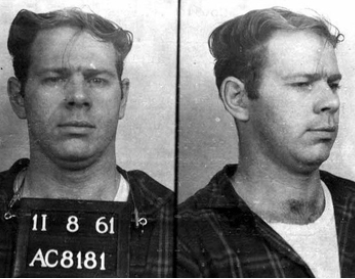
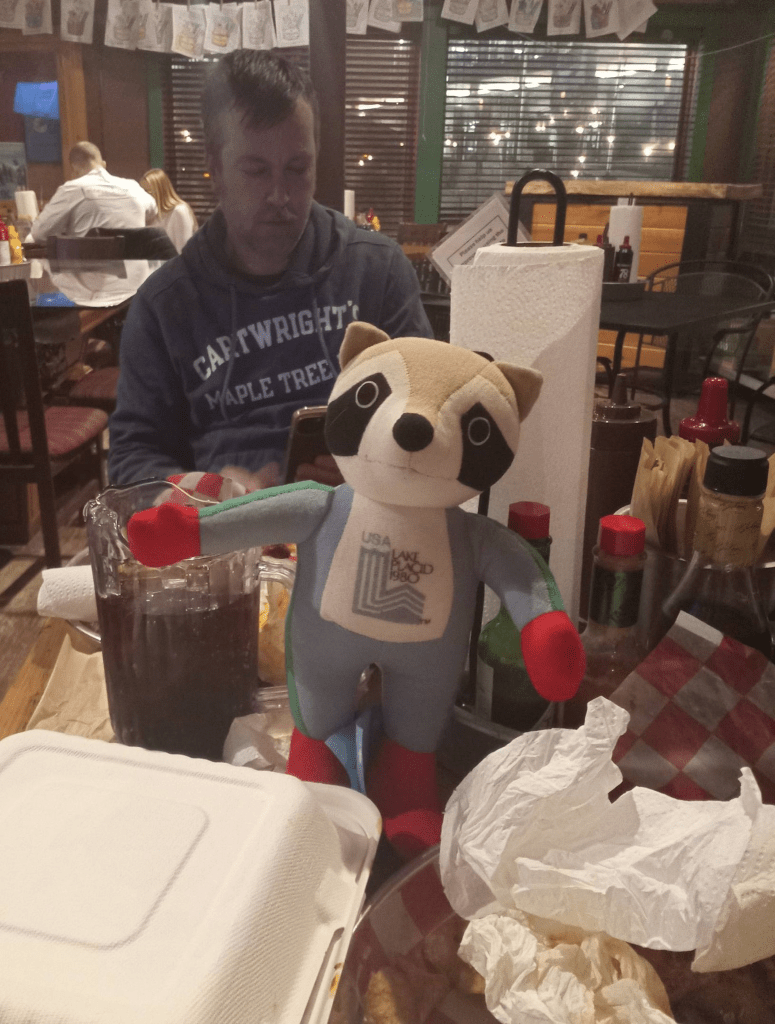
Introduction: My husband and I enjoy vacationing in the Adirondack Mountains for a variety of reasons, but mostly because we used to go there as kids, and it was the first getaway we ever went on together back in December 2015. For Christmas last year my SIL gifted him the mascot for the 1980 Lake Placid Olympic Games, a stuffed raccoon named ‘Roni.’ I do have plans (one day) of writing about serial killer Robert Garrow, who was a rapist, spree killer, and (suspected) serial murderer that was active in the Adirondack area in the early 1970’s (but that time is not now). After committing several rapes, he went on an eighteen-day long killing spree (from July 11–29, 1973) across the Mountains, and stabbed four people to death before he was apprehended. His criminal trial (dubbed ‘the Buried Bodies Case’) became vital in the area of legal ethics after his lawyers refused to disclose the location of the remains of two of his victims, citing ‘attorney–client privilege.’ Garrow was later shot while attempting to escape from prison on September 11, 1978 and died at the age of forty-two.
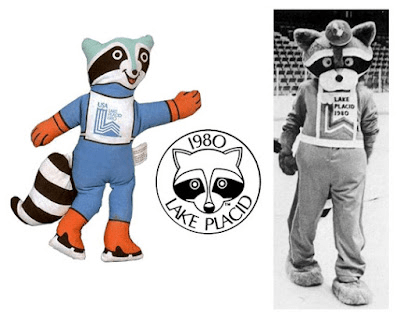
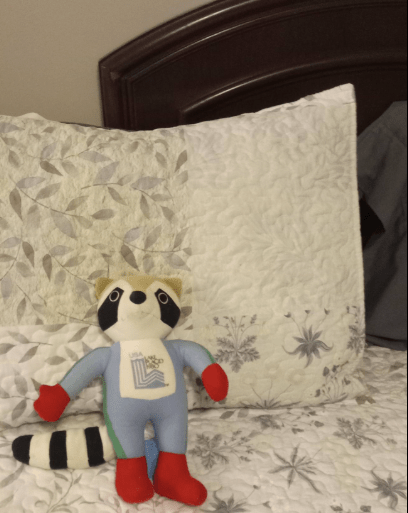
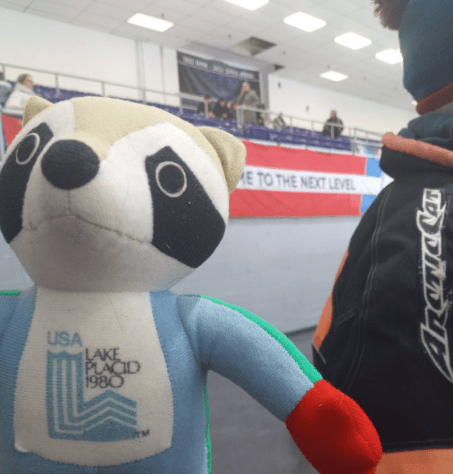
Back to Roni: Roni the Raccoon is the mascot of the 1980 Winter Olympics in Lake Placid that was dreamt up by Don Moss, a renowned sports artist and illustrator that worked for ‘Capital Sports.’ Roni is a raccoon, which is an indigenous woodland critter from the mountainous region of the Adirondacks where Lake Placid is located. The name ‘Roni’s comes from the word ‘racoon’ in Iroquoian, which is the language of the native people from the region of NYS, and was chosen by the children of the Lake Placid school system.
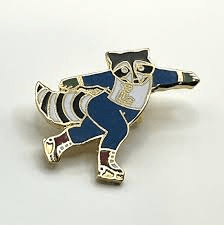
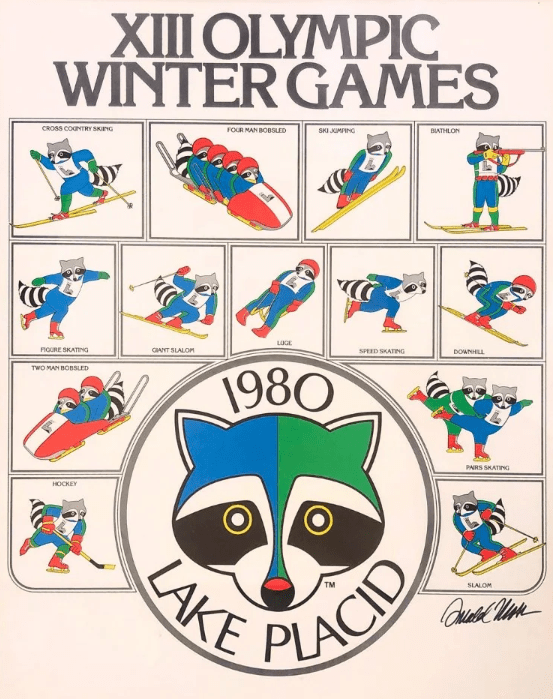
The top part of Roni’s face along with the black-and-white mask around his eyes are a nod to the sunglasses and hat worn by Olympic competitors, and there are different versions of him playing different sports (some even have the five colors of the Olympic rings); he is also the first Olympic mascot to be depicted doing various sports, and was featured on pins and other souvenirs. In the early stages of planning the event Lake Placid had a live four-legged mascot: a raccoon named Rocky, who was (controversially) switched out with Roni shortly before the Games started. The Organizing Committee also used real raccoons to promote The Games, and two residents of Utica Zoo were transported to Lake Placid to participate in a national TV broadcast.
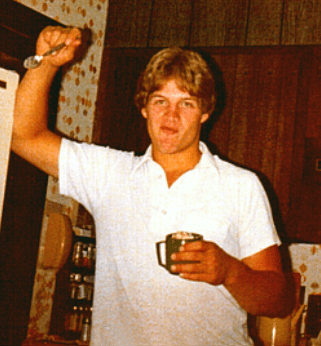
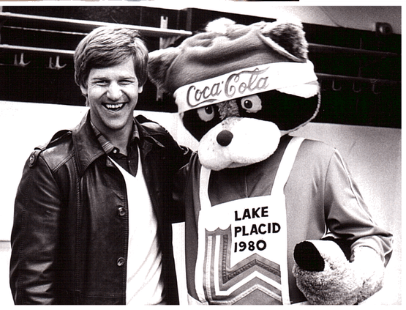
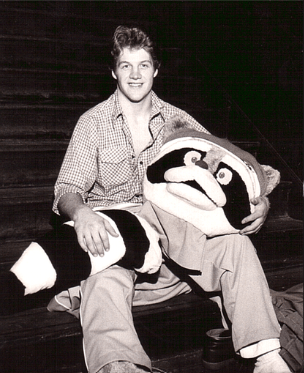
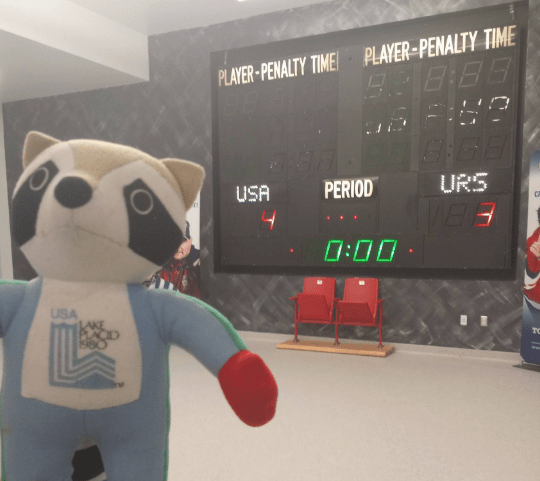
A Life-Sized Roni: serving as the face of the XIII Olympic Winter Games was Hawaiian-American athlete named Kriss Lambert, who performed as Roni Raccoon clad head-to-toe in a six-and-a half-foot tall raccoon costume. Lambert was filmed doing every event (except the ski jump, which he couldn’t do because the mask hindered his vision) before The Games took place, and the prerecorded footage was televised during the Olympics to introduce each event. He also represented the 1980 Lake Placid Olympics at major events like the Macy’s Day Parade, NBC’s ‘Today’ show, and Super Bowl XIV, and he was rink side during the ‘Miracle on Ice’ men’s ice hockey game between USSR and the USA; the USA won 4-3.
Lambert himself dreamt up the idea of portraying a real-life Roni even though there had never been a ‘live’ Olympic mascot before, and he was doing construction work in the Adirondacks before he decided to become a FT Olympic mascot: ‘since I am somewhat of an athlete, I thought it would be a good idea to have a character that could imitate the athletes.’ It’s worth noting that at the age of thirteen in 1973, he won the Junior Olympic gold medal in judo, and he practiced acrobatic skiing for nearly six years (he also ice skated since he was a child). Tragically, Kriss died suddenly on August 30, 2017 at the age of fifty-seven in Puyallup, WA.
Works Cited: Hale, Don. (February 25, 1980). Roni Raccoon Wins ‘Gold Medal’ in Fun.’ Taken March 23, 2025 from csmonitor.com
Robert Garrow.A cartoon of Roni.A second cartoon of Roni.Another cartoon of Roni.Roni skiing.Roni from 1980.Roni (far right) in a Simpssons episode about NYS.A life-sized Roni.A commemorative pin of Roni.A deck of Roni the Raccoon playing cards.Roni depicted competing in different winter sports.Kriss Lambert in his younger years; he was born on June 27, 1960 in Bourne, MA and died at the age of fifty-seven in Puyallup, WA on August 30, 2017.Kriss Lambert posing with Roni; he was a ‘serial entrepreneur’ that had many licenses and professional qualifications under his belt, and for many years he worked as a ship captain; he was also an accomplished musician that had many other hobbies and skills (like woodworking). Kriss posing with (parts of) his Roni suit; he is best remembered as being ‘outstandingly open-hearted’ and for giving ‘good hugs.’ When he passed in 2017 Kriss left behind his beloved wife Pam, many friends from all over the world, and close family in Washington state, Hawaii, Cape Cod, and Sweden. A later picture of Kriss with his wife, Pam; he was proud of his family, and according to his obituary ‘his comforting, lively home was always inviting.’
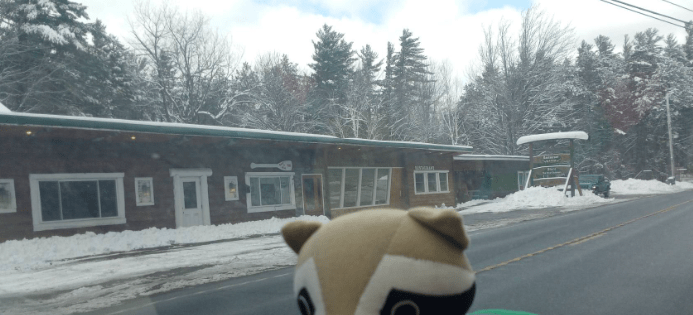
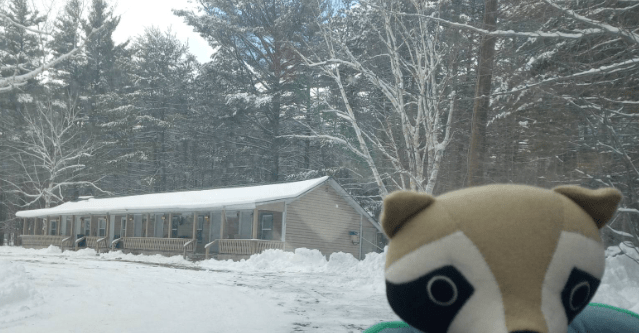
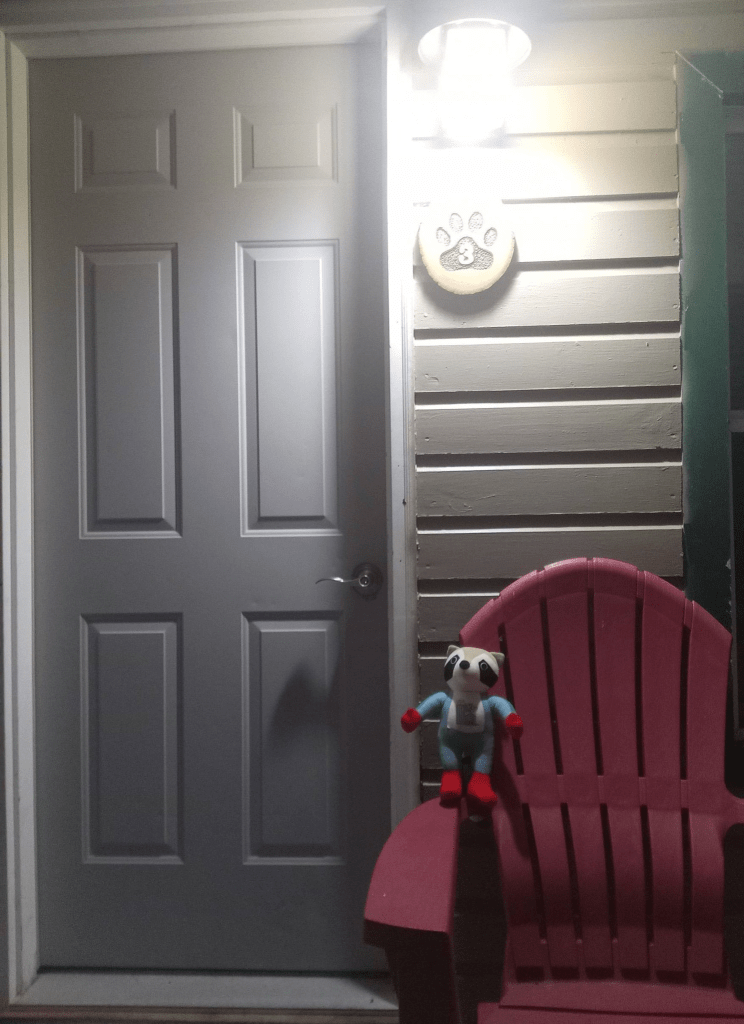
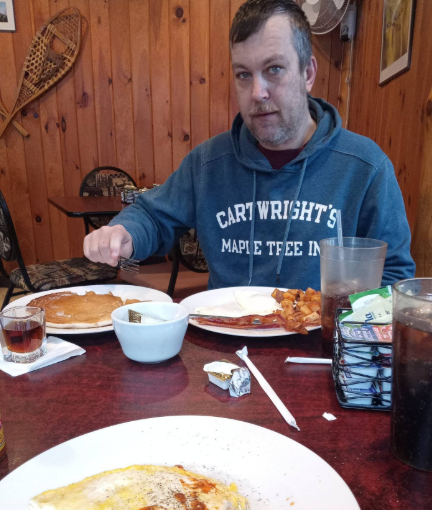
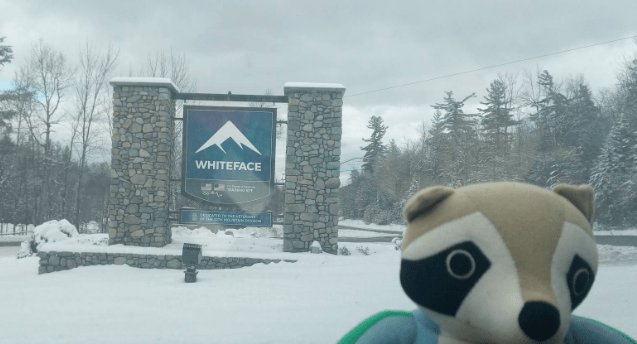
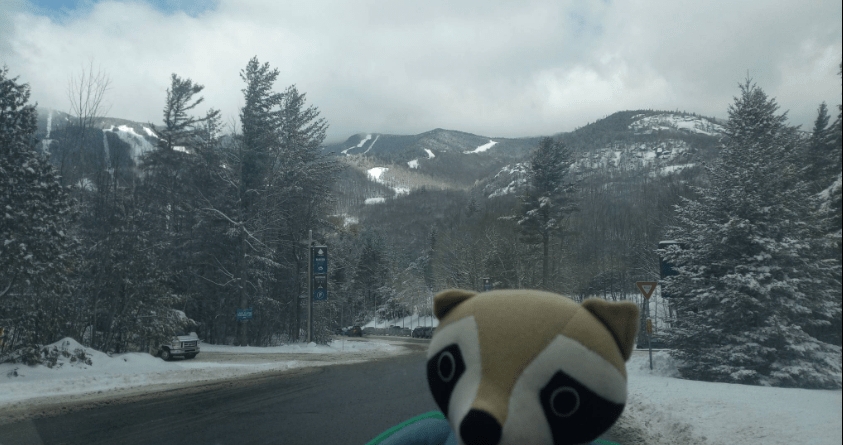
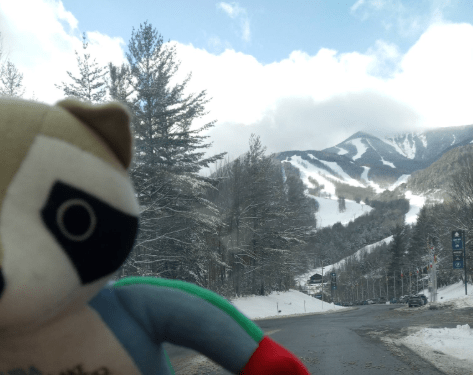
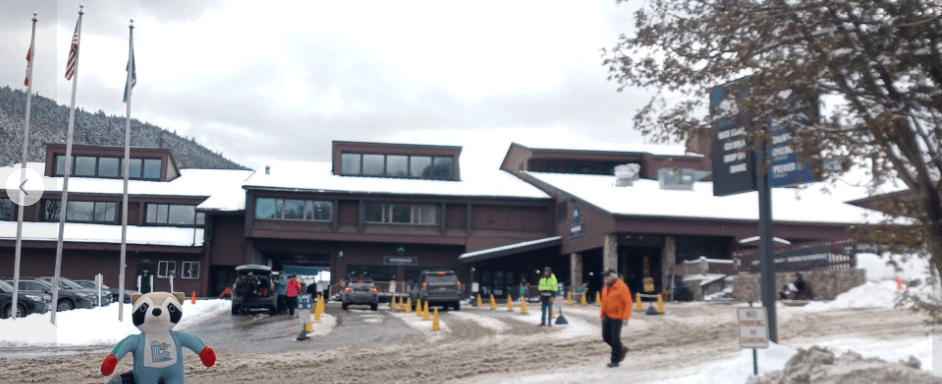
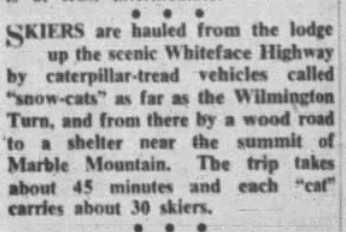
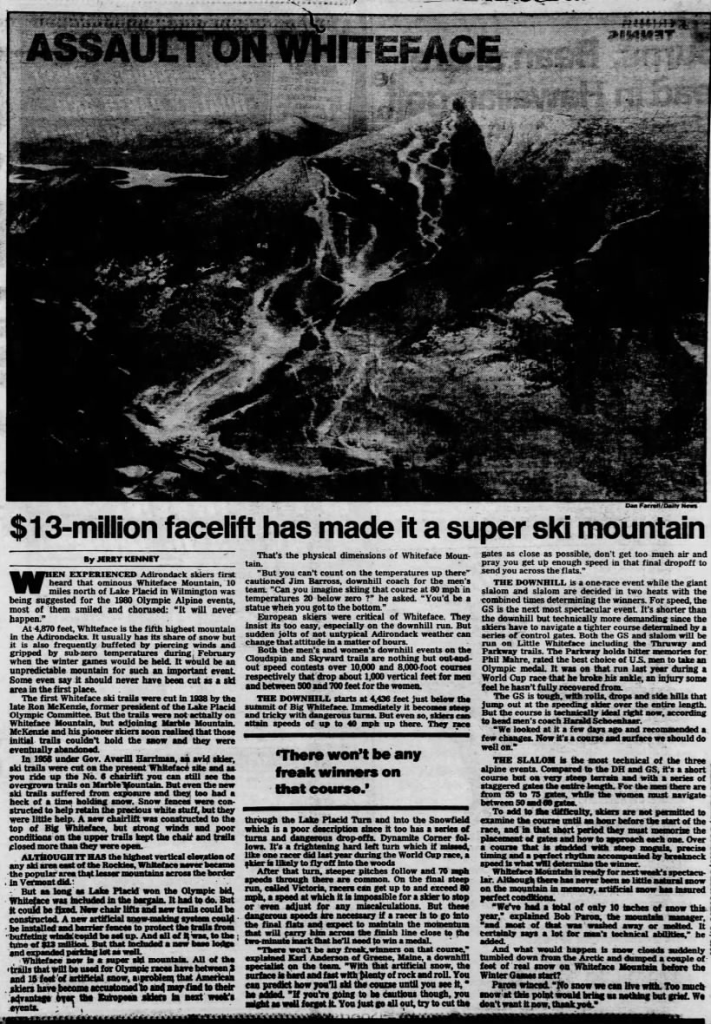
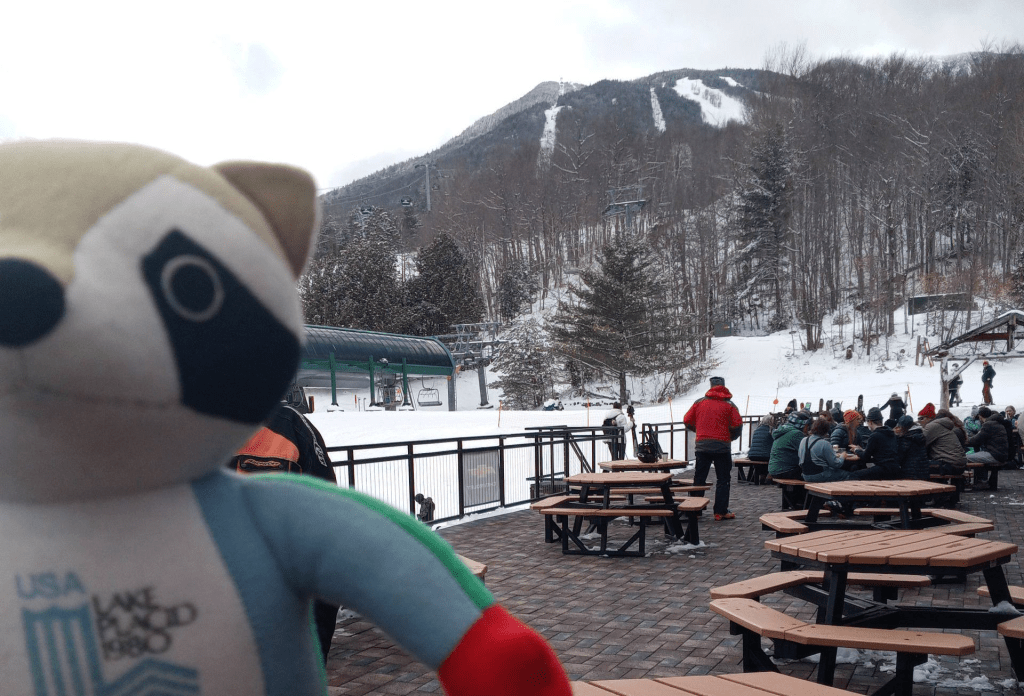
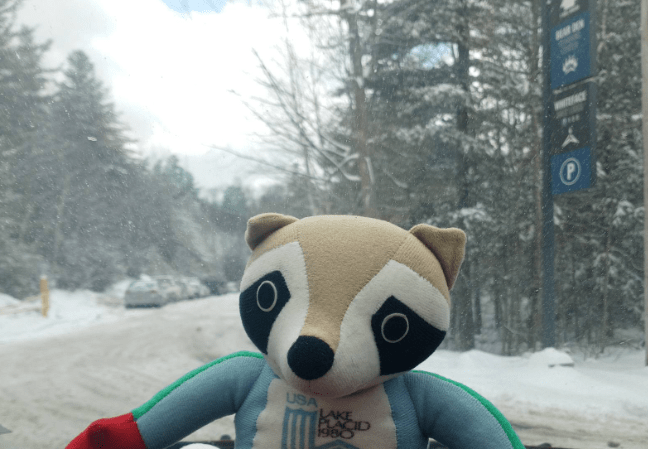
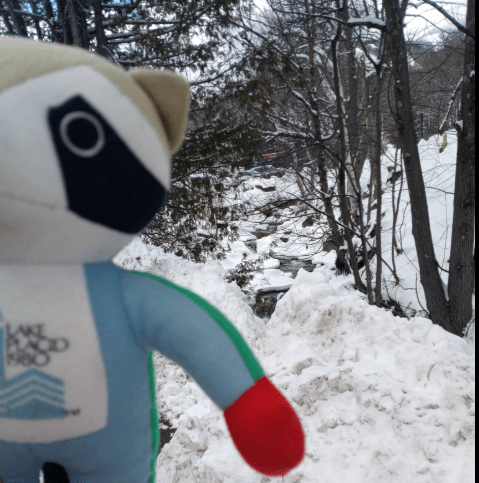
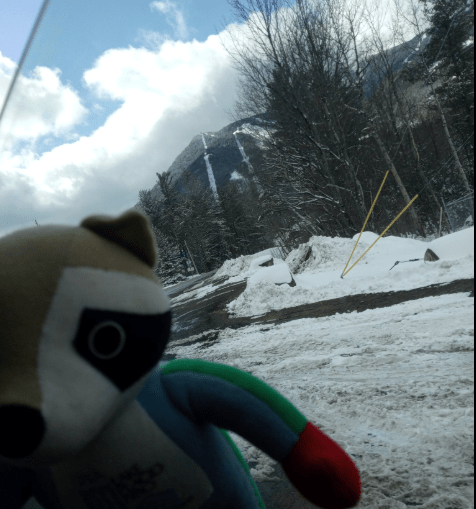
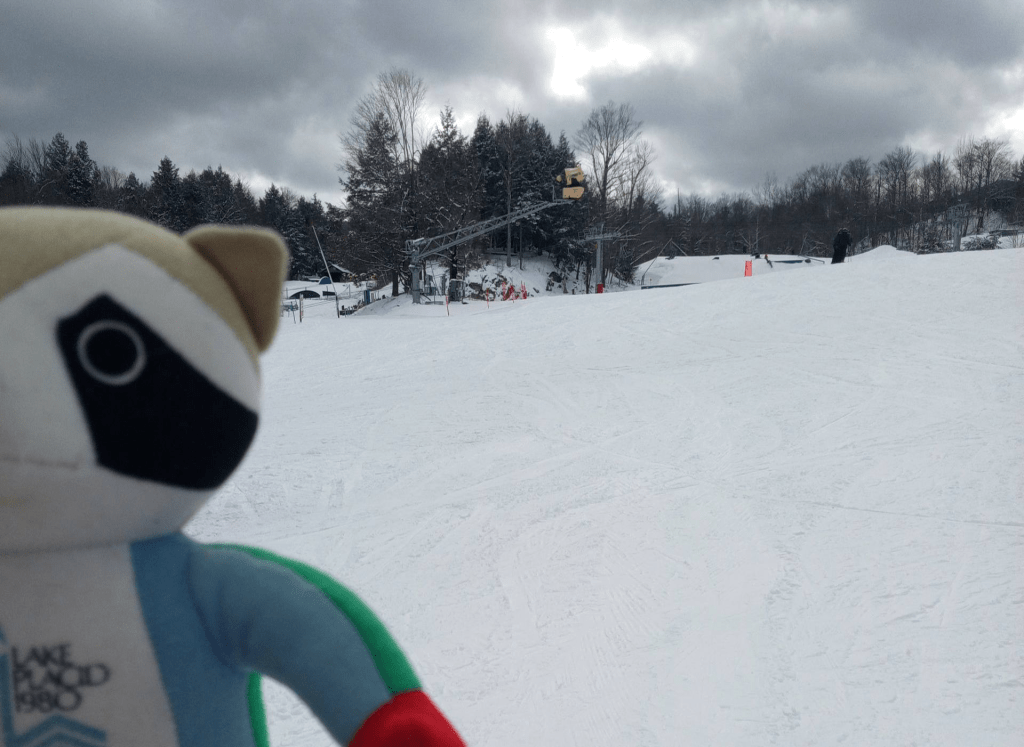
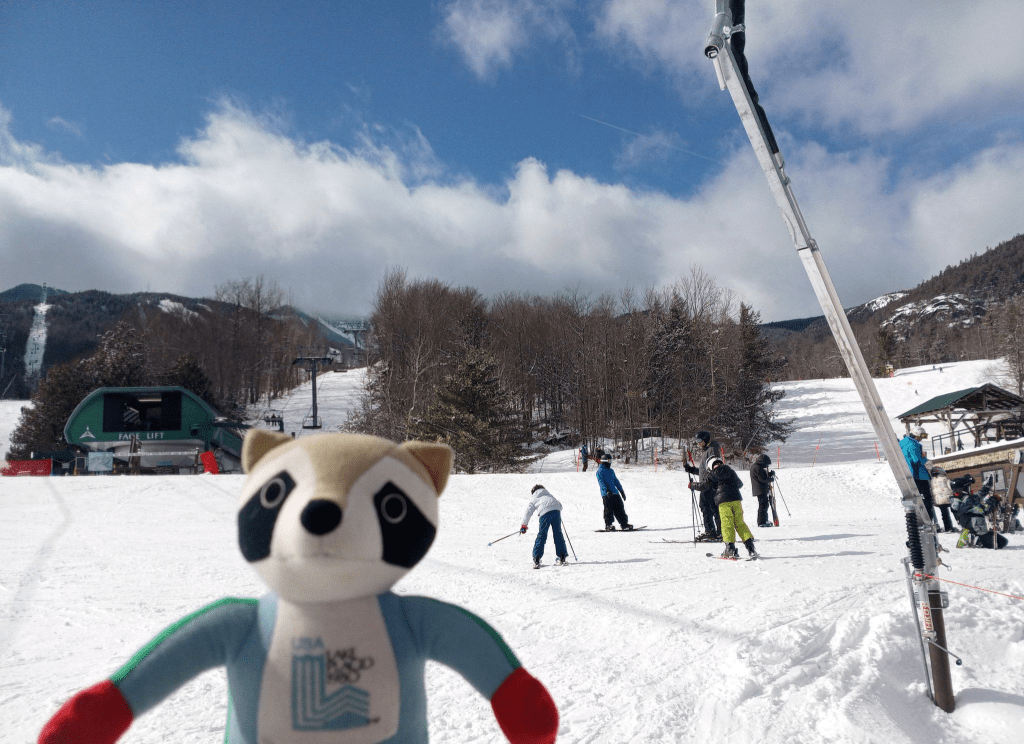
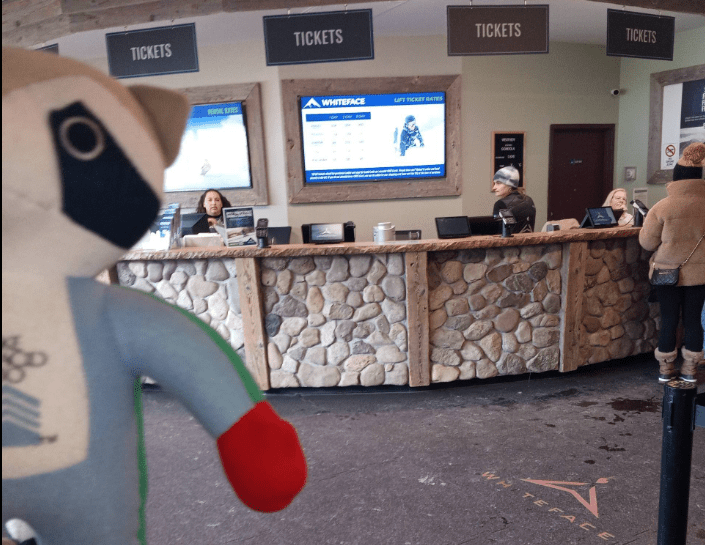
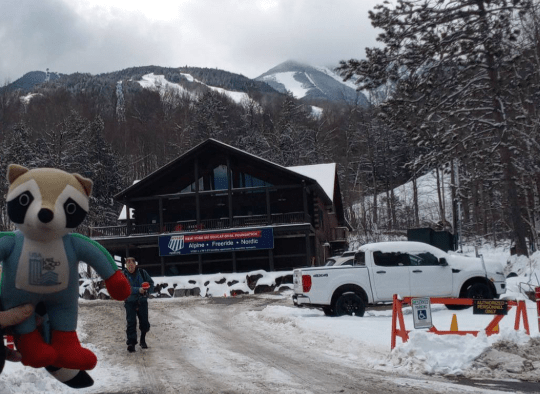
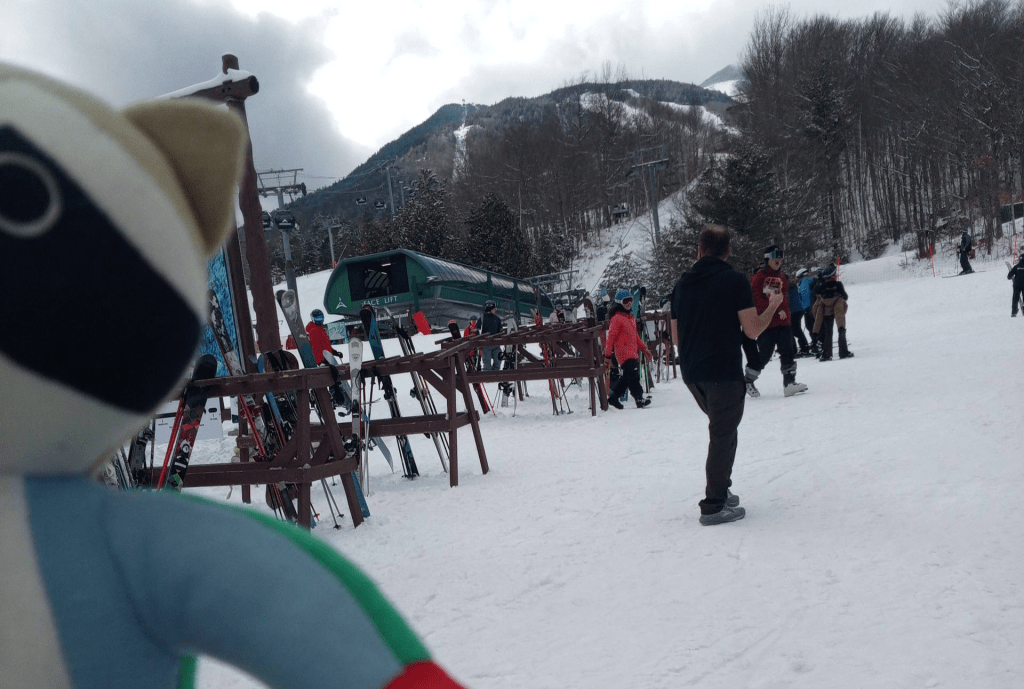
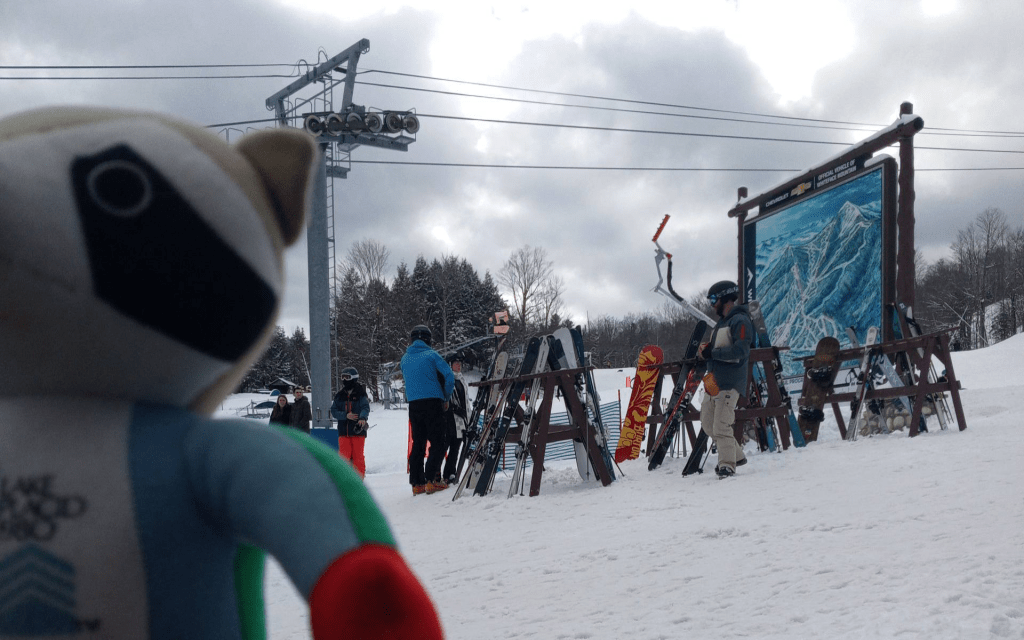
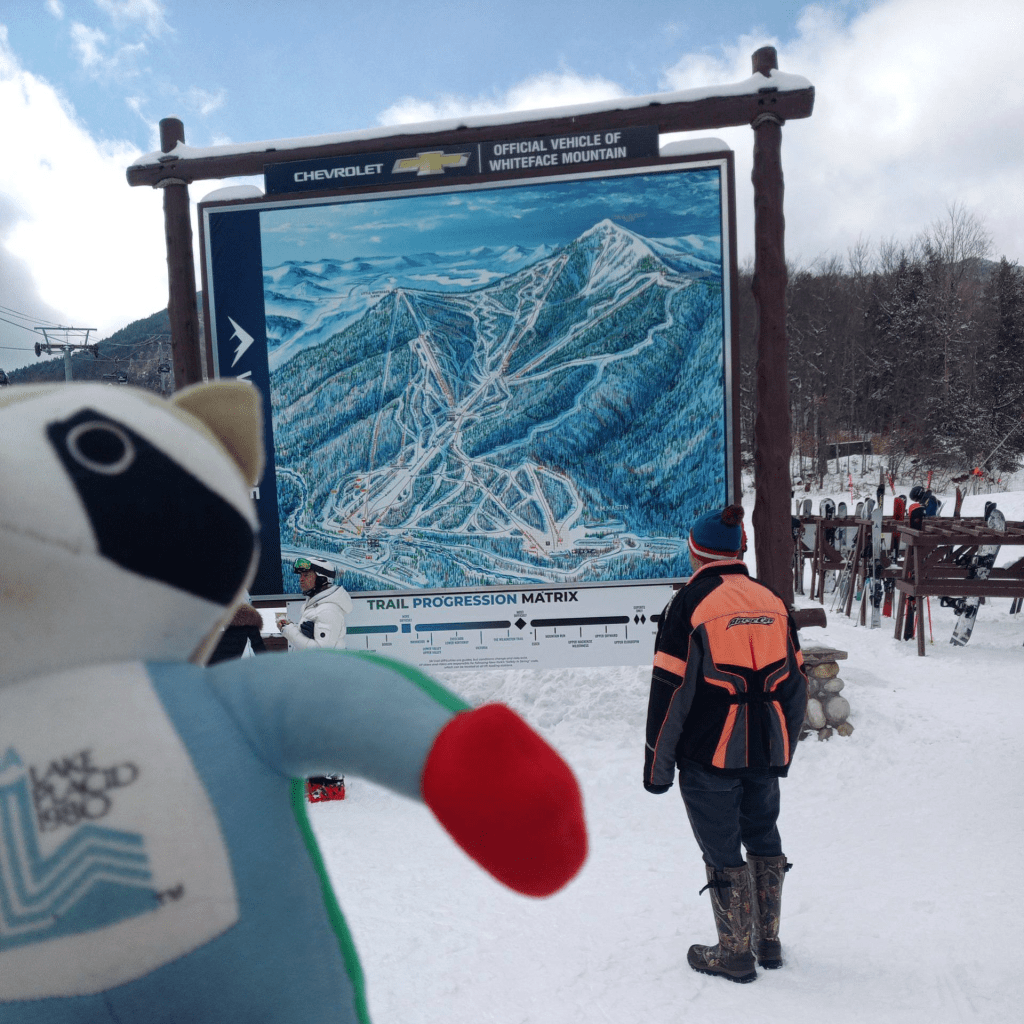
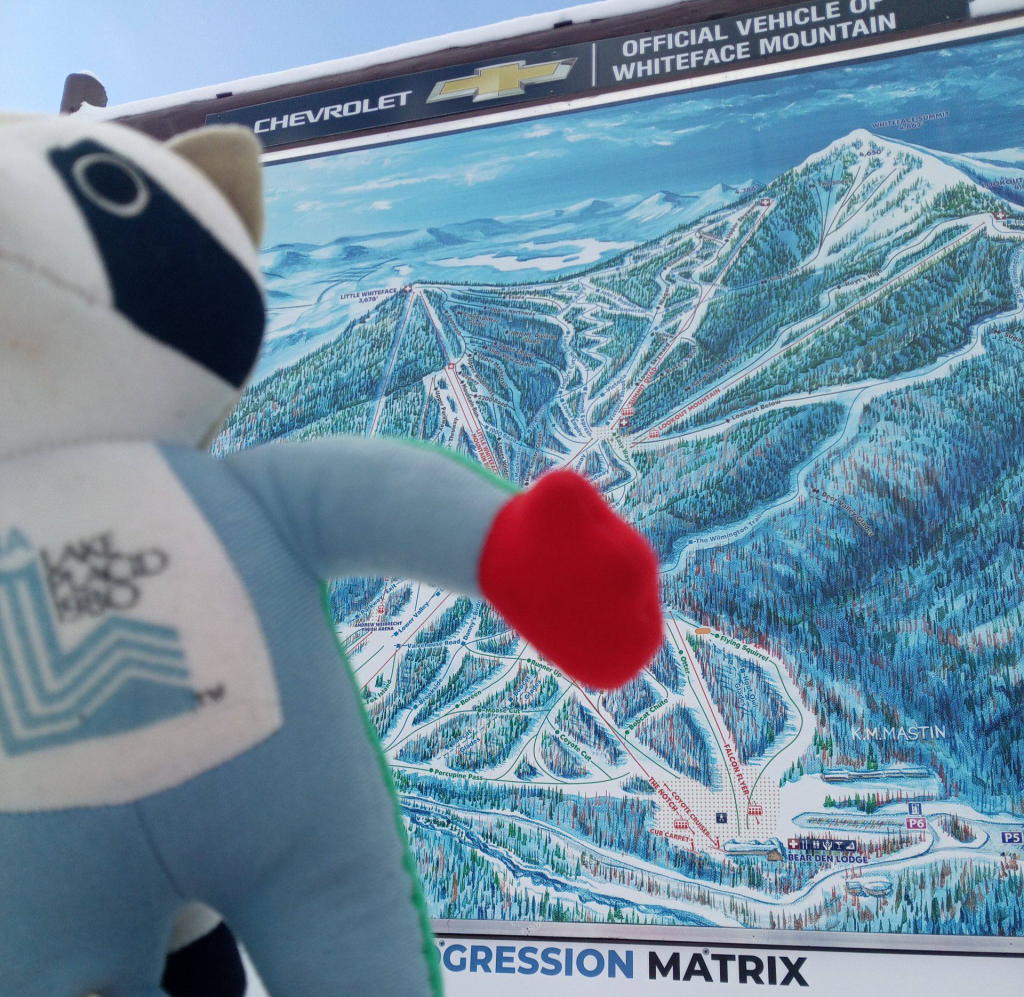
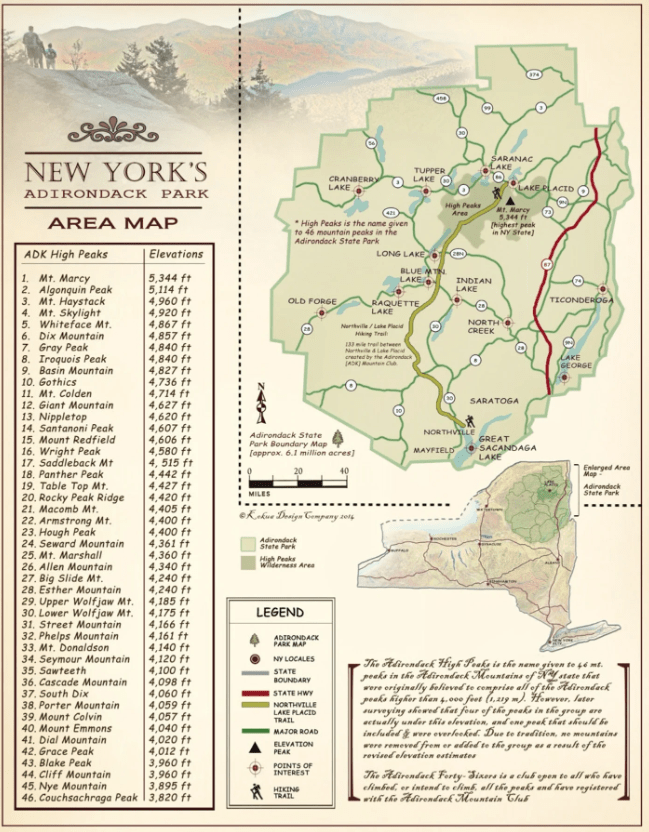
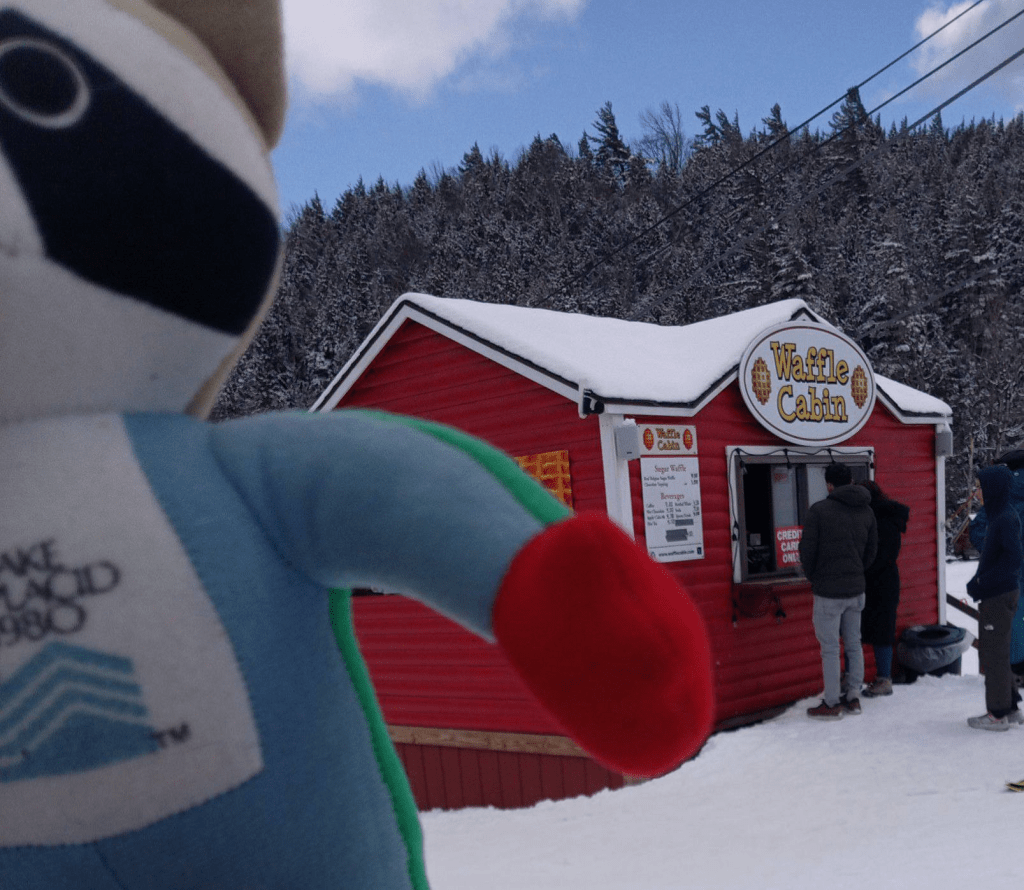
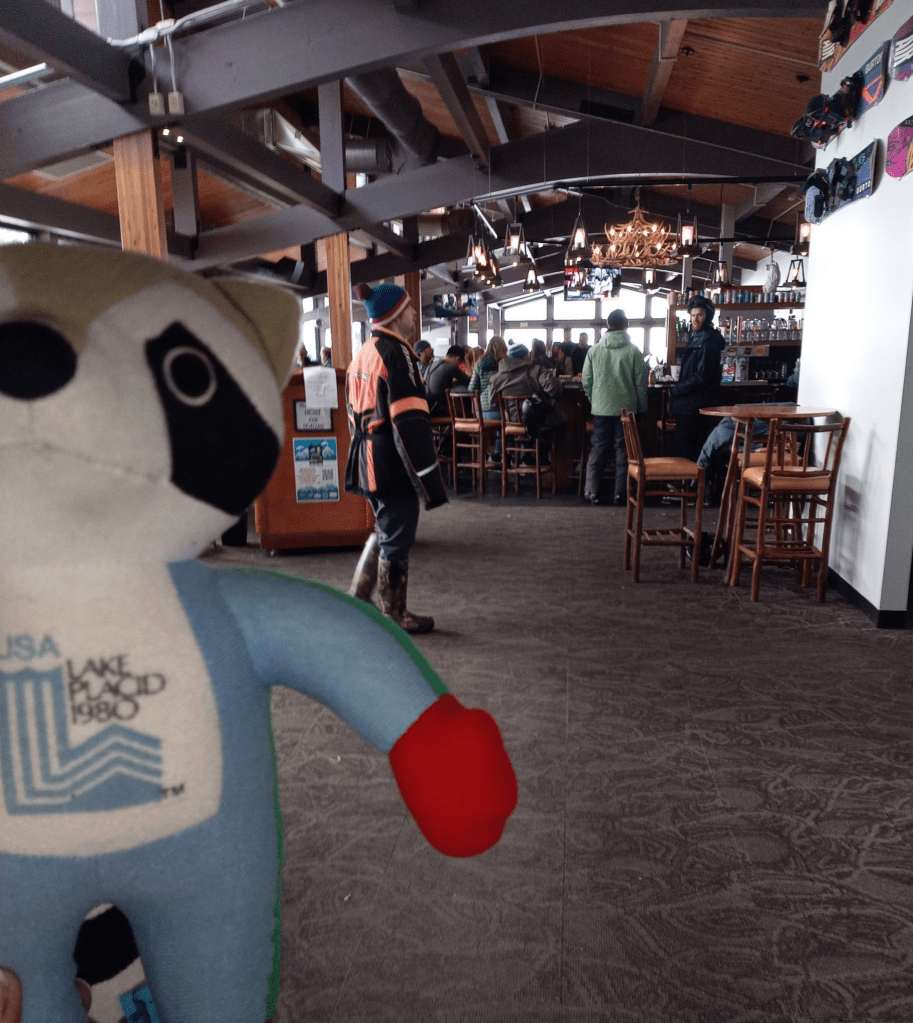
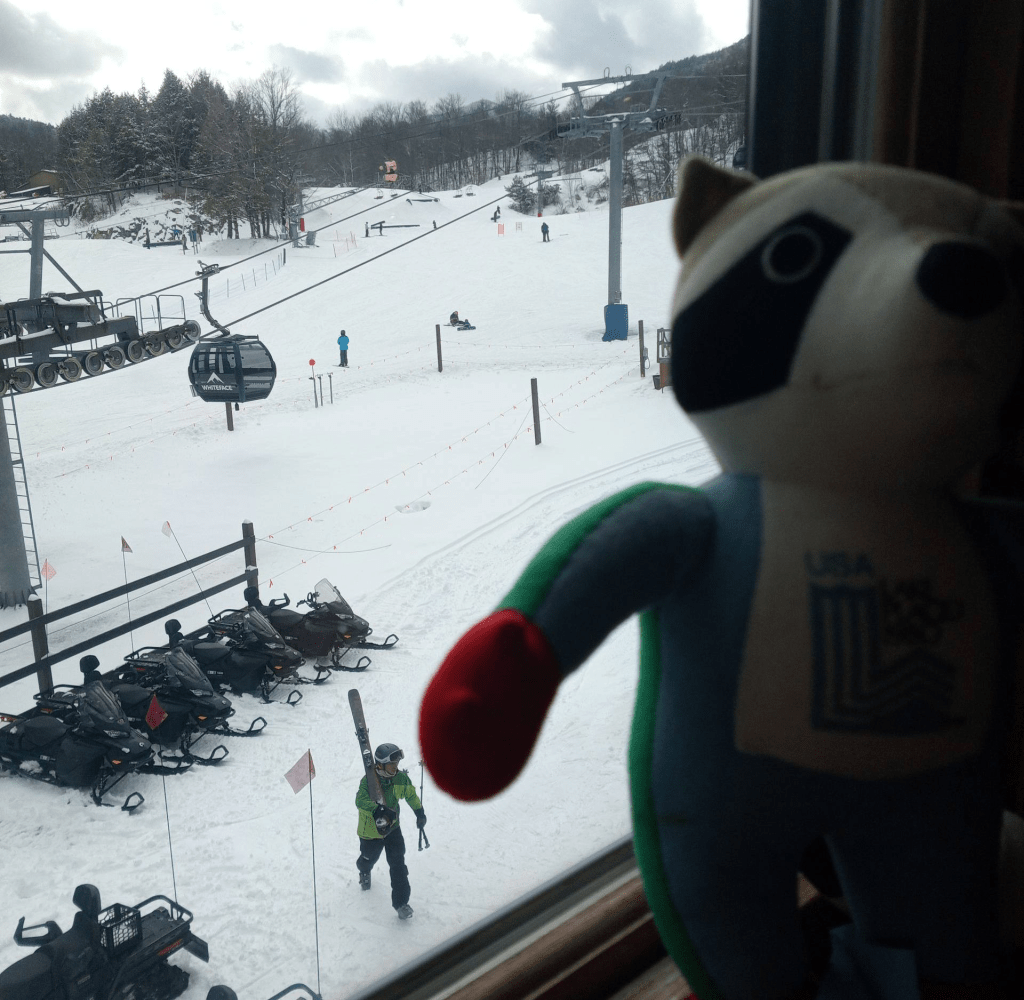
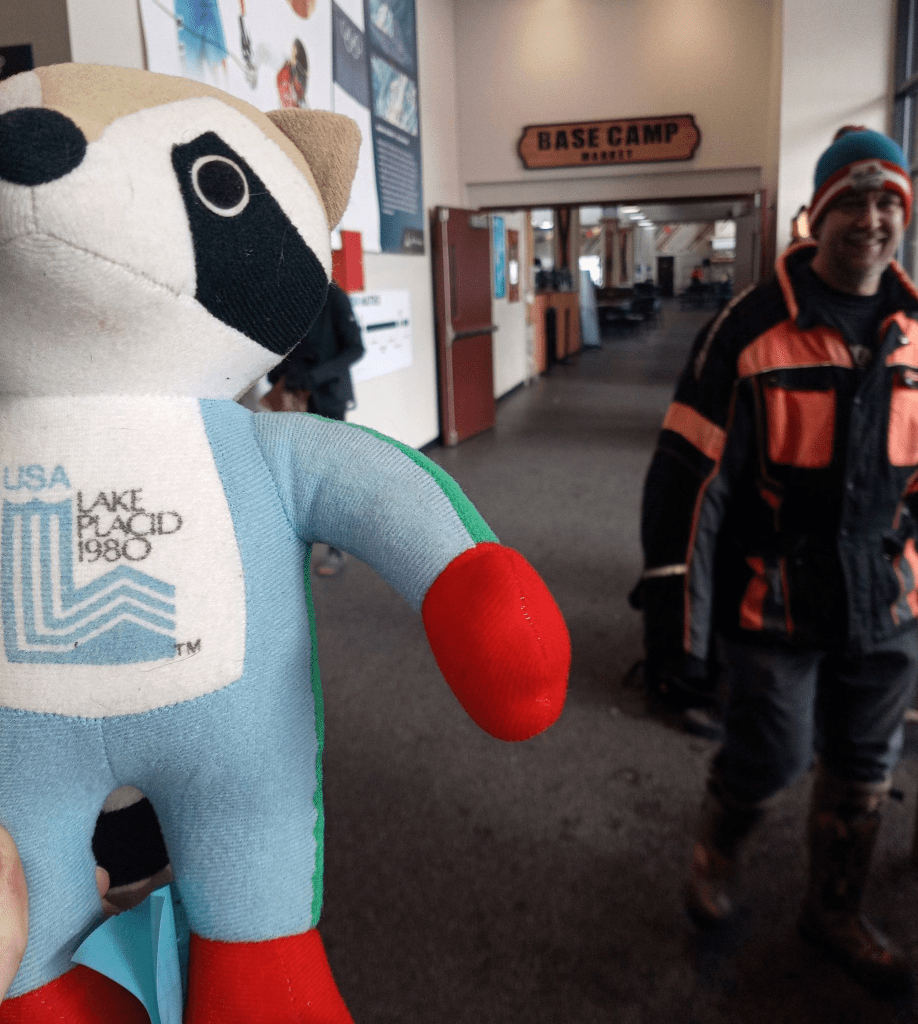
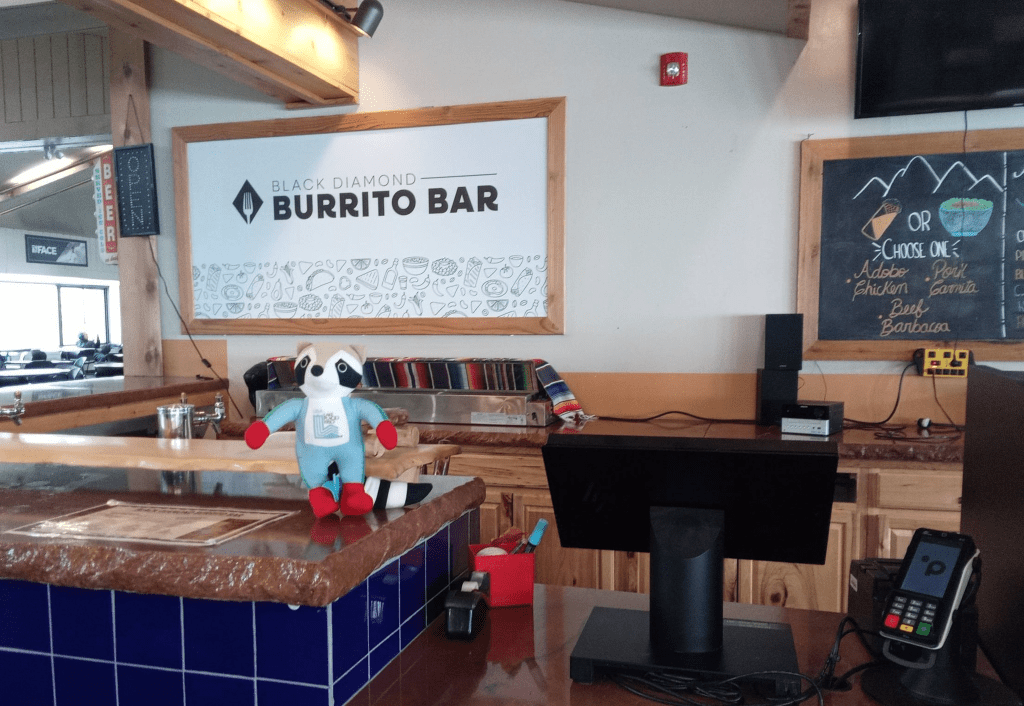
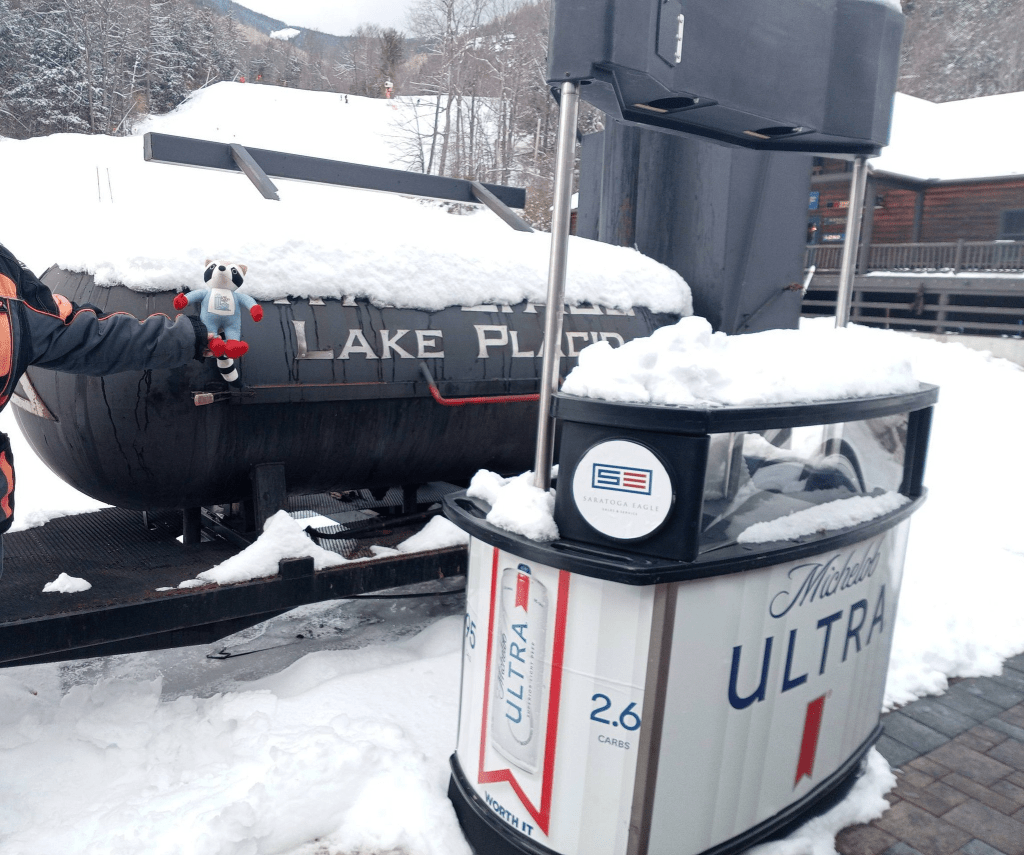
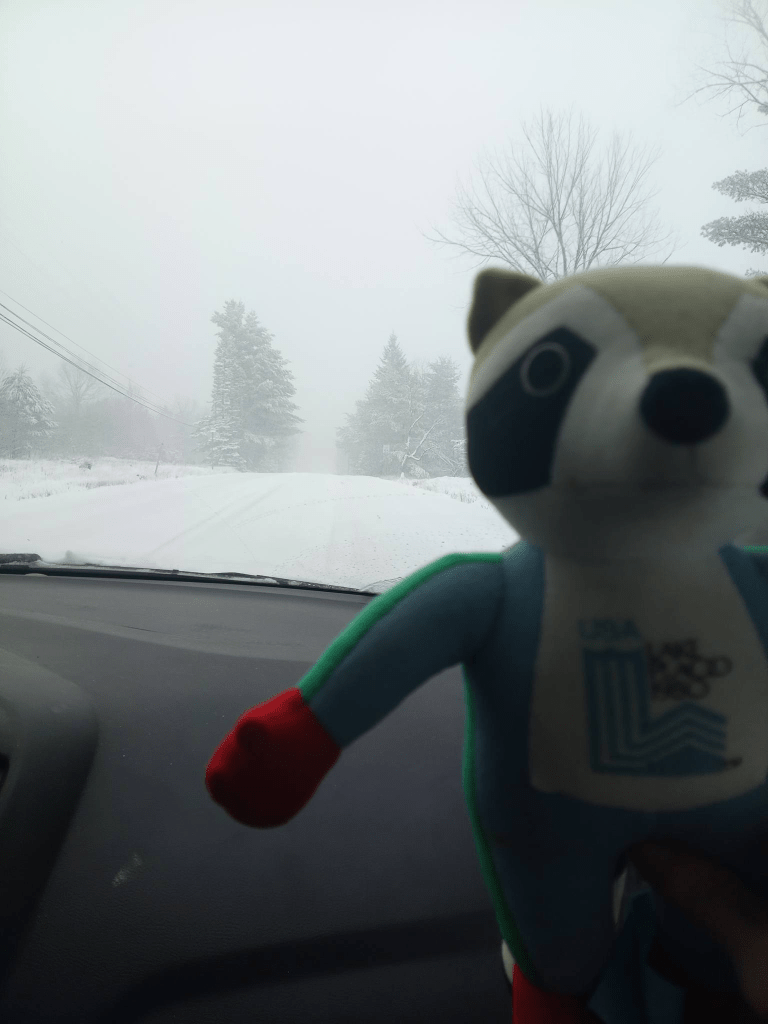
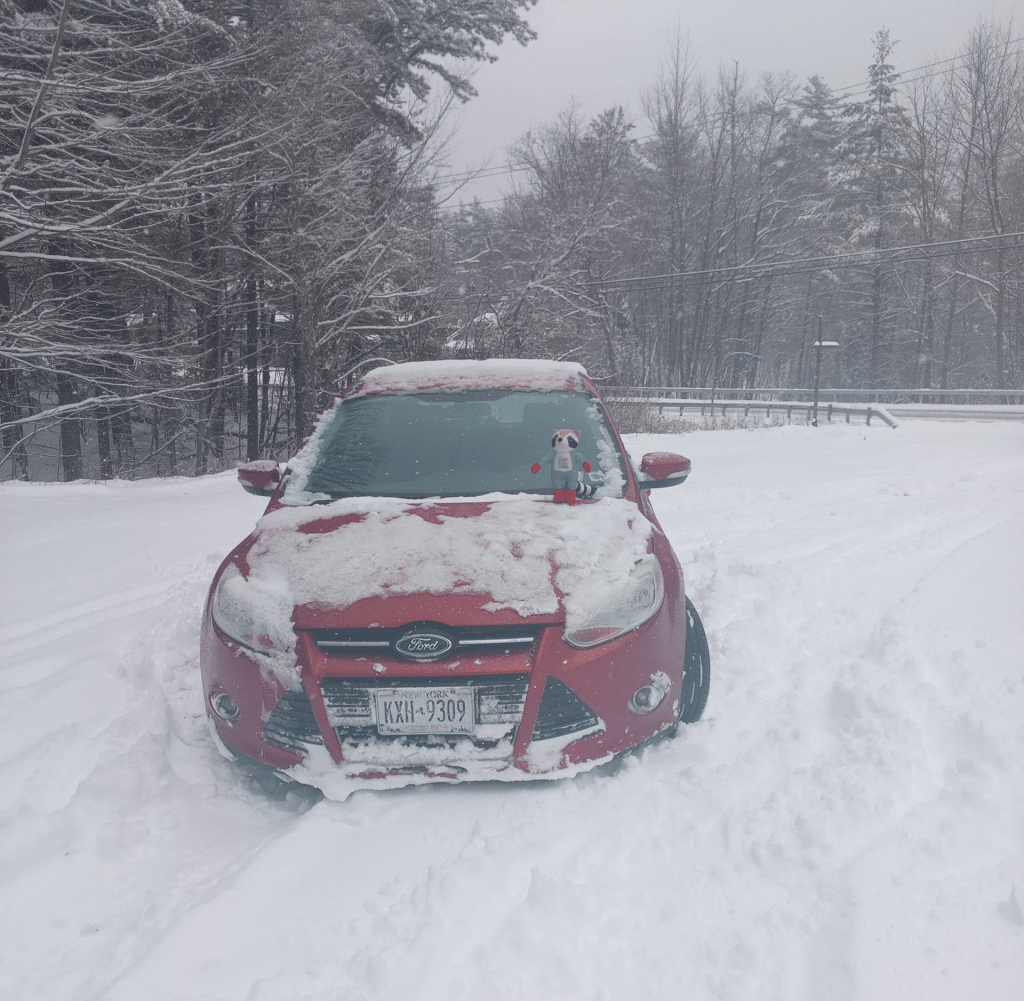
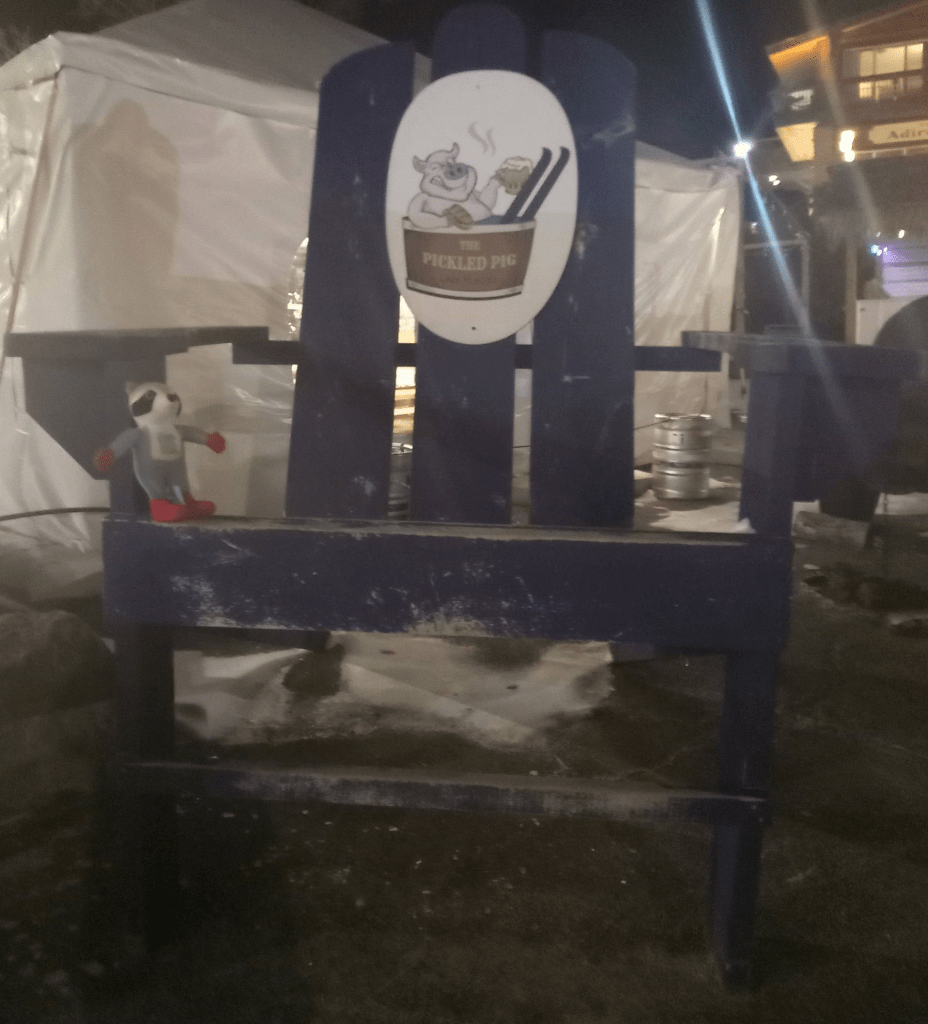
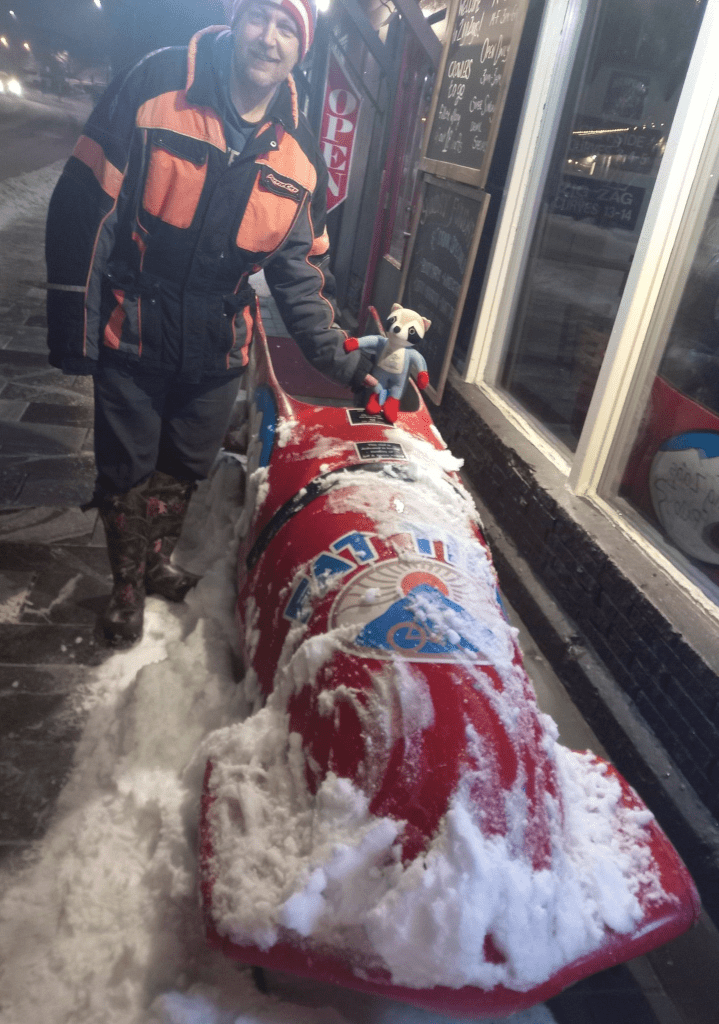
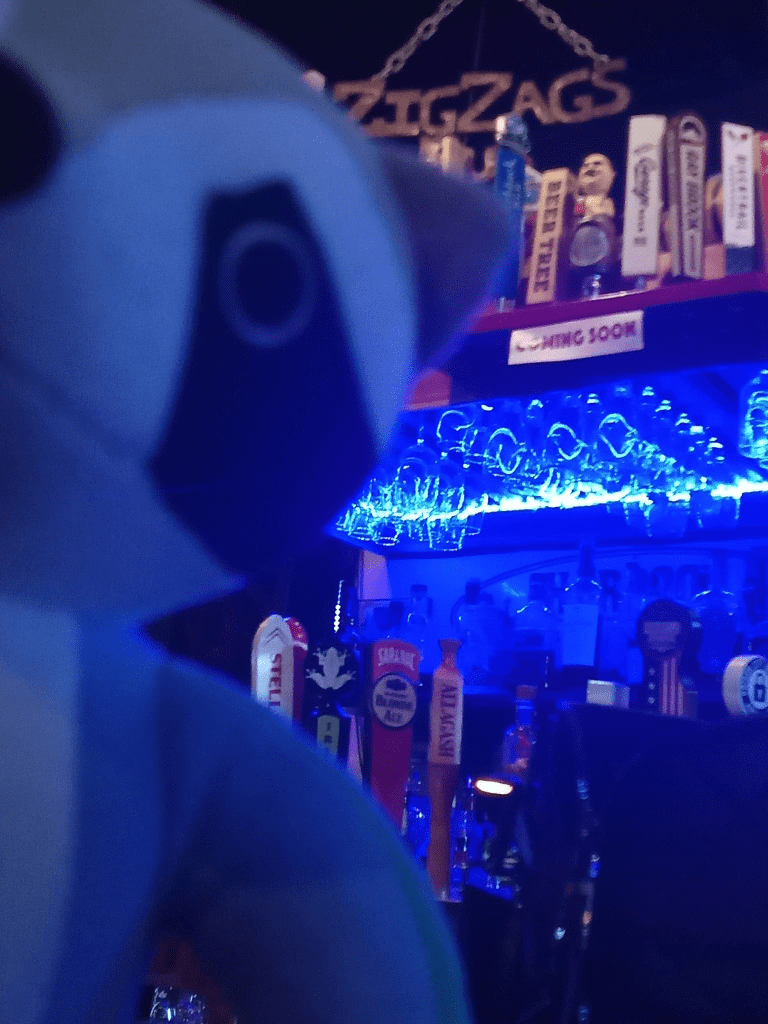
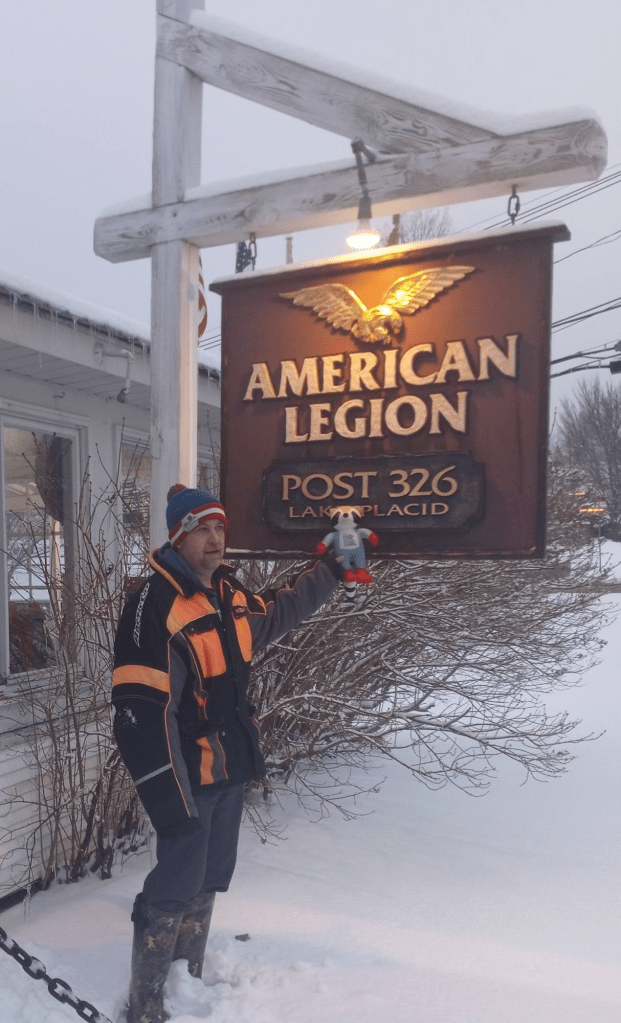
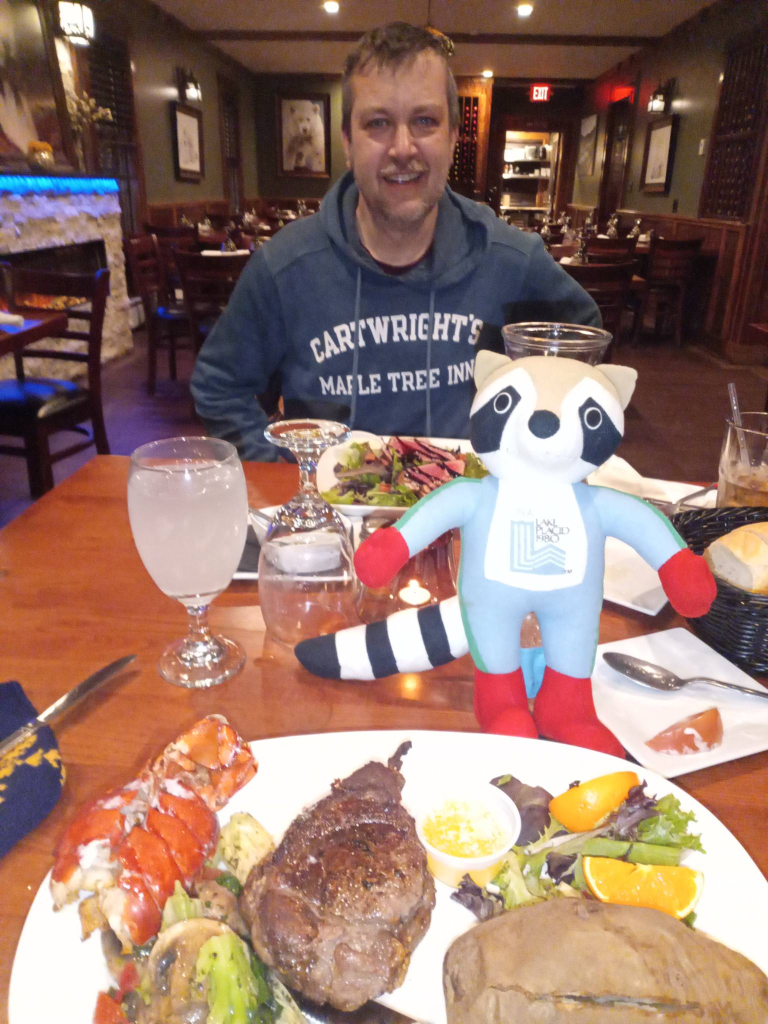
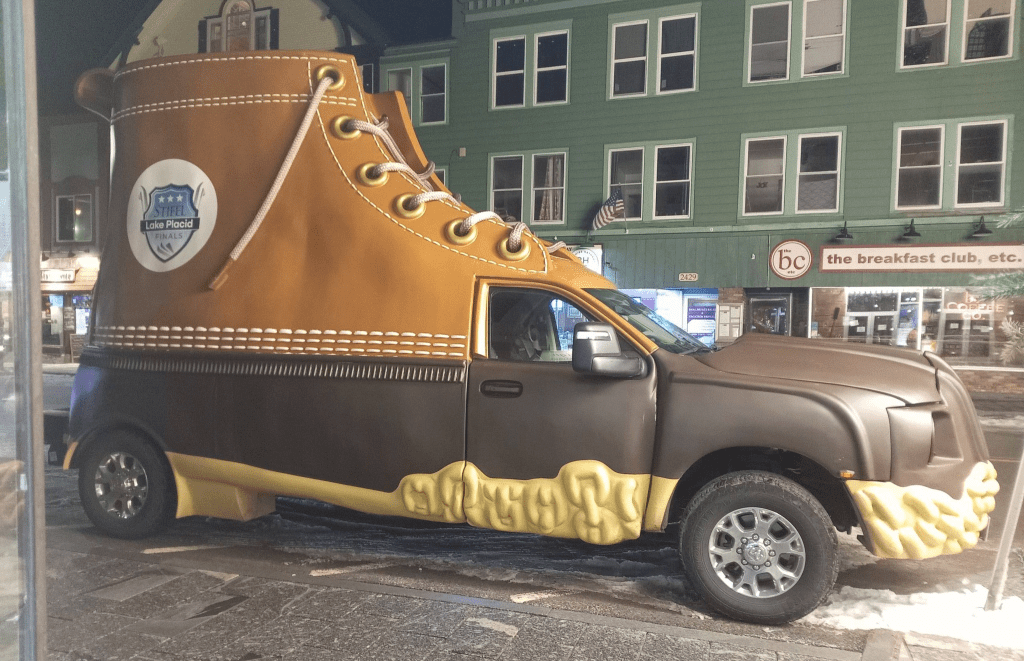
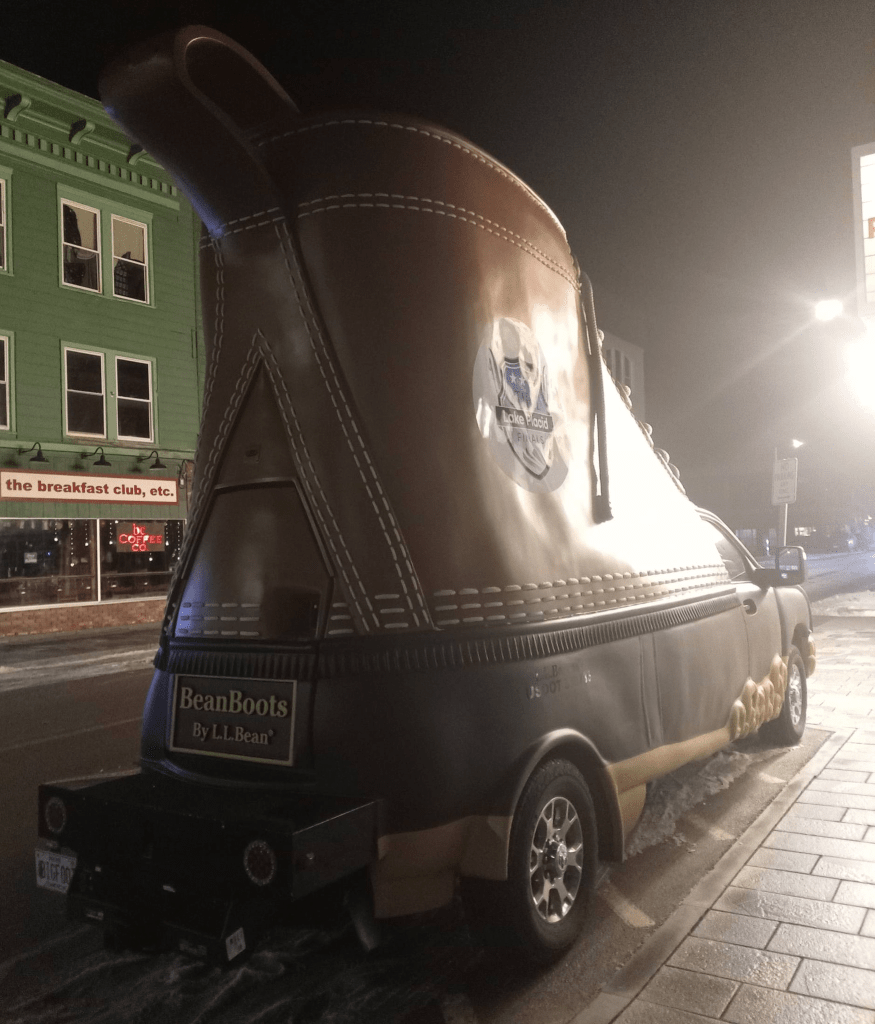
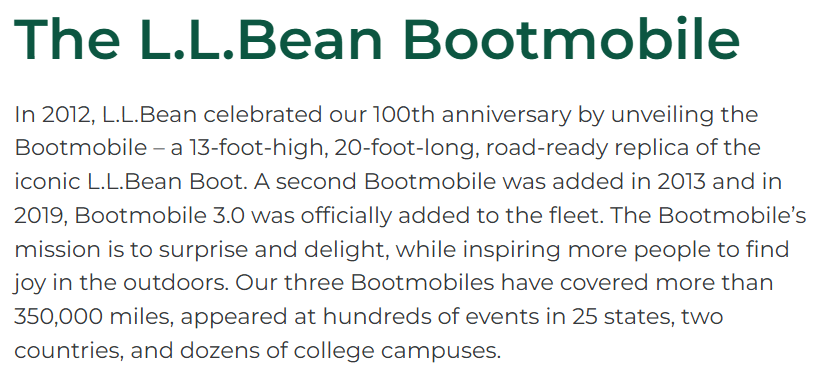
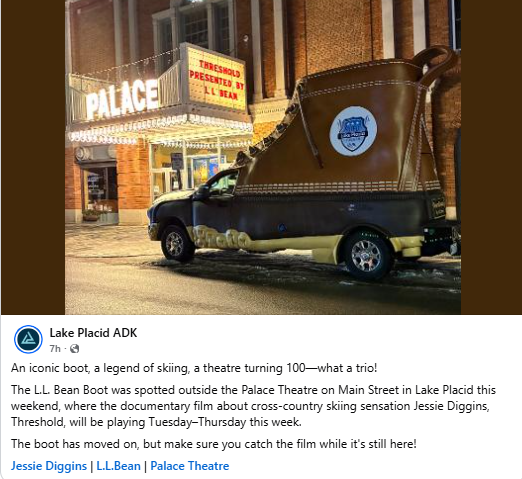
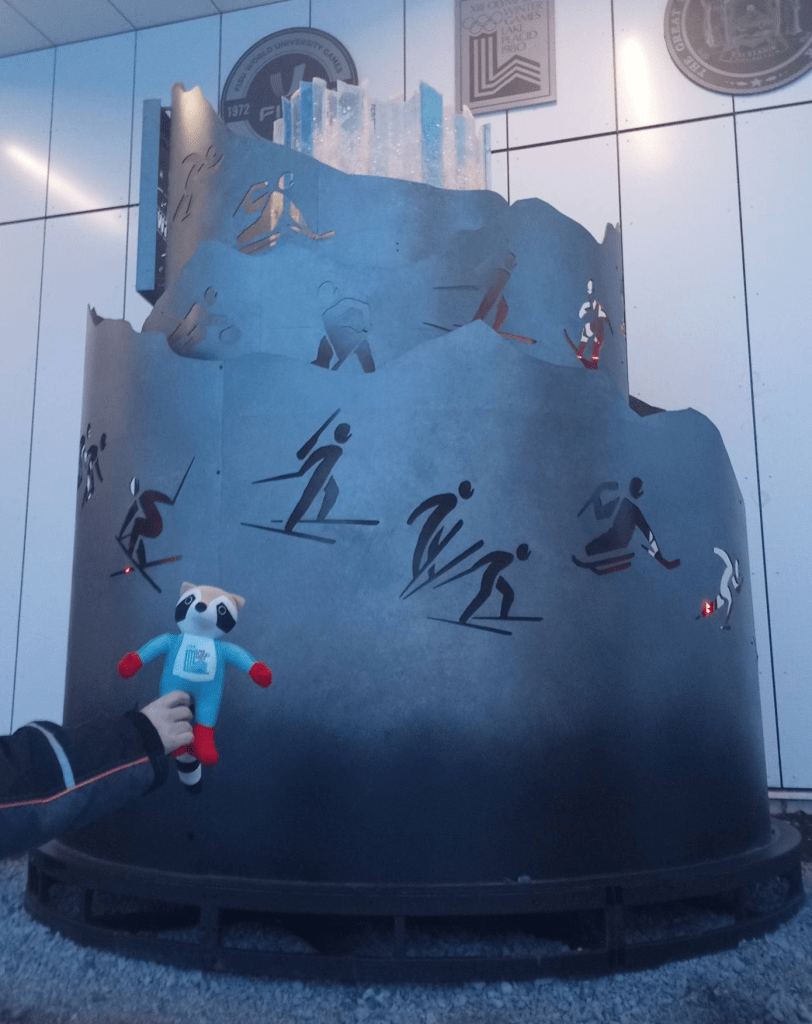
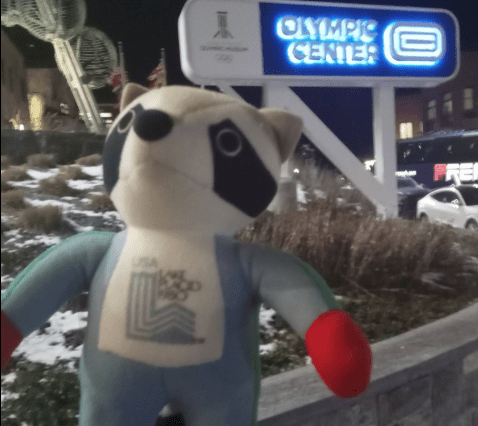
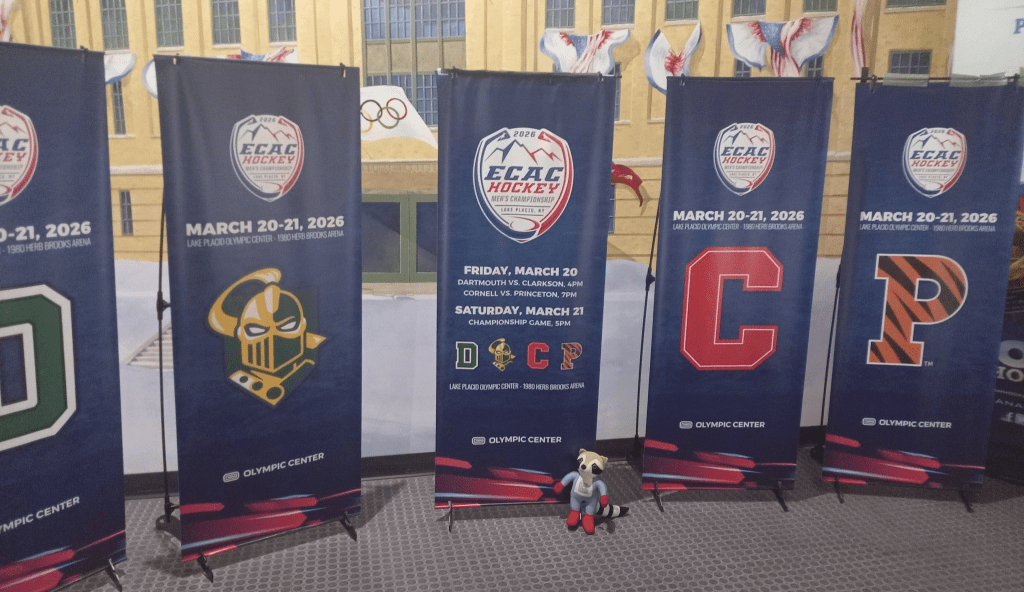
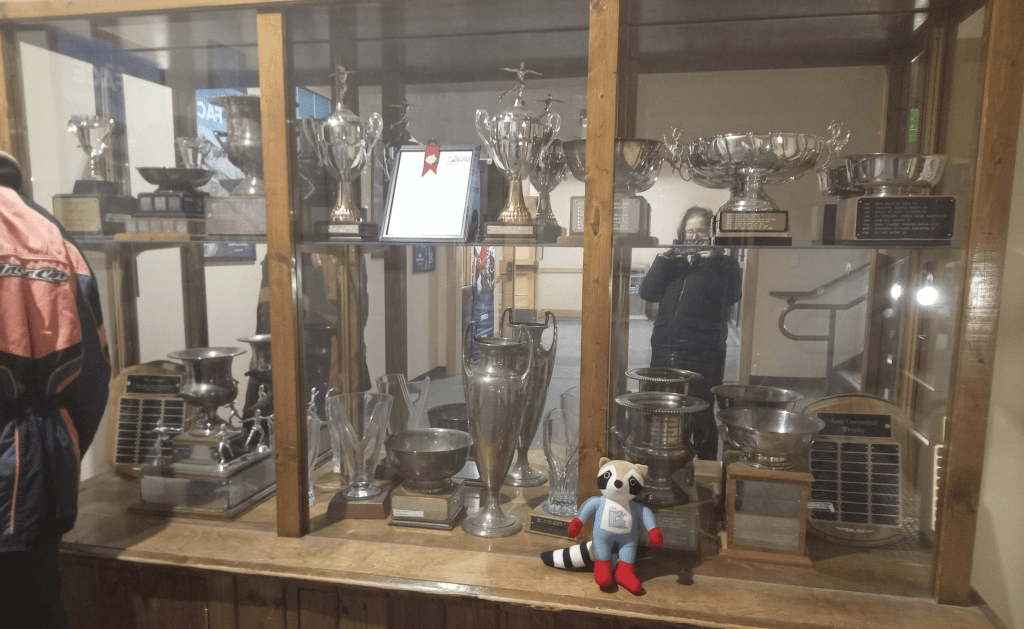
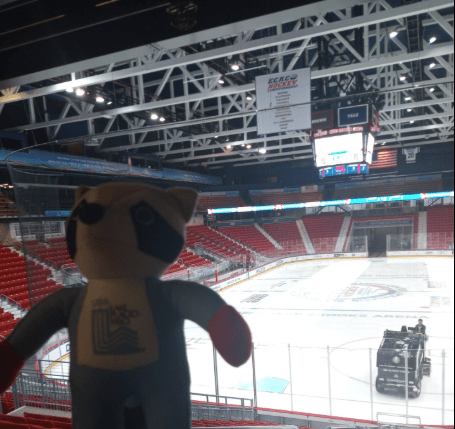
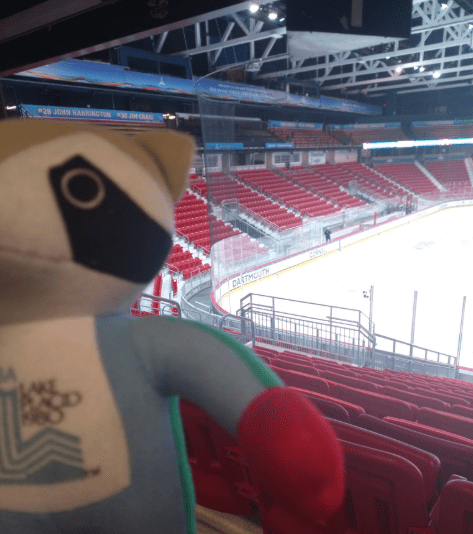
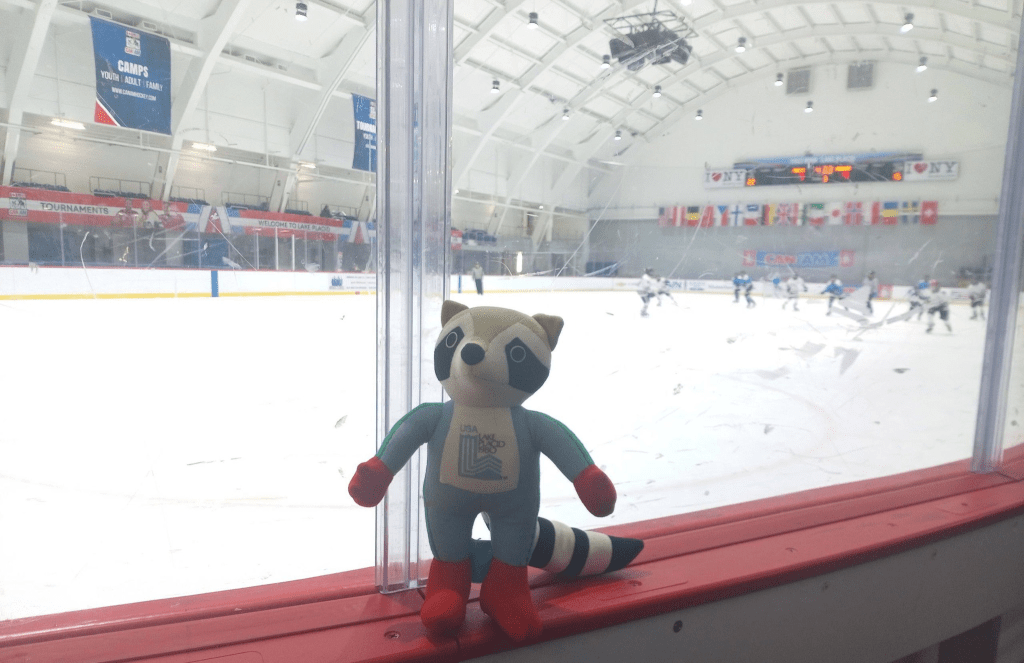
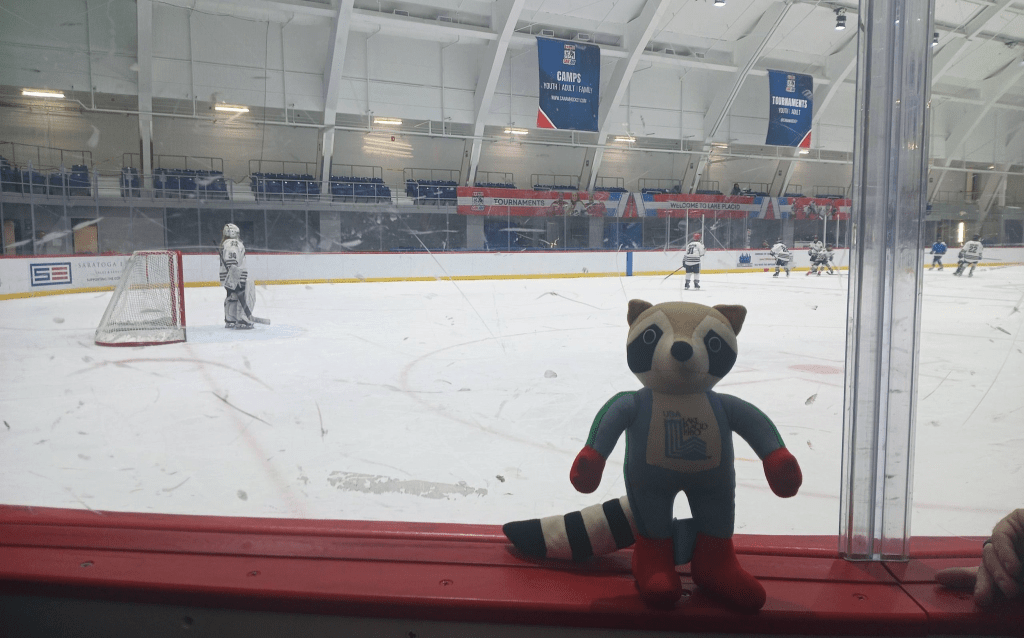
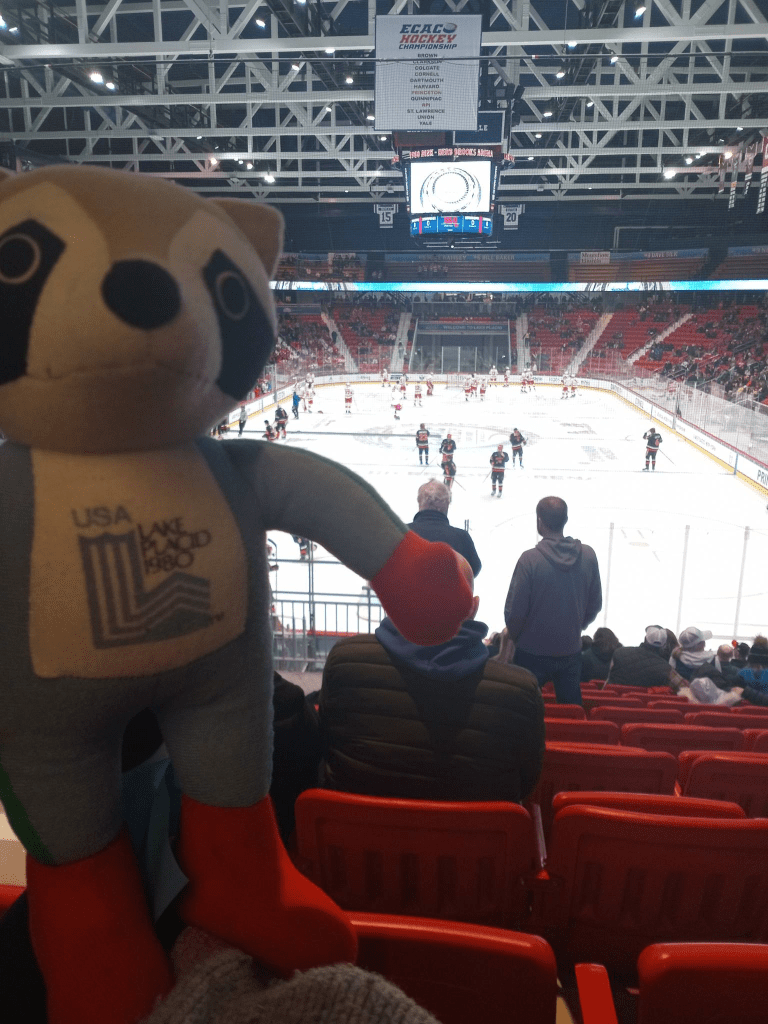
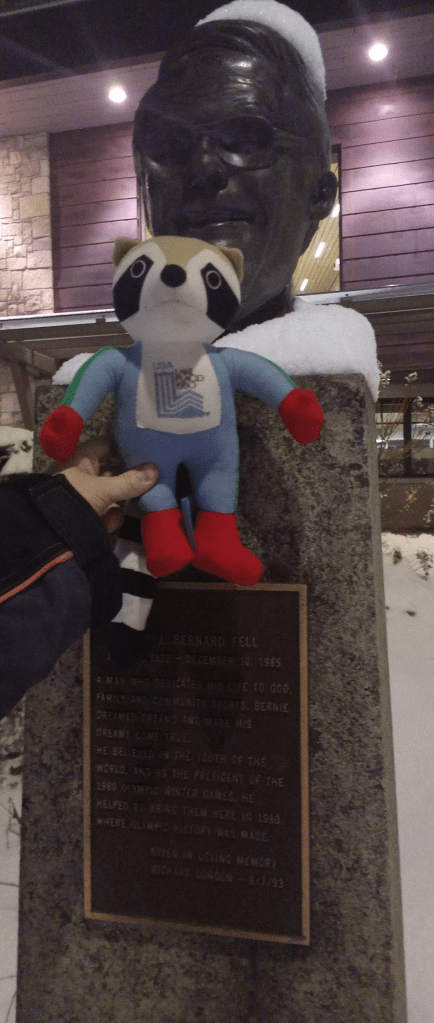
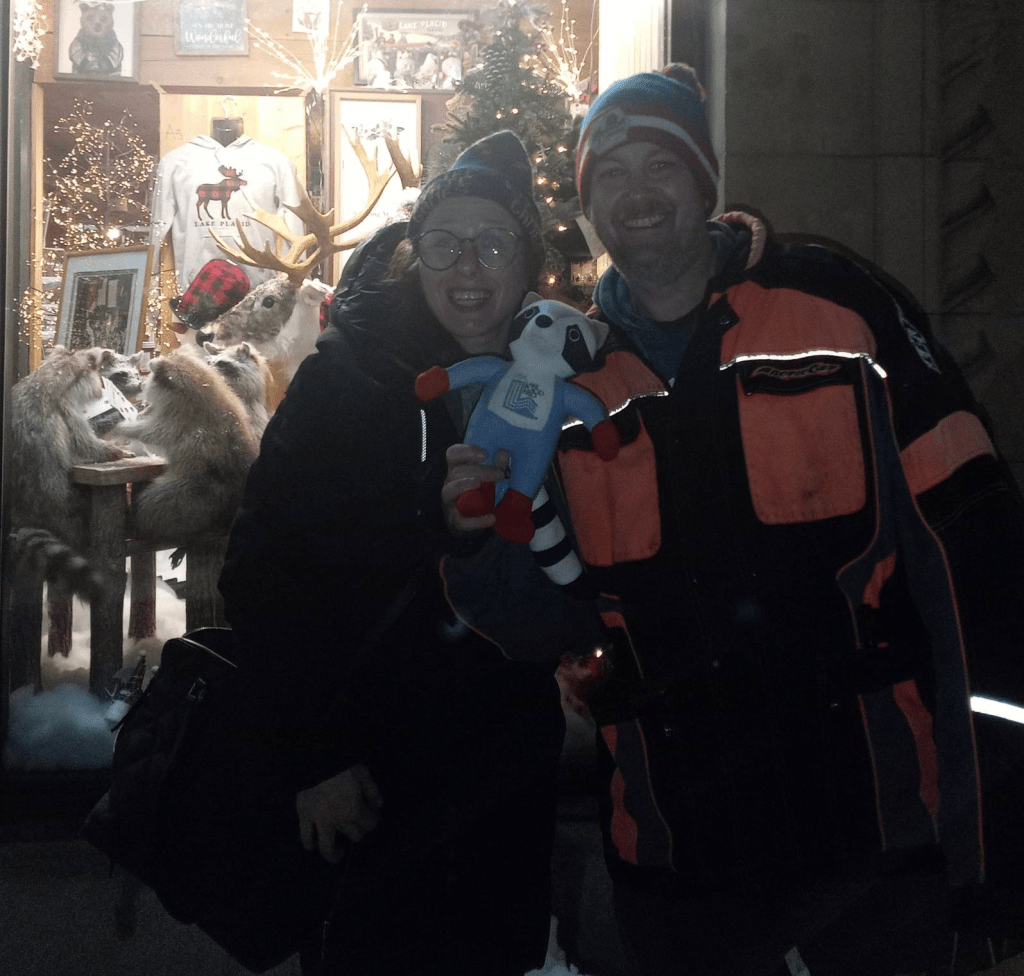
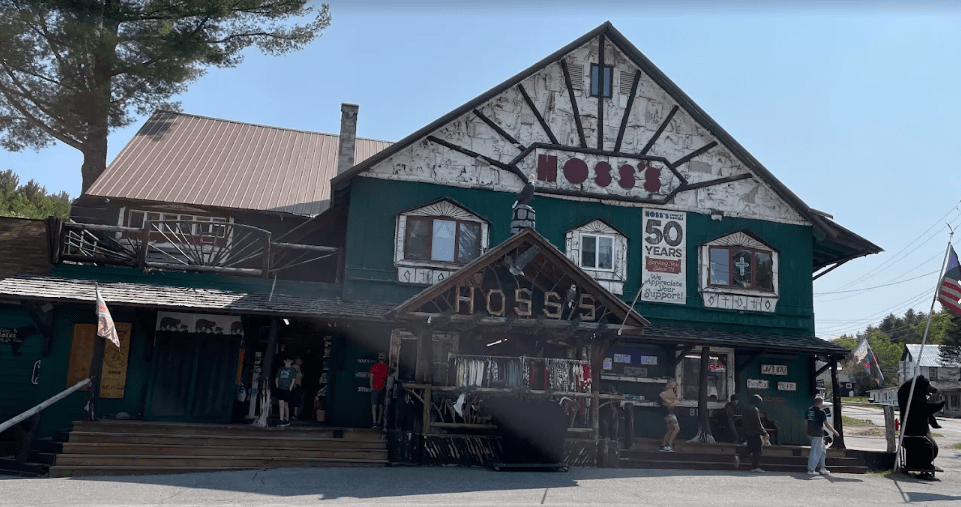
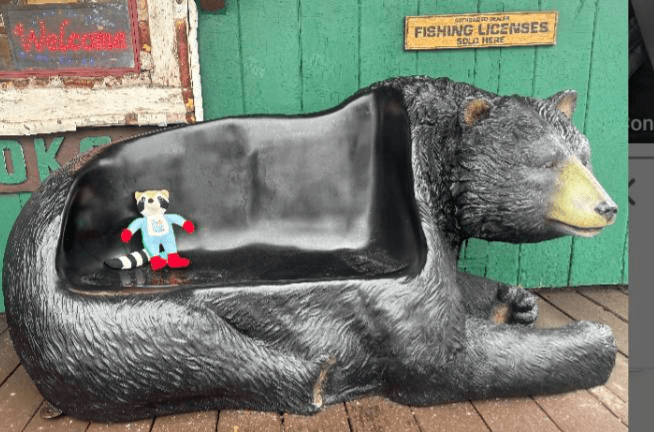
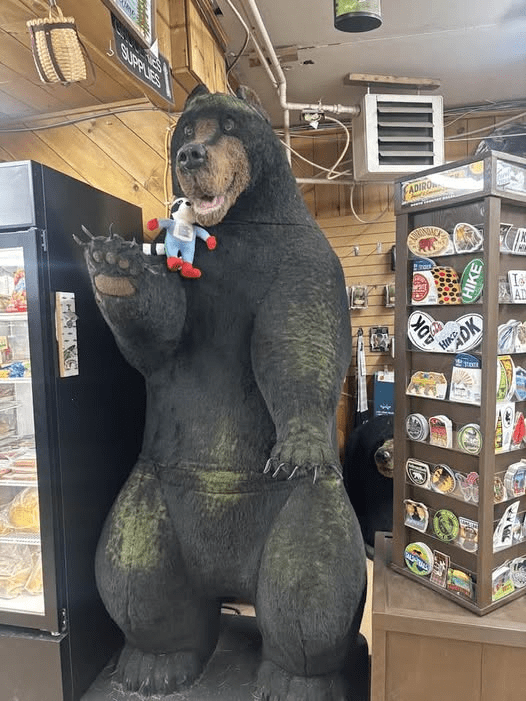
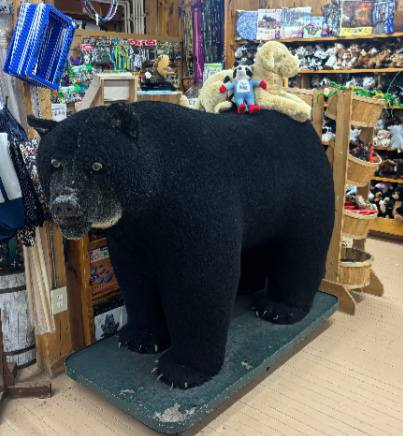
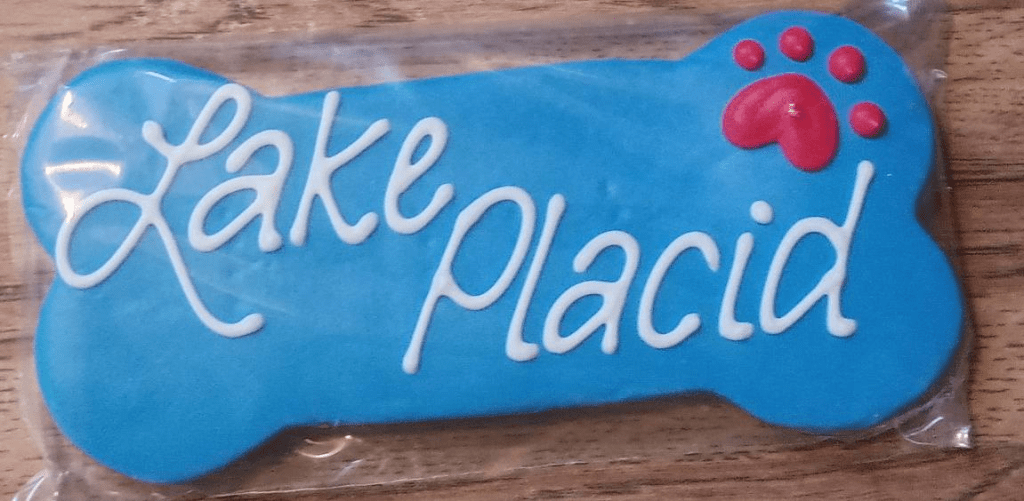
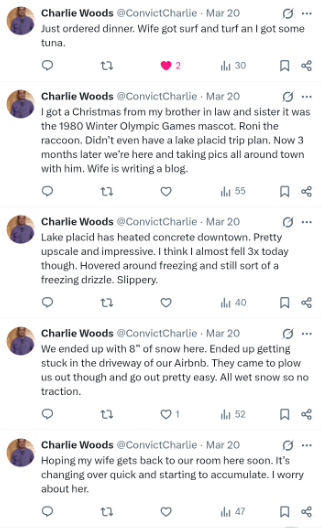
Roni at the sign welcoming us to Lake Placid. I did not realize both the 1932 AND the 1980 Olympics were held here (I thought it was just there in 1980). The 1932 Olympics were the first Winter Games that were held outside of Europe and were the first in North America. Held at the height of the Great Depression, the Games were marked by significant financial challenges, a record-low number of participating nations, and several major Olympic ‘firsts,‘ like a victory podium, indoor venue, and an official soft drink (Coca-Cola).The restaurant and store in front of our Air BnB; the little diner was called ‘Up A Creek’ and we had breakfast there one day (it was very good). According to its website, its open daily from 7 AM to 2 PM and serves breakfast and lunch (as well as homemade soup and daily specials).Roni in front of our Air BnB in Wilmington, NY (about eight miles from Lake Placid), which was called ‘The Great Outdoors.’ We got three nights for $330 and that’s WITH our dog… our room was VERY basic, but had a fridge, a (VERY clean) bathtub, and a comfortable bed. My husband and I didn’t spend much time in our room so it was perfect for us.Roni outside of our room at ‘The Great Outdoors.’Roni relaxing on my husbands side of the bed.Charlie in bed with Roni.Dolly sometimes likes to steal Roni.An action shot of Dolly trying to steal Roni.Charlie at breakfast at ‘Up a Creek’ restaurant, in front of our Air BnB.Roni at Whiteface Mountain, located in Wilmington, NY (its beautiful but is NO Mount Rainer). It’s the fifth-highest mountain in NYS and its summit offers a 360-degree view of the Adirondack Mountains, and on a clear-day you can catch glimpses of Vermont and Canada.Roni and another shot of Whiteface. The mountain’s east slope is home to a major ski resort that boasts ‘the greatest vertical drop east of the Rockies,’ and it hosted all six alpine skiing events at the 1980 Olympics.Roni at Whiteface Mountain, which offers ninety-four ski trails and over 300 acres.The main building at Whiteface Mountains Ski Resort. In 1941, voters in NYS approved funds for the construction of a ski area on the mountain, which was built by the Whiteface Mountain Authority after WWII. The ski area (known as Marble Mountain) was only functional between 1948 and 1960: because its slopes were regularly exposed to conditions that made skiing difficult (or impossible) in 1957 it was abandoned in favor of more modern and favorable environmental accommodations. The former base lodge of the ski slope is currently being used for additional meteorological observations by the Atmospheric Sciences Research Center.A newspaper clipping about Marble Mountain published in The Times-Union on December 14, 1950.An article about Whiteface that mentions Marble Mountain that was published in Daily News on February 10, 1980.Another shot of Roni at Whiteface; the mountain is named for the white rock and rime ice that covers the summit for roughly ten months of the year. Its bare vertex and isolated location (in addition to being exposed to strong westerly winds) make it an ideal location for meteorological studies. Weather observations have been recorded at the peak since 1937, when NYU and RPI established meteorological stations on the mountain; beginning in 1957, data has been collected by the University at Albany’s Atmospheric Sciences Research Center. Roni in the parking lot at Whiteface, which remains an official Olympic Training Site and frequently hosts US Alpine Championships as well as World Cup events.A really pretty stream we found while walking up to the resort at Whiteface Mountain.Roni at Whiteface Mountain; the earliest recorded ascent of the peak was made by surveyor John Richards in 1814 and it was the first mountain in the Adirondacks to attract attention from tourists (thanks to its proximity to Lake Placid); by 1859 there was a trail to the summit from nearby Wilmington.Roni standing in front of a machine that makes fake snow on Whiteface Mountain.Roni standing in front of a menu at a lodge at Whiteface (in addition to being a natural wonder, it is also a popular ski resort).Roni standing at the terminal of a ski lift at Whiteface Mountain.Roni in line to buy lift tickets; I really wanted to ride the gondola, but I wasn’t buying a $140 lift ticket when I don’t even know how to ski (a one-day pass for an adult between the ages of twenty and sixty-four is $134).Roni in front of a lodge at the Whiteface Mountain Ski Resort.Roni standing in front of a ski lift loading station (or terminal) at Whiteface Mountain.Roni with some skiers on Whiteface posing in front of a map of its trails. The mountain encompasses three distinct peaks: Whiteface Summit, Little Whiteface (which is known for its challenging Olympic-heritage runs), and Lookout Mountain.Roni and a map of the trails at Whiteface Mountain (with my husband in the background).A close-up shot of Roni and a map of the trails at Whiteface Mountain. The 46 peaks of the Adirondack Mountains.Roni in front of The ‘Waffle Cabin’ at Whiteface Mountain in the Adirondacks.A blurb about The ‘Waffle Cabin’ taken from the Whiteface Mountain website.Roni at a restaurant at Whiteface Mountain, in Wilmington, NY.Looking out the window at the gondolas at Whiteface Mountain, in the Wilmington Wild Forest of the New York Forest Preserve in the town of Wilmington, NY.Roni at Base Camp Market at Whiteface Mountain; like the surrounding Adirondack region, Whiteface was covered by large glaciers during the most recent ice ages, which left prominent features on the mountain’s slopes. The advertisement for the ‘Base Camp Market’ taken from the Whiteface Mountain website (whiteface.com).Roni at Burrito Bay, at Whiteface Mountain.A BBQ smoker at Whiteface.On my way home from getting tea on Friday afternoon I ran into a blizzard: it lasted only four hours and by the evening everything was clear.Our car got stuck in the snow after we tried to get food during the blizzard; my husband didn’t park in the front of the resort like I suggested so he was on his own with getting it out (he did, it took him fifteen minutes).A giant chair outside of The Pickled Pig. Their website says they are: ‘family-owned and operated restaurant with a fantastic extended family of staff. Almost everything on our menu is made in-house, from scratch.’The aftermath of The Pickled Pig; I liked my food (ribs), Charlie said his meal was ‘so-so’ (they put pickles on his sandwich even though he did specify that he didn’t want them… and once a pickle is on something its tainted by its juice and the entire dish is ruined).The description The Picked Pig’s owner Miona A. gave on her business’ Yelp page.Roni on a bobsled in front of Zig Zags Pub, which is supposedly the ‘only true bar in Lake Placid’ and is open daily all year from 3 PM to 3 AM.Another shot of Roni inside of Zig Zags Pub. Per their Facebook page, they have eighteen craft beers on tap, 40+ bottles and cans, premium tequilas, single malt scotches and small batch bourbons, as well as live music and nightly drink specials.Another view of Roni at Zig Zags; described as a ‘staple of Lake Placid’s nightlife,’ it’s widely recognized as the areas ‘premier’ Olympic-themed dive bar. Located on Main Street, it is popular with both locals and tourists for its ‘high-energy atmosphere’ and late-night hours, and features authentic Olympic memorabilia, including a red bobsled outside and Steve Holcomb’s 2010 Olympic Gold Medal speed suit inside.Roni (and Charlie) at the American Legion in Lake Placid, which has been advocating for US Veterans since 1919. We had plans of going in for a drink but didn’t make it; vets clubs like this are near and dear to my heart because I’ve worked at my bar (the Tonnewanta Veterans Club in Kenmore, NY) for almost three and a half years.Roni sitting next to a sign outside of the American Legion in Lake Placid.Roni crashed our fanciest dinner in Lake Placid, at The White Bear. According to their Facebook page, they are an ‘Italian-American restaurant’ and ‘lunch and dinner we serve every day, 11 AM to 9 PM.’A giant LL Bean bootmobile; I wish I had one.The back of the LL Bean boot.Some information about the bootmobile taken from their website.A Facebook post about the LL Bean boot made by the group ‘Lake Placid ADK.’We came across this sign on a walk through Lake Placid one night; have I worked at an insurance company for too long, or does that say ‘zuppa di claims?’The 2023 FISU World University Games Cauldron. According to the fisu.net website: ‘the twelve-foot, carbon steel cauldron from which the Lake Placid 2023 FISU World University Games symbolic flame will soon shine brightly took up its home in Brewster Park in Lake Placid one month before the opening ceremony. Designed and created by Adirondack Studios from Argyle, NY, this cauldron features top borders that depict the silhouettes of the High Peaks of the Adirondack Mountains. It is also ribboned with cut-outs of winter sport pictograms that enable the light from the LED-powered strobe to shine through. 300 hours of metal fabrication, 100 hours of resin molding and fabrication, and 100 hours of electrical labour went into producing this cauldron.’Roni posing in front of The Olympic Center in Lake Placid, which is a sports complex that acted as The Olympic Park for both the 1932 and the 1980 Winter Games.Roni posing at the scoreboard from the 1980 ‘Miracle on Ice’ hockey game.The 1980 ‘Miracle on Ice’ US mens hockey team.Roni with some banners for the 2026 ECAC Men’s Hockey Championship that took place in Lake Placid during the weekend of March 20-21, 2026.Roni with some (of the many) trophy’s on display at The Olympic Center in Lake Placid.Roni at The Herb Brooks Arena on Thursday, March 19, 2026, which was built for the 1980 Olympics. It’s a 7,700-seat venue that is most known for the 1980 ‘Miracle on Ice’ hockey game where the US won in a 4–3 victory over the Soviet Union.Another shot of Roni at The Herb Brooks Arena. Formerly known as The Olympic Center Arena, to commemorate the 25th anniversary of the 1980 American victory in the Lake Placid Olympics in 2005 it was renamed after the late Herb Brooks, who coached the American team during that fateful year. Other events the arena hosted during the 1980 Games include figure skating events and the closing ceremony, and it currently hosts ECAC Hockey Championships, USA Hockey events, and figure skating.Roni at The Jack Shea Arena, which is an indoor, artificial ice rink that was used for both figure skating and ice hockey competitions in the 1932 Winter Olympics; it’s part of The Olympic Center Complex and replaced an earlier outdoor facility called ‘The Lake Placid Rink,’ which was dismantled following the 1932 Games.Another picture of Roni at The Jack Shea Ice Rink. It was formally dedicated on January 16, 1932 and was previously called The Olympic Arena (or The 1932 Arena), and in 2005 it was renamed after Jack Shea, who had won two speed skating gold medals in 1932. At the time the facility was ninety years old and was in a ‘decrepit state,’ and instead of razing the venue The Olympic Regional Development Authority decided to renovate the building and after nine months of work, ‘The Jack Shea Arena’ reopened officially reopened on December 3, 2021.Roni and the back portion of The Jack Shea Arena; it was specially built for the 1932 Winter Olympics and hosted the figure skating competition and six of the twelve ice hockey games.Roni enjoyed the Princeton versus Cornell game on Friday, March 20, 2026 at The Herb Brooks Arena in Lake Placid. Princeton beat Cornell even though I think ‘Big Red’ played stronger in the beginning of the game. Neither me nor my husband are huge hockey fans, so we left at the end of the first period, but at dinner the restaurant had the game on the TV, and I’ll admit it was neat following it.Roni posing next to a bust of the Reverend J. Bernard Fell, who was a key figure in organizing the 1980 XIII Olympic Winter Games. As president of the Lake Placid Olympic Organizing Committee, Fell delivered a notable opening ceremony speech promoting international understanding, bridging his roles as a local community leader and international sports administrator.Roni posing with some raccoons playing cards in a display at ‘The Adirondack Store & Gallery;’ it could be yours for the low, low price of $2,850…A very nice girl stopped to chit chat with us about Roni in front of the ‘Adirondack Store & Gallery,’ and offered to take our picture.Hoss’s Country Corner in Long Lake, NY; a distinctive feature of the store is a live tree that grows directly through the building’s roof.Roni sitting on a bear outside Hoss’s Country Corner in Long Lake, NY. According to Martha Stewart: ‘if you can’t find it at Hoss’s, you probably don’t need it!’Roni posing with a bear at Hoss’s Country Corner, which is a third-generation general store owned by the Hosley family and has been open since 1972.Roni on a giant bear at Hoss’s Country Corner. Famous for having a full sized tree that grows through its roof, Hoss’s is open all year around and serves as a central Adirondack stop for items such as one-hundred-pound cheese wheels, local maple syrup, and Adirondack themed books.A biscuit I bought for my dad’s dog at Lake Placid; it cost $8 but Bella is worth it.Some of my husbands random thoughts on his Twitter feed from our time on vacation; we both write in different ways, I suppose (although he did used to run his own country music website many years ago).
A King County archivist sent the following .pdf file to Maria Serban, consisting of Dr. Robert Keppel’s personal notes in relation to the Bundy case. The information consists of correspondence regarding Bundy that were sent in the early 80’s, notes from supposed experts claiming they might help him decipher the killers personality based on his handwriting, and also a postcard signed ‘Ted B’ (and as Serban pointed out, Bundy never signed his letters to Dr. Keppel as ‘Ted B,’ and usually signed them ‘ted,’ with a lower case -t; he also and spelled ‘Raiford’ wrong).
I recently put in a request with the King County Sheriff’s Department for information related to the Bundy investigations, and they’ve sent me a lot of stuff and will most likely send a lot more int he future. I’m working on putting the pictures in a blog post, and it’s proving to be exhausting due to the fact that there are SO many of them (I’m working as fast as I can with two jobs and a needy husband). Here are some interesting documents they sent me that are worth a read. I’ve never encountered them out in ‘the wild.’
Below is a copy of a letter that Ted Bundys one time girlfriend Liz Kloepfer sent his probation officer Don Hull, voicing her annoyance that detectives were prying into his personal life. It is part of Judge Stewart Hanson’s private collection and was digitized and sent to Maria Serban by Sean Papanikolas, Stewart’s grandson.
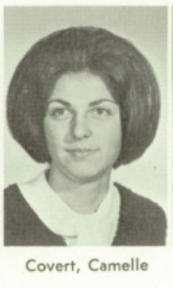
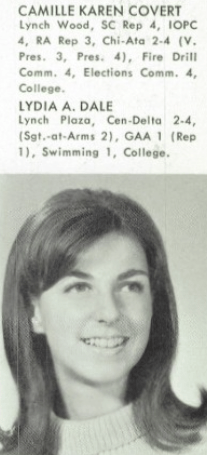
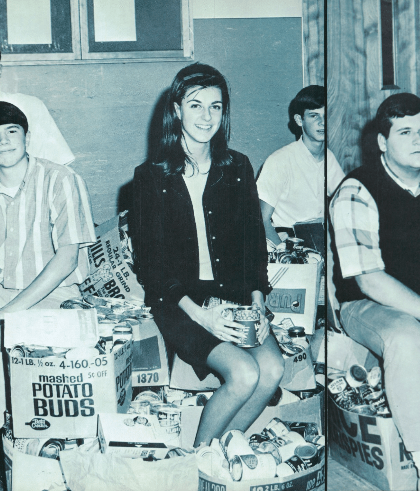
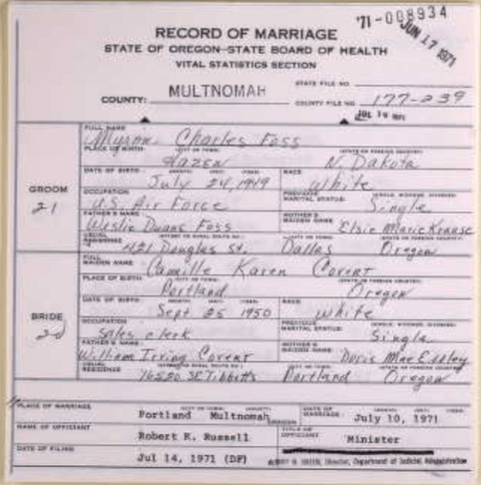
Camille Karen Covet was born on September 25, 1950 to Wilfred and Delores (nee Essley) in Portland, OR. Mr. Covert was born on March 12, 1927 in Medford and her mother was born on July 3, 1931 in Portland. The couple had three children together (Camille, William, and Adele) but divorced on July 20, 1972, and Doris got remarried to a man named Herman Crane on May 10, 1974. Camille attended Centennial High School in Gresham, and after graduating in 1968 she went on to briefly attend the University of Oregon and got a job at a nearby Sears. A tall young woman with the looks and figure of a runway model, she stood at 6’1″ and had deep chocolate brown eyes and shoulder length brunette hair.
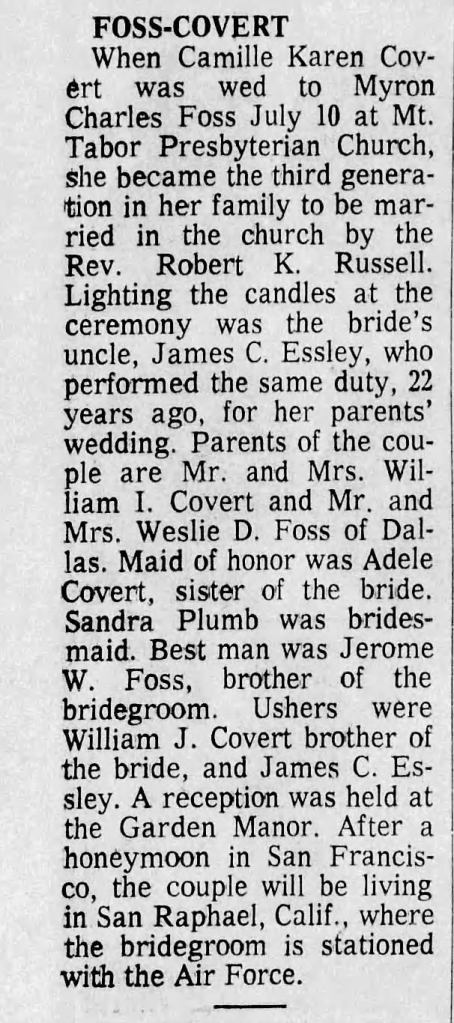
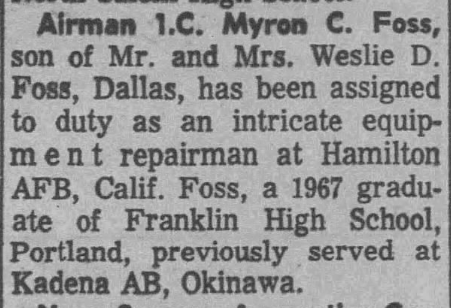
Camille’s husband, Myron Charles Foss (who went by Chuck) was born on July 24, 1949 in Hazen, North Dakota. At some time in Chuck’s adolescence the Foss family relocated to Portland, and after graduating from Franklin High School in 1967 he went on to join the US Air Force, and was stationed in Okinawa. After Chuck returned home from Japan the couple were married on July 10, 1971 in Portland.
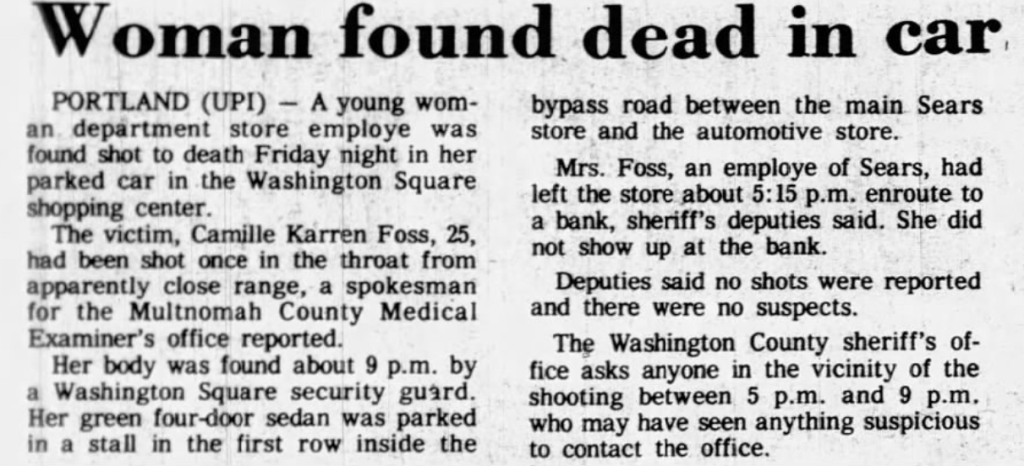
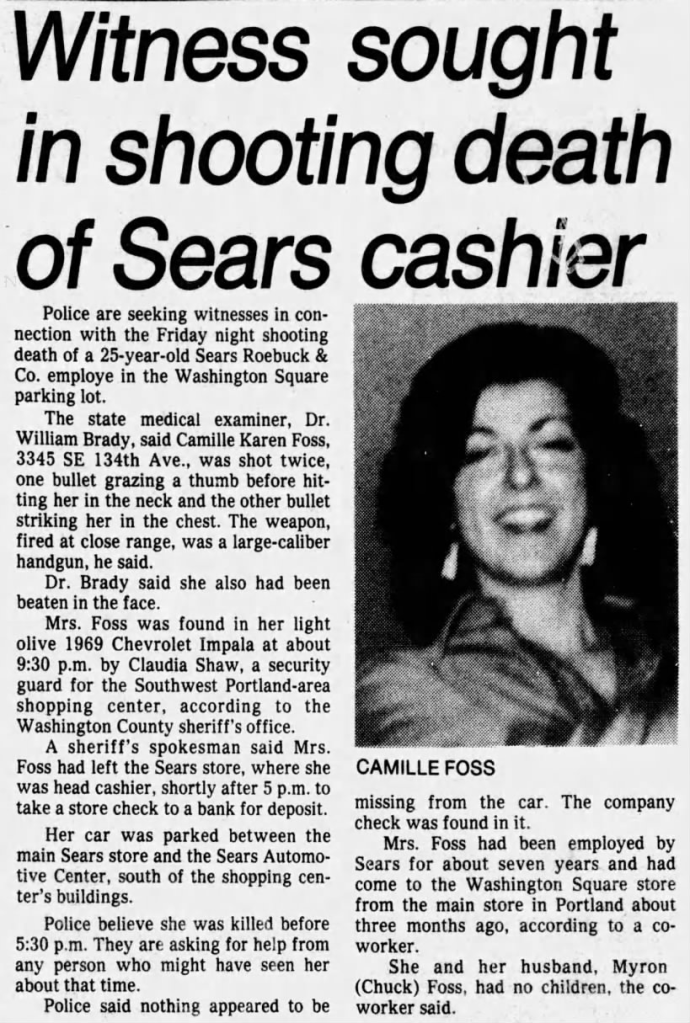
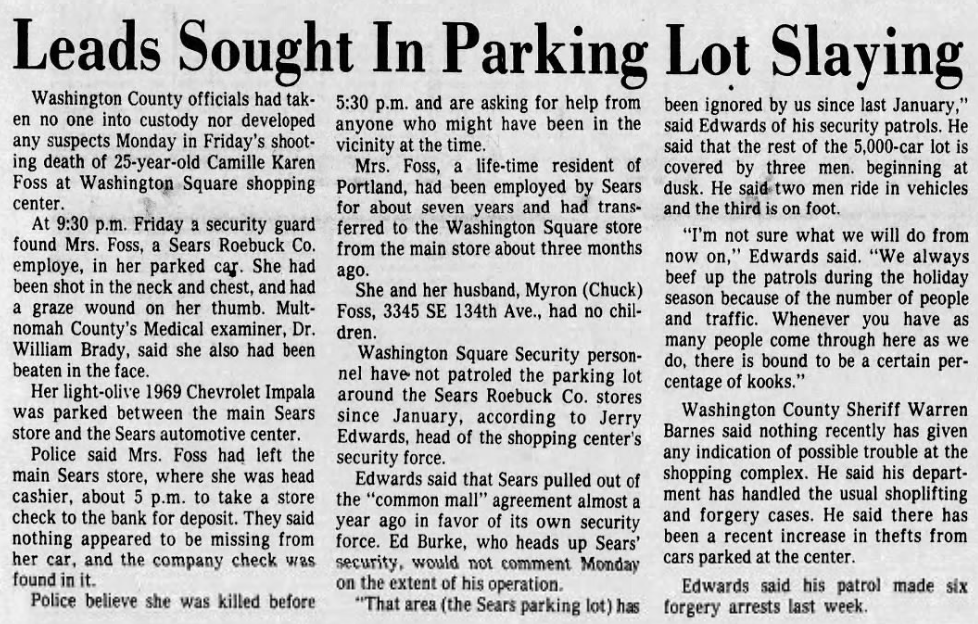
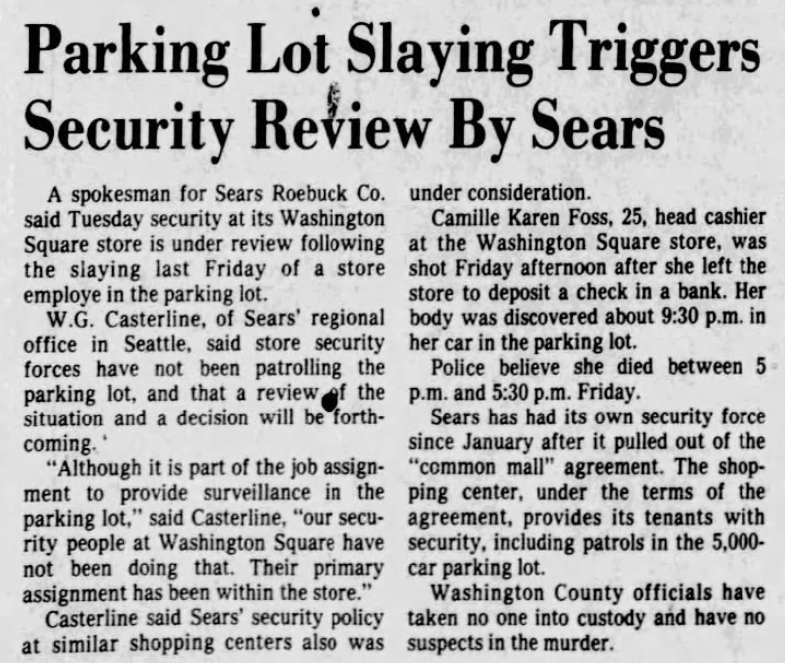
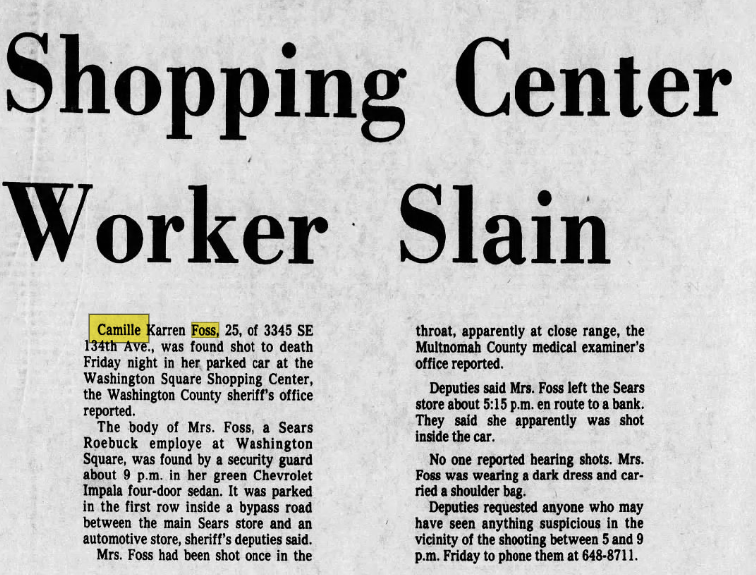
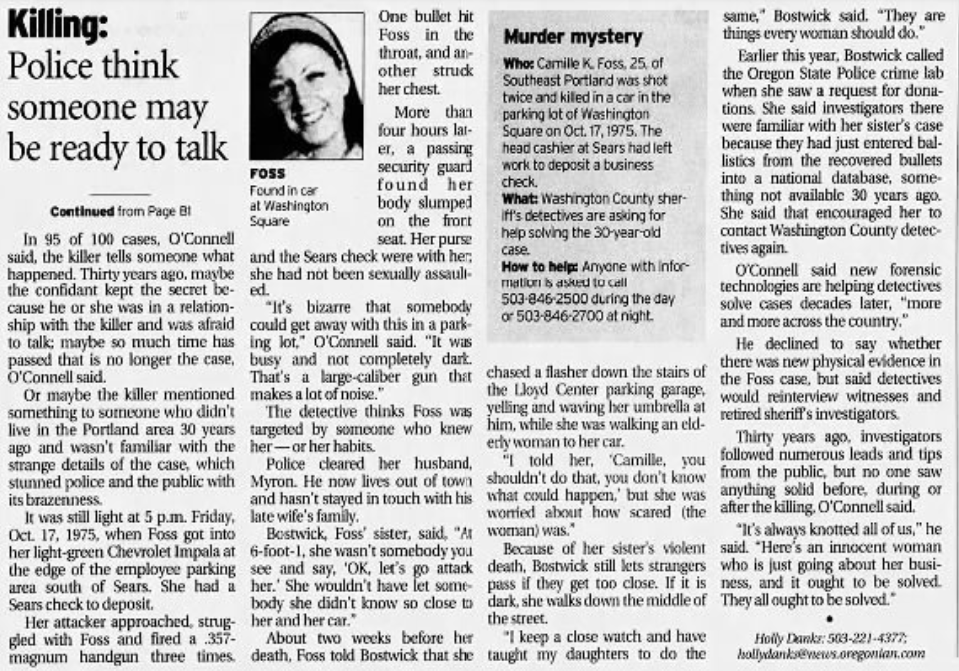
On October 17th, 1975, Ms. Covet-Foss was last seen alive leaving her job at Sears-Roebuck in Washington Square at 5 PM to drop off a check at the bank. The twenty-five-year-old had been employed with the department store for seven years, and had only come to that location from the main branch in Portland about three months prior to her murder (she was the stores head cashier).
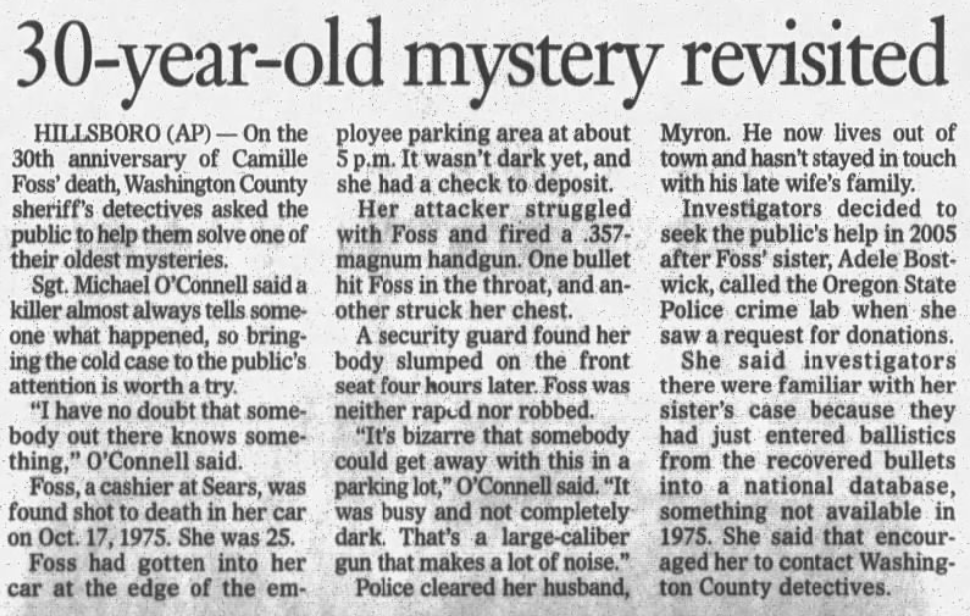
Roughly an hour after Camille was last seen at 6:00 PM the bank called Sears to make sure the deposit was on its way, as they were getting ready to close. Later that same day at 9:30 PM a security guard for the Southwest Portland-area shopping center named Claudia Shaw found her body in the front seat of her light olive green 1969 Chevrolet Impala, which was parked between the main Sears store and the Sears Automotive Center, south of the shopping center’s buildings. According to an article published in The Capital Journal on October 18, 1975, despite the incident taking place in the middle of the day on a Friday Multnomah County Sheriff’s said that no shots were reported. According to Sergeant Michael O’Connell with the Washington County Sheriff, law enforcement received numerous leads and tips from the public, but no one reported anything helpful.
Oregon state ME Dr. William Brady said Covert-Foss was shot twice: a bullet grazed one of her thumbs before penetrating her neck, and the other hit her chest. The wounds were inflicted by a large-caliber handgun that was fired at close range (either a .38 or 357-magnum revolver) and Dr. Brady said she had also been beaten in the face. When the investigation was reopened in 2005, Sergeant O’Connell said ‘it’s bizarre that somebody could get away with this in a parking lot. It was busy and not completely dark. There’s a large-caliber gun that makes a lot of noise.’ Detectives said nothing appeared to be missing from the scene, including the bank deposit.
Law enforcement cleared Camille’s husband almost immediately and said that she showed no signs of being sexually assaulted. Two weeks before her murder Adele told investigators that her sister shared with her that while she was escorting an older woman to her car she chased a flasher down the stairs of the Lloyd Center parking garage, yelling and waving her umbrella at him in a successful attempt to scare him away. She told her ‘Camille, you shouldn’t do that. You don’t know what could happen,’ but she was too busy worrying about how scared the woman was to care about much else.
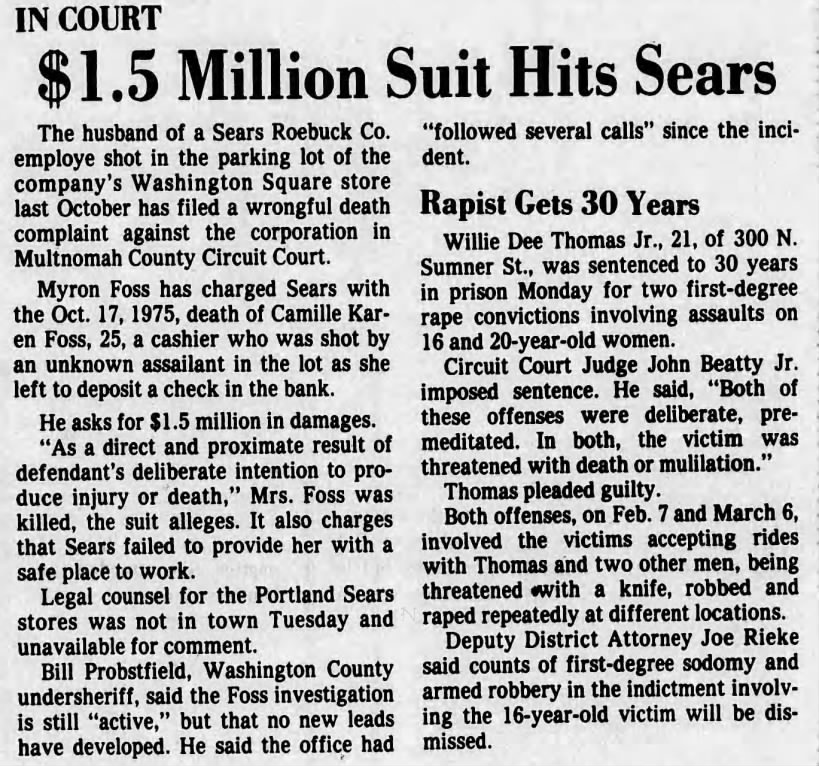
In August 1976 it was reported that Camille’s husband Chuck filed a wrongful death suit against Sears Roebuck and Company for $1.5 million dollars: $500,000 in general damages and one million in punitive damages, plus an additional $1,239 in burial and memorial costs to lay his wife to rest. Foss alleged that the company was negligent and exposed his wife to ‘armed and dangerous persons’ in making her take money to the bank without any form of security. I was unable to find any information about the outcome of the lawsuit.
In an article about reopening the case published by The Oregonian on October 18, 2005, Adele said of her sister: ‘in her honor, I just have to give this one last try. I’m just asking for help because her life was worth so much.’ Fifteen years later, in a November 2020 interview with KATU reporter Katherine Kisiel, Bostwick said ‘I think this person didn’t just kill my sister, it did kill my father and my mother. My father took his own life just as he turned 60, and a few years later my mother died of pancreatic cancer, which is the only cancer proven to be related to depression. I do feel like I should have been there. Nobody was there with her, and I just need to do everything I can to make sure how she died isn’t forgotten.’
Most of the women I write about from Oregon were most likely not victims of Ted Bundy, and that includes Ms. Covet-Foss… but, because this is a blog about him I do feel the need to mention that we know he wasn’t responsible for her death, as he was just beginning his legal troubles in Utah and was tied up at the time.
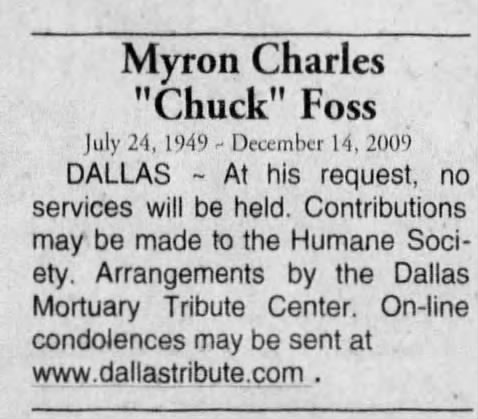
William Covert died on March 15, 1988 at the age of 61, and Camille’s mother died at the age of sixty on September 13, 1991. Chuck Foss died at the age of sixty on December 14, 2009 in Salem, OR. He worked for Stark Vacuum in Portland and Business Machines in Gresham before going to work for his dad at the Portland Glove Company; he later purchased the business but in 1993 he sold it due to his declining health. Mr. Foss enjoyed playing pool and music, and especially loved The Beatles. According to his obituary, he was in a long term relationship with a woman named Beverly Ball and in an article published by The Albany Democrat-Herald on October 18, 2005, he didn’t stay in touch with Camille’s family in the years after her death.
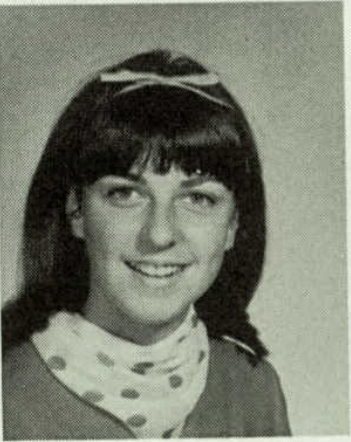
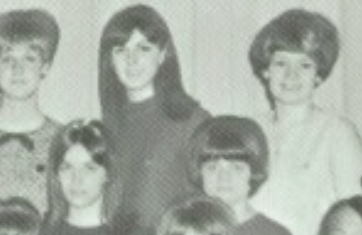
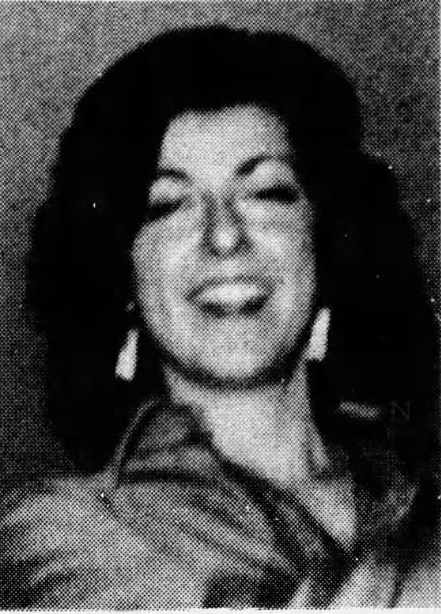
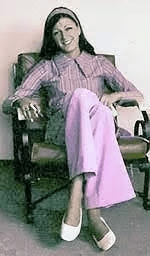
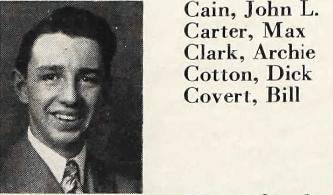
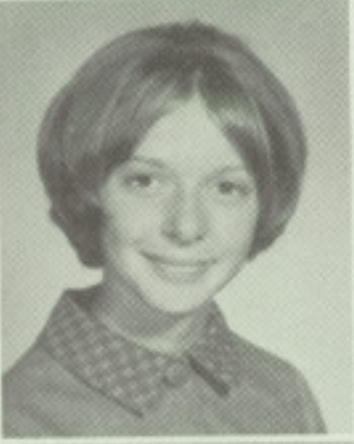
Camille’s freshman year picture from the 1965 Centennial High School yearbook.Camille’s sophomore year picture from the 1966 Centennial High School yearbook.Camille in a group picture for the Chi-Ata Club taken from the 1966 Centennial High School yearbook.Camille’s junior year picture from the 1967 Centennial High School yearbook.Camille’s in a group picture for Chi-Ata picture from the 1967 Centennial High School yearbook.Camille in a group picture from the 1968 Centennial High School yearbook.Camille’s senior year picture from the 1968 Centennial High School yearbook.Camille (far left) in a group picture for Chi-Ata taken from the 1968 Centennial High School yearbook.Camille in another group picture for Chi-Ata taken from the 1968 Centennial High School yearbook.Camille in a group picture from the 1968 Centennial High School yearbook.A picture of Camille taken from the 1968 Centennial High School yearbook.Camille (l) sitting in front of a Christmas tree, taken from the 1968 Centennial High School yearbook.Camille.Camille Covert-Foss.Camille’s car.A newspaper article about the union of Chuck and Camille published in The Oregon Daily Journal on May 5, 1971.An article about the union of Chuck and Camille published by The Statesman Journal on July 12, 1971.A newspaper article about the union of Chuck and Camille published in The Oregon Daily Journal on July 14, 1971.A newspaper article about Chuck and Camille’s wedding published in The Oregonian on July 17, 1971.
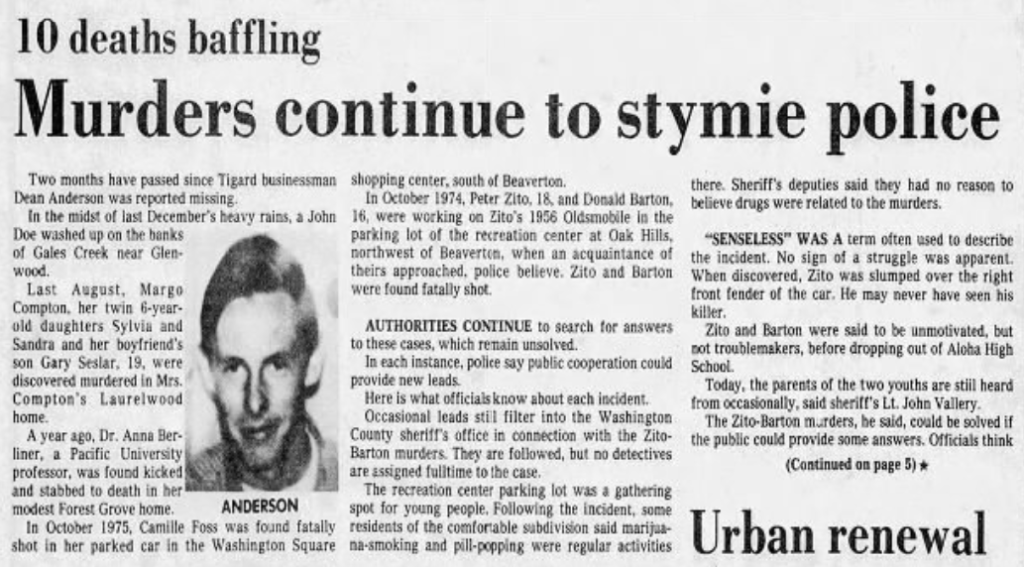
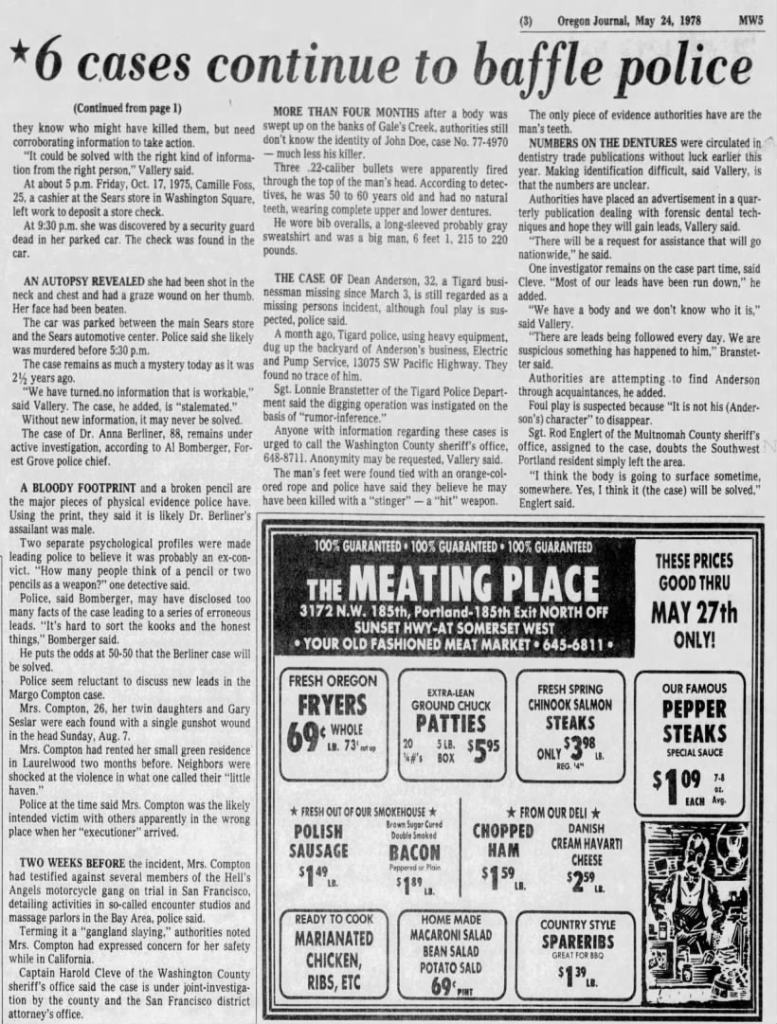
An article about the murder of Camille Foss published by The Capital Journal on October 18, 1975.An article about the murder of Camille Foss published by The Sunday Oregonian on October 19, 1975.An article about the murder of Camille Foss published by The Oregon Journal on October 20, 1975.A newspaper article about the murder of Camille Foss published in The Oregon Journal on October 21, 1975.An article about the murder of Camille Foss published by The Oregon Journal on October 23, 1975.An article about the murder of Camille Foss published by The Oregon Journal on October 24, 1975.An article about the murder of Camille Foss published by The Oregon Journal on October 23, 1975.An article about Chuck Foss suing Sears published by The Oregonian on August 3, 1976.An article about Chuck Foss suing Sears published by The Oregon Journal on August 3, 1976.Part one of an article that mentions Camille published by The Oregon Journal on May 23, 1978.Part two of an article that mentions Camille published by The Oregon Journal on May 23, 1978.An article about the murder of Camille Foss published in The Albany Democrat-Herald on October 18, 2005.Part one of an article about the murder of Camille Covert-Foss published in The Oregonian on October 18, 2005.Part two of an article about the murder of Camille Covert-Foss published in The Oregonian on October 18, 2005.Chuck and Camille listed in the Oregon Marriage Index 1971 – 1980.Chuck and Camille’s marriage certificate. Camille’s remains, located at The River View Cemetery in Portland; she is in the Hilltop Maus plot, Unit B Crypt 507.Ms. Covet-Foss on the Oregon state death index.A classified ad submitted by Chuck Foss published in The Oregon Daily Journal on June 11, 1960.Camille’s husband Chuck’s senior year photo from the 1967 Franklin High School yearbook. A newspaper clipping about Chuck’s time in the Air Force published in The Capital Journal on October 15, 1970.Chuck Foss’ obituary published in The Statesman Journal on December 16, 2009.Chuck Foss’ obituary. Myron Charles Foss’ grave stone. Camille’s Dad in a picture from the 1946 Oregon State College yearbook.A picture of Adele Covert from the 1967 Centennial High School yearbook.Bill Covert’s obituary published in The Oregonian on March 9, 1988.Camille’s sister, Adele Bostwick. In an interview she said of Camille: ‘at 6-foot one inch tall she wasn’t somebody you see and say, ‘ok, lets go attack her. She wouldn’t have let someone she didn’t know so close to her and her car.’